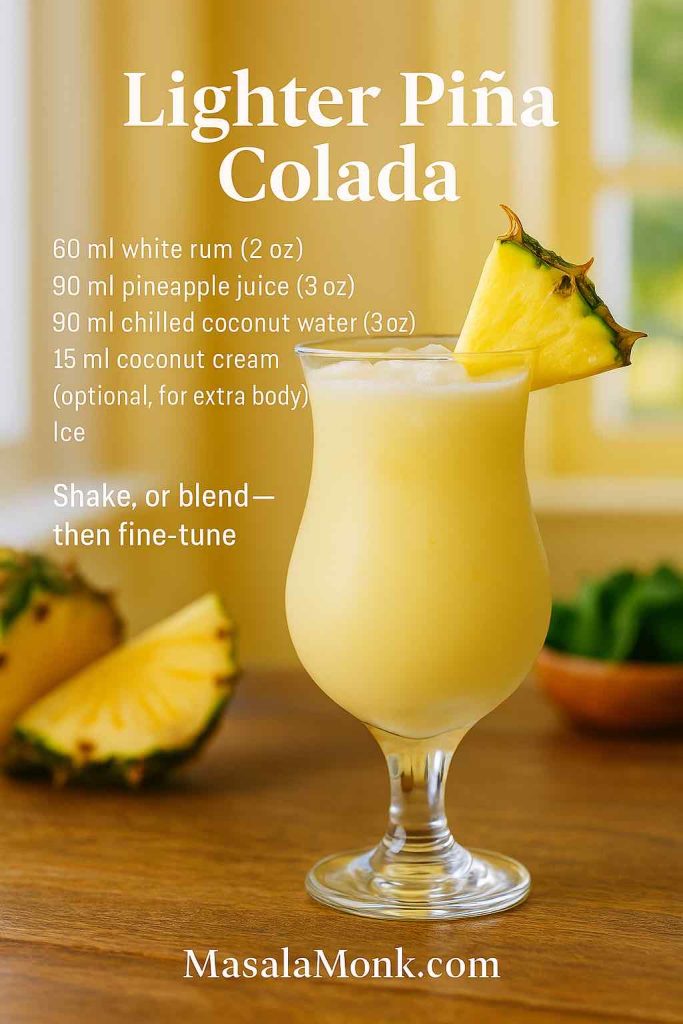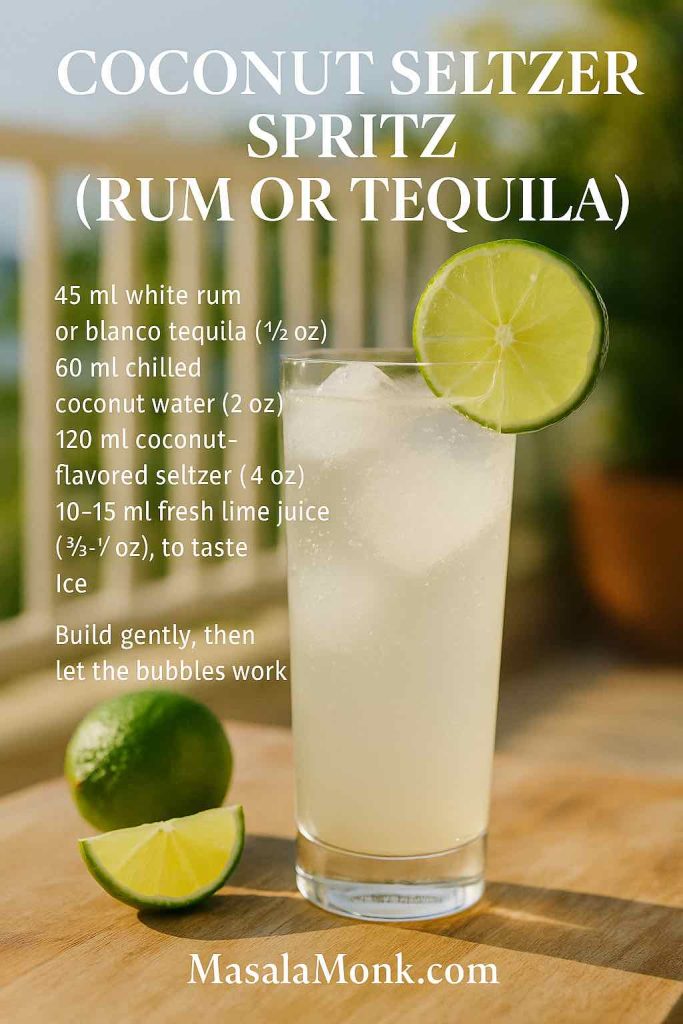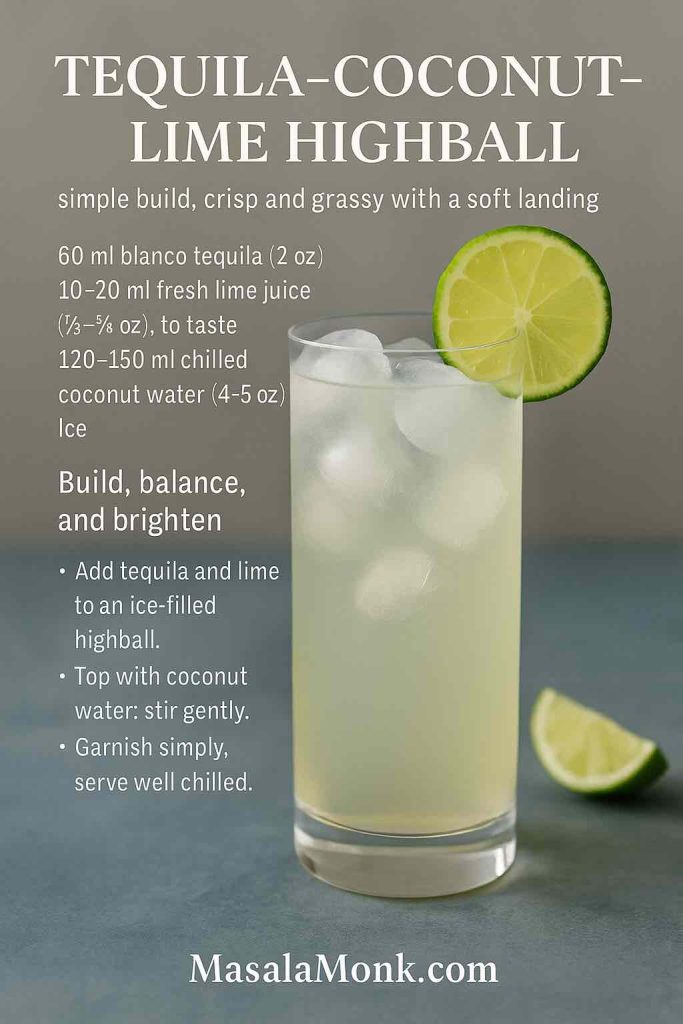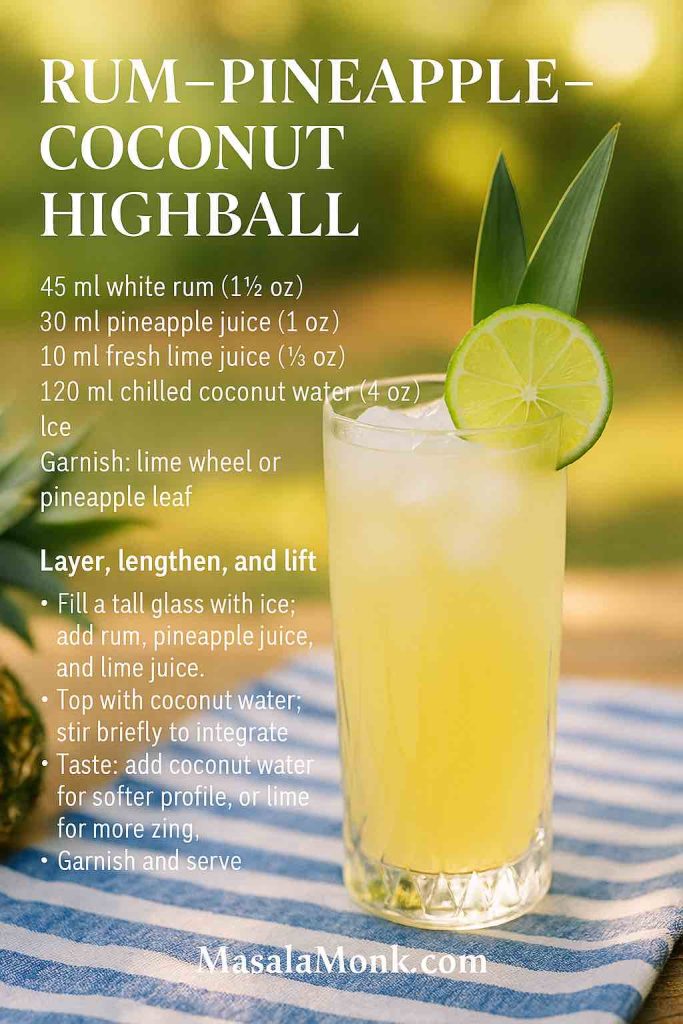
Posted on Leave a comment

Pina Colada Recipe: Frozen, Virgin, Malibu & Mix Tips

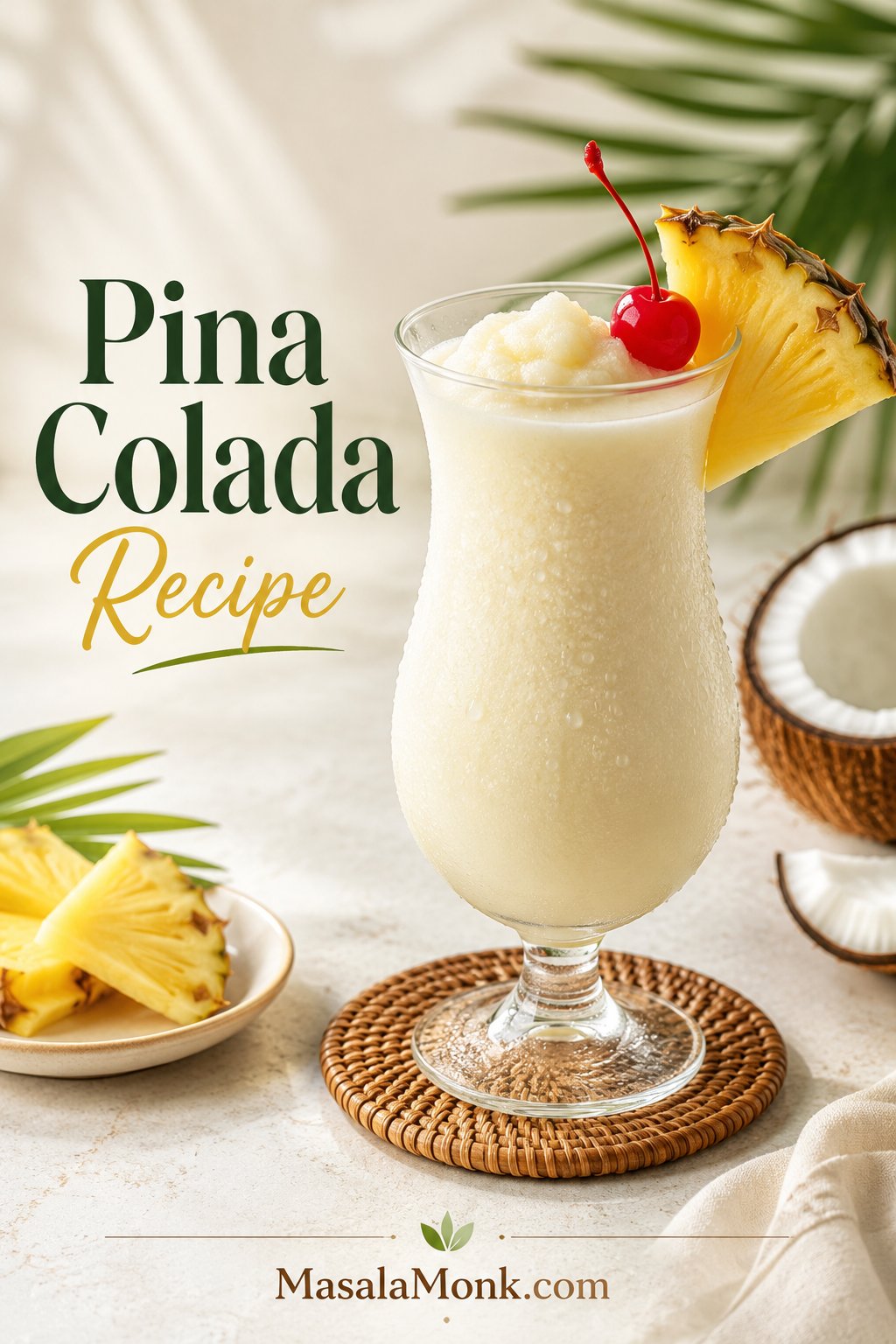
Frozen pina colada in a hurricane glass with a pineapple wedge, cherry garnish, coconut pieces, and MasalaMonk.com footer branding.

Most disappointing piña coladas fail for the same few reasons: the drink turns thin, tastes like straight sugar, or the alcohol-free version feels empty once the rum is gone. A great piña colada recipe — often searched as a pina colada recipe — solves that with the right coconut base, enough pineapple, the right chill, and a small hit of lime.

The first sip should taste cold before it tastes sweet: pineapple first, coconut next, rum in the background, and a clean finish that makes the glass feel refreshing instead of heavy.

Start with the frozen blender version, then use the same balance to make it shaken, virgin, Malibu-style, lighter with coconut milk, mixed ahead, or batched for a party. The promise is simple: a piña colada that stays smooth, avoids syrupy sweetness, and tells you exactly which coconut product belongs in the glass.

Quick Answer: The Best Pina Colada Recipe Ratio

For one frozen piña colada, use 2 oz white rum, 3 oz pineapple juice, 2 oz cream of coconut, ½ oz fresh lime juice, and 1 to 1½ cups ice. For a thicker, fruitier drink, add ½ cup frozen pineapple.

Frozen, shaken, or alcohol-free shortcuts

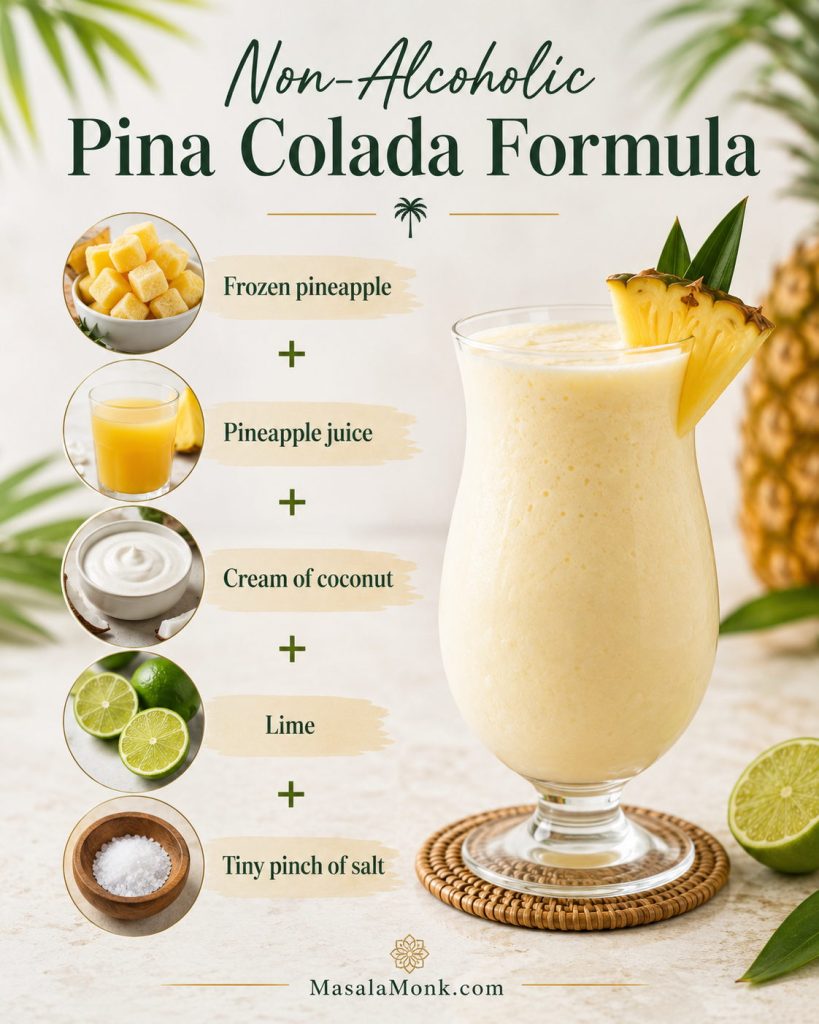
No blender? Shake 2 oz white rum, 2 oz pineapple juice, 1½ oz cream of coconut, and ½ oz lime juice, then strain into a fresh glass over fresh ice. No alcohol? Blend frozen pineapple, pineapple juice, cream of coconut, lime, and a tiny pinch of salt so the mocktail still has depth.

Need a different route? Go straight to the on-the-rocks version, the virgin pina colada, or the pina colada mix section.

The classic flavor is simple — rum, pineapple, coconut — but the texture depends on measurement. Cream of coconut gives the familiar sweet body, while lime keeps the finish from turning sticky.

Measured ratio for one drink

IngredientAmount for 1 drinkJob in the glass
White rum2 oz / 60 mlClean cocktail base that lets the fruit lead.
Pineapple juice3 oz / 90 mlMain tropical flavor and blending liquid.
Cream of coconut2 oz / 60 mlSweet coconut body and classic richness.
Fresh lime juice½ oz / 15 mlClean finish and better balance.
Ice1–1½ cups / 140–210 gCold, frosty texture.
Frozen pineapple½ cup / 70–75 g, optionalFruitier thickness without dulling the flavor.

Once the base ratio makes sense, use the version guide to pick your path or the success checks to fine-tune the glass.
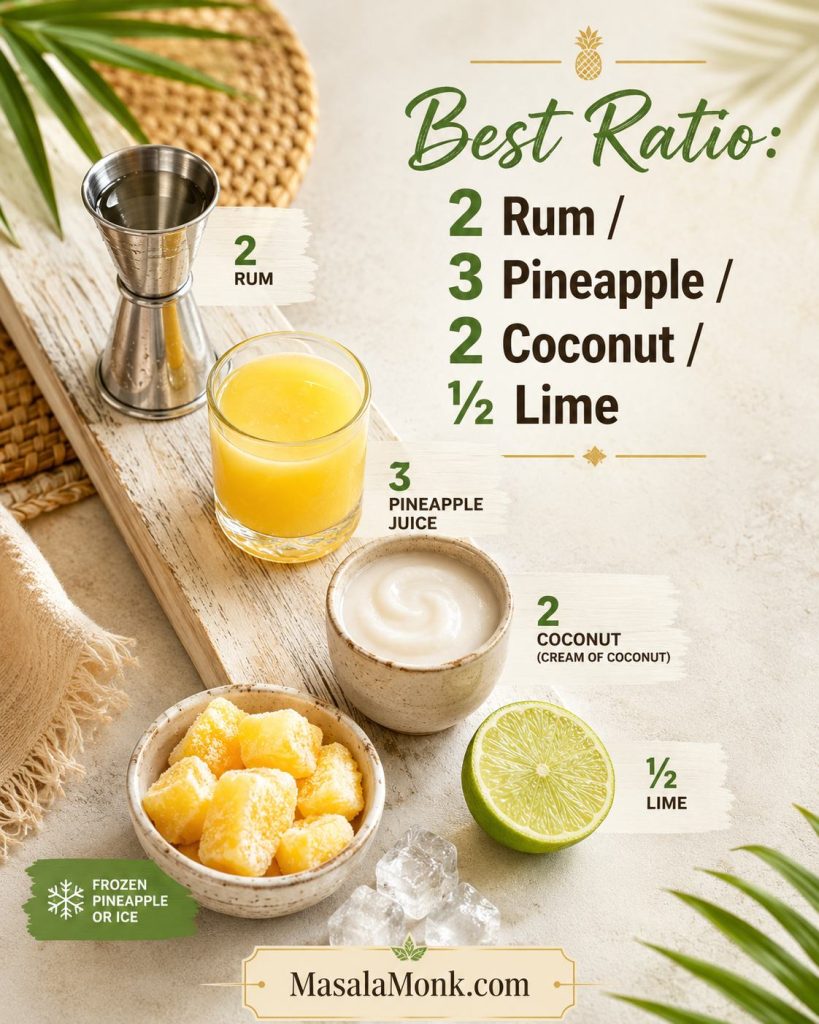
Measured pina colada ingredients showing rum, pineapple juice, cream of coconut, lime, and frozen fruit with a best ratio guide.
The best pina colada ratio gives you a reliable base before you start adjusting. Once rum, pineapple, coconut, and lime are balanced, texture fixes become much easier.

Best first batch: measure the coconut base and frozen ingredients once. After that, you can adjust by feel without turning the drink thin, syrupy, or heavy.

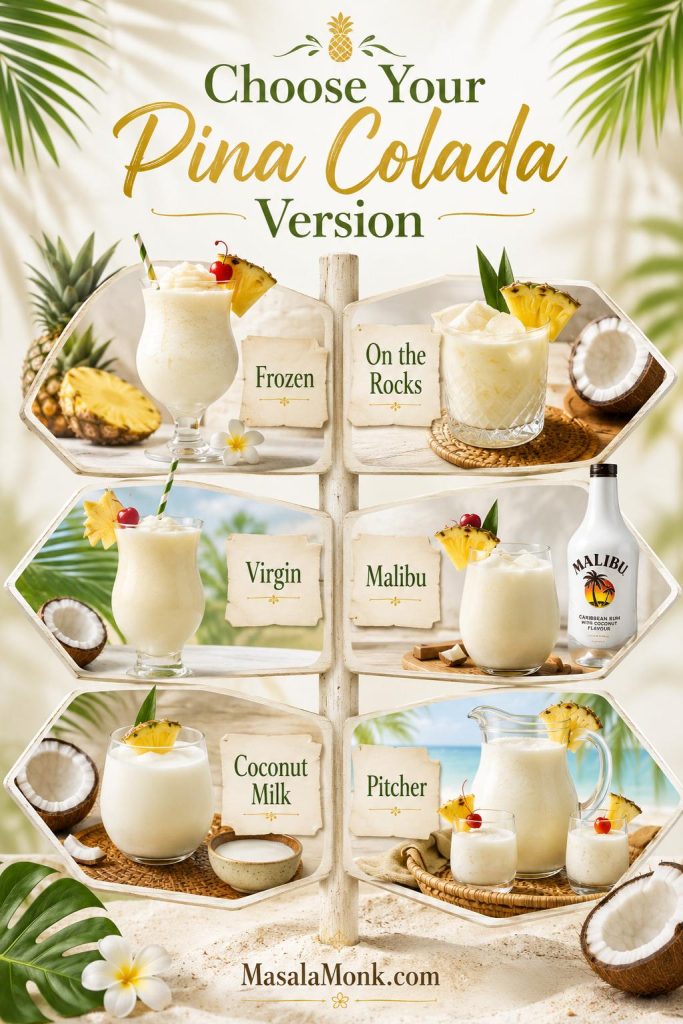
Pina Colada at a Glance: Choose Your Version

The best version depends on the glass you want: thick and vacation-style, lighter and shaken, alcohol-free but still complete, or party-ready without turning watery. Start with the classic frozen version once, then use this guide to choose your path.

VersionBest forTextureKey adjustment
Frozen Pina Colada RecipeClassic resort-style drinkFrosty, smooth, sippableUse the base ratio and optional frozen fruit.
Pina Colada on the RocksNo blender, lighter cocktailChilled and frothyShake hard; serve right away.
Virgin Pina Colada MocktailNon-drinkers and family-friendly glassesCreamy and fruit-forwardUse lime, salt, and pineapple for depth.
Malibu Pina Colada RecipeSweeter coconut-rum flavorSoft and coconut-forwardUse less cream of coconut.
Pina Colada with Coconut MilkLighter, less dessert-like drinkThinner and fresherAdd sweetener only if needed.
Pina Colada PitcherPartiesDepends on serving methodChill the base; finish at serving.
Six-panel pina colada version guide showing frozen, on the rocks, virgin, Malibu, coconut milk, and pitcher options.
The right pina colada version depends on the moment. Choose frozen for plush texture, on the rocks for no-blender ease, virgin for alcohol-free depth, or pitcher-style when you are serving more than one glass.

Why This Pina Colada Ratio Works

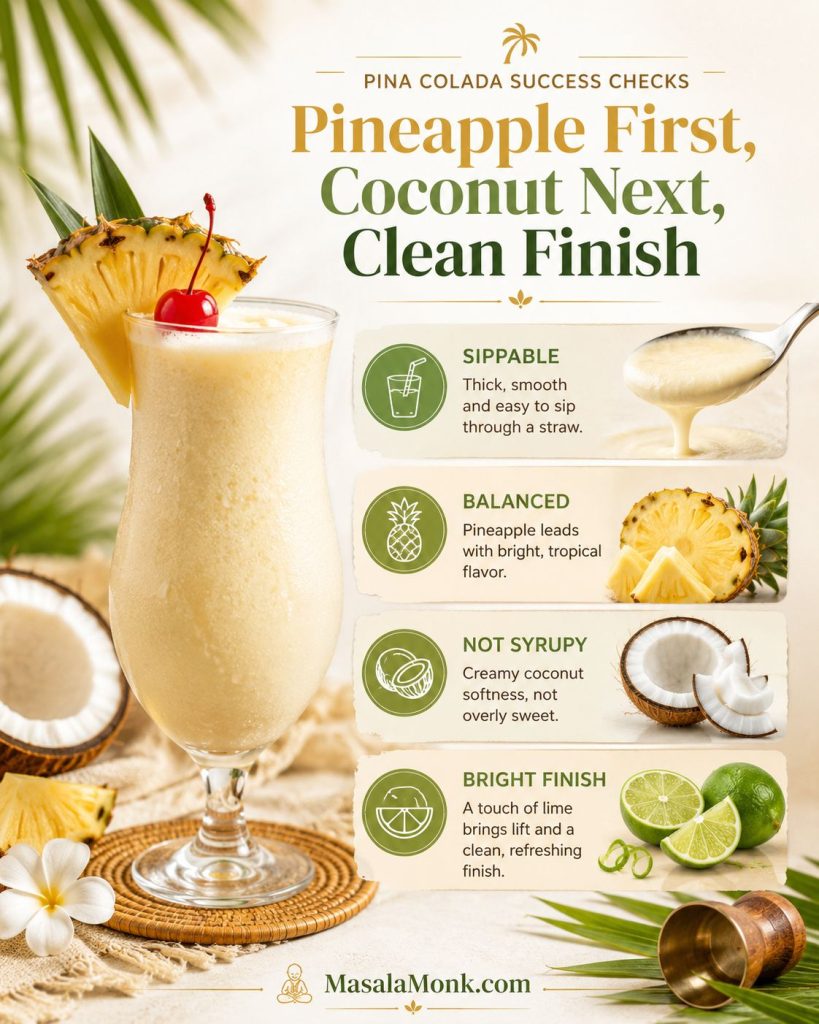
This recipe is built around three checks: the drink should pour thick but sip easily, taste pineapple-first, and finish clean instead of sticky. That is the difference between a lush piña colada and a glass of sweet melted slush.

Success checkWhat you should noticeAdjustment
TextureFrosty pour, but still sippable through a straw.Too heavy? Add a splash of juice. Too thin? Add frozen fruit.
Flavor orderPineapple first, coconut second, rum in the background.If rum dominates, add a little more pineapple or coconut base.
SweetnessSoft and tropical, not candy-like.Use less cream of coconut next time, or add a small squeeze of lime now.
FinishCool, clean, and refreshing.Flat drinks need acid or a tiny pinch of salt, not more sugar.
Pina colada success-check graphic with pineapple first, coconut next, clean finish, and cues for sippable balanced texture.
Use this as the final taste test before serving. If the drink feels heavy, sharp, or candy-sweet, adjust one small thing instead of rebuilding the whole blender jar.

What success looks like: a good frozen pina colada should move like a soft milkshake, not crushed ice in juice. It should feel lush for the first sip and still clean by the last.

Pina Colada Recipe Card

Classic Frozen Pina Colada Recipe

This frozen pina colada is pineapple-forward, coconut-rich, cold, smooth, and balanced with fresh lime. It makes one generous drink or two smaller cocktail glasses.

Prep Time
5 minutes
Total Time
5 minutes
Yield
1 large or 2 small drinks
Method
Blended / frozen

Equipment

  • Blender
  • Jigger, measuring cup, or kitchen scale
  • Hurricane glass, highball, or tall glass

Ingredients

  • 2 oz / 60 ml white rum
  • 3 oz / 90 ml pineapple juice, chilled if possible
  • 2 oz / 60 ml cream of coconut, shaken or stirred well before measuring
  • ½ oz / 15 ml fresh lime juice
  • 1 cup / about 140 g ice, plus more only if needed
  • ½ cup / about 70–75 g frozen pineapple chunks, optional but recommended
  • Pineapple wedge and maraschino cherry, optional

Method

  1. Add the pineapple juice, white rum, cream of coconut, and lime juice to the blender.
  2. Add the frozen pineapple, if using, then add the ice.
  3. Blend for 20–30 seconds, just until smooth and frosty.
  4. Check before pouring: it should look thick but still sip easily through a straw.
  5. Too thick? Blend in 1 tablespoon pineapple juice. Too thin? Add a little frozen pineapple and blend briefly.
  6. Pour into a chilled glass, garnish if you like, and serve immediately.

Success Cue

Before serving, check three things: the drink should sip easily, taste pineapple-first, and finish clean rather than sticky. Thin drinks need frozen fruit; heavy drinks need pineapple juice; overly sweet drinks need lime.

Recipe Notes

  • Prefer it less sweet? Use 1½ oz cream of coconut.
  • Want a lighter cocktail? Use 1½ oz rum.
  • Want more rum warmth? Use up to 2½ oz rum and keep the finish bright.
  • Making it alcohol-free? Use the mocktail formula below instead of simply removing the rum.
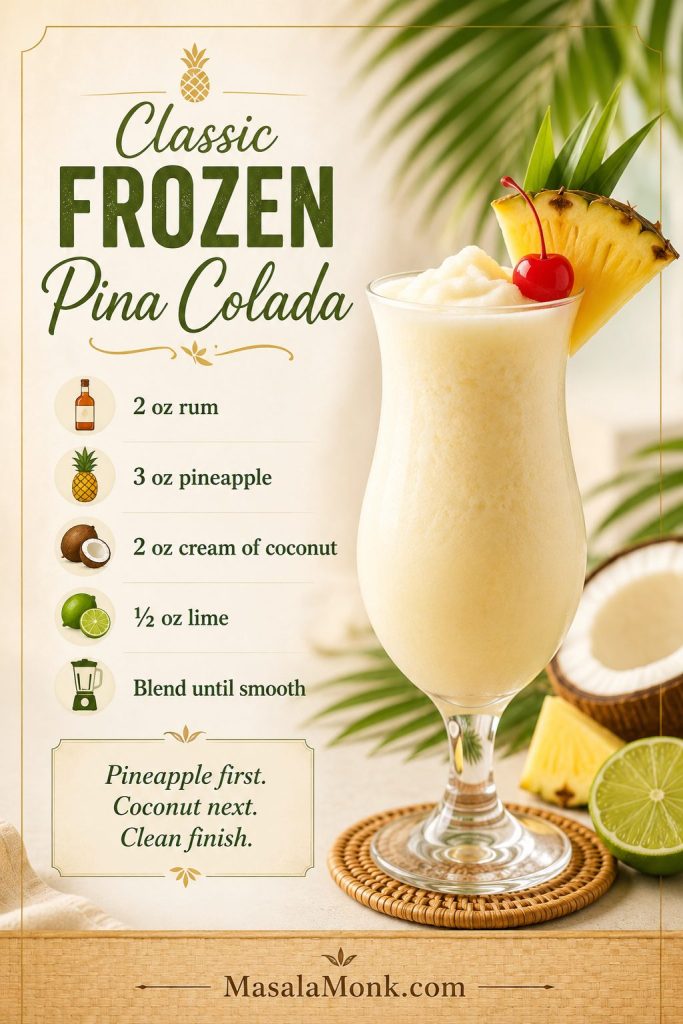
Classic frozen pina colada recipe card with rum, pineapple, cream of coconut, lime, and blend-until-smooth instructions.
This frozen pina colada card is the quick-save version of the recipe. Keep the base measured, then use the texture cue to decide whether the drink needs more fruit or more flow.

What Is a Pina Colada?

A piña colada is a tropical cocktail made with rum, pineapple, coconut, and a cold blended or shaken texture. It is strongly associated with Puerto Rico, but home versions vary because shoppers often find cream of coconut, coconut cream, coconut milk, and coconut water sitting near each other.

Classic formulas are simple; the home-cocktail confusion usually starts in the coconut aisle. Cream of coconut gives the familiar sweet resort-style body, coconut cream creates a richer but less sweet path, and coconut milk makes a lighter glass. The biggest mistake usually happens before the blender starts: choosing the wrong can.

Pina Colada Ingredients

The ingredient list is short, so each choice shows up clearly in the glass. Use the classic route when you want a sweet, creamy vacation-style drink; use the lighter swaps only when you actually want a fresher, less dessert-like result.

If the coconut aisle is the confusing part, jump to the cream of coconut vs coconut cream guide before you start blending.
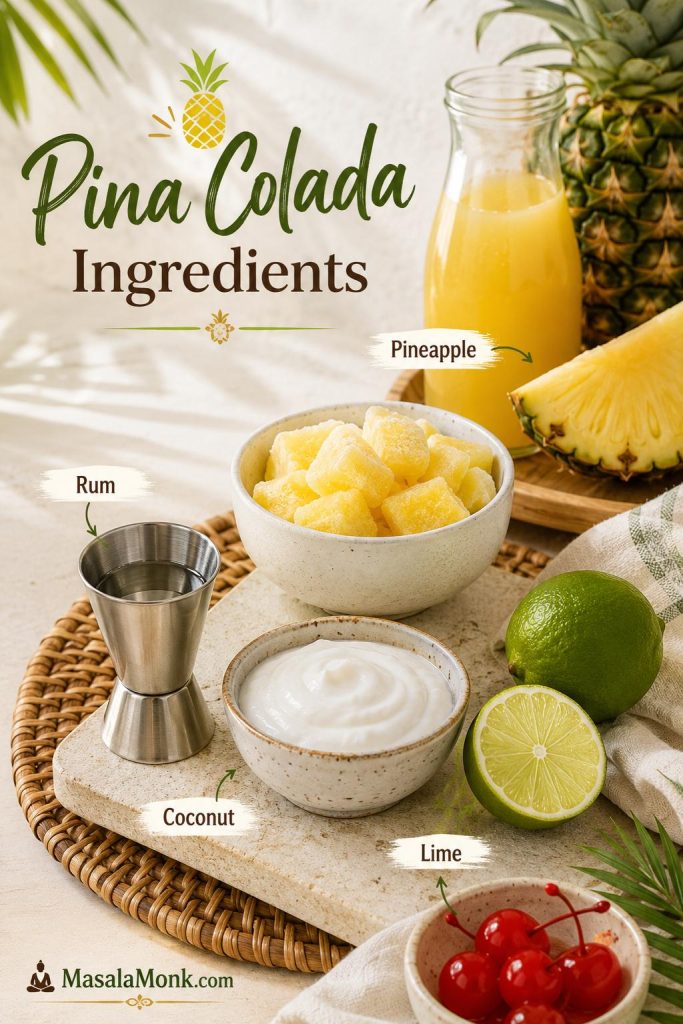
Pina colada ingredients arranged with rum, pineapple juice, cream of coconut, lime, frozen pineapple, pineapple garnish, and cherry.
A short ingredient list leaves less room to hide mistakes. For the best pina colada, use pineapple for lift, cream of coconut for structure, lime for contrast, and rum as the background note.

White rum

White rum is the best default because it keeps the drink clean, sunny, and pineapple-forward. Coconut rum is softer and sweeter. Dark or aged rum adds warmth, especially as a small float.

Pineapple

Use 100% pineapple juice for the smooth base. Fresh juice tastes vivid but varies by fruit; canned juice is more consistent. Avoid pineapple juice cocktail unless you are prepared to reduce sweetness elsewhere.

Frozen pineapple chunks are the easiest upgrade for a blender version because they add structure and real fruit flavor. Drained canned chunks can work, but syrup-packed fruit may push the drink too sweet.

Pineapple juice vs frozen pineapple

Use pineapple juice when the blender needs flow and frozen pineapple when the drink needs body. Together, they create a frozen pina colada that tastes like fruit rather than diluted ice.
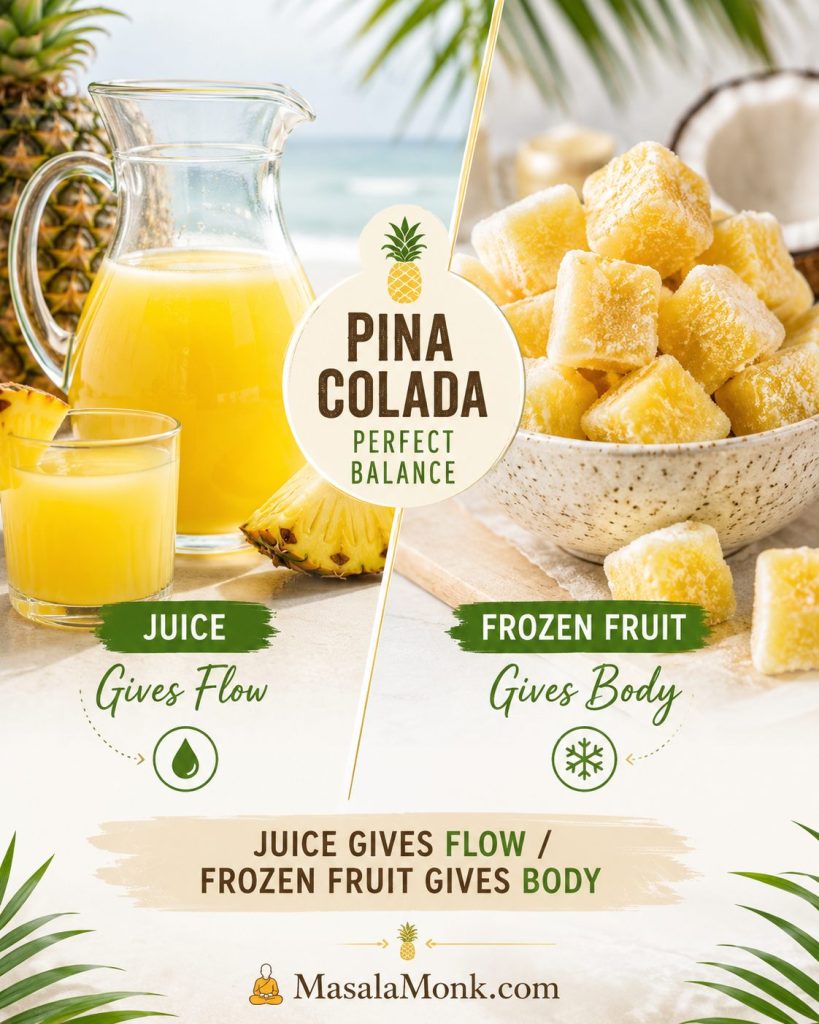
Split graphic comparing pineapple juice for flow with frozen pineapple chunks for body in a pina colada.
Pineapple juice and frozen pineapple solve different problems. Juice keeps the drink pourable, while frozen fruit adds body and helps prevent a watery blender drink.

Cream of coconut

Cream of coconut is sweetened, thick, and syrupy. It gives the familiar body most people expect from a classic pina colada, so shake or stir the can well before measuring.

If it is too thick to pour, warm the closed container in a bowl of warm water for a few minutes, then shake again. Brands vary, so taste before making big adjustments.

Fresh lime juice

Lime is the small polish move. It is not required in every traditional formula, but it keeps the coconut from tasting heavy and makes the pineapple feel brighter.

Frozen texture ingredients

For a frozen drink, measured ice gives chill while frozen fruit gives body. Too much plain ice can dull the flavor, so use pineapple chunks when you want a thicker drink that still tastes tropical.

Cream of Coconut vs Coconut Cream vs Coconut Milk

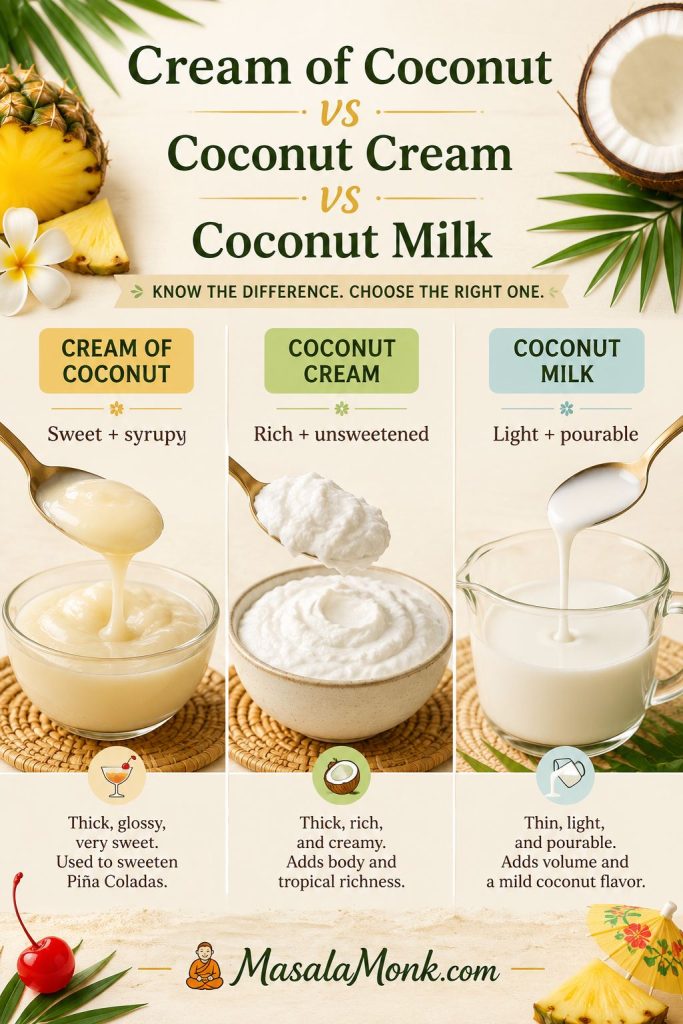
This is the aisle where many homemade piña coladas are won or lost. The names sound close, but the products do not behave the same way. If you have ever stood in front of coconut milk, coconut cream, and cream of coconut wondering which one the recipe actually means, this is the part that saves the drink.

ProductSweetened?TextureBest use in a pina colada
Sweetened cream of coconutYesThick, syrupy, richClassic sweet, creamy version.
Unsweetened coconut creamUsually noThick and richLess sweet version when paired with simple syrup or agave.
Full-fat coconut milkUsually noThinner and fluidLighter drink with a fresher, less dessert-like finish.
Coconut waterNoThin and refreshingSkinny or hydrating variation, not a classic creamy one.
Homemade coconut syrupYesAdjustableFallback when bottled cream of coconut is not available.
Comparison graphic showing cream of coconut, coconut cream, and coconut milk with texture and sweetness differences.
Cream of coconut, coconut cream, and coconut milk do not behave the same way. Choosing the right one is one of the fastest ways to control sweetness, body, and classic pina colada texture.

Already have the right coconut base? Move to the frozen method, the coconut milk version, or the fix guide if your drink is too thin, too sweet, or not creamy enough.

For the safest classic choice, use cream of coconut. A less-sweet modern route starts with coconut cream plus sweetener. If you want a lighter glass, use full-fat coconut milk with extra pineapple for body.

What cream of coconut should look like

Look for a thick, glossy pour. That texture is what gives the classic pina colada its familiar body without needing to overdo the ice.
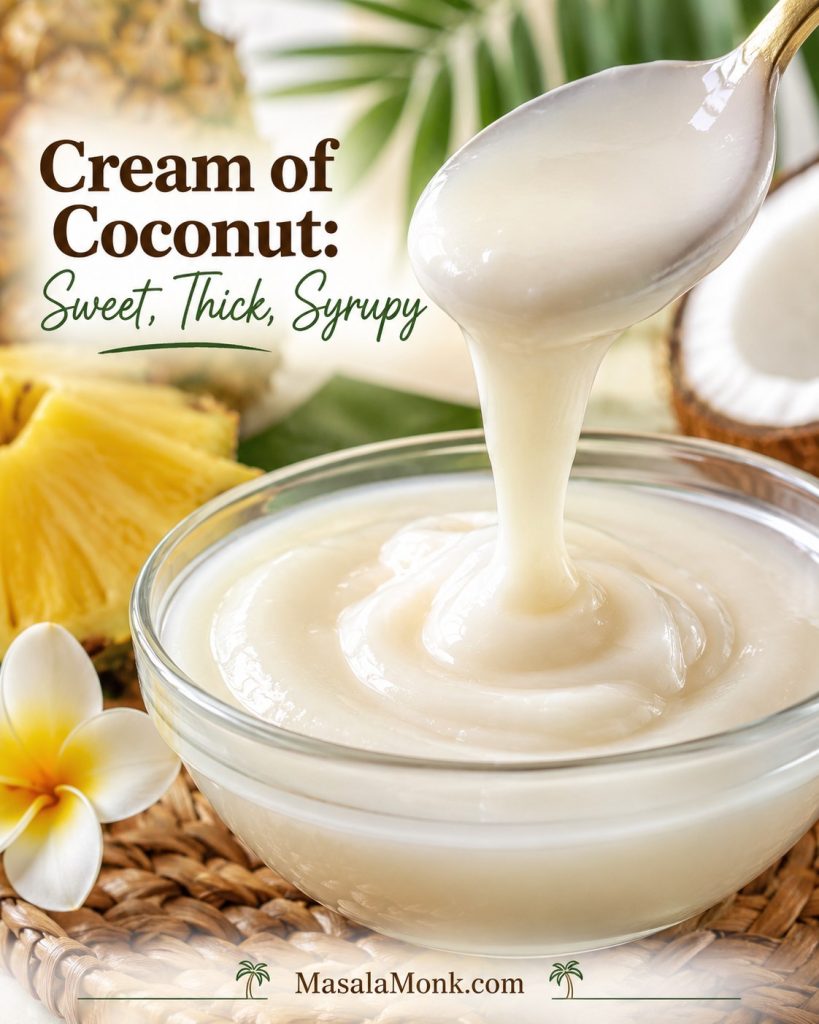
Close-up of thick cream of coconut being poured slowly, showing a glossy syrupy texture.
Cream of coconut should move slowly, almost like a glossy syrup. If your coconut ingredient pours thin like milk, the finished pina colada will usually taste lighter and less classic.

Quick homemade fallback: gently warm 1 cup full-fat coconut milk or coconut cream with ¾ cup sugar and a small pinch of salt, stirring until dissolved. Cool, refrigerate in a clean jar, and use within about 1 week. Shake before measuring.

For more detail on the coconut-aisle confusion, Epicurious has a helpful guide to cream of coconut, coconut cream, and coconut milk.

If the coconut-water direction sounds more refreshing than creamy, our coconut water cocktails guide has more long, bright drinks built around coconut water, lime, and ice.

Equipment and Cold Control

A piña colada has no cooking temperature, but it does have a temperature problem: once it warms up, the tropical flavor turns dull and the texture collapses.

  • Use a blender for the frozen version and a shaker or clean jar for the on-the-rocks version.
  • Chill the juice when possible so the drink starts cold.
  • Add liquids first so the blender catches before the frozen ingredients settle around the blades.
  • Blend briefly, usually 20–30 seconds, then stop once smooth.
  • For pitchers, chill the base ahead and finish each round right before serving.
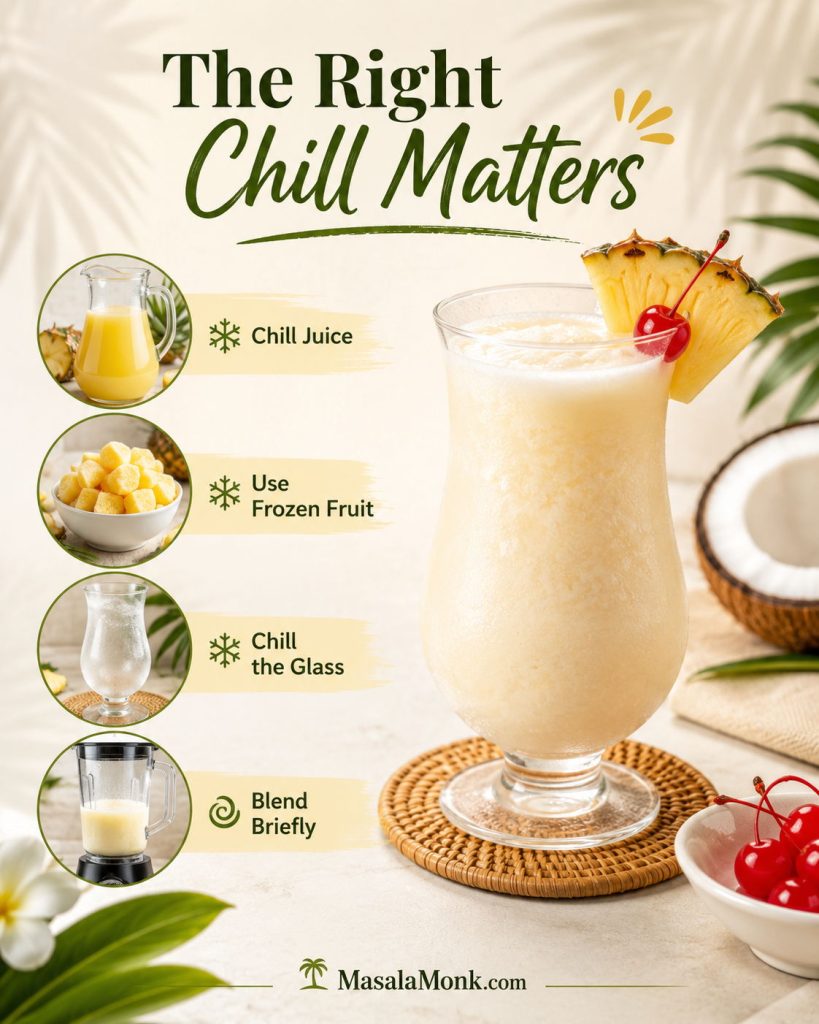
Cold control guide for pina colada showing chilled juice, frozen fruit, a chilled glass, and brief blending tips.
Cold control matters more than simply adding more ice. Chilled juice, frozen fruit, a cold glass, and brief blending help a creamy pina colada stay smooth instead of melting too quickly.

These small moves protect the drink’s first-sip feeling: frosty, lush, and refreshing instead of loose and tired.

Avoid these common mistakes: do not use unsweetened coconut milk as a direct cream-of-coconut swap, do not over-blend after the drink turns smooth, and do not fix a flat mocktail with more sugar. Use acid and a tiny pinch of salt instead.

How to Make a Frozen Pina Colada

A frozen pina colada should pour thick, then relax slightly in the glass. It should not scoop like sorbet or run like juice.
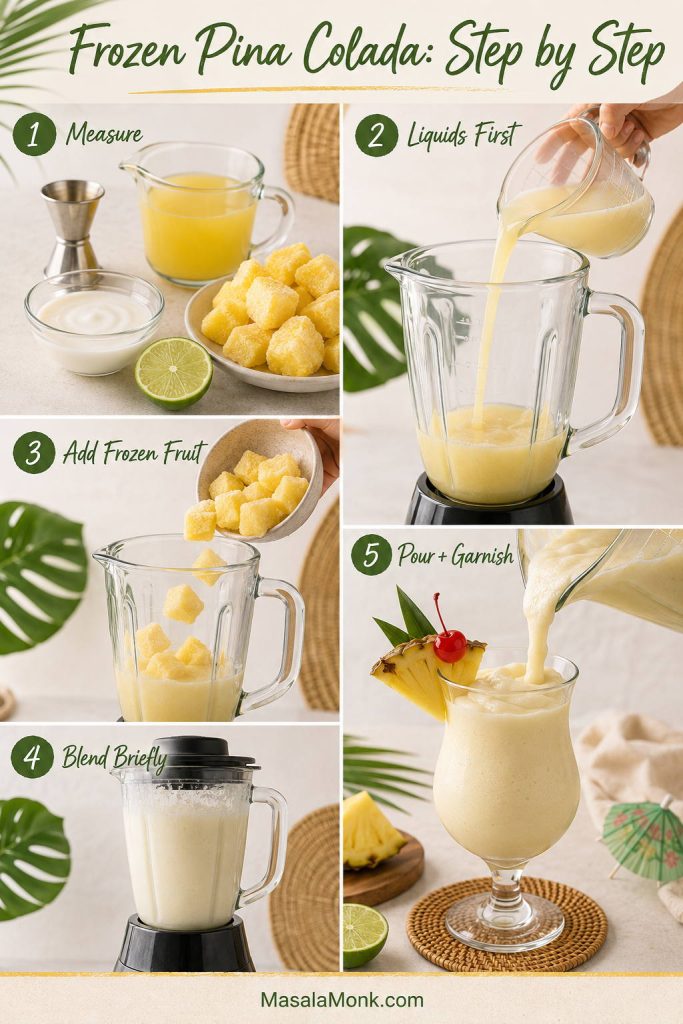
Step-by-step frozen pina colada guide showing measuring, adding liquids, adding frozen fruit, blending briefly, and pouring to garnish.
The frozen method works best when the blender gets help from the start. Add liquids first, then frozen fruit, so the drink blends quickly without losing its thick, sippable texture.

Add pineapple juice, rum, cream of coconut, and lime to the blender first. Add frozen pineapple and ice last so the blades can catch and move smoothly.
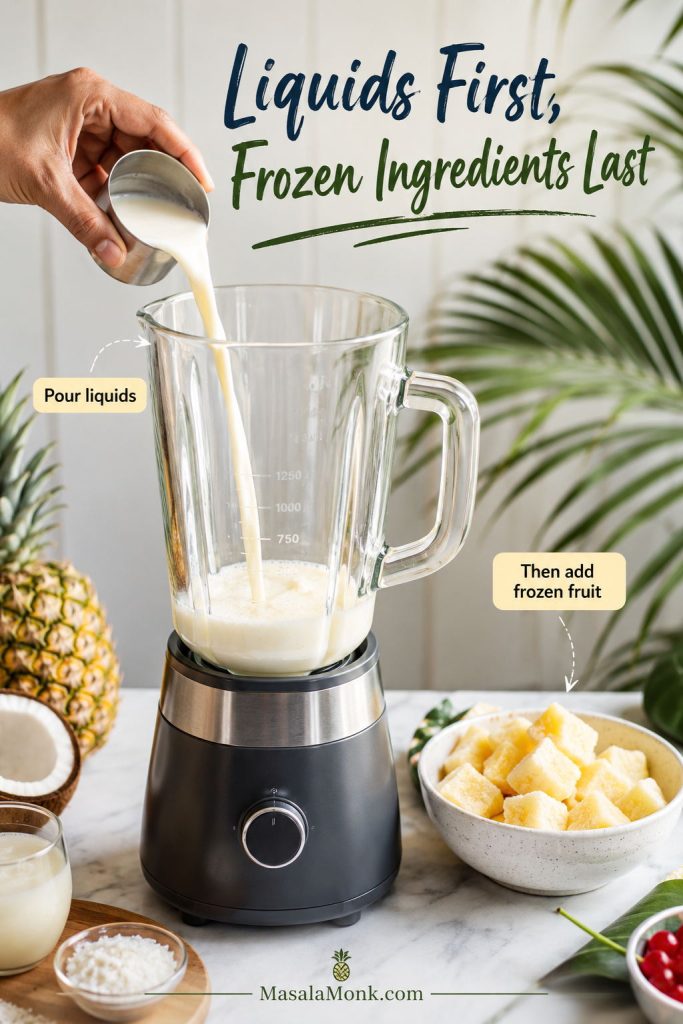
Blender jar with liquid being poured in first and frozen pineapple waiting nearby for a pina colada blender order guide.
Blender order can change the final texture. Liquids first help the blades move freely; after that, frozen pineapple can thicken the pina colada without turning it into a frozen block.

Blend for 20–30 seconds, just until smooth. If the blender struggles, start with less frozen material, blend the liquid and fruit, then add the rest gradually.

Texture target: thick enough to look lush, loose enough to sip. Too heavy? Add pineapple juice. Too thin? Add frozen pineapple. Too sweet? Add lime.

Frozen pina colada texture target

Use this texture cue before you pour. A frozen pina colada should look plush, but it should still move through a straw without effort.
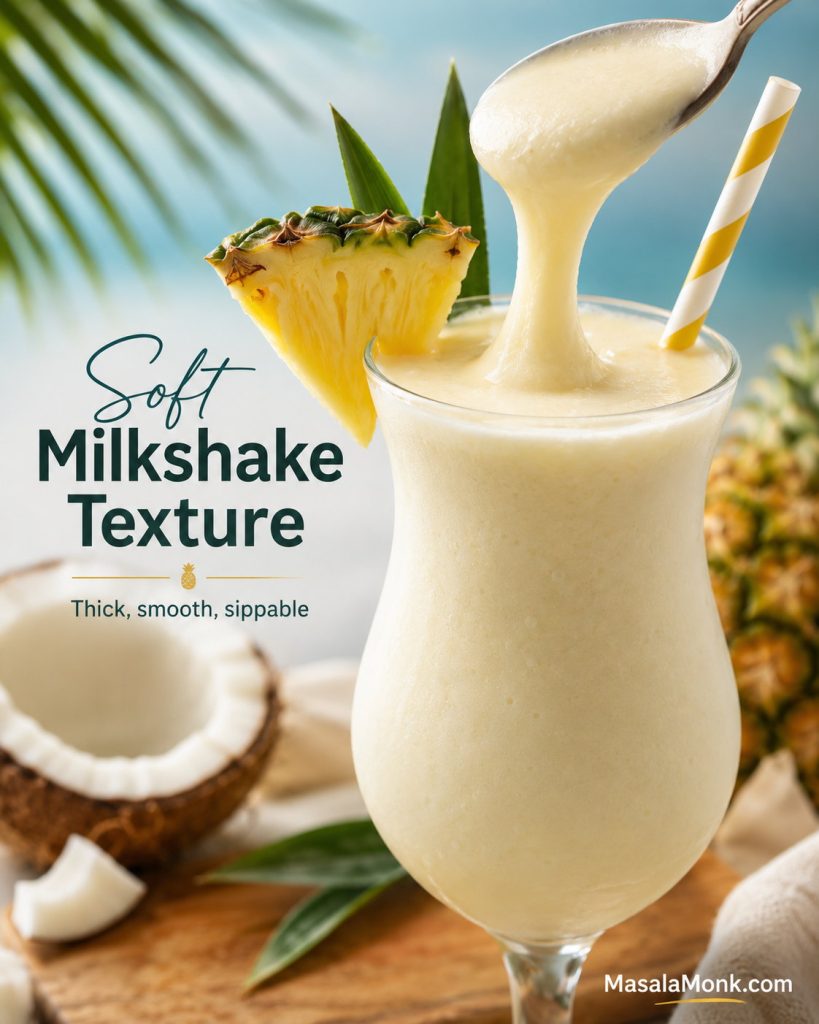
Finished frozen pina colada with thick, smooth, sippable texture shown close up with garnish and MasalaMonk.com footer.
The ideal frozen pina colada should move like a soft milkshake. If it scoops like sorbet, loosen it; if it runs like juice, add more frozen pineapple.

Too thin, just right, or too heavy?

For quick rescue, compare your drink with this texture guide or jump to the full pina colada troubleshooting section.
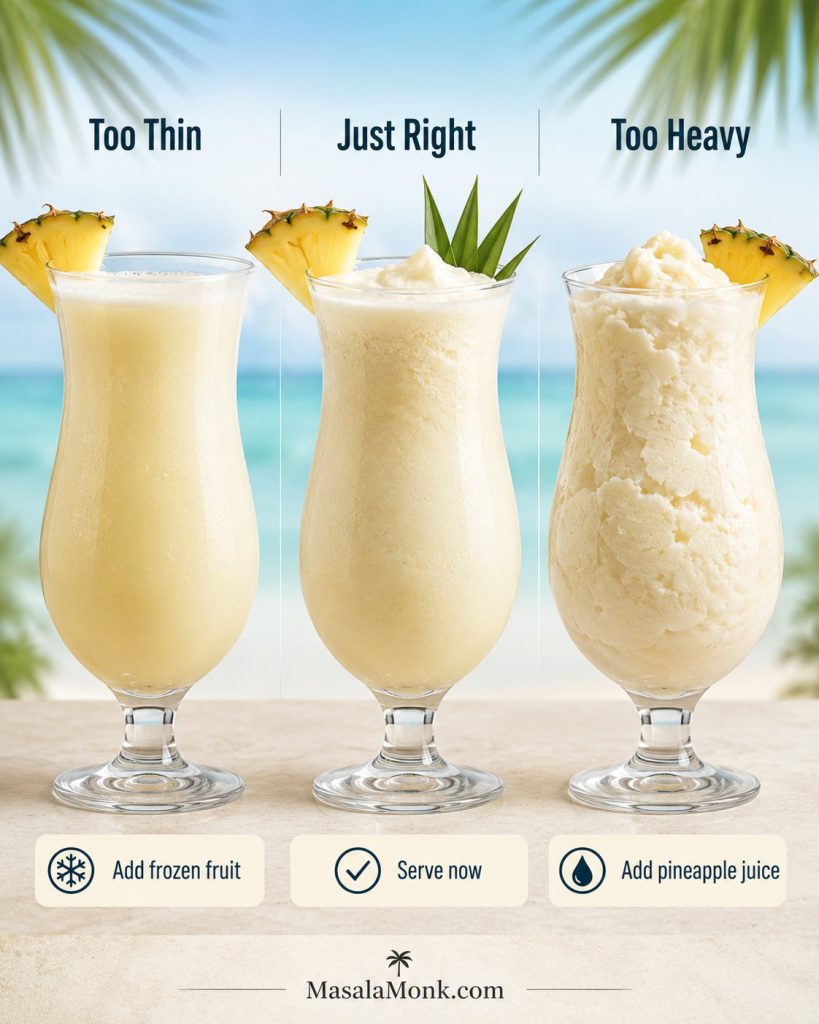
Three-part pina colada texture comparison showing too thin, just right, and too heavy with quick fix cues.
Texture fixes work better when you identify the problem first. A thin pina colada needs more frozen body, while a heavy one needs pineapple juice to bring back flow.

The same frozen-fruit logic is useful in a frozen strawberry daiquiri: fruit gives body, lime keeps it bright, and the blender stays on your side instead of against you.

If you want to compare this with a bartender-style baseline, the International Bartenders Association lists a simple white-rum, pineapple, and coconut piña colada formula.

How to Make a Pina Colada on the Rocks

A pina colada on the rocks is the cleaner, faster version: same pineapple-coconut flavor, but lighter on the palate and less dessert-like than the frozen drink. Choose it when you want a chilled cocktail that still feels tropical without turning into a smoothie.
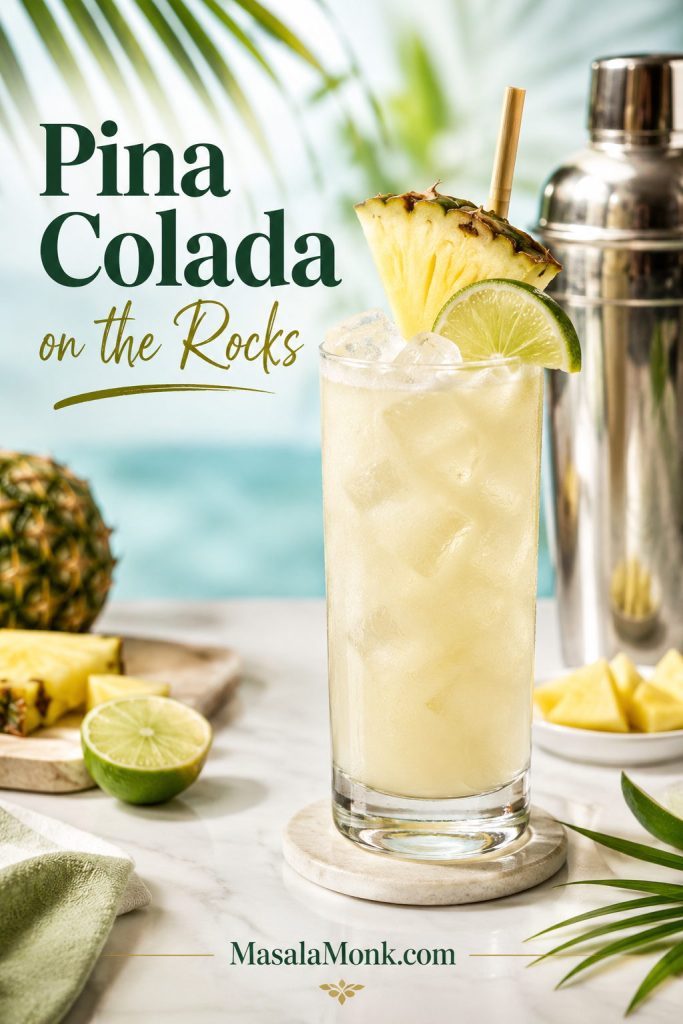
Pina colada on the rocks in a tall glass with fresh ice, pineapple garnish, lime, and cocktail shaker in the background.
A pina colada on the rocks is the best route when you want the flavor without the blender. Shake it hard, strain over fresh ice, and the drink stays lighter while still tasting tropical.
IngredientAmount for 1 drink
White rum2 oz / 60 ml
Pineapple juice2 oz / 60 ml
Cream of coconut1½ oz / 45 ml
Fresh lime juice½ oz / 15 ml
Fresh iceFor shaking and serving

Add the rum, pineapple juice, cream of coconut, and lime juice to a cocktail shaker. Shake hard for 12–20 seconds, until the outside feels cold and the drink looks lightly frothy. Strain into a fresh glass over fresh ice.
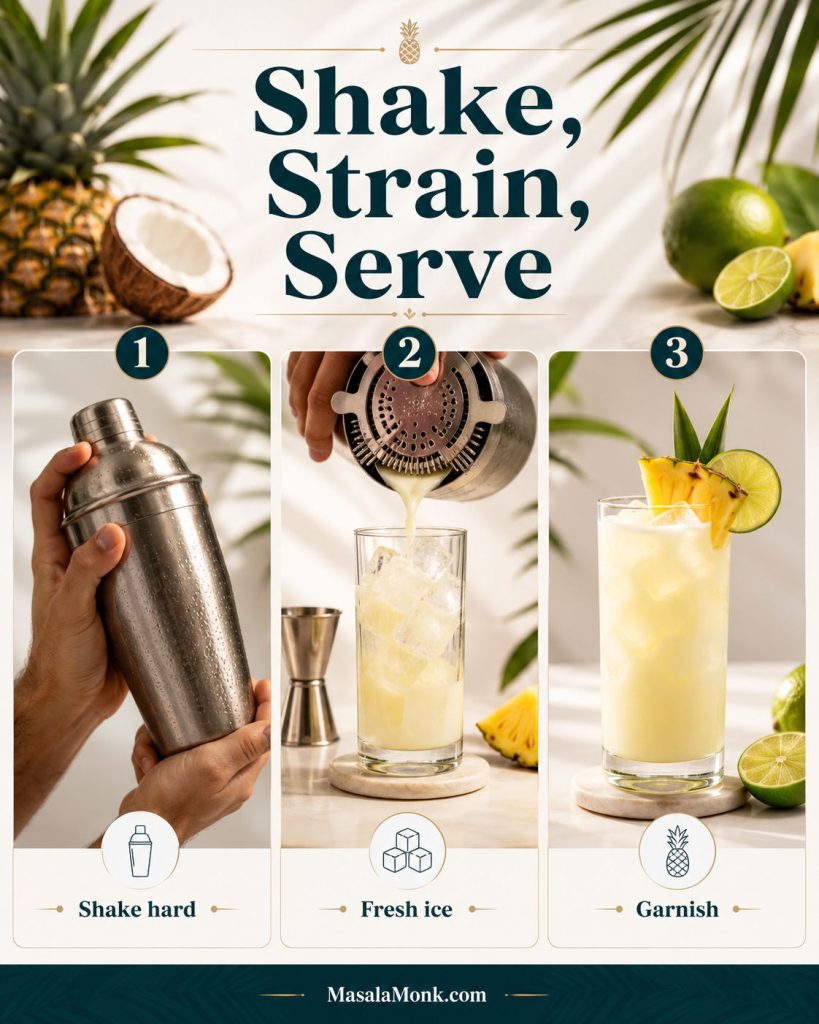
Three-step on-the-rocks pina colada guide showing shake hard, strain over fresh ice, and garnish.
For a no-blender pina colada, fresh ice is not just decoration. It keeps the shaken drink crisp, cold, and clean instead of letting it turn loose in the glass.

The shorter ratio matters because this version has no blender full of frozen fruit to soften the drink. It should land silky and cold, with coconut on the edges rather than a thick milkshake texture.

No cocktail shaker? Use a clean jar with a tight lid. No strainer? Pour carefully or use a small sieve. If your coconut base is very thick, stir it with the pineapple juice first so it shakes evenly.

If you like the cleaner shaken style, a classic daiquiri is the leaner rum-lime cousin: no coconut, no blender, just balance.

Virgin Pina Colada / Non-Alcoholic Pina Colada Mocktail

For one generous virgin pina colada, blend 1 cup frozen pineapple, ½ cup pineapple juice, ⅓–½ cup cream of coconut, 1 tablespoon lime juice, ½–1 cup ice, and a tiny pinch of salt. Use the smaller amount of coconut for a less sweet adult mocktail and the larger amount for a creamier dessert-style drink.
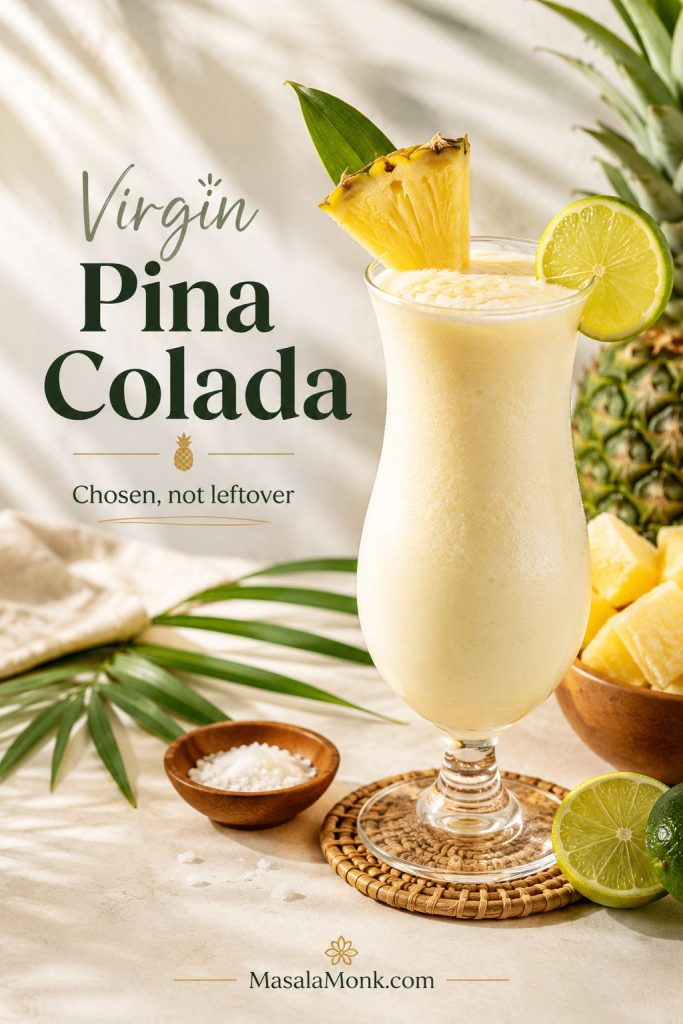
Virgin pina colada mocktail in an elegant glass with pineapple and cherry garnish, lime, and tropical styling.
A virgin pina colada should feel complete, not like rum was simply removed. Frozen pineapple, lime, and a tiny salt cue help the mocktail keep depth and brightness.

A good non-alcoholic pina colada should not taste like the rum was simply removed. Lime, frozen fruit, and a tiny pinch of salt replace some of the bite and depth, while the coconut keeps the drink smooth. The mocktail should still feel like a drink someone chose, not the version left after the rum was removed.

Non-alcoholic pina colada formula

IngredientClassic sweet mocktailLess sweet mocktail
Frozen pineapple1 cup / about 140 g1 cup / about 140 g
Pineapple juice½ cup / 120 ml½ cup / 120 ml
Cream of coconut½ cup / 120 ml⅓ cup / 80 ml
Coconut milk or coconut waterOptional splash2–3 tablespoons
Fresh lime juice1 tablespoon / 15 ml1 tablespoon / 15 ml
Ice½–1 cup, as needed½–1 cup, as needed
Optional depthTiny pinch of salt, 2–3 drops vanilla, or non-alcoholic rumTiny pinch of salt, 2–3 drops vanilla, or non-alcoholic rum
Non-alcoholic pina colada formula graphic showing frozen pineapple, pineapple juice, cream of coconut, lime, and a tiny pinch of salt.
The non-alcoholic pina colada formula needs more than pineapple and coconut. A little lime and a tiny pinch of salt make the alcohol-free version taste fuller without making it salty.

Serving both versions? Use the pitcher section to make a shared pineapple-coconut base, then add rum only to the glasses that need it.

Blend until smooth, then taste before serving. Too sweet? Add lime. Dull? Add the smallest pinch of salt. Too thick? Loosen it with pineapple juice, coconut milk, or coconut water.

For a more grown-up mocktail, add a few drops of vanilla or a splash of non-alcoholic rum. If you are also serving lighter alcohol-free drinks, our low-sugar mocktails guide has more ideas.

Classic vs virgin pina colada

Use the same care with garnish, texture, and balance for both versions. That is what makes the non-alcoholic glass feel intentional instead of secondary.
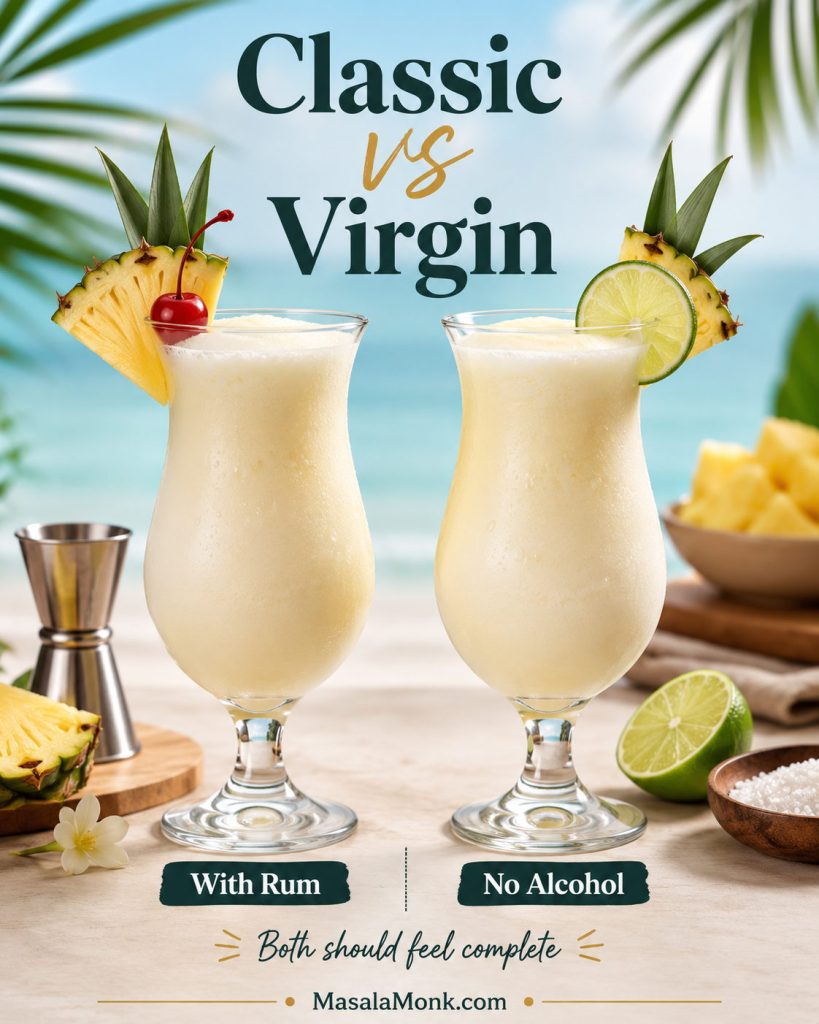
Side-by-side classic and virgin pina coladas, showing one with rum and one alcohol-free, both garnished and served in tropical glasses.
Classic and virgin pina coladas should both feel worth choosing. Keep the same care with texture, garnish, and bright finish so the mocktail does not feel like a backup drink.

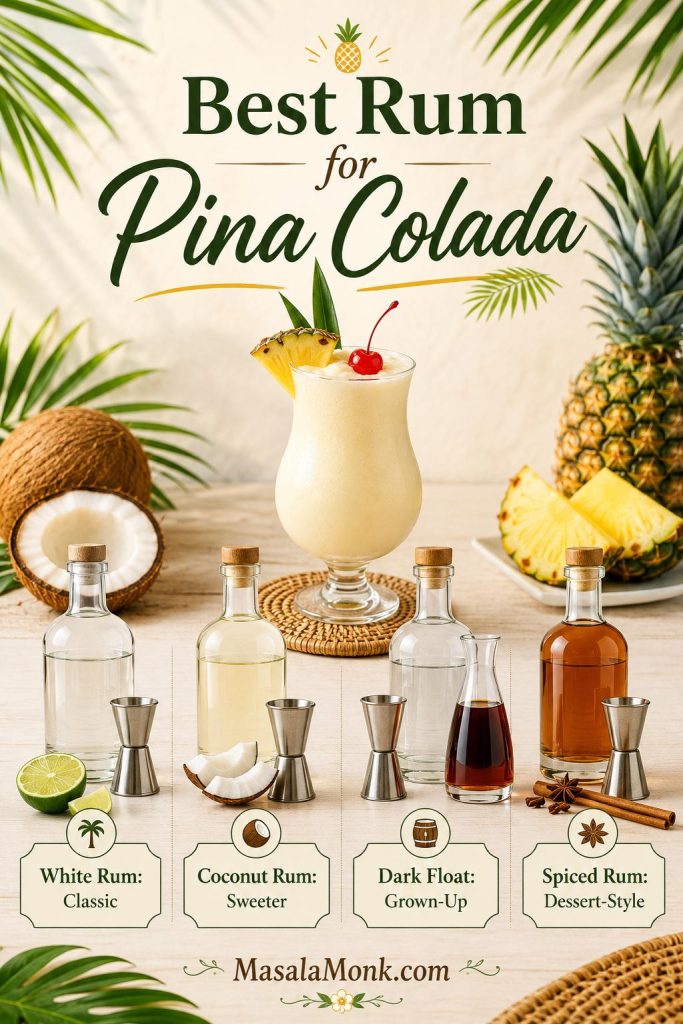
Best Rum for Pina Colada

The best rum for a pina colada depends on the mood of the drink. Choose white rum for the clean classic. Coconut rum gives you a sweeter party glass. For a more grown-up finish, keep white rum as the base and add a small dark rum float.

Rum choiceBest useWhat to adjust
White rumBest default for the classic pineapple-coconut flavor.Use the main recipe as written.
Malibu or coconut rumBest sweet party version.Reduce cream of coconut so the drink does not turn candy-sweet.
White rum + dark rum floatBest deeper, more grown-up version.Keep the base light, then float a little dark rum on top.
Spiced rumDessert-style variation, not the clean classic.Use extra lime and keep the coconut controlled.
Rum chooser graphic for pina colada with white rum, coconut rum, dark rum float, and spiced rum options.
For the best rum in a pina colada, start with white rum if you want the classic to taste clean. Then move to coconut rum, a dark float, or spiced rum when you want a sweeter or deeper variation.

First time making this recipe? Start with white rum. It lets the pineapple and coconut stay in front, which is the easiest way to understand the drink before you make it sweeter, darker, or warmer.

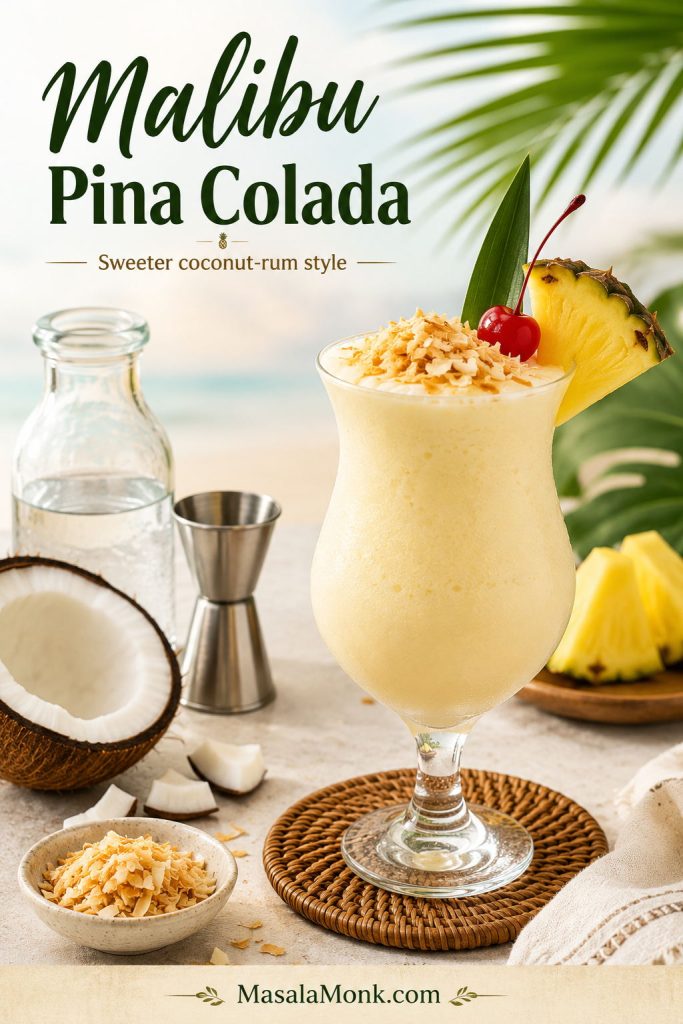
Malibu Pina Colada

For one Malibu pina colada, use 2 oz Malibu or coconut rum, 2 oz pineapple juice, 1 oz cream of coconut, ½ oz fresh lime juice, and ice. Because Malibu is already sweet and coconut-flavored, do not use the full classic amount of cream of coconut unless you want a very sweet drink.

IngredientAmount for 1 drink
Malibu or coconut rum2 oz / 60 ml
Pineapple juice2 oz / 60 ml
Cream of coconut1 oz / 30 ml
Fresh lime juice½ oz / 15 ml, optional but useful
IceFor shaking or blending
Malibu-style pina colada with toasted coconut topping, pineapple wedge, cherry, and coconut pieces.
A Malibu pina colada leans sweeter because coconut rum already brings flavor and sugar. Reduce extra sweetness or add a little more lime to keep the drink balanced.

Shake the ingredients with ice and strain over fresh ice, or blend with about 1 cup ice for a frozen drink. Too sweet? Add lime. Too light? Use half Malibu and half white rum. Want it more coconutty without making it sugary? Add a splash of unsweetened coconut milk instead of more cream of coconut.

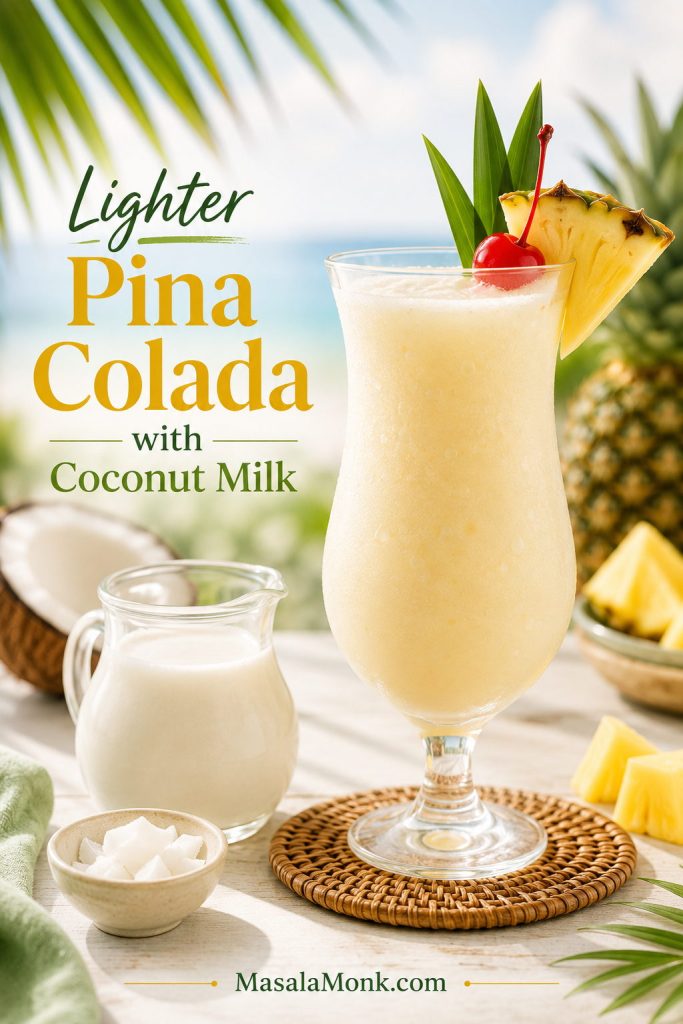
Pina Colada with Coconut Milk

A pina colada with coconut milk is lighter than the cream-of-coconut version. Choose it when you want the pineapple to feel brighter and the coconut to whisper rather than coat the glass.

Use full-fat coconut milk, not watery light coconut milk. Because it is usually unsweetened, add a little simple syrup, maple syrup, or agave only if the drink tastes sharp or thin.

IngredientAmount for 1 lighter drink
White rum2 oz / 60 ml
Pineapple juice3 oz / 90 ml
Full-fat coconut milk2 oz / 60 ml
Fresh lime juice½ oz / 15 ml
Simple syrup, maple syrup, or agave½–1 oz / 15–30 ml, to taste
Frozen pineapple½ cup / about 70–75 g
Ice½–1 cup, as needed
Lighter pina colada made with coconut milk, shown with a coconut milk pitcher, pineapple garnish, cherry, and tropical background.
A coconut milk pina colada tastes lighter and brighter than the classic. Because coconut milk is thinner and less sweet, the drink needs help from pineapple and careful chilling.

Blend just until smooth. Thin? Add more frozen pineapple. Sharp? Add sweetener gradually. Want it richer? Add 1 tablespoon cream of coconut or coconut cream.

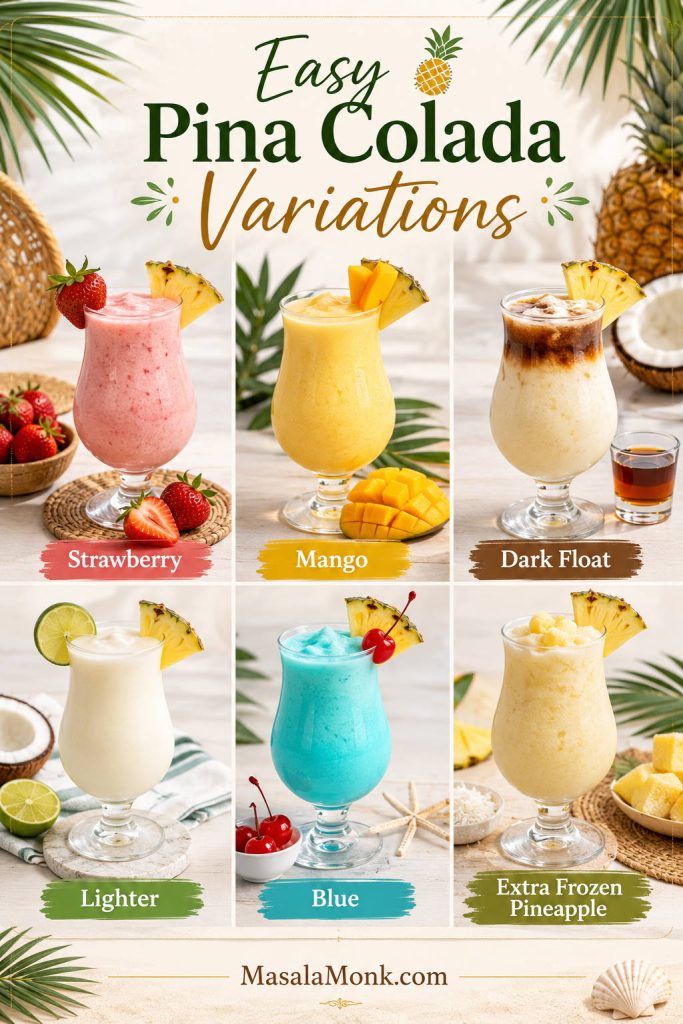
Easy Pina Colada Variations

Once the base ratio is clear, variations become easy. Keep the pineapple-coconut structure, then change one thing at a time: fruit, rum, sweetness, or finish.

If you only try one variation first, make the frozen pineapple version. It improves body and fruit flavor without changing the identity of the drink.
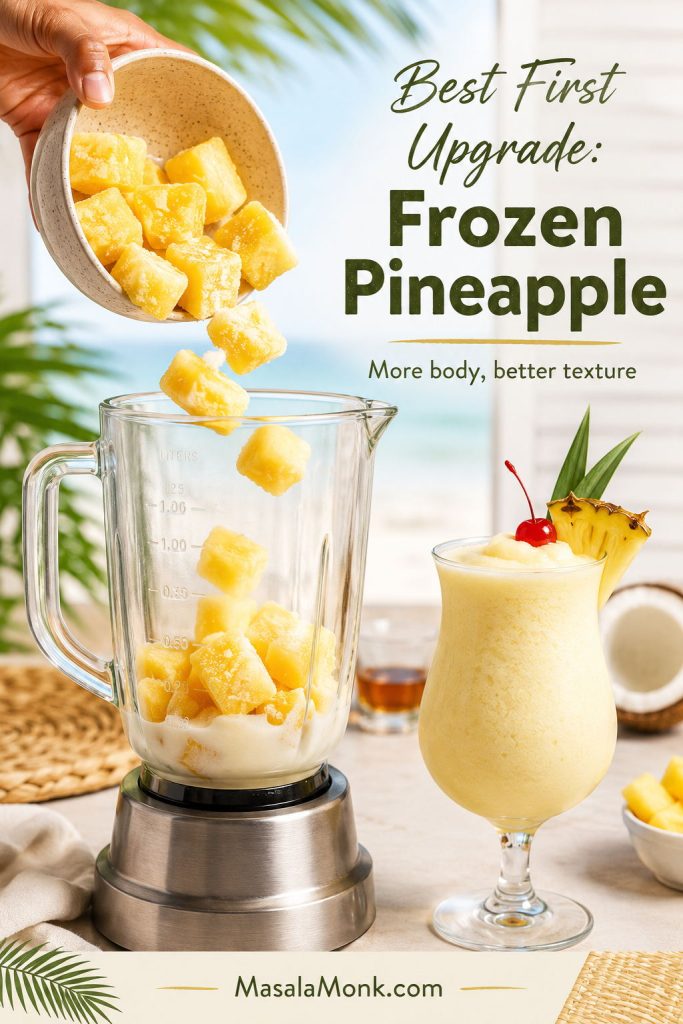
Frozen pineapple chunks being poured into a blender for a thicker pina colada, with a finished drink beside it.
Frozen pineapple is the best first upgrade for a frozen pina colada. It adds body, keeps the flavor tropical, and reduces the need for extra ice.
VariationHow to make it
Strawberry pina coladaAdd ½–1 cup frozen strawberries and keep the coconut slightly lighter.
Mango pina coladaAdd ½ cup frozen mango for a thicker, golden tropical version.
Frozen pineapple pina coladaUse more frozen pineapple for stronger fruit flavor and a smoother pour.
Blue pina coladaAdd a small amount of blue curaçao and reduce other sweet elements.
Dark rum floatMake the classic recipe, then float a little dark rum on top before serving.
Skinny pina coladaUse coconut water or coconut milk, frozen fruit, and less cream of coconut.
Pina colada variations board showing strawberry, mango, dark float, lighter, blue, and extra frozen pineapple versions.
Pina colada variations work best when you change one lever at a time. Add fruit for flavor, a dark rum float for depth, or extra frozen pineapple for thicker texture.

For a deeper list of flavor twists, see our full guide to Piña Colada variations, including strawberry, mango, coconut rum, frozen pineapple, and non-alcoholic versions.

Pina Colada Mix: Homemade or Store-Bought

Pina colada mix is useful when speed matters, but it can taste dull if you only add rum and blend. Store-bought mix is not a failure; it just needs freshness added back. Treat it as a shortcut base, then wake it up with acid, cold, and real pineapple flavor.
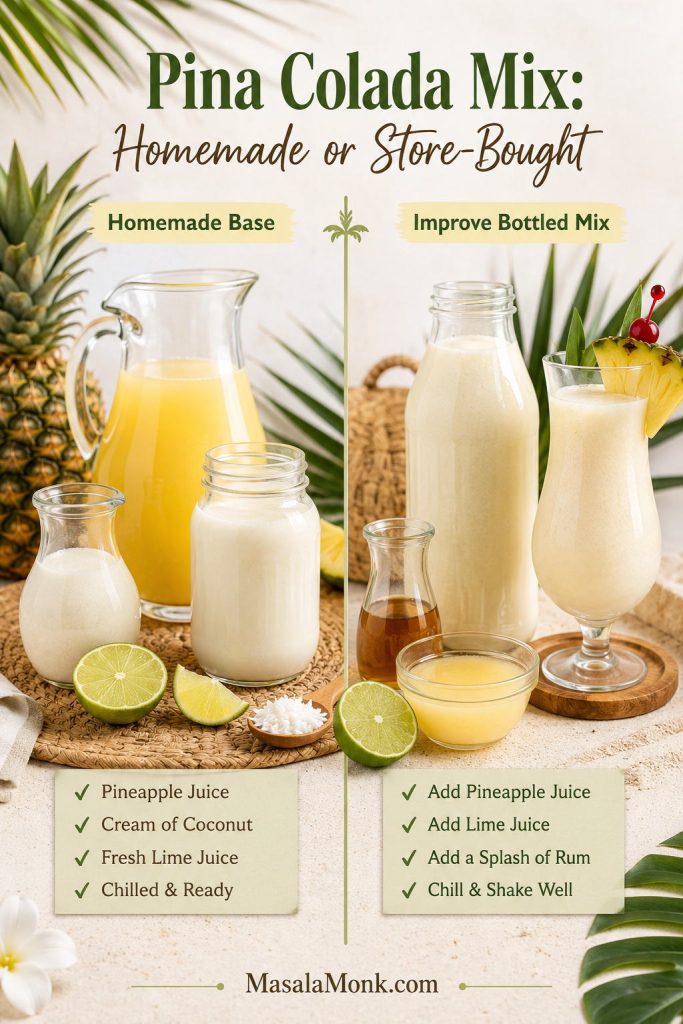
Pina colada mix guide comparing homemade base with improved bottled mix using pineapple juice, cream of coconut, lime, and a finished drink.
A homemade pina colada mix gives you control over sweetness, coconut body, and lime. Bottled mix can still work, but it usually needs freshness added back before serving.

Homemade pina colada mix

Homemade mix ingredientAmount
Cream of coconut1 cup
Pineapple juice¾ cup
Fresh lime juice3 tablespoons

Stir or blend until smooth, then refrigerate in an airtight container for 2–3 days. This is the liquid base, not the finished cocktail.

How much mix per drink?

Use about 4 oz homemade mix with 2 oz white rum. Blend for a frozen drink or shake for an on-the-rocks version. For a mocktail, skip the rum and add pineapple or coconut water if the glass needs loosening.

Using bottled mix for a party? The pitcher guide and store-bought mix fixes will help keep the drink fresh instead of flat.

How to improve store-bought pina colada mix

  • Add fresh lime if it tastes syrupy.
  • Use white rum instead of coconut rum when the mix is already very sweet.
  • Add frozen pineapple if the flavor feels thin.
  • Avoid extra cream of coconut unless the drink truly lacks body.
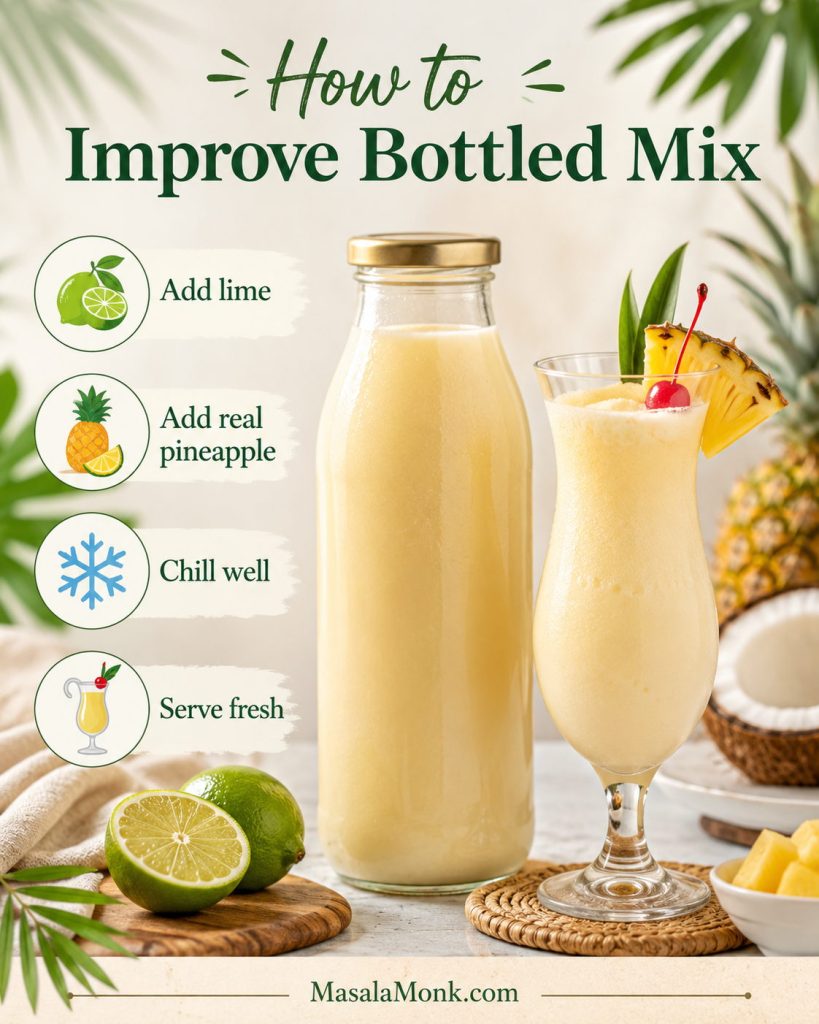
Guide to improving bottled pina colada mix with lime, real pineapple, chilling, and fresh serving cues.
Store-bought pina colada mix often tastes dull because it lacks fresh edges. Start with lime and real pineapple flavor, then chill well so the shortcut still tastes alive.

If you are making a big non-blended bowl instead, this punch with pineapple juice guide is better for ginger ale, Sprite, sherbet, cranberry, lemonade, and party punch variations.

Pina Colada Pitcher for a Party

A pitcher works best when you make the liquid base ahead and finish each round at serving. Do not blend the whole pitcher and park it in the fridge; that is how a good piña colada becomes sweet pineapple-coconut water.

IngredientFor 4 drinks
White rum1 cup / 240 ml
Pineapple juice1½ cups / 360 ml
Cream of coconut1 cup / 240 ml
Fresh lime juice¼ cup / 60 ml
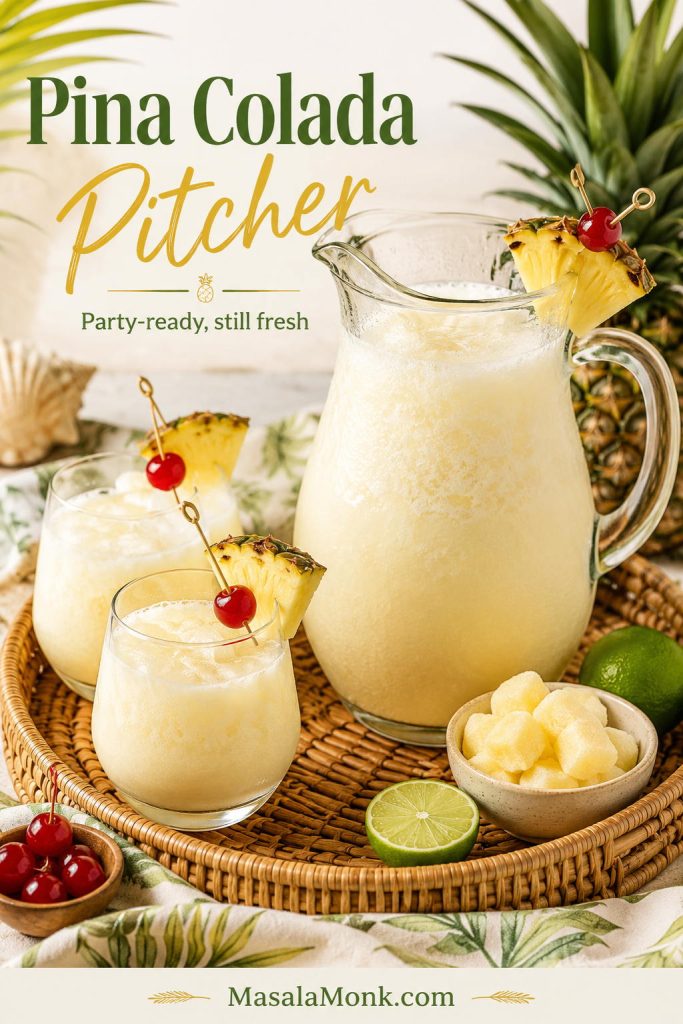
Pina colada pitcher with serving glasses, pineapple wedges, cherries, lime, frozen pineapple, and rattan tray styling.
A pina colada pitcher should be party-ready without tasting tired. Keep the base cold and serve close to drinking time so each glass tastes fresh, not leftover.

Whisk or blend the base until smooth, then refrigerate. For frozen drinks, blend in 1–2 drink portions. For on-the-rocks drinks, shake individual servings or stir the base well over fresh crushed ice. This way, every glass tastes like the first one, not the leftover one.
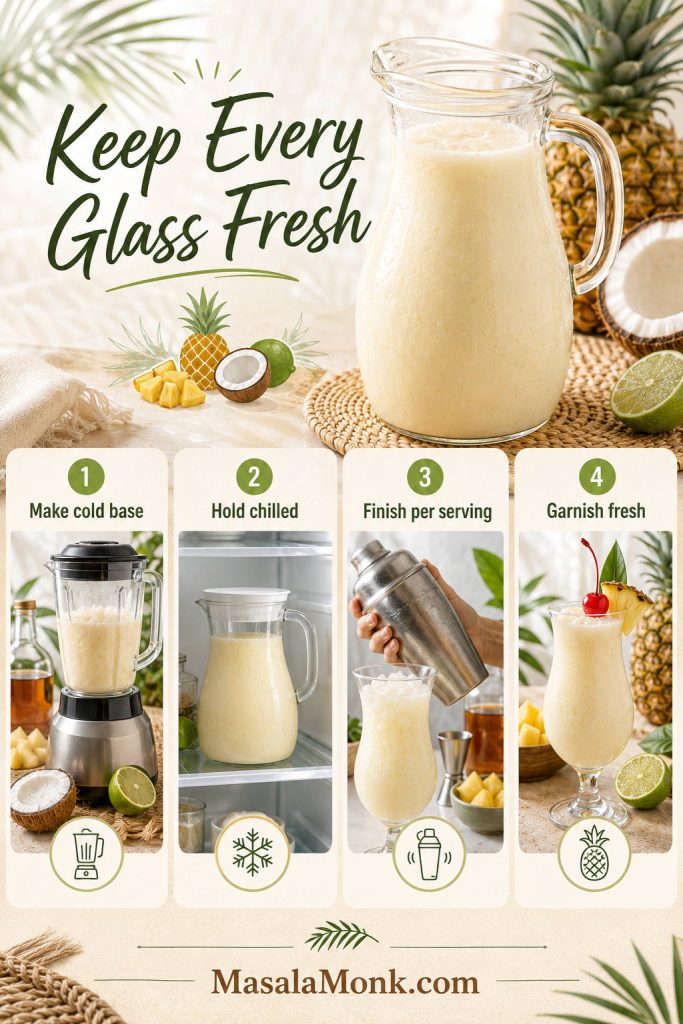
Batch pina colada guide showing make cold base, hold chilled, finish per serving, and garnish fresh steps.
Batch the base, not the finished frozen drink. This keeps the pina colada smooth and bright, especially when you want every guest’s glass to taste like the first one.

If serving both alcoholic and alcohol-free drinks, make a pineapple-coconut-lime base without rum. Add rum to individual glasses for adults and label the alcohol-free batch clearly.

For alcohol-free guests, use the virgin pina colada formula. For texture problems during serving, use the troubleshooting table.

If you want a pitcher-first tropical drink rather than individual frozen glasses, this rum punch recipe is built for fruit juice, lime, rum, and party-style serving.

How to Fix a Pina Colada

Most piña colada problems are easy to fix once you know what caused them. Taste first, then adjust one thing at a time.

Fast rescue guide: thin? Add frozen pineapple. Heavy? Add pineapple juice. Too sweet? Add lime. Dull? Add lime and a tiny pinch of salt. Not rich enough? Add a little more coconut base.
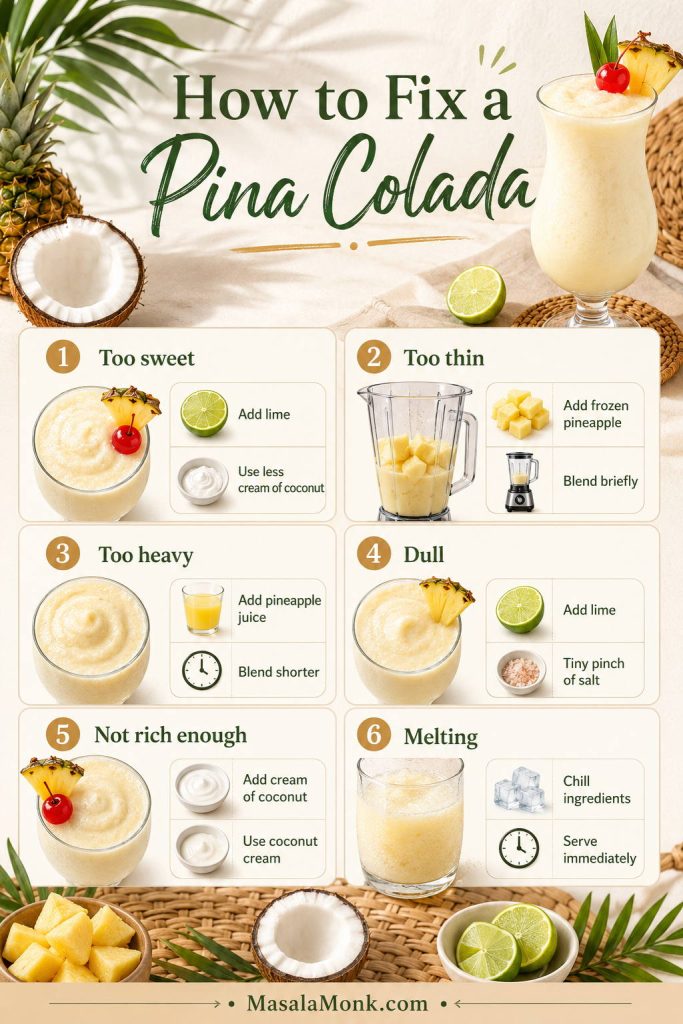
Pina colada troubleshooting guide with fixes for too sweet, too thin, too heavy, dull, not rich enough, and melting drinks.
Troubleshoot by fixing the biggest problem first. Too sweet needs lime, too thin needs frozen pineapple, too heavy needs pineapple juice, and melting usually means the ingredients were not cold enough.
ProblemLikely reasonFix
Too wateryToo much liquid, melted dilution, or over-blendingAdd frozen pineapple, then blend briefly.
Too thickToo much frozen fruit or not enough liquidAdd pineapple juice 1 tablespoon at a time.
Too sweetToo much cream of coconut or coconut rumAdd lime juice, pineapple juice, or a splash of white rum.
Not creamyCoconut milk was used instead of cream of coconutAdd cream of coconut or coconut cream.
Bland or flatNot enough acid or contrastAdd fresh lime and a tiny pinch of salt.
SeparatingThe drink sat too long or the coconut was not mixed wellStir, shake, or re-blend briefly and serve immediately.
Too icyToo much frozen bulk and not enough creamy liquidAdd pineapple juice or coconut base and blend briefly.

Make-Ahead and Storage

A pina colada is best served immediately, especially when frozen. The make-ahead move is simple: prepare the pineapple-coconut-rum base, chill it, then finish the drink right before serving.
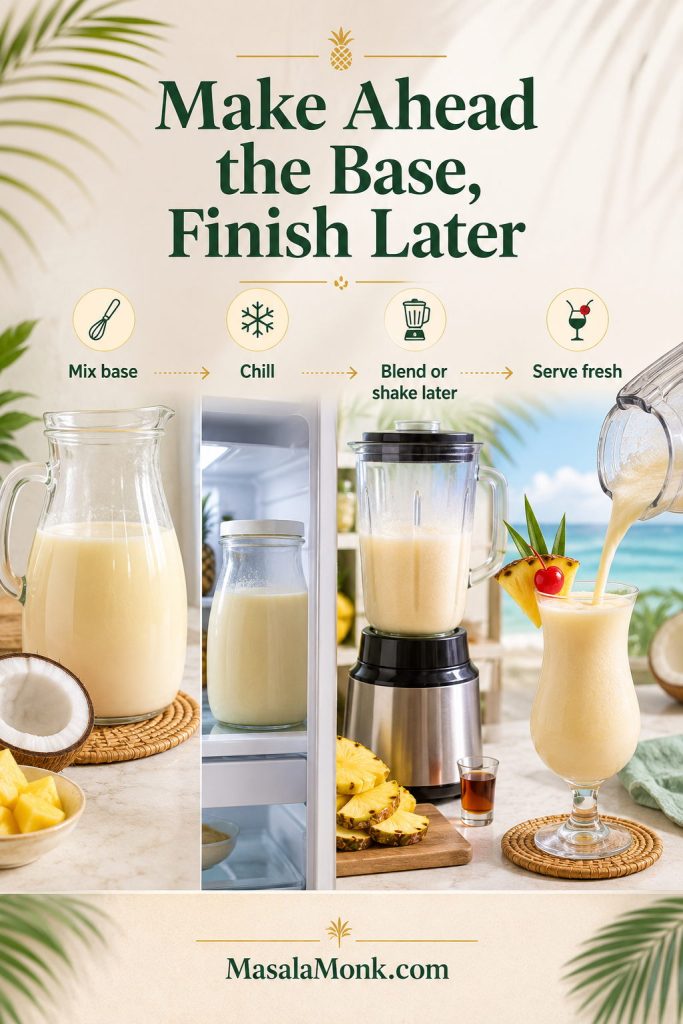
Make-ahead pina colada guide showing cold base, chill step, blend or shake later, and serve fresh.
For a make-ahead pina colada, prepare the base early but finish the drink later. That way, the flavor is ready and the texture still tastes freshly blended or shaken.

An alcohol-free base works the same way. Keep it cold, then blend or shake when guests are ready. Leftover blended drink can be frozen and re-blended with a splash of pineapple juice, but the fresh texture will always be better.

Pina Colada FAQs

What are the three main ingredients in a pina colada?

Rum, pineapple, and coconut are the core ingredients. Most creamy home versions also need a frozen element, and fresh lime makes the finish cleaner.

What is the best alcohol for a pina colada?

White rum is the best classic choice. Coconut rum is sweeter, while a small dark rum float gives a deeper finish.

Should I use cream of coconut or coconut milk?

Use cream of coconut for the classic sweet, creamy piña colada. Use coconut milk only when you want a lighter drink and are willing to adjust sweetness.

Is cream of coconut the same as coconut cream?

No. Cream of coconut is sweetened and syrupy; coconut cream is usually unsweetened and rich, so it needs added sweetener in most recipes.

How do I make a non-alcoholic pina colada taste less flat?

Use frozen pineapple, lime, and a tiny pinch of salt. Vanilla or non-alcoholic rum can add some of the depth that regular rum normally brings.

How do I make a pina colada without a blender?

Shake rum, pineapple juice, cream of coconut, and lime hard until cold, then serve in a fresh glass. It will be frothy and chilled, not frozen.

What makes a pina colada too watery?

Too much liquid, melted dilution, weak coconut body, or over-blending can make it watery. Measure the first batch and serve right away.

How do I make a pina colada less sweet?

Use less cream of coconut, choose white rum instead of coconut rum, or add fresh lime. Make small changes so the drink stays balanced.

Can I make pina coladas ahead of time?

Yes, but make only the liquid base ahead. Chill it, then blend or shake with the frozen/cold ingredients when ready to serve.

What is the difference between a pina colada and a Chi-Chi?

A pina colada is usually made with rum. A Chi-Chi is the similar pineapple-coconut drink made with vodka instead.

Final Sip

A good piña colada should taste cold before it tastes sweet: pineapple first, coconut next, rum in the background, and lime keeping the finish clean. Once that balance is right, the rest is easy — frozen, shaken, virgin, Malibu, lighter with coconut milk, or batched for a party.

Make the classic version once with measured ingredients. After that, you will know exactly how the drink should feel: tropical, smooth, refreshing, and just rich enough to feel like a small vacation in the glass.
Back to top

Posted on 9 Comments

Piña Colada: Classic Recipe + 10 Variations (Virgin & On the Rocks)

Moody piña colada in a hurricane glass with pineapple and cherry—classic recipe and variations by MasalaMonk.

Some drinks whisper “holiday,” yet the piña colada practically sings it. If you love that beach-in-a-glass feeling, you’re in the right place. First, we’ll lock in the frozen classic that tastes like sunshine. Next, we’ll switch to an easy piña colada on the rocks for no-blender nights. Then, because it’s fun to play, we’ll explore practical pina colada variations you can master in minutes—strawberry, mango, blue curaçao, coconut-rum, spiced-rum, vodka, tequila, skinny, keto-leaning, and frozen pineapple. Finally, since not every occasion calls for alcohol, we’ll craft a zero-proof version that’s indulgent without spirits.

Before we blend, a tiny language detour helps. In Spanish, piña colada literally means “strained pineapple,” a nod to the pressed juice at the drink’s core — see Etymonline’s word history and the concise entry at Merriam-Webster. Meanwhile, let’s keep the focus on flavor and technique.

What does piña colada mean?
Piña colada means “strained pineapple.” Traditionally, it pairs pineapple with coconut and rum; however, you can easily make a virgin piña colada by skipping the rum and balancing sweetness with a little lime or a splash of coconut water.

Because stories matter almost as much as flavor, here’s the short origin postcard. Puerto Rico celebrates the piña colada as its national cocktail, and San Juan still debates where it was first poured. Many point to Ramón “Monchito” Marrero at the Caribe Hilton in the 1950s, while others mention competing claims across town. For a friendly primer, read Discover Puerto Rico’s guide, and for the hotel’s version of events, browse the Caribe Hilton history page.


Frozen vs. On the Rocks: choose your texture before you start

First, decide your vibe. Frozen is creamy, slushy, and a touch dessert-leaning—perfect for lingering afternoons or sunny patios. On the rocks, by contrast, is shaken hard with ice and served over fresh cubes; it’s quicker, brighter, and lets rum aromas peek through. As a result, many people pick frozen for weekends and rocks for weeknights.

If you often serve a crowd, prep a thick frozen base and, meanwhile, keep extra pineapple juice chilled. Then, when someone wants a lighter drink, shake a single serving with a splash of juice and strain it over ice for an instant piña colada on the rocks. If you prefer a visual of the shaken style, this walkthrough for a Piña Colada on the Rocks (Shaken) mirrors the method below.


Classic Piña Colada (Frozen)

Why it works. Pineapple brings tang and perfume; cream of coconut adds velvety body and gentle sweetness; white rum lifts aromatics so the finish feels sunny rather than heavy. For proportions, the classic split of rum + pineapple + cream of coconut gives a balanced canvas; from there, adjust to your blender and your preferred sweetness.

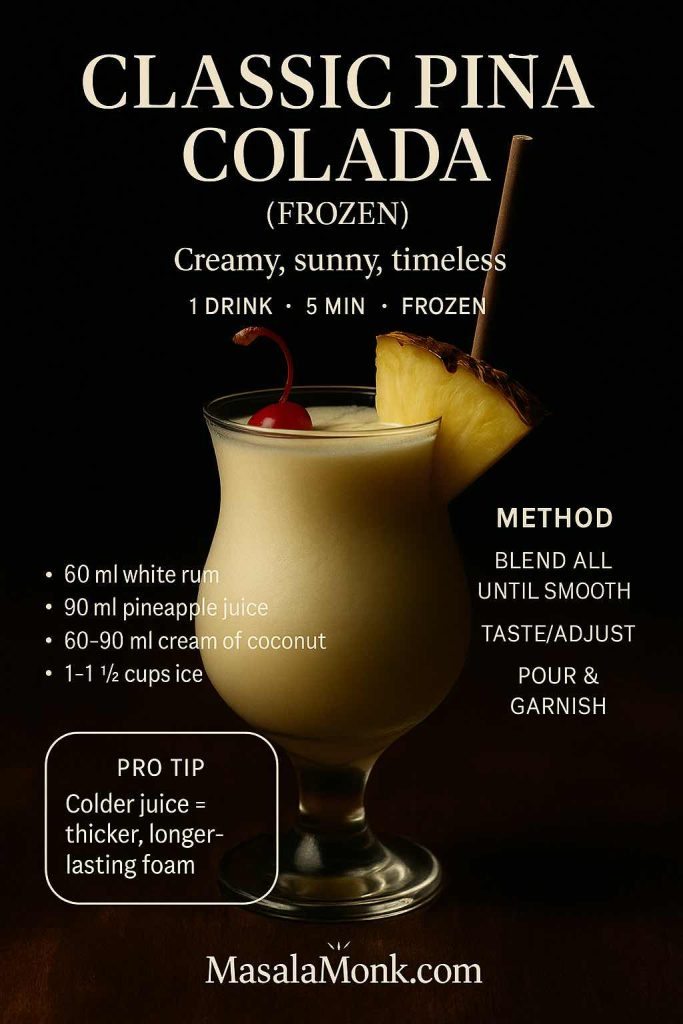
Classic frozen piña colada recipe card in a hurricane glass with pineapple and cherry—MasalaMonk footer
Creamy, sunny, timeless. Use pre-chilled juice for thicker, longer-lasting foam and that luxe, dessert-leaning texture.

Ingredients (1 drink)

  • 60 ml white rum (¼ cup)
  • 90 ml pineapple juice (⅜ cup)
  • 60–90 ml cream of coconut (¼–⅜ cup), to taste
  • 1–1½ cups ice
  • Pineapple wedge and cherry, to garnish

Method

  1. Chill a tall glass; meanwhile, add rum, pineapple juice, and cream of coconut to the blender.
  2. Add ice and blend until smooth and pourable. If the blades stall, loosen with a small splash of juice.
  3. Taste and adjust—if it’s too thick, a little more juice helps; if sweetness lingers, a few drops of lime tidy the finish.
  4. Pour, garnish, and serve immediately for maximum frostiness.

Coconut note. Cream of coconut isn’t the same as coconut milk or unsweetened coconut cream. Because cream of coconut is sweetened and thicker, it creates that signature silky texture. If you choose coconut milk for a “skinny” profile, add a touch of simple syrup and expect a lighter body.

Quick upgrades. Keep pineapple juice cold; colder inputs blend better and hold foam longer. Use frozen pineapple in place of some ice for louder fruit with less dilution. If your blender hesitates, pulse first, then blend continuously; layering liquids before ice prevents cavitation.


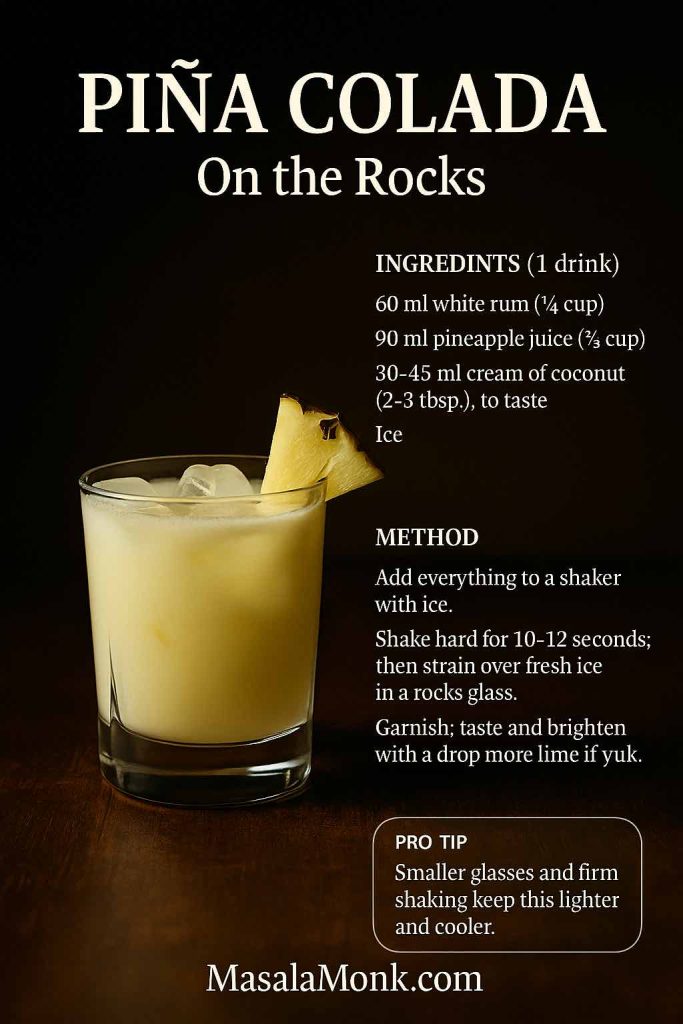
Piña Colada on the Rocks (Quick Method)

If you want the flavor without the thickness, the shaken version is a weeknight hero. It preserves the tropical profile, trims the richness, and—because it’s fast—fits Tuesday just as well as Saturday.

Piña Colada on the Rocks recipe card in moody portrait—rocks glass with pineapple wedge, MasalaMonk footer.
On-the-rocks keeps the colada bright: hard shake, fresh ice, compact glass. Perfect for quick weeknights without the blender.

Ingredients (1 drink)

  • 60 ml white rum (¼ cup)
  • 90 ml pineapple juice (⅜ cup)
  • 30–45 ml cream of coconut (2–3 tbsp), to taste
  • 10 ml fresh lime juice (2 tsp, optional)
  • Ice
  • Pineapple wedge or citrus peel, to garnish

Method

  1. Add everything to a shaker with ice.
  2. Shake hard for 10–12 seconds; then strain over fresh ice in a rocks glass.
  3. Garnish; taste and brighten with a drop more lime if you like.

Why you’ll love it. Shaking gently aerates and adds just enough dilution to feel refreshing, not heavy. Smaller glasses (180–240 ml / 6–8 oz) keep the drink cold and focused. Moreover, when you’re making rounds, you can pre-mix pineapple juice + cream of coconut in a bottle; then just add rum and shake to order.


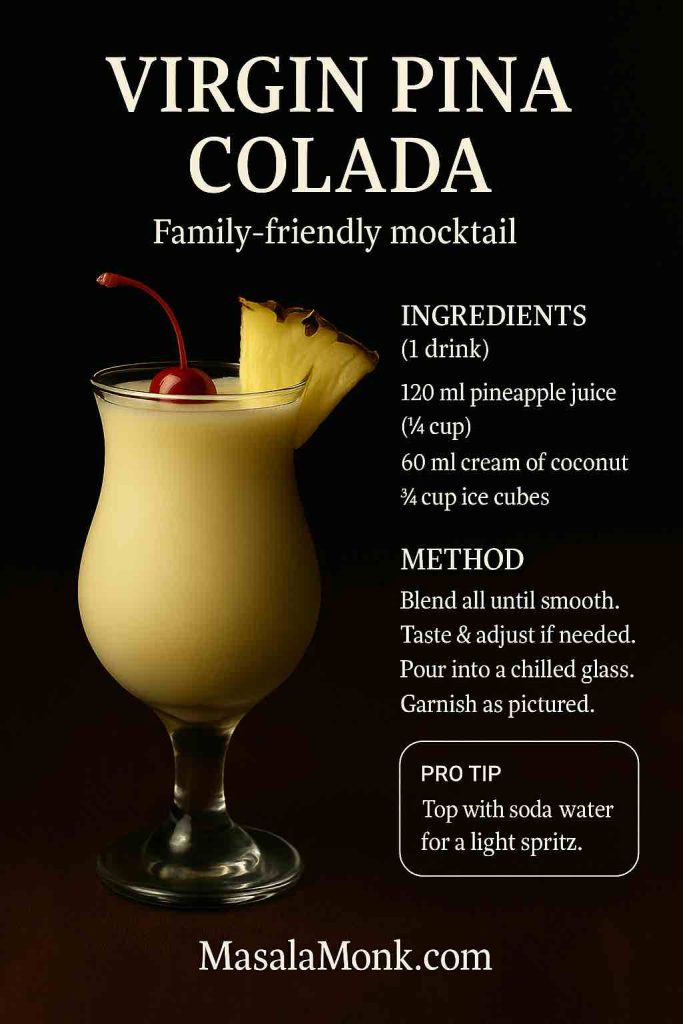
Virgin Piña Colada (and Virgin Piña Colada on the Rocks)

Virgin piña colada meaning: a non-alcoholic piña colada that keeps pineapple and coconut while skipping rum. For a lighter texture, shake on the rocks and finish with lime.

Virgin piña colada recipe card—non-alcoholic, moody portrait with MasalaMonk footer
Zero-proof, 100% tropical; balance sweetness with lime or a splash of chilled coconut water.

Ingredients (1 drink)

  • 120 ml pineapple juice (½ cup)
  • 45–60 ml cream of coconut (3–4 tbsp), to taste
  • ½–1 cup ice (for frozen) or a shaker of ice (for rocks)
  • Optional: 10–15 ml fresh lime (2–3 tsp) or 30–60 ml coconut water (2–4 tbsp)

Method

  • Frozen: add juice and cream of coconut to a blender; add ice; blend until smooth. Adjust with a splash of juice or coconut water if needed.
  • On the rocks: shake juice and cream of coconut with ice; strain over fresh ice. Add lime to taste.

Keep exploring (internal). For lighter, long drinks that echo these flavors, see Coconut Water Cocktails. If you enjoy mint and tang, try Pineapple Mojito Mocktails. For low-sugar days, browse Keto Mocktails.


How to build pina colada variations without a recipe

Because once you nail the base, it’s easy to improvise. First, keep the triangle of pineapple–coconut–spirit intact. Next, add an accent (fruit, spice, citrus, or liqueur). Then, adjust sweetness and texture in small steps. Finally, decide on frozen or rocks, and garnish with intention. With that in mind, here are ten reliable pina colada variations you can pour anytime.


Top 10 Pina Colada Variations

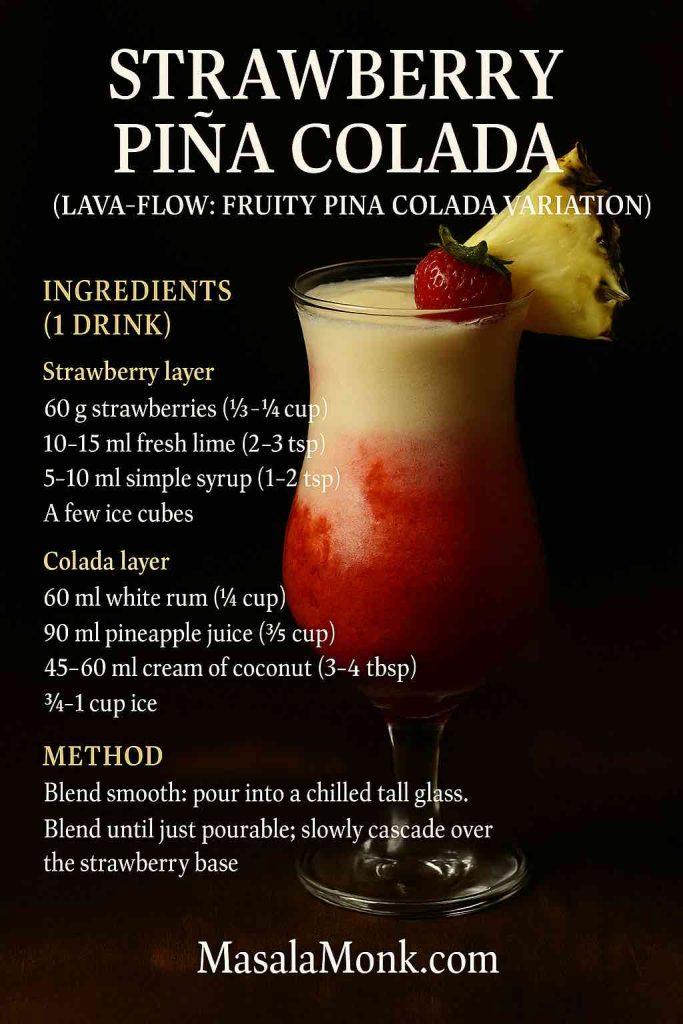
1) Strawberry Piña Colada (Lava-Flow: Fruity Pina Colada Variation)

When you want playful drama, strawberry is the simplest path. First, blend a thick strawberry base; next, blend your colada until silky; then, slowly pour it over the red layer so the “lava” rises in ribbons. As a result, you get classic coconut-pineapple comfort lifted by bright berry zip. Finally, keep both layers fairly thick so they ripple instead of mixing.

Strawberry Lava-Flow piña colada layered recipe card—red strawberry base and creamy colada, MasalaMonk footer.
Playful drama, classic comfort: keep both layers thick so the red “lava” ribbons instead of mixing—instant showstopper.

Strawberry layer (1 drink)

  • 60 g strawberries (⅓–½ cup)
  • 10–15 ml fresh lime (2–3 tsp)
  • 5–10 ml simple syrup (1–2 tsp)
  • A few ice cubes
    Blend smooth; pour into a chilled tall glass.

Colada layer

  • 60 ml white rum (¼ cup)
  • 90 ml pineapple juice (⅜ cup)
  • 45–60 ml cream of coconut (3–4 tbsp)
  • ¾–1 cup ice
    Blend until just pourable; slowly cascade over the strawberry base.

Pro tip. If berries are peak-sweet, reduce or skip syrup; conversely, if they’re tart, add an extra teaspoon.


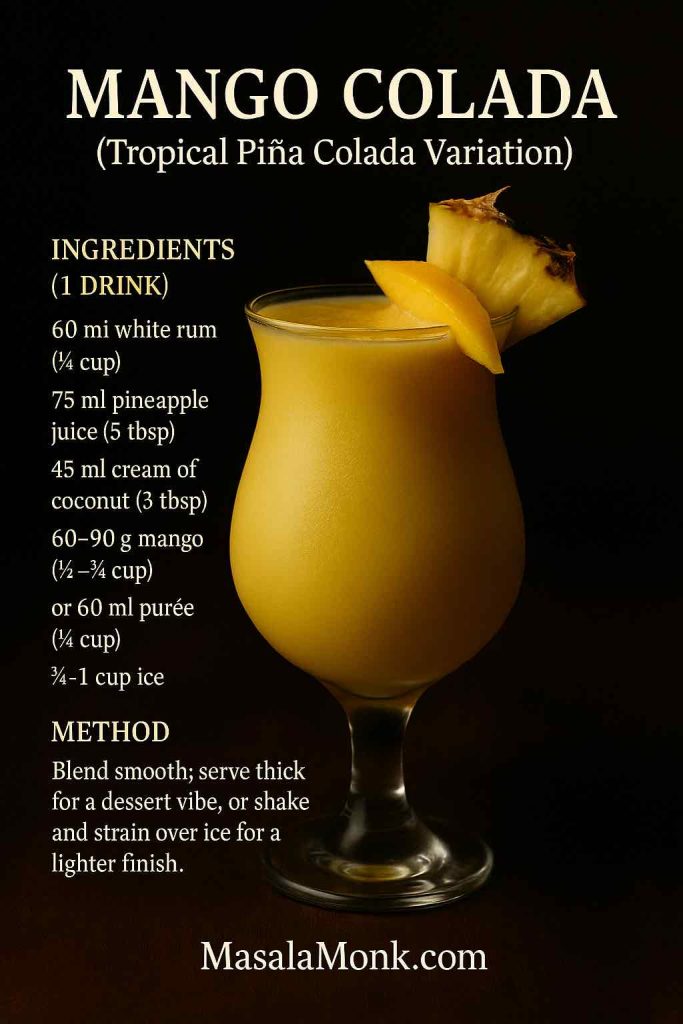
2) Mango Colada (Tropical Pina Colada Variation)

Mango slides in silkily and, meanwhile, softens acidity. Next, use ripe fruit or a quality purée; if the texture feels dense, loosen with a splash of pineapple juice. Finally, a tiny pinch of salt heightens the mango’s aroma without reading “salty,” and a teaspoon of lime adds sparkle.

Mango Colada recipe card—golden cocktail with mango and pineapple garnish, moody portrait, MasalaMonk footer
Mango slides in silkily and softens acidity; loosen with pineapple juice if dense, add a pinch of salt and 1 tsp lime to make aromas pop.

For 1 drink

  • 60 ml white rum (¼ cup)
  • 75 ml pineapple juice (5 tbsp)
  • 45 ml cream of coconut (3 tbsp)
  • 60–90 g mango (½–¾ cup) or 60 ml purée (¼ cup)
  • ¾–1 cup ice
    Blend smooth; serve thick for a dessert vibe, or shake and strain over ice for a lighter finish.

Love mango + vodka? Try these riffs: Mango Vodka Cocktail Drinks (Base + 7 Variations).


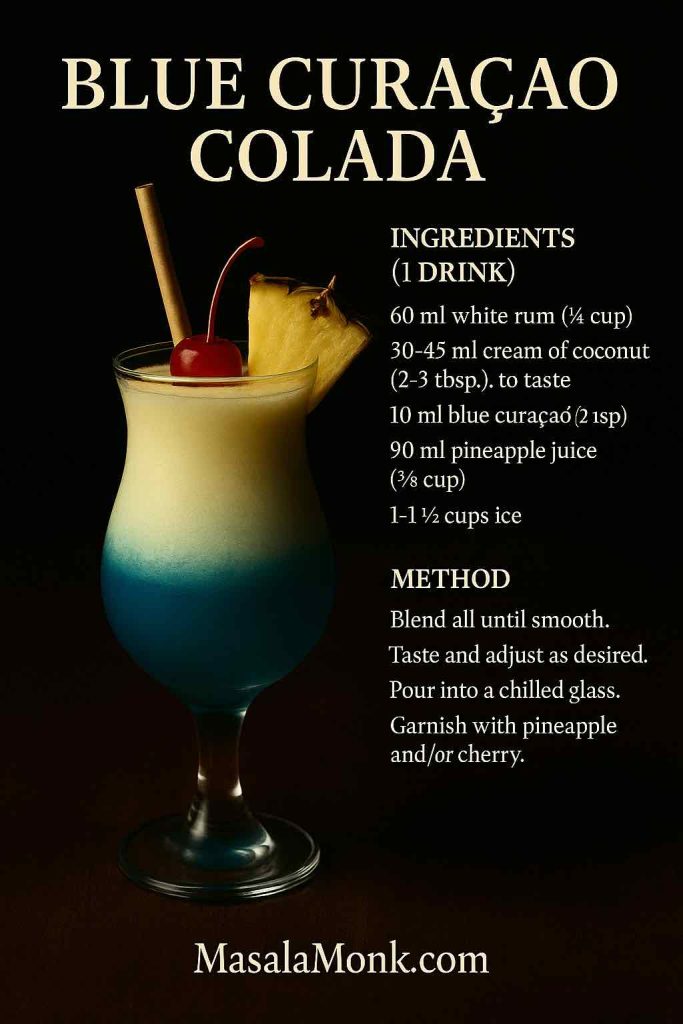
3) Blue Curaçao Colada (Blue Pina Colada Variation)

Sometimes you want familiar comfort and a little showmanship. Blue curaçao adds gentle citrus notes and that ocean-blue hue. Importantly, this isn’t a Blue Hawaii (a sharper, vodka-leaning sour); instead, it lands closer to a Blue Hawaiian, where coconut and pineapple still lead — compare Blue Hawaiian vs. Blue Hawaii.

Blue curaçao piña colada recipe card—ocean-blue hue, premium moody lighting
Coconut-pineapple comfort with coastal color—keep dilution low so the blue stays vivid.

For 1 drink

  • 45 ml white rum (3 tbsp)
  • 15 ml blue curaçao (1 tbsp)
  • 90 ml pineapple juice (⅜ cup)
  • 45–60 ml cream of coconut (3–4 tbsp)
  • ¾–1 cup ice
    Blend or shake; add a few drops of lime only if sweetness lingers.

Color tip. Add ice gradually. Over-dilution can dull the blue.


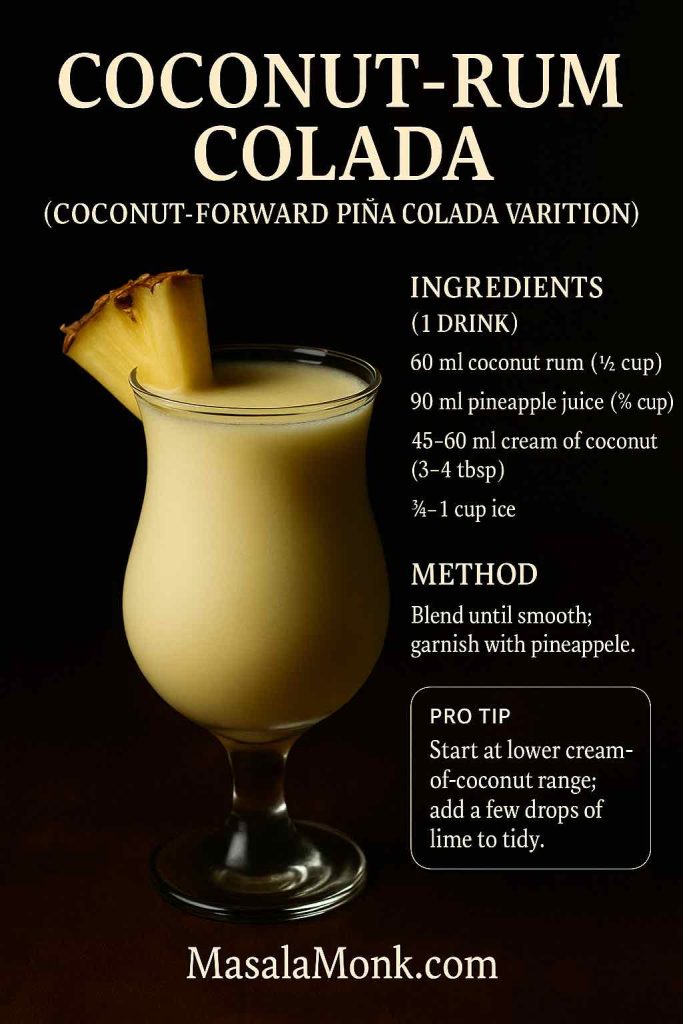
4) Coconut-Rum Colada (Coconut-Forward Pina Colada Variation)

If you’re craving even more coconut, this is your lane. First, switch to coconut rum; then, because it’s sweeter than white rum, start at the lower end of the cream-of-coconut range. Afterward, taste and—if needed—counter with a few drops of lime so the finish stays tidy. Consequently, the drink reads lush and aromatic rather than sugary.

Coconut-Rum Colada recipe card—coconut-forward piña colada in a hurricane glass, moody portrait, MasalaMonk footer
Coconut-forward and lush: start at the lower cream-of-coconut range (coconut rum is sweeter); tidy the finish with a few drops of lime.

For 1 drink

  • 60 ml coconut rum (¼ cup)
  • 90 ml pineapple juice (⅜ cup)
  • 45–60 ml cream of coconut (3–4 tbsp)
  • ¾–1 cup ice
    Blend until smooth; garnish with pineapple.

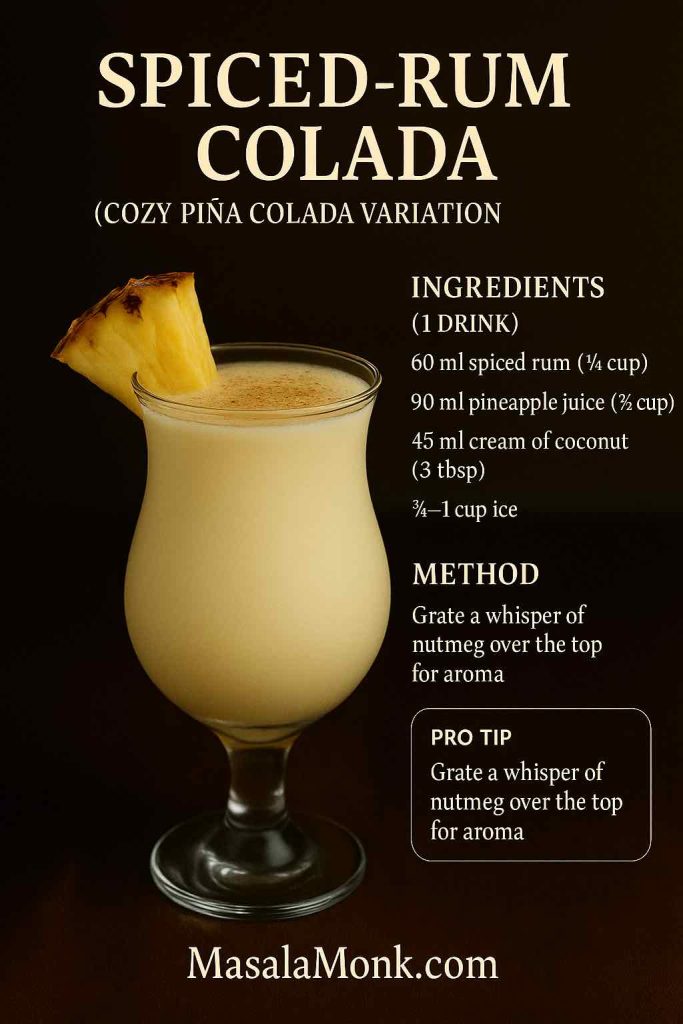
5) Spiced-Rum Colada (Cozy Pina Colada Variation)

When you want warmth and depth, spiced rum brings vanilla and baking-spice notes that cozy up to pineapple and coconut. Next, keep the cream of coconut moderate so the spices shine; then, grate a whisper of nutmeg over the top for aroma. Overall, you get a beachy drink with sweater-weather soul.

Spiced-Rum Colada recipe card—creamy cocktail with nutmeg and pineapple garnish, moody portrait, MasalaMonk footer
Vanilla and baking-spice notes meet pineapple-coconut; keep cream of coconut moderate and finish with a whisper of nutmeg.

For 1 drink

  • 60 ml spiced rum (¼ cup)
  • 90 ml pineapple juice (⅜ cup)
  • 45 ml cream of coconut (3 tbsp)
  • ¾–1 cup ice
    Blend, taste, and add 1 tsp lime if you want extra lift; serve frozen or shake and strain over ice.

6) Vodka Colada (Chi-Chi: Clean Pina Colada Variation)

Prefer a cleaner finish? In that case, swap rum for vodka. Because vodka is neutral, balance depends on your pineapple and coconut; therefore, taste before you pour. Meanwhile, serving tall over fresh ice emphasizes that breezy, easy-drinking feel, and a small pinch of salt can quietly boost pineapple.

For 1 drink

  • 60 ml vodka (¼ cup)
  • 90 ml pineapple juice (⅜ cup)
  • 45–60 ml cream of coconut (3–4 tbsp)
  • ¾–1 cup ice
    Blend or shake; adjust with a few drops of lime if it tastes flat.

7) Tequila Colada (Crisp Pina Colada Variation)

When you’re in the mood for tropical with a little edge, tequila adds bright minerality that pairs beautifully with pineapple and coconut. Generally, blanco keeps it crisp; meanwhile, a tiny pinch of salt makes the fruit sing. Finally, a lime wheel garnish sets the tone.

For 1 drink

  • 60 ml blanco tequila (¼ cup)
  • 90 ml pineapple juice (⅜ cup)
  • 45–60 ml cream of coconut (3–4 tbsp)
  • Small pinch of salt (optional)
  • ¾–1 cup ice
    Blend until silky; garnish and serve.

Variation. For a Margarita-leaning twist, add 10–15 ml triple sec and shake on the rocks.


8) Skinny Colada (Light Pina Colada Variation)

Sometimes you want the flavor without the heft. So, swap in coconut milk and use just enough syrup to keep things balanced. Additionally, a squeeze of lime adds lift without extra calories; furthermore, shaking and serving on the rocks keeps it especially light and bright. Because coconut milk is thinner than cream of coconut, expect a silkier, less dessert-like body.

Nutrition-curious? See Coconut Milk Nutrition Facts & Glycemic Index.

For 1 drink

  • 60 ml white rum (¼ cup)
  • 90 ml pineapple juice (⅜ cup)
  • 45 ml coconut milk (3 tbsp)
  • 5–15 ml simple syrup (1–3 tsp), to taste
  • ¾–1 cup ice
    Blend or shake; sweeten a teaspoon at a time until it lands just right.

9) Keto-Leaning Colada (Lower-Sugar Pina Colada Variation)

If you’re watching sugar, this is the smart pivot. First, keep pineapple modest. Next, use unsweetened coconut cream. Then, sweeten with your preferred keto option. Finally, swap some ice for frozen pineapple so body improves without a big sugar bump. For more low-carb ideas, browse Keto Mocktails.

For 1 drink

  • 60 ml white rum (¼ cup)
  • 60–75 ml pineapple juice (¼–⅓ cup) or a mix of juice + water
  • 45 ml unsweetened coconut cream (3 tbsp)
  • Keto sweetener, to taste
  • ¾–1 cup ice
    Blend smooth; finish with a squeeze of lime to sharpen the edges.

Optional. A drop or two of coconut extract boosts aroma without adding carbs.


10) Frozen Pineapple Colada (Maximum-Fruit Pina Colada Variation)

For maximum fruit and minimal dilution, frozen pineapple replaces much of the ice. Consequently, the texture stays lush, the flavor gets louder, and the chill lasts to the final sip. If your blender struggles, pulse a few times before running continuously; then, loosen with a splash of juice only if necessary.

For 1 drink

  • 60 ml white rum (¼ cup)
  • 60 ml pineapple juice (¼ cup)
  • 45–60 ml cream of coconut (3–4 tbsp)
  • 1 heaping cup frozen pineapple chunks
    Blend thick and silky; pour into a tall, well-chilled glass.

Types of Coladas (Piña Colada Type Drinks)

Although the piña colada is the icon, there’s a whole colada family. For example, try:

  • Piña Verde: herbal green notes over the pineapple-coconut base.
  • Banana Colada: thicker, softer mouthfeel from ripe banana.
  • Champagne Colada: topped with sparkling wine for a celebratory finish.
  • Mango Colada: silkier fruit body and perfume.
  • Blue Colada: blue curaçao for citrus notes and a vivid hue.

Consequently, you can match mood—lush and frozen for weekends, or bright and shaken on busy nights. Moreover, these quick pivots turn the classic into a set of pina colada variations that never feel repetitive.


Drinks Similar to a Piña Colada

If you enjoy the piña colada, you’ll likely love drinks similar to a piña colada. First, try the Miami Vice—half strawberry daiquiri, half piña colada, fully festive; the recipe on Liquor.com is reliable. Next, mix a Painkiller—rum, pineapple, orange, and cream of coconut with a nutmeg finish—using the official spec on Pusser’s Rum.

Finally, for fast color gradients and sweet-tart layers, explore Mocktails with Grenadine for non-alcoholic ideas you can adapt.


Ingredient buying guide (quick but useful)

Pineapple juice. Fresh-pressed tastes bright and aromatic; however, high-quality canned juice blends smoothly and is wonderfully consistent. Keep it chilled and use it within a few days for the best foam and flavor.

Cream of coconut vs. coconut milk. Coconut milk is unsweetened and lighter; cream of coconut is sweetened and thicker, designed for cocktails. If you substitute, rebalance sweetness and expect a different mouthfeel. For clarity, this guide to cream of coconut vs. coconut milk explains the swap smartly.

Rum. A clean white rum is the classic choice. If you prefer deeper flavor, aged or spiced rum works beautifully—just reduce cream of coconut slightly or add a little lime so sweetness doesn’t dominate.

Citrus. Fresh lime is your editor. Even a teaspoon or two can transform a heavy finish into a bright one.

Salt. A literal pinch can make fruit taste “riper.” Use sparingly and always taste.


Technique tips that instantly upgrade your glass

  • Chill everything. Cold inputs blend smoother and hold foam longer.
  • Liquids first, ice last. In blenders, layering liquids before ice helps avoid cavitation.
  • Pulse, then finish. Short pulses break big pieces; a brief continuous blend polishes texture.
  • Shake like you mean it. For rocks versions, firm shaking (10–12 seconds) delivers perfect chill and dilution.
  • Mind your glassware. Tall glasses flatter frozen drinks; compact rocks glasses keep shaken versions bright and cold.
  • Garnish with intent. Pineapple fronds, a fresh wedge, or even a citrus peel add aroma where your nose meets the glass.

Make-ahead, batching, and easy swaps

No cream of coconut? Substitute coconut milk plus simple syrup, adjusting in tiny steps. The texture will be lighter but still silky.

No blender? Shake the on-the-rocks version hard with cracked ice. If you want extra body, add a small spoon of coconut milk before shaking.

Dairy-free needs? These recipes are naturally dairy-free; if you add ice cream for a dessert riff, reduce sweetener and add a pinch of salt.

Batching for parties. Blend a quadruple-size base without ice; chill deeply. Just before serving, either blend portions with ice for frozen service or shake portions with ice for rocks service. Because melted ice thins sweetness, taste after chilling and bump cream of coconut or lime by a teaspoon if needed.

Make-ahead shortcut. Pre-blend a “colada mix” by stirring equal parts cream of coconut and pineapple juice; keep it cold. During service, add spirit and ice, then blend or shake. This saves time and keeps ratios consistent across a long evening.

Prefer lighter long pours? Skim ideas in Tropic Like It’s Hot: Coconut Water Cocktails for Summer.


Pina colada flavored drinks: quick pivots you can do in 60 seconds

Sometimes you don’t want a whole new recipe—just a shift in mood. Therefore, try these tiny changes: add a teaspoon of lime for snap; swap in coconut milk for a lighter feel; drop in 15 ml blue curaçao for color; stir in 30 ml mango purée for silk; or finish with grated nutmeg for warmth. In short, these micro-moves turn the base into pina colada variations that stay familiar yet fresh.


A friendly close

You now have a complete island toolkit: a dependable classic, a quick piña colada on the rocks, a zero-proof path, and ten flexible pina colada variations that keep things interesting. Start with the frozen original; then try the lighter rocks version on a weeknight. Once you know which texture feels most like you, branch into strawberry, mango, or blue curaçao and see what sticks.

When you land on a new favorite—or discover a clever garnish—share it so others can try it too. Tropical, relaxed, and simple—that’s the piña colada at its best.

FAQs

1) What does “piña colada” mean?

Simply put, it means “strained pineapple.” In other words, the name points to fresh or pressed pineapple juice at the drink’s heart. From there, coconut and rum complete the classic trio; however, you can skip the rum for a virgin version and still keep the sunny flavor.

2) Is the piña colada Puerto Rican?

Yes. Most stories trace the cocktail to San Juan, Puerto Rico. Consequently, you’ll often see it called the island’s national drink. While the inventor is debated, the flavor profile—pineapple, coconut, and rum—clearly began there and then traveled the world.

3) Frozen vs. on the rocks: which piña colada should I choose?

It depends on mood. Frozen is lush, creamy, and a little dessert-like; meanwhile, piña colada on the rocks feels lighter and brighter because hard shaking adds chill and subtle dilution. So, choose frozen for lazy afternoons and rocks for quick weeknights.

4) How do I make a virgin piña colada (including on the rocks)?

It’s easy. First, combine pineapple juice with cream of coconut; then, either blend with ice for a frosty treat or shake hard and serve over fresh ice for a lighter sip. Finally, a squeeze of lime balances sweetness, and a splash of coconut water lengthens the drink without extra sugar.

5) What are the most popular pina colada variations?

Start with simple winners: Strawberry (lava-flow), Mango, Blue Curaçao (Blue Colada), Coconut-Rum, Spiced-Rum, Vodka (Chi-Chi), Tequila, Skinny, Keto-leaning, and Frozen Pineapple. Because each keeps the pineapple-coconut core, you can swap spirits or fruit and still taste “piña colada.”

6) Which rum is best—white, coconut, or spiced?

As a rule, white rum is clean and versatile. Coconut rum adds extra coconut sweetness; therefore, reduce cream of coconut slightly or add a few drops of lime. Spiced rum brings vanilla and baking-spice notes; consequently, the drink feels cozier, especially with a pinch of nutmeg.

7) Can I make a piña colada with vodka or tequila?

Absolutely. Vodka creates a silky, neutral canvas where pineapple shines; meanwhile, tequila (especially blanco) adds crisp minerality that many love. Accordingly, both are recognized pina colada variations—great for guests who don’t usually choose rum.

8) Cream of coconut vs. coconut milk: what’s the difference?

Cream of coconut is sweetened and thick, which yields that classic, velvety texture. Coconut milk is unsweetened and lighter. Therefore, if you substitute coconut milk, add a little simple syrup and expect a silkier, less dessert-like body—perfect for skinny riffs.

9) How can I make a skinny or keto piña colada?

For skinny, use coconut milk and sweeten lightly, then brighten with lime. For keto-leaning, use unsweetened coconut cream, keep pineapple juice modest (or cut with water), and sweeten with your preferred keto option. Finally, blending a few frozen pineapple chunks boosts body without a big sugar hit.

10) Can I make a piña colada without a blender?

Yes—shake it. First, combine pineapple juice, cream of coconut, and spirit in a shaker with plenty of ice; next, shake hard for 10–12 seconds; then, strain over fresh ice. As a result, you’ll get a piña colada on the rocks that’s fast, cold, and refreshingly light.

11) What drinks are similar to a piña colada?

If you like the style, try a Miami Vice (half strawberry daiquiri, half colada) or a Painkiller (rum, pineapple, orange, cream of coconut, nutmeg). Likewise, explore the broader family of coladas and easy pina colada variations like Blue Colada or Banana Colada when you want something familiar yet new.

12) What are the main “types of coladas” (piña colada type drinks)?

Think of “colada” as a creamy coconut family. For example, there’s Piña Verde (herbal), Banana Colada (thicker and softer), Champagne Colada (bubbly and celebratory), Mango Colada (silky and perfumed), and Blue Colada (citrusy and vivid). Accordingly, you can match the drink to the moment.

13) How do I fix a piña colada that’s too sweet, too thin, or too thick?

If it’s too sweet, add a few drops of lime or a splash of pineapple juice for acidity, if it’s too thin, blend in frozen pineapple or a bit more ice and if it’s too thick, loosen with a small splash of juice. Meanwhile, a tiny pinch of salt can quietly make fruit taste “riper.”

14) What garnish works best—and does it change the flavor?

A pineapple wedge, fronds, or a lime wheel adds aroma right where you sip. Additionally, a gentle nutmeg grate complements spiced-rum coladas. Because your nose leads the experience, even simple garnishes make each of your pina colada variations feel more polished.

15) Can I batch piña coladas for a party?

Definitely. First, blend a big base of pineapple juice and cream of coconut (without ice) and chill it well. Next, add rum to individual portions and either blend with ice for frozen drinks or shake on the rocks to order. Finally, taste after chilling; you may need a touch more lime or cream of coconut to keep balance.

16) What’s the easiest way to try multiple pina colada variations in one night?

Start with a classic base and pour it into two small blenders or shakers. Then, split accents: add strawberry to one and mango to the other; or try blue curaçao in one and tequila in the next. Consequently, you’ll compare flavors side by side without remaking the whole recipe.

17) Are “pina colada flavored drinks” different from full coladas?

Sometimes, yes. Think of them as quick pivots: add mango purée, a dash of blue curaçao, a squeeze of lime, or even coconut milk instead of cream of coconut. In short, these small tweaks turn the base into pina colada flavored drinks that stay familiar yet feel brand new.

18) What glass should I use—tall or rocks?

Use a tall, chilled glass for frozen coladas to keep the slush cold and lively. Conversely, choose a compact rocks glass (about 180–240 ml) for piña colada on the rocks so the flavors stay focused while the ice chills, not waters down, the drink.

19) How do I keep my piña colada cold outdoors without watering it down?

First, chill your glassware. Next, use pre-chilled juice and spirit. Then, for frozen versions, swap part of the ice for frozen pineapple so flavor stays loud as the drink warms. Finally, enjoy promptly—because even the best slush softens in the sun.

20) What single tip improves every pina colada variation?

Taste, then tweak in tiny steps. Add sweetness in teaspoons, lime in ½-teaspoon splashes, and ice in small handfuls. As a result, mouthfeel, balance, and aroma land exactly where you want—no matter which pina colada variations you’re trying tonight.

Posted on 23 Comments

Coconut Water Cocktails: 10 Easy, Refreshing Drinks

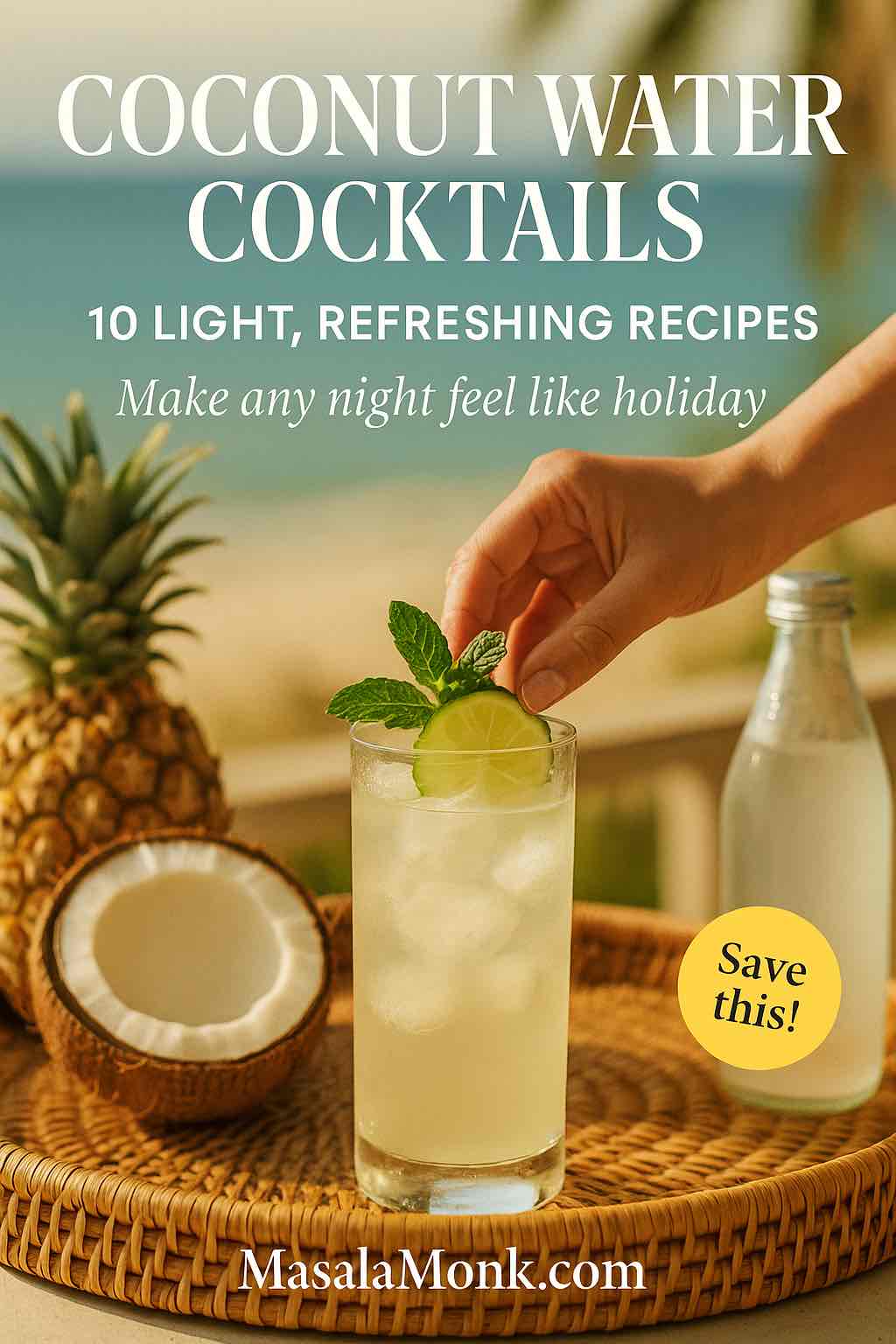
Hand garnishing a tall coconut water cocktail with lime and mint on a sunlit rattan tray, beach backdrop; overlay text reads ‘Coconut Water Cocktails – 10 light, refreshing recipes. Make any night feel like holiday.’

Coconut water cocktails are the simplest way to make your glass taste like holiday—without tipping it into dessert. They stay crisp and gently sweet; plus, because coconut water is naturally clean and a touch mineral, these drinks play beautifully with rum, tequila, vodka, gin, and even bourbon. Right from the first pour, coconut water cocktails soften sharp edges, brighten citrus, and keep every sip light on its feet. And yes, if you’ve heard people say “coconut juice,” that’s just another name for coconut water.

Why this approach makes sense. We start from classic templates—think the official Mojito spec and the official Margarita spec—then, instead of soda or a heavy mixer, we lengthen with chilled coconut water. As a result, the bones of the cocktail stay intact while the vibe shifts toward sunshine.

Also Read our post: The Ultimate Guide to Coconut Water: Benefits, Nutrition, and How to Choose the Best One.


How coconut water cocktails stay crisp (temperature, dilution, and balance)

First, keep everything colder than you think. Chilled bottles, fresh ice, and a gentle stir matter because highballs are mostly mixer. For a quick primer on why this works, see Punch’s guide to highball technique: easy ways to keep tall drinks lively. Likewise, notice how a simple highball often leans toward a 2:1 mixer-to-spirit ratio; Liquor.com’s whiskey highball method shows the idea we adapt here with coconut water.

Next, prefer unsweetened coconut water. Brands vary—some taste round and sweet, others cleaner and more mineral—so taste first, then adjust in the glass: a squeeze of lime for snap, a micro-pinch of sea salt for focus, or a teaspoon of simple syrup if your citrus runs sharp. If you like numbers, you can browse the USDA FoodData Central entries for typical calories and electrolytes (they do swing by brand). Also, to clear up a common mix-up early: coconut water isn’t coconut milk—they’re different ingredients with different jobs; here’s a plain-English explainer on the difference between coconut water and coconut milk.

Finally, because temperature dictates texture, pick ice on purpose. Big cubes melt slowly and keep flavors tight; crushed ice melts faster but screams “vacation.” If you want zero fade, freeze coconut water ice cubes and build right over them.

And while you are at it, do not forget to have a look at our post: Punch with Pineapple Juice: Guide & 9 Party-Perfect Recipes.


A reliable base for coconut water cocktails (and how to nudge it)

Start with this easy framework, then tweak to taste:

  • Ratio that just works: 60 ml spirit to 120 ml chilled coconut water (a friendly 1:2). Stir gently over plenty of ice. If there’s fresh juice involved, shake briefly for chill and texture, then strain over new ice—over-shaking can mute coconut’s delicate aroma.
  • Acid and lift: Add 10–25 ml lime (or lemon). If the drink turns too sharp, lengthen with another splash of coconut water instead of piling on sugar.
  • A tiny sweetness toolbox: Many coconut water cocktails need no added sugar. However, if you want a touch more body, use 5–10 ml simple syrup—or make coconut-water simple syrup (equal parts sugar and coconut water warmed just to dissolve).
  • Glassware that fits: Highball or Collins works best for these tall, easy sippers; if you’re sizing your home setup, this quick primer on Collins vs. highball glass sizing helps match pours to volumes.
  • A little backstory for fun: Our lighter piña colada nods to Puerto Rican roots and Coco López’s game-changing cream of coconut—if you enjoy origin stories, this concise Piña Colada history is a neat read.

And if Piña Colada is your thing, our post on Piña Colada and its variants is a neat read.


Recipe 1: Rum & Coconut Water Highball

Style: tall, bright, two-minute build
Serves: 1 drink

Ingredients

  • 60 ml white rum (2 oz)
  • 120–150 ml chilled unsweetened coconut water (4–5 oz)
  • 1 fresh lime wedge, plus a wheel for garnish
  • Ice (big cubes for a cleaner sip; crushed for beach vibes)
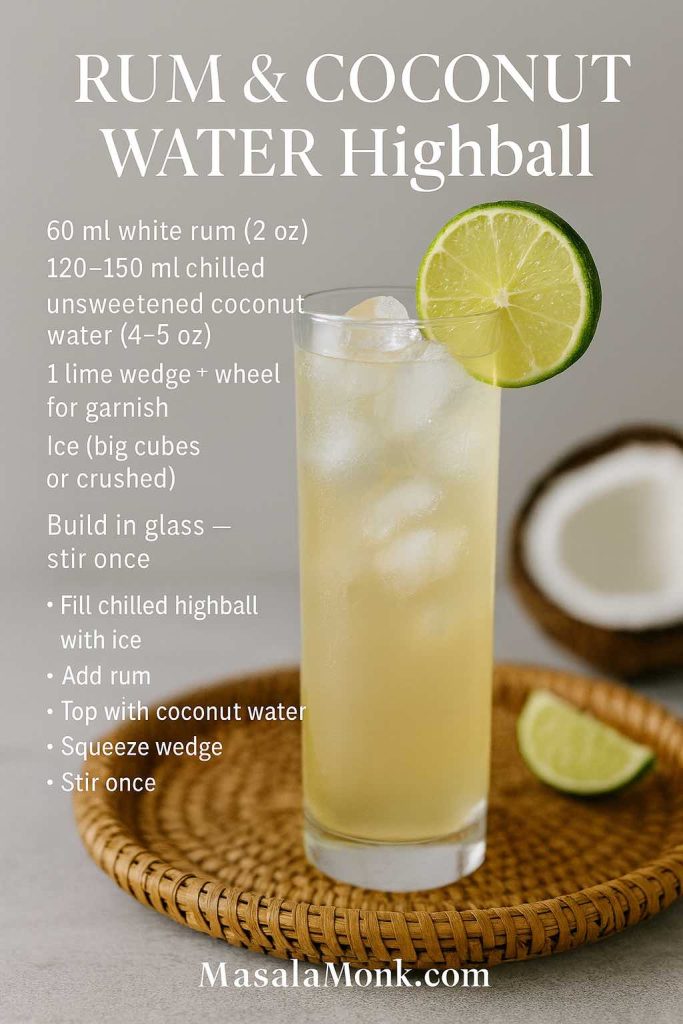
Rum & Coconut Water Highball recipe card: tall chilled highball on a rattan tray with lime wheel; on-image text lists 60 ml white rum, 120–150 ml unsweetened coconut water, lime wedge, and simple build-in-glass steps; MasalaMonk.com footer; neutral studio background.
Rum & Coconut Water Highball — the 1:2 blueprint. Build in a chilled glass over big cubes, squeeze a lime wedge, and stir once (don’t over-dilute). For a longer sip, add 30 ml more coconut water; for extra snap, a micro-pinch of sea salt tightens the finish. Hosting? Scale to a pitcher at 480 ml rum + 960 ml coconut water for 8 serves; add lime in the glass. Pairs beautifully with salty snacks and grilled corn. © MasalaMonk.com

How this coconut water cocktail comes together

First, fill a chilled highball with ice so the glass is properly cold.
Next, add the rum and immediately top with coconut water.
Then, squeeze the lime wedge over the drink, drop it in, and give exactly one gentle stir—just enough to marry, not to dilute.
Finally, taste and adjust: a tiny extra squeeze of lime for snap, or a splash more coconut water if you want a longer, lighter profile.

Why it works
Rum brings soft vanilla and sugarcane notes; meanwhile, coconut water contributes clean, mineral sweetness. Together, they deliver one of the most effortless coconut water cocktails—refreshing first, tropical second.

Variations

  • Spiced Route: Swap white rum for spiced rum and add 2 dashes aromatic bitters; finish with an expressed orange peel.
  • Pineapple Lift: Add 30 ml (1 oz) pineapple juice and 10 ml lime for a sunnier, fruit-forward twist.
  • Coconut-Forward: Build over coconut water ice cubes so the flavor stays true right to the last sip.

Make-ahead
Stir together rum and coconut water in a small jug up to 2 hours ahead and refrigerate. However, add citrus and fresh ice only at serve time so the drink stays lively.

Serving note
Because this is a blueprint for many coconut water cocktails, you can scale it to a pitcher easily: keep the 1:2 spirit:coconut-water ratio, chill thoroughly, and, moreover, pass a bowl of lime wedges so guests can tune their glass.

If you’d like another rum path for later, this Watermelon Daiquiri keeps things bright and summery.


Recipe 2: Coconut Water Margarita

Style: classic shaken sour, stretched for sunshine
Serves: 1 drink

Ingredients

  • 60 ml blanco tequila (2 oz)
  • 25 ml fresh lime juice (¾ oz)
  • 15 ml orange liqueur (½ oz)
  • 60–90 ml chilled coconut water (2–3 oz), to taste
  • Pinch of fine salt for half-rim (optional)
  • Ice
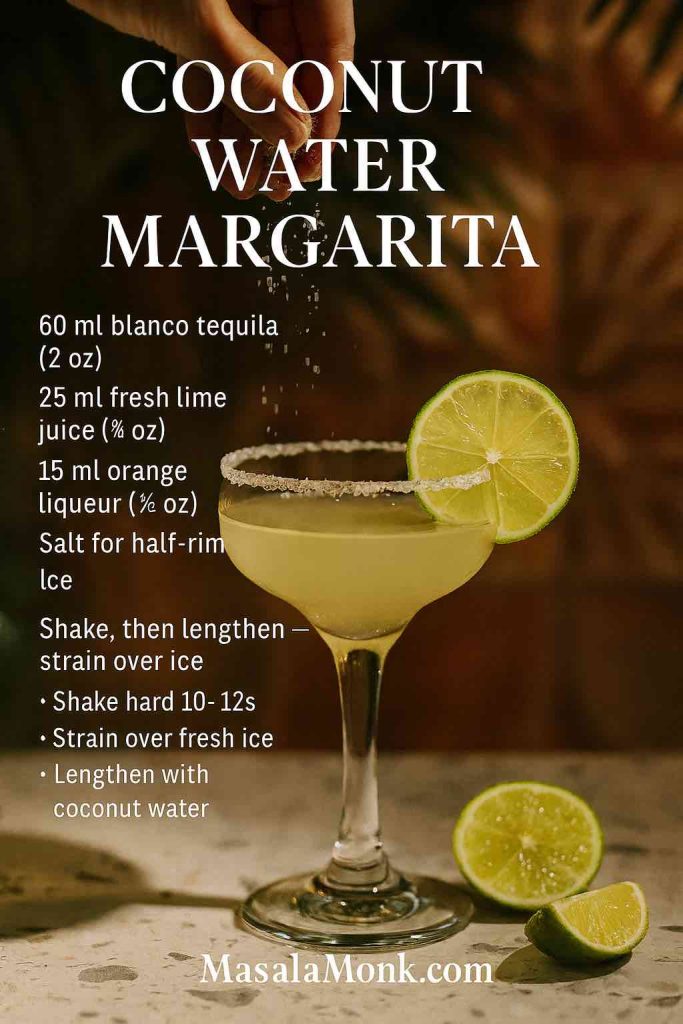
Coconut Water Margarita recipe card: stemmed margarita glass with salted half-rim and lime wheel, hand sprinkling salt; golden-hour bar lighting; overlay shows 60 ml tequila, 25 ml lime, 15 ml orange liqueur, and coconut water to lengthen; MasalaMonk.com footer.
Coconut Water Margarita — snap of a classic, softer finish. Shake 60 ml tequila + 25 ml fresh lime + 15 ml orange liqueur hard for 10–12s, then lengthen with 60–90 ml coconut water over fresh ice. Salt only half the rim so each sip is adjustable. Too tart? add a splash more coconut water. No liqueur? use 10–15 ml simple syrup. Batching for 8: 480 ml tequila + 200 ml lime + 120 ml liqueur + 480–720 ml coconut water; add lime just before serving. © MasalaMonk.com

Step-by-step with balance in mind

First, if you enjoy a salted rim, swipe a lime wedge around half the glass and dip in fine salt—this way you can choose each sip.
Meanwhile, add tequila, lime juice, orange liqueur, and 60 ml coconut water to a shaker. Fill with ice and shake hard for 10–12 seconds.
Then, strain over fresh ice into your prepared glass.
Finally, lengthen with up to 30 ml more coconut water if you prefer a lighter, porch-friendly profile. Garnish with a lime wheel.

Flavor notes
You keep the margarita’s classic snap and agave glow; however, coconut water smooths the mid-palate and leaves a clean, refreshing finish. Consequently, this is one of those coconut water cocktails that wins over “not-too-sweet” drinkers instantly.

Variations

  • Highball Take: Build in a tall glass: 60 ml tequila, 20 ml lime, 15 ml orange liqueur, 120 ml coconut water. Stir gently; add a grapefruit wedge if you like.
  • Tropical Glow: Shake in 30 ml (1 oz) pineapple juice for a sunny, beach-bar vibe.
  • No Liqueur, Still Great: Skip the orange liqueur and replace with 10–15 ml simple syrup; the coconut water keeps everything soft and bright.

Make-ahead
Batch tequila + orange liqueur + coconut water in a bottle and chill for a few hours. However, hold the lime until the moment you shake—fresh citrus is the difference between “good” and “oh wow.”

Serving note
If you’re hosting, set out a tiny dish of sea salt and a plate of lime wheels. Guests can salt one side of their glass and, furthermore, choose exactly how bright they want each sip.

For a weekend project, try these watermelon margarita variations—fun, fresh, and easy to batch


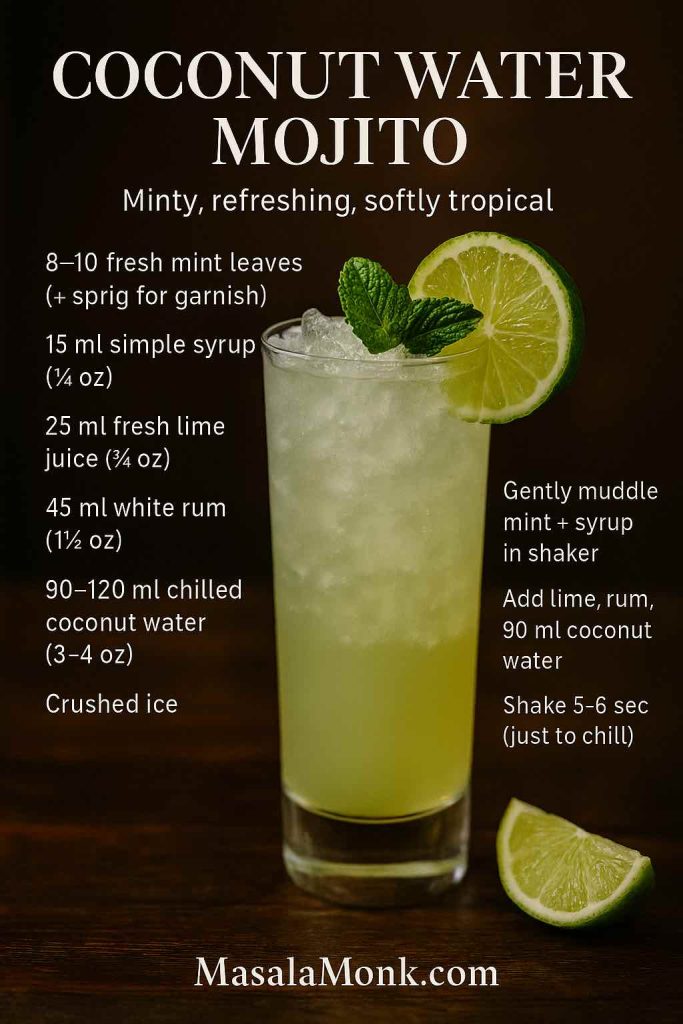
Recipe 3: Coconut Water Mojito

Style: minty, refreshing, softly tropical
Serves: 1 drink

Ingredients

  • 8–10 fresh mint leaves, plus a sprig for garnish
  • 15 ml simple syrup (½ oz)
  • 25 ml fresh lime juice (¾ oz)
  • 45 ml white rum (1½ oz)
  • 90–120 ml chilled coconut water (3–4 oz), to taste
  • Crushed ice (or cubes if that’s what you have)
Coconut Water Mojito recipe card: crushed-ice highball with mint and lime; overlay lists 8–10 mint leaves, 15 ml syrup, 25 ml lime, 45 ml white rum, and 90–120 ml coconut water with brief shake-then-top method; MasalaMonk.com footer; cinematic wood-bar lighting.
Coconut Water Mojito — airy and bright. Light-muddle mint with syrup to perfume (don’t shred), shake briefly with lime, rum, and 90 ml coconut water, then strain over crushed ice and lengthen to taste. If sweetness creeps up, add a tiny pinch of salt or an extra squeeze of lime. For easy repeats, keep mint syrup (1:1 syrup steeped with mint, 30 min) in the fridge for a week. © MasalaMonk.com

Gentle muddle, bright finish

First, in a shaker tin, gently press the mint with the simple syrup—just a light muddle to perfume, not shred.
Next, add lime juice, rum, and 90 ml coconut water. Fill with ice and shake briefly (5–6 seconds) to chill and wake the aromatics.
Then, pour into a tall glass over fresh crushed ice.
Finally, top with another splash of coconut water if you want it longer. Garnish with a mint sprig and a lime wheel.

Why it works
Replacing soda with coconut water keeps the mojito airy and bright while adding a whisper of natural sweetness. Among coconut water cocktails, this one shines because the mint sings and the finish stays crisp.

Variations

  • Sparkling Finish: After step 3, add a short splash of plain seltzer for extra lift.
  • Pineapple Garden: Shake in 30 ml (1 oz) pineapple juice for a fruit-forward riff that still drinks light.
  • Refined-Sugar-Free: Swap simple syrup for 10–15 ml honey syrup (1:1) or a small splash of agave.

Make-ahead
Blend a quick mint syrup (equal parts sugar and water warmed to dissolve; add a handful of mint, steep 30 minutes, strain). With that in the fridge, mojitos become a one-minute operation: mint syrup + lime + rum + coconut water, shake, pour.

Serving note
Because crushed ice dilutes faster, taste halfway through and, if needed, add a tiny pinch of salt or a squeeze of lime to keep flavors vivid from first sip to last.

Hosting a mixed crowd? Point non-drinkers to these pineapple mojito mocktails—same mint-pineapple vibe, no alcohol.


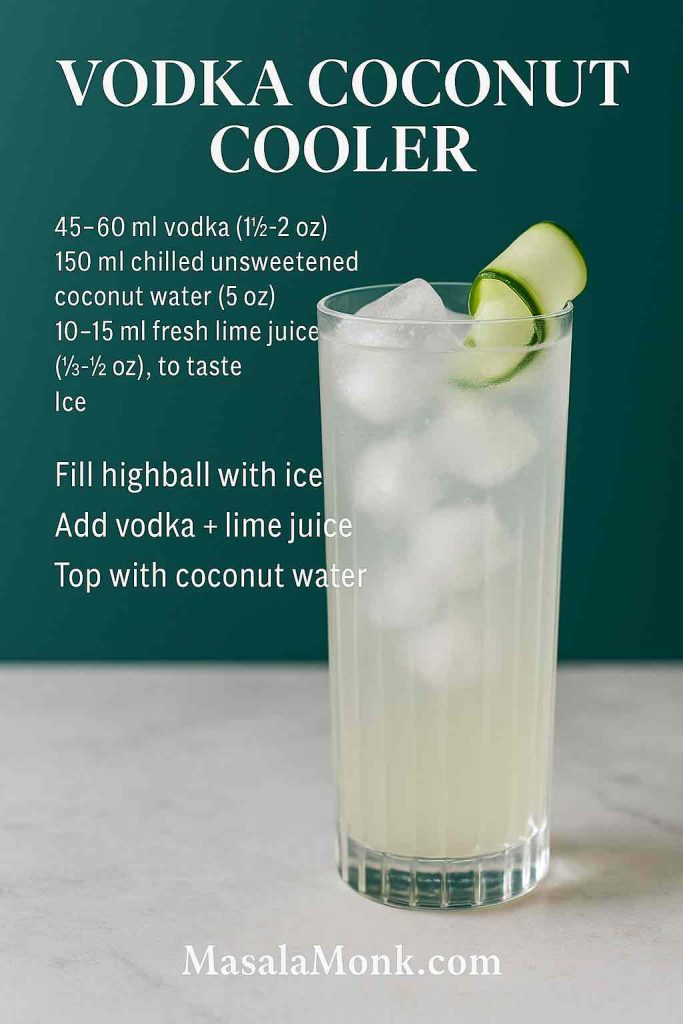
Recipe 4: Vodka Coconut Cooler

Style: ultra-light, clean, endlessly sippable
Serves: 1 drink

Ingredients

  • 45–60 ml vodka (1½–2 oz)
  • 150 ml chilled unsweetened coconut water (5 oz)
  • 10–15 ml fresh lime juice (⅓–½ oz), to taste
  • Ice
  • Optional garnish: cucumber slice or thin lime wheel
Vodka Coconut Cooler recipe card: crisp high-key photo of frosted highball on white marble, cucumber ribbon garnish; minimal overlay with vodka, coconut water, fresh lime; MasalaMonk.com footer.
Vodka Coconut Cooler — ultra-light by design. Build over fresh ice and keep the lime modest so coconut water’s clean, mineral sweetness leads. For spa vibes, add a cucumber ribbon; for spritz mode, finish with a splash of plain seltzer. © MasalaMonk.com

Smooth build, crisp finish

First, fill a tall highball with fresh ice so the drink stays bracingly cold.
Next, add the vodka and lime juice, and then top with coconut water.
After that, stir gently for 5–6 seconds—just enough to marry without over-diluting.
Finally, taste and adjust: a touch more lime for snap, or a splash more coconut water for a longer, lighter cooler.

Why it works
Among coconut water cocktails, this one is the minimalist. Vodka steps back, letting coconut water’s clean, mineral sweetness shine while lime keeps the edges bright.

Variations

  • Cucumber Breeze: Muddle 2–3 thin cucumber slices in the glass first; then build as written for spa-day energy.
  • Grapefruit Twist: Swap lime for 15 ml grapefruit juice and add 2 dashes grapefruit bitters for a gentle, bittersweet lift.
  • Spritz Mode: Top the finished drink with a short splash of plain seltzer for extra sparkle.

Make-ahead
Stir vodka and coconut water in a bottle and chill for up to a day. However, add the lime only at serving so the cooler stays lively.

Serving note
Because this is one of the most approachable coconut water cocktails, it’s perfect for mixed crowds—simply lay out lime wedges so everyone can tune their glass.

Prefer vodka long-drinks? Here’s a Mango Vodka Cocktail (base + 7 variations) that stays tropical yet super clean.


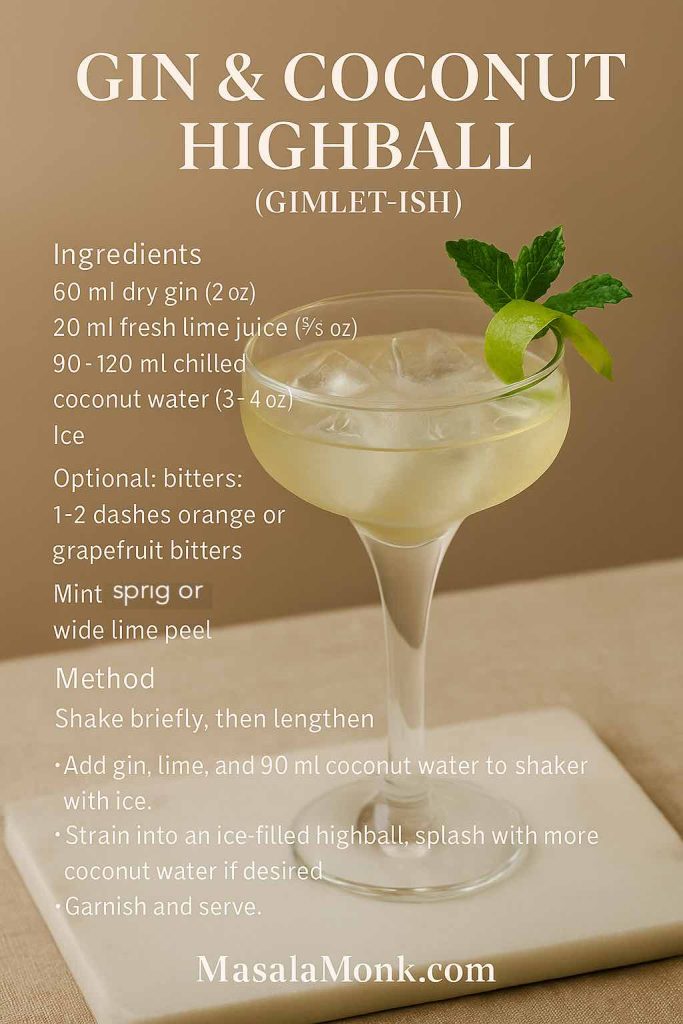
Recipe 5: Gin & Coconut Highball (Gimlet-ish)

Style: botanical, bright, quietly tropical
Serves: 1 drink

Ingredients

  • 60 ml dry gin (2 oz)
  • 20 ml fresh lime juice (⅔ oz)
  • 90–120 ml chilled coconut water (3–4 oz)
  • Ice
  • Optional bitters: 1–2 dashes orange or grapefruit bitters
  • Garnish: mint sprig or a wide lime peel
Gin & Coconut Highball (Gimlet-ish) recipe card: pale gin cocktail in a stemmed coupe on warm linen with mint sprig and wide lime peel; overlay lists 60 ml gin, 20 ml fresh lime, 90–120 ml coconut water, brief shake-then-lengthen method; MasalaMonk.com footer.
Gin & Coconut Highball — botanical, bright, quietly tropical. Shake 60 ml gin + 20 ml fresh lime + 90 ml coconut water for 6–8 sec (just to chill/aerate), strain over fresh ice, then lengthen with a splash if you want it longer. One dash of orange or grapefruit bitters rounds juniper edges; garnish with mint or a wide lime peel. For a softer profile, use a citrus-forward gin. © MasalaMonk.com

Shake briefly, then lengthen

First, add gin, lime, and 90 ml coconut water to a shaker with ice.
Next, shake briefly (6–8 seconds) to chill and aerate without muting coconut’s delicate aroma.
Then, strain into an ice-filled highball and, if you prefer it longer, add another small splash of coconut water.
Finally, dot the top with a dash or two of citrus bitters, garnish, and serve.

Flavor notes
This lands squarely in the “refreshing yet grown-up” corner of coconut water cocktails. Gin’s botanicals get a soft-focus lens, lime brings zip, and coconut water smooths the finish.

Variations

  • Pineapple Fizz: Shake in 30 ml pineapple juice; afterward, crown with a small splash of seltzer.
  • Herbal Garden: Clap a basil leaf between your palms to wake it up, then tuck it alongside the mint for a greener aroma.
  • Short & Strong (Rocks): Build 60 ml gin + 60–75 ml coconut water over a big cube; stir, garnish with expressed lime peel.

Make-ahead
Combine gin and coconut water in a small pitcher and chill for a few hours. However, shake each portion with fresh lime right before serving.

Serving note
If your gin leans juniper-heavy, a single dash of orange bitters rounds the edges beautifully; consequently, the drink reads polished rather than piney.

Also Read: Natural Pressure Regulator: How Coconut Water Can Help Manage High Blood Pressure


Recipe 6: Bourbon Coconut Refresher

Style: mellow, fragrant, surprisingly summery
Serves: 1 drink

Ingredients

  • 60 ml bourbon (2 oz)
  • 120 ml chilled coconut water (4 oz)
  • 2 dashes aromatic bitters
  • Expressed orange peel (plus extra for garnish)
  • Ice
Bourbon Coconut Refresher recipe card: rocks glass with big ice, bourbon + coconut water cocktail under warm tungsten light; expressed orange peel garnish; overlay lists 60 ml bourbon, 120 ml coconut water, 2 dashes bitters, and the stir–scent–sip method; MasalaMonk.com footer.
Bourbon Coconut Refresher — mellow, fragrant, surprisingly summery. Stir 60 ml bourbon + 120 ml coconut water over ice for 6–8 sec, add 2 dashes aromatic bitters, then express a wide orange peel over the glass and drop it in. If it leans sweet, a tiny squeeze of lemon or micro pinch of salt tightens the finish. For a short sipper, try the Island Old Fashioned: 60 ml bourbon + 10 ml coconut-water syrup + bitters over a big rock. © MasalaMonk.com

Stir, scent, and sip

First, fill a rocks or highball glass with ice.
Next, add the bourbon and coconut water, then stir 6–8 seconds to chill and integrate.
Afterward, add the bitters and express a wide strip of orange peel over the glass so the oils perfume the top; then drop it in.
Finally, taste and tweak: if it feels a touch sweet, squeeze a tiny wedge of lemon or add a micro pinch of salt to sharpen the profile.

Why it works
Bourbon’s caramel and vanilla lean into coconut’s gentle sweetness; meanwhile, bitters and orange oils keep the finish bright and tidy. It’s the sleeper hit of coconut water cocktails—unexpectedly summery, deeply sippable.

Variations

  • Ginger Snap: Float 15–30 ml ginger ale on top for a gingery sparkle.
  • Citrus Pivot: Swap the orange peel for lemon and add 5 ml lemon juice if you prefer a tangier edge.
  • Island Old Fashioned (Short): Stir 60 ml bourbon, 10 ml coconut-water simple syrup, and 2 dashes bitters over a big cube; garnish with orange peel.

Make-ahead
Mix bourbon, coconut water, and bitters in a small bottle and chill for a couple of hours. Add the expressed peel only when pouring so the aroma stays vivid.

Serving note
Because this reads softer than a whiskey-forward sipper, it’s a smart bridge for friends who “don’t usually drink bourbon” but love tall, easy coconut water cocktails.

Talking about Coconut water, do read Spice Up Your Electrolyte Game: 5 Refreshing Recipes with Cardamom, Cloves, and Coconut Water.


Recipe 7: Lighter Piña Colada (with Coconut Water)

Style: breezy, not-too-sweet, blender optional
Serves: 1 drink

Ingredients

  • 60 ml white rum (2 oz)
  • 90 ml pineapple juice (3 oz)
  • 90 ml chilled coconut water (3 oz)
  • 15 ml coconut cream (optional, for extra body)
  • Ice
  • Garnish: pineapple wedge or fronds
Lighter Piña Colada recipe card: hurricane glass with frosty pale-yellow colada, pineapple wedge garnish; sunlit kitchen wood table; overlay lists 60 ml white rum, 90 ml pineapple juice, 90 ml coconut water, 15 ml coconut cream (optional), and ‘Shake, or blend—then fine-tune’; MasalaMonk.com footer.
Lighter Piña Colada — breezy, not-too-sweet. Shake rum + pineapple + coconut water (with 15 ml coconut cream only if you want extra body) 12–15 sec until frosty, or blend briefly with 1 cup ice. Taste and fine-tune: tiny squeeze of lime if your pineapple is sweet; splash more coconut water if you want it longer. Pre-chill pineapple + coconut water for extra lift. © MasalaMonk.com

Shake, or blend—then fine-tune

First, decide on texture: shaken is lighter, while blended is beach-bar creamy.
Next, for the shaken version, add rum, pineapple juice, coconut water, and coconut cream (if using) to a shaker with ice; then shake hard for 12–15 seconds until frosty.
Afterward, strain into a chilled tall glass over fresh ice; subsequently, taste and adjust with a tiny squeeze of lime for lift or a splash more coconut water for length.
Alternatively, for the blended version, add everything to a blender with 1 cup of ice and blend just until smooth—no longer, otherwise the flavors can mute.
Finally, garnish with pineapple and serve immediately so the aromatics stay vivid.

Why it works
Classic coladas can be lush; however, this lighter take relies on coconut water to stretch flavor without adding heaviness. Consequently, you get a sunny, refreshing sip that still reads as a colada—one of the friendliest coconut water cocktails for warm afternoons.

Variations

  • Gold-Rum Glow: Swap half the white rum for gold rum to add caramel warmth.
  • Citrus Snap: Add 10 ml lime juice if your pineapple is very sweet; conversely, skip it if the fruit is tart.
  • Colada Spritz: Shake the lighter version and, afterward, crown with a short splash of plain seltzer for sparkle.

Make-ahead
Pre-chill pineapple juice and coconut water together; nevertheless, add rum and any coconut cream only at serving, which keeps texture lively.

Serving note
Because this recipe skews sessionable, it’s excellent for mixed groups discovering coconut water cocktails—offer lime wedges so guests can tune sweetness versus brightness.

While still on Amazing Coconut water, have a look at The Power of Coconut Water: Unpacking the Health Benefits.


Recipe 8: Coconut Seltzer Spritz (Rum or Tequila)

Style: sparkling, ultra-refreshing, low effort
Serves: 1 drink

Ingredients

  • 45 ml white rum or blanco tequila (1½ oz)
  • 60 ml chilled coconut water (2 oz)
  • 120 ml coconut-flavored seltzer or plain seltzer (4 oz)
  • 10–15 ml fresh lime juice (⅓–½ oz), to taste
  • Ice
  • Garnish: lime wheel; optional mint sprig
Coconut Seltzer Spritz recipe card: tall bubbly cocktail on a sunlit balcony, lime wheel garnish; overlay lists 45 ml rum or blanco tequila, 60 ml coconut water, 120 ml seltzer, 10–15 ml lime, and ‘build gently, then let the bubbles work’; MasalaMonk.com footer.
Coconut Seltzer Spritz — sparkling, ultra-refreshing, low effort. Build over ice: 45 ml rum or tequila, 60 ml coconut water, 10–15 ml lime; top with 120 ml seltzer and give just one brief stir so the fizz stays lively. Softer finish? a final whisper of coconut water. Riffs: Grapefruit Lane (swap lime for 15 ml grapefruit + tiny salt) or Pineapple Wink (+15–30 ml pineapple before seltzer). For a pitcher, pre-chill spirit + coconut water, add lime and seltzer in the glass. © MasalaMonk.com

Build gently, then let the bubbles work

First, fill a tall glass with ice so everything starts truly cold.
Next, add the rum or tequila and the lime juice; then pour in the coconut water.
After that, top with seltzer; subsequently, give a brief, delicate stir so you don’t knock out the bubbles.
Finally, garnish and sip; if you prefer it softer, add a final whisper of coconut water.

Flavor notes
This sits squarely in the spritz family of coconut water cocktails—bright, buoyant, and charmingly simple. Meanwhile, the bubbles carry coconut aroma upward, so each nose of the glass feels tropical before you even taste.

Variations

  • Grapefruit Lane: Swap lime for 15 ml grapefruit juice and add a micro-pinch of sea salt; consequently, the finish snaps.
  • Pineapple Wink: Add 15–30 ml pineapple juice before topping with seltzer for a fruit-forward spritz.
  • Zero-Fuss Pitcher: Combine spirit and coconut water in advance; thereafter, add lime and seltzer in the glass so carbonation stays lively.

Make-ahead
Batch spirit + coconut water and chill for up to 3 hours; however, never add seltzer early, or the spritz will fall flat.

Serving note
Because the drink is feather-light, it’s a great “first round” when introducing friends to coconut water cocktails—especially on hot days.

You might also want to explore The Versatility of Coconut Water: 5 Creative Recipes Beyond the Glass.


Recipe 9: Tequila–Coconut–Lime Highball

Style: simple build, crisp and grassy with a soft landing
Serves: 1 drink

Ingredients

  • 60 ml blanco tequila (2 oz)
  • 10–20 ml fresh lime juice (⅓–⅔ oz), to taste
  • 120–150 ml chilled coconut water (4–5 oz)
  • Ice
  • Optional garnish: lime wheel or thin cucumber slice
Tequila–Coconut–Lime Highball recipe card: tall pale-green cocktail with lime wheel on a cool taco-night tabletop; overlay lists 60 ml blanco tequila, 10–20 ml fresh lime, 120–150 ml coconut water with brief build-in-glass method; MasalaMonk.com footer.
Tequila–Coconut–Lime Highball — crisp, grassy, soft landing. Build over ice: 60 ml tequila + 10–20 ml fresh lime, top with 120–150 ml coconut water, stir 5–6 sec. A micro pinch of sea salt knits flavors; lengthen with more coconut water for a lighter pour. Riffs: Paloma-ish (swap half the coconut water for grapefruit soda) or Herbal Breeze (tuck in basil or cilantro). Make-ahead: pre-chill tequila + coconut water; add lime in the glass. © MasalaMonk.com

Build, balance, and brighten

First, add tequila and lime to an ice-filled highball.
Next, top with coconut water and stir gently for 5–6 seconds.
Then, taste thoughtfully: add a splash more coconut water for length or a few extra drops of lime for snap; moreover, a micro-pinch of sea salt can knit flavors together.
Finally, garnish simply and serve while well chilled.

Why it works
Tequila’s grassy, peppery edge meets coconut’s mellow sweetness, and, as a result, the highball finishes clean rather than sharp. Consequently, this has become a staple among our coconut water cocktails—it’s as easy as it is satisfying.

Variations

  • Paloma-ish: Replace half the coconut water with grapefruit soda or add 60–90 ml coconut seltzer; afterward, taste and add a pinch of salt.
  • Herbal Breeze: Clap a cilantro sprig or basil leaf between your palms to release aroma, then tuck it in.
  • Short & Strong: Build 60 ml tequila + 75–90 ml coconut water over a big rock; stir, garnish with expressed lime peel.

Make-ahead
Stir tequila and coconut water together and chill; nevertheless, add fresh lime in the glass so the drink stays bright.

Serving note
This highball excels with tacos and salty snacks; furthermore, its easy balance makes it a gateway coconut water cocktail for tequila lovers.

And for using this Elixir or Coconut water beyond cocktails, do read Coconut Water for Wellness: 5 Refreshing Recipes for Recovery and Weight Loss


Recipe 10: Rum–Pineapple–Coconut Lime Highball

Style: bright, sunny, crowd-pleaser
Serves: 1 drink

Ingredients

  • 45 ml white rum (1½ oz)
  • 30 ml pineapple juice (1 oz)
  • 10 ml fresh lime juice (⅓ oz)
  • 120 ml chilled coconut water (4 oz)
  • Ice
  • Garnish: lime wheel or pineapple leaf
Rum–Pineapple–Coconut Lime Highball recipe card: tall sunny highball with pineapple leaf and lime wheel on an outdoor picnic cloth; overlay lists 45 ml white rum, 30 ml pineapple juice, 10 ml lime, 120 ml coconut water with ‘Layer, lengthen, and lift’ method; MasalaMonk.com footer.
Rum–Pineapple–Coconut Lime Highball — vacation in a glass, still light on its feet. Layer 45 ml white rum + 30 ml pineapple + 10 ml lime over ice, top with 120 ml coconut water, and stir briefly. Want more zing? squeeze a touch more lime. Prefer softer? add a splash more coconut water. Pitcher math for 8: 360 ml rum + 240 ml pineapple + 80 ml lime + 960 ml coconut water; add the lime just before pouring so the aromatics stay vivid. © MasalaMonk.com

Layer, lengthen, and lift

First, fill a tall glass with ice; then add rum, pineapple juice, and lime juice.
Next, top with coconut water and stir briefly to integrate.
Afterward, taste; if you want more zing, add a tiny extra squeeze of lime, whereas if you want a softer profile, add another splash of coconut water.
Finally, garnish and serve immediately so the pineapple aromatics don’t fade.

Flavor notes
This is vacation-in-a-glass—yet, thanks to coconut water, it stays light on its feet. Moreover, the pineapple brightens while lime sharpens, creating one of the most crowd-friendly coconut water cocktails on the menu.

Variations

  • Gold-Rum Depth: Swap half the white rum for gold rum to add toffee notes.
  • Bitters Pop: Add 1–2 dashes aromatic bitters for a polished finish.
  • Sparkling Twist: Top with plain seltzer for extra lift, especially on hot afternoons.

Make-ahead
Pre-combine pineapple juice and coconut water in a chilled bottle; however, add rum and lime to order so the citrus stays vivid.

Serving note
Because the flavors read familiar and friendly, this is the highball you can hand to almost anyone exploring coconut water cocktails for the first time.


Quick Fixes When a Drink Tastes “Almost Right”

Even great coconut water cocktails sometimes need a tiny nudge. Therefore, try one tweak at a time and taste after each change.

  • Too tart? Add a splash of coconut water before you reach for sugar; it lengthens and softens without masking flavor.
  • Too sweet? Add 5–10 ml fresh lime or a micro pinch of sea salt; both sharpen edges instantly.
  • Too flat? Stir once more with fresh ice or add a dash of bitters (aromatic for rum/bourbon; citrus for gin/tequila).
  • Too strong? Lengthen with 30–60 ml coconut water and, if needed, one small squeeze of lime to keep it lively.
  • Not coconutty enough? Build over coconut water ice cubes next time; the flavor won’t fade as the glass warms.

Smart Swaps & Pantry Shortcuts

Because real life isn’t a bar back, these swaps keep momentum.

  • Citrus: Lemon works where lime is called for; start with a little less, then adjust.
  • Sweeteners: If you’re out of simple syrup, dissolve 1 tsp sugar directly in the glass or use agave/honey syrup (1:1).
  • Rum choices: White keeps things crisp; gold adds soft caramel; spiced brings baking-spice warmth.
  • Tequila & gin: Blanco tequila reads grassy and bright; London dry gin is classic, but a lighter, citrus-forward gin can be lovely, too.
  • Seltzer: When you want bubbles, plain seltzer is neutral; coconut-flavored seltzer adds aroma without weight.

Make-Ahead & Hosting (Crowd-Friendly, Still Fresh)

For parties, coconut water cocktails shine because they’re easy to batch—just keep the bright parts last.

  • Pitcher rule: Pre-mix spirit + coconut water up to 3 hours ahead and chill deeply. Add citrus just before serving.
  • Scale without math: Keep the 1:2 spirit:coconut water ratio. For 8 drinks, that’s ~480 ml spirit + ~960 ml coconut water.
  • Self-tuning station: Set out lime wedges, mint, a tiny bottle of simple syrup, and bitters so guests can “tune” sweetness and snap.
  • Ice plan: Start with coconut water cubes for the first round, then switch to regular ice so you don’t run out.
  • Glassware: Highballs for long sippers; rocks for shorter, stronger serves—label pitchers so nobody guesses.

For an inclusive pitcher, keep a zero-proof option like this best margarita mocktail (step-by-step) alongside the spirits; and for low-carb guests, this quick keto mocktails guide has easy swaps.


Photo & Garnish Cheat Sheet (Fast but Pretty)

A little garnish reads as care, not fuss.

  • Rum highballs: Lime wheel + optional mint.
  • Tequila & lime builds: Lime wheel or thin cucumber slice.
  • Gin long drinks: Mint sprig or wide lime peel; a dash of citrus bitters looks gorgeous.
  • Bourbon refresher: Expressed orange peel—shine it over the glass so the oils sparkle.
  • Piña colada (lighter): Pineapple wedge or a couple of fronds; crushed ice = instant vacation.

Storage Notes (Because You’ll Make More Tomorrow)

  • Simple syrup: Fridge, up to 2 weeks.
  • Coconut-water simple syrup: Fridge, 1–2 weeks; label it so you remember which is which.
  • Mint syrup: Fridge, 1 week; keep it bright by adding the mint after the syrup cools, then strain.
  • Opened coconut water: Keep chilled and use within 2–3 days for best flavor.

The Last Sip

In the end, coconut water cocktails are about ease: a cold glass, a friendly 1:2 ratio, and a little fresh citrus. Because the mixer is light and mineral, the drinks feel sunny rather than heavy; because the steps are simple, they’re weeknight-friendly as well as party-proof. So chill your bottles, pile on the ice, and pour like you’re on holiday—even if the “beach” is your balcony. Cheers.


FAQs

1) What alcohol mixes best with coconut water for easy coconut water cocktails?

Rum is the most classic; however, tequila, vodka, and gin all shine, and even bourbon works beautifully. Start with a simple 1:2 ratio (60 ml spirit to 120 ml chilled coconut water), then add 10–20 ml fresh lime for lift.

2) Can I make a margarita with coconut water, and how is it different?

Yes—shake tequila, lime, and orange liqueur, then lengthen with coconut water. Consequently, you keep the margarita’s snap but get a smoother, lighter finish that reads super refreshing.

3) How do I build a mojito-style drink using coconut water instead of soda?

Gently muddle mint with a little syrup, add lime and rum, then top with coconut water and crushed ice. Meanwhile, a tiny pinch of sea salt wakes up the mint and keeps the sweetness in check.

4) Do vodka and coconut water actually work together?

Absolutely. Vodka steps back while coconut water and citrus do the talking. For weeknight-friendly coconut water cocktails, it’s one of the cleanest, most sippable combos—especially with a cucumber slice.

5) What about gin—won’t botanicals clash with coconut water?

Not really. In fact, gin’s botanicals get a soft-focus finish. Shake briefly with lime, then lengthen with coconut water; additionally, a dash of orange or grapefruit bitters makes the drink feel polished.

6) Is bourbon too heavy for coconut water cocktails?

Surprisingly, no. Bourbon’s caramel and vanilla meet coconut’s gentle sweetness; then bitters and an expressed orange peel keep things bright. If it reads sweet, add a micro pinch of salt or a squeeze of lemon.

7) Can I make a lighter piña colada using coconut water?

Yes—use pineapple juice, rum, and coconut water (with a spoon of coconut cream only if you want extra body). Consequently, you get the beachy vibe without the weight, and a squeeze of lime keeps it lively.

8) How can I use seltzer or LaCroix with coconut water in cocktails?

Build spirit + lime + coconut water, then top with coconut seltzer (or plain seltzer). Because the bubbles carry aroma, the spritz drinks extra bright—great for first rounds and hot afternoons.

9) What’s the best simple ratio for batching coconut water cocktails for a party?

Keep it math-free: 1 part spirit to 2 parts chilled coconut water in a pitcher. Moreover, add citrus right before serving so the mix stays vivid; let guests adjust with lime wedges, syrup, and bitters.

10) My drink tastes off—too tart, too sweet, or too flat. Quick fixes?

Too tart? Add a splash of coconut water. Too sweet? Add 5–10 ml lime or a tiny pinch of salt. Too flat? Fresh ice and one dash of bitters (aromatic for rum/bourbon; citrus for gin/tequila) bring it back.

11) Is “coconut juice” the same as coconut water in cocktail recipes?

Yes—many people say “coconut juice,” but they mean coconut water. However, it is not the same as coconut milk (richer and opaque) or cream of coconut (sweetened and thick).

12) Any quick ways to make coconut flavor last to the final sip?

Definitely. Freeze coconut water ice cubes and build over them; alternatively, make a fast coconut-water simple syrup (equal parts sugar and coconut water warmed just to dissolve). Consequently, the finish stays coconutty, not watery.