Posted on Leave a comment

Coconut Shake Recipe: Creamy Tender Coconut Milkshake

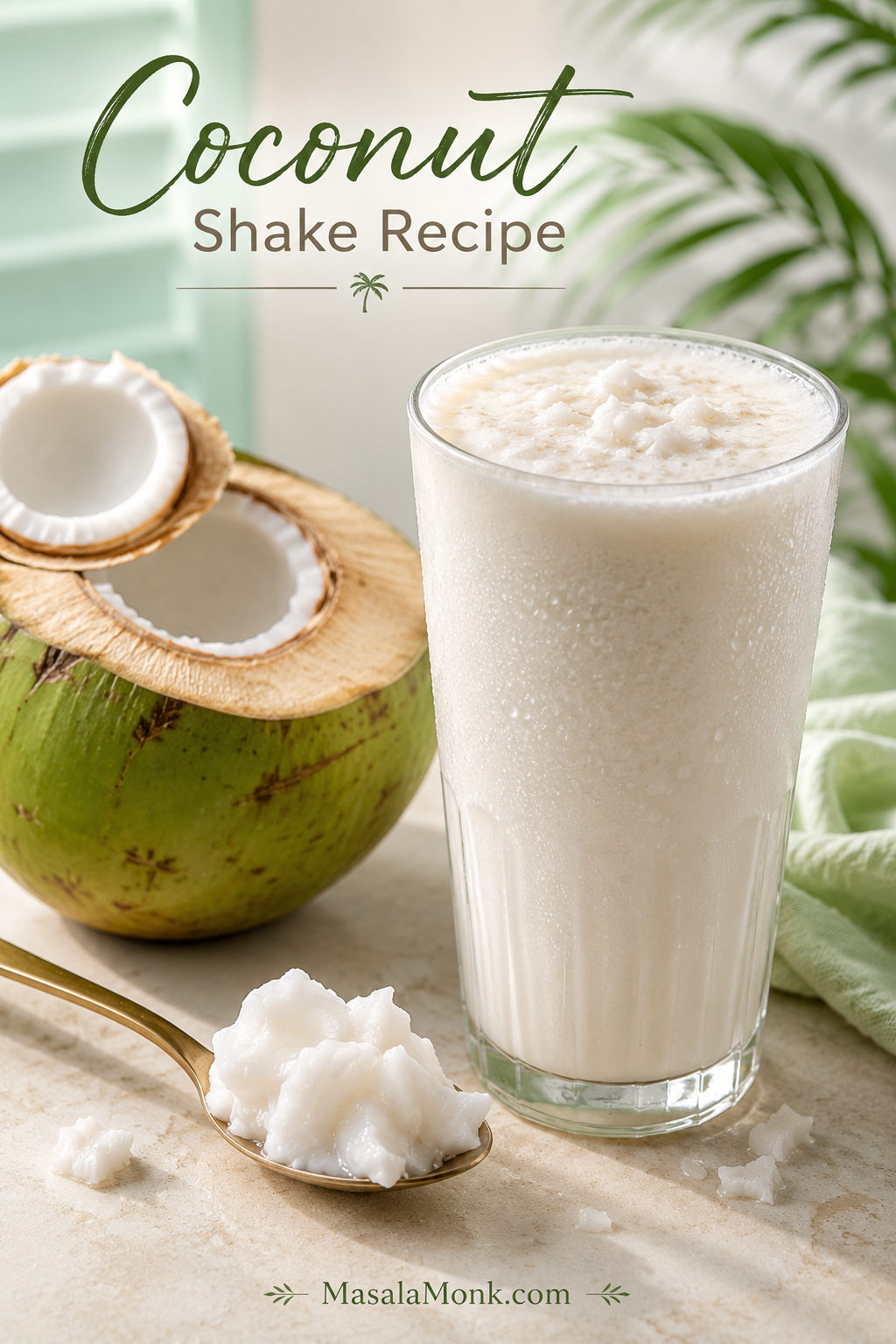
Tall chilled glass of coconut shake with tender coconut malai, coconut water, and an opened young coconut.

A good coconut shake recipe should give you a drink that tastes like opening a fresh tender coconut on a hot day, then turning that freshness into something colder, creamier, and more satisfying. The glass should taste clearly of coconut, feel lightly sweet, sip smoothly, and have enough thickness to feel like a real milkshake without becoming heavy or icy.

This coconut shake recipe starts with the best part of a tender coconut: the soft malai and the naturally sweet coconut water inside. From there, you can keep it light and fresh, make it creamy with chilled milk, or turn it into a dessert-style tender coconut milkshake with vanilla ice cream.

The problem with many coconut shakes is not the idea; it is the balance. Add too much ice and the drink turns watery. Pour in too much milk and the coconut disappears. Extra sugar can make the flavor taste flat instead of clean, while mature coconut can turn the whole glass grainy if it is not blended properly.

Start with the creamy tender coconut milkshake, then use the same base to make it lighter, dairy-free, no-ice-cream, or café-style without losing the fresh coconut taste. You will also find cup, ml, oz, and gram guidance for small 250 ml glasses, tall 16 oz café cups, and 500 ml bottles.

Quick Answer: Best Ratio for 2 Tall Glasses

Best ratio for 2 tall glasses: 1 cup tender coconut malai + ¾ cup coconut water + ¾ cup chilled milk + 1½–2 scoops vanilla ice cream.
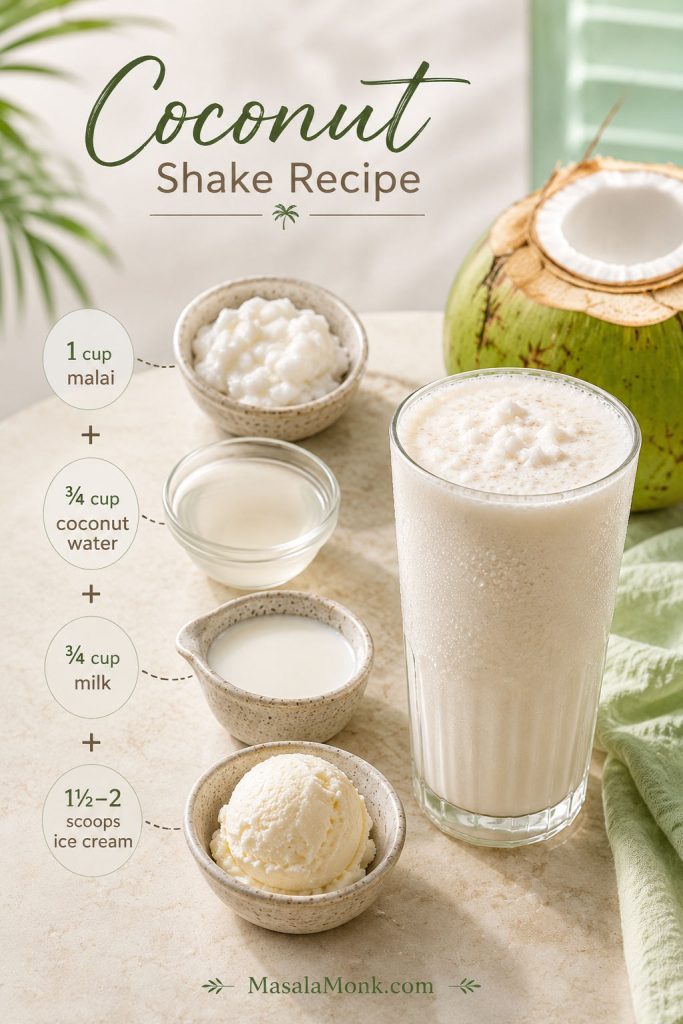
Recipe ratio board showing tender coconut malai, coconut water, chilled milk, vanilla ice cream, and a coconut shake glass.
Use this ratio for two tall glasses. Then adjust coconut water, milk, or ice cream to control texture.

For the creamiest result in this coconut shake recipe, blend the tender coconut flesh with coconut water first, then add chilled milk, ice cream, and sweetener only after tasting. For a lighter homemade glass, jump to the no-ice-cream version; for dairy-free, go to the vegan coconut shake.

This is also a handy recipe when you have already drunk the coconut water and have soft malai left behind. Instead of letting it sit in the fridge until it loses that fresh coconut aroma, blend it into a cold shake while it still tastes delicate and sweet.
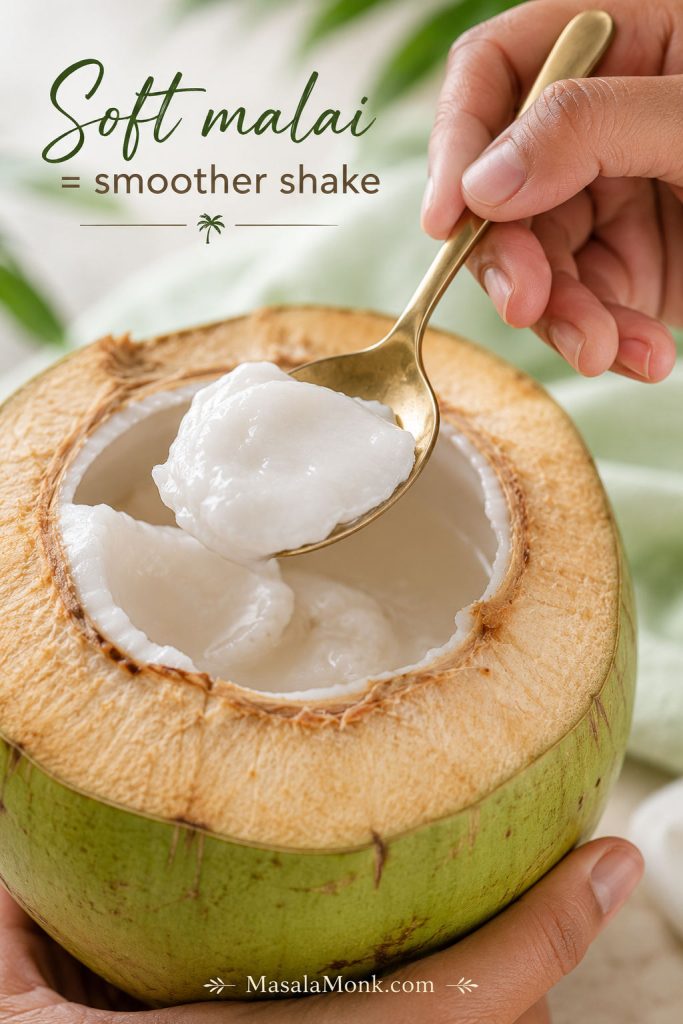
Spoon scooping soft tender coconut malai from a young coconut shell.
Soft, spoonable malai blends more smoothly than firm coconut, so it gives the shake a creamy texture without turning the drink grainy.

The best glass should feel cold from the first sip, but not icy and hollow. It should taste like tender coconut first, then creaminess.

Best coconutTender coconut malai/flesh
Main liquidCoconut water + chilled milk
Creamy versionAdd 1½–2 scoops vanilla ice cream
No-ice-cream versionUse frozen milk cubes or extra malai
Vegan versionUse chilled coconut milk
Prep time10 minutes
Cook time0 minutes
Yield2 tall glasses or 3 small glasses, about 600–750 ml / 20–25 fl oz

What Is Coconut Shake?

Coconut shake is a cold blended drink made with coconut flesh and a chilled liquid such as coconut water, milk, or coconut milk. In many Indian and South Asian kitchens, it usually means a tender coconut milkshake: soft coconut malai blended with tender coconut water, chilled milk, and sometimes ice cream.
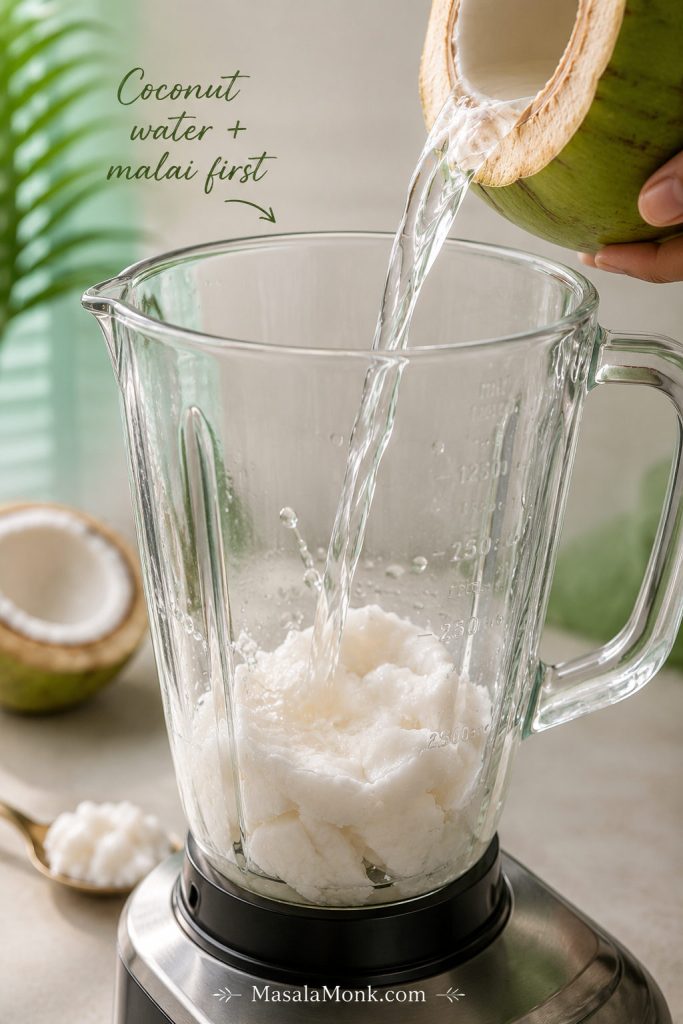
Coconut water being poured into a blender jar filled with tender coconut malai.
Blend coconut water with malai first. The tender coconut breaks down more easily before milk, ice cream, or coconut milk go in.

When coconut is the star, call it a shake. Once coconut milk becomes mostly the base for banana, berries, yogurt, protein powder, or greens, the drink starts behaving more like a smoothie. For fruitier coconut drinks, the flavor variations section covers banana, mango, pineapple, protein, and cardamom ideas.
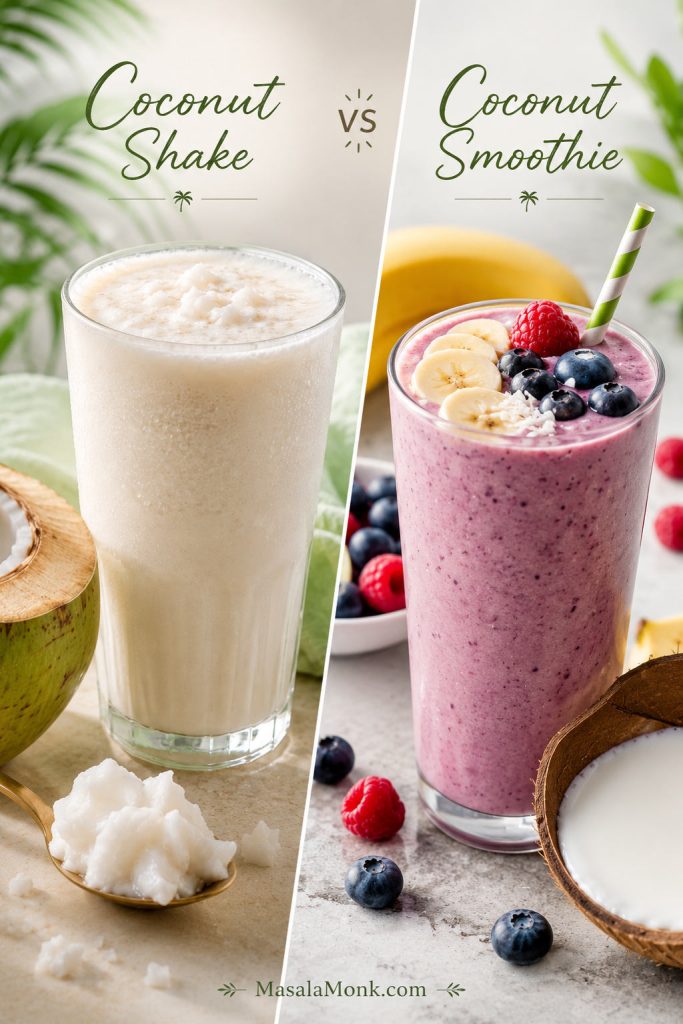
Comparison of a tender coconut shake and a fruit smoothie made with coconut milk.
A coconut shake keeps tender coconut as the main flavor, whereas a coconut smoothie usually uses coconut milk as a base for fruit, protein, or greens.

Coconut water and coconut milk are very different ingredients: coconut water is the clear liquid inside young coconuts, while coconut milk is made from coconut flesh and water. For more on using coconut water in drinks, read our guide to coconut water.

If plain coconut water feels too light and a full ice-cream milkshake feels too heavy, coconut shake sits right in the middle: fresh first, creamy second.

Why This Recipe Works

This is not just a matter of blending coconut and milk. Order, temperature, and balance all matter. The method below keeps coconut in front and creaminess in the background, so the shake tastes full without losing its fresh tender-coconut character.

  • Blending the malai with coconut water first helps the coconut break down before milk and ice cream make the jar heavier.
  • Chilled liquids reduce the need for ice, so the shake stays creamy instead of diluted.
  • Sweetening after tasting keeps the drink balanced when the coconut water is already naturally sweet.
  • Ice cream or frozen milk thickens without hollowing out the flavor, while plain ice mostly adds coldness and dilution. To get that thickness without ice cream, use the no-ice-cream formula instead of adding more plain ice.
  • A short final blend protects the chill, because overblending warms the shake and loosens the texture.

The core idea: Keep coconut water and malai in charge, then add only enough milk, coconut milk, ice cream, or frozen milk to match the glass you want.
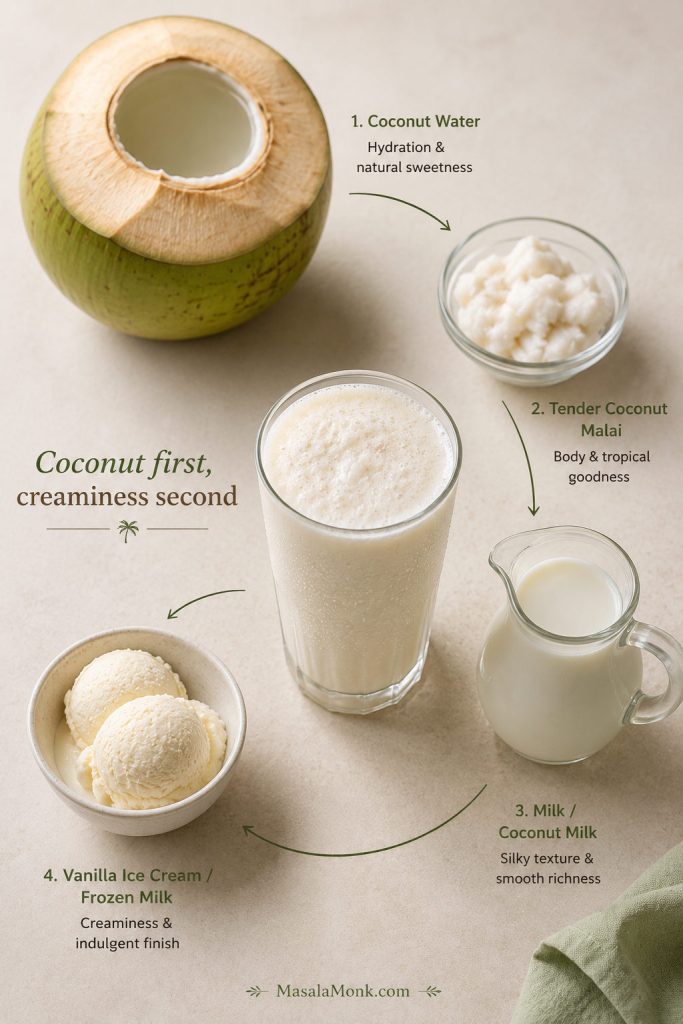
Circular ingredient guide showing coconut water, malai, milk, ice cream, and a finished coconut shake.
Keep coconut water and malai in charge first; then use milk, coconut milk, ice cream, or frozen milk to shape the final glass.

Ingredients That Matter

The ingredient list is short, but the balance matters. Start with fresh malai and coconut water, then decide how rich you want the glass to be. Milk, ice cream, coconut milk, frozen milk, and sweetener are all adjustable; the coconut should stay in charge.
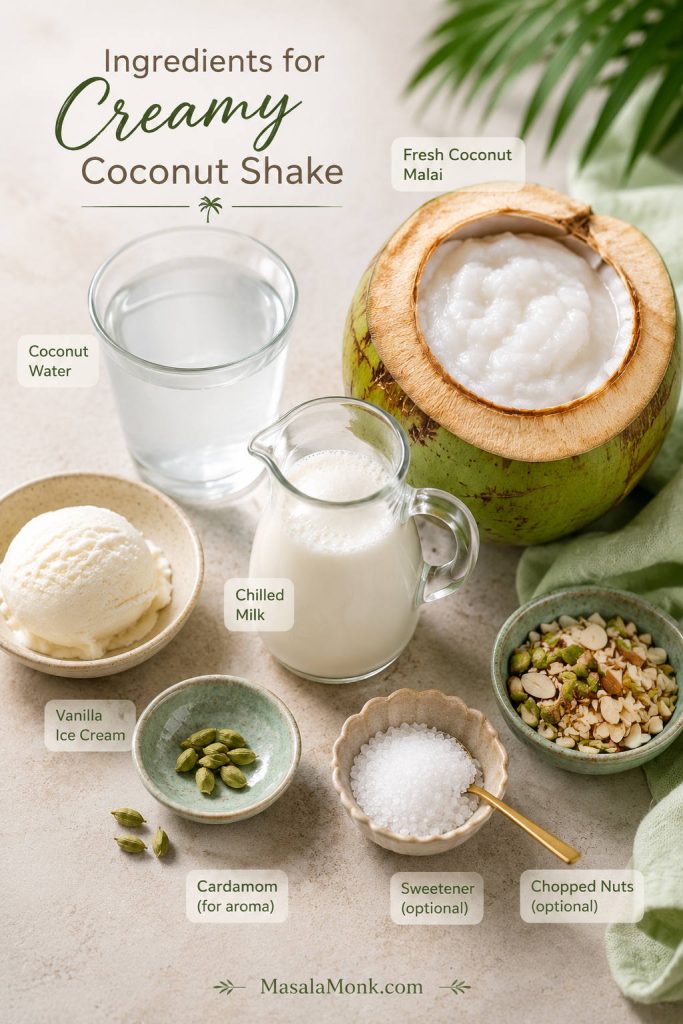
Ingredients for coconut shake including tender coconut malai, coconut water, milk, vanilla ice cream, cardamom, sweetener, and nuts.
Think of the ingredients as texture controls. Malai carries the coconut flavor, chilled liquid keeps it fresh, and ice cream or frozen milk decides thickness.
IngredientAmount for 2 tall glassesWhy it matters
Tender coconut flesh / malai1 cup / about 80–120 gCreates the soft, pulpy coconut base.
Tender coconut water¾–1 cup / 180–240 ml / 6–8 fl ozKeeps the shake light and unmistakably tender-coconut flavored.
Chilled milk¾–1 cup / 180–240 ml / 6–8 fl ozRounds the texture into milkshake territory.
Vanilla ice cream1½–2 scoops / about 90–130 gOptional, but gives dessert-style thickness and sweetness.
Sugar, honey, or dates1–2 tbsp, or to tasteUse only if the coconut water is not sweet enough.
Cardamom or vanilla⅛ tsp cardamom or ½ tsp vanillaAdds aroma without hiding the coconut.
Ice cubes2–4, only if neededChills the shake; use more only for a café-style icy version.
Chopped pistachios, almonds, or coconut bits1–2 tbsp, optionalAdds small bites that make the glass feel freshly blended.

Ingredient Measurement Notes

Measurement note: Tender coconut malai is not as predictable as flour, sugar, or mature grated coconut. Very soft malai can be watery and delicate, while firmer tender coconut flesh weighs more per cup. That is why this recipe gives a practical range of 80–120 g per cup instead of pretending every tender coconut measures the same.

Quick coconut note: Tender coconut is best here because the soft malai blends smoothly and the coconut water gives fresh aroma. If you are using mature coconut or only coconut milk, see which coconut works best so the drink does not turn grainy or too heavy.

Coconut Shake Recipe: Creamy Tender Coconut Milkshake

Classic texture cue: Make the creamy tender coconut milkshake first so you know the target balance before changing the recipe for no-ice-cream, vegan, or lighter versions.
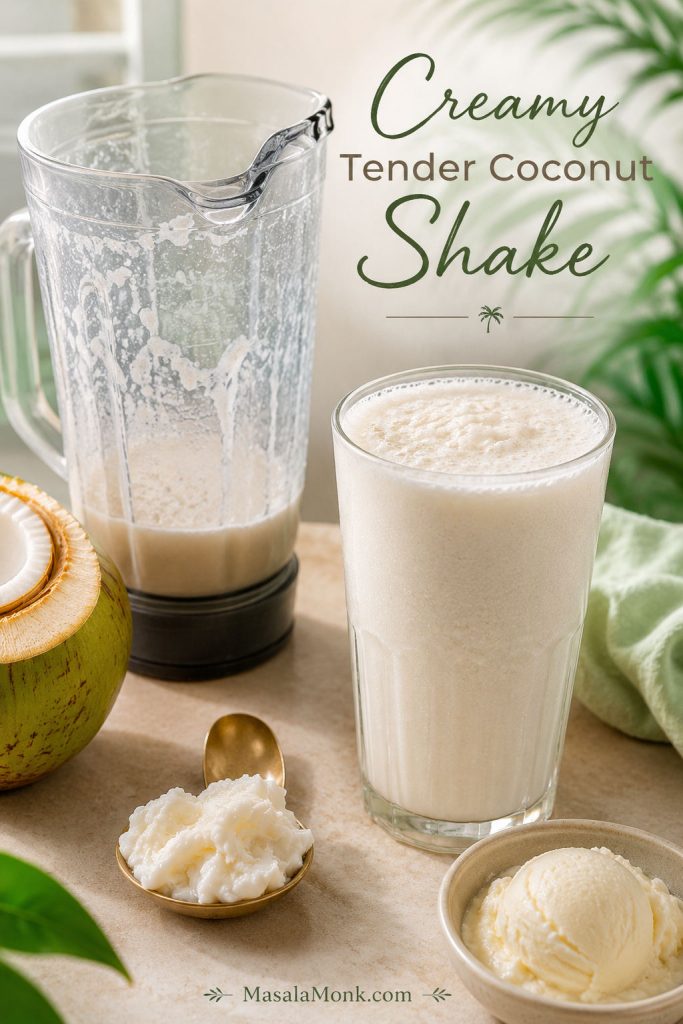
Creamy tender coconut shake in a glass beside a blender jar, malai, coconut water, and vanilla ice cream.
Make the classic tender coconut milkshake first so you know the balance: soft malai, cold coconut water, chilled milk, and optional vanilla ice cream.

Creamy Tender Coconut Shake

This is the coconut shake recipe to make first: soft malai, coconut water, chilled milk, and optional vanilla ice cream blended into a cold, drinkable tender coconut milkshake. It makes about 600–750 ml, depending on the amount of malai and ice cream, which is enough for 2 tall glasses or 3 smaller home glasses.

Prep Time10 minutes
Cook Time0 minutes
Total Time10 minutes
Yield2 tall glasses or 3 small glasses

Total quantity: About 600–750 ml / 20–25 fl oz, depending on the amount of malai and ice cream

Equipment: Blender, mixer-grinder, or high-speed blender; measuring cup; tablespoon; chilled serving glasses.

Ingredients

  • 1 cup tender coconut flesh/malai, about 80–120 g
  • ¾ cup tender coconut water, 180 ml / 6 fl oz, plus more if needed
  • ¾ cup chilled milk, 180 ml / 6 fl oz
  • 1½–2 scoops vanilla ice cream, about 90–130 g, optional but recommended for the creamy version
  • 1 tbsp sugar, honey, or date syrup, optional
  • ⅛ tsp cardamom powder or ½ tsp vanilla extract
  • 2–4 ice cubes, only if the ingredients are not already very cold; use more only for a café-style icy shake
  • 1 tbsp chopped pistachios, almonds, or tender coconut bits, optional

Method

  1. Chill the ingredients. Cold coconut water, cold milk, and chilled glasses give a better shake than a blender full of ice.
  2. Blend the coconut first. Add tender coconut flesh and coconut water to the blender. Blend for 20–30 seconds, until the malai breaks down and the mixture looks slightly cloudy and pulpy.
  3. Add the creamy ingredients. Add chilled milk, vanilla ice cream, cardamom or vanilla, and only a little sweetener.
  4. Blend briefly. Blend for 15–20 seconds, just until the shake looks creamy and moves as one smooth liquid in the blender. Do not overblend after adding ice cream.
  5. Taste and adjust. Add a little more sugar, honey, or date syrup only if the shake needs sweetness. If it is too thick, add coconut water 1–2 tbsp at a time.
  6. Add ice only if needed. Add a few ice cubes and pulse briefly if the shake is not cold enough. Use more ice only when you want a café-style icy shake.
  7. Pour and finish. Pour while the top is still cold and lightly frothy. Garnish with chopped nuts or a few tiny tender coconut bits if you like a little texture.

Recipe Notes

  • Best texture cue: The shake should pour easily but coat the glass lightly.
  • Sweetness cue: Taste before adding sugar because fresh coconut water can already be sweet.
  • No-ice-cream cue: Replace ice cream with ½ cup frozen milk cubes for a lighter but still creamy version.
  • Blending cue: After adding ice cream or frozen milk, blend only until creamy so the shake stays cold and thick.

Visual Method Cues

Chill cue: Cold ingredients protect the texture before the blender even starts.
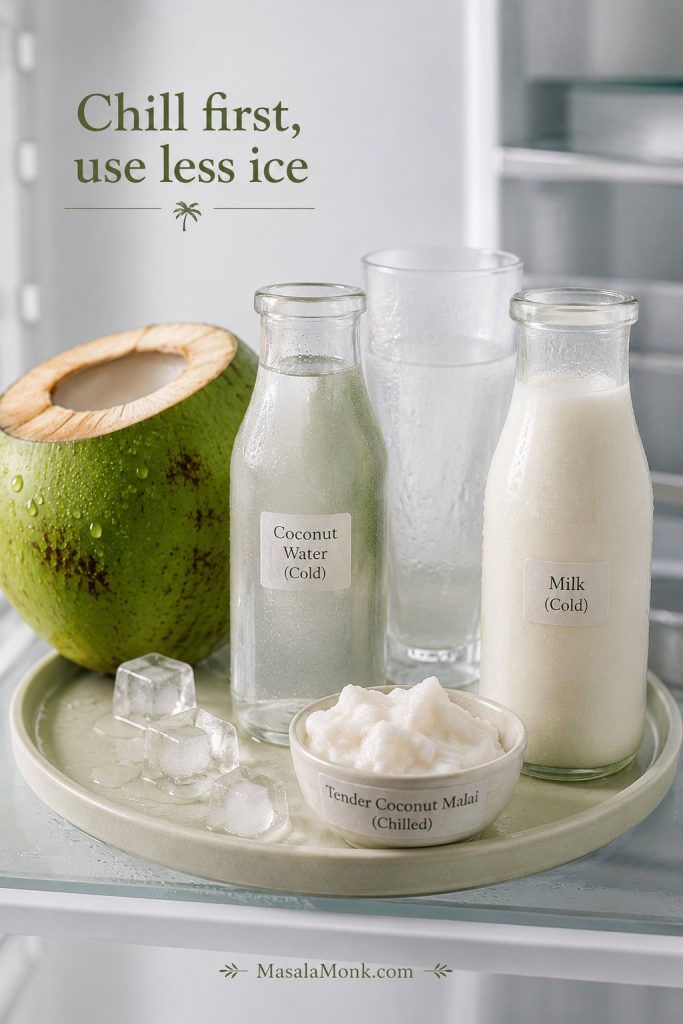
Chilled coconut water, milk, glasses, and tender coconut malai prepared for making coconut shake.
Cold ingredients do more than chill the drink: they protect the creamy texture, so you can use less plain ice and avoid a watery shake.

Blending cue: The coconut water and malai should move together before the heavier ingredients go in.
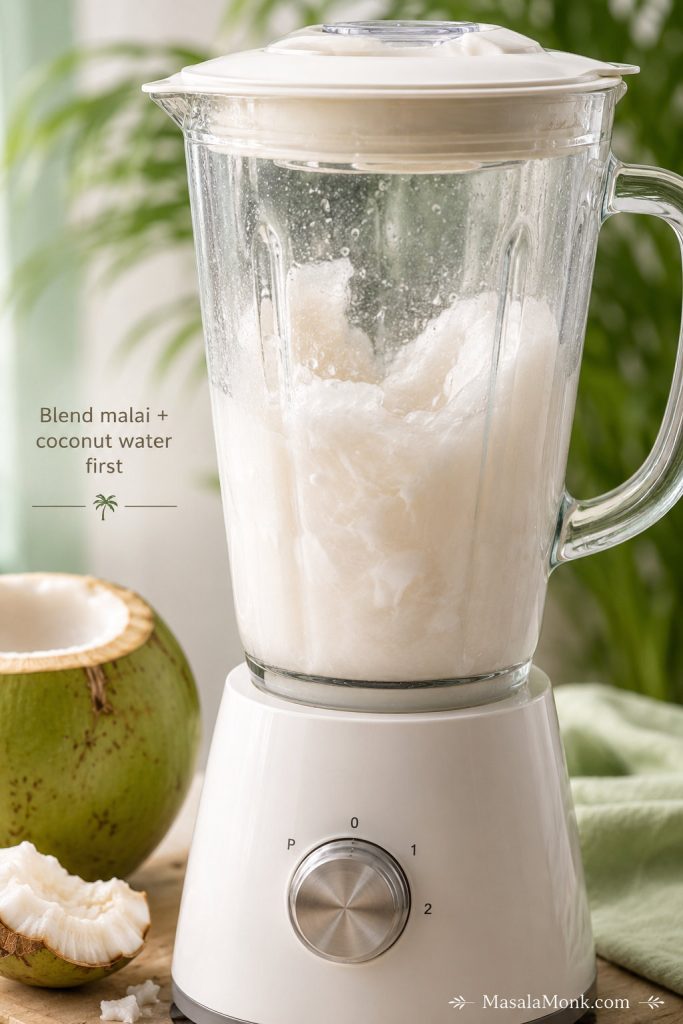
Blender jar with tender coconut malai and coconut water blended into a cloudy, pulpy base.
Once the malai and coconut water move smoothly together, the base is ready for milk, ice cream, or dairy-free coconut milk.

Creamy ingredient cue: Milk and ice cream work best after the coconut base is already loose and blended.
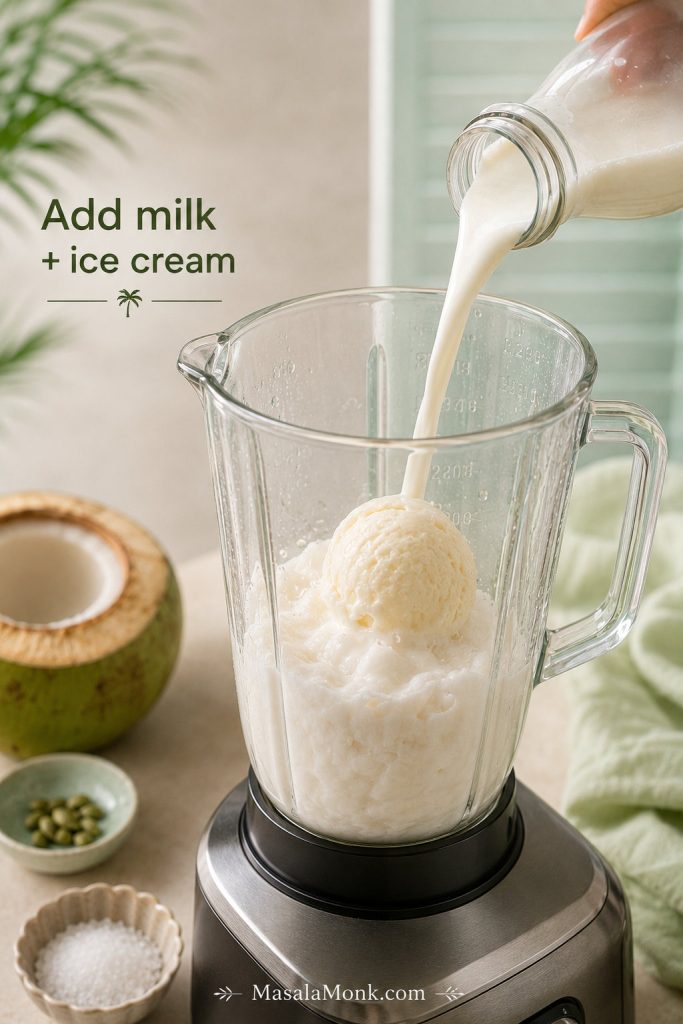
Chilled milk being poured into a blender with tender coconut base and a scoop of vanilla ice cream.
Add milk and ice cream after the coconut base is moving smoothly; otherwise, the blender can struggle before the malai breaks down.

Pouring cue: The best time to serve is when the shake still looks cold, smooth, and lightly frothy.
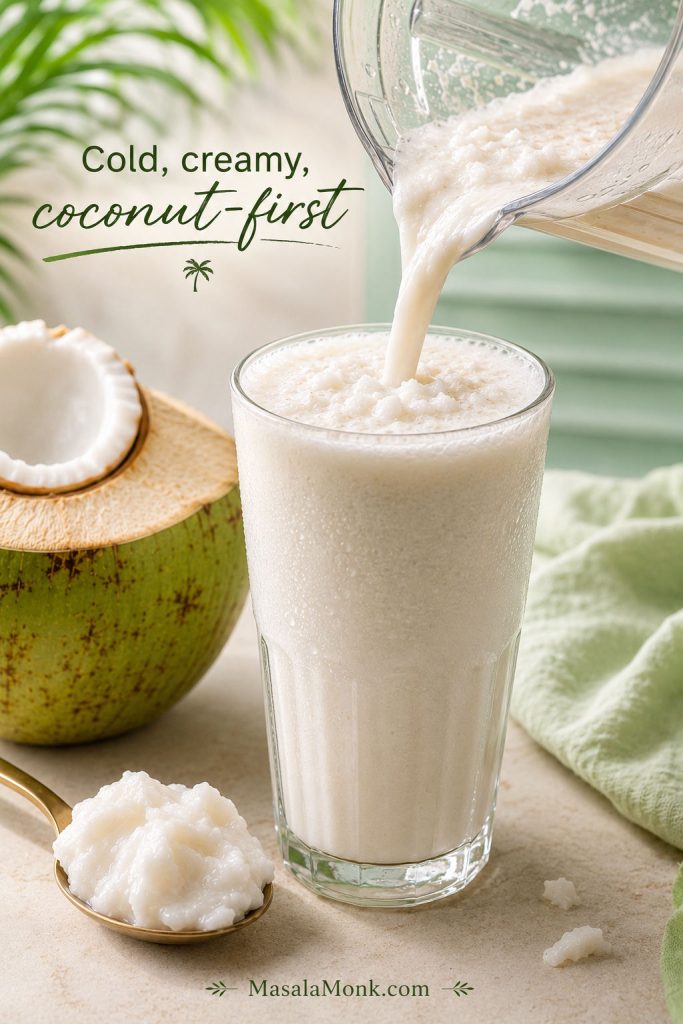
Creamy coconut shake being poured from a blender into a tall glass with light froth.
Pour as soon as the shake looks cold and lightly frothy. At this point, it should coat the glass without feeling heavy.

If your shake turns watery, grainy, too sweet, or too thick, use the troubleshooting table before changing the whole recipe.

You will know this coconut shake is right when it pours smoothly, smells like fresh coconut water, and tastes creamy without losing that tender coconut freshness.

Tender Coconut, Mature Coconut, or Coconut Milk: What Works Best?

Tender coconut gives the best flavor and texture, but the recipe can still work if you only have mature coconut, coconut milk, or coconut cream. The key is knowing what each option changes.
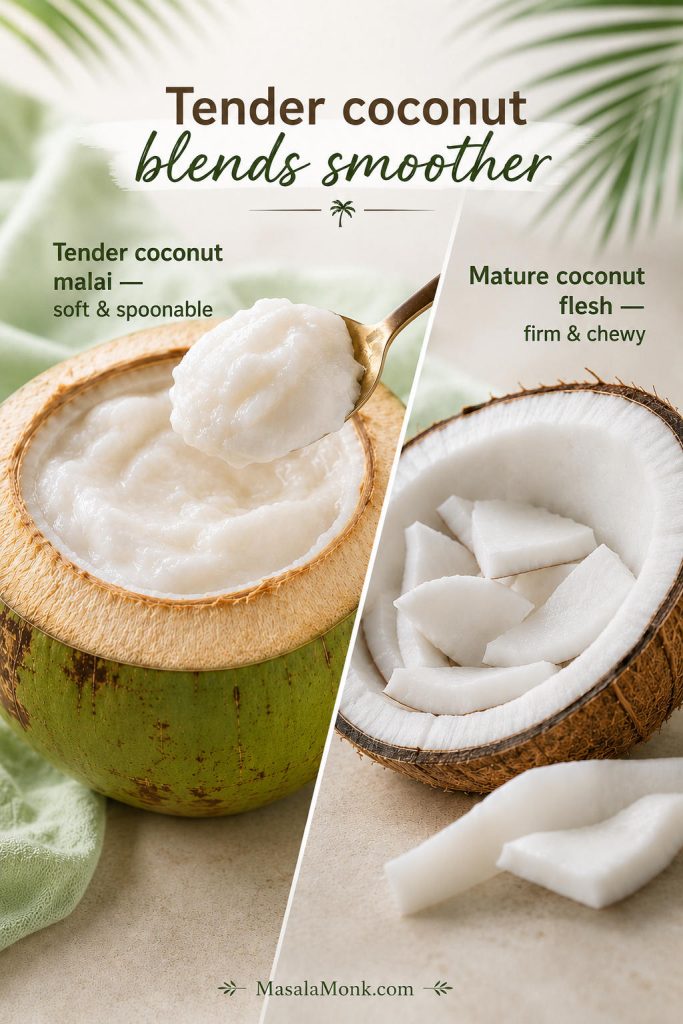
Comparison of soft tender coconut malai and firm mature coconut flesh for making coconut shake.
Tender coconut malai is soft and spoonable, while mature coconut flesh is firmer; therefore, mature coconut may need chopping, longer blending, or straining.

The best malai for this shake should be soft enough to scoop with a spoon. Very soft malai bends, tears, or slips easily, which helps it blend into a smoother drink. Chewy coconut can still work, but chop it small and expect a more pulpy finish.
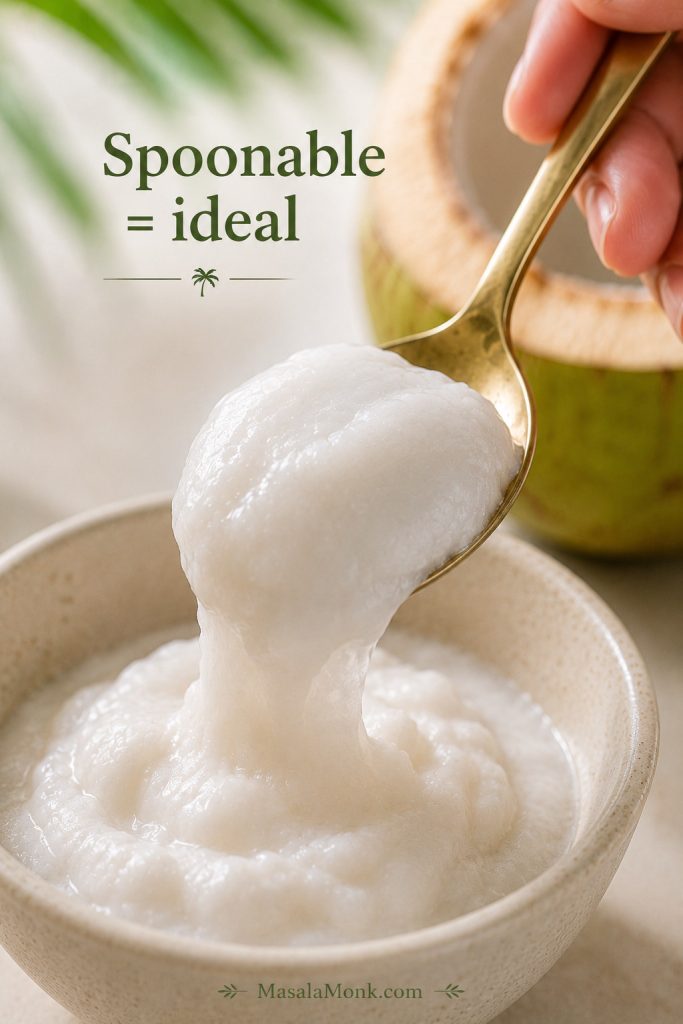
Spoon lifting soft tender coconut malai to show the ideal texture for blending.
A quick spoon test tells you what to expect: soft malai blends smoothly, while firmer coconut needs smaller pieces, longer blending, or straining.

For an outside ingredient comparison, this coconut milk vs coconut water guide explains why coconut water keeps drinks light while coconut milk adds body.

  • Tender coconut / young coconut is the best choice because the malai blends soft and the water adds fresh coconut aroma.
  • Mature fresh coconut is usable in a pinch, but it is firmer and more likely to turn grainy. Grate it finely, blend it longer with coconut water, and strain if needed.
  • Coconut milk is the easiest dairy-free route, but it should support the tender coconut rather than replace it completely when fresh malai is available.
  • Coconut cream makes the shake very thick and rich, so a little goes a long way. Use it when you want a dessert-style vegan shake.

What Should Coconut Shake Taste Like?

A well-made coconut shake should taste cold before it tastes sweet, and like coconut before it tastes like milk. It should sip smoothly through a straw, with just enough thickness to coat the glass lightly. A few tiny malai bits are welcome; grit is not.
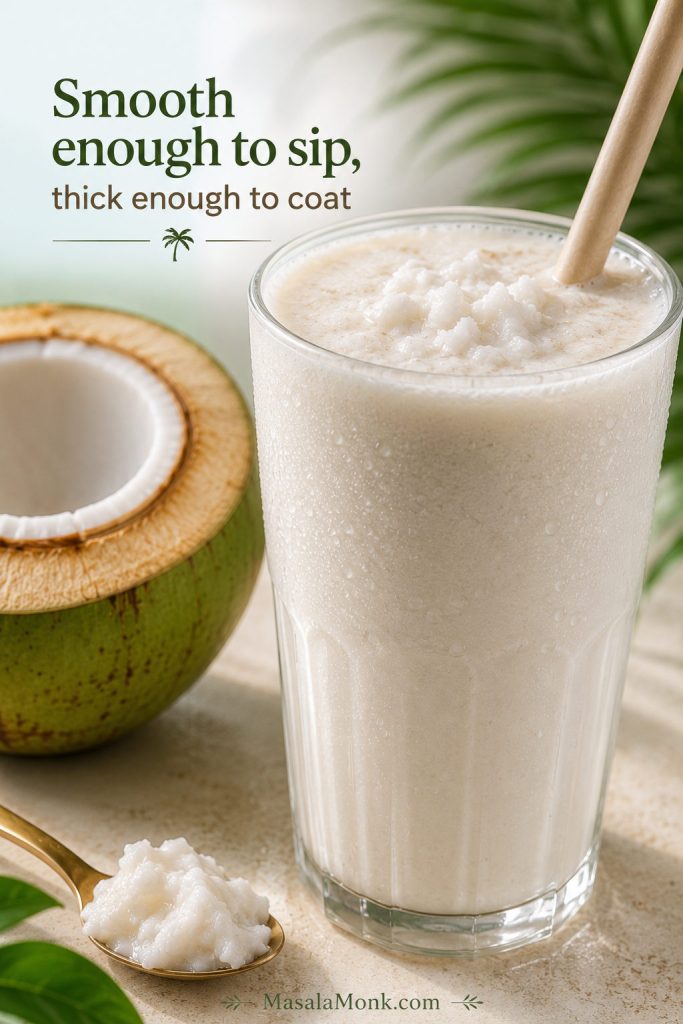
Close-up of coconut shake with a straw, lightly coated glass wall, froth, and tiny malai bits.
The right texture should sip through a straw and lightly coat the glass; if it feels gritty, heavy, or hollow, the balance needs adjusting.

A glass that tastes like melted vanilla ice cream with coconut hiding in the background needs less dairy next time. When the first sip tastes mostly like milk, the coconut ratio is too low. A cold but empty-tasting shake usually has too much ice. For flat flavor, use fresher coconut water, a pinch of cardamom or vanilla, and just a tiny pinch of salt.

Choose Your Style Before You Blend

The easiest way to avoid a disappointing shake is to choose the style before you blend. A café-style shake, a no-ice-cream homemade shake, and a fresh coconut-water shake use similar ingredients, but they should not taste the same.
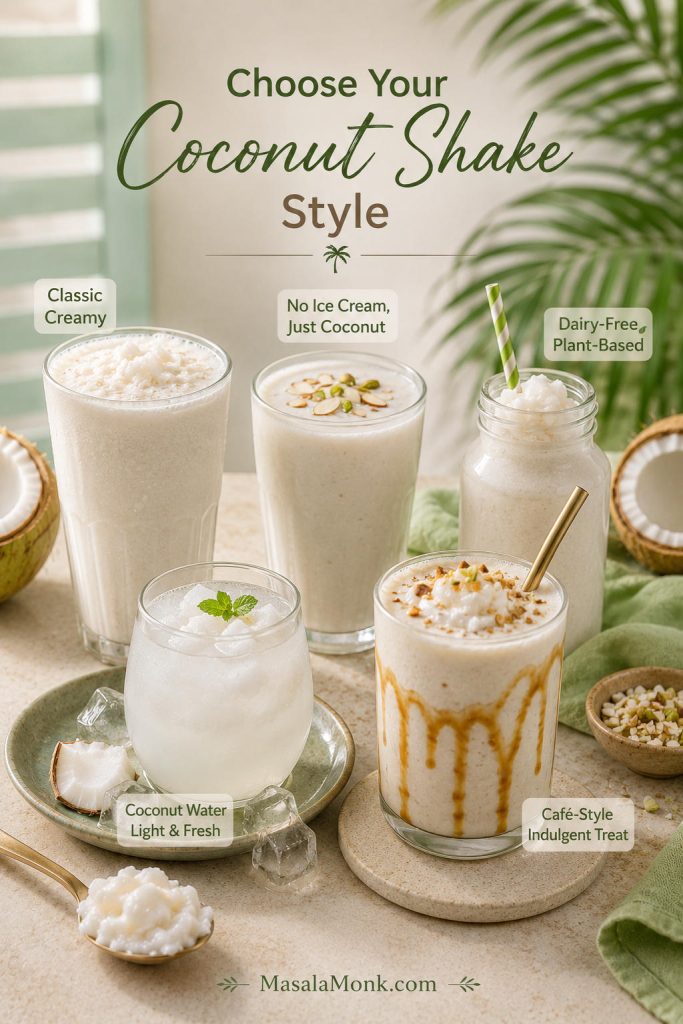
Five coconut shake styles arranged together: classic creamy, no ice cream, dairy-free, coconut water, and café-style.
Choose the style before you blend: café-style needs cold pulpy richness, while coconut water and no-ice-cream versions need a lighter balance.
You want…Make this versionUse this base
A creamy café-style shakeMain recipe with ice creamTender coconut + coconut water + milk + ice cream
A homemade shake without ice creamFrozen milk versionTender coconut + coconut water + milk + frozen milk cubes
A dairy-free coconut shakeVegan coconut shakeTender coconut + coconut water + coconut milk
No milk and no added sugarFresh coconut water shakeCoconut water + malai + optional dates
A lighter summer drinkCoconut water shakeCoconut water + tender coconut + optional yoghurt or coconut milk
A 500 ml bottleScaled bottle versionUse the measurement table and leave headspace
A thicker smoothie-like drinkBanana or extra-malai variationAdd frozen banana or more tender coconut flesh

Without Ice Cream

No ice cream does not mean thin or boring. The trick is to replace the cold thickness ice cream gives, not just its sweetness. Frozen milk cubes, extra malai, soaked cashews, coconut cream, or frozen banana can all make the shake feel full instead of thin.
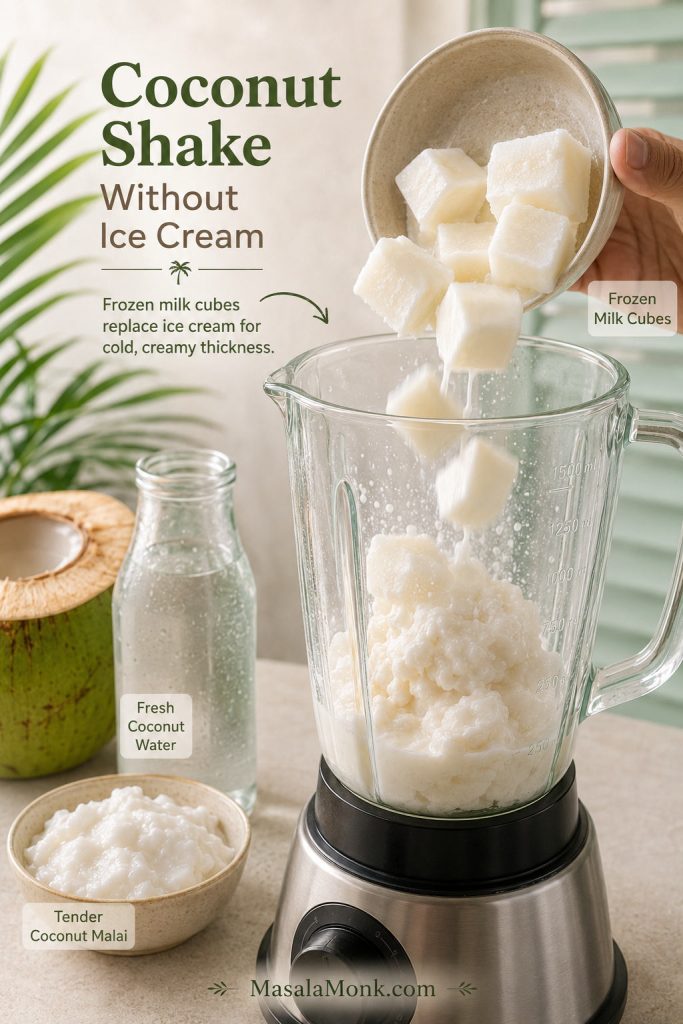
Frozen milk cubes being added to a blender with tender coconut malai and coconut water for a no-ice-cream coconut shake.
Frozen milk cubes replace the cold thickness that ice cream gives, so the shake stays creamy without turning into a dessert-style milkshake.

This version is for the days when you want homemade creaminess, not dessert. It feels lighter than the ice-cream shake but still has enough richness to taste deliberate.

No-Ice-Cream Formula

  • 1 cup tender coconut flesh/malai, about 80–120 g
  • ¾ cup tender coconut water, 180 ml
  • ½ cup chilled milk, 120 ml
  • ½ cup frozen milk cubes
  • 1–2 tbsp sugar, honey, date syrup, or 1–2 soft dates
  • Pinch of cardamom or ½ tsp vanilla

Blend the tender coconut and coconut water first. Add chilled milk, frozen milk cubes, sweetener, and cardamom. Blend briefly until creamy and serve immediately.

Texture cue: When you skip ice cream, the thickener matters more than extra ice because it decides whether the drink feels creamy, rich, or smoothie-like.
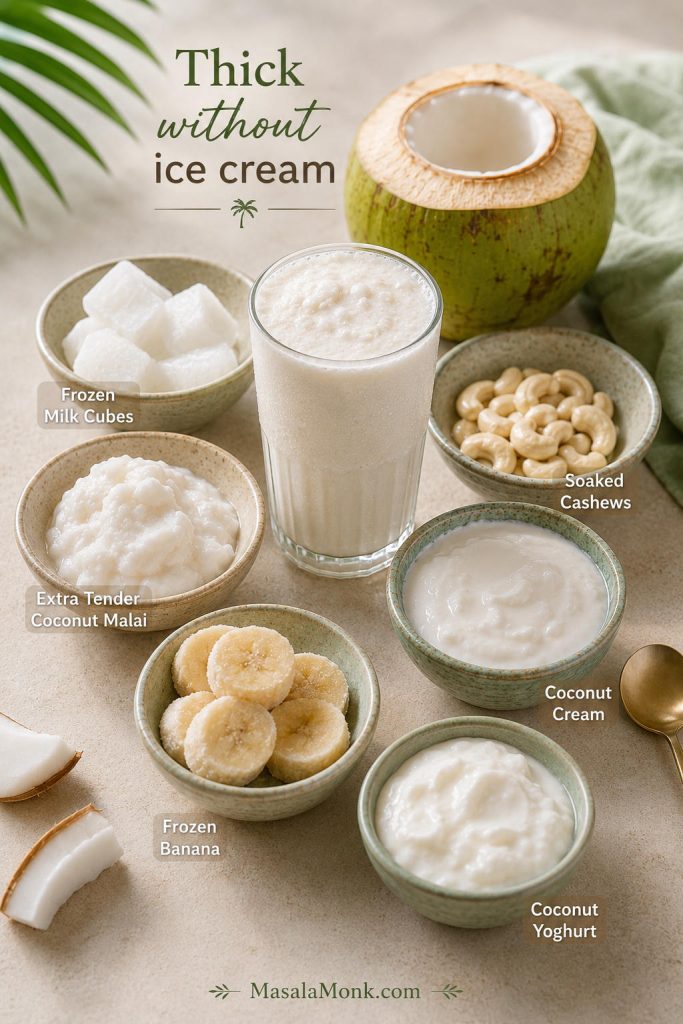
Thickener board with frozen milk cubes, malai, soaked cashews, coconut cream, frozen banana, coconut yoghurt, and coconut shake.
Without ice cream, choose the thickener by texture: frozen milk keeps it classic, cashews add richness, and banana makes it more smoothie-like.
ThickenerBest forAmount for 2 tall glasses
Frozen milk cubesClassic no-ice-cream shake½ cup
Extra tender coconut malaiMore coconut flavor¼ cup extra
Soaked cashewsRich Indian café texture1–2 tbsp
Coconut creamThick vegan shake2–4 tbsp
Frozen bananaDairy-free body½ banana
Coconut yoghurtLight tangy version2–3 tbsp

For a lighter drink, use fewer frozen milk cubes and more coconut water. To make it richer, add soaked cashews or a spoon of cream. Cold ingredients matter more here than extra ice, because frozen milk gives body while plain ice mostly dilutes.

Without Milk or Added Sugar

This is the cleanest version, but also the least forgiving. Because there is no milk, ice cream, or sugar to cover anything, the coconut itself has to taste good. When the coconut water is sweet and the malai is soft, the result is light, cold, and beautifully fresh.
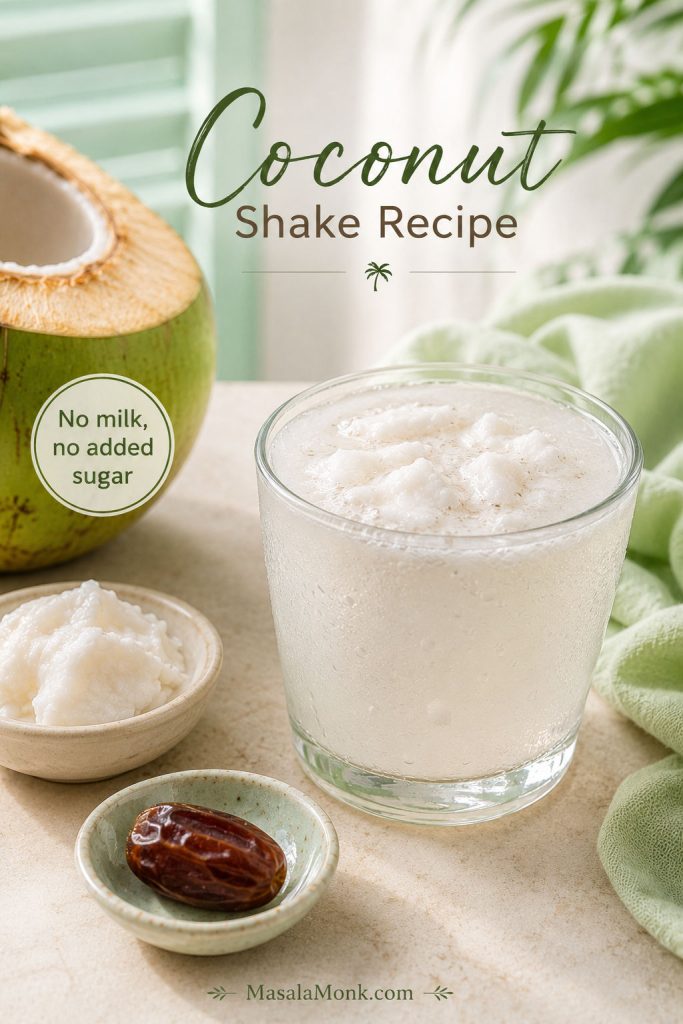
Light coconut shake made with coconut water, tender coconut malai, and an optional date, without milk or sugar.
This no-milk, no-added-sugar coconut shake works best when the coconut water is naturally sweet and the malai is soft enough to blend.
  • 1 cup tender coconut water, 240 ml / 8 fl oz
  • ¾–1 cup tender coconut flesh, about 80–120 g
  • 4–5 ice cubes, or use chilled coconut water instead
  • 1–2 soft dates, optional
  • Pinch of cardamom, optional

Blend the coconut water and tender coconut flesh until smooth. Add ice only if needed and pulse briefly. If the shake tastes flat, add one soft date or a tiny pinch of salt. Do not add sugar automatically; taste the coconut water first.

This version depends on the coconut more than any other. If the coconut water is sweet and the malai is soft, it tastes fresh and delicate. If the coconut is bland, add one date, a spoon of coconut cream, or a few frozen coconut-water cubes to give it more body without turning it into the rich ice-cream version.

Dairy-Free Version with Coconut Milk

For a vegan coconut shake, replace dairy milk with chilled coconut milk while keeping tender coconut at the center. Carton coconut milk keeps the drink lighter, canned coconut milk gives it more milkshake body, and coconut cream is the richest option, so treat it like a thickener rather than the main liquid.
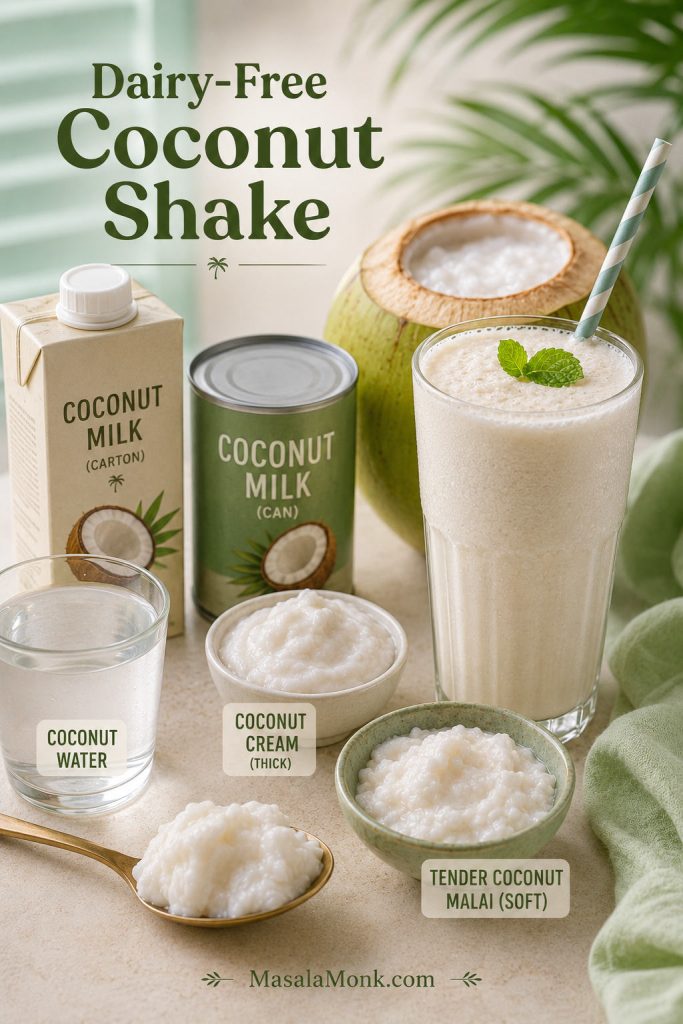
Dairy-free coconut shake with coconut milk options, coconut cream, tender coconut malai, and coconut water.
Carton coconut milk keeps a vegan coconut shake light, canned coconut milk adds body, and coconut cream makes it richer fast.
  • 1 cup tender coconut flesh/malai
  • ¾ cup tender coconut water
  • ¾ cup chilled coconut milk
  • 1–2 dates or 1 tbsp maple syrup, optional
  • ½ frozen banana or 2 tbsp coconut cream, optional for thickness
  • Pinch of cardamom or ½ tsp vanilla

Start with a smaller amount if you use canned coconut milk, then thin the shake with coconut water. Carton coconut milk may need frozen banana, extra malai, or a little coconut cream to get a thicker result. Keep tasting as you adjust; the drink should still feel fresh and coconut-forward, not like a heavy smoothie that has lost the tender coconut flavor.

The Lighter Coconut Water Version

A coconut water shake is lighter than a coconut milkshake, but it is not the lesser version. Make it when the coconut water is sweet, the malai is soft, and you want the drink to stay refreshing instead of rich.
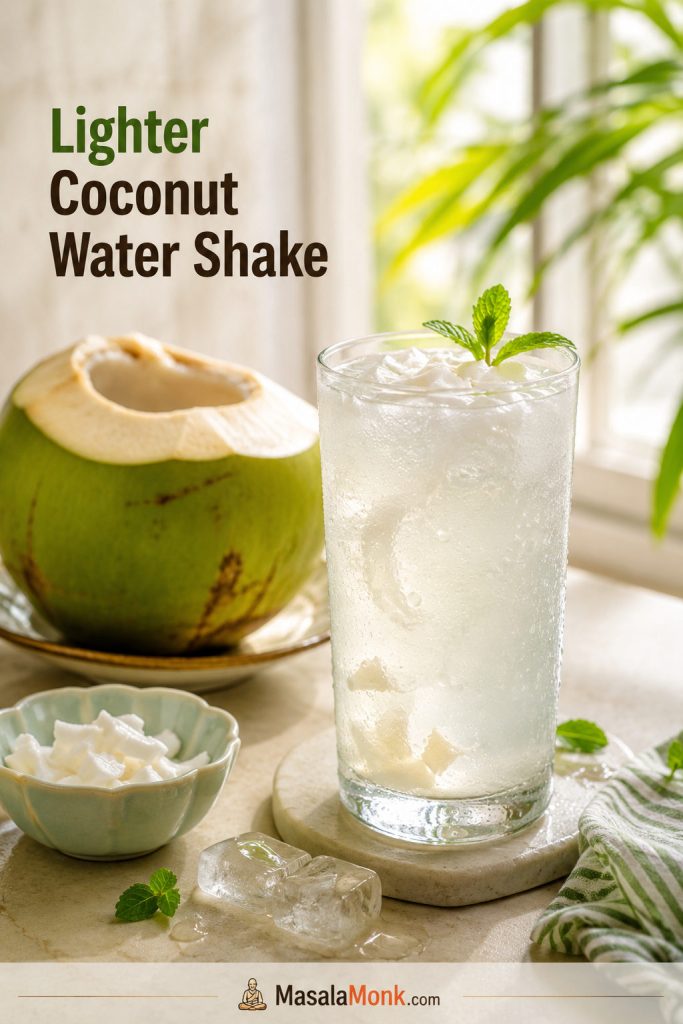
Lighter coconut water shake in a tall chilled glass with tender coconut malai and an opened young coconut.
The lighter coconut water version is not a compromise; instead, it lets sweet coconut water and soft malai taste clean, cold, and easy to finish.
  • 1 cup coconut water, 240 ml / 8 fl oz
  • ½–¾ cup tender coconut flesh
  • 1 tbsp cream, milk, coconut milk, or yoghurt, optional for body
  • 1 tsp sugar, honey, or date syrup, optional
  • Ice only if needed

Blend the coconut flesh with coconut water until smooth. Add the optional creamy ingredient only if you want more body. This lighter version also works well with mango, pineapple, berries, or banana when you want a fruitier coconut-water drink. For more ideas in that direction, see our coconut water smoothie and health drink ideas.

Once you have chosen the version you want, the next question is usually quantity. This coconut shake recipe is flexible because a small glass needs a different balance from a 500 ml bottle, especially when ice cream or frozen milk is involved.

Measurements: 250 ml, 16 oz, and 500 ml

Most coconut shake recipes give only “1 glass” or “2 servings,” but glass size changes everything. A small Indian glass, a tall café cup, and a 500 ml bottle do not need the same amount of coconut water, milk, or thickener. The numbers below are approximate blends for the final serving size.
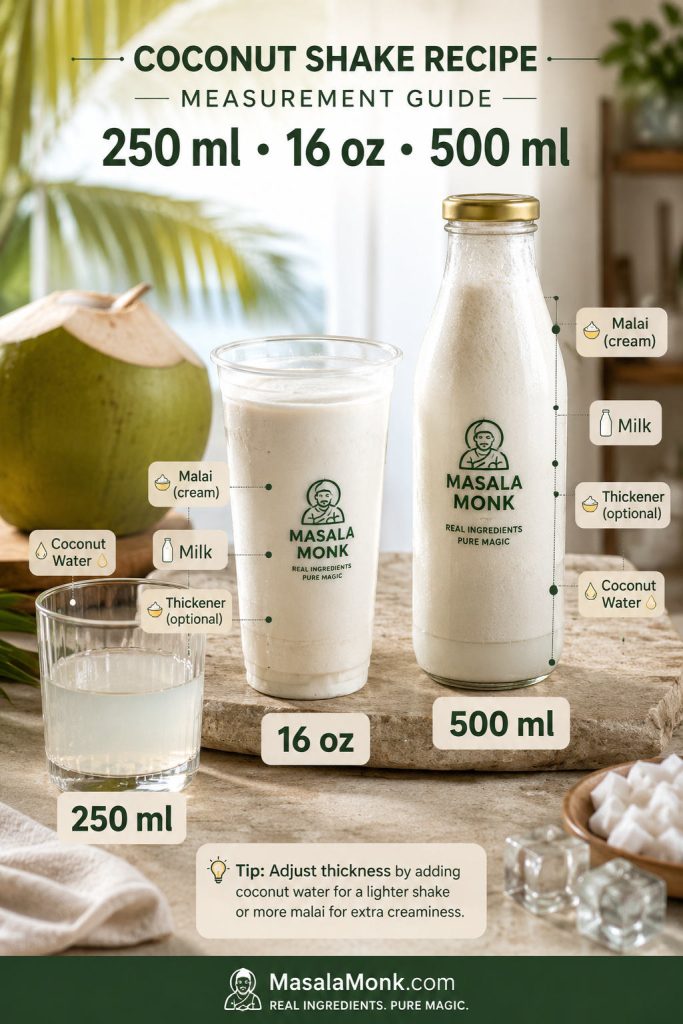
Measurement guide showing coconut shake portions for a 250 ml glass, 16 oz cup, and 500 ml bottle.
A 250 ml glass, 16 oz cup, and 500 ml bottle need different ratios. Malai, milk, ice cream, foam, and headspace all change the final pour.

If you are using ice cream, start with the lower end of the coconut water and milk range so the glass does not overflow.

Target servingCoconut waterTender coconut fleshMilk or coconut milkIce cream or thickener
250 ml glass70–90 ml35–50 g60–80 ml½ scoop ice cream or 2–3 tbsp frozen milk
16 oz / 475 ml cup140–180 ml70–90 g120–140 ml1–1½ scoops or ⅓–½ cup frozen milk
500 ml bottle160–200 ml80–100 g120–150 ml1½ scoops or ½ cup frozen milk
2 tall glasses / 600–750 ml180–240 ml80–120 g180–240 ml1½–2 scoops or ½ cup frozen milk

How to Adjust the Ratios

For a 500 ml bottle: Leave a little headspace if using ice cream or frozen milk. The shake can foam slightly after blending and may thicken as it sits. Shake the bottle before drinking.

Do not worry if your coconut does not match the table perfectly. Tender coconuts are not standardized ingredients; some give lots of water, some give thick malai, and some barely give enough flesh for one small glass. Blended drinks do not measure like water either: malai, ice cream, frozen milk, and foam can all change the final volume.

Treat these as starting ratios, then adjust by texture: malai or frozen milk for thickness, coconut water for loosening.
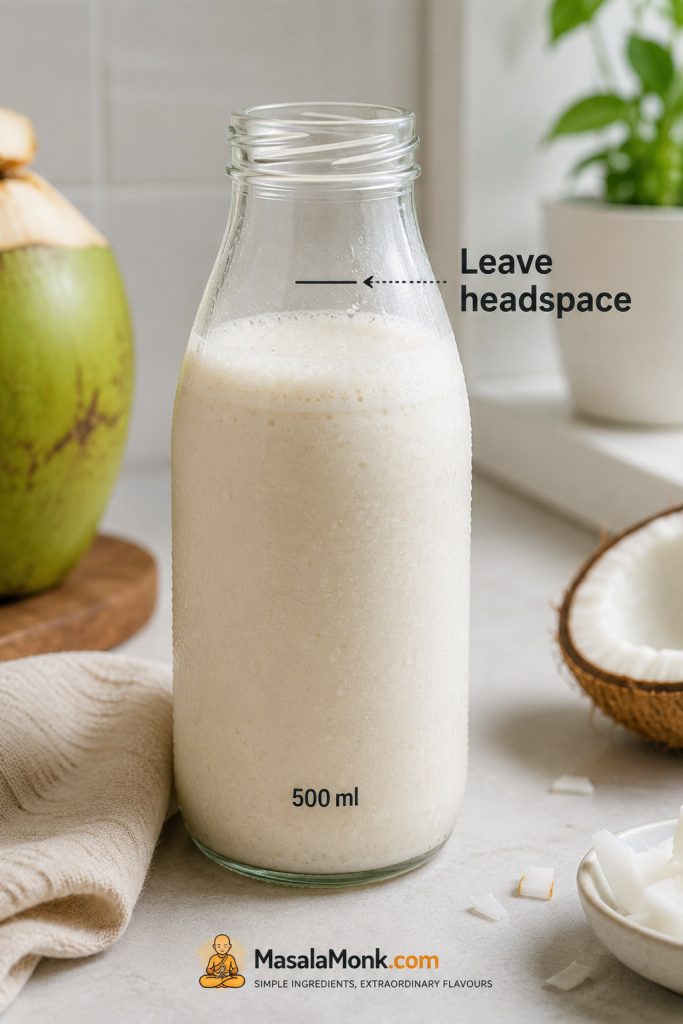
Clear 500 ml bottle of coconut shake filled below the shoulder with visible headspace and condensation.
For a 500 ml coconut shake bottle, stop below the shoulder so there is room for foam, shaking, and slight thickening as it sits.

Once you know your serving size, the next thing that affects texture is the blender itself. A powerful blender can make even firmer coconut smoother, while a small portable blender needs softer malai, smaller pieces, and more liquid to move properly. After scaling, check the texture ladder so the larger bottle does not turn watery or too heavy.

Equipment: Blender, Mixer-Grinder, or Portable Blender

You do not need special equipment, but the blender does affect texture. A small blender can still make a good coconut shake, but it needs a little kindness: smaller malai pieces, liquid first, and no overpacking.
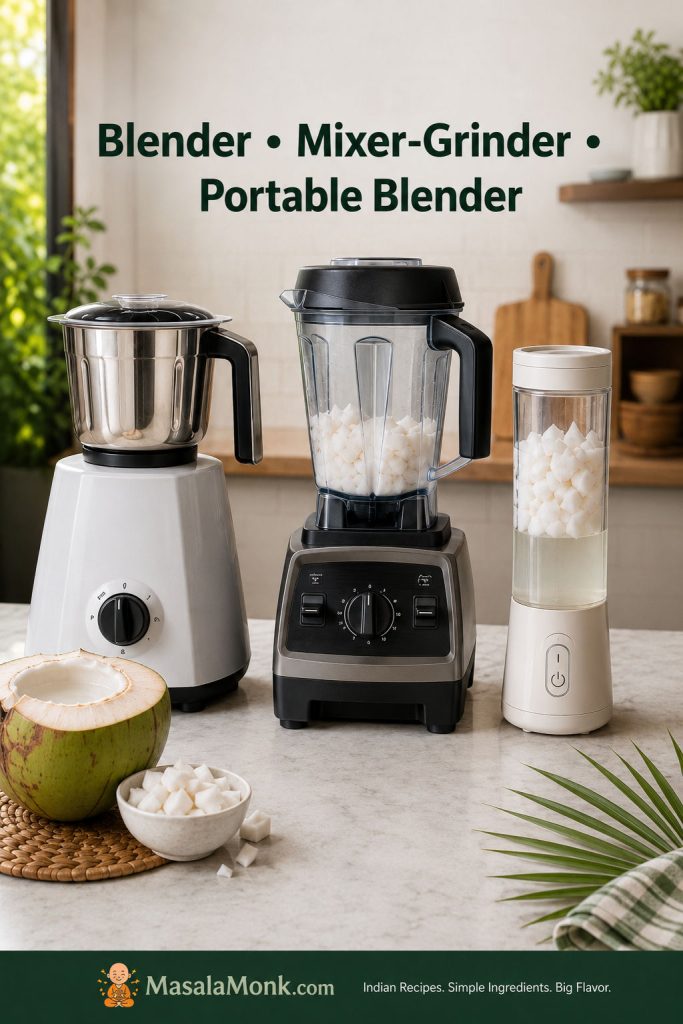
Mixer-grinder, high-speed blender, and portable blender set up for coconut shake with chopped malai and coconut water.
A mixer-grinder, blender, or portable blender can all work; however, smaller jars need liquid first so the malai can move.
  • Indian mixer-grinder: good for the everyday home version. Chop the malai first and blend it with coconut water before adding milk.
  • High-speed blender: gives the smoothest texture, especially if the coconut is slightly firmer or the shake is thick.
  • Portable blender: works for a small 300–500 ml shake if you add liquid first, then chopped malai, then ice or frozen milk. Do not pack the jar tightly.
  • Fine strainer: useful only if mature coconut makes the drink gritty. If you are using soft tender coconut, a little pulp is usually pleasant.

If the blades spin but the malai is not moving, the jar needs more liquid, not more blending time. Stop, shake the jar gently, add a splash more coconut water, and blend again. If your blender is small, make the shake in two short blends instead of forcing everything into one jar.

How to Make Coconut Shake Thick and Creamy

Thickness should come from coconut, milk, frozen milk, or ice cream — not from a blender full of plain ice. Use this as a texture ladder and stop when the shake matches the glass you want.
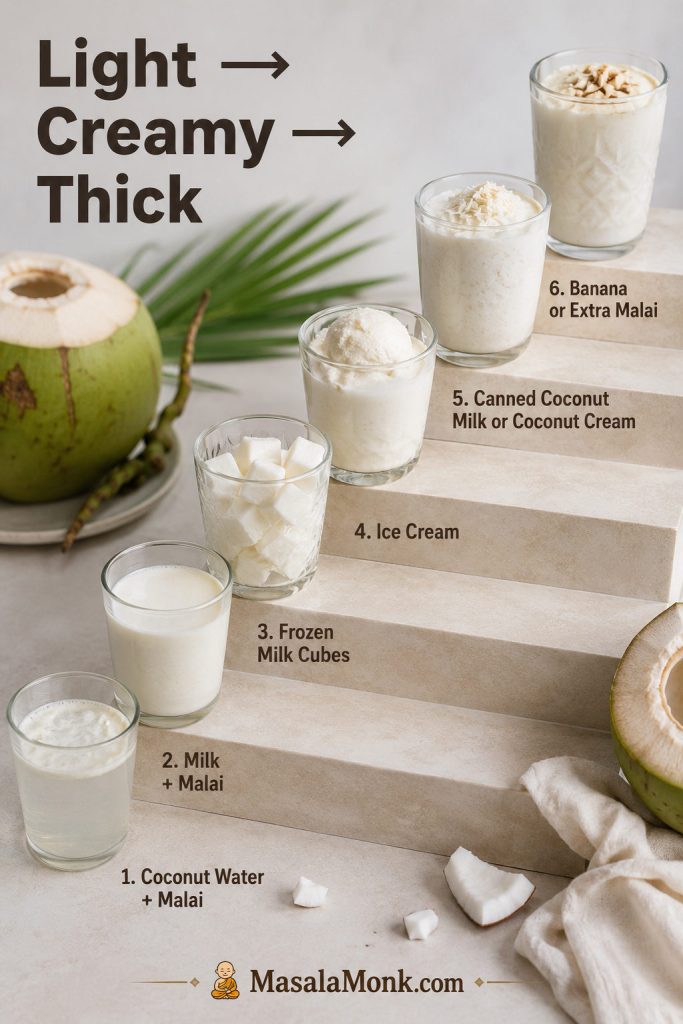
Texture ladder showing coconut shake styles from light coconut water to thicker milk, ice cream, coconut cream, and banana versions.
Thickness should come from malai, frozen milk, coconut milk, ice cream, or banana—not from filling the blender with plain ice.
Texture wantedBest baseWhat it tastes like
Light and freshCoconut water + soft malaiClean, cold, coconut-first
Creamy homemadeMilk + malaiSmooth and gentle, not too rich
Thick without ice creamFrozen milk cubesCold and full without dessert sweetness
Dessert-styleVanilla ice creamRicher, sweeter, café-like
Vegan thickCanned coconut milk or a spoon of coconut creamCreamy and dairy-free
Smoothie-likeFrozen banana or extra malaiThicker, softer, more filling

Texture check: before serving, compare the shake with what you wanted: light, creamy, thick, or dessert-style.
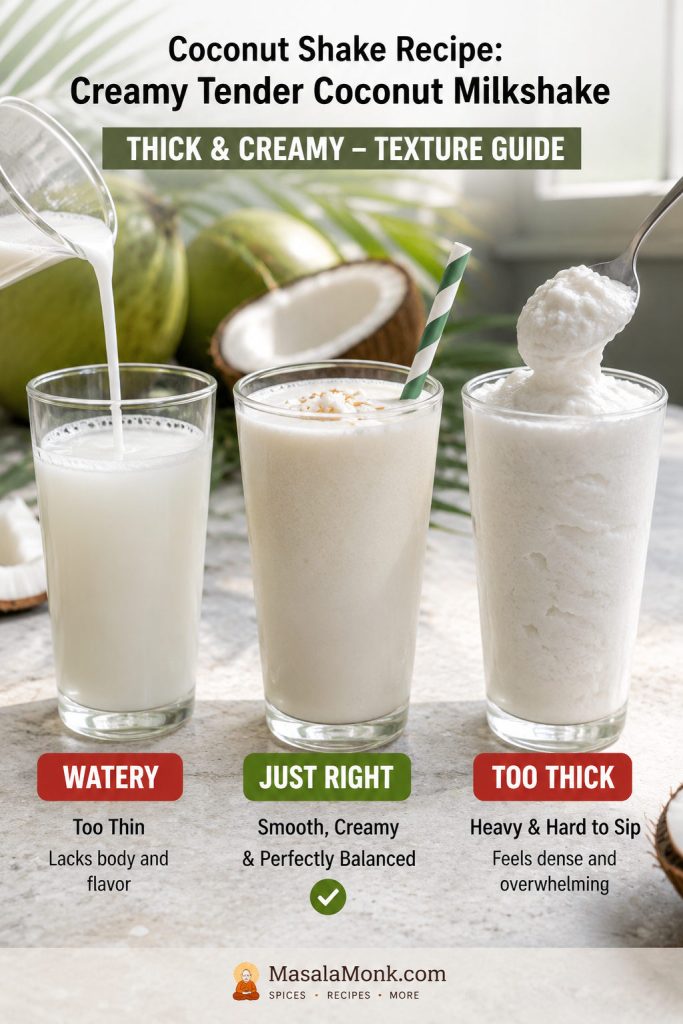
Three coconut shake glasses showing watery, just-right creamy, and too-thick textures.
A good coconut shake should pour easily, look creamy, and still taste like tender coconut; when it looks watery or heavy, adjust before serving.

If your homemade shake never tastes like the one from a juice shop, the answer is usually not more sugar. The shop-style glass is colder, slightly thicker, and a little pulpy. Chill the liquids, keep a spoonful of tiny malai bits for the end, and avoid blending the final shake until it turns warm.

After you make the plain coconut version once, variations become much easier. You will know how thick the base should feel, so fruit, protein powder, or extra flavorings become adjustments rather than guesses.

Flavor Variations

Once you understand the base, variations stop feeling random. Keep the coconut in charge, then add only enough fruit, spice, protein, or extra creaminess to change the mood of the glass.
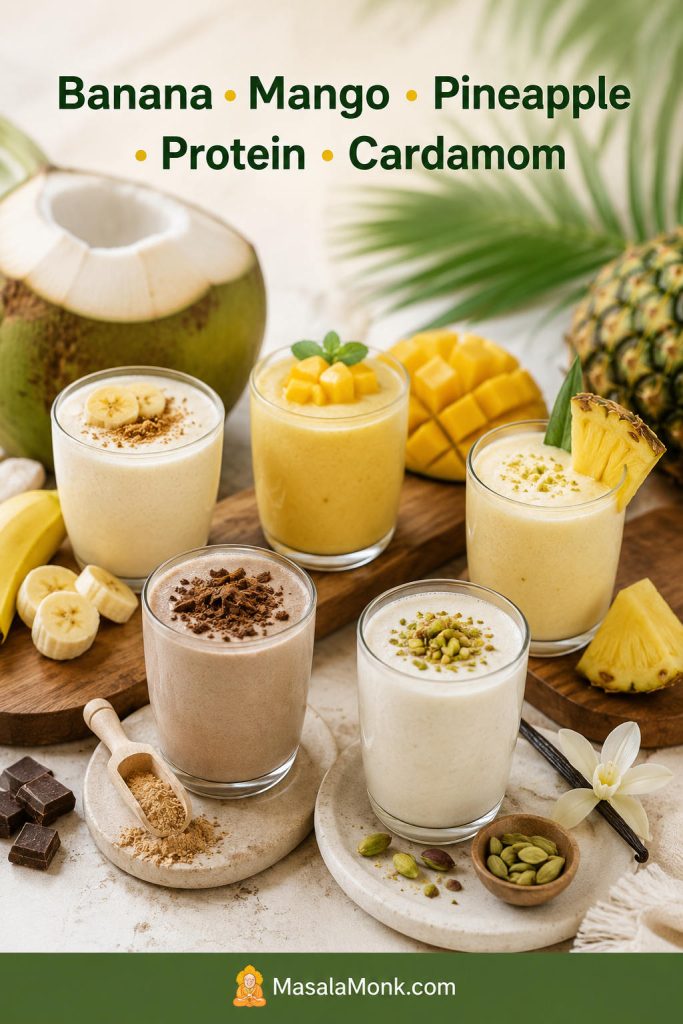
Flavor variation board with coconut shakes for banana, mango, pineapple, protein, and cardamom.
Once the base is balanced, banana, mango, pineapple, protein powder, cardamom, or vanilla can change the mood without hiding the coconut.

Banana Coconut Shake

For a thicker banana version, blend in ½ frozen banana. It adds natural sweetness and a soft smoothie-like texture, so start with little or no added sugar. This works especially well in no-ice-cream and vegan coconut shakes.

Mango Coconut Shake

Mango makes the shake sweeter, thicker, and more seasonal. Use ½ cup mango pulp or chopped ripe mango, then taste before adding sugar. If you want a classic Indian mango drink without the coconut angle, see our mango shake recipe.

Pineapple Coconut Shake

Pineapple changes the mood completely. Blend in ½ cup frozen pineapple for a colder, brighter, tropical version, especially if you are using coconut milk instead of dairy milk. For more pineapple-coconut inspiration, our piña colada drinks guide has classic, frozen, and virgin-style ideas.

Protein Coconut Shake

For a higher-protein version, blend in 1 scoop vanilla protein powder and add 2–4 tbsp extra coconut water or milk if the shake becomes too thick. Keep the flavor simple; chocolate or heavily flavored powders can easily overpower the tender coconut.

Cardamom, Vanilla, and Flavor Notes

Cardamom gives coconut shake a soft Indian milkshake flavor, especially with pistachios or almonds. Vanilla makes the drink taste more café-style, especially when you use vanilla ice cream. Use either lightly; the coconut should still be the first thing you notice.

Café-Style or Mr Coconut-Inspired Coconut Shake

For a café-style or Mr Coconut-inspired coconut shake, do not make it perfectly smooth or overly milky. The charm is cold coconut water, soft malai, a little vanilla richness, and tiny coconut bits that remind you it came from a real tender coconut.
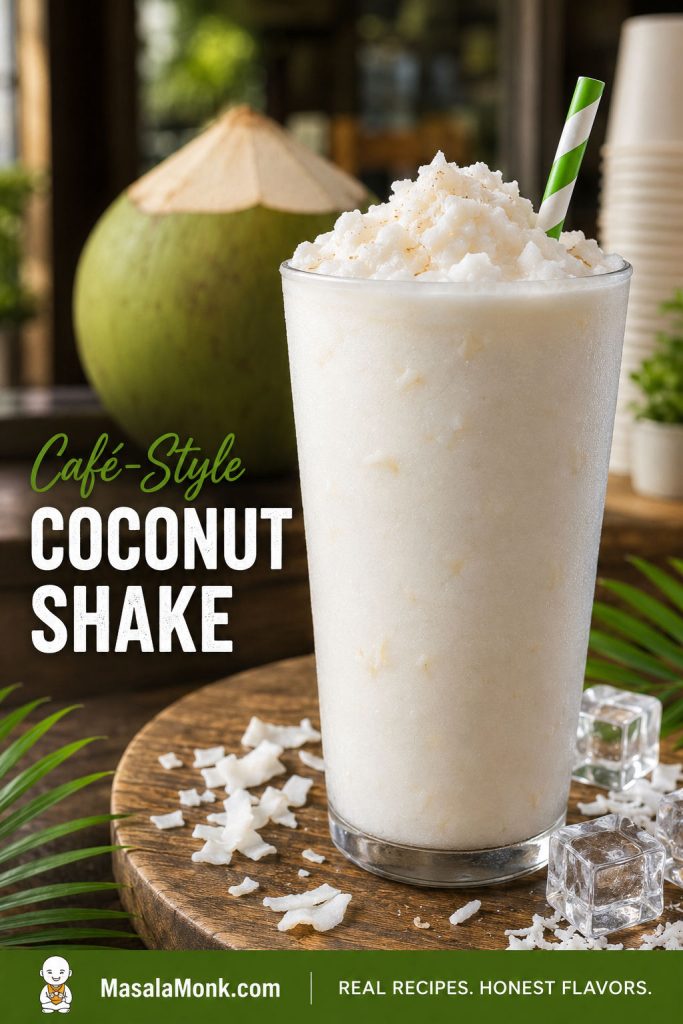
Café-style coconut shake in a tall chilled glass with icy texture, straw, froth, and tiny coconut bits.
A café-style coconut shake should feel colder, slightly pulpy, and more indulgent while still letting tender coconut stay noticeable.

If you are chasing the shop-style version, do not make it too polite. It should be colder, a little sweeter, and slightly pulpy, with more emphasis on cold refreshment than dairy creaminess.

To make one café-style glass, blend ¾ cup coconut water, ½ cup tender coconut malai, 1–1½ scoops vanilla ice cream, and 4–5 ice cubes. Blend until mostly smooth, then stir in 1 tablespoon tiny coconut bits for texture. The trick is not to make it perfectly smooth; those little coconut bits make each sip taste fresh instead of flat.

Thai-Style Coconut Shake

A Thai-style coconut shake is usually icier and sweeter than the classic tender coconut milkshake. Use coconut water, coconut milk, ice, sugar syrup, and a spoon of coconut cream if you want it richer. Serve it very cold so it stays refreshing rather than heavy.
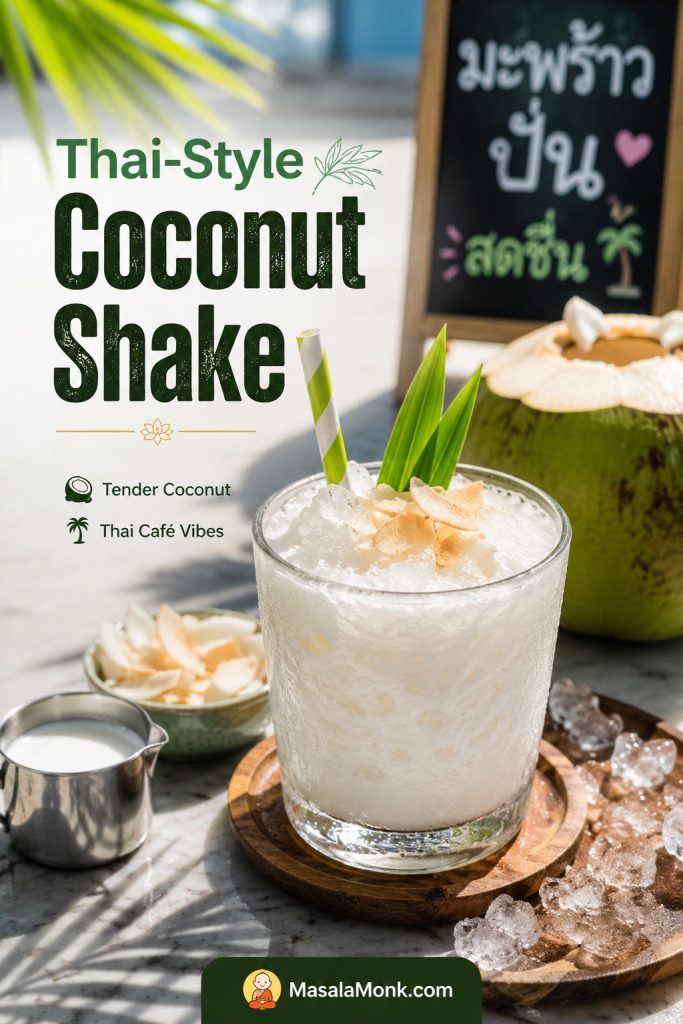
Thai-style coconut shake in a shorter icy glass with coconut milk, coconut cream, and tropical café styling.
Thai-style coconut shake is usually icier and sweeter, so serve it very cold and use coconut cream carefully to avoid making it too heavy.

Is Coconut Shake Light or Dessert-Like?

The lighter version is not the punishment version. On a very hot day, coconut water and soft malai can taste better than a heavy ice-cream shake because the coconut stays clean, cold, and easy to finish. If the coconut itself is sweet and fragrant, the lighter glass may taste more coconut-forward than the rich one.

For dessert-style richness, add milk, ice cream, cream, condensed milk, or nuts. For a lighter summer glass, stay closer to coconut water, malai, and just enough milk or coconut milk to round the texture.
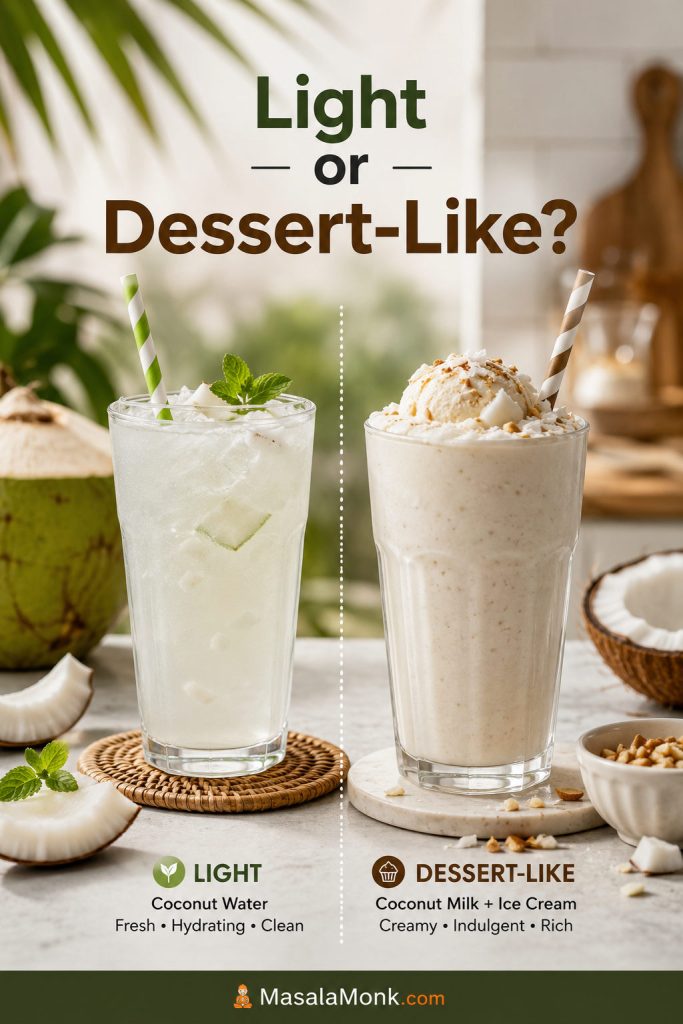
Comparison of a light coconut water shake and a richer dessert-style coconut milk and ice cream shake.
The lighter version is not the punishment version; meanwhile, the dessert-style shake is best when you want a richer, creamier glass.

How to Store Coconut Shake Without Losing the Fresh Taste

This is not a make-ahead milkshake. It rewards you for blending it right before serving, when it is still cold, creamy, and fragrant. Fresh tender coconut drinks lose their clean flavor quickly, and milkshake-style versions can separate as they sit. When you must hold it, keep it covered in the fridge and drink it the same day.
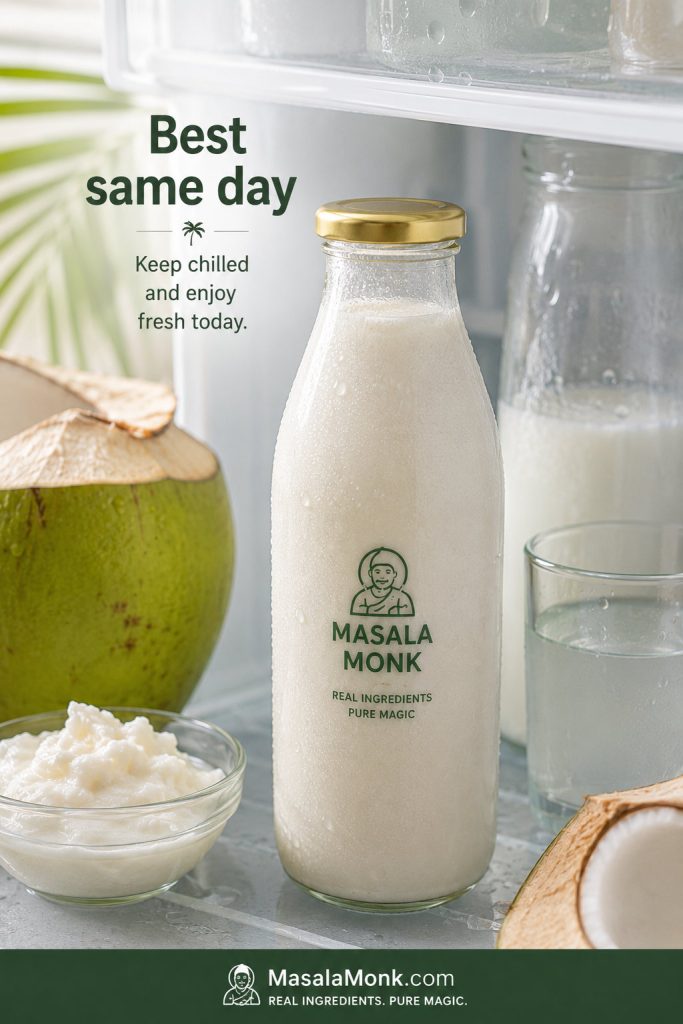
Covered bottle of coconut shake kept chilled with condensation, coconut water, malai, and tender coconut nearby.
Coconut shake is best blended fresh; when you need to hold it, keep it covered and cold, then drink it the same day for the cleanest flavor.

Discard the shake if it smells sour, stale, or fermented instead of trying to fix it with sugar or flavoring.

  • Keep the blended shake covered and cold until serving.
  • Refrigerate it briefly in a covered bottle or jar if needed.
  • Shake or blend again before serving if it separates.
  • Avoid leaving milk, ice cream, or coconut milk versions out at room temperature.
  • Freeze milk cubes or coconut water cubes instead of freezing the finished shake.

For prep-ahead ease, chill the coconut water, milk, and glasses. You can also freeze milk cubes ahead of time for the no-ice-cream version. Save the actual blending for the moment you want the shake to taste fresh.

Troubleshooting

Most problems come from warm ingredients, too much ice, mature coconut, or sweetness added too early. Use the table below to fix the glass you already made and improve the next batch.
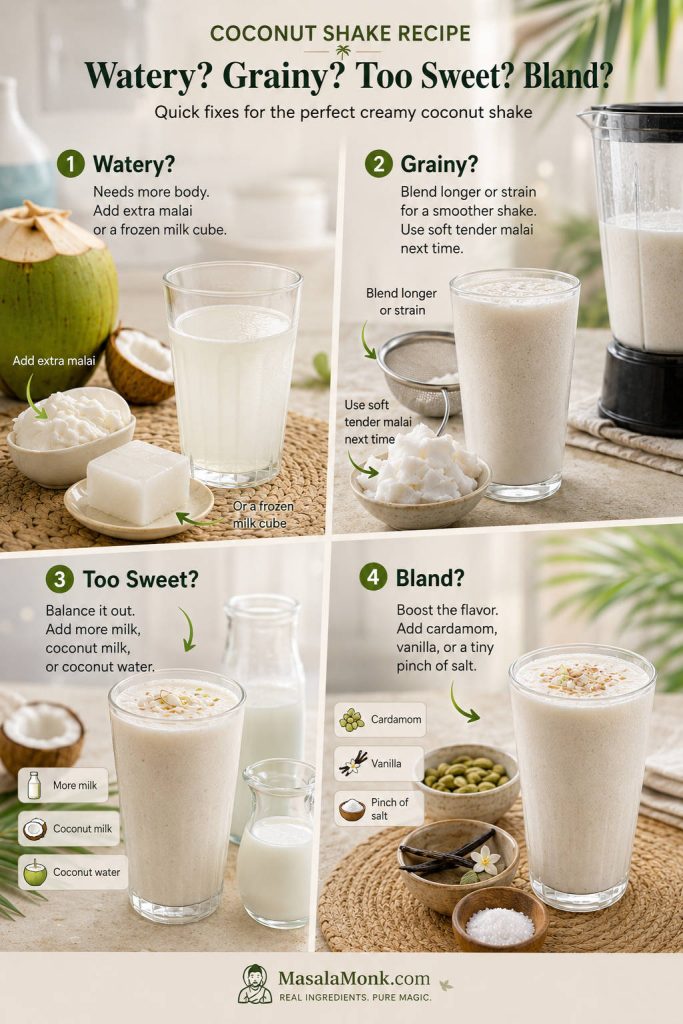
Troubleshooting guide for watery, grainy, too sweet, and bland coconut shake with visible fix ingredients.
Watery, grainy, too-sweet, and bland coconut shakes usually need one targeted correction. Add body, blend or strain, dilute, or brighten the flavor.

A coconut shake that tastes like sweet milk usually has too much milk or ice cream for the amount of malai. Thin texture, even after adding ice, means the problem is not coldness; the drink needs body from malai, frozen milk, ice cream, banana, or coconut cream. For dull flavor, a tiny pinch of salt can wake up the coconut without making the shake taste salty.

ProblemWhy it happenedFix nowFix next time
Watery shakeToo much coconut water or iceAdd ice cream, frozen milk, banana, or extra malaiChill ingredients and use less ice
Grainy shakeMature coconut or under-blendingBlend longer or strainUse soft tender coconut malai
Too sweetIce cream + sugar + sweet coconut waterAdd milk or coconut milkTaste before adding sugar
BlandWeak coconut, too much milk, no aromaAdd cardamom, vanilla, or a tiny pinch of saltUse fresh coconut water and less milk
Too thickToo much ice cream or frozen milkAdd coconut water 1–2 tbsp at a timeUse less thickener
SeparatedCoconut fat and liquid separatingReblend brieflyServe soon after blending
Warm or thinOverblending or warm ingredientsAdd a frozen milk cube and pulseChill everything first

Once you start adjusting the shake to your coconut, blender, and glass size, these are the questions that usually come up.

FAQs

What is the difference between coconut shake and coconut smoothie?

If the drink is built around tender coconut malai and coconut water, think of it as a coconut shake. The coconut should be the main flavor, not just the liquid in the blender. If coconut is mainly the base for banana, berries, mango, protein powder, or greens, the drink is closer to a coconut smoothie.

Which coconut is best for coconut shake?

A tender coconut with soft, spoonable malai and sweet coconut water is best. If the flesh is firm and chewy, the shake can still work, but you may need to chop it small, blend longer, and strain if the texture turns gritty.

Do I need ice cream for coconut shake?

No. Ice cream gives the fastest café-style thickness, but frozen milk cubes are the closest homemade substitute. They make the shake cold and creamy without watering it down or making it taste too much like dessert.

How do I make coconut shake without milk?

Use coconut water as the main liquid and tender coconut flesh for body. If you still want creaminess, add chilled coconut milk or a small spoon of coconut cream. If the coconut water is not naturally sweet, one soft date is usually enough.

Why did my coconut shake become watery?

The usual reason is too much ice or too much coconut water for the amount of malai. To fix the glass you already made, add more tender coconut flesh, frozen milk, a scoop of ice cream, coconut cream, or half a frozen banana.

Should coconut shake be strained?

Usually, no. Soft tender coconut malai blends into a pleasant, slightly pulpy drink. Strain only if you used mature coconut or the shake feels gritty. If you like café-style texture, keep a spoonful of tiny malai bits aside and stir them in after blending.

How much coconut shake does one tender coconut make?

It depends on the size of the coconut and how much soft malai it has. A coconut with plenty of malai can usually make 1 large glass or 2 smaller glasses when blended with its coconut water and some milk. If it has mostly water and very little malai, the shake will be lighter unless you add frozen milk, ice cream, banana, or coconut milk.

What can I do with leftover tender coconut malai?

Coconut shake is one of the easiest ways to use leftover tender coconut malai. Blend it with chilled coconut water, milk or coconut milk, and a little sweetener only if needed. If you also have extra coconut water, these creative coconut water recipes are useful for using it beyond a shake. If the malai still smells fresh and sweet, this shake is usually the fastest and best use for it.

How soon should I drink coconut shake after blending?

As soon as you can. The first 10–15 minutes are when the shake tastes coldest, freshest, and creamiest. After that, it can separate or lose some of the tender coconut aroma. If you need to hold it, keep it covered in the fridge and shake or reblend before serving.

Final Tips for the Best Coconut Shake
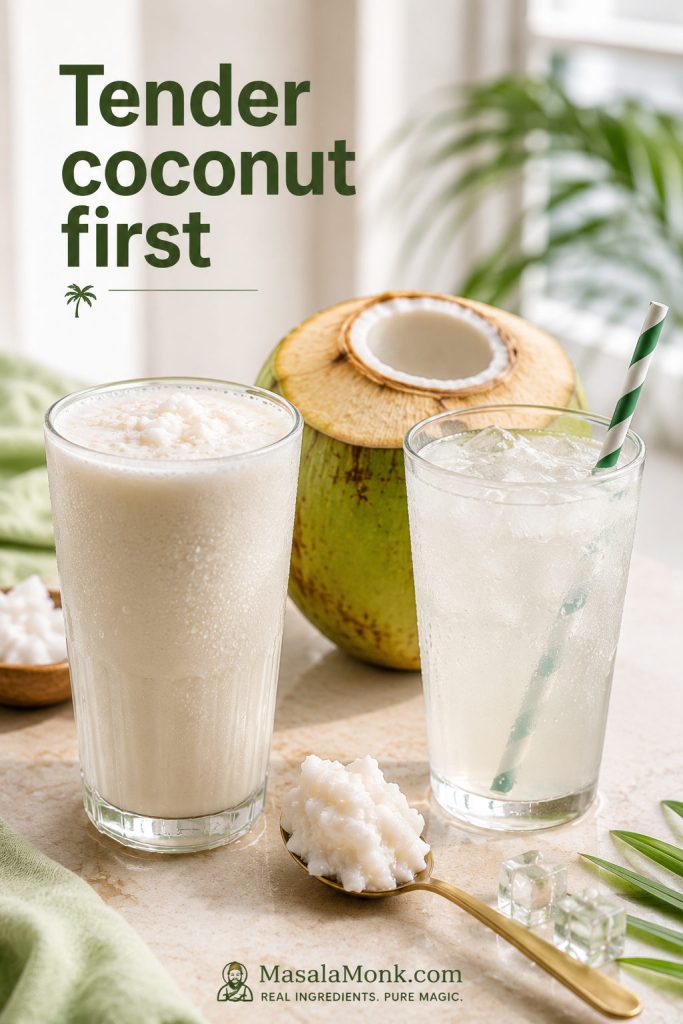
Final serving of one creamy coconut shake and one lighter coconut water shake with tender coconut and malai.
The best coconut shake is not always the thickest or sweetest; ultimately, the winning glass is the one that still tastes like tender coconut.

In this coconut shake recipe, tender coconut should lead the flavor. Blend the coconut flesh with coconut water first, then add the creamy ingredients. Ice should only finish the chill, not carry the whole texture.

Make it once with the classic balance, then adjust from there. More coconut water makes it lighter, frozen milk makes it thicker without ice cream, coconut milk makes it dairy-free, and ice cream makes it dessert-like. Still, the real test never changes: the best coconut shake is not the thickest one or the sweetest one. It is the glass that still tastes like tender coconut after you add everything else.
Back to top

Posted on 9 Comments

Piña Colada: Classic Recipe + 10 Variations (Virgin & On the Rocks)

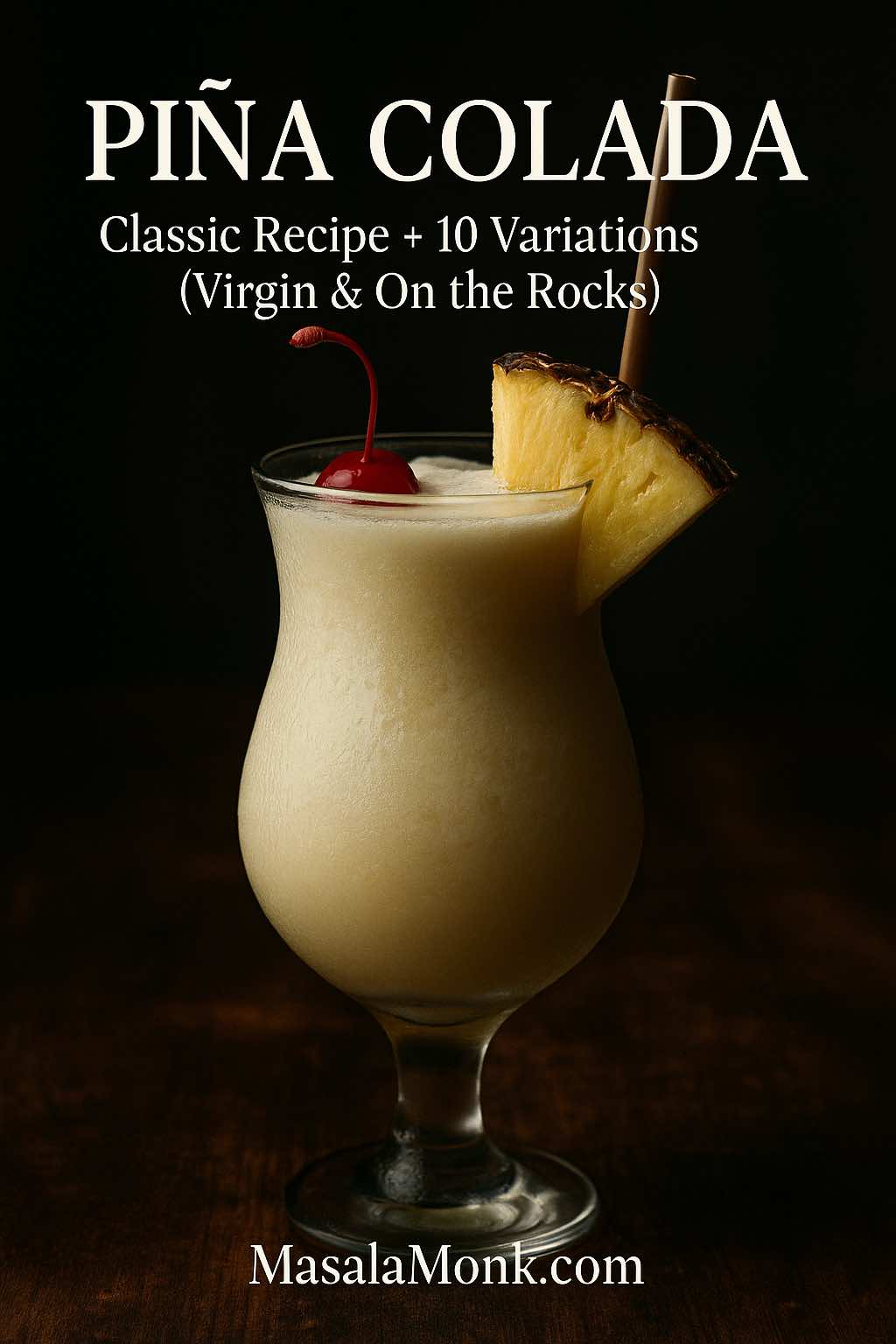
Moody piña colada in a hurricane glass with pineapple and cherry—classic recipe and variations by MasalaMonk.

Some drinks whisper “holiday,” yet the piña colada practically sings it. If you love that beach-in-a-glass feeling, you’re in the right place. First, we’ll lock in the frozen classic that tastes like sunshine. Next, we’ll switch to an easy piña colada on the rocks for no-blender nights. Then, because it’s fun to play, we’ll explore practical pina colada variations you can master in minutes—strawberry, mango, blue curaçao, coconut-rum, spiced-rum, vodka, tequila, skinny, keto-leaning, and frozen pineapple. Finally, since not every occasion calls for alcohol, we’ll craft a zero-proof version that’s indulgent without spirits.

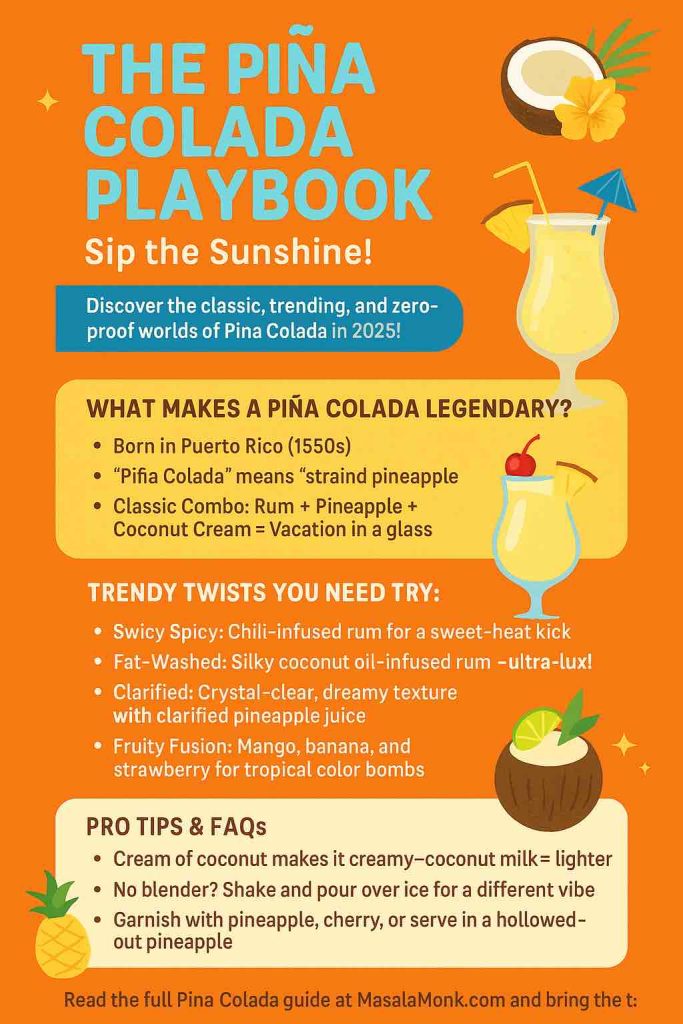
Before we blend, a tiny language detour helps. In Spanish, piña colada literally means “strained pineapple,” a nod to the pressed juice at the drink’s core — see Etymonline’s word history and the concise entry at Merriam-Webster. Meanwhile, let’s keep the focus on flavor and technique.

What does piña colada mean?
Piña colada means “strained pineapple.” Traditionally, it pairs pineapple with coconut and rum; however, you can easily make a virgin piña colada by skipping the rum and balancing sweetness with a little lime or a splash of coconut water.

Because stories matter almost as much as flavor, here’s the short origin postcard. Puerto Rico celebrates the piña colada as its national cocktail, and San Juan still debates where it was first poured. Many point to Ramón “Monchito” Marrero at the Caribe Hilton in the 1950s, while others mention competing claims across town. For a friendly primer, read Discover Puerto Rico’s guide, and for the hotel’s version of events, browse the Caribe Hilton history page.


Frozen vs. On the Rocks: choose your texture before you start

First, decide your vibe. Frozen is creamy, slushy, and a touch dessert-leaning—perfect for lingering afternoons or sunny patios. On the rocks, by contrast, is shaken hard with ice and served over fresh cubes; it’s quicker, brighter, and lets rum aromas peek through. As a result, many people pick frozen for weekends and rocks for weeknights.

If you often serve a crowd, prep a thick frozen base and, meanwhile, keep extra pineapple juice chilled. Then, when someone wants a lighter drink, shake a single serving with a splash of juice and strain it over ice for an instant piña colada on the rocks. If you prefer a visual of the shaken style, this walkthrough for a Piña Colada on the Rocks (Shaken) mirrors the method below.


Classic Piña Colada (Frozen)

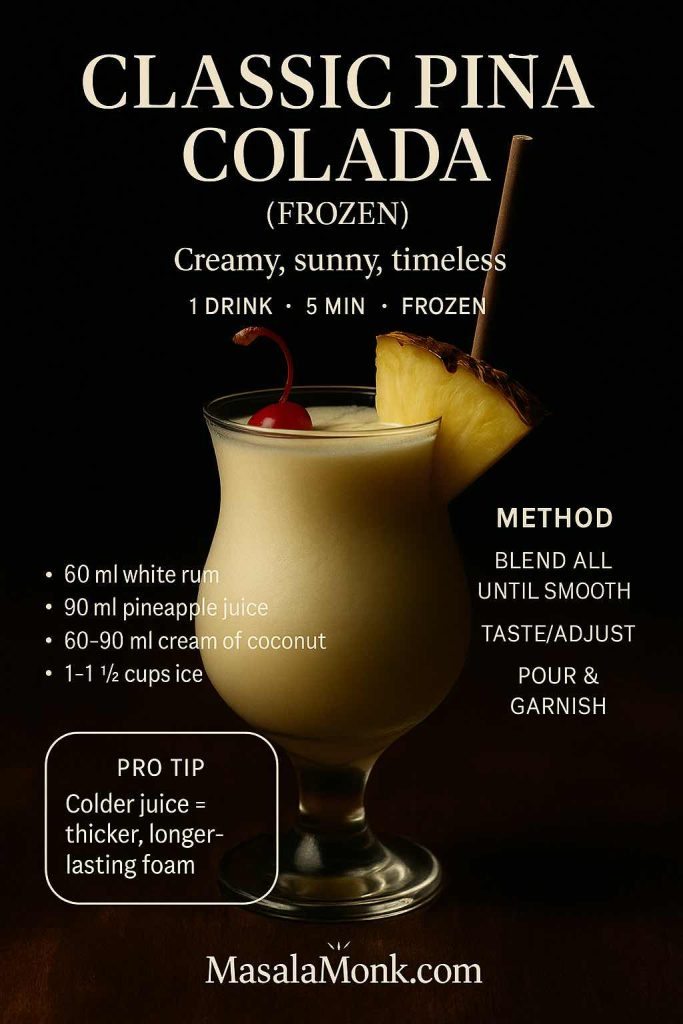
Why it works. Pineapple brings tang and perfume; cream of coconut adds velvety body and gentle sweetness; white rum lifts aromatics so the finish feels sunny rather than heavy. For proportions, the classic split of rum + pineapple + cream of coconut gives a balanced canvas; from there, adjust to your blender and your preferred sweetness.

Classic frozen piña colada recipe card in a hurricane glass with pineapple and cherry—MasalaMonk footer
Creamy, sunny, timeless. Use pre-chilled juice for thicker, longer-lasting foam and that luxe, dessert-leaning texture.

Ingredients (1 drink)

  • 60 ml white rum (¼ cup)
  • 90 ml pineapple juice (⅜ cup)
  • 60–90 ml cream of coconut (¼–⅜ cup), to taste
  • 1–1½ cups ice
  • Pineapple wedge and cherry, to garnish

Method

  1. Chill a tall glass; meanwhile, add rum, pineapple juice, and cream of coconut to the blender.
  2. Add ice and blend until smooth and pourable. If the blades stall, loosen with a small splash of juice.
  3. Taste and adjust—if it’s too thick, a little more juice helps; if sweetness lingers, a few drops of lime tidy the finish.
  4. Pour, garnish, and serve immediately for maximum frostiness.

Coconut note. Cream of coconut isn’t the same as coconut milk or unsweetened coconut cream. Because cream of coconut is sweetened and thicker, it creates that signature silky texture. If you choose coconut milk for a “skinny” profile, add a touch of simple syrup and expect a lighter body.

Quick upgrades. Keep pineapple juice cold; colder inputs blend better and hold foam longer. Use frozen pineapple in place of some ice for louder fruit with less dilution. If your blender hesitates, pulse first, then blend continuously; layering liquids before ice prevents cavitation.


Piña Colada on the Rocks (Quick Method)

If you want the flavor without the thickness, the shaken version is a weeknight hero. It preserves the tropical profile, trims the richness, and—because it’s fast—fits Tuesday just as well as Saturday.

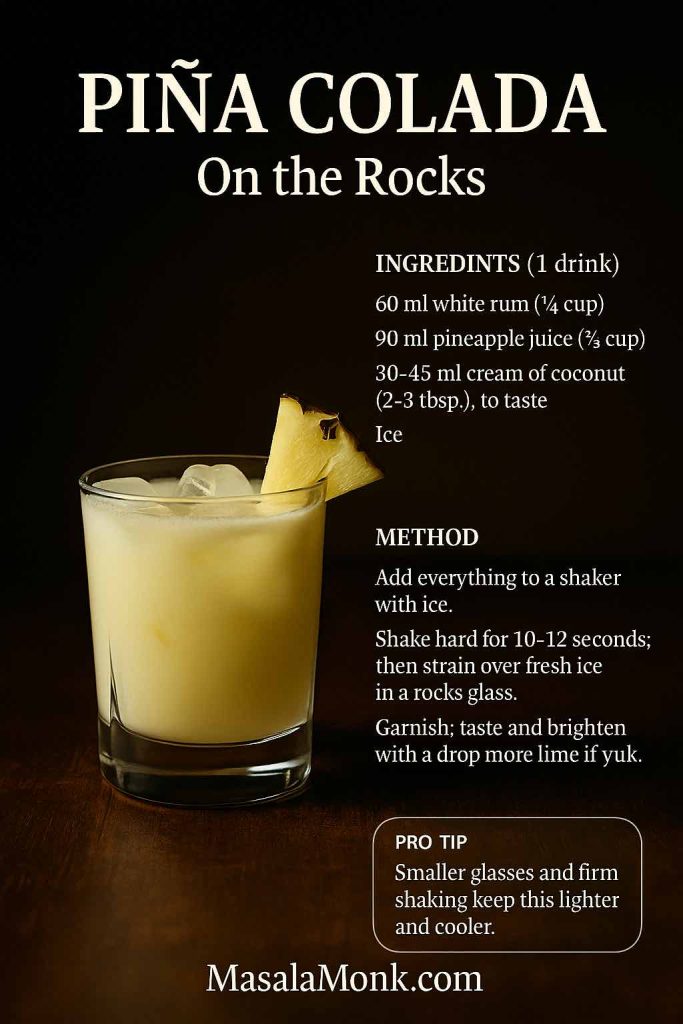
Piña Colada on the Rocks recipe card in moody portrait—rocks glass with pineapple wedge, MasalaMonk footer.
On-the-rocks keeps the colada bright: hard shake, fresh ice, compact glass. Perfect for quick weeknights without the blender.

Ingredients (1 drink)

  • 60 ml white rum (¼ cup)
  • 90 ml pineapple juice (⅜ cup)
  • 30–45 ml cream of coconut (2–3 tbsp), to taste
  • 10 ml fresh lime juice (2 tsp, optional)
  • Ice
  • Pineapple wedge or citrus peel, to garnish

Method

  1. Add everything to a shaker with ice.
  2. Shake hard for 10–12 seconds; then strain over fresh ice in a rocks glass.
  3. Garnish; taste and brighten with a drop more lime if you like.

Why you’ll love it. Shaking gently aerates and adds just enough dilution to feel refreshing, not heavy. Smaller glasses (180–240 ml / 6–8 oz) keep the drink cold and focused. Moreover, when you’re making rounds, you can pre-mix pineapple juice + cream of coconut in a bottle; then just add rum and shake to order.


Virgin Piña Colada (and Virgin Piña Colada on the Rocks)

Virgin piña colada meaning: a non-alcoholic piña colada that keeps pineapple and coconut while skipping rum. For a lighter texture, shake on the rocks and finish with lime.

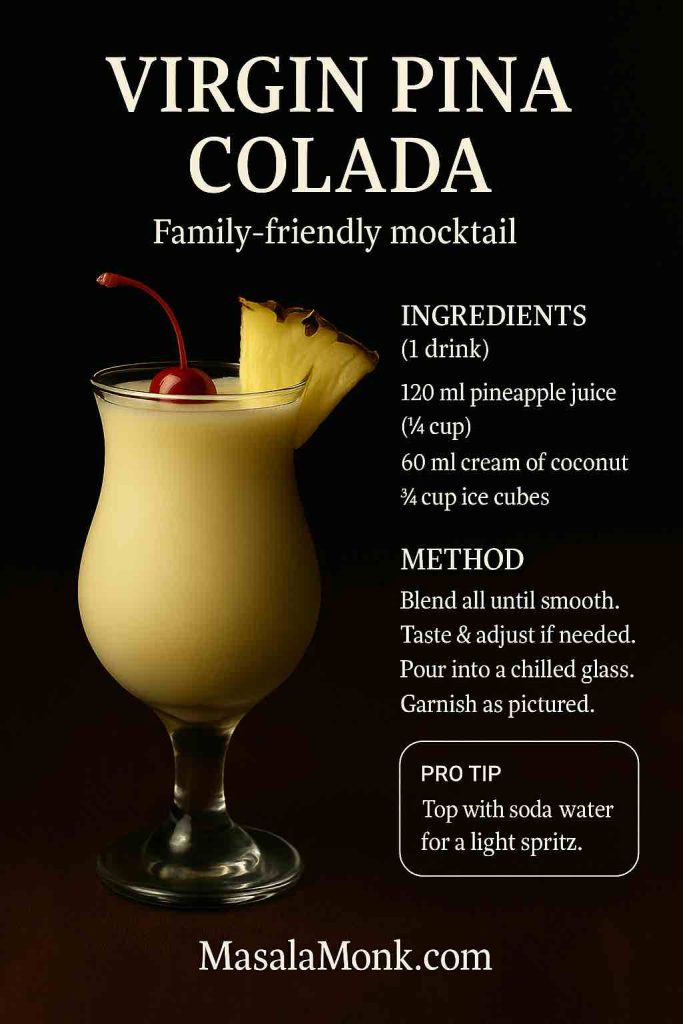
Virgin piña colada recipe card—non-alcoholic, moody portrait with MasalaMonk footer
Zero-proof, 100% tropical; balance sweetness with lime or a splash of chilled coconut water.

Ingredients (1 drink)

  • 120 ml pineapple juice (½ cup)
  • 45–60 ml cream of coconut (3–4 tbsp), to taste
  • ½–1 cup ice (for frozen) or a shaker of ice (for rocks)
  • Optional: 10–15 ml fresh lime (2–3 tsp) or 30–60 ml coconut water (2–4 tbsp)

Method

  • Frozen: add juice and cream of coconut to a blender; add ice; blend until smooth. Adjust with a splash of juice or coconut water if needed.
  • On the rocks: shake juice and cream of coconut with ice; strain over fresh ice. Add lime to taste.

Keep exploring (internal). For lighter, long drinks that echo these flavors, see Coconut Water Cocktails. If you enjoy mint and tang, try Pineapple Mojito Mocktails. For low-sugar days, browse Keto Mocktails.


How to build pina colada variations without a recipe

Because once you nail the base, it’s easy to improvise. First, keep the triangle of pineapple–coconut–spirit intact. Next, add an accent (fruit, spice, citrus, or liqueur). Then, adjust sweetness and texture in small steps. Finally, decide on frozen or rocks, and garnish with intention. With that in mind, here are ten reliable pina colada variations you can pour anytime.


Top 10 Pina Colada Variations

1) Strawberry Piña Colada (Lava-Flow: Fruity Pina Colada Variation)

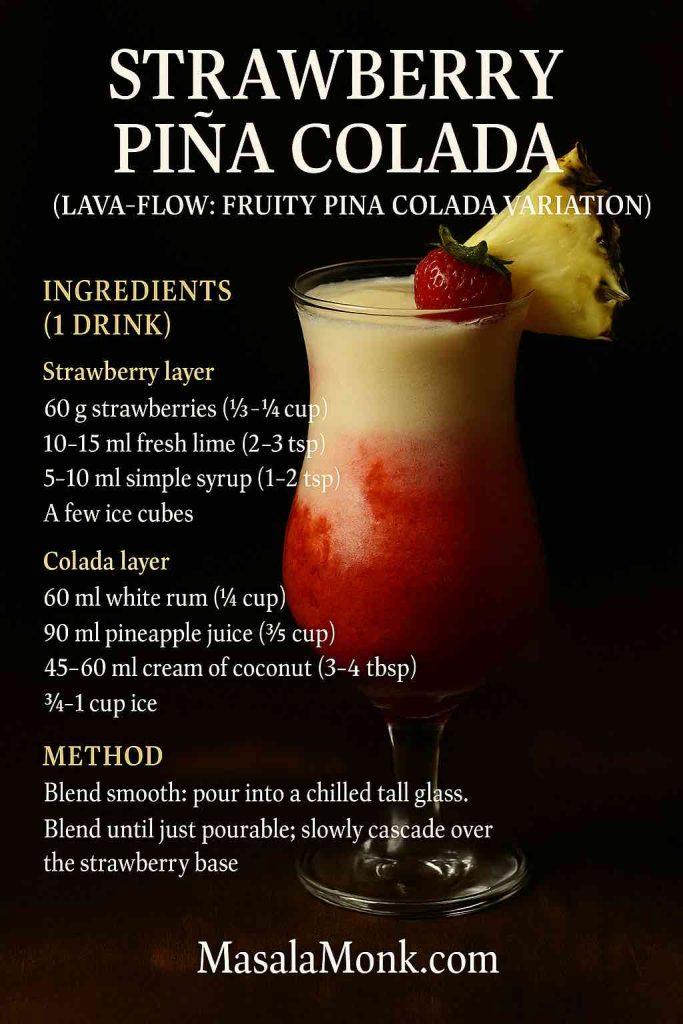
When you want playful drama, strawberry is the simplest path. First, blend a thick strawberry base; next, blend your colada until silky; then, slowly pour it over the red layer so the “lava” rises in ribbons. As a result, you get classic coconut-pineapple comfort lifted by bright berry zip. Finally, keep both layers fairly thick so they ripple instead of mixing.

Strawberry Lava-Flow piña colada layered recipe card—red strawberry base and creamy colada, MasalaMonk footer.
Playful drama, classic comfort: keep both layers thick so the red “lava” ribbons instead of mixing—instant showstopper.

Strawberry layer (1 drink)

  • 60 g strawberries (⅓–½ cup)
  • 10–15 ml fresh lime (2–3 tsp)
  • 5–10 ml simple syrup (1–2 tsp)
  • A few ice cubes
    Blend smooth; pour into a chilled tall glass.

Colada layer

  • 60 ml white rum (¼ cup)
  • 90 ml pineapple juice (⅜ cup)
  • 45–60 ml cream of coconut (3–4 tbsp)
  • ¾–1 cup ice
    Blend until just pourable; slowly cascade over the strawberry base.

Pro tip. If berries are peak-sweet, reduce or skip syrup; conversely, if they’re tart, add an extra teaspoon.


2) Mango Colada (Tropical Pina Colada Variation)

Mango slides in silkily and, meanwhile, softens acidity. Next, use ripe fruit or a quality purée; if the texture feels dense, loosen with a splash of pineapple juice. Finally, a tiny pinch of salt heightens the mango’s aroma without reading “salty,” and a teaspoon of lime adds sparkle.

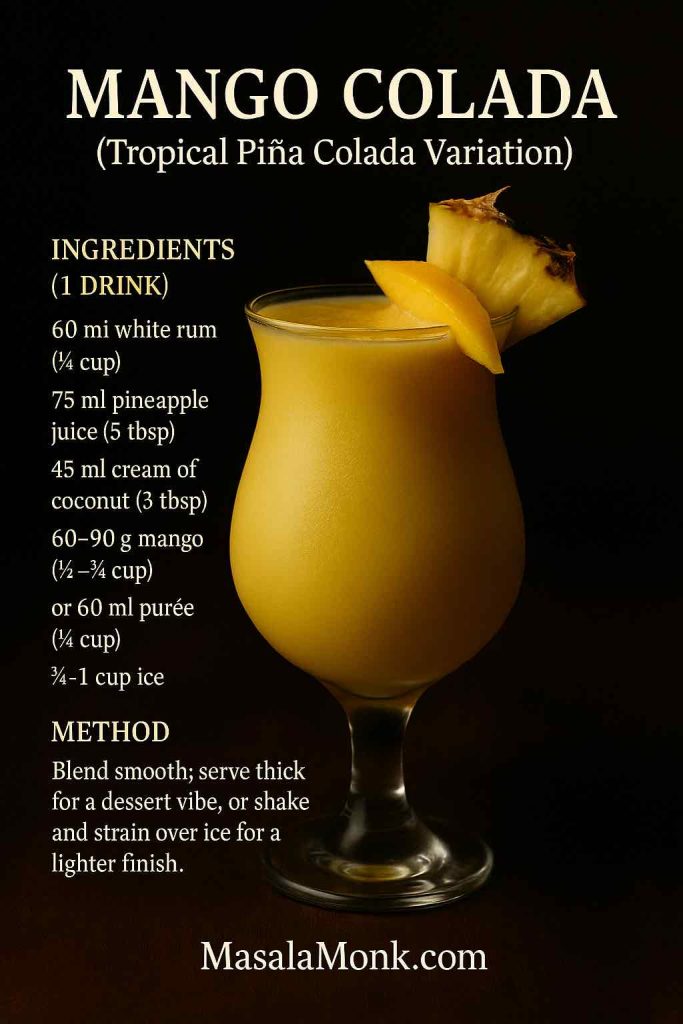
Mango Colada recipe card—golden cocktail with mango and pineapple garnish, moody portrait, MasalaMonk footer
Mango slides in silkily and softens acidity; loosen with pineapple juice if dense, add a pinch of salt and 1 tsp lime to make aromas pop.

For 1 drink

  • 60 ml white rum (¼ cup)
  • 75 ml pineapple juice (5 tbsp)
  • 45 ml cream of coconut (3 tbsp)
  • 60–90 g mango (½–¾ cup) or 60 ml purée (¼ cup)
  • ¾–1 cup ice
    Blend smooth; serve thick for a dessert vibe, or shake and strain over ice for a lighter finish.

Love mango + vodka? Try these riffs: Mango Vodka Cocktail Drinks (Base + 7 Variations).


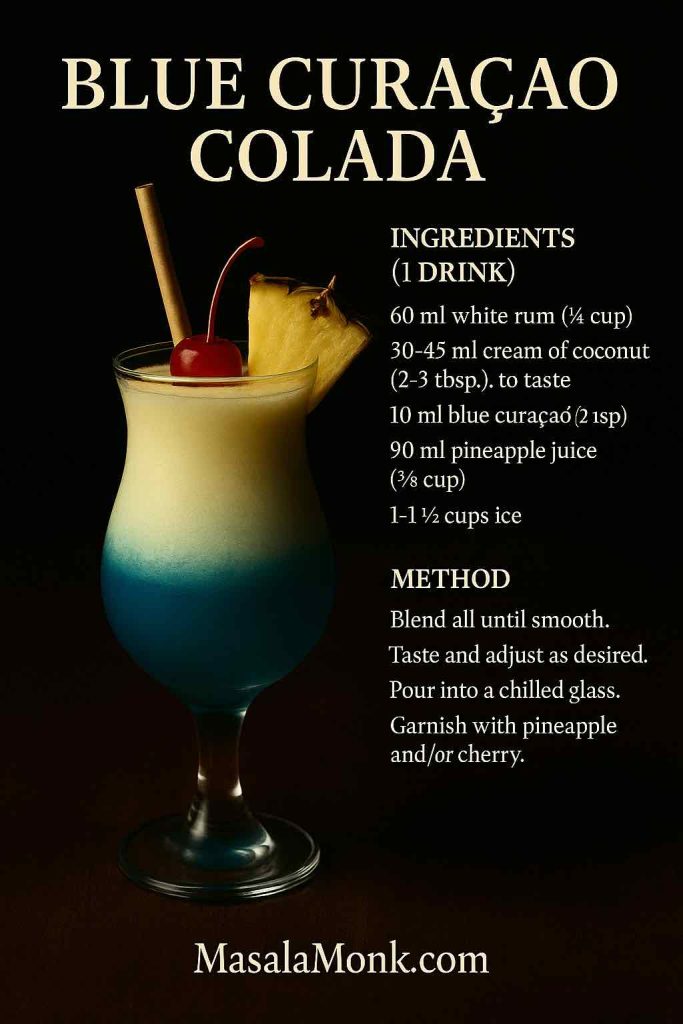
3) Blue Curaçao Colada (Blue Pina Colada Variation)

Sometimes you want familiar comfort and a little showmanship. Blue curaçao adds gentle citrus notes and that ocean-blue hue. Importantly, this isn’t a Blue Hawaii (a sharper, vodka-leaning sour); instead, it lands closer to a Blue Hawaiian, where coconut and pineapple still lead — compare Blue Hawaiian vs. Blue Hawaii.

Blue curaçao piña colada recipe card—ocean-blue hue, premium moody lighting
Coconut-pineapple comfort with coastal color—keep dilution low so the blue stays vivid.

For 1 drink

  • 45 ml white rum (3 tbsp)
  • 15 ml blue curaçao (1 tbsp)
  • 90 ml pineapple juice (⅜ cup)
  • 45–60 ml cream of coconut (3–4 tbsp)
  • ¾–1 cup ice
    Blend or shake; add a few drops of lime only if sweetness lingers.

Color tip. Add ice gradually. Over-dilution can dull the blue.


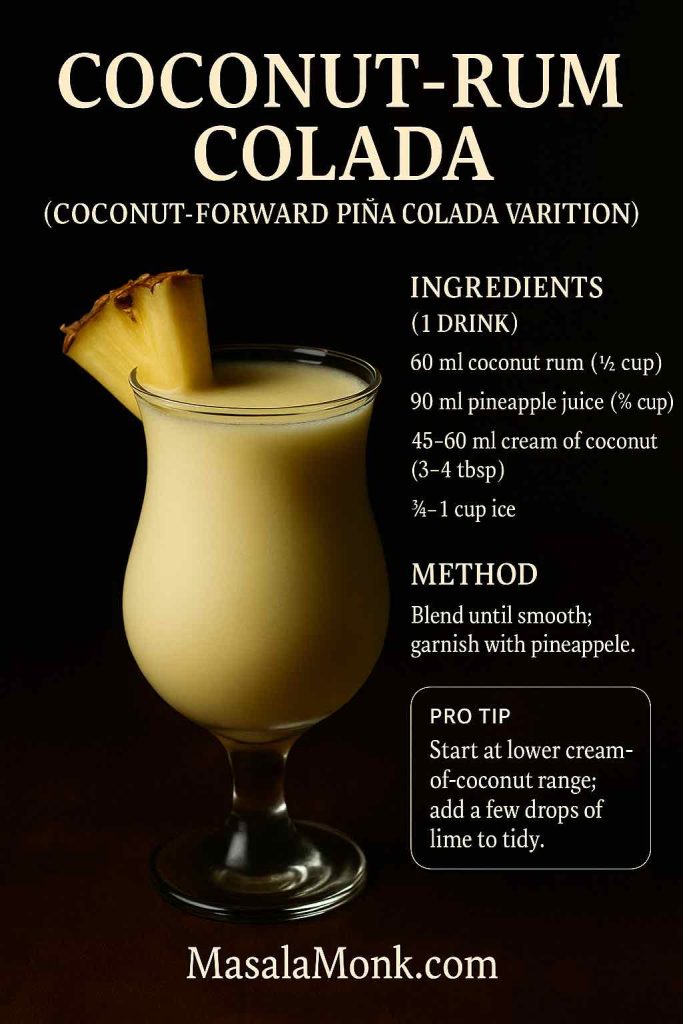
4) Coconut-Rum Colada (Coconut-Forward Pina Colada Variation)

If you’re craving even more coconut, this is your lane. First, switch to coconut rum; then, because it’s sweeter than white rum, start at the lower end of the cream-of-coconut range. Afterward, taste and—if needed—counter with a few drops of lime so the finish stays tidy. Consequently, the drink reads lush and aromatic rather than sugary.

Coconut-Rum Colada recipe card—coconut-forward piña colada in a hurricane glass, moody portrait, MasalaMonk footer
Coconut-forward and lush: start at the lower cream-of-coconut range (coconut rum is sweeter); tidy the finish with a few drops of lime.

For 1 drink

  • 60 ml coconut rum (¼ cup)
  • 90 ml pineapple juice (⅜ cup)
  • 45–60 ml cream of coconut (3–4 tbsp)
  • ¾–1 cup ice
    Blend until smooth; garnish with pineapple.

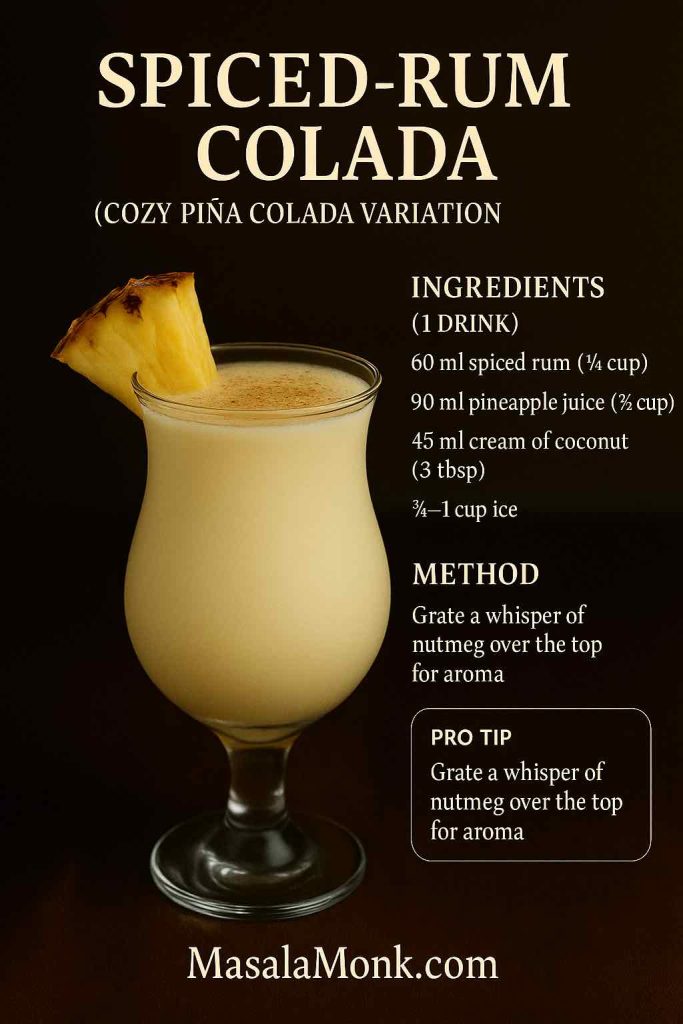
5) Spiced-Rum Colada (Cozy Pina Colada Variation)

When you want warmth and depth, spiced rum brings vanilla and baking-spice notes that cozy up to pineapple and coconut. Next, keep the cream of coconut moderate so the spices shine; then, grate a whisper of nutmeg over the top for aroma. Overall, you get a beachy drink with sweater-weather soul.

Spiced-Rum Colada recipe card—creamy cocktail with nutmeg and pineapple garnish, moody portrait, MasalaMonk footer
Vanilla and baking-spice notes meet pineapple-coconut; keep cream of coconut moderate and finish with a whisper of nutmeg.

For 1 drink

  • 60 ml spiced rum (¼ cup)
  • 90 ml pineapple juice (⅜ cup)
  • 45 ml cream of coconut (3 tbsp)
  • ¾–1 cup ice
    Blend, taste, and add 1 tsp lime if you want extra lift; serve frozen or shake and strain over ice.

6) Vodka Colada (Chi-Chi: Clean Pina Colada Variation)

Prefer a cleaner finish? In that case, swap rum for vodka. Because vodka is neutral, balance depends on your pineapple and coconut; therefore, taste before you pour. Meanwhile, serving tall over fresh ice emphasizes that breezy, easy-drinking feel, and a small pinch of salt can quietly boost pineapple.

For 1 drink

  • 60 ml vodka (¼ cup)
  • 90 ml pineapple juice (⅜ cup)
  • 45–60 ml cream of coconut (3–4 tbsp)
  • ¾–1 cup ice
    Blend or shake; adjust with a few drops of lime if it tastes flat.

7) Tequila Colada (Crisp Pina Colada Variation)

When you’re in the mood for tropical with a little edge, tequila adds bright minerality that pairs beautifully with pineapple and coconut. Generally, blanco keeps it crisp; meanwhile, a tiny pinch of salt makes the fruit sing. Finally, a lime wheel garnish sets the tone.

For 1 drink

  • 60 ml blanco tequila (¼ cup)
  • 90 ml pineapple juice (⅜ cup)
  • 45–60 ml cream of coconut (3–4 tbsp)
  • Small pinch of salt (optional)
  • ¾–1 cup ice
    Blend until silky; garnish and serve.

Variation. For a Margarita-leaning twist, add 10–15 ml triple sec and shake on the rocks.


8) Skinny Colada (Light Pina Colada Variation)

Sometimes you want the flavor without the heft. So, swap in coconut milk and use just enough syrup to keep things balanced. Additionally, a squeeze of lime adds lift without extra calories; furthermore, shaking and serving on the rocks keeps it especially light and bright. Because coconut milk is thinner than cream of coconut, expect a silkier, less dessert-like body.

Nutrition-curious? See Coconut Milk Nutrition Facts & Glycemic Index.

For 1 drink

  • 60 ml white rum (¼ cup)
  • 90 ml pineapple juice (⅜ cup)
  • 45 ml coconut milk (3 tbsp)
  • 5–15 ml simple syrup (1–3 tsp), to taste
  • ¾–1 cup ice
    Blend or shake; sweeten a teaspoon at a time until it lands just right.

9) Keto-Leaning Colada (Lower-Sugar Pina Colada Variation)

If you’re watching sugar, this is the smart pivot. First, keep pineapple modest. Next, use unsweetened coconut cream. Then, sweeten with your preferred keto option. Finally, swap some ice for frozen pineapple so body improves without a big sugar bump. For more low-carb ideas, browse Keto Mocktails.

For 1 drink

  • 60 ml white rum (¼ cup)
  • 60–75 ml pineapple juice (¼–⅓ cup) or a mix of juice + water
  • 45 ml unsweetened coconut cream (3 tbsp)
  • Keto sweetener, to taste
  • ¾–1 cup ice
    Blend smooth; finish with a squeeze of lime to sharpen the edges.

Optional. A drop or two of coconut extract boosts aroma without adding carbs.


10) Frozen Pineapple Colada (Maximum-Fruit Pina Colada Variation)

For maximum fruit and minimal dilution, frozen pineapple replaces much of the ice. Consequently, the texture stays lush, the flavor gets louder, and the chill lasts to the final sip. If your blender struggles, pulse a few times before running continuously; then, loosen with a splash of juice only if necessary.

For 1 drink

  • 60 ml white rum (¼ cup)
  • 60 ml pineapple juice (¼ cup)
  • 45–60 ml cream of coconut (3–4 tbsp)
  • 1 heaping cup frozen pineapple chunks
    Blend thick and silky; pour into a tall, well-chilled glass.

Types of Coladas (Piña Colada Type Drinks)

Although the piña colada is the icon, there’s a whole colada family. For example, try:

  • Piña Verde: herbal green notes over the pineapple-coconut base.
  • Banana Colada: thicker, softer mouthfeel from ripe banana.
  • Champagne Colada: topped with sparkling wine for a celebratory finish.
  • Mango Colada: silkier fruit body and perfume.
  • Blue Colada: blue curaçao for citrus notes and a vivid hue.

Consequently, you can match mood—lush and frozen for weekends, or bright and shaken on busy nights. Moreover, these quick pivots turn the classic into a set of pina colada variations that never feel repetitive.


Drinks Similar to a Piña Colada

If you enjoy the piña colada, you’ll likely love drinks similar to a piña colada. First, try the Miami Vice—half strawberry daiquiri, half piña colada, fully festive; the recipe on Liquor.com is reliable. Next, mix a Painkiller—rum, pineapple, orange, and cream of coconut with a nutmeg finish—using the official spec on Pusser’s Rum.

Finally, for fast color gradients and sweet-tart layers, explore Mocktails with Grenadine for non-alcoholic ideas you can adapt.


Ingredient buying guide (quick but useful)

Pineapple juice. Fresh-pressed tastes bright and aromatic; however, high-quality canned juice blends smoothly and is wonderfully consistent. Keep it chilled and use it within a few days for the best foam and flavor.

Cream of coconut vs. coconut milk. Coconut milk is unsweetened and lighter; cream of coconut is sweetened and thicker, designed for cocktails. If you substitute, rebalance sweetness and expect a different mouthfeel. For clarity, this guide to cream of coconut vs. coconut milk explains the swap smartly.

Rum. A clean white rum is the classic choice. If you prefer deeper flavor, aged or spiced rum works beautifully—just reduce cream of coconut slightly or add a little lime so sweetness doesn’t dominate.

Citrus. Fresh lime is your editor. Even a teaspoon or two can transform a heavy finish into a bright one.

Salt. A literal pinch can make fruit taste “riper.” Use sparingly and always taste.


Technique tips that instantly upgrade your glass

  • Chill everything. Cold inputs blend smoother and hold foam longer.
  • Liquids first, ice last. In blenders, layering liquids before ice helps avoid cavitation.
  • Pulse, then finish. Short pulses break big pieces; a brief continuous blend polishes texture.
  • Shake like you mean it. For rocks versions, firm shaking (10–12 seconds) delivers perfect chill and dilution.
  • Mind your glassware. Tall glasses flatter frozen drinks; compact rocks glasses keep shaken versions bright and cold.
  • Garnish with intent. Pineapple fronds, a fresh wedge, or even a citrus peel add aroma where your nose meets the glass.

Make-ahead, batching, and easy swaps

No cream of coconut? Substitute coconut milk plus simple syrup, adjusting in tiny steps. The texture will be lighter but still silky.

No blender? Shake the on-the-rocks version hard with cracked ice. If you want extra body, add a small spoon of coconut milk before shaking.

Dairy-free needs? These recipes are naturally dairy-free; if you add ice cream for a dessert riff, reduce sweetener and add a pinch of salt.

Batching for parties. Blend a quadruple-size base without ice; chill deeply. Just before serving, either blend portions with ice for frozen service or shake portions with ice for rocks service. Because melted ice thins sweetness, taste after chilling and bump cream of coconut or lime by a teaspoon if needed.

Make-ahead shortcut. Pre-blend a “colada mix” by stirring equal parts cream of coconut and pineapple juice; keep it cold. During service, add spirit and ice, then blend or shake. This saves time and keeps ratios consistent across a long evening.

Prefer lighter long pours? Skim ideas in Tropic Like It’s Hot: Coconut Water Cocktails for Summer.


Pina colada flavored drinks: quick pivots you can do in 60 seconds

Sometimes you don’t want a whole new recipe—just a shift in mood. Therefore, try these tiny changes: add a teaspoon of lime for snap; swap in coconut milk for a lighter feel; drop in 15 ml blue curaçao for color; stir in 30 ml mango purée for silk; or finish with grated nutmeg for warmth. In short, these micro-moves turn the base into pina colada variations that stay familiar yet fresh.


A friendly close

You now have a complete island toolkit: a dependable classic, a quick piña colada on the rocks, a zero-proof path, and ten flexible pina colada variations that keep things interesting. Start with the frozen original; then try the lighter rocks version on a weeknight. Once you know which texture feels most like you, branch into strawberry, mango, or blue curaçao and see what sticks.

When you land on a new favorite—or discover a clever garnish—share it so others can try it too. Tropical, relaxed, and simple—that’s the piña colada at its best.

FAQs

1) What does “piña colada” mean?

Simply put, it means “strained pineapple.” In other words, the name points to fresh or pressed pineapple juice at the drink’s heart. From there, coconut and rum complete the classic trio; however, you can skip the rum for a virgin version and still keep the sunny flavor.

2) Is the piña colada Puerto Rican?

Yes. Most stories trace the cocktail to San Juan, Puerto Rico. Consequently, you’ll often see it called the island’s national drink. While the inventor is debated, the flavor profile—pineapple, coconut, and rum—clearly began there and then traveled the world.

3) Frozen vs. on the rocks: which piña colada should I choose?

It depends on mood. Frozen is lush, creamy, and a little dessert-like; meanwhile, piña colada on the rocks feels lighter and brighter because hard shaking adds chill and subtle dilution. So, choose frozen for lazy afternoons and rocks for quick weeknights.

4) How do I make a virgin piña colada (including on the rocks)?

It’s easy. First, combine pineapple juice with cream of coconut; then, either blend with ice for a frosty treat or shake hard and serve over fresh ice for a lighter sip. Finally, a squeeze of lime balances sweetness, and a splash of coconut water lengthens the drink without extra sugar.

5) What are the most popular pina colada variations?

Start with simple winners: Strawberry (lava-flow), Mango, Blue Curaçao (Blue Colada), Coconut-Rum, Spiced-Rum, Vodka (Chi-Chi), Tequila, Skinny, Keto-leaning, and Frozen Pineapple. Because each keeps the pineapple-coconut core, you can swap spirits or fruit and still taste “piña colada.”

6) Which rum is best—white, coconut, or spiced?

As a rule, white rum is clean and versatile. Coconut rum adds extra coconut sweetness; therefore, reduce cream of coconut slightly or add a few drops of lime. Spiced rum brings vanilla and baking-spice notes; consequently, the drink feels cozier, especially with a pinch of nutmeg.

7) Can I make a piña colada with vodka or tequila?

Absolutely. Vodka creates a silky, neutral canvas where pineapple shines; meanwhile, tequila (especially blanco) adds crisp minerality that many love. Accordingly, both are recognized pina colada variations—great for guests who don’t usually choose rum.

8) Cream of coconut vs. coconut milk: what’s the difference?

Cream of coconut is sweetened and thick, which yields that classic, velvety texture. Coconut milk is unsweetened and lighter. Therefore, if you substitute coconut milk, add a little simple syrup and expect a silkier, less dessert-like body—perfect for skinny riffs.

9) How can I make a skinny or keto piña colada?

For skinny, use coconut milk and sweeten lightly, then brighten with lime. For keto-leaning, use unsweetened coconut cream, keep pineapple juice modest (or cut with water), and sweeten with your preferred keto option. Finally, blending a few frozen pineapple chunks boosts body without a big sugar hit.

10) Can I make a piña colada without a blender?

Yes—shake it. First, combine pineapple juice, cream of coconut, and spirit in a shaker with plenty of ice; next, shake hard for 10–12 seconds; then, strain over fresh ice. As a result, you’ll get a piña colada on the rocks that’s fast, cold, and refreshingly light.

11) What drinks are similar to a piña colada?

If you like the style, try a Miami Vice (half strawberry daiquiri, half colada) or a Painkiller (rum, pineapple, orange, cream of coconut, nutmeg). Likewise, explore the broader family of coladas and easy pina colada variations like Blue Colada or Banana Colada when you want something familiar yet new.

12) What are the main “types of coladas” (piña colada type drinks)?

Think of “colada” as a creamy coconut family. For example, there’s Piña Verde (herbal), Banana Colada (thicker and softer), Champagne Colada (bubbly and celebratory), Mango Colada (silky and perfumed), and Blue Colada (citrusy and vivid). Accordingly, you can match the drink to the moment.

13) How do I fix a piña colada that’s too sweet, too thin, or too thick?

If it’s too sweet, add a few drops of lime or a splash of pineapple juice for acidity, if it’s too thin, blend in frozen pineapple or a bit more ice and if it’s too thick, loosen with a small splash of juice. Meanwhile, a tiny pinch of salt can quietly make fruit taste “riper.”

14) What garnish works best—and does it change the flavor?

A pineapple wedge, fronds, or a lime wheel adds aroma right where you sip. Additionally, a gentle nutmeg grate complements spiced-rum coladas. Because your nose leads the experience, even simple garnishes make each of your pina colada variations feel more polished.

15) Can I batch piña coladas for a party?

Definitely. First, blend a big base of pineapple juice and cream of coconut (without ice) and chill it well. Next, add rum to individual portions and either blend with ice for frozen drinks or shake on the rocks to order. Finally, taste after chilling; you may need a touch more lime or cream of coconut to keep balance.

16) What’s the easiest way to try multiple pina colada variations in one night?

Start with a classic base and pour it into two small blenders or shakers. Then, split accents: add strawberry to one and mango to the other; or try blue curaçao in one and tequila in the next. Consequently, you’ll compare flavors side by side without remaking the whole recipe.

17) Are “pina colada flavored drinks” different from full coladas?

Sometimes, yes. Think of them as quick pivots: add mango purée, a dash of blue curaçao, a squeeze of lime, or even coconut milk instead of cream of coconut. In short, these small tweaks turn the base into pina colada flavored drinks that stay familiar yet feel brand new.

18) What glass should I use—tall or rocks?

Use a tall, chilled glass for frozen coladas to keep the slush cold and lively. Conversely, choose a compact rocks glass (about 180–240 ml) for piña colada on the rocks so the flavors stay focused while the ice chills, not waters down, the drink.

19) How do I keep my piña colada cold outdoors without watering it down?

First, chill your glassware. Next, use pre-chilled juice and spirit. Then, for frozen versions, swap part of the ice for frozen pineapple so flavor stays loud as the drink warms. Finally, enjoy promptly—because even the best slush softens in the sun.

20) What single tip improves every pina colada variation?

Taste, then tweak in tiny steps. Add sweetness in teaspoons, lime in ½-teaspoon splashes, and ice in small handfuls. As a result, mouthfeel, balance, and aroma land exactly where you want—no matter which pina colada variations you’re trying tonight.

Posted on 2 Comments

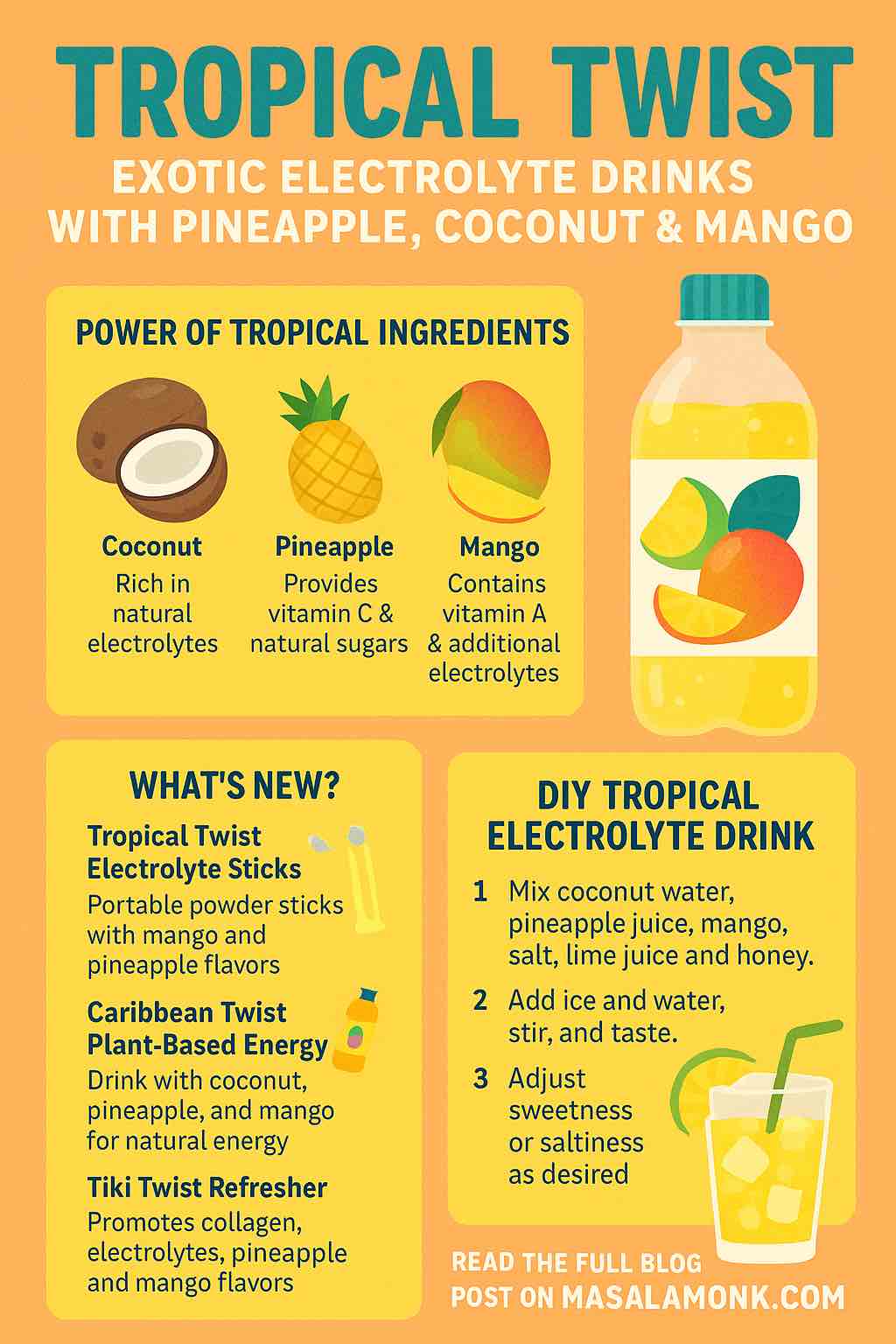
Tropical Twist: Exotic Electrolyte Drinks with Pineapple, Coconut, and Mango

ELECTROLYTE DRINKS WITH PINEAPPLE, COCONUT & MANGO

Imagine a hot afternoon—sweat on your brow, energy dipping, and your water bottle just isn’t cutting it. Now, picture a cold, vibrant drink bursting with pineapple, coconut, and mango, instantly reviving you with the taste of the tropics and the science of smart hydration. Welcome to the world of Tropical Twist electrolyte drinks!

Why the Hype? The Power of Tropical Fruits in Hydration

The global thirst for tropical flavors is exploding. Walk into any gym, café, or supermarket, and you’ll spot brightly colored bottles and sachets promising “island vibes” and “ultra hydration.” But this isn’t just a trend. Combining coconut, pineapple, and mango isn’t just delicious—it’s scientifically smart.

Let’s break down the benefits:

  • Coconut water is naturally rich in potassium, magnesium, and sodium—electrolytes crucial for hydration, nerve function, and muscle recovery.
  • Pineapple adds vitamin C, manganese, and natural sugars for quick energy, with a tangy punch that makes any drink irresistible.
  • Mango brings a creamy texture, vitamin A, and additional electrolytes, along with that unmistakable sweetness.

Put together, they offer a refreshing drink that hydrates, energizes, and delights your taste buds—all at once.


What’s New? The Latest in Tropical Electrolyte Drinks (2025)

Fresh on the Shelves

  • Tropical Twist Electrolyte Sticks: These portable powders launched just weeks ago, blending mango and pineapple with a science-backed mix of electrolytes. Perfect for gym bags, travel, or work commutes—just rip, pour, and shake into water.
  • Caribbean Twist Plant-Based Energy: Combining coconut, pineapple, and mango for a new kind of “clean energy,” these drinks hit the market as plant-based, natural alternatives to traditional energy drinks.
  • Tiki Twist Refresher: The latest “functional beverage” trend, these mix pineapple, mango, and coconut water with added collagen and extra electrolytes for a beautifying, hydrating pick-me-up.

Trending DIY Recipes

On platforms like TikTok and Lemon8, homemade recipes are trending hard. Influencers show off mixes like:

  • Pineapple juice + coconut water + fresh mango cubes (sometimes with a squeeze of lime or a hint of Himalayan salt)
  • Kombucha-based “dirty energy” twists using pre-made tropical kombucha, coconut creamer, and fruit chunks for flavor and probiotics

Why the DIY love? People want control over ingredients, less sugar, and the satisfaction of making something vibrant and healthy at home.


How Do They Stack Up? Nutrition, Taste, and Performance

Here’s what sets these drinks apart from regular sports drinks or plain water:

Drink TypeElectrolytesSugar ContentAdd-onsCaffeine?Best For
Ready-to-DrinkHigh (medical)LowB-vitamins, collagenNone/OptionalIntense workouts, rehydration
Powdered MixesModerate/HighLow/NoneOrganic, vegan, vitaminsNoneEveryday use, travel
Sparkling/EnergyModerateModerateCaffeine, natural flavor70–110 mgMidday pick-me-up, focus
DIY BlendsCustomizableAs per mixFresh fruit, probioticsOptional (tea)Families, home hydration

Key practical tip: Always check the nutrition label for sodium and potassium levels—these are the main electrolytes you lose through sweat. For intense workouts or summer days, drinks with 300–600mg sodium per serving are ideal. If you’re avoiding added sugars, look for “unsweetened” or “no added sugar” options or make your own.


How to Make Your Own Tropical Electrolyte Drink (DIY Guide)

You don’t need to spend big bucks or search specialty stores to enjoy a Tropical Twist. Here’s a practical, tried-and-tested recipe anyone can make at home:

DIY Tropical Twist Electrolyte Drink

Ingredients:

  • 1 cup coconut water (the fresher, the better)
  • 1/2 cup pineapple juice (preferably fresh or 100% juice)
  • 1/2 cup mango (pureed or diced small)
  • 1/8 teaspoon Himalayan pink salt or sea salt (for sodium)
  • 1–2 teaspoons honey or agave (optional, for sweetness)
  • Juice of 1/2 lime (for a tangy kick and added potassium)
  • 1 cup cold water or ice

Instructions:

  1. Blend mango and pineapple juice until smooth (skip this step if using pure juice).
  2. Mix in coconut water, lime juice, salt, and sweetener.
  3. Add cold water and ice, stir, and taste. Adjust sweetness or saltiness as needed.
  4. Pour into your favorite bottle or glass, garnish with a pineapple wedge or mint, and enjoy!

Pro Tip: For extra electrolytes, add a splash of orange juice or a pinch of magnesium powder. For a “sports drink” effect, use more salt (up to 1/4 teaspoon) and less honey.


Who Needs These Drinks? (Hint: Probably You!)

  • Athletes & Fitness Fans: Rapid rehydration, less muscle cramping, and quick energy after runs, yoga, or the gym.
  • Kids & Families: Natural, tasty alternative to sodas and commercial sports drinks (plus, you can sneak in more fruit!).
  • Travelers & Office Warriors: Beat jet lag, hot days, and air conditioning with a bottle of tropical hydration.
  • Anyone in a Heatwave: Electrolytes + tropical flavor = the perfect summer rescue.

Where to Find the Best? (And What to Watch For)

Ready-to-Drink & Powdered Options

  • ROAR Complete Hydration Powder Plus (Tropical Twist)
  • Biolyte Tropical
  • Remedy Drinks Tropical Twist Energy
  • Sunshine Beverages Tropical Pineapple
  • Caribbean Twist by Tropical Sno

Look for these online or in supermarkets—many ship internationally.

DIY: Make It Your Signature Drink

  • Experiment with ratios, use sparkling water for fizz, add chia seeds for texture, or infuse with mint or basil.
  • Try freezing into popsicles for kids!

Final Thoughts: Bring Paradise to Your Hydration Routine

Whether you’re sipping a store-bought mix, shaking up a homemade blend, or exploring the latest “Tiki Twist” creation, these pineapple, coconut, and mango electrolyte drinks are more than a trend. They’re a practical, delicious, and healthy way to support hydration and bring a taste of the tropics wherever you are.

Ready to try your own Tropical Twist? Grab your ingredients, shake it up, and let the sunshine in!


Have a favorite tropical recipe, a question about hydration, or a product you want reviewed? Drop it in the comments! Let’s keep the conversation fresh, fun, and—most importantly—hydrated.


Want more? Subscribe for updates on the latest in functional beverages, wellness recipes, and smart hydration hacks!

FAQs: Tropical Twist Electrolyte Drinks

1. What are electrolyte drinks, and why are they important?
Electrolyte drinks help replenish minerals like sodium, potassium, and magnesium that you lose through sweat. They’re vital for hydration, muscle function, and preventing cramps, especially during hot weather or after intense exercise.

2. Why combine pineapple, coconut, and mango in an electrolyte drink?
Pineapple, coconut, and mango not only taste great together but each contributes natural electrolytes, vitamins, and antioxidants, making the drink both flavorful and effective for hydration.

3. Are Tropical Twist electrolyte drinks good for kids?
Yes, homemade versions with minimal added sugar and natural ingredients are safe and enjoyable for kids. Avoid high-caffeine or artificial varieties for young children.

4. How much should I drink after exercise or on a hot day?
Most adults benefit from 300–600ml after exercise, or as needed for thirst. For intense sweating, one serving after activity is a good starting point. Always listen to your body and adjust accordingly.

5. Can I make a sugar-free version at home?
Absolutely. Simply omit honey or agave and use pure fruit juices. Coconut water provides a hint of natural sweetness even without added sugar.

6. Are these drinks suitable for people with diabetes?
Use caution: opt for low-sugar or unsweetened versions, and consult your doctor if you’re unsure. Homemade blends let you control the amount and type of sweetener.

7. What’s the best time to drink a Tropical Twist electrolyte beverage?
These drinks are ideal before or after workouts, during outdoor activities, when you’re feeling dehydrated, or just for a refreshing afternoon pick-me-up.

8. How do Tropical Twist drinks compare to traditional sports drinks?
Tropical Twist drinks can be lower in added sugar, free of artificial dyes/flavors, and provide extra vitamins and antioxidants from real fruit—making them a healthier choice for many.

9. How long can I store homemade electrolyte drinks?
Homemade drinks are best enjoyed within 24–48 hours when refrigerated. Shake well before drinking, as ingredients may settle.

10. Where can I find ready-made Tropical Twist electrolyte drinks?
Look in supermarkets, health food stores, or online retailers for brands like ROAR, Biolyte, Remedy, and Sunshine Beverages. Always check the ingredient label for the best options.

Posted on 4 Comments

South Indian Coconut Chutney

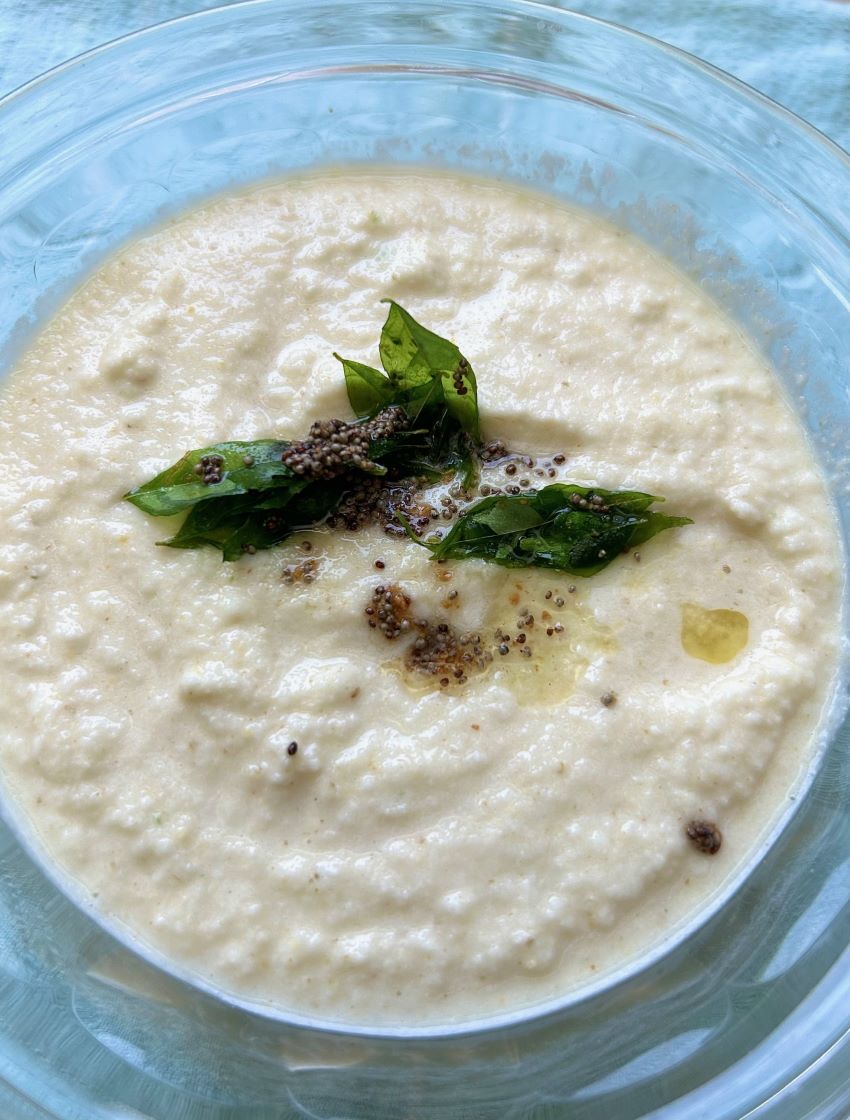
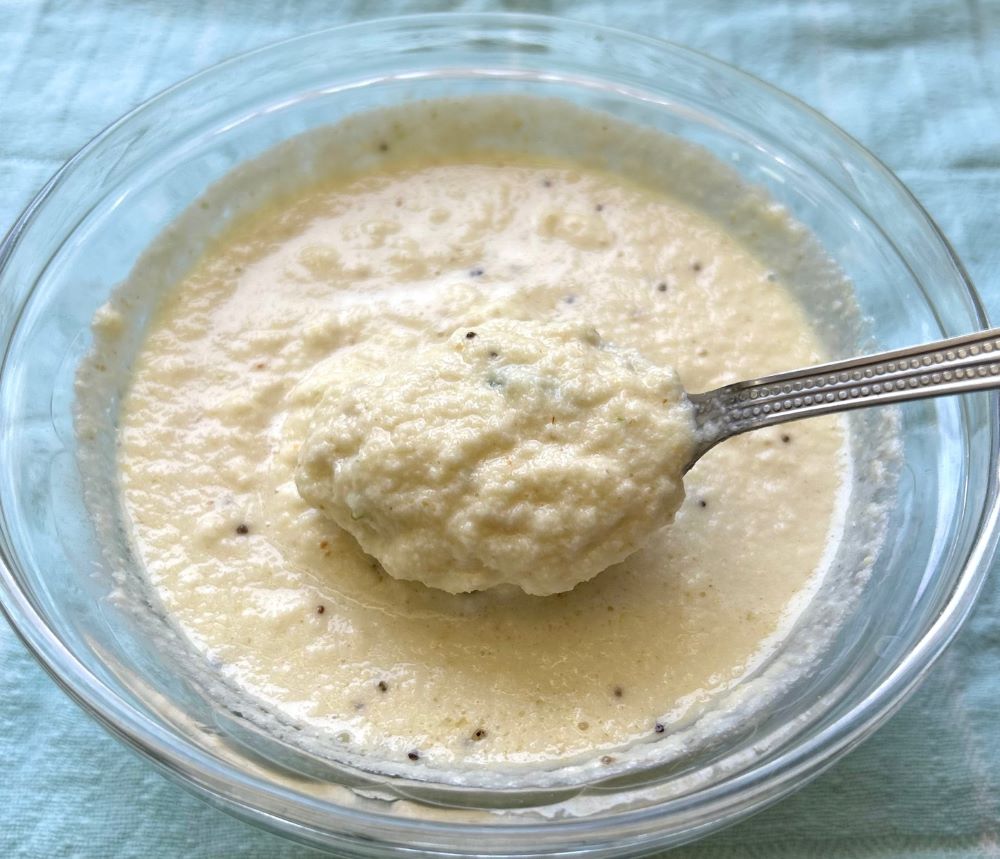
Coconut chutney is one of the most popular chutneys in South Indian cuisine. It is made round the year and is a common side dish in South Indian households. It is lightly spiced, nutty with natural and refreshing sweetness of coconut. It is made with fresh coconut, green chilli and lentil as prime ingredients. It is then tempered with mustard seeds, asafoetida and curry leaves. 

Though there are several recipes of coconut chutney with their own variations and style but out of all I find this to be the best. Honestly, I don’t feel the need of sambar with dosa or idli when I’ve this chutney as side. It’s pretty good. Also, it is great for kids since it is not spicy and has mild sweetness of coconut. My little one calls this Snowman Chutney. He loves this chutney with idlis, dosa and paniyarams.

You can also check out my other South Indian chutney recipes- Kara Chutney and Tangy Spicy Peanut Chutney

Apart from taste, having coconut chutney along with your meals has several health benefits too. 

  • Since coconut is rich in fibre, it can help in easy bowel movement. Eating it during summers and monsoon season can also prevents digestion-related problems such as indigestion and diarrhea.
  • Coconuts are especially high in manganese which is essential for bone health and the metabolism of carbohydrates, proteins, and cholesterol.
  • They’re also rich in copper and iron, which help form red blood cells, as well as selenium, an important antioxidant that protects your cells.
  • Coconuts are low in carbs and high in fibre and good fats, which may be beneficial for blood sugar control.

Let’s see how we can make this delicious and healthy Coconut Chutney

Recipe

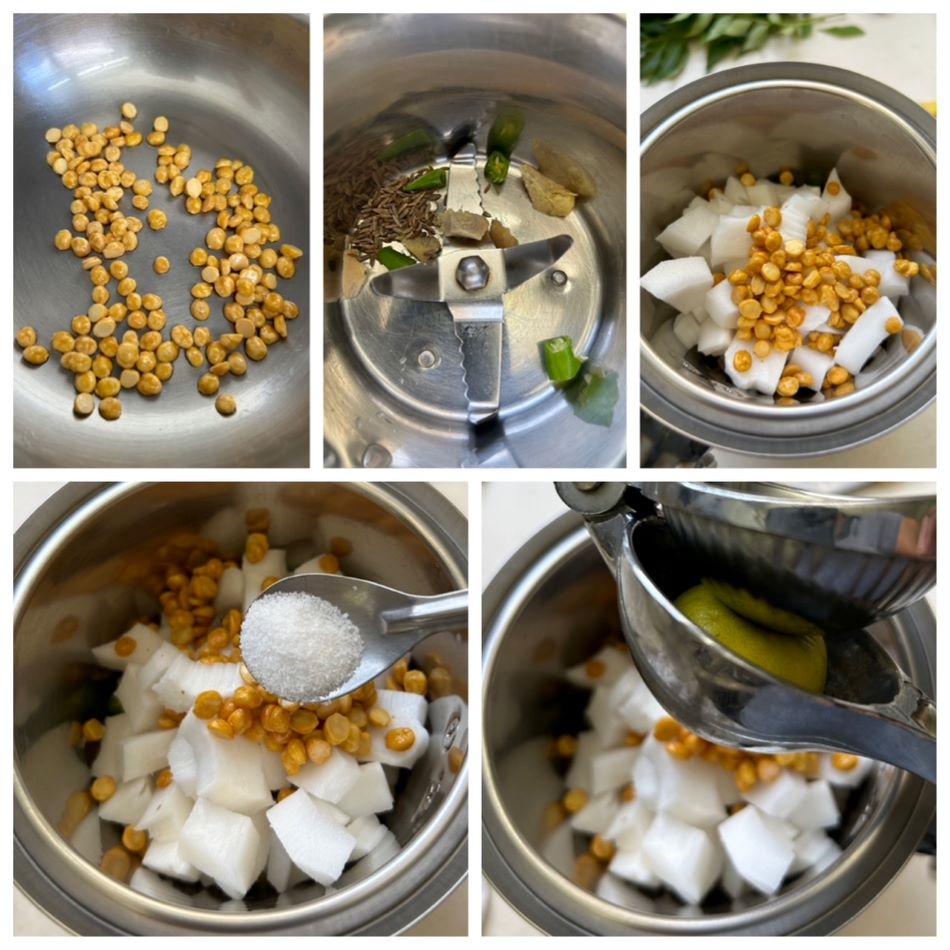
Ingredients: 

  • 1 cup Fresh Chopped Coconut with brown skin peeled
  • 1 inch Ginger roughly chopped 
  • 1 tbsp Lemon Juice
  • 1 small Green Chilli
  • 1 tsp Cumin Seeds
  • 2 tbsps Roasted Channa Dal/Bengal Gram
  • 2 tsps Oil (I like to use either Groundnut or Coconut oil)
  • Rock salt or Salt to taste
  • Water: 1/2 cup or as required 

For Tempering: 

  • 1/2 tsp Mustard seeds
  • 1 sprig Curry leaves
  • A pinch of Hing/Asafoetida

Method: 

  • Wash and pat dry channa dal. Add 1 tsp oil in a pan and roast the dal till golden brown. 
  • Add, coconut, roasted channa dal, lemon juice, ginger, chilli, 1/4th cup water and salt in a blender. 
  • Give a blitz. Now open and scrape off the sides. Add remaining water and blend again to get a smooth paste. You can more water if required but make sure to add little at a time. 
  • For tempering: To hot oil, add mustard seeds, curry leaves and hing. Cook till everything splutters. Pour the tempering over the chutney. Mix well. 
  • Your Chutney is ready to be served. 

Notes: 

  1. If you want whiter chutney, make sure to scrape the brown skin of coconut. 
  2. You can easily make this chutney watery because in the beginning it will feel that you will need more water for blending but add little water at a time while blending.
  3. Use fresh coconut, that’s shell is pale in color than the dark brown colour or dried coconut. Fresh coconut’s chutney tastes the best while the other might taste a little oily. 
  4. Do temper the chutney. It not only enhances the taste but also increases its shelf life. 
  5. You can store the chutney in refrigerator for 3-4 days. It might thicken a little after refrigeration. You can add few tbsps of warm water to loosen it.

Do try this recipe and let me know in the comments section how you liked it. Would love to hear it from you guys. 🙂 Happy eating!

Posted on 6 Comments

How to make Coconut Milk at Home

Coconut is also known as Kalpa Vriksha in Sanskrit, which means Tree of Life– “the tree which provides all the necessities of life”. All its parts from top to bottom are used to sustain human life.

In this post I will share with you how to make coconut milk in the most easiest way. Coconut milk is a traditional food ingredient used in Southeast Asia, Oceania, South Asia, and East Africa. It is so easy to make at home. I actually never buy coconut milk from the market because it takes 5 minutes to make it at home. Also, store-bought Coconut milk contains additives and gums in the canned version that I prefer to avoid. They don’t contain much of actual coconut and remember they are likely to contain some kind of preservatives, flavouring and sweeteners because homemade version will spoil in a few days and store bought ones can last you months. Also, curries and stews made from homemade coconut milk tastes so much better and real than store bought ones.

This plant milk is tasty alternative to cow’s milk that provides several health benefits too. Coconut milk comes from white flesh of mature brown coconuts, which are the fruit of the coconut tree. Unlike coconut water, the milk does not occur naturally. Instead, solid coconut flesh is mixed with water to make coconut milk, which is about 50% water. 

The milk has a sweet taste, is thick in consistency and has a rich, creamy texture. But it goes beyond taste – Ayurvedic experts ages ago discovered that coconut milk is a power drink; and modern research confirms this. It pacifies Vata and Pita while increasing Kapha. If you find yourself unable to digest dairy or are allergic to nuts, this milk is a pretty good option for you. You can also try oats milk if you are allergic to dairy or nut milk. Check out this easy to make recipe of Oats Milk here. In case you are not allergic to nut milk, you can try this delicious Almond Milk recipe.

Benefits of Coconut Milk

This white elixir is full of surprising benefits. People are so obsessed with cow’s milk, goat’s milk, camel’s milk that this ancient milk is conveniently cornered. 

  • Lauric acid

Coconut milk contains an important ingredient: lauric acid. It is considered anti-inflammatory, antiviral and antibacterial. It helps your body fight off pathogens. Therefore, have coconut milk if you are suffering from bacterial or viral disease.

  • Cytokines as an Anti-Aging Agent

Coconut milk contains strong antioxidant protection. Cytokines are proteins that protect our cells, and can protect the skin from premature aging.

  • Improves digestion

Coconut helps to improve digestion due to the presence of medium-chain fatty acids. These medium-chain fatty acids are digested and absorbed easily in the body. They may be immediately broken down by saliva and gastric juice. Therefore, consuming coconut milk may be good for people with digestive problems.

  • Coconut milk for Cancer

Coconut milk may be beneficial for cancer. Various studies on cell lines have shown that coconut milk may help in the case of breast cancer. Coconut milk may kill the cancer cells and suppress the growth of cancer-causing cells.

  • Reducing Cholesterol Levels 

This milk can help maintain your cardiovascular health due to its high content of lauric acid. Some studies indicate that consuming foods with coconut milk in moderation could help to lower the levels of bad cholesterol low and boost the levels of good cholesterol

  • May fasten recovery from sickness 

Though not as good a source of electrolytes as coconut water, coconut milk does contain magnesium and potassium. These minerals regulate blood volume, aid in the functioning of the heart and help with diarrhea and dehydration.

How to make Coconut Milk at Home

Recipe: makes around 600 ml 

Ingredients:

  • 1 mature Coconut (remove the brown skin)
  • Water: 3 cups; half warm and half room temperature water 

Instructions 

  1. Chop the coconut into tiny pieces. 
  2. Put the coconut pieces in a blender and shred it.
  3. Then add hot water first and blend on high for a few seconds. Then add room temperature water and blend again.
  4. Open the lid and scrap the sides and blend again for a minute. 
  5. Take a clean large bowl and spread a muslin or cheese cloth over it. Sieve through the prepared milk through it. Squeeze out all the milk using your hand from the coconut meat. And that’s it! Coconut milk is ready to be served.

Notes:

  1. Though Coconut milk is least allergic but please consult your pediatrician before introducing it to kids below 1 years. Introduce little at a time. 
  2. Since coconut milk is high in fats, don’t feed more than 150 ml to toddlers. Though the homemade version can be made less creamy by diluting it with more water.
  3. Coconut milk is not a great source of Calcium, Protein or Vitamin D. If you are replacing dairy with coconut milk, then eat a well balanced diet to get all the nutrients. 
  4. Coconut milk has innumerable benefits but keep in mind that coconut milk is relatively rich in calories. So, you should only have it in moderate amounts.
  5. You can re-use the residue of coconut as fertilizer for your plants or you can dry roast it and store in an air-tight jar. Use it to make cookies, cakes,muffins,energy bars etc.
  6. You can store this milk in glass bottles for upto 4-5 days in the refrigerator.

I hope you liked this recipe and will try out this easy to make Homemade Coconut Milk. If you do, do let me know in the comment section. Would love to hear from you guys. Till then cheers to good health! 🙂