Posted on Leave a comment

Coconut Shake Recipe: Creamy Tender Coconut Milkshake

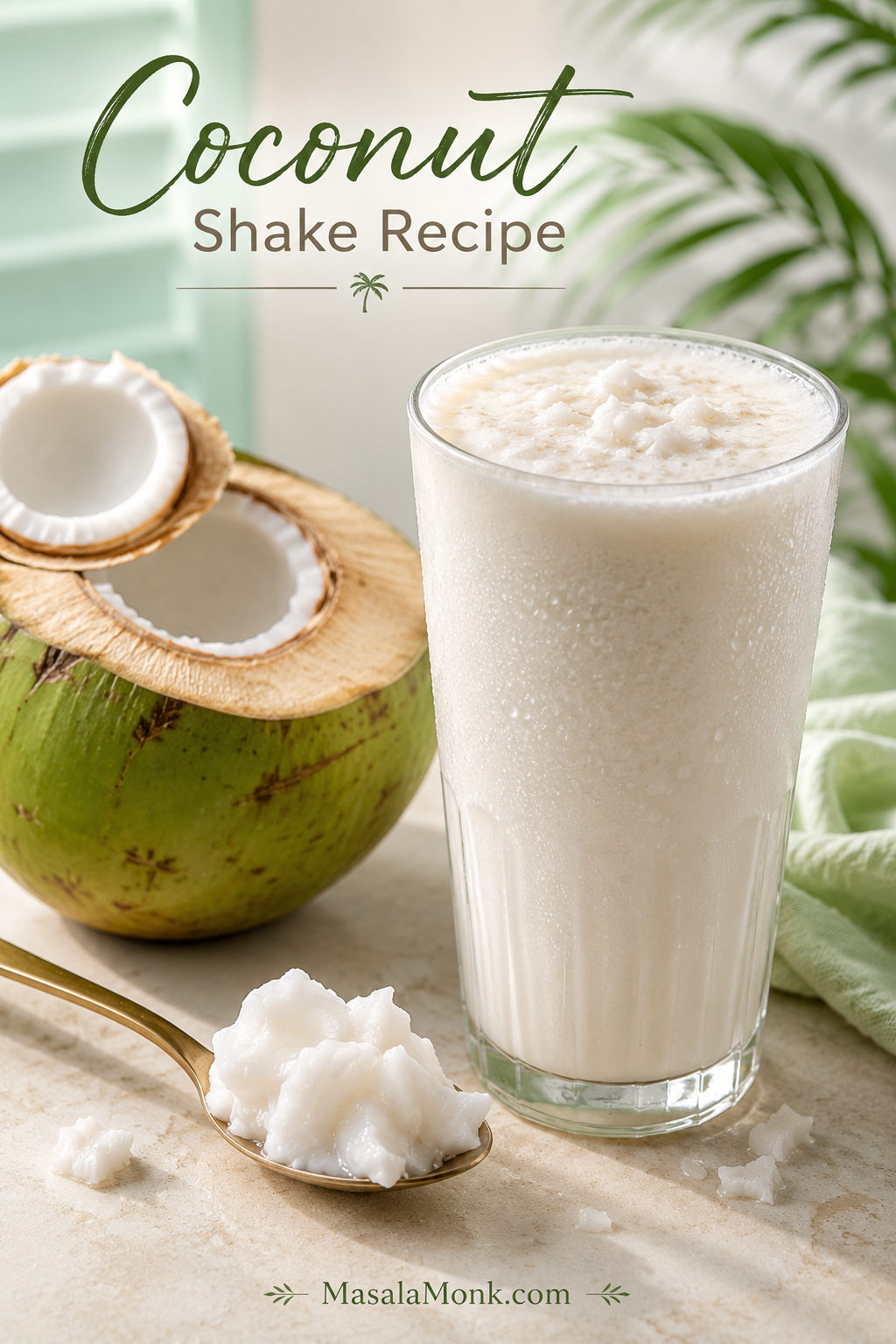
Tall chilled glass of coconut shake with tender coconut malai, coconut water, and an opened young coconut.

A good coconut shake recipe should give you a drink that tastes like opening a fresh tender coconut on a hot day, then turning that freshness into something colder, creamier, and more satisfying. The glass should taste clearly of coconut, feel lightly sweet, sip smoothly, and have enough thickness to feel like a real milkshake without becoming heavy or icy.

This coconut shake recipe starts with the best part of a tender coconut: the soft malai and the naturally sweet coconut water inside. From there, you can keep it light and fresh, make it creamy with chilled milk, or turn it into a dessert-style tender coconut milkshake with vanilla ice cream.

The problem with many coconut shakes is not the idea; it is the balance. Add too much ice and the drink turns watery. Pour in too much milk and the coconut disappears. Extra sugar can make the flavor taste flat instead of clean, while mature coconut can turn the whole glass grainy if it is not blended properly.

Start with the creamy tender coconut milkshake, then use the same base to make it lighter, dairy-free, no-ice-cream, or café-style without losing the fresh coconut taste. You will also find cup, ml, oz, and gram guidance for small 250 ml glasses, tall 16 oz café cups, and 500 ml bottles.

Quick Answer: Best Ratio for 2 Tall Glasses

Best ratio for 2 tall glasses: 1 cup tender coconut malai + ¾ cup coconut water + ¾ cup chilled milk + 1½–2 scoops vanilla ice cream.
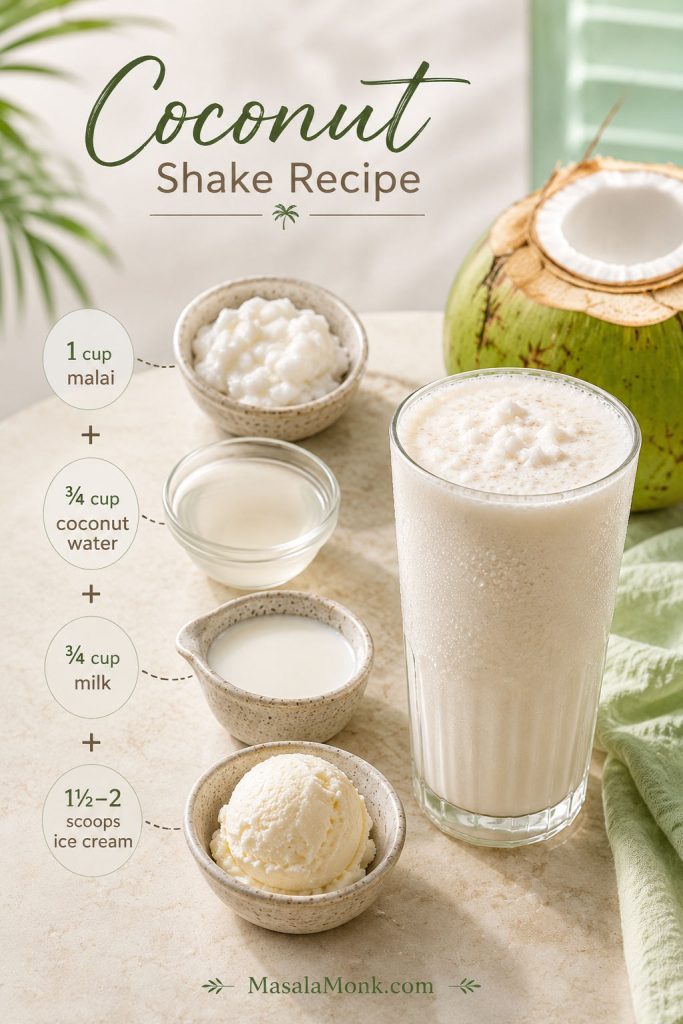
Recipe ratio board showing tender coconut malai, coconut water, chilled milk, vanilla ice cream, and a coconut shake glass.
Use this ratio for two tall glasses. Then adjust coconut water, milk, or ice cream to control texture.

For the creamiest result in this coconut shake recipe, blend the tender coconut flesh with coconut water first, then add chilled milk, ice cream, and sweetener only after tasting. For a lighter homemade glass, jump to the no-ice-cream version; for dairy-free, go to the vegan coconut shake.

This is also a handy recipe when you have already drunk the coconut water and have soft malai left behind. Instead of letting it sit in the fridge until it loses that fresh coconut aroma, blend it into a cold shake while it still tastes delicate and sweet.
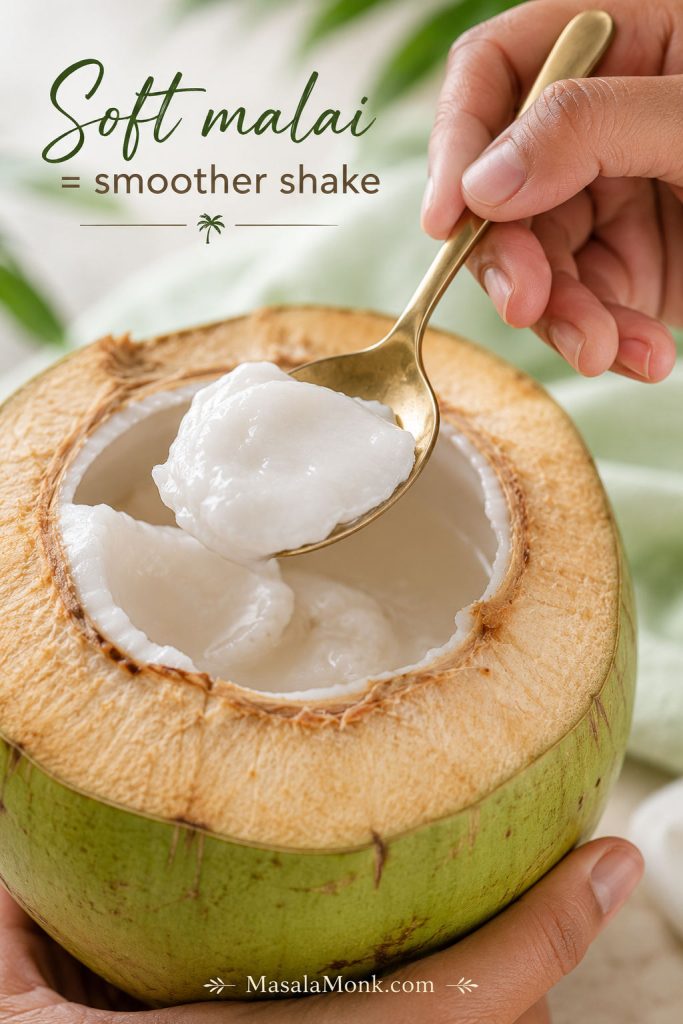
Spoon scooping soft tender coconut malai from a young coconut shell.
Soft, spoonable malai blends more smoothly than firm coconut, so it gives the shake a creamy texture without turning the drink grainy.

The best glass should feel cold from the first sip, but not icy and hollow. It should taste like tender coconut first, then creaminess.

Best coconutTender coconut malai/flesh
Main liquidCoconut water + chilled milk
Creamy versionAdd 1½–2 scoops vanilla ice cream
No-ice-cream versionUse frozen milk cubes or extra malai
Vegan versionUse chilled coconut milk
Prep time10 minutes
Cook time0 minutes
Yield2 tall glasses or 3 small glasses, about 600–750 ml / 20–25 fl oz

What Is Coconut Shake?

Coconut shake is a cold blended drink made with coconut flesh and a chilled liquid such as coconut water, milk, or coconut milk. In many Indian and South Asian kitchens, it usually means a tender coconut milkshake: soft coconut malai blended with tender coconut water, chilled milk, and sometimes ice cream.
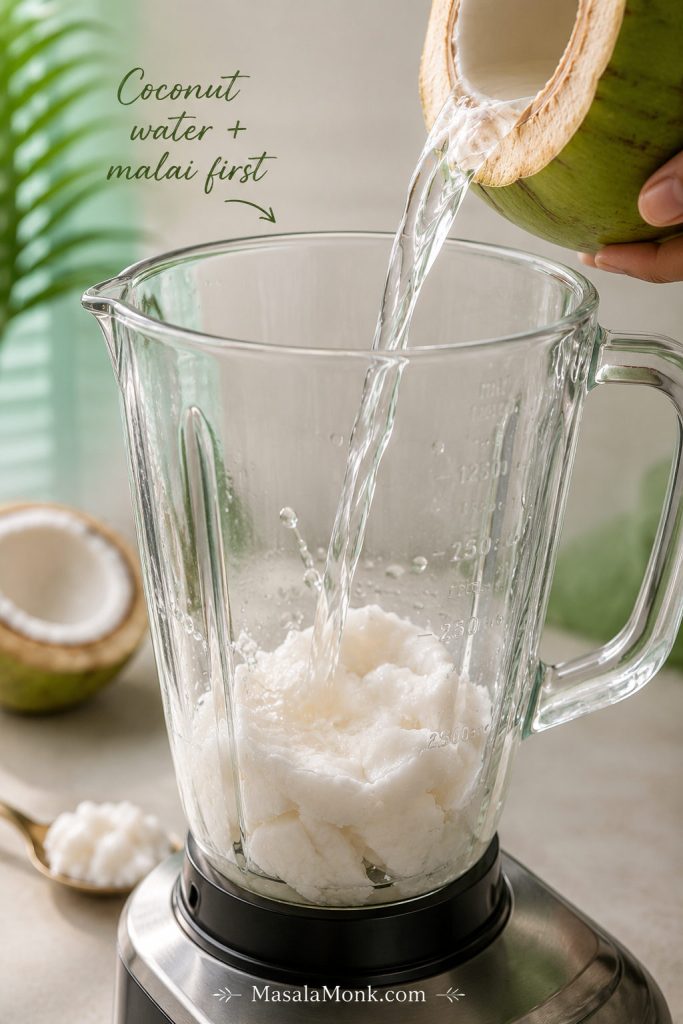
Coconut water being poured into a blender jar filled with tender coconut malai.
Blend coconut water with malai first. The tender coconut breaks down more easily before milk, ice cream, or coconut milk go in.

When coconut is the star, call it a shake. Once coconut milk becomes mostly the base for banana, berries, yogurt, protein powder, or greens, the drink starts behaving more like a smoothie. For fruitier coconut drinks, the flavor variations section covers banana, mango, pineapple, protein, and cardamom ideas.
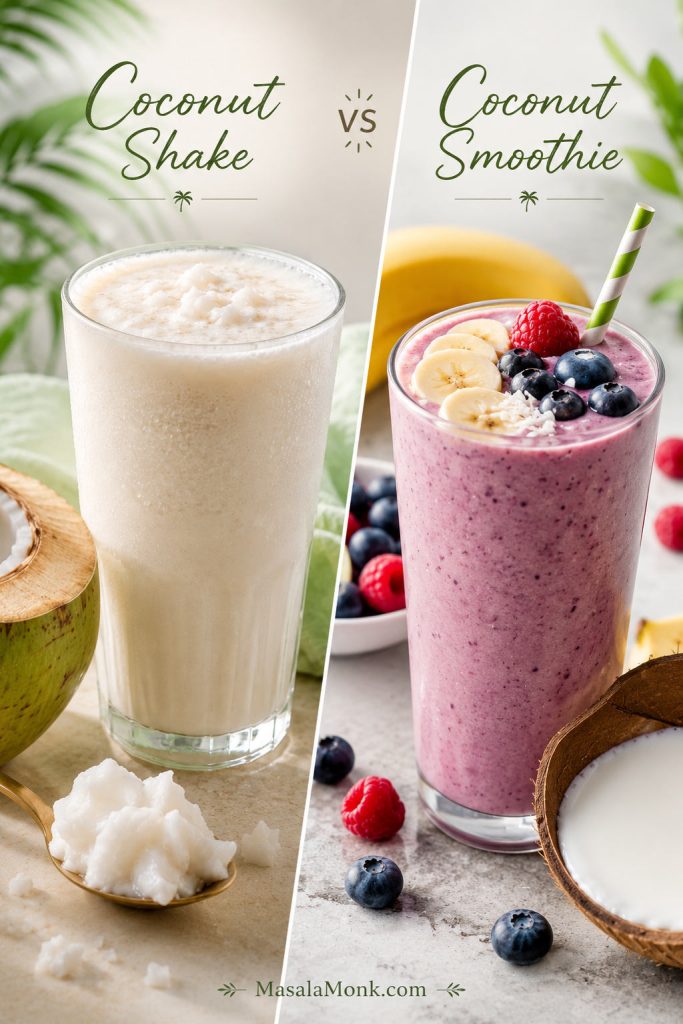
Comparison of a tender coconut shake and a fruit smoothie made with coconut milk.
A coconut shake keeps tender coconut as the main flavor, whereas a coconut smoothie usually uses coconut milk as a base for fruit, protein, or greens.

Coconut water and coconut milk are very different ingredients: coconut water is the clear liquid inside young coconuts, while coconut milk is made from coconut flesh and water. For more on using coconut water in drinks, read our guide to coconut water.

If plain coconut water feels too light and a full ice-cream milkshake feels too heavy, coconut shake sits right in the middle: fresh first, creamy second.

Why This Recipe Works

This is not just a matter of blending coconut and milk. Order, temperature, and balance all matter. The method below keeps coconut in front and creaminess in the background, so the shake tastes full without losing its fresh tender-coconut character.

  • Blending the malai with coconut water first helps the coconut break down before milk and ice cream make the jar heavier.
  • Chilled liquids reduce the need for ice, so the shake stays creamy instead of diluted.
  • Sweetening after tasting keeps the drink balanced when the coconut water is already naturally sweet.
  • Ice cream or frozen milk thickens without hollowing out the flavor, while plain ice mostly adds coldness and dilution. To get that thickness without ice cream, use the no-ice-cream formula instead of adding more plain ice.
  • A short final blend protects the chill, because overblending warms the shake and loosens the texture.

The core idea: Keep coconut water and malai in charge, then add only enough milk, coconut milk, ice cream, or frozen milk to match the glass you want.
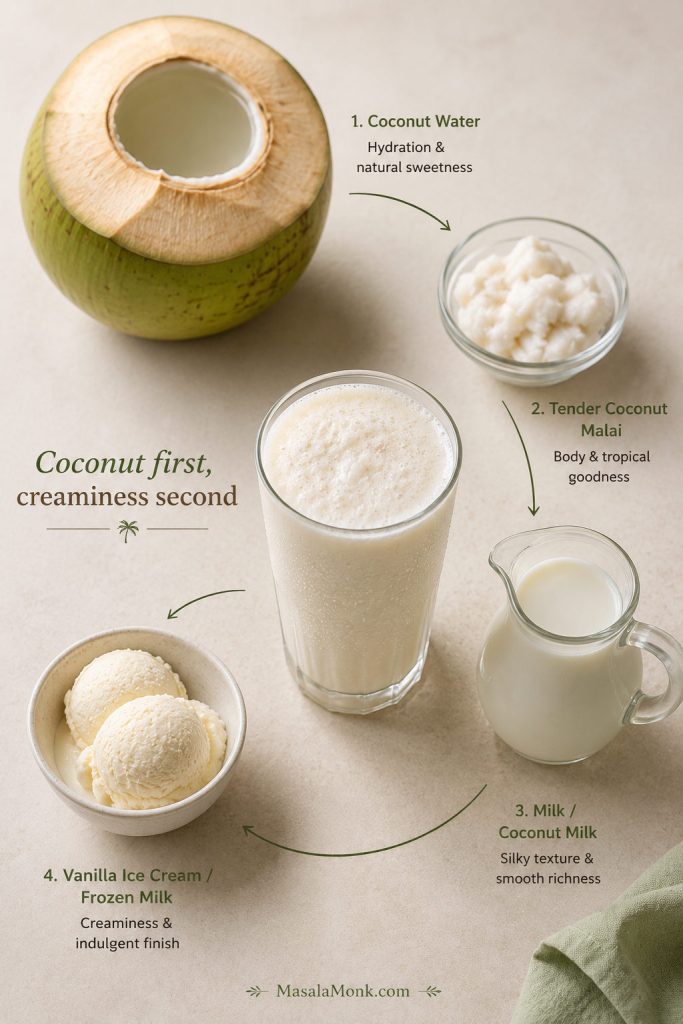
Circular ingredient guide showing coconut water, malai, milk, ice cream, and a finished coconut shake.
Keep coconut water and malai in charge first; then use milk, coconut milk, ice cream, or frozen milk to shape the final glass.

Ingredients That Matter

The ingredient list is short, but the balance matters. Start with fresh malai and coconut water, then decide how rich you want the glass to be. Milk, ice cream, coconut milk, frozen milk, and sweetener are all adjustable; the coconut should stay in charge.
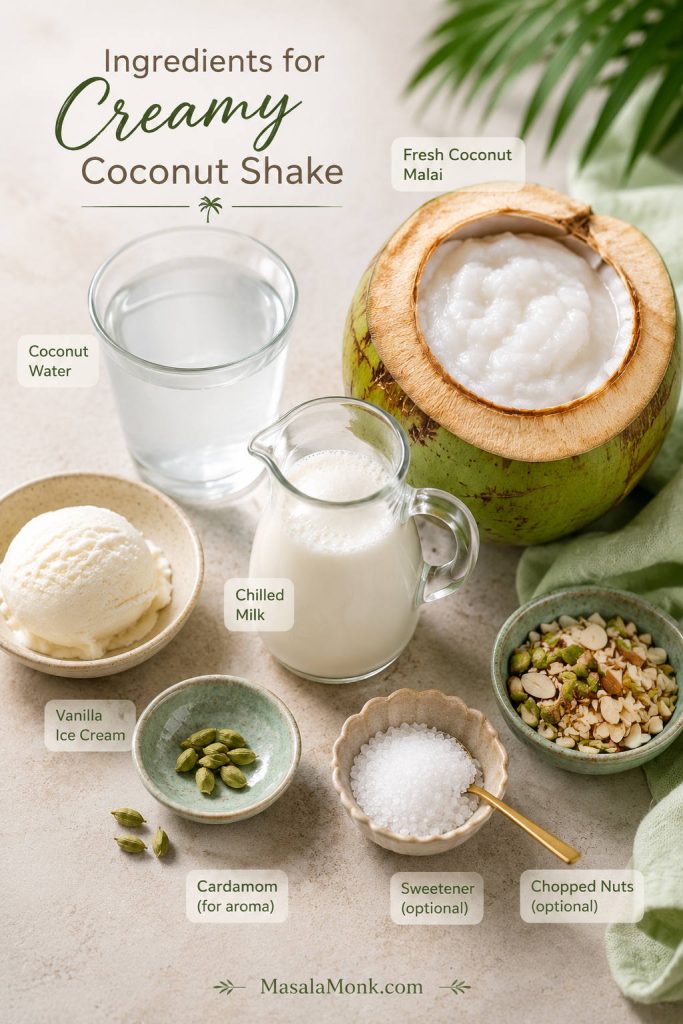
Ingredients for coconut shake including tender coconut malai, coconut water, milk, vanilla ice cream, cardamom, sweetener, and nuts.
Think of the ingredients as texture controls. Malai carries the coconut flavor, chilled liquid keeps it fresh, and ice cream or frozen milk decides thickness.
IngredientAmount for 2 tall glassesWhy it matters
Tender coconut flesh / malai1 cup / about 80–120 gCreates the soft, pulpy coconut base.
Tender coconut water¾–1 cup / 180–240 ml / 6–8 fl ozKeeps the shake light and unmistakably tender-coconut flavored.
Chilled milk¾–1 cup / 180–240 ml / 6–8 fl ozRounds the texture into milkshake territory.
Vanilla ice cream1½–2 scoops / about 90–130 gOptional, but gives dessert-style thickness and sweetness.
Sugar, honey, or dates1–2 tbsp, or to tasteUse only if the coconut water is not sweet enough.
Cardamom or vanilla⅛ tsp cardamom or ½ tsp vanillaAdds aroma without hiding the coconut.
Ice cubes2–4, only if neededChills the shake; use more only for a café-style icy version.
Chopped pistachios, almonds, or coconut bits1–2 tbsp, optionalAdds small bites that make the glass feel freshly blended.

Ingredient Measurement Notes

Measurement note: Tender coconut malai is not as predictable as flour, sugar, or mature grated coconut. Very soft malai can be watery and delicate, while firmer tender coconut flesh weighs more per cup. That is why this recipe gives a practical range of 80–120 g per cup instead of pretending every tender coconut measures the same.

Quick coconut note: Tender coconut is best here because the soft malai blends smoothly and the coconut water gives fresh aroma. If you are using mature coconut or only coconut milk, see which coconut works best so the drink does not turn grainy or too heavy.

Coconut Shake Recipe: Creamy Tender Coconut Milkshake

Classic texture cue: Make the creamy tender coconut milkshake first so you know the target balance before changing the recipe for no-ice-cream, vegan, or lighter versions.
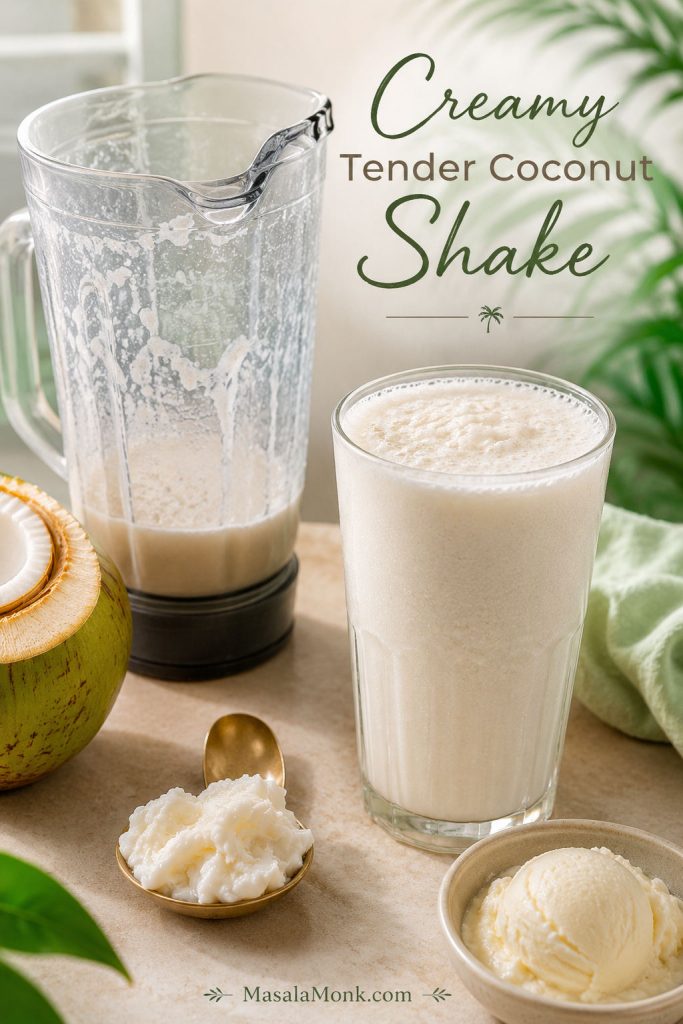
Creamy tender coconut shake in a glass beside a blender jar, malai, coconut water, and vanilla ice cream.
Make the classic tender coconut milkshake first so you know the balance: soft malai, cold coconut water, chilled milk, and optional vanilla ice cream.

Creamy Tender Coconut Shake

This is the coconut shake recipe to make first: soft malai, coconut water, chilled milk, and optional vanilla ice cream blended into a cold, drinkable tender coconut milkshake. It makes about 600–750 ml, depending on the amount of malai and ice cream, which is enough for 2 tall glasses or 3 smaller home glasses.

Prep Time10 minutes
Cook Time0 minutes
Total Time10 minutes
Yield2 tall glasses or 3 small glasses

Total quantity: About 600–750 ml / 20–25 fl oz, depending on the amount of malai and ice cream

Equipment: Blender, mixer-grinder, or high-speed blender; measuring cup; tablespoon; chilled serving glasses.

Ingredients

  • 1 cup tender coconut flesh/malai, about 80–120 g
  • ¾ cup tender coconut water, 180 ml / 6 fl oz, plus more if needed
  • ¾ cup chilled milk, 180 ml / 6 fl oz
  • 1½–2 scoops vanilla ice cream, about 90–130 g, optional but recommended for the creamy version
  • 1 tbsp sugar, honey, or date syrup, optional
  • ⅛ tsp cardamom powder or ½ tsp vanilla extract
  • 2–4 ice cubes, only if the ingredients are not already very cold; use more only for a café-style icy shake
  • 1 tbsp chopped pistachios, almonds, or tender coconut bits, optional

Method

  1. Chill the ingredients. Cold coconut water, cold milk, and chilled glasses give a better shake than a blender full of ice.
  2. Blend the coconut first. Add tender coconut flesh and coconut water to the blender. Blend for 20–30 seconds, until the malai breaks down and the mixture looks slightly cloudy and pulpy.
  3. Add the creamy ingredients. Add chilled milk, vanilla ice cream, cardamom or vanilla, and only a little sweetener.
  4. Blend briefly. Blend for 15–20 seconds, just until the shake looks creamy and moves as one smooth liquid in the blender. Do not overblend after adding ice cream.
  5. Taste and adjust. Add a little more sugar, honey, or date syrup only if the shake needs sweetness. If it is too thick, add coconut water 1–2 tbsp at a time.
  6. Add ice only if needed. Add a few ice cubes and pulse briefly if the shake is not cold enough. Use more ice only when you want a café-style icy shake.
  7. Pour and finish. Pour while the top is still cold and lightly frothy. Garnish with chopped nuts or a few tiny tender coconut bits if you like a little texture.

Recipe Notes

  • Best texture cue: The shake should pour easily but coat the glass lightly.
  • Sweetness cue: Taste before adding sugar because fresh coconut water can already be sweet.
  • No-ice-cream cue: Replace ice cream with ½ cup frozen milk cubes for a lighter but still creamy version.
  • Blending cue: After adding ice cream or frozen milk, blend only until creamy so the shake stays cold and thick.

Visual Method Cues

Chill cue: Cold ingredients protect the texture before the blender even starts.
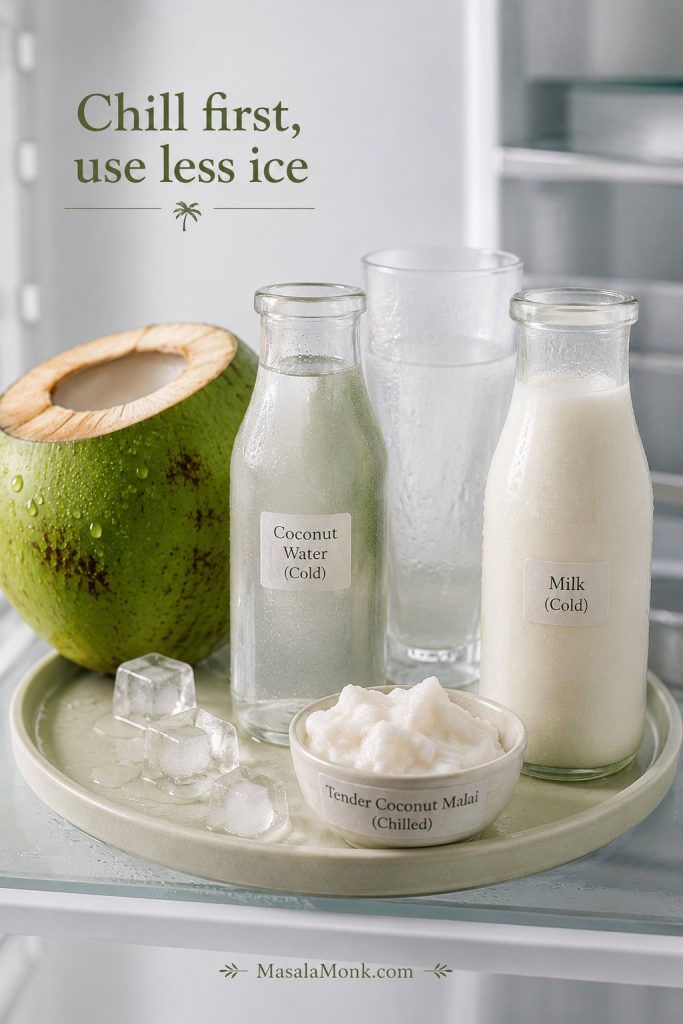
Chilled coconut water, milk, glasses, and tender coconut malai prepared for making coconut shake.
Cold ingredients do more than chill the drink: they protect the creamy texture, so you can use less plain ice and avoid a watery shake.

Blending cue: The coconut water and malai should move together before the heavier ingredients go in.
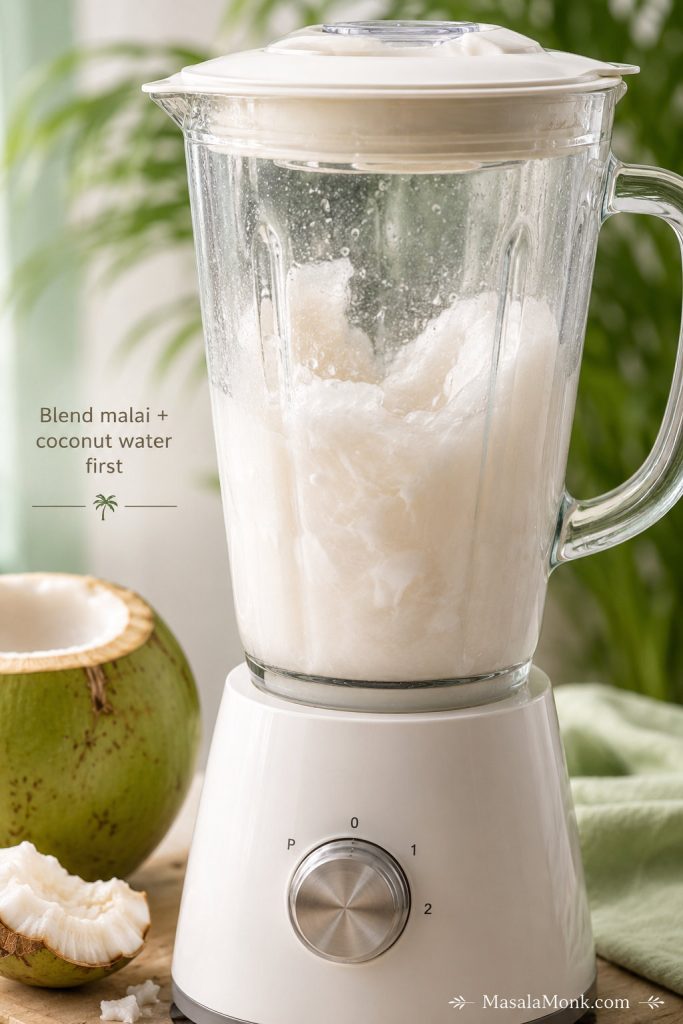
Blender jar with tender coconut malai and coconut water blended into a cloudy, pulpy base.
Once the malai and coconut water move smoothly together, the base is ready for milk, ice cream, or dairy-free coconut milk.

Creamy ingredient cue: Milk and ice cream work best after the coconut base is already loose and blended.
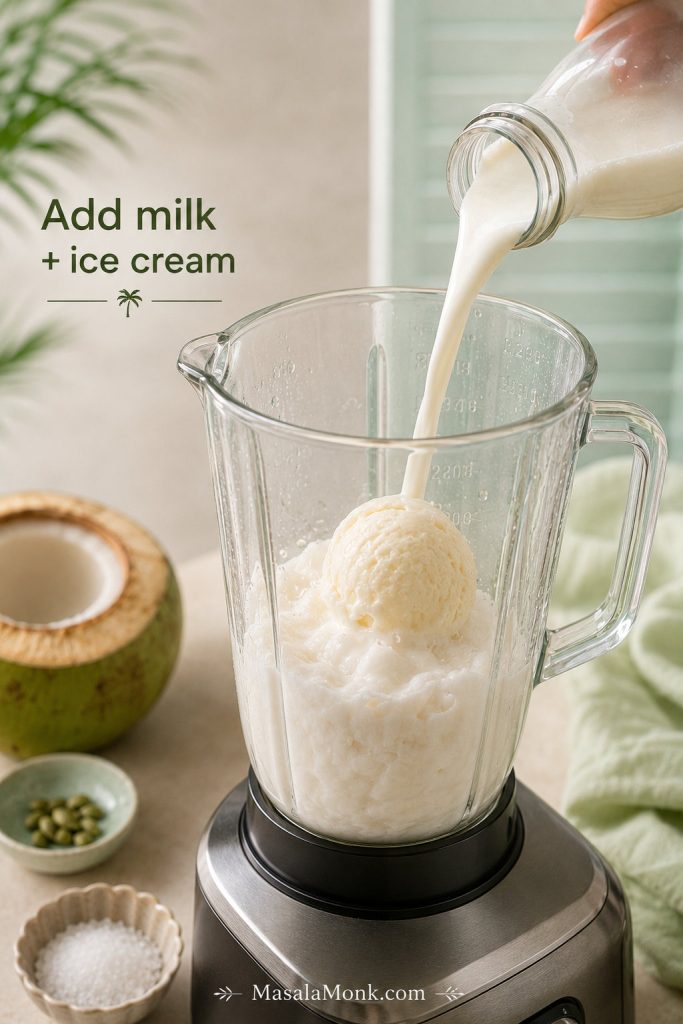
Chilled milk being poured into a blender with tender coconut base and a scoop of vanilla ice cream.
Add milk and ice cream after the coconut base is moving smoothly; otherwise, the blender can struggle before the malai breaks down.

Pouring cue: The best time to serve is when the shake still looks cold, smooth, and lightly frothy.
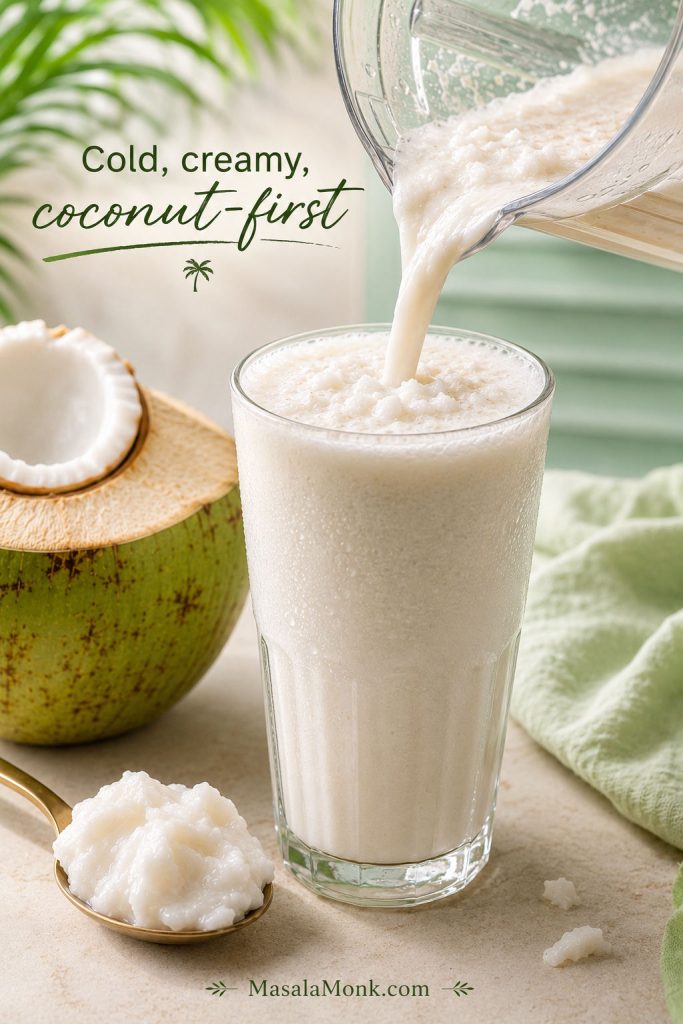
Creamy coconut shake being poured from a blender into a tall glass with light froth.
Pour as soon as the shake looks cold and lightly frothy. At this point, it should coat the glass without feeling heavy.

If your shake turns watery, grainy, too sweet, or too thick, use the troubleshooting table before changing the whole recipe.

You will know this coconut shake is right when it pours smoothly, smells like fresh coconut water, and tastes creamy without losing that tender coconut freshness.

Tender Coconut, Mature Coconut, or Coconut Milk: What Works Best?

Tender coconut gives the best flavor and texture, but the recipe can still work if you only have mature coconut, coconut milk, or coconut cream. The key is knowing what each option changes.
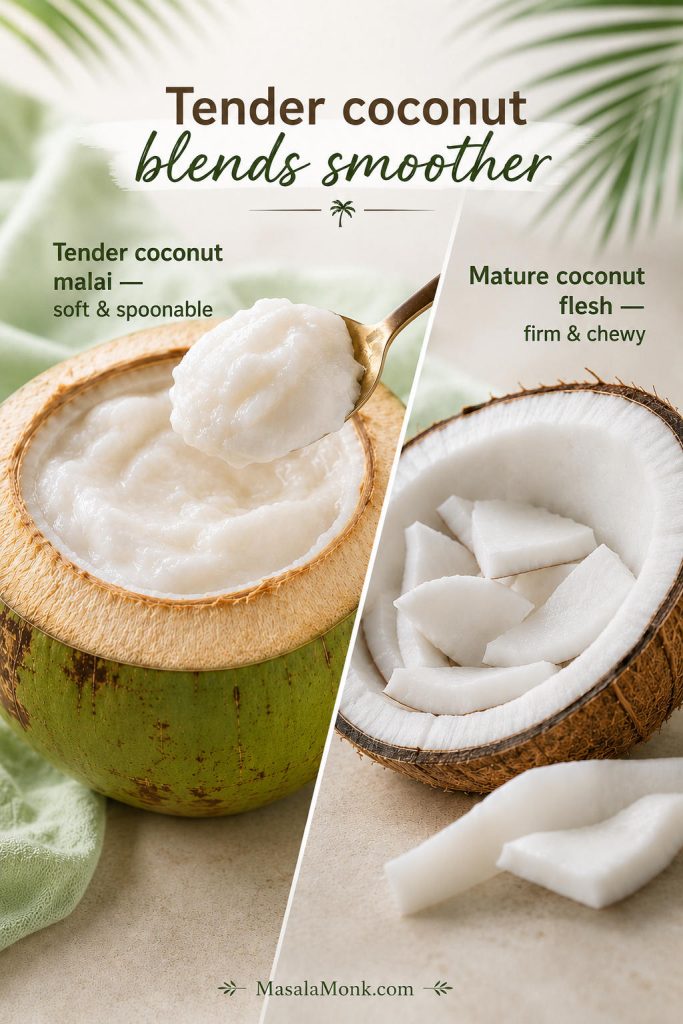
Comparison of soft tender coconut malai and firm mature coconut flesh for making coconut shake.
Tender coconut malai is soft and spoonable, while mature coconut flesh is firmer; therefore, mature coconut may need chopping, longer blending, or straining.

The best malai for this shake should be soft enough to scoop with a spoon. Very soft malai bends, tears, or slips easily, which helps it blend into a smoother drink. Chewy coconut can still work, but chop it small and expect a more pulpy finish.
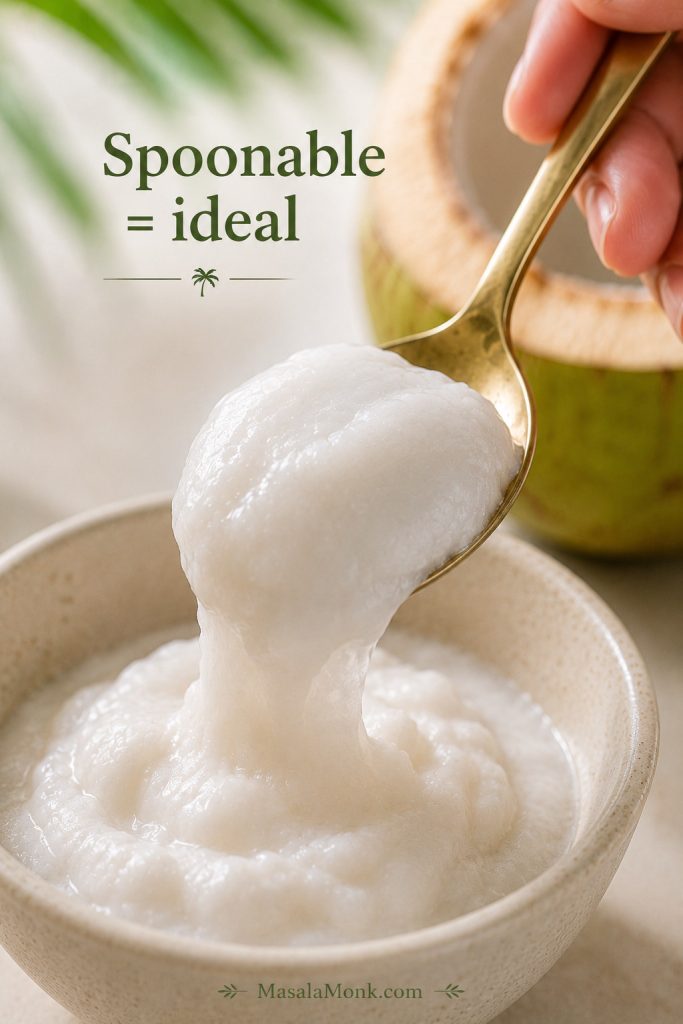
Spoon lifting soft tender coconut malai to show the ideal texture for blending.
A quick spoon test tells you what to expect: soft malai blends smoothly, while firmer coconut needs smaller pieces, longer blending, or straining.

For an outside ingredient comparison, this coconut milk vs coconut water guide explains why coconut water keeps drinks light while coconut milk adds body.

  • Tender coconut / young coconut is the best choice because the malai blends soft and the water adds fresh coconut aroma.
  • Mature fresh coconut is usable in a pinch, but it is firmer and more likely to turn grainy. Grate it finely, blend it longer with coconut water, and strain if needed.
  • Coconut milk is the easiest dairy-free route, but it should support the tender coconut rather than replace it completely when fresh malai is available.
  • Coconut cream makes the shake very thick and rich, so a little goes a long way. Use it when you want a dessert-style vegan shake.

What Should Coconut Shake Taste Like?

A well-made coconut shake should taste cold before it tastes sweet, and like coconut before it tastes like milk. It should sip smoothly through a straw, with just enough thickness to coat the glass lightly. A few tiny malai bits are welcome; grit is not.
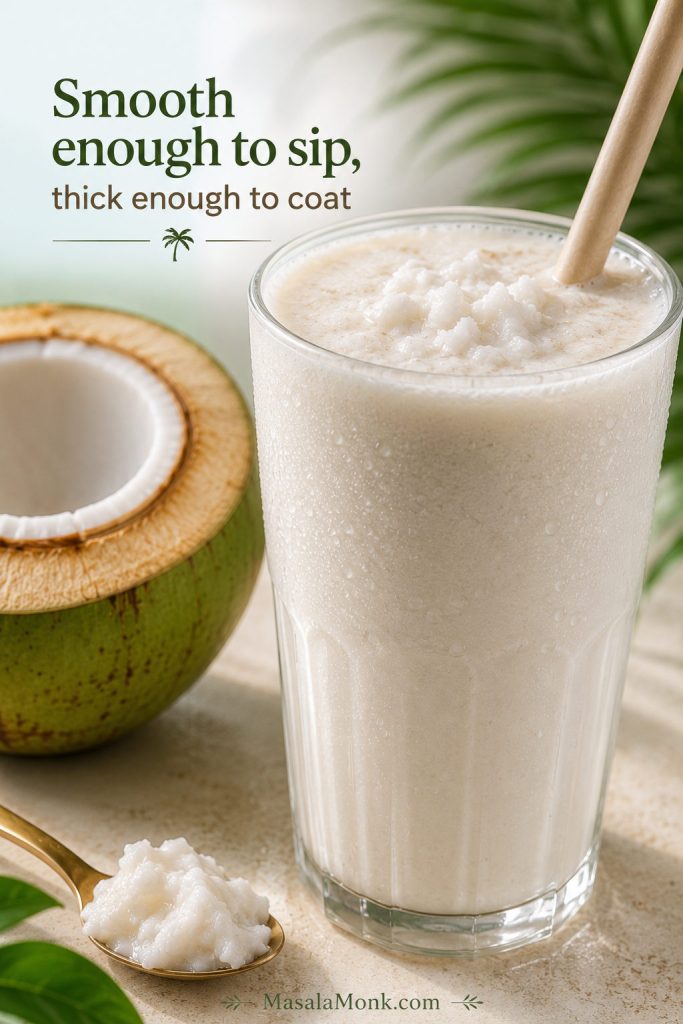
Close-up of coconut shake with a straw, lightly coated glass wall, froth, and tiny malai bits.
The right texture should sip through a straw and lightly coat the glass; if it feels gritty, heavy, or hollow, the balance needs adjusting.

A glass that tastes like melted vanilla ice cream with coconut hiding in the background needs less dairy next time. When the first sip tastes mostly like milk, the coconut ratio is too low. A cold but empty-tasting shake usually has too much ice. For flat flavor, use fresher coconut water, a pinch of cardamom or vanilla, and just a tiny pinch of salt.

Choose Your Style Before You Blend

The easiest way to avoid a disappointing shake is to choose the style before you blend. A café-style shake, a no-ice-cream homemade shake, and a fresh coconut-water shake use similar ingredients, but they should not taste the same.
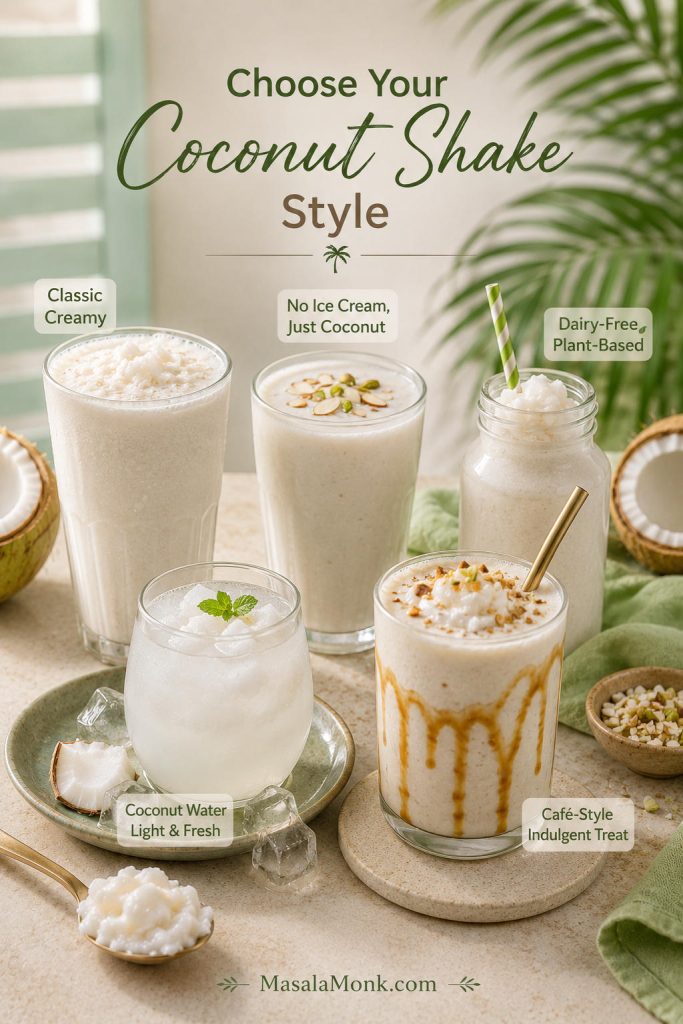
Five coconut shake styles arranged together: classic creamy, no ice cream, dairy-free, coconut water, and café-style.
Choose the style before you blend: café-style needs cold pulpy richness, while coconut water and no-ice-cream versions need a lighter balance.
You want…Make this versionUse this base
A creamy café-style shakeMain recipe with ice creamTender coconut + coconut water + milk + ice cream
A homemade shake without ice creamFrozen milk versionTender coconut + coconut water + milk + frozen milk cubes
A dairy-free coconut shakeVegan coconut shakeTender coconut + coconut water + coconut milk
No milk and no added sugarFresh coconut water shakeCoconut water + malai + optional dates
A lighter summer drinkCoconut water shakeCoconut water + tender coconut + optional yoghurt or coconut milk
A 500 ml bottleScaled bottle versionUse the measurement table and leave headspace
A thicker smoothie-like drinkBanana or extra-malai variationAdd frozen banana or more tender coconut flesh

Without Ice Cream

No ice cream does not mean thin or boring. The trick is to replace the cold thickness ice cream gives, not just its sweetness. Frozen milk cubes, extra malai, soaked cashews, coconut cream, or frozen banana can all make the shake feel full instead of thin.
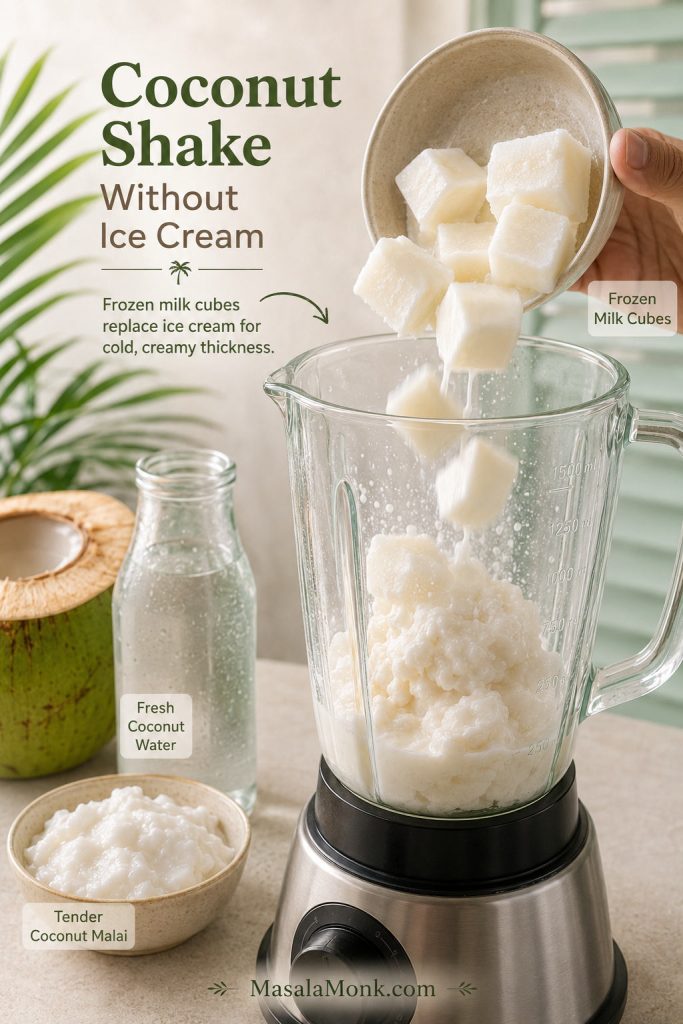
Frozen milk cubes being added to a blender with tender coconut malai and coconut water for a no-ice-cream coconut shake.
Frozen milk cubes replace the cold thickness that ice cream gives, so the shake stays creamy without turning into a dessert-style milkshake.

This version is for the days when you want homemade creaminess, not dessert. It feels lighter than the ice-cream shake but still has enough richness to taste deliberate.

No-Ice-Cream Formula

  • 1 cup tender coconut flesh/malai, about 80–120 g
  • ¾ cup tender coconut water, 180 ml
  • ½ cup chilled milk, 120 ml
  • ½ cup frozen milk cubes
  • 1–2 tbsp sugar, honey, date syrup, or 1–2 soft dates
  • Pinch of cardamom or ½ tsp vanilla

Blend the tender coconut and coconut water first. Add chilled milk, frozen milk cubes, sweetener, and cardamom. Blend briefly until creamy and serve immediately.

Texture cue: When you skip ice cream, the thickener matters more than extra ice because it decides whether the drink feels creamy, rich, or smoothie-like.
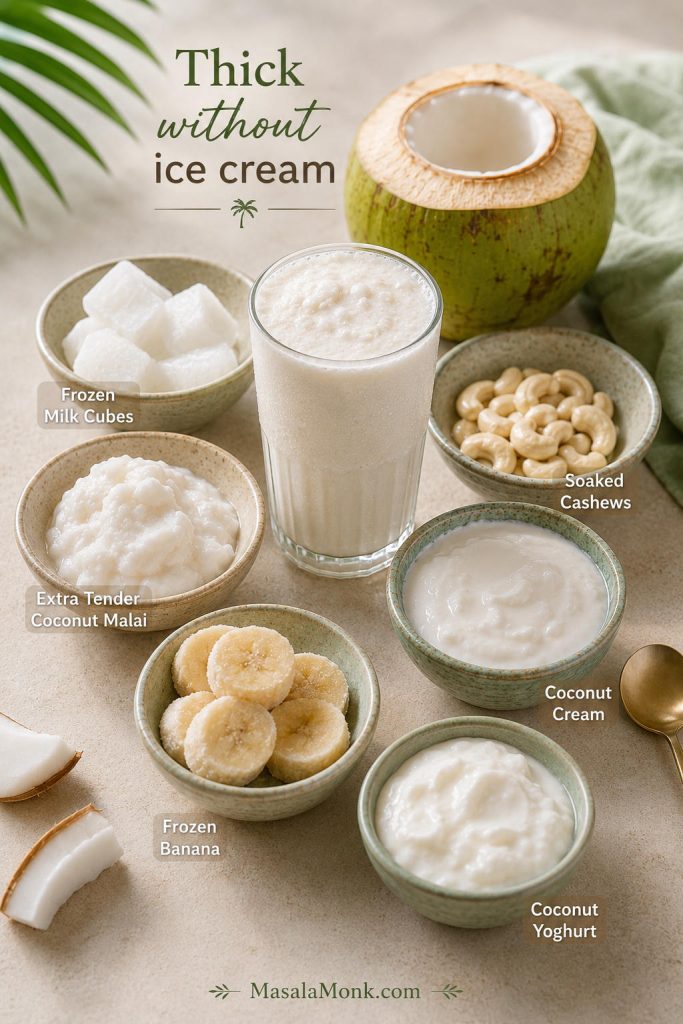
Thickener board with frozen milk cubes, malai, soaked cashews, coconut cream, frozen banana, coconut yoghurt, and coconut shake.
Without ice cream, choose the thickener by texture: frozen milk keeps it classic, cashews add richness, and banana makes it more smoothie-like.
ThickenerBest forAmount for 2 tall glasses
Frozen milk cubesClassic no-ice-cream shake½ cup
Extra tender coconut malaiMore coconut flavor¼ cup extra
Soaked cashewsRich Indian café texture1–2 tbsp
Coconut creamThick vegan shake2–4 tbsp
Frozen bananaDairy-free body½ banana
Coconut yoghurtLight tangy version2–3 tbsp

For a lighter drink, use fewer frozen milk cubes and more coconut water. To make it richer, add soaked cashews or a spoon of cream. Cold ingredients matter more here than extra ice, because frozen milk gives body while plain ice mostly dilutes.

Without Milk or Added Sugar

This is the cleanest version, but also the least forgiving. Because there is no milk, ice cream, or sugar to cover anything, the coconut itself has to taste good. When the coconut water is sweet and the malai is soft, the result is light, cold, and beautifully fresh.
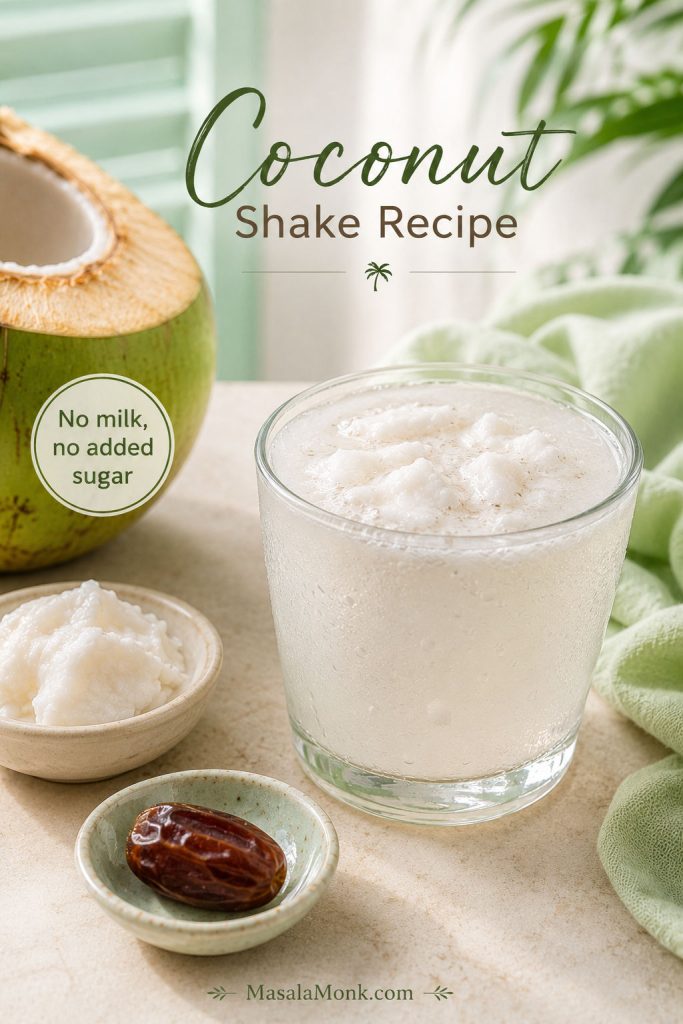
Light coconut shake made with coconut water, tender coconut malai, and an optional date, without milk or sugar.
This no-milk, no-added-sugar coconut shake works best when the coconut water is naturally sweet and the malai is soft enough to blend.
  • 1 cup tender coconut water, 240 ml / 8 fl oz
  • ¾–1 cup tender coconut flesh, about 80–120 g
  • 4–5 ice cubes, or use chilled coconut water instead
  • 1–2 soft dates, optional
  • Pinch of cardamom, optional

Blend the coconut water and tender coconut flesh until smooth. Add ice only if needed and pulse briefly. If the shake tastes flat, add one soft date or a tiny pinch of salt. Do not add sugar automatically; taste the coconut water first.

This version depends on the coconut more than any other. If the coconut water is sweet and the malai is soft, it tastes fresh and delicate. If the coconut is bland, add one date, a spoon of coconut cream, or a few frozen coconut-water cubes to give it more body without turning it into the rich ice-cream version.

Dairy-Free Version with Coconut Milk

For a vegan coconut shake, replace dairy milk with chilled coconut milk while keeping tender coconut at the center. Carton coconut milk keeps the drink lighter, canned coconut milk gives it more milkshake body, and coconut cream is the richest option, so treat it like a thickener rather than the main liquid.
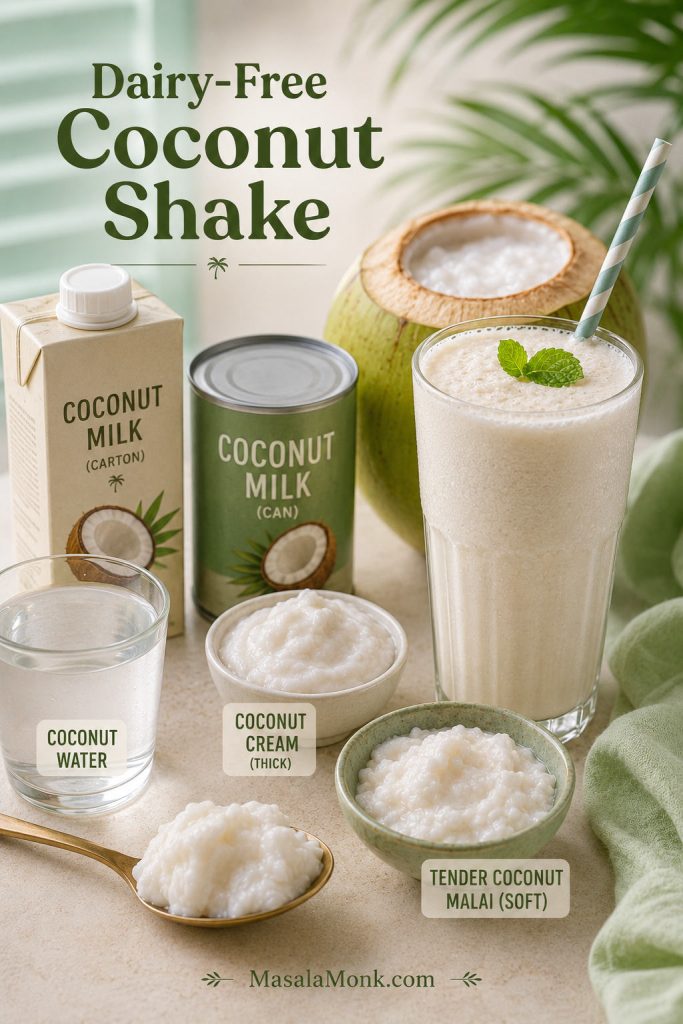
Dairy-free coconut shake with coconut milk options, coconut cream, tender coconut malai, and coconut water.
Carton coconut milk keeps a vegan coconut shake light, canned coconut milk adds body, and coconut cream makes it richer fast.
  • 1 cup tender coconut flesh/malai
  • ¾ cup tender coconut water
  • ¾ cup chilled coconut milk
  • 1–2 dates or 1 tbsp maple syrup, optional
  • ½ frozen banana or 2 tbsp coconut cream, optional for thickness
  • Pinch of cardamom or ½ tsp vanilla

Start with a smaller amount if you use canned coconut milk, then thin the shake with coconut water. Carton coconut milk may need frozen banana, extra malai, or a little coconut cream to get a thicker result. Keep tasting as you adjust; the drink should still feel fresh and coconut-forward, not like a heavy smoothie that has lost the tender coconut flavor.

The Lighter Coconut Water Version

A coconut water shake is lighter than a coconut milkshake, but it is not the lesser version. Make it when the coconut water is sweet, the malai is soft, and you want the drink to stay refreshing instead of rich.
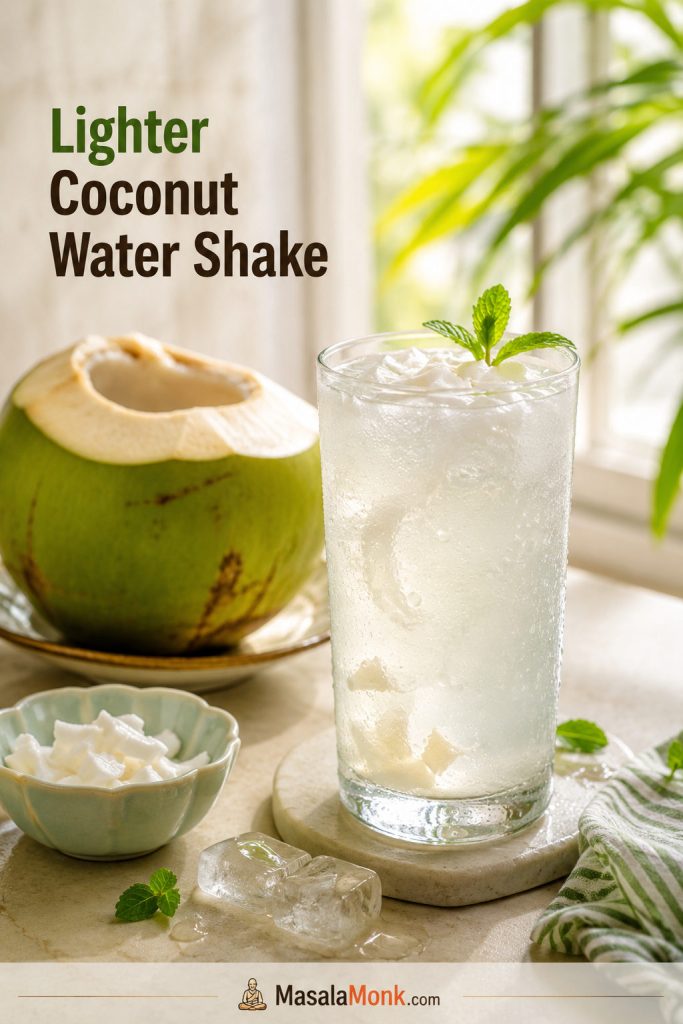
Lighter coconut water shake in a tall chilled glass with tender coconut malai and an opened young coconut.
The lighter coconut water version is not a compromise; instead, it lets sweet coconut water and soft malai taste clean, cold, and easy to finish.
  • 1 cup coconut water, 240 ml / 8 fl oz
  • ½–¾ cup tender coconut flesh
  • 1 tbsp cream, milk, coconut milk, or yoghurt, optional for body
  • 1 tsp sugar, honey, or date syrup, optional
  • Ice only if needed

Blend the coconut flesh with coconut water until smooth. Add the optional creamy ingredient only if you want more body. This lighter version also works well with mango, pineapple, berries, or banana when you want a fruitier coconut-water drink. For more ideas in that direction, see our coconut water smoothie and health drink ideas.

Once you have chosen the version you want, the next question is usually quantity. This coconut shake recipe is flexible because a small glass needs a different balance from a 500 ml bottle, especially when ice cream or frozen milk is involved.

Measurements: 250 ml, 16 oz, and 500 ml

Most coconut shake recipes give only “1 glass” or “2 servings,” but glass size changes everything. A small Indian glass, a tall café cup, and a 500 ml bottle do not need the same amount of coconut water, milk, or thickener. The numbers below are approximate blends for the final serving size.
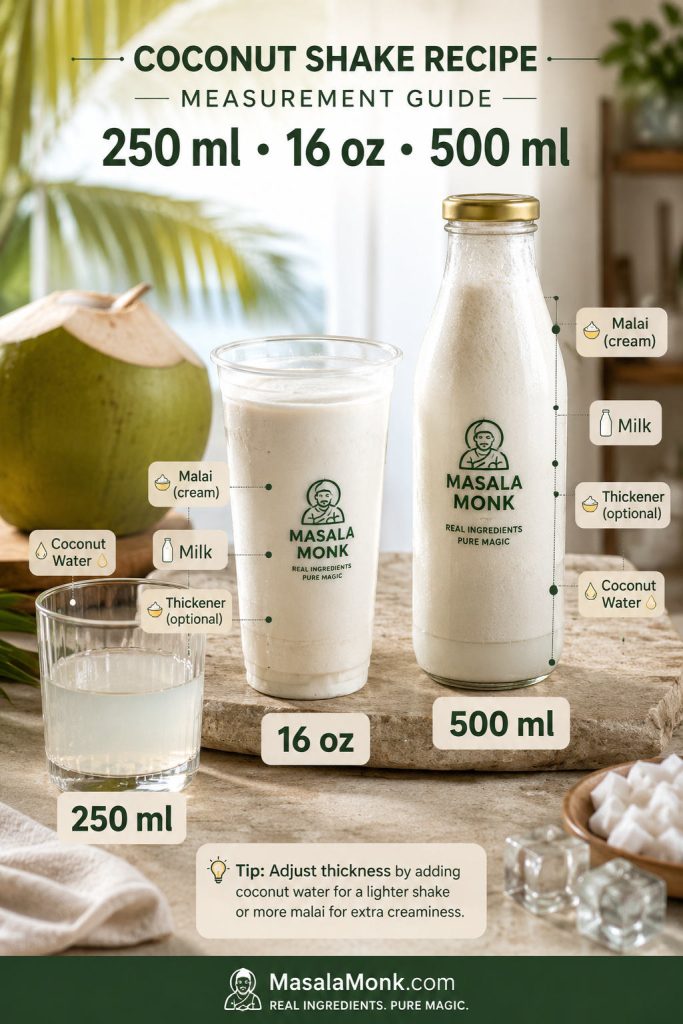
Measurement guide showing coconut shake portions for a 250 ml glass, 16 oz cup, and 500 ml bottle.
A 250 ml glass, 16 oz cup, and 500 ml bottle need different ratios. Malai, milk, ice cream, foam, and headspace all change the final pour.

If you are using ice cream, start with the lower end of the coconut water and milk range so the glass does not overflow.

Target servingCoconut waterTender coconut fleshMilk or coconut milkIce cream or thickener
250 ml glass70–90 ml35–50 g60–80 ml½ scoop ice cream or 2–3 tbsp frozen milk
16 oz / 475 ml cup140–180 ml70–90 g120–140 ml1–1½ scoops or ⅓–½ cup frozen milk
500 ml bottle160–200 ml80–100 g120–150 ml1½ scoops or ½ cup frozen milk
2 tall glasses / 600–750 ml180–240 ml80–120 g180–240 ml1½–2 scoops or ½ cup frozen milk

How to Adjust the Ratios

For a 500 ml bottle: Leave a little headspace if using ice cream or frozen milk. The shake can foam slightly after blending and may thicken as it sits. Shake the bottle before drinking.

Do not worry if your coconut does not match the table perfectly. Tender coconuts are not standardized ingredients; some give lots of water, some give thick malai, and some barely give enough flesh for one small glass. Blended drinks do not measure like water either: malai, ice cream, frozen milk, and foam can all change the final volume.

Treat these as starting ratios, then adjust by texture: malai or frozen milk for thickness, coconut water for loosening.
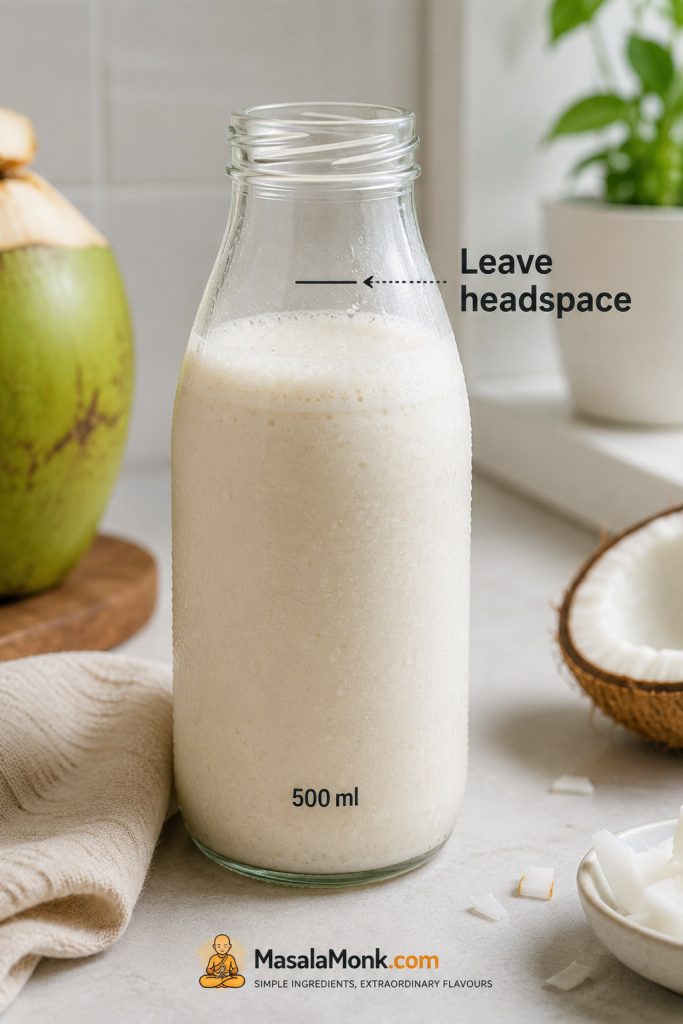
Clear 500 ml bottle of coconut shake filled below the shoulder with visible headspace and condensation.
For a 500 ml coconut shake bottle, stop below the shoulder so there is room for foam, shaking, and slight thickening as it sits.

Once you know your serving size, the next thing that affects texture is the blender itself. A powerful blender can make even firmer coconut smoother, while a small portable blender needs softer malai, smaller pieces, and more liquid to move properly. After scaling, check the texture ladder so the larger bottle does not turn watery or too heavy.

Equipment: Blender, Mixer-Grinder, or Portable Blender

You do not need special equipment, but the blender does affect texture. A small blender can still make a good coconut shake, but it needs a little kindness: smaller malai pieces, liquid first, and no overpacking.
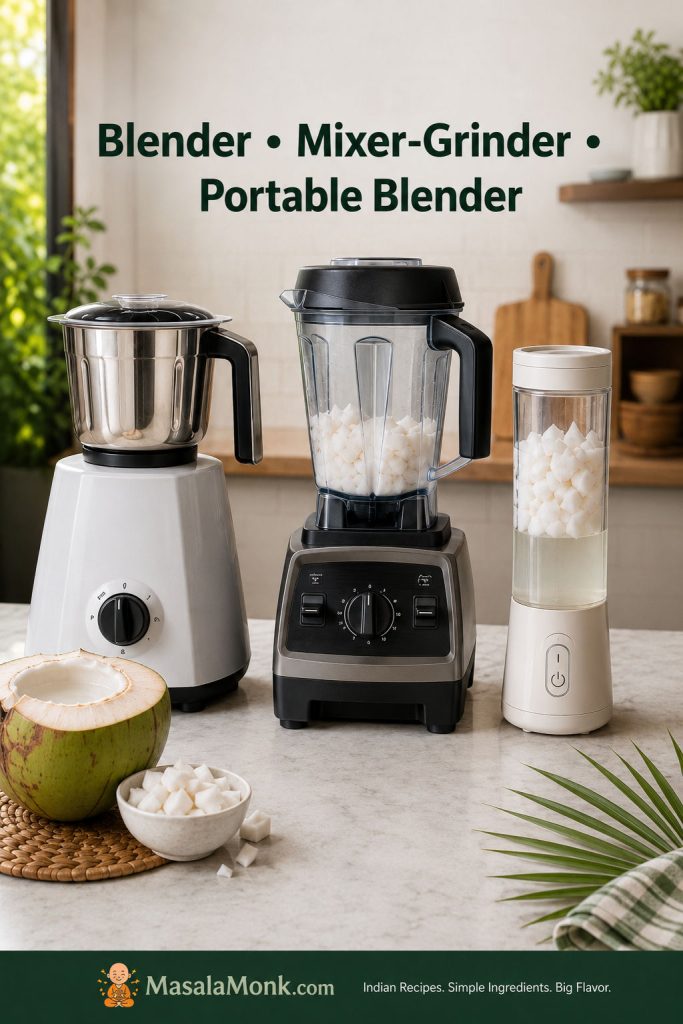
Mixer-grinder, high-speed blender, and portable blender set up for coconut shake with chopped malai and coconut water.
A mixer-grinder, blender, or portable blender can all work; however, smaller jars need liquid first so the malai can move.
  • Indian mixer-grinder: good for the everyday home version. Chop the malai first and blend it with coconut water before adding milk.
  • High-speed blender: gives the smoothest texture, especially if the coconut is slightly firmer or the shake is thick.
  • Portable blender: works for a small 300–500 ml shake if you add liquid first, then chopped malai, then ice or frozen milk. Do not pack the jar tightly.
  • Fine strainer: useful only if mature coconut makes the drink gritty. If you are using soft tender coconut, a little pulp is usually pleasant.

If the blades spin but the malai is not moving, the jar needs more liquid, not more blending time. Stop, shake the jar gently, add a splash more coconut water, and blend again. If your blender is small, make the shake in two short blends instead of forcing everything into one jar.

How to Make Coconut Shake Thick and Creamy

Thickness should come from coconut, milk, frozen milk, or ice cream — not from a blender full of plain ice. Use this as a texture ladder and stop when the shake matches the glass you want.
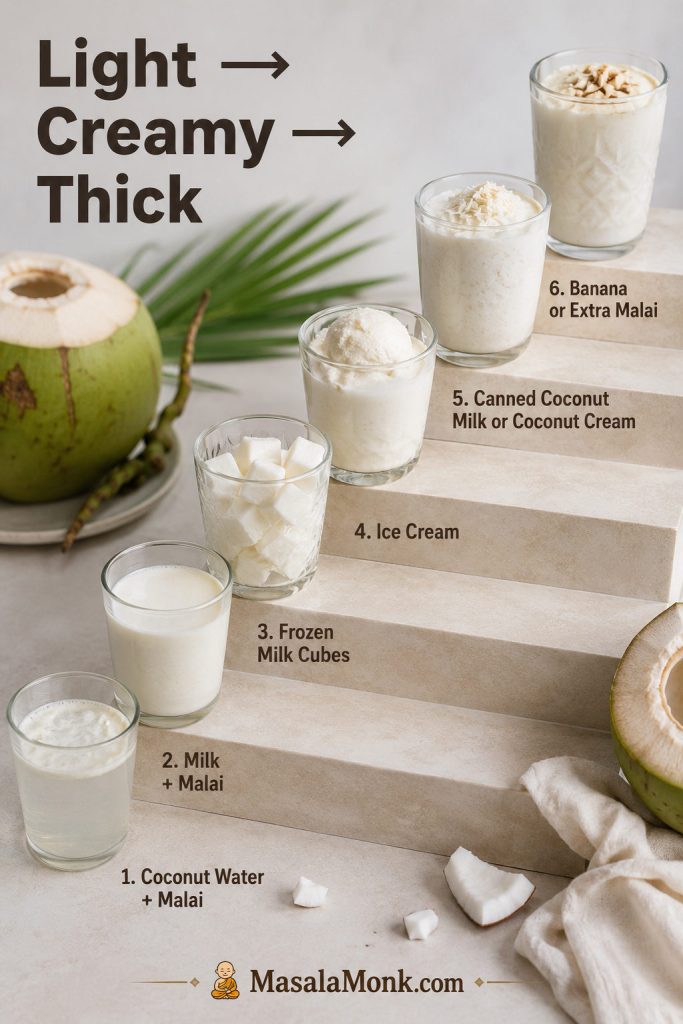
Texture ladder showing coconut shake styles from light coconut water to thicker milk, ice cream, coconut cream, and banana versions.
Thickness should come from malai, frozen milk, coconut milk, ice cream, or banana—not from filling the blender with plain ice.
Texture wantedBest baseWhat it tastes like
Light and freshCoconut water + soft malaiClean, cold, coconut-first
Creamy homemadeMilk + malaiSmooth and gentle, not too rich
Thick without ice creamFrozen milk cubesCold and full without dessert sweetness
Dessert-styleVanilla ice creamRicher, sweeter, café-like
Vegan thickCanned coconut milk or a spoon of coconut creamCreamy and dairy-free
Smoothie-likeFrozen banana or extra malaiThicker, softer, more filling

Texture check: before serving, compare the shake with what you wanted: light, creamy, thick, or dessert-style.
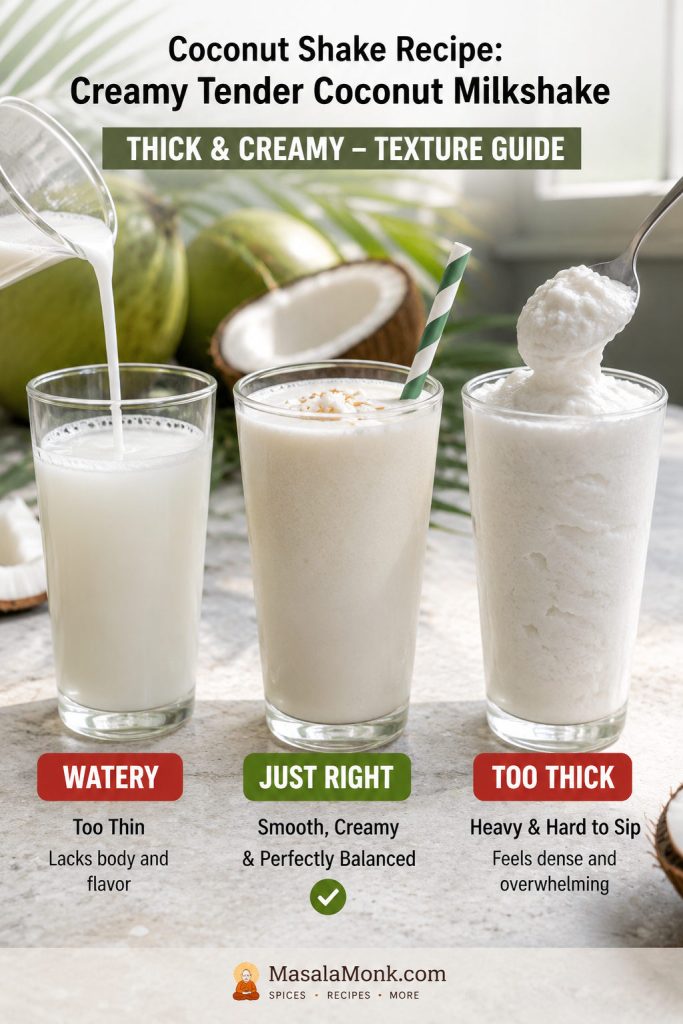
Three coconut shake glasses showing watery, just-right creamy, and too-thick textures.
A good coconut shake should pour easily, look creamy, and still taste like tender coconut; when it looks watery or heavy, adjust before serving.

If your homemade shake never tastes like the one from a juice shop, the answer is usually not more sugar. The shop-style glass is colder, slightly thicker, and a little pulpy. Chill the liquids, keep a spoonful of tiny malai bits for the end, and avoid blending the final shake until it turns warm.

After you make the plain coconut version once, variations become much easier. You will know how thick the base should feel, so fruit, protein powder, or extra flavorings become adjustments rather than guesses.

Flavor Variations

Once you understand the base, variations stop feeling random. Keep the coconut in charge, then add only enough fruit, spice, protein, or extra creaminess to change the mood of the glass.
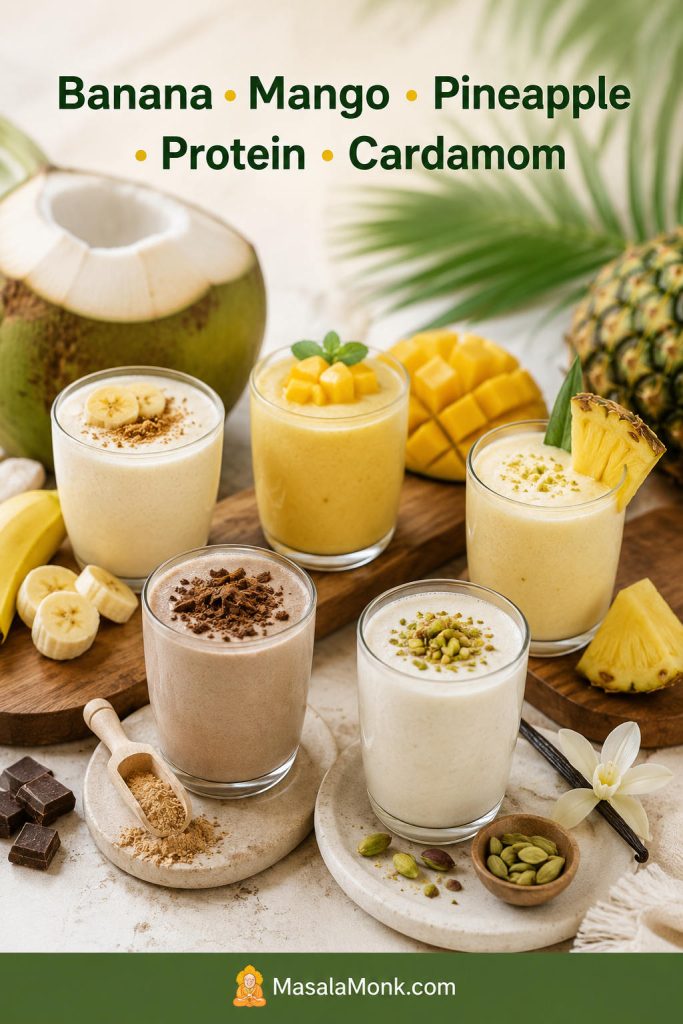
Flavor variation board with coconut shakes for banana, mango, pineapple, protein, and cardamom.
Once the base is balanced, banana, mango, pineapple, protein powder, cardamom, or vanilla can change the mood without hiding the coconut.

Banana Coconut Shake

For a thicker banana version, blend in ½ frozen banana. It adds natural sweetness and a soft smoothie-like texture, so start with little or no added sugar. This works especially well in no-ice-cream and vegan coconut shakes.

Mango Coconut Shake

Mango makes the shake sweeter, thicker, and more seasonal. Use ½ cup mango pulp or chopped ripe mango, then taste before adding sugar. If you want a classic Indian mango drink without the coconut angle, see our mango shake recipe.

Pineapple Coconut Shake

Pineapple changes the mood completely. Blend in ½ cup frozen pineapple for a colder, brighter, tropical version, especially if you are using coconut milk instead of dairy milk. For more pineapple-coconut inspiration, our piña colada drinks guide has classic, frozen, and virgin-style ideas.

Protein Coconut Shake

For a higher-protein version, blend in 1 scoop vanilla protein powder and add 2–4 tbsp extra coconut water or milk if the shake becomes too thick. Keep the flavor simple; chocolate or heavily flavored powders can easily overpower the tender coconut.

Cardamom, Vanilla, and Flavor Notes

Cardamom gives coconut shake a soft Indian milkshake flavor, especially with pistachios or almonds. Vanilla makes the drink taste more café-style, especially when you use vanilla ice cream. Use either lightly; the coconut should still be the first thing you notice.

Café-Style or Mr Coconut-Inspired Coconut Shake

For a café-style or Mr Coconut-inspired coconut shake, do not make it perfectly smooth or overly milky. The charm is cold coconut water, soft malai, a little vanilla richness, and tiny coconut bits that remind you it came from a real tender coconut.
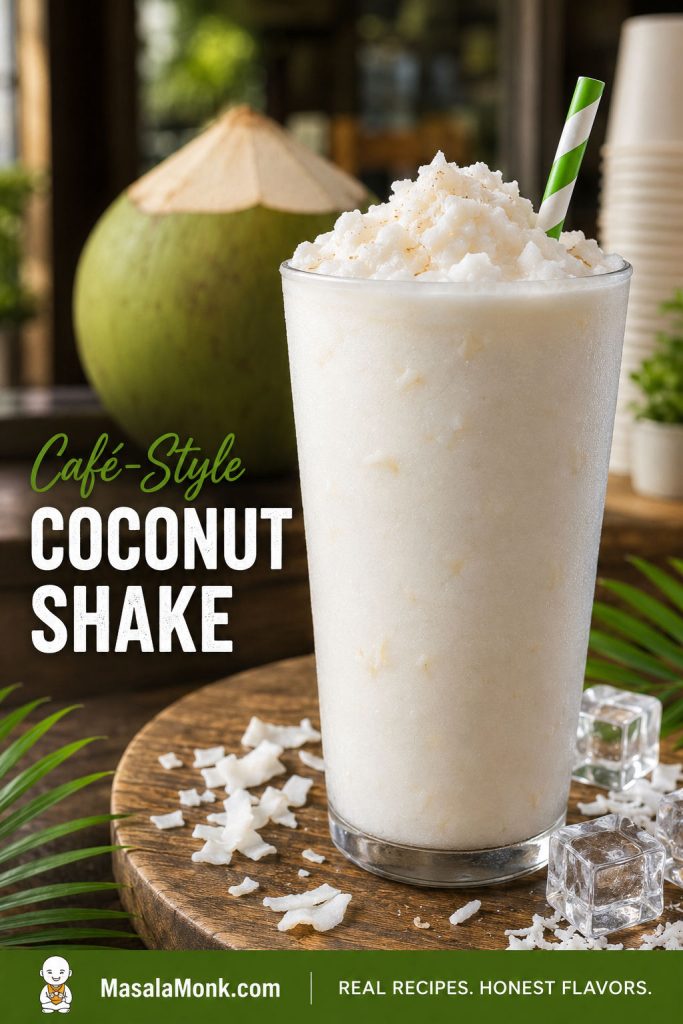
Café-style coconut shake in a tall chilled glass with icy texture, straw, froth, and tiny coconut bits.
A café-style coconut shake should feel colder, slightly pulpy, and more indulgent while still letting tender coconut stay noticeable.

If you are chasing the shop-style version, do not make it too polite. It should be colder, a little sweeter, and slightly pulpy, with more emphasis on cold refreshment than dairy creaminess.

To make one café-style glass, blend ¾ cup coconut water, ½ cup tender coconut malai, 1–1½ scoops vanilla ice cream, and 4–5 ice cubes. Blend until mostly smooth, then stir in 1 tablespoon tiny coconut bits for texture. The trick is not to make it perfectly smooth; those little coconut bits make each sip taste fresh instead of flat.

Thai-Style Coconut Shake

A Thai-style coconut shake is usually icier and sweeter than the classic tender coconut milkshake. Use coconut water, coconut milk, ice, sugar syrup, and a spoon of coconut cream if you want it richer. Serve it very cold so it stays refreshing rather than heavy.
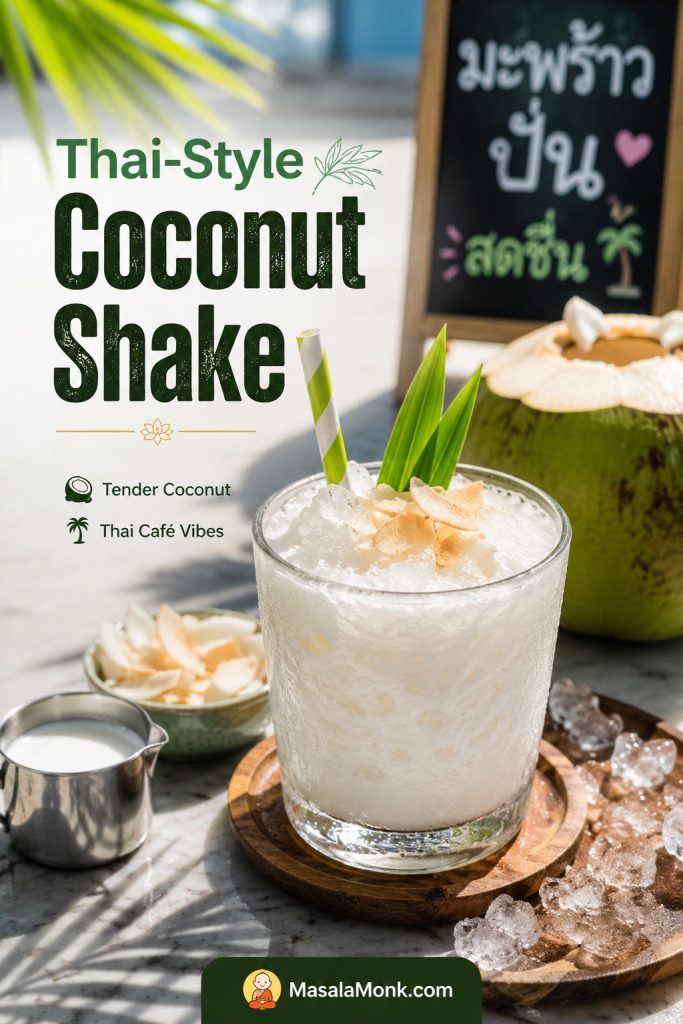
Thai-style coconut shake in a shorter icy glass with coconut milk, coconut cream, and tropical café styling.
Thai-style coconut shake is usually icier and sweeter, so serve it very cold and use coconut cream carefully to avoid making it too heavy.

Is Coconut Shake Light or Dessert-Like?

The lighter version is not the punishment version. On a very hot day, coconut water and soft malai can taste better than a heavy ice-cream shake because the coconut stays clean, cold, and easy to finish. If the coconut itself is sweet and fragrant, the lighter glass may taste more coconut-forward than the rich one.

For dessert-style richness, add milk, ice cream, cream, condensed milk, or nuts. For a lighter summer glass, stay closer to coconut water, malai, and just enough milk or coconut milk to round the texture.
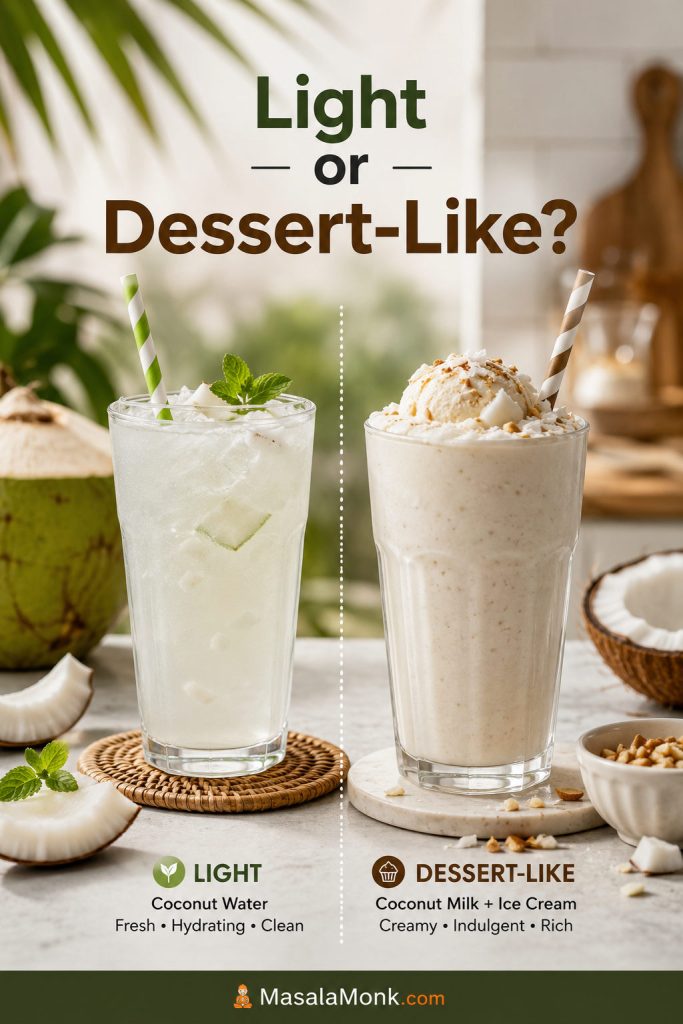
Comparison of a light coconut water shake and a richer dessert-style coconut milk and ice cream shake.
The lighter version is not the punishment version; meanwhile, the dessert-style shake is best when you want a richer, creamier glass.

How to Store Coconut Shake Without Losing the Fresh Taste

This is not a make-ahead milkshake. It rewards you for blending it right before serving, when it is still cold, creamy, and fragrant. Fresh tender coconut drinks lose their clean flavor quickly, and milkshake-style versions can separate as they sit. When you must hold it, keep it covered in the fridge and drink it the same day.
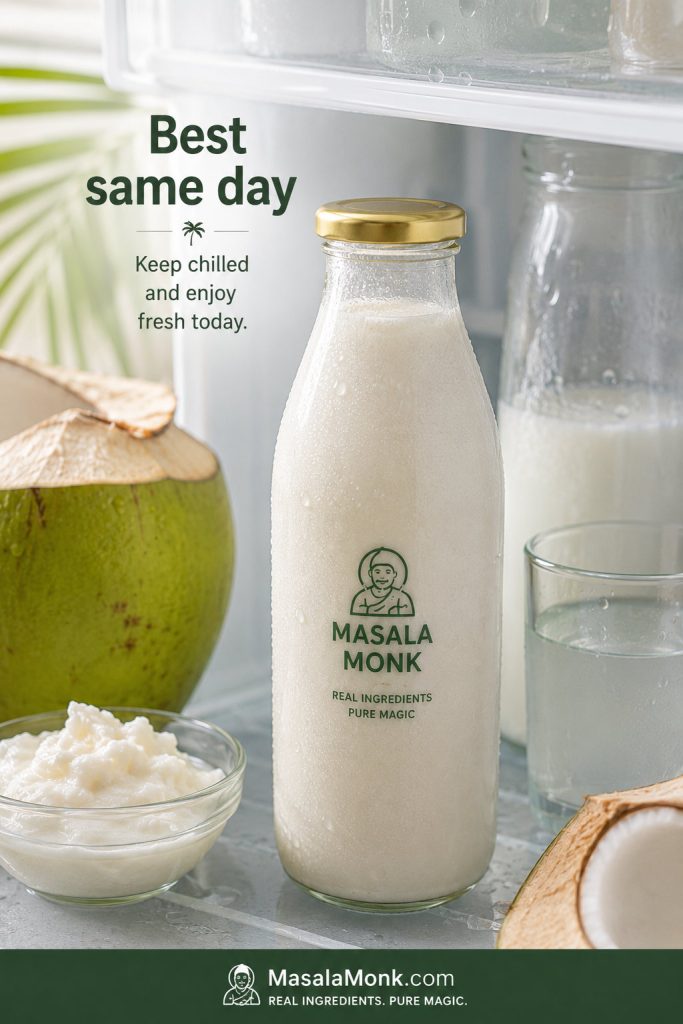
Covered bottle of coconut shake kept chilled with condensation, coconut water, malai, and tender coconut nearby.
Coconut shake is best blended fresh; when you need to hold it, keep it covered and cold, then drink it the same day for the cleanest flavor.

Discard the shake if it smells sour, stale, or fermented instead of trying to fix it with sugar or flavoring.

  • Keep the blended shake covered and cold until serving.
  • Refrigerate it briefly in a covered bottle or jar if needed.
  • Shake or blend again before serving if it separates.
  • Avoid leaving milk, ice cream, or coconut milk versions out at room temperature.
  • Freeze milk cubes or coconut water cubes instead of freezing the finished shake.

For prep-ahead ease, chill the coconut water, milk, and glasses. You can also freeze milk cubes ahead of time for the no-ice-cream version. Save the actual blending for the moment you want the shake to taste fresh.

Troubleshooting

Most problems come from warm ingredients, too much ice, mature coconut, or sweetness added too early. Use the table below to fix the glass you already made and improve the next batch.
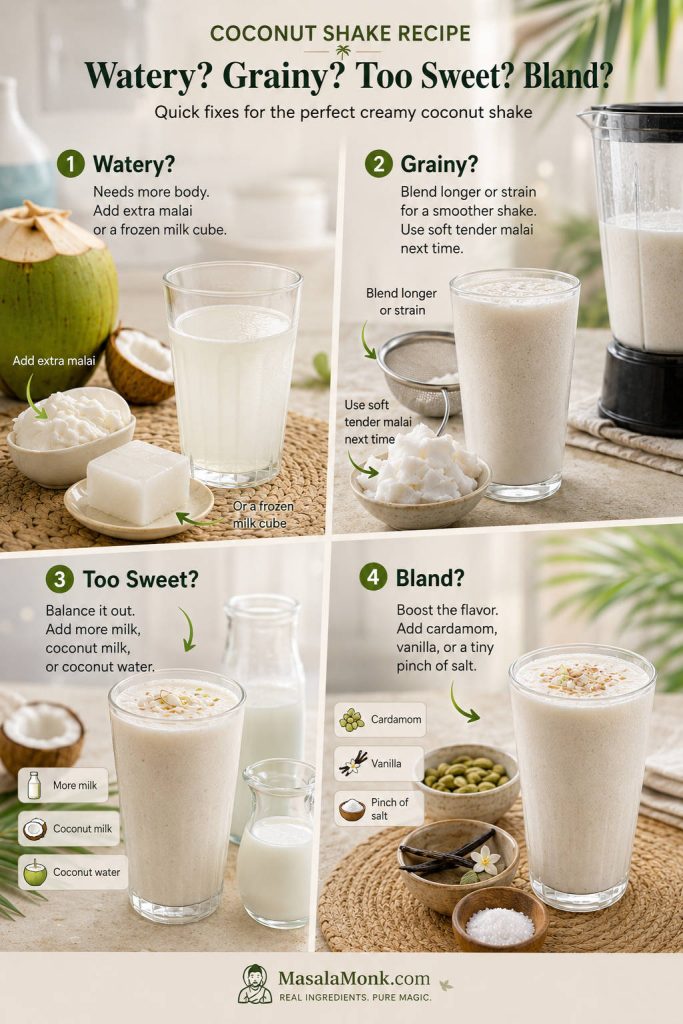
Troubleshooting guide for watery, grainy, too sweet, and bland coconut shake with visible fix ingredients.
Watery, grainy, too-sweet, and bland coconut shakes usually need one targeted correction. Add body, blend or strain, dilute, or brighten the flavor.

A coconut shake that tastes like sweet milk usually has too much milk or ice cream for the amount of malai. Thin texture, even after adding ice, means the problem is not coldness; the drink needs body from malai, frozen milk, ice cream, banana, or coconut cream. For dull flavor, a tiny pinch of salt can wake up the coconut without making the shake taste salty.

ProblemWhy it happenedFix nowFix next time
Watery shakeToo much coconut water or iceAdd ice cream, frozen milk, banana, or extra malaiChill ingredients and use less ice
Grainy shakeMature coconut or under-blendingBlend longer or strainUse soft tender coconut malai
Too sweetIce cream + sugar + sweet coconut waterAdd milk or coconut milkTaste before adding sugar
BlandWeak coconut, too much milk, no aromaAdd cardamom, vanilla, or a tiny pinch of saltUse fresh coconut water and less milk
Too thickToo much ice cream or frozen milkAdd coconut water 1–2 tbsp at a timeUse less thickener
SeparatedCoconut fat and liquid separatingReblend brieflyServe soon after blending
Warm or thinOverblending or warm ingredientsAdd a frozen milk cube and pulseChill everything first

Once you start adjusting the shake to your coconut, blender, and glass size, these are the questions that usually come up.

FAQs

What is the difference between coconut shake and coconut smoothie?

If the drink is built around tender coconut malai and coconut water, think of it as a coconut shake. The coconut should be the main flavor, not just the liquid in the blender. If coconut is mainly the base for banana, berries, mango, protein powder, or greens, the drink is closer to a coconut smoothie.

Which coconut is best for coconut shake?

A tender coconut with soft, spoonable malai and sweet coconut water is best. If the flesh is firm and chewy, the shake can still work, but you may need to chop it small, blend longer, and strain if the texture turns gritty.

Do I need ice cream for coconut shake?

No. Ice cream gives the fastest café-style thickness, but frozen milk cubes are the closest homemade substitute. They make the shake cold and creamy without watering it down or making it taste too much like dessert.

How do I make coconut shake without milk?

Use coconut water as the main liquid and tender coconut flesh for body. If you still want creaminess, add chilled coconut milk or a small spoon of coconut cream. If the coconut water is not naturally sweet, one soft date is usually enough.

Why did my coconut shake become watery?

The usual reason is too much ice or too much coconut water for the amount of malai. To fix the glass you already made, add more tender coconut flesh, frozen milk, a scoop of ice cream, coconut cream, or half a frozen banana.

Should coconut shake be strained?

Usually, no. Soft tender coconut malai blends into a pleasant, slightly pulpy drink. Strain only if you used mature coconut or the shake feels gritty. If you like café-style texture, keep a spoonful of tiny malai bits aside and stir them in after blending.

How much coconut shake does one tender coconut make?

It depends on the size of the coconut and how much soft malai it has. A coconut with plenty of malai can usually make 1 large glass or 2 smaller glasses when blended with its coconut water and some milk. If it has mostly water and very little malai, the shake will be lighter unless you add frozen milk, ice cream, banana, or coconut milk.

What can I do with leftover tender coconut malai?

Coconut shake is one of the easiest ways to use leftover tender coconut malai. Blend it with chilled coconut water, milk or coconut milk, and a little sweetener only if needed. If you also have extra coconut water, these creative coconut water recipes are useful for using it beyond a shake. If the malai still smells fresh and sweet, this shake is usually the fastest and best use for it.

How soon should I drink coconut shake after blending?

As soon as you can. The first 10–15 minutes are when the shake tastes coldest, freshest, and creamiest. After that, it can separate or lose some of the tender coconut aroma. If you need to hold it, keep it covered in the fridge and shake or reblend before serving.

Final Tips for the Best Coconut Shake
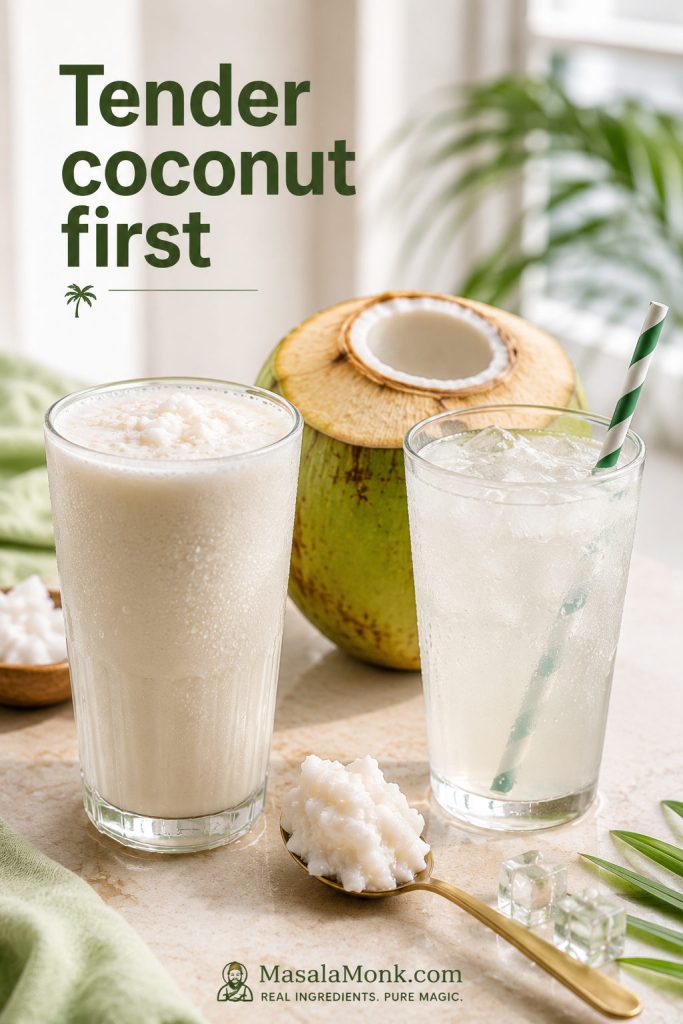
Final serving of one creamy coconut shake and one lighter coconut water shake with tender coconut and malai.
The best coconut shake is not always the thickest or sweetest; ultimately, the winning glass is the one that still tastes like tender coconut.

In this coconut shake recipe, tender coconut should lead the flavor. Blend the coconut flesh with coconut water first, then add the creamy ingredients. Ice should only finish the chill, not carry the whole texture.

Make it once with the classic balance, then adjust from there. More coconut water makes it lighter, frozen milk makes it thicker without ice cream, coconut milk makes it dairy-free, and ice cream makes it dessert-like. Still, the real test never changes: the best coconut shake is not the thickest one or the sweetest one. It is the glass that still tastes like tender coconut after you add everything else.
Back to top

Posted on 3 Comments

Strawberry Mojito Mocktails – 10 Easy Variations

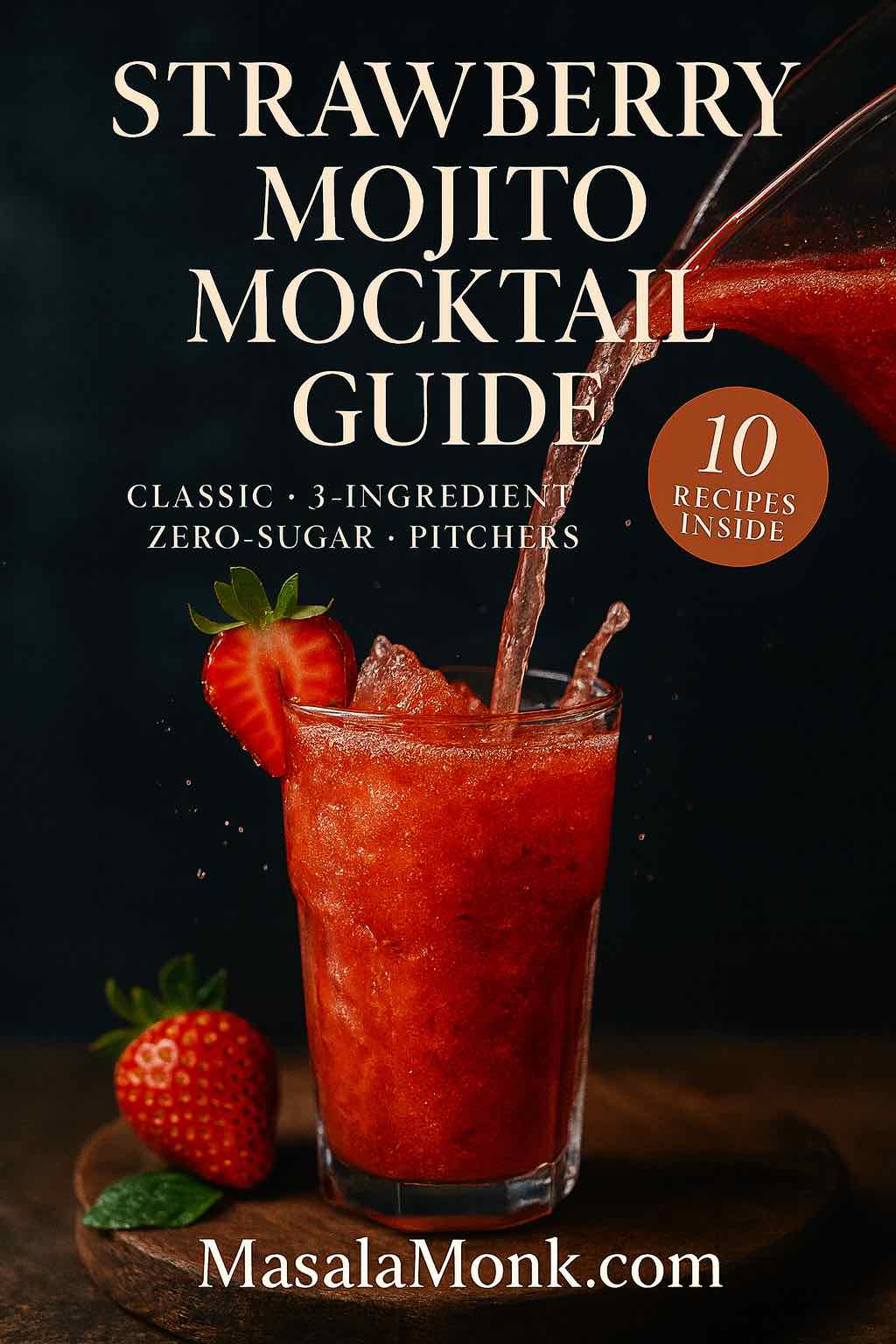
Strawberry Mojito Mocktail Guide cover—premium portrait of a strawberry mojito being poured, fresh strawberry and lime, text: Classic • 3-Ingredient • Zero-Sugar • Pitchers—MasalaMonk.com.

Strawberry season arrives and, just like that, the mood lightens. Baskets of berries perfume the kitchen, mint waits in a glass of water, and the first squeeze of lime wakes everything up. Today, we’re building the strawberry mojito mocktail (Zero-Proof & Virgin) you’ll reach for all summer long—actually, ten of them—so you can pour something bright and refreshing no matter who shows up or what you have on hand. Along the way, we’ll keep things friendly, practical, and a little playful.

First, a few gentle techniques. Go easy when you muddle; you want perfume, not pulp. In fact, many bartenders simply bruise the mint and skip the heavy mash entirely. For a Cuban-leaning approach, the classic rule is simple: bruise, don’t shred—that way your drink stays crisp and never drifts into grassy bitterness. And because bubbles make the glass sing, keep your fizz as cold as possible. Curious which fizz to stock? Here’s a clear explainer on seltzer vs. club soda vs. sparkling water; the short version is that club soda carries a whisper of minerals while seltzer is clean and neutral.

Now, let’s pour.


The Classic Strawberry Mojito Mocktail (single-serve)

Nothing complicated, nothing fussy—just juicy strawberries, cool mint, and lively bubbles. This is the dependable blueprint that all the variations build on.

You’ll need (1 glass):

  • 80 g strawberries, hulled and quartered
  • 10 mint leaves
  • 20 ml freshly squeezed lime juice
  • 15 ml simple syrup (or to taste)
  • 120–150 ml chilled club soda or seltzer
  • Ice (a mix of cubes and a small handful of crushed)
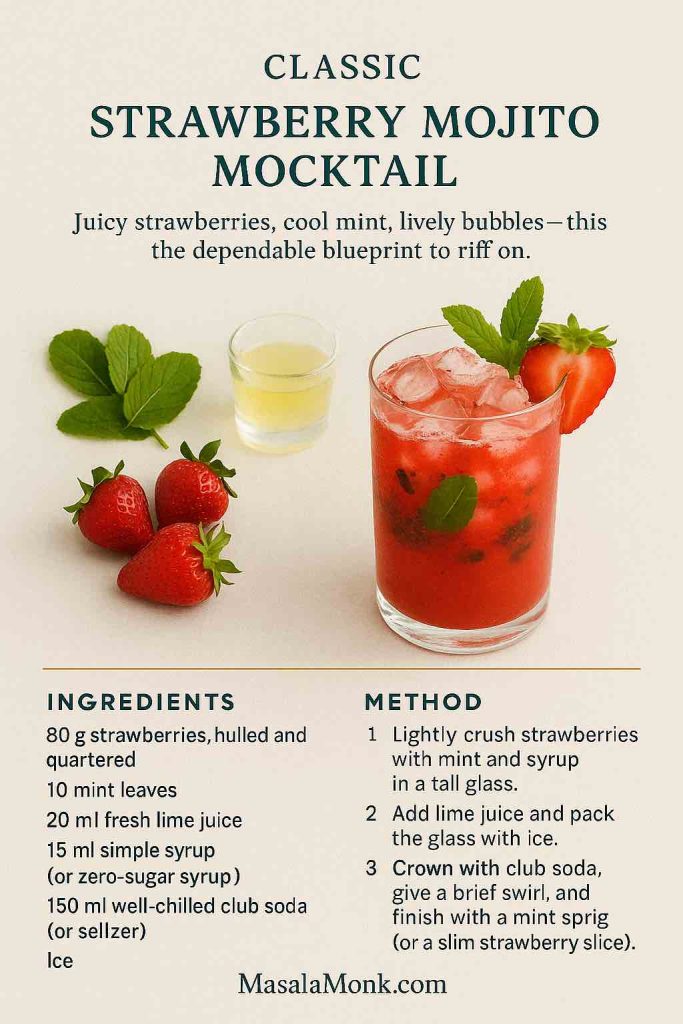
Classic strawberry mojito mocktail recipe card—strawberries, mint, lime and club soda—minimal off-white layout with MasalaMonk footer
The dependable blueprint—bruise, don’t shred the mint to avoid bitterness; start with 15 ml syrup and adjust to taste.

Method: In a tall glass, gently muddle strawberries, mint, and syrup until juicy but not shredded. Add lime, fill the glass three-quarters with ice, top with fizz, then stir once or twice. Garnish with a mint crown and a strawberry slice.

Prefer a drier sip? Nudge the syrup down to 10 ml and add a tiny pinch of sea salt to brighten everything without more sweetness. Want a fruitier roadmap to try later? Swing by our pineapple mojito mocktails—sunshine in a glass.

Also Read: Electrolyte Drinks for Hangovers: 5 Easy DIY Recipes to Rehydrate Fast


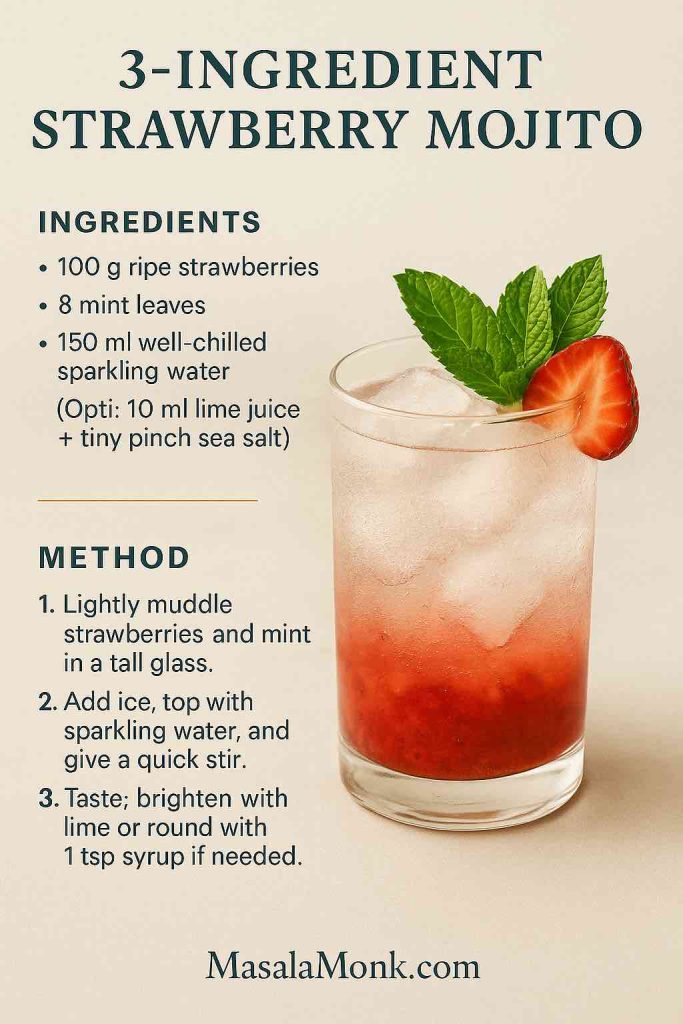
The 3-Ingredient Strawberry Virgin Mojito (no added sugar)

Some days call for simplicity. Here, ripe berries sweeten the party on their own, so you can skip syrup entirely.

You’ll need (1 glass):

  • 100 g ripe strawberries
  • 8 mint leaves
  • 150 ml well-chilled sparkling water
  • Optional: 10 ml lime juice + a tiny pinch of sea salt
Three-ingredient strawberry mojito mocktail recipe card with ripe strawberries, mint and sparkling water on warm ivory background – MasalaMonk
Let ripe strawberries do the sweetening; finish with 10 ml lime and a pinch of salt if the fruit needs a lift.

Method: Lightly muddle berries and mint in a tall glass. Add ice, top with sparkling water, and give a quick stir. Taste. If the berries are super sweet, a little lime brightens the edges; if they’re shy, a teaspoon of syrup rounds things out.

Have apples on the counter? When the moment strikes, a quick apple mojito mocktail is just as bright and picnic-ready.

Also Read: Daiquiri Recipe (Classic, Strawberry & Frozen Cocktails)


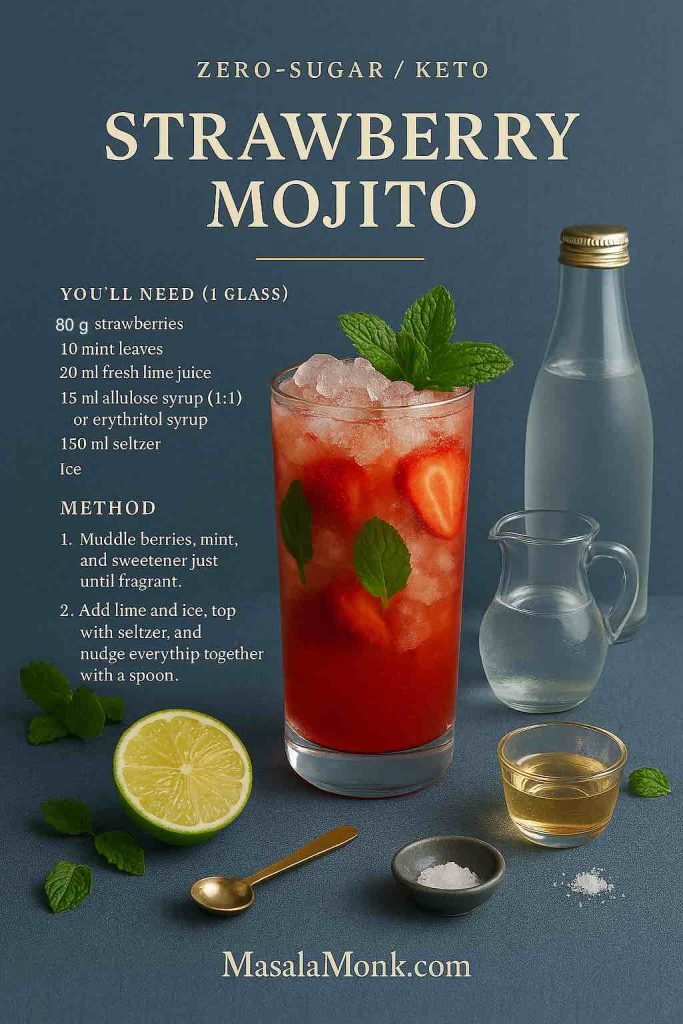
Zero-Sugar / Keto Strawberry Mojito

When you’re minding sugar yet craving something festive, this version delivers body and sparkle without the crash.

You’ll need (1 glass):

  • 80 g strawberries
  • 10 mint leaves
  • 20 ml fresh lime juice
  • 15 ml allulose syrup (1:1 water:allulose) or erythritol syrup
  • 150 ml seltzer, ice cold
  • Ice
Zero-sugar keto strawberry mojito mocktail recipe card with mint, lime, seltzer and allulose syrup props on a slate-blue background – MasalaMonk
Sugar-free but full-bodied: use allulose for roundness, ice-cold seltzer for lift, and a tiny pinch of sea salt to brighten the berries.

Method: Muddle berries, mint, and sweetener just until fragrant. Add lime and ice, top with seltzer, and nudge everything together with a spoon.

We like allulose syrup here for its soft, round sweetness; for the label nerds, the deeper FDA guidance (PDF) is a helpful reference.

Also Read: The Strawberry – Nutrition, Benefits, and 5 Practical Ways for Weight Loss


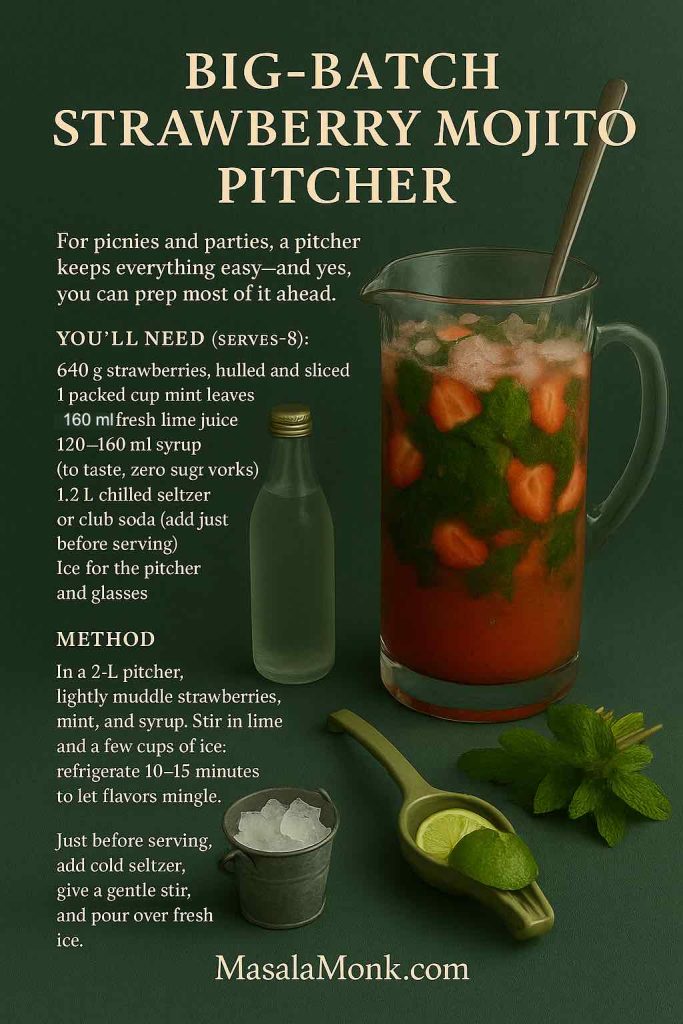
Big-Batch Strawberry Zero-Proof Mojito Pitcher

For picnics and parties, a pitcher keeps everything easy—and yes, you can prep most of it ahead.

You’ll need (serves ~8):

  • 640 g strawberries, hulled and sliced
  • 1 packed cup mint leaves (leaves only)
  • 160 ml fresh lime juice
  • 120–160 ml syrup (to taste; zero-sugar works)
  • 1.2 L chilled seltzer or club soda (add just before serving)
  • Ice for the pitcher and glasses
Big-batch strawberry mojito mocktail pitcher—2-L jug with strawberries, mint, lime and ice; seltzer added last; party props beside it – MasalaMonk
Scale for crowds: lightly muddle berries, mint & syrup, stir in lime, chill 10–15 min, then add fizz just before pouring. Keep the pitcher on ice and set out mint, strawberry slices, and regular + zero-sugar syrups so guests can fine-tune their glass.

Method: In a 2-L pitcher, lightly muddle strawberries, mint, and syrup. Stir in lime and a few cups of ice; refrigerate 10–15 minutes to let flavors mingle. Just before serving, add cold seltzer, give a gentle stir, and pour over fresh ice.

Hosting tip: Set out extra ice, mint, strawberry slices, and both standard and zero-sugar syrups so everyone can fine-tune their glass. Keep your pitcher on a bed of ice outdoors and top with fizz in small waves so every pour stays sprightly.

Also Read: Punch with Pineapple Juice: Guide & 9 Party-Perfect Recipes


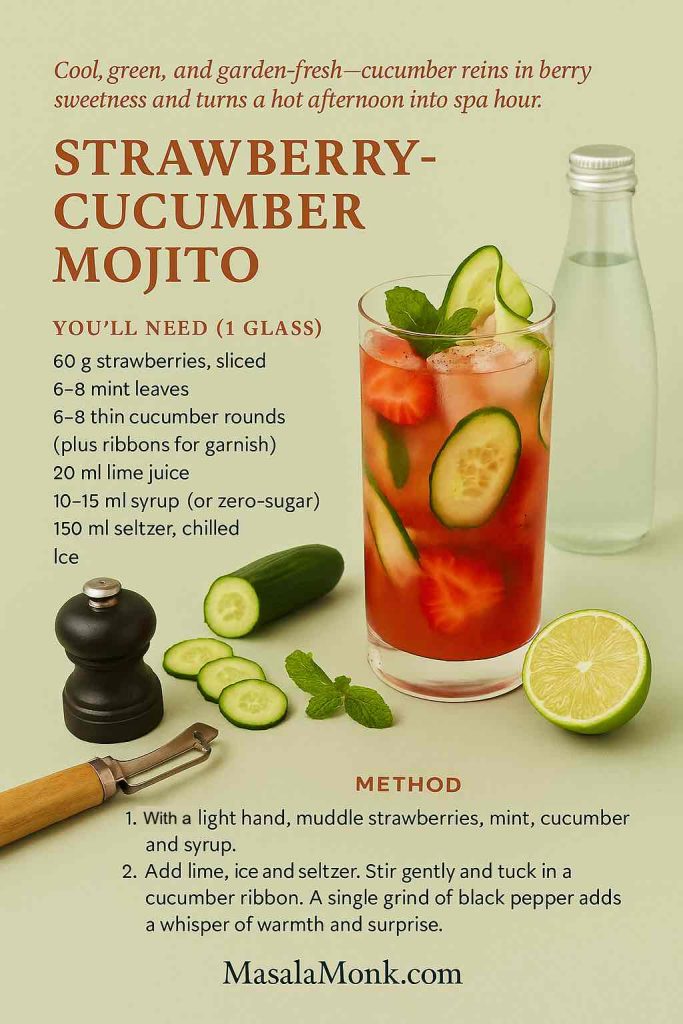
Strawberry-Cucumber Zero Proof/Virgin Mojito

Cool, green, and garden-fresh—cucumber reins in berry sweetness and turns a hot afternoon into spa hour.

You’ll need (1 glass):

  • 60 g strawberries, sliced
  • 6–8 mint leaves
  • 6–8 thin cucumber rounds (plus ribbons for garnish)
  • 20 ml lime juice
  • 10–15 ml syrup (or zero-sugar)
  • 150 ml seltzer, chilled
  • Ice
Strawberry-cucumber mojito mocktail recipe card with mint, cucumber ribbons, pepper mill and seltzer bottle on soft sage backdrop – MasalaMonk
Spa-day vibes: muddle lightly, add a cucumber ribbon for aroma, and finish with one grind of black pepper to extend the finish without extra sweetness.

Method: With a light hand, muddle strawberries, mint, cucumber, and syrup. Add lime, ice, and seltzer. Stir gently and tuck in a cucumber ribbon. A single grind of black pepper adds a whisper of warmth and surprising length.

Also Read: Cooling Cucumber Electrolyte Quenchers: Stay Hydrated with a Refreshing Twist


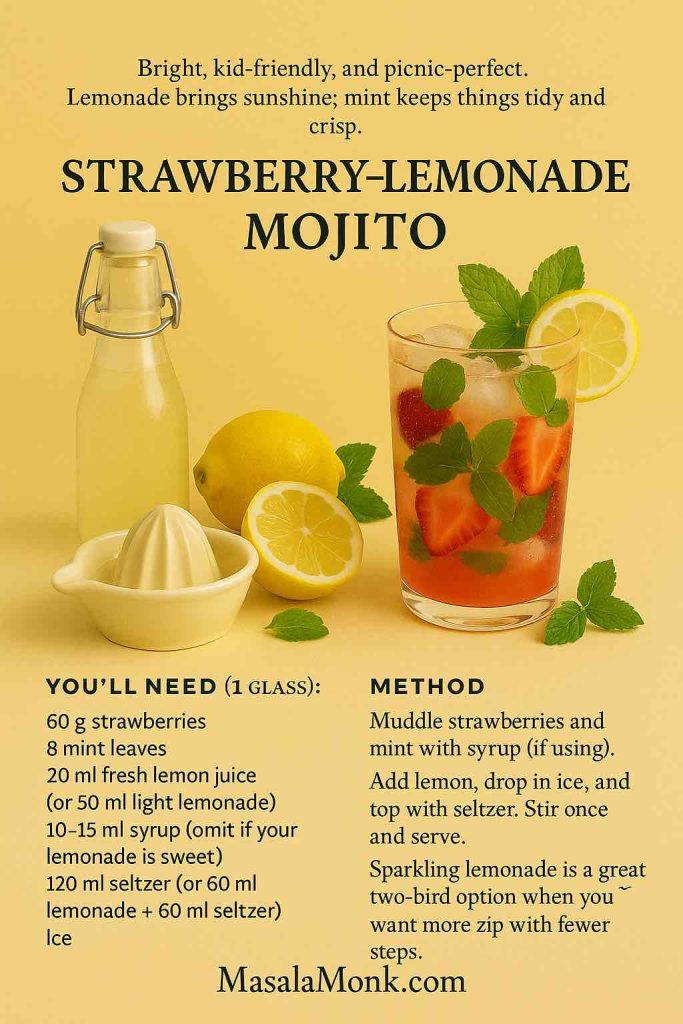
Strawberry-Lemonade Mojito Mocktail

Bright, kid-friendly, and picnic-perfect. Lemonade brings sunshine; mint keeps things tidy and crisp.

You’ll need (1 glass):

  • 60 g strawberries
  • 8 mint leaves
  • 20 ml fresh lemon juice (or 50 ml light lemonade)
  • 10–15 ml syrup (omit if your lemonade is sweet)
  • 120 ml seltzer (or 60 ml lemonade + 60 ml seltzer)
  • Ice
Strawberry-lemonade mojito mocktail recipe card with lemons, lemonade bottle, mint and seltzer on a sunny yellow backdrop – MasalaMonk
Picnic-perfect: muddle berries + mint, add fresh lemon (or light lemonade), then top with seltzer. If using lemonade, skip the syrup.

Method: Muddle strawberries and mint with syrup (if using). Add lemon, drop in ice, and top with seltzer. Stir once and serve. Sparkling lemonade is a great two-bird option when you want more zip with fewer steps.

Also Read: Mango Lemonade: A Refreshing Tropical Twist to Beat the Heat!


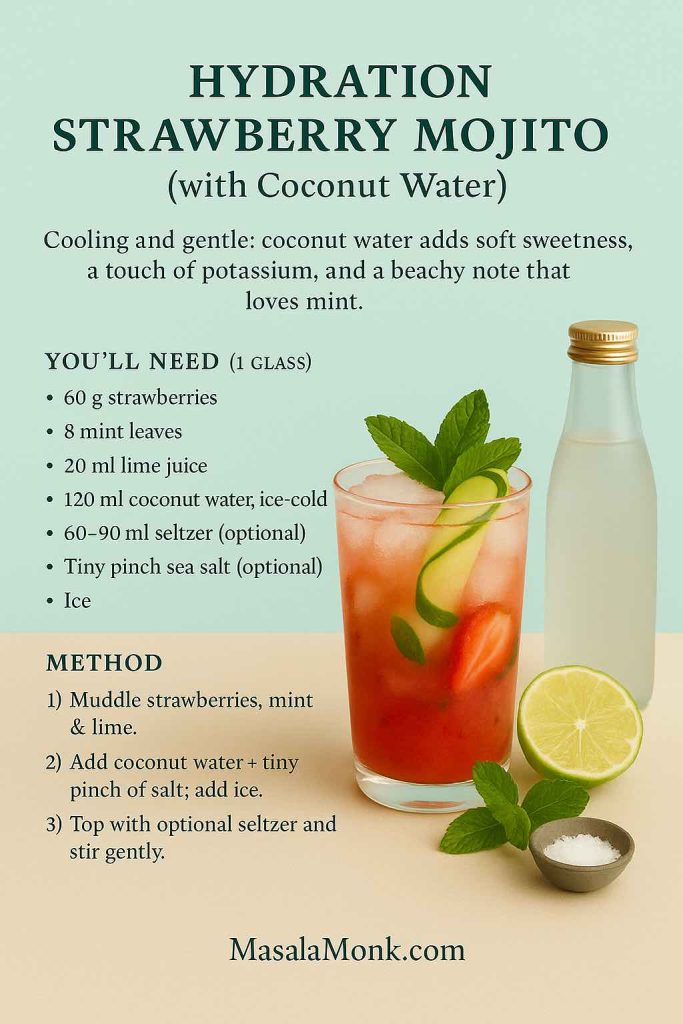
Hydration Strawberry Mojito (with Coconut Water)

When the heat presses in, coconut water adds gentle sweetness, a little potassium, and a soft tropical note that plays beautifully with mint.

You’ll need (1 glass):

  • 60 g strawberries
  • 8 mint leaves
  • 20 ml lime juice
  • 120 ml coconut water, ice cold
  • 60–90 ml seltzer (optional)
  • A tiny pinch of sea salt (optional but effective)
  • Ice
Hydration strawberry mojito mocktail recipe card with coconut water—mint, lime, salt pinch and bottle props on sea-glass and sand backdrop – MasalaMonk
Beachy, light, and thirst-quenching: muddle berries + mint with lime, add coconut water and a tiny pinch of salt, then finish with cold seltzer for lift.

Method: Muddle strawberries, mint, and lime. Add coconut water and a small pinch of salt; top with ice and optional seltzer. Stir, smile, sip. There’s evidence that coconut water can hydrate similarly to some sports drinks, although it isn’t necessarily superior to plain water; for a balanced overview, Mayo Clinic is a good read.

Also Read: Coconut Water Cocktails: 10 Easy, Refreshing Drinks


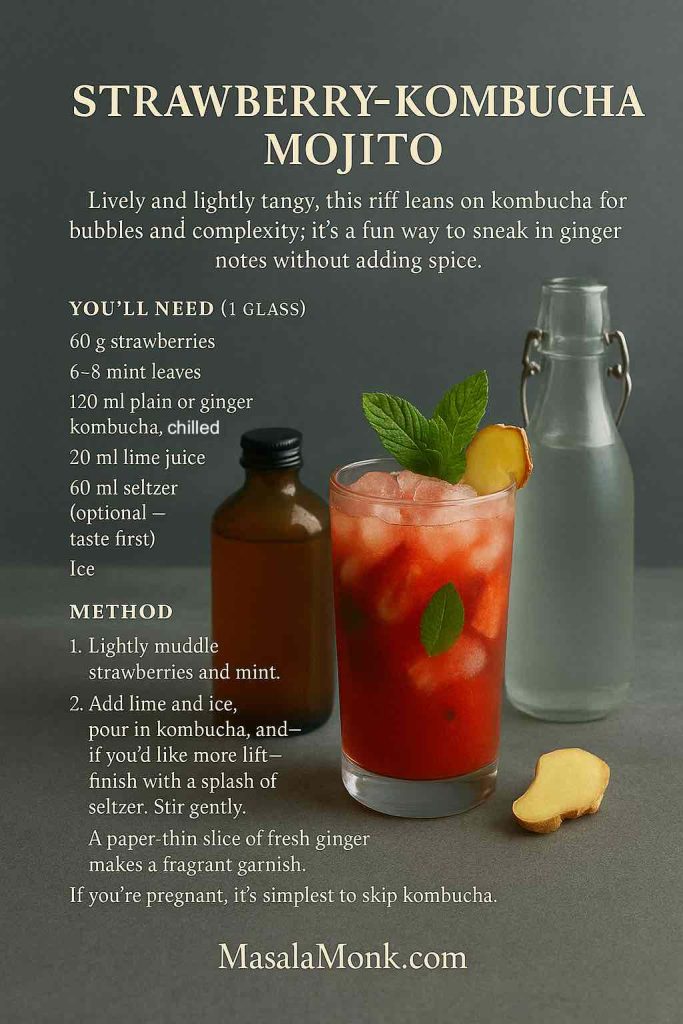
Strawberry-Kombucha Virgin Mojito Mocktail

Lively and lightly tangy, this riff leans on kombucha for bubbles and complexity; it’s a fun way to sneak in ginger notes without adding spice.

You’ll need (1 glass):

  • 60 g strawberries
  • 6–8 mint leaves
  • 120 ml plain or ginger kombucha, chilled
  • 20 ml lime juice
  • 60 ml seltzer (optional)
  • 10 ml syrup (optional—taste first)
  • Ice
Strawberry-kombucha mojito mocktail recipe card with mint, lime and ginger props on dark stone background—lightly tangy and bubbly – MasalaMonk
Tangy + complex: muddle berries & mint, add lime, pour in chilled kombucha, and—if you want extra lift—finish with a splash of seltzer. Skip kombucha if pregnant.

Method: Lightly muddle strawberries and mint. Add lime and ice, pour in kombucha, and—if you’d like more lift—finish with a splash of seltzer. Stir gently. A paper-thin slice of fresh ginger makes a fragrant garnish. If you’re pregnant, it’s simplest to skip kombucha.

Also Read: Health Benefits of Kombucha


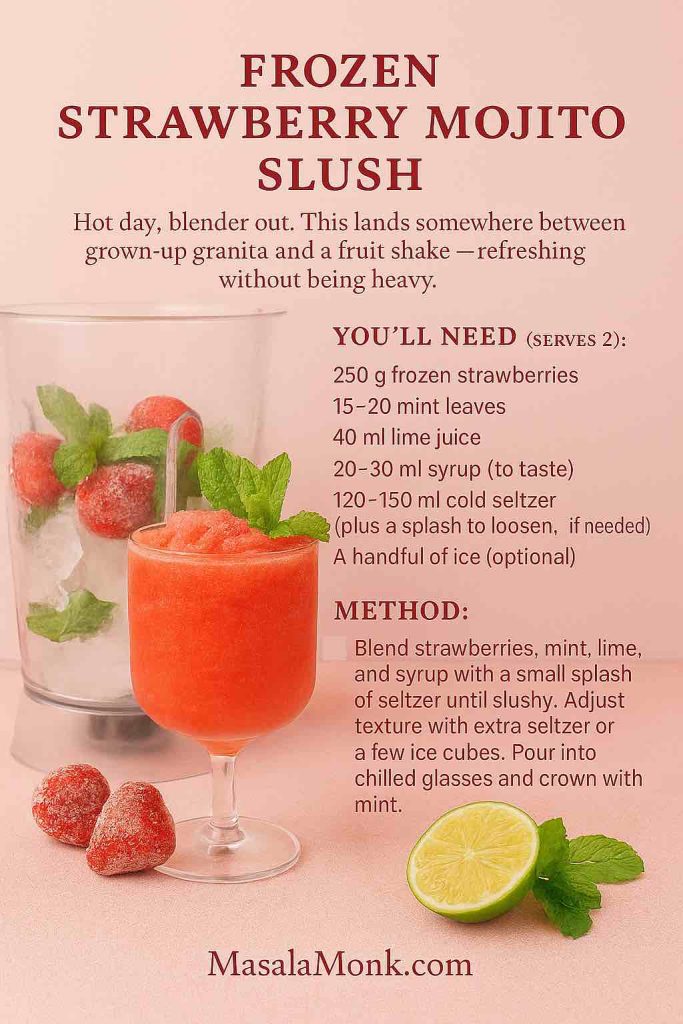
Frozen Strawberry Mojito Slush

Hot day, blender out. This lands somewhere between grown-up granita and a fruit shake—refreshing without being heavy.

You’ll need (serves 2):

  • 250 g frozen strawberries
  • 15–20 mint leaves
  • 40 ml lime juice
  • 20–30 ml syrup (to taste)
  • 120–150 ml cold seltzer (plus a splash to loosen, if needed)
  • A handful of ice (optional)
Frozen strawberry mojito slush mocktail recipe card with blender, frosty berries, mint and lime—granita-style, light and refreshing – MasalaMonk
Blend frozen strawberries, mint, lime and syrup with a splash of cold seltzer until slushy. Adjust with extra seltzer or a few ice cubes, then pour into chilled glasses and crown with mint; a tiny pinch of salt brightens the berry flavor.

Method: Blend strawberries, mint, lime, and syrup with a small splash of seltzer until slushy. Adjust texture with extra seltzer or a few ice cubes. Pour into chilled glasses and crown with mint. A pinch of salt brightens flavors in frozen drinks where cold can mute sweetness; for a silkier feel, add 2–3 tablespoons coconut water before blending.

Also Read: Mango Martini + 5 Variants of Classic Cocktail


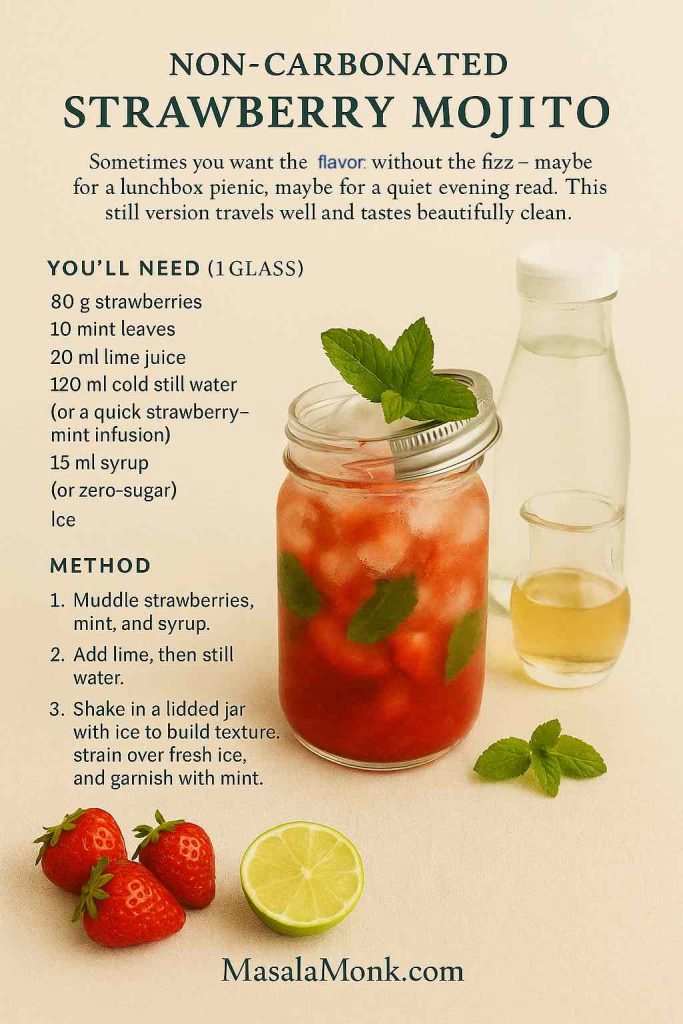
Non-Carbonated Strawberry Zero-Proof Mojito

Sometimes you want the flavor without the fizz—maybe for a lunchbox picnic, maybe for a quiet evening read. This still version travels well and tastes beautifully clean.

You’ll need (1 glass):

  • 80 g strawberries
  • 10 mint leaves
  • 20 ml lime juice
  • 120 ml cold still water (or a quick strawberry-mint infusion)
  • 15 ml syrup (or zero-sugar)
  • Ice
Non-carbonated strawberry mojito mocktail recipe card—jar shaker style with strawberries, mint, lime and still water on warm neutral backdrop – MasalaMonk
All flavor, no fizz: muddle berries + mint with syrup, add lime then still water, shake with ice for texture, strain over fresh ice, and garnish with mint.

Method: Muddle strawberries, mint, and syrup. Add lime, then still water. Shake in a lidded jar with ice to build texture, strain over fresh ice, and garnish with mint. Prefer an even lighter herb note? You can skip muddling and use whole mint leaves for a brighter, less “green” taste.

Also Read: What to Mix with Jim Beam: Best Mixers & Easy Cocktails


Ingredient Swaps, Pantry Notes & Small Tricks

Let’s talk practicalities. Only lemons in the fruit bowl? They’ll do—lemon brightens differently than lime, but mint happily bridges the gap. No fresh strawberries? Frozen are fine; thaw and drain for the cleanest flavor (or lean into the Frozen Slush recipe). Prefer natural sweeteners? A jaggery syrup adds warm, mineral notes; a simple honey syrup brings floral depth; and cane juice syrup leans grassy and light. Meanwhile, if you’re cutting sugar hard, the allulose approach is wonderfully forgiving.

As for bubbles, seltzer vs. club soda vs. sparkling water boils down to small differences in minerals and texture, so feel free to use what you enjoy and what your store carries reliably. Whatever you choose, chill it deeply—and if you really want to impress, chill the glasses too. Cold glass, cold ice, cold fizz: the holy trinity of crisp.

Hosting? A tiny bit of structure makes the whole afternoon smoother. Prepare a chilled base (muddled berries, mint, syrup), keep a jar of pre-squeezed lime juice in the fridge, and add bubbles at the last minute so every pour stays lively. Create a self-serve station with ice, extra mint, sliced strawberries, and both standard and zero-sugar syrups so guests can steer sweetness to taste. And—because it’s magic for fruit—set out a little dish of flaky salt for those who want a pinch in the glass.

Finally, don’t be shy with personal flourishes. A few basil leaves alongside mint add herbaceous lift; a thin slice of ginger brings moodier evening energy; a spoonful of strawberry-chia jam turns the drink into playful texture. For garnish, a mint crown and strawberry fan never fail; a cucumber ribbon quickly signals the cucumber riff; a chili-salt rim works when you want a cheeky whisper of heat.


More to Sip Next

Love berry-fresh? Bookmark our lychee virgin mojitos for a floral twist that still plays beautifully with mint and lime. Prefer tangy and tropical? Take a sunny detour with pineapple mojitos. And if fizzy mixers fascinate you, keep this comparison handy: club soda vs. seltzer vs. sparkling water—it’s a quick read that helps you stock your fridge like a pro.


Printable cheat card (copy/paste)

Strawberry Mojito Mocktail (Classic) – 1 serve

Ingredients:

  • 80 g strawberries, hulled and quartered
  • 10 mint leaves
  • 20 ml fresh lime juice
  • 15 ml simple syrup (or zero-sugar syrup)
  • 150 ml well-chilled club soda (or seltzer)
  • Ice

Method:

  1. To begin, lightly crush the strawberries with the mint and syrup in a tall glass.
  2. Next, add the lime juice and pack the glass with ice.
  3. Afterward, crown with club soda, give a brief swirl, and finish with a mint sprig (or a slim strawberry slice).

Pro tip: Prefer a leaner profile? Trim the syrup to 10 ml; a tiny pinch of sea salt will lift the fruit beautifully.


That’s your summer playbook. Start with the classic, then wander—lighter, zestier, slushier, bigger—whatever your day calls for. And when you’ve tried a couple, tell us your favorite twist and leave a comment about it.

FAQs

1) What is a strawberry mojito mocktail, exactly?

A strawberry mojito mocktail is a zero-alcohol take on the Cuban classic: muddled strawberries and mint, bright lime juice, a touch of sweetness, and, finally, fizzy lift from seltzer or club soda. In short, it’s refreshing, fruity, and crisp—no rum required.

2) Which zero-proof mojito mocktail ingredients do I really need to keep on hand?

At minimum, you’ll want fresh (or thawed) strawberries, mint, limes, a simple syrup (regular or zero sugar), and something bubbly—sparkling water, seltzer, or club soda. Optionally, add a pinch of salt to wake up fruit, and keep crushed ice ready for that café-style texture.

3) Can I make a 3-ingredient strawberry mojito mocktail?

Absolutely. For an easy 3 ingredient mocktail, lightly muddle ripe strawberries with mint, pile in ice, and top with chilled sparkling water. If your berries are super sweet, add a squeeze of lime; if they’re a bit shy, a teaspoon of syrup rounds things out.

4) How do I keep it zero-sugar, low-calorie, or keto-friendly?

Start with berries, mint, and lime, then sweeten with allulose or erythritol syrup instead of sugar. Top with seltzer (not juice or lemonade) and you’ve got a zero sugar mocktail that still tastes full and lively—great for keto friendly virgin mocktails and skinny sips.

5) Seltzer or club soda—what’s better for a strawberry mojito mocktail?

Both are tasty; they’re just different. Seltzer is clean and neutral, while club soda has minerals that add a whisper of salinity and body. Either way, keep it ice-cold so your sparkling water mocktail stays extra crisp.

6) What if I need a pitcher for a crowd or a party?

Go big with a pitcher mocktail: scale your muddled strawberries, mint, and sweetener; chill with lime juice and ice; then, right before serving, add your fizz so it stays lively. This approach is perfect for zero proof mocktail recipes for a crowd, bridal showers, and summer brunches.

7) Can I make a non-carbonated strawberry mojito mocktail?

Definitely. For non carbonated virgin mocktails, swap the seltzer for cold still water (or a quick strawberry-mint infusion). Shake with ice to build texture, then strain over fresh ice for a clean, picnic-friendly version.

8) How do I adjust sweetness without losing balance?

First, taste your berries. If they’re ripe, start with less syrup and add gradually. If you’re using zero sugar sweeteners, remember allulose gives rounder body; erythritol can feel “cool.” Either way, a tiny pinch of sea salt can brighten fruit without extra sweetener.

9) Is a strawberry mojito mocktail safe during pregnancy?

Yes—if you keep it simple. Avoid alcoholic bitters and, if you’re cautious about fermented drinks, skip kombucha riffs. Focus on fruit, mint, lime, and sparkling water; that’s the most reliable path for pregnancy safe zero proof and virgin mocktails.

10) Can I use coconut water for a hydrating twist?

You can. Coconut water brings gentle sweetness and a soft tropical note, making a lovely hydration mocktail. Even so, keep balance in mind: add lime for snap, mint for freshness, and—optionally—finish with seltzer for lift.

11) What are smart flavor upgrades that still fit the style?

Try strawberry-cucumber for spa-day vibes, strawberry-lemonade for family-friendly brightness, or strawberry-ginger for a subtle, evening-leaning warmth. Meanwhile, for a party-ready treat, the frozen strawberry mojito slush wins on steamy afternoons.

12) Can I make it with pantry swaps if I’m low on limes?

Yes. Lemon works in a pinch; mint bridges the flavor shift. For sweeteners, jaggery (gur) syrup adds mineral depth, honey syrup brings floral notes, and cane juice syrup tastes grassy-light. If you only have club soda, not seltzer, you’re still golden.

13) What’s the best ice for a virgin strawberry mojito mocktail?

Crushed ice gives that café texture and cools quickly, while cubed ice melts slower and keeps flavors more concentrated. For pitchers, combine both: cubes in the jug, crushed in the glasses.

14) How do I write a quick mocktail ingredients list when I’m in a rush?

Keep a sticky note (or phone note) with this baseline:
Strawberries + Mint + Lime + Sweetener + Seltzer + Ice.
That’s your zero proof mocktail ingredients list for a classic strawberry mojito mocktail; from there, add cucumber, coconut water, or lemonade when the mood strikes.

15) Any garnishes that instantly elevate presentation?

Start with a mint crown and a strawberry fan. Then, as variations: a cucumber ribbon (cucumber riff), a chili-salt rim (spicy mood), or a sprinkle of unsweetened coconut flakes (hydration twist). Small details, big upgrade.

16) How can I keep the fizz lively until the last pour?

Chill everything—fizz, fruit base, glasses, and ice—so your bubbles don’t fade under warming dilution. Only add sparkling water right before serving, especially for pitcher mocktails. Stir gently rather than shaking to preserve carbonation.

17) What’s an effortless way to make it “healthier” without fuss?

Beyond zero sugar swaps, use extra strawberries in place of syrup for a 3 ingredient vigin mocktail, add a pinch of salt to brighten fruit, and choose seltzer instead of juice for lift without extra calories. Simple changes, fresher taste.

18) Which variations tend to be most popular based on user interactions?

The margarita and mojito families dominate, with strong interest in spicy, zero-sugar, keto/low carb, pregnancy safe, and pitcher formats. Within mojitos, strawberry, cucumber, watermelon, blueberry, and lemonade twists show consistent curiosity—happily, this guide covers those trends.

Posted on 15 Comments

Punch with Pineapple Juice: Guide & 9 Party-Perfect Recipes

Moody party setting with multiple glasses of pineapple punch variations, styled with citrus and mint, featuring text overlay for Masala Monk’s guide to pineapple punch recipes.

There’s a reason punch with pineapple juice keeps showing up at weddings, showers, and backyard cookouts: it tastes like pure sunshine, it’s budget-friendly, and it can scale from a cozy ten-person brunch to a fifty-guest celebration without breaking a sweat. Pineapple juice also plays beautifully with bubbles (ginger ale or Sprite), brightens up tart fruits like cranberry, and makes a tropical base for grown-up versions with rum or vodka.

Craving more tropical blends? Try our pineapple mango juice guide.

In this guide, you’ll find everything you need to nail the balance—sweetness, acidity, fizz—and then nine crowd-tested recipes that line up with what guests actually request: ginger-ale wedding punch, cranberry holiday punch, Sprite lemon-lime fizz, sherbet floats, lemonade blends, Malibu rum, a classic Planter’s-style take, blue curaçao for pool parties, and a clean vodka version. Each recipe includes cups and metric, smart make-ahead steps, and scale-up tips.

As you read, keep this simple truth in mind: the secret to unforgettable punch isn’t a fancy ingredient. It’s temperature (everything cold), timing (add fizzy stuff right at the end), and a little balance (citrus and salt to keep sweetness in check).


The Pineapple Punch Playbook (Read This Before You Mix)

Before we dive into the recipes, let’s set you up to win. Understanding a few fundamentals will make any punch with pineapple juice taste intentional rather than improvised.

1) Start cold and stay cold
Chill all the non-carbonated ingredients for at least 4 hours (or overnight). Keep one batch in the bowl and a second pre-chilled batch in the fridge so refills don’t warm the party bowl. Use frozen fruit—pineapple rings, grapes, cranberries—as “ice” that doesn’t water things down.

2) Add bubbles at the last moment
Ginger ale, lemon-lime soda, club soda, and sparkling water lose fizz fast in a warm room. Stir them in gently right before serving.

3) Balance sweetness and acidity
Canned pineapple juice is fairly sweet. A squeeze of lemon or lime wakes everything up. If you over-sweeten, don’t panic—add citrus, a splash of club soda, and (this sounds odd, but works) a tiny pinch of salt. Salt suppresses bitterness and makes fruit pop. Cutting sugar? These low-carb mocktail tips show how to keep fizz without heaviness.

4) Choose your pineapple juice
Fresh-pressed is bright and variable; canned or shelf-stable is consistent and convenient. For large events, consistency wins. For small gatherings, fresh can be magical—just taste and adjust.

5) Ginger ale vs ginger beer
Ginger ale is sweeter and typically non-alcoholic; ginger beer is spicier and sometimes low-ABV—see ginger ale vs. ginger beer differences and a second take here. Use ale for classic wedding punch, beer when you want a peppery kick.

6) Garnish with intention
Citrus wheels, pineapple spears, mint sprigs, and cranberries do more than decorate—they infuse aroma and make the bowl photo-ready. If you want to go extra, freeze a ring mold with pineapple juice and citrus slices to create a slow-melt ice ring.

(If you serve alcohol, read the NIAAA standard drink guide; and for food-safe handling, see FoodSafety.gov basics.)


How Much Punch with Pineapple Juice Should I Make?

Because punch sits out and people refill, planning by the glass is safer than planning by the bottle. A practical rule:

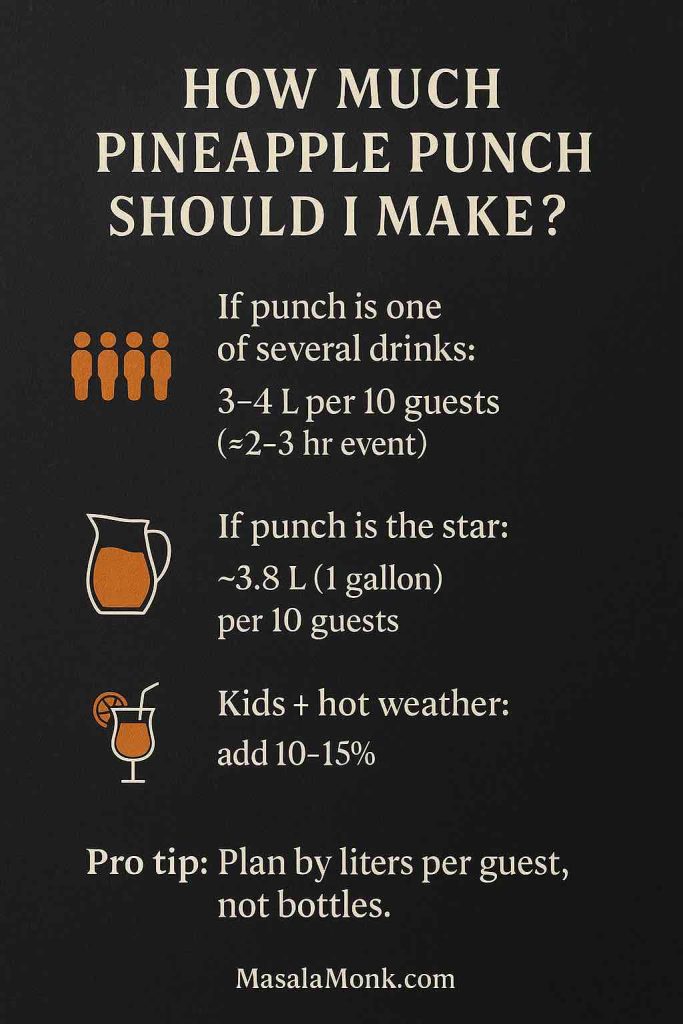
  • When punch is one of several drinks: plan 3–4 liters per 10 guests.
  • When punch is the star: plan ~1 gallon (3.8 L) per 10 guests for a 2–3 hour event.
  • Kids + hot weather: add a 10–15% buffer.

Scaling is simple: most of the recipes below make ~2.6–3.2 L (10–14 servings). For 30 guests where punch is one of a few options, triple any base recipe and you’re set. For 50–60 guests, either 4× a recipe or run two different bowls (one zero-proof, one adult).

Plan by liters per guest, not bottles.

  • One of several drinks: 3–4 L per 10 guests (2–3 hr event)
  • Punch is the star: ~3.8 L per 10 guests
  • Kids or hot weather: add 10–15%
Infographic titled “How Much Pineapple Punch Should I Make?” on a dark background. It shows three sections: 3–4 L per 10 guests for multiple drinks (2–3 hr event), 3.8 L per 10 guests if punch is the main beverage, and a 10–15% increase for kids or hot weather. Includes a pro tip: plan by liters per guest, not bottles.
Wondering how much pineapple punch to prepare? This guide breaks it down: 3–4 L per 10 guests if punch is one of several drinks, about 3.8 L (1 gallon) if it’s the star, and add 10–15% more for kids or hot weather. Always plan by liters per guest, not bottles.

Fast Planner (assumes ~2.8 L per base batch)

GuestsIf punch is one of several: Total L (range)Batches (~2.8 L ea.)If punch is the star: Total LBatches
103–4 L23.8 L2
206–8 L37.6 L3
309–12 L4–511.4 L5
4012–16 L5–615.2 L6
5015–20 L6–819.0 L7
6018–24 L7–922.8 L9

For 30 guests with other drink options: triple any ~3 L base recipe. For 50–60 guests: 4× one recipe or run two bowls (zero-proof + spiked).


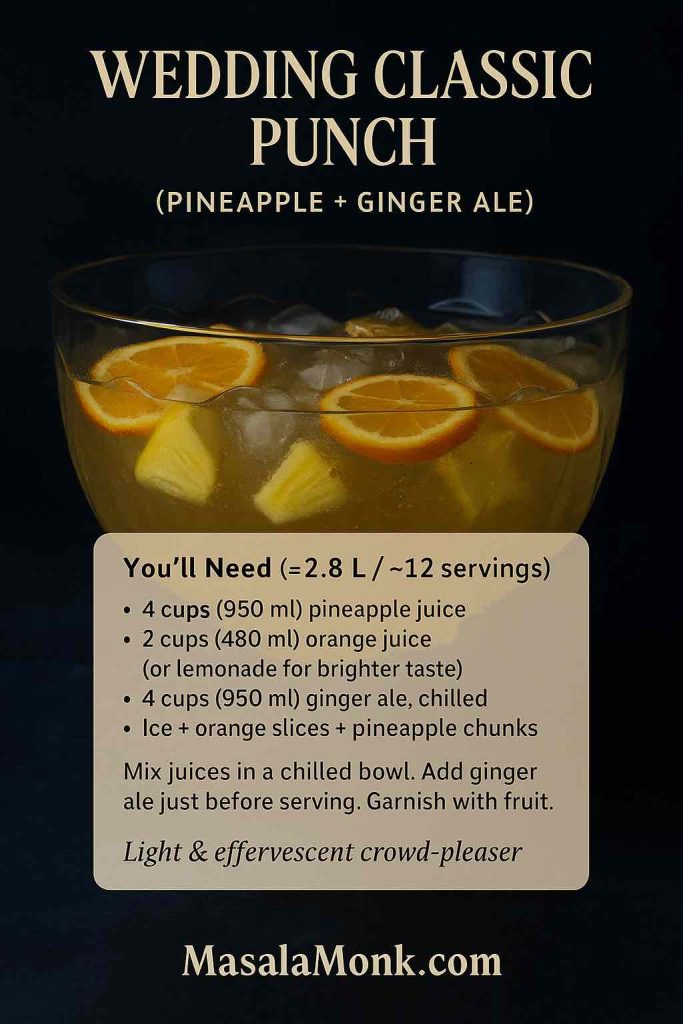
1) Pineapple Punch with Ginger Ale (Wedding Classic)

Light, effervescent, and universally loved—this is the punch with pineapple juice people expect at showers and weddings.

You’ll need (≈2.8 L / ~12 servings)

  • 4 cups (950 ml) pineapple juice
  • 2 cups (480 ml) orange juice (or 300 ml thawed OJ concentrate + 240 ml cold water)
  • 4 cups (950 ml) ginger ale, well chilled
  • Ice, orange slices, pineapple chunks
Recipe card for Wedding Classic Pineapple Punch featuring a glass punch bowl with orange slices and pineapple chunks. Includes quick ingredient list and method overlay on a dark, elegant background for Masala Monk.
This light and effervescent Wedding Classic Pineapple Punch is the go-to drink for showers, weddings, and brunches. With just three main ingredients—pineapple juice, orange juice, and ginger ale—it’s elegant, easy, and perfect for scaling up to serve a crowd.

Method
In a chilled bowl, stir pineapple and orange juices. Right before guests arrive, gently pour in ginger ale. Add ice and fruit.

Flavor notes & swaps

  • Brighter & less sweet: replace orange juice with lemonade.
  • Spicier: swap half the ginger ale for ginger beer.
  • Lower sugar: use diet ginger ale or plain club soda for half the bubbles.

Scale up
For ~36 servings, multiply everything by 3. Keep a second chilled batch ready in the fridge; add ginger ale on demand.

Serve it pretty
Rim some glasses with fine sugar and garnish with a thin orange wheel and a mint sprig.

Do not forget to explore Mango Vodka Cocktail: The Perfect Base + 7 Must-Try Variations.


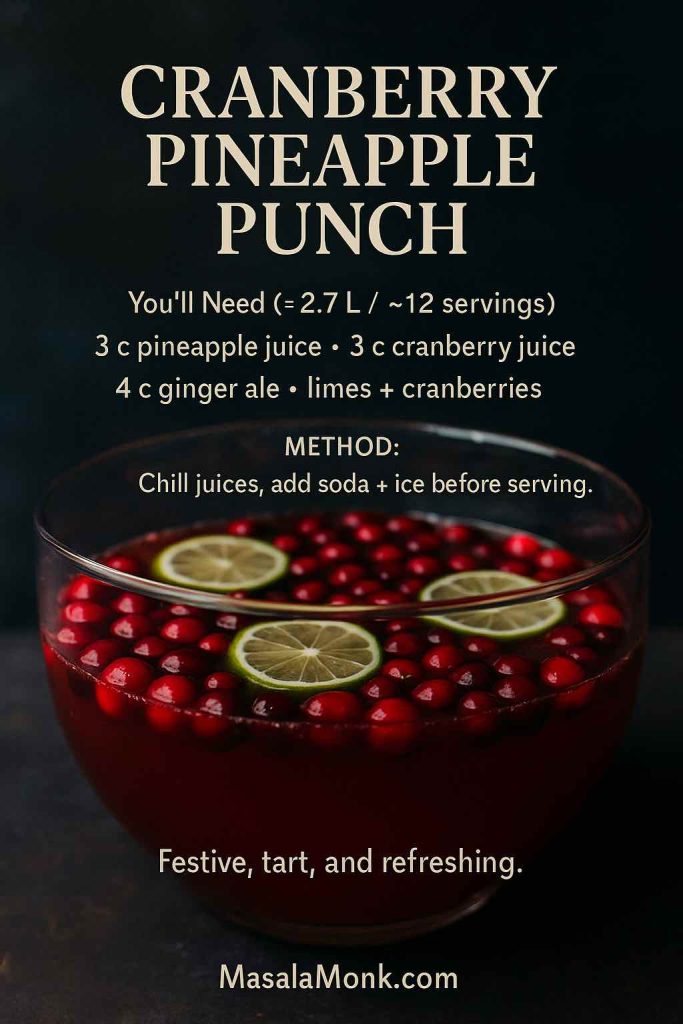
2) Cranberry Pineapple Punch (with Ginger Ale)

Ruby-red and refreshing, this leans festive but works year-round—especially with lime.

You’ll need (≈2.7 L / ~12 servings)

  • 3 cups (710 ml) pineapple juice
  • 3 cups (710 ml) cranberry juice (100% or cocktail)
  • 4 cups (950 ml) ginger ale, chilled
  • 2–3 limes, thinly sliced; 1 cup cranberries (fresh or frozen)
  • Ice
Recipe card for Cranberry Pineapple Punch featuring a ruby-red punch bowl with floating lime slices and cranberries. Includes quick ingredient list and method overlay in a festive, moody style for Masala Monk.
This Cranberry Pineapple Punch blends tart cranberry with sweet pineapple for a festive, ruby-red drink. Easy to scale for a crowd, it’s a holiday favorite with limes, cranberries, and ginger ale for sparkle.

Method
Combine pineapple and cranberry juices with lime slices and cranberries. Chill well. Add ginger ale at the last minute and then ice. For non-alcoholic riffs, that might be good for digestion as well – browse our cranberry mocktail ideas.

Flavor notes & swaps

  • Tart lovers: add ½ cup (120 ml) pomegranate juice.
  • Holiday spice: drop in cinnamon sticks and whole cloves; remove before serving.
  • Pink sparkle: replace half the ginger ale with sparkling rosé for an adults-only version.

Scale up
For ~50 servings, multiply by 4. Swap half the ice for frozen cranberries to prevent dilution.


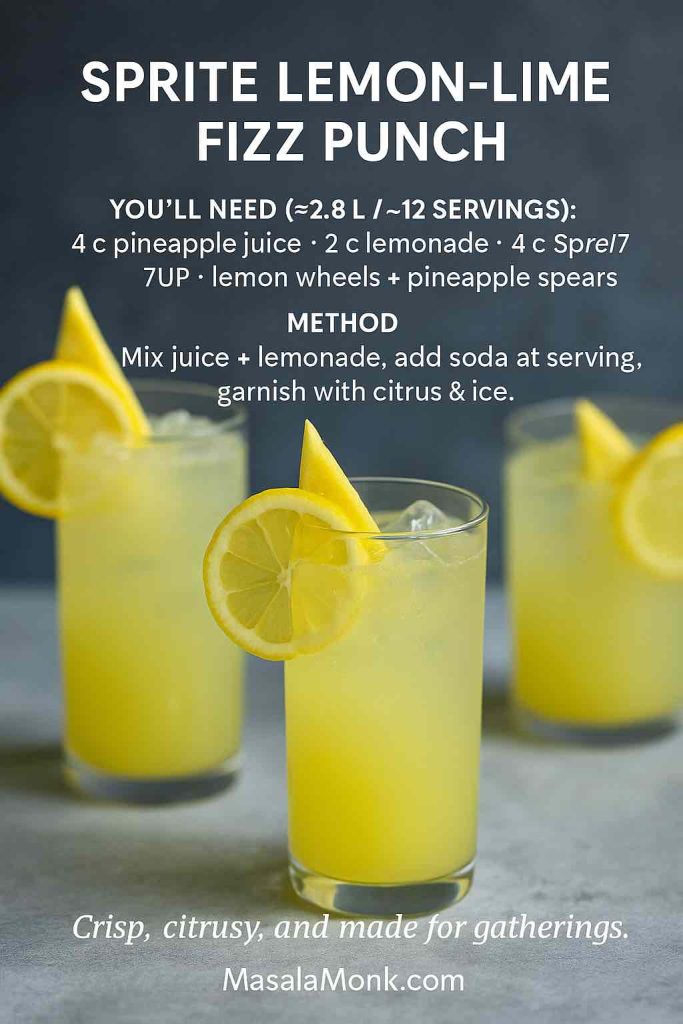
3) Pineapple Punch with Sprite (Lemon-Lime Fizz)

Crisp, citrusy, and made for afternoon gatherings.

You’ll need (≈2.8 L / ~12 servings)

  • 4 cups (950 ml) pineapple juice
  • 2 cups (480 ml) lemonade (or 180 ml frozen lemonade concentrate + 480 ml cold water)
  • 4 cups (950 ml) lemon-lime soda (Sprite/7UP), very cold
  • Lemon wheels; pineapple spears; ice
Recipe card for Sprite Lemon-Lime Fizz Punch featuring tall glasses of fizzy yellow punch with lemon wheels and pineapple spears. Includes quick ingredient list and method overlay in a clean, modern design for Masala Monk.
This Sprite Lemon-Lime Fizz Punch is a bright, citrusy blend of pineapple juice, lemonade, and 7UP. Perfect for summer gatherings, it’s crisp, refreshing, and guaranteed to be a hit with kids and adults alike.

Method
Stir pineapple juice and lemonade in a chilled bowl. Right before serving, add lemon-lime soda and then ice and garnishes.

Flavor notes & swaps

  • Citrus burst: add 2 tbsp lemon zest to the base, then strain before adding soda.
  • Herbal twist: muddle a handful of fresh basil or mint with a little lemonade, then stir through the base and strain.
  • Not-too-sweet: replace 1–2 cups of soda with club soda.

Scale up
For a kid-heavy party, double it and serve with paper umbrellas—guaranteed smiles.

You might also enjoy reading What to Mix with Jim Beam: Best Mixers & Easy Cocktails


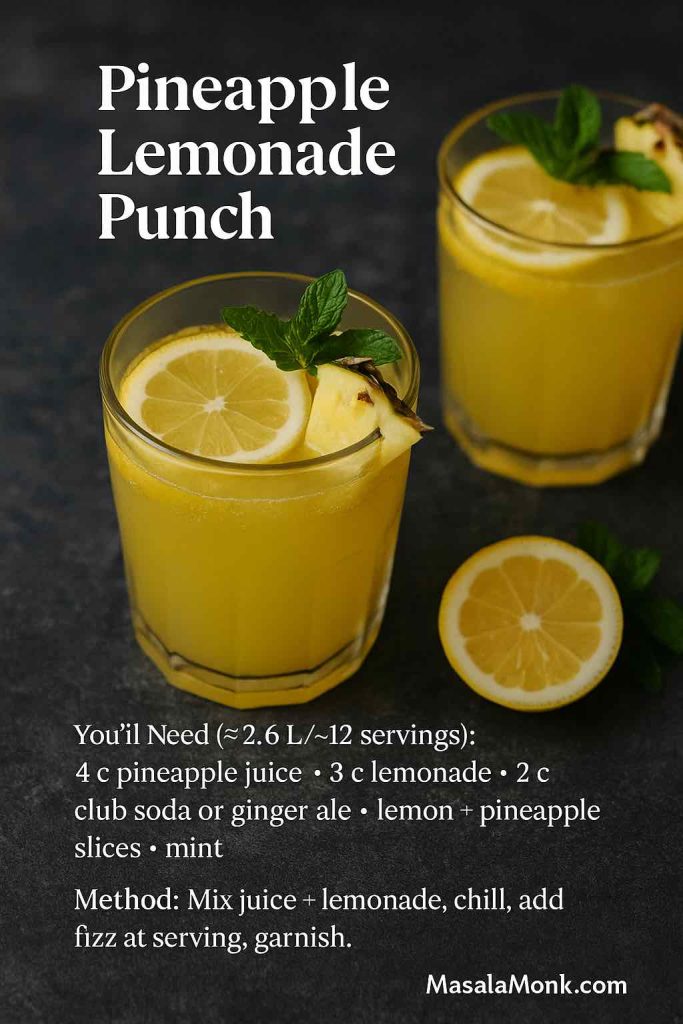
4) Pineapple Lemonade Punch

Bright and snappy with a choose-your-own-fizz ending.

You’ll need (≈2.6 L / ~12 servings)

  • 4 cups (950 ml) pineapple juice
  • 3 cups (710 ml) lemonade
  • 2 cups (480 ml) club soda (lighter) or ginger ale (sweeter)
  • Mint, lemon & pineapple slices; ice
Recipe card for Pineapple Lemonade Punch featuring golden yellow punch in glasses with lemon slices, pineapple wedges, and fresh mint. Includes ingredient list and method overlay on a dark textured background for Masala Monk.
This Pineapple Lemonade Punch is a bright, snappy blend of pineapple juice, lemonade, and a splash of fizz. Garnished with lemon wheels, pineapple slices, and mint, it’s a refreshing and versatile crowd-pleaser for any occasion.

Method
Mix pineapple juice and lemonade; chill thoroughly. Add club soda (or ginger ale) at serving. Toss in herbs and fruit.

Flavor notes & swaps

  • Sparkling lemonade vibe: use all club soda and add a teaspoon of vanilla extract to round the citrus.
  • Grown-up twist: a splash (¼ cup / 60 ml) of Aperol turns it sunset-orange (adults only).

Scale up
For ~36 servings, triple the base and keep the club soda unopened until showtime.

Also Read: Pineapple Juice for High Blood Pressure: 5 Important Insights 🌟


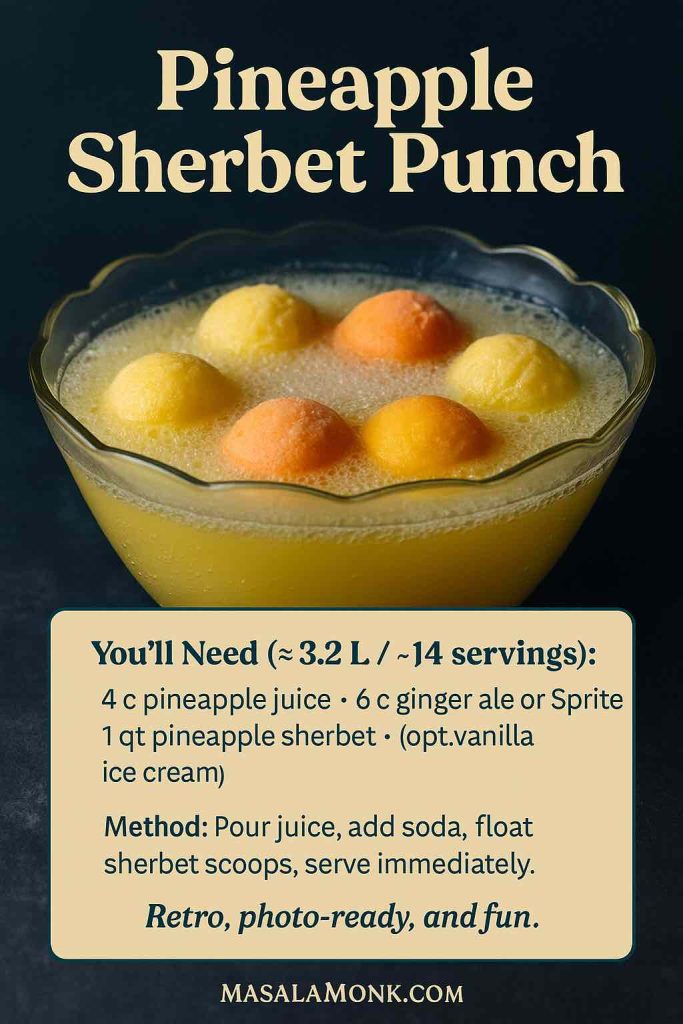
5) Pineapple Sherbet Punch

Retro in the best way—this is the one everyone photographs first.

You’ll need (≈3.2 L / ~14 servings)

  • 4 cups (950 ml) pineapple juice
  • 6 cups (1.4 L) ginger ale or lemon-lime soda, very cold
  • 1 quart (950 ml) pineapple sherbet
  • (Optional) 1 quart (950 ml) vanilla ice cream for a creamsicle vibe
Recipe card for Pineapple Sherbet Punch featuring a retro-style punch bowl filled with yellow pineapple punch and floating scoops of orange and pineapple sherbet. Includes ingredient list and method overlay for Masala Monk.
This Pineapple Sherbet Punch is retro in the best way—fizzy pineapple soda topped with creamy sherbet scoops that float like colorful islands. A photo-ready party centerpiece that’s as fun to drink as it is to serve.

Method
Pour pineapple juice into the bowl. Add soda gently. Float scoops of sherbet (and vanilla ice cream if using). Serve immediately.

Flavor notes & swaps

  • Citrus rainbow: use orange sherbet or mix half orange, half pineapple.
  • Dessert punch: drizzle a little coconut cream across the top and garnish with toasted coconut flakes.

Pro tip
Pre-scoop sherbet onto a tray and freeze 30 minutes so scoops hold their shape.

While still on pineapples, do read: Pineapple: The Tropical Treasure for Your Skin – Benefits, Myths, and 5 Invigorating Recipes for a Smooth Complexion.


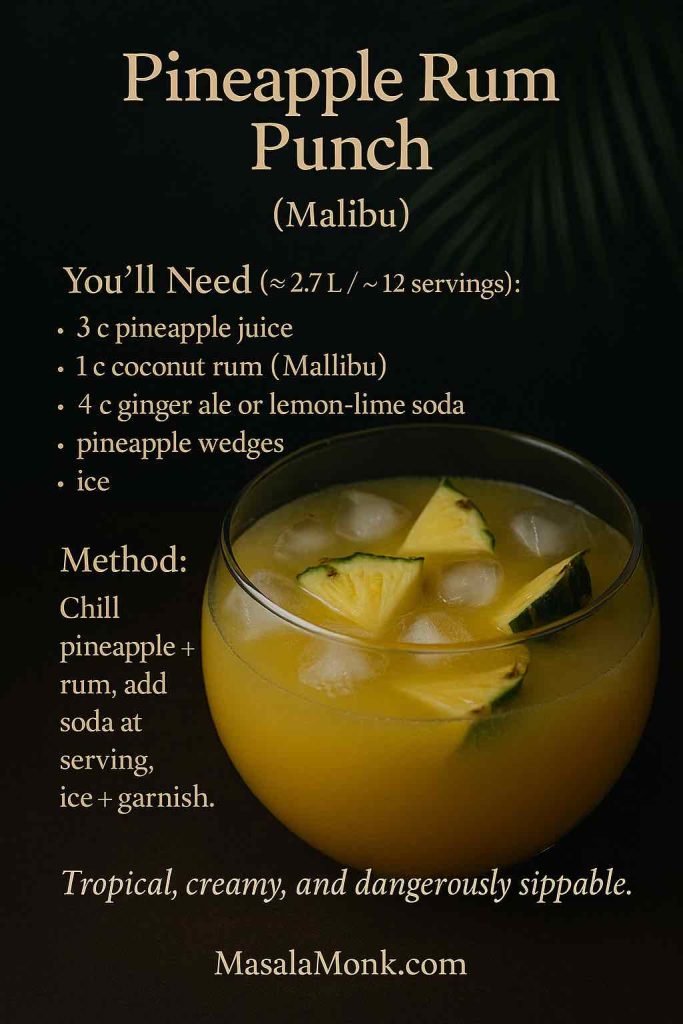
6) Pineapple Rum Punch (Malibu)

Tropical, creamy coconut notes, and dangerously sippable. Label clearly as adults only.

You’ll need (≈2.7 L / ~12 servings)

  • 3 cups (710 ml) pineapple juice
  • 1 cup (240 ml) coconut rum (Malibu)
  • 4 cups (950 ml) ginger ale or lemon-lime soda
  • Pineapple wedges; ice
Recipe card for Pineapple Rum Punch (Malibu) showing a moody punch bowl filled with yellow pineapple punch, ice, and pineapple wedges. Text overlay lists ingredients (pineapple juice, coconut rum, soda) and a simple method for Masala Monk.
Pineapple Rum Punch (Malibu) brings sunny coconut notes to a fizzy pineapple base—built to batch, served ice-cold, and finished with pineapple wedges for an instant tropical vibe.

Method
In a pitcher, combine pineapple juice and coconut rum. Chill very well. Just before serving, add soda, then ice and garnish.

Flavor notes & swaps

  • More depth: add ½ cup (120 ml) dark rum.
  • Creamy piña feel: stir in ¼ cup (60 ml) coconut cream (shake can first).
  • Spicy island: a few dashes of Angostura bitters on top.

Scale up
For ~48 servings, quadruple the base. Keep the rum/juice mix in the fridge; add soda in the bowl.

Suggested read: How to Make Pineapple Chia Pudding: A Refreshing Low-Carb Breakfast Option


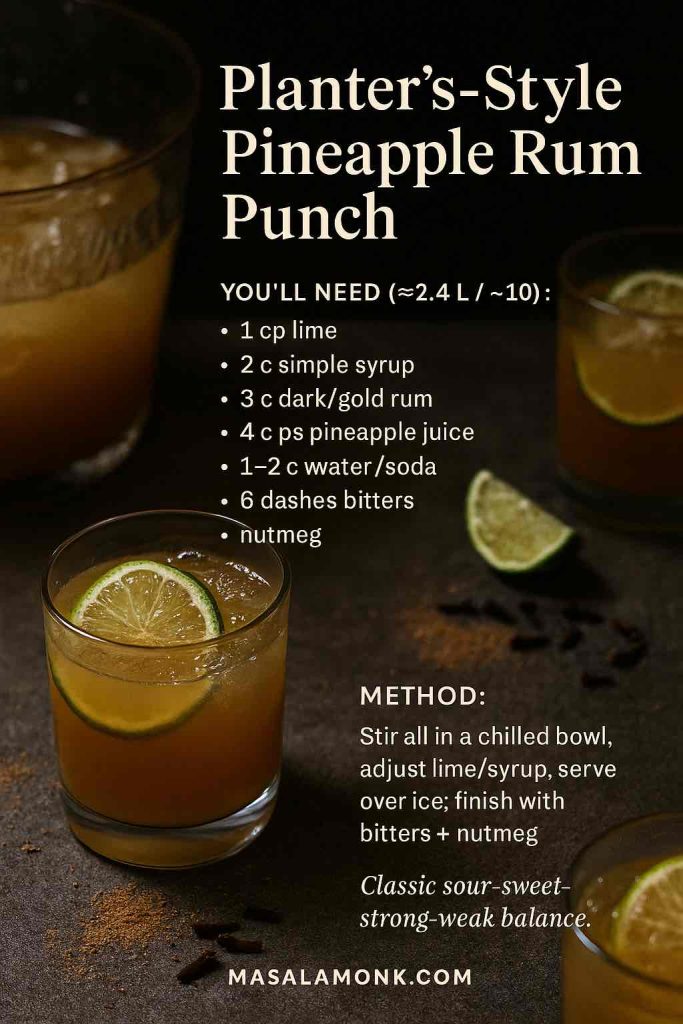
7) Planter’s-Style Pineapple Rum Punch (Classic Vibes)

A nod to the old rum formula—sour, sweet, strong, weak—with pineapple taking the “weak” role.

You’ll need (≈2.4 L / ~10 servings)

  • 1 cup (240 ml) fresh lime juice (sour)
  • 2 cups (480 ml) simple syrup (sweet) (adjust to taste)
  • 3 cups (710 ml) dark or gold rum (strong)
  • 4 cups (950 ml) pineapple juice (weak)
  • 1–2 cups (240–480 ml) cold water or soda, to taste
  • 6 dashes Angostura bitters; fresh-grated nutmeg
Recipe card for Planter’s-Style Pineapple Rum Punch featuring golden punch in lowball glasses with lime wheels, warm rustic background, scattered spices, and text overlay listing ingredients and method for Masala Monk.
Planter’s-Style Pineapple Rum Punch delivers old-school tiki balance: lime for sour, syrup for sweet, rum for strength, and pineapple juice for smoothness—finished with bitters and nutmeg for a timeless island touch.

Method
Stir lime juice, syrup, rum, pineapple juice, and water/soda in a chilled bowl. Add bitters. Taste for balance—tweak with syrup or lime as needed. Serve over ice and finish with a whisper of nutmeg.

Flavor notes & swaps

  • Tiki lean: add ½ cup (120 ml) orange juice and a bar-spoon of grenadine for color.
  • Citrus-forward: replace some water with club soda for lift.

You might also enjoy Natural Detoxification: Cranberry Juice and Apple Cider Vinegar for Weight Loss


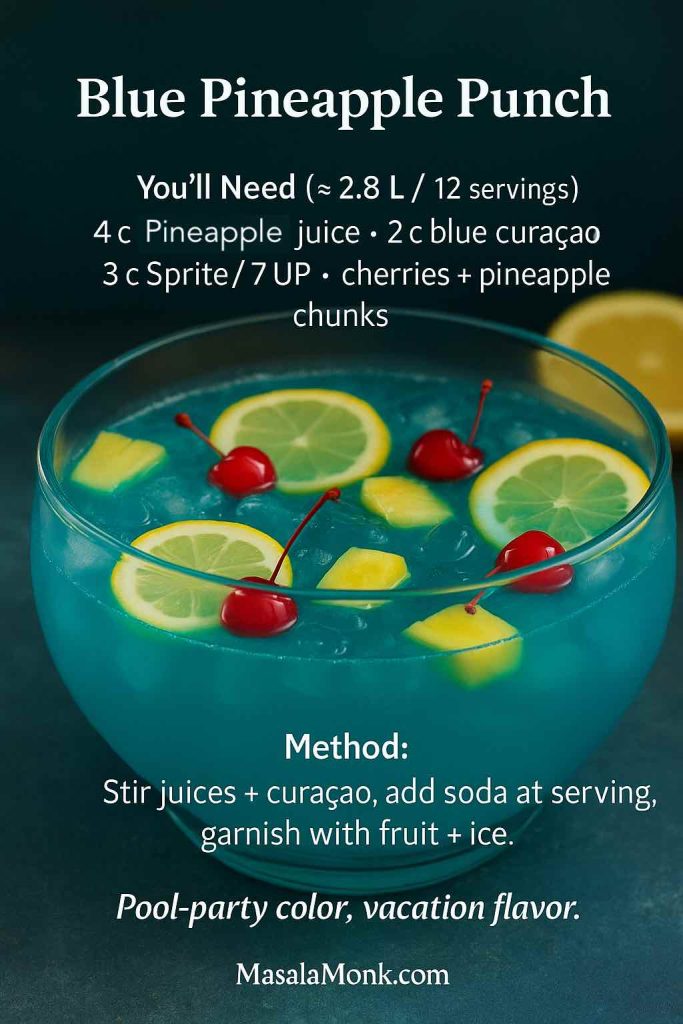
8) Blue Pineapple Punch

Pool-party color, grown-up flavor. It looks like vacation in a glass.

You’ll need (≈2.8 L / ~12 servings)

  • 4 cups (950 ml) pineapple juice
  • 2 cups (480 ml) lemonade
  • 1 cup (240 ml) blue curaçao
  • 3 cups (710 ml) lemon-lime soda, cold
  • Cherries + pineapple chunks; ice
Recipe card for Blue Pineapple Punch showing a glass bowl of bright turquoise punch with lemon wheels, pineapple chunks, and cherries. Overlay text includes ingredients, method, and tagline for Masala Monk.
This Blue Pineapple Punch is a vibrant showstopper—pineapple juice, lemonade, and blue curaçao topped with soda, cherries, and pineapple chunks. Perfect for pool parties or any celebration that needs a splash of color and vacation vibes.

Method
Stir pineapple juice, lemonade, and blue curaçao in a chilled pitcher. Add soda at serving. Ice and garnish.

Zero-proof look-alike
Swap curaçao for a blue sports drink and add a few dashes of orange extract.


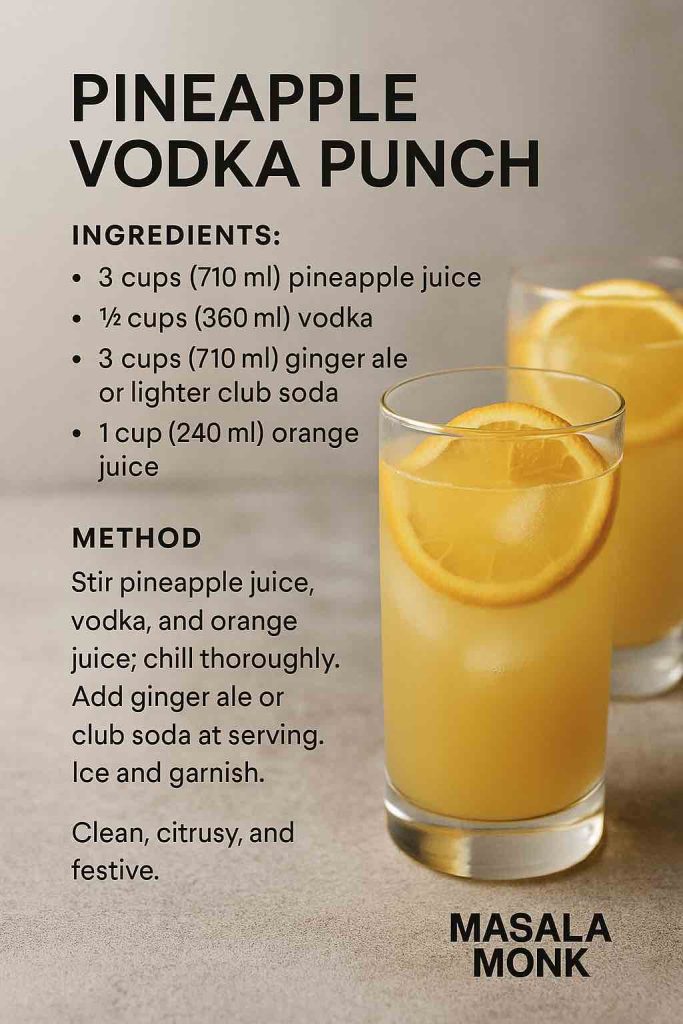
9) Pineapple Vodka Punch

Clean, citrusy backbone with just enough fizz to feel festive.

You’ll need (≈2.7 L / ~12 servings)

  • 3 cups (710 ml) pineapple juice
  • 1½ cups (360 ml) vodka
  • 3 cups (710 ml) ginger ale (sweeter) or club soda (lighter)
  • 1 cup (240 ml) orange juice
  • Ice + orange wheels
Recipe card for Pineapple Vodka Punch showing tall glasses of golden punch with orange wheels on ice. Overlay lists ingredients (pineapple juice, vodka, ginger ale/club soda, orange juice) and simple method in a modern Masala Monk layout.
Pineapple Vodka Punch keeps things clean and citrusy—pineapple + OJ base, a measured pour of vodka, then fizz with ginger ale or club soda right at serving. Bright, simple, and party-ready.

Method
Stir pineapple juice, vodka, and orange juice; chill thoroughly. Add ginger ale or club soda at serving. Ice and garnish.

Flavor notes & swaps

  • Herbal lift: a handful of mint lightly muddled with OJ (strain before mixing).
  • Citrus pop: 2 tbsp lime juice right before serving wakes up the vodka.

And for those mornings after party Top 12 Hangover Remedies from Around the World.


Make-Ahead, Storage & Safety—The Practical Stuff

  • Make-ahead window: Mix all non-carbonated ingredients up to 24 hours in advance. Store in the coldest part of your fridge in a sealed container.
  • When to add fizz: Always at serving. If your event runs long, keep the soda chilled and top up every 20–30 minutes.
  • Keeping it cold: Use frozen fruit, an ice ring, or small ice cubes added in stages. For outdoor service, keep a spare pitcher in a cooler and rotate refills.
  • If you over-dilute: Re-balance with a quarter-strength concentrate of the base (e.g., a mix of pineapple juice and citrus) and a pinch of salt.
  • Responsible enjoyment: If a punch includes spirits, label it clearly and keep water nearby. For alcohol guidelines, skim NIAAA’s standard drink explainer.
  • Food-safe handling: If you’re serving outdoors or for hours, review FoodSafety.gov’s four steps; in short, keep cold drinks cold and use clean ladles and cups.

Styling Your Bowl: Easy Wins That Wow

  • Build an ice ring: In a bundt pan, freeze pineapple juice with lemon wheels, mint, and cranberries in two layers so the fruit suspends. Unmold and float for slow-melt drama.
  • Create a garnish bar: Set out pineapple spears, cherries, citrus wheels, and edible flowers so guests can customize.
  • Use a clear dispenser: If you’re short on table space, a glass drink dispenser shows off the color and keeps refills discreet.
  • Give it a scent: Clap mint sprigs (literally slap them) before garnishing to release oils.

Troubleshooting: Because Real Parties Get Real

  • “It’s too sweet.” Add fresh lemon or lime juice, then taste. If it still leans sweet, swap 1–2 cups of the punch for club soda and add a tiny pinch of salt.
  • “It’s flat.” You added the soda too early or stirred too aggressively. Top up with fresh, chilled soda and add a handful of frozen fruit to re-cool fast.
  • “It’s watery.” Use frozen fruit instead of ice for the next top-up. Meanwhile, stir in a little concentrated pineapple juice or a splash of lemonade to bring back flavor.
  • “Guests want both alcoholic and non-alcoholic.” Run two bowls: one zero-proof, one spiked. Label both clearly and keep the same garnish set so the look matches.
  • “Kids are drinking it non-stop.” Offer small cups and keep water pitchers next to the punch so refills are mixed with a sip of water.
Troubleshooting infographic titled “Fix Your Punch Fast” on a dark background with icons and three remedies: add citrus/club soda/salt if too sweet; top with fresh cold soda and stir gently if flat; use frozen fruit and concentrated juice if watery. Branded MasalaMonk.com.
Fix your punch fast: whether it’s too sweet, too flat, or too watery, this quick-reference card gives you instant saves—citrus + club soda + pinch of salt, fresh cold soda with a gentle stir, and frozen fruit plus a boost of concentrated juice.

A Better Bowl, Every Time

Make it cold, add the bubbles last, and keep the flavors lively with citrus and just a pinch of salt. Whether you go classic with ginger ale or get a little wild with sherbet or blue curaçao, punch with pineapple juice is a guaranteed mood-setter—and now you’ve got nine ways to serve it like a pro. If you try one, tell us which combo your crowd loved most; we’re always up for testing reader riffs at the next gathering.

FAQs

1) What’s the simplest ratio for punch with pineapple juice?

Start here, then tweak: 4 : 2 : 4 + garnish

  • 4 parts pineapple juice
  • 2 parts citrus (orange juice or lemonade)
  • 4 parts fizz (ginger ale or lemon-lime soda)
    Then, add ice + citrus wheels + pineapple chunks. Finally, taste and adjust with a squeeze of lemon (for brightness) or a pinch of salt (to tame sweetness).

2) Ginger ale or Sprite—what’s better in punch with pineapple juice?

It depends on the vibe. Ginger ale is softer and vanilla-ginger sweet, which feels “classic wedding.” Meanwhile, Sprite/7UP is zestier and reads more citrus. If you’re unsure, split the difference: half ginger ale, half lemon-lime soda. For a lighter sip, replace 1–2 cups with club soda.

3) Can I make punch with pineapple juice ahead of time?

Absolutely. First, mix all non-carbonated liquids up to 24 hours ahead and chill them hard. Then, add anything fizzy right before serving. As a result, the bubbles last and the bowl stays bright.

4) How much punch with pineapple juice do I need for my guest count?

Use these quick numbers, then round up:

  • If punch is one of several drinks: 3–4 L per 10 guests for 2–3 hours.
  • If punch is the star: about 1 gallon (3.8 L) per 10 guests.
  • For kids or hot weather, add 10–15%.
    Pro tip: make two identical chilled batches; keep one in the fridge so refills stay icy.

5) What if my punch with pineapple juice tastes too sweet (or too tart)?

Firstly, add fresh lemon or lime and stir gently. Secondly, if it’s still too sweet, swap in 1–2 cups club soda for punch and add a tiny pinch of salt. Conversely, if it’s too tart, stir in simple syrup (1:1 sugar to water) a tablespoon at a time.

6) How do I keep punch cold without watering it down?

Go beyond ice cubes. Instead, freeze pineapple rings, grapes, or cranberries and use them as “ice.” For longer events, make a bundt-pan ice ring with pineapple juice and citrus slices; it melts slowly and looks gorgeous.

7) What’s the best “wedding punch with pineapple juice and ginger ale” recipe?

Keep it timeless: 4 cups pineapple juice + 2 cups orange juice + 4 cups ginger ale. Add ice, orange slices, and pineapple chunks. For brighter flavor, substitute lemonade for the OJ; for spicier zip, replace ½ the ginger ale with ginger beer.

8) Which alcohol pairs best with punch with pineapple juice—rum or vodka?

Both work, but they read differently. Rum (especially coconut rum/Malibu) leans tropical and dessert-like; a splash of dark rum adds depth. Vodka keeps things clean and citrusy. For a balanced bowl, start with 1 cup (240 ml) spirit per ~2.7 L base, taste, then decide if you want another ½ cup (120 ml).

9) Can I make a “Planter’s” style punch with pineapple juice?

Yes—think sour : sweet : strong : weak. Try: 1 cup lime (sour) + 2 cups simple syrup (sweet) + 3 cups rum (strong) + 4 cups pineapple juice (weak). Finally, add 1–2 cups water or soda, 6 dashes bitters, and a dusting of nutmeg.

10) How do I do a cranberry holiday punch with pineapple juice?

Go red and refreshing: 3 cups pineapple + 3 cups cranberry + 4 cups ginger ale, plus lime slices and cranberries. For even more color, add ½ cup pomegranate juice. During winter, tuck in cinnamon sticks (pull them before serving).

11) Any tips for sherbet punch with pineapple juice and 7UP?

Yes—work quickly. First, pour pineapple juice, then add 7UP, and finally float scoops of pineapple (or orange) sherbet. Pre-scoop and refreeze for 30 minutes so the “islands” hold. Serve immediately so the fizz doesn’t fade.

12) Can I make blue punch with pineapple juice without blue curaçao?

You can fake the look. Use a blue sports drink in place of curaçao and add a couple drops of orange extract for aroma. Alternatively, go half sports drink, half lemon-lime soda for lighter sweetness.

13) Is fresh pineapple juice better than canned for punch?

Sometimes—but not always. Fresh is zingy yet inconsistent; canned is steady and convenient for crowds. If you juice fresh, taste for sweetness and acidity, then adjust with lemon/lime or a spoon of simple syrup.

14) What’s a good “Sprite and Hawaiian Punch with pineapple juice” combo?

For kid-friendly color, try 2 parts Hawaiian Punch + 1 part pineapple juice + 2 parts lemon-lime soda. Add plenty of ice and orange slices. Then, if it’s too sweet, swap one part of soda for club soda.

15) Can I use lemonade mix (like Country Time) in punch with pineapple juice?

Of course. Whisk the mix with cold water per the label, chill thoroughly, and use it where the recipe calls for lemonade. Because mixes vary in sweetness, start with ¾ strength, taste, and add more if needed.

16) What about champagne or prosecco—can I make a pineapple “bubbly” punch?

Yes, but add the wine last minute. Build a base of pineapple + lemonade (chilled), then gently pour in prosecco right before guests arrive. For balance, keep the ratio near 2 parts juice base : 1 part bubbles.

17) How do I label and serve when some guests want alcohol and others don’t?

Run two bowls side by side—one zero-proof, one spiked—and label clearly. Meanwhile, offer water and a garnish bar (mint, citrus wheels, pineapple spears) so everyone’s glass looks equally festive.

18) Any fast fixes if my punch turns flat or watery mid-party?

If flat, top with fresh, very cold soda and stir minimally. If watery, stir in a small amount of concentrated base (pineapple + citrus) and switch to frozen fruit for chilling. Also, refresh in smaller batches so each top-up stays lively.

19) How far can I stretch punch with pineapple juice for a big crowd?

For a 50-guest event where punch is one of several drinks, plan roughly 12–16 L total. Practically speaking, make four batches of a ~3 L recipe, keep two chilling, and rotate them. If punch is the main drink, aim closer to 19 L (about 5 gallons).

20) What garnishes make punch with pineapple juice look premium—without extra work?

First, build a slow-melt ice ring with pineapple juice and citrus wheels. Next, set out an easy garnish bar: mint, lemon wheels, pineapple chunks, and cocktail cherries. Finally, clap mint leaves between your hands before adding—this releases aroma and feels surprisingly fancy.

Posted on Leave a comment

Refreshing Lemon Cucumber Water and its Detoxifying Benefits

sliced lemon and strawberries in water

Hello, health enthusiasts! Today, we’re going to delve deeper into the invigorating world of lemon and cucumber water. This simple, yet potent blend has been making a splash in the wellness community, and it’s time we uncover why! 🌊

Introduction to Lemon and Cucumber Water 🍋🥒💧

Lemon and cucumber water is a type of infused water that marries the zesty flavor of lemon with the cool, refreshing taste of cucumber. But it’s not just a delicious thirst-quencher; it’s also brimming with health benefits that can enhance your well-being from the inside out.

The Multitude of Health Benefits of Lemon and Cucumber Water 🏋️‍♀️🧘‍♀️

1. Hydration Powerhouse

Staying hydrated is crucial for overall health, and lemon and cucumber water makes it easy. The invigorating taste encourages you to drink more, keeping your hydration levels optimal. This is especially beneficial for those who struggle to drink plain water. 💦

2. Weight Loss Ally

Lemon and cucumber water can be a powerful ally in your weight loss journey. It’s low in calories and can help curb cravings, making it an ideal drink for those aiming to maintain a healthy weight or shed some pounds. 🏃‍♀️

3. Detox Delight

This water combo is often referred to as a detox water. The lemon helps cleanse your body, flushing out toxins, while the cucumber provides essential hydration. This combination promotes better health and can leave you feeling revitalized. 🍵

4. Skin Health Booster

The high water content in cucumber and the vitamin C in lemon can contribute to healthy, glowing skin. Regular consumption can help maintain skin hydration, reduce puffiness, and promote a natural glow. 🌟

5. Digestion Aid

Lemon can stimulate the production of bile, which aids in digestion. Cucumber, being high in water and fiber, can also promote healthy digestion. This makes lemon and cucumber water a great beverage to consume after meals. 🍽️

6. Heart Health Supporter

Lemons are a good source of vitamin C, a nutrient known to support heart health. Regular consumption of lemon and cucumber water can contribute to maintaining a healthy heart. 💓

How to Make Lemon and Cucumber Water at Home 🍹

Making this infused water is a breeze! Here’s a simple recipe:

  1. Slice one medium-sized lemon and half a cucumber.
  2. Add the slices to a jug of water.
  3. Let it infuse for a few hours or overnight in the refrigerator.
  4. Enjoy it chilled throughout the day. 🧊

For an extra twist, you can also add mint leaves or a dash of ginger.

Are There Any Side Effects? 🤔

Lemon and cucumber water is generally safe to consume. However, if you have a citrus allergy or a sensitive stomach, the acidity from the lemon might cause some discomfort. Always listen to your body and adjust your intake accordingly.

FAQs

1. What does lemon cucumber water do?

Lemon cucumber water promotes hydration, aids digestion, supports weight loss, detoxifies the body, and contributes to skin and heart health.

2. Can I drink lemon and cucumber water every day?

Yes, it’s generally safe to drink this water combo daily. However, if you have a citrus allergy or a sensitive stomach, you might want to limit your intake.

3. What are the benefits of adding mint to lemon and cucumber water?

Adding mint can enhance the flavor of the water and bring additional health benefits, such as improved digestion and relief from headaches.

4. Can lemon and cucumber water help with hydration?

Absolutely! The refreshing taste of lemon and cucumber water can encourage you to drink more, thus promoting better hydration.

5. Is lemon and cucumber water good for detox?

Yes, lemon and cucumber water is often referred to as a detox water due to its ability to cleanse the body and flush out toxins.

6. Can lemon and cucumber water help with weight loss?

Yes, this water combo can support weight loss by promoting hydration, curbing cravings, and aiding digestion.

In conclusion, lemon and cucumber water is a refreshing, health-packed beverage that’s easy to make and enjoyable to drink. So why not give it a try? Your body will thank you! 🥂


Tags: Lemon, Cucumber, Infused Water, Detox, Hydration, Weight Loss, Heart Health, Skin Health, Digestion, Wellness, Health, Nutrition, Lemon and Cucumber Water Benefits, Lemon Cucumber Detox, Lemon Cucumber Mint Water, Lemon Cucumber Water for Weight Loss.

Posted on 2 Comments

Tropical Twist: 8 Heavenly Pineapple Mojito Mocktail Recipes for Lazy Sunday Afternoons

pineapple fruit on rock taken under white clouds

Introduction:

Imagine lounging under the warm sun, with a refreshing mocktail in hand that transports you to a tropical paradise. If you’re a fan of the sweet and tangy flavors of pineapple, combined with the invigorating taste of mint, then these pineapple mojito mocktail recipes are perfect for you. In this post, we present eight heavenly pineapple mojito mocktail recipes that will bring a tropical twist to your lazy Sunday afternoons. Get ready to unwind, relax, and sip on these delightful concoctions that will transport you to an island getaway!

  1. Classic Pineapple Mojito 🍍🌿🍹

Start your tropical mocktail journey with a classic pineapple mojito. In a glass, muddle fresh mint leaves with lime juice and a small amount of simple syrup. Add pineapple juice, sparkling water, and stir gently. Fill the glass with ice and garnish with pineapple wedges and a sprig of fresh mint. Sip and savor the refreshing blend of mint, lime, and the tropical sweetness of pineapple.

Suggestions for experimentation:

  • Kick up the heat by muddling a few slices of jalapeño for a spicy twist.
  • Enhance the tropical flavor by adding a splash of coconut water or coconut milk.
  1. Pineapple Basil Mojito 🍍🌿🍹

Elevate your pineapple mojito with the aromatic flavors of basil. In a glass, muddle fresh basil leaves with lime juice and a small amount of simple syrup. Add pineapple juice, sparkling water, and stir gently. Fill the glass with ice and garnish with basil leaves and a pineapple slice. Sip and enjoy the delightful fusion of tropical pineapple and fragrant basil.

Suggestions for experimentation:

  • Infuse the mocktail with an extra burst of flavor by adding a splash of pineapple-infused vodka.
  • Add a touch of tanginess by including a squeeze of fresh lemon or lime juice.
  1. Coconut Pineapple Mojito 🍍🥥🌿

Indulge in a creamy and tropical treat with a coconut pineapple mojito. In a glass, muddle fresh mint leaves with lime juice and a small amount of coconut sugar. Add pineapple juice, coconut milk, and stir gently. Fill the glass with ice and garnish with a pineapple wedge and a sprig of fresh mint. Sip and let the creamy coconut and tropical pineapple transport you to a beachside paradise.

Suggestions for experimentation:

  • Enhance the coconut flavor by adding a splash of coconut rum or coconut-flavored vodka.
  • Rim the glass with toasted coconut flakes for an extra touch of tropical goodness.
  1. Grilled Pineapple Mojito 🍍🔥🌿🍹

Take your pineapple mojito to the next level with the smoky and caramelized flavors of grilled pineapple. Slice fresh pineapple into rings and grill them until they develop beautiful grill marks. In a glass, muddle fresh mint leaves with lime juice and a small amount of grilled pineapple syrup (made by blending grilled pineapple with a touch of water and straining). Add sparkling water and stir gently. Fill the glass with ice and garnish with a grilled pineapple slice and a sprig of fresh mint. Sip and enjoy the unique depth of flavor brought by the grilled pineapple.

Suggestions for experimentation:

  • Add a hint of spice by muddling a few slices of jalapeño along with the mint leaves.
  • Drizzle the grilled pineapple slice with honey before using it as a garnish.
  1. Pineapple Coconut Mojito Smoothie 🍍🥥🌿🥤

Combine the refreshing qualities of a mojito with the creamy goodness of a smoothie with this pineapple coconut mojito smoothie. In a blender, blend pineapple chunks, coconut milk, fresh mint leaves, lime juice, a small amount of honey, and ice cubes until smooth and creamy. Pour the smoothie into a glass and garnish with a pineapple wedge and a sprig of fresh mint. Sip and savor the tropical flavors of pineapple and coconut in a delightful smoothie form.

Suggestions for experimentation:

  • Add a protein boost by blending in a scoop of vanilla or coconut-flavored protein powder.
  • For a slushier texture, freeze the pineapple chunks in advance and use them instead of ice cubes.
  1. Pineapple Ginger Mojito 🍍🌿🍹🌶️

Add a zesty and spicy twist to your pineapple mojito with the addition of ginger. In a glass, muddle fresh mint leaves with lime juice and a small amount of simple syrup. Add pineapple juice, a splash of ginger juice, sparkling water, and stir gently. Fill the glass with ice and garnish with a pineapple slice and a sprig of fresh mint. Sip and let the combination of pineapple, mint, and ginger invigorate your taste buds.

Suggestions for experimentation:

  • Create a mocktail version of a Moscow Mule by swapping the sparkling water with ginger beer.
  • Garnish with a slice of fresh ginger for an extra kick of flavor.
  1. Pineapple Cucumber Mojito 🍍🥒🌿🍹

Experience the ultimate refreshing mocktail with a pineapple cucumber mojito. In a glass, muddle fresh cucumber slices with lime juice and a small amount of simple syrup. Add pineapple juice, sparkling water, and stir gently. Fill the glass with ice and garnish with cucumber ribbons and a sprig of fresh mint. Sip and enjoy the crispness of cucumber alongside the tropical sweetness of pineapple.

Suggestions for experimentation:

  • Infuse a burst of tangy flavor by adding a squeeze of fresh lemon or lime juice.
  • For a more aromatic twist, add a few basil leaves along with the mint during muddling.
  1. Frozen Pineapple Mojito Slushie 🍍❄️🌿🍹

Cool down with a frozen pineapple mojito slushie that’s perfect for those scorching hot days. In a blender, blend pineapple chunks, fresh mint leaves, lime juice, a small amount of simple syrup, and ice cubes until smooth and slushy. Pour the slushie into a glass and garnish with a pineapple wedge and a sprig of fresh mint. Sip and let the icy and tropical flavors transport you to a cool oasis.

Suggestions for experimentation:

  • Create a layered slushie effect by blending pineapple and mint separately and pouring them into the glass in alternating layers.
  • Add a splash of coconut water for a hint of coconut flavor.

Conclusion:

With these eight heavenly pineapple mojito mocktail recipes, you can bring a tropical twist to your lazy Sunday afternoons. Whether you prefer the classic combination of pineapple and mint or want to explore unique flavor profiles like grilled pineapple or pineapple ginger, there’s a mocktail to suit every palate. Feel free to customize the sweetness, garnishes, or even experiment with different herbs and spices to create your own signature pineapple mojito mocktail. Share your tropical creations with us on social media using the hashtags #MasalaMonk and #PineappleMojito. Cheers to lazy afternoons filled with the taste of the tropics!