
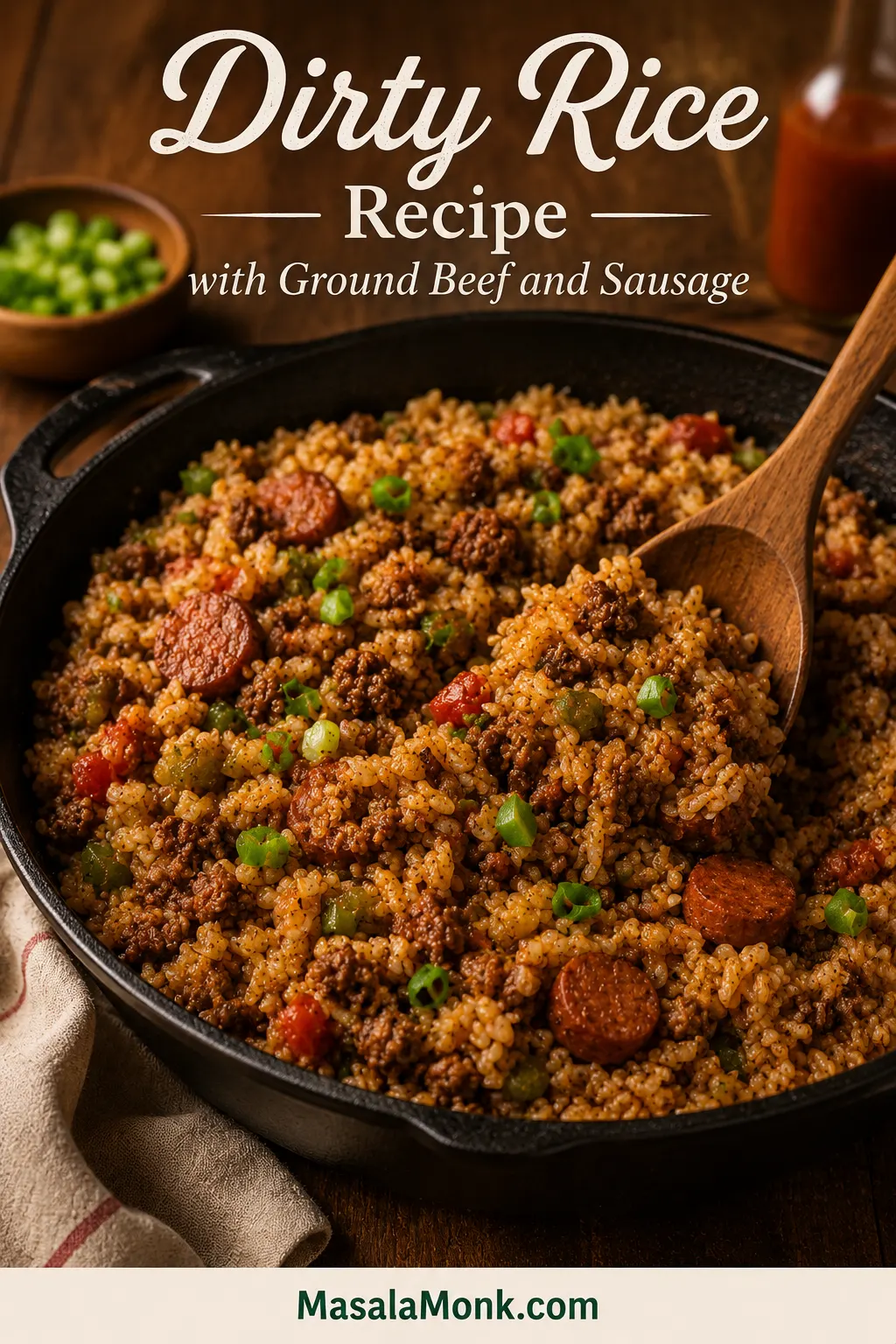
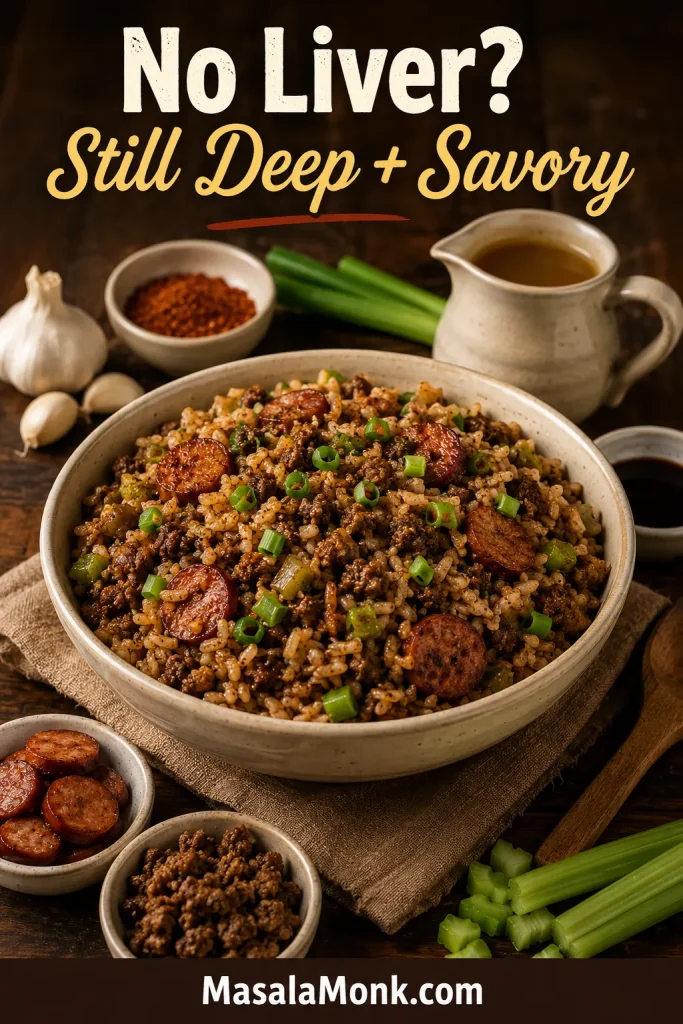
Dirty rice should taste like the whole skillet found its way into the rice: browned meat, sausage, onion, celery, bell pepper, garlic, Cajun seasoning, broth, and all those dark savory bits that make the grains look “dirty” in the best possible way.
The trick is balance. If the browning is too light, the rice tastes flat. Add too much liquid, and the grains turn soft. Leave chicken liver in big pieces, and half the table may suddenly become suspicious of dinner.
This Louisiana-inspired dirty rice recipe keeps things bold, practical, and flexible: ground beef and sausage for an easy weeknight base, cooked rice for fluffy grains, and optional finely minced chicken liver if you want deeper traditional-style flavor. No pressure, no purity test — just homemade dirty rice from scratch that tastes meaty, peppery, and worth going back for.
Quick Answer: How Do You Make Dirty Rice?
To make dirty rice, cook long-grain rice in broth, brown ground beef and sausage in a deep skillet, then cook onion, celery, bell pepper, garlic, Cajun seasoning, herbs, Worcestershire sauce, and a splash of broth into a dark, savory meat base. Fold in the cooked rice, let it rest, and finish with green onions or parsley.
This Cajun dirty rice recipe uses cooked rice instead of raw rice because it gives you more control. The meat base can be adjusted before the rice goes in, which is the easiest way to keep the grains fluffy instead of mushy.
Chicken liver is optional. If you use it, mince it very finely so it melts into the meat. Skip it, and browned beef, sausage, broth, garlic, and Worcestershire sauce still give the rice plenty of depth. The goal is simple: a spoon-coating meat mixture, not a wet pan.
Need the exact amounts now? Jump to the recipe card. Worried about texture? See how to keep dirty rice from getting mushy.
At a Glance: The Pan You’re Making
| Best first version | Ground beef and sausage, no chicken liver required |
| Rice method | Cook rice separately, then fold it into the meat base |
| Total time | About 45 minutes |
| Servings | 6 main-dish servings or 8 side-dish servings |
| Rice | 1½ cups / about 300g long-grain white rice |
| Meat | 1 lb / 454g ground beef + 8 oz / 225g sausage or andouille |
| Flavor base | Onion, celery, green bell pepper, garlic, Cajun seasoning, broth, Worcestershire |
| Texture goal | Fluffy grains coated in a savory meat mixture, not wet or sticky |
| Color cue | Tan to deep brown, not pale white rice with meat scattered through it |
| Traditional option | Add 2 to 4 oz / 55 to 115g finely minced chicken liver |
Dirty Rice Recipe Card
Easy Dirty Rice With Ground Beef and Sausage
A bold, weeknight-friendly dirty rice recipe with ground beef, sausage, long-grain rice, Cajun seasoning, onion, celery, bell pepper, garlic, broth, and an optional chicken liver variation for deeper traditional-style flavor.
| Prep Time | 15 minutes |
| Cook Time | 30 minutes |
| Total Time | 45 minutes |
| Servings | 6 main-dish servings or 8 side-dish servings |
| Method | Stovetop |
| Course | Main dish or side dish |
| Cuisine | Cajun / Southern / Louisiana-inspired |
Equipment
- Large Dutch oven or deep skillet
- Medium saucepan or rice cooker for the rice
- Wooden spoon or spatula
- Knife and cutting board
- Measuring cups and spoons
- Optional food processor if using chicken liver or giblets
Ingredients
- 1½ cups / about 300g long-grain white rice, rinsed
- 3 cups / 710ml chicken or beef broth, low-sodium if using salty sausage or seasoning
- 1 tablespoon / 15ml neutral oil, butter, or bacon grease
- 1 lb / 454g ground beef
- 8 oz / 225g pork sausage, smoked sausage, or andouille, crumbled if raw or finely diced if using links
- 1 medium yellow onion / about 150g, finely diced
- 1 medium green bell pepper / about 120g, finely diced
- 2 celery ribs / about 80g, finely diced
- 4 garlic cloves / about 16g, minced
- 1 to 1½ tablespoons Cajun or Creole seasoning, depending on salt level
- 1 teaspoon smoked paprika
- 1 teaspoon dried thyme
- ½ teaspoon dried oregano
- ½ teaspoon black pepper
- ¼ to ½ teaspoon cayenne pepper, to taste
- 2 bay leaves
- 1 tablespoon / 15ml Worcestershire sauce
- ½ to 1 cup / 120 to 240ml extra broth, for the meat mixture
- ¼ cup chopped green onions and/or parsley
- Salt, to taste after folding in the rice
- Optional: 2 to 4 oz / 55 to 115g chicken liver, very finely minced
Instructions
- Cook the rice. Rinse the rice until the water runs mostly clear. Add rice and 3 cups / 710ml broth to a saucepan. Bring to a boil, cover, reduce to low, and cook for 15 to 18 minutes, or until tender. Rest 5 to 10 minutes, then fluff with a fork.
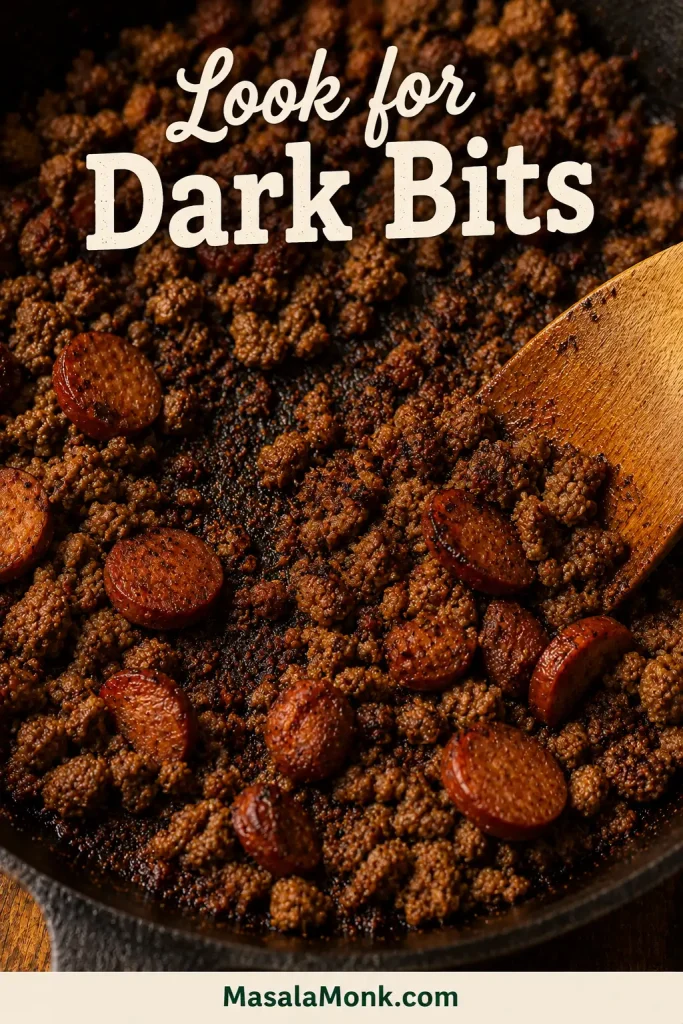
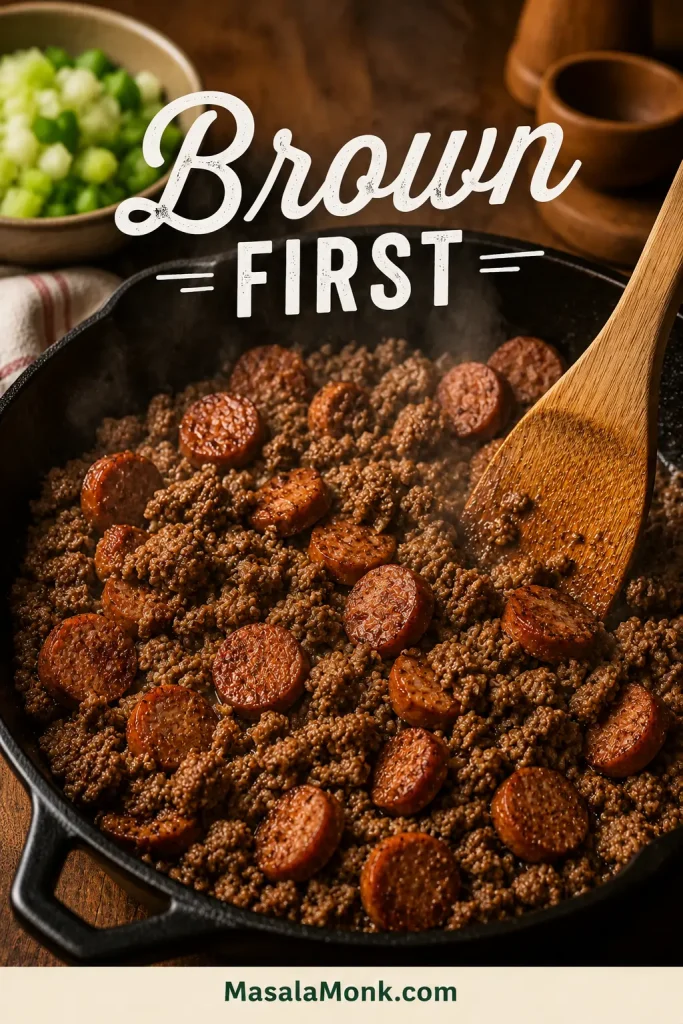
- Brown the meat. Heat oil, butter, or bacon grease in a large Dutch oven or deep skillet over medium-high heat. Add ground beef and sausage. Break into small pieces and cook 8 to 10 minutes, until browned in spots. If liquid collects, keep cooking until it evaporates and the meat sizzles again.
- Manage the fat. If more than about 2 tablespoons of fat collects, spoon off the excess. Leave a little behind so the vegetables can soften and the rice does not taste dry.
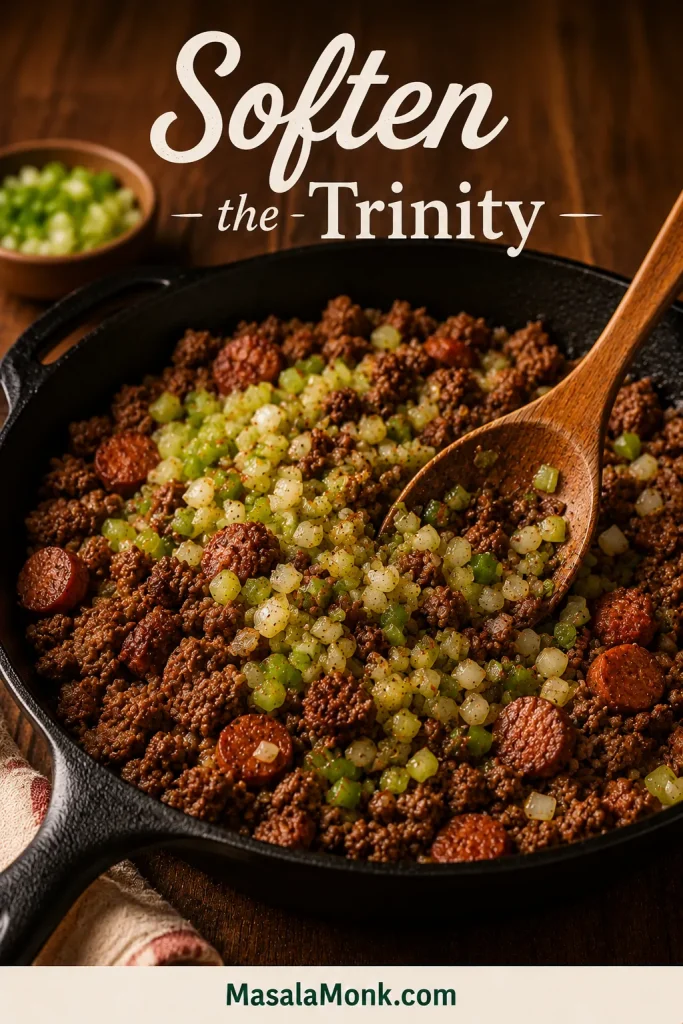
- Add the vegetables. Stir in onion, bell pepper, and celery. Cook 6 to 8 minutes, until softened and no longer sharp-smelling. Lower the heat if the browned bits turn black instead of deep brown.
- Add garlic and seasoning. Add garlic, Cajun seasoning, smoked paprika, thyme, oregano, black pepper, cayenne, and bay leaves. Stir 30 to 60 seconds, just until warm and toasty.
- Deglaze and simmer. Add Worcestershire sauce and ½ cup / 120ml broth. Scrape up the browned bits, then simmer until the mixture is concentrated and moist, not loose. Add more broth only if the pan looks dry.
- Fold in the rice. Add the cooked rice and lift and turn the grains until coated. Do not mash or over-stir.
- Rest and finish. Turn off the heat, cover for 5 minutes, then remove bay leaves. Stir in green onions and/or parsley. Taste while warm and adjust salt, pepper, Cajun seasoning, or hot sauce before serving.
Recipe Notes
- If your Cajun seasoning lists salt first, start with 1 tablespoon. Add more only after the rice is folded in.
- If your rice package calls for a different liquid ratio, follow the package ratio and use broth instead of water.
- Use 2 oz / 55g liver for gentle depth, or up to 4 oz / 115g for darker traditional-style flavor.
- No-liver version: Make the recipe exactly as written without the optional liver.
- Lighter side-dish version: Use ½ lb / 225g ground beef and 4 to 6 oz / 115 to 170g sausage.
- Gluten-free dirty rice: Use gluten-free Worcestershire sauce and confirm your sausage, broth, and Cajun seasoning are gluten-free.
- Dairy-free dirty rice: Use oil or bacon grease instead of butter and check sausage labels.
- Leftover cooked rice works well because it is drier and less likely to turn mushy.
Want the cooking cues before you start? Go to the step-by-step skillet cues. Unsure about liver? See the liver or no-liver notes.
Before You Start
Nothing here has to be perfect. If the pan tastes good before the rice goes in, you are most of the way there.
- Brown first, season second. Meat that only turns gray will taste flat. Let it sizzle long enough to build dark bits on the pan.
- Cut the vegetables small. Onion, celery, and bell pepper should soften into the meat, not sit on top of the rice in big chunks.
- Salt at the end. Sausage, broth, and Cajun seasoning can all be salty, so judge the final salt level after the rice is mixed in.
- Use one seasoning path. Use store-bought Cajun seasoning with the listed spices, or use the homemade blend below. Do not use both at full strength.
- Let the rice rest. Rested rice folds in more cleanly and is less likely to break or clump.
Remember the rhythm: brown the meat, soften the vegetables, wake up the spices, loosen the browned bits with broth, reduce until the base tastes rich, then fold in the rice.
Browning Is the First Flavor Layer
Before the vegetables and rice go in, the meat should have real color and a few dark bits on the skillet.
What This Should Taste Like
The finished rice should taste savory and peppery, not just spicy. You should get browned meat first, then the sweetness of onion and bell pepper, then garlic, herbs, and a little heat at the end.
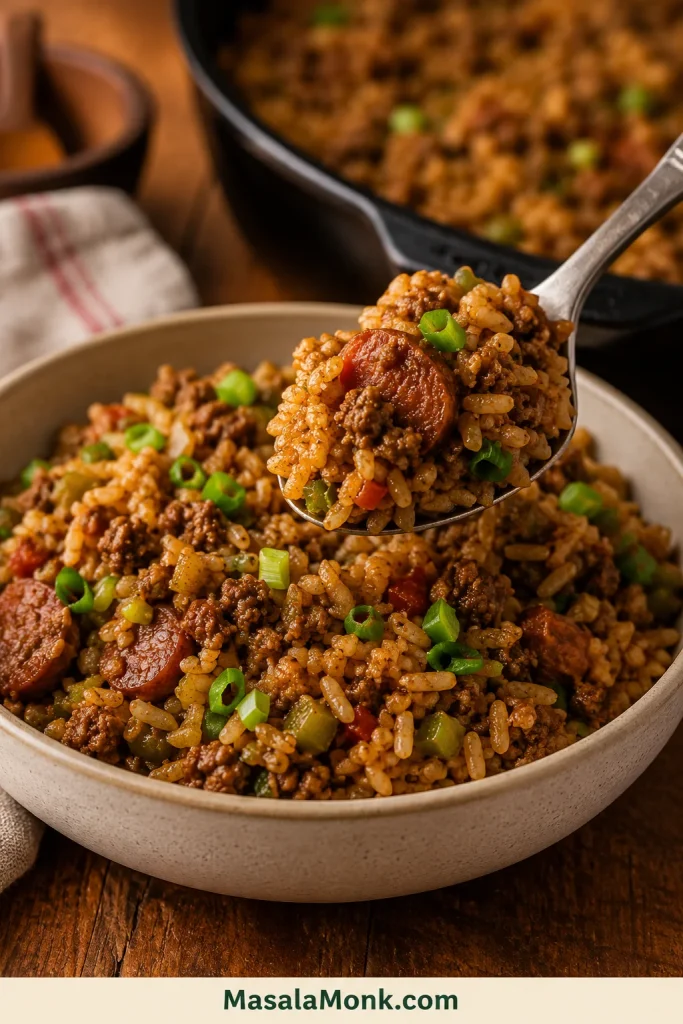
The grains should stay separate but coated, like they picked up every bit of flavor from the skillet. The color should be tan to deep brown depending on the meat, seasoning, and whether you use liver.
It should taste like the rice earned its color, not like seasoning was sprinkled on at the end.
This is the kind of recipe that makes a small amount of meat feel generous. The rice is not just filler; it is the thing that catches everything good from the pan.
What the Finished Dirty Rice Should Look Like
A finished pan should look richly seasoned, but still loose enough that the spoon moves through it easily.
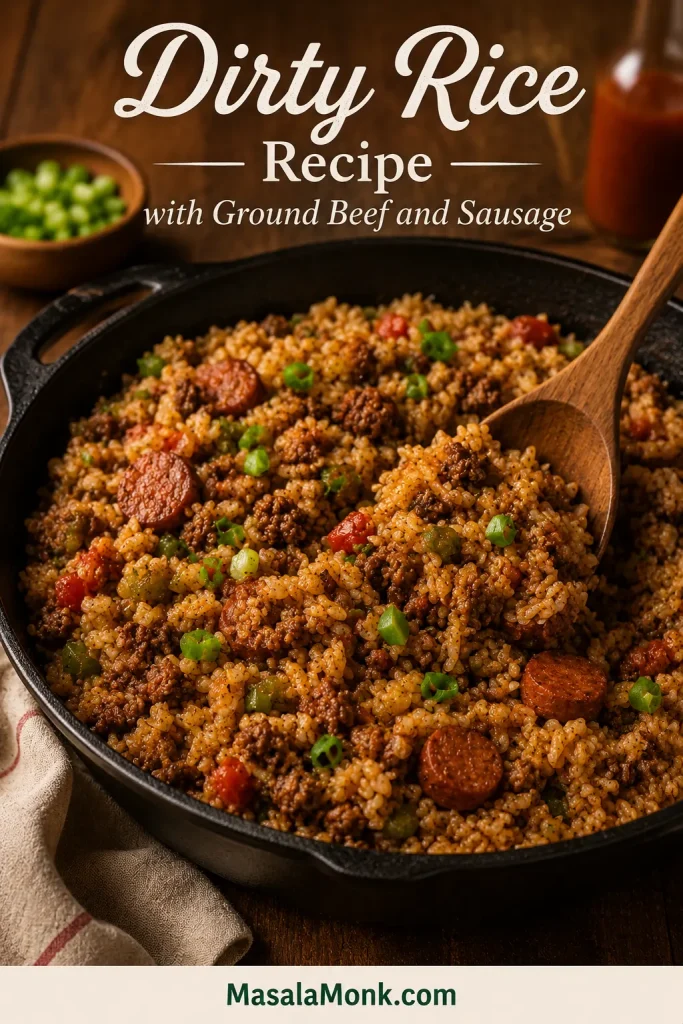
Look for Separate, Coated Grains
The bowl should look hearty and coated, not clumped into a heavy mound.
Why This Method Works
This recipe is built to avoid the most common dirty rice problems: bland flavor, heavy texture, and liver that takes over. Cooking the rice separately protects the grains. Browning beef and sausage gives the dish body. Worcestershire sauce helps the no-liver version taste deeper. A little broth pulls the browned bits into the meat base instead of leaving them stuck to the pan.
The result is an easy, reliable dirty rice with ground beef and sausage that still leaves room for a more traditional-style chicken liver version when you want it.
What Goes Into the Skillet
The backbone is simple: rice, meat, the onion-celery-bell pepper trinity, garlic, broth, and Cajun seasoning. Worcestershire, smoked paprika, herbs, cayenne, bay leaves, and green onions deepen the flavor, but do not panic if one small booster is missing.
The Dirty Rice Backbone
Set the main ingredients out before you start so the skillet does not sit and scorch while you search for seasonings.
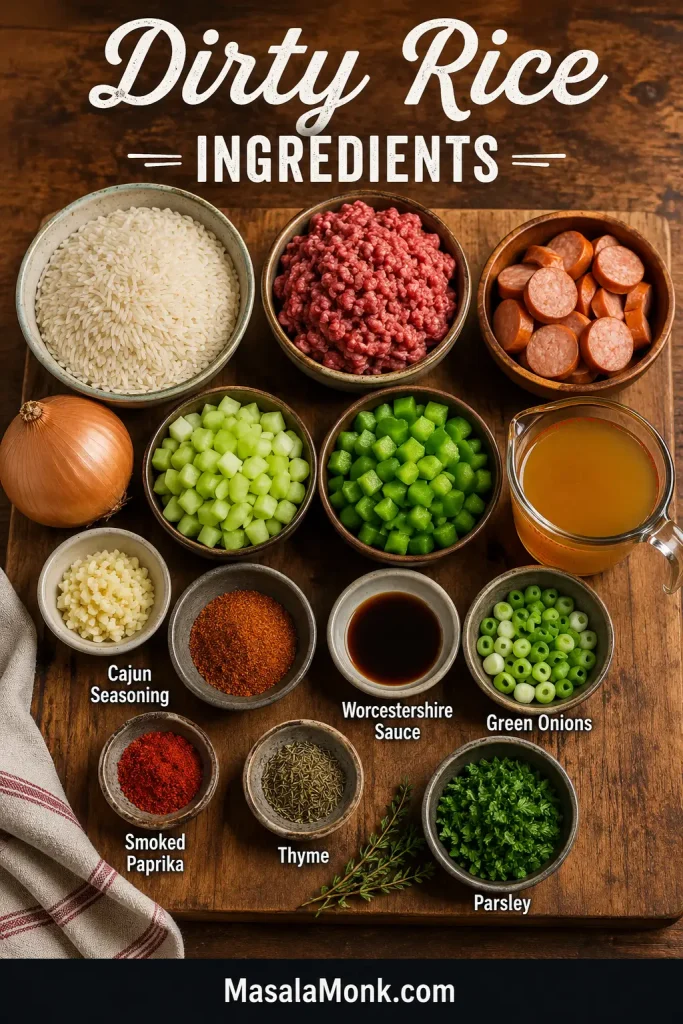
Rice
Long-grain white rice is the safest choice because it stays fluffy and separate. Rinse it before cooking so the finished dish does not turn sticky. Parboiled rice works if you like firmer grains, and leftover cooked rice is excellent because it is already dry and sturdy.
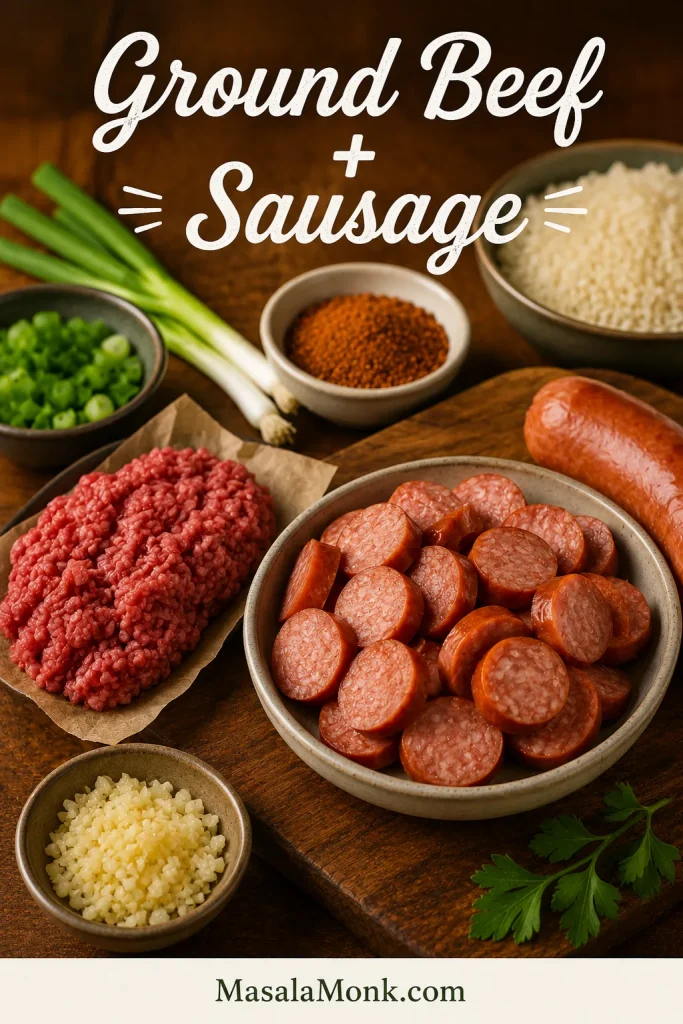
Ground Beef and Sausage
Beef and sausage are the easiest first version: hearty, familiar, and hard to mess up. Pork sausage, smoked sausage, or andouille all work. Crumble raw sausage as it cooks, or dice smoked links small so the flavor spreads through the rice.
If you like smoky sausage dinners, the same kind of bold, peppery comfort also works beautifully in this chicken and chorizo recipe.
Why Ground Beef and Sausage Work Together
Use the beef for body and the sausage for seasoning, then let the pan decide how much salt it still needs.
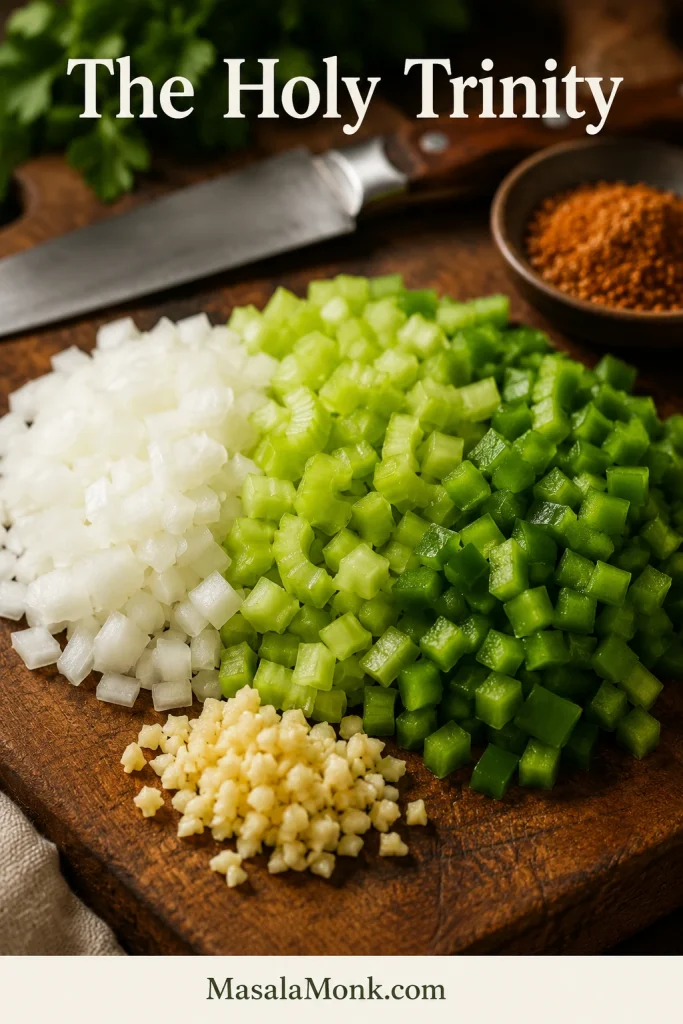
Trinity, Garlic, Broth, and Seasoning
Onion, celery, and green bell pepper form the classic Cajun and Creole vegetable base. Garlic, Cajun seasoning, smoked paprika, herbs, and cayenne make the pan warm and savory. Broth gives the rice more flavor than water, and Worcestershire sauce adds depth, especially when you skip liver.
Dice the Cajun Trinity Small
The smaller the dice, the more evenly the vegetables disappear into the meat base.
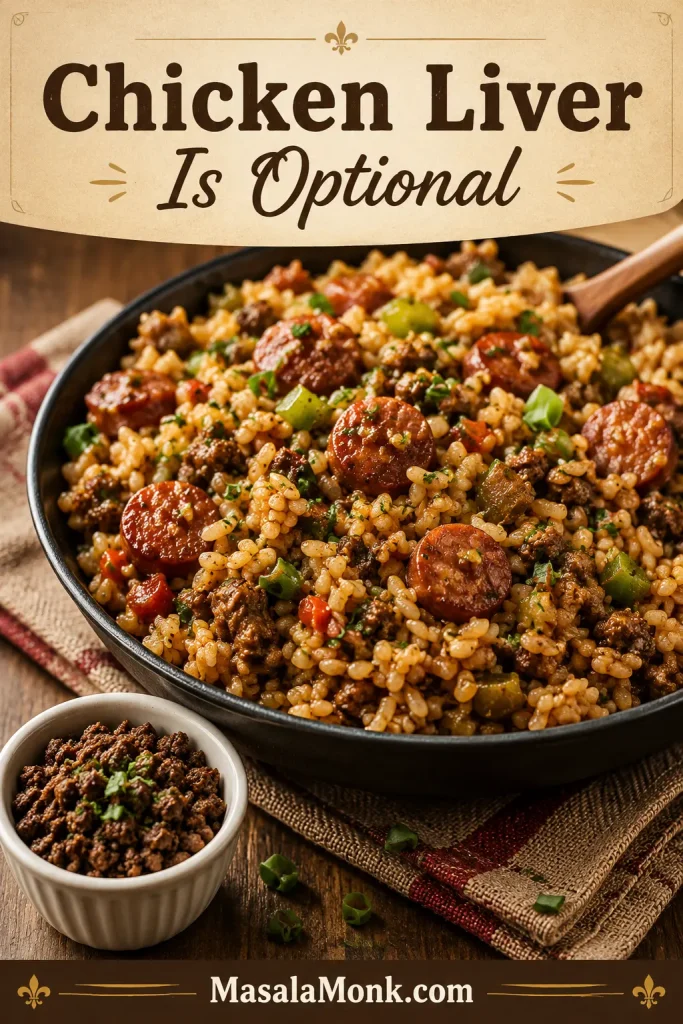
Do You Really Need Chicken Liver?
No. Chicken liver gives old-school depth, but it is not required for a good dinner. Browned beef, sausage, broth, garlic, Cajun seasoning, and Worcestershire sauce can carry the flavor beautifully.
Traditional dirty rice often gets its darker color and deeper flavor from finely chopped liver, gizzards, or giblets. This is a flexible Louisiana-inspired home version, not a single definitive family recipe: some pans lean liver-heavy and old-school, while others are simpler beef-and-sausage rice.
Liver is not here to make the dish taste like liver. It should deepen the meatiness and darken the rice. If that sounds good, start small. If someone at the table is nervous about liver, do not make it the surprise ingredient.
Best liver strategy: Mince chicken liver very finely or pulse it briefly, then brown it fully with the meat until no raw color remains. Treat it like raw poultry: keep it cold, avoid cross-contamination, and cook it fully into the meat mixture.
- No-liver version: Make the recipe as written with ground beef and sausage.
- Mild liver version: Add 2 oz / 55g finely minced chicken liver with the meat.
- Traditional-style version: Add 4 oz / 115g finely minced chicken liver, gizzards, or giblets.
How Chicken Liver Changes the Flavor
Use liver as a background flavor, not a chunky ingredient that announces itself.
How to Make Dirty Rice Without Liver
If you skip liver, lean harder on browning, broth, garlic, Worcestershire sauce, and a balanced Cajun seasoning blend.
Homemade Seasoning Mix, If You Need One
Store-bought Cajun or Creole seasoning is convenient. The only thing to watch is salt. Some blends are mostly spice, while others are salty enough that the whole pan can get away from you quickly.
Choose one path: Use store-bought Cajun seasoning with the recipe-card spices, or use the homemade blend below and skip the separate Cajun seasoning, smoked paprika, thyme, oregano, black pepper, and cayenne in the card.
Control Salt, Smoke, and Heat
A homemade blend is useful when your sausage or broth is already salty, or when you want the pan smoky without making it fiery.
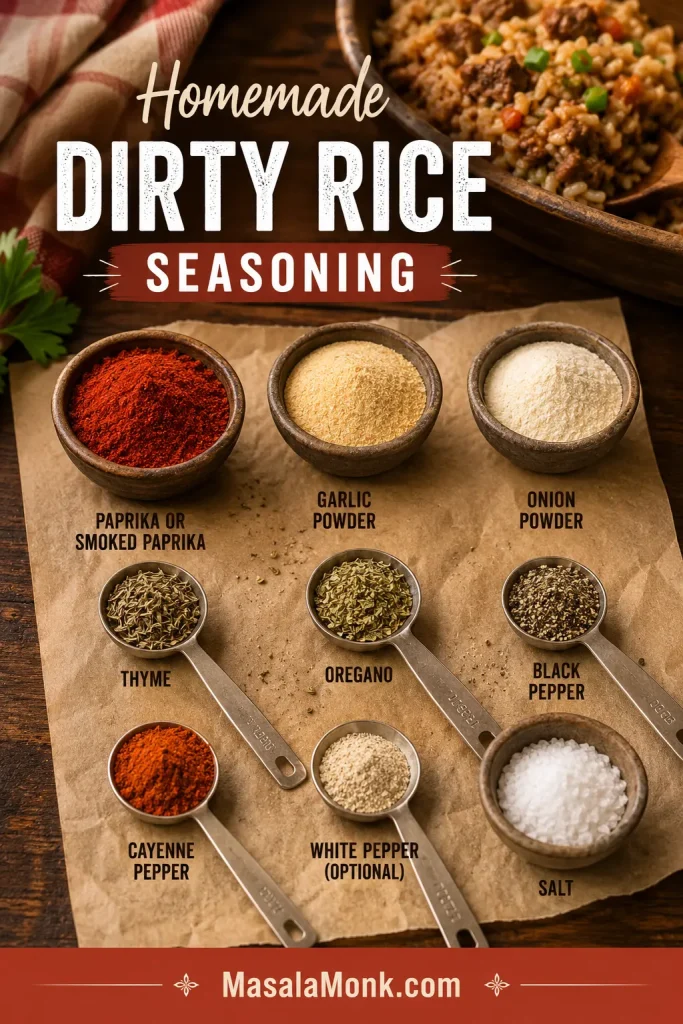
| Spice | Amount |
|---|---|
| Paprika or smoked paprika | 2½ teaspoons |
| Garlic powder | 1 teaspoon |
| Onion powder | 1 teaspoon |
| Dried thyme | 1 teaspoon |
| Dried oregano | ½ teaspoon |
| Black pepper | ½ teaspoon |
| Cayenne pepper | ¼ to ½ teaspoon |
| White pepper, optional | ¼ teaspoon |
| Salt | ¾ to 1 teaspoon, to taste |
Use smoked paprika for a smokier pan. To add heat, increase cayenne or finish with hot sauce. For a lower-sodium version, make the seasoning without salt, use low-sodium broth, choose a less salty sausage, and adjust only after the rice is folded in.
Cooking Cues for Better Dirty Rice
The recipe card gives the full steps, but these are the cues that matter most while you cook.
Step 1: Cook and Rest the Rice
The rice should be tender and separate, not wet. If it looks steamy and loose, let it sit uncovered for a few minutes before folding it into the skillet.
Step 2: Brown the Beef and Sausage Until They Sizzle
If liquid collects in the pan, keep cooking until it evaporates and the meat starts to sizzle again.
Step 3: Leave Just Enough Fat
Spoon off obvious excess fat, but leave enough behind to soften the vegetables and carry the spices.
Step 4: Soften the Trinity Into the Meat
Onion should smell sweet instead of sharp, celery should lose its raw edge, and bell pepper should settle into the meat.
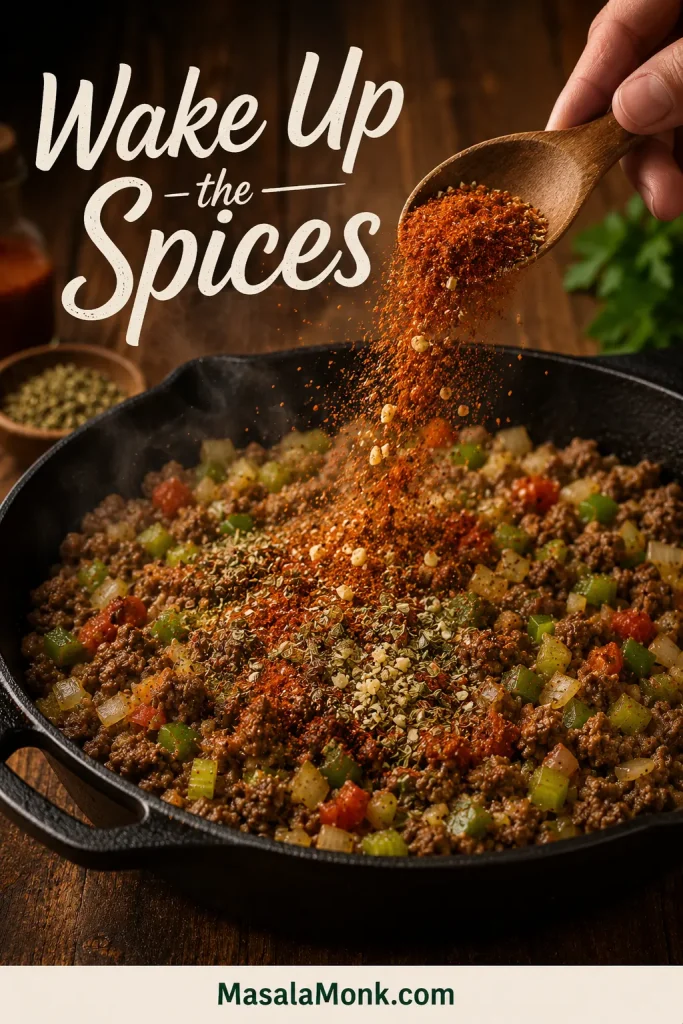
Step 5: Wake Up the Cajun Seasoning
Garlic and seasoning only need 30 to 60 seconds. Add a small splash of broth if the pan looks dry so the spices do not scorch.
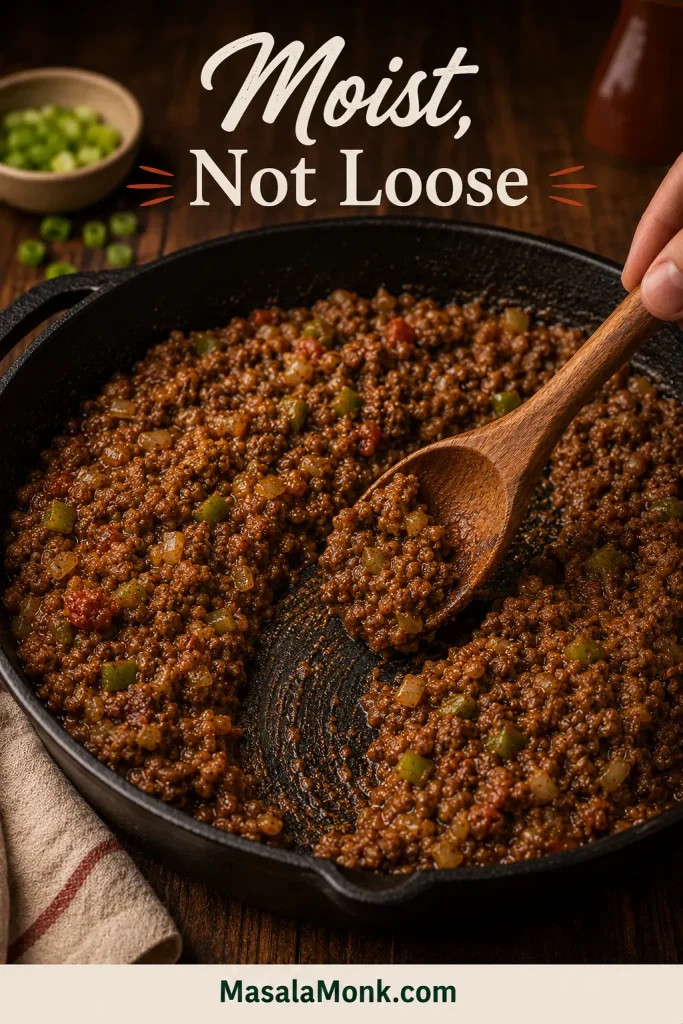
Step 6: Reduce the Meat Base Before Rice Goes In
When broth hits the browned meat, the pan should smell almost gravy-like. Scrape up the browned bits and simmer until the base is moist but not loose.
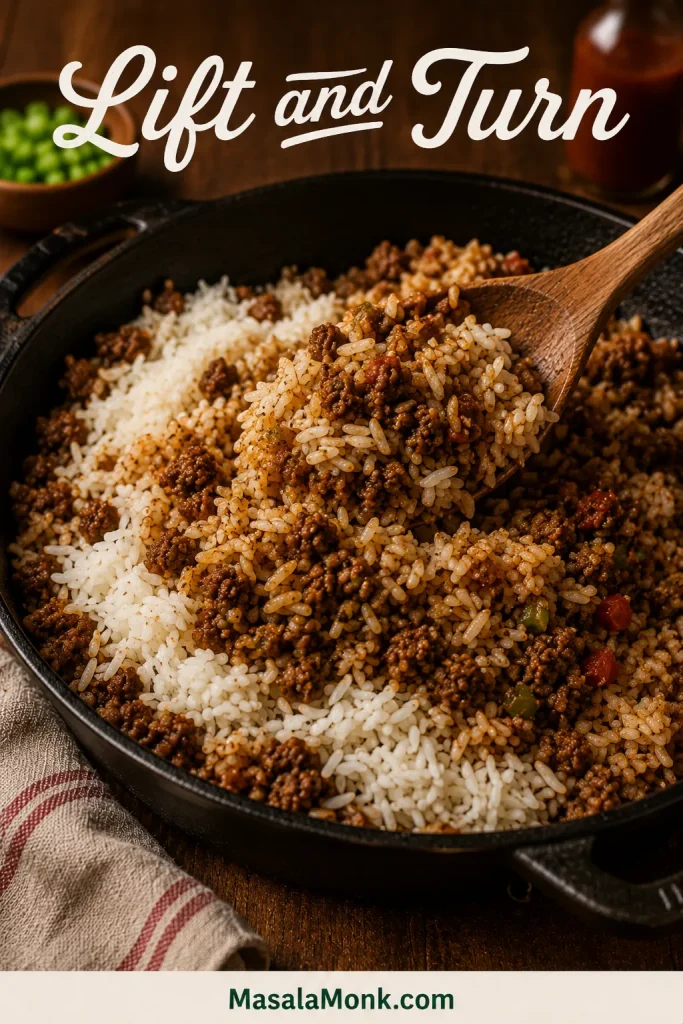
Step 7: Fold the Rice, Do Not Mash It
The grains should pick up seasoning, not soak in liquid. A dry pan needs broth a few tablespoons at a time, while a wet pan needs a minute or two uncovered.
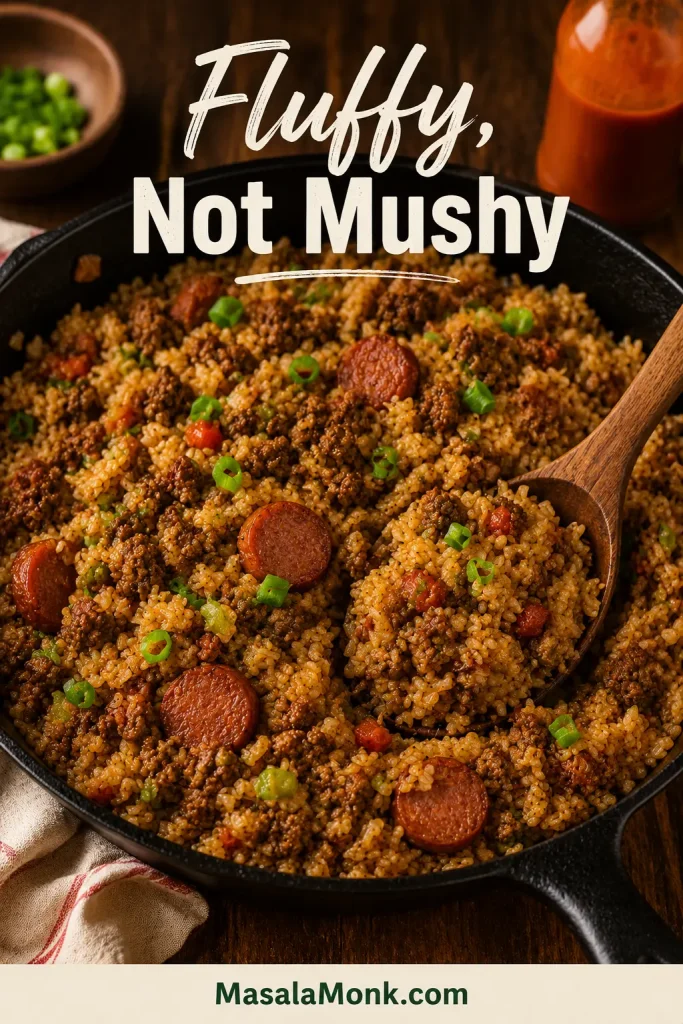
Step 8: Rest and Finish the Pan
Turn off the heat, cover the pan briefly, then finish with green onions, parsley, and final seasoning after the rice is fully mixed.
Hot sauce belongs on the table, not necessarily in everyone’s bowl. Keep the main pan balanced, then let people make their own serving hotter.
Cooked Rice or Raw Rice: Which Works Better?
Both methods can work, but cooked rice is safer for fluffy dirty rice. Raw rice gives you one-pot convenience, but it is easier to overdo the liquid or stir the grains too much.
Cooked Rice Is the Safer Route
If texture is your biggest concern, cook the rice separately and let the skillet base do the flavor work.
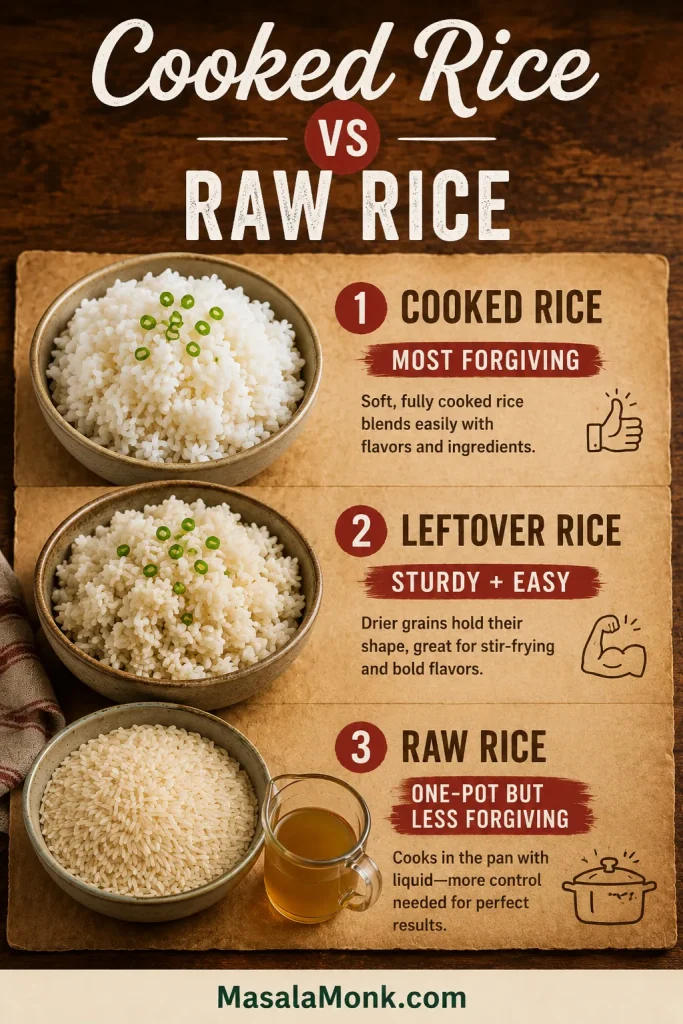
- Cooked rice is the most forgiving choice for fluffy dirty rice.
- Leftover rice gives you an even drier, sturdier grain.
- Raw rice works only when you are comfortable watching the liquid closely.
- A rice cooker works well if you cook the rice in broth first, then fold it into the skillet.
- Brown rice should be cooked separately because it needs more time and liquid.
Can You Make It One Pot?
Yes, but it is less forgiving. Brown the meat and vegetables first, add raw rinsed rice and the right amount of broth for that rice, then simmer covered until tender. Start with the package liquid ratio because meat and vegetables release moisture as the rice cooks. For the fluffiest result, the cooked-rice fold-in method is easier to control.
How to Keep the Rice from Getting Mushy
Mushiness usually comes from too much liquid, overcooked rice, or aggressive stirring after the rice is added. A little broth fixes dry rice; too much broth creates a problem.
How to Avoid Mushy Dirty Rice
The base should be reduced before the rice goes in, and the finished pan should be folded gently instead of stirred hard.
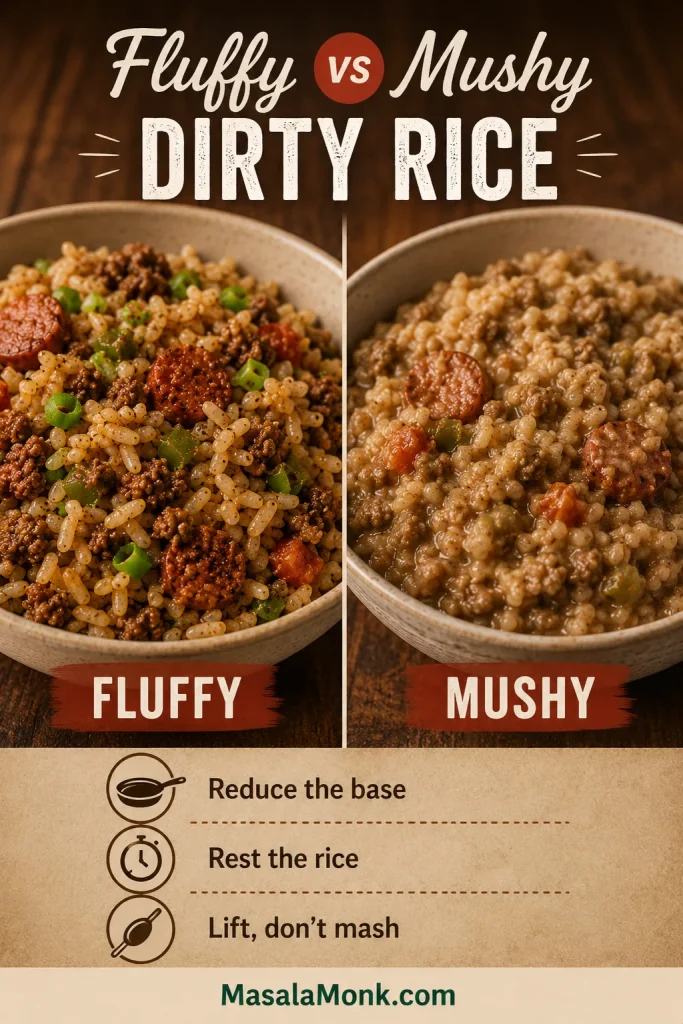
- Use long-grain rice and rinse it before cooking.
- Let the rice rest before fluffing.
- Reduce the meat base until it coats a spoon instead of running like broth.
- Lift and turn the grains instead of stirring hard.
- Add broth carefully, a splash at a time.
- Use leftover rice if you are nervous; cold rice is drier and holds up well.
Already too wet? Cook it uncovered over low heat for a few minutes and fold gently. If it is very soft, turn it into stuffed peppers, a casserole-style bake, or a rice bowl instead of trying to make it fluffy again.
How to Make Boxed Dirty Rice Better
Boxed mix is not cheating. It just needs a little real pan flavor.
For a Zatarain’s-style boxed dirty rice mix, the biggest upgrade is browning real meat and fresh vegetables before the rice and liquid go in. The boxed seasoning handles part of the job, but browning is what makes it taste closer to homemade.
How to Upgrade Boxed Dirty Rice
Keep the package directions as the base, then add the missing homemade flavor with meat, vegetables, broth, and a fresh finish.
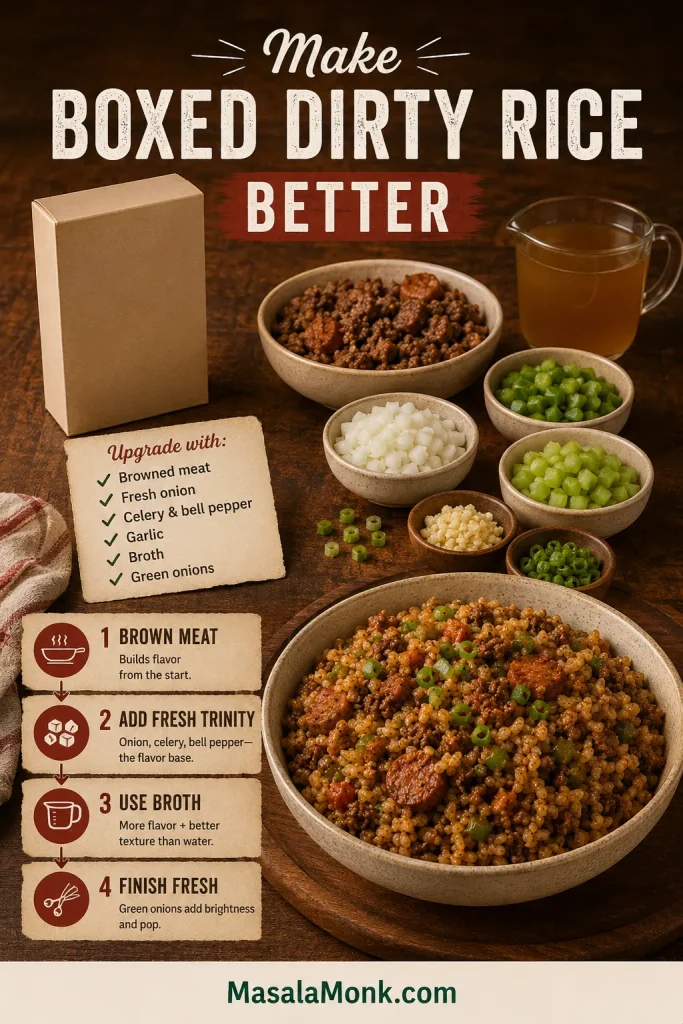
| Upgrade | Why It Helps |
|---|---|
| Brown ground beef, sausage, pork, or turkey first | Adds real skillet flavor instead of just seasoning the rice. |
| Add onion, celery, bell pepper, and garlic | Makes the mix taste fresher and closer to homemade. |
| Use broth instead of some or all of the water | Adds depth without extra work. |
| Finish with butter, green onions, parsley, hot sauce, or lemon | Fixes flatness and makes the final bowl brighter. |
| Add shrimp or cooked chicken near the end | Turns the mix into a fuller meal without overcooking the protein. |
If the meat is very greasy, spoon off the excess but leave a little fat behind. If you add fresh onion, celery, and bell pepper, cook them with the meat first so their moisture evaporates before you add the rice mix and liquid.
Follow the package liquid amount first, then adjust only if your added meat and vegetables make the pan look dry or wet. The biggest boxed-mix mistake is adding extra water “just in case.”
Want to make the full homemade version instead? Go to the recipe card. Planning dinner around it? See what to serve with dirty rice.
How to Make It Darker, Pepperier, and More Skillet-Rich
For a darker, more restaurant-style flavor without making a copycat recipe, keep the meat finely crumbled, dice the vegetables very small, use a little extra black pepper, and let the beef-sausage base brown deeply before the rice goes in.
Build a Darker, Pepperier Skillet
Deep color comes from browning and reduction, not from dumping extra spice into a wet pan.
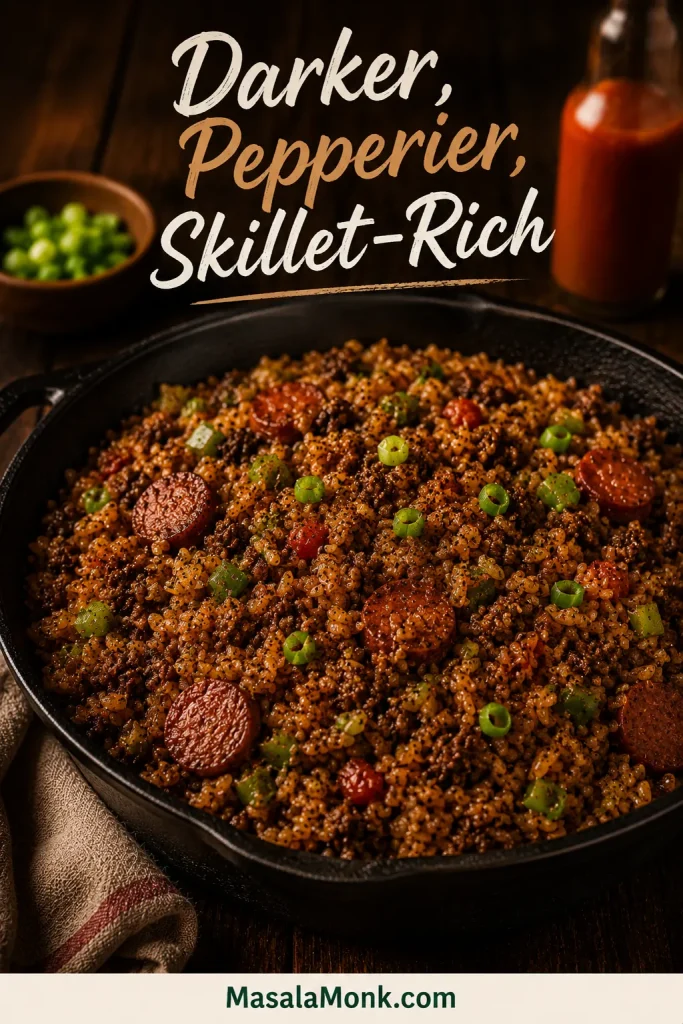
A small spoonful of bacon grease or sausage fat also helps if you want a richer skillet flavor. Finish with green onion and hot sauce, and avoid chunky vegetables if you want that tighter, peppery texture. For a bigger Cajun-style spread, pair it with a Cajun seafood boil.
Easy Ways to Make It Your Own
Once you have made the basic skillet once, the swaps are simple. Keep the rice fluffy, keep the base flavorful, and adjust from there.
Think of these as safe detours, not brand-new recipes — the same skillet rules still apply.
Easy Dirty Rice Variations
Choose the protein or vegetable base first, then keep the same browning, reduction, and folding method.
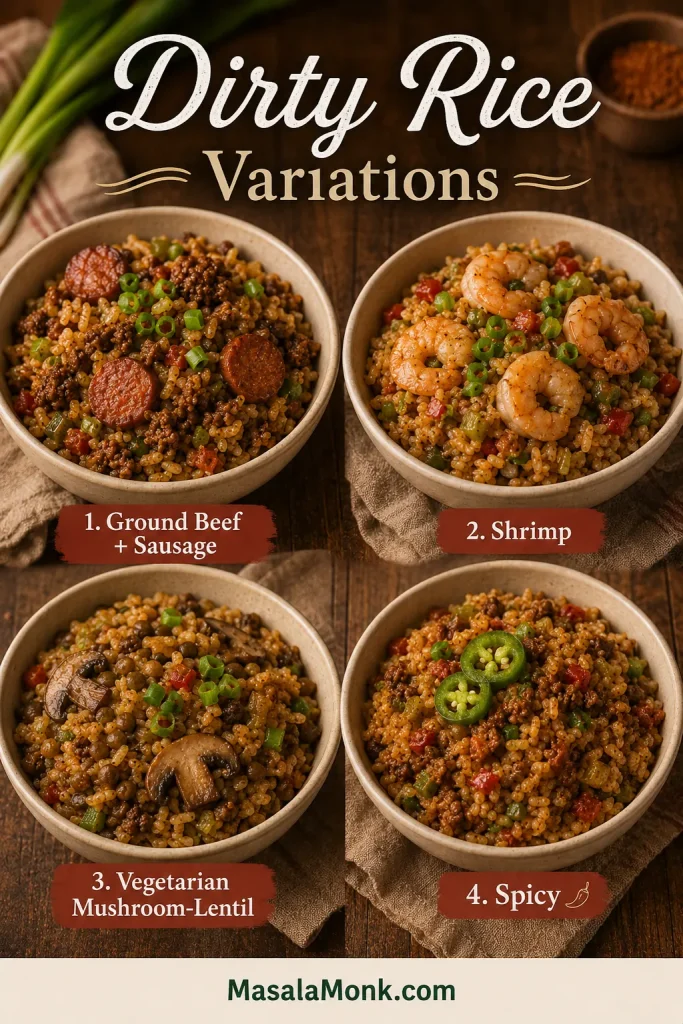
| Variation | How to Do It |
|---|---|
| Ground beef only | Use all beef and add a little extra smoked paprika, Cajun seasoning, and butter or oil to replace the missing sausage richness. For another ground beef comfort dinner, try this Salisbury steak recipe. |
| Sausage only | Use pork sausage, smoked sausage, or andouille. Season carefully because sausage can be salty. |
| Chicken or turkey | Use cooked shredded chicken, ground chicken, or ground turkey. Add a little extra broth, oil, or butter so the rice does not taste lean. |
| Shrimp | Add seasoned shrimp near the end after the meat base is cooked. Shrimp only needs a few minutes to turn opaque. For another rice dinner with shrimp, try this shrimp fried rice recipe. |
| Vegetarian | Use browned mushrooms and lentils with vegetable broth, smoked paprika, Cajun seasoning, and Worcestershire-style sauce. |
| Vegan | Use vegan sausage, lentils, mushrooms, or beans with vegetable broth and vegan Worcestershire-style sauce. |
| Gluten-free | Use gluten-free Worcestershire sauce and check sausage, broth, and Cajun seasoning labels. |
| Dairy-free | Use oil or bacon grease instead of butter and check sausage labels. |
| Low-sodium | Use low-sodium broth, unsalted homemade seasoning, and a less salty sausage. Salt only after the rice is folded in. |
| Spicy or mild | For spicy rice, increase cayenne, add jalapeño, or finish with hot sauce. For mild rice, use mild sausage and keep cayenne low. |
Dirty Rice, Cajun Rice, Rice Dressing, and Jambalaya: What’s the Difference?
The names can overlap depending on family, region, and cook, but these differences help when you are choosing what to make.
Dirty Rice vs Jambalaya, Cajun Rice, and Rice Dressing
The quickest way to separate them is to look at how the rice, meat, and cooking liquid come together.
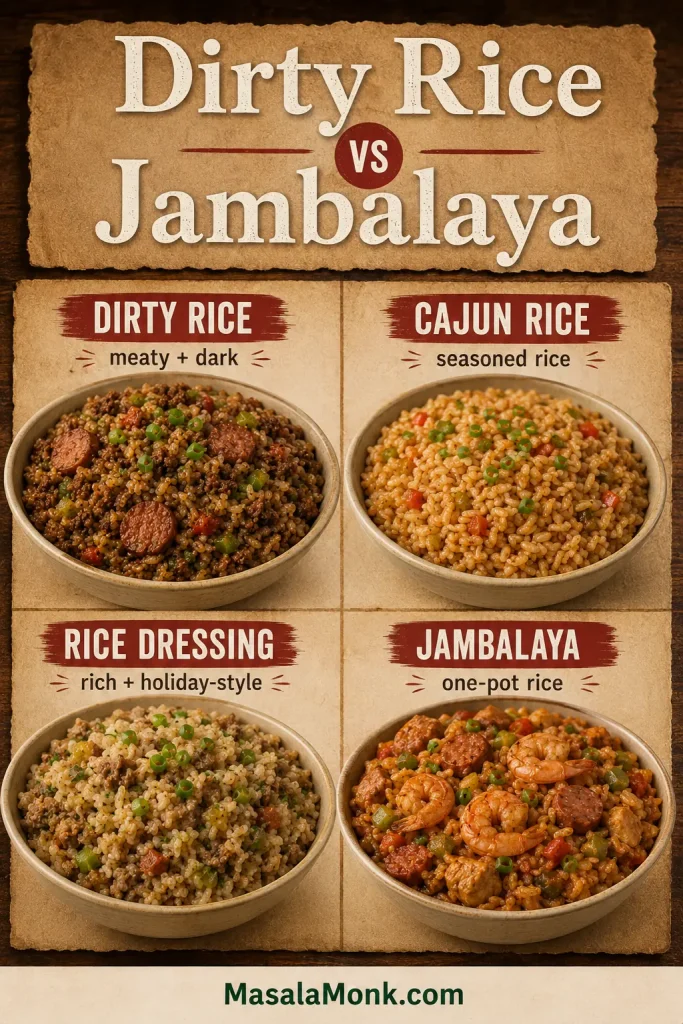
| Dish | What It Usually Means |
|---|---|
| Dirty rice | Rice “dirtied” with browned meat, vegetables, seasoning, and often liver or giblets. |
| Cajun rice | A broader term for Cajun-seasoned rice; it may be similar but is not always as meat-heavy. |
| Rice dressing | A Louisiana or Southern rice-and-meat dish, often richer and sometimes served for holidays. |
| Jambalaya | A fuller one-pot rice dish where rice cooks with meat, seafood, vegetables, and seasoning. |
In real kitchens, the names are not always rigid. Some families call a beef-and-pork version rice dressing, some call it dirty rice, and some use the words almost interchangeably.
What to Serve With Dirty Rice
This dish can be a side, but it can also carry dinner. As written, plan on about 6 main-dish servings or 8 smaller side servings.
What to Serve With Dirty Rice
Pair the rice with something saucy, crisp, smoky, or fresh so the meal does not feel one-note.
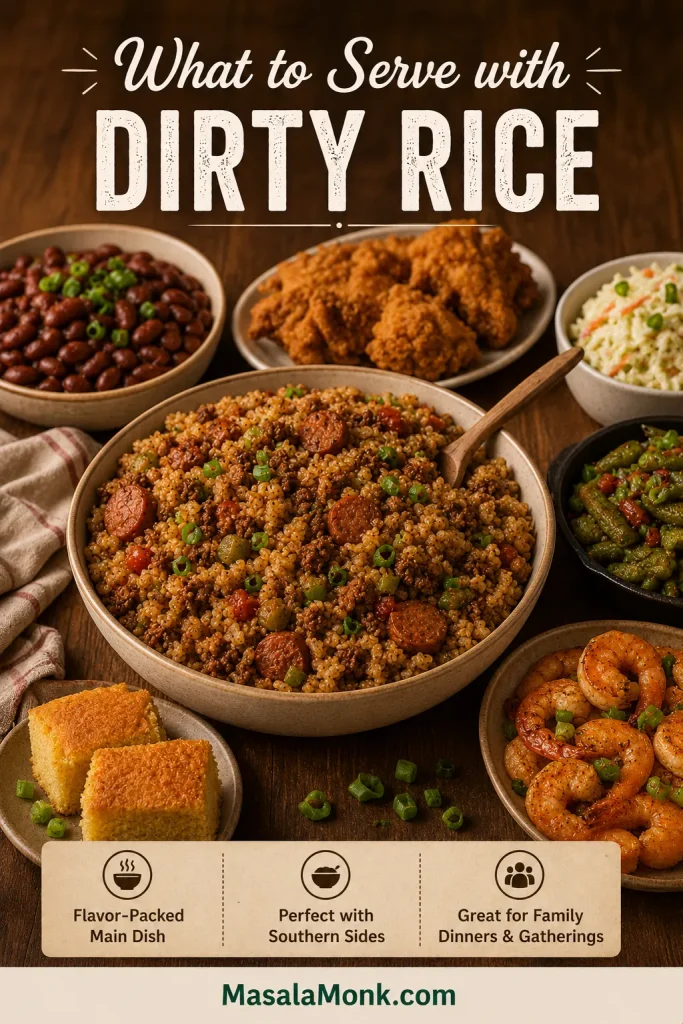
Serve it with red beans and rice, fried chicken, grilled shrimp, blackened fish, gumbo, roasted chicken, or air fryer boneless pork chops. For seafood nights, it also works beside shrimp, crab, or crawfish with seafood boil sauce.
For vegetables and lighter sides, think green beans, okra, collard greens, cabbage, green salad, or roasted carrots. Cornbread, hush puppies, black-eyed peas, and coleslaw also fit naturally.
Leftover Dirty Rice Ideas
Leftovers are not just for reheating; the seasoned rice can become the base for a second meal.

Use leftover dirty rice for stuffed peppers, breakfast rice bowls with egg, burrito filling, or skillet-fried rice-style lunches. For stuffed peppers, borrow the baking cues from this stuffed red pepper recipe, but swap in the seasoned rice filling.
Storage, Freezing, and Reheating
Treat this like any cooked rice dish: cool it promptly, refrigerate it, and use leftovers within 3 to 4 days. The USDA’s leftover safety guidance gives the same 3-to-4-day window for refrigerated leftovers.
How to Store and Reheat Dirty Rice
The goal is to bring the rice back gently with a little moisture, not steam it into softness.
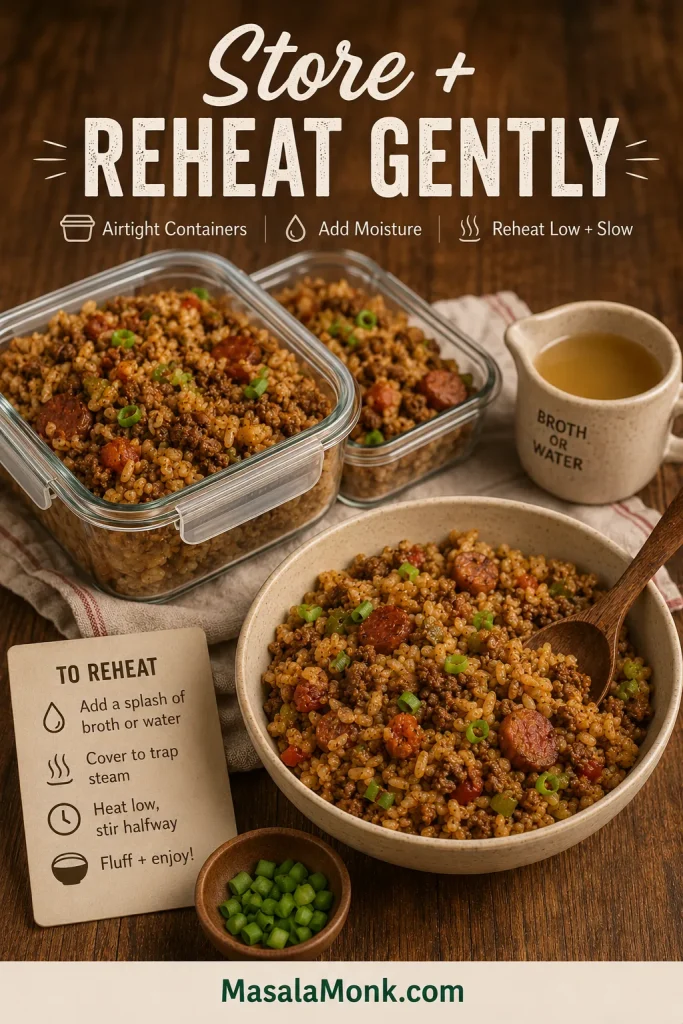
- Fridge: Store cooled dirty rice in an airtight container for 3 to 4 days.
- Freezer: Freeze in portions for up to 2 to 3 months for best texture.
- Stovetop reheating: Add a splash of broth or water, cover, and warm gently over low heat.
- Microwave reheating: Add a small splash of water or broth, cover loosely, and heat in short bursts, stirring between each one.
It is one of those leftovers that reheats best gently — enough moisture to wake the rice back up, not so much that it turns soft.
For the best make-ahead texture, cook the rice and meat base separately, refrigerate them, then fold them together while reheating with a splash of broth. Cool leftovers in shallow containers and do not leave cooked rice sitting out for long, especially in a warm kitchen.
Quick Fixes if Something Goes Wrong
| Problem | What to Do |
|---|---|
| Mushy rice | The base was probably too wet, the rice was overcooked, or the finished dish was stirred too much. Cook uncovered briefly and fold gently. |
| Dry rice | Add a splash of broth, cover the pan for a few minutes, and let the grains absorb the moisture. |
| Greasy rice | Spoon off excess fat before adding vegetables next time. If it is already greasy, fold in more plain cooked rice or serve with something crisp or acidic. |
| Bland flavor | The meat may not have browned enough. Add Cajun seasoning, black pepper, smoked paprika, or hot sauce at the end. |
| Too salty | Fold in more plain cooked rice, add unsalted vegetables, or serve with a simple unsalted side. |
| Too spicy | Fold in more plain cooked rice, add a small pat of butter, or serve with coleslaw or salad. |
| Liver tastes strong | Use less next time, mince it finer, and brown it fully with the meat so it blends into the base. |
FAQ
What makes dirty rice dirty?
Browned meat, vegetables, seasoning, and pan juices darken the rice. Traditional versions may also use chicken liver or giblets for deeper color and flavor.
Do you have to use chicken liver?
No. Chicken liver gives old-school depth, but browned beef, sausage, broth, garlic, and Worcestershire sauce can still make a satisfying pan.
What meat works best?
A mix of ground beef and sausage is the easiest choice. Ground pork, andouille, shrimp, turkey, mushrooms, and lentils can also work depending on the style you want.
Is dirty rice spicy?
It can be mild or spicy. This version is seasoned and peppery, not fiery. Use less cayenne for a family-style pan, or add hot sauce at the table.
Is dirty rice a main dish or a side dish?
It can be either. This recipe makes about 6 main-dish servings or 8 side-dish servings. Add extra sausage, shrimp, beans, vegetables, or an egg on top if you want it to feel like a full meal.
Can cooked rice be used?
Yes. Cooked rice is ideal for this method because it folds into a concentrated meat base without needing extra simmering.
What is the difference between dirty rice and jambalaya?
Dirty rice is usually cooked rice mixed with a browned meat base. Jambalaya is usually a fuller one-pot dish where rice cooks with meat, seafood, vegetables, and seasoning together.
Can dirty rice be frozen?
Yes. Freeze cooled dirty rice in airtight portions for up to 2 to 3 months for best texture. Reheat with a splash of broth or water so the rice does not dry out.
Final Tips Before You Cook
The best dirty rice is not just rice with seasoning. It is rice folded into a pan that has already built flavor: browned meat, softened vegetables, garlic, spice, broth, and enough moisture to coat every grain.
Start with the beef-and-sausage version and let the pan guide you. A dry skillet needs a splash of broth. If the pan looks wet, give it a minute uncovered. Flat-tasting rice usually needs its final seasoning after the grains are folded in.
Serve it hot, with green onions scattered over the top and hot sauce nearby. It should feel like a side dish that accidentally became the main event — the kind of rice everyone keeps spooning from the pan before dinner officially starts.








