
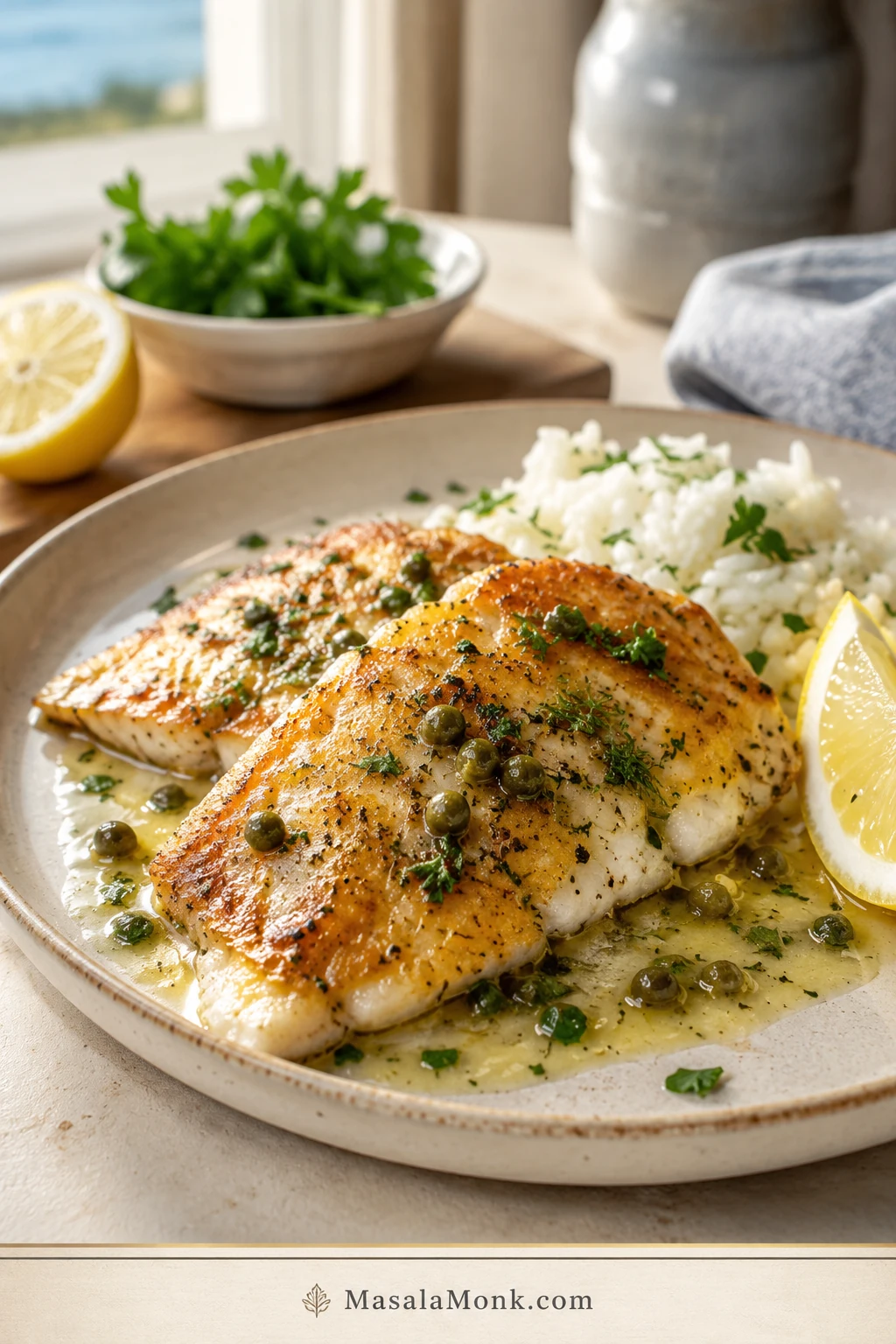
Rockfish rewards a simple approach: a dry fillet, a hot pan, a little butter, and a squeeze of lemon. In less than 20 minutes, this rockfish recipe gives you tender white fish with pale golden edges and a bright garlic lemon butter sauce you can spoon over rice, potatoes, salad, or warm tortillas.
This is the rockfish recipe to use when you want a safe first cook: lightly floured fillets, a quick skillet sear, and a lemony pan sauce that gives the fish flavor without covering it up. The best bite is soft, clean, buttery, and lifted with just enough lemon.
If you bought rockfish and now feel a little unsure what to do with it, start here. The fish is delicate, but it is not difficult. Once you know what to look for, the timing is simple.
Jump to Recipe3-Part RuleCook Time ChartFillet TipsOther MethodsFix Problems
Quick Answer: How to Cook Rockfish
Blot the rockfish fillets very well, season them with salt, pepper, and garlic powder, lightly dredge them in flour, then pan-sear them in a hot skillet with oil and a little butter. Medium fillets usually take 3–4 minutes on the first side and 2–3 minutes on the second side.
The fish is ready when the thickest part turns pearly and opaque, gives gently under a fork, and reaches 145°F / 63°C. Do not chase a dark crust. A light golden surface and a juicy center are better than a deeply browned fillet that turns dry.
Do not chase a hard crust: rockfish is lean and delicate. Pale gold outside and tender inside is the goal, not a deep steak-like sear.
Want the direct method? Jump to the recipe card. Need timing help first? See the cook time chart.
The 3-Part Rockfish Rule
Cooking rule: Dry well, sear briefly, and stop while the flakes stay moist.
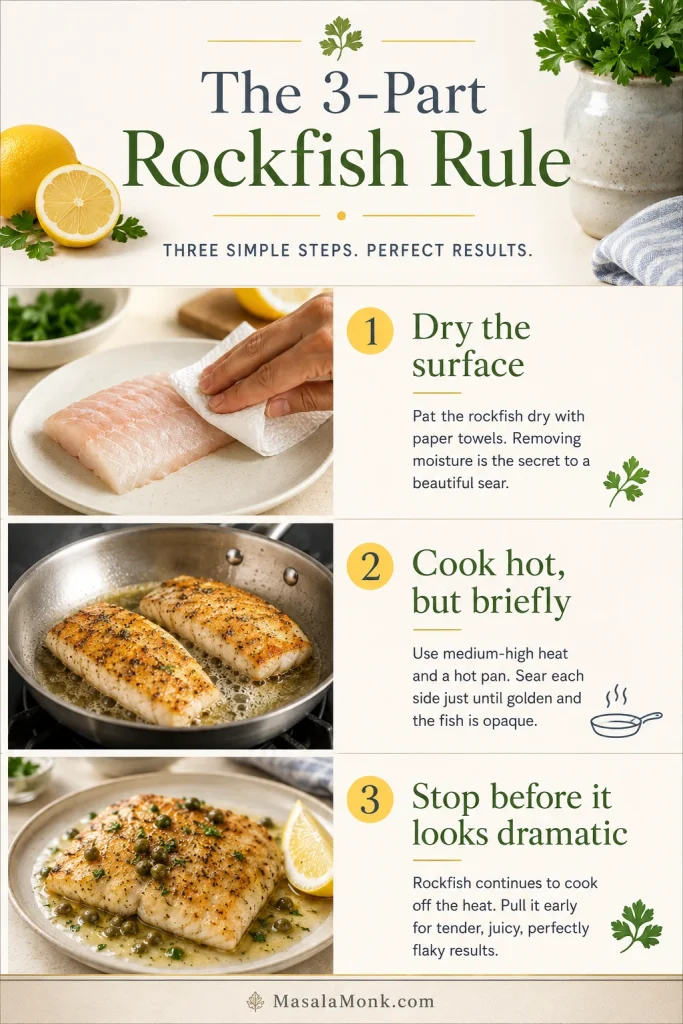
For your first time, keep the fish simple and let the timing teach you. Rockfish is not the fish to force into a hard crust. You are protecting a gentle white fish and pulling it from the heat while it is still tender.
- Dry the surface. Moisture makes the fish steam and stick.
- Cook hot, but briefly. The first side needs enough heat to set a light crust.
- Stop before it looks dramatic. Pale gold outside and juicy inside is the win.
Use skinless fillets, a thin flour coating, and lemon butter for your first batch. Once you learn the feel of the fish in the skillet, the baked, air fryer, grilled, and taco versions become simple adjustments.
Ready to cook? Go to the pan-seared rockfish recipe, or compare all cooking methods.
Make It Now: Pan-Seared Rockfish with Lemon Butter
Recipe shortcut: Use this card for quick timing, ingredients, and the lemon butter finish.
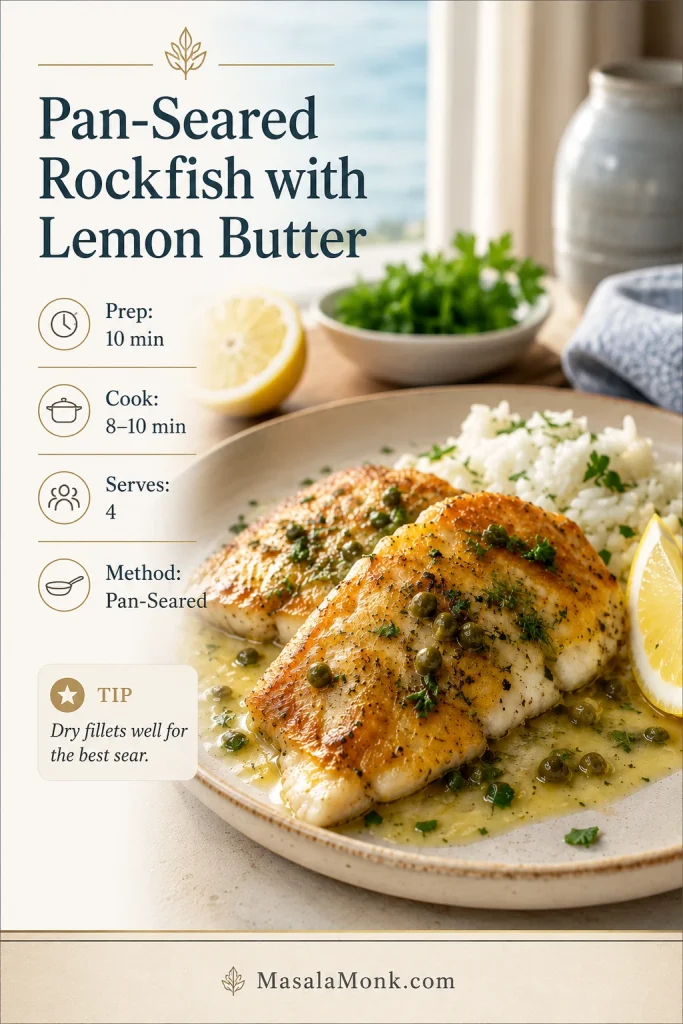
Easy Pan-Seared Rockfish with Lemon Butter
This is the skillet version to make when you want tender white fish with golden edges and a lemony butter sauce that comes together in the same pan. Keep the coating thin, the heat steady, and the cook time short.
| Servings | 4 |
| Prep Time | 10 minutes |
| Cook Time | 8–10 minutes |
| Total Time | 18–20 minutes |
| Method | Pan-seared |
| Best For | Rockfish fillets, quick seafood dinner, lemon butter fish |
Equipment
- Large nonstick, stainless steel, or cast iron skillet
- Paper towels
- Fish spatula or thin spatula
- Instant-read thermometer
Ingredients
- 4 rockfish fillets, 5–6 oz / 140–170 g each
- ¾ tsp fine salt, divided
- ½ tsp black pepper
- ½ tsp garlic powder
- ¼ cup all-purpose flour, about 30 g, optional but helpful for a light crust
- 2 tbsp olive oil or neutral oil, 30 ml
- 3 tbsp unsalted butter, about 42 g, divided
- 3 garlic cloves, minced
- 1½ tbsp fresh lemon juice, about 22 ml
- 1–2 tbsp capers, drained, optional
- 2 tbsp chopped parsley or dill
- Lemon wedges, for serving
- Optional: ¼ cup white wine or chicken broth, 60 ml, for a looser sauce
Instructions
Work in three short stages: prep the fish, sear the fillets, then make the sauce.
Prep the Fish
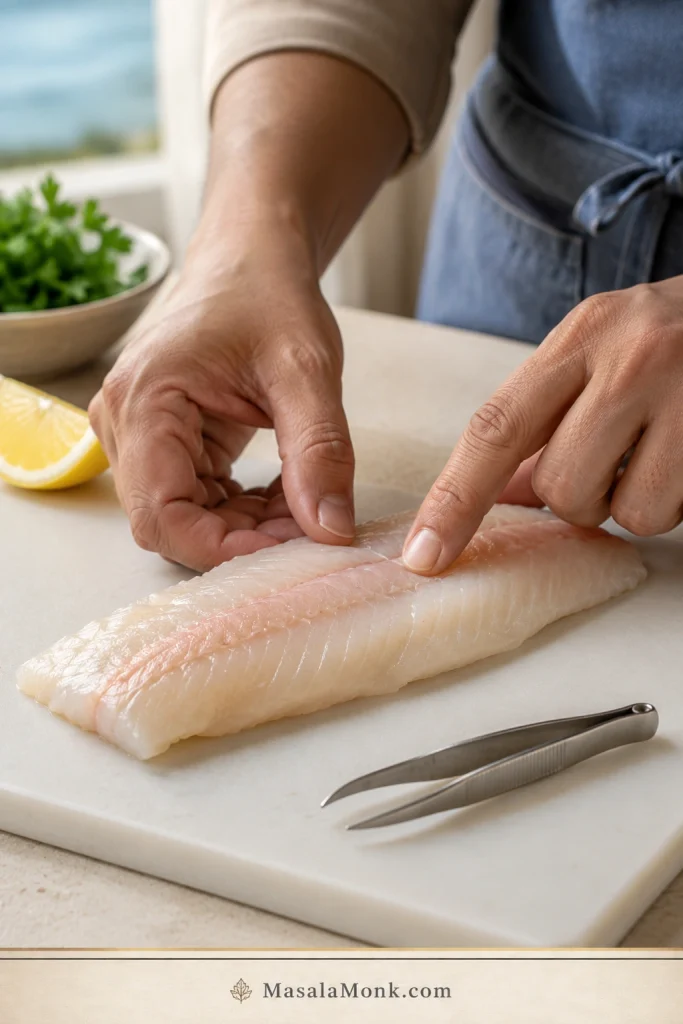
- Check the fish. Run your fingers gently over the fillets and remove any pin bones with clean tweezers if needed.
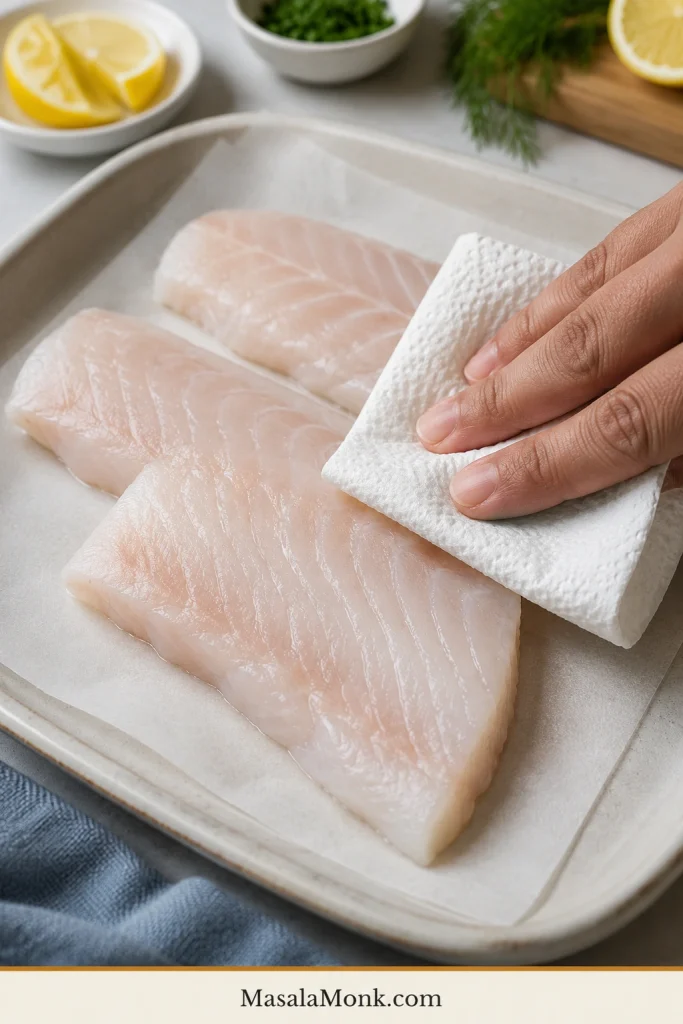
- Dry the fillets. Blot the rockfish thoroughly with paper towels so the surface sears instead of steams.
- Season both sides. Sprinkle the fillets with salt, black pepper, and garlic powder.
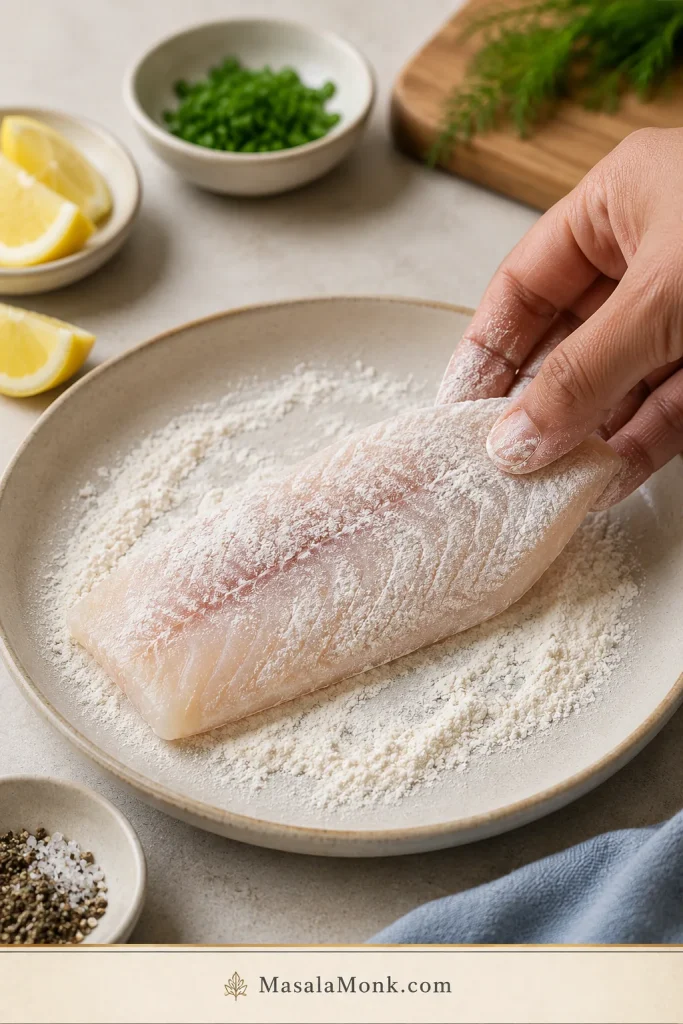
- Lightly flour. Spread the flour on a shallow plate. Dredge each fillet lightly, then shake off the excess. The coating should be thin, not heavy.
Sear the Fillets
- Heat the oil. Set a large skillet over medium-high heat. Add the oil and let it heat until it shimmers. Add 1 tbsp butter, let it foam lightly, then add the fish right away.
- Sear the first side. Place the fillets in the pan presentation-side down. Do not crowd the skillet; cook in batches if needed. Cook for 3–4 minutes without moving the fish too early.
- Flip gently. Slide a fish spatula under each fillet and turn carefully. Cook the second side for 2–3 minutes, depending on thickness. Lower the heat to medium if the coating or butter is browning too quickly.
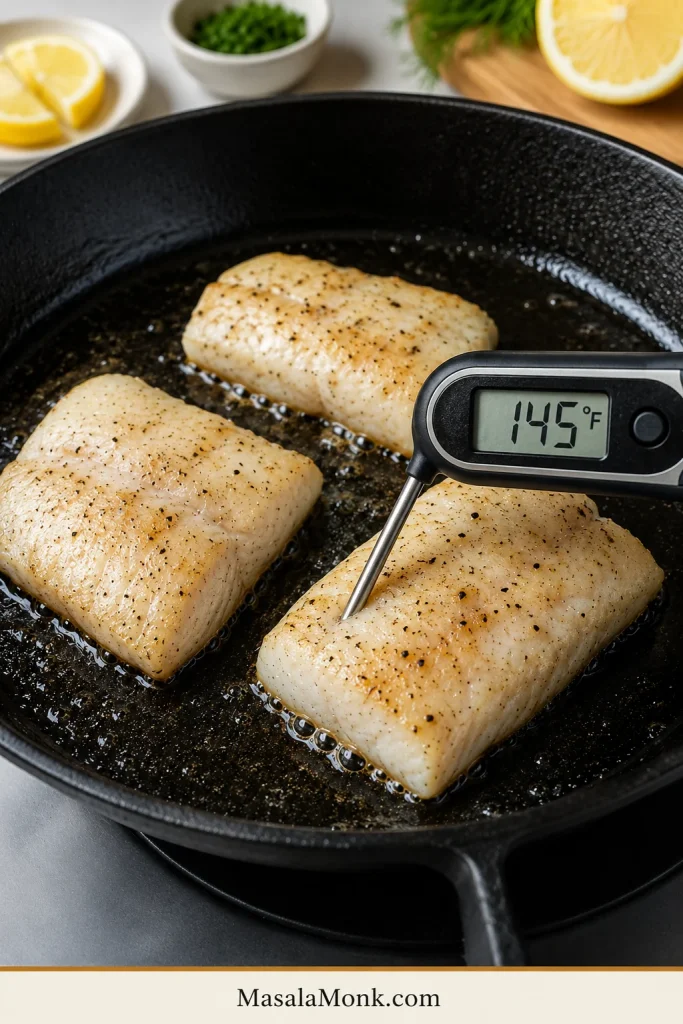
- Check doneness. The thickest part should look pearly and opaque, not translucent. For the safest check, use a thermometer and look for 145°F / 63°C.
- Remove the fish. Transfer the cooked rockfish to a plate. Thin pieces keep cooking slightly from carryover heat, so do not leave them in the hot pan while making the sauce.
Make the Sauce and Serve
- Make the sauce. Reduce the heat to medium-low. Add the remaining 2 tbsp butter to the skillet. Stir in the garlic for 20–30 seconds, just until fragrant. Add lemon juice, capers, and optional wine or broth. Scrape up the browned bits; the sauce should taste bright, buttery, and lightly salty.
- Finish and serve. Spoon the lemon butter sauce over the rockfish while it is warm, letting it catch in the flakes and run into the rice, potatoes, or vegetables underneath. Sprinkle with parsley or dill and serve with lemon wedges.
Recipe Notes
- For very thin fillets, start checking after 2 minutes per side.
- For thicker pieces, reduce the heat slightly after flipping so the outside does not brown before the center cooks.
- Flour is optional. Skip it for a lighter fish, or use gluten-free flour if needed.
- Capers add a salty, briny finish. Leave them out for a simple garlic lemon butter sauce.
- Frozen rockfish works well if thawed overnight in the fridge and blotted thoroughly before cooking.
Choose Your Rockfish Method
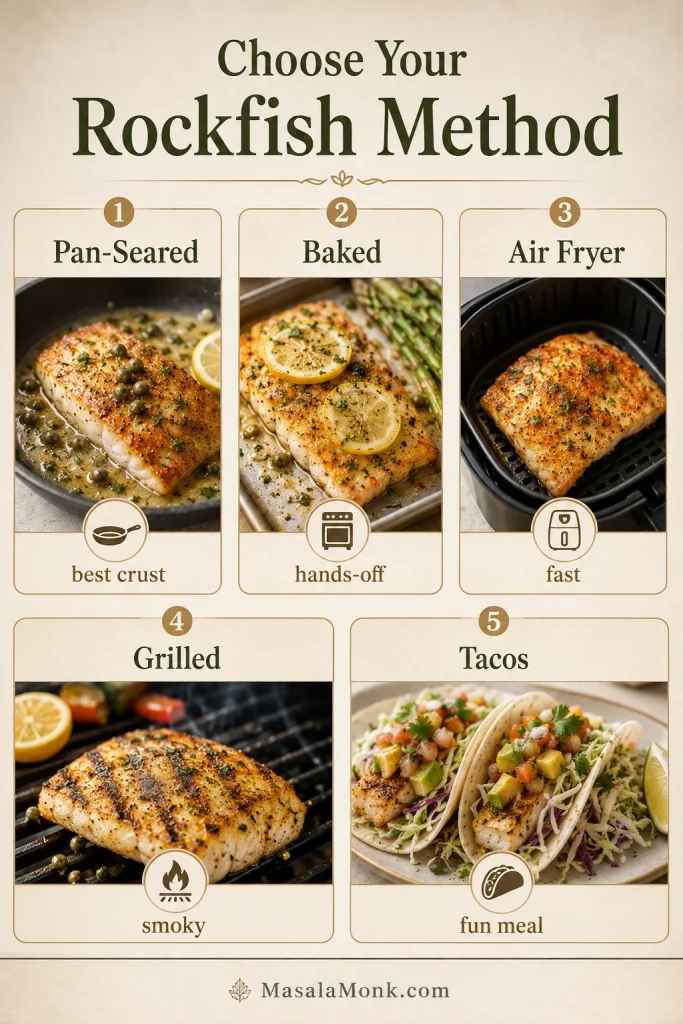
Once the skillet version makes sense, choose the method that fits your dinner. Thin, delicate pieces do well in the skillet or air fryer. Larger or uneven fillets are often easier in the oven. Skin-on pieces are the friendliest choice for the grill.
| Method | Use When | Result | Best Tip |
|---|---|---|---|
| Pan-seared | You want the best crust and sauce | Golden edges, tender center, lemony pan sauce | Use oil first, then a little butter |
| Baked | You want a hands-off dinner or several fillets at once | Soft, simple, easy to serve with sides | Add butter or olive oil so the fish stays juicy |
| Air fryer | You want fast, lightly browned fish without heating the oven | Quick, clean, good for thinner pieces | Keep the fillets in a single layer |
| Grilled | You have skin-on or sturdy fillets | Lightly smoky, fresh, great with lemon | Use foil or a grill basket for fragile pieces |
| Tacos | You want a casual meal with slaw and sauce | Flaky fish, lime, crunch, and creamy toppings | Blackened seasoning works especially well |
Once the method is clear, it helps to know what kind of rockfish you have, what it tastes like, and how the fillet’s thickness affects the cook.
Method chooser: Pick skillet, oven, air fryer, grill, or tacos based on dinner style.
What Is Rockfish?
Rockfish is a mild, lean white fish with a tender texture. In U.S. markets, the name is often used for Pacific rockfish, though regional labels can vary.
For this recipe, the exact label matters less than the fillet itself. Thin pieces cook quickly, larger portions need a few extra minutes, and the visual cues matter more than the species name on the package.
What Does Rockfish Taste Like?
The flavor is mild, clean, and slightly sweet. The texture is lean and tender, so it pairs easily with lemon, butter, garlic, herbs, Old Bay, Cajun seasoning, capers, salsa, or creamy taco sauce.
If you like cod, snapper, haddock, tilapia, halibut, or sea bass, this fish will feel familiar. For another gentle white-fish dinner, this baked haddock recipe follows the same easy idea: mild fish, simple seasoning, and a tender finish.
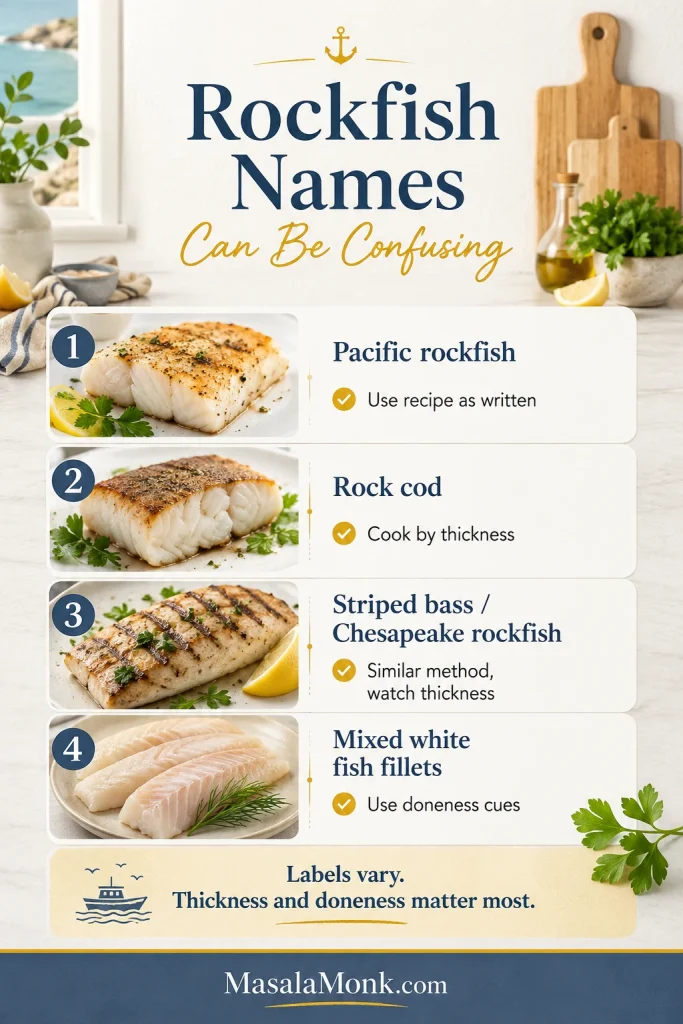
Rockfish Names Can Be Confusing
The word “rockfish” can mean different things depending on where you shop. Do not let the label slow you down; use the fish’s thickness, freshness, and texture as your main cooking guides.
| Label You May See | What It Usually Means | How to Use This Recipe |
|---|---|---|
| Pacific rockfish | A mild white fish from the Pacific coast | Use the recipe as written |
| Rock cod | Often another market name for Pacific rockfish | Use thickness as your timing guide |
| Striped bass / Chesapeake rockfish | A different fish sometimes called rockfish regionally | The method still works for similar fillet thickness |
| Mixed white fish fillets | May include similar mild fish | Cook by thickness and doneness cues |
Fish counter tip: If the label is confusing, cook by thickness and doneness cues.
How to Choose Rockfish
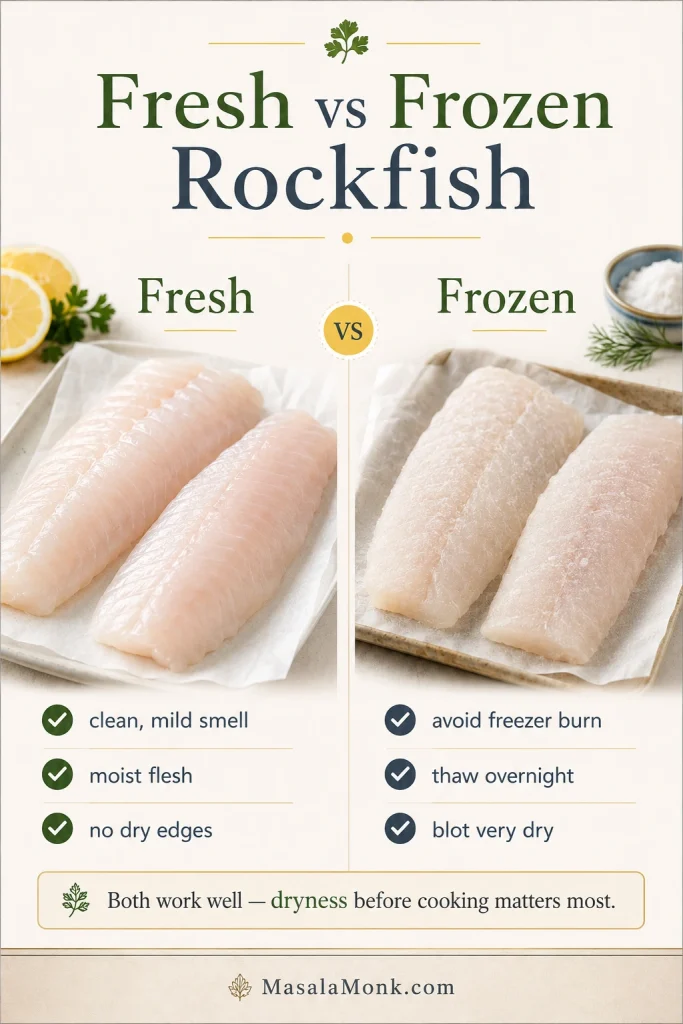
Good fish should smell clean and mild, not sour, sharp, or strongly fishy. The flesh should look moist and fresh, not dried out around the edges. If the fillets are frozen, choose pieces without heavy ice crystals or freezer-burned patches.
Buying cue: Choose moist, clean-looking fillets with no dry edges or strong odor.
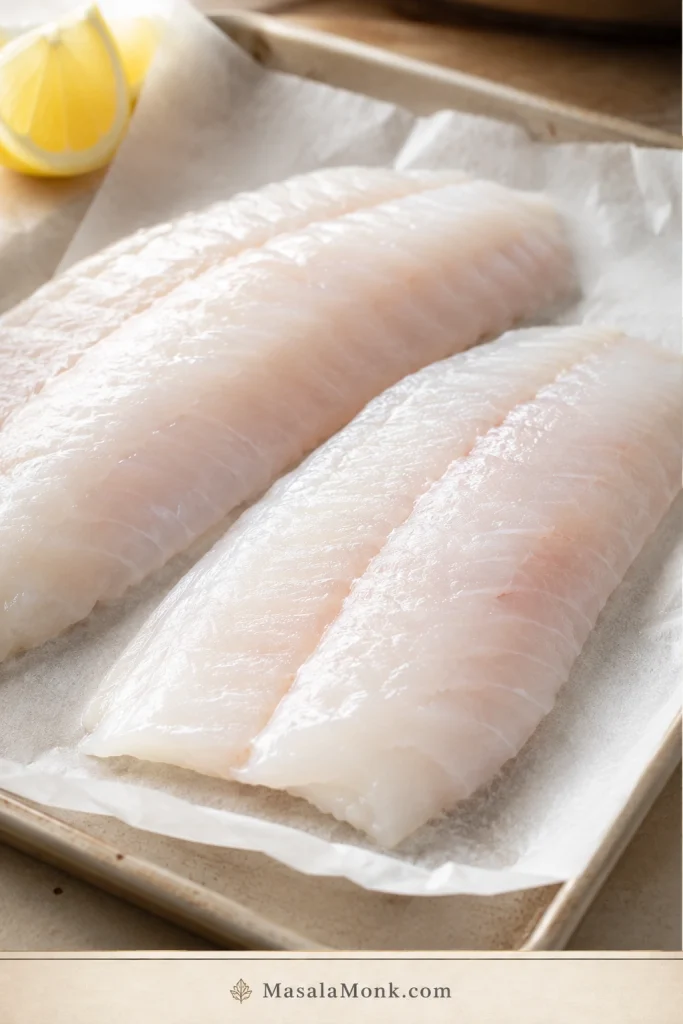
Buying tip: rockfish names and species vary by region, so buy from a fish counter or brand you trust. If the label is unclear, ask whether it is Pacific rockfish, striped bass, or another mild white fish, then cook by thickness.
For frozen fillets, thaw overnight in the refrigerator. Before cooking, press away as much surface moisture as you can. That one small step makes the difference between a pale steamed surface and a clean skillet sear.
Frozen-fish cue: Blot thawed fillets well so the surface can brown.
Rockfish Fillets: Skin-On, Skinless, Fresh, or Frozen
Most home cooks will use fillets, and thickness matters more than almost anything else. A thin piece may be done before it gets deeply golden, while a larger portion may need gentler heat after the first sear.
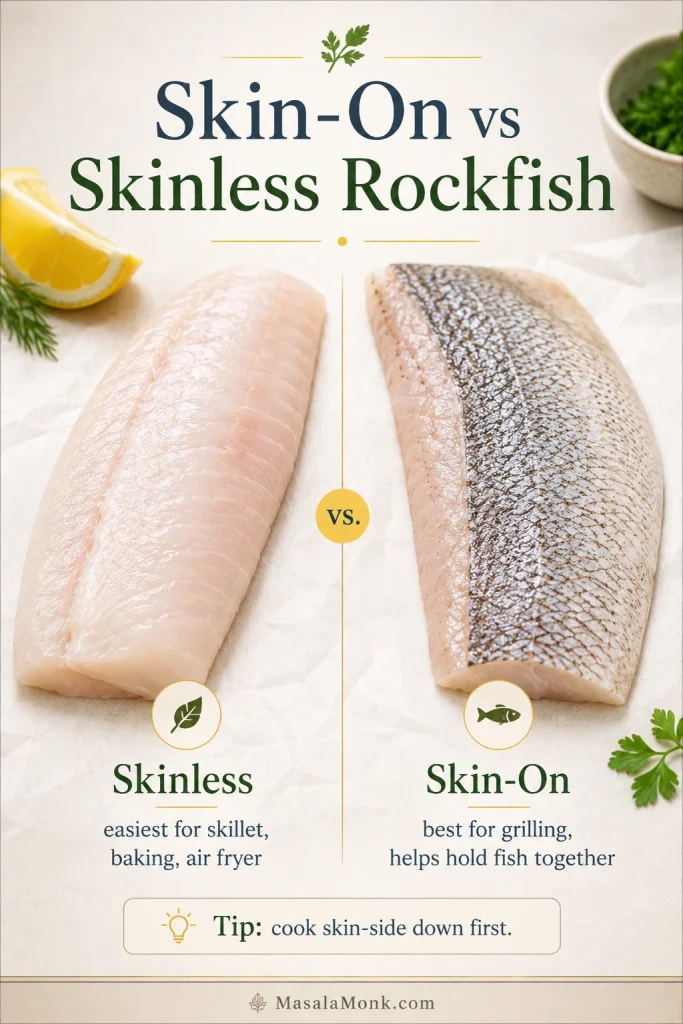
Fillet choice: Skinless is easiest for the skillet; skin-on helps on the grill.
| Fillet Type | Best Use | What to Know |
|---|---|---|
| Skinless fillets | Pan-searing, baking, air frying | Easiest for this recipe, but delicate when thin |
| Skin-on fillets | Grilling or crisp-skin skillet cooking | Cook skin-side down first; the skin helps hold the fish together |
| Fresh fillets | Any method | Should smell clean and mild, not sour or strongly fishy |
| Thawed frozen fillets | Pan-searing, baking, air frying | Thaw overnight in the fridge and press away surface moisture before cooking |
| Very thin fillets | Quick skillet or air fryer | Watch closely; they may only need 2 minutes per side |
| Thick fillets | Skillet-to-gentle heat, baking, grilling | Sear first, then reduce heat so the center cooks without burning the outside |
If a fillet is uneven, tuck the thin tail end slightly under itself or place that end toward the cooler edge of the pan. This helps the delicate part avoid overcooking before the thicker section is done.
For skin-on fillets, cook skin-side down first for most of the time. Press gently for the first few seconds so the skin makes contact with the pan, then let it cook undisturbed before turning.
Once your fillets are sorted, check the ingredients or read the cooking walkthrough.
Why This Rockfish Recipe Works
- It is fast enough for a weeknight. The fish cooks in minutes once the pan is hot.
- The sauce keeps the flavor bright. You get richness from butter, lift from lemon, and just enough garlic in the background.
- A light coating makes flipping easier. The thin flour layer helps the surface set without turning the fish heavy.
- The timing cues are flexible. Thin and thick fillets are both covered, so you are not locked into one exact size.
- Leftovers can become another meal. Flake them into tacos, salads, rice bowls, or sandwiches.
Rockfish Recipe Ingredients and Why They Matter
Once you know the kind of fillets you have, the ingredient list stays simple. Each item is there to help the fish brown gently, stay tender, or taste brighter at the end.
Ingredient cue: Keep the setup simple and save the flour for a thin release layer.
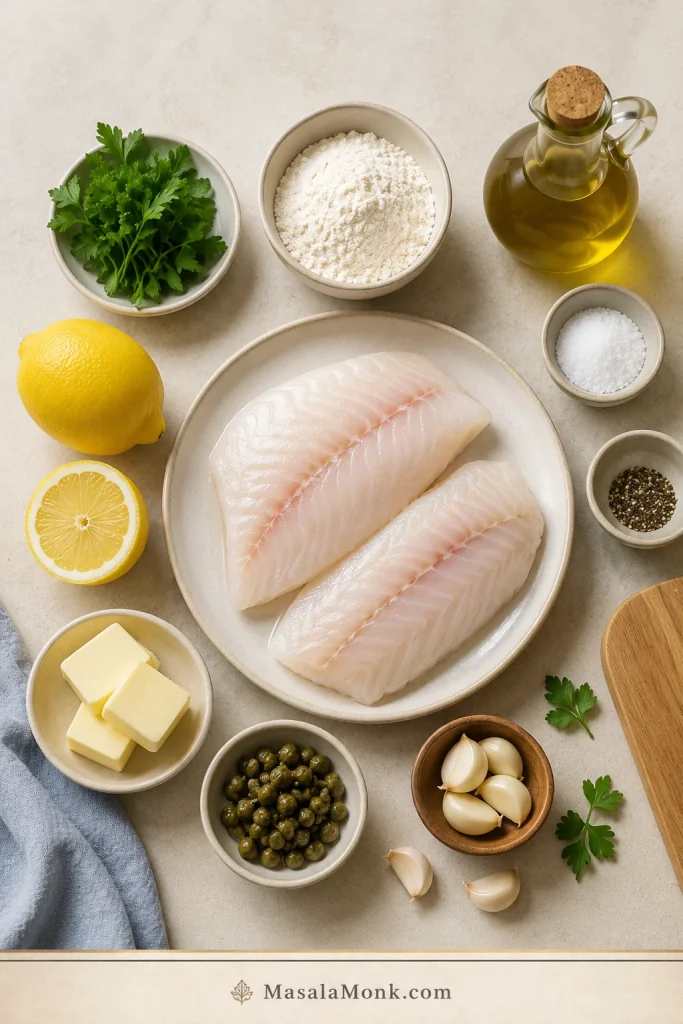
Rockfish Fillets
Use fresh or thawed frozen fillets. Skinless pieces are easiest in the skillet, while skin-on pieces are helpful for grilling or crisp-skin cooking. Check for pin bones before seasoning.
Salt, Pepper, and Garlic Powder
This gentle white fish does not need heavy seasoning. Salt brings out the flavor, black pepper adds warmth, and garlic powder gives an even savory base without burning quickly.
Flour
A barely-there coating helps the surface brown and makes flipping less stressful. Shake off the excess so the coating stays light instead of gummy.
Oil and Butter
Oil gives you safer heat for the sear. Butter brings richness to the skillet sauce, but most of it goes in after the fish comes out so it stays glossy instead of scorched.
Lemon, Capers, and Herbs
Fresh lemon wakes up the sauce and keeps the fish from tasting heavy. Capers make the finish salty-bright and a little restaurant-style. Parsley keeps things clean, while dill leans more classic seafood.
Got everything ready? Use the recipe card, or read the step-by-step technique notes before you start.
How to Cook Rockfish Fillets Without Drying Them Out
The recipe card gives you the direct steps. This section is the coaching layer: the small choices that keep delicate fillets from sticking, breaking, or drying out.
Before the Fish Hits the Pan
Start by running your fingers gently over the fillets and removing any pin bones with clean tweezers. Then press the surface dry with paper towels, especially if the fish was frozen and thawed. Moisture blocks browning and makes sticking more likely.
Prep cue: Check for pin bones before seasoning.
Searing cue: Dry fillets stick less and brown better.
Season the fish right before cooking. If salted fillets sit too long, they can release moisture and make the surface harder to brown. If you are using flour, keep it barely there: a light dusting that helps the surface set, not a thick breaded shell.
Coating cue: Use only a thin dusting so the fish stays delicate.
While the Fish Cooks
Let the oil shimmer before adding a small amount of butter. The butter should foam lightly, not smoke. Leave space around each piece so the pan does not trap steam, and give the first side time to form a pale golden crust before you try to lift it.
Pan cue: Heat oil first, then add butter just before the fish.
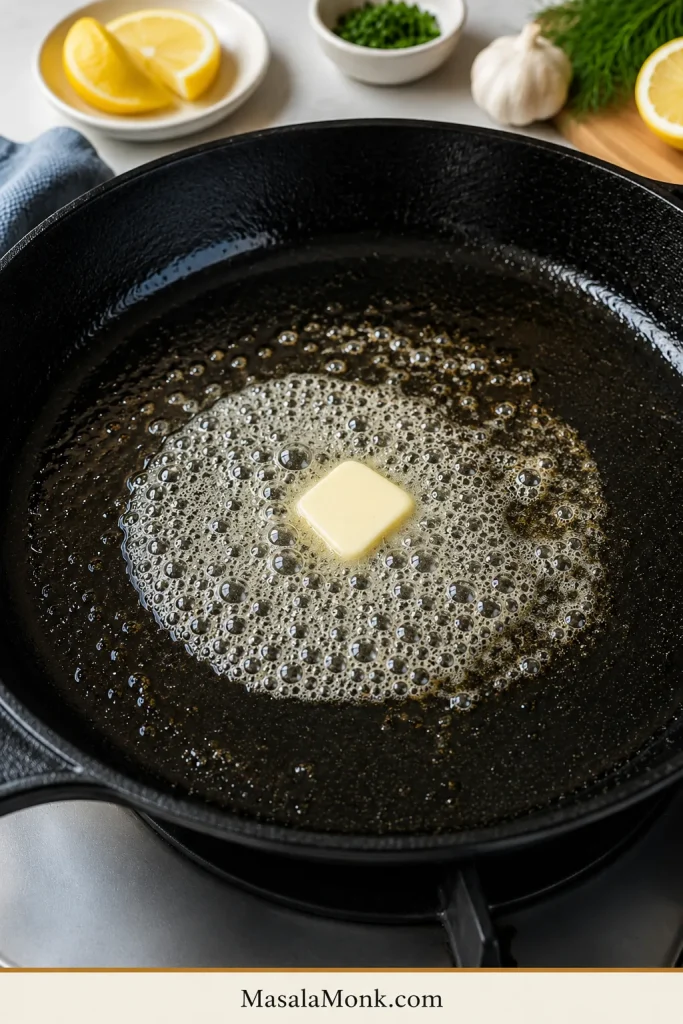
Skillet cue: Leave space so the fillets sear instead of steam.
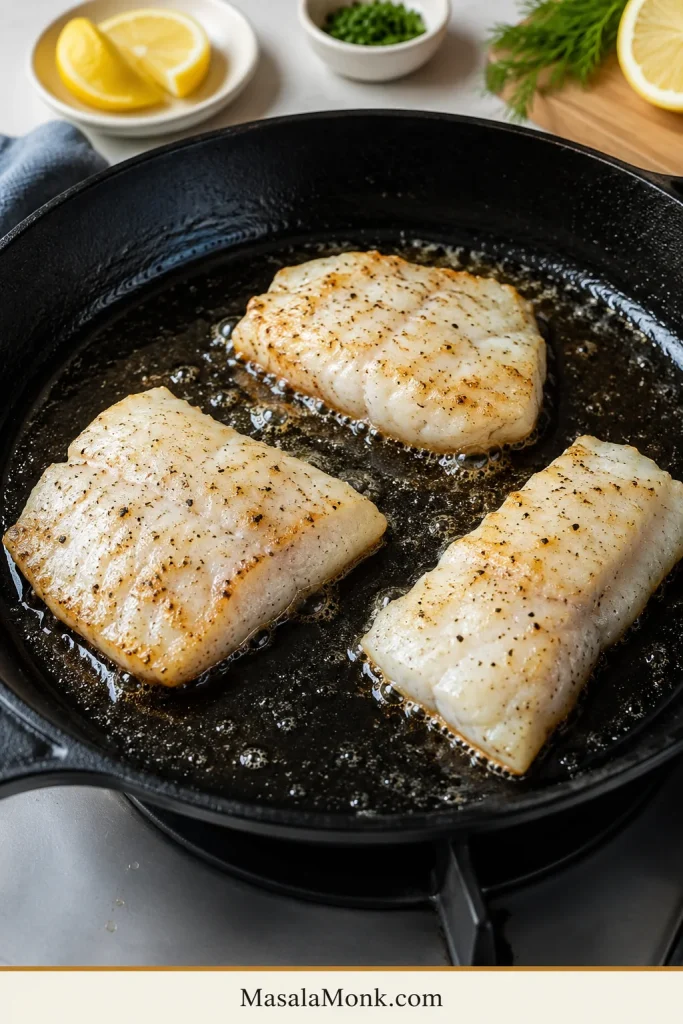
Flip cue: Wait for the first side to set before turning.
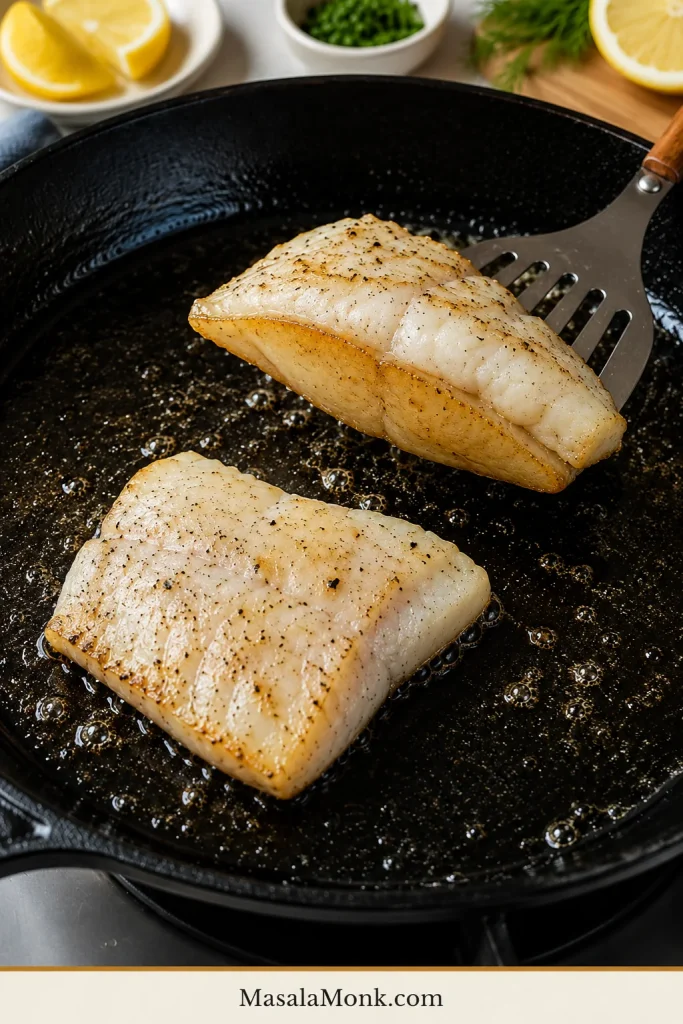
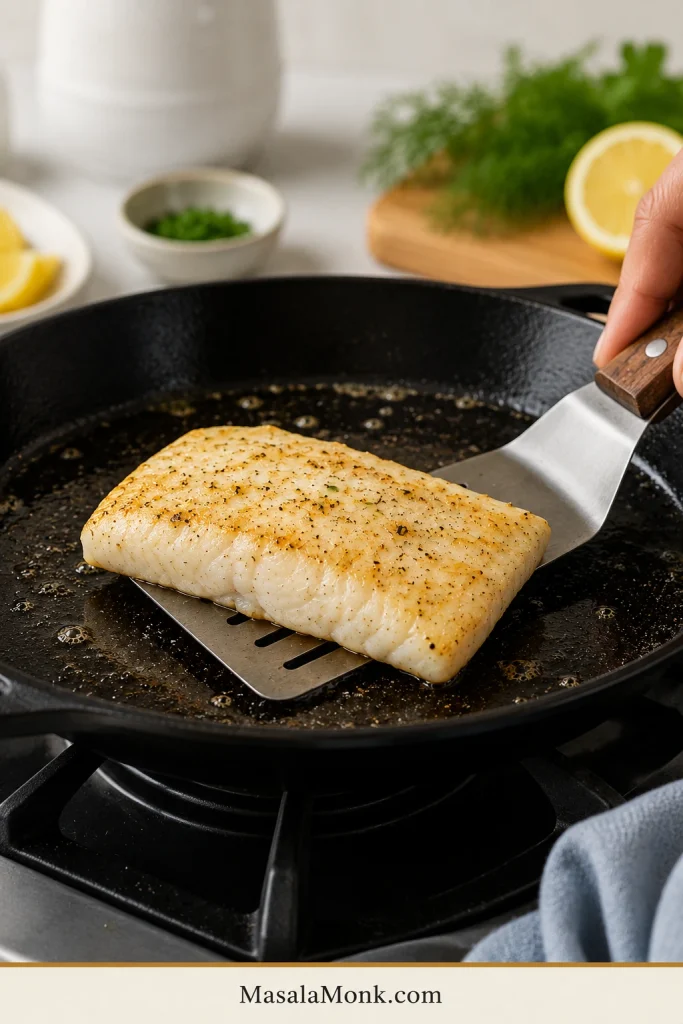
Use a fish spatula or the thinnest spatula you own. Slide it fully under the fillet and turn gently. If the coating or butter starts browning too fast, lower the heat slightly and let the center finish more gently.
Tool cue: Support the full fillet with a thin fish spatula.
After the Fish Comes Out
Remove the cooked rockfish before making the sauce. Thin pieces keep cooking from carryover heat, and the garlic, lemon, butter, and capers come together quickly. The garlic should smell good after 20–30 seconds, not browned or bitter.
Sauce cue: Make the lemon butter after the fish comes out.
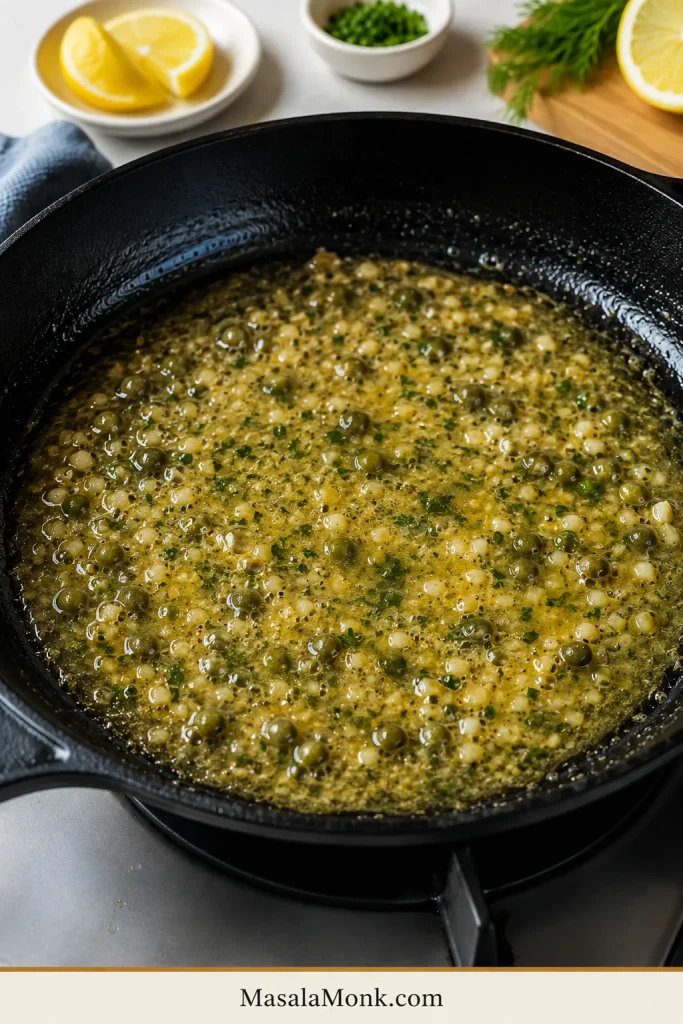
If one fillet breaks, do not treat it like a failure. Spoon the sauce over it, serve it over rice, or turn it into tacos. It will still taste good.
Serving cue: Spoon sauce at the end so it catches in the flakes.
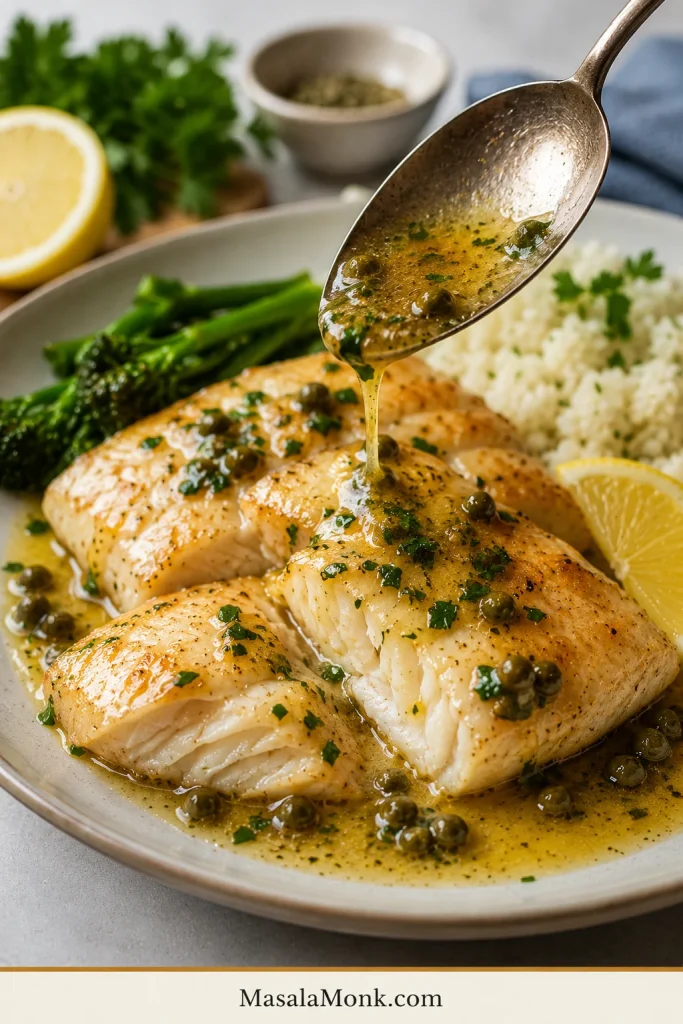
Next, check rockfish cook times, doneness cues, or common fixes.
How Long to Cook Rockfish Fillets
Cooking time depends mostly on thickness. The timer gets you close, but the fish itself tells you when to stop. Thin fillets may be ready in minutes; thicker pieces need more patience and slightly gentler heat.
| Method | Temperature / Heat | Thin Fillets | Medium Fillets | Thick Fillets | Best Cue |
|---|---|---|---|---|---|
| Pan-seared | Medium-high, then medium | 2–3 min per side | 3–4 min first side, 2–3 min second side | 4–5 min per side | Golden outside, pearly center |
| Baked fillets | 400°F / 204°C | 8–10 min | 10–12 min | 13–16 min | Fork opens soft flakes |
| Baked with topping | 425°F / 218°C | 10–12 min | 15–18 min | 18–22 min | Topping golden, center juicy |
| Air fryer fillets | 400°F / 204°C | 5–6 min | 6–8 min | 8–10 min | Lightly browned, tender inside |
| Grilled fillets | 400–450°F / 204–232°C | 2–3 min per side | 3–4 min per side | 4–5 min per side | Releases from grate, gives gently |
These times are guides, not strict rules. The safest doneness target for fish is 145°F / 63°C in the thickest part. FoodSafety.gov lists 145°F as the safe minimum internal temperature for fish, so an instant-read thermometer is the easiest way to avoid guessing.
Timing cue: Start with the chart, then adjust by thickness.
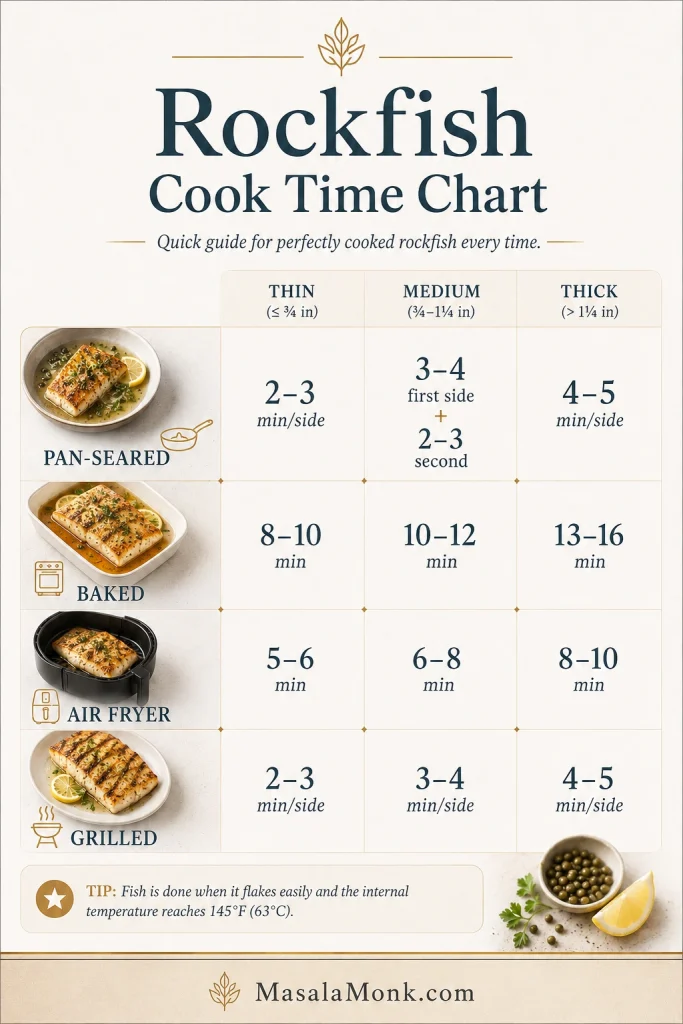
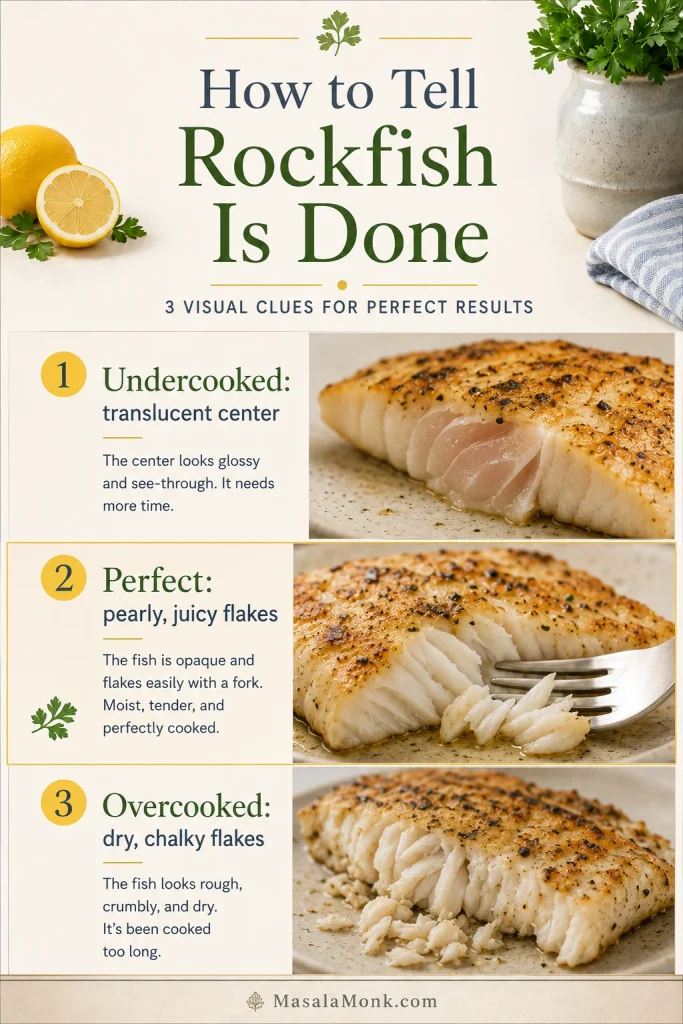
Best cue: the fish should look juicy at the thickest point and open into tender flakes when pressed gently. If it looks tight, dry, or chalky, it has gone too far.
How to Tell When Rockfish Is Done
The flesh should change from translucent to pearly and opaque. The thickest part should still look juicy, and the flakes should open softly when pressed with a fork.
Doneness cue: Look for pearly, moist flakes instead of dark crust.
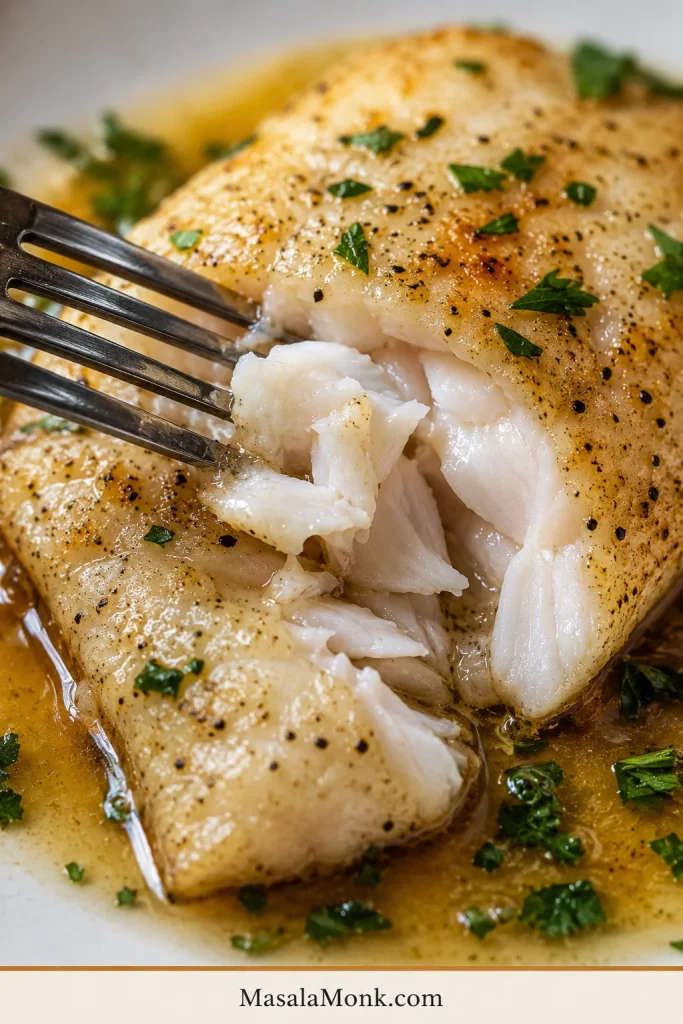
With a thermometer, check the thickest part of the fillet and look for 145°F / 63°C. For thin pieces, start checking before the full time is up because carryover heat can finish them quickly after they leave the pan.
Safety cue: Check the thickest part for the clearest doneness read.
Do not wait for both sides to become dark or heavily crisp. Light gold outside, tender inside, and no raw translucence in the center is the sweet spot.
Texture cue: Compare undercooked, perfect, and overcooked fish.
Baked, Air Fryer, Grilled, and Taco Rockfish Options
The skillet teaches you the feel of rockfish. After that, the other methods are easy to choose: bake when you want hands-off cooking, air fry when you want speed, grill when you have sturdier pieces, and use tacos when dinner wants slaw, lime, and sauce.
Baked Rockfish Fillets
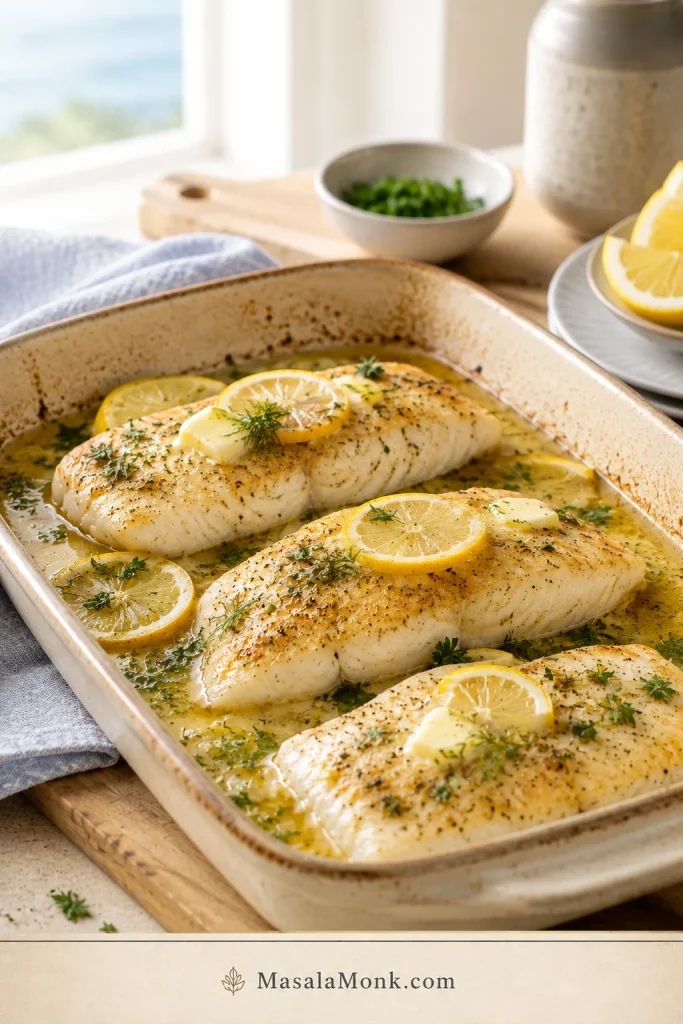
When you want a hands-off dinner, baking is the easiest move. It works especially well when you are cooking several fillets at once.
- Heat the oven to 400°F / 204°C.
- Place the seasoned fillets in a lightly oiled baking dish.
- Add lemon slices, a small pat of butter, or a drizzle of olive oil.
- Bake medium fillets for 10–12 minutes.
- For larger pieces, check around 13 minutes and continue until the center turns opaque and tender.
For a breadcrumb, parmesan, or panko topping, use 425°F / 218°C and watch closely. The topping should turn golden while the fish stays soft underneath.
Oven cue: Bake when you want several fillets with less hands-on work.
Air Fryer Rockfish Fillets
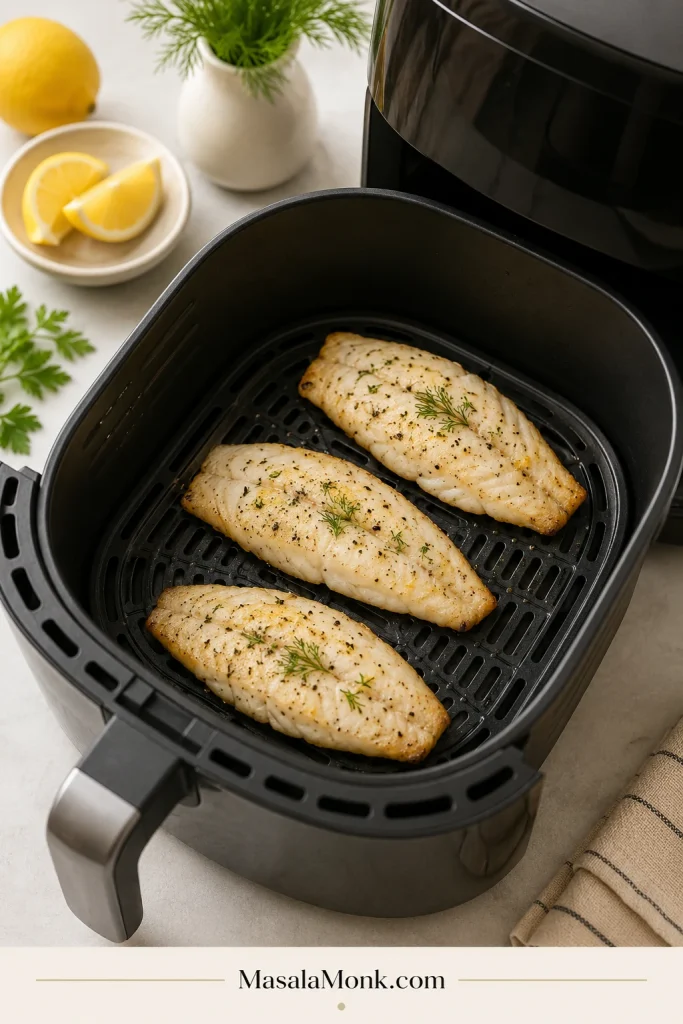
Use the air fryer when you want a quick, lightly browned fillet and do not feel like heating the oven. Keep the pieces in a single layer so the hot air can move around them.
- Preheat the air fryer to 400°F / 204°C.
- Blot the fillets well and season them.
- Brush lightly with oil, melted butter, or a thin mayo-lemon mixture.
- Air fry medium fillets for 6–8 minutes.
- Check for tender flakes and a center temperature of 145°F / 63°C.
For breaded pieces meant for tacos, use smaller chunks and air fry around 350°F / 177°C for 5–6 minutes, or until the coating is golden and the fish is cooked through.
Air fryer cue: Keep pieces spaced in one layer.
Grilled Rockfish Fillets
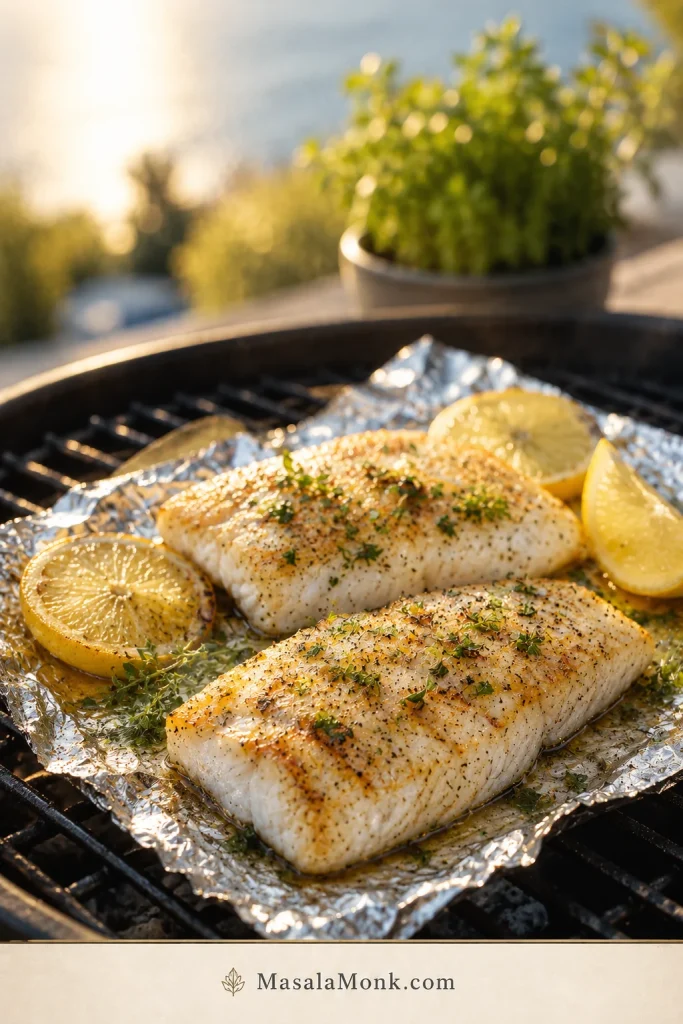
On the grill, delicate fillets need a little protection. Skin-on pieces are easier to grill directly than skinless ones. For thin or fragile fillets, use foil, a grill basket, or a cast iron skillet on the grill.
- Heat the grill to medium-high, about 400–450°F / 204–232°C.
- Clean and oil the grates well if grilling directly.
- Blot the fish dry and brush lightly with oil.
- Grill thin fillets for 2–3 minutes per side.
- Grill medium fillets for 3–4 minutes per side.
- Use a fish spatula and flip gently.
If you are worried about sticking or breakage, foil is your friend. You will lose some direct-grill char, but the fish will be much easier to manage.
Grill cue: Use foil or a grill basket for delicate fillets.
Rockfish for Tacos
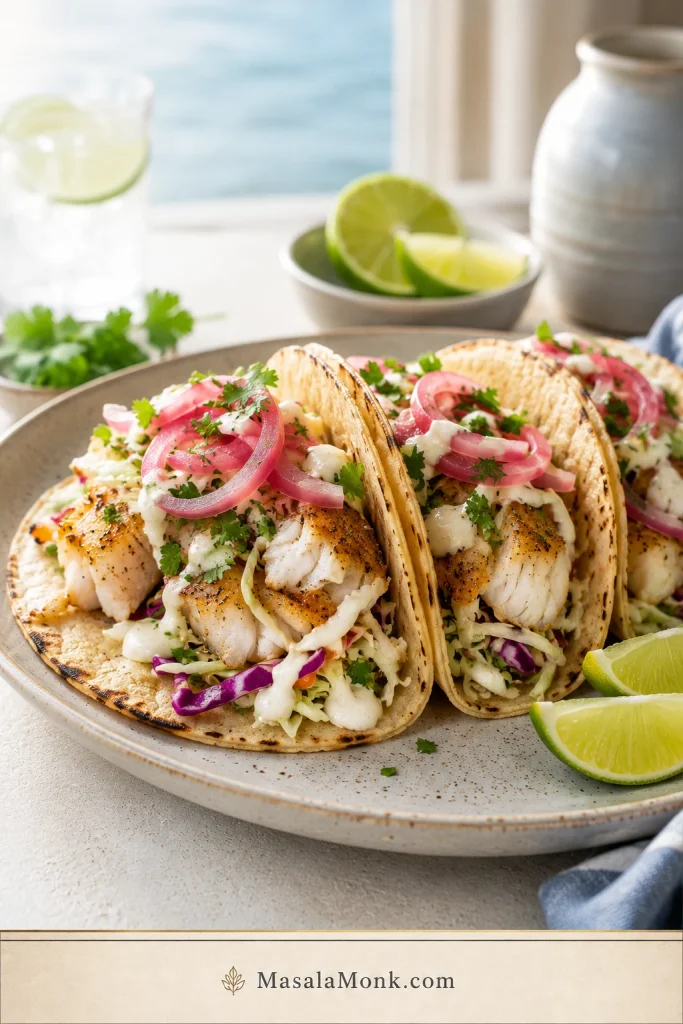
For tacos, rockfish is a quiet little win: mild enough for slaw and sauce, sturdy enough to flake into warm tortillas. Use pan-seared, blackened, grilled, or air-fried fish, then add cabbage slaw, lime, crema, chipotle mayo, salsa, avocado, cilantro, or pickled onions.
You can cook the fillets whole and flake them into tacos, or cut the fish into larger chunks before cooking. For a full taco-style dinner with slaw, sauce, toppings, and method choices, use this fish tacos recipe as the next step.
Blackened seasoning is especially good here because the smoky spices balance the mild fish and creamy slaw. For a brighter topping, spoon on fresh mango salsa with lime, cilantro, and a little chile.
Taco cue: Add slaw, lime, crema, and crunch for contrast.
Whole rockfish note: this recipe is written for fillets. Whole rockfish needs a different timing approach because size, stuffing, bones, and oven temperature all change the cook time.
If you want to explore more traditional rockfish preparations later, NOAA Fisheries has a broader rockfish recipe collection with grilled, taco, pan-roasted, and battered ideas.
Prefer the skillet version? Return to the main recipe. Looking for flavor ideas? See seasonings and sauces.
Best Seasonings and Sauces for Rockfish
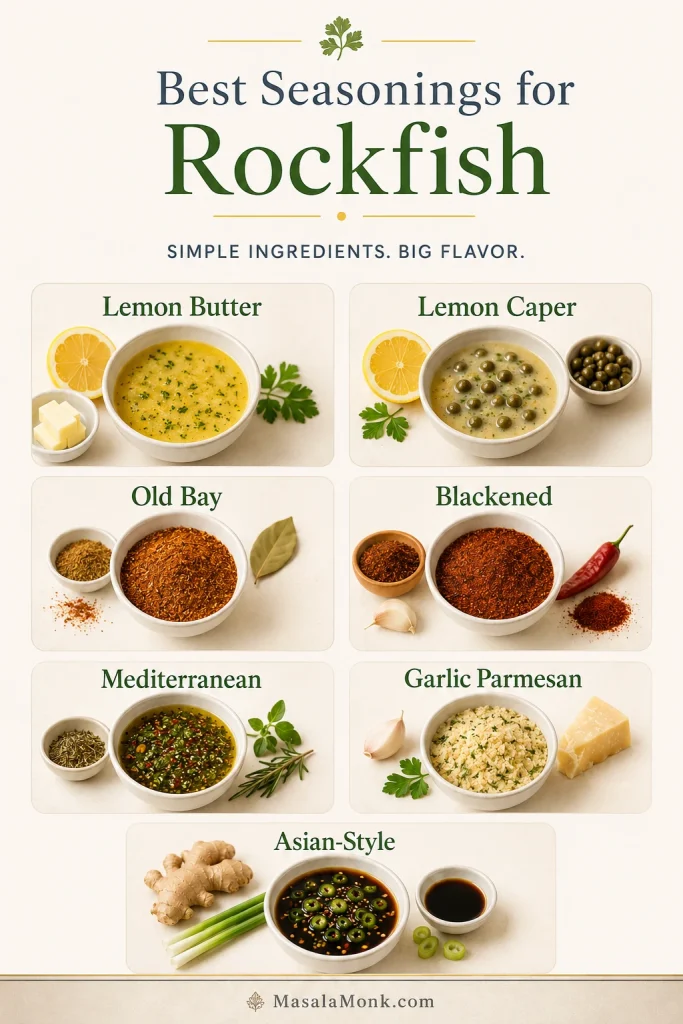
Because the flavor is gentle, you can take the seasoning in several directions. For the first cook, choose lemon butter. If the fish is headed for tacos, blackened seasoning brings the best contrast. When you want crunch, move toward panko.
| Flavor Style | Best For | What to Use |
|---|---|---|
| Lemon butter | Best first cook | Butter, lemon, garlic, parsley |
| Lemon caper | Restaurant-style skillet fish | Butter, lemon, capers, dill or parsley |
| Old Bay | Baked or crispy rockfish | Old Bay, lemon, butter, parsley |
| Blackened | Best taco pick | Paprika, cayenne, garlic powder, thyme, oregano |
| Mediterranean | Baked fillets | Olive oil, tomato, oregano, capers, lemon |
| Garlic parmesan | Baked crusted fish | Parmesan, breadcrumbs, garlic, lemon |
| Asian-style | Pan-cooked or steamed fish | Soy sauce, ginger, scallions, sesame oil |
The skillet sauce should taste like butter first, lemon second, and garlic in the background. For a bolder seafood plate, a small spoonful of garlic butter Cajun seafood boil sauce can also work well with simply cooked rockfish.
For crispy, panko, or fried-style fish, a cold spoonful of homemade tartar sauce is often a better match than lemon butter.
Flavor cue: Choose lemon butter, capers, Old Bay, blackened spice, or aromatics.
What to Serve with Rockfish
Because the fish is light, the best sides depend on the kind of dinner you want. Keep the plate fresh and simple, or turn it into a cozier meal with potatoes and extra sauce.
For a Light Dinner
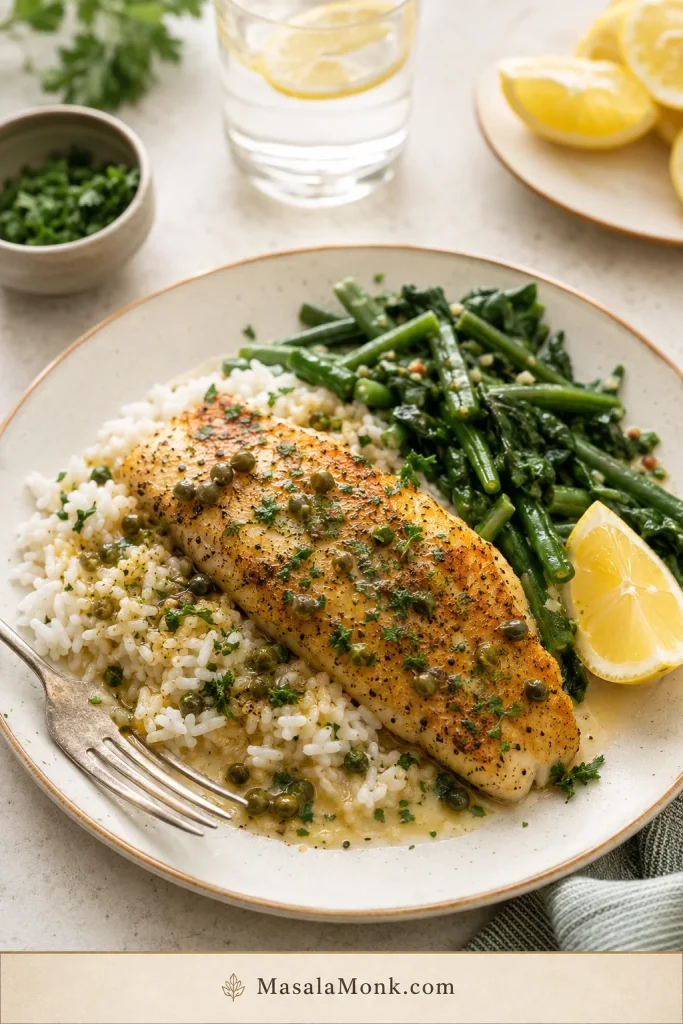
Serve the fish with steamed rice, green beans, roasted asparagus, extra lemon, or a cool cucumber salad. This keeps the meal fresh and lets the pan sauce shine.
Serving cue: Use rice to catch lemon butter, capers, herbs, and pan juices.
For a Comfort-Food Plate
Pair the fillets with roasted potatoes, garlic bread, or creamy mashed potatoes. Spoon a little sauce around the edges so the potatoes catch the lemony butter.
For Tacos or Sandwiches
Use warm tortillas, soft rolls, lime, salsa, and crisp coleslaw. The cool crunch is especially good with blackened or panko-crusted fish.
Easy Rockfish Variations
Garlic Lemon Butter Rockfish
For the cleanest version, skip the capers. Add an extra garlic clove and a little lemon zest for a brighter garlic butter flavor.
Lemon Caper Rockfish
For a restaurant-style finish, add 1–2 tbsp drained capers to the butter sauce. The salty, briny flavor works well with parsley or dill.
Old Bay Baked Rockfish
When you want an easy oven version, season the fillets with Old Bay, lemon juice, and a little melted butter. Bake at 400°F / 204°C until the thickest part turns tender.
Blackened Rockfish
For something smoky and bolder, coat the fillets with paprika, garlic powder, onion powder, cayenne, thyme, oregano, salt, and pepper. Sear in a hot skillet and serve with lime, slaw, or tacos.
Panko Crusted Rockfish
For a crispier dinner, brush the fillets with a little mayo or beaten egg, then press on a mixture of panko, parmesan, garlic powder, and lemon zest. Bake at 425°F / 218°C until the topping is golden and the center is tender.
If you want a true fried-fish crust instead of a baked panko topping, use this crispy fish batter recipe as the better path.
Mediterranean Rockfish
For a lighter baked plate, add olive oil, cherry tomatoes, oregano, lemon, capers, and a few olives. The juices from the tomatoes make a simple sauce around the fish.
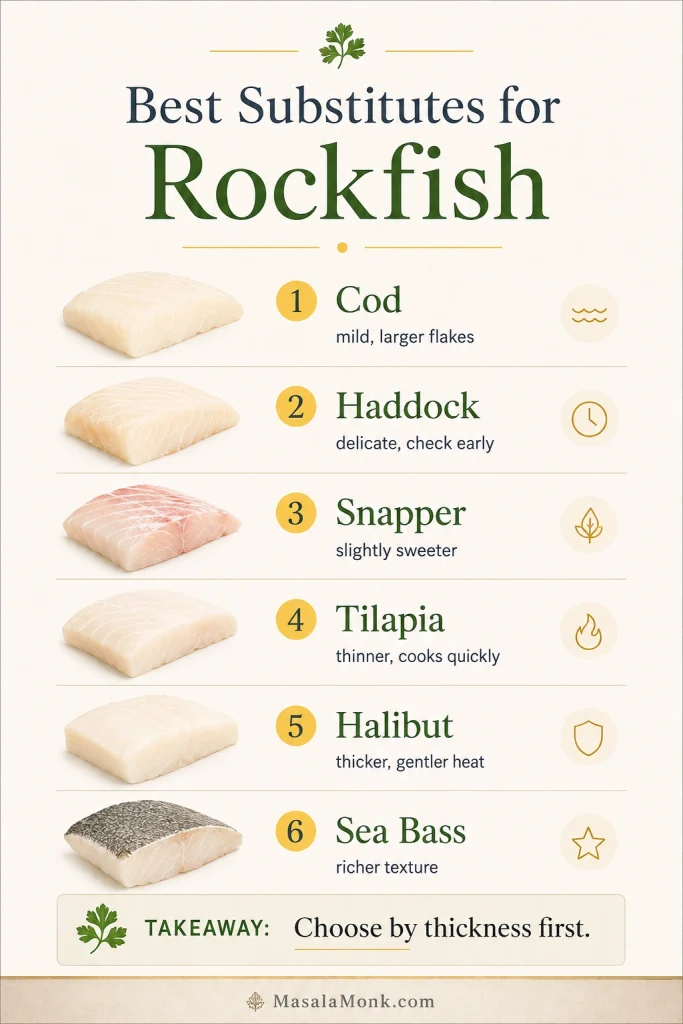
Best Substitutes for Rockfish
If you cannot find rockfish, choose another mild white fish with a similar thickness. Timing changes more with thickness than with the fish name.
| Substitute | Best Method | Notes |
|---|---|---|
| Cod | Bake or pan-sear | Mild flavor, larger flakes, can be thicker |
| Haddock | Bake or pan-sear | Delicate and lean; check early |
| Snapper | Pan-sear or grill | Slightly sweeter, good with lemon and herbs |
| Tilapia | Pan-sear or air fry | Usually thinner, cooks quickly |
| Halibut | Pan-sear or bake | Thicker and meatier; use gentler heat after searing |
| Sea bass | Pan-sear or grill | Richer texture, excellent with lemon butter |
Substitute cue: Choose another mild white fish by thickness first.
Troubleshooting Rockfish
Fix-it cue: For sticking, breaking, dryness, or fishy flavor, return to basics.
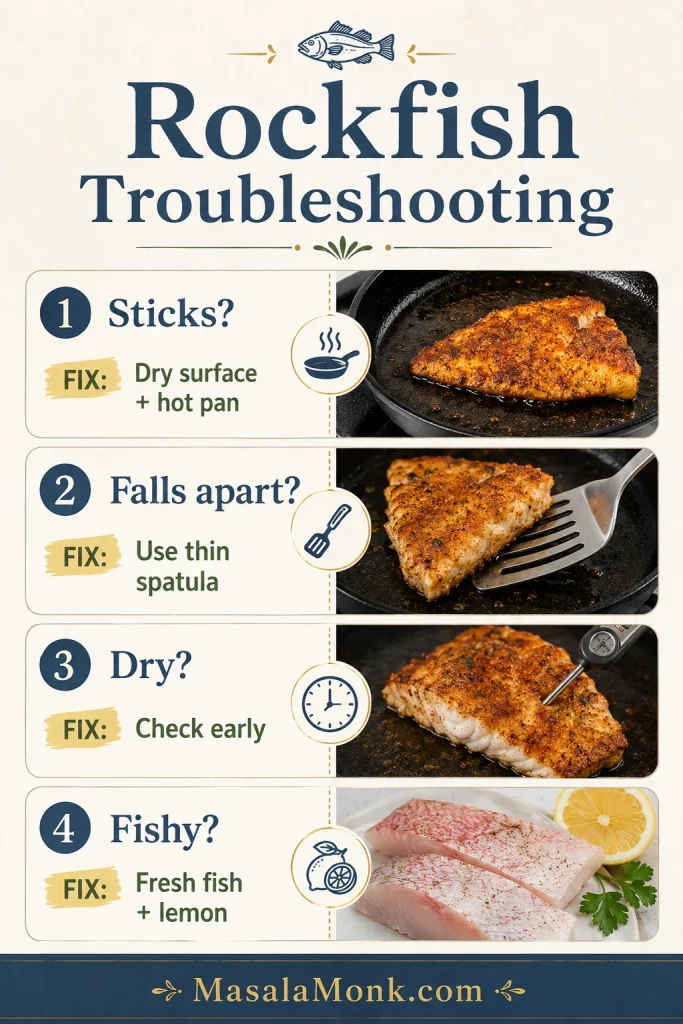
Why Did My Rockfish Stick to the Pan?
If the fish sticks, it usually means the surface was still wet, the pan was not hot enough, there was not enough oil, or the fish was nudged before the crust had time to form. Dry the surface well, preheat the skillet, coat the bottom with enough fat, and give the first side time to release.
Why Did My Rockfish Fall Apart?
Delicate fillets can break if they are flipped too soon, handled with a thick spatula, or cooked past the point of tender flakes. A light flour coating and a thin fish spatula both help. If a piece still breaks, spoon the sauce over it and serve it anyway; it will still taste good.
Why Is My Rockfish Dry?
If the fish turns dry, it probably stayed on the heat a little too long. Rockfish is lean, so it does not give you much extra time once the center is cooked. Start checking early, lower the heat after the first sear, and remove the fillets as soon as the thickest part turns opaque and juicy.
How Do I Make Rockfish Less Fishy?
Start with fish that smells clean and fresh, not sour or strongly fishy. Thaw frozen fillets slowly in the fridge, blot them well, and cook them with lemon, garlic, herbs, and butter. Avoid overcooking, which can make the flavor stronger.
What If My Fillets Are Very Thin?
Very thin pieces cook fast. Use medium heat instead of very high heat, check after 2 minutes per side, and remove them as soon as they give gently under a fork. They are also easier to break, so flip carefully.
What If My Fillets Are Thick?
Thicker fillets need a little more time, but high heat the whole way can overbrown the outside before the center cooks. Sear the first side, flip, then lower the heat slightly so the middle can finish gently.
What If the Butter Starts Burning?
Lower the heat and add a small splash of oil if needed. Butter browns quickly, especially in a hot skillet with flour. That is why the recipe heats the oil first and adds only a little butter before the fish goes in.
Problem solved? Go back to the recipe card, or recheck cook times before your next batch.
Storage and Reheating
Cooked rockfish is best eaten right away, when the flakes are moist and the lemon butter is fresh. If you do have leftovers, keep them gentle and use them in meals where the fish can be flaked instead of served as a whole fillet again.
- Refrigerate: Store cooked rockfish in an airtight container for up to 2 days.
- Reheat gently: Warm it in a covered skillet over low heat with a splash of water, broth, or lemon butter.
- Avoid harsh reheating: Long microwaving can make the fish dry and rubbery.
- Use leftovers smartly: Flake leftover fish into tacos, salad, pasta, a seafood sandwich, or a rice bowl built like this salmon bowl.
Freezing cooked rockfish is possible, but the texture can suffer. If you do freeze it, wrap it tightly and use it later in dishes where the fish will be flaked rather than served as whole fillets.
Rockfish Recipe FAQs
What is the best way to cook rockfish?
Pan-searing is one of the best ways to cook rockfish fillets because it is quick and gives the fish a lightly golden outside. Baking is better for hands-off cooking, and grilling works well with foil, a grill basket, or skin-on fillets.
How long does rockfish take to cook?
Most fillets take 6–10 minutes in a skillet or 10–16 minutes in the oven, depending on thickness. Start checking early; it is easier to give rockfish another minute than to undo overcooking.
What temperature should rockfish be cooked to?
Rockfish should reach 145°F / 63°C in the thickest part. Without a thermometer, look for flesh that is opaque and feels tender at the thickest point.
Does rockfish taste fishy?
The flavor is usually mild, clean, and slightly sweet. It should not taste strongly fishy if it is fresh, properly thawed, and not overcooked.
Should I remove the skin from rockfish?
Skinless fillets are easiest for this skillet version. Skin-on pieces also work, especially for grilling, because the skin helps hold the fish together. Cook them skin-side down first.
Can I cook frozen rockfish?
Yes, but thaw it first for the skillet. Frozen rockfish releases surface moisture as it thaws, and that moisture keeps it from browning. If the fish is still very cold or slightly icy, baking or air frying is more forgiving.
What seasoning is good on rockfish?
Lemon, garlic, butter, black pepper, Old Bay, paprika, Cajun seasoning, dill, parsley, capers, and thyme all work well. For the first cook, keep it simple with salt, pepper, garlic powder, lemon, and butter.
Is rockfish good for tacos?
Yes. Rockfish is mild enough for slaw and sauce but sturdy enough to flake into tortillas. Pair it with cabbage slaw, lime, crema, chipotle mayo, salsa, avocado, or blackened seasoning.
What fish can I substitute for rockfish?
Cod, haddock, snapper, tilapia, halibut, sea bass, or other mild white fish can work as substitutes. Choose fillets with similar thickness so the timing stays close.
Why is my rockfish mushy?
Mushy fish can come from poor thawing, excess moisture, or overhandling. Thaw frozen fillets in the fridge, dry the surface well, and avoid moving them around too much once they are in the pan.
The Simple Secret to Good Rockfish
Rockfish does not need a heavy hand. Dry it well, cook it briefly, and pull it while the center is still juicy. Once you get that rhythm, the same fillets can become lemon butter dinner, baked fish, tacos, or a quick air fryer meal without stress.
Start with the skillet version because it teaches you the feel of the fish. After that, you can bake it, air fry it, grill it, or tuck it into tortillas with slaw and lime. The lemon butter does the rest, catching in the flakes and making even a simple plate of rice or potatoes feel complete.








