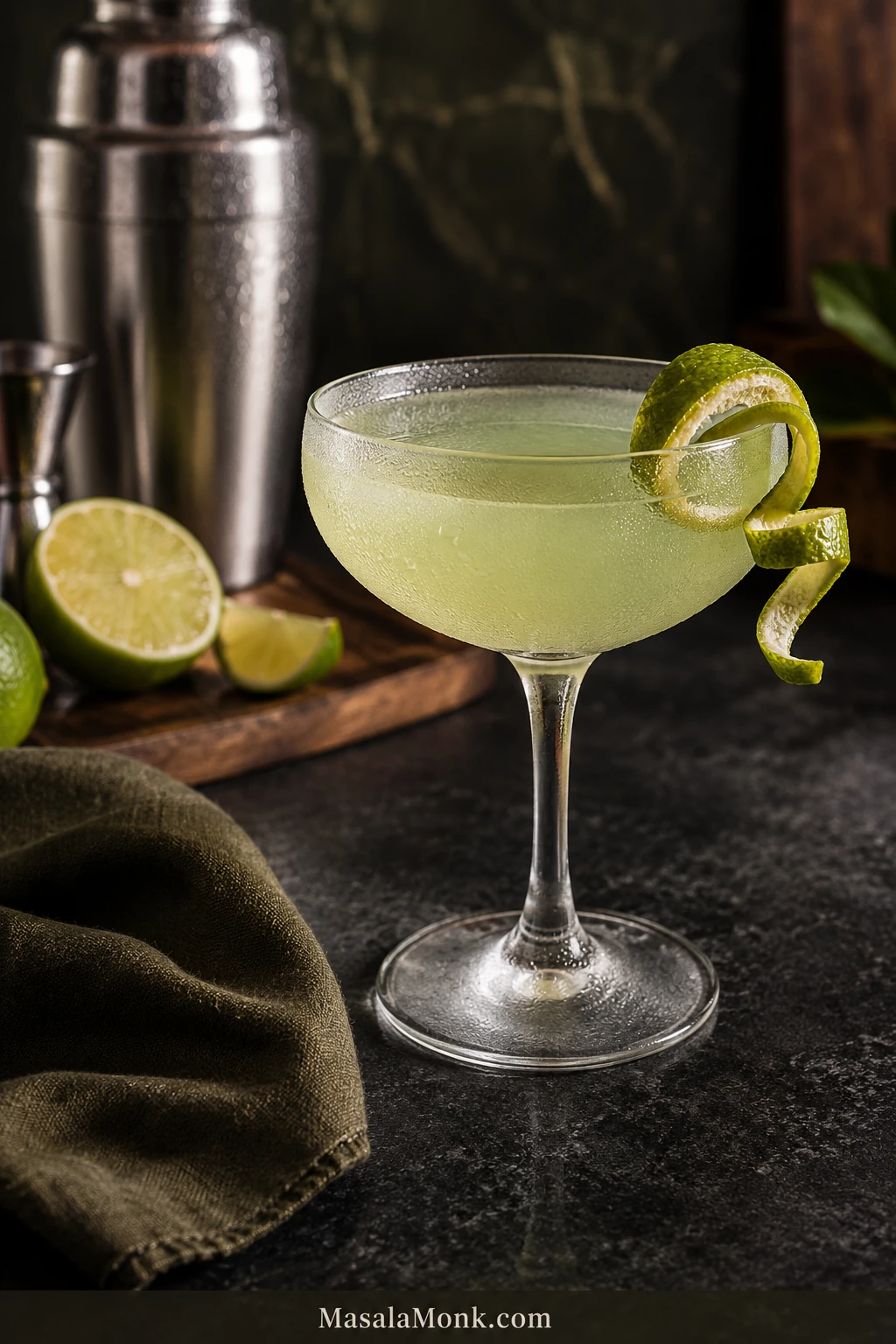
A good gimlet should land cold, sharp, and clean: lime first, gin underneath, and just enough sweetness to smooth the edge. It should not taste like melted lime candy, and it should not be so sour that the first sip makes you wince.
The small confusion around this cocktail is usually the lime. Some recipes use fresh lime juice and simple syrup; others use Rose’s lime juice or lime cordial. All three can work, but they make different drinks.
Once you understand that choice, the gimlet stops feeling like a cocktail argument and starts feeling like what it really is: a cold, clean lime drink you can tune in seconds.
Start with the balanced fresh-lime build: 2 oz gin, ¾ oz fresh lime juice, and ¾ oz simple syrup, shaken hard with ice and strained into a chilled glass. From there, you can make it drier, softer, Rose’s-based, cordial-style, vodka-led, batched, or served over fresh ice.
Quick Answer: How to Make a Gimlet
Shake 2 oz / 60 ml gin, ¾ oz / 22 ml fresh lime juice, and ¾ oz / 22 ml simple syrup with ice for 10 to 15 seconds. Strain into a chilled coupe, cocktail glass, or martini glass, then garnish with lime.
A Rose’s lime gimlet is even simpler: shake 2 oz / 60 ml gin with ¾ to 1 oz / 22 to 30 ml Rose’s lime juice. Rose’s is already sweetened, so skip the simple syrup.
Make This Tonight
- Best first ratio: 2 oz gin, ¾ oz fresh lime juice, ¾ oz simple syrup.
- Drier bar-style ratio: 2½ oz gin, ½ oz lime juice, ½ oz simple syrup.
- Rose’s ratio: 2 oz gin, ¾ to 1 oz Rose’s lime juice, no syrup.
- Shake and serve: shake 10 to 15 seconds, then serve up in a chilled glass or over fresh ice.
- Fix: add syrup if too sour, lime if too sweet, and ice if it tastes warm or harsh.
Make the first one exactly as written. After that, you will know whether your perfect gimlet wants more gin, more lime, or a softer touch of sweetness.
This is a spirit-forward cocktail for adults of legal drinking age. Sip slowly and drink responsibly.
The recipe card below gives you the balanced fresh-lime drink first. From there, the post helps you choose the lime, spirit, glass, and adjustment that fit the gimlet you actually want.
Gimlet Recipe
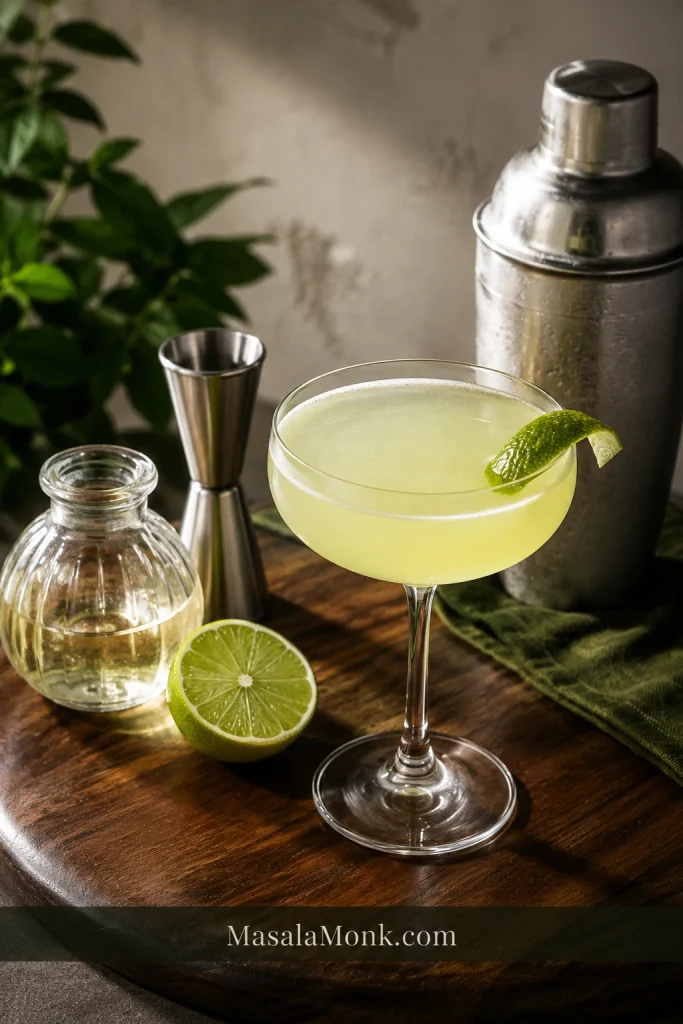
This is the balanced fresh-lime way to make a classic gin gimlet. It is tart, lightly sweet, ice-cold, and ready in about 5 minutes.
| Prep Time | 5 minutes |
| Cook Time | 0 minutes |
| Total Time | 5 minutes |
| Servings | 1 cocktail |
| Method | Shaken |
| Glass | Small coupe, cocktail glass, martini glass, or rocks glass |
Ingredients
- 2 oz / 60 ml gin
- ¾ oz / 22 ml fresh lime juice
- ¾ oz / 22 ml simple syrup
- Ice
- Lime wheel, lime twist, or lime peel, for garnish
One medium lime usually gives enough juice for one gimlet, but very small or dry limes may need two.
Instructions
- Add the gin, fresh lime juice, and simple syrup to a cocktail shaker.
- Fill the shaker with ice.
- Shake for 10 to 15 seconds, until the outside of the shaker feels very cold.
- Strain into a chilled coupe, cocktail glass, or martini glass.
- Garnish with lime and serve right away.
Quick note: A drier, stronger gimlet uses 2½ oz gin, ½ oz lime juice, and ½ oz simple syrup. The Rose’s pour uses 2 oz gin and ¾ to 1 oz Rose’s lime juice, with no simple syrup.
Before You Mix: Choose Your Gimlet
Most gimlet disappointment comes from making the wrong style for your own taste, not from making the drink badly.
The base drink is simple, but the mood changes fast: lime choice, spirit, and glass can make the same recipe feel crisp, nostalgic, stronger, softer, or slower to sip.
Think of the choices below as moods, not rules. You are not trying to pass a cocktail test; you are trying to make the glass you actually want.
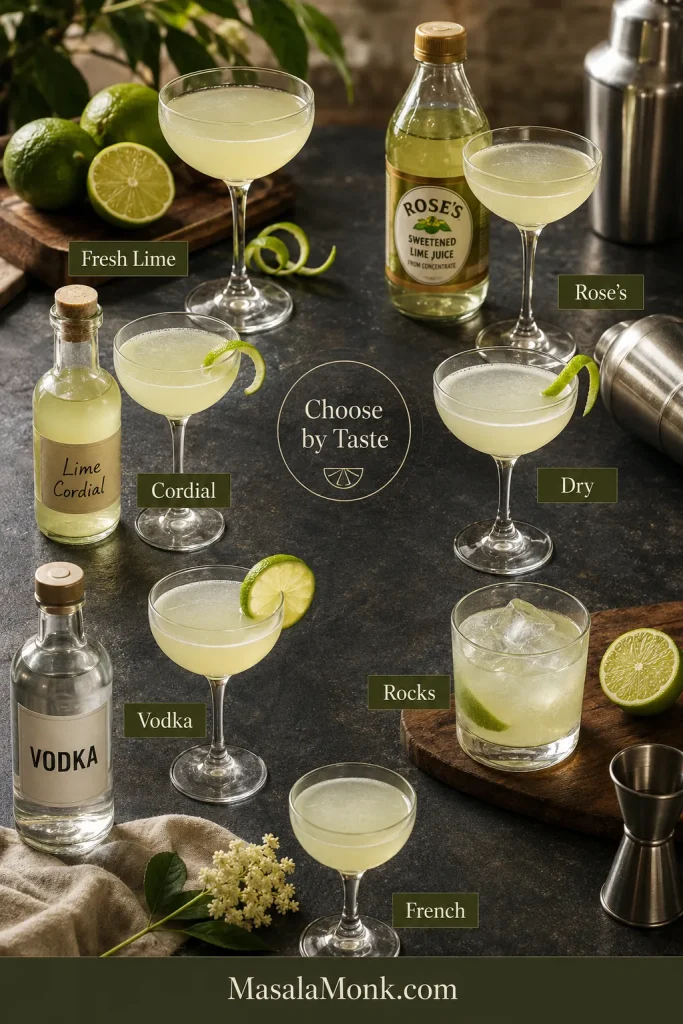
Picked your style? Jump to the Gimlet ratios or return to the recipe card.
| Looking For | Make This Gimlet | Why It Works |
|---|---|---|
| Sharp and bright | Fresh lime + simple syrup | You control tartness and sweetness separately. |
| Softer and nostalgic | Rose’s lime juice | Rose’s gives the sweetened-lime flavor many people remember. |
| Smooth cordial flavor | Lime cordial | Cordial brings lime and sweetness together in one pour. |
| Stronger and drier | 2½:½:½ ratio | More gin, less lime, less syrup. |
| Cleaner and neutral | Vodka gimlet | Vodka lets the lime lead without gin botanicals. |
| Slow-sipping | Gimlet on the rocks | Fresh ice keeps the drink colder for longer. |
| Floral and soft | French gimlet | Elderflower liqueur adds sweetness and perfume. |
Best Gimlet Ratio: oz and mL
Most home drinkers should start with 2 oz gin, ¾ oz lime, and ¾ oz simple syrup. That pour gives you the easiest balanced glass: bright, cold, tart, and not too sweet. Move drier with 2½ oz gin, ½ oz lime, and ½ oz simple syrup.
A gimlet should taste cold and lime-bright before the sweetness or spirit takes over.
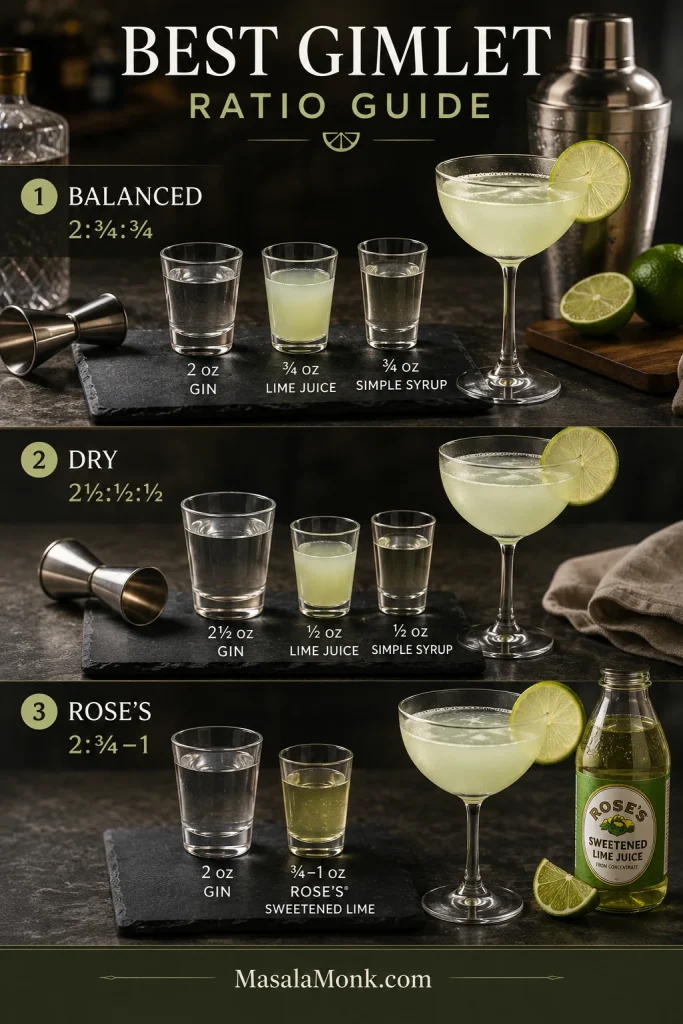
Got your ratio? Return to the recipe card or compare classic vs modern Gimlets.
Gimlet Ratios at a Glance
| Build | Spirit | Lime | Sweetener | Best For |
|---|---|---|---|---|
| Balanced fresh gimlet | 2 oz / 60 ml gin | ¾ oz / 22 ml fresh lime | ¾ oz / 22 ml simple syrup | Best first drink |
| Drier gimlet | 2½ oz / 75 ml gin | ½ oz / 15 ml fresh lime | ½ oz / 15 ml simple syrup | Stronger, less sweet |
| Rose’s lime gimlet | 2 oz / 60 ml gin | ¾–1 oz / 22–30 ml Rose’s lime juice | None | Nostalgic and sweet-tart |
| Lime cordial gimlet | 2 oz / 60 ml gin | ¾–1 oz / 22–30 ml lime cordial | None | Cordial-style |
| Vodka gimlet | 2 oz / 60 ml vodka | ¾ oz / 22 ml fresh lime | ½–¾ oz / 15–22 ml simple syrup | Cleaner, neutral |
| French gimlet | 2 oz / 60 ml gin | ½–¾ oz / 15–22 ml lime | 1–1½ oz / 30–45 ml St-Germain | Floral variation |
Your first sip should be cold enough to smooth the gin, tart enough to wake up the glass, and sweet enough that the lime feels polished instead of raw.
For a drier bar-style pour, Liquor.com’s Gimlet leans into more gin with smaller pours of lime and syrup.
Classic vs Modern Gimlet: Why Recipes Disagree
Gimlet recipes disagree because the drink sits between two traditions. Older gimlets are closely tied to gin and sweetened lime cordial, especially Rose’s-style lime cordial. Many modern cocktail-bar gimlets use fresh lime juice and simple syrup instead.
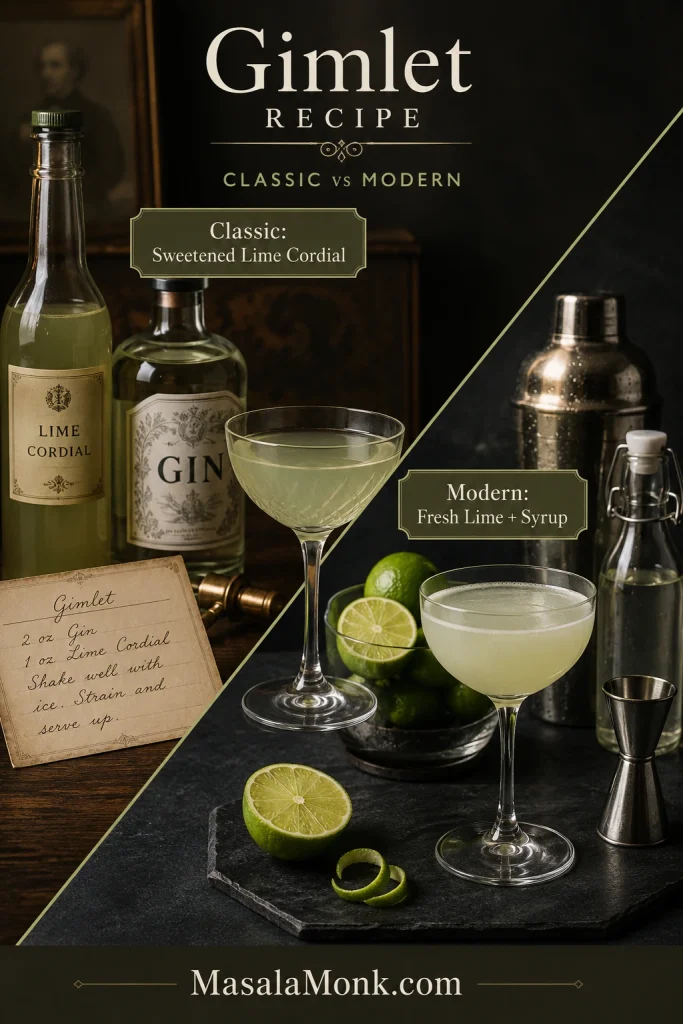
Rose’s gives you memory. Fresh lime gives you control. Cordial gives you the sweetened-lime profile in a smoother, more concentrated way.
None of these routes has to be treated like a mistake. They simply taste different. Here, the fresh-lime build, Rose’s pour, and cordial-style option all have a place, so you can make the gimlet that matches your glass tonight.
Fresh Lime vs Rose’s Lime Juice vs Lime Cordial
This is the real gimlet decision: fresh lime gives control, Rose’s gives nostalgia, and lime cordial gives that older sweetened-lime idea with a smoother finish.
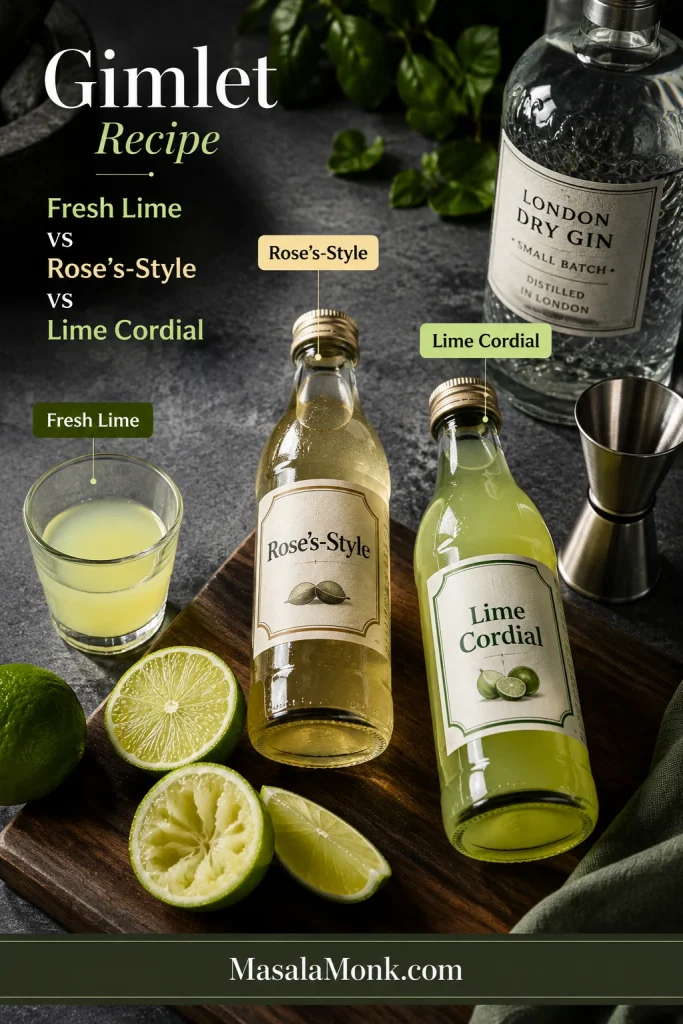
Fresh lime juice
The brightest gimlet comes from fresh lime. It tastes lively and lime-forward, with simple syrup softening the tart edge. In a Mango Margarita, the same fresh citrus keeps fruit from turning heavy or flat.
Rose’s lime juice
Rose’s takes the drink in a softer, sweeter direction. It handles both lime and sweetness, so the recipe becomes simple: gin plus Rose’s, shaken with ice. A ¾ oz pour keeps it less sweet; 1 oz gives you a rounder, more nostalgic glass.
Lime cordial
Think of lime cordial as lime that already brings its own sweetness. A good cordial can taste more layered than bottled sweetened lime juice, with more peel, more depth, and less one-note sweetness. Very sweet cordial works best around ¾ oz; tarter or homemade cordial may taste better at 1 oz.
For a deeper look at the cordial side of the drink, Difford’s Guide treats lime cordial as part of the gimlet’s classic DNA while using fresh citrus and fine straining for a cleaner finish.
Best practical answer: fresh lime and simple syrup make the brightest everyday gimlet. Rose’s or lime cordial makes the sweetened-lime classic. The right choice depends on the drink you want, not on proving one version “real.”
Using Rose’s? Jump to the Rose’s lime Gimlet. Making the fresh version? Return to the recipe card.
No Jigger? Use Tablespoons
A jigger is the easiest way to measure cocktails, but tablespoons work in a pinch. Use a proper measuring tablespoon if you can; regular eating spoons are not always the same size.
The drink is small enough that guessing can throw it off quickly, so this is one cocktail where measuring really does make you look better.
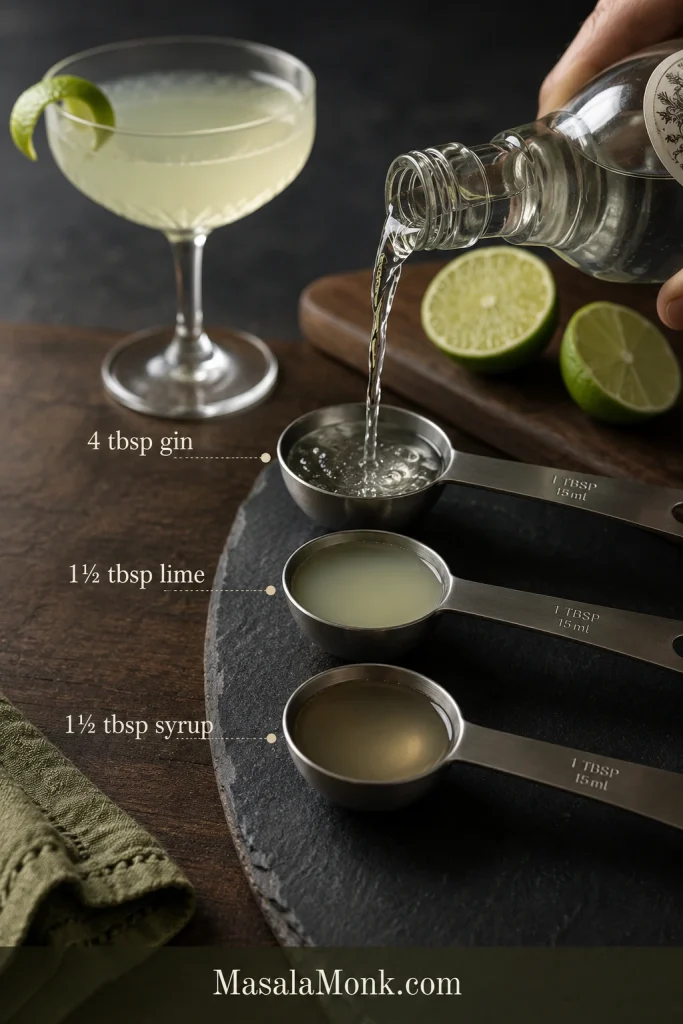
Measured without a jigger? Jump to the step-by-step method.
| Cocktail Measure | Tablespoons |
|---|---|
| ¼ oz | ½ tablespoon |
| ½ oz | 1 tablespoon |
| ¾ oz | 1½ tablespoons |
| 1 oz | 2 tablespoons |
| 2 oz | 4 tablespoons |
| 2½ oz | 5 tablespoons |
Without a jigger, the main drink becomes 4 tablespoons gin, 1½ tablespoons lime juice, and 1½ tablespoons simple syrup.
Ingredients You’ll Need
The ingredient list is short, which is exactly why each choice shows up in the glass. In a three-ingredient cocktail, every shortcut announces itself.
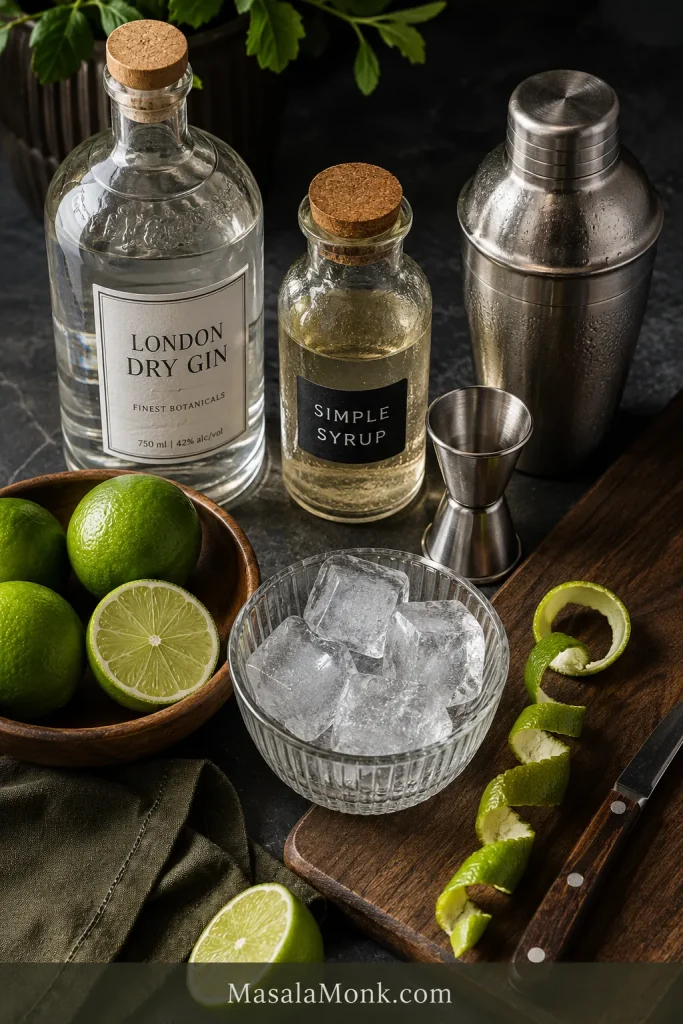
Gin
Gin gives the drink its backbone. In a gimlet, you taste it clearly, so choose a bottle that still feels crisp after lime joins the glass. London Dry is the safest place to start because it gives the cocktail a clean botanical base without fighting the citrus. Plymouth makes a softer drink, while Hendrick’s works well for cucumber or herb variations.
If you want a longer, sparkling gin drink instead of a short shaken one, the French 75 Cocktail uses gin with citrus, sugar, and bubbles for a lighter finish.
Fresh lime juice
Fresh lime matters here because the drink has nowhere to hide. When the lime is dull, the whole glass feels dull. Roll the lime before cutting, and taste the juice if the lime looks dry or old. A tired lime can make the whole drink taste flat.
One medium lime usually gives about ¾ to 1 oz juice, depending on size and freshness. Bottled lime juice works in a pinch, but it usually tastes flatter and harsher.
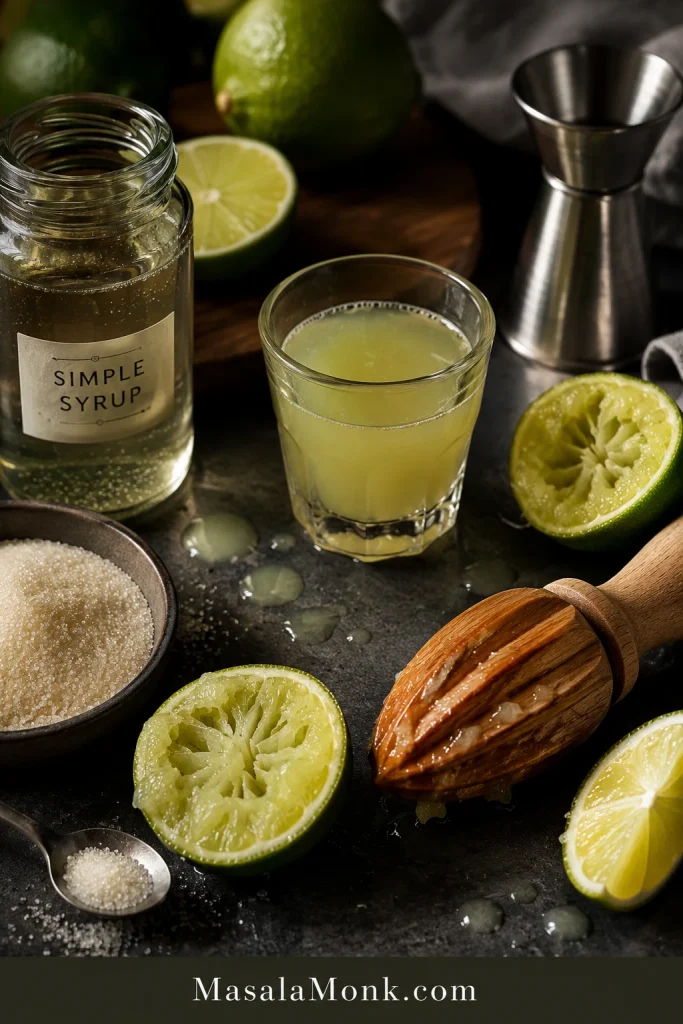
Simple syrup
Simple syrup is not there to make the cocktail sugary. It polishes the lime so the drink feels sharp, not raw. Standard 1:1 syrup is equal parts sugar and water, stirred until dissolved and cooled before using. Make it by weight with 100 g sugar and 100 g water, or by volume with 1 cup sugar and 1 cup water.
A tiny batch is easy: stir 2 tablespoons sugar with 2 tablespoons warm water until dissolved. That gives you enough syrup for a few drinks without filling the fridge.
Store extra syrup in a clean jar in the fridge. It usually keeps well for about 1 to 2 weeks if handled cleanly. Rich syrup, usually 2 parts sugar to 1 part water, is sweeter and thicker, so start with ½ oz instead of ¾ oz.
Ice and garnish
Ice is part of the recipe, not just a way to cool the glass. Enough ice chills the drink fast, softens the lime, and gives the cocktail the right texture. Warm gimlets taste harsher, even when the ratio is right.
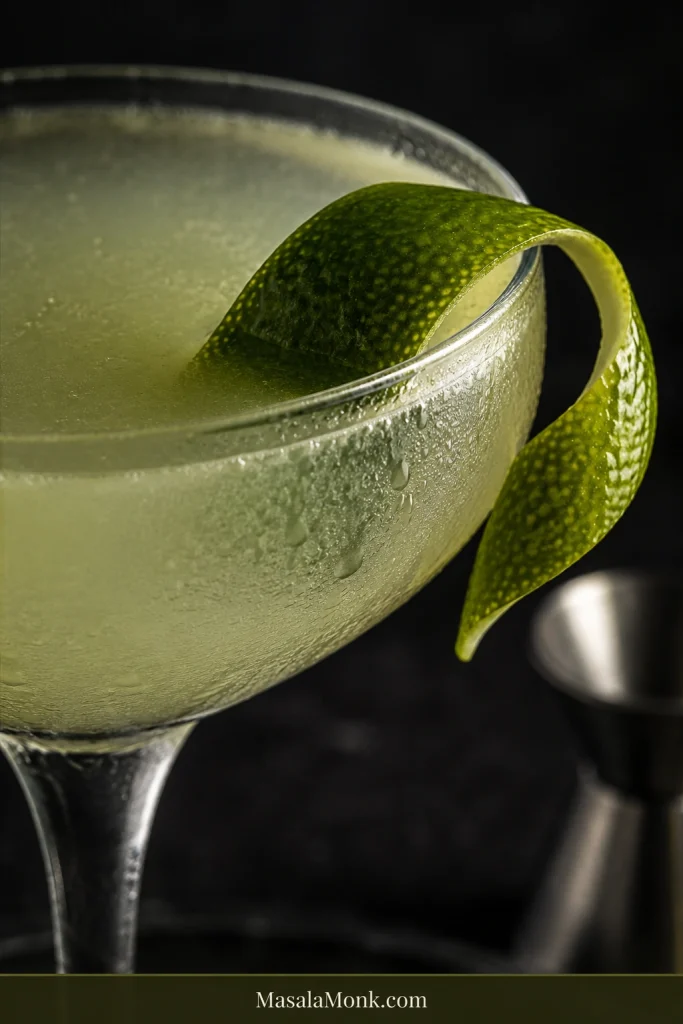
For garnish, a lime wheel, lime twist, or thin strip of lime peel is enough. Use a twist for aroma before the first sip, or a wheel for the clean familiar look.
How to Make a Gimlet
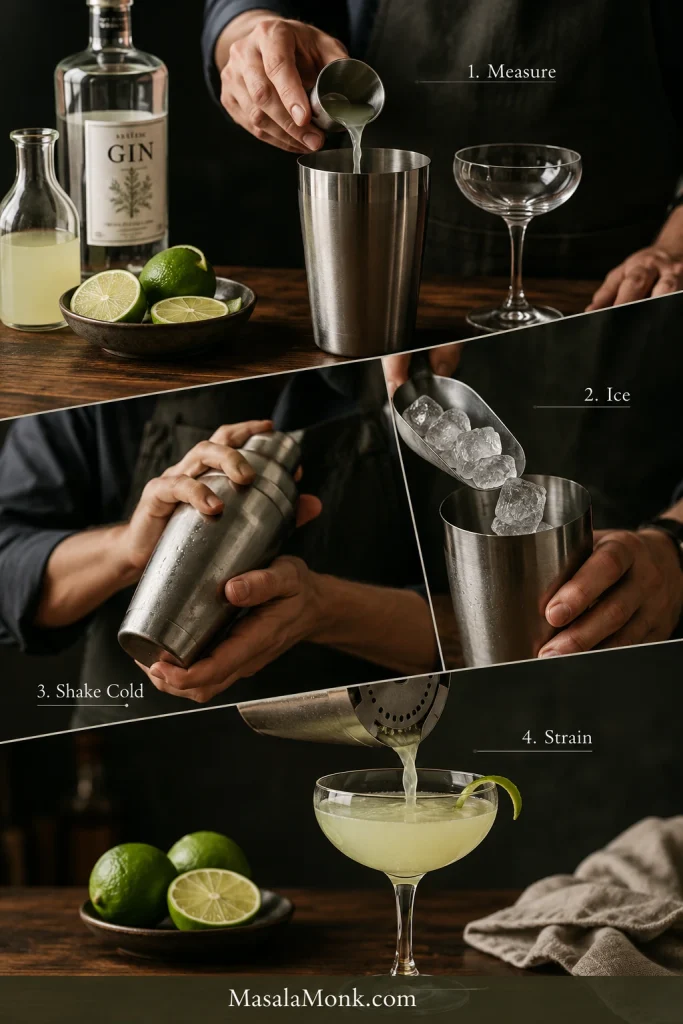
The shake is where this becomes a cocktail instead of cold gin and lime. Measure carefully, use enough ice, and let the chill do some of the smoothing for you.
Need the exact pour again? Jump back to the ratios.
1. Chill the glass
A cold glass keeps the drink crisp. Put your coupe or cocktail glass in the freezer for a few minutes, or fill it with ice water while you mix. Empty the glass before straining the cocktail.
2. Measure the gin, lime, and syrup
Add the gin, fresh lime juice, and simple syrup to a cocktail shaker. Too much lime makes the drink harsh, and too much syrup makes it sleepy. The right pour sits between those two edges.
3. Add plenty of ice
Fill the shaker with ice. The best gimlet feels sharper than it is because the chill does half the smoothing.
4. Shake until very cold
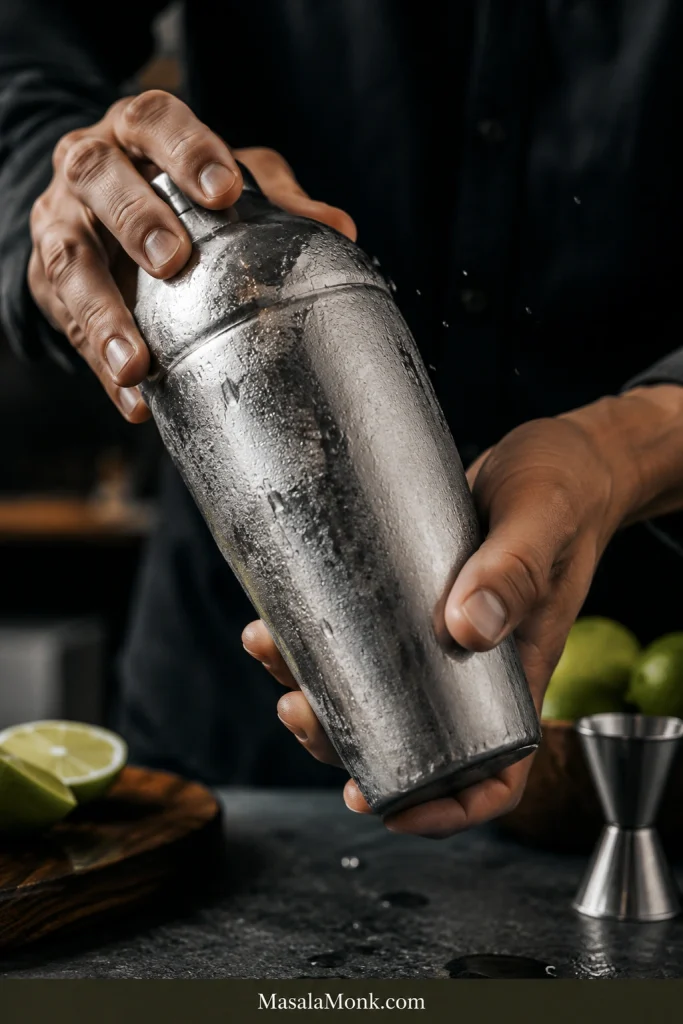
Shake for 10 to 15 seconds, or until the outside of the shaker feels very cold. When the shaker frosts over and the lime smell hits as you strain, the drink is where it should be: cold, sharp, and smooth around the edges.
Drink tastes off after shaking? Jump to the quick fix guide.
Muddled cucumber, basil, mint, or berries need a little more attention. Shake closer to 20 seconds and fine strain for a cleaner texture.
5. Strain and garnish
Strain into a chilled coupe, cocktail glass, or martini glass. Garnish with lime and serve right away. This drink is at its best freshly shaken and ice-cold.
Rose’s Lime Gimlet
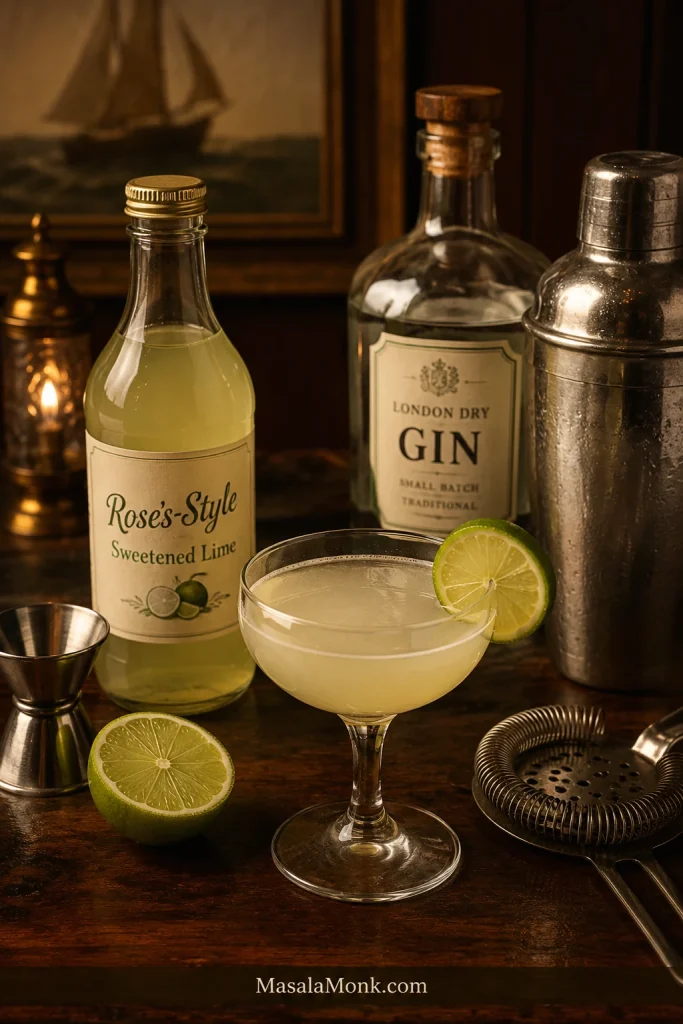
Once the fresh-lime version is clear, the Rose’s version becomes even simpler. It skips the fresh-lime build entirely: gin, Rose’s, ice, and garnish are enough. Because Rose’s is already sweetened, no simple syrup is needed.
Too syrupy? Jump to the Gimlet fix guide.
- 2 oz / 60 ml gin
- ¾ to 1 oz / 22 to 30 ml Rose’s lime juice
- Ice
- Lime wheel or lime twist, for garnish
Shake with ice and strain into a chilled glass. A ¾ oz pour keeps the drink less sweet; 1 oz gives a rounder, more nostalgic result. When it tastes too syrupy, a small squeeze of fresh lime wakes it up without turning it into a fully modern gimlet.
Vodka Gimlet Variation
The same structure also works with vodka, but the drink changes personality. Switch to vodka when you want the lime to lead and the botanicals to step back. A vodka gimlet tastes cleaner, smoother, and more neutral than a gin gimlet.
It is not as classic, but it has its own appeal: cleaner, quieter, and easier for people who want lime without the gin’s herbal edge.
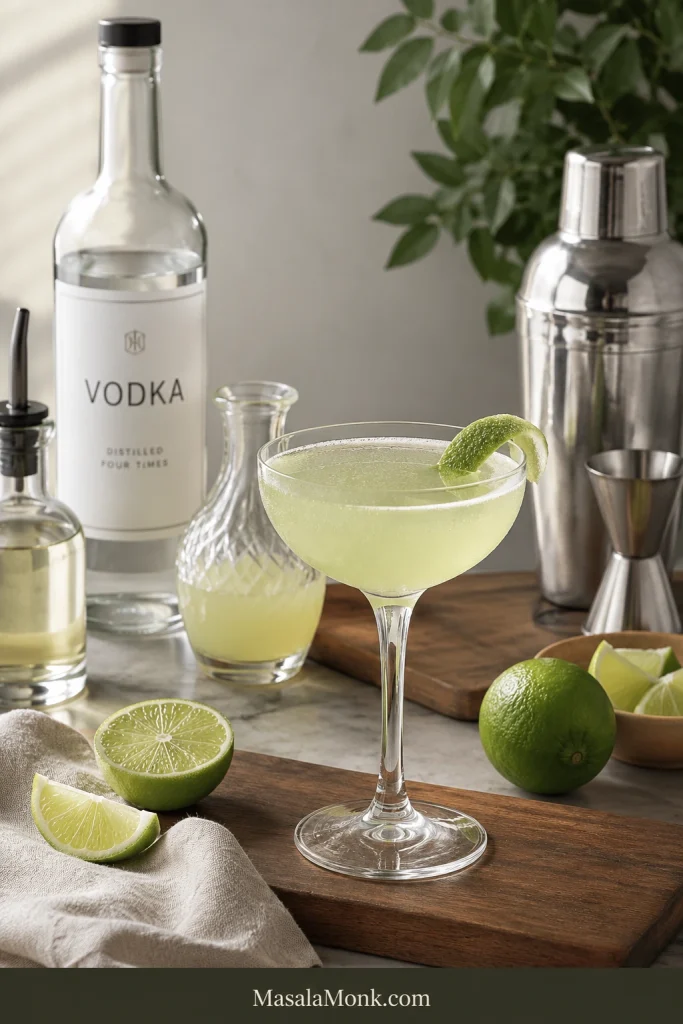
Making vodka instead? Use the same shake-and-strain method or choose up vs rocks.
For another vodka cocktail that needs to stay crisp instead of candy-sweet, see the Appletini.
Fresh Lime Vodka Gimlet
- 2 oz / 60 ml vodka
- ¾ oz / 22 ml fresh lime juice
- ½ to ¾ oz / 15 to 22 ml simple syrup
- Ice
- Lime wheel or twist, for garnish
Shake with ice and strain into a chilled glass. Start with ½ oz syrup for a sharper drink, or ¾ oz for a softer one.
Rose’s Lime Vodka Gimlet
- 2 oz / 60 ml vodka
- ¾ to 1 oz / 22 to 30 ml Rose’s lime juice
- Ice
Shake and strain as usual. This glass is smooth, sweet-tart, and very easy because Rose’s handles both the lime and the sweetness.
Gimlet Up vs On the Rocks
Do not confuse a gimlet with a Martini. Martinis are different cocktails, usually built around gin or vodka with vermouth. When someone says “gimlet martini,” they usually mean a gimlet served up in a coupe or martini glass.
For the actual vermouth-and-spirit lane, the Dirty Martini is the better reference point.
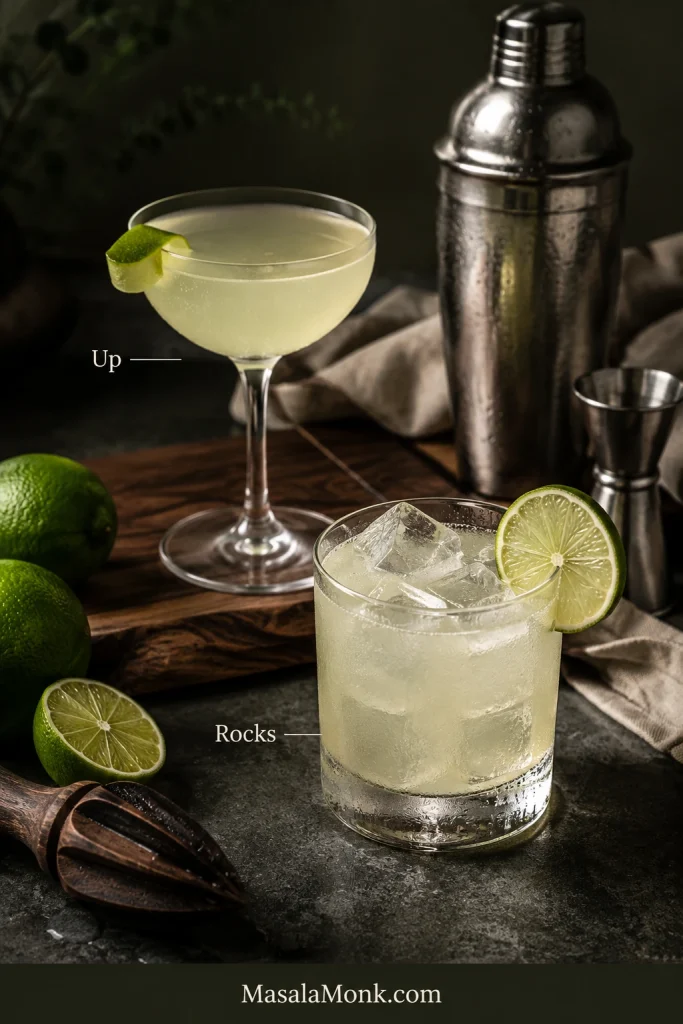
Served up, the drink feels short, sharp, and formal. On the rocks, it becomes colder for longer and easier to sip slowly. That rocks-glass version is especially useful in warm weather, with snacks, or when a big martini glass makes the drink look smaller than it is.
Ready to mix? Jump back to the recipe card.
To serve it on the rocks, shake the drink first, then strain it over fresh ice in a small rocks glass. Do not use the broken shaker ice; fresh ice keeps the drink cleaner. The slightly drier ratio also works well over rocks because the ice will soften the drink as it sits.
How to Fix a Gimlet That Tastes Off
A gimlet is one of those drinks where the first sip tells you everything. Excess lime feels thin and sharp. Heavy syrup turns the glass sleepy. When the balance is right, the lime snaps, the gin stays clean, and the sweetness disappears into the chill.
At that point, do not rebuild the drink. Nudge it. A ¼ oz change is often enough.
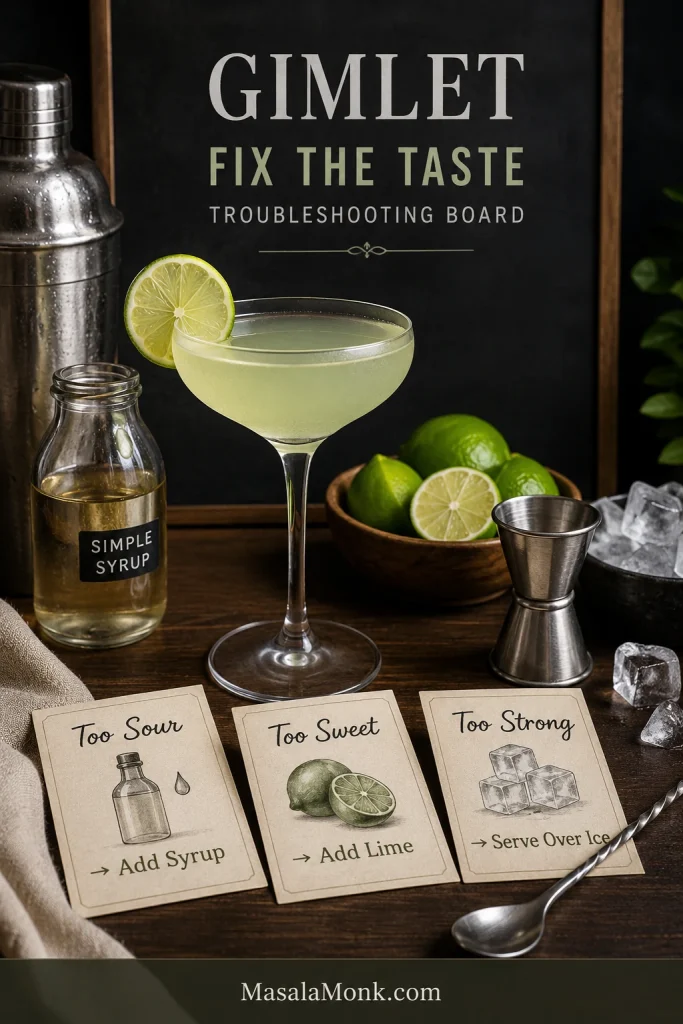
Balance fixed? Return to the base recipe or back to top.
| Problem | Fix |
|---|---|
| Too sour | Add ¼ oz more simple syrup and shake briefly again. |
| Too sweet | Add ¼ oz more fresh lime juice. |
| Too strong | Add a little more lime and syrup, or serve over ice. |
| Too weak | Use the drier ratio next time or shake slightly less. |
| Too flat | Use fresh lime juice and shake with plenty of ice. |
| Too syrupy with Rose’s | Use less Rose’s or add a small squeeze of fresh lime. |
| Too bitter with herbs | Muddle herbs more gently and fine strain. |
Can You Make Gimlets Ahead?
Single gimlets are best shaken fresh, but you can batch the base ahead of time. Combine the gin, lime juice, and simple syrup, then keep the mixture chilled until serving.
Batching gives you convenience, but shaking gives you texture. For the best drink, chill the batch and still shake each serving with ice before pouring.
| For 4 Fresh-Lime Gimlets | Amount |
|---|---|
| Gin | 8 oz / 240 ml |
| Fresh lime juice | 3 oz / 90 ml |
| Simple syrup | 3 oz / 90 ml |
- Best texture: shake each serving with ice before pouring.
- Freezer-door option: batch the drink, chill it very cold, and add a small amount of water only if you plan to pour it without shaking.
- Before serving: stir or shake the batch because citrus can settle.
- For garnish: add lime wheels or twists only when serving.
Make small changes and taste as you go. A little syrup softens a sharp batch; a little fresh lime wakes up a sweet one.
Gimlet Variations
Once the basic ratio is in your hands, the gimlet becomes a clean little canvas. The trick is restraint. A gimlet can carry flavor, but it should still feel like a gimlet when it hits the glass.
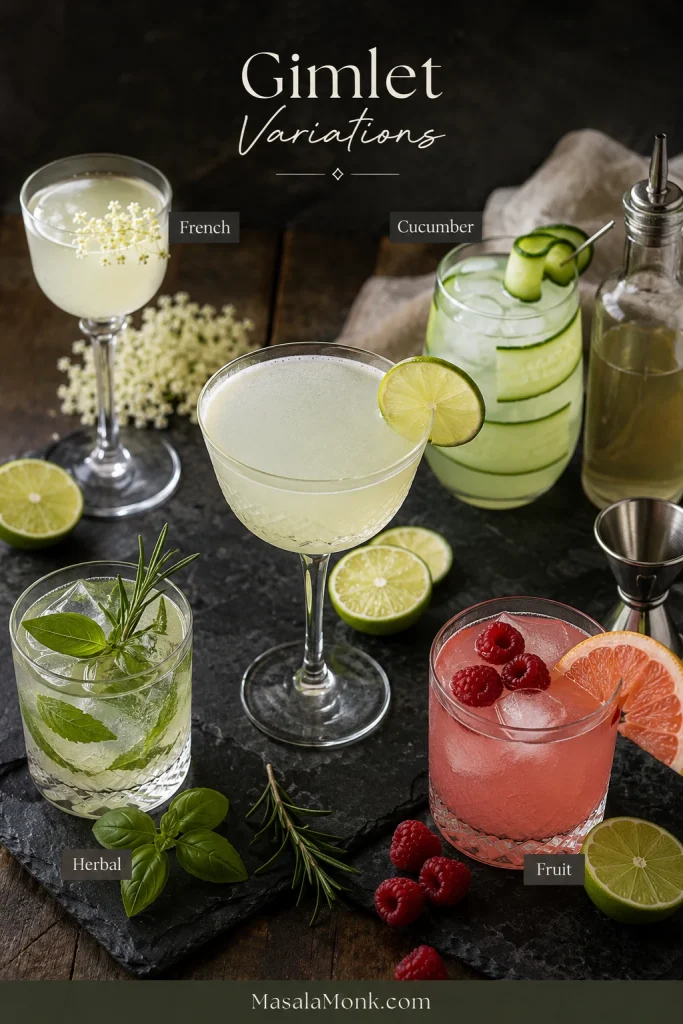
Trying a variation? Start from the base ratio, then add one accent at a time.
Floral Gimlet
A French gimlet softens the drink with elderflower liqueur. Start with 2 oz gin, 1 oz St-Germain, and ¾ oz lime juice, then adjust the lime if the drink needs more brightness.
Herbal Gimlets
Basil, mint, and rosemary all work, but they behave differently. Gently muddle basil or mint with lime and syrup before you add gin and ice. Rosemary works best as a syrup because the flavor is stronger and woodier.
Crushed too hard, fresh herbs can turn bitter. Fine strain for a cleaner drink with no green pieces in the glass.
Cucumber Gimlet
Cucumber pushes the drink into cooler, almost spa-water territory, especially with a gin that already has cucumber notes. Muddle a few cucumber slices in the shaker, or use cucumber juice for a cleaner pour. Peel the cucumber first if the skin tastes bitter.
Fruit Gimlets
Raspberry, strawberry, grapefruit, yuzu, mango, rhubarb, and blackberry can all work with the gimlet format. Use a small amount of fruit, keep the lime in place, and adjust the syrup depending on how sweet the fruit is.
What to Serve with a Gimlet
The best pairings are salty, herby, or lightly spicy. Think roasted cashews, crisp chips with a creamy dip, grilled shrimp, cucumber salad, limey chicken skewers, sharp cheese, or spicy fried snacks.
The lime cuts through richer bites, while the gin keeps the pairing fresh and clean. This cocktail is especially good with food that has salt, herbs, citrus, or a little heat.
For a small cocktail menu, pair the gimlet with one lime-bright drink in another spirit family, such as a Cadillac Margarita, rather than stacking too many gin-lime drinks together.
Gimlet Recipe FAQ
A few small details can change how this cocktail drinks, especially when you are choosing between fresh lime, Rose’s, vodka, or rocks. These are the questions that usually come up after the first shake.
What is in a gimlet?
At its simplest, a gimlet is gin, lime, and sweetness in a cold glass. The modern fresh-lime version uses lime juice and simple syrup. A Rose’s or cordial-style gimlet uses sweetened lime instead.
Is a gimlet made with gin or vodka?
Gin is the traditional base. It gives the gimlet its botanical backbone, which is why the drink tastes sharper and more classic than the vodka version. Vodka is common too, but it turns the cocktail into a cleaner, more lime-led glass.
What is the best gimlet ratio?
A balanced fresh-lime gimlet uses 2 oz gin, ¾ oz fresh lime juice, and ¾ oz simple syrup. The drier build moves to 2½ oz gin, ½ oz lime juice, and ½ oz simple syrup.
Should a gimlet use Rose’s lime juice or fresh lime?
Use fresh lime when you want control, brightness, and a sharper modern finish. Choose Rose’s when you want the softer, sweeter, nostalgic sweetened-lime version.
What is the difference between lime cordial and fresh lime juice?
Fresh lime juice brings tartness with no sweetness. Lime cordial is already sweetened, so it gives the drink a rounder, more concentrated lime flavor and usually replaces simple syrup.
Can I use bottled lime juice?
Fresh lime is better here because the drink is so simple. Bottled lime works in a pinch, but it can taste flat or harsh. Squeezed lime gives the cocktail a cleaner edge.
Can I make a gimlet without simple syrup?
Yes. Use Rose’s lime juice or lime cordial instead of the fresh-lime build. For a fresh citrus drink, use another liquid sweetener such as agave syrup or honey syrup, but add it slowly because each one tastes different.
Do you shake or stir a gimlet?
Shake the fresh-lime build. Citrus drinks usually taste better shaken because the ice chills, dilutes, and slightly softens the edges. Cordial-only versions can sometimes be stirred, but shaking gives most home gimlets a colder, smoother finish.
Is a gimlet the same as a martini?
No. A gimlet is not the same as a Martini, but it is often served in a coupe or martini glass. That phrase usually means a gimlet served up, not a Martini made with vermouth.
Should a gimlet be served up or on the rocks?
Serve it up in a chilled coupe or cocktail glass for the classic short-cocktail feel. On the rocks, use a small rocks glass when you want it colder for longer and easier to sip slowly.
What gin is best for a gimlet?
London Dry gin is the safest starting point. It gives the drink a crisp, familiar backbone. Plymouth gin makes a softer glass, while Hendrick’s works well for cucumber or herb variations.
How do you make a gimlet less sweet or less sour?
If the gimlet tastes too sweet, add ¼ oz fresh lime juice and shake briefly again. When it tastes too sour, add ¼ oz simple syrup. Small adjustments work better than rebuilding the whole cocktail.
How strong is a gimlet?
A gimlet is spirit-forward because it is mostly gin or vodka. Lime and syrup smooth the edges, but there is no soda or juice topper to make it a low-alcohol drink. Sip slowly and serve with food or water if needed.
Can gimlets be made ahead?
Yes. Batch the gin, lime juice, and simple syrup ahead of time, then chill and shake individual drinks with ice before serving. Stir or shake the batch first because citrus can settle.
Final Tip
Choose your lime style first. Fresh lime juice and simple syrup make the most lifted modern gimlet. Rose’s lime juice or lime cordial makes the sweetened-lime classic. After that, all you need is careful measuring, plenty of ice, and the confidence to adjust by small amounts until the glass tastes like yours.