Posted on 2 Comments

Fish Tacos Recipe: Best Fish, Sauce, Slaw & Easy Methods

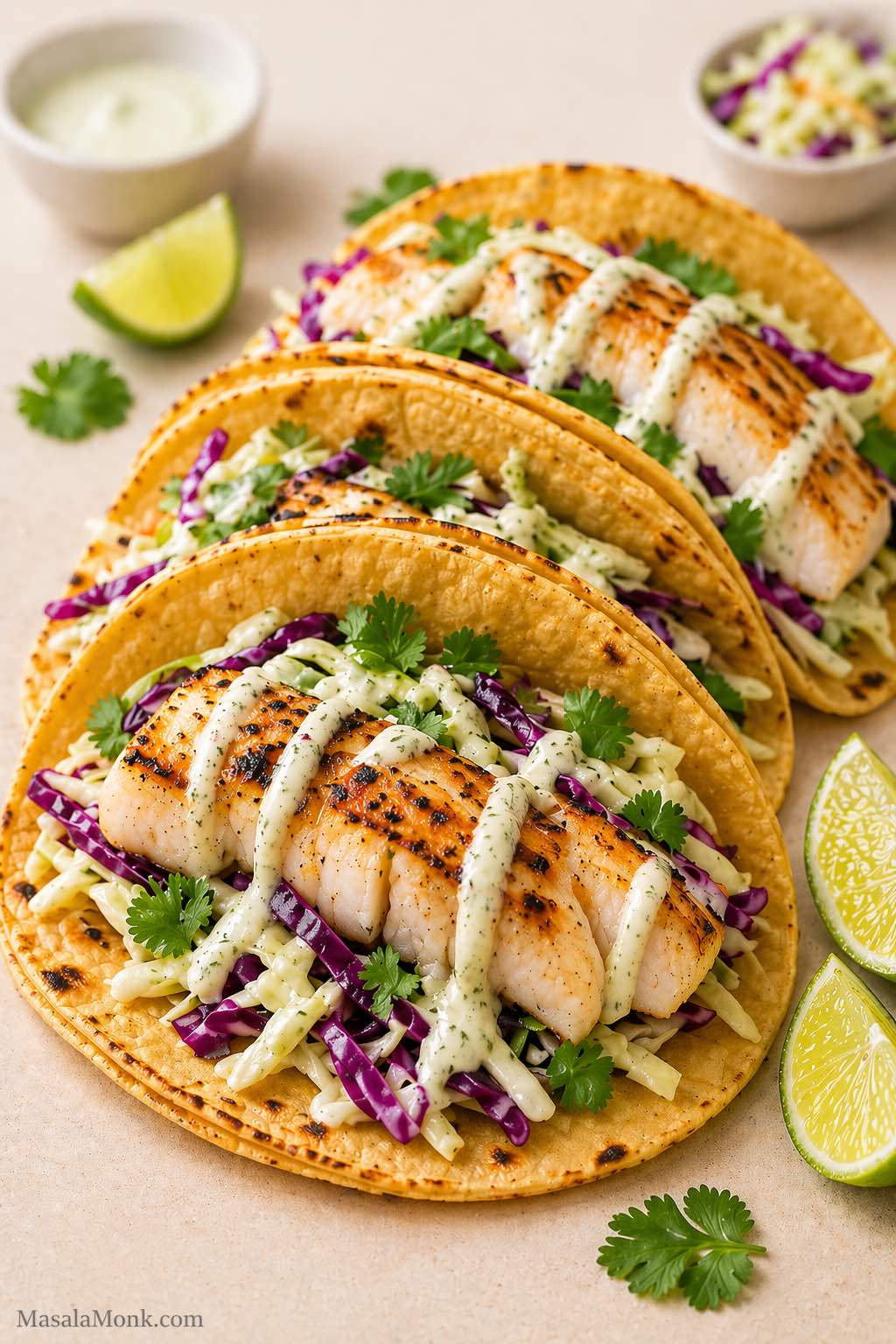
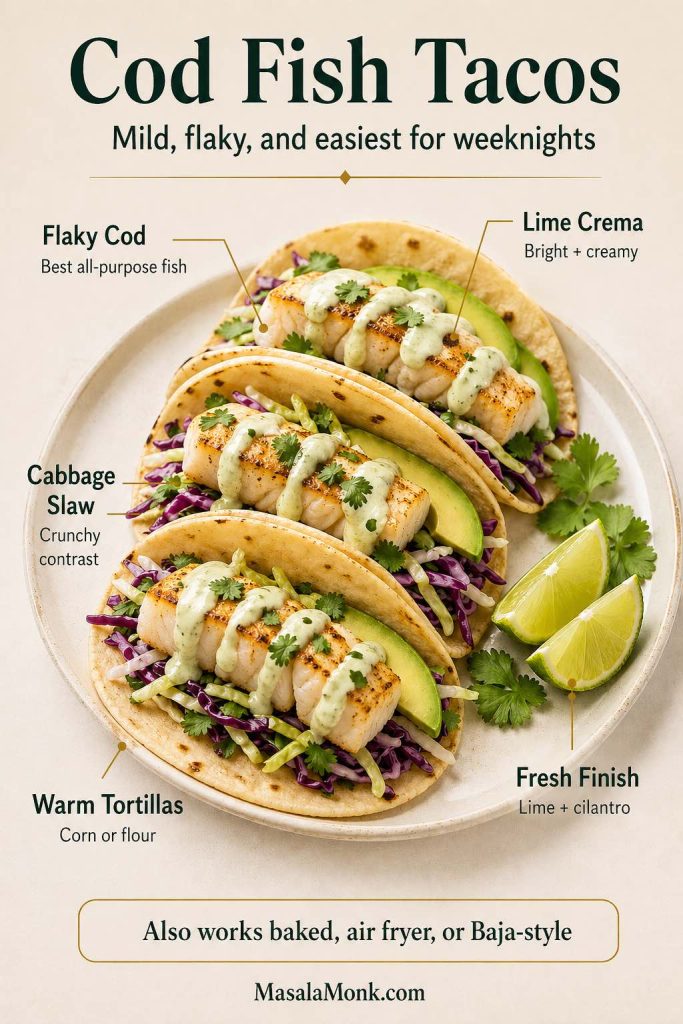
Three cod fish tacos in warm corn tortillas with cabbage slaw, lime crema, cilantro, and lime wedges.

A good fish tacos recipe should answer more than one question. Yes, you need tender fish, warm tortillas, crunchy slaw, and a creamy sauce. However, the real decision usually starts before you cook: what is the best fish for fish tacos, and should you pan-sear, grill, fry, bake, or air fry it?
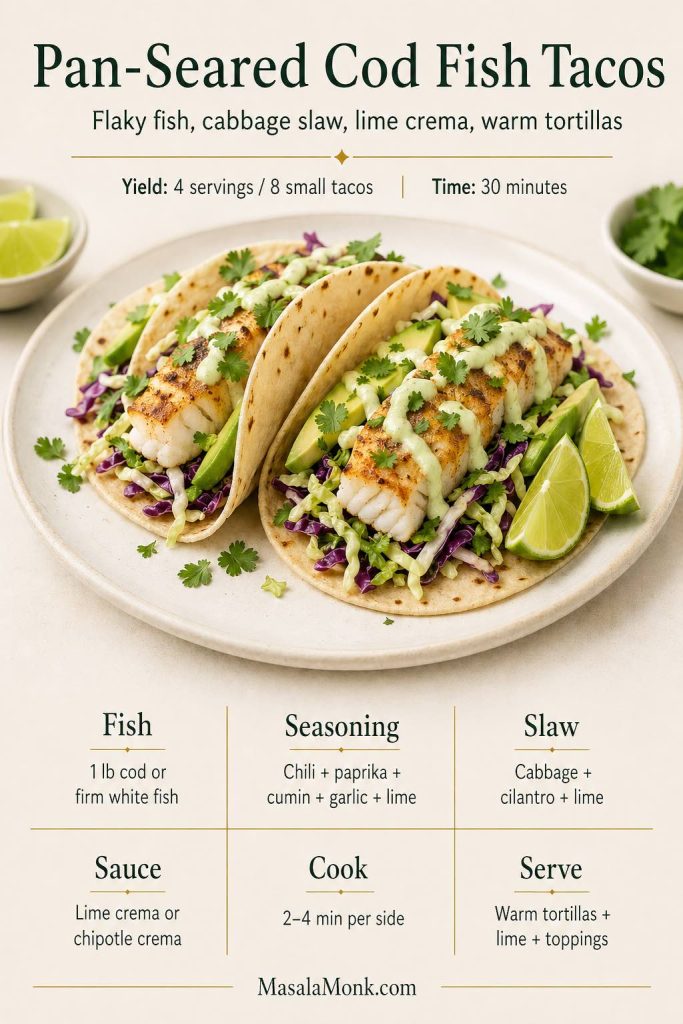
This recipe for fish tacos starts with the most useful default: pan-seared cod fish tacos with lime crema and cabbage slaw. Cod is mild, flaky, easy to find, and flexible enough for weeknight tacos, Baja-style fried tacos, baked fish tacos, and air fryer fish tacos. When you have mahi mahi, tilapia, halibut, snapper, haddock, salmon, or frozen fish, this guide also shows you how to adjust.

The goal is simple: make fish tacos that taste fresh, bright, and balanced instead of soggy, bland, dry, or overloaded. Use this fish tacos recipe when you need easy fish tacos for dinner, then use the fish guide, sauce options, slaw tips, toppings, and method variations to make the tacos fit what you have.

Quick Answer: Best Fish for This Fish Tacos Recipe

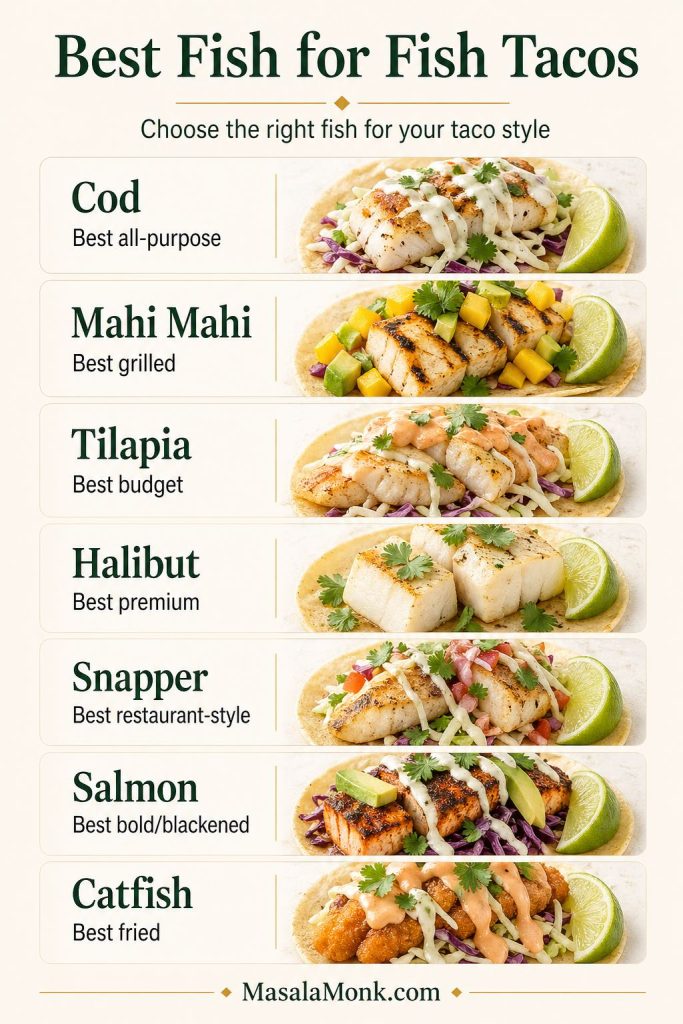
The best fish for fish tacos is a firm, mild white fish such as cod, mahi mahi, halibut, snapper, haddock, or tilapia. Cod is the easiest all-purpose choice because it is mild, flaky, widely available, and works pan-seared, baked, air fried, or beer-battered. Meanwhile, mahi mahi is best for grilled fish tacos, tilapia is the best budget choice, halibut and snapper feel more premium, and salmon works best when blackened or boldly seasoned.

For the easiest fish tacos, season cod or another white fish with chili powder, cumin, smoked paprika, garlic, salt, lime, and a little oil. Then, cook it quickly until just flaky and serve it in warm corn tortillas with cabbage slaw, creamy lime sauce, cilantro, jalapeño, avocado, and fresh lime. For Baja-style fish tacos, use beer-battered cod with chipotle crema and crunchy slaw.

Fish Tacos at a Glance

Best default fishCod
Best other fishMahi mahi, tilapia, halibut, snapper, haddock, salmon
Best methodPan-seared for easiest, Baja-style fried for crispy, grilled for firm fish, baked for hands-off cooking, air fryer for lighter crispy tacos
Best tortillasCorn for classic flavor, flour for softer tacos
Best sauceLime crema or chipotle crema
Best toppingCabbage slaw, cilantro, lime, avocado, mango salsa, jalapeño
Biggest mistakeWet fish, cold tortillas, too much sauce, or assembling too early

Which Fish Tacos Should I Make?

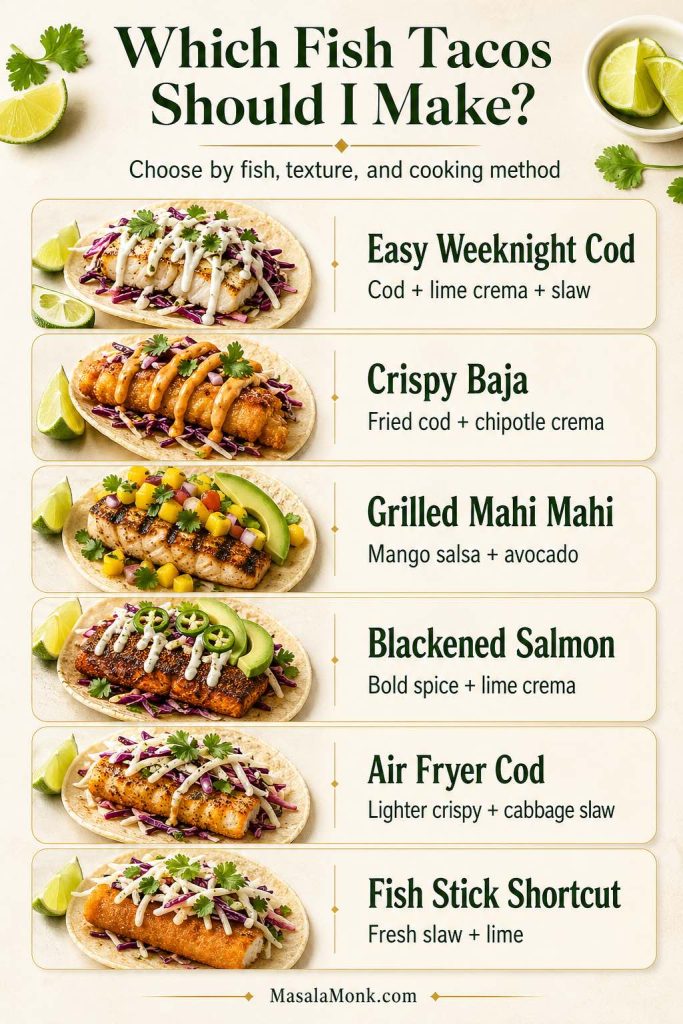
Choose the fish taco style based on the texture and cooking method you need. The pan-seared cod version is the easiest default, while Baja-style tacos are best when crispy fried fish is the main goal.

A vertical fish taco chooser guide with six options: easy weeknight cod tacos with lime crema, crispy Baja fish tacos, grilled mahi mahi tacos with mango salsa, blackened salmon tacos, air fryer cod tacos, and fish stick shortcut tacos.
Not sure which version to make first? Start with cod for the easiest weeknight fish tacos, choose Baja when you want crispy fried fish, use mahi mahi for grilled tacos, and go with salmon when you want a bolder blackened version. Air fryer cod and fish stick tacos are the fastest shortcut paths when convenience matters.
When You NeedMake This VersionBest FishBest Topping
Easiest weeknight tacosPan-seared fish tacosCod or tilapiaCabbage slaw + lime crema
Crispy restaurant-style tacosBaja fish tacosCod or haddockChipotle crema + slaw
Grilled tacosGrilled fish tacosMahi mahi or halibutMango salsa + avocado
Bold spicy tacosBlackened fish tacosSalmon, cod, or mahi mahiAvocado + lime crema
Lighter crispy tacosAir fryer fish tacosCod or tilapiaSlaw + lime crema
Shortcut tacosFish stick tacosFrozen breaded fishFresh slaw + lime

The Simple Fish Taco Formula

The easiest way to build a good recipe for fish tacos is to use one fish, one crunchy topping, one creamy sauce, one fresh finish, and warm tortillas. This keeps the taco balanced instead of overloaded.

PartBest Choices
FishCod, mahi mahi, tilapia, halibut, snapper, haddock, salmon
Cooking methodPan-seared, grilled, baked, air fried, blackened, or Baja-style fried
CrunchCabbage slaw, radish, pickled onions, shredded lettuce when needed
SauceLime crema, chipotle crema, avocado crema, Greek yogurt sauce
Fresh finishCilantro, lime, mango salsa, pico de gallo, jalapeño
TortillaCorn for classic flavor, flour for softer tacos
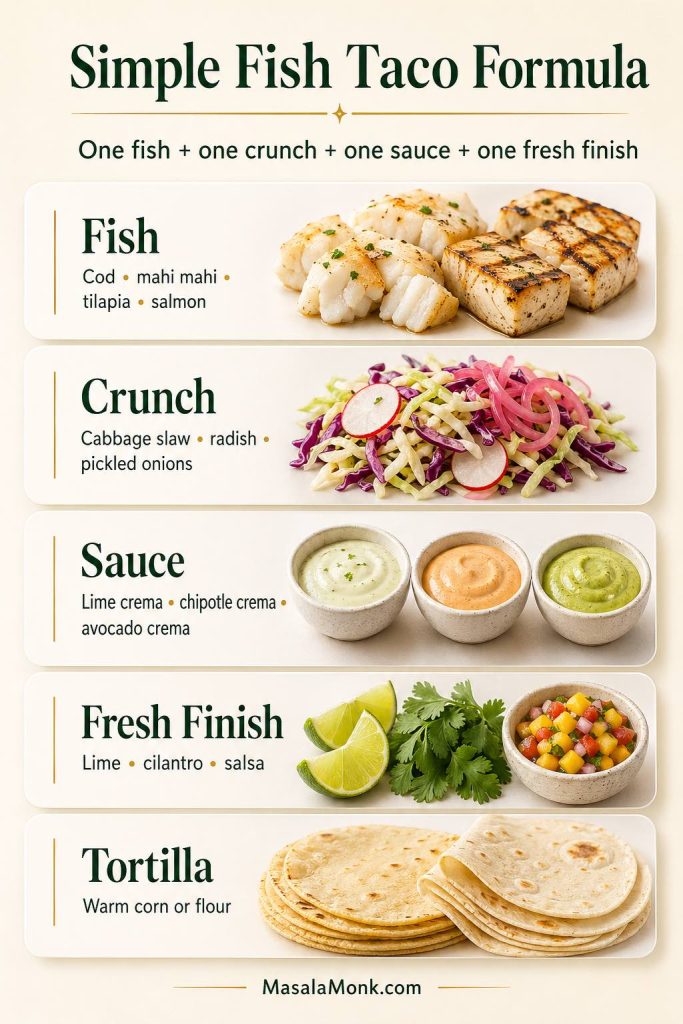
A vertical guide titled “Simple Fish Taco Formula” showing the key parts of a balanced fish taco: fish, crunch, sauce, fresh finish, and warm tortillas, with examples like cod, mahi mahi, cabbage slaw, lime crema, cilantro, salsa, and corn or flour tortillas.
Use this formula to keep fish tacos balanced instead of overloaded: start with one fish, add one crunchy element, choose one creamy sauce, finish with something fresh, and serve it all in warm tortillas. It is the easiest way to build tacos that taste bright, layered, and clean without turning soggy or heavy.

Why This Fish Tacos Recipe Works

This fish tacos recipe works because every part has a job. The cod stays mild and flaky, the spice mix gives the fish enough flavor without hiding it, the cabbage slaw adds crunch, the lime crema adds fat and acidity, and the warm tortillas hold everything together.

  • Cod is easy to control: it cooks quickly, flakes cleanly, and works with most toppings.
  • The slaw is lightly dressed: it stays crisp instead of turning wet and heavy.
  • The sauce is tangy, not just creamy: lime keeps the taco bright.
  • The toppings are flexible: you can keep the tacos simple or build toward Baja, grilled, blackened, air fryer, or mango salsa versions.
  • The assembly happens last: warm tortillas, hot fish, crisp slaw, and fresh toppings keep the tacos from getting soggy.

Fish Taco Ingredients

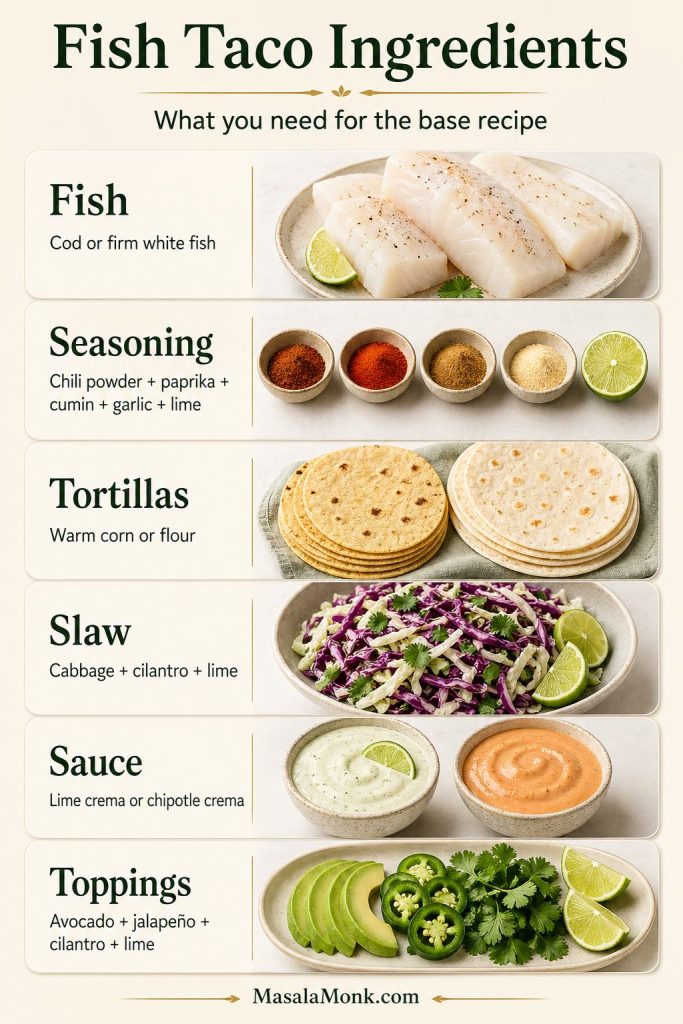
This fish tacos recipe is built in parts: seasoned fish, warm tortillas, crunchy slaw, creamy sauce, and fresh toppings. Because each part has a job, the tacos taste clean instead of heavy when you keep the pieces simple.

A vertical fish taco ingredients guide showing cod or firm white fish, chili powder, paprika, cumin, garlic, lime, corn and flour tortillas, cabbage slaw, lime crema, chipotle crema, avocado, jalapeño, cilantro, and lime.
Great fish tacos are built in parts: mild flaky fish, warm tortillas, crisp slaw, creamy sauce, and fresh toppings. Keep each part simple and balanced so the tacos taste bright and fresh instead of heavy, soggy, or overloaded.

Fish

Use 1 pound of cod for the default recipe. You can also use mahi mahi, tilapia, haddock, halibut, snapper, grouper, bass, or another firm white fish. When using salmon, season it more boldly because it has a richer flavor than mild white fish.

Seasoning

The fish seasoning uses chili powder, smoked paprika, cumin, garlic powder, onion powder, salt, black pepper, lime juice, and oil. As a result, the fish tastes warm, bright, and lightly smoky without becoming aggressively spicy.

Fish Taco Seasoning

The easiest fish taco seasoning is chili powder, smoked paprika, cumin, garlic powder, onion powder, salt, black pepper, and a little lime. For a smokier flavor, add chipotle powder. For blackened fish tacos, increase the paprika, black pepper, and cayenne.

Flaky white fish needs enough seasoning to avoid tasting flat, but not so much that the fish disappears. Tilapia needs a slightly bolder hand, while salmon works best with a blackened-style spice blend.

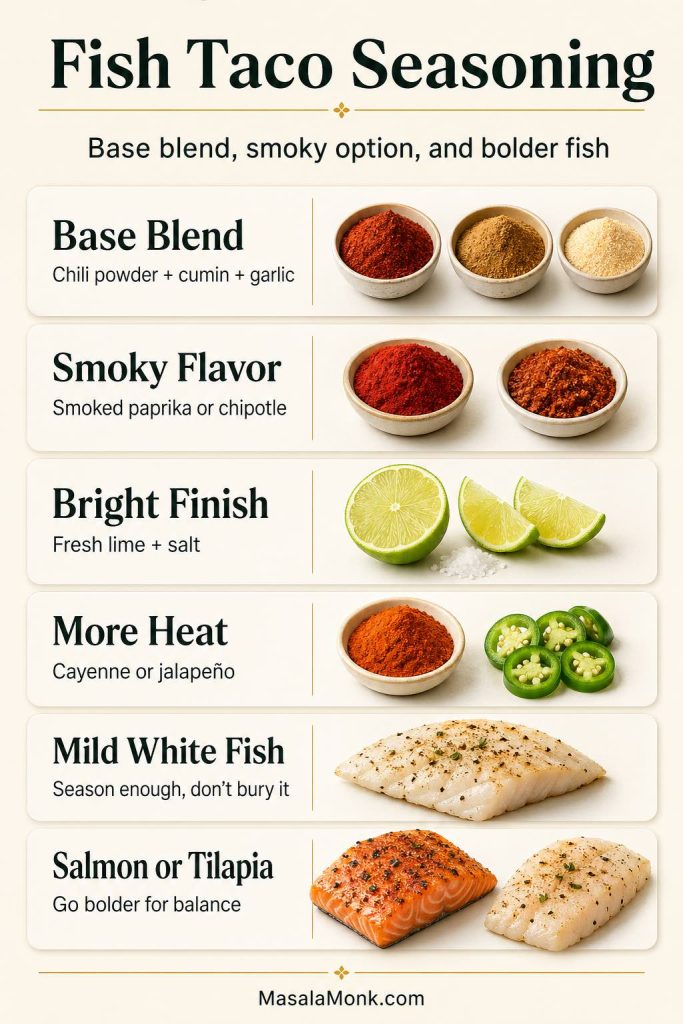
A vertical fish taco seasoning guide showing chili powder, cumin, garlic, smoked paprika, chipotle, lime, salt, cayenne, jalapeño, mild white fish, salmon, and tilapia, with tips for base seasoning, smoky flavor, heat, and bolder fish.
Seasoning is what keeps fish tacos from tasting flat. Use chili powder, cumin, garlic, smoked paprika, lime, and salt for the base blend, then adjust the heat with cayenne or jalapeño. Mild white fish needs enough seasoning to taste bright, while salmon and tilapia benefit from a bolder hand.

Tortillas

Corn tortillas give fish tacos the most classic flavor. However, flour tortillas are softer and less likely to crack, so they are useful for bigger tacos. Whichever you use, warm them before filling so they bend instead of breaking.

Corn vs Flour Tortillas for Fish Tacos

Use corn tortillas for the most classic fish taco flavor. They taste more toasty and earthy, which works especially well with Baja fish tacos, cod fish tacos, and chipotle crema. Use flour tortillas for a softer, more flexible taco that is less likely to crack.

When corn tortillas break, warm them longer and keep them covered. For saucier tacos or heavy fillings, double up small corn tortillas.

Slaw

Cabbage is better than lettuce here because it stays crunchy under warm fish and sauce. Use green cabbage, red cabbage, or a bagged slaw mix. Then, add lime, cilantro, salt, and jalapeño to keep it fresh.

Sauce

A good fish taco recipe with cabbage slaw needs a creamy, tangy sauce to tie the fish, tortilla, and toppings together. The default sauce uses sour cream or Greek yogurt, a little mayonnaise, lime juice, garlic powder, salt, and hot sauce or chipotle.

Toppings

Good fish taco toppings add contrast. Use cilantro, jalapeño, avocado, pico de gallo, mango salsa, pickled onions, radish, cotija, hot sauce, or extra lime. However, avoid piling on too many wet toppings at once or the tortillas can turn soggy.

Best Fish for Fish Tacos

The best fish for this fish tacos recipe depends on the style of taco you want. In most cases, mild white fish is the safest choice because it cooks quickly, flakes easily, and lets the sauce, slaw, lime, and toppings shine.

FishBest UseTextureBest Method
CodBest all-purpose fish tacosMild, flaky, cleanPan-seared, baked, air fryer, Baja-style
Mahi mahiGrilled fish tacos and mango salsa tacosFirm, meaty, mildGrilled, blackened, skillet
TilapiaBudget-friendly easy fish tacosSoft, mild, thinSkillet, baked, air fryer
HalibutPremium fish tacosFirm, clean, meatyGrilled, pan-seared
SnapperRestaurant-style fish tacosDelicate, sweet, freshGrilled, pan-seared
HaddockCod substituteFlaky, mildBaked, pan-seared, fried
SalmonBold fish tacosRich, stronger flavorBlackened, grilled, air fryer
CatfishFried fish tacosSturdy, earthy, moistFried, cornmeal-crusted, blackened

Best overall fish: cod. Best fish for grilling: mahi mahi or halibut. Best budget fish: tilapia. Best fish for Baja tacos: cod. Best premium fish: halibut or snapper. Best bold fish taco: salmon with blackened seasoning.

A vertical guide titled “Best Fish for Fish Tacos” comparing cod, mahi mahi, tilapia, halibut, snapper, salmon, and catfish, with each fish matched to its best taco use such as all-purpose, grilled, budget, premium, restaurant-style, blackened, or fried.
The best fish for fish tacos depends on the style you want. Use cod when you want the easiest all-purpose taco, mahi mahi when you want grilled fish, tilapia when you need a budget-friendly option, salmon when you want bold blackened flavor, and catfish when crispy fried tacos are the goal.

Buying tip: choose fish that looks moist, smells clean rather than strongly fishy, and fits your budget. For the easiest result, choose a firm, mild fish that will hold together when cooked and still taste clean with lime, slaw, and sauce.

Can You Use Frozen Fish for Fish Tacos?

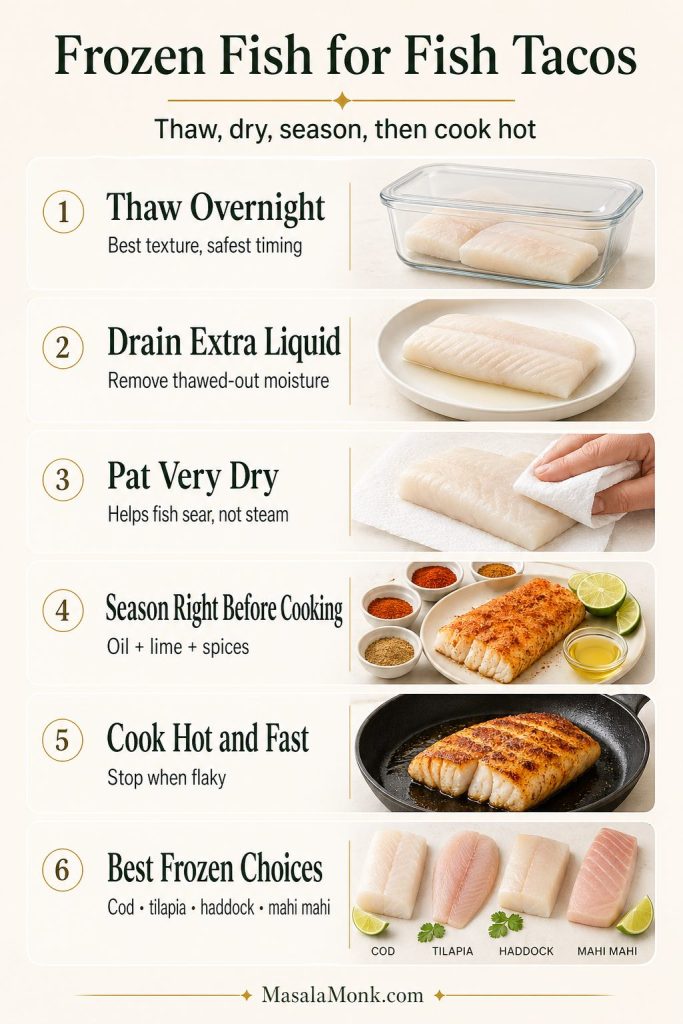
Yes, frozen fish works well for this fish tacos recipe as long as you thaw it completely and pat it very dry before seasoning. Otherwise, extra surface moisture makes fish steam instead of sear, which can make the tacos taste watery. Frozen cod, tilapia, haddock, mahi mahi, and halibut are all useful choices.

For best texture, thaw frozen fish overnight in the refrigerator. When the fish releases a lot of liquid after thawing, drain it and dry the surface again before adding oil, lime, and spices. The FDA seafood safety guidance also recommends thawing frozen seafood gradually in the refrigerator overnight when possible.

A vertical frozen fish for fish tacos guide showing six steps: thaw frozen fish overnight, drain extra liquid, pat the fish very dry, season right before cooking, cook hot and fast, and choose frozen cod, tilapia, haddock, or mahi mahi.
Frozen fish can make excellent fish tacos, but moisture is the part to control. Thaw it fully, drain any released liquid, pat the fish very dry, and season right before cooking so it sears instead of steaming and keeps the tacos fresh rather than watery.

Fish to Avoid for Fish Tacos

Avoid very delicate fillets that fall apart before they reach the tortilla, such as very thin sole or flounder, unless you are comfortable handling them. Also be careful with very lean, steak-like fish such as tuna or swordfish because they can turn dry in tacos when overcooked. When in doubt, choose cod, mahi mahi, tilapia, haddock, halibut, snapper, or another mild white fish.

Fish Taco Sauce

The sauce for these fish tacos ties everything together. Since the fish is lean, the cabbage is crunchy, and the tortilla is soft, a creamy, tangy sauce gives every bite balance.

Easy Lime Crema

  • 1/3 cup sour cream or Greek yogurt
  • 2 tablespoons mayonnaise
  • 1 tablespoon fresh lime juice
  • 1/2 teaspoon garlic powder
  • 1 teaspoon hot sauce or finely chopped chipotle in adobo
  • Pinch of salt

Stir until smooth. Then, taste and adjust with more lime for brightness, more hot sauce for heat, or a tiny pinch of sugar or honey when the sauce tastes too sharp.

Fish Taco Sauce Variations

  • Chipotle crema: add chopped chipotle in adobo or chipotle powder.
  • Avocado crema: blend the sauce with half a ripe avocado.
  • No-mayo sauce: use all Greek yogurt or sour cream.
  • Spicy sriracha sauce: use sriracha instead of chipotle.
  • Extra-lime crema: add more lime zest and lime juice for a sharper finish.
  • Dairy-free sauce: use thick plant-based mayo and season it with lime, garlic, and chipotle.

For a smokier or richer sauce, use this lime crema as the base and borrow the spicy mayo direction from our homemade mayo recipe.

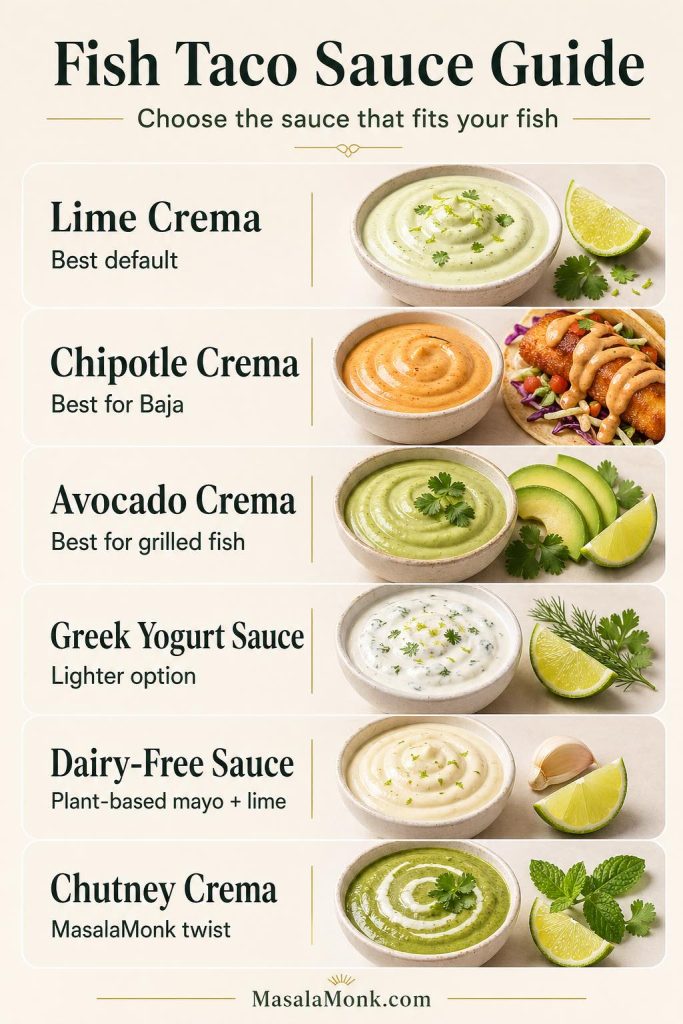
A vertical fish taco sauce guide comparing lime crema, chipotle crema, avocado crema, Greek yogurt sauce, dairy-free sauce, and chutney crema, with notes on which sauces work best for default, Baja, grilled, lighter, plant-based, and MasalaMonk-style fish tacos.
Choose the sauce based on the taco style: lime crema is the easiest default, chipotle crema is best with crispy Baja fish tacos, avocado crema works well with grilled fish, and chutney crema adds a bright MasalaMonk-style twist when you want something fresher and more herb-forward.

MasalaMonk-Style Chutney Crema

For a brighter Indian-inspired fish taco sauce, stir 1 to 2 teaspoons of green chutney into Greek yogurt or sour cream with a squeeze of lime. It works especially well with crispy fish, grilled fish, or a lightly spiced cod filling.

Fish Taco Slaw

The slaw for this fish taco recipe with cabbage slaw should be crisp, bright, and lightly dressed. It should not taste like heavy coleslaw. Instead, the cabbage should add crunch and help protect the tortilla from the warm fish and sauce.

Simple Cabbage Slaw Formula

  • 2 cups shredded cabbage or slaw mix
  • 1 tablespoon fresh lime juice
  • 2 tablespoons chopped cilantro
  • 1 tablespoon thinly sliced jalapeño, optional
  • Pinch of salt

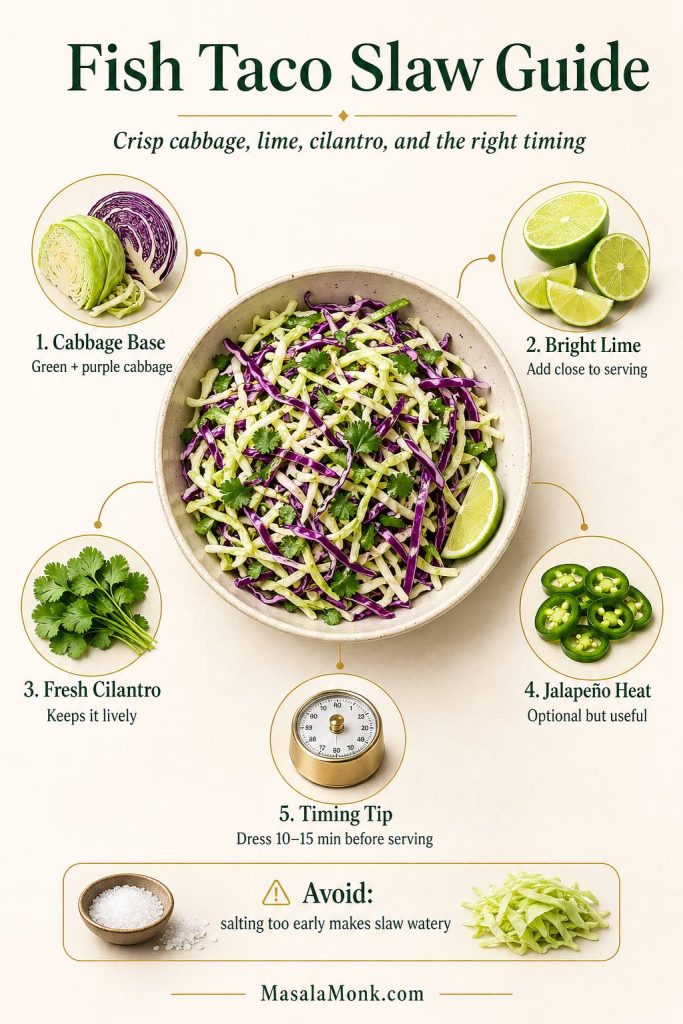
Toss the slaw 10 to 15 minutes before serving. That gives the cabbage enough time to soften slightly without collapsing or turning watery.

When making the tacos ahead, shred the cabbage early but wait to add lime and salt until closer to serving. That way, the slaw stays crisp instead of limp.

A fish taco slaw guide showing a bowl of crisp green and purple cabbage slaw with lime, cilantro, jalapeño, a timing tip to dress 10 to 15 minutes before serving, and a warning not to salt too early.
Cabbage slaw keeps fish tacos crisp, bright, and balanced, but timing matters. Add lime and salt close to serving so the cabbage softens slightly without turning watery, then use cilantro and jalapeño for freshness and gentle heat.

How to Make Fish Tacos

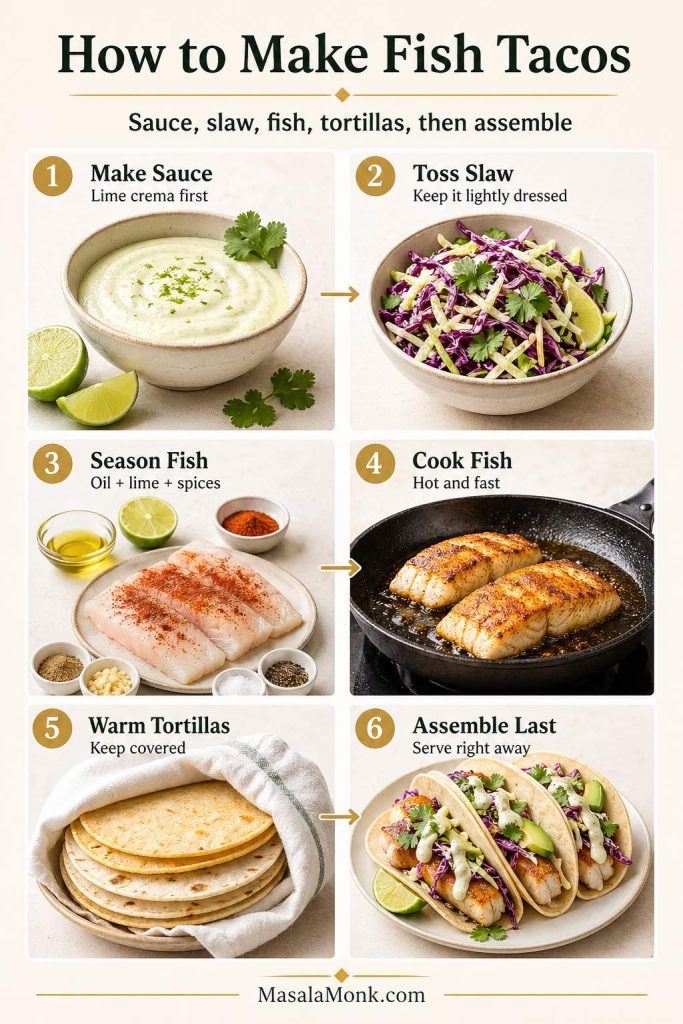
This fish tacos recipe works best when you control the timing. First, make the sauce. Next, toss the slaw. Then, cook the fish quickly, warm the tortillas, and assemble right before eating.

A step-by-step fish tacos guide showing six stages: make lime crema, toss cabbage slaw, season fish with oil, lime and spices, cook fish hot and fast, warm tortillas, and assemble the tacos right before serving.
Fish tacos turn out best when the timing is right: make the sauce and slaw first, season and cook the fish quickly, keep the tortillas warm, and assemble everything at the end. That order keeps the fish tender, the slaw crisp, and the tacos fresh instead of soggy.

1. Make the Sauce

Stir together the sour cream or Greek yogurt, mayonnaise, lime juice, garlic powder, hot sauce or chipotle, and salt. Then, refrigerate the sauce while you prepare the rest of the recipe.

2. Toss the Slaw

Combine the shredded cabbage, lime juice, cilantro, jalapeño, and salt. Keep it lightly dressed. When liquid collects at the bottom of the bowl, leave it behind while assembling the tacos.

3. Season the Fish

Pat the fish dry, then coat it with oil, lime juice, chili powder, smoked paprika, cumin, garlic powder, onion powder, salt, and black pepper. However, do not leave the fish sitting in lime juice for a long time because the acid can change the texture.

4. Cook the Fish

Heat a skillet over medium-high heat. Cook the fish until lightly browned and just flaky, usually 2 to 4 minutes per side depending on thickness. Fish is safely cooked when it reaches 145°F / 63°C, or when the flesh is no longer translucent and separates easily with a fork, according to FoodSafety.gov.

5. Warm the Tortillas

Warm the tortillas in a dry skillet, over a gas flame, or wrapped in a damp towel in the microwave. Then, keep them covered so they stay soft.

6. Assemble the Tacos

Add slaw to each tortilla, then fish, sauce, cilantro, avocado, jalapeño, and lime. Serve immediately. Fish tacos are best when the fish is hot, the tortilla is warm, and the slaw is still crisp.

For the best texture, do not overfill each tortilla. A small layer of slaw, a few pieces of fish, a drizzle of sauce, and one or two fresh toppings usually taste better than a taco packed with everything at once.

How Much Fish Do You Need for Fish Tacos?

Plan on about 4 ounces of raw fish per person, or 1 pound of fish for 4 people. That usually makes about 8 small tacos if each person gets 2 tacos. For bigger appetites, parties, or taco-bar serving, plan closer to 5 to 6 ounces of fish per person.

Fish Taco Cooking Times by Thickness

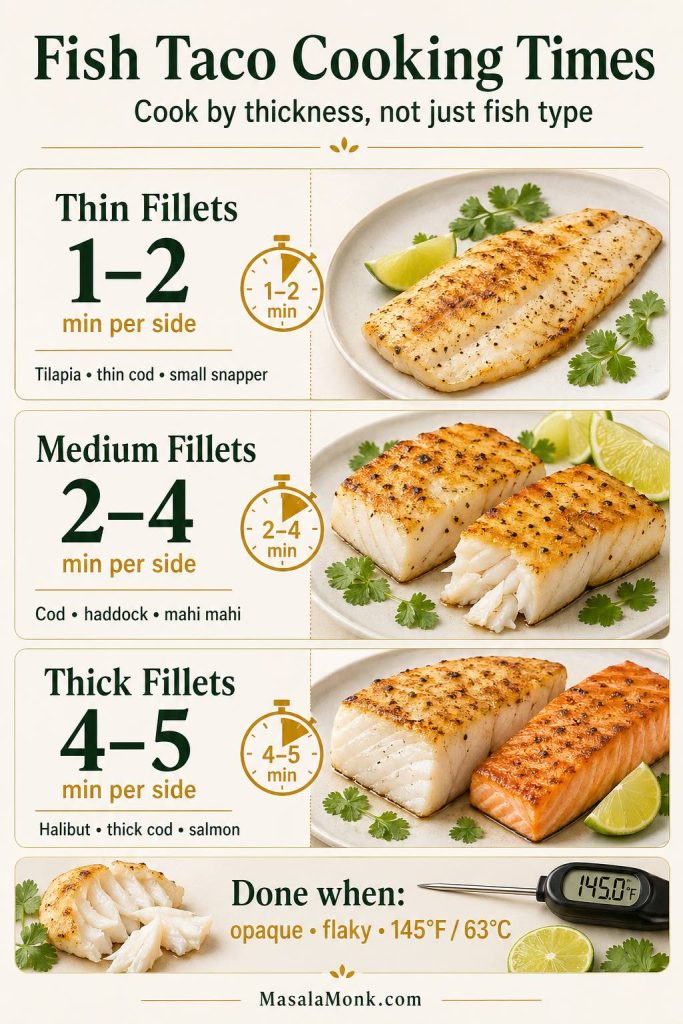
Fish cooks quickly, so thickness matters more than the exact species. Use these times as a guide, then check that the fish is opaque, flakes easily, and reaches 145°F / 63°C.

Fish ThicknessSkillet TimeBest Use
Thin fillets1 to 2 minutes per sideTilapia, thin cod, small snapper fillets
Medium fillets2 to 4 minutes per sideCod, haddock, mahi mahi pieces
Thick fillets4 to 5 minutes per side, or finish covered brieflyHalibut, thick cod, salmon
A fish taco cooking times guide showing thin fillets cooked 1 to 2 minutes per side, medium fillets cooked 2 to 4 minutes per side, thick fillets cooked 4 to 5 minutes per side, and doneness cues of opaque, flaky fish at 145°F or 63°C.
Fish cooks quickly, so thickness matters more than the exact type of fish. Thin fillets like tilapia need only a minute or two per side, while thicker cod, halibut, or salmon may need longer. Stop when the fish is opaque, flakes easily, and reaches 145°F / 63°C.

Fish Tacos Recipe Card

Pan-Seared Cod Fish Tacos with Lime Crema and Cabbage Slaw

This easy fish tacos recipe uses mild cod, warm tortillas, crunchy cabbage slaw, and a creamy lime sauce. Use cod as the default, or swap in mahi mahi, tilapia, haddock, halibut, snapper, or another firm white fish.

Yield: 4 servings / 8 small tacos

Prep time: 20 minutes

Cook time: 10 minutes

Total time: 30 minutes

Equipment

  • Large skillet
  • Mixing bowls
  • Tongs or fish spatula
  • Instant-read thermometer, optional

Ingredients

For the fish

  • 1 pound cod or firm white fish, cut into large pieces
  • 1 tablespoon olive oil, plus more for the pan if needed
  • 1 tablespoon fresh lime juice
  • 1 teaspoon chili powder
  • 1 teaspoon smoked paprika
  • 1/2 teaspoon ground cumin
  • 1/2 teaspoon garlic powder
  • 1/4 teaspoon onion powder
  • 3/4 teaspoon kosher salt, or to taste
  • 1/4 teaspoon black pepper
  • Pinch of cayenne, optional

For the lime crema

  • 1/3 cup sour cream or Greek yogurt
  • 2 tablespoons mayonnaise
  • 1 tablespoon fresh lime juice
  • 1/2 teaspoon garlic powder
  • 1 teaspoon hot sauce or finely chopped chipotle in adobo
  • Pinch of salt

For the slaw

  • 2 cups shredded cabbage or slaw mix
  • 1 tablespoon fresh lime juice
  • 2 tablespoons chopped cilantro
  • 1 tablespoon thinly sliced jalapeño, optional
  • Pinch of salt

For serving

  • 8 small corn tortillas or flour tortillas
  • Fresh cilantro
  • Lime wedges
  • Avocado slices, optional
  • Mango salsa or pico de gallo, optional
  • Crumbled cotija, optional
  • Hot sauce, optional

Method

  1. Make the sauce. Stir together the sour cream or Greek yogurt, mayonnaise, lime juice, garlic powder, hot sauce or chipotle, and salt. Refrigerate until needed.
  2. Make the slaw. Toss cabbage with lime juice, cilantro, jalapeño, and salt. Set aside for 10 to 15 minutes while you cook the fish.
  3. Season the fish. Pat the fish dry. Toss with olive oil, lime juice, chili powder, smoked paprika, cumin, garlic powder, onion powder, salt, black pepper, and cayenne if using.
  4. Cook the fish. Heat a large skillet over medium-high heat. Add a little oil if needed. Cook the fish for 2 to 4 minutes per side, depending on thickness, until browned in spots and just flaky.
  5. Warm the tortillas. Warm tortillas in a dry skillet, over a flame, or wrapped in a damp towel in the microwave.
  6. Assemble. Add slaw to each tortilla, then fish, lime crema, cilantro, avocado, lime, and any extra toppings. Serve immediately.

Notes

  • Best fish swap: mahi mahi, tilapia, haddock, halibut, snapper, or another firm white fish.
  • For salmon tacos: use a stronger blackened-style seasoning and cook until just done.
  • For mild tacos: skip cayenne, use plain lime crema, and serve hot sauce on the side.
  • For spicy tacos: add cayenne to the fish, chipotle to the crema, and jalapeño or serrano to the toppings.
  • For crispier fish: dust the seasoned fish lightly with cornstarch or use the air fryer/panko method below.
A saveable recipe card for pan-seared cod fish tacos with cabbage slaw, lime crema, warm tortillas, lime wedges, avocado, and quick notes for fish, seasoning, slaw, sauce, cooking time, and serving.
Save this base version when you want easy fish tacos without overthinking the choices. Cod gives you mild, flaky fish, cabbage slaw keeps the tacos crisp, lime crema adds brightness, and a quick 2–4 minute skillet cook keeps the fish tender instead of dry.

Best Way to Cook Fish for Tacos

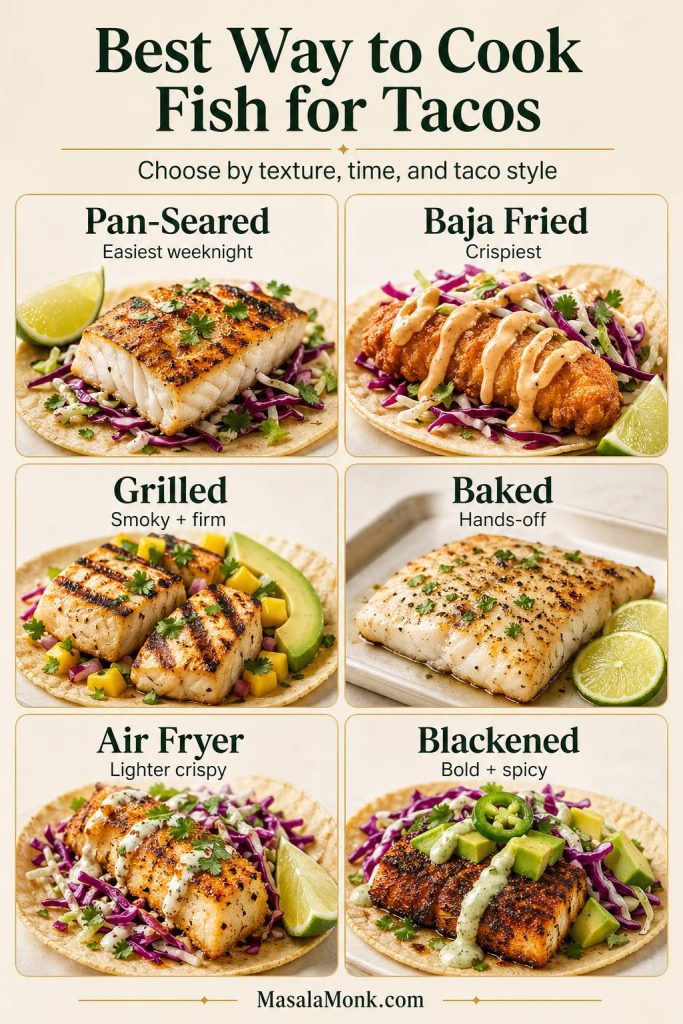
The best way to cook fish for tacos depends on the texture you need. Pan-searing is the easiest everyday method, Baja-style frying gives the crispiest fish, grilling adds smoky flavor, baking is hands-off, and the air fryer gives a lighter crispy shortcut.

MethodBest FishBest ForReader Tip
Pan-searedCod, tilapia, haddock, snapperEasy weeknight fish tacosPat fish dry and cook hot and fast.
Baja-style friedCod, haddock, halibutCrispy fish tacosKeep fried fish uncovered briefly so steam does not soften the coating.
GrilledMahi mahi, halibut, salmon, snapperSmoky fish tacosUse firmer fish that can handle flipping.
BakedCod, haddock, tilapia, halibutHands-off cookingAdd crunchy slaw and bright sauce because baked fish is softer.
Air fryerCod, tilapia, haddock, salmonLighter crispy tacosDo not overcrowd the basket.
BlackenedCod, mahi mahi, salmon, snapperBold spicy fish tacosUse high heat, but do not burn the spices.
A cooking method guide for fish tacos comparing pan-seared, Baja fried, grilled, baked, air fryer, and blackened fish tacos with notes for easiest weeknight, crispiest, smoky, hands-off, lighter crispy, and bold spicy methods.
Choose the cooking method based on the texture you want. Pan-seared fish is the easiest weeknight option, Baja fried fish gives the crispiest tacos, grilled fish adds smoky flavor, baked fish is hands-off, air fryer fish is lighter and crisp, and blackened fish brings the boldest spice.

Baja Fish Tacos: Crispy, Fried and Beer-Battered

For a Baja-style recipe for fish tacos, focus on crisp texture: beer-battered white fish, cabbage slaw, chipotle crema, lime, and warm corn tortillas. Cod is the easiest choice because it is mild, flaky, and sturdy enough for batter.

What Makes Fish Tacos Baja Style?

  • Crispy battered fish, usually cod or another white fish
  • Cabbage or slaw for crunch
  • Chipotle crema or a creamy white sauce
  • Warm corn tortillas
  • Fresh lime

Quick Baja-Style Beer Batter Formula

For 1 pound of cod, whisk 1 cup all-purpose flour, 2 tablespoons cornstarch, 1 teaspoon baking powder, 1 teaspoon chili powder, 3/4 teaspoon salt, black pepper, and about 1 cup cold beer until just combined. Dip dry fish strips into the batter, fry until golden and crisp, then serve immediately with cabbage slaw, chipotle crema, lime, and warm corn tortillas.

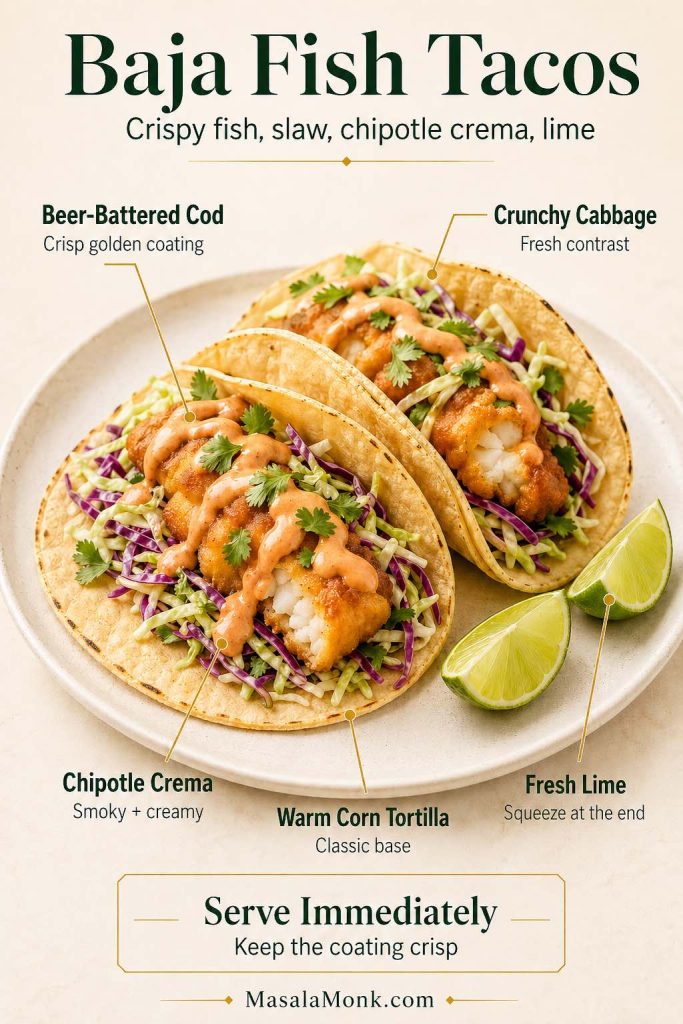
Keep the fried fish uncovered for a few minutes before assembling so steam does not soften the coating. Also, assemble Baja fish tacos right before serving because fried fish loses crunch once it sits under sauce and slaw.

A Baja fish tacos guide showing crispy beer-battered cod in warm corn tortillas with crunchy cabbage, chipotle crema, fresh lime, and a reminder to serve immediately so the coating stays crisp.
Baja fish tacos work because every part adds contrast: crisp beer-battered cod, crunchy cabbage, smoky chipotle crema, warm corn tortillas, and fresh lime. Assemble them right before serving so the coating stays crisp instead of softening under the slaw and sauce.

Fried Fish Tacos

For a fried fish taco recipe that is not fully beer-battered, coat cod, haddock, halibut, or catfish in seasoned flour, egg, and panko or cornmeal. Fry until crisp, drain briefly on a rack, then serve with cabbage slaw, chipotle crema, lime, and warm tortillas. This gives you crunchy fish tacos without making a wet batter.

No-Beer Baja Fish Tacos

When beer is not an option, make a simple batter with flour, cornstarch, baking powder, salt, spices, and cold sparkling water or club soda. The bubbles help keep the coating lighter. For the best texture, fry the fish right after dipping so the batter stays airy instead of heavy.

Crispy Fish Tacos Without Deep-Frying

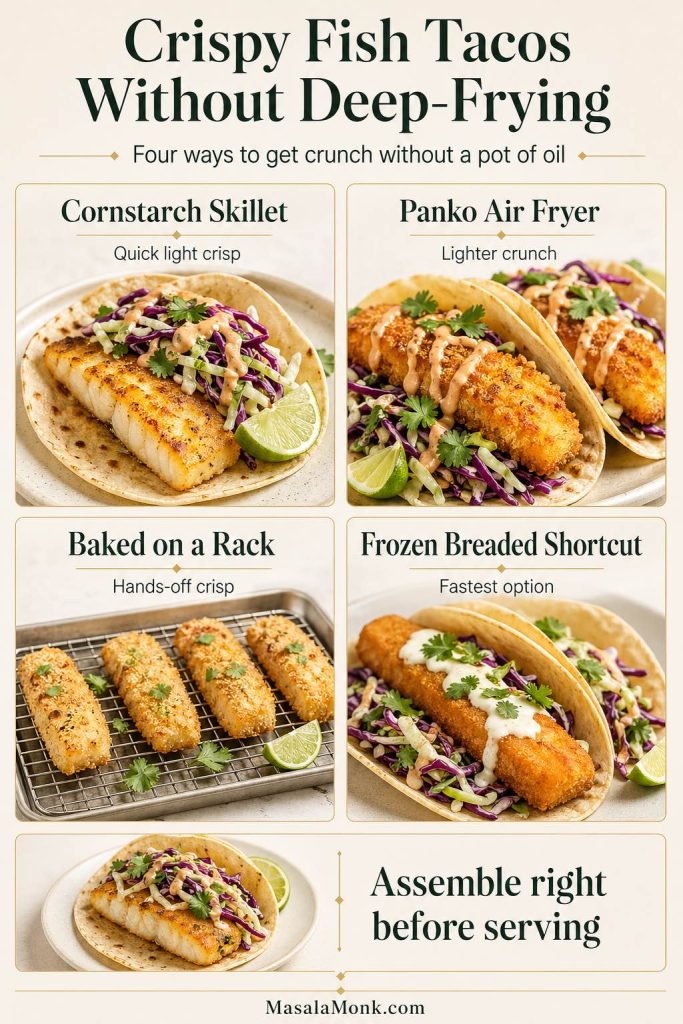
For a crispy fried fish taco recipe without deep-frying, dust the seasoned fish lightly with cornstarch before pan-searing, use the panko air fryer method below, or bake panko-coated fish on a rack so air can circulate around the pieces. Frozen breaded fish or fish sticks can also work as a shortcut when fresh slaw, lime, and sauce keep the tacos bright.

A crispy fish tacos guide comparing four ways to get crunch without deep-frying: cornstarch skillet fish, panko air fryer fish, baked fish on a rack, and a frozen breaded fish shortcut, with a reminder to assemble right before serving.
Crispy fish tacos do not always need deep-frying. A cornstarch skillet method gives quick light crisp, panko works well in the air fryer, a rack helps baked fish stay crunchy, and frozen breaded fish can become a better shortcut when you finish it with fresh slaw, lime, and sauce. Assemble right before serving so the coating stays crisp.

When the crispy battered fish is your favorite part, our fish and chips with Indian twists goes deeper into crisp coating logic, battered fish, spice-forward coatings, and chutney-style dips.

Air Fryer Fish Tacos

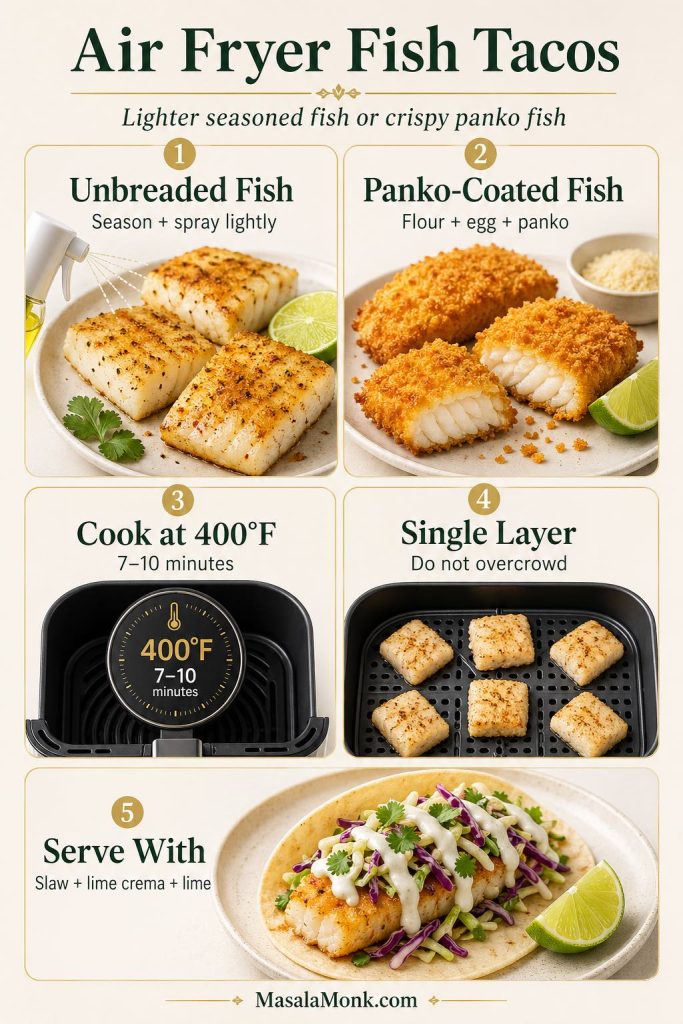
An air fryer recipe for fish tacos is useful when you need crispier fish without deep-frying. Cod, tilapia, mahi mahi, haddock, and halibut all work.

Unbreaded Air Fryer Fish Tacos

Season the fish as written in the main recipe. Then, lightly spray the fish and air fryer basket with oil. Cook in a single layer at 400°F for about 7 to 10 minutes for most cod or white fish pieces, checking early for thin fillets. The fish is done when it is opaque and flakes easily.

Panko Air Fryer Fish Tacos

For crispy air fryer fish tacos, coat seasoned cod pieces in flour, egg, and panko. Then, spray lightly with oil and air fry in a single layer at 400°F until golden and crisp, usually about 8 to 10 minutes depending on thickness. Serve immediately with slaw and lime crema.

The biggest air fryer mistake is overcrowding. When the pieces touch too much, the coating steams instead of crisping.

An air fryer fish tacos guide showing unbreaded seasoned fish, panko-coated fish, a 400°F cooking temperature for 7 to 10 minutes, fish pieces arranged in a single layer, and an air fryer fish taco served with slaw, lime crema, and lime.
Air fryer fish tacos can go two ways: use seasoned fish for a lighter taco or panko-coated fish when you want more crunch. Either way, cook the pieces in a single layer at 400°F so they crisp instead of steaming, then serve with cabbage slaw, lime crema, and fresh lime.

Baked Fish Tacos

For a baked fish taco recipe with flaky white fish, use cod, haddock, tilapia, halibut, or another mild white fish. Pat the fish dry, season it as written in the main recipe, place it on a lightly oiled baking sheet, and bake at 400°F for about 10 to 14 minutes, depending on thickness, until the fish is opaque, flakes easily, and reaches 145°F / 63°C.

Baked fish will not brown as deeply as skillet fish or turn as crisp as Baja-style fried fish. Therefore, finish the tacos with crunchy slaw, lime crema, fresh lime, cilantro, and a bright topping like mango salsa or pico de gallo.

Grilled Fish Tacos

For a grilled fish taco recipe with mahi mahi, halibut, snapper, salmon, or thick cod, choose firm fish that can handle being flipped. Very delicate or thin fillets are easier to cook in a skillet.

  • Pat the fish dry before seasoning.
  • Oil the fish and the grill grates.
  • Use medium-high heat.
  • Wait until the fish releases naturally before flipping.
  • Pair grilled fish with mango salsa, avocado, cabbage slaw, lime, or chipotle crema.

Most firm fish fillets need about 3 to 4 minutes per side on a hot grill, depending on thickness. When the fish sticks, wait a little longer before flipping; properly seared fish usually releases more easily from the grate.

Mahi mahi is especially good for grilled fish tacos because it is firm and meaty without tasting heavy.

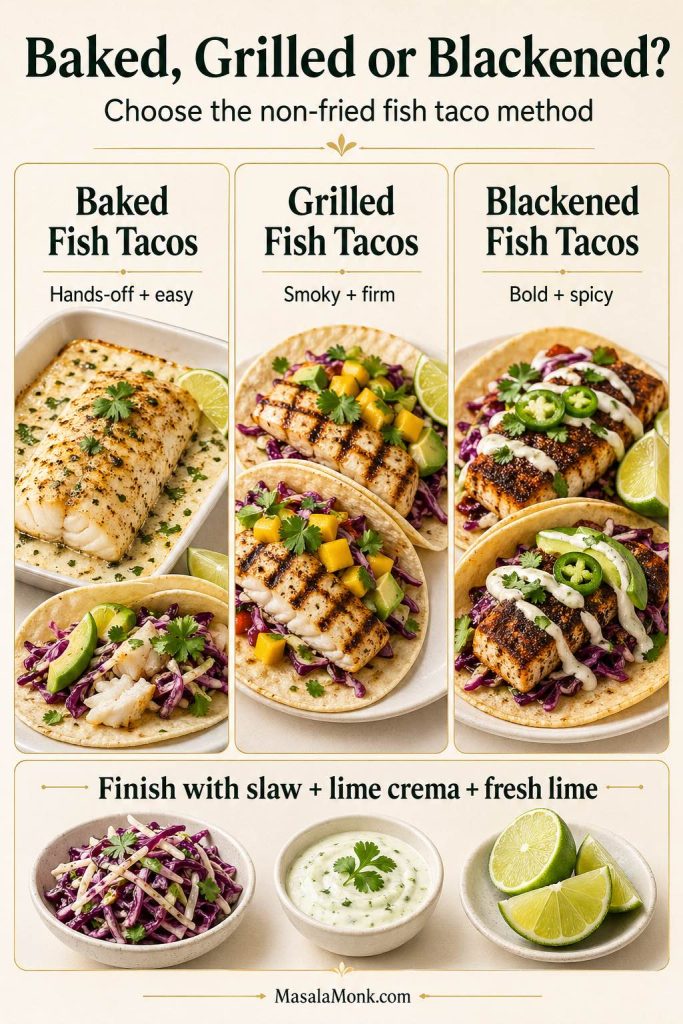
Blackened Fish Tacos

For a bold salmon fish taco recipe or blackened taco recipe with cod, mahi mahi, tilapia, halibut, or snapper, use extra smoked paprika, chili powder, garlic, black pepper, and a little cayenne. This is the best option when you need a spicier taco without frying.

Blackened does not mean burnt. Instead, the goal is a dark, spice-coated surface with juicy fish underneath. Balance the heat with cabbage slaw, lime crema, avocado, mango salsa, or extra lime.

A fish taco method comparison guide showing baked fish tacos, grilled fish tacos, and blackened fish tacos, with notes for hands-off cooking, smoky firm fish, bold spicy fish, and a reminder to finish with slaw, lime crema, and fresh lime.
Use this comparison when you want fish tacos without frying. Baked fish tacos are the easiest hands-off option, grilled fish tacos work best with firmer fish like mahi mahi or halibut, and blackened fish tacos are best when you want bold spice balanced by slaw, lime crema, and fresh lime.

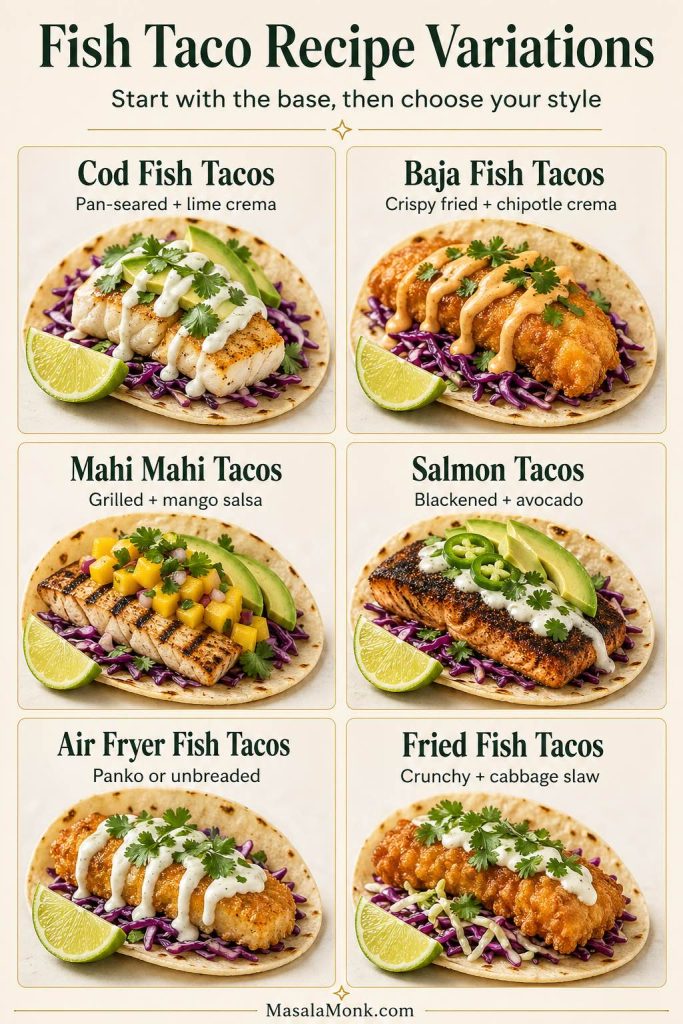
Fish Taco Recipe Variations

Once you know the base recipe, you can change the fish, cooking method, sauce, or topping without rebuilding the whole meal. Use this table when you need a different fish taco recipe from the same basic formula.

A fish taco recipe variations guide showing six options: cod fish tacos with lime crema, Baja fish tacos with chipotle crema, mahi mahi tacos with mango salsa, salmon tacos with avocado, air fryer fish tacos, and fried fish tacos with cabbage slaw.
Use the base recipe as your starting point, then change the fish, cooking method, sauce, and toppings to match the taco style you want. Cod is the easiest default, Baja and fried fish tacos bring the crunch, mahi mahi works well grilled with mango salsa, salmon is best blackened, and air fryer fish tacos give you a lighter crispy option.
VariationUse This FishCooking MethodBest Sauce or Topping
Cod fish taco recipeCodPan-seared, baked, air fryer, or friedLime crema + cabbage slaw
Baja fish taco recipeCod or haddockBeer-battered and friedChipotle crema + slaw
Mahi mahi taco recipeMahi mahiGrilled or blackenedMango salsa + avocado
Salmon fish taco recipeSalmonBlackened, grilled, or air friedAvocado + lime crema
Air fryer fish taco recipeCod, tilapia, or haddockAir fried, plain or panko-coatedCabbage slaw + lime
Fried fish taco recipeCod, haddock, halibut, or catfishBattered, panko-coated, or cornmeal-crustedChipotle sauce + crunchy slaw

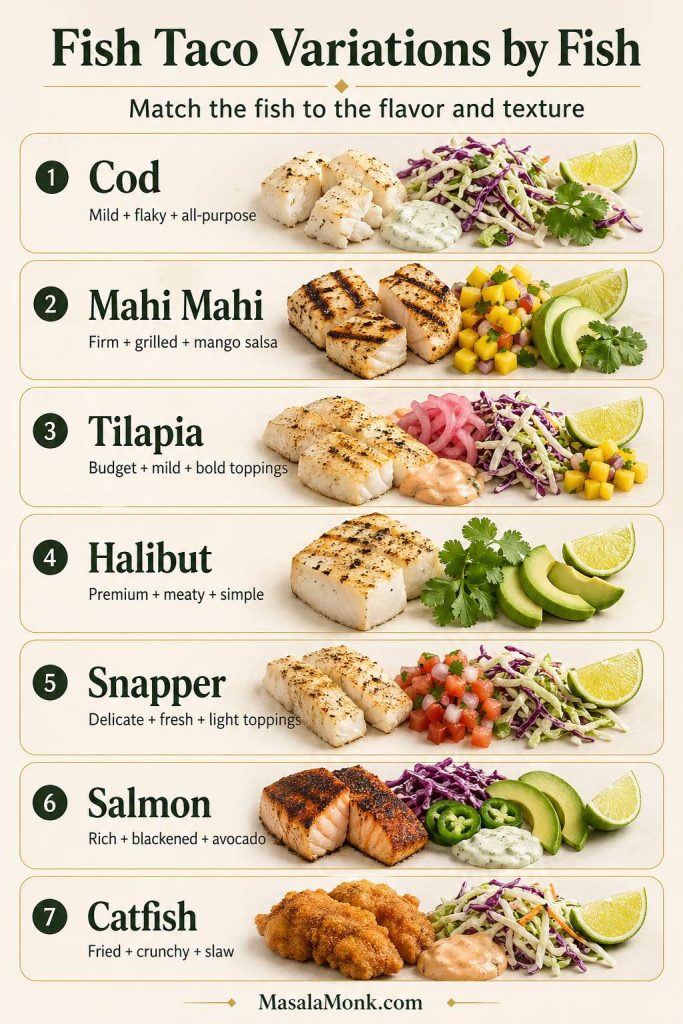
Fish Taco Variations by Fish Type

A fish taco variations by fish guide comparing cod, mahi mahi, tilapia, halibut, snapper, salmon, and catfish with suggested flavor and texture pairings such as flaky, grilled, budget-friendly, premium, blackened, and fried.
Different fish change the whole taco. Cod is the easiest mild and flaky choice, mahi mahi works best when grilled, tilapia needs brighter toppings, halibut and snapper are best kept simple, salmon needs bold seasoning, and catfish is strongest when fried and paired with slaw.

Cod Fish Tacos

Cod is the best default for this page because it is mild, flaky, and flexible. Therefore, you can use it for pan-seared fish tacos, baked fish tacos, air fryer fish tacos, or Baja-style beer-battered fish tacos.

For a simple recipe for cod fish tacos, keep the toppings clean: cabbage slaw, lime crema, cilantro, lime, and avocado. For crispy cod tacos, dust the fish lightly with cornstarch before cooking or use the Baja-style beer batter.

A cod fish tacos guide showing flaky cod in warm tortillas with cabbage slaw, lime crema, avocado, cilantro, and lime, with notes that cod is mild, all-purpose, and works baked, air fryer, or Baja-style.
Cod is the safest fish to start with because it is mild, flaky, and easy to pair with almost any fish taco topping. Keep the build simple with cabbage slaw, lime crema, warm tortillas, cilantro, avocado, and fresh lime, then use the same cod filling for pan-seared, baked, air fryer, or Baja-style tacos.

Mahi Mahi Tacos

Mahi mahi is best grilled, blackened, or cooked in a hot skillet. For a grilled fish taco recipe with mahi mahi, season the fish with the same spice blend, grill it for about 3 to 4 minutes per side, and serve it with mango salsa, avocado, cilantro, and lime.

Mahi mahi is firm enough to hold together on the grill, so it is one of the best choices when you need smoky tacos with fish that does not fall apart. Keep the salsa chunky and not too wet when the tacos already have sauce.

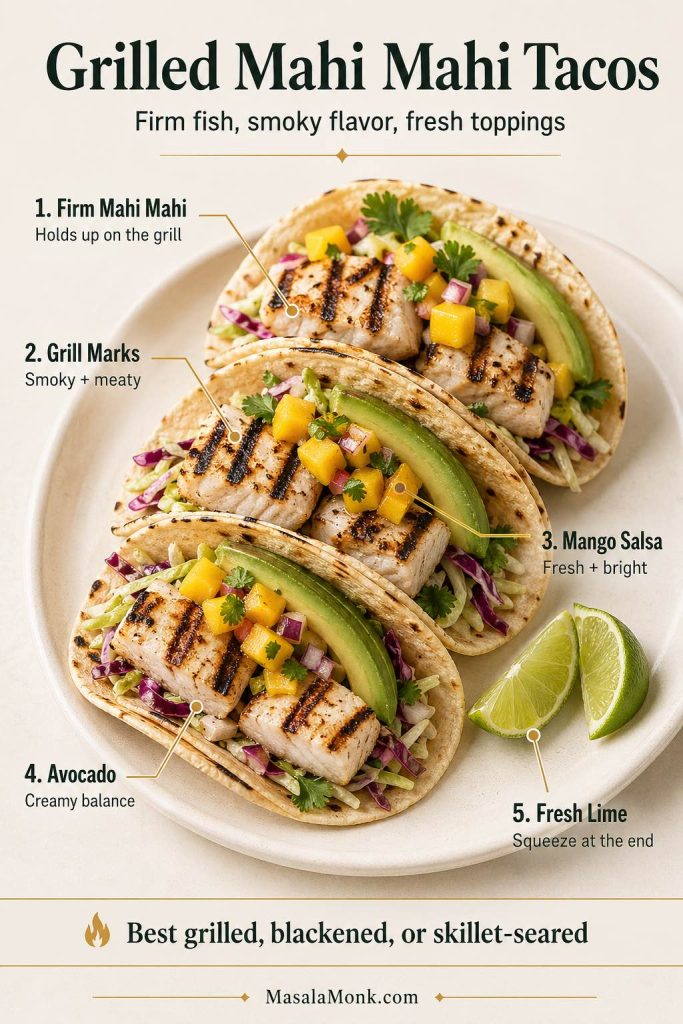
A grilled mahi mahi tacos guide showing firm grilled mahi mahi with mango salsa, avocado, cabbage slaw, lime, and cilantro, with callouts for grill marks, fresh toppings, and why mahi mahi works well for grilled fish tacos.
Mahi mahi is one of the best fish for grilled fish tacos because it is firm enough to hold its shape and meaty enough to carry smoky grill marks. Pair it with chunky mango salsa, avocado, cabbage slaw, cilantro, and fresh lime for a taco that tastes bright without becoming watery.

Tilapia Fish Tacos

Tilapia is budget-friendly and mild. For budget-friendly tilapia fish tacos, season the fillets well, cook them gently in a skillet or air fryer, and use bold toppings like chipotle crema, pickled onions, mango salsa, or extra lime.

Because tilapia is delicate, handle it gently and avoid overcooking it. The seasoning and toppings do more of the flavor work, so do not skip the lime and slaw.

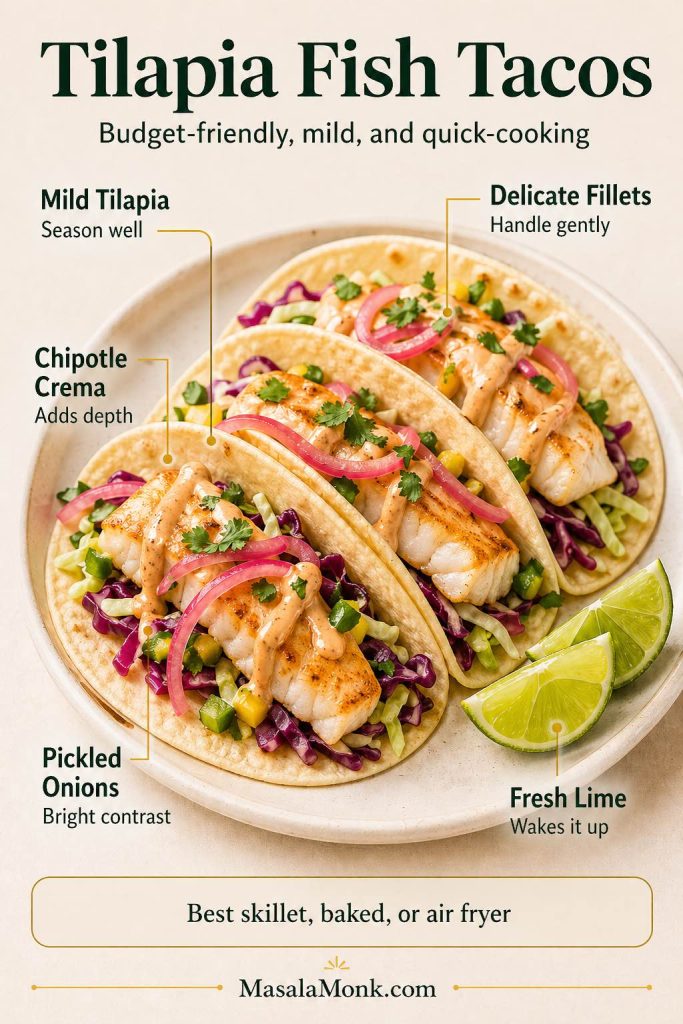
A tilapia fish tacos guide showing mild tilapia in warm tortillas with chipotle crema, pickled onions, cabbage slaw, cilantro, jalapeño, and lime, with notes to season tilapia well and handle the delicate fillets gently.
Tilapia is a great budget-friendly fish for tacos, but it needs help from seasoning and bright toppings. Use chipotle crema, pickled onions, cabbage slaw, cilantro, jalapeño, and fresh lime so the mild fish tastes lively instead of flat.

Halibut Fish Tacos

Halibut is a premium choice for fish tacos. Since it is firm, clean, and meaty, keep the toppings simple. Slaw, lime crema, cilantro, avocado, and lime are enough.

For a premium taco recipe with fish that feels restaurant-style, pan-sear or grill halibut until just flaky, then avoid burying it under too many wet toppings.

Snapper Fish Tacos

Snapper tastes fresh and slightly sweet. It works well grilled or pan-seared. Because the flavor is delicate, use light toppings so the fish stays the focus.

Snapper fish tacos are especially good with lime crema, cilantro, avocado, and a small amount of pico de gallo or mango salsa.

Salmon Tacos

Salmon is not the most traditional fish taco fish, but it works when the seasoning is bold. For a salmon fish taco recipe, use blackened seasoning instead of the milder cod seasoning. Salmon has a richer flavor, so it works best with avocado, lime crema, cabbage, jalapeño, and a bright salsa rather than very delicate toppings.

When making air fryer salmon tacos, use the seasoning direction here and follow the timing logic in our air fryer salmon recipe so the salmon stays juicy instead of dry.

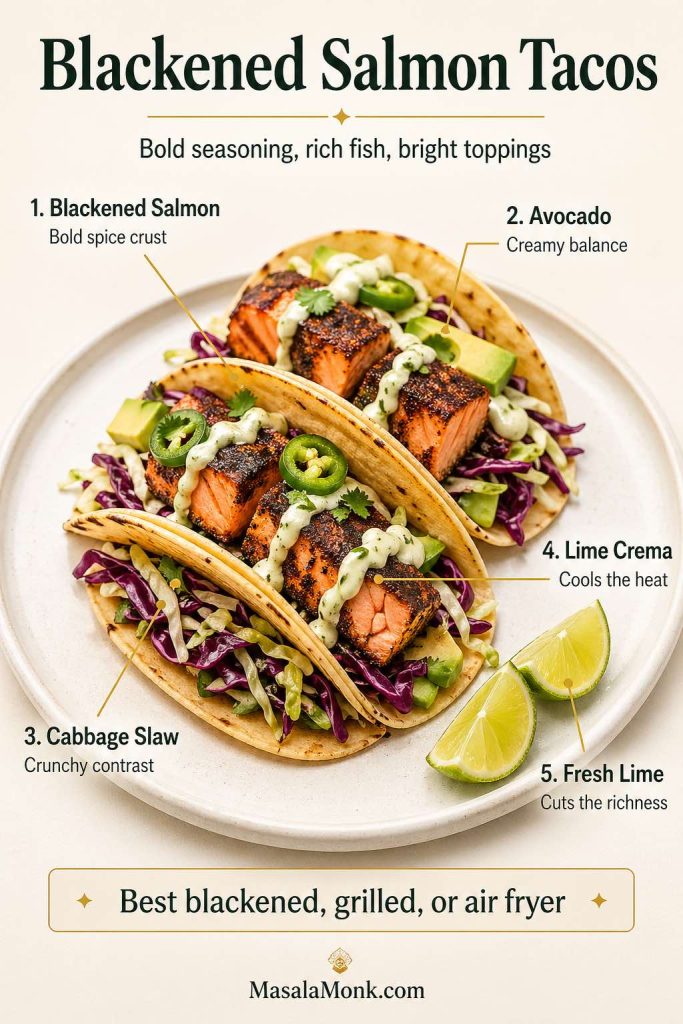
A blackened salmon tacos guide showing spice-crusted salmon in warm tortillas with avocado, cabbage slaw, lime crema, jalapeño, cilantro, and fresh lime, with notes that salmon works best blackened, grilled, or air fried.
Salmon works best in fish tacos when the seasoning is bold enough to balance its richness. Use a blackened spice crust, then add cabbage slaw for crunch, avocado for creaminess, lime crema to cool the heat, and fresh lime to keep the tacos bright.

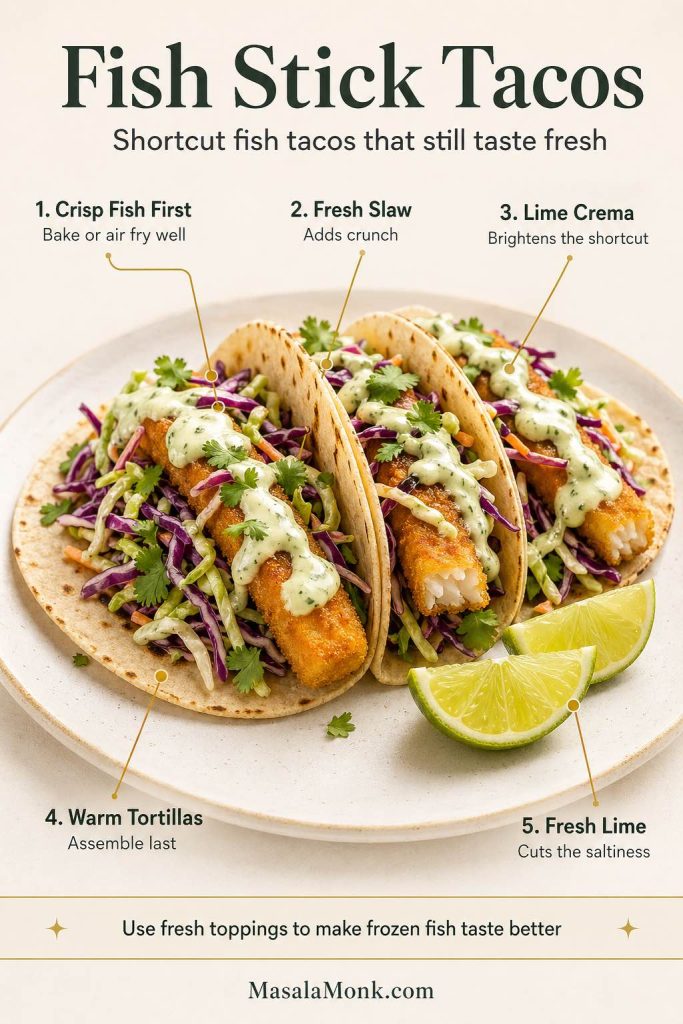
Fish Stick Tacos or Frozen Breaded Fish Tacos

Fish stick tacos are the shortcut version. First, bake or air fry the fish sticks or frozen breaded fish until very crisp. Then, use the same slaw, lime crema, cilantro, and lime. The fresh toppings matter here because they make frozen fish taste more like real fish tacos.

For the best texture, do not assemble the tacos until the fish is fully crisp and the tortillas are warm. When the frozen fish is already salty, keep the sauce bright and the slaw lightly seasoned so the taco does not taste heavy.

A fish stick tacos guide showing crispy frozen breaded fish in warm tortillas with fresh slaw, lime crema, cilantro, and lime, with tips to bake or air fry the fish until crisp and assemble the tacos last.
Fish stick tacos can taste fresh when the frozen breaded fish is cooked until crisp and balanced with bright toppings. Use warm tortillas, crunchy slaw, lime crema, cilantro, and fresh lime, then assemble the tacos right before serving so the coating stays crisp instead of softening under the sauce.

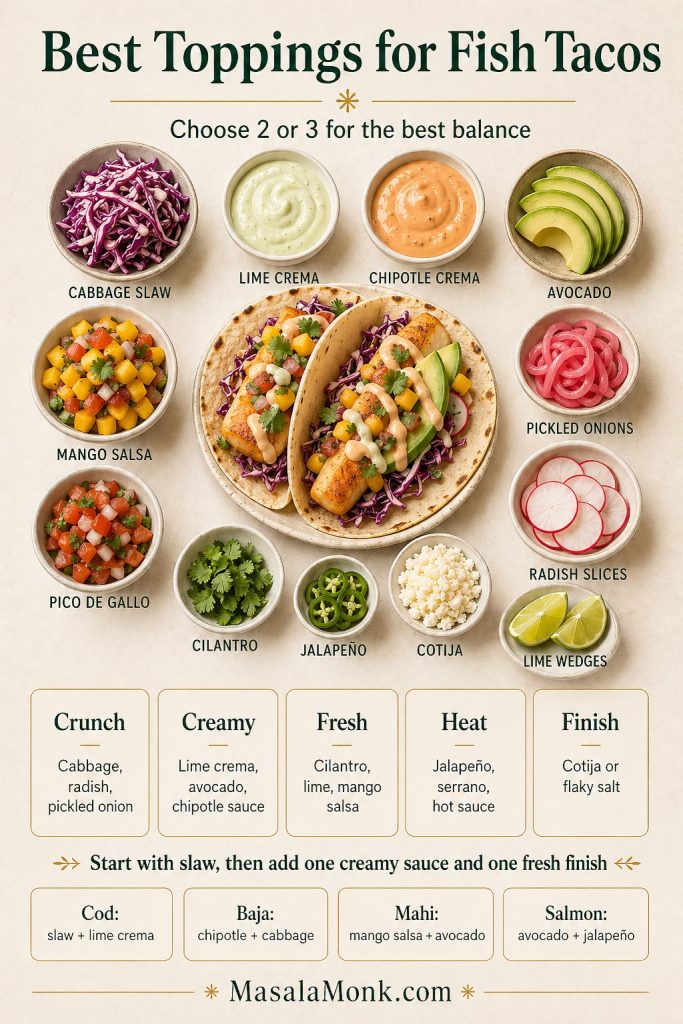
Best Toppings for Fish Tacos

The best toppings for this fish tacos recipe add crunch, creaminess, freshness, heat, or a salty finish. However, you do not need all of them. Choose two or three that balance the fish.

When choosing one essential fish taco topping, start with cabbage slaw. It adds crunch, protects the tortilla, and balances creamy sauce and flaky fish.

A best toppings for fish tacos guide showing cabbage slaw, lime crema, chipotle crema, avocado, mango salsa, pico de gallo, pickled onions, radish, cilantro, jalapeño, cotija, lime wedges, and finished fish tacos.
The best toppings for fish tacos add balance instead of bulk. Start with cabbage slaw for crunch, add one creamy sauce like lime crema or chipotle crema, then finish with something fresh such as cilantro, lime, mango salsa, pico de gallo, jalapeño, pickled onions, avocado, or cotija.
PurposeBest Toppings
CrunchCabbage, radish, red onion, pickled onions
CreamyLime crema, chipotle sauce, avocado, guacamole
FreshCilantro, lime, pico de gallo, mango salsa, pineapple salsa
HeatJalapeño, serrano, hot sauce, chipotle
Salty finishCotija, flaky salt, salted avocado

For an even better match, choose toppings based on the fish and cooking method.

Fish Taco StyleBest ToppingsWhy It Works
Cod fish tacosCabbage slaw, lime crema, cilantro, limeSimple toppings let mild cod stay clean and flaky.
Baja fish tacosChipotle crema, cabbage slaw, pico de gallo, limeCreamy, crunchy, and bright toppings balance fried fish.
Mahi mahi tacosMango salsa, avocado, cilantro, limeFirm grilled fish works well with fruit and creaminess.
Salmon tacosAvocado, jalapeño, cabbage, lime cremaRich salmon needs acid, crunch, and heat.
Tilapia fish tacosChipotle crema, mango salsa, pickled onionsMild tilapia benefits from bolder toppings.
Fish stick tacosFresh slaw, lime crema, cilantro, hot sauceFresh toppings make frozen breaded fish taste brighter.

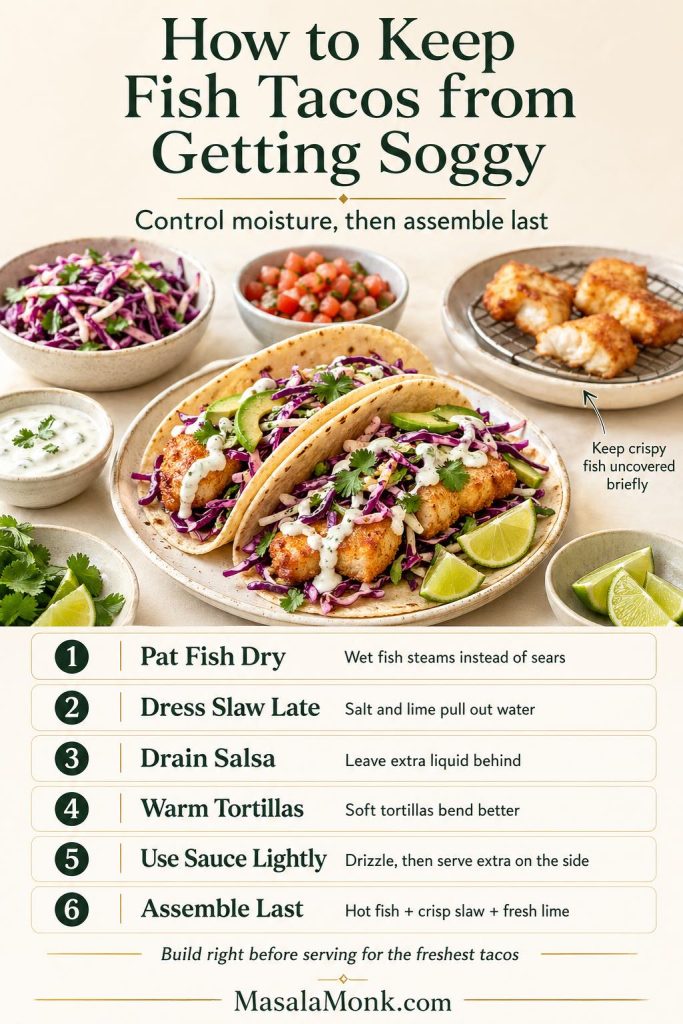
How to Keep Fish Tacos from Getting Soggy

This fish tacos recipe stays fresh when you control moisture. Soggy fish tacos usually come from wet fish, watery salsa, overdressed slaw, cold tortillas, or too much sauce. Once you fix those parts, the tacos stay much better.

A guide showing how to keep fish tacos from getting soggy with crisp fish, cabbage slaw, lime crema, warm tortillas, drained salsa, lime, and tips to pat fish dry, dress slaw late, drain salsa, use sauce lightly, and assemble last.
Keep fish tacos from getting soggy by controlling moisture before you assemble. Pat the fish dry, dress the slaw close to serving, drain watery salsa, warm the tortillas, use sauce lightly, and build the tacos right before eating so the fish stays crisp, the slaw stays fresh, and the tortillas do not turn wet.
  • Pat the fish dry before seasoning so it sears instead of steaming.
  • Do not over-marinate fish in lime juice.
  • Cook hot and fast so the outside gets flavor before the fish dries out.
  • Drain salsa before adding it to tacos.
  • Use cabbage slaw instead of watery lettuce.
  • Warm tortillas so they bend without cracking.
  • Use sauce lightly and serve extra sauce on the side.
  • Assemble right before serving instead of letting filled tacos sit.
  • Keep fried fish uncovered briefly so steam does not soften the coating.

If the Fish Tastes Bland

Add more salt, lime, chili powder, or hot sauce. Usually, bland fish tacos need either more seasoning on the fish or more acidity at the end.

If the Fish Is Dry

Cook it for less time next round and use a slightly thicker fillet. However, dry fish can still be saved with lime crema, avocado, slaw, and a squeeze of fresh lime.

If the Tortillas Break

Warm them properly and keep them covered. When corn tortillas still crack, double them up or switch to flour tortillas.

If the Slaw Gets Watery

Dress the slaw closer to serving and use less salt at the beginning. When liquid collects in the bowl, lift the cabbage out with tongs instead of pouring the liquid into the tacos.

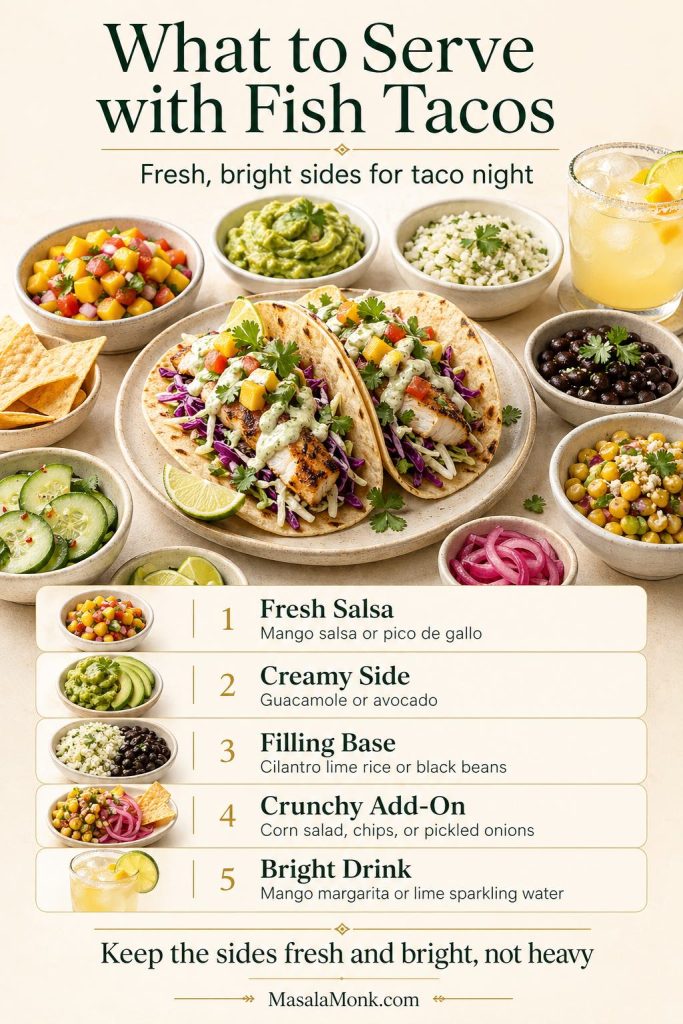
What to Serve with Fish Tacos

Fish tacos work best with fresh, bright sides rather than heavy ones. Try chips and salsa, mango salsa, guacamole, cilantro lime rice, black beans, corn salad, cabbage slaw, pickled onions, or a simple cucumber salad.

For drinks, a citrusy mango margarita is a natural fit with grilled fish tacos, mahi mahi tacos, or any version topped with mango salsa.

A what to serve with fish tacos guide showing fish tacos with mango salsa, guacamole, cilantro lime rice, black beans, corn salad, tortilla chips, pickled onions, cucumber salad, lime wedges, and a mango margarita.
Serve fish tacos with fresh, bright sides instead of heavy ones. Mango salsa, guacamole, cilantro lime rice, black beans, corn salad, tortilla chips, pickled onions, cucumber salad, lime wedges, and a citrusy mango margarita all help turn fish tacos into a complete taco-night meal.

How to Build a Fish Taco Bar

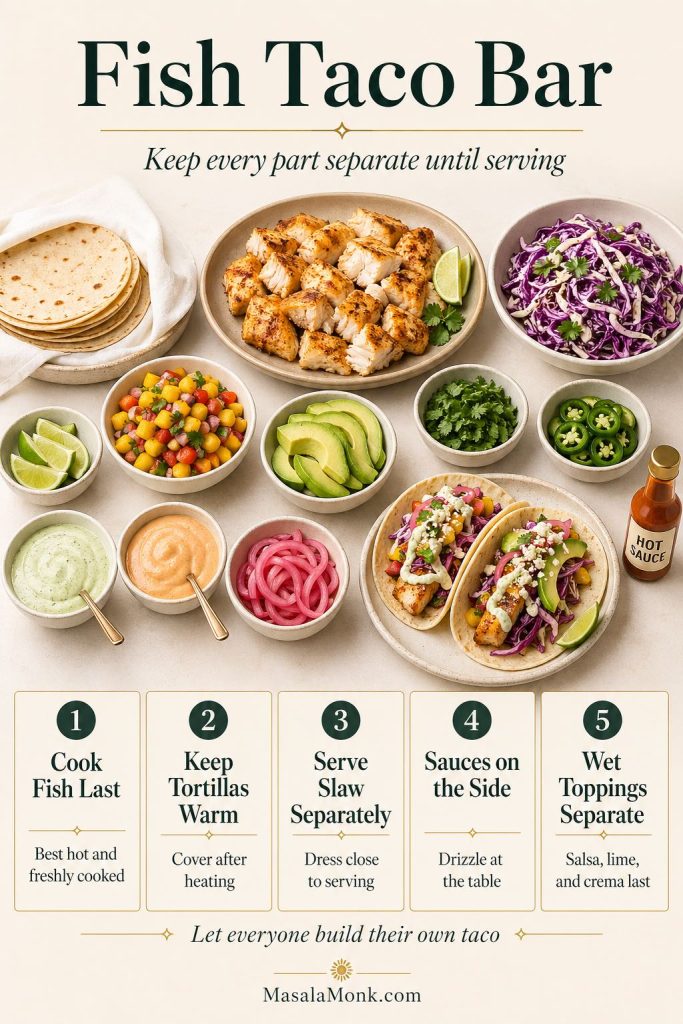
This fish tacos recipe also works well as a fish taco bar. For the best texture, keep every part separate: cooked fish, warm tortillas, slaw, sauce, lime wedges, cilantro, jalapeño, avocado, mango salsa, and any cheese or hot sauce. As a result, the tortillas stay fresher and everyone can build their own taco.

A fish taco bar guide showing cooked fish, warm tortillas, cabbage slaw, lime crema, chipotle crema, mango salsa, avocado, cilantro, jalapeño, pickled onions, lime wedges, hot sauce, and assembled fish tacos.
Set up a fish taco bar by keeping every part separate until serving. Cook the fish last, keep the tortillas warm, serve slaw in its own bowl, keep sauces on the side, and add wet toppings like salsa, lime, crema, and pickled onions at the table so everyone can build fresh tacos without soggy tortillas.
  • Cook the fish last: fish tastes best hot and freshly cooked.
  • Prep sauce ahead: lime crema and chipotle crema can be made earlier.
  • Prep cabbage ahead: shred it early, but dress it closer to serving.
  • Keep tortillas warm: wrap them in a clean towel after heating.
  • Serve wet toppings separately: salsa, crema, and lime should go on at the table.

For seafood safety at parties, do not leave cooked seafood out for more than 2 hours, or more than 1 hour when temperatures are above 90°F.

Storage and Make-Ahead Tips

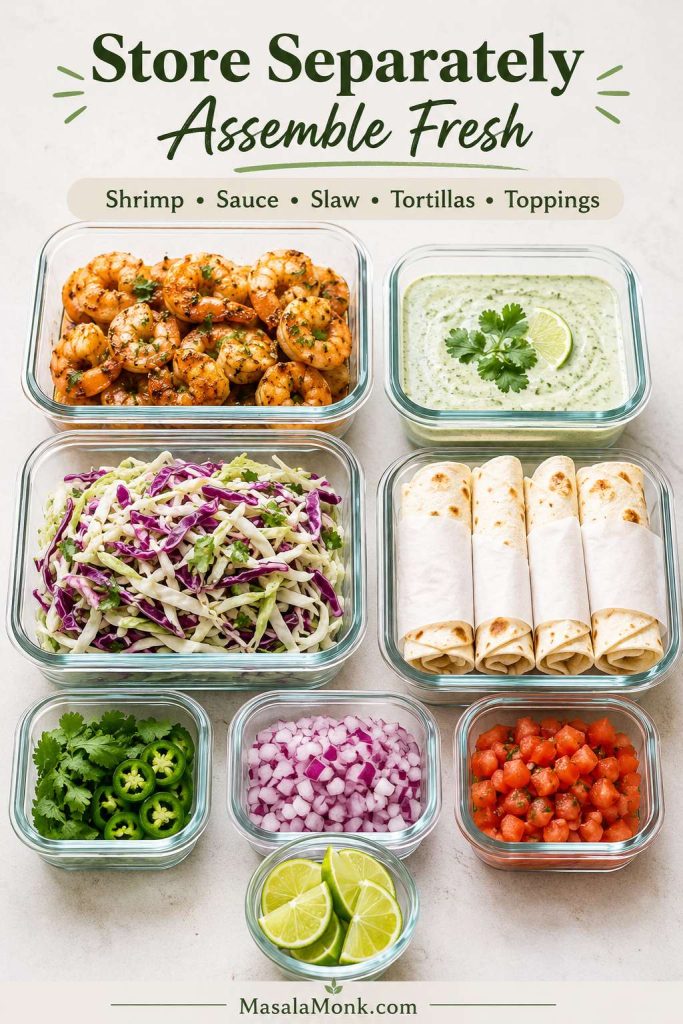
Fish tacos are best fresh, but you can prep the parts ahead. That way, dinner comes together quickly without making the tortillas soggy.

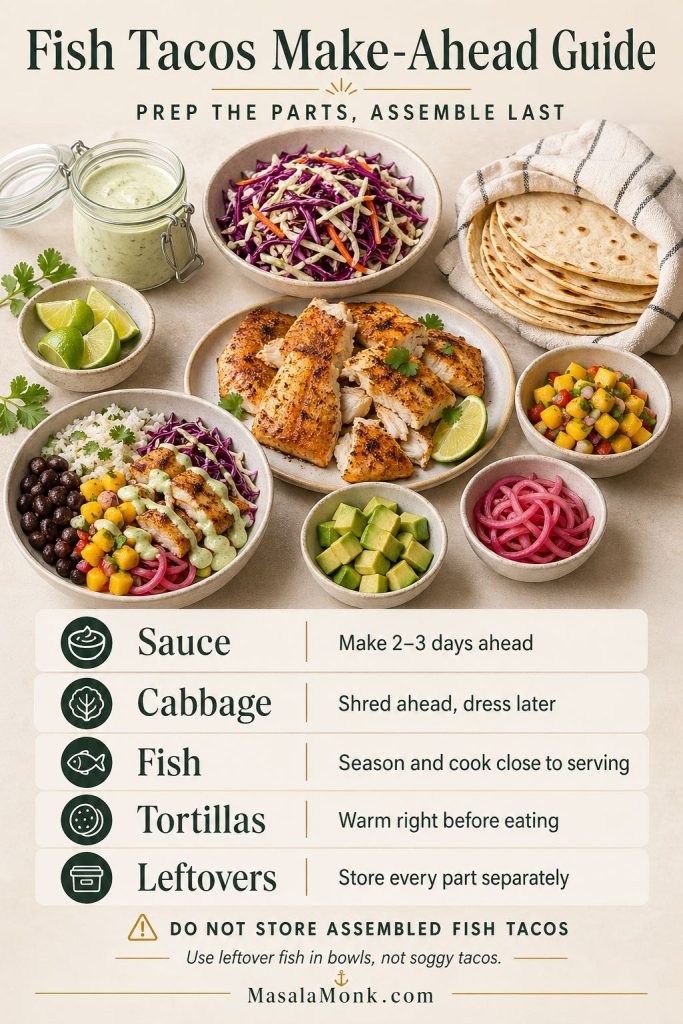
A fish tacos make-ahead guide showing lime crema, cabbage slaw, cooked fish, warm tortillas, mango salsa, pickled onions, avocado, lime, and a leftover fish taco bowl, with tips to prep parts ahead and store them separately.
Fish tacos are easiest to prep when you keep every part separate. Make the sauce ahead, shred the cabbage early but dress it later, cook the fish close to serving, warm the tortillas right before eating, and store leftovers separately. For the next day, turn leftover fish into a bowl instead of trying to save assembled tacos.
  • Sauce: make 2 to 3 days ahead and refrigerate.
  • Cabbage: shred ahead, but add lime and salt closer to serving.
  • Fish: season right before cooking for the best texture.
  • Tortillas: warm right before serving.
  • Leftovers: store fish, slaw, sauce, and tortillas separately.

Do not store assembled fish tacos. Otherwise, the tortillas will absorb moisture from the fish, sauce, and slaw.

For raw seafood, the FDA recommends storing seafood in the refrigerator at 40°F or below if you plan to use it within 2 days; otherwise, wrap it tightly and freeze it.

Leftover Fish Taco Bowls

When you have leftover fish, slaw, sauce, or toppings, turn them into a bowl instead of trying to rebuild tacos the next day. Add rice, beans, cabbage, avocado, mango salsa, lime crema, and the leftover fish. Bowls are more forgiving than reheated tortillas and help use the parts without making the meal soggy.

Are Fish Tacos Healthy?

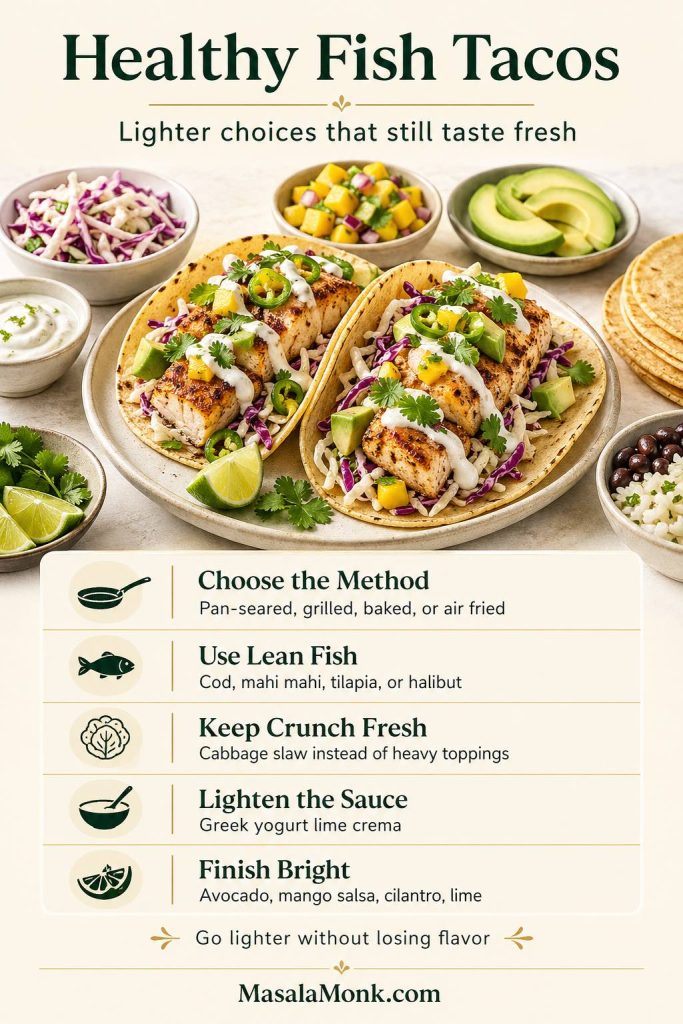
A healthy fish taco recipe usually starts with pan-seared, grilled, baked, or air-fried fish instead of deep-fried fish. Then, cabbage slaw, lime, avocado, and a moderate amount of sauce keep the tacos balanced.

For a lighter version, use grilled or pan-seared cod, Greek yogurt lime crema, cabbage slaw, corn tortillas, and avocado or mango salsa instead of extra cheese.

A healthy fish tacos guide showing grilled or pan-seared fish in corn tortillas with cabbage slaw, Greek yogurt lime crema, avocado, mango salsa, cilantro, lime, and lighter cooking tips.
Healthy fish tacos should still taste fresh and satisfying. Use pan-seared, grilled, baked, or air-fried fish, then build the tacos with cabbage slaw, Greek yogurt lime crema, avocado, mango salsa, cilantro, and fresh lime so they stay lighter without losing flavor.

Final Tips for the Best Fish Tacos

Use this fish tacos recipe as the base, then choose the fish that matches your style. Start with cod for the easiest version. Use mahi mahi for grilled fish tacos, tilapia for a budget-friendly version, halibut or snapper for something more premium, and salmon for a bolder taco. Finally, keep the slaw crisp, the sauce bright, the tortillas warm, and the toppings fresh.

The best fish tacos are not complicated. They just need the right fish, enough seasoning, a crunchy slaw, a creamy sauce, and careful assembly so every bite tastes fresh instead of wet or heavy.

Fish Tacos FAQs

What is the best fish for fish tacos?

Cod is the best all-purpose fish for fish tacos because it is mild, flaky, easy to find, and works with pan-seared, baked, air fryer, or Baja-style methods. However, mahi mahi, tilapia, halibut, snapper, haddock, and salmon also work.

Is cod good for fish tacos?

Yes. Cod is one of the best fish for fish tacos. It has a mild flavor, flakes easily, and works with lime crema, cabbage slaw, chipotle sauce, mango salsa, and Baja-style batter.

Is mahi mahi good for fish tacos?

Yes. Mahi mahi is excellent for grilled fish tacos because it is firm and meaty. It also works well blackened or pan-seared with mango salsa, avocado, cabbage, and lime.

Can you use salmon for fish tacos?

Yes, but salmon needs stronger seasoning than mild white fish. Therefore, use blackened seasoning, grilled salmon, or air fryer salmon with cabbage, avocado, lime, and a fresh salsa.

Are fish tacos better with corn or flour tortillas?

Corn tortillas give fish tacos a more classic flavor. However, flour tortillas are softer and less likely to break. Use corn for a more traditional taco and flour when you need a softer, easier wrap.

What sauce goes on fish tacos?

A creamy lime sauce is the easiest choice. Mix sour cream or Greek yogurt with a little mayonnaise, lime juice, garlic, salt, and hot sauce or chipotle. Chipotle crema, avocado crema, chutney crema, and no-mayo yogurt sauce also work.

What toppings go best with fish tacos?

The best toppings are cabbage slaw, lime crema, cilantro, jalapeño, avocado, pico de gallo, mango salsa, pickled onions, cotija, hot sauce, and fresh lime.

What makes Baja fish tacos different?

Baja fish tacos usually use crispy beer-battered white fish, cabbage slaw, creamy chipotle sauce, lime, and corn tortillas. As a result, they are crunchier and more fried-focused than simple pan-seared fish tacos.

Can I make fish tacos in the air fryer?

Yes. Air fryer fish tacos work well with cod, tilapia, mahi mahi, haddock, or halibut. Use seasoned fish for a lighter version or panko-coated fish for a crispier version.

Can I bake fish for fish tacos?

Yes. Baked fish tacos are useful when you need a hands-off method. Season cod, haddock, tilapia, or another white fish, bake at 400°F until opaque and flaky, then serve with slaw, sauce, and fresh lime.

Can I use frozen fish for fish tacos?

Yes. Thaw frozen fish completely, then pat it very dry before seasoning. Otherwise, the fish can steam instead of sear.

Can I use fish sticks for fish tacos?

Yes. Bake or air fry fish sticks until very crisp, then serve them in warm tortillas with cabbage slaw, lime crema, cilantro, and lime. Fresh toppings help frozen fish stick tacos taste brighter and more balanced.

How much fish do I need per person for fish tacos?

Plan on about 4 ounces of raw fish per person for a normal serving. One pound of fish usually makes about 8 small tacos, enough for 4 people if you serve 2 tacos each.

How do I keep fish tacos from getting soggy?

Pat the fish dry, do not over-marinate it, drain wet salsa, use lightly dressed cabbage slaw, warm the tortillas, go easy on sauce, and assemble the tacos right before serving.

Are fish tacos healthy?

Fish tacos can be healthy, especially when the fish is pan-seared, grilled, baked, or air fried instead of deep-fried. For a lighter version, use cabbage slaw, Greek yogurt sauce, avocado, lime, and corn tortillas.

Back to top

Posted on 7 Comments

Mango Salsa Recipe

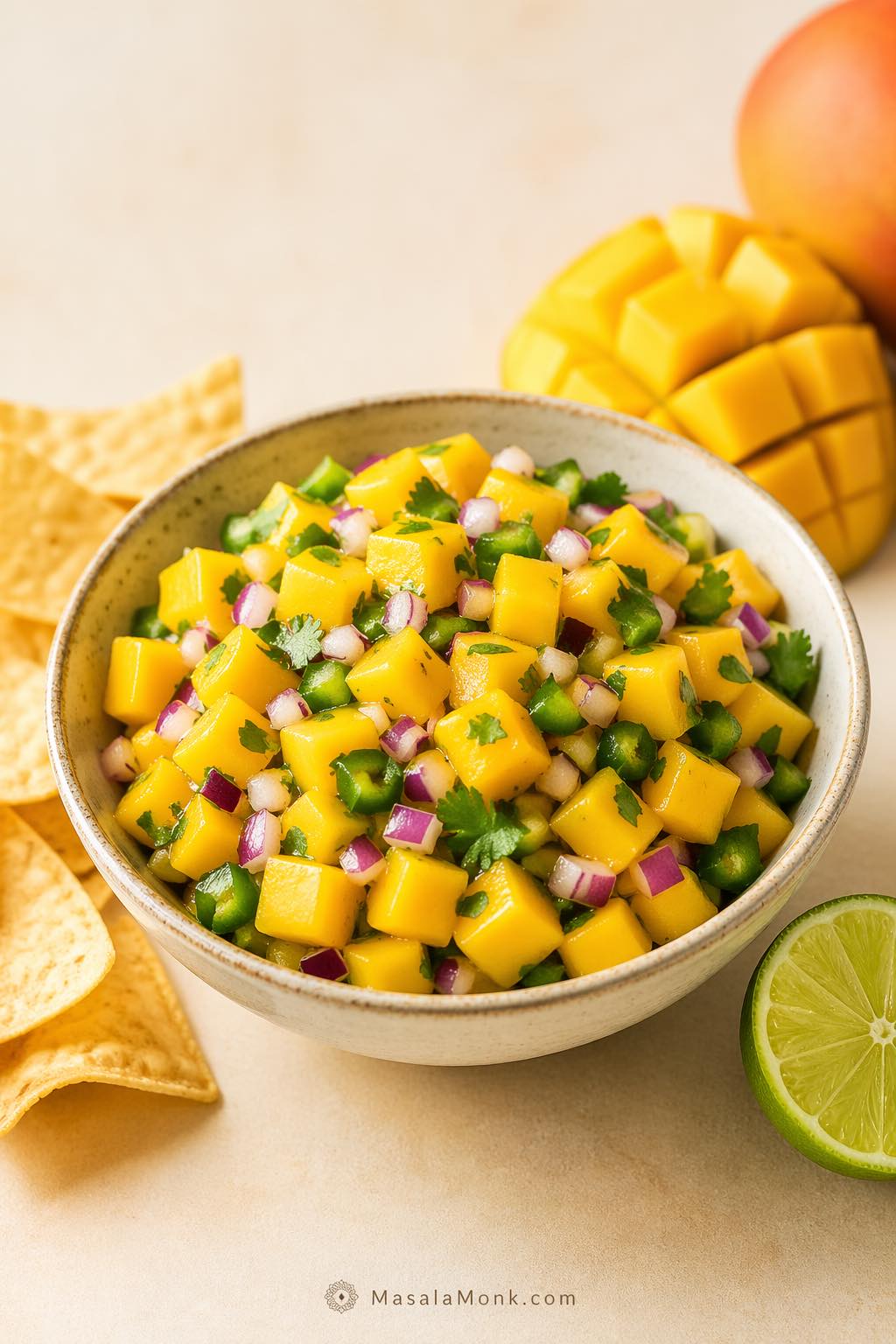
Fresh mango salsa recipe in a bowl with diced mango, red onion, jalapeño, cilantro, lime, and tortilla chips, shown chunky and glossy without tomato.

A mango salsa recipe should do more than taste sweet and bright. It should stay chunky instead of turning watery, balance lime and heat without burying the fruit, and work whether you use it as a salsa dip with chips, a spoonable mango salsa sauce for tacos, or a fresh topping for fish, shrimp, or chicken.

This version starts with the cleanest, most useful base: ripe mango, red onion, jalapeño, cilantro, lime, and salt. It is the best first version to make because it stays bright, fresh, and flexible. From there, you can adjust it depending on how you plan to serve it: add tomato for a scoopable chip dip, avocado for a richer topping, or more chile for a hotter bowl that still tastes fresh instead of harsh.

If you are making mango salsa for the first time, make this clean version first. It gives you the brightest mango flavor, then lets you move toward a chunkier taco topping, a scoopable salsa dip, a saucier spoonful for salmon or shrimp, or a spicy variation without guessing.

Quick Answers

If you want the shortest useful answer, start here. The best mango salsa recipe uses ripe but still firm mangoes, not very soft ones, so the bowl stays fresh and chunky instead of slumping into liquid. The best first version is usually no tomato. That cleaner build lets the mango stay bright and distinct, whether you serve it as a fresh salsa dip, a taco topping, or a spoonable mango salsa sauce for fish, shrimp, grilled chicken, and bowls.

  • Best mangoes: ripe but still firm, so the salsa holds a neat dice.
  • Best first version: no tomato, because it tastes cleaner and works better as a topping.
  • Best for chips: add tomato if you want a more pico-like, scoop-friendly bowl.
  • Best saucier move: mash or blend a few spoonfuls, then stir them back in instead of blending the whole bowl.
  • Best for tacos and fish: keep it fruit-forward, sharp, chunky, and lightly spicy.
  • Best heat move: start with jalapeño, then add more chile only if the bowl tastes flat.
  • Best make-ahead window: a short rest is fine, but it is best the day you make it.
  • Frozen mango: usable in a pinch, but fresh mango gives better texture.

At a Glance

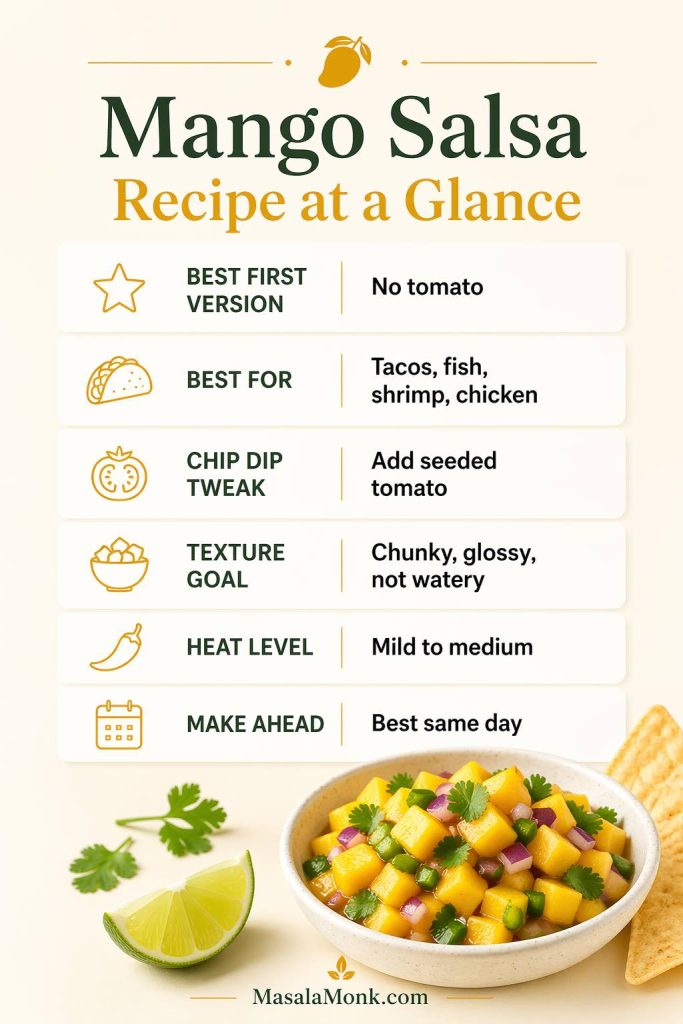
  • Best first version: no tomato
  • Best for: tacos, fish, shrimp, grilled chicken, burrito bowls
  • Best chip-dip tweak: add 1 small seeded tomato
  • Best salsa sauce tweak: mash a small portion and fold it back in
  • Texture goal: chunky, glossy, not watery
  • Heat level: mild to medium, easy to adjust
  • Make-ahead: best the same day

The finished salsa should look glossy, not puddled. The mango pieces should stay distinct when spooned, and the bowl should smell bright and savory, not sharply acidic or raw.

Mango salsa recipe at-a-glance guide showing no tomato as the best first version, serving ideas, chip dip tweak, texture goal, heat level, and make-ahead timing.
Start with the no-tomato version when you want the mango to stay bright and distinct; add tomato only when the salsa is mainly for chips and you want a juicier, more scoopable bowl.

Mango Salsa Recipe Ingredients

The ingredient list for this mango salsa recipe is short on purpose. Because the bowl relies on freshness and contrast, every ingredient should help the mango rather than compete with it.

  • 2 large ripe but firm mangoes, diced small (about 2 cups / 330 to 360 g diced mango)
  • 1/4 to 1/3 cup finely chopped red onion (about 35 to 50 g)
  • 1 small jalapeño, finely chopped
  • 2 to 3 tablespoons chopped cilantro
  • 1 to 2 tablespoons fresh lime juice, plus more to taste
  • 1/4 teaspoon fine salt, plus more to taste
  • Optional: 1/4 cup finely chopped red bell pepper
  • Optional: 1 small tomato, seeded and finely diced
  • Optional: 1/2 avocado, diced

The mango

Use mangoes that smell ripe and feel slightly soft when pressed, but not squishy. Once diced, the pieces should hold clean edges rather than collapse or smear when stirred.

The onion

Red onion gives the bowl the sharp, savory edge that stops it from drifting toward fruit salad. Finely chopped onion works best because it spreads that bite evenly. If your onion tastes very harsh, rinse it briefly under cold water or soak it in cold water for 5 minutes, then dry it well before adding it.

The jalapeño

Jalapeño adds heat, but more importantly, it gives shape to the sweetness. For a milder bowl, remove the seeds and white membranes. For a medium bowl, leave in a little of the membrane. Start smaller than you think you need, then taste.

The cilantro, lime, and salt

Cilantro keeps the salsa tasting green and fresh. Lime lifts everything, while salt makes the fruit and aromatics taste more like themselves. Add lime gradually. You want the mango lightly coated, not sitting in a shallow pool at the bottom of the bowl.

The useful extras

Red bell pepper adds crunch without changing the identity of the bowl very much, so it is the safest extra if you want more texture. Tomato is best when the salsa is mainly for chips. Seed it well, then let the diced tomato sit on a paper towel for a minute if it seems very juicy. Avocado makes the bowl richer and softer, which is especially good over salmon, grilled chicken, or grain bowls. If you use avocado, add it at the very end and fold it in gently.

Best Mangoes to Use

The fruit decides a lot here. Even a well-seasoned bowl struggles if the mango is watery, stringy, or collapsing under the knife.

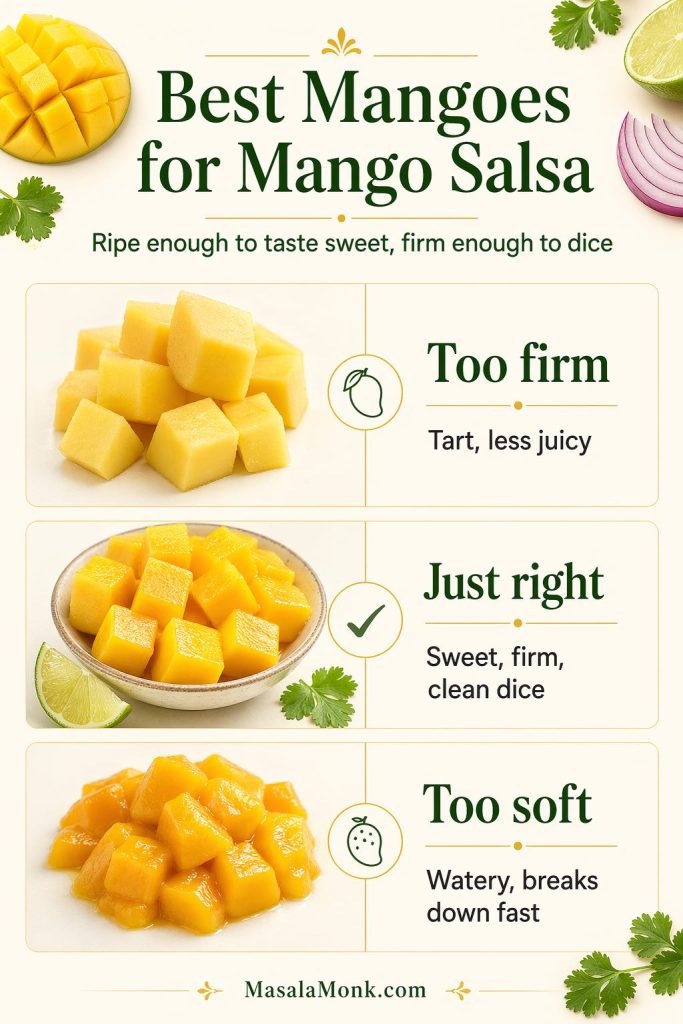
Mango ripeness guide for mango salsa showing too firm, just right, and too soft mangoes with tips for sweetness, clean dice, and avoiding watery salsa.
Choose mangoes that are ripe enough to taste sweet but still firm enough to hold a clean dice; very soft mangoes break down quickly once lime and salt are added.

Ripe but firm is the sweet spot

The best mangoes for salsa give slightly when pressed, smell fragrant, and taste sweet without turning mushy as soon as you cut them. Ataulfo, Champagne, honey, or Kent mangoes can all work well if they are firm enough to dice cleanly, but firmness matters more than variety.

Avoid overly soft mangoes

Very soft mangoes are better in sorbet, smoothies, or dressing. In salsa, they break down quickly once lime and salt are added, and the bowl becomes watery faster than you want.

If your mango is extra sweet or extra tart

When the fruit is especially sweet, lean a little harder on lime, salt, and jalapeño. For mangoes that taste more tart than expected, use less lime at first and let the fruit stay the focus. Taste before serving and adjust there instead of trying to fix everything at once.

How to Cut Mango for Salsa

How you cut the fruit affects both texture and usability in a mango salsa recipe. A good mango salsa should be easy to scoop, easy to spoon, and pleasant to eat in one bite.

Use the cheek-and-score method

Stand the mango upright, slice off the two cheeks, then score the flesh in a grid without cutting through the skin. Turn the cheek outward slightly and slice off the cubes. Then trim the remaining fruit from around the pit.

For another visual reference on cutting around the pit, this mango cutting guide from the National Mango Board is helpful.

Dice small, but not tiny

The mango should be small enough to scoop easily with chips or sit neatly on tacos, yet large enough to stay distinct. Aim for roughly small bean-sized pieces rather than large chunks or very fine mince.

Mix gently

Once the fruit is cut, treat it carefully. Fold the salsa together rather than stirring it hard. Otherwise, even good fruit starts to look tired before it reaches the table.

How to Make This Mango Salsa Recipe

This mango salsa recipe comes together quickly, but the order helps you keep both the texture and the balance under control.

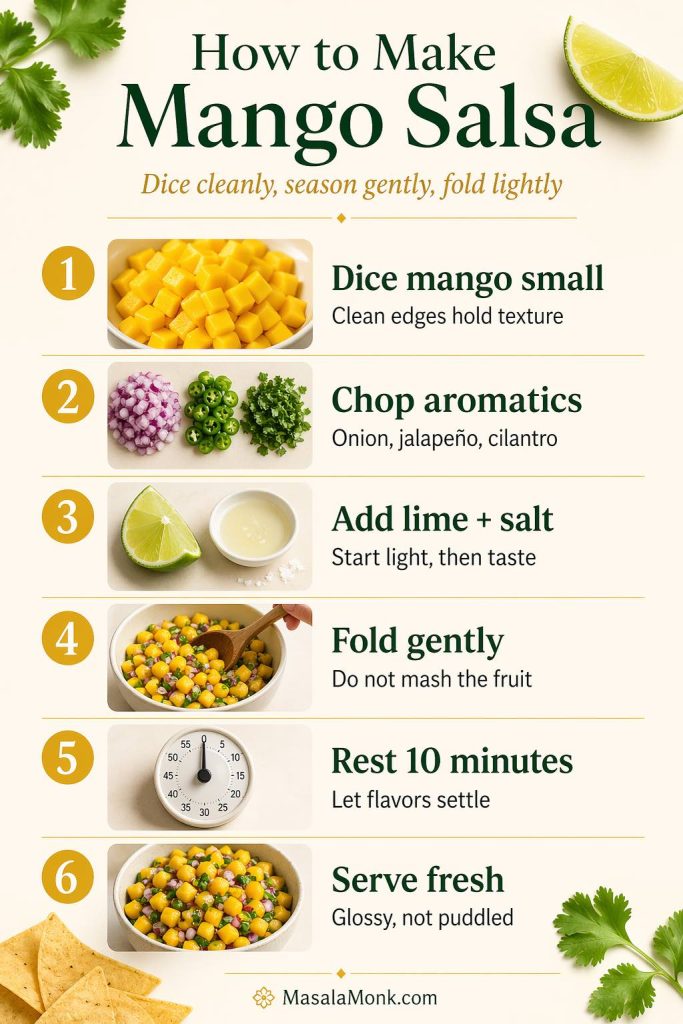
Step-by-step mango salsa recipe guide showing diced mango, chopped onion, jalapeño and cilantro, lime and salt, gentle folding, resting, and finished salsa.
Add the lime and salt lightly at first, then fold instead of stirring hard; this keeps the mango pieces clean-edged, glossy, and distinct when the salsa is served.

1. Dice the mango

Dice the mango into small, even cubes and place them in a medium bowl. The pieces should look clean-edged and firm enough to hold shape when lifted on a spoon.

2. Chop the supporting ingredients

Finely chop the red onion, jalapeño, and cilantro. If you are using red bell pepper, chop that finely too. The onion pieces should be small enough not to dominate a bite, and the jalapeño should be dispersed rather than concentrated in a few hot pockets.

3. Combine gently

Add the onion, jalapeño, cilantro, and bell pepper to the mango. Toss gently so the fruit stays intact. At this stage, the bowl should already look colorful and structured, not crushed.

4. Add lime and salt

Start with 1 tablespoon lime juice and 1/4 teaspoon salt. Toss again, gently, then look at the bottom of the bowl. You want a light gloss on the fruit, not visible pooling liquid.

5. Rest briefly, then taste again

Let the salsa sit for 10 minutes if you have time. That is enough to bring the flavors together without softening the fruit too much. After that short rest, the salsa should smell bright and savory, with the onion and lime settled into the fruit instead of shouting separately.

6. Adjust before serving

When the salsa tastes too sweet, add a little more lime, salt, or jalapeño. For a bowl that tastes too sharp, add a bit more mango. Flat flavor usually means it needs salt. Serve cool or lightly chilled, not ice-cold straight from the back of the fridge, so the flavor reads clearly.

Mango Salsa Recipe

Yield: About 2 cups, enough for 4 to 6 as a topping or 4 as a dip

Prep time: 15 minutes
Cook time: 0 minutes
Total time: 15 minutes

Ingredients

  • 2 large ripe but firm mangoes, diced small (about 2 cups / 330 to 360 g)
  • 1/4 to 1/3 cup finely chopped red onion
  • 1 small jalapeño, finely chopped
  • 2 to 3 tablespoons chopped cilantro
  • 1 to 2 tablespoons fresh lime juice
  • 1/4 teaspoon fine salt, plus more to taste
  • Optional: 1/4 cup finely chopped red bell pepper

Instructions

  1. Add the diced mango to a medium bowl.
  2. Add the red onion, jalapeño, cilantro, and bell pepper if using.
  3. Add 1 tablespoon lime juice and the salt, then toss gently.
  4. Let the salsa sit for 10 minutes, then taste.
  5. Add more lime or salt as needed.
  6. Serve right away for the freshest texture.

Notes

  • Use firm-ripe mangoes, not very soft ones.
  • The finished salsa should look glossy, not puddled.
  • For a milder salsa, remove the jalapeño seeds and membranes.
  • For chips, add 1 small seeded tomato if you want a more dip-like bowl.
  • For a saucier mango salsa, mash or blend 2 to 3 tablespoons of the finished salsa with a squeeze of lime, then stir it back into the bowl.
  • If using avocado, fold it in at the very end.
  • This salsa is best the day you make it.

Why This Mango Salsa Recipe Works

This recipe works because it keeps the job of the salsa clear. It should brighten the food around it, not smother it.

It balances sweet, sharp, and spicy

The mango gives sweetness, but the onion, jalapeño, lime, and salt keep that sweetness from drifting into dessert territory. The result tastes bright and savory rather than merely fruity.

It stays chunky

Because the fruit is diced instead of blended, the finished salsa stays textured and spoonable. That texture is part of what makes it feel useful at the table.

It fits more than one meal

Although it is excellent with chips, it is even more valuable because it works over fish tacos, salmon, shrimp, grilled chicken, burrito bowls, and taco salads.

Tomato or No Tomato?

This is the biggest choice in mango salsa. Some people want a bright topping. Others want a bowl that feels more like a classic fresh dip.

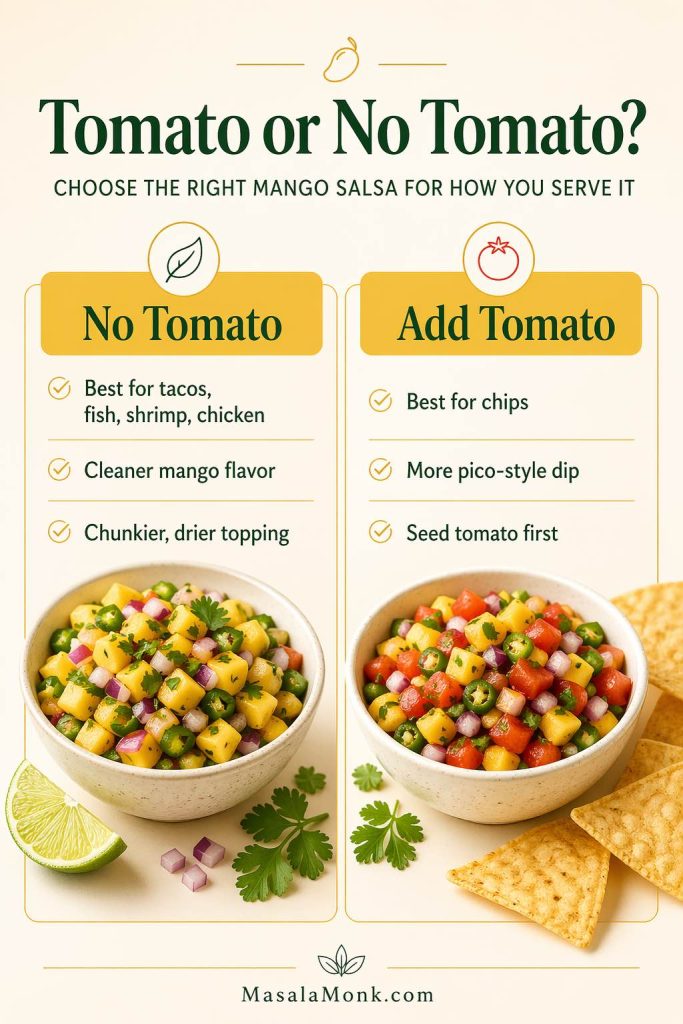
Comparison card showing no-tomato mango salsa for tacos, fish, shrimp, and chicken beside mango salsa with tomato for chips and pico-style dip.
Tomato is not wrong in mango salsa, but it changes the job of the bowl: skip it when you want a cleaner, chunkier topping for tacos or fish; add it when you want a juicier salsa for chips.

When no-tomato mango salsa is better

A no-tomato version is usually better for tacos, fish, shrimp, grilled chicken, and bowls. It tastes cleaner, lets the fruit stay more distinct, and avoids extra moisture.

When tomato makes sense

Add tomato when the bowl is mainly for chips or when you want a more familiar pico-like feel. Seed it first, then keep the pieces small so the salsa stays balanced instead of watery.

How to Fix the Balance

If it tastes too sweet

Add a little more lime, a pinch more salt, or a bit more jalapeño.

If it tastes too sharp

Add more mango first. Extra fruit is usually a cleaner fix than sweetener.

If it tastes too mild

It usually needs a touch more salt or lime.

If it turns watery

Wateriness usually comes from overly soft fruit, overmixing, too much resting time, or undrained tomato. Drain off a little excess liquid if needed, then taste again.

If you want it more like a salsa sauce

If you want a mango salsa sauce for tacos, fish, shrimp, chicken, or bowls, do not blend the whole recipe. Mash or blend 2 to 3 tablespoons of the finished salsa with a little lime juice, then stir it back into the bowl. That makes it more spoonable while keeping the fresh mango pieces intact.

If it feels too spicy

Add more mango if you have it. Avocado can soften the heat too if you want a richer version.

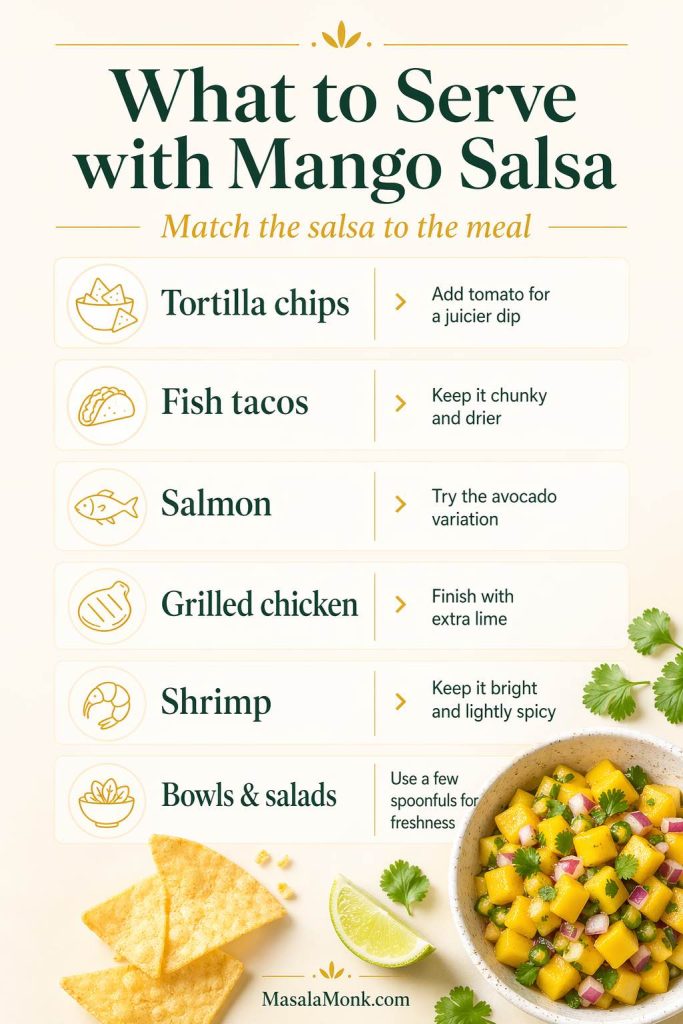
What to Serve with Mango Salsa

Once the bowl is made, use it as a salsa dip, taco topping, fresh side, or spoonable mango salsa sauce depending on the meal.

Guide to what to serve with mango salsa, including tortilla chips, fish tacos, salmon, grilled chicken, shrimp, bowls, and salads with serving tips.
Mango salsa works best when you match the texture to the meal: keep it chunkier and drier for tacos or fish, add tomato for chips, and use a few spoonfuls to brighten bowls and salads.

Tortilla chips

For chips, a slightly juicier bowl is fine. This is the best place to add seeded tomato and use a slightly smaller dice if you want a more scoopable, party-friendly dip.

Fish tacos

For fish tacos, keep the salsa chunkier and a little drier. The no-tomato version works best here because it brings brightness and sweetness without making the taco wet or heavy. It pairs especially well with flaky grilled or pan-seared white fish.

Salmon

With baked, grilled, or pan-seared salmon, the lime, onion, and jalapeño do especially useful work. A spoonful on top cuts through the richness and makes a simple fillet feel more finished. If you want a softer, richer topping for salmon, the avocado variation below is the best branch.

Grilled chicken

Chicken gives the salsa a neutral base to wake up. It works especially well with grilled chicken breasts, thighs, or fajita-style chicken. A slightly punchier lime finish works well here, especially if the chicken is smoky, charred, or warmly spiced. For a full meal to pair it with, try these sheet pan chicken fajitas.

Shrimp

Shrimp and mango salsa are a natural pairing. Keep the salsa bright and lightly spicy rather than heavy or very wet. Spoon it over grilled shrimp skewers, tuck it into shrimp tacos, or use it over rice bowls when you want something fresh and quick.

Burrito bowls and taco salads

This is one of the smartest ways to use leftovers. A few spoonfuls add acidity, freshness, and texture to bowls with rice, beans, avocado, chicken, or shrimp.

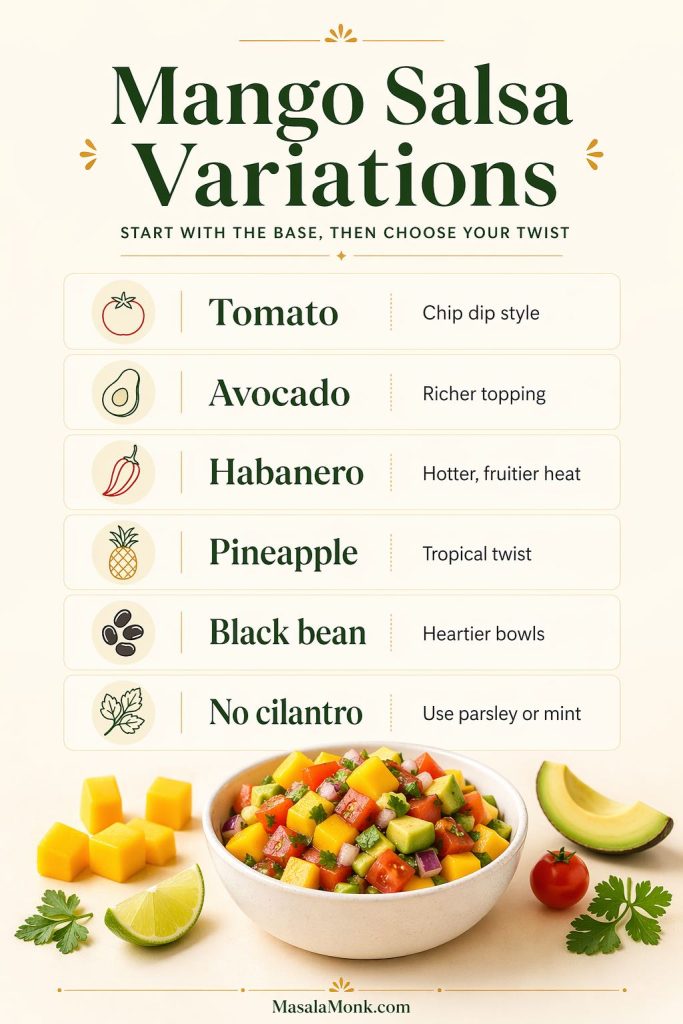
Variations

Mango salsa with tomato

Add 1 small seeded and finely diced tomato if you want the salsa to feel more like a classic fresh dip. Keep the amount modest so the mango still leads.

Mango avocado salsa

Add diced avocado when you want a richer, softer bowl. Fold it in at the end so it stays intact. This version is especially good with salmon, grilled chicken, and burrito bowls.

Mango salsa variations guide showing tomato, avocado, habanero, pineapple, black bean, and no-cilantro options for changing the base recipe.
Once the base mango salsa tastes balanced, choose the variation by use: tomato for chips, avocado for richness, habanero for heat, pineapple for sweetness, or black beans for a heartier bowl.

Spicy mango habanero salsa

Swap in a very small amount of habanero if you want a hotter, fruitier heat. Go carefully so the brightness of the base recipe still comes through.

Pineapple mango salsa

Add a small amount of finely diced pineapple if you want a more tropical twist. Keep the ratio in favor of mango so the recipe still reads clearly as mango salsa.

Black bean mango salsa

Add rinsed and well-drained black beans if you want a heartier bowl for chips, burrito bowls, or taco salads. Keep the mango pieces distinct so the salsa still tastes fresh rather than heavy.

Pickled jalapeño or pickled onion

Use a little pickled jalapeño or pickled red onion if you want a sharper, brighter variation. Add these carefully because they bring both acidity and salt.

No cilantro version

If you do not like cilantro, use a smaller amount of parsley or fresh mint instead. The flavor will change, but the salsa can still taste fresh and balanced.

For a smoother mango-based topping for salads, grilled chicken, or seafood, try this sweet and spicy mango salad dressing.

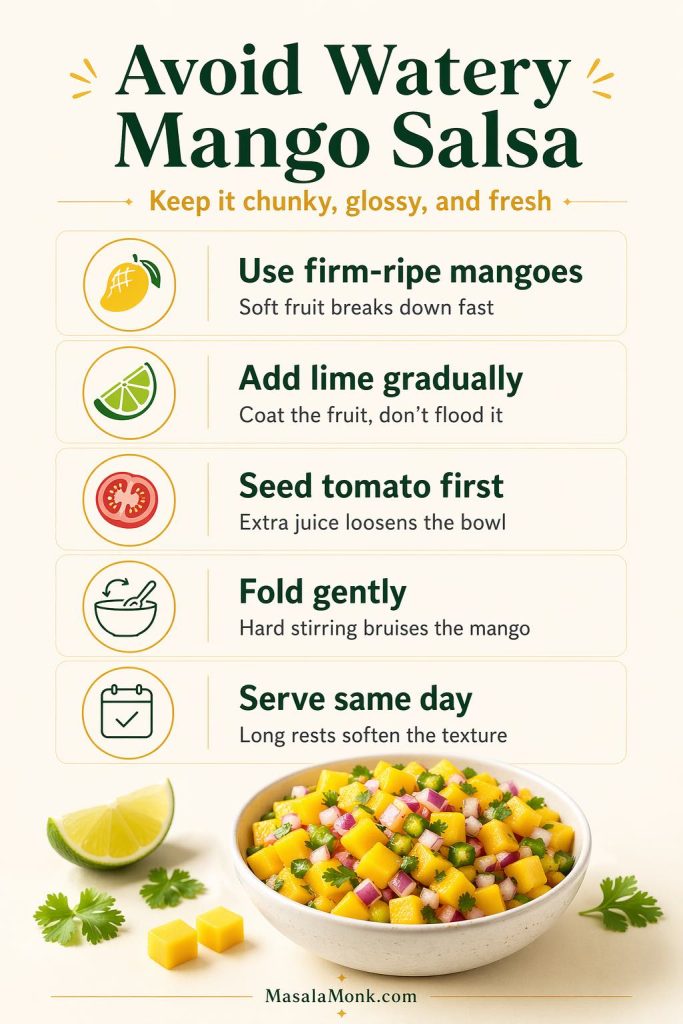
Common Mistakes

Troubleshooting card for avoiding watery mango salsa with tips to use firm-ripe mangoes, add lime gradually, seed tomato, fold gently, and serve the same day.
Watery mango salsa usually starts with fruit that is too soft, too much lime, juicy tomato, or rough mixing. Keep the bowl glossy instead of puddled by seasoning gradually and folding gently.
  • Using very soft mangoes: they may taste good, but they break down fast and make the bowl watery.
  • Adding too much lime at the start: the fruit should be coated lightly, not swimming.
  • Leaving onion pieces too large: big pieces make the salsa taste sharper and rougher than it should.
  • Not drying soaked onion or juicy tomato: extra water shows up later in the bowl.
  • Not seeding tomato for the chip-dip version: the salsa can turn loose fast.
  • Overmixing: stirring hard bruises the fruit and dulls the texture.
  • Letting it sit too long before serving: a short rest helps, but too long softens the mango and blurs the flavor.

Storage and Make-Ahead

Mango salsa is best fresh, and that is part of what makes it so good.

Best the day you make it

The texture is best on the day it is made. The fruit is firmer, the flavors feel brighter, and the bowl still looks clean and lively.

How long it lasts

Stored in an airtight container in the fridge, it will usually keep well for about 2 days, sometimes 3 depending on the fruit.

What changes after a few hours

A short rest of 10 to 20 minutes can help the flavors settle. After several hours, though, the mango softens more, liquid collects more easily, and the bowl becomes less crisp and defined.

How to freshen leftovers

If leftover salsa seems dull, drain off a little excess liquid, then add a small squeeze of lime and a pinch of salt. Let it sit for a minute, then taste again.

The best bowl is the one that still looks clean when you spoon it: distinct mango pieces, light lime gloss, no puddle at the bottom, and enough salt and chile to keep the sweetness lively.

Mango Salsa Recipe FAQs

Can I make mango salsa ahead of time?

Yes, but it is best within the same day if texture matters to you. Overnight storage softens the fruit and draws out more liquid.

Is mango salsa sauce the same as mango salsa?

Usually, yes. People often use mango salsa sauce to mean mango salsa served as a dip, taco topping, or spoonable sauce. Fresh mango salsa is normally chunky, not fully blended. If you want it saucier, mash or blend a small portion with lime juice and stir it back in instead of turning the whole bowl into a smooth mango sauce.

Is mango salsa better with tomato or without?

Neither is universally better. No-tomato mango salsa is usually better for tacos, fish, shrimp, and chicken, while tomato is better when you want a more scoopable dip for chips.

What mangoes are best for a mango salsa recipe?

Ripe but still firm mangoes are best. Ataulfo, Champagne, honey, and Kent mangoes can all work if they are firm enough to dice cleanly.

Can I use frozen mango?

You can, but fresh mango is better for a truly chunky bowl. Frozen fruit tends to soften more as it thaws.

What goes with mango salsa?

Tortilla chips, fish tacos, salmon, grilled chicken, shrimp, burrito bowls, and taco salads all work well.

Is mango salsa good with shrimp?

Yes. Mango salsa is excellent with grilled shrimp, shrimp tacos, coconut shrimp, shrimp rice bowls, and chilled shrimp appetizers. Keep it bright, lightly spicy, and not too wet so it lifts the shrimp without making the dish soggy.

How spicy should mango salsa be?

Usually just spicy enough to sharpen the sweetness. Most people do not need a very hot bowl unless they are intentionally making a spicy variation.

How long does mango salsa last in the fridge?

Usually 2 days, sometimes up to 3 depending on the fruit. It is most appealing sooner rather than later.

Can I use mango salsa for fish tacos?

Yes. The clean no-tomato base version is especially good here because it brightens the fish without making the taco feel soggy or overloaded.

If you want the best first version, make the clean no-tomato bowl, use firm-ripe mangoes, season lightly and carefully, and serve it while the texture is still bright and distinct. That version gives you the most flexibility and the clearest mango flavor.

↑ Back to top

Posted on 1 Comment

The Mango Tango: 50 Exquisite Vegan Dessert Recipes Celebrating the King of Fruits

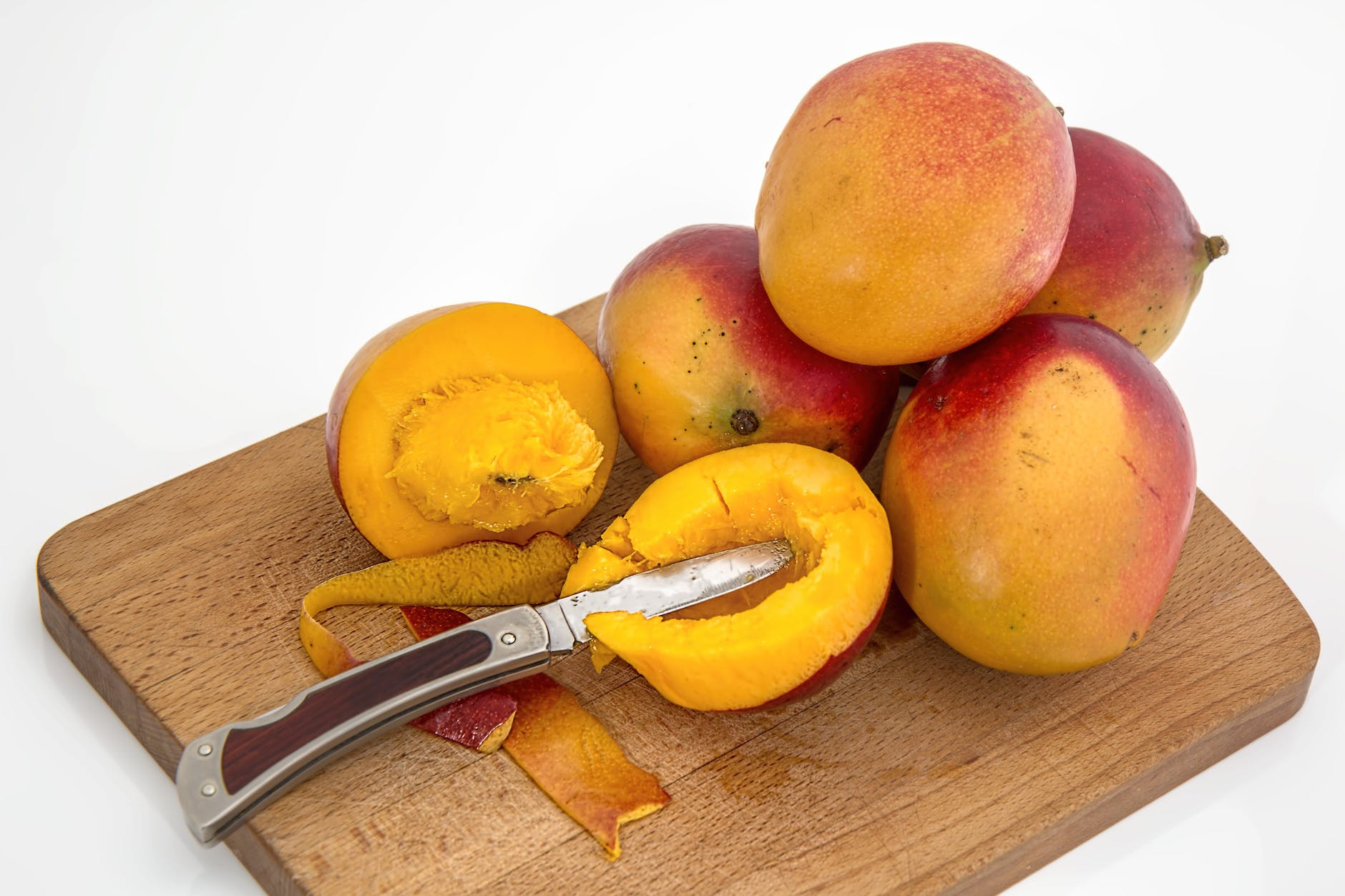
food knife fresh fruits

Get ready to dive into a world of tropical sweetness as we embark on a culinary adventure with mangoes. In this series, we’ll explore 50 exquisite vegan dessert recipes that celebrate the luscious flavors and vibrant colors of the king of fruits. From refreshing sorbets and creamy puddings to indulgent cakes and tantalizing tarts, these mango-inspired creations will transport your taste buds to a paradise of tropical bliss. Join us as we unlock the versatility of mangoes and discover new and exciting ways to enjoy this beloved fruit in irresistible vegan desserts.

Exploring the Mango Spectrum: Mangoes offer a spectrum of flavors, ranging from the intensely sweet and juicy to the subtly tangy and aromatic. Throughout this series, we’ll explore various mango varieties, each with its own unique taste and texture. From the velvety Alphonso and fragrant Ataulfo to the juicy Kent and vibrant Tommy Atkins, we’ll celebrate the diversity of mangoes and how they enhance the flavor profiles of our desserts. Get ready to savor the natural sweetness and tropical essence of mangoes in every delectable bite.

Embracing the Tropical Vibes: Mangoes evoke a sense of tropical paradise, and these desserts aim to capture that essence. We’ll incorporate other exotic flavors and ingredients like coconut, lime, passion fruit, and even spices like chili and ginger to complement the sweetness of mangoes. These combinations will transport you to sun-drenched beaches and lush palm trees, infusing your desserts with the spirit of the tropics. So sit back, relax, and let the flavors of these mango desserts whisk you away to a dreamy island getaway.

Celebrating Diversity: Just like the melting pot of cultures in the world, mangoes have found their way into countless traditional desserts from various culinary traditions. In this series, we’ll draw inspiration from around the globe, including the mango sticky rice from Thailand, mango kulfi from India, mango coconut sago from Southeast Asia, and much more. Each recipe will reflect the unique flavors and techniques of its origin, showcasing the versatility of mangoes in different culinary contexts. Prepare to embark on a cultural journey that celebrates the universal love for mangoes.

Sharing the Mango Love: One of the greatest joys of indulging in mango desserts is sharing them with loved ones. Whether you’re hosting a summer gathering, surprising a friend with a homemade treat, or simply treating yourself to a moment of pure indulgence, these mango desserts are meant to be shared and savored together. The vibrant colors, tropical aromas, and heavenly flavors will create a memorable experience that brings people closer, sparks conversations, and leaves a lasting impression. So spread the mango love and share the magic of these desserts with family and friends.

Conclusion: As we dive into the world of mango desserts, get ready to embark on a tantalizing journey of tropical sweetness. From refreshing sorbets to creamy puddings and beyond, these 50 exquisite vegan dessert recipes will celebrate the lusciousness and versatility of mangoes. Let the vibrant colors, tropical aromas, and heavenly flavors transport you to a paradise of flavor. So grab a ripe mango, sharpen your knives, and join us as we indulge in the mango mania that awaits. Get ready for a mango-filled adventure that will leave you craving more and celebrating the king of fruits in all its glory.

[ez-toc]

Chapter 1: Refreshing Mango Sorbets

Creamy Mango Coconut Sorbet

Indulge in a creamy and tropical delight with this Creamy Mango Coconut Sorbet. Blending together ripe mangoes, creamy coconut milk, a splash of lime juice, and a touch of sweetener, this sorbet offers a velvety smooth texture and a burst of tropical flavors. The ripe mangoes provide natural sweetness and a vibrant orange hue, while the creamy coconut milk adds richness and a hint of tropical creaminess. The splash of lime juice adds a refreshing tang that balances the sweetness of the mangoes. Once blended, the mixture is frozen until firm, creating a refreshing and indulgent treat. Serve it in a chilled bowl or as a delightful dessert after a spicy meal, and let the Creamy Mango Coconut Sorbet transport you to a sun-kissed beach paradise.

Spicy Mango Chili Sorbet

If you’re looking to add some heat to your mango dessert, this Spicy Mango Chili Sorbet is the perfect choice. Blending together ripe mangoes, a squeeze of lime juice, a pinch of chili powder, and a dash of cayenne pepper, this sorbet offers a delightful balance of sweet and spicy flavors. The natural sweetness of the mangoes shines through, while the hint of chili powder and cayenne pepper adds a gentle kick that lingers on the palate. The squeeze of lime juice adds a tangy twist that complements the sweetness and spice. Once blended, the mixture is frozen until firm, resulting in a refreshing and bold dessert. Serve it as a palate cleanser between courses or as a bold and refreshing finale that will leave a lingering tingle on your tongue.

Mango Lime Basil Sorbet

Embrace the bright and zesty flavors of mango, lime, and basil with this Mango Lime Basil Sorbet. Blending together ripe mangoes, freshly squeezed lime juice, a handful of fresh basil leaves, and a touch of sweetener, this sorbet offers a harmonious combination of tangy, citrusy, and herbal notes. The ripe mangoes provide a luscious sweetness, while the lime juice adds a zesty kick. The fresh basil leaves infuse the sorbet with their aromatic and slightly minty flavor, creating a refreshing and vibrant dessert. Once blended, the mixture is frozen until firm, resulting in a sorbet that captures the essence of a tropical paradise. Serve it in a chilled glass or garnish it with a sprig of fresh basil for an added touch of freshness.

Mango Passion Fruit Sorbet

Transport your taste buds to a tropical paradise with this Mango Passion Fruit Sorbet. Blending together ripe mangoes with the tangy and fragrant pulp of fresh passion fruits, this sorbet bursts with tropical goodness. The sweet and juicy mangoes pair perfectly with the tangy and aromatic passion fruit, creating a harmonious combination of flavors. The vibrant orange and yellow colors of the mangoes and passion fruits create an eye-catching sorbet that’s as visually appealing as it is delicious. Once blended, the mixture is frozen until firm, resulting in a sorbet that embodies the essence of sun-soaked beaches and palm-fringed shores. For an extra touch of tropical flair, serve this sorbet in a hollowed-out passion fruit shell.

[ez-toc]

Chapter 2: Creamy Mango Puddings

Vegan Mango Coconut Chia Pudding

Combine the creaminess of coconut milk with the nutritional benefits of chia seeds in this Vegan Mango Coconut Chia Pudding. Blending together ripe mangoes, creamy coconut milk, a touch of sweetener, and a pinch of cardamom, this pudding offers a rich and indulgent texture with a tropical twist. The ripe mangoes provide a natural sweetness and a vibrant orange color, while the creamy coconut milk adds a luscious creaminess. The touch of sweetener balances the flavors, and the pinch of cardamom adds a subtle hint of warmth and aromatic complexity. Once blended, chia seeds are added and left to soak in the mixture until the pudding sets and thickens. The result is a creamy and nourishing dessert with a delightful mango-coconut flavor. Top it with sliced mangoes and a sprinkle of toasted coconut for added texture and flavor.

Mango Rice Pudding

Put a tropical spin on a classic comfort dessert with this Mango Rice Pudding. Cook creamy Arborio rice in a mixture of coconut milk and almond milk, sweetened with a touch of maple syrup or agave nectar. Fold in diced mangoes and a hint of vanilla extract for a luscious and fragrant pudding. The creamy rice pudding provides a comforting base, while the addition of ripe mangoes adds bursts of sweetness and tropical flavor. The combination of coconut milk and almond milk creates a rich and creamy texture, while the touch of maple syrup or agave nectar adds a subtle sweetness. The hint of vanilla extract enhances the flavors and adds an enticing aroma. Serve the pudding warm or chilled, and garnish it with fresh mint leaves or a sprinkle of toasted nuts for an extra layer of indulgence.

Layered Mango Avocado Pudding

Create a unique and creamy dessert by layering mango and avocado puddings in this Layered Mango Avocado Pudding. Blend together ripe mangoes with creamy coconut milk and a touch of sweetener to create a vibrant mango pudding layer. For the avocado layer, blend ripe avocados with lime juice, a hint of sweetener, and a pinch of sea salt. The mango pudding layer offers a burst of tropical sweetness, while the avocado layer adds a creamy and velvety texture. The combination of the two creates a visually appealing and indulgent treat. Alternating the layers in serving glasses or jars allows you to create beautiful and enticing desserts. Top the pudding with a dollop of coconut whipped cream or a sprinkle of crushed pistachios for added richness and texture.

Vegan Mango Mousse

Indulge in the light and airy texture of this Vegan Mango Mousse. Blending together ripe mangoes, coconut cream, a touch of sweetener, and a splash of lime juice, this mousse offers a delightful combination of sweetness and tanginess. The ripe mangoes provide natural sweetness and a vibrant color, while the coconut cream adds a creamy and luxurious texture. The touch of sweetener balances the flavors, and the splash of lime juice adds a refreshing twist that complements the mango’s sweetness. Once blended, the mixture is chilled until it sets, creating a fluffy and velvety mousse. Serve it in elegant dessert glasses or garnish it with fresh mango slices and a sprinkle of shredded coconut for a tropical presentation.

[ez-toc]

Chapter 3: Irresistible Mango Cakes

Mango Coconut Cake

Indulge in the tropical flavors of this Mango Coconut Cake. The light and fluffy coconut cake layers are infused with the sweet and aromatic essence of ripe mangoes. To make the cake, blend together ripe mangoes, creamy coconut milk, a hint of vanilla extract, and a touch of sweetener for added depth of flavor. Fold the mango mixture into the cake batter to create a moist and flavorful crumb. Bake the layers until golden and fragrant, filling your kitchen with the enticing aroma of mango and coconut. Once cooled, stack the cake layers, alternating with luscious mango buttercream. The buttercream is made by whipping together vegan butter, powdered sugar, and pureed mangoes until light and creamy. The result is a decadent and visually stunning cake that combines the creamy coconut and tropical mango flavors in perfect harmony. Decorate the cake with toasted coconut flakes and fresh mango slices for an elegant presentation that will impress your guests and transport them to a tropical paradise with every bite.

Vegan Mango Cheesecake

Satisfy your dessert cravings with this Vegan Mango Cheesecake. The creamy and tangy cheesecake filling is enhanced with the luscious sweetness of mangoes. To create the crust, blend together dates, nuts, and a pinch of sea salt until the mixture holds together. Press the mixture into the base of a springform pan to create a firm and flavorful crust. For the filling, blend together cashews, mangoes, coconut cream, lemon juice, and a touch of sweetener until smooth and creamy. The cashews provide a velvety texture, while the mangoes infuse the cheesecake with their tropical sweetness. Once set, the cheesecake becomes a show-stopping centerpiece for any occasion. Garnish it with fresh mango slices, a drizzle of mango sauce, or a sprinkle of toasted coconut to add a touch of elegance. Each creamy and tangy bite of this vegan mango cheesecake will transport you to a tropical paradise of flavors.

Mango Upside-Down Cake

Turn the classic upside-down cake into a tropical delight with this Mango Upside-Down Cake. The bottom of the cake pan is lined with caramelized mango slices, creating a sticky and sweet topping that becomes the beautiful and irresistible base of the cake. The cake batter is made by blending together flour, sugar, baking powder, vegan butter, coconut milk, and mango puree until smooth and well combined. The mango puree provides the cake with its tropical flavor and vibrant color. Pour the batter over the caramelized mango slices and bake until golden and fragrant. Once cooled, carefully invert the cake to reveal the gorgeous caramelized mango topping. Serve this moist and flavorful cake with a dollop of vegan whipped cream or a scoop of dairy-free vanilla ice cream to complete the tropical dessert experience.

Mango Cardamom Pound Cake

Elevate the traditional pound cake with the exotic combination of mango and cardamom in this Mango Cardamom Pound Cake. The buttery and moist pound cake is infused with the fragrant and citrusy flavors of ground cardamom, which pairs beautifully with the natural sweetness of ripe mangoes. To create the cake batter, cream together vegan butter and sugar until light and fluffy. Add in the dry ingredients, including flour, baking powder, and ground cardamom, and mix until just combined. Fold in diced mangoes and a touch of vanilla extract to add moisture and tropical flavor to the cake. Bake until the cake is golden and a toothpick inserted into the center comes out clean. The result is a tender and aromatic pound cake that perfectly balances the delicate flavors of mango and cardamom. Dust the top with powdered sugar or garnish with fresh mango slices and crushed cardamom pods for an extra touch of elegance. Each slice of this Mango Cardamom Pound Cake will transport you to a realm of exotic indulgence.

[ez-toc]

Chapter 4: Tempting Mango Tarts

Mango Lime Tart

Combine the zesty flavors of mango and lime in this refreshing Mango Lime Tart. The buttery tart crust is filled with a tangy lime curd and topped with juicy slices of ripe mango. To create the crust, combine flour, vegan butter, powdered sugar, and a pinch of salt, then press the mixture into a tart pan and bake until golden and crisp. For the lime curd, whisk together lime juice, lime zest, sugar, cornstarch, and a touch of vegan butter in a saucepan over low heat until thickened. Once the curd has cooled, spread it evenly over the tart crust. Arrange slices of ripe mango on top of the lime curd, creating a visually stunning presentation. Refrigerate the tart until set, allowing the flavors to meld together. Just before serving, garnish with additional lime zest and fresh mint leaves to add brightness and a pop of freshness. Each bite of this Mango Lime Tart offers a burst of tangy lime, sweet mango, and buttery crust, creating a delightful symphony of flavors.

Vegan Mango Custard Tart

Indulge in the smooth and creamy texture of this Vegan Mango Custard Tart. The tart shell is made from a mixture of crushed cookies or nuts, coconut oil, and a touch of sweetener, creating a crisp and flavorful base. For the custard filling, blend together ripe mangoes, coconut cream, cornstarch, a touch of sweetener, and a pinch of turmeric for added color. Cook the mixture over medium heat until it thickens into a luscious and silky custard. Pour the custard into the tart shell and refrigerate until set. Once chilled, the tart can be garnished with fresh mango slices or a sprinkle of shredded coconut for added texture and visual appeal. Each bite of this Vegan Mango Custard Tart offers a creamy and fruity experience that will satisfy your dessert cravings.

Mango Coconut Cream Tart

Create a tropical paradise in a tart with this Mango Coconut Cream Tart. The crust is made from a mixture of crushed graham crackers or coconut cookies, vegan butter, and a touch of sweetener, providing a crunchy and delicious base. For the filling, blend together ripe mangoes, coconut cream, a touch of sweetener, and a squeeze of lime juice until smooth and creamy. Pour the mango-coconut mixture into the tart shell and refrigerate until set. The tart is finished with a dollop of coconut whipped cream and a sprinkle of toasted coconut flakes, adding a delightful creaminess and texture to each bite. The combination of mango and coconut creates a tropical medley of flavors that will transport you to a sun-soaked beach with palm trees swaying in the breeze.

No-Bake Mango Tart

Enjoy a hassle-free dessert with this No-Bake Mango Tart. The crust is made from a mixture of crushed cookies or nuts, dates, and a touch of coconut oil, providing a firm and flavorful base for the tart. Press the mixture into the bottom of a tart pan and refrigerate to set. For the filling, blend together ripe mangoes, cashews, coconut cream, a touch of sweetener, and a squeeze of lime juice until smooth and creamy. Pour the mango filling into the tart shell and refrigerate until set. Once chilled, the tart can be garnished with fresh mango slices, a sprinkle of shredded coconut, or a drizzle of mango puree for an extra touch of indulgence. This no-bake mango tart is perfect for hot summer days when you want to satisfy your mango cravings without turning on the oven. Each slice offers a refreshing and creamy combination of flavors that will leave you wanting more.

With these elaborate and expansive mango dessert recipes, you can create irresistible cakes and tarts that celebrate the tropical sweetness of mangoes. Whether you choose to indulge in a moist and flavorful Mango Coconut Cake or savor the tangy and refreshing Mango Lime Tart, these recipes will transport you to a tropical paradise with every bite. Elevate your dessert game with the lusciousness of ripe mangoes and let their vibrant flavors shine in these delectable creations.

[ez-toc]

Chapter 5: Mango Popsicles and Frozen Treats

Mango Coconut Popsicles

Beat the summer heat with these delicious and refreshing Mango Coconut Popsicles. Blending together ripe mangoes, creamy coconut milk, a touch of sweetener, and a squeeze of lime juice, these popsicles offer a tropical twist on a classic frozen treat. The sweet and juicy mangoes provide a burst of flavor, while the creamy coconut milk adds a rich and velvety texture. The hint of lime juice adds a refreshing tang that balances the sweetness of the mangoes. To make these popsicles, simply puree the ingredients until smooth, pour the mixture into popsicle molds, insert sticks, and freeze until solid. When ready to enjoy, run the molds under warm water for a few seconds to release the popsicles. With their vibrant color and tropical flavors, these Mango Coconut Popsicles are the perfect way to cool down and satisfy your sweet cravings on a hot summer day.

Mango Sorbet Bars

Indulge in the irresistible flavors of mango with these delectable Mango Sorbet Bars. The base is made from a combination of crushed cookies or graham crackers, melted vegan butter, and a touch of sweetener, creating a crunchy and sweet foundation. On top of the crust, spread a layer of homemade mango sorbet made by blending ripe mangoes, a squeeze of lime juice, and a hint of sweetener until smooth and creamy. Pour the mango sorbet over the crust and freeze until firm. Once set, slice the frozen dessert into bars and serve. Each bite offers a refreshing burst of tropical mango flavor, balanced with a delightful crunch from the crust. These Mango Sorbet Bars are not only visually appealing with their vibrant orange hue but also a delicious frozen treat that will impress both kids and adults alike.

Mango Nice Cream

Experience the creamy and guilt-free indulgence of Mango Nice Cream. This dairy-free alternative to traditional ice cream is made by blending frozen ripe mangoes with a splash of coconut milk, a touch of sweetener, and a squeeze of lemon juice. The frozen mangoes create a velvety smooth texture reminiscent of soft serve ice cream, while the coconut milk adds a hint of creaminess and tropical flavor. The touch of sweetener enhances the natural sweetness of the mangoes, and the lemon juice adds a refreshing tang. To make Mango Nice Cream, simply blend the ingredients together until creamy and smooth. Enjoy it immediately for a soft-serve consistency or freeze for a couple of hours for a firmer texture. Serve the Mango Nice Cream in bowls or cones, and garnish with fresh mango slices or a sprinkle of shredded coconut for added visual appeal. This guilt-free frozen treat is not only delicious but also packed with the goodness of ripe mangoes, making it a perfect dessert or snack for those seeking a healthier indulgence.

Mango Yogurt Parfait Popsicles

Combine the goodness of mango, yogurt, and granola in these delightful Mango Yogurt Parfait Popsicles. Layered with creamy mango yogurt and crunchy granola, these popsicles offer a refreshing and satisfying treat. To make them, puree ripe mangoes with Greek yogurt, a touch of sweetener, and a squeeze of lime juice until smooth. In popsicle molds, alternate layers of the mango yogurt mixture and granola, pressing down gently between each layer to ensure even distribution. Insert popsicle sticks and freeze until solid. When ready to serve, run the molds under warm water to release the popsicles. The result is a delightful combination of creamy, fruity, and crunchy textures that will leave you craving more. These Mango Yogurt Parfait Popsicles are not only delicious but also a great way to enjoy the goodness of mangoes and yogurt in a fun and frozen format.

[ez-toc]

Chapter 6: Mango Smoothies and Shakes

Tropical Mango Smoothie

Start your day on a refreshing note with a Tropical Mango Smoothie. Blending together ripe mangoes, pineapple chunks, coconut milk, a squeeze of lime juice, and a handful of spinach or kale, this smoothie offers a tropical burst of flavors and a boost of nutrients. The sweet and juicy mangoes provide a natural sweetness, while the pineapple adds a tangy twist. The coconut milk creates a creamy and luscious texture, while the lime juice adds a refreshing zing. The addition of leafy greens adds a nutritional punch, making this smoothie a wholesome and energizing breakfast or snack option. Blend all the ingredients together until smooth, and pour into a glass to enjoy the vibrant flavors of the tropics.

Mango Banana Protein Smoothie

Kickstart your day or replenish your energy after a workout with a Mango Banana Protein Smoothie. Blending together ripe mangoes, frozen banana slices, plant-based protein powder, a splash of almond milk, and a spoonful of almond butter, this smoothie provides a delicious and nutritious combination of flavors. The ripe mangoes and banana add natural sweetness and creamy texture, while the protein powder offers a protein boost for muscle recovery and satiety. The almond milk adds a hint of nuttiness, and the almond butter provides a dose of healthy fats. Blend all the ingredients together until creamy and smooth, and enjoy this Mango Banana Protein Smoothie as a satisfying and nourishing meal replacement or snack.

Mango Lassi

Experience the traditional flavors of India with a refreshing Mango Lassi. This popular yogurt-based drink combines ripe mangoes, dairy-free yogurt, a touch of sweetener, and a sprinkle of ground cardamom for a flavorful and creamy beverage. The ripe mangoes provide natural sweetness and tropical flavor, while the yogurt adds a tangy and creamy base. The touch of sweetener balances the flavors, and the cardamom adds a fragrant and aromatic note. Blend all the ingredients together until smooth, and serve the Mango Lassi chilled in tall glasses. This cooling and comforting drink is perfect for savoring on a warm day or as a delightful accompaniment to spicy Indian cuisine.

Vegan Mango Milkshake

Indulge in the creamy and luscious goodness of a Vegan Mango Milkshake. Blending together ripe mangoes, dairy-free milk (such as almond or oat milk), a touch of sweetener, and a sprinkle of ground cinnamon or nutmeg, this milkshake offers a delightful combination of flavors. The ripe mangoes provide a natural sweetness and tropical flavor, while the dairy-free milk creates a smooth and creamy texture. The touch of sweetener enhances the mango’s natural sweetness, and the sprinkle of ground cinnamon or nutmeg adds a hint of warmth and spice. Blend all the ingredients together until thick and creamy, and serve the Vegan Mango Milkshake in tall glasses with a straw. This indulgent treat is perfect for satisfying your mango cravings and enjoying the creamy delight of a milkshake without dairy.

With these elaborate and expansive mango popsicles, frozen treats, smoothies, and shakes, you can enjoy the tropical sweetness of mangoes in a variety of refreshing and satisfying ways. Whether you choose to cool down with Mango Coconut Popsicles, savor the creamy indulgence of Mango Nice Cream, or energize with a Tropical Mango Smoothie, these recipes are sure to satisfy your mango cravings and keep you refreshed and delighted throughout the day.

[ez-toc]

Chapter 7: Mango Dessert Sauces and Toppings

Mango Coulis

Elevate your desserts with the vibrant and fruity flavors of Mango Coulis. This versatile sauce can be drizzled over cakes, tarts, ice cream, pancakes, or even used as a dipping sauce for fresh fruits. To make Mango Coulis, blend together ripe mangoes, a touch of sweetener, and a squeeze of lemon or lime juice until smooth and silky. The ripe mangoes provide a natural sweetness and a burst of tropical flavor, while the citrus juice adds a tangy note that balances the sweetness. If desired, strain the mixture to remove any fibrous bits and achieve a smoother texture. The result is a bright and tangy sauce that adds a refreshing and tropical twist to your favorite desserts. Store the Mango Coulis in a jar in the refrigerator and use it whenever you want to add a touch of mango goodness to your culinary creations.

Mango Caramel Sauce

Give your desserts a unique and indulgent twist with Mango Caramel Sauce. This sweet and decadent sauce combines the rich flavors of caramel with the tropical sweetness of mangoes. To make Mango Caramel Sauce, simmer a mixture of ripe mangoes, sugar, water, and a pinch of salt until the mangoes soften and the mixture thickens into a luscious caramel consistency. The mangoes caramelize and infuse the sauce with their natural sweetness and fruity flavor. The result is a heavenly sauce that adds depth and complexity to your desserts. Pour this delightful sauce over ice cream, drizzle it over cakes or pies, or use it as a dipping sauce for churros or fresh fruit. The Mango Caramel Sauce adds a delightful tropical twist to any dessert, taking it to a whole new level of indulgence.

Mango Whipped Cream

Add a tropical flair to your desserts with Mango Whipped Cream. This velvety and lightly sweetened topping pairs perfectly with cakes, pies, fruit salads, or even as a dip for cookies. To make Mango Whipped Cream, whip chilled coconut cream until fluffy and then fold in pureed ripe mangoes and a touch of sweetener. The mango puree adds a burst of tropical sweetness and vibrant color to the whipped cream. The result is a luscious and creamy topping that brings a refreshing and fruity twist to your desserts. Once prepared, use it immediately to garnish your favorite treats or store it in the refrigerator for later use. Whether you dollop it on a slice of pie or layer it on top of a cake, the Mango Whipped Cream will delight your taste buds with its creamy texture and tropical flavors.

Mango Salsa

Surprise your taste buds with the sweet and savory combination of Mango Salsa. This versatile topping is not only perfect for desserts but also a delightful accompaniment to savory dishes. To make Mango Salsa, dice ripe mangoes and combine them with finely chopped red onion, bell pepper, cilantro, a squeeze of lime juice, and a pinch of salt. The ripe mangoes provide a juicy and sweet base, while the red onion and bell pepper add a fresh crunch and a mild spiciness. The cilantro and lime juice lend a burst of freshness and tanginess to the salsa. The result is a vibrant and flavorful condiment that pairs well with various dishes. Serve Mango Salsa alongside grilled tofu or tempeh, use it as a topping for tacos or nachos, or enjoy it as a refreshing side dish. The combination of mangoes with the other ingredients creates a dynamic and delicious salsa that adds a tropical twist to any dish.

Mango Chocolate Ganache

Indulge in the irresistible combination of mango and chocolate with Mango Chocolate Ganache. This velvety and rich sauce can be used to glaze cakes, top brownies, or as a dip for fresh fruits. To make Mango Chocolate Ganache, puree ripe mangoes and combine them with melted vegan chocolate and a touch of coconut cream. The ripe mangoes add a natural sweetness and fruity flavor that complements the deep, indulgent taste of the chocolate. The touch of coconut cream provides a smooth and creamy texture. Heat the mixture gently until the chocolate melts and the ingredients are well combined. Once cooled slightly, the ganache can be poured over desserts or used as a dip. The Mango Chocolate Ganache creates a luxurious and decadent finish to your desserts, leaving you craving for more of its delectable combination.

With these exquisite mango dessert sauces and toppings, you can enhance the flavors and presentation of your desserts. Whether you choose to drizzle Mango Coulis over a decadent cake, indulge in Mango Caramel Sauce, whip up a batch of Mango Whipped Cream, enjoy the sweet and savory Mango Salsa, or experience the lusciousness of Mango Chocolate Ganache, these additions will elevate your desserts to new heights. Let the tropical sweetness of mangoes take center stage and transform your favorite treats into extraordinary culinary creations.

[ez-toc]