
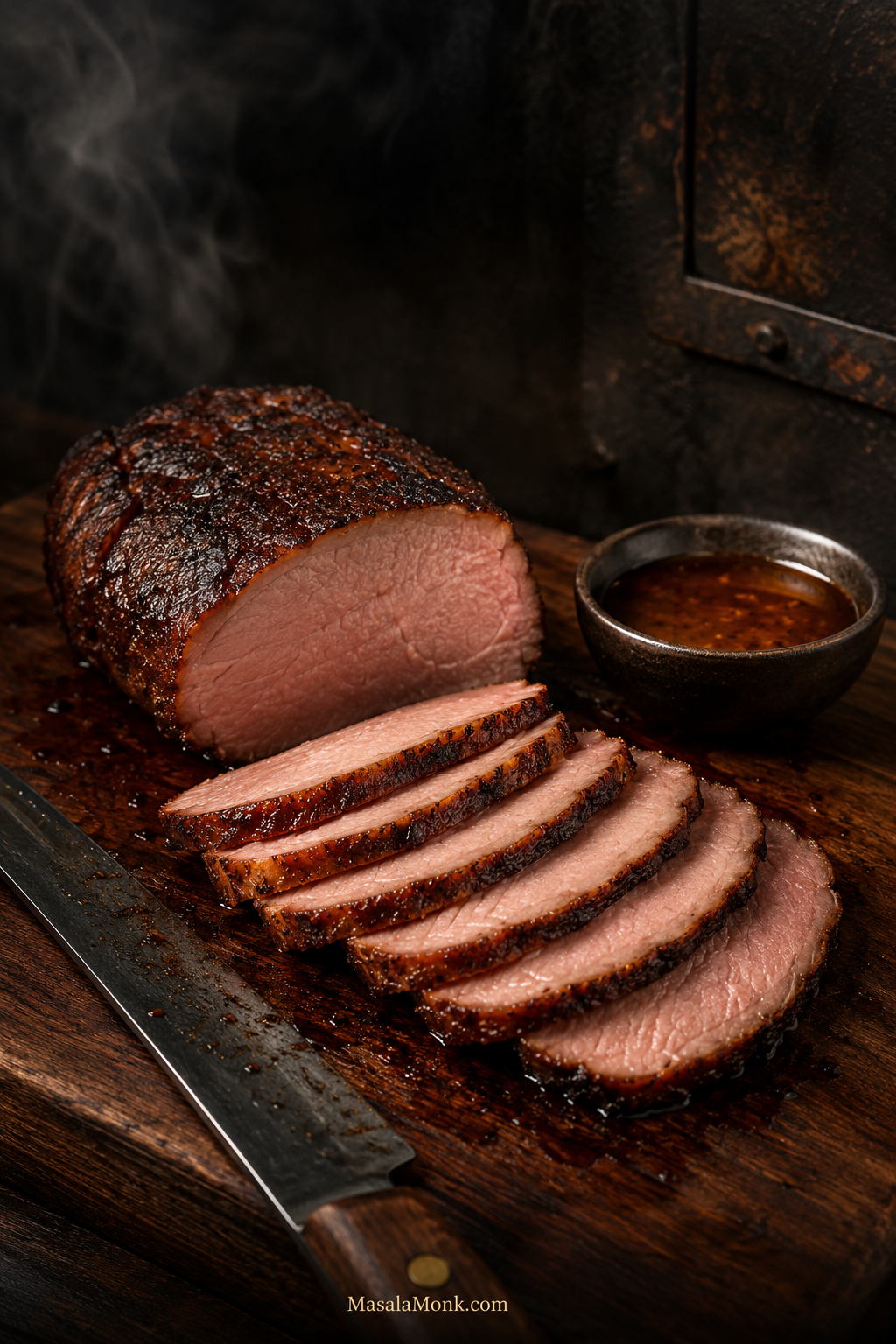
Smoked Pork Loin Recipe sounds easy until the roast looks perfect on the smoker and still slices dry. Pork loin is leaner than pork shoulder, so it does not need to fall apart, shred, or cook all day. Instead, it needs steady smoke, a reliable thermometer, a short rest, and clean slicing.
This version is built for juicy slices: brown sugar, smoked paprika, mild fruitwood smoke, a steady 225°F smoker, and a firm stop at 145°F in the center. Because the method is simple, the small details matter even more. Pull the roast at the right temperature, rest it before slicing, and the meat can be smoky, tender, and dinner-worthy without drying out.
Use this for a boneless pork loin roast, not pork tenderloin. The timing changes completely when the package says tenderloin because tenderloin is much smaller and cooks faster.
The goal is not pulled pork and it is not a dry roast with smoke on the outside. The goal is a sliceable roast with a peppery-sweet crust, a gentle fruitwood aroma, and enough moisture that the first warm slice still glistens when it hits the board.
What You’ll Find in This Guide
This smoked pork loin guide is organized around the questions that matter while the roast is actually cooking: what cut to buy, what temperature to use, when to pull it, how to keep it juicy, and what to do when something starts going wrong.
Make the Recipe
Timing, Serving & Fixes
Quick Answer: Smoked Pork Loin Time and Temperature
Smoke a 3–4 lb / 1.4–1.8 kg boneless pork loin at 225°F / 107°C until the thickest part reaches 145°F / 63°C, then rest it for 10–15 minutes before slicing. Most roasts take about 2–3 hours, while thicker roasts, cold weather, or a cooler-running smoker can push the cook closer to 3½ hours. Use the internal temperature, not the clock.
| Key detail | Best answer |
|---|---|
| Best smoker temperature | 225°F / 107°C |
| Safe internal temperature | 145°F / 63°C in the thickest part, followed by a rest |
| Rest time | 10–15 minutes before slicing |
| Estimated cook time | About 2–3 hours for a 3–4 lb roast; thick roasts may take longer |
| Best wood | Apple, cherry, or pecan |
| Best cut | Boneless pork loin roast, not tenderloin |
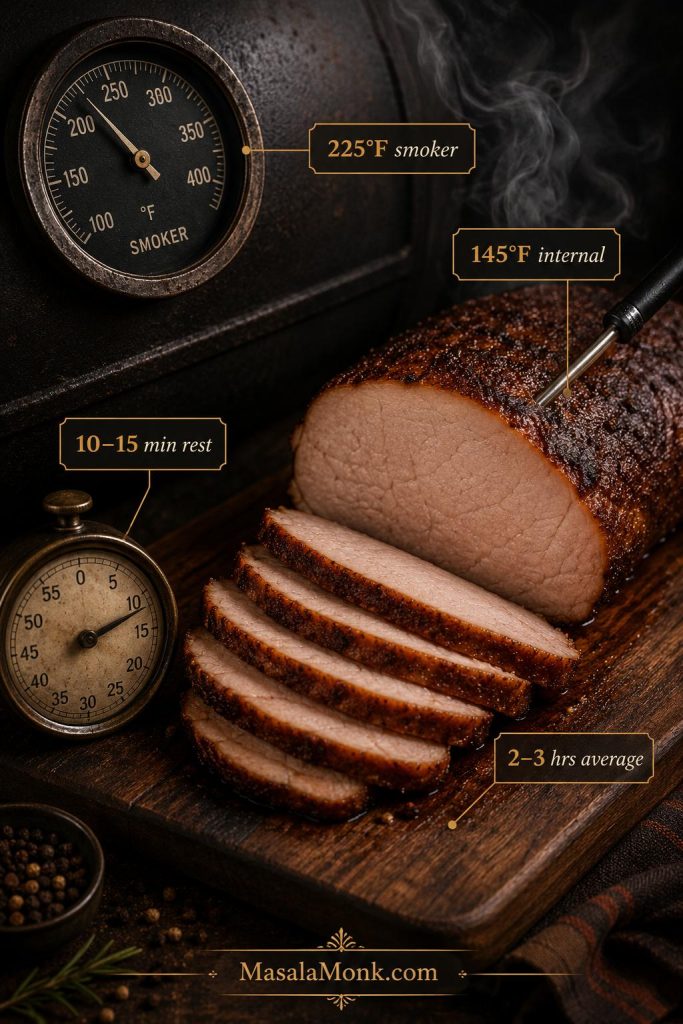
Need the full step-by-step? Go to how to smoke pork loin, or check the time and temperature chart if you are planning around a smoker schedule.
What Perfect Smoked Pork Loin Should Look Like
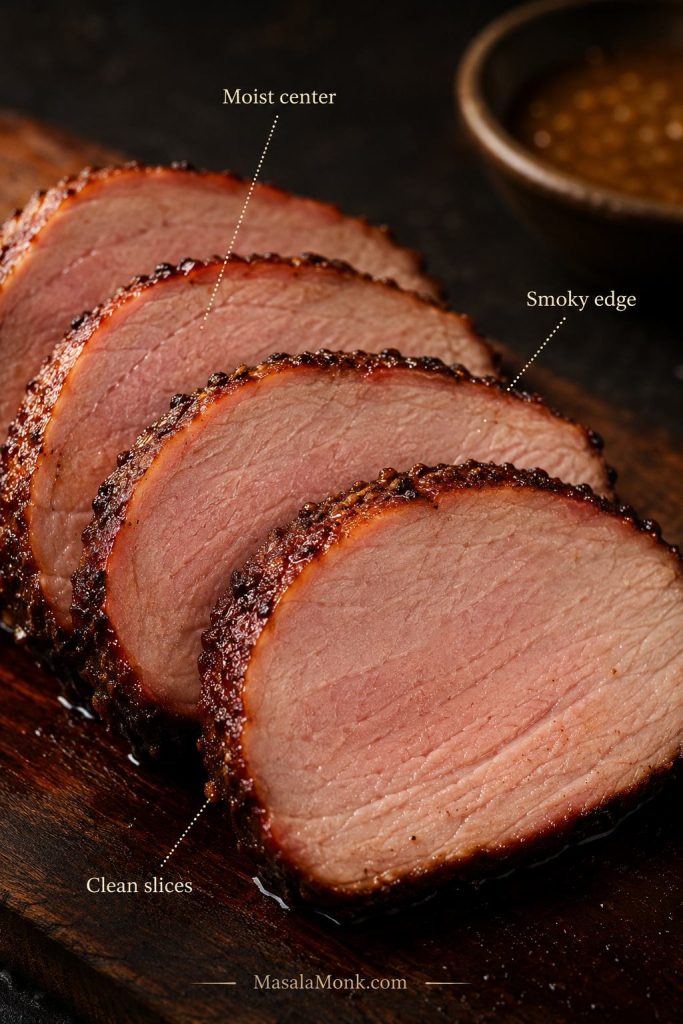
The finished pork should not look like pulled pork or behave like brisket. It should have a smoky, seasoned outside, a moist center, and clean slices that bend slightly without crumbling. A juicy first slice with the crust still intact means you hit the right window.
Slight pink is normal once the pork has reached temperature and rested properly. Many juicy slices will look a little rosy instead of chalky white. The thermometer decides doneness; the slice tells you whether you protected the moisture.
Why This Smoked Pork Loin Recipe Works
Pork loin is lean, which is exactly why it can be so good when it is cooked carefully. It slices cleanly, takes smoke well, and does not need hours of rendering like pork shoulder. However, it has less internal fat to protect it from overcooking.
Juiciness comes from controlling the few details that matter most: steady heat, a balanced rub, a thermometer in the center, a proper rest, and thin slices across the grain. A dry roast and a juicy one are often separated by only a few degrees and a rushed slice.
When it works, the roast should slice cleanly through the smoky crust, stay moist in the center, and feel tender without falling apart. That is the sweet spot: smoky enough for a backyard plate, but still juicy enough for sandwiches, rice bowls, and leftovers the next day.
Why Pork Loin Should Not Be Cooked Like Pulled Pork
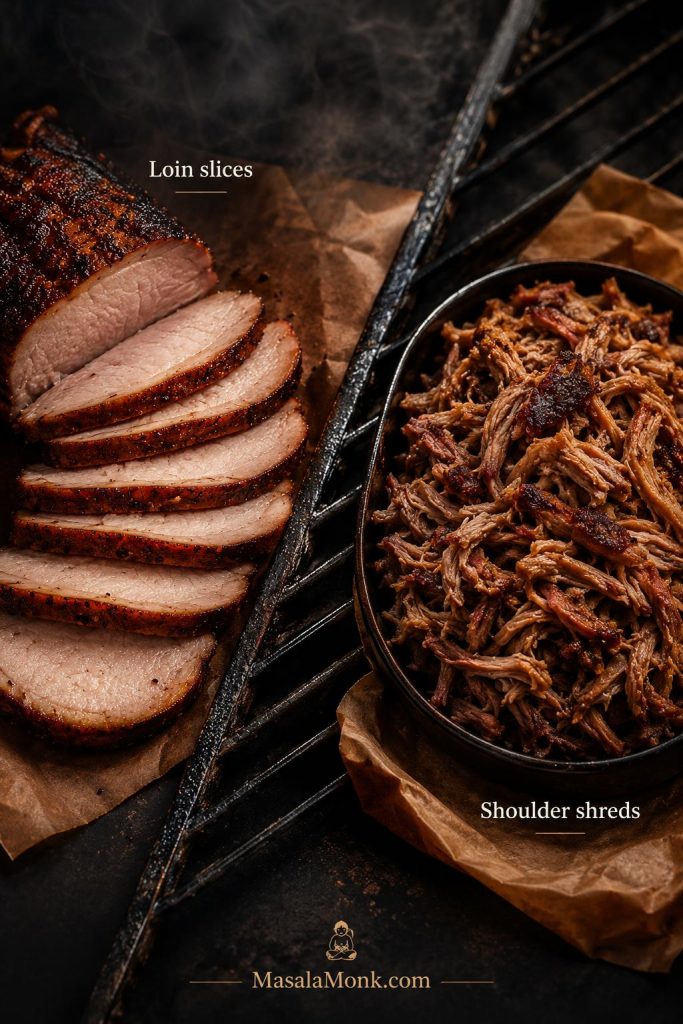
Smoked Pork Loin vs Pork Tenderloin
Pork loin and tenderloin are not the same cut. This recipe is for the wider roast that slices like a small pork roast. Tenderloin is long, narrow, and much smaller, so it cooks much faster.
When the label says tenderloin, switch recipes. MasalaMonk’s pork tenderloin in oven guide is a better fit for that cut, and the slow cooker pork tenderloin version is useful for a softer, saucier dinner.
| Cut | Shape | Usual size | Use this recipe? | Cooking note |
|---|---|---|---|---|
| Pork loin | Wide roast | 3–5 lb / 1.4–2.3 kg | Yes | Smokes slowly and slices like a roast |
| Pork tenderloin | Long, narrow, small | 1–1.5 lb / 450–680 g | No | Cooks much faster and needs different timing |
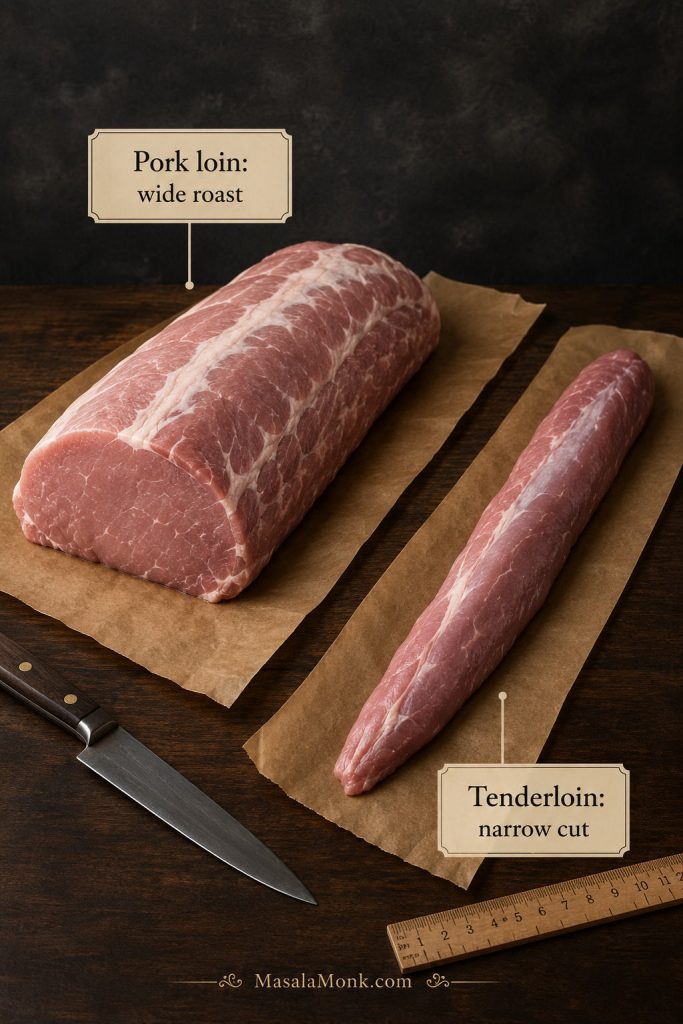
Still choosing at the store? Use the buying guide. Already have a boneless pork loin roast? Go straight to the ingredients.
Which Pork Loin to Buy for Smoking
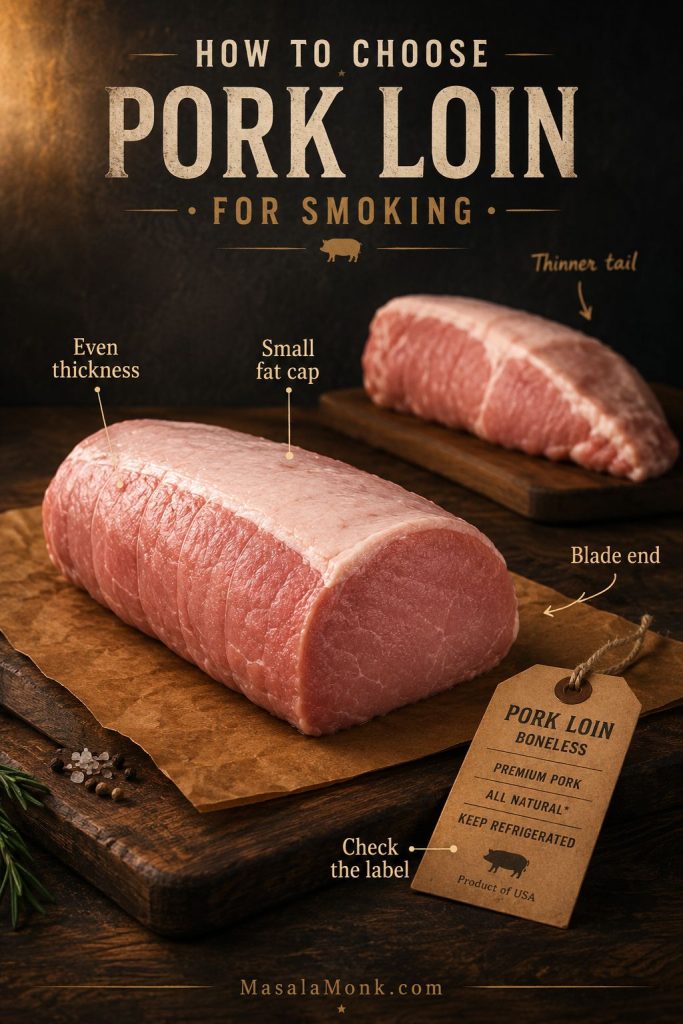
Choose a roast that is even in thickness, compact enough to slice cleanly, and not trimmed completely bare. A small fat cap gives the lean meat a little protection, while an uneven roast with one thin tail can cook at different speeds from end to end.
Blade-end pork loin often has a little more fat and tenderness than the very lean center-cut end, which can make it more forgiving on the smoker. Center-cut still works well, especially when it has an even shape and you pull it on temperature instead of time.
- Best size: 3–4 lb / 1.4–1.8 kg is easiest for this method.
- Best shape: even thickness from end to end, without one very thin tail.
- Best surface: a thin fat cap is helpful; thick hard fat can be trimmed.
- Best for slicing: a compact roast with a consistent width gives cleaner dinner slices.
- Check the label: enhanced, injected, seasoned, or solution-added pork needs less salt.
Enhanced or solution-added pork is already partly seasoned inside, so reduce the kosher salt in the rub. A full dry brine plus a salty rub can make the finished slices taste sharp, especially after smoking and reheating.
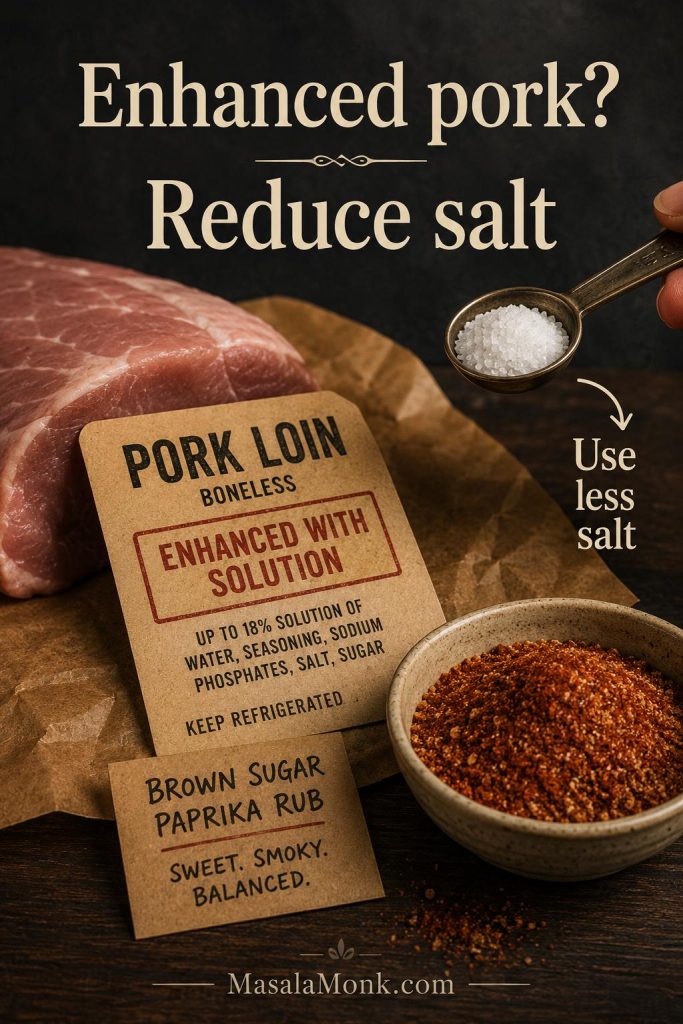
Once the roast looks right, move on to the rub and dry brine section so the salt level matches the pork you bought.
Ingredients for Smoked Pork Loin
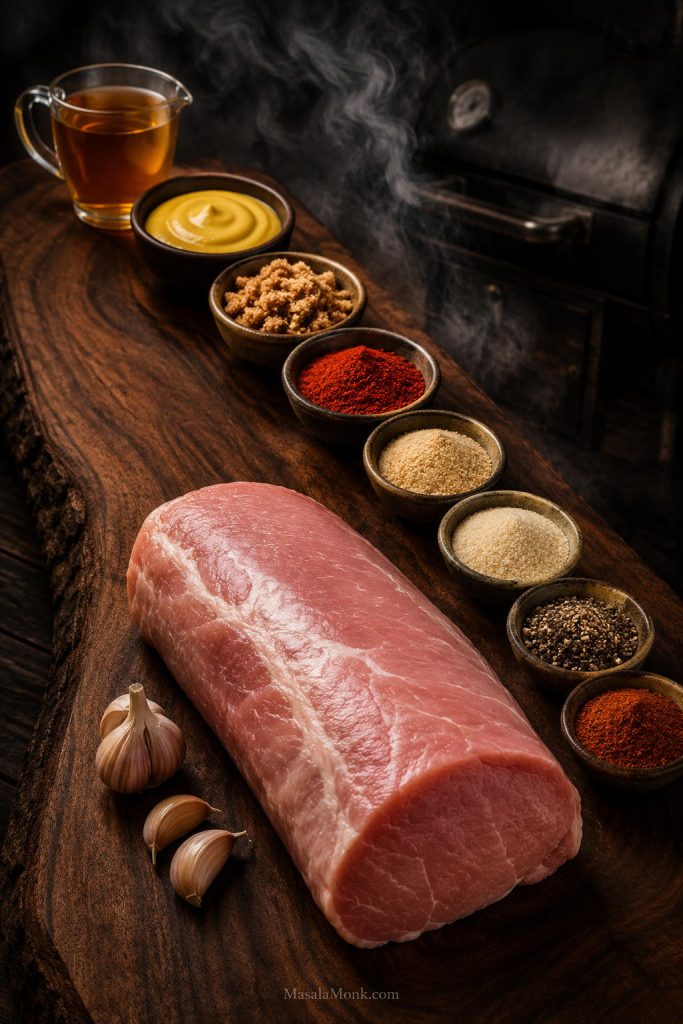
The ingredient list is short because the smoker, the rub, and the final temperature do most of the work. Use a boneless roast around 3–4 pounds for the easiest timing.
- Boneless pork loin roast: use a 3–4 lb / 1.4–1.8 kg roast for this method.
- Dijon mustard or olive oil: either works as a binder so the rub sticks. Dijon adds a little tang but does not make the pork taste aggressively mustardy.
- Brown sugar: adds gentle sweetness and helps the surface brown.
- Smoked paprika: gives color and a smoky-sweet backbone.
- Kosher salt: seasons the roast. Use less when the pork is already enhanced or packed in a salt solution.
- Garlic powder and onion powder: build the savory base.
- Black pepper: adds a clean peppery edge.
- Chili powder: use a mild US-style chili powder blend. Use only ¼ teaspoon if substituting hot red chilli powder or cayenne.
- Optional cumin, mustard powder, or cayenne: use a small amount for a deeper or spicier rub.
- Apple juice, broth, or water: optional for a light spritz or reheating leftovers.
Best Rub and Optional Dry Brine for Smoked Pork Loin
The rub is sweet enough to build color, smoky enough to taste like BBQ, and savory enough to season the lean meat. It should not be so salty that leftovers become harsh after reheating.
| Rub ingredient | US amount | Metric estimate |
|---|---|---|
| Brown sugar | 2 tbsp | 24–26 g |
| Smoked paprika | 1 tbsp | 6–7 g |
| Kosher salt | 2 tsp | 6–10 g depending brand |
| Garlic powder | 2 tsp | 6 g |
| Onion powder | 1 tsp | 3 g |
| Black pepper | 1 tsp | 2–3 g |
| Mild chili powder blend | 1 tsp | 3 g |
| Ground cumin or mustard powder, optional | ½ tsp | 1–1.5 g |
| Cayenne, optional | ¼ tsp | 0.5 g |
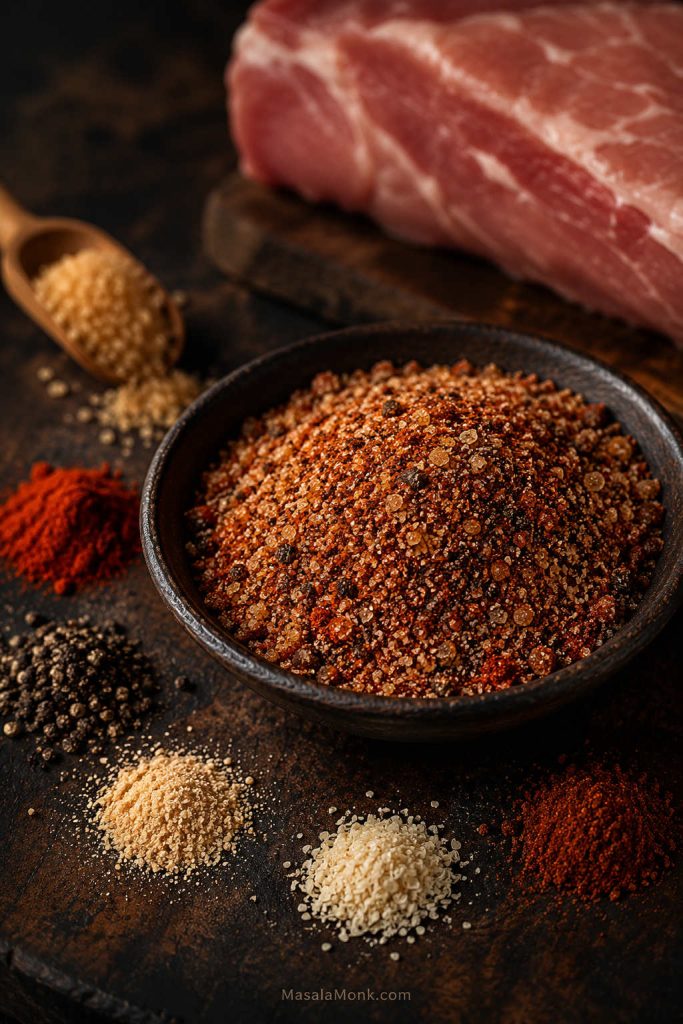
You can also use 3–4 tablespoons of a store-bought pork rub. However, taste or check the label first because some BBQ rubs are much saltier than others. Use a lighter hand when the rub already tastes salty.
Should You Brine Smoked Pork Loin?
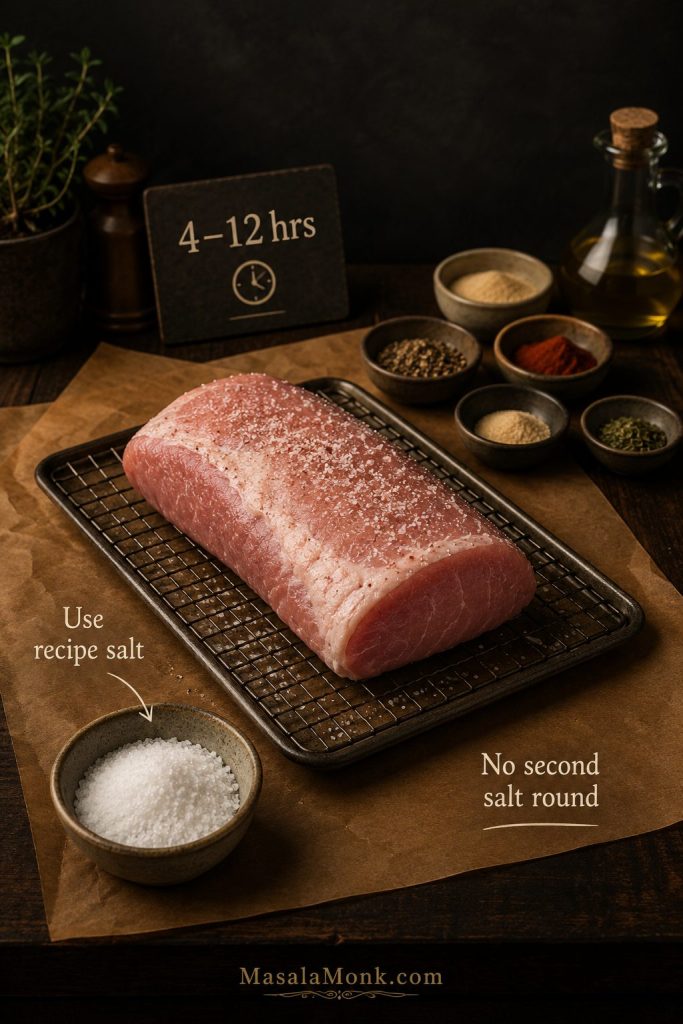
Brining is optional, but a short dry brine can help when the roast is very lean or you want deeper seasoning. Use the kosher salt from the recipe and apply it 4–12 hours ahead. Refrigerate the pork uncovered, then add the remaining rub ingredients before smoking. Do not add a second full round of salt.
Store-bought rubs and enhanced pork need extra caution because they may already contain plenty of salt. For most first cooks, the regular rub method is enough.
After seasoning is sorted, choose your smoke profile in the best wood for smoking pork loin section.
Best Wood for Smoking Pork Loin
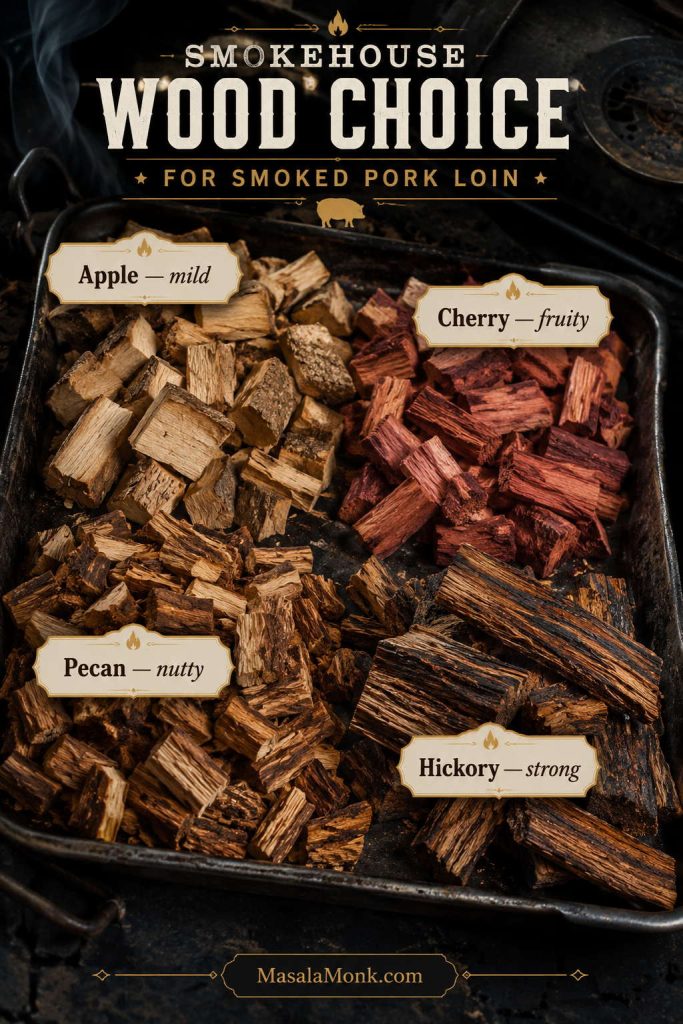
Mild fruitwood is the safest first choice because this cut is delicate enough to pick up smoke quickly. Apple and cherry are the easiest picks. Pecan gives a warmer, nuttier flavor. Hickory can work, but it is stronger, so use it lightly or blend it with apple or cherry.
First time smoking pork loin? Start with apple or cherry. You can always go stronger next time; however, you cannot take harsh smoke back once it is in a lean roast.
| Wood | Flavor | Best use |
|---|---|---|
| Apple | Mild, slightly sweet | Best first choice for smoked pork loin |
| Cherry | Mild, fruity, good color | Great all-purpose pork wood |
| Pecan | Warm and nutty | Good when you want deeper BBQ flavor |
| Hickory | Stronger and smoky | Use lightly or blend with fruitwood |
| Maple | Gentle sweetness | Good with bacon, glaze, or sweeter rubs |
| Mesquite | Very intense | Usually too strong alone for lean pork loin |
Equipment You’ll Need
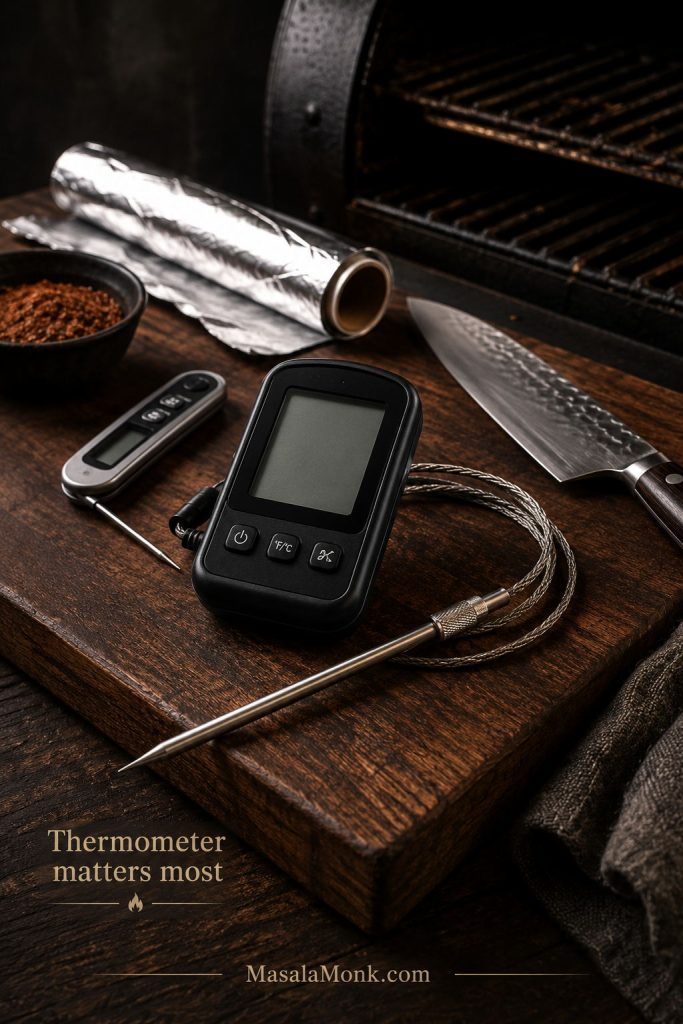
You do not need much gear, but a reliable thermometer matters more than almost anything else here. Pork loin is lean enough that guessing by time or color can push it past the juicy window. Use a smoker, pellet grill, electric smoker, charcoal smoker, or grill set up for indirect heat, plus a probe thermometer or instant-read thermometer, a sharp knife, a cutting board, foil for resting, and a small bowl for mixing the rub.
With the tools ready, start the actual cook in how to smoke pork loin.
How to Smoke Pork Loin
The method is straightforward, but do not rush the setup. A dry surface, even seasoning, and correct thermometer placement make the cook much more predictable.
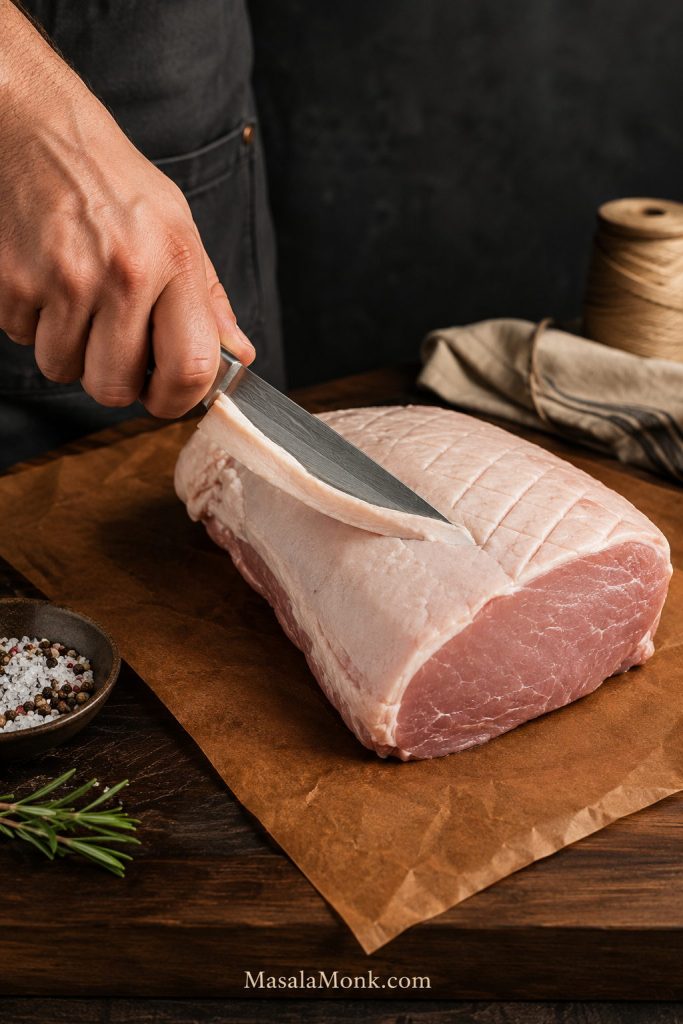
1. Trim the pork loin
Pat the roast dry with paper towels, then trim away any tough silver skin or thick hard fat. A soft fat cap can stay at about ¼ inch. A thicker cap can be scored lightly in a shallow diagonal pattern so the rub sits better on the surface.
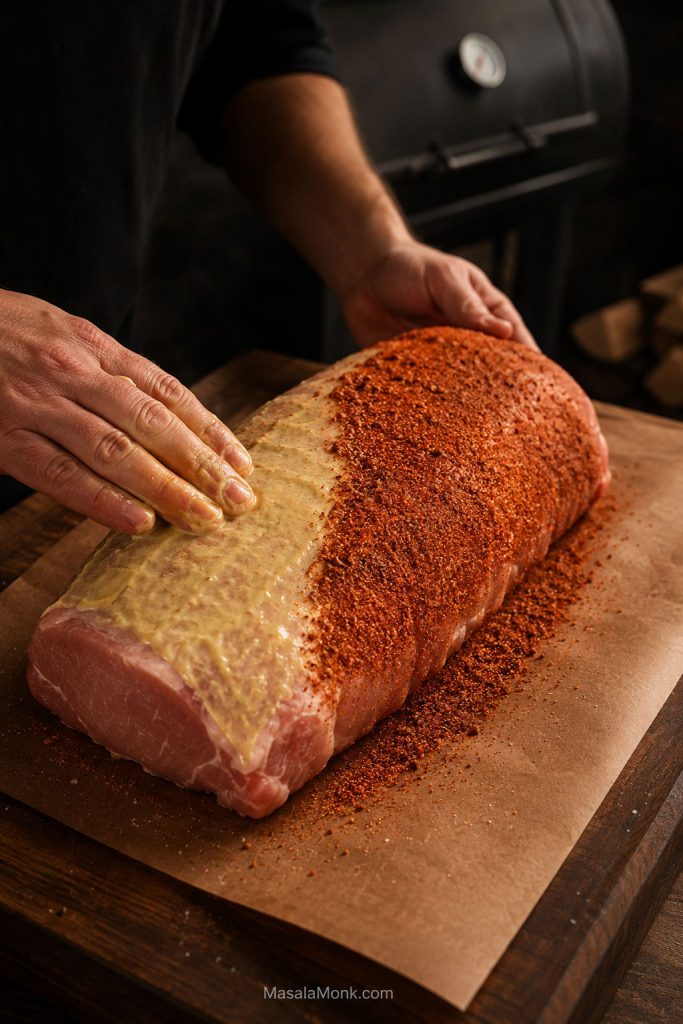
2. Add binder and rub
Rub the pork with Dijon mustard or olive oil. Mix the dry rub in a small bowl, then coat the meat evenly on all sides. You want an even layer, not a thick paste. Let the seasoned roast sit for 20–30 minutes while the smoker comes to temperature.
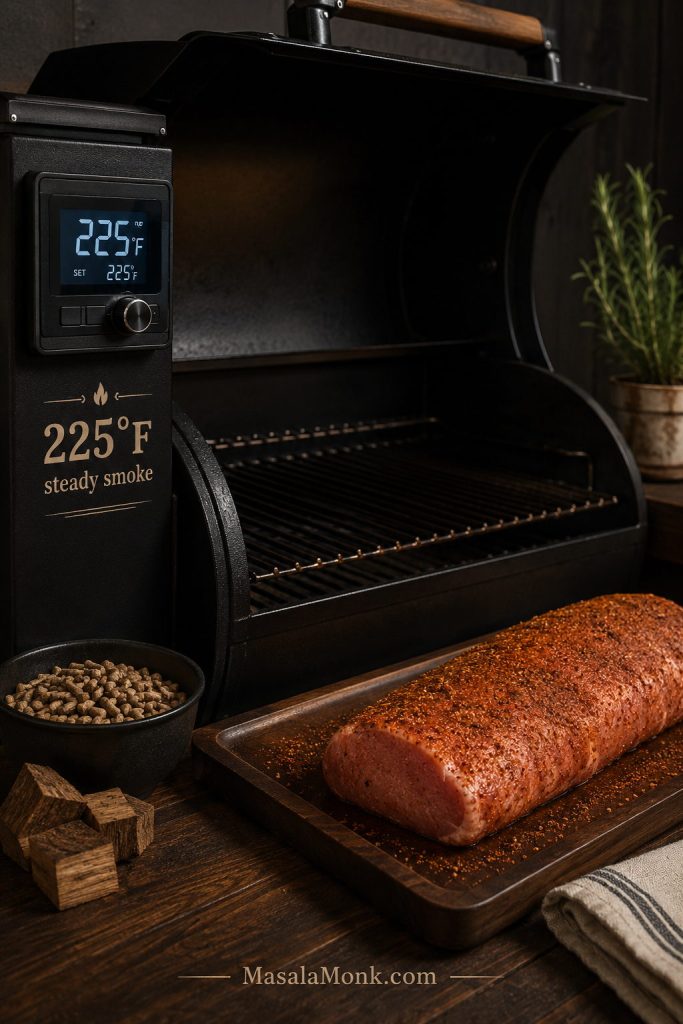
3. Preheat the smoker
Preheat the smoker to 225°F / 107°C. This is the most forgiving temperature for a lean roast because it warms gently instead of racing past the target. Add apple, cherry, or pecan wood.
Need a slightly faster cook? Use 250°F / 121°C and start checking early. A pellet grill can also cook this cut at 275°F / 135°C, but the window between juicy and dry gets smaller.
4. Smoke until the pork reaches 145°F
Place the pork on the smoker grate once the smoker is steady. A visible fat cap can face up when the heat is indirect. Insert a probe thermometer into the thickest part of the roast, away from the edge and not buried in a pocket of fat.
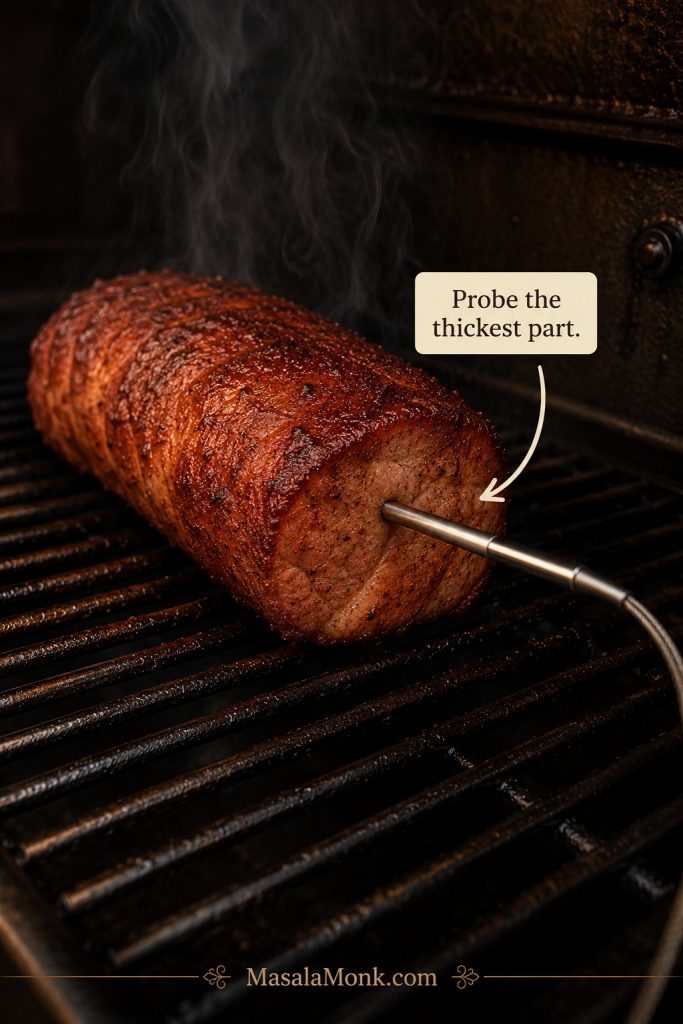
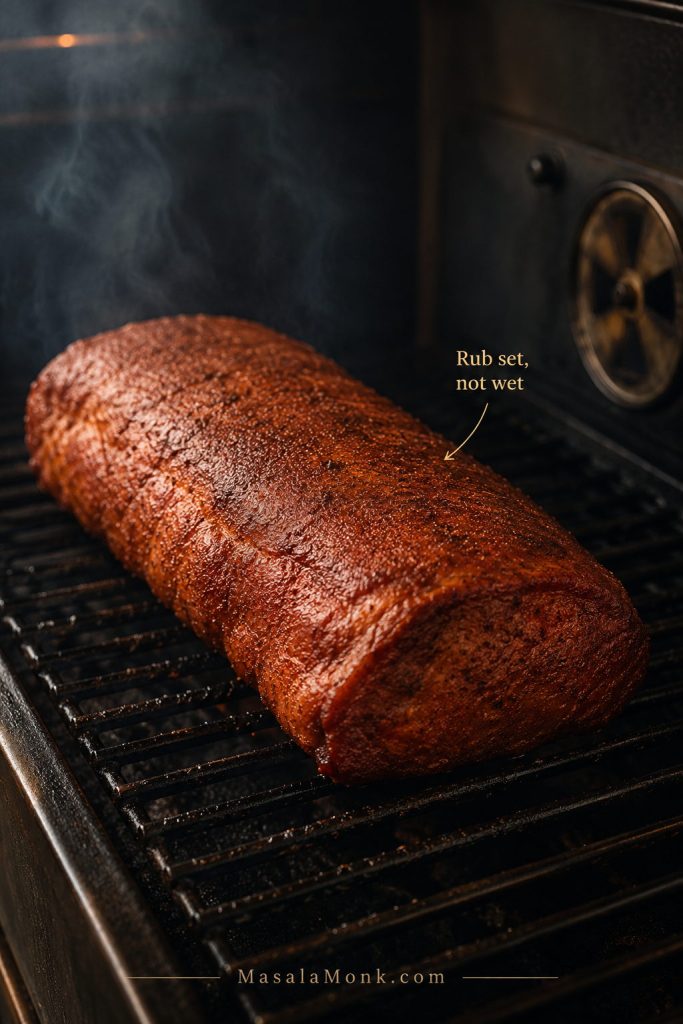
What the Rub Should Look Like Mid-Cook
About halfway through, the rub should look set rather than wet, and the pork should smell smoky-sweet instead of raw and spicy.
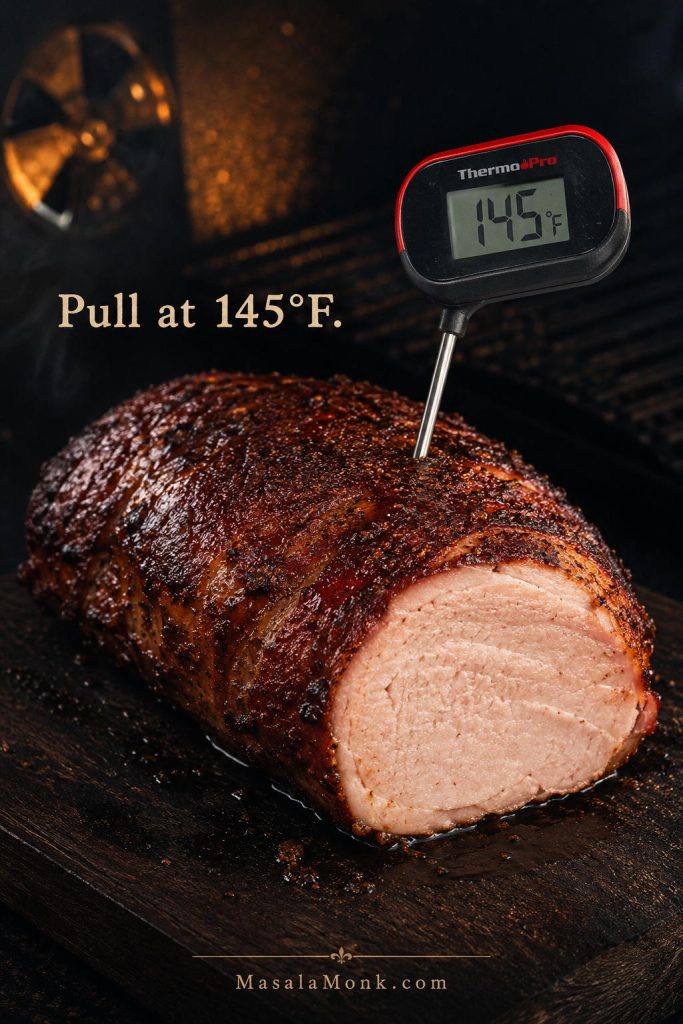
When to Pull Smoked Pork Loin
Smoke until the thickest part reaches 145°F / 63°C. Do not wait for the roast to become fall-apart tender. That is pork shoulder logic, and it is one of the easiest ways to dry out this lean cut.
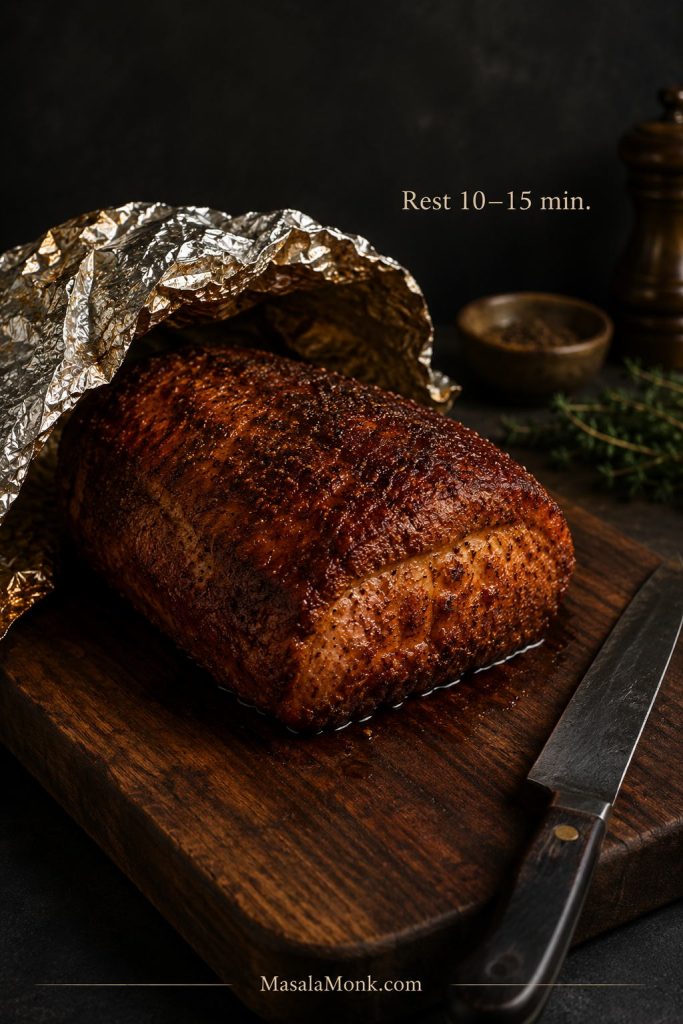
5. Rest before slicing
After smoking, transfer the roast to a cutting board and rest for 10–15 minutes. This is the quiet part of the recipe, but it matters: the meat relaxes, the juices settle, and the first slice stays much cleaner. Tent loosely with foil in a cool kitchen, but do not seal it tightly unless you are okay with softening the crust.
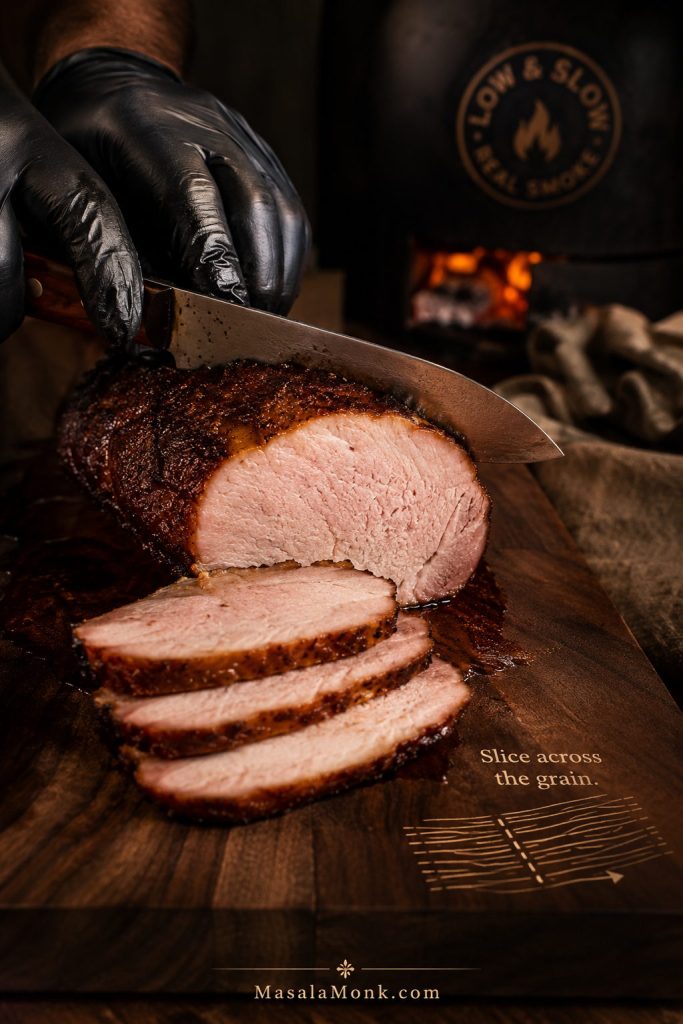
6. Slice across the grain
Slice across the grain into ¼–½ inch slices. Go thinner for sandwiches or leftovers, and slightly thicker for a dinner plate. Thinner slicing also helps when the meat feels firmer than you wanted.
Look for a moist center, a thin smoky edge, and juices that stay mostly in the meat instead of flooding the board.
For planning future cooks, compare smoker temperatures in the time and temperature chart. For dry slices, dark rub, or soft bark, jump to troubleshooting smoked pork loin.
Smoked Pork Loin Time and Temperature Chart
Cook time helps with planning, but it is not the final test. Thickness, starting temperature, smoker swings, wind, weather, and probe placement all change the timing. Use this chart as a planning guide; however, trust the internal temperature before you trust the clock.
| Smoker temperature | Approximate time for 3–4 lb pork loin | Best for | Pull temperature |
|---|---|---|---|
| 225°F / 107°C | 2–3½ hours | Most forgiving, more smoke, best beginner method | 145°F / 63°C |
| 250°F / 121°C | 2–3 hours | Balanced speed and smoke | 145°F / 63°C |
| 275°F / 135°C | 1½–2¼ hours | Faster pellet-grill version | 145°F / 63°C |
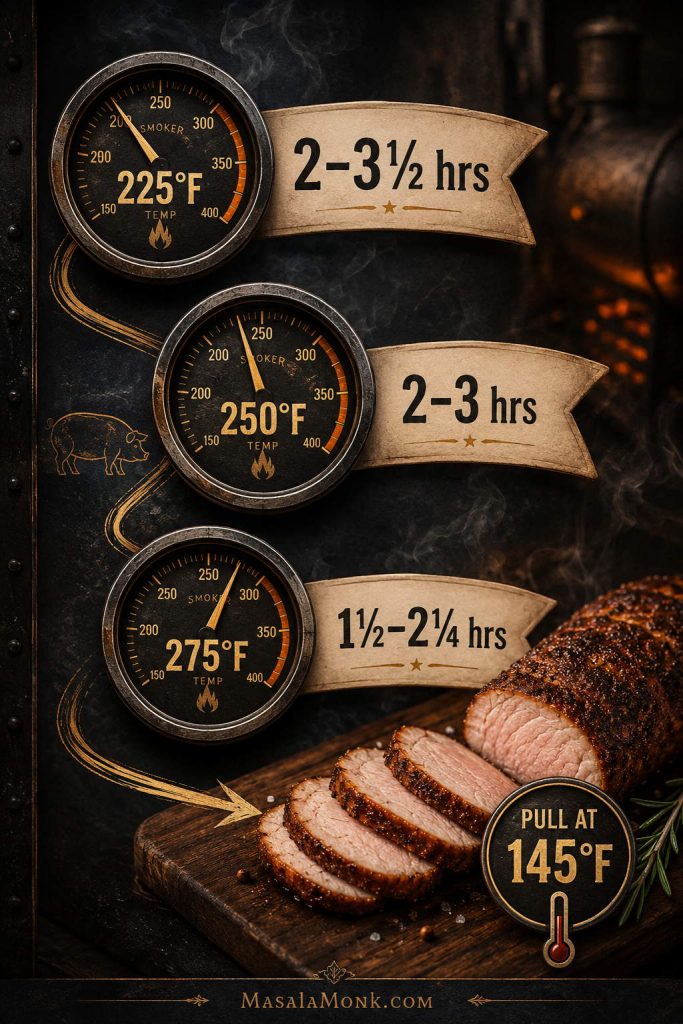
A slow roast is not automatically a problem. When the smoker is steady and the probe is placed correctly, let the thickest part come up gradually. Cranking the heat hard near the end can push the outside too far before the center is ready.
Shape matters more than total weight once the roast gets larger. A long, even piece may not take dramatically longer than a smaller one, while a very thick roast can take much longer. Build in extra time when cooking for a crowd.
What Temperature Keeps Smoked Pork Loin Juicy but Safe?
In this recipe, smoked pork loin is done at 145°F / 63°C in the thickest part of the roast, followed by a rest. The official FoodSafety.gov minimum internal temperature chart lists pork steaks, chops, and roasts at 145°F / 63°C with a 3-minute rest. The National Pork Board pork cooking temperature guide also lists 145°F with a rest for fresh cuts such as pork loin.
This recipe uses a longer 10–15 minute rest because a roast slices better after it has had time to settle. The extra rest is not about cooking it harder; it is about giving the juices time to calm down before the knife goes in.
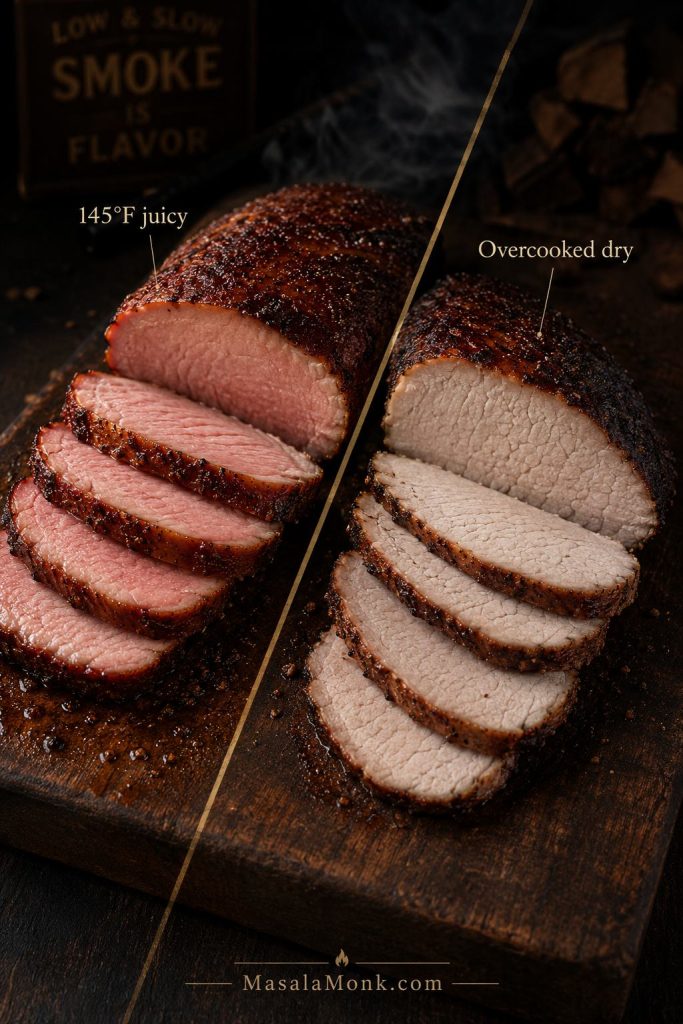
The biggest mistake is waiting for pork loin to feel probe-tender like pork shoulder. By the time it feels like pulled pork, it is usually overcooked. Stop by temperature, not texture.
A slight pink tint, especially near the smoke ring, is normal. Color is only a clue; the thermometer is the safety test.
At that point, the outside should look smoky and seasoned, the center should still look moist, and the slices should hold together without crumbling. Spoon any juices on the board back over the pork instead of leaving them behind.
Smoked Pork Loin Recipe
Juicy Smoked Pork Loin with Brown Sugar Paprika Rub
A juicy smoked pork loin with a brown sugar smoked paprika rub, mild fruitwood smoke, a smoky crust, and clean slices that stay moist after resting.
Total time: about 2½–4 hours, depending on roast thickness and smoker temperature.
Smoker temperature: 225°F / 107°C
Internal temperature: 145°F / 63°C
Best wood: apple, cherry, or pecan
Cut: boneless pork loin roast, not pork tenderloin
Ingredients
- 1 boneless pork loin roast, 3–4 lb / 1.4–1.8 kg
- 1½ tbsp / 22 ml Dijon mustard or olive oil
- 2 tbsp / 24–26 g brown sugar
- 1 tbsp / 6–7 g smoked paprika
- 2 tsp kosher salt, about 6–10 g depending brand; use less for enhanced or solution-added pork
- 2 tsp / 6 g garlic powder
- 1 tsp / 3 g onion powder
- 1 tsp / 2–3 g black pepper
- 1 tsp / 3 g mild US-style chili powder blend
- ½ tsp ground cumin or mustard powder, optional
- ¼ tsp cayenne or hot red chilli powder, optional
- ¼–½ cup / 60–120 ml apple juice, broth, or water for spritzing or reheating, optional
Instructions
- Trim the pork. Pat the pork loin dry. Trim away silver skin and thick hard fat. Leave up to ¼ inch soft fat cap if present.
- Season. Rub the pork with Dijon mustard or olive oil. Mix the brown sugar, smoked paprika, salt, garlic powder, onion powder, black pepper, chili powder, and optional spices. Coat the pork evenly on all sides.
- Rest while the smoker heats. Let the seasoned pork sit for 20–30 minutes while you preheat the smoker to 225°F / 107°C.
- Smoke. Place the pork loin on the smoker grate over indirect heat. Insert a probe thermometer into the thickest part of the roast. Smoke until the internal temperature reaches 145°F / 63°C, usually about 2–3 hours for a 3–4 lb roast. Thick roasts or cooler-running smokers can take closer to 3½ hours.
- Rest. Transfer the pork to a cutting board and rest for 10–15 minutes. Tent loosely with foil if needed.
- Slice. Slice across the grain into ¼–½ inch slices. Serve with pan juices, BBQ sauce, mustard sauce, or your favorite sides.
Notes
- Do not use this timing for pork tenderloin. Tenderloin is smaller and cooks faster.
- Time is an estimate. Internal temperature decides doneness.
- Use mild US-style chili powder for the full 1 teaspoon amount. Hot red chilli powder or cayenne should be reduced to ¼ teaspoon.
- A 250°F smoker can speed the cook slightly; start checking early.
- A 275°F pellet grill cook works, but the roast has a smaller margin before overcooking.
- Salty store-bought rubs and enhanced pork both need less added kosher salt.
- Leftovers reheat best with broth, apple juice, or pan juices and gentle covered heat.
Made this smoked pork loin? Leave a comment with your smoker type, wood choice, cook temperature, and pull temperature. Those details help the next cook decide whether to stay low at 225°F, try a faster pellet-grill version, or choose apple, cherry, or pecan wood.
No smoker today? The same temperature-first thinking applies to this slow cooker pork loin recipe: stop before the roast dries out, then slice it cleanly.
Pork Loin on Pellet Grill, Electric Smoker, Charcoal Smoker, or Offset
No matter what kind of smoker you use, the finish line stays the same: 145°F in the thickest part of the roast. The only real difference is how much attention your smoker needs along the way.
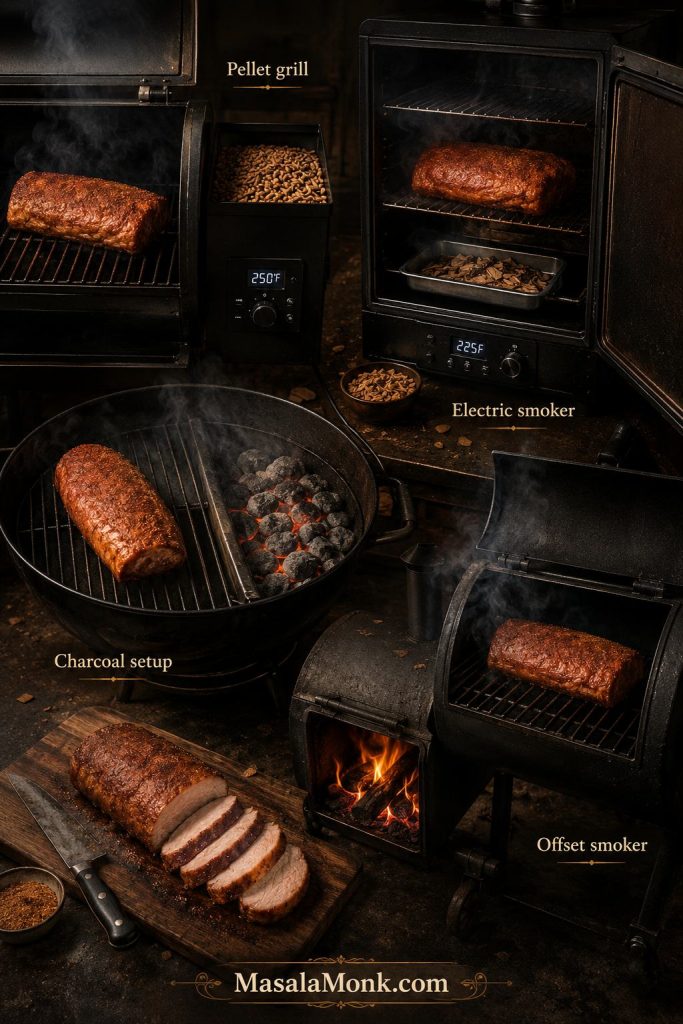
Pellet grill
Set the pellet grill to 225°F or 250°F. Apple, cherry, or pecan pellets are the easiest choices. Keep the lid closed as much as possible and check the internal temperature early, especially when cooking at 275°F.
Electric smoker
Use wood chips according to your smoker’s instructions and expect a gentler smoke profile. Because opening an electric smoker repeatedly can slow the cook, keep a probe in the roast when possible.
Charcoal smoker or Weber-style kettle
Set up two-zone indirect heat, keep the pork away from direct coals, and add one or two chunks of apple or cherry wood. Watch for temperature spikes. A roast getting too much heat from below can sit fat side down for extra surface protection.
Offset smoker
Run a clean, thin smoke and keep the pit steady. Rotate the roast when your smoker has a clear hot side. Because this cut is less forgiving, avoid letting the fire run too hot for too long.
How to Keep Smoked Pork Loin from Drying Out
Dry smoked pork loin usually comes from one of three things: the roast went past the target temperature, it was sliced too soon, or the slices were cut too thick or with the grain. Stop on temperature, rest before slicing, and cut against the grain.
- Use a thermometer. Time is only a guide.
- Do not cook it like pork shoulder. Pork loin is for slicing, not shredding.
- Rest before slicing. Give the juices time to settle.
- Slice across the grain. This makes the slices feel more tender.
- Slice only what you need. A whole rested roast stays juicier than a pile of exposed slices.
- Keep juices with leftovers. A little broth, apple juice, or pan juice helps during reheating.
Should You Wrap Pork Loin When Smoking?
You usually do not need to wrap pork loin while it smokes. Because the roast cooks faster than pork shoulder, it does not need the same long covered phase. Also, wrapping can soften the rub crust. Leave it unwrapped for the main method, then rest it loosely tented with foil.
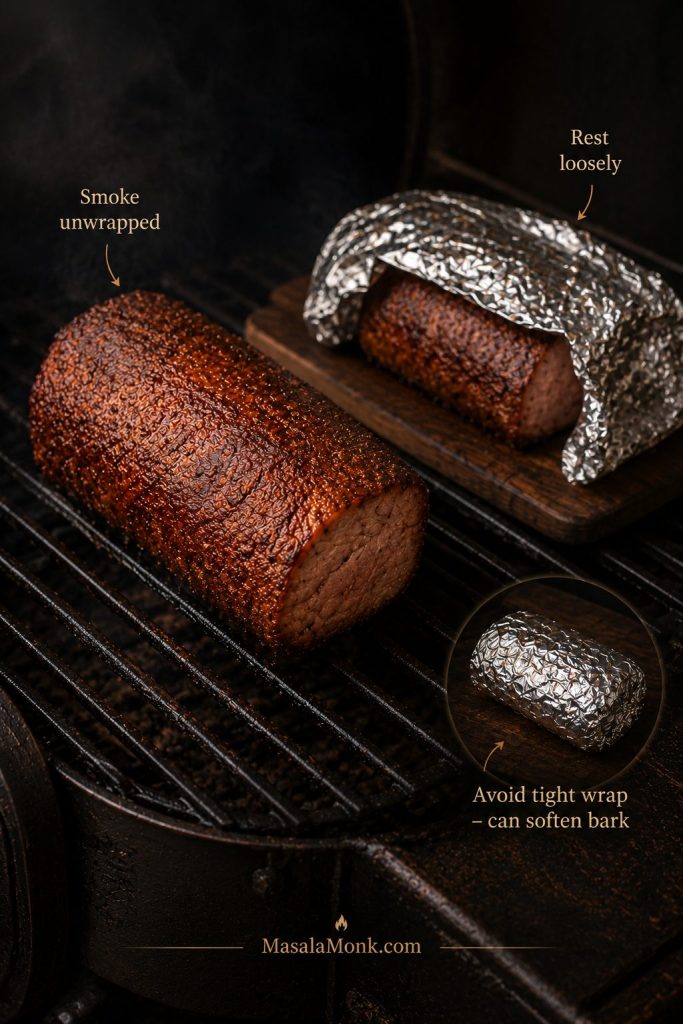
A surface that gets too dark before the center is done can be loosely tented near the end. Glazed versions are better brushed during the final 15–25 minutes instead of wrapped from the beginning.
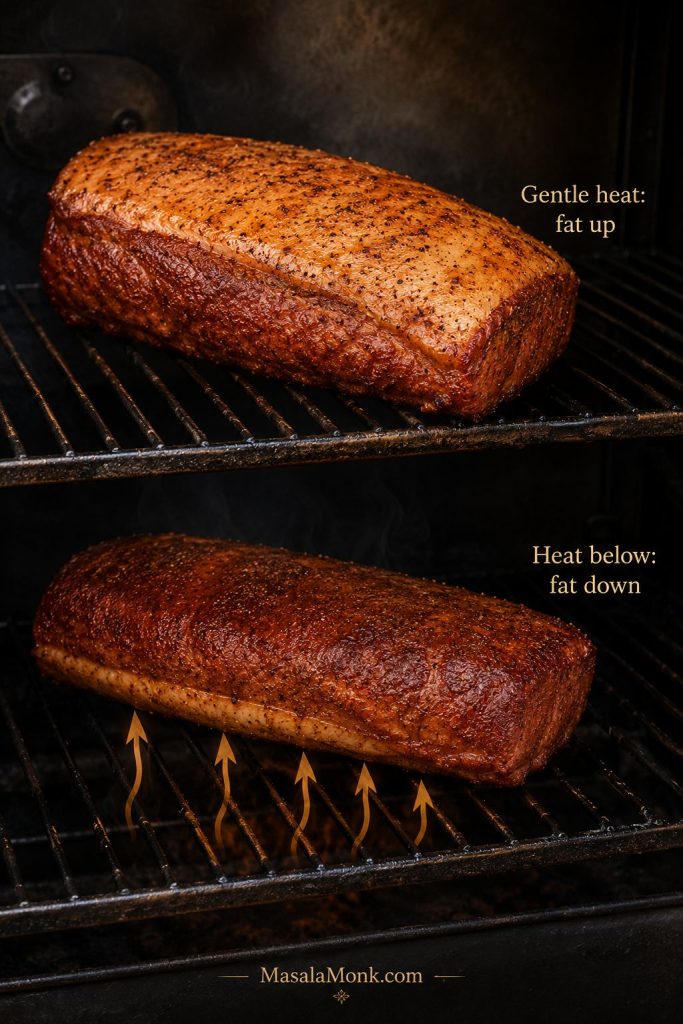
Should Pork Loin Be Smoked Fat Side Up or Down?
With gentle indirect heat, place a visible fat cap facing up. Strong heat from below is a reason to turn the fat side down so it helps protect the bottom of the roast.
Fat side direction can protect the surface, but it will not magically baste the center of a lean pork loin. Temperature control matters more than fat-side direction.
Optional Glaze, Spritz, or Marinade
The basic dry-rub version is the easiest place to start. Once you have the temperature method down, a spritz, glaze, or simple marinade can move the pork in a sweeter, brighter, or more classic BBQ direction.
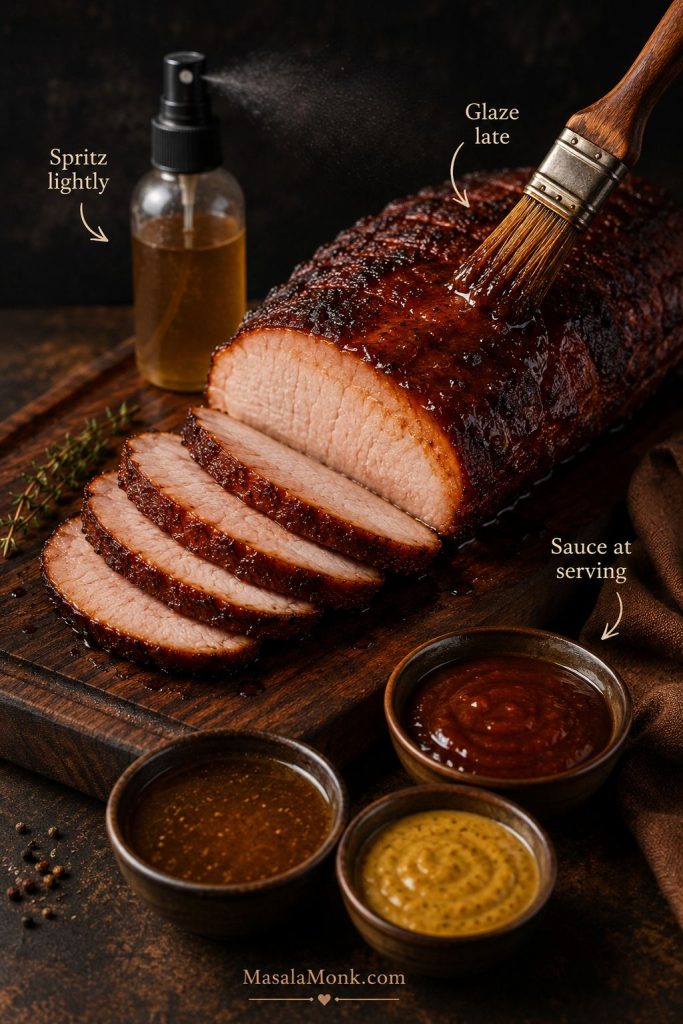
Apple juice or broth spritz
Spritzing with apple juice, broth, or water can add a little surface moisture, but it is optional. Repeatedly opening the smoker just to spritz can slow the cook and create temperature swings.
BBQ glaze
Brush BBQ sauce, honey garlic glaze, or apple glaze on during the final 15–25 minutes. Glazing too early can make the sugar darken before the center is ready.
Sauce ideas for serving
Serve the slices with BBQ sauce, mustard sauce, apple glaze, or warm pan juices for a classic BBQ plate. A fresher finish can come from mango salsa; the fruit, lime, onion, and chile are especially good with tacos or rice bowls.
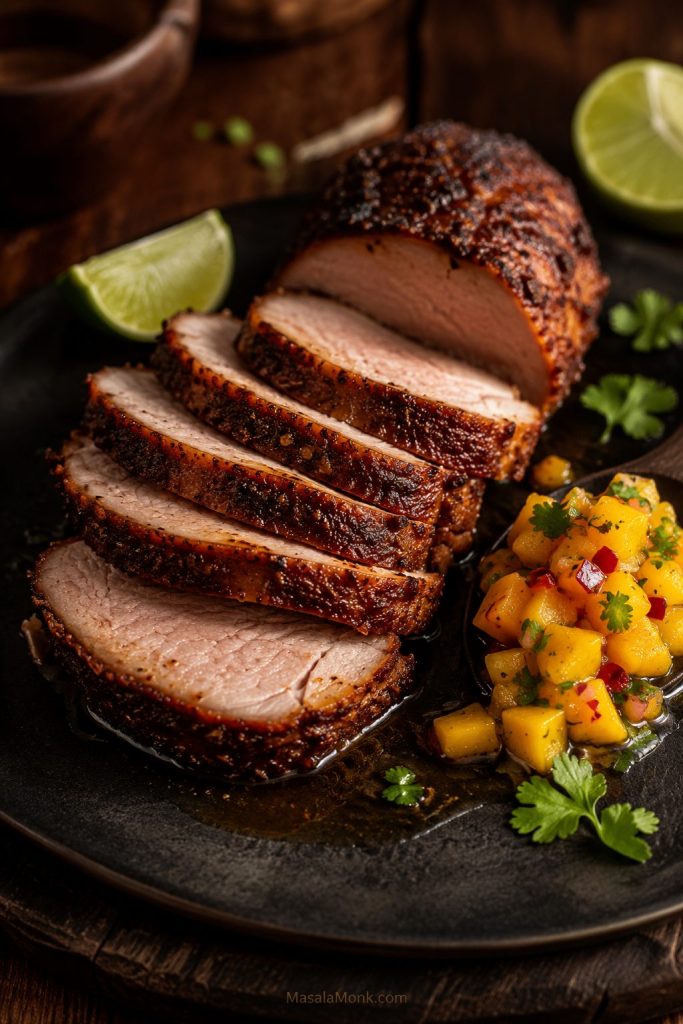
Pairing a glaze or salsa with sides? The serving section has the best creamy, crisp, and BBQ-style options.
Apple-honey marinade
Marinate for a few hours in apple juice, honey, Dijon, black pepper, and a little thyme or oregano when you want a sweeter version. Pat the pork dry before adding the rub so the surface can still pick up smoke and color.
What to Serve with Smoked Pork Loin
Smoked pork loin works best with sides that bring creaminess, crunch, or brightness to the plate. The pork itself is smoky and sliceable, so the side dishes should either soften the plate, freshen it up, or make it feel like a proper BBQ dinner.
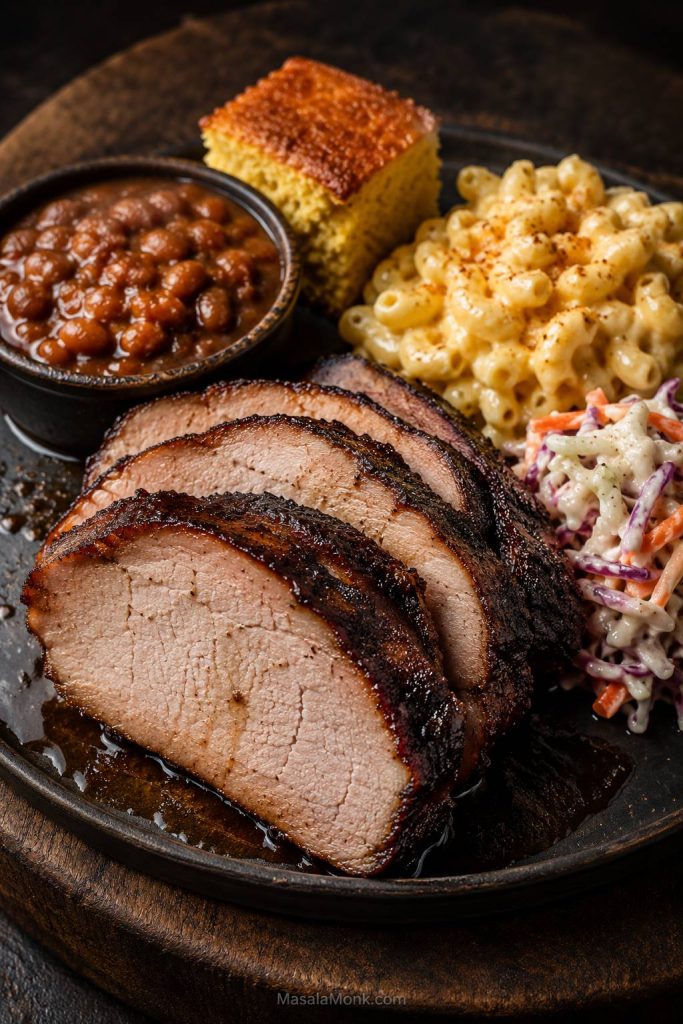
A classic BBQ-style plate can stay simple: thick slices of pork, warm pan juices or sauce, coleslaw, baked beans, and cornbread. Richer sides like macaroni and cheese or mashed potatoes make the meal feel more comforting without needing a heavy glaze.
Sweet rubs and glazes need contrast. Coleslaw, apple slaw, or potato salad can cut through the smoke and keep the plate from feeling too heavy.
Leftovers are often better sliced thin, almost like smoky roast beef. Tuck them into sandwiches, sliders, tacos, rice bowls, breakfast hash, or quick skillet meals with a little broth, BBQ sauce, mustard sauce, or pan juice to bring back moisture. With sandwiches or sliders, homemade french fries fit better than another rich casserole.
Storage, Reheating, and Leftovers
Let leftover pork cool, then refrigerate it in an airtight container. Pan juices should stay with the pork when possible. Larger pieces hold moisture better than a pile of exposed slices, so slice only what you plan to eat.
To reheat sliced smoked pork loin, place the slices in a covered baking dish with a few tablespoons of broth, apple juice, or pan juices. Reheat gently until the pork is hot throughout; for food safety, cooked leftovers should reach 165°F / 74°C. Reheating the same slices again and again will dry out lean pork.
Leftover slices are especially good when they are cut thin and used in meals that bring back moisture: tacos with salsa, rice bowls with sauce, fried rice, sandwiches with mustard or BBQ sauce, or breakfast hash with eggs and potatoes. This guide to how to cook rice perfectly helps keep rice bowls and fried rice fluffy instead of gummy.
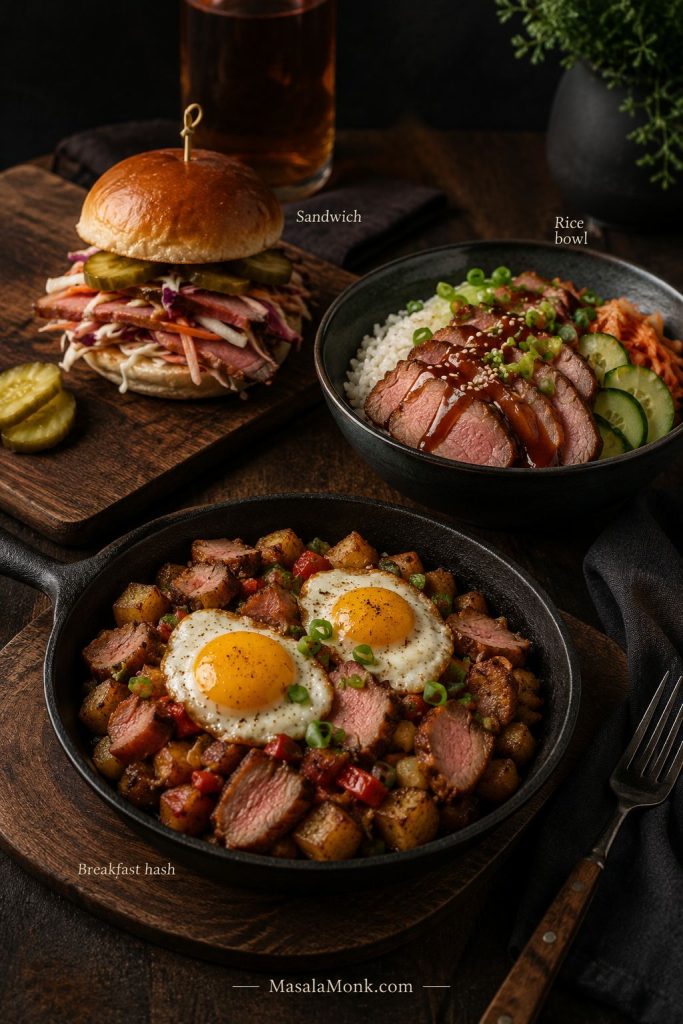
Leftover smoked pork loin ideas
- Smoked pork sandwiches with BBQ sauce or mustard sauce
- Tacos with slaw, salsa, and lime
- Rice bowls with beans, corn, and avocado
- Breakfast hash with potatoes and eggs, or tucked into a breakfast burrito
- Fried rice with diced smoked pork
- Mac and cheese topping
- BBQ sliders
- Protein for salads or grain bowls
- Smoked pork and potatoes with gravy or cheese sauce
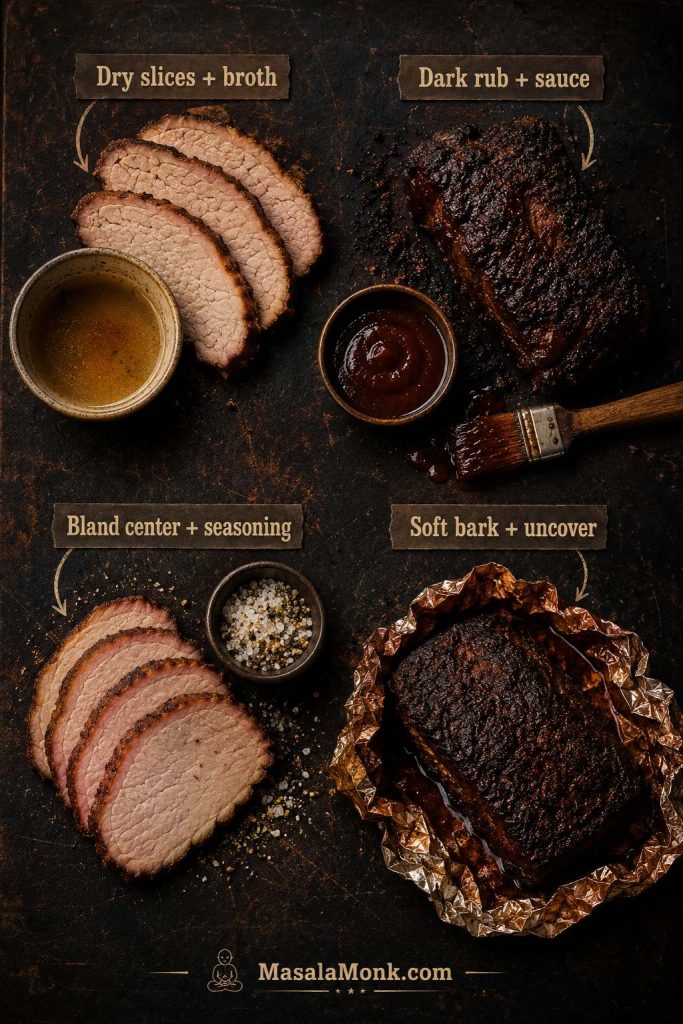
If the pork turned out drier than expected, the troubleshooting section has quick fixes for dry slices, dark rub, bland centers, and soft bark.
Troubleshooting Smoked Pork Loin
Something went wrong? The pork is usually still usable. A dry slice can be saved with thin cutting and warm juices, a dark crust can be softened with sauce, and a bland center can be helped at the table. Use the table below to fix this batch and make the next one easier.
| Problem | Likely cause | Fix now | Next time |
|---|---|---|---|
| Pork is dry | Overcooked or sliced too soon | Slice thin and serve with warm broth, BBQ sauce, mustard sauce, or pan juices | Pull at 145°F and rest before slicing |
| Rub is too dark | Sugar plus high heat | Trim the darkest bits or sauce lightly | Keep smoker around 225–250°F |
| Center tastes bland | Thick roast seasoned only on the surface | Serve with sauce, pan juices, or a finishing sprinkle of salt | Season earlier, consider a short dry brine, and slice thinner |
| Cook is taking too long | Thick roast, cold meat, or smoker running cool | Keep cooking to internal temperature | Use a probe thermometer and verify smoker temperature |
| Pork is pink inside | Smoke ring or medium pork | Check the thickest part with a thermometer | Trust temperature, not color |
| Slices feel tough | Sliced with the grain, sliced too thick, or slightly overcooked | Slice thinner across the grain and serve with warm juices | Notice grain direction before cooking and pull at 145°F |
| Bark is soft | Wrapped too tightly or rested too long under sealed foil | Uncover before serving | Tent loosely instead of sealing tightly |
Smoked Pork Loin Variations
Once you are comfortable with the basic 225°F smoker and 145°F internal temperature method, the flavor variations are easy. Keep the same doneness target and change the wood, rub, glaze, or serving sauce.
- Applewood smoked pork loin: use apple wood, an optional apple juice spritz, and a brown sugar rub.
- BBQ glazed smoked pork loin: brush with BBQ sauce during the final 15–25 minutes.
- Honey garlic smoked pork loin: add a honey-garlic glaze near the end so the sugar does not burn.
- Spicy smoked pork loin: add cayenne, chipotle powder, or spicy BBQ sauce.
- Bacon wrapped smoked pork loin: wrap with bacon and monitor carefully because bacon rendering changes timing.
- Stuffed smoked pork loin: butterfly, fill lightly, tie with butcher’s twine, and monitor the center carefully.
- Smoked pork loin with apples and onions: serve the sliced pork with sautéed or roasted apples and onions.
FAQs
How long does it take to smoke pork loin?
A 3–4 lb boneless pork loin usually takes about 2–3 hours at 225°F, but thick roasts, cold weather, or cooler-running smokers can push it closer to 3½ hours. Start checking early and cook to 145°F internal temperature.
Can I smoke pork loin at 250°F or 275°F?
Yes. A 250°F smoker gives a slightly faster cook while still staying gentle. A 275°F pellet-grill cook also works, but start checking early because the roast has less time between juicy and dry.
What temperature keeps smoked pork loin juicy but safe?
Pork loin is done when the thickest part of the roast reaches 145°F / 63°C, followed by a rest. That temperature keeps the pork safe while still protecting moisture better than cooking it to 160°F or higher.
Should I brine pork loin before smoking?
You can, but it is optional. A short dry brine of 4–12 hours can help season the roast more deeply, especially when the pork loin is very lean. Go easy with salty rubs afterward so the finished slices do not taste over-seasoned.
Why is my smoked pork loin tough?
It may have been sliced with the grain, sliced too thick, or cooked past the juicy window. Thin slices across the grain and a little warm broth or pan juice can help this batch, while a thermometer helps prevent the problem next time.
Should pork loin be wrapped when smoking?
Usually, no. Pork loin cooks fast enough that it does not need a long wrapped phase, and wrapping can soften the rub crust. Leave the smoke to build on the surface, then tent loosely during the rest if needed.
Is it okay if the pork is still a little pink?
Yes, a little pink is normal when the pork has reached 145°F / 63°C and rested. Smoked pork can also show a rosy smoke ring near the outside. Use color as a visual clue, not the safety test; the thermometer is what matters.
Is pork loin the same as pork tenderloin?
No. Pork loin is a wider roast, while pork tenderloin is long, narrow, and much smaller. Tenderloin cooks much faster and should not use the same timing as this recipe.
Why does smoked pork loin not shred like pulled pork?
Pork loin is a lean roast, not a fatty shoulder cut. It is best cooked to 145°F and sliced. Classic pulled pork needs pork shoulder or pork butt because those cuts have more connective tissue and fat for long cooking.
What wood is best for smoked pork loin?
Apple and cherry are the best first choices because they are mild and slightly sweet. Pecan is good for deeper flavor, and hickory should be used lightly or blended with fruitwood.
Do you smoke pork loin fat side up or down?
Fat side up works well when heat is indirect and even. Strong heat from below is a good reason to place the fat side down. Temperature control matters more than fat-side direction.
Smoked pork loin is not a long, dramatic barbecue project. It is a lean roast that rewards timing. Keep the smoke gentle, stop on temperature, rest before slicing, and the payoff is simple: smoky crust, clean slices, and pork that still tastes good the next day.








