
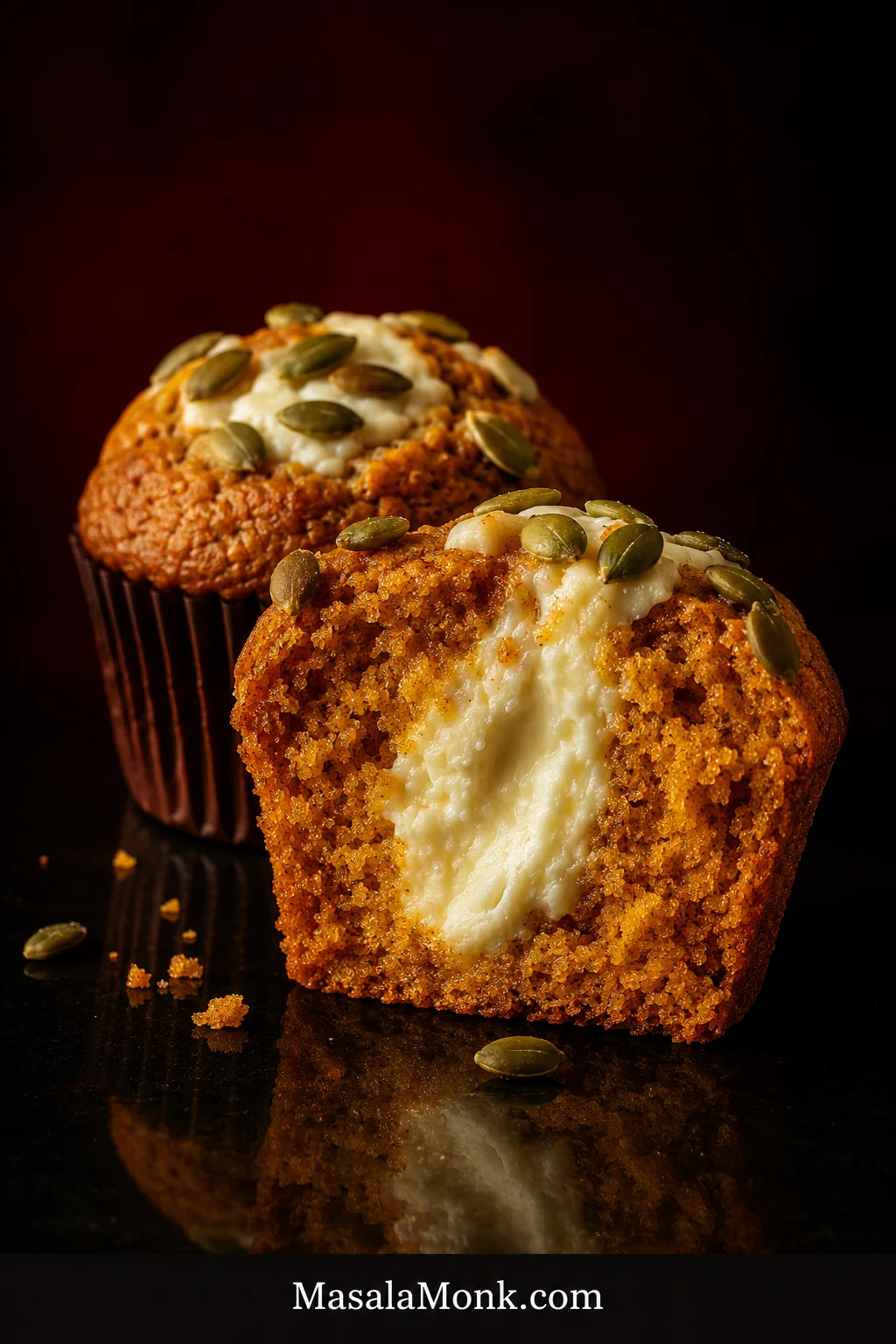
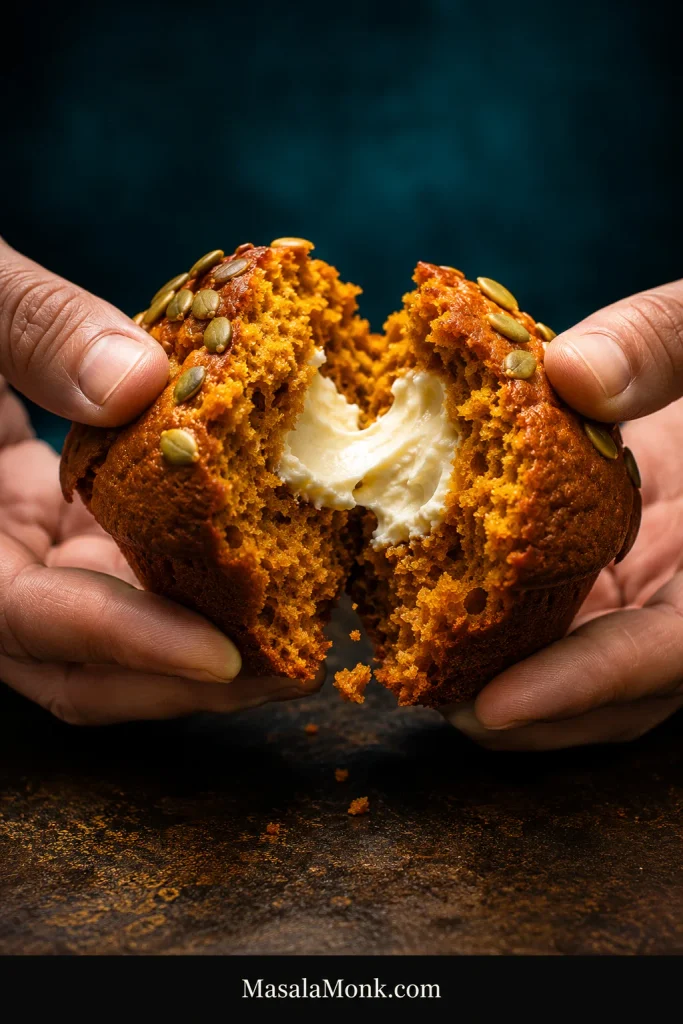
Cut one of these pumpkin cream cheese muffins open after it has cooled a little and the best part should be obvious: a creamy white filling inside a tender, warmly spiced pumpkin muffin. Roasted pepitas bring a salty crunch to the top, while tangy cream cheese keeps the sweetness in balance.
The disappointing version looks promising from above and then gives you bite after bite of pumpkin with barely a streak of cream cheese inside. Here, each standard muffin gets about 1 1/2 tablespoons of filling, piped into the raw batter rather than left as a small dollop at the crown.
There’s no need to freeze the filling first or rest the batter. Once the cream cheese is smooth, the rest is whisk, fold, pipe and bake.
Pumpkin Cream Cheese Muffins Recipe
This batch makes about 12 generously filled muffins in a deep standard 12-cup pan. Shallower wells may give you 13 or 14. Let the pan decide the final yield instead of forcing every bit of batter into 12 cups.
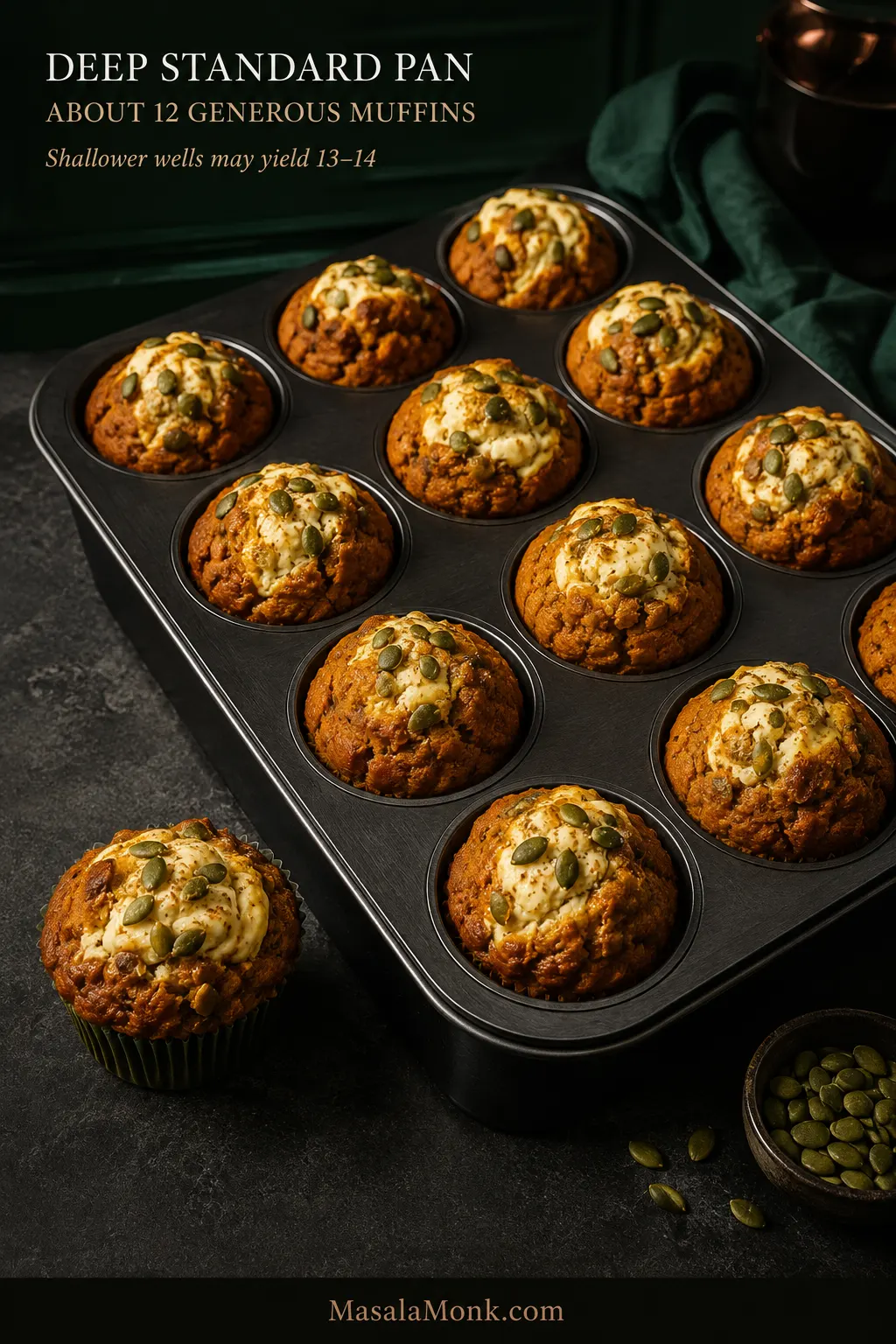
The target is a tender, warmly spiced pumpkin crumb with enough structure to hold the cream cheese without turning dense or gummy.
- Yield: about 12 standard muffins; 13–14 in shallower wells
- Prep: about 25 minutes
- Bake: about 19–23 minutes
- Cool before a clean first cut: about 20–30 minutes
- Conventional oven: 425°F / 220°C, then 350°F / 175°C
- Fan/convection: as a starting point, reduce both temperatures by about 25°F / 15°C—roughly 400°F / 205°C, then 325°F / 165°C—and begin checking a little earlier; ovens vary
- Batter rest: none
You will need: a standard muffin pan, liners, two large mixing bowls, a small bowl for the filling, a whisk, a flexible spatula and a piping bag or sturdy zip-top bag. A handheld mixer is convenient for smoothing the cream cheese, but properly softened cream cheese can also be stirred smooth by hand. A kitchen scale is especially useful for the flour and filling.
Cream Cheese Filling
- 8 oz (226 g) full-fat block cream cheese, softened until pliable but still cool
- 1/2 cup (60 g) confectioners’ sugar (powdered or icing sugar)
- 1 tablespoon (8 g) all-purpose flour
- 1 teaspoon (5 ml) vanilla extract
- 1/8 teaspoon fine salt
Pumpkin Muffin Batter
- 2 1/4 cups (280 g) all-purpose flour
- 2 teaspoons pumpkin pie spice
- 1 teaspoon ground cinnamon
- 1 teaspoon baking powder
- 1 teaspoon baking soda
- 1/2 teaspoon fine salt
- 2 large eggs
- 3/4 cup packed light brown sugar (150 g); dark brown sugar also works
- 1/3 cup granulated sugar (67 g)
- 1 1/3 cups (330 g) 100% pumpkin purée
- 1/2 cup (120 ml) neutral oil, such as vegetable, canola, sunflower or mild avocado oil
- 1/3 cup (80 ml) whole milk
- 2 teaspoons (10 ml) vanilla extract
For the Top
- 1/4 cup (about 30 g) roasted salted pepitas (hulled pumpkin seeds)
- 1/4 teaspoon pumpkin pie spice, optional
How to Make Pumpkin Cream Cheese Muffins
Prep, Mix the Filling and Batter
- Heat the oven. Position a rack in the middle and preheat a conventional oven to 425°F / 220°C. Line the muffin pan.
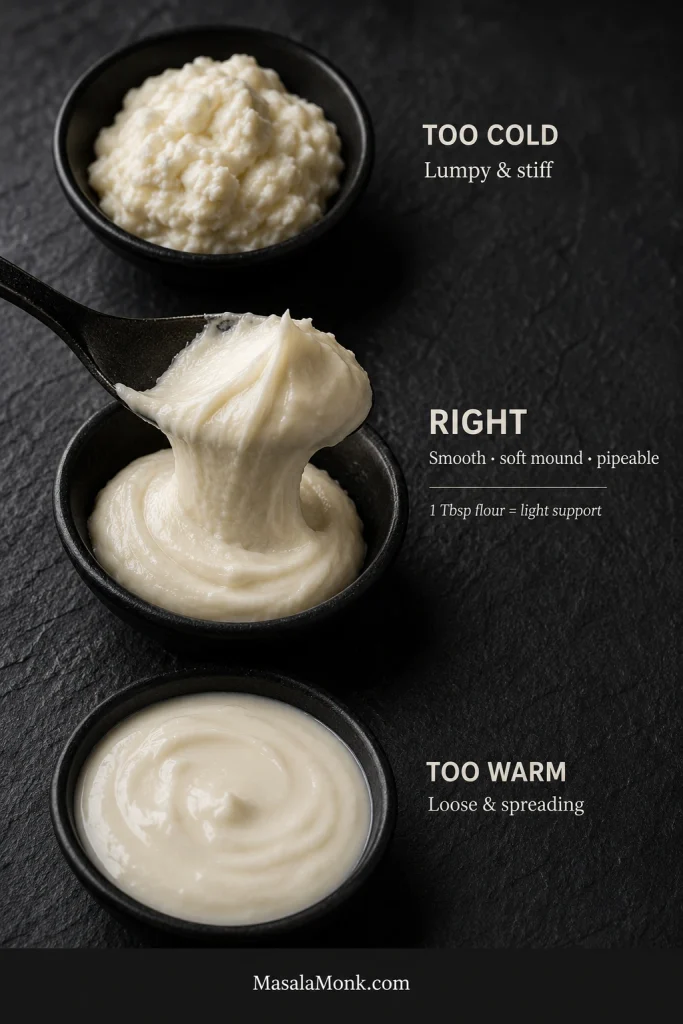
- Mix the filling. Smooth the softened cream cheese, then mix in the confectioners’ sugar, flour, vanilla and salt. Scoop some up with a spoon: it should sit in a soft mound briefly instead of running flat. Chill for 15–20 minutes if it has become loose. Transfer to a piping bag or sturdy zip-top bag and cut an opening about 1/2 inch / 1–1.5 cm wide.
- Whisk the dry ingredients. Combine the flour, pumpkin pie spice, cinnamon, baking powder, baking soda and salt.
- Mix the pumpkin base. In the second large bowl, whisk the eggs and both sugars until smooth. Add the pumpkin purée, oil, milk and vanilla and whisk again.
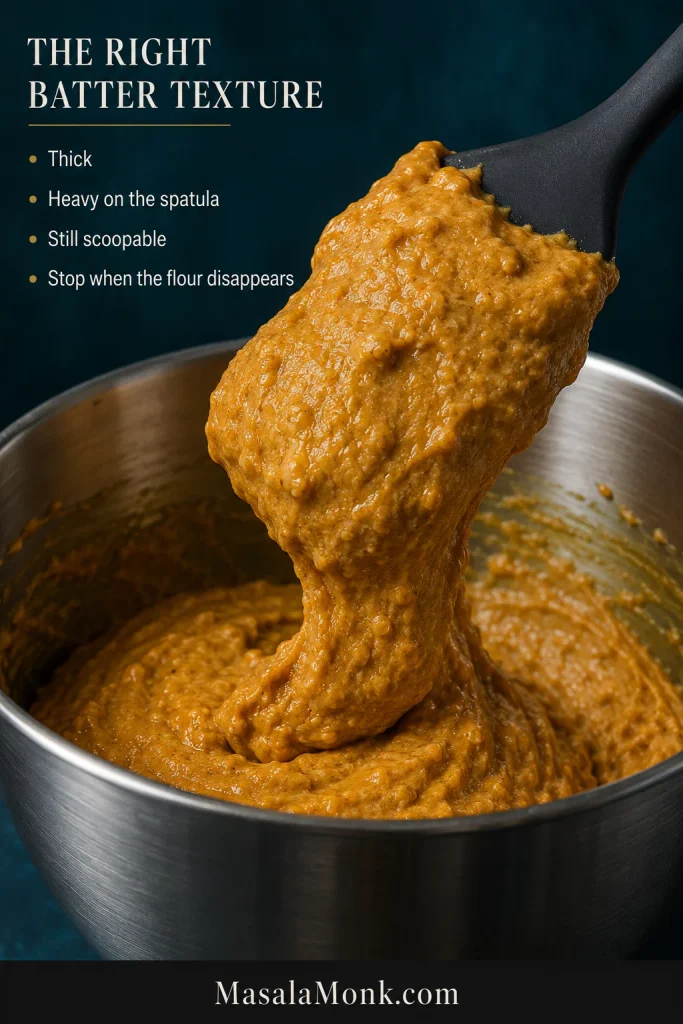
- Fold the batter. Add the dry ingredients to the pumpkin mixture and switch to a spatula. Fold until the last visible flour disappears. The batter should sit heavily on the spatula but still scoop easily. A few small lumps are fine. Stop there.
Fill and Top the Muffins
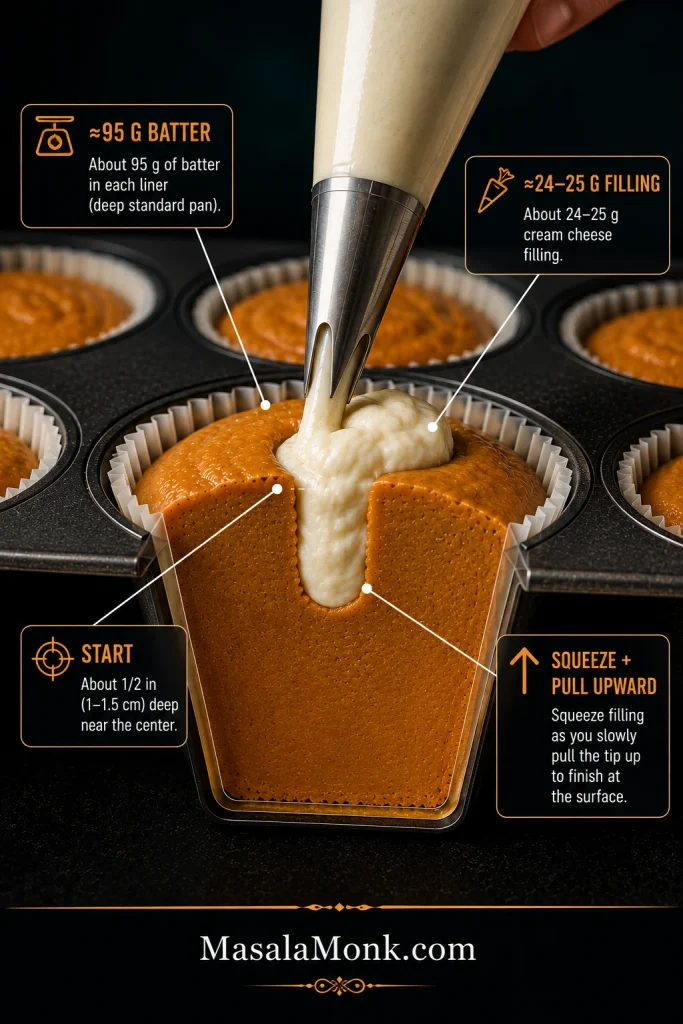
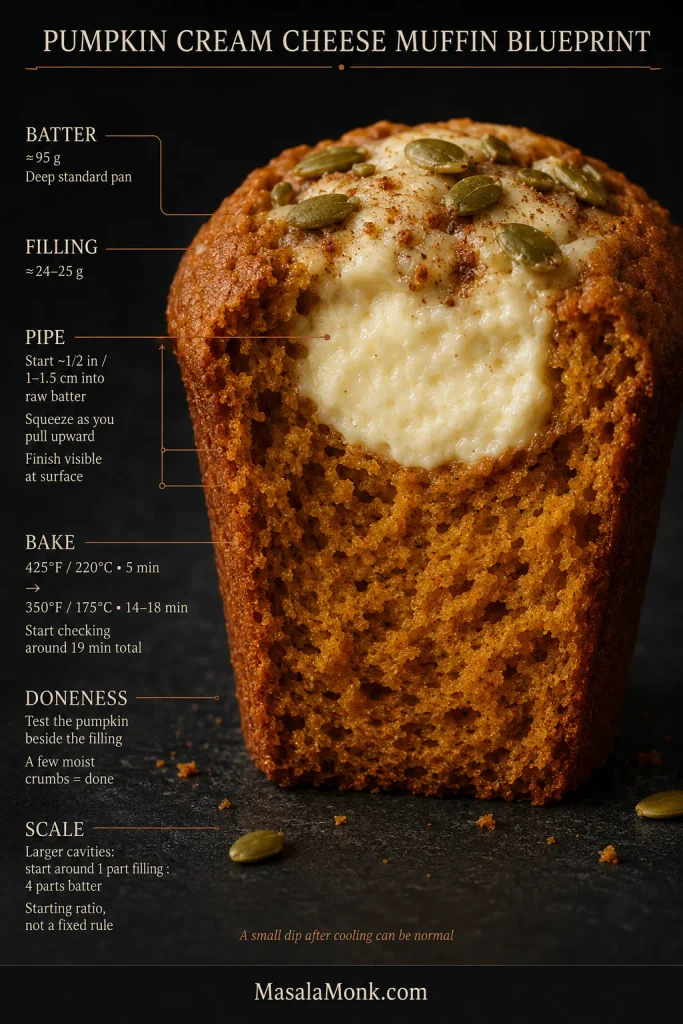
- Fill the muffin wells. In a deep standard pan, divide the batter among 12 wells, about 95 g each. Shallower cups may already look full at 85–90 g; use a 13th or 14th liner instead of squeezing in the rest.
- Pipe in the cream cheese. Divide the filling among the muffins, about 24–25 g each when making 12. Insert the tip about 1/2 inch / 1–1.5 cm into the batter. Squeeze as you slowly pull the bag upward, finishing with some cream cheese visible at the surface. Keep the filling away from the liner.
- Add the pepitas. Toss the pepitas with the optional 1/4 teaspoon pumpkin pie spice, if using, then scatter them around the exposed cream cheese and press very lightly. The white crowns will vary a bit from muffin to muffin. That’s fine.
Bake, Check and Cool
- Start hot. Bake at 425°F / 220°C for 5 minutes. The early heat encourages the thick batter to rise quickly. Without opening the oven, reduce the temperature to 350°F / 175°C so the centers can finish without overbaking the tops.
- Finish baking. Continue for another 14–18 minutes. Start checking near the early end of the range.
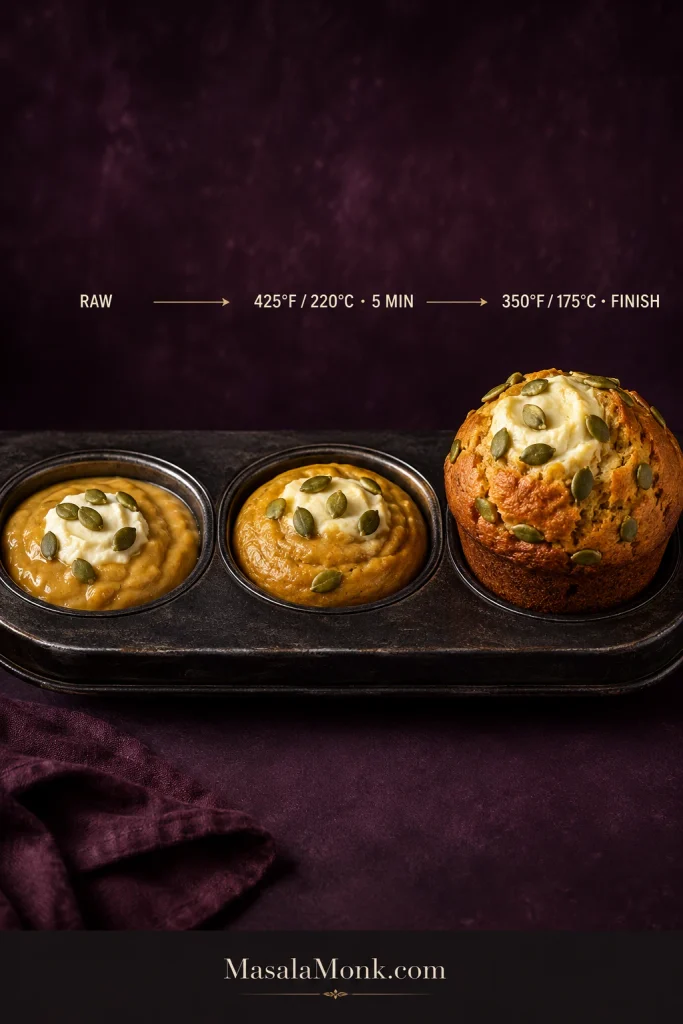
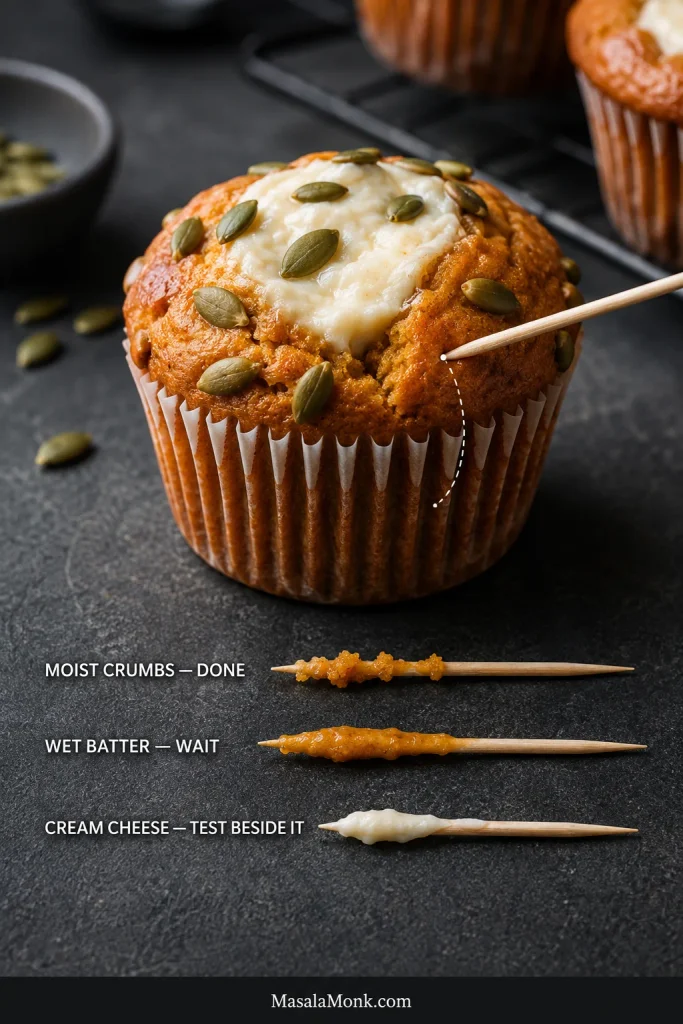
- Check beside the filling. Insert a toothpick into the pumpkin portion just off-center. A few moist crumbs are fine; wet batter isn’t. The top should spring back lightly and the exposed cream cheese should look set and more matte than glossy.
- Cool before cutting. Leave the muffins in the pan for about 5–10 minutes, then move them to a wire rack. Give the filling another 15–20 minutes to settle if you want a cleaner first cut.
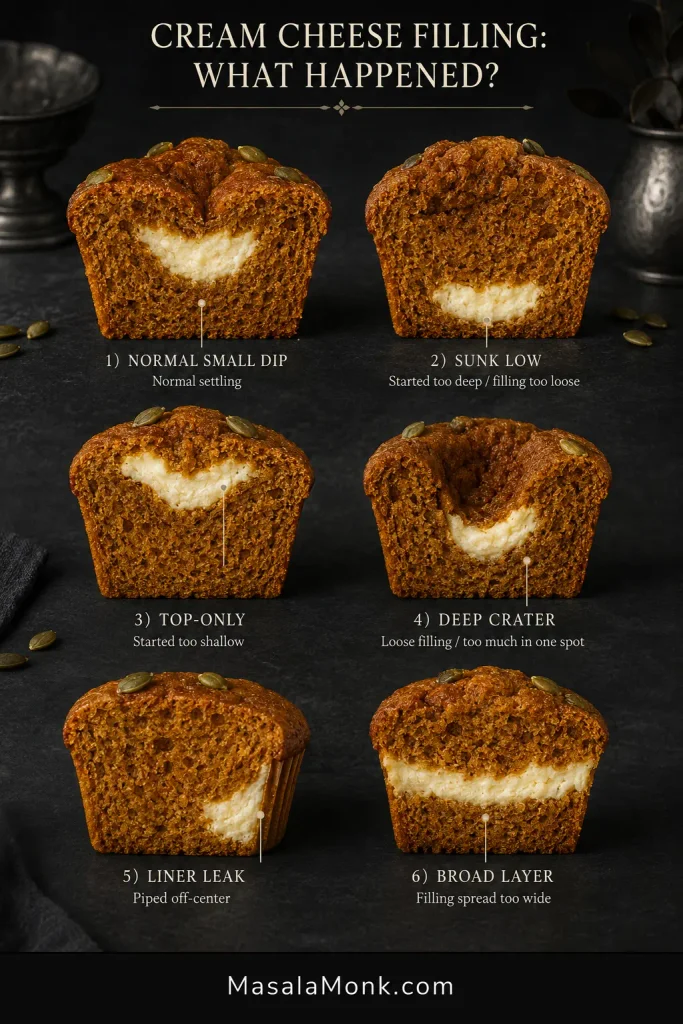
That first cut tells you more than the top does. Cream cheese settling slightly to one side is normal; a deep crater or filling pooled near the bottom is a different story.
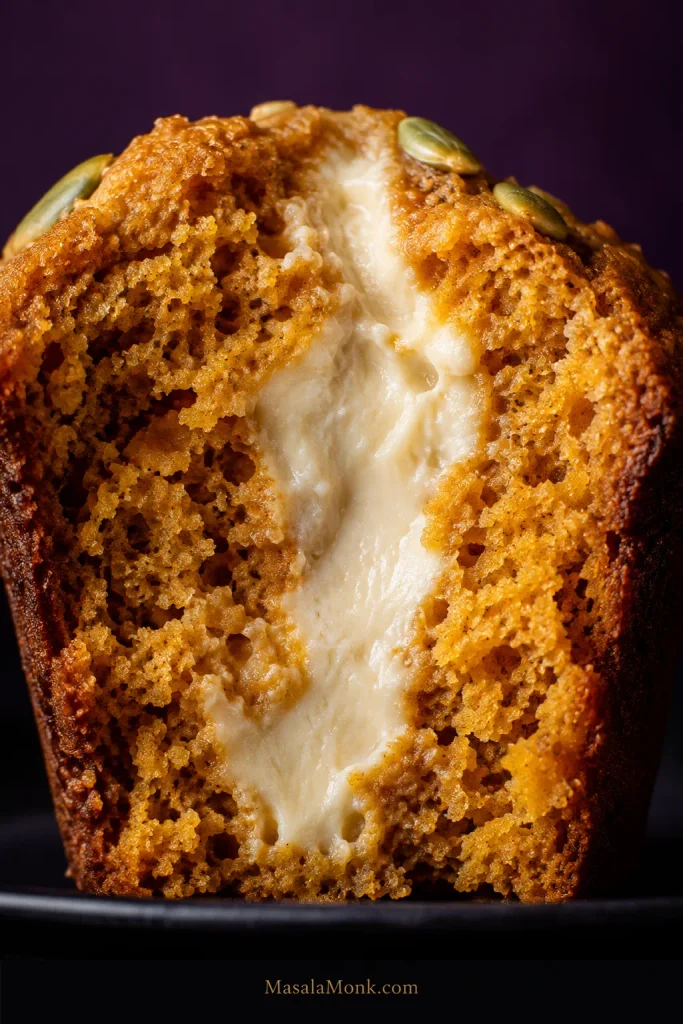
That white center and pepita crown may look familiar.
Are These Starbucks Pumpkin Cream Cheese Muffins a Copycat?
They’re Starbucks-inspired rather than an exact replica. Starbucks’ 2026 Pumpkin Cream Cheese Muffin combines spiced pumpkin muffin, sweet cream-cheese filling and spiced pepitas. This recipe keeps that recognizable white center and pumpkin-seed top while using its own eggless filling, proportions and method.
If that seasonal coffee-shop muffin is what brought you here, homemade has one obvious advantage: you decide when the season starts—and how much cream cheese goes into the middle.
What Keeps the Muffins Tender and the Filling Creamy
A few ingredient choices do most of the work here: thick pumpkin keeps excess water in check, block cream cheese makes the center more predictable, oil helps the crumb stay tender after chilling, and fresh spices keep the pumpkin tasting lively after baking.
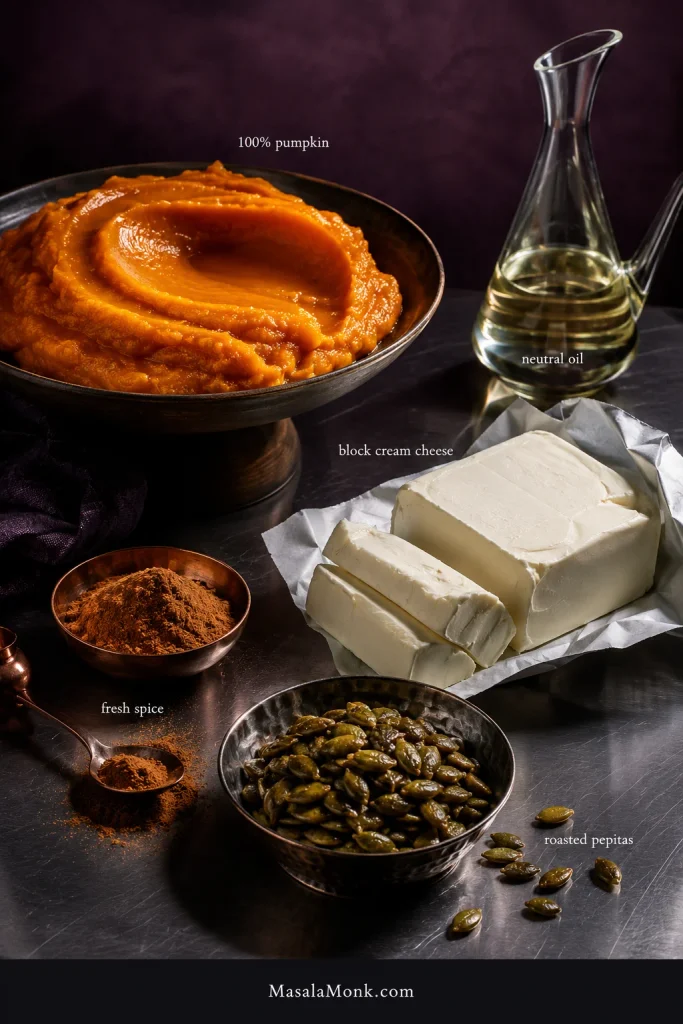
Use Thick Pumpkin Purée
Use plain 100% pumpkin purée, not pumpkin pie filling. Pie filling already contains sugar, spices and other ingredients, so it changes both flavor and moisture.
Homemade purée works when it is roughly as thick as canned pumpkin. Drag a spoon through it; the track should stay visible briefly instead of flooding straight back in. Our pumpkin bread recipe has more detail on canned versus fresh pumpkin and handling a watery homemade purée.
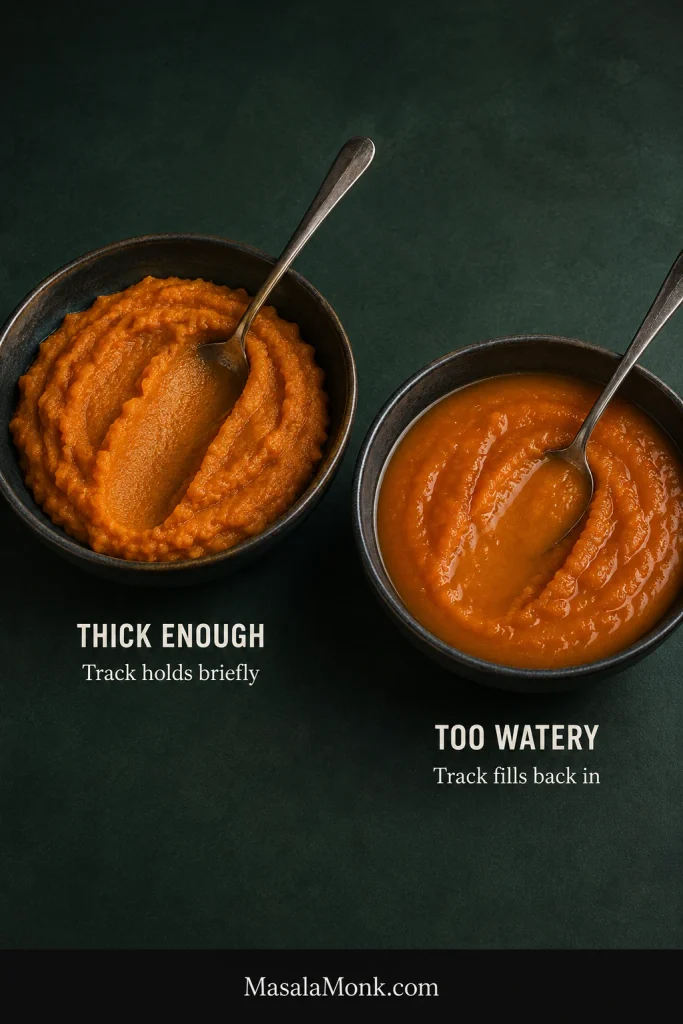
A typical 15 oz / 425 g can leaves roughly 95 g after you measure what this recipe needs. Save it for oatmeal, pancakes, soup, smoothies or a healthy pumpkin spice latte. Adding the remainder here would throw off the moisture balance.
Keep the Cream Cheese Cool Enough to Hold Its Shape
Use full-fat block or brick-style cream cheese. Tub-style, whipped and reduced-fat products may contain more water, stabilizers or incorporated air, making the filling less predictable.
You want the block pliable enough to mix without stubborn lumps while it still feels cool. Leave it in a hot kitchen too long and the mixture loosens noticeably.
Oil for Tenderness, Flour Measured Carefully
Neutral oil helps these muffins stay tender after cooling and refrigeration. Melted butter brings more buttery richness, but the texture firms more once chilled.
Weigh the flour if you can: 280 g. With cups, loosen it, spoon it in and level without packing. Extra flour makes this batter heavy surprisingly quickly.
Use Spices You Can Actually Smell
Smell your pumpkin pie spice before measuring it.
Pumpkin and cream cheese can mute a timid blend, so stale spices leave the finished muffins noticeably flat. Fresh cinnamon and ginger should announce themselves as soon as the jar opens and become even more noticeable once the pan is in the oven.
If you need a fresh blend, use our homemade pumpkin pie spice. In a pinch, replace the 2 teaspoons here with approximately 1 teaspoon cinnamon, 1/2 teaspoon ginger, 1/4 teaspoon nutmeg, 1/8 teaspoon cloves and 1/8 teaspoon allspice, then keep the additional teaspoon of cinnamon already listed in the batter.
How to Get a Creamy Center That Stays Put
Keep the filling creamy but pipeable. The tablespoon of flour already in the recipe gives the eggless center enough support; adding more can make it pasty. If the mixture stops holding a soft mound in a warm kitchen, chill it briefly instead of adding extra flour.
Pipe through the center. Start around the middle and squeeze as you pull upward, keeping pumpkin batter between the filling and liner. A small dip or slightly off-center cream-cheese crown after cooling is normal.
Filling sank, leaked or cratered? Jump to troubleshooting →
How to Tell When Pumpkin Cream Cheese Muffins Are Done
A toothpick pushed straight through the cream cheese may come back coated even when the muffin is fully baked. Test just beside it.
- Press the top. It should spring back lightly.
- Check the pumpkin portion. A few moist crumbs are fine; wet batter isn’t.
- Look at the exposed cream cheese. It should appear set and more matte than glossy.
Troubleshooting Pumpkin Cream Cheese Muffins
The hardest part is sometimes knowing when to stop fixing something that isn’t broken. A small dip, an off-center white crown or two muffins that rise differently can still be completely good muffins.
For a real problem, match the symptom you saw and change one thing at a time.
Cream Cheese Filling Problems: Sinking, Leaking, Craters & Lumps
| What you see | Likely cause | Next time |
|---|---|---|
| Small dip after cooling | Normal settling | Leave it alone if the surrounding muffin is baked. |
| Cream cheese sinks toward the bottom | Piping started too deep, or the filling was very loose | Start nearer the middle and briefly chill loose filling. |
| Most cream cheese stays on top | Piping began too close to the surface | Insert the bag a little farther before squeezing. |
| Deep crater | Loose filling or too much filling concentrated in one spot | Chill the filling and spread it vertically as you withdraw the bag. |
| Filling leaks to the liner | It was piped off-center | Keep pumpkin batter between the cream cheese and paper. |
| Lumpy filling | Cream cheese was too cold | Soften it until pliable before mixing. |
| Muffin separates around the cream-cheese layer | The filling spread into a broad horizontal layer | Keep the pocket narrower and more central. |
Muffin Texture & Rise Problems: Dense, Gummy, Dry or Flat
| What you see | Likely cause | Next time |
|---|---|---|
| Dense or rubbery | Too much mixing after the flour went in | Fold only until the last dry streak disappears. |
| Dry and heavy | Too much flour or too much oven time | Weigh the flour and begin checking earlier. |
| Wet or gummy | Underbaking or watery pumpkin purée | Use thick purée and test beside the filling. |
| Flat tops | Weak leavener, underheated oven or very loose batter | Use fresh baking powder and soda and fully preheat the oven. |
| Lopsided tops | Uneven portions, off-center filling or uneven oven heat | Portion carefully and keep the filling near the middle. |
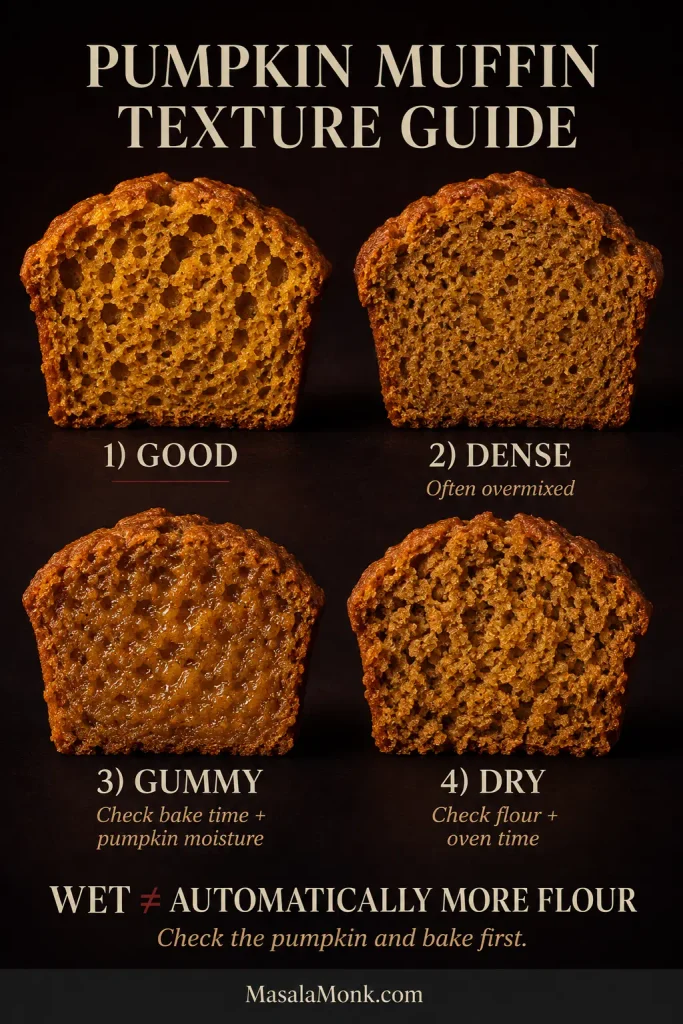
A wet, heavy muffin doesn’t automatically need more flour. Check the pumpkin and baking time first, or an underbaking problem can easily become a dry-muffin problem on the next batch.
Once the muffin is baked through, the center should still be creamy while the pumpkin around it pulls apart cleanly rather than compressing into a wet, gummy band.
Pumpkin Cream Cheese Muffin Variations
Once the base muffin works for you, these variations change one element at a time—the center, the crown or the mix-ins—without rebuilding the whole recipe.
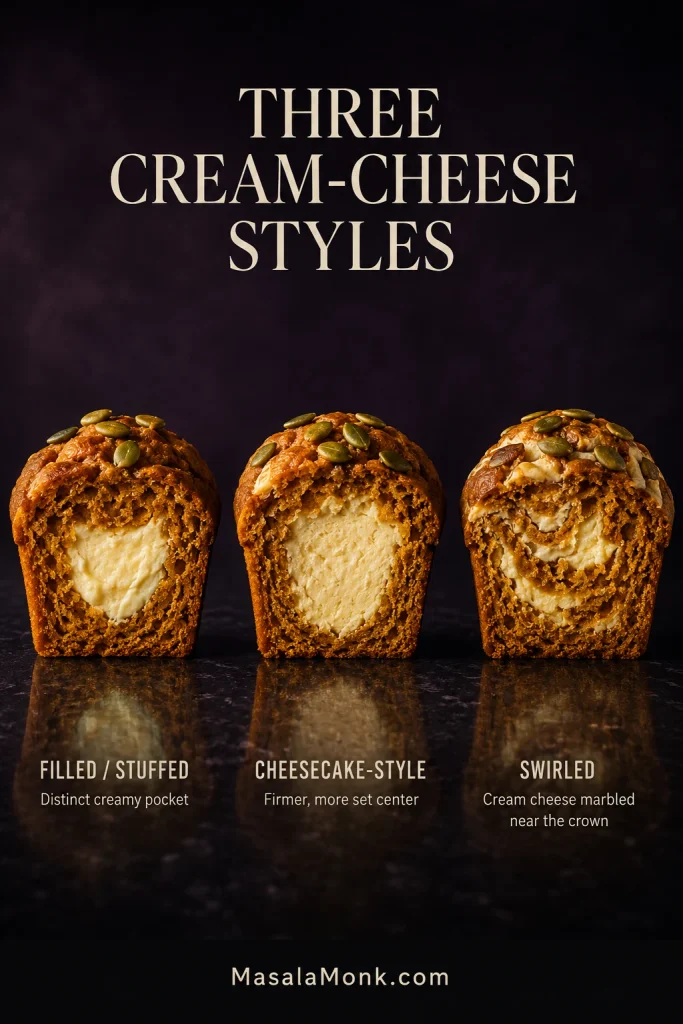
Filled, Cheesecake-Style or Swirled?
They’re related, but they don’t give you the same muffin. The main recipe is a filled or stuffed pumpkin cream cheese muffin with a distinct creamy pocket inside. Add egg or egg yolk to a filling and it sets more firmly, closer to baked cheesecake. A surface swirl keeps more of the cream cheese near the top and gives the crown a marbled look.
Keep the Pepitas for Salty Crunch
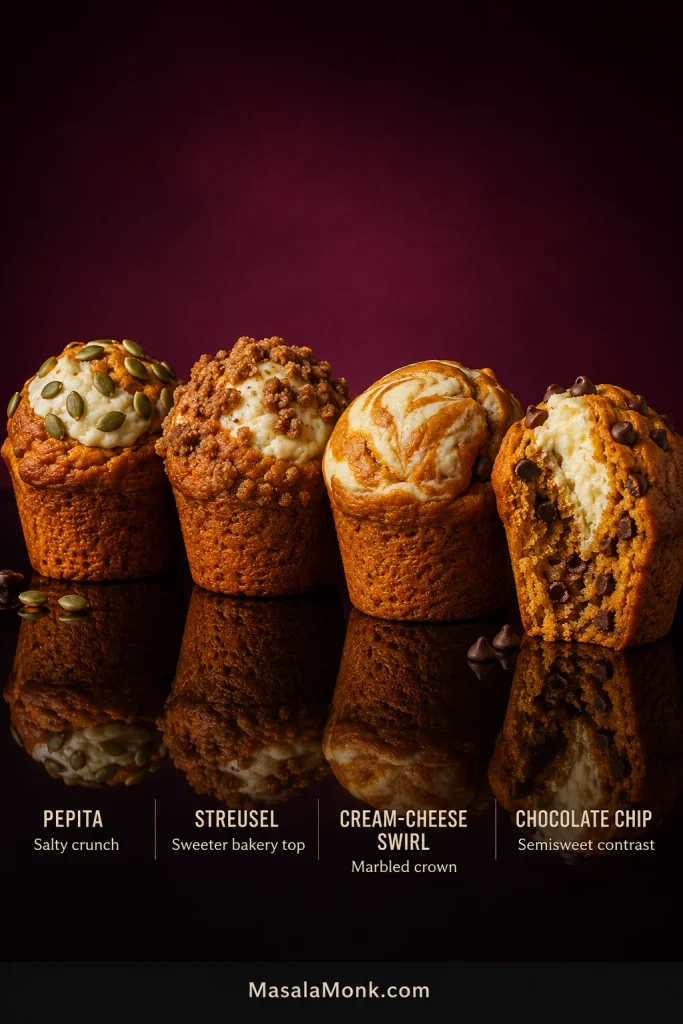
The muffin and filling are already sweet, so roasted salted pepitas bring welcome contrast without adding another sugary layer. Toss them with the optional pumpkin pie spice for a slightly more aromatic top.
Use Streusel for a Sweeter Bakery Muffin
Leave off the pepitas and mix:
- 1/2 cup (63 g) all-purpose flour
- 1/4 cup packed brown sugar (50 g)
- 1 teaspoon cinnamon
- 3 tablespoons (42 g) melted unsalted butter
Stir with a fork until irregular crumbs form, then divide the streusel evenly among the muffins, scattering it around rather than directly over the cream cheese.
Swirl the Cream Cheese for a Creamier Crown
A surface swirl needs only half of the main filling: 113 g cream cheese, 30 g confectioners’ sugar, about 1 1/2 teaspoons (4 g) flour, 1/2 teaspoon vanilla and a pinch of salt.
Divide it over the pumpkin batter and make a few loose passes with a toothpick or thin skewer. Stop while clear streaks of white and orange remain. Bake on the same standard-muffin schedule and test the pumpkin portion for doneness.
Chocolate Chip Pumpkin Cream Cheese Muffins
Fold 1/2 cup (about 85 g) semisweet chocolate chips into the pumpkin batter before filling the pan. Keep the cream-cheese quantity and baking method unchanged.
If you’re deciding which version to make, this final lineup shows how the four easiest finishes change the look and balance of the same pumpkin cream cheese muffin.
Mini and Jumbo Pumpkin Cream Cheese Muffins
The standard and mini portions suggest a useful starting point for larger muffins: roughly 1 part cream-cheese filling for every 4 parts batter by weight. Use that as a starting point for larger cavities, not a fixed rule.
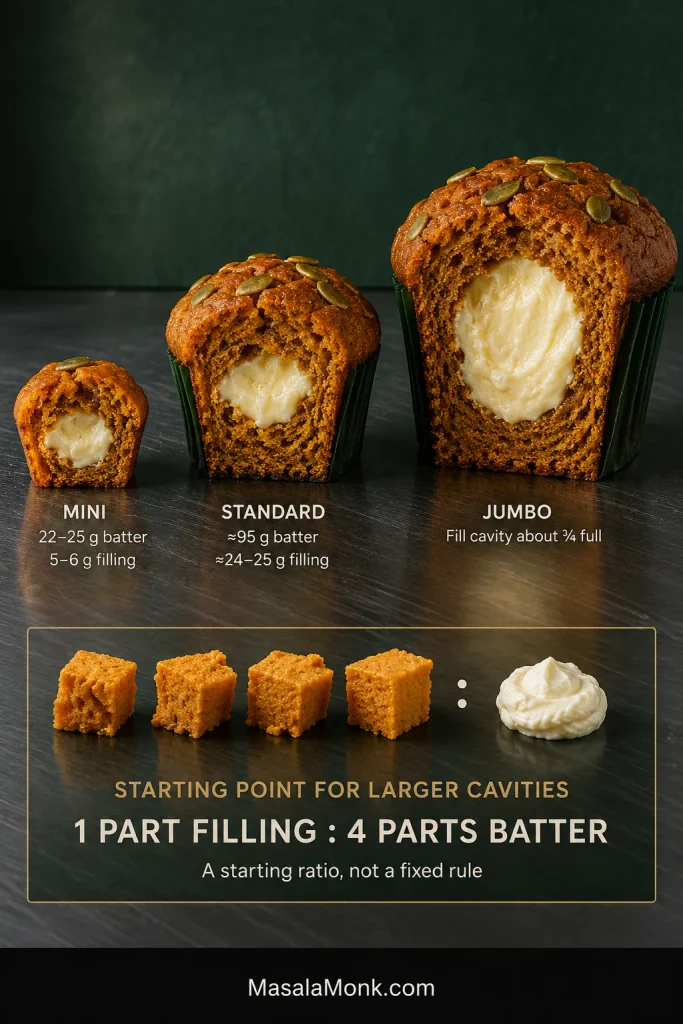
| Size | Starting point | Bake |
|---|---|---|
| Standard | About 95 g batter + 24–25 g filling in a deep 12-cup pan | 425°F / 220°C for 5 min, then 350°F / 175°C; start checking around 19 min total |
| Mini | About 22–25 g batter + 5–6 g filling; roughly 48 minis from the full batch, depending on the pan | 350°F / 175°C throughout; start checking at 11–12 min, with many pans finishing around 12–14 min |
| Jumbo | Fill each cavity roughly three-quarters full, then use the 1:4 filling-to-batter ratio as a starting point | 425°F / 220°C for 5 min, then 350°F / 175°C; begin checking around 27 min total, with deeper pans sometimes needing longer |
Jumbo cavities vary too much for one universal gram amount or bake time to be genuinely useful. Let the pan and the same doneness cues from the standard muffins guide you.
How to Store Pumpkin Cream Cheese Muffins
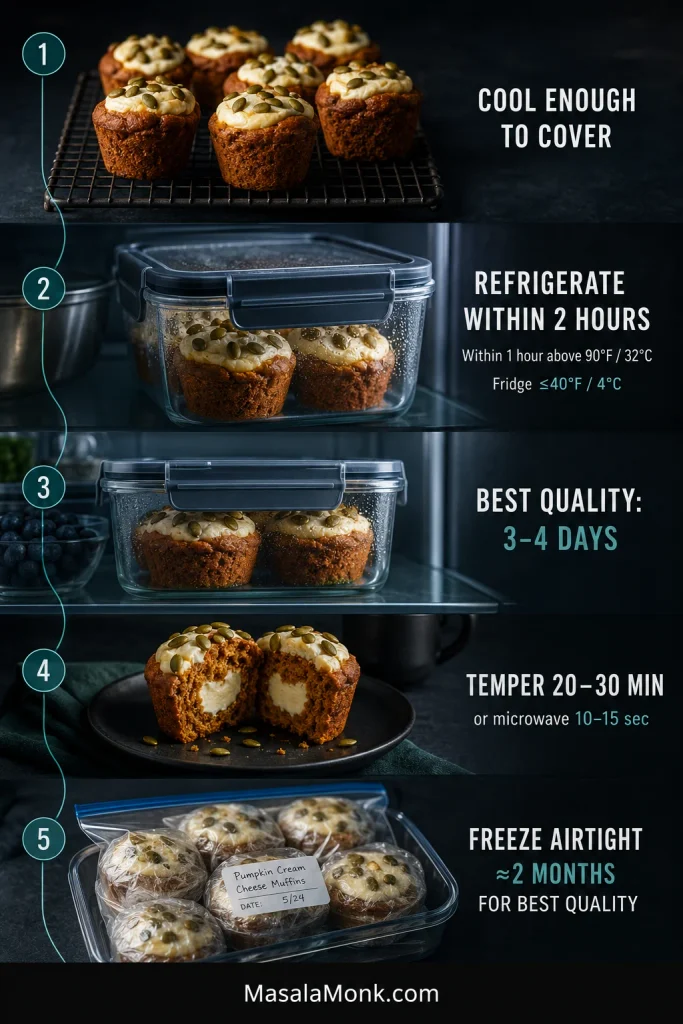
Because the filling is dairy-based, the timeline below separates cooling, refrigeration, serving and freezing so each stage is easy to follow.
Do Pumpkin Cream Cheese Muffins Need to Be Refrigerated?
Yes. Let the muffins stop steaming and cool enough to cover, then refrigerate them while keeping the total room-temperature time under 2 hours. If the room or outdoor temperature is above 90°F / 32°C, keep that time under 1 hour. The FDA recommends keeping the refrigerator at 40°F / 4°C or below.
For the best quality, use the refrigerated muffins within about 3–4 days, consistent with USDA guidance for refrigerated leftovers. Give a chilled muffin 20–30 minutes at room temperature and it softens again while the filling loses its hard chill. A brief 10–15 second microwave warm-up works too.
Can You Freeze Pumpkin Cream Cheese Muffins?
Yes. Cool them completely, wrap well and freeze airtight for up to about 2 months for best quality. The filling may thaw slightly softer or a bit more granular than it was fresh.
Can You Make Them Ahead?
The cream-cheese filling can be mixed ahead and refrigerated separately; let it loosen just enough to pipe before assembling. For the muffins themselves, bake ahead rather than holding the fully mixed pumpkin batter overnight.
Pumpkin Cream Cheese Muffins FAQ
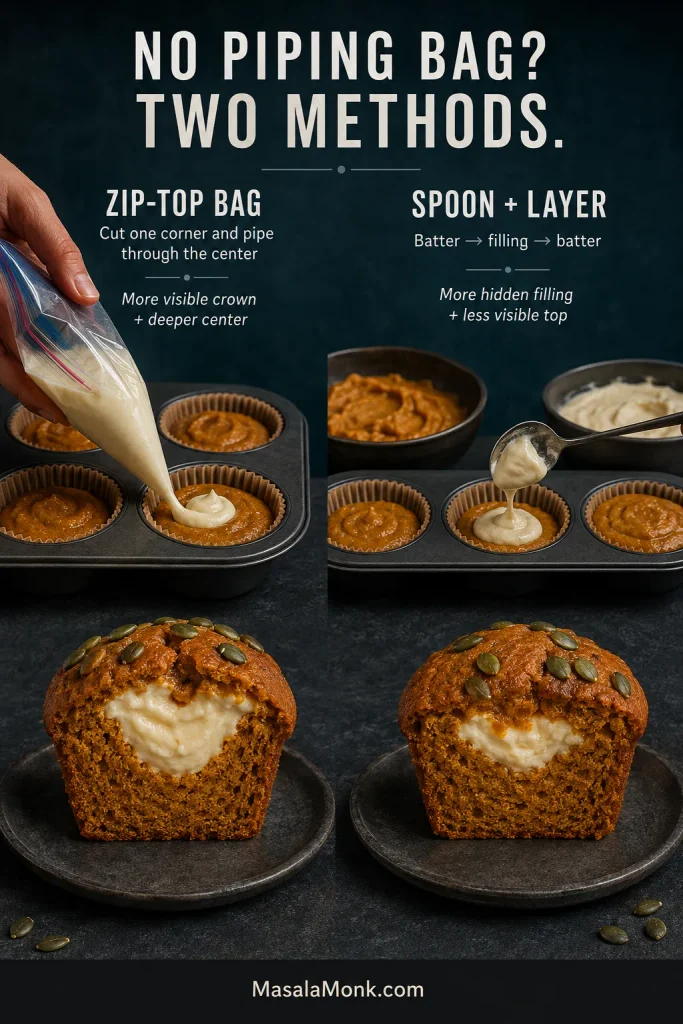
Can I Make Them Without a Piping Bag?
Yes. A sturdy zip-top bag with a corner cut off works well. You can also spoon in some pumpkin batter, add cream cheese to the middle and cover it with more batter. That gives you a more hidden pocket with less filling visible on top.
Can I Replace the Oil With Butter?
Yes. Replace the 1/2 cup oil with 1/2 cup (113 g) melted unsalted butter and let it cool slightly before mixing it with the wet ingredients. You’ll get more buttery richness, but the muffin will firm somewhat more after cooling and refrigeration.
Can I Add Even More Cream Cheese?
The main recipe already uses a generous amount. Packing substantially more cream cheese into the same-size muffin leaves less pumpkin batter around it and makes craters, leaks and gummy edges more likely. For a bigger cream-cheese pocket, move to a larger muffin and scale the batter and filling together.
If you want one visual reference to keep beside the pan, the blueprint below is the most useful place to start.
Let the first one cool enough for the filling to settle, then cut straight through the middle. The tender pumpkin crumb should pull apart around a creamy white center, with salty pepitas cracking across the top. Take another bite, and there should still be cream cheese there.








