Posted on 6 Comments

Watermelon Daiquiri: A Refreshing Twist on a Classic Cocktail

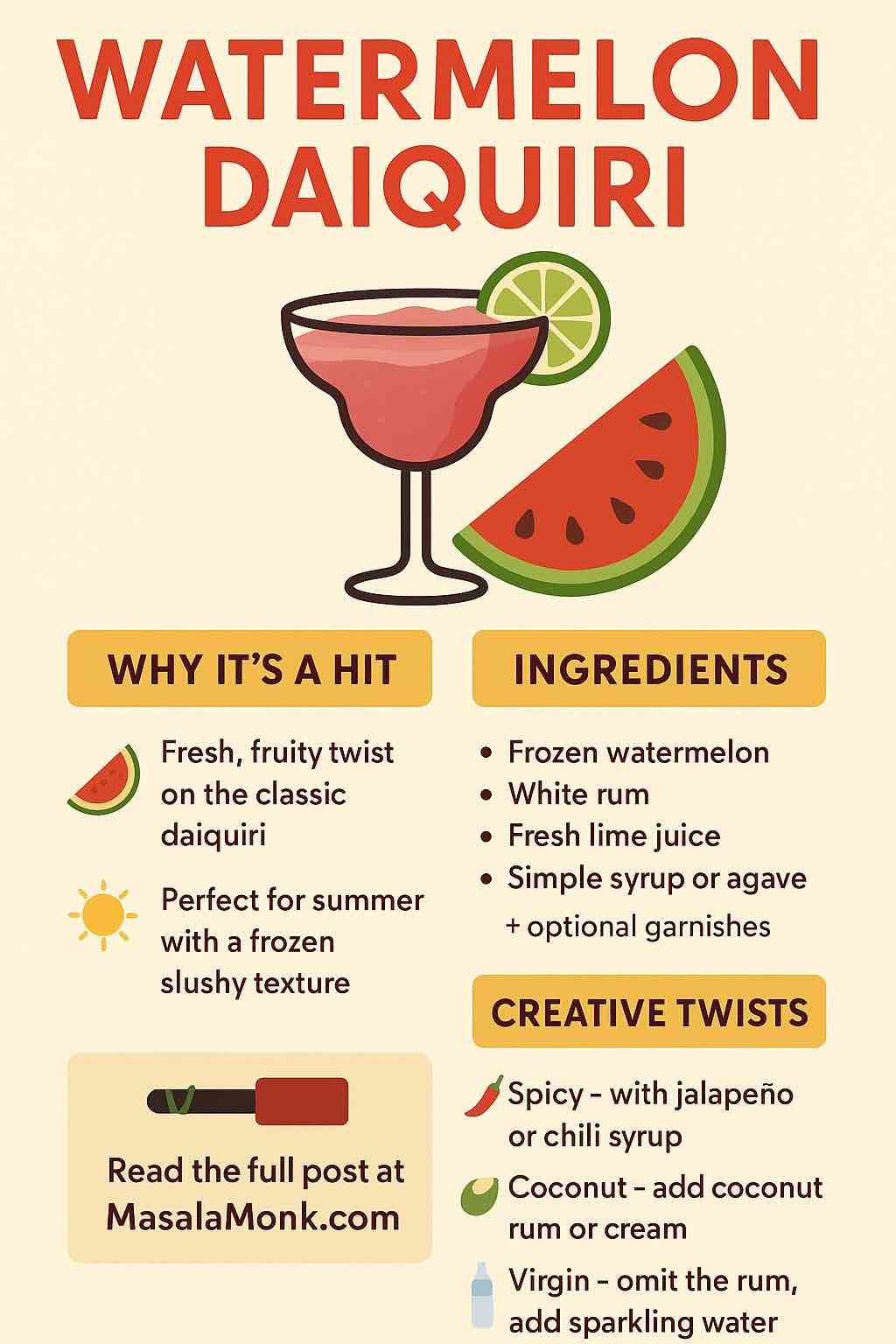
WATERMELON DAIQUIRI

If summer had a flavor, it would be watermelon. If summer had a spirit, it would be rum. Bring them together, and you get the Watermelon Daiquiri: a cocktail that’s both a throwback to Cuban classics and a bright, modern favorite. Whether you’re a cocktail geek, a party host, or just someone with a blender and a ripe watermelon, this is your go-to summer sip.


🍉 Why Watermelon? The Story Behind the Sip

Watermelon daiquiris aren’t just a fleeting TikTok trend—they’re a sign of how the cocktail world is embracing freshness, color, and creative twists on the classics. The original daiquiri—a simple blend of rum, lime, and sugar—traces its roots back to 1900s Cuba, a thirst-quencher for sweltering evenings and balmy breezes. The watermelon version keeps the same structure but adds juiciness, vibrant color, and a crowd-pleasing twist.

Did you know? According to the latest 2025 bar trends, watermelon is now the most popular summer cocktail ingredient, especially among 20-somethings. Even the biggest cocktail festivals and rooftop bars are showcasing watermelon daiquiris in frozen, spicy, and even savory formats.


🛒 The Ingredients: Choosing the Best for Flavor & Texture

The Watermelon Daiquiri is only as good as what goes into it. Here’s how to pick and prep:

1. Watermelon

  • Choose seedless for ease. Ripe, sweet watermelons yield the best flavor.
  • Cut into cubes and freeze in a single layer. This is the secret to a perfect frozen daiquiri texture—no watering down with excess ice.

2. Rum

  • Light/white rum is classic, allowing the watermelon to shine.
  • For a twist: Try coconut rum or even a splash of overproof for an extra kick.

3. Fresh Lime Juice

  • Don’t skip the fresh-squeezed! Bottled juice can’t compete in terms of brightness.

4. Simple Syrup or Agave

  • Use simple syrup (1:1 sugar:water) or agave nectar for easy mixing and balanced sweetness.
  • Adjust to taste—watermelon sweetness can vary.

5. Optional Upgrades

  • Herbs: Fresh mint or basil.
  • Spice: Muddle jalapeño or add a few dashes of chili syrup.
  • Liqueur: Try a splash of Cointreau or orange liqueur for complexity.
  • Coconut: Add coconut water or a spoon of coconut cream for tropical vibes.

🍹 The Practical Recipe: Classic Frozen Watermelon Daiquiri

Ingredients (serves 2)

  • 4 cups frozen watermelon cubes
  • ½ cup white rum
  • ¼ cup fresh lime juice
  • 1 tablespoon simple syrup or agave (more or less to taste)
  • Handful of ice (optional, for extra slush)
  • Garnish: lime wheel, fresh mint, watermelon wedge, or a fun sugar/salt rim

Instructions

  1. Prep the Watermelon: Cube and freeze watermelon at least 4 hours ahead. Overnight is best.
  2. Blend: In a blender, combine frozen watermelon, rum, lime juice, sweetener, and a little ice if you want extra thickness.
  3. Taste & Adjust: Blend until smooth. Taste, and adjust sweetness or lime as needed.
  4. Serve: Pour into chilled glasses. Garnish with your favorites—lime, mint, or a tiny watermelon triangle.
  5. Optional Rim: Run a lime wedge around the glass and dip in sugar, salt, or Tajín for an Instagram-ready touch.

🔥 Trending Variations for 2025

Why settle for the ordinary when you can make your Watermelon Daiquiri stand out? Here’s how bartenders are riffing on the classic:

Spicy Watermelon Daiquiri

  • Add muddled jalapeño or a dash of chili-lime syrup for an unexpected zing.
  • Garnish with a chili-salt rim for extra flair.

Coconut Watermelon Daiquiri

  • Substitute part of the rum with coconut rum or a splash of coconut milk.
  • The result: a creamy, almost Piña-Colada-like twist that’s still light and refreshing.

Herbaceous Infusion

  • Muddle basil or mint in the blender with the watermelon for a green, garden-fresh flavor.

On the Rocks Version

  • Skip the freezing step and use fresh watermelon juice, rum, lime, and simple syrup. Shake with ice and strain into a rocks glass.

Virgin (Non-Alcoholic) Watermelon Daiquiri

  • Omit the rum, use more watermelon, and splash in some sparkling water for fizz.

🎉 Hosting Tips: Make Watermelon Daiquiris the Life of the Party

  • Batch Ahead: Blend the daiquiri mix without ice and store in the fridge. Blend with ice or frozen watermelon just before serving.
  • DIY Garnish Bar: Set out lime wheels, mint sprigs, edible flowers, chili salt, and mini watermelon wedges so guests can personalize.
  • Keep It Cold: If serving outdoors, use insulated cups or serve in a pitcher placed in a bucket of ice.

🌈 Pro Presentation: Instagram-Ready Watermelon Daiquiri

  • Use geometric ice cubes or clear spheres for wow factor (especially for on-the-rocks versions).
  • Layer with edible glitter or a floral garnish—this trend is huge at summer events.
  • Create a two-tone effect: Blend part of the mix with strawberries or another fruit, then pour in layers for a sunset-in-a-glass look.

🧑‍🔬 Troubleshooting & Expert Tips

  • Too watery? Add more frozen watermelon or ice.
  • Not sweet enough? Watermelon ripeness can vary—don’t be afraid to add an extra splash of syrup.
  • No blender? Use fresh watermelon juice, shake with rum and lime, and serve over ice.
  • Want to lower ABV? Mix in coconut water or sparkling water for a lighter, “sessionable” drink.

🌟 The Final Sip: Why Watermelon Daiquiri Is Here to Stay

With its bright, juicy flavor and endless customization, the Watermelon Daiquiri is more than a trend—it’s the taste of summer in a glass. Whether you keep it classic, make it spicy, or invent your own signature riff, it’s the perfect cocktail for poolside afternoons, rooftop parties, or any moment that needs a splash of fun.

Ready to shake (or blend) things up? Tag your creations, share your twists, and let the watermelon daiquiri be your summer signature.


Thirsty for more? Drop a comment with your favorite variation or questions on technique—let’s make this summer the most delicious one yet!

Watermelon Daiquiri: Frequently Asked Questions

1. Can I make a watermelon daiquiri without a blender?
Yes! Use fresh watermelon juice instead of frozen cubes. Shake it with rum, lime juice, and sweetener, then strain over ice.

2. What’s the best type of rum for a watermelon daiquiri?
Light (white) rum is classic—it’s mild and lets the watermelon shine. Coconut rum or even spiced rum works for creative twists.

3. Can I use bottled lime juice instead of fresh?
Fresh lime juice is strongly recommended for the brightest, cleanest flavor, but bottled can work in a pinch.

4. My watermelon isn’t very sweet. How do I fix the flavor?
Add a little extra simple syrup or agave nectar. Always taste and adjust before serving.

5. Is there a way to make it non-alcoholic?
Absolutely! Skip the rum and add more watermelon, or use sparkling water for a fun, fizzy mocktail.

6. How can I make a spicy watermelon daiquiri?
Muddle a few slices of jalapeño in the blender, or add chili-lime syrup or a dash of hot sauce for heat.

7. What’s the secret to a thick, slushy texture?
Freeze your watermelon cubes solid before blending, and add only a little ice if needed. Don’t use too much liquid.

8. Can I make a big batch for a party?
Yes—multiply the recipe as needed. Blend and freeze in advance, then re-blend with a splash of rum or water before serving for the perfect texture.

9. How do I rim the glass for extra flair?
Run a lime wedge around the glass edge and dip into sugar, salt, or chili-lime seasoning (like Tajín).

10. What other fruits go well with watermelon in this daiquiri?
Strawberries, pineapple, or mango pair beautifully. Try blending in a handful for a fruity twist.

Posted on 4 Comments

Charcuterie Boards: History, Assembly, Health, and the 3-3-3-3 Rule

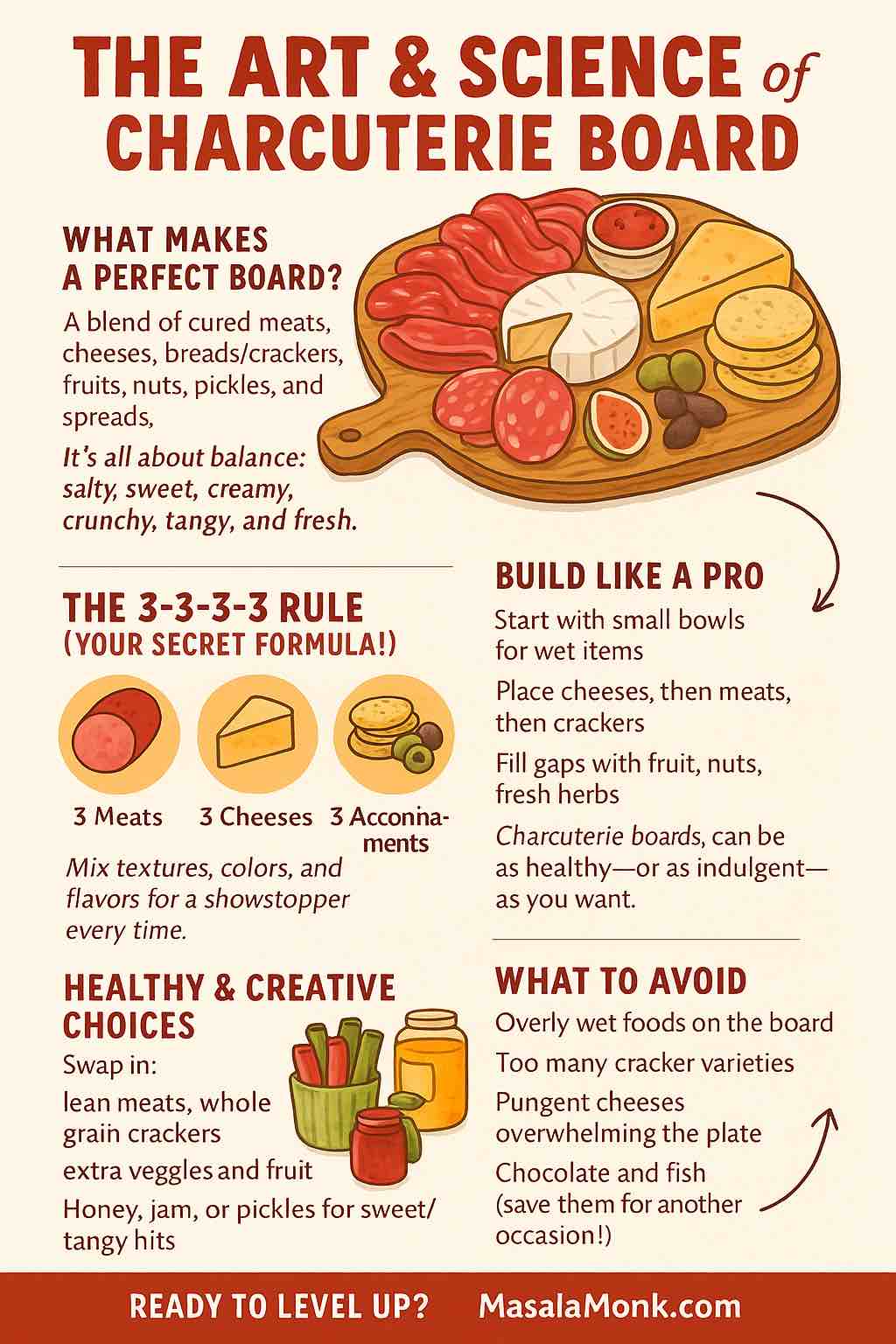
CHARCUTERIE BOARD

A well-crafted charcuterie board is more than just food—it’s a statement piece, a conversation starter, and a delicious way to bring people together. Whether for a cozy family gathering or a festive celebration, the art of arranging meats, cheeses, and their accompaniments is timeless and endlessly creative.

Let’s dive deep into the world of charcuterie boards—what they are, where they come from, how to make them healthy, and, most importantly, how to build a show-stopping spread at home.


What Is a Charcuterie Board?

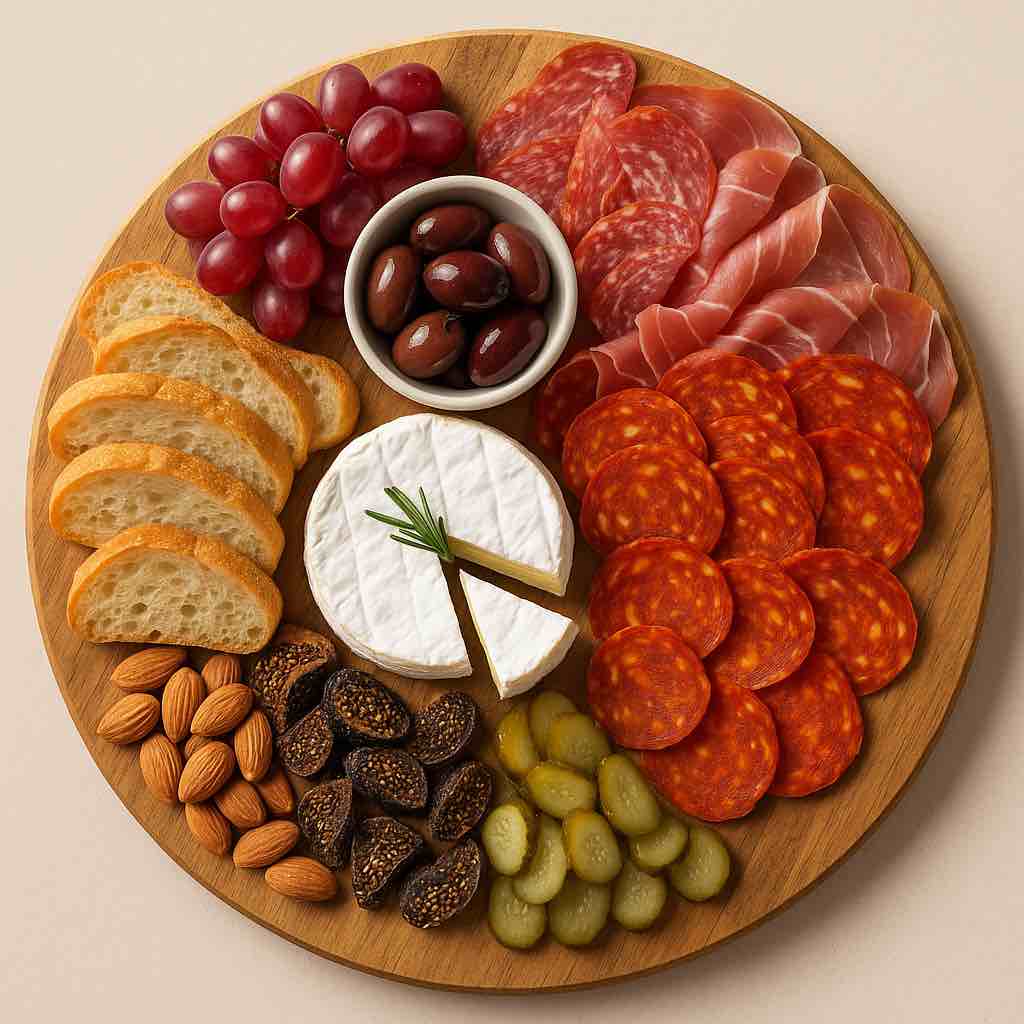
At its core, a charcuterie board is an artful arrangement of cured meats (charcuterie), cheeses, bread, crackers, fruits, nuts, pickles, and spreads—all beautifully presented on a platter or wooden board. The word “charcuterie” is French, originally referring to shops that sold cured pork products. Today, charcuterie has expanded to encompass a much wider variety of meats, cheeses, and snacks.

Modern charcuterie boards are as diverse as their creators, often blending traditions from around the world. They’re now a mainstay at parties, wine nights, and even as a casual dinner option for families.


The History & Evolution of Charcuterie

  • European Roots: The tradition of curing meats began in France and Italy centuries ago as a way to preserve food before refrigeration. Meats were salted, air-dried, and sometimes smoked, then enjoyed with bread and local cheese.
  • Charcuterie Shops: In 15th-century France, “charcutiers” specialized in preparing and selling pork products—everything from pâté to sausage and rillettes.
  • The Modern Board: In recent decades, charcuterie boards have evolved, especially in the US, to include a wide array of cheeses, fruits, nuts, and even sweet elements like chocolate or honeycomb.

The Anatomy of a Charcuterie Board

A truly great charcuterie board offers balance, variety, and visual appeal. Here’s what usually makes the cut:

  • Cured Meats: Salami, prosciutto, coppa, soppressata, chorizo, turkey or chicken salami, pâté.
  • Cheeses: Soft (brie, camembert, goat), semi-hard (manchego, gouda), hard (aged cheddar, parmesan), blue cheese.
  • Bread & Crackers: Baguette slices, rustic bread, grissini (breadsticks), artisanal crackers, crostini.
  • Accompaniments: Fresh/dried fruits (grapes, figs, apricots), olives, pickles, nuts (almonds, walnuts, pistachios), jams, honey, mustards, and fresh herbs for garnish.

The secret: Mix flavors and textures—salty, sweet, tangy, creamy, crunchy.


The 3-3-3-3 Rule: Your Charcuterie Blueprint

Feeling overwhelmed by all the options? Use the 3-3-3-3 rule to guarantee a well-rounded, visually stunning board:

  • 3 Meats: (e.g., prosciutto, salami, chorizo)
  • 3 Cheeses: (e.g., brie, aged cheddar, blue cheese)
  • 3 Starches: (e.g., crackers, sliced baguette, breadsticks)
  • 3 Accompaniments: (e.g., olives, fruit, nuts)

This formula makes shopping simple and ensures a good mix without overloading the board.


How to Arrange Your Charcuterie Board Like a Pro

  1. Start Big: Place small bowls for olives, jams, and spreads on the board first.
  2. Add Cheese: Arrange cheese in different corners. Vary the shape—wedge, block, crumbled.
  3. Meats: Fold or fan out slices of meat for volume and easy grabbing. Group different meats together.
  4. Starches: Add stacks of crackers and bread in gaps, fanned or leaning for height.
  5. Fill Gaps: Tuck in fruits, nuts, and pickles to fill empty spaces and add pops of color.
  6. Finishing Touches: Garnish with fresh herbs (rosemary, thyme, basil) or edible flowers.

Tip: Serve at room temperature (let the board sit out for 15-30 minutes) to bring out the best flavors and textures.

CategoryClassic OptionVeg/Vegan OptionBudget-Friendly
MeatsProsciutto, SalamiRoasted Veggies, HummusTurkey slices
CheesesBrie, CheddarPlant-based cheeseLocal fresh cheese
StarchesBaguette, CrackersSeed crackers, PitaPopcorn, Breadsticks
AccompanimentsOlives, Grapes, NutsFruit, Pickles, NutsDried fruit
“Build-Your-Own Board” table for easy planning
CHARCUTERIE BOARD

5 Things to Avoid on a Charcuterie Board

  1. Overly Wet Foods: Juicy fruits or olives without bowls can make crackers soggy and messy.
  2. Super-Pungent Cheeses or Meats: Very strong flavors (like aged blue cheese or spicy sausage) can dominate—use sparingly and keep separate.
  3. Pre-Sliced Cheese: It dries out fast. Use blocks or wedges and slice just before serving.
  4. Too Many Crackers/Breads: Stick to 2-3 types so the board isn’t overwhelming.
  5. Chocolate or Fish: Chocolate can clash with savory items, and seafood flavors may overpower the board.

Are Charcuterie Boards Healthy?

Charcuterie boards can be healthy—or indulgent—depending on what you include. Tips for a more nutritious board:

  • Opt for lean, minimally processed meats (turkey, chicken, nitrate-free options).
  • Include fresh fruits and veggies for fiber, color, and vitamins.
  • Choose whole-grain crackers for more nutrients and fiber.
  • Add nuts for healthy fats and crunch.
  • Use cheese in moderation (watch out for high-fat, high-sodium varieties).

Remember: Processed meats, even those cured “naturally,” should be enjoyed in moderation. Pair with fresh foods and plenty of hydration.


Pro Tips & Pairing Ideas

  • Balance is Key: Always have something salty, something sweet, something creamy, and something crunchy.
  • Regional Pairings: Pair Italian meats with Italian cheeses and crackers; Spanish chorizo with Manchego and Marcona almonds.
  • Wine Pairings: White wines pair well with softer cheeses and lighter meats; bold reds with hard cheeses and spicy cured meats.

Charcuterie Board FAQ

1. What is a charcuterie board?
A charcuterie board is a platter featuring an assortment of cured meats, cheeses, breads or crackers, fruits, nuts, pickles, and spreads, arranged artfully for sharing.

2. How do I use the 3-3-3-3 rule for charcuterie boards?
Include 3 meats, 3 cheeses, 3 starches (crackers or breads), and 3 accompaniments (such as fruit, nuts, or pickles) for a well-balanced, visually pleasing board.

3. What should I avoid putting on a charcuterie board?
Avoid overly wet foods, very pungent cheeses or meats, pre-sliced cheese, too many types of crackers, and chocolate or fish, which can clash with other flavors.

4. How far in advance can I prepare a charcuterie board?
Prep ingredients a few hours in advance, but assemble the board just before serving to keep everything fresh and prevent drying out.

5. How much should I serve per person?
As an appetizer, plan for about 2 ounces of meat and 2 ounces of cheese per person.

6. Are charcuterie boards healthy?
They can be! Choose lean meats, lots of fruits and vegetables, whole grain crackers, and limit high-fat cheeses and processed meats for a more nutritious board.

7. What’s the best way to arrange a charcuterie board?
Start with bowls for spreads and olives, place cheeses and meats next, then fill in with breads, crackers, fruits, nuts, and garnishes for color and balance.

8. Can I include vegetarian or vegan options?
Yes! Add hummus, plant-based cheeses, marinated veggies, roasted nuts, and fruit for vegetarian or vegan guests.

9. What drinks pair best with a charcuterie board?
Wine is classic (red, white, or sparkling), but craft beers, ciders, and even mocktails pair well depending on the board’s flavors.

10. How do I keep the board looking fresh?
Keep wet foods in small bowls, use herbs for garnish, and avoid overcrowding—leave a little space so each item stands out.


Conclusion: The Joy of Sharing

Charcuterie boards celebrate abundance, flavor, and togetherness. With the right mix of elements—and a few pro tips—you can create a spread that delights the eyes as much as the tastebuds. Whether you’re a purist or a creative host, the charcuterie board is your canvas.

Want more tips, recipes, or printable guides?
Visit MasalaMonk.com for in-depth how-tos, shopping lists, and inspiration!


What’s your favorite element on a charcuterie board? Share your thoughts or questions below!

Posted on 3 Comments

Whiskey and Warmth: 5 Cinnamon-Spiced Iced Tea Cocktails to Get You through Wednesday

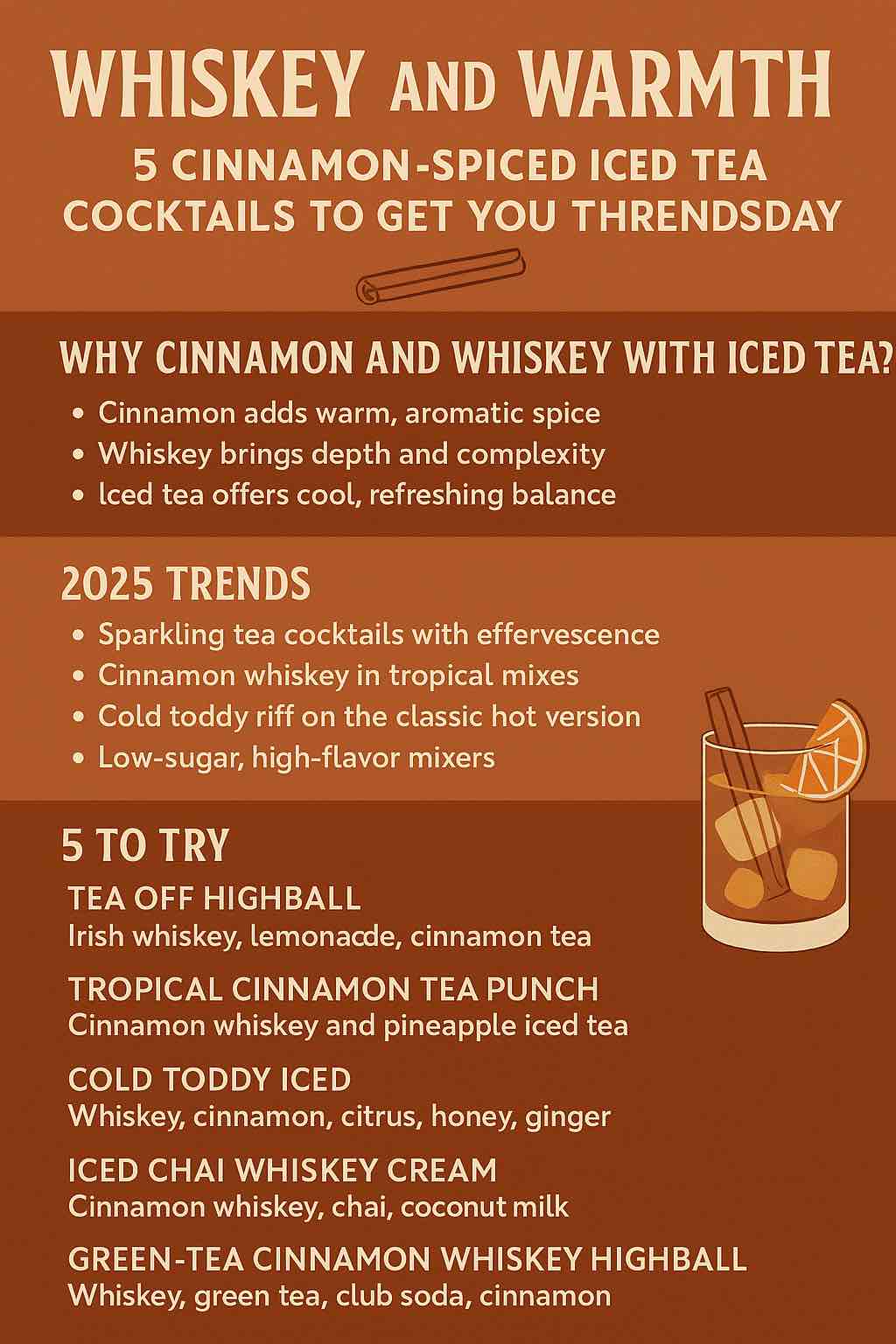
Whiskey and Warmth

There’s something magical about the collision of heat and chill—a glass that cools your hand but warms your heart. When the midweek slump hits, and you crave both refreshment and comfort, cinnamon-spiced iced tea cocktails with whiskey are the answer. This isn’t your grandma’s sweet tea, nor is it just whiskey on the rocks. It’s an intentional fusion: cozy, aromatic spices meet the smooth bite of whiskey and the crisp snap of iced tea. Welcome to a world where Wednesday feels like the weekend.


Why Cinnamon and Whiskey with Iced Tea?

Let’s get nerdy for a second: cinnamon is packed with warm, sweet, and slightly woody notes. Whiskey, especially bourbon or rye, adds caramel, vanilla, and subtle spice. Black or green teas bring tannins and earthiness, while iced service keeps everything lively. When married together, you get a cocktail that’s cooling and refreshing, yet deeply satisfying—a drink for all seasons, but especially that awkward, restless middle of the week.


The 2025 Trends: What’s New?

Before we get to the recipes, here’s what’s trending right now:

  • Sparkling tea cocktails: Fizzy tea is huge this year, adding effervescence to classic pairings.
  • Cinnamon whiskey in tropical mixes: Cinnamon-spiked whiskey (think Fireball or Jack Daniel’s Tennessee Fire) isn’t just for winter—it’s getting play in summer punches and fruity teas.
  • The “Cold Toddy”: Inspired by the classic hot toddy, but adapted for iced service—perfect for those who want a little warmth without turning on the kettle.
  • Low-sugar, high-flavor: Natural sweeteners and bold spices take the place of syrupy mixes.

5 Cinnamon-Spiced Iced Tea Whiskey Cocktails

1. Tea Off Highball (New Classic)

Why it works: This is summer in a glass, but cinnamon-spiked for depth. The lemonade keeps it bright, while the whiskey and tea ground it with flavor.

What you need:

  • 2 oz Irish whiskey (Bushmills is great)
  • 3 oz strong black tea, chilled (infuse with 1 stick cinnamon per cup)
  • 1.5 oz fresh lemonade
  • ½ oz simple syrup (or honey syrup, optional)
  • Ice
  • Lemon wheel & cinnamon stick for garnish

How to make:

  1. Brew the tea hot with a cinnamon stick, cool and chill.
  2. Fill a tall glass with ice.
  3. Add whiskey, tea, lemonade, and syrup. Stir well.
  4. Garnish with lemon wheel and a cinnamon stick.

Pro tip: For a fizzy version, use sparkling lemonade!


2. Tropical Cinnamon Tea Punch

Why it works: Cinnamon whiskey and pineapple? Trust us—this one’s a party. Great for sharing.

What you need:

  • 1.5 oz cinnamon whiskey (Fireball, Jack Daniel’s Fire, or make your own)
  • 3 oz tropical fruit iced tea (pineapple, mango, or passionfruit blends)
  • 1 oz pineapple juice
  • ½ oz lime juice
  • Club soda (to top)
  • Pineapple wedge & mint for garnish

How to make:

  1. In a shaker, combine whiskey, tea, pineapple juice, and lime. Shake with ice.
  2. Strain into a tall glass filled with fresh ice.
  3. Top with club soda, garnish with pineapple wedge and mint.

Pro tip: Add fresh muddled ginger for extra zing!


3. Cold Toddy Iced

Why it works: All the comfort of a hot toddy, none of the sweat. Balanced and nuanced.

What you need:

  • 2 oz rye or bourbon whiskey
  • 3 oz Earl Grey or black tea (brewed strong)
  • ½ oz honey
  • 1 slice orange
  • 2 thin coins of fresh ginger
  • 2 dashes aromatic bitters
  • 1 cinnamon stick

How to make:

  1. Brew tea with cinnamon stick and ginger, then chill.
  2. In a glass, muddle orange with honey.
  3. Fill glass with ice, pour in whiskey, tea, bitters. Stir to combine.
  4. Garnish with fresh cinnamon stick and orange slice.

Pro tip: Try smoked cinnamon for extra drama!


4. Iced Chai Whiskey Cream

Why it works: Creamy, spicy, and sweet—like a dessert in a glass.

What you need:

  • 1.5 oz cinnamon whiskey
  • 2 oz strong chai tea (cooled)
  • 1 oz coconut milk or half & half
  • ½ oz maple syrup
  • Ice
  • Ground cinnamon, for dusting

How to make:

  1. Shake whiskey, chai, coconut milk, and maple syrup with ice.
  2. Strain into a glass of fresh ice.
  3. Dust lightly with cinnamon.

Pro tip: Rim the glass with cinnamon-sugar for extra flair.


5. Green-Tea Cinnamon Whiskey Highball

Why it works: Light, fresh, and just a bit spicy—the new wave of tea cocktails.

What you need:

  • 1.5 oz whiskey (Japanese or Scotch works beautifully)
  • 4 oz cold-brewed green or jasmine tea (infused with a pinch of cinnamon)
  • Club soda
  • Mint sprig & cinnamon stick for garnish

How to make:

  1. Build whiskey and tea over ice in a tall glass.
  2. Top with club soda.
  3. Garnish with mint and cinnamon.

Pro tip: Try with sparkling green tea for trendiness and refreshment.


Practical Tips for Home Mixologists

  • Make cinnamon tea ice cubes: Freeze brewed, spiced tea in ice cube trays—no more watered-down cocktails.
  • Prep ahead: Batch the tea and refrigerate for up to 3 days.
  • Garnish boldly: Cinnamon sticks, orange peel, fresh mint, or a sprinkle of ground spice bring your cocktails to the next level.
  • Adjust sweetness: Use honey, agave, or maple to suit your taste.

Wrapping Up: Wednesday Never Tasted So Good

Whether you need a solo pick-me-up or a pitcher for friends, these cinnamon-spiced iced tea whiskey cocktails are easy to master and endlessly customizable. Use what you have, tweak the ratios, and experiment with teas and whiskeys until you find your signature blend.

Wednesday is no longer just a hurdle—it’s a reason to mix up something special.


Did you try one of these recipes? Share your photos and twists in the comments!

Tag your creation with #WhiskeyAndWarmth on social media and let’s see your midweek magic.


Thirsty for more? Let me know if you want a deep-dive into homemade cinnamon syrups, nonalcoholic variations, or food pairings for these cocktails!

10 FAQs and Answers

1. Can I use any type of whiskey for these cocktails?
Yes! Bourbon, rye, Irish, Scotch, or even cinnamon-flavored whiskey all work. Bourbon brings sweetness, rye adds spice, Irish is smoother, and Scotch gives smoky or floral notes. Match the whiskey to your tea and personal taste.


2. What teas work best for cinnamon-spiced iced tea cocktails?
Strong black teas (like Assam, Ceylon, or Earl Grey) are classic, but green tea, chai, jasmine, or tropical tea blends all make delicious bases. Just avoid weak or overly delicate teas, as they can get lost with the whiskey and spices.


3. How do I make cinnamon-infused tea?
Add a cinnamon stick (or two) to your hot tea as it steeps, letting it infuse for 5–10 minutes. For a stronger flavor, simmer the cinnamon in water before adding your tea bags or leaves. Cool before mixing with whiskey.


4. Can I batch these cocktails for a party?
Absolutely! Mix the tea, whiskey, sweetener, and juice (if using) in a pitcher, then chill. Add ice, sparkling mixers, and garnishes just before serving to keep everything fresh and fizzy.


5. Is there a non-alcoholic version of these cocktails?
Yes. Simply leave out the whiskey and add extra spiced tea, a splash of apple juice or ginger beer, or use non-alcoholic whiskey alternatives for the same flavor profile.


6. What’s the best way to sweeten these cocktails?
Honey, simple syrup, agave, or maple syrup all work. Start with a small amount and adjust to taste. Maple or honey pair especially well with cinnamon and whiskey flavors.


7. Can I use ground cinnamon instead of cinnamon sticks?
It’s better to use sticks for infusing, as ground cinnamon can make the drink gritty. If you only have ground cinnamon, mix it into a syrup first or sprinkle lightly as a garnish.


8. How do I keep my iced tea cocktails from becoming diluted?
Use large ice cubes or freeze extra tea as ice cubes. This way, as the ice melts, it keeps the drink strong instead of watering it down.


9. Are these cocktails suitable for year-round drinking?
Yes! They’re cooling in summer but the spice and whiskey make them comforting in cooler weather too. You can also serve warm versions (without ice) in fall or winter.


10. What garnishes work best with cinnamon-spiced iced tea cocktails?
Cinnamon sticks, citrus slices (lemon, orange), apple wedges, mint sprigs, and even a dusting of ground cinnamon or nutmeg. Garnishes add aroma, flavor, and make the drink feel special.