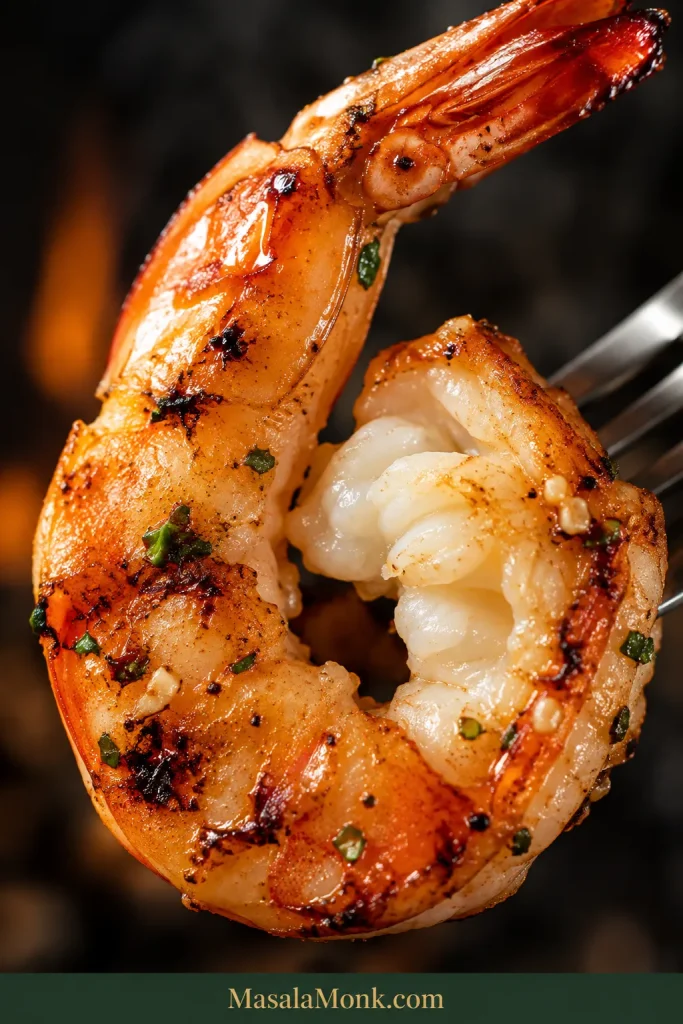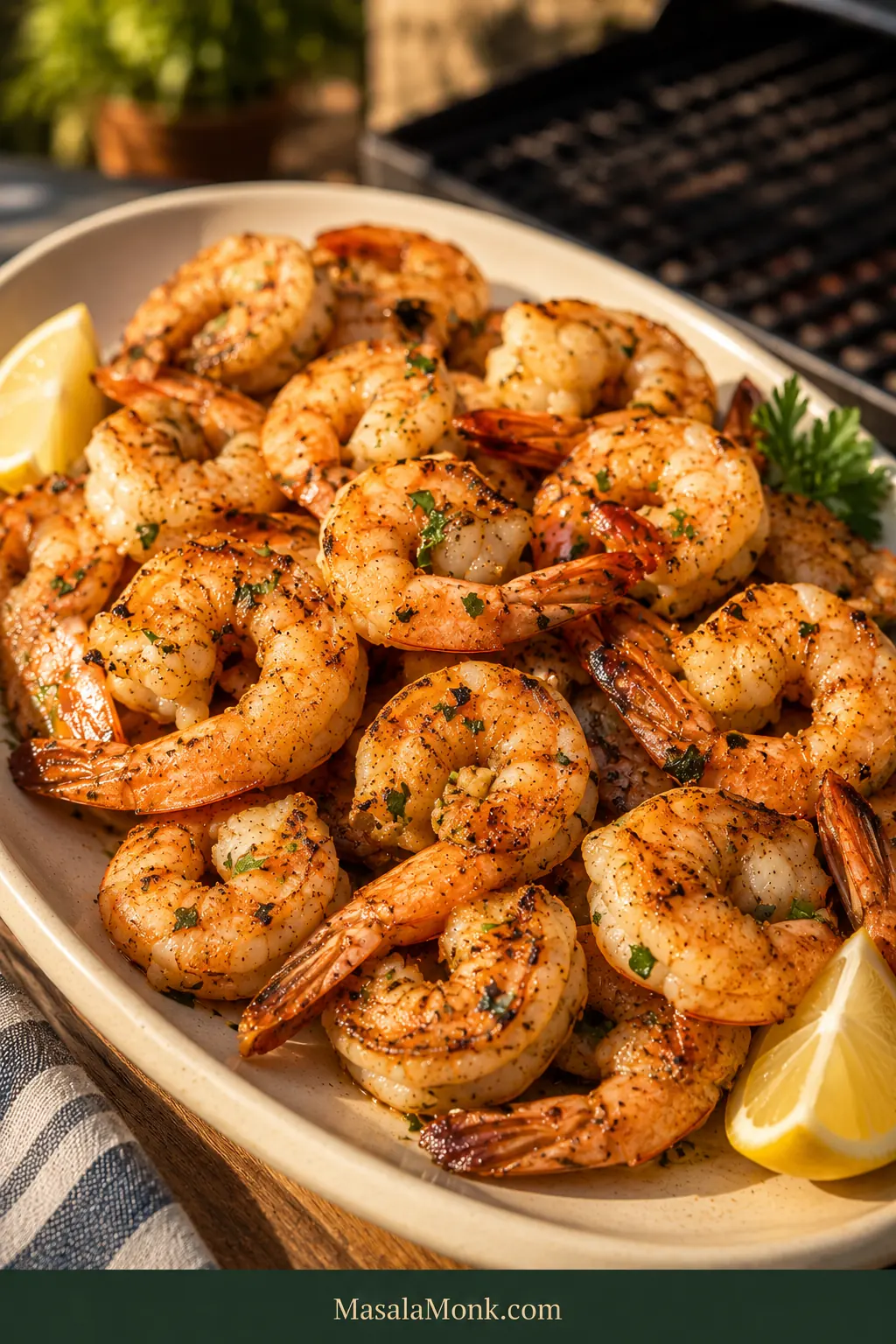
Grilled shrimp can feel a little luxurious for something that takes only minutes to cook: smoky edges, a plump juicy center, fresh lemon and garlic, all straight from a hot grill.
The only catch is speed. A pound of good shrimp is not something you want to sacrifice to two distracted minutes beside the grill. Shrimp can move from underdone to perfect to rubbery remarkably quickly.
This grilled shrimp recipe keeps that narrow window manageable. The recipe itself is easy. What matters is knowing when to start looking, what “done” actually looks like, and when to stop adding heat.
Quick Answer: How to Grill Shrimp Without Making Them Rubbery
The method at a glance
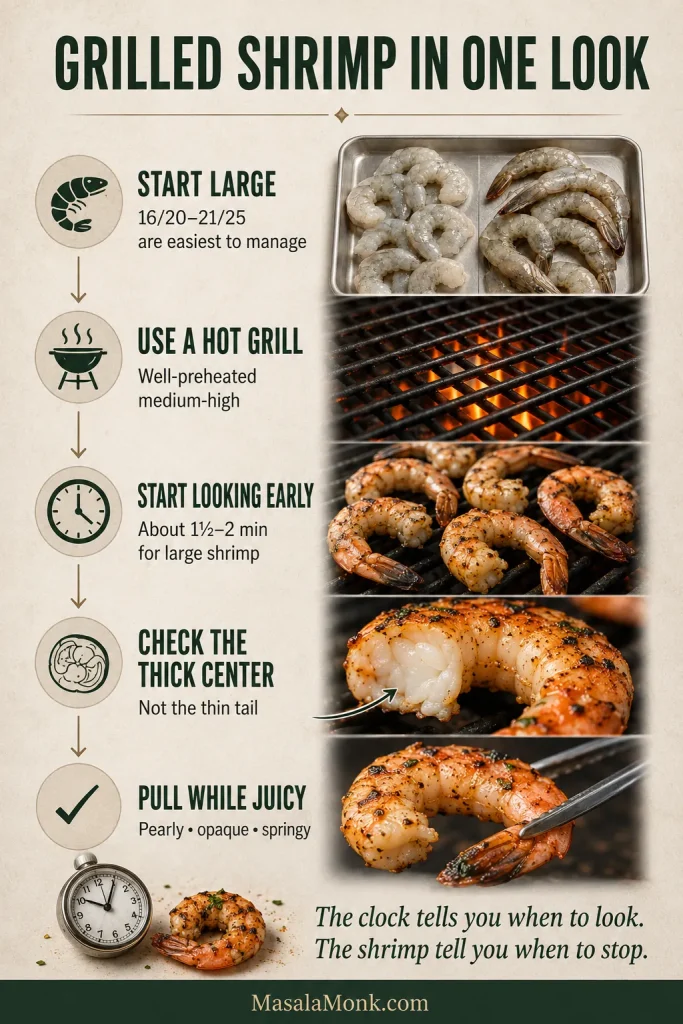
For large shrimp—about 16/20 or 21/25 count per pound—expect roughly 3–6 minutes total on a well-preheated medium-high grill. Start checking after about 1½–2 minutes on the first side.
You can season and grill immediately; marinating is optional. If the shrimp were frozen, thaw them completely and dry the surface before seasoning.
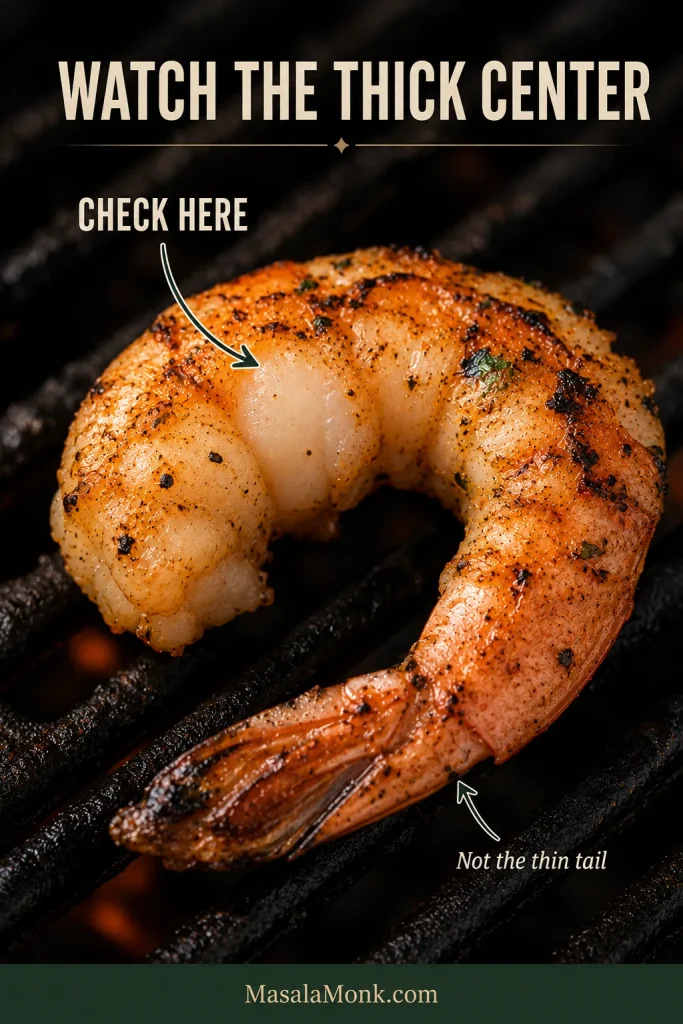
Check the thickest part of the body rather than the thin tail. When the center is firm, pearly and opaque and the shrimp still feel juicy and springy, get them off the heat.
The clock tells you when to look. The shrimp tell you when to stop.
Easy Lemon-Garlic Grilled Shrimp Recipe
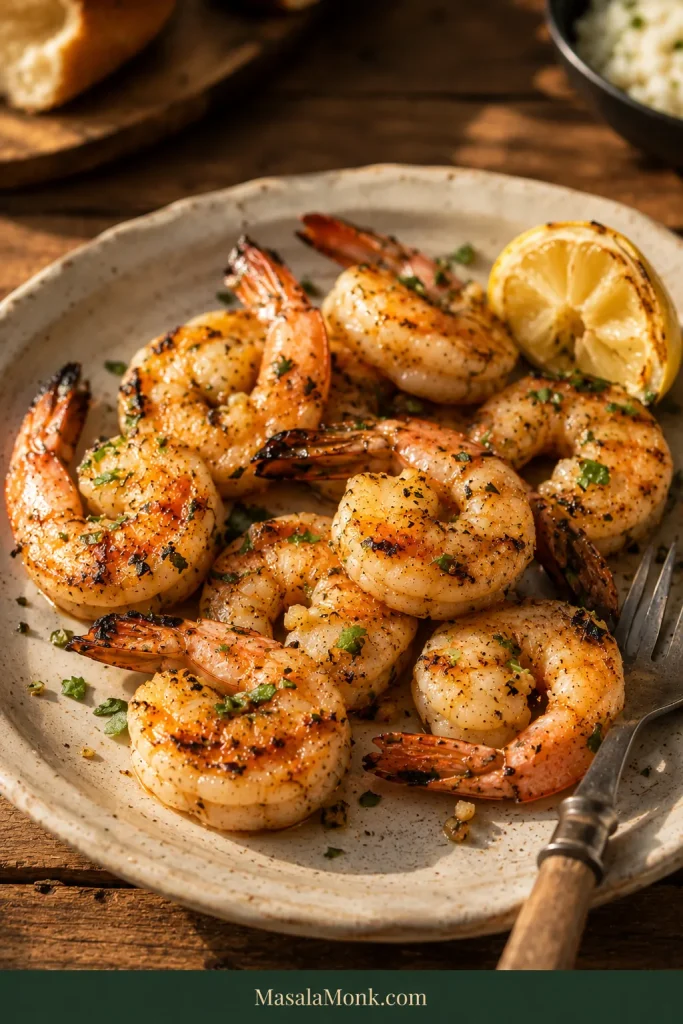
The first bite is smoky and lightly charred; then the lemon and garlic arrive fresh at the finish. The coating stays deliberately light so the grill can brown the shrimp before their juicy centers have time to overcook.
Actual grilling takes only a few minutes. Most of the clock below is prep and optional marinating.
Useful Equipment
- Skewers for smaller shrimp or faster batch flipping
- Grill basket for small shrimp that are awkward on open grates
- Instant-read thermometer, optional and most practical with jumbo shrimp
Ingredients
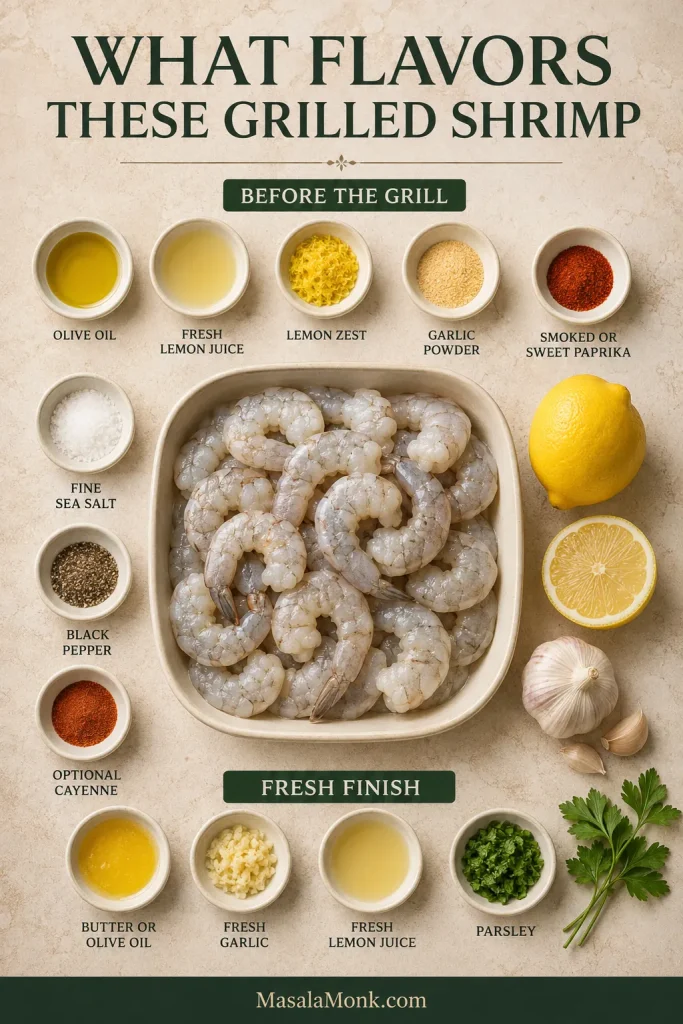
- 1 lb / 454 g raw shrimp, peeled and deveined, preferably 16/20 or 21/25 count
- 2 tablespoons / 30 ml olive oil
- 1 tablespoon / 15 ml fresh lemon juice
- 1 teaspoon finely grated lemon zest
- 1 teaspoon garlic powder
- 1 teaspoon smoked or sweet paprika
- 3 g fine sea salt, about ½ teaspoon
- ¼ teaspoon freshly ground black pepper
- Pinch of cayenne or red pepper flakes, optional
Optional Fresh Garlic-Lemon Finish
- 1 tablespoon / 14 g unsalted butter or 1 tablespoon / 15 ml olive oil
- 1 small garlic clove, very finely grated or minced
- 2 teaspoons / 10 ml fresh lemon juice
- 1 tablespoon chopped parsley
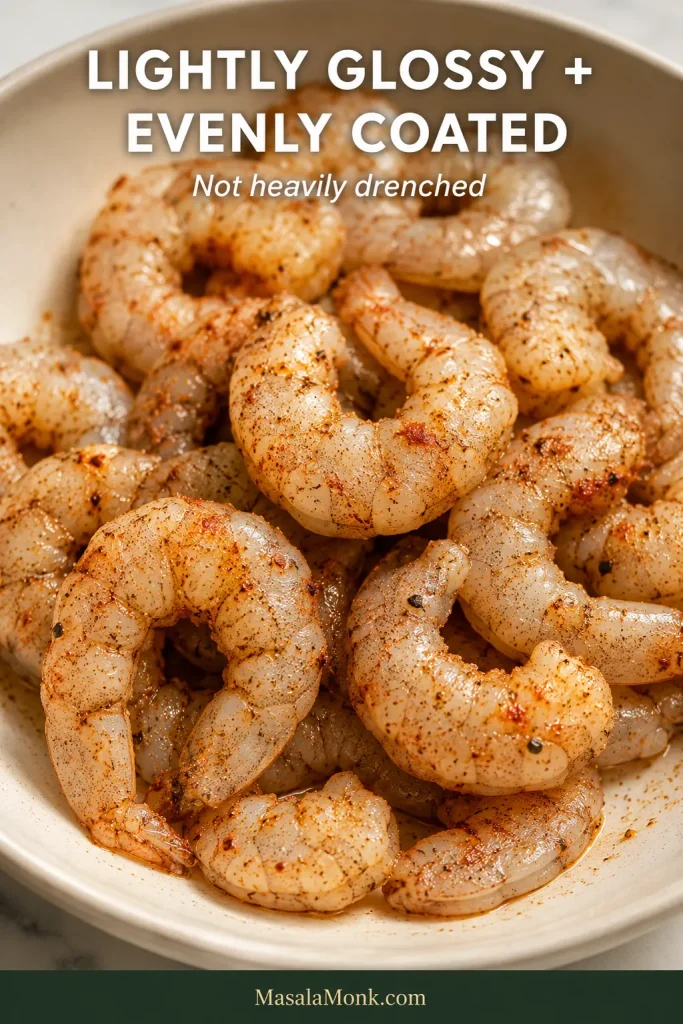
Before grilling, look for a light, even sheen rather than a wet coating. The shrimp should look glossy enough to carry the seasoning, but not sit in excess liquid.
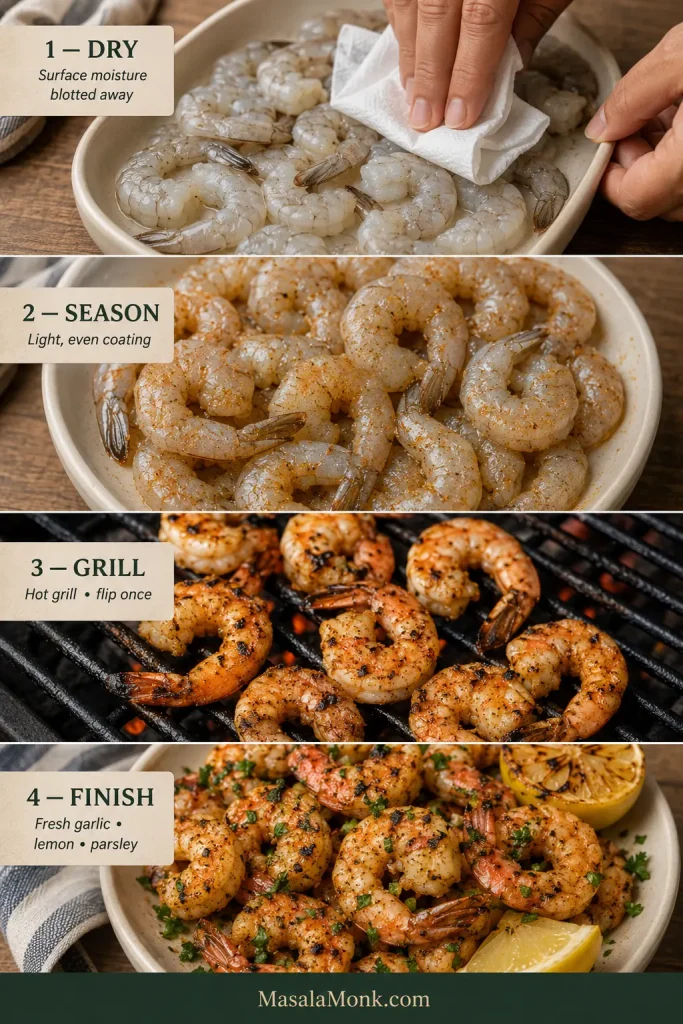
How to Make Grilled Shrimp
- Dry the shrimp. If frozen, thaw and drain first. Pat away visible surface water.
- Season. Mix the olive oil, lemon juice, zest, garlic powder, paprika, salt, pepper and optional cayenne. Toss until the shrimp look lightly glossy and evenly coated rather than heavily drenched.
- Marinate briefly—or grill now. Refrigerate for 15–30 minutes, or skip the wait and cook immediately. For an even drier surface, omit the 1 tablespoon / 15 ml lemon juice before grilling and add extra fresh lemon to taste after cooking.
- Preheat the grill. Use well-preheated medium-high heat. Brush the grates clean and let them heat fully.
- Grill. Arrange large shrimp directly on the grates or thread them onto skewers. You should hear an immediate, lively sizzle. Let the first side brown before flipping once.
- Pull them as soon as they’re done. Check the thickest part of the body and move the shrimp to a clean serving platter—not the plate or tray that held them raw.
Finish
Melt the butter and take it off direct heat before stirring in the fresh garlic. The garlic should smell fresh and fragrant, not browned. Add the lemon juice and parsley, then spoon or toss the mixture with the hot shrimp.
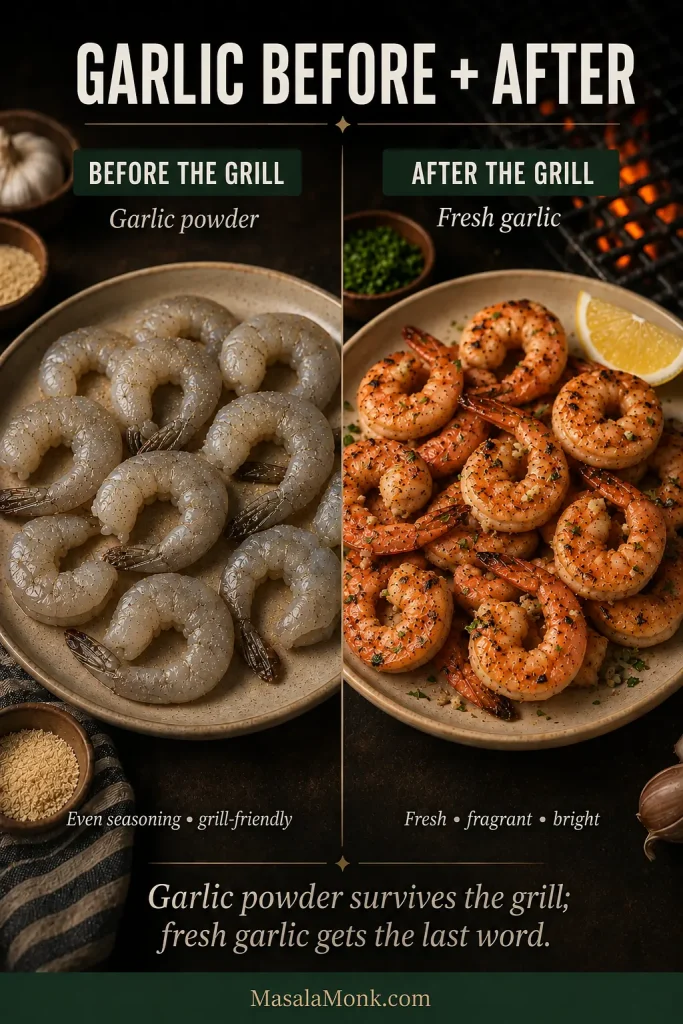
Garlic powder survives the grill; fresh garlic gets the last word.
Recipe Notes
- Using a salty seasoning blend? Reduce the separate salt.
- Using wooden skewers? Soak them for about 30 minutes first.
- Using commercially precooked shrimp? Warm them only briefly and let the grill add a little char; the raw-shrimp timings below do not apply.
- Want marinade for serving? Reserve a clean portion before adding the raw shrimp. Otherwise discard the used marinade or boil it before using it as a sauce.
Need More Help With Your Shrimp?
You’ve got the recipe above. If you’re already cooking, jump to timing, doneness or troubleshooting. If you’re planning ahead, start with shrimp size and prep.
Choose & Prep
Fix, Serve & Store
Choose the Best Shrimp for Grilling
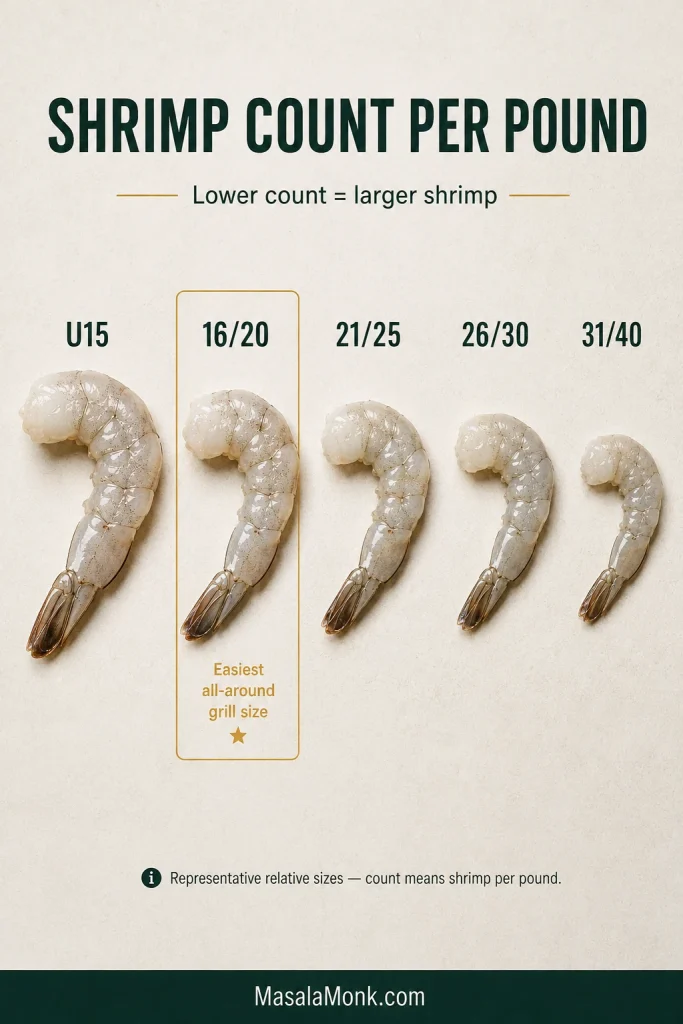
For the easiest grilling, buy raw 16/20 or 21/25 shrimp if you can. They’re large enough to handle comfortably and give you a little more breathing room before they overcook.
The useful number at the seafood counter is the count per pound. A 16/20 label means roughly 16–20 shrimp make up one pound; lower numbers mean larger shrimp.
| Shrimp count | Relative size | Buying note |
|---|---|---|
| U15 | Very large | Most forgiving timing on the grill |
| 16/20 | Large | Easiest all-around choice for grilling |
| 21/25 | Large | Excellent balance of size, price and easy handling |
| 26/30 | Medium-large | Still very grillable, but they cook more quickly |
| 31/40 | Smaller | Fast cooking, so you’ll want everything ready before they go on |
If the package says prawns, king prawns or tiger prawns, use the actual size and thickness as your guide. Very large prawns behave much like jumbo shrimp.
Raw Shrimp Are Best for Grilling
Raw shrimp give you the most control over browning and doneness, and all of the main timing guidance in this article is written for them.
Commercially precooked shrimp only need enough heat to warm through and pick up a little grill flavor. The same idea helps with shrimp fried rice: get the rest of the dish nearly ready before the cooked shrimp go in.
Frozen Shrimp Work Beautifully
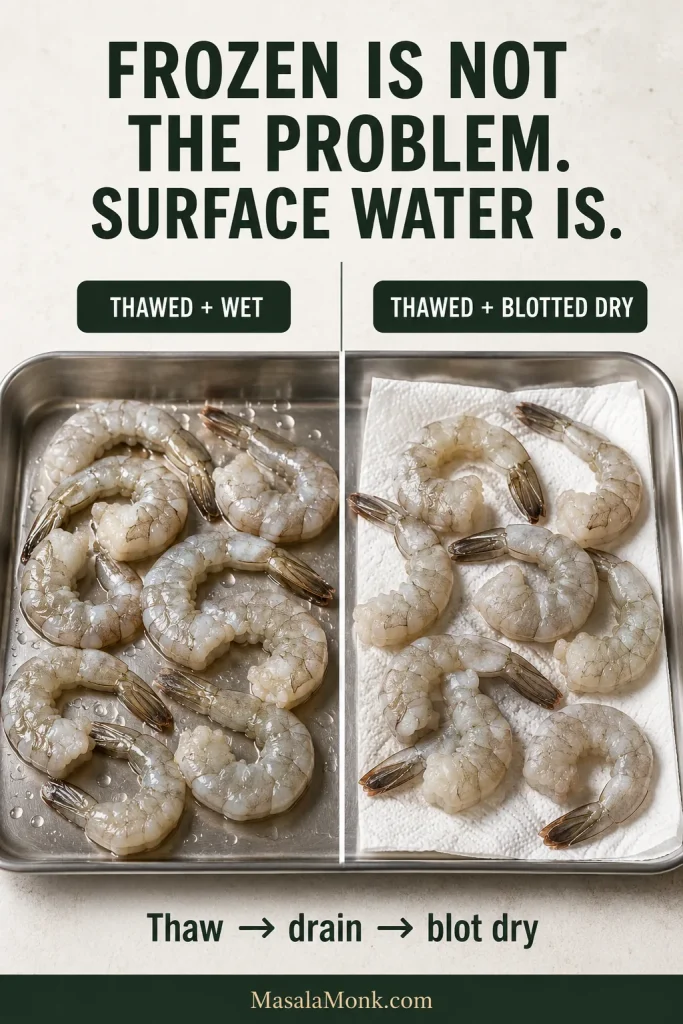
Frozen is not the problem. Surface water is.
Fully thawed frozen shrimp grill very well once excess moisture is blotted from the surface. They can brown and taste every bit as lively as shrimp that never saw the freezer.
No time to thaw? Our frozen shrimp in the air fryer guide is designed for cooking them straight from frozen.
Should You Grill Shrimp With the Shell On or Off?
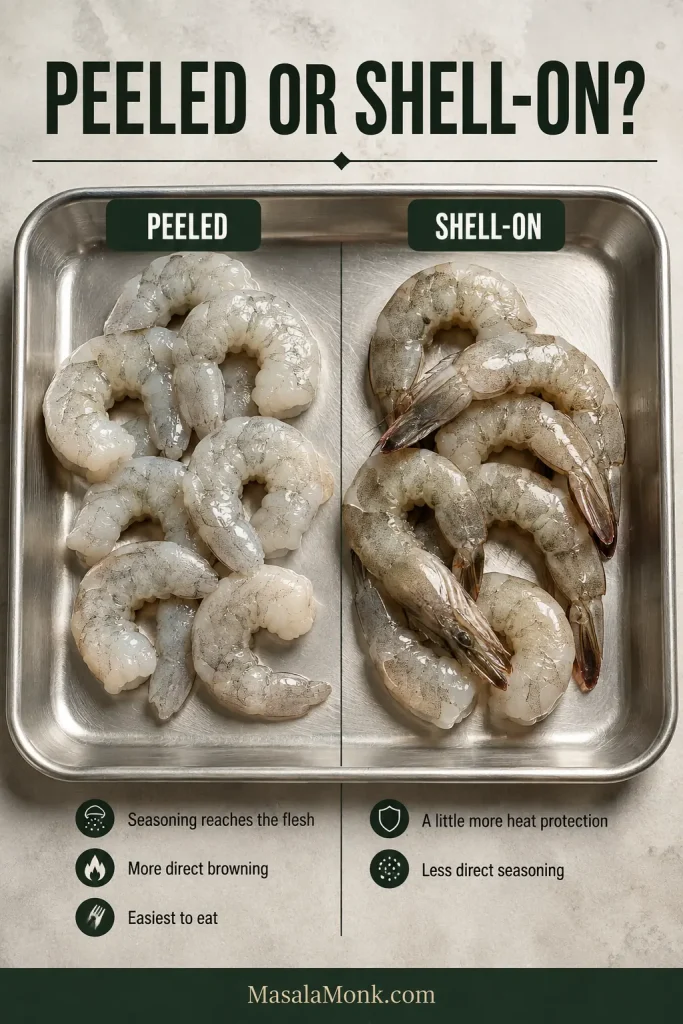
Peeled shrimp are the easiest default: seasoning reaches the flesh directly, more surface touches the grill, and they’re easier to eat.
Shell-on shrimp trade some direct seasoning and browning for a little extra protection from intense heat. With jumbo shrimp, you can slit the shell along the back and devein while leaving most of it intact.
How to Prep Shrimp for the Grill
The prep itself is short:
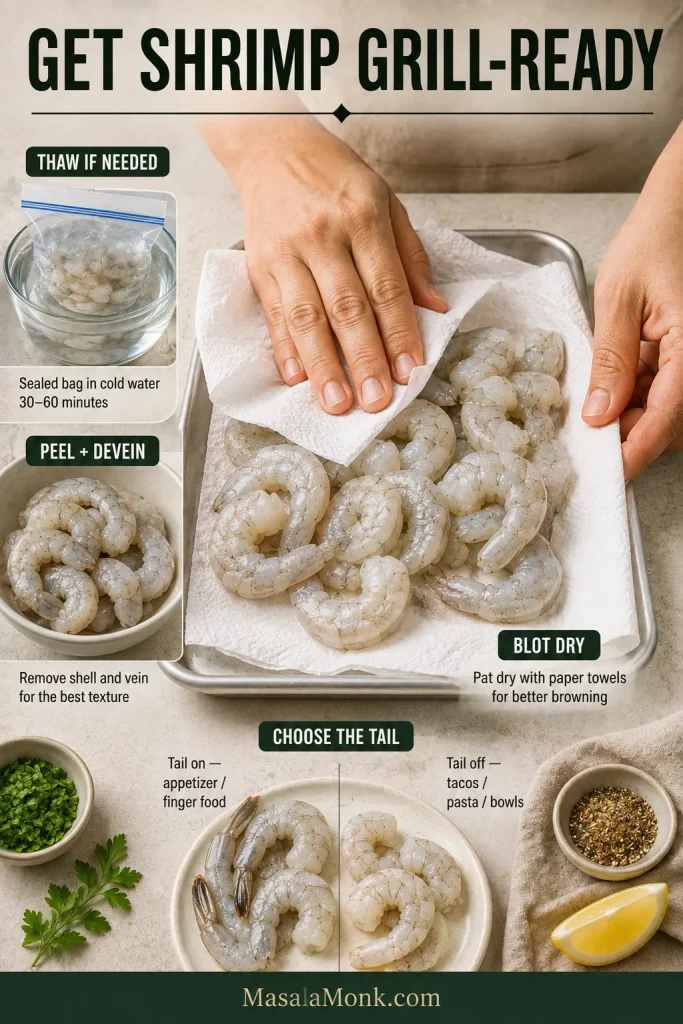
- Thaw if needed. Use the refrigerator when you have time. For a faster thaw, keep the shrimp sealed in a leakproof bag in cold water, then cook them promptly.
- Peel and devein if needed. Leave the shell in place if you’re deliberately grilling shell-on.
- Choose the tails. Leave them on for finger food and presentation; remove them for easier shrimp tacos, pasta or rice bowls.
- Drain and dry. Blot away obvious surface moisture before seasoning.
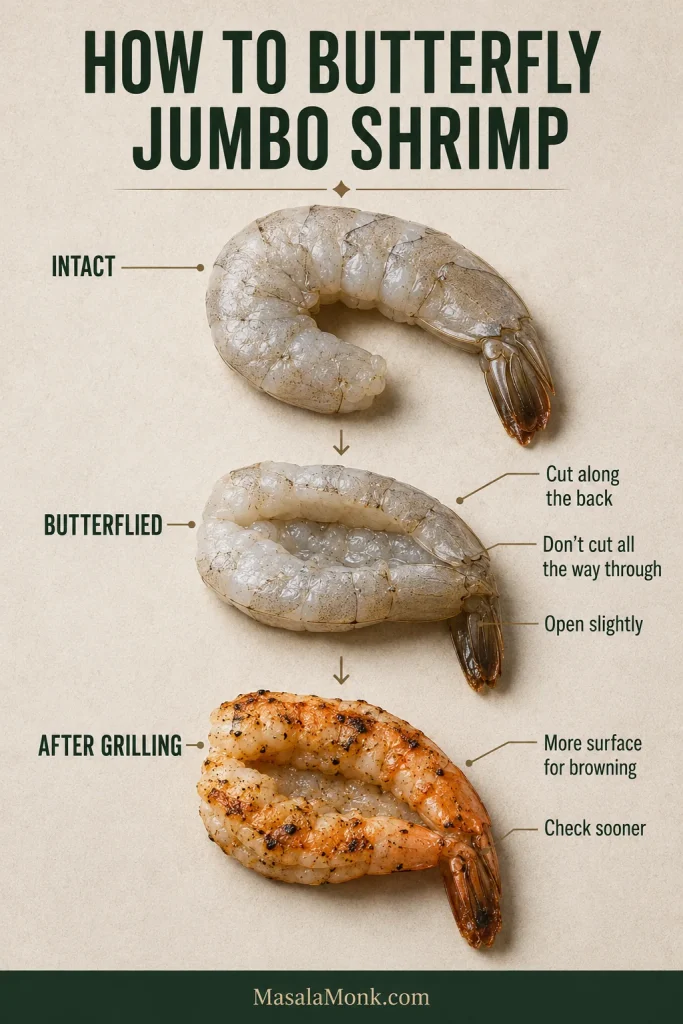
Butterflying jumbo shrimp is optional. Cut along the back without slicing all the way through, then open the flesh slightly. More surface can touch the grill, which means more browned edges—but also a shorter cooking window, so check butterflied shrimp sooner than intact shrimp of the same size.
Marinade or Seasoning? Choose What Fits Dinner
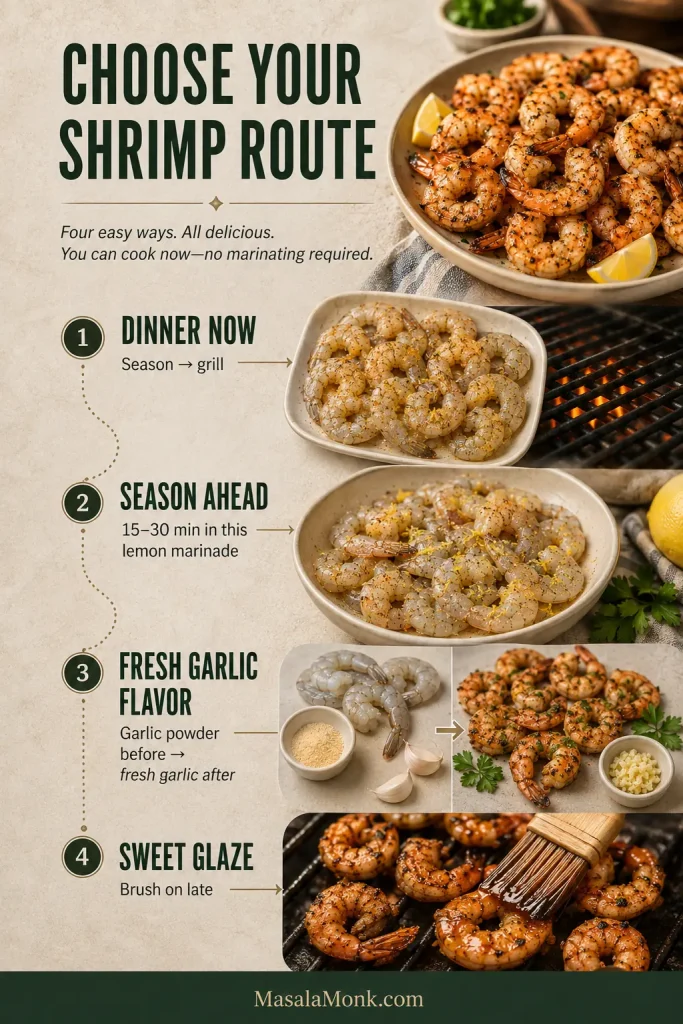
Choose your route
- Need dinner now? Season and grill immediately.
- Want to season the shrimp a little ahead of time? Use the short lemon-garlic marinade below.
- Want stronger fresh-garlic flavor? Keep most of the fresh garlic for the finish.
- Using a sweet glaze? Brush it on late in grilling so the sugar has less time to scorch.
How Long Should Shrimp Marinate?
For this lemon marinade, 15–30 minutes is ideal. Keep the shrimp refrigerated while they sit.
If dinner gets delayed, drain the shrimp instead of leaving them in a strongly acidic mixture for hours. You can mix the marinade earlier and add the shrimp closer to cooking.
Reserve any portion you want to serve later before the raw shrimp goes in. Otherwise discard the used marinade or boil it before using it as a sauce.
No marinade? A simple seasoning works perfectly well. For a richer sauce at the table, try this Cajun garlic butter seafood sauce.
Choose Your Grill Setup
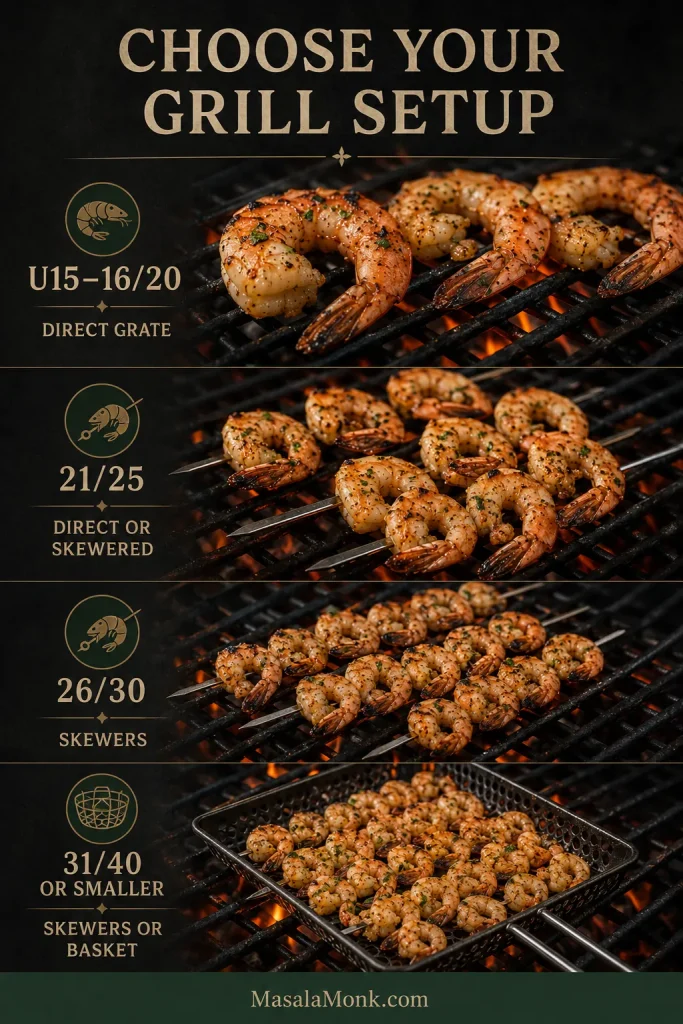
Use 16/20 shrimp directly on the grates; 21/25 can go direct or onto skewers, while smaller shrimp become easier to handle on skewers or in a grill basket.
| Shrimp size | Best setup | Why |
|---|---|---|
| U15–16/20 | Direct grate | Easy to handle individually |
| 21/25 | Direct or skewered | Either works; skewers speed up batch flipping |
| 26/30 | Skewers | Several shrimp can move at once during a short cooking window |
| 31/40 or smaller | Skewers or basket | Much easier to contain and turn |
What Temperature Should You Grill Shrimp At?
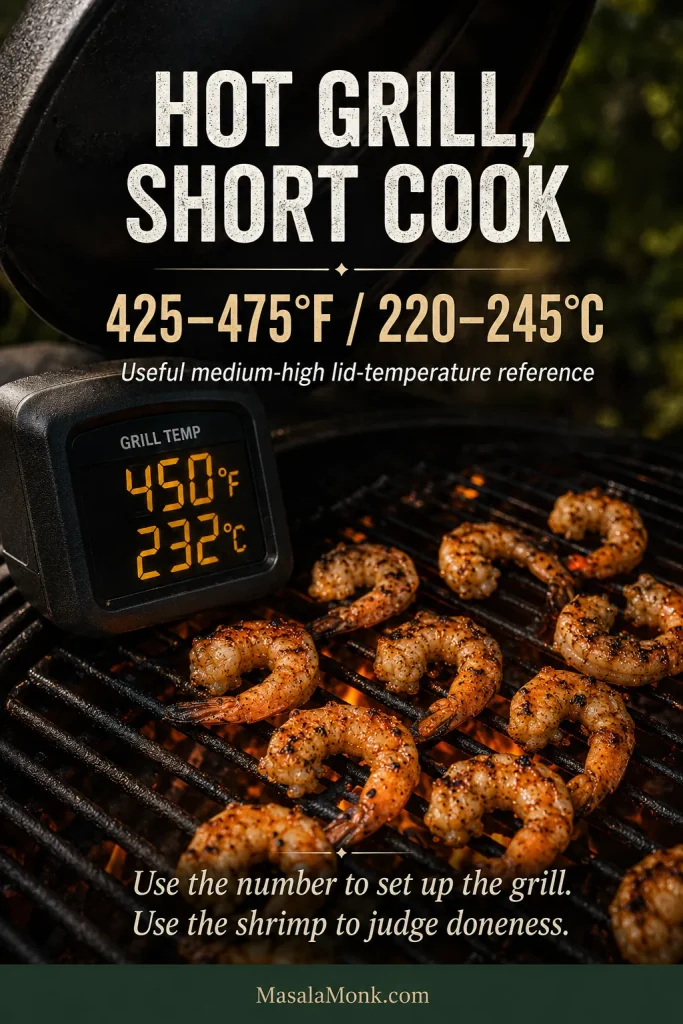
For most raw large shrimp, use a well-preheated medium-high grill. If your grill has a lid thermometer, about 425–475°F / 220–245°C is a useful reference range. That gets the grill into the right neighborhood, but actual heat at the grate still varies, so don’t treat the number as a finish signal.
How to Skewer Shrimp for Grilling
Pierce each shrimp through the thick body and again near the tail so it lies flat. If the row still wants to rotate when you turn it, use two parallel skewers.
Large shrimp on skewers usually stay in the same roughly 3–6 minute total window as loose shrimp. Skewers make the batch easier to turn; shrimp size still determines how soon you should begin checking.
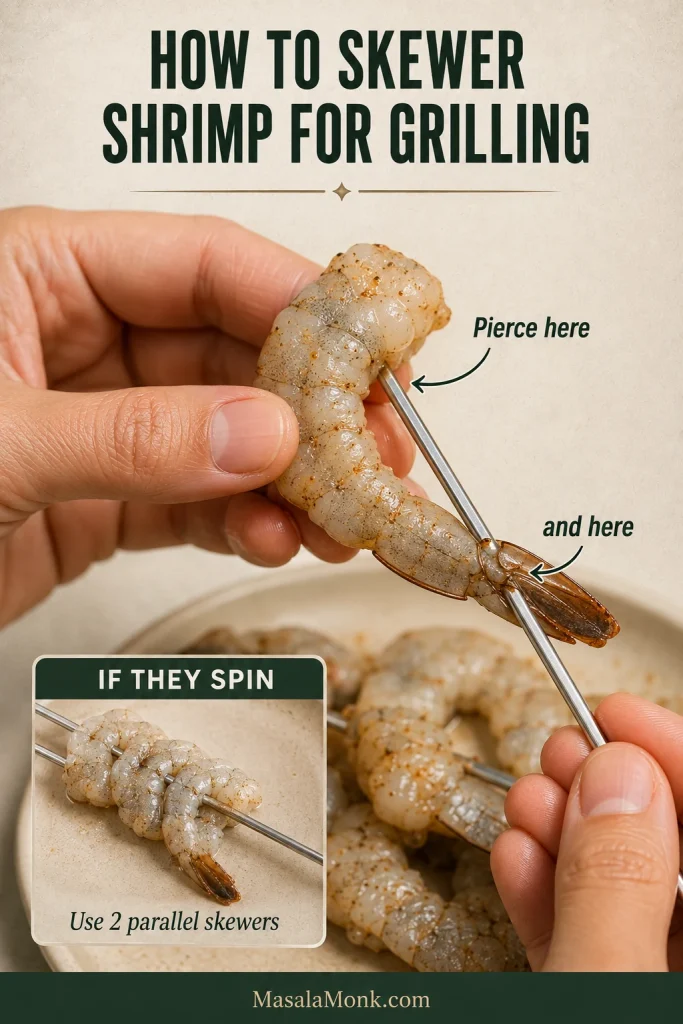
If you’re adding vegetables, pair the shrimp with ingredients that cook just as quickly. Thick peppers, onion or bacon are usually easier on their own skewers.
Other Grill Setups
A grill basket is handy for smaller shrimp. Give them enough room to sizzle and brown; if liquid starts pooling underneath, spread them out or cook in two batches.
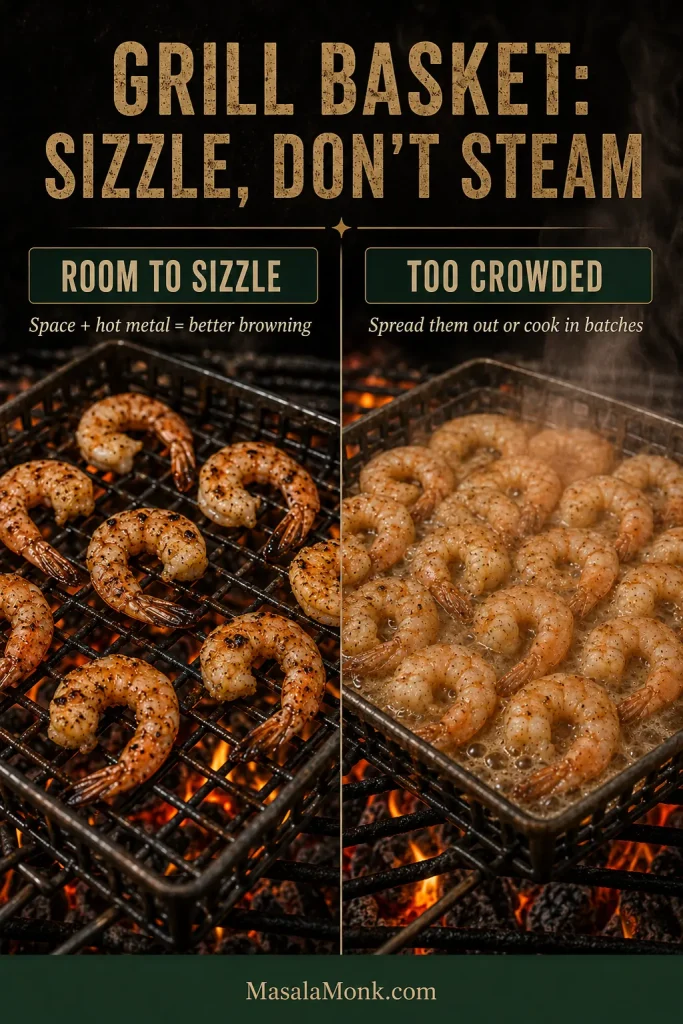
Gas grills make the heat easy to control. With charcoal, keep a cooler patch available in case of flare-ups. A hot grill pan or broiler works indoors, while pellet grills vary enough that the visual cues matter more than copying gas-grill timing minute for minute.
How to Grill Shrimp: Four Cues to Watch
1. Listen When They Hit the Grill
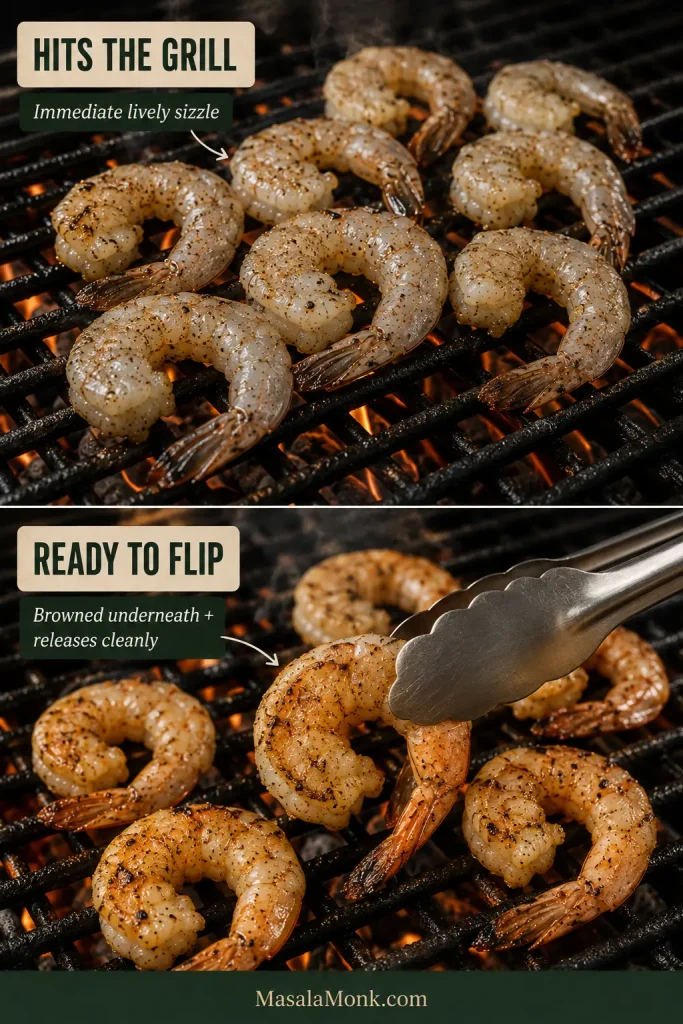
You want a definite sizzle. If the shrimp sit quietly in released liquid, the surface is steaming more than browning.
2. Watch the First Side Change
The edges turn pink-orange and opaque while browned spots develop underneath. Once the first side has browned and releases cleanly from the grate, you’re right where you want to be.
3. Flip in the Same Order You Loaded
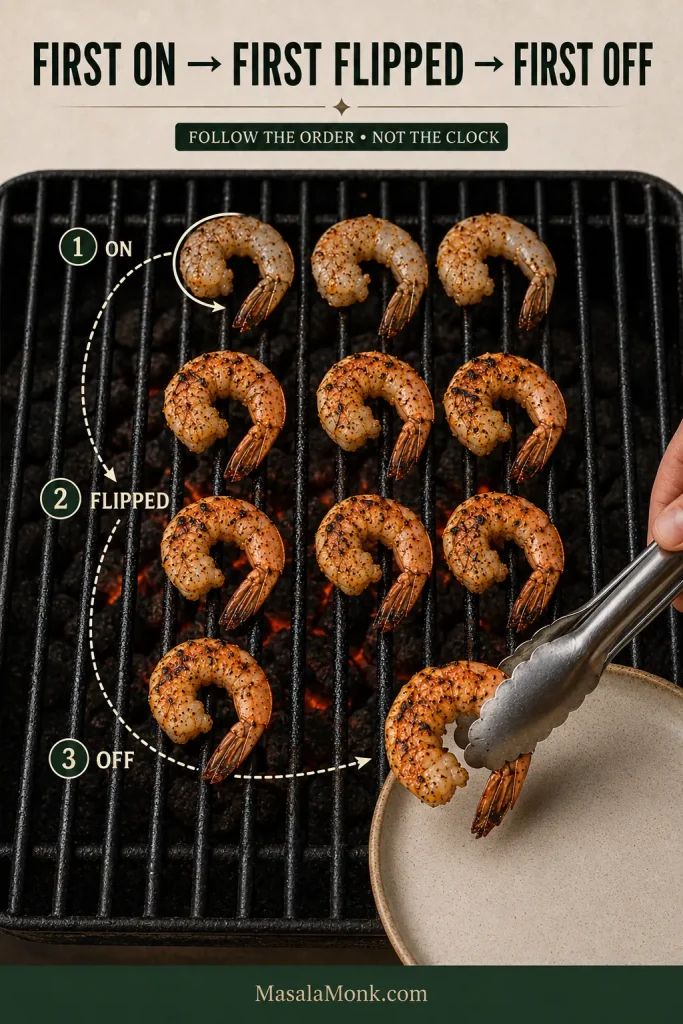
With a full grill, lay the shrimp down in a predictable sequence and follow the same path when flipping and removing them.
First on → first flipped → first off.
4. Watch the Thick Center
The thin tail can look cooked before the thickest part of the body is ready. As the second side finishes, watch that center and use the doneness cues below.
How Long to Grill Shrimp: Timing by Size
Most large shrimp grill in about 3–6 minutes total. Use the chart to decide when to start checking, then judge the finish from the shrimp themselves.
| Shrimp size | Start checking | Common total window |
|---|---|---|
| U15–16/20 | Around 2 minutes | Roughly 4–6 minutes |
| 21/25 | Around 1½–2 minutes | Roughly 3–5 minutes |
| 26/30–31/40 | Around 1 minute | Roughly 2–4 minutes |
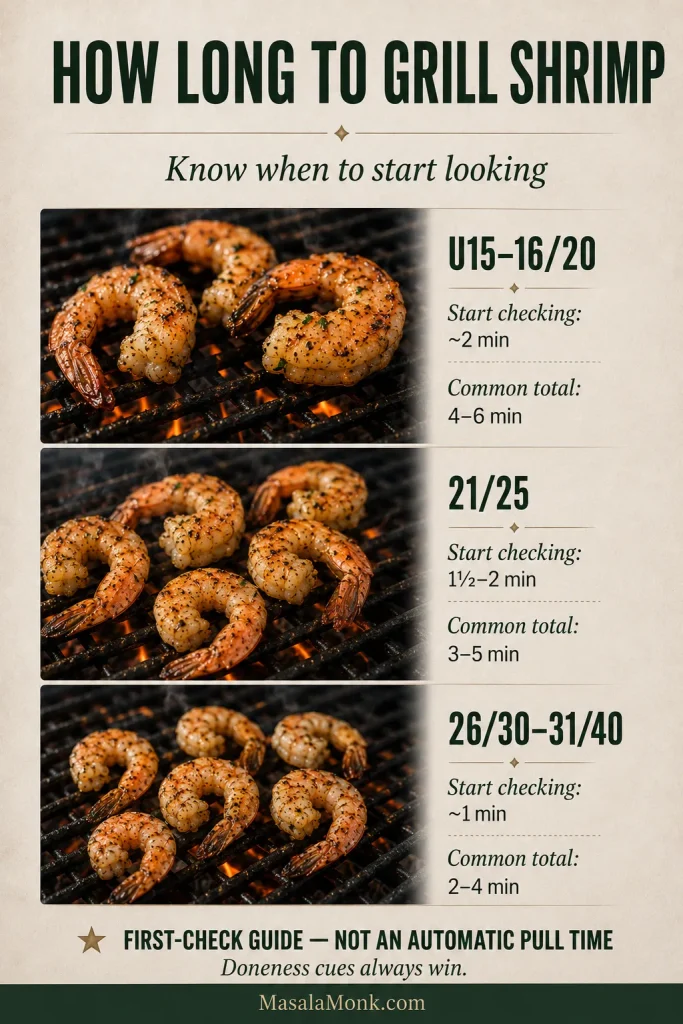
Shell-on shrimp may take a little longer; butterflied shrimp may finish sooner. Cooler grills, cold weather and crowded baskets can also stretch the window. If some shrimp are noticeably smaller than the rest, take those off as soon as they’re ready.
How to Tell When Grilled Shrimp Are Done
Grilled shrimp are done when the thickest part is firm, pearly and opaque while the texture is still juicy and springy.
| Stage | Center | Texture |
|---|---|---|
| Undercooked | Translucent or glassy | Very soft |
| Ready | Pearly and opaque | Juicy, tender and springy with a clean snap |
| Overcooked | Opaque but drying | Hard, resistant or rubbery |
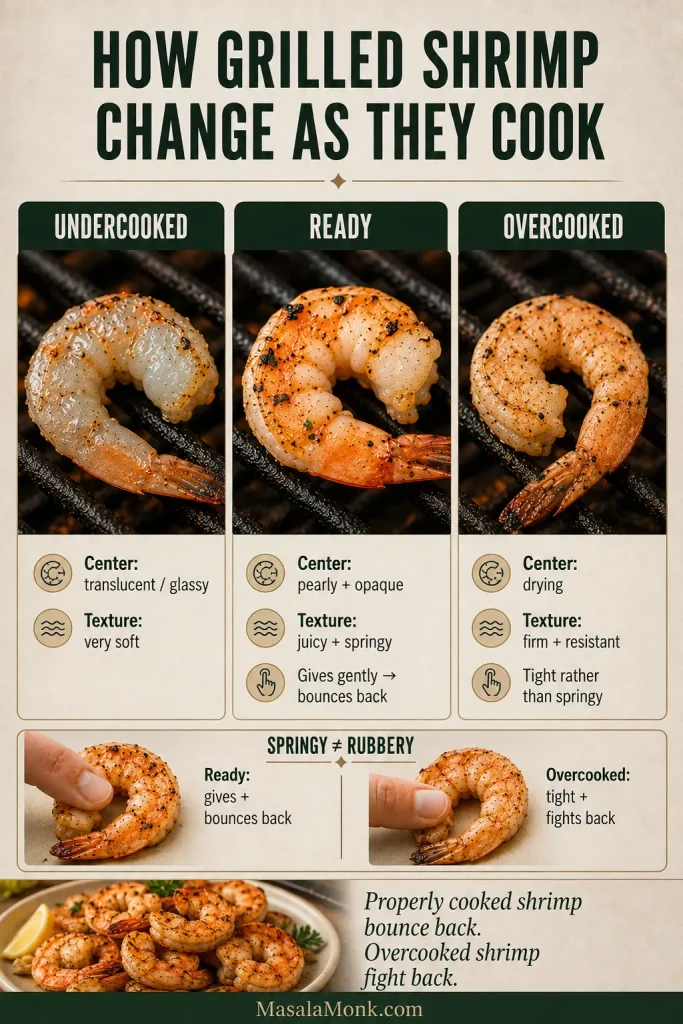
A properly cooked shrimp should feel tender and juicy when you bite into it, with a clean little snap rather than a hard chew. Springy is not the same as rubbery. Properly cooked shrimp bounce back; overcooked shrimp fight back.
The C-vs-O Rule Is a Hint, Not a Test
A gently curved shrimp is usually more promising than one contracted into a tight ring, but shape alone cannot tell you whether the thick center is ready.
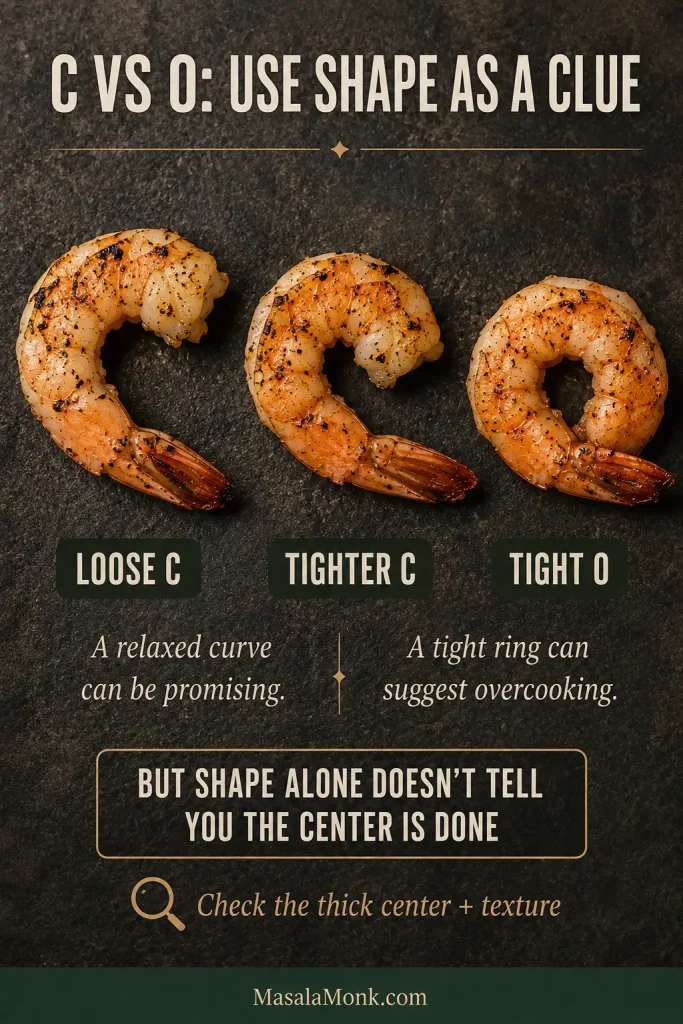
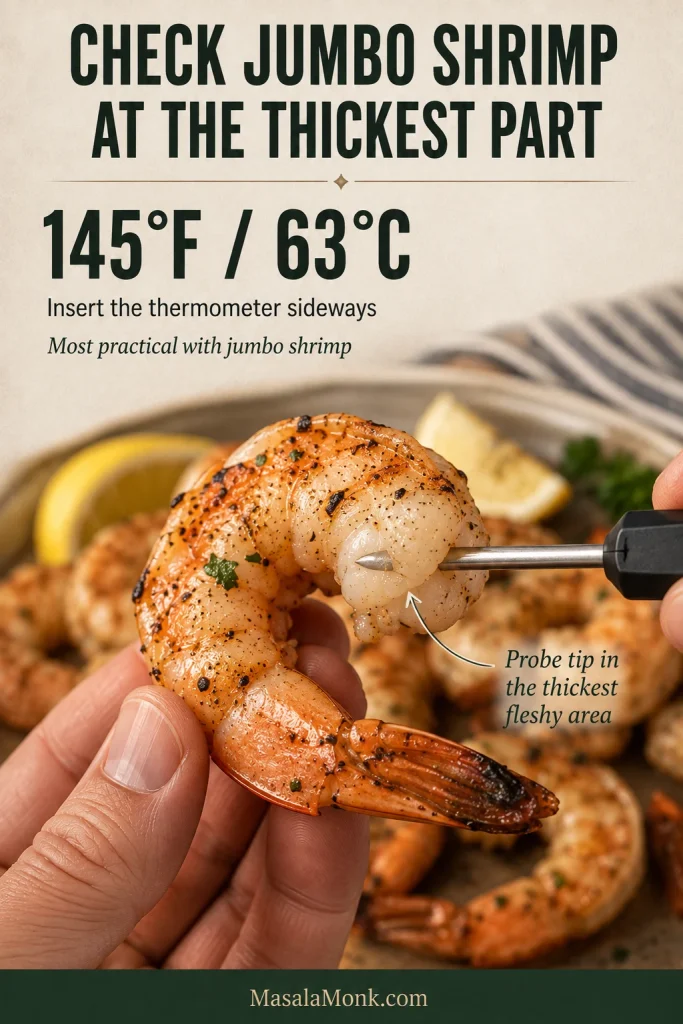
FDA guidance recommends cooking most seafood to 145°F / 63°C and describes properly cooked shrimp as firm, pearly and opaque. With jumbo shrimp, an instant-read thermometer can be inserted sideways into the thickest section. FDA seafood safety guidance.
Grilled Shrimp Troubleshooting: Fix This Batch Without Making It Worse
Some problems can be fixed now. Others can only be prevented next time. Most importantly, don’t keep cooking shrimp that are already done simply to improve their color.
Before or While Grilling
| What you see | Likely cause | What to do now | Next time |
|---|---|---|---|
| Mushy or oddly soft before grilling | Long acidic soaking, or shrimp that were already unusually soft after thawing | Drain immediately. If the shrimp are already badly mushy, grilling won’t make them firm again. | Keep citrus exposure brief and start with shrimp that feel firm. |
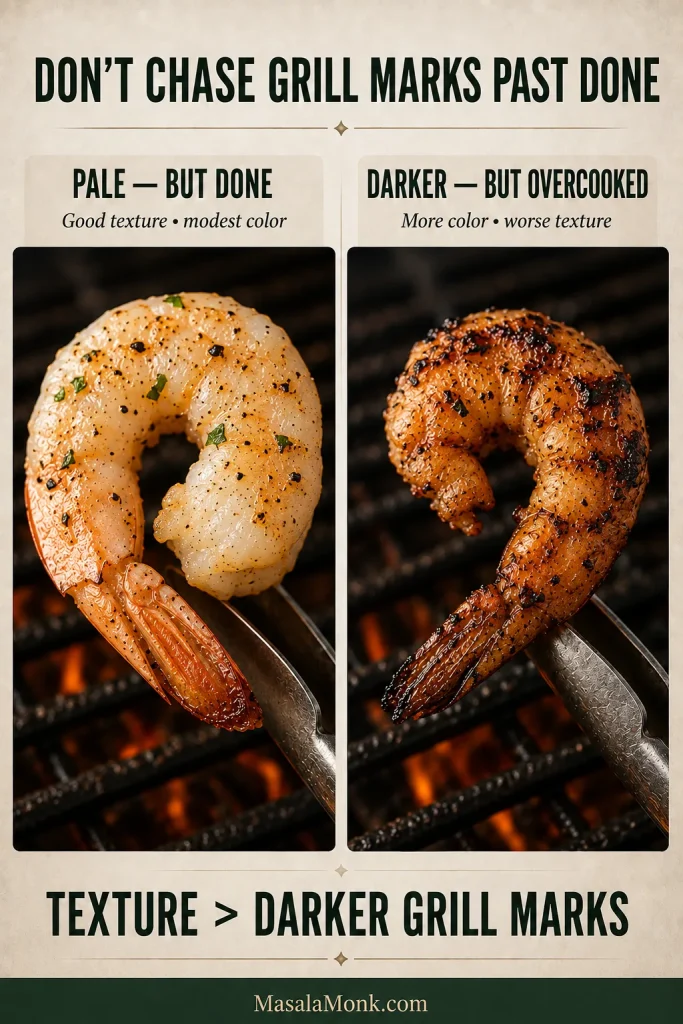
| Pale but already cooked | Wet surface or grill not hot enough | Take them off. Good texture matters more than darker grill marks. | Dry more thoroughly and preheat longer. |
| Still translucent in the thick center | Not done yet | Return to the heat briefly and check again after a short interval. | Use the timing chart to know when to look, then judge the center before pulling them. |
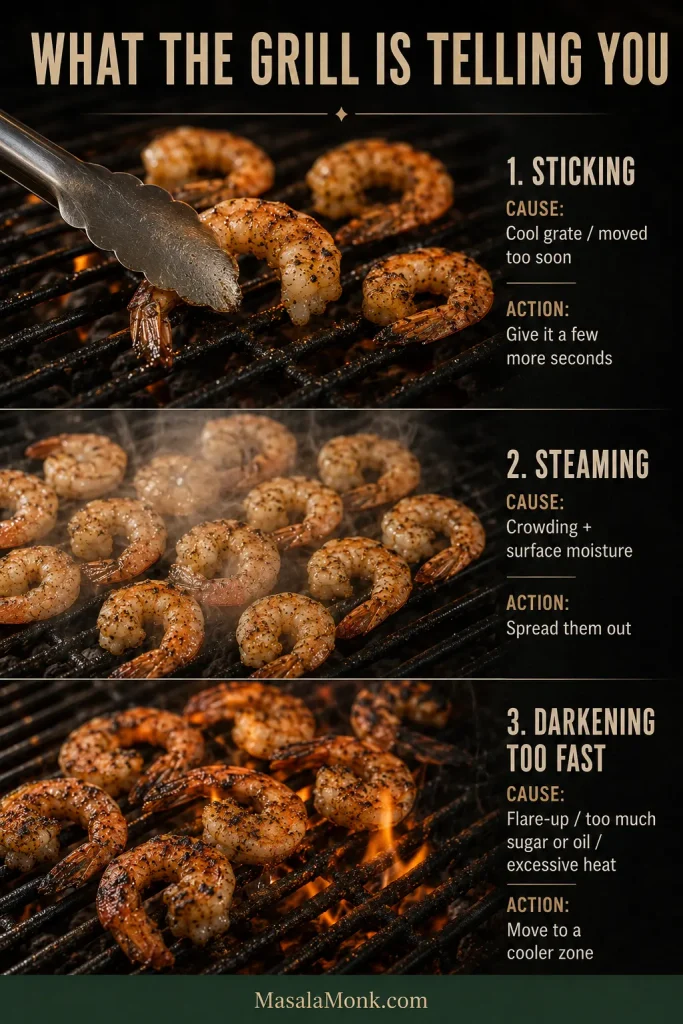
| Shrimp sticking | Cool or dirty grates, or flipping before the first side has set | Give them a few more seconds before lifting again. | Preheat well, clean the grates and let the first side sear. |
| Shrimp steaming in a basket | Too many shrimp releasing moisture together | Spread them out or remove part of the batch. | Keep the basket closer to a single layer. |
| Outside darkening too fast | Flare-ups, excess oily or sugary coating, or overly aggressive heat | Move the shrimp to a cooler part of the grill. | Use a lighter coating and brush sweet glazes on during the final part of grilling. |
| Bitter burnt garlic | Fresh garlic spent too long over direct heat | Finish with fresh lemon or herbs instead of adding more browned garlic. | Use garlic powder before grilling and fresh garlic afterward. |
After Grilling
| What happened | Likely cause | What to do now | Next time |
|---|---|---|---|
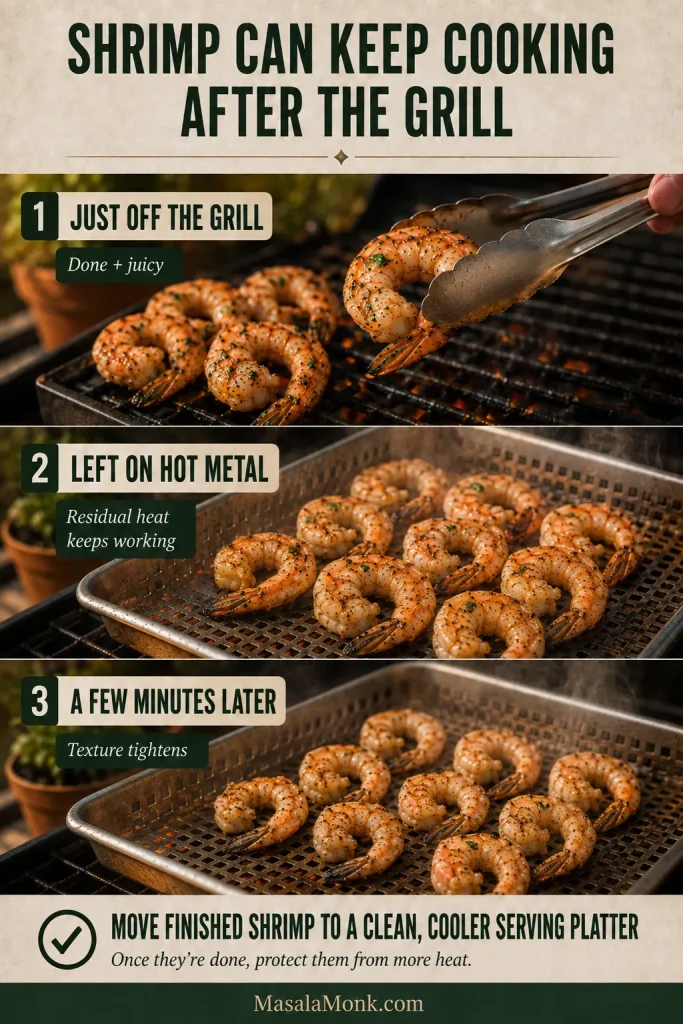
| Perfect off the grill, rubbery later | Carryover heat or being held warm too long | Get them off the hot pan, basket or tray and onto a clean serving platter away from the heat. | Serve finished shrimp close to cooking instead of keeping them warm beside the grill. |
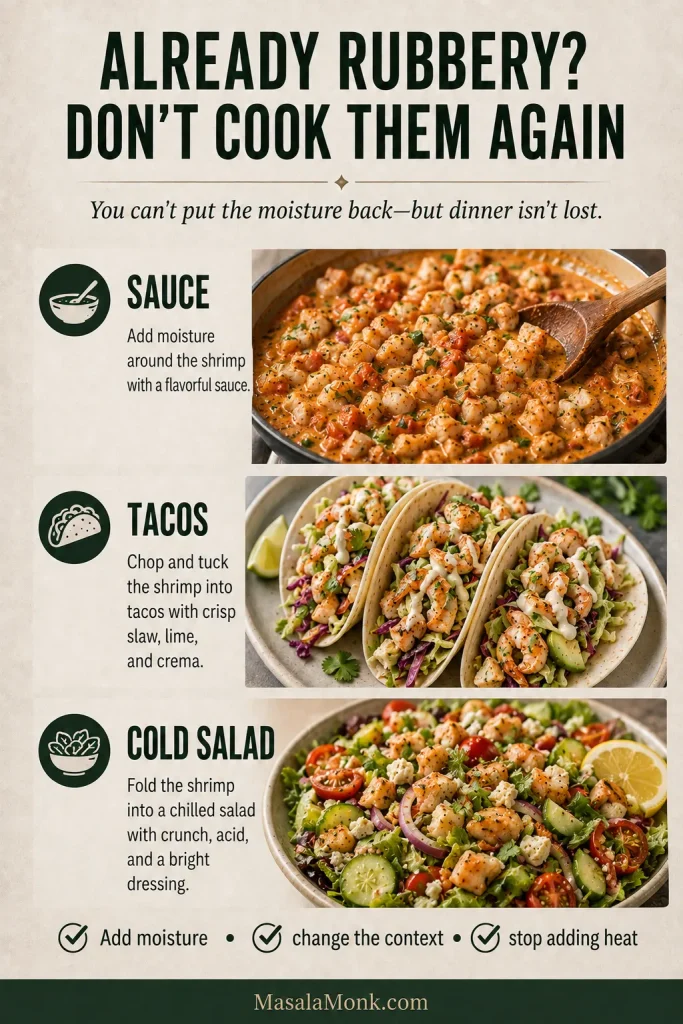
| Already rubbery | Too much cooking somewhere along the way | Once they’re rubbery, you can’t put the moisture back. Add sauce, tuck them into tacos, or chill them for a salad instead of cooking them again. | Begin checking earlier and get finished shrimp away from residual heat sooner. |
| Too salty | Salt plus a salty seasoning blend | Serve with unsalted rice, bread, salad or extra lemon. | Use less separate salt when the seasoning blend already contains plenty. |
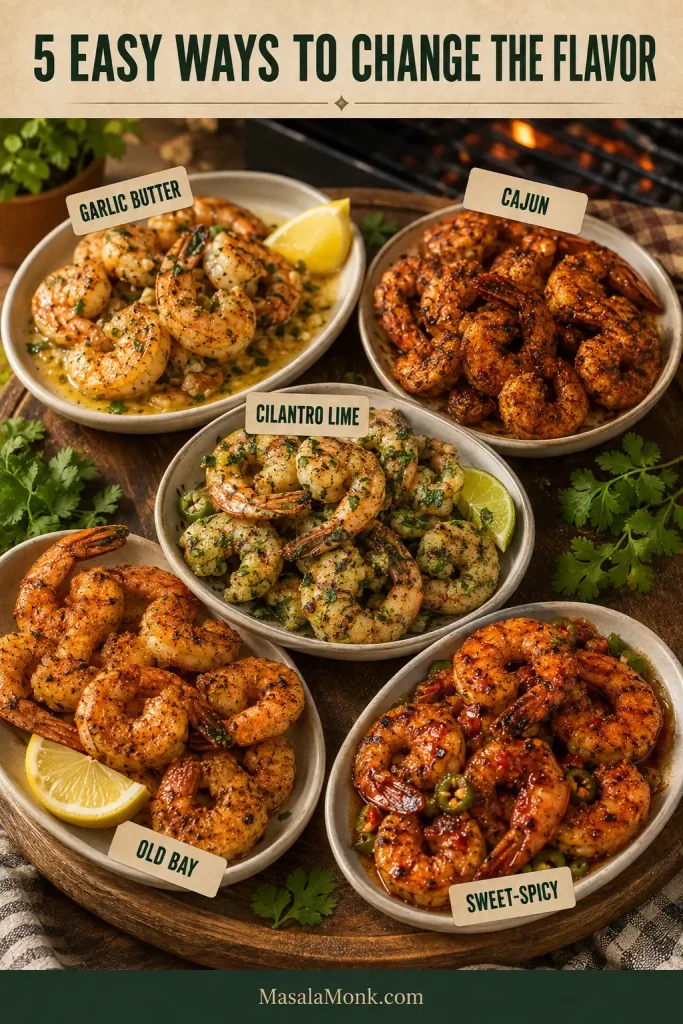
Easy Ways to Change the Flavor
Once the basic method feels comfortable, the grill can stay almost exactly the same while the flavors go in very different directions.
- Garlic Butter: richer and rounder, especially good with crusty bread for catching the buttery lemon juices.
- Cajun: smoky, savory heat that works especially well with rice, corn or a cookout plate. Account for any salt already in the seasoning blend.
- Cilantro Lime: bright and sharp, with the kind of freshness that works beautifully in tacos or rice bowls.
- Old Bay: swap it for the paprika when you want that classic savory Old Bay flavor.
- Sweet-Spicy: hot honey or another sweet chile glaze gives the shrimp a glossy sweet heat; brush it on late enough to caramelize without scorching.
For something greener and sharper, spoon chimichurri over the shrimp after grilling.
Grilling Shrimp for a Crowd
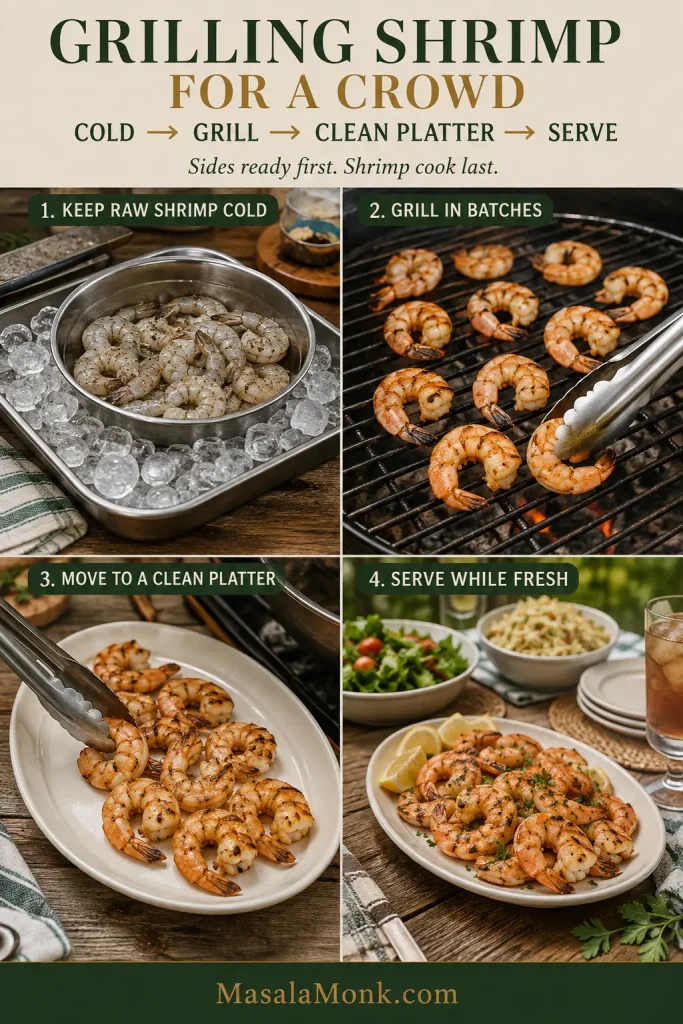
A large cookout doesn’t require longer shrimp cooking times; it requires a little organization before the first batch hits the grill.
Have the sides, sauces and serving platter ready first. Shrimp cook so quickly that they’re better as the last thing dinner is waiting for, not the first thing sitting around.
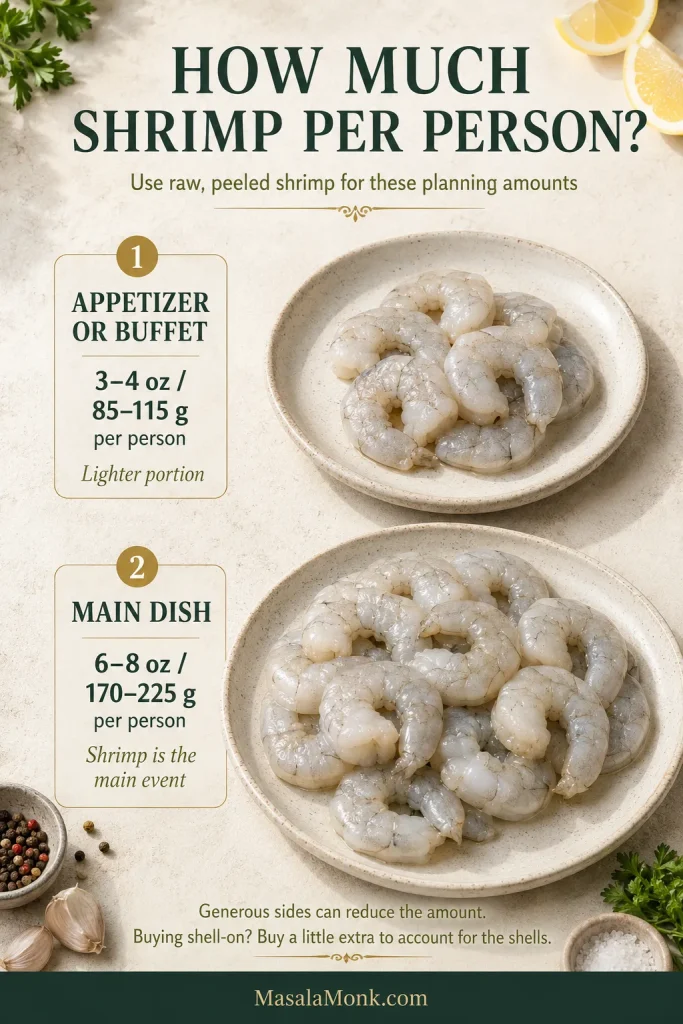
How much shrimp should you buy? As a planning range, allow about 3–4 oz / 85–115 g of raw, peeled shrimp per person for appetizers or a buffet, or roughly 6–8 oz / 170–225 g per person when shrimp are the main dish. Generous sides can pull that number down; if you’re buying shell-on shrimp, buy a little extra to account for the shells.
- Do the fiddly work early. Peel, devein, portion seasoning and prepare skewers before cooking begins.
- Keep raw shrimp cold. Bring out only the batch that’s about to hit the grill.
- Leave breathing room. Crowding slows browning and makes the batch harder to control.
- Load in a predictable order. That makes flipping and removing each batch evenly much easier.
- Serve as you go when practical. Freshly grilled shrimp are at their best before residual heat has time to tighten them.
A cold crisp coleslaw works especially well because it can be completely ready before the shrimp go on.
What to Serve With Grilled Shrimp
For a quick dinner, serve the shrimp over rice or orzo with grilled zucchini or asparagus. A crisp cucumber salad gives you a particularly good contrast: hot smoky shrimp, cool crunchy cucumber and bright lemon.
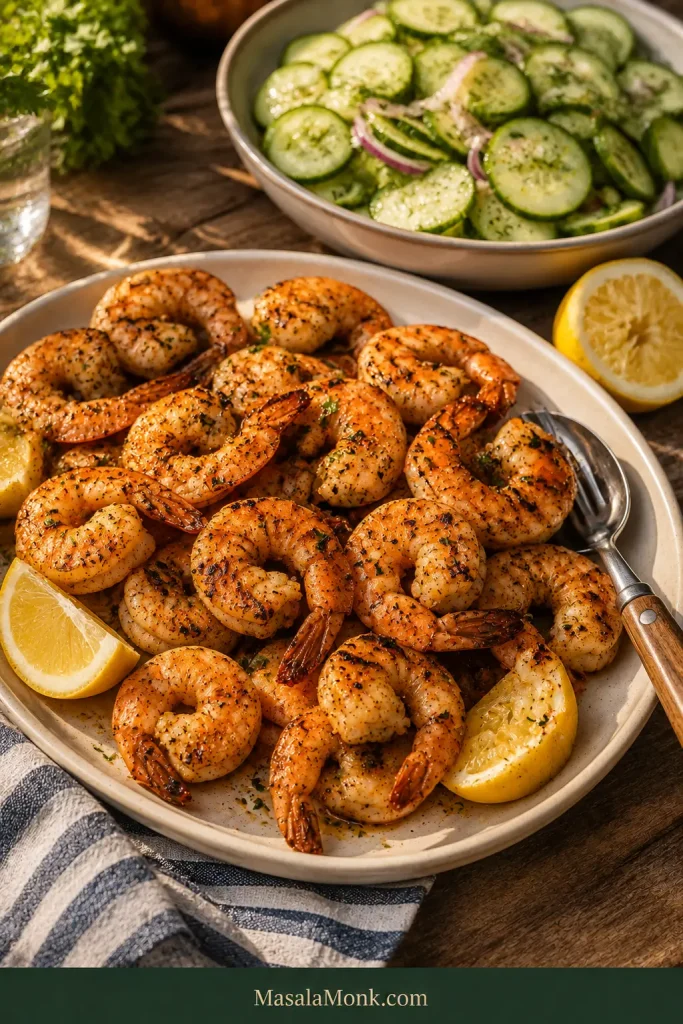
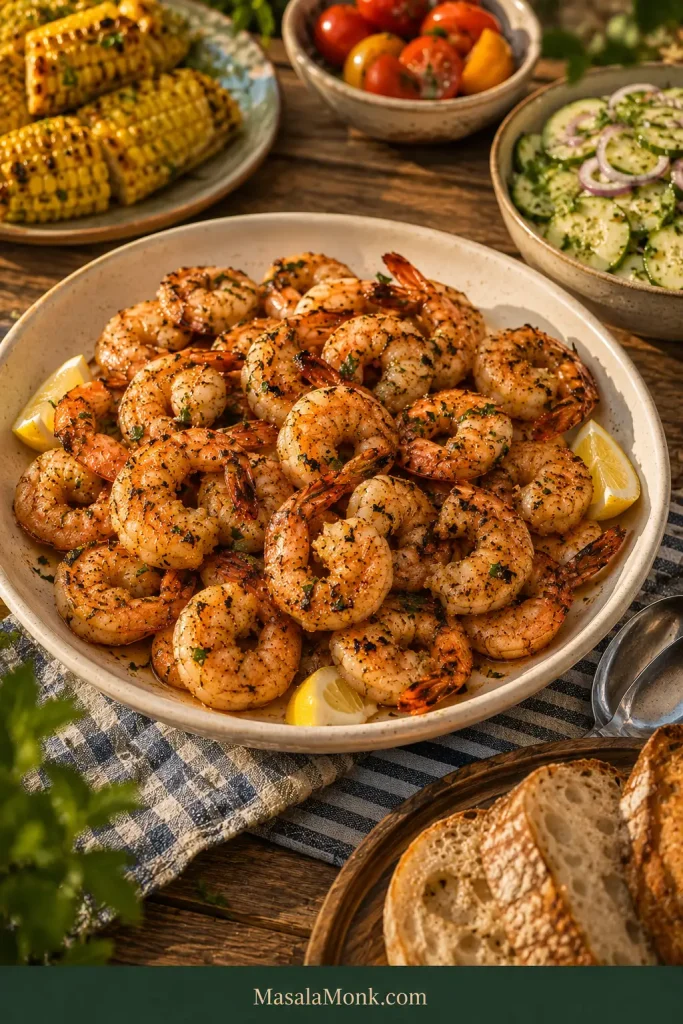
For a cookout, you hardly need to complicate things. Charred shrimp, sweet corn, ripe tomatoes, crusty bread and one cold salad make a generous summer plate.
Pasta works too—finish the pasta and sauce first, then fold the cooked shrimp through once everything else is ready. If garlic butter and noodles are the main attraction, our shrimp scampi takes that route from the beginning.
Sauces and dips. Garlic-lemon butter, cilantro-lime sauce, spicy mayo and garlic aioli all work well. Keep the sauce bright enough that you can still taste the smoky shrimp underneath.
Make Ahead, Store and Reheat Grilled Shrimp
Prep ahead. Peel and devein the shrimp, mix the seasoning or marinade, and prepare the finishing sauce earlier in the day. Keep everything refrigerated and combine a citrus-heavy marinade with the shrimp closer to grilling.
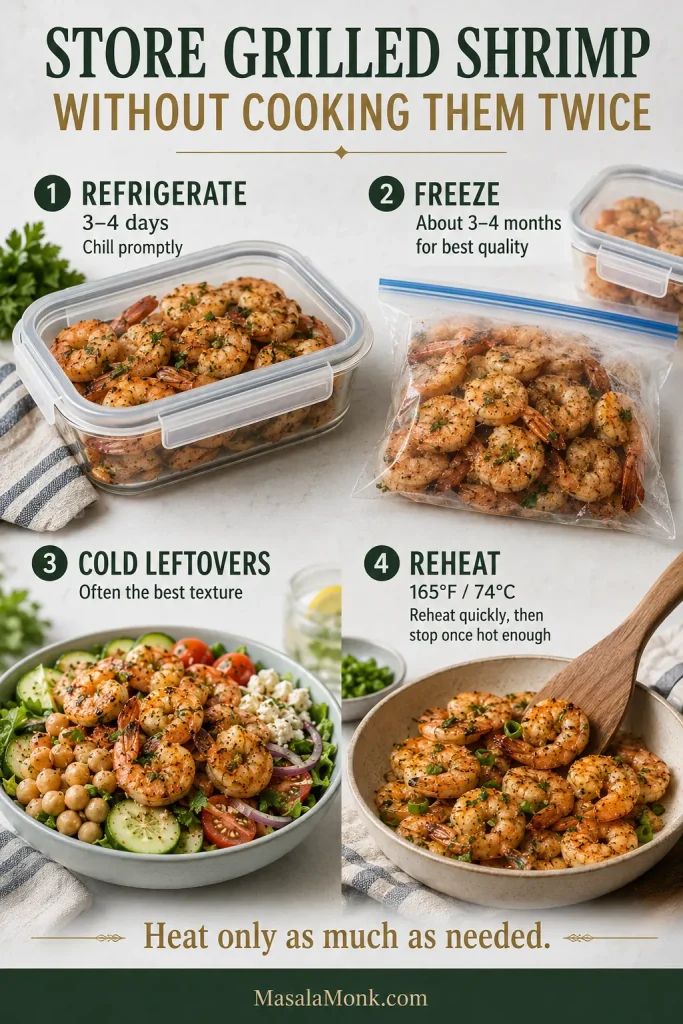
Store. Refrigerate cooked shrimp promptly in a covered container and use them within 3–4 days. Do not leave cooked seafood at room temperature for more than 2 hours, or more than 1 hour when the surrounding temperature is above 90°F / 32°C.
Can you freeze grilled shrimp? Yes. Refrigerate them promptly, then freeze the chilled shrimp in an airtight container or freezer bag. USDA lists about 3–4 months for best quality when cooked leftovers are frozen, although shrimp usually have better texture when used sooner.
For the best leftover texture, consider serving them cold. Properly stored grilled shrimp work well in salads, wraps and grain bowls without another round of cooking. They can also turn a lemony chickpea salad into a fuller lunch.
If You Reheat Leftover Shrimp
USDA recommends reheating leftovers to 165°F / 74°C. Reheat them quickly, then stop once they’re hot enough. If they’re going into another hot dish, prepare the rest first and stir the shrimp in only for the final heating.
For official storage and reheating guidance, see the USDA leftovers guidance.
How Did Your Grilled Shrimp Turn Out?
What size shrimp did you use, and did you grill them directly, on skewers or in a basket? Tell us your approximate cooking time too. Those details can help the next cook judge their own batch.
And when everything goes right, the reward is wonderfully simple: a little smoky char at the edges, a juicy pearly center, and lemon and garlic still bright enough to make the next shrimp very hard to leave alone.