
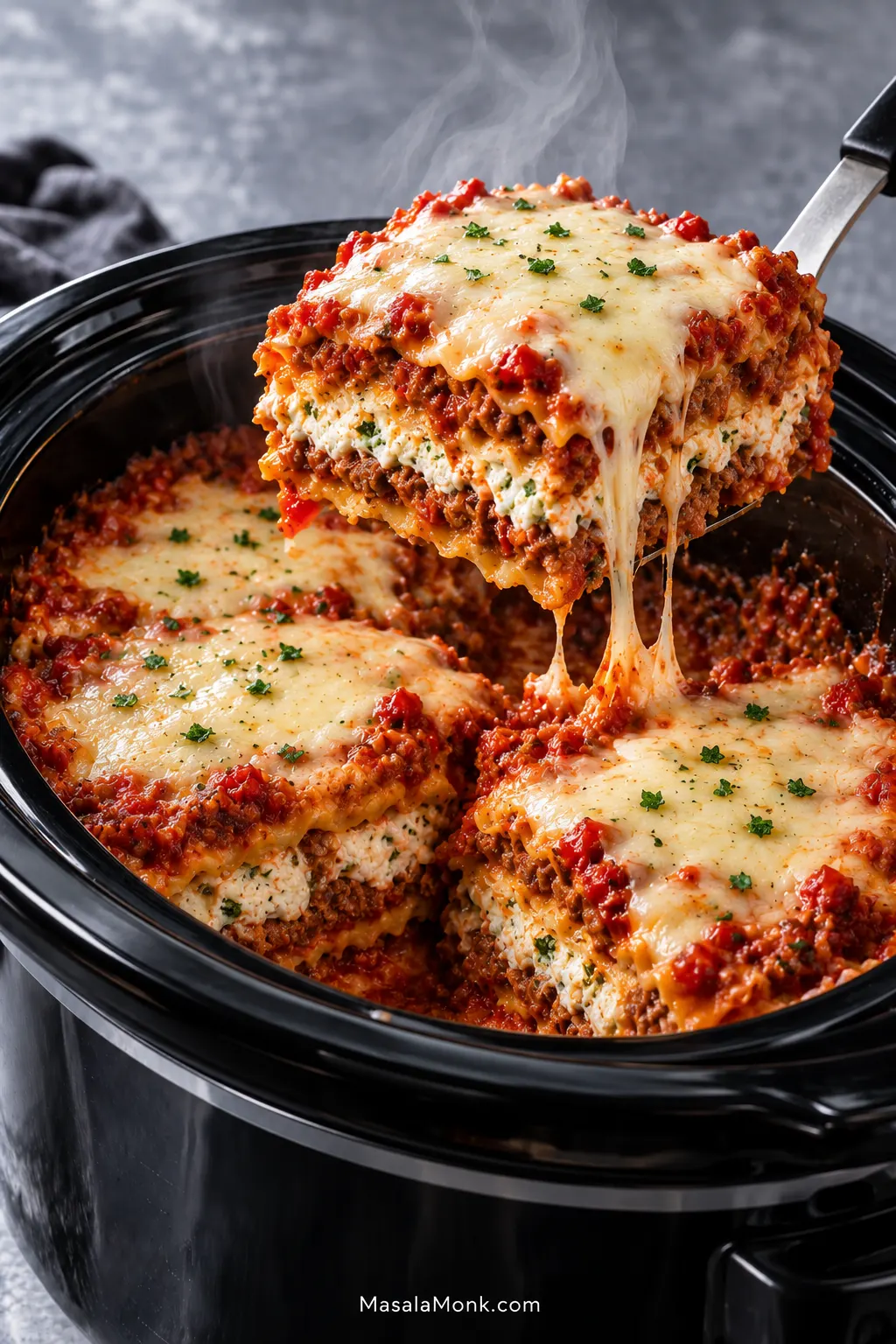
Slow cooker lasagna tends to get into trouble after it starts smelling done. The sauce is bubbling around the edges, the mozzarella has melted, and the kitchen already smells like dinner. It is tempting to leave the lid on for another hour. Meanwhile, the noodles are still sitting in hot sauce and trapped steam, getting softer by the minute.
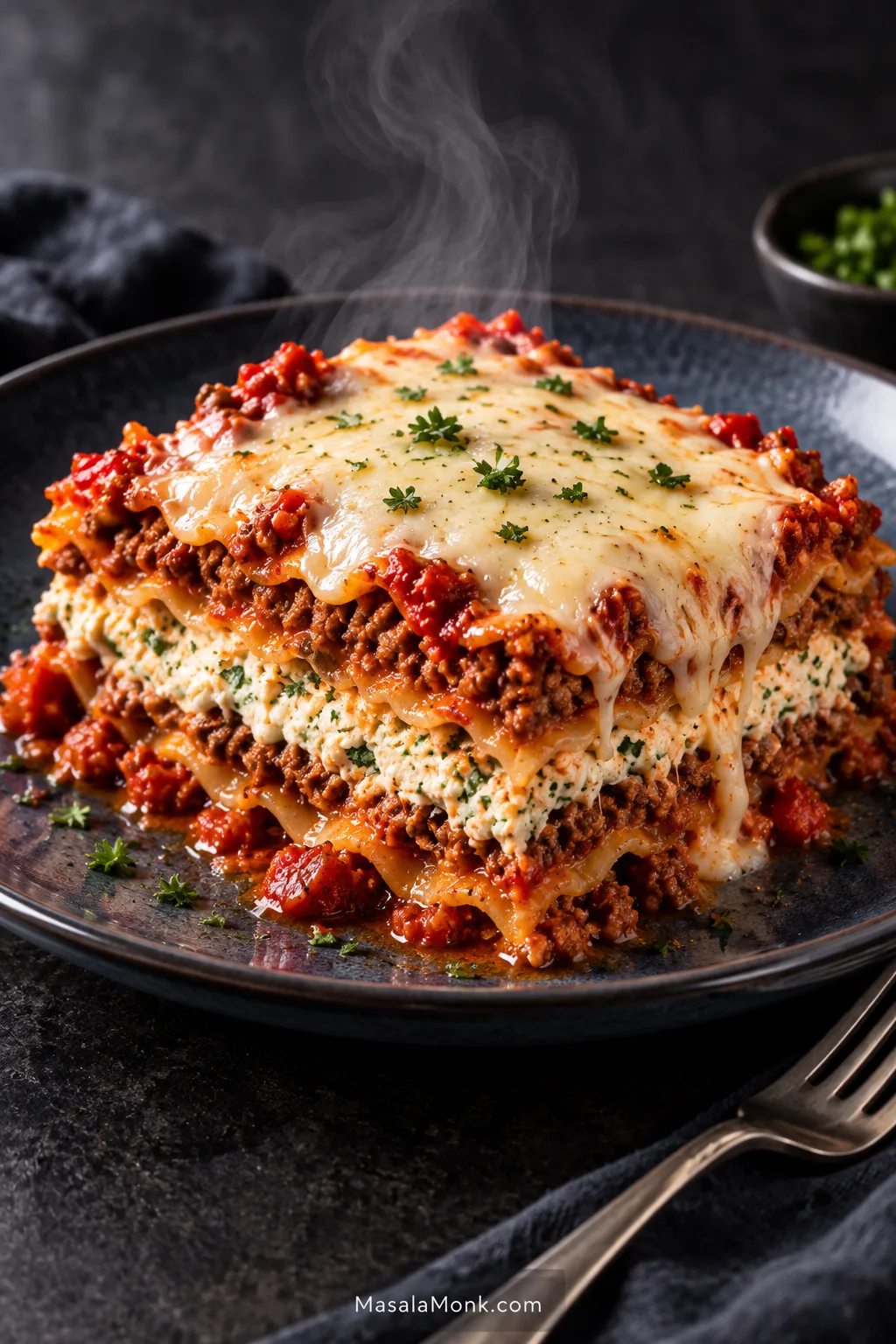
At its best, the pasta is tender all the way through but still forms layers you can see when you lift a piece. Meat sauce stays tucked between the sheets, creamy ricotta shows through the cut center, and the cheese on top remains soft and stretchy. The edges usually set a little firmer where the lasagna meets the crock.
This is where the slow cooker earns its place: no separate pot of noodles, no oven to manage, jarred marinara is completely welcome, and once the layers are assembled, most of the active work is over. It is especially useful when the oven is busy or you would rather not heat up the kitchen. Think hands-off rather than all-day. Pasta has a much narrower sweet spot than a stew or pot roast.
The assembly itself is forgiving. Noodles can break, the layers do not need to look perfect, and pre-shredded cheese is fine. Timing is the one thing worth watching closely. This slow cooker lasagna recipe keeps the convenience while aiming for the distinct layers you expect from classic oven lasagna.
Quick answer: No boiling first. Layer regular dry lasagna noodles with sauce and cheese, then cook on LOW for about 3½–4½ hours, checking from around 3 hours. Once the center noodles are tender, switch off the cooker and let the lasagna rest before serving.
Slow Cooker Lasagna Recipe
Easy Crock Pot Lasagna With Uncooked Noodles
Dry noodles cook directly between meat sauce, creamy ricotta and mozzarella, so there is no separate pot of pasta and no oven to manage. Jarred marinara works perfectly well here, and low-moisture mozzarella melts well without adding as much extra water.
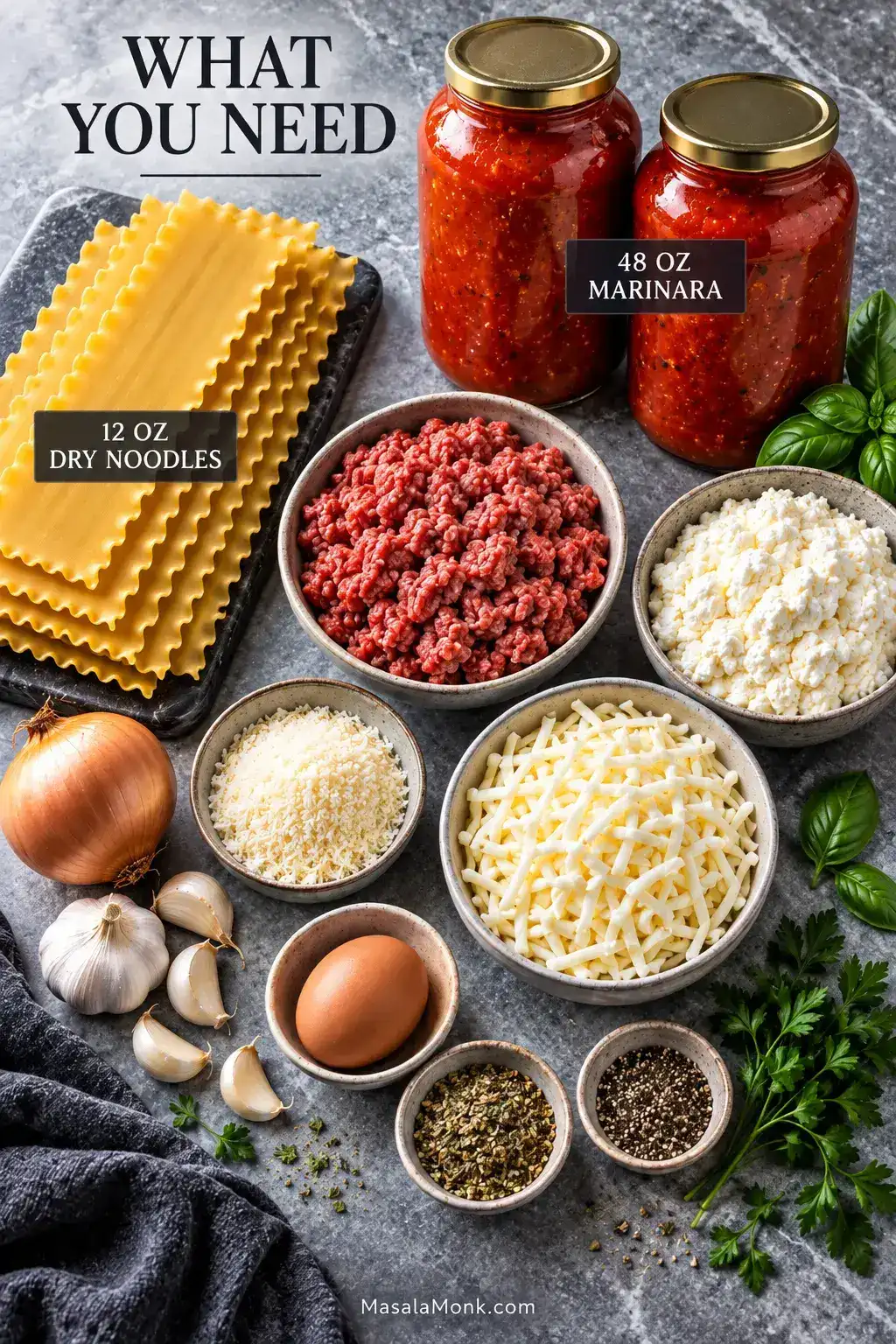
Equipment
- 6-qt / about 5.7-L oval slow cooker
- Large skillet
- Medium mixing bowl
- Thin knife or skewer for checking the pasta
For the Meat Sauce
- 1 lb / 454 g ground beef, preferably 85–90% lean
- 1 medium yellow onion, about 5 oz / 140 g, finely diced
- 3 garlic cloves, about 9 g, minced
- 1 tsp Italian seasoning
- ½ tsp freshly ground black pepper
- ¼–½ tsp fine salt, or to taste
- Pinch of red-pepper flakes, optional
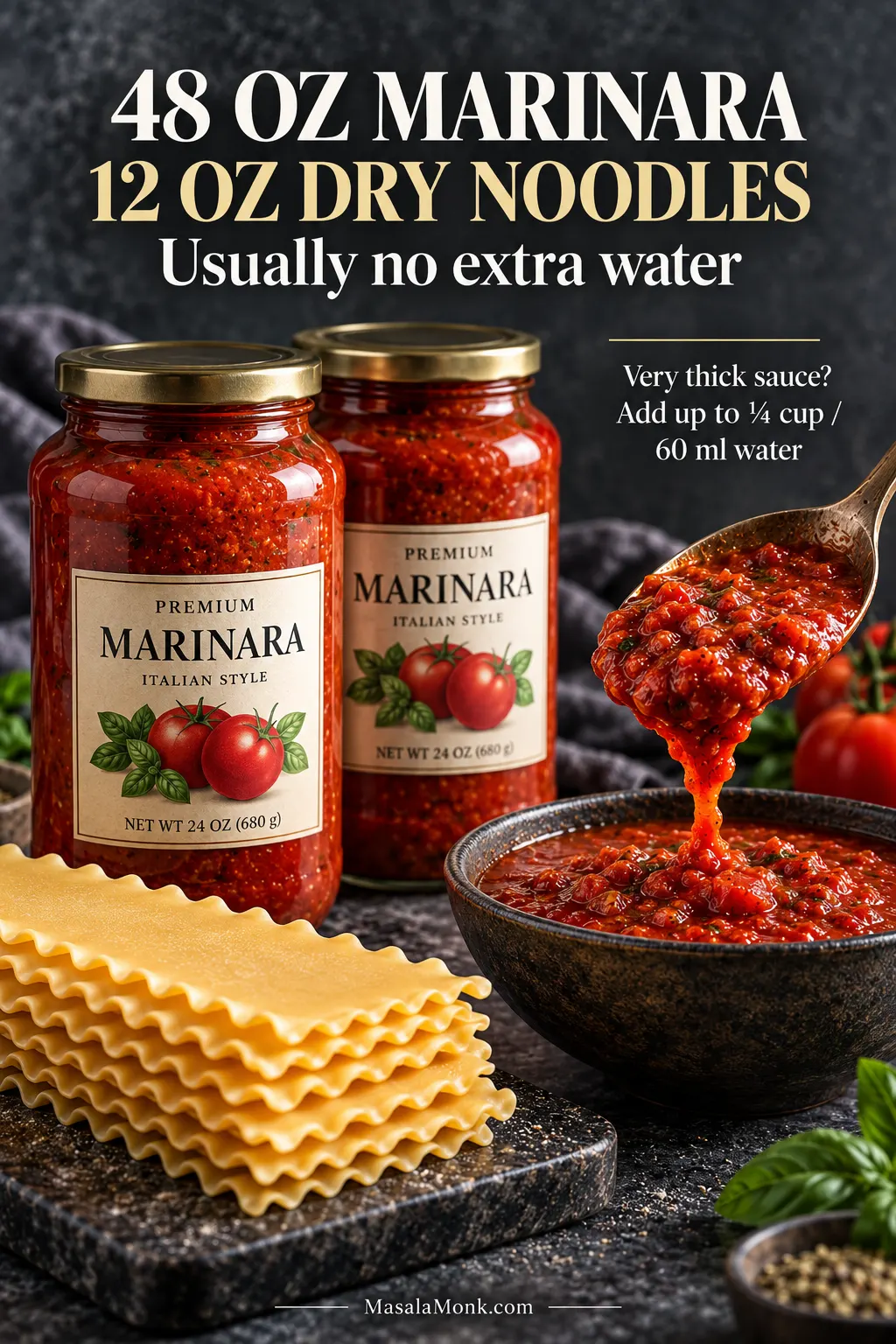
- 48 oz / 1.36 kg medium-thick marinara sauce (two 24-oz jars)
For more sausage flavor: use 8 oz / 227 g ground beef plus 8 oz / 227 g Italian sausage instead of all beef.
For the Cheese Filling
- 15 oz / 425 g whole-milk ricotta
- 1 large egg
- ⅓ cup / about 30–35 g finely grated Parmesan
- 2 tbsp chopped parsley or basil, optional
For Layering
- 12 oz / 340 g regular dry lasagna noodles, uncooked (measure 12 oz rather than automatically using a larger full box)
- 12 oz / 340 g shredded low-moisture mozzarella
- 2 tbsp / about 10–15 g finely grated Parmesan, for finishing
- Neutral oil or cooking spray, for the slow-cooker insert
Method
- Brown the beef and onion. Cook over medium-high heat, breaking up the meat, until browned and the onion is soft. Drain excess fat.
- Finish the meat sauce. Stir in the garlic, Italian seasoning, black pepper and optional red-pepper flakes for 30 seconds, then add the marinara and taste before salting. The sauce should pour but cling to a spoon. If it is unusually thick, loosen it with up to ¼ cup / 60 ml water.
- Make the cheese filling. Mix the ricotta, egg, ⅓ cup Parmesan and optional herbs; divide roughly into thirds.
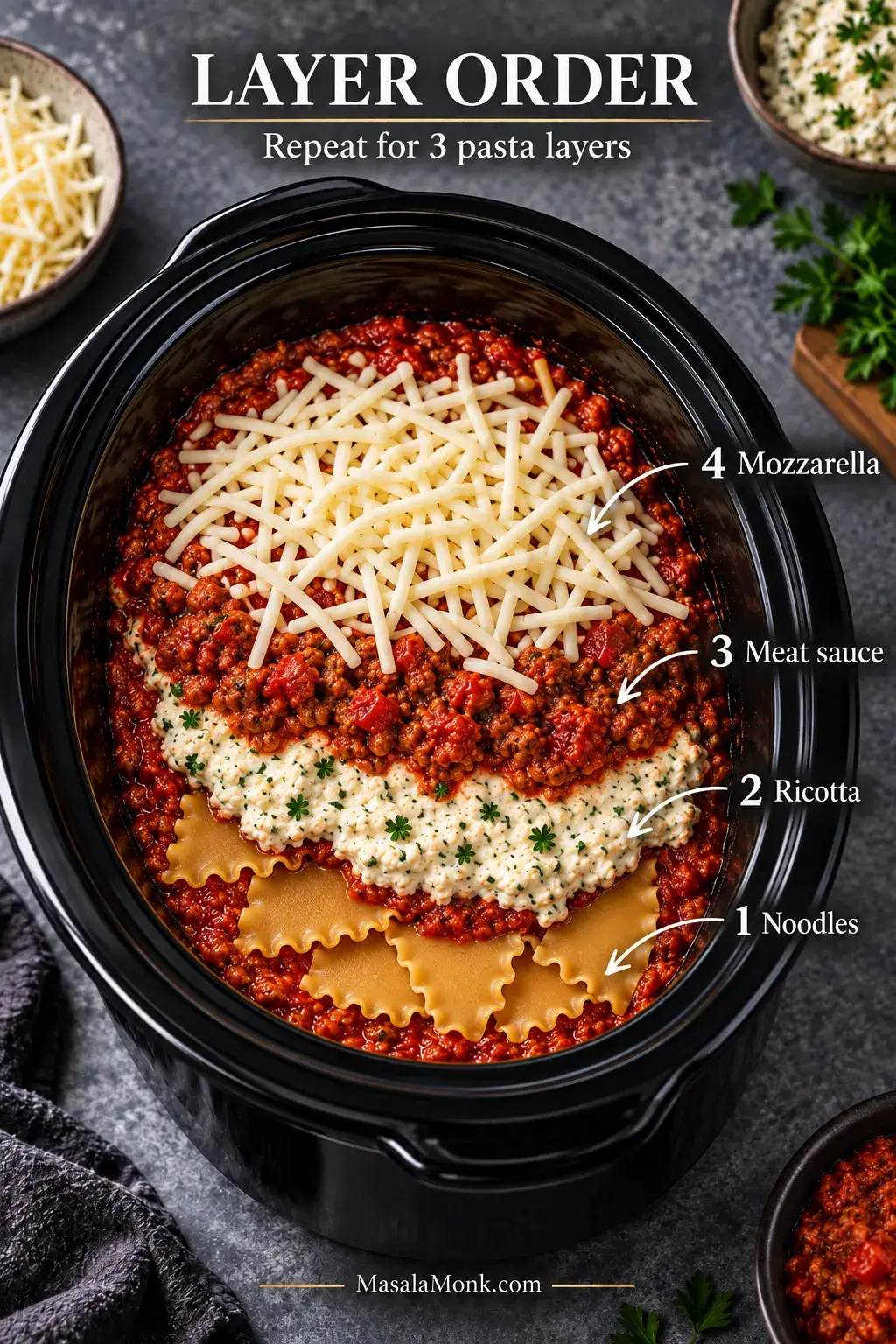
- Build three layers. Grease the crock and spread about 1 cup meat sauce over the bottom. Reserve about 4 oz / 110 g mozzarella for the top. Add dry noodles, breaking them to fit, then one-third each of the ricotta, meat sauce and remaining mozzarella. Repeat for three pasta layers, keeping every noodle sauced, especially at the edges.
- Cook on LOW and check the pasta. Begin checking around 3 hours; expect roughly 3½–4½ hours. The noodles should be fork-tender, and a thin knife or skewer should pass through the middle without a chalky core.
If it needs more time: firm pasta with plenty of moisture can cook another 20–30 minutes. For firm, dry-looking pasta, add 2–4 tbsp / 30–60 ml hot water or warm marinara around the edge. - Switch off the cooker and finish the cheese. When the pasta is tender, turn the slow cooker OFF. Add the reserved mozzarella and finishing Parmesan, cover for 5–10 minutes and let the retained heat melt the cheese.
- Rest before serving. Crack or remove the lid and rest 20–30 minutes. Loosen the edge with a broad non-scratching spatula, then serve.
Recipe Notes
- Regular dry noodles: measure 12 oz / 340 g, then add them dry—no boiling first.
- Oven-ready noodles: they work too, but soften sooner, so check earlier.
- Mozzarella: low-moisture mozzarella is easiest to manage here. Fresh mozzarella can release considerably more water.
- Cottage cheese: 15–16 oz / 425–454 g can replace the ricotta. Drain visible whey first.
- Food safety: cook ground beef or sausage to 160°F / 71°C; ground turkey to 165°F / 74°C. If checking the finished lasagna with a thermometer, the center should reach 165°F / 74°C; reheat leftovers to the same temperature. See the USDA safe-temperature chart.
More Help With Your Lasagna
Want to understand the noodles, timing or moisture before you start? Everything below is organized so you can jump straight to what you need.
Noodles, Sauce and How Much Liquid You Actually Need
A slow cooker holds onto steam extremely well. That is what allows dry lasagna noodles to cook without a separate pot of boiling water. It also means liquid stays in the crock instead of evaporating the way it does in a hot oven.
You still want a saucy lasagna. There should be enough tomato sauce to soften every sheet and stay tucked between the layers, but not so much that the first serving leaves a puddle behind.
Can you put uncooked lasagna noodles in a slow cooker?
Yes. Regular dry lasagna noodles can go straight into the slow cooker without boiling first. They soften gradually in the sauce and give you a useful amount of time between firm and overly soft.
Oven-ready sheets work too. Because they hydrate faster, start checking them sooner.
Do you need to add water to slow cooker lasagna?
Usually not in this recipe. The amounts matter: 48 oz / 1.36 kg marinara for 12 oz / 340 g dry noodles already gives the pasta plenty to absorb as it cooks.
This is why slow-cooker lasagna recipes can appear to contradict one another. A deeper recipe built around a full 16-oz / 454-g box of noodles may genuinely need additional liquid. With the amounts here, pouring in an automatic cup of water can leave far more moisture than the pasta needs.
If you make the sauce yourself, homemade marinara sauce works here too. Aim for one that coats the pasta generously instead of running through the crock like broth.
Why one corner can stay hard
Sometimes nearly the whole lasagna is tender except for one leathery corner. That piece may simply have spent the cook above the sauce or pressed dry against the crock wall. One stubborn patch does not mean the rest of the lasagna needs more water.
A little noodle overlap is fine. Several dry sheets pressed directly together are harder for moisture to reach. Before closing the lid, glance around the perimeter and cover any pale pasta still showing.
Vegetables bring their own water. Frozen spinach is a good example: thaw it and squeeze it well before layering. When zucchini, mushrooms, greens and other vegetables become the main filling, a dedicated vegetable lasagna method gives you better control over the moisture they release.
How to Build Slow Cooker Lasagna So It Cooks Evenly
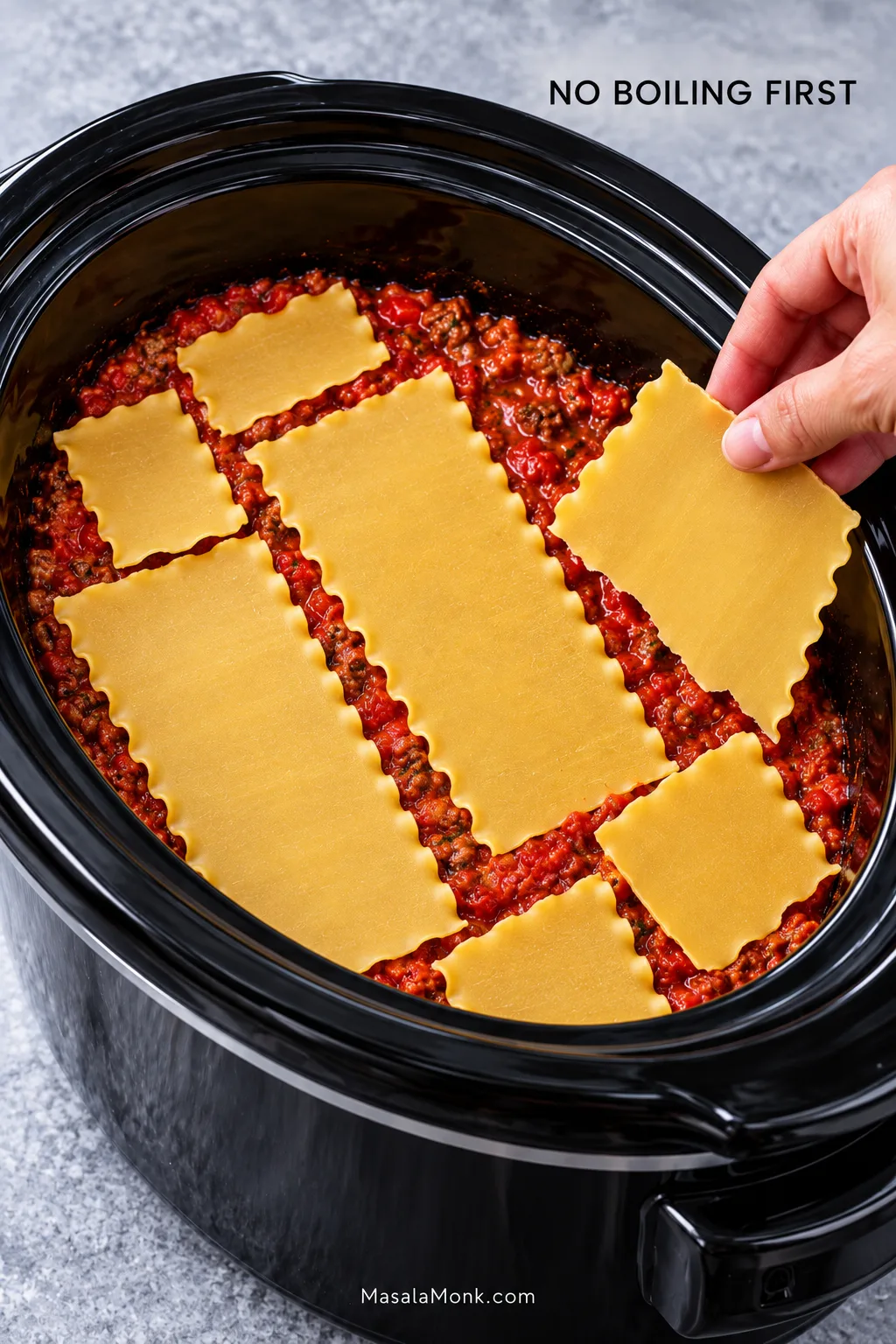
The uncooked layers rarely look elegant. Noodles crack, and rectangular sheets leave awkward curved spaces in an oval crock. There is no prize for fitting them like a puzzle. Once the pasta softens, those broken pieces settle into the sauce with everything else.
Start with sauce and fit the noodles around the crock
Spread the first cup of meat sauce over the bottom before any pasta goes in. Lay the larger noodle pieces through the center, then snap smaller pieces to cover the curved spaces.
A broken noodle is not a problem; a dry noodle is.
Layer map: sauce on the bottom → dry noodles → ricotta filling → meat sauce → mozzarella. Build three pasta layers total and bury the final noodles beneath sauce.
Keep the edges sauced and save some cheese for the top
The pasta nearest the crock wall feels the heat first, so carry the sauce all the way to the perimeter. An exposed corner can dry before the middle is ready.
Keep about a cup of mozzarella back for the finish. Under a slow-cooker lid the cheese melts pale, glossy and stretchy; it will not develop the toasted freckles and crisp bubbles you get from an oven. That’s normal.
Ricotta, Cottage Cheese, Beef or Sausage
Ricotta is the default here. Whole-milk ricotta gives you the soft, creamy layer that should still be visible between the pasta and meat sauce when you cut a piece. The egg helps the filling set during cooking, so it holds together better when served.
Ricotta vs cottage cheese: cottage cheese is a perfectly workable substitute, but it brings a little more loose moisture and a different texture. Use about 15–16 oz / 425–454 g, drain off visible whey, and blend it briefly if you prefer a smoother filling. Half ricotta and half cottage cheese is fine as well. For a version built specifically around it, see the cottage cheese lasagna guide.
All beef keeps the meat sauce familiar and straightforward. Replacing half with Italian sausage gives the tomato sauce a deeper, more savory flavor against the mild ricotta. Ground turkey works too; season it generously because it is leaner and milder. Whatever meat you choose, browning it first develops more flavor and gives you a chance to drain excess fat.
LOW vs HIGH: How Long Does Slow Cooker Lasagna Take?
The smell of tomato sauce and melted cheese is not a reliable timer. Near the end, the edges may look thoroughly cooked while a noodle deep in the center still offers resistance when you test it.
LOW is the default: about 3½–4½ hours, with the first check around 3 hours. HIGH usually takes about 2½–3½ hours, but the noodles move through their tender stage faster, so you have less margin near the end.

Why LOW is the easier setting
LOW gives you the widest window for catching the pasta at the texture you want. Leave the lid closed during the first few hours, then begin checking the middle around 3 hours.
HIGH works when dinner needs to happen sooner, but check more closely near the end. The noodles soften faster, so the distance between firm and too soft gets shorter.
Why slow cooker lasagna times vary so much
Recipes vary because the pasta quantity, sauce amount and depth of the layers vary. A deeper lasagna made with more noodles and more liquid may simply need longer.
Some slow-cooker dinners genuinely suit an all-afternoon cook; a slow cooker sausage casserole is one example. Lasagna gives you a narrower window at the end because the pasta keeps taking up moisture while it stays hot.
How do you know slow cooker lasagna is done?
Trust the center noodle, not the bubbling edges. The pasta should be fork-tender, and a thin knife should slide through the middle without hitting a firm or chalky core. If you use a thermometer, the center should reach 165°F / 74°C.
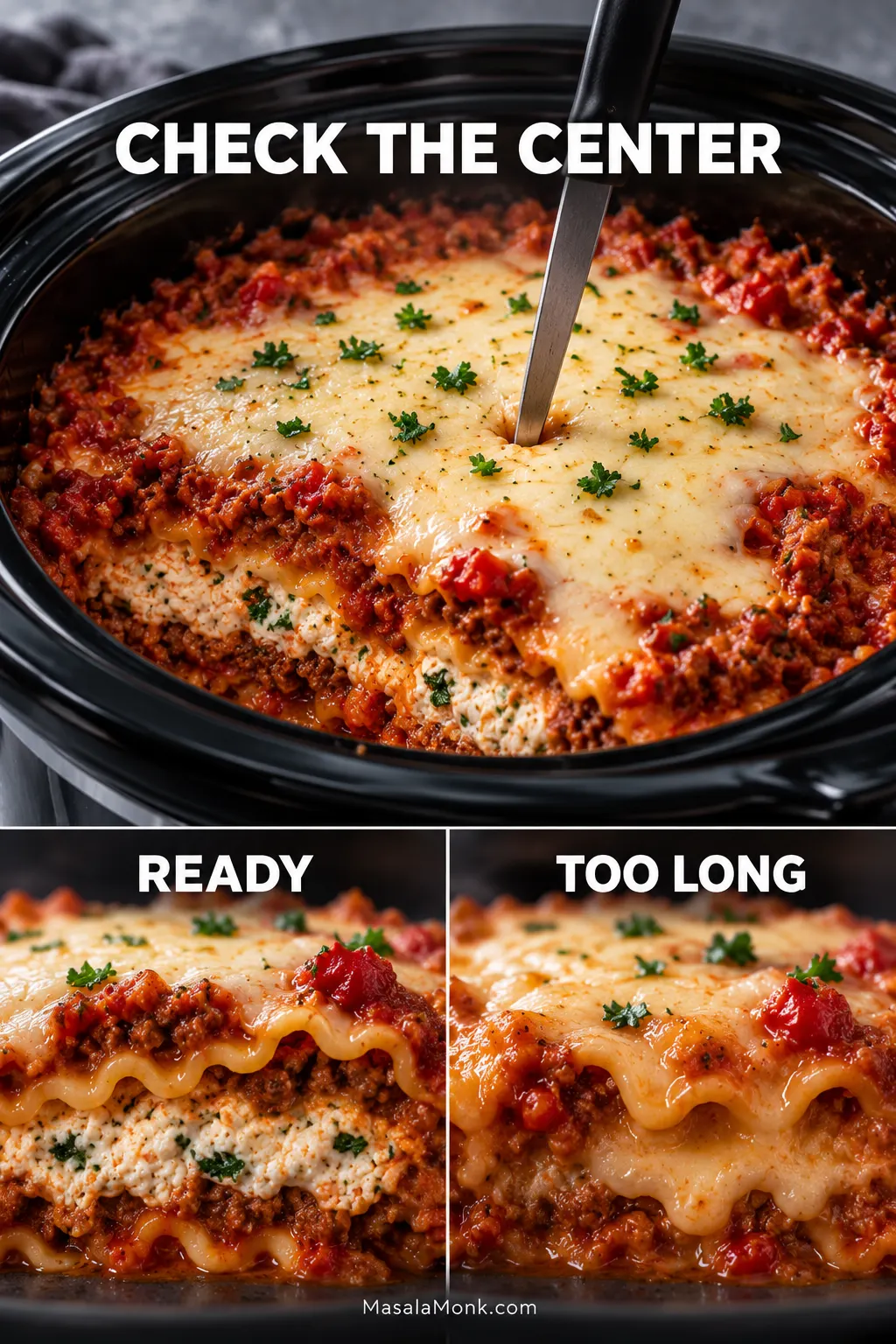
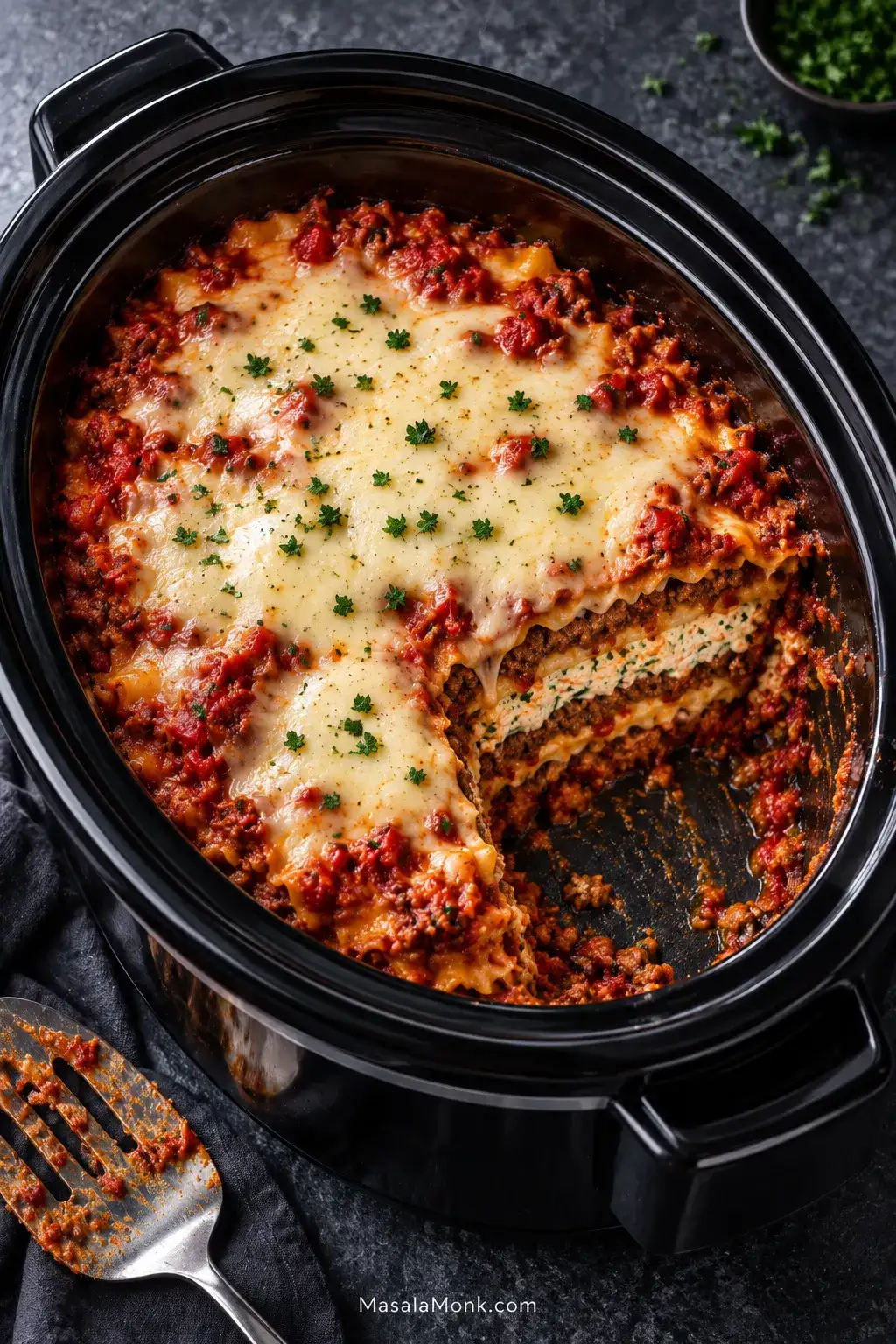
Once it is done, switch the cooker off. Melt the reserved cheese under the lid with the heat already stored in the crock, then uncover and rest the lasagna for 20–30 minutes. That rest is when the soft layers become easier to lift and the ricotta remains visible between the tomato-stained pasta sheets.
What size slow cooker is best for lasagna?
A 6-quart / about 5.7-L oval slow cooker is the default here. Smaller crocks make deeper layers and can take longer; larger ones spread everything more thinly and may finish sooner. Round cookers often create a deeper center. Whatever the shape, let the pasta make the final call.
If dinner is not quite ready yet: use WARM only after the lasagna is fully cooked. For the best texture, think in tens of minutes, not hours. WARM is for holding finished food, and a long hold will keep softening the noodles.
Fix a problem · Back to recipe · Back to top
How to Fix Watery, Dry or Undercooked Slow Cooker Lasagna
Your lasagna is already in the Crock Pot. Now what? Look first at the pasta and at the moisture around it. Those two clues usually tell you the next move.
| What You See | What to Do First | What Is Probably Happening |
|---|---|---|
| Tender noodles, liquid pooling | Turn the cooker off, vent the lid and rest | Loose sauce, extra water or simply not enough resting yet |
| Middle still firm, plenty of sauce | Continue on LOW for another 20–30 minutes | The pasta just needs more time |
| Middle firm and noticeably dry | Add 2–4 tbsp / 30–60 ml hot water or warm sauce | Very thick sauce or too little moisture reached the pasta |
| One edge dark, middle not ready | Stay on LOW and continue in short intervals | That side of the cooker is running hotter |
| Noodles getting mushy | Turn off the heat and uncover | The pasta has cooked too long or stayed hot too long |
| Grease pooling on top | Carefully spoon or blot it away | The meat released more fat than was drained off |
| Piece collapses when lifted | Give it another 10–15 minutes to rest | The layers are still too hot and soft to hold together |
Why is my slow cooker lasagna watery?
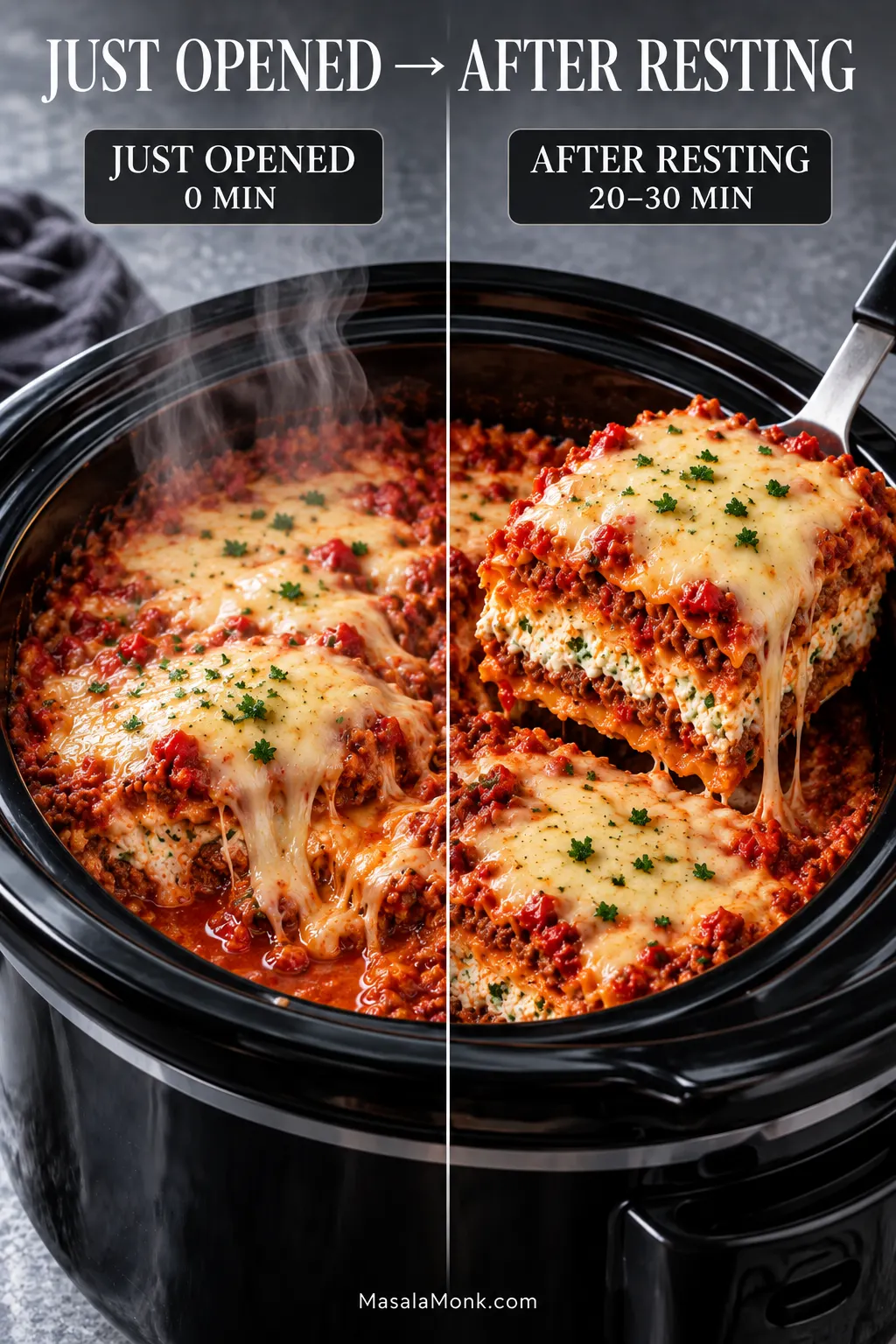
If the noodles are already tender, switch the cooker off, crack or remove the lid and let the lasagna rest. More heat will keep softening pasta that is already cooked.
The first look under the lid can be alarming. Sauce may shimmer around the edges and a spoon pressed into the center can make everything seem loose. Ten minutes later the surface is calmer. By twenty or thirty minutes, some of that visible liquid has settled back between the layers and the cheese is holding them together more firmly.
If the same thing happens next time, look first at thin marinara, unnecessary added water, cottage-cheese whey or vegetables that released a lot of liquid.
The middle is hard or one patch is dry
A firm middle surrounded by plenty of sauce can stay on LOW for another 20–30 minutes. When the center looks dry as well, add a small measured splash of hot water or warm marinara.
A single hard corner needs much less intervention. Spoon a little marinara over that spot, cover the cooker and let the pasta finish there.
The edges are ahead of the center
One dark edge usually means that side of the cooker is running hotter. Stay on LOW while the center finishes and keep future batches especially well covered along that side.
If you want a browned cheese finish, transfer individual servings to broiler-safe dishes and broil briefly. The top does not need to brown for the lasagna itself to be done.
Back to recipe · Storage & reheating · Back to top
Make Ahead, Store, Freeze and Reheat
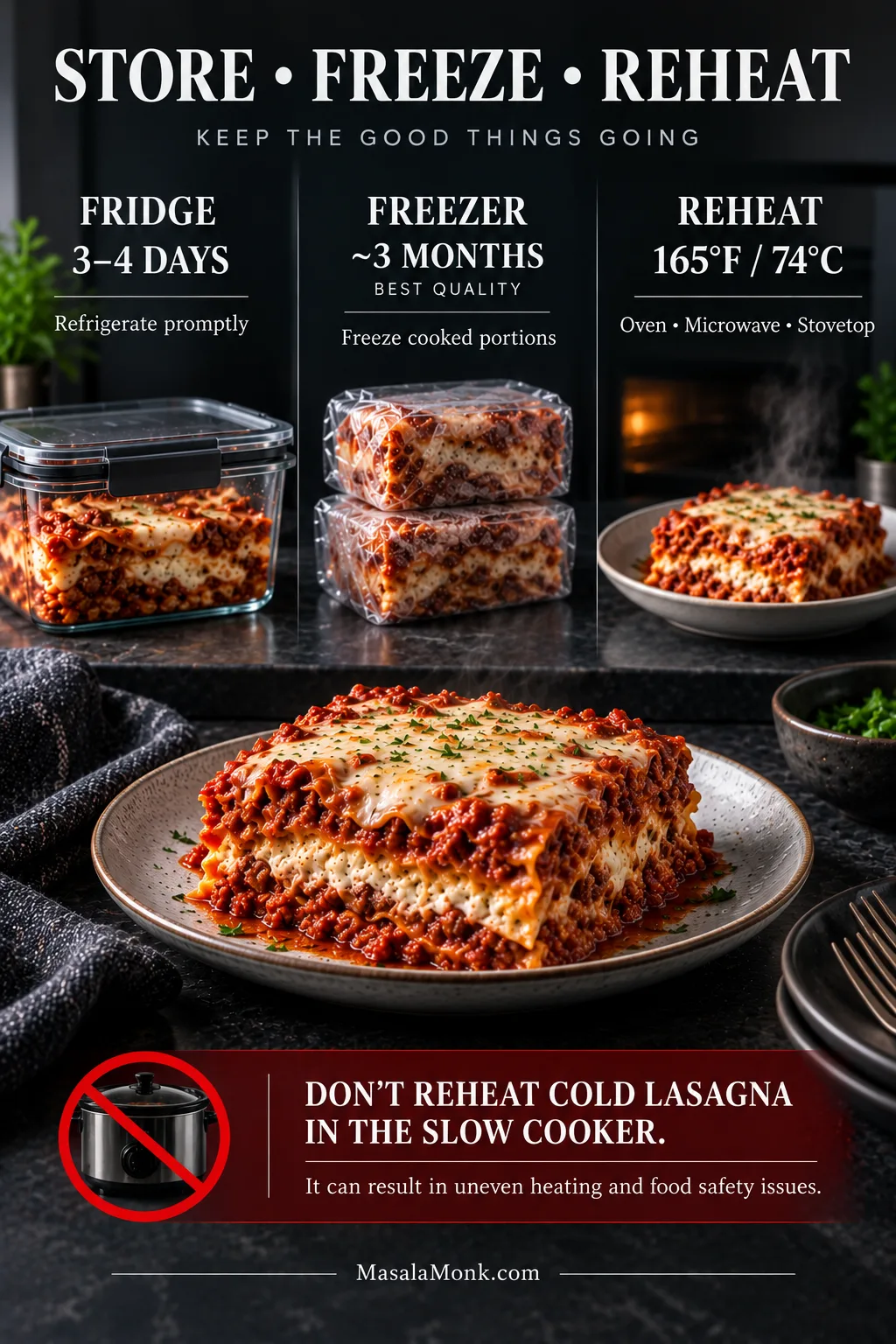
Storage at a glance: the guide below keeps the refrigerator, freezer and reheating decisions in one place; the detailed make-ahead and leftover notes follow.
Make the busy part ahead
Best make-ahead option: prepare the meat sauce and ricotta filling separately the day before and refrigerate them. The next day, all that is left is layering the lasagna and switching on the cooker.
You can assemble the whole lasagna ahead as well, although the dry noodles will begin taking up sauce in the refrigerator and chilled ingredients take longer to heat through. If you refrigerate it in a removable ceramic crock, follow the instructions for your particular appliance. Do not place a cold ceramic insert into a preheated slow-cooker base, allow for extra warm-up time, and check that the center reaches 165°F / 74°C.
Leftovers and freezing
Refrigerate leftovers promptly, ideally within about 2 hours, and keep them covered for 3–4 days. Individual portions reheat more evenly than one large section. The noodles continue taking up liquid in the refrigerator, so a spoonful of marinara is useful when a leftover piece looks a little dry.
Reheat cold leftovers in the oven, microwave or on the stovetop until the center reaches 165°F / 74°C. Do not use the slow cooker itself to reheat cold leftovers; it warms food too gradually for that job.
For longer storage, cool the lasagna completely and freeze individual cooked portions for about 3 months for best quality. Thaw overnight in the refrigerator when practical. Cooked portions are also the easiest freezer-prep option here—do not put a frozen assembled lasagna straight into the slow cooker.
The USDA guidance on leftovers and food safety has current cooling, storage and reheating recommendations.
What to Serve With Slow Cooker Lasagna
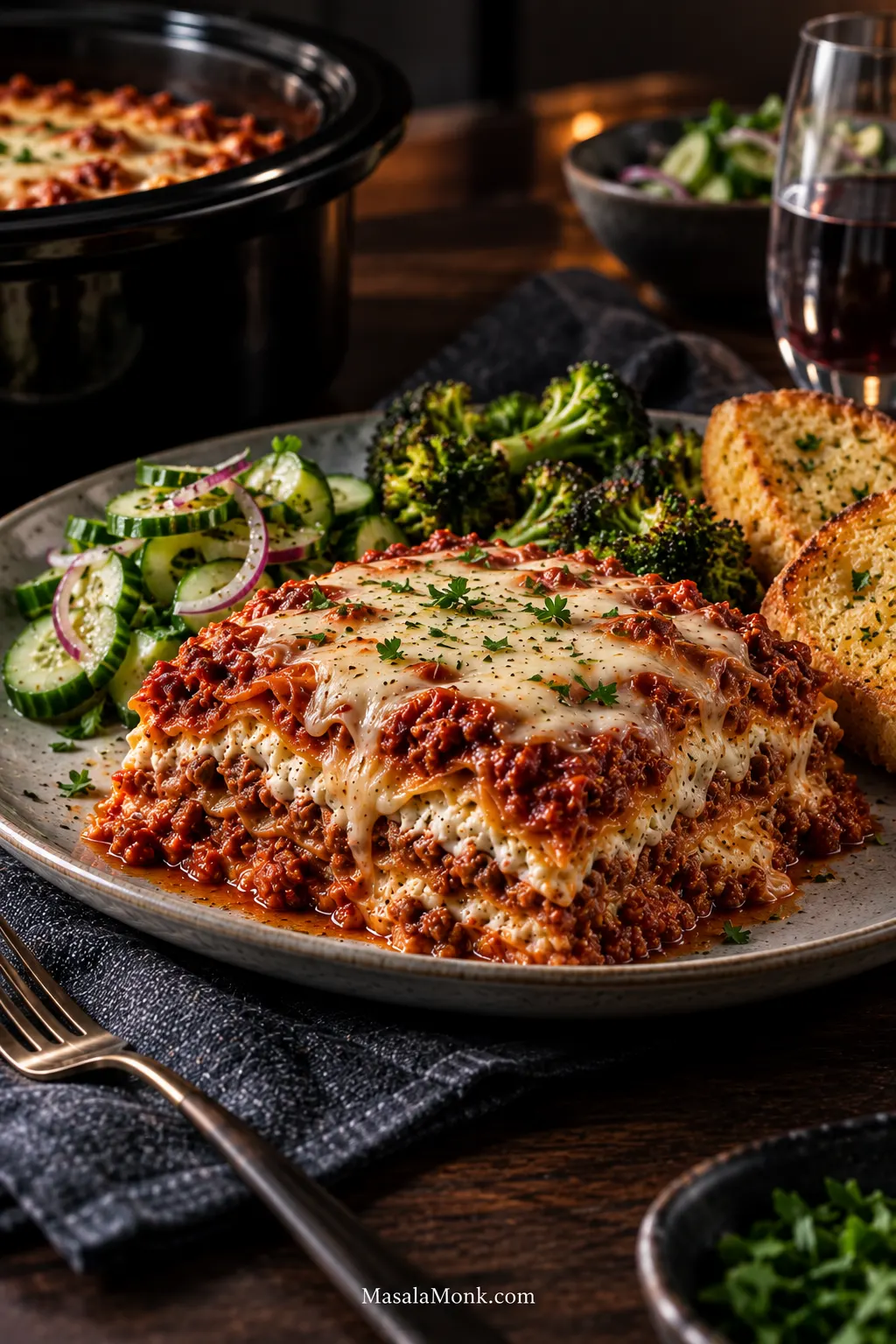
After resting, a serving should be soft and saucy while still showing its pasta, ricotta and meat-sauce layers. The first piece may lean a little as you lift it; that is lasagna, not an architecture exam. Let a little sauce slip onto the plate; that is part of the appeal.
A crisp cucumber salad brings acidity and crunch, while roasted broccoli or another simply cooked vegetable keeps the plate lighter. And if there is meat sauce left behind after the lasagna is gone, garlic bread is exactly what you want for it.
If next time you want the same tomato-and-cheese comfort in a brothier, spoonable dinner, try Crock Pot Lasagna Soup.








