
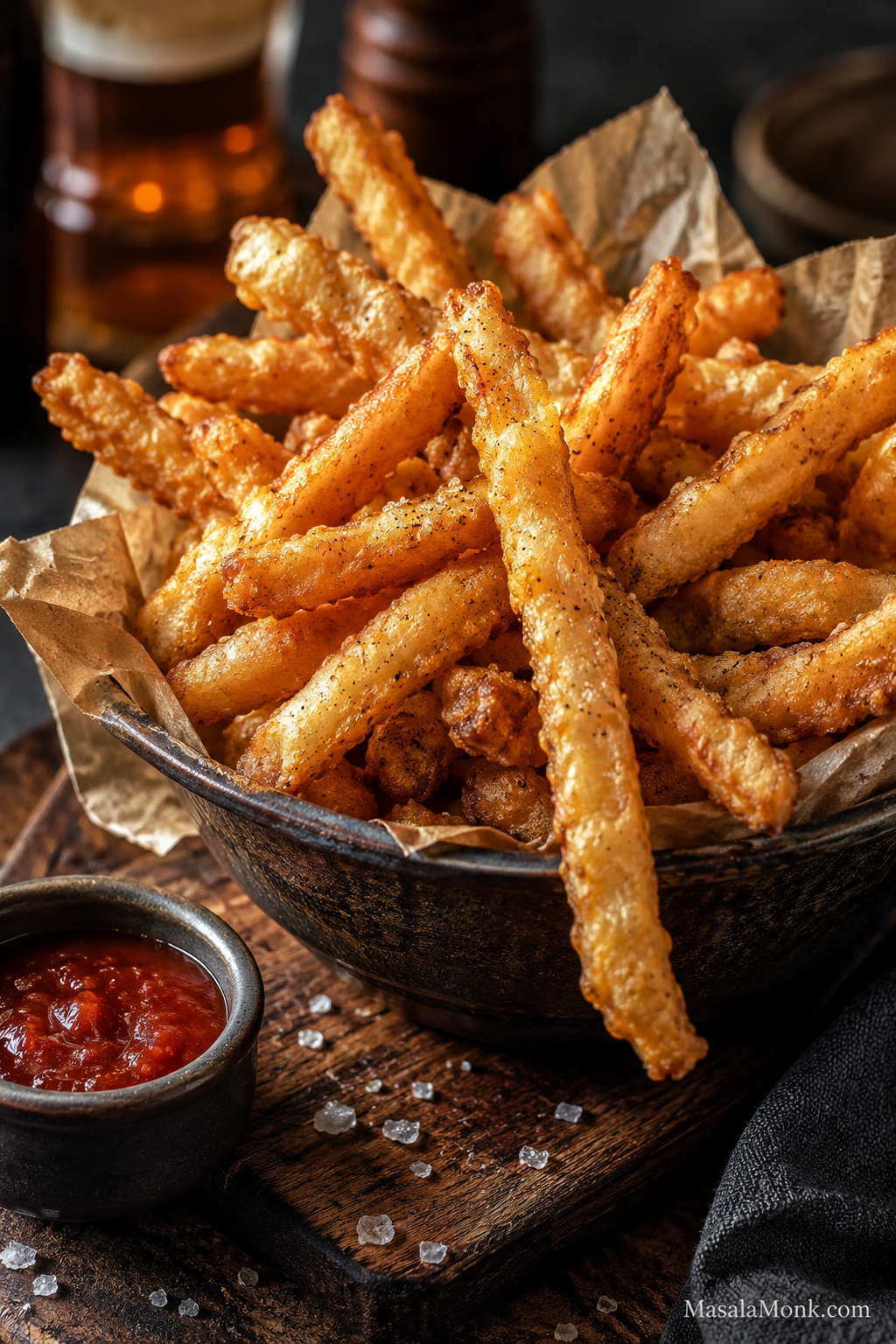
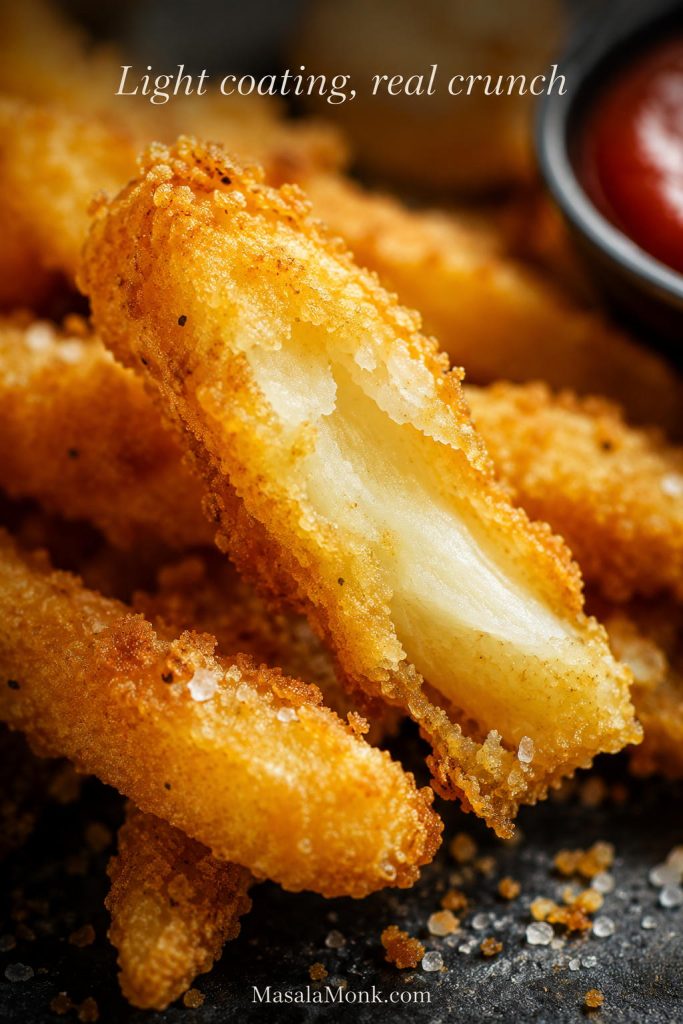
This battered fries recipe gives you golden, craggy fries with a crisp seasoned coating and fluffy potato centers. The batter clings lightly to each fry, so you get real crunch without a thick, cakey, doughy shell.
Depending on where you live, you may know them as battered fries, battered french fries, batter-dipped fries, or battered chips. This battered fries recipe starts with a no-beer batter, then gives you a pub-style beer batter option, thicker battered chips, air fryer notes, frozen-fries tips, exact frying temperatures, and fixes for soggy fries or batter that falls off.
The goal here is not a heavy potato fritter. These fries should still taste like proper fries first: hot, fluffy, salty, and potato-forward, with just enough seasoned coating to make the outside extra crisp. Once you understand the batter thickness and oil temperature, the recipe is much easier than it looks.
In This Guide
Start Here
Make Them Crispy
Quick Answer: How to Make Battered Fries
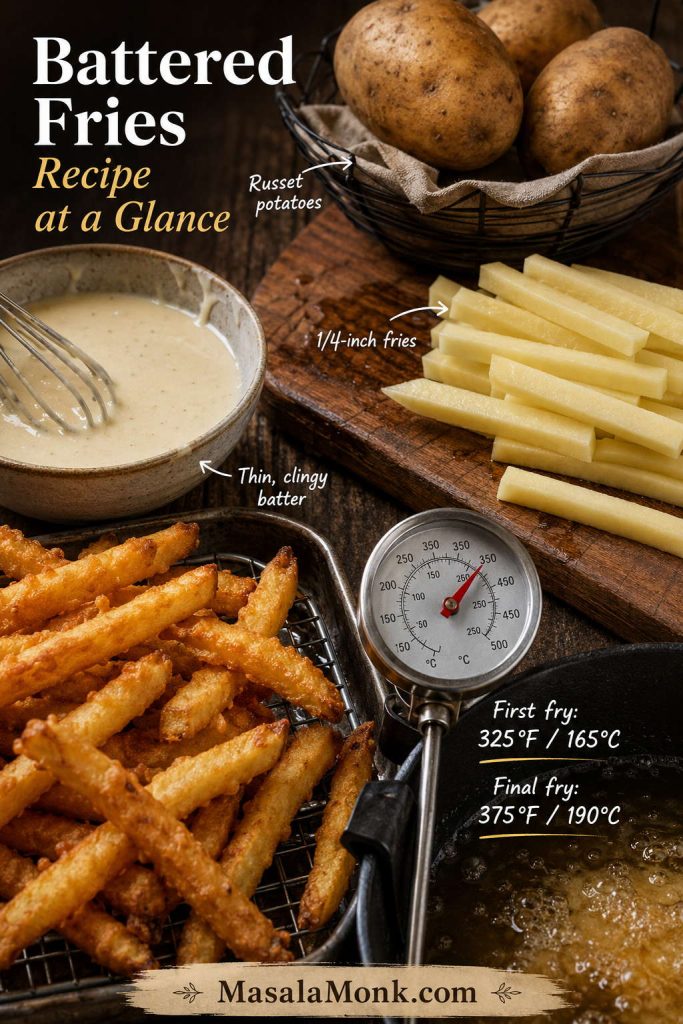
To make battered fries, cut starchy potatoes into fries, soak them in cold water, dry them very well, coat them in a light seasoned batter, and fry until golden. For the best texture, first-fry the potatoes at 325°F / 165°C until pale and partly cooked, then dip them in batter and fry again at 375°F / 190°C until crisp.
The batter should be thin enough to drip slowly but thick enough to cling. A mix of flour, cornstarch or potato starch, baking powder, seasoning, and ice-cold sparkling water gives you crisp battered fries without beer. For beer battered fries, use cold lager or pilsner instead of sparkling water.
Serve them as soon as possible after frying. Battered fries lose crunch when they sit covered, stacked, or trapped in steam.
If battered fries have turned soggy or the coating has slipped off before, do not worry. The drying, dusting, and double-fry steps below are there to fix exactly those problems.
Battered Fries Recipe at a Glance
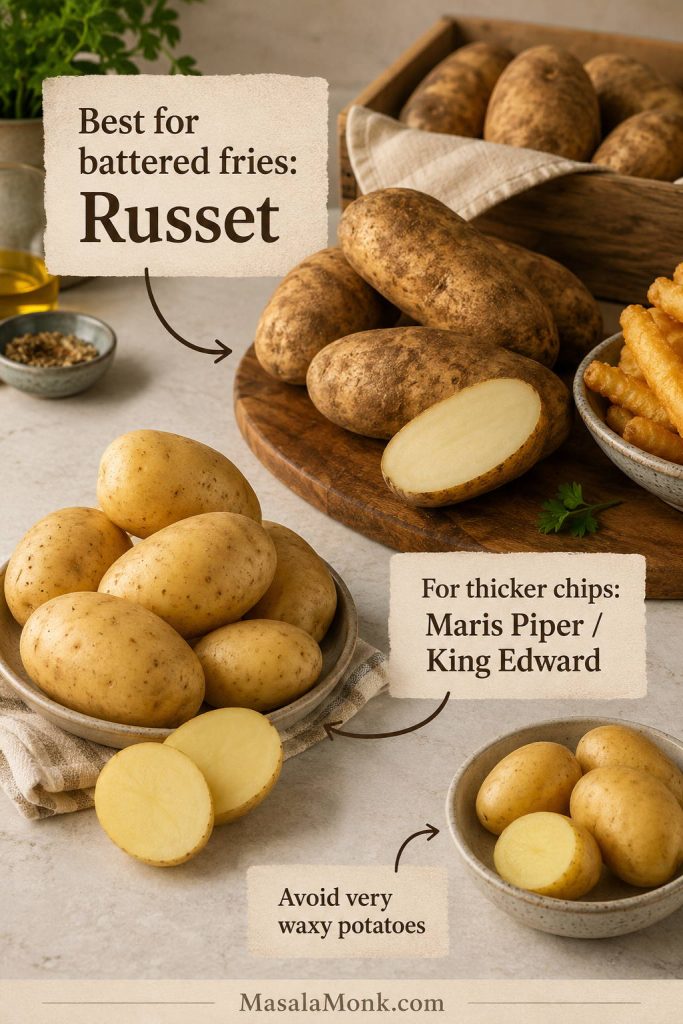
| Potato choice | Russet potatoes for battered fries; Maris Piper or King Edward for thicker battered chips. |
|---|---|
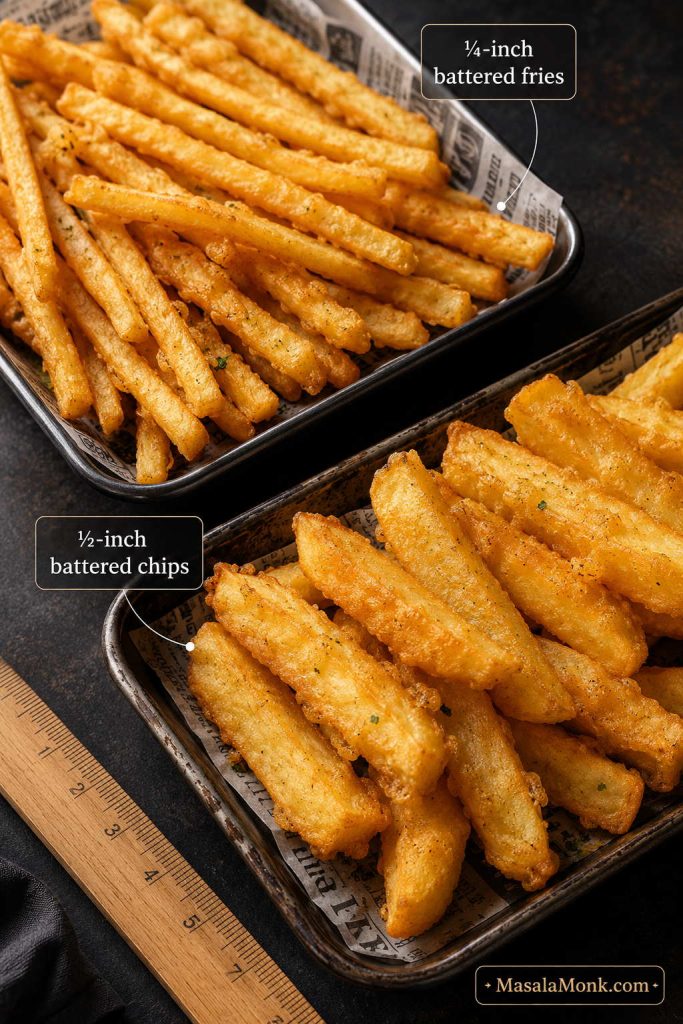
| Cut size | ¼-inch fries for crisp battered french fries; ½-inch pieces for battered chips. |
| Batter texture | Thin enough to drip slowly, thick enough to cling lightly. |
| Main liquid | Ice-cold sparkling water, seltzer, or club soda for no-beer battered fries; cold lager or pilsner for beer battered fries. |
| Frying method | For this battered fries recipe, first fry at 325°F / 165°C, then batter and final fry at 375°F / 190°C. |
| Success tip | Dry the potatoes very well before battering. |
What Are Battered Fries?
Battered fries are french fries coated in a seasoned batter before frying. The coating fries into a crisp, rough shell around the potato, giving you more crunch and seasoning than regular fries.
They are sometimes called battered french fries, batter-dipped fries, coated fries, or battered chips. The exact name changes by region, but the idea is the same: potato inside, crisp coating outside, and plenty of surface texture for salt, vinegar, ketchup, aioli, ranch, or cheese sauce.
For the classic unbattered version, start with MasalaMonk’s crispy homemade French fries guide; once you want a rougher, crunchier coating, come back to this battered version.
Why This Battered Fries Recipe Works
The crispness comes from a few small choices working together. Starchy potatoes give you fluffy centers. Soaking removes excess surface starch. Drying helps the batter cling. Cornstarch or potato starch keeps the coating crisp, baking powder lightens it, and cold carbonation helps the batter fry up airy instead of heavy.
Most importantly, the double-fry method makes the biggest difference. The first fry cooks the potato through before the batter goes on, while the second fry crisps the coating quickly. As a result, the outside turns golden without leaving the center hard or undercooked.
Battered Fries vs Regular Fries
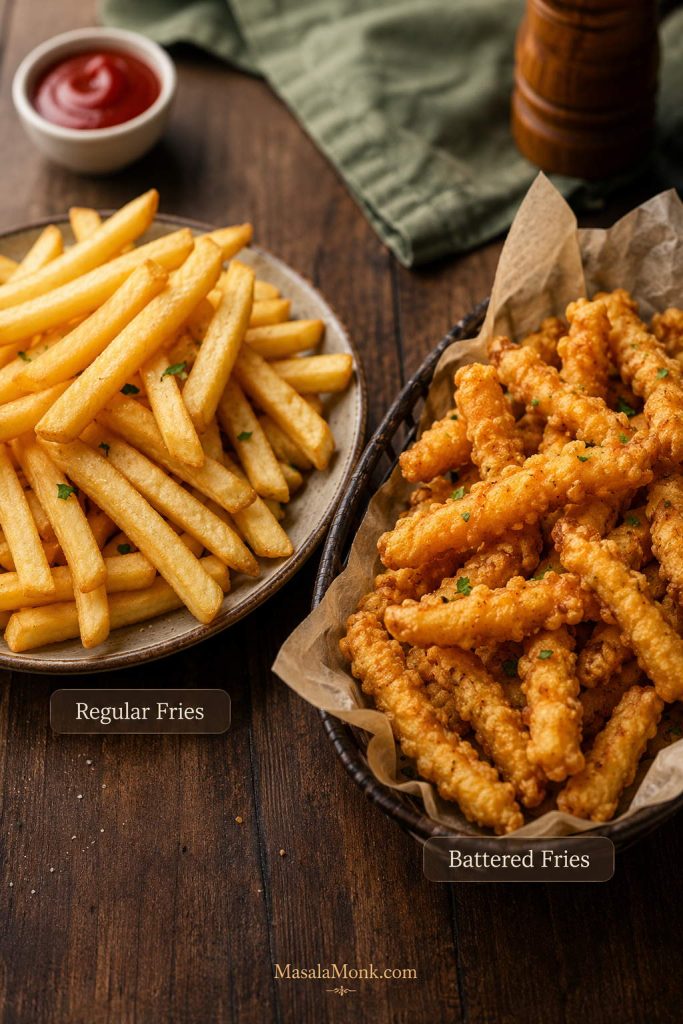
Regular fries are usually fried plain, sometimes after soaking, blanching, or double-frying. Battered fries get an extra coating before frying, so the outside is more rugged, crunchy, and seasoned.
| Type | Texture | How It Is Made | Best For |
|---|---|---|---|
| Regular fries | Crisp outside, fluffy inside | Fried without batter | Classic fries, burgers, everyday sides |
| Battered fries | Craggy, crisp, seasoned shell | Dipped in seasoned batter before frying | Pub-style fries, dipping sauces, fish and chips sides |
| Coated fries | Lightly crisp, less batter-heavy | Tossed in starch or dry coating | Air fryer versions and lighter coatings |
| Beer battered fries | Light, crisp, pub-style coating | Made with cold beer in the batter | Fish and chips, fried seafood, party snacks |
You may also see breaded fries or coated fries. Those usually use a dry flour, starch, or breadcrumb-style coating rather than a loose wet batter. They can be easier for baking or air frying, but they do not give quite the same pub-style battered shell.
Battered Fries vs Battered Chips
Battered fries and battered chips are close cousins. In the United States, battered fries usually means battered french fries. In the United Kingdom and some other places, chips often means thicker-cut fried potatoes, so battered chips are usually chunkier than American fries.
For thin or medium battered french fries, cut the potatoes about ¼ inch thick. For battered chips, cut them closer to ½ inch thick and cook the potato before battering, either by parboiling or first-frying. That way, the inside turns tender before the coating gets too dark.
Ingredients for This Battered Fries Recipe
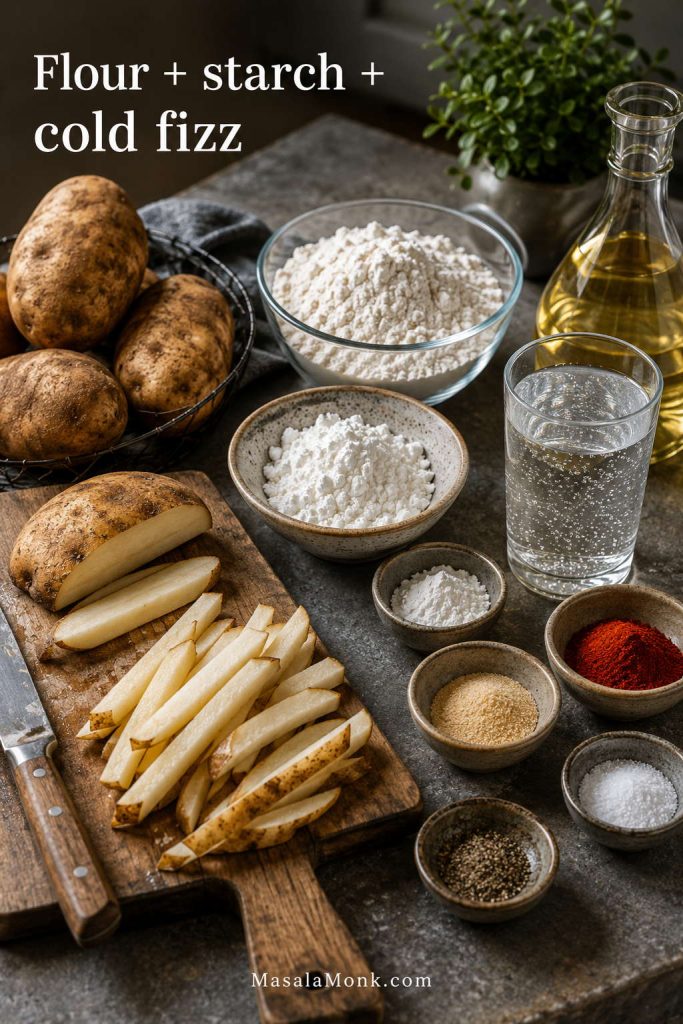
The main battered fries recipe uses a no-beer batter, so it works even if you do not want to cook with alcohol. A beer batter version is included below as an easy variation.
Potatoes
- 2 lb / 900g russet potatoes — best for fluffy centers and crisp edges.
- Maris Piper or King Edward potatoes — good UK options for thicker battered chips.
Batter
- 1 cup / 120g all-purpose flour — gives the batter structure.
- ⅓ cup / 40g cornstarch or potato starch — helps the coating fry crisp instead of heavy. Potato starch gives a slightly more delicate, crackly finish; cornstarch is easier to find and still works well.
- 1 tsp baking powder — lightens the batter.
- 1 tsp fine salt — seasons the coating from the inside.
- 1 tsp paprika — adds color and mild flavor.
- ¾ tsp garlic powder — gives savory depth.
- ½ tsp onion powder — rounds out the seasoning.
- ¼ tsp black pepper — adds gentle heat.
- ⅛–¼ tsp cayenne, optional — for a little kick.
- ¾ cup / 180ml ice-cold sparkling water, seltzer, or club soda, plus 1–3 tbsp more as needed — keeps the batter light and crisp without beer.
Because some seasoning blends are already salty, reduce the fine salt in the batter slightly and season the finished fries to taste.
For Frying
- Neutral oil for deep frying — vegetable, canola, sunflower, peanut, or another high-heat frying oil.
Best Potatoes for Battered Fries
Starchy potatoes are best because they cook up fluffy inside and crisp well outside. In the US, use russet potatoes. For battered chips, especially UK-style chips, Maris Piper or King Edward potatoes are good choices.
Avoid very waxy potatoes if your goal is a fluffy center. Waxy potatoes hold their shape well, but they do not give the same classic fry texture.
For more potato-prep detail, the Idaho Potato Commission’s French fry guidance is a useful reference for russets, soaking, blanching, and batch size.
| Cut | Best Use | Texture |
|---|---|---|
| ¼-inch fries | Battered french fries | Crisp coating, faster cooking, classic fry shape |
| ⅜-inch fries | Pub-style battered fries | More potato inside, still crisp outside |
| ½-inch chips | Battered chips | Thicker, softer center, best with parboiling or first-frying |
Equipment You Need
You do not need restaurant equipment, but a few tools make battered fries much easier and safer.
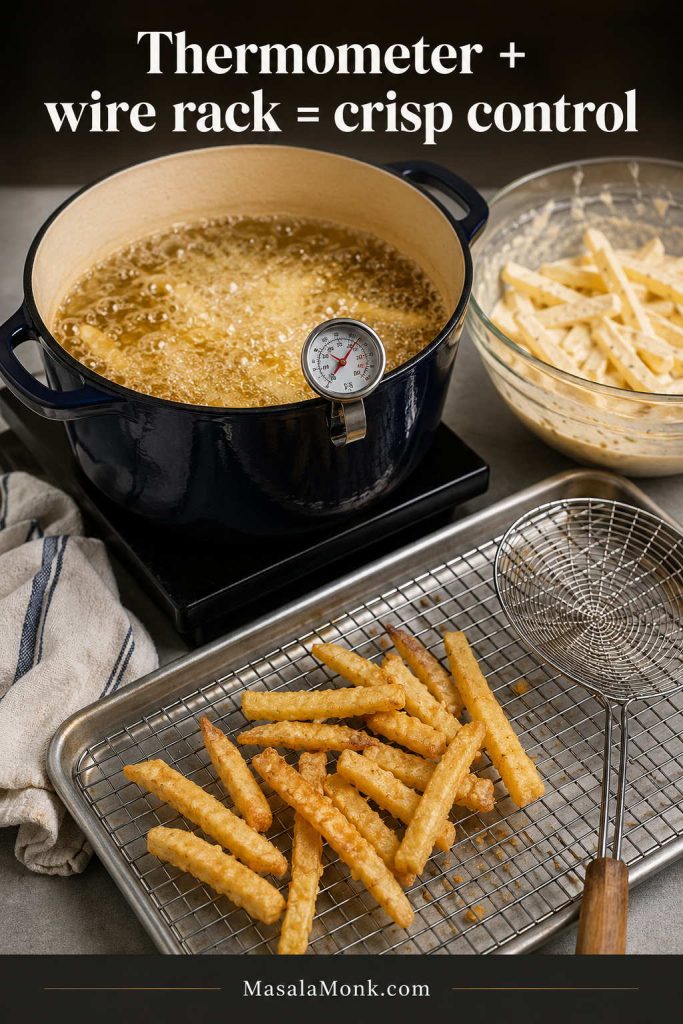
- Heavy-bottomed pot, Dutch oven, or deep fryer — choose something deep enough to leave several inches of headroom above the oil.
- Oil or candy thermometer — the easiest way to keep the oil at the right temperature.
- Large bowl — for soaking the potatoes.
- Clean kitchen towels or paper towels — for drying the fries thoroughly.
- Wire rack over a sheet pan — better than piling hot fries on paper towels, which can trap steam.
- Spider skimmer, slotted spoon, or tongs — for lowering and lifting fries safely.
Best Oil for Battered Fries
Use a neutral, high-heat oil such as vegetable, canola, sunflower, or peanut oil. You want enough oil for the fries to move freely, usually about 2½–3 inches in a deep, heavy pot, but the pot should never be more than halfway full.
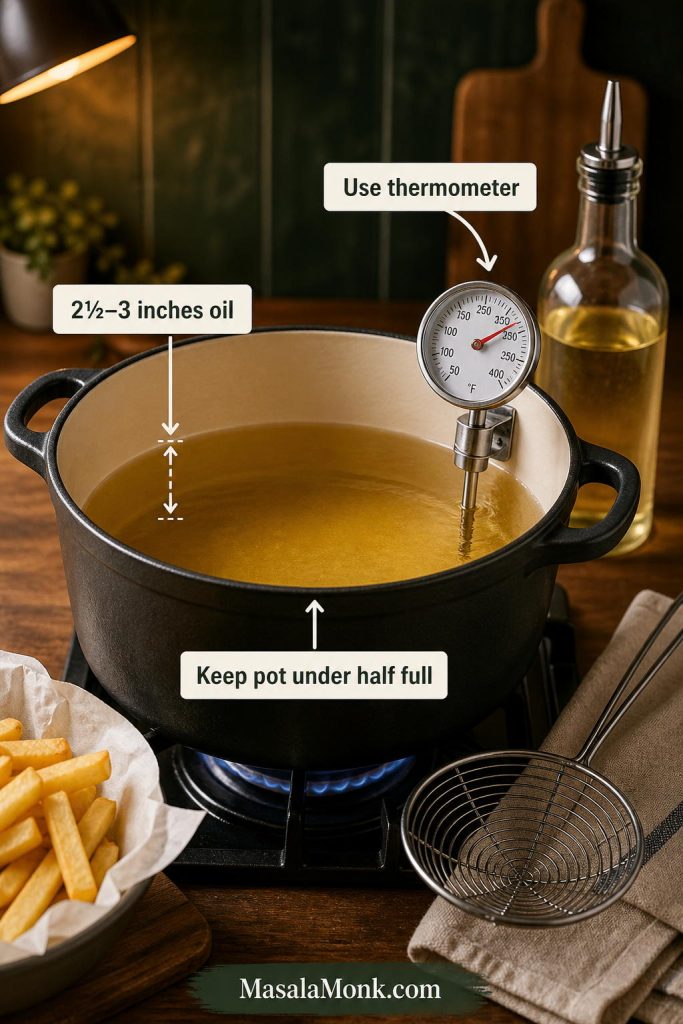
Oil temperature matters more than the exact oil brand. If the oil is too cool, the fries absorb oil and turn greasy. If it is too hot, the coating browns before the potato inside is tender. A thermometer is the easiest way to stay in control.
As a practical rule, fry only enough potatoes to cover the surface of the oil loosely, with space between pieces. If the oil stops bubbling actively or drops far below the target temperature, the batch is too large.
The Best Batter Thickness for Fries
For this battered fries recipe, the batter should coat each fry in a thin layer, drip slowly, and still show the shape of the potato underneath. Think pourable gravy or thin pancake batter, not paste. If it runs off like water, it is too thin. However, if it sits on the fry in thick ridges, it is too heavy and can turn cakey.
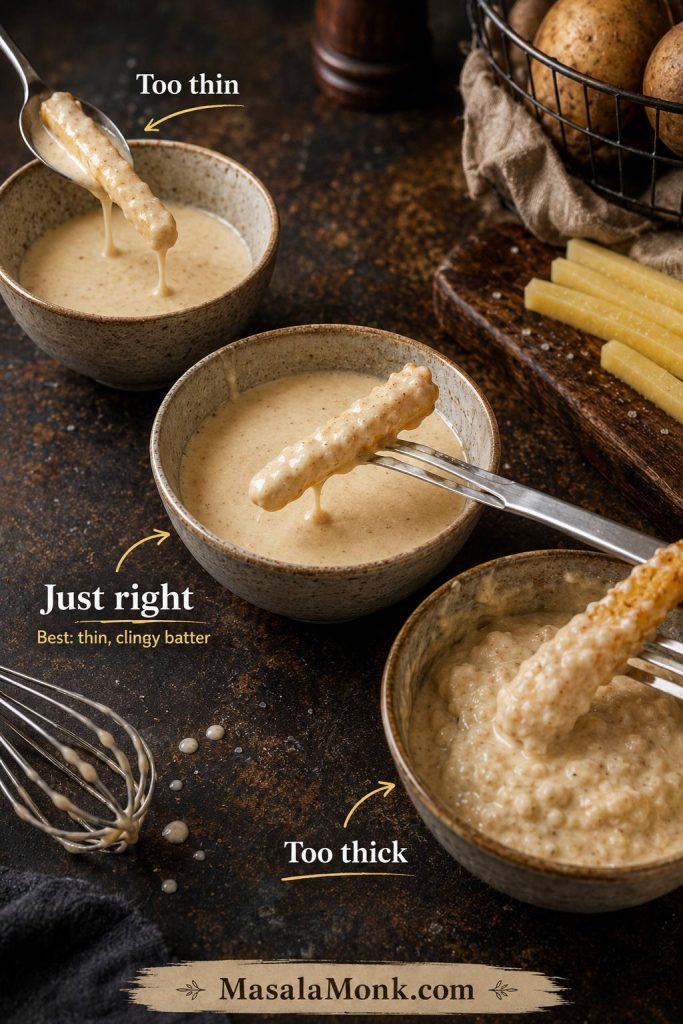
| Batter Texture | What Happens | How to Fix It |
|---|---|---|
| Too thin | Runs off the fries and leaves bare spots | Add flour 1 tbsp at a time |
| Just right | Clings lightly and drips slowly | Use immediately while cold |
| Too thick | Turns cakey, clumpy, or doughy | Add cold sparkling water, club soda, or beer 1 tbsp at a time |
How to Make Batter Stick to Fries
If the batter keeps sliding off, the answer is usually not to make it much thicker. In fact, batter that is too thick can turn heavy and slide off in clumps. The better approach is dry potatoes, a light dusting, and hot oil.
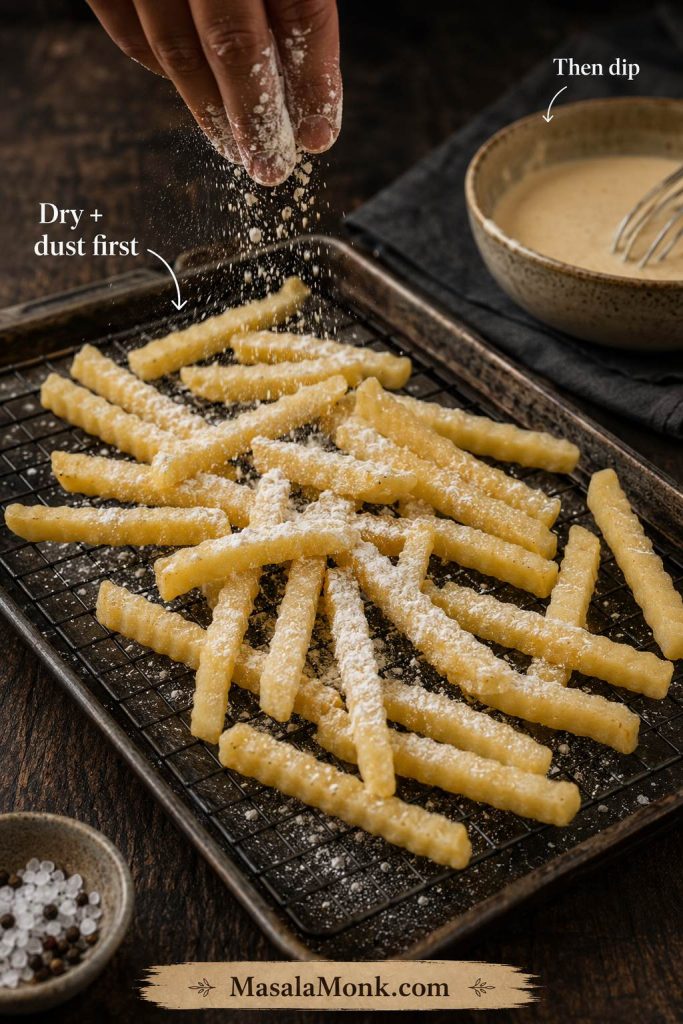
- Dry the potatoes completely: surface moisture makes batter slip and oil splatter.
- Use a light dusting first: a thin coat of flour, cornstarch, or potato starch gives the batter something to grip.
- Keep the batter cold: cold batter fries up lighter and clings better.
- Let excess batter drip off: too much batter creates clumps instead of a crisp shell.
- Add fries one by one: this stops them from sticking together in the oil.
- Keep the oil hot: if the oil is too cool, the coating absorbs oil before it sets.
How to Make This Battered Fries Recipe
The best method for this battered fries recipe is simple once you understand the order: soak, dry, first-fry, batter, final-fry. The first fry cooks the potato inside, while the second fry crisps the coating.
1. Cut and Soak the Potatoes
Peel the potatoes if you prefer a smoother fry, or leave the skins on for a more rustic texture. Cut into ¼-inch fries for battered french fries or thicker pieces for battered chips.
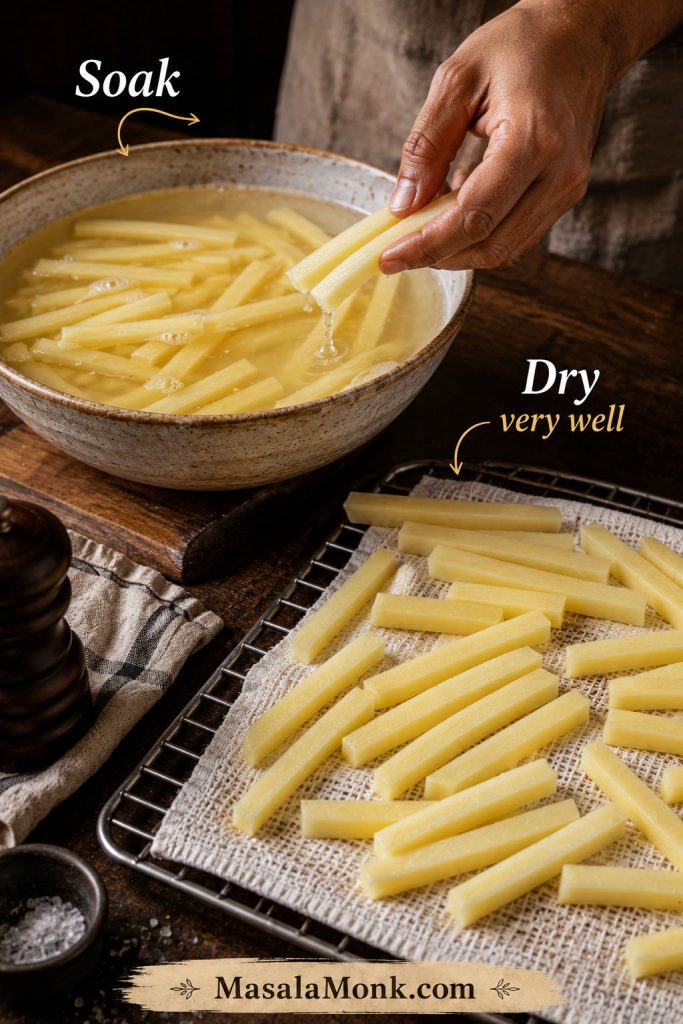
Place the cut potatoes in cold water for at least 30 minutes. For better texture, soak for 1–2 hours. Soaking helps remove excess surface starch, which can make fries brown unevenly or stick together. For a firmer fry, add 1 tbsp vinegar to the soaking water.
2. Dry the Fries Very Well
Drain the potatoes and spread them on clean kitchen towels. Pat them very dry. This step matters more than it looks: wet potatoes are one of the main reasons batter slips off, oil splatters, or fries turn soggy.
3. First-Fry the Potatoes
Heat oil in a heavy pot or deep fryer to 325°F / 165°C. Fry the dried potatoes in small batches for 4–5 minutes, just until they are pale and partly cooked. They should not be deeply browned yet.
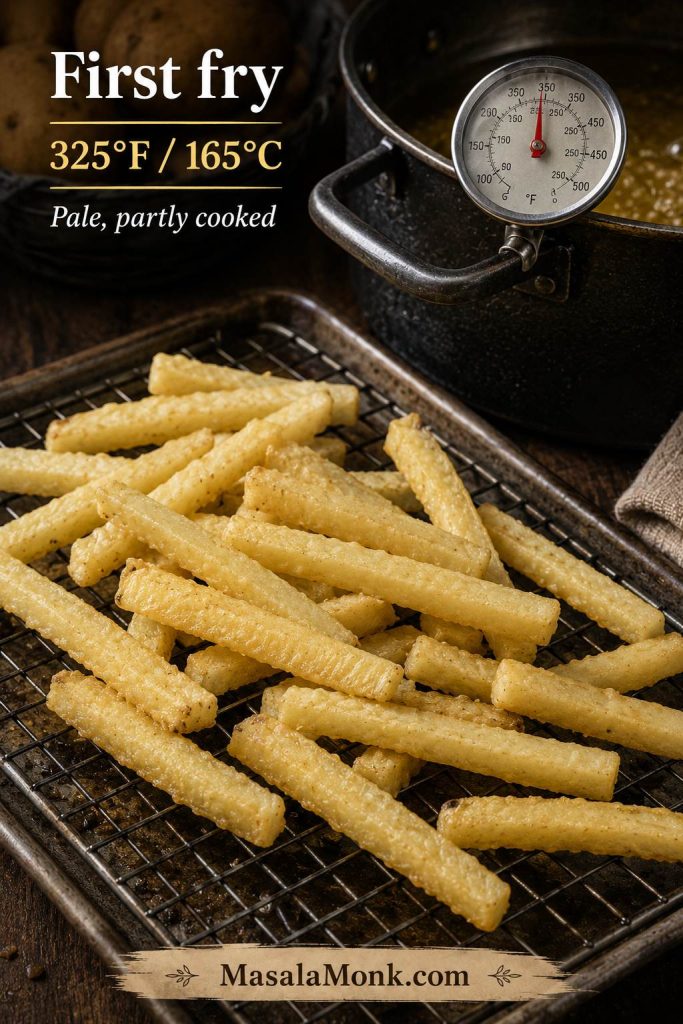
Transfer the first-fried potatoes to a wire rack. Do not pile them into a bowl, or they will steam and soften.
4. Mix the Batter
In a bowl, whisk together the flour, cornstarch or potato starch, baking powder, salt, paprika, garlic powder, onion powder, black pepper, and cayenne if using. Slowly whisk in the ice-cold sparkling water, seltzer, or club soda until the batter is smooth but still thin enough to drip slowly.
Do not overmix. A few tiny lumps are fine, and the batter should stay cold. Once the sparkling water, club soda, or beer is mixed in, the bubbles slowly fade, so mix the batter close to the final fry instead of letting it sit while the oil heats.
5. Dust, Dip, and Fry
Raise the oil temperature to 375°F / 190°C. Lightly dust the first-fried potatoes with flour, cornstarch, or potato starch. Dip a few fries into the batter, then hold them over the bowl or set them briefly on a wire rack so the excess batter can drip away. If you see a thick clump, smooth it lightly before the fry goes into the oil. Carefully lower the fries into the hot oil one by one.
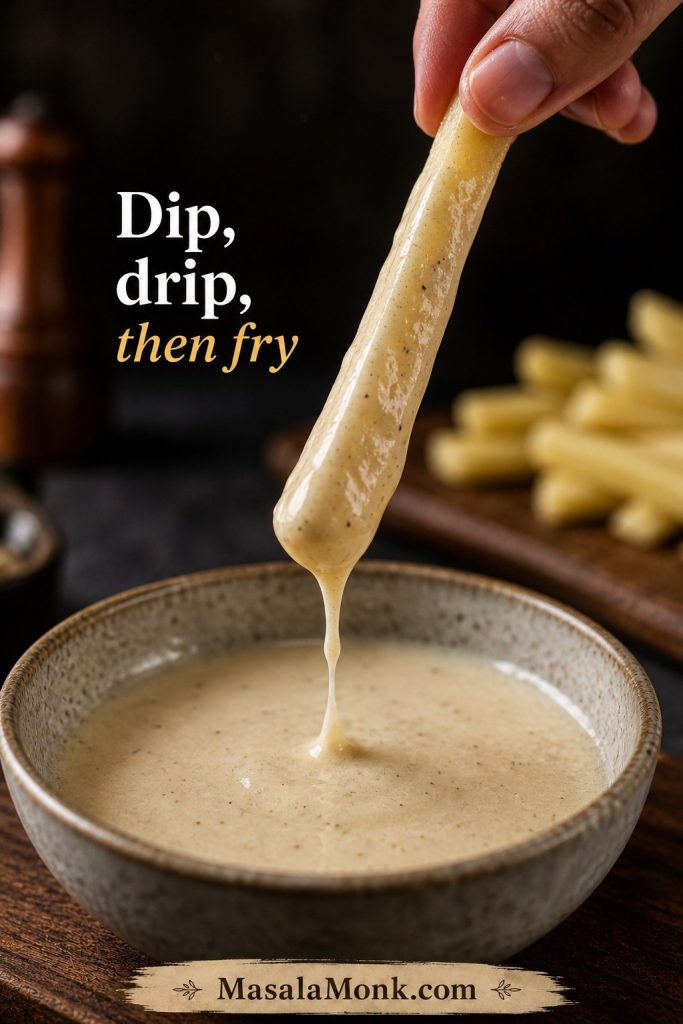
When you are unsure about the batter thickness, fry one test fry first. It is the easiest way to save the whole batch. A coating that slides off needs a slightly thicker batter or a more careful dusting. A heavy, bready coating means the batter needs another tablespoon of cold sparkling water, club soda, or beer.
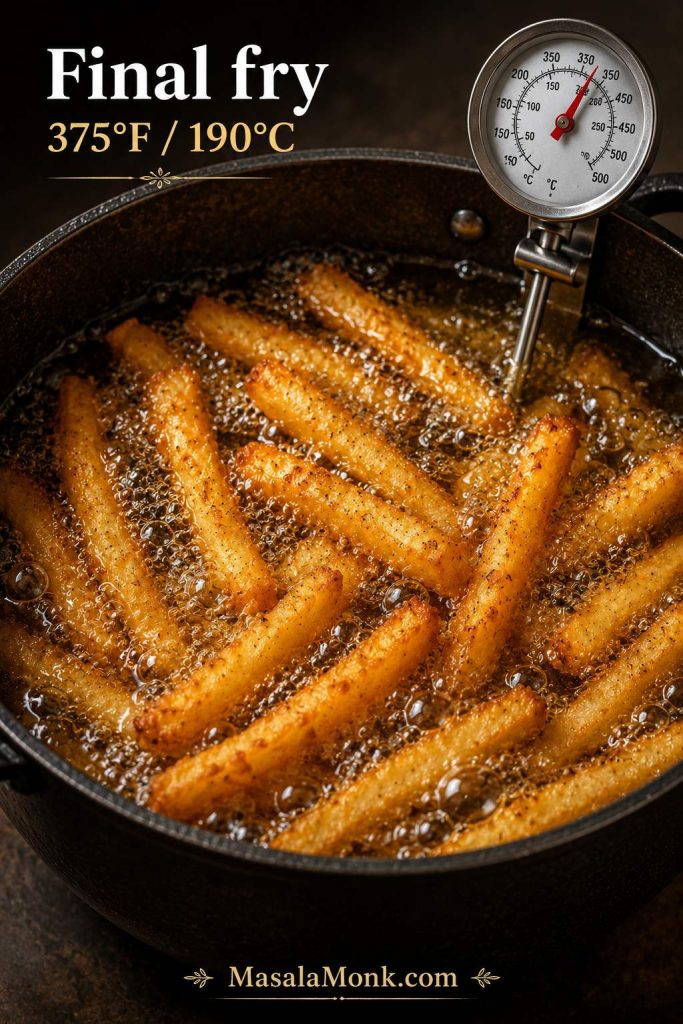
Fry in small batches for 2–4 minutes, until the coating is golden, crisp, and craggy. The bubbling should slow slightly, and the fries may float freely near the surface. Let the oil return to 375°F / 190°C between batches so the fries stay crisp instead of greasy.
6. Season While Hot
Move the battered fries to a wire rack and season immediately with salt. If you want flavored fries, add Cajun seasoning, garlic salt, smoked paprika salt, or chili-lime seasoning while the coating is still hot.

Quick Single-Fry Battered Fries
The double-fry method gives this battered fries recipe the crispest, most reliable result. However, when you want a faster batch, the single-fry method still works well as long as the potatoes are cut thin and dried thoroughly.
- Cut, soak, and dry the potatoes very well.
- Heat oil to 350°F / 175°C.
- Dip the raw dried fries into the batter in small handfuls.
- Let excess batter drip off.
- Fry for 7–10 minutes, turning occasionally, until golden and cooked through.
- Drain on a wire rack and season while hot.
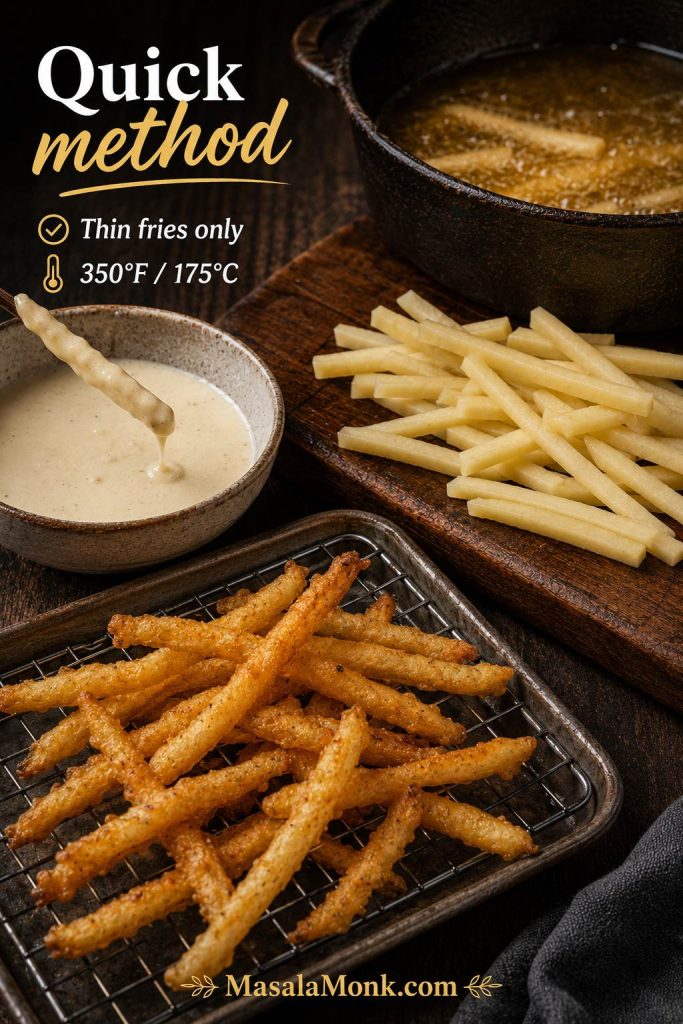
This method is easier, but the coating may brown before thicker fries are fully tender inside. For thicker battered chips or the crispiest battered french fries, use the double-fry method above.
Beer Battered Fries Variation
To turn this battered fries recipe into beer battered fries, replace the sparkling water with ¾ cup / 180ml ice-cold lager or pilsner. Then, add a little more beer, 1 tablespoon at a time, if the batter is too thick.
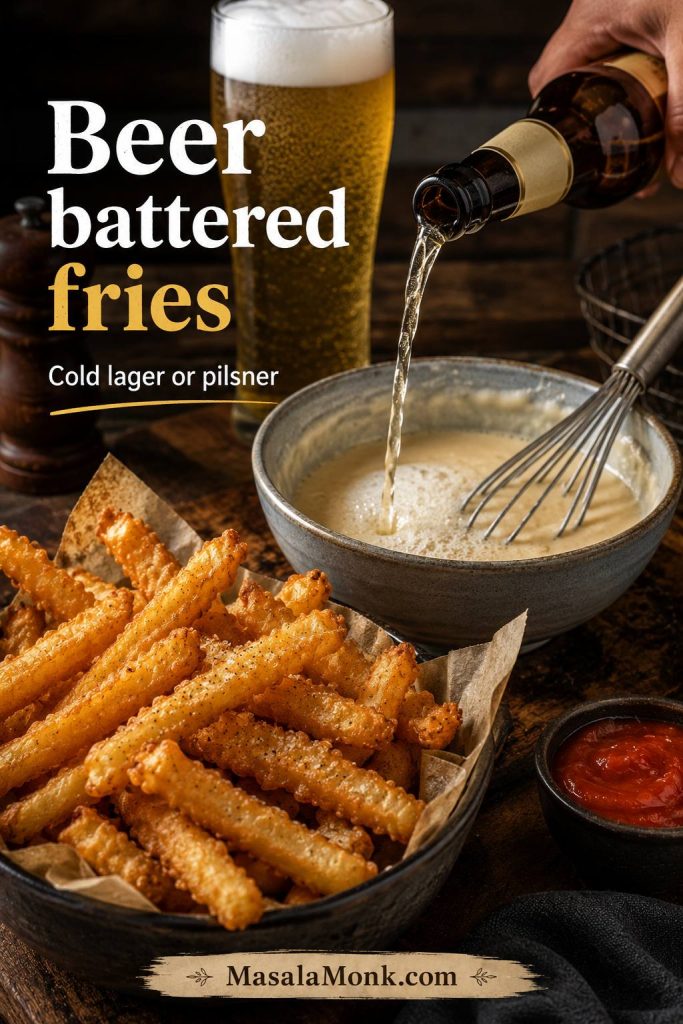
Lager, pilsner, or light beer works best because the flavor stays clean and the carbonation helps the batter fry crisp. Very bitter IPAs, heavy stouts, and sweet flavored beers can overpower the potatoes, so use them only if you specifically want that flavor in the coating.
No-Egg and Gluten-Free Battered Fries
This battered fries recipe is already made without egg. The batter gets its lightness from baking powder and cold sparkling water instead.
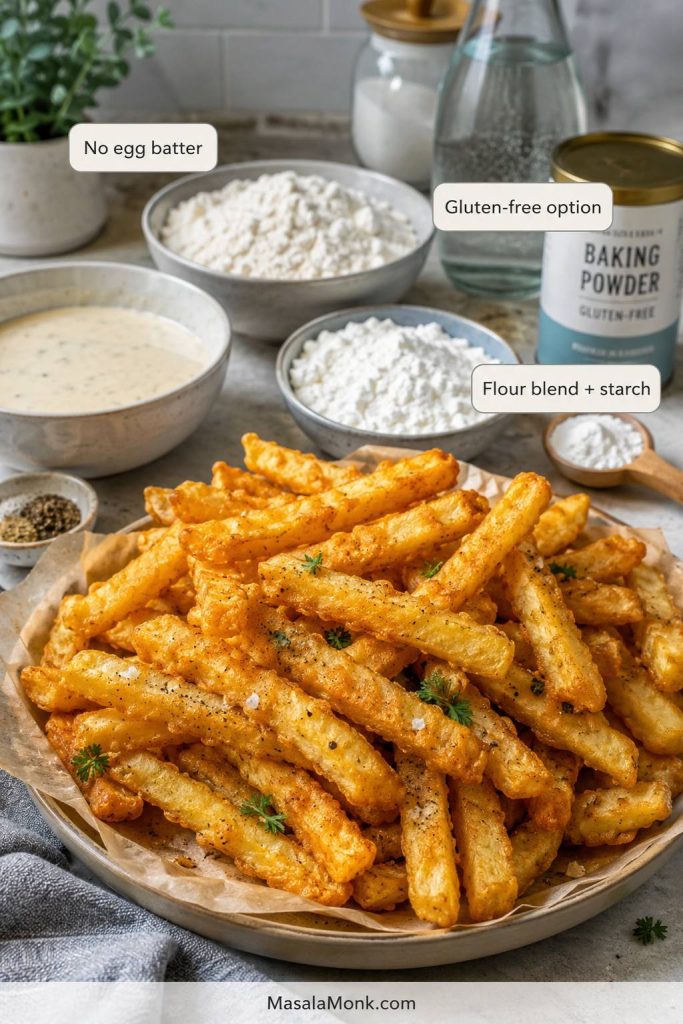
For gluten-free battered fries, replace the all-purpose flour with a gluten-free all-purpose flour blend or use a mix of rice flour and cornstarch. Keep the batter thin and cold, and fry a small test piece first so you can adjust the thickness before coating the whole batch.
If you are cooking for someone who needs strict gluten-free food, also check the baking powder, seasonings, and any dipping sauces for gluten-containing additives or cross-contact warnings.
How to Make Battered Chips
Battered chips are usually thicker than battered french fries, so they need a slightly different method. Use russet, Maris Piper, or King Edward potatoes and cut them about ½ inch thick.
- Cut the potatoes into thick chips.
- Parboil for 5–7 minutes, just until the edges begin to soften.
- Drain and dry on a wire rack until the surface moisture is gone.
- Dust lightly with flour, cornstarch, or potato starch.
- Dip in a slightly thicker batter.
- Fry at 180°C / 356°F for about 5–7 minutes, depending on thickness, until golden and crisp.
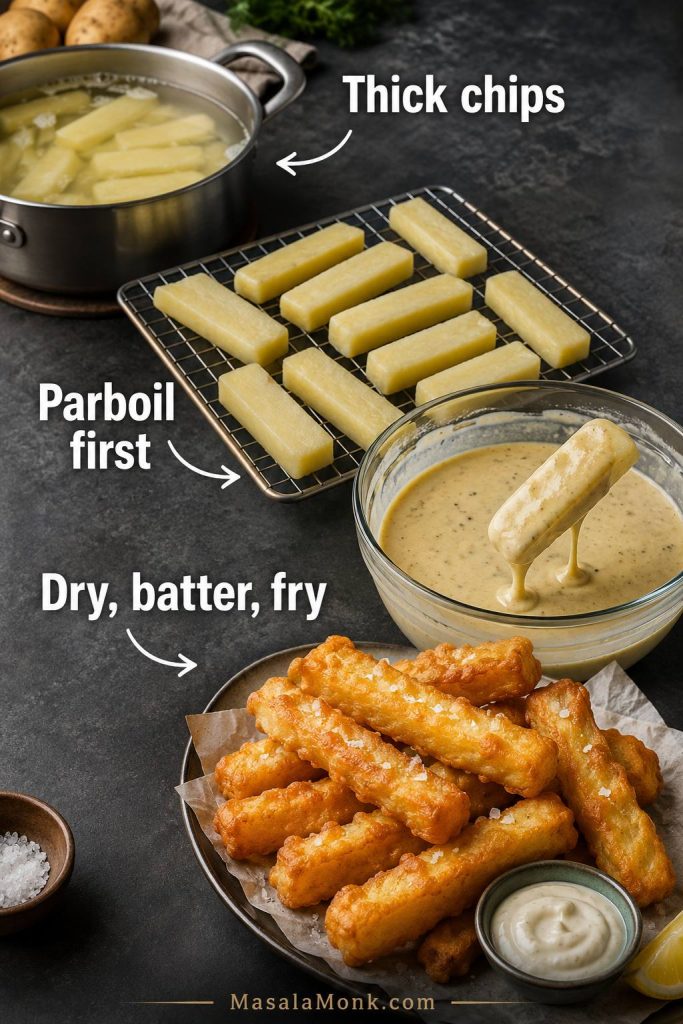
For a UK-style golden battered chips look, add a pinch of turmeric to the batter. Some regional orange chips use food coloring, but it is optional and not needed for a good crisp coating.
Lager gives battered chips a classic pub-style flavor, but sparkling water or club soda works if you want a no-beer version. Keep the batter slightly thicker than the battered-fries batter so it grips the larger chips, but do not make it paste-like.
Air Fryer Battered Fries: What Works
This battered fries recipe is best deep-fried because hot oil sets the wet batter immediately. In an air fryer, loose wet batter can drip before it crisps, which makes the fries patchy or messy.
So, if you came here hoping to pour wet batter over fries and air fry them, the honest answer is: it is not the best method. That does not mean you are out of options, though. You will get better results with a starch coating that behaves more like a crisp shell.
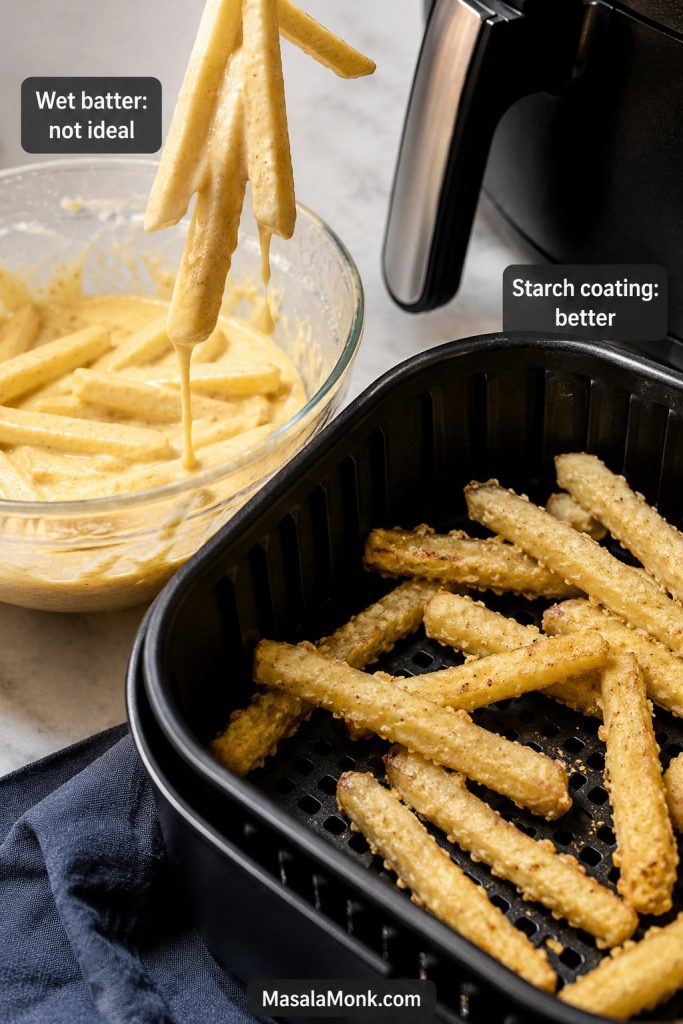
For air fryer battered fries, use a clingy starch coating instead of a loose batter. Toss the potatoes with a cornstarch slurry or a dry flour-cornstarch coating, spray generously with oil, and air fry in a single layer at 375°F / 190°C for about 14–20 minutes, flipping and spraying again halfway through.
However, when the real goal is crisp potato texture with less oil, MasalaMonk’s air fryer hash browns guide is a better air fryer potato starting point because it focuses on thin layers, moisture control, shaking, and crisp edges.
How to Batter Frozen Fries
You can batter frozen fries, but fresh-cut or first-fried homemade potatoes work better. Frozen fries already contain surface moisture and may already have a light coating, so the batter may not cling as evenly.
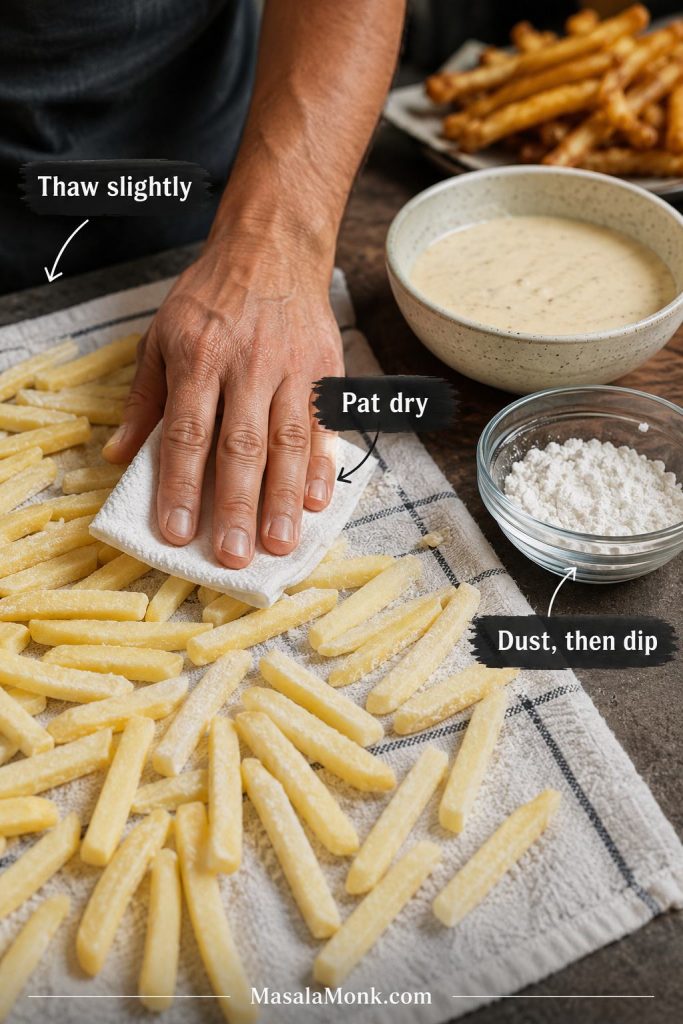
If you want to use frozen fries, do not batter them while icy. Let them thaw slightly, pat them very dry, dust lightly with cornstarch, potato starch, or flour, then dip them in a slightly thicker batter. Fry in small batches so the oil temperature does not drop too much.
Make-Ahead Battered Fries
This battered fries recipe is best right after frying, but you can still make hosting easier. Cut, soak, dry, and first-fry the potatoes earlier in the day, then let them cool on a wire rack. When you are ready to serve, make the batter fresh, dip the fries, and do the final fry.
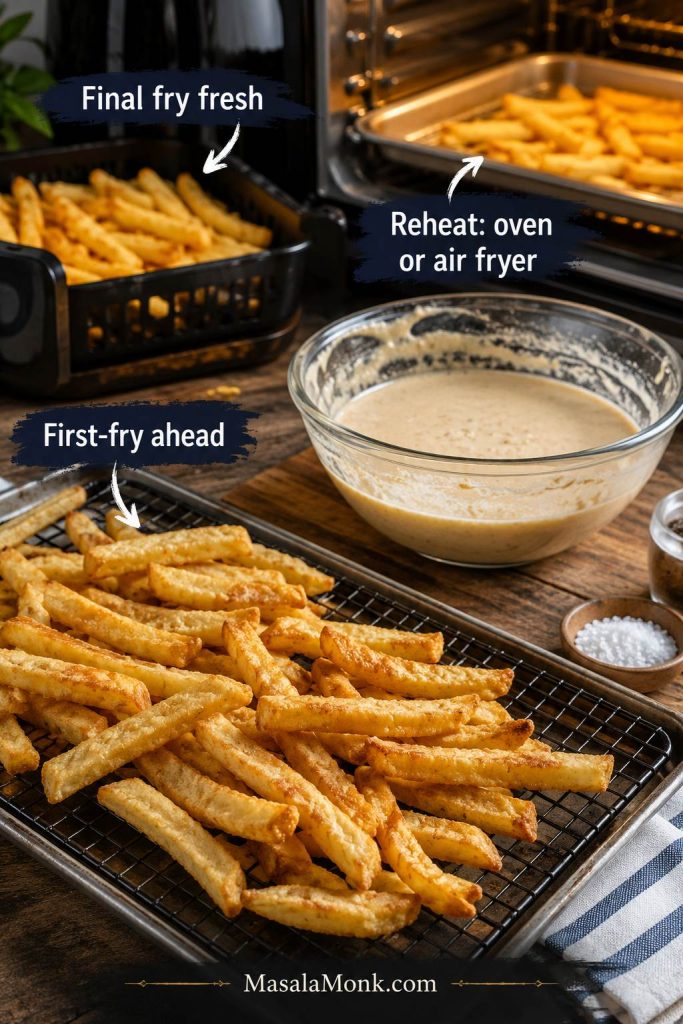
Do not batter the fries far in advance. The coating will soften as it sits. If you need to hold cooked battered fries for a short time, keep them on a wire rack in a low oven so steam does not collect underneath.
Store leftover battered fries in the fridge in a shallow container once fully cooled. They are best reheated within 1–2 days, because the coating softens the longer it sits.
To reheat leftovers, use a hot oven or air fryer until the coating crisps again. Avoid microwaving, which makes the batter soft.
Battered Fries Variations
Cajun Battered Fries
Add Cajun seasoning to the batter and sprinkle a little more over the fries as soon as they come out of the oil. This is one of the easiest ways to make seasoned battered french fries with a little heat.
Garlic Parmesan Battered Fries
Season the hot fries with garlic salt, black pepper, and finely grated parmesan-style cheese. Add parsley if you want a more restaurant-style finish.
Spicy Battered Fries
Add cayenne, chili powder, or smoked paprika to the batter. Serve with spicy mayo, ranch, or a cooling garlic dip.
Battered Sweet Potato Fries
Sweet potatoes can be battered, but they have more moisture and a softer texture than russets. Cut them a little thicker, dry them well, and use a light coating. Expect a softer center and a slightly sweeter flavor.
Double Battered Fries
Double battered fries have an extra-heavy coating. They can be very crunchy, but they can also turn thick and doughy if the batter is not thin enough. For most batches, one light coating gives the best balance of potato and crunch.
Troubleshooting Battered Fries
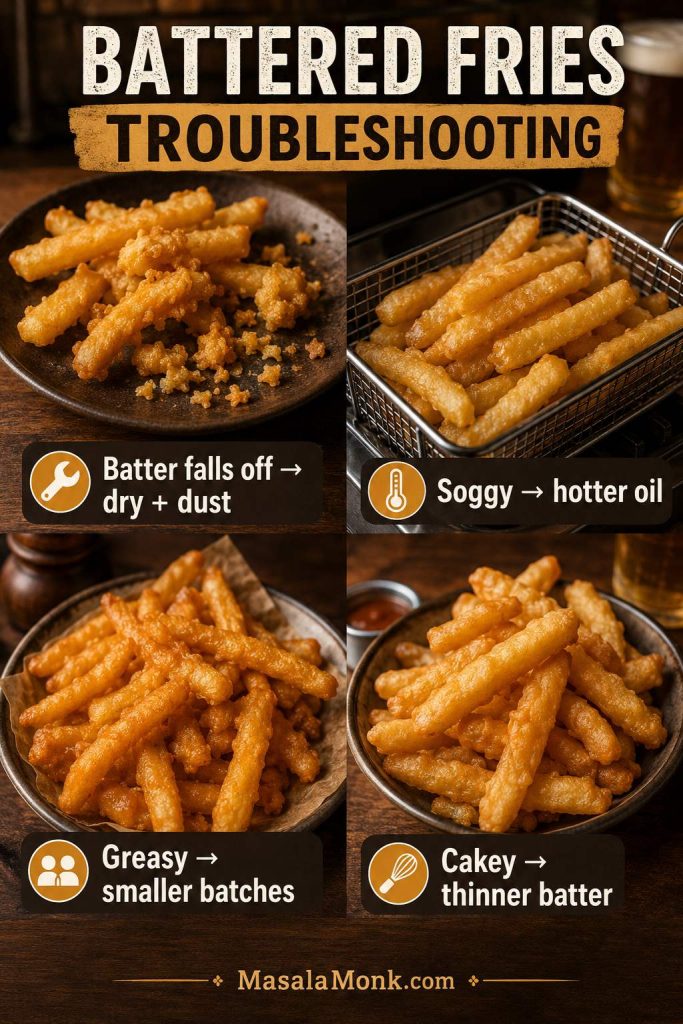
If this battered fries recipe did not come out crisp, the problem is usually moisture, batter thickness, oil temperature, or overcrowding. Fortunately, small changes make a big difference with battered potatoes.
| Problem | Likely Cause | Fix |
|---|---|---|
| Batter falls off | Fries are wet, batter is too thin, or potatoes were not dusted | Dry thoroughly, dust with flour/cornstarch/potato starch, and thicken the batter slightly |
| Fries are soggy | Oil is too cool, pan is overcrowded, or batter is too thick | Use a thermometer, fry in small batches, and thin the batter |
| Fries are greasy | Oil temperature dropped too low | Let the oil return to temperature between batches |
| Coating is cakey | Batter is too thick | Add cold sparkling water, club soda, or beer 1 tbsp at a time |
| Potatoes are hard inside | Fries are too thick or skipped the first cook | Use the double-fry method or parboil thick chips first |
| Fries stick together | Too many fries added at once | Add fries one by one and separate them early in frying |
| Batter clumps | Too much batter stayed on the fries | Let excess batter drip off before frying |
Battered Fries Time and Temperature Guide
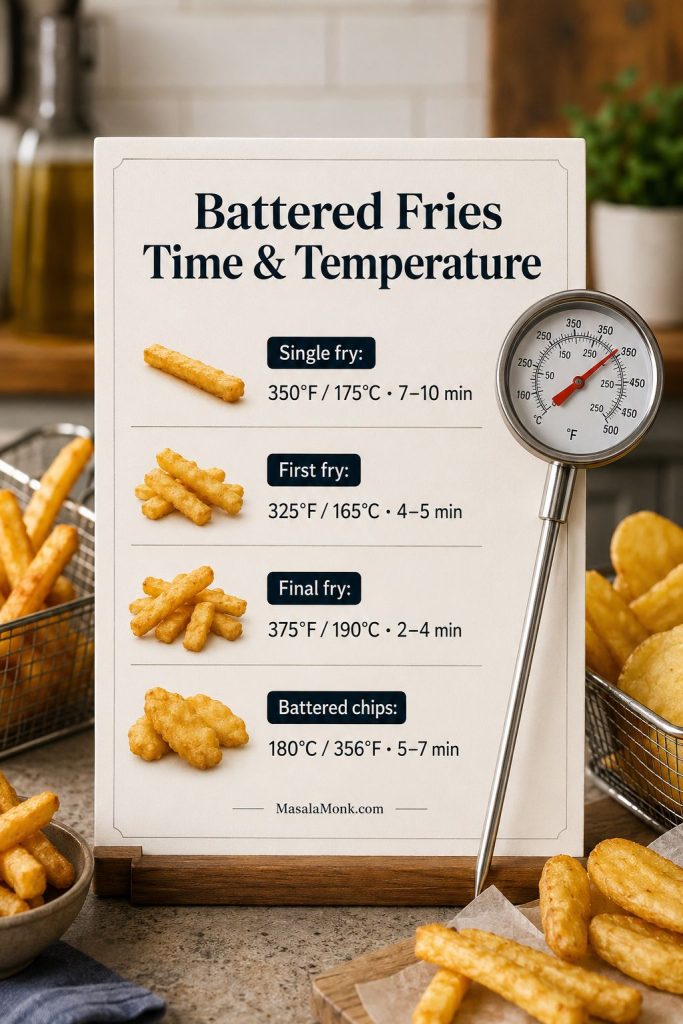
Use this chart as a quick reference for oil temperature, cook time, and method choice.
| Method | Potato Cut | Prep | Temperature | Cook Time |
|---|---|---|---|---|
| Quick single-fry battered fries | ¼-inch fries | Soak + dry | 350°F / 175°C | 7–10 min |
| Best double-fry battered fries | ¼-inch fries | First fry, then batter | 325°F then 375°F / 165°C then 190°C | 4–5 min + 2–4 min |
| Beer battered fries | ¼-inch fries | Double fry preferred | 325°F then 375°F / 165°C then 190°C | 4–5 min + 2–4 min |
| Battered chips | ½-inch chips | Parboil + dry + dust | 180°C / 356°F | 5–7 min after parboiling, depending on thickness |
| Air fryer coated fries | ¼–½-inch fries | Starch slurry or dry coating | 375°F / 190°C | 14–20 min |
What to Serve with Battered Fries
This battered fries recipe is best served hot, while the coating is still crisp. For the most obvious pairing, serve the fries with MasalaMonk’s fish and chips recipe. The crisp coating also works well with burgers, chicken tenders, fried shrimp, and creamy or tangy dips.
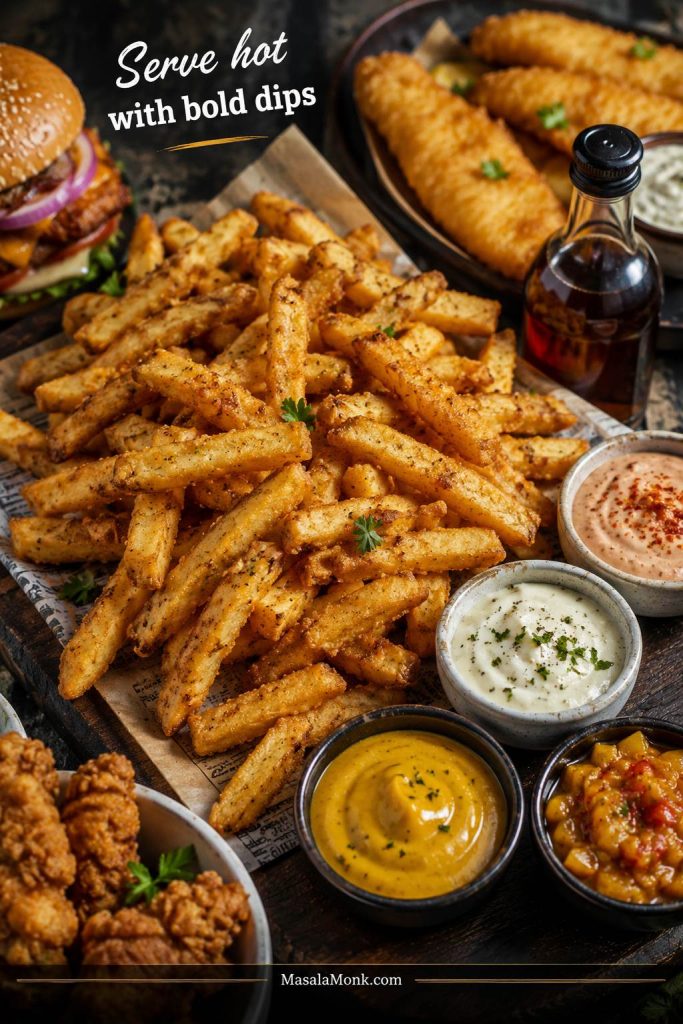
- Burgers and sandwiches
- Fried chicken or chicken tenders
- Fried shrimp or calamari
- Onion rings
- Garlic aioli
- Spicy mayo
- Ranch dressing
- Cheese sauce
- Malt vinegar and salt
For a sweet-tangy dip that works surprisingly well with fries, try mango mustard sauce. Keep it thick for dipping so it clings to the crisp coating instead of running off.
If you want something sharper and more pickle-like, amba sauce is another bold option for fries, wedges, and roasted potatoes.
Battered Fries Recipe
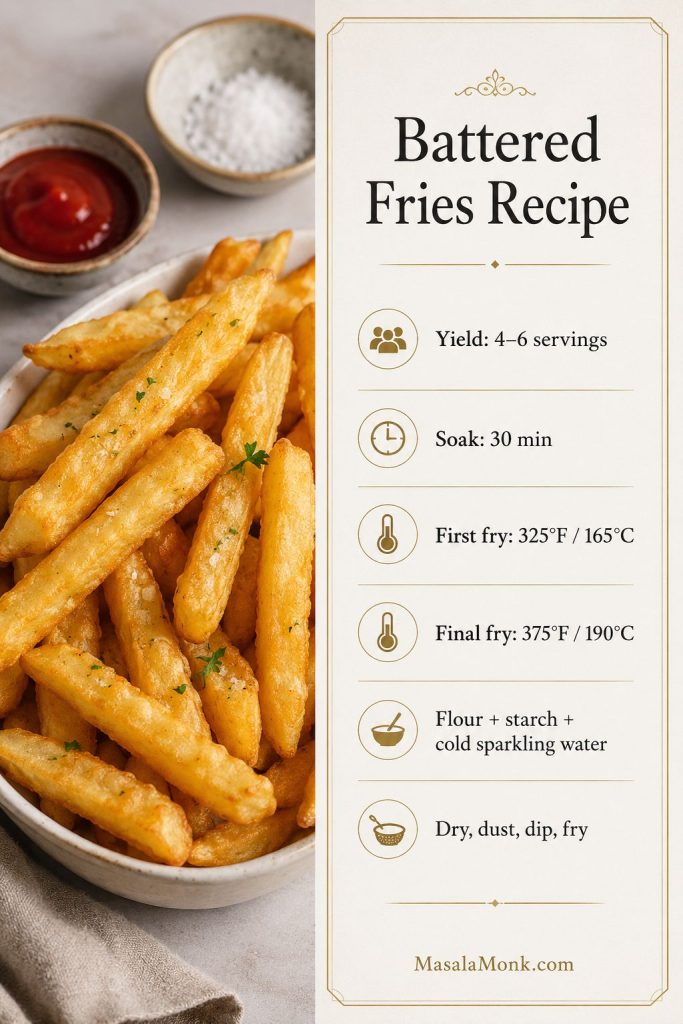
This battered fries recipe cooks up golden outside with fluffy potato centers inside. The coating is seasoned but light, so the potato still comes through. The main version uses a no-beer batter made with flour, cornstarch or potato starch, baking powder, seasoning, and ice-cold sparkling water, seltzer, or club soda. For a pub-style finish, use the beer batter variation below.
Ingredients
For the Potatoes
- 2 lb / 900g russet potatoes, cut into ¼-inch fries
- Cold water, for soaking
- 1 tbsp vinegar, optional
- Neutral oil, for deep frying
For the Batter
- 1 cup / 120g all-purpose flour
- ⅓ cup / 40g cornstarch or potato starch
- 1 tsp baking powder
- 1 tsp fine salt, plus more for finishing
- 1 tsp paprika
- ¾ tsp garlic powder
- ½ tsp onion powder
- ¼ tsp black pepper
- ⅛–¼ tsp cayenne, optional
- ¾ cup / 180ml ice-cold sparkling water, seltzer, or club soda, plus 1–3 tbsp more as needed
Instructions
- Cut the potatoes: Cut the potatoes into ¼-inch fries. For thicker battered chips, cut them closer to ½ inch thick.
- Soak: Place the cut potatoes in cold water for at least 30 minutes, or 1–2 hours for better texture. Add 1 tbsp vinegar if using.
- Dry thoroughly: Drain the potatoes and dry them very well with clean kitchen towels. Surface moisture will make the batter slip and can cause oil splatter.
- First fry: Heat oil to 325°F / 165°C. Fry the potatoes in small batches for 4–5 minutes, until pale and partly cooked. Drain on a wire rack.
- Make the batter: Whisk together flour, cornstarch or potato starch, baking powder, salt, paprika, garlic powder, onion powder, pepper, and cayenne. Whisk in ice-cold sparkling water, seltzer, or club soda until the batter is thin but clingy. Do not make the batter too far ahead.
- Heat for final fry: Raise the oil to 375°F / 190°C.
- Dust and dip: Lightly dust the first-fried potatoes with flour, cornstarch, or potato starch. Dip into the batter and let excess drip off over the bowl or briefly on a wire rack.
- Final fry: Fry in small batches for 2–4 minutes, until golden and crisp. The bubbling should slow slightly, and the fries may float freely near the surface. Add the fries one by one so they do not stick together.
- Season: Transfer to a wire rack and season immediately with salt. Serve hot.
Beer Battered Fries Variation
Replace the sparkling water, seltzer, or club soda with ¾ cup / 180ml ice-cold lager or pilsner. Add more beer 1 tbsp at a time if the batter is too thick. Keep the batter cold and thin for the crispest beer battered fries.
Notes
- This battered fries recipe works best when the batter is mixed close to frying time, while the liquid is still cold and bubbly.
- The batter should coat the fries lightly and drip slowly. Thick batter makes cakey fries.
- You may not need every drop of batter. A light coating is better than forcing thick batter onto every fry.
- Potato starch gives a slightly more delicate, crackly coating; cornstarch is easier to find and still works well.
- Longer soaking, up to 1–2 hours, improves texture but is optional.
- Use a thermometer for the oil. Cool oil makes greasy fries.
- Use a deep, heavy pot and leave several inches of headroom so the oil does not bubble over.
- Drain on a wire rack instead of piling fries on paper towels.
- Do not cover hot battered fries. Steam softens the crisp coating quickly.
- For battered chips, cut thicker, parboil 5–7 minutes, dry well, dust, batter, and fry at 180°C / 356°F.
- For make-ahead prep, cut, soak, dry, and first-fry the potatoes earlier, then batter and final-fry just before serving.
FAQs About Battered Fries
Are battered fries the same as battered chips?
They are similar, but battered chips are usually thicker. In the US, battered fries usually means battered french fries. In the UK, chips are thicker fried potatoes, so battered chips often need parboiling or first-cooking before battering.
Are battered fries the same as coated fries?
Not always. Battered fries are usually dipped in a wet batter before frying. Coated fries may use a lighter dry coating or starch coating instead. Both can be crisp, but battered fries usually have a more noticeable craggy shell.
What is battered fries batter made of?
Battered fries batter is usually made with flour, cornstarch or potato starch, baking powder, salt, seasonings, and a cold fizzy liquid such as sparkling water, club soda, or beer. The batter should be thin and cold so it fries crisp instead of turning thick and cakey.
What makes this battered fries recipe crisp?
The crisp texture comes from dry potatoes, a thin cold batter, cornstarch or potato starch, baking powder, and hot oil. The double-fry method also helps because the potato cooks first, then the batter crisps quickly in the final fry.
Should you cook the fries before battering them?
For the best battered fries, first-fry the potatoes at 325°F / 165°C until partly cooked, then batter them and fry again at 375°F / 190°C. Thin fries can be battered raw and single-fried, but the double-fry method is more reliable.
What can you use instead of beer in battered fries?
Ice-cold sparkling water, seltzer, or club soda works well instead of beer. The carbonation helps keep the batter light and crisp without adding beer flavor.
What kind of beer works best for beer battered fries?
Cold lager, pilsner, or light beer works best because the flavor stays clean and the carbonation helps the coating fry crisp. Very bitter or heavy beers can overpower the potatoes.
Is pancake batter good for battered fries?
Pancake batter is not ideal because it can fry up sweet, thick, and cakey. A better battered fries recipe uses flour, starch, baking powder, seasoning, and cold sparkling water or beer for a lighter, crispier coating.
Why does the batter fall off fries?
Batter usually falls off when the fries are too wet, the batter is too thin, or the potatoes were not dusted before dipping. Dry the potatoes very well, dust lightly with flour, cornstarch, or potato starch, and make sure the batter clings instead of running off.
Why are battered fries soggy?
Soggy battered fries usually come from cool oil, overcrowding, wet potatoes, or batter that is too thick. Fry in small batches, keep the oil hot, dry the potatoes well, and use a thin coating.
Do battered fries work in an air fryer?
Wet battered fries are better deep-fried because hot oil sets the batter quickly and evenly. In an air fryer, loose batter can drip before it sets. For air fryer fries, use a starch slurry or dry flour-cornstarch coating and spray well with oil.
Do baked battered fries work?
Wet-battered fries do not bake as well as they fry because the batter needs fast heat to set. For baked fries, use a dry starch coating instead of a loose wet batter, spread the fries in one layer, and use enough oil to help the coating crisp.
How do you batter frozen fries?
Frozen fries work best when they are thawed slightly, patted very dry, dusted with flour, cornstarch, or potato starch, then dipped in a slightly thicker batter before frying. The coating may not cling as evenly as it does on fresh-cut or first-fried potatoes.
How do you keep battered fries crispy?
Serve them right away, drain them on a wire rack, and avoid covering them while hot. If you need to hold them briefly, keep them on a rack in a low oven so steam does not soften the coating.
What is the best way to reheat battered fries?
A hot oven or air fryer is the best way to reheat battered fries because dry heat helps the coating crisp again. Microwaving is not recommended because it softens the batter.
What oil is best for battered fries?
Use a neutral high-heat oil such as vegetable, canola, sunflower, or peanut oil. Avoid low-smoke-point oils for deep frying.
Once you get the batter thickness and oil temperature right, these battered fries are easy to repeat. Start with the no-beer version first, then try the beer batter, battered chips, or Cajun variation when you want a more pub-style batch. Serve them hot, keep the coating light, and do not be surprised if they disappear fast.








