Posted on 2 Comments

Rice Pudding with Cooked Rice

Creamy rice pudding made with cooked rice in a ceramic bowl, lightly dusted with cinnamon and served with a spoon.

This rice pudding with cooked rice is the recipe to make when you have leftover rice in the fridge and want something warm, creamy, and comforting without starting from raw rice. You only need cooked rice, milk, sugar, vanilla, cinnamon, a little salt, and about 20 minutes on the stove.

You can use leftover white rice, jasmine rice, basmati rice, short-grain rice, plain takeout rice, or any pre-cooked rice that has been stored safely. The real trick is the ratio: start with roughly equal parts cooked rice and milk, then adjust depending on how dry, soft, or separate the rice is.

The main recipe is an easy no-egg stovetop version. Once you have that base down, you can make it more custardy with egg, richer with condensed milk or evaporated milk, or faster in the microwave. You will also find the small fixes that matter most, because cooked-rice pudding can go from too thin to too thick very quickly when the rice is especially dry or starchy.

Quick Answer: How to Make Rice Pudding with Cooked Rice

To make rice pudding with cooked rice, simmer 2 cups cooked rice with 2 cups milk, ⅓ cup sugar, ¼ teaspoon salt, and ½ teaspoon cinnamon over medium-low heat until creamy. Stir often, then finish with 1 tablespoon butter and 1 teaspoon vanilla. The pudding usually takes 15 to 20 minutes on the stove, plus a short rest so it thickens into a spoonable texture.

At a glance: use 2 cups cooked rice, 2 cups milk, ⅓ cup sugar, and 15–20 minutes on the stove. The best starting ratio is about 1 cup cooked rice to 1 cup milk; add a splash more milk for dry fridge rice or use slightly less for very soft rice.

Leftover rice safety: only use rice that was cooled and refrigerated promptly. If it sat out for more than 2 hours, smells sour, feels slimy, or you are unsure how long it has been stored, skip it and start with a fresh batch of plain cooked rice.

Don’t worry if it looks a little loose while it is still hot. Rice pudding thickens as it rests, and leftover rice keeps absorbing milk even after the heat is off.

Want the exact amounts? Go to the recipe card. Need to adjust for dry or soft rice? See the ratio guide.

Why This Recipe Works

Cooked rice pudding behaves differently from rice pudding made with raw rice. Raw rice needs time to absorb liquid and release starch. Cooked rice has already absorbed water, so the goal is not to cook the rice from scratch. Instead, you are softening it, loosening the grains, seasoning it properly, and simmering the milk until everything turns creamy.

That is why this recipe starts with a simple 1:1 ratio of cooked rice to milk. It gives the rice enough liquid to soften again without drowning it. As the mixture simmers, starch from the rice thickens the milk. Butter and vanilla go in at the end so the pudding tastes round, fragrant, and dessert-like instead of plain sweet rice.

The default version is made without egg because it is easier, smoother, and less likely to curdle or scramble. That said, a custardy egg version is included below for anyone who likes a more old-fashioned rice pudding.

The Best Ratio for Cooked Rice Pudding

The easiest way to avoid soupy or gluey pudding is to start with the right ratio. Think of this as a flexible starting point, not a strict rule, because leftover rice can be soft, dry, fluffy, sticky, or somewhere in between.
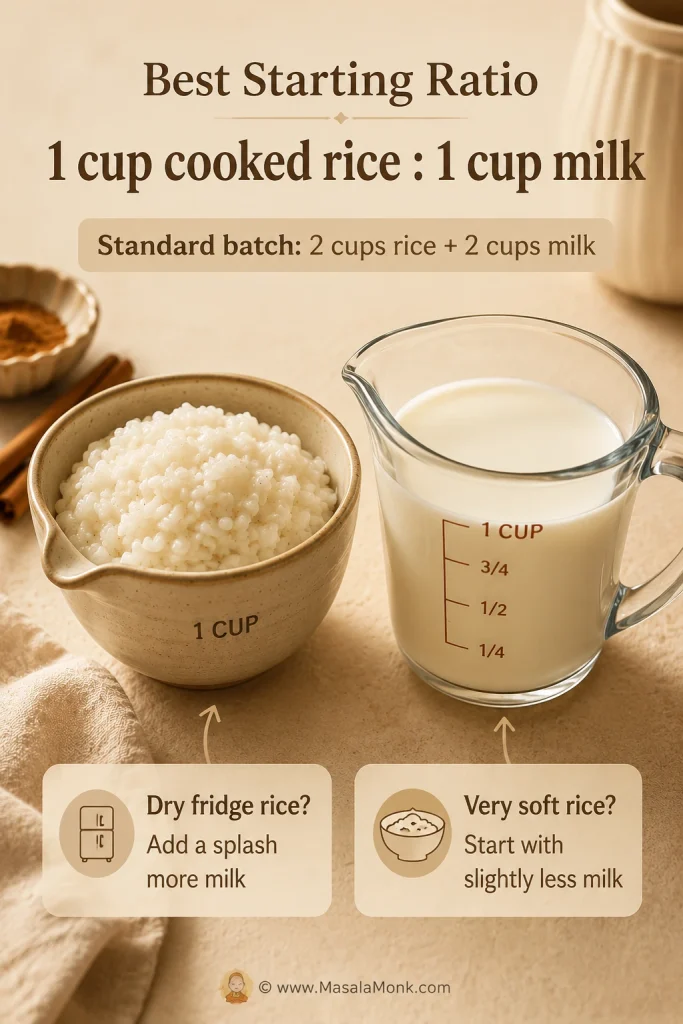
Ratio guide for rice pudding with cooked rice showing one cup cooked rice to one cup milk, with notes for dry and soft rice.
The easiest starting point is equal parts cooked rice and milk. From there, dry leftover rice may need an extra splash, while very soft rice usually needs a little less liquid to stay creamy instead of mushy.
Cooked Rice Milk Best For Texture Note
1 cup cooked rice 1 cup milk Small batch Good for 2 small servings.
2 cups cooked rice 2 cups milk Standard batch Best starting point for 4 servings.
3 cups cooked rice 3 cups milk Family batch Use a wider saucepan so it thickens evenly.
Dry leftover rice Equal milk plus 2–4 tbsp extra Cold fridge rice, basmati, takeout-style plain rice Add extra milk early so the grains soften.
Very soft cooked rice Start with 2–4 tbsp less milk Freshly cooked soft rice or short-grain rice Cook gently to avoid a mushy texture.

This ratio also makes the recipe easy to scale. If you have 1½ cups cooked rice, start with 1½ cups milk. If you have 4 cups cooked rice, start with 4 cups milk and use a large saucepan.
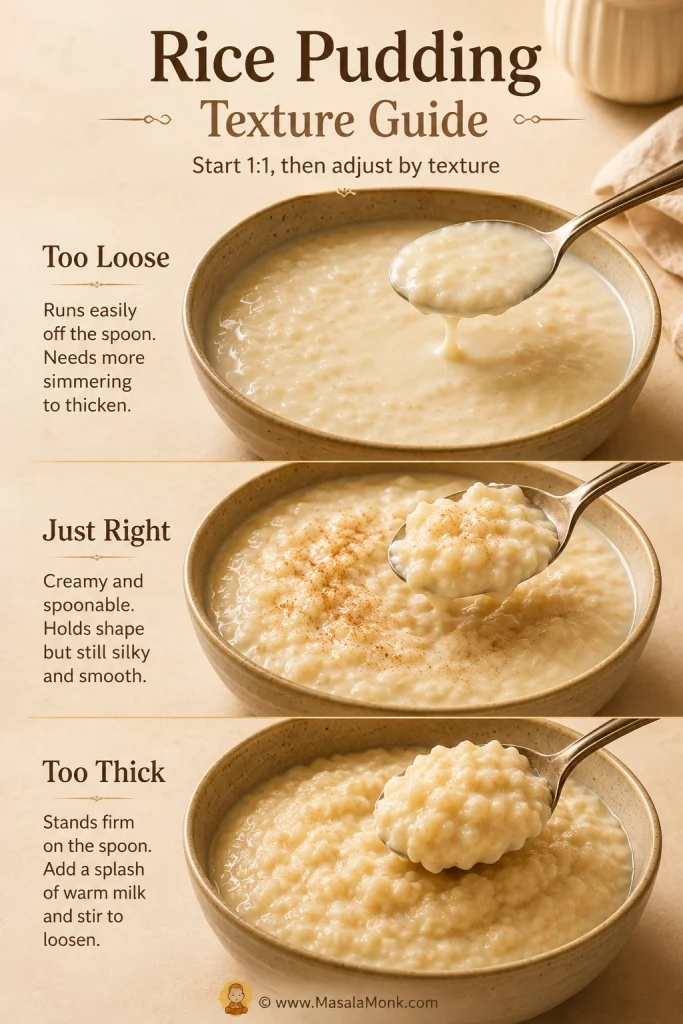
Three rice pudding textures in bowls, labeled too loose, just right, and too thick.
Texture is the real test, not just the timer. If the pudding runs like milk, keep simmering; if it mounds too heavily, loosen it with milk; if it coats the spoon softly, stop before it over-thickens.

Once the ratio makes sense, see how to make it. If your rice tends to turn dry, gummy, or too thick, keep the texture fixes handy.

Ingredients

The ingredient list is short, and that is part of the comfort of this recipe. Cooked rice, milk, sugar, salt, cinnamon, vanilla, and butter are enough to make a soft, creamy pudding. From there, you can make it richer with cream, more old-fashioned with egg, sweeter with condensed milk, or dairy-free with coconut milk.
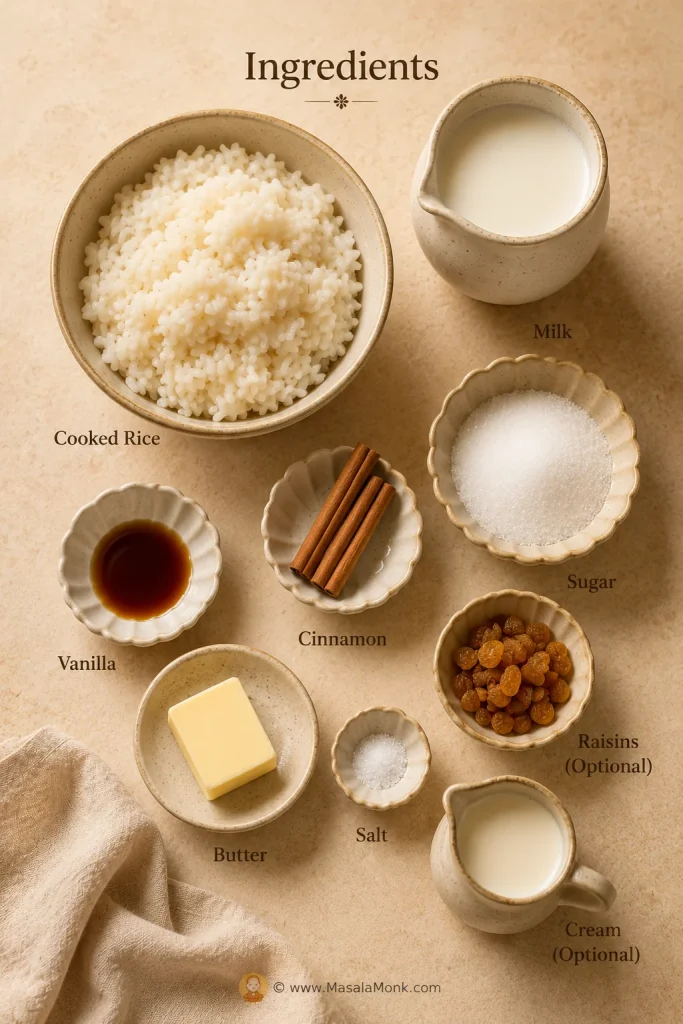
Ingredients for rice pudding with cooked rice, including cooked rice, milk, sugar, cinnamon, vanilla, butter, salt, raisins, and cream.
Each ingredient has a job: milk loosens the cooked rice, sugar sweetens, salt sharpens the flavor, cinnamon adds warmth, and vanilla plus butter make the pudding taste finished instead of flat.

What Kind of Cooked Rice Works Best?

The rice you have will decide the final texture more than anything else. Basmati, jasmine, short-grain rice, and cold fridge rice all need slightly different handling, but plain cooked white rice is the easiest all-purpose choice.
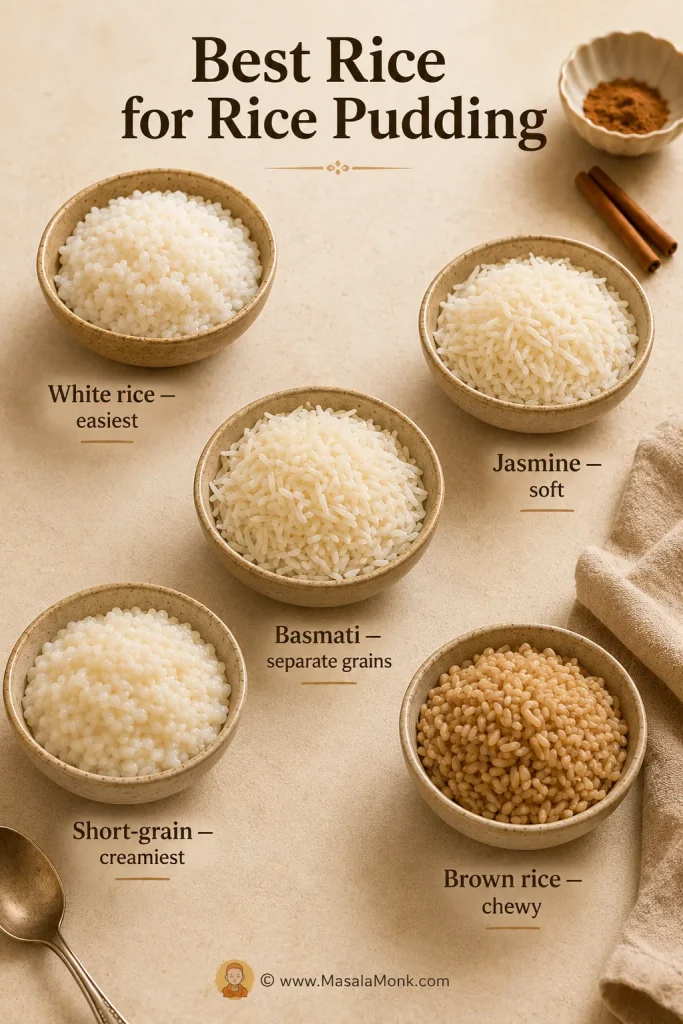
Bowls of cooked white rice, jasmine rice, basmati rice, short-grain rice, and brown rice for making rice pudding.
The rice you start with changes the pudding you get. White rice is the easiest, jasmine turns soft and fragrant, basmati stays more separate, short-grain becomes thick and creamy, and brown rice gives a chewier bowl.

Cooked Rice Texture Guide

Cooked Rice Type Works? What to Expect
Plain cooked white rice Yes Best all-purpose choice. Creamy, neutral, and easy to season.
Jasmine rice Yes Soft and lightly fragrant. Good for a delicate pudding.
Basmati rice Yes Works well, but the grains stay more separate. Add 2–4 tbsp extra milk if it seems dry.
Short-grain rice or sushi rice Yes Thicker and creamier because it releases more starch. Watch the heat so it does not turn pasty.
Arborio rice Yes Very creamy, but it thickens quickly. Keep extra milk nearby.
Brown rice Sometimes Use only fully cooked, soft brown rice. The pudding will be chewier and nuttier, not classic and silky.
Plain takeout rice Sometimes Fine if it is plain, unsalted, and not oily. Avoid fried rice or seasoned rice.
Flavored rice packets No Usually too salty or savory for dessert.

How to Handle Dry Leftover Rice

Cold leftover rice can look dry and stiff at first, especially if it has been in the fridge overnight. Give it time and enough milk before judging the final texture.
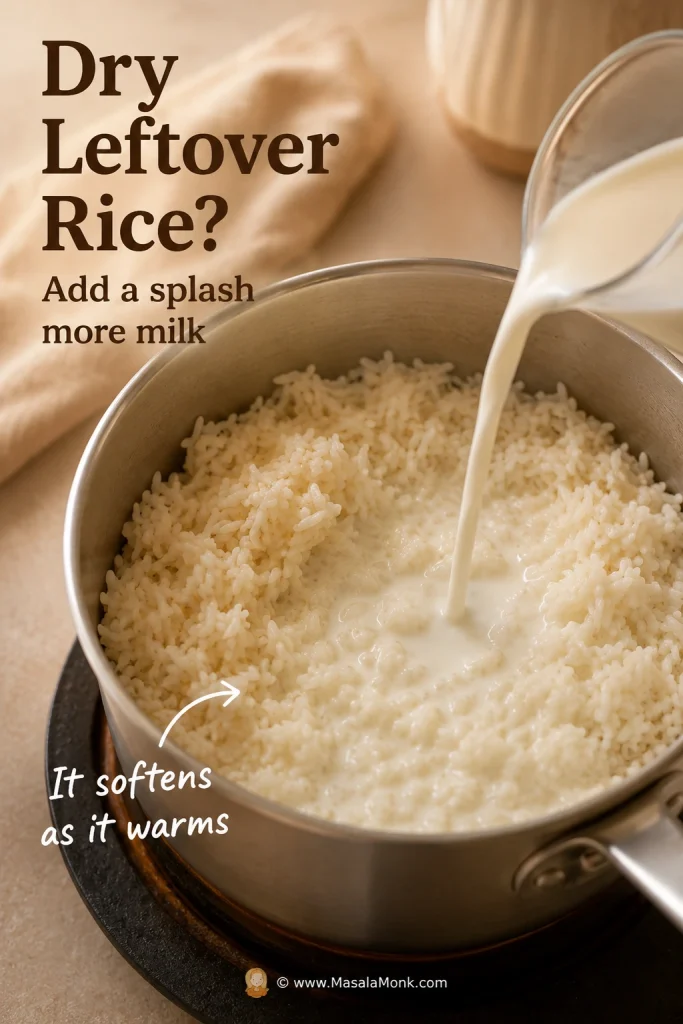
Dry leftover cooked rice in a saucepan being loosened with milk for rice pudding.
Cold rice can look dry and stubborn at first. Give it milk and gentle heat before judging the texture; the grains usually relax as they warm and turn much creamier than they looked in the fridge.

Use Plain Rice, Not Seasoned Rice

Do not use fried rice, salty takeout rice, rice cooked in broth, seasoned rice packets, or rice with garlic, onion, soy sauce, curry, or savory seasoning. This pudding needs plain cooked rice.
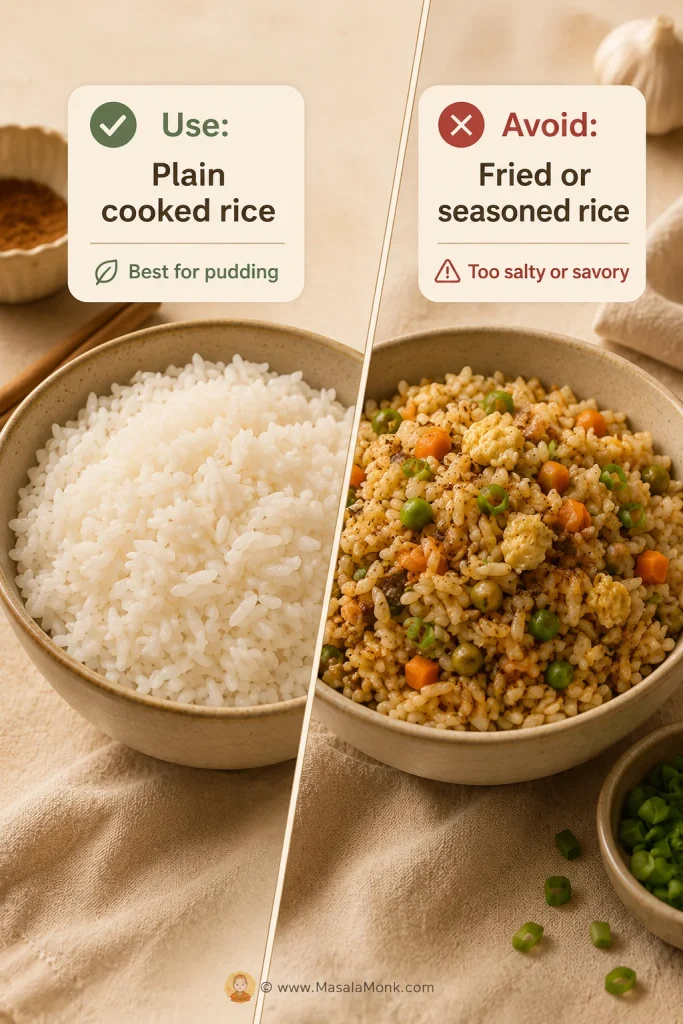
Side-by-side comparison of plain cooked rice for pudding and seasoned fried rice that should not be used.
Use plain cooked rice so the milk, cinnamon, vanilla, and sugar can build the dessert flavor cleanly. Seasoned rice, fried rice, or rice cooked in broth will bring savory notes that are hard to hide.

If you need to make a fresh batch first, this guide to how to cook rice perfectly covers stovetop, rice cooker, and Instant Pot methods, so you can start with plain rice that is soft enough for pudding.

Using dry fridge rice or basmati? Go to the texture fixes if your pudding looks too loose, too separate, or too thick once it starts cooking.

Milk, Cream, Condensed Milk, and Dairy-Free Options

Whole milk gives the best everyday texture. It is creamy without being too heavy. For a richer pudding, replace 2 to 4 tablespoons of the milk with heavy cream, or stir a splash of cream into the pudding at the end.

Evaporated milk makes the pudding richer and slightly more old-fashioned. Use half evaporated milk and half regular milk. Sweetened condensed milk makes the pudding thicker and sweeter, so reduce or skip the sugar when using it.

For a dairy-free version, use full-fat coconut milk, oat milk, or almond milk. Coconut milk gives the richest result. Almond milk is lighter and may need a slightly longer simmer or a small cornstarch slurry to thicken.

Egg or No Egg?

Egg is not required here. The easiest version uses no egg and thickens through simmering, which gives you a soft, creamy pudding without the risk of scrambling.

An egg makes the pudding more custardy and old-fashioned. If you use one, temper it first with warm milk or warm pudding before adding it back to the saucepan. Then keep the heat gentle and do not boil the pudding hard after the egg goes in.
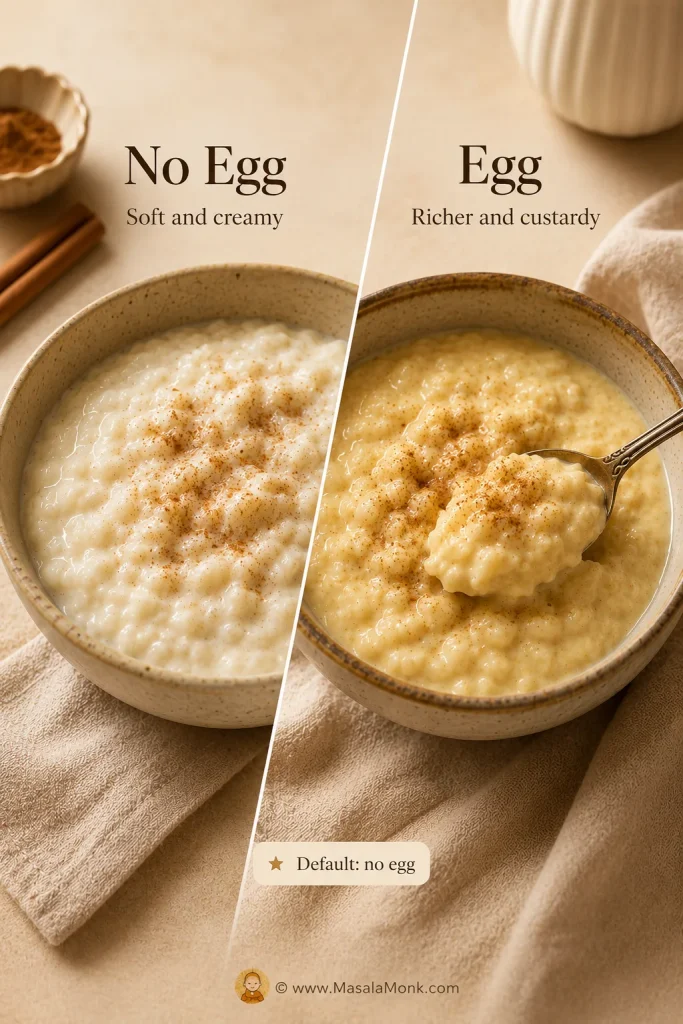
Comparison of no-egg rice pudding and egg rice pudding, showing a softer creamy version and a richer custardy version.
No egg keeps the recipe easier and softly creamy. However, if you want an old-fashioned custardy texture, egg works well as long as it is tempered before it goes back into the hot pudding.

Raisins, Cinnamon, Vanilla, and Add-Ins

Cinnamon and vanilla are the classic flavor base. A pinch of salt is just as important because it keeps the pudding from tasting flat. Raisins are optional. If you like soft raisins, add them while the pudding simmers. If you prefer them plumper, soak them in warm water for 10 minutes first, then drain and stir them in.

Other good additions include cardamom, nutmeg, orange zest, lemon zest, toasted coconut, chopped dates, chopped pistachios, jam, berry compote, caramel, or a spoonful of brown sugar on top.

For a more Indian-inspired direction, cardamom, saffron, pistachios, rosewater, and jaggery all work beautifully. MasalaMonk’s Indian-inspired pudding ideas include a cardamom rice pudding direction if you want a more fragrant variation.

How to Make Rice Pudding with Cooked Rice

This is the simple stovetop method. Use a heavy saucepan if possible. Thin pans scorch milk more easily, especially once the pudding begins to thicken.

Once you understand the ratio, the recipe is simple: keep the heat gentle, stir often, and stop while the pudding is still slightly loose. It will finish thickening as it rests.
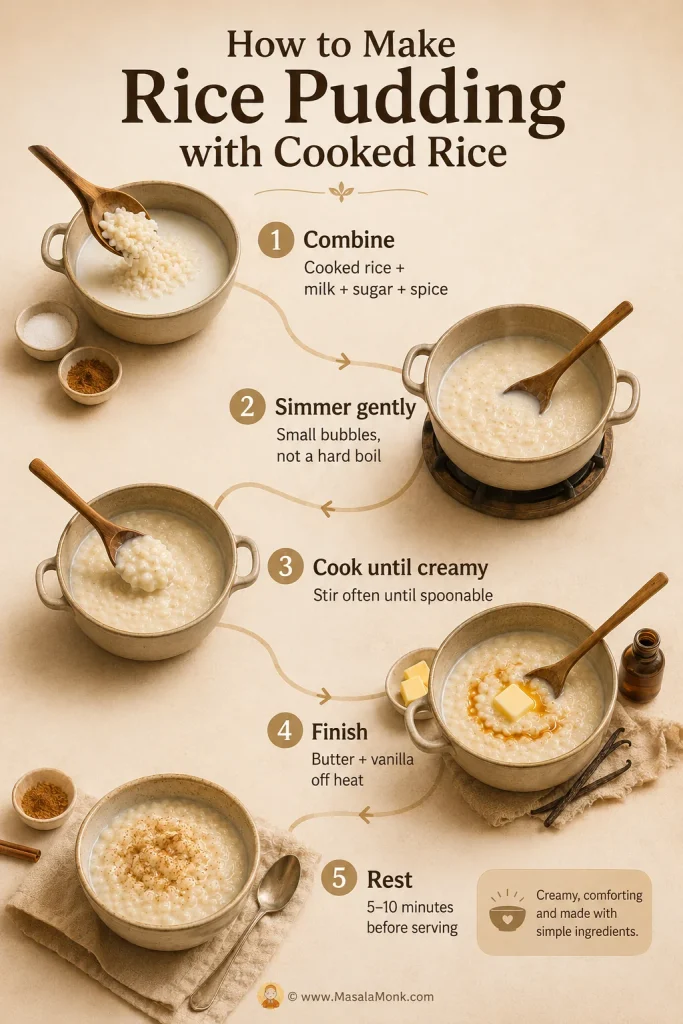
Five-step overview for making rice pudding with cooked rice, from combining ingredients to resting before serving.
The best rice pudding texture comes from gentle stages, not speed. First loosen the rice, then simmer slowly, finish off heat, and rest before judging whether it needs more milk.

Step 1: Combine the Rice, Milk, Sugar, Salt, and Cinnamon

Add the cooked rice, milk, sugar, salt, and cinnamon to a 2- to 3-quart saucepan. Stir well so the rice loosens and the sugar begins dissolving into the milk.
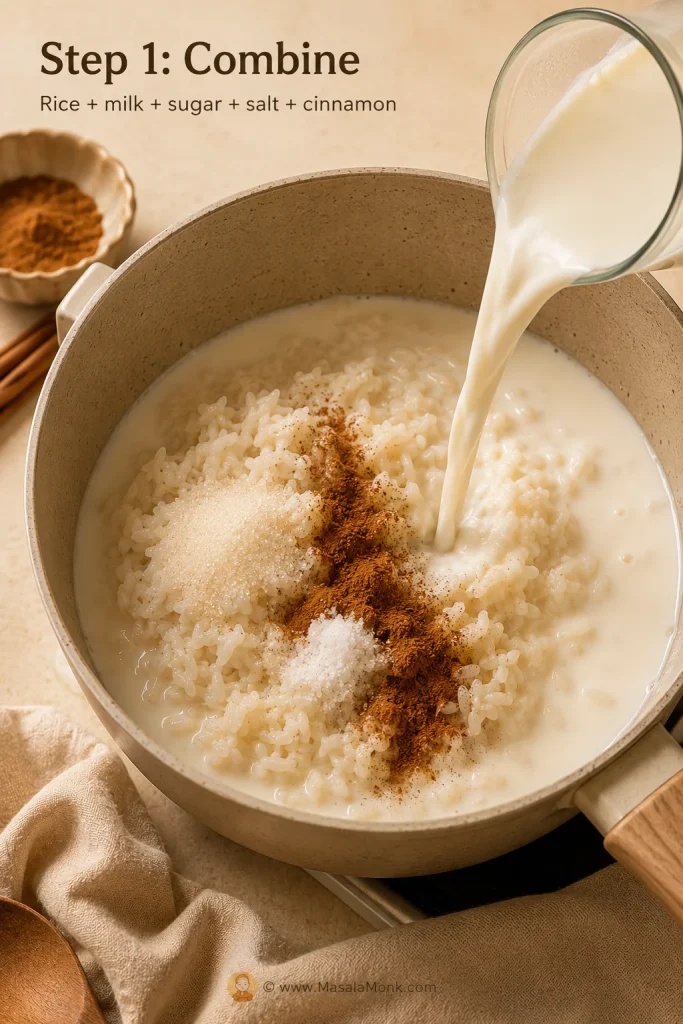
Cooked rice, milk, sugar, salt, and cinnamon combined in a saucepan for the first step of rice pudding.
Stir the cooked rice well at the start so the milk can reach the grains evenly. This also prevents sugar, cinnamon, and salt from collecting in one spot while the pudding thickens.

Step 2: Bring It to a Gentle Simmer

Set the pan over medium heat until the milk begins to steam and small bubbles appear around the edges. Stay close at this stage because milk can boil over quickly.
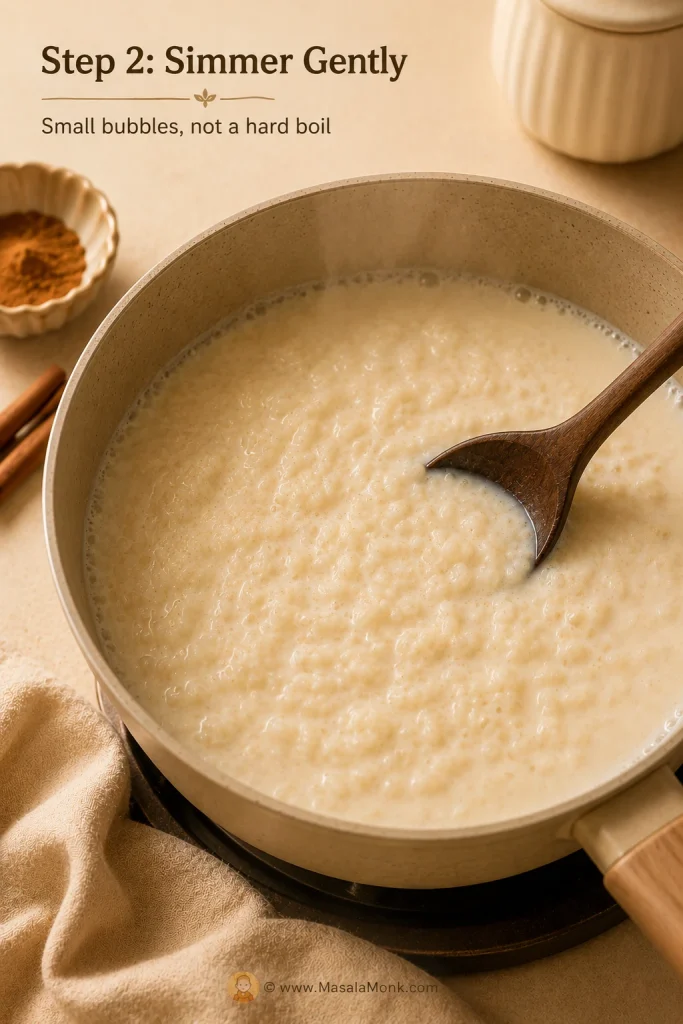
Saucepan of cooked rice and milk simmering gently with small bubbles around the edge.
Keep the heat gentle once the milk starts bubbling at the edges. A slow simmer softens the rice and thickens the milk, while a hard boil can scorch the bottom or make the pudding gummy.

Step 3: Lower the Heat and Cook Until Creamy

Reduce the heat to medium-low. Simmer for 15 to 20 minutes, stirring often, until the rice softens and the milk thickens. The pudding should look creamy and spoonable, but still slightly loose.
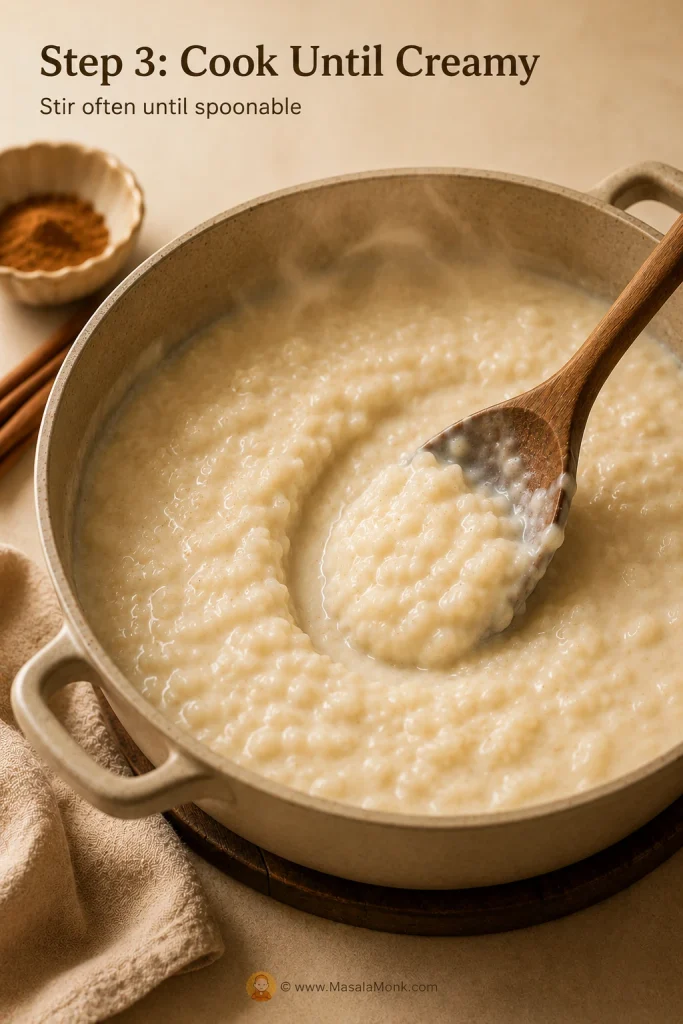
Rice pudding thickening in a saucepan as a wooden spoon creates a creamy trail through the mixture.
When the spoon leaves a soft trail, the pudding is close. Stop while it still looks a little loose, because cooked rice continues to absorb milk after the heat is turned off.

Step 4: Finish with Butter and Vanilla

Turn off the heat. Stir in the butter and vanilla. If you want a richer pudding, stir in 2 to 4 tablespoons of cream at the end.
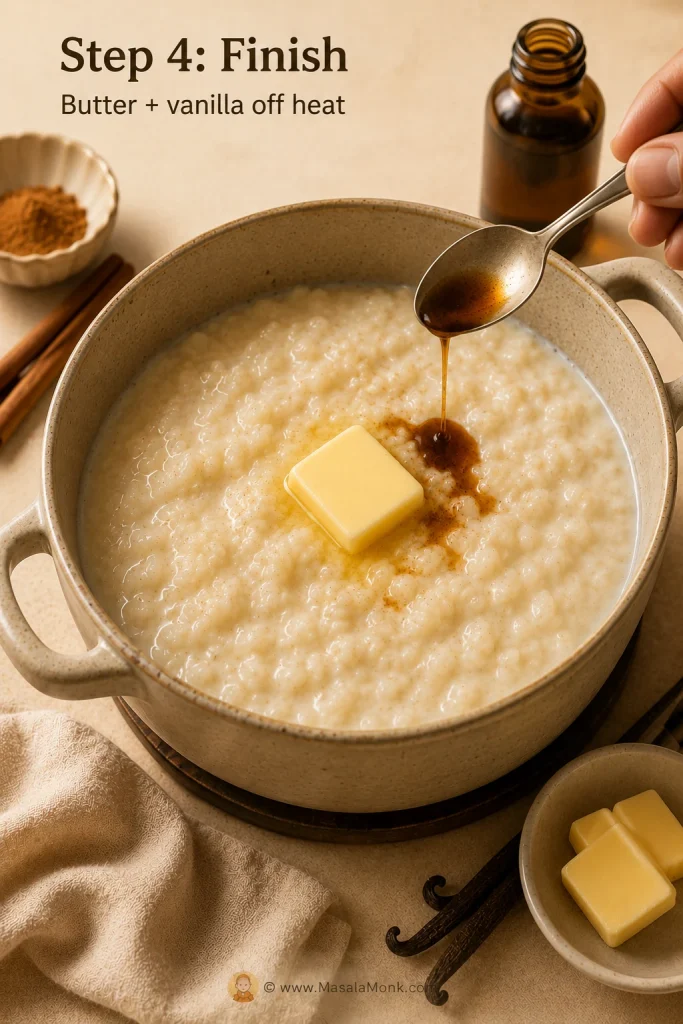
Butter melting into hot rice pudding while vanilla is added from a spoon.
Add butter and vanilla at the end for better flavor. The residual heat melts the butter and releases the vanilla aroma without cooking away the fragrance.

Step 5: Rest Before Serving

Let the pudding rest for 5 to 10 minutes before serving. This short rest helps the texture settle. Serve it warm, at room temperature, or chilled.
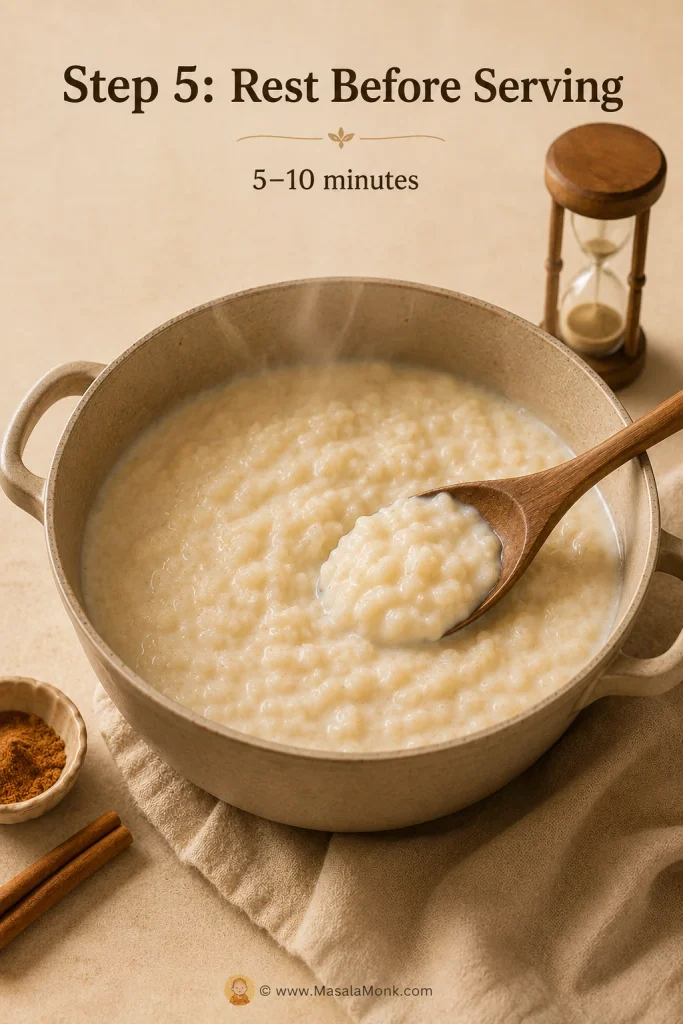
Rice pudding resting in a saucepan with a wooden spoon and timer after cooking.
A short rest gives the starch in the cooked rice time to finish thickening the milk. Before adding cornstarch or cooking longer, wait a few minutes and check the texture again.

Once you have made it once, you probably will not need to measure as carefully the next time. The pudding tells you what it needs: more milk if it tightens up, more simmering if it looks loose, and a short rest before you judge the final texture.

Spoon lifting creamy rice pudding with visible cooked rice grains and cinnamon on top.
A finished spoonful should look creamy, moist, and softly mounded. If it slides off like milk, simmer longer; if it holds like paste, stir in a little warm milk.

Ready for the exact measurements? Jump to the recipe card. If the texture does not look right yet, go to the fixes.

Recipe Card: Rice Pudding with Cooked Rice

This easy stovetop rice pudding uses already cooked rice, so it is faster than traditional rice pudding made from raw rice. The default version is egg-free, creamy, and flexible enough for leftover white rice, jasmine rice, basmati rice, or short-grain rice.

Prep Time5 minutes
Cook Time15–20 minutes
Rest Time5–10 minutes
Yield4 servings

Equipment

  • 2- to 3-quart heavy saucepan
  • Wooden spoon or silicone spatula
  • Measuring cups and spoons
  • Airtight container for leftovers

Ingredients

  • 2 cups cooked white rice, cold or room temperature, about 315–330 g / 11–12 oz
  • 2 cups whole milk, 480 ml / 16 fl oz
  • ⅓ cup granulated sugar, 65–70 g / about 2.3 oz, adjust to taste
  • ¼ teaspoon fine salt
  • ½ teaspoon ground cinnamon, plus more for serving
  • 1 tablespoon unsalted butter, 14 g / 0.5 oz
  • 1 teaspoon vanilla extract, 5 ml
  • 2–4 tablespoons heavy cream, optional, 30–60 ml
  • ⅓–½ cup raisins, optional, 50–75 g

Instructions

  1. Combine: Add cooked rice, milk, sugar, salt, and cinnamon to a heavy saucepan. Stir to loosen the rice.
  2. Simmer: Warm over medium heat until the milk begins to steam and gently bubble at the edges.
  3. Cook: Reduce heat to medium-low. Simmer for 15–20 minutes, stirring often, until the mixture is creamy and the rice is soft.
  4. Adjust: If the pudding looks too thick before the rice softens, add milk 1–2 tablespoons at a time. If it looks too thin, simmer uncovered for a few more minutes.
  5. Finish: Turn off the heat. Stir in butter, vanilla, and optional cream. Add raisins now if you want them less cooked, or add them earlier if you want them softer.
  6. Rest: Let the pudding rest for 5–10 minutes. Serve warm, room temperature, or chilled with extra cinnamon.

Notes

  • For dry leftover rice: add 2–4 extra tablespoons milk at the beginning.
  • For basmati rice: expect a looser, more separate-grain texture. Add a little extra milk if needed.
  • For short-grain rice: stir gently and watch the heat because it thickens faster.
  • For sweeter pudding: increase sugar to ½ cup. For a lightly sweet pudding, use ¼ cup.
  • For richer pudding: replace ¼ cup milk with cream, or stir cream in at the end.
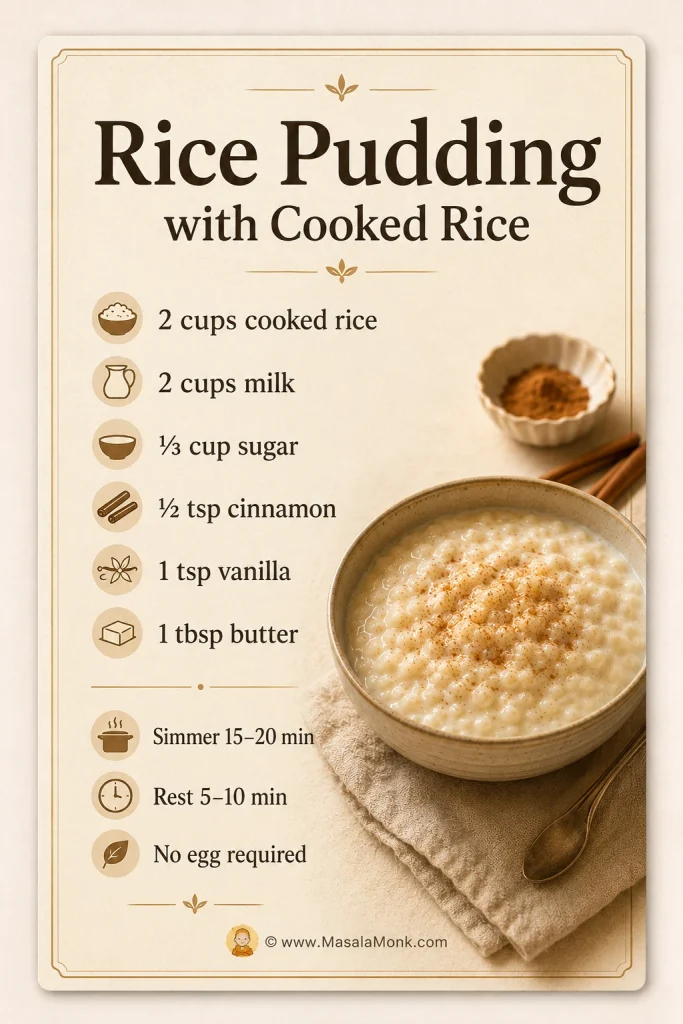
Recipe card for rice pudding with cooked rice listing cooked rice, milk, sugar, cinnamon, vanilla, butter, simmer time, rest time, and no egg required.
The base formula is easy to remember: equal parts cooked rice and milk, then a gentle simmer and short rest. Once that works, condensed milk, egg, cream, or coconut milk become simple variations.

Leftover Rice Pudding: What to Know Before You Start

This recipe is ideal for leftover rice, but only use rice that has been handled safely. Cooked rice should be cooled and refrigerated promptly. If it has been sitting at room temperature for more than 2 hours, smells sour, feels slimy, or you are unsure how long it has been in the fridge, it is safer to discard it and start with a fresh batch.
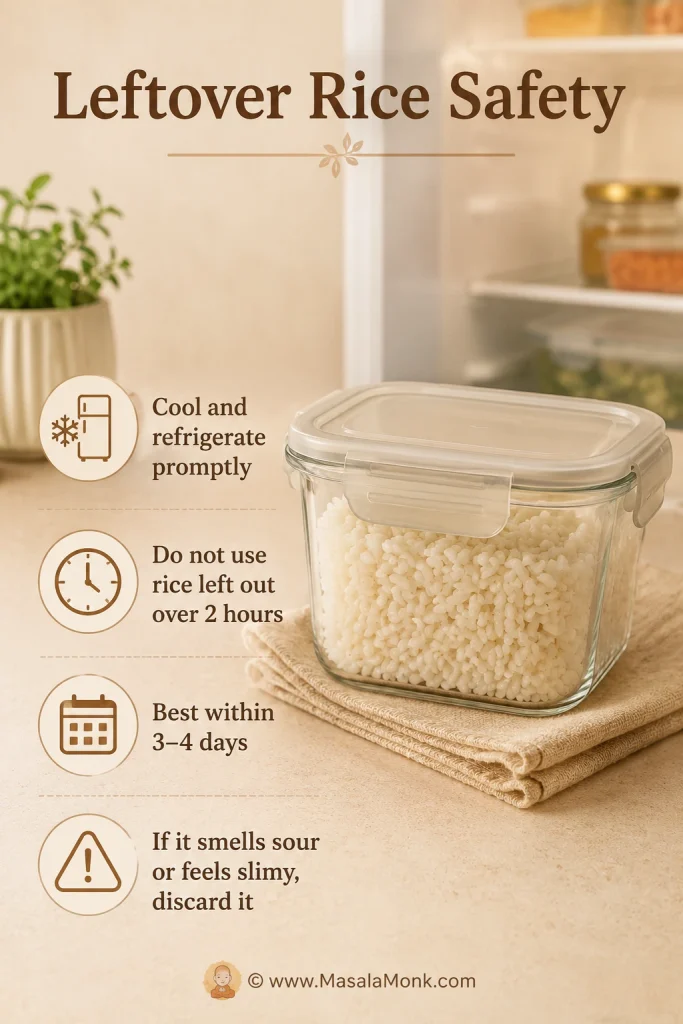
Leftover rice safety guide with cooked rice in a covered container, refrigerator cue, and storage time reminders.
Before turning leftovers into dessert, make sure the rice was cooled and refrigerated properly. If it sat out too long, smells sour, feels slimy, or seems questionable, start fresh instead.

If your leftover rice is plain but you are not in the mood for dessert, you can also turn leftover rice into arancini balls instead. Use this rice pudding when you want something creamy and sweet; use arancini when you want a crisp, savory snack.

For general leftover storage guidance, FoodSafety.gov lists cooked leftovers at 3 to 4 days in the refrigerator. For reheating, FoodSafety.gov recommends reheating leftovers to 165°F / 74°C.

Leftover rice tip: cold rice may look dry and stiff at first. Give it time. As it warms in milk, the grains relax and the pudding turns creamier.

Variations

Once you know the base method, this is one of those forgiving desserts you can easily bend toward what you have. Keep the rice-to-liquid ratio in mind and adjust sweetness depending on the milk or add-ins you use.

Rice Pudding with Cooked Rice and Condensed Milk

Sweetened condensed milk gives the pudding a richer, sweeter, almost caramel-like finish. Because it already contains sugar, do not add the full amount of sugar from the main recipe. Start with ⅓ cup condensed milk, taste, then increase to ½ cup only if you want a sweeter pudding.

Condensed milk being poured into creamy rice pudding made with cooked rice.
Condensed milk adds sweetness and body at the same time. Start with ⅓ cup first; after the pudding thickens, taste before adding more so it stays creamy rather than overly sweet.
Ingredient Amount
Cooked rice 2 cups / about 315–330 g
Whole milk 1½ cups / 360 ml
Sweetened condensed milk ⅓–½ cup / about 100–150 g
Salt Pinch to ¼ teaspoon
Vanilla 1 teaspoon / 5 ml
Cinnamon ½ teaspoon

Simmer the rice, milk, condensed milk, salt, and cinnamon over medium-low heat for 12 to 18 minutes, stirring often. Finish with vanilla. If it becomes too thick, loosen it with a splash of milk.

Evaporated Milk Rice Pudding

Evaporated milk gives you a pantry-style pudding that tastes richer without becoming as sweet as condensed milk pudding. Use 1 cup evaporated milk and 1 cup regular milk for every 2 cups cooked rice. Then keep the sugar at ¼ to ⅓ cup and adjust at the end.

Microwave Rice Pudding with Cooked Rice

The stovetop version gives the best texture, but the microwave works for a small quick bowl. Use a deep microwave-safe bowl at least twice as large as the mixture, because milk can bubble up as it heats.
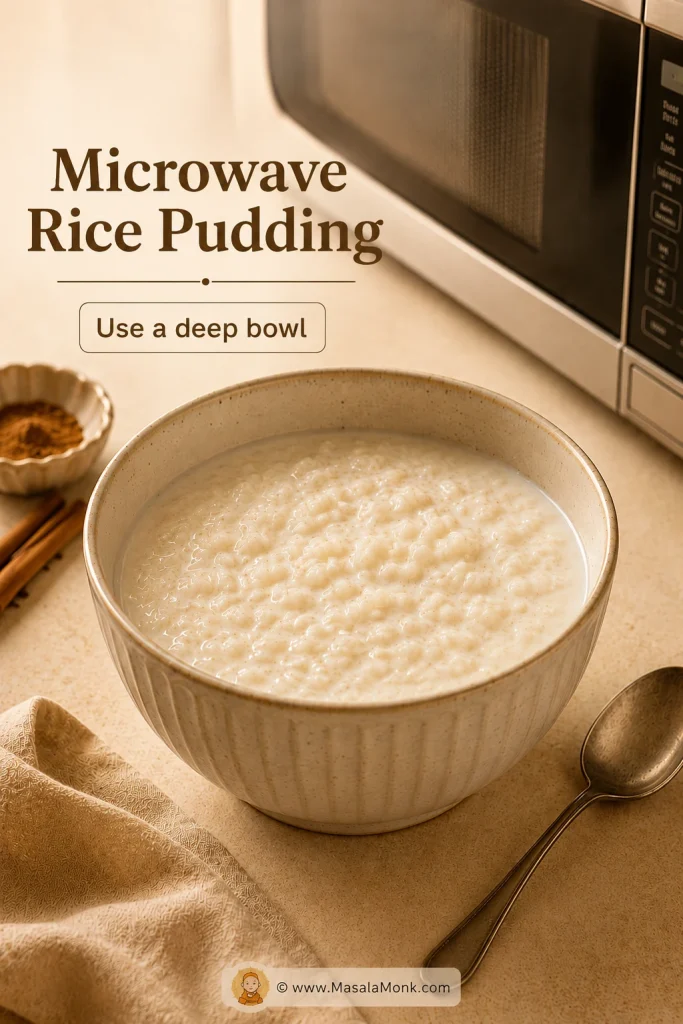
Deep microwave-safe bowl of rice pudding with cooked rice placed near a microwave.
A deep bowl matters because milk can rise quickly in the microwave. Heat in short bursts, stir between rounds, and stop while the pudding is still a little loose.
Ingredient Small Microwave Batch
Cooked rice 1 cup
Milk 1 cup
Sugar 2–3 tablespoons
Cinnamon ¼ teaspoon
Vanilla ½ teaspoon
Butter 1 teaspoon

Microwave on high for 1 minute, stir well, then continue in 30- to 60-second bursts, stirring each time, until creamy. Stop when the pudding is still slightly loose because it thickens as it sits.

Old-Fashioned Egg Rice Pudding

A custardy version starts with 1 large egg whisked with ½ cup milk. Cook the rice pudding as usual with the remaining milk, sugar, salt, and cinnamon. When the pudding is hot and creamy, slowly whisk a few spoonfuls of warm pudding into the egg mixture. Then stir the tempered egg mixture back into the pan and cook gently for 2 to 3 minutes. Do not boil hard after adding the egg.

Warm rice pudding being slowly added to a bowl of whisked egg and milk to temper the egg.
Tempering is the safeguard against scrambled egg. Add warm pudding to the egg mixture slowly, whisk as you go, and only then return it to the pan over gentle heat.

Coconut Milk Rice Pudding

Coconut milk is the richest dairy-free option. Use 2 cups cooked rice with 1½ to 2 cups full-fat coconut milk, then sweeten with sugar, maple syrup, or a small amount of coconut condensed milk. Cinnamon works, but cardamom, ginger, mango, toasted coconut, and lime zest also fit beautifully.

Coconut milk rice pudding made with cooked rice, topped with toasted coconut and served with mango nearby.
Coconut milk makes cooked-rice pudding rich without dairy, but it also thickens differently from regular milk. Stir gently and add a splash more liquid if the pudding tightens as it sits.

For another coconut-and-rice dessert, MasalaMonk’s mango sticky rice leans more tropical, chewy, and fruit-forward, while this cooked-rice pudding stays softer and creamier.

Baked Rice Pudding with Cooked Rice

Baked rice pudding has a firmer, more custardy texture. To make it, whisk milk, eggs, sugar, vanilla, cinnamon, and salt, then stir in cooked rice. Pour into a buttered baking dish and bake at 325°F / 162°C for about 45 to 50 minutes, or until just set.

Baked rice pudding in a ceramic dish with golden edges and a spoonful showing the custardy interior.
Baking changes the texture from loose and creamy to firmer and custardy. It is especially useful when you want a spoon-served dessert with golden edges and a more set center.

This gives you a different dessert from the stovetop version: more set at the edges, more custardy through the center, and less loose in the bowl.

How to Fix the Texture

Quick Texture Check

Cooked-rice pudding is forgiving, so don’t panic if it looks wrong halfway through. Most texture problems come down to the rice, the heat, or the amount of milk. A few small adjustments usually bring it back.
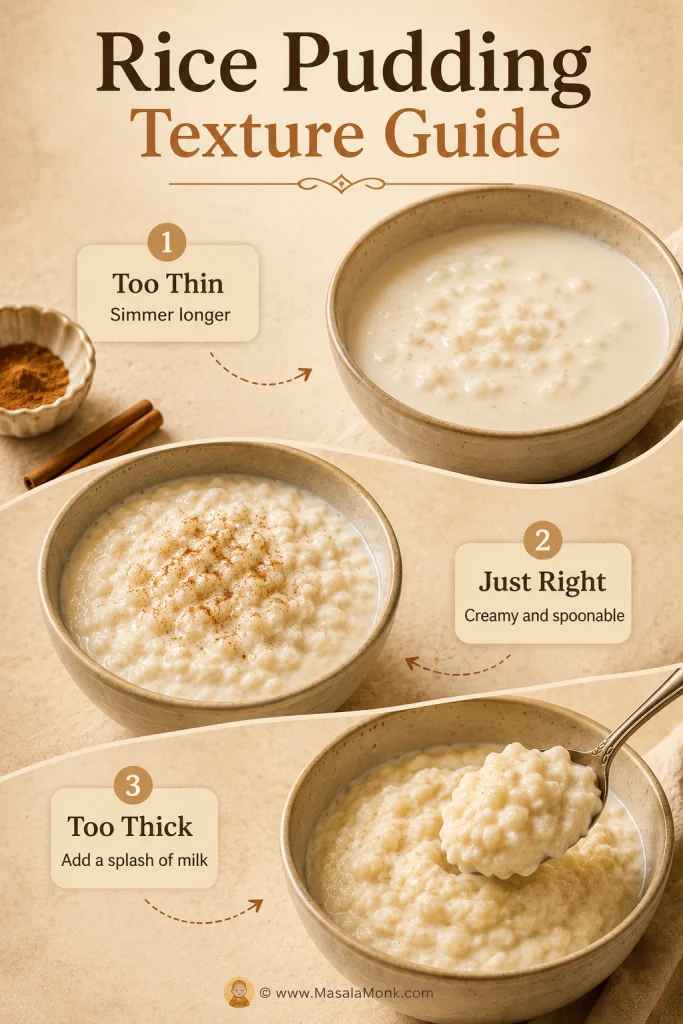
Rice pudding texture guide showing too thin, just right, and too thick pudding with simple fixes for each.
Use the texture guide before starting over. Thin pudding usually needs more simmering, thick pudding needs milk, and gummy pudding often means the heat was too high or the rice was overworked.

Common Rice Pudding Texture Problems and Fixes

Problem Likely Cause Fix
Rice pudding is too thin It has not simmered long enough, or there is too much milk. Simmer uncovered for 3–5 more minutes, stirring often.
Still thin after simmering The rice is low-starch or the batch has too much liquid. Mix 1 teaspoon cornstarch with 1 tablespoon cold milk. Stir it in and simmer 1 minute.
Rice pudding is too thick The rice absorbed more milk than expected. Add warm milk 1–2 tablespoons at a time until spoonable.
Dry after chilling Rice continues absorbing liquid in the fridge. Stir in a splash of milk before serving or reheating.
Rice is still firm The rice was undercooked before you started. Add ¼–½ cup milk and cook 5–8 minutes longer over low heat.
Pudding tastes bland Not enough salt, vanilla, spice, or sweetness. Add a tiny pinch of salt first, then adjust vanilla, cinnamon, or sugar.
Pudding turned gummy Heat was too high, rice was very starchy, or it was over-stirred. Loosen with milk and stir gently. Next time, use lower heat.
Egg scrambled The egg was added to very hot pudding too quickly. Use the no-egg method, or temper the egg slowly before adding it.
Milk scorched on the bottom Pan was too thin or heat was too high. Use a heavy saucepan and medium-low heat. Stir more often as it thickens.

Once the texture is fixed, let the pudding rest before judging the final thickness. Only need storage advice? Jump to storage and reheating.

How to Store, Freeze, and Reheat Rice Pudding

Let rice pudding cool, then transfer it to an airtight container and refrigerate. Because this recipe often starts with leftover rice, use conservative storage habits and do not keep it sitting at room temperature for long.
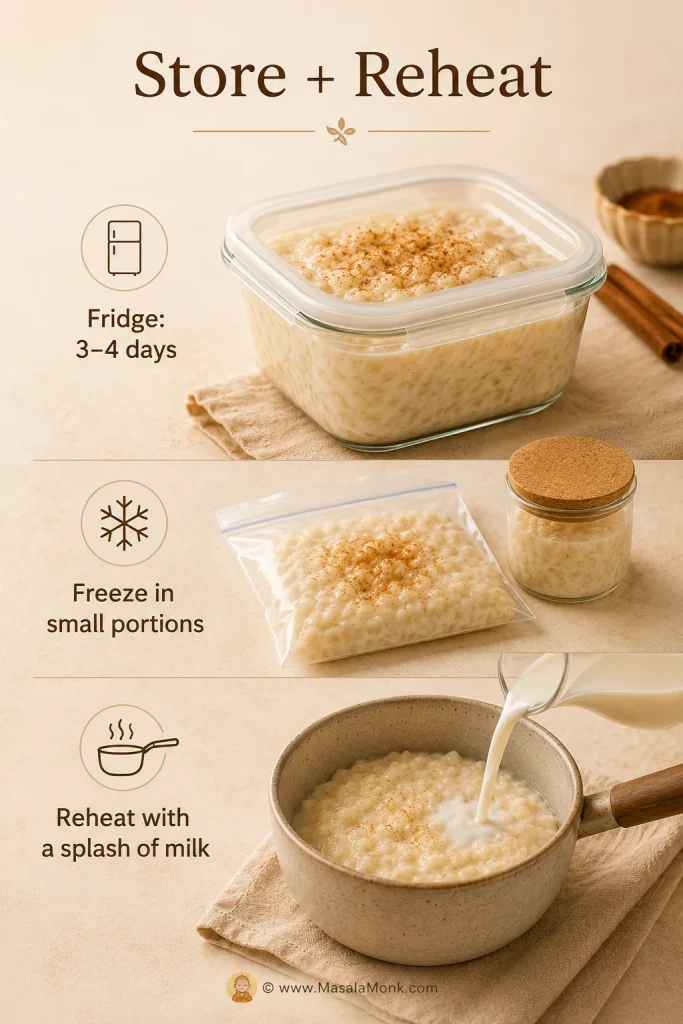
Rice pudding storage and reheating guide showing a fridge container, freezer portion, and milk being added while reheating.
Rice pudding usually thickens after chilling, so reheating with milk is the easiest way to revive it. Add a splash, warm gently, and stir until the texture turns creamy again.
Storage Method How Long Best Practice
Refrigerator Up to 3–4 days Store in an airtight container. Add milk before reheating if it thickens.
Freezer Best quality within 1 month Freeze in small portions. Texture may be softer or grainier after thawing.
Stovetop reheating 5–8 minutes Reheat gently with a splash of milk, stirring often.
Microwave reheating 30-second bursts Stir between bursts and add milk as needed.

Rice pudding thickens in the fridge. That does not mean it is ruined. Stir in a splash of milk before reheating, or loosen chilled pudding with a little cold milk if you prefer eating it cold.

What to Serve with Rice Pudding

Rice pudding is good plain, but toppings make it feel more finished. Try extra cinnamon, brown sugar, toasted nuts, raisins, chopped dates, berry compote, strawberry jam, mango, caramel, maple syrup, toasted coconut, pistachios, or a spoonful of cream.
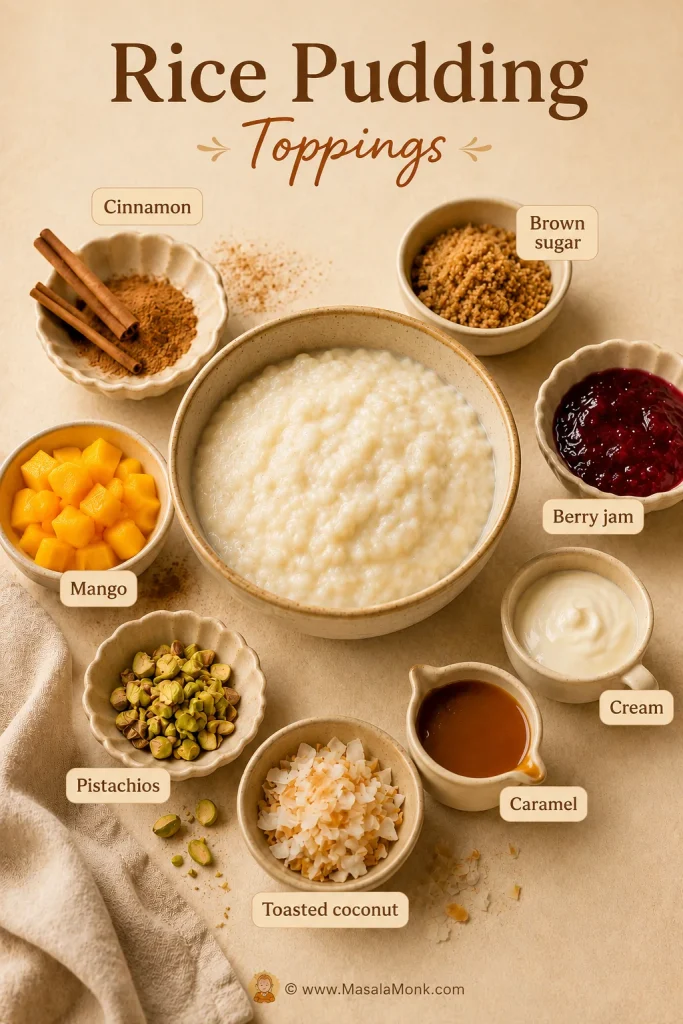
Rice pudding toppings guide with cinnamon, brown sugar, berry jam, mango, pistachios, toasted coconut, caramel, and cream.
One basic rice pudding can lean classic, fruity, nutty, or richer depending on the topping. Cinnamon and brown sugar keep it familiar, while mango, jam, pistachios, coconut, caramel, or cream make it feel more finished.

If you like chilled spoon desserts, this quick mango pudding is another easy option for a softer, fruitier dessert table.

For a warmer dessert, serve this rice pudding just after resting. For a thicker make-ahead dessert, chill it and loosen with a little milk before serving. Either way, it is the kind of recipe that becomes easier every time you make it, because the texture tells you what it needs.
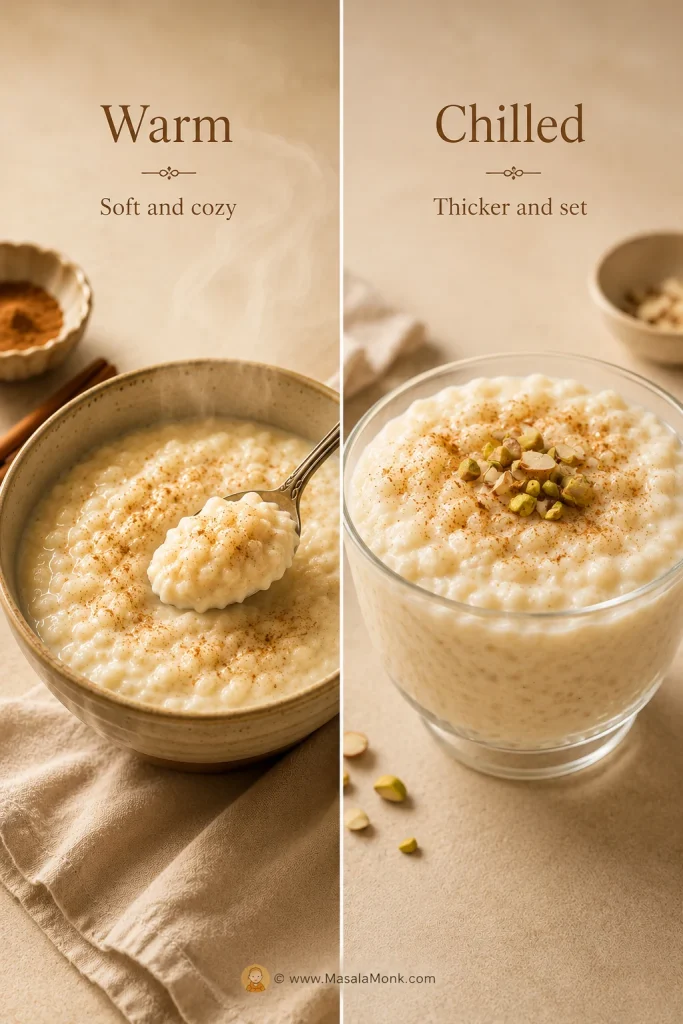
Warm rice pudding in a bowl compared with chilled rice pudding in a glass cup.
Serve it warm when you want a softer, cozier pudding. Chill it when you want a thicker make-ahead dessert, then loosen with a little milk if the rice absorbs too much liquid.

A finished bowl should feel like a real dessert, not just reheated rice. The best texture is creamy, spoonable, gently spiced, and soft enough to serve warm or chilled.
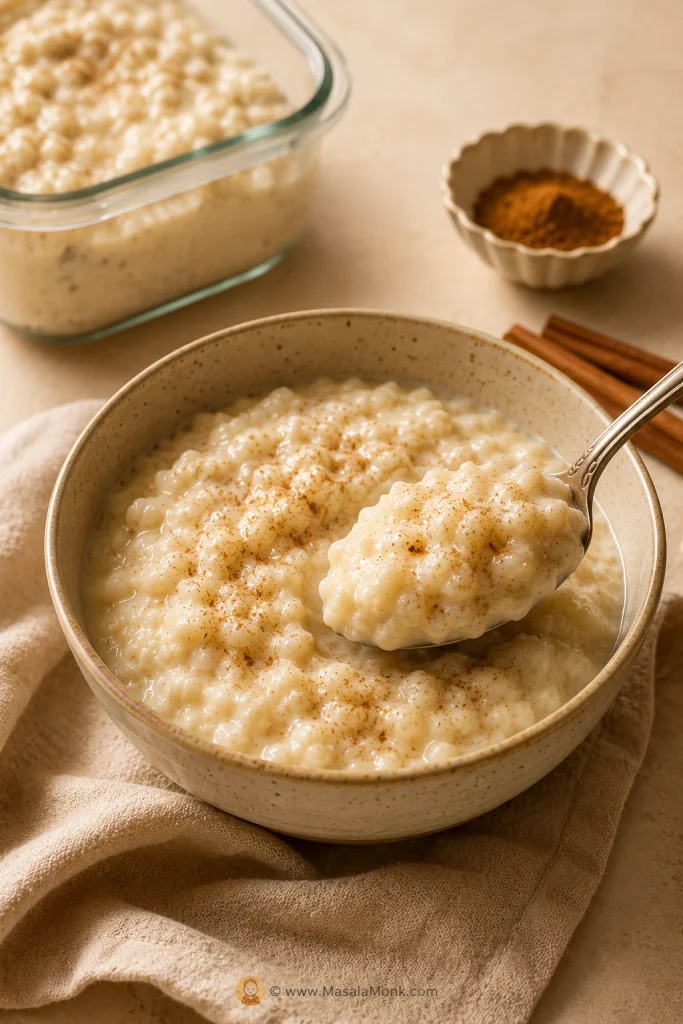
Finished bowl of leftover rice pudding with cinnamon and a spoonful lifted from the bowl, with a storage container in the background.
A good leftover rice pudding should still taste intentional: creamy milk, soft grains, warm spice, and enough rest time for the texture to settle. That is what turns plain cooked rice into dessert.

FAQs

What is the best rice for rice pudding with cooked rice?

Plain cooked white rice is the best all-purpose choice. Jasmine rice is soft and fragrant, basmati rice works but stays more separate, and short-grain rice makes the thickest pudding. Brown rice works only when it is fully cooked and soft.

How much milk do you need for 2 cups cooked rice?

Use 2 cups milk for 2 cups cooked rice as the starting point. Add 2 to 4 extra tablespoons of milk if the rice is dry, cold, or separate-grained.

Is egg necessary in rice pudding?

No. Egg is optional here. Rice pudding with cooked rice can turn creamy through gentle simmering alone. Egg gives a more custardy old-fashioned texture, but the no-egg version is easier and less likely to scramble.

Why is my rice pudding runny?

It probably needs more simmering time. Cook it uncovered over medium-low heat for a few more minutes, stirring often. If it still stays thin, add a small cornstarch slurry made from 1 teaspoon cornstarch and 1 tablespoon cold milk.

Why did my rice pudding get too thick?

Cooked rice keeps absorbing liquid as it sits, especially in the refrigerator. Stir in milk 1 to 2 tablespoons at a time until the texture becomes creamy again.

Does basmati rice work for rice pudding?

Yes, basmati rice works, but it gives a looser pudding because the grains stay separate. Add a little extra milk and simmer gently so the rice softens without breaking down too much.

Does leftover takeout rice work?

Plain takeout rice works if it is unsalted, not oily, and has been refrigerated safely. Do not use fried rice, seasoned rice, or rice with savory sauces for dessert pudding.

How do you make rice pudding with cooked rice and condensed milk?

Use 2 cups cooked rice, 1½ cups milk, and ⅓ to ½ cup sweetened condensed milk. Skip the regular sugar at first, simmer until creamy, then adjust sweetness at the end.

What is the best way to reheat rice pudding?

Reheat it gently with a splash of milk. Use low heat on the stove or short microwave bursts, stirring between each burst. The pudding should loosen as it warms.

Can you freeze rice pudding?

You can freeze rice pudding, but the texture may become softer or slightly grainy after thawing. Freeze it in small portions for best quality, thaw in the refrigerator, then reheat gently with a splash of milk.

How long does rice pudding last in the fridge?

Keep rice pudding in an airtight container in the refrigerator and use it within 3 to 4 days. Since this version may start with leftover rice, it is better not to stretch the storage time.

Made it with leftover rice? Share what kind you used — jasmine, basmati, short-grain, brown rice, or plain takeout rice — and whether you liked the pudding warm, chilled, with raisins, or without. It helps other readers adjust the texture before they start.


Posted on Leave a comment

Ground Pork Recipes: 10 Easy Weeknight Dinners to Make Tonight

Ground pork recipes featured image showing stir fry, tacos, fried rice, meatballs, and a burger for easy weeknight dinners.

Ground pork recipes, or pork mince recipes in many regions, are one of the easiest ways to get a flavorful, affordable dinner on the table fast. One pound can become a quick stir fry, juicy tacos, tender meatballs, fried rice, pasta, burgers, or a comforting rice-based skillet. That range is what makes ground pork one of the most useful proteins to keep around for busy nights.

Still, not every ground pork dinner solves the same problem. Some are best when dinner needs to happen in 20 minutes, while others stretch a pound farther, reheat better the next day, or feel more comforting when you want something steadier and heartier. So, the smartest move is to start with the kind of night you are actually having.

These 10 ground pork recipes cover the weeknight dinners people reach for most: fast skillets, tacos, burgers, pasta, meatballs, fried rice, lighter bowls, and a few deeper comfort-food options. Use the quick picks below when you want the answer fast, or scroll straight to the recipe that sounds right for tonight.

If you want the fastest path, jump to the comparison table or go straight to the recipe list.

Fastest pick: Ground Pork Stir Fry. Best budget pick: Ground Pork Fried Rice. Best leftovers pick: Ground Pork Meatballs. And for best comfort pick: Ground Beef and Pork Meatloaf or Pork Giniling.

Decision guide for ground pork recipes showing the fastest, budget, leftovers, comfort, and light dinner picks.
Use this quick chooser to match your night to the right ground pork dinner, whether you need speed, budget value, leftovers, comfort, or something lighter.

Quick Answers: Best Ground Pork Recipes for Weeknights

Need the short version? Start here.

Fastest Dinner

Go with ground pork stir fry. It is the fastest all-around option, works with whatever vegetables you have, and still feels like a complete dinner instead of a backup plan.

Best for Leftovers

Ground pork meatballs and ground beef and pork meatloaf are the strongest leftover picks, with pork giniling close behind when you want a rice-based comfort meal that reheats well.

Best Budget Dinner

Ground pork fried rice is the best budget-first choice, while ground pork egg roll bowl and ground pork tacos also stretch a pound well without making dinner feel skimpy.

Best Light Pick

Ground pork lettuce wraps are the freshest light option, while ground pork egg roll bowl gives you a similar lighter feel in a warmer one-pan format.

Best Comfort Pick

Choose ground beef and pork meatloaf for the most classic comfort-food dinner, ground pork pasta for a fast tomato-led comfort meal, or pork giniling for a steadier rice-based option.

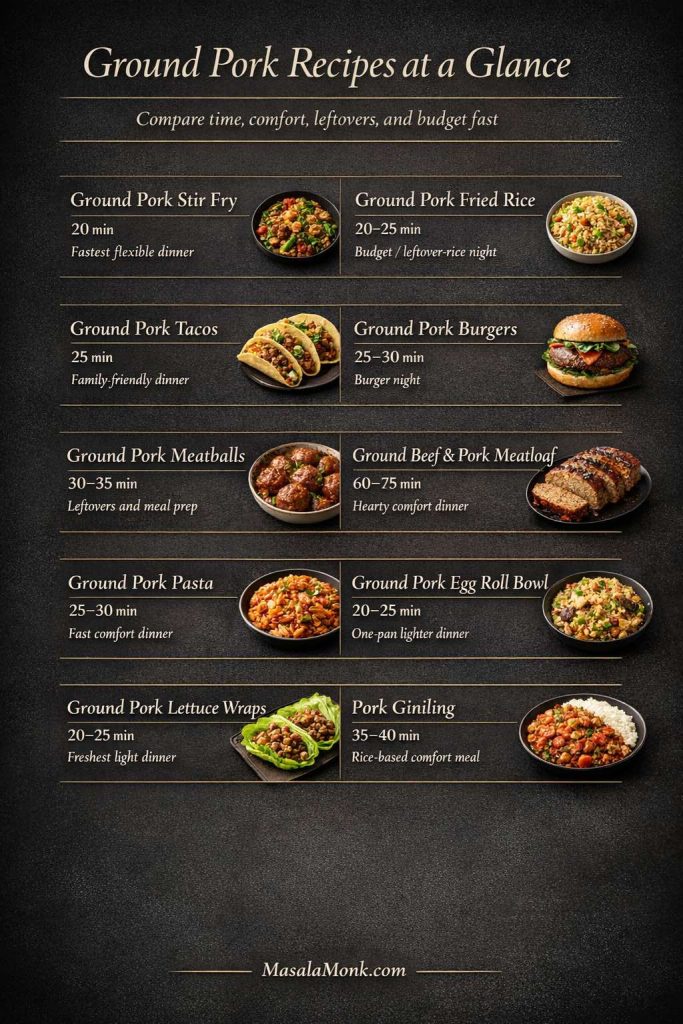
At a Glance: Easy Ground Pork Recipes by Time and Type

Use this quick comparison to find the best fit for tonight.

At-a-glance comparison chart for ground pork recipes showing cooking times and best uses for stir fry, tacos, burgers, meatballs, pasta, fried rice, meatloaf, egg roll bowl, lettuce wraps, and pork giniling.
A fast side-by-side look at cooking time, leftovers value, comfort level, and weeknight usefulness across all 10 ground pork recipes in the post.
RecipeBest forTimeBest if you haveFlavor profileServe with
Ground Pork Stir FryFastest flexible dinner20 minMixed vegetablesSavory, gingery, garlickyRice or noodles
Ground Pork TacosFamily-friendly dinner25 minTortillas and toppingsSpiced, juicy, brightSlaw, salsa, lime
Ground Pork MeatballsMeal prep and leftovers30–35 minBreadcrumbs and an eggTender, savory, versatilePasta, rice, salad
Ground Beef and Pork MeatloafHearty comfort dinner60–75 minA little more timeRich, classic, homeyMash, beans, roasted veg
Ground Pork BurgersBurger night25–30 minBuns and simple toppingsJuicy, savory, classicBuns, slaw, pickles
Ground Pork PastaFast comfort dinner25–30 minPasta and pantry tomatoesSavory, garlicky, saucyParmesan, greens, salad
Ground Pork Fried RiceBudget dinner / leftover-rice night20–25 minCooked rice and odds and endsSavory, flexible, satisfyingAs-is or with egg
Ground Pork Egg Roll BowlOne-pan lighter dinner20–25 minCabbage or slaw mixSoy-ginger, cabbage-forwardAs-is or with rice
Ground Pork Lettuce WrapsFreshest light dinner20–25 minLettuce and a punchy sauceSweet-savory, bright, punchyLettuce cups, herbs, rice
Pork GinilingRice-based comfort meal35–40 minRice and a tomato baseTomatoey, savory, comfortingSteamed rice

Best first pick: choose stir fry for pure speed, tacos for easy family appeal, meatballs for leftovers, burgers for classic comfort, fried rice for budget value, and egg roll bowl for one-pan ease.

10 Easy Ground Pork Recipes for Dinner on Busy Weeknights

Each one is here because it solves a real weeknight dinner problem. Some are built for speed, some for leftovers, some for comfort, and some for stretching a pound of pork into a fuller, more affordable meal.

1. Ground Pork Stir Fry Recipe

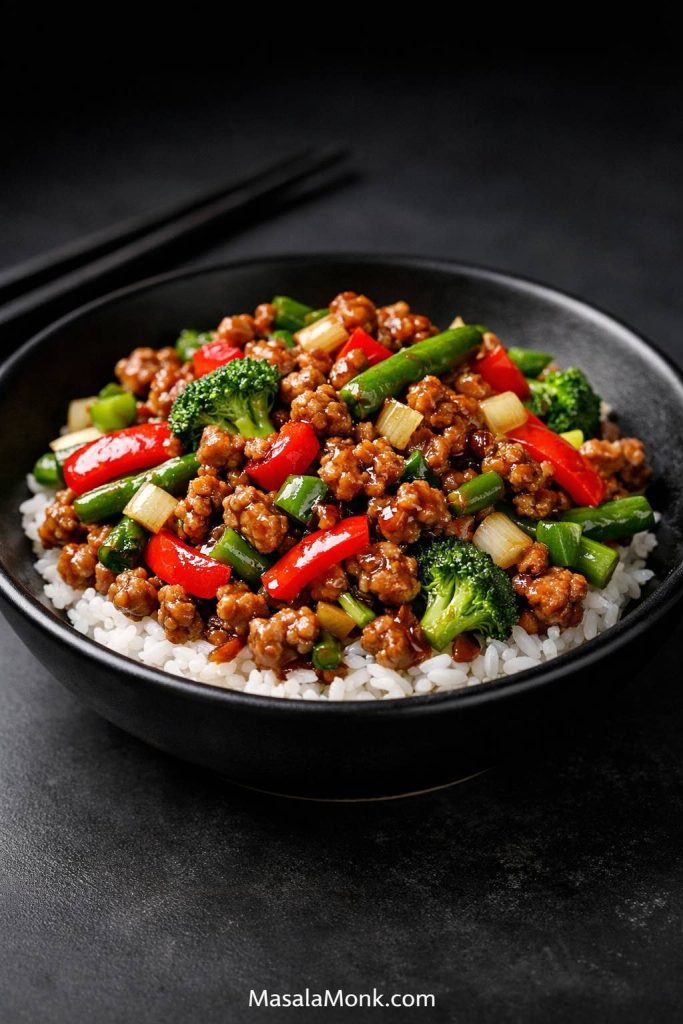
Ground pork stir fry with broccoli, green beans, red bell pepper, and rice in a black bowl.
Because stir fry is the fastest pick in this roundup, the real win is contrast: browned pork, bright vegetables, and just enough rice to turn fridge odds and ends into a proper dinner.

Choose this if: dinner needs to happen fast and you want the most flexible recipe on the page.

When the fridge is full of odds and ends, stir fry is usually the smartest move. The pork browns quickly, stays juicy enough to support a lot of vegetables, and carries sauce well. That makes it especially useful on nights when dinner depends on what is already in the fridge.

Time: about 20 minutes
Serves: 4
Best for: speed, flexibility, and using up vegetables

What you need

  • 1 pound ground pork
  • 1 tablespoon neutral oil, only if needed
  • 1 small onion or 3 to 4 scallions, chopped
  • 3 to 4 cloves garlic, minced
  • 1 tablespoon grated ginger
  • 4 to 5 cups mixed vegetables, cut into bite-size pieces
  • 3 tablespoons soy sauce
  • 1 to 2 teaspoons chili paste or chili flakes
  • 1 teaspoon sesame oil
  • 1 to 2 teaspoons rice vinegar or lime juice
  • 1/2 teaspoon black pepper
  • Cooked rice or noodles, for serving
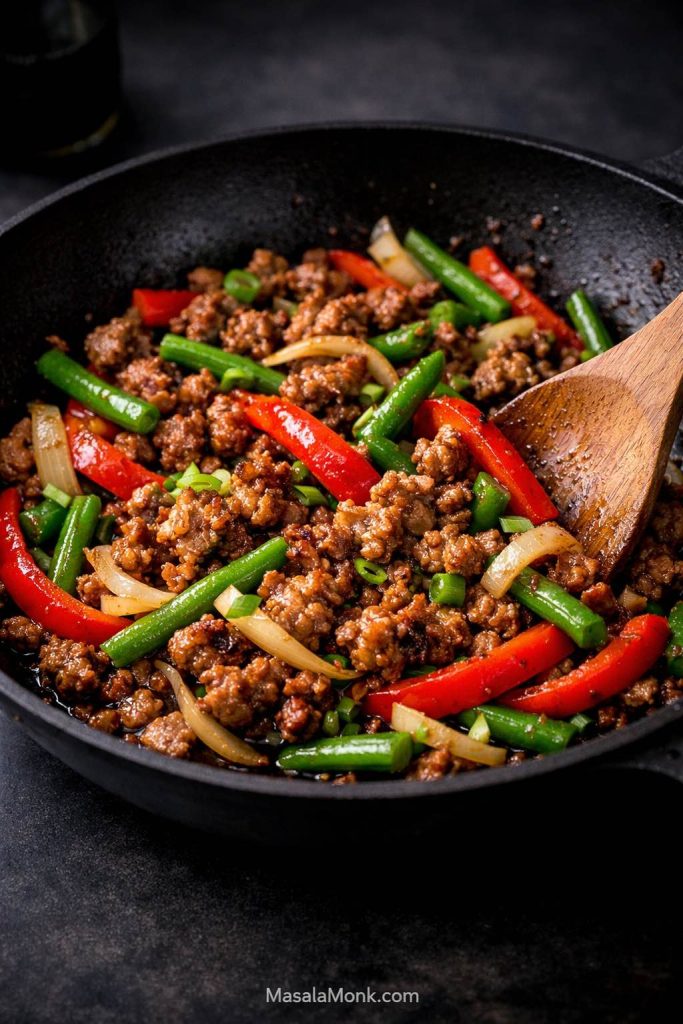
Ground pork stir fry process image showing browned pork with red peppers, green beans, onions, and a wooden spoon in a hot skillet.
Proper browning is what gives this stir fry real flavor, while the vegetables should stay bright and the skillet should look glossy, not watery.

How to make ground pork stir fry

  1. Heat a large skillet or wok over medium-high to high heat. Add the pork and let it sit for 45 to 60 seconds before stirring so it browns instead of steaming.
  2. Break up the meat and cook until no longer pink and browned in spots, about 5 to 6 minutes. Add a little oil only if the pan looks dry.
  3. If the skillet looks very greasy, spoon off some fat, but leave enough behind to carry flavor.
  4. Add the onion, garlic, and ginger. Cook for about 1 minute, stirring often, until fragrant.
  5. Add the vegetables that take longer first, such as broccoli or carrots. Follow with faster-cooking vegetables like mushrooms, peppers, cabbage, or spinach.
  6. Stir in the soy sauce, chili, sesame oil, vinegar or lime juice, and black pepper. Toss until the vegetables are just tender and the skillet looks glossy rather than watery.
  7. Taste and adjust. Add more soy for depth or more acid for brightness.

Best ways to serve it

Serve the stir fry over 3 to 4 cups cooked rice or with about 8 ounces cooked noodles. For a lighter plate, spoon it over shredded cabbage or cauliflower rice and add cucumber on the side for contrast.

Easy variations and leftovers

Add a sweeter savory finish with a quick teriyaki sauce for a glossier version. You can also lean hotter with chili crisp and extra scallions. Leftovers reheat well for lunch, especially when you keep the rice separate so the vegetables stay in better shape overnight.

Best result: do not crowd the pan. The browning is what keeps this from tasting flat.

Related next pick: want a rice-based budget dinner instead? Try Ground Pork Fried Rice.

2. Ground Pork Tacos Recipe

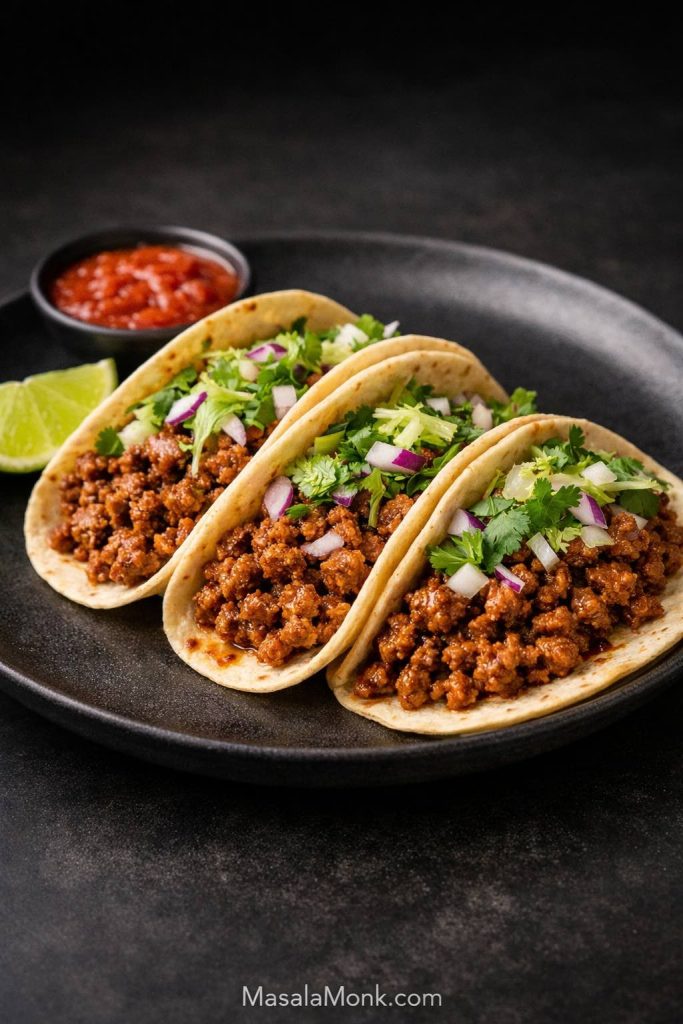
Ground pork tacos on a dark plate with juicy seasoned pork, soft tortillas, cilantro, red onion, lime, and salsa.
Juicy pork, soft tortillas, and just enough fresh topping make these tacos one of the easiest crowd-pleasing dinners in the whole post.

Choose this if: you want a fast, flexible family dinner that still feels generous.

Tacos are one of the easiest ways to turn one pound of pork into a dinner that feels bigger than it is. Pork stays juicy, takes spice well, and works with enough toppings, slaws, and sides that the meal feels generous without getting expensive.

Time: about 25 minutes
Serves: 4
Best for: family dinners, easy customization, and stretching one pound of pork

Ingredients for ground pork tacos

  • 1 pound ground pork
  • 1 small onion, finely chopped
  • 2 to 3 cloves garlic, minced
  • 1 tablespoon chili powder
  • 1 teaspoon cumin
  • 1 teaspoon paprika
  • 1/2 teaspoon oregano
  • 3/4 teaspoon kosher salt, or to taste
  • 1/2 teaspoon black pepper
  • 1 tablespoon tomato paste
  • 2 to 4 tablespoons water
  • 8 to 12 tortillas, flour or corn
  • Toppings such as slaw, salsa, avocado, cilantro, lime, pickled onions, or shredded lettuce

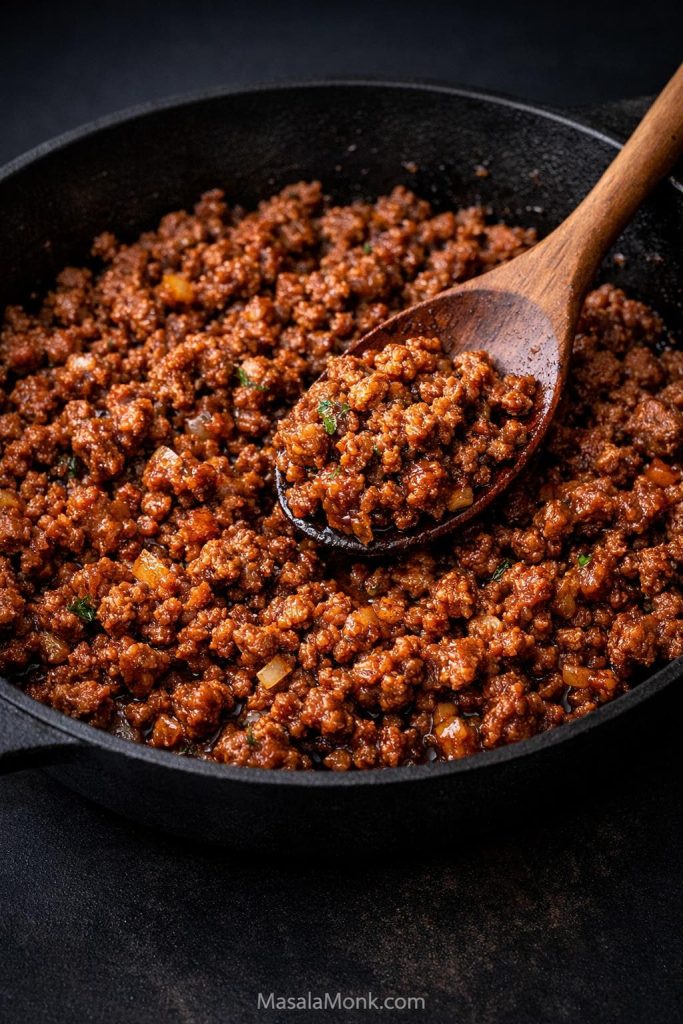
How to cook the filling

Ground pork tacos process image showing browned juicy taco filling with onions in a skillet and a wooden spoon.
A good taco filling should look deeply browned, richly seasoned, and moist enough to spoon easily into tortillas without turning greasy or dry.
  1. Cook the ground pork in a skillet over medium-high heat until browned and broken up well, about 5 to 6 minutes.
  2. Add the onion and cook until softened, about 3 minutes, then stir in the garlic.
  3. Add the chili powder, cumin, paprika, oregano, salt, and pepper. Cook for 30 seconds so the spices bloom instead of tasting dusty.
  4. Stir in the tomato paste and water. The filling should stay juicy enough to spoon into tortillas easily, not dry and crumbly.
  5. Warm the tortillas while the filling finishes.
  6. Squeeze lime over the meat just before serving for a brighter finish.

Toppings and serving ideas

Build the tacos with one crunchy element and one fresh one. Slaw, shredded lettuce, salsa, chopped onion, cilantro, avocado, and lime are enough for a strong version. For a more relaxed family dinner, set everything out taco-bar style so everyone can build their own plate.

Leftover ideas

For a creamier taco, add a quick eggless mayonnaise-based sauce or a spoonful of green chutney for something brighter. Leftover taco meat also works well in rice bowls, quesadillas, stuffed peppers, or a quick breakfast hash with eggs.

Watch out for this: the filling should stay juicy. A dry taco filling makes the whole dinner feel flatter than it needs to.

Related next pick: want the same kind of fast dinner in burger form instead? Try Ground Pork Burgers.

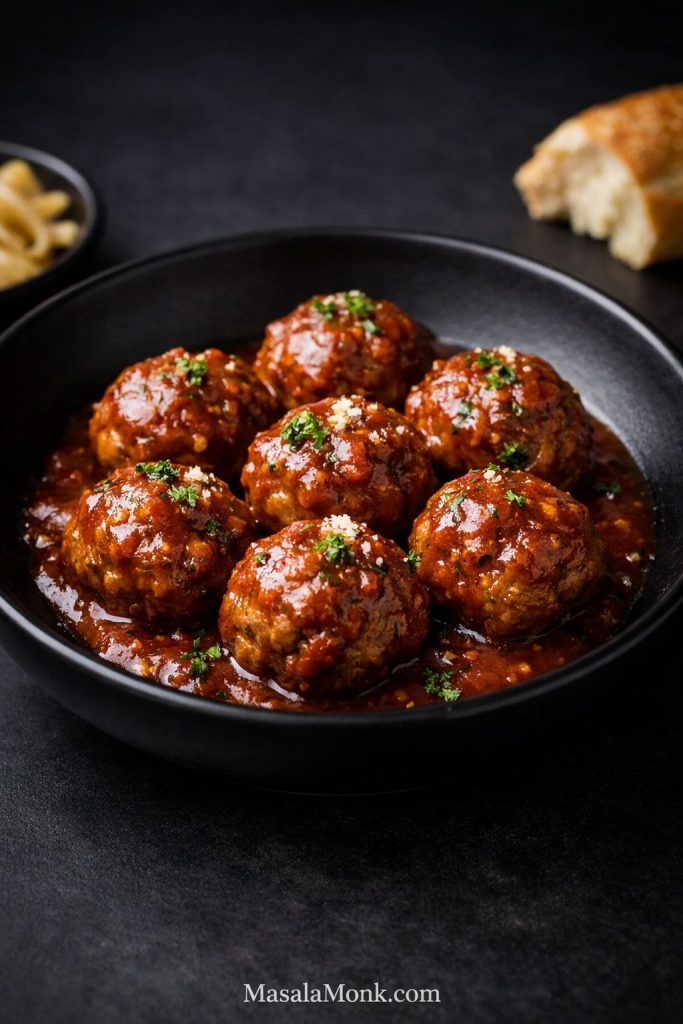
3. Ground Pork Meatballs Recipe

Ground pork meatballs in tomato sauce in a dark bowl, garnished lightly and styled as a comforting leftovers-friendly dinner.
Tender meatballs and a glossy, controlled sauce make this one of the easiest dinners in the post to cook once and enjoy again later.

Choose this if: you want the best all-around meal-prep and leftovers option in the guide.

Meatballs are the easiest make-ahead winner in the lineup. Pork stays tender naturally, the mixture is forgiving, and the finished meatballs can move into pasta, rice bowls, sandwiches, or freezer meals without much extra work.

Time: about 35 minutes
Serves: 4
Makes: about 16 medium meatballs
Best for: leftovers, freezer cooking, and versatile dinners

What you need

  • 1 pound ground pork
  • 1 egg
  • 1/2 cup breadcrumbs, panko or fine dried crumbs
  • 1/4 cup grated Parmesan, optional
  • 2 to 3 cloves garlic, minced
  • 2 tablespoons finely chopped parsley or onion
  • 3/4 teaspoon kosher salt
  • 1/2 teaspoon black pepper
  • 1 tablespoon milk or water if the mixture feels tight
  • Oil for the pan or a parchment-lined baking sheet
  • Sauce for serving

How to make them

  1. Heat the oven to 425°F if baking.
  2. Combine the pork, egg, breadcrumbs, Parmesan, garlic, parsley or onion, salt, pepper, and milk or water.
  3. Mix gently and stop as soon as everything holds together. Overmixing makes meatballs dense.
  4. Form into evenly sized meatballs, about 1 1/2 inches wide, so they cook at the same rate.
  5. Bake for 12 to 15 minutes, or until cooked through and lightly browned. You can also sear them in a skillet and finish in sauce.
  6. The finished meatballs should feel lightly firm and springy, not tight or dry.
  7. Simmer the cooked meatballs in sauce for a few minutes when using one, so they stay moist and pick up more flavor.
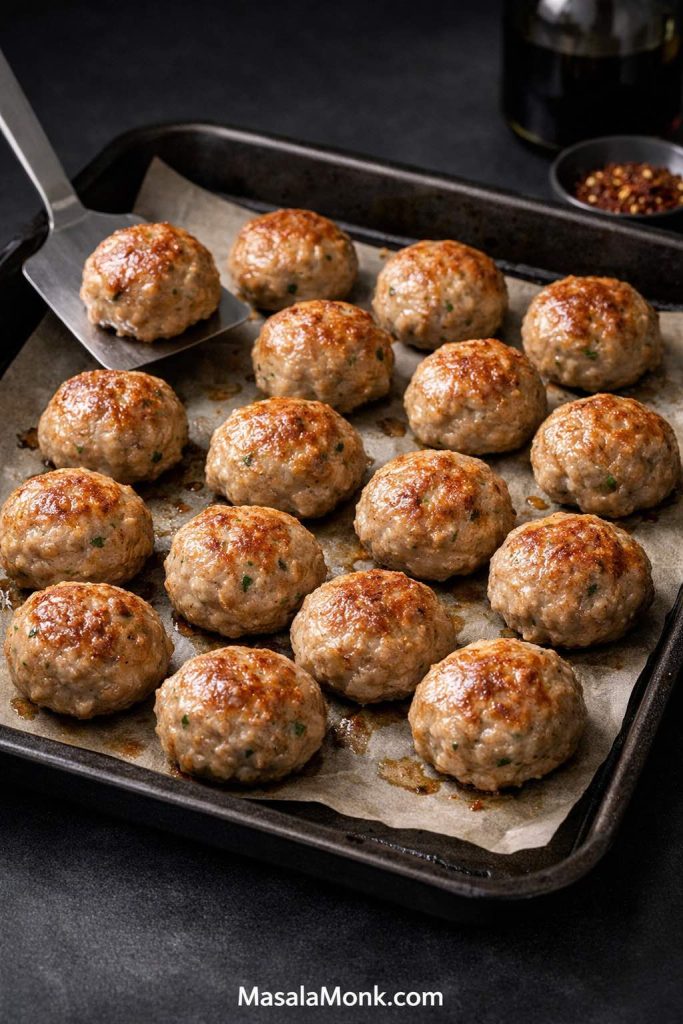
Baked ground pork meatballs on a parchment-lined sheet pan with a spatula lifting one meatball.
This is the point where ground pork meatballs prove why they are one of the smartest make-ahead dinners in the post: even sizing and light browning give you a tender batch that can head to sauce, pasta, subs, or the freezer without falling apart.

How to serve them

Serve them with marinara sauce and pasta, over rice with a gingery glaze, in sub rolls, or with roasted vegetables and salad. Because the seasoning starts fairly neutral, the same batch can move in several directions without feeling repetitive.

Make-ahead and freezer notes

Double the batch when possible. You can freeze cooked meatballs for quick dinners later, or freeze them uncooked on a tray first and then transfer them to a container once firm. Either way, they are one of the best meal-prep dinners in the whole guide.

Best result: mix gently and stop early. Tender meatballs come from restraint, not extra mixing.

Related next pick: want another leftovers-first comfort option? Try Ground Beef and Pork Meatloaf.

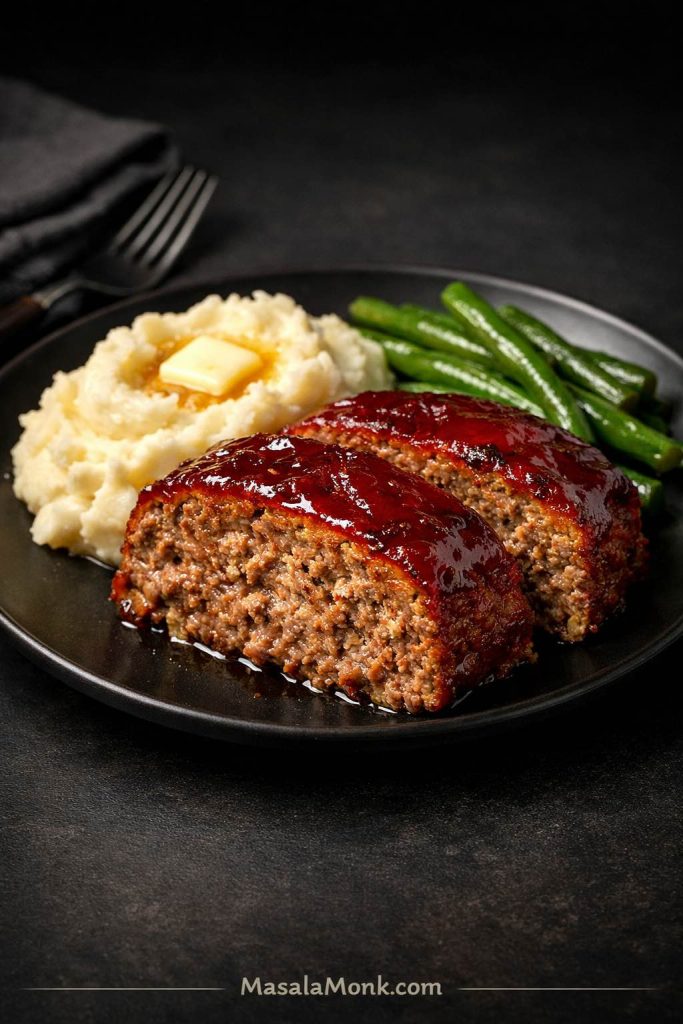
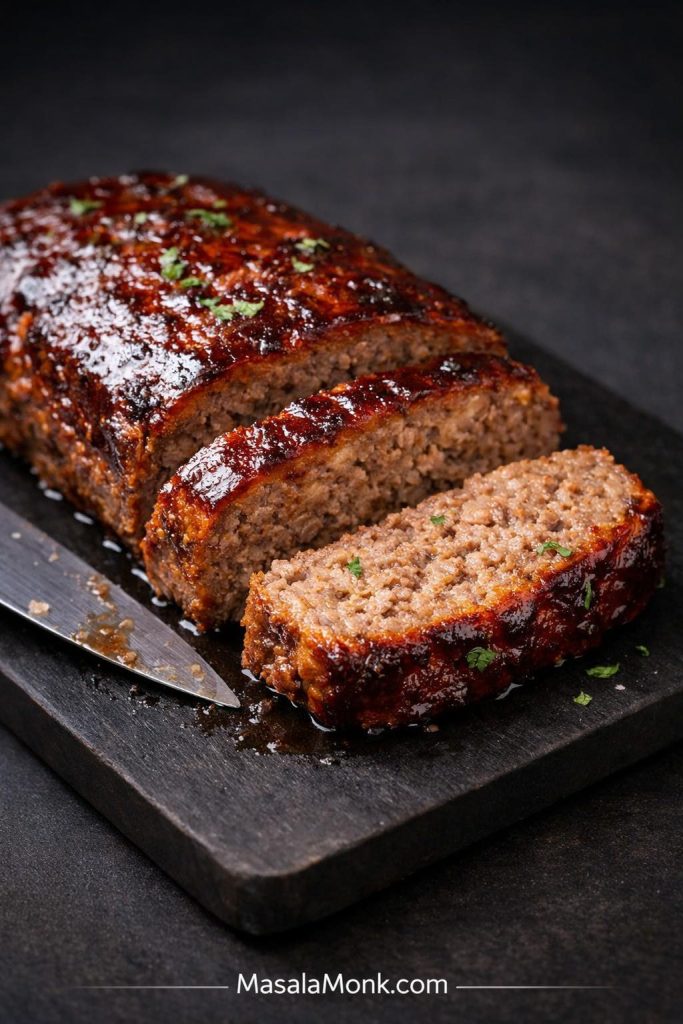
4. Ground Beef and Pork Meatloaf

Ground beef and pork meatloaf slices with glaze, mashed potatoes, and green beans on a black plate.
Meatloaf is the slow, hearty comfort turn in this roundup, and the beef-and-pork mix earns its place by staying juicier than all-beef while giving you the kind of leftovers that justify the longer cook time.

Choose this if: you want the most classic, hearty comfort dinner on the page with especially good leftovers.

When you want something slower, steadier, and more classic than the skillet dinners, meatloaf makes sense. The beef brings familiar meatloaf depth, while the pork keeps the slices juicy. It takes longer, but the leftovers are strong enough to make that extra time feel worth it.

Time: about 70 minutes including rest time
Serves: 6
Best for: comfort food, planned leftovers, and make-ahead dinners

Ingredients for the loaf

  • 1/2 pound ground beef
  • 1/2 pound ground pork
  • 1 egg
  • 3/4 cup breadcrumbs
  • 1 small onion, finely chopped
  • 2 cloves garlic, minced
  • 2 tablespoons ketchup or tomato paste
  • 1 tablespoon Worcestershire sauce or soy sauce
  • 1 teaspoon kosher salt
  • 1/2 teaspoon black pepper
  • For the top: 3 tablespoons ketchup, 1 teaspoon brown sugar or honey, and 1 teaspoon vinegar

How to bake it

  1. Heat the oven to 375°F.
  2. Mix the beef, pork, egg, breadcrumbs, onion, garlic, ketchup or tomato paste, Worcestershire, salt, and pepper just until combined.
  3. The mixture should feel moist enough to hold together but not wet or loose.
  4. Shape into a loaf in a loaf pan or on a lined sheet tray.
  5. Stir together the glaze ingredients and spread over the top.
  6. Bake for 45 to 55 minutes, or until the loaf is cooked through and firm but still juicy.
  7. Rest for 10 minutes before slicing so it does not crumble and lose its juices.
Ground beef and pork meatloaf process image showing glossy rested slices on a dark board with a knife.
Clean slices and a glossy set glaze are the payoff for letting meatloaf rest before cutting into it too early.

How to serve it

Serve meatloaf with mashed potatoes, roasted carrots, green beans, or a crisp salad to balance the richness. Plain steamed vegetables also work especially well here because the loaf brings enough flavor on its own.

Leftover ideas

Leftover slices make excellent sandwiches, rice bowls, or quick dinner plates. You can also pan-crisp a slice the next day so the leftovers feel more deliberate and less like repetition.

Watch out for this: let the loaf rest before slicing. Cutting too early is the easiest way to lose juices and structure.

Related next pick: want another leftovers-friendly option that cooks faster? Try Ground Pork Meatballs.

5. Ground Pork Burgers Recipe

Ground pork burger with cheese, pickles, red onion, tomato, and lettuce on a toasted bun.
A juicy ground pork burger works best with a well-browned patty, a soft toasted bun, and crisp toppings that keep the dinner rich but still balanced.

Choose this if: you want a classic burger-night dinner with a juicier, slightly richer twist than beef.

Burger night does not need to rely on beef. Ground pork makes especially juicy patties, and the flavor works best when the seasoning stays simple and the toppings bring a little crunch or brightness.

Time: about 25 to 30 minutes
Serves: 4
Best for: burger night, family dinners, and classic comfort

What you need

  • 1 pound ground pork
  • 1 teaspoon kosher salt
  • 1/2 teaspoon black pepper
  • 1/2 teaspoon garlic powder or 1 small clove garlic, finely grated
  • 1 teaspoon Worcestershire sauce or soy sauce, optional
  • 4 burger buns or sturdy lettuce leaves
  • Cheese, pickles, lettuce, onion, tomato, or slaw for serving
  • Oil for the pan, only if needed

How to make the patties

Ground pork burgers process image showing two browned pork patties in a skillet, one with melted cheese and a spatula underneath.
A good pork burger patty should look well browned, gently handled, and juicy enough to rest briefly before it ever goes into the bun.
  1. Combine the pork, salt, pepper, garlic, and Worcestershire if using. Mix just until the seasoning is distributed.
  2. Divide into 4 patties and shape them slightly wider than the buns. Keep them a little thicker in the center than you would with very lean beef.
  3. Chill the patties for 10 minutes if you have time. That helps them hold together more neatly in the pan.
  4. Cook in a hot skillet or grill pan over medium-high heat for about 4 to 5 minutes per side, or until cooked through and browned well on the outside.
  5. Add cheese during the last minute if using, then rest the patties briefly so the juices settle.

Best ways to serve them

Keep the toppings simple so the burger still tastes like pork. Pickles, slaw, onion, lettuce, tomato, and cheese all work well. A swipe of eggless mayonnaise or a spoonful of chimichurri can brighten the burger without making it fussy.

Easy variations and leftovers

Serve them in buns for a classic burger dinner or in lettuce leaves when you want something lighter. Leftover patties also work well sliced into rice bowls or chopped into a breakfast hash the next day.

Watch out for this: do not overwork the meat. The more you mix and press, the less juicy the burgers feel.

Related next pick: want a handheld dinner with more spice and less assembly? Try Ground Pork Tacos.

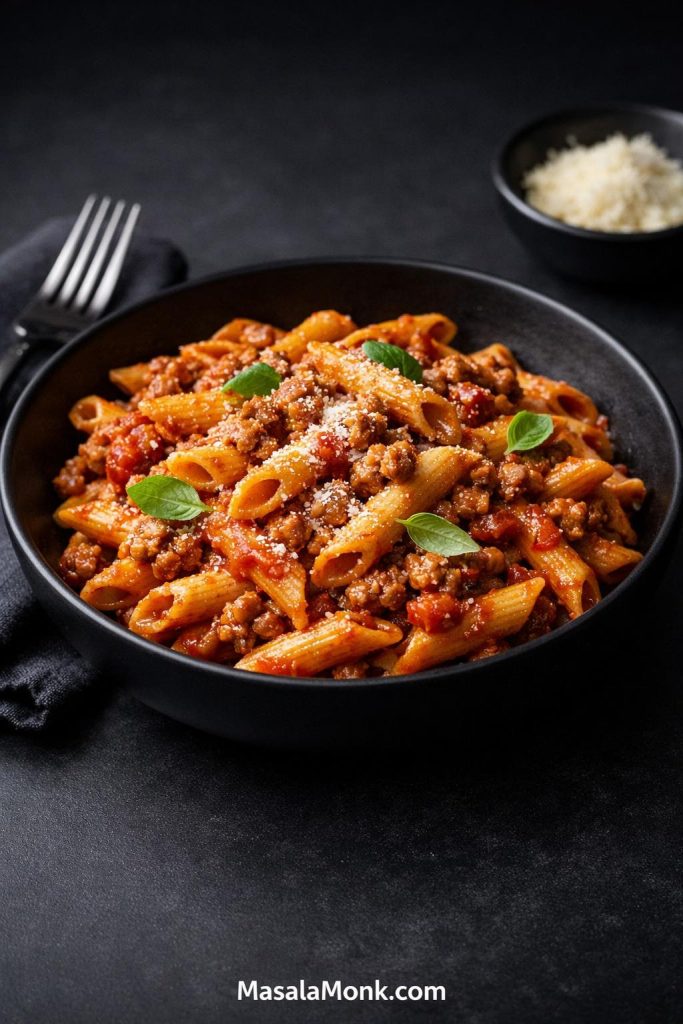
6. Ground Pork Pasta Recipe

Ground pork pasta with penne, tomato sauce, Parmesan, and basil in a black bowl.
When the lighter skillet dinners do not sound satisfying enough, ground pork pasta is the fast comfort turn in this roundup: tomato sauce, browned pork, and pantry pasta that still feel like a proper dinner.

Choose this if: you want a fast comfort dinner that feels fuller and more familiar than rice or stir fry.

This is the pasta option for nights when you want a quick tomato-pork sauce without spending all evening on it. The pork brings richness, garlic and onion build the base, and a modest amount of tomato turns everything into a weeknight sauce that clings to the pasta instead of pooling underneath it.

Time: about 25 to 30 minutes
Serves: 4
Best for: comfort dinners, pantry cooking, and easy leftovers

Ingredients

  • 1 pound ground pork
  • 8 ounces pasta such as spaghetti, penne, or rigatoni
  • 1 small onion, finely chopped
  • 3 to 4 cloves garlic, minced
  • 2 tablespoons tomato paste
  • 1 cup crushed tomatoes or tomato sauce
  • 1/2 teaspoon chili flakes, optional
  • 1/2 teaspoon black pepper
  • Salt, to taste
  • 1/4 to 1/2 cup pasta water, as needed
  • Parmesan and basil or parsley, optional

How to cook it

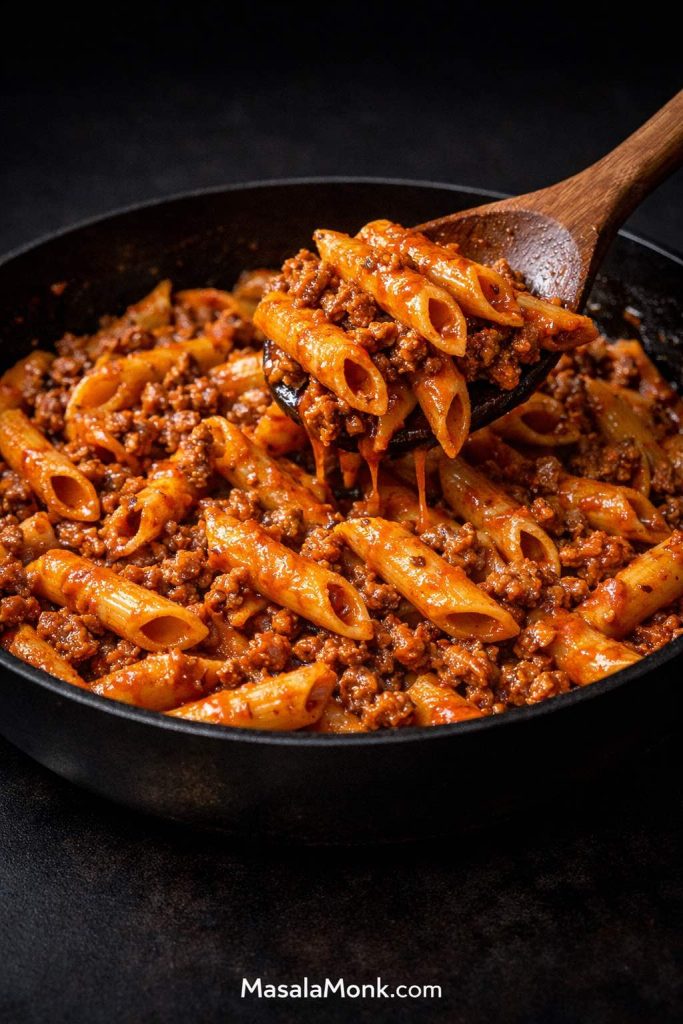
Ground pork pasta process image showing penne coated in tomato sauce with browned pork in a skillet and a wooden spoon lifting the pasta.
A good skillet finish leaves the pasta evenly coated and glossy, with the pork worked into the sauce instead of sitting loose underneath it.
  1. Cook the pasta in salted water until just shy of done. Save some pasta water before draining.
  2. Brown the ground pork in a large skillet until cooked through and lightly caramelized.
  3. Add the onion and cook until softened, then stir in the garlic and chili flakes if using.
  4. Stir in the tomato paste and cook for 30 to 60 seconds so it darkens slightly and loses its raw edge.
  5. Add the crushed tomatoes or sauce and a splash of pasta water. Simmer for a few minutes until the sauce looks savory and lightly concentrated.
  6. Add the pasta and toss until the sauce coats it well. Use more pasta water as needed so the pan looks glossy rather than dry.
  7. Finish with Parmesan and herbs if you like.

How to serve it

Serve it with Parmesan, herbs, and a simple salad when you want a fuller plate. Mushrooms, spinach, or zucchini also fit naturally here if you want more volume. For a deeper tomato route, a fuller Bolognese sauce style can pull this dinner in a richer direction.

Leftover notes

Leftovers reheat well with a splash of water so the sauce loosens instead of tightening up. That small step keeps the pasta from feeling dry the next day.

Best result: use the pasta water. It is what helps the sauce cling instead of sitting loose in the bowl.

Related next pick: want another comfort dinner with even better next-day leftovers? Try Ground Beef and Pork Meatloaf.

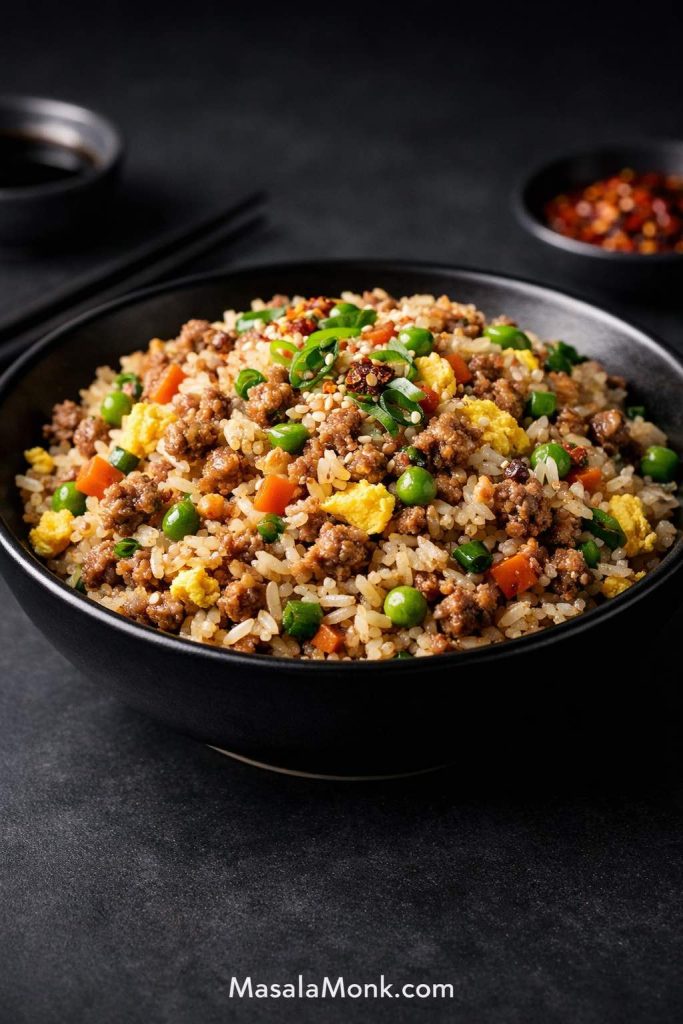
7. Ground Pork Fried Rice Recipe

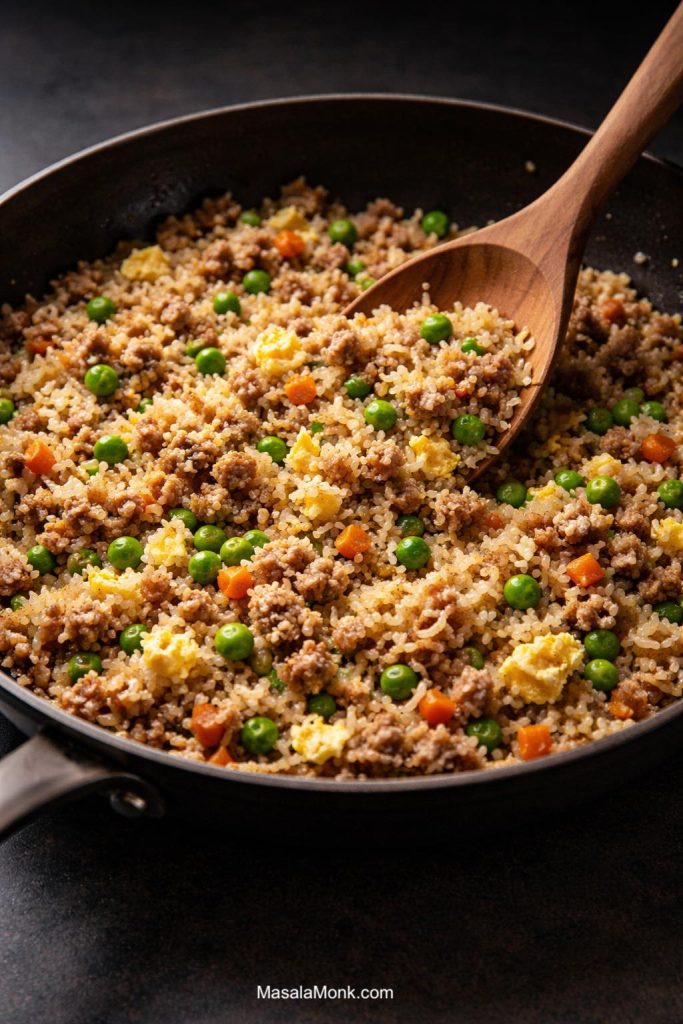
Ground pork fried rice with egg, peas, carrots, scallions, and separate rice grains in a black bowl.
Fried rice is the best budget-first pick in the post because leftover rice stretches the pork beautifully, while separate grains, egg, and vegetables keep the bowl from feeling flat or skimpy.

Choose this if: you have leftover rice and want one of the best budget-friendly dinners in the roundup.

Fried rice is the budget-first answer when there is already rice in the fridge. The rice stretches the pork, the eggs and vegetables fill out the bowl, and the whole thing comes together quickly once the prep is done.

Time: about 20 to 25 minutes
Serves: 4
Best for: leftover rice, budget dinners, and quick one-pan meals

What you need

  • 1 pound ground pork
  • 3 to 4 cups cold cooked rice
  • 2 eggs
  • 1 small onion or several scallions
  • 2 to 3 cloves garlic
  • 1 to 2 cups mixed vegetables such as peas, carrots, mushrooms, or cabbage
  • 2 to 3 tablespoons soy sauce
  • 1 teaspoon sesame oil
  • 1/2 teaspoon black pepper
  • Chili crisp or hot sauce, optional

How to make ground pork fried rice

Ground pork fried rice process image showing separate rice grains with browned pork, peas, carrots, egg, and a wooden spoon in a skillet.
Separate grains, browned pork, and just enough gloss are what make fried rice feel properly stir-fried instead of soft, sticky, or clumped together.
  1. Heat a large skillet well and brown the ground pork first. Remove excess fat if needed, but keep enough for flavor.
  2. Push the pork aside or remove it briefly, then scramble the eggs.
  3. Add the onion, garlic, and vegetables. Cook until the vegetables soften but still keep some texture.
  4. Add the cold rice and break up any clumps. Let it sit in the pan for a minute or two so some grains pick up light toasty color.
  5. Return everything together, then season with soy sauce, sesame oil, pepper, and chili if using. Seasoning near the end helps keep the rice from turning mushy.
  6. Finish with scallions for freshness.

How to serve it

Serve fried rice as a complete bowl, or top it with extra chili crisp, sliced cucumber, or a fried egg. If you need a refresher on getting the grains right before they ever hit the pan, this guide on how to cook rice is a useful starting point.

Easy variations and leftovers

Kimchi, leftover roasted vegetables, chopped greens, or mushrooms all fit naturally here. Leftovers also reheat well in a skillet, and the flavor often improves slightly the next day once everything settles together.

Watch out for this: use cold rice and let it toast a little. Fresh hot rice is much more likely to turn soft and clumpy.

Related next pick: want another rice-friendly comfort dinner? Try Pork Giniling.

8. Ground Pork Egg Roll Bowl

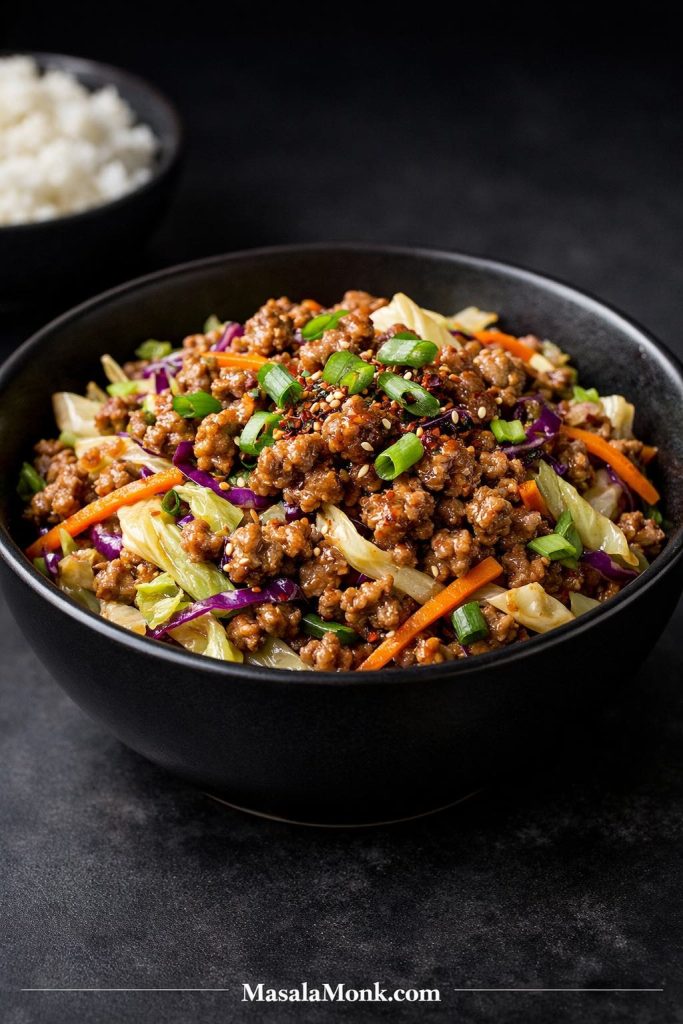
Ground pork egg roll bowl with cabbage, carrots, scallions, and sesame in a black bowl.
This ground pork egg roll bowl works best when the pork is well browned, the cabbage stays tender-crisp, and the whole bowl looks glossy and savory rather than wet or heavy.

Choose this if: you want the best one-pan mix of speed, value, and a lighter overall feel.

Ground pork egg roll bowl is one of the easiest one-pan dinners here. It works best when you want something fast, lighter, and practical enough to repeat often, especially if you are using a bag of slaw mix or extra cabbage that needs using.

It lands between the other lighter options: warmer and easier than lettuce wraps, but still cleaner and less heavy than the richer comfort dinners.

Time: about 20 to 25 minutes
Serves: 4
Best for: one-pan dinners, cabbage-heavy meals, and lighter weeknights

Ingredients for the skillet

  • 1 pound ground pork
  • 1 small onion, chopped
  • 3 cloves garlic, minced
  • 1 tablespoon grated ginger
  • 5 to 6 cups shredded cabbage or slaw mix
  • 2 to 3 tablespoons soy sauce
  • 1 teaspoon sesame oil
  • 1 to 2 teaspoons rice vinegar or lime juice
  • Scallions, sesame seeds, peanuts, or chili crisp for topping
  • Optional rice for serving

How to cook it

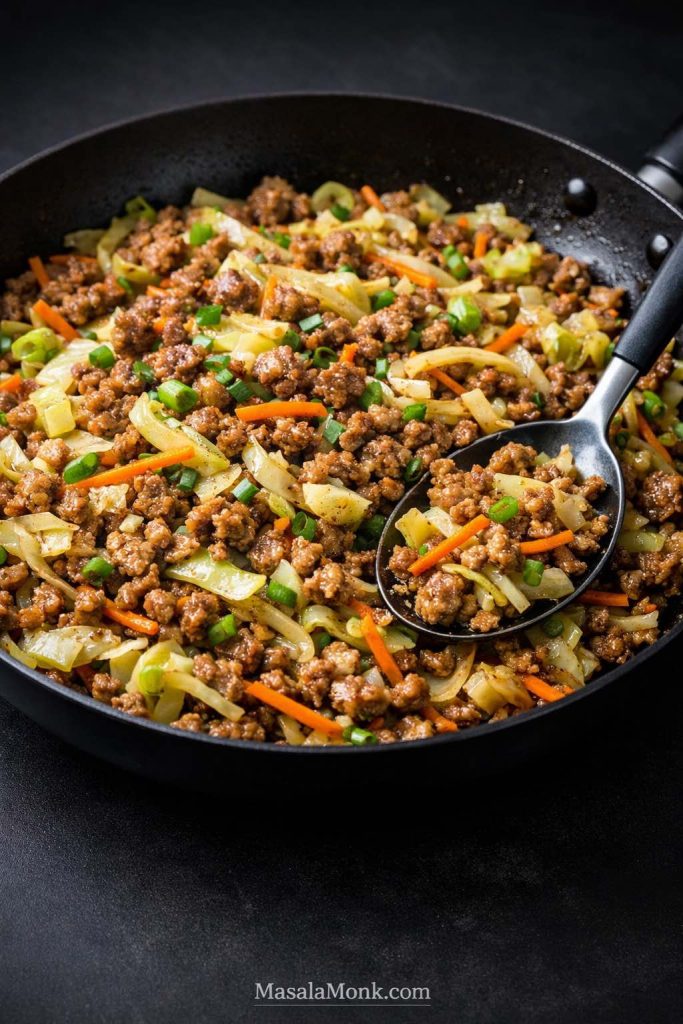
Ground pork egg roll bowl cooking in a skillet with cabbage, carrots, scallions, and a spoon.
This is the texture you want before serving: the cabbage should be softened and glossy but still distinct, so the bowl stays lighter and fresher than a heavier pork skillet or a soggy cabbage stir-fry.
  1. Brown the pork in a large skillet until cooked through.
  2. Add the onion, garlic, and ginger, then cook until fragrant.
  3. Add the cabbage in batches if needed. It will look like too much at first, but it cooks down quickly.
  4. Season with soy sauce and sesame oil. Taste before topping. The skillet should already taste savory and balanced on its own.
  5. Cook until the cabbage is tender but still slightly crisp, not limp or watery.
  6. Finish with rice vinegar or lime so the dish stays bright.

Toppings and serving

You can serve it straight from the pan, which is part of the appeal. For a fuller dinner, spoon it over rice or add a fried egg. Scallions, sesame seeds, peanuts, or chili crisp make the bowl feel more finished without adding much work.

Leftover notes

Reheat leftovers quickly over medium heat so the cabbage keeps some texture. Otherwise, slow reheating softens the vegetables too much and makes the bowl feel flatter the second time around.

Best result: stop while the cabbage still has a little bite. Once it goes limp, the whole skillet feels heavier.

Related next pick: want a fresher handheld version? Try Ground Pork Lettuce Wraps.

9. Ground Pork Lettuce Wraps

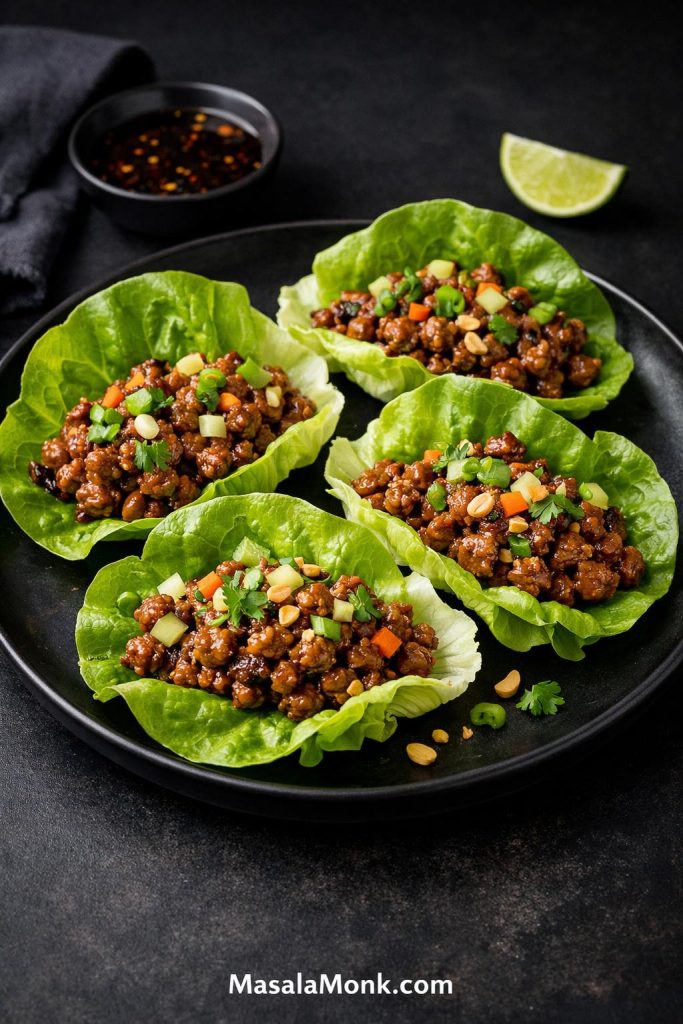
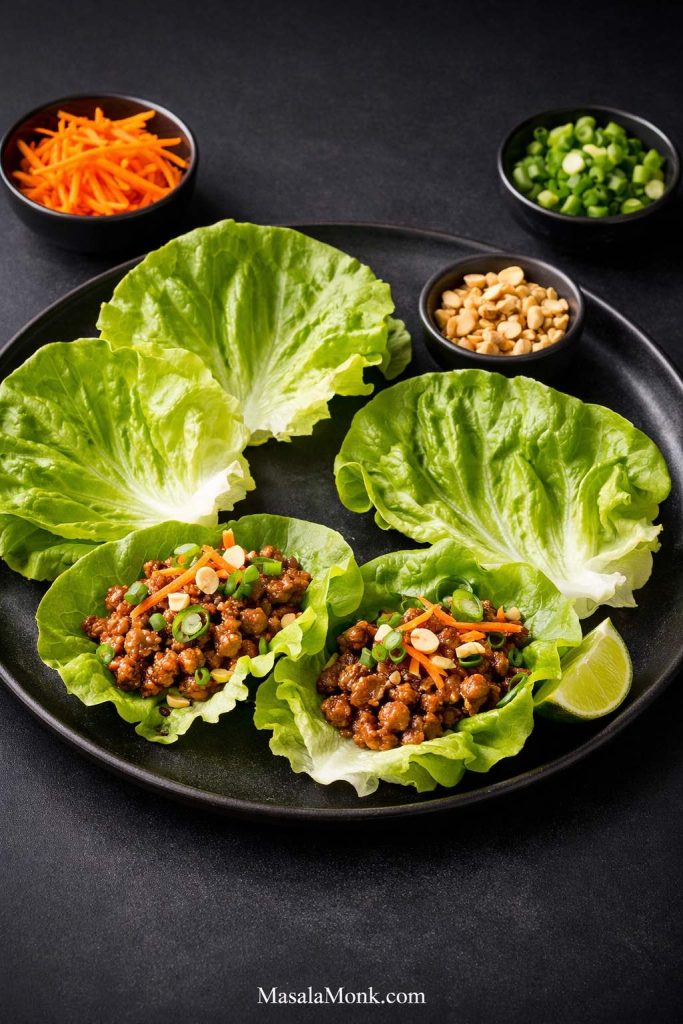
Ground pork lettuce wraps on a dark plate with crisp lettuce, glossy pork filling, peanuts, scallions, herbs, and lime.
Crisp lettuce, glossy pork filling, and a few bright toppings turn this into the freshest dinner in the lineup without making it feel skimpy.

Choose this if: you want the freshest, brightest, most hands-on dinner on the page.

Lettuce wraps work best when the filling is seasoned more assertively than usual, because the lettuce softens the impact and needs a punchier pork mixture to keep the wraps lively.

It is not only lighter. It is fresher, crisper, and more interactive at the table.

Time: about 20 to 25 minutes
Serves: 4
Best for: lighter dinners, interactive meals, and crisp fresh textures

What you need

  • 1 pound ground pork
  • 2 to 3 cloves garlic, minced
  • 1 tablespoon grated ginger, optional but useful
  • 2 to 3 tablespoons soy sauce
  • 1 teaspoon chili paste or chili flakes
  • 1 teaspoon brown sugar or honey, optional
  • 1 to 2 teaspoons lime juice or rice vinegar
  • Butter lettuce, romaine leaves, or another sturdy lettuce
  • Toppings such as herbs, peanuts, scallions, shredded carrots, or cucumber

How to make the filling

  1. Brown the pork in a skillet and cook until lightly caramelized.
  2. Add the garlic and ginger, then stir in the soy sauce, chili, and sugar or honey if using.
  3. Cook until the filling is glossy and well seasoned. It should taste slightly stronger than you think it needs to, because the lettuce will soften the impact.
  4. Brighten with lime juice or vinegar at the end so the richness stays under control.
  5. Wash and dry the lettuce well so the wraps stay crisp instead of slippery.

How to serve it

Ground pork lettuce wraps with two filled lettuce cups, extra leaves, peanuts, scallions, carrots, and lime on a black plate.
The trick with lettuce wraps is not to overfill them: a modest spoonful of pork, a little crunch, and a squeeze of lime keep this dinner feeling fresher and lighter than the warmer bowl-style recipes in the roundup.

Set out the lettuce, warm filling, and toppings separately so everyone can build their own wraps. Butter lettuce makes softer, neater wraps, while romaine gives more crunch. Extra lime, cucumber, herbs, peanuts, and scallions make the whole meal feel brighter and more complete.

Easy swaps and leftovers

When the lettuce is not great or the leftovers feel awkward the next day, turn the filling into rice bowls or noodle bowls instead. That backup plan makes this recipe even more practical on a busy night.

Best result: season the filling a little harder than usual. The lettuce mutes it more than most people expect.

Related next pick: want a warm one-pan cabbage dinner instead? Try Ground Pork Egg Roll Bowl.

10. Pork Giniling (Filipino Ground Pork)

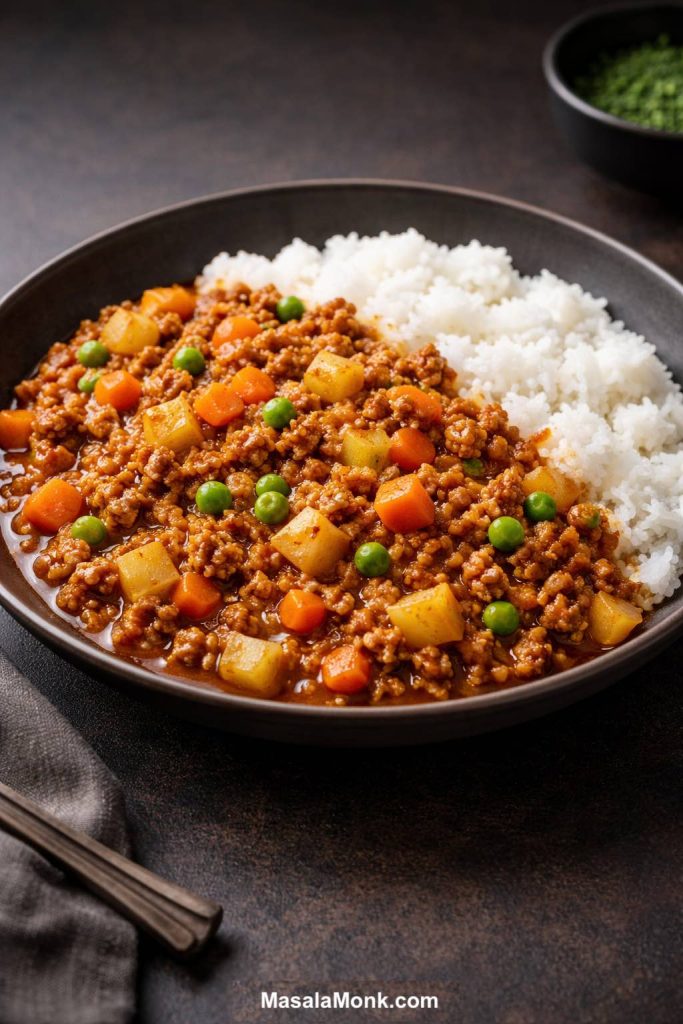
Pork giniling served with white rice in a dark bowl, showing tomato-based ground pork with potatoes, carrots, and peas.
Tomato-based pork, tender vegetables, and white rice make this one of the steadier, more comforting dinners in the whole lineup.

Choose this if: you want a practical, tomato-based rice dinner that feels especially comforting and complete.

Pork giniling brings a different kind of comfort to the lineup. Instead of soy, cabbage, or noodles, it gives you a tomato-based, rice-first dinner that feels warm, homey, and complete in a way the faster skillet meals do not.

Time: about 35 to 40 minutes
Serves: 4
Best for: rice-based comfort food, homey dinners, and tomato-forward ground pork meals

Ingredients

  • 1 pound ground pork
  • 1 small onion, chopped
  • 3 cloves garlic, minced
  • 2 tomatoes, chopped, or 1 cup tomato sauce
  • 1 to 2 tablespoons tomato paste for deeper flavor
  • 1 potato, diced small
  • 1 carrot, diced small
  • 1/2 cup peas, optional but useful
  • 3/4 teaspoon salt, or to taste
  • 1/2 teaspoon black pepper
  • 1 to 2 teaspoons soy sauce or fish sauce, optional
  • Steamed rice, for serving

How to make it

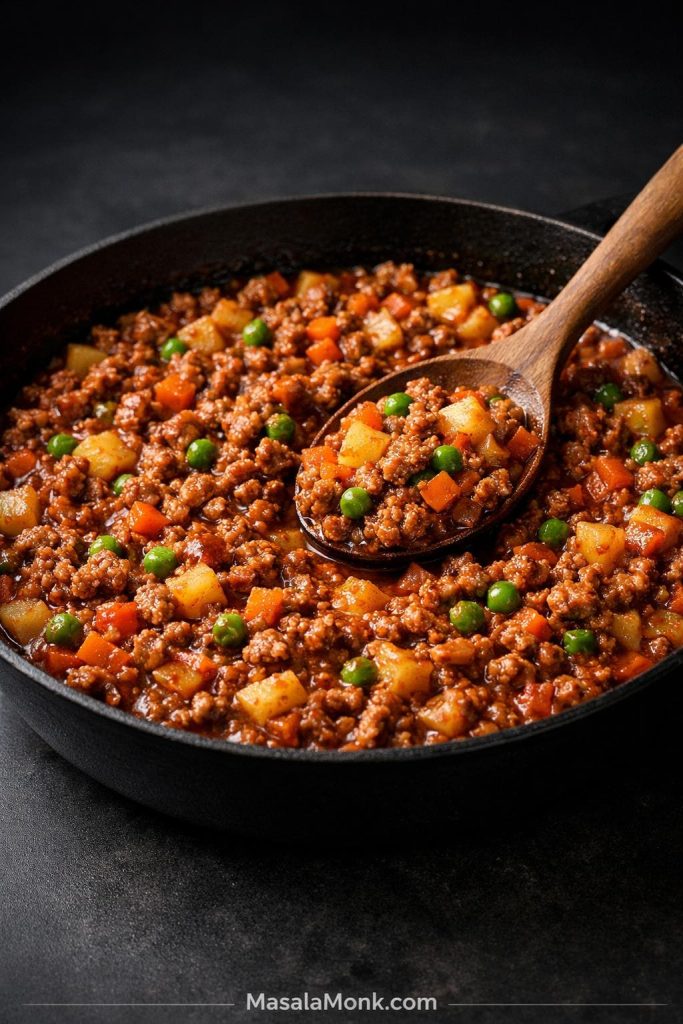
Pork giniling cooking in a skillet with ground pork, tomato sauce, diced potatoes, carrots, peas, and a wooden spoon.
This is the stage that makes pork giniling different from taco meat or pasta sauce: the tomato base should be cooked down and spoonable, with tender potatoes and carrots turning the skillet into a true rice dinner rather than just seasoned mince.
  1. Brown the pork in a skillet or sauté pan until cooked through.
  2. Add the onion and garlic, then cook until softened and fragrant.
  3. Add the tomatoes and tomato paste, then cook until the mixture looks saucy rather than raw.
  4. Add the potato and carrot with 1/2 to 3/4 cup water so they can soften as the sauce simmers.
  5. Season with salt, pepper, and soy sauce or fish sauce if using.
  6. Add peas near the end so they stay bright, then simmer until the vegetables are tender and the sauce lightly coats the pork.

How to serve it

Serve pork giniling over steamed rice first and keep the rest of the plate simple. The rice and saucy pork do most of the work together, which is why the meal feels complete even without many side dishes.

Leftover notes

Leftovers reheat well and often taste even better the next day once the tomato and pork have had more time together. For a looser bowl, keep it slightly saucier. For a thicker finish, reduce it a little more before serving.

Best result: let the tomatoes cook down properly before adding water. That is what gives the dish a deeper, rounder base.

Related next pick: want another rice-based dinner that is faster and cheaper? Try Ground Pork Fried Rice.

How to Choose the Best Ground Pork Recipe Tonight

Use this section when you know the constraint, but not the recipe. Pick the dinner that fits the problem in front of you.

When You Need Dinner in 20 Minutes

Start with ground pork stir fry, ground pork fried rice, ground pork egg roll bowl, or ground pork lettuce wraps. These are the quickest options, they stay on the stovetop, and they do not ask for much downtime. Best first pick: choose stir fry when you need flexibility, or fried rice when the rice is already cooked.

When Tomorrow’s Lunch Matters Too

ground pork meatballs, ground beef and pork meatloaf, ground pork fried rice, and pork giniling all hold up well. None of them depend on delicate textures that disappear overnight. Best first pick: go with meatballs when you want the most flexible leftovers.

When You Want Something Lighter

Choose ground pork lettuce wraps for the freshest option, ground pork egg roll bowl for a warm one-pan dinner, or a vegetable-heavy ground pork stir fry when you still want a fuller plate.

When You Need to Stretch Leftover Rice

Go straight to ground pork fried rice if the rice is already cooked. After that, pork giniling or ground pork egg roll bowl both work well over rice when you want the meal to feel fuller and more affordable.

When You Need a Safe Family-Friendly Pick

ground pork tacos, ground pork burgers, ground pork meatballs, ground pork pasta, and ground pork fried rice are the safest broad-appeal choices. Best first pick: choose tacos when you want the most customization at the table, or burgers when you want something more classic.

How to Cook and Season Ground Pork Better

Ground pork cooks fast, but a few small mistakes can make dinner taste flat. In most cases, bland results come from weak browning, weak seasoning, or no contrast to cut through the richness. A little better browning and seasoning makes a big difference.

Build flavor in the pan, season it clearly, and finish with something bright, fresh, or sharp so the dish does not feel heavy. That balance is what makes dinner taste finished rather than flat.

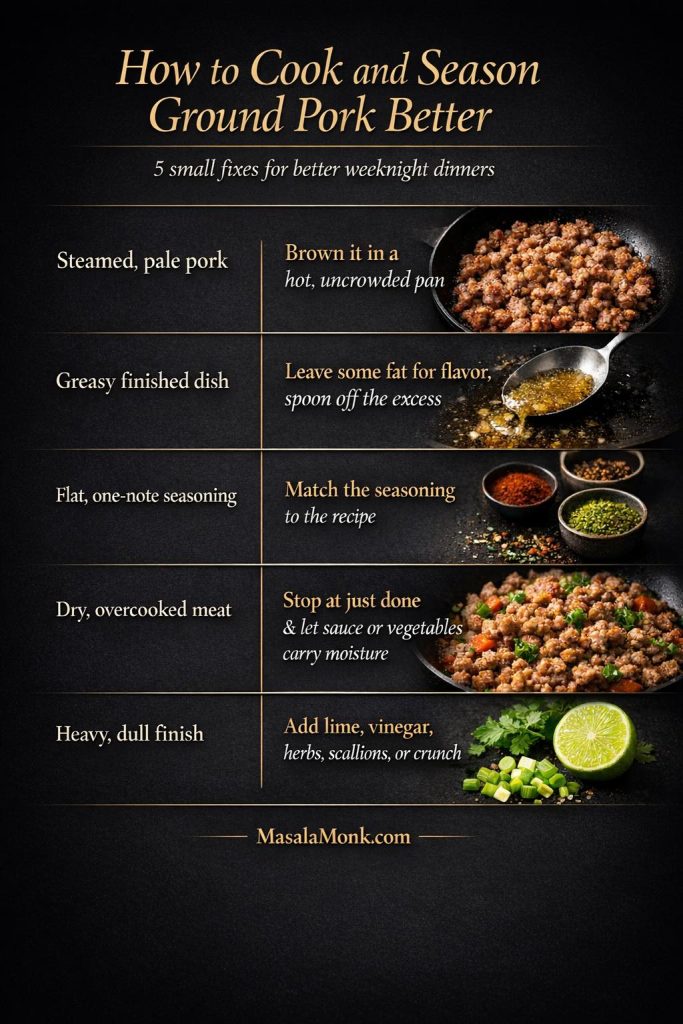
Instructional guide showing how to cook and season ground pork better with five fixes for browning, fat, seasoning, moisture, and finishing.
Use this card as the fast reset: brown harder, grease less, season with intent, stop before the meat dries out, and finish with something that brings the whole dish back to life.

How to Brown the Meat for Better Flavor

Use enough heat and enough pan space. When the pan is crowded, the meat releases moisture and steams. When you let it sit before stirring too much, you get caramelized bits that deepen the flavor of the whole dish.

How Much Fat to Leave in the Pan

Leave enough fat behind to carry flavor, especially in stir fries, fried rice, and bowl dinners. However, when the pan looks greasy rather than lightly slick, spoon off some excess before adding the aromatics. That keeps the finished dish savory instead of heavy.

Best Seasoning for Tacos

Chili powder, cumin, paprika, garlic, onion, oregano, salt, pepper, lime, and a spoonful of tomato paste make a strong taco base. The tomato paste helps round out the meat so it tastes fuller and less dry.

Best Seasoning for Stir Fries and Bowls

Soy sauce, garlic, ginger, chili, sesame, scallions, and something bright like rice vinegar or lime work especially well. That combination keeps the meat savory and flavorful without letting it feel too rich.

Best Seasoning for Meatballs, Meatloaf, and Patties

Garlic, onion, black pepper, herbs, and either tomato-based or smoky-savory accents usually work best. Meatballs can go more herby, meatloaf benefits from a stronger savory base and glaze, and burgers work best when the seasoning stays fairly simple.

How to Keep It Juicy

Do not overcook it, and use ingredients that support juiciness too. Sauces, tomatoes, cabbage, rice, noodles, and fresh toppings all help keep it satisfying. For food safety, cook it to a safe internal temperature and check the USDA safe temperature chart when you need a quick reference.

How to Keep It From Tasting Bland

Brown it properly, season it with purpose, and balance the richness with something bright. Lime, vinegar, herbs, scallions, chili, pickled toppings, and crisp vegetables all help. The best dinners work because they combine savory depth with a little lift.

Ground Pork Dinner FAQs

What Are the Best Weeknight Picks?

The best weeknight options are usually ground pork stir fry, ground pork tacos, ground pork fried rice, ground pork egg roll bowl, and ground pork pasta. They cook quickly, use practical ingredients, and still feel like proper dinners rather than last-minute compromises.

What Can I Make With 1 Pound?

You can make all ten recipes on this page with about one pound, though some stretch better than others. Tacos, fried rice, egg roll bowl, lettuce wraps, and pork giniling are especially strong when you want that pound to go farther with rice, cabbage, tortillas, vegetables, or toppings.

Is It Good for Meal Prep?

Yes, many of these meals are. Meatballs, beef and pork meatloaf, fried rice, and pork giniling all hold up well and reheat well, which makes them especially useful for meal prep and next-day lunches.

Are Ground Pork and Pork Mince the Same Thing?

In most recipe contexts, yes. Ground pork is the more common label in some regions, while pork mince is the usual wording in others. For this kind of weeknight cooking, they usually refer to the same ingredient.

Can It Replace Ground Beef?

Yes, in many recipes it can. It is often juicier and a little richer, so it works especially well in meatballs, meatloaf, tacos, burgers, bowls, and sauces. The final flavor will still be different, though, so the best results usually come from choosing recipes that genuinely suit it.

What Vegetables Pair Best?

Cabbage, mushrooms, carrots, peppers, broccoli, greens, onions, and scallions all pair especially well with it. For contrast, cucumber, herbs, and crunchy slaws help brighten richer dishes.

What Seasonings Work Best?

Garlic, onion, black pepper, soy, ginger, chili, lime, herbs, paprika, cumin, and tomato all work well. The smartest approach is to match the flavor profile to the dinner you want rather than look for one universal spice blend.

How Long Do Leftovers Keep?

As a general rule, cooked leftovers keep well for a few days in the fridge and longer in the freezer. For current food-safety guidance, see the USDA leftovers and food safety guide.

↑ Back to top

Start with stir fry for speed, tacos for family-friendly flexibility, burgers for classic comfort, meatballs for leftovers, fried rice for budget value, or egg roll bowl for one-pan ease. That is the strength of ground pork, or pork mince if that is the label you usually buy: it can turn into several very different dinners without making weeknights harder. A quick marinara sauce can push meatballs or pasta in a more classic comfort-food direction, while a fresh green chutney or bright chimichurri can change tacos, burgers, bowls, and wraps completely. Pick the dinner that fits tonight, and one pound of pork can take you a long way.

Posted on 6 Comments

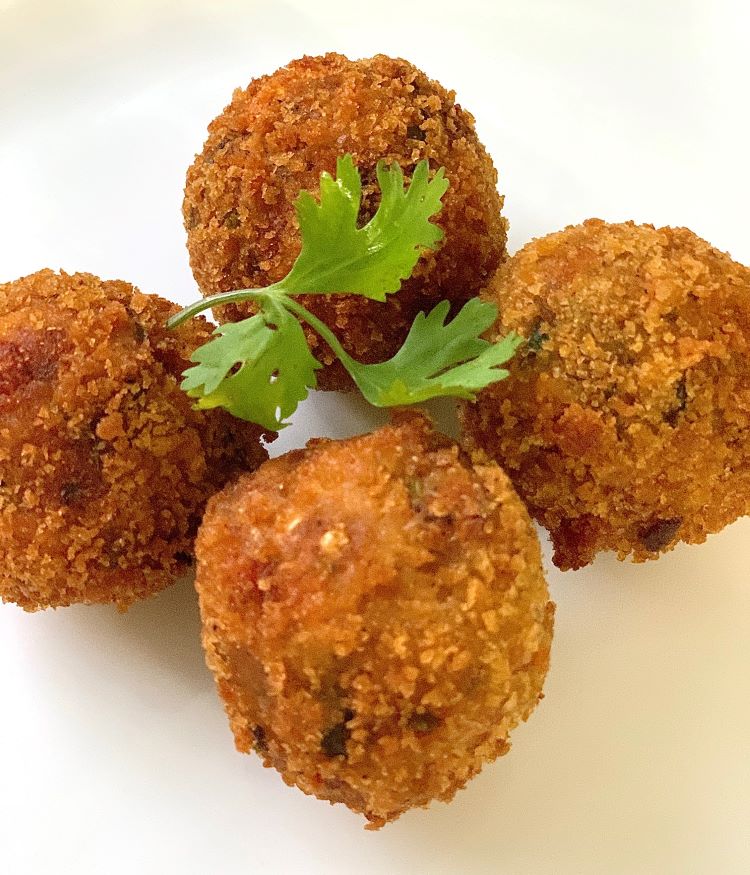
How to turn Leftover Rice into Gourmet Arancini Balls

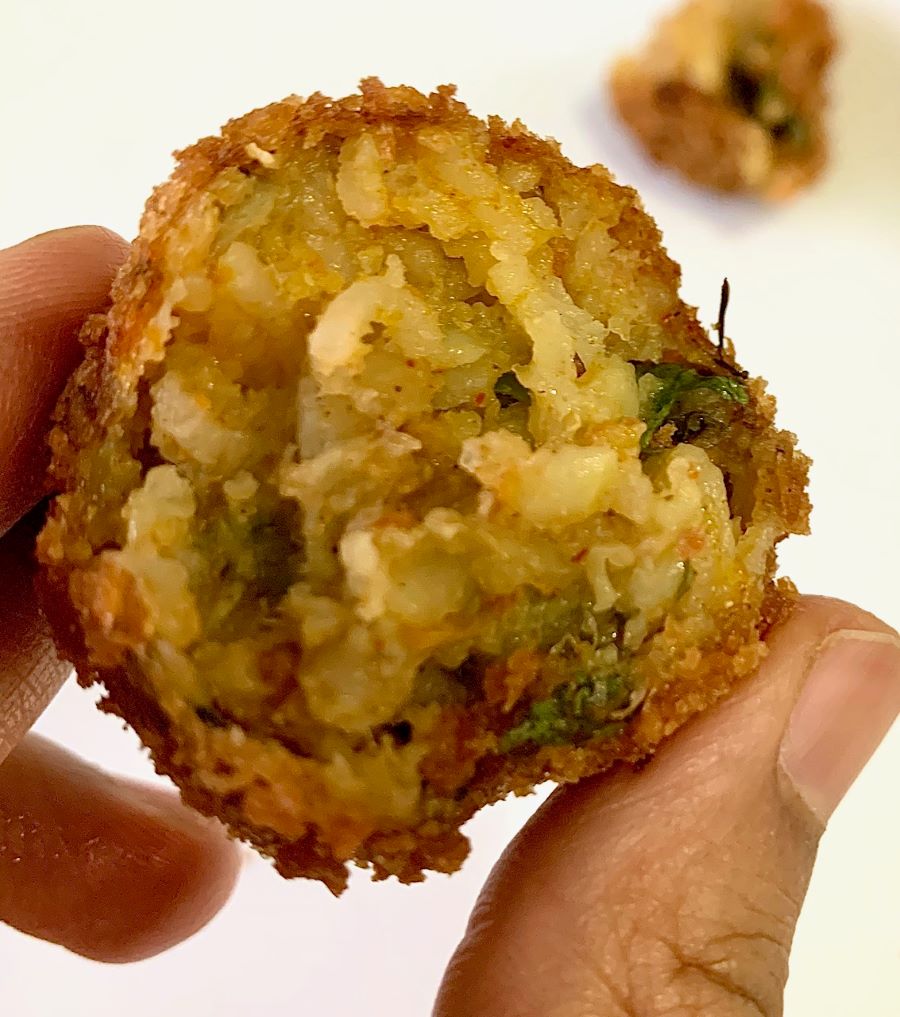
Arancini balls are Italian rice balls that are stuffed, coated with breadcrumbs and deep fried. These are gooey, cheesy rice balls with crispy golden crust. Need I say more! The Italians are a genius! Arancini balls are a Sicilian street food made of risotto and are absolutely delicious. It’s crispy on the outside and creamy on the inside. But they do take some effort to prepare. First you have to make risotto and allow it to cool. Then you have to make the balls and fry them. This sounds like quite a lengthy process. If you have the time, they are definitely worth the effort.

But if you don’t want to go that extra mile and still want to make delicious Arancini Balls, we have your back. I’ll show you how you can transform your leftover rice to these delightful little balls of pleasure that are truly pleasurable to nibble. They are perfect without any filling and are also a good way to use up other leftovers. These were gobbled in no time at my house. It took me just 10 minutes to prepare it and even less time for us to finish it. Even my 10 year old loves them. Italian herbs and cheeses make them taste like a cheesy pizza. Even if you don’t like fried food, I insist you give this one a try. Alternatively, you can bake these in the oven or can air fry them.

Recipe: Makes approx 12-14 balls

Ingredients 

  1. Leftover Rice or Pulao: 2 cups; cold is better
  2. Egg: 1 large; lightly beaten
  3. Mozzarella Cheese: 1/2 cup
  4. Fresh Basil Leaves: A handful
  5. Minced Garlic: 1 tsp
  6. Minced Ginger: 1 tsp
  7. Dried Oregano or Italian Seasoning: 1/2 tsp
  8. Chilli Flakes: 1/2 tsp or as required 
  9. Salt and Pepper to taste
  10. Breadcrumbs: 1/3 cup
  11. Oil for frying

Instructions 

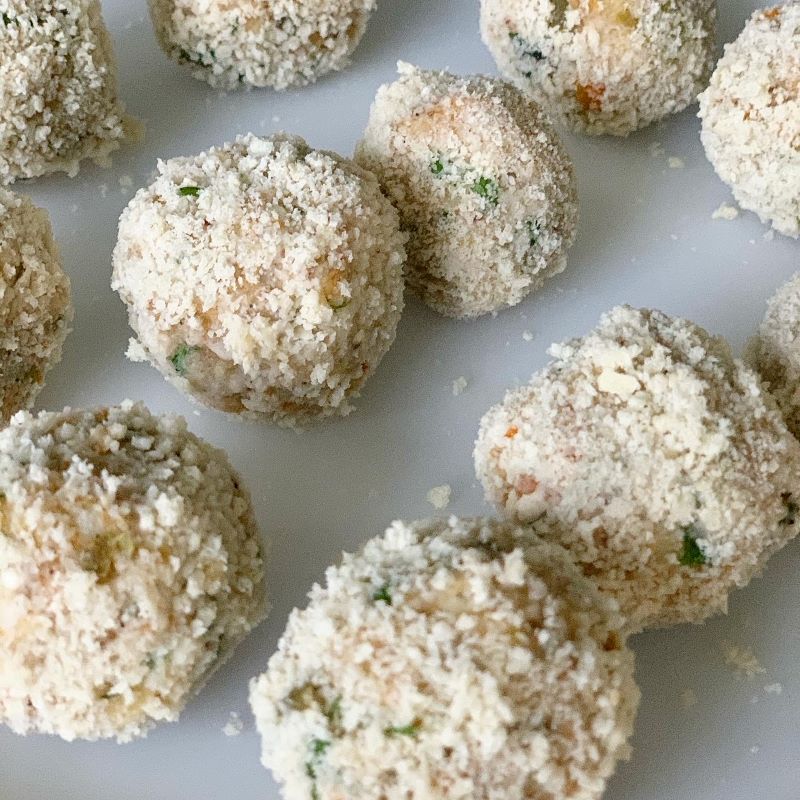
  • In a bowl or a plate mash leftover rice or pulao. I have used leftover vegetable pulao here. Add basil leaves, mozzarella cheese, ginger-garlic, oregano, chilli flakes, salt, pepper and egg. Mix them all until well combined.
  • Form 12-14 balls equal sized balls and roll them in bread crumbs. 
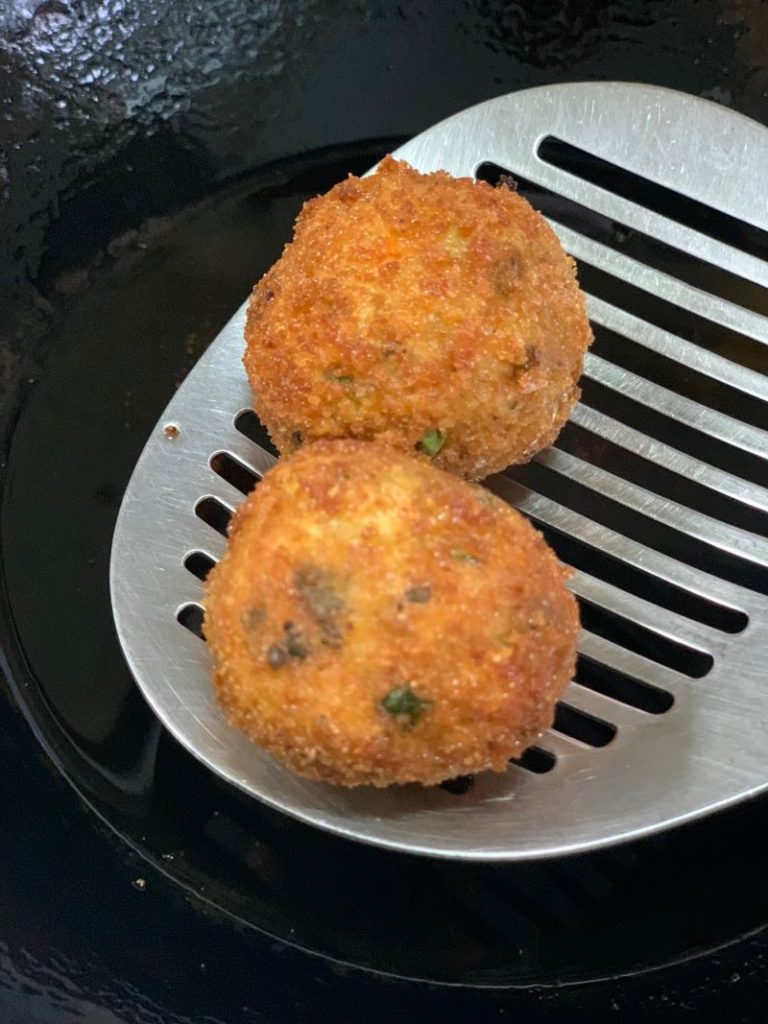
  • Add frying pan to a wok or to a deep pan. Preheat the oil to medium high heat. 
  • Fry the arancini in batches until golden brown. Use a slotted spoon to remove the arancini from the hot oil and place them on a paper towel to drain the excess oil.
  • Serve hot with ketchup or marinara sauce

Variations: Any type of cheese can be used like cheddar, parmesan, and you can alternate the spices as well. Chopped veggies, such as mushrooms, zucchini, carrots or bell peppers can also be added.

Notes: 

  1. Always use cooked rice
  2. Use rice that is cold
  3. Add more breadcrumbs if the mixture is runny, it should be the consistency of a meatball mixture.

Do give this recipe a shot. It’s a perfect and a delicious way to upscale your leftovers. If you try this recipe, do give us a shout out. Just click a picture and tag us on @masala.monk or use the hashtag #MasalaMonkRecipe and share on Instagram and Facebook. We would love to hear from you. 🙂