Posted on Leave a comment

Shrimp Fried Rice Recipe: Easy, Fluffy & Better Than Takeout

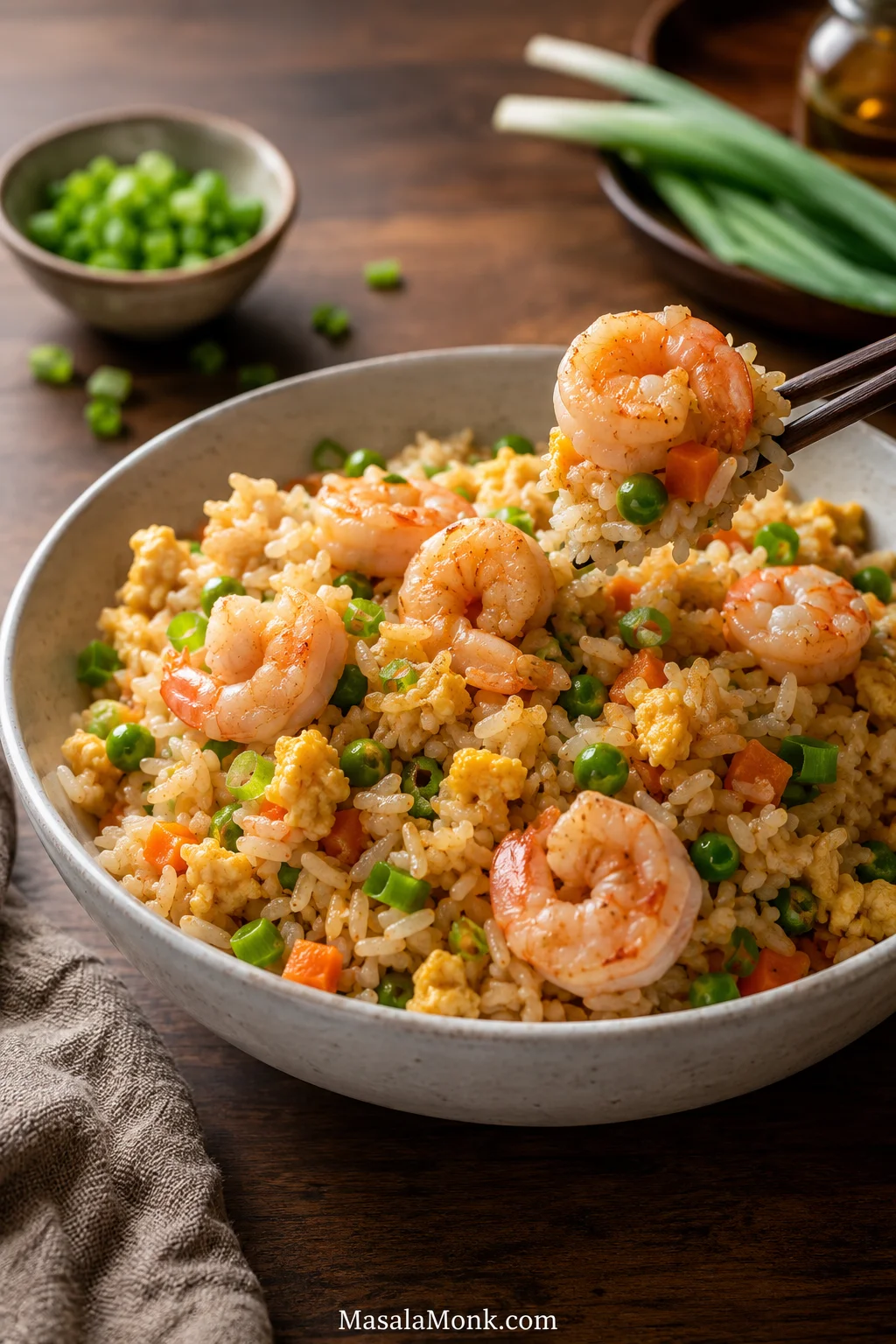
Bowl of shrimp fried rice with plump shrimp, scrambled egg, peas, carrots, scallions, and chopsticks lifting a bite of rice.

This shrimp fried rice recipe is for the night you open the fridge, see cooked rice, and realize dinner is almost already halfway done. A hot skillet turns yesterday’s rice into glossy, savory grains with juicy shrimp, soft egg, garlic, scallions, and vegetables — faster than takeout and fresher from the pan.

The goal is fluffy rice, tender shrimp, and a dinner that tastes planned, even when it started with leftovers. No restaurant burner needed. Just remember the four things that matter most: cold rice, dry shrimp, hot pan, light sauce.

What makes it better than takeout is control: more shrimp, less grease, tender egg, bright scallions, and rice that tastes soy-sesame savory without turning heavy.

Quick Answer: How to Make Shrimp Fried Rice

To make shrimp fried rice, start with cold cooked rice and break up the clumps. Pat raw shrimp dry, season lightly, then cook it quickly in a hot wok or large skillet until just opaque. Remove the shrimp, scramble the eggs, and cook the vegetables until the skillet looks dry again.

Stir-fry garlic, scallions, and rice, then add a small amount of soy-sesame sauce. Fold the shrimp and egg back in and serve while the rice is hot, loose, and glossy.

What is shrimp fried rice? It is a quick stir-fried rice dish made with cooked rice, shrimp, egg, vegetables, aromatics, and a savory soy-sesame sauce. In the best versions, cold rice and a hot pan keep the grains separate instead of soft or sticky.

Order matters because each ingredient behaves differently. Shrimp cooks fast, frozen vegetables can release water, and rice needs direct contact with heat before it gets sauced. When those pieces happen in the right order, the dish tastes fresh instead of heavy.

Already have cold rice and thawed shrimp? Jump straight to the recipe card. Need rice help first? See the best rice guide.

The 4 Rules for Fluffy Shrimp Fried Rice

Use this quick visual guide as the recipe’s safety net before you start cooking. Each rule protects the final texture in a different way.
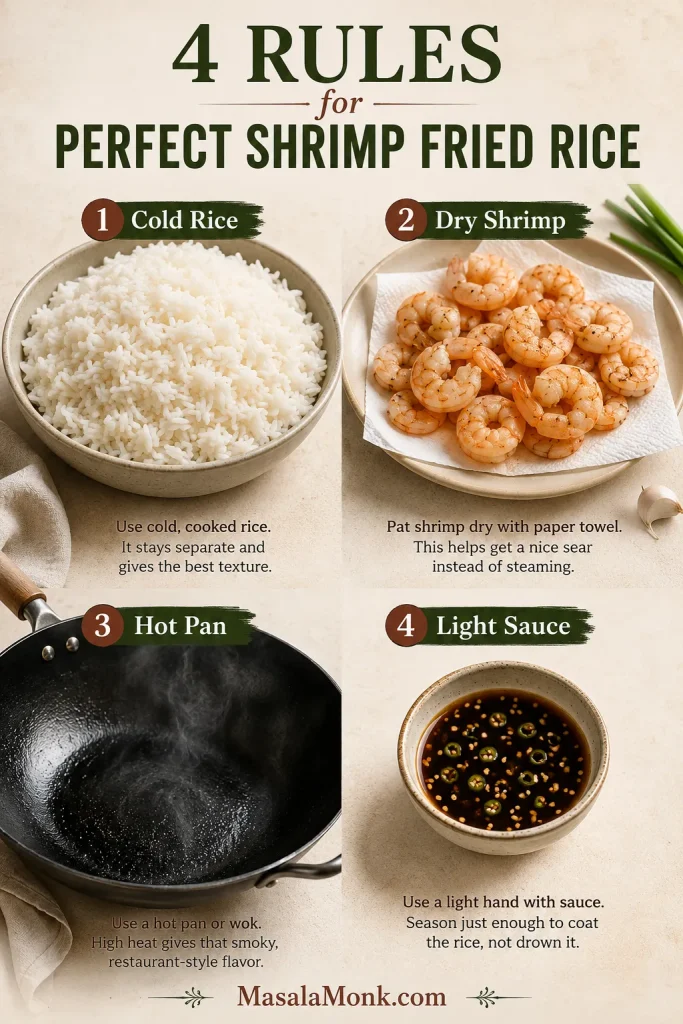
Four-part guide showing cold rice, dry shrimp, a hot wok, and light sauce as the key rules for shrimp fried rice.
Use this four-rule system as your fried rice safety net: cold rice protects texture, dry shrimp sears cleanly, high heat adds flavor, and light sauce keeps the grains separate.

Shrimp Fried Rice Recipe

This version is built for real weeknights: cooked rice from yesterday, shrimp from the fridge or freezer, a few vegetables, and a hot pan that makes it all feel deliberate. Leftover rice makes it easiest, but the fresh-rice workaround below gives you a path when you are starting from scratch.

Prep Time10 minutes
Cook Time15 minutes
Total Time25 minutes
Yield4 servings
CourseMain dish, quick dinner
StyleTakeout-style shrimp fried rice

Timing note: The 25-minute total assumes you already have cooked and chilled rice. Cooking rice from scratch adds cooling time before frying. Starting with fresh rice today? Use the fresh-rice workaround before heating the pan.

Before you turn on the stove: Have the rice loosened, shrimp dried, eggs beaten, vegetables ready, and sauce mixed. Fried rice is easy, but it does not wait once the pan is hot.

Equipment

  • Wok or large 12-inch non-stick/heavy skillet
  • Wide spatula
  • Mixing bowl for shrimp
  • Small bowl for sauce
  • Sheet pan or wide plate if cooling fresh rice

Ingredients
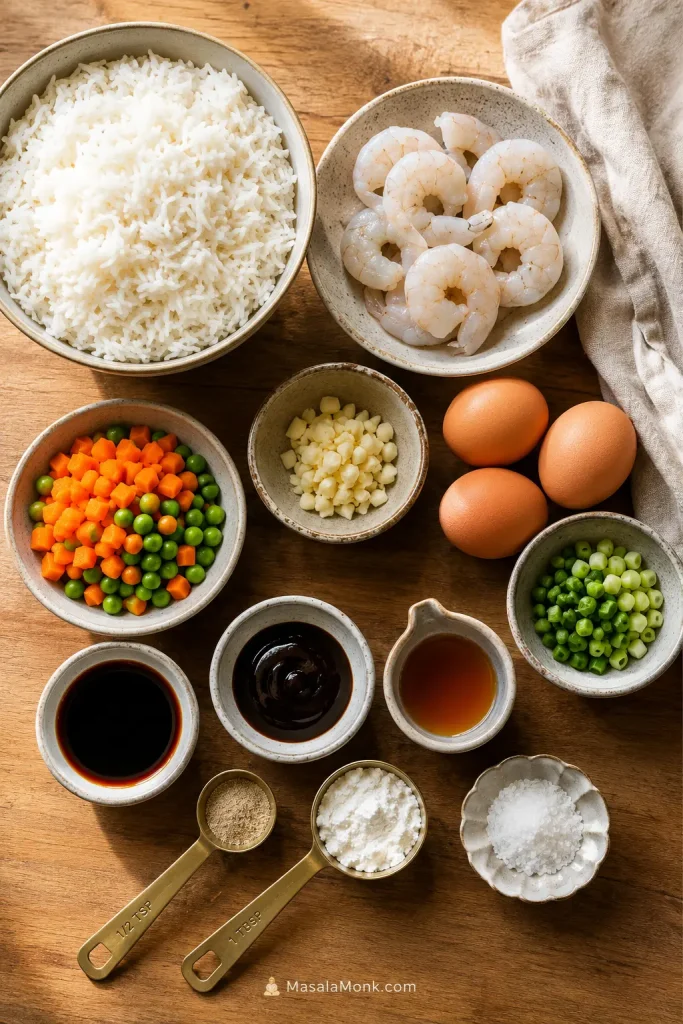
Overhead view of cooked rice, raw shrimp, three eggs, peas, carrots, garlic, scallions, soy sauce, oyster sauce, sesame oil, cornstarch, white pepper, and salt.
Fried rice moves quickly once the pan gets hot, so prep the shrimp, eggs, vegetables, aromatics, rice, and sauce before you start cooking.
IngredientUS MeasureMetric
Cold cooked rice4 cupsabout 600–650 g
Raw peeled and deveined shrimp1 lb450 g
Large eggs, beaten33
Frozen peas and carrots1 to 1 1/2 cups140–200 g
Garlic, minced3 cloves10–12 g
Scallions / green onions, sliced3–425–35 g
Neutral oil2 tbsp30 ml
Light soy sauce2 tbsp30 ml
Oyster sauce, optional1 tbsp15 ml
Toasted sesame oil1 tsp5 ml
White pepper1/4 tspabout 0.5 g
Sugar1/4 tspabout 1 g
Cornstarch1 tspabout 3 g
Salt1/4 tsp for shrimp, then only more after tastingabout 1.5 g, then only more after tasting

Ingredient note: This main method is written for raw shrimp. If you are using cooked shrimp, skip the searing step and add it at the very end just to warm through.

Frozen shrimp note: Frozen shrimp works well once fully thawed and patted dry. To quick-thaw, keep the shrimp sealed in a bag and place it in cold water until thawed, then drain and pat very dry before cooking. The skillet should sear the shrimp, not hiss with extra water. If you are unsure when to pull it from the pan, use the shrimp doneness cues.

Instructions

Prep the Rice and Sauce

  1. Break up the rice. Use your fingers or a fork to loosen cold cooked rice before it goes into the skillet. Clumps are easier to fix now than once the heat is on.
  2. Mix the sauce. In a small bowl, stir together soy sauce, oyster sauce if using, sesame oil, white pepper, and sugar. Keep it beside the stove so you are not measuring while the rice is cooking.

Season the Shrimp and Heat the Pan

  1. Season the shrimp. Pat shrimp very dry. Toss with salt, cornstarch, and a small pinch of white pepper. A dry surface helps the shrimp cook quickly instead of steaming.
  2. Heat the pan. Place a wok or large skillet over medium-high to high heat. Add 1 tablespoon oil and let the pan get properly hot.

Cook Shrimp Separately So It Stays Tender

  1. Cook the shrimp. Add shrimp in a single layer. Cook for about 60–90 seconds per side, just until pearly, opaque, and lightly curled. Move it to a plate before it turns tight and firm.
  2. Scramble the eggs. Add 1 teaspoon oil if the pan is dry. Pour in the beaten eggs and scramble until just set. Move them to the plate with the shrimp; they will finish warming when they return to the rice.
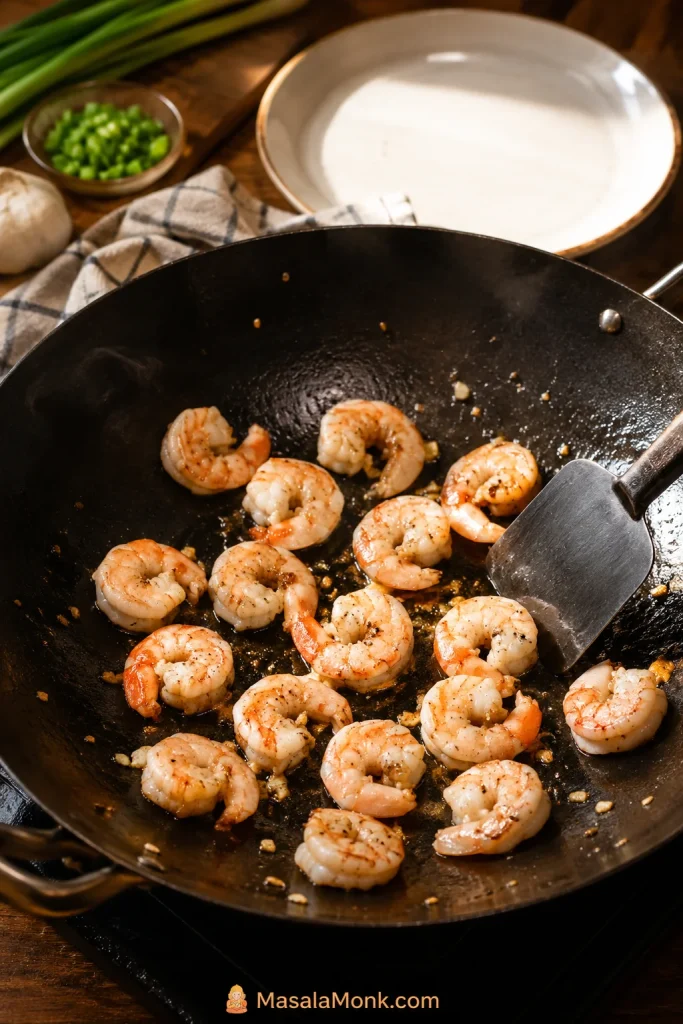
Shrimp searing in a black wok with a spatula and an empty plate nearby for removing the shrimp.
Shrimp needs less time than rice, so cook it separately. Pull it while it is still plump, then return it near the end for tender shrimp in every bite.

Cook the Vegetables Until the Pan Looks Dry

  1. Cook the vegetables. If needed, add the remaining oil, then stir in the peas and carrots. Cook until the skillet looks dry again so their sweetness and color stay bright without softening the rice.
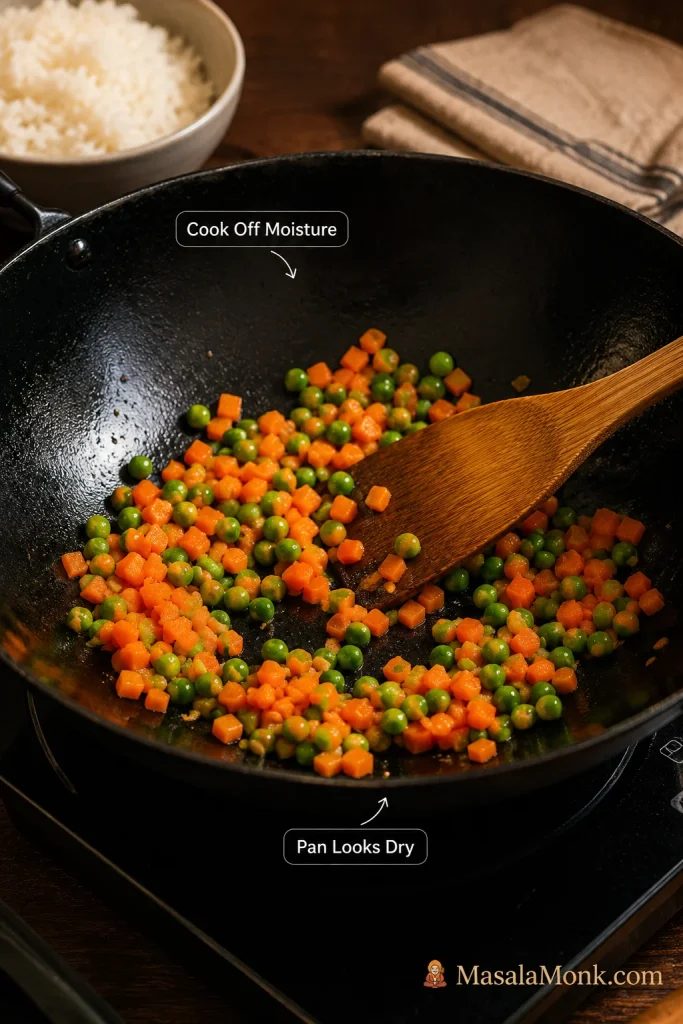
Peas and diced carrots cooking in a black wok with a wooden spatula while a bowl of cooked rice waits nearby.
Once peas and carrots stop releasing moisture, the pan should look dry again. That is when the rice can fry instead of steam.

Garlic and Scallions Build the First Flavor Layer

  1. Add aromatics. Stir in garlic and the white/light parts of the scallions. Cook for 15–30 seconds, just until the pan smells garlicky and sharp. You want the garlic lively, not browned.
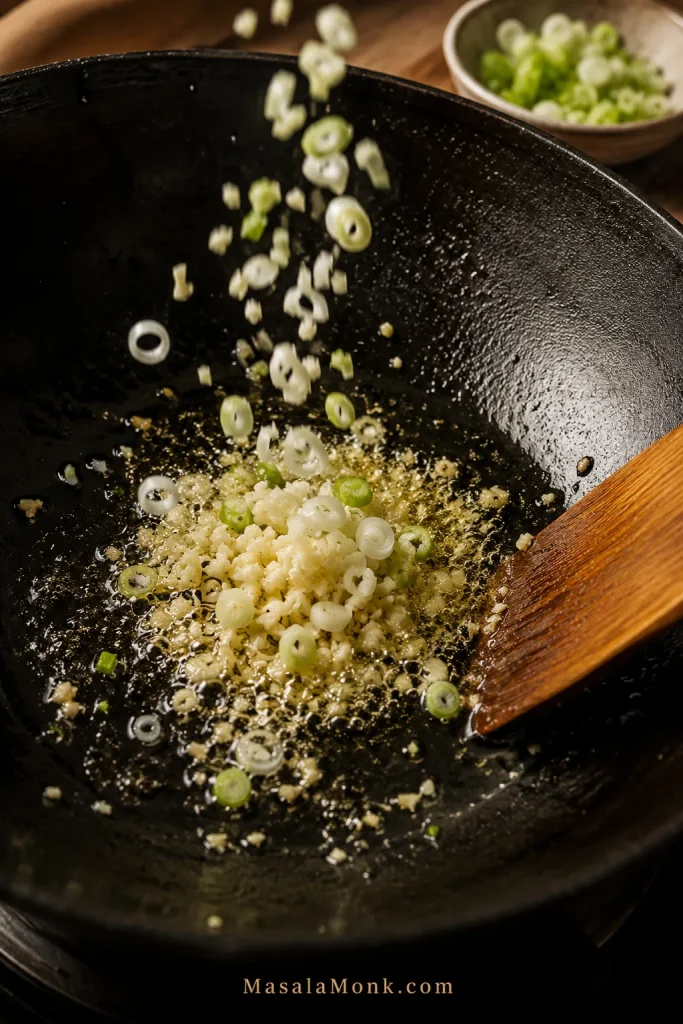
Minced garlic and sliced scallions sizzling in oil inside a black wok with a wooden spatula.
Garlic and scallion whites flavor the oil almost instantly. Stir just until fragrant, because browned garlic can make the whole pan taste bitter.

Fry the Rice Before Adding Sauce

  1. Fry the rice. Add the cold rice, spread it out, and let it sizzle before stirring. The rice should look separate before it looks glossy; sauce comes after the grains are hot, not before.
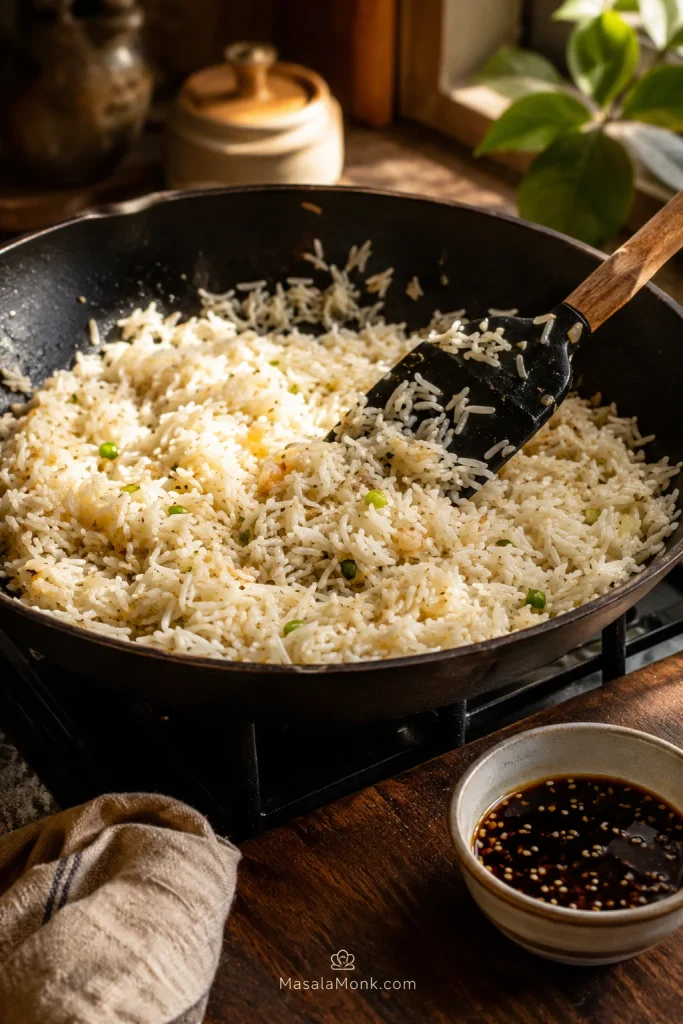
Cooked rice frying in a wok with a spatula while a small bowl of dark sauce waits beside the pan.
Let the rice spend a little time in the pan before the sauce joins in. That early contact with heat keeps the grains loose instead of heavy.

Add Sauce, Return Shrimp and Egg, Then Finish

  1. Add the sauce. Drizzle in the sauce and toss quickly. The rice should look glossy, separate, and evenly seasoned. Puddles mean keep tossing over heat until the grains absorb the seasoning.
  2. Return shrimp and egg. Add the seared shrimp and scrambled egg back to the pan. Toss for 30–60 seconds, just until everything is hot, the shrimp stays springy, and the egg is tucked through the rice.
  3. Finish and serve. Add the green parts of the scallions so the final pan tastes fresh, sharp, and a little sweet. Taste before adding more soy sauce. If it needs lift, try white pepper, scallion greens, or a tiny pinch of salt before adding more liquid.

Cook’s cue: The pan should sound lively. Quiet, steamy rice usually means the skillet is crowded or something brought in too much moisture. If the rice steamed, clumped, or turned salty, jump to troubleshooting before trying again.

This is the kind of dinner that feels bigger than the effort it asks from you: one hot pan, a bowl of leftover rice, a handful of shrimp, and a few minutes where garlic, scallions, soy, and sesame make the kitchen smell like you planned ahead.

Shrimp Fried Rice Success Formula

Once you know the basic order, the recipe becomes easy to adapt. This quick table helps you adjust for the rice, shrimp, vegetables, or pan you actually have, while still landing in the same place: loose rice, tender shrimp, soft egg, bright scallions, and sauce that clings instead of pools.

If you have…Do this
Day-old riceBreak it up and fry it cold.
Fresh riceSpread, cool, and chill it until the surface feels dry.
Frozen shrimpThaw fully, pat dry, and cook briefly.
Cooked shrimpAdd it at the end just to warm through.
Frozen vegetablesCook them until the skillet looks dry before adding rice.
A small skilletCook in batches instead of crowding the pan.
Flat flavorAdd white pepper, scallions, heat, or a tiny pinch of salt before adding more soy sauce.

Why This Recipe Works

This recipe treats leftovers like an advantage. Cold rice is already drier and firmer, so the hot pan only has to wake it up.

The rest is order: shrimp cooks briefly and comes out, vegetables lose moisture before rice goes in, rice fries before sauce, and egg returns at the end for softness. That is how you get fried rice that tastes fresh instead of heavy.

If you like this leftover-rice style of cooking, MasalaMonk’s Spam fried rice recipe uses the same cold-rice logic with crispy Spam, egg, vegetables, and a quick savory sauce.

Ingredient Notes That Matter

The ingredient list is simple, which is part of the charm. A few ordinary things — cold rice, shrimp, egg, vegetables, garlic, scallions, and soy sauce — turn into a full dinner when the pan is hot and the moisture is under control.

Eggs

Egg makes the rice feel fuller and softer. Scramble it separately for the easiest method. Once you are comfortable, you can drizzle beaten egg over hot rice and stir quickly for a more golden restaurant-style effect. Try that only when the rice is already hot and loose; otherwise the egg can disappear into wet rice.

Soft egg gives the rice richness without needing extra sauce, which helps the whole pan stay savory instead of wet.

Vegetables

Frozen peas and carrots are classic because they are easy, colorful, and already cut small. Loose frozen vegetables can go straight into the hot skillet; just cook them until the pan looks dry again before adding rice. If they are icy or clumped together, thaw briefly and pat dry first.

No peas and carrots? Use corn, cabbage, bell pepper, mushrooms, green beans, or skip vegetables and add extra egg or shrimp. Small, quick-cooking add-ins give you color and texture without stealing heat from the rice.

Aromatics

Garlic and scallions are enough for a clean takeout-style flavor. For a deeper base, add 1/4 cup finely diced onion or 1 teaspoon minced ginger with the garlic. Keep the pieces small so they cook quickly and do not weigh down the rice.

Sauce and Seasoning

Light soy sauce gives salt and color. Oyster sauce adds a deeper takeout-style flavor, but it is optional. Low-sodium soy sauce gives you more control when your oyster sauce is already salty. Toasted sesame oil is strong, so use it sparingly. White pepper gives the rice a familiar restaurant-style warmth.

The goal is not dark, salty rice. Instead, aim for grains that taste seasoned all the way through — soy at the edges, sesame in the background, white pepper for warmth, and scallions keeping each bite fresh.

Want a warmer restaurant-style color? A tiny pinch of turmeric can add a light golden tint without needing food coloring. Use very little so it supports the rice instead of making it taste like turmeric.

For a broader sauce base you can use across vegetables, noodles, chicken, shrimp, tofu, and rice bowls, see this stir fry sauce recipe.

Best Rice for Shrimp Fried Rice

The rice matters, but the texture matters more. Choose a grain that can cool, separate, and move cleanly through a hot pan.

How Cold Rice Should Look Before Frying

Cold rice should feel firm enough to break apart easily. If the grains loosen before cooking, they have a better chance of frying evenly in the pan.
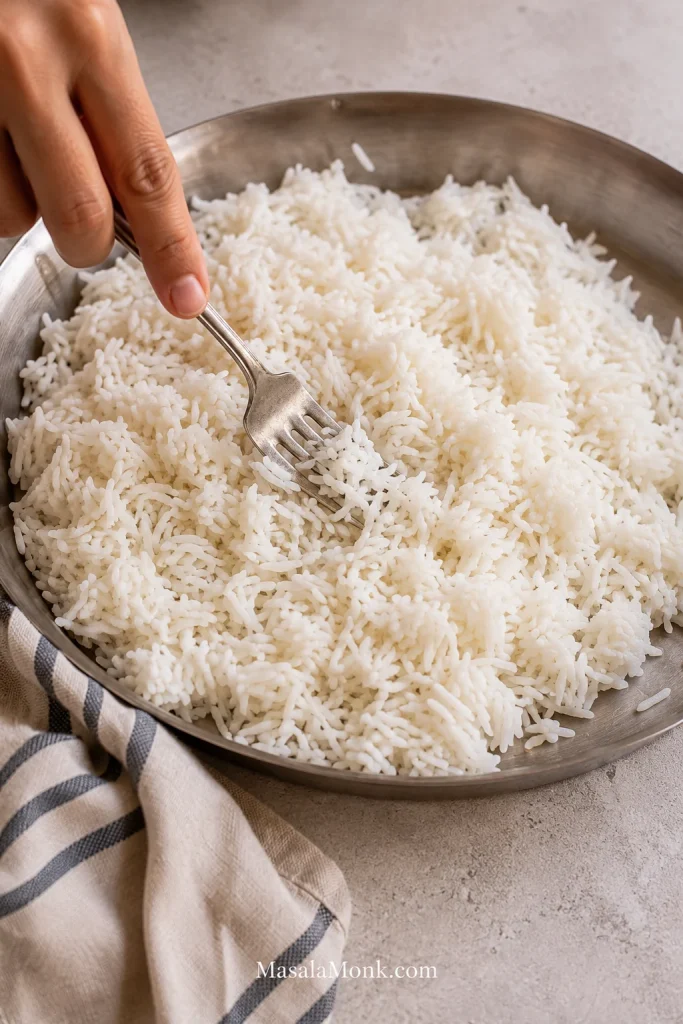
Hand using a fork to break up cold cooked rice in a metal bowl before adding it to the pan.
Break up chilled rice before cooking, not inside a crowded pan, so every grain can touch the heat instead of clumping together.

For the easiest fluffy texture, start with cold cooked rice that separates easily. Freshly cooked rice is usually too soft and steamy for direct frying, while chilled rice has enough structure to move cleanly through the skillet.

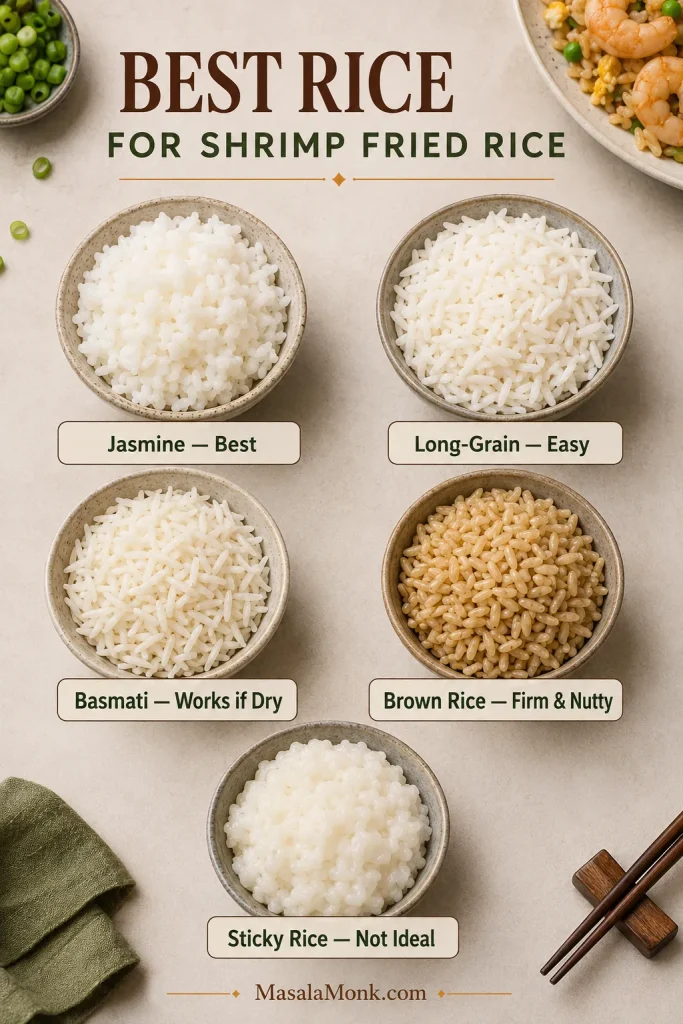
Choose jasmine rice for a takeout-style aroma, long-grain white rice for reliability, basmati rice if that is what you already cook, and brown rice if you want a firmer, nuttier version.

Not every rice behaves the same once it hits high heat, so use this as a quick guide.

Best Rice Types for Shrimp Fried Rice

Rice TypeGood for Shrimp Fried Rice?Notes
Jasmine riceYesAromatic and excellent for takeout-style fried rice.
Long-grain white riceYesReliable, fluffy, and easy to separate.
Basmati riceYes, if dryWorks well when cooked firm, cooled fully, and broken up before frying.
Brown riceYesFirmer and nuttier; taste and adjust seasoning carefully.
Short-grain or sticky riceNot idealCan clump and turn heavy unless you are making a different style intentionally.
Comparison board with bowls labeled jasmine rice, long-grain rice, basmati rice, brown rice, and sticky rice for fried rice.
Jasmine and long-grain rice are the easiest choices for fluffy shrimp fried rice, while basmati and brown rice can also work when cooked firm and cooled well.

Best make-ahead move: Cook the rice the day before, spread it out so steam escapes, then refrigerate it once cool. The next day, break up the grains before frying. This gives you the easiest fluffy texture.

Do not rinse cooked rice before frying. If the grains are clumped, loosen them with your fingers or a fork; adding water brings back the moisture you are trying to avoid.

No Day-Old Rice? Fresh Rice Workaround

You can make shrimp fried rice with fresh rice, but not while it is hot and steamy. Cook it slightly firm, spread it on a sheet pan so steam escapes, then chill it until the surface feels cool and dry. Once the grains separate easily, it can fry like day-old rice.

  1. Cook the rice with slightly less water than usual so it finishes a little firmer.
  2. Spread the hot rice on a sheet pan or large plate.
  3. Let the steam escape for 10 minutes.
  4. Refrigerate the rice for 30–60 minutes, or freeze it for about 15 minutes if you are rushing.
  5. Break up the cooled rice before frying.
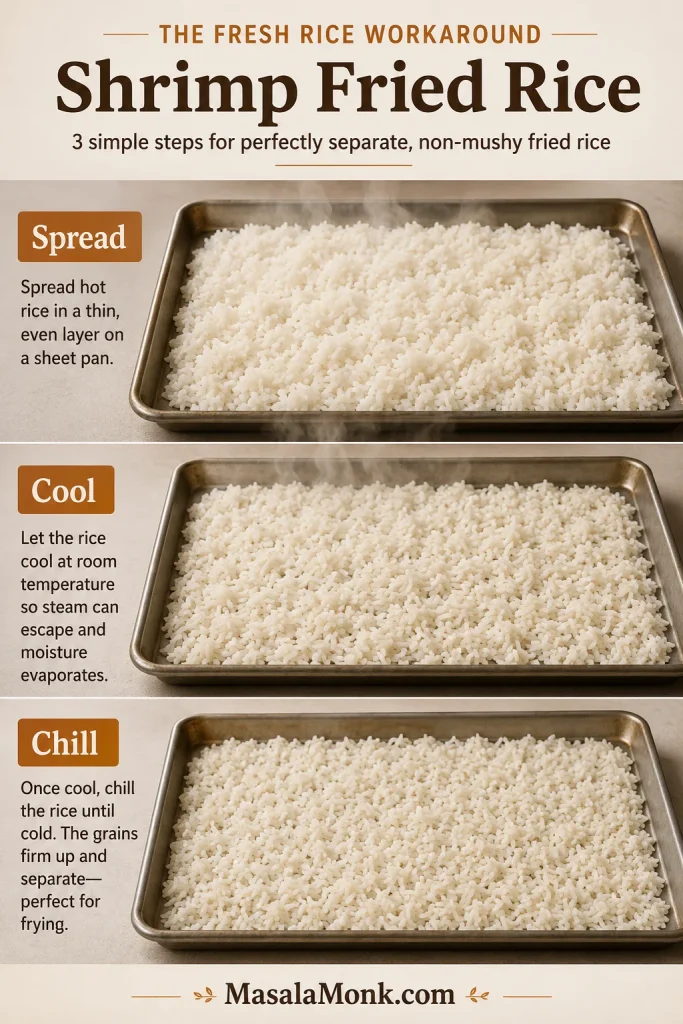
Three-step guide showing fresh rice spread on a sheet pan, cooled, and chilled before being used for fried rice.
No day-old rice? Spread fresh rice thinly, let the steam escape, and chill it until the surface dries so it behaves more like leftover rice.

Fresh rice will not be quite as effortless as day-old rice, but it can still make good fried rice when you cool it properly. You are just trying to give it the same dry surface that leftovers already have.

Shrimp, Prawns, Frozen Shrimp, and Cooked Shrimp

Whether your market sells them as shrimp or prawns, cook them the same way here. Start with seafood that is dry on the surface, cook it briefly, and bring it back only after the rice has had time in the pan.

Size changes the way the fried rice eats, not just how it looks. Choose 26–30 count shrimp for a juicy home-style pan. For smaller restaurant-style pieces through every bite, use 51–60 count shrimp. Very large shrimp are best chopped into bite-size pieces so the rice eats evenly.

Shrimp SizeBest Use
51–60 count / small shrimpBest for restaurant-style fried rice because shrimp pieces mix through every bite.
26–30 count / medium shrimpBest balance for home cooks; juicy but still easy to mix into rice.
16–20 count / large shrimpLooks generous, but may need chopping so the rice eats evenly.
Cooked shrimpUse only in a pinch. Add at the end just to warm through.

How to Thaw and Dry Frozen Shrimp

Frozen shrimp can work as well as fresh shrimp when it is thawed safely and dried thoroughly. The goal is to remove surface moisture before the shrimp hits the hot pan.
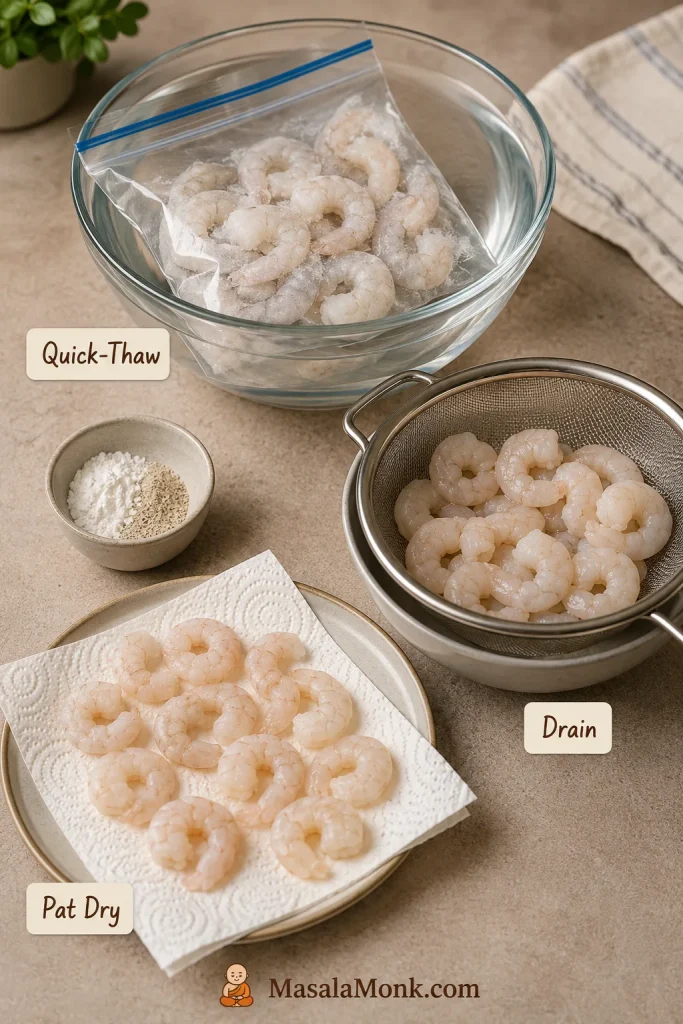
Frozen shrimp sealed in a bag thawing in cold water, with drained shrimp and paper towel-dried shrimp beside it.
After a cold-water thaw, dry shrimp well before it hits the pan. A dry surface sears better and keeps the rice from steaming later.

Shrimp Doneness: Loose C, Not Tight Curl

The best doneness cue is visual: shrimp should turn opaque and curl gently. When it tightens into a firm ring, it has usually cooked too long.
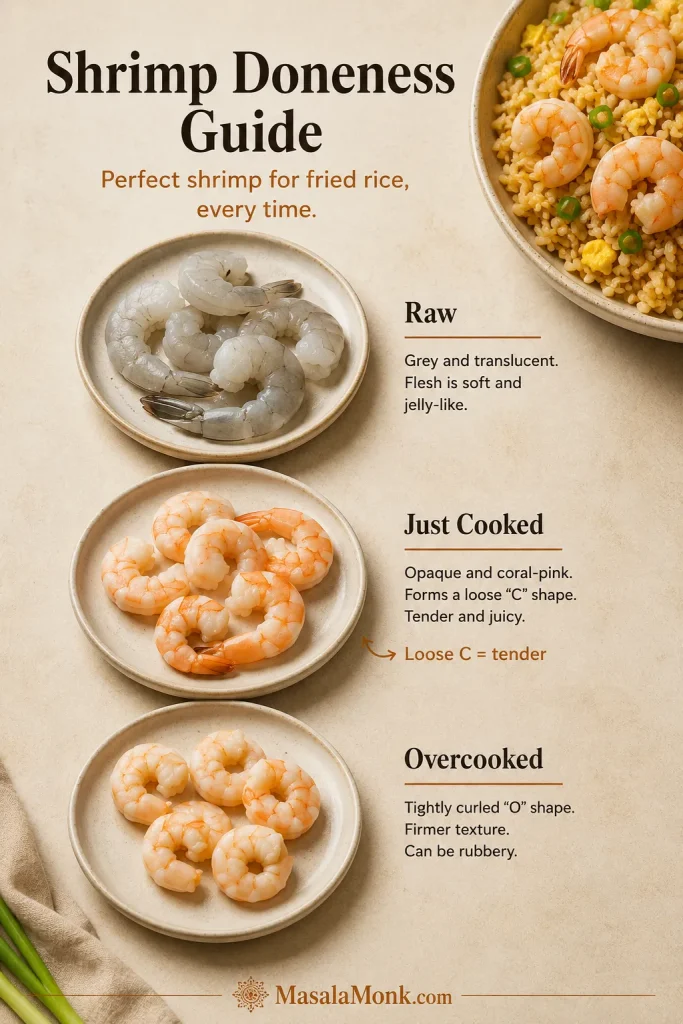
Shrimp doneness guide showing raw grey shrimp, just-cooked coral shrimp in a loose C shape, and overcooked tightly curled shrimp.
Watch the shape, not only the color. A loose C-shape usually means tender shrimp, while a tight curl means it has stayed on the heat too long.

If you are using pre-cooked shrimp, do not sear it again. Add it near the end and toss only until warm. For shrimp that starts raw, a loose C-shape is usually a good cue; tight, firm curls usually mean it stayed on the heat too long.

When the shrimp is right, it should feel juicy and springy against the rice, not tight or chewy. That contrast is what makes the bowl feel generous.

The Sauce Ratio That Keeps Fried Rice Glossy, Not Wet

If your fried rice tastes salty but still flat, more soy sauce is usually not the answer. Try aroma, pepper, scallions, chili, or a tiny bit of sweetness before adding more liquid.

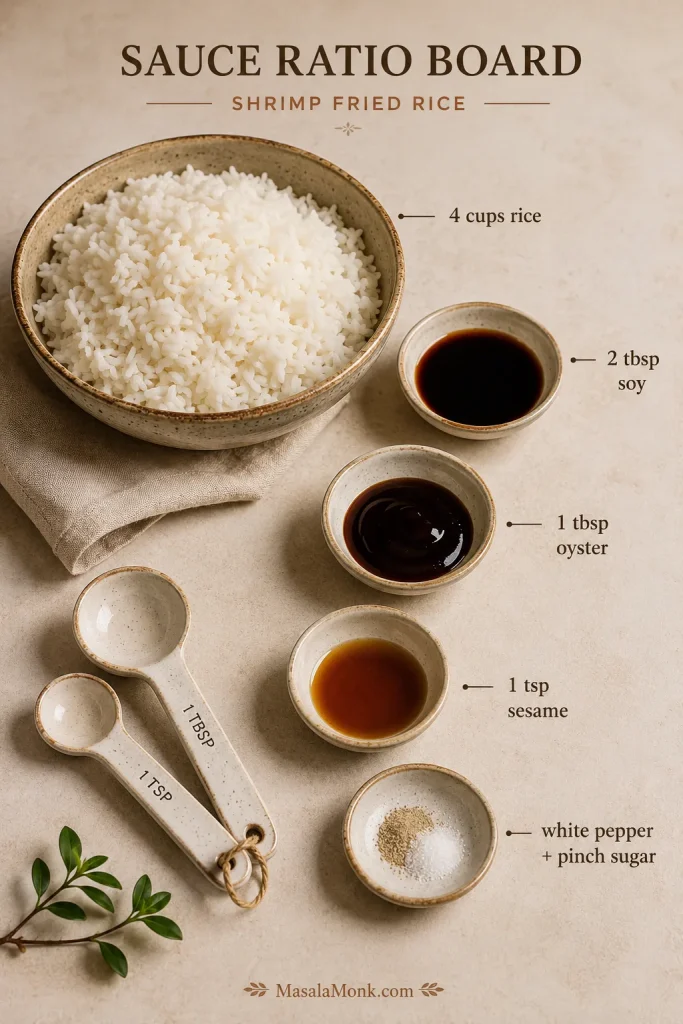
A balanced pan should taste savory all the way through, not sit in a puddle of sauce. For 4 cups cooked rice, this is enough to coat the grains without making them heavy:

  • 2 tbsp / 30 ml light soy sauce
  • 1 tbsp / 15 ml oyster sauce, optional
  • 1 tsp / 5 ml toasted sesame oil
  • 1/4 tsp white pepper
  • 1/4 tsp sugar
Sauce ratio board showing four cups of rice with soy sauce, oyster sauce, sesame oil, white pepper, and sugar.
A good sauce ratio should season the rice, not drown it. Measure first, then add just enough soy, oyster sauce, sesame oil, and white pepper for balance.

Mix the sauce before you start cooking. Fried rice moves quickly, and stopping to measure sauces while the pan is hot can lead to overcooked shrimp or wet rice.

A small splash of dark soy sauce can add color, while light soy sauce stays the main seasoning. Too much dark soy can make the rice look heavy and taste overly salty.

Sauce Ratio by Rice Amount

Sauce is where fried rice can go from balanced to salty fast. Start with these amounts, then taste at the end.

Cooked RiceSoy SauceOyster SauceSesame Oil
2 cups1 tbsp / 15 ml1 1/2 tsp / 7 ml1/2 tsp / 2.5 ml
3 cups1 1/2 tbsp / 22 ml2 tsp / 10 ml3/4 tsp / 4 ml
4 cups2 tbsp / 30 ml1 tbsp / 15 ml1 tsp / 5 ml

If you skip oyster sauce, keep the soy sauce measured and build flavor with white pepper, scallions, heat, or a tiny pinch of sugar after tasting. If the rice tastes flat or salty, check the pan cues before adding more soy sauce.

Sauce Swaps

  • No oyster sauce: Skip it, then taste for white pepper, scallions, heat, or a tiny pinch of sugar.
  • Gluten-free: Use tamari instead of soy sauce and check the oyster sauce label.
  • No soy sauce: Use coconut aminos, or season lightly with salt and a tiny splash of broth.
  • No sesame oil: Skip it and finish with extra scallions for freshness.
  • Spicy: Add chili crisp, sriracha, sambal, chopped green chili, or red pepper flakes.

Wok vs Skillet: Best Pan for Home Stoves

If you have ever made fried rice in a small pan and wondered why it steamed instead of fried, the pan size is probably the reason — not your cooking skill.

A wok is excellent for fried rice because it gives you room to toss and move ingredients quickly. But a large skillet is often better for home cooks than a small wok on a weak burner.

You do not need restaurant heat; you need restaurant order. A wide hot skillet, dry rice, and a little patience between stirs will get you much closer than a crowded wok on weak heat.

Comparison image showing shrimp fried rice being tossed in a wok and spread across a wide skillet.
On a home stove, a wide skillet often beats a small wok. More surface area lets more rice touch direct heat at once.

With less crowding, the rice has room to sizzle, which is where the better texture comes from. When the pan is too full, the vegetables leak water, the rice steams, and the sauce sits underneath instead of clinging to the grains.

  • Use a wok if your stove gives strong heat and you can toss quickly.
  • Choose a large non-stick skillet for the easiest beginner-friendly option.
  • Try a heavy stainless or cast-iron skillet if it holds heat well and you are comfortable managing sticking.
  • Cook in batches if your pan is small. A small pan can still make good fried rice — it just needs batches.

The Pan Cues That Matter Most

Use this while the rice is still in the pan. The troubleshooting table later is for fixing or understanding what went wrong; this section helps you catch problems before they become permanent.

Good fried rice gives you clear signs while it cooks. The pan tells you when to move forward and when to pause: steam, puddles, tight shrimp, or rice that sits in clumps instead of moving freely.

Think of it as the fried rice pan test: sizzle means go, steam means pause, puddles mean keep tossing, and tight shrimp means it cooked too long.
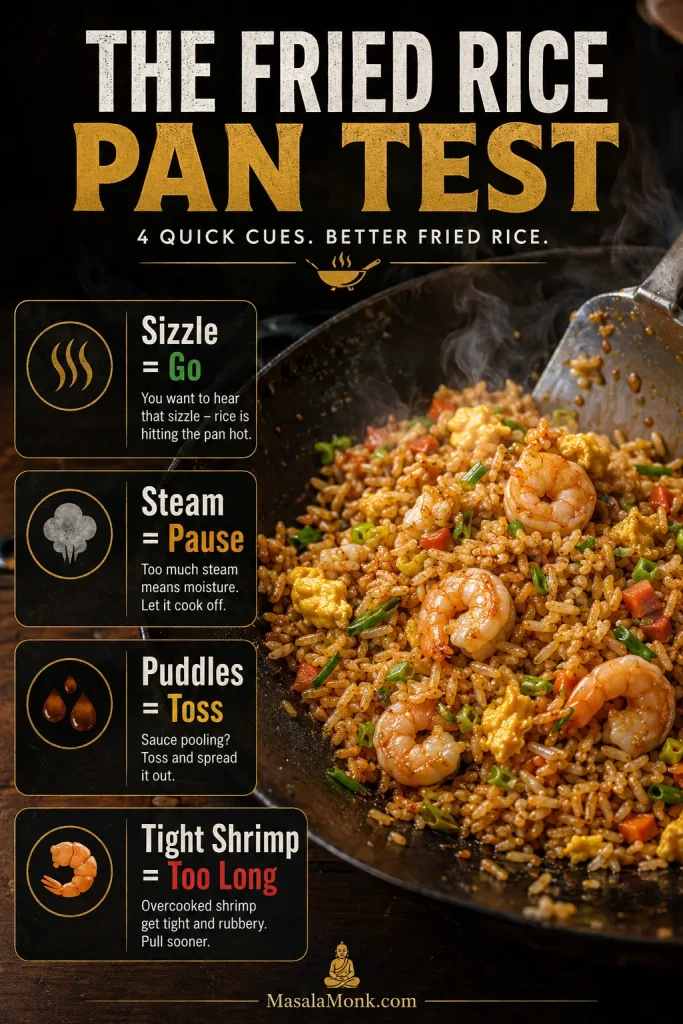
Fried rice pan test infographic showing four cues: sizzle means go, steam means pause, puddles mean toss, and tight shrimp means too long.
Let the pan guide you: sizzle means keep frying, steam means slow down, puddles need tossing, and tight shrimp should come off sooner.
CueWhat It MeansWhat to Do
Rice sizzlesThe pan is hot enough and the grains are frying.Let the rice get contact with the pan before adding sauce.
Rice steams heavilyThe pan is crowded or there is too much moisture.Spread the rice out or cook in batches.
Sauce pools underneathToo much liquid was added or the rice was not hot enough.Keep tossing over heat until the sauce clings to the grains.
Shrimp is tight and firmIt stayed on the heat too long.Cook shrimp briefly next time and return it only at the end.
Flavor tastes flatThe rice may need lift, not more liquid.Add white pepper, scallions, chili, or a tiny pinch of salt before more soy sauce.

When it is ready, you should see loose grains, springy shrimp, soft egg, fresh scallions, and no sauce puddles.

Shrimp Fried Rice Variations

Once the base method works, you can take the same pan in a few different directions: brighter with pineapple and lime, hotter with chili crisp, fuller with chicken, lighter with cauliflower rice, or simpler without egg. Keep the rice dry and the sauce measured, and the texture stays in your control.

Looking for a specific version? Jump to restaurant-style, pineapple, or chicken and shrimp fried rice.

Prawn Fried Rice

Use prawns exactly the same way as shrimp. Medium prawns stay juicy and still mix well with the rice. Very large prawns are easier to eat when cut into bite-size pieces before cooking or after searing.

Restaurant-Style Shrimp Fried Rice

Use jasmine rice, white pepper, scallions, a little oyster sauce, and small shrimp pieces that mix through the rice. Drizzle the sauce around the edge of the hot skillet so it sizzles before coating the grains. Keep the sauce light so the rice tastes restaurant-style without turning dark, salty, or heavy.
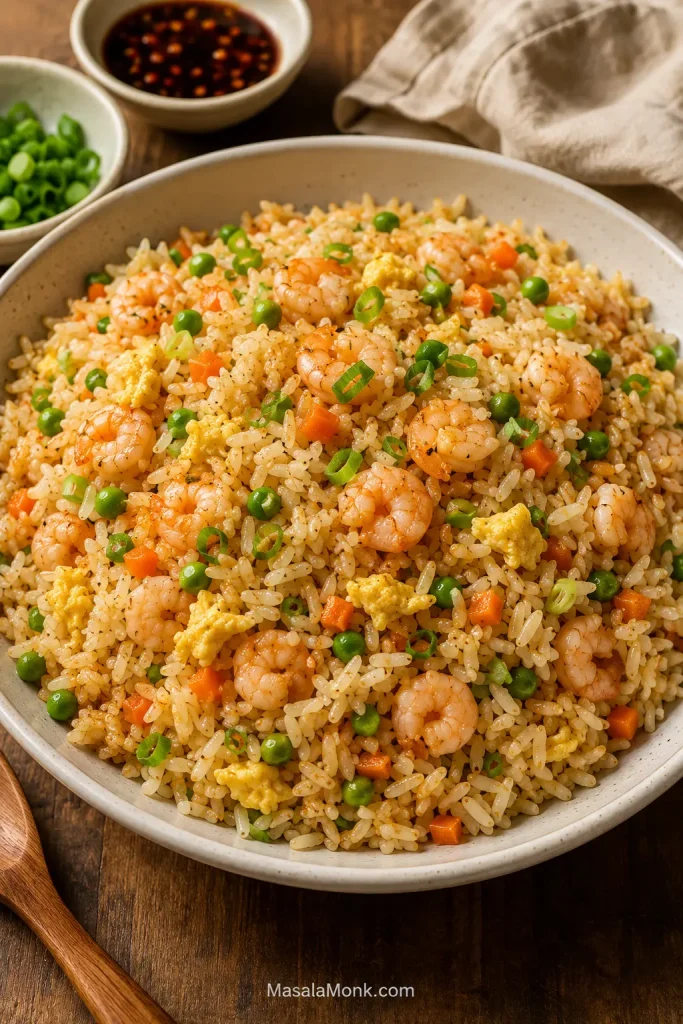
Restaurant-style shrimp fried rice in a bowl with small shrimp, egg, peas, carrots, scallions, and lightly glossy rice.
Restaurant-style shrimp fried rice should taste savory, not heavy. Keep the sauce light, finish with scallions and white pepper, and let the rice stay golden.

Pineapple Shrimp Fried Rice

Add 1/2 to 3/4 cup pineapple chunks, diced bell pepper, and a squeeze of lime at the end. Use less sugar in the sauce because pineapple brings sweetness. For a Thai-style direction, add a small splash of fish sauce, chopped chili, and extra scallions. Drain the pineapple well so the rice stays glossy instead of wet.
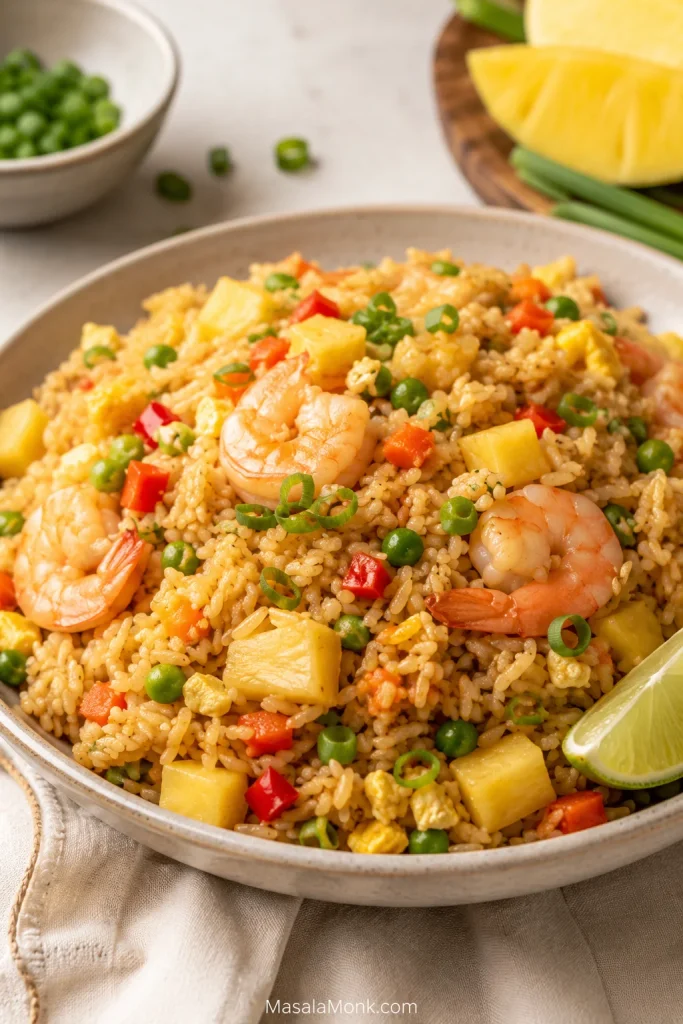
Pineapple shrimp fried rice with shrimp, pineapple chunks, egg, peas, carrots, red pepper, scallions, and a lime wedge.
Pineapple shrimp fried rice works best when the fruit is bright but not juicy. Drain it well and add it near the end so the rice stays fluffy.

Chicken and Shrimp Fried Rice

Use small pieces of boneless chicken along with the shrimp. Cook the chicken first until done, remove it, then cook the shrimp briefly. Return both proteins near the end so neither overcooks.
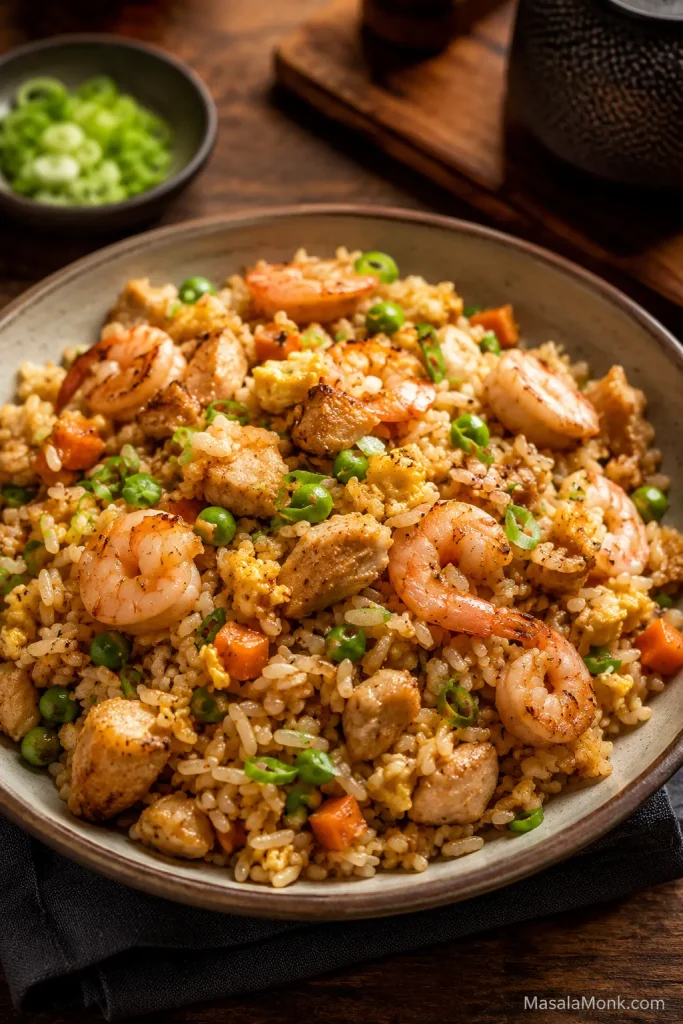
Chicken and shrimp fried rice with plump shrimp, browned chicken pieces, egg, peas, carrots, scallions, and glossy rice.
Chicken and shrimp need different timing. Cook the chicken first for browning, then add shrimp briefly so both proteins stay juicy.

Shrimp Fried Rice Without Egg

Skip the eggs and add more vegetables, tofu, or extra shrimp. Since egg adds richness, finish with scallions, white pepper, and a small amount of sesame oil to keep the rice flavorful.

Shrimp Fried Rice Without Soy Sauce

Use coconut aminos for a sweeter soy-free version, or season with salt, white pepper, sesame oil, and a tiny splash of broth. Add less liquid than you think you need, then taste after tossing.

Spicy Shrimp Fried Rice

Add chili crisp, sambal, sriracha, chopped green chili, or red pepper flakes. For the best texture, add chili oil or chili crisp near the end instead of flooding the rice early.

Cauliflower Shrimp Fried Rice

Use cauliflower rice instead of cooked rice for a lighter version. Frozen cauliflower rice should be thawed and squeezed dry first. Fry it in a wide skillet and leave it uncovered so it does not turn watery.

Why Fried Rice Turns Mushy — and How to Fix It

A difficult pan of fried rice is usually not a disaster. It is feedback: too much moisture, not enough heat, too much sauce, or shrimp that stayed in the pan too long.

Most fried rice problems are easy to diagnose once you know what to look for. Steam means moisture, puddles mean liquid, clumps mean the rice needed breaking up earlier, and tight shrimp means it stayed in the heat too long.
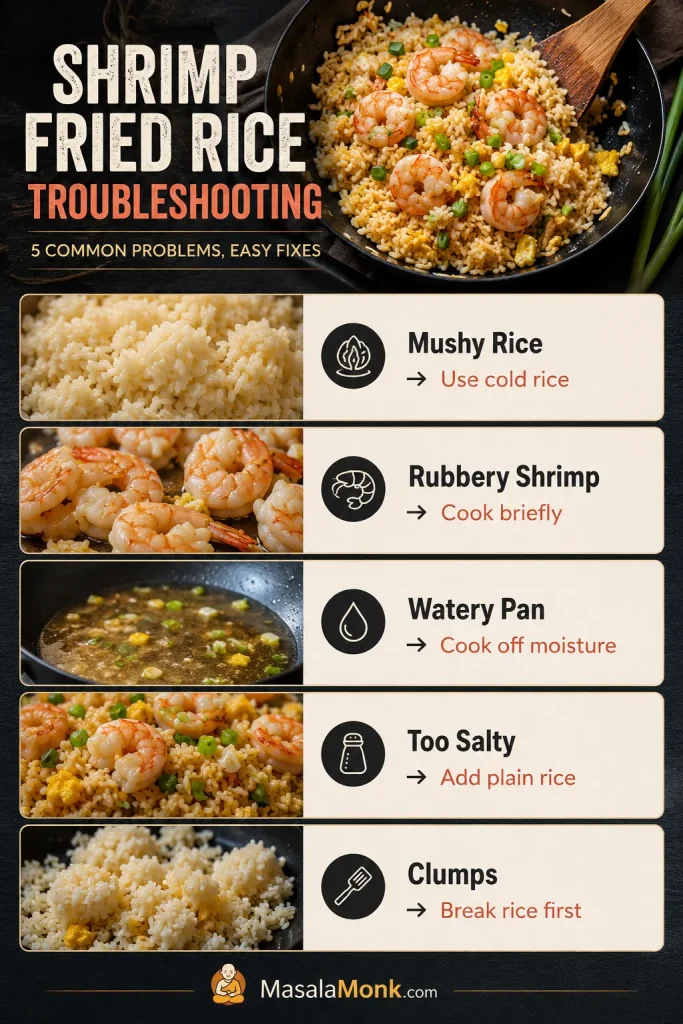
Troubleshooting board with fixes for mushy rice, rubbery shrimp, watery pan, salty rice, and rice clumps.
Mushy shrimp fried rice usually starts with excess moisture. Dry rice, dry add-ins, measured sauce, and enough pan space fix most texture issues.
ProblemWhy It HappenedFix
Rice is mushyRice was warm or wet, sauce was too heavy, or the pan was crowded.Use cold rice, reduce sauce, use a wider pan, and cook in batches.
Shrimp is rubberyShrimp cooked too long or stayed in the pan while the rice finished.Cook shrimp briefly, remove it, and return it at the end.
Rice tastes blandSauce was uneven or the rice was not seasoned enough.Mix sauce before cooking and taste for salt, white pepper, scallions, and heat before adding more sauce.
Rice is too saltyToo much soy sauce, oyster sauce, or dark soy sauce was added.Add plain rice, egg, or extra vegetables to balance it.
Rice is clumpyCold rice was added in large chunks.Break rice apart before it goes into the pan.
Fried rice is wateryFrozen shrimp, frozen vegetables, or pineapple added too much moisture.Dry shrimp well, cook off vegetable moisture, and drain pineapple before adding.
Egg disappeared into the riceEgg was mixed into wet rice or over-stirred.Scramble egg separately, then return it near the end.

What to Serve with Shrimp Fried Rice

This can be dinner on its own, especially with egg and vegetables. Because the rice is savory and glossy, the best sides bring crunch, acidity, freshness, or heat.
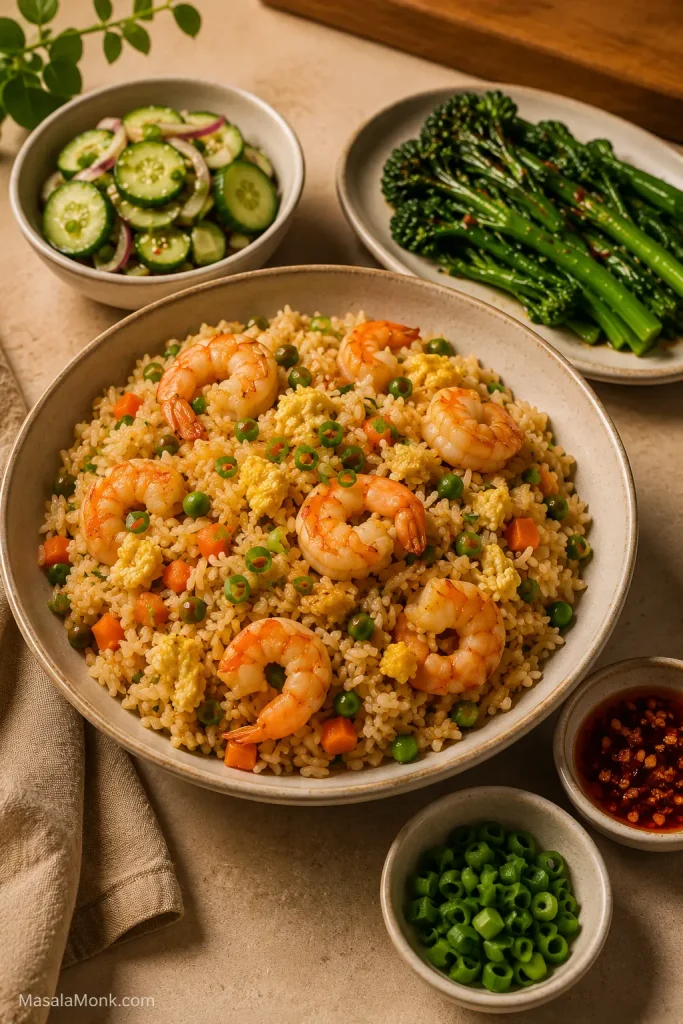
Shrimp fried rice served with cucumber salad, broccolini, chili crisp, scallions, and small side dishes.
Because shrimp fried rice is savory and rich, pair it with something crisp, green, acidic, or spicy. That contrast makes the meal feel fresher.
  • Cucumber salad or quick pickled cucumbers
  • Steamed or stir-fried greens
  • Spring rolls or lettuce wraps
  • Clear soup or hot and sour soup
  • Chili oil, chili crisp, or extra scallions on top

For a cold, crisp contrast, MasalaMonk’s cucumber salad recipe works especially well beside salty, glossy rice. For another quick shrimp dinner in a different direction, the shrimp scampi recipe gives you garlic butter, lemon, and tender shrimp instead of soy-sesame rice.

Storage and Reheating

This dish tastes best fresh from the pan, but leftovers can still be good when they are cooled, stored, and reheated properly.

  • Refrigerate: Store cooled shrimp fried rice in an airtight container for up to 3 days.
  • Reheat in a skillet: Warm over medium heat with a few drops of oil or water. Stir gently until hot.
  • Microwave carefully: Use short bursts and stop as soon as the rice is hot. Shrimp can get rubbery if overheated.
  • Freezing: Freezing is possible, but the shrimp and egg texture may not be as good after reheating.

Leftover rice note: Because this recipe often starts with leftover rice, cooling and reheating matter. If you cook rice ahead for fried rice, cool it quickly in a shallow container and refrigerate it within 2 hours. Do not leave cooked rice sitting out for hours before chilling. Reheat shrimp fried rice until hot all the way through, and reheat only the portion you plan to eat. For more detail, see the USDA leftover food safety guidance.

FAQs About Shrimp Fried Rice

What is the best rice for shrimp fried rice?

Cold cooked jasmine or long-grain white rice is the easiest choice because the grains stay separate in a hot skillet. Dry basmati can also work well when it has been cooked firm and cooled fully.

Do you need cold rice for shrimp fried rice?

Cold rice is easiest because the grains are firmer and drier on the surface. Fresh rice can work too, but it needs cooling time first so it stops steaming.

Can you use freshly cooked rice for shrimp fried rice?

Yes, but not straight from the cooker. Cook it slightly firm, spread it out so steam escapes, then chill it until the surface feels dry. Break up the grains before adding them to the pan.

How do you make shrimp fried rice not mushy?

Use cold rice, a hot wide pan, and a measured amount of sauce. Pat shrimp dry, cook off moisture from frozen vegetables, and avoid crowding the pan.

What shrimp works best for fried rice?

Raw peeled and deveined medium shrimp is the easiest choice. Smaller shrimp give a more restaurant-style bite, while very large shrimp are better chopped.

Should shrimp be cooked before adding rice?

Yes. Cook shrimp briefly first, remove it from the pan, then return it after the rice is fried. This keeps the shrimp tender while the rice gets enough time on the heat.

How much sauce should you add to shrimp fried rice?

For 4 cups cooked rice, start with 2 tablespoons soy sauce, 1 tablespoon oyster sauce, 1 teaspoon sesame oil, white pepper, and a small pinch of sugar. Add more only after tasting.

Is oyster sauce necessary?

No. Oyster sauce gives a deeper takeout-style flavor, but the rice still works without it. Keep the soy sauce measured, then use white pepper and scallions for extra flavor.

How do you make shrimp fried rice with frozen shrimp?

Thaw frozen shrimp fully and pat it dry. Season it, cook it briefly in a hot pan, then remove it before frying the rice so it stays juicy and the skillet stays dry.

Do prawns work instead of shrimp?

Yes. Prawns work the same way in this recipe. Use raw peeled and deveined prawns, dry them well, cook them briefly, and return them at the end.

How do you make shrimp fried rice without egg?

Skip the egg and add more shrimp, vegetables, or tofu. Since egg adds richness, finish with scallions, white pepper, and a small amount of sesame oil.

How long does shrimp fried rice keep?

Shrimp fried rice keeps for up to 3 days in the refrigerator when stored in an airtight container. Cool it before storing and reheat only the portion you plan to eat.

What is the best way to reheat shrimp fried rice?

A skillet over medium heat gives the best texture. Add a few drops of oil or water and stir gently until hot. Use short microwave bursts if reheating quickly.

Back to recipe card · Back to quick answer

The Takeaway

Good shrimp fried rice is not about a long ingredient list. It is about giving the rice enough heat, keeping the shrimp tender, and using just enough sauce to season every grain.

Once you hear the rice sizzling instead of steaming, you are on the right track. Keep the shrimp brief, the sauce measured, and the pan wide, and this becomes the kind of fried rice you can repeat with whatever is already in the fridge.

The best version does not taste like leftovers. It tastes like a hot pan gave yesterday’s rice a second life.
Posted on 2 Comments

Rice Pudding with Cooked Rice

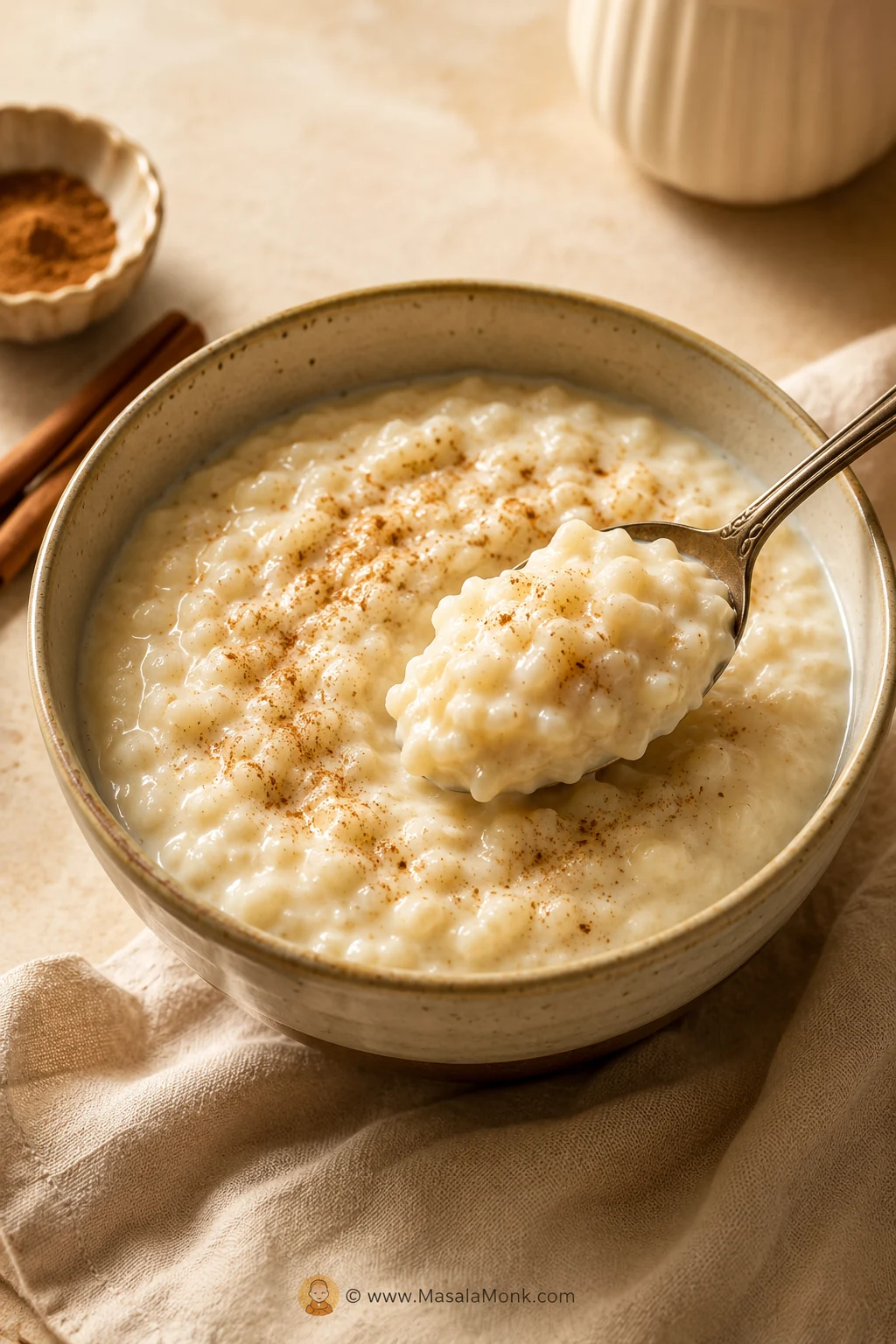
Creamy rice pudding made with cooked rice in a ceramic bowl, lightly dusted with cinnamon and served with a spoon.

This rice pudding with cooked rice is the recipe to make when you have leftover rice in the fridge and want something warm, creamy, and comforting without starting from raw rice. You only need cooked rice, milk, sugar, vanilla, cinnamon, a little salt, and about 20 minutes on the stove.

You can use leftover white rice, jasmine rice, basmati rice, short-grain rice, plain takeout rice, or any pre-cooked rice that has been stored safely. The real trick is the ratio: start with roughly equal parts cooked rice and milk, then adjust depending on how dry, soft, or separate the rice is.

The main recipe is an easy no-egg stovetop version. Once you have that base down, you can make it more custardy with egg, richer with condensed milk or evaporated milk, or faster in the microwave. You will also find the small fixes that matter most, because cooked-rice pudding can go from too thin to too thick very quickly when the rice is especially dry or starchy.

Quick Answer: How to Make Rice Pudding with Cooked Rice

To make rice pudding with cooked rice, simmer 2 cups cooked rice with 2 cups milk, ⅓ cup sugar, ¼ teaspoon salt, and ½ teaspoon cinnamon over medium-low heat until creamy. Stir often, then finish with 1 tablespoon butter and 1 teaspoon vanilla. The pudding usually takes 15 to 20 minutes on the stove, plus a short rest so it thickens into a spoonable texture.

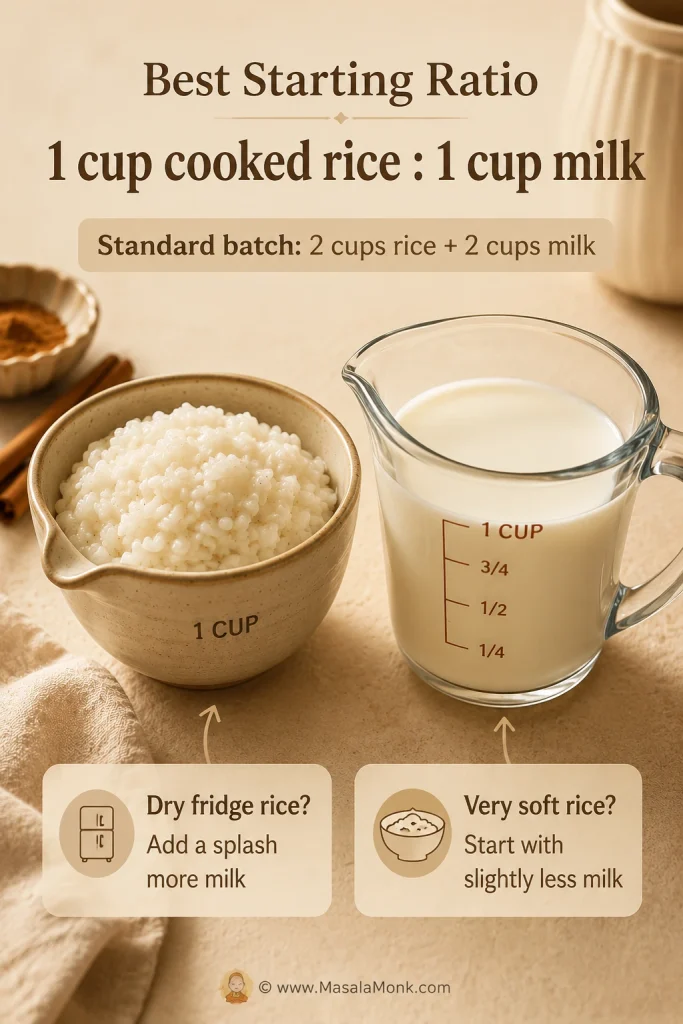
At a glance: use 2 cups cooked rice, 2 cups milk, ⅓ cup sugar, and 15–20 minutes on the stove. The best starting ratio is about 1 cup cooked rice to 1 cup milk; add a splash more milk for dry fridge rice or use slightly less for very soft rice.

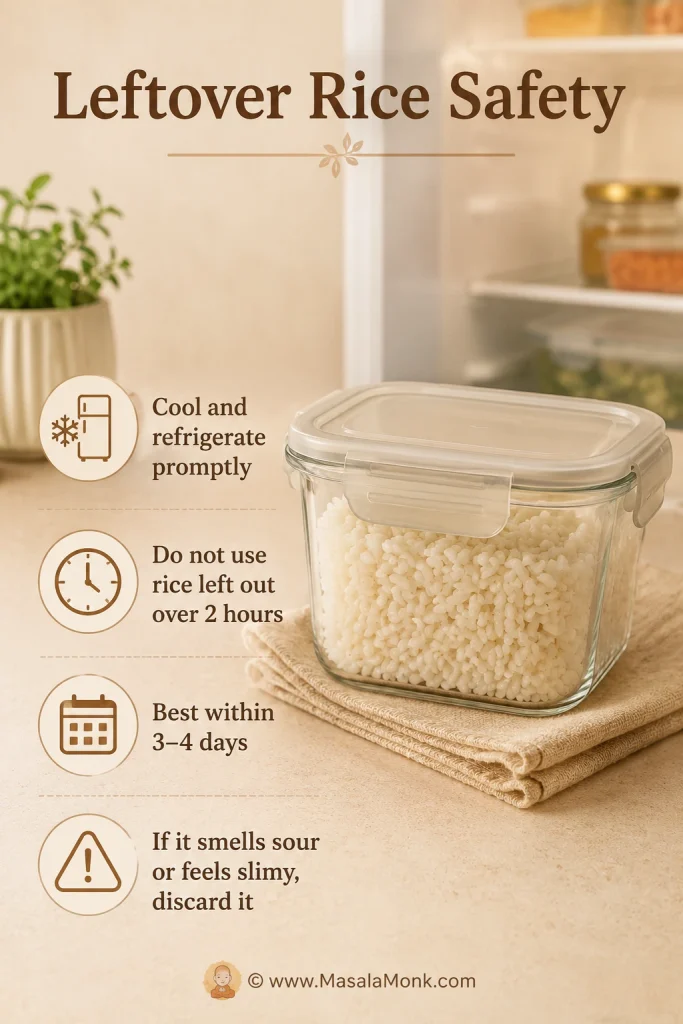
Leftover rice safety: only use rice that was cooled and refrigerated promptly. If it sat out for more than 2 hours, smells sour, feels slimy, or you are unsure how long it has been stored, skip it and start with a fresh batch of plain cooked rice.

Don’t worry if it looks a little loose while it is still hot. Rice pudding thickens as it rests, and leftover rice keeps absorbing milk even after the heat is off.

Want the exact amounts? Go to the recipe card. Need to adjust for dry or soft rice? See the ratio guide.

Why This Recipe Works

Cooked rice pudding behaves differently from rice pudding made with raw rice. Raw rice needs time to absorb liquid and release starch. Cooked rice has already absorbed water, so the goal is not to cook the rice from scratch. Instead, you are softening it, loosening the grains, seasoning it properly, and simmering the milk until everything turns creamy.

That is why this recipe starts with a simple 1:1 ratio of cooked rice to milk. It gives the rice enough liquid to soften again without drowning it. As the mixture simmers, starch from the rice thickens the milk. Butter and vanilla go in at the end so the pudding tastes round, fragrant, and dessert-like instead of plain sweet rice.

The default version is made without egg because it is easier, smoother, and less likely to curdle or scramble. That said, a custardy egg version is included below for anyone who likes a more old-fashioned rice pudding.

The Best Ratio for Cooked Rice Pudding

The easiest way to avoid soupy or gluey pudding is to start with the right ratio. Think of this as a flexible starting point, not a strict rule, because leftover rice can be soft, dry, fluffy, sticky, or somewhere in between.

Ratio guide for rice pudding with cooked rice showing one cup cooked rice to one cup milk, with notes for dry and soft rice.
The easiest starting point is equal parts cooked rice and milk. From there, dry leftover rice may need an extra splash, while very soft rice usually needs a little less liquid to stay creamy instead of mushy.
Cooked Rice Milk Best For Texture Note
1 cup cooked rice 1 cup milk Small batch Good for 2 small servings.
2 cups cooked rice 2 cups milk Standard batch Best starting point for 4 servings.
3 cups cooked rice 3 cups milk Family batch Use a wider saucepan so it thickens evenly.
Dry leftover rice Equal milk plus 2–4 tbsp extra Cold fridge rice, basmati, takeout-style plain rice Add extra milk early so the grains soften.
Very soft cooked rice Start with 2–4 tbsp less milk Freshly cooked soft rice or short-grain rice Cook gently to avoid a mushy texture.

This ratio also makes the recipe easy to scale. If you have 1½ cups cooked rice, start with 1½ cups milk. If you have 4 cups cooked rice, start with 4 cups milk and use a large saucepan.

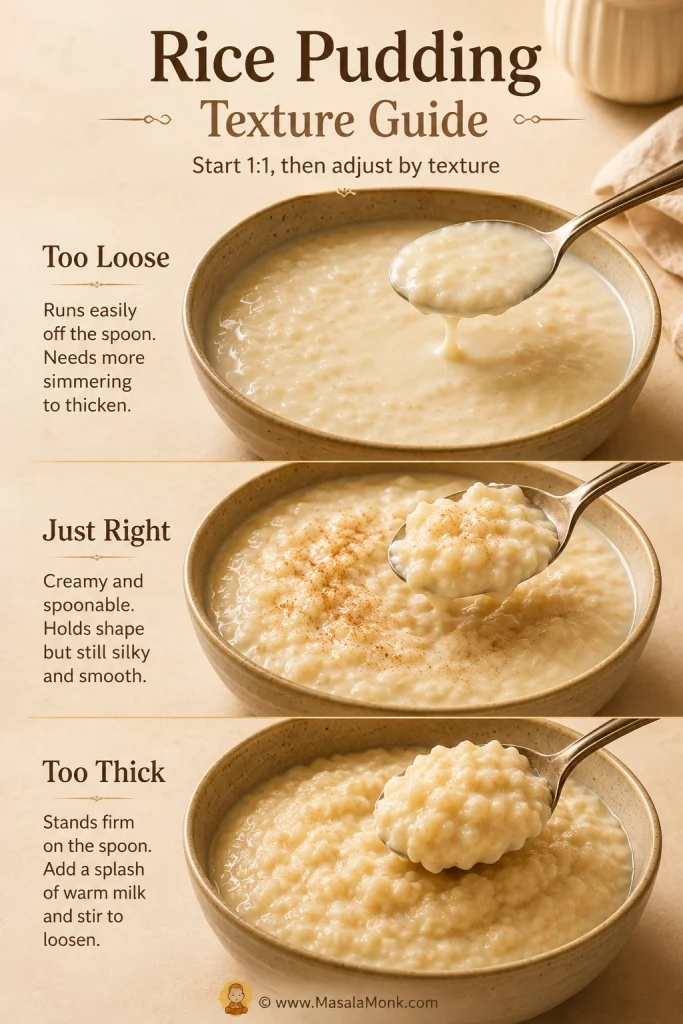
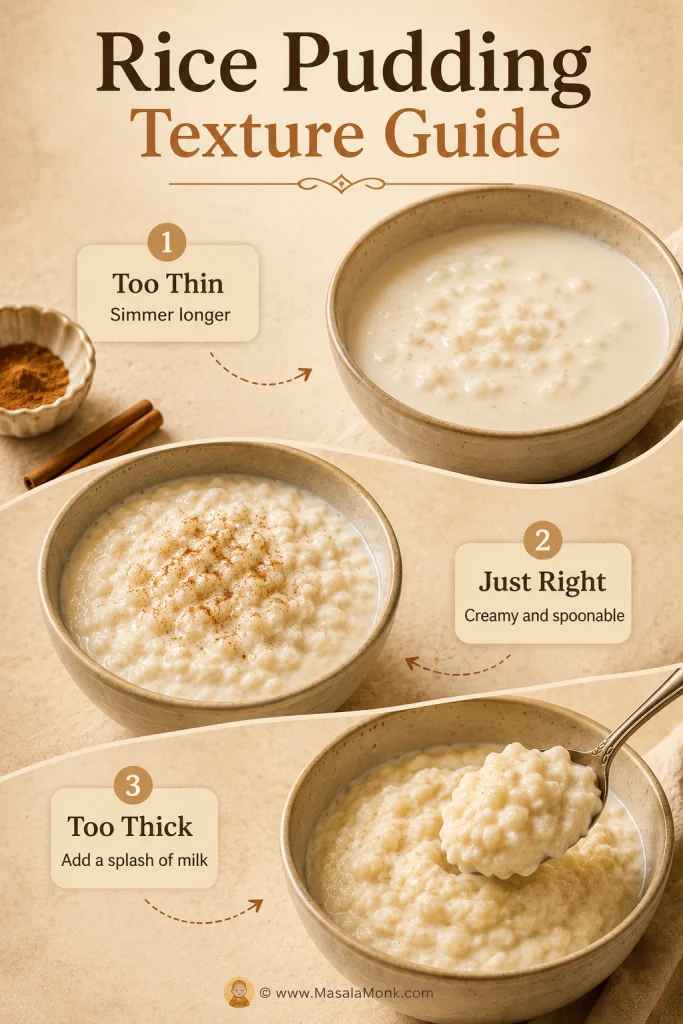
Three rice pudding textures in bowls, labeled too loose, just right, and too thick.
Texture is the real test, not just the timer. If the pudding runs like milk, keep simmering; if it mounds too heavily, loosen it with milk; if it coats the spoon softly, stop before it over-thickens.

Once the ratio makes sense, see how to make it. If your rice tends to turn dry, gummy, or too thick, keep the texture fixes handy.

Ingredients

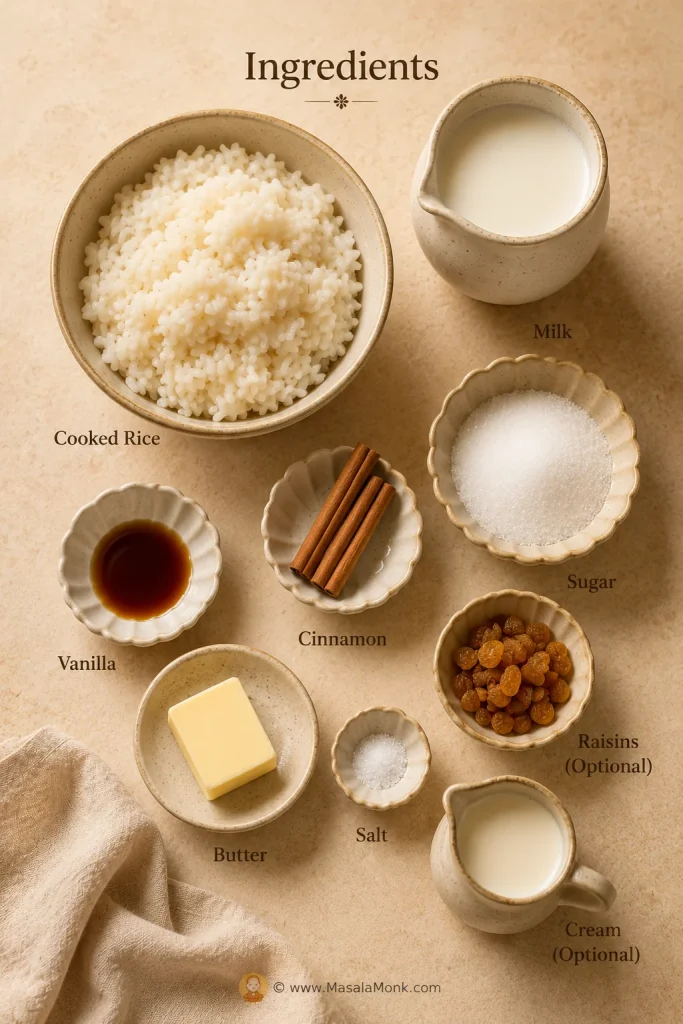
The ingredient list is short, and that is part of the comfort of this recipe. Cooked rice, milk, sugar, salt, cinnamon, vanilla, and butter are enough to make a soft, creamy pudding. From there, you can make it richer with cream, more old-fashioned with egg, sweeter with condensed milk, or dairy-free with coconut milk.

Ingredients for rice pudding with cooked rice, including cooked rice, milk, sugar, cinnamon, vanilla, butter, salt, raisins, and cream.
Each ingredient has a job: milk loosens the cooked rice, sugar sweetens, salt sharpens the flavor, cinnamon adds warmth, and vanilla plus butter make the pudding taste finished instead of flat.

What Kind of Cooked Rice Works Best?

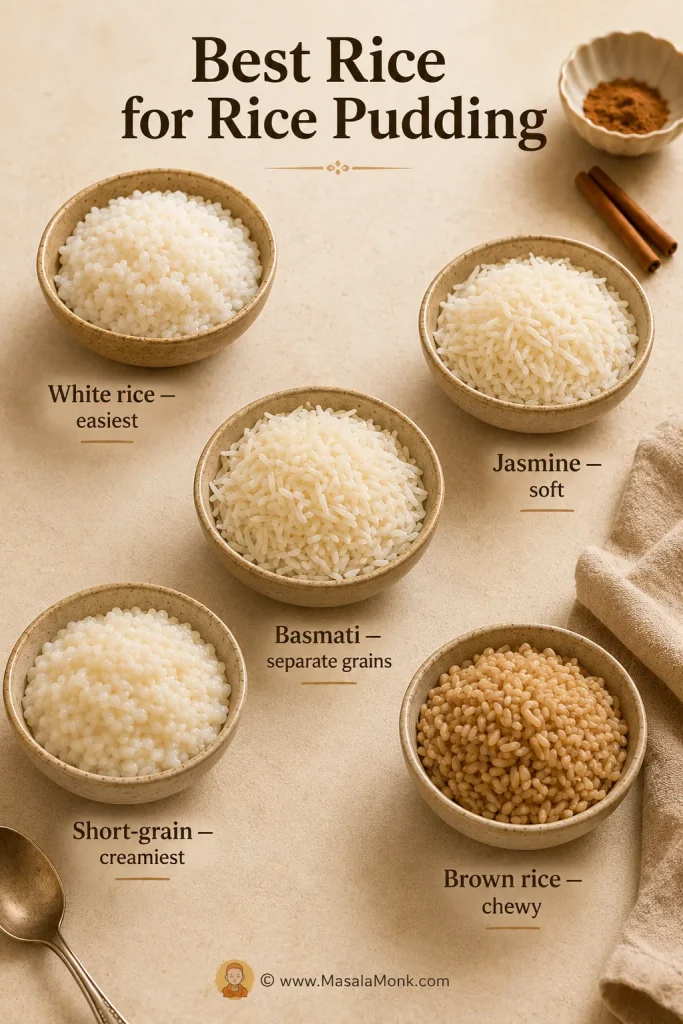
The rice you have will decide the final texture more than anything else. Basmati, jasmine, short-grain rice, and cold fridge rice all need slightly different handling, but plain cooked white rice is the easiest all-purpose choice.

Bowls of cooked white rice, jasmine rice, basmati rice, short-grain rice, and brown rice for making rice pudding.
The rice you start with changes the pudding you get. White rice is the easiest, jasmine turns soft and fragrant, basmati stays more separate, short-grain becomes thick and creamy, and brown rice gives a chewier bowl.

Cooked Rice Texture Guide

Cooked Rice Type Works? What to Expect
Plain cooked white rice Yes Best all-purpose choice. Creamy, neutral, and easy to season.
Jasmine rice Yes Soft and lightly fragrant. Good for a delicate pudding.
Basmati rice Yes Works well, but the grains stay more separate. Add 2–4 tbsp extra milk if it seems dry.
Short-grain rice or sushi rice Yes Thicker and creamier because it releases more starch. Watch the heat so it does not turn pasty.
Arborio rice Yes Very creamy, but it thickens quickly. Keep extra milk nearby.
Brown rice Sometimes Use only fully cooked, soft brown rice. The pudding will be chewier and nuttier, not classic and silky.
Plain takeout rice Sometimes Fine if it is plain, unsalted, and not oily. Avoid fried rice or seasoned rice.
Flavored rice packets No Usually too salty or savory for dessert.

How to Handle Dry Leftover Rice

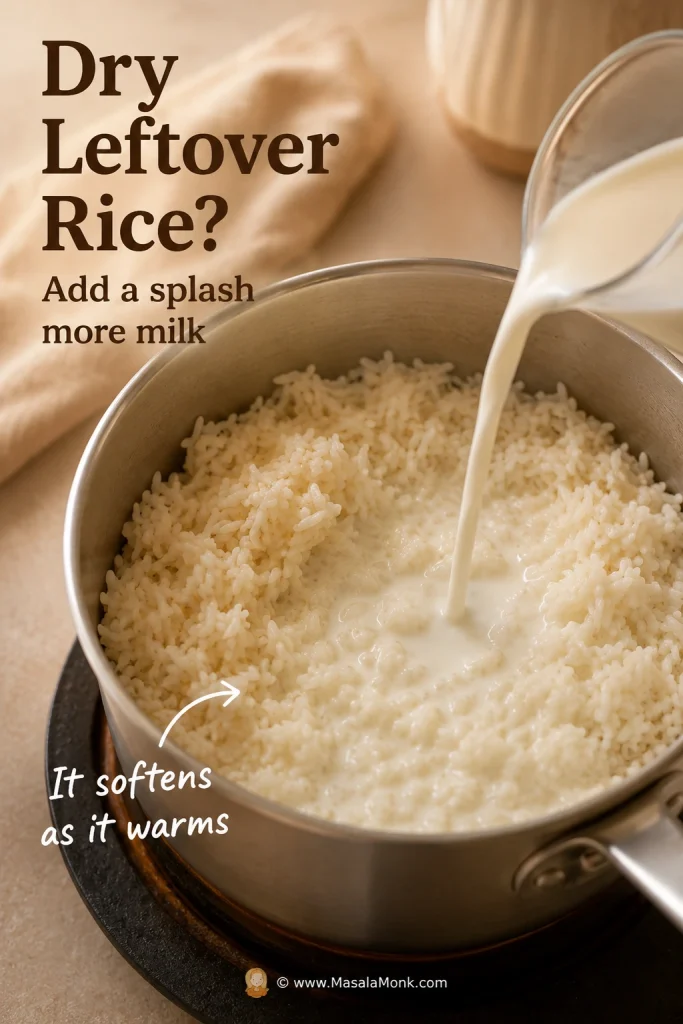
Cold leftover rice can look dry and stiff at first, especially if it has been in the fridge overnight. Give it time and enough milk before judging the final texture.

Dry leftover cooked rice in a saucepan being loosened with milk for rice pudding.
Cold rice can look dry and stubborn at first. Give it milk and gentle heat before judging the texture; the grains usually relax as they warm and turn much creamier than they looked in the fridge.

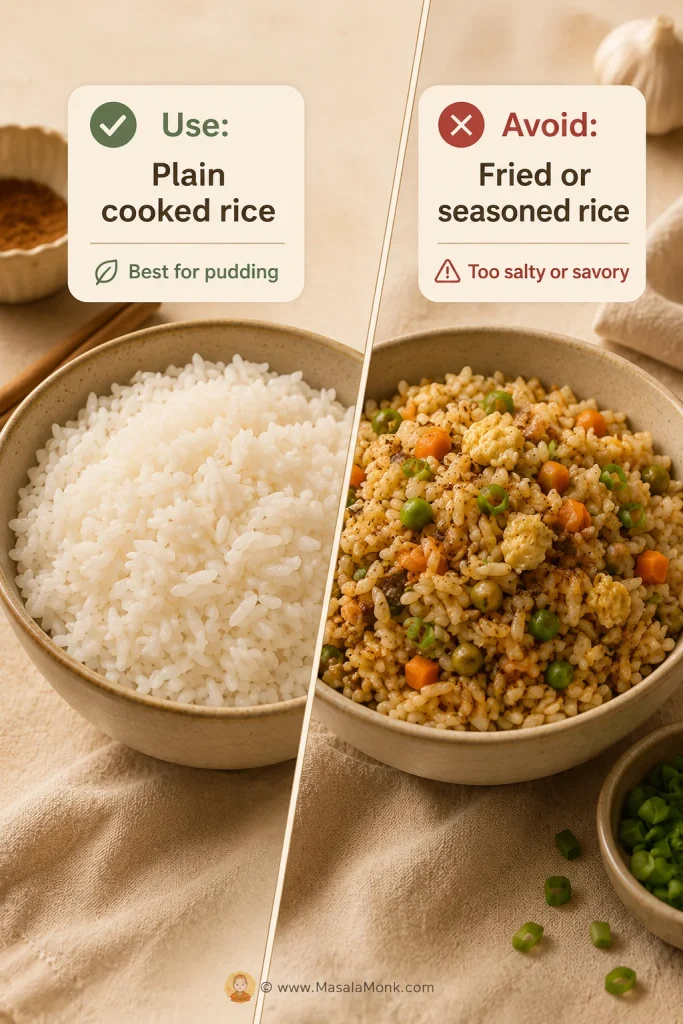
Use Plain Rice, Not Seasoned Rice

Do not use fried rice, salty takeout rice, rice cooked in broth, seasoned rice packets, or rice with garlic, onion, soy sauce, curry, or savory seasoning. This pudding needs plain cooked rice.

Side-by-side comparison of plain cooked rice for pudding and seasoned fried rice that should not be used.
Use plain cooked rice so the milk, cinnamon, vanilla, and sugar can build the dessert flavor cleanly. Seasoned rice, fried rice, or rice cooked in broth will bring savory notes that are hard to hide.

If you need to make a fresh batch first, this guide to how to cook rice perfectly covers stovetop, rice cooker, and Instant Pot methods, so you can start with plain rice that is soft enough for pudding.

Using dry fridge rice or basmati? Go to the texture fixes if your pudding looks too loose, too separate, or too thick once it starts cooking.

Milk, Cream, Condensed Milk, and Dairy-Free Options

Whole milk gives the best everyday texture. It is creamy without being too heavy. For a richer pudding, replace 2 to 4 tablespoons of the milk with heavy cream, or stir a splash of cream into the pudding at the end.

Evaporated milk makes the pudding richer and slightly more old-fashioned. Use half evaporated milk and half regular milk. Sweetened condensed milk makes the pudding thicker and sweeter, so reduce or skip the sugar when using it.

For a dairy-free version, use full-fat coconut milk, oat milk, or almond milk. Coconut milk gives the richest result. Almond milk is lighter and may need a slightly longer simmer or a small cornstarch slurry to thicken.

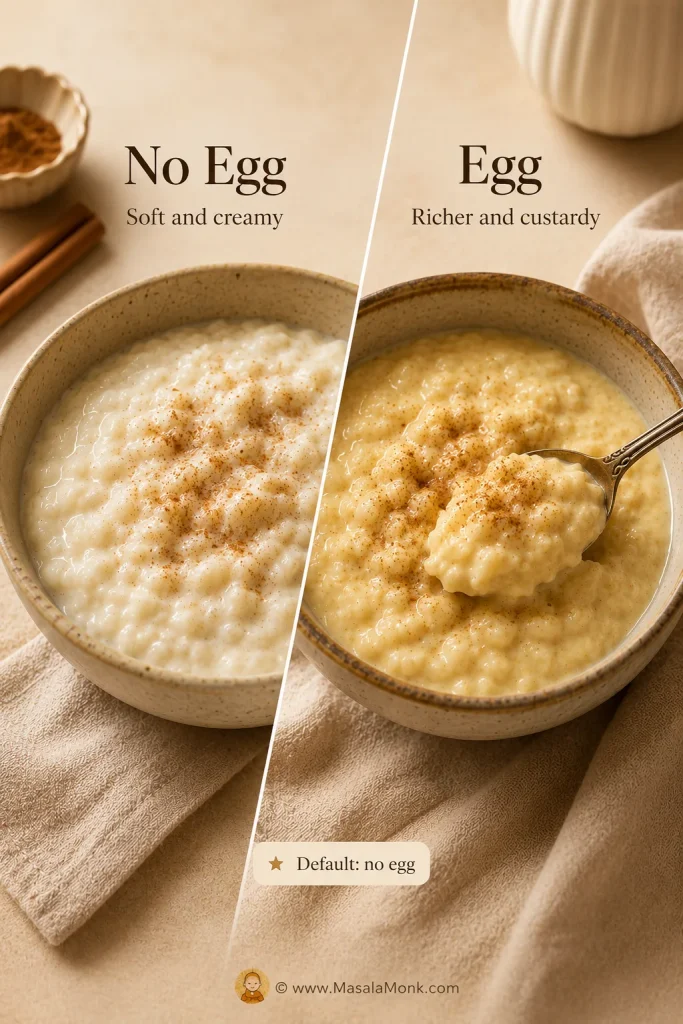
Egg or No Egg?

Egg is not required here. The easiest version uses no egg and thickens through simmering, which gives you a soft, creamy pudding without the risk of scrambling.

An egg makes the pudding more custardy and old-fashioned. If you use one, temper it first with warm milk or warm pudding before adding it back to the saucepan. Then keep the heat gentle and do not boil the pudding hard after the egg goes in.

Comparison of no-egg rice pudding and egg rice pudding, showing a softer creamy version and a richer custardy version.
No egg keeps the recipe easier and softly creamy. However, if you want an old-fashioned custardy texture, egg works well as long as it is tempered before it goes back into the hot pudding.

Raisins, Cinnamon, Vanilla, and Add-Ins

Cinnamon and vanilla are the classic flavor base. A pinch of salt is just as important because it keeps the pudding from tasting flat. Raisins are optional. If you like soft raisins, add them while the pudding simmers. If you prefer them plumper, soak them in warm water for 10 minutes first, then drain and stir them in.

Other good additions include cardamom, nutmeg, orange zest, lemon zest, toasted coconut, chopped dates, chopped pistachios, jam, berry compote, caramel, or a spoonful of brown sugar on top.

For a more Indian-inspired direction, cardamom, saffron, pistachios, rosewater, and jaggery all work beautifully. MasalaMonk’s Indian-inspired pudding ideas include a cardamom rice pudding direction if you want a more fragrant variation.

How to Make Rice Pudding with Cooked Rice

This is the simple stovetop method. Use a heavy saucepan if possible. Thin pans scorch milk more easily, especially once the pudding begins to thicken.

Once you understand the ratio, the recipe is simple: keep the heat gentle, stir often, and stop while the pudding is still slightly loose. It will finish thickening as it rests.

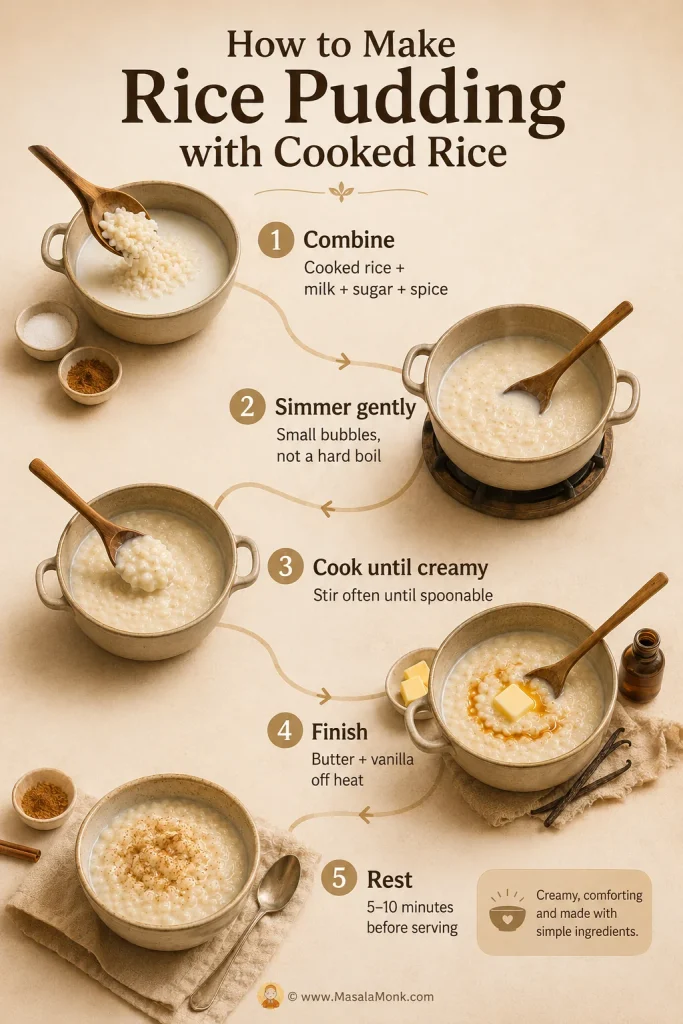
Five-step overview for making rice pudding with cooked rice, from combining ingredients to resting before serving.
The best rice pudding texture comes from gentle stages, not speed. First loosen the rice, then simmer slowly, finish off heat, and rest before judging whether it needs more milk.

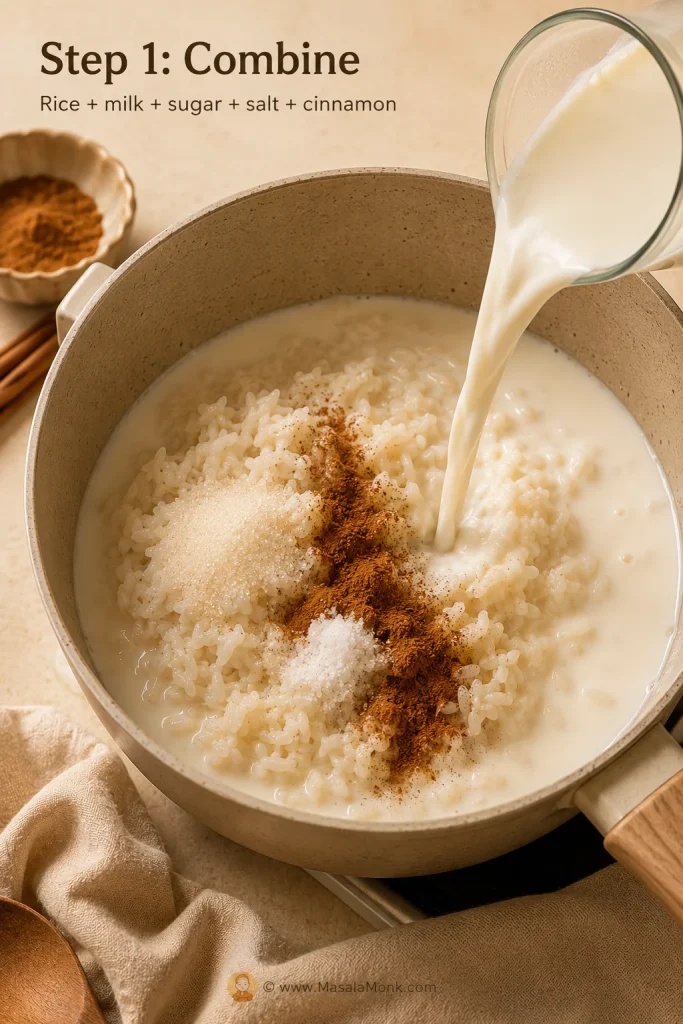
Step 1: Combine the Rice, Milk, Sugar, Salt, and Cinnamon

Add the cooked rice, milk, sugar, salt, and cinnamon to a 2- to 3-quart saucepan. Stir well so the rice loosens and the sugar begins dissolving into the milk.

Cooked rice, milk, sugar, salt, and cinnamon combined in a saucepan for the first step of rice pudding.
Stir the cooked rice well at the start so the milk can reach the grains evenly. This also prevents sugar, cinnamon, and salt from collecting in one spot while the pudding thickens.

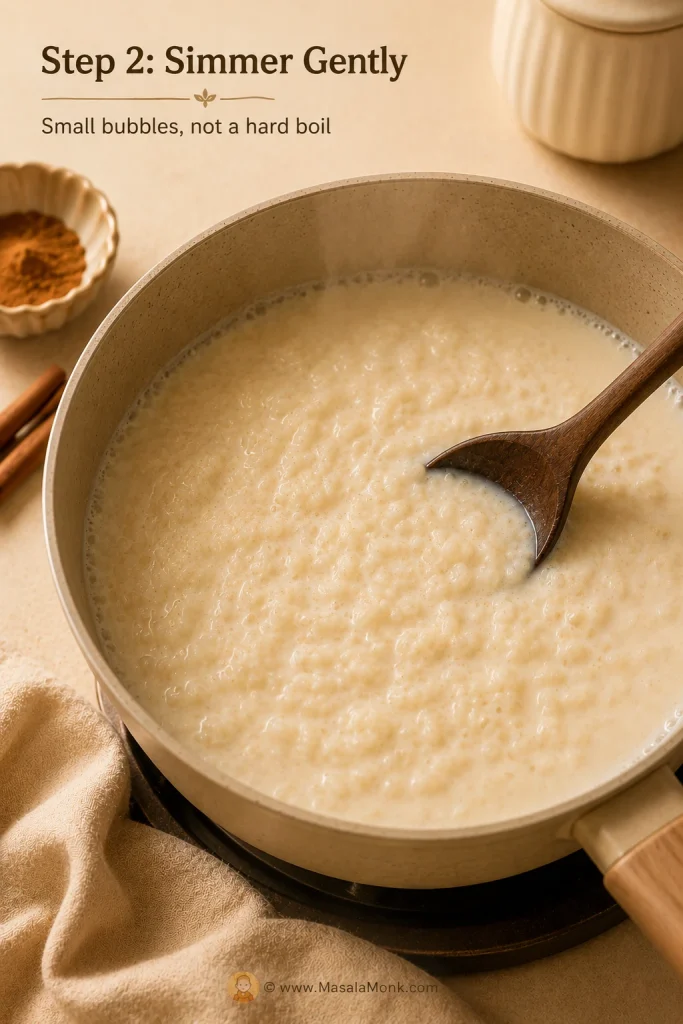
Step 2: Bring It to a Gentle Simmer

Set the pan over medium heat until the milk begins to steam and small bubbles appear around the edges. Stay close at this stage because milk can boil over quickly.

Saucepan of cooked rice and milk simmering gently with small bubbles around the edge.
Keep the heat gentle once the milk starts bubbling at the edges. A slow simmer softens the rice and thickens the milk, while a hard boil can scorch the bottom or make the pudding gummy.

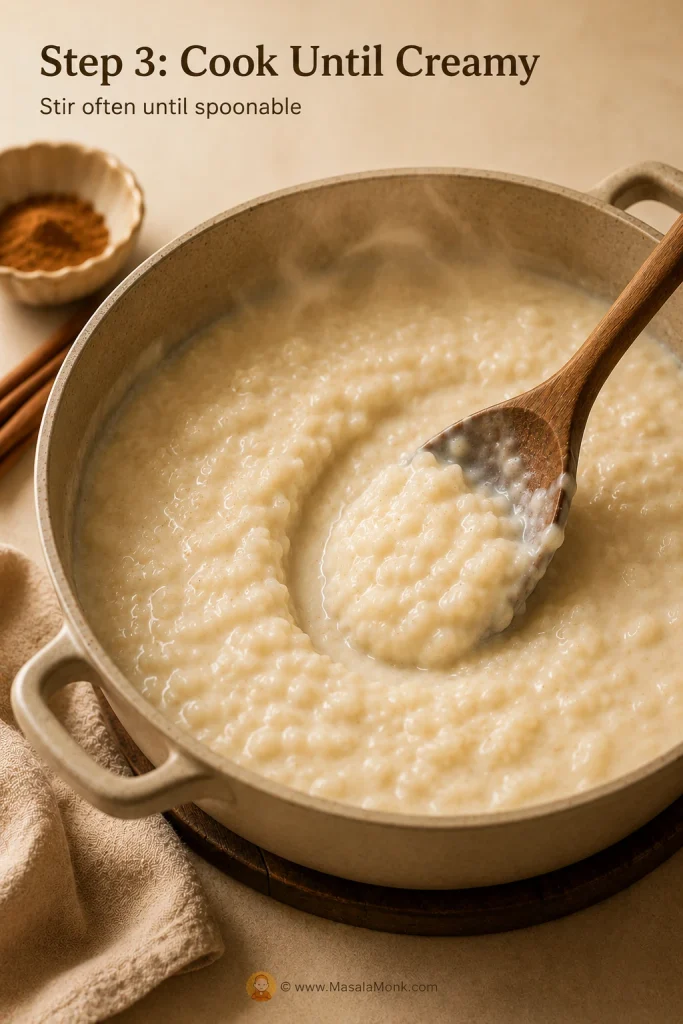
Step 3: Lower the Heat and Cook Until Creamy

Reduce the heat to medium-low. Simmer for 15 to 20 minutes, stirring often, until the rice softens and the milk thickens. The pudding should look creamy and spoonable, but still slightly loose.

Rice pudding thickening in a saucepan as a wooden spoon creates a creamy trail through the mixture.
When the spoon leaves a soft trail, the pudding is close. Stop while it still looks a little loose, because cooked rice continues to absorb milk after the heat is turned off.

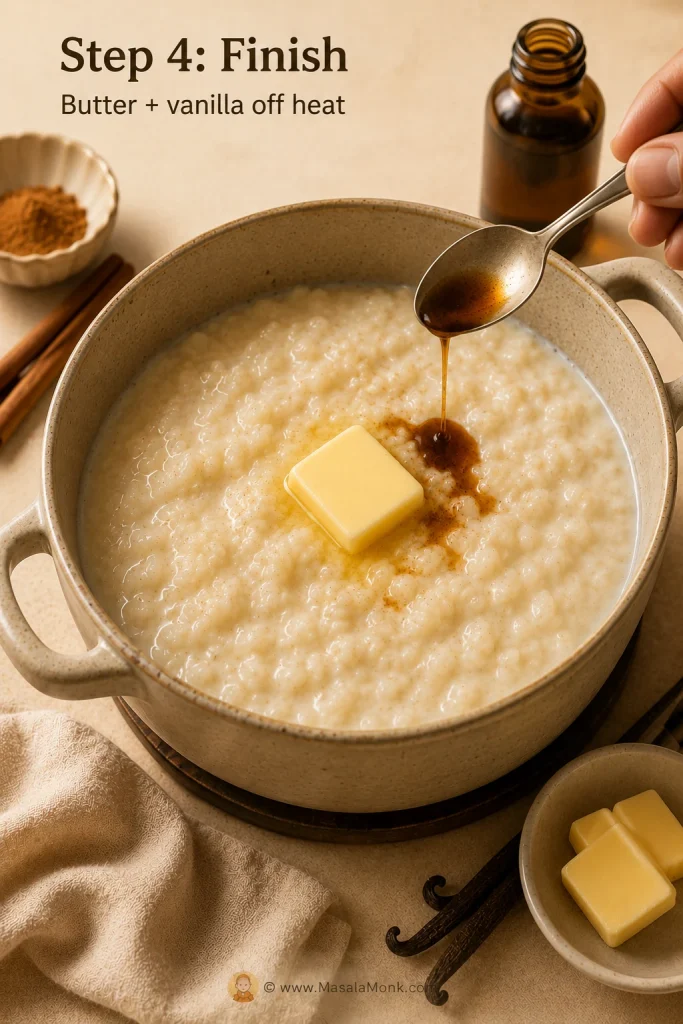
Step 4: Finish with Butter and Vanilla

Turn off the heat. Stir in the butter and vanilla. If you want a richer pudding, stir in 2 to 4 tablespoons of cream at the end.

Butter melting into hot rice pudding while vanilla is added from a spoon.
Add butter and vanilla at the end for better flavor. The residual heat melts the butter and releases the vanilla aroma without cooking away the fragrance.

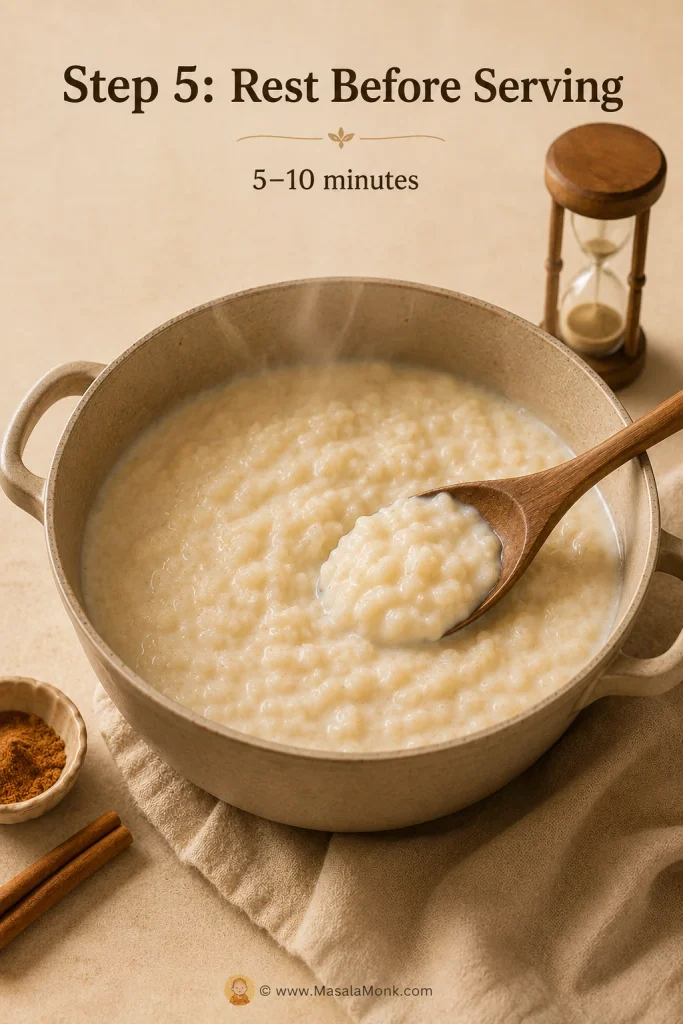
Step 5: Rest Before Serving

Let the pudding rest for 5 to 10 minutes before serving. This short rest helps the texture settle. Serve it warm, at room temperature, or chilled.

Rice pudding resting in a saucepan with a wooden spoon and timer after cooking.
A short rest gives the starch in the cooked rice time to finish thickening the milk. Before adding cornstarch or cooking longer, wait a few minutes and check the texture again.

Once you have made it once, you probably will not need to measure as carefully the next time. The pudding tells you what it needs: more milk if it tightens up, more simmering if it looks loose, and a short rest before you judge the final texture.

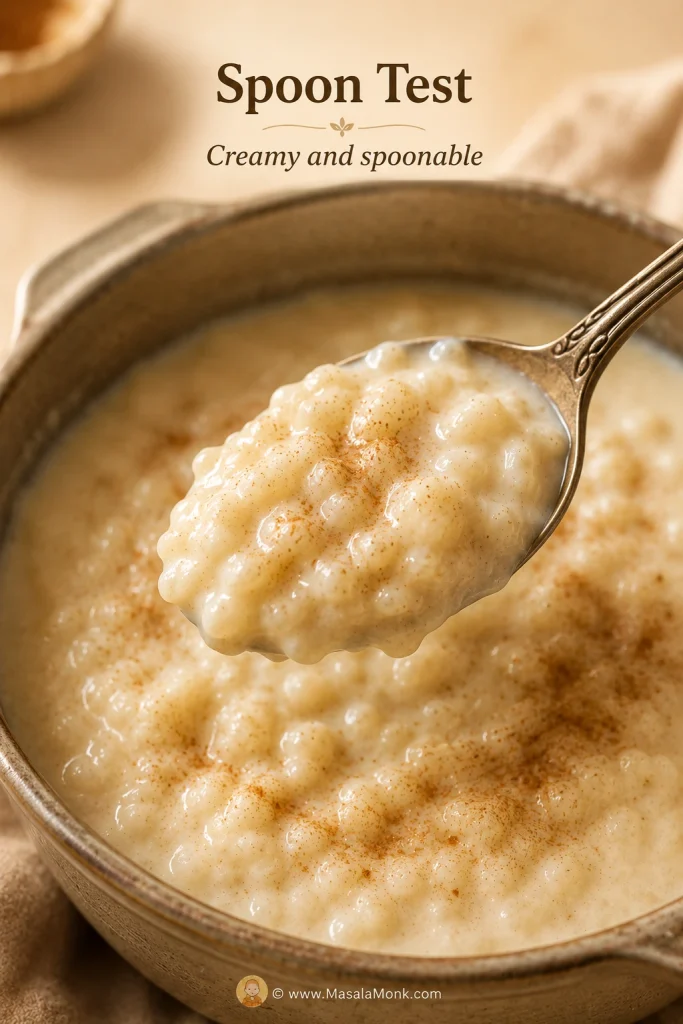
Spoon lifting creamy rice pudding with visible cooked rice grains and cinnamon on top.
A finished spoonful should look creamy, moist, and softly mounded. If it slides off like milk, simmer longer; if it holds like paste, stir in a little warm milk.

Ready for the exact measurements? Jump to the recipe card. If the texture does not look right yet, go to the fixes.

Recipe Card: Rice Pudding with Cooked Rice

This easy stovetop rice pudding uses already cooked rice, so it is faster than traditional rice pudding made from raw rice. The default version is egg-free, creamy, and flexible enough for leftover white rice, jasmine rice, basmati rice, or short-grain rice.

Prep Time5 minutes
Cook Time15–20 minutes
Rest Time5–10 minutes
Yield4 servings

Equipment

  • 2- to 3-quart heavy saucepan
  • Wooden spoon or silicone spatula
  • Measuring cups and spoons
  • Airtight container for leftovers

Ingredients

  • 2 cups cooked white rice, cold or room temperature, about 315–330 g / 11–12 oz
  • 2 cups whole milk, 480 ml / 16 fl oz
  • ⅓ cup granulated sugar, 65–70 g / about 2.3 oz, adjust to taste
  • ¼ teaspoon fine salt
  • ½ teaspoon ground cinnamon, plus more for serving
  • 1 tablespoon unsalted butter, 14 g / 0.5 oz
  • 1 teaspoon vanilla extract, 5 ml
  • 2–4 tablespoons heavy cream, optional, 30–60 ml
  • ⅓–½ cup raisins, optional, 50–75 g

Instructions

  1. Combine: Add cooked rice, milk, sugar, salt, and cinnamon to a heavy saucepan. Stir to loosen the rice.
  2. Simmer: Warm over medium heat until the milk begins to steam and gently bubble at the edges.
  3. Cook: Reduce heat to medium-low. Simmer for 15–20 minutes, stirring often, until the mixture is creamy and the rice is soft.
  4. Adjust: If the pudding looks too thick before the rice softens, add milk 1–2 tablespoons at a time. If it looks too thin, simmer uncovered for a few more minutes.
  5. Finish: Turn off the heat. Stir in butter, vanilla, and optional cream. Add raisins now if you want them less cooked, or add them earlier if you want them softer.
  6. Rest: Let the pudding rest for 5–10 minutes. Serve warm, room temperature, or chilled with extra cinnamon.

Notes

  • For dry leftover rice: add 2–4 extra tablespoons milk at the beginning.
  • For basmati rice: expect a looser, more separate-grain texture. Add a little extra milk if needed.
  • For short-grain rice: stir gently and watch the heat because it thickens faster.
  • For sweeter pudding: increase sugar to ½ cup. For a lightly sweet pudding, use ¼ cup.
  • For richer pudding: replace ¼ cup milk with cream, or stir cream in at the end.
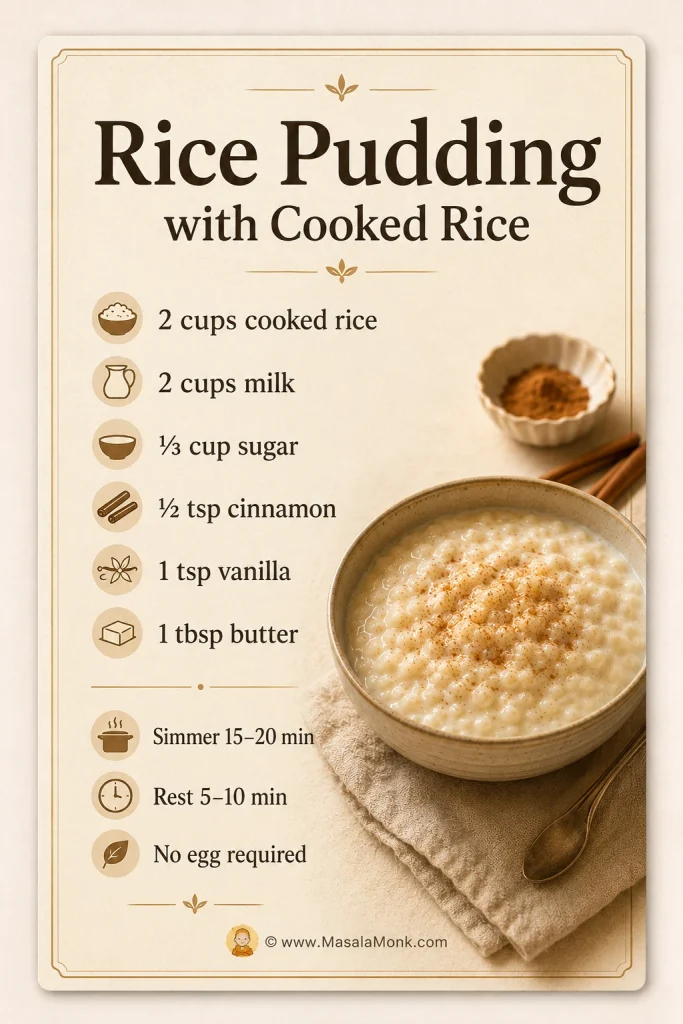
Recipe card for rice pudding with cooked rice listing cooked rice, milk, sugar, cinnamon, vanilla, butter, simmer time, rest time, and no egg required.
The base formula is easy to remember: equal parts cooked rice and milk, then a gentle simmer and short rest. Once that works, condensed milk, egg, cream, or coconut milk become simple variations.

Leftover Rice Pudding: What to Know Before You Start

This recipe is ideal for leftover rice, but only use rice that has been handled safely. Cooked rice should be cooled and refrigerated promptly. If it has been sitting at room temperature for more than 2 hours, smells sour, feels slimy, or you are unsure how long it has been in the fridge, it is safer to discard it and start with a fresh batch.

Leftover rice safety guide with cooked rice in a covered container, refrigerator cue, and storage time reminders.
Before turning leftovers into dessert, make sure the rice was cooled and refrigerated properly. If it sat out too long, smells sour, feels slimy, or seems questionable, start fresh instead.

If your leftover rice is plain but you are not in the mood for dessert, you can also turn leftover rice into arancini balls instead. Use this rice pudding when you want something creamy and sweet; use arancini when you want a crisp, savory snack.

For general leftover storage guidance, FoodSafety.gov lists cooked leftovers at 3 to 4 days in the refrigerator. For reheating, FoodSafety.gov recommends reheating leftovers to 165°F / 74°C.

Leftover rice tip: cold rice may look dry and stiff at first. Give it time. As it warms in milk, the grains relax and the pudding turns creamier.

Variations

Once you know the base method, this is one of those forgiving desserts you can easily bend toward what you have. Keep the rice-to-liquid ratio in mind and adjust sweetness depending on the milk or add-ins you use.

Rice Pudding with Cooked Rice and Condensed Milk

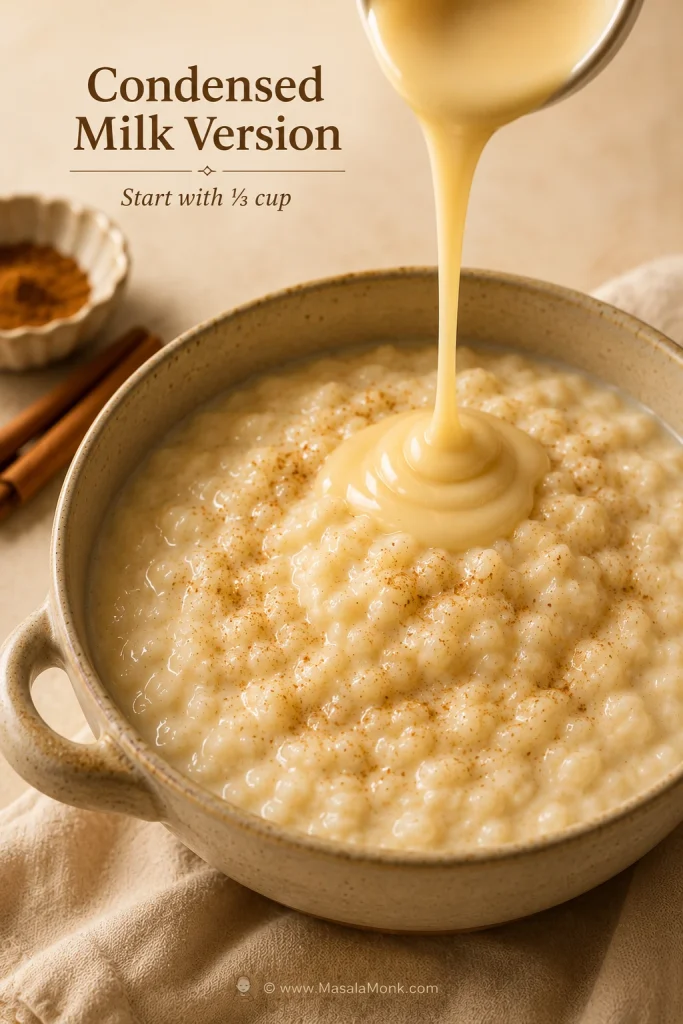
Sweetened condensed milk gives the pudding a richer, sweeter, almost caramel-like finish. Because it already contains sugar, do not add the full amount of sugar from the main recipe. Start with ⅓ cup condensed milk, taste, then increase to ½ cup only if you want a sweeter pudding.

Condensed milk being poured into creamy rice pudding made with cooked rice.
Condensed milk adds sweetness and body at the same time. Start with ⅓ cup first; after the pudding thickens, taste before adding more so it stays creamy rather than overly sweet.
Ingredient Amount
Cooked rice 2 cups / about 315–330 g
Whole milk 1½ cups / 360 ml
Sweetened condensed milk ⅓–½ cup / about 100–150 g
Salt Pinch to ¼ teaspoon
Vanilla 1 teaspoon / 5 ml
Cinnamon ½ teaspoon

Simmer the rice, milk, condensed milk, salt, and cinnamon over medium-low heat for 12 to 18 minutes, stirring often. Finish with vanilla. If it becomes too thick, loosen it with a splash of milk.

Evaporated Milk Rice Pudding

Evaporated milk gives you a pantry-style pudding that tastes richer without becoming as sweet as condensed milk pudding. Use 1 cup evaporated milk and 1 cup regular milk for every 2 cups cooked rice. Then keep the sugar at ¼ to ⅓ cup and adjust at the end.

Microwave Rice Pudding with Cooked Rice

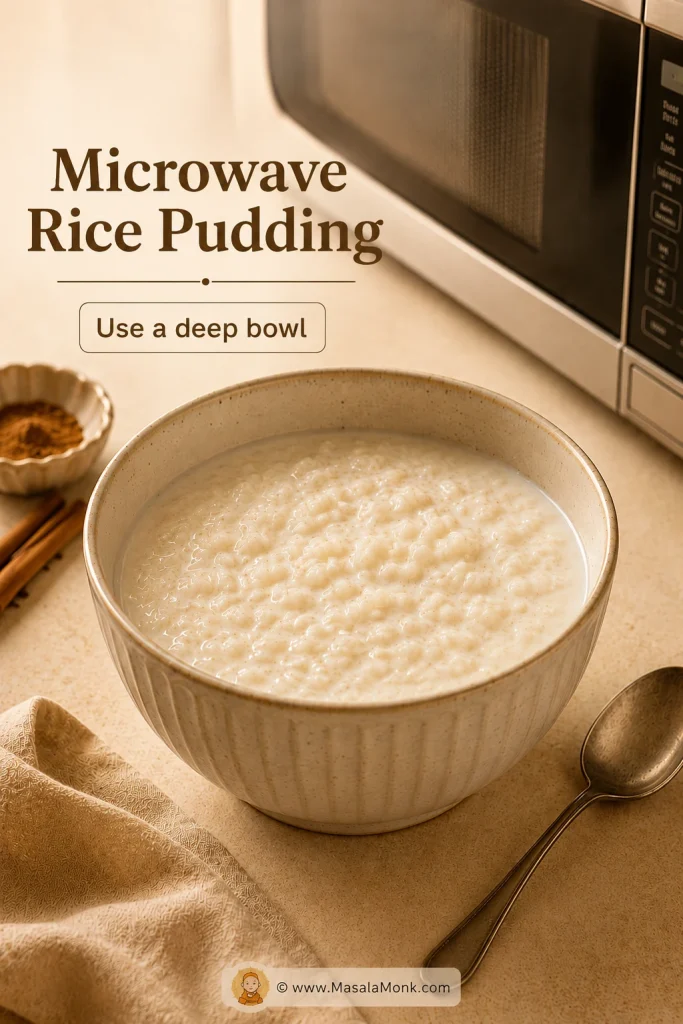
The stovetop version gives the best texture, but the microwave works for a small quick bowl. Use a deep microwave-safe bowl at least twice as large as the mixture, because milk can bubble up as it heats.

Deep microwave-safe bowl of rice pudding with cooked rice placed near a microwave.
A deep bowl matters because milk can rise quickly in the microwave. Heat in short bursts, stir between rounds, and stop while the pudding is still a little loose.
Ingredient Small Microwave Batch
Cooked rice 1 cup
Milk 1 cup
Sugar 2–3 tablespoons
Cinnamon ¼ teaspoon
Vanilla ½ teaspoon
Butter 1 teaspoon

Microwave on high for 1 minute, stir well, then continue in 30- to 60-second bursts, stirring each time, until creamy. Stop when the pudding is still slightly loose because it thickens as it sits.

Old-Fashioned Egg Rice Pudding

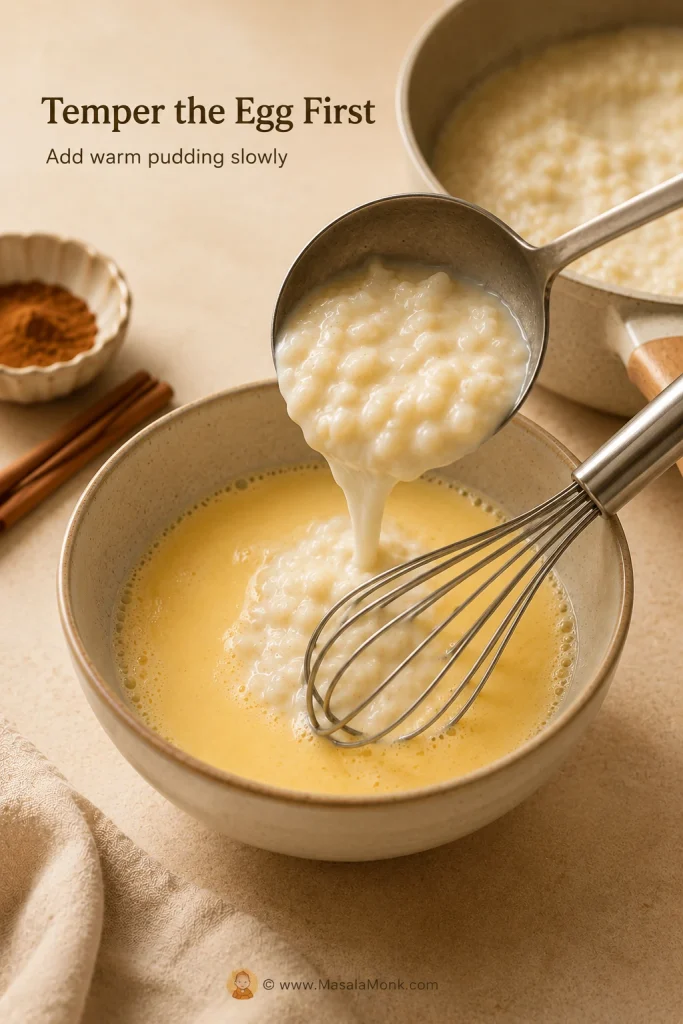
A custardy version starts with 1 large egg whisked with ½ cup milk. Cook the rice pudding as usual with the remaining milk, sugar, salt, and cinnamon. When the pudding is hot and creamy, slowly whisk a few spoonfuls of warm pudding into the egg mixture. Then stir the tempered egg mixture back into the pan and cook gently for 2 to 3 minutes. Do not boil hard after adding the egg.

Warm rice pudding being slowly added to a bowl of whisked egg and milk to temper the egg.
Tempering is the safeguard against scrambled egg. Add warm pudding to the egg mixture slowly, whisk as you go, and only then return it to the pan over gentle heat.

Coconut Milk Rice Pudding

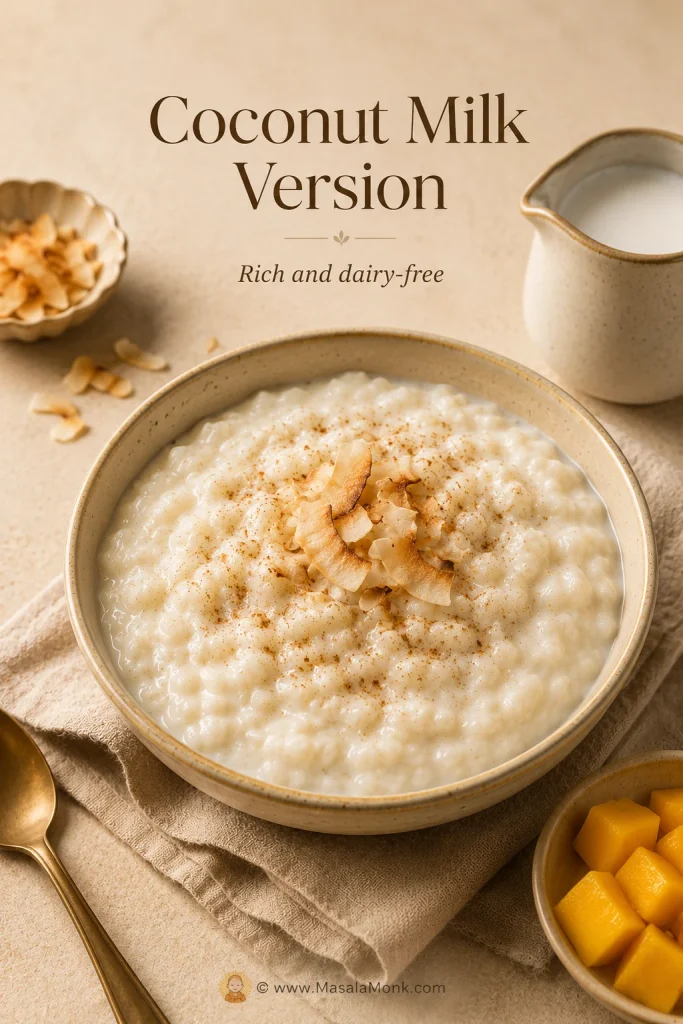
Coconut milk is the richest dairy-free option. Use 2 cups cooked rice with 1½ to 2 cups full-fat coconut milk, then sweeten with sugar, maple syrup, or a small amount of coconut condensed milk. Cinnamon works, but cardamom, ginger, mango, toasted coconut, and lime zest also fit beautifully.

Coconut milk rice pudding made with cooked rice, topped with toasted coconut and served with mango nearby.
Coconut milk makes cooked-rice pudding rich without dairy, but it also thickens differently from regular milk. Stir gently and add a splash more liquid if the pudding tightens as it sits.

For another coconut-and-rice dessert, MasalaMonk’s mango sticky rice leans more tropical, chewy, and fruit-forward, while this cooked-rice pudding stays softer and creamier.

Baked Rice Pudding with Cooked Rice

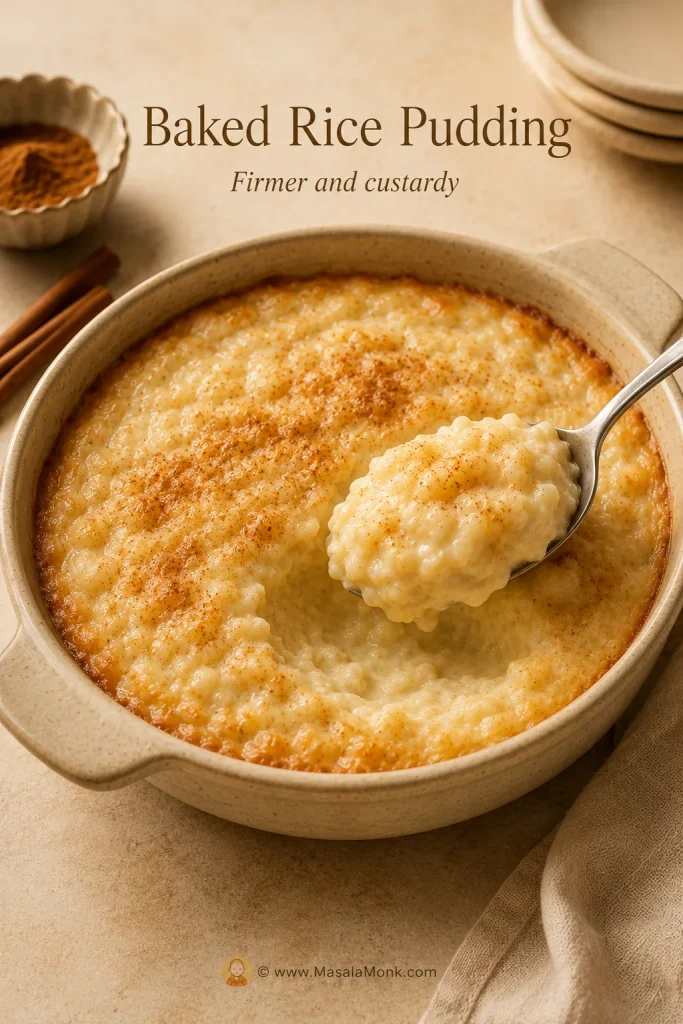
Baked rice pudding has a firmer, more custardy texture. To make it, whisk milk, eggs, sugar, vanilla, cinnamon, and salt, then stir in cooked rice. Pour into a buttered baking dish and bake at 325°F / 162°C for about 45 to 50 minutes, or until just set.

Baked rice pudding in a ceramic dish with golden edges and a spoonful showing the custardy interior.
Baking changes the texture from loose and creamy to firmer and custardy. It is especially useful when you want a spoon-served dessert with golden edges and a more set center.

This gives you a different dessert from the stovetop version: more set at the edges, more custardy through the center, and less loose in the bowl.

How to Fix the Texture

Quick Texture Check

Cooked-rice pudding is forgiving, so don’t panic if it looks wrong halfway through. Most texture problems come down to the rice, the heat, or the amount of milk. A few small adjustments usually bring it back.

Rice pudding texture guide showing too thin, just right, and too thick pudding with simple fixes for each.
Use the texture guide before starting over. Thin pudding usually needs more simmering, thick pudding needs milk, and gummy pudding often means the heat was too high or the rice was overworked.

Common Rice Pudding Texture Problems and Fixes

Problem Likely Cause Fix
Rice pudding is too thin It has not simmered long enough, or there is too much milk. Simmer uncovered for 3–5 more minutes, stirring often.
Still thin after simmering The rice is low-starch or the batch has too much liquid. Mix 1 teaspoon cornstarch with 1 tablespoon cold milk. Stir it in and simmer 1 minute.
Rice pudding is too thick The rice absorbed more milk than expected. Add warm milk 1–2 tablespoons at a time until spoonable.
Dry after chilling Rice continues absorbing liquid in the fridge. Stir in a splash of milk before serving or reheating.
Rice is still firm The rice was undercooked before you started. Add ¼–½ cup milk and cook 5–8 minutes longer over low heat.
Pudding tastes bland Not enough salt, vanilla, spice, or sweetness. Add a tiny pinch of salt first, then adjust vanilla, cinnamon, or sugar.
Pudding turned gummy Heat was too high, rice was very starchy, or it was over-stirred. Loosen with milk and stir gently. Next time, use lower heat.
Egg scrambled The egg was added to very hot pudding too quickly. Use the no-egg method, or temper the egg slowly before adding it.
Milk scorched on the bottom Pan was too thin or heat was too high. Use a heavy saucepan and medium-low heat. Stir more often as it thickens.

Once the texture is fixed, let the pudding rest before judging the final thickness. Only need storage advice? Jump to storage and reheating.

How to Store, Freeze, and Reheat Rice Pudding

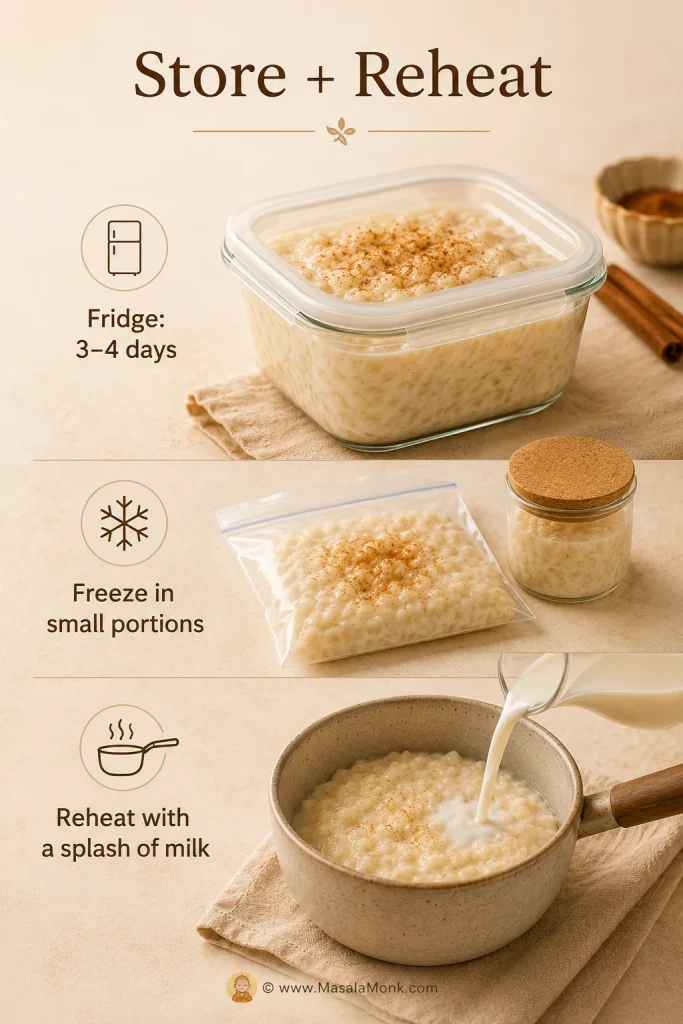
Let rice pudding cool, then transfer it to an airtight container and refrigerate. Because this recipe often starts with leftover rice, use conservative storage habits and do not keep it sitting at room temperature for long.

Rice pudding storage and reheating guide showing a fridge container, freezer portion, and milk being added while reheating.
Rice pudding usually thickens after chilling, so reheating with milk is the easiest way to revive it. Add a splash, warm gently, and stir until the texture turns creamy again.
Storage Method How Long Best Practice
Refrigerator Up to 3–4 days Store in an airtight container. Add milk before reheating if it thickens.
Freezer Best quality within 1 month Freeze in small portions. Texture may be softer or grainier after thawing.
Stovetop reheating 5–8 minutes Reheat gently with a splash of milk, stirring often.
Microwave reheating 30-second bursts Stir between bursts and add milk as needed.

Rice pudding thickens in the fridge. That does not mean it is ruined. Stir in a splash of milk before reheating, or loosen chilled pudding with a little cold milk if you prefer eating it cold.

What to Serve with Rice Pudding

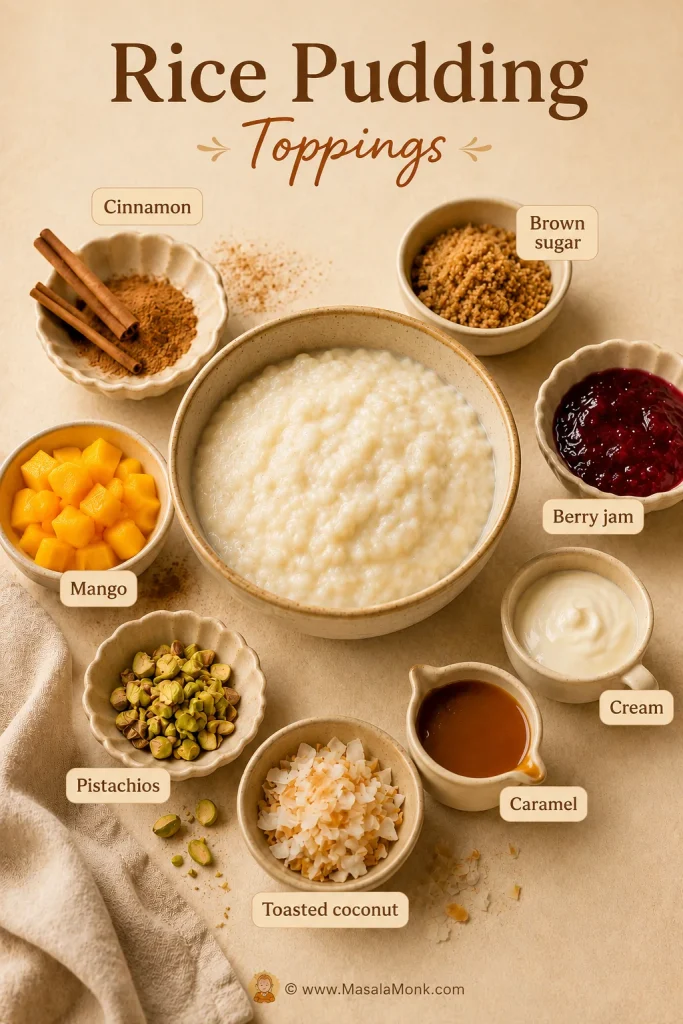
Rice pudding is good plain, but toppings make it feel more finished. Try extra cinnamon, brown sugar, toasted nuts, raisins, chopped dates, berry compote, strawberry jam, mango, caramel, maple syrup, toasted coconut, pistachios, or a spoonful of cream.

Rice pudding toppings guide with cinnamon, brown sugar, berry jam, mango, pistachios, toasted coconut, caramel, and cream.
One basic rice pudding can lean classic, fruity, nutty, or richer depending on the topping. Cinnamon and brown sugar keep it familiar, while mango, jam, pistachios, coconut, caramel, or cream make it feel more finished.

If you like chilled spoon desserts, this quick mango pudding is another easy option for a softer, fruitier dessert table.

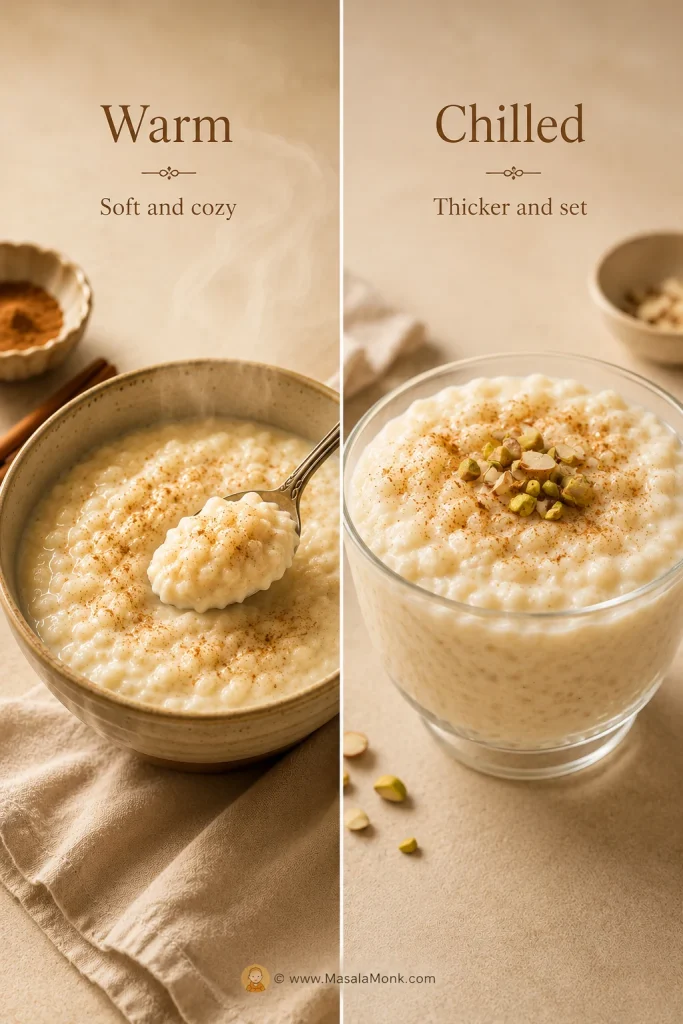
For a warmer dessert, serve this rice pudding just after resting. For a thicker make-ahead dessert, chill it and loosen with a little milk before serving. Either way, it is the kind of recipe that becomes easier every time you make it, because the texture tells you what it needs.

Warm rice pudding in a bowl compared with chilled rice pudding in a glass cup.
Serve it warm when you want a softer, cozier pudding. Chill it when you want a thicker make-ahead dessert, then loosen with a little milk if the rice absorbs too much liquid.

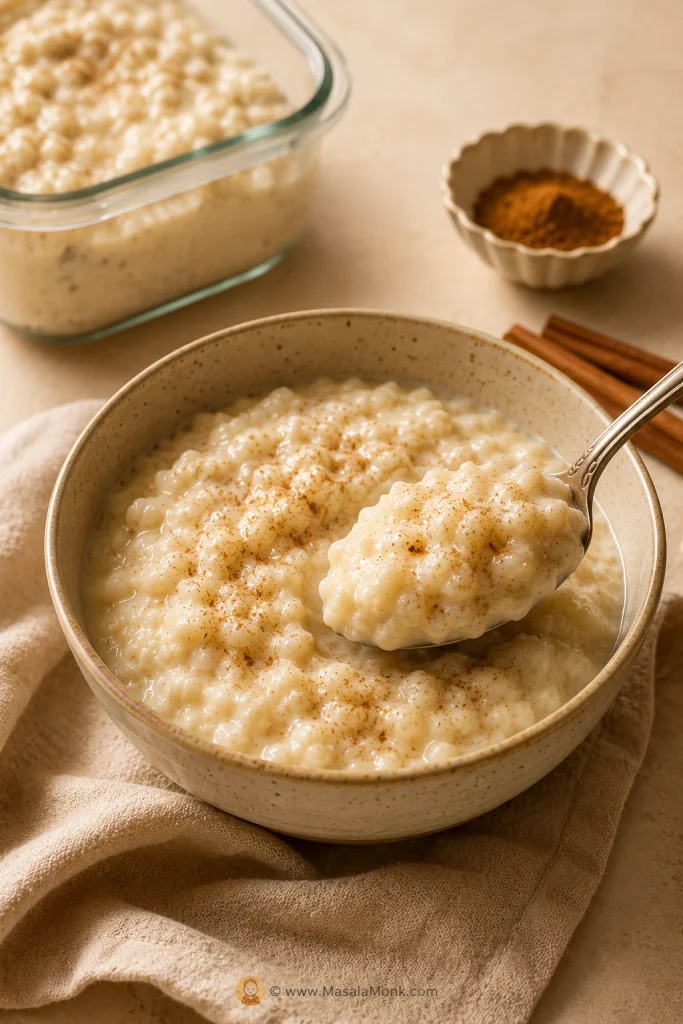
A finished bowl should feel like a real dessert, not just reheated rice. The best texture is creamy, spoonable, gently spiced, and soft enough to serve warm or chilled.

Finished bowl of leftover rice pudding with cinnamon and a spoonful lifted from the bowl, with a storage container in the background.
A good leftover rice pudding should still taste intentional: creamy milk, soft grains, warm spice, and enough rest time for the texture to settle. That is what turns plain cooked rice into dessert.

FAQs

What is the best rice for rice pudding with cooked rice?

Plain cooked white rice is the best all-purpose choice. Jasmine rice is soft and fragrant, basmati rice works but stays more separate, and short-grain rice makes the thickest pudding. Brown rice works only when it is fully cooked and soft.

How much milk do you need for 2 cups cooked rice?

Use 2 cups milk for 2 cups cooked rice as the starting point. Add 2 to 4 extra tablespoons of milk if the rice is dry, cold, or separate-grained.

Is egg necessary in rice pudding?

No. Egg is optional here. Rice pudding with cooked rice can turn creamy through gentle simmering alone. Egg gives a more custardy old-fashioned texture, but the no-egg version is easier and less likely to scramble.

Why is my rice pudding runny?

It probably needs more simmering time. Cook it uncovered over medium-low heat for a few more minutes, stirring often. If it still stays thin, add a small cornstarch slurry made from 1 teaspoon cornstarch and 1 tablespoon cold milk.

Why did my rice pudding get too thick?

Cooked rice keeps absorbing liquid as it sits, especially in the refrigerator. Stir in milk 1 to 2 tablespoons at a time until the texture becomes creamy again.

Does basmati rice work for rice pudding?

Yes, basmati rice works, but it gives a looser pudding because the grains stay separate. Add a little extra milk and simmer gently so the rice softens without breaking down too much.

Does leftover takeout rice work?

Plain takeout rice works if it is unsalted, not oily, and has been refrigerated safely. Do not use fried rice, seasoned rice, or rice with savory sauces for dessert pudding.

How do you make rice pudding with cooked rice and condensed milk?

Use 2 cups cooked rice, 1½ cups milk, and ⅓ to ½ cup sweetened condensed milk. Skip the regular sugar at first, simmer until creamy, then adjust sweetness at the end.

What is the best way to reheat rice pudding?

Reheat it gently with a splash of milk. Use low heat on the stove or short microwave bursts, stirring between each burst. The pudding should loosen as it warms.

Can you freeze rice pudding?

You can freeze rice pudding, but the texture may become softer or slightly grainy after thawing. Freeze it in small portions for best quality, thaw in the refrigerator, then reheat gently with a splash of milk.

How long does rice pudding last in the fridge?

Keep rice pudding in an airtight container in the refrigerator and use it within 3 to 4 days. Since this version may start with leftover rice, it is better not to stretch the storage time.

Made it with leftover rice? Share what kind you used — jasmine, basmati, short-grain, brown rice, or plain takeout rice — and whether you liked the pudding warm, chilled, with raisins, or without. It helps other readers adjust the texture before they start.