Posted on — Leave a comment

Pork Fried Rice Recipe: Easy, Savory & Better Than Takeout

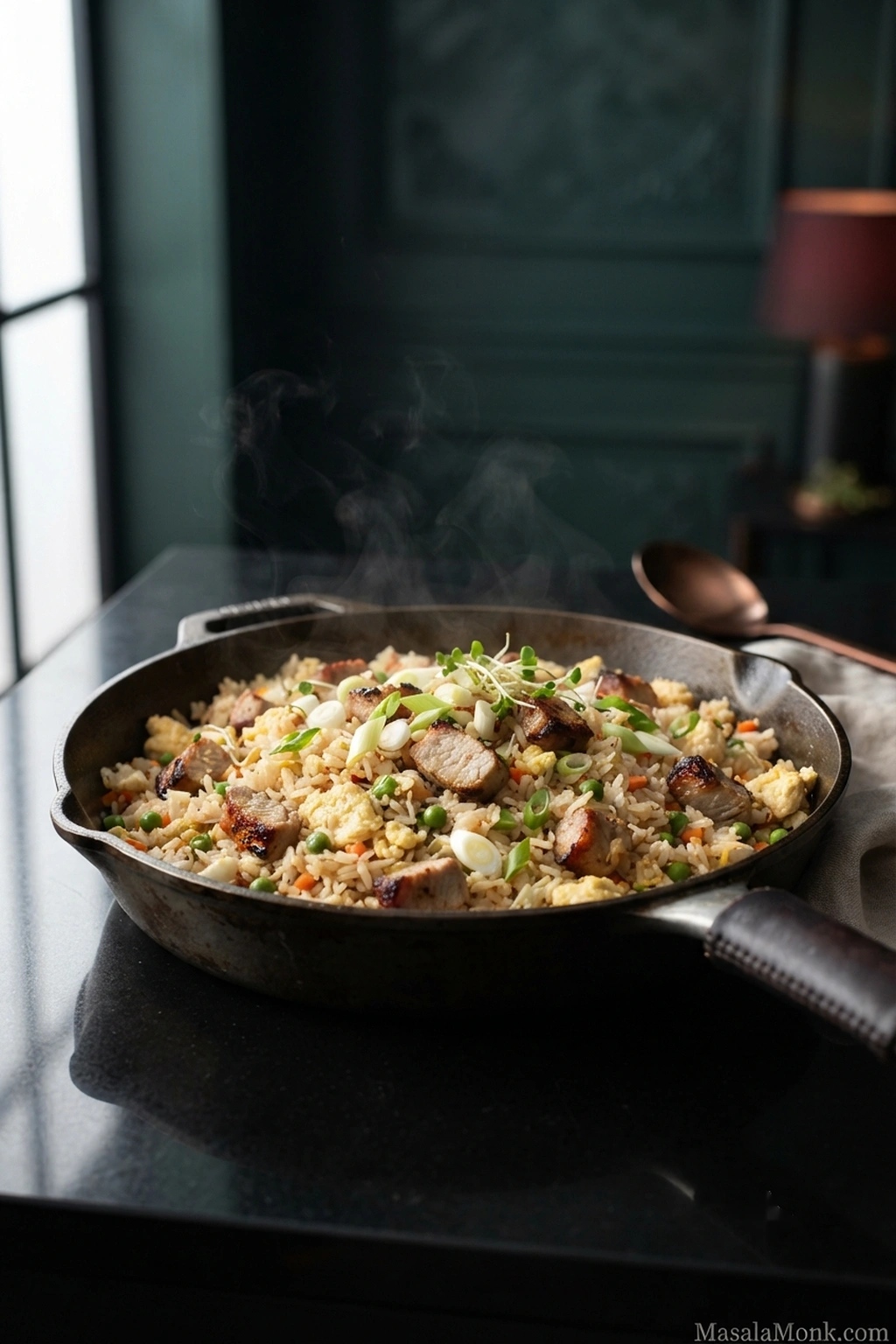
Bowl of pork fried rice with separate rice grains, browned pork, soft egg, peas, carrots and sliced scallions.

Good pork fried rice should tumble from the spoon in loose, tender grains, with browned pieces of pork, soft egg and vegetables that still have some bite. The scallions should smell fresh, the rice lightly toasted, and the whole thing should have just enough sheen to look inviting.

You can get that result in an ordinary skillet. The trick is giving the pork room to brown and the rice enough heat and space to fry once the vegetables have had their turn.

Trouble usually starts when too much cold or wet food reaches the skillet at once. Warm rice brings steam, raw pork can release juices, and frozen vegetables pull heat from the pan. This method handles them in stages, then brings everything together while the rice is still hot and loose.

Cold leftover jasmine rice is the easiest starting point. Same-day rice is fine too once the steam has escaped and the grains have cooled and firmed up.

Pork Fried Rice Recipe

This everyday version uses boneless pork loin cut into roughly ½-inch / 1.3 cm pieces. It is easy to find, cooks quickly and still gives you enough surface for browned edges. You can use char siu, leftover pork, ground pork or pork belly too; the timing changes depending on which you choose.

At a Glance

  • Makes: 4 servings
  • Time: about 25–30 minutes with cooked, cooled rice
  • Pan: 12-inch / 30 cm skillet or large wok
  • Easiest rice: cold leftover jasmine rice; same-day rice is fine once cool, firm and no longer steamy
  • Finished texture: hot, separate grains with tender centers and no liquid pooling underneath

Easy Pork Fried Rice

Jasmine rice with browned pork, soft egg, scallions and vegetables, seasoned lightly enough that the toasted rice and pork still come through. This recipe assumes the rice is already cooked and cooled.
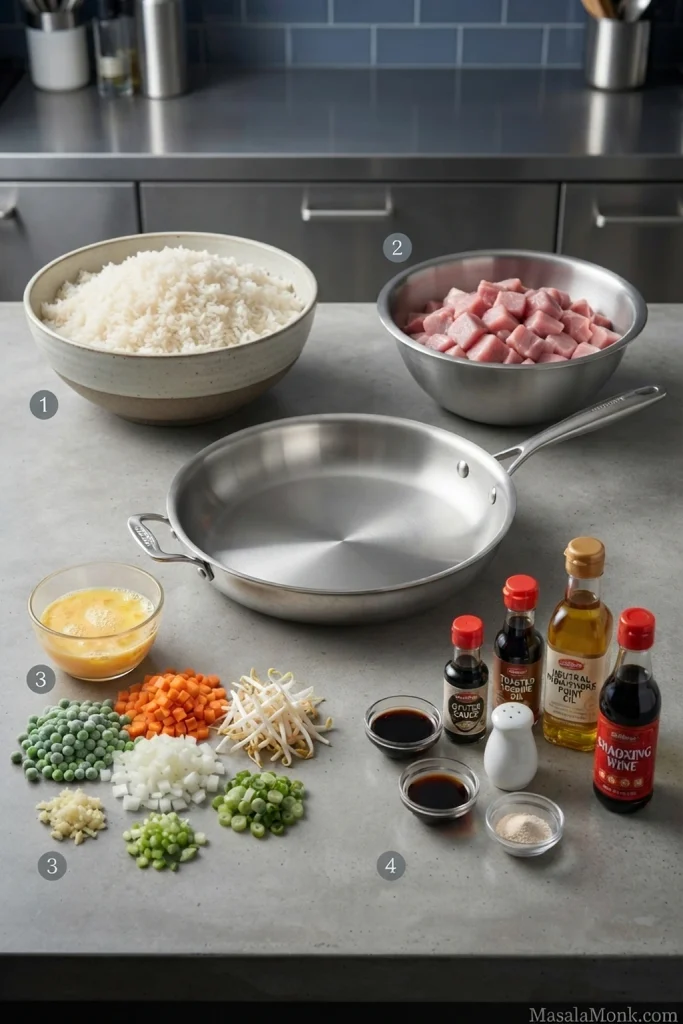
Pork fried rice mise en place with cooked rice, diced pork, beaten egg, vegetables, aromatics and seasonings arranged in separate bowls.
Once the skillet is hot, pork fried rice moves too quickly for much prep between steps. Grouping the ingredients in cooking order—egg, pork, vegetables, rice, seasoning, then finishers—makes the staged method easier to control.

Ingredients

For the Pork
  • Boneless pork loin — 10 oz / 285 g, cut into roughly ½-inch / 1.3 cm pieces
  • Soy sauce — 1 teaspoon / 5 ml regular all-purpose soy sauce or Chinese light soy sauce
  • Shaoxing wine or dry sherry — 1 teaspoon / 5 ml, optional; omit if you have neither
  • Ground white pepper — ⅛ teaspoon
For the Fried Rice
  • Cooked jasmine rice — 3 cups, cold and broken into loose grains
  • Eggs — 2 large, lightly beaten
  • Neutral high-heat oil — 2 tablespoons / 30 ml, such as canola, peanut, avocado or vegetable oil, divided as needed
  • Yellow onion — ½ small, finely diced
  • Frozen peas and carrots — ¾ cup, straight from the freezer
  • Garlic — 2 cloves, finely minced
  • Scallions — 3, white and green parts separated and thinly sliced
  • Fresh bean sprouts — ½ cup, optional
  • Soy sauce — 1 tablespoon / 15 ml regular all-purpose soy sauce or Chinese light soy sauce
  • Oyster sauce — 2 teaspoons / 10 ml
  • Ground white pepper — ¼ teaspoon
  • MSG — ⅛ teaspoon, optional
  • Toasted sesame oil — ½ teaspoon / 2.5 ml
  • Salt — only if needed after tasting

Ingredient note: Chinese light soy sauce means the everyday Chinese style, not low-sodium soy. Oyster sauce rounds out the soy with mild sweetness and deeper savory flavor; if you omit it, taste before adding more soy. Hoisin and fish sauce are not direct substitutes.

Before you start: measure the 2 tablespoons of neutral oil into a small cup and work from it as you cook. Keep a little extra nearby only if the pan runs dry.

Instructions

Prep and Brown
  1. Prepare the rice. Break cold rice into loose grains before turning on the stove. If using same-day rice, spread it out and cool it first. It should feel cool and firm rather than warm or steamy.
  2. Season the pork. Toss the pork with 1 teaspoon / 5 ml soy sauce, optional Shaoxing wine and ⅛ teaspoon white pepper. Get everything else beside the stove; once cooking starts, the recipe moves quickly.
  3. Cook the eggs. Heat a 12-inch / 30 cm skillet or large wok over medium-high heat. Add about 1 teaspoon of the measured oil and pour in the eggs. Fold for roughly 30–60 seconds, until soft curds form, then transfer them to a plate while they still look moist.
  4. Brown the pork. Add about 2 teaspoons oil. Spread the pork out and leave it against the pan briefly before tossing. Cook for about 3–4 minutes, depending on your pan and the size of the pieces. If juices collect underneath, let them cook away. Transfer the pork once it is cooked through and has picked up browned edges.
Fry and Finish
  1. Cook the vegetables. Add some of the remaining oil if needed. Cook the onion and scallion whites for about 1 minute. Add the frozen peas and carrots and cook for another 1–2 minutes. Wait until they are hot, the sizzle has returned and no visible water is collecting underneath. Add the garlic for 20–30 seconds, just until fragrant.
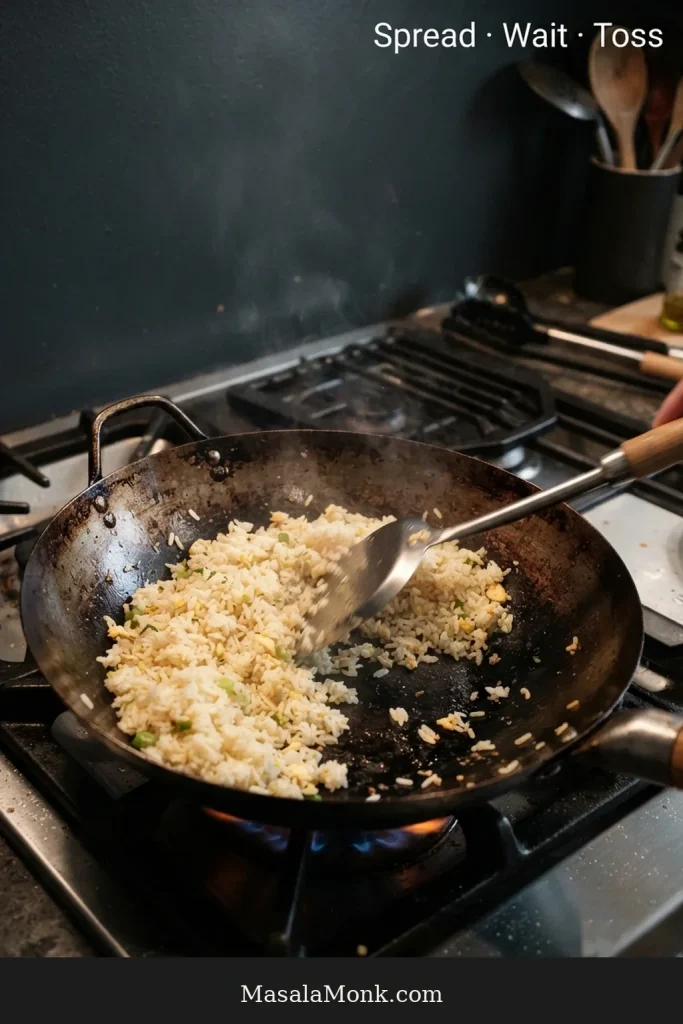
  2. Fry the rice. Add the rice and enough of the remaining oil to lightly coat it. Spread the grains across the pan, leave them for a few seconds, then toss. Repeat for about 2–3 minutes, until the rice is completely hot and moving freely instead of sitting in heavy clumps. A few grains may pick up toasted edges; that is enough.
  3. Season. Add 1 tablespoon / 15 ml soy sauce, the oyster sauce, ¼ teaspoon white pepper and optional MSG. Toss for about 30–60 seconds, until the seasoning is evenly distributed and no liquid is pooling underneath.
  4. Finish. Return the pork and eggs. Add the bean sprouts, if using, and most of the scallion greens. Toss for about 1 minute, just until everything is hot. Switch off the heat and add the sesame oil. Taste before adding salt or more soy, then scatter over the remaining scallions.
What to Look For

Look for: loose, tender grains; browned pork; soft egg; vegetables with some bite; and a light sheen without sauce or oil pooling underneath. A few toasted edges are welcome, but the rice should not be dry or crunchy.
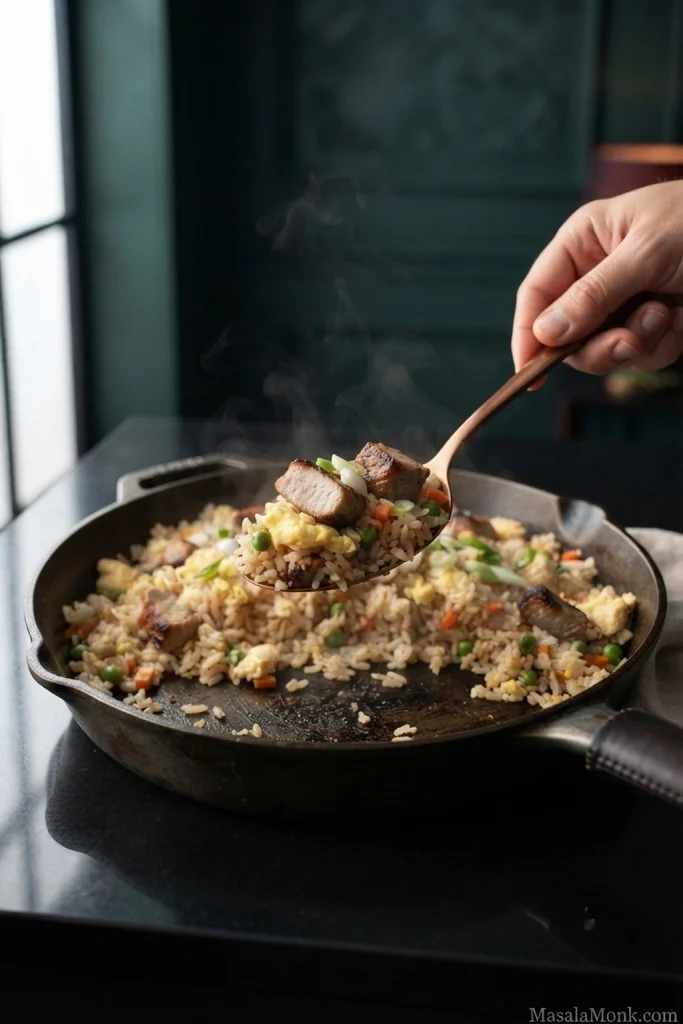
Close-up spoonful of pork fried rice with distinct rice grains, browned pork, egg, peas, carrots and scallions.
When the seasoning coats rather than soaks the rice, you can still see the edges of individual grains in each spoonful. That thin, even coating is a better texture cue than trying to make every grain the same color.

How to Make Pork Fried Rice: The Cues That Matter

The recipe above gives you the sequence. The harder part is knowing when the pan is ready for the next step. These are the cues worth watching.

Pork Can’t Brown While It’s Sitting in Juice

Spread the pork out and let the first side sit briefly before tossing. If liquid gathers underneath, wait for it to cook away. You’ll hear the sound change before the edges begin picking up color.

Those browned edges will be scattered through the finished rice, so give them a chance to develop. Then get the lean pork out of the skillet before it dries out.
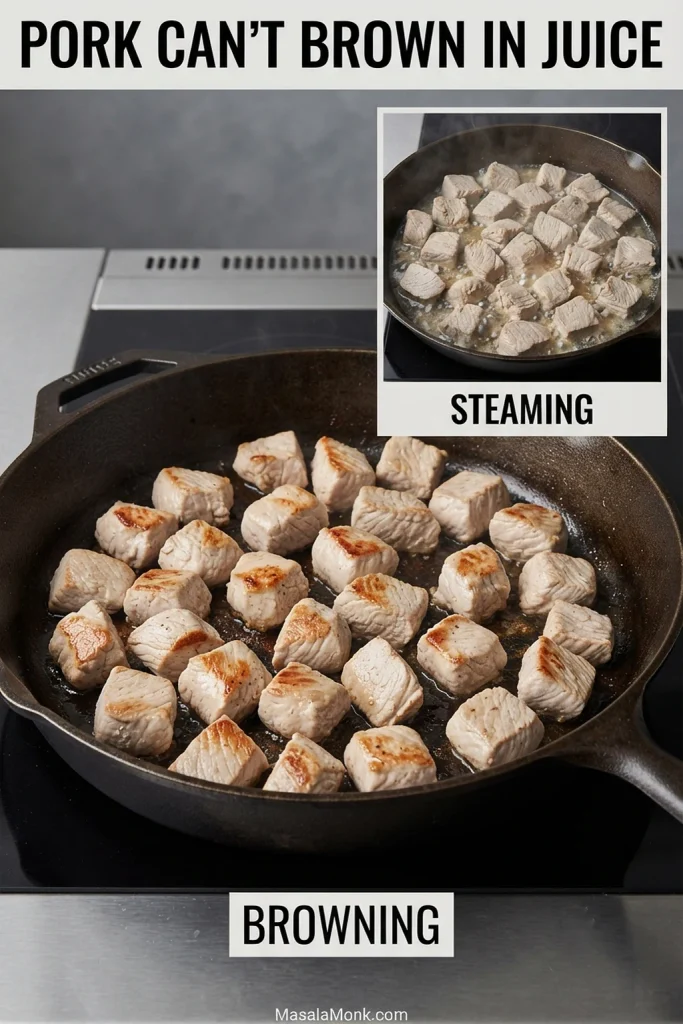
Comparison showing pale diced pork steaming in pooled liquid above and browned pork cooking against a drier skillet surface below.
While free water is boiling underneath the pork, its surface stays in a steaming environment. Once that moisture is gone, the meat can get hotter against the skillet and browning develops much faster.

Pork safety: the USDA safe minimum internal temperature chart lists 145°F / 63°C plus a 3-minute rest for whole cuts of pork and 160°F / 71°C for ground pork. With small stir-fry pieces, use a thermometer on a piece thick enough to give a reliable reading when practical.

Wait for the Pan to Recover

When the frozen peas and carrots go in, the lively sizzle may suddenly fade. Don’t rush the next ingredient.

Once the vegetables are hot and you no longer see water collecting underneath them, add the garlic. Give it 20–30 seconds. As soon as you can smell it, get the rice in.
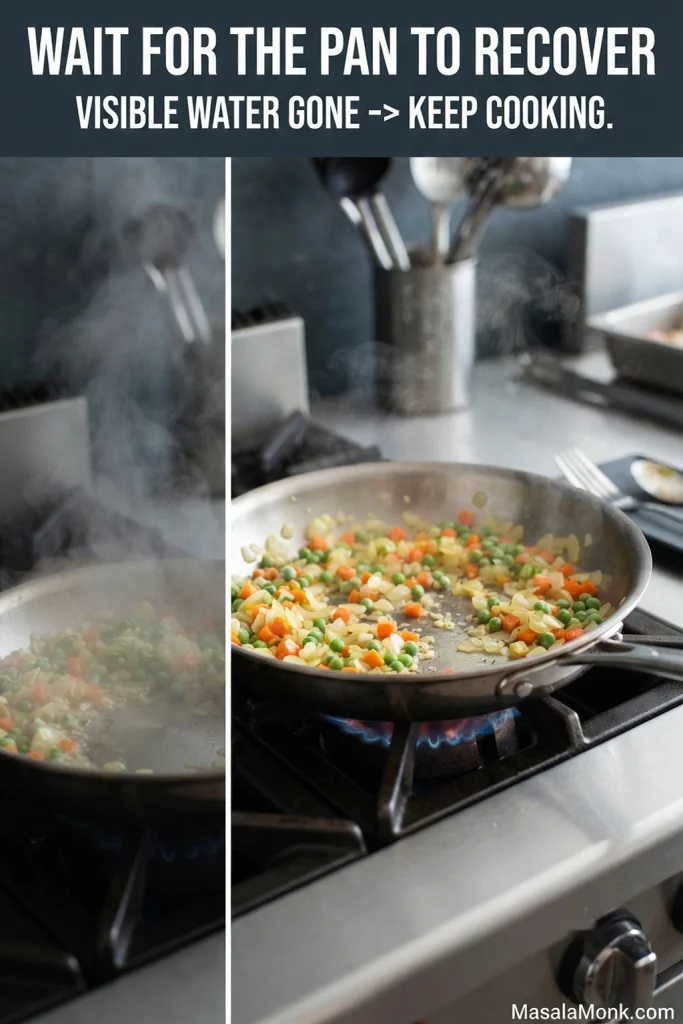
Frozen peas and carrots shown steaming with visible moisture compared with hot vegetables after the excess water has evaporated.
Because frozen vegetables cool the skillet and release moisture at the same time, adding rice immediately compounds the heat loss. Let the water disappear first; then the pan has enough energy to start frying again.

Use other vegetables the same way: cook raw or watery ones until tender and let excess moisture evaporate before the rice goes in; add already-cooked vegetables near the end so they only heat through.

Fry Until the Rice Starts Moving Freely

Spread the rice over as much of the skillet as you can. Leave it alone for a few seconds, toss, spread again and repeat. After the initial drop in temperature, you should hear the pan begin to sizzle again.

Pay attention to the spatula too. Cold rice can feel heavy at first. As it heats and loosens, the grains begin moving through the skillet more freely. A few toasted edges are enough; you are not trying to make the rice crunchy.
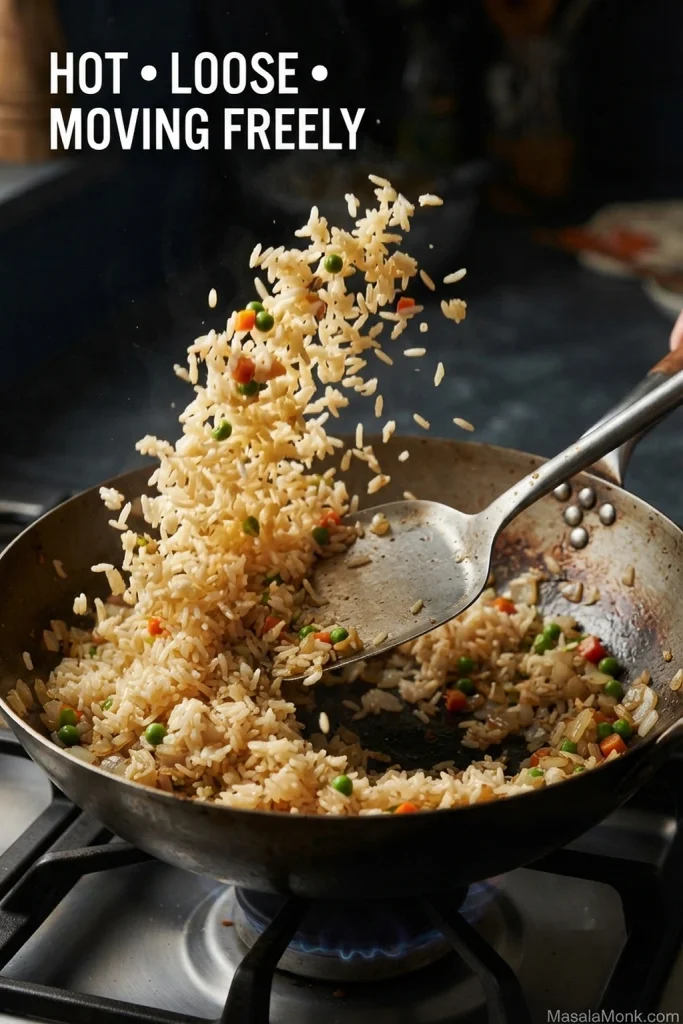
Loose pork fried rice grains with pork, egg and vegetables being tossed above a hot skillet.
Free movement is more useful than a fixed minute count because burner strength and pan material change the timing. Let the way the rice responds to the spatula tell you when it is ready for seasoning.

Season, Then Bring Everything Back Together

Add the soy sauce, oyster sauce, white pepper and optional MSG while tossing the rice. Give the seasoning 30–60 seconds to spread through the pan.

The rice may look paler than the takeout version in your head. Taste it before reaching for more soy.

Return the browned pork and soft egg, then add the optional bean sprouts and most of the scallion greens. Toss only until everything is hot.

Turn off the heat before adding the toasted sesame oil. This is the moment the separate ingredients should finally smell like one dish: hot rice, browned pork, fresh scallion and sesame all at once.
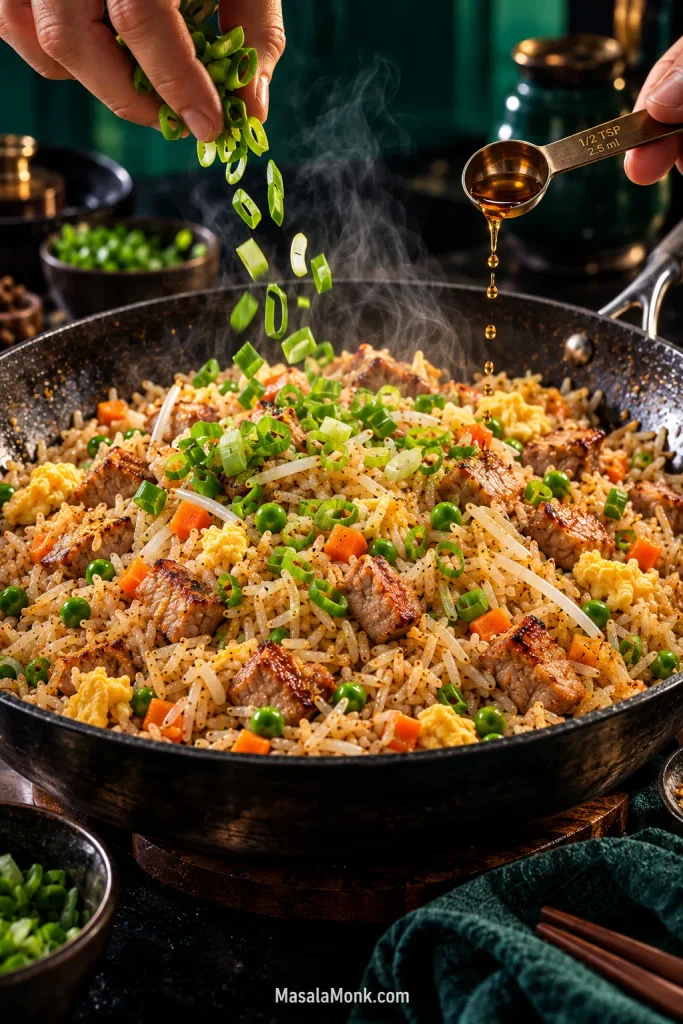
Sesame oil being drizzled over finished pork fried rice while sliced green scallions are scattered across the pan.
Neutral oil handles the high-heat frying; toasted sesame oil is concentrated enough that a small finishing dose can perfume the whole pan. Late scallion greens add a fresher onion note without needing another cooking stage.

Fresh rice, another cut of pork or a crowded pan can change how the method behaves. The guide below covers the adjustments.

Using Fresh or Leftover Rice

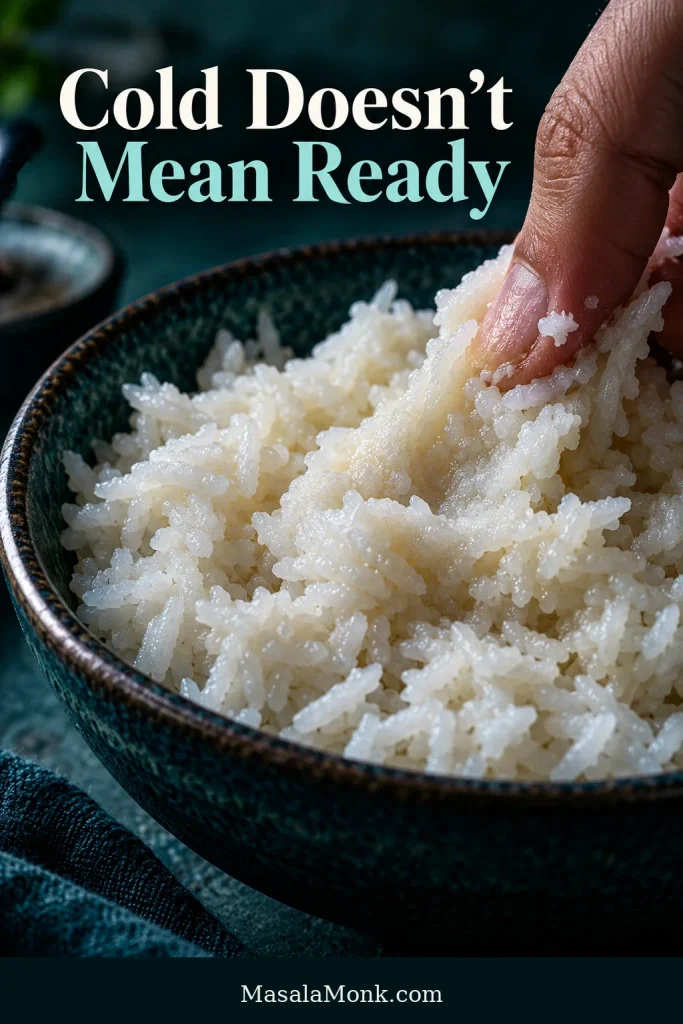
Cold leftover rice often comes out of the refrigerator as one stubborn block. Loosen the larger clumps with your fingers or a fork before the pan gets hot. You do not need to separate every grain; get rid of the big clumps and the skillet can do the rest.

Refrigerated jasmine rice is forgiving because the grains have had time to firm up and lose some surface moisture. They tend to separate more easily once they reach the skillet.

If the grains feel cool and come apart without smearing, they’re ready. Warm, visibly steamy or very soft rice needs more time.

How to Cool Same-Day Rice

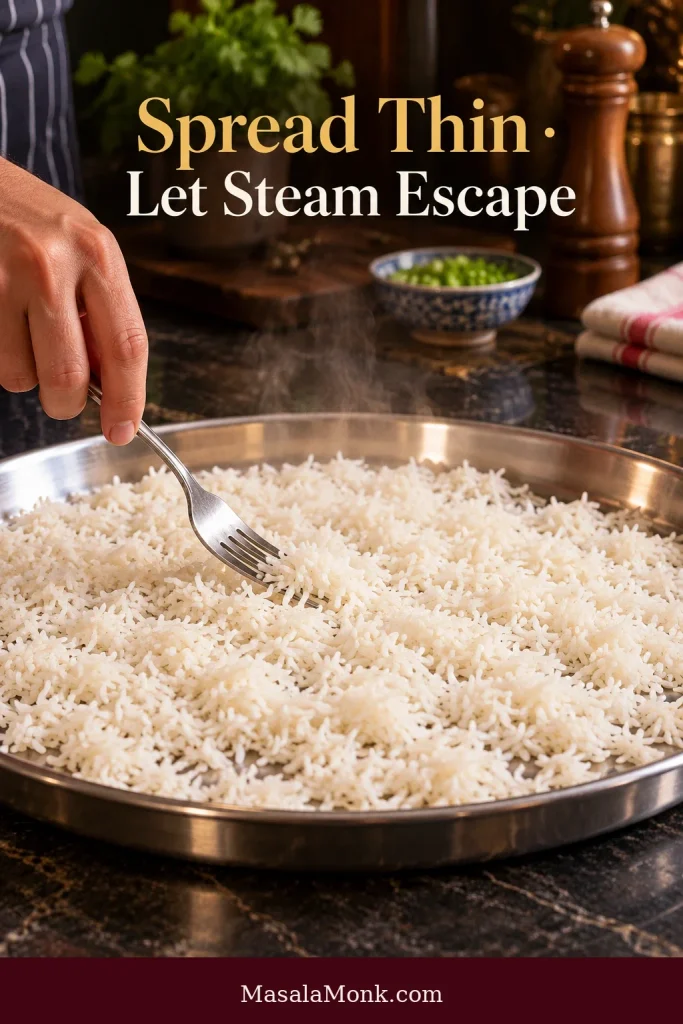
Spread the cooked rice in a thin layer on a wide tray or sheet pan instead of leaving it trapped in the pot. Once the visible steam is gone and the rice has cooled, loosen the larger clumps. If dinner can wait a little longer, a short spell in the refrigerator will firm the grains further.
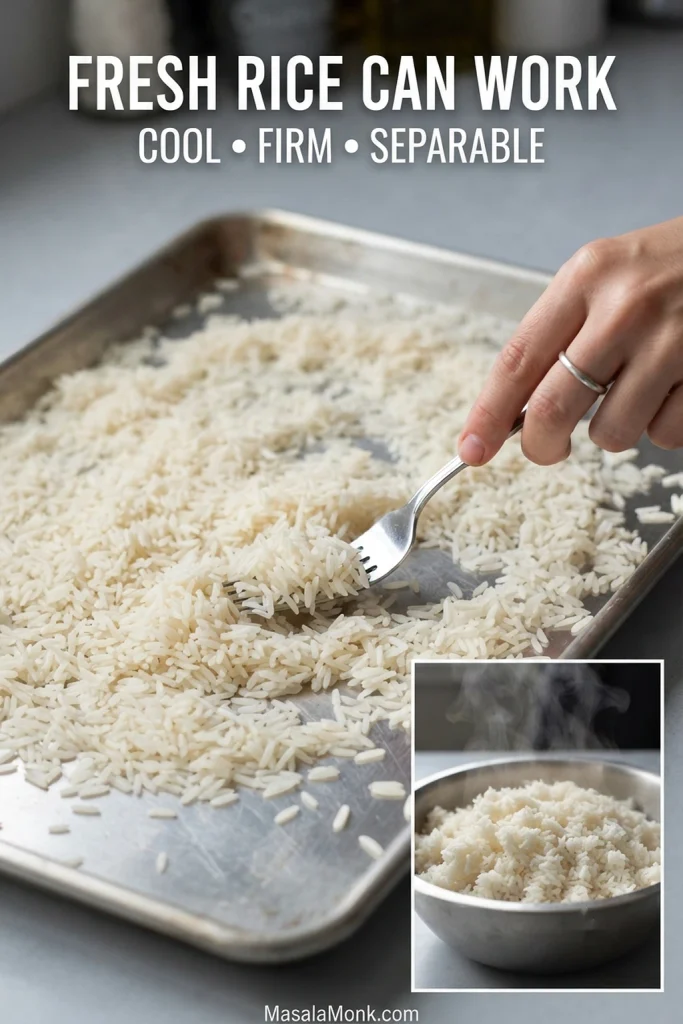
Freshly cooked white rice spread thinly across a metal sheet pan while the grains are loosened with a fork.
Rather than thinking only in terms of “day-old rice,” think about the condition of the grains. Spreading fresh rice thin increases the surface area exposed to air, so steam escapes faster and the rice can cool and firm before frying.

If you are not frying the rice promptly, refrigerate it rather than leaving cooked rice at room temperature. Get it into the refrigerator within 2 hours of cooking.

Extra oil cannot turn hot, steamy rice into cool, firm rice. Give it the cooling time instead.

If you are starting with uncooked rice, our guide to cooking rice includes a jasmine-rice method.

Which Pork Works Best?

Boneless pork loin is the easiest everyday choice, while char siu gives the most recognizable takeout-style pork. If you’re picturing the red-edged pork used in many classic Chinese-American takeout versions, that’s char siu—Chinese barbecue pork.

Use the pork you have; just change when it goes into the skillet. Raw pork cooks early and comes out once browned. Cooked pork goes in late. Ground pork needs time against the pan before you break it up, while pork belly can supply much of the fat the rice needs.
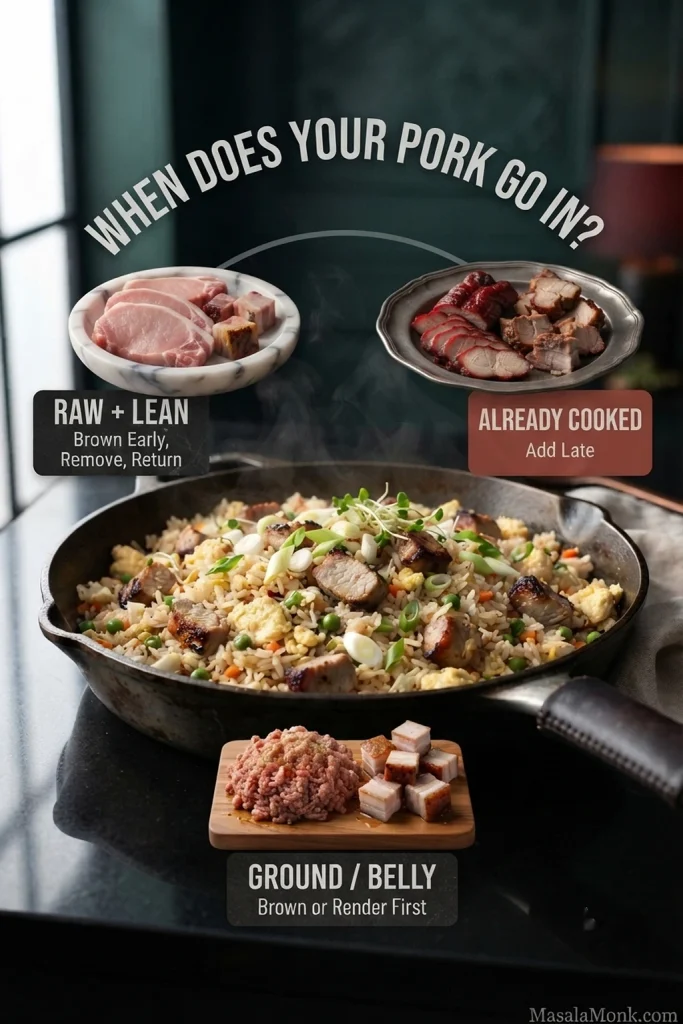
Pork loin, char siu, ground pork, leftover pork and pork belly shown with the best timing for fried rice.
To choose the best timing for pork fried rice, first ask whether the meat is raw or already cooked, then whether it is lean or fatty. Those two answers usually tell you whether it needs browning, reheating or rendering.
PorkBest approach
Raw loin, tenderloin or boneless chopSeason lightly, brown, remove and return near the end
Ground porkUse about 10 oz / 285 g; let the underside brown before breaking it up, then cook to 160°F / 71°C
Char siuWarm and lightly crisp; add near the end and be cautious with extra soy or salt
Leftover cooked porkAdd late and heat through so lean meat does not dry out
Pork bellyRender first, remove the pork and use the rendered fat for the rice; spoon off excess if it begins pooling

Char Siu for Takeout-Style Pork Fried Rice

Char siu changes both the look and flavor of the dish. Its caramelized red-brown edges are sweeter and more deeply seasoned than plain loin, giving the finished rice a more familiar Chinese-American takeout character.
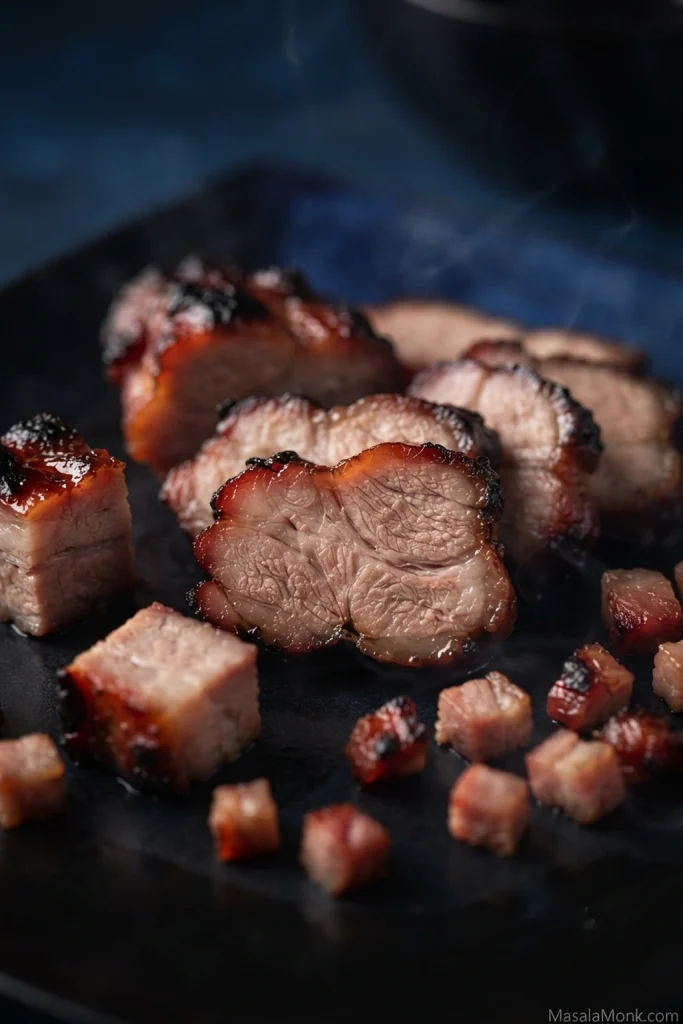
Glossy red-edged char siu pieces on a dark plate, with chopsticks holding one piece above the sliced pork.
Those glossy red-brown edges are what visually separate char siu from plain cooked pork. In fried rice, they add pockets of caramelized sweetness and roast flavor instead of making every grain taste the same.

Use about 10 oz / 285 g diced cooked char siu. Skip the raw-pork seasoning, warm the pieces briefly and let a few edges crisp. Because the pork already carries plenty of seasoning, taste the finished rice before adding extra salt or soy.

Lean Pork: Loin, Tenderloin or Boneless Chops

These cuts all work well when kept in small pieces and cooked only until done. Brown them early, remove them from the skillet, then return them near the end so they do not spend the entire fried-rice cook drying out.

If you bought a whole tenderloin and only need part of it here, the rest can become an oven-roasted pork tenderloin for another meal.

Leftover Cooked Pork

Leftover roast pork, tenderloin or pork chops only need reheating. Cut them into small pieces and add them near the end with the egg. That keeps lean leftovers from turning dry while the rice finishes.

Choosing the Pan and Managing the Heat

You do not need a wok. A wide 12-inch / 30 cm skillet is a good fit for this three-cup batch, as long as the rice has room to spread and the sizzle returns quickly after cold ingredients go in.

Nonstick offers the easiest release and should stay within the manufacturer’s recommended heat range. Seasoned carbon-steel or cast-iron skillets are also good choices. Stainless steel works too, but good preheating, enough oil and patience when food catches lightly matter more.

A hot empty pan is only the starting point. A brief drop in sizzle is normal when a cold ingredient goes in and the sound quickly returns. Persistent quiet steaming means the pan has not recovered yet.

On a modest home burner, a smaller batch usually does more for fried rice than chasing extreme heat.

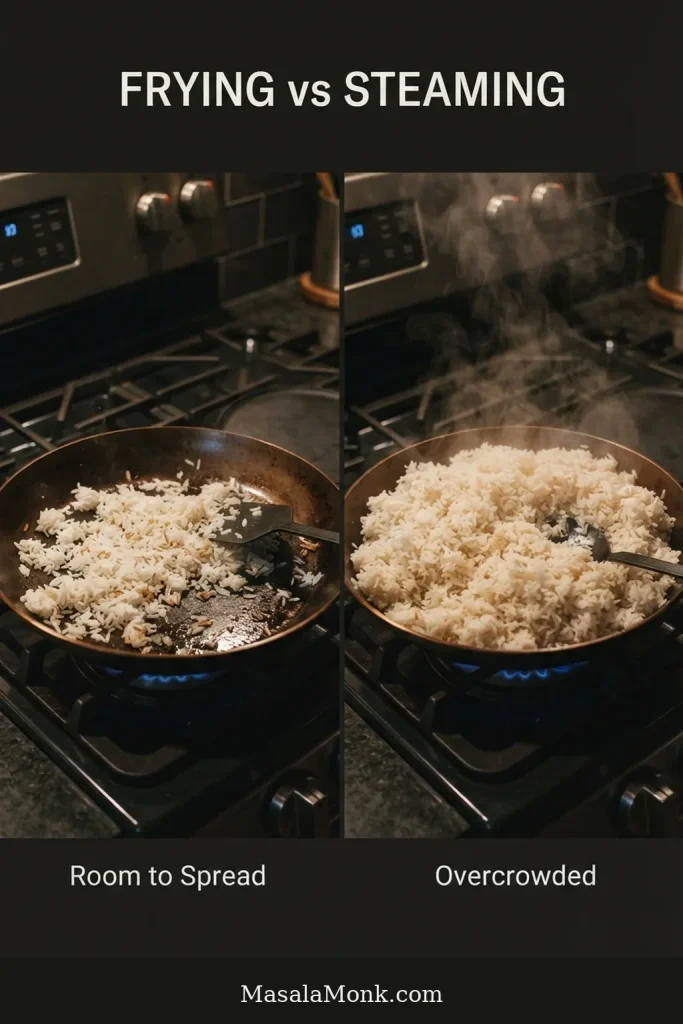
Space matters just as much. A skillet can hold six cups of cooked rice and still be too small to fry six cups of cooked rice. For this recipe, the three cups should spread into a reasonably shallow layer rather than sitting in a deep mound.
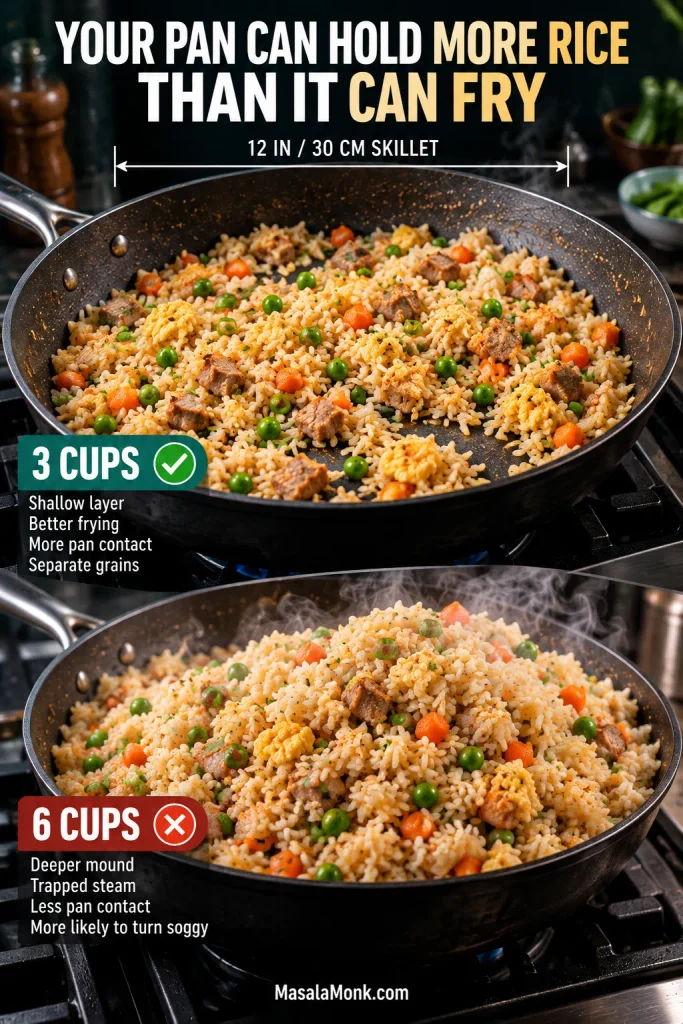
Comparison of an overloaded skillet with a deep mound of steaming fried rice and a correctly loaded skillet with rice spread in a shallower layer.
A pan’s useful fried-rice capacity depends on surface area, not just volume. As the rice gets deeper, less of it touches hot metal while moisture has farther to escape, so a physically full skillet can still be functionally overcrowded.

Season the Rice Without Soaking It

The goal is savory fried rice that still tastes like toasted rice, browned pork and scallion—not rice hidden under a heavy brown sauce.

For three cups of cooked rice, this recipe uses 1 tablespoon / 15 ml soy sauce and 2 teaspoons / 10 ml oyster sauce, plus the teaspoon of soy already used on the pork. That is enough to season the grains without leaving liquid underneath them.

White pepper adds gentle warmth. Optional MSG boosts savoriness without adding more liquid, while toasted sesame oil goes in after the heat is off so its aroma stays noticeable.

Color can fool you here. If the rice looks pale, taste it first. Add soy or salt only if it needs more salt. If the seasoning is already right, browning, scallion, white pepper and that final touch of sesame will do more for the flavor than simply making the rice darker.
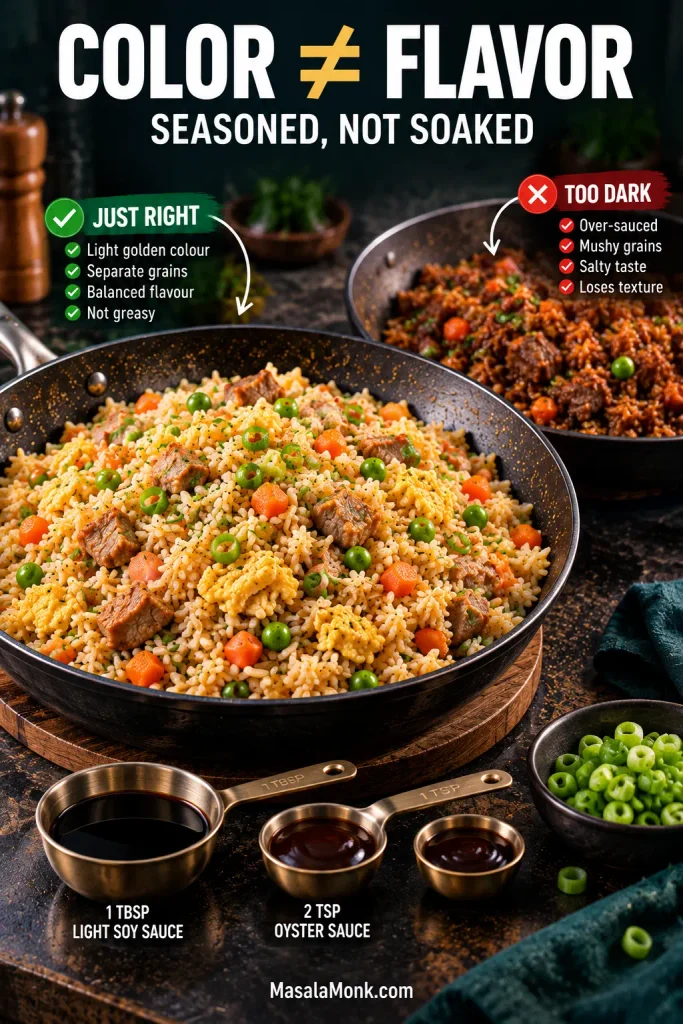
Comparison of lighter properly seasoned fried rice and much darker fried rice, with spoons labeled one tablespoon soy sauce and two teaspoons oyster sauce.
Since soy sauce adds salt, water and color at the same time, darkness is a poor seasoning target. If the rice already tastes balanced, more soy may make it wetter and saltier before it makes the flavor any better.

Pork Fried Rice Troubleshooting

If dinner starts heading in the wrong direction, pause before adding more oil or sauce. Look at the bottom of the skillet, listen to the pan and check how the rice moves. Those clues usually tell you what needs fixing.
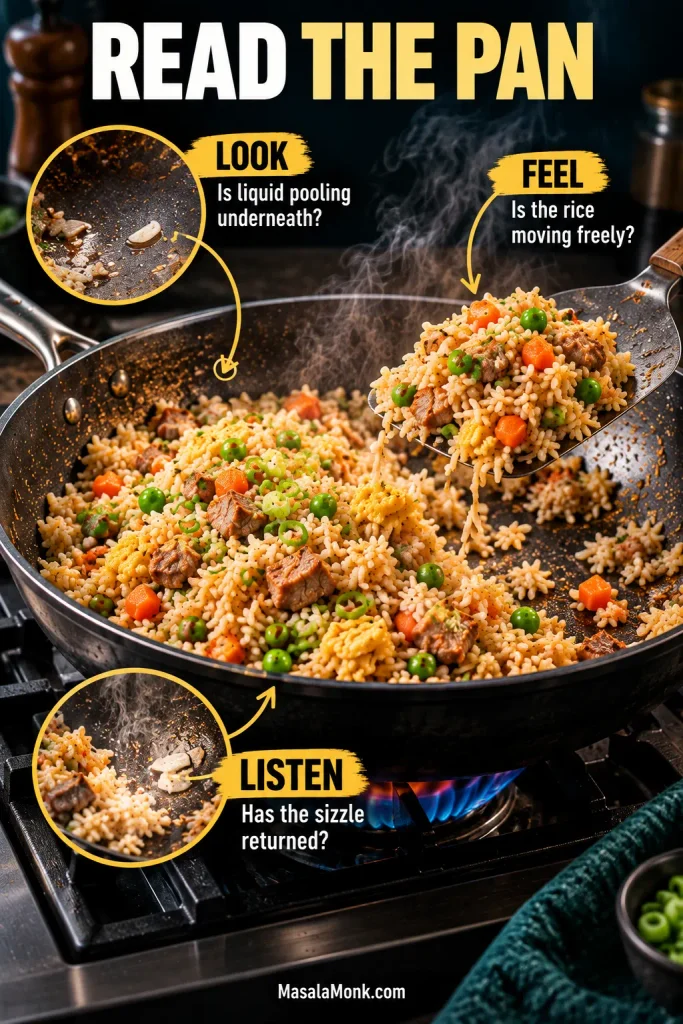
Fried rice troubleshooting board showing four conditions labeled steaming, clumping, sticking and sauce pooling.
Read the skillet before changing anything: look for liquid underneath, listen for the sizzle to return, and notice whether the grains move freely. The specific symptom then tells you which correction actually makes sense.

Quick Fried Rice Diagnosis

What you seeLikely causeWhat to do nowNext time
Heavy steam and softening riceToo much moisture or too much foodRemove half; spread out the rest; cook in two batchesStart with cooler, firmer rice or cook less at once
Large sticky clumpsWet rice or large cold clumpsSeparate gently; do not mash the grainsBreak up cold rice before cooking
Rice sticking hardIt has not released yet, or the surface is too dryPause, then slide a broad spatula underneathAdjust preheating and oil for your cookware
Gray pork sitting in liquidThe pork is steaming instead of browningLet the liquid cook away before tossing againUse a wider pan, smaller batch or more first-side contact
Oil pooling underneathToo much added or rendered fatStop adding oil; spoon off obvious excessAccount for fat from pork belly or char siu
Sauce pooling underneathToo much liquid seasoningBalanced: spread out and cook briefly. Too salty: dilute with plain rice, cooked egg or cooked unseasoned vegetablesAdd less sauce next time
Bland or flatIt may need salt, browning or fresher aromaticsTaste first; correct what is actually missingUse flavor rather than color as the guide
Salty but flatSalt is not what is missingStop adding soyBuild more browning and fresh aromatic flavor

The Rice Is Wet or Clumpy

Steamy rice can improve as excess moisture cooks away; mushy grains cannot be fried firm again. Once the grains themselves have softened and started breaking down, more heat usually dries the outside before it restores the texture you wanted.
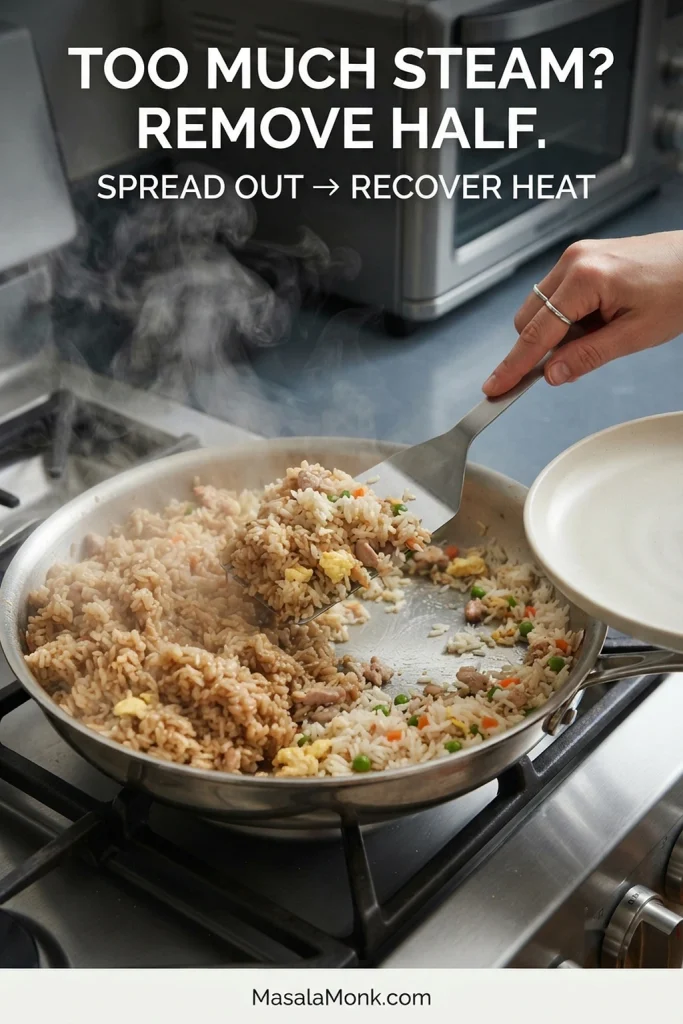
Part of a steamy batch of fried rice being removed from a crowded skillet onto a plate so the remaining rice can spread out.
Instead of trying to rescue steamy fried rice with more heat, oil or seasoning, change the geometry of the batch. Removing half exposes more hot skillet and gives moisture more room to escape from what remains.

The Rice Is Sticking

Constant scraping tends to tear the grains and spread more starch around the pan. Give lightly caught rice a moment to release before working the spatula underneath it.
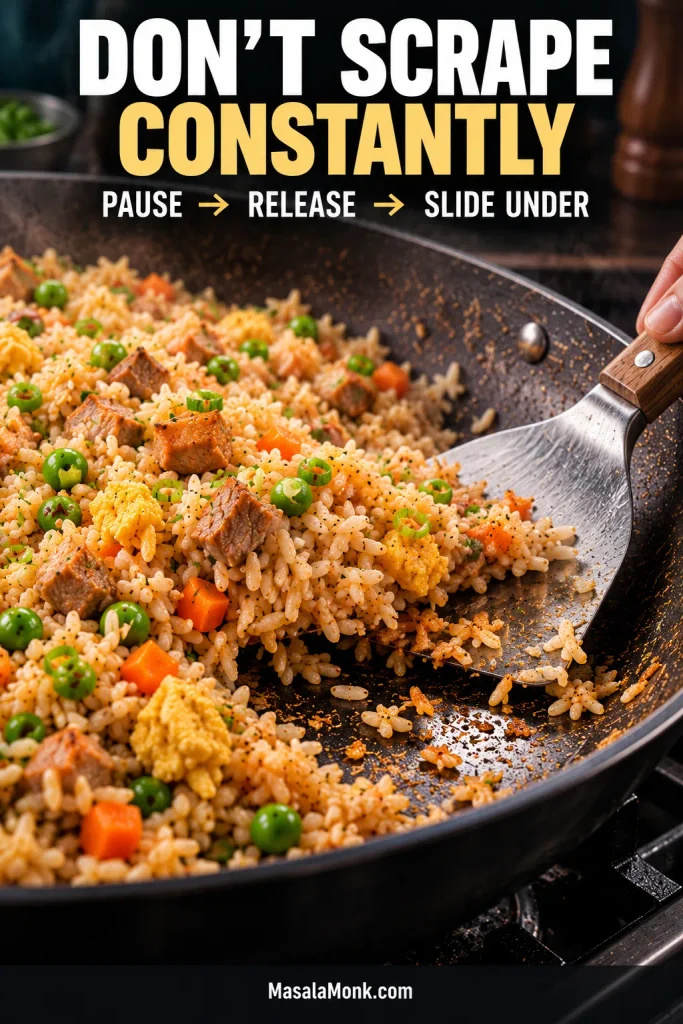
Broad metal spatula sliding underneath lightly stuck fried rice as the browned layer releases from the skillet.
A broad, nearly flat spatula separates more of the caught surface at once than a narrow scraping edge. That makes it easier to lift the browned layer while crushing fewer grains.

If the bottom is scorching while the center of the rice is still cool, lower the heat. A steady sizzle is useful; a burnt crust is not.

It Tastes Bland—or Salty but Still Flat

Taste before reaching for the soy bottle. Under-seasoned rice may need more salt. If it is already salty enough, more soy will only push it farther in the wrong direction.

Check the other layers instead: did the pork brown, did the rice get time against the hot pan, can you taste the scallion and white pepper, and did the sesame oil go in at the end? A small amount of MSG is another option when the rice needs more savoriness without more liquid.

If the rice itself tastes good but the pork still does not resemble the takeout version you know, try char siu next time. Sometimes the missing flavor is the pork, not the sauce.

Making a Bigger Batch

If you need twice as much fried rice, prepare twice the ingredients and cook two batches unless you are also using a much larger pan and a burner that can keep it hot.

Double the ingredients, not the pan load.

Keep the first batch loosely covered nearby rather than leaving it over heat to dry out while you cook the second.

What to Serve with Pork Fried Rice

Pork fried rice is at its best straight from the skillet, while the grains are still hot and the scallions smell fresh. With pork, egg, vegetables and rice already in the pan, it can easily be dinner on its own.
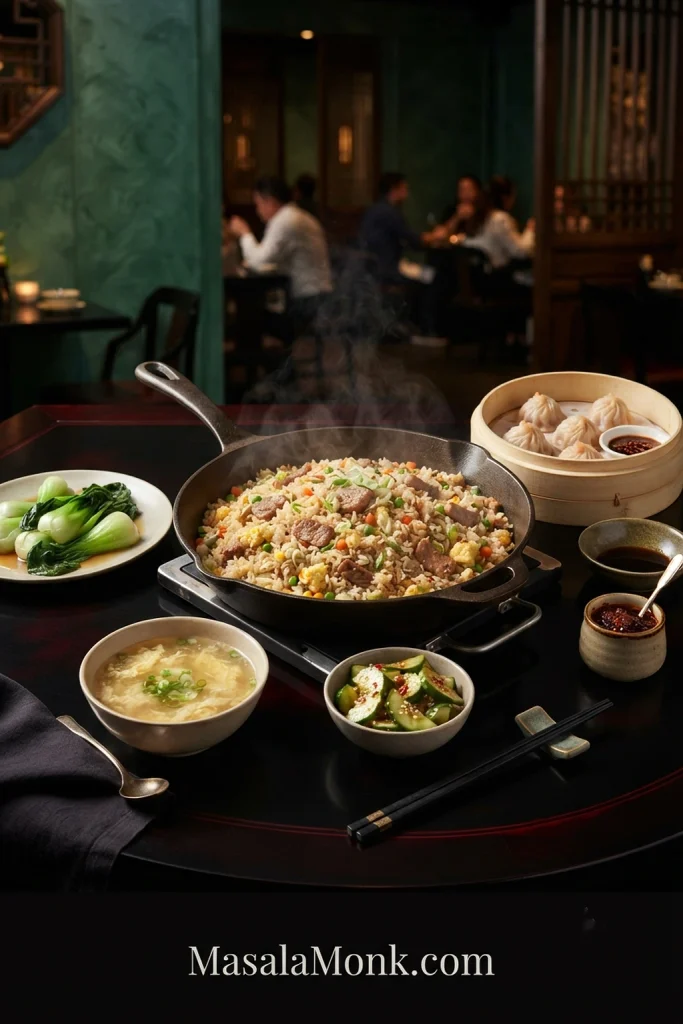
Pork fried rice served with cucumber salad, bok choy, dumplings, egg drop soup and chili crisp arranged around the main dish.
Because pork fried rice already supplies starch, protein, egg and vegetables, side dishes do not need to make the meal heavier. Cool, crisp, green, brothy or spicy accompaniments create more useful contrast.

For something cool and crisp alongside it, a cucumber salad adds a welcome contrast. Steamed bok choy or another simple green vegetable works well too, while dumplings turn the meal into more of a shared spread.

If you want soup first, egg drop soup keeps things light before the more savory fried rice. For heat, put chili oil or chili crisp on the table so each serving can be adjusted without changing the base recipe.

Storage and Reheating

Move leftovers into shallow containers and refrigerate them promptly. The USDA leftovers and food-safety guidance recommends refrigerating cooked leftovers within 2 hours, generally using them within 3–4 days, and reheating leftovers to 165°F / 74°C.
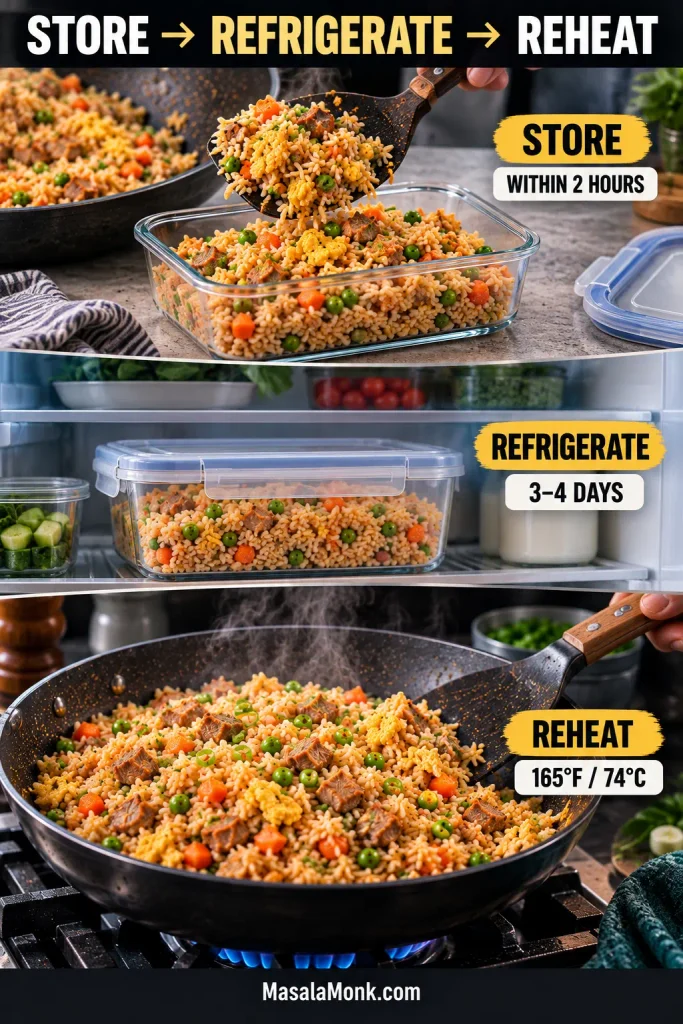
Three-stage pork fried rice storage guide: refrigerate within 2 hours, use within 3–4 days, and reheat to 165°F / 74°C.
Shallow meal-size portions give hot rice less depth to cool through and let you reheat only what you plan to eat. The rest can stay refrigerated instead of going through another warming cycle.

Skillet: Heat only the portion you need and spread it out in the pan. If refrigerated rice has become especially firm and dry, add a very small splash of water so some steam can help warm the center. Reheat to 165°F / 74°C.

Microwave: Reheat to 165°F / 74°C, stirring partway through if needed so the center heats evenly.

Freezer: Freeze cooled fried rice in meal-size portions. Smaller portions thaw and reheat more evenly than one large frozen block.
Posted on — Leave a comment

Egg Fried Rice Recipe: Fluffy, Savory & Easy

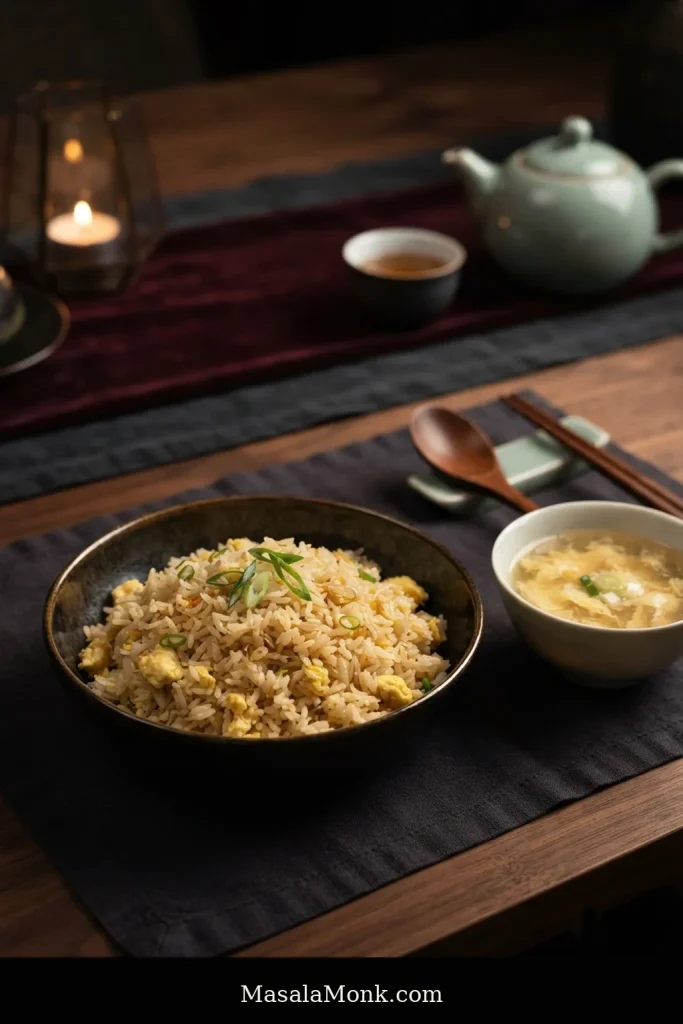
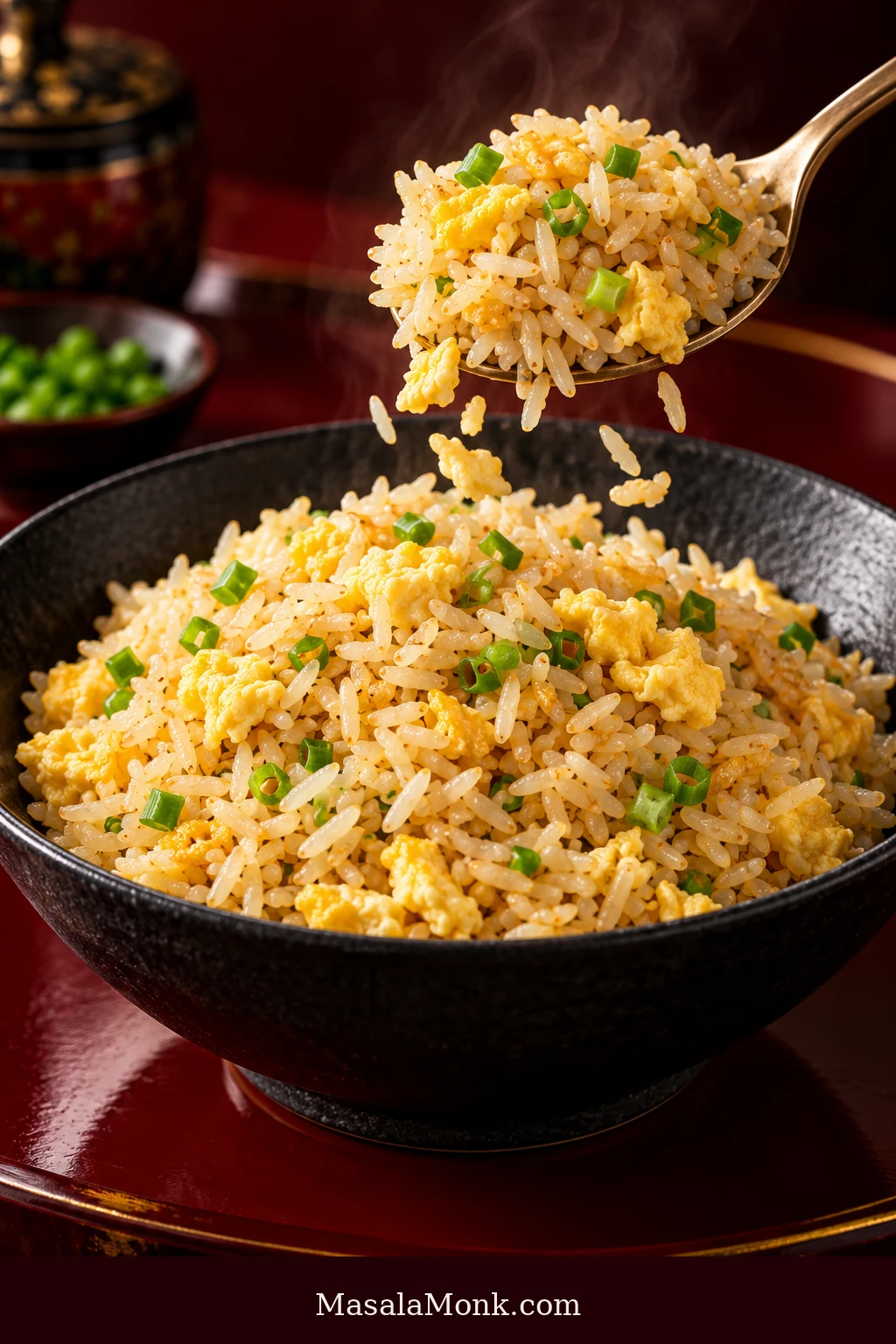
Dark bowl of pale golden egg fried rice with separate jasmine grains, soft yellow egg curds and sliced scallions, while a serving spoon lifts rice and several grains fall back toward the bowl.

Good egg fried rice should feel light on the spoon: distinct grains, soft golden curds, fresh scallions and enough seasoning to make the rice savory without covering up the egg.

The easiest route is to soft-scramble the eggs first, fry firm cooled rice in a roomy hot pan, season it lightly, then fold the tender egg back in at the end.

And this is where fried rice can be annoying: rice that spent all night in the refrigerator can still turn mushy, while rice cooked this afternoon may fry perfectly. What matters most is how wet, firm and separate those grains are before they reach the pan.

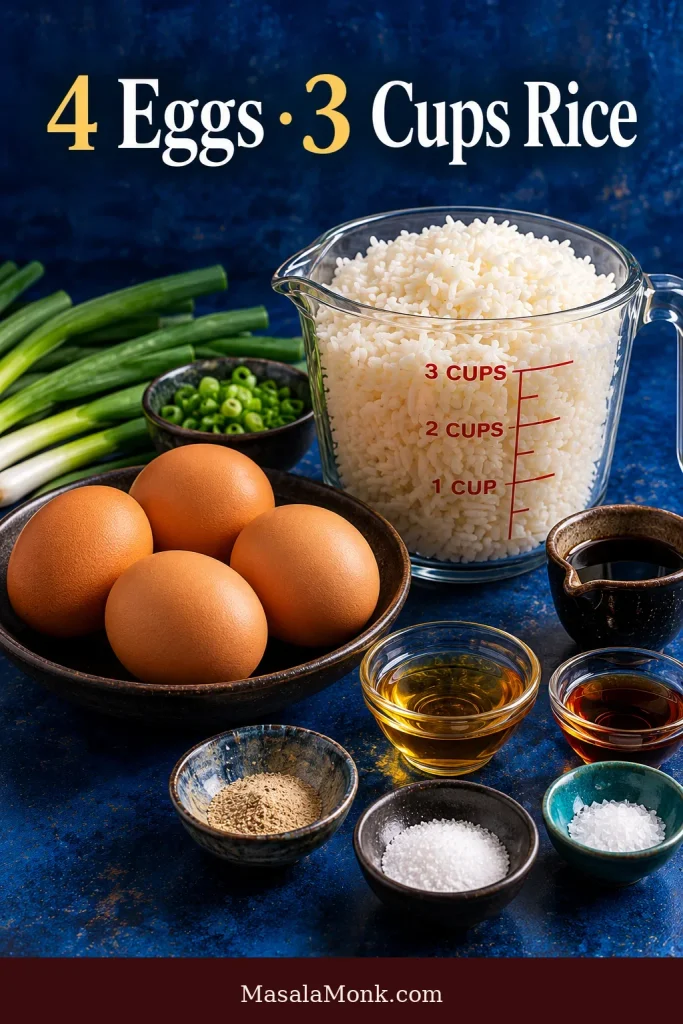
This version stays egg-forward: four eggs for three cups of rice, plenty of scallion, restrained soy sauce and just enough oil to fry the grains cleanly.

Separate the rice: firm and dry enough to loosen.
Keep the pan sizzling: visible water means wait.
Season without soaking: build flavor with minimal liquid.

Egg Fried Rice Recipe

Light, savory egg fried rice with separate jasmine grains, soft scrambled egg, scallions and just enough seasoning to keep the egg prominent.

Prep: 10 minutes with cooked rice ready
Cook: 8–10 minutes
Total: About 18–20 minutes
Serves: 2–3 as a main or 4 as a side
Pan: 12-inch skillet or 12–14-inch wok

Ingredients

  • 3 cups cooked jasmine rice, loosely measured, about 17 oz / 480 g, with firm, surface-dry grains that separate easily
  • 4 large eggs, lightly beaten
  • 2½ tbsp / about 37 mL neutral high-heat oil, such as peanut, avocado, canola or vegetable oil, divided
  • 4 scallions, thinly sliced, pale parts and green tops separated
  • 1 tbsp / 15 mL Chinese light or all-purpose soy sauce
  • ¼ tsp fine sea salt, divided, plus more only if needed after tasting
  • ¼ tsp ground white pepper
  • ⅛ tsp MSG, optional
  • ½ tsp / 2.5 mL toasted sesame oil
Four brown eggs beside a clear measuring jug containing three cups of cooked white rice, with scallions and small dishes of seasonings arranged nearby.
Four eggs keep three cups of rice distinctly egg-forward; restrained soy lets that egg remain prominent, while the divided oil provides enough fat to cook the curds and fry the grains cleanly.

Before You Start

Break the rice into loose grains before heating the pan. Beat the eggs with a pinch of the measured salt. Slice the scallions and keep the pale pieces separate from the green tops. Measure the soy sauce, white pepper and optional MSG. Once the cooking begins, there is very little downtime.

How to Make Egg Fried Rice

The order matters because the eggs and rice need different cooking windows. Pull the eggs early, then use the open pan to fry and season the rice before folding the tender curds back in.

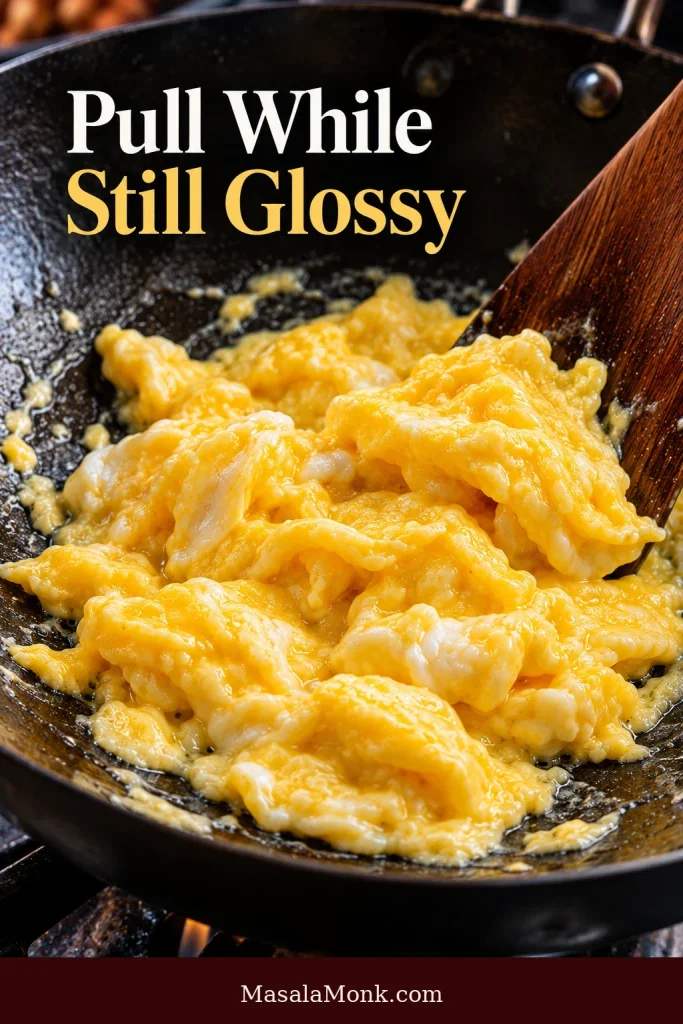
Broad yellow scrambled egg curds in a dark wok, glossy and softly set as a wooden spatula lifts and folds them.
Use the surface as your doneness gauge: broad curds should hold their shape and still reflect light. Pooled liquid means too early; tight, matte curds mean the first cook has already gone too far.

Start With Egg and Rice

  1. Soft-scramble the eggs. For carbon steel, stainless steel or cast iron, preheat the pan over medium-high heat, then add 1 tbsp / 15 mL oil. With nonstick, add the oil as the pan heats and stay within the manufacturer’s recommended heat range. When the oil moves easily across the surface, add the eggs. Fold them into broad, soft curds and remove them at roughly 70–80% set.
  2. Add the scallions. Pour in the remaining 1½ tbsp / about 22 mL oil. Stir in the pale scallion pieces for about 15–20 seconds, just until fragrant.
  3. Add the rice. Tip in the prepared rice and gently press apart any final clumps. Spread the grains over as much hot surface as possible. You want to hear a clear, dry sizzle almost immediately.

Fry, Season and Finish

  1. Give the rice some pan contact. Leave it against the pan for about 20–30 seconds, then toss or turn it. Spread it again and repeat for roughly 2–3 minutes, until the grains are hot and loose with scattered lightly toasted spots.
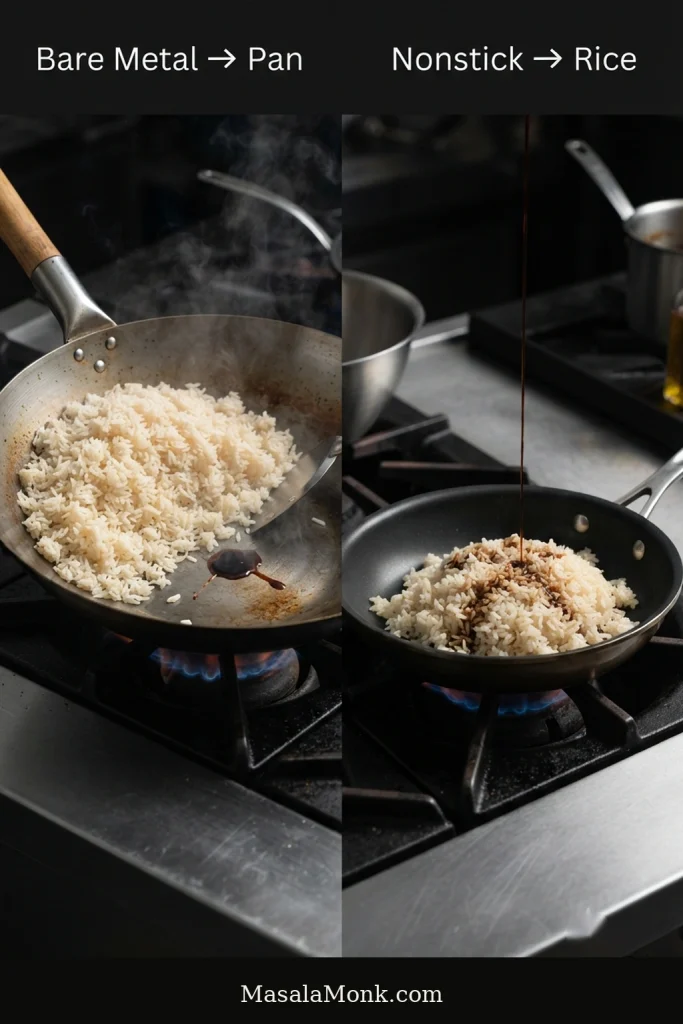
  2. Season the rice. Sprinkle over the remaining salt, white pepper and optional MSG. For carbon steel, stainless steel or cast iron, pour the 1 tbsp / 15 mL soy sauce onto an exposed patch of hot pan and let it hiss briefly before tossing. Using nonstick? Drizzle the soy over the rice instead and toss right away.
  3. Return the egg. Fold the softly scrambled egg through the rice for about 30–45 seconds. Break only the largest curds. The egg should finish fully set, with no visible liquid remaining, while staying soft and tender.
  4. Finish. Turn off the heat. Fold in the green scallion tops and ½ tsp / 2.5 mL toasted sesame oil. Taste one spoonful and adjust the salt only if needed.

When It Is Ready

The grains should look distinct and loose, with a dry surface and a few lightly toasted spots. They should still be tender inside, while the egg stays in soft visible curds.

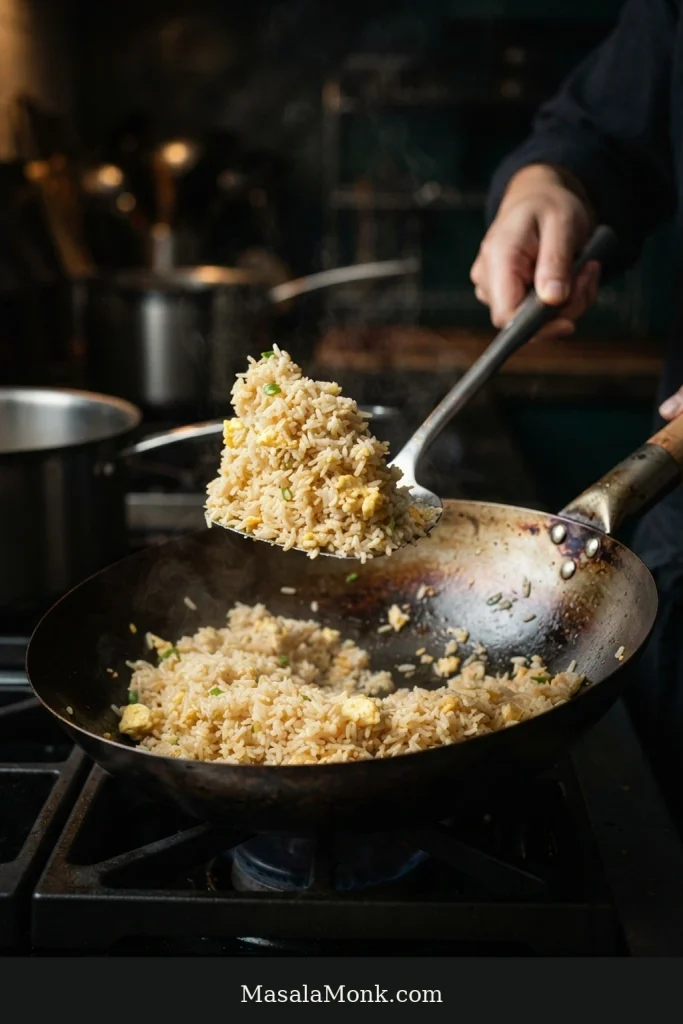
Finished egg fried rice being lifted in a dark wok, with pale separate rice grains, soft yellow egg curds and a restrained amount of sliced scallion.
Stop once the rice is hot, loose and lightly toasted; extra pan time now mostly dries the grains and tightens the egg.

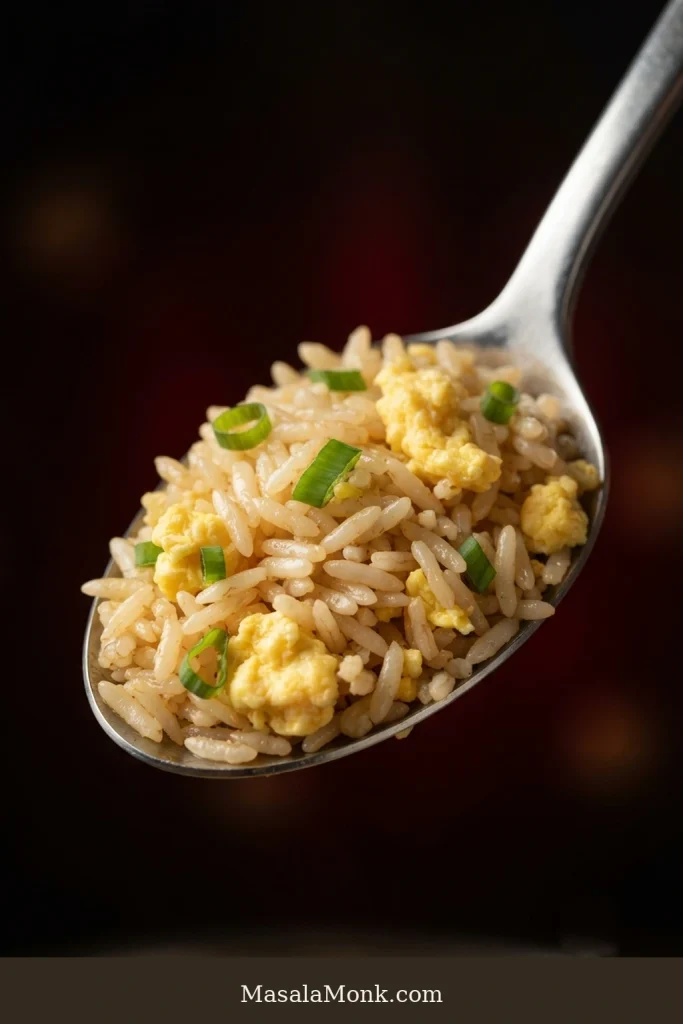
In a good spoonful, toasted rice and soft egg arrive together, followed by the fresh bite of scallion. The sesame should register as aroma rather than greasiness.

Close-up spoonful of egg fried rice showing individual pale jasmine rice grains, soft yellow egg pieces and a few sliced green scallions.
Separate should still mean tender: if fluffy-looking grains chew hard, the rice has usually stayed over the heat too long.

Recipe Notes

  • Adding vegetables? After removing the eggs, add up to ½ cup / 75 g peas, finely diced carrots or mixed vegetables. If the pan is dry, use some of the remaining oil. Cook until hot and any visible moisture has evaporated, then add the rest of the oil and continue with the scallions. Frozen vegetables may add a minute or two to the cooking time.
  • No day-old rice? Use the same-day method below. Firm, dry-enough, separate grains matter more than a specific age.
  • Double batch: Cook two rounds in a 12-inch skillet rather than filling the pan with six cups of rice at once. See Choosing a Pan for why surface area matters.
  • Chinese light soy: “Light” describes the thinner everyday Chinese seasoning soy sauce; it does not mean reduced-sodium soy sauce. Reduced-sodium soy also works, but you may need more salt at the end.
  • Gluten-free: Use certified gluten-free tamari in place of the soy sauce.

Research note: This recipe is research-led rather than independently kitchen-tested by MasalaMonk. We cross-checked specialist Chinese cooking methods, home-stove techniques, common fried-rice problems and official food-safety guidance. Use the visual, sound and texture cues alongside the timings.

Egg Fried Rice Guide

Turn to this guide when the rice, pan or seasoning behaves differently in your kitchen.

Egg & Rice

Pan & Seasoning

Fix & Adapt

Best Rice for Egg Fried Rice

The grains need enough structure to survive tossing and enough surface dryness to fry cleanly. Jasmine rice is the first choice here because its aroma suits the simple egg-and-scallion profile and properly cooked grains stay tender while separating easily.

Long-grain white rice is an excellent substitute. Basmati stays naturally separate and gives the dish longer, more aromatic grains.

Brown rice gives a firmer, nuttier result. Short-grain rice makes a stickier, more cohesive fried rice than jasmine.

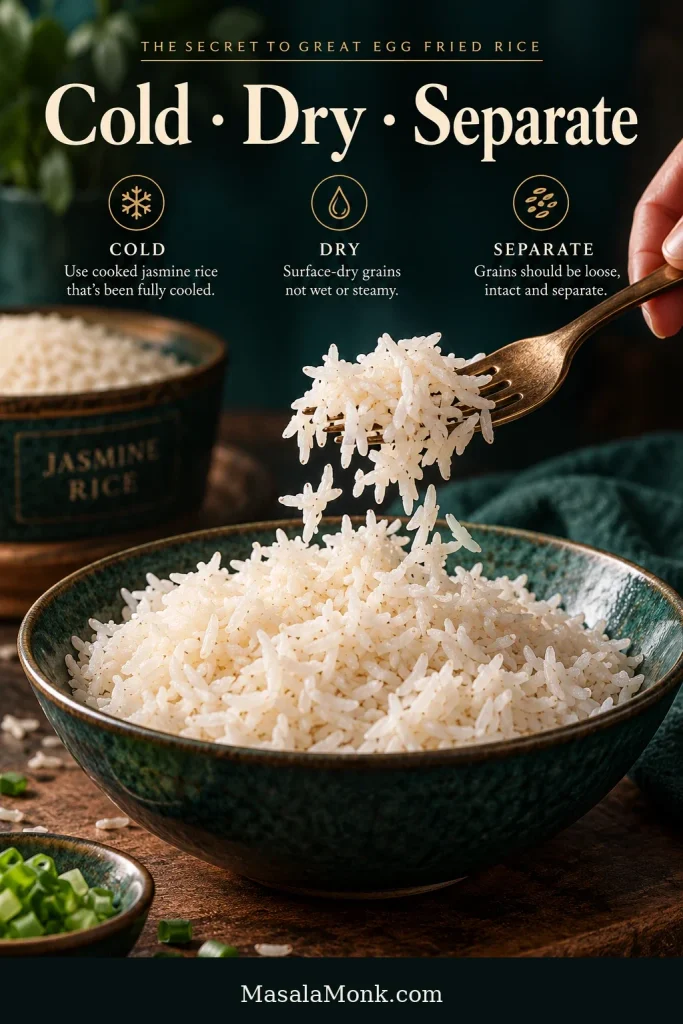
Cold, Dry and Separate Are Three Different Things

The familiar advice to use day-old rice works because refrigeration often gives you several useful changes at once. It does not guarantee them.

  • Cold: the rice has cooled and firmed.
  • Dry: excess surface moisture has escaped.
  • Separate: the grains can be loosened without turning into paste.
Instructional guide showing cooled cooked rice being loosened with a fork, with visual cues for cold, surface-dry and separate grains.
These three checks solve different problems: cooling firms the rice, surface dryness reduces water entering the pan, and separation lets heat reach between the grains instead of being trapped inside compacted clumps.

Rice can spend a night in the refrigerator and still be too wet because it absorbed too much water when it was first cooked. That is the maddening batch: you followed the usual “day-old rice” advice and it still softened in the pan.

Fingers pressing chilled cooked rice that appears soft, moist and compacted instead of separating cleanly into individual grains.
When chilled rice still crushes or smears easily, the useful correction belongs to the next batch of cooked rice—not more refrigerator time. Slightly firmer cooking is more effective than trying to rescue overhydrated grains later.

Loosen refrigerated rice with clean fingers or a fork before heating the pan. Gentle pressure should break clumps into intact grains. Rice that smears or crushes easily was probably too soft before it ever reached the refrigerator.

Using Freshly Cooked Rice

If your usual method already produces properly cooked rice, use about 5–10% less water when cooking a batch specifically for fried rice. The target is fully cooked rice that feels slightly firmer and drier than your everyday table rice.

Fluff it as soon as it is cooked, then spread it in a thin layer on a wide plate, tray or shallow container. Steam escapes quickly instead of staying trapped in a hot mound.

Freshly cooked white rice spread in a thin layer across a wide metal tray while a fork loosens the grains and light steam rises.
For same-day fried rice, geometry matters more than an exact cooling time. A thin layer sheds heat and steam evenly, while a deep bowl keeps the center warm and humid for much longer.

Once the heavy steam has gone, cool the rice promptly. If it still feels warm and soft, refrigerate the spread-out rice for about 20–30 minutes, or until it feels firm and dry on the surface.

Timing note: Cooking and cooling same-day rice is additional to the 18–20-minute recipe time shown above.

Starting from uncooked rice? MasalaMonk’s guide to how to cook rice covers jasmine, basmati, long-grain rice, stovetop methods and rice cookers in more detail.

The Separation Check

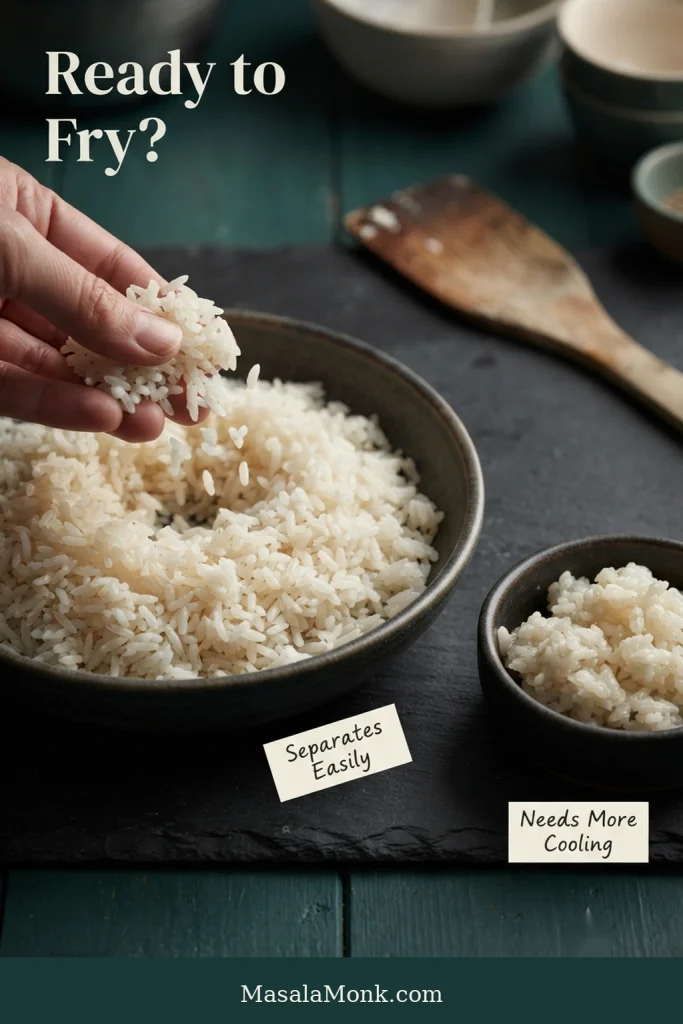
Ready: grains hold their shape, look dry on the surface and separate with gentle pressure.

Needs more cooling: rice is still warm, steaming or surface-damp, but the individual grains remain intact.

Too soft for cooling to fix: grains smear, crush or mash under gentle pressure. Use the batch if you must, but cook the next rice slightly firmer.

Comparison showing cooled rice separating easily into intact grains beside a smaller example of softer, clumped rice that still needs more cooling.
Treat this as the final go/no-go check: warm or surface-damp rice can improve with more cooling, but rice that already smears or mashes easily was probably cooked too soft to begin with.

Why Use Four Eggs?

In egg fried rice, the egg should be easy to taste and easy to see. Four large eggs for three cups of cooked rice give every serving plenty of soft curds without turning the dish into scrambled eggs with rice mixed through them.

Cooking the eggs separately is the forgiving route on a home stove. Pull the curds while they still look glossy; they cook again when they return to the rice. Fully setting them at the start makes rubbery egg much more likely.

Choosing a Pan

Use a wide pan you already know well. A 12-inch skillet is ideal for this batch; a 12–14-inch carbon-steel wok is equally good if you are comfortable cooking with one.

Stainless steel, cast iron and nonstick all have a place here. With nonstick, keep the heat within the manufacturer’s limits rather than chasing the temperatures used with bare metal.

At three cups, the rice has room to spread and moisture somewhere to escape. Six cups crowd the same skillet, trap steam and make it harder for the pan to recover between tosses.

Comparison of rice spread in a lightly loaded wok with exposed hot metal and an overcrowded wok filled deeply with rice and visible steam.
More burner power cannot create more pan surface. Therefore, doubling this recipe is better handled as two batches: six cups of rice in one 12-inch skillet cover the hot metal and trap far more steam.

Frying on a Home Stove

Listen when the rice hits the pan. A lively, fairly dry crackle means it is frying; gentle bubbling or visible liquid underneath means water is building up.

You do not need restaurant wok hei to make excellent egg fried rice at home. Aim for loose grains, a dry frying sound and some light toast rather than chasing smoke.

Spread the rice out, leave it against the pan for roughly 20–30 seconds, then toss and repeat. Those short pauses give a home stove time to toast the surface without scorching the bottom.

Wok spatula spreading egg fried rice into a shallow layer against the hot surface of a dark wok.
The pause is part of the technique. If the rice is moving constantly, it gets less direct contact with hot metal; brief rests between turns let a home stove develop light toast without requiring restaurant wok heat.

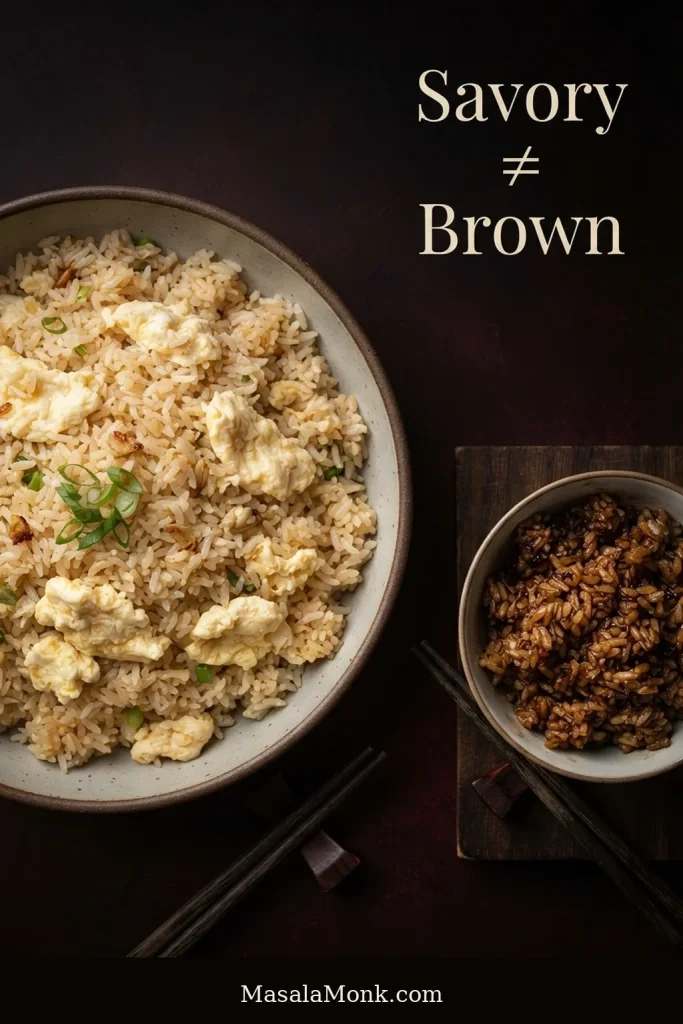
Savory Does Not Mean Brown

Fried rice can taste flat even when it already looks dark enough. More soy sauce adds fermented savoriness, but it also brings salt, color and liquid. Once the rice clearly tastes of soy, another spoonful may simply make it wetter.

Pale golden egg fried rice with visible egg curds shown prominently beside a smaller, much darker soy-heavy portion for comparison.
This egg-forward version deliberately stays pale enough for the egg to remain visually distinct. Darker color can be added intentionally with dark soy, but color alone does not tell you whether fried rice is properly seasoned.

Soy Sauce and Salt

That is why this recipe stops at 1 tbsp / 15 mL soy sauce. If the finished rice still needs seasoning, salt can supply it without adding more liquid or darkening the grains.

Comparison showing a small amount of soy sauce touching an exposed patch of bare metal beside rice in one pan and a thin soy drizzle landing directly on rice in a nonstick pan.
On bare metal, the useful effect is a brief hiss from a small amount of soy touching the hot surface—not a puddle. With nonstick, season the rice directly instead of deliberately heating an empty coated patch.

White pepper supplies the warm background heat, while scallion whites mellow in the pan and the green tops stay fresher at the finish. If you bought white pepper for this recipe, it is also one of the defining flavors in MasalaMonk’s Hot and Sour Soup.

MSG is optional; the ⅛ tsp used here adds savoriness without more liquid. Toasted sesame oil goes in after the high-heat cooking, where ½ tsp / 2.5 mL is enough to perfume the finished rice.

Without Soy Sauce

Leave the soy out and lean on salt, white pepper, scallions and optional MSG. The rice will be paler, but pale does not mean bland—the egg and scallion simply come through more clearly.

Adding Vegetables

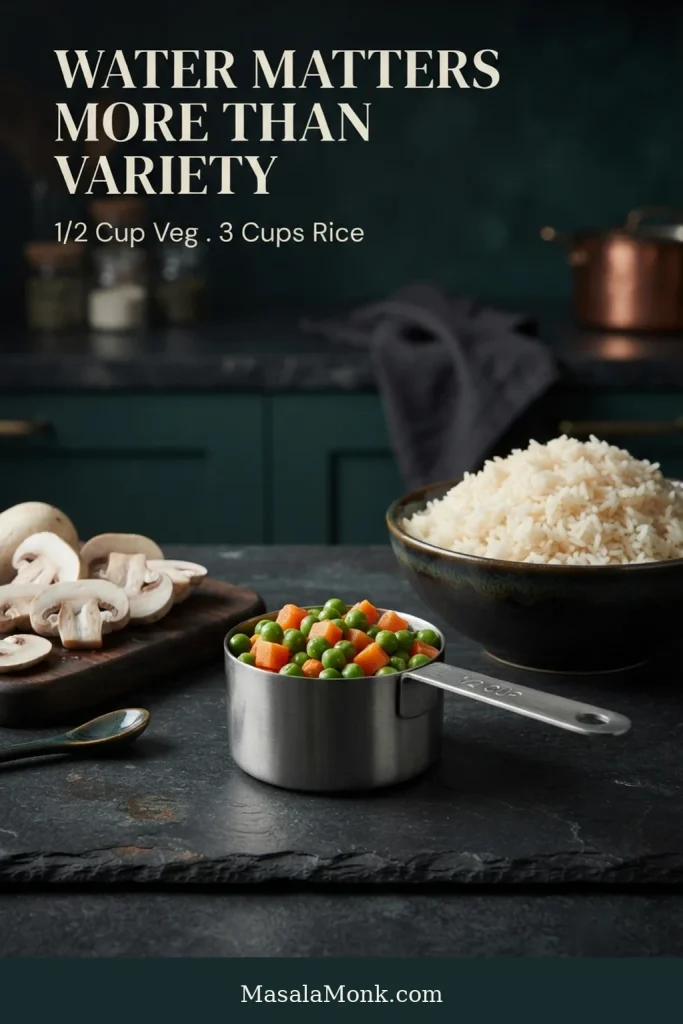
With vegetables, water matters more than variety. Frozen peas are forgiving.

Dice firm carrots or green beans small enough to heat through quickly. Mushrooms and wetter mixed vegetables need more care because they cool the pan and release more moisture.

Keep the total around ½ cup / 75 g for three cups of rice. Beyond that, the vegetables begin to crowd the skillet and the dish starts behaving more like a mixed fried rice than an egg-first one.

Half-cup metal measure filled with peas, finely diced carrot and green beans beside a larger quantity of cooked rice, with sliced mushrooms shown as a wetter vegetable example.
The ½-cup limit protects both pan temperature and the egg-first character of the dish. After wetter vegetables go in, wait for visible moisture to disappear and the strong sizzle to return before adding the rice.

Canned vegetables start softer and wetter, so drain them well and expect less crisp texture.

If peas, carrots and onion are meant to be a bigger part of the dish rather than a modest add-in, MasalaMonk’s Fried Rice Recipe is built around that fuller Chinese-American takeout-style version.

Variations

Darker takeout-style. For deeper color, start with about ½ tsp dark soy sauce alongside the regular soy. If deeper savory flavor is the goal instead, add about 1 tsp oyster sauce. Reduce the added salt and keep the extra liquid modest.

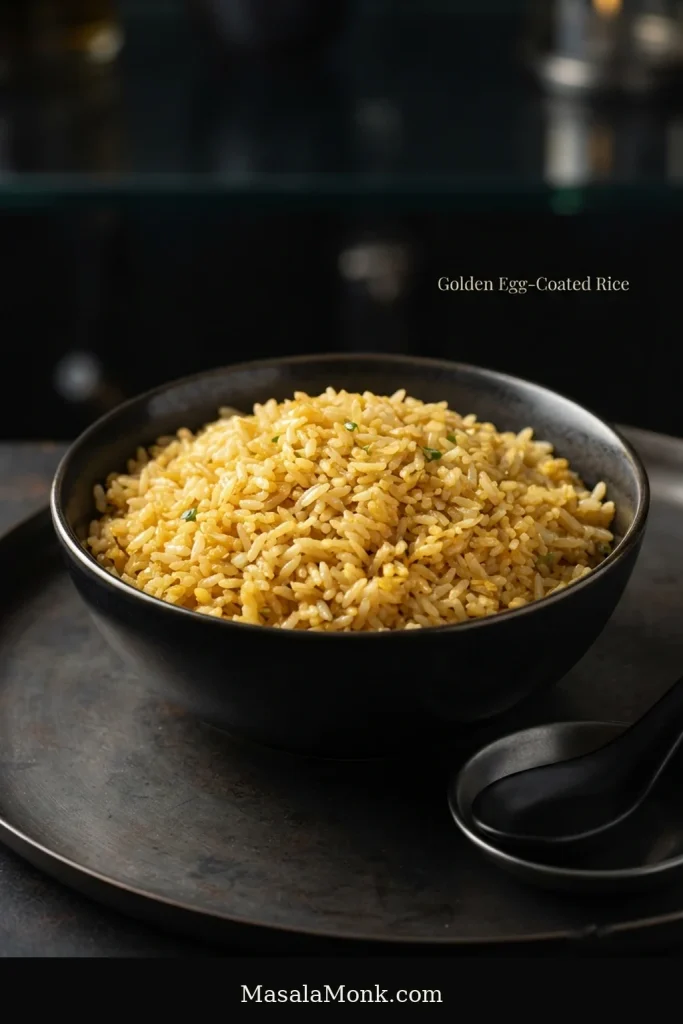
Golden egg-coated rice. Some Chinese techniques deliberately coat some or all of the grains with beaten egg before or during frying. The egg forms a thin golden layer around individual grains rather than remaining mainly as larger curds. It is a different technique, not a failed version of the separate-scramble method.

Bowl of golden egg-coated fried rice with individually separated yellow-gold grains and a small amount of sliced scallion.
In golden fried rice, egg coats the individual grains; in the main recipe, more of it remains as soft, visible curds.

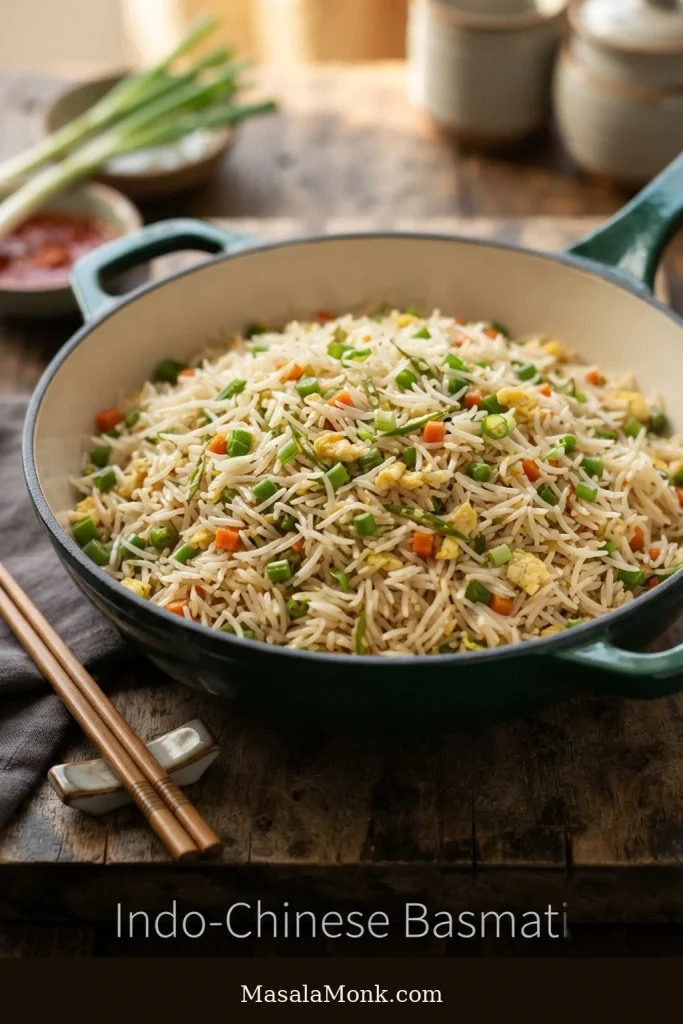
Indo-Chinese basmati. Use basmati for extra-long, naturally separate grains, with finely diced carrot or green beans and optional green chile. Finish with about 1 tsp / 5 mL plain white vinegar for acidity.

Indo-Chinese egg fried rice with long, slender basmati grains, visible egg pieces, finely diced vegetables and sliced green chile.
Long basmati grains create a looser texture, so finely diced vegetables fit this Indo-Chinese variation better than large pieces.

Chicken or shrimp. These proteins need different exits from the pan. Cook small chicken pieces to 165°F / 74°C before removing them; pull shrimp as soon as they are just opaque because they finish quickly when returned to the hot rice. For versions built around either protein, use MasalaMonk’s Chicken Fried Rice Recipe or Shrimp Fried Rice Recipe.

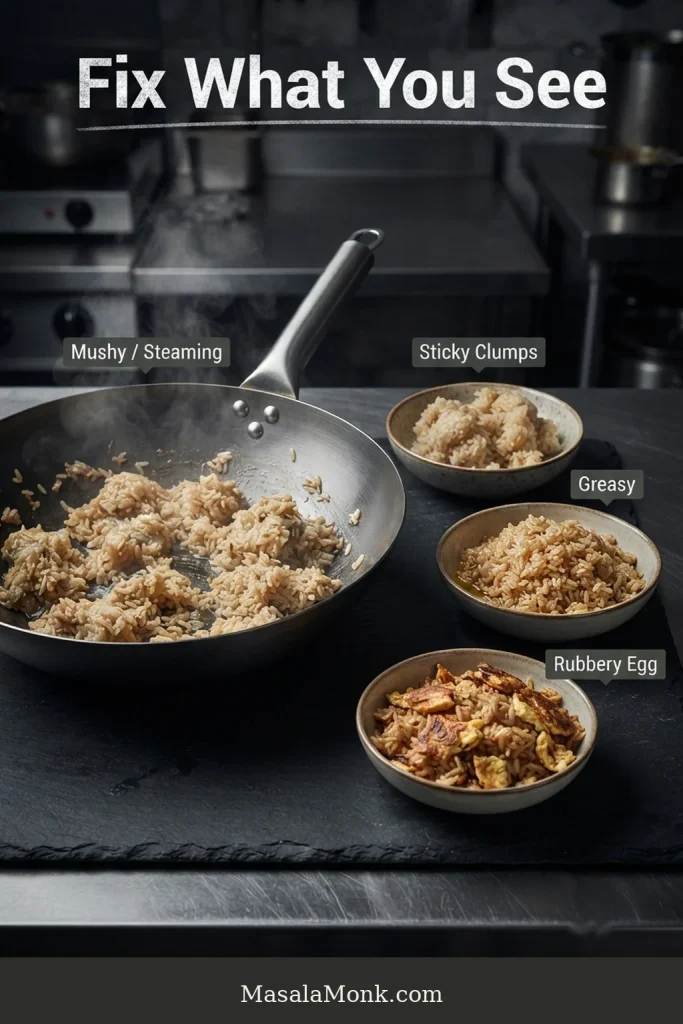
Fix What You See—Not What You Assume

A mushy batch needs a different fix from a bland one. Diagnose what you can actually see before changing several things at once.

Troubleshooting guide comparing mushy steaming fried rice, sticky rice clumps, greasy rice and dry tightly cooked egg curds.
Start with the symptom rather than a universal “fried rice fix.” For example, greasy rice can come from excess oil, but it can also result from a crowded, steamy pan that leaves the oil coating the food instead of helping it fry.

Moisture, Clumps and Seasoning

What You SeeLikely CauseWhat to Do
Mushy even after overnight refrigerationThe rice probably started too wet or soft.Cook the next batch slightly firmer. Chilling helps the surface, but it cannot rebuild overcooked grains.
The pan is steamingWet rice, wet vegetables or too much food cooled the pan and created too much steam.Stop adding ingredients and let visible moisture evaporate. Use a smaller or drier batch next time if needed.
Rice stays in sticky clumpsThe rice is compacted, overly soft or still too wet.Break clumps apart before frying. Next time, rinse the raw rice well and avoid cooking it overly soft.
Rice turns wet when sauce goes inToo much liquid, or the rice was not hot enough yet.Fry the rice first and keep liquid seasoning restrained.
Looks right but tastes blandIt may need salt or aromatic seasoning.Taste for salt, then consider more scallion, white pepper or optional MSG.
Too dark and soy-heavyToo much regular soy or too much dark soy.Use less next time. Extra frying will not remove excess soy.

Oil, Egg and Pan Control

What You SeeLikely CauseWhat to Do
GreasyToo much oil, or a crowded, steamy pan that left oil coating the food instead of helping it fry.Use the measured oil as a starting point and check moisture and batch size before cutting it dramatically.
Rice is dry and hardThe rice started unusually dry, or it stayed in the pan too long.Fry only until hot and lightly toasted. Very firm, dry chilled rice needs less pan time.
Egg is rubberyIt was fully cooked at the beginning and then cooked again.Remove the eggs while still softly set and return them only near the end.
Egg turns the rice sticky or pastyRaw egg met the rice without enough heat or control.Use the separate soft-scramble method before trying deliberate egg-coated techniques.
Frozen vegetables flood the panIce and thawing vegetables released more water than the pan could evaporate.Wait until visible water disappears and the strong sizzle returns before adding rice.
Rice sticks to the wok or skilletWet rice, poor preheat, too little oil or an overloaded pan can all contribute.Check those variables before blaming your wok’s seasoning.

Storage and Reheating

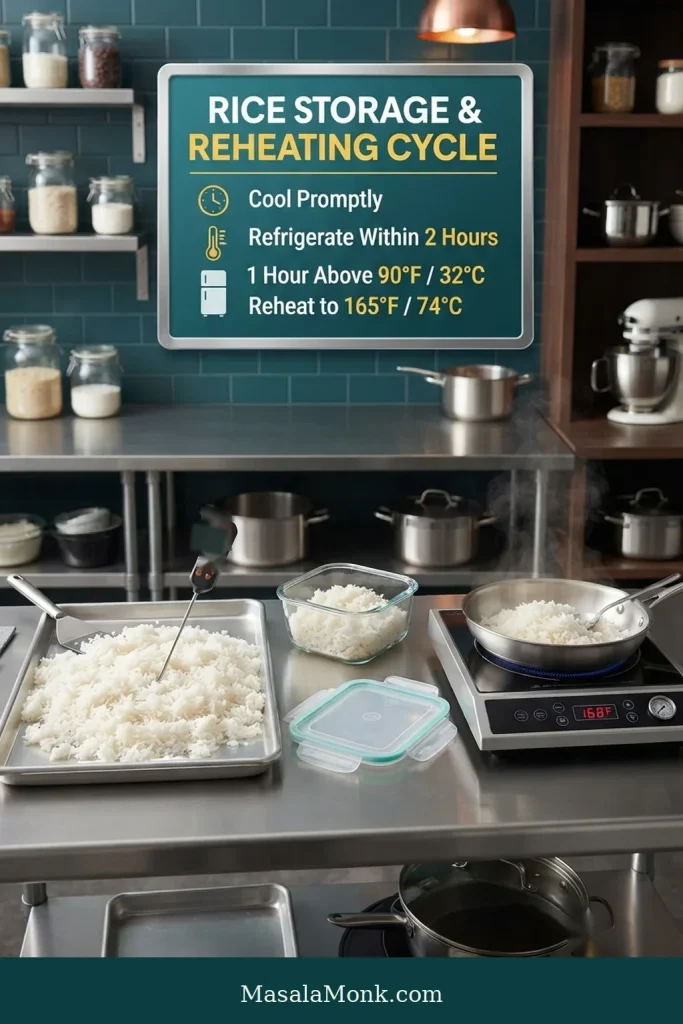
Spread freshly cooked rice so excess steam can escape, then refrigerate it promptly. Leaving cooked rice at room temperature for hours is not a safe shortcut to drier fried-rice grains.

FoodSafety.gov advises refrigerating cooked rice and other perishable leftovers within 2 hours, or within 1 hour when the surrounding temperature is above 90°F / 32°C. Refrigerated leftovers are generally best used within 3–4 days.

Food-safety guide showing cooked rice cooling on a shallow tray, rice in a covered storage container and reheating equipment, with instructions to refrigerate within two hours and reheat to 165°F or 74°C.
A shallow tray speeds cooling by spreading the rice out; once cooled promptly, transfer it to covered refrigeration rather than leaving it at room temperature to “dry.”

Skillet or wok: Heat a small amount of neutral oil, add the cold fried rice and stir-fry until thoroughly hot. If the rice has become unusually dry and hard, add only a splash of water—just enough steam to soften it.

Microwave: Cover loosely and heat until hot throughout. US food-safety guidance recommends reheating leftovers to 165°F / 74°C.

Frequently Asked Questions

Should I Rinse Rice Before Cooking It for Fried Rice?

For jasmine or long-grain white rice, rinsing away loose surface starch helps the cooked grains stay cleaner and easier to separate. It will not rescue rice that is then cooked with too much water.

Can I Fry Rice Straight From the Refrigerator?

Yes, as long as the grains are firm and surface-dry. Break compacted clumps apart first so the grains heat and fry evenly instead of steaming while a cold lump warms through.

What Oil Is Best for Egg Fried Rice?

Use a neutral oil that handles fairly high heat well, such as peanut, avocado, canola or vegetable oil. Toasted sesame oil belongs at the finish rather than serving as the main frying fat.

Why Does the Egg Disappear Into My Fried Rice?

If you want visible curds, scramble the egg separately before frying the rice. Raw egg added directly to rice can intentionally coat individual grains; that is the basis of some golden fried-rice techniques. Without enough heat and control, however, the same approach can turn wet or pasty.

Once you know what properly prepared rice feels like and what a frying pan should sound like, egg fried rice gets much easier to judge without watching the clock.
Dinner setting with a bowl of pale egg fried rice in the foreground and a smaller bowl of golden egg drop soup with delicate egg ribbons beside it.
Serve Egg Drop Soup beside the rice: the light broth adds contrast without softening the separate fried-rice texture.

For a simple meal that keeps the fried rice at the center of the plate, a bowl of MasalaMonk’s Egg Drop Soup makes an easy pairing. After that, chicken, shrimp or vegetables become variations—not rescue missions.

Posted on — Leave a comment

Shrimp Fried Rice Recipe: Easy, Fluffy & Better Than Takeout

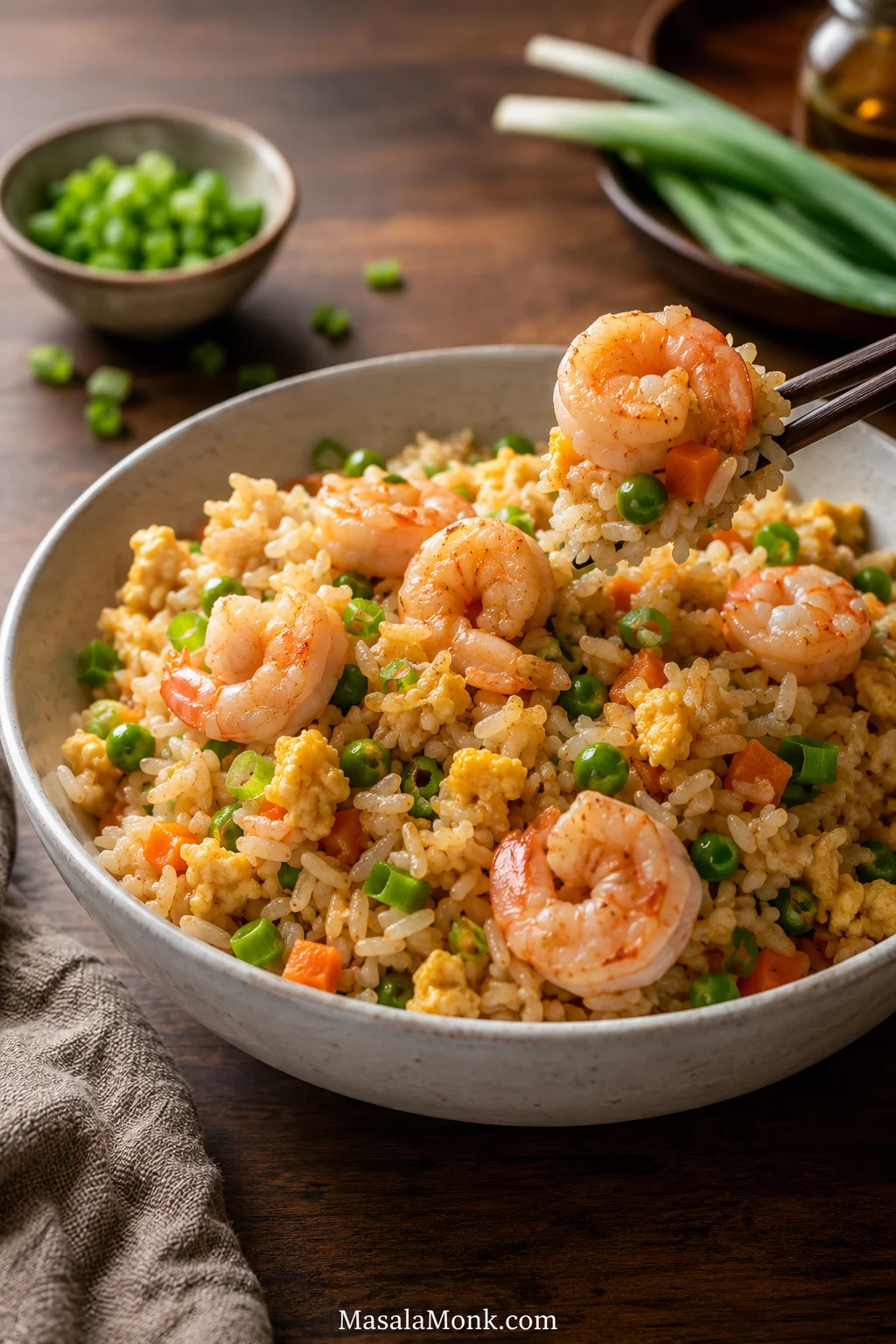
Bowl of shrimp fried rice with plump shrimp, scrambled egg, peas, carrots, scallions, and chopsticks lifting a bite of rice.

This shrimp fried rice recipe is for the night you open the fridge, see cooked rice, and realize dinner is almost already halfway done. A hot skillet turns yesterday’s rice into glossy, savory grains with juicy shrimp, soft egg, garlic, scallions, and vegetables — faster than takeout and fresher from the pan.

The goal is fluffy rice, tender shrimp, and a dinner that tastes planned, even when it started with leftovers. No restaurant burner needed. Just remember the four things that matter most: cold rice, dry shrimp, hot pan, light sauce.

What makes it better than takeout is control: more shrimp, less grease, tender egg, bright scallions, and rice that tastes soy-sesame savory without turning heavy.

Quick Answer: How to Make Shrimp Fried Rice

To make shrimp fried rice, start with cold cooked rice and break up the clumps. Pat raw shrimp dry, season lightly, then cook it quickly in a hot wok or large skillet until just opaque. Remove the shrimp, scramble the eggs, and cook the vegetables until the skillet looks dry again.

Stir-fry garlic, scallions, and rice, then add a small amount of soy-sesame sauce. Fold the shrimp and egg back in and serve while the rice is hot, loose, and glossy.

What is shrimp fried rice? It is a quick stir-fried rice dish made with cooked rice, shrimp, egg, vegetables, aromatics, and a savory soy-sesame sauce. In the best versions, cold rice and a hot pan keep the grains separate instead of soft or sticky.

Order matters because each ingredient behaves differently. Shrimp cooks fast, frozen vegetables can release water, and rice needs direct contact with heat before it gets sauced. When those pieces happen in the right order, the dish tastes fresh instead of heavy.

Already have cold rice and thawed shrimp? Jump straight to the recipe card. Need rice help first? See the best rice guide.

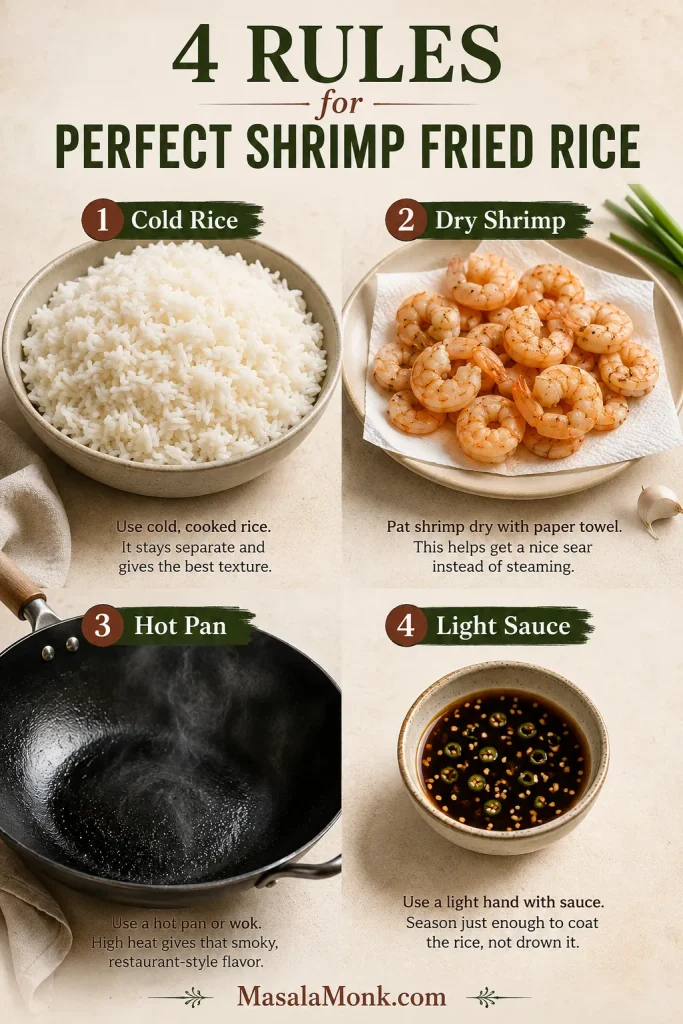
The 4 Rules for Fluffy Shrimp Fried Rice

Use this quick visual guide as the recipe’s safety net before you start cooking. Each rule protects the final texture in a different way.

Four-part guide showing cold rice, dry shrimp, a hot wok, and light sauce as the key rules for shrimp fried rice.
Use this four-rule system as your fried rice safety net: cold rice protects texture, dry shrimp sears cleanly, high heat adds flavor, and light sauce keeps the grains separate.

Shrimp Fried Rice Recipe

This version is built for real weeknights: cooked rice from yesterday, shrimp from the fridge or freezer, a few vegetables, and a hot pan that makes it all feel deliberate. Leftover rice makes it easiest, but the fresh-rice workaround below gives you a path when you are starting from scratch.

Prep Time10 minutes
Cook Time15 minutes
Total Time25 minutes
Yield4 servings
CourseMain dish, quick dinner
StyleTakeout-style shrimp fried rice

Timing note: The 25-minute total assumes you already have cooked and chilled rice. Cooking rice from scratch adds cooling time before frying. Starting with fresh rice today? Use the fresh-rice workaround before heating the pan.

Before you turn on the stove: Have the rice loosened, shrimp dried, eggs beaten, vegetables ready, and sauce mixed. Fried rice is easy, but it does not wait once the pan is hot.

Equipment

  • Wok or large 12-inch non-stick/heavy skillet
  • Wide spatula
  • Mixing bowl for shrimp
  • Small bowl for sauce
  • Sheet pan or wide plate if cooling fresh rice

Ingredients

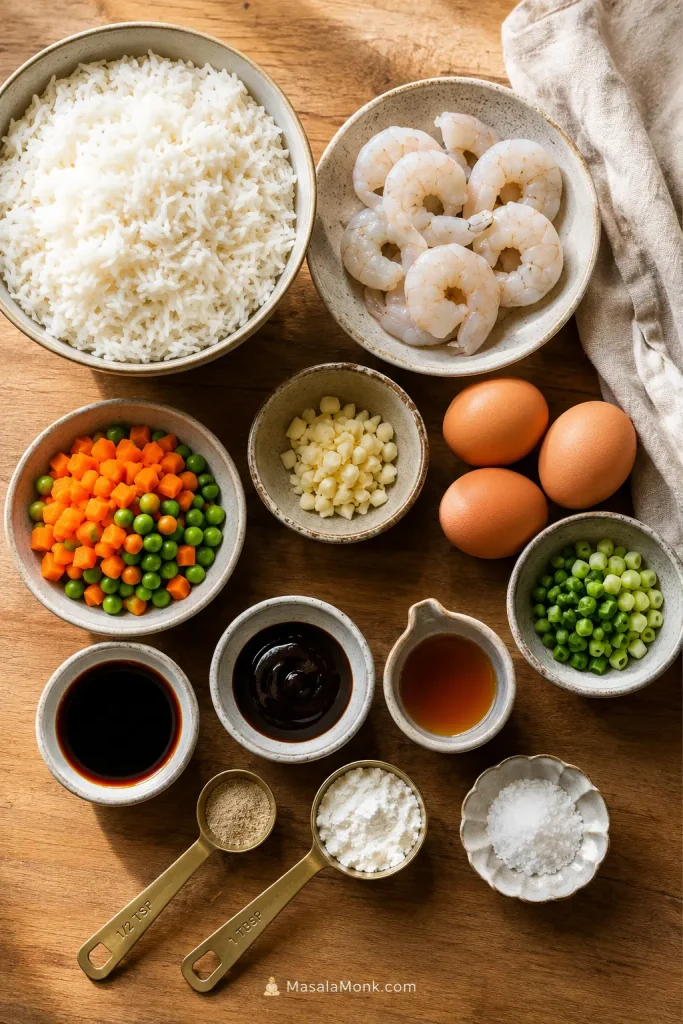
Overhead view of cooked rice, raw shrimp, three eggs, peas, carrots, garlic, scallions, soy sauce, oyster sauce, sesame oil, cornstarch, white pepper, and salt.
Fried rice moves quickly once the pan gets hot, so prep the shrimp, eggs, vegetables, aromatics, rice, and sauce before you start cooking.
IngredientUS MeasureMetric
Cold cooked rice4 cupsabout 600–650 g
Raw peeled and deveined shrimp1 lb450 g
Large eggs, beaten33
Frozen peas and carrots1 to 1 1/2 cups140–200 g
Garlic, minced3 cloves10–12 g
Scallions / green onions, sliced3–425–35 g
Neutral oil2 tbsp30 ml
Light soy sauce2 tbsp30 ml
Oyster sauce, optional1 tbsp15 ml
Toasted sesame oil1 tsp5 ml
White pepper1/4 tspabout 0.5 g
Sugar1/4 tspabout 1 g
Cornstarch1 tspabout 3 g
Salt1/4 tsp for shrimp, then only more after tastingabout 1.5 g, then only more after tasting

Ingredient note: This main method is written for raw shrimp. If you are using cooked shrimp, skip the searing step and add it at the very end just to warm through.

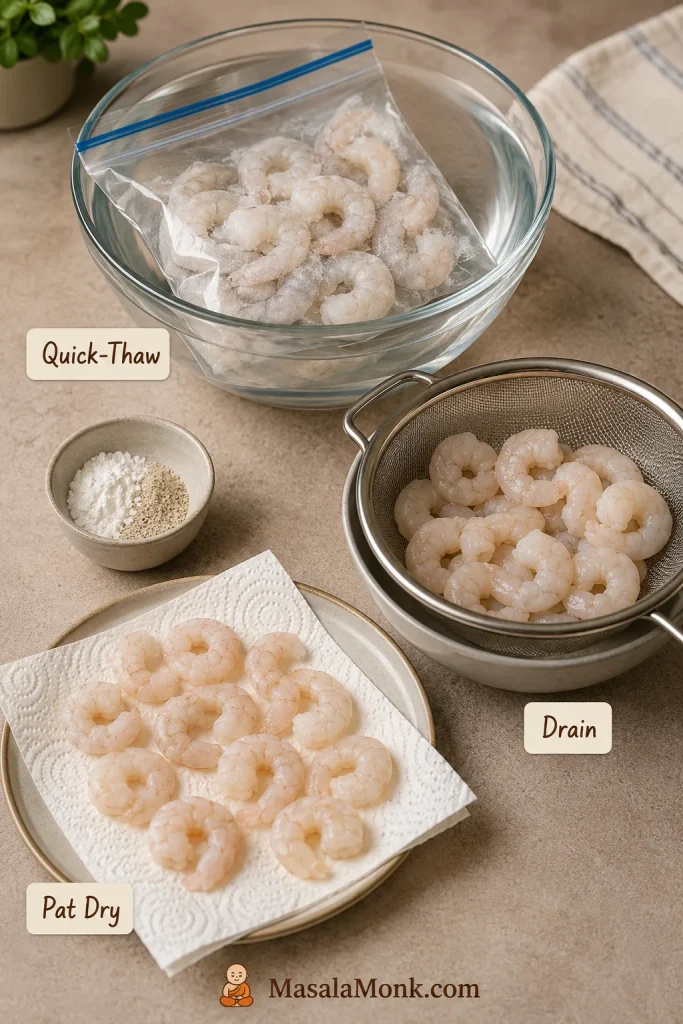
Frozen shrimp note: Frozen shrimp works well once fully thawed and patted dry. To quick-thaw, keep the shrimp sealed in a bag and place it in cold water until thawed, then drain and pat very dry before cooking. The skillet should sear the shrimp, not hiss with extra water. If you are unsure when to pull it from the pan, use the shrimp doneness cues.

Instructions

Prep the Rice and Sauce

  1. Break up the rice. Use your fingers or a fork to loosen cold cooked rice before it goes into the skillet. Clumps are easier to fix now than once the heat is on.
  2. Mix the sauce. In a small bowl, stir together soy sauce, oyster sauce if using, sesame oil, white pepper, and sugar. Keep it beside the stove so you are not measuring while the rice is cooking.

Season the Shrimp and Heat the Pan

  1. Season the shrimp. Pat shrimp very dry. Toss with salt, cornstarch, and a small pinch of white pepper. A dry surface helps the shrimp cook quickly instead of steaming.
  2. Heat the pan. Place a wok or large skillet over medium-high to high heat. Add 1 tablespoon oil and let the pan get properly hot.

Cook Shrimp Separately So It Stays Tender

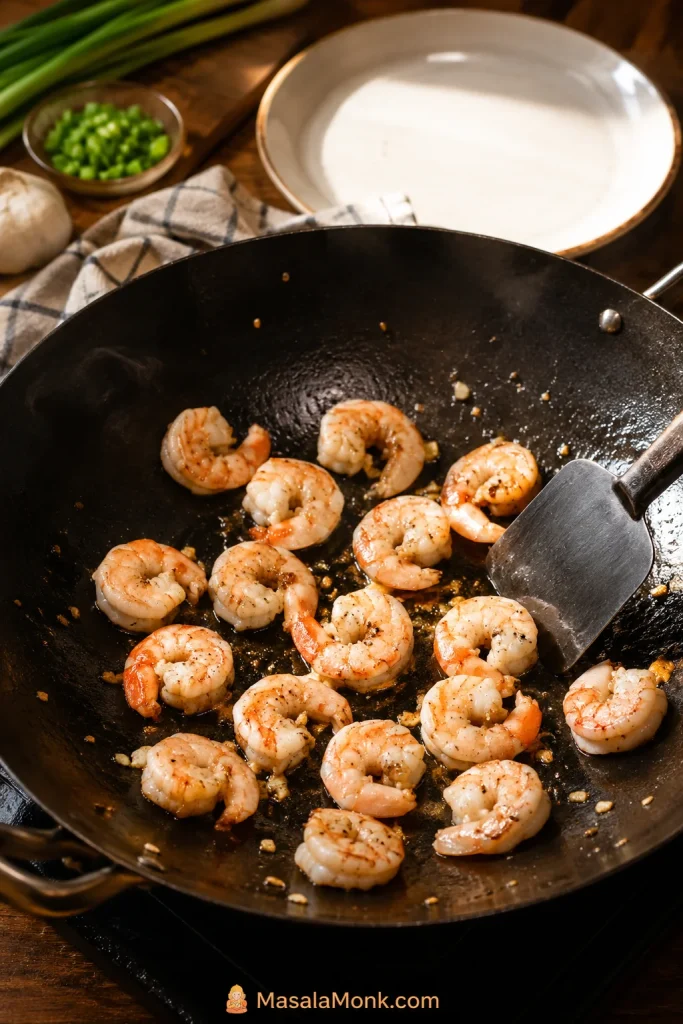
  1. Cook the shrimp. Add shrimp in a single layer. Cook for about 60–90 seconds per side, just until pearly, opaque, and lightly curled. Move it to a plate before it turns tight and firm.
  2. Scramble the eggs. Add 1 teaspoon oil if the pan is dry. Pour in the beaten eggs and scramble until just set. Move them to the plate with the shrimp; they will finish warming when they return to the rice.
Shrimp searing in a black wok with a spatula and an empty plate nearby for removing the shrimp.
Shrimp needs less time than rice, so cook it separately. Pull it while it is still plump, then return it near the end for tender shrimp in every bite.

Cook the Vegetables Until the Pan Looks Dry

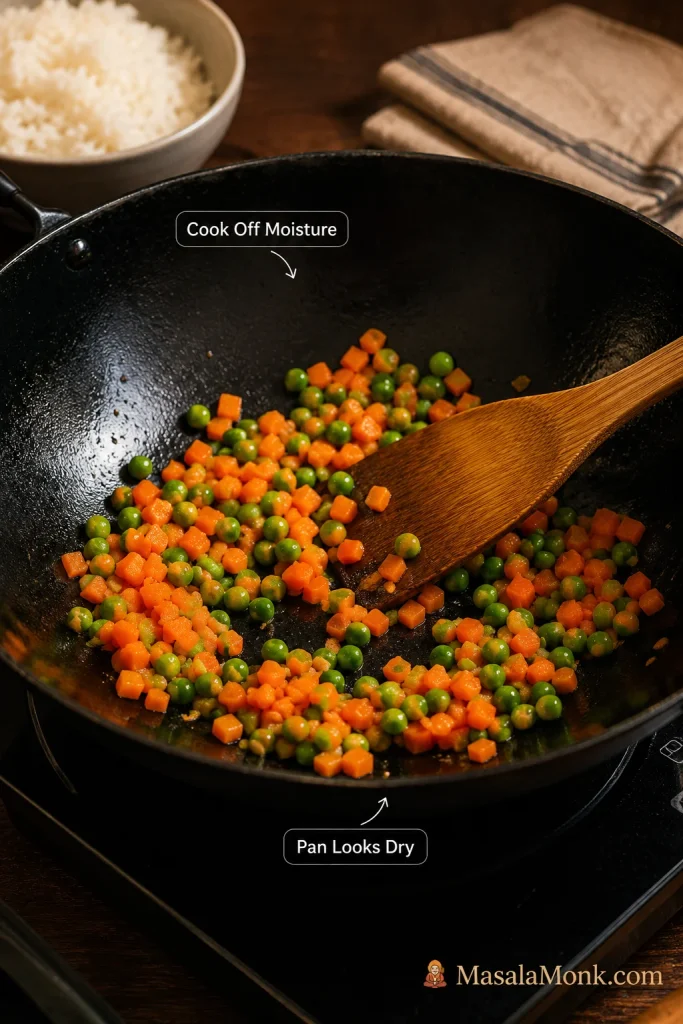
  1. Cook the vegetables. If needed, add the remaining oil, then stir in the peas and carrots. Cook until the skillet looks dry again so their sweetness and color stay bright without softening the rice.
Peas and diced carrots cooking in a black wok with a wooden spatula while a bowl of cooked rice waits nearby.
Once peas and carrots stop releasing moisture, the pan should look dry again. That is when the rice can fry instead of steam.

Garlic and Scallions Build the First Flavor Layer

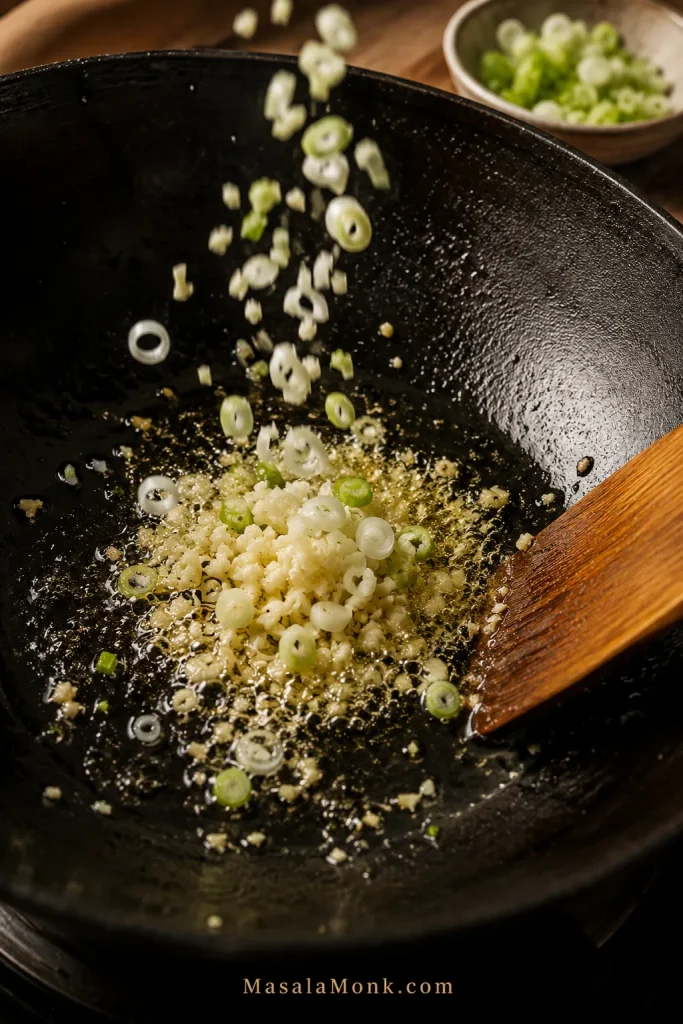
  1. Add aromatics. Stir in garlic and the white/light parts of the scallions. Cook for 15–30 seconds, just until the pan smells garlicky and sharp. You want the garlic lively, not browned.
Minced garlic and sliced scallions sizzling in oil inside a black wok with a wooden spatula.
Garlic and scallion whites flavor the oil almost instantly. Stir just until fragrant, because browned garlic can make the whole pan taste bitter.

Fry the Rice Before Adding Sauce

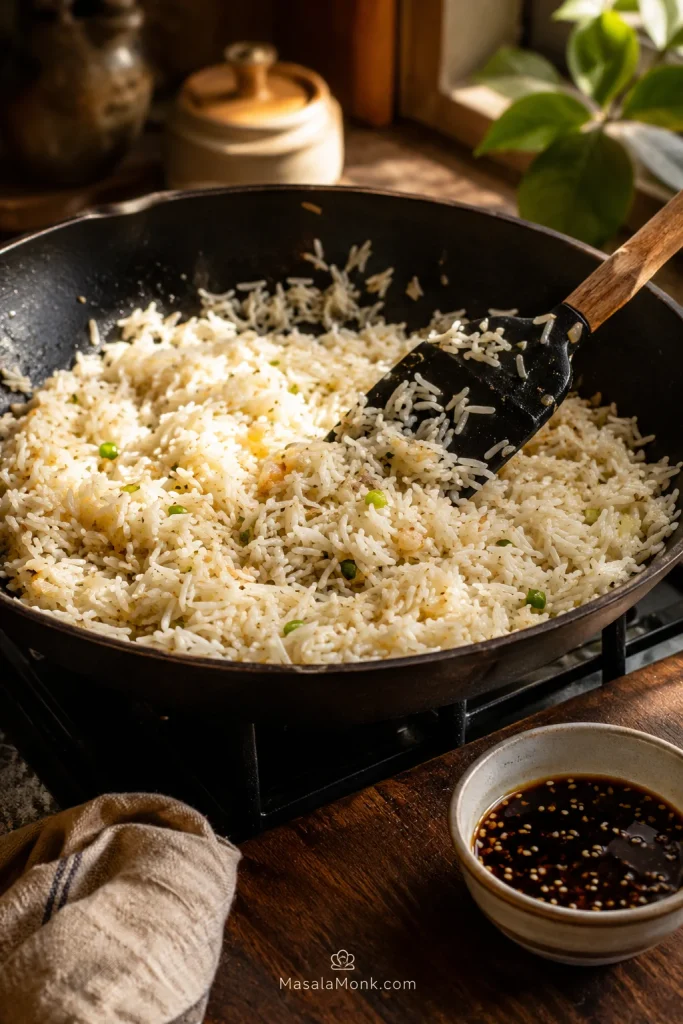
  1. Fry the rice. Add the cold rice, spread it out, and let it sizzle before stirring. The rice should look separate before it looks glossy; sauce comes after the grains are hot, not before.
Cooked rice frying in a wok with a spatula while a small bowl of dark sauce waits beside the pan.
Let the rice spend a little time in the pan before the sauce joins in. That early contact with heat keeps the grains loose instead of heavy.

Add Sauce, Return Shrimp and Egg, Then Finish

  1. Add the sauce. Drizzle in the sauce and toss quickly. The rice should look glossy, separate, and evenly seasoned. Puddles mean keep tossing over heat until the grains absorb the seasoning.
  2. Return shrimp and egg. Add the seared shrimp and scrambled egg back to the pan. Toss for 30–60 seconds, just until everything is hot, the shrimp stays springy, and the egg is tucked through the rice.
  3. Finish and serve. Add the green parts of the scallions so the final pan tastes fresh, sharp, and a little sweet. Taste before adding more soy sauce. If it needs lift, try white pepper, scallion greens, or a tiny pinch of salt before adding more liquid.

Cook’s cue: The pan should sound lively. Quiet, steamy rice usually means the skillet is crowded or something brought in too much moisture. If the rice steamed, clumped, or turned salty, jump to troubleshooting before trying again.

This is the kind of dinner that feels bigger than the effort it asks from you: one hot pan, a bowl of leftover rice, a handful of shrimp, and a few minutes where garlic, scallions, soy, and sesame make the kitchen smell like you planned ahead.

Shrimp Fried Rice Success Formula

Once you know the basic order, the recipe becomes easy to adapt. This quick table helps you adjust for the rice, shrimp, vegetables, or pan you actually have, while still landing in the same place: loose rice, tender shrimp, soft egg, bright scallions, and sauce that clings instead of pools.

If you have…Do this
Day-old riceBreak it up and fry it cold.
Fresh riceSpread, cool, and chill it until the surface feels dry.
Frozen shrimpThaw fully, pat dry, and cook briefly.
Cooked shrimpAdd it at the end just to warm through.
Frozen vegetablesCook them until the skillet looks dry before adding rice.
A small skilletCook in batches instead of crowding the pan.
Flat flavorAdd white pepper, scallions, heat, or a tiny pinch of salt before adding more soy sauce.

Why This Recipe Works

This recipe treats leftovers like an advantage. Cold rice is already drier and firmer, so the hot pan only has to wake it up.

The rest is order: shrimp cooks briefly and comes out, vegetables lose moisture before rice goes in, rice fries before sauce, and egg returns at the end for softness. That is how you get fried rice that tastes fresh instead of heavy.

If you like this leftover-rice style of cooking, MasalaMonk’s Spam fried rice recipe uses the same cold-rice logic with crispy Spam, egg, vegetables, and a quick savory sauce.

Ingredient Notes That Matter

The ingredient list is simple, which is part of the charm. A few ordinary things — cold rice, shrimp, egg, vegetables, garlic, scallions, and soy sauce — turn into a full dinner when the pan is hot and the moisture is under control.

Eggs

Egg makes the rice feel fuller and softer. Scramble it separately for the easiest method. Once you are comfortable, you can drizzle beaten egg over hot rice and stir quickly for a more golden restaurant-style effect. Try that only when the rice is already hot and loose; otherwise the egg can disappear into wet rice.

Soft egg gives the rice richness without needing extra sauce, which helps the whole pan stay savory instead of wet.

Vegetables

Frozen peas and carrots are classic because they are easy, colorful, and already cut small. Loose frozen vegetables can go straight into the hot skillet; just cook them until the pan looks dry again before adding rice. If they are icy or clumped together, thaw briefly and pat dry first.

No peas and carrots? Use corn, cabbage, bell pepper, mushrooms, green beans, or skip vegetables and add extra egg or shrimp. Small, quick-cooking add-ins give you color and texture without stealing heat from the rice.

Aromatics

Garlic and scallions are enough for a clean takeout-style flavor. For a deeper base, add 1/4 cup finely diced onion or 1 teaspoon minced ginger with the garlic. Keep the pieces small so they cook quickly and do not weigh down the rice.

Sauce and Seasoning

Light soy sauce gives salt and color. Oyster sauce adds a deeper takeout-style flavor, but it is optional. Low-sodium soy sauce gives you more control when your oyster sauce is already salty. Toasted sesame oil is strong, so use it sparingly. White pepper gives the rice a familiar restaurant-style warmth.

The goal is not dark, salty rice. Instead, aim for grains that taste seasoned all the way through — soy at the edges, sesame in the background, white pepper for warmth, and scallions keeping each bite fresh.

Want a warmer restaurant-style color? A tiny pinch of turmeric can add a light golden tint without needing food coloring. Use very little so it supports the rice instead of making it taste like turmeric.

For a broader sauce base you can use across vegetables, noodles, chicken, shrimp, tofu, and rice bowls, see this stir fry sauce recipe.

Best Rice for Shrimp Fried Rice

The rice matters, but the texture matters more. Choose a grain that can cool, separate, and move cleanly through a hot pan.

How Cold Rice Should Look Before Frying

Cold rice should feel firm enough to break apart easily. If the grains loosen before cooking, they have a better chance of frying evenly in the pan.

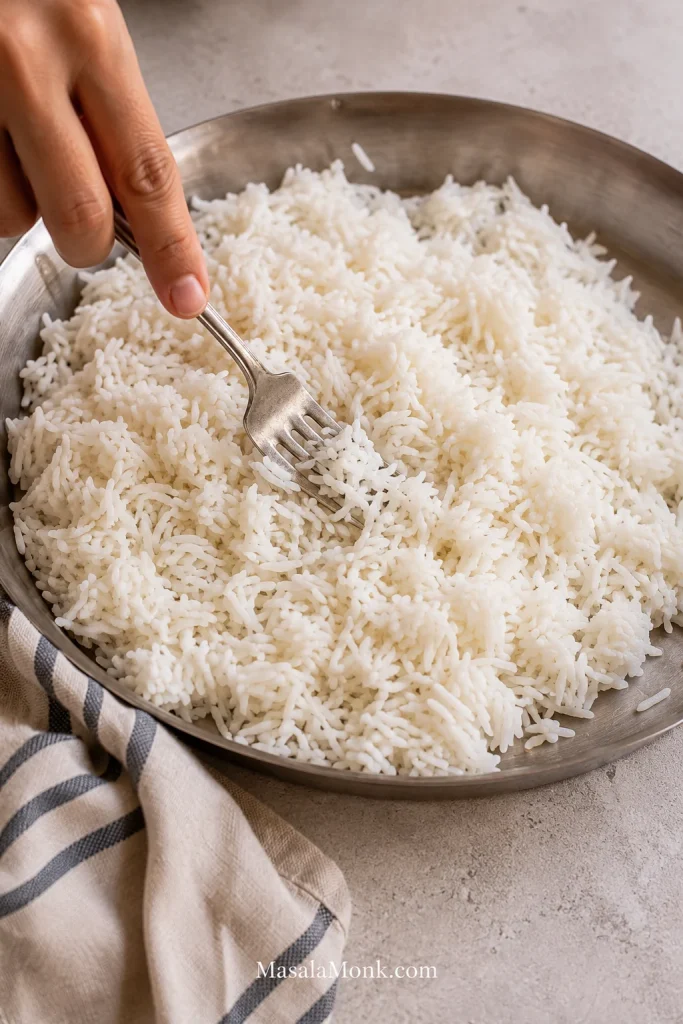
Hand using a fork to break up cold cooked rice in a metal bowl before adding it to the pan.
Break up chilled rice before cooking, not inside a crowded pan, so every grain can touch the heat instead of clumping together.

For the easiest fluffy texture, start with cold cooked rice that separates easily. Freshly cooked rice is usually too soft and steamy for direct frying, while chilled rice has enough structure to move cleanly through the skillet.

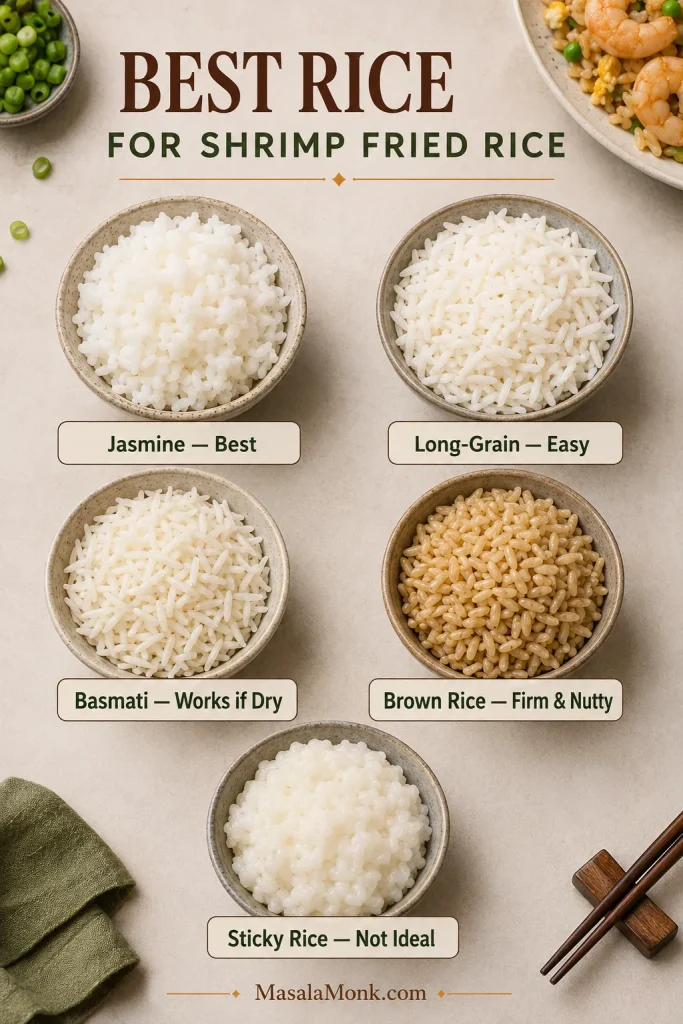
Choose jasmine rice for a takeout-style aroma, long-grain white rice for reliability, basmati rice if that is what you already cook, and brown rice if you want a firmer, nuttier version.

Not every rice behaves the same once it hits high heat, so use this as a quick guide.

Best Rice Types for Shrimp Fried Rice

Rice TypeGood for Shrimp Fried Rice?Notes
Jasmine riceYesAromatic and excellent for takeout-style fried rice.
Long-grain white riceYesReliable, fluffy, and easy to separate.
Basmati riceYes, if dryWorks well when cooked firm, cooled fully, and broken up before frying.
Brown riceYesFirmer and nuttier; taste and adjust seasoning carefully.
Short-grain or sticky riceNot idealCan clump and turn heavy unless you are making a different style intentionally.
Comparison board with bowls labeled jasmine rice, long-grain rice, basmati rice, brown rice, and sticky rice for fried rice.
Jasmine and long-grain rice are the easiest choices for fluffy shrimp fried rice, while basmati and brown rice can also work when cooked firm and cooled well.

Best make-ahead move: Cook the rice the day before, spread it out so steam escapes, then refrigerate it once cool. The next day, break up the grains before frying. This gives you the easiest fluffy texture.

Do not rinse cooked rice before frying. If the grains are clumped, loosen them with your fingers or a fork; adding water brings back the moisture you are trying to avoid.

No Day-Old Rice? Fresh Rice Workaround

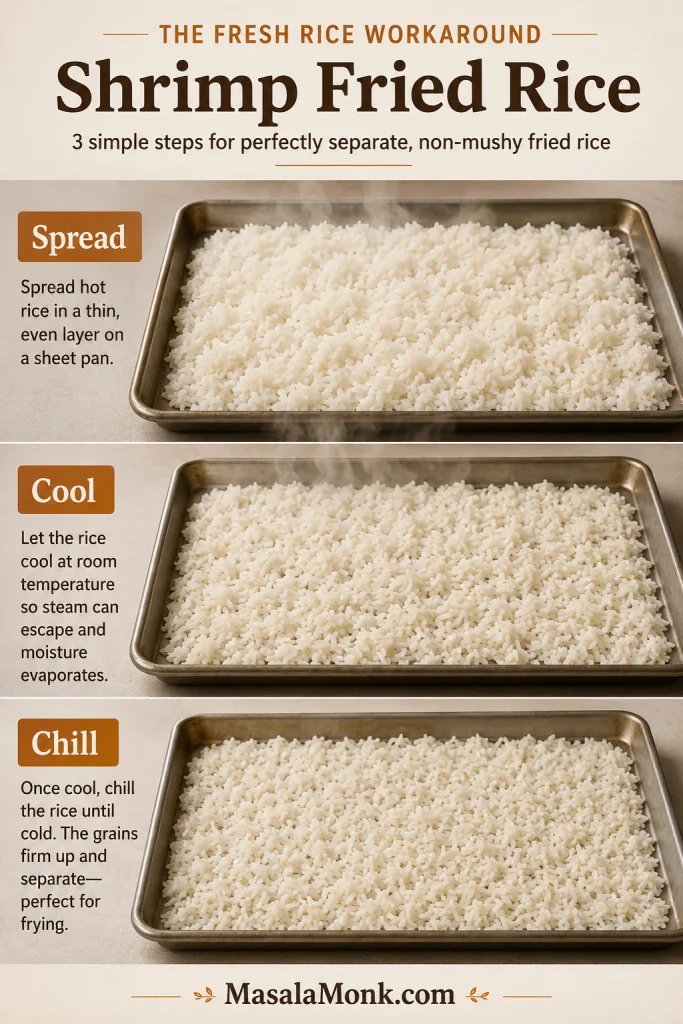
You can make shrimp fried rice with fresh rice, but not while it is hot and steamy. Cook it slightly firm, spread it on a sheet pan so steam escapes, then chill it until the surface feels cool and dry. Once the grains separate easily, it can fry like day-old rice.

  1. Cook the rice with slightly less water than usual so it finishes a little firmer.
  2. Spread the hot rice on a sheet pan or large plate.
  3. Let the steam escape for 10 minutes.
  4. Refrigerate the rice for 30–60 minutes, or freeze it for about 15 minutes if you are rushing.
  5. Break up the cooled rice before frying.
Three-step guide showing fresh rice spread on a sheet pan, cooled, and chilled before being used for fried rice.
No day-old rice? Spread fresh rice thinly, let the steam escape, and chill it until the surface dries so it behaves more like leftover rice.

Fresh rice will not be quite as effortless as day-old rice, but it can still make good fried rice when you cool it properly. You are just trying to give it the same dry surface that leftovers already have.

Shrimp, Prawns, Frozen Shrimp, and Cooked Shrimp

Whether your market sells them as shrimp or prawns, cook them the same way here. Start with seafood that is dry on the surface, cook it briefly, and bring it back only after the rice has had time in the pan.

Size changes the way the fried rice eats, not just how it looks. Choose 26–30 count shrimp for a juicy home-style pan. For smaller restaurant-style pieces through every bite, use 51–60 count shrimp. Very large shrimp are best chopped into bite-size pieces so the rice eats evenly.

Shrimp SizeBest Use
51–60 count / small shrimpBest for restaurant-style fried rice because shrimp pieces mix through every bite.
26–30 count / medium shrimpBest balance for home cooks; juicy but still easy to mix into rice.
16–20 count / large shrimpLooks generous, but may need chopping so the rice eats evenly.
Cooked shrimpUse only in a pinch. Add at the end just to warm through.

How to Thaw and Dry Frozen Shrimp

Frozen shrimp can work as well as fresh shrimp when it is thawed safely and dried thoroughly. The goal is to remove surface moisture before the shrimp hits the hot pan.

Frozen shrimp sealed in a bag thawing in cold water, with drained shrimp and paper towel-dried shrimp beside it.
After a cold-water thaw, dry shrimp well before it hits the pan. A dry surface sears better and keeps the rice from steaming later.

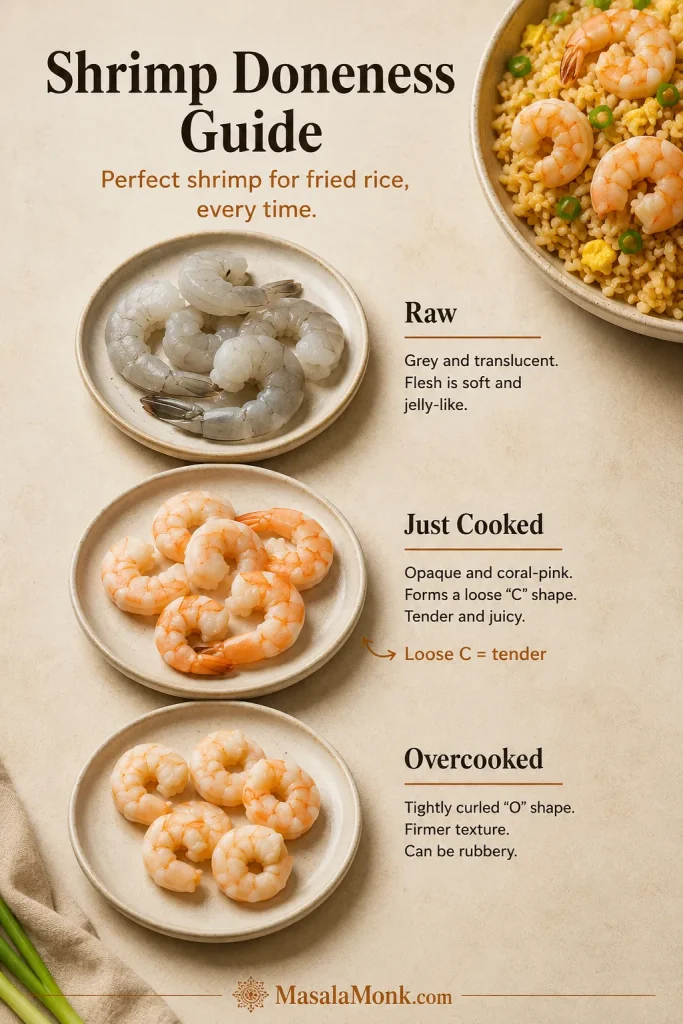
Shrimp Doneness: Loose C, Not Tight Curl

The best doneness cue is visual: shrimp should turn opaque and curl gently. When it tightens into a firm ring, it has usually cooked too long.

Shrimp doneness guide showing raw grey shrimp, just-cooked coral shrimp in a loose C shape, and overcooked tightly curled shrimp.
Watch the shape, not only the color. A loose C-shape usually means tender shrimp, while a tight curl means it has stayed on the heat too long.

If you are using pre-cooked shrimp, do not sear it again. Add it near the end and toss only until warm. For shrimp that starts raw, a loose C-shape is usually a good cue; tight, firm curls usually mean it stayed on the heat too long.

When the shrimp is right, it should feel juicy and springy against the rice, not tight or chewy. That contrast is what makes the bowl feel generous.

The Sauce Ratio That Keeps Fried Rice Glossy, Not Wet

If your fried rice tastes salty but still flat, more soy sauce is usually not the answer. Try aroma, pepper, scallions, chili, or a tiny bit of sweetness before adding more liquid.

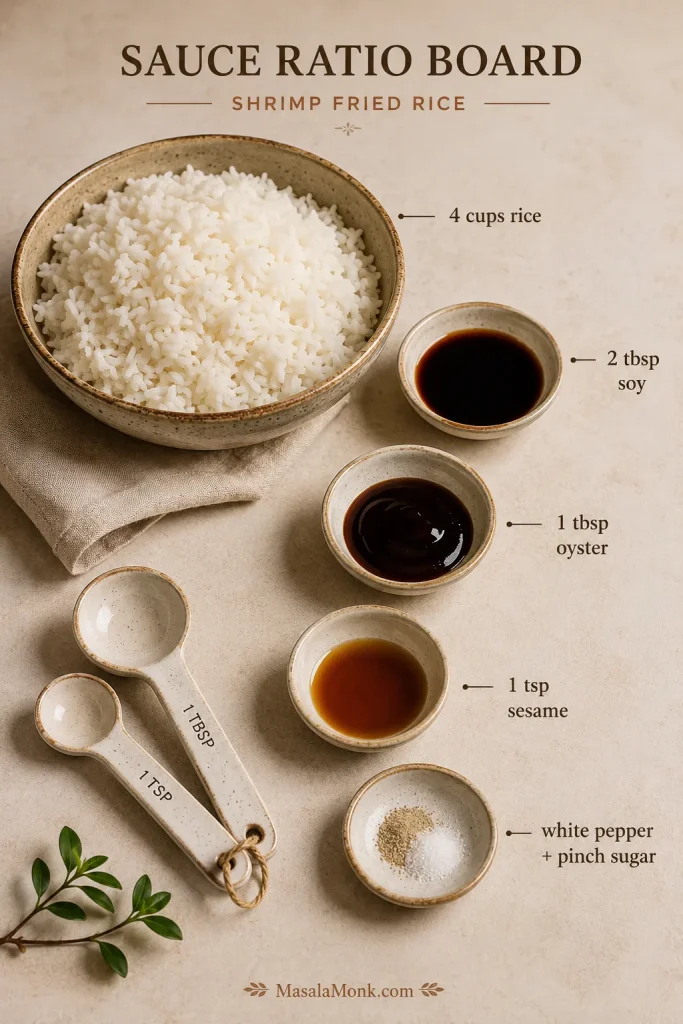
A balanced pan should taste savory all the way through, not sit in a puddle of sauce. For 4 cups cooked rice, this is enough to coat the grains without making them heavy:

  • 2 tbsp / 30 ml light soy sauce
  • 1 tbsp / 15 ml oyster sauce, optional
  • 1 tsp / 5 ml toasted sesame oil
  • 1/4 tsp white pepper
  • 1/4 tsp sugar
Sauce ratio board showing four cups of rice with soy sauce, oyster sauce, sesame oil, white pepper, and sugar.
A good sauce ratio should season the rice, not drown it. Measure first, then add just enough soy, oyster sauce, sesame oil, and white pepper for balance.

Mix the sauce before you start cooking. Fried rice moves quickly, and stopping to measure sauces while the pan is hot can lead to overcooked shrimp or wet rice.

A small splash of dark soy sauce can add color, while light soy sauce stays the main seasoning. Too much dark soy can make the rice look heavy and taste overly salty.

Sauce Ratio by Rice Amount

Sauce is where fried rice can go from balanced to salty fast. Start with these amounts, then taste at the end.

Cooked RiceSoy SauceOyster SauceSesame Oil
2 cups1 tbsp / 15 ml1 1/2 tsp / 7 ml1/2 tsp / 2.5 ml
3 cups1 1/2 tbsp / 22 ml2 tsp / 10 ml3/4 tsp / 4 ml
4 cups2 tbsp / 30 ml1 tbsp / 15 ml1 tsp / 5 ml

If you skip oyster sauce, keep the soy sauce measured and build flavor with white pepper, scallions, heat, or a tiny pinch of sugar after tasting. If the rice tastes flat or salty, check the pan cues before adding more soy sauce.

Sauce Swaps

  • No oyster sauce: Skip it, then taste for white pepper, scallions, heat, or a tiny pinch of sugar.
  • Gluten-free: Use tamari instead of soy sauce and check the oyster sauce label.
  • No soy sauce: Use coconut aminos, or season lightly with salt and a tiny splash of broth.
  • No sesame oil: Skip it and finish with extra scallions for freshness.
  • Spicy: Add chili crisp, sriracha, sambal, chopped green chili, or red pepper flakes.

Wok vs Skillet: Best Pan for Home Stoves

If you have ever made fried rice in a small pan and wondered why it steamed instead of fried, the pan size is probably the reason — not your cooking skill.

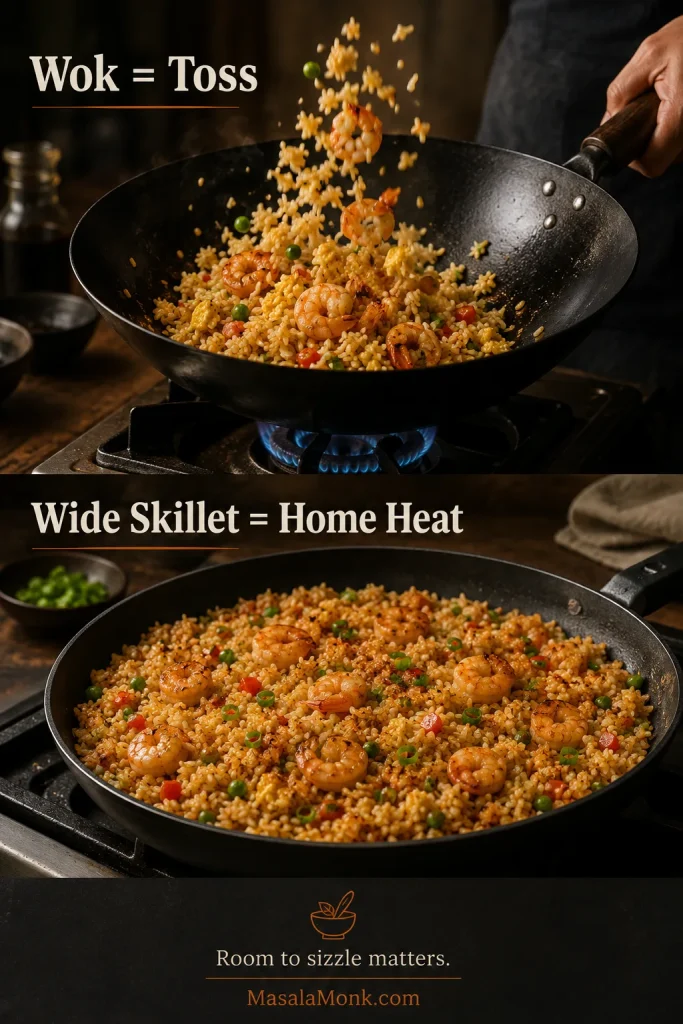
A wok is excellent for fried rice because it gives you room to toss and move ingredients quickly. But a large skillet is often better for home cooks than a small wok on a weak burner.

You do not need restaurant heat; you need restaurant order. A wide hot skillet, dry rice, and a little patience between stirs will get you much closer than a crowded wok on weak heat.

Comparison image showing shrimp fried rice being tossed in a wok and spread across a wide skillet.
On a home stove, a wide skillet often beats a small wok. More surface area lets more rice touch direct heat at once.

With less crowding, the rice has room to sizzle, which is where the better texture comes from. When the pan is too full, the vegetables leak water, the rice steams, and the sauce sits underneath instead of clinging to the grains.

  • Use a wok if your stove gives strong heat and you can toss quickly.
  • Choose a large non-stick skillet for the easiest beginner-friendly option.
  • Try a heavy stainless or cast-iron skillet if it holds heat well and you are comfortable managing sticking.
  • Cook in batches if your pan is small. A small pan can still make good fried rice — it just needs batches.

The Pan Cues That Matter Most

Use this while the rice is still in the pan. The troubleshooting table later is for fixing or understanding what went wrong; this section helps you catch problems before they become permanent.

Good fried rice gives you clear signs while it cooks. The pan tells you when to move forward and when to pause: steam, puddles, tight shrimp, or rice that sits in clumps instead of moving freely.

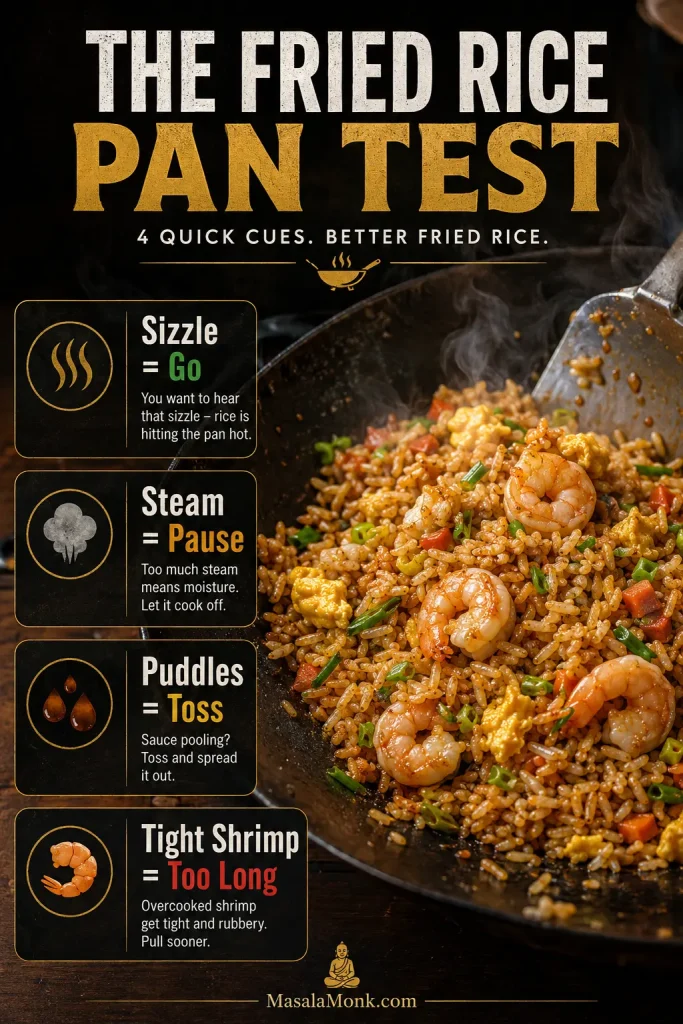
Think of it as the fried rice pan test: sizzle means go, steam means pause, puddles mean keep tossing, and tight shrimp means it cooked too long.

Fried rice pan test infographic showing four cues: sizzle means go, steam means pause, puddles mean toss, and tight shrimp means too long.
Let the pan guide you: sizzle means keep frying, steam means slow down, puddles need tossing, and tight shrimp should come off sooner.
CueWhat It MeansWhat to Do
Rice sizzlesThe pan is hot enough and the grains are frying.Let the rice get contact with the pan before adding sauce.
Rice steams heavilyThe pan is crowded or there is too much moisture.Spread the rice out or cook in batches.
Sauce pools underneathToo much liquid was added or the rice was not hot enough.Keep tossing over heat until the sauce clings to the grains.
Shrimp is tight and firmIt stayed on the heat too long.Cook shrimp briefly next time and return it only at the end.
Flavor tastes flatThe rice may need lift, not more liquid.Add white pepper, scallions, chili, or a tiny pinch of salt before more soy sauce.

When it is ready, you should see loose grains, springy shrimp, soft egg, fresh scallions, and no sauce puddles.

Shrimp Fried Rice Variations

Once the base method works, you can take the same pan in a few different directions: brighter with pineapple and lime, hotter with chili crisp, fuller with chicken, lighter with cauliflower rice, or simpler without egg. Keep the rice dry and the sauce measured, and the texture stays in your control.

Looking for a specific version? Jump to restaurant-style, pineapple, or chicken and shrimp fried rice.

Prawn Fried Rice

Use prawns exactly the same way as shrimp. Medium prawns stay juicy and still mix well with the rice. Very large prawns are easier to eat when cut into bite-size pieces before cooking or after searing.

Restaurant-Style Shrimp Fried Rice

Use jasmine rice, white pepper, scallions, a little oyster sauce, and small shrimp pieces that mix through the rice. Drizzle the sauce around the edge of the hot skillet so it sizzles before coating the grains. Keep the sauce light so the rice tastes restaurant-style without turning dark, salty, or heavy.

Restaurant-style shrimp fried rice in a bowl with small shrimp, egg, peas, carrots, scallions, and lightly glossy rice.
Restaurant-style shrimp fried rice should taste savory, not heavy. Keep the sauce light, finish with scallions and white pepper, and let the rice stay golden.

Pineapple Shrimp Fried Rice

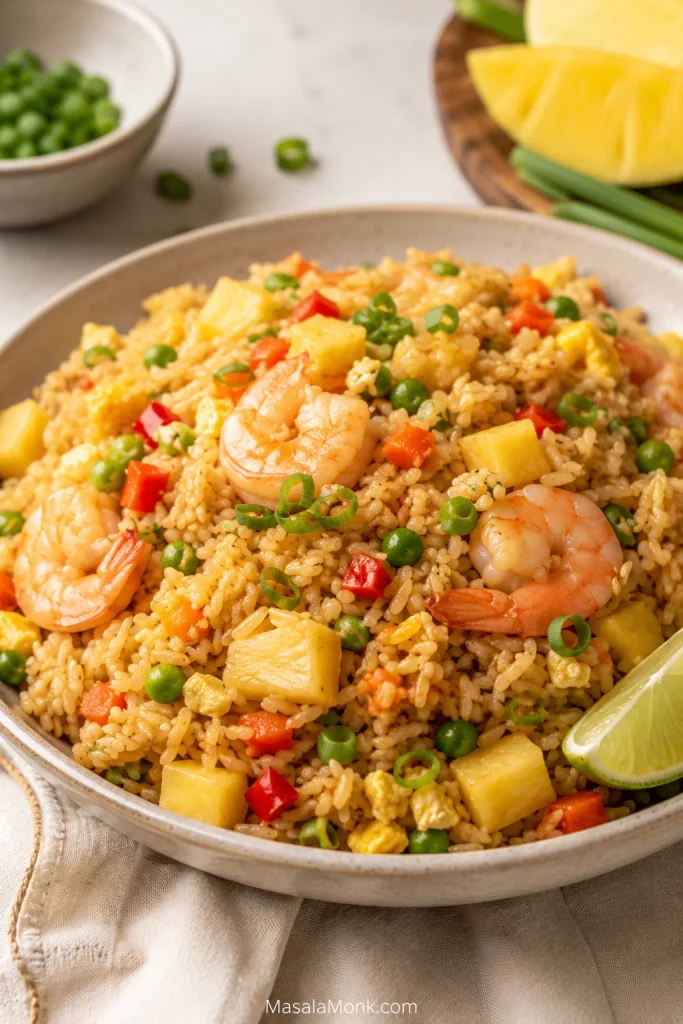
Add 1/2 to 3/4 cup pineapple chunks, diced bell pepper, and a squeeze of lime at the end. Use less sugar in the sauce because pineapple brings sweetness. For a Thai-style direction, add a small splash of fish sauce, chopped chili, and extra scallions. Drain the pineapple well so the rice stays glossy instead of wet.

Pineapple shrimp fried rice with shrimp, pineapple chunks, egg, peas, carrots, red pepper, scallions, and a lime wedge.
Pineapple shrimp fried rice works best when the fruit is bright but not juicy. Drain it well and add it near the end so the rice stays fluffy.

Chicken and Shrimp Fried Rice

Use small pieces of boneless chicken along with the shrimp. Cook the chicken first until done, remove it, then cook the shrimp briefly. Return both proteins near the end so neither overcooks.

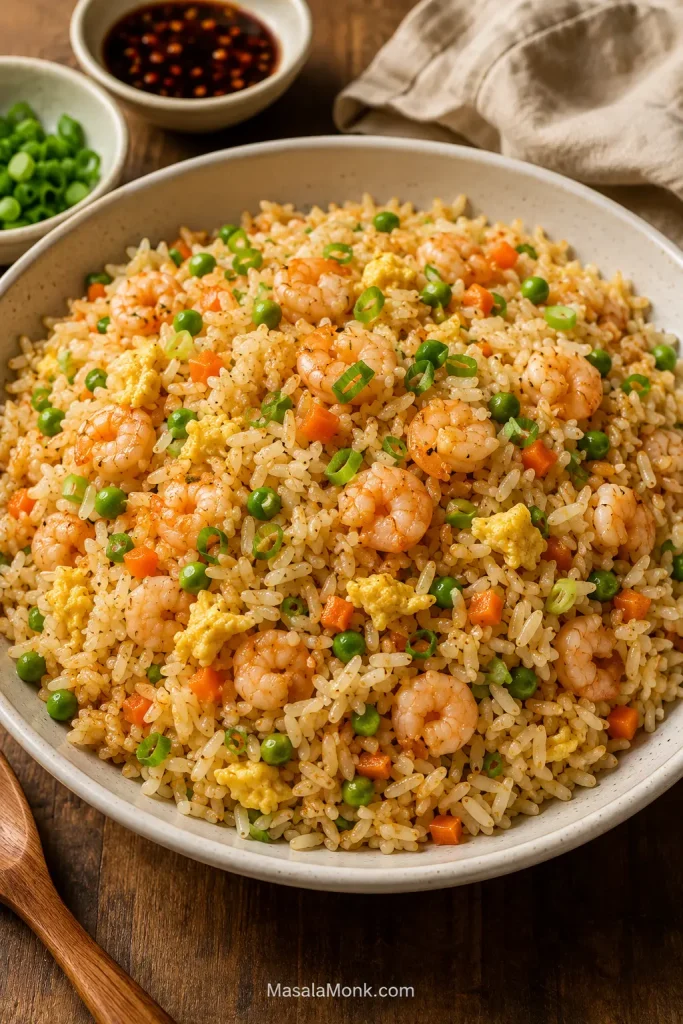
Chicken and shrimp fried rice with plump shrimp, browned chicken pieces, egg, peas, carrots, scallions, and glossy rice.
Chicken and shrimp need different timing. Cook the chicken first for browning, then add shrimp briefly so both proteins stay juicy.

Shrimp Fried Rice Without Egg

Skip the eggs and add more vegetables, tofu, or extra shrimp. Since egg adds richness, finish with scallions, white pepper, and a small amount of sesame oil to keep the rice flavorful.

Shrimp Fried Rice Without Soy Sauce

Use coconut aminos for a sweeter soy-free version, or season with salt, white pepper, sesame oil, and a tiny splash of broth. Add less liquid than you think you need, then taste after tossing.

Spicy Shrimp Fried Rice

Add chili crisp, sambal, sriracha, chopped green chili, or red pepper flakes. For the best texture, add chili oil or chili crisp near the end instead of flooding the rice early.

Cauliflower Shrimp Fried Rice

Use cauliflower rice instead of cooked rice for a lighter version. Frozen cauliflower rice should be thawed and squeezed dry first. Fry it in a wide skillet and leave it uncovered so it does not turn watery.

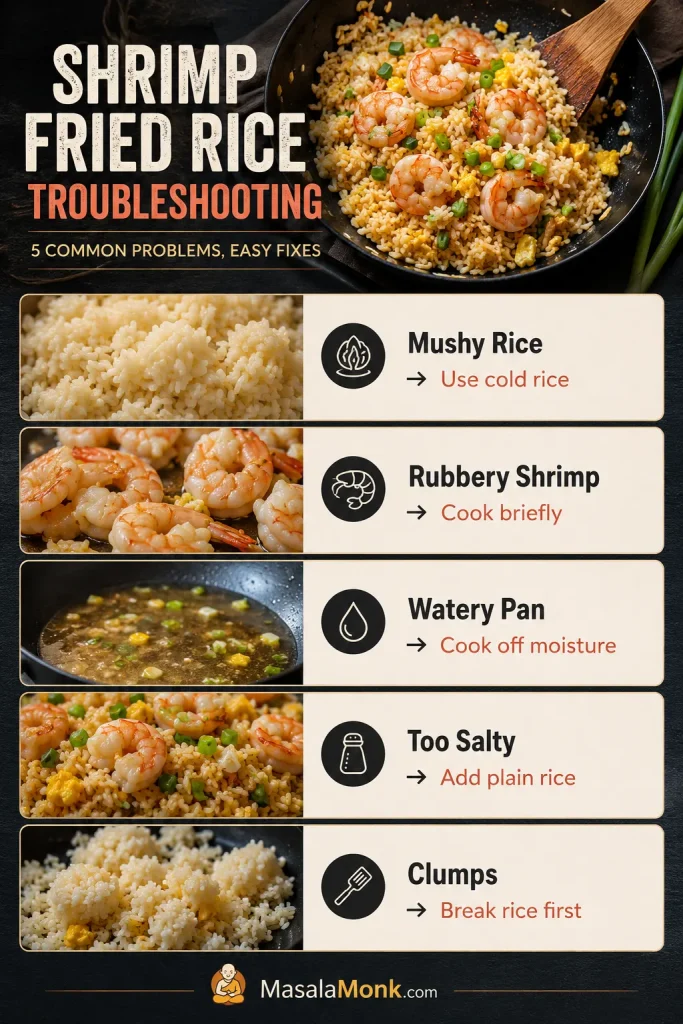
Why Fried Rice Turns Mushy — and How to Fix It

A difficult pan of fried rice is usually not a disaster. It is feedback: too much moisture, not enough heat, too much sauce, or shrimp that stayed in the pan too long.

Most fried rice problems are easy to diagnose once you know what to look for. Steam means moisture, puddles mean liquid, clumps mean the rice needed breaking up earlier, and tight shrimp means it stayed in the heat too long.

Troubleshooting board with fixes for mushy rice, rubbery shrimp, watery pan, salty rice, and rice clumps.
Mushy shrimp fried rice usually starts with excess moisture. Dry rice, dry add-ins, measured sauce, and enough pan space fix most texture issues.
ProblemWhy It HappenedFix
Rice is mushyRice was warm or wet, sauce was too heavy, or the pan was crowded.Use cold rice, reduce sauce, use a wider pan, and cook in batches.
Shrimp is rubberyShrimp cooked too long or stayed in the pan while the rice finished.Cook shrimp briefly, remove it, and return it at the end.
Rice tastes blandSauce was uneven or the rice was not seasoned enough.Mix sauce before cooking and taste for salt, white pepper, scallions, and heat before adding more sauce.
Rice is too saltyToo much soy sauce, oyster sauce, or dark soy sauce was added.Add plain rice, egg, or extra vegetables to balance it.
Rice is clumpyCold rice was added in large chunks.Break rice apart before it goes into the pan.
Fried rice is wateryFrozen shrimp, frozen vegetables, or pineapple added too much moisture.Dry shrimp well, cook off vegetable moisture, and drain pineapple before adding.
Egg disappeared into the riceEgg was mixed into wet rice or over-stirred.Scramble egg separately, then return it near the end.

What to Serve with Shrimp Fried Rice

This can be dinner on its own, especially with egg and vegetables. Because the rice is savory and glossy, the best sides bring crunch, acidity, freshness, or heat.

Shrimp fried rice served with cucumber salad, broccolini, chili crisp, scallions, and small side dishes.
Because shrimp fried rice is savory and rich, pair it with something crisp, green, acidic, or spicy. That contrast makes the meal feel fresher.
  • Cucumber salad or quick pickled cucumbers
  • Steamed or stir-fried greens
  • Spring rolls or lettuce wraps
  • Clear soup or hot and sour soup
  • Chili oil, chili crisp, or extra scallions on top

For a cold, crisp contrast, MasalaMonk’s cucumber salad recipe works especially well beside salty, glossy rice. For another quick shrimp dinner in a different direction, the shrimp scampi recipe gives you garlic butter, lemon, and tender shrimp instead of soy-sesame rice.

Storage and Reheating

This dish tastes best fresh from the pan, but leftovers can still be good when they are cooled, stored, and reheated properly.

  • Refrigerate: Store cooled shrimp fried rice in an airtight container for up to 3 days.
  • Reheat in a skillet: Warm over medium heat with a few drops of oil or water. Stir gently until hot.
  • Microwave carefully: Use short bursts and stop as soon as the rice is hot. Shrimp can get rubbery if overheated.
  • Freezing: Freezing is possible, but the shrimp and egg texture may not be as good after reheating.

Leftover rice note: Because this recipe often starts with leftover rice, cooling and reheating matter. If you cook rice ahead for fried rice, cool it quickly in a shallow container and refrigerate it within 2 hours. Do not leave cooked rice sitting out for hours before chilling. Reheat shrimp fried rice until hot all the way through, and reheat only the portion you plan to eat. For more detail, see the USDA leftover food safety guidance.

FAQs About Shrimp Fried Rice

What is the best rice for shrimp fried rice?

Cold cooked jasmine or long-grain white rice is the easiest choice because the grains stay separate in a hot skillet. Dry basmati can also work well when it has been cooked firm and cooled fully.

Do you need cold rice for shrimp fried rice?

Cold rice is easiest because the grains are firmer and drier on the surface. Fresh rice can work too, but it needs cooling time first so it stops steaming.

Can you use freshly cooked rice for shrimp fried rice?

Yes, but not straight from the cooker. Cook it slightly firm, spread it out so steam escapes, then chill it until the surface feels dry. Break up the grains before adding them to the pan.

How do you make shrimp fried rice not mushy?

Use cold rice, a hot wide pan, and a measured amount of sauce. Pat shrimp dry, cook off moisture from frozen vegetables, and avoid crowding the pan.

What shrimp works best for fried rice?

Raw peeled and deveined medium shrimp is the easiest choice. Smaller shrimp give a more restaurant-style bite, while very large shrimp are better chopped.

Should shrimp be cooked before adding rice?

Yes. Cook shrimp briefly first, remove it from the pan, then return it after the rice is fried. This keeps the shrimp tender while the rice gets enough time on the heat.

How much sauce should you add to shrimp fried rice?

For 4 cups cooked rice, start with 2 tablespoons soy sauce, 1 tablespoon oyster sauce, 1 teaspoon sesame oil, white pepper, and a small pinch of sugar. Add more only after tasting.

Is oyster sauce necessary?

No. Oyster sauce gives a deeper takeout-style flavor, but the rice still works without it. Keep the soy sauce measured, then use white pepper and scallions for extra flavor.

How do you make shrimp fried rice with frozen shrimp?

Thaw frozen shrimp fully and pat it dry. Season it, cook it briefly in a hot pan, then remove it before frying the rice so it stays juicy and the skillet stays dry.

Do prawns work instead of shrimp?

Yes. Prawns work the same way in this recipe. Use raw peeled and deveined prawns, dry them well, cook them briefly, and return them at the end.

How do you make shrimp fried rice without egg?

Skip the egg and add more shrimp, vegetables, or tofu. Since egg adds richness, finish with scallions, white pepper, and a small amount of sesame oil.

How long does shrimp fried rice keep?

Shrimp fried rice keeps for up to 3 days in the refrigerator when stored in an airtight container. Cool it before storing and reheat only the portion you plan to eat.

What is the best way to reheat shrimp fried rice?

A skillet over medium heat gives the best texture. Add a few drops of oil or water and stir gently until hot. Use short microwave bursts if reheating quickly.

Back to recipe card · Back to quick answer

The Takeaway

Good shrimp fried rice is not about a long ingredient list. It is about giving the rice enough heat, keeping the shrimp tender, and using just enough sauce to season every grain.

Once you hear the rice sizzling instead of steaming, you are on the right track. Keep the shrimp brief, the sauce measured, and the pan wide, and this becomes the kind of fried rice you can repeat with whatever is already in the fridge.
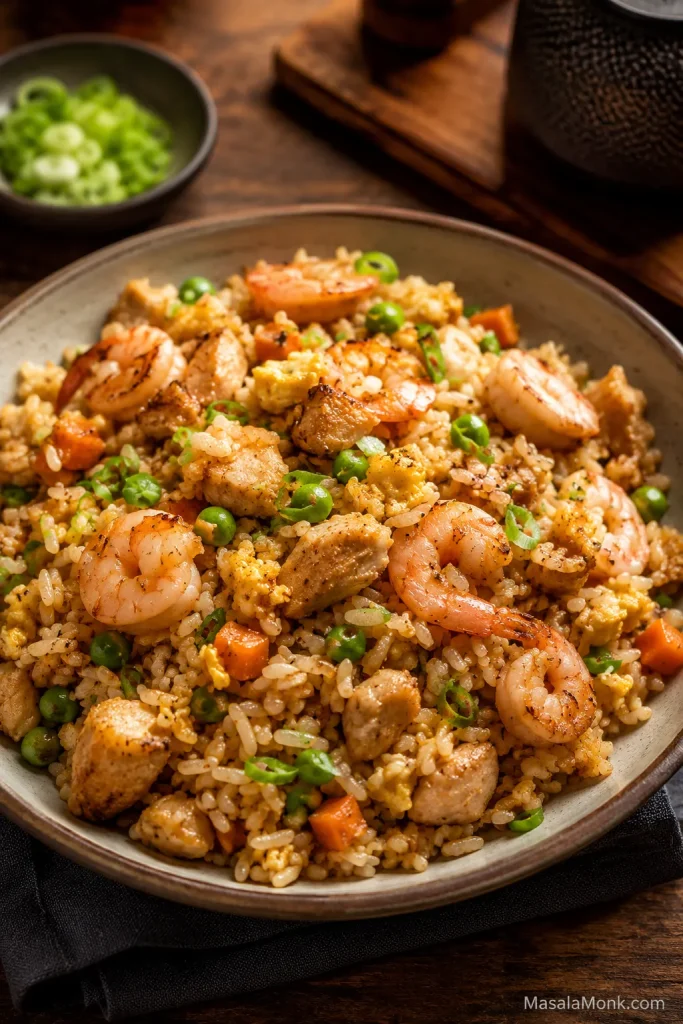
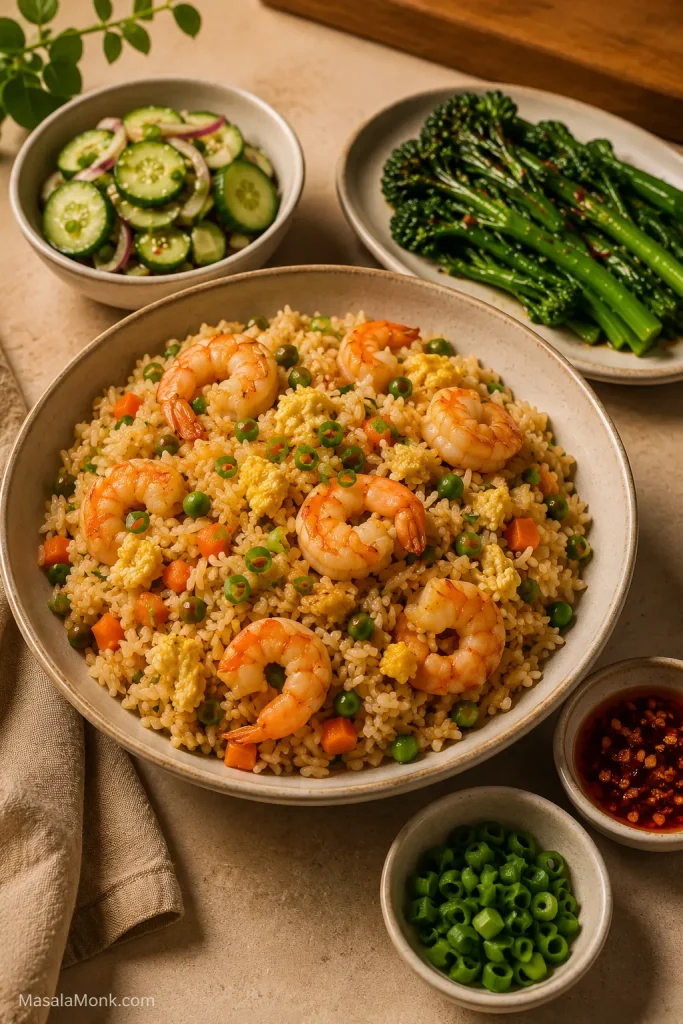
The best version does not taste like leftovers. It tastes like a hot pan gave yesterday’s rice a second life.