
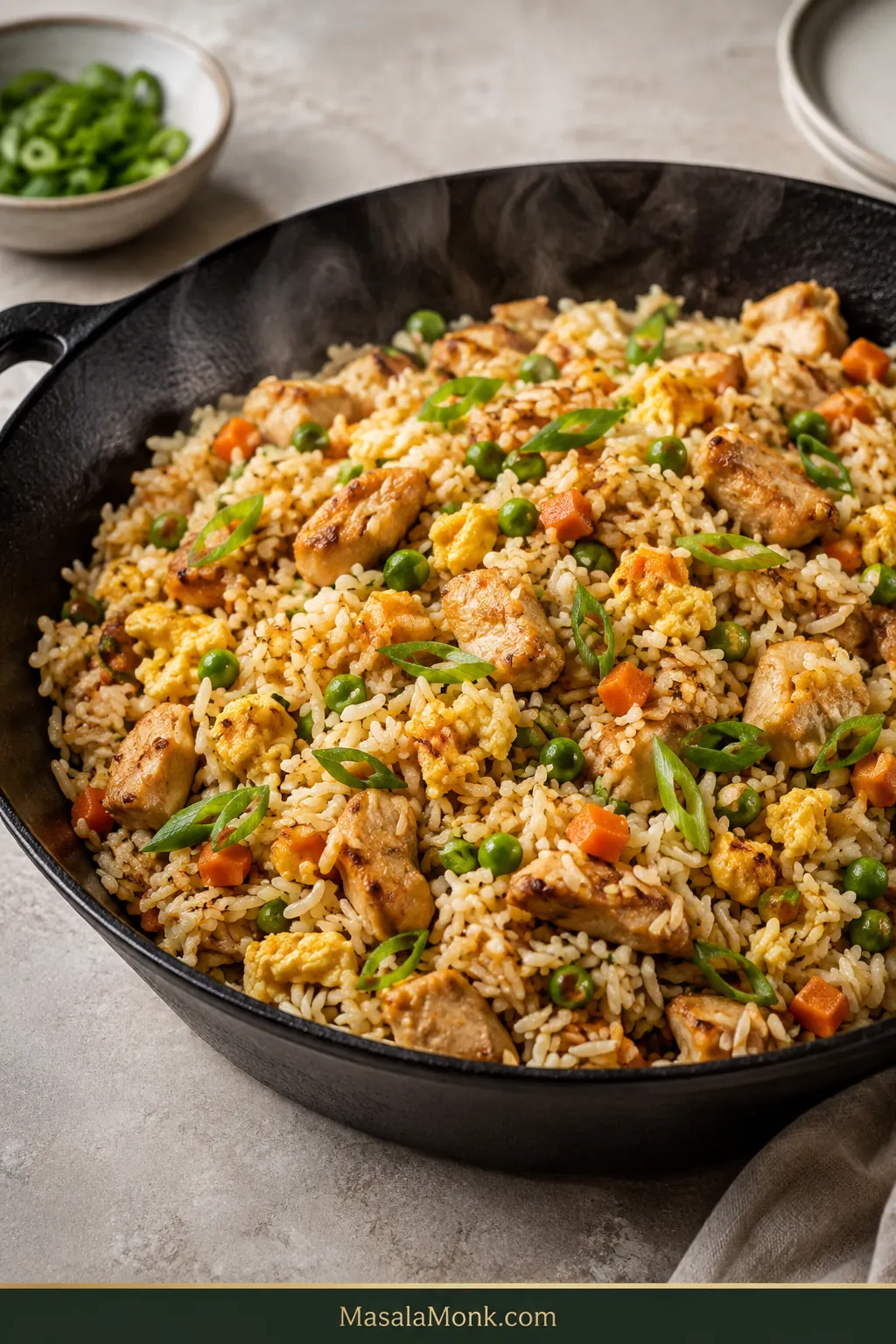
Good chicken fried rice should feel loose in the pan: hot separate grains, browned chicken, tender pieces of egg and vegetables in almost every scoop.
When it goes wrong, you can usually see it happening. The lively sizzle fades, cold ingredients pile in faster than the pan can recover, and rice that was supposed to fry starts quietly steaming instead.
This version is built for the kind of dinner that comes together from yesterday’s rice, one piece of chicken and whatever vegetables are in the freezer. Rice cooked today works too once the steam has escaped, and a wide skillet is perfectly useful if you do not own a wok.
The method is easiest to remember in four words:
Fry in stages, sauce late.
That gives each stage enough heat to fry properly before the next ingredient goes in.
Jump to Recipe · Best Rice · Fresh Rice Tonight · Fix Your Fried Rice
Quick Answer: How to Make Good Chicken Fried Rice
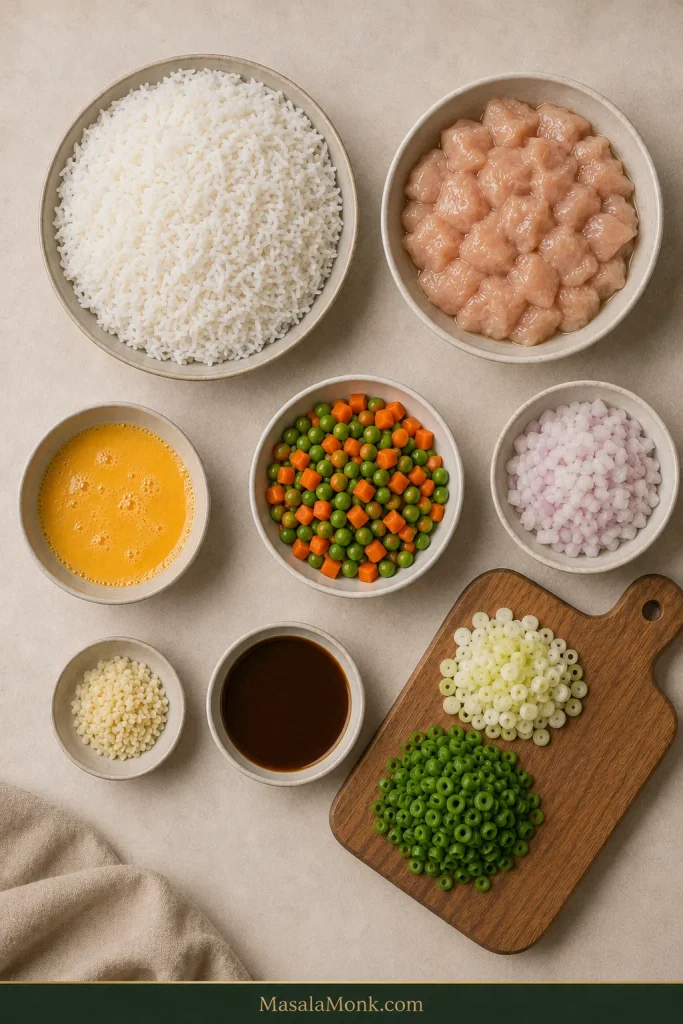
For four main-course servings, use about 650 g cooked rice, or roughly 4 loosely filled cups, 12 oz / 340 g chicken, 3 eggs and 1 cup mixed vegetables.
Give raw chicken a brief soy-and-cornstarch velvet. Soft-scramble the eggs and remove them, brown the chicken separately, cook the vegetables, then fry the rice until hot and loose. Add the sauce only after the rice is ready, then return the chicken and egg.
You are looking for separate grains with occasional lightly toasted patches, juicy chicken and tender egg—not wet rice coated in soy sauce.
Chicken Fried Rice Recipe
Recipe at a Glance
Prep: about 15 minutes
Cook: about 12–15 minutes
Total: about 30 minutes, with cooked rice ready
Yield: 4 main-course servings or about 6 side servings
Starting with uncooked rice adds its cooking and cooling time.
Equipment
- 12-inch / 30 cm stainless-steel, cast-iron or carbon-steel skillet, or approximately 14-inch / 35 cm wok
- 2 plates or shallow bowls — one for the egg and one for the chicken
- small bowl for the sauce
- spatula or wok spatula
- knife and cutting board
A large nonstick skillet can work too. Use the highest heat appropriate for your particular pan rather than assuming the burner always needs to be at maximum.
If your pan is much smaller than 12 inches / 30 cm, cook in smaller batches. Fried rice needs room more than it needs specialized equipment.
Ingredients
For the Chicken
- 12 oz / 340 g boneless skinless chicken thighs, or chicken breast
- 2 teaspoons / 10 ml regular/all-purpose soy sauce or Chinese light soy sauce, not dark soy
- 2 teaspoons / about 5 g cornstarch
- 1 teaspoon / 5 ml neutral high-heat oil
Base Fried Rice Sauce
- 2 tablespoons / 30 ml regular/all-purpose soy sauce or Chinese light soy sauce, not dark soy
- 1 tablespoon / 15 ml oyster sauce
- ¼ teaspoon sugar
- ⅛ teaspoon ground white pepper
- 1 teaspoon / 5 ml toasted sesame oil
That is the complete base sauce. None of the extras below is required.
If they are already in your cupboard, you can also add:
- 1 teaspoon / 5 ml dark soy sauce for deeper colour
- ¼ teaspoon MSG, or a small pinch of chicken bouillon powder, for extra savouriness
- 2 teaspoons / 10 ml Shaoxing wine at the finish
For the Rice, Egg and Vegetables
- about 650 g cold cooked jasmine or long-grain white rice, roughly 4 loosely filled cups
- 3 large eggs
- 2 tablespoons + 2 teaspoons / about 40 ml neutral high-heat oil, such as canola, peanut, rice-bran, avocado or vegetable oil, divided
- ½ medium onion, finely diced
- 1 cup / about 140 g frozen peas and carrots, no need to thaw
- 3 garlic cloves, finely chopped
- 4 scallions, sliced, with white/light-green and dark-green parts separated
Keep another teaspoon or two of oil nearby in case a stainless-steel or carbon-steel pan becomes genuinely dry.
Before You Heat the Pan
Break the cold rice apart with your fingers or a fork.
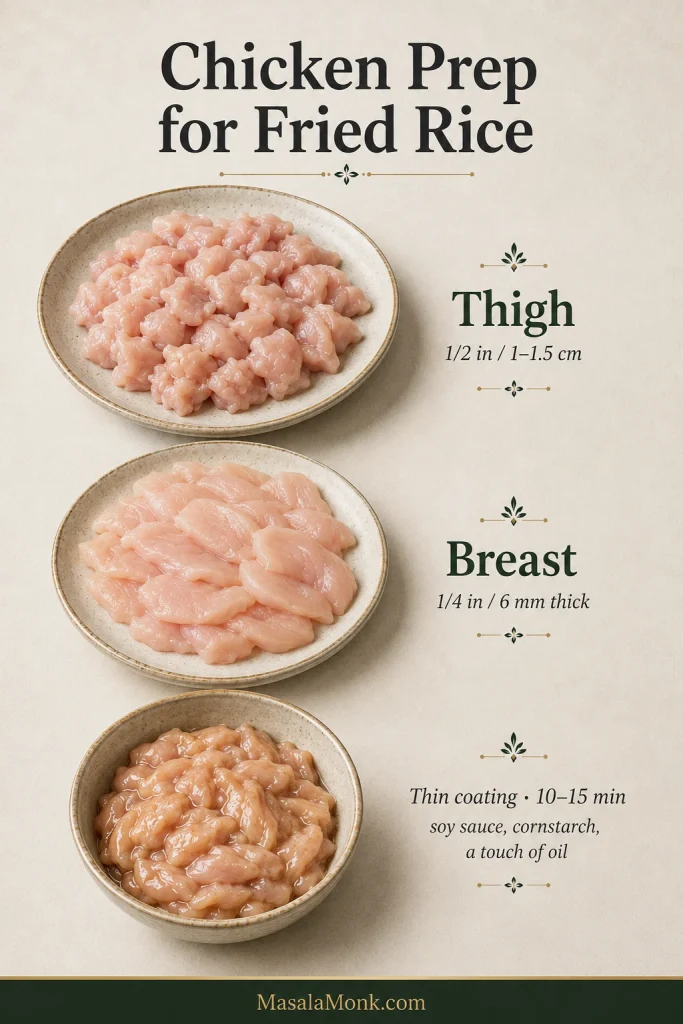
For chicken thighs, cut the meat into pieces roughly ½ inch / 1–1.5 cm across. For chicken breast, slice across the grain into bite-size pieces roughly ¼ inch / 6 mm thick.
Mix the chicken with the soy sauce, cornstarch and 1 teaspoon oil. Leave it for 10–15 minutes while you prepare everything else.
Mix the fried-rice sauce and beat the eggs.
Before the stove goes on, have the rice separated, sauce mixed, eggs beaten and vegetables ready beside the pan.
Once cooking starts, things move quickly.
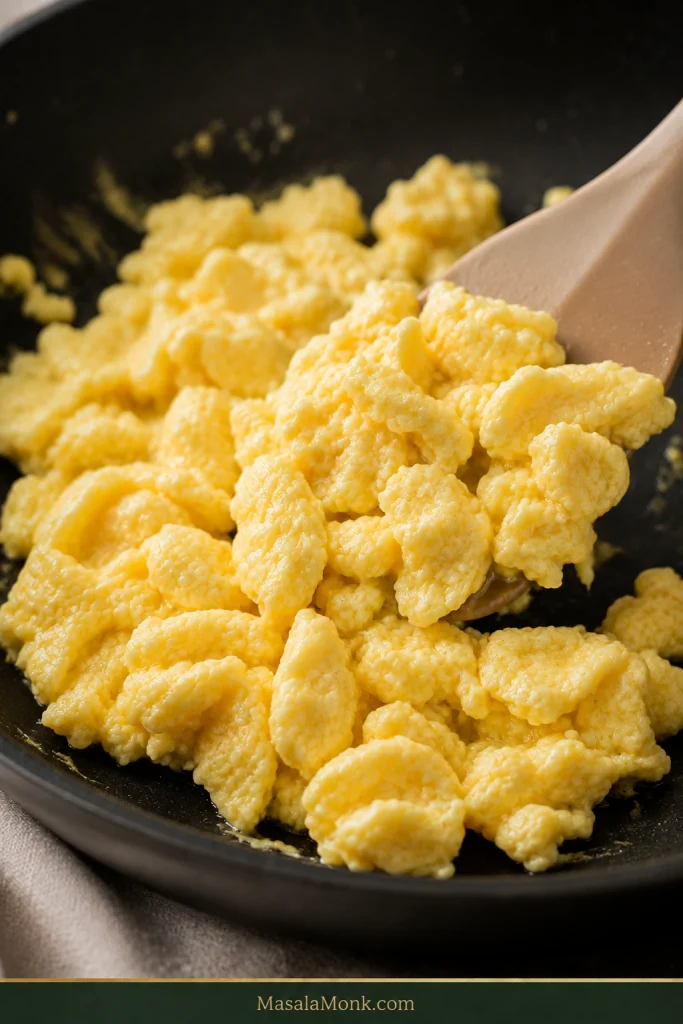
1. Soft-Scramble the Eggs
Heat the skillet or wok over medium-high heat and add 1 teaspoon / 5 ml oil.
Pour in the eggs and stir gently until soft curds form, about 30–60 seconds.
Transfer them to a clean plate while they are still slightly glossy. They will warm again at the end, so there is no benefit in cooking them firm now.
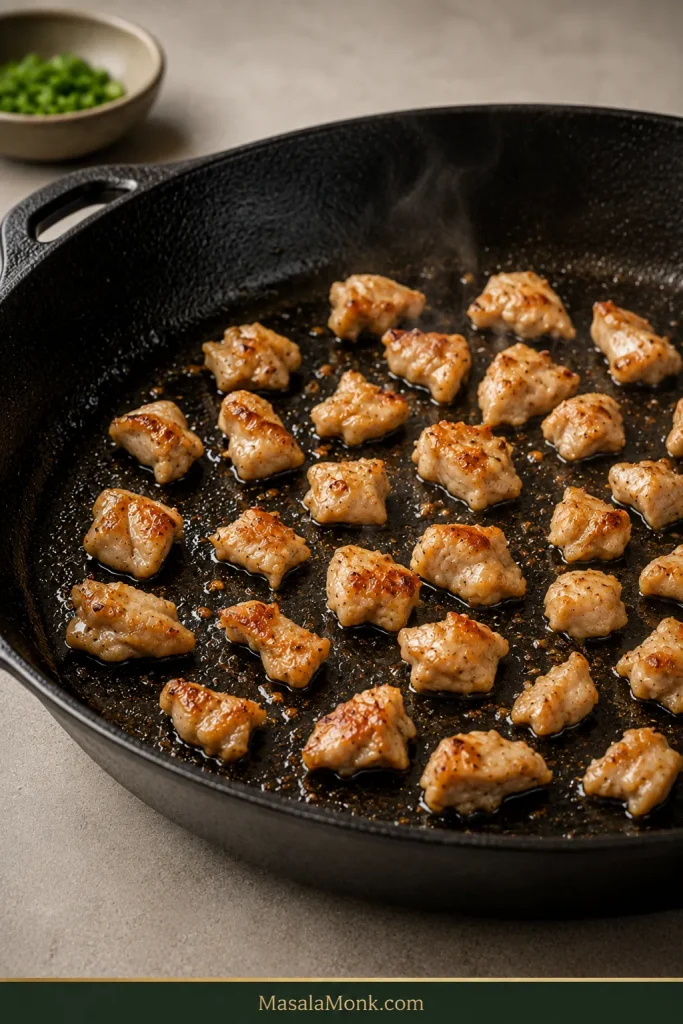
2. Sear the Chicken
Increase the heat to high or medium-high, depending on your stove and pan, and add 1 tablespoon / 15 ml oil.
When the chicken sizzles immediately on contact, spread it into a single layer. Let the first side develop some colour, then stir-fry until the chicken has browned edges and is almost cooked through, usually 2–4 minutes depending on the cut.
Transfer the chicken to its own clean plate or bowl.
You want browned edges while the centre is still juicy; the chicken will finish cooking when it returns to the pan.
3. Cook the Onion and Vegetables
Add 1 teaspoon / 5 ml oil.
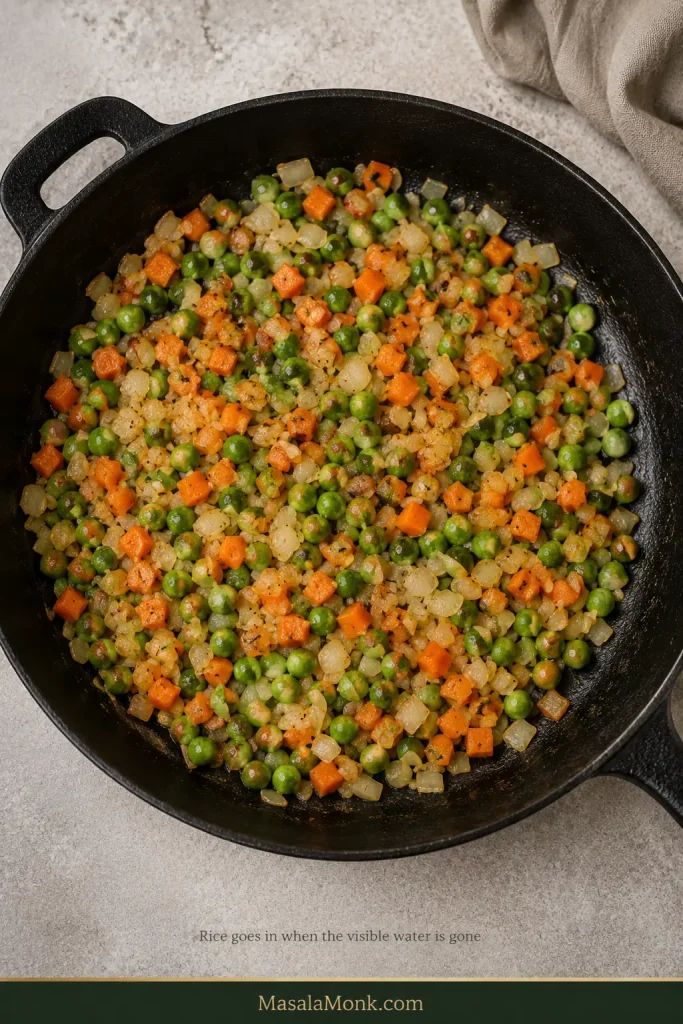
Cook the onion for about 1 minute, then add the peas and carrots straight from the freezer.
No thawing is needed. Cook for another 1–3 minutes, until the vegetables are hot and the bottom of the pan is dry again.
Do not worry about whether this takes exactly two minutes or three. Wait until the visible water has disappeared.
4. Add the Garlic and Scallion Whites
Add the garlic and the white/light-green parts of the scallions.
Toss for 20–30 seconds, just until the garlic smells fragrant.
5. Fry the Rice
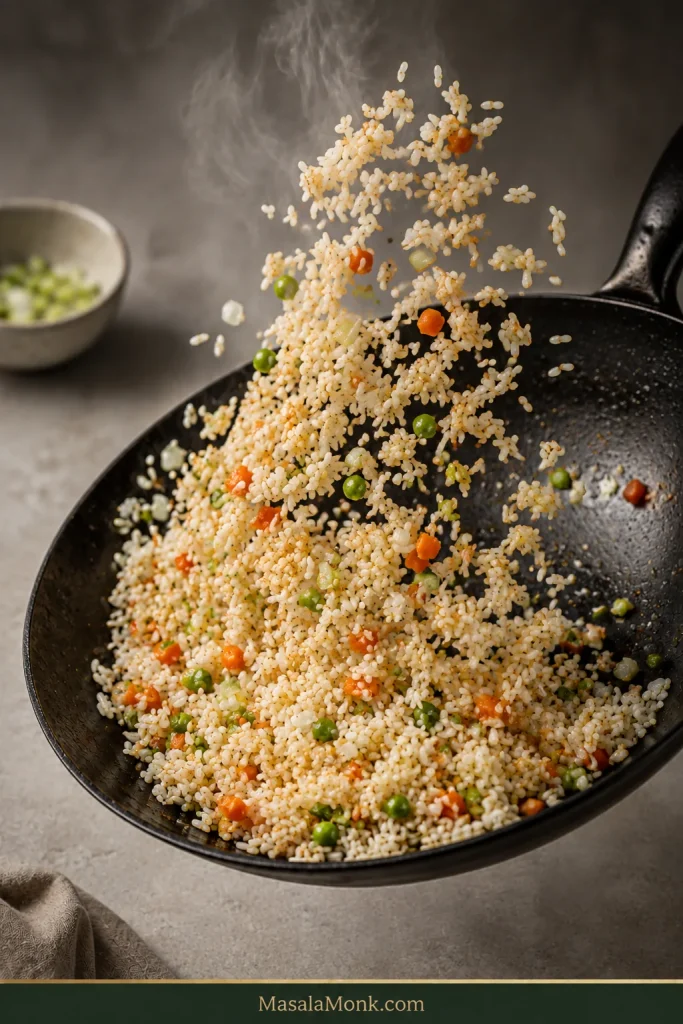
Add the remaining 1 tablespoon / 15 ml oil, followed by the rice.
Break apart any lingering clumps as you toss and cook for 3–5 minutes, until the rice is hot throughout and moving freely.
If using a skillet, spread portions across the hot surface and leave them alone for 30–60 seconds before turning. A few grains should begin picking up pale-golden edges where they meet the pan.
With a hot wok and capable burner, work more briskly and keep the rice moving.
6. Add the Sauce
Stir the sauce once more and pour it over the rice.
Toss immediately and cook for 1–2 minutes, until the seasoning is evenly distributed and there is no wet sauce sitting underneath the grains.
Taste a spoonful.
The rice should taste savoury and aromatic while still tasting like rice—not wet, over-sauced or primarily of soy sauce.
When the balance is right, you get savoury depth through the grains, little toasted edges from the pan and just enough sweetness to round everything out without making the rice taste sweet.
If it needs more saltiness, add a small splash of regular soy. If the flavour is right and you simply want deeper colour, use the optional dark soy instead.
7. Return the Chicken and Egg
Return the chicken first, followed by the egg.
Break the egg into tender bite-size pieces as you toss and cook for another 30–60 seconds, until everything is piping hot.
The chicken should reach 165°F / 74°C, the USDA safe minimum temperature for poultry.
8. Finish
Add the scallion greens.
If using Shaoxing wine, gather the rice slightly toward the centre and drizzle 2 teaspoons / 10 ml around the exposed hot edge of the pan.
It should hiss immediately. Within seconds that sharp burst becomes a warm savoury aroma.
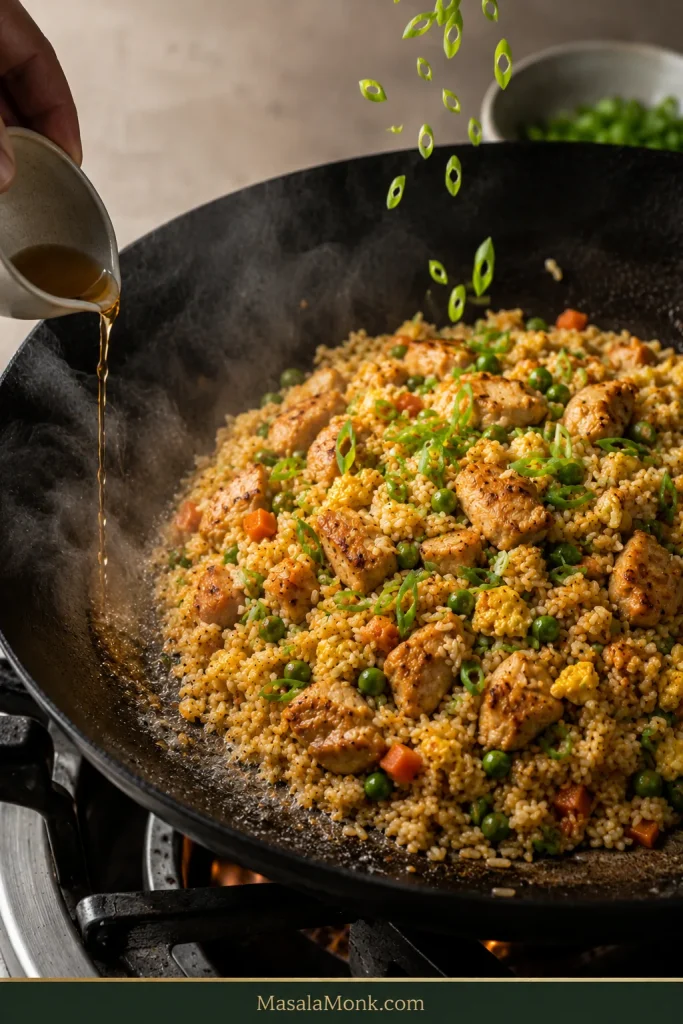
Toss once or twice and turn off the heat.
Get the rice onto the table while the grains are hot and loose, the chicken is juicy and the scallions still smell fresh.
Recipe Notes
- Soy sauces vary in saltiness, so taste before adding more.
- Using cooked chicken? Add it near the end with the egg and heat only until hot.
- Doubling the recipe? Prepare twice the ingredients, but cook two separate batches.
If you’re cooking right now, the recipe above is enough to get dinner on the table.
If you’re still wondering about fresh rice, pan heat or a batch that’s already turning soggy, those answers are below.
Get it right: Best Rice · Fresh Rice · Juicy Chicken · Wok or Skillet
Fix & adapt: Read the Pan · Takeout Flavour · Troubleshooting · Substitutions · Storage
What Is the Best Rice for Chicken Fried Rice?
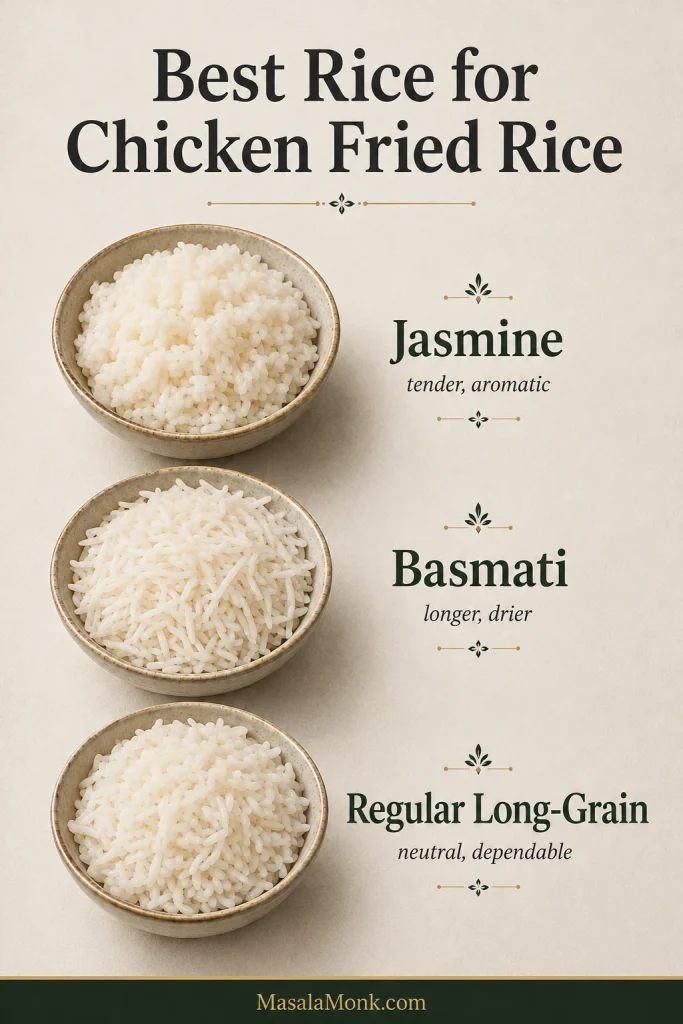
Jasmine is my first choice for chicken fried rice, but basmati and regular long-grain white rice work well too. The best choice is a rice that cooks into distinct grains rather than a sticky mass.
| Rice | What the Fried Rice Is Like | Best For |
|---|---|---|
| Jasmine rice | aromatic, tender, nicely separate | my first choice |
| Basmati rice | longer, drier, very distinct grains | excellent everyday alternative |
| Regular long-grain white rice | neutral and dependable | use what you already have |
If you’re buying rice specifically for this recipe, jasmine is the easiest default. If basmati or another long-grain rice is already in the fridge, use it rather than cooking another batch just to change varieties.
Making this with shrimp instead? The same broad rice method carries over to Shrimp Fried Rice, but the shrimp needs only a brief turn in the pan.
Does Fried Rice Need Day-Old Rice?
Cold leftover rice is easiest because it is already cool and relatively dry. Properly cooled same-day rice works too.
What matters is how the grains behave when they reach the pan: they should separate cleanly rather than arriving hot, wet and soft.
Even good day-old rice can turn soggy if wet vegetables, too much sauce or an overcrowded pan add more moisture than the heat can drive away.
How to Make Fried Rice With Fresh Rice
Freshly cooked rice works once the visible steam is gone and the grains loosen cleanly instead of smearing together. Spread it over a tray to cool quickly before frying.
Sometimes the craving for fried rice arrives well after the point when yesterday’s rice was supposedly meant to exist.
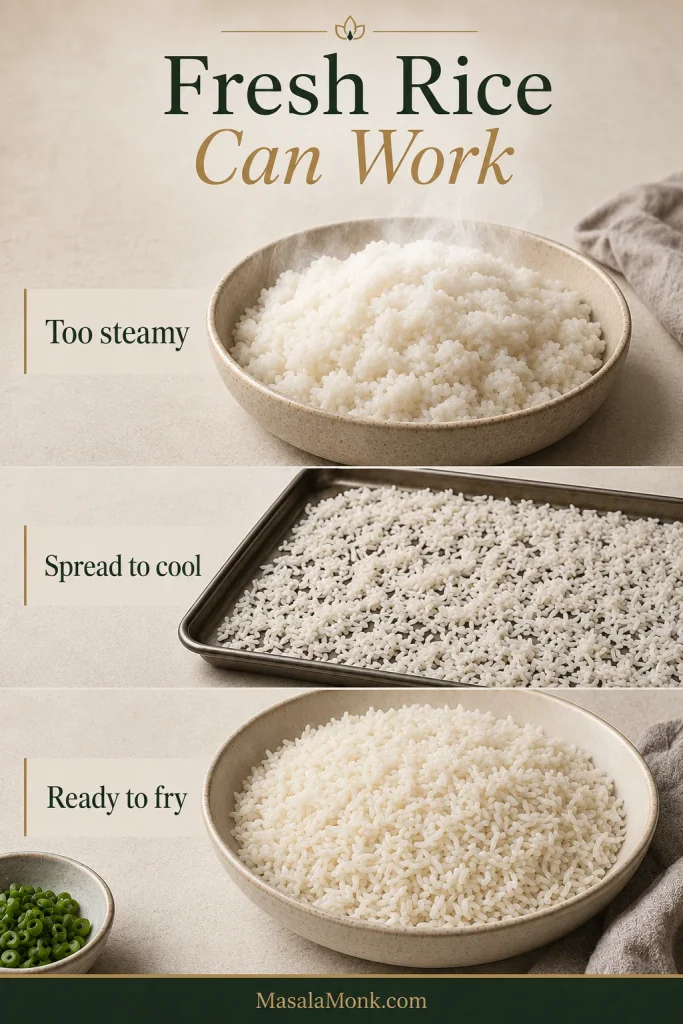
If you are starting from dry rice, this guide to cooking rice covers jasmine, basmati and regular long-grain methods in more detail.
Around 1½ cups dry rice is a useful starting point for this recipe, depending on the variety and cooking method. Measure the cooked amount before frying rather than relying too heavily on a raw-to-cooked conversion.
Same-Day Rice Method
Cook the rice a little firmer if your usual method produces particularly soft grains.
- Fluff the rice gently.
- Spread it over a large tray or baking sheet.
- Leave it uncovered so steam can escape.
- Cool until the rice is no longer visibly steaming.
- Pick up a small handful. The grains should loosen from one another instead of smearing into a soft mass.
- Refrigerate briefly if you have time.
The rice is ready when the grains loosen cleanly in your hand. Cooling time will vary with the type of rice, room temperature and how thinly it is spread.
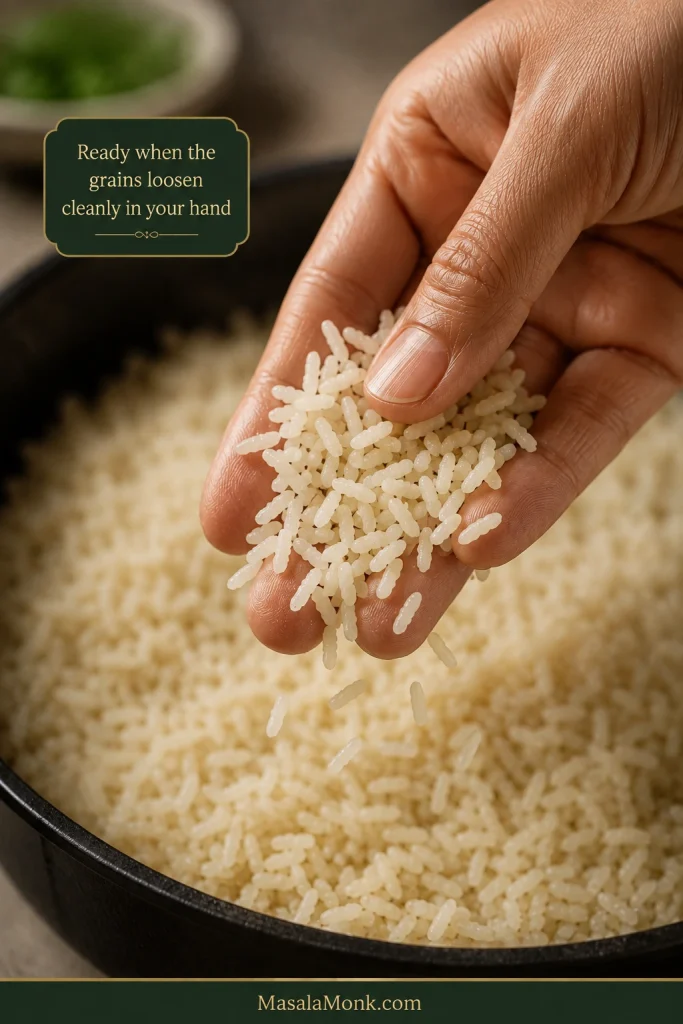
Slightly warm rice is fine once the grains feel dry and separate. Rice still giving off clouds of steam needs longer.
Plain precooked microwave rice is also handy when making and cooling another pot feels like one task too many. Choose an unflavoured packet and break the rice apart before frying.
Do not leave cooked rice sitting out for hours. Refrigerate it within 2 hours, or within 1 hour when the temperature is above 90°F / 32°C, preferably spread or portioned so it cools quickly.
If you ended up with more plain rice than the fried rice needs, save the extra for another meal. Rice pudding made with cooked rice works with jasmine, basmati or ordinary white rice.
Rice ready? Jump back to the Chicken Fried Rice Recipe.
How to Keep the Chicken Juicy
The chicken does not need a long marinade. Ten to fifteen minutes with soy sauce, cornstarch and a little oil is enough while you chop the vegetables and mix the sauce.
I prefer boneless skinless thighs here. They brown readily, stay juicy and give you more margin if the rice takes an extra minute.
Chicken breast works well too; slice it thinner and keep a closer eye on the cooking time.
Why Take the Chicken Out?
If small pieces of chicken remain in the pan through the vegetables, cold rice and final seasoning, they can dry out before the rice is ready.
Brown the meat, let it wait on its own plate, then give it its final minute when everything comes back together.
The extra plate is less glamorous than a restaurant burner, but it solves a much more useful kitchen problem.
A small amount of baking soda is sometimes used for especially tender restaurant-style chicken. I would not bother with it here. The cornstarch is enough.
Using Leftover or Rotisserie Chicken
Use about 8–9 oz / 225–250 g cooked chicken, diced or shredded.
Skip the velvet and searing steps. Add the cooked chicken near the end and toss only until it is hot.
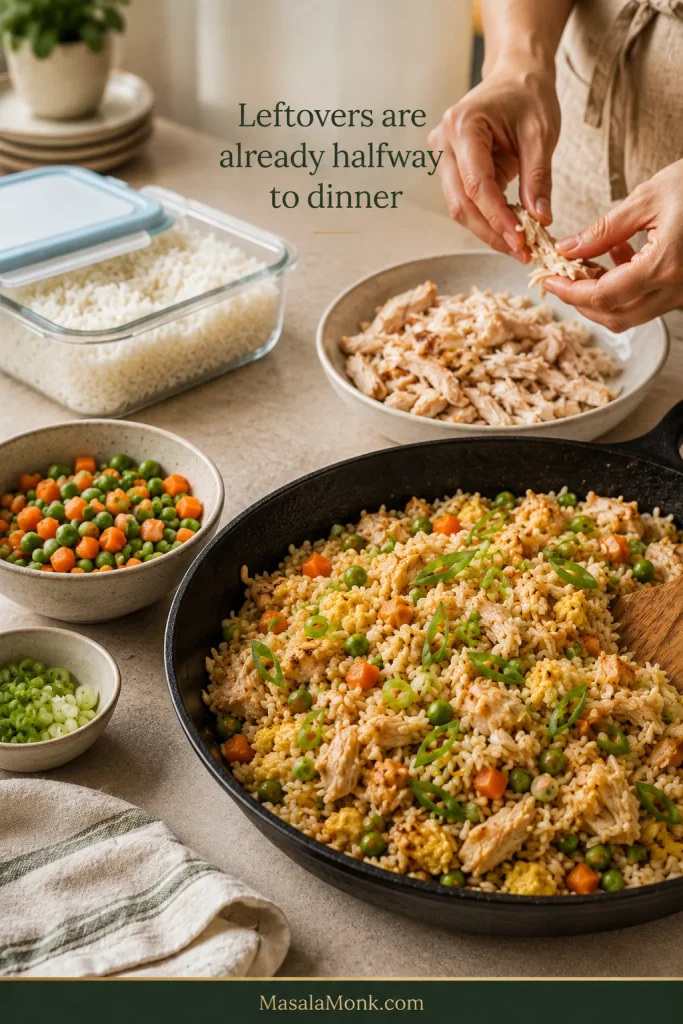
A container of leftover roast chicken and yesterday’s rice is about as close as this dinner gets to assembling itself.
Wok or Skillet?
You do not need a wok to make good fried rice.
A 12-inch / 30 cm skillet gives the rice plenty of contact with the hot surface and is often the easiest option on most home burners.
Over strong heat, a wok rewards quick movement. By contrast, a skillet rewards brief periods of undisturbed contact so portions of rice can toast against the broad base.
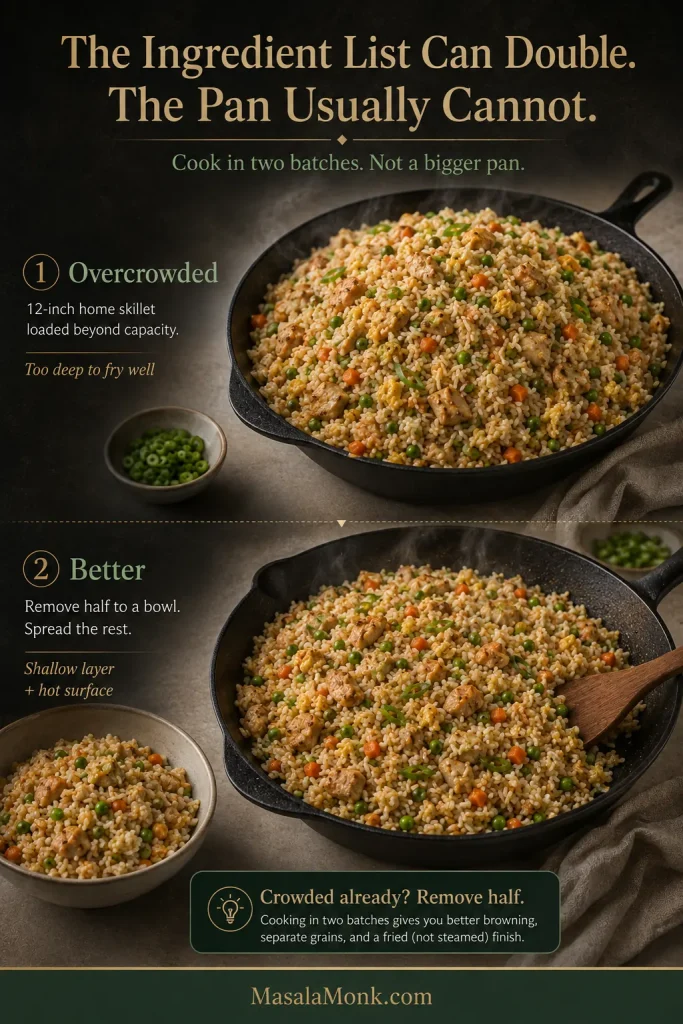
Whichever pan you use, avoid piling the ingredients deeply. Divide the recipe into smaller batches if necessary.
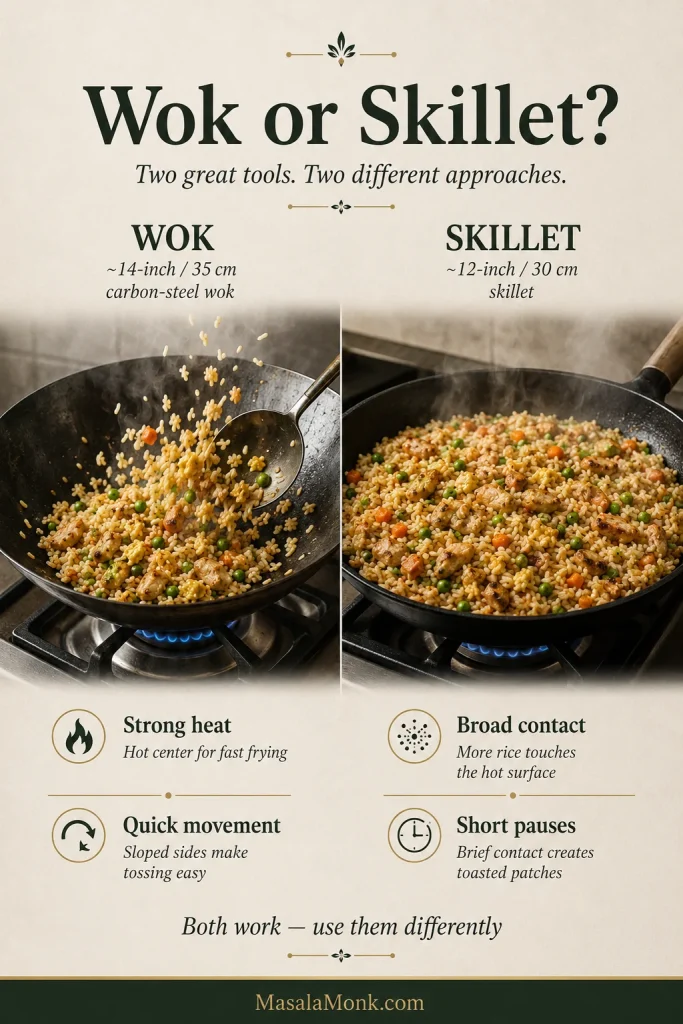
That smoky restaurant aroma is often called wok hei. A skillet on a domestic stove will not reproduce all of it, and it does not need to. Loose grains, juicy chicken and balanced seasoning already make very good fried rice.
Read the Pan: Sizzle, Steam, Grains
The clock helps. The pan tells you more.
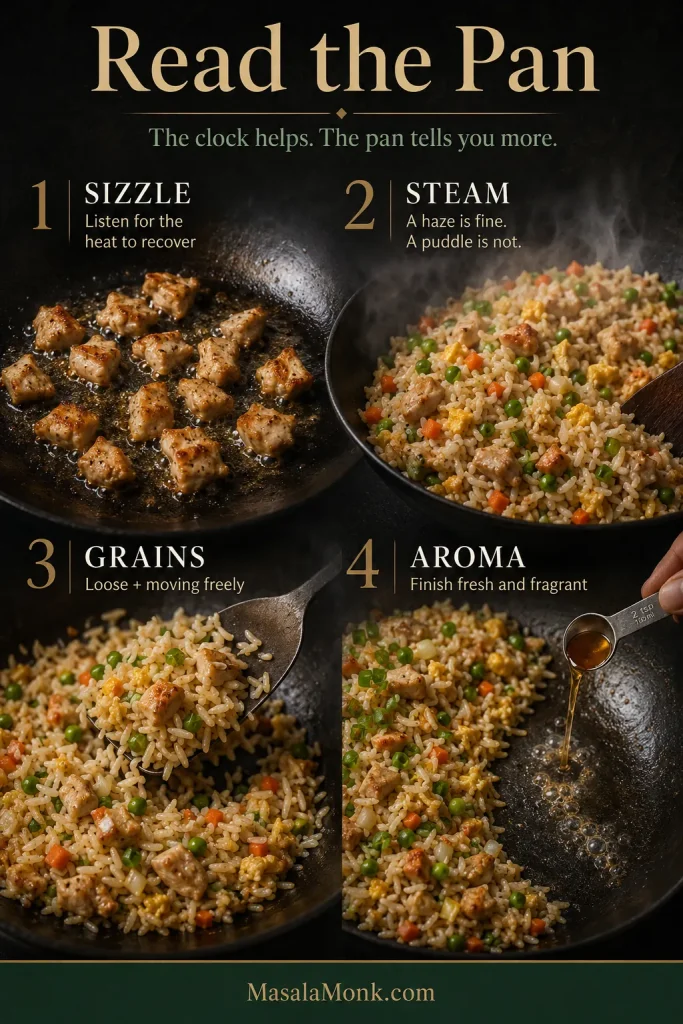
Sizzle: Chicken should make itself heard when it lands. If a large addition of cold food makes the pan suddenly quiet, wait. The returning sizzle tells you the heat is catching up.
Steam: A lively haze of steam is normal. A puddle underneath the food needs to disappear before the next major ingredient goes in.
Grains: Before the sauce enters, the rice should move easily rather than dragging around in cold clumps. Taste one if you are unsure; it should be hot through the centre.
Aroma: Garlic should smell fragrant rather than sharp or burnt. Scallion greens, sesame oil and optional Shaoxing arrive late because their aroma is part of the finish.
That last half-minute should smell noticeably better than the pan did five minutes earlier.
Something already looks wrong? Go straight to Chicken Fried Rice Troubleshooting.
What Makes Chicken Fried Rice Taste Like Takeout?
For this batch, soy sauce, oyster sauce, white pepper and toasted sesame oil make the base seasoning. Shaoxing wine and MSG are optional, not requirements.
Fried rice can be salty enough and still taste strangely flat.
Usually, the answer is not another large pour of soy sauce. What is missing is often aroma or savoury depth, not more salt.
Adjusting Salt, Colour and Aroma
| Ingredient | What It Contributes |
|---|---|
| Soy sauce | salt and savouriness |
| Oyster sauce | deeper sweet-savoury umami |
| White pepper | background warmth |
| Shaoxing wine | aromatic depth |
| Toasted sesame oil | finishing aroma |
| MSG or bouillon | optional extra savouriness |
| Tiny amount of sugar | rounds the seasoning |
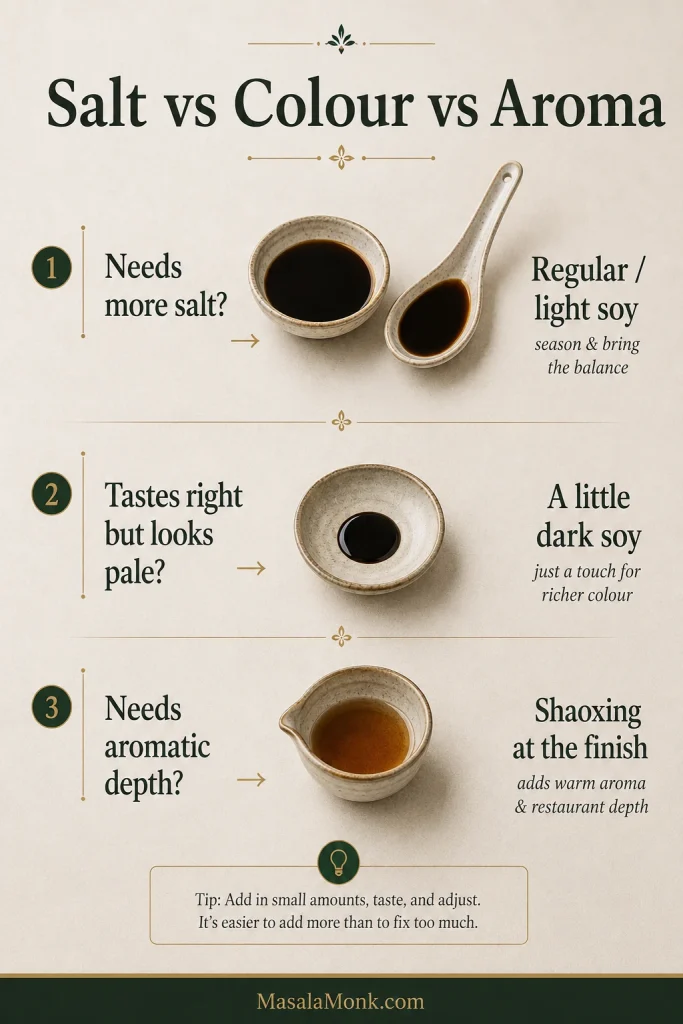
When those layers are balanced, the grains taste savoury without feeling heavy, white pepper adds a gentle warmth, and sesame and scallion arrive at the finish instead of disappearing beneath the soy.
Soy sauces vary considerably in saltiness, so the recipe starts with a measured amount and leaves the final adjustment until the end. If the rice tastes right but looks pale, a little dark soy can deepen the colour without another large pour of regular soy.
For a genuinely saucy chicken-and-vegetable stir-fry, the balance is different; this stir fry sauce is designed to coat meat and vegetables, while fried rice deliberately keeps liquid restrained.
If I were adding just one of the extras here, I would make it Shaoxing wine. The small perimeter drizzle flashes against the hot metal and noticeably changes the aroma at the finish.
MSG adds savoury depth without more liquid. Bouillon can do something similar, but brands vary enough in saltiness that a small pinch is the better starting point.
If your protein is already heavily seasoned, reduce the sauce rather than seasoning on autopilot. Spam is an obvious example; Spam Fried Rice needs a lighter hand with salty sauces.
Which Vegetables Work in Chicken Fried Rice?
Have corn instead of peas? Half a bell pepper that needs using? A handful of mushrooms?
That is exactly the kind of flexibility fried rice is good at.
Use roughly 1 cup / about 140 g mixed vegetables and adjust the timing to suit them. Carrot, mushrooms, broccoli stems and bell pepper can go in earlier; cabbage, bean sprouts and tender greens need much less time.
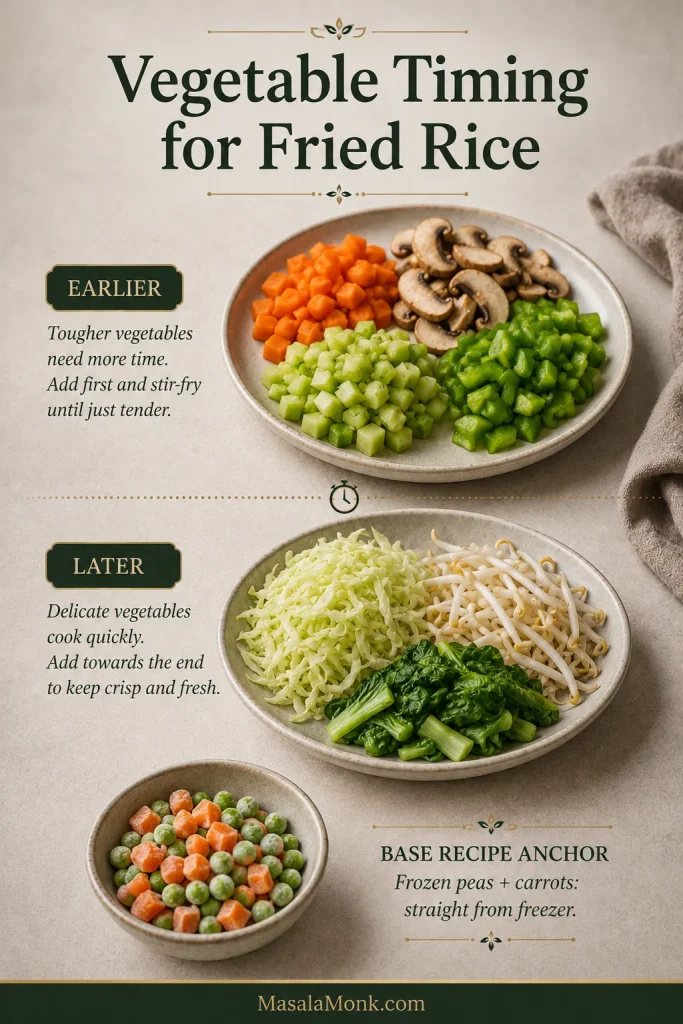
The frozen peas and carrots in the base recipe go straight from freezer to pan. Let them become hot and give any released water time to disappear before adding the rice.
Why Cook the Egg Separately?
There are excellent fried-rice techniques where egg and rice cook together, but for this recipe, I prefer taking the egg out.
You can stop at tender, slightly glossy curds and return them after the rice has had all the pan time it needs.
Soft egg against firmer, lightly toasted grains is a much nicer contrast than scrambled egg that has spent the entire recipe cooking.
Chicken Fried Rice Troubleshooting
Sometimes you reach troubleshooting advice after dinner has already started going wrong.
Here is what may help the pan in front of you—and what is worth changing next time.
Quick fixes: Wet rice · Hard rice clumps · No toasted edges · Dry chicken · Too salty
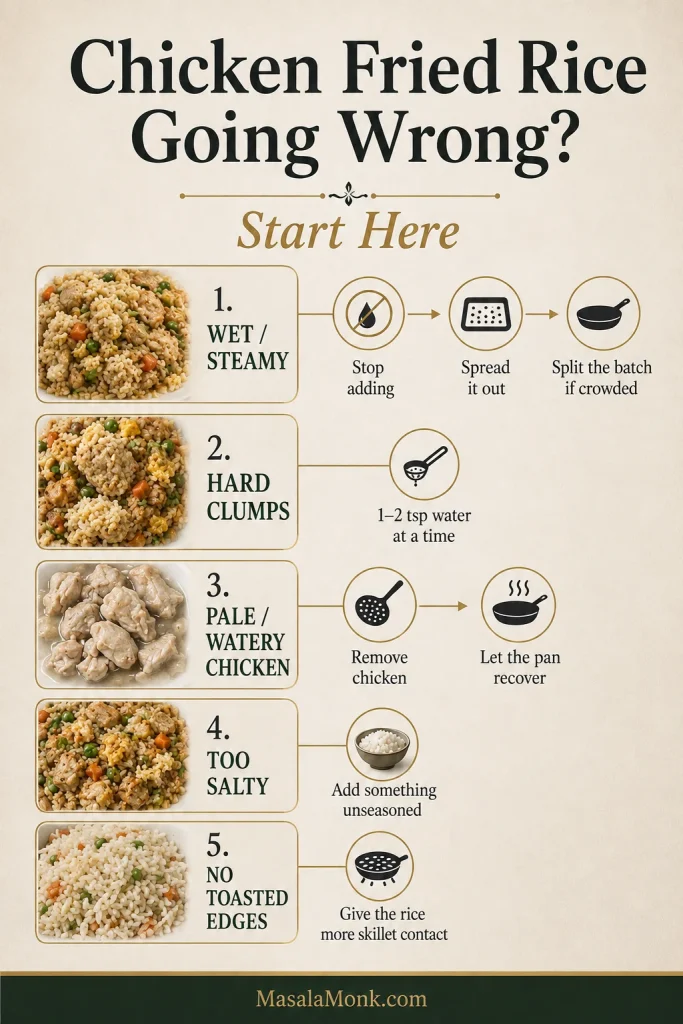
Moisture & Clumping Problems
Wet, Steamy Rice
Why: The pan cooled, became crowded or took on too much liquid.
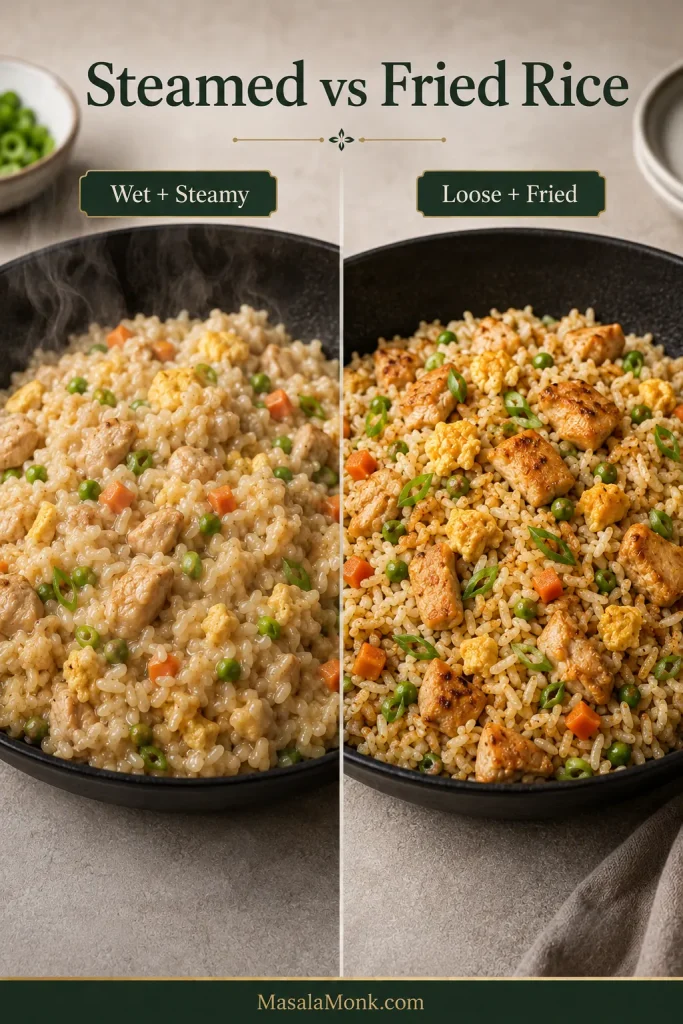
Save it now: Stop adding ingredients or sauce. Spread the rice over as much hot surface as possible. If the pan is badly crowded, remove half and finish the rice in two rounds.
Next time: Use a smaller batch and let released vegetable water cook away before the rice goes in.
Sticky Grains
Why: The rice entered too moist, or wet egg coated the grains before they had a chance to fry.
Save it now: Keep the rice moving over good heat and add no more liquid.
Next time: Cool fresh rice more thoroughly and cook the egg separately.
Water After the Vegetables
Why: Frozen or high-moisture vegetables released water.
Save it now: Keep cooking until the bottom of the pan is dry.
Next time: Wait for that dry-pan cue before adding the rice.
Hard Rice Clumps
Why: Refrigerator-cold rice has compacted into stubborn lumps.
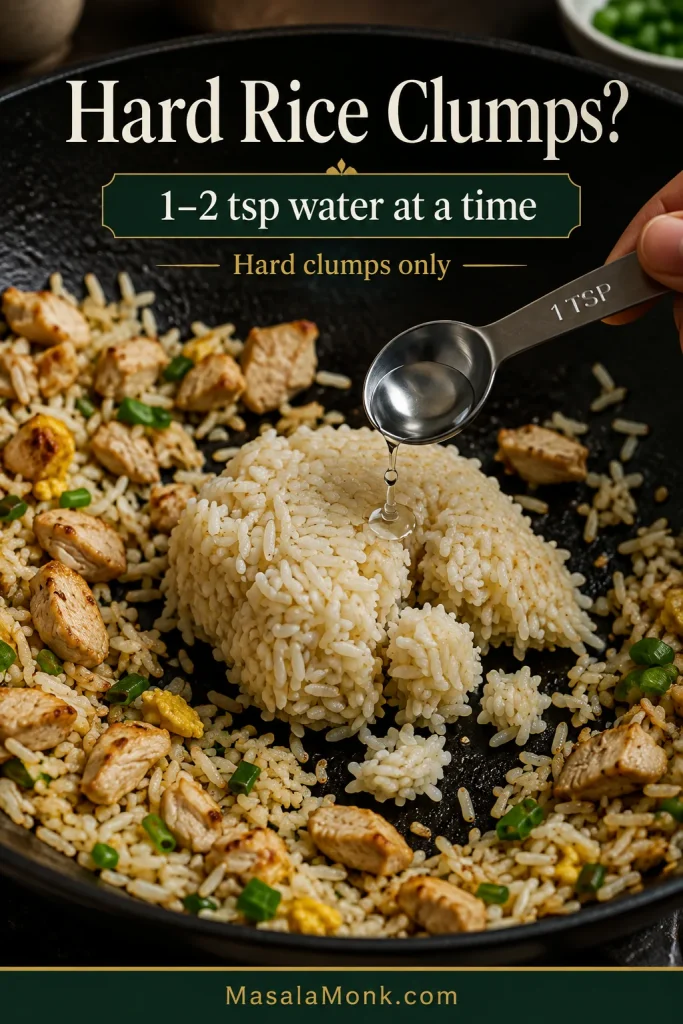
Save it now: Sprinkle 1–2 teaspoons water at a time onto the hard clumps, loosen them, then cook until that moisture has disappeared.
Next time: Break apart the rice before heating the pan.
Grease & Browning Problems
Greasy Rice
Why: Too much oil is sitting on the grains, often because the pan cooled and the rice stopped frying cleanly.
Save it now: Stop adding oil or sauce, spread the rice out and let the pan recover its heat.
Next time: Start with a little less oil if your pan is naturally slick.
No Toasted Edges
Why: The rice has been moved constantly in a skillet.
Save it now: Leave portions against the hot surface for 30–60 seconds before turning.
Next time: Keep the batch shallow enough that plenty of rice can actually touch the hot skillet.
Chicken, Egg & Seasoning Problems
Pale, Watery Chicken
Why: The chicken crowded or cooled the pan.
Save it now: If liquid has collected, remove the chicken temporarily and let the pan become hot again before continuing.
Next time: Spread the chicken into one layer and cook in batches if necessary.
Dry Chicken
Why: It stayed in the pan throughout the whole fried-rice cook.
Save it now: Egg and the finished seasoning may make the bite feel less dry, but overcooked chicken cannot truly be made juicy again.
Next time: Brown it, remove it and return it near the end.
Rubbery Egg
Why: The egg was fully cooked during its first turn and then cooked again.
Save it now: Break it into smaller pieces so it disperses through the rice.
Next time: Remove the egg while the curds are still tender and slightly glossy.
Dark but Bland Rice
Why: Colour arrived before balanced seasoning.
Save it now: Taste for salt, white pepper and savoury depth rather than pouring in more dark soy.
Next time: Season for flavour first; use dark soy mainly when the rice already tastes right and needs more colour.
Too Salty
Why: Strong sauces, salty protein or simply too much seasoning.
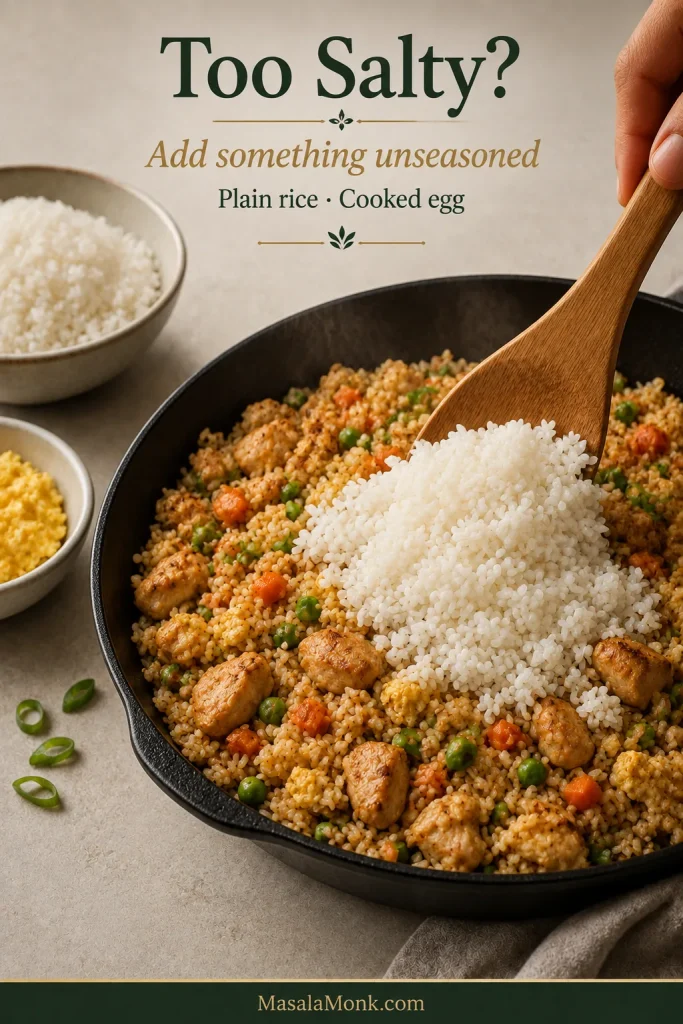
Save it now: Fold in some unseasoned cooked rice or another cooked egg if you have either available.
Next time: Reduce the sauce, especially when the protein is already well seasoned.
Ingredient Substitutions
No egg? Leave it out; the rest of the method stays the same.
No sesame oil? The rice cooks exactly the same way, although you lose some of the toasted sesame aroma at the finish.
No Oyster Sauce?
A vegetarian mushroom oyster-style sauce is the closest easy substitute and is particularly useful when avoiding shellfish.
If you have no oyster-style sauce at all, leave it out and taste the finished rice before deciding whether it needs a little more soy. The flavour will be lighter, but dinner will still be good.
No Shaoxing Wine?
Dry sherry is my first substitute. Cooking sake is also fine.
Mirin is sweeter, so leave out the sugar if necessary. For an alcohol-free version, simply omit the wine rather than replacing it with a large splash of stock.
No Soy Sauce?
Coconut aminos can be used, but they tend to be sweeter and less salty, so adjust by taste.
If gluten rather than soy is the concern, a suitable gluten-free tamari is usually the more direct substitute for regular soy sauce. Check the labels on oyster sauce, bouillon and other bottled seasonings too, since replacing the soy sauce alone does not automatically make every version gluten-free.
If you are avoiding soy entirely, remember that tamari is generally soy-based and some oyster-style sauces and bouillons also contain soy.
How to Double the Recipe
The ingredient list can double. The pan usually cannot.
Prepare twice as much chicken, rice, egg, vegetables and sauce if you need eight main servings, then divide everything into two batches for cooking.
Each batch gets enough hot surface to fry properly, and because the stovetop portion is quick, a second round is easier than fighting one overloaded pan.
What to Serve With Chicken Fried Rice
Chicken fried rice is substantial enough to be dinner on its own.
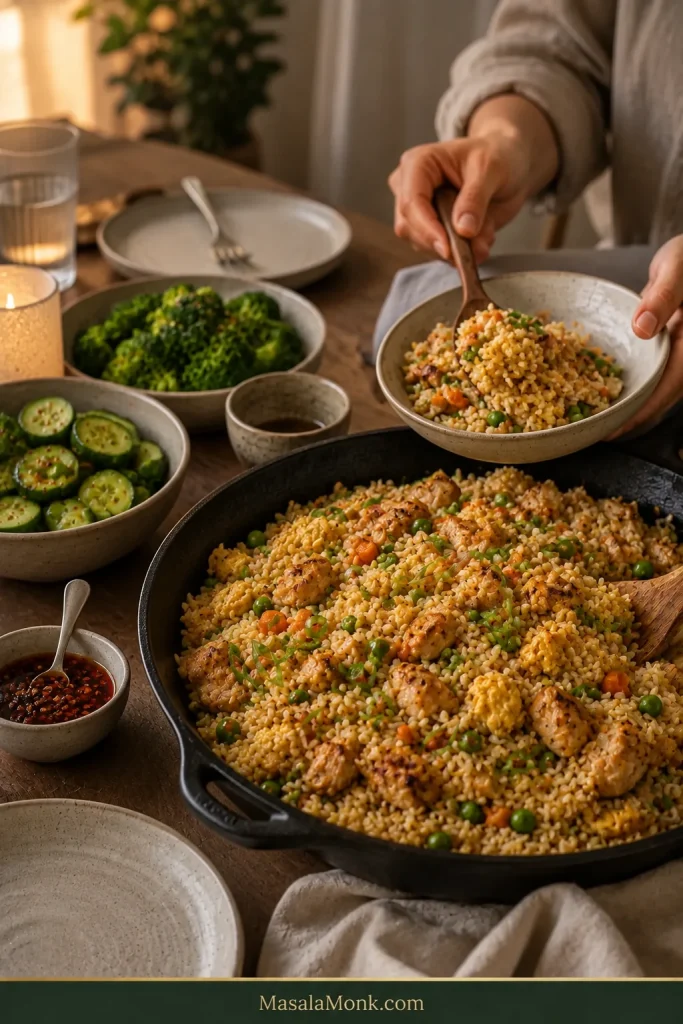
Something crisp and cool works particularly well beside the hot savoury rice. This cucumber salad brings acidity and crunch without creating another major cooking project.
Steamed or stir-fried greens, broccoli, dumplings or a light broth also fit easily.
Keep chilli crisp, chilli oil or sliced fresh chilli at the table if different people want different levels of heat.
Storage, Freezing and Reheating
Chicken fried rice reheats well, so leftovers are worth keeping.
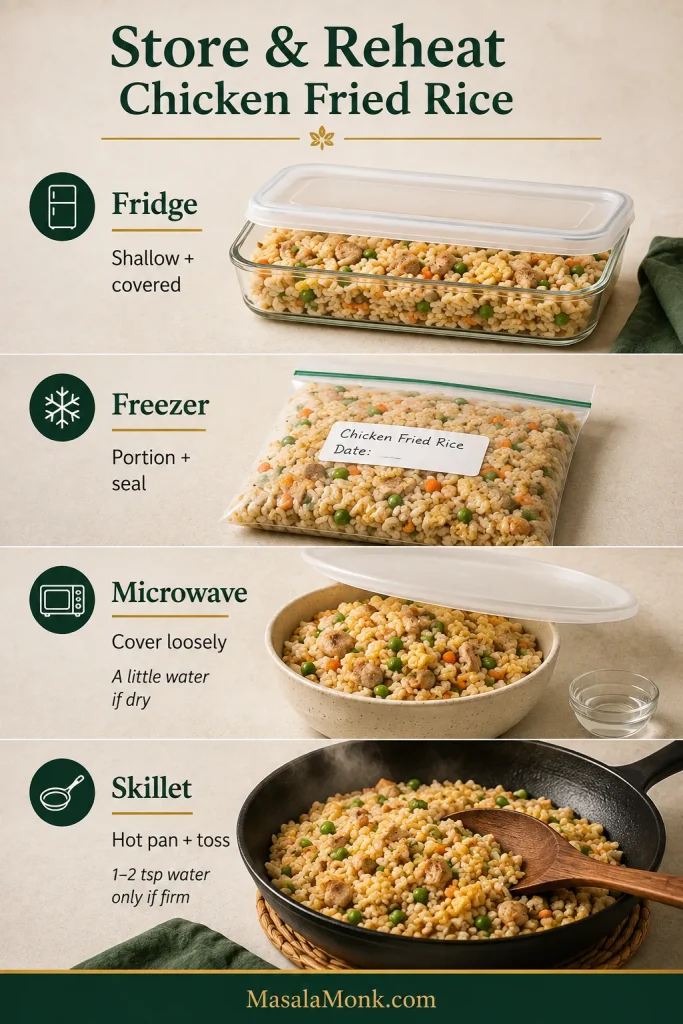
Cool them promptly and transfer them to shallow covered containers. Refrigerate within 2 hours, or within 1 hour above 90°F / 32°C. Properly refrigerated leftovers are generally best used within 3–4 days.
Freezing
Yes, chicken fried rice can be frozen.
Cool it promptly, divide it into meal-size portions and seal well. For best quality, use frozen leftovers within about 3–4 months.
You can thaw a portion overnight in the refrigerator, but you do not have to: frozen leftovers can be reheated from frozen, although they will take longer.
Reheating in the Microwave
Sprinkle over a little water if the rice seems dry and cover loosely.
Heat until steaming hot throughout, stirring once or twice so the chicken and rice warm evenly. Leftovers should reach 165°F / 74°C when reheated.
Reheating in a Skillet
Heat a small amount of oil over medium-high heat.
Add the fried rice and toss until hot. Very firm refrigerated grains can be loosened with 1–2 teaspoons water; let that moisture cook away before serving.
Reheat leftovers to 165°F / 74°C.
For the full safety guidance, see the USDA guidance on leftovers and reheating.
When It Comes Together
There is a point near the end when the pan stops looking like a collection of leftovers.
The grains move freely. The chicken has browned edges. Soft pieces of egg sit between the rice instead of disappearing into it. Then the scallion greens hit the heat and the whole kitchen suddenly smells like dinner.
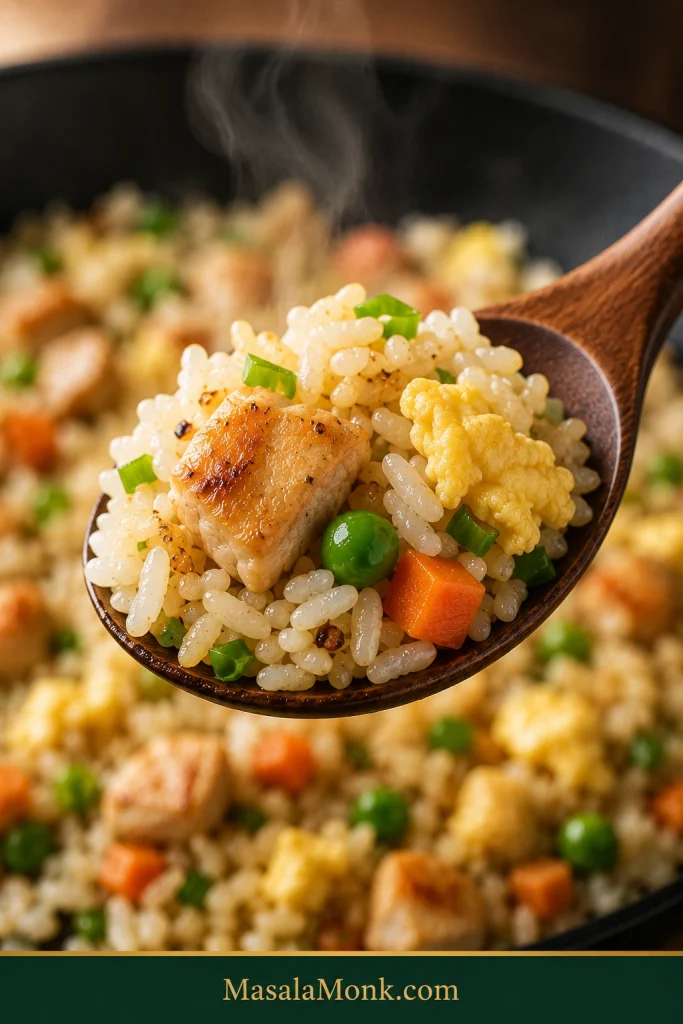
Spoon it out while it is hot.
And if you make it, tell us what you used—jasmine, basmati or another rice, and wok or skillet. Those details are especially useful for the next person standing at the stove wondering whether what they have will work.








