
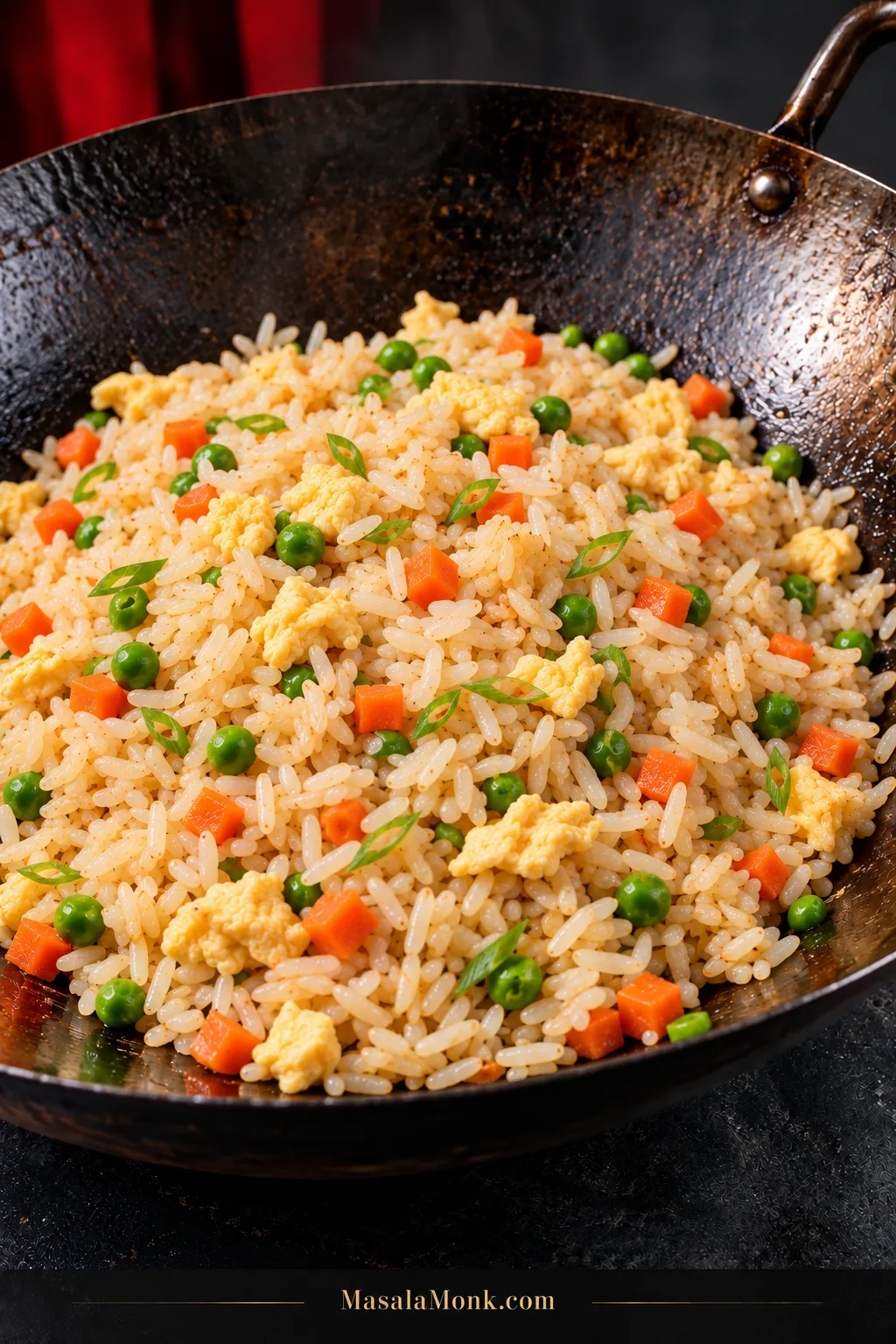
This fried rice recipe gives you hot, separate grains, tender egg, crisp-tender vegetables and savory takeout-style flavor. With cooked rice ready to go, dinner can be on the table in about 20 minutes.
Leftover rice is convenient, but it isn’t a requirement. Freshly cooked rice can work too once its steam has somewhere to escape. That’s part of the appeal of fried rice: a few ordinary ingredients from the refrigerator can stop feeling like leftovers at all.
The result we’re aiming for is familiar Chinese-American takeout-style fried rice: loose grains, lightly toasted edges, fresh scallion and deeply savory flavor with just enough sauce to coat everything lightly. Here, the seasoning supports the rice, egg and vegetables without stealing the whole bite.
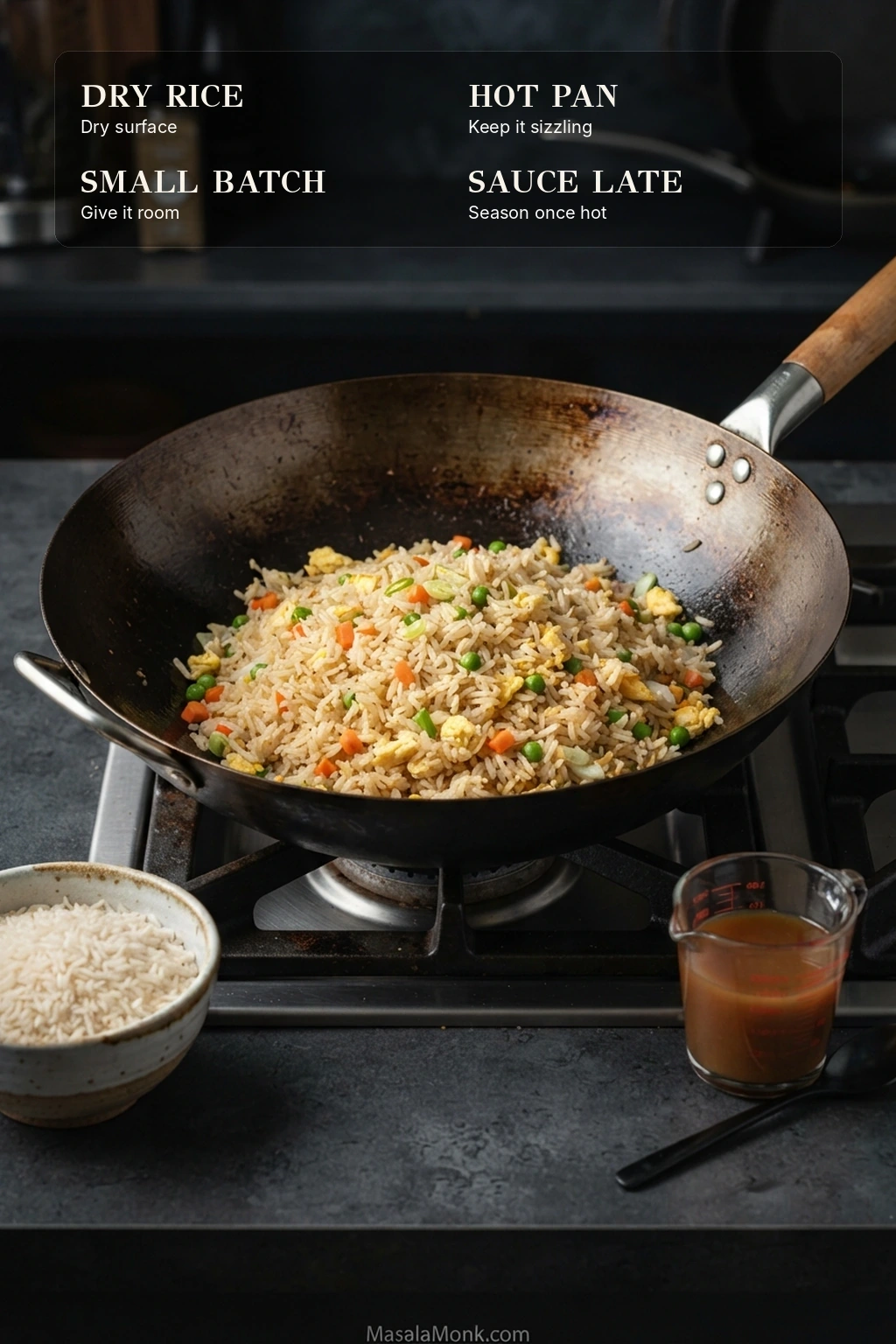
Dry Rice. Hot Pan. Small Batch. Sauce Late.
Dry rice: start with firm grains that separate instead of squashing together.
Hot pan: the rice should still sizzle when it lands.
Small batch: once that sizzle disappears under a cloud of steam, the pan is carrying too much food.
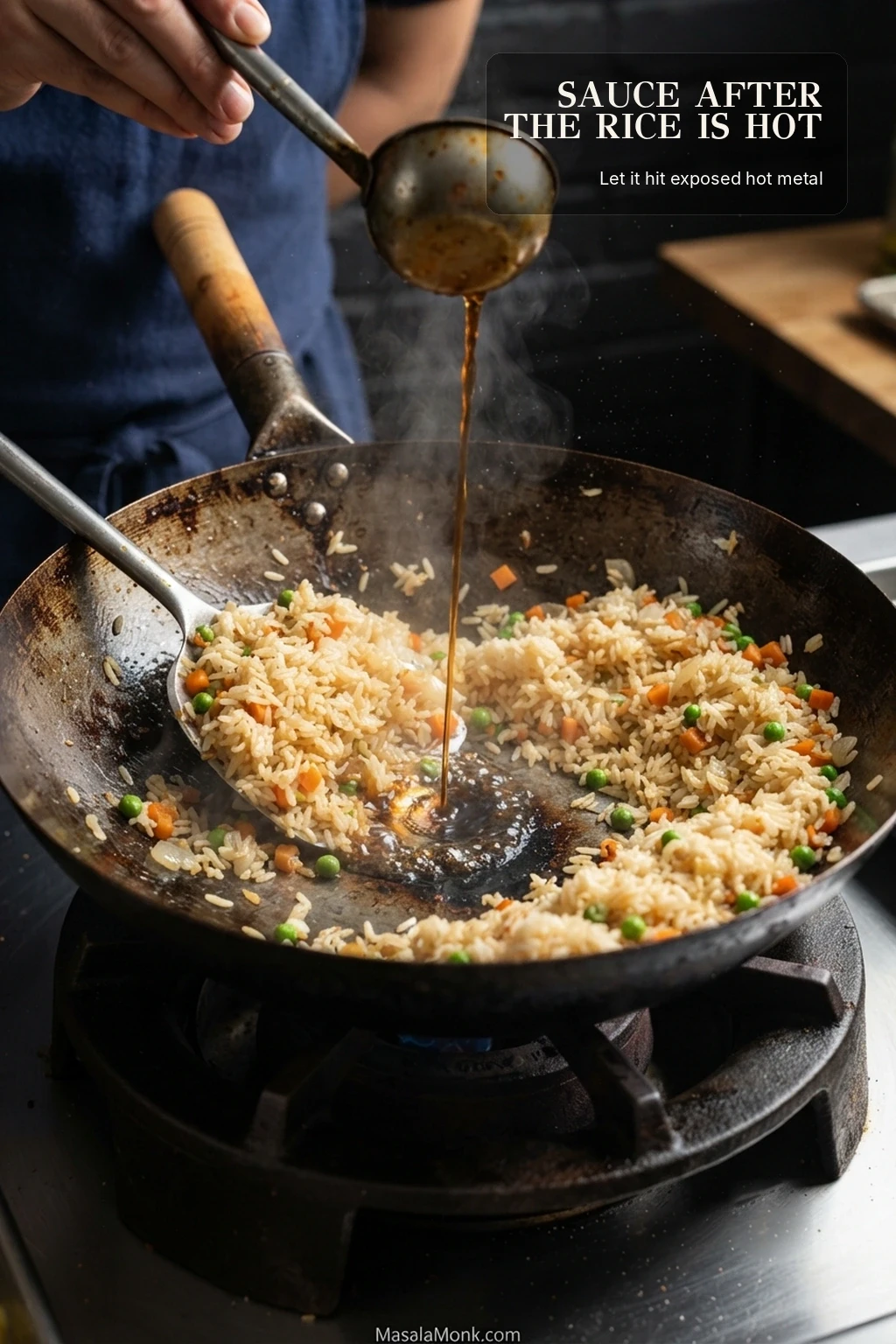
Sauce late: season only after the rice is hot, so the liquid can hiss, reduce and coat the grains quickly.
Fried Rice Recipe
This method works in either a wok or a large skillet. The seasoning is measured for a savory finish that coats the grains lightly.
*The 20-minute total assumes the cooked rice is already prepared.
Fried Rice Ingredients
- 3 cups cooked jasmine or long-grain white rice, measured without packing, about 475 g, firm and surface-dry
- 2 large eggs, lightly beaten
- 2½ tablespoons (about 37 ml) neutral high-heat oil, such as canola, avocado, grapeseed or vegetable oil, divided
- ½ medium yellow onion, finely diced, about 60 g
- 1 small-to-medium carrot, cut into roughly ¼-inch (6 mm) dice, about ½ cup (65 g)
- ½ cup frozen peas, about 70 g
- 2 garlic cloves, finely minced
- 3 scallions, thinly sliced, white and green parts separated
For the Seasoning
- 1 tablespoon + 1 teaspoon (20 ml) Chinese light soy sauce or all-purpose soy sauce
- 2 teaspoons (10 ml) oyster sauce
- 2 teaspoons (10 ml) Shaoxing wine
- ¼ teaspoon ground white pepper
- ¼ teaspoon MSG, optional
- Up to ¼ teaspoon dark soy sauce, optional, for deeper color
- ½ teaspoon (2.5 ml) toasted sesame oil, for finishing
- Fine salt, only if needed after tasting
How to Make Fried Rice
- Get everything ready first. Break the cooked rice into loose grains with your fingers or a fork. Mix the light soy sauce, oyster sauce, Shaoxing wine, white pepper, optional MSG and optional dark soy in a small bowl. Keep the toasted sesame oil separate for the finish.
- Soft-scramble the eggs. Heat a large wok or 12-inch skillet over medium-high to high heat, as hot as your cookware safely allows. If you are using nonstick, follow the manufacturer’s heat guidance and don’t heat the pan to smoking. Add about 1 teaspoon oil, pour in the eggs and stir for 30–45 seconds, just until softly set. Transfer them to a plate before they turn dry.
- Cook the vegetables in stages. Pour in about 1 tablespoon oil, followed by the onion and carrot. Stir-fry for around 2 minutes, until the onion begins to soften and the carrot loses its raw edge. Cook the peas until hot and any released water has evaporated. Finish with garlic and scallion whites, stirring for 15–20 seconds until fragrant.
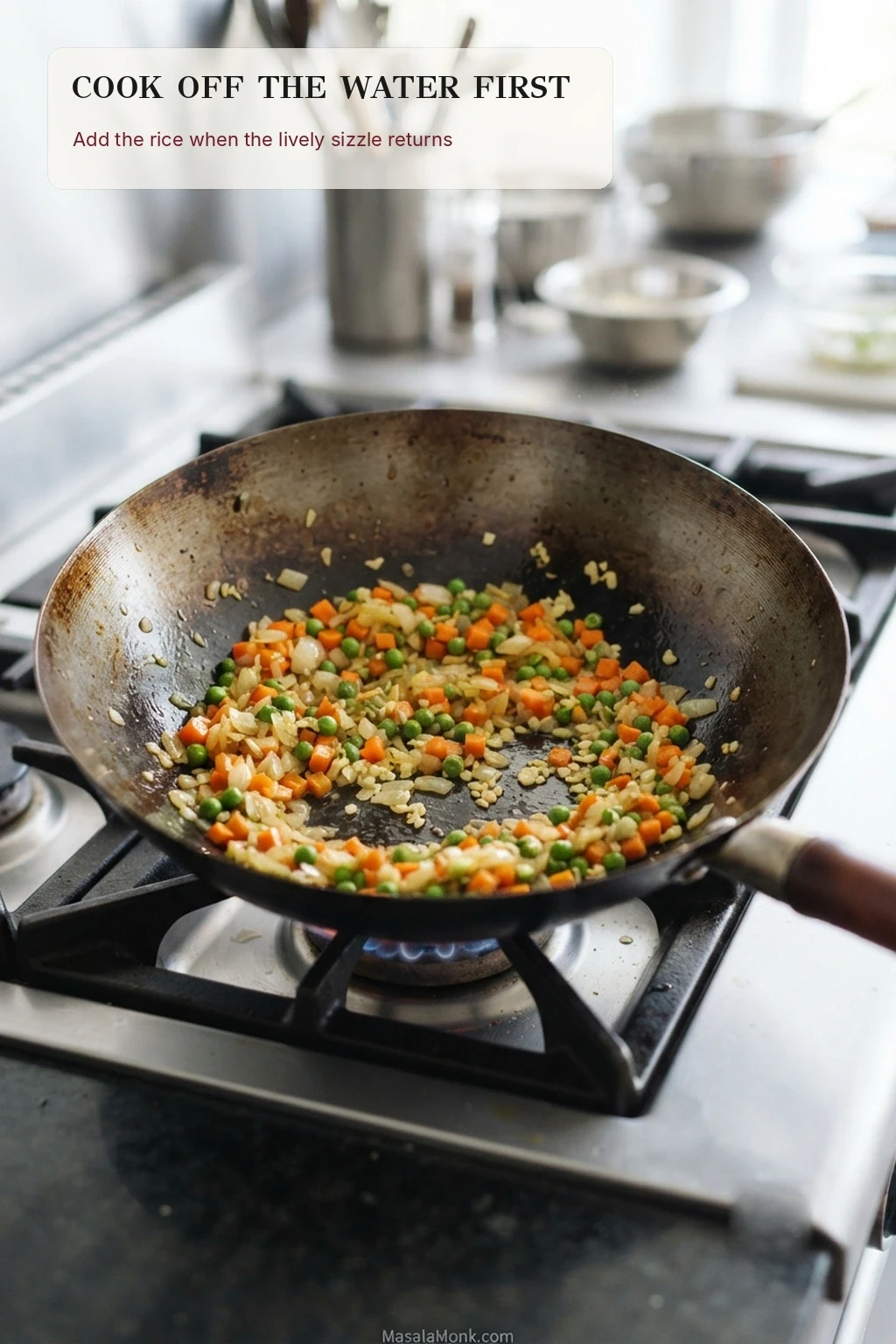
- Add the rice right away. Pour in the remaining oil, then add the rice before the garlic has time to darken. Toss, spread the grains over the hot surface and give them brief 15–30 second stretches of contact before tossing again. Fry for about 2–4 minutes, until the rice is hot, loose and beginning to crackle faintly. A pan that turns quiet and steamy is overloaded; split the batch.
- Season the hot rice. Clear a small area of the pan, or use the hot perimeter of a wok. Pour the seasoning mixture onto the exposed hot pan surface so it hisses almost immediately, then toss it through the rice. Cook for another 30–60 seconds, until the seasoning has coated the grains and no liquid is pooling underneath.
- Bring it together. Return the egg to the pan and break it into bite-size pieces as you toss. Add the scallion greens and cook for about 30 seconds. Take the pan off the heat, stir in the toasted sesame oil and taste. Add salt or a very small splash of extra soy only if the rice needs it.
When It’s Ready
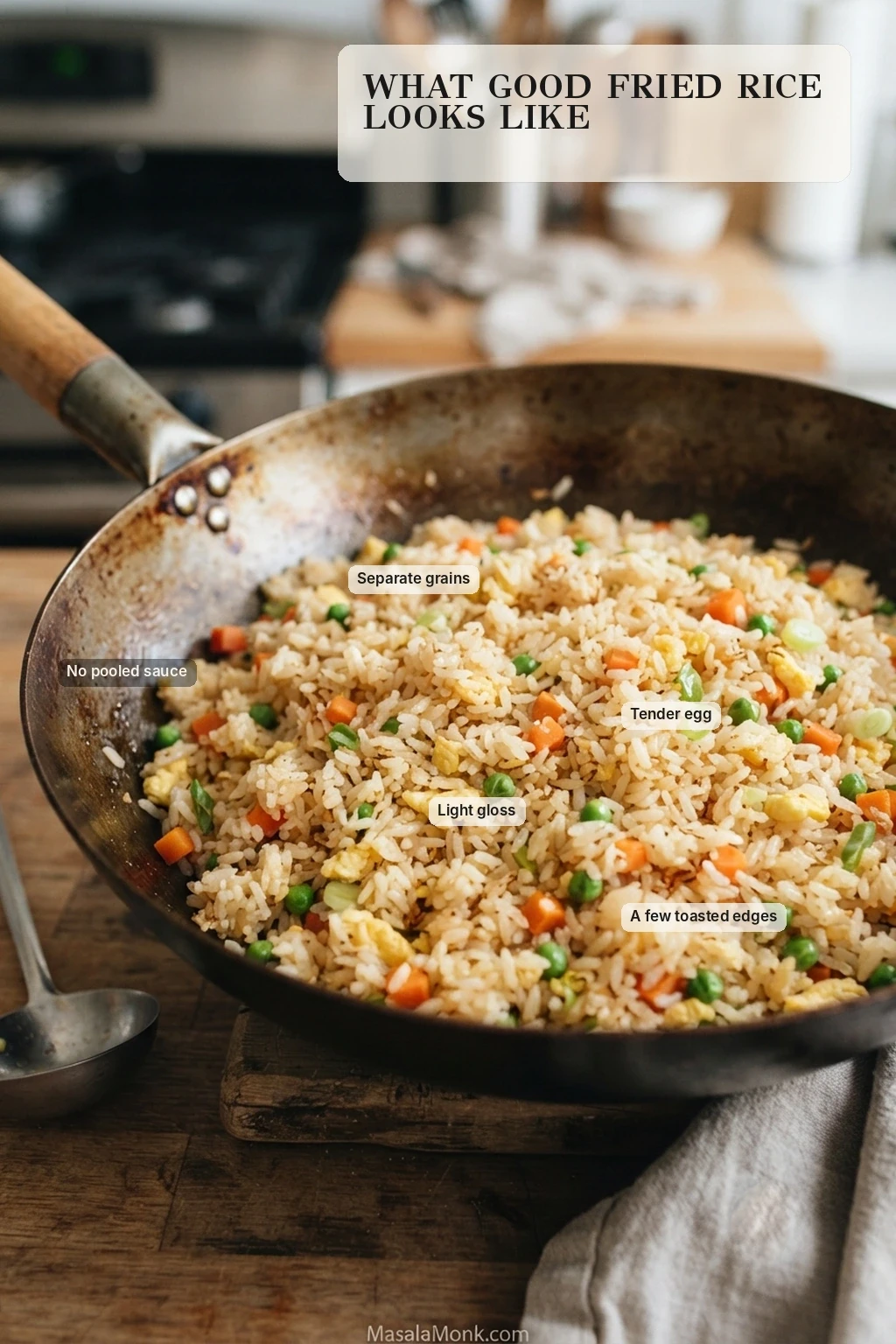
The grains should be hot and distinct, with a light gloss and no wet sheen. The vegetables should still have some texture, the egg should remain tender, and no sauce should pool underneath. A few lightly toasted edges are welcome; uniform dark browning is unnecessary.
The Ideal Bite
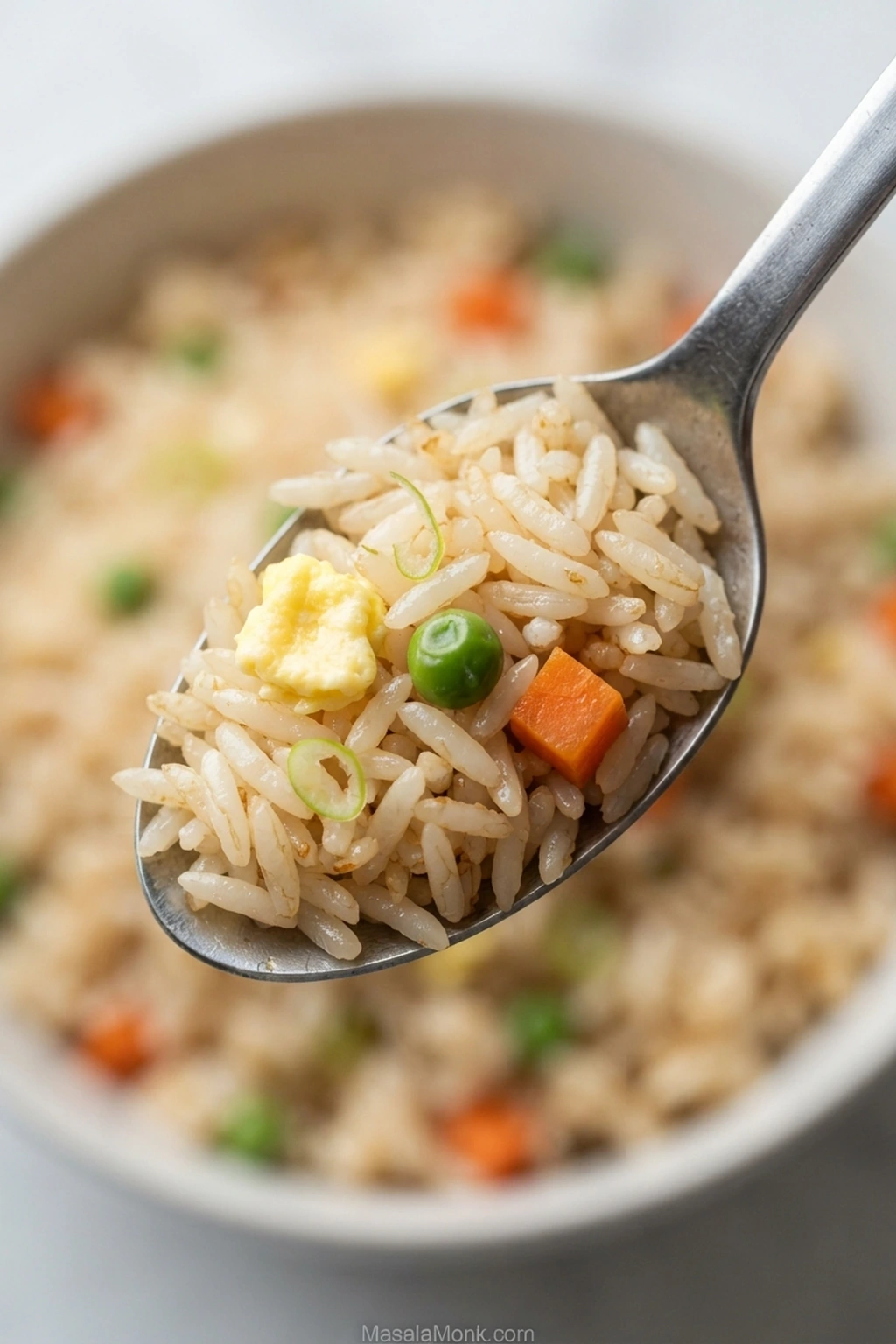
The best bite should give you a little of everything at once: savory rice, soft egg, a sweet pea or bit of carrot, fresh scallion and now and then a toasted edge from the pan.
Quick Recipe Notes
- No day-old rice? The same-day method below works well.
- Rock-hard refrigerator rice? Warm it very briefly—only enough to loosen the clumps—then let visible steam escape before frying.
- Prefer more egg? Use 3 large eggs instead of 2.
Starting with fresh rice, choosing soy sauce, or trying to rescue a soggy batch? The guide below tackles those problems directly.
Fried Rice Guide
Best Rice for Fried Rice
For this recipe, jasmine or another long-grain white rice is the easiest choice: the grains separate readily and hold their shape through tossing. Short-grain rice gives a softer, chewier result. Starting from uncooked rice? Our guide to cooking rice goes deeper into jasmine, long-grain and other common methods.
The grains should be firm enough to hold their shape and dry enough on the surface to fry. Cooking rice today? Follow the same-day cooling method before it reaches the pan.
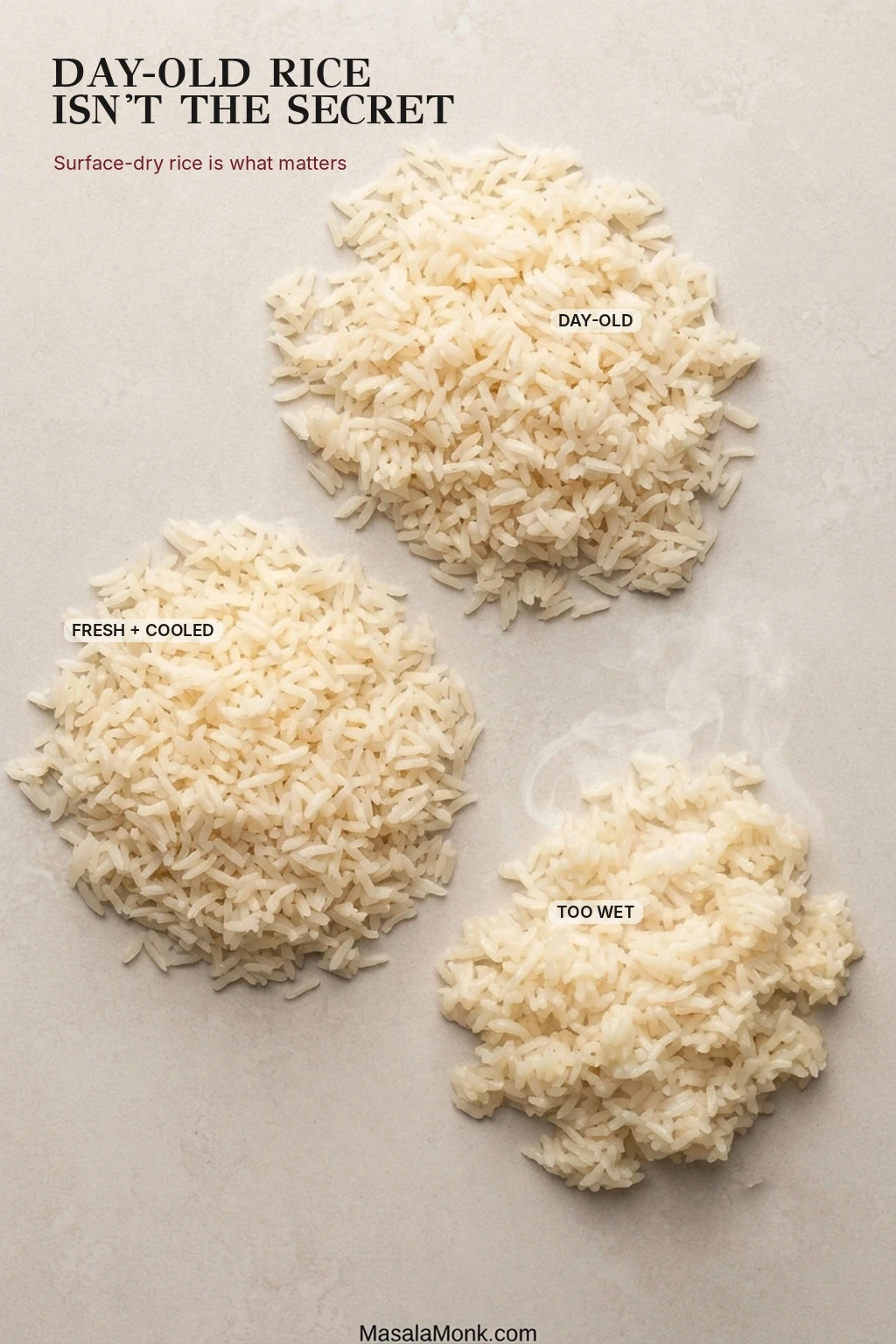
Why Day-Old Rice Helps
Refrigeration usually makes cooked rice firmer and drier on the surface. Rice that was cooked very soft or with too much water may still turn mushy; chilling cannot undo that.
Cold Rice Can Be Too Cold
Refrigerated rice sometimes hardens into a compact block. Break it apart while you prepare the vegetables. When stubborn clumps refuse to loosen, a brief gentle warming can help; stop as soon as the grains separate and let any new steam escape before the rice reaches the pan.
No Leftovers? Make Fried Rice with Fresh Rice Tonight
You do not need to decide yesterday that you want fried rice today. Fresh rice works as long as it gets a chance to shed its steam.
Starting with uncooked rice adds cooking and cooling time. The 20-minute recipe clock assumes your cooked rice is ready.
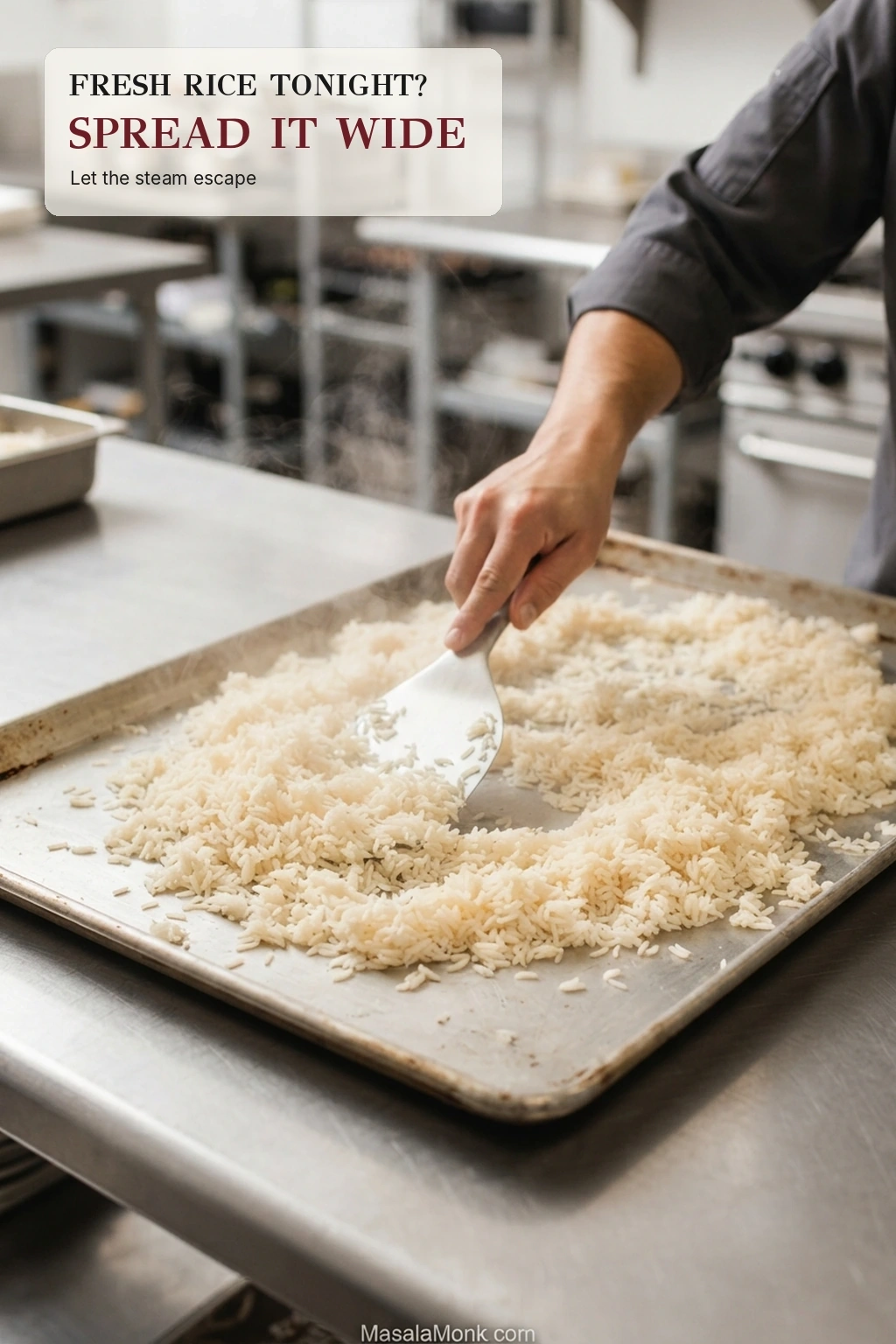
Spread Fresh Rice to Cool It Evenly
- Rinse and drain well. For jasmine or long-grain rice that is meant to be rinsed, wash away loose surface starch and drain thoroughly. If the package specifically says not to rinse, follow those directions.
- Aim for firm, fully cooked rice. Start with the method that normally works for your rice and cooker. If your usual ratio consistently gives you very soft rice, use a little less water next time.
- Fluff immediately. Open up the grains so trapped steam can escape.
- Spread the rice out. A wide tray, sheet pan or large plate releases steam much faster than a deep bowl.
- Look at the rice, not only the clock. It is ready for frying when visible steam has stopped, the surface no longer feels wet or tacky, and the grains loosen without smearing. This often takes around 10–15 minutes. If the rice is still warm and soft, give it a short chill in the refrigerator.
Different rice and different cookers need different amounts of water, so your usual successful method is the best place to start.
Don’t dry cooked rice on the counter overnight. Cool it efficiently and refrigerate it promptly when you are not using it soon. The USDA advises refrigerating perishable leftovers within 2 hours, or within 1 hour when the surrounding temperature is above 90°F / 32°C.
Your Pan Has a Capacity
You do not need a wok to make good fried rice. What matters is enough cooking surface and enough heat to keep the rice sizzling after it goes in.
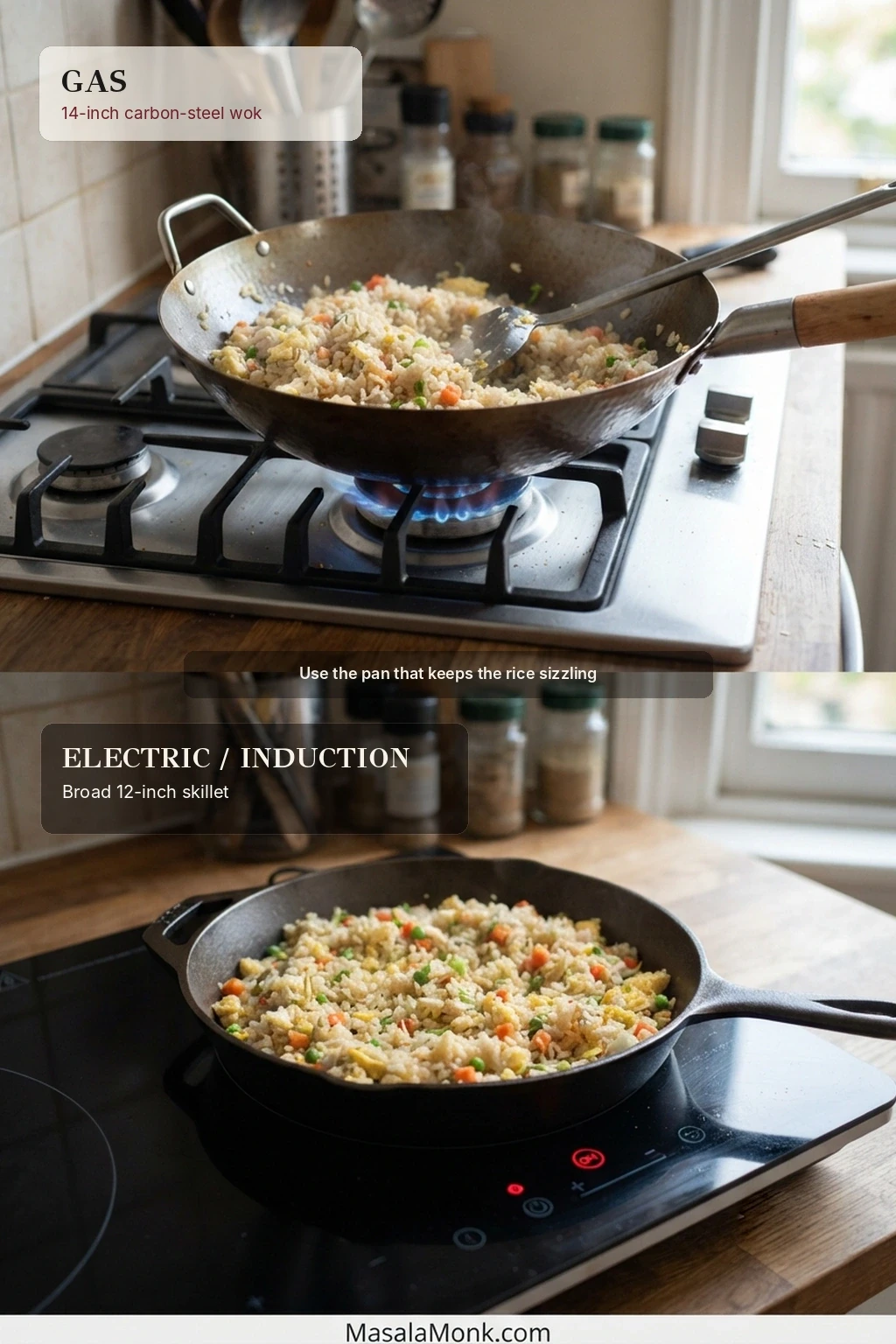
Wok or Skillet?
On gas, a 14-inch carbon-steel wok is ideal. With electric or induction, a broad 12-inch skillet is often easier to manage.
Listen When the Rice Hits the Pan
The pan should still sound alive after the rice goes in. Strong sizzling that suddenly becomes quiet bubbling and visible steam tells you the temperature has crashed.
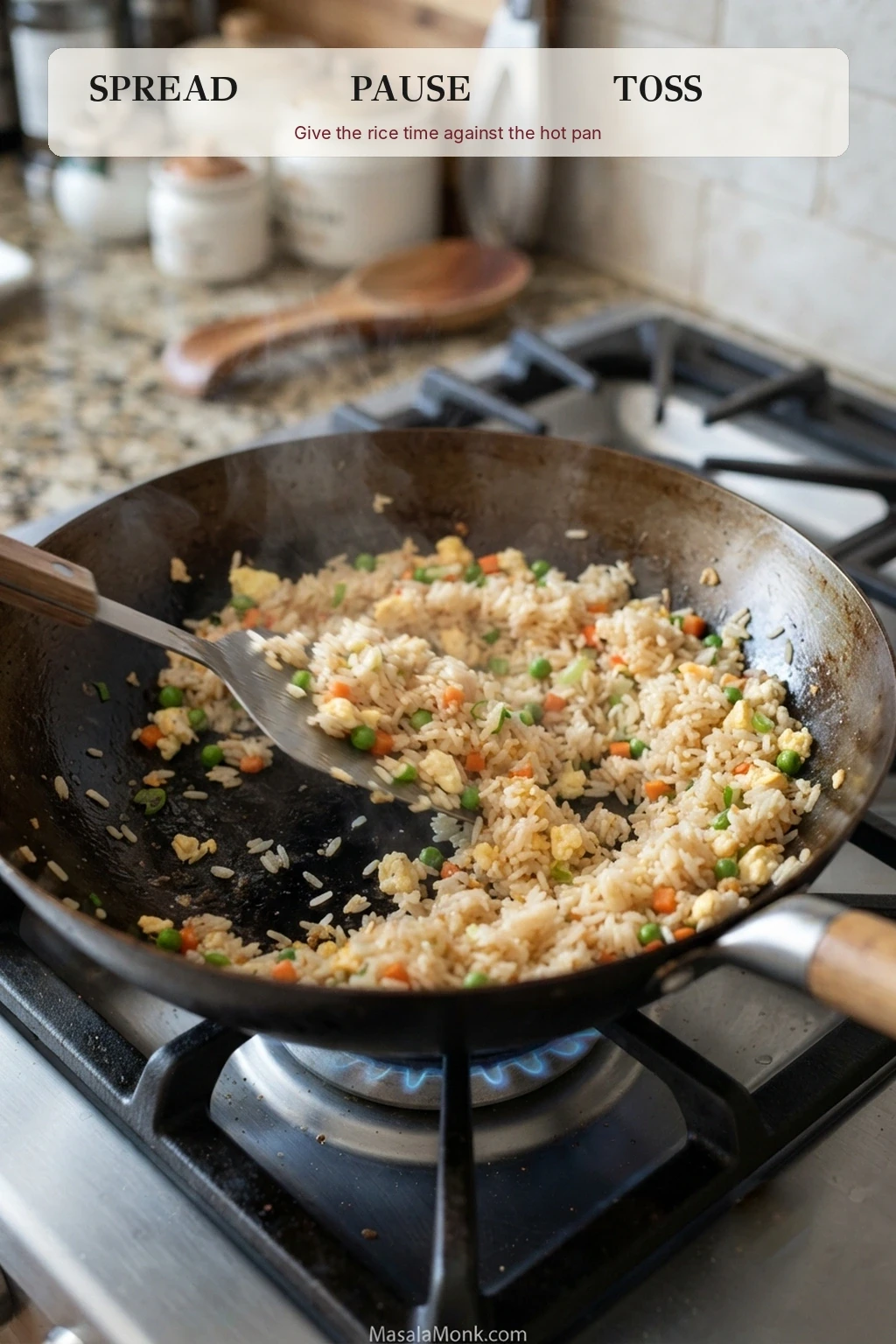
That is a batch-size problem before it is an oil problem.
On an ordinary home burner, spread the rice out and give it short periods of contact with the pan. Powerful wok heat needs quicker, more frequent movement. Let the stove dictate the rhythm.
Ingredient quantities scale. Cooking surface does not. A double recipe will usually fry better in two rounds than in one overloaded pan.
A Note on Nonstick
Nonstick cookware can make good fried rice. Keep it within the manufacturer’s heat guidance and rely on dry rice, enough surface area and a manageable batch instead of extreme heat. If the pan goes quiet and the rice turns steamy, the troubleshooting guide helps distinguish crowding from excess moisture.
Fried Rice Sauce: How Much and When to Add It
Wait until the rice is hot before adding the liquid seasoning. Pour it onto an exposed hot pan surface so it hisses, reduces quickly and coats the grains.
The sauce should season the rice without turning it into saucy rice.
| Seasoning | What it brings |
|---|---|
| Light or all-purpose soy sauce | Salt and a savory fermented flavor. This is the main liquid seasoning, so it is easy to overdo. |
| Oyster sauce | Rounded savory sweetness and a little body. |
| Shaoxing wine | Fragrant fermented aroma that blooms when it hits the hot pan. |
| White pepper | Warm, earthy pepper heat. |
| Toasted sesame oil | Toasted finishing aroma. A little goes a long way. |
| Dark soy sauce | Deeper color with a mild sweetness. |
| MSG | Extra umami without adding more liquid. |
Which Soy Sauce Is Best for Fried Rice?
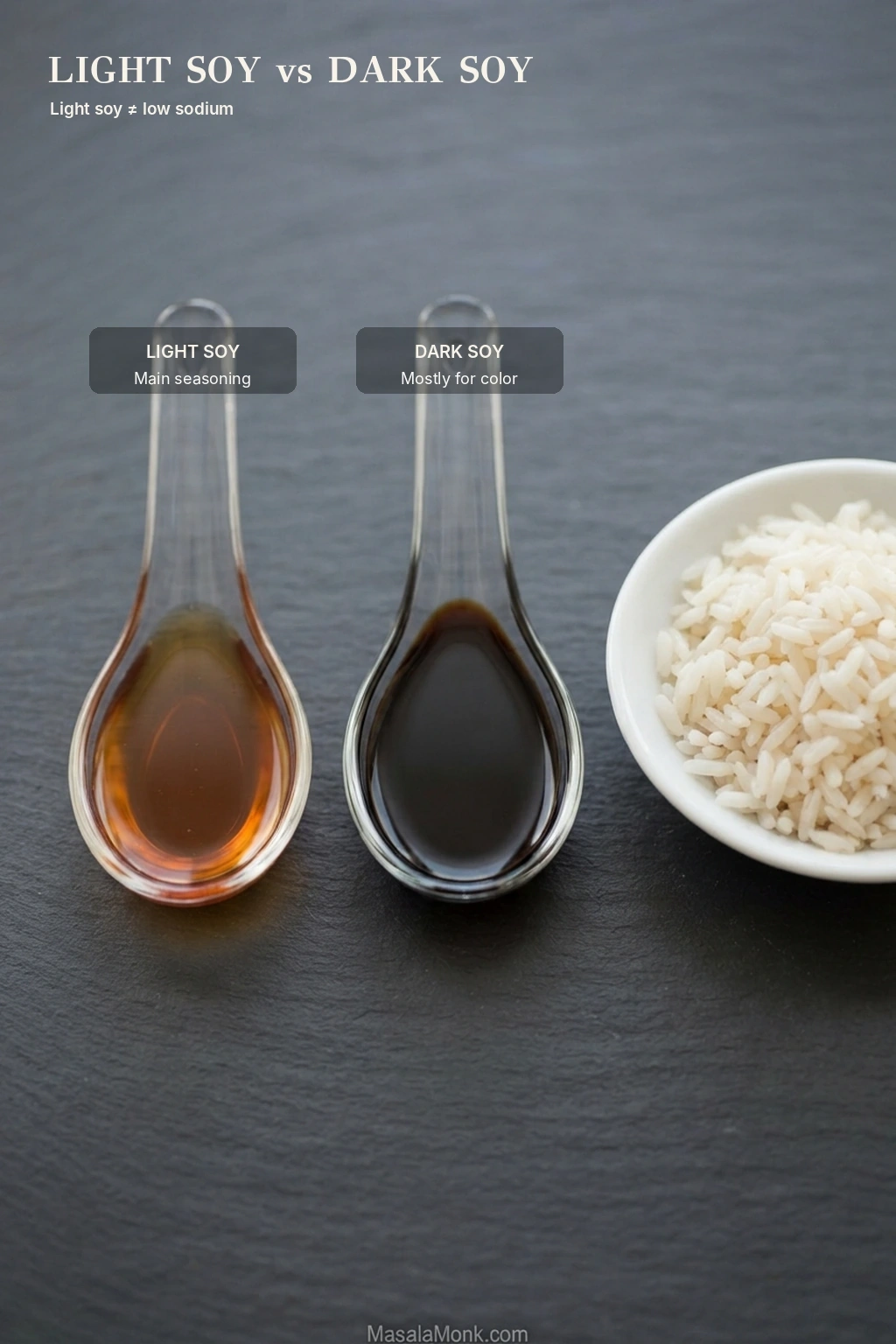
Use Chinese light soy sauce or a regular all-purpose soy sauce as the main seasoning. Dark soy is optional and is used mainly for color.
In this context, light soy sauce does not mean low-sodium soy sauce; it is the thinner everyday Chinese seasoning soy. Reduced-sodium soy is fine if that is what you use at home, though you may want to adjust after tasting.
Brands vary in saltiness, especially soy sauce, oyster sauce and Shaoxing cooking wine. Taste first. Extra salt can wait.
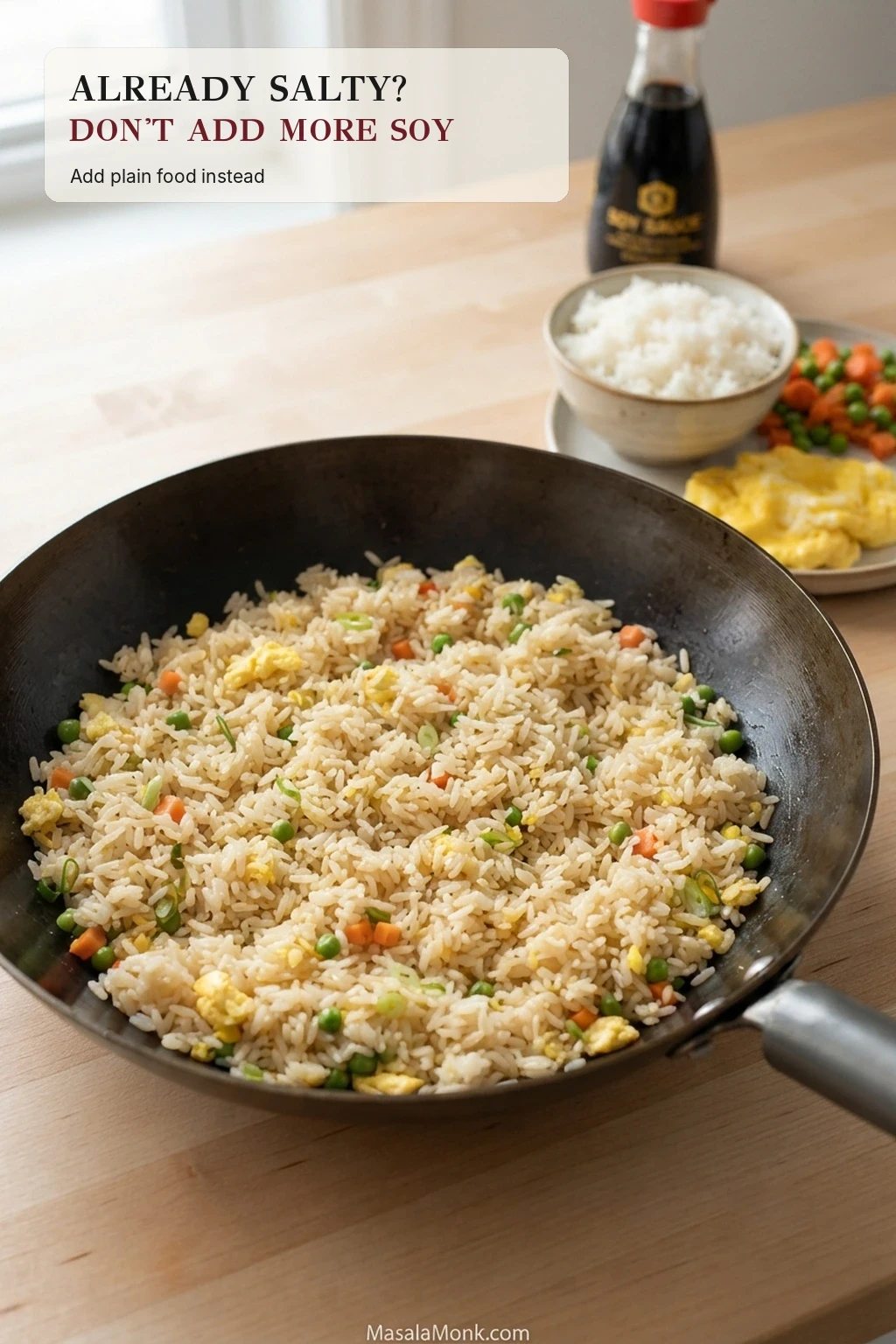
Bland but Already Salty?
If the rice is already salty but still tastes flat, don’t reach for more soy. Build aroma instead with scallion and garlic, white pepper, Shaoxing wine, toasted sesame oil or a small pinch of MSG, if using.
A little extra contact with the hot pan can help too. That familiar flavor comes from several small things working together. There usually isn’t one secret bottle hiding behind it. If the batch is actually too salty, use the dilution fix below instead.
Troubleshooting Fried Rice
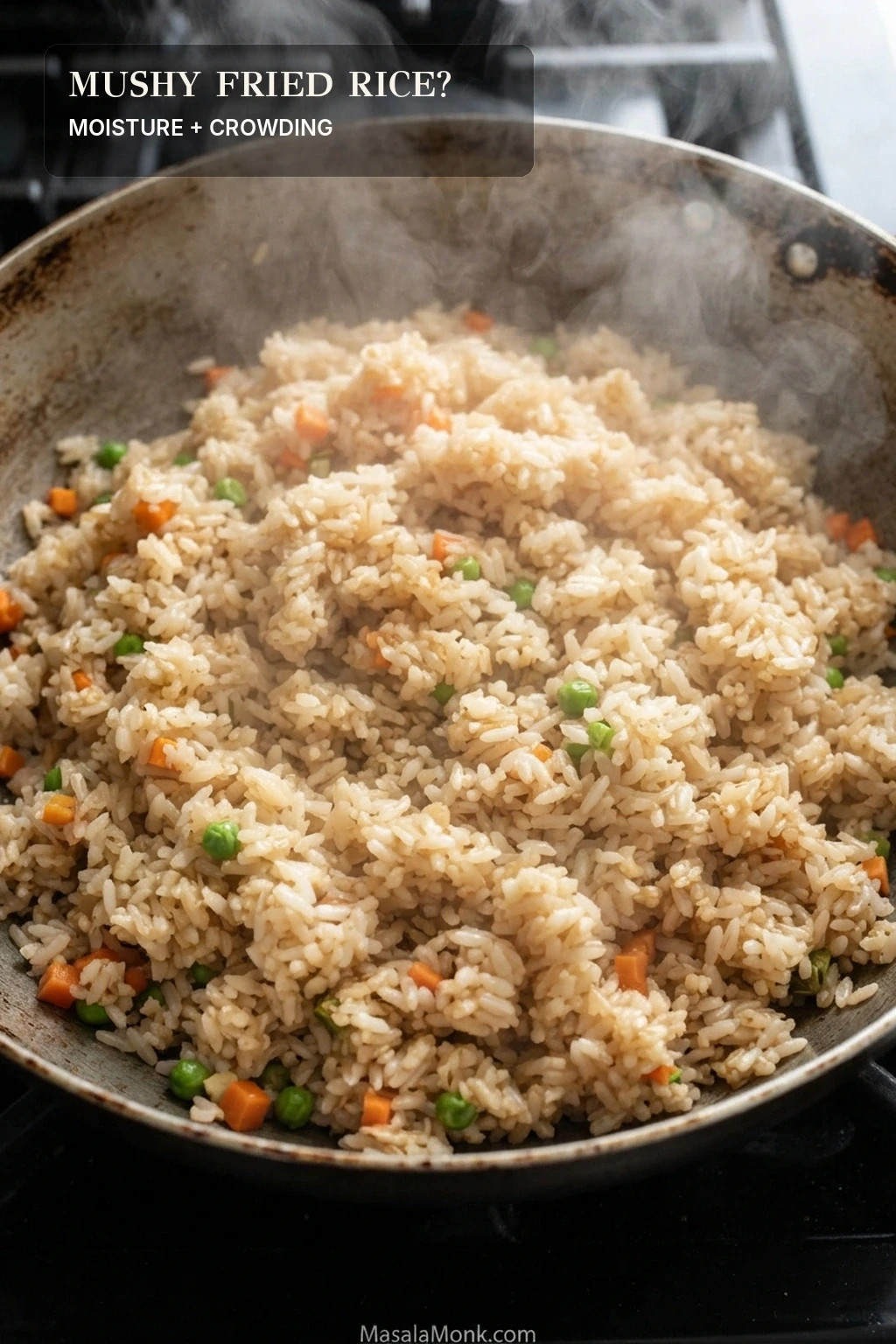
Mushy rice, rice stuck to the pan and hard, chewy rice may all feel like “bad fried rice,” but they are different problems. Usually, the trouble comes down to too much moisture, too little heat for the amount of food in the pan, or seasoning that’s out of balance.
Mushy Fried Rice: Moisture and Crowding
Match the Symptom to the Cause
Moisture, Heat and Sticking
| What you see | What it usually means—and what to do |
|---|---|
| Soft, mushy fried rice | The rice started too wet, the pan was crowded, the vegetables released too much water or too much sauce went in. Spread a slightly wet batch across the hot surface and let moisture escape. Skip any additional sauce. |
| Day-old rice that still turns mushy | The original rice was probably cooked too soft. Refrigeration firms rice, but it cannot fully undo rice that was cooked with too much water. Start with firmer rice next time. |
| The pan stops sizzling | There was too much food in the pan for the burner to keep up. Reduce the batch and give the pan time to recover. |
| Rice sticks immediately | Check moisture, preheating, oil and batch size before blaming the cookware. Wet rice in a crowded pan can stick even to well-maintained carbon steel. |
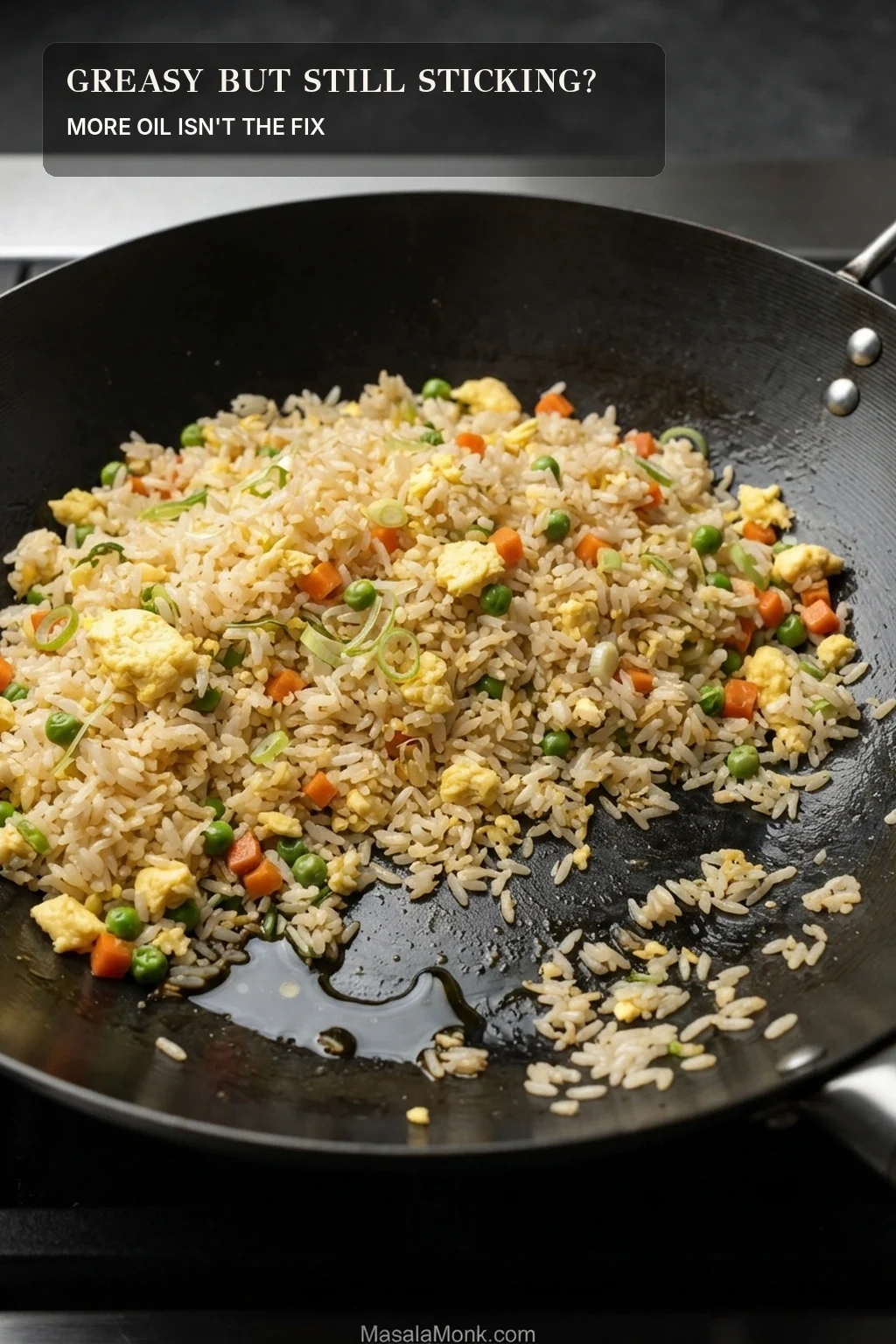
| Greasy rice that still sticks | More oil is masking another problem. Restore the heat, reduce the batch and check how wet the rice is. |
| Hard or chewy rice | The grains may be over-dried or fried too long. A teaspoon or two of hot water can soften rice that has become too dry; toss until the water disappears before adding any more. |
Seasoning and Other Cooking Problems
| What you see | What it usually means—and what to do |
|---|---|
| Rice tastes mostly of soy sauce | One ingredient is doing too much of the work. Next time use less soy and build flavor with aromatics, white pepper, Shaoxing, toasted sesame oil, MSG if using, and better frying. |
| Rice turns wet as soon as sauce is added | The rice was not hot enough, too much sauce went in or the liquid landed on one cool pile. Season only once the rice is fully hot. |
| Vegetables make the rice watery | The vegetables released more water than the pan could evaporate. Next time, keep cooking until the moisture is gone and the pan is sizzling again before adding the rice. |
| Egg turns rubbery | It stayed in the pan too long. Soft-set it first, remove it and return it near the end. |
| A double batch suddenly fails | Doubling the ingredients doesn’t double your pan or burner. Fry the rice in two rounds. |
Too Salty? Dilute, Don’t Add More Sauce
If the fried rice is genuinely too salty, add plain rice, unseasoned egg or unsalted vegetables if you have them. Toss, taste and repeat in small amounts. Vinegar or another strong sauce may change the flavor, but it cannot remove the salt already in the pan.
Greasy but Still Sticking?
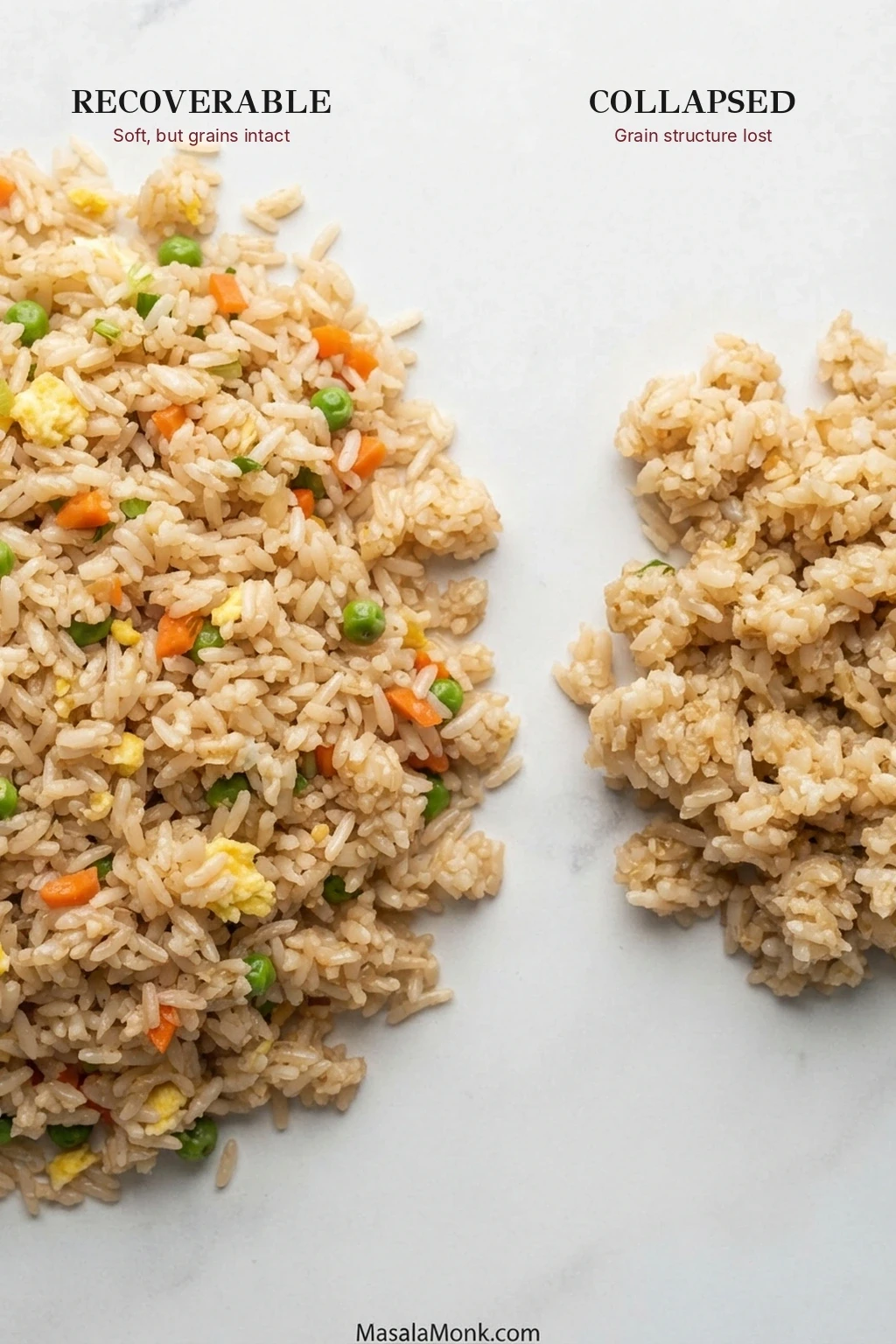
Can Soft Fried Rice Be Recovered?
What heat can’t fix: once severely overcooked grains have collapsed into a soft mass, more heat can evaporate some water, but it cannot rebuild their structure.
Adding Chicken, Shrimp, Vegetables and Other Extras
Keep the extras moderate so the rice still gets plenty of contact with the hot pan.
Chicken, Pork or Shrimp
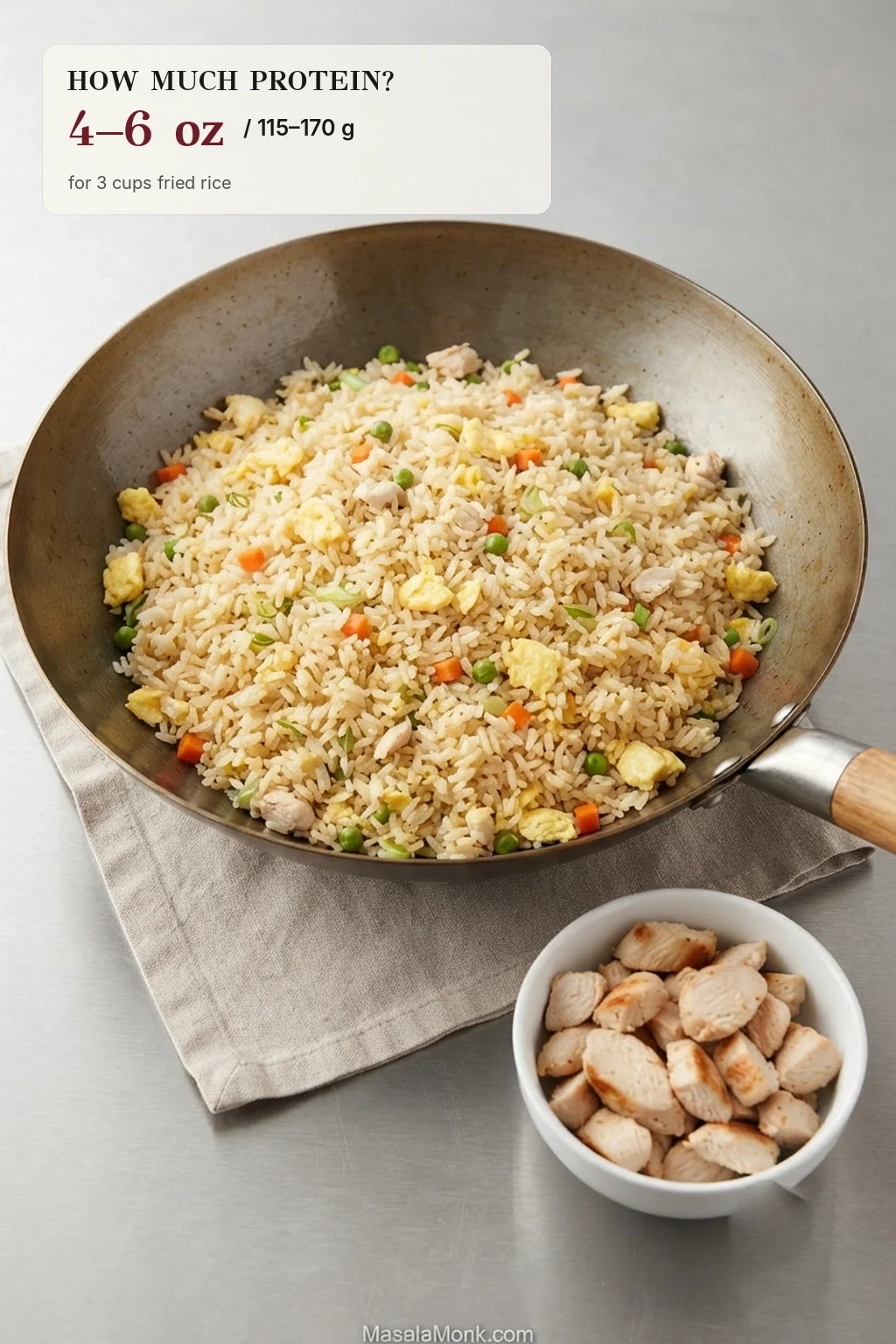
For an add-in, about 4–6 oz (115–170 g) cooked chicken, pork or shrimp is a comfortable amount for this three-cup batch. Cut it into small pieces and return it near the end, just long enough to heat through. If you are starting with raw protein, cook it through separately first, remove it from the pan, then return it after the rice is seasoned.
Making chicken the main event? Our Chicken Fried Rice Recipe handles the chicken and rice timing as one complete recipe.
Planning on shrimp? Our Shrimp Fried Rice Recipe cooks the shrimp separately so it stays tender while the rice still gets the hot pan space it needs.
For a saltier, richer variation, Spam Fried Rice starts by browning the Spam so its crisp edges survive once the egg and rice enter the pan.
More Vegetables
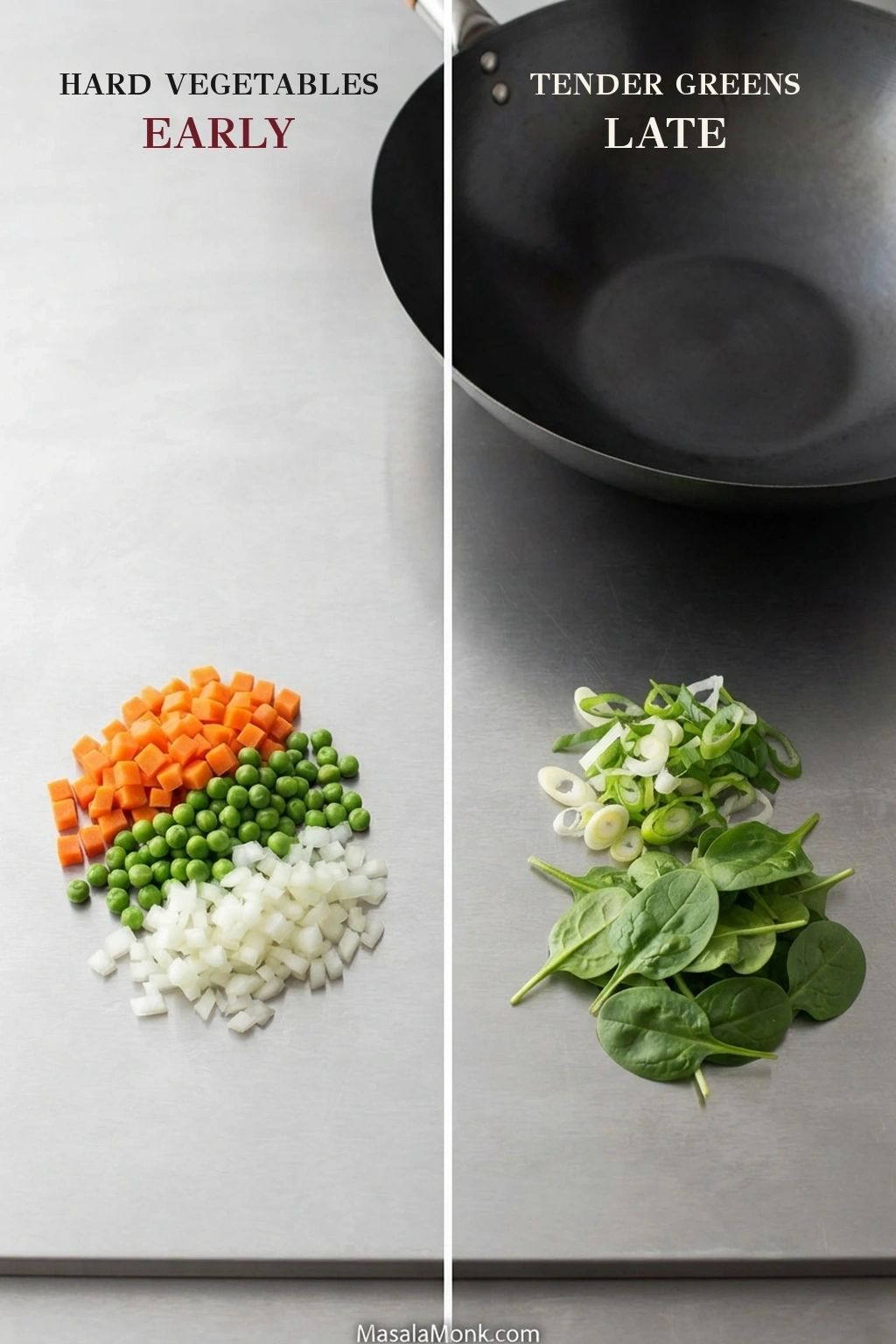
Firm vegetables such as carrot need a head start. Bell pepper, mushrooms or small broccoli pieces can go in early with the carrot; frozen corn or mixed vegetables can follow once the firmer vegetables have softened. Bean sprouts or leafy greens belong near the end. Watery ingredients may need extra time—or separate cooking—before the rice joins them.
Useful Substitutions
- Out of oyster sauce: simply leave it out. Don’t replace the full amount with extra soy sauce.
- Missing Shaoxing wine: dry sherry is a useful substitute, or you can leave it out.
- If you skip toasted sesame oil: you will lose some toasted finishing aroma, but the fried rice will still come together well.
- Soy-free: coconut aminos are sweeter and less salty than soy sauce, so add a little at first and adjust to taste. Use a soy-free oyster-style sauce too.
- Gluten-free: use gluten-free soy sauce or a tamari labeled gluten-free, and check the oyster sauce, Shaoxing wine and other bottled seasonings too.
- Vegetarian: use a mushroom-based vegetarian oyster sauce.
- Brown rice: expect a nuttier flavor and firmer texture.
- Frozen mixed vegetables: perfectly useful; let the moisture they release cook away before adding the rice.
- Making it without egg: leave it out and continue with the same sequence.
How to Store and Reheat Fried Rice
Finished fried rice should be cooled and refrigerated promptly. Once chilled, use it within about 3–4 days; that matches the general cooked-leftover guidance in the FoodSafety.gov cold-storage chart.
For longer storage, cooled fried rice can be frozen in an airtight container or freezer bag. To maintain quality, use frozen leftovers within about 3–4 months. When planning to reheat it in a skillet, thaw the rice overnight in the refrigerator.
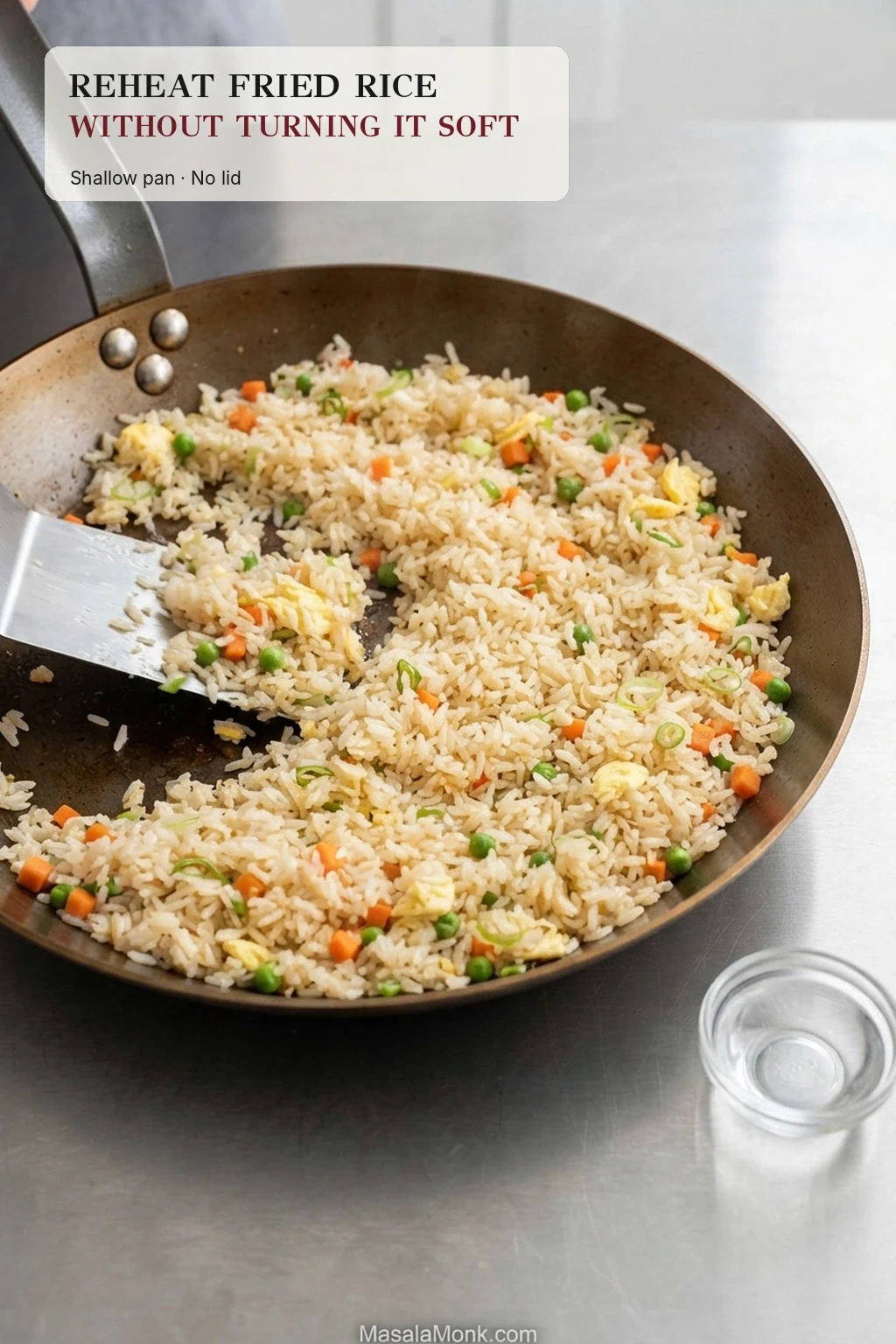
For the best texture, reheat fried rice in a wok or skillet over medium-high heat, tossing so the grains warm evenly. Reheated leftovers should reach 165°F / 74°C. Rice that has become unusually dry may benefit from a teaspoon or two of water—just enough steam to loosen the grains again without turning them soft.








