The first salmon patty is usually the one that tells you whether dinner is going to be easy.
You slide a spatula underneath, start to turn it, and the middle threatens to split. The natural response is to add more crackers or breadcrumbs next time. Keep doing that and the patties may eventually hold beautifully while tasting more like the binder than the salmon.
In this salmon patties recipe, the mixture should stay soft enough for a moist, flaky center while still holding together in your hand. Canned salmon keeps dinner practical, and a short rest gives the Saltine crumbs time to absorb the moisture around them.
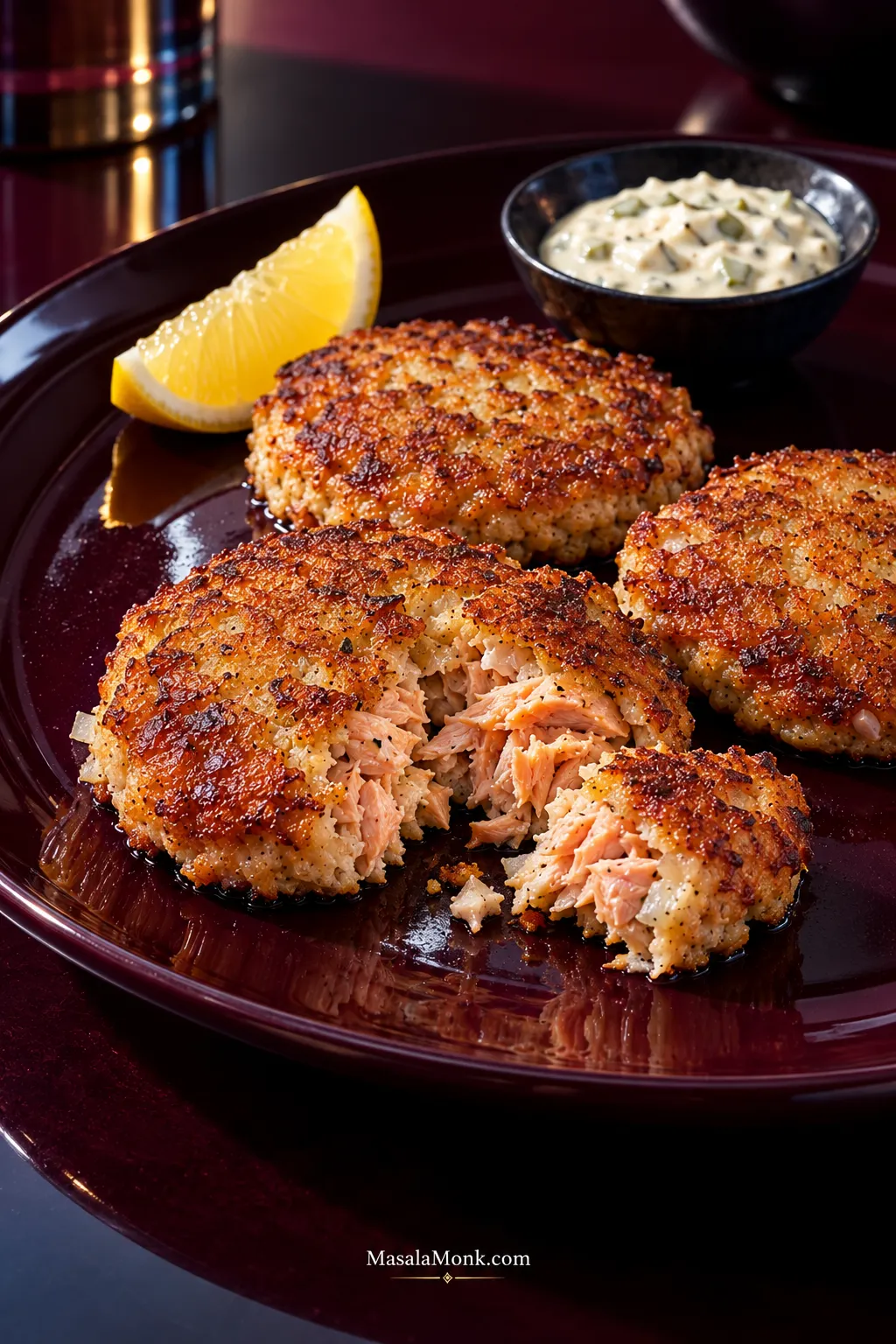
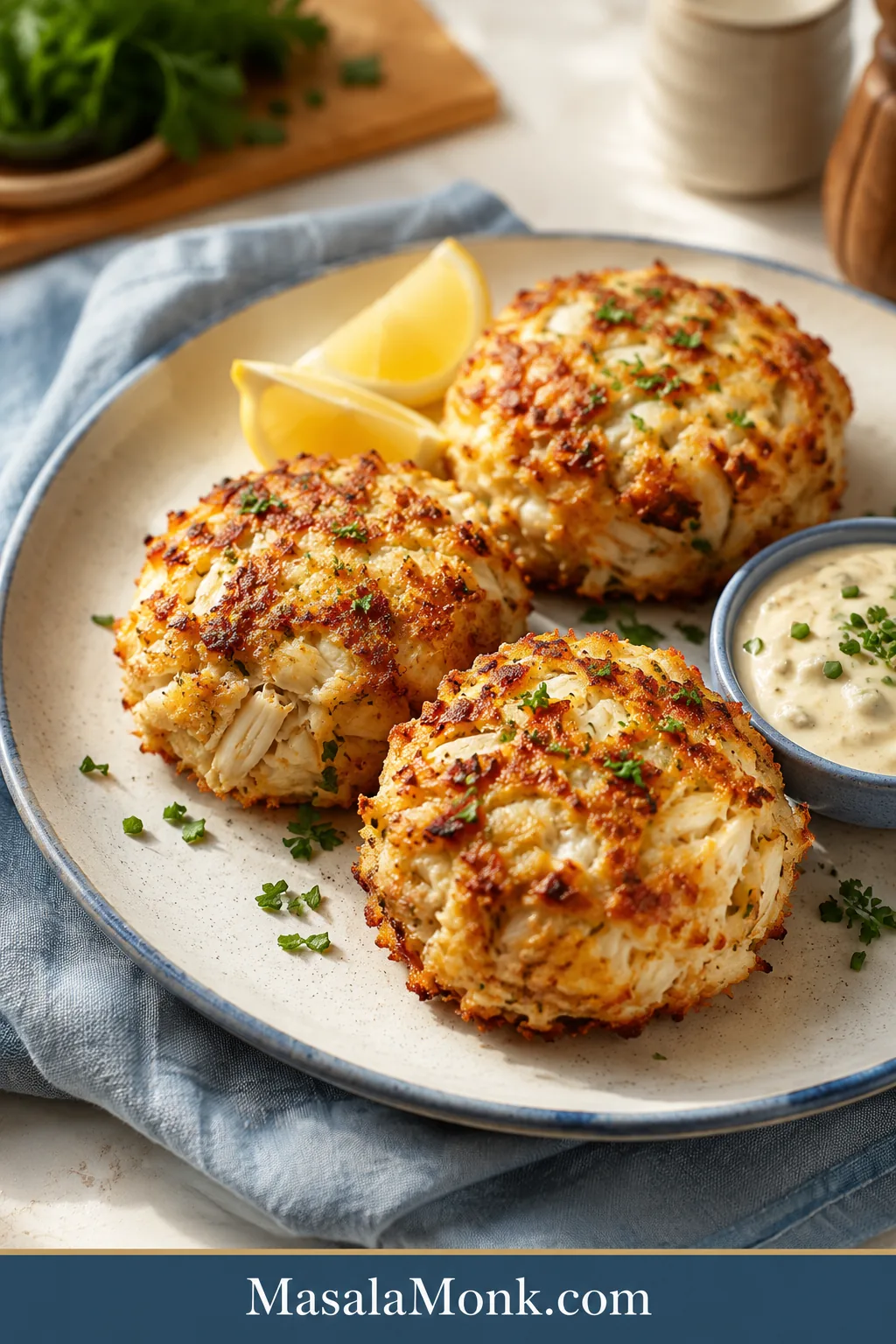
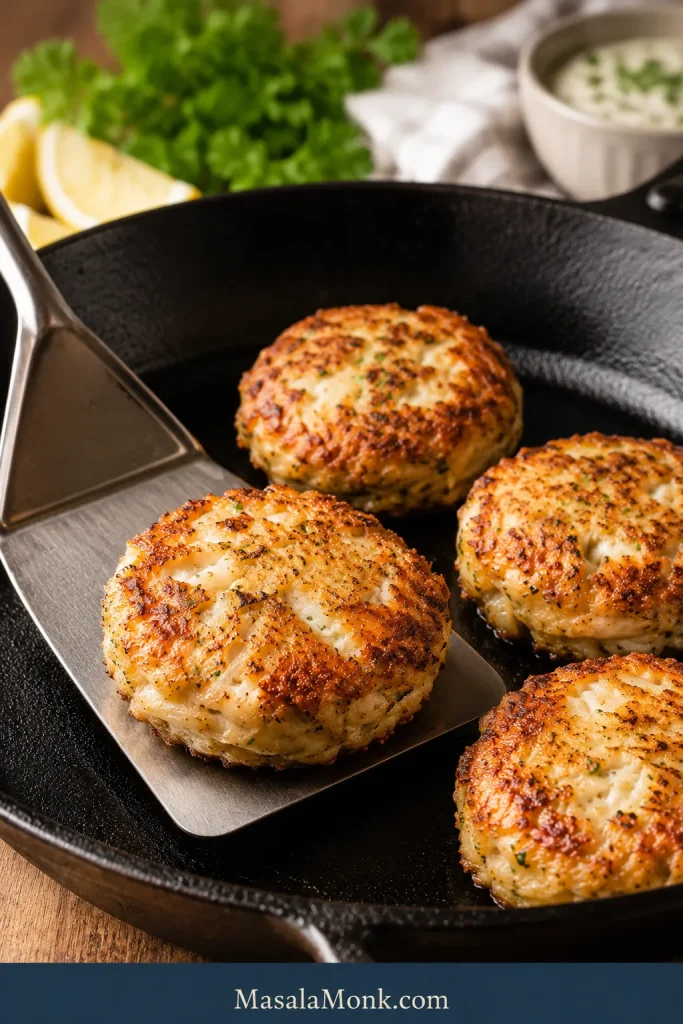
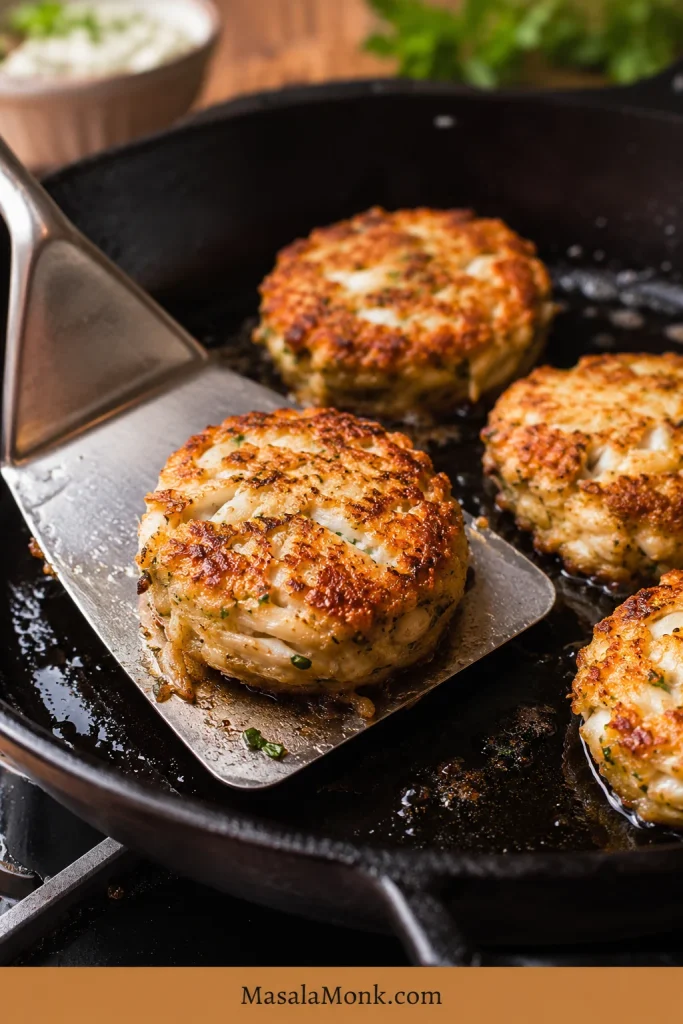
Get that balance right and the reward is simple: deeply browned, crisp edges around a tender center with visible flakes of salmon.
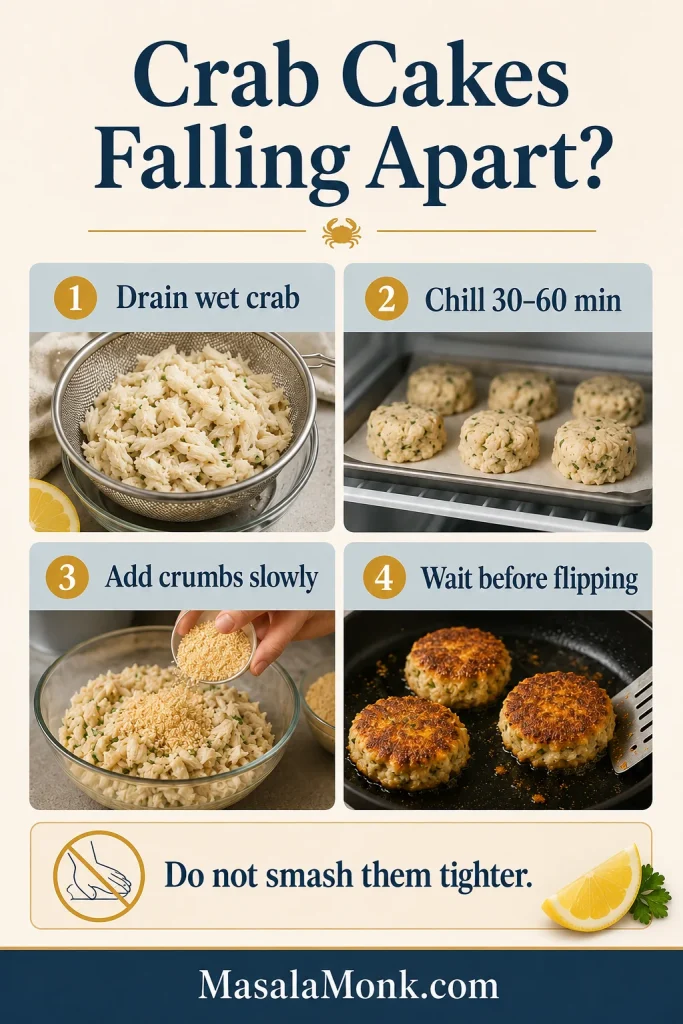
A crack on the first turn is not automatically a binder failure. If the patty still flexes, the first crust may simply need more time to become the outer support that carries it through the flip.
Yield: 6 medium patties Prep: about 15 minutes Rest: 5–10 minutes Cook: about 12–16 minutes for two batches, plus a quick test piece Total: about 35–40 minutes Method: skillet
Ingredients
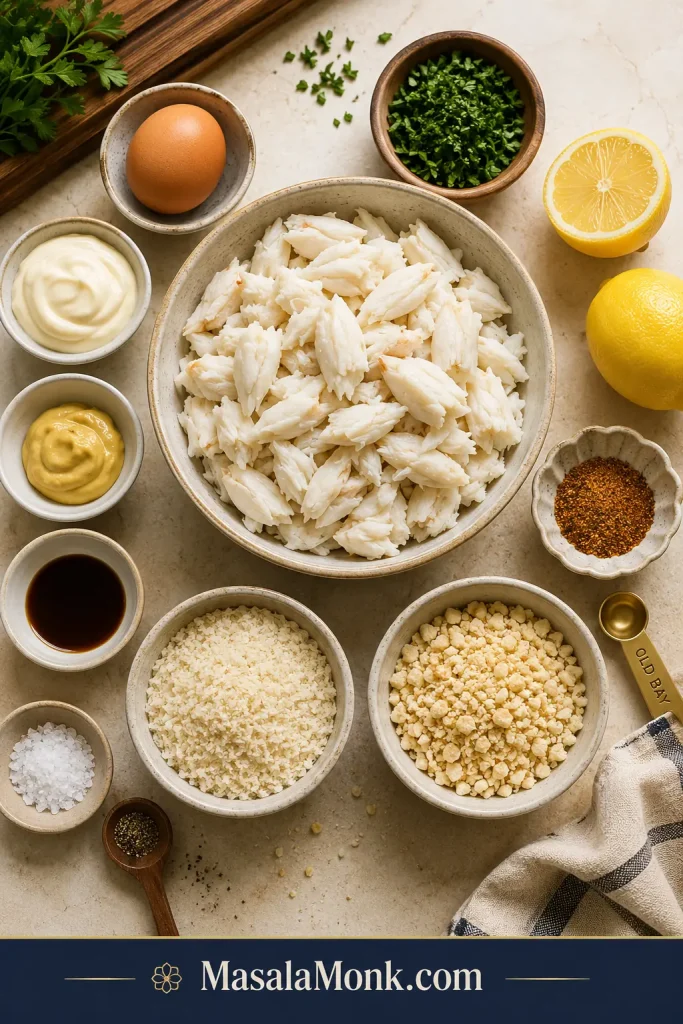
1 can (14.75 oz / 418 g) pink salmon
1 large egg
About 12 standard Saltine crackers (roughly 36 g; brands vary), finely crushed, plus more only if needed
2 tablespoons very finely minced or grated onion
1 tablespoon (15 g) mayonnaise
1 teaspoon Dijon mustard
1 tablespoon (15 ml) fresh lemon juice
¼ teaspoon freshly ground black pepper
Fine salt, as needed after tasting the test piece
2–3 tablespoons (30–45 ml) neutral cooking oil, or enough to coat the skillet generously, plus more between batches if needed
The base is intentionally simple. Dill or parsley takes the flavor in a fresher direction, while Old Bay or Cajun seasoning makes the patties warmer and spicier. Choose one direction rather than piling several onto the salmon.
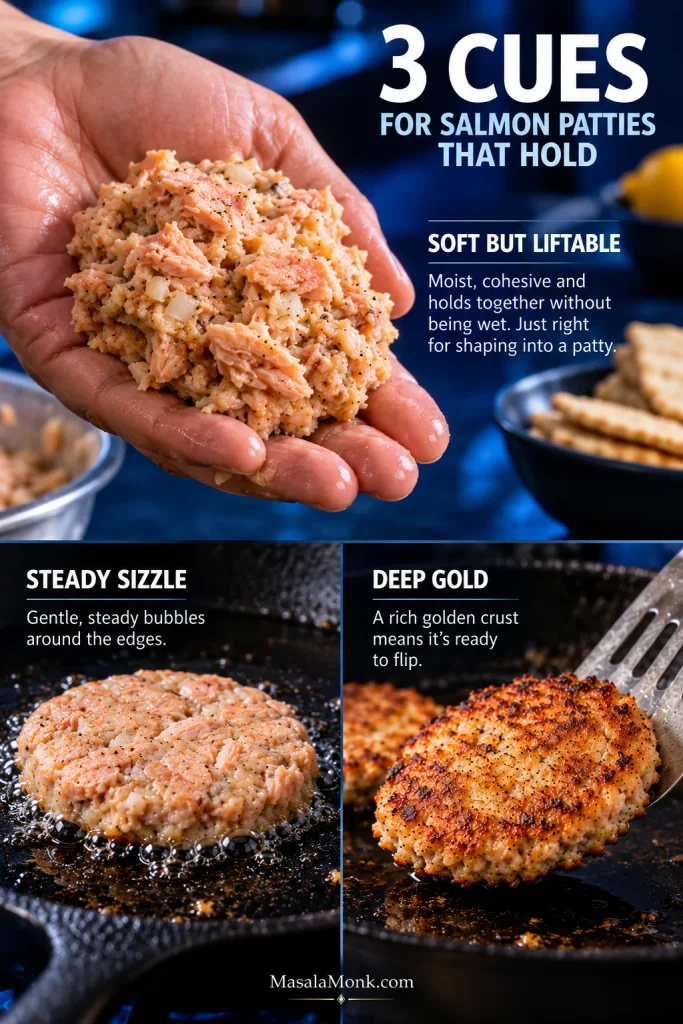
Three cues are worth remembering: soft but liftable in the bowl, an immediate steady sizzle in the skillet, and deep gold before the first flip.
These cues answer three different questions: does the mixture hold, is the pan hot enough, and has the first crust become strong enough for a clean flip?
How to Make Salmon Patties
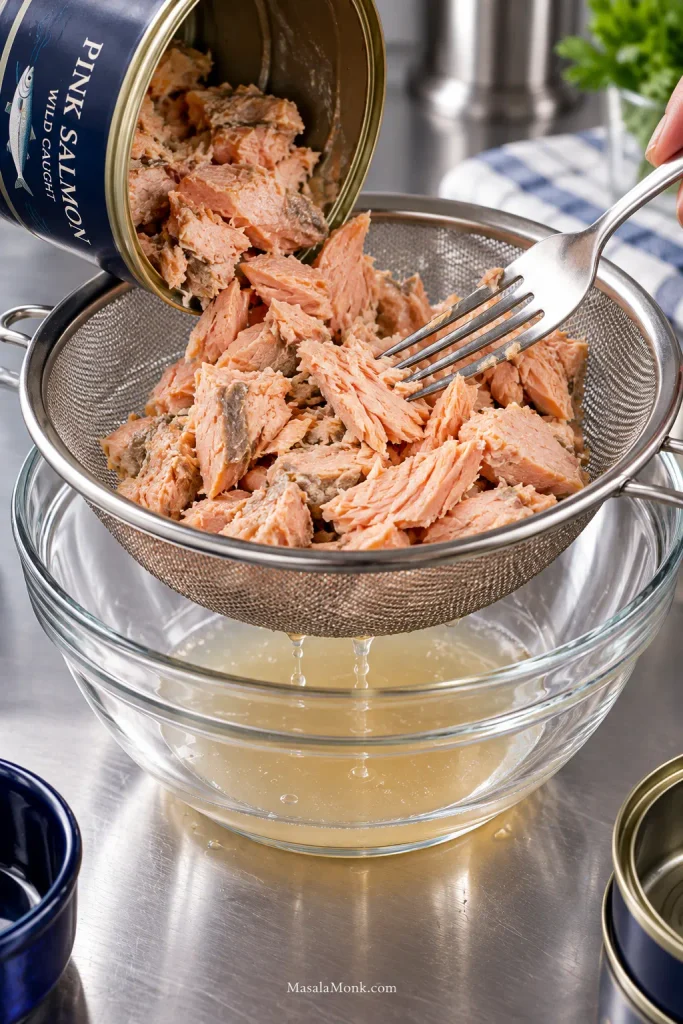
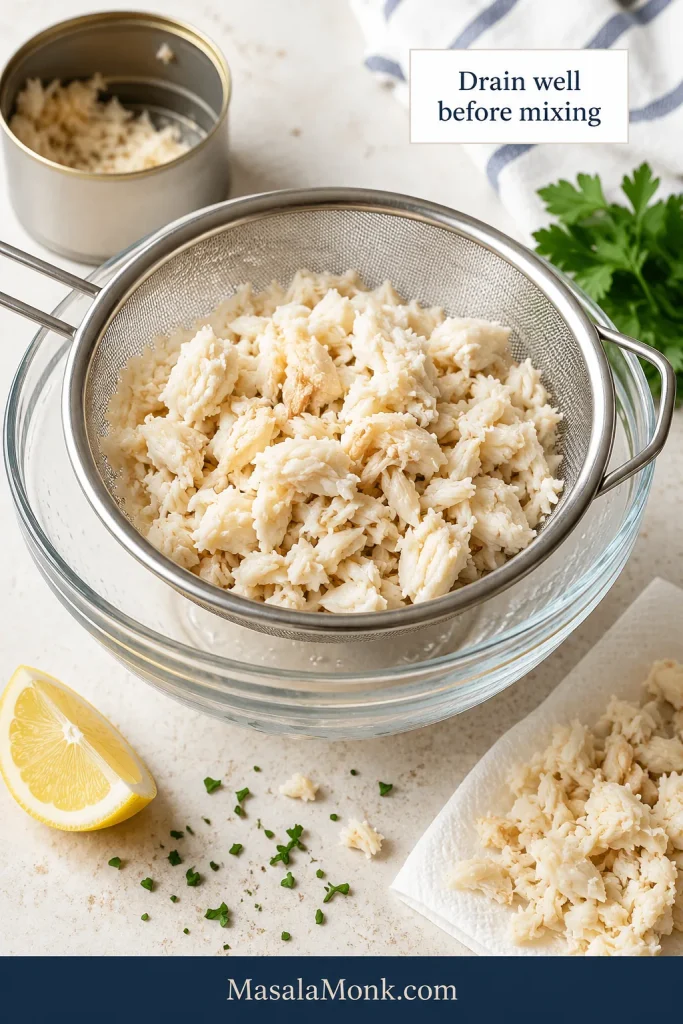
Drain and flake the salmon. Set a small bowl underneath as you drain it, and save a tablespoon or two of the liquid for now. Transfer the salmon to a mixing bowl. Remove visible skin or larger bones if you prefer, then break the fish into flakes with a fork, leaving some larger pieces for texture.
Because canned salmon varies in how much liquid it carries, keeping a spoonful aside gives you a controlled way to correct a dry bowl later without automatically reaching for more egg or mayonnaise.
Mix. Add the egg, very finely minced or grated onion, mayonnaise, Dijon mustard, lemon juice, and black pepper. Keep the onion pieces small; these patties cook quickly, and larger pieces can stay sharp. Fold gently, then mix in the crushed Saltines just until everything comes together.
Rest for 5–10 minutes. Give the crumbs time to absorb moisture. During the final 2–3 minutes, set a 10- to 12-inch skillet over medium heat and add enough oil to coat the bottom generously.
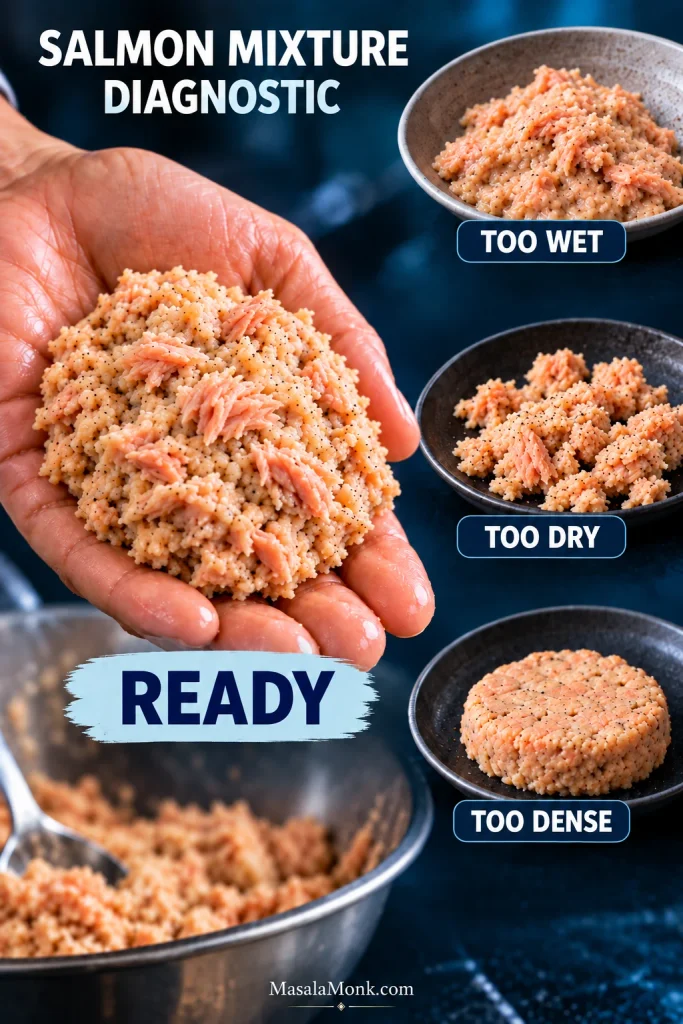
Check and taste. Press a small handful in your palm. It should hold when lifted while still feeling moist. A bowl that is noticeably wetter or drier can be corrected with the 30-second mixture check below. Once the oil gives you a steady sizzle, fry a teaspoon-sized test piece. Make sure it holds together, taste it while hot, and adjust salt, pepper, lemon, or seasoning now.
The test piece also checks the skillet. Gentle, immediate bubbling with gradual browning means the heat is useful; fast scorching or no response tells you to adjust before all six patties go in.
Shape, Fry and Flip
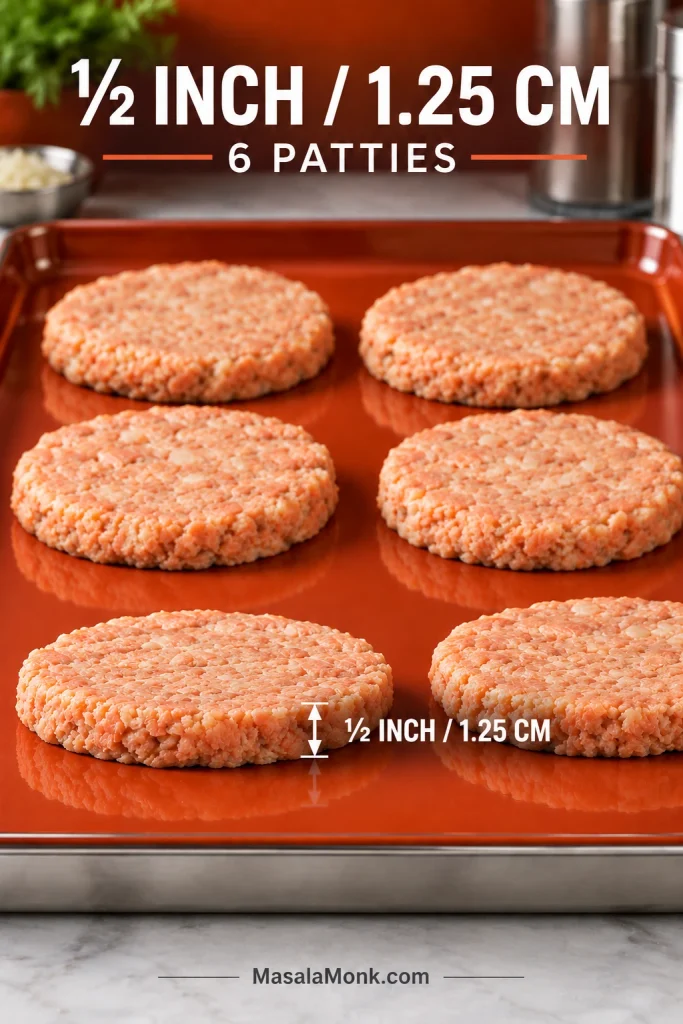
Shape. Divide the salmon into 6 equal portions and form patties about ½ inch / 1.25 cm thick. Press only as much as needed to bring them together.
For salmon patties, reach the ½-inch profile by widening the portion rather than pressing harder. That preserves a looser interior while giving the skillet more surface area to brown.
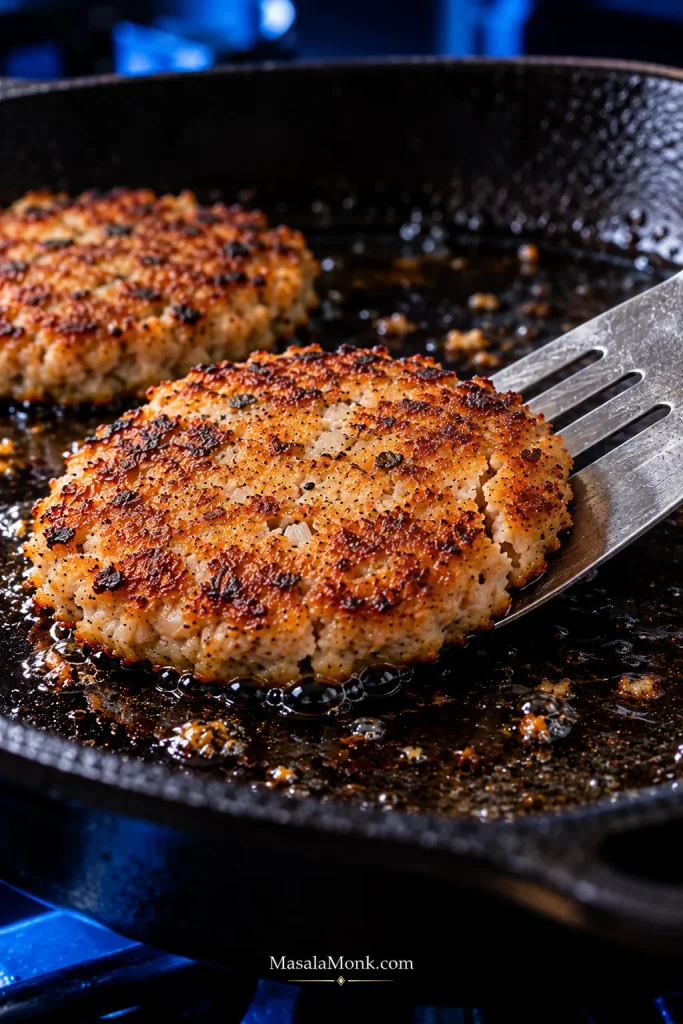
Fry in two batches of three. Bring the oil back to a steady sizzle if needed, then add 3 patties with space around them. Cook for roughly 3–4 minutes, until the underside is deeply golden and the outer edge looks set.
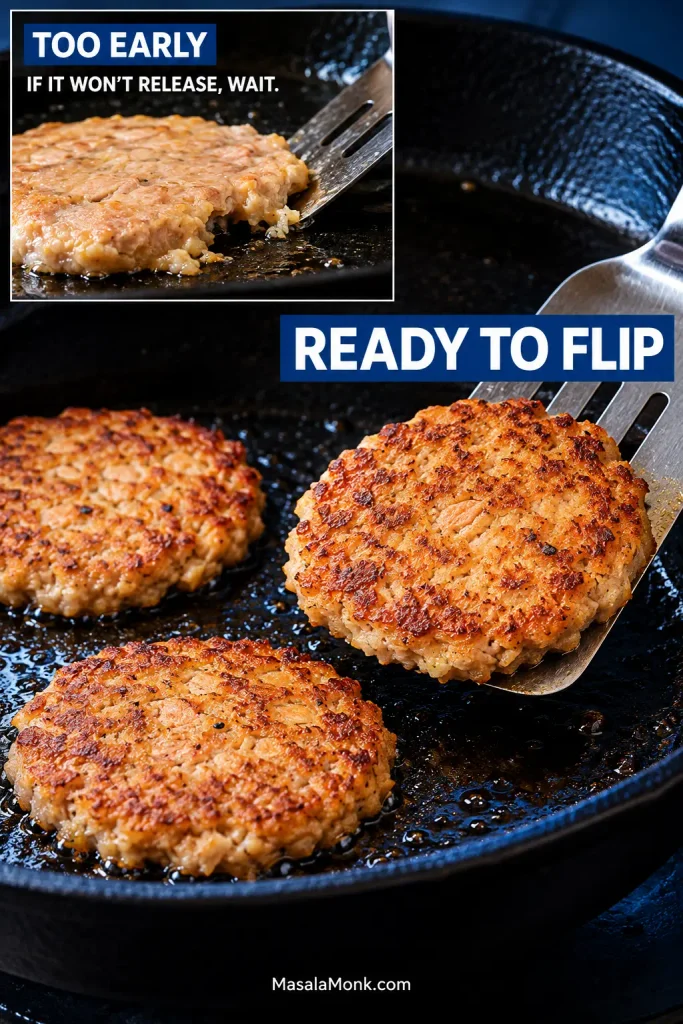
Turn once. Slide a wide, thin spatula fully underneath each patty. If it still clings to the skillet, give it another 30–60 seconds. Flip and cook another 3–4 minutes, until the second side is golden and the center is hot and set. If you check with a thermometer, aim for 160°F / 71°C in the center; that’s the USDA safe temperature for dishes containing egg. Transfer to a plate, add a little more oil if the pan needs it, and repeat with the remaining 3 patties.
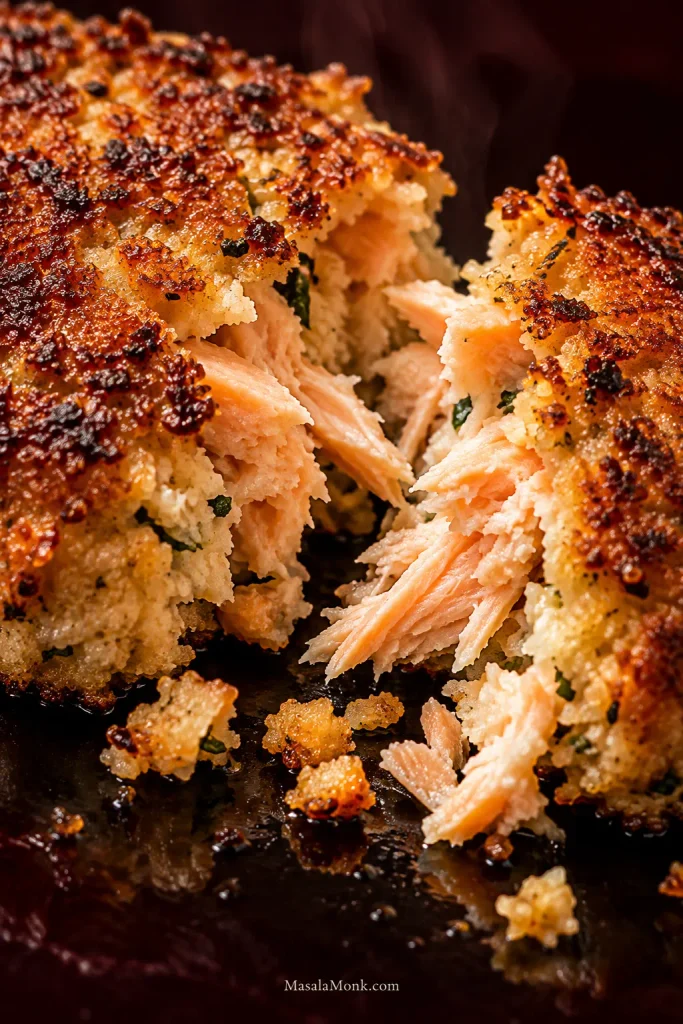
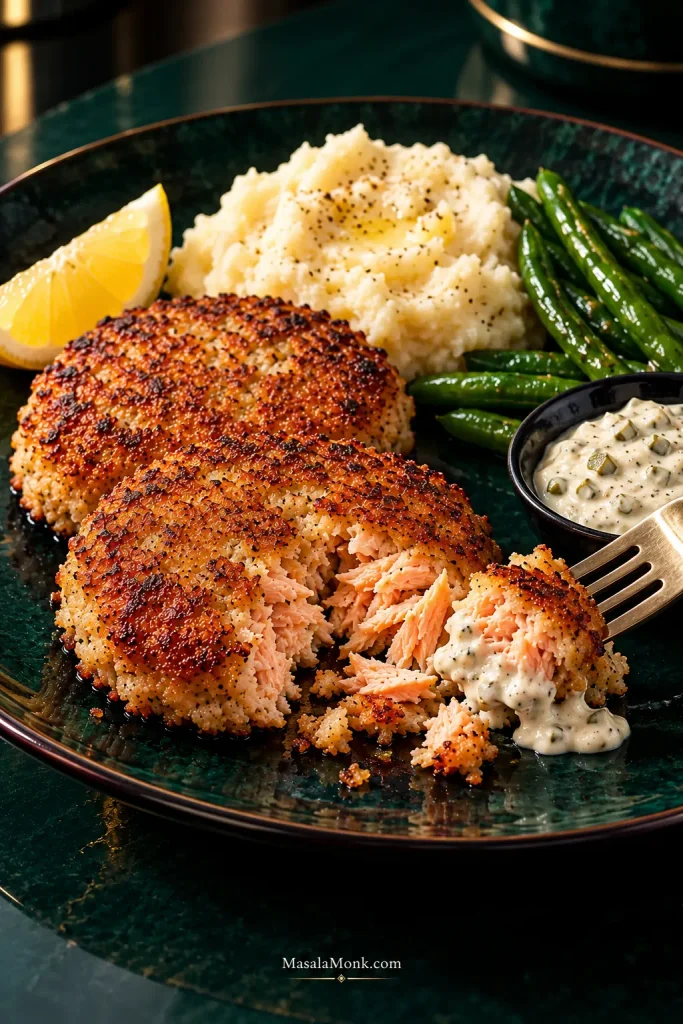
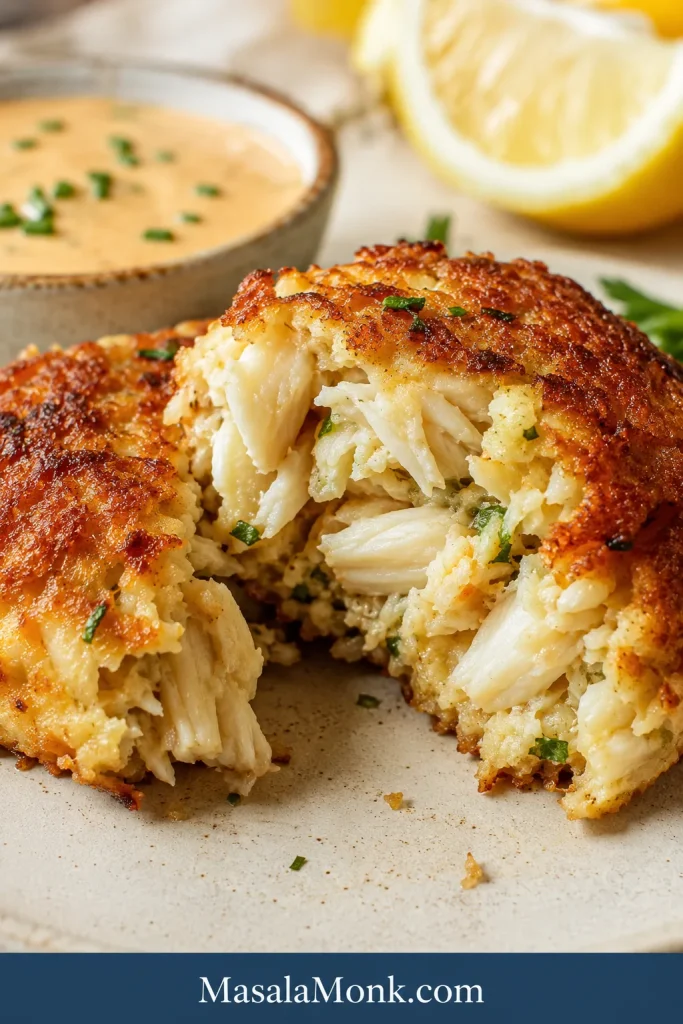
Eat them while they’re crisp. Keep the cooked patties in a single layer so steam doesn’t soften the crust. Break one open; the center should look moist and flaky, with recognizable pieces of salmon rather than a dense paste.
The 30-Second Mixture Check
Give the crumbs their full rest before changing the mixture. A loose, wet bowl may need more binder; a dry one needs moisture, not another handful of crackers.
What you notice
What it means
What to do
Slumps, smears, or loses its edge
Too wet, or not fully rested
Finish the rest. If it still slumps, add crushed Saltines about 1 tablespoon at a time.
Presses together, lifts intact, stays moist
Ready
Fry the test piece, then shape the patties.
Cracks badly or crumbles
Too dry
Add mayonnaise or reserved salmon liquid about 1 teaspoon at a time.
Feels stiff and dense
Probably too much binder
Stop adding crumbs. Loosen with a small amount of moisture if necessary.
Ready salmon patty mixture can look rougher than an over-bound one—and that is a good sign. Instead of chasing a smooth puck, look for just enough cohesion to lift while the salmon flakes stay distinct.
A dry salmon patty can still fall apart. You want something soft enough to stay tender and cohesive enough to lift cleanly.
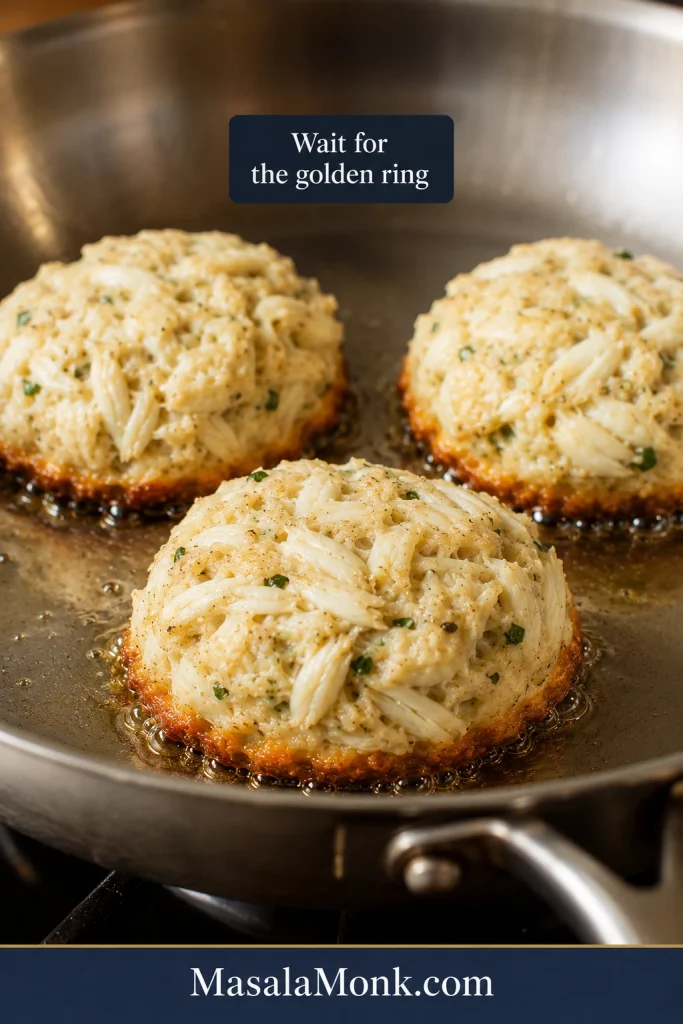
A patty that still sticks to the skillet or bends in the middle when you slide a spatula underneath needs more time on the first side. Use the color underneath as your guide; burner settings vary from stove to stove.
When a Salmon Patty Is Ready to Flip
Look for deep gold underneath rather than pale yellow.
At the edge, the surface should look set instead of glossy.
The patty should begin releasing cleanly from the skillet.
Use a wide spatula so the whole patty is supported during the turn.
When deciding when to flip salmon patties, treat clean release as feedback from the crust. Once the underside lifts without resistance, that browned surface can support the softer center through the turn.
Cast iron gives you a strong crust; nonstick makes release especially easy. Stainless steel works when it is properly preheated and has enough oil.
The mixture check handles the raw bowl, and the crust cues handle the first flip. Once the patties are cooked, their texture shows you what to change next time.
What happened
Likely reason
Next batch
Dry and mealy
Too much binder, naturally dry salmon, or too much cooking
Use less crumb and stop cooking once the center is set.
Soft or mushy inside
Too much moisture, thick patties, or not enough cooking
Keep them around ½ inch thick and cook until the center is set.
Pale, soft or greasy crust
Oil too cool, crowded skillet, or moving the patties too soon
Wait for a steady sizzle, leave room around each patty, and let the first side brown before turning.
What a Good Salmon Patty Looks Like Inside
Distinct flakes inside suggest the salmon was handled gently, while the irregular crust shows that the browning came from direct skillet contact rather than an external breadcrumb coating.
The egg and crushed Saltines do most of the holding in this version. A spoonful of mayonnaise keeps the mixture from feeling dry while the crumbs rest.
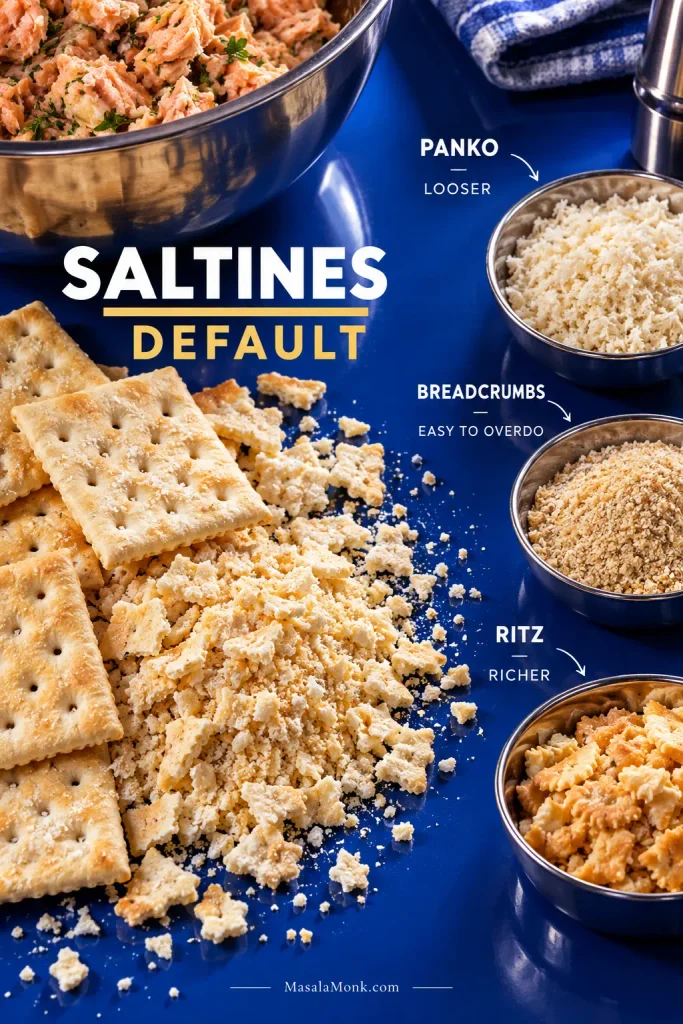
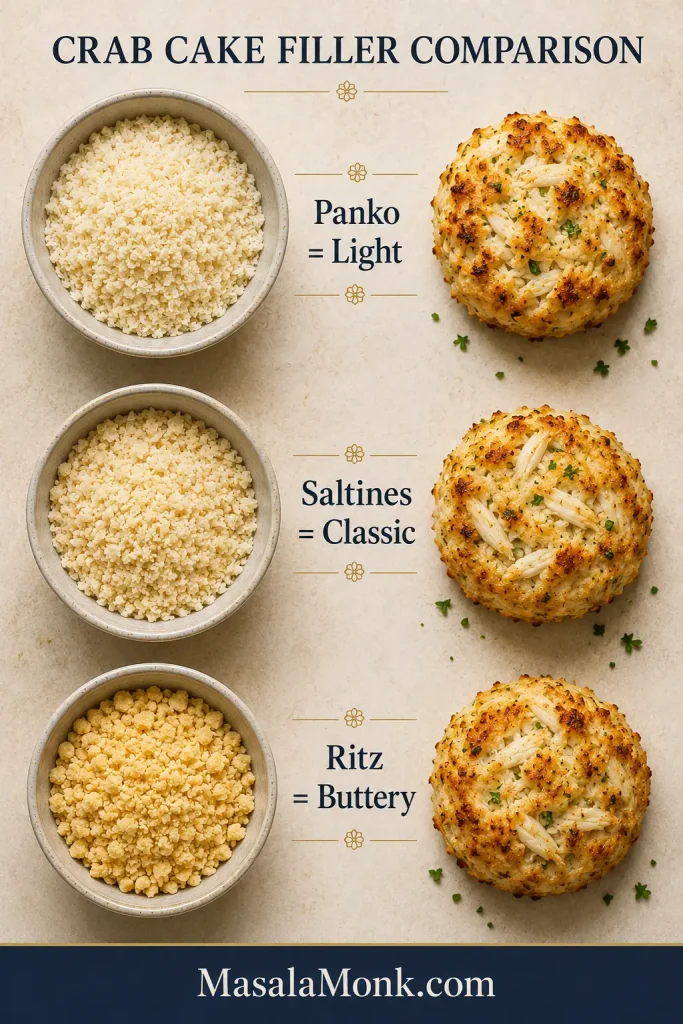
Saltines are the default here. They disappear into the salmon easily, absorb moisture well, and already bring some salt to the bowl.
Panko gives the mixture a looser texture. Start conservatively, let it sit, and add more only after you see how well the salmon holds.
Plain breadcrumbs are dependable but easy to overdo. Once the bread becomes more noticeable than the salmon, adding more won’t improve the patty.
Ritz crackers make a richer, more buttery version. Different crumbs and crackers absorb differently, so I would not treat them as automatic cup-for-cup substitutes before checking the rested mixture.
With Saltines, panko, breadcrumbs or Ritz, the useful comparison starts after the crumbs hydrate. Judging them dry can tempt you to add more binder before the mixture has had time to settle.
For the flour-and-cornmeal style often associated with Southern salmon croquettes, our salmon croquettes recipe follows that branch much further.
One Can of Salmon Isn’t Always One Can
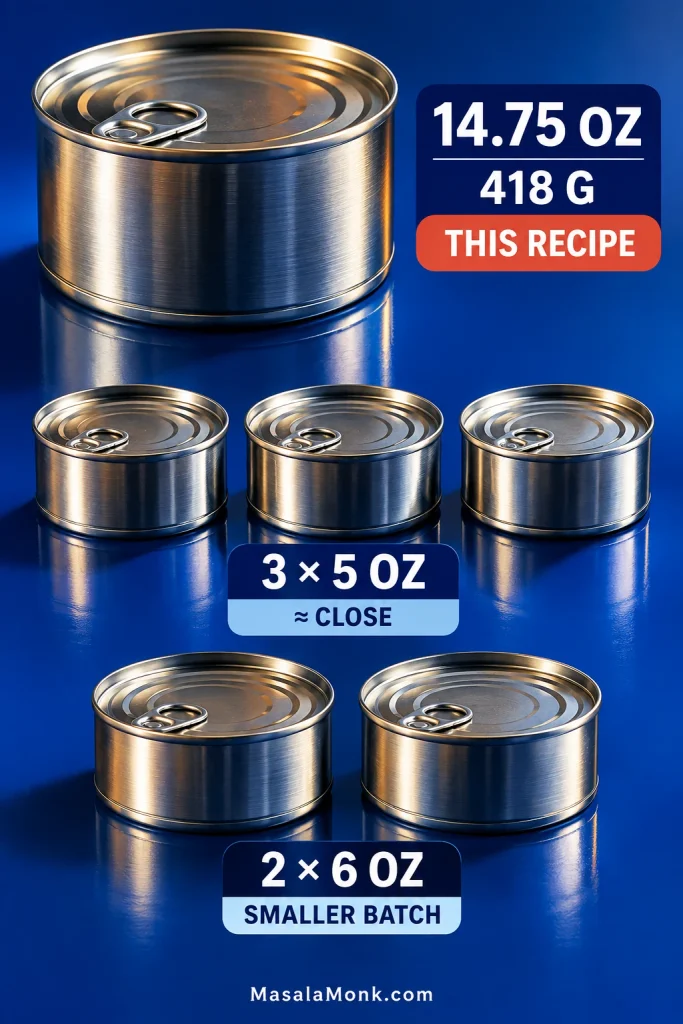
This recipe starts with one 14.75-ounce / 418 g can before draining. Can sizes vary enough that “one can” is no longer a useful measurement by itself.
Package weight includes the packing liquid, so two cans with similar labelled weights may not leave exactly the same amount of salmon after draining.
Three 5-ounce cans are close to the labelled amount used here. Two 6-ounce cans make a smaller batch, so scale the egg as well as the crumbs instead of using a full egg and then adding extra dry binder to compensate. Beating the egg first makes it easier to use only part of it.
Use can size as a starting point, not the final adjustment. Because different packs shed different amounts of liquid, the rested mixture still decides whether the bowl needs a little more crumb or moisture.
Which Canned Salmon Works Best?
Pink or red? For a milder, generally less expensive option, pink salmon works well with the lemon, onion, and mustard in this recipe. Red salmon or sockeye gives you a stronger salmon flavor. Canned salmon can also smell much stronger straight from the can than it tastes after frying; the lemon, mustard, onion, and browned crust make the finished flavor noticeably more balanced.
Using a pouch? Pouch salmon can be drier than salmon packed with more liquid. Begin with less crumb and check the mixture after it rests.
Skin and bones? The soft canned bones are edible and can be mashed into the salmon. You do not have to make yourself enjoy them, though. Pull out the obvious bones and skin if you’d rather not deal with them.
You can lean into the comfort-food side of the dish or put something cool and crisp next to the hot patties.
Classic comfort: creamy mashed potatoes with peas, green beans, or corn.
Southern-style supper: a wedge of Southern cornbread with greens, slaw, or green beans.
Cold and crunchy:creamy coleslaw, either alongside the patties or tucked into a sandwich with lettuce and pickles.
Lighter: a sharp cucumber salad gives the plate cool crunch without another rich element.
Breakfast or brunch: smaller patties with eggs and grits or biscuits.
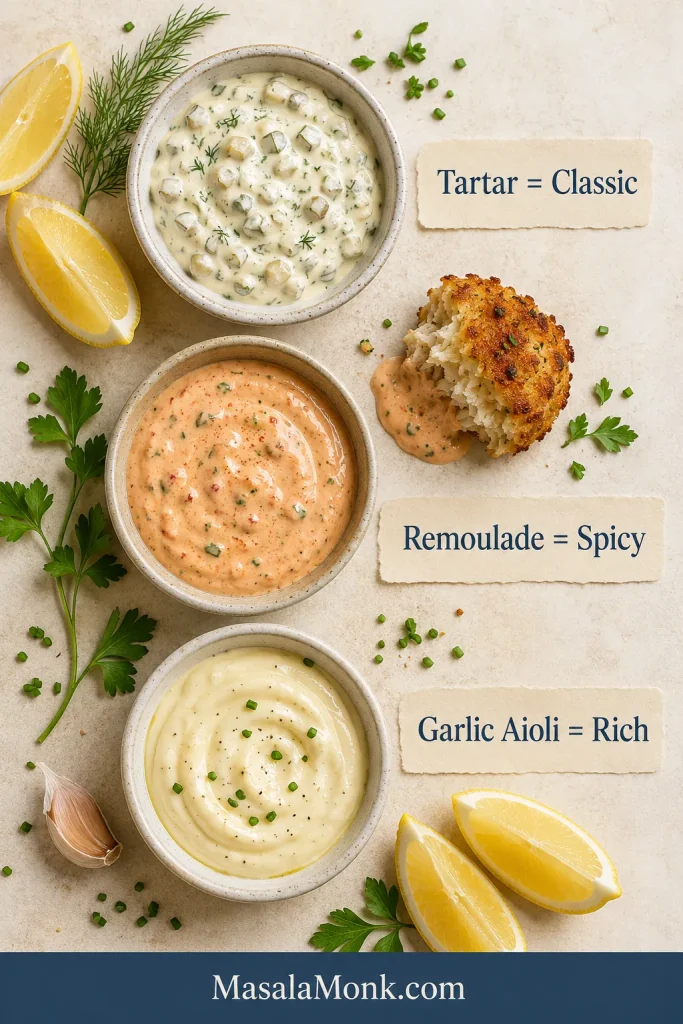
For the plate I’d make first: hot salmon patties, mashed potatoes, something green, a wedge of lemon, and cold homemade tartar sauce. Crisp crust, soft potatoes, something fresh, something sharp. Nothing on the plate is doing the same job.
Keep cold tartar sauce beside hot salmon patties rather than over them. That way, each bite can pick up acidity and creaminess without softening the crust before it reaches the fork.
Refrigerate leftovers. Cool cooked patties promptly, keep them covered, and use them within about 3–4 days, which is also the refrigerated storage window in USDA fish-storage guidance.
Freeze after cooking. Cool the patties, freeze them in a single layer until firm, then transfer them to a freezer-safe container with parchment between layers. USDA storage guidance lists cooked fish at up to about 3 months in the freezer for best quality. That is storage guidance rather than a promise that the crust will be identical after freezing.
Best Way to Reheat Salmon Patties
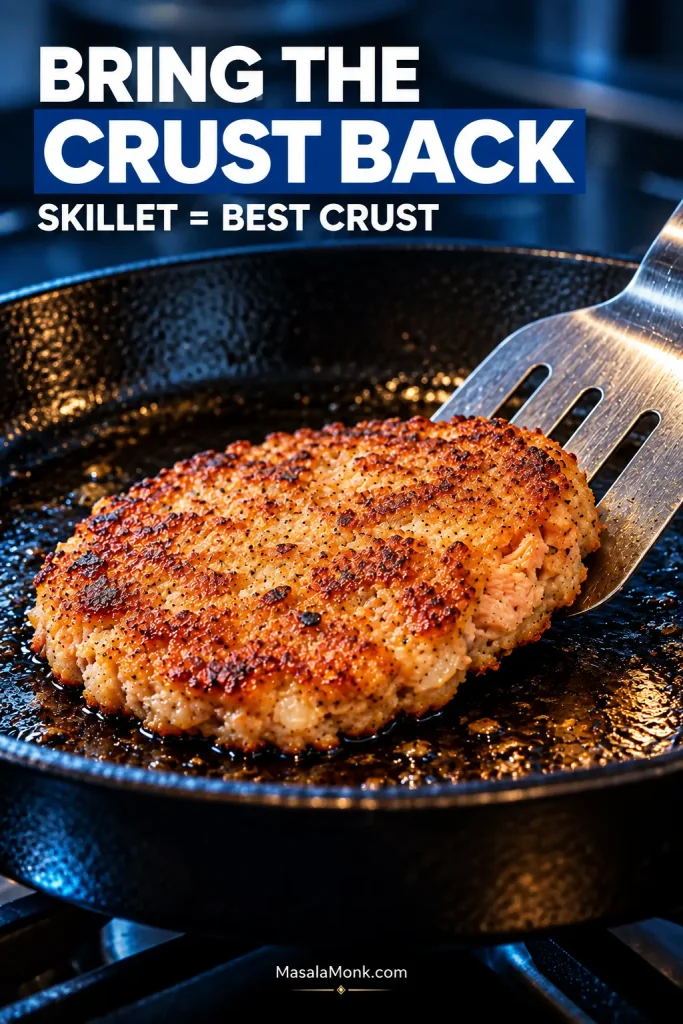
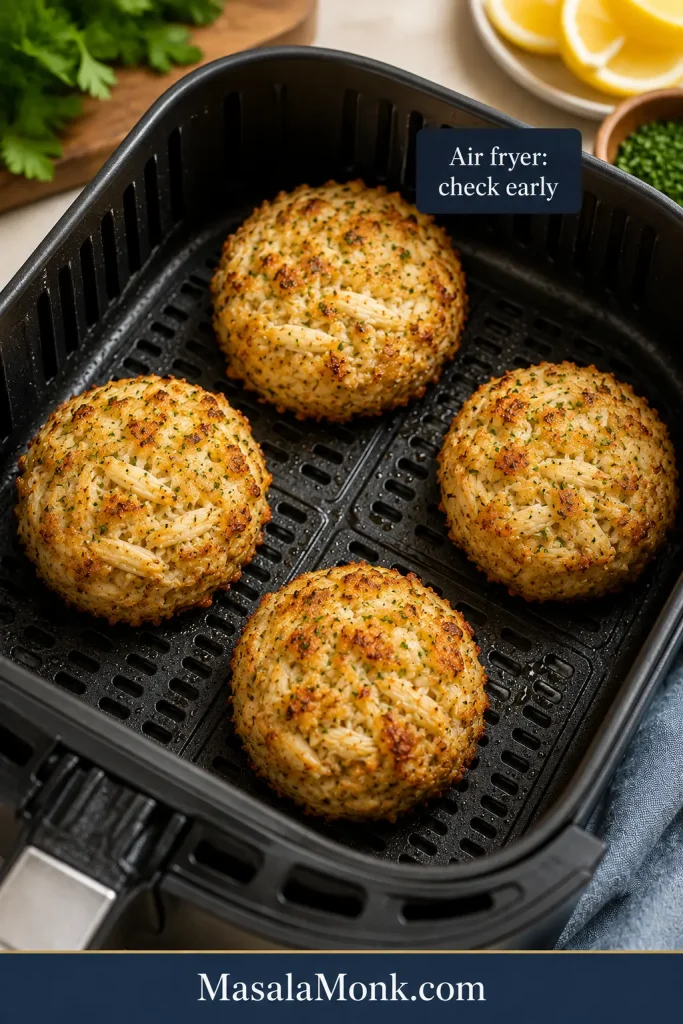
A skillet does the best job of bringing the fried crust back. An air fryer works well too, and the oven is handy for several patties at once. The microwave is fastest but softens the outside. Whichever method you use, USDA leftover guidance recommends reheating to 165°F / 74°C throughout.
When you reheat salmon patties, leave space around them in the skillet. Otherwise, trapped steam works against the crisp surface you are trying to bring back.
Salmon Patties FAQ
Can salmon patties be made without eggs?
Not by simply leaving the egg out of this exact recipe. This formula relies on egg for structure, so an eggless version is better made from a recipe designed around a different binder.
Can I use fresh salmon instead of canned?
Yes—cooked fresh salmon can replace canned salmon, but raw salmon is not a direct 1:1 substitute for this recipe. Flake leftover cooked salmon gently and expect to adjust the moisture because it may be drier than canned fish. Raw salmon needs a formula built around uncooked fish.
What’s the difference between salmon patties, salmon cakes, and salmon croquettes?
There is no universally fixed difference between salmon patties and salmon cakes; the names often overlap. In American home cooking, especially in the South, “salmon croquettes” often refers to a closely related style that may lean more heavily on flour, cornmeal, coating, or a distinct frying method.
There is something satisfying about turning a can from the cupboard into six hot, golden patties. This is the kind of dinner that asks very little from the refrigerator and still gets to the table crisp, warm, and substantial.
The next can may be wetter, and another brand of crackers may absorb differently. What matters is learning what the salmon should feel like before it reaches the pan—and what the first side looks like when it’s ready to turn.
Once you know those two things, you’ll probably need the measurements less than you expect.
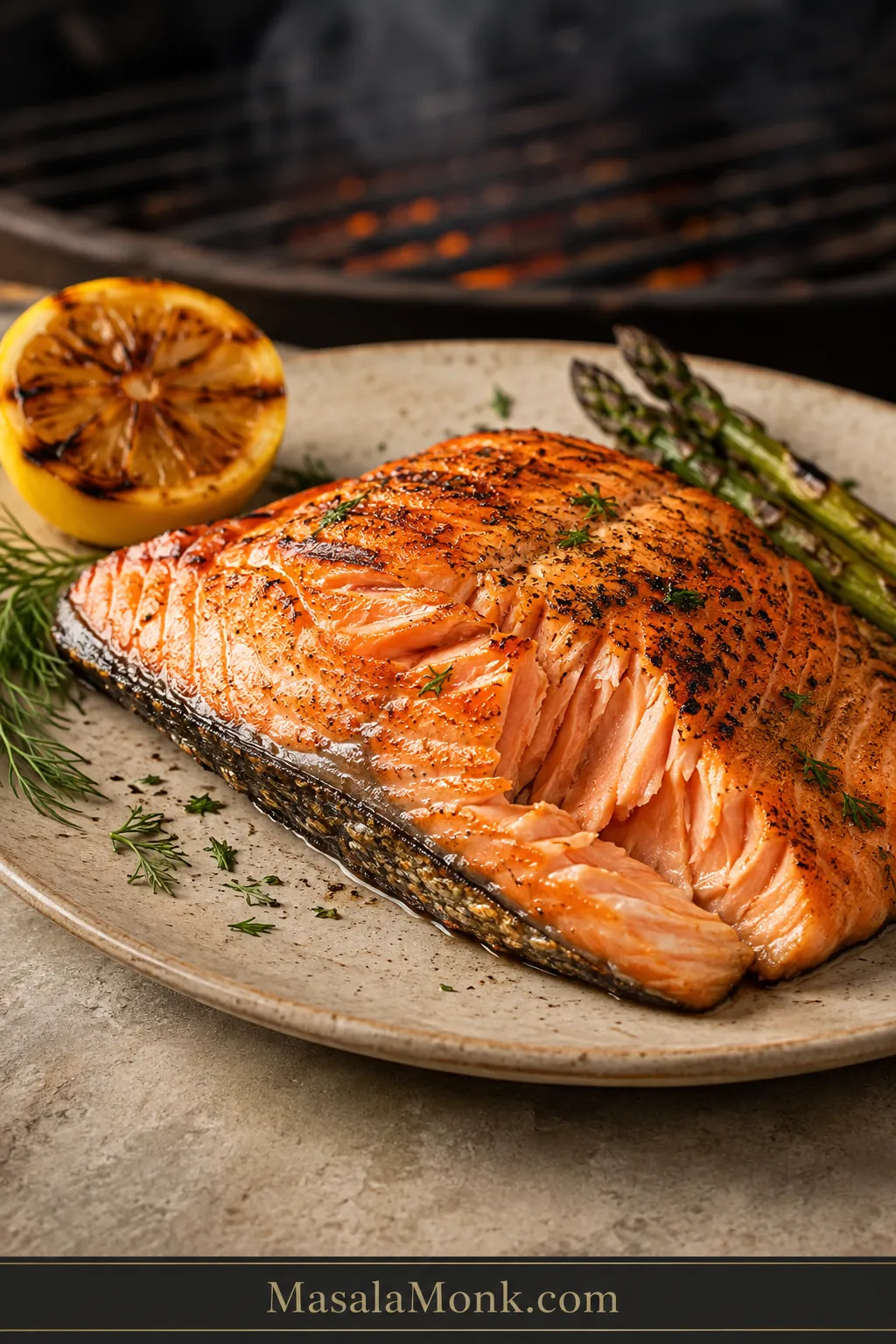
The best grilled salmon gives you two textures in one bite: browned, savory skin underneath and tender flakes that separate gently beneath the fork. The fillet should lift from the grate in one piece—not leave its best layer welded to the grill.
Salmon can feel like an expensive ingredient to trust to an open grate, especially when the difference between “not ready” and “hopelessly stuck” is difficult to see. That uncertainty is why people start lifting, sliding and checking long before the fish is ready to move.
What makes salmon easier than it first appears is that it gives you signals before you need to act. The skin browns and firms. A pale cooked band climbs through the sides. The center temperature tells you how far the heat has traveled. Once you know what to watch, the grill becomes much less of a gamble.
This grilled salmon recipe builds those signals into one calm, mostly hands-off method. Use evenly thick, skin-on fillets, dry them thoroughly and give the grates time to become fully hot. Then let the salmon stay where it is until the skin has browned and the thick middle is close to ready.
The timer tells you when to check. Temperature tells you when it is done. Release tells you when it is ready to lift cleanly.
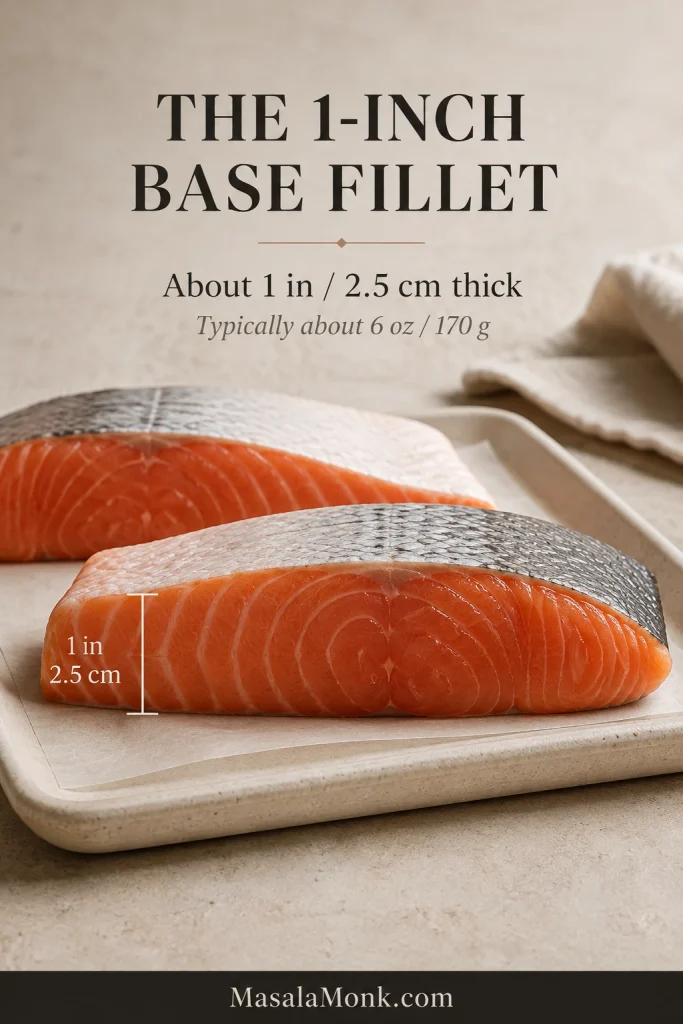
For the base recipe, use center-cut, skin-on fillets about 1 inch / 2.5 cm thick, typically around 6 oz / 170 g each. The same method works well for 6–8 oz / 170–225 g portions; thickness matters more than weight when deciding when to check them.
If a salmon fillet tapers, judge its cooking needs by the thickest center—not by the thin edge or portion weight alone.
Preheat the grill toward 450°F / 230°C, with 425–450°F / 220–230°C as the workable range. Place the salmon skin-side down over direct heat, close the lid and leave a roughly 1-inch fillet alone for 6 minutes. Thinner ¾-inch / 2 cm pieces should be checked closer to 5 minutes.
At that first check, you are deciding what the salmon needs next: more direct heat, gentler heat on the cooler side or a close watch as it approaches your target temperature.
For those first six minutes, your main job is to leave the base fillets alone.
Base fillet: about 6 oz / 170 g and 1 inch / 2.5 cm thick
Target grill heat: 450°F / 230°C
Working range: 425–450°F / 220–230°C
First check: 6 minutes for the roughly 1-inch base fillet
Base fillet cooking window: about 8–14 minutes
Official U.S. safe minimum: 145°F / 63°C in the thickest part
Thicker fillets, cooler grills and salmon cooked all the way to 145°F / 63°C may need the longer end of that window or a little beyond it.
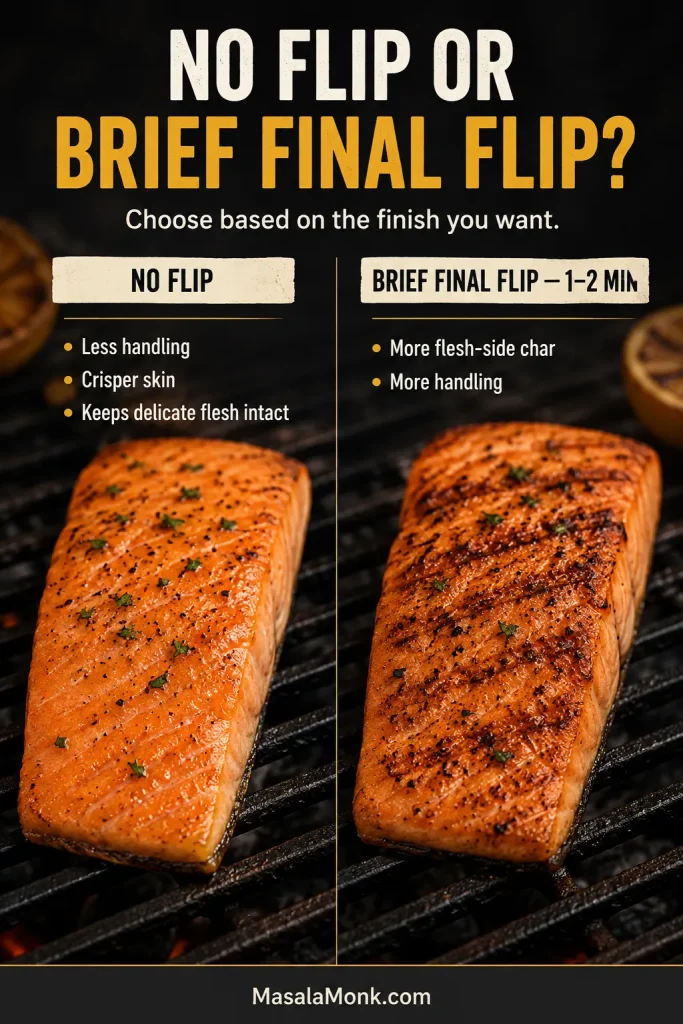
The recipe stays skin-side down throughout. A brief final flip is optional when you want extra color on the flesh.
Grilled Salmon With Crisp Skin and a Moist, Flaky Center
Evenly thick fillets, dry savory seasoning and controlled two-zone heat make this a dependable base recipe. Prep the salmon while the grill preheats, so most of the waiting happens at the same time.
Prep time
10 minutes
Grill preheat
10–15 minutes, overlapping prep
Base fillets cooking time
About 8–14 minutes
Resting time
3–5 minutes
Typical total elapsed time
About 25–35 minutes
Yield
4 servings
Equipment
Gas or charcoal grill with a lid
Instant-read thermometer
Thin, wide metal fish spatula
Grill brush or grate scraper
Long grilling tongs
Paper towels
One tray for raw salmon and a separate clean serving platter
Ingredients
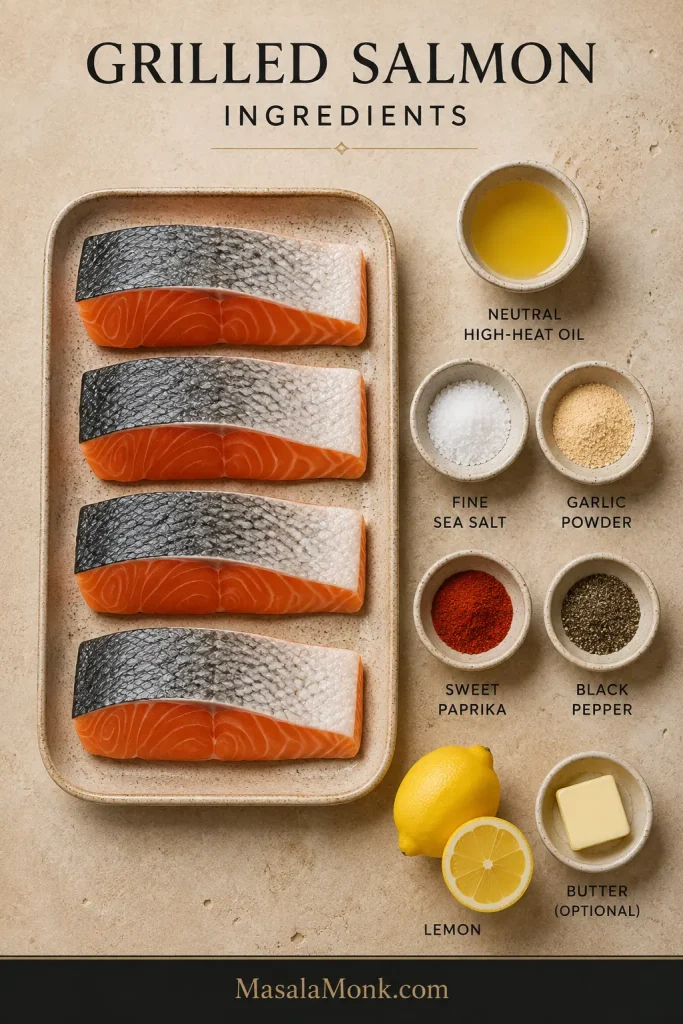
4 center-cut, skin-on salmon fillets, about 6 oz / 170 g each and roughly 1 inch / 2.5 cm thick
1 tablespoon / 15 ml neutral high-heat oil, such as avocado, refined sunflower or canola oil
5 g fine sea salt, about 1 scant teaspoon
1 teaspoon garlic powder / about 3 g
1 teaspoon sweet paprika / about 2 g
½ teaspoon freshly ground black pepper / about 1 g
1 lemon, cut into wedges
1 tablespoon / 14 g melted butter, optional for finishing the flesh
About 1 teaspoon / 5 ml additional neutral high-heat oil for wiping the grates, as needed
A simple base seasoning keeps the grilling cues easy to read; meanwhile, marinades, glazes and sauces can change the flavor without rebuilding the method.
Salt note: Crystal sizes vary significantly. Use the gram measurement when possible, especially when replacing fine sea salt with coarse kosher salt.
Prepare the Grill and Salmon
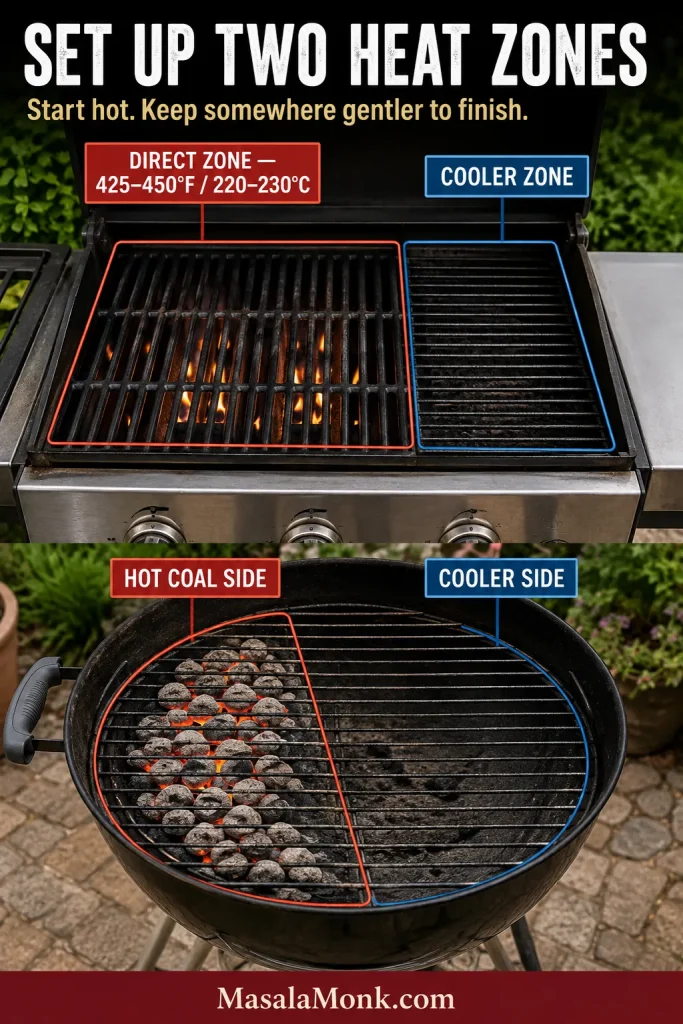
Create two heat zones. For a gas grill, preheat all burners on high for 10–15 minutes, then adjust the direct-cooking zone to hold around 425–450°F / 220–230°C and lower or switch off an adjacent burner. For charcoal, bank most of the hot coals on one side and leave the other side cooler.
Set up the cooler zone before the salmon goes on. If the skin browns before the center is ready, you will already have somewhere gentler to move it.
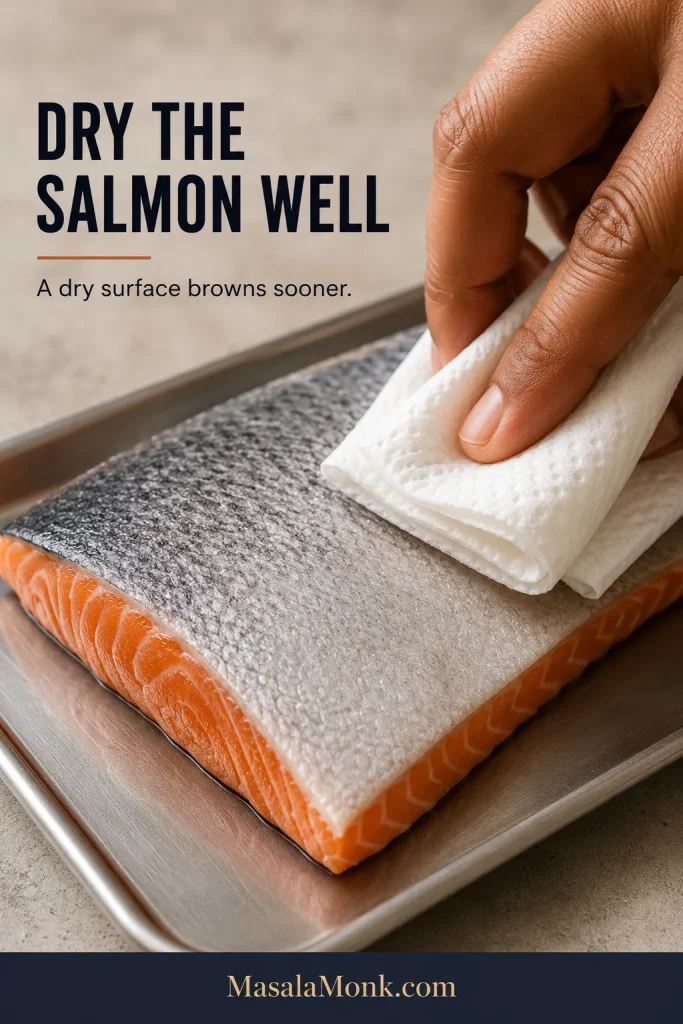
Dry the salmon. Check for scales and pin bones, then pat the skin, flesh and sides thoroughly dry with paper towels.
Blot until the surface moisture is gone, then stop. Dry skin browns better; dried-out salmon does not.
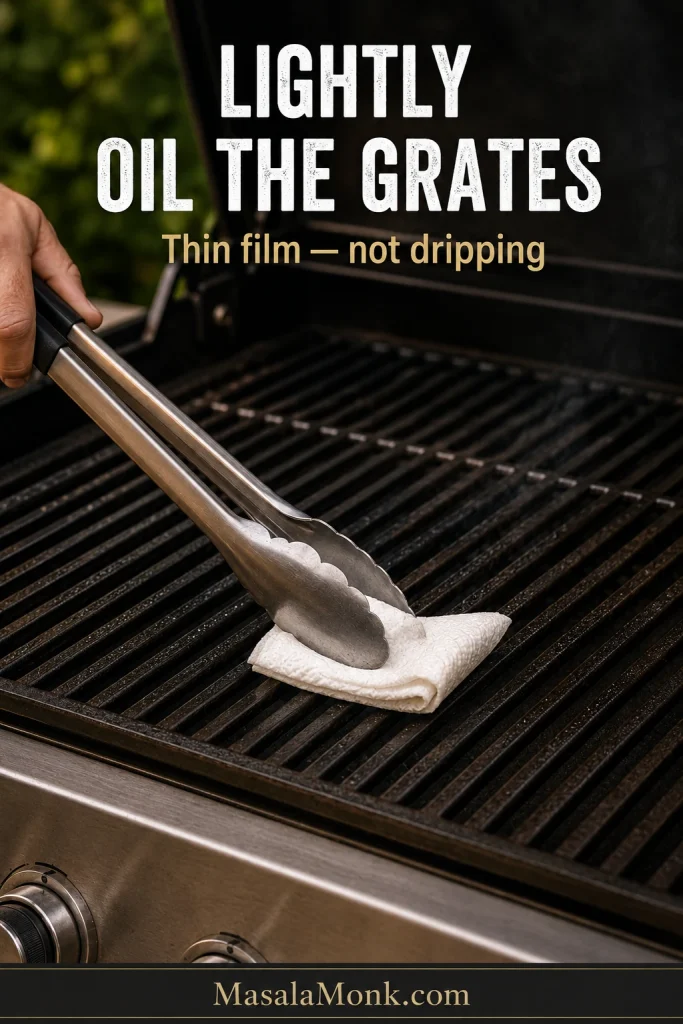
Clean and lightly oil the grates. Scrape the hot grates clean. Hold a tightly folded, lightly oil-dampened paper towel with long tongs and wipe a thin film over the cooking surface. It should look lightly coated rather than wet or dripping.
A thin oil film is enough. Extra oil does not guarantee easier release and can introduce dripping or flare-ups you never needed.
Season the fish. Rub the tablespoon of oil over the salmon. Mix the salt, garlic powder, sweet paprika and pepper, then season the flesh and sides evenly.
Grill Skin-Side Down
Place the salmon over direct heat. Set each fillet skin-side down, leaving enough room to reach it later with a spatula. Close the lid.
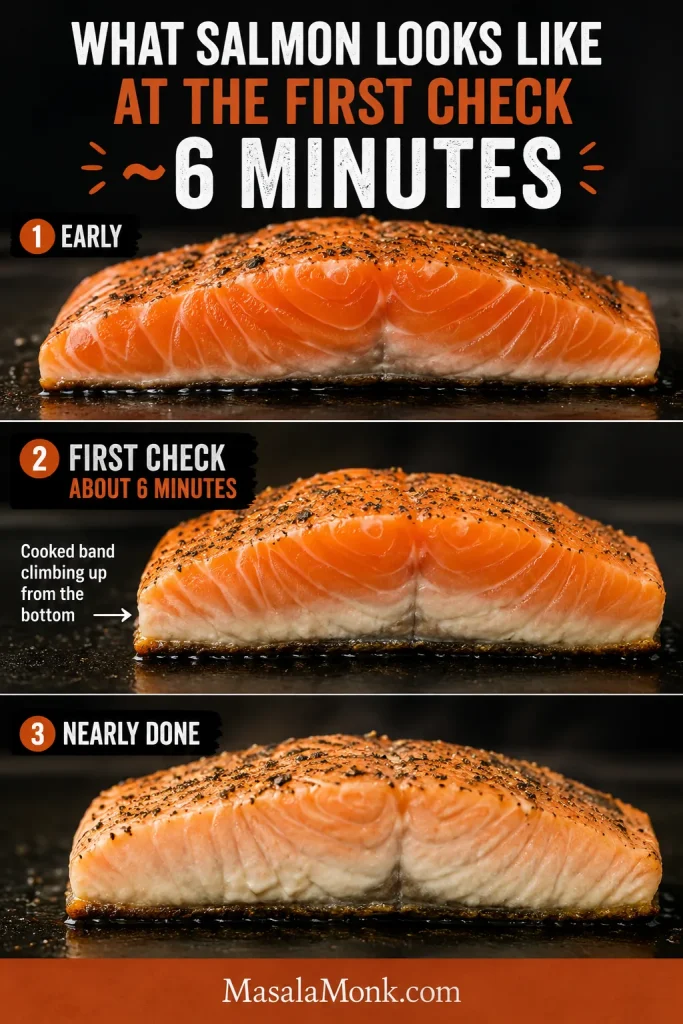
Leave the base fillets undisturbed for 6 minutes. This is the quiet part of the recipe: no sliding, lifting or repeated checking. A steady sizzle is what you want; aggressive popping or flare-ups mean the fire needs attention.
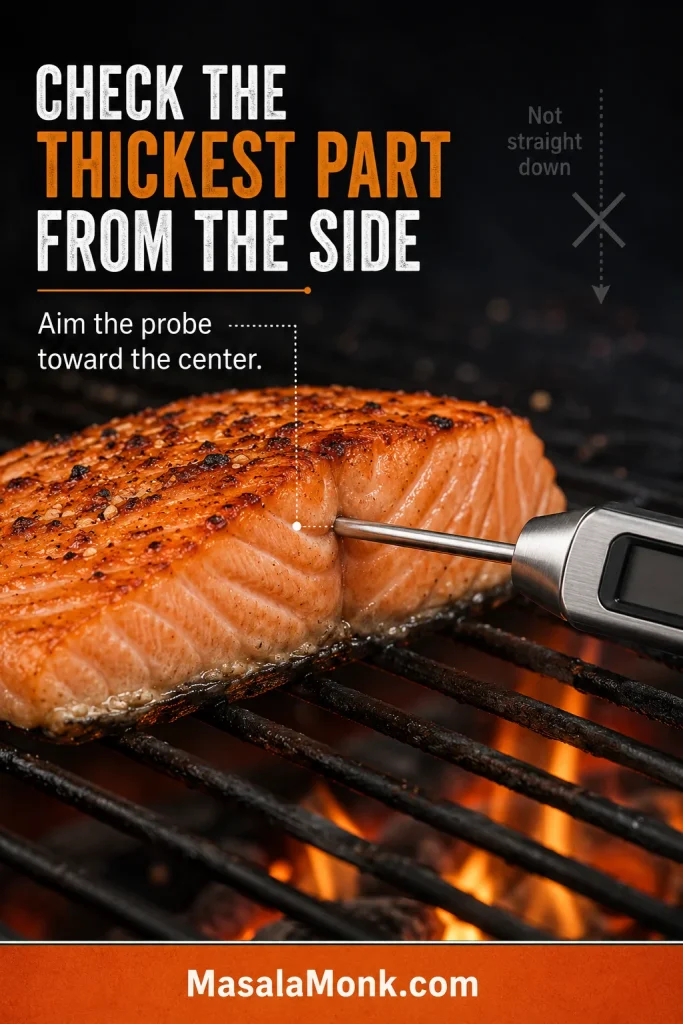
Take the first real look. Insert the thermometer horizontally from the side into the thickest part. The top should still look plump, while the skin visible along the bottom edge should look darker and firmer.
At the first look, use the visible cooked band to judge progress, then confirm the finish with internal temperature.
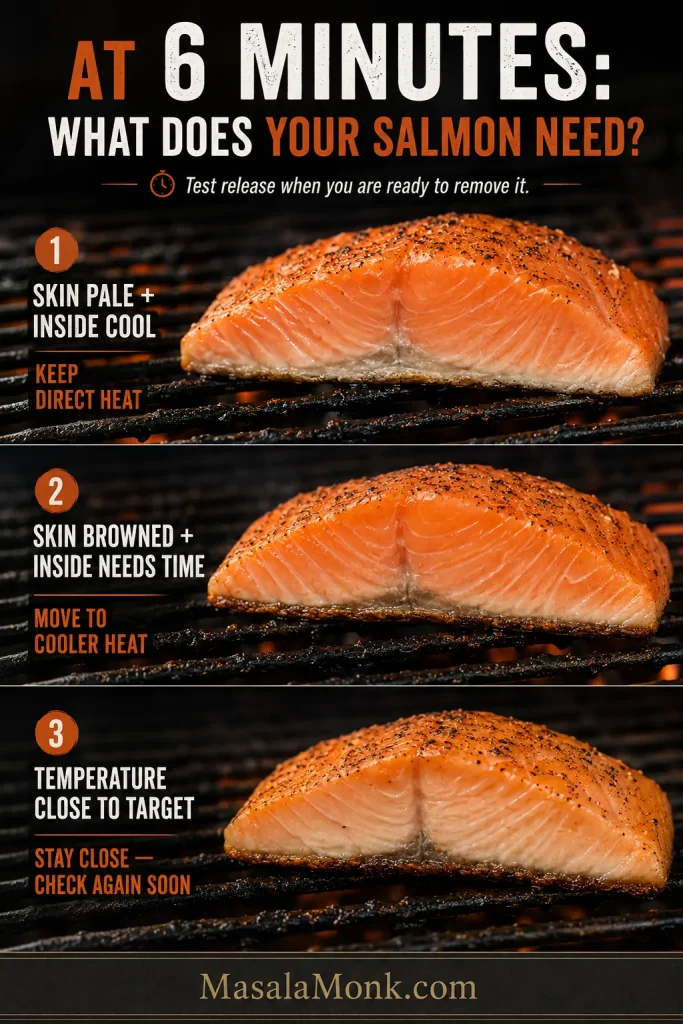
At the 6-Minute Check
Skin still pale and the thick middle well below target? Keep cooking over direct heat.
Skin browned but the inside still needs time? Slide the salmon to the cooler zone without flipping and close the lid.
Temperature already close to your target? Stay nearby and check again soon. Test the release only when you are ready to remove the salmon.
The useful clue is the mismatch: if the skin is ready before the center, change the heat rather than simply giving the salmon more direct-fire time.
Release, Finish and Rest
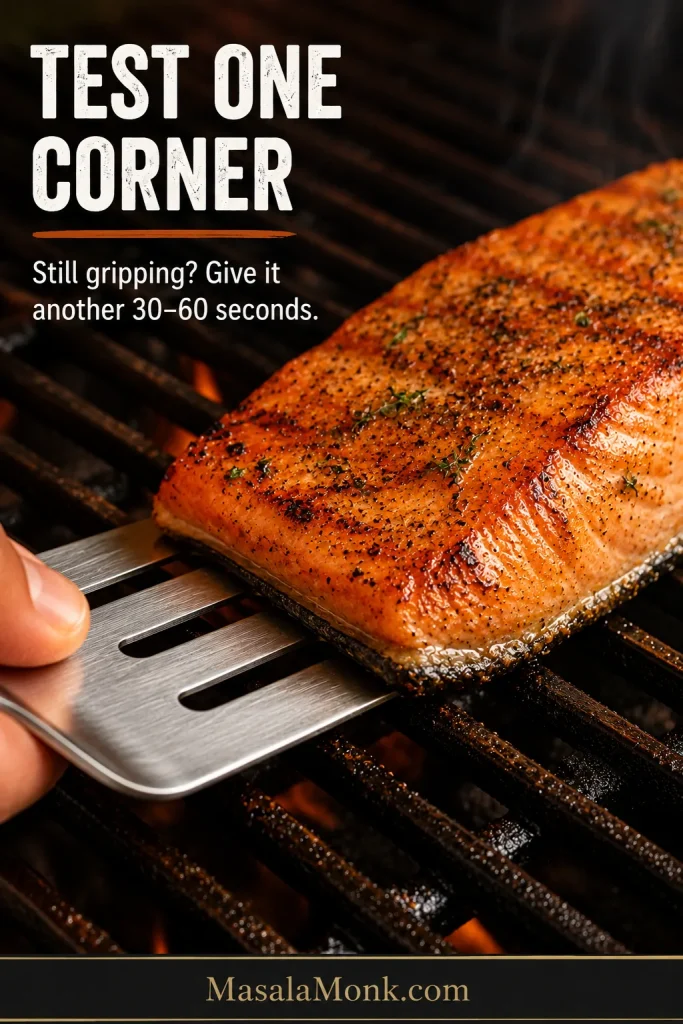
Check the release near the end. The first attempted lift is the moment that makes many cooks nervous, so treat it as a question rather than a commitment. Slide only the thin edge of a fish spatula beneath one corner. If the skin still grips firmly, give it another 30–60 seconds.
Test only one corner first. If the spatula slides underneath without scraping or tearing, the skin has set enough to lift.
Finish and remove. Check the deepest part of the fillet and transfer the salmon as soon as it reaches the temperature you want. For the official U.S. safety target, cook to 145°F / 63°C.
Rest before serving. Give the fillets 3–5 minutes, then finish the flesh with lemon and optional melted butter. Keep the butter off the skin when you want it to stay crisp.
If the salmon reaches its target before the skin releases perfectly: Work the thin spatula underneath gently and remove it. A small patch of stubborn skin is a better trade than an overcooked fillet.
Optional final flip: Once the skin releases naturally, turn the fillet and cook the flesh side for 1–2 minutes for additional color. Check the temperature again before removing it.
You do not need perfect grill marks. Crisp skin, a little smoke and tender flesh matter more than dark crosshatching.
Do not cook by time alone. Fillet thickness, salmon type, grill construction, wind and outdoor temperature can all shift the finish. If your fillets are thinner or thicker than the base cut, use the timing-by-thickness guide as your first-check reference.
The Result: Crisp Skin and Tender Flakes
Set the salmon down and give it a moment before cutting in. The skin should feel firm beneath the spatula while the top still looks plump.
Look for browned skin that lifts mostly intact.
Broad flakes should still glisten between the layers.
Confirm that the thickest part has reached the temperature you chose.
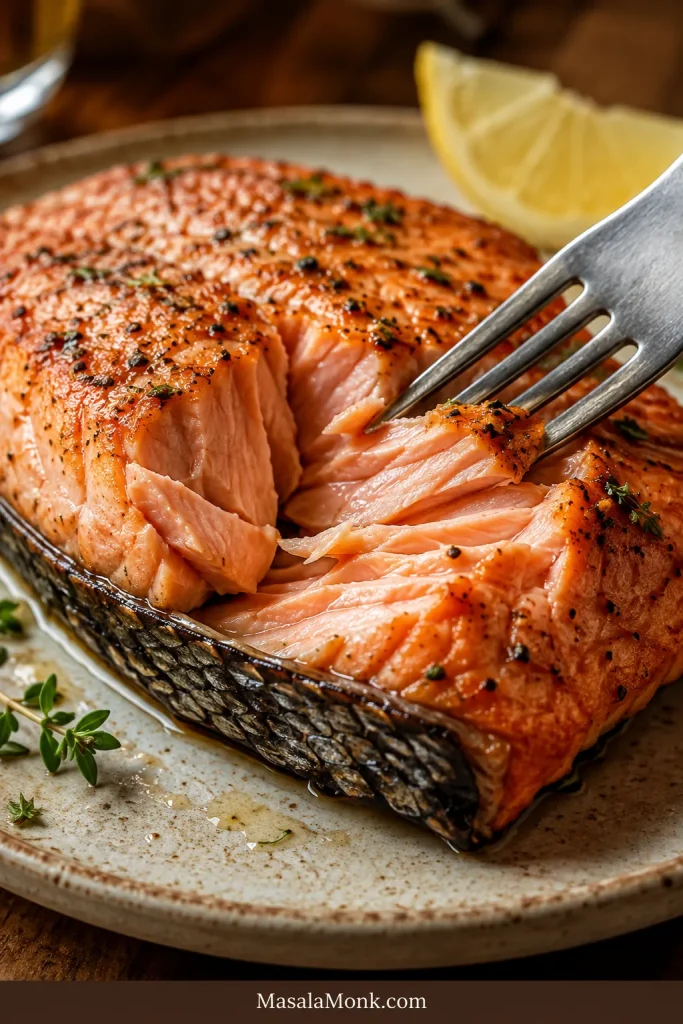
A successful fillet should not feel uniformly firm. The best contrast is crackly skin underneath with broad, moist salmon flakes above.
When you cut into the center, the flakes should separate with a gentle nudge instead of crumbling into dry shreds. The skin may crack lightly under the fork while the flesh above stays moist.
A torn corner, a small patch of skin left behind or a little white albumin does not make dinner a failure. If the salmon has reached your target temperature and is still juicy between the flakes, add lemon or sauce and eat it while it is good.
Grilled Salmon Guide
Dinner can stop here. If your salmon is thinner, skinless, wild, marinated or headed for another kind of grill, here is what changes.
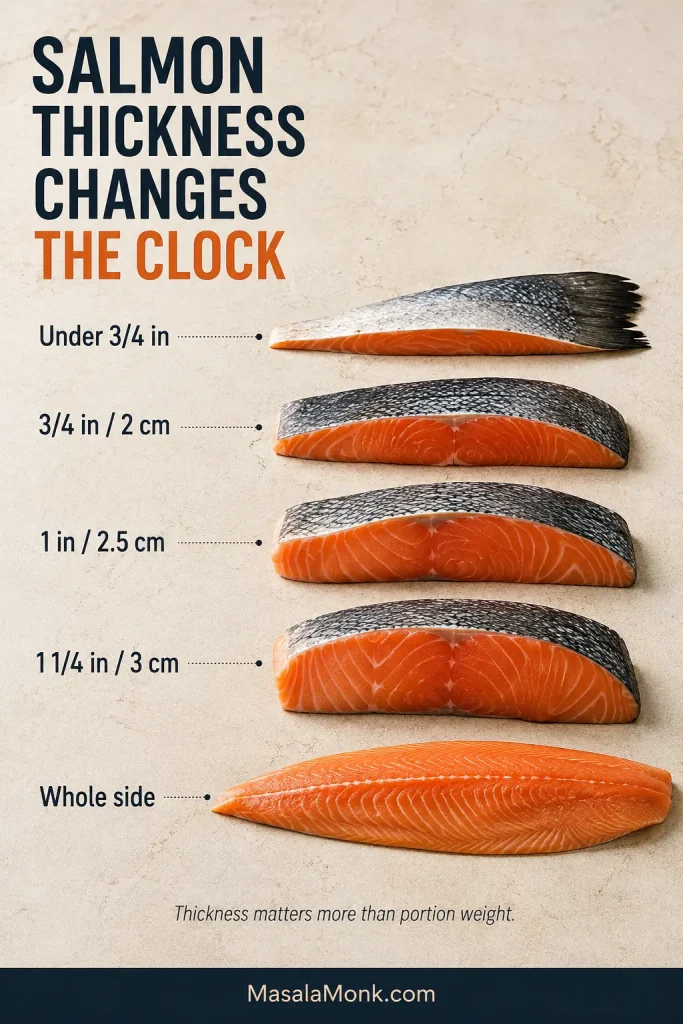
Thickness drives cooking time more than portion weight. Weight is included below as a useful reference for the kinds of fillets commonly sold in stores.
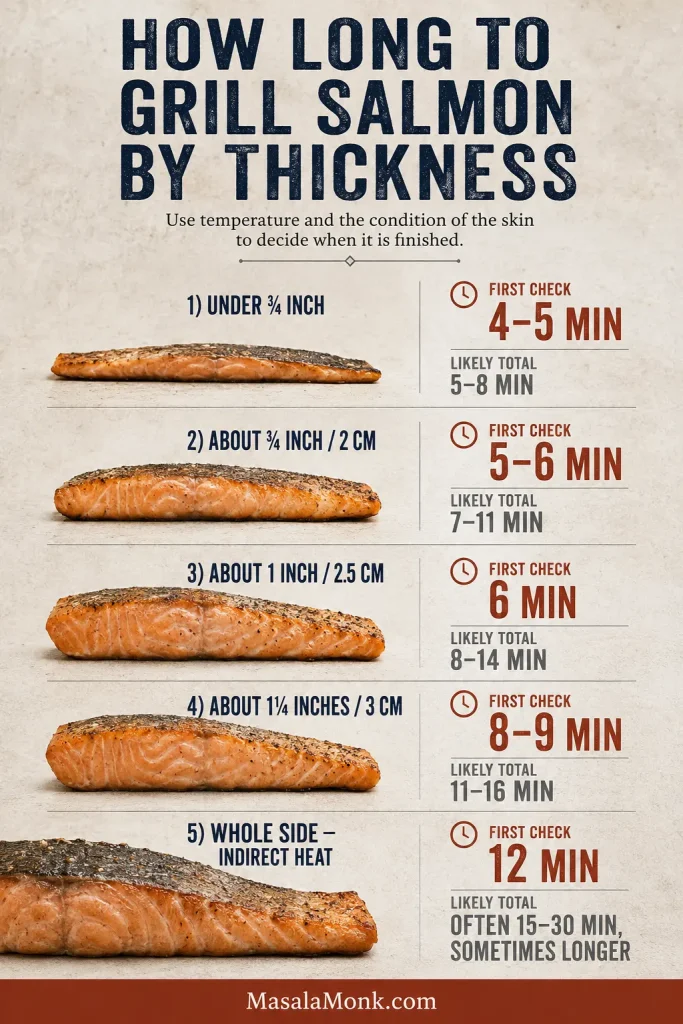
Use these ranges for fully thawed salmon cooked at 425–450°F / 220–230°C. A lean sockeye tail, a thick Atlantic center cut and a whole side should not share one timer.
Measure where the salmon is thickest. An average-looking portion can still contain a center that needs several more minutes than its tapered edges.
First-Check and Total-Time Guide
Salmon format
First check
Likely total time
What changes
Thin wild or tail portion, under ¾ inch
4–5 minutes
5–8 minutes
May finish well before thicker fillets
5–6 oz / 140–170 g, about ¾ inch thick
5–6 minutes
7–11 minutes
Check lean salmon early
6–8 oz / 170–225 g, about 1 inch thick
6 minutes
8–14 minutes
Base-method range
8–10 oz / 225–285 g, about 1¼ inches thick
8–9 minutes
11–16 minutes
Move to gentler heat once the skin is browned
Whole side, cooked indirectly
12 minutes
Often 15–30 minutes, sometimes longer
Thickness and overall size vary widely
Use grilled salmon timing as an alert to start checking—not permission to walk away until an exact finishing minute arrives.
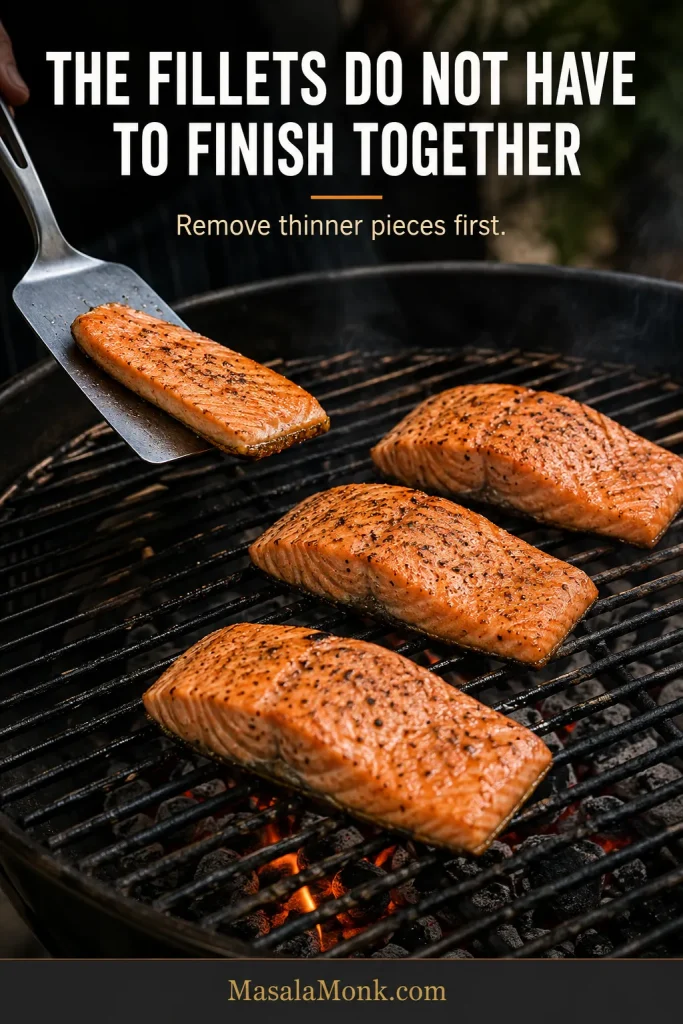
If one fillet on the tray is visibly thinner than the others, check it first. The pieces do not need to leave the grill together. Ignore a tapered edge when judging the overall thickness; if it narrows sharply, fold the thinnest flap underneath itself or plan to remove that portion before the thicker pieces.
Check the thinnest fillet first and remove it when ready; thicker pieces can stay on the grill until their own centers catch up.
Why grilled salmon recipes give different times
You may see one grilled salmon recipe promise dinner in 6 minutes and another allow twice that. Grill temperatures vary, fillets vary in thickness, some methods flip while others stay skin-side down, and recipes do not all stop at the same internal temperature.
That is why this method uses a first-check time instead of one universal finish time. Start checking early, then use temperature and the condition of the skin to decide what happens next.
What changes the cooking time?
Salmon type: Lean wild salmon often cooks faster than fattier farmed salmon.
Actual grate temperature: The lid thermometer may not reflect the heat directly beneath the fish.
Wind and outdoor temperature: Both can slow the grill, especially when the lid is opened repeatedly.
Starting temperature: Refrigerator-cold and partially frozen centers take longer.
Target doneness: Salmon cooked to 145°F / 63°C generally needs more time than salmon removed at a lower culinary temperature.
How to Know When Grilled Salmon Is Done
The last few minutes are where salmon changes fastest. Checking early gives you room to make a calm decision instead of discovering dryness after the fact.
Watch the pale cooked band moving up the sides and confirm the result with a thermometer. Push the probe horizontally into the thickest part so the tip reaches the true middle; entering from above makes it easy to pass too close to the hot grate.
Side entry makes the target easier to hit: the probe can travel through the thick middle instead of sampling the hotter layer nearest the grate.
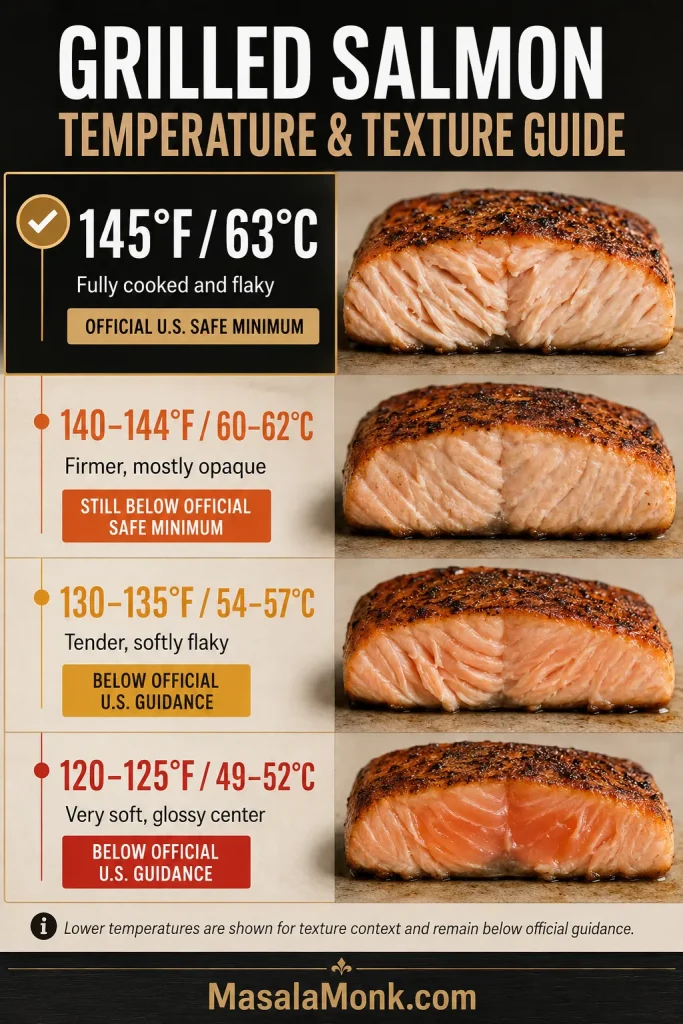
A common culinary preference, but below official guidance
140–144°F / 60–62°C
Firmer and mostly opaque
Still below the official safe minimum
145°F / 63°C
Fully cooked and flaky
Official U.S. safe minimum for fish
Texture changes before your eyes as temperature rises, but the safety line does not move: 145°F / 63°C remains the official U.S. safe minimum for fish.
People at increased risk of serious foodborne illness should not be served salmon below that official minimum.
A small fillet may rise slightly while resting, but do not count on a large carryover increase. If you are unsure, check again in 30–60 seconds. Salmon gives you another look far more readily than it gives you back an overcooked middle.
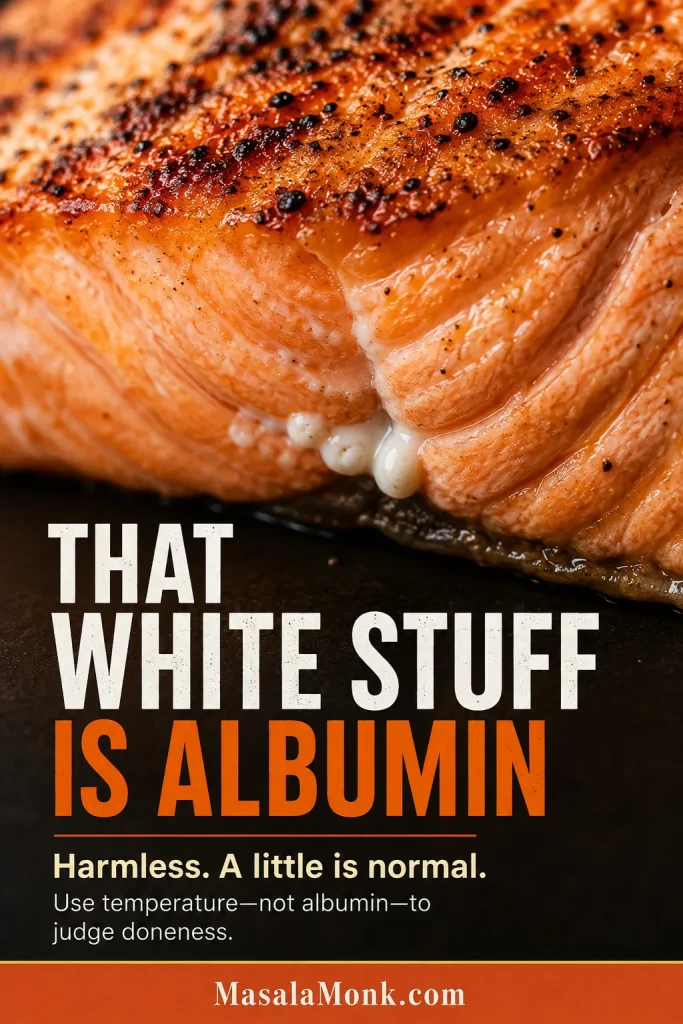
The white material that sometimes appears on the surface is albumin, a harmless protein pushed out during cooking. Its presence alone is not a doneness cue.
Albumin can appear before or after the center reaches your target, so treat it as a normal cooking effect—not a built-in salmon thermometer.
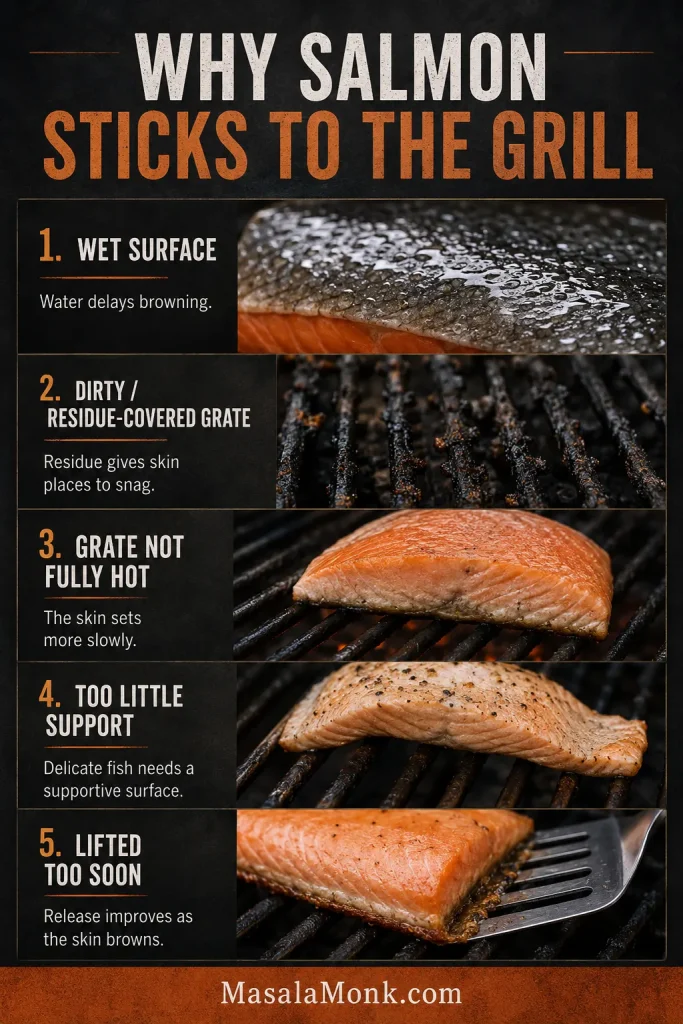
Why Salmon Sticks to the Grill
Sticking usually begins before the salmon reaches the grate. A wet surface slows browning, old residue gives the skin rough places to catch, and a grill that has not heated fully makes clean release harder.
Sticking gets more likely when problems stack together—a wet surface, weak heat and an early lift are much harder on the skin than any one factor alone.
What Makes Salmon Release Cleanly
Dry skin: Surface water has to evaporate before browning can begin.
Hot, clean grates: The skin sets faster against fully heated metal, and scraping away old residue removes places where it can snag.
A thin film of oil: Enough to support even contact and browning without dripping into the fire.
Skin-side-down cooking: The skin gives the delicate flesh a sturdier base while taking the strongest direct heat.
Time: As the skin browns and firms, it becomes easier to lift.
What natural release feels like
At first, the fillet may cling firmly. Later, the thin edge of a fish spatula begins to slide underneath without scraping or tearing.
If your spatula meets resistance, the salmon needs another moment—not more force.
An older or rougher grate may still hold onto a small patch of skin. Let that small patch go rather than keeping an otherwise ready fillet over the heat.
Choose the Right Grilling Method for Your Salmon
The salmon you bought determines the next choice. Together, its skin, thickness and shape tell you how much support and heat control it needs.
What you bought
Best route
Main adjustment
Skin-on center-cut fillets
Direct grill, skin-side down
Use the main recipe
Skinless fillets
Plancha, cast-iron griddle, perforated grill pan or foil
Give the flesh more support
Thin wild salmon
Same direct method
Begin checking earlier
Salmon steaks
Direct grill, turn once
Keep the thermometer away from the bone
Whole side
Indirect heat, skin-side down
Leave it unflipped
Frozen-solid salmon
Separate method
Do not simply add minutes to this recipe
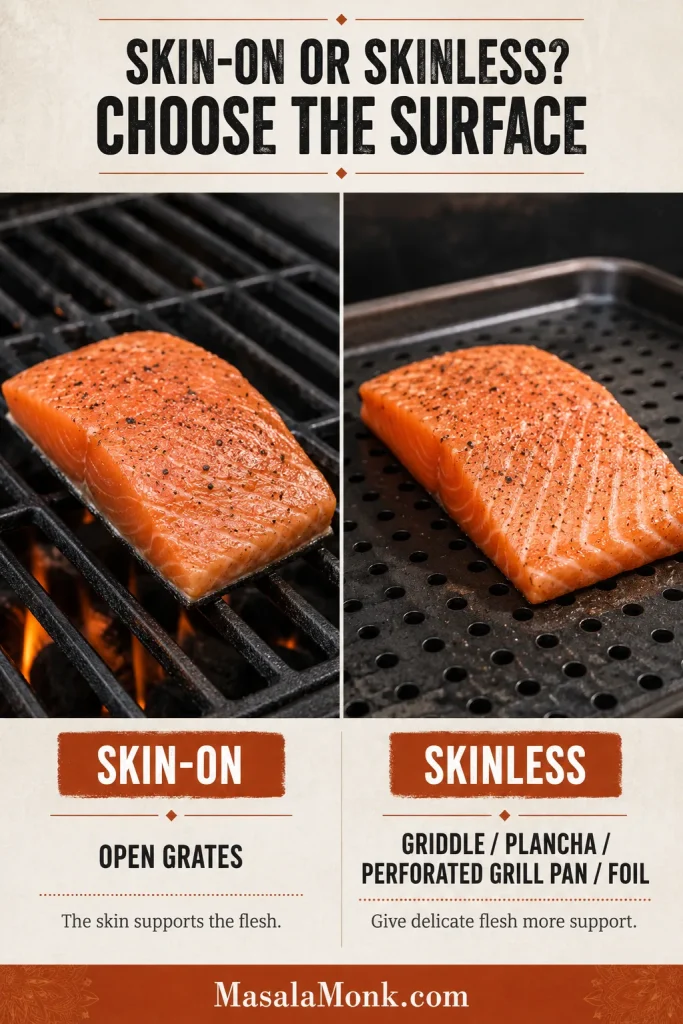
Skin-on versus skinless
Skin-on fillets are the easiest fit for open grates because the skin supports the flesh and takes the direct heat. If you came home with skinless salmon, you have not bought the wrong fish—you simply need a more supportive cooking surface.
Preheat a cast-iron griddle, plancha or perforated grill pan with the grill. Oil the surface and fish lightly, cook the presentation side first and turn once.
Skinless salmon needs a supportive cooking surface. Once it is protected from the open grates, use the same temperature and texture cues to judge doneness.
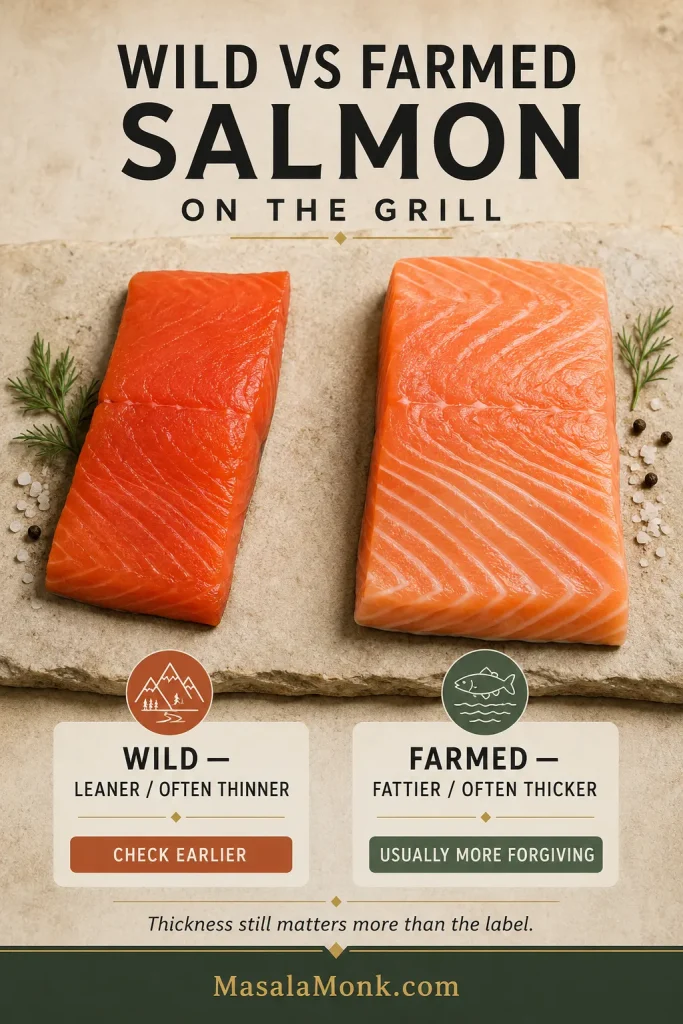
Wild versus farmed salmon
Fattier salmon, including many Atlantic and king salmon portions, tends to tolerate a little more heat and time. Leaner varieties such as sockeye and coho are often thinner and can move from tender to dry quickly.
A thin sockeye portion may need attention after 4–5 minutes rather than 6. For a gentler indoor approach built around lean wild fillets, see this baked sockeye salmon recipe.
Wild and farmed salmon can cook at different rates, but thickness and grill heat still decide when each fillet needs its first check.
Fresh versus previously frozen
Previously frozen salmon can grill beautifully. Thaw it completely in the refrigerator, remove any surface ice and dry it particularly well before seasoning. Frozen-solid salmon needs a separate cooking method; simply adding minutes to this one is not enough.
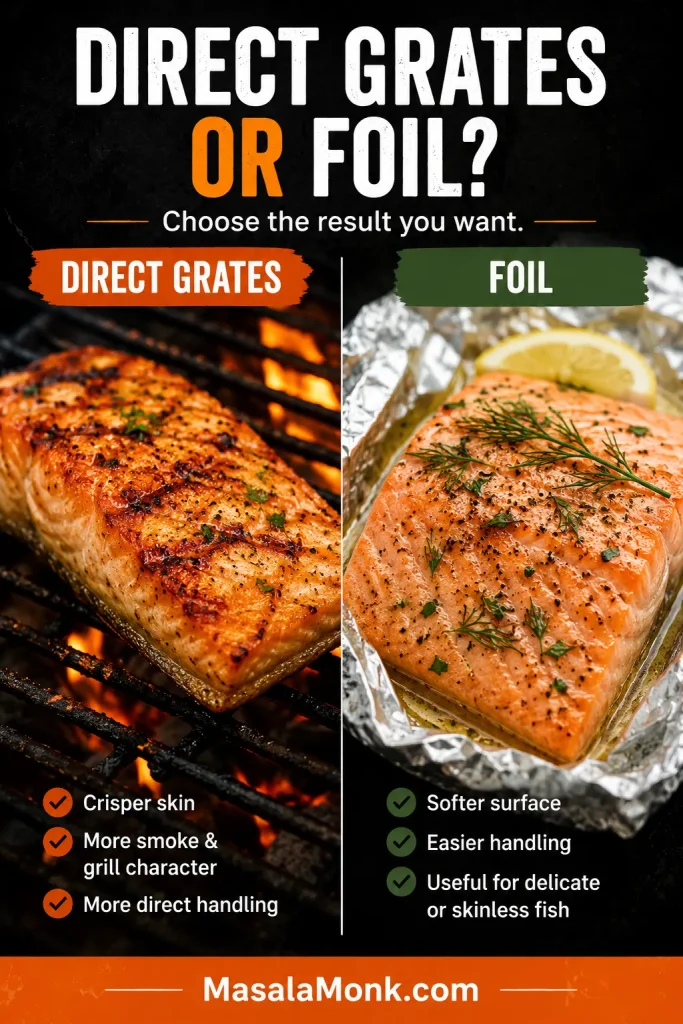
Direct grates or foil?
Some nights you want crisp skin. Other nights you mainly want the salmon safely contained and easy to lift.
Direct grates: Skin-on fillets with the crispest underside and more grilled character.
Brief final flip: More flesh-side color and char after the skin has released.
Foil: Easier handling for thin, skinless or delicate salmon, with a softer surface and less smoke.
Choose the surface by priority: direct grates reward texture and smoke, while foil buys easier handling when preserving a delicate fillet matters more.
For a quick foil version, place the salmon on lightly oiled heavy-duty foil and fold it into a loose packet with room for steam. Set the packet over the cooler side of the grill, close the lid and begin checking after 8 minutes. Thin fillets may finish sooner; thick center cuts will need longer.
Do you have to flip salmon on the grill?
No. The base recipe stays skin-side down because it requires less handling. If you want more char on the flesh, wait for a clean release, turn once and give the second side 1–2 minutes.
Wait until the skin releases cleanly before deciding whether to flip. A brief flesh-side turn is only for extra browning at the finish.
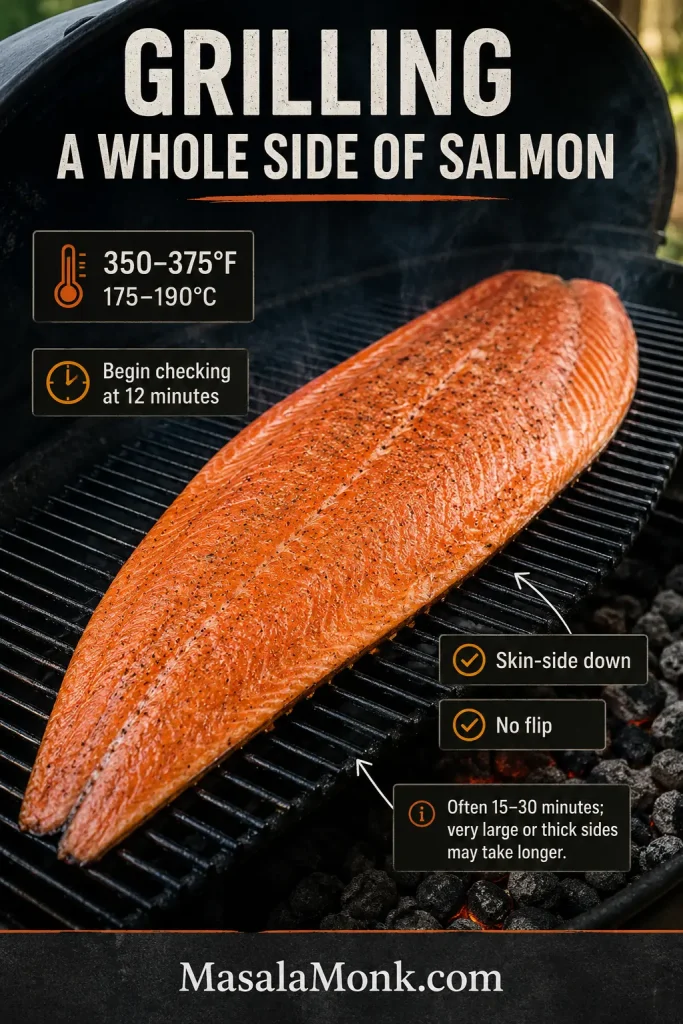
How to grill a whole side of salmon
A whole side makes a generous shared platter because everyone can choose a thicker or thinner piece. Its cooking time varies widely, so begin with the thermometer instead of treating one finish time as fixed.
Aim for about 350°F / 175°C over indirect heat, with 350–375°F / 175–190°C as the workable range.
Place the salmon skin-side down away from the strongest heat.
Close the lid and leave it skin-side down.
Begin checking after 12 minutes. Many sides finish around 15–30 minutes, while thick or very large sides can take longer.
Use two wide spatulas or a sturdy transfer board to move it.
A whole side naturally cooks unevenly from tapered end to thick center, so judge doneness at the thickest section—not by the edges.
A spoonful of fresh chimichurri is especially good against the richness of a whole side, bringing acidity, herbs and garlic to every piece.
Once the salmon format is sorted, the remaining technique question is simply how your grill lets you manage stronger and gentler heat.
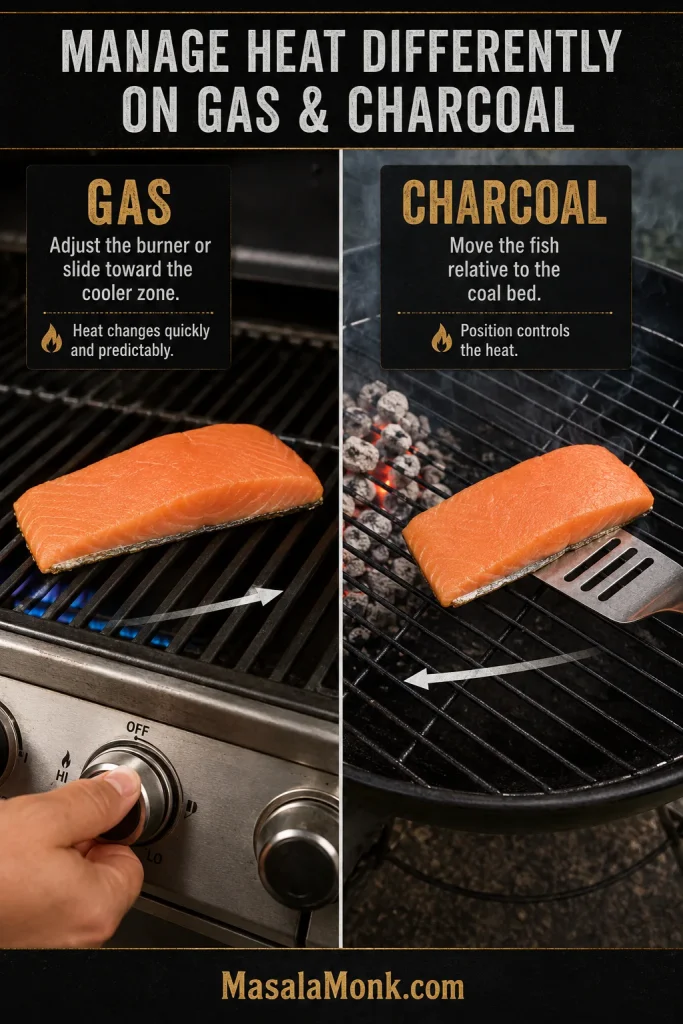
What Changes on a Gas Grill vs Charcoal?
Gas Grill
Gas gives you immediate heat control. If the skin is browned while the inside still needs time, lower the nearby burner or move the salmon toward the cooler side. The adjustment is quick and predictable, which makes it easy to protect an already browned surface.
Charcoal Grill
With charcoal, heat control happens mostly through position. Move the salmon farther from the coal-heavy side when the skin is dark enough, and watch for flare-ups as salmon fat drips onto the fire. A cooler area lets you protect the fish immediately instead of waiting for the coals themselves to calm down.
The salmon cues do not change when the grill changes; only your control lever does—burners on gas, physical position over charcoal.
With the heat under control, the difficult part is over. From here, flavor can change without changing the cues that tell you when the salmon is ready.
The base seasoning is dry, savory and free from sugar. It adds color and flavor without wetting the surface or introducing ingredients that can scorch early.
For 24 oz / 680 g salmon: Use 1 tablespoon / 15 ml neutral oil, 5 g fine sea salt, 1 teaspoon / about 3 g garlic powder, 1 teaspoon / about 2 g sweet paprika and ½ teaspoon / about 1 g black pepper.
Garlic powder adds garlic flavor without the wet surface and quick scorching of fresh minced garlic. Sweet paprika adds color without turning the base seasoning smoky. Save the lemon juice for the finished salmon.
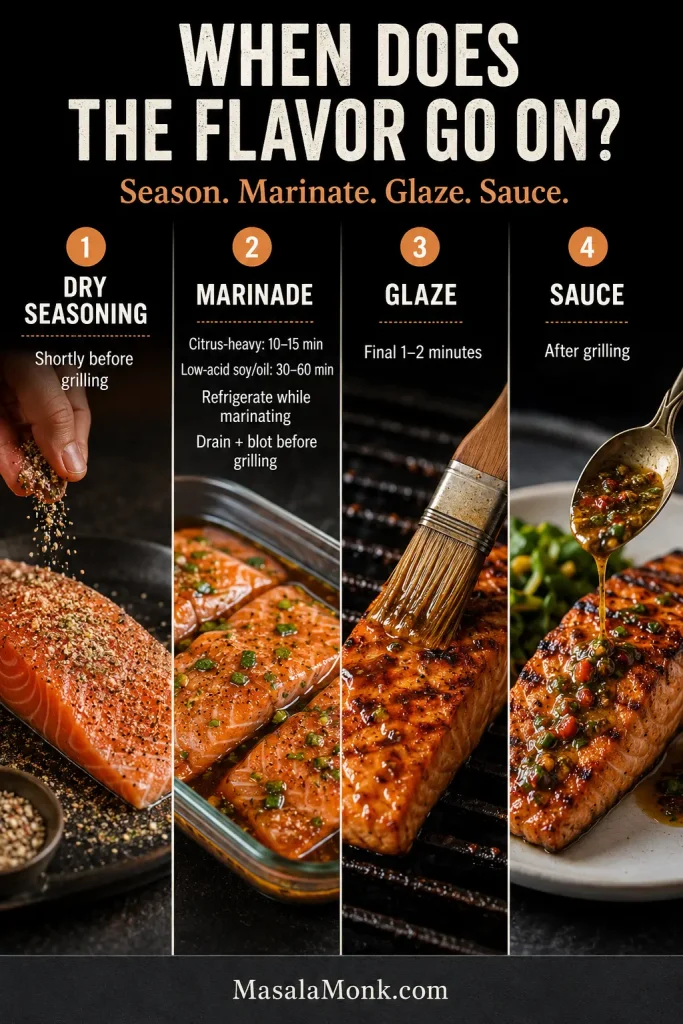
Seasoning, Marinade, Glaze or Sauce?
Dry seasoning: Apply shortly before grilling.
Marinade: Flavor the salmon beforehand, then drain and blot away excess moisture.
Glaze: Brush sugary mixtures over the flesh during the final 1–2 minutes.
Serving sauce: Add after the salmon leaves the heat.
A useful rule of thumb: the sweeter and more burn-prone the flavor treatment, the later it belongs near strong grill heat.
How long should salmon marinate?
Citrus-heavy marinade: 10–15 minutes
Low-acid soy and oil marinade: 30–60 minutes
Dry seasoning: Apply shortly before grilling
Keep the salmon refrigerated while it marinates. Before grilling, drain it and blot away excess liquid, especially from the skin.
Honey, maple syrup, brown sugar, teriyaki sauce and many barbecue sauces darken quickly over direct heat. Add them near the end, and reserve any finishing sauce before a brush or spoon touches raw fish.
Four Ways to Change the Flavor
Each formula seasons four 6 oz / 170 g fillets. Keep the same heat and doneness cues; change the flavors around them.
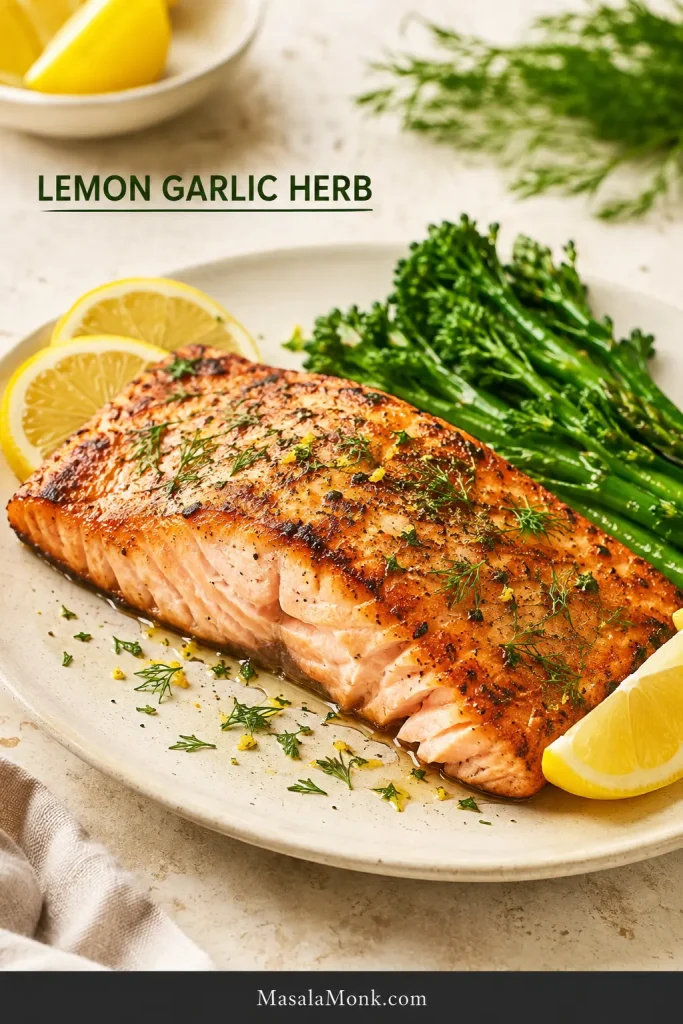
Lemon Garlic Herb
Choose this when the rest of dinner is already doing plenty and you want the salmon bright, familiar and easy to pair with vegetables or potatoes.
1 tablespoon / 15 ml neutral oil
5 g fine sea salt
1 teaspoon garlic powder
1 teaspoon finely grated lemon zest
½ teaspoon black pepper
1 tablespoon finely chopped fresh dill or parsley, for finishing
Season with the oil, salt, garlic powder, lemon zest and pepper before grilling. Finish with the fresh herbs and a squeeze of lemon after the salmon comes off the heat.
Fresh herbs do more work at the finish than over the fire, where their delicate aroma can disappear long before the salmon is ready.
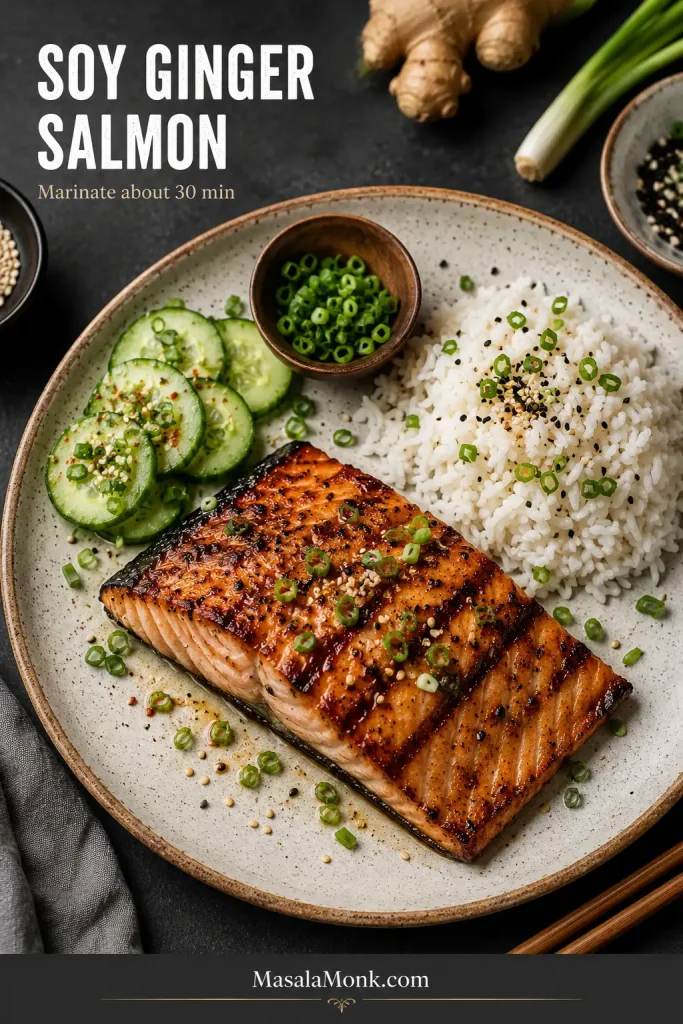
Soy Ginger
This is the natural bowl version: savory enough for rice and crisp vegetables without needing a heavy glaze.
2 tablespoons / 30 ml low-sodium soy sauce
1 tablespoon / 15 ml neutral oil
2 teaspoons finely grated ginger
1 teaspoon finely grated garlic
1 teaspoon honey, optional
Marinate for 30 minutes, then drain and blot the salmon well. For a thicker finish, brush on homemade teriyaki sauce during the final minute or two.
The marinade seasons the flesh; the dry skin still has a separate job. Blotting keeps the soy-ginger flavor without sacrificing browning and release.
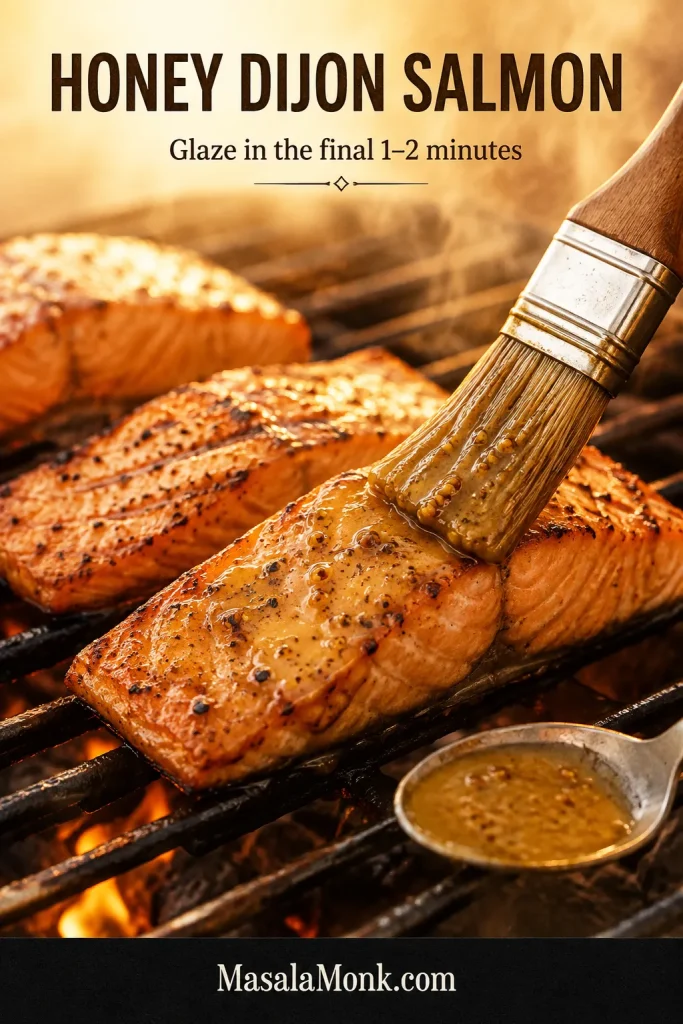
Honey Dijon
Good when you want a little sweetness but still want mustard and salmon to lead the flavor.
1 tablespoon / 15 ml neutral high-heat oil
3 g fine sea salt, about ½ teaspoon
1 tablespoon / 15 g Dijon mustard
2 teaspoons / about 14 g honey
1 teaspoon / 5 ml lemon juice
½ teaspoon garlic powder, optional
Pinch of black pepper, optional
Oil and salt the salmon before grilling. Mix the remaining ingredients separately and brush the glaze over the flesh during the final 1–2 minutes.
Honey Dijon salmon needs a late glaze because the same sugars that create beautiful caramelization can turn bitter when given too much time over direct heat.
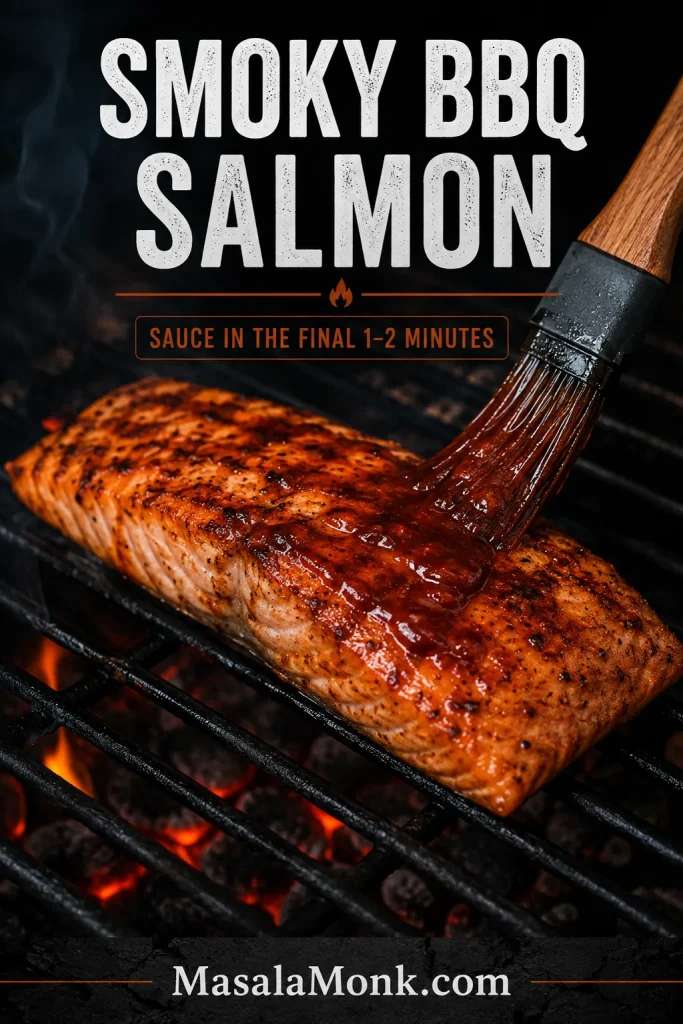
Smoky BBQ
Use this when the salmon should carry most of the bold flavor on a plate of simple vegetables, potatoes or salad.
1 tablespoon / 15 ml neutral oil
3 g fine sea salt, about ½ teaspoon
1 teaspoon smoked paprika
1 teaspoon garlic powder
½ teaspoon onion powder
¼ teaspoon black pepper
2–3 tablespoons / 30–45 ml barbecue sauce
Season with the oil, salt and spices before grilling, then brush the barbecue sauce over the flesh during the final 1–2 minutes.
For BBQ salmon, build the smoky flavor with seasoning and grill heat first; let the sauce provide the glossy, sweet finish near the end.
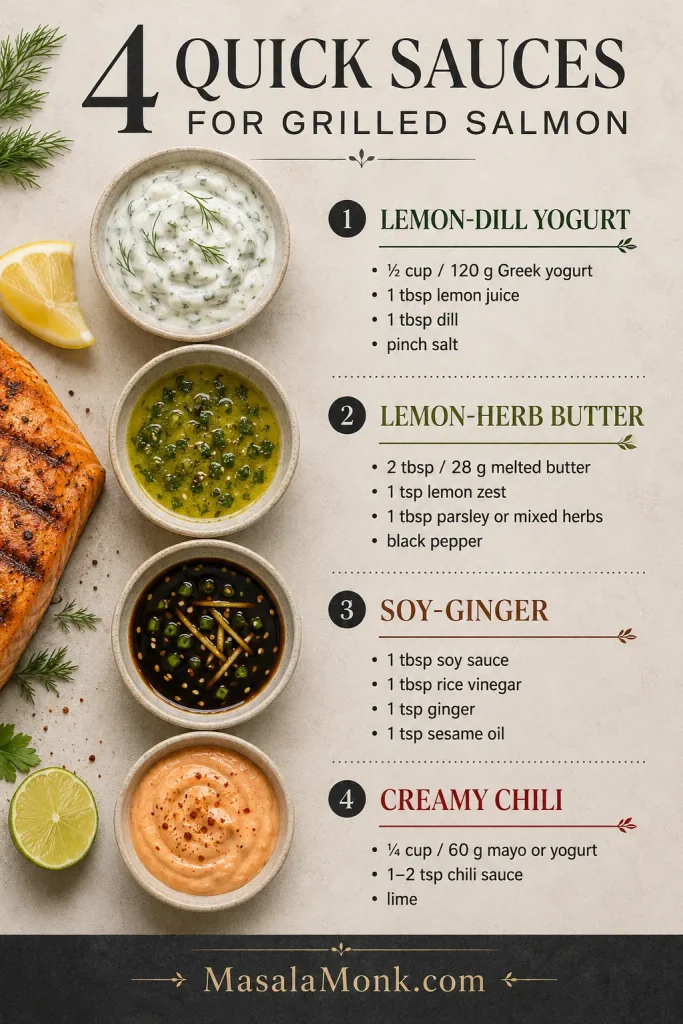
Which Sauce Goes Best With Grilled Salmon?
Once the salmon leaves the grill, sauce is the easiest way to take dinner in a different direction. Each makes enough for four fillets.
Sauce
Quick formula
Best with
Lemon-dill yogurt
½ cup / 120 g Greek yogurt, 1 tablespoon lemon juice, 1 tablespoon chopped dill and a pinch of salt
Base recipe or lemon-herb salmon
Lemon-herb butter
2 tablespoons / 28 g melted butter, 1 teaspoon lemon zest, 1 tablespoon chopped parsley and black pepper
¼ cup / 60 g mayonnaise or yogurt, 1–2 teaspoons chili sauce and a squeeze of lime
Bowls, wraps and salads
A creamy sauce works well when the plate needs cooling richness. Something sharper suits salmon that already carries a sweet glaze or buttery finish.
A spoonful of mango salsa turns grilled salmon toward a fresher summer plate with juicy fruit, lime and onion.
Choose sauce by what dinner needs: yogurt cools, herb butter enriches, soy-ginger adds savory depth, and creamy chili brings heat without changing the grilled salmon itself.
What to Serve With Grilled Salmon
Build the plate with one vegetable, one starch or substantial salad, and one bright finishing element. A squeeze of lemon should brighten the salmon, not rescue a dry fillet.
Classic Grill Dinner
The familiar cookout plate: smoky salmon, buttery potatoes and something green with charred edges.
Once the salmon is cooked well, dinner variety can come from the plate around it—fresh and light one night, hearty and comforting the next.
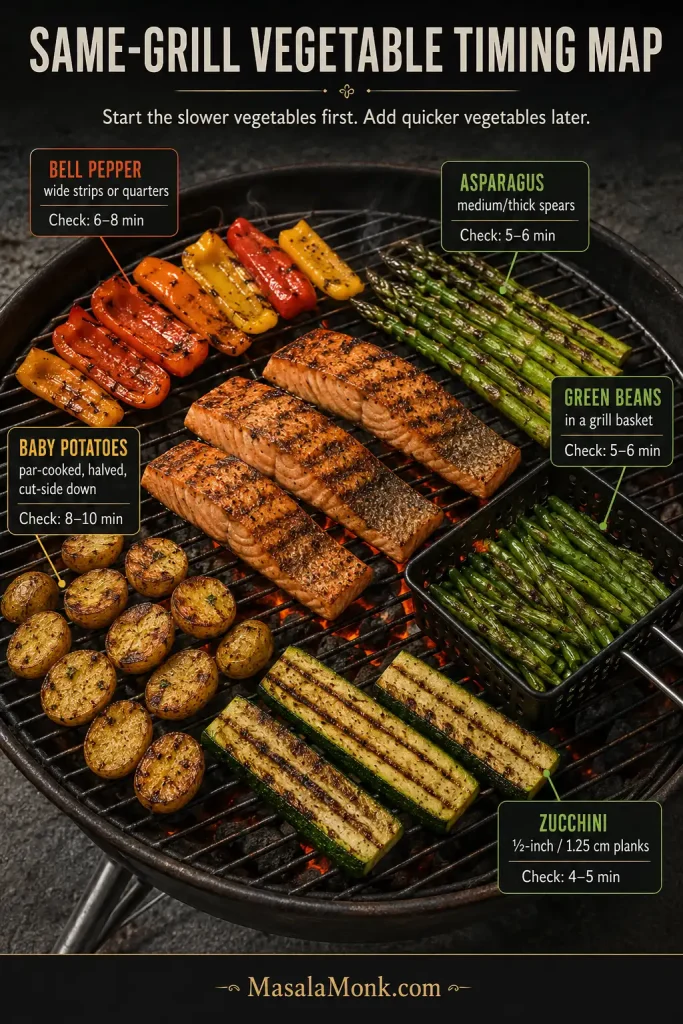
Vegetables You Can Grill Alongside the Salmon
Begin checking around the times below; cut size and actual grill heat will shift them.
Vegetable
Preparation
Begin checking after
Ready when
Asparagus
Medium or thick spears, lightly oiled
5–6 minutes
Bright green, tender and lightly charred
Zucchini
½-inch / 1.25 cm planks
4–5 minutes
Flexible with browned grill marks
Bell pepper
Wide strips or quarters
6–8 minutes
Softened with blistered spots
Green beans
Lightly oiled in a grill basket
5–6 minutes
Tender-crisp with blistered skins
Par-cooked baby potatoes
Halved, cut-side down
8–10 minutes
Golden outside and hot through the middle
Peppers and potatoes generally need a head start. Zucchini, green beans and asparagus can go on later. Keep them toward the cooler edge when the salmon occupies the strongest heat.
Pull vegetables as they become ready and keep them loosely covered off the heat. They hold well for a few minutes while the salmon gets your full attention.
Let the salmon control the final timing. Grilled vegetables can wait a few minutes far more gracefully than a perfectly cooked fillet can.
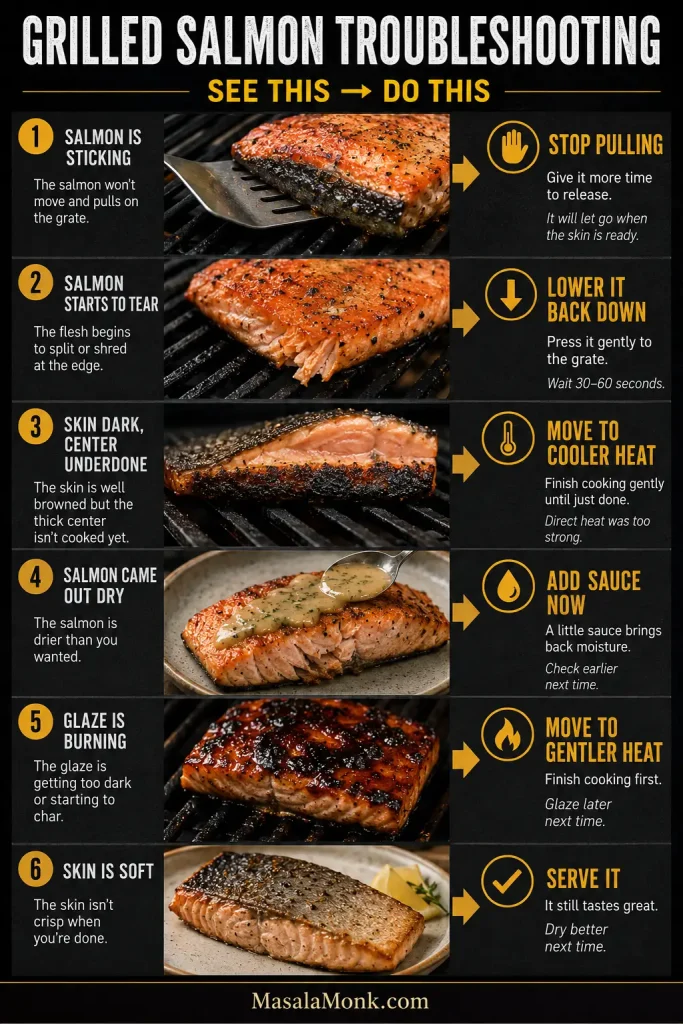
Grilled Salmon Troubleshooting: Fix Sticking, Tearing, Burning or Dryness
This is the rescue section. If dinner is already on the grill, find the symptom that looks closest to yours and act from there.
Rescue dinner first and diagnose technique later. The immediate move is usually to stop forcing, reduce heat or restore moisture—not to keep cooking and hope.
Quick Fixes by Symptom
Problem
Likely cause
What to do
Salmon sticks immediately
The skin has not released yet, or the grate was not fully prepared
Stop pulling and give it more time
Fillet tears when lifted
The skin is still gripping the grate
Lower it back down and wait another 30–60 seconds
Skin burns before the inside cooks
Direct heat is too aggressive for the thickness
Slide the salmon to the cooler zone and close the lid
Salmon is dry
It stayed on after the inside was ready
Add sauce now; next time, begin checking earlier
Edges dry before the middle
Tapered or thinner portions cook first
Fold the thin flap underneath or remove thinner fillets earlier
Inside is undercooked but the outside is dark
The fillet is thick or the direct heat is too strong
Finish over indirect heat
Glaze burns
Sugar was added too early
Move to gentler heat; glaze later next time
Salmon falls between the grates
Skinless or fragile fish needs more support
Use a griddle, perforated grill pan or foil
White albumin appears
Proteins tightened during cooking
A little is normal; judge doneness by temperature
Salmon tastes bland
It needs salt, acidity or a stronger finish
Add lemon, herb butter, yogurt sauce or salsa
Skin is soft
The skin was wet or had too little direct heat
Serve it as it is; dry more thoroughly next time
Dry salmon usually eats better with a sauce or flaked into a bowl. Pieces that break while lifting are often perfect for salad, rice or pasta.
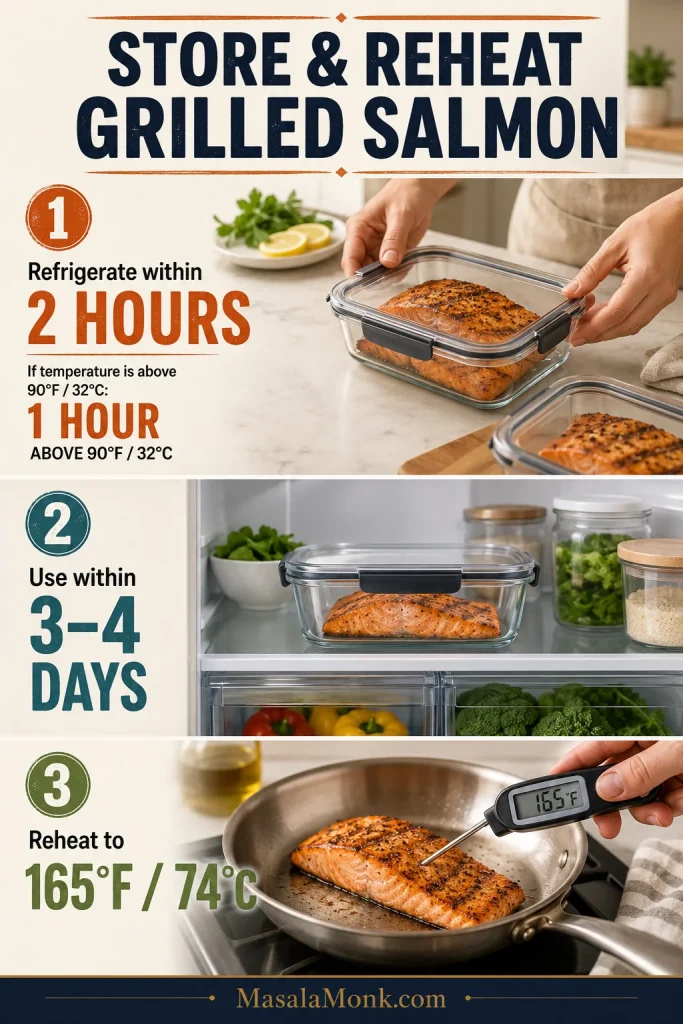
How to Store and Reheat Grilled Salmon
Appearance cannot tell you whether leftovers were stored safely. Prompt chilling, sealed storage and the time-and-temperature limits in the guide matter more.
Refrigerate it promptly
Transfer leftovers to a shallow airtight container and refrigerate them within two hours of cooking—or within one hour when the outdoor temperature is above 90°F / 32°C. Use refrigerated leftovers within 3–4 days. These limits follow the USDA guidance for chilling and reheating leftovers.
Reheat gently
High heat can toughen the outside before the middle is warm. Cover the salmon and reheat it slowly in a low oven or skillet with a teaspoon of water, broth or butter.
Official guidance recommends reheating leftovers to 165°F / 74°C. Check the thickest part and avoid reheating the same portion repeatedly.
Some leftovers are better cold
Cold grilled salmon often keeps its texture better than the same piece reheated. Use it in grain bowls, green salads, sandwiches, wraps or cold noodles.
For a warm second dinner, fold larger flakes into this creamy salmon pasta near the end so they warm without breaking apart.
Smaller irregular flakes are ideal for crisp salmon croquettes, where shape no longer matters.
Reheating is not automatically the best next move: cold flakes keep their texture, larger pieces need only gentle warming, and small bits benefit from being reshaped.
Keep it closed for most of the cooking so heat surrounds the fillet while the skin browns against the grate. Open it to check temperature, move the salmon or remove it.
How much salmon should I buy per person?
Plan on 6–8 oz / 170–225 g uncooked salmon per adult when it is the main protein. Choose the higher end for light sides or planned leftovers.
Can I grill salmon on an indoor grill or grill pan?
Yes. Preheat a grill pan thoroughly and use the same drying, oiling and temperature cues. A clamshell-style indoor grill heats both sides at once, so begin checking much earlier than the outdoor base-fillet window.
Yes. If it has been scaled, dried and browned well, the skin can be one of the best parts. If you prefer not to eat it, leave it attached during grilling and remove it at the table.
Can I use this method for salmon steaks?
Yes. Oil and season them the same way, grill over direct heat and turn once. Place the thermometer in the thickest flesh beside the central bone, not against it.
The Moment the Salmon Is Ready
The satisfying part is not a dramatic flip. It is feeling the spatula slide beneath the browned skin without resistance, then seeing the center open into tender flakes at the table.
Once you can read those two cues—release underneath and temperature at the center—the grill stops feeling like a gamble. You know when to wait, when to move the salmon and when dinner is ready.
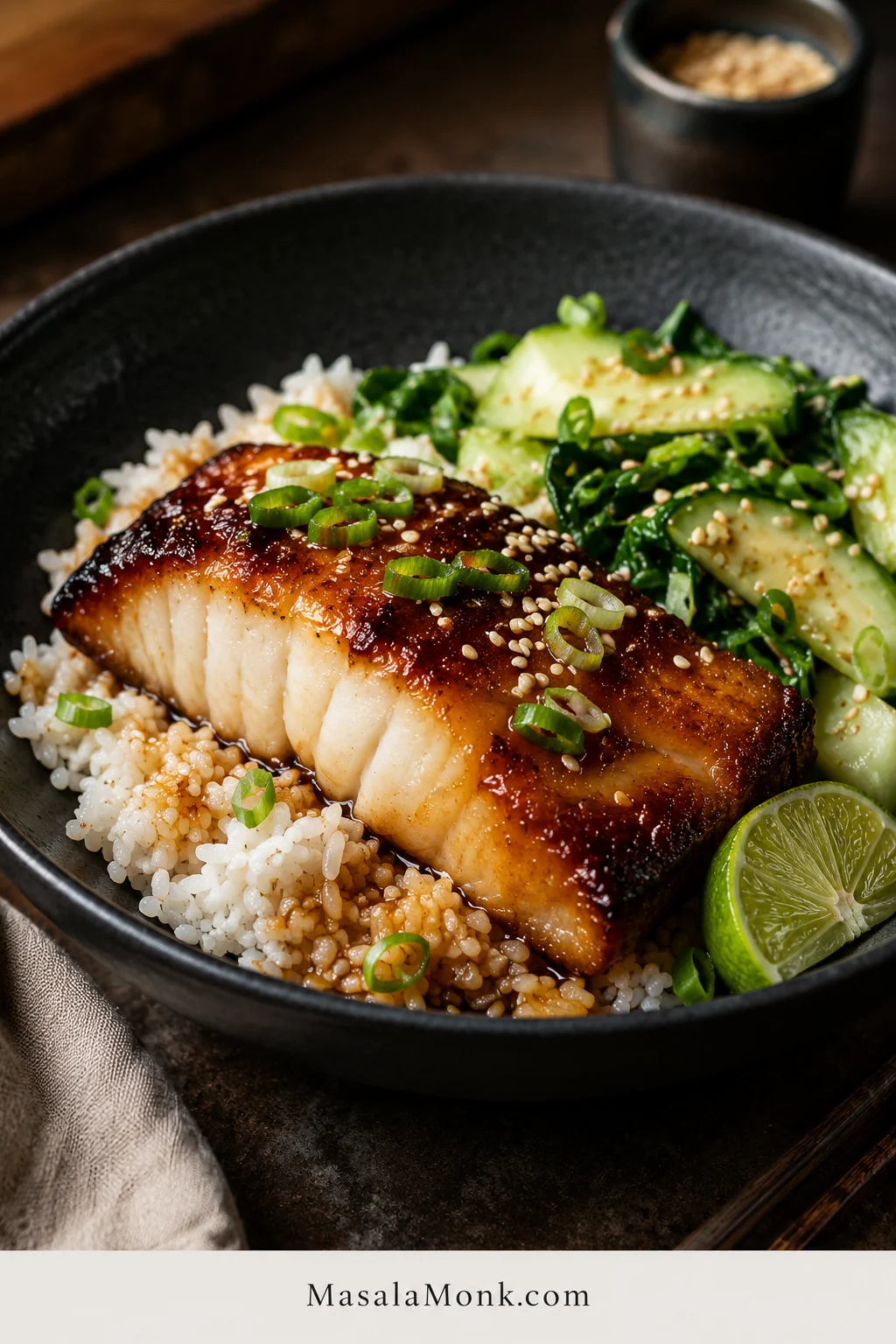
Black cod has a way of making you slow down before you cook it. The fillets look delicate, the fish feels expensive, and the miso glaze you are excited about can go from golden to burnt faster than you expect.
That is why this black cod recipe keeps the method clear without making dinner feel fussy. The fish gets a white miso marinade, just enough time to soak up flavor, and a hot but controlled finish so the top turns glossy and caramelized while the center stays soft enough to slide apart with a fork.
You can make this as a quick 20–30 minute miso black cod, or marinate the sablefish overnight for a deeper Nobu-style result. Start with the classic miso version, then use the method notes if your fillets are thick, frozen, skin-on, headed for the grill, or going into the air fryer.
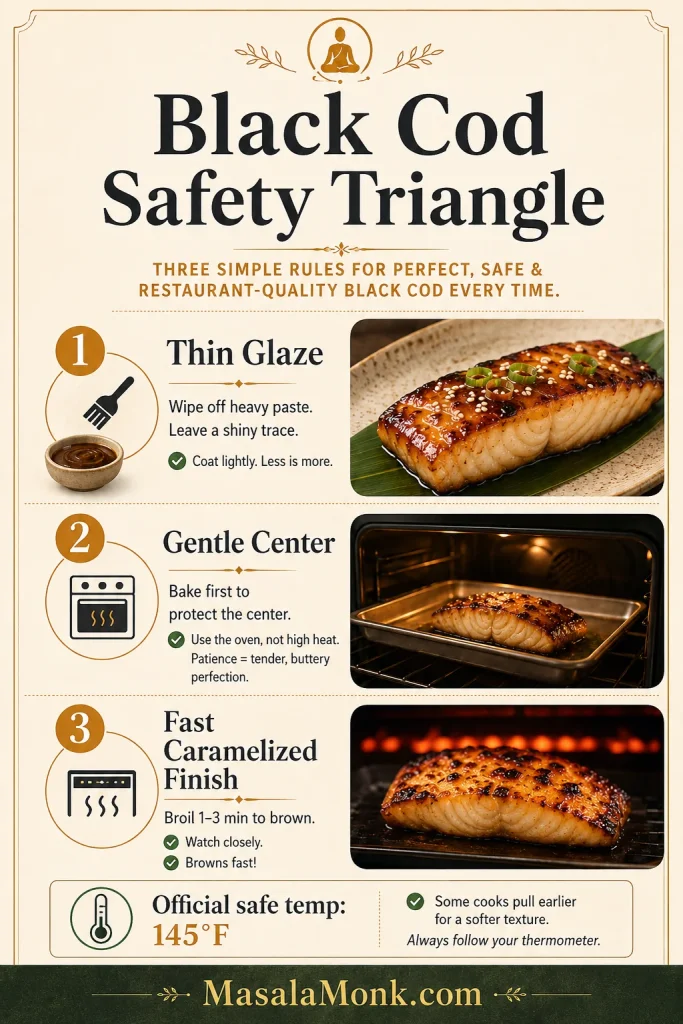
The whole recipe works around the Black Cod Safety Triangle: thin glaze, gentle center, fast caramelized finish. That means you wipe away heavy paste, cook the center gently, and only use strong direct heat long enough to brown the surface. Do that, and you get buttery miso sablefish with a sweet-salty glaze that makes plain rice feel necessary.
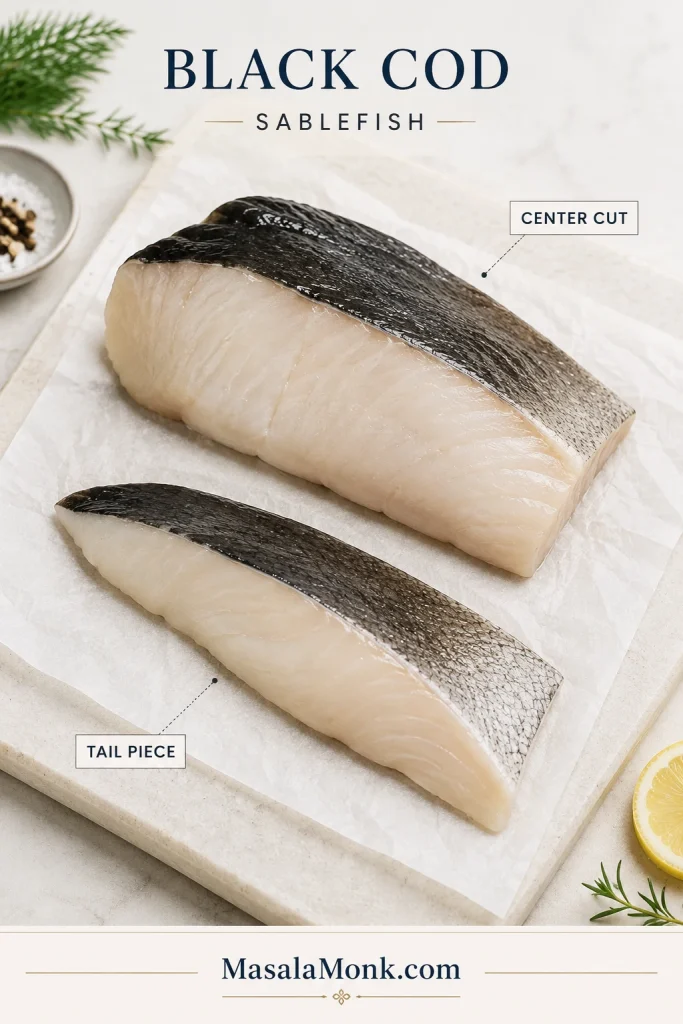
Black cod is also called sablefish. It is not the same as regular cod. Sablefish is richer, fattier, softer, and more buttery, which is why it works so well with a miso marinade and a fast caramelized finish.
The easiest method is white miso, mirin, sake, ginger, and a little sugar, followed by oven cooking and a short broiler finish. A 20–30 minute marinade works for dinner tonight. An 8–24 hour marinade gives deeper flavor and a more restaurant-style result.
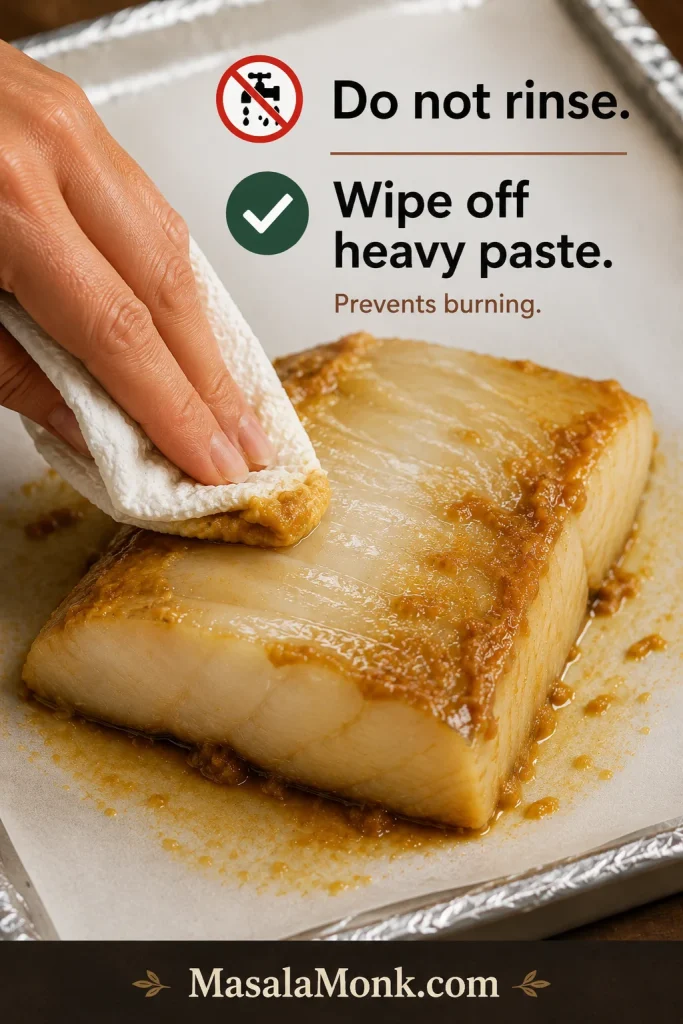
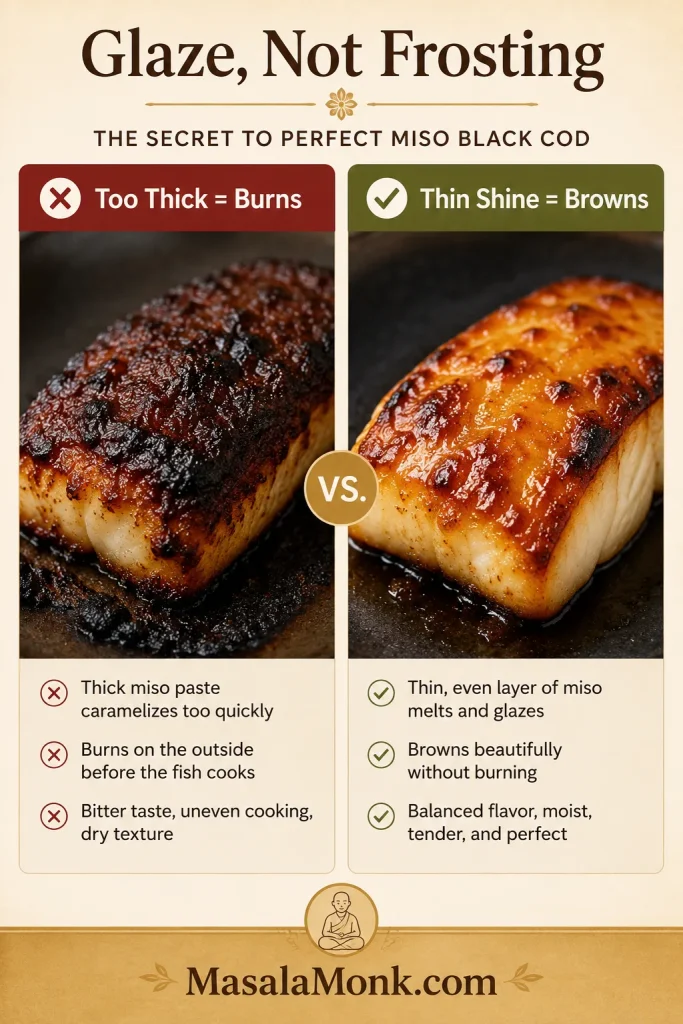
You are not trying to bury the fish in paste. Lift the fillets out of the marinade, wipe away the heavy layer, and leave a thin shiny coating. Think glaze, not frosting. That delicate layer caramelizes; thick pockets of miso scorch before the center is done.
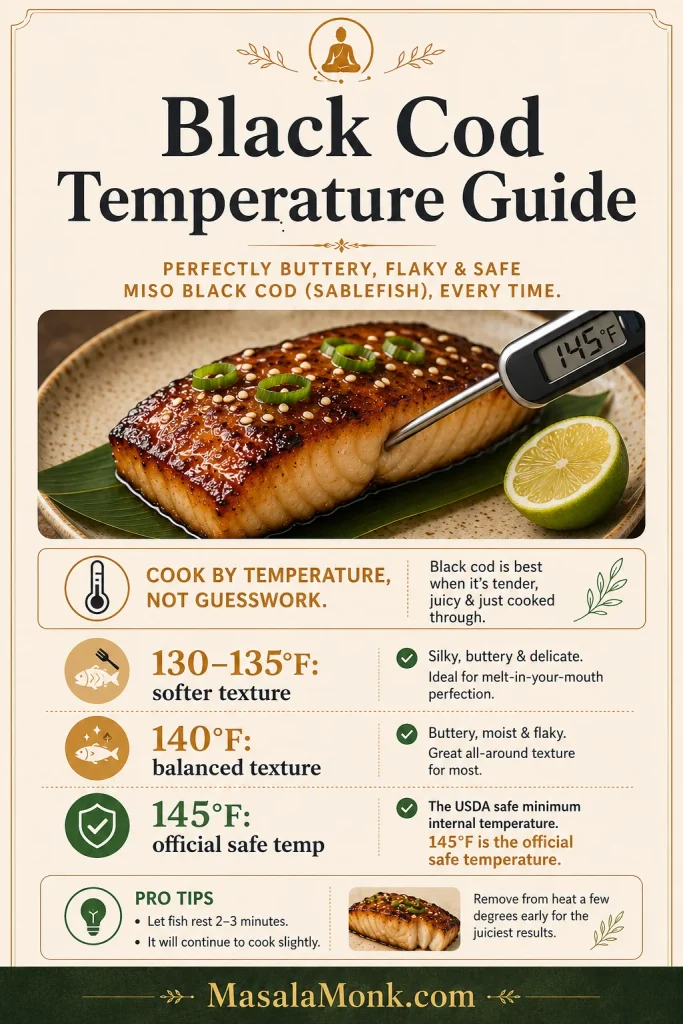
Best first version: Use the oven-first method with an 8–24 hour marinade. It gives you deeper flavor, gentler cooking, and a short broiler finish for that glossy browned top. For temperature, some cooks pull the fish around 130–135°F / 54–57°C for a softer restaurant-style texture, use 140°F / 60°C for a firmer middle path, or cook to 145°F / 63°C for the official safe internal temperature. Rest for 3–5 minutes before serving.
Once you understand that the broiler is only there for the finish, black cod stops feeling fragile and starts feeling manageable. The oven protects the center; the broiler makes the miso shine.
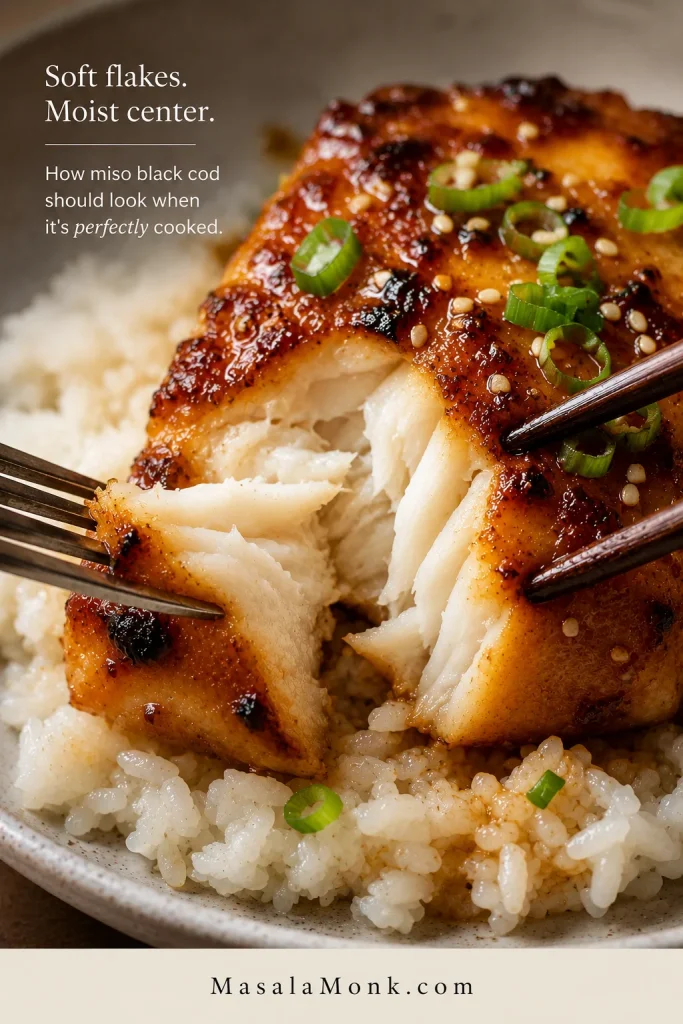
What Buttery Miso Sablefish Should Look Like
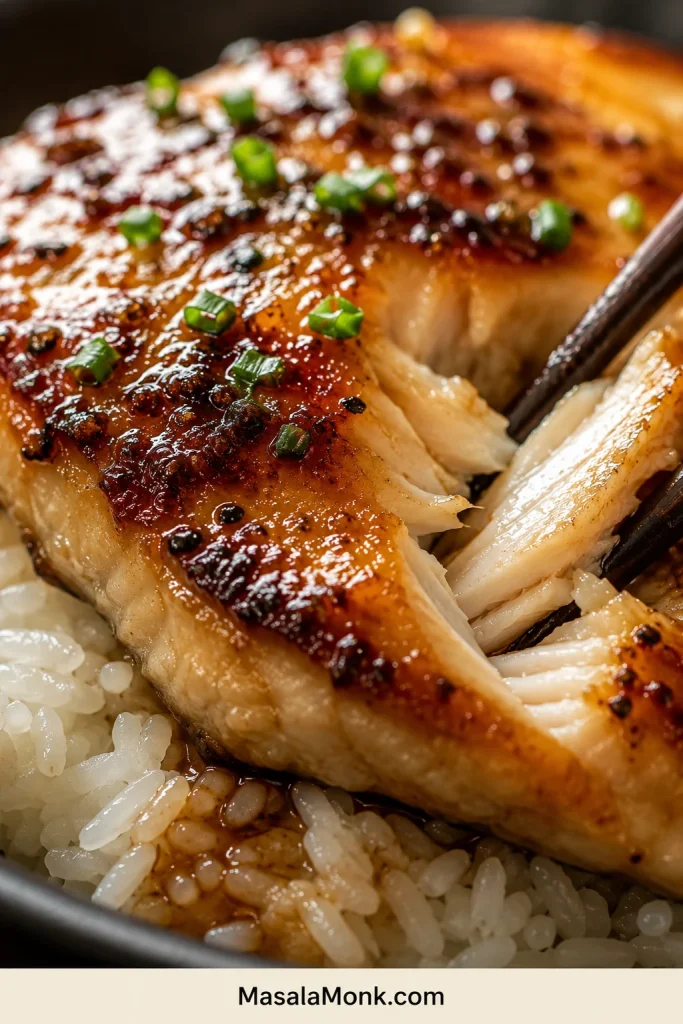
Look closely at the texture below: the miso surface should shine, while the sablefish flakes underneath stay soft and moist.
Because sablefish is naturally buttery, the best result is not a hard crust; instead, look for a glossy miso surface with soft, moist flakes underneath.
Make It Now: Miso Black Cod Recipe
The recipe below is the safe path: enough oven time to protect the center, just enough broiler time to make the miso glaze brown at the edges.
Here is the dependable version: black cod or sablefish marinated in miso, baked gently, then briefly broiled until the top is glossy and browned at the edges while the inside stays soft.
Recipe Details
Serves: 4
Prep time: 10 minutes
Marinating time: 20 minutes to 24 hours
Cook time: 8–12 minutes
Total active time: about 20 minutes
Make ahead: mix the glaze and marinate the fish up to 24 hours ahead; cook just before serving
Best cue: browned glossy top, soft flakes, tender center
Equipment
Small bowl or saucepan for the miso glaze
Shallow dish or zip-top bag for marinating
Sheet pan
Foil for lining the sheet pan
Fish spatula, especially for pan-searing or grilling
Instant-read thermometer, helpful but not required
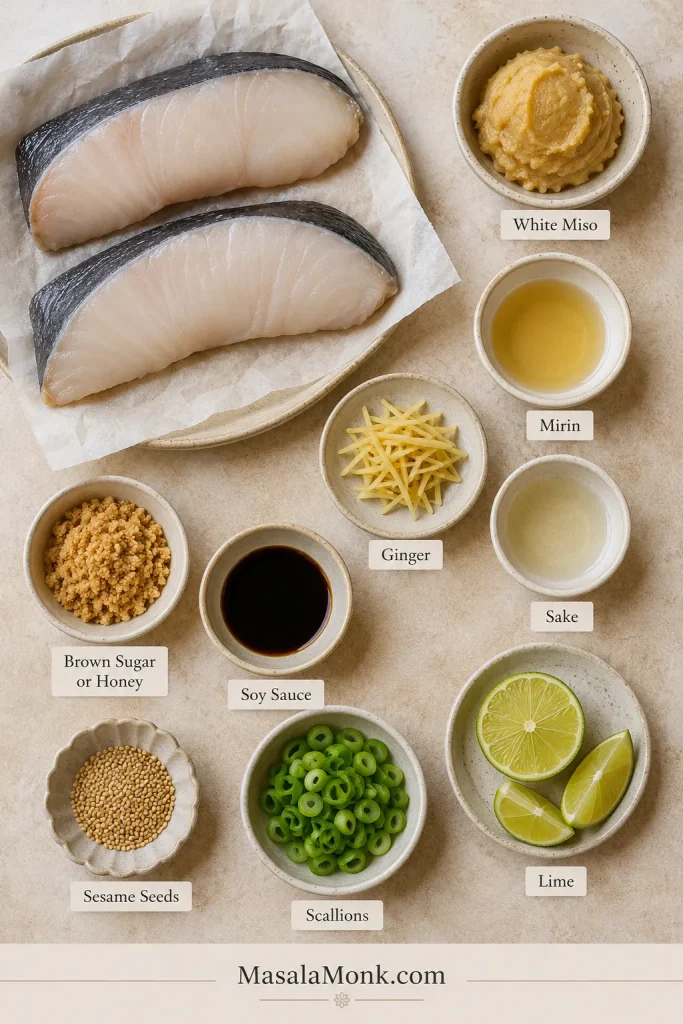
Ingredients
4 black cod or sablefish fillets, 5–6 oz / 140–170 g each, preferably skin-on
¼ cup white miso, about 70 g
3 tbsp mirin, 45 ml
2 tbsp sake, 30 ml
1–2 tbsp brown sugar or honey
1 tsp soy sauce, 5 ml
1 tsp grated fresh ginger
1 tsp neutral oil or toasted sesame oil, optional
Sliced scallions, sesame seeds, lemon or lime wedges, for serving
No extra salt is usually needed. Miso and soy sauce bring plenty. Taste the glaze before adding anything salty.
Thickness note: These timings assume fillets around 1 inch thick. Thin tail pieces cook faster, while thick center-cut pieces may need a few extra minutes.
Using regular cod? Start looking before the timer ends. It is leaner than sablefish and dries out faster.
Instructions
Marinate and Prepare the Fish
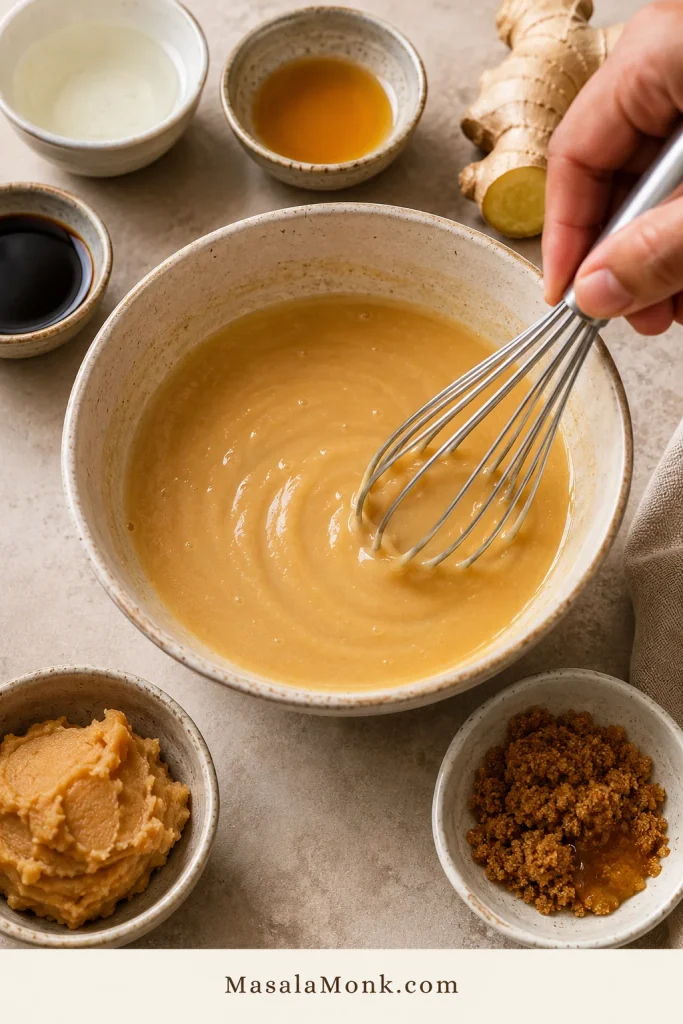
Make the miso glaze. Whisk the white miso, mirin, sake, brown sugar or honey, soy sauce, ginger, and oil if using. If the miso is lumpy, gently warm the mirin and sake in a small saucepan, whisk everything together, then cool before adding the fish.
Dry the fillets. Pat the fish dry with paper towels. A dry surface helps the marinade cling and gives the top a better chance to brown.
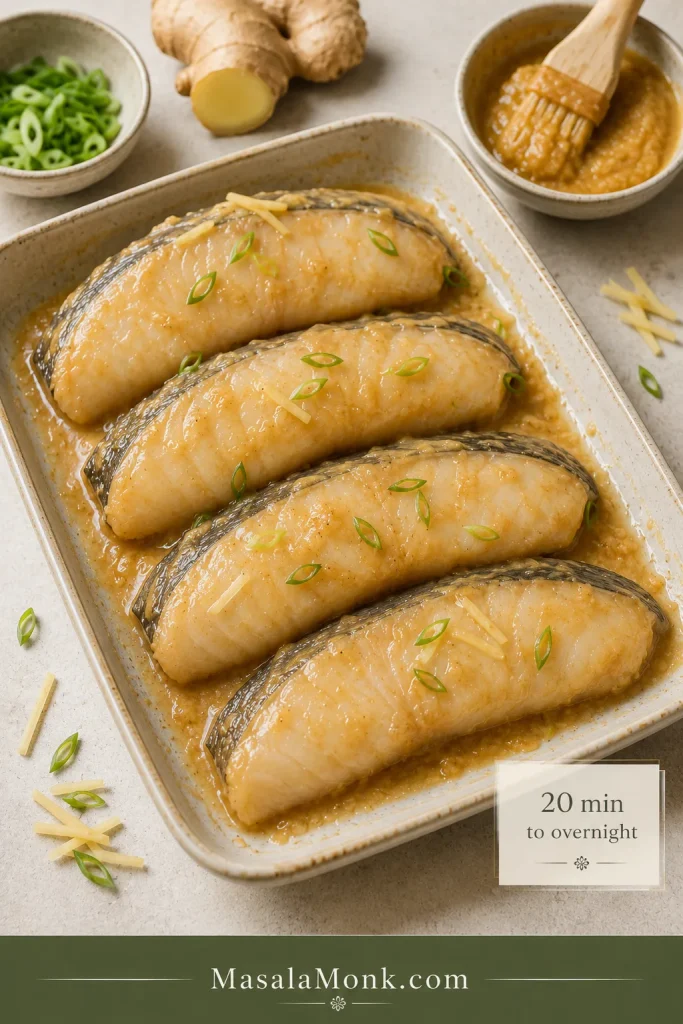
Marinate. Place the fillets in a shallow dish or zip-top bag. Coat with the miso mixture. Marinate for 20–30 minutes for a quick version, or refrigerate for 8–24 hours for deeper flavor.
Prepare the pan. Line a sheet pan with foil and lightly oil it, or set a lightly oiled wire rack over the sheet pan. Miso and sugar can drip and burn, so foil makes cleanup easier.
Leave a thin coating. Lift the fish out of the marinade. Do not rinse it. Wipe or scrape away thick paste, leaving a shiny surface on the fish.
Bake, Broil, and Serve
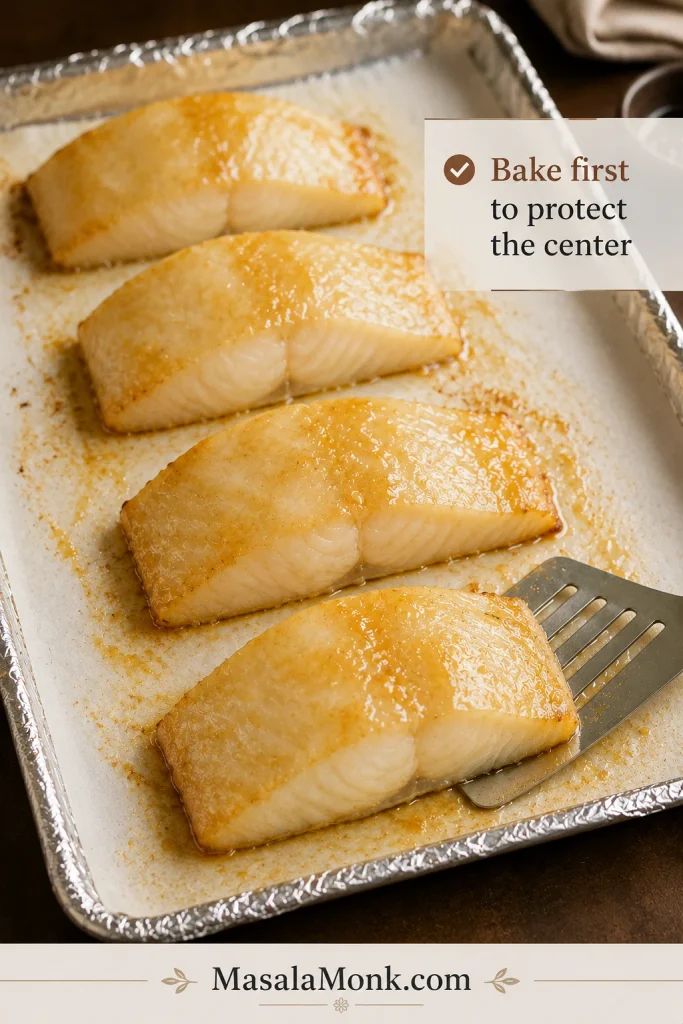
Bake first. Place the fillets skin-side down. Bake at 400°F / 200°C for 6–8 minutes, depending on thickness.
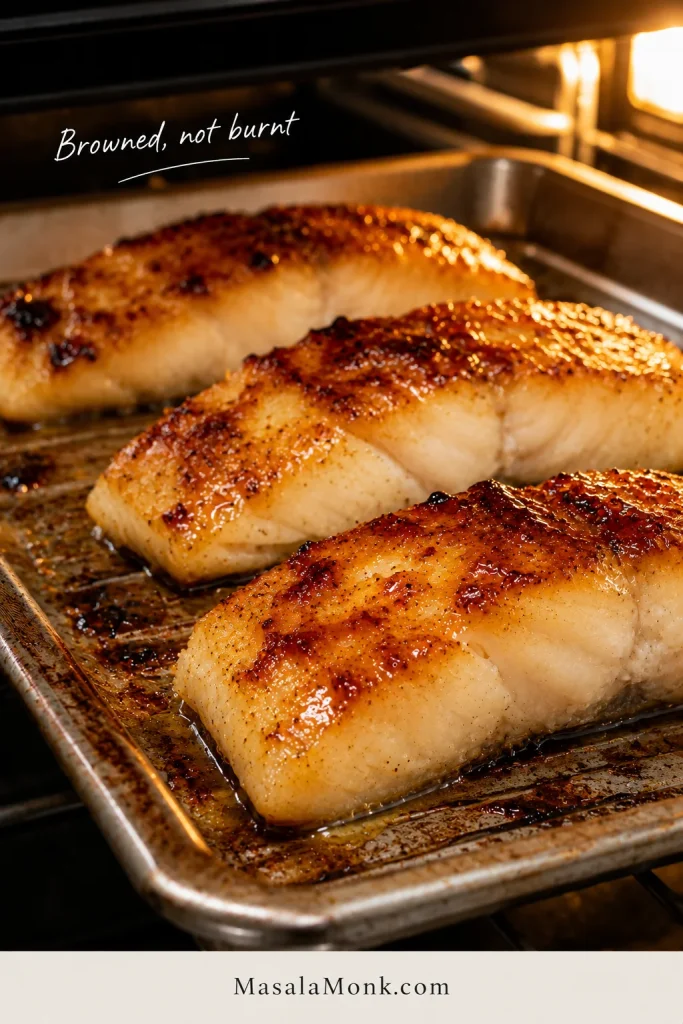
Broil briefly. Switch to the broiler and broil about 6 inches from the heat for 1–3 minutes, just until the top is browned in spots.
Check doneness. The fish should flake gently and still look moist. For a softer restaurant-style texture, some cooks pull it around 130–135°F / 54–57°C. To follow the official safe endpoint, cook fish to 145°F / 63°C.
Serve after resting. Let the fish rest for 3–5 minutes, then serve with rice, greens, scallions, sesame seeds, and a squeeze of lemon or lime.
Important: If you want to brush on extra glaze after cooking, use fresh glaze or boil the leftover marinade first. Do not brush raw fish marinade onto cooked fish without cooking it.
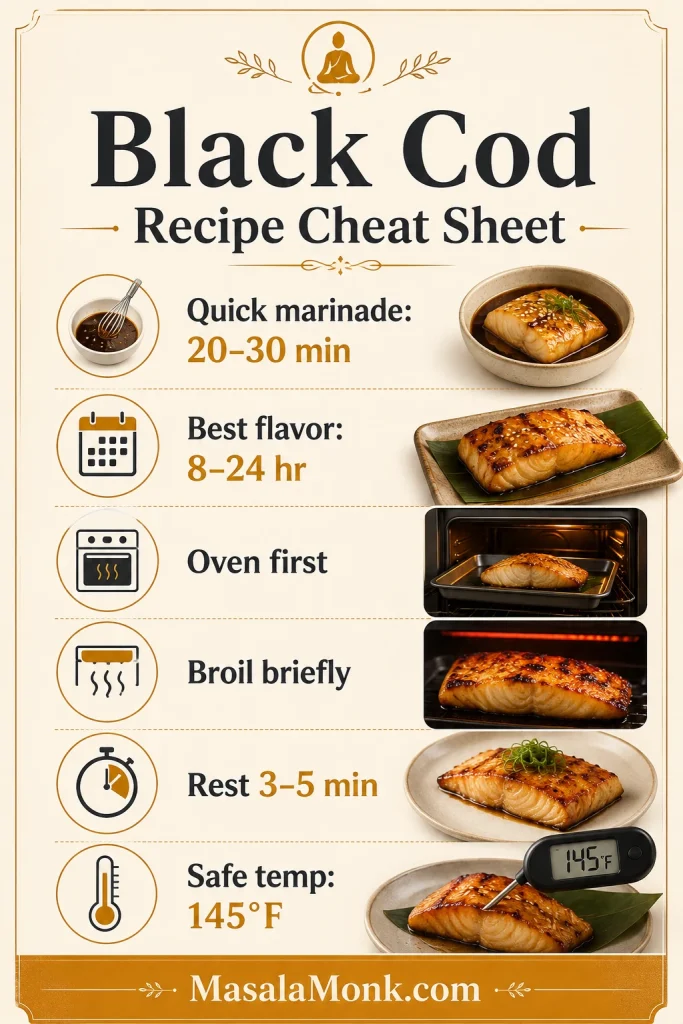
Use this table as your counter-side cheat sheet before you start.
Before you start cooking, use the cheat sheet below to keep the marinade window, broiler finish, rest time, and safe temperature in one place.
Before turning on the oven, use this black cod cheat sheet to keep marinade timing, broiler finish, rest time, and safe temperature in one place.
Fish
Black cod / sablefish
Amount
4 fillets, 5–6 oz / 140–170 g each
Best cut
Skin-on, center-cut fillets if possible
Main method
Oven first, then broiler finish
Fast marinade
20–30 minutes
Best marinade
8–24 hours
Broiler distance
About 6 inches from heat
Cook time
8–12 minutes, depending on thickness
Softer texture target
130–135°F / 54–57°C
Fully cooked endpoint
145°F / 63°C
Rest time
3–5 minutes
If this is your first time cooking sablefish, let this table be the reassuring part. The fish has enough natural fat to stay moist; the surface is what needs your attention.
Why This Recipe Works
This recipe works because it does not fight the fish. Sablefish is already full-bodied and soft-flaking, so the glaze only needs to season, shine, and caramelize. White miso brings gentle umami, mirin helps the surface catch at the edges, and the oven-first method keeps the center tender before the broiler does its quick finishing work.
The fish stays moist. Sablefish has a naturally high-fat texture, so it is more forgiving than lean cod.
White miso seasons without overpowering. It is milder and sweeter than red miso.
The oven protects the center. Baking first gives thick fillets time to cook before the glaze faces direct heat.
The broiler gives the finish. A short blast of heat creates the burnished top without turning the coating bitter.
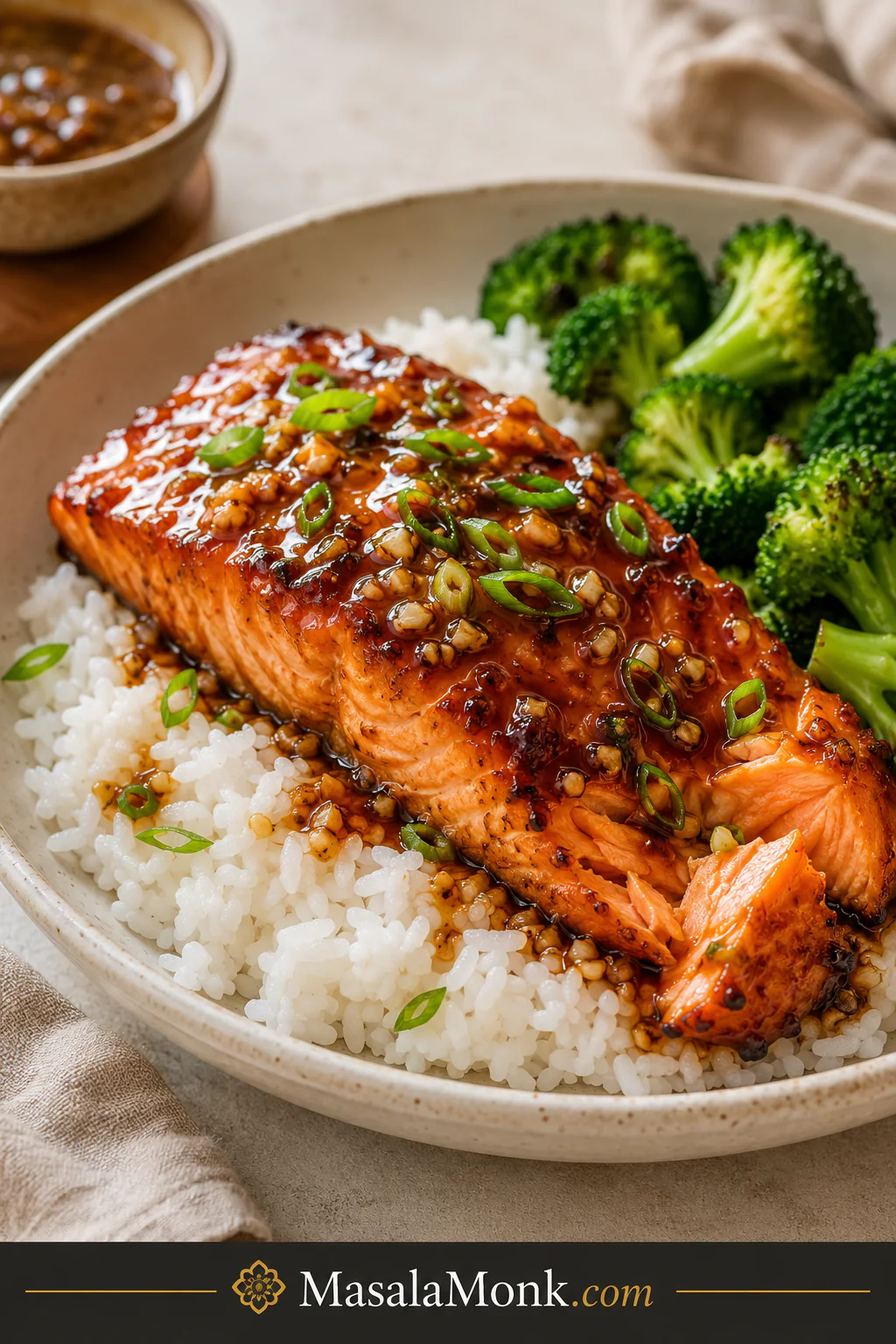
If you enjoy glossy fish dinners but want something faster for another night, this honey garlic salmon has the same sweet-savory comfort with a simpler skillet-style glaze.
Before you choose a method, it helps to know why this fish behaves so differently from regular cod.
In some markets, sablefish may also be sold as butterfish, though that name can be used for other fish too. What you want for this recipe is black cod or sablefish: mild, oily, full-bodied, and naturally tender.
Regular cod is leaner, lighter, and flakier. You can use this miso glaze on regular cod, but reduce the cooking time and watch the edges first. The flavor will still be good, but the texture will be less buttery than true sablefish.
The cut matters before the method does: a thick center piece gives you more control, while a thin tail piece needs faster timing.
Before choosing a cooking method, check the cut: thick center-cut sablefish gives you more control, while thinner tail pieces need shorter cooking time.
Is This Like Nobu’s Miso Black Cod?
This recipe follows the same broad idea that made Nobu-style miso black cod famous: rich black cod or sablefish, a miso-mirin-sake marinade, a little sweetness, and a caramelized finish.
The classic restaurant-style version often uses a longer marinade, sometimes several days. That gives a deeper, saltier, more cured flavor. This home version gives you two easier tracks: 20–30 minutes when dinner needs to happen tonight, or 8–24 hours when you want a deeper special-dinner result.
You do not need a three-day marinade to get a beautiful plate at home. For the closest restaurant-style result without making the fish too salty, marinate overnight, wipe away the heavy paste, use the oven-first method, and finish under the broiler just long enough for the top to catch and shine.
Once the fish is clear, the glaze is simple. Each ingredient has one job: salt, sweetness, shine, or freshness.
The ingredients below do different jobs: white miso brings umami, mirin and sweetness help browning, and ginger keeps the rich fish balanced.
White miso, mirin, sake, ginger, soy sauce, and a little sweetness build the classic miso black cod flavor while still letting the sablefish taste rich and clean.
Ingredient
Why It Matters
Substitution
Black cod / sablefish
Buttery fish that stays moist
Regular cod can work, but cook it for less time
White miso
Mild, salty-sweet umami base
Yellow miso; use less if using red miso
Mirin
Sweetness, gloss, caramelization
A little rice vinegar plus honey or sugar; use less vinegar because it is sharper
Sake
Depth and balance
Dry white wine, or water with a little extra mirin
Brown sugar or honey
Helps the top caramelize
Use less for a more savory glaze
Soy sauce
Adds depth
Use low-sodium soy sauce, or skip if your miso is salty
Fresh ginger
Cuts through the richness
A small pinch of ground ginger in a pinch
If you like seeing how soy, ginger, sweetness, and shine work in another sauce, this homemade teriyaki sauce follows a similar sweet-savory logic in a different direction.
A smooth marinade is easier to control than a lumpy one because it coats the black cod evenly and leaves fewer salty spots to scorch.
Whisk the white miso marinade until smooth first; this helps it coat the black cod evenly and prevents thick salty pockets from burning later.
Skin-on fillets are best for pan-searing and grilling because the skin acts like a handling layer. It helps the oily, delicate flesh stay together when you move it from pan, grill, or tray.
How Long Should You Marinate Black Cod?
The long-marinated version is famous, but dinner tonight is not a failure. Even a short marinade gives you a sweet-salty top and enough flavor to make rice feel like part of the plan. For most home kitchens, 8–24 hours is the best balance of flavor, salt, and texture.
Short marinating is enough for surface flavor, while overnight marinating moves the fish closer to a deeper Nobu-style black cod result.
For weeknights, a 20–30 minute miso marinade gives black cod surface flavor; for a deeper Nobu-style result, marinate it overnight.
Marinating Time
Result
Best For
20–30 minutes
Light flavor, browned top
Fast weeknight dinner
2–4 hours
Better flavor without planning too far ahead
Same-day prep
8–24 hours
Best balance of flavor, salt, and texture
Deeper miso flavor
24–48 hours
Stronger and saltier
Only if you want a more intense marinade
Some classic versions marinate for 2–3 days, but that is not necessary for this home version. If you go past 24 hours, use a mild white miso, keep the sweetener modest, and avoid leaving thick pockets of marinade on the fillets before cooking.
No Time to Marinate? Use a Quick Braise
If dinner needs to happen now, braise the fish instead of marinating it. This will not taste exactly like miso-marinated black cod, but it gives you a glossy, deeply savory result in about 10–12 minutes.
In a skillet, simmer ¼ cup soy sauce, ¼ cup mirin, ¼ cup sake or water, 1–2 tablespoons sugar or honey, and a few slices of ginger. Add the fillets, spoon the sauce over the top, cover partially, and cook gently until the fish flakes and the sauce lightly coats it.
Should You Wipe Off the Miso Marinade Before Cooking?
Yes, but do not rinse it. Lift the fillet from the marinade, wipe or scrape away heavy paste, and leave a barely-there shiny coating on the surface.
This is the pre-broiler move that prevents burning: remove heavy paste, but leave the thin shiny coating that browns best.
Before cooking, do not rinse the fish; instead, wipe off heavy miso paste and leave only a shiny trace so the glaze browns instead of burns.
Miso and sugar brown quickly under direct heat. A thin coating caramelizes; a thick layer scorches before the center cooks. The goal is not a heavy crust. It is a glossy surface that catches at the edges while the fish underneath stays soft.
The comparison below shows the difference between a glaze that caramelizes and a thick paste layer that can burn before the center cooks.
This is the difference that saves the dish: thick miso paste scorches quickly, while a thin shiny layer caramelizes into a better black cod finish.
Choose the method based on what you are actually dealing with: a thin tail piece, a thick center cut, a fierce broiler, skin-on fillets, or fish that came already packed in miso.
Not Sure Which Method to Use?
Choose oven-first, then broil when you want the safest all-around result.
Pick broiler-only for thinner fillets that will cook quickly.
Try pan-sear, then oven when crisp skin and browned edges are the point.
Use the air fryer for small or already-marinated pieces.
Save the grill for skin-on fish and well-oiled grates.
The oven-first method gives the most breathing room, especially if the fish was expensive. Broiler-only is faster. Pan-searing gives you crisp skin and richer browned edges. Grilling adds subtle smoke. The air fryer gives you browning without standing under the broiler.
Once you know your fillet thickness and heat source, the rest is simple: protect the center first, then brown the surface only at the end.
Method
Best For
Key Tip
Oven + broiler
Best all-around method
Bake first, caramelize last
Broiler-only
Thinner fillets and fast browning
Keep fish about 6 inches from heat
Pan-seared
Crisper skin and quick dinner
Glaze late and avoid high heat from start to finish
Grilled
Smoky edges
Use skin-on fish and avoid early flipping
Air fryer
Small fillets and pre-marinated fish
Check at 5 minutes and prevent glaze from pooling
Frozen or pre-marinated
Grocery-store or seafood-box fillets
Follow package instructions first, then use these cues
Use the oven-first method when your broiler runs hot, your pieces are thick, or you simply want more control. Use the broiler-only method when the fillets are thinner and you can watch them closely.
These times assume pieces around 1 inch thick. Thin tail pieces cook quickly, so start looking before the timer ends; thick center-cut fillets may need a few minutes more.
Oven-First Method
For thick fillets, this method gives you the most control. The oven does the gentle work first, then the broiler adds color at the end.
For thick fillets, this is the calmest path: the oven cooks the center first, then the broiler adds color at the end.
At this stage, the fish may look pale — that is the point. The oven-first method gently cooks thick black cod before the broiler adds color.
Preheat the oven to 400°F / 200°C.
Place the marinated fillets skin-side down on a lined sheet pan.
Bake for 6–8 minutes.
Switch to the broiler and broil for 1–3 minutes, just until the top browns.
Rest before serving.
This is the method I would choose for a first attempt, especially if the fish was expensive. It gives you a little breathing room before the glaze faces direct heat.
Broiler-Only Method
Broiler-only gives you the fastest browning. It works best for thinner fillets, but it asks you to stay close and watch the surface.
Heat the broiler and place a rack about 6 inches from the heat source.
Line a sheet pan with foil and lightly oil it.
Place the marinated fillets skin-side down.
Leave only a thin coating of glaze on top.
Broil for 8–10 minutes, depending on thickness.
Rotate the pan once if the fish browns unevenly.
Shield dark spots loosely with foil if they are browning too fast.
Rest for 3–5 minutes before serving.
A few dark caramelized spots are good. Bitter black patches mean the fish was too close to the heat, the coating was too heavy, or it needed a shorter broiler finish.
When it is right, the top should look burnished and golden in spots, the flakes should separate softly, and the center should still look moist.
Use the broiler as a finishing tool, not the whole cooking method; the goal is quick browning after the fish is mostly cooked.
After the oven does the gentle work, a brief broiler finish gives miso black cod its browned top without pushing the center too far.
Black Cod Temperature and Doneness
This is where the thermometer earns its space on the counter. Sablefish is not as easy to judge by looks as lean white fish. It can still look juicy and soft when it is done, which is why temperature helps.
Use the temperature guide below to separate softer restaurant-style texture from the official safe endpoint for fish.
For a softer texture, some cooks pull black cod earlier; however, 145°F / 63°C remains the official safe internal temperature for fish.
How to Tell Black Cod Is Done Without a Thermometer
A thermometer is helpful, but the fish also gives visual cues. Look for opaque edges, soft flakes that separate with gentle pressure, and a center that is moist rather than glassy-raw.
Edges should turn opaque.
Flakes should relax apart instead of breaking dry.
The center should look moist, not translucent and raw.
Overall, the fish should look relaxed and glossy, not tight.
On top, the glaze should be browned in spots, not blackened.
Thick center-cut pieces may need oven time before direct broiler heat.
When you do not have a thermometer, the flake test helps: the fish should separate gently and still look moist.
When black cod is done, the flakes should separate gently and still look moist; if they look tight or dry, the fish has cooked too far.
If the top is dark but the center still looks underdone, stop broiling and finish gently in the oven.
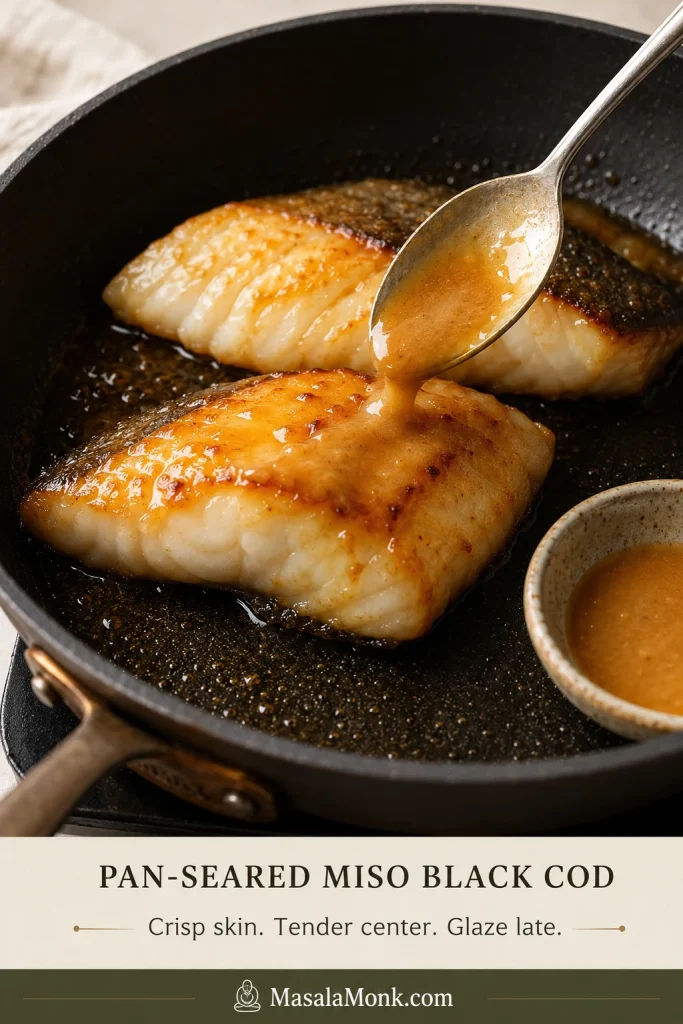
A skillet gives you crisp skin, browned corners, and a richer finish, but it is also where miso can darken too quickly. Keep the surface lightly coated, let the skin release naturally, and add any extra glaze near the end.
In a skillet, build the texture first and add glaze late; sugar-heavy miso can darken quickly against direct pan heat.
For pan-seared black cod, crisp the skin first and add the miso glaze late; this gives browned edges without letting the sugar burn in the skillet.
Pat the fillets dry before cooking.
Use neutral oil first, not butter.
Start skin-side down if the fillet has skin.
Cook for 4–5 minutes without moving the fish.
Flip carefully with a thin fish spatula.
Cook for 2–4 minutes more, depending on thickness.
For thick fillets, finish in a 400°F / 200°C oven for 5–8 minutes.
Brush with fresh glaze during the last minute, or spoon warm glaze over the cooked fish.
If the surface darkens too fast, lower the heat immediately and finish the fillet in the oven. With sablefish, fewer flips are usually better.
Do not sear a thick, heavily coated fillet over high heat from start to finish. The outside can burn before the center is done.
Grilled Black Cod or Grilled Sablefish Tips
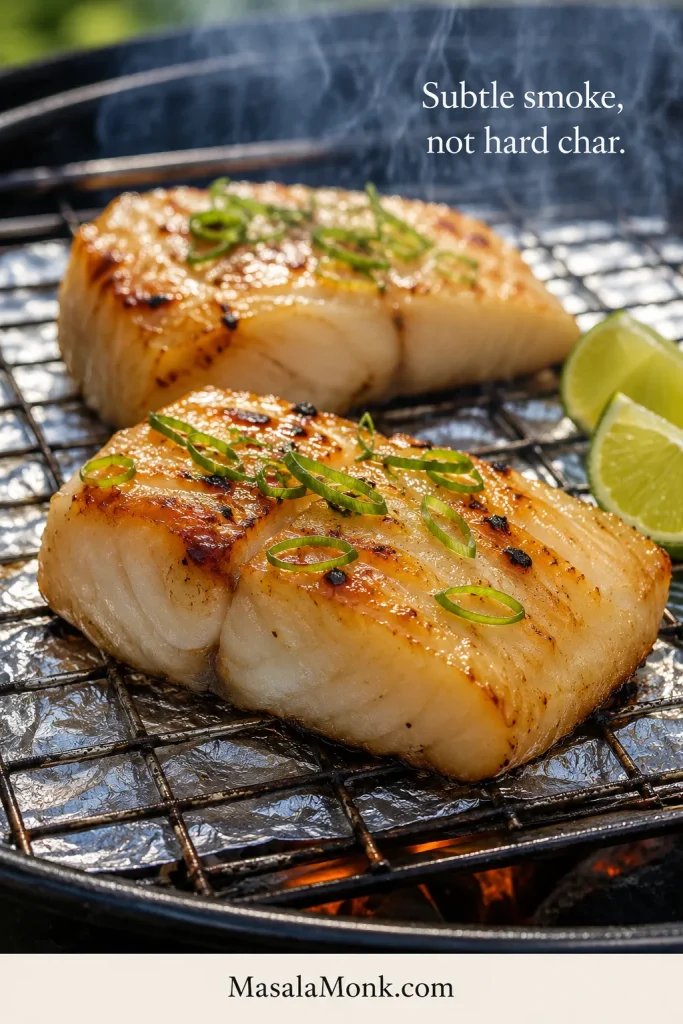
Grilling works beautifully, but sablefish rewards patience more than force. The reward is subtle smoke around the miso, not a hard char. A clean release matters more than dramatic grill marks.
On the grill, success looks more like gentle smoke and clean release than dramatic char marks on delicate sablefish.
Grilled black cod works best with gentle heat, an oiled surface, and patience; aim for subtle smoke and light browning rather than hard char.
Use skin-on fillets if possible.
Oil the grill grates very well.
Use medium heat or a cooler indirect zone.
Start the fish skin-side down.
Keep the lid closed while it cooks.
Do not flip early; wait until the fish releases more easily.
Treat miso as a finishing glaze, not a thick barbecue sauce.
Cook for about 8–12 minutes total, depending on thickness and grill heat.
Rest for 3–5 minutes before serving.
If the fillet starts tearing or sticking, stop chasing grill marks. Use lightly oiled foil or a grill basket instead. You will lose a little direct char, but the fish will be much easier to handle.
Can You Air Fry Black Cod?
The air fryer is handy when you want browned edges without babysitting the broiler, especially for smaller fillets or pre-marinated pieces. Done right, it gives you quick color without turning the kitchen into a smoke alarm test.
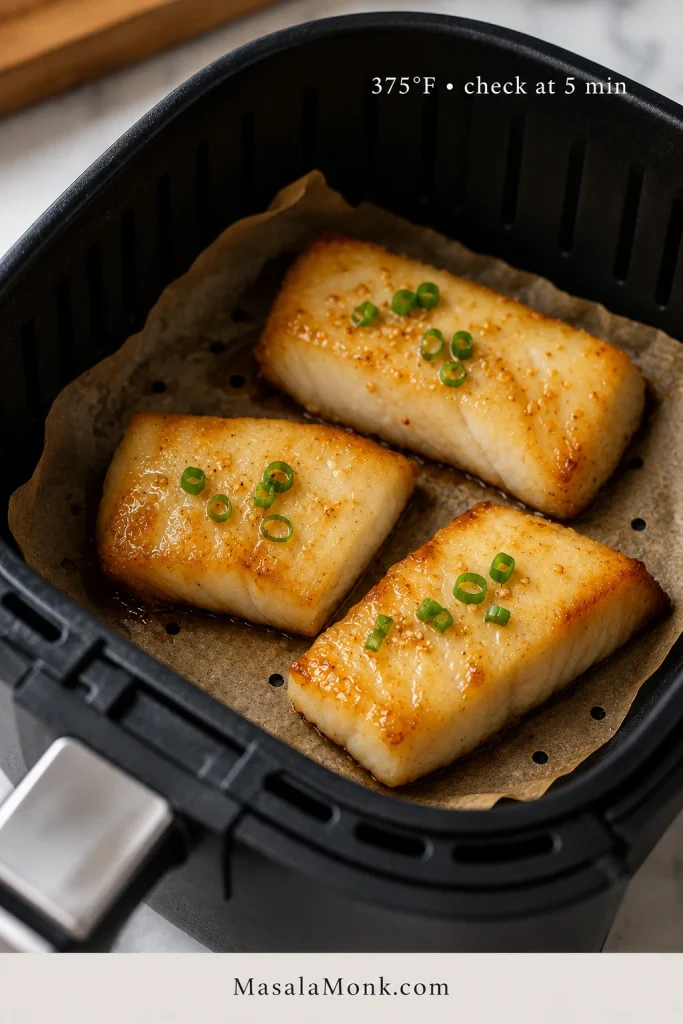
Air fryer heat can brown miso quickly, so smaller fillets need an early check and no puddles of glaze underneath.
Because air fryers brown miso quickly, start checking small black cod fillets early instead of waiting for the surface to get dark.
Preheat the air fryer.
Leave only a thin coating on the fish.
Use air fryer parchment if sticking is a concern.
Air fry at 375°F / 190°C for 7–10 minutes.
For faster browning, air fry at 400°F / 200°C for 7–9 minutes.
Check at 5 minutes because air fryers vary and miso can darken quickly.
Rest briefly before serving.
If the air fryer starts smoking, pause, wipe any burnt glaze from the basket, lower the temperature, and continue. Very thick fillets are usually better in the oven or under a controlled broiler.
How to Cook Frozen or Pre-Marinated Miso Black Cod
This is also the section for the fillet that came home already wearing miso marinade. Those can be excellent, but they usually need drying and gentler heat more than they need more sauce.
If you bought raw frozen sablefish, thaw it before marinating whenever possible. For pre-marinated miso black cod from a grocery store, seafood box, warehouse club, or freezer section, follow the package instructions first, then use these cues to prevent steaming or burning.
Frozen and Pre-Marinated Product Cues
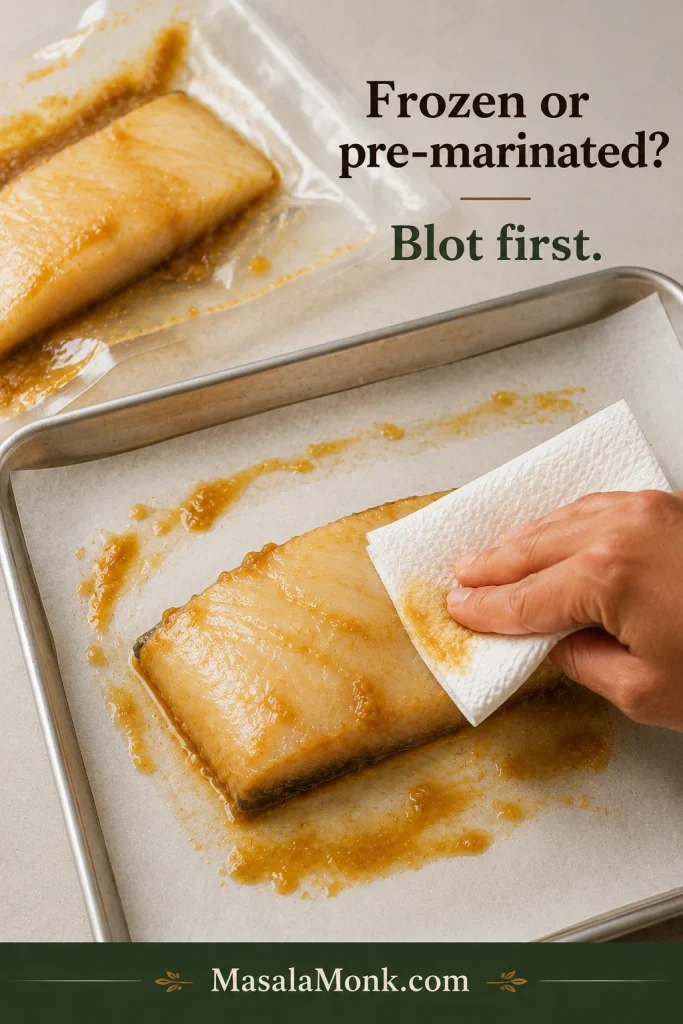
Pre-marinated frozen fillets usually need less sauce, not more; blot away packaging liquid so the surface can brown.
When using frozen or pre-marinated miso black cod, blot away packaging liquid first so the surface can brown instead of steam.
Product Type
Best Method
What to Watch
Frozen raw sablefish
Thaw, pat dry, then marinate
Wet surface prevents browning
Frozen pre-marinated miso black cod
Follow package first, then broil or air fry carefully
Sweet glaze burns fast
Vacuum-packed miso fillets
Remove excess liquid before cooking
Too much liquid causes steaming
Small air fryer fillets
Start at 375°F / 190°C
Check at 5 minutes
How to Keep Frozen Black Cod from Steaming
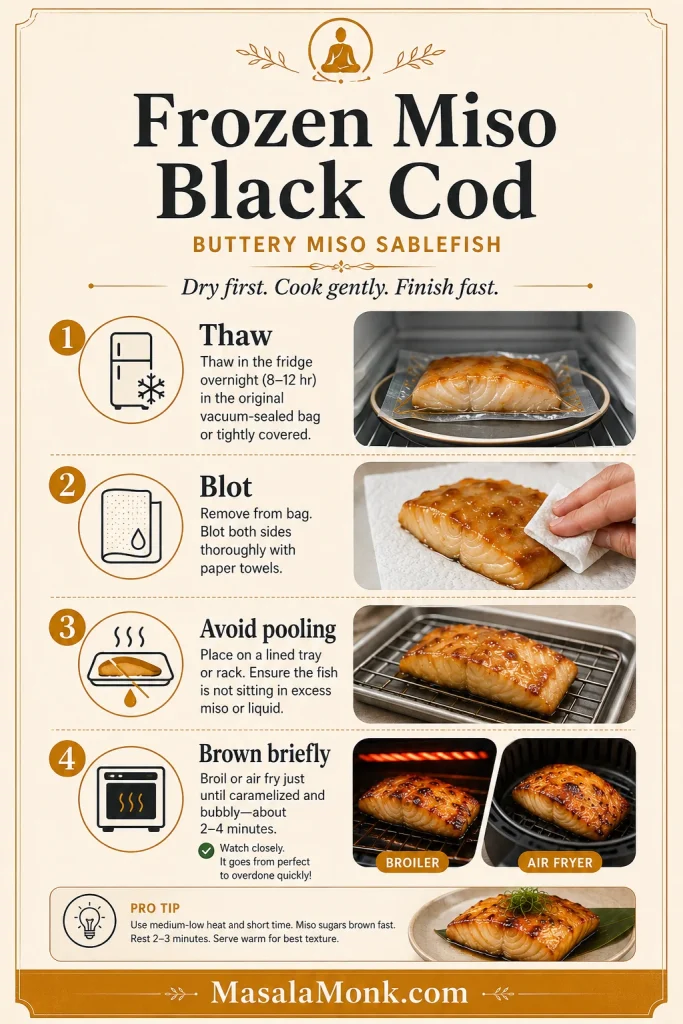
For frozen miso black cod, the sequence matters: thaw if possible, blot well, avoid pooling, and brown only at the end.
For frozen miso black cod, the winning sequence is simple: thaw, blot, avoid pooling, then brown briefly once the center is heated through.
Thaw frozen fillets overnight in the refrigerator when possible.
Remove extra packaging liquid before cooking.
Pat the fish gently if it looks wet.
Avoid letting marinade pool under the fish.
Choose the air fryer for quick browning on smaller fillets.
Stay with the oven if you want a gentler method.
Add a short broiler finish if the oven version looks pale.
Be careful with pan cooking because sweet miso glaze can over-caramelize quickly.
Avoid cooking watery frozen fish straight from the package unless the package specifically tells you to do that. Water on the surface turns the first minutes of cooking into steaming, which weakens browning and dilutes the glaze.
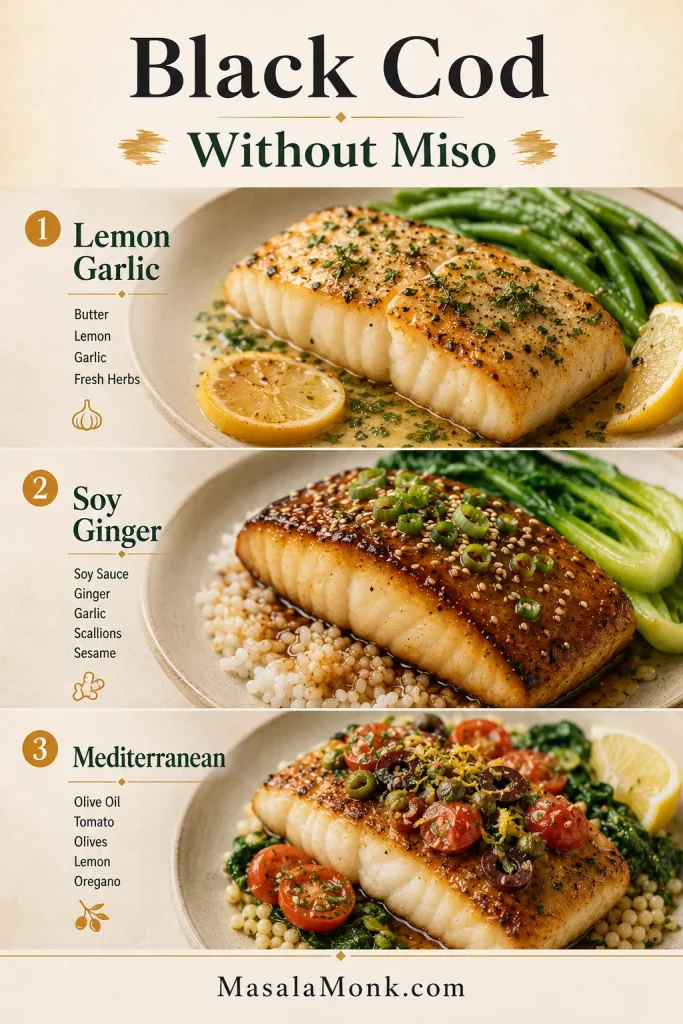
Black Cod Without Miso
Miso is the famous move, but it is not the only one. If you want the fish to taste cleaner, brighter, or less sweet, these three directions work beautifully.
If you want a cleaner or less sweet dinner, black cod can move away from miso toward lemon garlic, soy ginger, or Mediterranean flavors.
Miso is the classic choice, but black cod also works with lemon garlic butter, soy ginger glaze, or Mediterranean tomato and olive flavors.
Lemon garlic butter: best when you want the fish itself to stand out. Bake or pan-sear, then finish with garlic butter, lemon juice, and herbs.
Soy ginger: best when you want sweet-savory flavor without miso. Use soy sauce, ginger, garlic, a little mirin or honey, and a small splash of sesame oil.
Mediterranean: best when you want a lighter baked dinner. Use tomatoes, olives, lemon, garlic, olive oil, and herbs.
For a bolder seafood-style butter, borrow the idea from this garlic butter seafood sauce, but keep the seasoning lighter so the fish still shines.
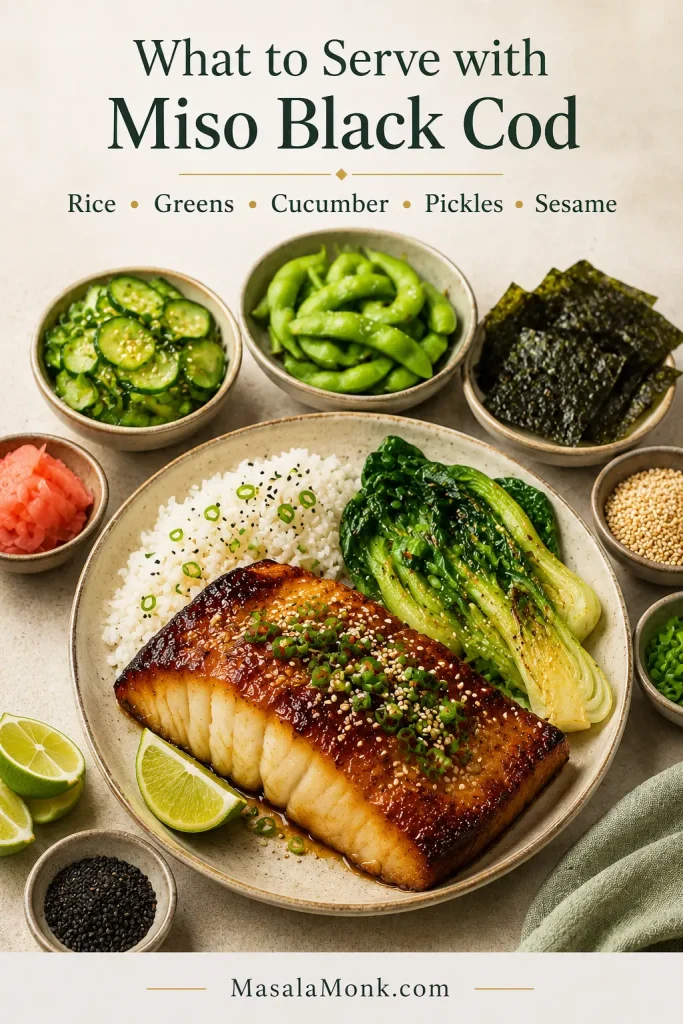
What to Serve with Black Cod
Because the fish is so full-bodied, the best sides do the opposite: they stay simple, green, crisp, or bright. Rice is not just a side here; it catches the sweet-savory glaze.
The sides should balance the fish instead of competing with it: think rice, crisp vegetables, pickles, sesame, citrus, and greens.
Because miso black cod is rich and buttery, rice, crisp cucumber, greens, pickles, sesame, and lime help balance the plate.
Classic plate: steamed rice, bok choy, scallions, sesame seeds, and lime.
Fresh plate: cucumber salad, pickled ginger, and citrusy greens.
Comforting dinner: coconut rice, sautéed spinach, or roasted asparagus.
Simple weeknight plate: jasmine rice, steamed broccoli, and lemon or lime wedges.
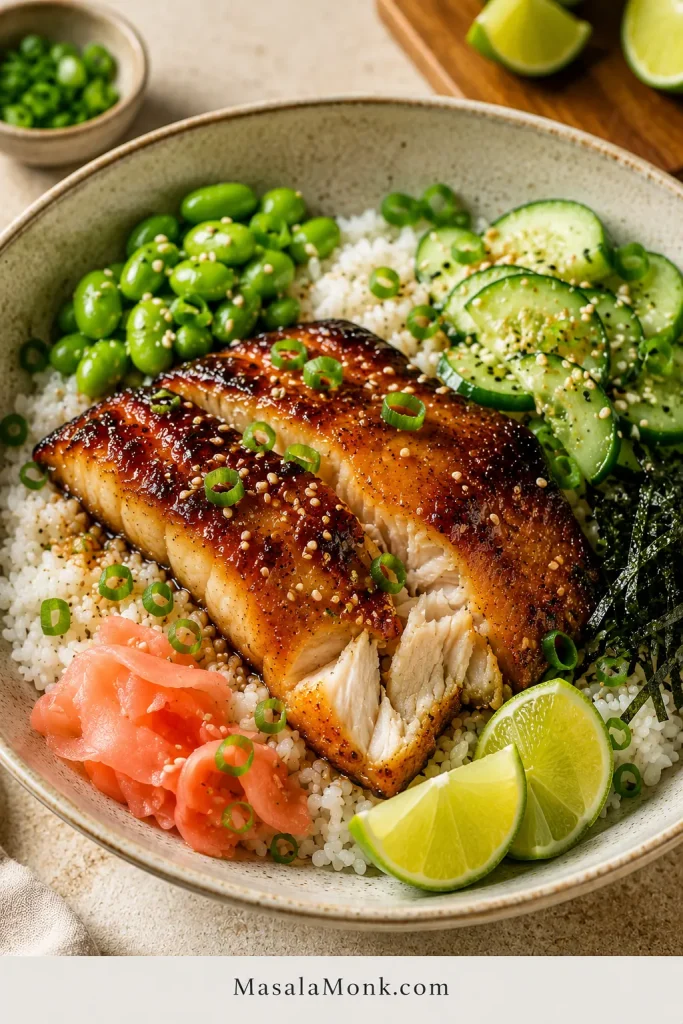
If you want to turn the fish into a rice bowl, use the same basic build as this salmon bowl recipe: rice underneath, something crisp, something green, something creamy or tangy, and a final sprinkle of sesame or scallions.
For a more casual meal, turn the fish into a rice bowl with something crisp, something green, something salty, and something tangy.
A miso black cod rice bowl turns the fish into a complete meal with rice, cucumber, edamame, nori, sesame, pickles, and lime.
For the crisp side of the plate, a cold cucumber salad works beautifully because vinegar, herbs, and onion cut through the richness of the fish.
Skip very heavy cream sauces or overly sweet sides. Black cod already has plenty of richness, so the rest of the plate should bring balance.
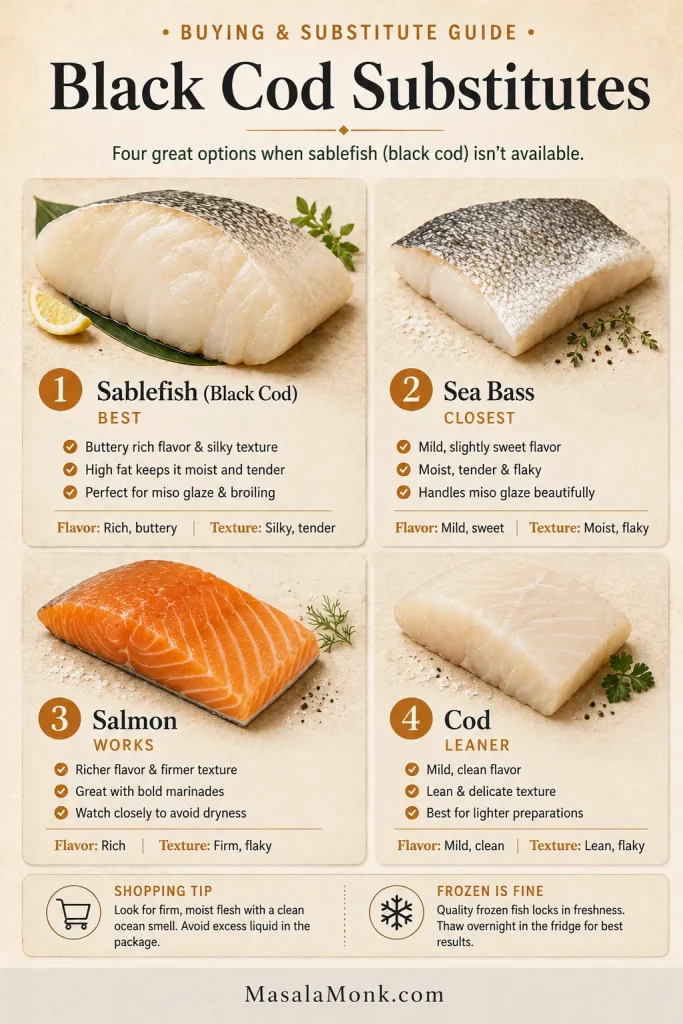
Look for fish labeled black cod or sablefish. Choose fillets that look moist and firm, not dry around the edges. Center-cut pieces cook more evenly than thin tail pieces, especially if you are using the oven-first method.
Label
Good for This Recipe?
Note
Black cod
Yes
Usually sablefish
Sablefish
Yes
Best choice
Butterfish
Maybe
Name can mean different fish in different markets
Regular cod
Acceptable
Leaner; check earlier
Chilean sea bass
Good but expensive
Similar richness
Salmon
Works with the glaze
Different flavor, easier to find
If black cod is unavailable, choose a substitute by texture and richness first, then adjust the cooking time for leaner fish.
If black cod or sablefish is unavailable, choose by texture: sea bass is closest, salmon handles the glaze well, and regular cod cooks faster.
Frozen sablefish is not a downgrade. This fish is often frozen close to harvest, and good frozen fillets can be excellent. Thaw them overnight in the refrigerator, remove any packaging liquid, and pat dry before marinating or cooking.
Skin-on fillets are helpful because they hold together better in a pan or on the grill. You can eat the skin if it is crisp, or lift the cooked fish away from the skin before serving.
The fillets may have pin bones. When you feel them before cooking, remove them with fish tweezers or clean pliers. If they are difficult to pull, cook the fish first; pin bones often come out more easily once the flesh has softened.
Storing and Reheating Black Cod
Leftovers are delicate, so reheat them like something you want to protect, not blast. Store cooked fish in an airtight container in the refrigerator for up to 2 days.
Reheat gently in a low oven until just warmed through.
Avoid aggressive microwaving, which can make the fish oily or broken.
Do not re-broil miso-glazed leftovers hard; the coating can burn.
Use leftovers in rice bowls, salads, noodles, or pasta.
It is often better gently warmed, or even used cold or room temperature in a bowl, than reheated hard. If you have a small amount of cooked fish left, fold it into noodles, rice, or pasta at the end rather than cooking it again.
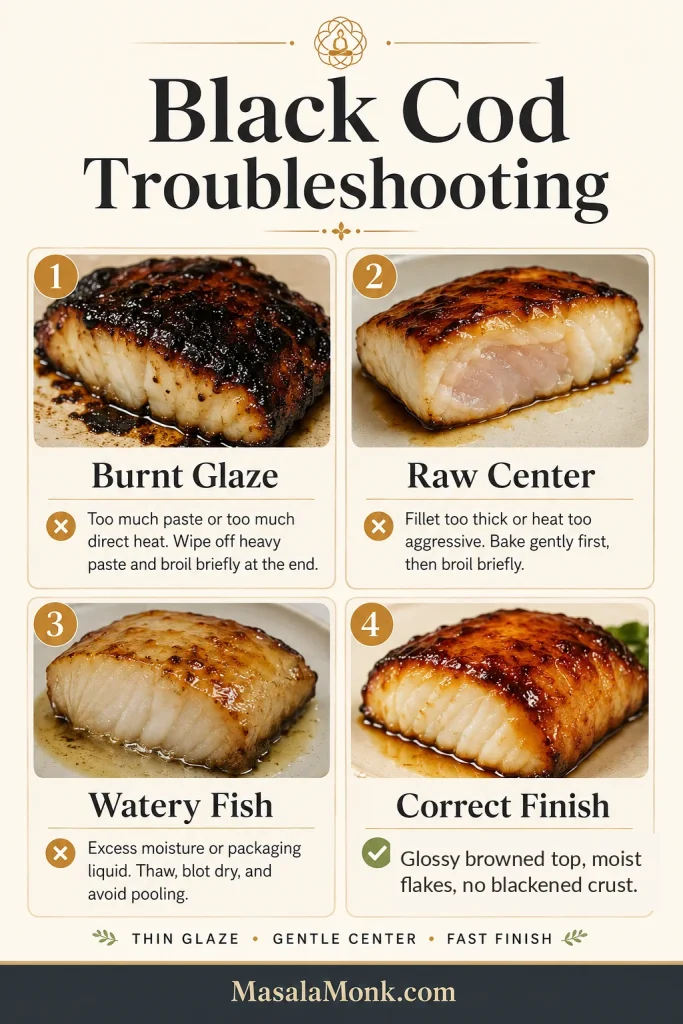
Black Cod Troubleshooting
If something feels off, do not overthink it. When black cod goes wrong, it is usually one of three things: too much marinade on the surface, too much direct heat, or too much fiddling.
Start with the Main Cooking Cues
Most problems trace back to paste, heat, or moisture; the visual below shows what went wrong and how to correct it next time.
If miso black cod burns, steams, or stays raw in the center, the fix usually starts with less paste, drier fish, and gentler heat.
Glaze, Heat, and Moisture Problems
Problem
Why It Happened
Fix
The miso glaze burned
Too much marinade, rack too close, or sugar burning under strong heat
Leave a lighter coating, move the rack lower, or broil only at the end
The top browned but the center was raw
The heat was too aggressive
Bake first, then broil briefly to finish
The fish tasted too salty
Long marinade, strong miso, or too much soy sauce
Use white miso, shorten the marinade, and wipe away excess before cooking
The fish tasted too sweet
Too much sugar or honey
Use 1 tablespoon sweetener next time instead of 2
The fish was watery
Frozen fish was not fully thawed or dried
Thaw overnight and pat very dry before marinating
Handling, Air Fryer, and Grill Problems
Problem
Why It Happened
Fix
The fish fell apart
Sablefish is delicate and oily
Use skin-on fillets, a fish spatula, and fewer flips
Regular cod came out dry
Regular cod is much leaner than black cod
Cook it for less time and use gentler heat
The air fryer dried the edges
The fillet was small or the heat was too strong
Check at 5 minutes, lower the temperature, or use a thicker fillet
The fish tore on the grill
The grates were dry or the fish was flipped too early
Oil the grates well, start skin-side down, and use foil or a grill basket if needed
When it is right, the first bite should be savory, gently sweet, and rich enough that rice and greens suddenly make perfect sense.
Yes. Black cod is sablefish. It is rich, oily, and naturally tender, which makes it especially good with miso marinades and high-heat cooking.
Is this Nobu-style black cod?
It uses the same broad miso-marinated black cod idea: sablefish, miso, mirin, sake, sugar, and a caramelized finish. This home version gives shorter and overnight marinade options instead of requiring a long multi-day marinade.
How long should black cod marinate?
For a quick dinner, 20–30 minutes is enough. To build deeper flavor, marinate for 8–24 hours. Longer marinades become stronger and saltier, so leave only a light coating before cooking.
Can I marinate black cod for 2 days?
Yes, but the flavor becomes stronger and saltier. For most home cooks, 8–24 hours is the best balance. If you marinate for 2 days, use mild white miso and wipe away heavy paste before cooking.
Should I wipe off miso marinade before cooking?
Yes. Do not rinse the fish, but remove heavy paste and leave only a shiny trace of marinade. Thick paste burns under the broiler; a shiny trace caramelizes.
What temperature should black cod be cooked to?
For a softer texture, some cooks pull it around 130–135°F / 54–57°C and let it rest. The official safe internal temperature for fish is 145°F / 63°C, or until it is opaque and flakes easily with a fork.
Why did my miso glaze burn?
Miso glaze burns because it contains sugar and fermented paste. Keep the fish slightly farther from the broiler, avoid thick pockets of marinade, and caramelize briefly at the end if your oven runs hot.
Do you cook black cod with the skin on?
Skin-on fillets are easier to handle, especially in a pan or on the grill. You can serve the fish with the skin or lift the cooked flesh away from it before eating.
What is the best substitute for black cod?
Chilean sea bass is closest in richness, but it is also expensive. Salmon works well with the miso glaze and is easier to find. Regular cod can work, but it is leaner, less buttery, and needs a shorter cook time.
Can I use Trader Joe’s, Costco, or other frozen miso black cod with these instructions?
Yes, but follow the package instructions first. Use the tips here to avoid common problems: remove excess liquid, do not let glaze pool, check early in the air fryer, and use a short broiler finish only if the fish needs more color.
Can I grill black cod?
Yes, and skin-on fillets make it much easier. Use medium or indirect heat, oil the grates well, and treat the miso as a finishing glaze so it does not burn before the fish is done.
Can I air fry black cod?
Yes. Use 375°F / 190°C for 7–10 minutes, or 400°F / 200°C for 7–9 minutes if you want faster browning. Check early; air fryers vary and miso can darken quickly.
Can I cook black cod from frozen?
Thawing overnight in the refrigerator gives the best texture and browning. Wet, icy fillets tend to steam instead of caramelize. If a package gives cook-from-frozen instructions, follow those first.
Why is black cod so expensive?
Black cod, or sablefish, is prized for its rich, high-fat texture and soft flakes. It also tends to be sold as a premium seafood item. Good frozen sablefish can still be excellent, so fresh is not the only good option.
Once you know how this fish behaves, it stops feeling intimidating. Use the Black Cod Safety Triangle: thin glaze, gentle center, fast caramelized finish. When the top is burnished, the center is still soft, and the rice catches that sweet-savory glaze, it feels like the kind of dinner you planned for days — even if you only started half an hour ago.
Crab cakes should feel generous, not stressful. When you buy good crab, the last thing you want is a bready patty, a dry center, or a cake that falls apart the second you flip it. This recipe protects what matters most: 1 lb / 454g lump crab, just enough mayo-egg binder, a small amount of panko or crushed saltines, and a proper chill so the cakes hold together without losing their sweet crab texture.
The goal is simple: big crab flavor, little filler, crisp edges, and no first-flip panic. The win is a cake that lifts cleanly from the pan, cracks lightly at the edge, and still tastes warm, tender, and unmistakably like crab in the center.
Pan-frying gives the deepest golden crust, but the same crab cake mixture can also be baked, air-fried, or seared and finished in the oven. Choose the method that fits the meal, then let the ratio, chill time, and visual cues do the work.
Quick Answer: How to Make Crab Cakes That Hold Together
For reliable crab cakes, use 1 lb / 454g lump crab meat, 1 egg, 1/4 cup / 60g mayonnaise, Dijon, Worcestershire, lemon juice, Old Bay, herbs, and a small amount of panko or crushed saltines. For every pound of crab, use 1/2 cup / 30–40g panko or 2/3 cup / 41g crushed saltines. That is enough filler to help the cakes hold together without turning them bready.
Fold gently, shape into 6 thick cakes, chill for 30–60 minutes, then pan-fry for 3–4 minutes per side until crisp and golden. To keep crab cakes from falling apart, drain the crab well, use just enough binder and crumbs, chill the shaped cakes, and wait until the first side is golden before flipping.
The method is simple on purpose: protect the crab, bind only as much as needed, chill before cooking, and let the crust form before you move the cakes. That is the difference between a crab cake that tastes like crab and one that needs too much filler just to survive the pan.
Breaking one open shows the real goal here: big crab pieces, a soft center, and just enough binder to hold the cake together.
The Few Details That Make Crab Cakes Work
If you remember only a few things, remember these: keep the crab cold and well-drained, use only enough filler to hold the cakes together, and let the first side brown before you move it.
Crab cake detail
Best choice
Why it matters
Crab meat
Lump crab; jumbo lump for a splurge
Sweet, tender pieces without a bready bite
Filler
Panko or crushed saltines
Helps the cakes stay intact without taking over
Binder
Egg + mayo
Sets the cakes and keeps the center moist
Chill time
30–60 minutes
Makes the cakes easier to lift and flip
Main method
Pan-fried
Gives the crispest golden edges
Easiest method
Baked
No flipping, less stress, better for batches
Sauce
Tartar, remoulade, or lemon aioli
Adds brightness without covering the crab
Recipe Card: Easy Crab Cakes With Lump Crab and Little Filler
These homemade crab cakes are crisp outside, tender inside, and packed with lump crab meat. They use little filler, just enough binder, Old Bay, lemon, Dijon, Worcestershire, and herbs for a recipe that still tastes like crab.
Yield
6 large crab cakes
Prep time
20 minutes
Chill time
30–60 minutes
Cook time
6–15 minutes, depending on method
Total time
About 1 hour to 1 hour 35 minutes
Main method
Pan-fried
Other methods
Baked, air fryer, pan-seared with oven finish
Ingredients
The ingredient list stays short on purpose, because the best crab cake flavor comes from crab, seasoning, and a light hand with crumbs.
1 lb / 454g lump crab meat, picked over for shells
1 large egg
1/4 cup / 60g mayonnaise
2 tsp Dijon mustard
2 tsp / 10ml Worcestershire sauce
1 tbsp / 15ml fresh lemon juice
1 tsp Old Bay seasoning, plus more to taste
1/8 tsp salt, optional
1/4 tsp black pepper
2 tbsp chopped parsley or chives
1/2 cup / 30–40g panko breadcrumbs or 2/3 cup / 41g crushed saltines
Neutral oil, for pan-frying
Optional: 1 tbsp butter for richer browning or brushing baked crab cakes
Lemon wedges, for serving
Quick Remoulade-Style Crab Cake Sauce
This quick crab cake sauce is creamy, tangy, savory, and bright enough to lift the crab without covering it.
Make the sauce while the crab cakes chill, then keep it cold until the cakes are ready to serve.
1/2 cup / 120g mayonnaise
1 tbsp Dijon mustard
1 tbsp / 15ml lemon juice
1 tsp Worcestershire sauce
1 tsp hot sauce
1 tsp chopped capers or pickle relish
1 small garlic clove, grated
Pinch of Old Bay or paprika
1 tbsp chopped parsley or chives
Mix everything in a small bowl. The sauce should taste bright before it tastes heavy, because crab cakes are rich and sweet. Adjust with more lemon juice, hot sauce, or Old Bay, then chill until ready to serve.
Instructions
Mix and Shape the Crab Cakes
Check the crab. Place the crab meat in a bowl and gently pick through it for small shell pieces. Try not to break up the larger lumps.
Make the binder. In a large bowl, whisk together the egg, mayonnaise, Dijon mustard, Worcestershire sauce, lemon juice, Old Bay, salt, black pepper, and herbs.
Mixing the binder first keeps the seasoning even, so the crab stays in beautiful pieces when everything comes together.
Fold in the crab and crumbs. Add the crab meat and panko or crushed saltines. Fold gently with a spatula until the mixture is evenly moistened. It should look loose but scoopable, not smooth or pasty.
Gentle folding protects the lump crab, which is why this step matters so much in a little-filler crab cake.
Cook a tiny test cake if needed. If you are unsure about salt or seasoning, cook one small spoonful of the mixture first. Adjust gently before shaping the full batch.
Shape the cakes. Divide the mixture into 6 large cakes, about 1/2 cup each. Shape gently but firmly. The cakes should hold their edges without feeling packed hard.
Shaping the cakes before chilling helps them hold their shape later, especially when the batch is soft and crab-heavy.
Chill and Cook the Crab Cakes
Chill. Place the crab cakes on a plate or parchment-lined tray. Refrigerate for 30–60 minutes so the binder and crumbs can settle.
Once the cakes are chilled, they should still feel delicate but lift cleanly enough to move without breaking apart.
Pan-fry. Heat a thin layer of oil, about 1–2 tablespoons for a large skillet, over medium heat. Add the chilled cakes in a single layer without crowding. Cook for 3–4 minutes per side, until deeply golden and crisp at the edges. If a cake resists the spatula, give it another minute.
Serve. Serve hot with the quick crab cake sauce, lemon wedges, and extra herbs.
Baked Crab Cake Option
Heat oven to 450°F / 230°C.
Place chilled crab cakes on a parchment-lined baking sheet.
Brush or dot the tops with a little melted butter.
Bake for 12–15 minutes, until heated through and golden on top.
For deeper color, broil for 1–2 minutes at the end, watching closely.
Baking is the easiest method because there is no flipping. Broil only at the end and only for color, or the tops can brown before the centers are properly heated.
Air Fryer Crab Cake Option
Preheat air fryer to 375°F / 190°C.
Spray the basket and crab cakes lightly with oil.
Air fry for 10–12 minutes, flipping halfway.
Check smaller crab cakes around the 8-minute mark so they do not dry out.
Once the recipe is in front of you, these choices help you adapt the batch without guessing or adding filler just to feel safe.
Best Choices for Your Crab Cake Batch
Use this as the fast decision guide for your crab cakes. It keeps the recipe flexible without making the mixture feel like a guessing game.
Use this guide to choose the right crab, filler, and cooking method before you shape the batch, so the result fits your plan.
Your situation
Go with this
Everyday crab cakes
Refrigerated lump crab
Classic flavor
Crushed saltines
Lighter texture
Panko
Beginner batch
Bake at 450°F / 230°C
Crispiest crust
Pan-fry over medium heat
Cleanest flip
Chill the full 60 minutes
Using canned crab
Drain hard, reduce salt, shape smaller
Making sandwiches
Shape slightly flatter and sturdier
This ratio is built for little-filler crab cakes: enough egg, mayo, and crumbs to hold the shape, but not so much that the crab turns into a breadcrumb patty. The full 60-minute chill gives the cleanest flip, especially if your crab is wet or your cakes are large.
If this is your first batch, bake them or chill the full 60 minutes before pan-frying. If you want the most restaurant-style crust, pan-fry and wait for the golden edge before touching them.
Texture Target: What the Mixture Should Look and Feel Like
A loose mixture is not automatically a bad mixture. Little-filler crab cakes are supposed to feel delicate before they chill. The goal is not a stiff patty; the goal is a tender cake that uses only enough binder to stay together.
A loose but scoopable mixture is exactly what you want before chilling, since crab cakes set best when they are handled gently.
Before chilling: moist, loose, and scoopable, with no liquid pooling at the bottom of the bowl.
After shaping: the cakes should hold their edges without feeling packed hard.
When the mixture is wet: drain better or add 1 tablespoon crumbs at a time.
For a dry mixture: add a small spoon of mayo or a few drops of lemon juice.
If the cakes stick: wait. The crust probably has not finished forming.
Use the visual guide below before adding more crumbs. Most soft crab cake mixtures need draining or chilling first, not heavy packing.
If the mixture is too wet, drain it; if it feels dry, add a little mayo. This guide makes the fix easy to see at a glance.
Do not fix a loose crab cake mixture by smashing the cakes tighter. That makes the center dense. Chill first, then add crumbs only if the cakes still slump or fall apart.
Crab Cake Ratio Per 1 Pound of Crab
Once you know the ratio, crab cakes become much less intimidating. For every 1 lb / 454g crab meat, use one egg, about 1/4 cup mayo, a small amount of mustard and seasoning, and just enough crumbs to hold the cakes together.
For 1 lb / 454g crab
Use
Egg
1 large egg
Mayonnaise
1/4 cup / 60g
Dijon mustard
2 tsp
Worcestershire sauce
2 tsp / 10ml
Lemon juice
1 tbsp / 15ml
Old Bay
1 tsp, plus more to taste
Panko
1/2 cup / 30–40g
Crushed saltines
2/3 cup / 41g
Yield
6 large cakes or 8 medium cakes
Chill
30–60 minutes
Use this ratio as the baseline before making small moisture adjustments for your crab meat.
This ratio is the simple rule that keeps the cakes tender: one pound of crab, a light binder, a little filler, and a full chill.
This ratio keeps the cakes tender and crab-heavy without turning them bready. Very wet crab may need 1 extra tablespoon of crumbs and a longer chill. Dry crab may need a small spoon of mayo. Make either adjustment gently.
The Ingredients That Keep Crab First
Every ingredient has a job: protect the crab flavor, hold the cakes together, or help the edges brown.
Lump Crab Meat
Lump crab is the best everyday choice for homemade crab cakes. It has enough large pieces to feel special, but it is usually more affordable than jumbo lump. If using pasteurized refrigerated crab, drain it well and gently pat away extra moisture before mixing.
Lump crab is the best everyday choice because it gives sweet pieces, a clean bite, and the right balance of texture.
Egg and Mayonnaise
Egg helps the cakes set, while mayo keeps the center moist and helps the seasonings spread. Regular mayo gives the closest texture, while homemade mayonnaise can make the binder and sauce taste fresher.
Dijon, Worcestershire, Lemon, and Old Bay
Dijon adds sharpness, Worcestershire adds savory depth, lemon wakes up the sweetness of the crab, and Old Bay gives the cakes their familiar Maryland-style seasoning. Start gently with salt because crab meat, saltines, and seasoning blends can already be salty.
If you are nervous about seasoning, cook one tiny test cake before shaping the full batch. It is the easiest way to check salt, heat, and brightness without risking all the crab.
Panko, Saltines, or Ritz
Panko gives a light, clean texture and crisp edges. Crushed saltines taste more classic and slightly saltier. Ritz crackers make a softer, richer, buttery variation. Whatever you choose, the filler should support the crab, not become the main texture.
The filler changes the texture more than most people expect, which is why panko, saltines, and Ritz each have a different job.
Parsley or Chives
Fresh herbs add color and lift. Parsley is classic and mild; chives are delicate and slightly oniony without taking over.
Smart Swaps Without Losing the Crab
Make small swaps, then chill before deciding the mixture needs more crumbs. Many crab cake mixtures feel soft at first and firm up after resting.
No panko: use crushed saltines for a classic flavor or Ritz for a richer, buttery version.
Out of saltines: use panko for a lighter texture or fine dry breadcrumbs in a pinch.
For a mayo swap: use Greek yogurt, sour cream, or eggless mayonnaise. Yogurt and sour cream will taste tangier.
No Old Bay: use seafood seasoning, Cajun seasoning, or paprika with celery salt. Add slowly and taste before adding extra salt.
Gluten-free: use gluten-free panko or crushed gluten-free crackers, and check the Worcestershire sauce and seasoning blend too.
No egg: use eggless mayo with 1–2 extra tablespoons crumbs, chill fully, shape smaller cakes, and flip carefully.
Which Crab Meat Should You Use?
The crab you choose changes the texture, price, and flavor of the finished cakes. For this recipe, lump crab is the best balance. Jumbo lump is beautiful for special occasions, while backfin or claw meat can work when you want something more affordable.
Choosing the right crab meat is easier when you can see how each type changes texture, flavor, and moisture.
Crab meat
Should you use it?
Works well for
Jumbo lump crab
Yes, premium
Special occasion cakes with large visible pieces
Lump crab
Yes, best overall
The main recipe
Backfin crab
Yes
Affordable crab cakes with good flavor
Claw meat
Yes, but stronger
Budget cakes or mixing with lump crab
Canned crab
Yes, with adjustments
Pantry crab cakes when drained very well
Imitation crab
Not ideal for this recipe
Better for a different budget crab-style patty
Dungeness crab
Yes
Sweet West Coast-style crab cakes
Blue crab
Yes
Classic Maryland-style flavor
When buying crab specifically for this recipe, choose fresh or refrigerated pasteurized lump crab meat when possible. Avoid watery crab meat, and always drain it well before mixing. When buying fresh or refrigerated seafood, keep it cold, check that it smells clean rather than sour or ammonia-like, and refrigerate it promptly. The FDA seafood safety tips are helpful when choosing fresh or frozen seafood.
Pan-Fried, Baked, and Air Fryer Crab Cakes
Choose pan-fried for the deepest crust, baked for the least stress, and air fryer for a lighter, less-oil option. The mixture stays the same; only the cooking method changes.
Method
Works well for
Time
Texture
Pan-fried
Crispiest golden edges
3–4 minutes per side
Crisp outside, tender inside
Baked
Beginners and batches
12–15 minutes at 450°F / 230°C
Tender, less crust underneath
Air fryer
Less oil
10–12 minutes at 375°F / 190°C
Lightly crisp; check early
Pan + oven finish
Thicker cakes
2–3 minutes per side, then 5–8 minutes at 400°F / 200°C
Crisp crust with evenly heated center
Pan-Fried Crab Cakes
Pan-frying gives the best crust. Keep the heat at medium, use a thin layer of oil, and leave space between the cakes. Once the cakes hit the pan, the hardest part is leaving them alone.
Pan-frying gives the richest crust, which is why the golden edges look so good when the cakes are done right.
Look for a golden ring around the bottom edge before you touch them. That little ring is your sign that the crust is forming and the cake is getting strong enough to lift. If the cake resists the spatula, that is not failure; it usually means the crust has not finished forming.
That golden ring around the edge is your cue to wait a little longer, because the crust needs time before the flip.
When the first side is ready, the spatula should slide under with less resistance, and the bottom should look deeply golden instead of pale or patchy.
A wide spatula gives the cleanest flip, which is one of the easiest ways to keep delicate crab cakes intact.
If cooking in batches, keep finished crab cakes on a rack in a 200°F / 95°C oven while the rest cook. Avoid stacking them, or the crust will soften.
Baked Crab Cakes
Baking is easier because there is no flipping. The cakes will be a little less crusty underneath, but they stay tender and golden on top. If you like gentle baked seafood, this baked haddock recipe uses the same idea: high enough heat for a tender finish, with lemon, butter, and a light panko or Ritz topping.
Baking is the easiest option when you want less fuss, because the cakes can brown evenly without any flipping.
Air Fryer Crab Cakes
Air frying uses less oil than pan-frying, but the cakes still need a light spray and enough space for air to move around them.
Air fryer crab cakes are a useful middle ground when you want a crisp surface but still want a tender center.
Thick Crab Cakes
For extra-thick cakes, sear them first, then finish them in a 400°F / 200°C oven for 5–8 minutes. Because most lump crab meat is already cooked, the goal is to heat the cakes through and set the binder. For very thick cakes, 145°F / 63°C is a useful safety-minded check, but do not keep cooking thin cakes until they dry out. You can see the general seafood guidance on FoodSafety.gov.
How to Keep Crab Cakes From Falling Apart
Most crab cake problems are fixable and usually come from one of four places: too much moisture, too little chill time, too much or too little filler, or flipping before the crust forms.
Most crab cakes fall apart for the same few reasons, so this quick fix guide helps you solve the problem before the pan gets hot.
Problem
Likely cause
Fix
Cakes fall apart
Wet crab, short chill, or early flipping
Drain well, chill longer, wait for the golden edge
Cakes taste bready
Too much filler or overmixing
Use less crumbs next time and fold gently
Cakes feel dry
Too much breadcrumb or overcooking
Add a small spoon of mayo; check air fryer cakes early
Cakes are soggy
Wet crab, low heat, or crowded pan
Drain better, use medium heat, leave space
Outside browns too fast
Heat too high or cakes too thick
Sear, then finish in a 400°F / 200°C oven
Cakes stick to pan
Moved before crust formed
Wait another minute before lifting
If the mixture still feels loose after chilling, add 1 tablespoon panko or crushed saltines at a time. Stop as soon as the cakes hold together. Too much filler will make the crab disappear.
Canned Crab, Imitation Crab, and Maryland-Style Notes
Can You Use Canned Crab?
Yes, canned crab can work, but it needs care. Drain it very well, gently press out excess liquid, taste before adding salt, and add the lemon juice gradually instead of all at once. If the crab is very wet, add 1 extra tablespoon panko or crushed saltines, chill for the full 60 minutes, and shape slightly smaller cakes so they are easier to flip.
Canned crab works better when you drain it well first, because excess moisture is what usually weakens the cakes.
The same moisture-control idea matters in salmon croquettes too: drain first, bind gently, shape evenly, and cook only once the pan is ready. For the cleanest crab flavor and best texture, though, lump crab is still the better choice when you can get it.
Can You Use Imitation Crab?
Imitation crab can be tasty in its own style, but it does not behave like lump crab. It is softer, sweeter, and more uniform, so this exact formula will not give the same flaky texture or sweet seafood flavor. If imitation crab is what you have, chop it small, reduce the mayo slightly, and make smaller cakes. The result will be more of an affordable crab-style patty than a lump crab cake.
Maryland-Style Crab Cake Notes: What This Recipe Keeps and Skips
This is a Maryland-style home version, not a claim that every Maryland cook makes crab cakes the same way. It keeps the important direction: sweet crab first, Old Bay, lemon, mustard, Worcestershire, and very little filler. It skips onions, peppers, and heavy seasoning so the crab stays clear.
Blue crab is classic, saltines are traditional in many versions, and panko is a lighter modern option when you want crisp edges without heaviness. The main rule is simple: let the crab lead. If the finished cake tastes mostly like bread, the balance has gone too far.
Crab Cake Sizes: Dinner Cakes, Mini Cakes, Crab Balls, and Sandwiches
Choose the size before you shape the mixture. Large cakes feel like dinner, medium cakes work for plates and appetizers, mini cakes are party-friendly, and slightly flatter cakes are best for sandwiches.
The same mixture can become dinner cakes, appetizer bites, crab balls, or sandwich cakes, depending on how you shape it.
Size
Mixture per cake
Yield from 1 lb crab
Works well for
Large crab cakes
About 1/2 cup
6 cakes
Dinner or main course
Medium crab cakes
Heaping 1/3 cup
8 cakes
Appetizer or lighter meal
Mini crab cakes
2 tbsp
16–20 cakes
Party bites
Crab balls
1–2 tbsp
24–36 balls
Snack boards and appetizers
Sandwich cakes
About 1/3–1/2 cup
6–8 cakes
Toasted buns with slaw and sauce
Smaller cakes cook faster, so check early. Mini crab cakes usually need only 2–3 minutes per side in a pan or about 8–10 minutes in a hot oven. The chill-and-shape logic also helps with other delicate patties and croquettes: control moisture, chill before cooking, and turn only when the first side is ready.
Sauces That Keep the Crab First
The best sauce for crab cakes is creamy, bright, and tangy: tartar sauce for classic flavor, remoulade for heat, and lemon or garlic aioli for a richer modern dip. The sauce should wake up the richness of the crab, not bury it.
A classic tartar, a spicier remoulade, or a rich aioli can each change the plate without taking the crab out of focus.
Tartar sauce: classic, mild, and family-friendly.
Remoulade: spicier, tangier, and more restaurant-style.
Lemon aioli: rich, bright, and modern.
Garlic aioli: bold, creamy, and simple.
Mustard sauce: punchy and Maryland-style.
For a classic pairing, serve these crab cakes with homemade tartar sauce. Choose easy garlic aioli for a richer, garlicky dip. A small drizzle of honey mustard dressing works well with cabbage, greens, or a crab cake sandwich when you want a lighter slaw-style pairing.
Serve crab cakes while the edges are still crisp, with lemon on the side and just enough sauce to brighten each bite without hiding the crab.
What to Serve With Crab Cakes
Serve crab cakes as an appetizer, seafood dinner, sandwich filling, or brunch base. Keep the sides fresh and simple so the crab stays the star.
Serve the cakes while the crust is still crisp, then add lemon and slaw for a fresh finish that keeps each bite balanced.
Poached eggs and hollandaise for crab cake Benedict
For a picnic-style plate, add corn, pickles, and potato salad. For brunch, serve crab cakes with poached eggs and hollandaise sauce. For sandwiches, use toasted buns, lettuce, tomato, pickles, sauce, and a little slaw.
Make Ahead, Storage, Freezing, and Reheating
Make ahead: shape the crab cakes up to 24 hours ahead. Cover and refrigerate until ready to cook.
Refrigerate cooked crab cakes: store in an airtight container for up to 3 days. Let them cool before covering so steam does not soften the crust, but do not leave seafood sitting out for long.
Freeze uncooked crab cakes: freeze shaped cakes on a tray until firm, then transfer to a freezer-safe bag or container. Thaw overnight in the refrigerator before cooking.
Freeze cooked crab cakes: possible, but the texture is usually better when frozen before cooking.
Reheat: use a 350°F / 175°C oven for 8–12 minutes, an air fryer at 350°F / 175°C for 4–6 minutes, or a skillet over medium-low heat. The microwave works in a pinch but softens the crust.
FAQs
What is the best crab meat for crab cakes?
Lump crab meat is the best everyday choice because it gives tender pieces without the highest price of jumbo lump. Jumbo lump is beautiful for special occasions, while backfin or claw meat can work for more budget-friendly crab cakes.
Are crab cakes better baked or fried?
Pan-fried crab cakes have the crispest edges and deepest color. Baked crab cakes are easier for beginners and batches because there is no flipping, so they are less likely to break.
How much filler should crab cakes have?
For 1 lb / 454g crab meat, use about 1/2 cup / 30–40g panko or 2/3 cup / 41g crushed saltines. More than that can make the cakes taste bready.
What keeps crab cakes from falling apart best?
The biggest fixes are draining the crab well, chilling the shaped cakes, and waiting until the first side is golden before flipping. Add more crumbs only after chilling if the mixture still feels too loose.
Do crab cakes need egg?
Egg helps bind the crab cakes and makes them easier to cook without breaking. For an egg-free version, shape smaller cakes, add 1–2 extra tablespoons crumbs, chill for the full 60 minutes, and flip carefully.
What can replace mayonnaise in crab cakes?
Greek yogurt, sour cream, or eggless mayonnaise can replace regular mayo. Yogurt and sour cream taste tangier, while eggless mayo keeps the texture closer to the original.
Should I use panko or saltine crackers?
Use panko for a lighter, crisper texture and saltines for a more classic, slightly saltier Maryland-style crab cake. Ritz crackers are richer and more buttery.
How long should crab cakes chill before cooking?
Chill crab cakes for at least 30 minutes. A full 60 minutes is better when the mixture is soft, the crab is wet, or you are nervous about flipping.
Can crab cakes be made ahead?
Yes. Shape the crab cakes, place them on a tray, cover, and refrigerate for up to 24 hours before cooking. This makes them easier to handle and helps them stay intact.
Can you freeze crab cakes?
Yes. Freeze them uncooked after shaping for the best texture. Thaw overnight in the refrigerator before cooking.
How do I make gluten-free crab cakes?
Use gluten-free panko or crushed gluten-free crackers instead of regular panko or saltines. Check that your Worcestershire sauce and seasoning blend are gluten-free too.
The Crab Cake Promise
Crab cakes are easier when you remember the basic promise: 1 lb crab, 1 egg, 1/4 cup mayo, a small handful of crumbs, bright seasoning, and enough chill time. Start with good lump crab when you can, drain it well, fold gently, and let the first side brown before flipping.
When the edges are crisp, the center is warm and tender, and the crab still tastes sweet and clear, that is the whole win.
If you make them, leave a note with your crab type, cooking method, and whether you used panko, saltines, or Ritz. Your note can help the next person choose their version.
This honey garlic salmon is the kind of dinner that makes plain rice feel exciting. The salmon stays tender and flaky, the sauce turns shiny and spoonable, and every bite has that sweet-savory mix of honey, garlic, soy sauce, and a little brightness from lemon or rice vinegar.
Here is the main rule: sear first, sauce later. Salmon needs enough heat to brown; honey needs gentler heat so it can thicken without burning. Once you understand that, this recipe becomes much easier to trust.
That matters because salmon cooks quickly, and nobody wants to lose a good piece of fish to burnt honey or a dry center. This method gives you control: brown the fish first, then let the honey garlic mixture finish gently around it.
The skillet method gives you the stickiest, glossiest result, but the same honey garlic sauce also works for baked salmon, foil packets, air fryer salmon, and salmon bites. Start with the main recipe when you want the best skillet glaze, then use the oven or air fryer notes when dinner needs to be more hands-off.
Quick Answer: The Best Way to Make Honey Garlic Salmon
For the stickiest glaze, use a skillet. Pat the salmon dry, sear it first, then add a honey garlic sauce made with honey, low-sodium soy sauce, garlic, and lemon juice or rice vinegar. Once the sauce enters the pan, lower the heat and baste for 2–4 minutes, just until the bubbles slow and the sauce lightly coats the fish.
Total time: about 20 minutes.
Best salmon size: 4 fillets, about 6 oz / 170 g each.
Preferred method: skillet for the most controlled glaze.
Oven option: bake at 400°F / 200°C for 12–15 minutes.
Foil option: bake at 400°F / 200°C for 12–15 minutes.
Air fryer option: air fry at 390°F / 199°C for 7–8 minutes.
Biggest mistake: adding honey sauce too early over high heat.
Honey Garlic Salmon Recipe Card
Prep time: 8 minutes Cook time: 12 minutes Total time: 20 minutes Servings: 4 Yield: 4 salmon fillets Main method: Skillet Other methods included below: Baked, foil, air fryer, and salmon bites
Ingredients
Ingredient
US amount
Metric amount
Salmon fillets
4 fillets, about 6 oz each
About 680 g total
Honey
1/3 cup
About 113 g
Low-sodium soy sauce
1/4 cup
60 ml
Lemon juice or rice vinegar
2 tbsp
30 ml
Garlic, minced
4 cloves
About 12–16 g
Olive oil or butter
1 tbsp
15 ml oil or 14 g butter
Black pepper
1/2 tsp
To taste
Red pepper flakes, sriracha, or hot honey
Optional
To taste
Salt
Small pinch, optional
Use lightly
Instructions
Pat the salmon fillets very dry with paper towels. Season lightly with black pepper and a small pinch of salt only if needed.
In a small bowl, whisk together the honey, low-sodium soy sauce, lemon juice or rice vinegar, minced garlic, and optional red pepper flakes, sriracha, or hot honey.
Heat olive oil or butter in a large nonstick or cast-iron skillet over medium to medium-high heat.
Add the salmon best-looking side down first. Sear for 3–5 minutes, depending on thickness, until the surface is lightly golden.
Flip carefully and cook the second side for about 2 minutes.
Lower the heat to medium. Pour the honey garlic sauce into the pan around the salmon.
Let the sauce bubble gently for 2–4 minutes. As the bubbles get smaller and slower, spoon the basting liquid over the salmon until it leaves a light coating on the fish.
If the sauce tightens too quickly, add 1–2 tbsp water. When the salmon is cooked but the sauce is thin, remove the fish and simmer the sauce for another minute.
Serve hot with extra pan glaze spooned over the salmon.
Recipe note: Sear first, sauce later. Honey darkens quickly over high heat, so get the salmon mostly cooked first, then lower the heat and let the sauce turn glossy instead of burnt.
Start with the skillet recipe for the best glaze. The baked, foil, and air fryer methods are there for the nights when dinner needs to be softer, easier, or faster.
Honey Garlic Salmon at a Glance
Best for
Fast weeknight dinner, rice bowls, meal-prep lunches, and a sweet-savory salmon glaze
Skillet, because you can watch the sauce reduce and control the heat
Salmon amount
4 fillets, about 6 oz / 170 g each
Main sauce ratio
1/3 cup honey, 1/4 cup low-sodium soy sauce, 2 tbsp lemon juice or rice vinegar, 4 garlic cloves
Skillet timing
3–5 minutes first side, 2 minutes second side, 2–4 minutes with sauce
Baked timing
400°F / 200°C for 12–15 minutes
Foil timing
400°F / 200°C for 12–15 minutes
Air fryer timing
390°F / 199°C for 7–8 minutes
Best serving idea
Rice, broccoli, cucumber salad, noodles, or a salmon bowl with extra pan sauce
The sauce does most of the work: it gives rice something to soak up, makes the salmon look finished, and turns a simple vegetable on the side into part of the meal.
Why This Recipe Works
This recipe works because the fish and the sauce are treated differently. Salmon wants quick, confident heat. Honey wants gentler heat. If the sauce goes in too early, the honey can scorch before the salmon is cooked. When you sear first and sauce later, the fish gets color and the glaze only needs a few minutes to thicken.
The same late-sauce logic is useful in quick dinners like a stir fry sauce: let the main ingredient cook first, then add the sauce just long enough to coat everything.
Dry salmon sears better. Patting the fillets dry helps the surface brown instead of steam.
Low-sodium soy sauce keeps the sauce balanced. As it reduces, regular soy sauce can become too salty.
Lemon juice or rice vinegar cuts the sweetness. Honey alone tastes flat; acid makes the final bite brighter.
Garlic gives the sauce its savory backbone. It should cook gently, not burn in an empty pan.
Basting builds the glaze. Spoon the sauce over the salmon as it thickens so every bite gets coated.
The rule to remember: sear first, sauce later. Once honey enters the pan, lower the heat and let it bubble gently.
Skillet cue: sear before the sauce goes in: The salmon should get color first, because honey garlic sauce needs gentler heat once it enters the pan.
For skillet honey garlic salmon, sear first and sauce second; this gives the fish color before the honey has a chance to scorch.
If you are here because there is salmon in the fridge and no plan for dinner, start with the skillet version. It is fast, glossy, and forgiving as long as you add the sauce after the first sear.
You can make this with a skillet, a bowl, and a spoon, but a few tools make the process calmer — especially if salmon usually makes you nervous.
Large nonstick skillet or cast-iron skillet
Small mixing bowl
Whisk or fork
Fish spatula
Instant-read thermometer
Baking sheet or baking dish for the oven method
Small saucepan if you want to reduce extra sauce separately
Ingredients You Need
The ingredient list is short, so each item matters. The sauce should taste sweet, salty, garlicky, and slightly sharp before it goes into the pan. Salmon and rice will soften those flavors, so do not be afraid if the sauce tastes a little bold in the bowl.
Ingredient visual: what goes into the sauce: Use this visual to check the short ingredient list before the sauce hits the pan.
Before the pan gets hot, gather the core honey garlic salmon ingredients so the sauce can come together quickly once the fish is seared.
Salmon
Use 4 salmon fillets that are about 6 oz / 170 g each. This size cooks quickly but is still thick enough to stay moist. If one fillet is much thinner than the others, pull it from the pan early and let the thicker pieces finish.
Skin-on fillets are a little more forgiving in a skillet because the skin protects the bottom of the fish. Skinless fillets are easier to coat on all sides and work well for baked salmon, air fryer salmon, and salmon bites.
Honey
Honey gives the sauce its shine, sweetness, and body. It also browns quickly, which is why the sauce is added after the fish has already started cooking.
Maple syrup can work in a pinch, but the finish will be thinner and less sticky. Brown sugar also works if you dissolve it fully into the sauce before it goes into the pan.
Low-Sodium Soy Sauce
Low-sodium soy sauce is the safest choice because the sauce reduces in the pan. It gives salt, umami, and color without overpowering the honey and garlic.
For a gluten-free version, use gluten-free tamari. To make it soy-free, coconut aminos are the easiest swap. The flavor will be a little sweeter and lighter, but it still works well with garlic and lemon.
Garlic
Fresh minced garlic gives the best flavor. Mince it finely so it spreads through the sauce and cooks quickly. If your pan runs hot, mix the garlic into the sauce instead of frying it alone; burnt garlic can turn bitter.
In a pinch, use 1/2 tsp garlic powder instead of fresh garlic. Mix it into the sauce rather than adding it directly to the hot pan.
Lemon Juice or Rice Vinegar
A little acid keeps the sauce from tasting too sweet. Fresh lemon juice gives a brighter finish. Rice vinegar makes the sauce taste softer and slightly more takeout-style. Either one works well.
Butter or Oil
Use olive oil for a cleaner, dairy-free version. Use butter if you want a richer honey garlic butter salmon. Butter adds a deeper, restaurant-style flavor, but it can brown quickly, so keep the heat controlled.
Optional Heat
Red pepper flakes, sriracha, chili crisp, or hot honey can make the sauce spicy. Start small. You can always add more heat at the end, but it is harder to fix a sauce that has become too sharp or fiery.
The sauce is forgiving, but the shape of the salmon matters. A thick center-cut fillet gives you more room to sear and baste; a thin tail piece needs a shorter ride in the pan.
Best Salmon to Use
Choose salmon that is thick enough to stay juicy while the sauce reduces. Center-cut fillets are easiest because they cook more evenly from end to end. Thin tail pieces still work, but they cook faster and need a gentler hand.
Salmon type
How it behaves
Best tip
Atlantic salmon
Usually fattier and more forgiving
Good for skillet and air fryer methods
Sockeye salmon
Leaner, deeper in color, and quicker to dry out
Cook gently and pull it earlier
Skin-on fillets
More protection in the pan
Good for skillet cooking
Skinless fillets
Easier to coat all over
Good for baked, air fryer, and bites
Frozen salmon
Works well if fully thawed
Drain and pat very dry before cooking
If you are using sockeye, keep a closer eye on the timing because it is leaner than many Atlantic salmon fillets. For more detail on that style of fish, see this sockeye salmon recipe, which focuses on keeping lean salmon moist.
When using frozen salmon, thaw it fully first, drain off extra liquid, and pat it very dry. Wet fish steams instead of searing, and that makes the pan sauce feel thinner.
Honey Garlic Salmon Sauce Ratio
A good honey garlic sauce is not just sweet. It needs salt, acid, and garlic to stay balanced. This main ratio gives you enough sauce to coat 4 fillets and still spoon a little extra over rice.
Think of the sauce as a balance, not a pour: honey brings shine, soy sauce brings depth, acid keeps it awake, and garlic makes it taste like dinner.
If you are serving this with rice, err on the side of a little extra sauce. The rice is not just a side here; it is where the glaze lands.
Sauce visual: balance the honey garlic glaze: Use this sauce cue to see how the sweet, salty, garlicky, and bright ingredients come together before they reduce in the pan.
The honey garlic salmon sauce should taste sweet, savory, garlicky, and bright before cooking, because the glaze only gets stronger as it reduces.
Main Sauce Ratio
Ingredient
US amount
Metric amount
Role
Honey
1/3 cup
About 113 g
Sweetness, shine, body
Low-sodium soy sauce
1/4 cup
60 ml
Salt, umami, color
Lemon juice or rice vinegar
2 tbsp
30 ml
Balance and brightness
Garlic, minced
4 cloves
About 12–16 g
Savory flavor
Butter or olive oil
1 tbsp
14–15 g/ml
Richness and pan coating
How to Adjust the Sauce
From there, adjust the sauce to match the plate: sweeter for kids, saltier for noodles, spicier for bowls, or thicker when rice is waiting underneath.
Sauce style
What to change
Best for
Balanced sauce
Use the main ratio
Everyday honey garlic salmon
Sweeter sauce
Use 1/3 cup honey and reduce soy to 3 tbsp
Milder family dinners
Saltier soy sauce
Use equal honey and soy sauce
Rice bowls and noodles
Thicker glaze
Reduce the sauce 1–2 minutes longer
Spooning over rice
Gluten-free version
Use gluten-free tamari
Gluten-free cooking, not soy-free cooking
Soy-free version
Use coconut aminos instead of soy sauce
Soy-free cooking
Spicy version
Add sriracha, chili flakes, chili crisp, or hot honey
Hot honey garlic salmon
If this sweet-salty sauce is the part you love most, a homemade teriyaki sauce is a good next sauce to try.
Best practical tip: Rice deserves extra sauce. For a saucier plate, make 1.5 times the recipe: 1/2 cup honey, 1/4 cup plus 2 tbsp low-sodium soy sauce, 3 tbsp lemon juice or rice vinegar, and 6 garlic cloves. Reduce the extra sauce separately so the salmon does not overcook.
Coconut aminos are the best soy-free choice. In a pinch, water, a small pinch of salt, extra lemon juice, and a little more garlic will work, but the flavor will be lighter and less savory.
Choose the method by the kind of dinner you want: skillet for control, oven for ease, foil for tenderness, and air fryer for speed.
Method visual: choose the right cooking style: This guide helps readers choose skillet, baked, foil, air fryer, or salmon bites based on the result they want.
Use this honey garlic salmon method guide to choose the right version: skillet for control, baked for ease, foil for tenderness, air fryer for speed, or bites for bowls.
Method
Time and temp
Texture
Best for
Skillet
About 10–12 minutes total cooking
Glossy pan glaze
Most control
Baked
400°F / 200°C for 12–15 minutes
Tender, easy, less hands-on
Weeknight tray dinner
Foil
400°F / 200°C for 12–15 minutes
Soft and juicy, less browned
Easy cleanup
Air fryer
390°F / 199°C for 7–8 minutes
Fast, lightly caramelized
One or two fillets
Salmon bites
390°F / 199°C for 6–8 minutes
Sticky edges, bowl-friendly
Rice bowls and meal prep
Your first skillet batch also teaches you the visual cues: loose at first, bubbling in the middle, then slower and clingier as the glaze tightens.
Use a skillet when you want the most control. You can see the sauce loosen, bubble, darken slightly, and finally leave a light coating on the salmon instead of guessing what is happening inside the oven.
Visual cue: dry the salmon before searing: This step matters because surface moisture makes salmon steam, while a dry fillet browns faster in the skillet.
First, blot the salmon well; a dry surface helps create better browning and keeps the fillets from steaming in the skillet.
Skillet Step-by-Step
Pat the salmon dry. Use paper towels and dry the top, sides, and bottom. This helps the salmon sear instead of steam.
Season lightly. Add black pepper and only a small pinch of salt if needed. The soy sauce already brings salt to the glaze.
Mix the sauce first. Whisk honey, low-sodium soy sauce, lemon juice or rice vinegar, garlic, and optional chili in a small bowl.
Sear the salmon. Heat oil or butter in a large skillet over medium to medium-high heat. Add the salmon best-looking side down first and cook for 3–5 minutes, depending on thickness.
Flip gently. Cook the second side for about 2 minutes. A fish spatula helps keep the fillets intact.
Lower the heat and add the sauce. Pour the honey garlic sauce around the salmon, not directly over one spot.
Baste as the bubbles slow. Let the sauce bubble gently for 2–4 minutes. When the bubbles get smaller and slower, spoon it over the fish until the surface is lightly coated.
Finish smart. If the salmon is done before the sauce is thick, move the fish to a plate and reduce the sauce by itself for another minute.
How the Glaze Should Look
The sauce is ready when it coats the back of a spoon and does not run straight off the salmon. It should look glossy, not dry or grainy. If it tightens too much, add 1–2 tbsp water and swirl the pan.
Skillet cue: add sauce around the salmon: Pouring the sauce around the fillets helps it bubble evenly and keeps one spot from getting too dark too fast.
Next, pour the sauce around the salmon so it bubbles evenly across the pan instead of overwhelming one fillet.
Glaze cue: watch the bubbles slow down: Smaller, slower bubbles tell you the honey garlic sauce is thickening into a glaze instead of staying thin.
As the bubbles slow down, the honey garlic sauce starts turning into a clingy glaze instead of staying thin and runny.
If the garlic or honey starts darkening too quickly, lift the pan off the heat for a few seconds, then return it once the bubbling calms down. That small pause can save the sauce without stopping dinner.
Skillet cue: baste for the glossy finish: Basting pulls the warm glaze over the top of the salmon while the center stays moist.
Basting coats the top of the fish with warm glaze, giving skillet honey garlic salmon that shiny finish without cooking it too long.
Finished skillet cue: glossy, reduced, and spoonable: At the end, the salmon should look coated and shiny, with enough pan glaze left to spoon over rice.
When the sauce looks glossy and lightly reduced, the finished skillet honey garlic salmon should have enough glaze left for spooning over rice.
When you do not want to stand at the stove, the oven gives you a softer, easier path.
Baked Honey Garlic Salmon
Bake it when you want dinner to feel easier. Line the tray, brush on the honey garlic mixture, bake, and finish with a little extra reduced sauce while the rice or vegetables come together.
Oven visual: easy tray salmon: Use this tray version when you want a hands-off honey garlic salmon dinner.
Baked honey garlic salmon is the low-effort oven method: the fillets cook gently while the glaze caramelizes on top.
Oven style
Temperature
Time
Best for
Everyday baked salmon
400°F / 200°C
12–15 minutes
Most weeknight fillets
Gentler baked salmon
375°F / 190°C
15–20 minutes
Thicker fillets or softer texture
Caramelized top
Broil after baking
1–2 minutes
More color, only if watched closely
Separate sauce finish
Small saucepan
2–4 minutes
Shiny sauce without burnt honey on the tray
Preheat the oven to 400°F / 200°C.
Line a baking sheet or baking dish with parchment or foil.
Place the salmon on the tray and brush with part of the honey garlic sauce.
Bake for 12–15 minutes, depending on thickness.
For better color, broil for 1–2 minutes at the end, watching closely.
Spoon extra reduced sauce over the salmon before serving.
Oven sauce tip: For the shiniest baked salmon, reduce some sauce in a small saucepan for 2–4 minutes and spoon it over the salmon after baking. This gives you better shine without risking burnt honey on the tray.
Use foil when you want tender salmon and almost no cleanup. It is the gentlest method here: less browning, more steam, and a softer piece of fish that still tastes good with a little extra pan glaze at the end.
Foil method visual: tender salmon with easy cleanup: Foil keeps sauce and steam close to the fish, which gives a softer result and a simpler cleanup.
Honey garlic salmon in foil keeps the sauce close to the fish, which helps the fillet stay tender and makes cleanup easier afterward.
Preheat the oven to 400°F / 200°C.
Place the salmon on a large sheet of foil.
Spoon honey garlic sauce over the salmon.
Seal the foil loosely so there is a little space above the fish.
Bake for 12–15 minutes, depending on thickness.
Open the foil and broil for 1–2 minutes if you want a more caramelized finish.
For the best foil result, keep some sauce separate and spoon it over the fish after baking. That gives you the easy cleanup of foil with the sweet-savory glaze people expect from honey garlic salmon.
Air Fryer Honey Garlic Salmon
Use the air fryer when you want one or two fillets fast without heating the oven. Brush the salmon lightly before cooking, then add warm reduced sauce at the end. That gives you caramelized edges without burning honey in the basket.
Air fryer method visual: fast caramelized edges: A lighter glaze before cooking helps the salmon caramelize without making the air fryer basket too messy.
For air fryer honey garlic salmon, start with a lighter coating and add more glaze after cooking so the basket stays cleaner.
Preheat the air fryer to 390°F / 199°C.
Pat the salmon dry and brush lightly with honey garlic sauce.
Place the fillets in the basket with space between them.
Air fry for 7–8 minutes, adding 1–2 minutes for thicker pieces.
Brush or spoon extra warm sauce over the salmon before serving.
Air fryer sauce tip: Do not pour a lot of honey sauce into the basket. Brush lightly before cooking, then spoon warm reduced sauce over the salmon after cooking for the stickiest finish.
Honey Garlic Salmon Bites
For salmon bites, cut the salmon into 1-inch / 2.5 cm cubes. Air fry at 390°F / 199°C for 6–8 minutes, or use 370°F / 188°C if your air fryer runs hot. Toss the cooked bites with warm sauce after cooking so they stay sticky without burning.
Salmon bites visual: better for bowls: Smaller pieces cook quickly and give the honey garlic glaze more surface area to cling to.
Honey garlic salmon bites cook quickly and glaze on more sides, making them especially useful for rice bowls and fast lunches.
Salmon bites are especially good over rice bowls with cucumber, avocado, edamame, scallions, sesame seeds, or a drizzle of spicy mayo. If bowl-style dinners are your thing, this salmon bowl recipe has more ideas for rice, toppings, sauces, and fresh crunchy add-ons.
The method can change, but the honey rule does not: keep the heat gentle once the sauce is involved.
How to Make the Glaze Sticky Without Burning
The biggest mistake is treating honey like oil. Oil can take high heat. Honey cannot. It is supposed to bubble and thicken, but it can go from shiny to burnt quickly if the pan is too hot.
Pat the salmon dry. A dry surface sears faster, so the fish spends less time in the pan.
Sear first, sauce later. Let the salmon get color before the honey enters the pan.
Lower the heat before adding sauce. Medium heat is usually enough once honey is involved.
Baste instead of boiling hard. Spoon the sauce over the fish while it thickens.
Add water if the sauce tightens too fast. One or two tablespoons can loosen it and save dinner.
Remove the salmon if the sauce needs more time. Reduce the sauce by itself instead of overcooking the fish.
Do not worry if the sauce looks loose at first. It thickens fast once the bubbles get smaller and slower. You are not chasing a hard candy coating; you want a soft glaze that leaves a trail on the spoon and lightly hugs the fish.
Glaze cue: look for a spoon trail: A clear spoon trail shows that the sauce is thick enough to coat the salmon instead of running straight off.
A visible spoon trail means the honey garlic glaze has thickened enough to coat the salmon instead of sliding straight off.
If the sauce starts darkening, it is not always a disaster. Move the fish to a plate, loosen the pan with a splash of water, and bring it back gently once the bubbling calms down.
The sauce gets the attention, but doneness is what makes the salmon worth eating. The fish should flake easily and still look moist in the center. If it becomes firm all the way through, it is usually overcooked.
Pulling salmon at the right moment matters more than forcing a perfect glaze. You can always reduce sauce for another minute, but you cannot undo dry fish.
Doneness visual: flake the thickest part: This cue helps readers check that the salmon separates easily while still looking moist inside.
To check salmon doneness, flake the thickest part gently; it should separate easily while still looking moist inside.
Doneness
Internal temperature
Texture
Moist / medium-rare
120–130°F / 49–54°C
Soft, tender, slightly translucent center
Medium
130–135°F / 54–57°C
Flaky but still juicy
More done
135–145°F / 57–63°C
Fully opaque and firmer
For fully cooked salmon, 145°F / 63°C is the standard safety endpoint. The FDA also notes that fish should look opaque and separate easily with a fork when a thermometer is not available. You can read its seafood safety guidance here: FDA seafood safety guidance.
Many people prefer to pull salmon earlier for a softer, restaurant-style texture, then let carryover heat finish the center. Choose the doneness level you are comfortable with, especially if cooking for children, older adults, or anyone who prefers fully cooked fish.
If you do not have a thermometer, press the thickest part gently with a fork. The salmon should separate into flakes but still look glossy inside. A little white albumin on the surface is normal, but a lot of it usually means the fish is cooking too hot or too long.
Honey garlic sauce, glaze, and marinade use similar ingredients, but they are not exactly the same thing. Knowing the difference helps you avoid watery sauce, over-marinated salmon, and unsafe reuse of marinade.
Term
What it means
How to use it here
Sauce
Loose and spoonable
Mix before cooking and pour into the pan
Glaze
Reduced until sticky and shiny
Baste over the salmon as it thickens
Marinade
Used before cooking to flavor the fish
Use briefly, then cook fresh or reserved sauce for serving
You can use honey garlic sauce as a marinade, but keep it short. Salmon only needs 15–30 minutes. If the sauce contains lemon juice or vinegar, avoid marinating for hours because acid can soften the texture of the fish.
Marinate salmon in the refrigerator, not on the counter. The cleanest method is to divide the sauce before it touches raw salmon: use one part as a short marinade and keep the rest clean for glazing. If a marinade has touched raw fish, boil it thoroughly before using it as a sauce.
Honey Garlic Salmon Variations
Once the base sauce works, the variations are low-risk. Keep the same honey-soy-garlic backbone, then change the mood with butter, ginger, chili, lemon, or Dijon.
Choose the butter version when you want it richer, the ginger version when you want it brighter, and the hot honey version when the plate needs a little spark.
Version
What to change
Best method
Classic honey garlic salmon
Use the main sauce exactly as written
Skillet
Honey garlic butter salmon
Use butter instead of oil, or add 2 tbsp / 28 g butter to the pan
Skillet
Honey soy ginger salmon
Add 1 tsp grated ginger and 1 tsp sesame oil
Skillet or air fryer
Hot honey garlic salmon
Add sriracha, chili flakes, chili crisp, or hot honey
Skillet or baked
Lemon honey garlic salmon
Use extra lemon juice and slightly less soy sauce
Baked
Gluten-free honey garlic salmon
Use gluten-free tamari
Skillet or baked
Soy-free honey garlic salmon
Use coconut aminos instead of soy sauce
Skillet
Honey mustard garlic salmon
Add Dijon mustard to the sauce
Baked or foil
For the most restaurant-style version, make honey garlic butter salmon. Sear the fish, add butter and garlic, then pour in the honey-soy-lemon mixture and baste until glossy. For a sharper version, add Dijon mustard. Add sriracha or chili flakes and finish with lime when you want heat.
Keep the plate simple. This glaze already brings sweetness, salt, garlic, and brightness, so the sides only need to catch it and balance it.
What to Serve With Honey Garlic Salmon
The easiest plate is rice, salmon, and something green. The rice catches the sauce, the vegetable keeps the sweetness in check, and the salmon stays the star without needing much else. If you want the rice to come out fluffy instead of sticky or wet, this guide on how to cook rice covers stovetop, rice cooker, and Instant Pot timing.
Think of the plate in three parts: something to catch the sauce, something green or crisp, and something fresh to keep the sweetness balanced.
Serving visual: build a balanced plate: Rice, greens, cucumber salad, noodles, and bowl toppings all balance the sweet-savory glaze.
Wondering what to serve with honey garlic salmon? Rice, greens, cucumber salad, noodles, and simple bowl toppings all balance the sweet-savory glaze.
Best Sides for the Glaze
Simple rice: jasmine rice, basmati rice, brown rice, coconut rice, or fried rice.
Noodles: sesame noodles, garlic noodles, stir-fried noodles, or these creamy peanut noodles when you want the meal to feel fuller.
Vegetables: broccoli, asparagus, green beans, bok choy, snap peas, or roasted carrots.
Fresh sides: avocado, shredded cabbage, scallions, pickled onions, or a crisp cucumber salad to cut through the sweet-savory sauce.
Bowls: rice, salmon, cucumber, edamame, avocado, sesame seeds, and extra sauce.
For a brighter plate, add something fresh and fruity on the side. A spoonful of mango salsa works especially well with glazed fish because it brings acidity, freshness, and juicy contrast.
Lowest-Effort Plate
On the lowest-effort nights, rice and frozen broccoli are enough because the glaze carries the plate. The extra sauce is part of the meal, not just decoration, so let it run into the rice, noodles, or vegetables.
Weeknight plate visual: rice and broccoli are enough: This simple plate shows that the glaze can carry dinner even when the sides stay minimal.
On busy nights, salmon with rice and broccoli is enough because the honey garlic glaze carries flavor across the whole plate.
Serve the first round hot if you can. That is when the sauce looks best and the fish flakes most softly. They will not have quite the same shine, but leftovers still have plenty of good uses.
Leftovers taste best when you treat them like a new meal instead of trying to recreate the first plate. Flake the salmon into rice bowls, noodles, wraps, or a quick lunch salad.
Fridge: Store cooled salmon in an airtight container for up to 3 days.
Freezer: You can freeze cooked salmon, but the texture is better fresh. Freeze only if needed.
Skillet reheating: Reheat gently in a covered skillet with a splash of water.
Oven reheating: Warm at a low temperature until just heated through.
Microwave reheating: Use short bursts and avoid overheating, or the salmon can turn dry.
For general leftover safety, USDA guidance recommends using refrigerated leftovers within 3 to 4 days: USDA leftovers and food safety.
If the sauce thickens in the fridge, add a teaspoon or two of water when reheating. That loosens it and helps it coat the salmon again. Leftover flakes are especially good tucked into a rice bowl with cucumber, scallions, sesame seeds, and a little extra sauce.
With a larger piece of leftover salmon, flake it gently and use it in a softer dinner the next day. This creamy salmon pasta is the right direction when you want lemon, garlic, pasta, and a richer sauce instead of another sticky glaze.
Troubleshooting Honey Garlic Salmon
When something goes wrong, it is usually not the recipe falling apart. Most honey garlic salmon problems look dramatic in the pan, but they usually come down to heat, moisture, or timing.
A watery sauce needs more reduction. Burnt glaze usually needed lower heat. Dry salmon simply stayed in the pan too long. Most mistakes are fixable if you catch them early, and slightly overcooked salmon can still be saved with extra sauce over rice.
Troubleshooting visual: too hot vs gentle heat: This comparison helps readers see why honey garlic glaze needs controlled heat to stay amber and spoonable.
If the heat is too high, honey can darken fast; gentle heat keeps the glaze amber, glossy, and easy to spoon over the salmon.
Why did my honey garlic glaze burn?
The heat was probably too high, or the sauce went into the pan too early. Sear the salmon first, lower the heat, then add the honey garlic sauce and let it bubble gently.
Why is my sauce watery?
Moisture from the fish may have loosened the sauce, or the sauce may not have reduced long enough. Remove the fillets from the pan and simmer the sauce by itself for a minute or two.
Why is my salmon dry?
It cooked too long or the heat was too high. Pull salmon from the pan while it still looks moist inside. Carryover heat will continue cooking it for a short time.
Why does my garlic taste bitter?
The garlic burned before the sauce had a chance to cool the pan down. Add garlic briefly, or mix it into the sauce and cook it gently with the glaze.
Can I use frozen salmon?
Yes. Thaw it fully, drain off extra liquid, and pat it very dry before cooking. Frozen salmon that is still wet will steam instead of sear.
Can I make this without soy sauce?
Yes. Coconut aminos are the easiest soy-free version. Choose gluten-free tamari only if you need a gluten-free option and soy is still okay for you.
Those are the big pan problems. Here are the quick questions people usually ask before they start.
FAQs
Is honey garlic salmon better baked or pan-seared?
Pan-seared is best if you want the stickiest glaze and the most control over the sauce. Baked salmon is easier and more hands-off, especially when cooking several fillets at once. Both work well.
What temperature keeps salmon moist?
For fully cooked salmon, use 145°F / 63°C. Many cooks pull salmon around 125–135°F / 52–57°C for a softer texture, then let carryover heat finish the center. Choose the doneness level you are comfortable with, especially if cooking for children, older adults, or anyone who prefers fully cooked fish.
How long does honey garlic salmon take in the air fryer?
Air fry at 390°F / 199°C for 7–8 minutes for standard fillets. Keep the first layer of sauce light, because honey can darken quickly in the air fryer, then spoon on more warm sauce after cooking.
Should I marinate salmon in honey garlic sauce?
You can, but keep the marinating time short. Salmon only needs 15–30 minutes. If the sauce has lemon juice or vinegar, do not marinate too long or the texture can become soft. Always marinate in the refrigerator.
Why is my honey garlic sauce not thickening?
It may need another minute or two of simmering, or the salmon may have released moisture into the pan. If the fish is already cooked, remove it and reduce the sauce by itself so the salmon does not overcook.
Should I use skin-on or skinless salmon?
Both work. Skin-on salmon is a little more forgiving in a skillet because the skin protects the bottom of the fish. Skinless salmon is easier to coat on all sides and works well for baked or air fryer versions.
What can I use instead of soy sauce?
Use coconut aminos for the easiest soy-free swap. If you only need the recipe to be gluten-free, use gluten-free tamari. Tamari is usually soy-based, so it is not the same as soy-free.
What is the white stuff on cooked salmon?
The white stuff is albumin, a protein that comes to the surface as salmon cooks. A little is normal. Heavy albumin usually means the fish cooked too hot or too long.
Can I use maple syrup instead of honey?
Yes, but the sauce will be thinner and less sticky. Honey gives a thicker glaze. Maple syrup still tastes good, especially with soy sauce, garlic, and a little lemon, but it will not cling quite the same way.
What sides go best with honey garlic salmon?
Rice is the easiest choice because it catches the sauce. Add a green vegetable for balance, cucumber salad for crunch, or noodles if you want a fuller meal. Keep the sides simple so the sweet-savory sauce stays the main flavor.
Final Thought
Honey garlic salmon feels fancy because the glaze does the showing off. Dry the fish, sear it well, lower the heat, and let the honey, garlic, soy sauce, and lemon do the rest. Add rice and something green, spoon the pan sauce over the plate, and dinner feels finished without asking much from you.