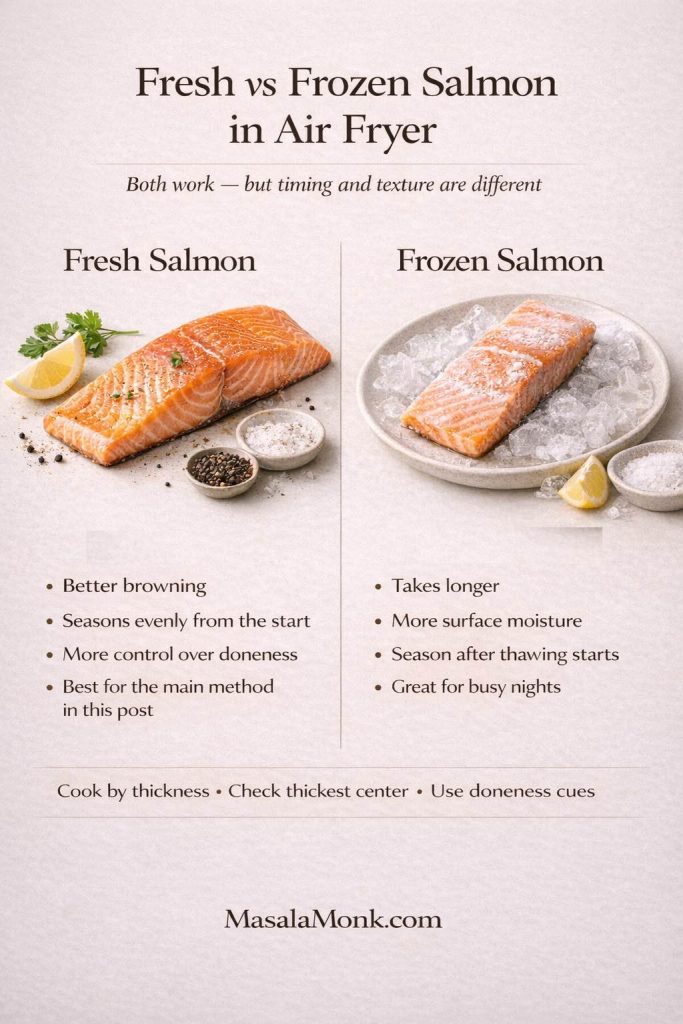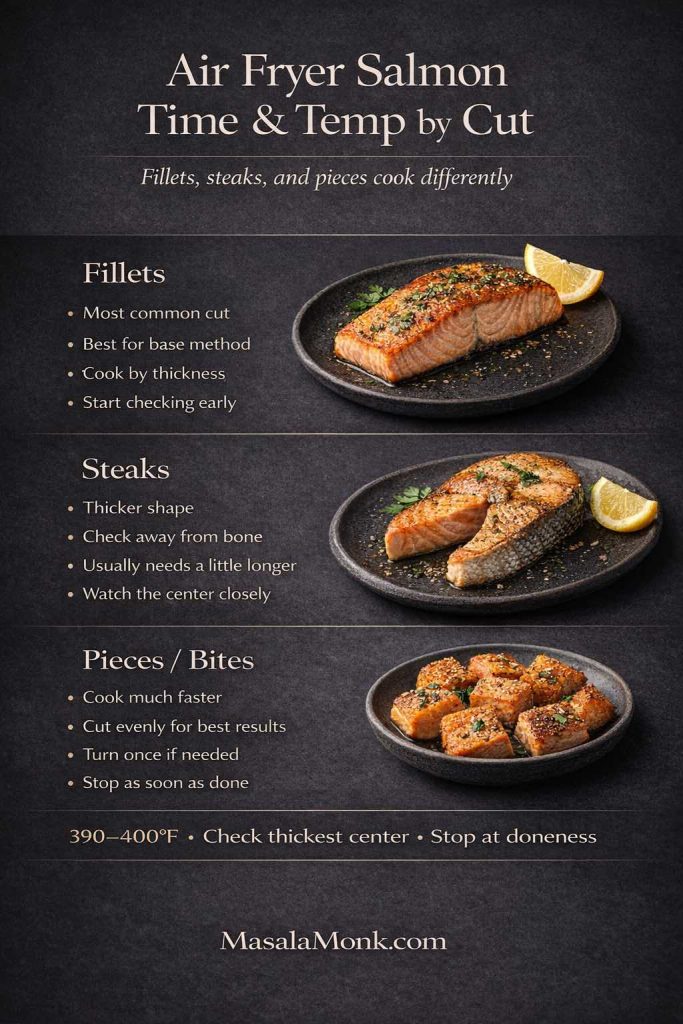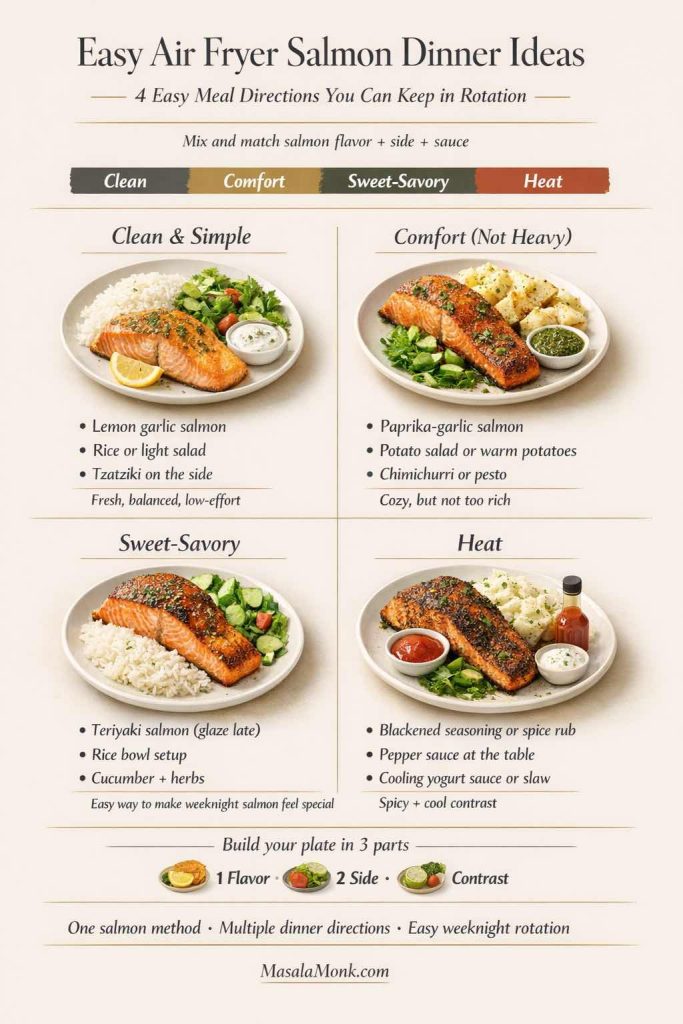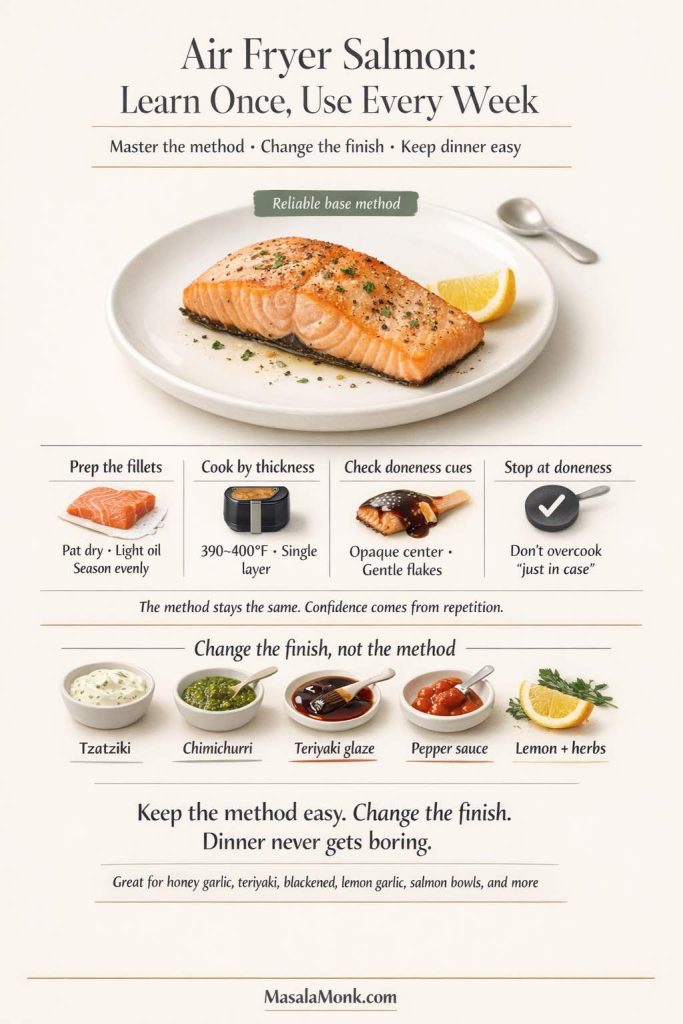
Posted on Leave a comment

Honey Garlic Salmon Recipe

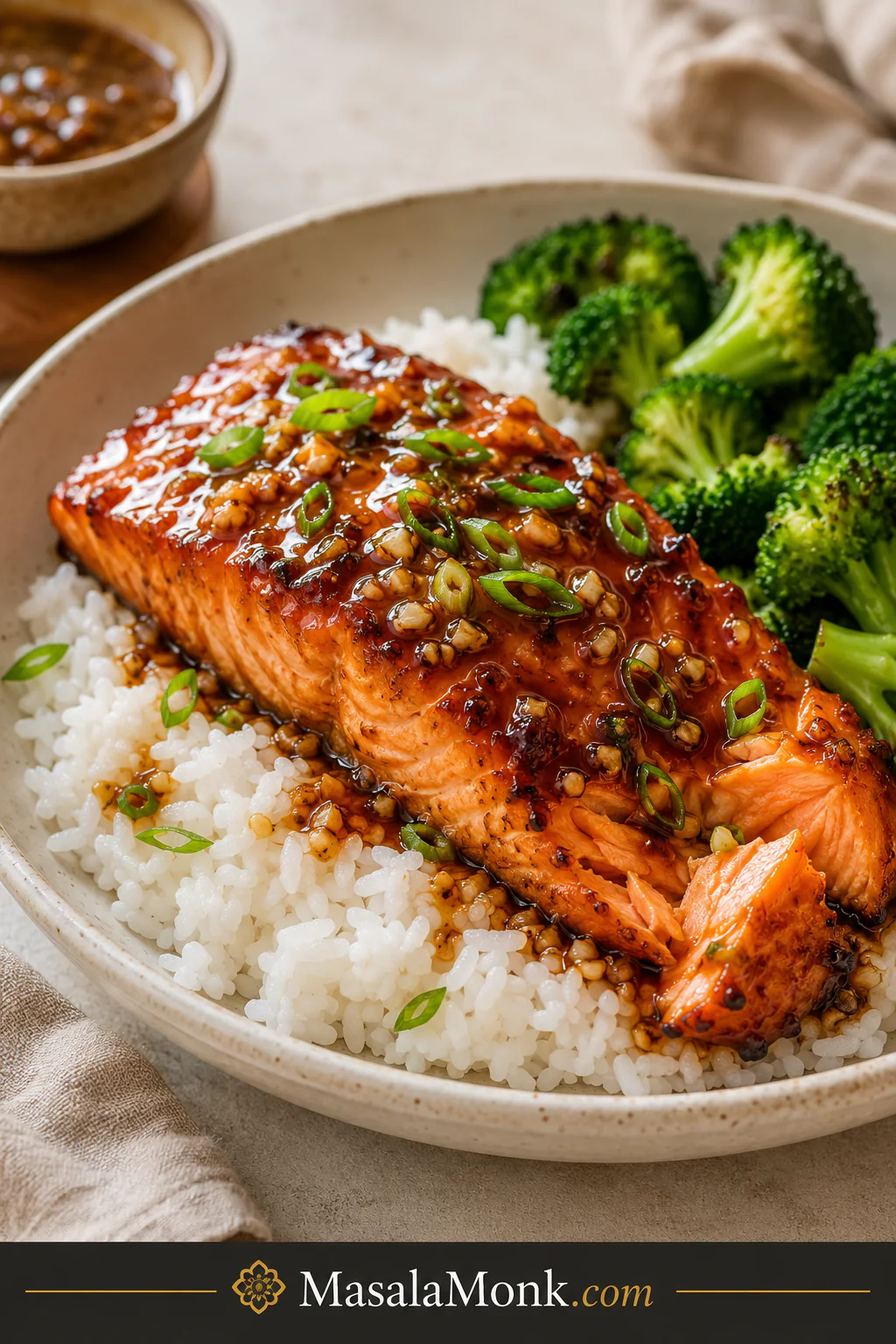
Honey garlic salmon served over white rice with broccoli in a shallow beige bowl.

This honey garlic salmon is the kind of dinner that makes plain rice feel exciting. The salmon stays tender and flaky, the sauce turns shiny and spoonable, and every bite has that sweet-savory mix of honey, garlic, soy sauce, and a little brightness from lemon or rice vinegar.

Here is the main rule: sear first, sauce later. Salmon needs enough heat to brown; honey needs gentler heat so it can thicken without burning. Once you understand that, this recipe becomes much easier to trust.

That matters because salmon cooks quickly, and nobody wants to lose a good piece of fish to burnt honey or a dry center. This method gives you control: brown the fish first, then let the honey garlic mixture finish gently around it.

The skillet method gives you the stickiest, glossiest result, but the same honey garlic sauce also works for baked salmon, foil packets, air fryer salmon, and salmon bites. Start with the main recipe when you want the best skillet glaze, then use the oven or air fryer notes when dinner needs to be more hands-off.

Quick Answer: The Best Way to Make Honey Garlic Salmon

For the stickiest glaze, use a skillet. Pat the salmon dry, sear it first, then add a honey garlic sauce made with honey, low-sodium soy sauce, garlic, and lemon juice or rice vinegar. Once the sauce enters the pan, lower the heat and baste for 2–4 minutes, just until the bubbles slow and the sauce lightly coats the fish.

  • Total time: about 20 minutes.
  • Best salmon size: 4 fillets, about 6 oz / 170 g each.
  • Preferred method: skillet for the most controlled glaze.
  • Oven option: bake at 400°F / 200°C for 12–15 minutes.
  • Foil option: bake at 400°F / 200°C for 12–15 minutes.
  • Air fryer option: air fry at 390°F / 199°C for 7–8 minutes.
  • Biggest mistake: adding honey sauce too early over high heat.

Honey Garlic Salmon Recipe Card

Prep time: 8 minutes
Cook time: 12 minutes
Total time: 20 minutes
Servings: 4
Yield: 4 salmon fillets
Main method: Skillet
Other methods included below: Baked, foil, air fryer, and salmon bites

Ingredients

IngredientUS amountMetric amount
Salmon fillets4 fillets, about 6 oz eachAbout 680 g total
Honey1/3 cupAbout 113 g
Low-sodium soy sauce1/4 cup60 ml
Lemon juice or rice vinegar2 tbsp30 ml
Garlic, minced4 clovesAbout 12–16 g
Olive oil or butter1 tbsp15 ml oil or 14 g butter
Black pepper1/2 tspTo taste
Red pepper flakes, sriracha, or hot honeyOptionalTo taste
SaltSmall pinch, optionalUse lightly

Instructions

  1. Pat the salmon fillets very dry with paper towels. Season lightly with black pepper and a small pinch of salt only if needed.
  2. In a small bowl, whisk together the honey, low-sodium soy sauce, lemon juice or rice vinegar, minced garlic, and optional red pepper flakes, sriracha, or hot honey.
  3. Heat olive oil or butter in a large nonstick or cast-iron skillet over medium to medium-high heat.
  4. Add the salmon best-looking side down first. Sear for 3–5 minutes, depending on thickness, until the surface is lightly golden.
  5. Flip carefully and cook the second side for about 2 minutes.
  6. Lower the heat to medium. Pour the honey garlic sauce into the pan around the salmon.
  7. Let the sauce bubble gently for 2–4 minutes. As the bubbles get smaller and slower, spoon the basting liquid over the salmon until it leaves a light coating on the fish.
  8. If the sauce tightens too quickly, add 1–2 tbsp water. When the salmon is cooked but the sauce is thin, remove the fish and simmer the sauce for another minute.
  9. Serve hot with extra pan glaze spooned over the salmon.

Recipe note: Sear first, sauce later. Honey darkens quickly over high heat, so get the salmon mostly cooked first, then lower the heat and let the sauce turn glossy instead of burnt.

Start with the skillet recipe for the best glaze. The baked, foil, and air fryer methods are there for the nights when dinner needs to be softer, easier, or faster.

Honey Garlic Salmon at a Glance

Best forFast weeknight dinner, rice bowls, meal-prep lunches, and a sweet-savory salmon glaze
Main flavorHoney, savory soy sauce, fresh garlic, light acidity, optional heat
Best methodSkillet, because you can watch the sauce reduce and control the heat
Salmon amount4 fillets, about 6 oz / 170 g each
Main sauce ratio1/3 cup honey, 1/4 cup low-sodium soy sauce, 2 tbsp lemon juice or rice vinegar, 4 garlic cloves
Skillet timing3–5 minutes first side, 2 minutes second side, 2–4 minutes with sauce
Baked timing400°F / 200°C for 12–15 minutes
Foil timing400°F / 200°C for 12–15 minutes
Air fryer timing390°F / 199°C for 7–8 minutes
Best serving ideaRice, broccoli, cucumber salad, noodles, or a salmon bowl with extra pan sauce

The sauce does most of the work: it gives rice something to soak up, makes the salmon look finished, and turns a simple vegetable on the side into part of the meal.

Why This Recipe Works

This recipe works because the fish and the sauce are treated differently. Salmon wants quick, confident heat. Honey wants gentler heat. If the sauce goes in too early, the honey can scorch before the salmon is cooked. When you sear first and sauce later, the fish gets color and the glaze only needs a few minutes to thicken.

The same late-sauce logic is useful in quick dinners like a stir fry sauce: let the main ingredient cook first, then add the sauce just long enough to coat everything.

  • Dry salmon sears better. Patting the fillets dry helps the surface brown instead of steam.
  • Low-sodium soy sauce keeps the sauce balanced. As it reduces, regular soy sauce can become too salty.
  • Lemon juice or rice vinegar cuts the sweetness. Honey alone tastes flat; acid makes the final bite brighter.
  • Garlic gives the sauce its savory backbone. It should cook gently, not burn in an empty pan.
  • Basting builds the glaze. Spoon the sauce over the salmon as it thickens so every bite gets coated.

The rule to remember: sear first, sauce later. Once honey enters the pan, lower the heat and let it bubble gently.

Skillet cue: sear before the sauce goes in: The salmon should get color first, because honey garlic sauce needs gentler heat once it enters the pan.
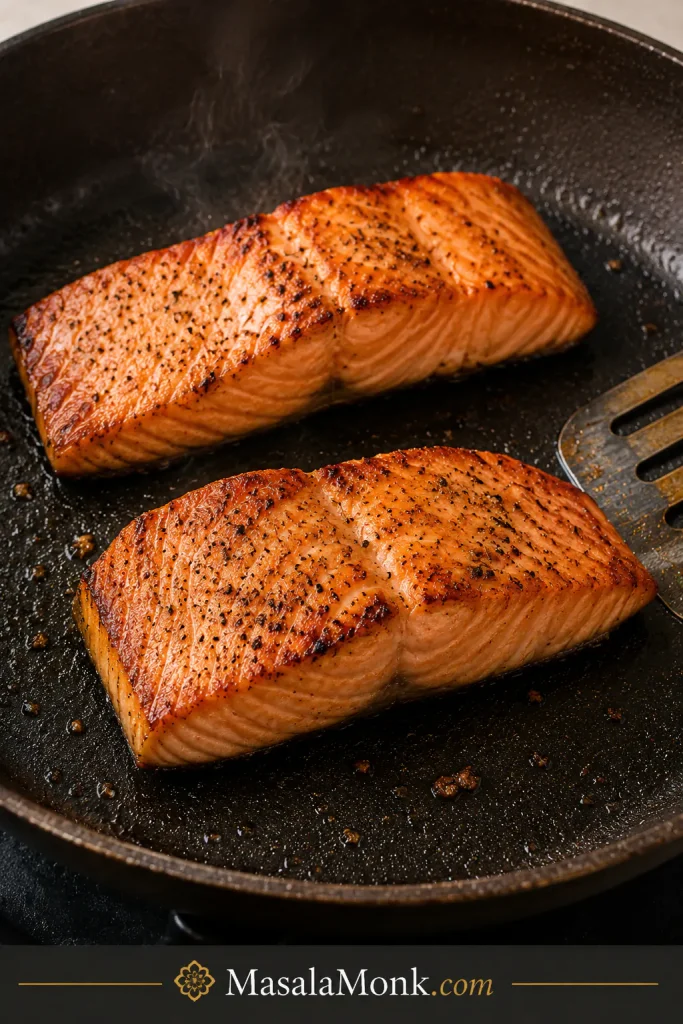
Salmon fillets searing in a dark skillet before sauce is added, with a metal spatula nearby.
For skillet honey garlic salmon, sear first and sauce second; this gives the fish color before the honey has a chance to scorch.

If you are here because there is salmon in the fridge and no plan for dinner, start with the skillet version. It is fast, glossy, and forgiving as long as you add the sauce after the first sear.

Helpful Equipment

You can make this with a skillet, a bowl, and a spoon, but a few tools make the process calmer — especially if salmon usually makes you nervous.

  • Large nonstick skillet or cast-iron skillet
  • Small mixing bowl
  • Whisk or fork
  • Fish spatula
  • Instant-read thermometer
  • Baking sheet or baking dish for the oven method
  • Small saucepan if you want to reduce extra sauce separately

Ingredients You Need

The ingredient list is short, so each item matters. The sauce should taste sweet, salty, garlicky, and slightly sharp before it goes into the pan. Salmon and rice will soften those flavors, so do not be afraid if the sauce tastes a little bold in the bowl.

Ingredient visual: what goes into the sauce: Use this visual to check the short ingredient list before the sauce hits the pan.
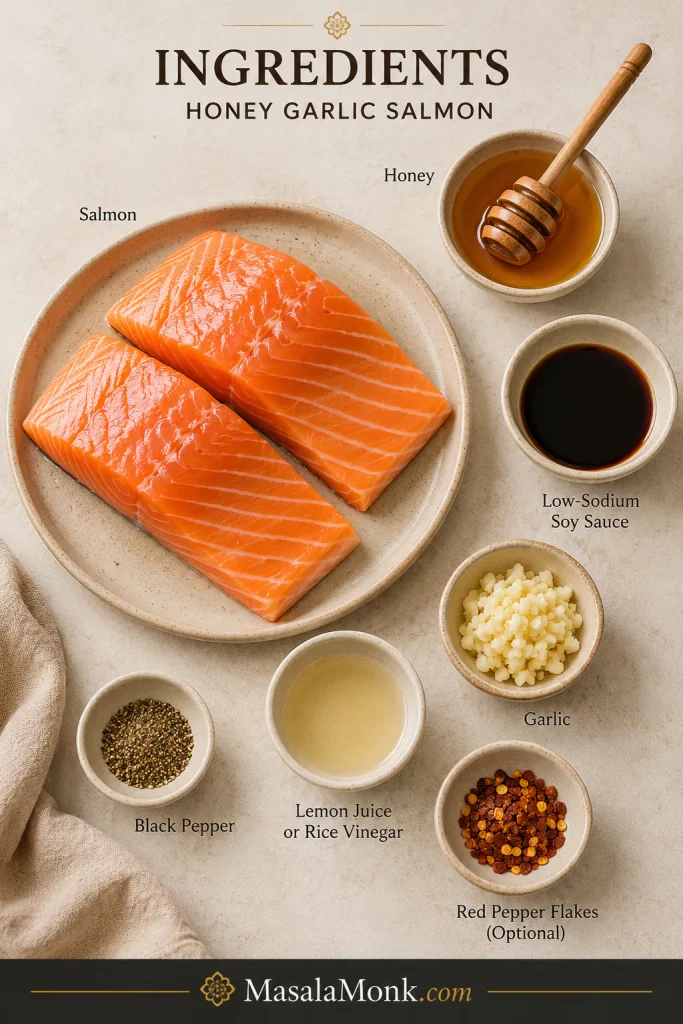
Ingredient layout with raw salmon, honey, soy sauce, garlic, lemon or rice vinegar, black pepper, and red pepper flakes.
Before the pan gets hot, gather the core honey garlic salmon ingredients so the sauce can come together quickly once the fish is seared.

Salmon

Use 4 salmon fillets that are about 6 oz / 170 g each. This size cooks quickly but is still thick enough to stay moist. If one fillet is much thinner than the others, pull it from the pan early and let the thicker pieces finish.

Skin-on fillets are a little more forgiving in a skillet because the skin protects the bottom of the fish. Skinless fillets are easier to coat on all sides and work well for baked salmon, air fryer salmon, and salmon bites.

Honey

Honey gives the sauce its shine, sweetness, and body. It also browns quickly, which is why the sauce is added after the fish has already started cooking.

Maple syrup can work in a pinch, but the finish will be thinner and less sticky. Brown sugar also works if you dissolve it fully into the sauce before it goes into the pan.

Low-Sodium Soy Sauce

Low-sodium soy sauce is the safest choice because the sauce reduces in the pan. It gives salt, umami, and color without overpowering the honey and garlic.

For a gluten-free version, use gluten-free tamari. To make it soy-free, coconut aminos are the easiest swap. The flavor will be a little sweeter and lighter, but it still works well with garlic and lemon.

Garlic

Fresh minced garlic gives the best flavor. Mince it finely so it spreads through the sauce and cooks quickly. If your pan runs hot, mix the garlic into the sauce instead of frying it alone; burnt garlic can turn bitter.

In a pinch, use 1/2 tsp garlic powder instead of fresh garlic. Mix it into the sauce rather than adding it directly to the hot pan.

Lemon Juice or Rice Vinegar

A little acid keeps the sauce from tasting too sweet. Fresh lemon juice gives a brighter finish. Rice vinegar makes the sauce taste softer and slightly more takeout-style. Either one works well.

Butter or Oil

Use olive oil for a cleaner, dairy-free version. Use butter if you want a richer honey garlic butter salmon. Butter adds a deeper, restaurant-style flavor, but it can brown quickly, so keep the heat controlled.

Optional Heat

Red pepper flakes, sriracha, chili crisp, or hot honey can make the sauce spicy. Start small. You can always add more heat at the end, but it is harder to fix a sauce that has become too sharp or fiery.

The sauce is forgiving, but the shape of the salmon matters. A thick center-cut fillet gives you more room to sear and baste; a thin tail piece needs a shorter ride in the pan.

Best Salmon to Use

Choose salmon that is thick enough to stay juicy while the sauce reduces. Center-cut fillets are easiest because they cook more evenly from end to end. Thin tail pieces still work, but they cook faster and need a gentler hand.

Salmon typeHow it behavesBest tip
Atlantic salmonUsually fattier and more forgivingGood for skillet and air fryer methods
Sockeye salmonLeaner, deeper in color, and quicker to dry outCook gently and pull it earlier
Skin-on filletsMore protection in the panGood for skillet cooking
Skinless filletsEasier to coat all overGood for baked, air fryer, and bites
Frozen salmonWorks well if fully thawedDrain and pat very dry before cooking

If you are using sockeye, keep a closer eye on the timing because it is leaner than many Atlantic salmon fillets. For more detail on that style of fish, see this sockeye salmon recipe, which focuses on keeping lean salmon moist.

When using frozen salmon, thaw it fully first, drain off extra liquid, and pat it very dry. Wet fish steams instead of searing, and that makes the pan sauce feel thinner.

Honey Garlic Salmon Sauce Ratio

A good honey garlic sauce is not just sweet. It needs salt, acid, and garlic to stay balanced. This main ratio gives you enough sauce to coat 4 fillets and still spoon a little extra over rice.

Think of the sauce as a balance, not a pour: honey brings shine, soy sauce brings depth, acid keeps it awake, and garlic makes it taste like dinner.

If you are serving this with rice, err on the side of a little extra sauce. The rice is not just a side here; it is where the glaze lands.

Sauce visual: balance the honey garlic glaze: Use this sauce cue to see how the sweet, salty, garlicky, and bright ingredients come together before they reduce in the pan.
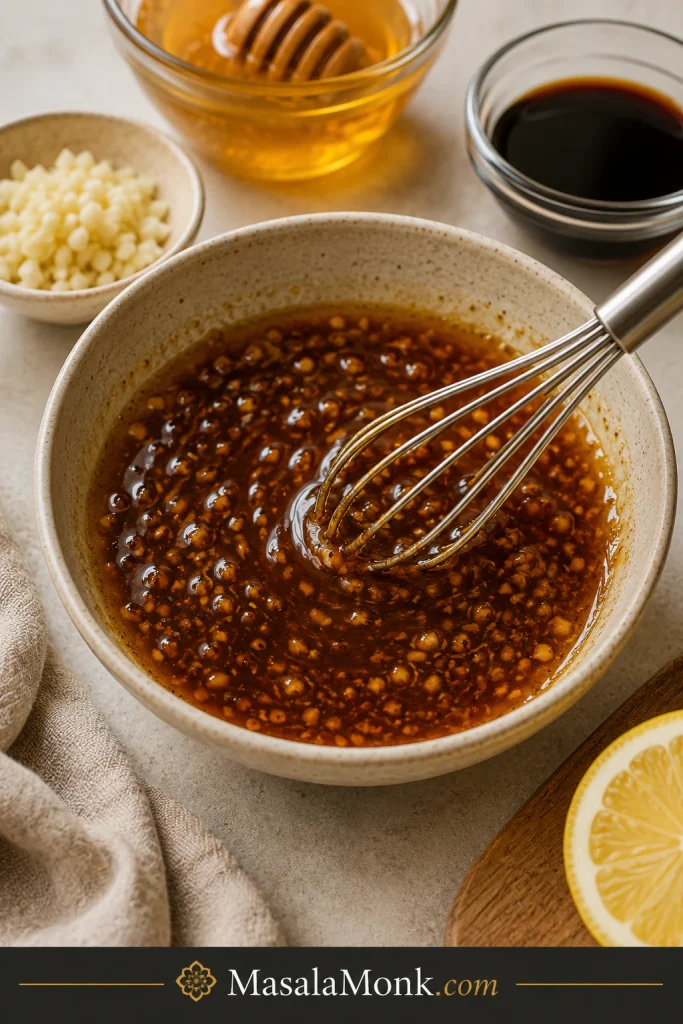
Honey garlic sauce being mixed in a bowl with honey, soy sauce, garlic, and lemon nearby.
The honey garlic salmon sauce should taste sweet, savory, garlicky, and bright before cooking, because the glaze only gets stronger as it reduces.

Main Sauce Ratio

IngredientUS amountMetric amountRole
Honey1/3 cupAbout 113 gSweetness, shine, body
Low-sodium soy sauce1/4 cup60 mlSalt, umami, color
Lemon juice or rice vinegar2 tbsp30 mlBalance and brightness
Garlic, minced4 clovesAbout 12–16 gSavory flavor
Butter or olive oil1 tbsp14–15 g/mlRichness and pan coating

How to Adjust the Sauce

From there, adjust the sauce to match the plate: sweeter for kids, saltier for noodles, spicier for bowls, or thicker when rice is waiting underneath.

Sauce styleWhat to changeBest for
Balanced sauceUse the main ratioEveryday honey garlic salmon
Sweeter sauceUse 1/3 cup honey and reduce soy to 3 tbspMilder family dinners
Saltier soy sauceUse equal honey and soy sauceRice bowls and noodles
Thicker glazeReduce the sauce 1–2 minutes longerSpooning over rice
Gluten-free versionUse gluten-free tamariGluten-free cooking, not soy-free cooking
Soy-free versionUse coconut aminos instead of soy sauceSoy-free cooking
Spicy versionAdd sriracha, chili flakes, chili crisp, or hot honeyHot honey garlic salmon

If this sweet-salty sauce is the part you love most, a homemade teriyaki sauce is a good next sauce to try.

Best practical tip: Rice deserves extra sauce. For a saucier plate, make 1.5 times the recipe: 1/2 cup honey, 1/4 cup plus 2 tbsp low-sodium soy sauce, 3 tbsp lemon juice or rice vinegar, and 6 garlic cloves. Reduce the extra sauce separately so the salmon does not overcook.

Coconut aminos are the best soy-free choice. In a pinch, water, a small pinch of salt, extra lemon juice, and a little more garlic will work, but the flavor will be lighter and less savory.

Use this sauce in the skillet method · See what to serve with it

Skillet vs Baked vs Foil vs Air Fryer

Choose the method by the kind of dinner you want: skillet for control, oven for ease, foil for tenderness, and air fryer for speed.

Method visual: choose the right cooking style: This guide helps readers choose skillet, baked, foil, air fryer, or salmon bites based on the result they want.
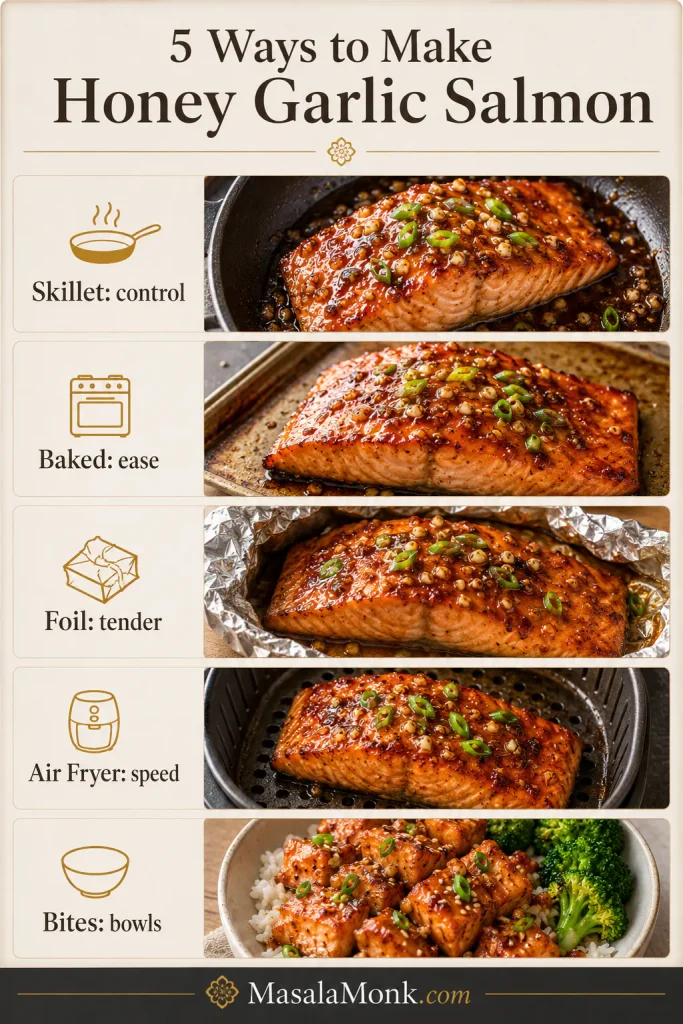
Five honey garlic salmon methods shown side by side: skillet, baked, foil, air fryer, and salmon bites.
Use this honey garlic salmon method guide to choose the right version: skillet for control, baked for ease, foil for tenderness, air fryer for speed, or bites for bowls.
MethodTime and tempTextureBest for
SkilletAbout 10–12 minutes total cookingGlossy pan glazeMost control
Baked400°F / 200°C for 12–15 minutesTender, easy, less hands-onWeeknight tray dinner
Foil400°F / 200°C for 12–15 minutesSoft and juicy, less brownedEasy cleanup
Air fryer390°F / 199°C for 7–8 minutesFast, lightly caramelizedOne or two fillets
Salmon bites390°F / 199°C for 6–8 minutesSticky edges, bowl-friendlyRice bowls and meal prep

Your first skillet batch also teaches you the visual cues: loose at first, bubbling in the middle, then slower and clingier as the glaze tightens.

Skillet method · Baked method · Foil method · Air fryer method · Salmon bites

How to Make Honey Garlic Salmon in a Skillet

Use a skillet when you want the most control. You can see the sauce loosen, bubble, darken slightly, and finally leave a light coating on the salmon instead of guessing what is happening inside the oven.

Visual cue: dry the salmon before searing: This step matters because surface moisture makes salmon steam, while a dry fillet browns faster in the skillet.
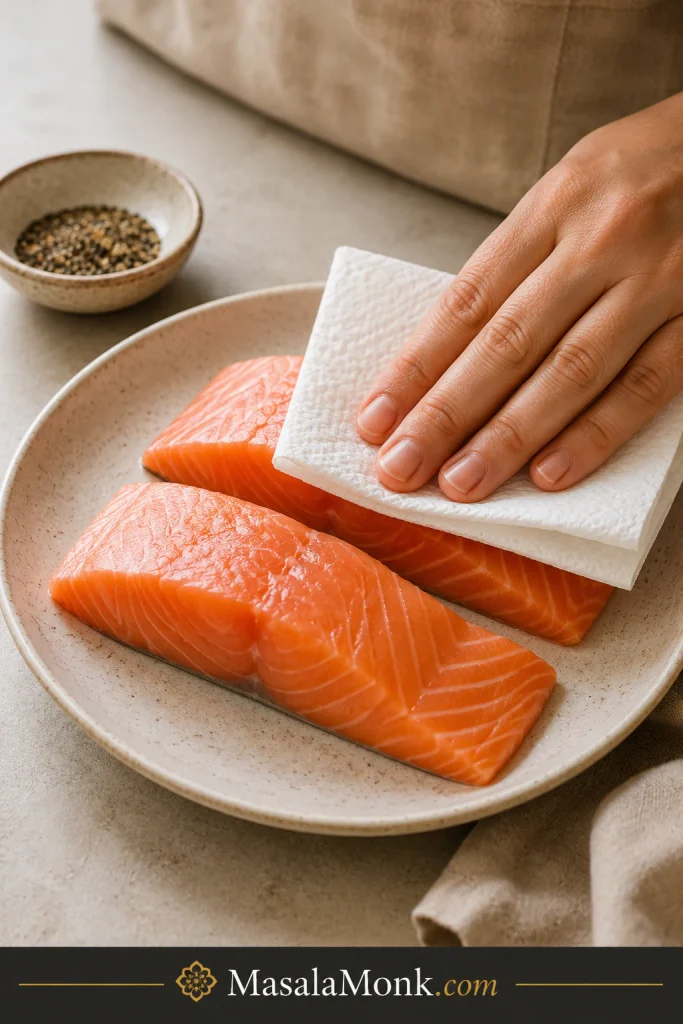
Hand pressing a paper towel onto raw salmon fillets on a beige plate.
First, blot the salmon well; a dry surface helps create better browning and keeps the fillets from steaming in the skillet.

Skillet Step-by-Step

  1. Pat the salmon dry. Use paper towels and dry the top, sides, and bottom. This helps the salmon sear instead of steam.
  2. Season lightly. Add black pepper and only a small pinch of salt if needed. The soy sauce already brings salt to the glaze.
  3. Mix the sauce first. Whisk honey, low-sodium soy sauce, lemon juice or rice vinegar, garlic, and optional chili in a small bowl.
  4. Sear the salmon. Heat oil or butter in a large skillet over medium to medium-high heat. Add the salmon best-looking side down first and cook for 3–5 minutes, depending on thickness.
  5. Flip gently. Cook the second side for about 2 minutes. A fish spatula helps keep the fillets intact.
  6. Lower the heat and add the sauce. Pour the honey garlic sauce around the salmon, not directly over one spot.
  7. Baste as the bubbles slow. Let the sauce bubble gently for 2–4 minutes. When the bubbles get smaller and slower, spoon it over the fish until the surface is lightly coated.
  8. Finish smart. If the salmon is done before the sauce is thick, move the fish to a plate and reduce the sauce by itself for another minute.

How the Glaze Should Look

The sauce is ready when it coats the back of a spoon and does not run straight off the salmon. It should look glossy, not dry or grainy. If it tightens too much, add 1–2 tbsp water and swirl the pan.

Skillet cue: add sauce around the salmon: Pouring the sauce around the fillets helps it bubble evenly and keeps one spot from getting too dark too fast.
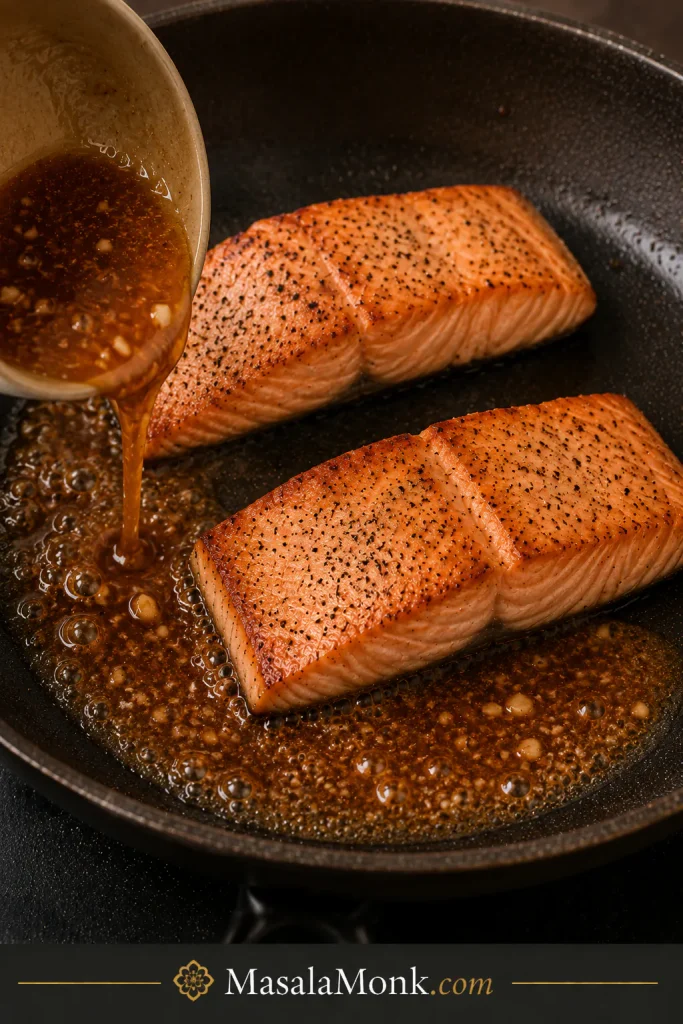
Honey garlic sauce being poured around two seared salmon fillets in a dark skillet.
Next, pour the sauce around the salmon so it bubbles evenly across the pan instead of overwhelming one fillet.

Glaze cue: watch the bubbles slow down: Smaller, slower bubbles tell you the honey garlic sauce is thickening into a glaze instead of staying thin.
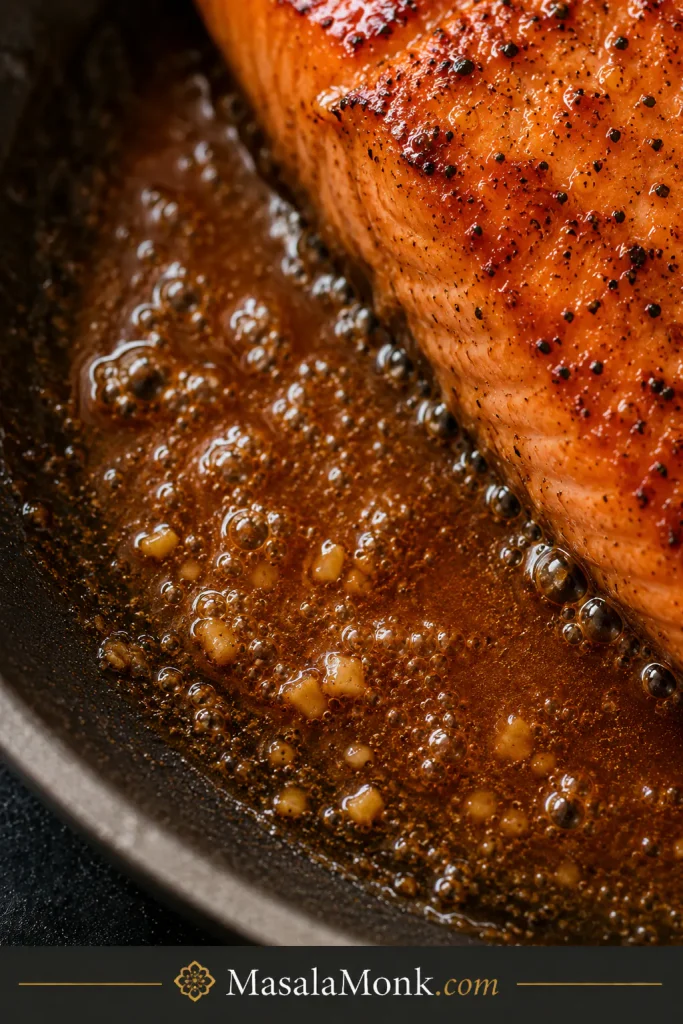
Close-up of amber honey garlic sauce gently bubbling beside a salmon fillet in a dark skillet.
As the bubbles slow down, the honey garlic sauce starts turning into a clingy glaze instead of staying thin and runny.

If the garlic or honey starts darkening too quickly, lift the pan off the heat for a few seconds, then return it once the bubbling calms down. That small pause can save the sauce without stopping dinner.

Skillet cue: baste for the glossy finish: Basting pulls the warm glaze over the top of the salmon while the center stays moist.
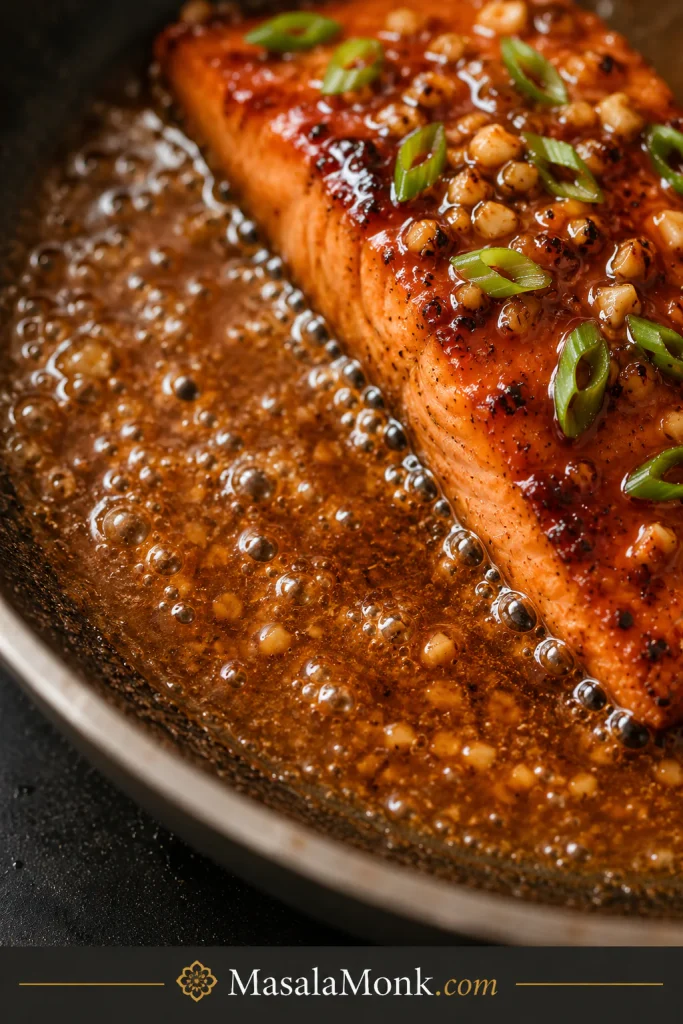
Spoon pouring glossy honey garlic sauce over a salmon fillet in a skillet.
Basting coats the top of the fish with warm glaze, giving skillet honey garlic salmon that shiny finish without cooking it too long.

Finished skillet cue: glossy, reduced, and spoonable: At the end, the salmon should look coated and shiny, with enough pan glaze left to spoon over rice.
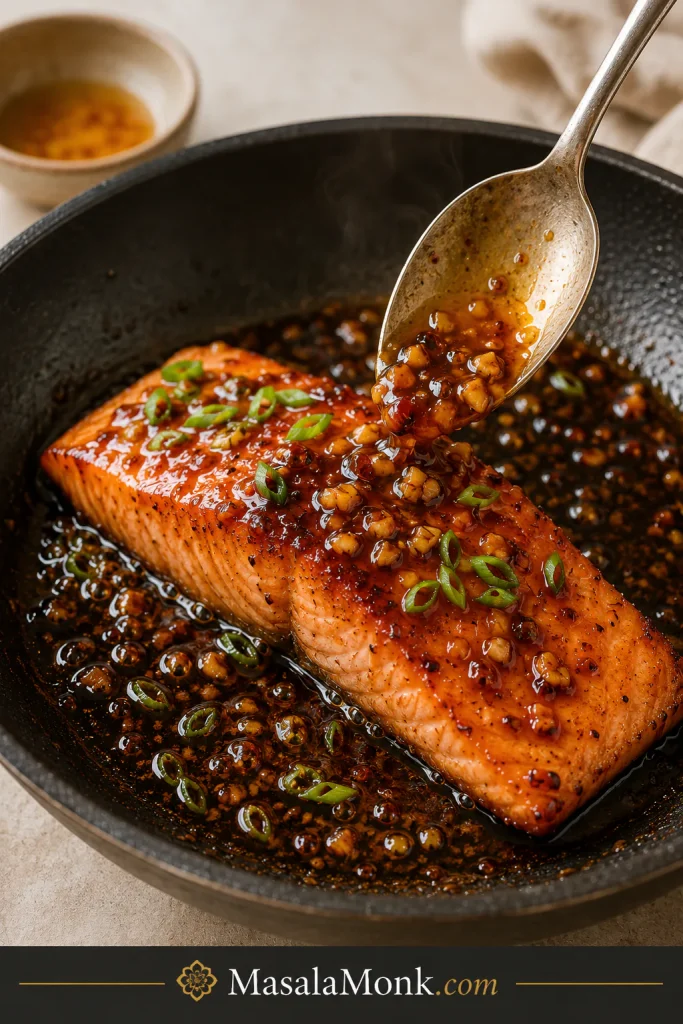
Finished honey garlic salmon in a skillet with reduced glossy sauce and scallion garnish.
When the sauce looks glossy and lightly reduced, the finished skillet honey garlic salmon should have enough glaze left for spooning over rice.

Back to recipe card · Fix the glaze · Check doneness

When you do not want to stand at the stove, the oven gives you a softer, easier path.

Baked Honey Garlic Salmon

Bake it when you want dinner to feel easier. Line the tray, brush on the honey garlic mixture, bake, and finish with a little extra reduced sauce while the rice or vegetables come together.

Oven visual: easy tray salmon: Use this tray version when you want a hands-off honey garlic salmon dinner.
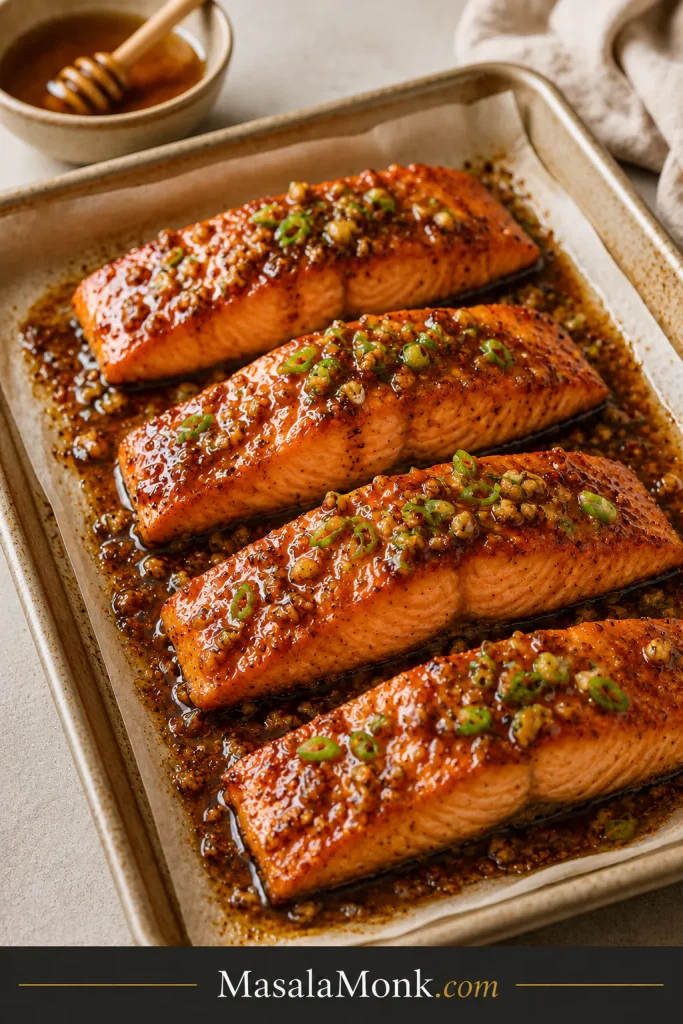
Baked honey garlic salmon fillets on a parchment-lined tray with glaze and scallions.
Baked honey garlic salmon is the low-effort oven method: the fillets cook gently while the glaze caramelizes on top.
Oven styleTemperatureTimeBest for
Everyday baked salmon400°F / 200°C12–15 minutesMost weeknight fillets
Gentler baked salmon375°F / 190°C15–20 minutesThicker fillets or softer texture
Caramelized topBroil after baking1–2 minutesMore color, only if watched closely
Separate sauce finishSmall saucepan2–4 minutesShiny sauce without burnt honey on the tray
  1. Preheat the oven to 400°F / 200°C.
  2. Line a baking sheet or baking dish with parchment or foil.
  3. Place the salmon on the tray and brush with part of the honey garlic sauce.
  4. Bake for 12–15 minutes, depending on thickness.
  5. For better color, broil for 1–2 minutes at the end, watching closely.
  6. Spoon extra reduced sauce over the salmon before serving.

Oven sauce tip: For the shiniest baked salmon, reduce some sauce in a small saucepan for 2–4 minutes and spoon it over the salmon after baking. This gives you better shine without risking burnt honey on the tray.

Try the foil method · Try the air fryer method · Back to recipe card

Honey Garlic Salmon in Foil

Use foil when you want tender salmon and almost no cleanup. It is the gentlest method here: less browning, more steam, and a softer piece of fish that still tastes good with a little extra pan glaze at the end.

Foil method visual: tender salmon with easy cleanup: Foil keeps sauce and steam close to the fish, which gives a softer result and a simpler cleanup.
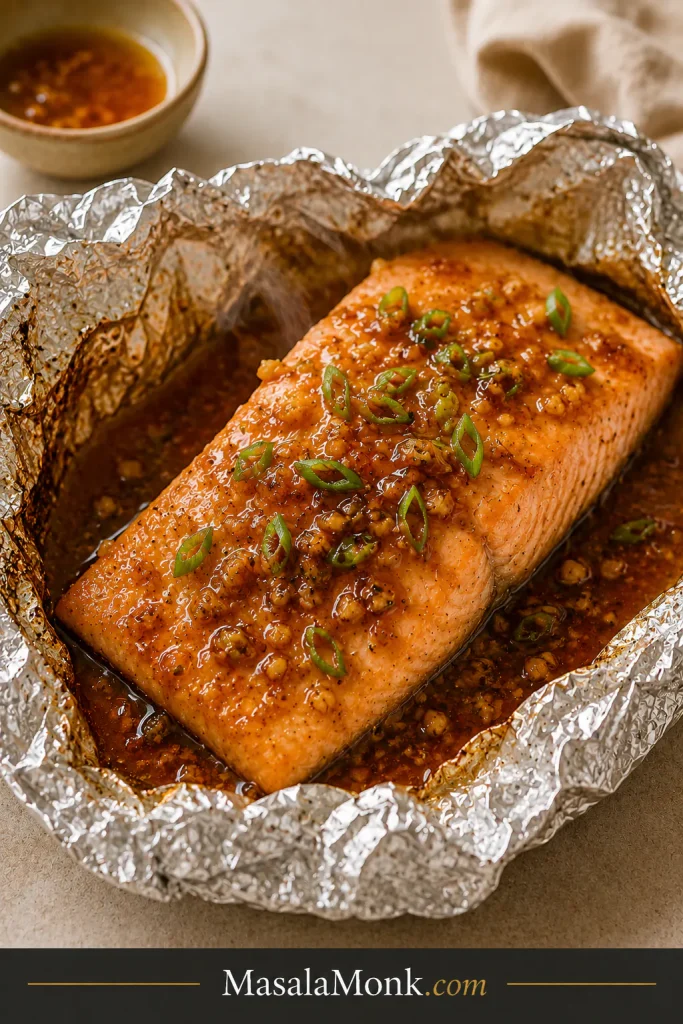
Honey garlic salmon cooked in an open foil packet with sauce pooled around the fish.
Honey garlic salmon in foil keeps the sauce close to the fish, which helps the fillet stay tender and makes cleanup easier afterward.
  1. Preheat the oven to 400°F / 200°C.
  2. Place the salmon on a large sheet of foil.
  3. Spoon honey garlic sauce over the salmon.
  4. Seal the foil loosely so there is a little space above the fish.
  5. Bake for 12–15 minutes, depending on thickness.
  6. Open the foil and broil for 1–2 minutes if you want a more caramelized finish.

For the best foil result, keep some sauce separate and spoon it over the fish after baking. That gives you the easy cleanup of foil with the sweet-savory glaze people expect from honey garlic salmon.

Air Fryer Honey Garlic Salmon

Use the air fryer when you want one or two fillets fast without heating the oven. Brush the salmon lightly before cooking, then add warm reduced sauce at the end. That gives you caramelized edges without burning honey in the basket.

Air fryer method visual: fast caramelized edges: A lighter glaze before cooking helps the salmon caramelize without making the air fryer basket too messy.
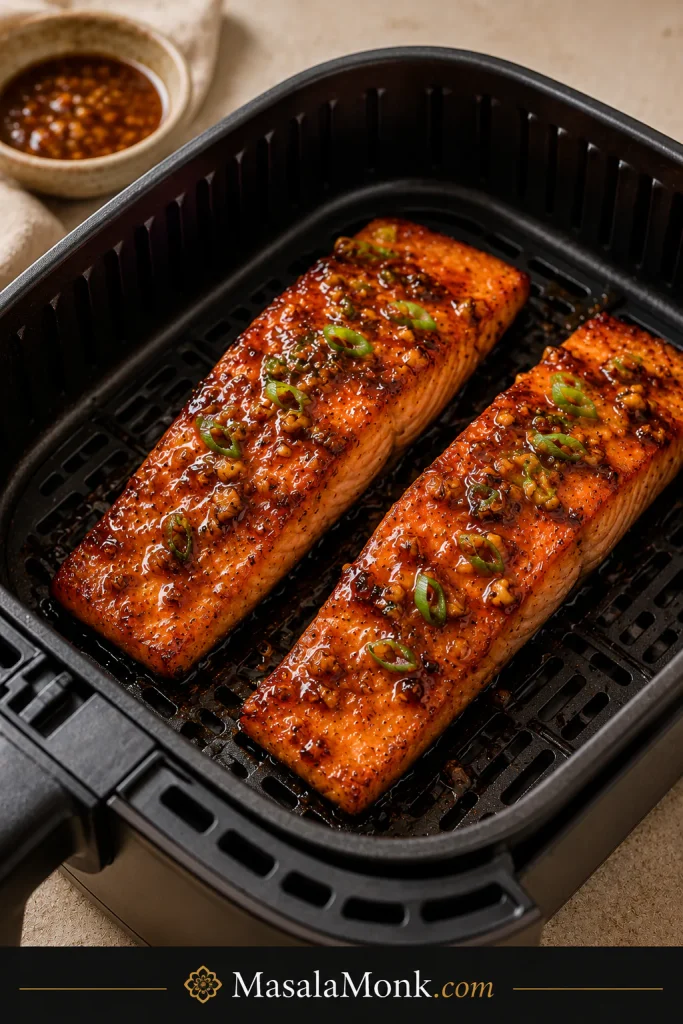
Two honey garlic salmon fillets in a black air fryer basket with caramelized edges and scallions.
For air fryer honey garlic salmon, start with a lighter coating and add more glaze after cooking so the basket stays cleaner.
  1. Preheat the air fryer to 390°F / 199°C.
  2. Pat the salmon dry and brush lightly with honey garlic sauce.
  3. Place the fillets in the basket with space between them.
  4. Air fry for 7–8 minutes, adding 1–2 minutes for thicker pieces.
  5. Brush or spoon extra warm sauce over the salmon before serving.

Air fryer sauce tip: Do not pour a lot of honey sauce into the basket. Brush lightly before cooking, then spoon warm reduced sauce over the salmon after cooking for the stickiest finish.

Honey Garlic Salmon Bites

For salmon bites, cut the salmon into 1-inch / 2.5 cm cubes. Air fry at 390°F / 199°C for 6–8 minutes, or use 370°F / 188°C if your air fryer runs hot. Toss the cooked bites with warm sauce after cooking so they stay sticky without burning.

Salmon bites visual: better for bowls: Smaller pieces cook quickly and give the honey garlic glaze more surface area to cling to.
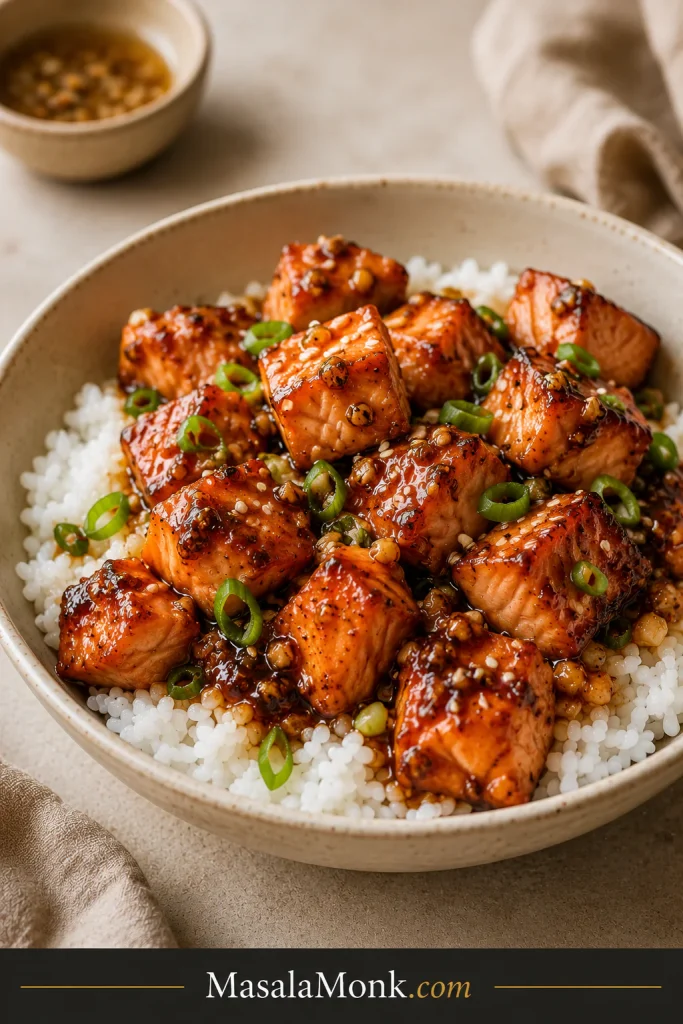
Bite-sized glazed salmon pieces served over white rice with scallions and sesame seeds.
Honey garlic salmon bites cook quickly and glaze on more sides, making them especially useful for rice bowls and fast lunches.

Salmon bites are especially good over rice bowls with cucumber, avocado, edamame, scallions, sesame seeds, or a drizzle of spicy mayo. If bowl-style dinners are your thing, this salmon bowl recipe has more ideas for rice, toppings, sauces, and fresh crunchy add-ons.

Back to recipe card · Build a salmon bowl · Store leftovers

The method can change, but the honey rule does not: keep the heat gentle once the sauce is involved.

How to Make the Glaze Sticky Without Burning

The biggest mistake is treating honey like oil. Oil can take high heat. Honey cannot. It is supposed to bubble and thicken, but it can go from shiny to burnt quickly if the pan is too hot.

  • Pat the salmon dry. A dry surface sears faster, so the fish spends less time in the pan.
  • Sear first, sauce later. Let the salmon get color before the honey enters the pan.
  • Lower the heat before adding sauce. Medium heat is usually enough once honey is involved.
  • Baste instead of boiling hard. Spoon the sauce over the fish while it thickens.
  • Add water if the sauce tightens too fast. One or two tablespoons can loosen it and save dinner.
  • Remove the salmon if the sauce needs more time. Reduce the sauce by itself instead of overcooking the fish.

Do not worry if the sauce looks loose at first. It thickens fast once the bubbles get smaller and slower. You are not chasing a hard candy coating; you want a soft glaze that leaves a trail on the spoon and lightly hugs the fish.

Glaze cue: look for a spoon trail: A clear spoon trail shows that the sauce is thick enough to coat the salmon instead of running straight off.
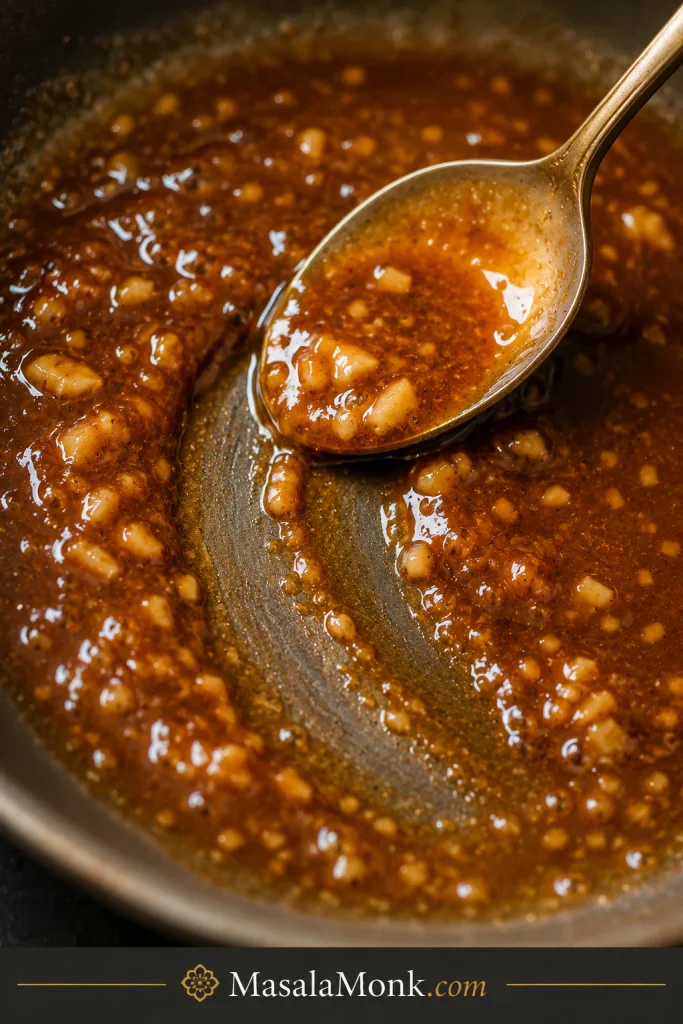
Spoon dragged through amber honey garlic glaze, leaving a clear trail in the sauce.
A visible spoon trail means the honey garlic glaze has thickened enough to coat the salmon instead of sliding straight off.

If the sauce starts darkening, it is not always a disaster. Move the fish to a plate, loosen the pan with a splash of water, and bring it back gently once the bubbling calms down.

Check salmon doneness · Fix sauce problems · Back to recipe card

How to Tell When Salmon Is Done

The sauce gets the attention, but doneness is what makes the salmon worth eating. The fish should flake easily and still look moist in the center. If it becomes firm all the way through, it is usually overcooked.

Pulling salmon at the right moment matters more than forcing a perfect glaze. You can always reduce sauce for another minute, but you cannot undo dry fish.

Doneness visual: flake the thickest part: This cue helps readers check that the salmon separates easily while still looking moist inside.
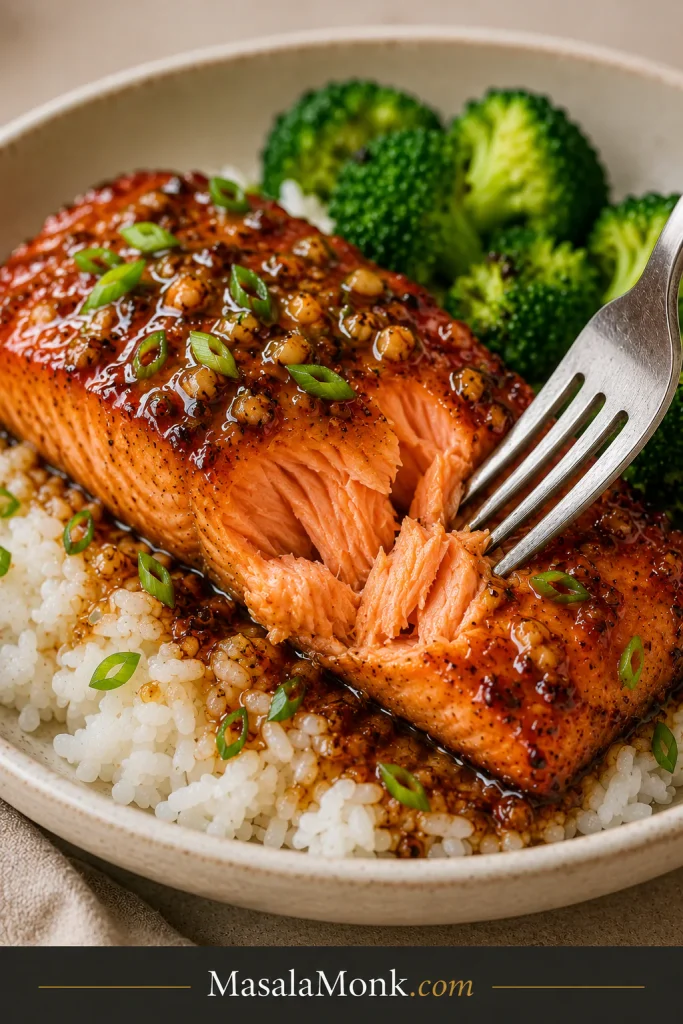
Fork flaking a cooked honey garlic salmon fillet over rice with broccoli in the background.
To check salmon doneness, flake the thickest part gently; it should separate easily while still looking moist inside.
DonenessInternal temperatureTexture
Moist / medium-rare120–130°F / 49–54°CSoft, tender, slightly translucent center
Medium130–135°F / 54–57°CFlaky but still juicy
More done135–145°F / 57–63°CFully opaque and firmer

For fully cooked salmon, 145°F / 63°C is the standard safety endpoint. The FDA also notes that fish should look opaque and separate easily with a fork when a thermometer is not available. You can read its seafood safety guidance here: FDA seafood safety guidance.

Many people prefer to pull salmon earlier for a softer, restaurant-style texture, then let carryover heat finish the center. Choose the doneness level you are comfortable with, especially if cooking for children, older adults, or anyone who prefers fully cooked fish.

If you do not have a thermometer, press the thickest part gently with a fork. The salmon should separate into flakes but still look glossy inside. A little white albumin on the surface is normal, but a lot of it usually means the fish is cooking too hot or too long.

See serving ideas · Store leftovers · Back to recipe card

Sauce vs Glaze vs Marinade

Honey garlic sauce, glaze, and marinade use similar ingredients, but they are not exactly the same thing. Knowing the difference helps you avoid watery sauce, over-marinated salmon, and unsafe reuse of marinade.

TermWhat it meansHow to use it here
SauceLoose and spoonableMix before cooking and pour into the pan
GlazeReduced until sticky and shinyBaste over the salmon as it thickens
MarinadeUsed before cooking to flavor the fishUse briefly, then cook fresh or reserved sauce for serving

You can use honey garlic sauce as a marinade, but keep it short. Salmon only needs 15–30 minutes. If the sauce contains lemon juice or vinegar, avoid marinating for hours because acid can soften the texture of the fish.

Marinate salmon in the refrigerator, not on the counter. The cleanest method is to divide the sauce before it touches raw salmon: use one part as a short marinade and keep the rest clean for glazing. If a marinade has touched raw fish, boil it thoroughly before using it as a sauce.

Honey Garlic Salmon Variations

Once the base sauce works, the variations are low-risk. Keep the same honey-soy-garlic backbone, then change the mood with butter, ginger, chili, lemon, or Dijon.

Choose the butter version when you want it richer, the ginger version when you want it brighter, and the hot honey version when the plate needs a little spark.

VersionWhat to changeBest method
Classic honey garlic salmonUse the main sauce exactly as writtenSkillet
Honey garlic butter salmonUse butter instead of oil, or add 2 tbsp / 28 g butter to the panSkillet
Honey soy ginger salmonAdd 1 tsp grated ginger and 1 tsp sesame oilSkillet or air fryer
Hot honey garlic salmonAdd sriracha, chili flakes, chili crisp, or hot honeySkillet or baked
Lemon honey garlic salmonUse extra lemon juice and slightly less soy sauceBaked
Gluten-free honey garlic salmonUse gluten-free tamariSkillet or baked
Soy-free honey garlic salmonUse coconut aminos instead of soy sauceSkillet
Honey mustard garlic salmonAdd Dijon mustard to the sauceBaked or foil

For the most restaurant-style version, make honey garlic butter salmon. Sear the fish, add butter and garlic, then pour in the honey-soy-lemon mixture and baste until glossy. For a sharper version, add Dijon mustard. Add sriracha or chili flakes and finish with lime when you want heat.

Keep the plate simple. This glaze already brings sweetness, salt, garlic, and brightness, so the sides only need to catch it and balance it.

What to Serve With Honey Garlic Salmon

The easiest plate is rice, salmon, and something green. The rice catches the sauce, the vegetable keeps the sweetness in check, and the salmon stays the star without needing much else. If you want the rice to come out fluffy instead of sticky or wet, this guide on how to cook rice covers stovetop, rice cooker, and Instant Pot timing.

Think of the plate in three parts: something to catch the sauce, something green or crisp, and something fresh to keep the sweetness balanced.

Serving visual: build a balanced plate: Rice, greens, cucumber salad, noodles, and bowl toppings all balance the sweet-savory glaze.
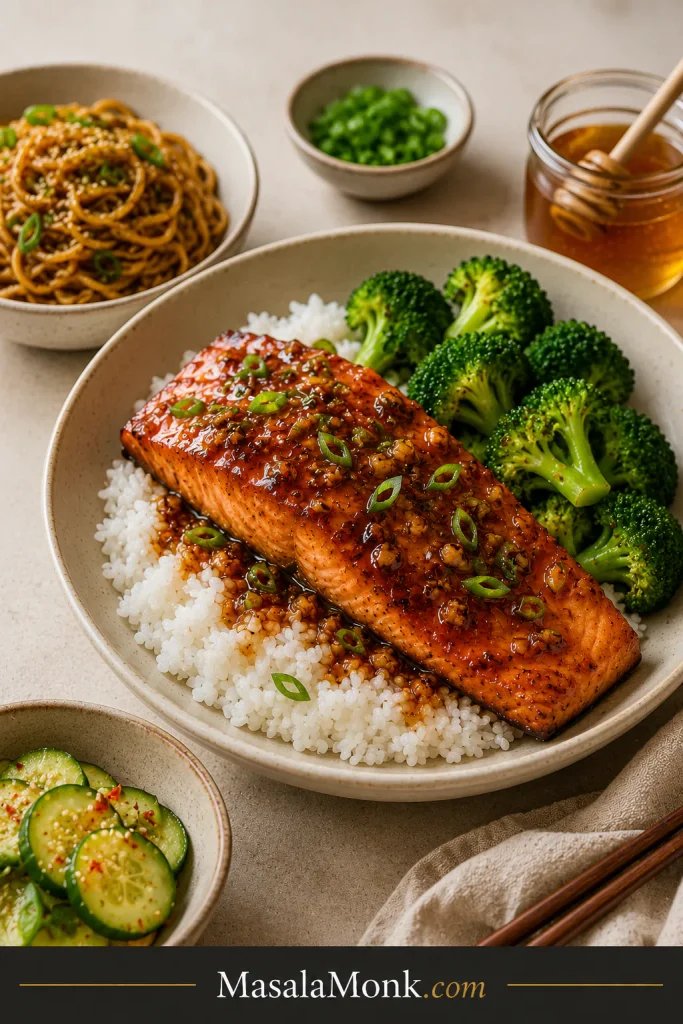
Honey garlic salmon served with rice, broccoli, cucumber salad, noodles, and bowl toppings.
Wondering what to serve with honey garlic salmon? Rice, greens, cucumber salad, noodles, and simple bowl toppings all balance the sweet-savory glaze.

Best Sides for the Glaze

  • Simple rice: jasmine rice, basmati rice, brown rice, coconut rice, or fried rice.
  • Noodles: sesame noodles, garlic noodles, stir-fried noodles, or these creamy peanut noodles when you want the meal to feel fuller.
  • Vegetables: broccoli, asparagus, green beans, bok choy, snap peas, or roasted carrots.
  • Fresh sides: avocado, shredded cabbage, scallions, pickled onions, or a crisp cucumber salad to cut through the sweet-savory sauce.
  • Bowls: rice, salmon, cucumber, edamame, avocado, sesame seeds, and extra sauce.

For a brighter plate, add something fresh and fruity on the side. A spoonful of mango salsa works especially well with glazed fish because it brings acidity, freshness, and juicy contrast.

Lowest-Effort Plate

On the lowest-effort nights, rice and frozen broccoli are enough because the glaze carries the plate. The extra sauce is part of the meal, not just decoration, so let it run into the rice, noodles, or vegetables.

Weeknight plate visual: rice and broccoli are enough: This simple plate shows that the glaze can carry dinner even when the sides stay minimal.
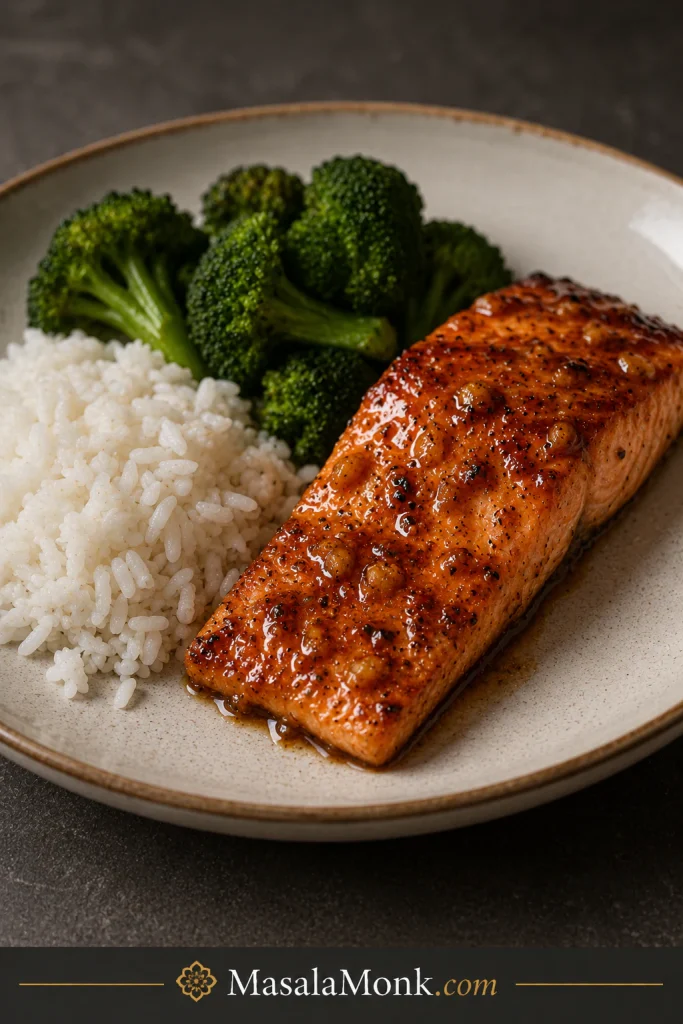
Simple plate with honey garlic salmon, white rice, and broccoli on a dark tabletop.
On busy nights, salmon with rice and broccoli is enough because the honey garlic glaze carries flavor across the whole plate.

Back to recipe card · Storage and reheating · Read FAQs

Storage and Reheating

Serve the first round hot if you can. That is when the sauce looks best and the fish flakes most softly. They will not have quite the same shine, but leftovers still have plenty of good uses.

Leftovers taste best when you treat them like a new meal instead of trying to recreate the first plate. Flake the salmon into rice bowls, noodles, wraps, or a quick lunch salad.

  • Fridge: Store cooled salmon in an airtight container for up to 3 days.
  • Freezer: You can freeze cooked salmon, but the texture is better fresh. Freeze only if needed.
  • Skillet reheating: Reheat gently in a covered skillet with a splash of water.
  • Oven reheating: Warm at a low temperature until just heated through.
  • Microwave reheating: Use short bursts and avoid overheating, or the salmon can turn dry.

For general leftover safety, USDA guidance recommends using refrigerated leftovers within 3 to 4 days: USDA leftovers and food safety.

If the sauce thickens in the fridge, add a teaspoon or two of water when reheating. That loosens it and helps it coat the salmon again. Leftover flakes are especially good tucked into a rice bowl with cucumber, scallions, sesame seeds, and a little extra sauce.

With a larger piece of leftover salmon, flake it gently and use it in a softer dinner the next day. This creamy salmon pasta is the right direction when you want lemon, garlic, pasta, and a richer sauce instead of another sticky glaze.

Troubleshooting Honey Garlic Salmon

When something goes wrong, it is usually not the recipe falling apart. Most honey garlic salmon problems look dramatic in the pan, but they usually come down to heat, moisture, or timing.

A watery sauce needs more reduction. Burnt glaze usually needed lower heat. Dry salmon simply stayed in the pan too long. Most mistakes are fixable if you catch them early, and slightly overcooked salmon can still be saved with extra sauce over rice.

Troubleshooting visual: too hot vs gentle heat: This comparison helps readers see why honey garlic glaze needs controlled heat to stay amber and spoonable.
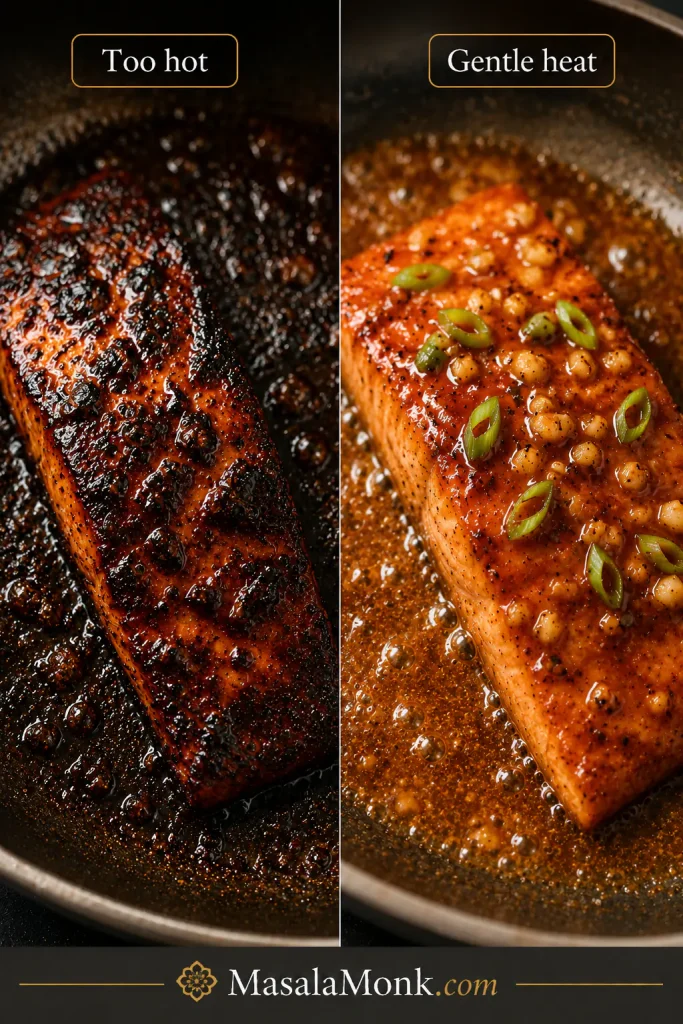
Side-by-side comparison showing dark burnt glaze labeled Too hot and glossy amber glaze labeled Gentle heat.
If the heat is too high, honey can darken fast; gentle heat keeps the glaze amber, glossy, and easy to spoon over the salmon.

Why did my honey garlic glaze burn?

The heat was probably too high, or the sauce went into the pan too early. Sear the salmon first, lower the heat, then add the honey garlic sauce and let it bubble gently.

Why is my sauce watery?

Moisture from the fish may have loosened the sauce, or the sauce may not have reduced long enough. Remove the fillets from the pan and simmer the sauce by itself for a minute or two.

Why is my salmon dry?

It cooked too long or the heat was too high. Pull salmon from the pan while it still looks moist inside. Carryover heat will continue cooking it for a short time.

Why does my garlic taste bitter?

The garlic burned before the sauce had a chance to cool the pan down. Add garlic briefly, or mix it into the sauce and cook it gently with the glaze.

Can I use frozen salmon?

Yes. Thaw it fully, drain off extra liquid, and pat it very dry before cooking. Frozen salmon that is still wet will steam instead of sear.

Can I make this without soy sauce?

Yes. Coconut aminos are the easiest soy-free version. Choose gluten-free tamari only if you need a gluten-free option and soy is still okay for you.

Glaze tips · Doneness guide · Back to recipe card

Those are the big pan problems. Here are the quick questions people usually ask before they start.

FAQs

Is honey garlic salmon better baked or pan-seared?

Pan-seared is best if you want the stickiest glaze and the most control over the sauce. Baked salmon is easier and more hands-off, especially when cooking several fillets at once. Both work well.

What temperature keeps salmon moist?

For fully cooked salmon, use 145°F / 63°C. Many cooks pull salmon around 125–135°F / 52–57°C for a softer texture, then let carryover heat finish the center. Choose the doneness level you are comfortable with, especially if cooking for children, older adults, or anyone who prefers fully cooked fish.

How long does honey garlic salmon take in the air fryer?

Air fry at 390°F / 199°C for 7–8 minutes for standard fillets. Keep the first layer of sauce light, because honey can darken quickly in the air fryer, then spoon on more warm sauce after cooking.

Should I marinate salmon in honey garlic sauce?

You can, but keep the marinating time short. Salmon only needs 15–30 minutes. If the sauce has lemon juice or vinegar, do not marinate too long or the texture can become soft. Always marinate in the refrigerator.

Why is my honey garlic sauce not thickening?

It may need another minute or two of simmering, or the salmon may have released moisture into the pan. If the fish is already cooked, remove it and reduce the sauce by itself so the salmon does not overcook.

Should I use skin-on or skinless salmon?

Both work. Skin-on salmon is a little more forgiving in a skillet because the skin protects the bottom of the fish. Skinless salmon is easier to coat on all sides and works well for baked or air fryer versions.

What can I use instead of soy sauce?

Use coconut aminos for the easiest soy-free swap. If you only need the recipe to be gluten-free, use gluten-free tamari. Tamari is usually soy-based, so it is not the same as soy-free.

What is the white stuff on cooked salmon?

The white stuff is albumin, a protein that comes to the surface as salmon cooks. A little is normal. Heavy albumin usually means the fish cooked too hot or too long.

Can I use maple syrup instead of honey?

Yes, but the sauce will be thinner and less sticky. Honey gives a thicker glaze. Maple syrup still tastes good, especially with soy sauce, garlic, and a little lemon, but it will not cling quite the same way.

What sides go best with honey garlic salmon?

Rice is the easiest choice because it catches the sauce. Add a green vegetable for balance, cucumber salad for crunch, or noodles if you want a fuller meal. Keep the sides simple so the sweet-savory sauce stays the main flavor.

Final Thought

Honey garlic salmon feels fancy because the glaze does the showing off. Dry the fish, sear it well, lower the heat, and let the honey, garlic, soy sauce, and lemon do the rest. Add rice and something green, spoon the pan sauce over the plate, and dinner feels finished without asking much from you.
Posted on 5 Comments

Air Fryer Salmon Recipe (Time, Temp, and Tips for Perfect Fillets)

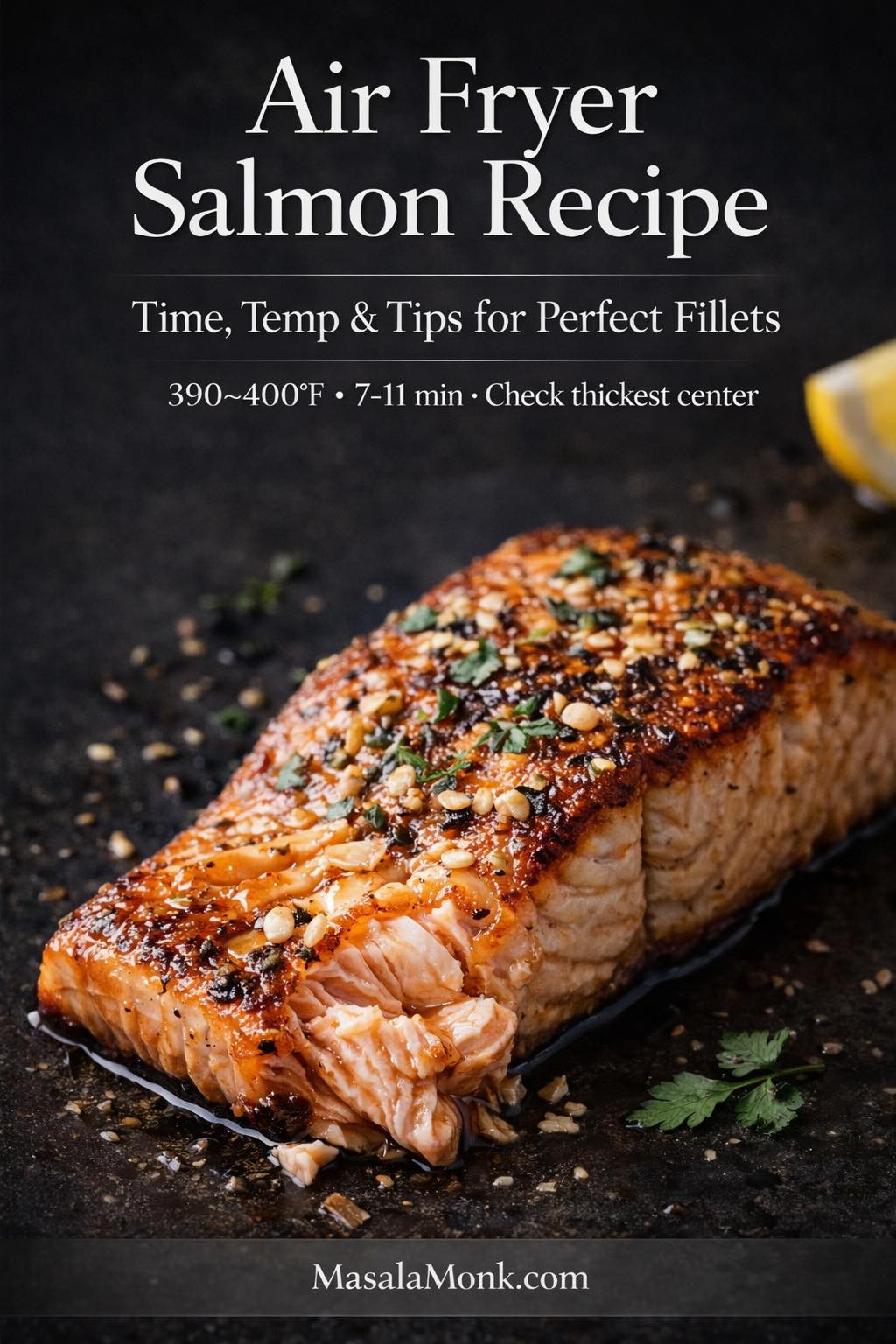
Close-up cover image of a cooked air fryer salmon fillet with text overlay showing time and temperature tips for perfect salmon fillets, including 390–400°F and 7–11 minutes, for a salmon in air fryer recipe guide.

Salmon is one of those dinners that can feel either effortlessly elegant or weirdly stressful, depending on how the cooking goes. One minute it looks glossy and promising, and the next minute it turns dry, chalky, or overdone at the edges while the center still looks undercooked. That’s exactly why this air fryer salmon recipe earns a permanent place in a real home kitchen: it gives you a repeatable method that stays simple, cooks fast, and leaves plenty of room for flavor.

Once you get the rhythm right, making salmon in air fryer stops feeling like guesswork. You learn the temperature that works best in your machine, you understand how thickness changes the timing, and you know what to look for when the fillet is done. From there, everything gets easier. A plain lemon garlic version becomes a weeknight staple. A teriyaki glaze turns into a quick dinner that feels restaurant-ish. A blackened variation suddenly becomes your go-to when you want something bolder.

This post is built as a full, reader-friendly guide, so you can come back to it whether you’re making your first fillet or trying to dial in the best salmon in air fryer for your own taste. We’ll cover the base method, time it takes to air fry a salmon and temp, skin-on versus skinless, seasoning directions, serving ideas, and the easiest way to reheat leftovers without drying them out.

And because salmon is already a naturally rich, satisfying fish, it doesn’t need much to taste good. A few small decisions—patting it dry, seasoning it evenly, cooking it at the right heat, and checking doneness early—make all the difference.


Why this air fryer salmon recipe works

The best thing about an air fried salmon is how quickly it gets from raw to beautifully cooked without asking for much from you. You don’t need a complicated marinade. You don’t need a cast iron pan smoking on the stove. And you don’t even need a long ingredient list. Instead, the circulating heat does most of the heavy lifting, and the salmon naturally brings richness and flavor on its own.

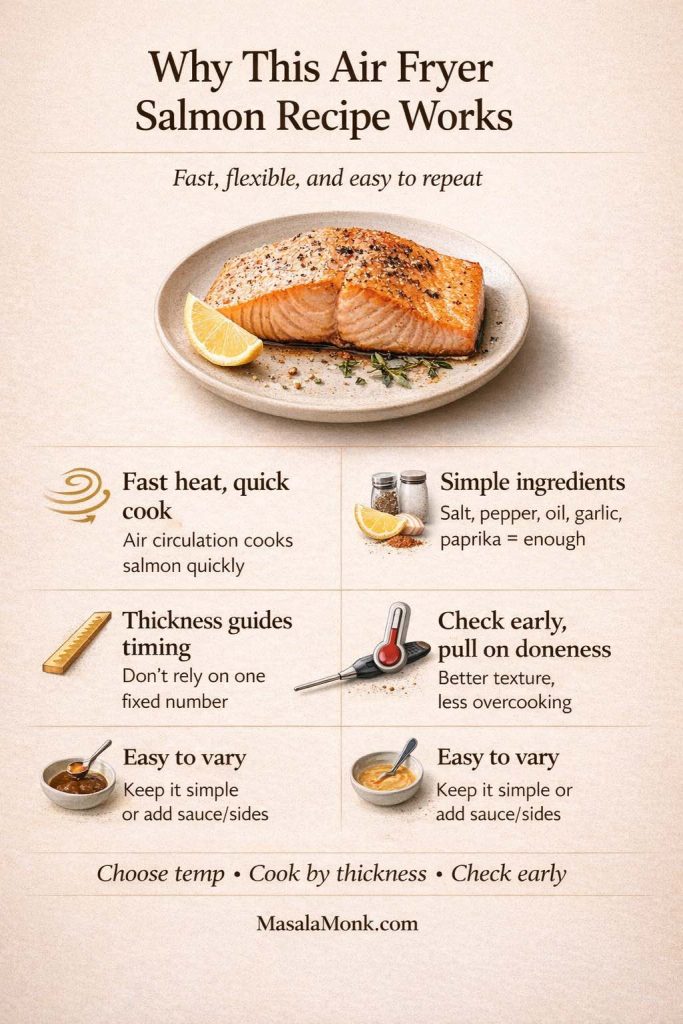
Why this air fryer salmon recipe works: this visual method guide shows the simple logic behind consistently good salmon in the air fryer—fast circulating heat, minimal ingredients, thickness-based timing, early doneness checks, and easy flavor flexibility for weeknight dinners.

Even so, speed can be a trap if you treat salmon like chicken or a frozen snack. Fish cooks quickly, and salmon fillets vary a lot in thickness. That’s why this method focuses less on a single magic number and more on a reliable flow: choose a temperature, use thickness as your timing guide, and start checking before you think it’s done.

That approach works whether you’re making a simple salmon air fryer recipe on a busy weekday or trying a more dressed-up dinner for guests. It also gives you flexibility. You can keep the seasoning minimal and serve it with a sauce, or you can build flavor directly into the fish and keep the sides light.

There’s another reason this method lands so well in a weekly rotation: salmon already fits neatly into a balanced dinner without much effort. It’s filling, it pairs with almost anything, and it doesn’t need a lot of oil to cook well. The American Heart Association also continues to recommend eating fish, especially fatty fish, as part of a heart-healthy eating pattern, which is one more reason salmon tends to show up so often in practical meal plans. (www.heart.org)

Also Read: Crock Pot Chicken Breast Recipes: 10 Easy Slow Cooker Dinners (Juicy Every Time)


Ingredients for air fryer salmon

You can make excellent salmon in the air fryer with just a handful of pantry basics. In fact, the simpler the starting point, the easier it is to branch into different versions later.

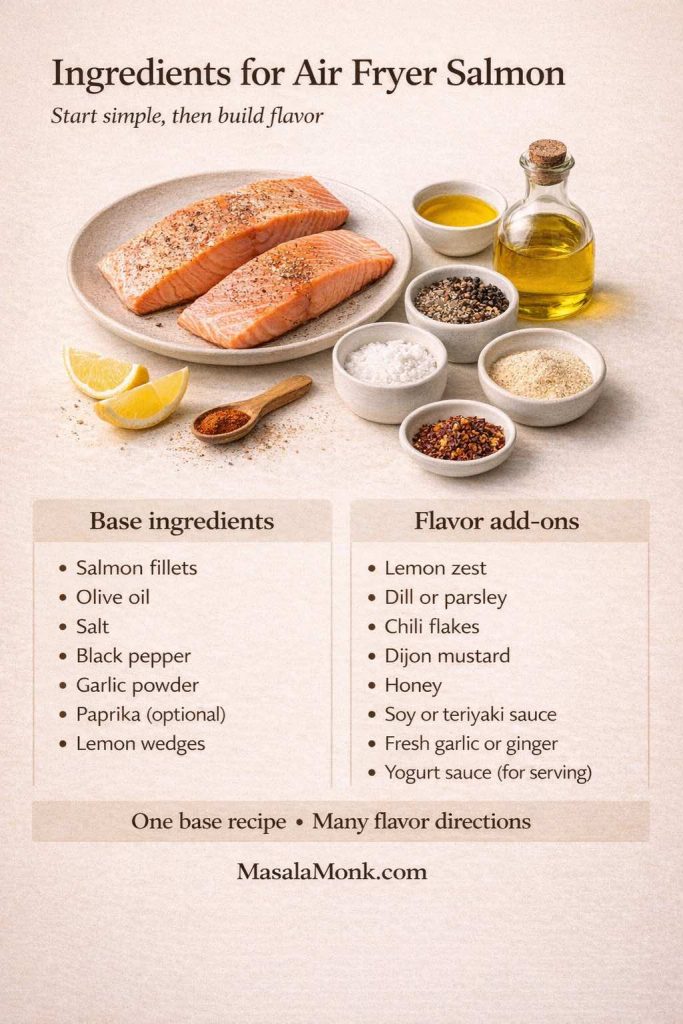
Ingredients for air fryer salmon, organized into a simple base list and easy flavor add-ons. Start with salmon fillets, olive oil, salt, pepper, garlic powder, paprika, and lemon, then branch into variations with dill, chili flakes, Dijon, honey, teriyaki, garlic, ginger, or a yogurt sauce for serving—same method, different flavor direction.

Base ingredients for a simple salmon done in an air fryer recipe

  • 2 salmon fillets (about 5 to 7 ounces each, ideally similar thickness)
  • 1 to 1½ tablespoons olive oil
  • 1 teaspoon kosher salt
  • ½ teaspoon black pepper
  • ½ teaspoon garlic powder
  • ½ teaspoon paprika (optional, but nice for color)
  • Lemon wedges, for serving

That’s enough for a clean, dependable version that tastes great on its own and also works as a base for different sauces and add-ons.

Optional ingredients for flavor variations

Once you’ve made the base version once or twice, these are useful to keep around:

  • Lemon zest
  • Dried dill or parsley
  • Chili flakes
  • A little Dijon mustard
  • Honey (for honey garlic style finishes)
  • Soy sauce or teriyaki sauce
  • Fresh garlic or ginger
  • A spoonful of yogurt-based sauce for serving

If you enjoy changing the feel of the same dish without changing the method, this is where salmon really shines. One night you can top it with a cool spoon of Greek tzatziki. Another night, you can go bright and herbal with chimichurri. And when you want something sweeter and glossier, a homemade teriyaki sauce does the job beautifully.

Also Read: Eggless Yorkshire Pudding (No Milk) Recipe


How to prep salmon fillets for the air fryer

Before the air fryer even turns on, a few small prep moves set you up for a better result.

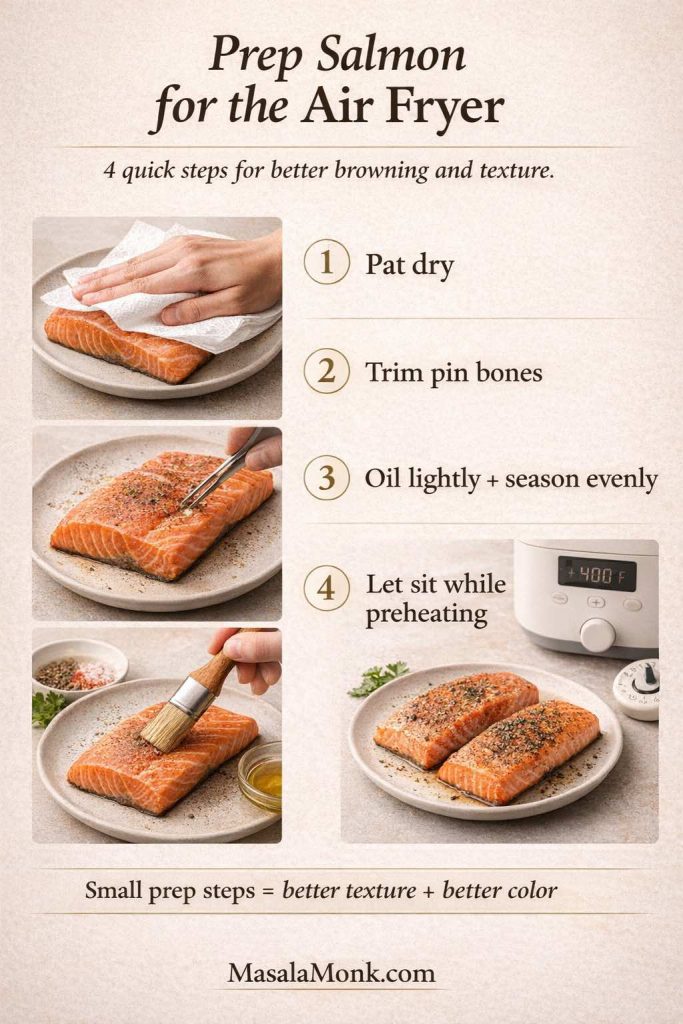
Prep salmon for air fryer guide showing four steps with salmon fillets: pat dry, trim pin bones, oil lightly and season evenly, then let the salmon sit while the air fryer preheats.
Prep salmon for the air fryer in 4 quick steps: pat it dry, trim pin bones if needed, oil and season evenly, and let it sit while the air fryer preheats. These small prep steps help salmon brown better and cook more evenly.

Pat the salmon dry first

This step looks minor, but it changes everything. Surface moisture slows browning, softens the seasoning layer, and can make the salmon look steamed instead of roasted. Use paper towels and pat both sides dry, especially if the fillets were just unwrapped.

If you’re making skin-on salmon in air fryer, pay extra attention to the skin side. A drier surface gives you a better chance of getting nicer texture, especially if you like the skin.

Trim pin bones if needed

Many fillets are sold with pin bones already removed, but not all of them. Run a finger lightly over the center line of the fillet. If you feel little bones sticking up, pull them out with clean tweezers or kitchen pliers. This takes a minute and makes the final dish much easier to eat.

Oil lightly, then season evenly

Brush or rub a light coating of oil over the fillets. You don’t need much. The goal is just enough to help the seasonings stick and to support gentle browning.

Then season the fish evenly. Don’t dump everything in the center and hope it spreads. A more even layer cooks more evenly and tastes more balanced.

For a classic everyday version, salt, pepper, garlic powder, and paprika are enough. If you want a stronger flavor, add lemon zest or chili flakes at this stage.

Let the fillets sit while the air fryer preheats

A short rest on the counter—just a few minutes—is useful while you preheat. It takes the chill off slightly and gives the seasoning time to adhere. You don’t need a long rest. Just enough time to get your air fryer ready and your basket set.

Also Read: Garlic & Paprika Cabbage Rolls (Keto-Friendly Recipes) – 5 Bold Savory Twists


How to cook salmon in the air fryer

This is the core method you’ll come back to again and again. Once you’re comfortable with this, it becomes easy to adapt into all the common variations: honey glazed air fried salmon, teriyaki salmon that is air fried, blackened salmon, lemon salmon recipe air fryer, and more.

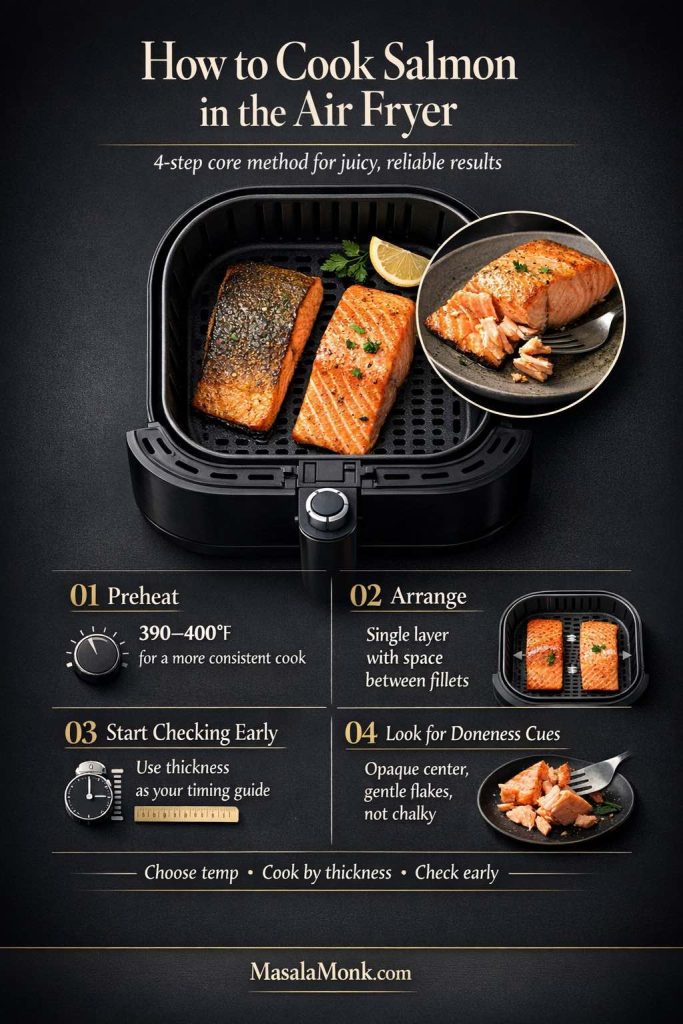
How to cook salmon in the air fryer infographic showing a 4-step core method with preheat temperature (390–400°F), single-layer basket arrangement, thickness-based timing, and visual doneness cues for juicy air fryer salmon.
How to cook salmon in the air fryer: this 4-step visual guide shows the core method for consistently juicy salmon fillets—preheat to 390–400°F, arrange in a single layer, start checking early based on thickness, and finish using visual doneness cues instead of guessing by time alone.

Preheat your air fryer

Not every air fryer behaves the same way, but in general, salmon cooks more consistently when the machine is preheated. A short preheat helps the exterior start cooking right away instead of warming slowly.

Set your air fryer to 390°F or 400°F and let it heat for a few minutes.

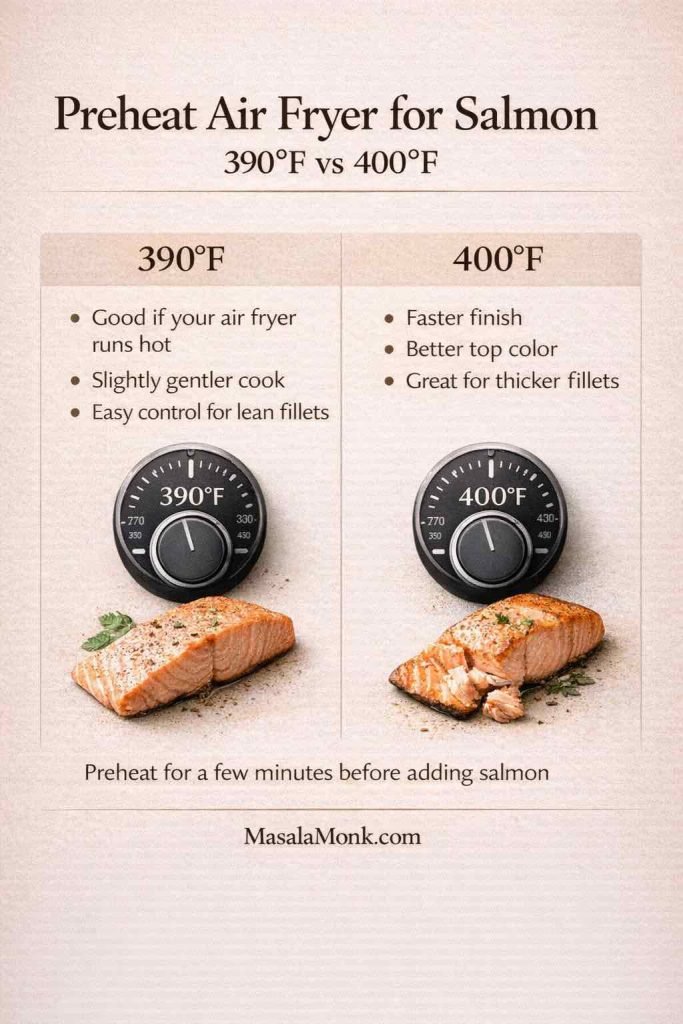
Preheat air fryer for salmon infographic comparing 390°F vs 400°F, showing when to use each temperature for air fryer salmon based on air fryer heat, fillet thickness, and desired top color.
Preheat air fryer for salmon with confidence: this quick 390°F vs 400°F guide helps you choose the best temperature for your air fryer salmon recipe based on how hot your machine runs, the thickness of your salmon fillets, and whether you want a gentler cook or deeper top color.

If your model runs hot, start at 390°F. If your model is gentle and you want a slightly deeper top color, go with 400°F.

Arrange the salmon in a single layer

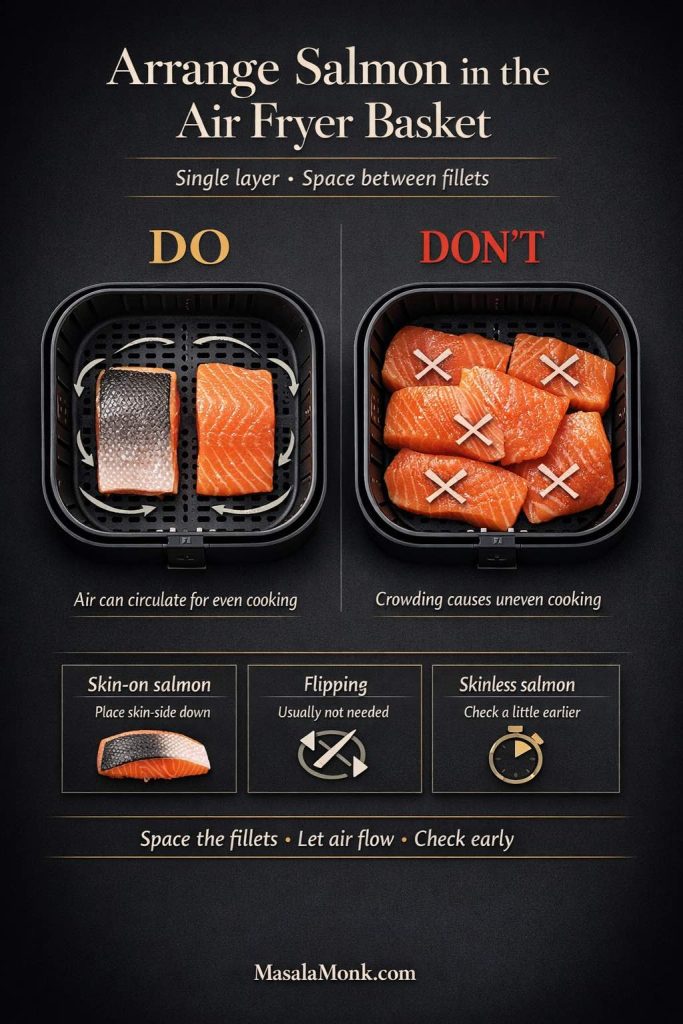
Place the fillets in the basket with space between them. Air fryers need airflow to do their job, so crowding the basket is one of the fastest ways to get uneven cooking.

Arrange salmon in the air fryer basket the right way: this DO vs DON’T visual shows why a single layer with space between fillets cooks more evenly than a crowded basket. It also includes quick reminders for skin-on salmon (skin-side down), flipping (usually not needed), and skinless salmon (check a little earlier) for more reliable air fryer salmon results.

For skin-on salmon:

  • Place the fillets skin-side down
  • Leave them in place while cooking
  • Skip flipping unless your machine cooks very unevenly (most don’t need it)

For skinless salmon:

  • You still usually don’t need to flip
  • Just plan to check a little earlier

This is true whether you’re making salmon fillet in air fryer, salmon steaks, or slightly smaller portions.

Cook, but start checking early

This is the biggest habit shift that makes air fried salmon better.

Even if a recipe says 10 minutes, don’t wait until 10 minutes to check. Start early. A lot of fillets are done faster than expected, especially thinner pieces or tail-end portions.

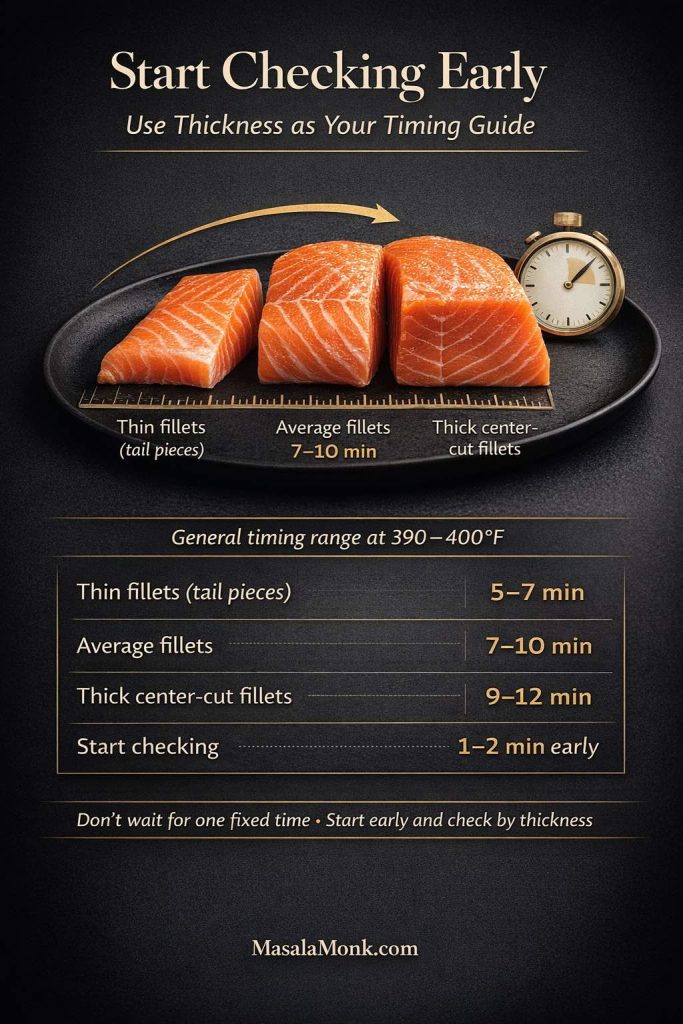
Use this air fryer salmon timing guide to start checking early based on fillet thickness instead of waiting for one fixed cook time. It’s a quick visual reference for thin, average, and thick salmon fillets at 390–400°F, with simple timing ranges that help you avoid dry, overcooked salmon and get better results in any air fryer.

As a general range:

  • Thin fillets can finish in 5 to 7 minutes
  • Average fillets often finish in 7 to 10 minutes
  • Thick center-cut fillets can take 9 to 12 minutes

The exact number depends on thickness, air fryer model, and whether the fish is skin-on or skinless. That’s why checking early matters more than memorizing a single time.

Look for visual doneness cues

Before you even touch a thermometer, your eyes tell you a lot.

The salmon is getting close when:

  • The flesh turns more opaque
  • The center no longer looks very translucent
  • The top firms up slightly
  • The fillet flakes when you press gently with a fork
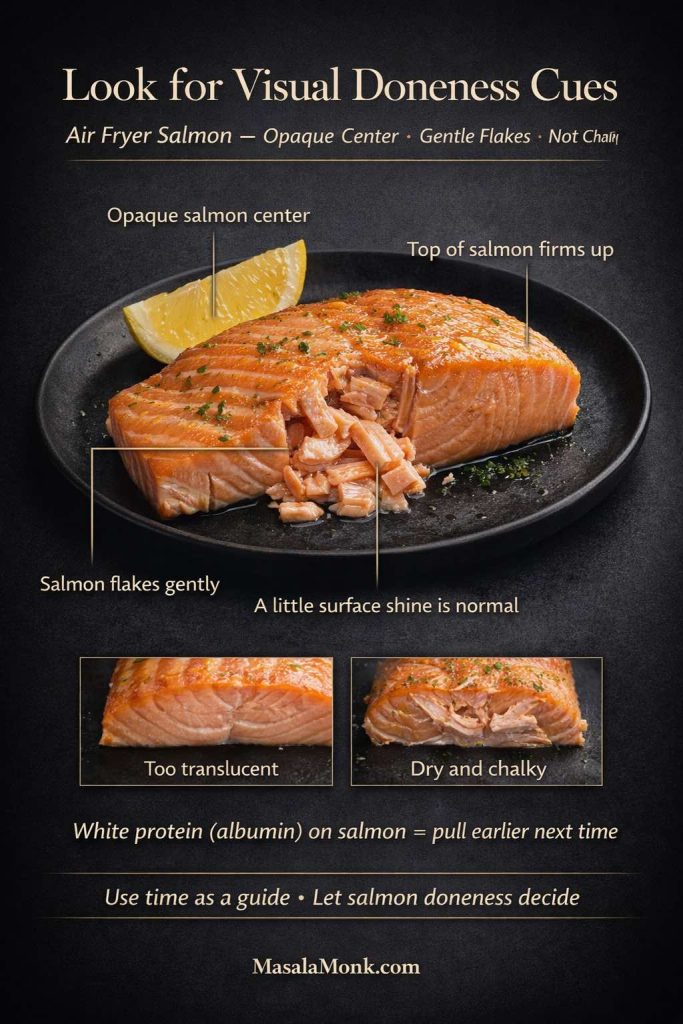
Use this air fryer salmon visual doneness guide to check salmon by sight before you overcook it. Look for an opaque center, gentle flakes, and a moist (not chalky) texture. This quick cue card also shows what underdone salmon (too translucent) and overcooked salmon (dry and chalky) look like, so you can cook with more confidence even when fillet thickness varies.

A little shine is normal. Dry, chalky flesh is not the goal.

If white protein (albumin) starts pushing out aggressively from the sides, it usually means the salmon is heading past ideal doneness. It’s still edible, but that’s your cue to pull earlier next time.

Also Read: 10 Low Carb Chia Pudding Recipes for Weight Loss (Keto, High-Protein, Dairy-Free)


Air fryer salmon time and temp

This is the part most people come back to, and it’s worth getting right. There’s no single cook time that works for every fillet, but there is a reliable way to think about it.

Air fryer salmon time and temp by thickness

For best results, think in terms of thickness instead of just weight.

Air fryer salmon time and temp cheat sheet showing salmon cook times by fillet thickness, including 390–400°F (199–204°C), doneness cues, and a plated salmon fillet for a salmon in air fryer recipe guide.
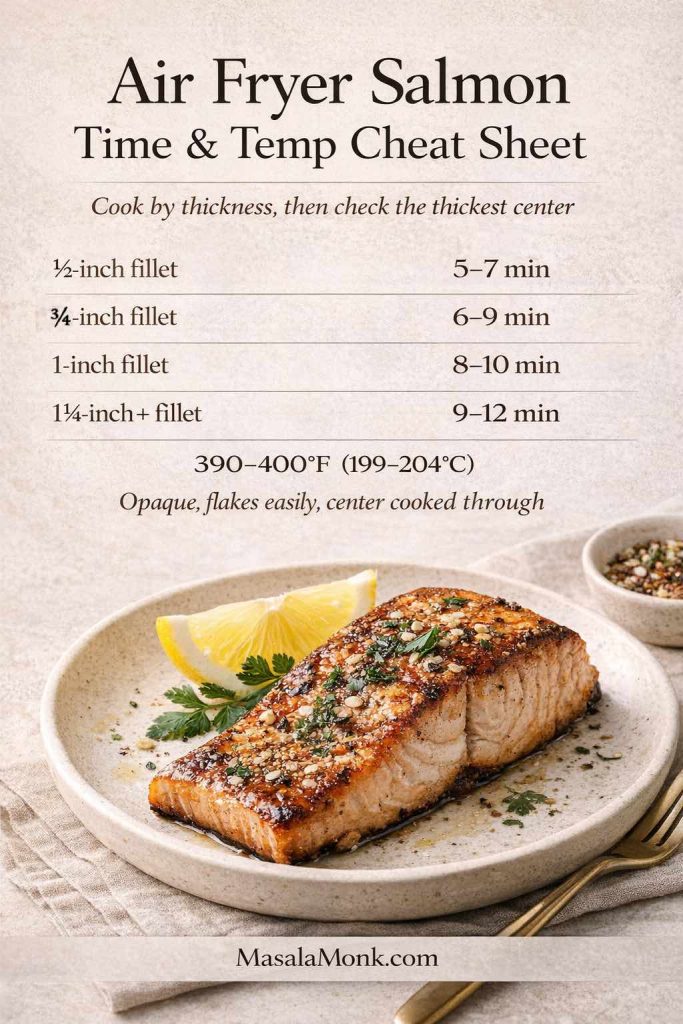
Use this air fryer salmon time and temp cheat sheet to cook salmon by fillet thickness at 390–400°F. It’s a quick visual guide for juicy salmon in the air fryer, with timing ranges and doneness cues to help you avoid overcooking.

At 390°F to 400°F, use this as a practical guide:

  • Very thin fillets or tail pieces (about ½ inch): 5 to 7 minutes
  • ¾-inch fillets: 6 to 9 minutes
  • 1-inch fillets: 8 to 10 minutes
  • Thick fillets (1¼ inch or more): 9 to 12 minutes

That timing applies to fresh salmon in air fryer, including common cuts like Atlantic salmon and many standard grocery fillets.

If you’re working with a fattier cut, it may tolerate a tiny bit more time without drying out. If you’re working with leaner salmon, check even earlier.

Best temperature for air fryer salmon

If you’re wondering about the best way to cook salmon in air fryer, the answer is less about finding one “perfect” number and more about choosing a temperature you can repeat confidently.

For most kitchens, the sweet spot is:

  • 400°F for a faster finish and a little more top color
  • 390°F if your machine runs hot or you want a slightly gentler cook

Both produce excellent results. What matters more is consistency. If you always cook at the same temperature, you learn your machine faster, and your salmon turns out more reliably every time.

Time and temp for salmon in air fryer without overcooking

A lot of people are curious about “salmon air fryer temp and time,” “time to cook salmon in air fryer,” or “air fried salmon cooking time,” and the real answer is this:

Use the clock as a guide, but let doneness decide when to stop.

That’s the difference between salmon that’s technically cooked and salmon that actually tastes great. The best air fried salmon isn’t just “hot enough.” It’s cooked through while still tender and juicy in the center.

Also Read: Keto Hot Chocolate Recipe (Sugar-Free Hot Cocoa) + Best Homemade Mix


How to tell when salmon is done

This is where confidence really kicks in. Once you know what done salmon looks and feels like, you stop second-guessing every batch.

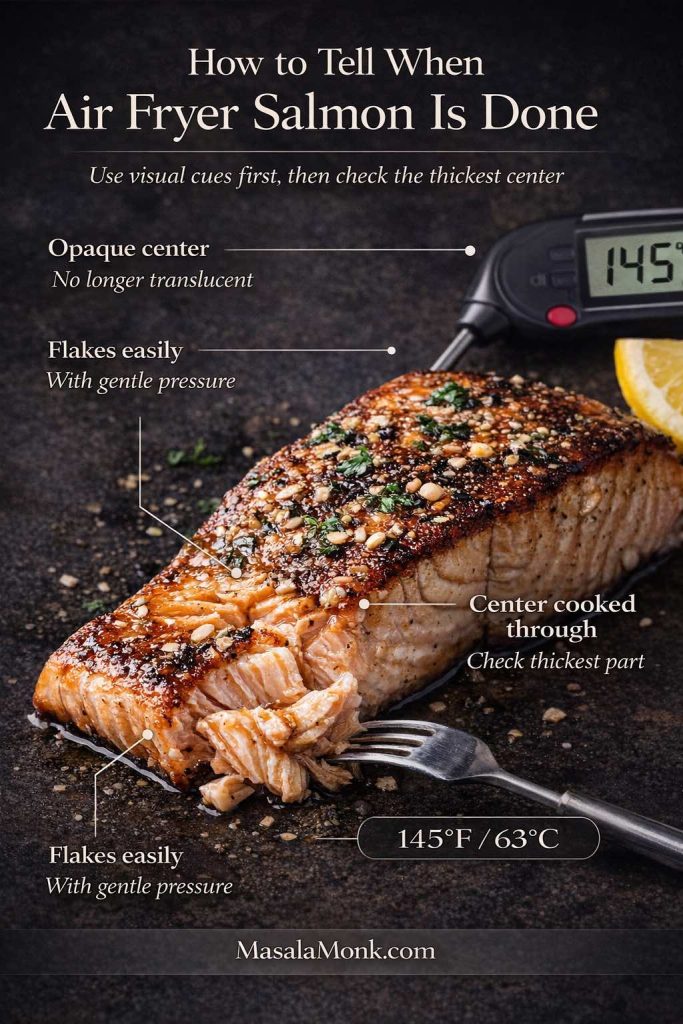
Air fryer salmon doneness guide showing visual cues for cooked salmon, including opaque center, flaking texture, thickest-center check, and 145°F / 63°C temperature target.
Use this air fryer salmon doneness guide to check when salmon is ready: look for an opaque center, easy flaking, and a thickest-center temperature of 145°F (63°C). It’s a simple visual reference to help you avoid overcooking salmon in the air fryer.

Use the thermometer in the thickest center

If you want consistency, a thermometer is your best friend.

Insert it into the thickest part of the fillet, not the thin edge. FoodSafety.gov lists fish (including salmon) at 145°F (63°C), and it also notes the classic visual cue that fish should be opaque and separate easily with a fork. (FoodSafety.gov)

That temperature is a strong, practical benchmark for a general home-cooking recipe, especially if you’re cooking for a family and want a clear doneness target.

The USDA safe temperature chart also lists fish and shellfish at 145°F, which aligns with the same guidance. (Food Safety and Inspection Service)

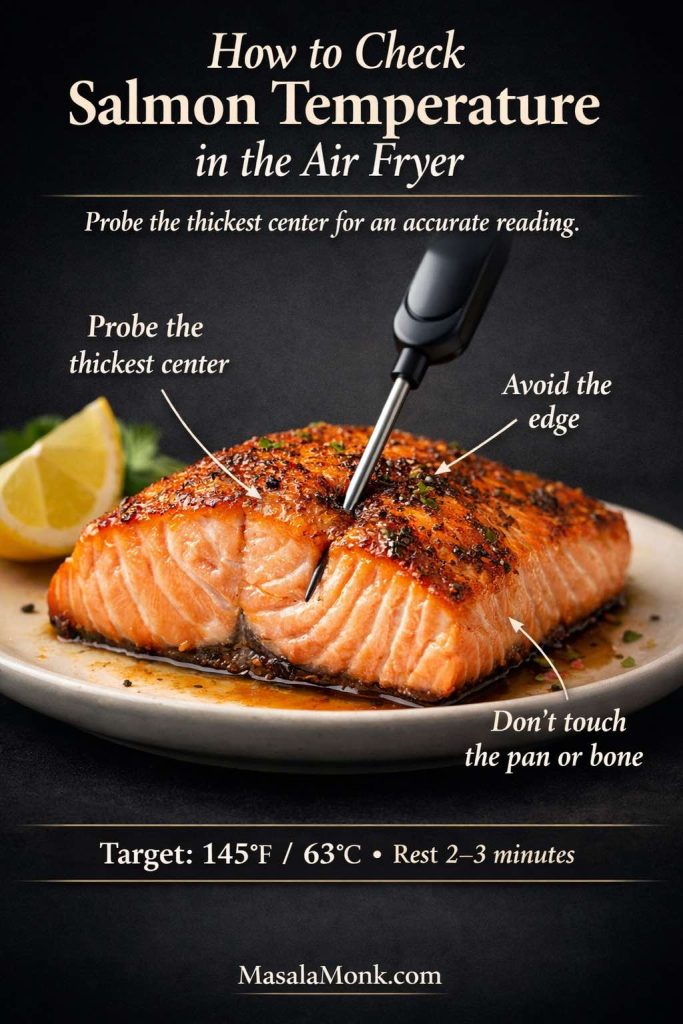
Air fryer salmon temperature guide showing a thermometer inserted into the thickest center of a cooked salmon fillet, with callouts for proper probe placement, avoiding the edge, and not touching the pan or bone, plus a 145°F / 63°C target.
Use this air fryer salmon temperature guide to check doneness accurately: insert the thermometer into the thickest center of the fillet, avoid the edges and pan contact, and cook to 145°F (63°C) for a reliable, juicy result.

What done salmon looks like

When salmon is done, the flesh:

  • Looks opaque rather than raw-looking in the middle
  • Flakes with gentle pressure
  • Feels tender, not mushy
  • Holds together when you lift it

If it still looks very translucent in the center, give it another minute and check again.

If it’s dry and crumbly, it’s gone a little too far. Not a disaster, but you’ll want to reduce the cook time next time.

Rest briefly before serving

Salmon doesn’t need a long rest like a large roast, but 2 to 3 minutes helps.

That short pause lets the juices settle and makes the fillet easier to plate neatly. It also gives you a moment to finish a side dish, squeeze lemon, or spoon on a sauce.

Also Read: Dirty Martini Recipe (Classic, Extra Dirty, No Vermouth, Spicy, Blue Cheese, Tequila + Batched)


Air fryer salmon with skin vs skinless

Both versions work well, but they behave a little differently. Knowing the difference helps you avoid overcooking and gets you a better texture.

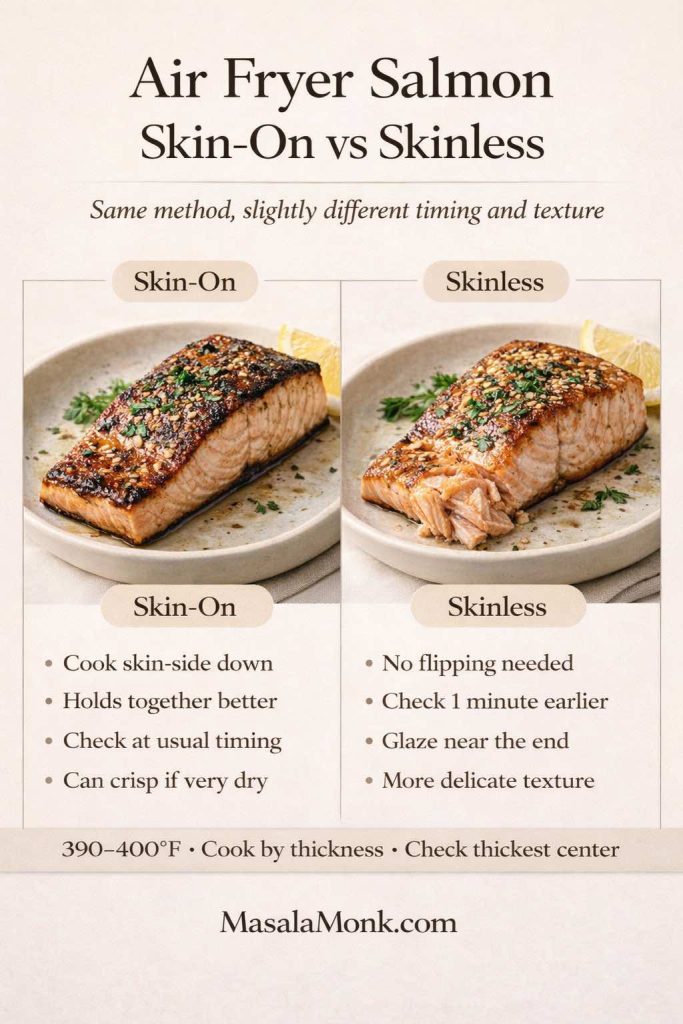
Side-by-side air fryer salmon comparison guide showing skin-on vs skinless salmon fillets with cooking tips, timing differences, and texture notes for salmon in the air fryer.
This air fryer salmon skin-on vs skinless guide shows the key differences in timing, texture, and cooking approach so you can choose the best method for the salmon fillets you have and avoid overcooking.

How to cook skin-on salmon in air fryer

Skin-on salmon is often easier for beginners because the skin helps protect the bottom of the fillet and makes it easier to move after cooking.

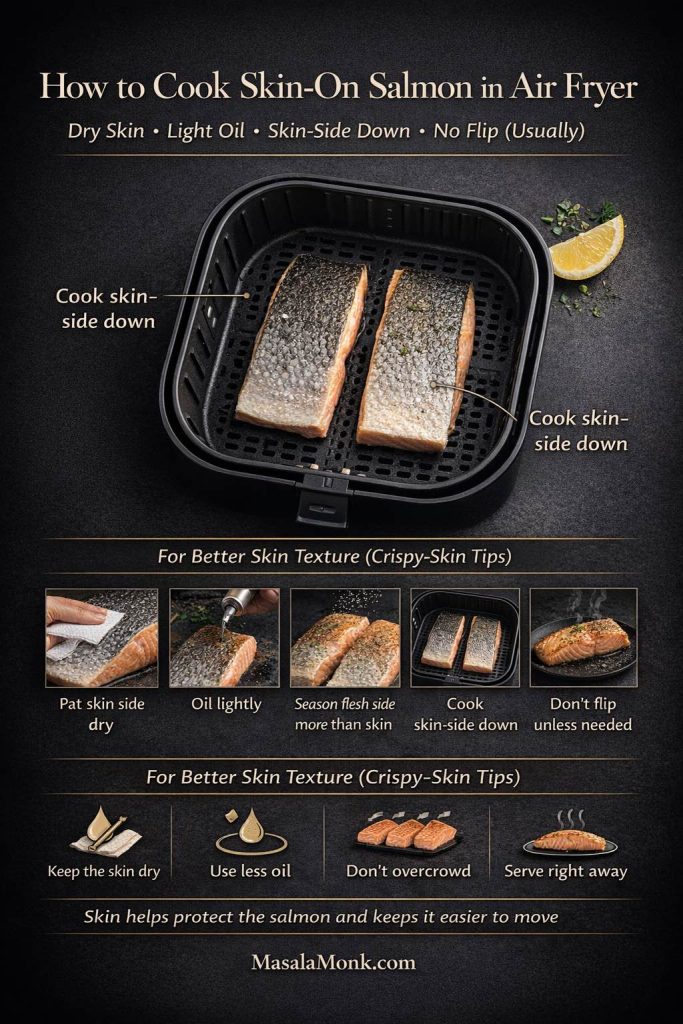
How to cook skin-on salmon in air fryer infographic showing skin-on salmon fillets placed skin-side down in an air fryer basket with crispy-skin tips including pat skin dry, oil lightly, season flesh side more than skin, avoid overcrowding, and serve right away.
Use this skin-on air fryer salmon guide for better texture and easier handling: pat the skin dry, oil lightly, season the flesh side more than the skin, and cook skin-side down without flipping unless needed. It also includes crispy-skin tips like avoiding overcrowding and serving right away before steam softens the skin.

For air fryer salmon with skin:

  • Pat the skin side dry
  • Oil lightly
  • Season the flesh side more heavily than the skin
  • Cook skin-side down
  • Don’t flip unless absolutely necessary

The skin doesn’t always get ultra-crispy in every air fryer, but it usually cooks well and helps the fish stay moist.

If you like crispy skin salmon air fryer style, a few small moves help:

  • Keep the skin dry
  • Avoid too much oil
  • Don’t overcrowd the basket
  • Serve right away (steam softens crisp skin quickly)

Skinless salmon in the air fryer

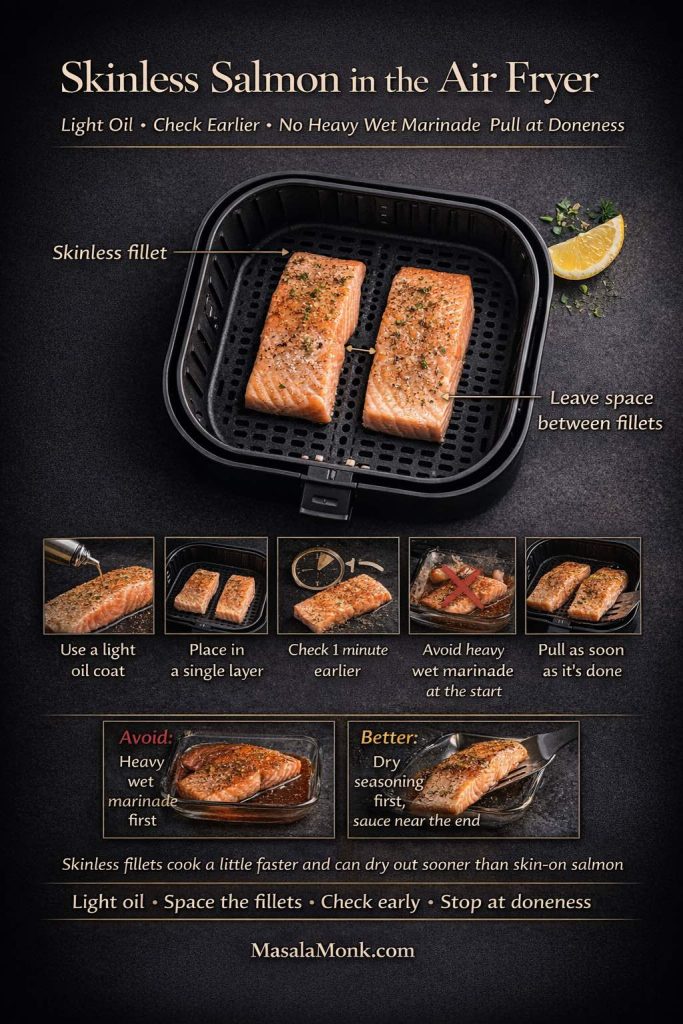
Skinless salmon in the air fryer works beautifully too, but it tends to cook a little faster and can dry out more easily if you overshoot the timing.

This skinless salmon in the air fryer guide shows the best way to cook skinless fillets without drying them out: use a light oil coat, leave space between fillets, check a little earlier than skin-on salmon, and avoid heavy wet marinades at the start. It’s a practical visual reference for keeping air fryer salmon juicy and evenly cooked.

For skinless fillets:

  • Use a light oil coat
  • Check one minute earlier than usual
  • Avoid heavy wet marinades at the start
  • Pull the fillet as soon as it reaches doneness

This is especially important if you’re making thinner cuts or smaller salmon portions.

If sticking is an issue in your basket, a lightly greased perforated liner can help, but avoid blocking too much airflow.

Salmon steak in air fryer

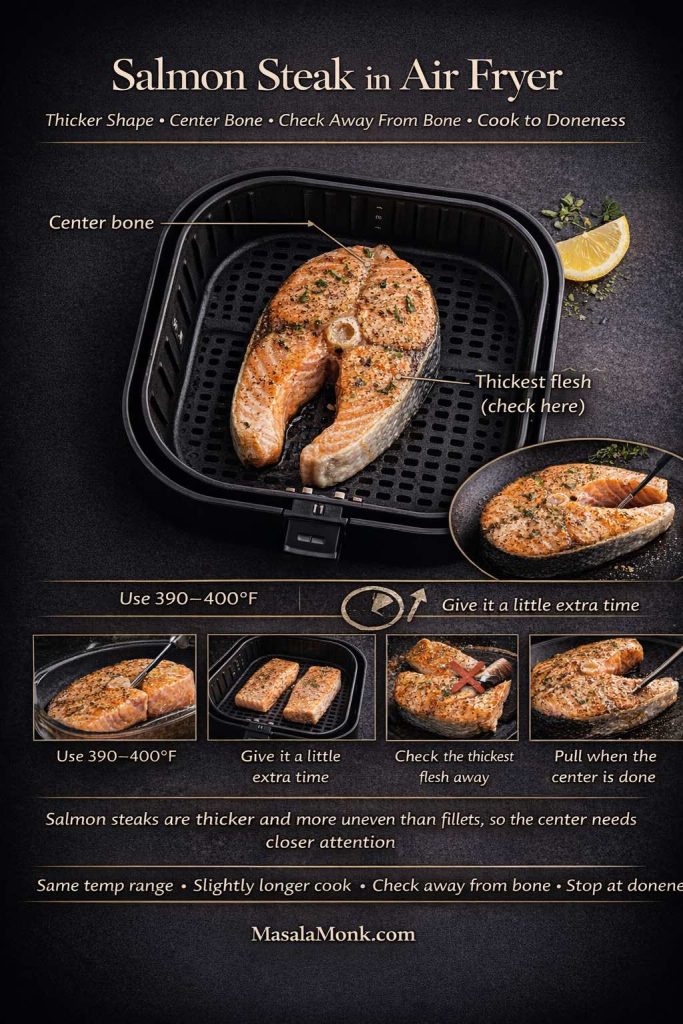
Salmon steaks are a little different from fillets because the shape is thicker and more uneven around the center bone.

This salmon steak in air fryer guide shows how steak cuts cook differently from fillets: they’re thicker, shaped unevenly around the center bone, and need a little extra time. Use the same 390–400°F range, then check the thickest flesh away from the bone for a better doneness read and more reliable texture.

If you’re cooking salmon steak air fryer style:

  • Use the same temperature range (390°F to 400°F)
  • Add a little extra time
  • Check doneness in the thickest part, away from the bone

The same doneness rules apply, but the steak shape means you’ll want to watch the center closely.

Also Read: Fish and Chips Reimagined: 5 Indian Twists (Recipe + Method)


Best seasoning for air fryer salmon

This is where the fun starts. Once you have the base method down, seasoning is what keeps air fryer salmon from feeling repetitive.

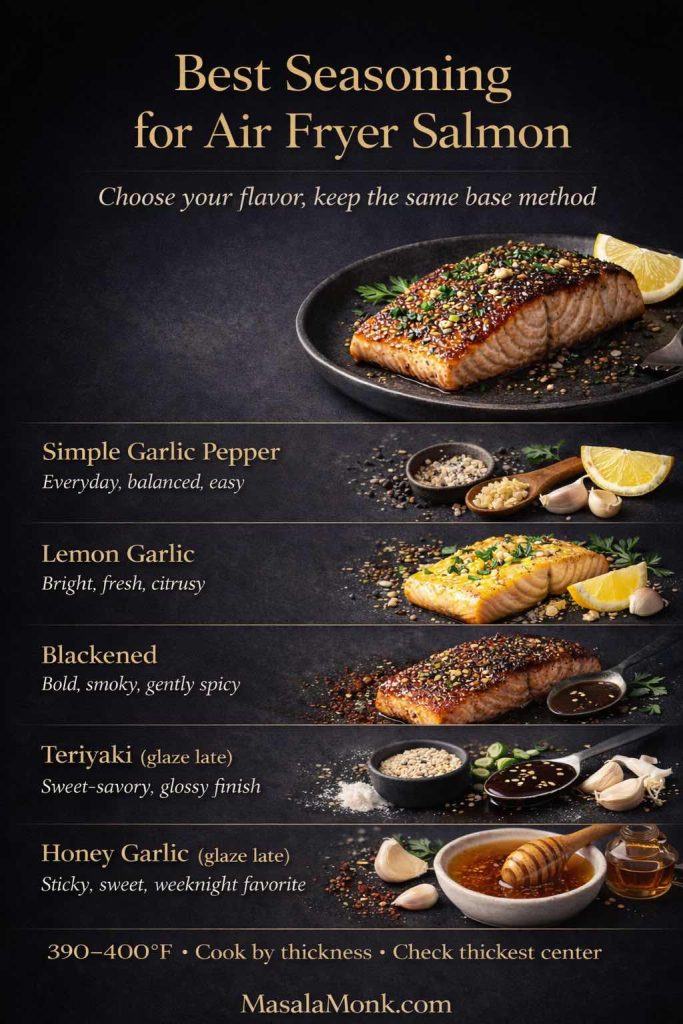
Best seasoning for air fryer salmon guide showing flavor variations including simple garlic pepper, lemon garlic, blackened, teriyaki, and honey garlic, with a cooked salmon hero image and cooking method cue.
Use this seasoning guide to choose a flavor direction for your salmon fillets that are air fried or otherwise—simple garlic pepper, lemon garlic, blackened, teriyaki, or honey garlic—while keeping the same base air fryer salmon method for reliable results.

Simple seasoning for air fryer salmon

The most reliable version is still the simplest:

  • Salt
  • Pepper
  • Garlic powder
  • Paprika
  • Lemon to finish
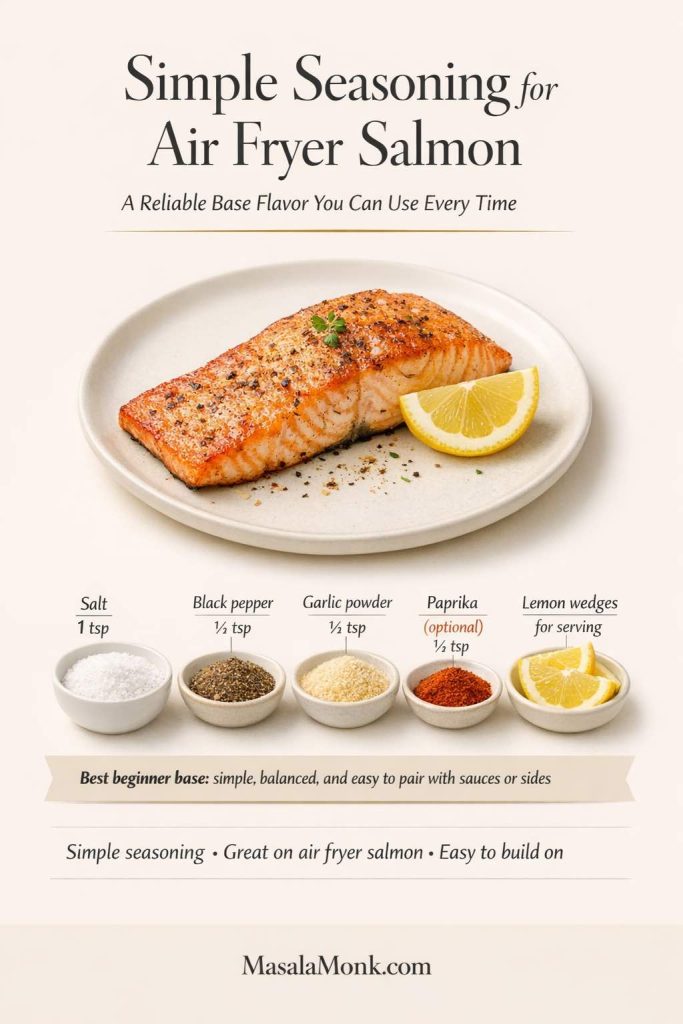
Simple seasoning for air fryer salmon infographic showing a basic salmon fillet with salt, black pepper, garlic powder, paprika, and lemon wedges, with exact seasoning amounts for a reliable beginner-friendly air fryer salmon base method.
Start with this simple seasoning for air fryer salmon when you want a reliable, easy base that works with almost any side. This visual shows the exact seasoning mix (salt, pepper, garlic powder, paprika, and lemon) so readers can make a balanced salmon recipe without overthinking it. It’s the best foundation for weeknight dinners and also the easiest version to build into lemon garlic, blackened, teriyaki, or honey garlic variations later. Save this pin for a quick salmon seasoning reference, and boomark this post for the complete method, timing-by-thickness guide, and more air fryer salmon flavor ideas.

This combination works with almost any side and leaves room for a sauce if you want one. It’s also the best starting point if you’re new to cooking salmon in an air fryer.

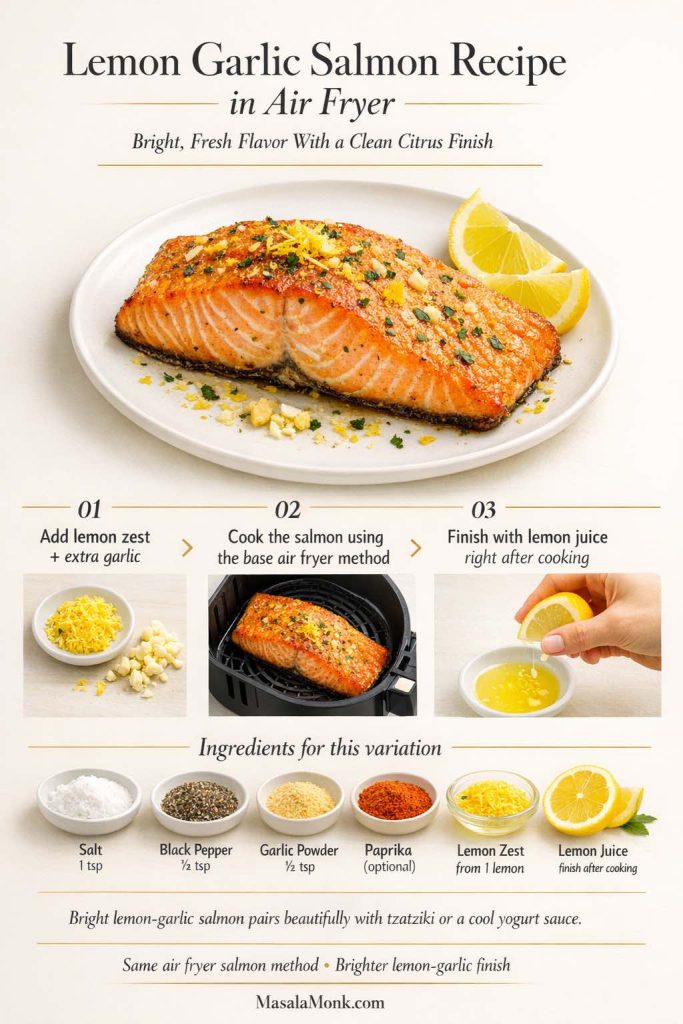
Lemon garlic salmon recipe in air fryer

For a bright, fresh variation:

  • Add lemon zest before cooking
  • Use a touch more garlic
  • Finish with lemon juice right after cooking
This lemon garlic salmon recipe in the air fryer is a bright, fresh variation built on the same easy base method. The card shows the full flow: add lemon zest and extra garlic, cook using the core air fryer salmon method, then finish with lemon juice right after cooking for the cleanest citrus flavor. It’s a great option when you want something light, balanced, and easy to pair with tzatziki or a cool yogurt sauce. Save this for an easy weeknight salmon idea, and visit the full MasalaMonk recipe for exact timing, doneness cues, and more flavor variations you can rotate through all week.
This lemon garlic salmon recipe in the air fryer is a bright, fresh variation built on the same easy base method. The card shows the full flow: add lemon zest and extra garlic, cook using the core air fryer salmon method, then finish with lemon juice right after cooking for the cleanest citrus flavor. It’s a great option when you want something light, balanced, and easy to pair with tzatziki or a cool yogurt sauce. Save this for an easy weeknight salmon idea, and follow full recipe for exact timing, doneness cues, and more flavor variations you can rotate through all week.

This version tastes clean and balanced, and it pairs really well with cool sauces. A spoonful of tzatziki on the side gives it a creamy contrast without making the dish heavy.

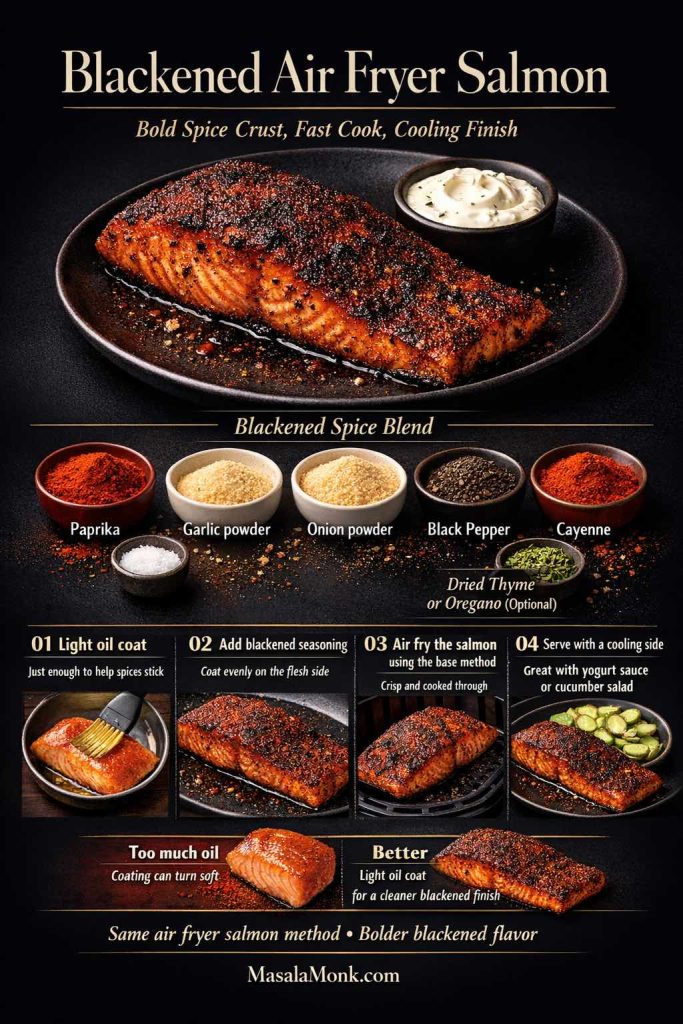
Blackened air fryer salmon

Blackened salmon in the air fryer works beautifully because the hot circulating air sets the spice coating quickly.

Blackened air fryer salmon infographic showing a spice-crusted salmon fillet, blackened seasoning ingredients, light oil coating step, and a cooling side pairing, with tips for getting a bold crust without making the spice coating soft.
This blackened air fryer salmon card is a bold, spice-forward variation that shows exactly how to build a flavorful crust without over-oiling the fish. It includes the blackened seasoning blend (paprika, garlic powder, onion powder, black pepper, cayenne, and optional herbs), a step-by-step visual method, and a helpful comparison showing why a light oil coat gives a cleaner finish. The cooling-side pairing cue also makes this easy to turn into a complete meal. Save this pin if you love smoky, spicy salmon, and read the full post for the core air fryer salmon method and more variations.

A good blackened-style blend includes:

  • Paprika
  • Garlic powder
  • Onion powder
  • Black pepper
  • Cayenne
  • Dried thyme or oregano (optional)

Use just enough oil to help the spices stick. Too much oil can make the coating patchy or overly soft.

This version is excellent with something cooling and tangy on the side, like yogurt sauce or a quick cucumber salad.

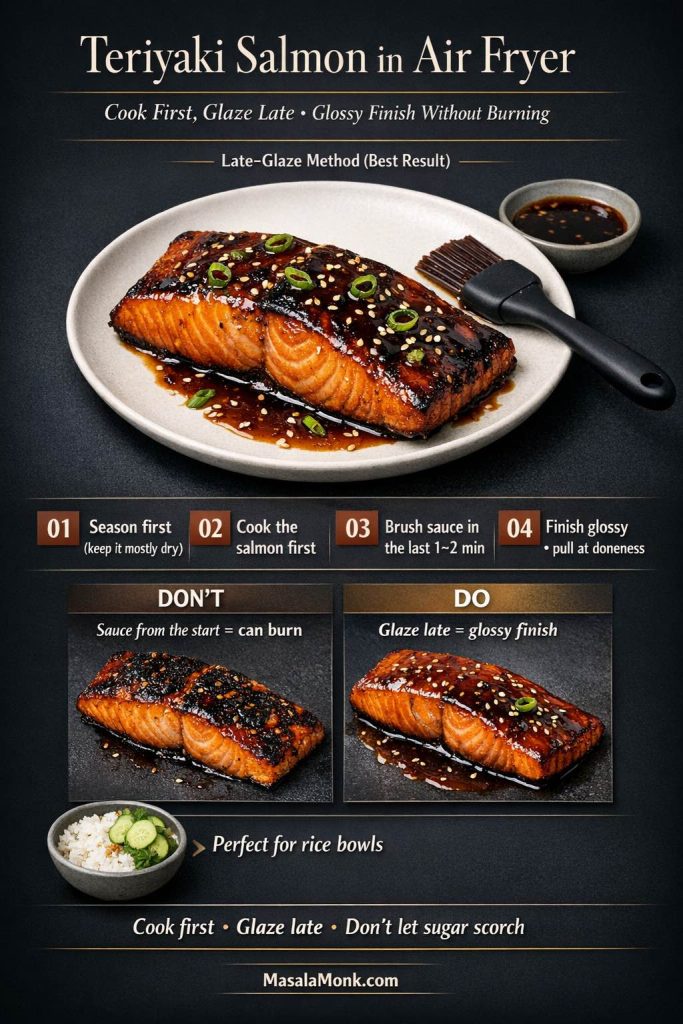
Teriyaki salmon in air fryer

Teriyaki is one of the easiest upgrades, but timing matters.

This teriyaki salmon in air fryer infographic teaches the key trick that makes teriyaki work: cook first, glaze late. The visual step sequence shows when to season, when to cook, and when to brush the teriyaki sauce (last 1–2 minutes) so the salmon gets glossy without burning. The do-vs-don’t comparison panel is especially helpful if your sweet glazes tend to scorch. It’s a great standalone save for readers who want a fast teriyaki salmon dinner with better results. Pin this for later, and read the full MasalaMonk post for timing-by-thickness and more flavor cards in the series.
This teriyaki salmon in air fryer infographic teaches the key trick that makes teriyaki work: cook first, glaze late. The visual step sequence shows when to season, when to cook, and when to brush the teriyaki sauce (last 1–2 minutes) so the salmon gets glossy without burning. The do-vs-don’t comparison panel is especially helpful if your sweet glazes tend to scorch. It’s a great standalone save for readers who want a fast teriyaki salmon dinner with better results. Pin this for later, and read the full post for timing-by-thickness and more flavor cards in the series.

Instead of starting with a thick sweet sauce, cook the salmon most of the way first. Then brush on teriyaki during the last 1 to 2 minutes so it turns glossy without burning.

That late-glaze method gives you a much better finish than adding sauce from the beginning.

If you want a homemade option, MasalaMonk’s teriyaki sauce recipe is especially useful because it includes a thicker glaze-style version as well as lighter directions, so you can choose what suits your salmon best.

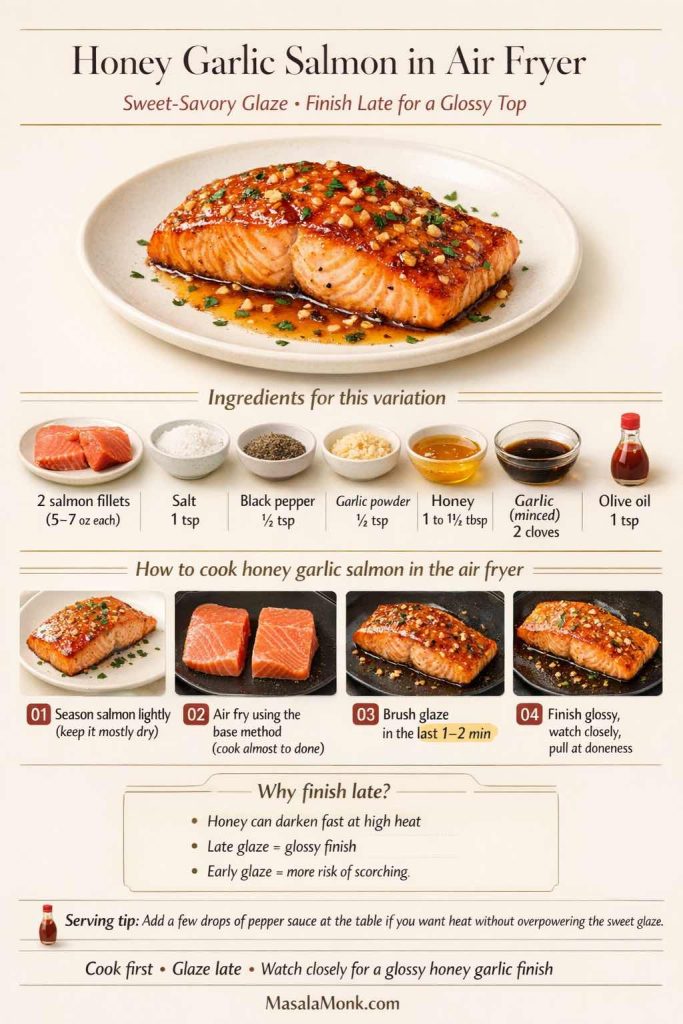
Honey garlic salmon air fryer style

Honey garlic salmon is another favorite, and the same glaze rule applies.

Recipe card infographic for honey garlic salmon in air fryer showing a glazed salmon fillet, ingredient amounts, and a 4-step method with the key tip to brush the honey garlic glaze in the last 1 to 2 minutes to prevent burning and keep a glossy finish.
Make Honey Garlic Salmon in the Air Fryer with a glossy sweet-savory finish—without burning the glaze. This recipe card shows the ingredient amounts, the 4-step method, and the key trick: cook the salmon first, then brush on the honey garlic glaze in the last 1–2 minutes. It’s an easy weeknight salmon recipe that looks impressive and tastes balanced, with an optional pepper sauce tip for extra heat at the table. Save this for later, pin it for your air fryer dinner board, and follow this post for the full air fryer salmon guide with more flavor variations like lemon garlic, blackened, and teriyaki.

A simple honey garlic finish works best when you:

  1. Cook the salmon almost to done
  2. Brush on the glaze
  3. Finish for 1 to 2 minutes
  4. Watch closely

Sweet glazes can darken quickly at high heat. Finishing late keeps the top glossy and flavorful instead of scorched.

If you want extra spice, add a few drops of pepper sauce at the table instead of mixing it into the glaze. That way, the sweetness stays balanced, and everyone can adjust the heat level.

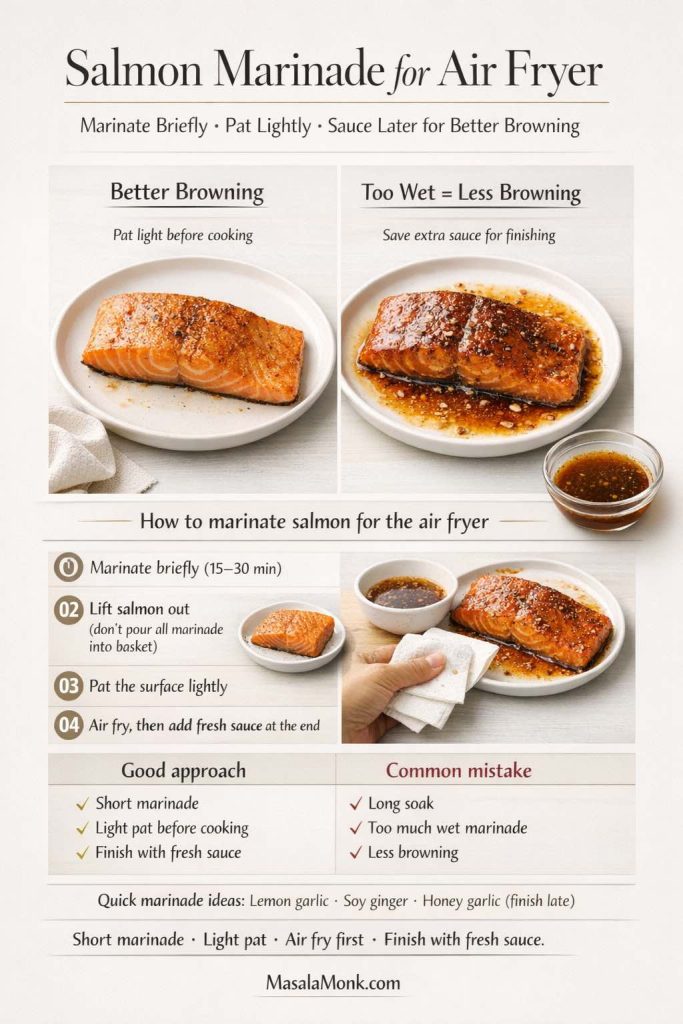
Salmon marinade for air fryer

A quick note on marinades: they work, but wet marinades can reduce browning if you use too much.

Infographic recipe guide titled “Salmon Marinade for Air Fryer” showing a side-by-side comparison of better browning vs too-wet marinade, a 4-step method for marinating salmon (15–30 minutes, lift out, pat lightly, air fry then finish with fresh sauce), and a quick tips panel for avoiding less browning.
Can you marinate salmon before air frying? Yes — but this guide shows how to do it without losing browning. The key is simple: marinate briefly (15–30 min), lift the salmon out instead of pouring all the marinade into the basket, pat the surface lightly, and finish with fresh sauce after cooking. This visual also includes a quick “good approach vs common mistake” comparison so you can avoid soggy, less-browned salmon. Save and pin this for easy weeknight air fryer salmon dinners.

If you want to marinate:

  • Keep it short (15 to 30 minutes is usually enough)
  • Pat the surface lightly before cooking
  • Save some fresh sauce for the end

This is why a lot of the best air fryer salmon recipes rely on dry seasoning first and sauce second.

Also Read: Ravioli Recipe Reinvented: 5 Indian-Inspired Twists on the Italian Classic


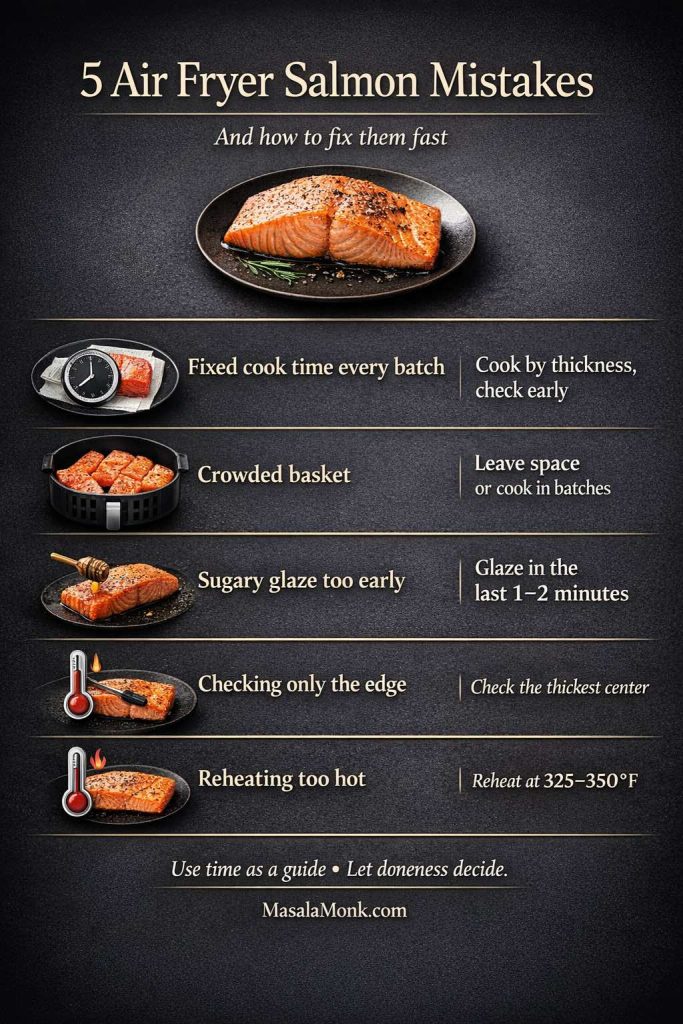
Common air fryer salmon mistakes and how to fix them

Even with a good method, a few things can throw off the final result. The good news is that most of them are easy to correct.

Air fryer salmon mistakes and fixes infographic showing five common problems and quick solutions: using a fixed cook time, crowding the basket, glazing too early, checking only the edge, and reheating too hot, with a cooked salmon hero image and troubleshooting tips.
Use this air fryer salmon mistakes and fixes guide to troubleshoot the most common problems fast—from overcooking by fixed time and crowding the basket to glazing too early and reheating too hot—so your salmon turns out juicier, more even, and more reliable every time.

Mistake 1: Cooking by one fixed time every time

No two fillets are exactly the same. Thickness changes everything.

Fix it by using a timing range, then checking early. Once you start treating the clock like a guide rather than a rule, your salmon gets more consistent immediately.

Mistake 2: Crowding the basket

When fillets are packed too tightly, hot air can’t move around them properly. The result is uneven cooking and weaker browning.

Fix it by cooking in batches if needed. It’s better to cook two good fillets than four crowded ones.

Mistake 3: Starting with a sugary glaze

Honey, teriyaki, and similar sauces taste great, but they burn fast.

Fix it by glazing near the end. Let the salmon cook first, then brush and finish.

Mistake 4: Not checking the thickest part

The edge of the fillet will look done before the center. If you only look at the edges, you’ll pull too early or keep cooking too long while trying to “fix” the wrong spot.

Fix it by checking the center every time.

Mistake 5: Overcooking leftovers during reheating

A lot of people blame the original cook when the real problem happens the next day. Reheating salmon too hot or too long dries it out fast.

Fix it by reheating gently at a lower temperature and just warming it through.

Also Read: Croquettes Recipe: One Master Method + 10 Popular Variations


Easy air fryer salmon variations for weeknights

One of the best parts of a solid salmon air fryer recipe is how easily it turns into several dinners with very little extra work.

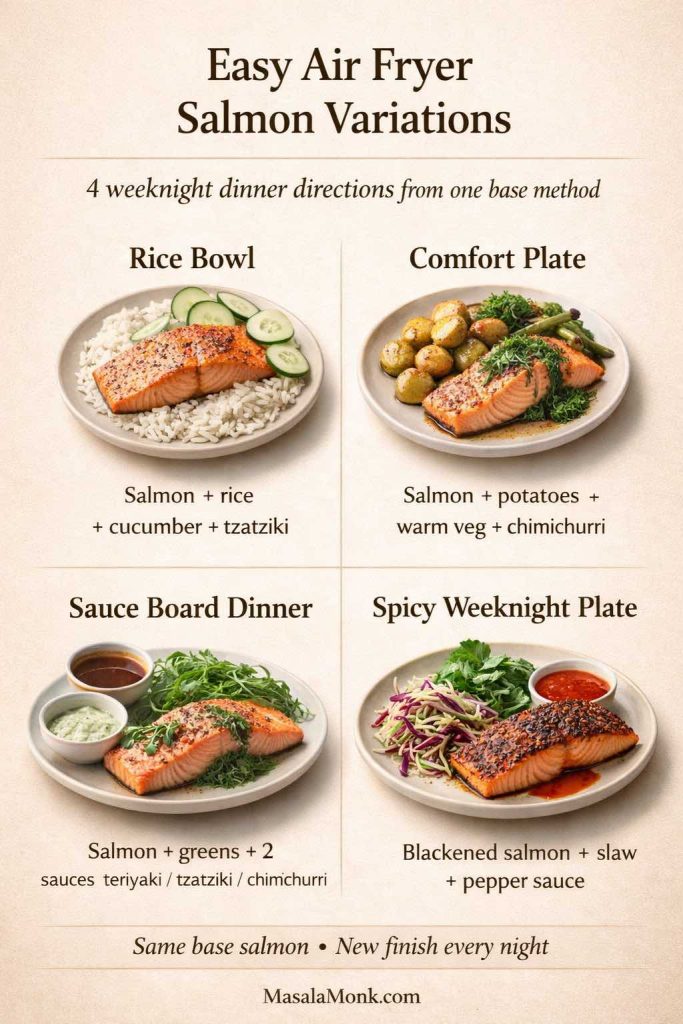
Use this easy air fryer salmon variations guide to turn one base air fryer salmon recipe into four weeknight dinners: a rice bowl, a comfort plate, a sauce-board dinner, and a spicy blackened salmon plate. It’s a quick visual planner for keeping salmon meals interesting without changing the core method.

Air fryer salmon bowl with rice and herbs

A salmon bowl is one of the easiest ways to turn this into a full meal.

Start with a base of rice, then add:

  • Flaked air fryer salmon
  • Sliced cucumber
  • Fresh herbs
  • Lemon wedges
  • Tzatziki or a yogurt sauce
  • Chili flakes, if you like heat

If you need a dependable rice base, MasalaMonk’s how to cook rice guide is a great companion because it walks through different rice types and methods in a way that makes weeknight bowls much easier to build.

Crispy-style salmon plate with a side of croquettes

When you want something a little more fun than the usual rice-and-veg combo, pair the salmon with a crisp side.

This is where a side like croquettes fits surprisingly well. MasalaMonk’s croquettes recipe guide is especially useful if you like the idea of one method that can be baked, fried, or air-fried and reused with different fillings. It also naturally opens the door to leftover salmon ideas later in the week.

Sauce-board salmon dinner

Another easy way to make the same salmon feel new is to serve it with more than one sauce.

A simple plate with the same air fryer salmon fillets can feel completely different when you offer:

That setup works especially well when people at the table like different flavor styles, and it makes the meal feel more generous without much extra cooking.

Lemon herb salmon with pesto on the side

Pesto is often associated with pasta, but it works beautifully with salmon too.

A spoonful of pesto on warm salmon adds richness, herbs, and a lot of flavor very quickly. It’s a great pairing if you’re keeping the salmon seasoning simple and want the sauce to do more of the work.

This version also pairs well with roasted potatoes, rice, or a crisp salad.

Spicy salmon with pepper sauce finish

If you enjoy heat, a bright pepper sauce works better than an overly aggressive spice rub in many cases.

You can keep the salmon seasoned simply, then finish with a few drops of pepper sauce at the table. That gives you more control over the spice level and keeps the salmon from tasting flat or one-note.

It’s a small move, but it makes the same basic air fryer salmon feel much more dynamic.

Also Read: How to Make a Flax Egg (Recipe & Ratio for Vegan Baking)


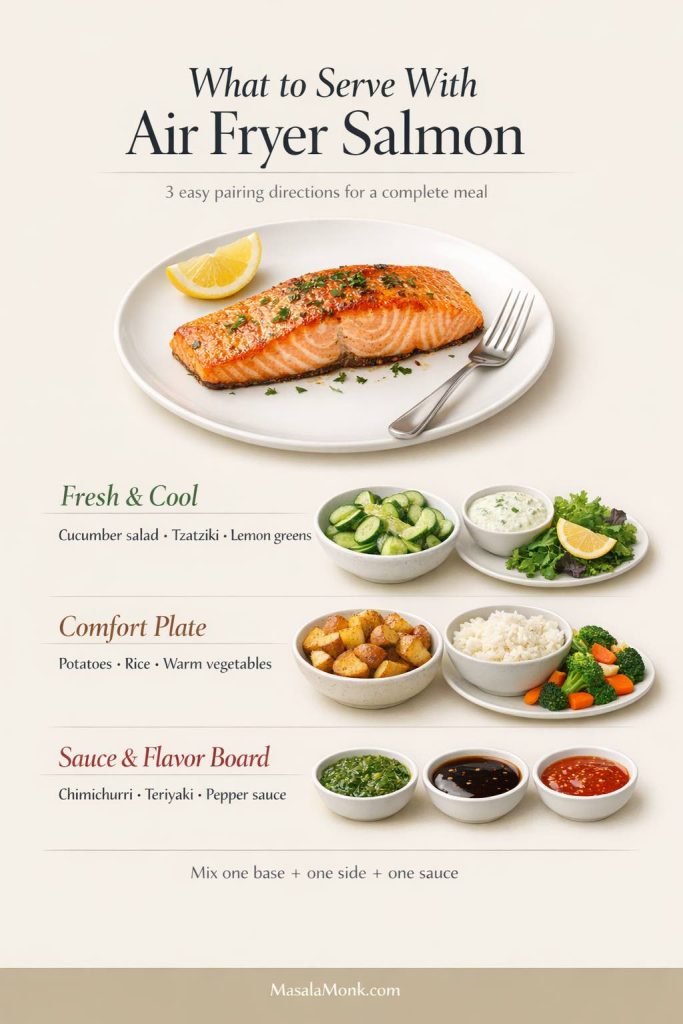
What to serve with air fryer salmon

Salmon is flexible enough to go in several directions, so this part depends on the kind of meal you want: clean and light, cozy and comforting, or a little more dinner-party style.

What to serve with air fryer salmon pairing guide showing a cooked salmon fillet with side dish ideas including cucumber salad, tzatziki, lemon greens, potatoes, rice, warm vegetables, and sauce options like chimichurri, teriyaki, and pepper sauce.
What to serve with air fried salmon: use this pairing guide to build an easy full meal with fresh sides, comfort-style options, and flavorful sauces. Mix one base, one side, and one sauce to turn your salmon fillets into a complete dinner without overthinking it.

Fresh, cool sides that balance salmon well

Because salmon is naturally rich, cool sides are a great match.

Some of the easiest options:

  • Cucumber salad
  • Lemony greens
  • Yogurt-herb sauce
  • Tomato and onion salad
  • Light slaw

If you want a more substantial cold side, a scoop of potato salad works especially well. MasalaMonk’s potato salad recipes post is handy here because it includes multiple styles, so you can pair a sharper German-style salad with glazed salmon or a creamier version with lemon garlic salmon.

Warm sides for a more filling dinner

If you want a heartier plate, salmon pairs beautifully with:

  • Rice
  • Roasted potatoes
  • Steamed vegetables with butter and lemon
  • Sautéed greens
  • Simple pasta

Rice is one of the easiest choices because it absorbs sauces well and turns leftover salmon into an easy next-day bowl.

Sauce-led pairings that make the same salmon feel different

Sometimes the side isn’t the main decision. The sauce is.

If you want to keep the salmon method exactly the same and still avoid boredom, rotate sauces:

That rotation alone can carry multiple weeks of dinners without changing how you cook the fish.

Drinks and desserts that round out the meal

If you like building a complete dinner experience, this is an easy place to add a little personality without complicating the main recipe.

For drinks, a crisp non-alcoholic option pairs really well with salmon, especially when the seasoning leans citrusy or spicy. MasalaMonk’s keto mocktails guide is a good place to pull ideas like fresh, low-sugar coolers and citrus-forward drinks.

For dessert, a simple make-ahead option works especially well after fish:

Those pairings make the meal feel complete without pulling you into an overly heavy dessert.

Also Read: Pork Tenderloin in Oven (Juicy, Easy, 350°F or 400°F) Recipe


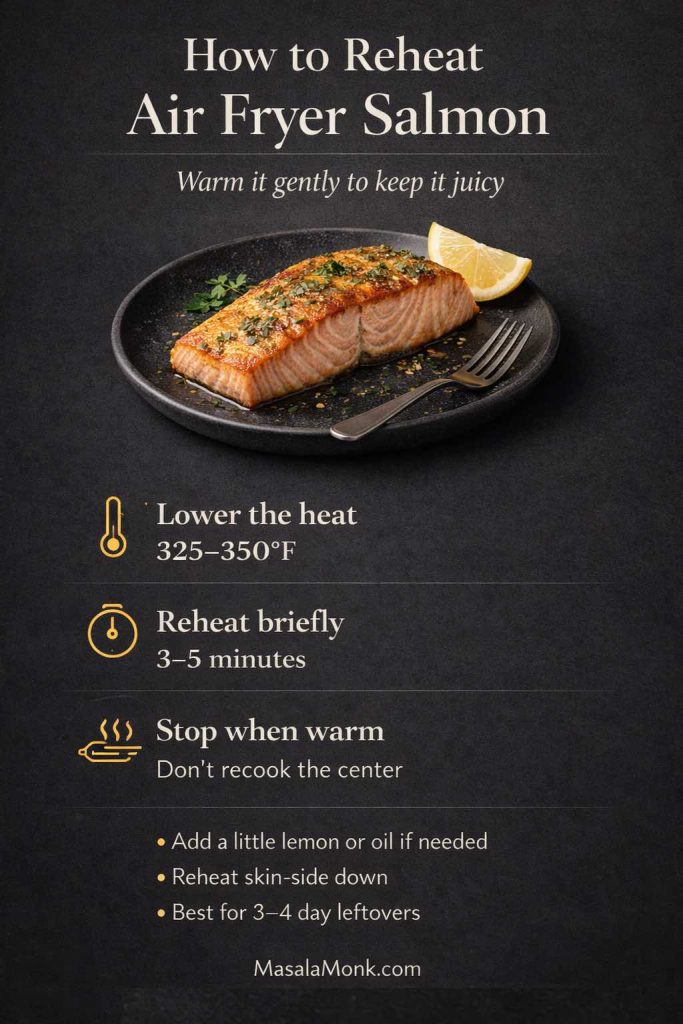
Reheating salmon in air fryer without drying it out

Leftovers are where a lot of salmon recipes quietly fail, not because the original dish was bad, but because the reheating is too aggressive.

The good news: reheating salmon in air fryer works really well when you treat it gently.

How to reheat air fryer salmon infographic showing leftover salmon reheating steps, including 325–350°F, 3–5 minutes, and tips to keep salmon juicy without drying out.
Reheating air fried salmon is easy when you keep the heat low and the time short. Use this quick guide to warm leftover salmon at 325–350°F for 3–5 minutes so it stays juicy instead of drying out.

How to store cooked salmon first

Before reheating, proper storage matters.

Let the salmon cool slightly, then transfer it to an airtight container and refrigerate it. The USDA’s Ask USDA guidance states that cooked fish and seafood can be safely stored in the refrigerator for 3 to 4 days. (Ask USDA)

That’s a great practical window for meal planning: dinner on day one, leftovers on day two or three.

For broader seafood handling and storage basics, the FDA’s seafood safety guidance is also useful, especially its advice on keeping seafood cold and handling fresh or frozen seafood properly. (U.S. Food and Drug Administration)

Best way to reheat salmon in air fryer

To reheat without drying:

  • Set the air fryer to 325°F to 350°F
  • Reheat for 3 to 5 minutes
  • Check early and stop as soon as it’s warmed through

That lower-temperature approach is much better than trying to re-crisp it at 400°F.

If the salmon seems a little dry from the fridge, brush on a tiny bit of oil or squeeze lemon over it before reheating. A spoon of sauce after reheating also helps a lot.

Reheating skin-on salmon

If your leftover salmon has skin, reheat skin-side down. It won’t be exactly the same as fresh, but it keeps the fillet stable and helps avoid tearing.

You can also flake leftover salmon and warm it briefly for:

  • Rice bowls
  • Salads
  • Wraps
  • Grain bowls
  • Quick pasta tosses

That’s often the easiest way to reuse salmon without worrying about perfect texture the second time.

Also Read: Chicken Pesto Pasta (Easy Base Recipe + Creamy, One-Pot, Baked & More)


Fresh vs frozen salmon in the air fryer

This post is focused on fresh salmon, but it’s still useful to understand where frozen fits in.

Fresh vs frozen salmon in air fryer comparison guide showing differences in browning, timing, surface moisture, and seasoning approach, with side-by-side salmon fillet visuals and cooking tips.
Fresh vs frozen salmon in the air fryer: this quick comparison shows how timing, browning, and seasoning change depending on what you start with, so you can cook either version with better results and fewer surprises.

Fresh salmon in air fryer gives you more control

Fillets of fresh salmon are easier to season evenly, easier to monitor, and usually cook more predictably. You get better browning and more control over the final texture.

That’s one reason this guide uses fresh salmon as the baseline method.

Frozen salmon in air fryer can still work

Frozen salmon in air fryer is absolutely possible, and it can be a lifesaver on busy nights. The process is just different:

  • It usually takes longer
  • Surface moisture changes the texture
  • Seasoning often works better partway through

If you cook frozen salmon often, it’s worth eventually giving it its own dedicated method because the timing, seasoning flow, and texture cues are different from fresh fillets.

For now, if you’re cooking from frozen and want the best result, the same principle still helps: cook by doneness, not just by the clock.

Also Read: Chicken Pesto Pasta (Easy Base Recipe + Creamy, One-Pot, Baked & More)


Air fryer salmon for different cuts and salmon types

Once you’ve made basic fillets a few times, you can use the same logic across different salmon cuts.

Air fryer salmon time and temperature by cut guide showing salmon fillets, salmon steaks, and salmon bites with cooking tips, doneness cues, and a 390–400°F recommendation.
Use this air fryer salmon by-cut guide to adjust your method for fillets, steaks, and salmon bites. It’s a quick visual reference for cook time differences, doneness checks, and better texture across different salmon cuts.

Salmon fillets in air fryer

This is the easiest and most common format. The base method in this post is designed around salmon fillets, including:

  • Atlantic salmon
  • Coho salmon
  • Sockeye salmon
  • Wild salmon portions
  • Farmed salmon fillets

The exact time changes, but the process stays the same.

Sockeye salmon air fryer notes

Sockeye is often leaner than some other salmon types, so it can overcook a little faster.

If you’re making sockeye salmon air fryer style:

  • Start checking a bit earlier
  • Don’t rely on a long cook time
  • Consider a sauce or glaze for extra moisture and richness

Coho and Atlantic salmon in air fryer

Coho and Atlantic fillets often behave very well in the air fryer, especially in standard grocery-store thicknesses.

Atlantic salmon tends to be richer and more forgiving, which makes it a nice choice if you’re learning the method. Coho can be excellent too, just a little less forgiving if overcooked.

Salmon pieces and smaller portions

If you’re cooking salmon pieces in air fryer (smaller cuts, trimmed portions, or bite-sized pieces), reduce the time and watch closely. Small pieces cook very fast.

For salmon bites, it helps to:

  • Cut pieces evenly
  • Coat lightly
  • Avoid over-saucing at the start
  • Shake or turn once if needed

Also Read: Slow Cooker Pork Tenderloin (Crock Pot Recipe) — 3 Easy Ways


A few easy dinner directions you can keep in rotation

Once you’ve made this salmon recipe a few times, it helps to have a few “default directions” in mind so dinner doesn’t feel repetitive.

Infographic titled “Easy Air Fryer Salmon Dinner Ideas” showing four meal directions for air fryer salmon: Clean & Simple (lemon garlic salmon with rice or salad and tzatziki), Comfort (paprika-garlic salmon with potatoes and chimichurri/pesto), Sweet-Savory (teriyaki salmon with rice and cucumber), and Heat (blackened salmon with pepper sauce and a cooling yogurt sauce or slaw). Includes a “build your plate in 3 parts” tip: flavor, side, and contrast.
Keep weeknight salmon from feeling repetitive with this Easy Air Fryer Salmon Dinner Ideas guide 🐟✨ This visual gives you 4 easy meal directions you can rotate: Clean & Simple (lemon garlic + rice/salad + tzatziki), Comfort (Not Heavy) (paprika-garlic + potatoes + chimichurri/pesto), Sweet-Savory (teriyaki salmon + rice bowl + cucumber/herbs), and Heat (blackened salmon + pepper sauce + cooling yogurt sauce/slaw). It also includes a quick “build your plate in 3 parts” formula so dinner is easier to plan. Save and pin this for busy nights, follow the full air fryer salmon method, doneness tips, and flavor variations in this post.

When you want something clean and simple

Go with:

  • Lemon garlic salmon
  • Rice or a light salad
  • Tzatziki on the side

It feels fresh, balanced, and low-effort.

When you want a little comfort without a heavy meal

Go with:

  • Paprika-garlic salmon
  • Potato salad or warm potatoes
  • Chimichurri or pesto for a flavor lift

You still get a cozy plate, but it doesn’t feel too rich.

When you want a sweet-savory finish

Go with:

  • Teriyaki salmon in air fryer (glaze at the end)
  • Rice bowl setup
  • Cucumber and herbs for contrast

This is one of the easiest ways to make salmon feel special on a weekday.

When you want heat

Go with:

  • Blackened seasoning or a simple spice rub
  • Pepper sauce at the table
  • A cooling side like yogurt sauce or slaw

The contrast is what makes it work.

Also Read: Keto Mocktails: 10 Low Carb, Sugar Free Recipes


Final thoughts

A really good air fryer salmon recipe is less about chasing a perfect one-time result and more about learning a method you can trust. Once you know your air fryer, your preferred temperature, and your doneness cues, the rest becomes easy. You stop hovering. You stop overcooking “just in case.” And suddenly salmon becomes one of the fastest, most dependable dinners in your kitchen.

A final recap card for the post: learn one reliable air fryer salmon method, then keep dinner interesting by changing the finish. This visual sums up the core flow (prep, cook by thickness, check doneness, stop at doneness) and shows how the same base salmon can turn into totally different meals with tzatziki, chimichurri, teriyaki glaze, pepper sauce, or lemon and herbs. It’s the easiest way to make air fryer salmon part of a weekly rotation without getting repetitive. Save and share this guide for quick weeknight dinner inspiration.

That’s why this base method is worth learning first.

It covers the fundamentals—how to prep the fillets, how to cook salmon in the air fryer, how to handle air fryer salmon time and temp, how to work with skin-on or skinless pieces, and how to reheat leftovers properly. From there, you can branch into all the versions people actually make in real life: honey garlic air fryer salmon, teriyaki salmon, blackened salmon, lemon salmon, salmon bowls, and more.

And if you want to keep the same fish but make dinner feel completely different next time, the easiest move is usually not changing the cooking method at all. Just change the finish: a spoon of chimichurri, a swipe of tzatziki, a teriyaki glaze, a little pepper sauce, or a fresh pesto on the side.

That way, the method stays easy, but the meal never gets boring.

Also Read: Crock Pot Pork Chops and Sauerkraut (No Dry Chops Recipe)


Frequently Asked Questions

1. How long does salmon take in the air fryer?

In most cases, salmon in the air fryer takes about 7 to 11 minutes at 390°F to 400°F, but the exact time depends on thickness. Thin fillets can finish in 5 to 7 minutes, while thicker center-cut pieces may need 9 to 12 minutes. Rather than relying on one fixed time, start checking early and finish based on doneness.

2. What is the best temperature for air fryer salmon?

For most fillets, the best temperature for air fryer salmon is 390°F to 400°F. If your air fryer runs hot, 390°F gives you a little more control. On the other hand, 400°F is great when you want a quicker cook and a slightly more roasted top.

3. How do I know when air fryer salmon is done?

The easiest way to tell is by checking the thickest center of the fillet. The salmon should look opaque and flake gently with a fork. If you use a thermometer, check the center and cook until it reaches the proper internal temperature for fish. In addition, avoid judging doneness by the edges alone, because they cook faster than the middle.

4. Do I need to flip salmon in the air fryer?

Usually, no. Most air fryer salmon recipes cook well without flipping, especially when the fillets are placed in a single layer with space around them. If you’re cooking skin-on salmon, keep it skin-side down and leave it undisturbed for the best texture.

5. Can I cook salmon with skin in the air fryer?

Yes, and air fryer salmon with skin is often easier to cook well. The skin helps hold the fillet together and can protect the bottom from overcooking. For better texture, pat the skin dry, use a light coating of oil, and cook skin-side down.

6. How do I get crispy skin salmon in the air fryer?

To get crispier skin, start with very dry skin, use only a light layer of oil, and avoid overcrowding the basket. Also, serve the salmon right away, because trapped steam softens the skin quickly. While every air fryer behaves a little differently, these steps noticeably improve crispy skin salmon in air fryer cooking.

7. Can I make salmon fillets in the air fryer without drying them out?

Absolutely. The key is to cook by thickness, not just by the clock. Keep the temperature steady, check early, and stop cooking as soon as the salmon is done. As a result, your salmon fillet in air fryer stays moist instead of turning chalky or dry.

8. What seasoning works best for air fryer salmon?

A simple mix of salt, pepper, garlic powder, and paprika works beautifully for everyday air fryer salmon. After that, you can build other flavors easily—lemon garlic, blackened, teriyaki, or honey garlic—without changing the core cooking method.

9. Can I use a marinade for salmon in the air fryer?

Yes, although lighter marinades usually work better than very wet ones. If the marinade is too heavy, the salmon can steam instead of roast. For better results, marinate briefly, pat off excess moisture, and add glaze-style sauces near the end of cooking.

10. Can I cook frozen salmon in air fryer?

Yes, frozen salmon in air fryer is possible and very convenient. However, it takes longer than fresh salmon and often needs a slightly different seasoning approach because of the extra surface moisture. If you cook from frozen often, it helps to use a separate method with its own time and temperature flow.

11. What is the best way to cook frozen salmon in air fryer?

The best way to cook frozen salmon in air fryer is to start cooking first, then season once the surface thaws enough for seasoning to stick properly. Since frozen fillets release moisture as they cook, check doneness in the thickest center and expect a longer total cook time than fresh salmon.

12. Can I cook salmon steak in the air fryer?

Yes, salmon steak in air fryer works well, but it may take a little longer than a fillet because the cut is thicker and shaped differently around the center bone. Use the same temperature range (390°F to 400°F), then check the thickest part for doneness.

13. What’s the difference between cooking fresh salmon and frozen salmon in the air fryer?

Fresh salmon in air fryer usually gives you better browning and more control over seasoning from the start. Frozen salmon in the air fryer is still a great option, though it cooks differently because moisture releases as it thaws. In either case, checking doneness early makes the biggest difference.

14. Can I make teriyaki salmon in the air fryer?

Yes, teriyaki salmon air fryer style is one of the easiest variations. Still, the best approach is to cook the salmon most of the way first, then brush on teriyaki sauce in the last minute or two. That way, the glaze turns glossy without burning.

15. Can I make honey garlic salmon in the air fryer?

Definitely. Honey garlic salmon air fryer recipes work best when the glaze is added near the end, just like teriyaki. Because honey can darken quickly at high heat, finishing late helps you get a sweet, sticky coating without scorching.

16. How do I reheat salmon in air fryer without drying it out?

For reheating salmon in air fryer, use a lower temperature than you used for cooking—usually 325°F to 350°F. Warm it for 3 to 5 minutes, then stop as soon as it’s heated through. A small brush of oil or a squeeze of lemon can help keep the texture moist.

17. How long can I keep cooked air fryer salmon in the fridge?

Cooked salmon is best within a few days when stored in an airtight container in the refrigerator. For the best texture, reheat gently instead of using very high heat. Likewise, flaking leftover salmon into bowls or salads is a great way to use it without overcooking.

18. Can I cook salmon in a Ninja air fryer using the same method?

Yes, the same overall method works for salmon in a Ninja air fryer, including seasoning, basket spacing, and checking doneness early. Even so, different models can run hotter or faster, so use the recommended time range as a guide and check the fillet a little early the first time.

19. Why is my salmon overcooked in the air fryer?

Usually, overcooked salmon happens because the fillet was cooked by a fixed time instead of checked by thickness and doneness. Another common reason is using a sugary glaze too early, which can make the outside look done before the center is ready. Starting your doneness check earlier solves most of this.

20. What is the easiest air fryer salmon recipe for beginners?

The easiest air fryer salmon recipe for beginners is a simple fillet with olive oil, salt, pepper, garlic powder, and paprika cooked at 390°F to 400°F. Once that base is working well, you can branch into lemon garlic, blackened, teriyaki, or honey glazed salmon without changing the core method.