Posted on Leave a comment

Salmon Bowl Recipe

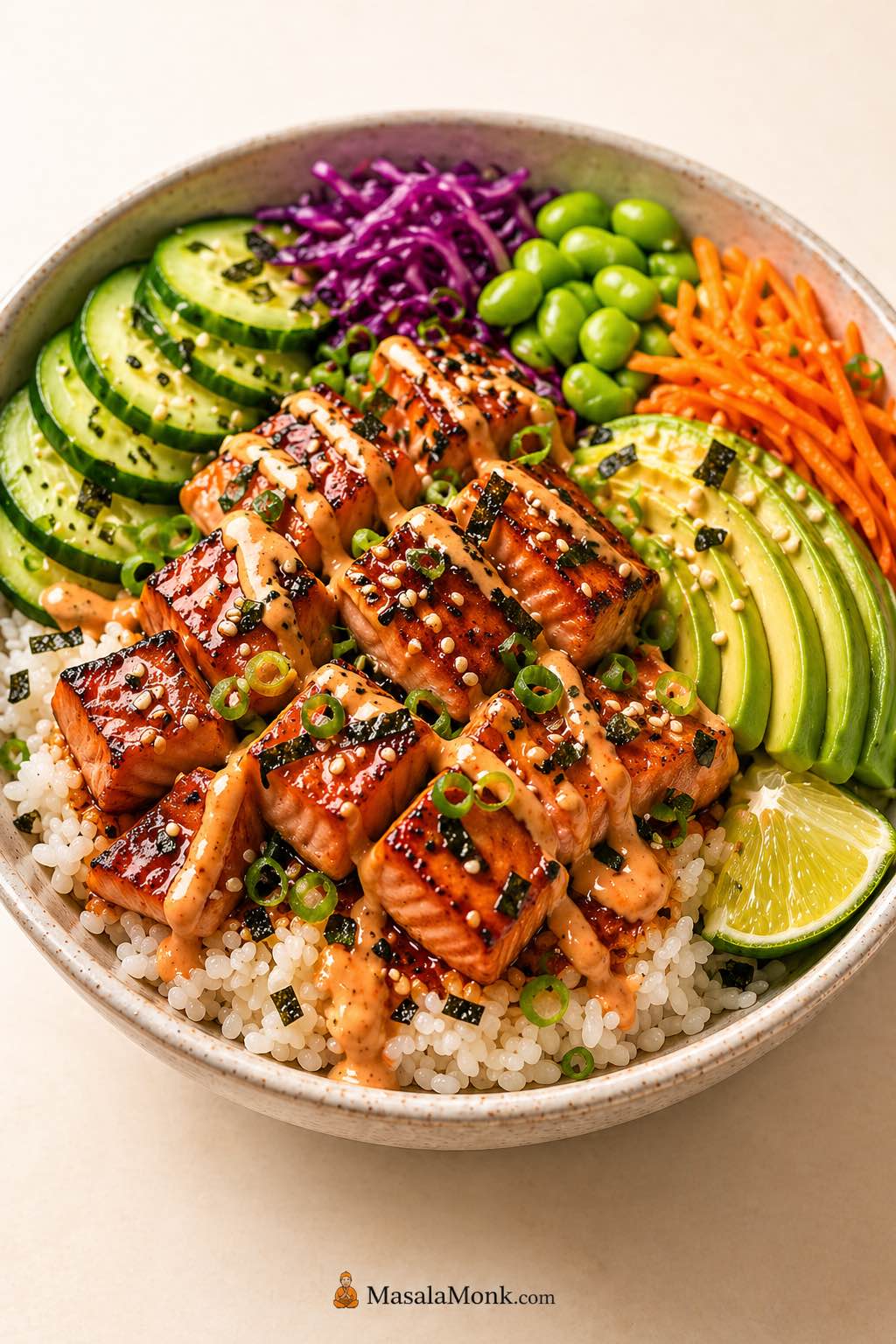
Salmon bowl recipe with pan-seared salmon bites, rice, avocado, cucumber, edamame, cabbage, carrots, sesame, scallions, lime, and creamy sauce.

A good salmon bowl recipe should be easy enough for dinner tonight and flexible enough to change with whatever rice, sauce, vegetables, and toppings you already have. This version starts with tender cooked salmon, warm rice, crunchy vegetables, avocado, and a creamy sauce, then gives you simple ways to make it sweeter, spicier, lighter, or more meal-prep friendly.

This cooked salmon rice bowl is not a raw salmon poke recipe. Instead, the main version uses salmon bites seasoned with soy sauce, garlic, ginger, honey, and lime or rice vinegar, then finishes them with cucumber, avocado, edamame or cabbage, scallions, sesame, and a creamy sriracha yogurt sauce.

Make the main bowl first if you want the easiest version. After that, use the rice guide, sauce guide, topping guide, and variation ideas to turn the same base into a teriyaki salmon bowl, spicy salmon bowl, sushi-style salmon bowl, air fryer salmon bowl, Asian sesame soy salmon bowl, or healthy salmon quinoa bowl.

Quick Answer: The Best Salmon Bowl Recipe Formula

The easiest formula is simple: cooked salmon + rice or grain + sauce + crunch + something creamy + a fresh finish. Start with warm rice, add tender salmon bites, then balance the bowl with cucumber, cabbage, carrots, edamame, avocado, scallions, sesame seeds, and lime.

For the best first version of this salmon bowl recipe, make a pan-seared salmon rice bowl with jasmine rice or sushi rice, cucumber, avocado, edamame or shredded cabbage, and creamy sriracha yogurt sauce. Because the base is simple, it tastes fresh and filling without needing a long ingredient list.

Once you understand the formula, the same bowl can go in many directions. For example, choose teriyaki sauce for a sweeter weeknight bowl, spicy mayo for a sushi-style bowl, sesame soy dressing for a lighter bowl, quinoa for a higher-protein base, or air fryer salmon bites when you want the easiest cooking method.
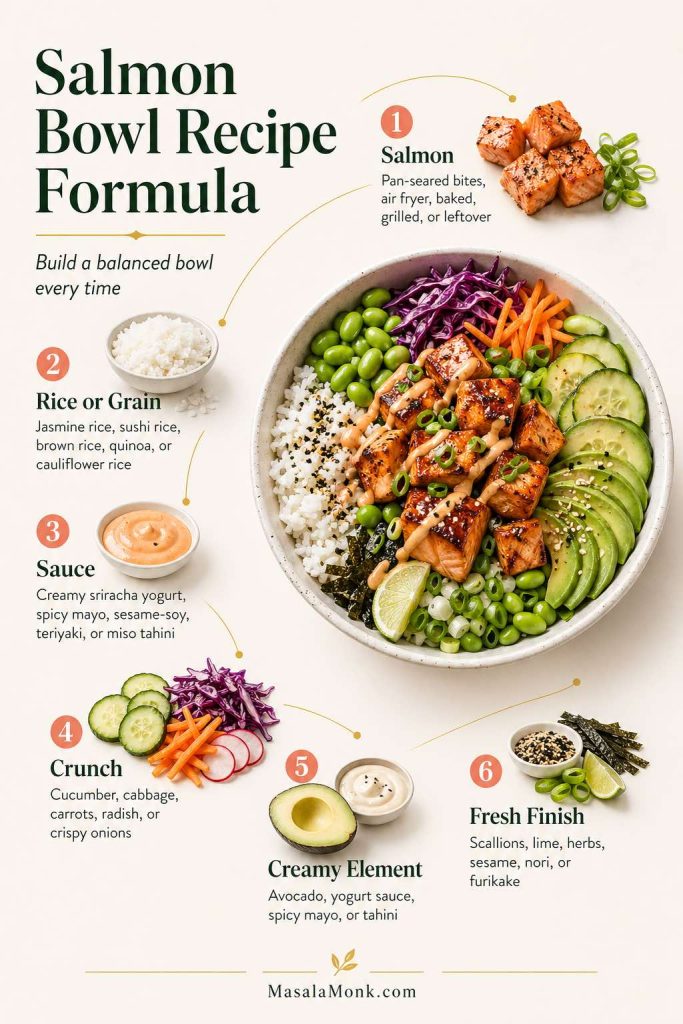
Salmon bowl recipe formula showing salmon, rice or grain, sauce, crunch, creamy element, and fresh finish with a finished salmon rice bowl.
Use this salmon bowl recipe formula as your quick guide: start with salmon and rice, then add sauce, crunch, something creamy, and a fresh finish to build a balanced bowl every time.

Why This Salmon Bowl Recipe Works

This salmon bowl recipe works because every part balances the next. The warm rice makes it filling, while the salmon brings richness. Meanwhile, the cucumber and cabbage add crunch, avocado softens the salty sauce, and lime or rice vinegar keeps the bowl bright. Cutting the salmon into bites also helps it cook quickly and gives you more browned edges than a whole fillet.

If You Want Use This
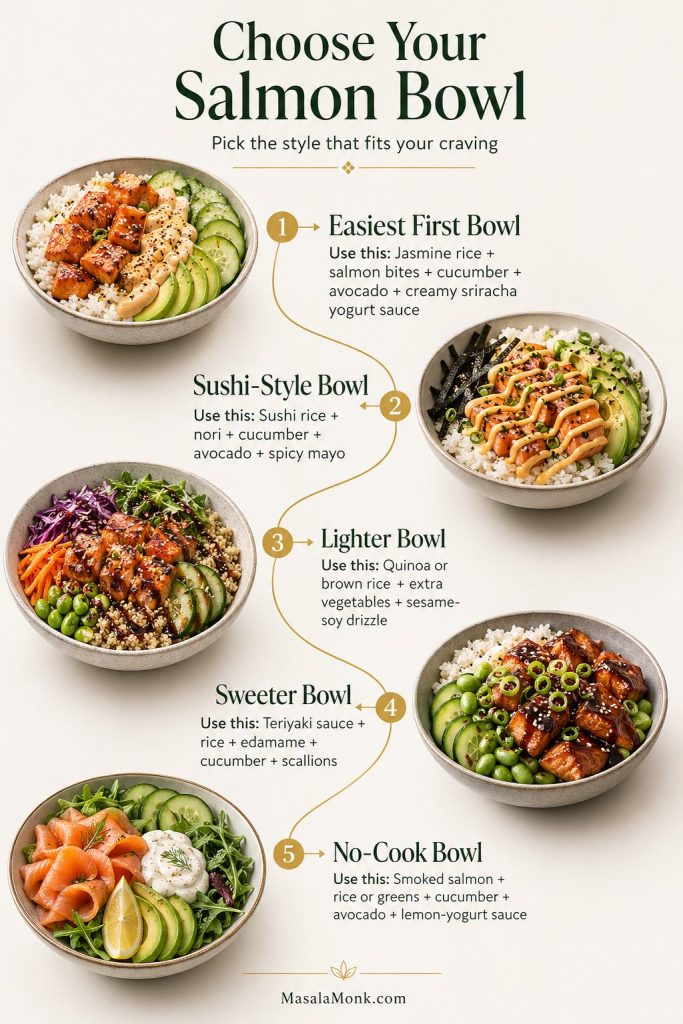
The easiest first bowl Jasmine rice + pan-seared salmon bites + cucumber + avocado + creamy sriracha yogurt sauce
A sushi-style bowl Sushi rice + nori + cucumber + avocado + spicy mayo
A lighter bowl Quinoa or brown rice + extra vegetables + sesame-soy drizzle or Greek yogurt sauce
A sweeter bowl Teriyaki sauce + rice + edamame + cucumber + scallions
A no-cook bowl Smoked salmon + rice or greens + cucumber + avocado + lemon-yogurt sauce
Choose your salmon bowl guide with easy, sushi-style, lighter, sweeter, and no-cook salmon bowl ideas using rice, sauce, toppings, and vegetables.
Start with the bowl that matches your craving: a classic salmon rice bowl for the easiest dinner, sushi-style with nori and spicy mayo, lighter with quinoa and vegetables, sweeter with teriyaki, or no-cook with smoked salmon, cucumber, avocado, and lemon-yogurt sauce.

Salmon Bowl Recipe

This is the best salmon bowl recipe to make first because it gives you a clear base before you start changing sauces, toppings, or cooking methods. It uses cooked salmon bites, warm rice, crisp vegetables, avocado, and a creamy sriracha yogurt sauce. However, you can also pan-sear the salmon as written, use the air fryer or oven, or build the bowl with leftover cooked salmon using the notes below.

Easy Salmon Rice Bowl

Prep Time
15 minutes
Cook Time
10 minutes
Total Time
25 minutes
Servings
2 bowls

Equipment

  • Nonstick or well-seasoned skillet
  • Mixing bowl
  • Small bowl for sauce
  • Rice cooker or saucepan
  • Air fryer, optional

Ingredients

For the salmon

  • 10 to 12 oz / 285 to 340 g salmon fillet, skin removed, cut into 1-inch / 2.5 cm pieces
  • 1 tablespoon / 15 ml soy sauce or tamari
  • 1 teaspoon / 5 ml honey or maple syrup
  • 1 teaspoon / 5 ml lime juice or rice vinegar
  • 1 teaspoon grated ginger
  • 1 small garlic clove, grated or minced
  • 1 teaspoon / 5 ml sesame oil or neutral oil
  • 1/4 teaspoon black pepper
  • Pinch of salt, only if needed
  • 1 to 2 teaspoons neutral oil for the pan, if needed

For the creamy sriracha yogurt sauce

  • 1/3 cup / about 80 g Greek yogurt
  • 1 to 2 teaspoons / 5 to 10 ml sriracha, to taste
  • 1 teaspoon / 5 ml lime juice
  • 1 teaspoon / 5 ml honey or maple syrup, optional
  • Pinch of salt
  • 1 to 2 teaspoons / 5 to 10 ml water, to loosen if needed

Optional lighter sesame-soy drizzle

  • 1 tablespoon / 15 ml soy sauce or tamari
  • 1 teaspoon / 5 ml rice vinegar or lime juice
  • 1 teaspoon / 5 ml sesame oil
  • 1 teaspoon / 5 ml honey or maple syrup
  • 1 teaspoon / 5 ml water, to loosen
  • Optional: grated ginger, chili crisp, or sesame seeds

For the bowls

  • 2 cups / about 320 to 370 g cooked rice, warm
  • 1 cup / about 120 g cucumber, diced or sliced
  • 1 cup cooked shelled edamame, shredded cabbage, or carrots
  • 1 avocado, sliced or diced
  • 2 tablespoons sliced scallions
  • 1 tablespoon sesame seeds
  • Lime wedges, for serving
  • Optional: nori strips, furikake, chili crisp, pickled ginger, or cilantro

Instructions

  1. Cook the rice. Prepare your rice or grain first so it is warm when the salmon is ready. As a rough guide, about 2/3 cup dry white rice makes about 2 cups cooked rice, depending on the rice.
  2. Pat dry and season the salmon. Pat the salmon pieces dry with paper towels so they brown instead of steaming. Then, in a bowl, toss them with soy sauce, honey, lime juice or rice vinegar, ginger, garlic, oil, and black pepper.
  3. Pan-sear the salmon. Heat a nonstick or well-seasoned skillet over medium-high heat. Add a little neutral oil if the pan looks dry. After that, add the salmon in a single layer and cook for 5 to 7 minutes total, turning once or twice, until browned outside and cooked through.
  4. Mix the sauce. Stir together Greek yogurt, sriracha, lime juice, honey if using, salt, and enough water to make it drizzleable. If you prefer a lighter bowl, mix the sesame-soy drizzle instead.
  5. Assemble the bowls. Divide warm rice between two bowls. Then add salmon, cucumber, edamame or cabbage, avocado, scallions, sesame seeds, and sauce.
  6. Finish and serve. Add lime, nori, furikake, chili crisp, pickled ginger, or cilantro if you like. Before serving, taste and adjust with more lime if the bowl feels flat, more sauce if it feels dry, or more cucumber if it tastes too salty.

Recipe Notes

  • The creamy sauce makes about 1/3 cup, enough for 2 bowls.
  • Double the sauce if you like a saucier bowl or are using brown rice, quinoa, or extra vegetables.
  • Use skinless salmon if you want neat salmon bites. If your salmon has skin, cook it as a fillet and flake it over the bowl.
  • Jasmine rice is the easiest weeknight base. Sushi rice gives the bowl a sushi-style feel.
  • Use mayo instead of Greek yogurt for a richer spicy mayo sauce.
  • Use tamari instead of soy sauce for a gluten-free option.
  • For a dairy-free bowl, use dairy-free mayo for the sauce or choose the sesame-soy drizzle.
  • Use low-sodium soy sauce if you are sensitive to salt.
  • Skip sesame oil and sesame seeds if avoiding sesame.
  • If using frozen salmon, thaw it in the refrigerator and pat it very dry before seasoning.
  • To serve 4, double all ingredients and cook the salmon in batches so it browns instead of steaming.
  • For an air fryer salmon bowl, use the air fryer method later in the post.
  • Cook salmon until opaque and cooked through. For general seafood safety guidance, salmon is commonly cooked to 145°F / 63°C.

Ingredients for Salmon Bowls

This salmon bowl recipe works best when every component has a job. The salmon gives the bowl protein and richness, while the rice makes it filling. Meanwhile, the sauce ties everything together, and the toppings add crunch, freshness, creaminess, spice, or brightness.
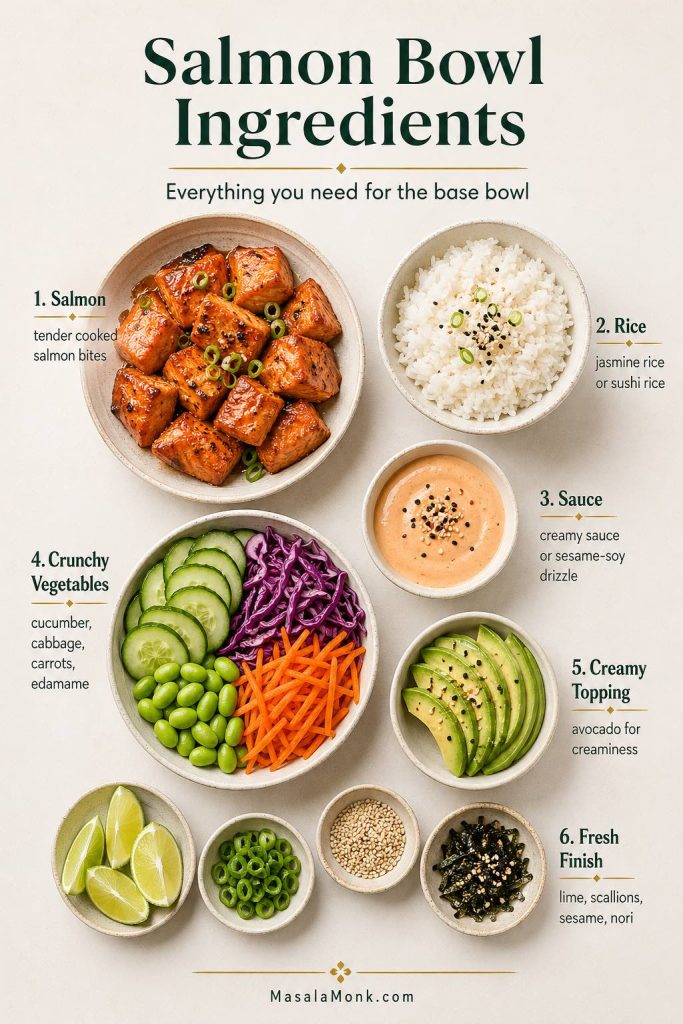
Salmon bowl ingredients with cooked salmon bites, rice, creamy sauce, cucumber, cabbage, carrots, edamame, avocado, lime, scallions, sesame, and nori.
These are the core salmon bowl ingredients: tender cooked salmon, warm rice, a creamy or soy-based sauce, crunchy vegetables, avocado for richness, and lime, scallions, sesame, or nori for a fresh finish.

Salmon

Use fresh or fully thawed salmon. Skinless salmon is easiest if you want salmon bites, but full fillets also work. If you cook full fillets, simply flake the salmon over the rice before adding sauce and toppings.

The best salmon for salmon bowls is a fresh or fully thawed center-cut fillet that can be cut into even 1-inch / 2.5 cm pieces. Atlantic salmon, sockeye, coho, or any firm salmon fillet can work; however, the most important thing is to pat it dry and cook it just until opaque.
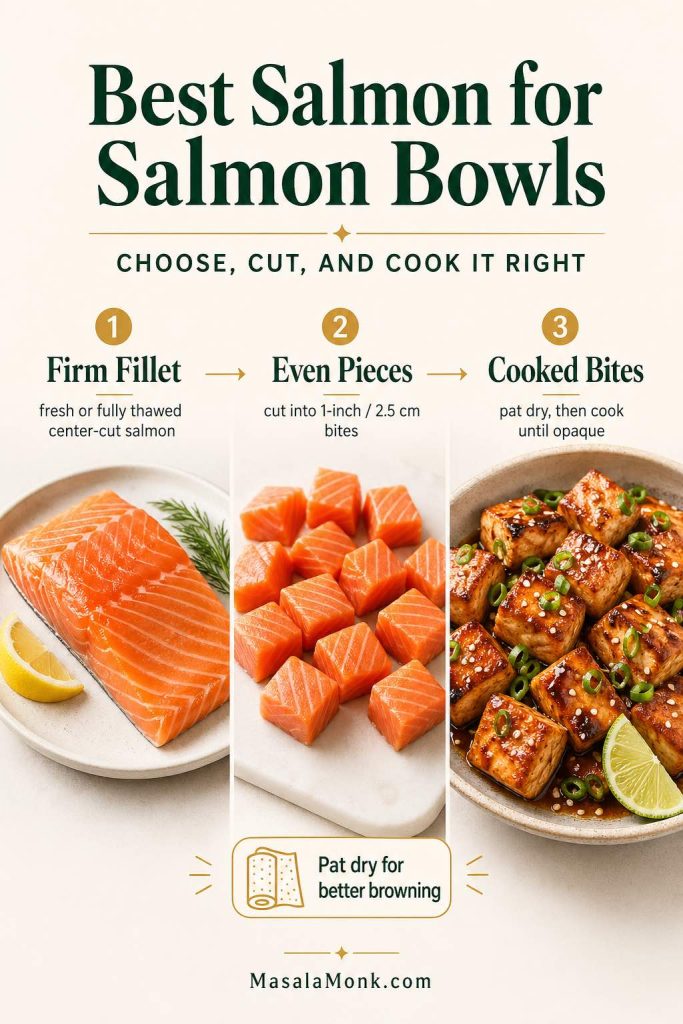
Best salmon for salmon bowls guide showing a firm salmon fillet, 1-inch salmon pieces, cooked salmon bites, and a pat-dry tip for better browning.
Better salmon bowl bites start with a firm fillet, even 1-inch pieces, and a quick pat-dry step before cooking so the salmon browns instead of steaming.

This recipe is designed for cooked salmon. As a result, it is easier for most home kitchens than raw salmon bowls, while still giving you the fresh, colorful rice-bowl feel.

Rice or Grain

White rice, jasmine rice, sushi rice, brown rice, quinoa, cauliflower rice, and coconut rice can all work. For example, use sushi rice for a sushi-style bowl, jasmine rice for an easy salmon and rice bowl, quinoa for a healthy salmon bowl, and coconut rice for a spicy or mango-topped version.

Sauce

The creamy sriracha yogurt sauce is the easiest first choice because it is tangy, spicy, and lighter than classic spicy mayo. For something richer, use spicy mayo. For something lighter, use the sesame-soy drizzle. If you want a sweeter bowl, use teriyaki sauce instead.

Toppings

The easiest salmon bowl toppings are cucumber, avocado, edamame, cabbage, carrots, scallions, sesame seeds, lime, nori, or furikake. For a sweet-bright topping, spoon over fresh mango salsa instead of using plain diced mango.

How to Make a Salmon Bowl

This recipe comes together best when you build the salmon bowl in layers. First, keep the rice warm. Then, cook the salmon just until tender. After that, add cold crunchy toppings for contrast and drizzle the sauce at the end so the bowl stays fresh instead of heavy.

1. Cook the Rice

Start with the rice because it can sit covered while you cook the salmon. Warm rice makes the bowl feel more complete and helps the sauce spread through the bowl. Leftover rice also works; however, reheat it before assembling so the bowl does not taste cold and dry.

2. Season and Cook the Salmon

Cut the salmon into 1-inch / 2.5 cm pieces, pat them dry, then season them with soy sauce, garlic, ginger, honey, lime juice or rice vinegar, and a little oil. Because salmon bites cook quickly, avoid crowding the pan and watch closely near the end.

3. Mix the Sauce

For the creamy sauce, stir Greek yogurt with sriracha, lime juice, a pinch of salt, and a small spoon of honey if you want a rounder flavor. Then add a splash of water until it drizzles easily. For a lighter bowl, use the sesame-soy drizzle instead.

4. Assemble the Bowl

Add warm rice to the bowl first, then salmon, crunchy vegetables, avocado, sauce, and garnishes. Finally, finish with scallions, sesame seeds, lime, nori, furikake, chili crisp, or herbs. The best bowls have a little warmth, crunch, creaminess, acidity, and spice in every bite.

Before serving, taste one bite with rice, salmon, sauce, and toppings together. Add lime if it tastes flat, more sauce if it feels dry, cucumber or rice if it tastes salty, and chili crisp or sriracha if you want more heat.
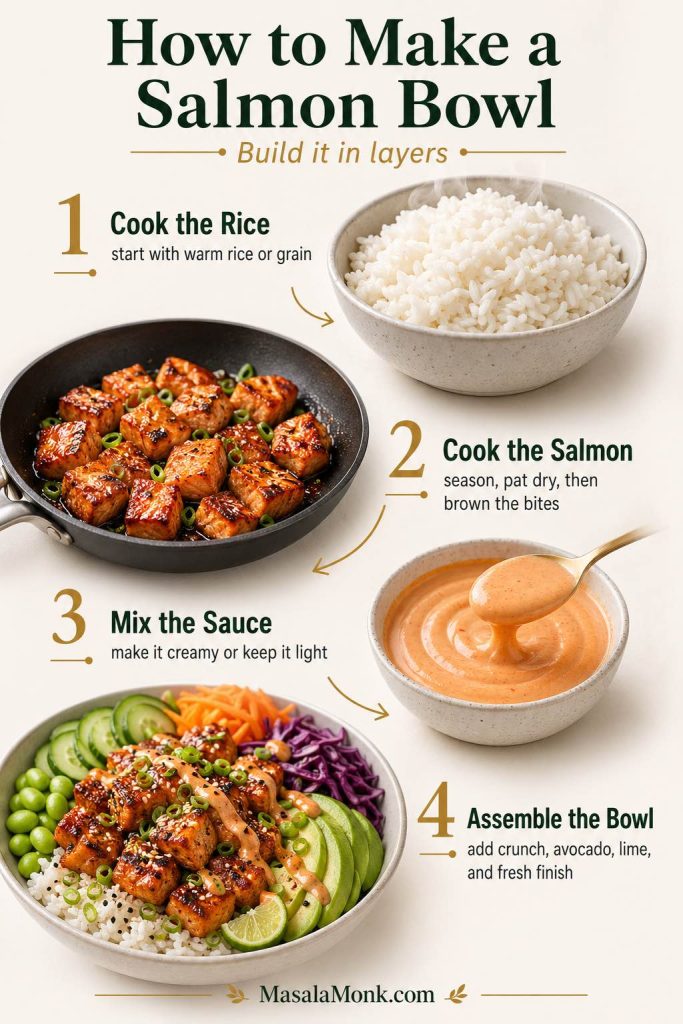
How to make a salmon bowl guide showing warm rice, browned salmon bites, creamy sauce, and an assembled salmon rice bowl with avocado, cucumber, vegetables, lime, and sauce.
Build the bowl in layers: warm rice first, browned salmon bites next, a creamy or light sauce, then crunchy vegetables, avocado, lime, and fresh toppings at the end.

Best Rice for Salmon Bowls

The rice changes the whole bowl, which is why this recipe gives you several options for pairing it with salmon. For example, soft white rice makes it feel like a quick weeknight dinner, while sushi rice makes it taste closer to a deconstructed sushi roll. Meanwhile, quinoa or brown rice makes the bowl heartier and more meal-prep friendly.
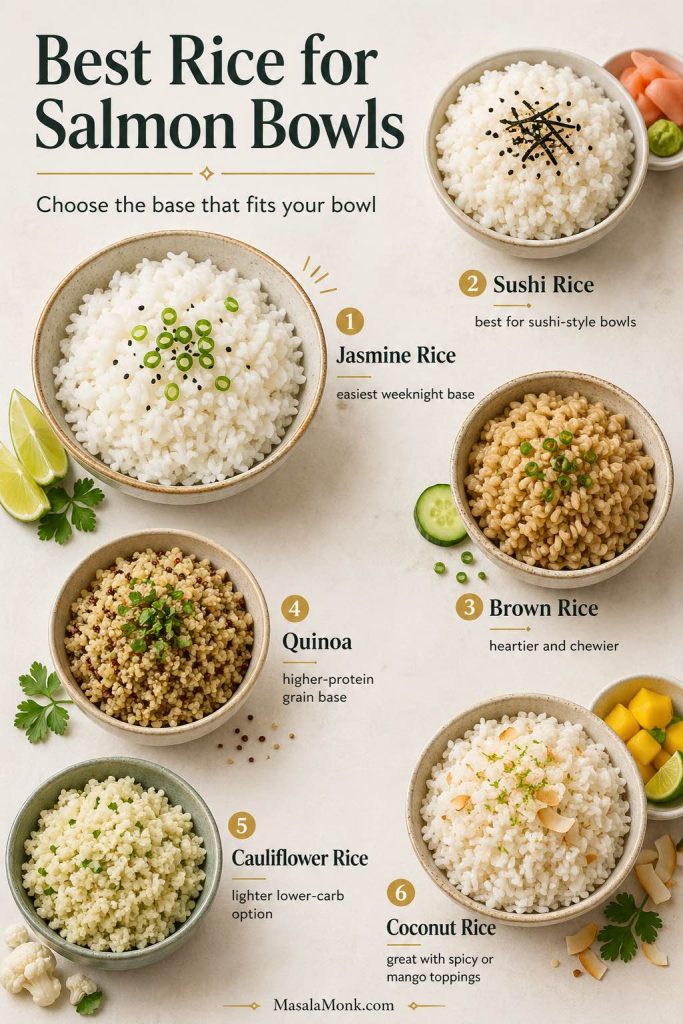
Best rice for salmon bowls guide with jasmine rice, sushi rice, brown rice, quinoa, cauliflower rice, and coconut rice options.
The base changes the whole bowl: jasmine rice keeps it easy, sushi rice gives it a sushi-style feel, brown rice or quinoa makes it heartier, cauliflower rice keeps it lighter, and coconut rice pairs well with spicy or mango-topped salmon bowls.
Rice or Base Best For Why It Works
Jasmine rice Easy weeknight salmon bowls Soft, fragrant, simple, and easy to pair with most sauces.
Sushi rice Sushi-style or poke-style salmon bowls Sticky enough to hold sauce and toppings well.
Brown rice Heartier salmon rice bowls Nuttier, chewier, and more filling than white rice.
Quinoa Healthy salmon bowls A good choice when you want a higher-protein grain base.
Cauliflower rice Lower-carb salmon bowls Lightens the bowl while keeping the sauce and toppings central.
Coconut rice Spicy or tropical salmon bowls Pairs nicely with chili, lime, mango, and herbs.
Crispy rice Texture-heavy salmon bowls Adds crunch and makes the bowl feel more restaurant-style.

Jasmine Rice

Jasmine rice is the easiest base for a weeknight bowl because it is soft, lightly fragrant, and quick to pair with creamy sauce, sesame soy dressing, teriyaki sauce, green chutney yogurt, or spicy mayo.

Sushi Rice

Sushi rice is best when you want a sushi-style or poke-style bowl. Its slightly sticky texture helps the salmon, cucumber, avocado, nori, sesame, and sauce feel connected instead of scattered.

Brown Rice

Brown rice gives the bowl a nuttier flavor and a chewier texture, so use it when you want the meal to feel more filling or meal-prep friendly.

Quinoa

Quinoa is useful for a healthy salmon bowl or high-protein salmon bowl. It also pairs nicely with Greek yogurt sauce, tzatziki, green chutney yogurt, cucumber, avocado, herbs, and lemon.

Cauliflower Rice

Cauliflower rice is useful when you want a lower-carb salmon bowl. However, keep the toppings generous and the sauce flavorful so the bowl still feels satisfying.

Coconut Rice

Coconut rice shines with spicy salmon, mango salsa, lime, cilantro, chili crisp, and cucumber. As a result, it turns a simple bowl into something warmer, sweeter, and more tropical.

Crispy Rice

Crispy rice is best when texture is the whole point. Use warm rice pressed into a pan until crisp in spots, then add salmon, cucumber, avocado, and spicy sauce on top.

How to Cook Salmon for Bowls

This salmon bowl recipe is flexible because the fish can be pan-seared, air fried, baked, grilled, or flaked from leftovers. For food safety, fish such as salmon is generally cooked to 145°F / 63°C, or until the flesh is no longer translucent and separates easily with a fork, according to FoodSafety.gov safe minimum internal temperature guidance.
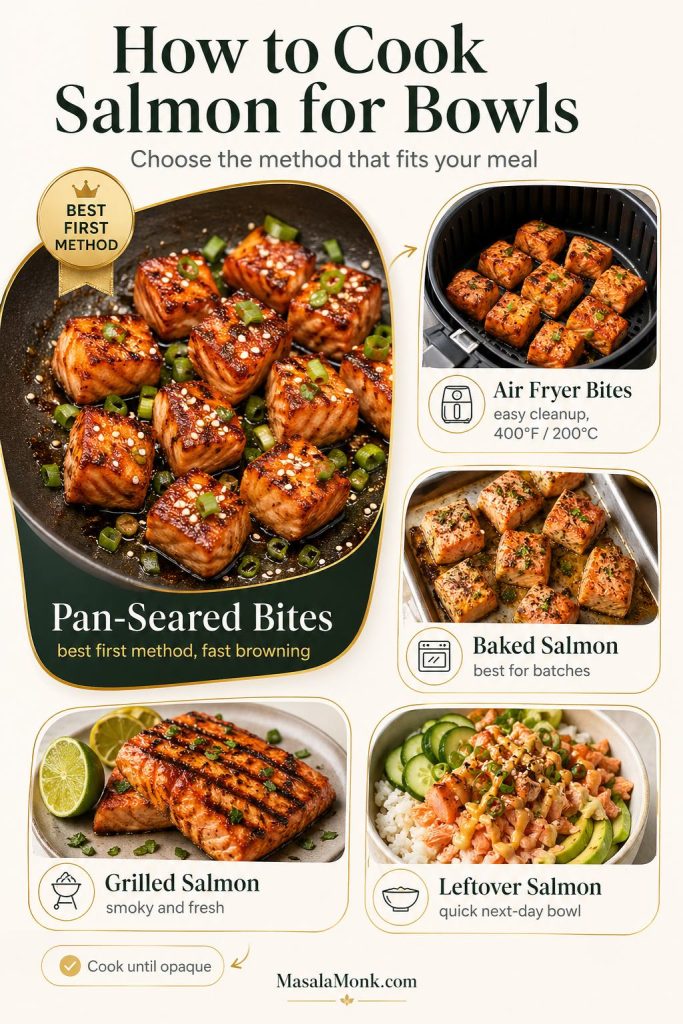
How to cook salmon for bowls guide comparing pan-seared salmon bites, air fryer bites, baked salmon, grilled salmon, and leftover salmon with a cook-until-opaque note.
These Pan-seared salmon bites give the fastest browning for the main recipe, while air fryer, baked, grilled, and leftover salmon give you easier cleanup, batch cooking, smoky flavor, or a quick next-day bowl.

Pan-Seared Salmon Bites

Pan-seared salmon bites are the best first method for this recipe. Cut the salmon into 1-inch / 2.5 cm pieces, pat them dry, season them, then cook in a single layer for 5 to 7 minutes total, turning once or twice, until browned outside and opaque inside.

Air Fryer Salmon Bowl

To make an air fryer salmon bowl, season the salmon bites the same way, then arrange them in a lightly oiled air fryer basket in a single layer. Air fry at 400°F / 200°C for about 6 to 8 minutes, shaking or turning once, until the salmon is opaque and cooked through. After that, serve over rice with cucumber, avocado, edamame, and sauce.
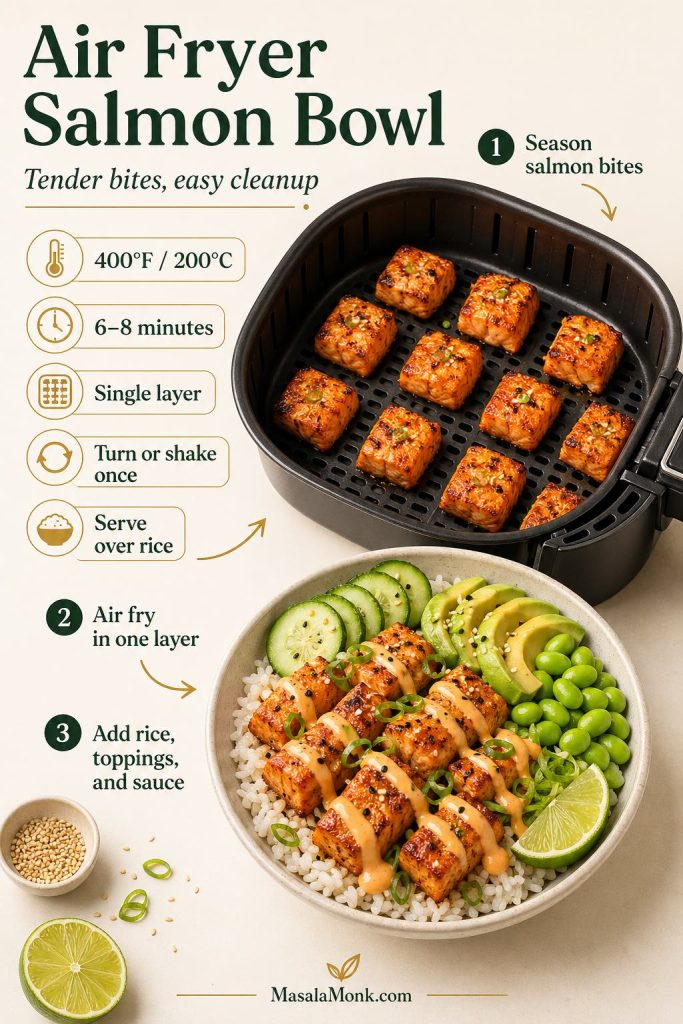
Air fryer salmon bowl guide showing salmon bites cooked at 400°F for 6 to 8 minutes, then served over rice with avocado, cucumber, edamame, lime, and creamy sauce.
Air fryer salmon bites cook best in a single layer at 400°F / 200°C for 6–8 minutes, then turn into a quick salmon rice bowl with avocado, cucumber, edamame, lime, and sauce.

Baked Salmon Bowl

When you want less stovetop cleanup, bake seasoned salmon bites or fillets at 400°F / 200°C until cooked through. Salmon bites usually take about 8 to 12 minutes, while fillets often take about 10 to 14 minutes depending on thickness. This method is especially helpful if you are making several bowls at once.

Grilled Salmon Bowl

Grilled salmon suits fresh summer toppings like cucumber, cabbage, mango salsa, herbs, lime, avocado, and yogurt sauce. Once the salmon is cooked, flake it over the bowls and add sauce right before serving.

Leftover Cooked Salmon

Leftover cooked salmon can make a very good salmon rice bowl. Reheat it gently or serve it cool over warm rice with a bold sauce. If the salmon feels a little dry, flake it and use extra sauce, avocado, lime, and cucumber to bring the bowl back to life.

Salmon Bowl Sauce Guide

The sauce is what makes the salmon, rice, and toppings feel like one complete bowl recipe. A good sauce should bring moisture, salt, acidity, and flavor direction. Therefore, use this as a quick salmon bowl sauce recipe and dressing guide: choose one based on the bowl you want, whether creamy, spicy, sweet-savory, herb-forward, Mediterranean, or light and citrusy.
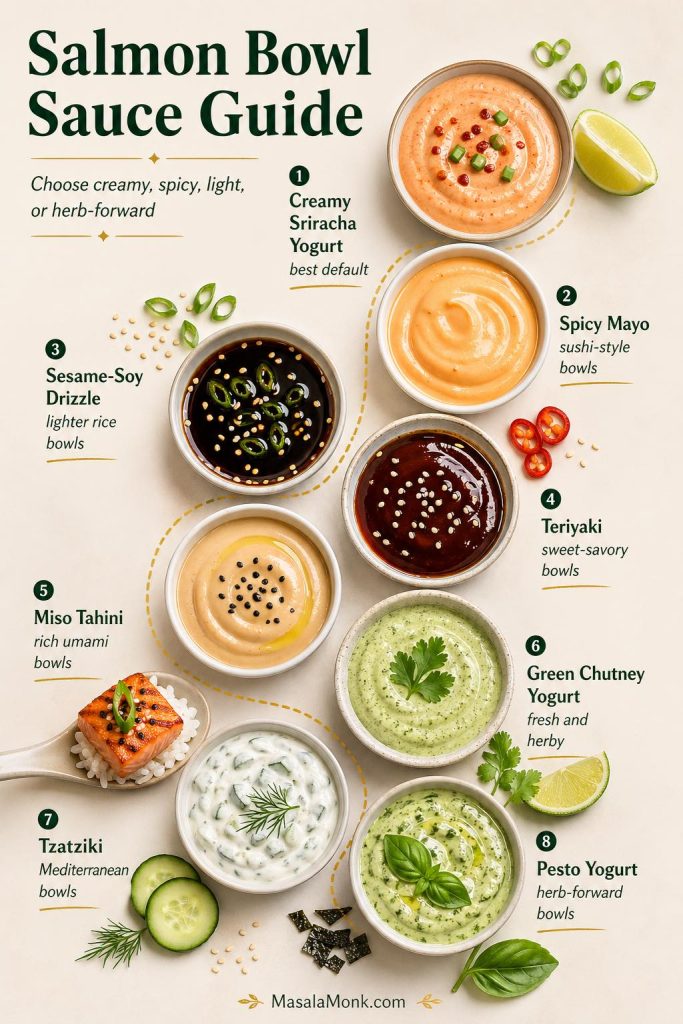
The right salmon bowl sauce changes the whole direction of the bowl: creamy sriracha yogurt keeps it balanced, spicy mayo makes it sushi-style, sesame-soy keeps it lighter, teriyaki adds sweetness, and herb sauces bring a fresher finish.
Sauce Quick Formula for 2 Bowls Best Use
Creamy sriracha yogurt 1/3 cup / 80 g Greek yogurt + 1–2 tsp sriracha + 1 tsp lime juice + pinch of salt Best default sauce
Spicy mayo 3 tbsp mayo + 1–2 tsp sriracha + 1 tsp lime juice + splash of water Sushi-style or spicy salmon bowls
Sesame-soy drizzle 1 tbsp soy sauce or tamari + 1 tsp rice vinegar + 1 tsp sesame oil + 1 tsp honey Lighter salmon rice bowls
Teriyaki sauce Use 2 to 3 tbsp teriyaki sauce, or brush it over the salmon near the end of cooking Sweet-savory weeknight bowls
Miso tahini 1 tbsp tahini + 1 tsp white miso + 1 tsp lime juice or rice vinegar + warm water to loosen Richer umami bowls
Green chutney yogurt 2 tbsp Greek yogurt + 1 tbsp green chutney + squeeze of lime Fresh MasalaMonk-style bowls
Tzatziki Use prepared tzatziki, or thin with lemon juice if needed Mediterranean salmon bowls
Pesto yogurt 2 tbsp Greek yogurt + 1 tbsp pesto + lemon juice + water to loosen Herb-forward bowls

Creamy Sriracha Yogurt Sauce

This is the best default sauce for the main recipe because it gives the bowl tang, heat, and creaminess without becoming too heavy. Stir Greek yogurt with sriracha, lime juice, salt, and a tiny bit of honey if you want balance.

Spicy Mayo

Use spicy mayo when you want a richer sushi-style bowl. Mix mayonnaise with sriracha, lime juice, and a splash of water. It suits sushi rice, cucumber, avocado, nori, sesame seeds, furikake, and chili crisp.

Teriyaki Sauce

Teriyaki sauce is the best choice when you want a sweeter, glossy bowl. Pair it with rice, cucumber, edamame, avocado, sesame, and scallions. However, if using bottled teriyaki sauce, taste before adding extra salt because some sauces are already quite salty.

Sesame Soy Drizzle

For a lighter salmon rice bowl sauce, mix soy sauce or tamari with rice vinegar or lime juice, sesame oil, ginger, and a little honey. This keeps the bowl fresh and savory without adding a creamy element.

Miso Tahini Sauce

Miso tahini sauce is a strong choice when you want a deeper, nuttier bowl. Whisk tahini with white miso, lime juice or rice vinegar, warm water, and a touch of honey. Then pair it with brown rice, cucumber, cabbage, carrots, and sesame seeds.

Green Chutney Yogurt Sauce

For a fresh MasalaMonk-style bowl, stir green chutney into Greek yogurt with a squeeze of lime. It turns the bowl herby, spicy, tangy, and bright, especially with cucumber, cabbage, rice, and avocado.

Tzatziki Sauce

Use tzatziki sauce for a Mediterranean salmon bowl. It is a good match for rice or quinoa, cucumber, tomato, herbs, lemon, olive oil, and grilled or baked salmon.

Pesto Yogurt Sauce

For an herb-forward bowl, thin pesto sauce with Greek yogurt, lemon juice, and a little water. It suits salmon, quinoa, tomatoes, cucumber, avocado, and greens.

Best Toppings for Salmon Bowls

A good salmon bowl recipe needs toppings that do more than fill space. If you are wondering what to put in a salmon bowl, think in roles instead of random extras. Instead of piling on toppings randomly, choose ingredients that add crunch, creaminess, freshness, spice, savory depth, or brightness.
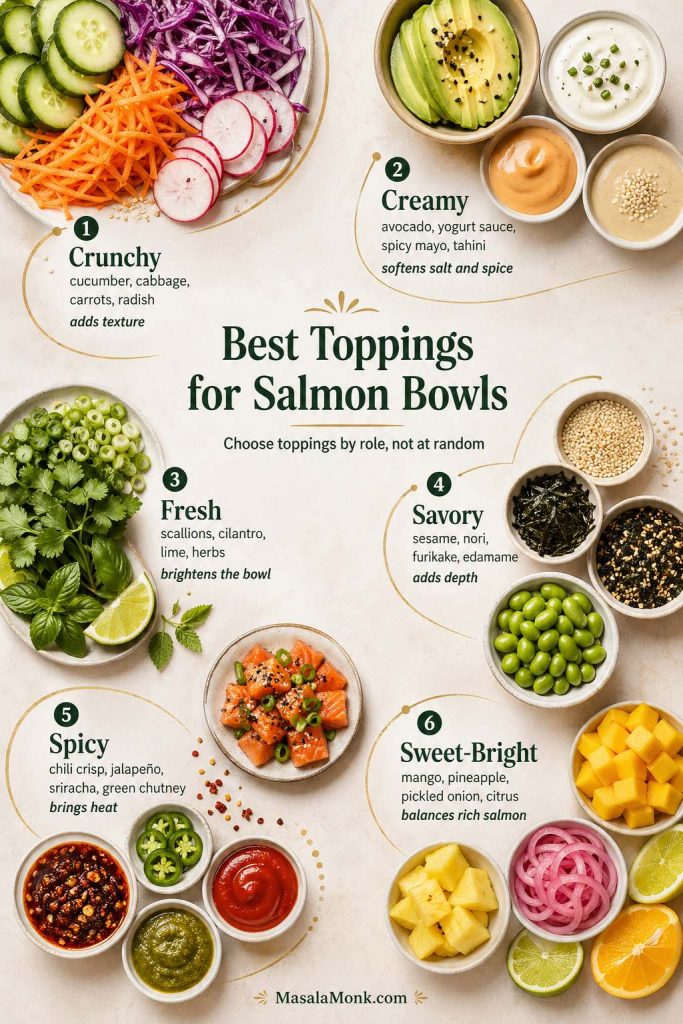
Best toppings for salmon bowls guide with crunchy, creamy, fresh, savory, spicy, and sweet-bright toppings like cucumber, avocado, scallions, sesame, chili crisp, mango, and pickled onion.
A balanced salmon bowl needs toppings with a job: crunchy vegetables for texture, avocado or sauce for creaminess, herbs and lime for freshness, sesame or nori for savory depth, chili for heat, and mango or pickled onion to brighten rich salmon.

Crunchy Toppings

Cucumber, cabbage, carrots, radish, and crispy onions add the crunch that keeps the bowl from feeling soft or heavy. Cucumber is the easiest default because it suits nearly every sauce.

Creamy Toppings

Avocado is the most useful creamy topping because it softens salty sauces, balances spice, and makes the bowl feel more satisfying. Yogurt sauce, spicy mayo, tahini sauce, and pesto yogurt sauce can also add creaminess.

Fresh Toppings

Scallions, cilantro, lime, herbs, and mango salsa make the bowl taste brighter. If the salmon or sauce feels rich, add more lime, herbs, or a spoon of mango salsa to lift the whole bowl.

Savory Toppings

Sesame seeds, edamame, nori, furikake, and pickled ginger bring savory depth. These are particularly useful for sushi-style bowls, poke-style cooked salmon bowls, spicy bowls, and sesame-soy salmon rice bowls.

Spicy Toppings

Chili crisp, jalapeĂąo, sriracha, green chutney, crushed red pepper, and spicy mayo all pair nicely with salmon. However, if you are adding a spicy topping, keep the sauce slightly creamy or acidic so the heat does not feel harsh.

Sweet-Bright Toppings

Mango, pineapple, pickled onion, and citrus are useful when the bowl needs freshness. They shine with spicy salmon, coconut rice, cucumber, avocado, and lime.

Salmon Bowl Variations

Once you know the basic formula, this recipe can become almost any style of salmon bowl. Instead of rewriting the whole recipe, keep the salmon, rice, sauce, and toppings balanced, then change one or two components to create a new version.
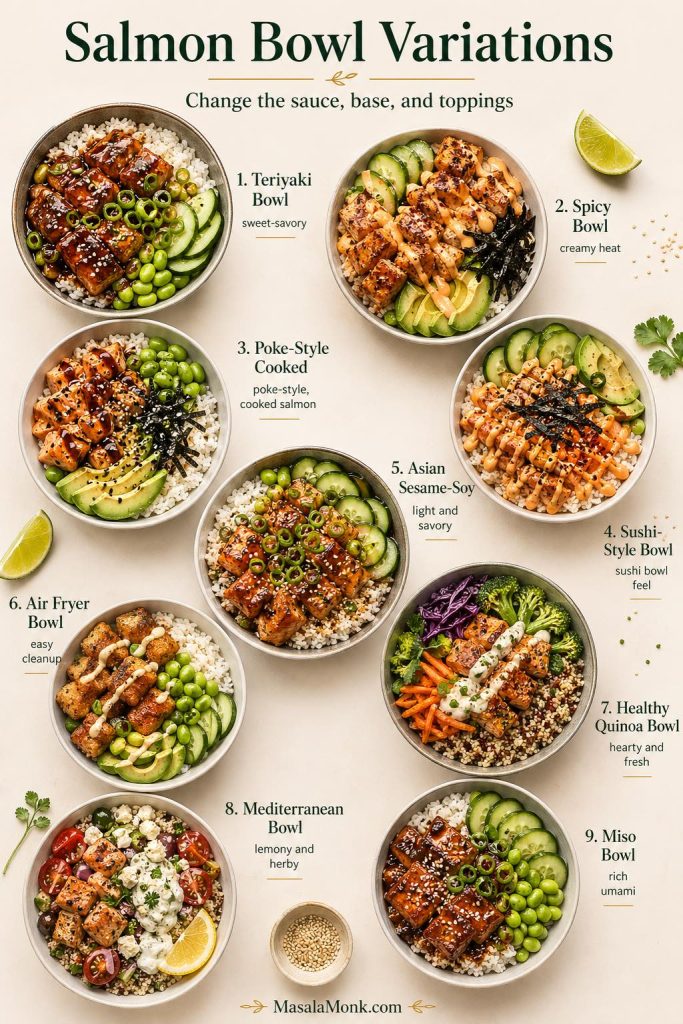
Salmon bowl variations guide showing teriyaki, spicy, poke-style cooked, sushi-style, Asian sesame-soy, air fryer, healthy quinoa, Mediterranean, and miso salmon bowls.
The same salmon bowl base can move in many directions: teriyaki for sweet-savory flavor, spicy mayo for heat, sushi-style with nori and avocado, sesame-soy for a lighter bowl, quinoa for a heartier healthy version, or Mediterranean with herbs, lemon, and tzatziki.

Teriyaki Salmon Bowl

Choose teriyaki sauce when you want a sweeter, glossy weeknight bowl. Then serve the salmon over rice with cucumber, avocado, edamame, sesame seeds, and scallions.
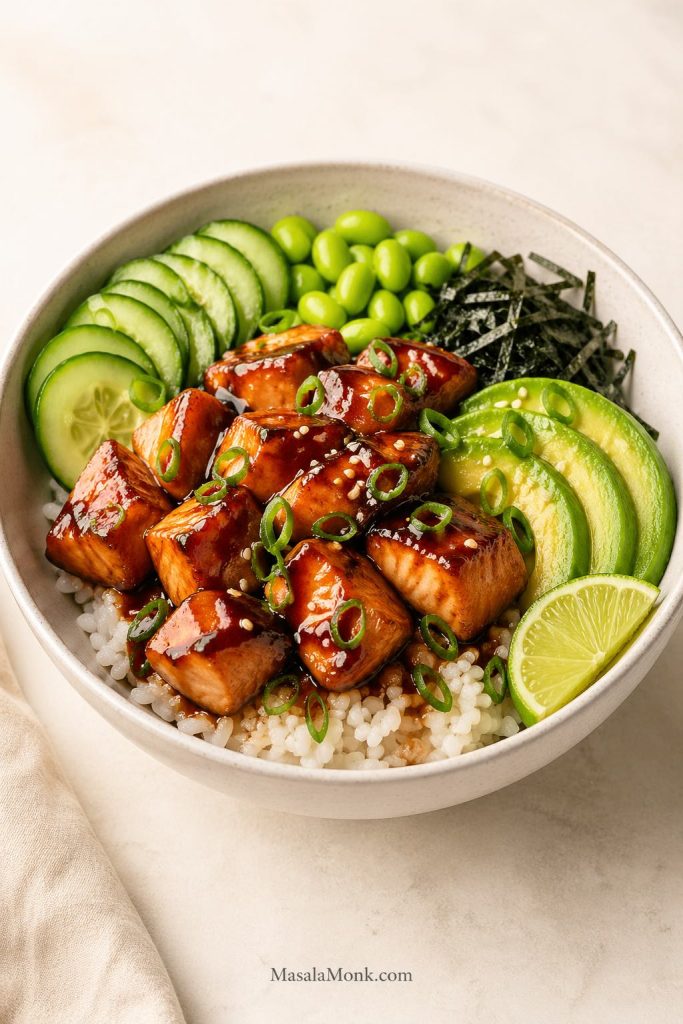
Teriyaki salmon bowl with glossy salmon bites, rice, avocado, cucumber, edamame, nori, scallions, sesame, lime, and teriyaki glaze.
For the teriyaki salmon bowl variation, the salmon bites get a darker glossy glaze while cucumber, avocado, edamame, nori, scallions, and lime keep the rice bowl fresh and balanced.

Spicy Salmon Bowl

Make it spicy by adding spicy mayo, chili crisp, cucumber, avocado, nori, sesame seeds, and lime. This version is a natural fit for sushi rice or jasmine rice.

Poke-Style Cooked Salmon Bowl

A poke-style cooked salmon bowl works best with sushi rice, cucumber, avocado, edamame, sesame seeds, nori, and a sesame-soy drizzle. If you are considering raw salmon, read the FDA seafood safety guidance first; cooked salmon is the safer default for homemade bowls.

Salmon Sushi Bowl

To make it sushi-style, use cooked salmon, sushi rice, cucumber, avocado, nori, sesame seeds, furikake, and spicy mayo. Then add pickled ginger if you want a sharper sushi-style finish.

Asian Sesame Soy Salmon Bowl

For an Asian salmon bowl, use the sesame-soy drizzle, rice, cucumber, edamame, avocado, scallions, sesame seeds, and nori. Add chili crisp or sriracha if you want more heat.

Air Fryer Salmon Bowl

Use the air fryer when you want quick salmon bites with less stovetop cleanup. After cooking, serve them over rice with crunchy toppings and either creamy sriracha yogurt sauce, spicy mayo, teriyaki sauce, or sesame soy drizzle.

Healthy Salmon Bowl

To keep the bowl lighter, start with brown rice, quinoa, or cauliflower rice. Then add extra cucumber, cabbage, carrots, edamame, herbs, avocado, and a Greek yogurt-based sauce. Keep it satisfying rather than sparse: the goal is fresh, balanced, and filling.

Mediterranean Salmon Bowl

The Mediterranean version works best with rice or quinoa, cucumber, tomato, herbs, lemon, olive oil, and tzatziki sauce. Grilled or baked salmon is especially good here.

Miso Salmon Bowl

Miso gives the bowl a deeper, more savory flavor. Glaze the salmon with miso, honey, ginger, and rice vinegar, then serve it with rice, cucumber, edamame, scallions, sesame seeds, and a little extra lime or rice vinegar for brightness.

Smoked Salmon Bowl

A no-cook version is easiest with smoked salmon over sushi rice or greens, cucumber, avocado, scallions, sesame, and a light lemon-yogurt or sesame-soy sauce. Since smoked salmon is already salty, keep the sauce lighter.

Crispy Salmon Rice Bowl

For extra texture, cook the salmon bites until the edges are deeply browned. Then serve them over warm rice or crispy rice with cucumber, avocado, spicy sauce, sesame, and nori.

How to Make a Healthy Salmon Bowl

A healthy salmon bowl recipe should still feel satisfying. Instead of removing everything rich or flavorful, build the bowl with a filling base, enough vegetables, a good sauce, and toppings that add texture.
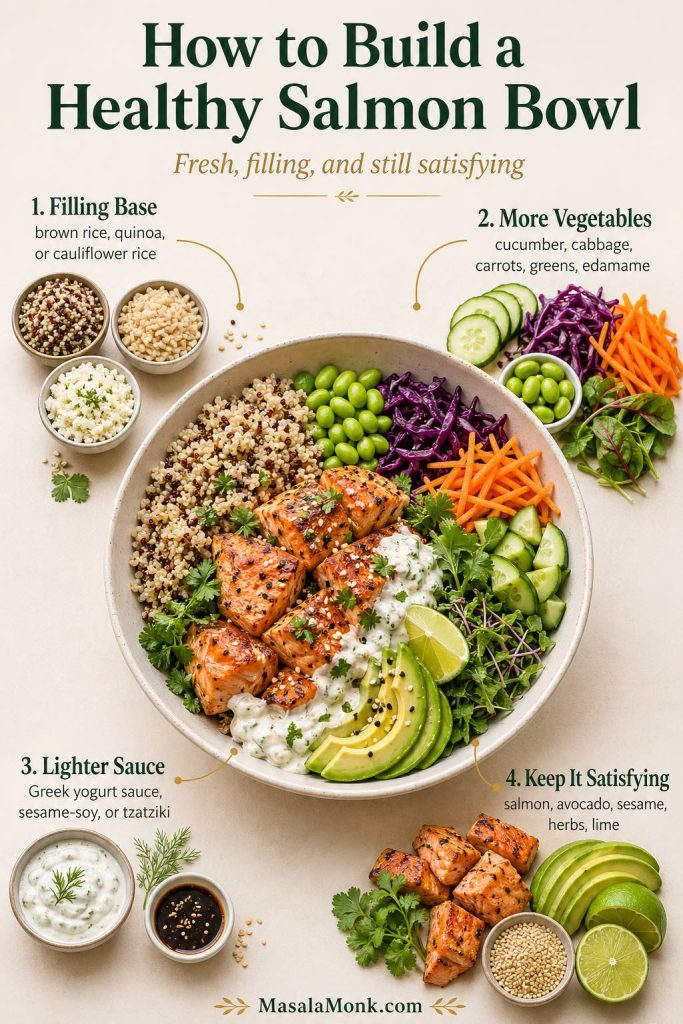
Healthy salmon bowl guide with quinoa, salmon bites, extra vegetables, avocado, herbs, lime, lighter sauce, and satisfying toppings.
A healthy salmon bowl should still feel filling: start with quinoa, brown rice, or cauliflower rice, add plenty of vegetables, choose a lighter sauce, and keep the bowl satisfying with salmon, avocado, sesame, herbs, and lime.

Choose a Filling Base

Use brown rice for a heartier bowl, quinoa for a higher-protein grain base, or cauliflower rice if you want a lighter, lower-carb option. However, white rice is also fine when the rest of the bowl has plenty of salmon, vegetables, and sauce.

Add More Vegetables

Cucumber, cabbage, carrots, edamame, greens, radish, and herbs make the bowl more colorful and fresh. Add at least two vegetables so the bowl has crunch and contrast.

Use a Lighter Sauce

Greek yogurt sauce, sesame soy drizzle, chutney yogurt sauce, and tzatziki are all good choices when you want a lighter salmon bowl. They add flavor and moisture without making the bowl feel too heavy.

Keep the Bowl Satisfying

Do not skip all the rich ingredients. A little avocado, sesame, yogurt sauce, or olive oil can make the bowl feel complete. As a result, a good healthy salmon bowl should taste fresh and filling, not plain.

Salmon Bowl Meal Prep and Storage

This salmon bowl recipe can work for meal prep, but it is best when the warm and cold parts are stored separately. As a result, the rice, sauce, and sturdy vegetables can be prepped ahead, while delicate toppings should be added right before serving.
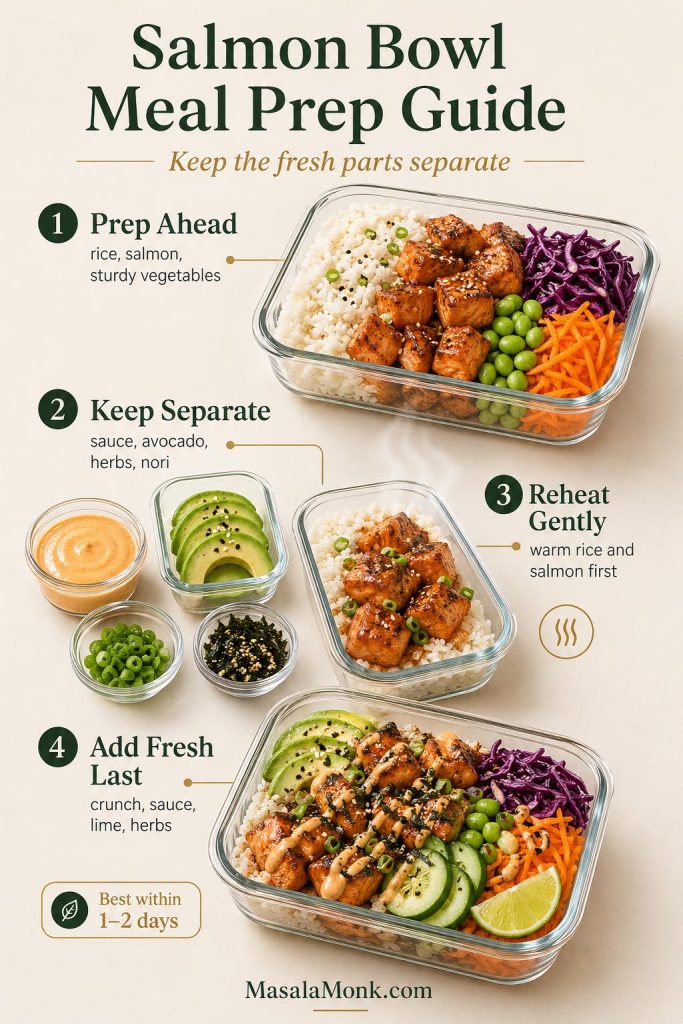
Salmon bowl meal prep guide showing rice, salmon, sturdy vegetables, separate sauce, avocado, herbs, nori, reheating, and fresh toppings added last.
Meal-prep salmon bowls stay fresher when the warm parts and delicate toppings are stored separately: reheat the rice and salmon first, then add sauce, avocado, herbs, nori, lime, and crunchy vegetables right before eating.

What to Prep Ahead

Cook the rice, mix the sauce, wash and chop sturdy vegetables, and portion your toppings. You can also cook the salmon ahead, although it tastes best freshly cooked or gently reheated.

Cool cooked rice promptly, refrigerate it in a covered container, and reheat it until steaming before building the bowl.

What to Keep Separate

Keep sauce, avocado, herbs, nori, furikake, and crispy toppings separate until serving, especially if packing the bowls for lunch. This keeps the bowl from becoming soggy and helps the toppings stay fresh.

How to Reheat

Reheat the rice and salmon gently, then add cold toppings and sauce after warming. If the salmon was already cooked, avoid overheating it or it can become dry.

For food safety, reheat leftovers until steaming hot. FoodSafety.gov lists leftovers at 165°F / 74°C on its safe minimum internal temperature chart.

How Long It Keeps

For best texture, eat salmon bowls within 1 to 2 days. Store cooked salmon, rice, sauce, and fresh toppings in separate airtight containers whenever possible.

Leftover Salmon Ideas

Leftover cooked salmon is perfect for quick bowls because it already has flavor and texture. Flake it over warm rice, add cucumber, avocado, herbs, and sauce, then finish with lime or sesame seeds.

You can also turn leftover salmon into a salmon salad bowl, salmon wrap, salmon fried rice-style bowl, or salmon croquettes for another meal.

Troubleshooting Salmon Bowls

If your bowl tastes almost right but not quite finished, the fix is usually sauce, acid, crunch, or balance. Therefore, use the guide below before changing the whole recipe.
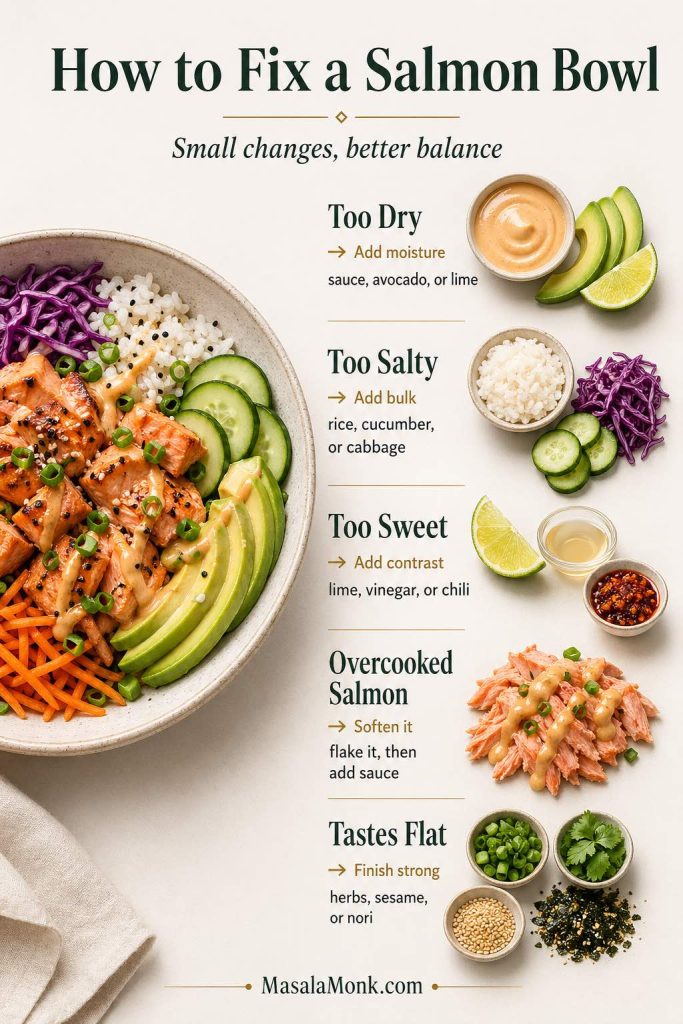
How to fix a salmon bowl guide with fixes for a dry, salty, sweet, flat, or overcooked salmon bowl using sauce, avocado, lime, rice, cucumber, herbs, sesame, and nori.
Most salmon bowl problems are easy to balance before serving: add sauce, avocado, or lime for dryness, rice or cucumber for saltiness, chili or vinegar for sweetness, and herbs, sesame, or nori when the bowl tastes flat.
Problem How to Fix It
The bowl tastes dry Add more sauce, avocado, lime juice, or a small spoon of sesame soy drizzle.
The bowl is too salty Add more rice, cucumber, avocado, cabbage, or yogurt sauce.
The bowl is too sweet Add lime juice, rice vinegar, chili crisp, cucumber, or herbs.
The salmon is overcooked Flake it into the bowl and use extra sauce, avocado, cucumber, and lime.
The bowl feels flat Add acid, crunch, herbs, sesame, nori, furikake, or a stronger sauce.

What to Serve with Salmon Bowls

Salmon bowls are usually filling enough on their own, but you can serve them with a small side if you want a bigger meal. Good options include miso soup, cucumber salad, seaweed salad, roasted broccoli, pickled vegetables, simple greens, or mango salsa.
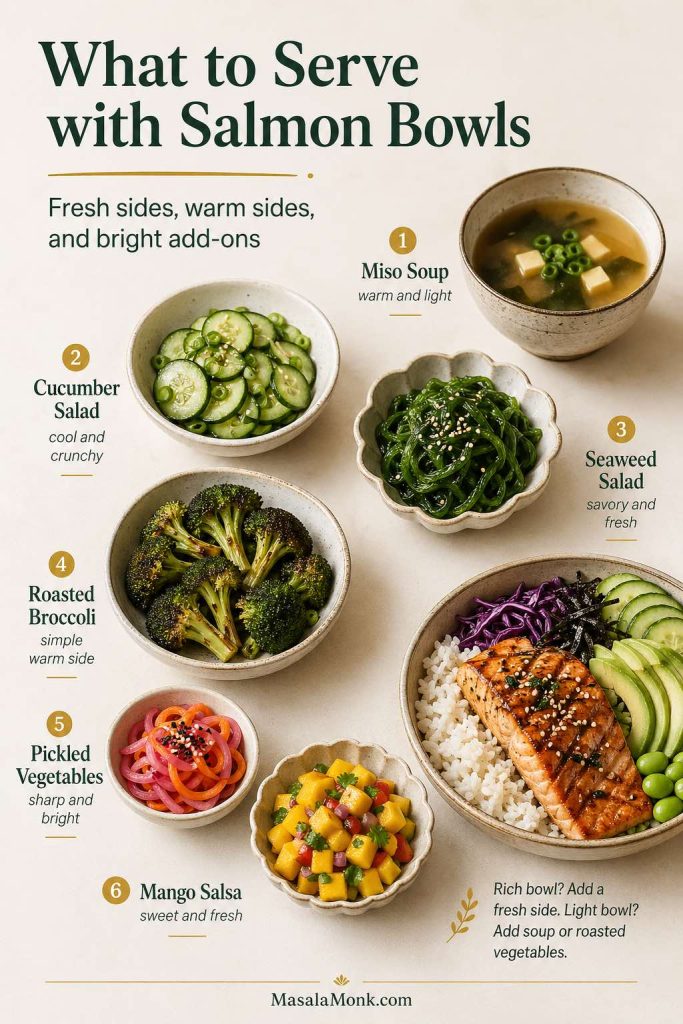
What to serve with salmon bowls guide showing miso soup, cucumber salad, seaweed salad, roasted broccoli, pickled vegetables, mango salsa, and a salmon rice bowl.
Salmon bowls are filling on their own, so the best sides are simple: miso soup or roasted broccoli for warmth, cucumber or seaweed salad for freshness, pickled vegetables for brightness, and mango salsa for a sweet contrast.

If the bowl is spicy or rich, choose a fresh side. If the bowl is light, choose something warmer like soup or roasted vegetables.

FAQs About Salmon Bowls

What is a salmon bowl made of?

A salmon bowl recipe is usually made with cooked salmon, rice or grains, sauce, vegetables, and toppings. For example, a simple version can include salmon, rice, cucumber, avocado, edamame or cabbage, scallions, sesame seeds, and a creamy or soy-based sauce.

What is the best rice for salmon bowls?

Jasmine rice is the easiest everyday choice, while sushi rice is best for sushi-style or poke-style bowls. Brown rice and quinoa are good for heartier or healthier bowls, and coconut rice is a strong match for spicy salmon, mango, lime, and herbs.

What sauce goes best with salmon and rice?

Creamy sriracha yogurt sauce is the best default because it adds tang, spice, and moisture. Spicy mayo, teriyaki sauce, sesame soy drizzle, miso tahini sauce, green chutney yogurt, tzatziki, and pesto yogurt also work depending on the flavor you want.

Can I make a salmon bowl in the air fryer?

Yes. Cut the salmon into 1-inch / 2.5 cm pieces, season it, and air fry at 400°F / 200°C for about 6 to 8 minutes, depending on the size of the pieces. Arrange the salmon in a single layer and turn or shake once so it cooks evenly.

Is a salmon bowl healthy?

A healthy salmon bowl recipe usually includes salmon, a filling base, vegetables, and a balanced sauce. Use brown rice, quinoa, or cauliflower rice if you want a lighter or higher-protein bowl, and choose Greek yogurt sauce or sesame soy drizzle instead of a heavier mayo-based sauce.

Can I make a salmon bowl without rice?

Yes. Use quinoa, cauliflower rice, greens, cabbage, or a mix of vegetables instead of rice. If you skip rice, make sure the bowl still has enough sauce, avocado, vegetables, and toppings so it feels complete.

Is a salmon poke bowl raw or cooked?

A traditional poke-style bowl is often made with raw fish, but this homemade salmon bowl uses cooked salmon by default. Therefore, you can still use sushi rice, cucumber, avocado, edamame, sesame, nori, and soy-sesame sauce to get a poke-style flavor without using raw salmon.

Can I use leftover salmon for a salmon bowl?

Yes. Leftover cooked salmon works well in salmon bowls. Reheat it gently or serve it cool over warm rice, then add sauce, cucumber, avocado, herbs, sesame, and lime.

Can I use canned salmon for a salmon bowl?

Yes. Drain canned salmon well, remove any large bones or skin if you prefer, then flake it over warm rice with cucumber, avocado, scallions, sesame, and a bold sauce. Canned salmon works best with spicy mayo, green chutney yogurt, or sesame-soy drizzle because those sauces bring back freshness.

Can I use frozen salmon?

Yes. Thaw frozen salmon in the refrigerator, pat it very dry, then cut and season it as written. Avoid cooking frozen salmon bites directly for this bowl because the outside can overcook before the center is ready.

Can I use smoked salmon?

Yes, but use it as a no-cook variation rather than cooking it again. Since smoked salmon is already salty, pair it with a lighter sauce, cucumber, avocado, lemon, herbs, and rice or greens.

Can I make a salmon avocado bowl?

Yes. Use the main salmon rice bowl recipe and make avocado one of the main toppings. Avocado adds creaminess, balances salty sauce, and pairs nicely with spicy mayo, sesame-soy drizzle, teriyaki sauce, and lime.

What vegetables go well in salmon bowls?

Cucumber, cabbage, carrots, edamame, radish, avocado, scallions, greens, and herbs all work well. Choose at least one crunchy vegetable and one fresh garnish so the bowl does not feel too soft or rich.

How long does a salmon rice bowl last in the fridge?

For best texture, eat a salmon rice bowl within 1 to 2 days. Store the salmon, rice, sauce, and toppings separately when possible, then assemble after reheating the warm components.

This salmon bowl recipe is easiest when you start with the main version first, then adjust the rice, sauce, toppings, and cooking method to fit the bowl you want. Once you have the formula, you can make it creamy, spicy, lighter, teriyaki-style, sushi-style, or meal-prep friendly without starting over.
Posted on 5 Comments

Air Fryer Salmon Recipe (Time, Temp, and Tips for Perfect Fillets)

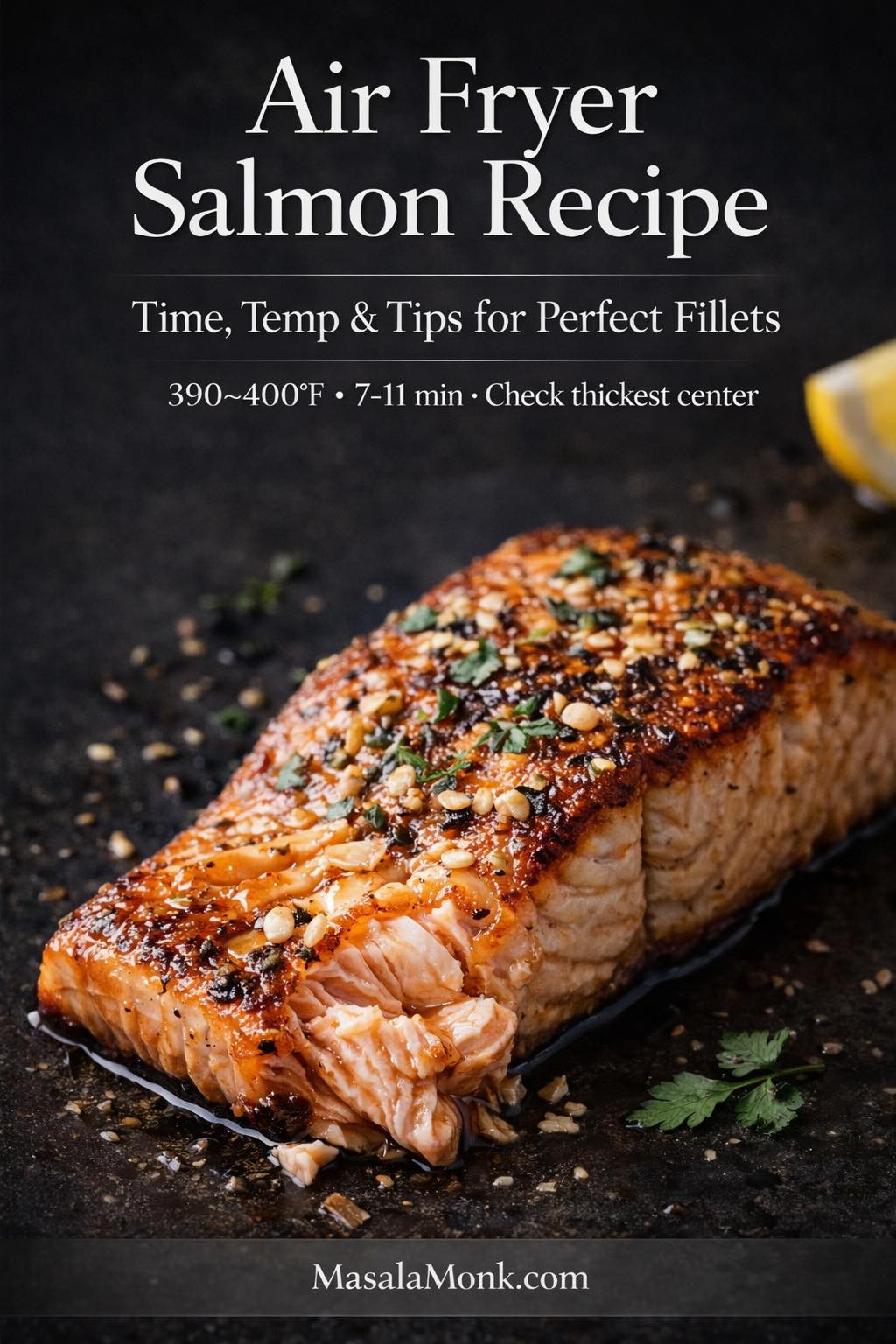
Close-up cover image of a cooked air fryer salmon fillet with text overlay showing time and temperature tips for perfect salmon fillets, including 390–400°F and 7–11 minutes, for a salmon in air fryer recipe guide.

Salmon is one of those dinners that can feel either effortlessly elegant or weirdly stressful, depending on how the cooking goes. One minute it looks glossy and promising, and the next minute it turns dry, chalky, or overdone at the edges while the center still looks undercooked. That’s exactly why this air fryer salmon recipe earns a permanent place in a real home kitchen: it gives you a repeatable method that stays simple, cooks fast, and leaves plenty of room for flavor.

Once you get the rhythm right, making salmon in air fryer stops feeling like guesswork. You learn the temperature that works best in your machine, you understand how thickness changes the timing, and you know what to look for when the fillet is done. From there, everything gets easier. A plain lemon garlic version becomes a weeknight staple. A teriyaki glaze turns into a quick dinner that feels restaurant-ish. A blackened variation suddenly becomes your go-to when you want something bolder.


This post is built as a full, reader-friendly guide, so you can come back to it whether you’re making your first fillet or trying to dial in the best salmon in air fryer for your own taste. We’ll cover the base method, time it takes to air fry a salmon and temp, skin-on versus skinless, seasoning directions, serving ideas, and the easiest way to reheat leftovers without drying them out.

And because salmon is already a naturally rich, satisfying fish, it doesn’t need much to taste good. A few small decisions—patting it dry, seasoning it evenly, cooking it at the right heat, and checking doneness early—make all the difference.


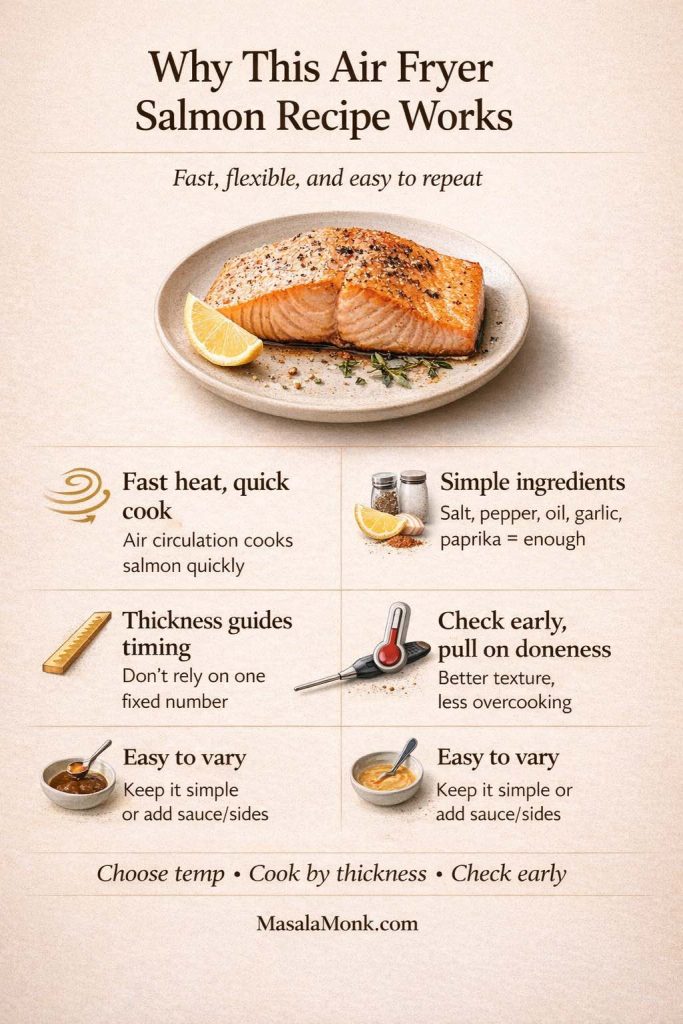
Why this air fryer salmon recipe works

The best thing about an air fried salmon is how quickly it gets from raw to beautifully cooked without asking for much from you. You don’t need a complicated marinade. You don’t need a cast iron pan smoking on the stove. And you don’t even need a long ingredient list. Instead, the circulating heat does most of the heavy lifting, and the salmon naturally brings richness and flavor on its own.

Why this air fryer salmon recipe works: this visual method guide shows the simple logic behind consistently good salmon in the air fryer—fast circulating heat, minimal ingredients, thickness-based timing, early doneness checks, and easy flavor flexibility for weeknight dinners.

Even so, speed can be a trap if you treat salmon like chicken or a frozen snack. Fish cooks quickly, and salmon fillets vary a lot in thickness. That’s why this method focuses less on a single magic number and more on a reliable flow: choose a temperature, use thickness as your timing guide, and start checking before you think it’s done.

That approach works whether you’re making a simple salmon air fryer recipe on a busy weekday or trying a more dressed-up dinner for guests. It also gives you flexibility. You can keep the seasoning minimal and serve it with a sauce, or you can build flavor directly into the fish and keep the sides light.

There’s another reason this method lands so well in a weekly rotation: salmon already fits neatly into a balanced dinner without much effort. It’s filling, it pairs with almost anything, and it doesn’t need a lot of oil to cook well. The American Heart Association also continues to recommend eating fish, especially fatty fish, as part of a heart-healthy eating pattern, which is one more reason salmon tends to show up so often in practical meal plans. (www.heart.org)

Also Read: Crock Pot Chicken Breast Recipes: 10 Easy Slow Cooker Dinners (Juicy Every Time)


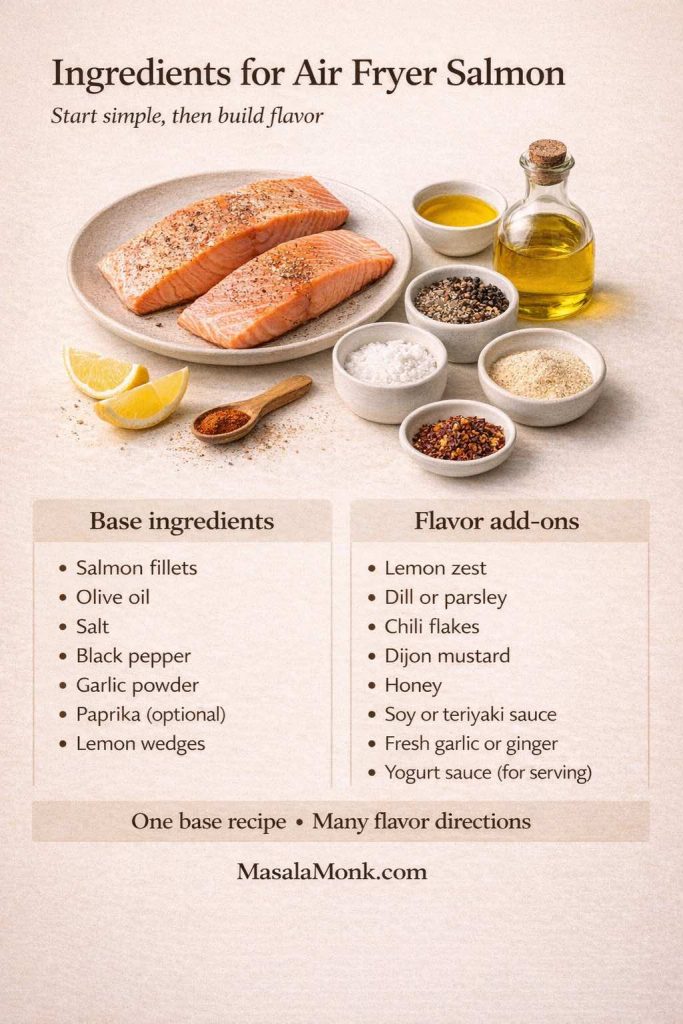
Ingredients for air fryer salmon

You can make excellent salmon in the air fryer with just a handful of pantry basics. In fact, the simpler the starting point, the easier it is to branch into different versions later.

Ingredients for air fryer salmon, organized into a simple base list and easy flavor add-ons. Start with salmon fillets, olive oil, salt, pepper, garlic powder, paprika, and lemon, then branch into variations with dill, chili flakes, Dijon, honey, teriyaki, garlic, ginger, or a yogurt sauce for serving—same method, different flavor direction.

Base ingredients for a simple salmon done in an air fryer recipe

  • 2 salmon fillets (about 5 to 7 ounces each, ideally similar thickness)
  • 1 to 1½ tablespoons olive oil
  • 1 teaspoon kosher salt
  • ½ teaspoon black pepper
  • ½ teaspoon garlic powder
  • ½ teaspoon paprika (optional, but nice for color)
  • Lemon wedges, for serving

That’s enough for a clean, dependable version that tastes great on its own and also works as a base for different sauces and add-ons.

Optional ingredients for flavor variations

Once you’ve made the base version once or twice, these are useful to keep around:

  • Lemon zest
  • Dried dill or parsley
  • Chili flakes
  • A little Dijon mustard
  • Honey (for honey garlic style finishes)
  • Soy sauce or teriyaki sauce
  • Fresh garlic or ginger
  • A spoonful of yogurt-based sauce for serving

If you enjoy changing the feel of the same dish without changing the method, this is where salmon really shines. One night you can top it with a cool spoon of Greek tzatziki. Another night, you can go bright and herbal with chimichurri. And when you want something sweeter and glossier, a homemade teriyaki sauce does the job beautifully.

Also Read: Eggless Yorkshire Pudding (No Milk) Recipe


How to prep salmon fillets for the air fryer

Before the air fryer even turns on, a few small prep moves set you up for a better result.

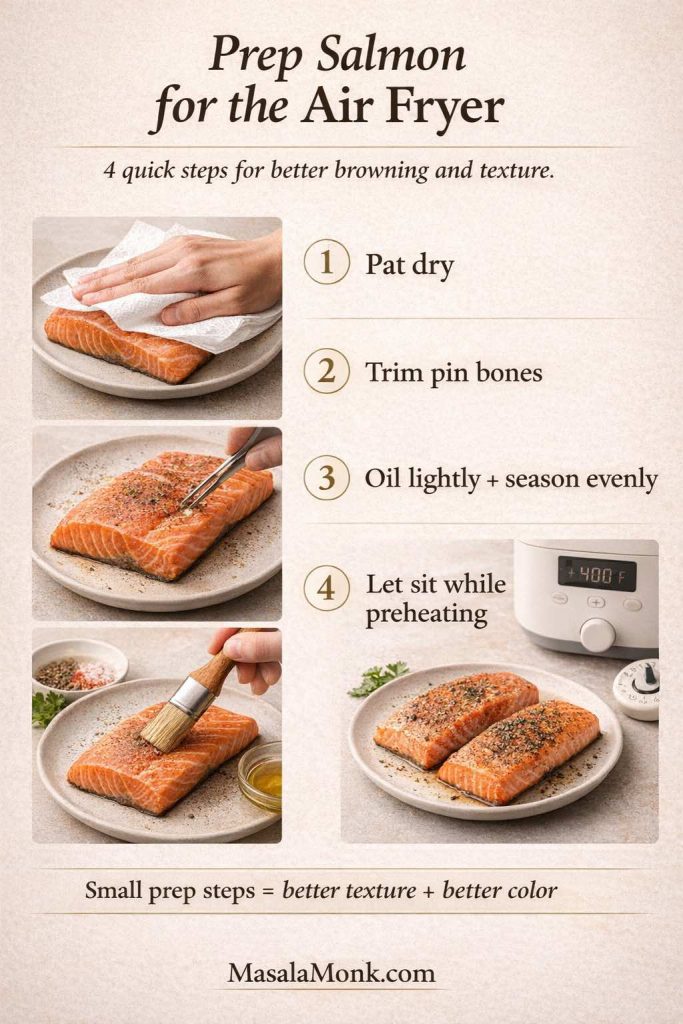
Prep salmon for air fryer guide showing four steps with salmon fillets: pat dry, trim pin bones, oil lightly and season evenly, then let the salmon sit while the air fryer preheats.
Prep salmon for the air fryer in 4 quick steps: pat it dry, trim pin bones if needed, oil and season evenly, and let it sit while the air fryer preheats. These small prep steps help salmon brown better and cook more evenly.

Pat the salmon dry first

This step looks minor, but it changes everything. Surface moisture slows browning, softens the seasoning layer, and can make the salmon look steamed instead of roasted. Use paper towels and pat both sides dry, especially if the fillets were just unwrapped.

If you’re making skin-on salmon in air fryer, pay extra attention to the skin side. A drier surface gives you a better chance of getting nicer texture, especially if you like the skin.

Trim pin bones if needed

Many fillets are sold with pin bones already removed, but not all of them. Run a finger lightly over the center line of the fillet. If you feel little bones sticking up, pull them out with clean tweezers or kitchen pliers. This takes a minute and makes the final dish much easier to eat.

Oil lightly, then season evenly

Brush or rub a light coating of oil over the fillets. You don’t need much. The goal is just enough to help the seasonings stick and to support gentle browning.

Then season the fish evenly. Don’t dump everything in the center and hope it spreads. A more even layer cooks more evenly and tastes more balanced.

For a classic everyday version, salt, pepper, garlic powder, and paprika are enough. If you want a stronger flavor, add lemon zest or chili flakes at this stage.

Let the fillets sit while the air fryer preheats

A short rest on the counter—just a few minutes—is useful while you preheat. It takes the chill off slightly and gives the seasoning time to adhere. You don’t need a long rest. Just enough time to get your air fryer ready and your basket set.

Also Read: Garlic & Paprika Cabbage Rolls (Keto-Friendly Recipes) – 5 Bold Savory Twists


How to cook salmon in the air fryer

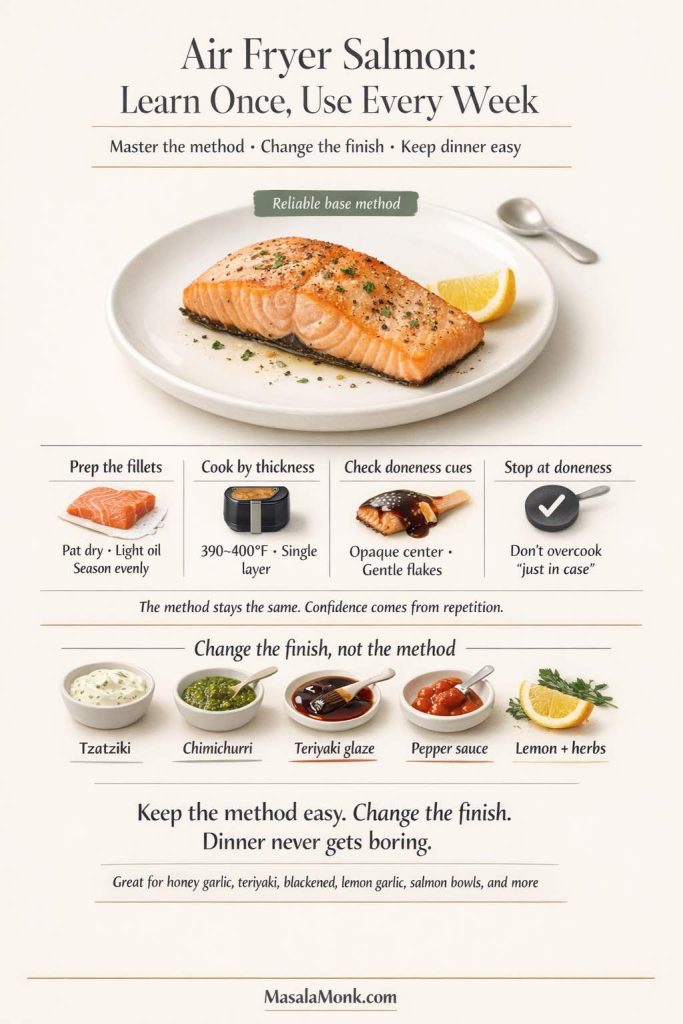
This is the core method you’ll come back to again and again. Once you’re comfortable with this, it becomes easy to adapt into all the common variations: honey glazed air fried salmon, teriyaki salmon that is air fried, blackened salmon, lemon salmon recipe air fryer, and more.

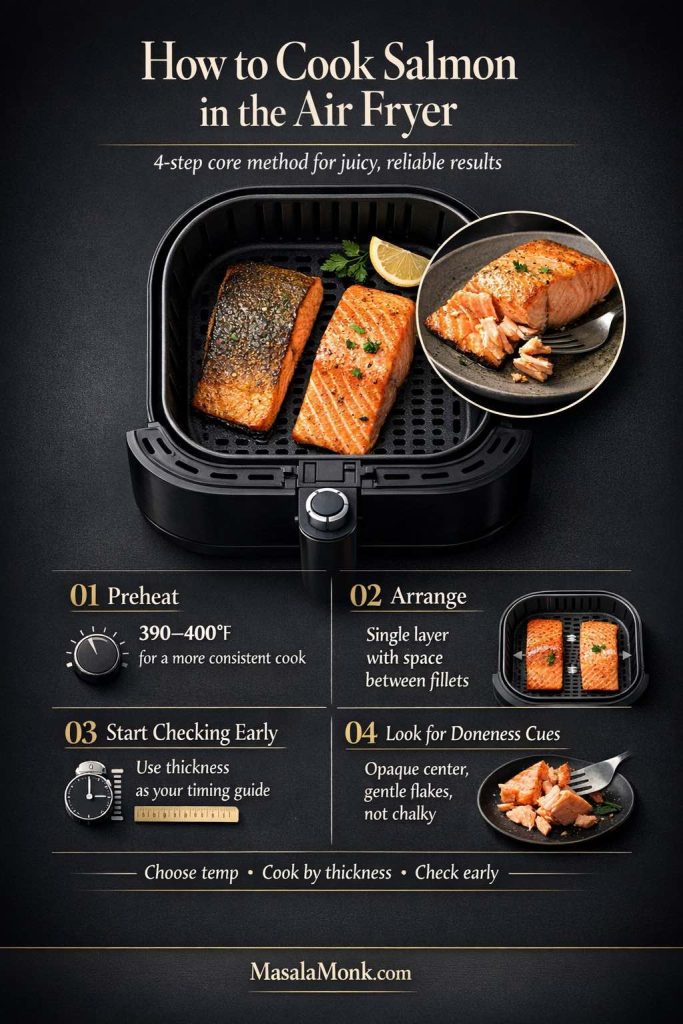
How to cook salmon in the air fryer infographic showing a 4-step core method with preheat temperature (390–400°F), single-layer basket arrangement, thickness-based timing, and visual doneness cues for juicy air fryer salmon.
How to cook salmon in the air fryer: this 4-step visual guide shows the core method for consistently juicy salmon fillets—preheat to 390–400°F, arrange in a single layer, start checking early based on thickness, and finish using visual doneness cues instead of guessing by time alone.

Preheat your air fryer

Not every air fryer behaves the same way, but in general, salmon cooks more consistently when the machine is preheated. A short preheat helps the exterior start cooking right away instead of warming slowly.

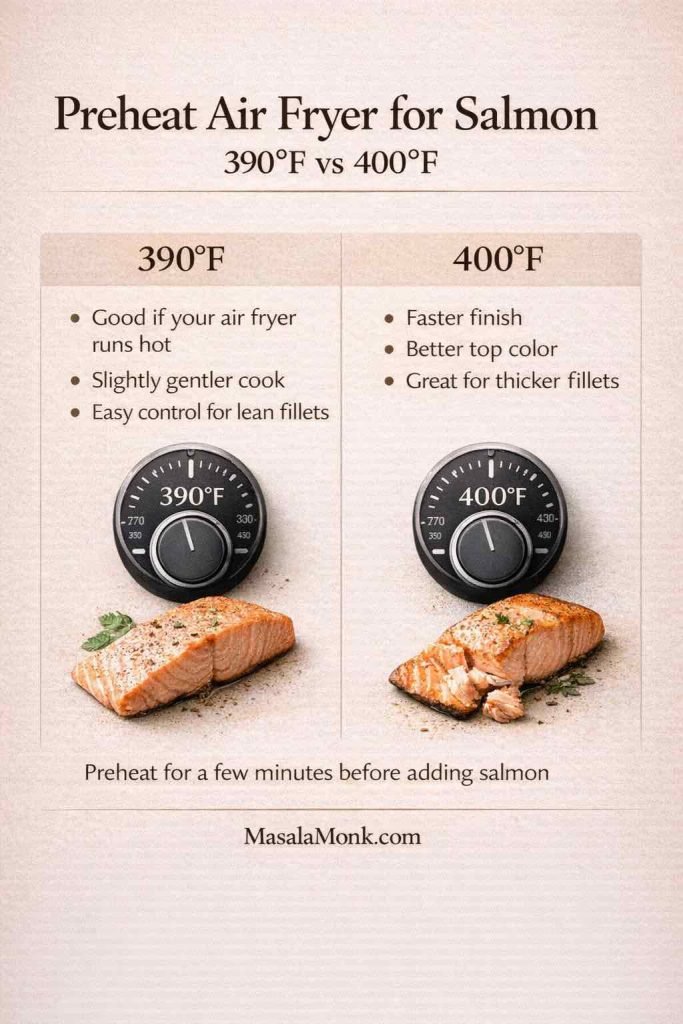
Set your air fryer to 390°F or 400°F and let it heat for a few minutes.

Preheat air fryer for salmon infographic comparing 390°F vs 400°F, showing when to use each temperature for air fryer salmon based on air fryer heat, fillet thickness, and desired top color.
Preheat air fryer for salmon with confidence: this quick 390°F vs 400°F guide helps you choose the best temperature for your air fryer salmon recipe based on how hot your machine runs, the thickness of your salmon fillets, and whether you want a gentler cook or deeper top color.

If your model runs hot, start at 390°F. If your model is gentle and you want a slightly deeper top color, go with 400°F.

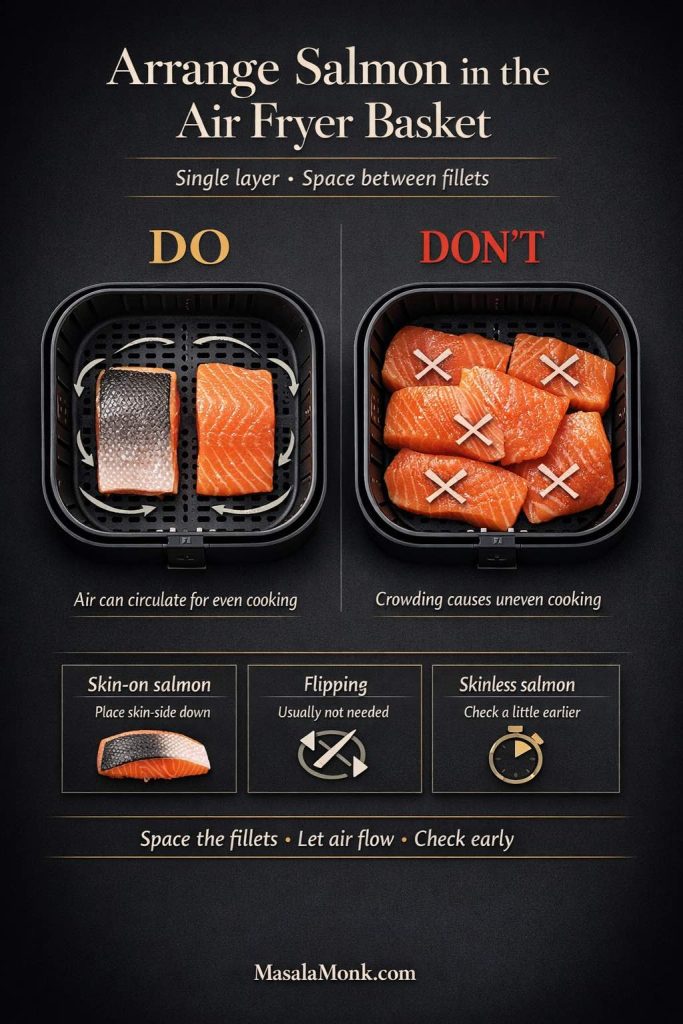
Arrange the salmon in a single layer

Place the fillets in the basket with space between them. Air fryers need airflow to do their job, so crowding the basket is one of the fastest ways to get uneven cooking.

Arrange salmon in the air fryer basket the right way: this DO vs DON’T visual shows why a single layer with space between fillets cooks more evenly than a crowded basket. It also includes quick reminders for skin-on salmon (skin-side down), flipping (usually not needed), and skinless salmon (check a little earlier) for more reliable air fryer salmon results.

For skin-on salmon:

  • Place the fillets skin-side down
  • Leave them in place while cooking
  • Skip flipping unless your machine cooks very unevenly (most don’t need it)

For skinless salmon:

  • You still usually don’t need to flip
  • Just plan to check a little earlier

This is true whether you’re making salmon fillet in air fryer, salmon steaks, or slightly smaller portions.

Cook, but start checking early

This is the biggest habit shift that makes air fried salmon better.

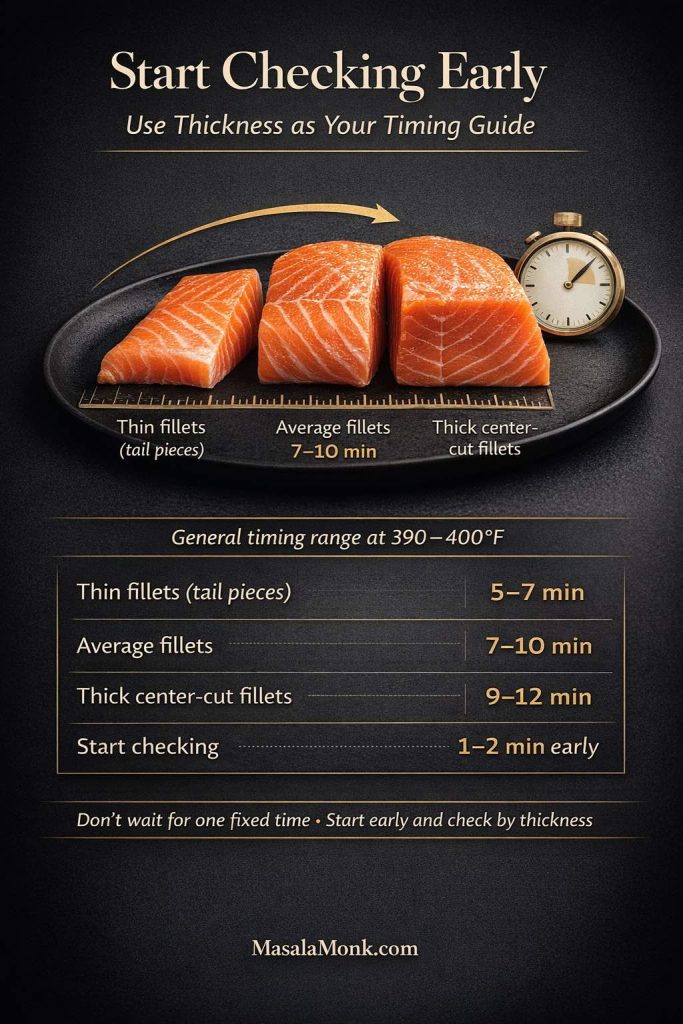
Even if a recipe says 10 minutes, don’t wait until 10 minutes to check. Start early. A lot of fillets are done faster than expected, especially thinner pieces or tail-end portions.

Use this air fryer salmon timing guide to start checking early based on fillet thickness instead of waiting for one fixed cook time. It’s a quick visual reference for thin, average, and thick salmon fillets at 390–400°F, with simple timing ranges that help you avoid dry, overcooked salmon and get better results in any air fryer.

As a general range:

  • Thin fillets can finish in 5 to 7 minutes
  • Average fillets often finish in 7 to 10 minutes
  • Thick center-cut fillets can take 9 to 12 minutes

The exact number depends on thickness, air fryer model, and whether the fish is skin-on or skinless. That’s why checking early matters more than memorizing a single time.

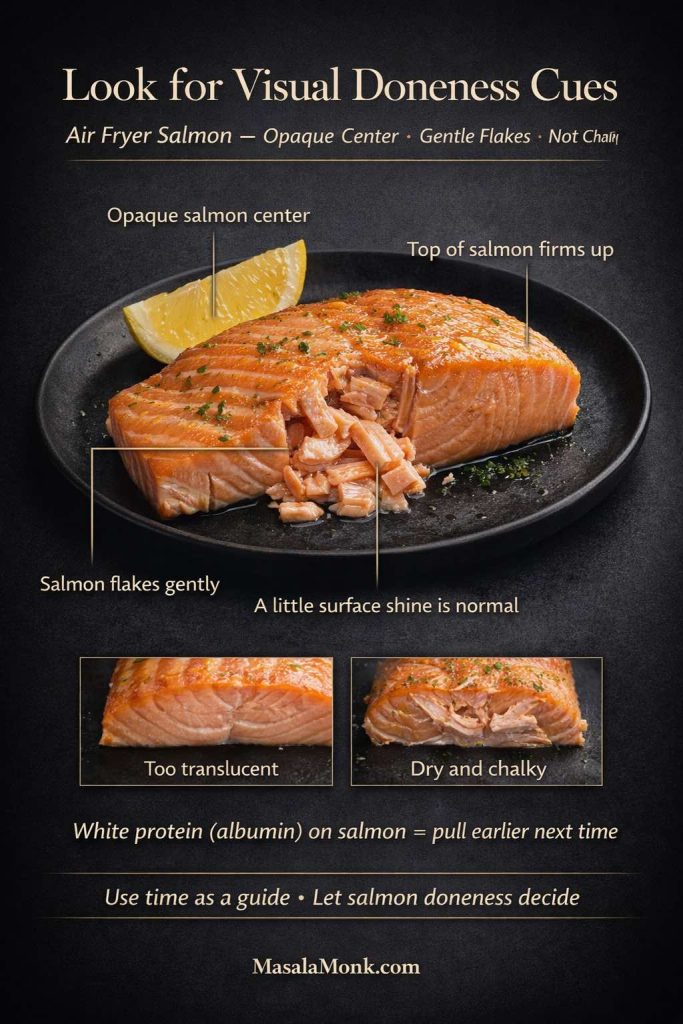
Look for visual doneness cues

Before you even touch a thermometer, your eyes tell you a lot.

The salmon is getting close when:

  • The flesh turns more opaque
  • The center no longer looks very translucent
  • The top firms up slightly
  • The fillet flakes when you press gently with a fork
Use this air fryer salmon visual doneness guide to check salmon by sight before you overcook it. Look for an opaque center, gentle flakes, and a moist (not chalky) texture. This quick cue card also shows what underdone salmon (too translucent) and overcooked salmon (dry and chalky) look like, so you can cook with more confidence even when fillet thickness varies.

A little shine is normal. Dry, chalky flesh is not the goal.

If white protein (albumin) starts pushing out aggressively from the sides, it usually means the salmon is heading past ideal doneness. It’s still edible, but that’s your cue to pull earlier next time.

Also Read: 10 Low Carb Chia Pudding Recipes for Weight Loss (Keto, High-Protein, Dairy-Free)


Air fryer salmon time and temp

This is the part most people come back to, and it’s worth getting right. There’s no single cook time that works for every fillet, but there is a reliable way to think about it.

Air fryer salmon time and temp by thickness

For best results, think in terms of thickness instead of just weight.

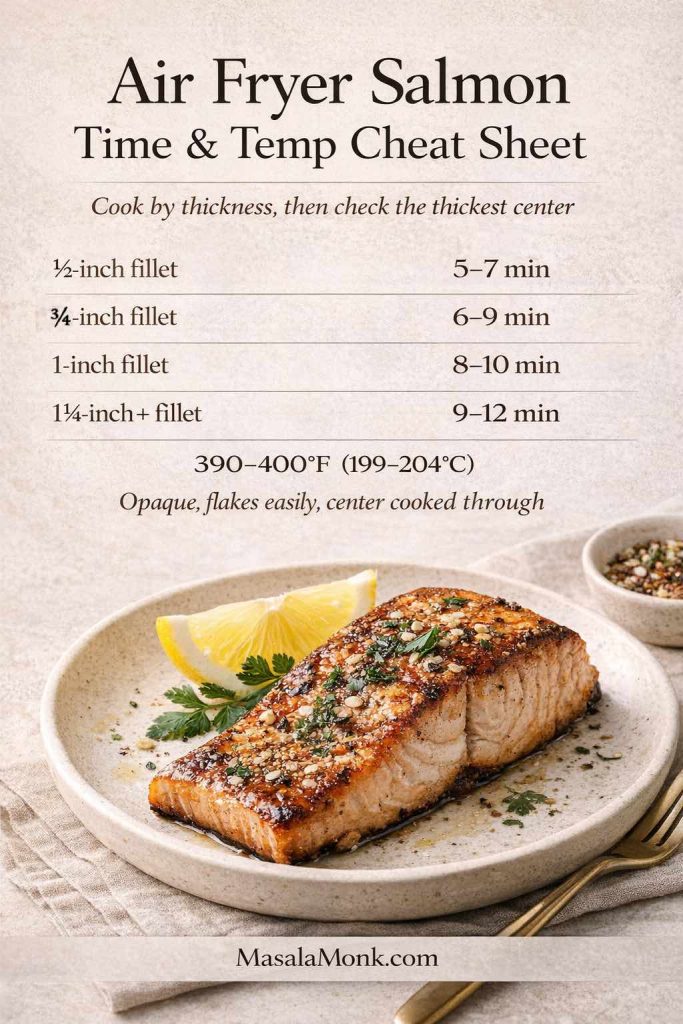
Air fryer salmon time and temp cheat sheet showing salmon cook times by fillet thickness, including 390–400°F (199–204°C), doneness cues, and a plated salmon fillet for a salmon in air fryer recipe guide.
Use this air fryer salmon time and temp cheat sheet to cook salmon by fillet thickness at 390–400°F. It’s a quick visual guide for juicy salmon in the air fryer, with timing ranges and doneness cues to help you avoid overcooking.

At 390°F to 400°F, use this as a practical guide:

  • Very thin fillets or tail pieces (about ½ inch): 5 to 7 minutes
  • ž-inch fillets: 6 to 9 minutes
  • 1-inch fillets: 8 to 10 minutes
  • Thick fillets (1Âź inch or more): 9 to 12 minutes

That timing applies to fresh salmon in air fryer, including common cuts like Atlantic salmon and many standard grocery fillets.

If you’re working with a fattier cut, it may tolerate a tiny bit more time without drying out. If you’re working with leaner salmon, check even earlier.

Best temperature for air fryer salmon

If you’re wondering about the best way to cook salmon in air fryer, the answer is less about finding one “perfect” number and more about choosing a temperature you can repeat confidently.

For most kitchens, the sweet spot is:

  • 400°F for a faster finish and a little more top color
  • 390°F if your machine runs hot or you want a slightly gentler cook

Both produce excellent results. What matters more is consistency. If you always cook at the same temperature, you learn your machine faster, and your salmon turns out more reliably every time.

Time and temp for salmon in air fryer without overcooking

A lot of people are curious about “salmon air fryer temp and time,” “time to cook salmon in air fryer,” or “air fried salmon cooking time,” and the real answer is this:

Use the clock as a guide, but let doneness decide when to stop.

That’s the difference between salmon that’s technically cooked and salmon that actually tastes great. The best air fried salmon isn’t just “hot enough.” It’s cooked through while still tender and juicy in the center.

Also Read: Keto Hot Chocolate Recipe (Sugar-Free Hot Cocoa) + Best Homemade Mix


How to tell when salmon is done

This is where confidence really kicks in. Once you know what done salmon looks and feels like, you stop second-guessing every batch.

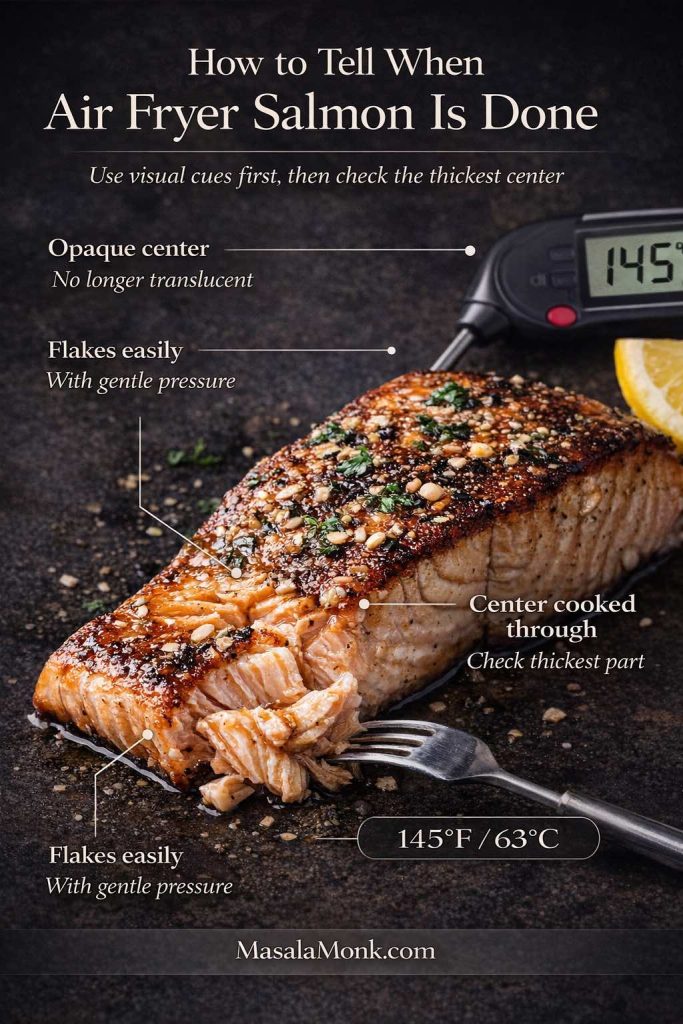
Air fryer salmon doneness guide showing visual cues for cooked salmon, including opaque center, flaking texture, thickest-center check, and 145°F / 63°C temperature target.
Use this air fryer salmon doneness guide to check when salmon is ready: look for an opaque center, easy flaking, and a thickest-center temperature of 145°F (63°C). It’s a simple visual reference to help you avoid overcooking salmon in the air fryer.

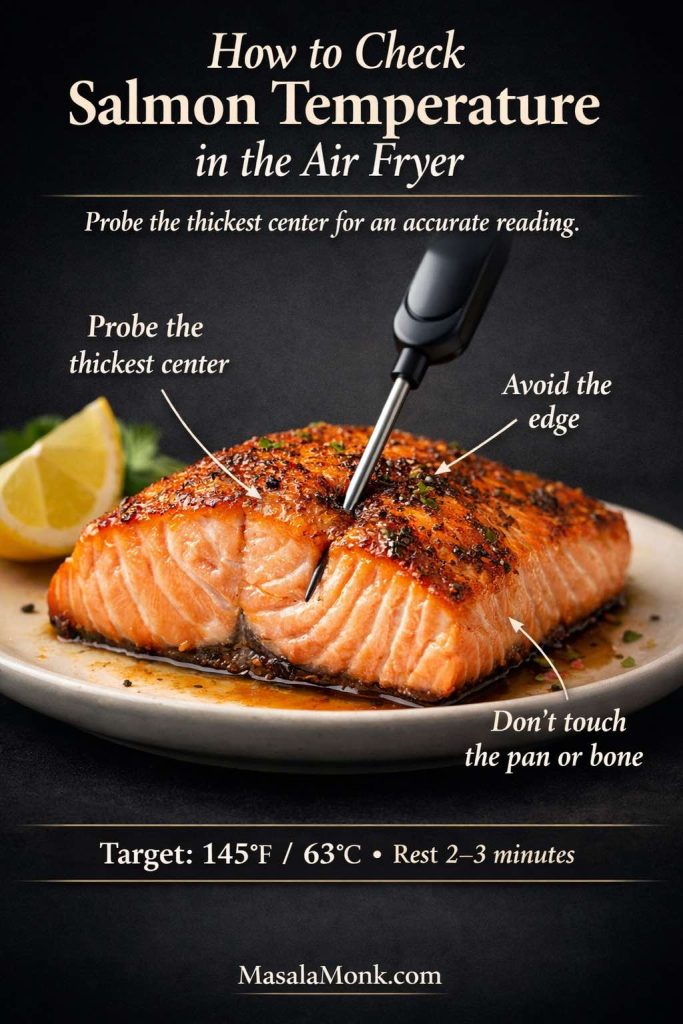
Use the thermometer in the thickest center

If you want consistency, a thermometer is your best friend.

Insert it into the thickest part of the fillet, not the thin edge. FoodSafety.gov lists fish (including salmon) at 145°F (63°C), and it also notes the classic visual cue that fish should be opaque and separate easily with a fork. (FoodSafety.gov)

That temperature is a strong, practical benchmark for a general home-cooking recipe, especially if you’re cooking for a family and want a clear doneness target.

The USDA safe temperature chart also lists fish and shellfish at 145°F, which aligns with the same guidance. (Food Safety and Inspection Service)

Air fryer salmon temperature guide showing a thermometer inserted into the thickest center of a cooked salmon fillet, with callouts for proper probe placement, avoiding the edge, and not touching the pan or bone, plus a 145°F / 63°C target.
Use this air fryer salmon temperature guide to check doneness accurately: insert the thermometer into the thickest center of the fillet, avoid the edges and pan contact, and cook to 145°F (63°C) for a reliable, juicy result.

What done salmon looks like

When salmon is done, the flesh:

  • Looks opaque rather than raw-looking in the middle
  • Flakes with gentle pressure
  • Feels tender, not mushy
  • Holds together when you lift it

If it still looks very translucent in the center, give it another minute and check again.

If it’s dry and crumbly, it’s gone a little too far. Not a disaster, but you’ll want to reduce the cook time next time.

Rest briefly before serving

Salmon doesn’t need a long rest like a large roast, but 2 to 3 minutes helps.

That short pause lets the juices settle and makes the fillet easier to plate neatly. It also gives you a moment to finish a side dish, squeeze lemon, or spoon on a sauce.

Also Read: Dirty Martini Recipe (Classic, Extra Dirty, No Vermouth, Spicy, Blue Cheese, Tequila + Batched)


Air fryer salmon with skin vs skinless

Both versions work well, but they behave a little differently. Knowing the difference helps you avoid overcooking and gets you a better texture.

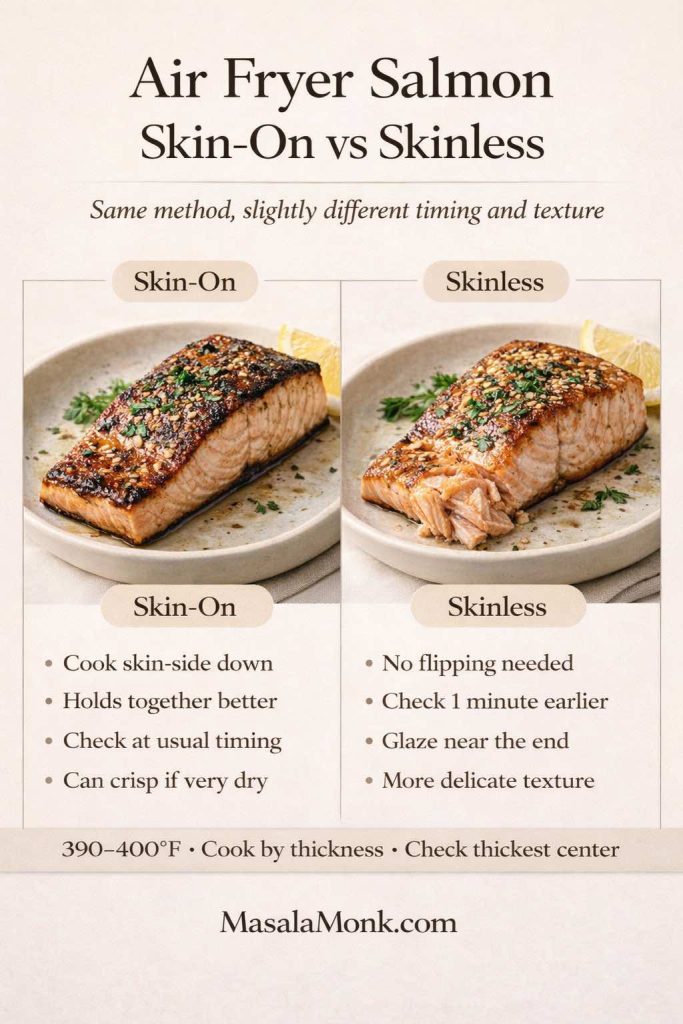
Side-by-side air fryer salmon comparison guide showing skin-on vs skinless salmon fillets with cooking tips, timing differences, and texture notes for salmon in the air fryer.
This air fryer salmon skin-on vs skinless guide shows the key differences in timing, texture, and cooking approach so you can choose the best method for the salmon fillets you have and avoid overcooking.

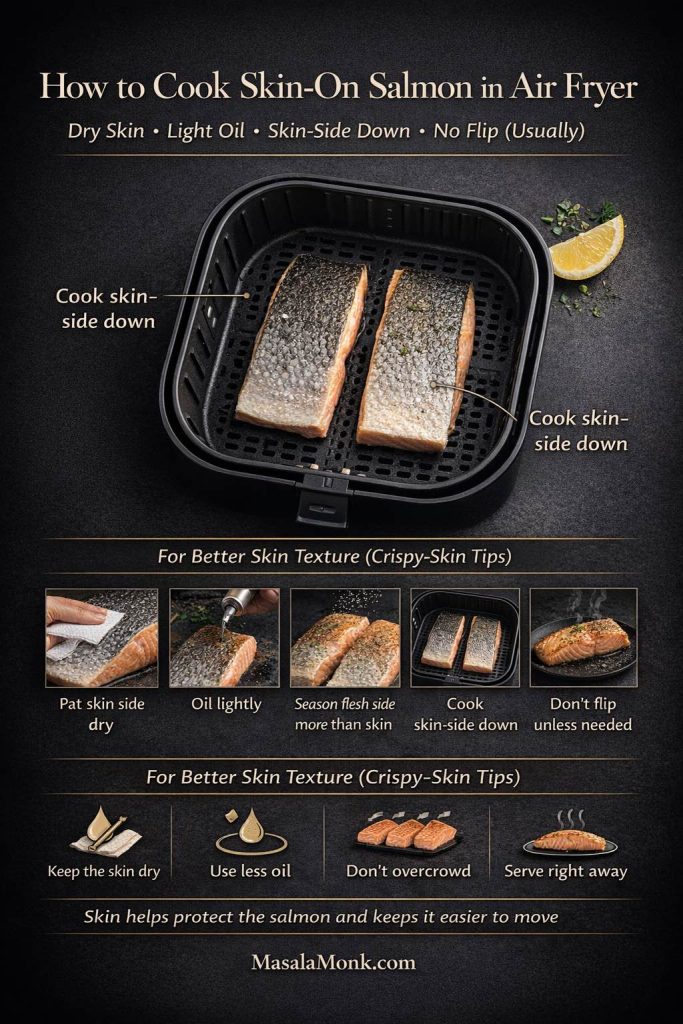
How to cook skin-on salmon in air fryer

Skin-on salmon is often easier for beginners because the skin helps protect the bottom of the fillet and makes it easier to move after cooking.

How to cook skin-on salmon in air fryer infographic showing skin-on salmon fillets placed skin-side down in an air fryer basket with crispy-skin tips including pat skin dry, oil lightly, season flesh side more than skin, avoid overcrowding, and serve right away.
Use this skin-on air fryer salmon guide for better texture and easier handling: pat the skin dry, oil lightly, season the flesh side more than the skin, and cook skin-side down without flipping unless needed. It also includes crispy-skin tips like avoiding overcrowding and serving right away before steam softens the skin.

For air fryer salmon with skin:

  • Pat the skin side dry
  • Oil lightly
  • Season the flesh side more heavily than the skin
  • Cook skin-side down
  • Don’t flip unless absolutely necessary

The skin doesn’t always get ultra-crispy in every air fryer, but it usually cooks well and helps the fish stay moist.

If you like crispy skin salmon air fryer style, a few small moves help:

  • Keep the skin dry
  • Avoid too much oil
  • Don’t overcrowd the basket
  • Serve right away (steam softens crisp skin quickly)

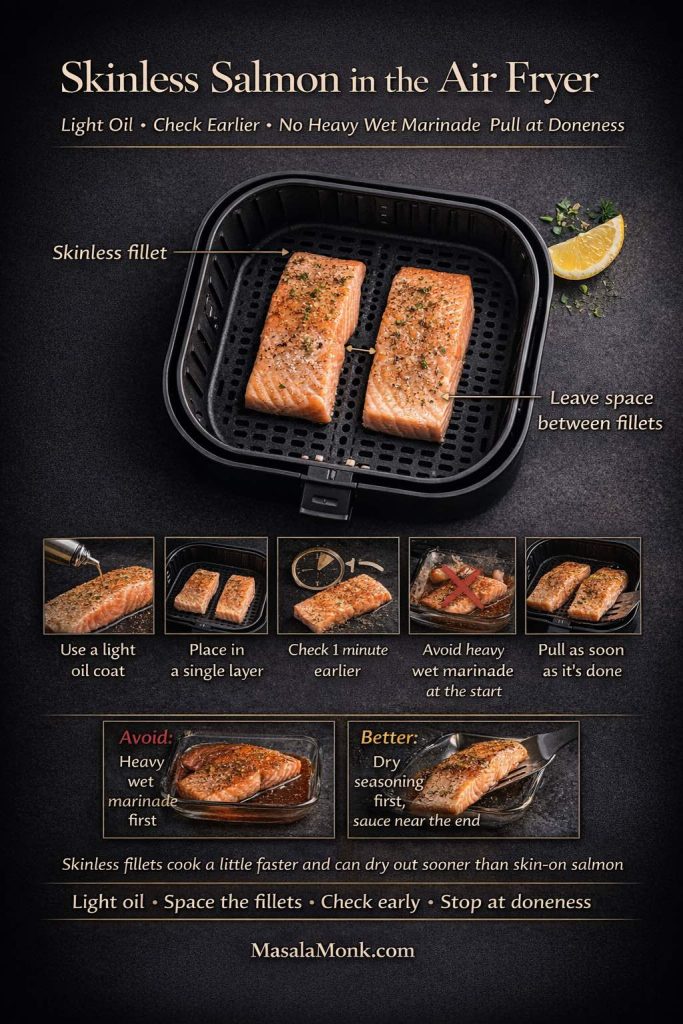
Skinless salmon in the air fryer

Skinless salmon in the air fryer works beautifully too, but it tends to cook a little faster and can dry out more easily if you overshoot the timing.

This skinless salmon in the air fryer guide shows the best way to cook skinless fillets without drying them out: use a light oil coat, leave space between fillets, check a little earlier than skin-on salmon, and avoid heavy wet marinades at the start. It’s a practical visual reference for keeping air fryer salmon juicy and evenly cooked.

For skinless fillets:

  • Use a light oil coat
  • Check one minute earlier than usual
  • Avoid heavy wet marinades at the start
  • Pull the fillet as soon as it reaches doneness

This is especially important if you’re making thinner cuts or smaller salmon portions.

If sticking is an issue in your basket, a lightly greased perforated liner can help, but avoid blocking too much airflow.

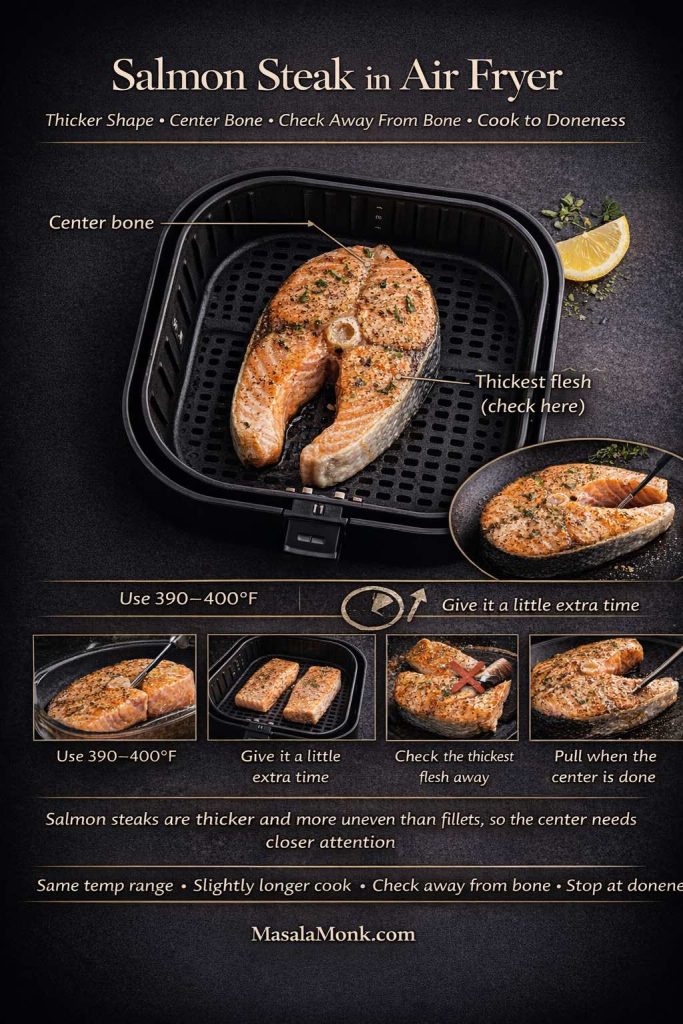
Salmon steak in air fryer

Salmon steaks are a little different from fillets because the shape is thicker and more uneven around the center bone.

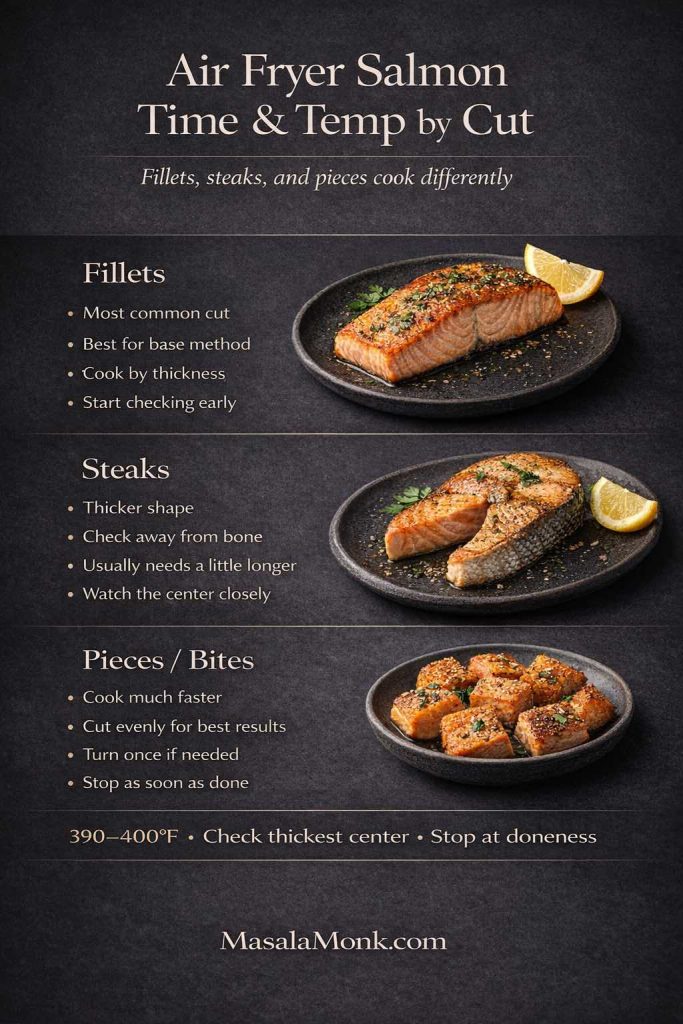
This salmon steak in air fryer guide shows how steak cuts cook differently from fillets: they’re thicker, shaped unevenly around the center bone, and need a little extra time. Use the same 390–400°F range, then check the thickest flesh away from the bone for a better doneness read and more reliable texture.

If you’re cooking salmon steak air fryer style:

  • Use the same temperature range (390°F to 400°F)
  • Add a little extra time
  • Check doneness in the thickest part, away from the bone

The same doneness rules apply, but the steak shape means you’ll want to watch the center closely.

Also Read: Fish and Chips Reimagined: 5 Indian Twists (Recipe + Method)


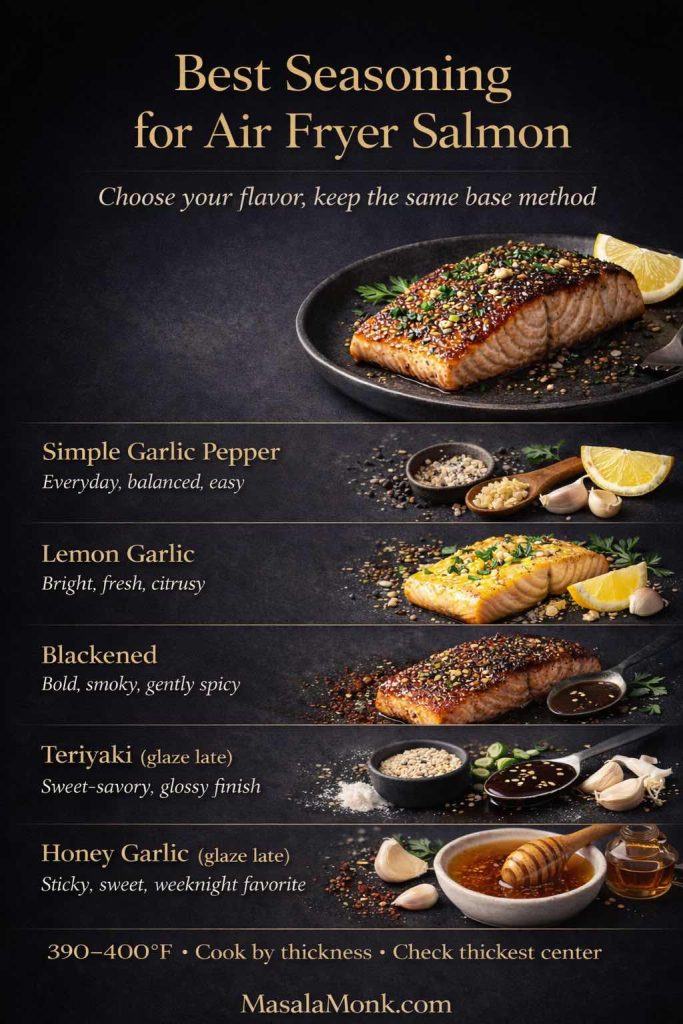
Best seasoning for air fryer salmon

This is where the fun starts. Once you have the base method down, seasoning is what keeps air fryer salmon from feeling repetitive.

Best seasoning for air fryer salmon guide showing flavor variations including simple garlic pepper, lemon garlic, blackened, teriyaki, and honey garlic, with a cooked salmon hero image and cooking method cue.
Use this seasoning guide to choose a flavor direction for your salmon fillets that are air fried or otherwise—simple garlic pepper, lemon garlic, blackened, teriyaki, or honey garlic—while keeping the same base air fryer salmon method for reliable results.

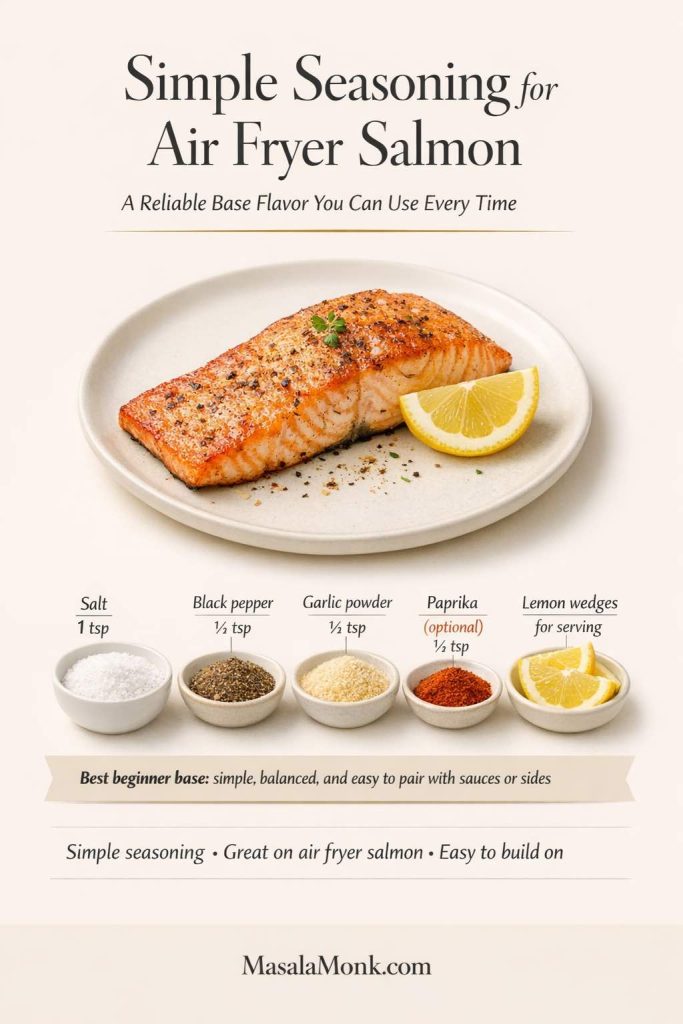
Simple seasoning for air fryer salmon

The most reliable version is still the simplest:

  • Salt
  • Pepper
  • Garlic powder
  • Paprika
  • Lemon to finish
Simple seasoning for air fryer salmon infographic showing a basic salmon fillet with salt, black pepper, garlic powder, paprika, and lemon wedges, with exact seasoning amounts for a reliable beginner-friendly air fryer salmon base method.
Start with this simple seasoning for air fryer salmon when you want a reliable, easy base that works with almost any side. This visual shows the exact seasoning mix (salt, pepper, garlic powder, paprika, and lemon) so readers can make a balanced salmon recipe without overthinking it. It’s the best foundation for weeknight dinners and also the easiest version to build into lemon garlic, blackened, teriyaki, or honey garlic variations later. Save this pin for a quick salmon seasoning reference, and boomark this post for the complete method, timing-by-thickness guide, and more air fryer salmon flavor ideas.

This combination works with almost any side and leaves room for a sauce if you want one. It’s also the best starting point if you’re new to cooking salmon in an air fryer.

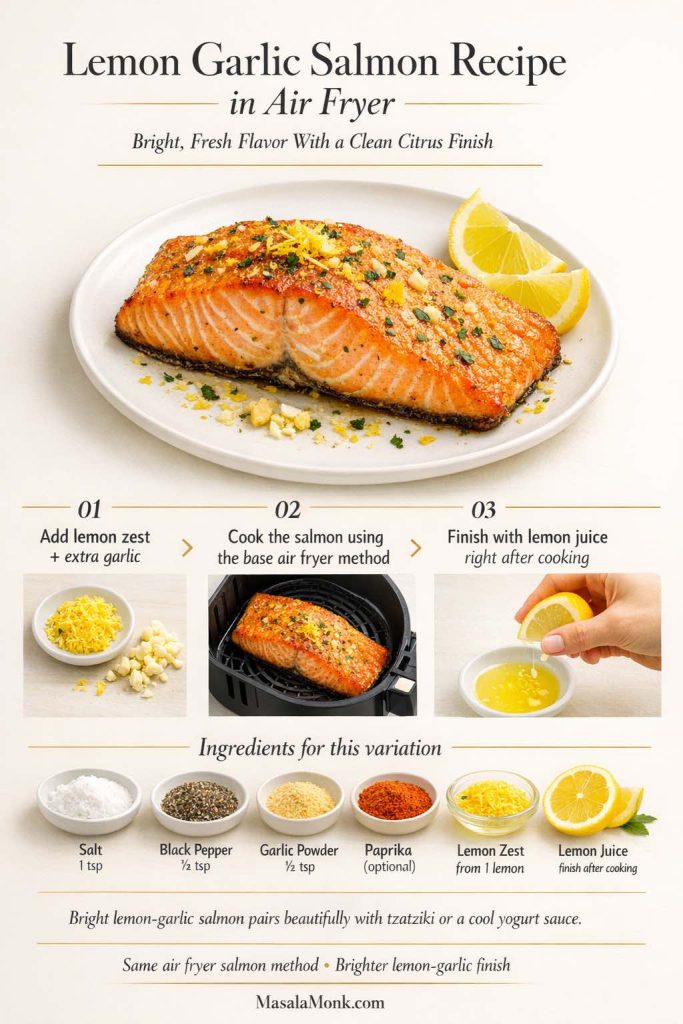
Lemon garlic salmon recipe in air fryer

For a bright, fresh variation:

  • Add lemon zest before cooking
  • Use a touch more garlic
  • Finish with lemon juice right after cooking
This lemon garlic salmon recipe in the air fryer is a bright, fresh variation built on the same easy base method. The card shows the full flow: add lemon zest and extra garlic, cook using the core air fryer salmon method, then finish with lemon juice right after cooking for the cleanest citrus flavor. It’s a great option when you want something light, balanced, and easy to pair with tzatziki or a cool yogurt sauce. Save this for an easy weeknight salmon idea, and visit the full MasalaMonk recipe for exact timing, doneness cues, and more flavor variations you can rotate through all week.
This lemon garlic salmon recipe in the air fryer is a bright, fresh variation built on the same easy base method. The card shows the full flow: add lemon zest and extra garlic, cook using the core air fryer salmon method, then finish with lemon juice right after cooking for the cleanest citrus flavor. It’s a great option when you want something light, balanced, and easy to pair with tzatziki or a cool yogurt sauce. Save this for an easy weeknight salmon idea, and follow full recipe for exact timing, doneness cues, and more flavor variations you can rotate through all week.

This version tastes clean and balanced, and it pairs really well with cool sauces. A spoonful of tzatziki on the side gives it a creamy contrast without making the dish heavy.

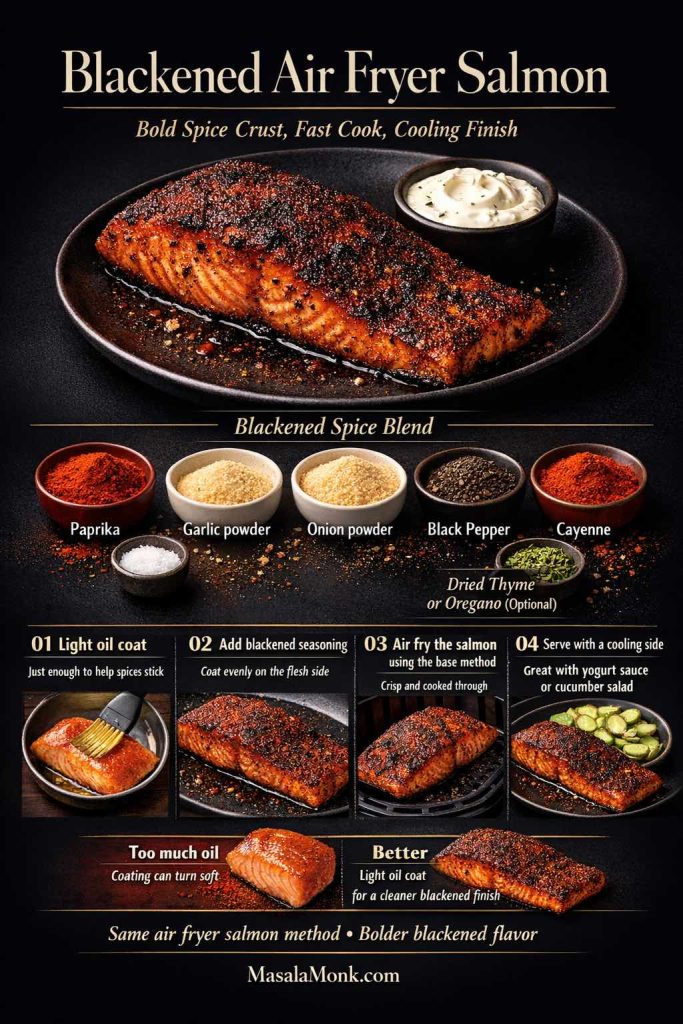
Blackened air fryer salmon

Blackened salmon in the air fryer works beautifully because the hot circulating air sets the spice coating quickly.

Blackened air fryer salmon infographic showing a spice-crusted salmon fillet, blackened seasoning ingredients, light oil coating step, and a cooling side pairing, with tips for getting a bold crust without making the spice coating soft.
This blackened air fryer salmon card is a bold, spice-forward variation that shows exactly how to build a flavorful crust without over-oiling the fish. It includes the blackened seasoning blend (paprika, garlic powder, onion powder, black pepper, cayenne, and optional herbs), a step-by-step visual method, and a helpful comparison showing why a light oil coat gives a cleaner finish. The cooling-side pairing cue also makes this easy to turn into a complete meal. Save this pin if you love smoky, spicy salmon, and read the full post for the core air fryer salmon method and more variations.

A good blackened-style blend includes:

  • Paprika
  • Garlic powder
  • Onion powder
  • Black pepper
  • Cayenne
  • Dried thyme or oregano (optional)

Use just enough oil to help the spices stick. Too much oil can make the coating patchy or overly soft.

This version is excellent with something cooling and tangy on the side, like yogurt sauce or a quick cucumber salad.

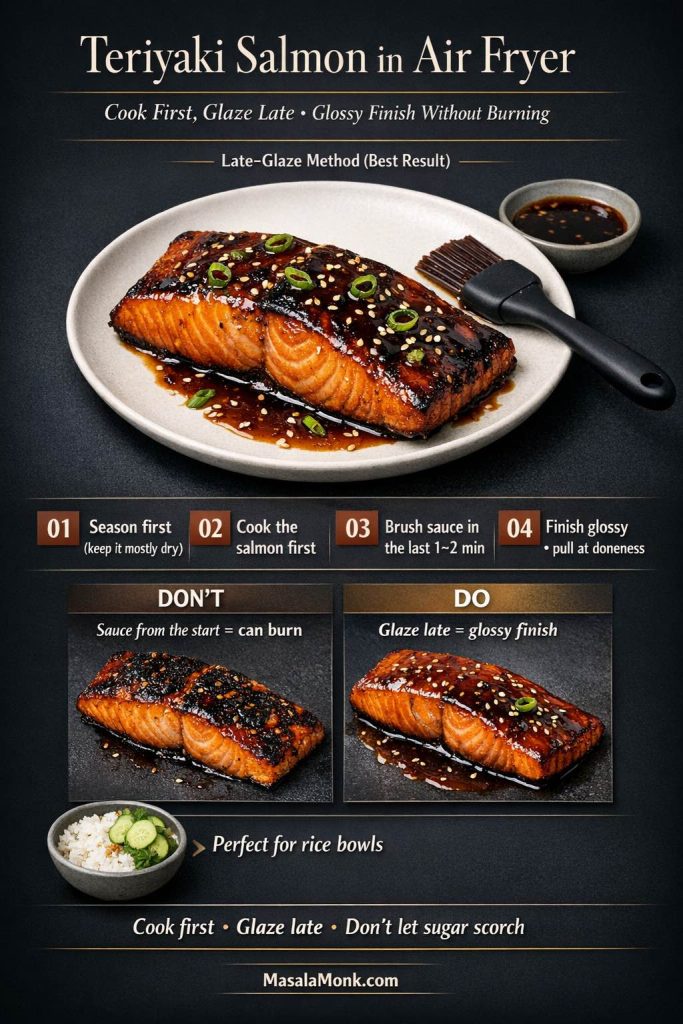
Teriyaki salmon in air fryer

Teriyaki is one of the easiest upgrades, but timing matters.

This teriyaki salmon in air fryer infographic teaches the key trick that makes teriyaki work: cook first, glaze late. The visual step sequence shows when to season, when to cook, and when to brush the teriyaki sauce (last 1–2 minutes) so the salmon gets glossy without burning. The do-vs-don’t comparison panel is especially helpful if your sweet glazes tend to scorch. It’s a great standalone save for readers who want a fast teriyaki salmon dinner with better results. Pin this for later, and read the full MasalaMonk post for timing-by-thickness and more flavor cards in the series.
This teriyaki salmon in air fryer infographic teaches the key trick that makes teriyaki work: cook first, glaze late. The visual step sequence shows when to season, when to cook, and when to brush the teriyaki sauce (last 1–2 minutes) so the salmon gets glossy without burning. The do-vs-don’t comparison panel is especially helpful if your sweet glazes tend to scorch. It’s a great standalone save for readers who want a fast teriyaki salmon dinner with better results. Pin this for later, and read the full post for timing-by-thickness and more flavor cards in the series.

Instead of starting with a thick sweet sauce, cook the salmon most of the way first. Then brush on teriyaki during the last 1 to 2 minutes so it turns glossy without burning.

That late-glaze method gives you a much better finish than adding sauce from the beginning.

If you want a homemade option, MasalaMonk’s teriyaki sauce recipe is especially useful because it includes a thicker glaze-style version as well as lighter directions, so you can choose what suits your salmon best.

Honey garlic salmon air fryer style

Honey garlic salmon is another favorite, and the same glaze rule applies.

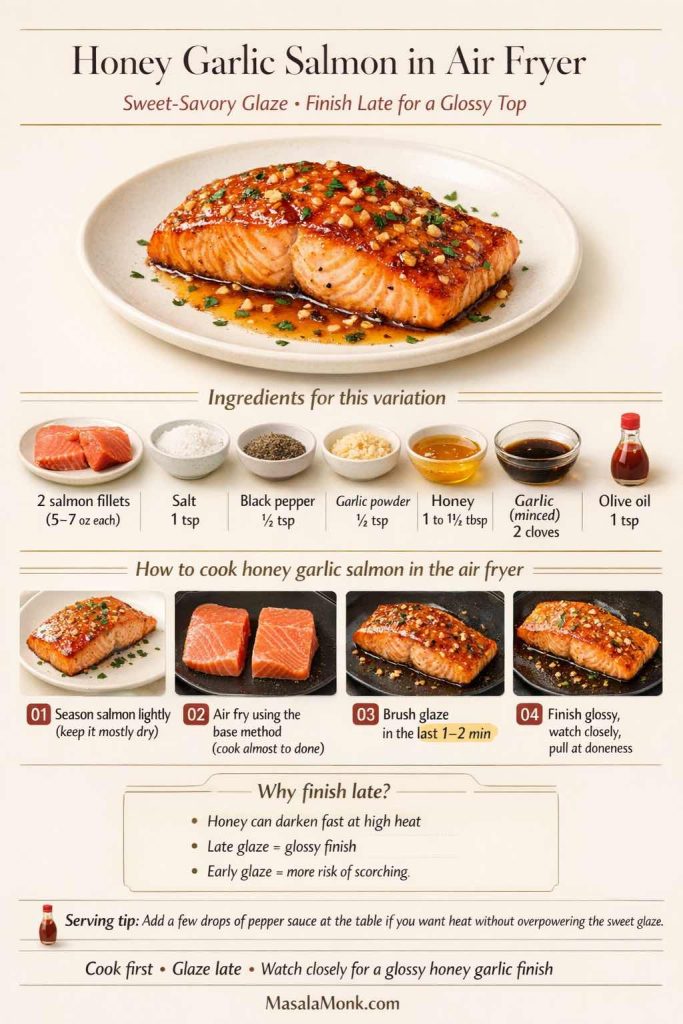
Recipe card infographic for honey garlic salmon in air fryer showing a glazed salmon fillet, ingredient amounts, and a 4-step method with the key tip to brush the honey garlic glaze in the last 1 to 2 minutes to prevent burning and keep a glossy finish.
Make Honey Garlic Salmon in the Air Fryer with a glossy sweet-savory finish—without burning the glaze. This recipe card shows the ingredient amounts, the 4-step method, and the key trick: cook the salmon first, then brush on the honey garlic glaze in the last 1–2 minutes. It’s an easy weeknight salmon recipe that looks impressive and tastes balanced, with an optional pepper sauce tip for extra heat at the table. Save this for later, pin it for your air fryer dinner board, and follow this post for the full air fryer salmon guide with more flavor variations like lemon garlic, blackened, and teriyaki.

A simple honey garlic finish works best when you:

  1. Cook the salmon almost to done
  2. Brush on the glaze
  3. Finish for 1 to 2 minutes
  4. Watch closely

Sweet glazes can darken quickly at high heat. Finishing late keeps the top glossy and flavorful instead of scorched.

If you want extra spice, add a few drops of pepper sauce at the table instead of mixing it into the glaze. That way, the sweetness stays balanced, and everyone can adjust the heat level.

Salmon marinade for air fryer

A quick note on marinades: they work, but wet marinades can reduce browning if you use too much.

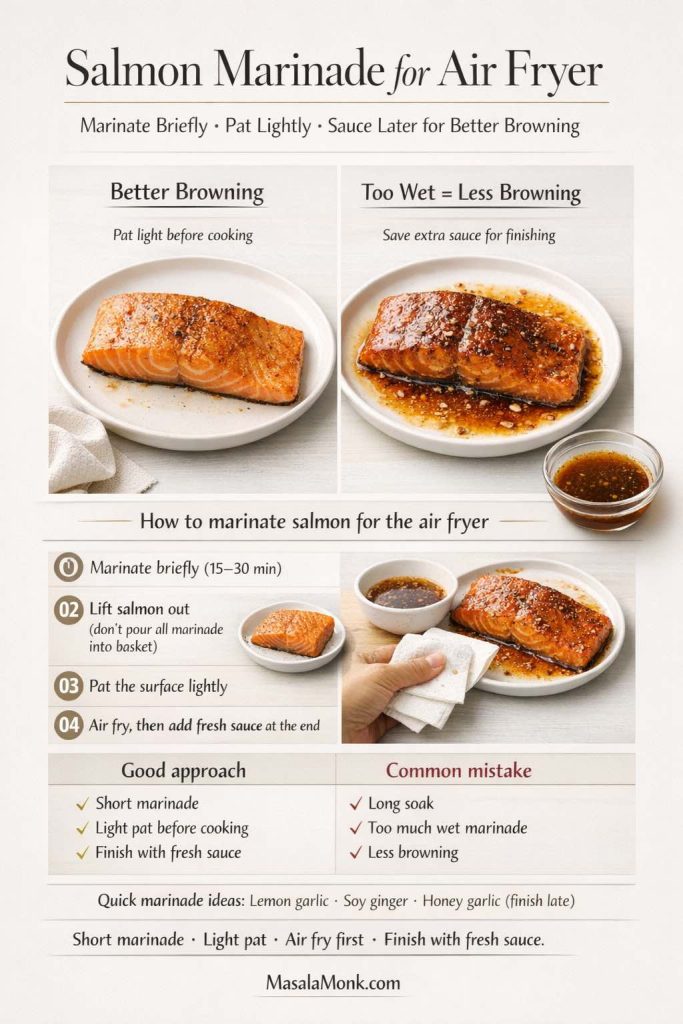
Infographic recipe guide titled “Salmon Marinade for Air Fryer” showing a side-by-side comparison of better browning vs too-wet marinade, a 4-step method for marinating salmon (15–30 minutes, lift out, pat lightly, air fry then finish with fresh sauce), and a quick tips panel for avoiding less browning.
Can you marinate salmon before air frying? Yes — but this guide shows how to do it without losing browning. The key is simple: marinate briefly (15–30 min), lift the salmon out instead of pouring all the marinade into the basket, pat the surface lightly, and finish with fresh sauce after cooking. This visual also includes a quick “good approach vs common mistake” comparison so you can avoid soggy, less-browned salmon. Save and pin this for easy weeknight air fryer salmon dinners.

If you want to marinate:

  • Keep it short (15 to 30 minutes is usually enough)
  • Pat the surface lightly before cooking
  • Save some fresh sauce for the end

This is why a lot of the best air fryer salmon recipes rely on dry seasoning first and sauce second.

Also Read: Ravioli Recipe Reinvented: 5 Indian-Inspired Twists on the Italian Classic


Common air fryer salmon mistakes and how to fix them

Even with a good method, a few things can throw off the final result. The good news is that most of them are easy to correct.

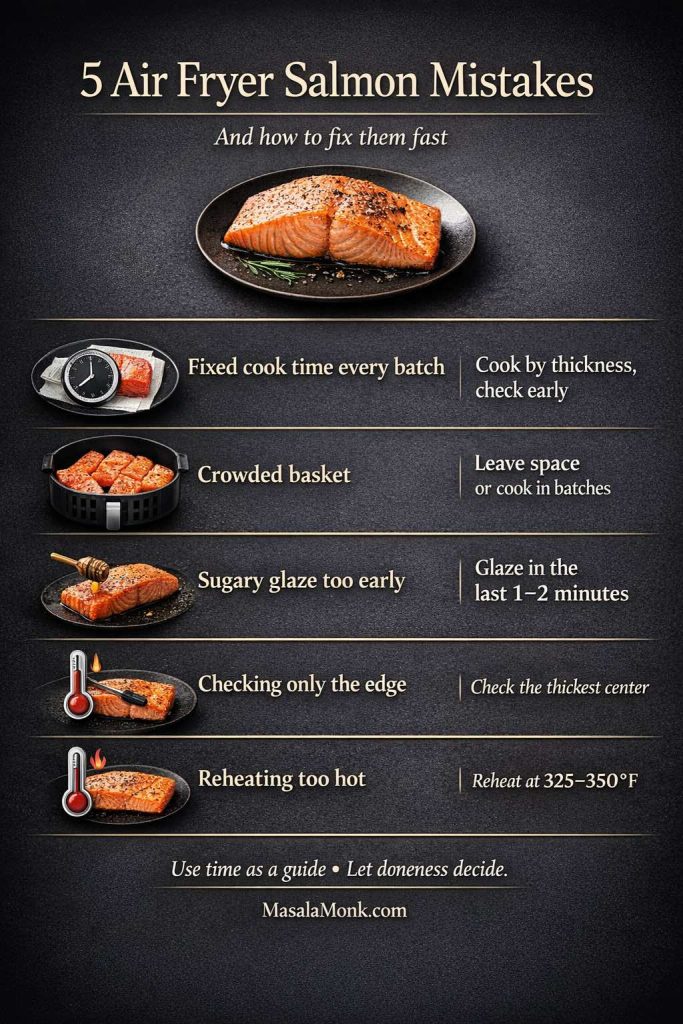
Air fryer salmon mistakes and fixes infographic showing five common problems and quick solutions: using a fixed cook time, crowding the basket, glazing too early, checking only the edge, and reheating too hot, with a cooked salmon hero image and troubleshooting tips.
Use this air fryer salmon mistakes and fixes guide to troubleshoot the most common problems fast—from overcooking by fixed time and crowding the basket to glazing too early and reheating too hot—so your salmon turns out juicier, more even, and more reliable every time.

Mistake 1: Cooking by one fixed time every time

No two fillets are exactly the same. Thickness changes everything.

Fix it by using a timing range, then checking early. Once you start treating the clock like a guide rather than a rule, your salmon gets more consistent immediately.

Mistake 2: Crowding the basket

When fillets are packed too tightly, hot air can’t move around them properly. The result is uneven cooking and weaker browning.

Fix it by cooking in batches if needed. It’s better to cook two good fillets than four crowded ones.

Mistake 3: Starting with a sugary glaze

Honey, teriyaki, and similar sauces taste great, but they burn fast.

Fix it by glazing near the end. Let the salmon cook first, then brush and finish.

Mistake 4: Not checking the thickest part

The edge of the fillet will look done before the center. If you only look at the edges, you’ll pull too early or keep cooking too long while trying to “fix” the wrong spot.

Fix it by checking the center every time.

Mistake 5: Overcooking leftovers during reheating

A lot of people blame the original cook when the real problem happens the next day. Reheating salmon too hot or too long dries it out fast.

Fix it by reheating gently at a lower temperature and just warming it through.

Also Read: Croquettes Recipe: One Master Method + 10 Popular Variations


Easy air fryer salmon variations for weeknights

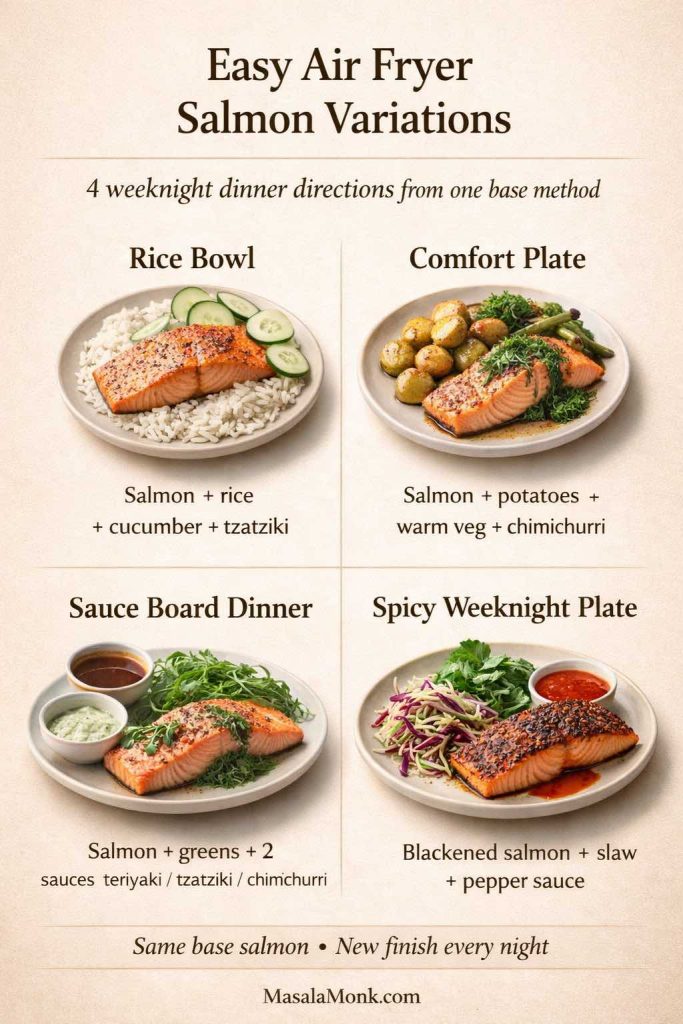
One of the best parts of a solid salmon air fryer recipe is how easily it turns into several dinners with very little extra work.

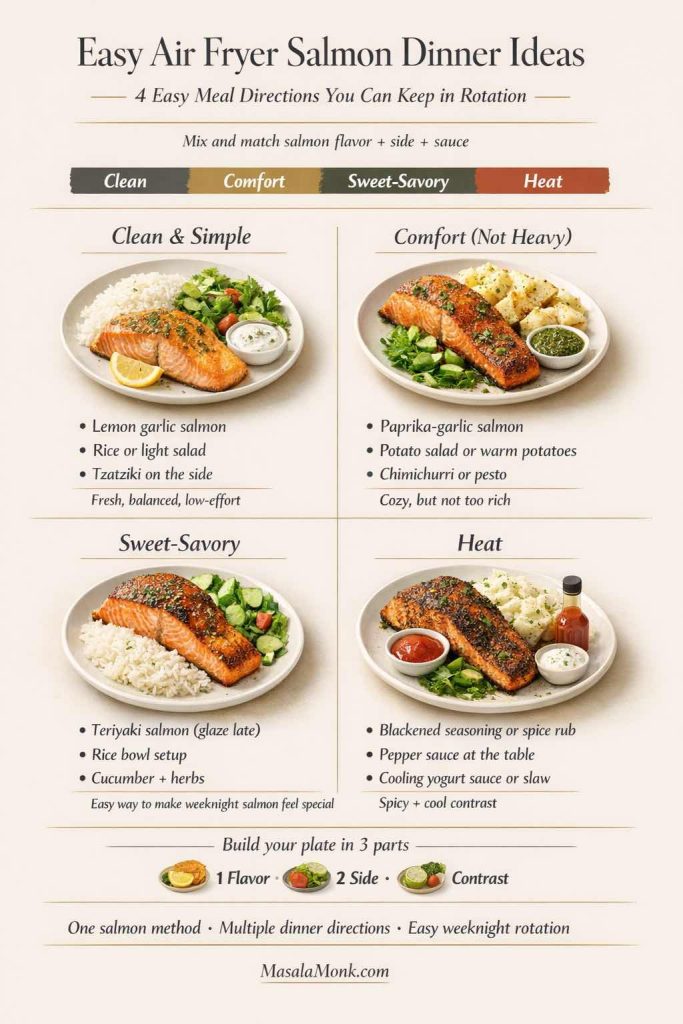
Use this easy air fryer salmon variations guide to turn one base air fryer salmon recipe into four weeknight dinners: a rice bowl, a comfort plate, a sauce-board dinner, and a spicy blackened salmon plate. It’s a quick visual planner for keeping salmon meals interesting without changing the core method.

Air fryer salmon bowl with rice and herbs

A salmon bowl is one of the easiest ways to turn this into a full meal.

Start with a base of rice, then add:

  • Flaked air fryer salmon
  • Sliced cucumber
  • Fresh herbs
  • Lemon wedges
  • Tzatziki or a yogurt sauce
  • Chili flakes, if you like heat

If you need a dependable rice base, MasalaMonk’s how to cook rice guide is a great companion because it walks through different rice types and methods in a way that makes weeknight bowls much easier to build.

Crispy-style salmon plate with a side of croquettes

When you want something a little more fun than the usual rice-and-veg combo, pair the salmon with a crisp side.

This is where a side like croquettes fits surprisingly well. MasalaMonk’s croquettes recipe guide is especially useful if you like the idea of one method that can be baked, fried, or air-fried and reused with different fillings. It also naturally opens the door to leftover salmon ideas later in the week.

Sauce-board salmon dinner

Another easy way to make the same salmon feel new is to serve it with more than one sauce.

A simple plate with the same air fryer salmon fillets can feel completely different when you offer:

That setup works especially well when people at the table like different flavor styles, and it makes the meal feel more generous without much extra cooking.

Lemon herb salmon with pesto on the side

Pesto is often associated with pasta, but it works beautifully with salmon too.

A spoonful of pesto on warm salmon adds richness, herbs, and a lot of flavor very quickly. It’s a great pairing if you’re keeping the salmon seasoning simple and want the sauce to do more of the work.

This version also pairs well with roasted potatoes, rice, or a crisp salad.

Spicy salmon with pepper sauce finish

If you enjoy heat, a bright pepper sauce works better than an overly aggressive spice rub in many cases.

You can keep the salmon seasoned simply, then finish with a few drops of pepper sauce at the table. That gives you more control over the spice level and keeps the salmon from tasting flat or one-note.

It’s a small move, but it makes the same basic air fryer salmon feel much more dynamic.

Also Read: How to Make a Flax Egg (Recipe & Ratio for Vegan Baking)


What to serve with air fryer salmon

Salmon is flexible enough to go in several directions, so this part depends on the kind of meal you want: clean and light, cozy and comforting, or a little more dinner-party style.

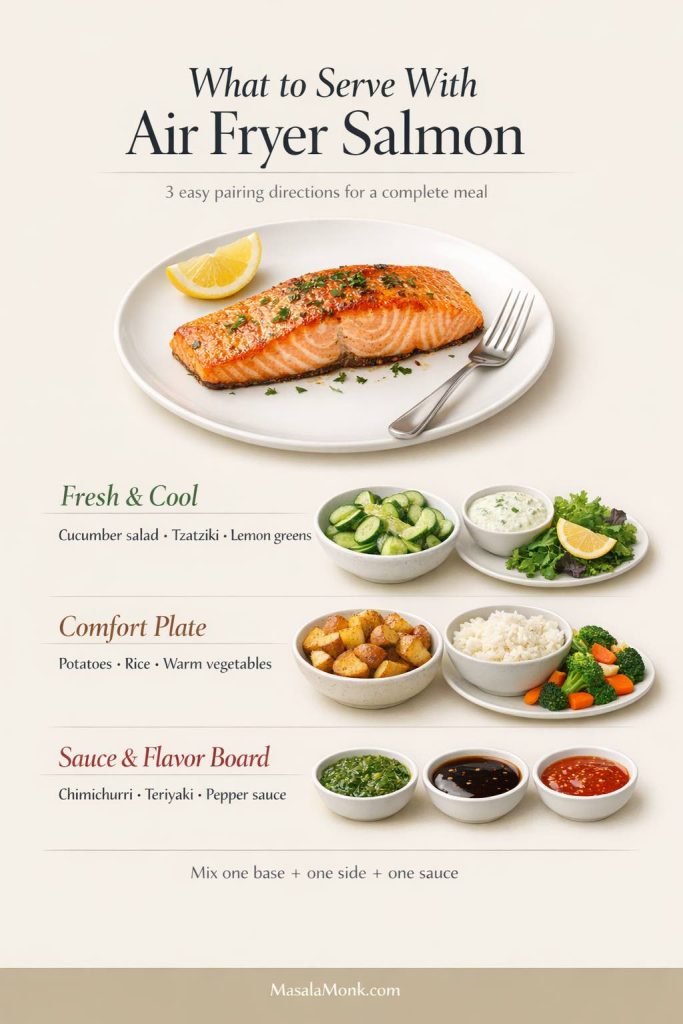
What to serve with air fryer salmon pairing guide showing a cooked salmon fillet with side dish ideas including cucumber salad, tzatziki, lemon greens, potatoes, rice, warm vegetables, and sauce options like chimichurri, teriyaki, and pepper sauce.
What to serve with air fried salmon: use this pairing guide to build an easy full meal with fresh sides, comfort-style options, and flavorful sauces. Mix one base, one side, and one sauce to turn your salmon fillets into a complete dinner without overthinking it.

Fresh, cool sides that balance salmon well

Because salmon is naturally rich, cool sides are a great match.

Some of the easiest options:

  • Cucumber salad
  • Lemony greens
  • Yogurt-herb sauce
  • Tomato and onion salad
  • Light slaw

If you want a more substantial cold side, a scoop of potato salad works especially well. MasalaMonk’s potato salad recipes post is handy here because it includes multiple styles, so you can pair a sharper German-style salad with glazed salmon or a creamier version with lemon garlic salmon.

Warm sides for a more filling dinner

If you want a heartier plate, salmon pairs beautifully with:

  • Rice
  • Roasted potatoes
  • Steamed vegetables with butter and lemon
  • SautĂŠed greens
  • Simple pasta

Rice is one of the easiest choices because it absorbs sauces well and turns leftover salmon into an easy next-day bowl.

Sauce-led pairings that make the same salmon feel different

Sometimes the side isn’t the main decision. The sauce is.

If you want to keep the salmon method exactly the same and still avoid boredom, rotate sauces:

That rotation alone can carry multiple weeks of dinners without changing how you cook the fish.

Drinks and desserts that round out the meal

If you like building a complete dinner experience, this is an easy place to add a little personality without complicating the main recipe.

For drinks, a crisp non-alcoholic option pairs really well with salmon, especially when the seasoning leans citrusy or spicy. MasalaMonk’s keto mocktails guide is a good place to pull ideas like fresh, low-sugar coolers and citrus-forward drinks.

For dessert, a simple make-ahead option works especially well after fish:

Those pairings make the meal feel complete without pulling you into an overly heavy dessert.

Also Read: Pork Tenderloin in Oven (Juicy, Easy, 350°F or 400°F) Recipe


Reheating salmon in air fryer without drying it out

Leftovers are where a lot of salmon recipes quietly fail, not because the original dish was bad, but because the reheating is too aggressive.

The good news: reheating salmon in air fryer works really well when you treat it gently.

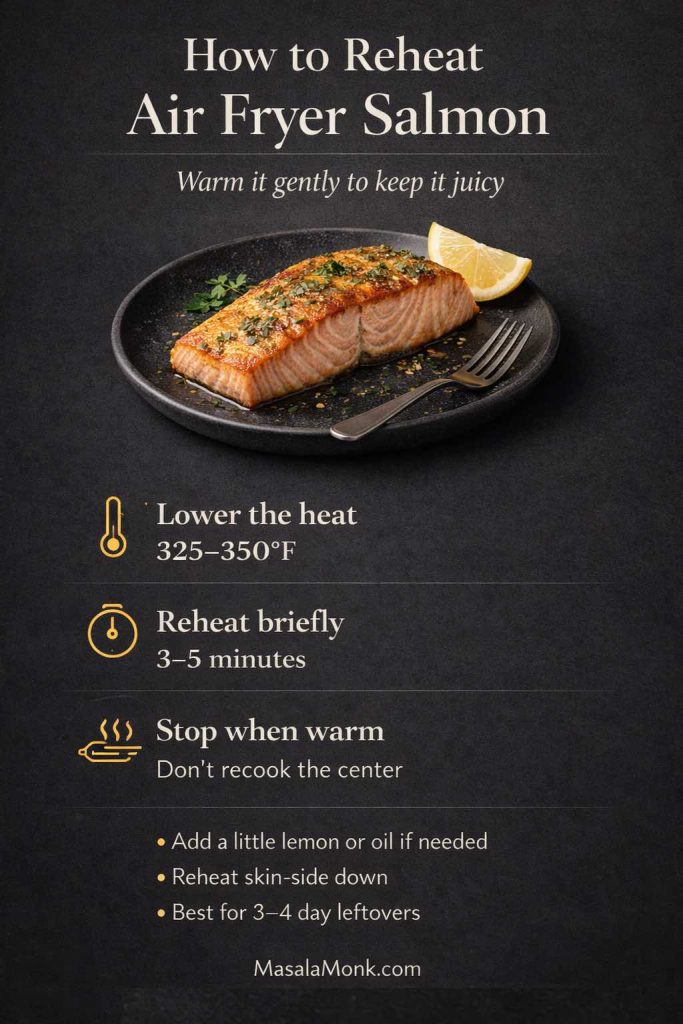
How to reheat air fryer salmon infographic showing leftover salmon reheating steps, including 325–350°F, 3–5 minutes, and tips to keep salmon juicy without drying out.
Reheating air fried salmon is easy when you keep the heat low and the time short. Use this quick guide to warm leftover salmon at 325–350°F for 3–5 minutes so it stays juicy instead of drying out.

How to store cooked salmon first

Before reheating, proper storage matters.

Let the salmon cool slightly, then transfer it to an airtight container and refrigerate it. The USDA’s Ask USDA guidance states that cooked fish and seafood can be safely stored in the refrigerator for 3 to 4 days. (Ask USDA)

That’s a great practical window for meal planning: dinner on day one, leftovers on day two or three.

For broader seafood handling and storage basics, the FDA’s seafood safety guidance is also useful, especially its advice on keeping seafood cold and handling fresh or frozen seafood properly. (U.S. Food and Drug Administration)

Best way to reheat salmon in air fryer

To reheat without drying:

  • Set the air fryer to 325°F to 350°F
  • Reheat for 3 to 5 minutes
  • Check early and stop as soon as it’s warmed through

That lower-temperature approach is much better than trying to re-crisp it at 400°F.

If the salmon seems a little dry from the fridge, brush on a tiny bit of oil or squeeze lemon over it before reheating. A spoon of sauce after reheating also helps a lot.

Reheating skin-on salmon

If your leftover salmon has skin, reheat skin-side down. It won’t be exactly the same as fresh, but it keeps the fillet stable and helps avoid tearing.

You can also flake leftover salmon and warm it briefly for:

  • Rice bowls
  • Salads
  • Wraps
  • Grain bowls
  • Quick pasta tosses

That’s often the easiest way to reuse salmon without worrying about perfect texture the second time.

Also Read: Chicken Pesto Pasta (Easy Base Recipe + Creamy, One-Pot, Baked & More)


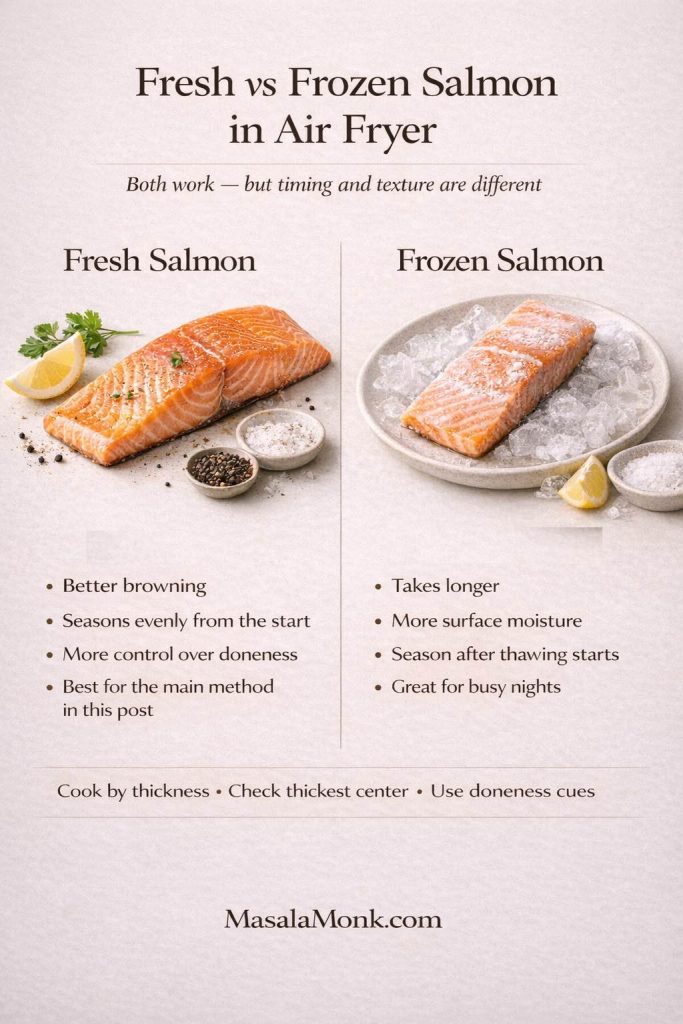
Fresh vs frozen salmon in the air fryer

This post is focused on fresh salmon, but it’s still useful to understand where frozen fits in.

Fresh vs frozen salmon in air fryer comparison guide showing differences in browning, timing, surface moisture, and seasoning approach, with side-by-side salmon fillet visuals and cooking tips.
Fresh vs frozen salmon in the air fryer: this quick comparison shows how timing, browning, and seasoning change depending on what you start with, so you can cook either version with better results and fewer surprises.

Fresh salmon in air fryer gives you more control

Fillets of fresh salmon are easier to season evenly, easier to monitor, and usually cook more predictably. You get better browning and more control over the final texture.

That’s one reason this guide uses fresh salmon as the baseline method.

Frozen salmon in air fryer can still work

Frozen salmon in air fryer is absolutely possible, and it can be a lifesaver on busy nights. The process is just different:

  • It usually takes longer
  • Surface moisture changes the texture
  • Seasoning often works better partway through

If you cook frozen salmon often, it’s worth eventually giving it its own dedicated method because the timing, seasoning flow, and texture cues are different from fresh fillets.

For now, if you’re cooking from frozen and want the best result, the same principle still helps: cook by doneness, not just by the clock.

Also Read: Chicken Pesto Pasta (Easy Base Recipe + Creamy, One-Pot, Baked & More)


Air fryer salmon for different cuts and salmon types

Once you’ve made basic fillets a few times, you can use the same logic across different salmon cuts.

Air fryer salmon time and temperature by cut guide showing salmon fillets, salmon steaks, and salmon bites with cooking tips, doneness cues, and a 390–400°F recommendation.
Use this air fryer salmon by-cut guide to adjust your method for fillets, steaks, and salmon bites. It’s a quick visual reference for cook time differences, doneness checks, and better texture across different salmon cuts.

Salmon fillets in air fryer

This is the easiest and most common format. The base method in this post is designed around salmon fillets, including:

  • Atlantic salmon
  • Coho salmon
  • Sockeye salmon
  • Wild salmon portions
  • Farmed salmon fillets

The exact time changes, but the process stays the same.

Sockeye salmon air fryer notes

Sockeye is often leaner than some other salmon types, so it can overcook a little faster.

If you’re making sockeye salmon air fryer style:

  • Start checking a bit earlier
  • Don’t rely on a long cook time
  • Consider a sauce or glaze for extra moisture and richness

Coho and Atlantic salmon in air fryer

Coho and Atlantic fillets often behave very well in the air fryer, especially in standard grocery-store thicknesses.

Atlantic salmon tends to be richer and more forgiving, which makes it a nice choice if you’re learning the method. Coho can be excellent too, just a little less forgiving if overcooked.

Salmon pieces and smaller portions

If you’re cooking salmon pieces in air fryer (smaller cuts, trimmed portions, or bite-sized pieces), reduce the time and watch closely. Small pieces cook very fast.

For salmon bites, it helps to:

  • Cut pieces evenly
  • Coat lightly
  • Avoid over-saucing at the start
  • Shake or turn once if needed

Also Read: Slow Cooker Pork Tenderloin (Crock Pot Recipe) — 3 Easy Ways


A few easy dinner directions you can keep in rotation

Once you’ve made this salmon recipe a few times, it helps to have a few “default directions” in mind so dinner doesn’t feel repetitive.

Infographic titled “Easy Air Fryer Salmon Dinner Ideas” showing four meal directions for air fryer salmon: Clean & Simple (lemon garlic salmon with rice or salad and tzatziki), Comfort (paprika-garlic salmon with potatoes and chimichurri/pesto), Sweet-Savory (teriyaki salmon with rice and cucumber), and Heat (blackened salmon with pepper sauce and a cooling yogurt sauce or slaw). Includes a “build your plate in 3 parts” tip: flavor, side, and contrast.
Keep weeknight salmon from feeling repetitive with this Easy Air Fryer Salmon Dinner Ideas guide 🐟✨ This visual gives you 4 easy meal directions you can rotate: Clean & Simple (lemon garlic + rice/salad + tzatziki), Comfort (Not Heavy) (paprika-garlic + potatoes + chimichurri/pesto), Sweet-Savory (teriyaki salmon + rice bowl + cucumber/herbs), and Heat (blackened salmon + pepper sauce + cooling yogurt sauce/slaw). It also includes a quick “build your plate in 3 parts” formula so dinner is easier to plan. Save and pin this for busy nights, follow the full air fryer salmon method, doneness tips, and flavor variations in this post.

When you want something clean and simple

Go with:

  • Lemon garlic salmon
  • Rice or a light salad
  • Tzatziki on the side

It feels fresh, balanced, and low-effort.

When you want a little comfort without a heavy meal

Go with:

  • Paprika-garlic salmon
  • Potato salad or warm potatoes
  • Chimichurri or pesto for a flavor lift

You still get a cozy plate, but it doesn’t feel too rich.

When you want a sweet-savory finish

Go with:

  • Teriyaki salmon in air fryer (glaze at the end)
  • Rice bowl setup
  • Cucumber and herbs for contrast

This is one of the easiest ways to make salmon feel special on a weekday.

When you want heat

Go with:

  • Blackened seasoning or a simple spice rub
  • Pepper sauce at the table
  • A cooling side like yogurt sauce or slaw

The contrast is what makes it work.

Also Read: Keto Mocktails: 10 Low Carb, Sugar Free Recipes


Final thoughts

A really good air fryer salmon recipe is less about chasing a perfect one-time result and more about learning a method you can trust. Once you know your air fryer, your preferred temperature, and your doneness cues, the rest becomes easy. You stop hovering. You stop overcooking “just in case.” And suddenly salmon becomes one of the fastest, most dependable dinners in your kitchen.

A final recap card for the post: learn one reliable air fryer salmon method, then keep dinner interesting by changing the finish. This visual sums up the core flow (prep, cook by thickness, check doneness, stop at doneness) and shows how the same base salmon can turn into totally different meals with tzatziki, chimichurri, teriyaki glaze, pepper sauce, or lemon and herbs. It’s the easiest way to make air fryer salmon part of a weekly rotation without getting repetitive. Save and share this guide for quick weeknight dinner inspiration.

That’s why this base method is worth learning first.

It covers the fundamentals—how to prep the fillets, how to cook salmon in the air fryer, how to handle air fryer salmon time and temp, how to work with skin-on or skinless pieces, and how to reheat leftovers properly. From there, you can branch into all the versions people actually make in real life: honey garlic air fryer salmon, teriyaki salmon, blackened salmon, lemon salmon, salmon bowls, and more.

And if you want to keep the same fish but make dinner feel completely different next time, the easiest move is usually not changing the cooking method at all. Just change the finish: a spoon of chimichurri, a swipe of tzatziki, a teriyaki glaze, a little pepper sauce, or a fresh pesto on the side.

That way, the method stays easy, but the meal never gets boring.

Also Read: Crock Pot Pork Chops and Sauerkraut (No Dry Chops Recipe)


Frequently Asked Questions

1. How long does salmon take in the air fryer?

In most cases, salmon in the air fryer takes about 7 to 11 minutes at 390°F to 400°F, but the exact time depends on thickness. Thin fillets can finish in 5 to 7 minutes, while thicker center-cut pieces may need 9 to 12 minutes. Rather than relying on one fixed time, start checking early and finish based on doneness.

2. What is the best temperature for air fryer salmon?

For most fillets, the best temperature for air fryer salmon is 390°F to 400°F. If your air fryer runs hot, 390°F gives you a little more control. On the other hand, 400°F is great when you want a quicker cook and a slightly more roasted top.

3. How do I know when air fryer salmon is done?

The easiest way to tell is by checking the thickest center of the fillet. The salmon should look opaque and flake gently with a fork. If you use a thermometer, check the center and cook until it reaches the proper internal temperature for fish. In addition, avoid judging doneness by the edges alone, because they cook faster than the middle.

4. Do I need to flip salmon in the air fryer?

Usually, no. Most air fryer salmon recipes cook well without flipping, especially when the fillets are placed in a single layer with space around them. If you’re cooking skin-on salmon, keep it skin-side down and leave it undisturbed for the best texture.

5. Can I cook salmon with skin in the air fryer?

Yes, and air fryer salmon with skin is often easier to cook well. The skin helps hold the fillet together and can protect the bottom from overcooking. For better texture, pat the skin dry, use a light coating of oil, and cook skin-side down.

6. How do I get crispy skin salmon in the air fryer?

To get crispier skin, start with very dry skin, use only a light layer of oil, and avoid overcrowding the basket. Also, serve the salmon right away, because trapped steam softens the skin quickly. While every air fryer behaves a little differently, these steps noticeably improve crispy skin salmon in air fryer cooking.

7. Can I make salmon fillets in the air fryer without drying them out?

Absolutely. The key is to cook by thickness, not just by the clock. Keep the temperature steady, check early, and stop cooking as soon as the salmon is done. As a result, your salmon fillet in air fryer stays moist instead of turning chalky or dry.

8. What seasoning works best for air fryer salmon?

A simple mix of salt, pepper, garlic powder, and paprika works beautifully for everyday air fryer salmon. After that, you can build other flavors easily—lemon garlic, blackened, teriyaki, or honey garlic—without changing the core cooking method.

9. Can I use a marinade for salmon in the air fryer?

Yes, although lighter marinades usually work better than very wet ones. If the marinade is too heavy, the salmon can steam instead of roast. For better results, marinate briefly, pat off excess moisture, and add glaze-style sauces near the end of cooking.

10. Can I cook frozen salmon in air fryer?

Yes, frozen salmon in air fryer is possible and very convenient. However, it takes longer than fresh salmon and often needs a slightly different seasoning approach because of the extra surface moisture. If you cook from frozen often, it helps to use a separate method with its own time and temperature flow.

11. What is the best way to cook frozen salmon in air fryer?

The best way to cook frozen salmon in air fryer is to start cooking first, then season once the surface thaws enough for seasoning to stick properly. Since frozen fillets release moisture as they cook, check doneness in the thickest center and expect a longer total cook time than fresh salmon.

12. Can I cook salmon steak in the air fryer?

Yes, salmon steak in air fryer works well, but it may take a little longer than a fillet because the cut is thicker and shaped differently around the center bone. Use the same temperature range (390°F to 400°F), then check the thickest part for doneness.

13. What’s the difference between cooking fresh salmon and frozen salmon in the air fryer?

Fresh salmon in air fryer usually gives you better browning and more control over seasoning from the start. Frozen salmon in the air fryer is still a great option, though it cooks differently because moisture releases as it thaws. In either case, checking doneness early makes the biggest difference.

14. Can I make teriyaki salmon in the air fryer?

Yes, teriyaki salmon air fryer style is one of the easiest variations. Still, the best approach is to cook the salmon most of the way first, then brush on teriyaki sauce in the last minute or two. That way, the glaze turns glossy without burning.

15. Can I make honey garlic salmon in the air fryer?

Definitely. Honey garlic salmon air fryer recipes work best when the glaze is added near the end, just like teriyaki. Because honey can darken quickly at high heat, finishing late helps you get a sweet, sticky coating without scorching.

16. How do I reheat salmon in air fryer without drying it out?

For reheating salmon in air fryer, use a lower temperature than you used for cooking—usually 325°F to 350°F. Warm it for 3 to 5 minutes, then stop as soon as it’s heated through. A small brush of oil or a squeeze of lemon can help keep the texture moist.

17. How long can I keep cooked air fryer salmon in the fridge?

Cooked salmon is best within a few days when stored in an airtight container in the refrigerator. For the best texture, reheat gently instead of using very high heat. Likewise, flaking leftover salmon into bowls or salads is a great way to use it without overcooking.

18. Can I cook salmon in a Ninja air fryer using the same method?

Yes, the same overall method works for salmon in a Ninja air fryer, including seasoning, basket spacing, and checking doneness early. Even so, different models can run hotter or faster, so use the recommended time range as a guide and check the fillet a little early the first time.

19. Why is my salmon overcooked in the air fryer?

Usually, overcooked salmon happens because the fillet was cooked by a fixed time instead of checked by thickness and doneness. Another common reason is using a sugary glaze too early, which can make the outside look done before the center is ready. Starting your doneness check earlier solves most of this.

20. What is the easiest air fryer salmon recipe for beginners?

The easiest air fryer salmon recipe for beginners is a simple fillet with olive oil, salt, pepper, garlic powder, and paprika cooked at 390°F to 400°F. Once that base is working well, you can branch into lemon garlic, blackened, teriyaki, or honey glazed salmon without changing the core method.