
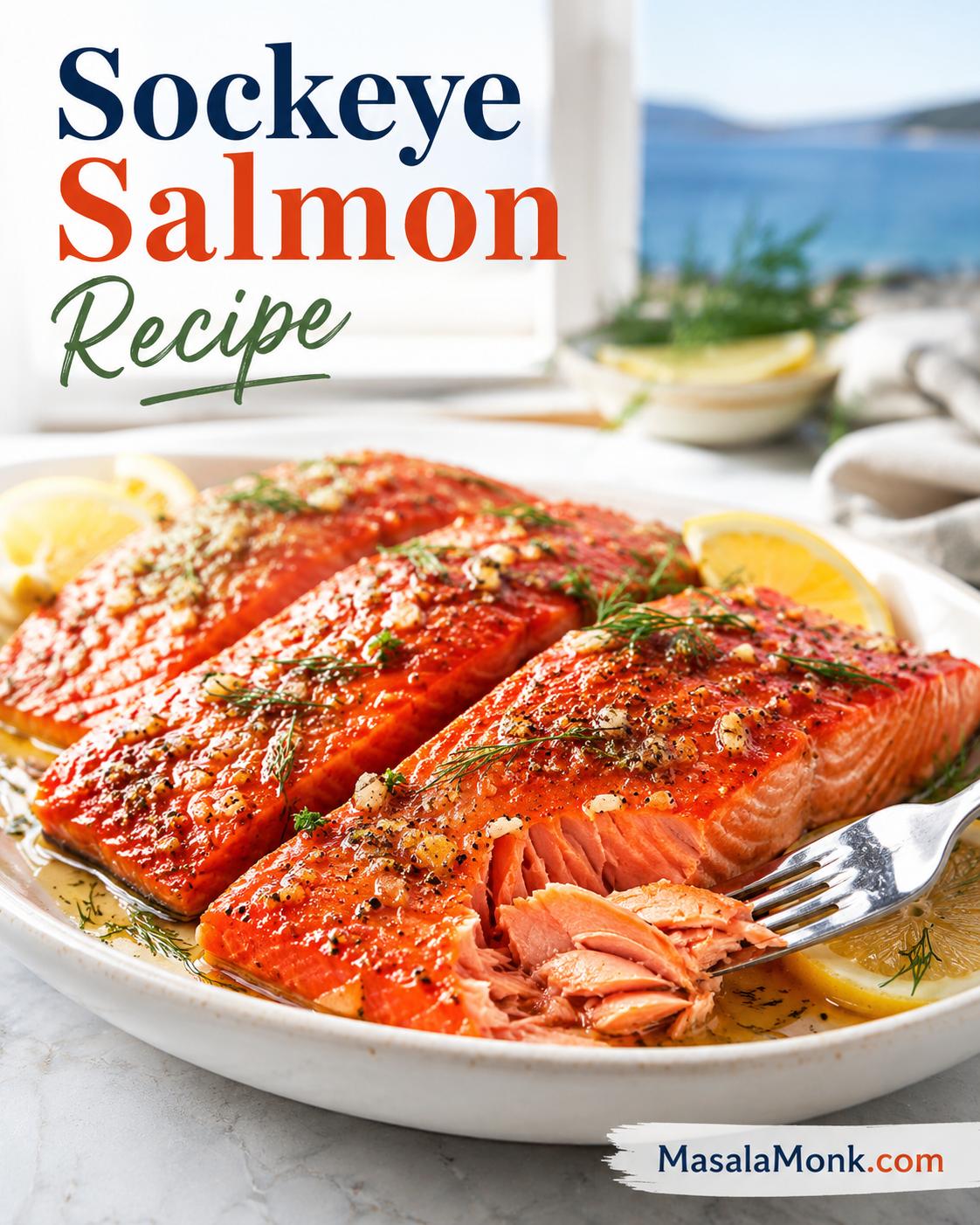
Sockeye is the salmon people are excited to buy and nervous to cook. It is deep red, clean-tasting, beautifully firm, and easy to overdo if the heat runs long.
This sockeye salmon recipe keeps the fish moist from the start. Skin-on fillets give the flesh a buffer, a thin coat of oil or butter keeps the surface glossy, and lemon-garlic seasoning stays bright instead of heavy. The finish should taste fresh and clean, not like the fish needed rescuing at the end.
The main version bakes 5–6 oz sockeye fillets at 400°F / 200°C for 8–12 minutes. Thin fillets can use the gentler foil method at 375°F / 190°C. From there, you can adjust for frozen fish, a whole side, pan-searing, grilling, air frying, leftovers, and the little problems that show up when wild salmon cooks faster than expected.
The goal: moist baked wild salmon with bright lemon, gentle garlic, fresh herbs, protected skin-side-down cooking, and enough timing confidence to stop before the flakes tighten.
What You’ll Find in This Guide
Cook the Sockeye
Quick Answer: Best Way to Cook Sockeye Salmon
Bake skin-on sockeye salmon at 400°F / 200°C for 8–12 minutes. For thin fillets, use 375°F / 190°C in a loose foil packet for 10–12 minutes. Pull when the center flakes gently and still looks moist.
If your fillets are unusually thin, thick, or uneven, use the thickness-based baking chart before you set the timer.
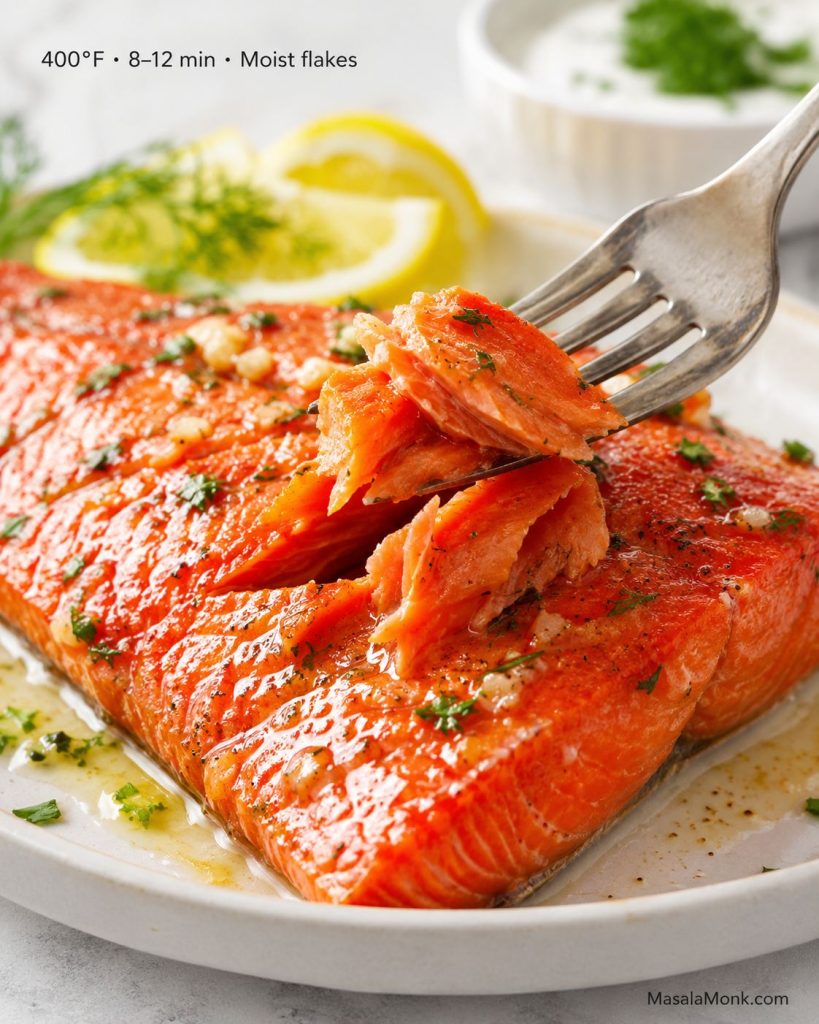
For official food safety, salmon should reach 145°F / 63°C. The official temperature guidance is available from FoodSafety.gov.
Sockeye Salmon Recipe at a Glance
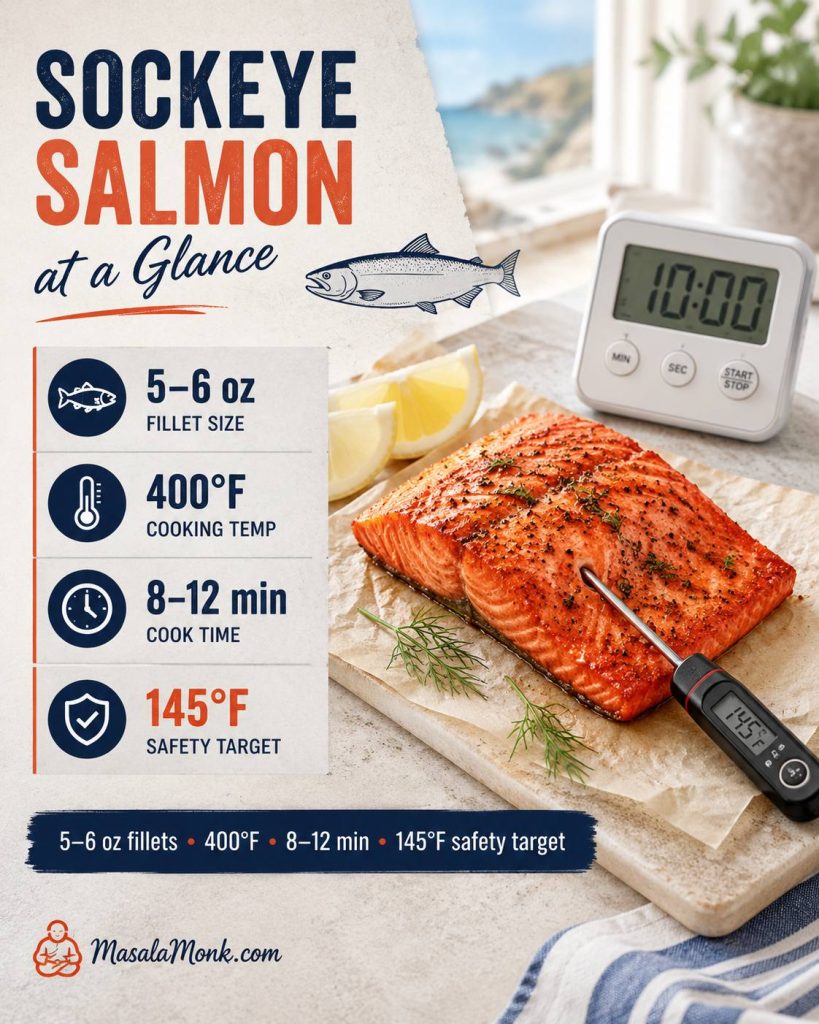
Before you start: If the salmon looks thin or delicate, use the gentler 375°F / 190°C foil method. Start looking before the timer ends, and finish with fresh lemon after baking instead of soaking the fish before it cooks.
The sauce is not doing the heavy lifting here. The timing is.
Which Sockeye Salmon Method Should You Choose?
Choose the method based on the fish in front of you. A normal fillet can bake uncovered, a thin one deserves gentler heat, and a whole side needs attention near the tail.

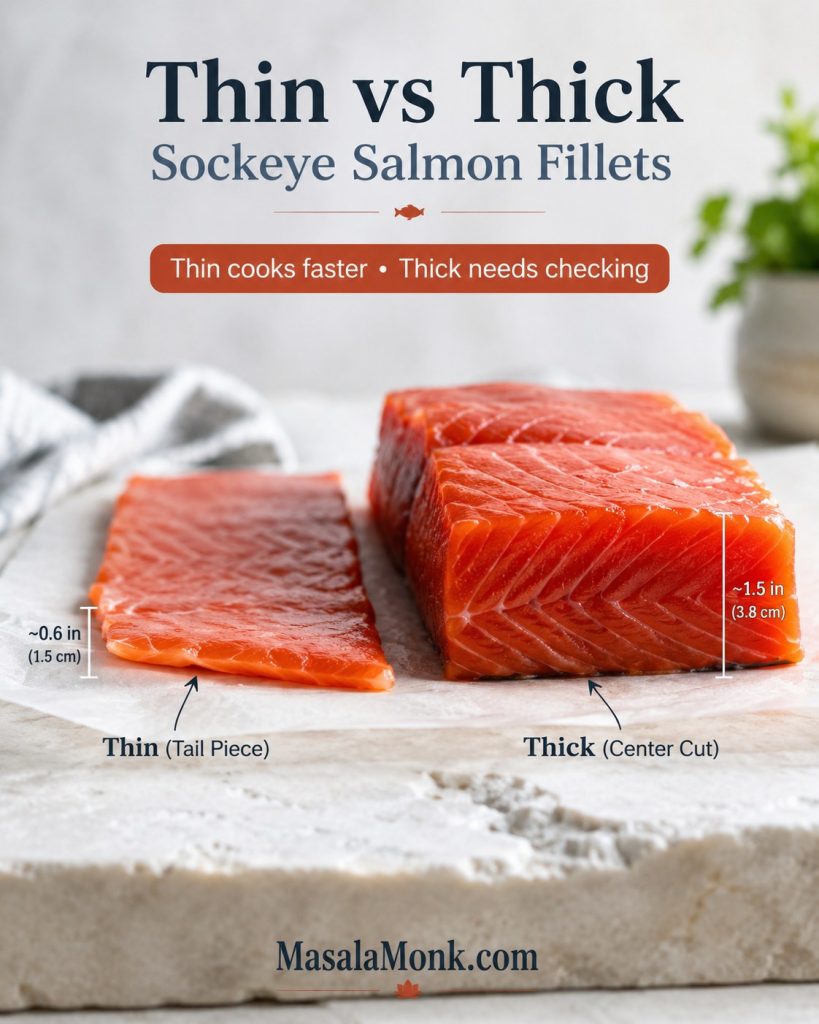
Thin vs Thick Sockeye Fillets
Before choosing a method, look at the thickness of the fish. A thin tail piece and a thicker center cut need different levels of attention.
| If you want… | Choose this method | Why it works |
|---|---|---|
| I have normal 5–6 oz fillets and want dinner fast | 400°F baked fillets | Simple, reliable, and quick for weeknight portions. |
| My fillets look thin or delicate | 375°F foil packet | Gentler heat gives the fish more protection. |
| Crisp skin | Pan-seared sockeye | Most of the cooking happens skin-side down. |
| Smoky flavor | Grilled sockeye | Great for outdoor cooking, especially with skin-on fillets. |
| A fast small portion | Air fryer sockeye | Fast and convenient, but thin pieces need close watching. |
| I forgot to thaw the fish | Covered frozen oven method | Starts with steam, then finishes uncovered with seasoning. |
| I have a whole side to serve | Whole-side baked sockeye | Looks beautiful and stays easier to manage skin-side down. |
What Makes Sockeye Different?
Sockeye is a Pacific salmon with deep red-orange flesh, firm texture, and a stronger flavor than mild farmed salmon. Alaska Fish & Game describes sockeye as prized for its firm, bright-orange flesh, and NOAA Fisheries identifies it as one of the most important wild salmon species in U.S. waters.
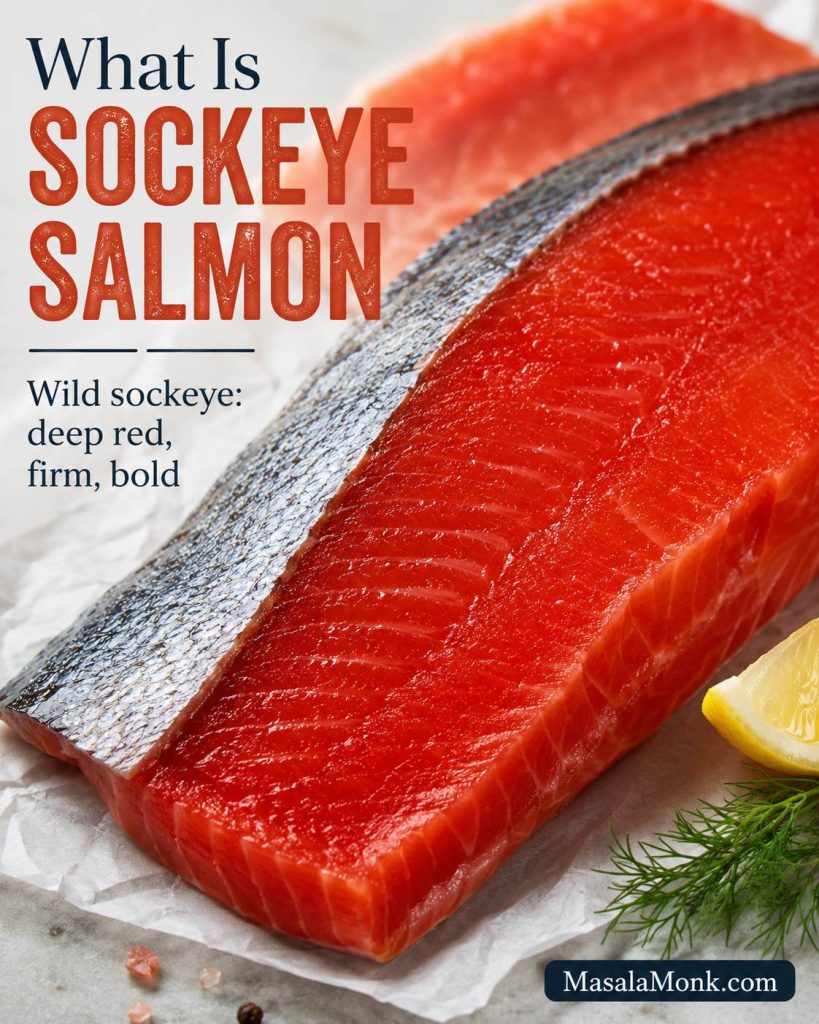
In the kitchen, that firmness is a gift and a warning. Sockeye holds beautiful flakes, but it has less fatty cushion than many farmed salmon fillets, so a minute or two too long can move it from glossy to dry.
That is also why the internal temperature guide and moisture tips matter more for sockeye than for fattier salmon.
Why This Recipe Works
Sockeye rewards restraint. The best fillets are not blasted into flakiness; they are protected underneath, lightly coated on top, and pulled while the center still looks tender.
- Skin-on baking gives the fish a heat shield. The skin takes the direct heat while the flesh stays easier to lift and serve.
- Oil or butter keeps the surface glossy. It helps seasoning cling and gives the top a little protection from dry oven heat.
- Lemon zest adds brightness without too much acid. Lemon juice is useful, but zest brings aroma without tightening the surface.
- Moderate oven heat keeps the cook controlled. 400°F / 200°C is quick enough for weeknights, while 375°F / 190°C is better for delicate pieces.
- A short rest settles the flakes. The center finishes gently while you get lemon, herbs, and sides ready.
The core idea: cook sockeye like wild salmon, not like a thick, fatty fillet. Protect it underneath, gloss it lightly on top, and stop before the surface turns dull.
Ingredients for Baked Sockeye Salmon
Keep the flavor simple: lemon, garlic, herbs, and a little oil or butter.

| Ingredient | Amount | Why it matters |
|---|---|---|
| Skin-on sockeye salmon fillets | 4 fillets, 5–6 oz / 140–170 g each | The easiest size for the timing in this recipe. |
| Total salmon weight | 1¼–1½ lb / 565–680 g | A practical amount for 4 servings. |
| Olive oil or melted butter | 2 tbsp / 30 ml | Adds surface moisture and helps seasoning cling. |
| Fresh lemon juice | 1 tbsp / 15 ml | Brightens the richer wild salmon flavor. |
| Lemon zest | 1 tsp / about 2 g | Adds lemon aroma without too much acidity. |
| Garlic, finely minced | 2 cloves / about 6 g | Gives the fish a savory backbone. |
| Kosher salt | ¾ tsp / about 3–4 g | Seasons the fish clearly without overwhelming it. |
| Black pepper | ¼–½ tsp | Adds gentle heat. |
| Fresh dill or parsley | 1 tbsp chopped | Fresh herbs lift the finished salmon. |
| Dijon mustard, optional | 1 tsp / 5 g | Adds tang and helps create a light glaze. |
| Maple syrup or honey, optional | 1–2 tsp / 5–10 ml | Balances sockeye’s bold flavor and helps browning. |
Best Sockeye Salmon to Use
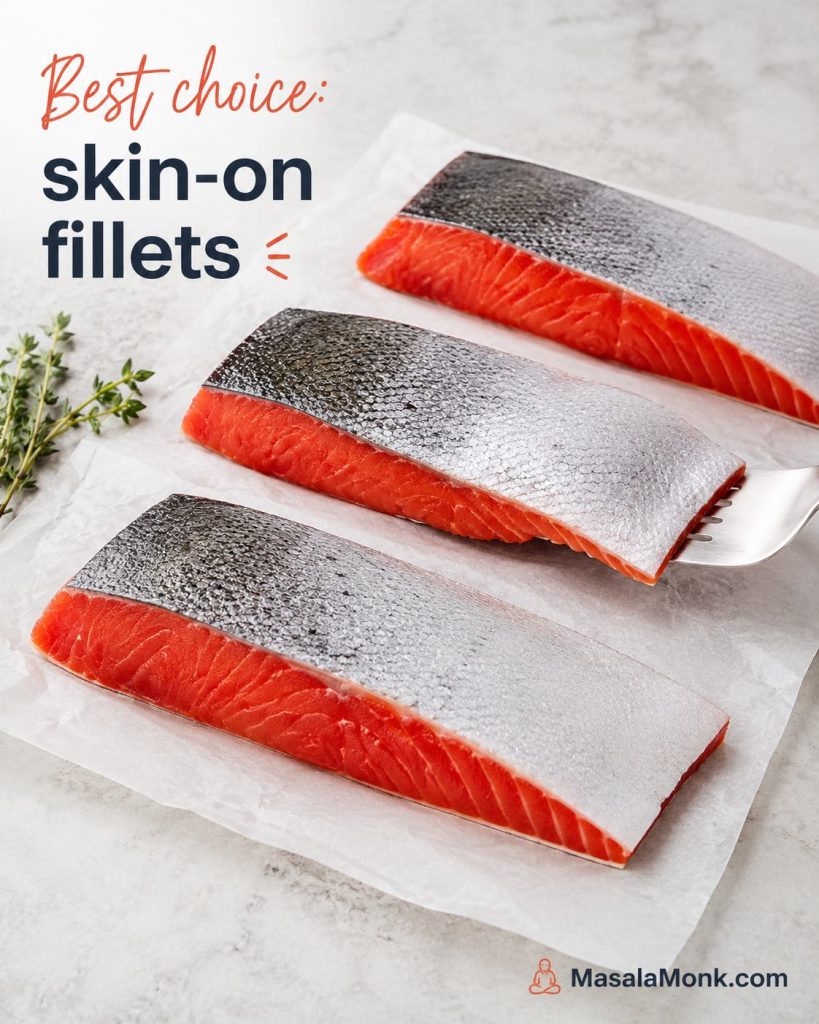
Skin-on fillets are the easiest choice. Look for pieces that are evenly cut, bright in color, and not dried around the edges. If the tail end is very thin, plan to check it early or fold it under before baking.
Fresh vs Frozen Sockeye Salmon
Fresh wild sockeye is wonderful when it is in season, but frozen sockeye is often the more realistic option. Good frozen sockeye can be excellent, especially when it was frozen quickly and kept properly cold.
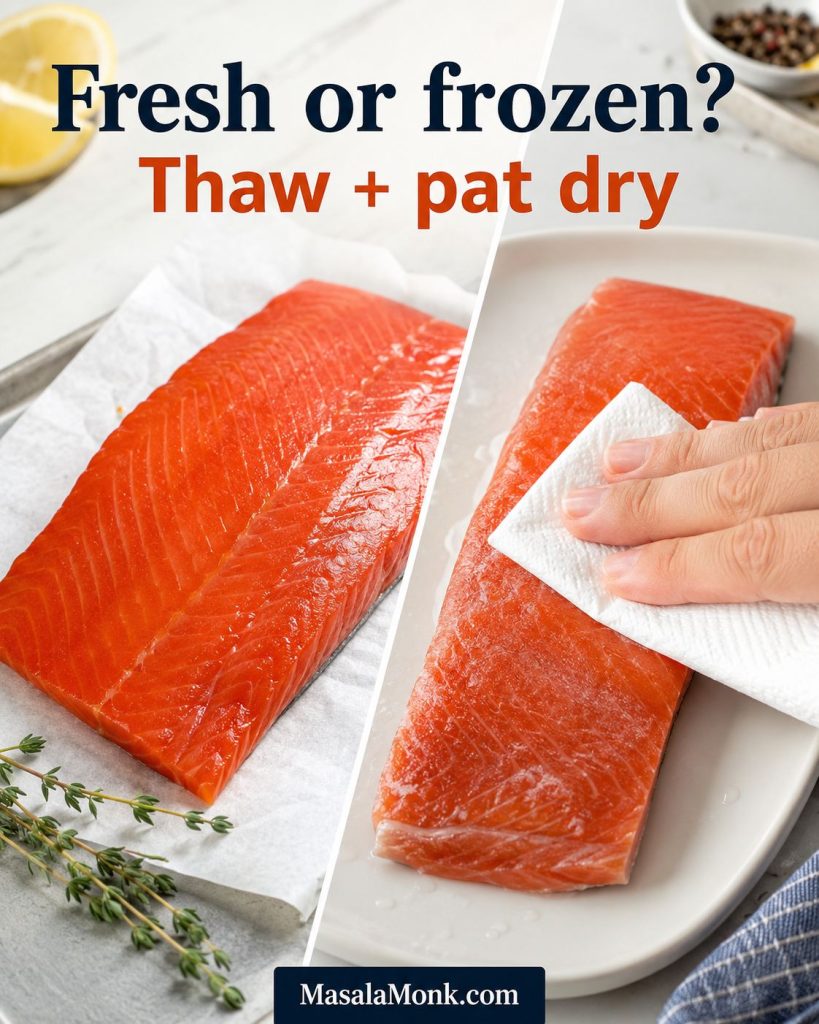
Thawed fillets give you the best texture, so move frozen sockeye to the refrigerator the night before when you can. Pat it dry before seasoning. If your fish is vacuum-packed, read the package instructions before thawing.
If the surface has ice crystals, rinse them off quickly under cold water and dry the fish very well. Do not soak sockeye in water; waterlogged fish seasons poorly and steams instead of baking cleanly.
Frozen sockeye rule: thaw overnight for best texture. Cook from frozen only when you need an emergency dinner, and start covered so the frozen center can warm before the surface dries out.
Cooking straight from frozen? Jump to the covered frozen oven method instead of using the main baking time.
How to Bake Sockeye Salmon
If this is your first time cooking sockeye, the oven is the calmest place to start. You can keep the skin underneath, watch the top change from glossy to just-set, and avoid the guessing that usually dries wild salmon out.
Step 1: Preheat the oven
Preheat the oven to 400°F / 200°C. Line a rimmed baking sheet with parchment or foil. If using foil, lightly oil it so the skin releases more easily after baking.
Step 2: Dry the salmon
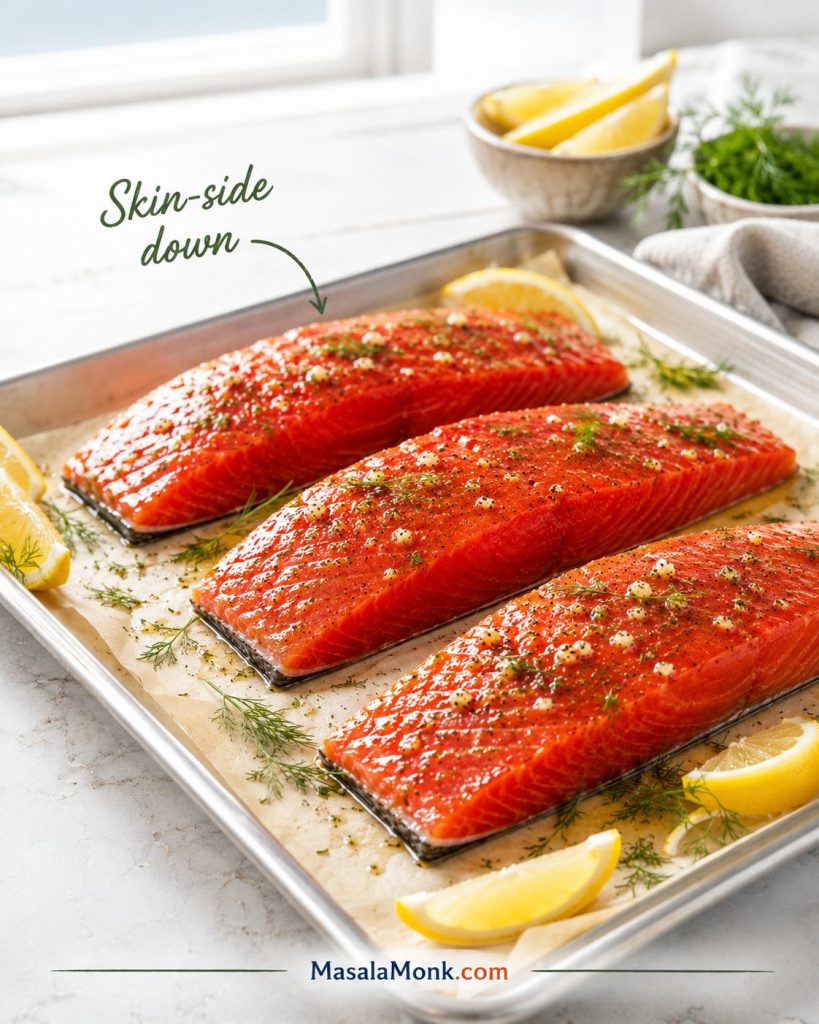
Pat the fillets dry with paper towels. This helps the oil, salt, garlic, and herbs stay on the surface instead of sliding off. Place the salmon skin-side down on the prepared pan.
Step 3: Mix the lemon-garlic topping
In a small bowl, stir together the olive oil or melted butter, lemon juice, lemon zest, garlic, salt, pepper, and chopped dill or parsley. The garlic should be finely minced so it warms gently instead of sitting on top in harsh, burnt bits.

Step 4: Season the fillets
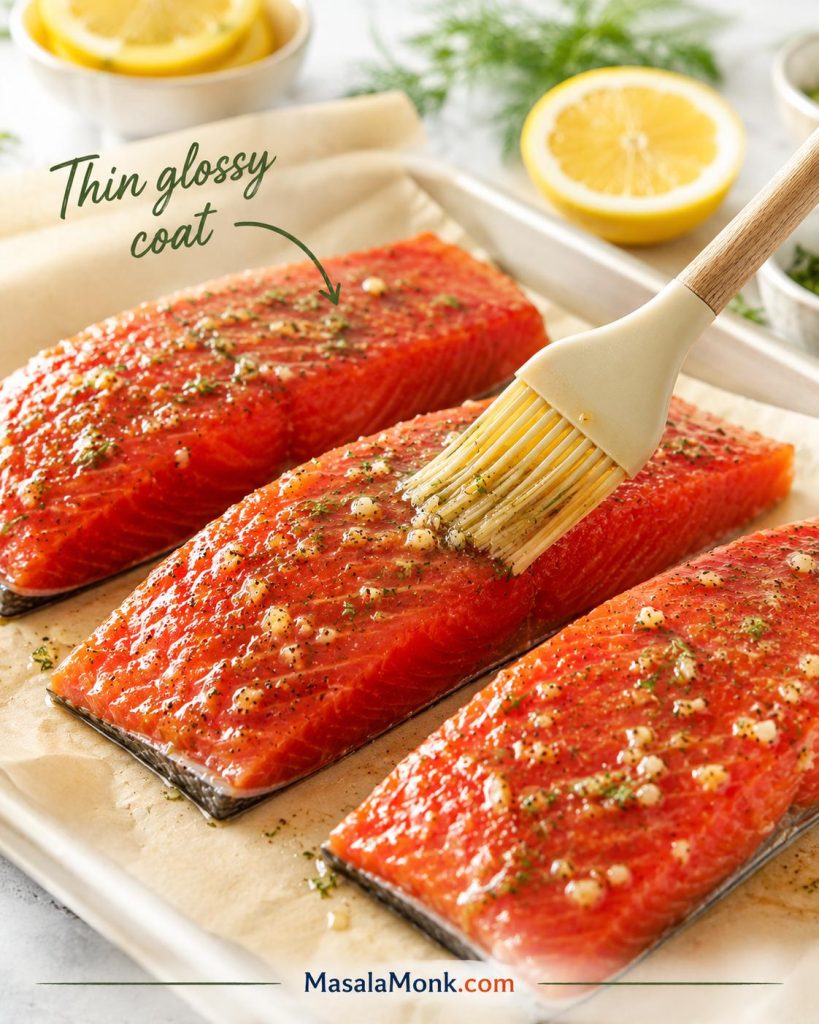
Brush or spoon the mixture evenly over the salmon. Do not drown the fish in lemon juice. A little acid is helpful; too much can make the surface feel tight before the fish even reaches the oven.
Step 5: Bake briefly
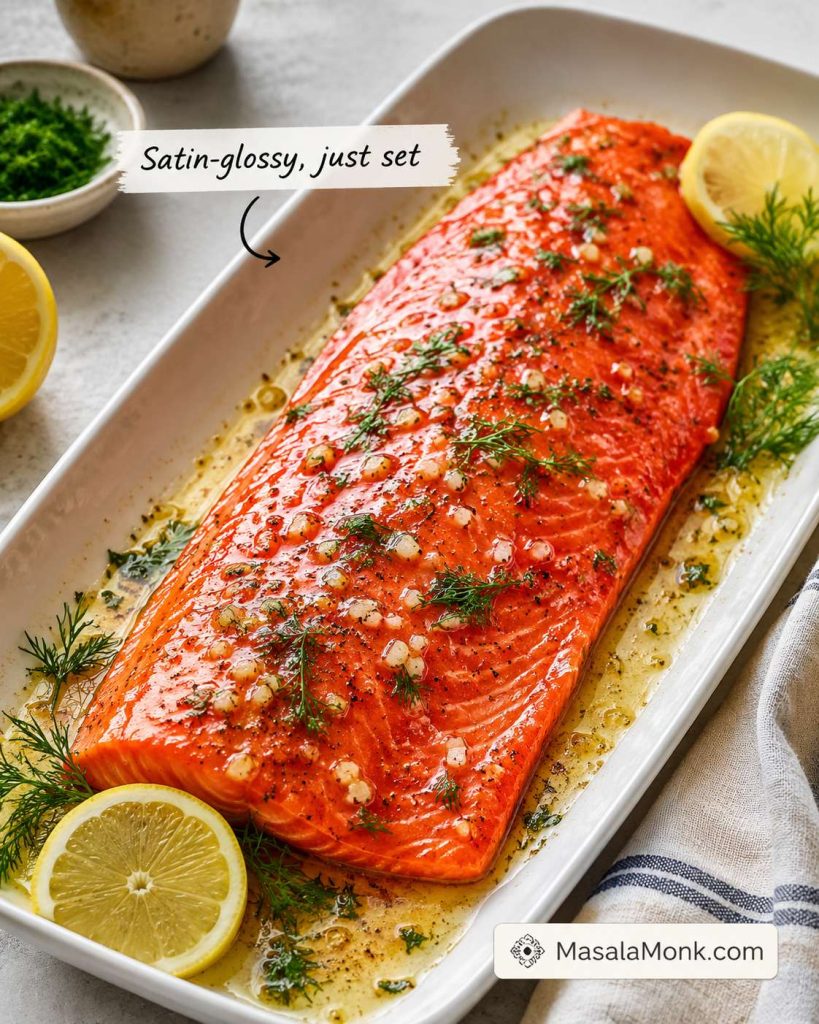
Bake for 8–12 minutes, depending on thickness. Start checking at 7–8 minutes if your fillets are thin. The top should look satin-glossy and just set, not dull and dry. The thickest part should separate in moist sheets when pressed gently.
Step 6: Rest and finish
Let the salmon rest for 3–5 minutes. Finish with fresh lemon, herbs, and a spoonful of pan juices if available. The lemon should brighten the fish at the end, not rescue it from overcooking.
How Long to Bake Sockeye Salmon by Thickness
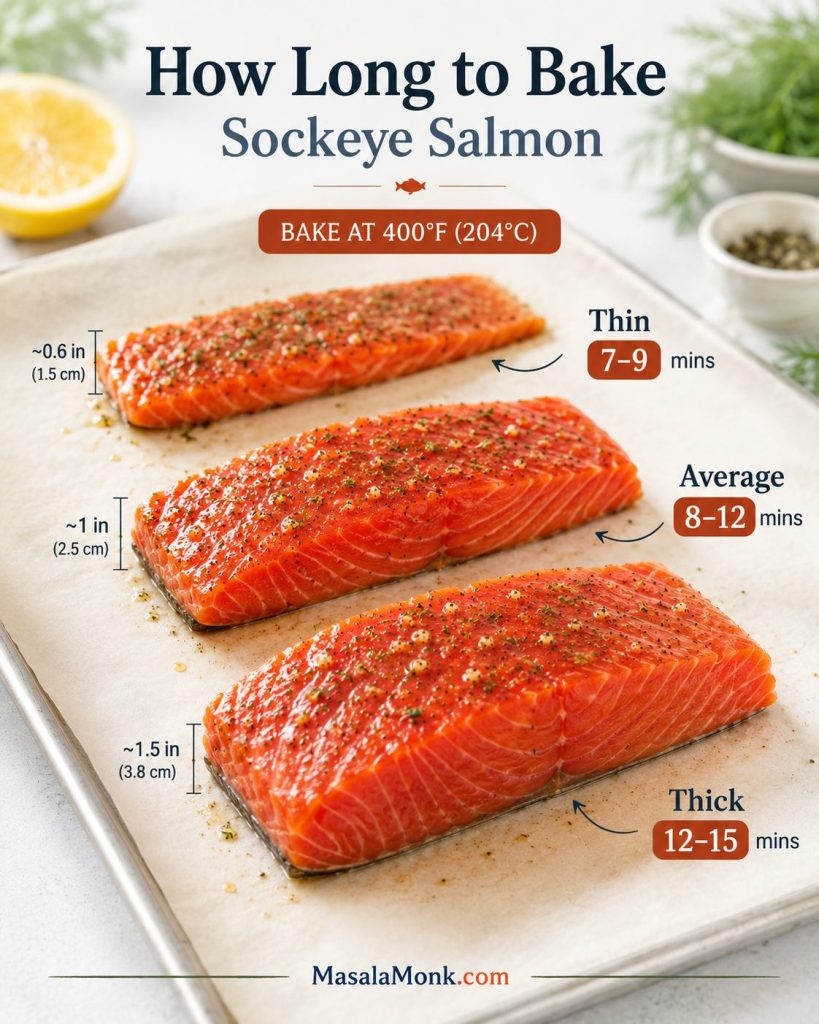
Most 5–6 oz sockeye salmon fillets bake at 400°F / 200°C in 8–12 minutes. Thin fillets may finish in 7–9 minutes, while thicker pieces can need 12–15 minutes. This is where sockeye asks you to pay attention: a minute or two too long can move it from glossy to dry.
| Fillet Thickness | Approx. Time at 400°F / 200°C | What to Watch For |
|---|---|---|
| Thin, under ¾ inch | 7–9 minutes | Use the gentle foil method if the fish looks fragile. |
| Average, about 1 inch | 8–12 minutes | The best range for most 5–6 oz fillets. |
| Thicker, 1¼ inch or more | 12–15 minutes | Check the thickest part and protect the thinner edges. |
| Uneven fillet with thin tail | Varies | Fold the tail under or expect it to cook faster. |
Once the timing is close, use the temperature and doneness cues to decide whether the fish is actually ready.
Using a Whole Side of Sockeye Salmon
If you have a whole side of sockeye instead of individual fillets, use the same seasoning and bake it skin-side down. Start checking around 12 minutes, especially near the thinner tail end. A larger side may need closer to 12–17 minutes, depending on thickness.
The center of a whole side is usually thicker than the tail, so the tail may finish first. You can fold a very thin tail section under itself before baking, or simply accept that the tail will be firmer while the center stays juicier. For serving, a whole side looks beautiful with lemon slices, herbs, and a spoonful of pan juices.

Sockeye Salmon Time and Temperature Chart
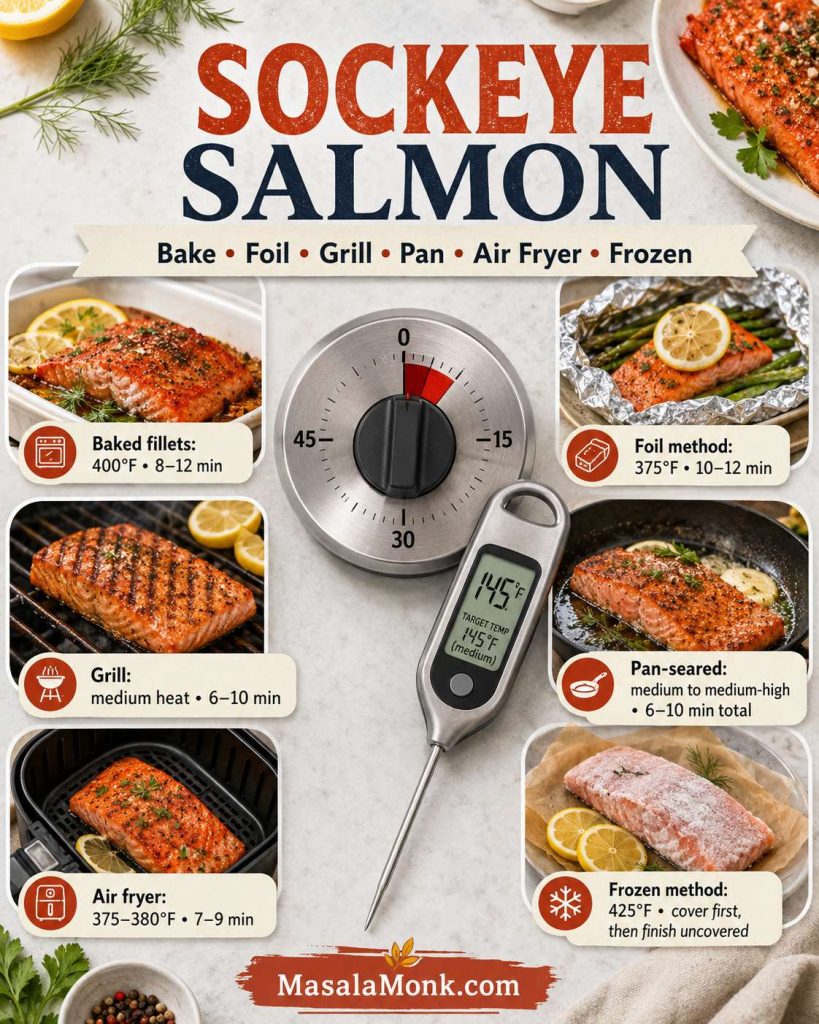
Use this chart when the fish in front of you does not match the main recipe exactly. The ranges are starting points; the look of the fish and the thickest part matter more than the clock alone.
| Method | Temperature | Approx. Time | Best For |
|---|---|---|---|
| Main baked fillets | 400°F / 200°C | 8–12 minutes | Weeknight 5–6 oz fillets |
| Gentler foil method | 375°F / 190°C | 10–12 minutes | Thin or delicate fillets |
| Hotter roast | 425°F / 220°C | 6–9 minutes | Fast cooking, less forgiving |
| Whole side of sockeye | 375–400°F / 190–200°C | 12–17 minutes | Family-style serving |
| Pan-seared sockeye | Medium to medium-high heat | 6–10 minutes total | Crisp skin |
| Grilled sockeye | 350–450°F / 175–230°C grill | 6–10 minutes total | Smoky flavor |
| Air fryer sockeye | 375–380°F / 190–193°C | 7–9 minutes | Small fillets |
| Frozen sockeye fillets | 425°F / 220°C | 15 minutes covered + 8–10 minutes uncovered | Forgot-to-thaw dinners |
Sockeye Salmon Internal Temperature and Doneness
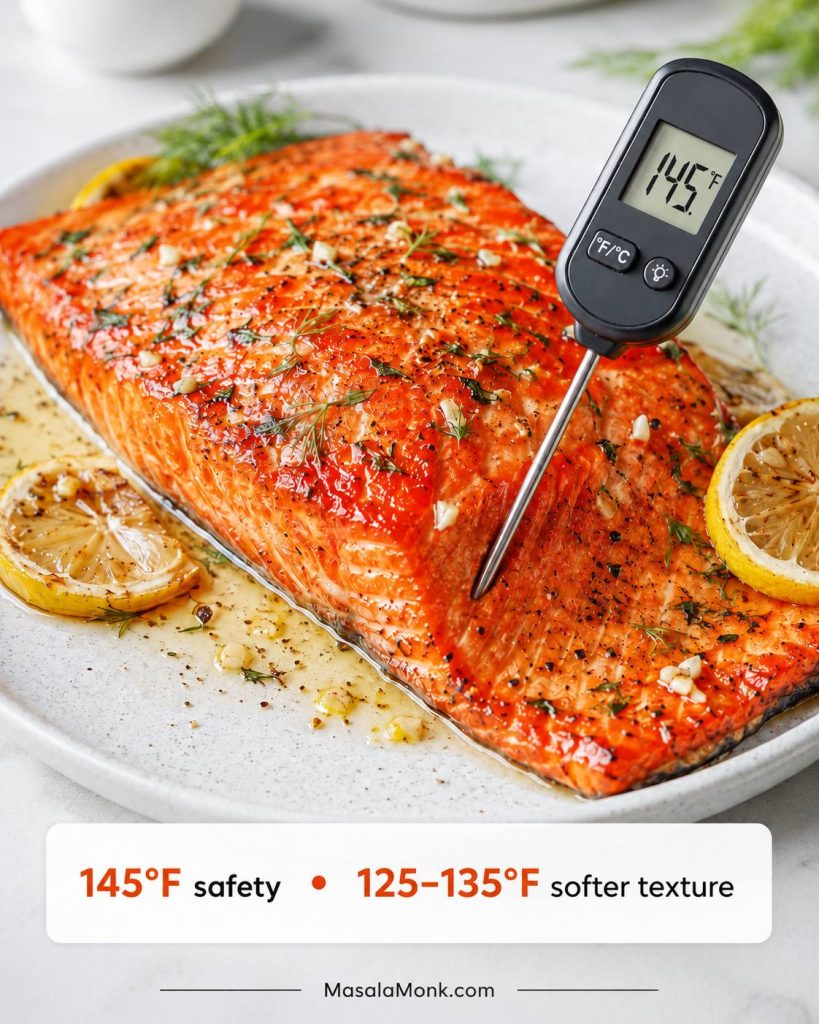
For official food safety, cook sockeye salmon to 145°F / 63°C. For a softer, moister texture, many cooks pull salmon earlier, around 125–135°F / 52–57°C, then rest it briefly. Use the official target for children, pregnancy, older adults, immunocompromised guests, or anyone who prefers fully cooked fish.
| Internal Temp | Texture | What to Know |
|---|---|---|
| 125–130°F / 52–54°C | Very moist, softer center | Often preferred by cooks who like salmon less done. |
| 130–135°F / 54–57°C | Moist, flakes gently | A common texture-focused range for salmon. |
| 140°F / 60°C | Mostly opaque, firmer | Close to fully cooked. |
| 145°F / 63°C | Fully cooked, flakes easily | Official food-safety target for fish. |
Sockeye Doneness Cues Without a Thermometer
If you do not have a thermometer, look for opaque edges, moist flakes that separate with gentle pressure, and a center that no longer looks raw and glassy.
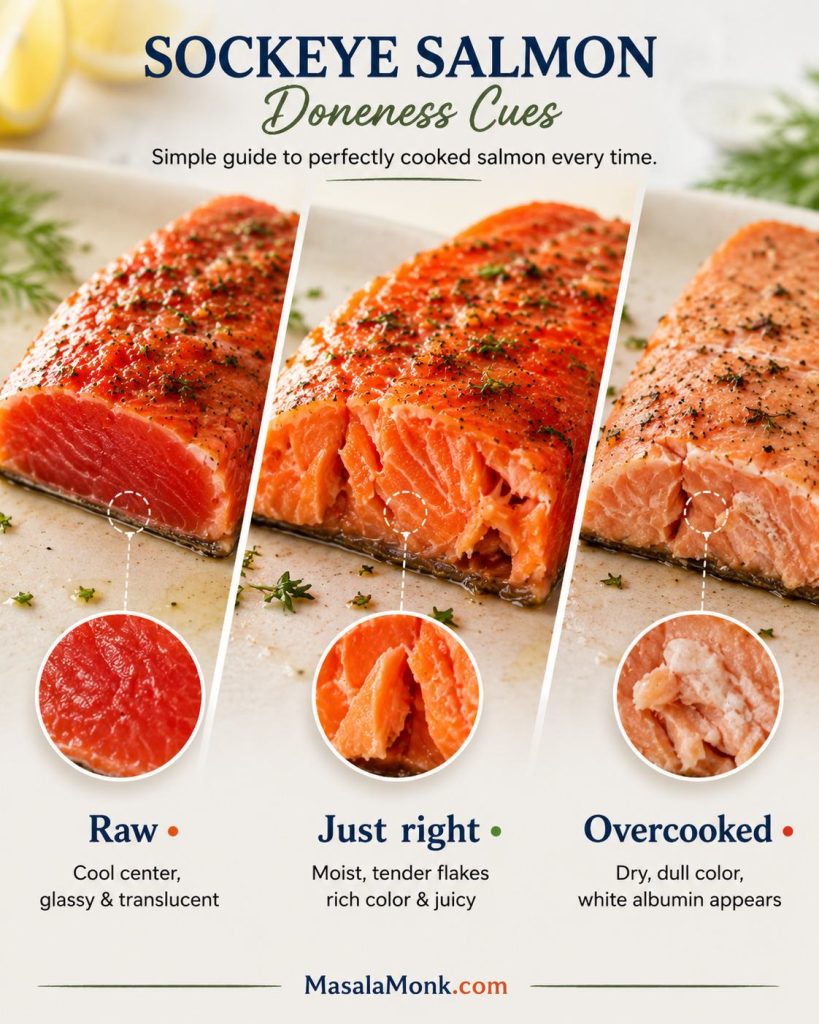
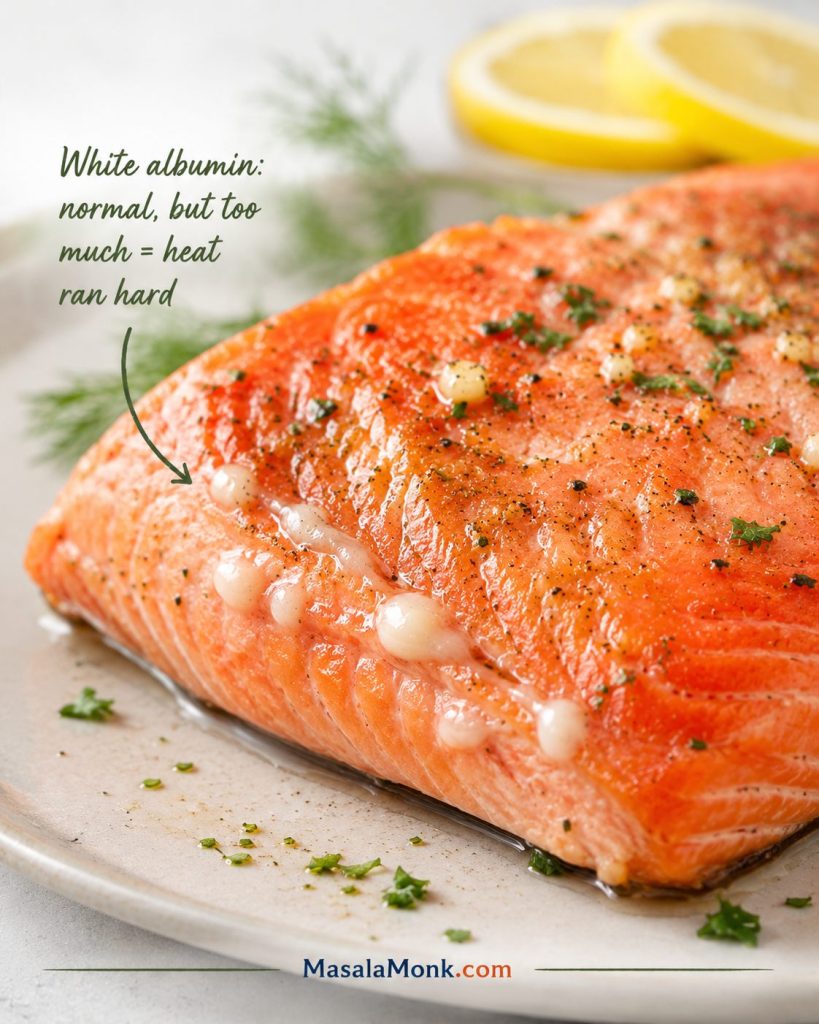
White Albumin on Salmon
A little white albumin is normal; a lot of it, along with tight or chalky flakes, usually means the heat ran too hard or too long.
If the fish already looks dry, has a lot of albumin, or stuck to the pan, skip ahead to troubleshooting for quick fixes.
For pregnancy-specific salmon safety notes, see our guide to salmon and pregnancy.
How to Keep Sockeye Salmon Moist
The best way to keep sockeye moist is to protect the fish in three places: underneath, on top, and at the finish. Think of this as a small safety net, not a complicated technique.
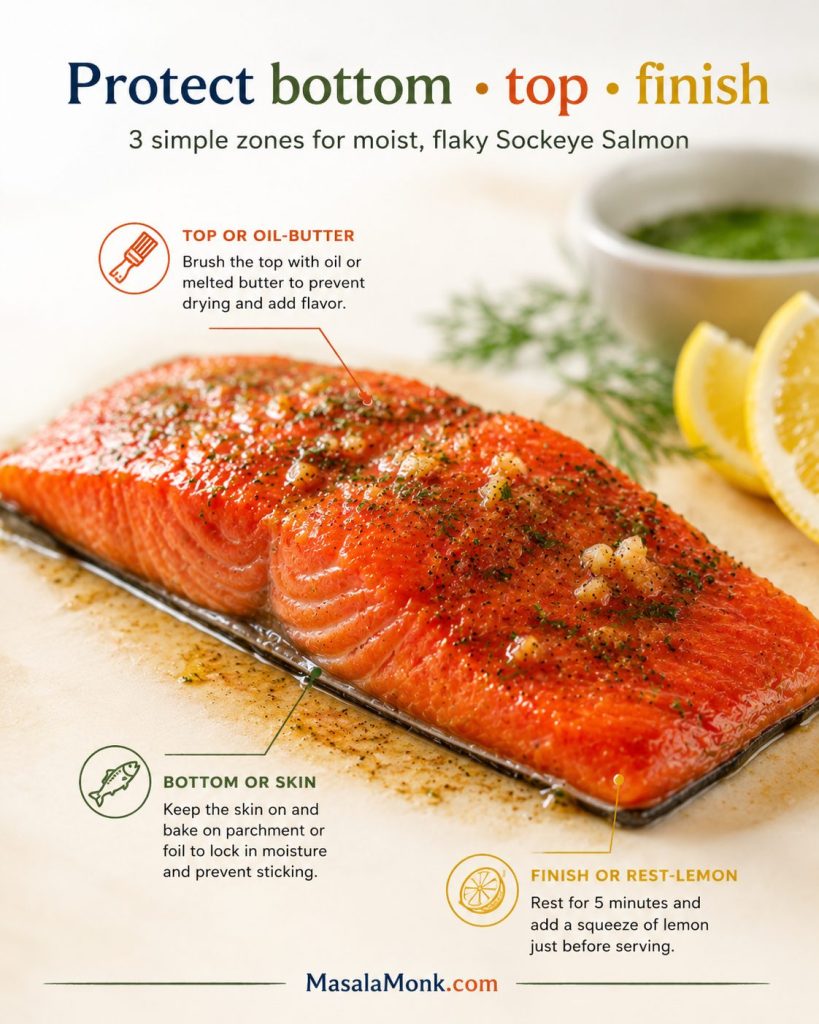
- Protect the bottom. Keep the skin on when possible, and place the fillets skin-side down.
- Protect the top. Use just enough oil or butter to keep the surface glossy.
- Protect the timing. Watch the thickness, not only the timer.
- Protect the finish. Rest the fish briefly, then add lemon after cooking.
A dry fillet is disappointing, but it is not dinner over. Flake it into rice, add cucumber or avocado, and use a sauce with moisture instead of reheating it harder.
For more rescue ideas, see the sockeye troubleshooting guide; for gentler leftover meals, use the storage and reheating section.
Skin-On vs Skinless Sockeye Salmon
Skin-on sockeye is usually easier to cook well. The skin helps hold the fillet together, shields the underside from direct heat, and makes baked, grilled, and pan-seared salmon more forgiving.
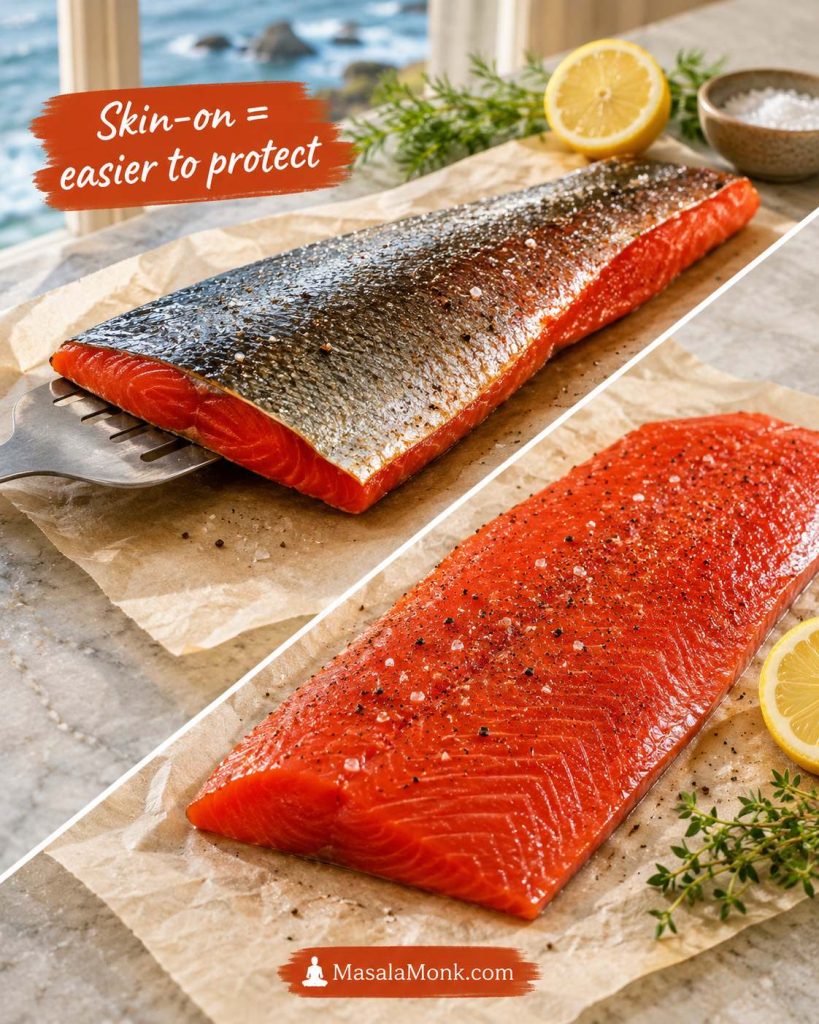
For baking, place the fish skin-side down. On the grill, the skin helps reduce sticking and breakage. In a pan, skin-on fillets give you the option of crisp skin and a more protected center.
If crisp skin is the goal, go straight to the pan-seared sockeye method; if you want smoke, use the grilled sockeye method.
You can eat the skin if it is crisp. If it is soft after baking, simply slide a spatula between the flesh and skin when serving.
Grilled, Pan-Seared, Air Fryer, and Frozen Sockeye Salmon
Baking is the main recipe, but these backup methods help when your pan, grill, freezer, or schedule decides dinner for you.
Grilled Sockeye Salmon
Grilled sockeye has a smoky flavor that suits the firm, bold fish. Use skin-on fillets if possible, oil the grates well, preheat the grill to medium or medium-high, and cook for about 6–10 minutes total, depending on thickness.
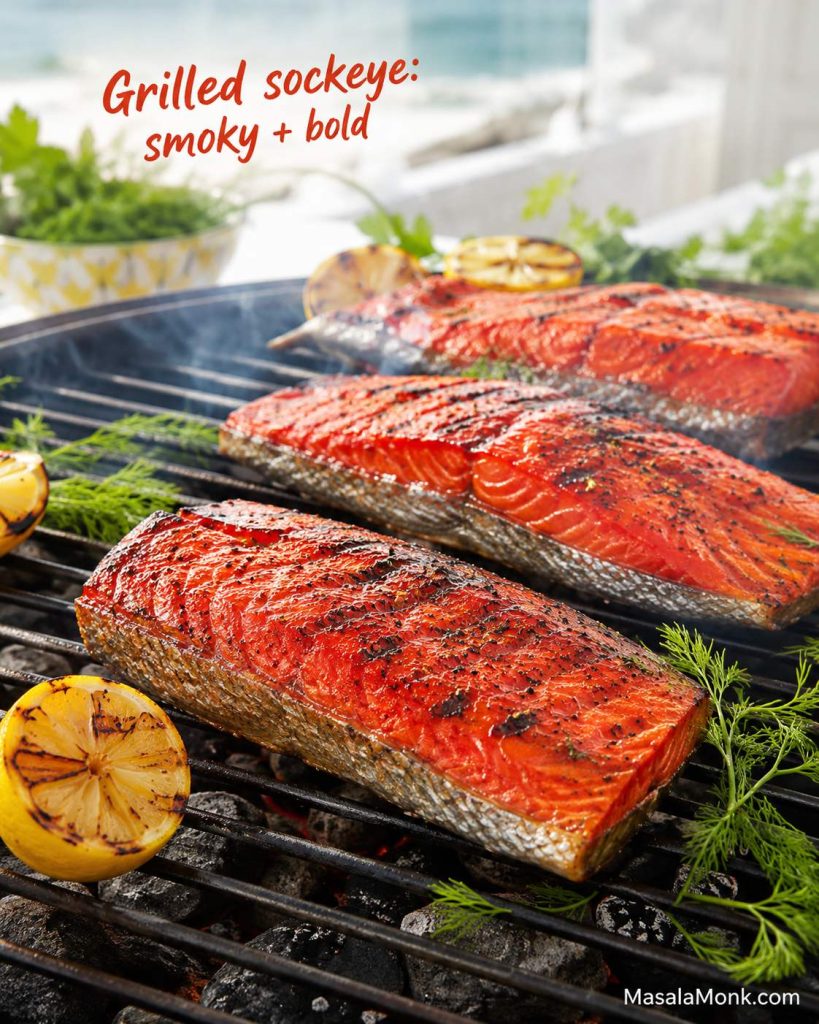
If you are nervous about sticking, grill the salmon on foil or a cedar plank. You will get less direct char, but the fish will be easier to move and less likely to tear.
Pan-Seared Sockeye Salmon
Pan-seared sockeye is best with skin-on fillets. Pat the fish very dry, season it, and heat a little oil in a cast iron or stainless skillet over medium to medium-high heat. Cook mostly skin-side down for about 5–6 minutes, pressing gently for the first few seconds so the skin makes contact with the pan. Flip and cook the flesh side for another 1–2 minutes.
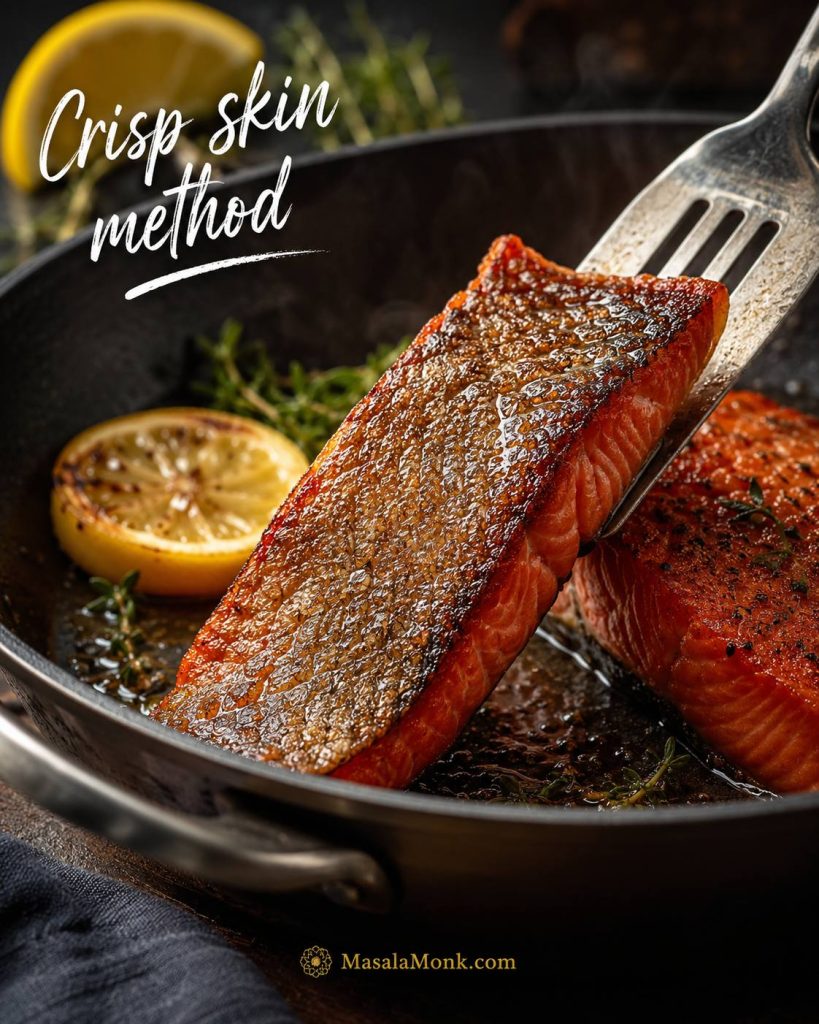
This method is especially good with lemon butter or a quick garlic-herb pan sauce.
Air Fryer Sockeye Salmon
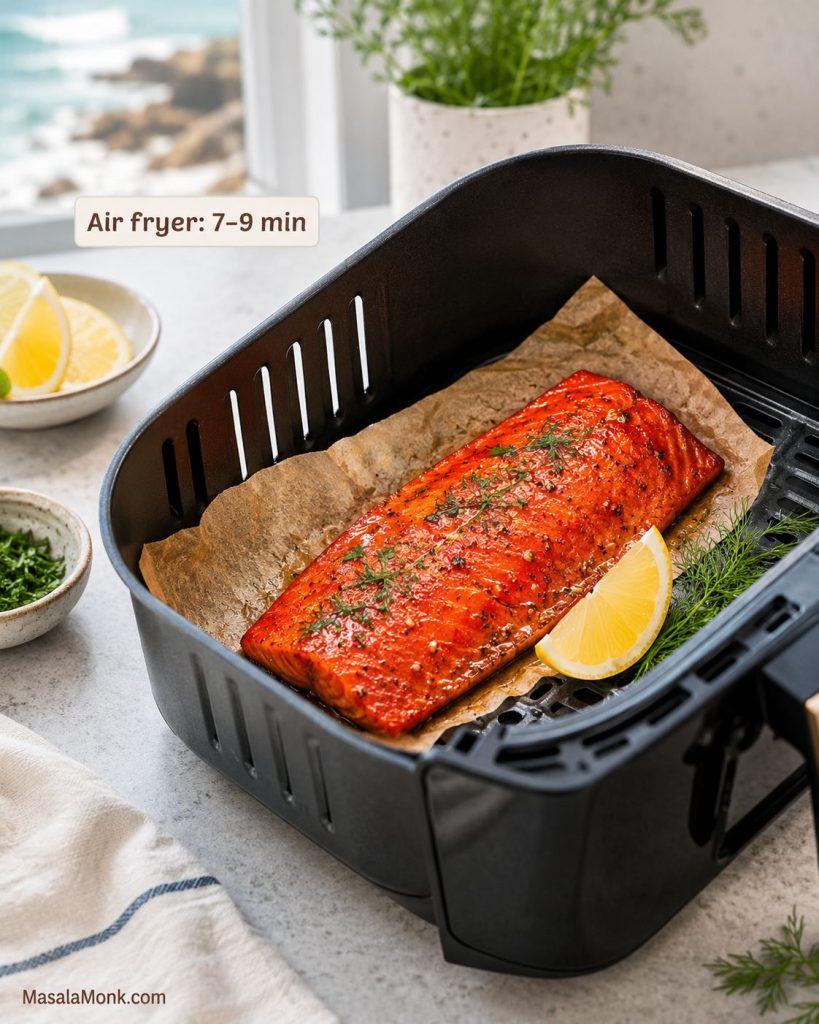
For air fryer sockeye, lightly oil and season 5–6 oz fillets, then cook at 375–380°F / 190–193°C for 7–9 minutes. Place the fillets skin-side down if they have skin and check early, especially with thin pieces.
Frozen Sockeye Salmon
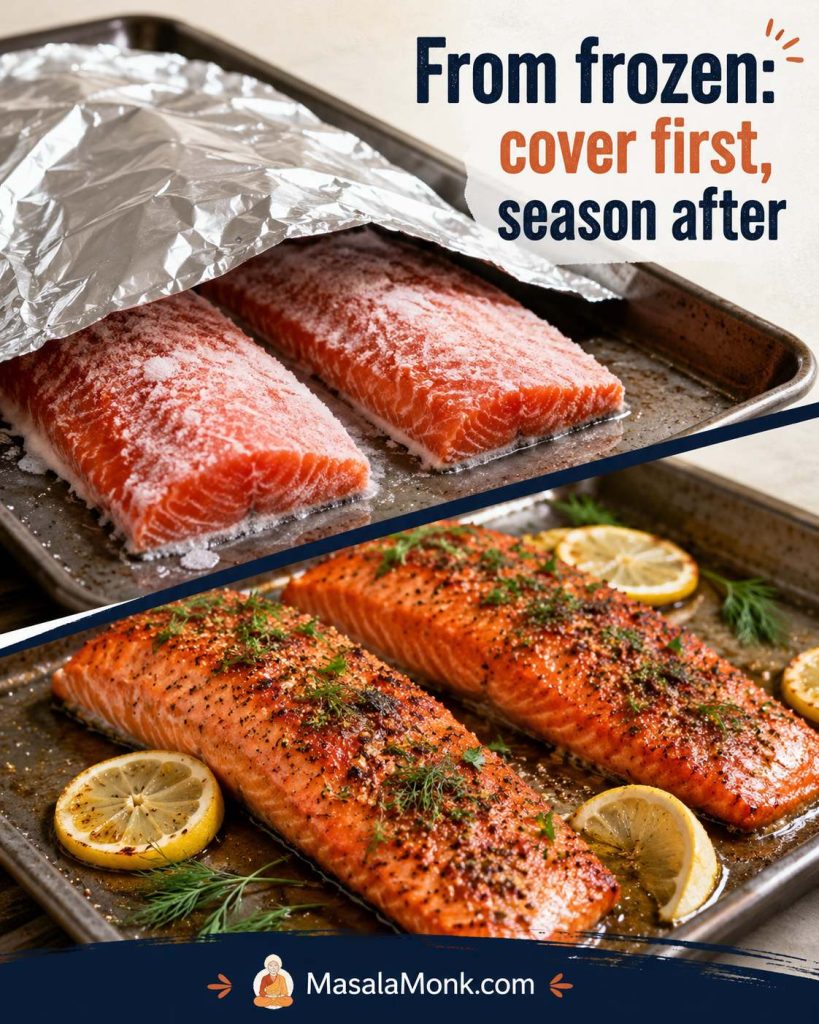
For the best texture, thaw frozen sockeye overnight in the refrigerator, pat it dry, then follow the main recipe. If you forgot to thaw it, small frozen fillets can still become a good dinner.
Place small individual frozen fillets in a lightly oiled baking dish, cover tightly with foil, and bake at 425°F / 220°C for 15 minutes. Uncover, brush with oil or butter and seasoning once the surface has thawed enough for it to stick, then bake another 8–10 minutes, or until done. This method is for individual frozen fillets, not a whole frozen side.
Smoked Sockeye Salmon
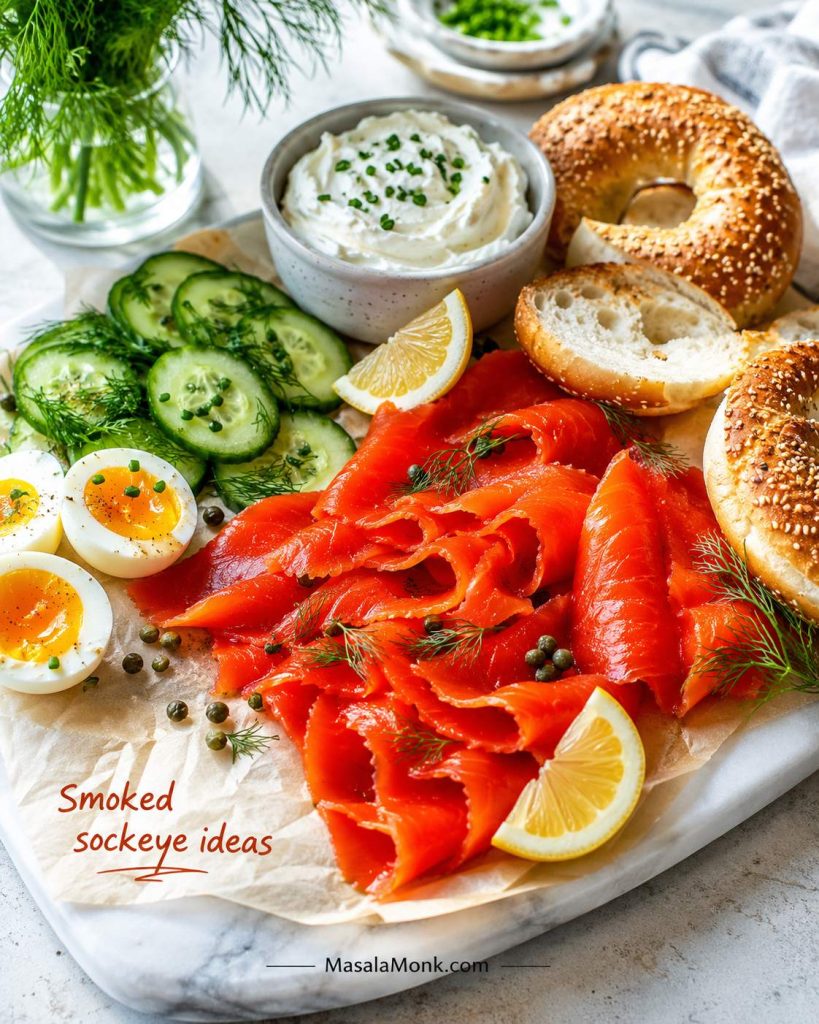
Smoked sockeye is better treated as its own slow-cooking project because it usually involves brining, drying the surface, and low smoker heat. If you bought smoked sockeye, use it cold or gently warmed on bagels, toast, eggs, dips, salads, pasta, or rice bowls. For brunch ideas, it fits naturally with our bagel toppings and spreads guide.
Best Seasonings, Sauces, and Glazes for Sockeye
Sockeye does not need to be hidden, but it does like contrast: lemon, herbs, mustard, yogurt, ginger, chile, or something fresh and sharp. The best pairings brighten or balance the fish rather than burying it.

| Flavor Direction | What to Use | Best Method |
|---|---|---|
| Lemon garlic herb | Lemon, garlic, olive oil or butter, dill or parsley | Baked |
| Maple Dijon | Maple syrup, Dijon mustard, garlic, black pepper | Baked or grilled |
| Honey garlic | Honey, garlic, lemon, butter | Pan-seared or baked |
| Miso ginger | Miso, ginger, soy sauce, honey or maple | Baked or broiled |
| Teriyaki | Teriyaki glaze, sesame, scallions | Baked, air fryer, or rice bowl |
| Cajun butter | Cajun seasoning, butter, lemon | Pan-seared or oven-baked |
| Dill yogurt | Greek yogurt, dill, lemon, garlic | Serving sauce |
| Chimichurri | Parsley, cilantro, garlic, vinegar, olive oil | Grilled sockeye |
If you want to build the sauce instead of improvising, start with a glossy homemade teriyaki sauce for bowls or a bright chimichurri for grilled sockeye.
How Long Should You Marinate Sockeye?
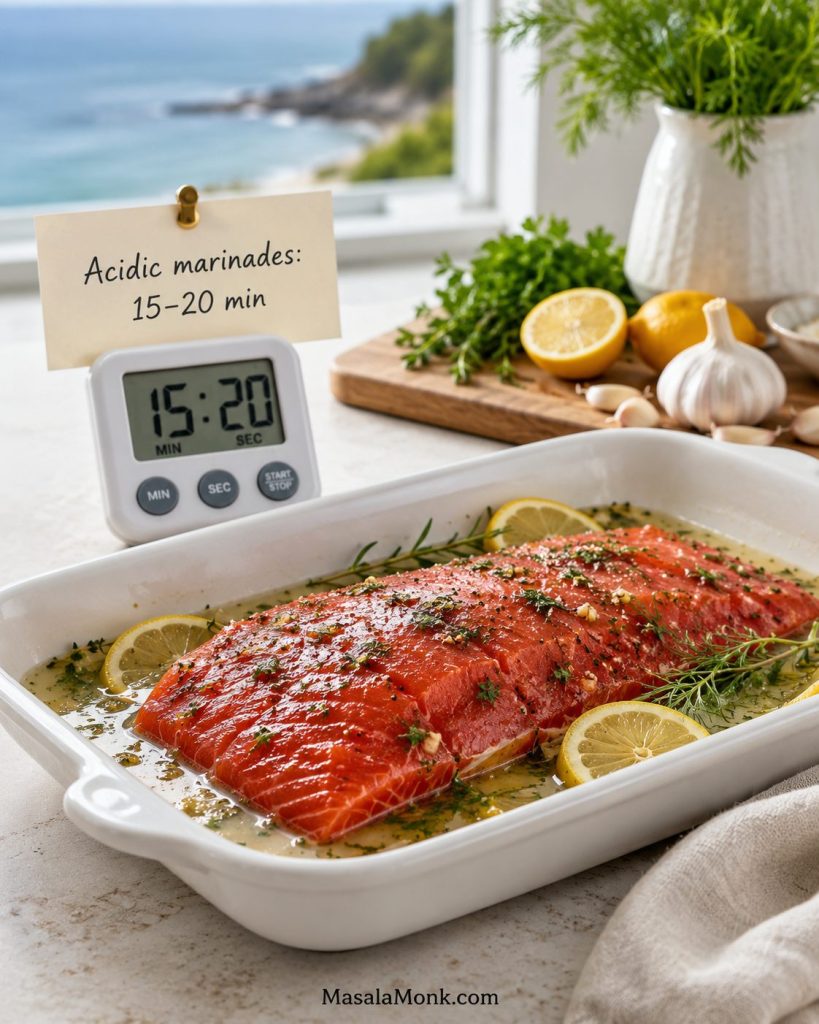
Keep marinades short. For lemon, vinegar, or other acidic marinades, 15–20 minutes is usually enough. Longer acidic marinating can make the surface feel firm or slightly cured. For non-acidic glazes, such as maple-Dijon or miso-ginger, brush them on just before baking or during the last few minutes of cooking.
If you are serving the salmon with bowls, salads, or sauces, the serving section gives the easiest pairing ideas.
What to Serve with Sockeye Salmon
Sockeye salmon is rich enough to feel special, but simple enough for rice bowls, vegetables, salads, and pasta. Keep the sides bright, crisp, or starchy so the fish stays the focus.

- Fresh and crisp: cucumber salad or avocado salad, with cucumber salad as the easiest bright side.
- Bowl-style: rice, avocado, cucumber, sesame, and spicy mayo, built the same way as our salmon bowl recipe.
- Sweet and bright: grilled sockeye with mango salsa when you want fruit, acid, and a little chile.
- Creamy finish: lemony baked salmon with Greek tzatziki or another cool yogurt sauce.
If rice is your base, this how to cook rice guide helps with stovetop, cooker, and Instant Pot timing.
Storage, Leftovers, and Reheating
Leftover sockeye is happiest cold or barely warmed. Treat it gently and it becomes a second meal; blast it with heat and the flakes tighten fast. Store cooked sockeye in an airtight container in the refrigerator for 2–3 days.
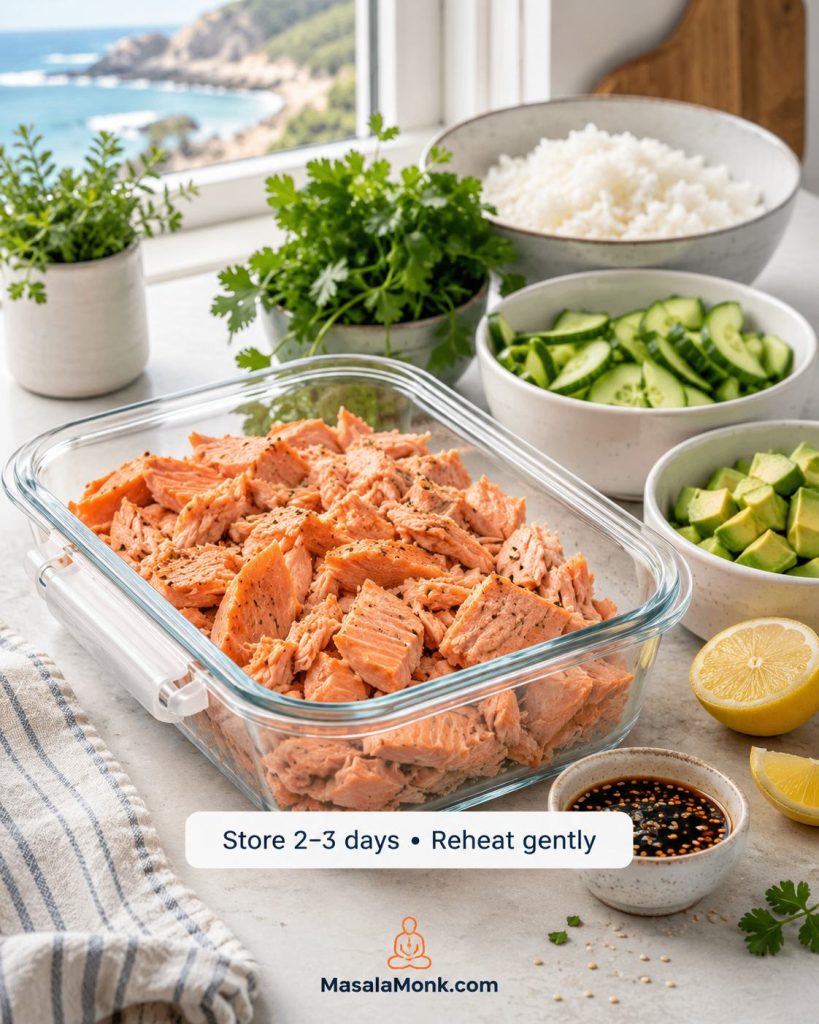
- Best reheating method: warm gently in a low oven, covered, until just heated through.
- Microwave method: use short bursts at reduced power and stop before the fish gets hot and dry.
- Best leftover use: flake cold salmon into bowls, salads, sandwiches, pasta, or croquettes.
- Avoid: repeatedly reheating the same piece of salmon.
For a second dinner, leftover sockeye can be folded into our creamy salmon pasta recipe or our salmon croquettes recipe instead of cooking a new fillet from scratch.
Troubleshooting Sockeye Salmon
If something goes wrong, it is usually fixable on the plate and preventable next time. Most sockeye problems come back to heat, thickness, dryness, or handling.
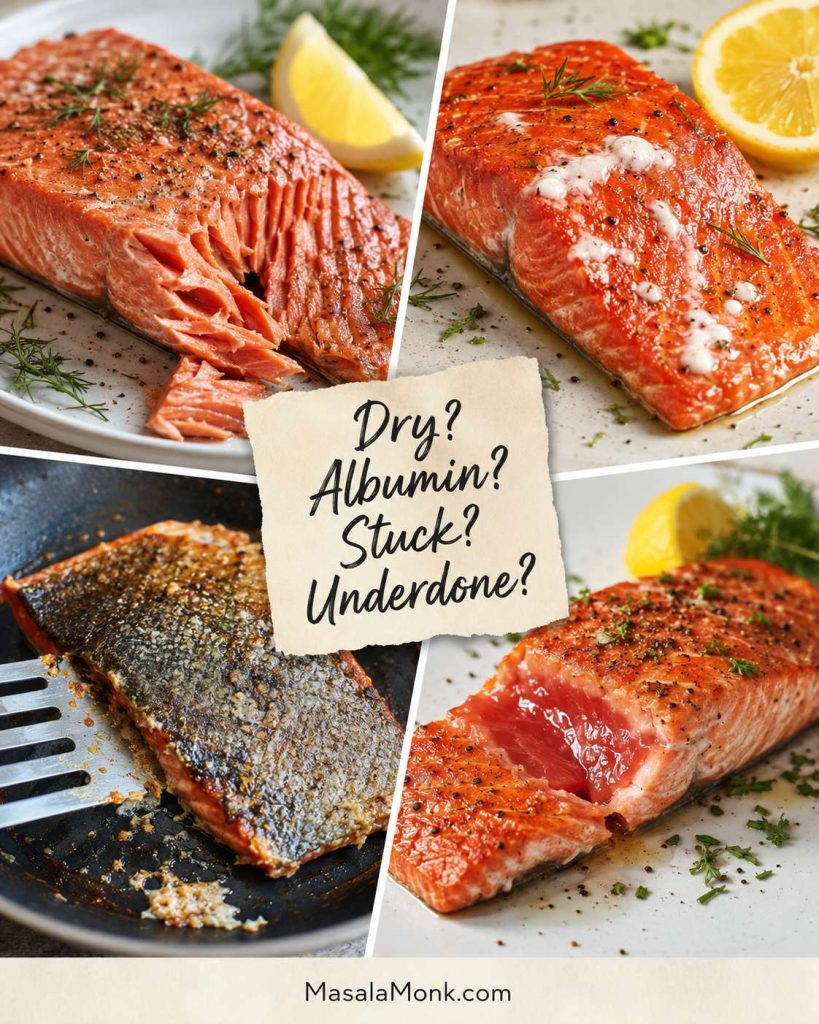
Texture and Cooking Fixes
| Problem | Likely Cause | Fix Now | Fix Next Time |
|---|---|---|---|
| Dry sockeye salmon | Cooked too long, too hot, or without enough fat/protection | Serve with lemon butter, yogurt sauce, or a rice bowl sauce | Check earlier, use skin-on fillets, add oil/butter, or use the 375°F foil method |
| Lots of white albumin | Heat was too aggressive or fish cooked too long | Wipe lightly if needed; it is harmless | Use gentler heat, shorter cooking, and avoid blasting thin fillets |
| Center undercooked but edges dry | Fillet was uneven or oven heat was too high | Rest briefly; return only the thick section to heat if needed | Fold thin tail under, use lower heat, or choose more even fillets |
| Still looks underdone after resting | Fillet was thick or oven ran cool | Return only the thickest part to the oven for 1–2 minutes | Use a thermometer and check the thickest part next time |
| Skin is soft after baking | Baking steams the skin rather than crisping it | Slide the fish off the skin when serving | Use pan-searing if crisp skin is the goal |
Flavor, Smell, and Handling Fixes
| Problem | Likely Cause | Fix Now | Fix Next Time |
|---|---|---|---|
| Fish stuck to pan or grill | Surface was wet, grate/pan was not oiled, or fish moved too early | Release gently with a fish spatula | Pat dry, oil well, use skin-on fillets, and wait before moving |
| Strong fishy taste | Older fish, poor storage, or flavor not balanced | Add lemon, dill yogurt, mustard, ginger, mango salsa, or chimichurri | Buy fresh-smelling fish, thaw properly, and cook soon after thawing |
| Garlic tastes burnt | Garlic pieces were too large or exposed too early | Scrape off the darkest bits and add fresh lemon or herbs | Use finely minced garlic or add it to the oil mixture right before baking |
| Too salty or too lemony | Seasoning was too heavy for the fish size | Serve with rice, potatoes, or yogurt sauce to balance the plate | Measure salt carefully and keep acidic marinades short |
| Fish smells strong before cooking | Fish is older, thawed poorly, or stored too long | Do not force it; discard fish that smells unpleasantly sour, rancid, or ammonia-like | Buy fresher fish, thaw in the refrigerator, and cook soon after thawing |
Other Quick Fixes: Burnt Garlic, Too Much Lemon, or Underdone Centers
If the garlic darkens, scrape off only the bitter bits and finish with fresh herbs. Fish that tastes too salty or too lemony is easiest to balance with rice, potatoes, cucumber, avocado, or yogurt sauce rather than more acid. When the thickest part still looks underdone after resting, return only that section to the oven for a minute or two so the thinner edges do not dry out further.
Why is my sockeye salmon dry?
Dryness usually means the fish cooked too long, cooked too hot, or did not have enough surface fat or skin protection. A dry fillet is disappointing, but it is not dinner over. Flake it into rice, add cucumber or avocado, and use a sauce with moisture instead of reheating it harder.
What is the white stuff coming out of salmon?
The white stuff is albumin, a protein that comes to the surface as salmon cooks. A little is normal, and it is harmless. If there is a lot of albumin and the flakes also look tight or dry, the fish probably cooked too aggressively or too long.
Why did my salmon stick to the pan or grill?
Sticking usually happens when the surface is not dry, the pan or grate is not properly oiled, or the fish is moved too early. For grilling and pan-searing, skin-on fillets are easier to handle than skinless fillets.
FAQs About Sockeye Salmon
What is the best way to cook sockeye salmon?
For most home cooks, baking is the most forgiving place to start. Use skin-on fillets at 400°F / 200°C for 8–12 minutes, or move to 375°F / 190°C in foil when the fillets are thin.
How long should sockeye salmon bake at 400°F?
Most 5–6 oz / 140–170 g fillets bake at 400°F / 200°C in about 8–12 minutes. Thin pieces may finish closer to 7–9 minutes, while thicker pieces may need 12–15 minutes.
Is 375°F or 400°F better for sockeye salmon?
Use 400°F / 200°C for a fast weeknight bake. Use 375°F / 190°C when the fillets are thin, delicate, or when you want a more forgiving texture.
Should sockeye salmon be baked covered or uncovered?
Bake average skin-on fillets uncovered at 400°F / 200°C so the surface stays lightly glossy instead of steamed. Use a loose foil packet when the fillets are thin, delicate, or prone to drying out.
What temperature should sockeye salmon reach?
Official food-safety guidance for fish is 145°F / 63°C. Some cooks prefer salmon at 125–135°F / 52–57°C for a softer texture, but that is a personal decision based on the fish and the people eating it.
How do you know when sockeye salmon is done without a thermometer?
Look for opaque edges, moist flakes that separate with gentle pressure, and a surface that still looks glossy rather than dull. If the fish is squeezing out a lot of albumin and the flakes look tight, it likely cooked too long.
Can you cook sockeye salmon from frozen?
Yes. For the best texture, thaw it overnight in the refrigerator. If you need to cook it from frozen, cover small fillets and bake them at 425°F / 220°C first, then uncover and finish with seasoning.
Should sockeye salmon be cooked with the skin on?
Skin-on fillets are usually easier to cook well. The skin protects the underside, keeps the fillet together, and makes grilling or pan-searing easier.
What seasoning goes best with sockeye salmon?
Lemon, garlic, dill, parsley, black pepper, Dijon, maple, honey, miso, ginger, teriyaki, Cajun seasoning, yogurt sauce, and chimichurri all work well. Sockeye’s bold flavor can handle stronger seasonings than mild salmon.
Can I use this recipe for a whole side of sockeye?
Yes. Keep the same seasoning, bake skin-side down, and start checking around 12 minutes. A whole side usually needs closer to 12–17 minutes, depending on thickness.
Should I rinse sockeye salmon before cooking?
Usually no. Pat the fish dry with paper towels instead. If frozen fillets have surface ice, rinse it off quickly under cold water, then dry the fish very well before seasoning.
Why does sockeye salmon dry out faster than Atlantic salmon?
Sockeye is usually leaner and firmer than many farmed salmon fillets, so it has less internal fat to cushion extra heat. That is why timing and thickness matter so much.
Should sockeye salmon be marinated?
It does not need a long marinade. A short 15–20 minute marinade is enough when you want extra flavor. For lemon, vinegar, or other acidic marinades, keep the time short so the surface does not tighten.
Butter or olive oil for sockeye salmon?
Use olive oil for a lighter finish or melted butter for a richer one. Both work well; butter tastes warmer, while olive oil keeps the flavor cleaner and brighter.
Can I cook skinless sockeye salmon?
Yes. Keep the surface lightly oiled, watch it closely, and start checking early because there is less protection underneath.
Is sockeye salmon naturally red?
Yes. Sockeye is known for its deep red-orange flesh, which is one of the easiest ways to distinguish it from milder salmon varieties.
Ready to cook without the full guide? Use the recipe card for the short version.
Moist Baked Sockeye Salmon Recipe
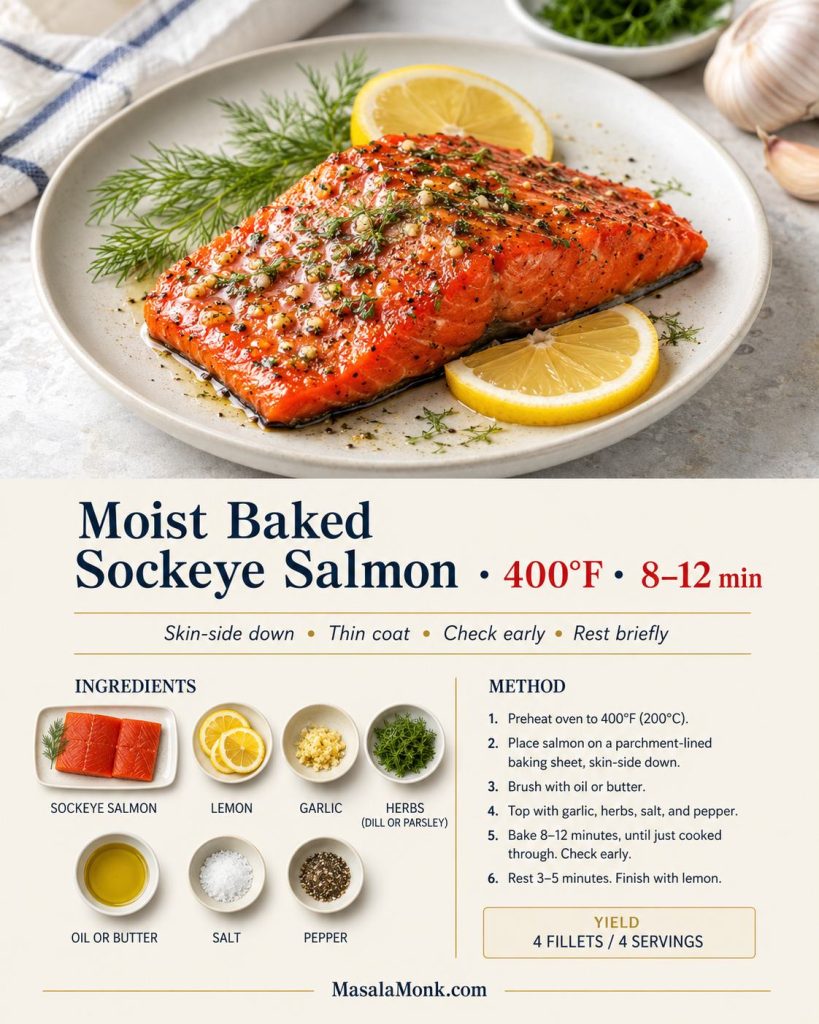
This easy sockeye salmon recipe bakes skin-on wild salmon fillets with lemon, garlic, herbs, and olive oil or butter. It is fast enough for a weeknight, but careful enough to keep the fish moist.
Servings: 4
Yield: 4 fillets
Method: Baking
Diet: Pescatarian, gluten-free, low-carb
Ingredients
- 4 skin-on sockeye salmon fillets, 5–6 oz / 140–170 g each
- 2 tbsp / 30 ml olive oil or melted butter
- 1 tbsp / 15 ml fresh lemon juice
- 1 tsp lemon zest
- 2 garlic cloves, finely minced
- ¾ tsp kosher salt
- ¼–½ tsp black pepper
- 1 tbsp chopped fresh dill or parsley
- 1 tsp Dijon mustard, optional
- 1–2 tsp maple syrup or honey, optional
- Lemon wedges, for serving
Instructions
- Preheat the oven to 400°F / 200°C. Line a rimmed baking sheet with parchment or lightly oiled foil.
- Pat the sockeye salmon fillets dry with paper towels. Place them skin-side down on the prepared pan.
- In a small bowl, mix the olive oil or melted butter, lemon juice, lemon zest, garlic, salt, pepper, and herbs. Add Dijon and maple syrup or honey if using.
- Brush or spoon the mixture evenly over the salmon fillets.
- Bake for 8–12 minutes, depending on thickness. Start checking early if the fillets are thin. The top should still look moist, not matte and dry.
- Rest for 3–5 minutes, then serve with lemon wedges and extra herbs.
Gentler Foil Method
For thin or very delicate fillets, place the seasoned salmon in a loose foil packet and bake at 375°F / 190°C for about 10–12 minutes. Open carefully, rest briefly, and finish with lemon and herbs.
Notes
- Timing depends on thickness: thin fillets may finish in 7–9 minutes, while thick pieces may need 12–15 minutes.
- Use the 375°F foil method for thin or delicate fillets.
- For a whole side of sockeye, start checking around 12 minutes, especially near the tail.
- 145°F / 63°C is the official fish safety target; some cooks pull salmon earlier for a softer texture.
Final Tips for the Best Sockeye Salmon
For your first batch, choose the gentler side: check early, rest the fish, and add lemon at the end. Once you know where sockeye wants a little protection, it becomes one of the easiest salmon dinners to make well.
Sockeye should taste clean, rich, and lightly wild. The best finish is lemon as a finish, not a rescue.








