
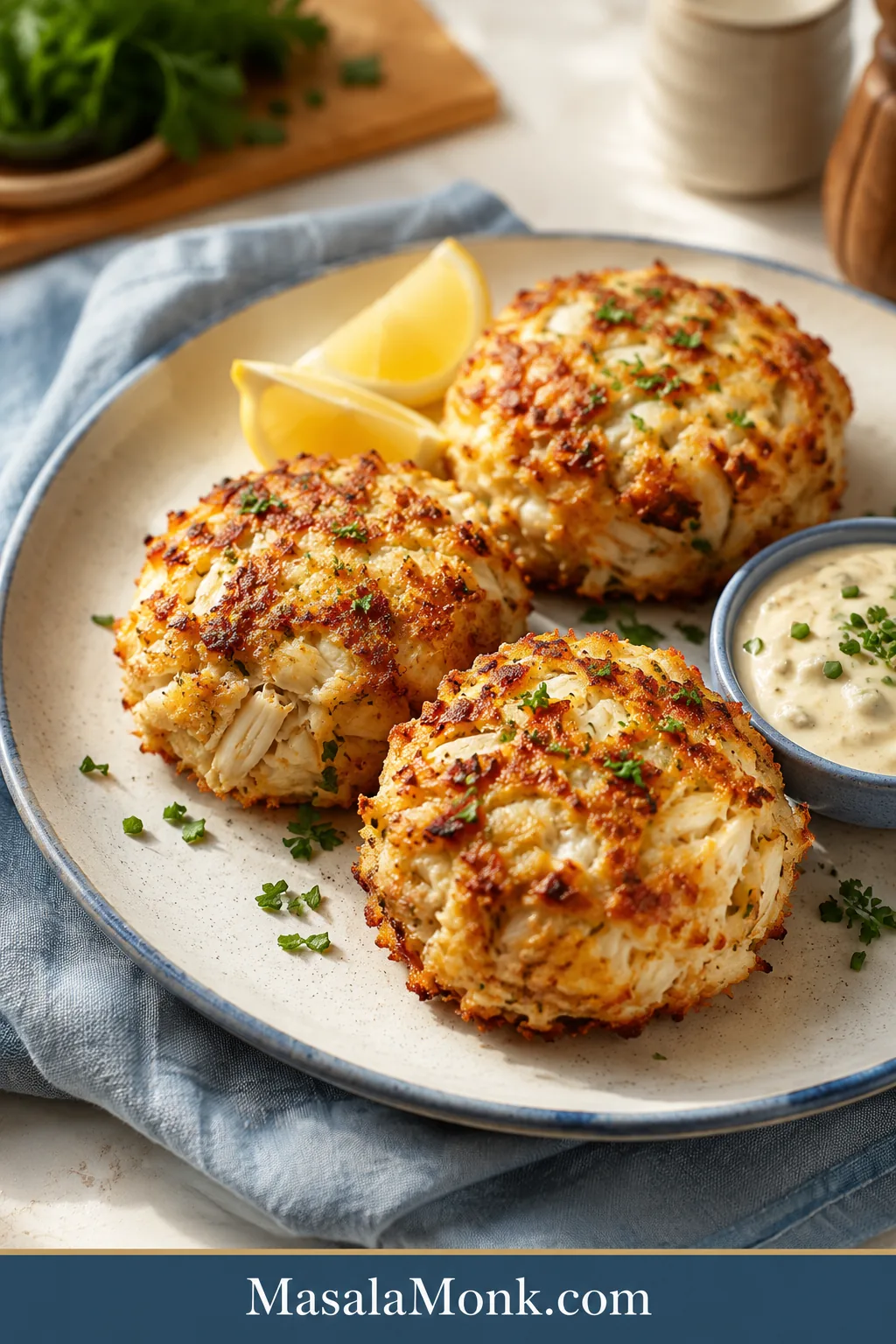
Crab cakes should feel generous, not stressful. When you buy good crab, the last thing you want is a bready patty, a dry center, or a cake that falls apart the second you flip it. This recipe protects what matters most: 1 lb / 454g lump crab, just enough mayo-egg binder, a small amount of panko or crushed saltines, and a proper chill so the cakes hold together without losing their sweet crab texture.
The goal is simple: big crab flavor, little filler, crisp edges, and no first-flip panic. The win is a cake that lifts cleanly from the pan, cracks lightly at the edge, and still tastes warm, tender, and unmistakably like crab in the center.
Pan-frying gives the deepest golden crust, but the same crab cake mixture can also be baked, air-fried, or seared and finished in the oven. Choose the method that fits the meal, then let the ratio, chill time, and visual cues do the work.
Quick Answer: How to Make Crab Cakes That Hold Together
For reliable crab cakes, use 1 lb / 454g lump crab meat, 1 egg, 1/4 cup / 60g mayonnaise, Dijon, Worcestershire, lemon juice, Old Bay, herbs, and a small amount of panko or crushed saltines. For every pound of crab, use 1/2 cup / 30–40g panko or 2/3 cup / 41g crushed saltines. That is enough filler to help the cakes hold together without turning them bready.
Fold gently, shape into 6 thick cakes, chill for 30–60 minutes, then pan-fry for 3–4 minutes per side until crisp and golden. To keep crab cakes from falling apart, drain the crab well, use just enough binder and crumbs, chill the shaped cakes, and wait until the first side is golden before flipping.
The method is simple on purpose: protect the crab, bind only as much as needed, chill before cooking, and let the crust form before you move the cakes. That is the difference between a crab cake that tastes like crab and one that needs too much filler just to survive the pan.
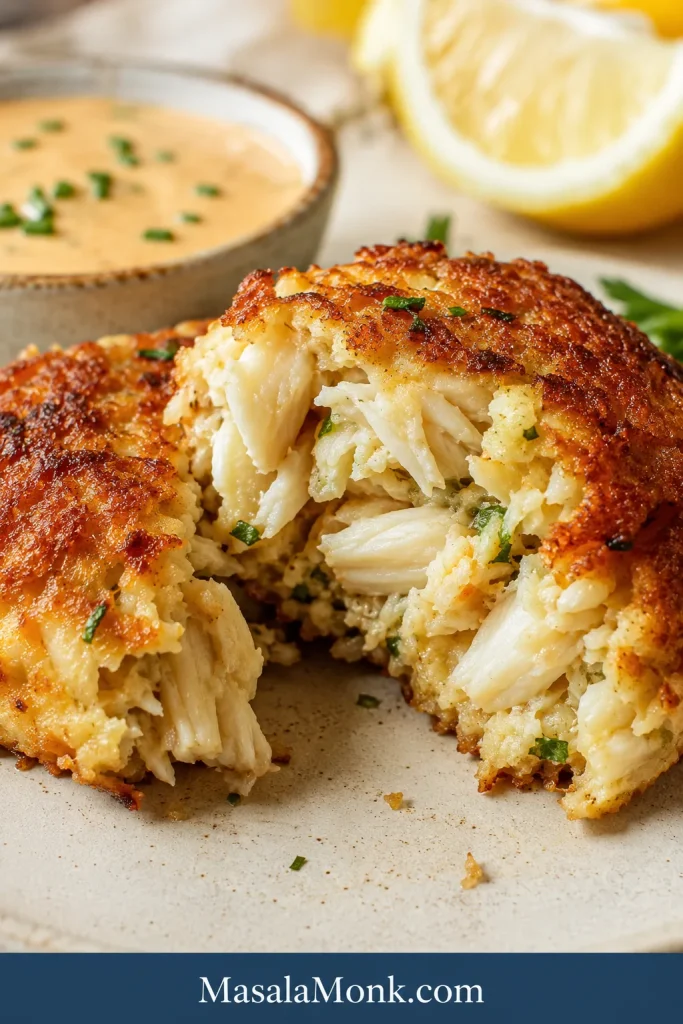
The Few Details That Make Crab Cakes Work
If you remember only a few things, remember these: keep the crab cold and well-drained, use only enough filler to hold the cakes together, and let the first side brown before you move it.
| Crab cake detail | Best choice | Why it matters |
|---|---|---|
| Crab meat | Lump crab; jumbo lump for a splurge | Sweet, tender pieces without a bready bite |
| Filler | Panko or crushed saltines | Helps the cakes stay intact without taking over |
| Binder | Egg + mayo | Sets the cakes and keeps the center moist |
| Chill time | 30–60 minutes | Makes the cakes easier to lift and flip |
| Main method | Pan-fried | Gives the crispest golden edges |
| Easiest method | Baked | No flipping, less stress, better for batches |
| Sauce | Tartar, remoulade, or lemon aioli | Adds brightness without covering the crab |
Recipe Card: Easy Crab Cakes With Lump Crab and Little Filler
These homemade crab cakes are crisp outside, tender inside, and packed with lump crab meat. They use little filler, just enough binder, Old Bay, lemon, Dijon, Worcestershire, and herbs for a recipe that still tastes like crab.
| Yield | 6 large crab cakes |
| Prep time | 20 minutes |
| Chill time | 30–60 minutes |
| Cook time | 6–15 minutes, depending on method |
| Total time | About 1 hour to 1 hour 35 minutes |
| Main method | Pan-fried |
| Other methods | Baked, air fryer, pan-seared with oven finish |
Ingredients
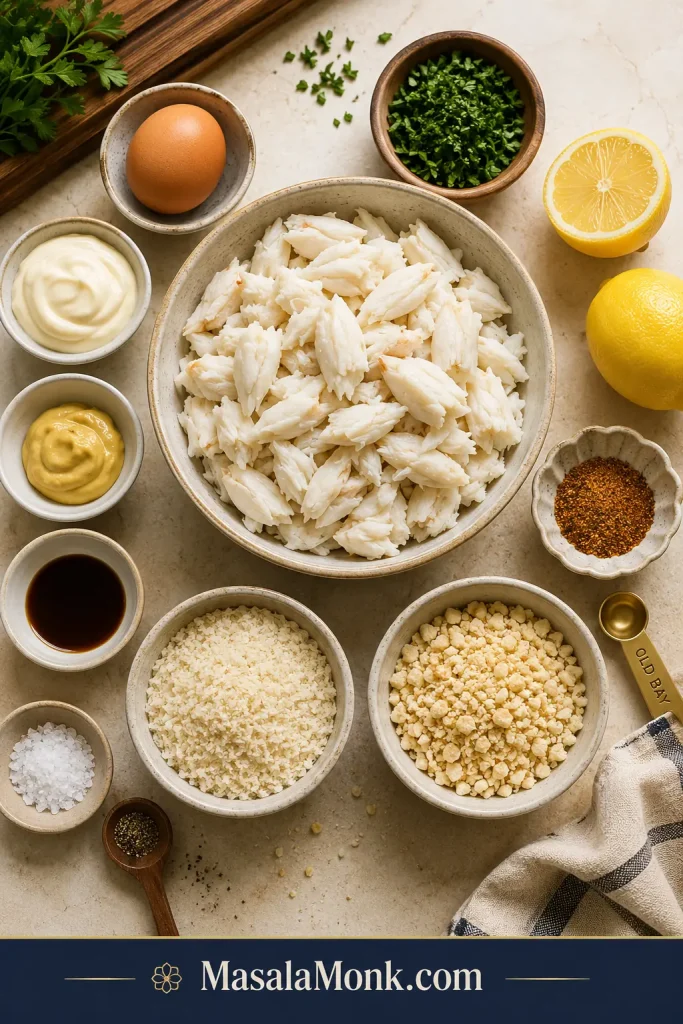
- 1 lb / 454g lump crab meat, picked over for shells
- 1 large egg
- 1/4 cup / 60g mayonnaise
- 2 tsp Dijon mustard
- 2 tsp / 10ml Worcestershire sauce
- 1 tbsp / 15ml fresh lemon juice
- 1 tsp Old Bay seasoning, plus more to taste
- 1/8 tsp salt, optional
- 1/4 tsp black pepper
- 2 tbsp chopped parsley or chives
- 1/2 cup / 30–40g panko breadcrumbs or 2/3 cup / 41g crushed saltines
- Neutral oil, for pan-frying
- Optional: 1 tbsp butter for richer browning or brushing baked crab cakes
- Lemon wedges, for serving
Quick Remoulade-Style Crab Cake Sauce
This quick crab cake sauce is creamy, tangy, savory, and bright enough to lift the crab without covering it.
Make the sauce while the crab cakes chill, then keep it cold until the cakes are ready to serve.
- 1/2 cup / 120g mayonnaise
- 1 tbsp Dijon mustard
- 1 tbsp / 15ml lemon juice
- 1 tsp Worcestershire sauce
- 1 tsp hot sauce
- 1 tsp chopped capers or pickle relish
- 1 small garlic clove, grated
- Pinch of Old Bay or paprika
- 1 tbsp chopped parsley or chives
Mix everything in a small bowl. The sauce should taste bright before it tastes heavy, because crab cakes are rich and sweet. Adjust with more lemon juice, hot sauce, or Old Bay, then chill until ready to serve.
Instructions
Mix and Shape the Crab Cakes
- Check the crab. Place the crab meat in a bowl and gently pick through it for small shell pieces. Try not to break up the larger lumps.
- Make the binder. In a large bowl, whisk together the egg, mayonnaise, Dijon mustard, Worcestershire sauce, lemon juice, Old Bay, salt, black pepper, and herbs.
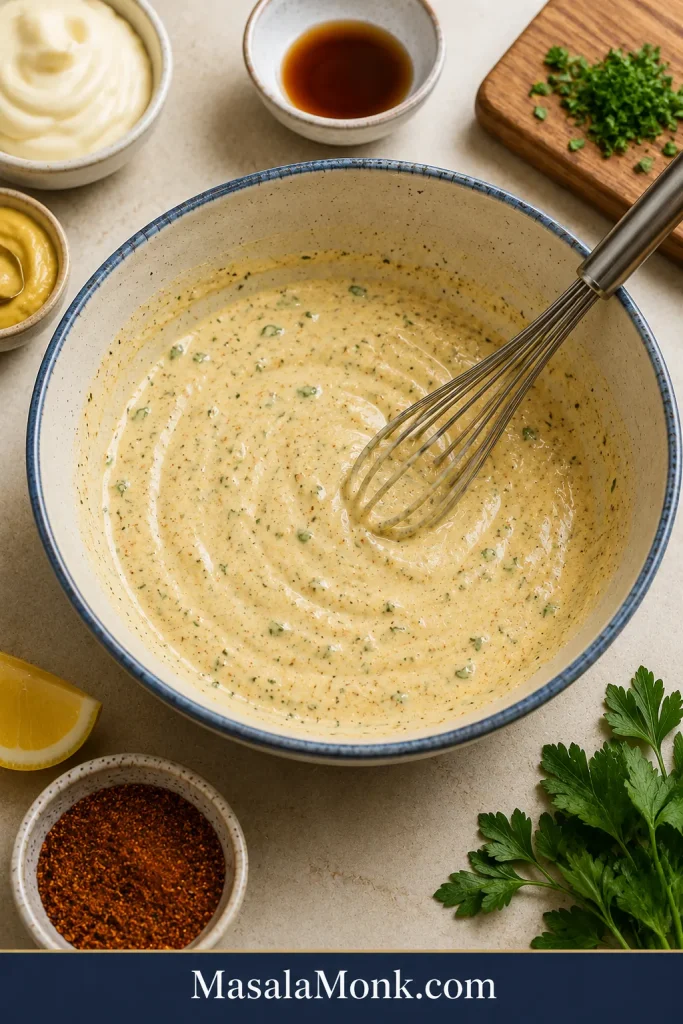
- Fold in the crab and crumbs. Add the crab meat and panko or crushed saltines. Fold gently with a spatula until the mixture is evenly moistened. It should look loose but scoopable, not smooth or pasty.
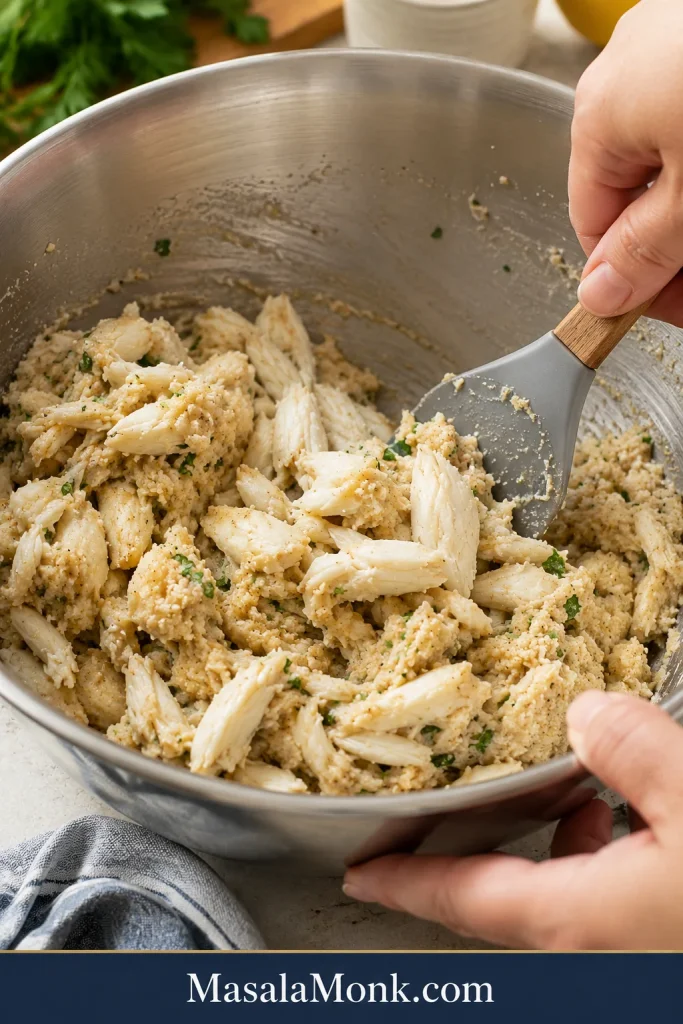
- Cook a tiny test cake if needed. If you are unsure about salt or seasoning, cook one small spoonful of the mixture first. Adjust gently before shaping the full batch.
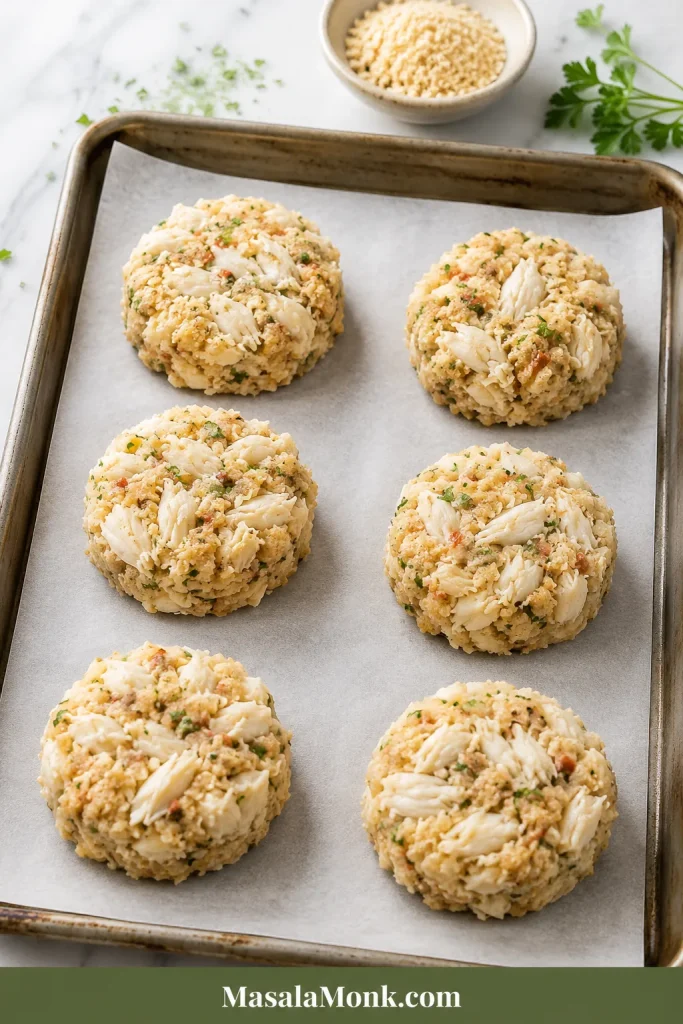
- Shape the cakes. Divide the mixture into 6 large cakes, about 1/2 cup each. Shape gently but firmly. The cakes should hold their edges without feeling packed hard.
Chill and Cook the Crab Cakes
- Chill. Place the crab cakes on a plate or parchment-lined tray. Refrigerate for 30–60 minutes so the binder and crumbs can settle.
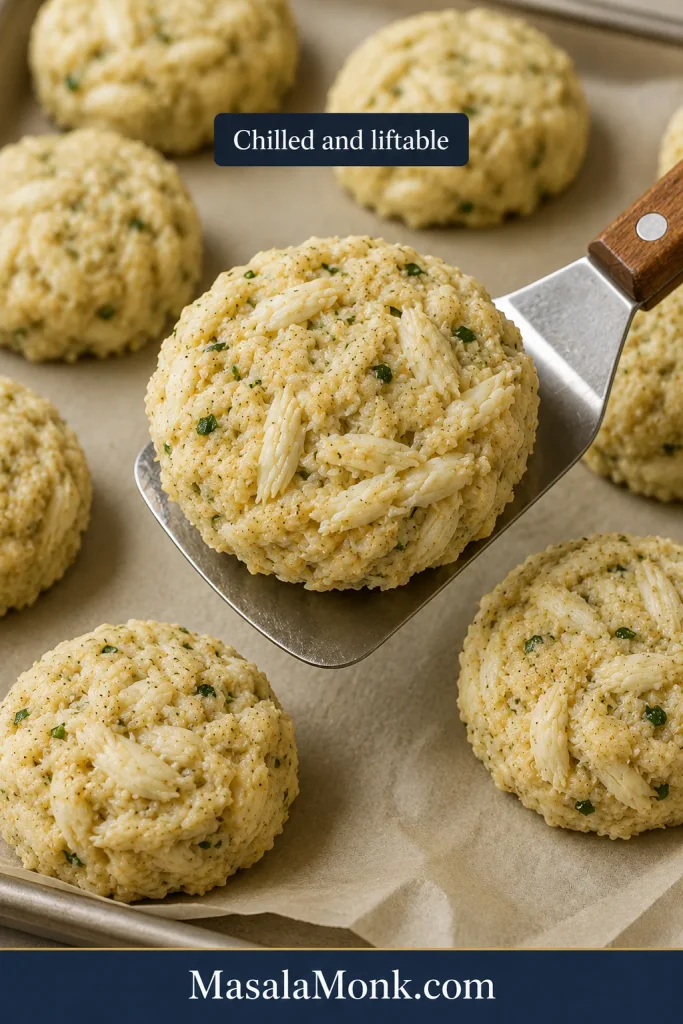
- Pan-fry. Heat a thin layer of oil, about 1–2 tablespoons for a large skillet, over medium heat. Add the chilled cakes in a single layer without crowding. Cook for 3–4 minutes per side, until deeply golden and crisp at the edges. If a cake resists the spatula, give it another minute.
- Serve. Serve hot with the quick crab cake sauce, lemon wedges, and extra herbs.
Baked Crab Cake Option
- Heat oven to 450°F / 230°C.
- Place chilled crab cakes on a parchment-lined baking sheet.
- Brush or dot the tops with a little melted butter.
- Bake for 12–15 minutes, until heated through and golden on top.
- For deeper color, broil for 1–2 minutes at the end, watching closely.
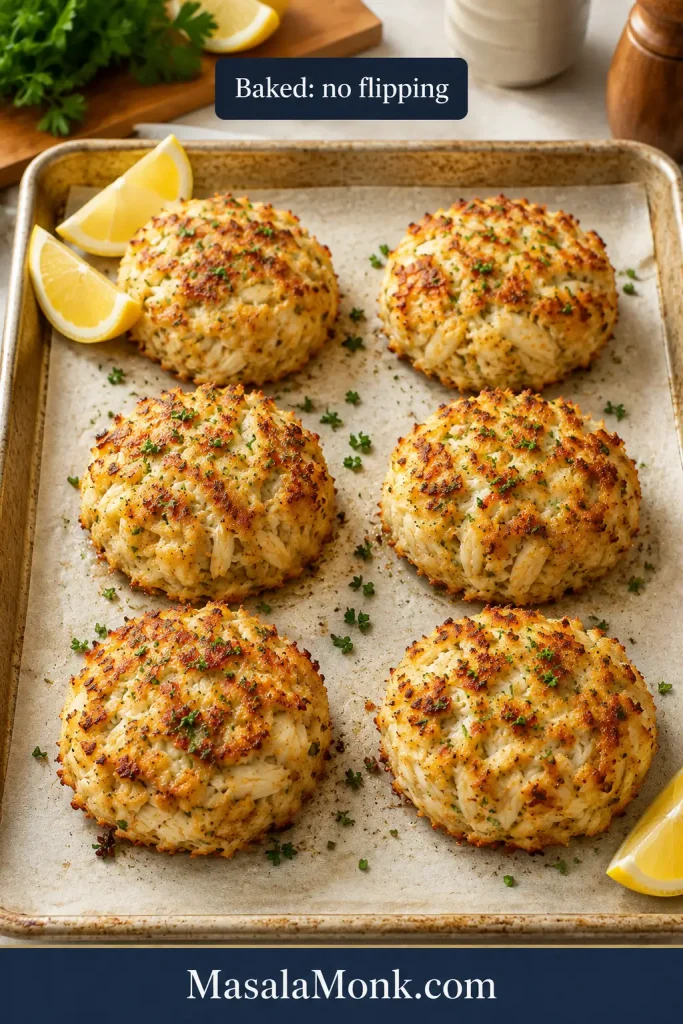
Baking is the easiest method because there is no flipping. Broil only at the end and only for color, or the tops can brown before the centers are properly heated.
Air Fryer Crab Cake Option
- Preheat air fryer to 375°F / 190°C.
- Spray the basket and crab cakes lightly with oil.
- Air fry for 10–12 minutes, flipping halfway.
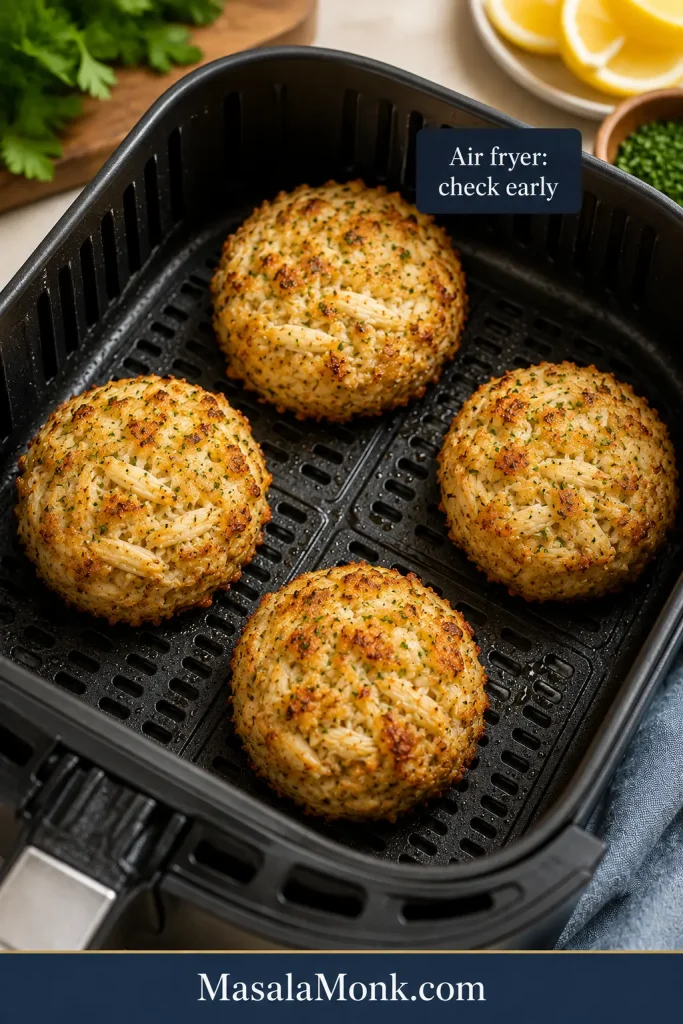
- Check smaller crab cakes around the 8-minute mark so they do not dry out.
Once the recipe is in front of you, these choices help you adapt the batch without guessing or adding filler just to feel safe.
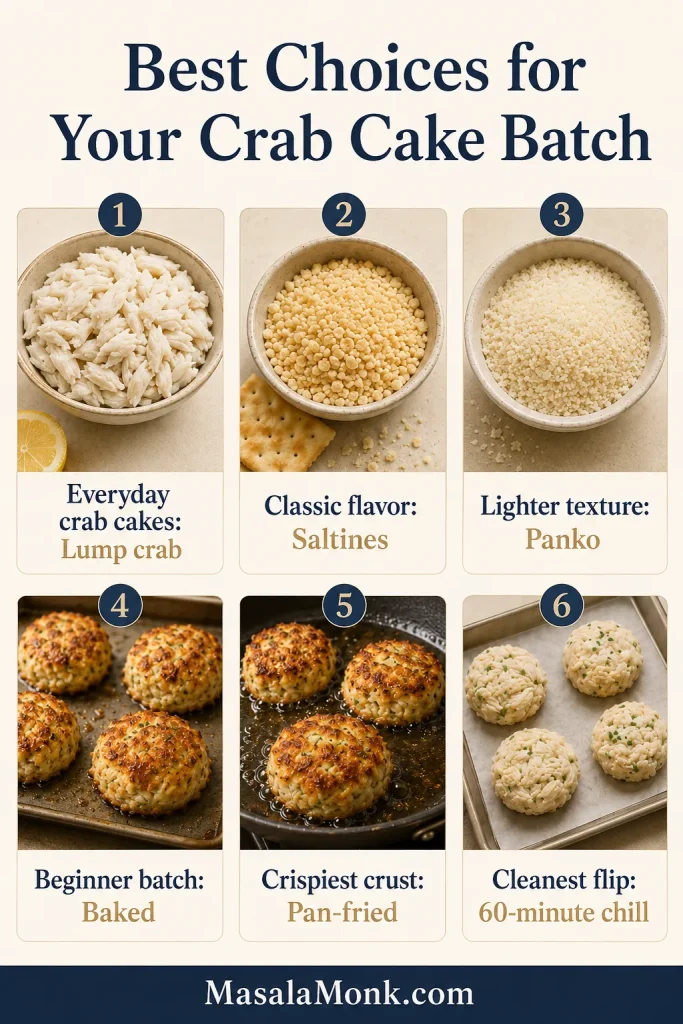
Best Choices for Your Crab Cake Batch
Use this as the fast decision guide for your crab cakes. It keeps the recipe flexible without making the mixture feel like a guessing game.
| Your situation | Go with this |
|---|---|
| Everyday crab cakes | Refrigerated lump crab |
| Classic flavor | Crushed saltines |
| Lighter texture | Panko |
| Beginner batch | Bake at 450°F / 230°C |
| Crispiest crust | Pan-fry over medium heat |
| Cleanest flip | Chill the full 60 minutes |
| Using canned crab | Drain hard, reduce salt, shape smaller |
| Making sandwiches | Shape slightly flatter and sturdier |
This ratio is built for little-filler crab cakes: enough egg, mayo, and crumbs to hold the shape, but not so much that the crab turns into a breadcrumb patty. The full 60-minute chill gives the cleanest flip, especially if your crab is wet or your cakes are large.
If this is your first batch, bake them or chill the full 60 minutes before pan-frying. If you want the most restaurant-style crust, pan-fry and wait for the golden edge before touching them.
Texture Target: What the Mixture Should Look and Feel Like
A loose mixture is not automatically a bad mixture. Little-filler crab cakes are supposed to feel delicate before they chill. The goal is not a stiff patty; the goal is a tender cake that uses only enough binder to stay together.
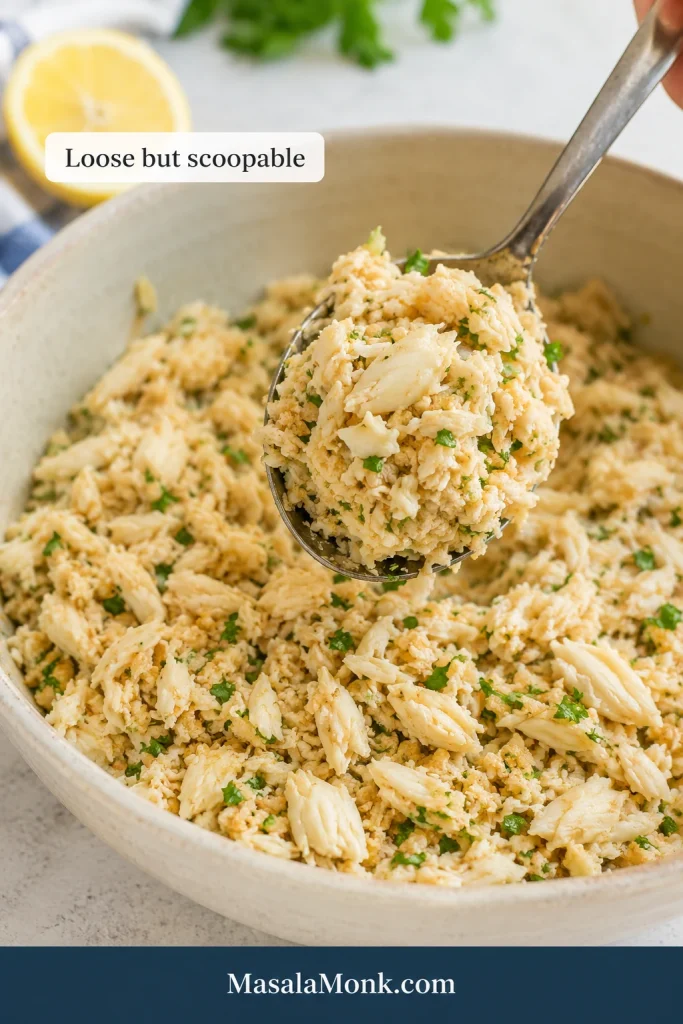
- Before chilling: moist, loose, and scoopable, with no liquid pooling at the bottom of the bowl.
- After shaping: the cakes should hold their edges without feeling packed hard.
- When the mixture is wet: drain better or add 1 tablespoon crumbs at a time.
- For a dry mixture: add a small spoon of mayo or a few drops of lemon juice.
- If the cakes stick: wait. The crust probably has not finished forming.
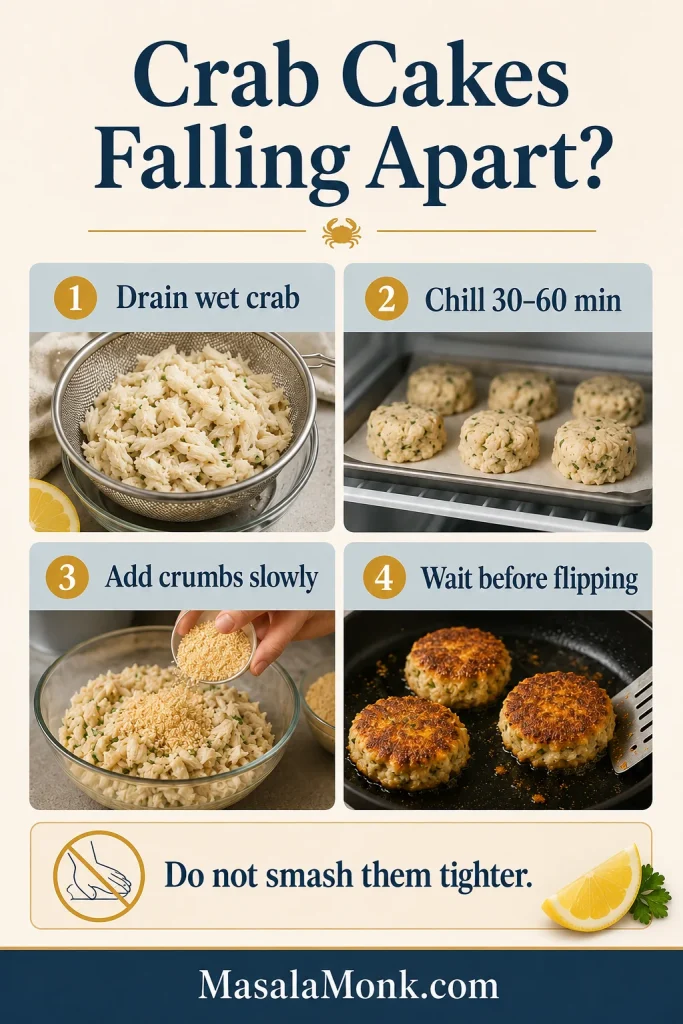
Use the visual guide below before adding more crumbs. Most soft crab cake mixtures need draining or chilling first, not heavy packing.
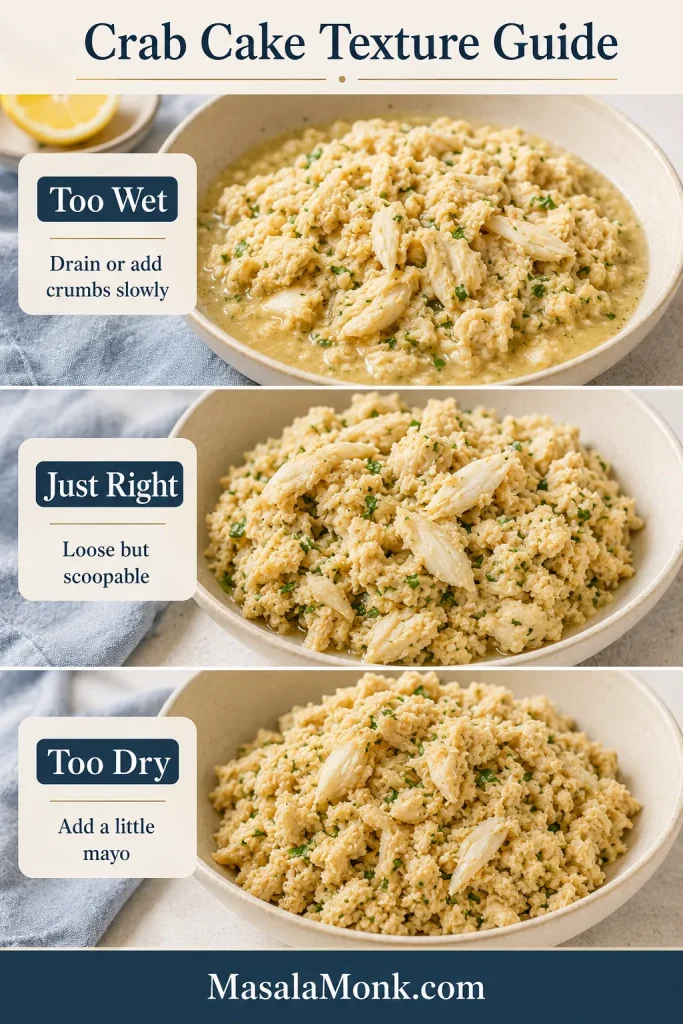
Do not fix a loose crab cake mixture by smashing the cakes tighter. That makes the center dense. Chill first, then add crumbs only if the cakes still slump or fall apart.
Crab Cake Ratio Per 1 Pound of Crab
Once you know the ratio, crab cakes become much less intimidating. For every 1 lb / 454g crab meat, use one egg, about 1/4 cup mayo, a small amount of mustard and seasoning, and just enough crumbs to hold the cakes together.
| For 1 lb / 454g crab | Use |
|---|---|
| Egg | 1 large egg |
| Mayonnaise | 1/4 cup / 60g |
| Dijon mustard | 2 tsp |
| Worcestershire sauce | 2 tsp / 10ml |
| Lemon juice | 1 tbsp / 15ml |
| Old Bay | 1 tsp, plus more to taste |
| Panko | 1/2 cup / 30–40g |
| Crushed saltines | 2/3 cup / 41g |
| Yield | 6 large cakes or 8 medium cakes |
| Chill | 30–60 minutes |
Use this ratio as the baseline before making small moisture adjustments for your crab meat.
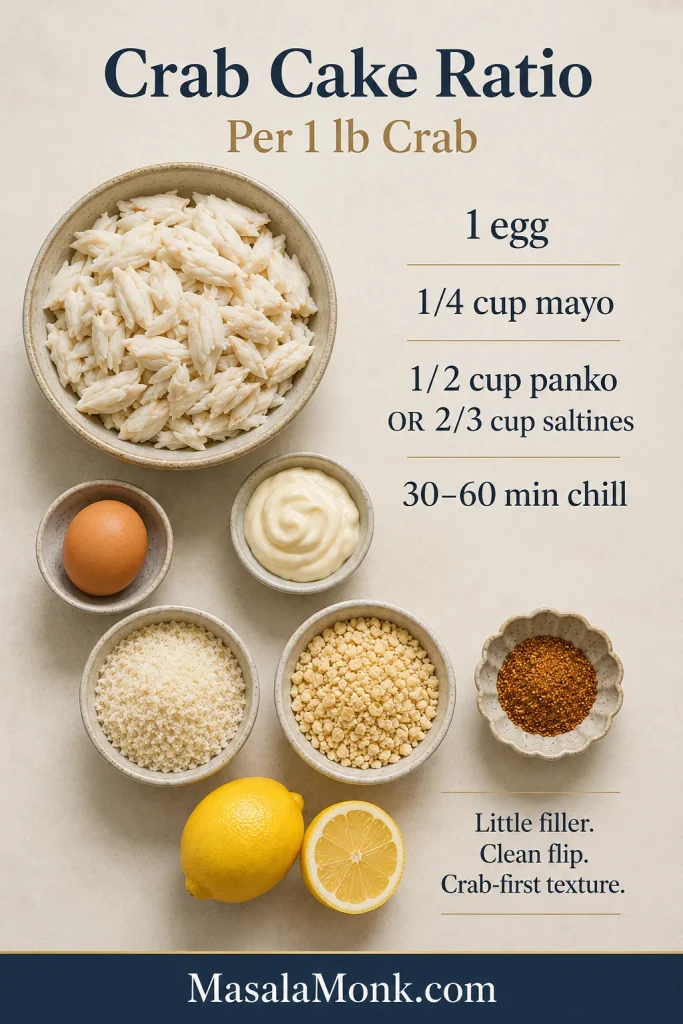
This ratio keeps the cakes tender and crab-heavy without turning them bready. Very wet crab may need 1 extra tablespoon of crumbs and a longer chill. Dry crab may need a small spoon of mayo. Make either adjustment gently.
The Ingredients That Keep Crab First
Every ingredient has a job: protect the crab flavor, hold the cakes together, or help the edges brown.
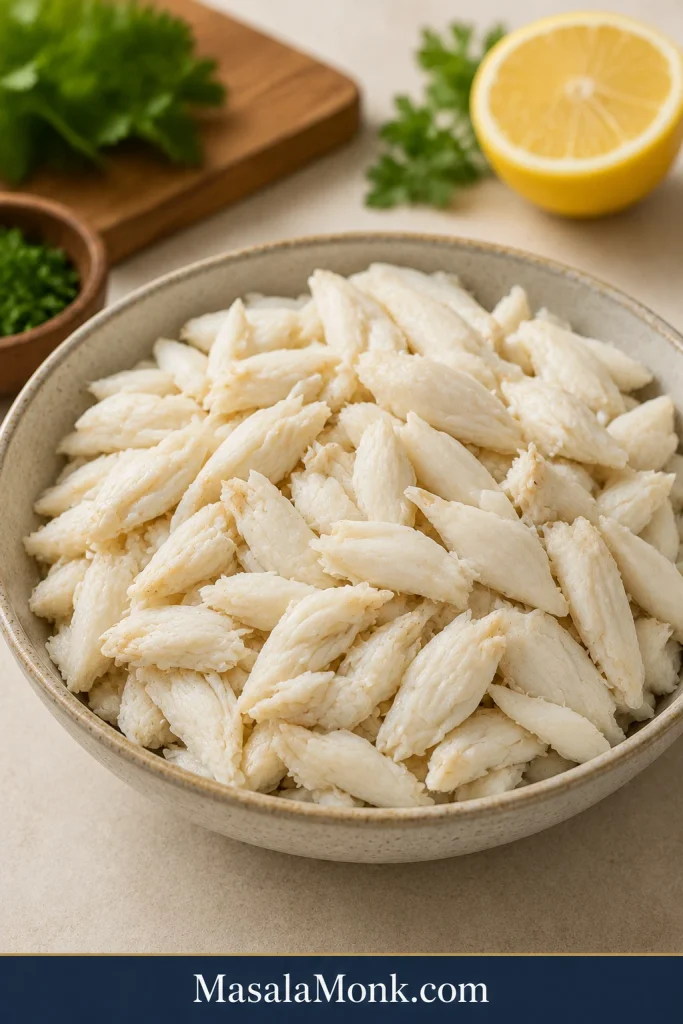
Lump Crab Meat
Lump crab is the best everyday choice for homemade crab cakes. It has enough large pieces to feel special, but it is usually more affordable than jumbo lump. If using pasteurized refrigerated crab, drain it well and gently pat away extra moisture before mixing.
Egg and Mayonnaise
Egg helps the cakes set, while mayo keeps the center moist and helps the seasonings spread. Regular mayo gives the closest texture, while homemade mayonnaise can make the binder and sauce taste fresher.
Dijon, Worcestershire, Lemon, and Old Bay
Dijon adds sharpness, Worcestershire adds savory depth, lemon wakes up the sweetness of the crab, and Old Bay gives the cakes their familiar Maryland-style seasoning. Start gently with salt because crab meat, saltines, and seasoning blends can already be salty.
If you are nervous about seasoning, cook one tiny test cake before shaping the full batch. It is the easiest way to check salt, heat, and brightness without risking all the crab.
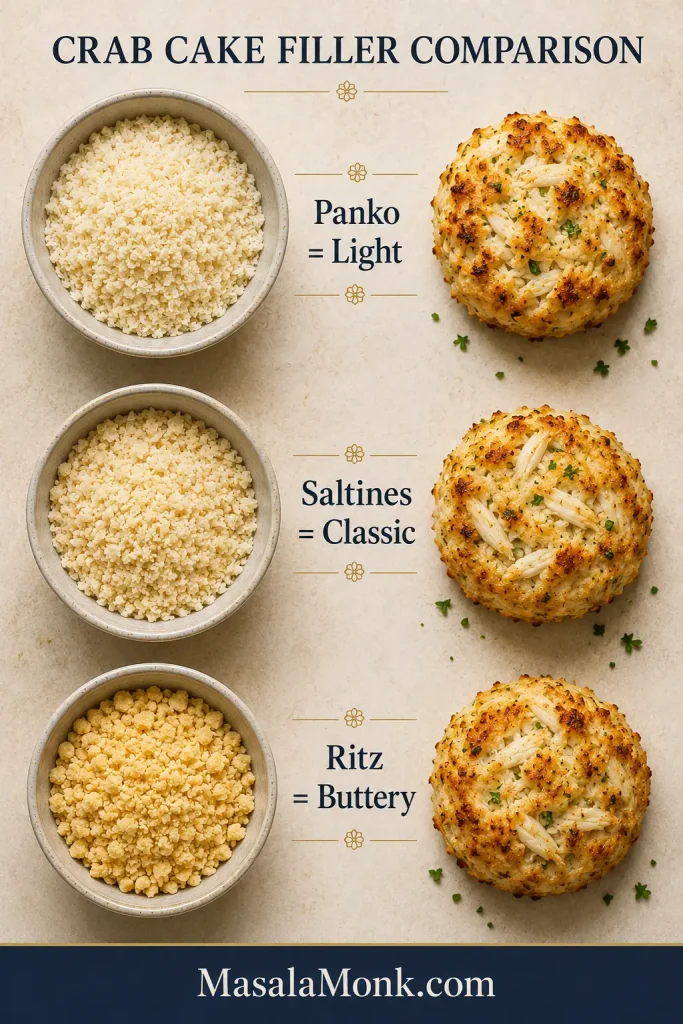
Panko, Saltines, or Ritz
Panko gives a light, clean texture and crisp edges. Crushed saltines taste more classic and slightly saltier. Ritz crackers make a softer, richer, buttery variation. Whatever you choose, the filler should support the crab, not become the main texture.
Parsley or Chives
Fresh herbs add color and lift. Parsley is classic and mild; chives are delicate and slightly oniony without taking over.
Smart Swaps Without Losing the Crab
Make small swaps, then chill before deciding the mixture needs more crumbs. Many crab cake mixtures feel soft at first and firm up after resting.
- No panko: use crushed saltines for a classic flavor or Ritz for a richer, buttery version.
- Out of saltines: use panko for a lighter texture or fine dry breadcrumbs in a pinch.
- For a mayo swap: use Greek yogurt, sour cream, or eggless mayonnaise. Yogurt and sour cream will taste tangier.
- No Old Bay: use seafood seasoning, Cajun seasoning, or paprika with celery salt. Add slowly and taste before adding extra salt.
- Gluten-free: use gluten-free panko or crushed gluten-free crackers, and check the Worcestershire sauce and seasoning blend too.
- No egg: use eggless mayo with 1–2 extra tablespoons crumbs, chill fully, shape smaller cakes, and flip carefully.
Which Crab Meat Should You Use?
The crab you choose changes the texture, price, and flavor of the finished cakes. For this recipe, lump crab is the best balance. Jumbo lump is beautiful for special occasions, while backfin or claw meat can work when you want something more affordable.
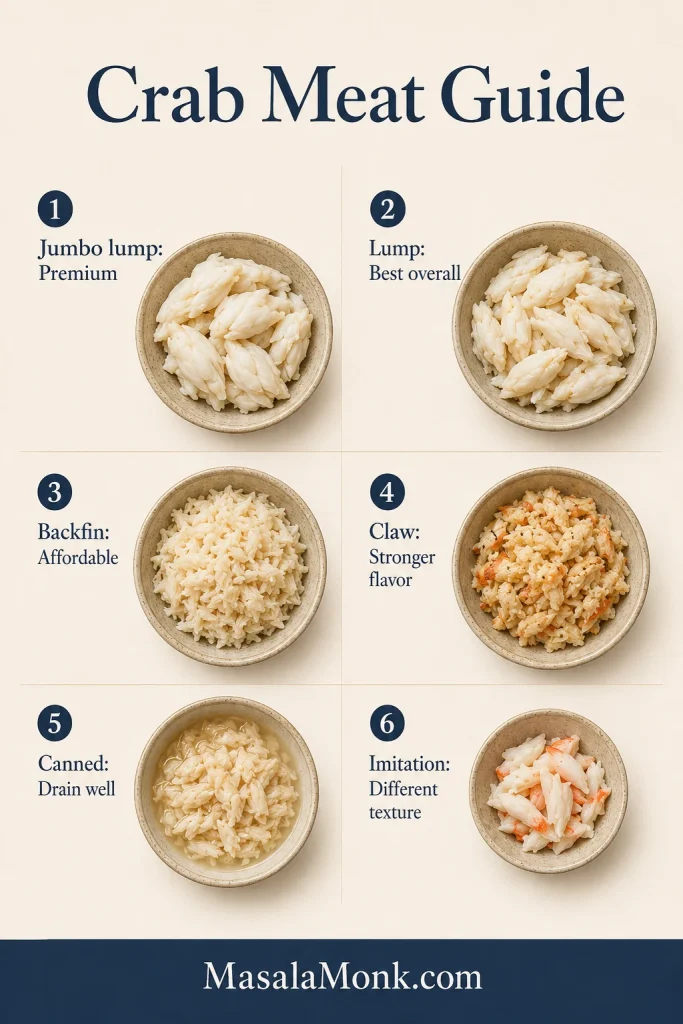
| Crab meat | Should you use it? | Works well for |
|---|---|---|
| Jumbo lump crab | Yes, premium | Special occasion cakes with large visible pieces |
| Lump crab | Yes, best overall | The main recipe |
| Backfin crab | Yes | Affordable crab cakes with good flavor |
| Claw meat | Yes, but stronger | Budget cakes or mixing with lump crab |
| Canned crab | Yes, with adjustments | Pantry crab cakes when drained very well |
| Imitation crab | Not ideal for this recipe | Better for a different budget crab-style patty |
| Dungeness crab | Yes | Sweet West Coast-style crab cakes |
| Blue crab | Yes | Classic Maryland-style flavor |
When buying crab specifically for this recipe, choose fresh or refrigerated pasteurized lump crab meat when possible. Avoid watery crab meat, and always drain it well before mixing. When buying fresh or refrigerated seafood, keep it cold, check that it smells clean rather than sour or ammonia-like, and refrigerate it promptly. The FDA seafood safety tips are helpful when choosing fresh or frozen seafood.
Pan-Fried, Baked, and Air Fryer Crab Cakes
Choose pan-fried for the deepest crust, baked for the least stress, and air fryer for a lighter, less-oil option. The mixture stays the same; only the cooking method changes.
| Method | Works well for | Time | Texture |
|---|---|---|---|
| Pan-fried | Crispiest golden edges | 3–4 minutes per side | Crisp outside, tender inside |
| Baked | Beginners and batches | 12–15 minutes at 450°F / 230°C | Tender, less crust underneath |
| Air fryer | Less oil | 10–12 minutes at 375°F / 190°C | Lightly crisp; check early |
| Pan + oven finish | Thicker cakes | 2–3 minutes per side, then 5–8 minutes at 400°F / 200°C | Crisp crust with evenly heated center |
Pan-Fried Crab Cakes
Pan-frying gives the best crust. Keep the heat at medium, use a thin layer of oil, and leave space between the cakes. Once the cakes hit the pan, the hardest part is leaving them alone.
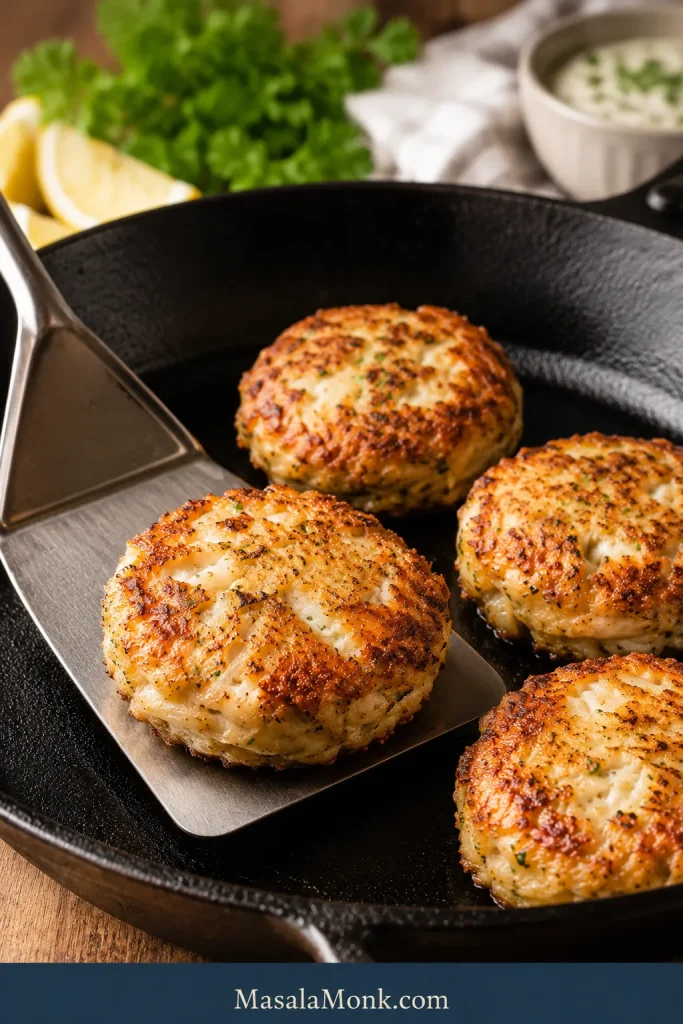
Look for a golden ring around the bottom edge before you touch them. That little ring is your sign that the crust is forming and the cake is getting strong enough to lift. If the cake resists the spatula, that is not failure; it usually means the crust has not finished forming.
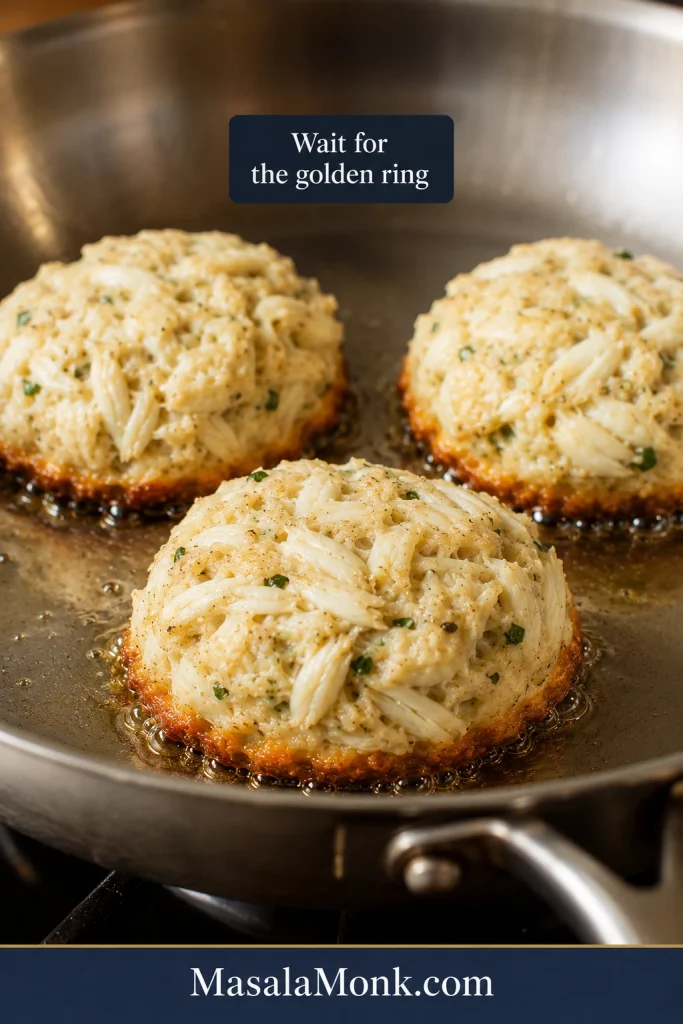
When the first side is ready, the spatula should slide under with less resistance, and the bottom should look deeply golden instead of pale or patchy.
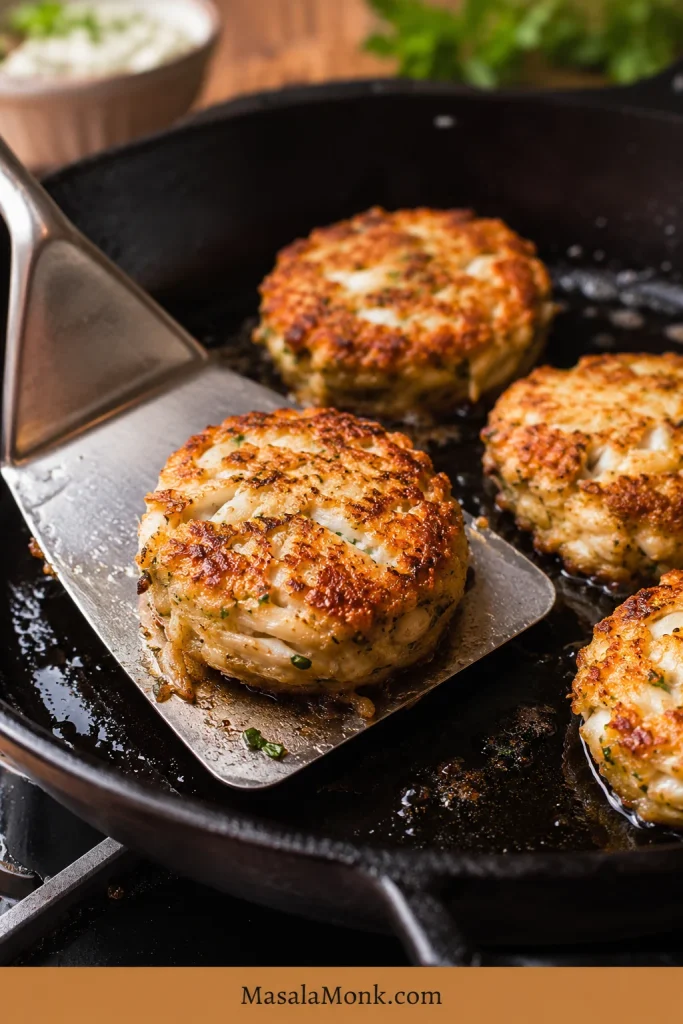
If cooking in batches, keep finished crab cakes on a rack in a 200°F / 95°C oven while the rest cook. Avoid stacking them, or the crust will soften.
Baked Crab Cakes
Baking is easier because there is no flipping. The cakes will be a little less crusty underneath, but they stay tender and golden on top. If you like gentle baked seafood, this baked haddock recipe uses the same idea: high enough heat for a tender finish, with lemon, butter, and a light panko or Ritz topping.
Air Fryer Crab Cakes
Air frying uses less oil than pan-frying, but the cakes still need a light spray and enough space for air to move around them.
Thick Crab Cakes
For extra-thick cakes, sear them first, then finish them in a 400°F / 200°C oven for 5–8 minutes. Because most lump crab meat is already cooked, the goal is to heat the cakes through and set the binder. For very thick cakes, 145°F / 63°C is a useful safety-minded check, but do not keep cooking thin cakes until they dry out. You can see the general seafood guidance on FoodSafety.gov.
How to Keep Crab Cakes From Falling Apart
Most crab cake problems are fixable and usually come from one of four places: too much moisture, too little chill time, too much or too little filler, or flipping before the crust forms.
| Problem | Likely cause | Fix |
|---|---|---|
| Cakes fall apart | Wet crab, short chill, or early flipping | Drain well, chill longer, wait for the golden edge |
| Cakes taste bready | Too much filler or overmixing | Use less crumbs next time and fold gently |
| Cakes feel dry | Too much breadcrumb or overcooking | Add a small spoon of mayo; check air fryer cakes early |
| Cakes are soggy | Wet crab, low heat, or crowded pan | Drain better, use medium heat, leave space |
| Outside browns too fast | Heat too high or cakes too thick | Sear, then finish in a 400°F / 200°C oven |
| Cakes stick to pan | Moved before crust formed | Wait another minute before lifting |
If the mixture still feels loose after chilling, add 1 tablespoon panko or crushed saltines at a time. Stop as soon as the cakes hold together. Too much filler will make the crab disappear.
Canned Crab, Imitation Crab, and Maryland-Style Notes
Can You Use Canned Crab?
Yes, canned crab can work, but it needs care. Drain it very well, gently press out excess liquid, taste before adding salt, and add the lemon juice gradually instead of all at once. If the crab is very wet, add 1 extra tablespoon panko or crushed saltines, chill for the full 60 minutes, and shape slightly smaller cakes so they are easier to flip.
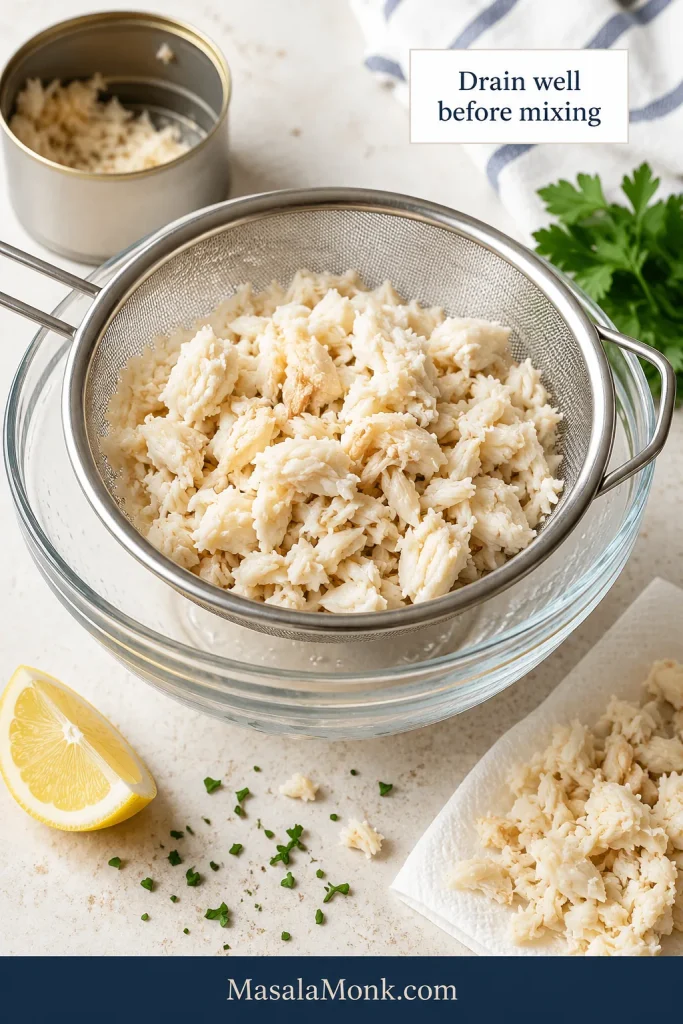
The same moisture-control idea matters in salmon croquettes too: drain first, bind gently, shape evenly, and cook only once the pan is ready. For the cleanest crab flavor and best texture, though, lump crab is still the better choice when you can get it.
Can You Use Imitation Crab?
Imitation crab can be tasty in its own style, but it does not behave like lump crab. It is softer, sweeter, and more uniform, so this exact formula will not give the same flaky texture or sweet seafood flavor. If imitation crab is what you have, chop it small, reduce the mayo slightly, and make smaller cakes. The result will be more of an affordable crab-style patty than a lump crab cake.
Maryland-Style Crab Cake Notes: What This Recipe Keeps and Skips
This is a Maryland-style home version, not a claim that every Maryland cook makes crab cakes the same way. It keeps the important direction: sweet crab first, Old Bay, lemon, mustard, Worcestershire, and very little filler. It skips onions, peppers, and heavy seasoning so the crab stays clear.
Blue crab is classic, saltines are traditional in many versions, and panko is a lighter modern option when you want crisp edges without heaviness. The main rule is simple: let the crab lead. If the finished cake tastes mostly like bread, the balance has gone too far.
Crab Cake Sizes: Dinner Cakes, Mini Cakes, Crab Balls, and Sandwiches
Choose the size before you shape the mixture. Large cakes feel like dinner, medium cakes work for plates and appetizers, mini cakes are party-friendly, and slightly flatter cakes are best for sandwiches.
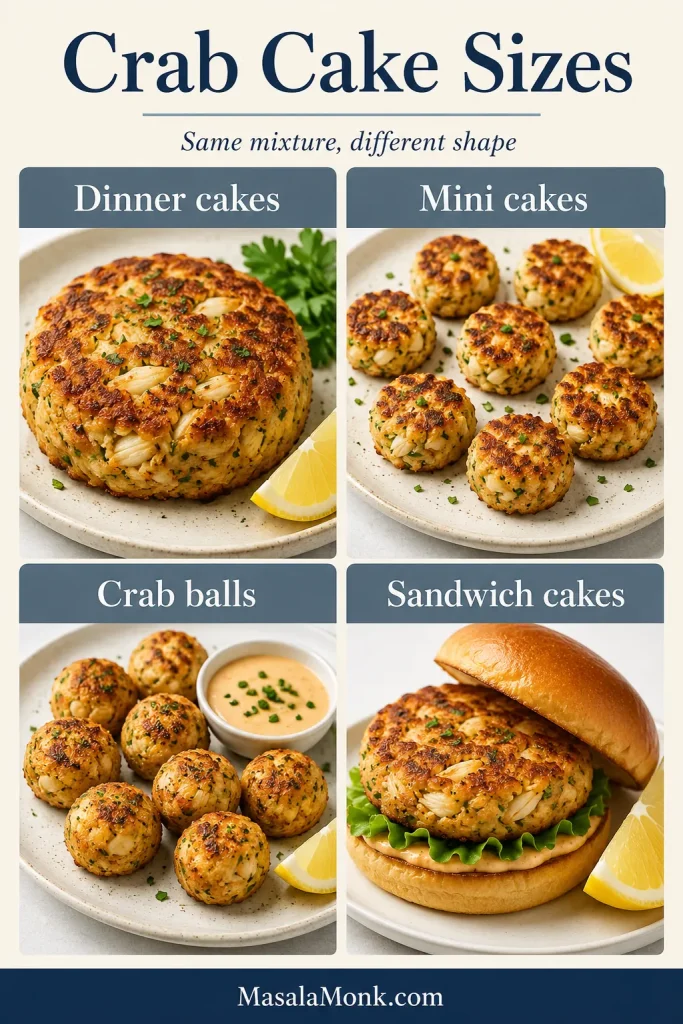
| Size | Mixture per cake | Yield from 1 lb crab | Works well for |
|---|---|---|---|
| Large crab cakes | About 1/2 cup | 6 cakes | Dinner or main course |
| Medium crab cakes | Heaping 1/3 cup | 8 cakes | Appetizer or lighter meal |
| Mini crab cakes | 2 tbsp | 16–20 cakes | Party bites |
| Crab balls | 1–2 tbsp | 24–36 balls | Snack boards and appetizers |
| Sandwich cakes | About 1/3–1/2 cup | 6–8 cakes | Toasted buns with slaw and sauce |
Smaller cakes cook faster, so check early. Mini crab cakes usually need only 2–3 minutes per side in a pan or about 8–10 minutes in a hot oven. The chill-and-shape logic also helps with other delicate patties and croquettes: control moisture, chill before cooking, and turn only when the first side is ready.
Sauces That Keep the Crab First
The best sauce for crab cakes is creamy, bright, and tangy: tartar sauce for classic flavor, remoulade for heat, and lemon or garlic aioli for a richer modern dip. The sauce should wake up the richness of the crab, not bury it.
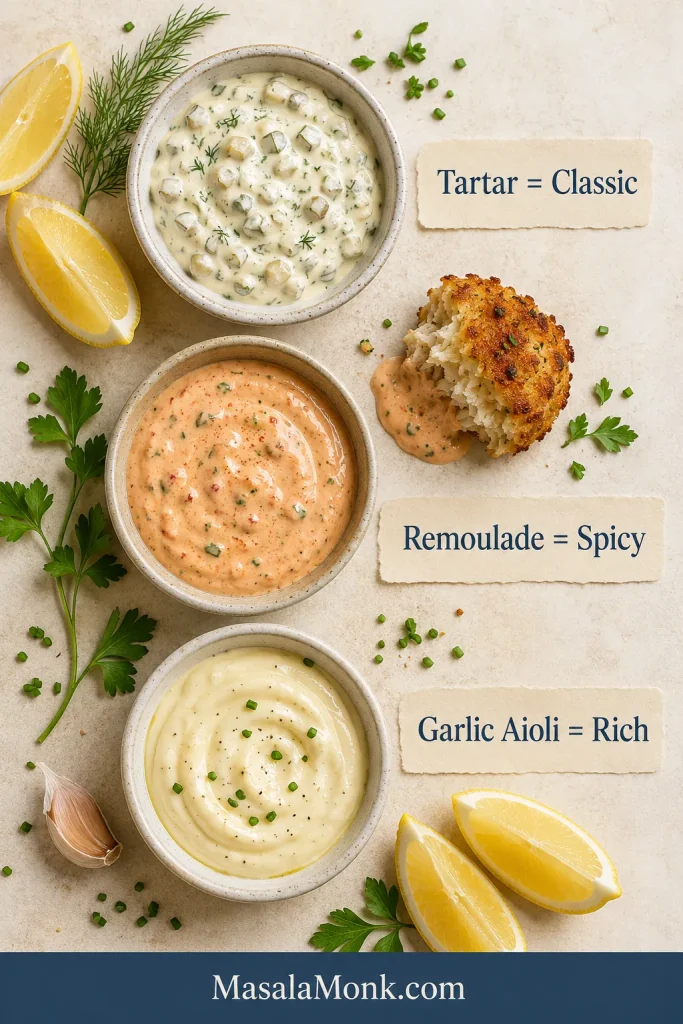
- Tartar sauce: classic, mild, and family-friendly.
- Remoulade: spicier, tangier, and more restaurant-style.
- Lemon aioli: rich, bright, and modern.
- Garlic aioli: bold, creamy, and simple.
- Mustard sauce: punchy and Maryland-style.
For a classic pairing, serve these crab cakes with homemade tartar sauce. Choose easy garlic aioli for a richer, garlicky dip. A small drizzle of honey mustard dressing works well with cabbage, greens, or a crab cake sandwich when you want a lighter slaw-style pairing.
Serve crab cakes while the edges are still crisp, with lemon on the side and just enough sauce to brighten each bite without hiding the crab.
What to Serve With Crab Cakes
Serve crab cakes as an appetizer, seafood dinner, sandwich filling, or brunch base. Keep the sides fresh and simple so the crab stays the star.
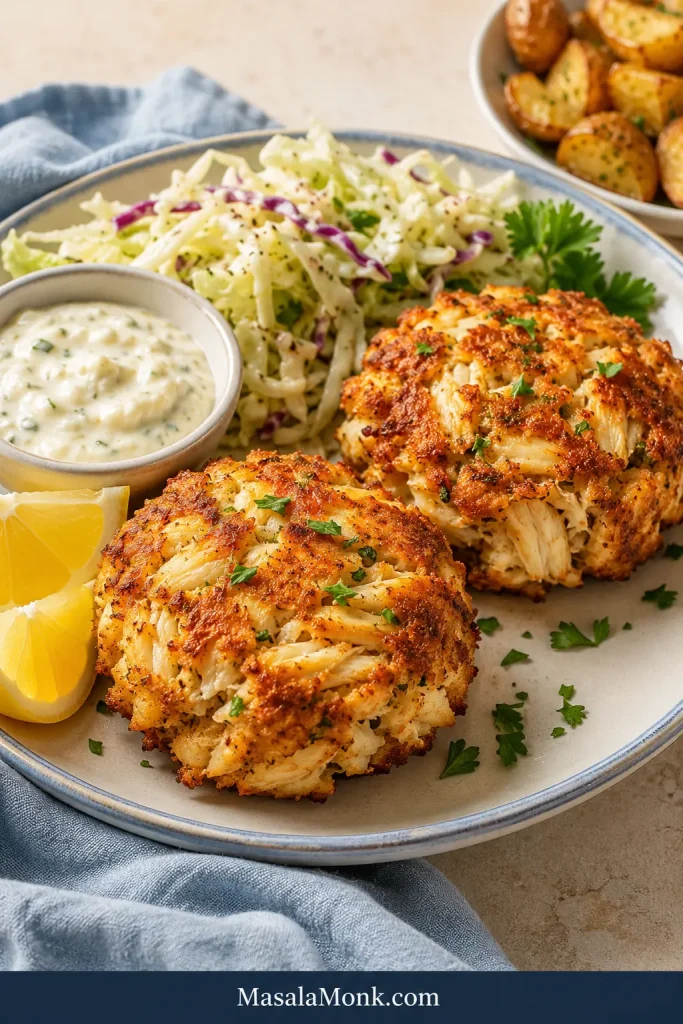
- Lemon wedges
- Tartar sauce or remoulade
- Easy coleslaw or lemony slaw
- Green salad
- Ranch roasted potatoes
- Crispy homemade French fries
- Corn on the cob
- Pickles
- Toasted sandwich buns
- Poached eggs and hollandaise for crab cake Benedict
For a picnic-style plate, add corn, pickles, and potato salad. For brunch, serve crab cakes with poached eggs and hollandaise sauce. For sandwiches, use toasted buns, lettuce, tomato, pickles, sauce, and a little slaw.
Make Ahead, Storage, Freezing, and Reheating
- Make ahead: shape the crab cakes up to 24 hours ahead. Cover and refrigerate until ready to cook.
- Refrigerate cooked crab cakes: store in an airtight container for up to 3 days. Let them cool before covering so steam does not soften the crust, but do not leave seafood sitting out for long.
- Freeze uncooked crab cakes: freeze shaped cakes on a tray until firm, then transfer to a freezer-safe bag or container. Thaw overnight in the refrigerator before cooking.
- Freeze cooked crab cakes: possible, but the texture is usually better when frozen before cooking.
- Reheat: use a 350°F / 175°C oven for 8–12 minutes, an air fryer at 350°F / 175°C for 4–6 minutes, or a skillet over medium-low heat. The microwave works in a pinch but softens the crust.
FAQs
What is the best crab meat for crab cakes?
Lump crab meat is the best everyday choice because it gives tender pieces without the highest price of jumbo lump. Jumbo lump is beautiful for special occasions, while backfin or claw meat can work for more budget-friendly crab cakes.
Are crab cakes better baked or fried?
Pan-fried crab cakes have the crispest edges and deepest color. Baked crab cakes are easier for beginners and batches because there is no flipping, so they are less likely to break.
How much filler should crab cakes have?
For 1 lb / 454g crab meat, use about 1/2 cup / 30–40g panko or 2/3 cup / 41g crushed saltines. More than that can make the cakes taste bready.
What keeps crab cakes from falling apart best?
The biggest fixes are draining the crab well, chilling the shaped cakes, and waiting until the first side is golden before flipping. Add more crumbs only after chilling if the mixture still feels too loose.
Do crab cakes need egg?
Egg helps bind the crab cakes and makes them easier to cook without breaking. For an egg-free version, shape smaller cakes, add 1–2 extra tablespoons crumbs, chill for the full 60 minutes, and flip carefully.
What can replace mayonnaise in crab cakes?
Greek yogurt, sour cream, or eggless mayonnaise can replace regular mayo. Yogurt and sour cream taste tangier, while eggless mayo keeps the texture closer to the original.
Should I use panko or saltine crackers?
Use panko for a lighter, crisper texture and saltines for a more classic, slightly saltier Maryland-style crab cake. Ritz crackers are richer and more buttery.
How long should crab cakes chill before cooking?
Chill crab cakes for at least 30 minutes. A full 60 minutes is better when the mixture is soft, the crab is wet, or you are nervous about flipping.
Can crab cakes be made ahead?
Yes. Shape the crab cakes, place them on a tray, cover, and refrigerate for up to 24 hours before cooking. This makes them easier to handle and helps them stay intact.
Can you freeze crab cakes?
Yes. Freeze them uncooked after shaping for the best texture. Thaw overnight in the refrigerator before cooking.
How do I make gluten-free crab cakes?
Use gluten-free panko or crushed gluten-free crackers instead of regular panko or saltines. Check that your Worcestershire sauce and seasoning blend are gluten-free too.
The Crab Cake Promise
Crab cakes are easier when you remember the basic promise: 1 lb crab, 1 egg, 1/4 cup mayo, a small handful of crumbs, bright seasoning, and enough chill time. Start with good lump crab when you can, drain it well, fold gently, and let the first side brown before flipping.
When the edges are crisp, the center is warm and tender, and the crab still tastes sweet and clear, that is the whole win.
If you make them, leave a note with your crab type, cooking method, and whether you used panko, saltines, or Ritz. Your note can help the next person choose their version.








