Posted on 4 Comments

Baked Chicken Breast Recipe

Sliced golden baked chicken breast with pan juices, lemon, parsley, potatoes, and green beans on a plate.

This baked chicken breast recipe is for anyone who has pulled a tray of chicken from the oven and wondered why it turned out dry, bland, rubbery, or unevenly cooked. Chicken breast is not hard to cook, but it is unforgiving: a few extra minutes can turn tender slices into dry, chalky pieces.

The fix is simple and specific. First, pound the thick end, then coat the chicken with oil and seasoning, bake it hot, check the center, and rest before slicing. Most dry chicken breast is not a marinade problem; instead, it is usually a thickness, timing, or resting problem.

Close-up of sliced baked chicken breast showing a moist white interior and browned seasoned edges.
When chicken breast is cooked well, the slices look clean, tender, and moist enough to serve without hiding them under sauce.

The MasalaMonk rule for chicken breast is simple: make it even, bake it hot, check the center, and rest before slicing. No single timer can understand the chicken breast in front of you, especially when one piece is thick, another is thin, and the pack is uneven.

When the thickness and timing are right, the chicken slices cleanly, tastes seasoned across the surface, and stays useful enough for dinner tonight and lunches later.

MasalaMonk rule graphic showing baked chicken breast steps: make it even, bake it hot, check the center, and rest before slicing.
Once the chicken is even in thickness, the oven can work more predictably; after that, temperature and resting protect the texture.

The main method uses 425°F / 220°C for tender, lightly browned boneless skinless chicken breast, with clear timing for 350°F, 375°F, 400°F, 425°F, and 450°F. You will also get help for thin chicken, large pieces, bone-in chicken, frozen chicken, meal prep, storage, reheating, and dry-chicken fixes.

Quick Answer: How to Bake Chicken Breast

For juicy baked chicken breast, pound the thick end so the pieces cook evenly, rub the chicken with oil and seasoning, then bake uncovered at 425°F / 220°C until the center of the thickest piece reaches 165°F / 74°C. Rest for at least 5 minutes before slicing.

At 425°F / 220°C, medium boneless skinless chicken breasts usually take 18 to 22 minutes. Thin pieces may finish in 10 to 14 minutes, while very large or thick breasts can need 24 to 30 minutes or more. The clock gives you a window; the thermometer gives you the answer.

Use this baked chicken breast recipe as the base method, then adjust the timing based on the size, thickness, and cut of chicken you have.

Need to compare thin, medium, large, or extra-large pieces? Go straight to the bake time chart.

Baked Chicken Breast at a Glance

Question Best answer
Best oven temperature 425°F / 220°C for tender, lightly browned chicken breast
Fan or convection oven 400°F / 200°C fan, or reduce by about 25°F and check early
Normal bake time 18–22 minutes for medium breasts at 425°F
Wider timing range 16–25 minutes for most boneless breasts, depending on size and thickness
Safe internal temperature 165°F / 74°C in the center of the thickest piece
Best cut Boneless skinless chicken breasts, close in size
Best thickness Even thickness, ideally about 3/4–1 inch / 2–2.5 cm for average breasts
Rest time At least 5 minutes before slicing
Best tool Instant-read thermometer

Average-size, thawed, boneless chicken breasts that are close in thickness can follow the main recipe directly. Use the extra charts when your chicken is thin, very large, bone-in, frozen, or when your oven is already set to a different temperature.

Baked chicken breast at-a-glance guide showing 425°F, 18 to 22 minutes, 165°F internal temperature, and 5 minutes rest.
These numbers are a strong starting point, but once the tray goes into the oven, thickness and internal temperature matter more than the timer.

Working with thin cutlets, extra-large pieces, or a different oven temperature? The thin vs thick chicken guide and oven temperature chart will be more useful than one fixed timer.

The Simple Method in Practice

In practice, this comes down to a few moves: pound the thick end so the chicken cooks evenly, oil the surface so the seasoning sticks, season all sides, bake hot, check the thickest piece, and rest before slicing.

Once you understand what the chicken in front of you needs — thinner timing, thicker prep, or a little more rest — the recipe becomes much less stressful.

Ingredients for Baked Chicken Breast

The seasoning here is built from pantry basics, so the chicken tastes good on its own. At the same time, it still fits into salads, bowls, wraps, pasta, sandwiches, and meal-prep boxes.

Ingredients for baked chicken breast including raw chicken, olive oil, paprika, garlic powder, herbs, salt, pepper, lemon, and parsley.
Simple pantry seasoning works because oil helps the spices cling to the chicken, so every slice tastes seasoned instead of flat.
Ingredient US amount Metric amount Why it matters
Boneless skinless chicken breasts 4 medium breasts, 5–8 oz each 600–900g total The main cut for fast, easy oven baked chicken breast
Olive oil or avocado oil 1 1/2 tbsp 22 ml Helps seasoning stick and protects the surface
Fine salt 1 tsp About 6g Seasons the chicken properly, not just the outside
Paprika or smoked paprika 1 tsp 2–3g Adds color, warmth, and gentle flavor
Garlic powder 1 tsp About 3g Gives the chicken a savory base
Onion powder 1/2 tsp 1–2g Rounds out the seasoning
Black pepper 1/2 tsp About 1g Adds mild heat
Italian seasoning, oregano, or thyme 1 tsp About 1g Adds herby flavor without needing a marinade
Brown sugar, optional 1–2 tsp 4–8g Helps browning, especially if you are not broiling
Lemon wedges or parsley, optional For serving For serving Adds freshness at the end

Best Chicken Breast to Use

Use boneless skinless chicken breasts that are close in size. Most supermarket packs are uneven: one breast may be thick enough to need pounding, while another may already be thin enough to overcook early.

Three raw chicken breasts of different thicknesses labeled thin, average, and thick on parchment.
Since most supermarket packs are uneven, checking thickness before baking is more useful than treating every piece like it needs the same time.

For this method, similar-size pieces matter more than buying perfectly shaped chicken. As a result, the closer the pieces are in thickness, the easier it is to avoid dry edges and undercooked centers.

Very large chicken breasts are often thick at one end and thin at the other. For the best texture, pound only the bulky end until the piece is closer to one thickness, or slice extra-large breasts horizontally into two thinner pieces. That one step does more for tenderness than adding another sauce or spice.

Best Seasoning for Baked Chicken Breast

The best seasoning for baked chicken breast gives salt, savoriness, color, and aroma without requiring a long marinade. Salt, paprika, garlic powder, onion powder, black pepper, and herbs are enough for a reliable everyday version.

The seasoning should look like a real coating, not a few dusty patches. Because chicken breast is mild, it needs enough salt and spice across the whole surface. If the top looks barely seasoned before baking, the finished chicken will probably taste flat.

Raw chicken breast being coated with paprika garlic seasoning before baking.
A visible coating matters because chicken breast is mild; without enough seasoning on the surface, the finished slices can taste plain.

The brown sugar is optional, but useful. Although it does not make the chicken taste sweet, it helps the paprika-garlic coating brown faster, especially because boneless skinless chicken breast has no skin to crisp.

Salt note: This recipe uses fine salt. If you use kosher salt, you may need a little more by volume because the crystals are larger. Seasoning should taste balanced, not harshly salty.

Oil or Butter?

Oil is the easiest choice for high-heat baking because it coats the chicken evenly and handles the oven well. Butter tastes great, but it can brown faster, so it is often better as a finishing sauce with garlic, lemon, herbs, or pan juices.

Equipment You Need

You do not need special equipment, but a thermometer makes a huge difference. Without one, baked chicken breast often goes dry because the cook is guessing by time, color, or juices instead of checking the center of the thickest piece.

Equipment for baked chicken breast including an instant-read thermometer, sheet pan, parchment, tongs, and a meat mallet.
A thermometer and a way to even the thick end do more for juicy baked chicken breast than a long list of special tools.

No thermometer yet? Read what to do if you do not have one, but a thermometer is still the most reliable way to avoid dry chicken.

  • Instant-read thermometer: the most important tool for tender, safe chicken.
  • Rimmed sheet pan or metal baking dish: good for high heat and even cooking.
  • Parchment paper or foil: useful for cleanup and to prevent sticking.
  • Meat mallet or rolling pin: helps even out thick chicken breasts.
  • Small bowl: for mixing the seasoning.
  • Tongs: for handling seasoned chicken neatly.
  • Cutting board: for resting and slicing after baking.
Pan note: For very high heat, a rimmed sheet pan or metal baking dish is more predictable than glass. If you use a glass baking dish, check the manufacturer’s temperature limit and avoid sudden temperature changes.

How to Make Baked Chicken Breast

This method uses a plain, reliable oven approach: boneless skinless chicken breasts, baked uncovered, with enough seasoning to taste good on their own and enough flexibility to use later in other meals.

Step-by-step guide for baking chicken breast showing drying, pounding, seasoning, baking, and resting.
Each step solves a different problem: moisture on the surface, uneven thickness, weak seasoning, uncertain doneness, or slicing too soon.

1. Preheat the oven

Preheat the oven to 425°F / 220°C. Use the middle rack so the chicken cooks evenly. For a fan or convection oven, use 400°F / 200°C fan and start checking a few minutes early.

Fan and convection ovens move hot air more aggressively, so chicken can cook faster and brown sooner. Reduce the temperature by about 25°F / 15–20°C and start checking a few minutes before the chart says.

2. Pat the chicken dry

Pat the chicken breasts dry with paper towels. A dry surface helps the oil and seasoning cling better. Otherwise, very wet chicken can steam in the pan and release more liquid.

3. Pound the thick end

When the thick end is much taller than the thin end, gently pound only the bulky part with a meat mallet or rolling pin. Aim for an even piece, roughly 3/4 inch to 1 inch / 2 to 2.5 cm thick for average chicken breasts.

Raw chicken breast being pounded at the thick end to create a more even thickness before baking.
Pounding the thick end helps the center and edges finish closer together, so you are not waiting on one bulky section while the rest dries.

When to Slice Large Chicken Breasts Horizontally

Extra-large chicken breasts usually need a different move: slice them horizontally into thinner pieces instead of forcing one thick piece to cook evenly. This makes the timing more predictable and, more importantly, helps avoid a dry outside with an undercooked center.

Extra-large raw chicken breast being sliced horizontally into thinner pieces before baking.
For extra-large chicken breasts, slicing horizontally creates thinner pieces that season better, cook faster, and finish more evenly.

4. Season the chicken

Mix the salt, paprika, garlic powder, onion powder, black pepper, herbs, and optional brown sugar in a small bowl. Then rub the chicken with oil and coat both sides with the seasoning. Season all sides, not just the top.

5. Bake uncovered

Arrange the chicken in a single layer with a little space between pieces. Place the smoother side up if you want the best presentation. Bake on the middle rack, uncovered, until each piece reaches the safe temperature.

Seasoned chicken breasts spaced apart in a single layer on a parchment-lined sheet pan before baking.
Before baking, the tray should look organized: seasoned pieces in one layer, with enough room for heat to move around them.

Smaller or thinner pieces should come out early. Waiting for the largest breast is how the smaller one turns dry.

What the Chicken Should Look Like After Baking

When the chicken comes out of the oven, look for a lightly browned surface, seasoning that still clings, and a small amount of pan juice rather than a watery tray.

Golden baked chicken breasts on a sheet pan with herbs, lemon, browned bits, and light pan juices.
Look for light browning, seasoning clinging to the surface, and a small amount of pan juice—not a tray full of liquid.

For a full tray dinner instead of plain baked chicken breast, this Sheet Pan Chicken Fajitas recipe uses the same oven-friendly logic with sliced chicken, peppers, onions, and smoky seasoning.

6. Rest before slicing

Move the chicken to a cutting board and rest for at least 5 minutes. Then slice against the grain for the most tender texture. For meal prep, let the chicken cool before packing it into containers.

Baked chicken breast resting and sliced on a cutting board with herbs and lemon.
After baking, resting first and slicing second helps the chicken hold its texture instead of losing juices immediately on the board.

Should You Cover Chicken Breast While Baking?

For this recipe, bake the chicken uncovered. Covering traps steam and can make the surface wetter instead of lightly browned. However, covered baking can work well for saucy or casserole-style chicken recipes.

Do You Need to Flip Chicken Breast?

No, not for this method. Chicken arranged in a single layer on a sheet pan or shallow baking dish can bake without flipping. A wet pan or uneven oven may make flipping once useful, but it is not required.

What Good Baked Chicken Breast Looks Like

Good baked chicken breast should have a lightly browned, seasoned surface and a center that slices cleanly without looking wet, raw, chalky, or stringy. When you cut it after resting, you may see a little juice, but the board should not flood immediately.

The slices should bend slightly instead of crumbling, and the cut surface should still look moist enough to eat without hiding it under sauce. A breast that looks dry around the edges but underdone in the center was probably too thick or uneven before it went into the oven. Next time, pound the thick end or slice the breast horizontally before baking.

Sliced baked chicken breast labeled with browned surface, clean slices, and moist center.
Good baked chicken breast should look seasoned, slice cleanly, and stay moist without needing sauce to hide the texture.

How Long to Bake Chicken Breast

With this method, medium boneless chicken breast usually takes 18 to 22 minutes at 425°F / 220°C. Thin pieces can finish in 10 to 14 minutes, while large thick breasts may need 24 to 30 minutes or more.

Use 18 to 22 minutes as the normal starting point for medium chicken breasts. However, the wider 16 to 25 minute range covers smaller, thinner, larger, or uneven pieces. There is no single perfect timer setting because two pieces from the same pack can cook differently.

As a general rule, thin chicken breast cooks fast and dries fast. Thick chicken breast needs either more time or better prep, such as pounding or slicing horizontally. Smaller pieces may finish several minutes before larger ones, so remove them as they are done.

Baked Chicken Breast Time at 425°F / 220°C

Chicken breast size Approx weight Thickness guide Approx bake time at 425°F / 220°C
Thin-sliced breast or cutlet 3–5 oz About 1/2 inch / 1.25 cm 10–14 minutes
Small breast 5–6 oz / 150–180g 0.6–0.8 inch / 1.5–2 cm 13–18 minutes
Medium breast 7–8 oz / 200–225g 3/4–1 inch / 2–2.5 cm 18–22 minutes
Large breast 9–10 oz / 255–285g About 1 inch / 2.5 cm 22–26 minutes
Extra-large breast 11–12 oz / 310–340g Usually thick unless split or pounded 24–30+ minutes
The thermometer decides. These times are estimates. Once the center of the thickest piece reaches 165°F / 74°C, the chicken is ready to rest.
Baked chicken breast time chart at 425°F with timing for thin, small, medium, large, and extra-large pieces.
Use this bake-time chart as a starting point; then, check the thickest part because thickness can change the timing by several minutes.

Using 350°F, 375°F, 400°F, or 450°F instead? Use the oven temperature chart next.

Best Oven Temperature for Baked Chicken Breast

The best oven temperature for most boneless skinless chicken breasts is 425°F / 220°C. It is hot enough to cook quickly and brown lightly, but still manageable if you check early and use similar-size pieces.

That said, 425°F is not the only correct temperature. A 400°F / 200°C oven is better when you want a slightly gentler bake or have larger pieces. When the breasts are even in thickness, 425°F gives faster cooking with better surface color.

Comparison of baked chicken breast at 400°F and 425°F with gentler baking and faster browning notes.
For larger or less even pieces, 400°F gives you more margin; for even breasts, 425°F helps the surface brown before the meat dries out.

Chicken Breast Oven Temperature Chart

Use this chart when your oven is already set to a different temperature, your chicken is larger than average, or you simply feel more comfortable with a gentler bake. The timing changes, but the final check stays the same.

Oven temperature Best for Approx time for medium boneless breast
350°F / 175°C Gentle bake, less browning, slower cooking 25–35 minutes
375°F / 190°C Larger or thicker breasts, gentler cooking 22–30 minutes
400°F / 200°C Balanced weeknight bake 18–26 minutes
425°F / 220°C Best default for tender, lightly browned chicken 16–25 minutes
450°F / 232°C Fastest bake, best for thinner/even pieces, less forgiving 15–22 minutes

If you are unsure, choose 425°F for plain seasoned chicken breast, 400°F for a slightly gentler middle ground, and 375°F for very large pieces or saucier recipes. Lower heat is not automatically juicier; it just gives the chicken more time in the oven, so temperature checking still matters.

Chicken breast oven temperature guide showing 350°F, 375°F, 400°F, 425°F, and 450°F options.
Lower oven temperatures are gentler, while higher temperatures brown faster; however, every version still needs the same 165°F / 74°C doneness check.

Whichever oven temperature you choose, finish with the internal temperature check instead of relying only on time.

How Long to Bake Chicken Breast at 350°F

At 350°F / 175°C, medium boneless chicken breasts usually take about 25 to 35 minutes. This temperature is gentle, but it gives less browning and can dry the chicken if it stays in the oven too long.

How Long to Bake Chicken Breast at 375°F

At 375°F / 190°C, medium boneless chicken breasts usually take about 22 to 30 minutes. This is a good option for thicker pieces or recipes with a wetter marinade or sauce.

How Long to Bake Chicken Breast at 400°F

At 400°F / 200°C, medium boneless chicken breasts usually take about 18 to 26 minutes. This is a balanced middle temperature if you do not want to bake as hot as 425°F.

How Long to Bake Chicken Breast at 425°F

At 425°F / 220°C, medium boneless chicken breasts usually take about 16 to 25 minutes, depending on thickness. This is the default temperature for the main recipe because it gives the best balance of speed, tenderness, and light browning.

How Long to Bake Chicken Breast at 450°F

At 450°F / 232°C, chicken breast cooks fast, often in about 15 to 22 minutes. This temperature can work well for even pieces, but it is less forgiving. Check early, and avoid using bakeware that is not rated for high heat.

Internal Temperature for Baked Chicken Breast

The safe internal temperature for baked chicken breast is 165°F / 74°C in the center of the thickest piece. Use an instant-read thermometer and measure the largest breast first. Do not rely only on color, juices, or the outside texture.

You can use the FoodSafety.gov safe minimum internal temperature chart as the authority for poultry doneness. It lists chicken, turkey, and other poultry at 165°F / 74°C.

Instant-read thermometer inserted into the thickest part of baked chicken breast showing 165°F / 74°C.
The timer can only estimate doneness; the thermometer tells you when the thickest part has reached 165°F / 74°C.

When checking the temperature, avoid touching the pan. For bone-in chicken breast, insert the thermometer near the deepest part of the meat without touching bone.

Can You Pull Chicken Breast at 160°F?

The simplest safety rule is to cook chicken breast until the thickest part reaches 165°F / 74°C. Some experienced cooks remove chicken around 160°F and let carryover heat finish the last few degrees while it rests, but that only makes sense if you are using an accurate thermometer and the chicken continues rising to 165°F. If you want the clearest beginner-friendly target, use 165°F.

What If You Do Not Have a Thermometer?

A thermometer is the only reliable way to know chicken has reached 165°F / 74°C without overcooking it. Without one, use the timing chart only as an estimate and cut into the thickest piece to check that it is no longer pink. Color and juices are less reliable than temperature, so an instant-read thermometer is worth buying if you cook chicken often.

Thin vs Thick Chicken Breast

Thickness matters more than the number on the timer. A thick 6 oz chicken breast can take longer than a flatter 8 oz chicken breast because heat has to reach the center.

For thin-sliced chicken breast or cutlets, start testing around 8 to 10 minutes at 425°F / 220°C. Thin pieces dry out quickly, so do not wait for the same timing you would use for a full chicken breast.

Thin, average, and thick chicken breasts with bake-time cues for each size.
Thin pieces need speed, average pieces follow the recipe more closely, and thick chicken breasts usually need prep before timing becomes reliable.
Type What to do Timing note
Thin-sliced chicken breast Season lightly, bake fast, check early Often 10–14 minutes at 425°F
Average chicken breast Use the main recipe method Usually 18–22 minutes at 425°F
Large thick chicken breast Pound, butterfly, or slice horizontally Can take 24–30+ minutes if left thick
Uneven pieces Sort by size or remove smaller pieces early Do not force every piece to finish at the same time

Why Large Chicken Breasts Cook Unevenly

Large chicken breasts can look done at the edges before the center is ready. That is why thick pieces need either a gentler bake, more time, or better prep before they go into the oven.

Large thick baked chicken breast showing dry edges and a center that takes longer, compared with better pounded or split chicken.
A thick chicken breast can dry around the edges while the center lags behind, which is why pounding or splitting changes the result.

Boneless Skinless vs Bone-In Chicken Breast

This recipe is written for boneless skinless chicken breast because it is the most common choice for quick dinners and meal prep. Bone-in skin-on chicken breast, also called split chicken breast, is juicier and more flavorful, but it takes longer.

Boneless sliced chicken breast compared with bone-in split chicken breast, with 165°F / 74°C doneness cue.
Boneless chicken breast is faster for weeknight cooking, while bone-in split breast takes longer and gives you a little more forgiveness.
  • Boneless skinless chicken breast: fastest, leanest, easiest for salads, bowls, wraps, pasta, and sandwiches.
  • Bone-in skin-on chicken breast: more flavorful and forgiving, but slower to bake.
  • Do not use the same bake time for both. Bone-in chicken breast needs more time, and the thermometer should go near the thickest part without touching bone.

As a rough guide, bone-in split chicken breasts often need closer to 35 to 45 minutes at 400°F / 200°C, depending on size. However, the thermometer still decides, so check the thickest part of the meat without touching bone.

Why This Method Keeps Chicken Breast Juicy

Chicken breast usually gets dry for one of three reasons: the pieces are uneven, the chicken is baked too long, or it is sliced before the juices settle. Seasoning can make chicken taste better, but it cannot fully rescue meat that has been overcooked.

This method fixes those problems directly. Pound the thick end, coat the surface with oil and seasoning, bake hot, measure the thickest piece, and rest before slicing. Once you stop treating the timer as a guarantee, baked chicken breast becomes much easier to repeat.

  • Use similar-size pieces. Chicken breasts of the same size cook more evenly.
  • Pound the thick end. This prevents the thin end from drying out while the center finishes.
  • Do not skip the oil. Oil helps protect the surface and carries flavor.
  • Bake hot and uncovered. A hot oven cooks the chicken efficiently and gives better color.
  • Let temperature decide. Overcooking is the main reason chicken breast gets dry.
  • Remove smaller pieces early. If one breast is thinner, it may finish before the others.
  • Rest before slicing. Give the juices a few minutes to settle.
  • Slice against the grain. This makes the chicken feel more tender.

If your chicken breast keeps turning out dry, it probably does not mean you are bad at cooking chicken. It usually means the pieces needed a little prep before they went into the oven.

Should You Brine Chicken Breast Before Baking?

You do not need to brine chicken breast for this recipe. If the chicken is even in thickness and you use a thermometer, it can still come out tender and moist. However, a quick brine can help if your chicken breasts are very large, very lean, or often turn out dry.

If dinner is in 30 minutes, skip the brine and focus on the bigger wins: even thickness, oil, seasoning, hot oven, and a reliable doneness check.

Quick Chicken Breast Brine

  • 4 cups / 950 ml cold water
  • 2 tbsp kosher salt, or 1 tbsp fine salt
  • Brine for 15–30 minutes
  • Pat very dry before seasoning
  • Use less salt in the seasoning after brining
Raw chicken breast being placed in a glass bowl of saltwater brine with salt and herbs nearby.
A quick brine can help large or very lean chicken breasts, although it still cannot replace even thickness or a proper temperature check.
Salt note: Different salts have different crystal sizes. A tablespoon of fine salt is not the same as a tablespoon of flaky kosher salt. If you are unsure, brine lightly and reduce the salt in the seasoning rub.

Can You Marinate Chicken Breast Before Baking?

Yes, you can marinate chicken breast before baking. A short marinade of 30 minutes can add flavor, while a longer marinade can help with meal prep. However, very acidic marinades can change the texture if the chicken sits too long.

If the chicken has been sitting in a wet marinade, do not pour all of that liquid into the pan. Let excess drip off first and pat the surface lightly if needed. A little moisture is fine, but too much liquid makes the chicken steam instead of bake, which reduces browning and can create watery pan juices.

Marinated chicken breast being lifted from a bowl so excess marinade can drip off before baking.
Let excess marinade drip off before baking, because too much liquid in the pan makes the chicken steam instead of brown.

Can You Bake Frozen Chicken Breast?

For best results, thaw chicken breast before baking. Thawed chicken seasons more evenly, cooks more predictably, and is easier to pound before it goes into the oven.

If baking from frozen, make sure the pieces are separated, not frozen together in a block. As a rough guide, frozen chicken breast can take about 1.5 times as long as thawed chicken, especially if the pieces are thick. Check the thickest piece carefully because the chicken still needs to reach 165°F / 74°C.

Separated frozen chicken breasts on a sheet pan with timing and 165°F internal temperature guidance.
Separated frozen chicken breasts cook more predictably than a frozen block, although the thermometer still matters more than the clock.

Because frozen chicken needs longer, use timing as a rough guide and finish with the internal temperature check.

Do not thaw chicken on the counter. Refrigerator thawing is the easiest safe method; cold-water and microwave thawing are faster, but the chicken should be cooked right away afterward. For a deeper safety reference on thawing chicken and cooking from frozen, the USDA FSIS Chicken from Farm to Table guide explains safe thawing methods and cooking guidance.

Baked Chicken Breast Variations

Once the method is working, the flavor can change easily. Keep the same oven temperature and doneness target, then adjust the seasoning or sauce.

For sweet sauces like BBQ or honey mustard, bake the chicken almost all the way first, then brush on the sauce during the final few minutes. This gives flavor without burning the sugars.

Six Baked Chicken Breast Flavor Directions

Six baked chicken breast flavor variations including lemon pepper, garlic butter, BBQ, Italian, Cajun, and pesto.
Once the base method works, lemon pepper, BBQ, Cajun, pesto, and other flavor directions can change the meal while keeping the same doneness target.
  • Lemon pepper baked chicken breast: use lemon pepper, garlic powder, and a squeeze of fresh lemon after baking.
  • Garlic butter baked chicken breast: finish with melted butter, minced garlic, parsley, and pan juices.
  • BBQ baked chicken breast: bake most of the way, brush with barbecue sauce near the end, and return to the oven briefly.
  • Italian baked chicken breast: use Italian seasoning, garlic, paprika, and a little parmesan after baking.
  • Cajun baked chicken breast: use Cajun seasoning and serve with rice, salad, or pasta. If you want a creamier pasta dinner, this Cajun Chicken Pasta is a natural next recipe.
  • Honey mustard baked chicken breast: brush with honey mustard near the end so the sugars do not burn.
  • Pesto baked chicken breast: spoon pesto over the chicken after baking, or add it during the final few minutes. Leftover sliced chicken also works well in Chicken Pesto Pasta.
  • Spicy chili-lime chicken breast: use chili powder, paprika, garlic, lime juice, and a little oil.

When to Use Another Chicken Method

Use another method when the result changes. This recipe is best for simple seasoned chicken breast. For saucy shredded chicken, these Crock Pot Chicken Breast Recipes are better for pull-apart chicken that stays moist in its cooking juices. For creamy pasta or a complete tray meal, use a recipe built for that result instead of forcing this plain baked method to do everything.

Sauces and Serving Ideas

The nice thing about simple baked chicken breast is that it does not trap you into one meal. When you are serving it as a main dish, a quick sauce makes it feel more complete without changing the basic method.

Easy Sauces for Baked Chicken Breast

Sliced baked chicken breast served with garlic butter, pesto, chimichurri, honey mustard, and salsa.
A sauce gives baked chicken breast a second life at the table; garlic butter, pesto, chimichurri, honey mustard, or salsa can change the whole meal.
  • Garlic butter
  • Lemon pan juices
  • Honey mustard
  • Barbecue sauce
  • Pesto
  • Salsa
  • Mushroom cream sauce
  • Yogurt herb sauce
  • Hot sauce and butter

For a fresh herb sauce that makes plain baked chicken breast taste brighter, try spooning over homemade chimichurri. It works especially well when the chicken is sliced for rice bowls, potatoes, vegetables, or next-day lunches.

What to Serve with Baked Chicken Breast

Four serving ideas for baked chicken breast including a weeknight plate, rice bowl, pasta dinner, and wrap.
Pairing chicken with potatoes, rice, pasta, or wraps turns it into a complete meal instead of just plain protein on a plate.
  • Weeknight plate: sliced chicken, roasted potatoes, green beans, and garlic butter or pan juices.
  • Rice bowl: chicken, rice, cucumber, tomatoes, herbs, and chimichurri or yogurt sauce.
  • Meal-prep lunch: cold sliced chicken, potato salad, greens, and a lemony dressing.
  • Pasta dinner: cubed chicken, pesto or Cajun cream sauce, and a simple salad.
  • Quick wrap: sliced chicken, lettuce, sauce, pickles or onions, and a soft tortilla.
  • Soup or noodle bowl: sliced chicken added at the end so it warms through without drying out.

For a make-ahead side that works with cold sliced chicken, wraps, or picnic-style plates, this Potato Salad recipe guide gives you classic, lighter, and variation-friendly options.

Baked Chicken Breast for Meal Prep

This recipe works well for meal prep because the chicken can be sliced, cubed, or shredded after cooking. Keep the seasoning simple if you want to use it in several meals during the week, then save stronger sauces for the day you serve it.

The point of baked chicken breast is not just tonight’s dinner. It is tomorrow’s salad, the wrap you can make in five minutes, the pasta that needs protein, and the lunch that does not feel like punishment. When the chicken is cooked gently and stored well, it becomes useful instead of dry meal-prep filler.

Baked chicken breast prepared three ways for meal prep: sliced for salad, cubed for bowls, and shredded for wraps.
For meal prep, slice some chicken for salads, cube some for bowls, and shred some for wraps or saucy lunches later.
  • Cool the chicken before storing.
  • Slice it for salads, bowls, wraps, and sandwiches.
  • Cube it for pasta, rice bowls, and quick skillets.
  • Shred it for tacos, soups, and saucy meals.
  • Keep sauces separate until serving when possible.

How Much Cooked Chicken Does This Make?

Four medium chicken breasts usually give enough cooked chicken for 4 dinner portions or several meal-prep portions once sliced, cubed, or shredded. For salads, wraps, or bowls, slice the chicken after resting and store it in portions so it is easy to use during the week.

For lunch prep, leftover baked chicken breast can also become sandwiches. Start with these chicken sandwich recipes if you want BBQ, Buffalo, chicken salad, pesto, or quick café-style ideas.

Storage, Freezing, and Reheating

The main reheating mistake is blasting lean chicken breast until it dries out. Instead, reheat gently and add a little moisture if the chicken has already been sliced.

Task Best method
Refrigerate Store cooled chicken in an airtight container for 3–4 days.
Freeze Cool first, wrap well, and freeze for up to 2–3 months.
Reheat in microwave Add a splash of water, broth, or sauce; cover loosely and heat gently.
Reheat on stovetop Warm sliced chicken with a little broth, sauce, or pan juices over low heat.
Avoid Overheating lean chicken breast until it becomes dry and rubbery.

For salads, wraps, and sandwiches, safely stored baked chicken breast can be used cold straight from the fridge. For a hot plate, reheat only until warmed through; lean chicken breast gets dry when it is blasted a second time.

Baked chicken breast used cold in salad and wraps, plus sliced chicken reheated gently with moisture in a pan.
Safely stored chicken works cold for lunches; however, hot leftovers need gentle heat and a little moisture to stay pleasant.

Chopped or shredded leftovers are often better in moisture-rich lunches than reheated as plain slices. Fold them into chicken salad, tuck them into wraps, or mix them with a little sauce before reheating. This chicken salad sandwich recipe is a natural next step when you want leftover cooked chicken to taste intentional instead of leftover.

If the chicken already feels dry after reheating, jump to how to fix dry chicken breast instead of serving it plain.

Troubleshooting Baked Chicken Breast

Most baked chicken breast problems come from thickness, temperature, timing, or seasoning. Find the problem you had last time, then fix that one thing first.

Troubleshooting guide for baked chicken breast with fixes for dry, rubbery, watery, bland, and uneven chicken.
When chicken breast turns out dry, bland, watery, rubbery, or uneven, the fix usually starts with thickness, seasoning, heat, or moisture.
Problem Likely cause Fix
Dry chicken Overcooked, uneven thickness, or sliced too soon Pound the thick end, use a thermometer, and rest before slicing.
Rubbery chicken Undercooked, cooked too low and slow, or reheated too aggressively Check the thickest part and reheat gently with moisture.
Bland chicken Not enough salt or seasoning Season all sides and use enough salt for the amount of chicken.
Watery pan juices Chicken was very wet, crowded, or heavily marinated Pat dry, avoid overcrowding, and use a rimmed sheet pan.
Outside dry, inside undercooked Chicken breast was too thick Butterfly, slice horizontally, or pound before baking.
Chicken cooked unevenly Pieces were different sizes or thicknesses Sort by size, pound thick pieces, and remove smaller pieces early.
Seasoning burned Too much sugar, broiler too long, or pan too close to heat Use less sugar, skip the broiler, or check earlier.
Chicken stuck to pan Not enough oil or no liner Use parchment or lightly oil the pan.

How to Fix Dry Chicken Breast After Baking

You cannot fully undo overcooked chicken breast, but you can make it much better. Slice it thinly across the grain and add moisture: pan juices, garlic butter, yogurt herb sauce, salsa, pesto, broth, gravy, or a creamy dressing. Dry baked chicken breast is often better chopped into chicken salad, folded into pasta, tucked into wraps, or simmered briefly in sauce than served as a plain whole breast.

Dry baked chicken breast rescue ideas including pan juices, chicken salad, saucy pasta, and wrap filling.
Dry chicken cannot be uncooked, but slicing it thin and adding moisture can make it useful again in salads, pasta, wraps, or pan juices.
Help other readers with real timing: Chicken breast timing changes by size, thickness, oven, and pan. If you make this recipe, share your oven temperature, approximate chicken size or thickness, and how long it took to reach 165°F. Your note may help someone else avoid dry chicken.

Once you know what went wrong, return to the recipe card and adjust the thickness, timing, or temperature next time.

Common Mistakes to Avoid

  • Baking uneven pieces together without checking early: smaller pieces may finish before larger ones.
  • Skipping the oil: chicken breast is lean, so the surface needs a little fat to carry seasoning and protect texture.
  • Using the timer as a guarantee: time gets you close, but thickness and temperature decide.
  • Slicing immediately: give the chicken at least 5 minutes so the juices do not run out on the board.
  • Adding sauce too early: sweet sauces can burn at high heat, so brush them on near the end.
  • Cooking all pieces until the largest one is done: remove thinner pieces as they finish.

Baked Chicken Breast Recipe Card

Saveable baked chicken breast recipe card with 425°F oven temperature, 18 to 25 minutes bake time, 165°F internal temperature, and 5 minute rest.
Save the core method: even the thick end, coat the surface, bake uncovered, check the internal temperature, and rest before slicing.

Baked Chicken Breast Recipe

This easy baked chicken breast recipe uses even thickness, a paprika-garlic seasoning, high oven heat, and a short rest for chicken that slices cleanly and stays useful for dinner or meal prep.

Prep Time10 minutes
Cook Time18–25 minutes
Rest Time5 minutes
Servings4

Ingredients

  • 4 boneless skinless chicken breasts, 5–8 oz / 150–225g each
  • 1 1/2 tbsp / 22 ml olive oil or avocado oil
  • 1 tsp fine salt, or to taste
  • 1 tsp paprika or smoked paprika
  • 1 tsp garlic powder
  • 1/2 tsp onion powder
  • 1/2 tsp black pepper
  • 1 tsp Italian seasoning, oregano, or thyme
  • 1–2 tsp brown sugar, optional, for better browning
  • Lemon wedges or chopped parsley, optional, for serving

Instructions

  1. Preheat the oven. Heat the oven to 425°F / 220°C. For fan or convection, use 400°F / 200°C fan and check early.
  2. Prep the chicken. Pat the chicken dry. Pound the thick end until the pieces are more even, or slice very large breasts horizontally.
  3. Mix the seasoning. In a small bowl, combine salt, paprika, garlic powder, onion powder, pepper, herbs, and optional brown sugar.
  4. Season. Rub the chicken with oil, then coat both sides evenly with the seasoning blend.
  5. Bake. Arrange in a single layer on a parchment-lined rimmed sheet pan or lightly oiled metal baking dish. Bake uncovered for 18–25 minutes, depending on size and thickness.
  6. Check doneness. Start checking smaller or thinner pieces early. Chicken breast is done when the center of the thickest part reaches 165°F / 74°C.
  7. Rest and serve. Rest for at least 5 minutes, then slice against the grain and serve with pan juices, lemon, parsley, sauce, salad, rice, potatoes, or vegetables.

Notes

  • No timer works for every chicken breast. Thickness, not just weight, changes the bake time, so check thin pieces early.
  • The seasoning should coat the surface evenly. If it looks patchy before baking, the finished chicken may taste uneven.
  • For a wet marinade, pat off excess before baking so the chicken browns better.
  • After brining, reduce the salt in the seasoning blend.
  • Smaller pieces should come out early instead of waiting for the largest piece.
  • For meal prep, cool before storing and reheat gently with a splash of broth, water, or sauce.

FAQs About Baked Chicken Breast

What is the best temperature to bake chicken breast?

For most boneless skinless chicken breasts, 425°F / 220°C is the best default. It cooks quickly, gives light browning, and works well when the pieces are similar in size. Use 400°F / 200°C if you want a gentler first try.

How long does chicken breast take in the oven?

At 425°F / 220°C, medium boneless chicken breast usually takes 18–22 minutes. Thin pieces may finish in 10–14 minutes, while large thick breasts can need 24–30 minutes or more. The safest answer still comes from checking the thickest piece, not just watching the clock.

How do I know baked chicken breast is done?

Measure the center of the thickest piece with an instant-read thermometer. Once it reaches 165°F / 74°C, the chicken is ready to rest. Color and juices can help you notice problems, but temperature is the reliable check.

Why is my baked chicken breast dry?

Usually because the chicken stayed in the oven too long, cooked unevenly, or was sliced too soon. Pound the thick end, use the thermometer, and rest before slicing. If it is already dry, slice it thin and use it with sauce, chicken salad, pasta, wraps, or rice bowls.

Should I cover chicken breast while baking?

For this recipe, bake chicken breast uncovered. Covering traps steam and can make the surface wet instead of lightly browned. Covered baking is better for saucy chicken or casserole-style recipes.

Is it better to bake chicken breast at 400°F or 425°F?

Both work. Use 400°F / 200°C when you want a slightly gentler bake or have larger pieces. Use 425°F / 220°C when the breasts are even in thickness and you want faster cooking with better surface color. Either way, use the thermometer instead of relying only on the timer.

How do I bake thin chicken breast?

Thin chicken breast cooks quickly. At 425°F / 220°C, thin-sliced chicken breast or cutlets may take only 10–14 minutes, so start checking early. Removing thin pieces on time matters more than following the timing for a full chicken breast.

What seasoning is best for baked chicken breast?

A simple mix of salt, paprika, garlic powder, onion powder, black pepper, and herbs works well for everyday baked chicken breast. Make sure it coats the surface evenly before baking so the finished chicken tastes seasoned, not patchy.

Can baked chicken breast be made ahead?

Yes. Let it cool, store it in an airtight container, and slice, cube, or shred it for salads, bowls, wraps, sandwiches, pasta, and quick dinners. Keep sauces separate when possible so the chicken stays flexible for different meals.

How do I reheat baked chicken breast without drying it out?

Reheat it gently with a splash of broth, water, sauce, or pan juices. Cover loosely and warm only until heated through. For salads, wraps, and sandwiches, safely stored chicken can also be used cold.

Can I use bone-in chicken breast?

Yes, but bone-in chicken breast takes longer than boneless chicken breast. Check near the thickest part without touching the bone, and do not use the boneless timing chart as the final guide.

The Takeaway

Finished baked chicken breast sliced and served with roasted potatoes, green beans, lemon, herbs, and pan juices.
When the timing and thickness are right, baked chicken breast becomes a dependable dinner protein instead of the dry part of the plate.

This baked chicken breast recipe gets easier once you stop treating the timer as the recipe. Start with the chicken in front of you: make uneven pieces more even, season them properly, bake hot, let temperature decide, and rest before slicing. Once you do that a few times, chicken breast stops feeling like the dry part of dinner and becomes one of the most useful proteins in your weeknight rotation.

Back to top

Posted on 1 Comment

Homemade Hamburger Helper Recipe

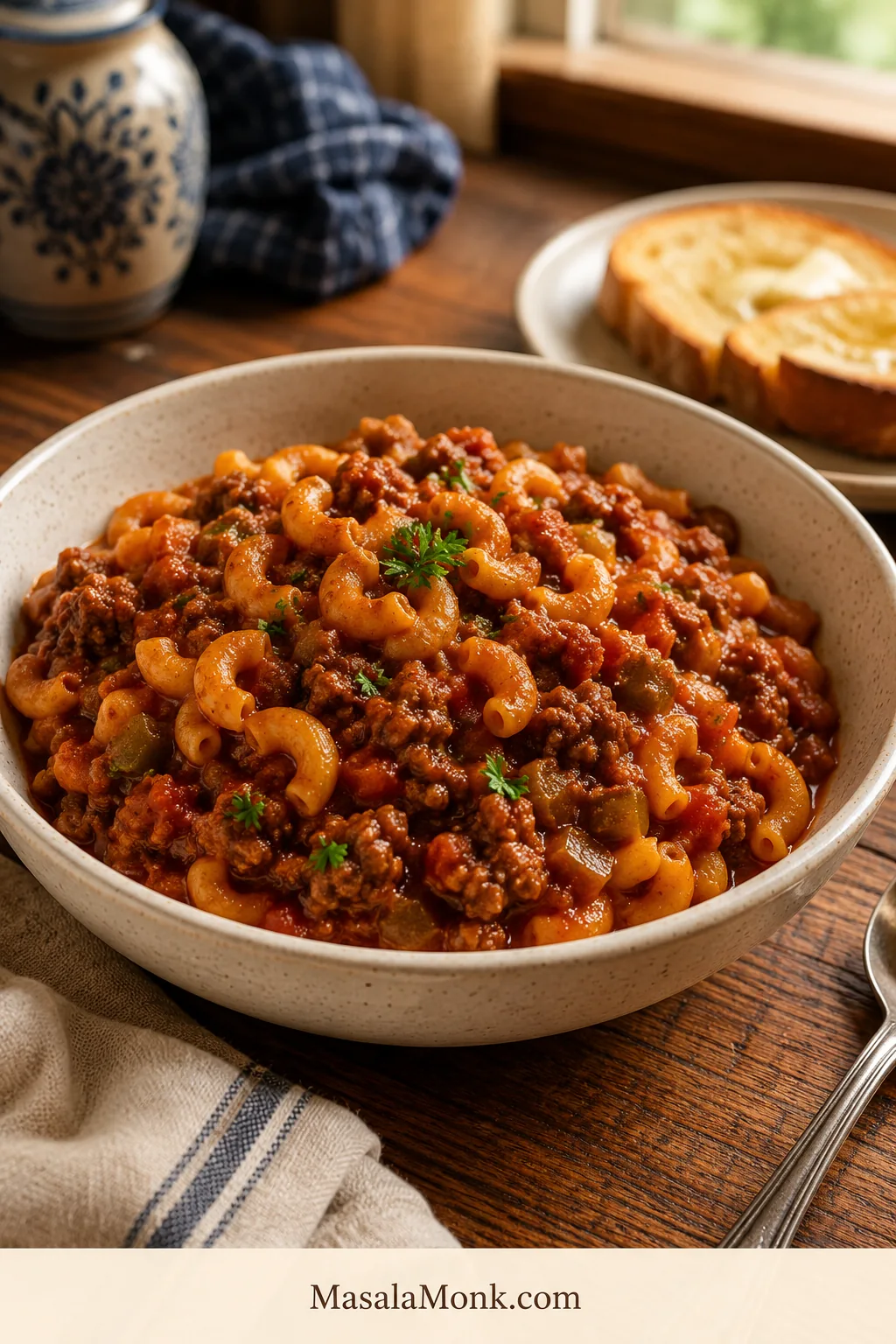
Deep skillet of homemade Hamburger Helper with elbow macaroni, ground beef, and glossy cheddar sauce lifted on a spoon.

This homemade Hamburger Helper recipe is for the night when you want the comfort of the box, but not the box itself. You want browned beef, tender macaroni, a creamy cheddar sauce, and that familiar cheeseburger-macaroni flavor — only fresher, saucier, and made with ingredients you can actually adjust.

It is still the kind of dinner you make when everyone is hungry and you do not want three pans in the sink. The beef browns in one deep skillet, the pasta cooks right in the sauce, and the cheese melts in at the end. No packet, no separate pasta pot, no fussy sauce.

A Cozy One-Pan Dinner With More Control

The secret is not making it fancy. Instead, it is getting the little things right: enough liquid for the pasta, enough tomato and mustard for that nostalgic tang, enough cheese for comfort, and gentle heat so the sauce stays creamy instead of grainy.

That is why this version is built around control, not reinvention. You still get the childhood boxed-dinner feeling: beefy noodles, creamy sauce, orange cheddar comfort, and that little tomato-mustard tang in the background. Now you can make it saucier, sharper, milder, tangier, lighter, or closer to the version you remember depending on the night.

Once the ratio clicks, this homemade Hamburger Helper recipe stops feeling like a boxed-dinner workaround and starts feeling like a back-pocket dinner: the kind you can make when the day ran long, the fridge is ordinary, and everyone still needs something warm, cheesy, and reliable.

The short version: For a reliable homemade Hamburger Helper recipe, use 1 pound ground beef, 8 ounces short pasta, 2 cups beef broth, 1 cup milk, 2 tablespoons tomato paste, and 1 1/2 to 2 cups freshly grated cheddar. Simmer the pasta gently in the sauce, then turn off the heat before adding cheese. That gives you creamy cheeseburger macaroni instead of dry, grainy beef pasta.

Quick Answer: How Do You Make Homemade Hamburger Helper?

To make this homemade Hamburger Helper recipe, brown 1 pound ground beef in a large deep skillet, add onion, garlic, tomato paste, Worcestershire sauce, mustard, paprika, broth, milk, and dry macaroni, then simmer until the pasta is tender. After that, take the pan off the heat and stir in freshly grated cheddar until the sauce turns creamy.

For the best balance, use 1 pound ground beef, 8 ounces dry short pasta, 2 cups beef broth, 1 cup milk, and 1 1/2 to 2 cups shredded cheddar. As a result, you get a saucy, one-pot cheeseburger macaroni that thickens as it rests.

The goal is not to make this taste expensive or restaurant-style. The goal is to make it taste like the comfort you remember, only creamier, fresher, and easier to adjust when your pan, pasta, cheese, or family preference changes.

One-pan homemade Hamburger Helper in progress with ground beef, pasta, liquid, and cheddar for a quick skillet dinner.
Everything starts in one pan, so the beef, pasta, liquid, and cheese work together instead of turning into a separate sauce-and-noodle project.

Already know you want the classic version? Jump to the full recipe card, or keep reading for the sauce ratio and texture cues that help prevent dry or grainy results.

Homemade Hamburger Helper Recipe at a Glance

Total Time
30 minutes

Servings
4 to 6

Main Pan
Deep skillet or Dutch oven

Best Pasta
Elbows or small shells

Best Starting Version

Best starting version: Use 85/15 ground beef, elbow macaroni, beef broth, whole milk, sharp orange cheddar, tomato paste, Worcestershire sauce, mustard, and the optional ketchup. That combination gives the recipe a strong creamy, beefy, cheesy, and nostalgic direction.

Best starting version ingredients for homemade Hamburger Helper with ground beef, elbow macaroni, broth, milk, cheddar, tomato paste, mustard, Worcestershire sauce, and ketchup.
Start here when you want the most classic flavor lane: beefy, creamy, cheesy, slightly tangy, and close to the skillet dinner people remember.

Before you cook, check the full skillet ratio so the pasta has enough liquid to soften without turning the sauce soupy.

What Is Homemade Hamburger Helper?

A homemade Hamburger Helper recipe is a from-scratch version of the classic skillet-dinner idea: ground beef, pasta, seasonings, liquid, and a creamy sauce cooked together in one pan. Instead of relying on a prepared sauce mix, this version builds the flavor with tomato paste, garlic, onion, paprika, Worcestershire sauce, mustard, broth, milk, and real cheese.

Think of it as homemade cheeseburger macaroni. The goal is a cozy, weeknight ground beef dinner that tastes nostalgic, cheesy, savory, and satisfying without tasting flat or overly processed. If you want the same idea with an even stronger burger-style angle, this homemade cheeseburger macaroni recipe goes deeper into that version.

That is the charm of this dinner. It is the skillet you make when the day ran long, the pantry is doing most of the work, and everyone still wants something warm, cheesy, and familiar.

Hamburger Helper, the commercial boxed product, is a pasta meal where you add ingredients like ground beef, water, and milk. The official Hamburger Helper Cheeseburger Macaroni product page shows that basic dinner format. This homemade version keeps the same easy skillet spirit but gives you more control over the flavor, cheese, salt, and sauce texture.

Why This Homemade Hamburger Helper Recipe Works

The biggest mistake with a homemade Hamburger Helper recipe is treating it like ordinary mac and cheese with beef. It needs a little more savory depth. The flavor people remember is not just cheese; it is beefy, salty, slightly tangy, gently tomatoey, and deeply comforting.

This recipe works because tomato paste gives the sauce body, Worcestershire sauce adds beefy depth, mustard gives a subtle cheeseburger note, and paprika brings warm, familiar flavor. Meanwhile, the pasta cooks directly in broth and milk, so the starch helps thicken the sauce naturally. Then the pan comes off the heat before the cheddar goes in, which keeps the sauce smoother and less grainy.

The result is creamy but not soupy, cheesy but not gluey, and familiar without needing a packet. You still get the easy skillet-dinner feeling, while keeping control over the salt, cheese, sauce thickness, pasta shape, and add-ins.

Why This Method Helps Prevent Dry, Grainy, or Bland Results

The most important safeguards in this homemade Hamburger Helper recipe are the liquid ratio, the flavor base, and when the cheese goes in. Too little liquid can leave the pasta firm before the sauce is ready. A sauce that leans too heavily on milk can taste softer and less beefy. Cheese added while the pan is still bubbling is also more likely to turn grainy.

That is why this method relies on broth for beefy depth, milk for creaminess, tomato paste for body, mustard and Worcestershire sauce for cheeseburger-style tang, and cheese added off heat. Elbows keep the result classic, while small shells make the bowl feel extra saucy.

Key technique: Do not boil hard after adding the milk, and let the pan calm down before adding the cheese. A gentle simmer cooks the pasta; off-heat cheese gives the sauce a smoother finish.

What This Homemade Hamburger Helper Should Taste Like

The finished skillet should taste beefy, cheesy, lightly tomatoey, and just a little tangy. It should not taste like plain macaroni with ground beef, and it should not taste like tomato pasta with cheese thrown in. Instead, the best version lands right in the middle: cozy cheeseburger macaroni with a creamy sauce that clings to every bite.

Texture matters just as much. The pasta should be tender but not mushy, the sauce should look glossy and spoonable, and the cheese should melt into the sauce instead of sitting in oily strings. The skillet should look slightly loose before resting because the pasta will keep drinking in sauce for a few minutes after the heat is off.

Before You Start: 5 Things That Make or Break This Recipe

Homemade Hamburger Helper is easy, but one-pot pasta gives you less room to ignore the pan. These five details matter more than they might seem.

  • Use a wide, deep pan. A 12-inch deep skillet or Dutch oven lets the pasta cook evenly instead of clumping.
  • Brown the beef well. The browned bits give the sauce more flavor than the seasonings alone.
  • Simmer gently after adding milk. A hard boil can make the sauce look separated.
  • Stir often. Pasta cooked in sauce can stick to the bottom if ignored.
  • Add cheese off heat. This is the easiest way to avoid a grainy cheddar sauce.

A few small choices early on make the final skillet creamier, smoother, and easier to adjust.

Ingredients You Need

The ingredient list for this homemade Hamburger Helper recipe is simple on purpose. This is the kind of dinner that should work with the beef in the freezer, the pasta in the pantry, and the cheese already in the fridge. The difference between “fine” and “really good” is balance: enough beefy flavor, enough liquid for the pasta, and enough cheese added at the right moment.

Ingredients for homemade Hamburger Helper including ground beef, elbow macaroni, beef broth, milk, cheddar, onion, garlic, tomato paste, mustard, Worcestershire sauce, and paprika.
The ingredient list is short, but the balance matters: savory beef, starchy pasta, creamy liquid, tangy flavor builders, and cheddar at the end.

Choosing a pasta shape first? Jump to the best pasta guide before you start, especially if you are using shells, rotini, cavatappi, or gluten-free pasta.

Ground Beef

Use 1 pound / 450 g ground beef. An 85/15 blend gives the richest comfort-food flavor, while 90/10 or 93/7 keeps the dish lighter. If the beef releases a lot of fat, drain most of it after browning, but leave a little behind for flavor.

Very lean beef works too, but it may need a tablespoon of oil at the start and a little more seasoning at the end. Ground turkey or ground chicken can also work, although the flavor will be milder and less like the classic beefy skillet dinner.

Short Pasta

Elbow macaroni is the most classic choice. Small shells are excellent too because they catch the sauce. Rotini, cavatappi, and small penne also work, but they may need an extra splash of liquid and a few more minutes.

Broth and Milk

Beef broth gives the sauce a deeper flavor than water. Milk makes it creamy. The best starting point is 2 cups broth plus 1 cup milk for 8 ounces dry pasta. Keep another splash of broth or water nearby in case your pasta needs more liquid before it softens.

Cheese

Freshly grated sharp cheddar gives the strongest flavor and the smoothest melt. Pre-shredded cheese can work, but its anti-caking starches may make the sauce less silky. For a meltier, more nostalgic finish, blend cheddar with Monterey Jack, Colby Jack, or a little American cheese. Before you stir cheddar into the pan, see the off-heat cheese step so the sauce has a better chance of staying smooth. This macaroni and cheese recipe is useful if you want a more classic pasta-and-cheese direction with stovetop, baked, and Southern-style versions.

Flavor Builders

Tomato paste, Worcestershire sauce, mustard, garlic, onion, paprika, and a little chili powder create the flavor that makes this taste like a true homemade replacement instead of plain beefy mac and cheese. A spoonful of ketchup is optional, but it helps if you want a sweeter, tangier, more nostalgic cheeseburger macaroni flavor.

Best Pasta for Homemade Hamburger Helper

The best pasta is a short, sturdy shape that can simmer in sauce without falling apart. Because the pasta cooks directly in the pan, delicate noodles can go soft before the sauce is right.

Best pasta shapes for homemade Hamburger Helper including elbow macaroni, small shells, rotini, cavatappi, and small penne.
Short pasta works best because it cooks evenly in the skillet and catches the cheddar sauce; thicker shapes may need extra liquid and time.
Pasta ShapeHow It WorksBest Use
Elbow macaroniClassic, reliable, cooks evenlyBest first choice
Small shellsHolds sauce well and feels extra creamyBest saucy version
RotiniGood texture but may need extra liquidGood pantry swap
CavatappiChewy and fun, slightly longer cook timeHeartier version
Small penneWorks, but the center can take longer to softenAdd liquid as needed
Gluten-free short pastaWorks, but can soften quicklyCheck early and stir gently
Egg noodlesToo delicate for this cheeseburger macaroni styleBetter for stroganoff
Spaghetti or long pastaWrong texture and harder to simmer evenlyNot recommended here

If you use a larger or thicker pasta shape, do not panic if it needs more liquid. Instead, add 2 to 4 tablespoons of broth or water at a time, stir, and keep simmering gently until the pasta is tender.

The Homemade Hamburger Helper Ratio: Saucy, Not Soupy

The ratio is the difference between a creamy homemade Hamburger Helper recipe and a skillet of dry beefy noodles. Because the pasta cooks directly in the pan, it needs enough liquid to soften, but not so much that the final dish turns soupy.

The most reliable starting point is 1 pound beef, 8 ounces dry short pasta, 2 cups broth, 1 cup milk, and 1 1/2 to 2 cups cheese. That gives the pasta room to cook while leaving enough starchy liquid for the cheddar to turn into a creamy sauce.

Homemade Hamburger Helper ratio guide showing 1 pound ground beef, 8 ounces pasta, 2 cups broth, 1 cup milk, and 1 1/2 to 2 cups cheese.
This creamy skillet ratio gives the pasta enough liquid to cook while keeping the finished cheeseburger macaroni thick, glossy, and scoopable.
  • 1 pound / 450 g ground beef
  • 8 ounces / 225 g dry short pasta
  • 2 cups / 480 ml beef broth
  • 1 cup / 240 ml milk
  • 1 1/2 to 2 cups / 170 to 225 g shredded cheese

This ratio is intentionally saucy at first because the pasta keeps absorbing liquid while it rests. As a result, the skillet should look slightly looser than the final texture when you turn off the heat. If the pasta is still firm and the pan looks dry, add liquid. If the pasta is tender and the sauce looks loose, simmer uncovered for a minute or two, then rest before judging.

Saucy, Not Soupy Texture Guide

Use this texture cue before serving: the sauce should still move and coat the pasta, not sit dry in clumps or pool thinly around the edges.

Texture guide for homemade Hamburger Helper showing too dry, just right, and too loose sauce consistency.
Aim for saucy, not soupy: the skillet should look slightly loose before resting because the macaroni keeps soaking up sauce.

If the sauce still turns too thick, too loose, or grainy, jump to the troubleshooting table for quick fixes.

How to Make Homemade Hamburger Helper

This homemade Hamburger Helper recipe is one-pot, but the order still matters. First, browning the beef builds flavor. Then, blooming the tomato paste and spices keeps the sauce from tasting raw. Finally, turning off the heat before adding cheese keeps the finish creamy. The same one-pot logic works in other creamy pasta dinners too, like this one-pot chicken bacon ranch pasta, where the pasta simmers directly in the sauce.

1. Brown the Beef

Heat a large deep skillet or Dutch oven over medium-high heat. Add the ground beef and cook until browned, breaking it up as it cooks. Then add the onion and cook until softened. If there is a lot of grease in the pan, drain most of it.

Do not stop as soon as the beef turns gray. Let some of the pieces brown against the pan, because those browned bits help the sauce taste deeper and less like boiled beef.

Ground beef browning with onions in a skillet for homemade Hamburger Helper, with browned bits visible on the pan.
Browning the beef instead of just graying it builds the savory base, so the sauce has depth before the cheese ever goes in.

Ground beef should be cooked to a safe minimum internal temperature of 160°F / 71°C. A food thermometer is the most reliable way to check. USDA safe minimum temperature chart

2. Build the Flavor Base

Add the garlic, tomato paste, Worcestershire sauce, mustard, paprika, chili powder, salt, and pepper. Stir for about 1 minute. The tomato paste should darken slightly and coat the beef. This quick step makes the sauce taste deeper and less flat.

After about a minute, the tomato paste should look darker and smell savory instead of raw. If it still smells sharp and tinny, give it another 30 seconds before adding the liquid.

Tomato paste, mustard, Worcestershire sauce, garlic, paprika, and browned beef being stirred together in a skillet.
Tomato paste, mustard, Worcestershire, and paprika move the pan toward cheeseburger-style flavor instead of plain beef macaroni.

3. Add the Liquid and Pasta

Pour in the beef broth and milk, then stir in the dry pasta. Bring the mixture to a gentle simmer. At this point, avoid a harsh boil, especially after the milk is in the pan.

Dry elbow macaroni being added to a skillet with ground beef, broth, and milk for one-pot homemade Hamburger Helper.
Dry pasta cooks directly in the skillet, so the starch helps thicken the sauce while saving you a separate pasta pot.

4. Simmer Until the Pasta Is Tender

Cook uncovered or partially covered, stirring often, until the pasta is tender and the sauce has reduced. This usually takes 10 to 14 minutes, depending on the pasta shape. If the pan gets too dry before the pasta is done, add a splash of broth, milk, or water.

The sauce should bubble gently, not aggressively. Stir across the bottom of the pan so the pasta does not stick, and start checking early if you are using small shells or gluten-free pasta.

Homemade Hamburger Helper simmering gently in a skillet with macaroni, ground beef, milk, and broth.
A gentle simmer gives the macaroni time to soften while keeping the milk-based sauce smooth, steady, and controlled.

Should You Cover the Pan?

You can cook it uncovered or partially covered. Uncovered gives you more control because you can watch the sauce reduce. Partially covered helps if the pasta is still firm but the liquid is reducing too fast. Avoid fully covering the pan for the whole cook time unless you are checking often, because the sauce can stay too loose while the pasta softens.

5. Stir in the Cheese Off Heat

Turn off the heat. Add the shredded cheese a handful at a time, stirring until melted. Then let the skillet sit for 2 to 3 minutes before serving so the sauce can settle and thicken.

Wait until the bubbling calms before adding the cheese. The sauce should look hot and glossy, but not actively boiling. That pause is what keeps the cheddar creamy instead of grainy.

Fresh cheddar being added to homemade Hamburger Helper after the pan has been taken off the heat.
Cheddar melts more smoothly when the pan is calm, so this finishing step is about temperature control as much as cheese.

Cook’s check: Before adding the cheese, the pasta should be tender and the pan should still have a small amount of glossy liquid. If it looks completely dry, add a splash of milk or broth. If it looks watery, simmer for another minute. Then turn off the heat and add the cheese.

The Spoon Test for the Right Sauce Texture

Before serving, drag a spoon through the skillet. The sauce should coat the pasta, leave a glossy trail, and still move enough to feel creamy.

Spoon test showing glossy homemade Hamburger Helper sauce coating macaroni and ground beef in a skillet.
This is the texture to look for: sauce that clings to the spoon, coats the macaroni, and still has enough movement to stay creamy.

Common Mistakes That Make the Sauce Dry, Grainy, or Bland

Most problems come from the same few places: the pan gets too dry before the pasta softens, the cheese goes in while the sauce is still bubbling, or the beef-and-pasta base is not seasoned before the cheddar is added. Fix those three things and the skillet becomes much easier to control.

Need the compact cooking version now? Jump to the recipe card. If dinner is already going sideways, use the troubleshooting table.

Homemade Hamburger Helper Recipe

A creamy, one-pot homemade Hamburger Helper recipe with browned ground beef, tender macaroni, real cheddar, and a savory cheeseburger-style sauce. It has the comfort of the boxed classic, but a fresher flavor and a sauce you can actually control.

Saveable homemade Hamburger Helper recipe card with ground beef, macaroni, cheddar sauce, and the one-pot method.
Save the core method: brown the beef, simmer the pasta in broth and milk, then add cheddar off heat for a creamy one-pan dinner.

Prep Time
10 minutes

Cook Time
20 minutes

Total Time
30 minutes

Servings
4 to 6

Equipment

  • Large deep 12-inch skillet, sauté pan, or Dutch oven
  • Wooden spoon or spatula
  • Measuring cups and spoons
  • Box grater, if shredding cheese fresh

Ingredients

  • 1 tablespoon olive oil or neutral oil, only if using very lean beef
  • 1 pound / 450 g ground beef
  • 1/2 medium yellow onion, finely chopped, about 1/2 cup / 75 g
  • 2 to 3 garlic cloves, minced
  • 2 tablespoons / 30 g tomato paste
  • 1 tablespoon ketchup, optional for a sweeter nostalgic flavor
  • 1 to 2 teaspoons Worcestershire sauce
  • 1 teaspoon Dijon mustard or 1/2 teaspoon mustard powder
  • 1 teaspoon paprika or smoked paprika
  • 1/2 teaspoon chili powder
  • 1/2 teaspoon garlic powder
  • 1/2 teaspoon onion powder
  • 3/4 teaspoon fine salt, plus more to taste
  • 1/4 teaspoon black pepper
  • 2 cups / 480 ml beef broth
  • 1 cup / 240 ml milk
  • 8 ounces / 225 g elbow macaroni or small shells
  • 1 1/2 to 2 cups / 170 to 225 g freshly grated sharp cheddar cheese
  • Optional: chopped parsley, chives, or extra black pepper for serving

Instructions

  1. Brown the beef. Set a large deep skillet or Dutch oven over medium-high heat. Add the beef and cook, breaking it into small pieces, until browned and cooked through. Add the onion and cook for 2 to 3 minutes, until softened. Drain excess fat if needed.
  2. Add the flavor base. Stir in the garlic, tomato paste, ketchup if using, Worcestershire sauce, mustard, paprika, chili powder, garlic powder, onion powder, salt, and black pepper. Cook for about 1 minute, stirring constantly, until the tomato paste darkens slightly and coats the beef.
  3. Add liquid and pasta. Pour in the beef broth and milk. Stir well, scraping the bottom of the pan. Add the dry pasta and stir again.
  4. Simmer gently. Bring to a gentle simmer, then reduce the heat to medium or medium-low. Cook for 10 to 14 minutes, stirring often, until the pasta is tender and the sauce has reduced. Add a splash of broth, milk, or water if the pan looks dry before the pasta is done.
  5. Finish with cheese. Turn off the heat. Stir in the cheese a handful at a time until melted and creamy.
  6. Rest and serve. Let the skillet sit for 2 to 3 minutes. Taste and adjust salt, pepper, or Worcestershire sauce if needed. Serve warm.

Notes

  • For the smoothest sauce, grate the cheese yourself, add it off heat, and see the grainy cheese prevention tip.
  • Small penne, rotini, or cavatappi may need an extra splash of liquid and 2 to 4 more minutes.
  • Too thick after resting? Stir in a splash of warm milk or broth, or see the dry sauce fix.
  • For stronger cheeseburger-macaroni flavor, keep the ketchup and mustard in the recipe.

Choose Your Hamburger Helper Style

This is where the recipe becomes yours. Some readers want the closest possible version of the childhood box. Others want a sharper, more homemade skillet pasta with real cheddar and extra garlic. Some need it lighter, higher-protein, or easier for kids. The base ratio stays the same; the flavor direction changes.

Five homemade Hamburger Helper style bowls showing classic, creamy, grown-up, lighter, and spicy cheeseburger macaroni variations.
The base ratio stays the same, but the final bowl can lean classic, extra creamy, lighter, sharper, or spicy depending on what your table likes.

Want to compare the actual versions? Jump to variations for the lighter, high-protein, no-milk, gluten-free, spicy, and vegetable options.

StyleUse ThisFlavor Result
Closest to the childhood boxKetchup, mustard, orange cheddar, a little paprikaSweet-tangy cheeseburger macaroni
Creamiest family-style versionFresh cheddar plus Monterey Jack or American cheeseSmoother, meltier, more kid-friendly
More grown-up skillet pastaExtra garlic, sharp cheddar, black pepper, herbsLess packet-style, more savory and homemade
Lighter but still cozyLean beef or turkey, vegetables, whole wheat pastaComforting without feeling as heavy
Spicy cheeseburger macHot sauce, jalapeño, cayenne, Pepper JackCheesy with a warm kick

This is usually where every household has an opinion. Some people want it sweeter and closer to the box, some want it sharper with real cheddar, some want it extra creamy for kids, and some want enough hot sauce to make it feel more grown-up. If your table is split, start with the classic version, then let people add hot sauce, extra cheddar, pickles, black pepper, or herbs at the end.

How to Get That Nostalgic Cheeseburger Macaroni Flavor

For the most nostalgic version, think savory, cheesy, slightly sweet, slightly tangy, and beefy. Tomato paste gives the sauce body. Ketchup adds the familiar sweet-acidic note. Mustard makes it taste more like cheeseburger macaroni. Worcestershire sauce keeps the beef flavor from tasting flat.

How to Build the Boxed-Dinner Flavor Without the Packet

This is the part many homemade versions miss. The familiar flavor does not come from cheese alone; it comes from beefy depth, a little tomato tang, a subtle mustard edge, warm color, and a sauce that feels creamy without turning gluey.

Boxed-dinner flavor map for homemade Hamburger Helper showing beefy depth, tomato tang, mustard edge, warm color, and creamy sauce.
Think of the boxed-dinner flavor as layers: beefy, tangy, warm, and creamy working together rather than one big hit of cheese.

Want the most nostalgic version? Jump to the closest boxed-dinner style variation.

What You RememberHow to Build It Here
Beefy, savory baseBrowned beef, beef broth, Worcestershire sauce
Light tomato tangTomato paste plus optional ketchup
Cheeseburger-style edgeMustard, cheddar, optional pickles or bacon
Warm orange colorPaprika and orange cheddar
Smooth, family-style sauceFresh cheddar plus a little American cheese, Monterey Jack, or Colby Jack

That is why this recipe uses small amounts of several flavor builders instead of relying only on cheese. Cheese gives comfort, but tomato paste, mustard, Worcestershire sauce, paprika, and ketchup are what make the skillet taste like cheeseburger macaroni instead of plain beef mac.

  • Sweeter tang: add 1 tablespoon ketchup.
  • Cheeseburger flavor: use Dijon or mustard powder.
  • Deeper savory flavor: use Worcestershire sauce and beef broth.
  • Smoother melt: use part cheddar and part American cheese or Colby Jack.
  • Stronger color: use paprika and sharp orange cheddar.

Make-Ahead Homemade Hamburger Helper Seasoning Mix

If the boxed version appealed because it was easy, this is the part to save. Mix the dry seasonings ahead of time and keep them in a small jar. Then a busy-night dinner starts with browning beef, not measuring five spices while everyone is hungry.

Homemade Hamburger Helper seasoning mix with paprika, chili powder, garlic powder, onion powder, salt, and black pepper in a jar.
A make-ahead seasoning mix keeps the homemade version convenient, while tomato paste, mustard, Worcestershire, and cheese still build the sauce fresh during cooking.
  • 1 teaspoon paprika or smoked paprika
  • 1/2 teaspoon chili powder
  • 1/2 teaspoon garlic powder
  • 1/2 teaspoon onion powder
  • 3/4 teaspoon fine salt
  • 1/4 teaspoon black pepper
  • Optional: 1 teaspoon cornstarch for a slightly thicker sauce

Label the jar “Homemade Hamburger Helper mix.” When you cook, still add the tomato paste, Worcestershire sauce, mustard, and cheese fresh. Those ingredients are what keep the sauce from tasting flat.

How to Make It Taste More Homemade

If you want less boxed nostalgia and more homemade skillet-pasta flavor, skip the ketchup, use sharp cheddar, add an extra clove of garlic, and finish with black pepper, chives, parsley, or a little hot sauce. You can also add sautéed mushrooms or bell pepper with the onion for a more grown-up version.

Variations

Cheeseburger Macaroni Hamburger Helper Style

For the most cheeseburger-like version, use elbow macaroni, keep the ketchup and mustard, and use a mix of sharp cheddar and American cheese. You can also top each bowl with chopped pickles, diced tomatoes, or a little crumbled cooked bacon.

Closest-to-the-box homemade Hamburger Helper style with elbow macaroni, orange cheddar sauce, ground beef, ketchup, and mustard cues.
For a more nostalgic cheeseburger macaroni flavor, keep the ketchup and mustard, use elbow macaroni, and lean into orange cheddar.

Healthy Homemade Hamburger Helper

For a lighter version, use 90/10 or 93/7 ground beef, ground turkey, or ground chicken. Add finely chopped bell pepper, grated carrot, zucchini, spinach, peas, or mushrooms. Whole wheat pasta also works, although it may need a little extra liquid and a few more minutes.

Healthy homemade Hamburger Helper variation with creamy macaroni, ground beef or turkey, vegetables, and cheddar sauce.
A lighter skillet should still feel comforting, so use leaner meat and vegetables while keeping enough sauce to coat the pasta well.

For extra creaminess with a lighter finish, stir in a spoonful or two of plain Greek yogurt after turning off the heat. Do not boil it. The flavor becomes a little tangier and less classic, but the sauce stays creamy if the heat is gentle.

High-Protein Homemade Hamburger Helper

For a higher-protein version, use lean ground beef or ground turkey, high-protein short pasta, beef bone broth, and a little plain Greek yogurt stirred in off heat. Keep the cheddar for flavor, but do not boil the yogurt or the sauce can separate. Because high-protein pastas vary in cooking time and starch release, start checking early and keep extra broth nearby. This version tastes less like the childhood box, but it works well when you want the same comfort-food idea with more protein.

High-protein homemade Hamburger Helper with lean beef, high-protein pasta, bone broth, Greek yogurt, and cheddar cheese.
High-protein pasta and Greek yogurt can make the dish more filling, but they need gentle heat and extra broth nearby so the sauce stays creamy.

No-Milk Homemade Hamburger Helper

You can make this without milk. Replace the milk with extra beef broth, then make the sauce creamier with cheese at the end. The result is a little less creamy but still very good. For more body, stir 1 teaspoon cornstarch into 2 tablespoons cold broth, then add it near the end and simmer briefly before adding cheese.

No-milk homemade Hamburger Helper made with extra broth, cheddar cheese, elbow macaroni, and ground beef in a creamy skillet sauce.
Milk gives the sauce softness, but broth can still cook the pasta while cheddar brings creaminess at the end.

Gluten-Free Homemade Hamburger Helper

Use a sturdy gluten-free short pasta and check it early. Gluten-free pasta can go from firm to soft quickly, and it often releases more starch. Stir gently, add liquid only as needed, and serve right away for the best texture.

Gluten-free homemade Hamburger Helper with short gluten-free pasta, ground beef, creamy cheddar sauce, and a spoon checking texture.
Gluten-free pasta can soften quickly, so check early, stir gently, and keep extra liquid nearby if the sauce tightens before the pasta is done.

Spicy Hamburger Helper

Add cayenne, hot sauce, diced jalapeño, or crushed red pepper. Pepper Jack cheese also works well if you want heat without changing the one-pot method.

Spicy homemade Hamburger Helper with jalapeño slices, hot sauce, Pepper Jack, cheddar, macaroni, and ground beef.
Spicy cheeseburger mac is easy to adjust at the end with jalapeños, hot sauce, crushed red pepper, or Pepper Jack.

Hamburger Helper with Vegetables

For vegetables that blend into the sauce, add grated carrot or zucchini with the onion. For vegetables that keep their shape, stir in peas, corn, or spinach near the end. Avoid adding too many watery vegetables unless you are ready to simmer the sauce a little longer.

Homemade Hamburger Helper with vegetables including peas, spinach, carrot, and zucchini mixed into creamy macaroni and ground beef.
Vegetables work best when folded into the sauce, not piled on top, so the skillet stays creamy while gaining color, texture, and balance.

If your comfort-food memory leans more creamy casserole than skillet pasta, this tuna noodle casserole recipe follows the old-school pantry-dinner route with noodles, creamy sauce, and a golden topping.

Is This for Boxed Hamburger Helper or Homemade?

This recipe is the homemade version. It does not use a box, sauce packet, or seasoning packet. It is meant for readers who want the same cozy skillet-dinner idea — beef, pasta, creamy sauce, cheese — made from scratch.

Neutral packet-style idea next to a from-scratch skillet of homemade Hamburger Helper with pasta, ground beef, cheese, milk, and seasonings.
This recipe keeps the cozy skillet-dinner idea, but the sauce comes from real ingredients like broth, milk, cheddar, tomato paste, mustard, and Worcestershire.

If you already have a box in the pantry, you can still borrow the flavor ideas here. Sauté onion and garlic with the beef, add a little tomato paste for depth, use milk or broth for a richer sauce, and finish with extra cheese or a spoonful of sour cream. That is a different recipe path, but the flavor logic is the same.

Troubleshooting Homemade Hamburger Helper

One-pot pasta is easy, but the sauce can change quickly because the pasta keeps absorbing liquid. Fortunately, most problems are fixable if you catch them before serving.

Troubleshooting guide for homemade Hamburger Helper showing fixes for sauce that is too thick, too thin, grainy, or bland.
Most sauce problems come down to liquid, heat, cheese timing, or seasoning, and each one can usually be fixed before serving.
ProblemWhy It HappenedHow to Fix It
Sauce is too thickThe pasta absorbed more liquid than expectedStir in warm milk, broth, or water a splash at a time
Sauce is too thinToo much liquid or pasta not starchy enoughSimmer uncovered for a few minutes, then rest before serving
Pasta is still firmThe liquid reduced before the pasta cookedAdd 1/4 cup liquid, cover briefly, and simmer gently
Cheese sauce is grainyCheese was added over high heat or pre-shredded cheese was usedRemove from heat before adding cheese and use freshly grated cheese
Dish tastes blandNot enough salt, acid, or savory depthAdd salt, Worcestershire sauce, mustard, black pepper, or a small spoon of ketchup
Dish tastes greasyBeef released too much fatDrain excess fat after browning; use leaner beef next time
Milk looks separatedThe sauce boiled too hardLower the heat, stir gently, and finish with cheese off heat
Pasta is stickingThe heat is too high or the pan is too dryLower the heat, stir more often, and add a splash of liquid

How to Fix Dry or Too-Thick Hamburger Helper

If the skillet tightens up, do not add a large pour of liquid at once. Start with a small splash of warm milk, broth, or water, stir, and let the sauce loosen evenly.

Warm milk or broth being poured into thick homemade Hamburger Helper to loosen the sauce in a skillet.
A thick skillet usually needs only a small rescue: warm liquid, a few stirs, and a minute for the sauce to loosen evenly.

How to Prevent Grainy Cheese Sauce

For a smoother cheddar finish, make sure the sauce is hot but no longer bubbling hard before the cheese goes in.

Cheddar being added off heat to homemade Hamburger Helper in a skillet on a trivet for a smoother cheese sauce.
The smoother the sauce looks before the cheese goes in, the easier it is for cheddar to melt in gently instead of breaking.

If cheese sauces are where dinner usually goes wrong, this easy cheese sauce recipe explains the smooth-cheddar method in more detail.

Storage, Reheating, and Freezing

This homemade Hamburger Helper recipe is best right after cooking, when the sauce is creamy and the pasta still has a little bite. However, leftovers are still useful for lunch or an easy next-day dinner.

Leftover homemade Hamburger Helper in a storage container and a skillet being reheated with a splash of milk.
Leftovers thicken in the fridge, so reheat gently with a splash of milk, broth, or water to bring the sauce back.

How to Store It

Let leftovers cool, then store them in an airtight container in the refrigerator for up to 3 to 4 days. The pasta will continue absorbing sauce as it sits, so the leftovers will be thicker than the fresh skillet.

How to Reheat It

Reheat gently on the stovetop or in the microwave with a splash of milk, broth, or water. Then stir, warm slowly, and add more liquid if needed. Do not blast it with high heat for too long, because the sauce can turn oily.

Can You Freeze Homemade Hamburger Helper?

You can freeze it, but the pasta will soften after thawing. For best texture, refrigerate leftovers and eat them within a few days. If you do freeze it, use an airtight container, thaw overnight in the refrigerator, and reheat gently with extra liquid.

What to Serve With Homemade Hamburger Helper

This is already a complete comfort-food dinner, so the best sides are simple and fresh. A crisp salad, roasted broccoli, green beans, peas, cucumber salad, or steamed vegetables help balance the richness. Garlic bread works too if you want the meal to feel extra cozy.

Homemade Hamburger Helper served with salad, broccoli, peas, garlic bread, and vegetables for a family-style dinner.
Since the skillet is rich and creamy, fresh sides like salad, broccoli, peas, green beans, or cucumber salad help balance the meal.

To keep the plate lighter, serve smaller bowls with a big salad or steamed vegetables. If you are feeding everyone family-style, set the skillet in the center of the table and let people add black pepper, herbs, hot sauce, or extra cheese.

Another cozy ground-beef dinner in the same family-comfort lane is this tater tot casserole recipe, especially if you want a baked, cheesy version of the same pantry-dinner feeling.

FAQs

Is homemade Hamburger Helper the same as cheeseburger macaroni?

It is very close. Cheeseburger macaroni is the best way to describe this homemade Hamburger Helper recipe because it has ground beef, macaroni, cheddar cheese, and a savory cheeseburger-style sauce.

What Hamburger Helper flavor is this closest to?

This recipe is closest to Cheeseburger Macaroni Hamburger Helper. It has ground beef, short pasta, cheddar cheese, tomato paste, mustard, and a little paprika for that familiar cheesy, savory, slightly tangy flavor.

Do I need to boil the pasta separately?

No. The pasta cooks directly in the skillet with the beef, broth, milk, and seasonings. This saves time and helps the sauce thicken because the pasta releases starch as it cooks.

What kind of cheese melts best?

Freshly grated sharp cheddar gives the best flavor. For a smoother, more nostalgic melt, use a blend of cheddar and American cheese, Monterey Jack, or Colby Jack.

Can I make homemade Hamburger Helper without milk?

Milk gives the sauce a softer, creamier finish, but it is not mandatory. Replace it with extra broth, then let the cheese do more of the creamy work at the end. For a thicker sauce, stir 1 teaspoon cornstarch into 2 tablespoons cold broth and add it before the cheese.

Can I use water instead of beef broth?

Water works in a pinch, but beef broth gives the sauce more depth. If water is all you have, add a little more Worcestershire sauce, tomato paste, paprika, salt, and pepper so the dish does not taste flat.

Can I use ground turkey instead of beef?

Ground turkey works well for a lighter skillet, especially with a little extra seasoning. Because turkey is milder than beef, add more Worcestershire sauce, paprika, mustard, or cheese to bring back some of the savory depth.

Why did my sauce get dry?

The pasta absorbed more liquid than expected, or the heat was too high. Stir in warm milk, broth, or water a splash at a time until the sauce loosens, or see the dry sauce fix above.

Why did my cheese turn grainy?

Cheddar can turn grainy when it is boiled or added while the pan is too hot. Turn off the heat, let the bubbling calm, then add freshly grated cheese gradually, or see the smooth cheese tip.

How do I make it more flavorful?

Start with salt, then add savory depth with Worcestershire sauce, mustard, smoked paprika, and tomato paste. For a sweeter boxed-style flavor, keep the optional ketchup.

Can I double the recipe?

A double batch works best in a Dutch oven or very large deep pan. If the pan is crowded, the pasta cooks unevenly and the sauce can reduce before the pasta softens. Stir often and add liquid as needed.

Is this recipe affiliated with Hamburger Helper?

No. This is a homemade, from-scratch recipe inspired by the style of the boxed skillet dinner. It does not use the boxed mix or seasoning packet.

Final Thoughts

The best homemade Hamburger Helper recipe is not trying to turn a boxed dinner into something fancy. It is trying to keep the part people actually loved: the warm skillet, the creamy beef-and-macaroni sauce, the orange cheddar comfort, and the relief of dinner being done.

Start with the classic cheeseburger macaroni version, then bend it toward your own memory. Make it tangier with mustard and ketchup, richer with extra cheddar, lighter with lean beef and vegetables, or saucier with a splash of broth at the end. Once the ratio clicks, this becomes one of those back-pocket dinners you can make without staring at a recipe every time.

What was the boxed dinner flavor in your house: cheeseburger macaroni, stroganoff, lasagna, chili mac, or something else? And if you make it from scratch now, do you want it closer to the childhood version, sharper and more grown-up, or extra creamy for family dinner?

Back to top

Posted on Leave a comment

Smoked Pork Loin Recipe

Sliced smoked pork loin roast on a dark board with smoky crust, moist center, carving knife, and pan juices

Smoked Pork Loin Recipe sounds easy until the roast looks perfect on the smoker and still slices dry. Pork loin is leaner than pork shoulder, so it does not need to fall apart, shred, or cook all day. Instead, it needs steady smoke, a reliable thermometer, a short rest, and clean slicing.

This version is built for juicy slices: brown sugar, smoked paprika, mild fruitwood smoke, a steady 225°F smoker, and a firm stop at 145°F in the center. Because the method is simple, the small details matter even more. Pull the roast at the right temperature, rest it before slicing, and the meat can be smoky, tender, and dinner-worthy without drying out.

Use this for a boneless pork loin roast, not pork tenderloin. The timing changes completely when the package says tenderloin because tenderloin is much smaller and cooks faster.

The goal is not pulled pork and it is not a dry roast with smoke on the outside. The goal is a sliceable roast with a peppery-sweet crust, a gentle fruitwood aroma, and enough moisture that the first warm slice still glistens when it hits the board.

What You’ll Find in This Guide

This smoked pork loin guide is organized around the questions that matter while the roast is actually cooking: what cut to buy, what temperature to use, when to pull it, how to keep it juicy, and what to do when something starts going wrong.

Quick Answer: Smoked Pork Loin Time and Temperature

Smoke a 3–4 lb / 1.4–1.8 kg boneless pork loin at 225°F / 107°C until the thickest part reaches 145°F / 63°C, then rest it for 10–15 minutes before slicing. Most roasts take about 2–3 hours, while thicker roasts, cold weather, or a cooler-running smoker can push the cook closer to 3½ hours. Use the internal temperature, not the clock.

Key detail Best answer
Best smoker temperature 225°F / 107°C
Safe internal temperature 145°F / 63°C in the thickest part, followed by a rest
Rest time 10–15 minutes before slicing
Estimated cook time About 2–3 hours for a 3–4 lb roast; thick roasts may take longer
Best wood Apple, cherry, or pecan
Best cut Boneless pork loin roast, not tenderloin
Quick answer image for smoked pork loin showing 225°F smoker temperature, 145°F internal temperature, 10 to 15 minute rest, and 2 to 3 hour average cook time
This is the simple framework behind juicy smoked pork loin: gentle heat, a clear pull temperature, and a short rest before slicing. Because the roast is easy to overcook, these cues matter more than the clock alone.

Need the full step-by-step? Go to how to smoke pork loin, or check the time and temperature chart if you are planning around a smoker schedule.

What Perfect Smoked Pork Loin Should Look Like

The finished pork should not look like pulled pork or behave like brisket. It should have a smoky, seasoned outside, a moist center, and clean slices that bend slightly without crumbling. A juicy first slice with the crust still intact means you hit the right window.

Slight pink is normal once the pork has reached temperature and rested properly. Many juicy slices will look a little rosy instead of chalky white. The thermometer decides doneness; the slice tells you whether you protected the moisture.

Close-up of smoked pork loin slices with moist center, smoky edge, and clean slice texture
Perfect smoked pork loin should slice cleanly instead of shredding or crumbling. A lightly rosy center can be completely normal, while the clean slice tells you the roast stayed moist enough to serve.

Why This Smoked Pork Loin Recipe Works

Pork loin is lean, which is exactly why it can be so good when it is cooked carefully. It slices cleanly, takes smoke well, and does not need hours of rendering like pork shoulder. However, it has less internal fat to protect it from overcooking.

Juiciness comes from controlling the few details that matter most: steady heat, a balanced rub, a thermometer in the center, a proper rest, and thin slices across the grain. A dry roast and a juicy one are often separated by only a few degrees and a rushed slice.

When it works, the roast should slice cleanly through the smoky crust, stay moist in the center, and feel tender without falling apart. That is the sweet spot: smoky enough for a backyard plate, but still juicy enough for sandwiches, rice bowls, and leftovers the next day.

Why Pork Loin Should Not Be Cooked Like Pulled Pork

Do not use pulled-pork logic here. Pork shoulder becomes tender because it has fat and connective tissue that need long cooking. This cut is lean. By the time it feels like pulled pork, it is usually overcooked.
Sliced smoked pork loin compared with shredded pulled pork shoulder
Pork loin and pork shoulder can both go on the smoker, but they have different goals. Loin is best sliced, while shoulder needs long cooking because it has more fat and connective tissue.

Smoked Pork Loin vs Pork Tenderloin

Pork loin and tenderloin are not the same cut. This recipe is for the wider roast that slices like a small pork roast. Tenderloin is long, narrow, and much smaller, so it cooks much faster.

Before you start: this recipe is for a boneless pork loin roast, usually 3–4 lb and wide like a small roast. A package labeled pork tenderloin needs different timing.

When the label says tenderloin, switch recipes. MasalaMonk’s pork tenderloin in oven guide is a better fit for that cut, and the slow cooker pork tenderloin version is useful for a softer, saucier dinner.

Cut Shape Usual size Use this recipe? Cooking note
Pork loin Wide roast 3–5 lb / 1.4–2.3 kg Yes Smokes slowly and slices like a roast
Pork tenderloin Long, narrow, small 1–1.5 lb / 450–680 g No Cooks much faster and needs different timing
Raw pork loin roast and pork tenderloin compared on butcher paper to show the wide roast and narrow tenderloin shapes
Pork loin and pork tenderloin are easy to mix up at the store, but they need very different cooking times. Before seasoning, check the shape so you do not use roast timing on a much smaller tenderloin.

Still choosing at the store? Use the buying guide. Already have a boneless pork loin roast? Go straight to the ingredients.

Which Pork Loin to Buy for Smoking

Choose a roast that is even in thickness, compact enough to slice cleanly, and not trimmed completely bare. A small fat cap gives the lean meat a little protection, while an uneven roast with one thin tail can cook at different speeds from end to end.

Blade-end pork loin often has a little more fat and tenderness than the very lean center-cut end, which can make it more forgiving on the smoker. Center-cut still works well, especially when it has an even shape and you pull it on temperature instead of time.

  • Best size: 3–4 lb / 1.4–1.8 kg is easiest for this method.
  • Best shape: even thickness from end to end, without one very thin tail.
  • Best surface: a thin fat cap is helpful; thick hard fat can be trimmed.
  • Best for slicing: a compact roast with a consistent width gives cleaner dinner slices.
  • Check the label: enhanced, injected, seasoned, or solution-added pork needs less salt.
Pork loin buying guide showing an even roast, small fat cap, and label check for smoking
The best pork loin for smoking starts with an even shape and a little surface protection. As a result, the roast cooks more predictably and gives you cleaner slices at the end.

Enhanced or solution-added pork is already partly seasoned inside, so reduce the kosher salt in the rub. A full dry brine plus a salty rub can make the finished slices taste sharp, especially after smoking and reheating.

Pork loin package label showing enhanced or solution-added pork with a rub bowl and reduced salt cue
Enhanced or solution-added pork already carries salt inside the meat. Therefore, reducing the salt in the rub can prevent the finished smoked pork loin from tasting sharp or over-seasoned.

Once the roast looks right, move on to the rub and dry brine section so the salt level matches the pork you bought.

Ingredients for Smoked Pork Loin

The ingredient list is short because the smoker, the rub, and the final temperature do most of the work. Use a boneless roast around 3–4 pounds for the easiest timing.

  • Boneless pork loin roast: use a 3–4 lb / 1.4–1.8 kg roast for this method.
  • Dijon mustard or olive oil: either works as a binder so the rub sticks. Dijon adds a little tang but does not make the pork taste aggressively mustardy.
  • Brown sugar: adds gentle sweetness and helps the surface brown.
  • Smoked paprika: gives color and a smoky-sweet backbone.
  • Kosher salt: seasons the roast. Use less when the pork is already enhanced or packed in a salt solution.
  • Garlic powder and onion powder: build the savory base.
  • Black pepper: adds a clean peppery edge.
  • Chili powder: use a mild US-style chili powder blend. Use only ¼ teaspoon if substituting hot red chilli powder or cayenne.
  • Optional cumin, mustard powder, or cayenne: use a small amount for a deeper or spicier rub.
  • Apple juice, broth, or water: optional for a light spritz or reheating leftovers.
Ingredients for smoked pork loin including pork loin roast, Dijon, brown sugar, smoked paprika, spices, and apple juice
Smoked pork loin does not need a crowded ingredient list to taste complete. Instead, a balanced rub, mild smoke, and careful cooking do most of the work.

Best Rub and Optional Dry Brine for Smoked Pork Loin

The rub is sweet enough to build color, smoky enough to taste like BBQ, and savory enough to season the lean meat. It should not be so salty that leftovers become harsh after reheating.

Rub ingredient US amount Metric estimate
Brown sugar 2 tbsp 24–26 g
Smoked paprika 1 tbsp 6–7 g
Kosher salt 2 tsp 6–10 g depending brand
Garlic powder 2 tsp 6 g
Onion powder 1 tsp 3 g
Black pepper 1 tsp 2–3 g
Mild chili powder blend 1 tsp 3 g
Ground cumin or mustard powder, optional ½ tsp 1–1.5 g
Cayenne, optional ¼ tsp 0.5 g
Brown sugar smoked paprika rub for smoked pork loin with spices mixed in a bowl
The rub should taste smoky, savory, and lightly sweet before it ever touches the pork. Since pork loin has a mild flavor, balance matters more than heavy heat or too much salt.

You can also use 3–4 tablespoons of a store-bought pork rub. However, taste or check the label first because some BBQ rubs are much saltier than others. Use a lighter hand when the rub already tastes salty.

Should You Brine Smoked Pork Loin?

Brining is optional, but a short dry brine can help when the roast is very lean or you want deeper seasoning. Use the kosher salt from the recipe and apply it 4–12 hours ahead. Refrigerate the pork uncovered, then add the remaining rub ingredients before smoking. Do not add a second full round of salt.

Store-bought rubs and enhanced pork need extra caution because they may already contain plenty of salt. For most first cooks, the regular rub method is enough.

Dry brine setup for smoked pork loin with salted roast on a rack and remaining rub ingredients nearby
A short dry brine can season pork loin more evenly, especially when the roast is very lean. However, use the recipe salt for the brine so you do not accidentally double-salt the surface later.

After seasoning is sorted, choose your smoke profile in the best wood for smoking pork loin section.

Best Wood for Smoking Pork Loin

Mild fruitwood is the safest first choice because this cut is delicate enough to pick up smoke quickly. Apple and cherry are the easiest picks. Pecan gives a warmer, nuttier flavor. Hickory can work, but it is stronger, so use it lightly or blend it with apple or cherry.

First time smoking pork loin? Start with apple or cherry. You can always go stronger next time; however, you cannot take harsh smoke back once it is in a lean roast.

Wood Flavor Best use
Apple Mild, slightly sweet Best first choice for smoked pork loin
Cherry Mild, fruity, good color Great all-purpose pork wood
Pecan Warm and nutty Good when you want deeper BBQ flavor
Hickory Stronger and smoky Use lightly or blend with fruitwood
Maple Gentle sweetness Good with bacon, glaze, or sweeter rubs
Mesquite Very intense Usually too strong alone for lean pork loin
Apple, cherry, pecan, and hickory wood chunks arranged for choosing the best wood for smoking pork loin
Mild wood is usually the safest choice because pork loin picks up smoke quickly. Apple and cherry keep the flavor clean, while pecan and hickory add deeper BBQ character when used with restraint.

Equipment You’ll Need

You do not need much gear, but a reliable thermometer matters more than almost anything else here. Pork loin is lean enough that guessing by time or color can push it past the juicy window. Use a smoker, pellet grill, electric smoker, charcoal smoker, or grill set up for indirect heat, plus a probe thermometer or instant-read thermometer, a sharp knife, a cutting board, foil for resting, and a small bowl for mixing the rub.

Smoked pork loin equipment with probe thermometer, instant-read thermometer, knife, cutting board, foil, and rub bowl
A reliable thermometer matters more than extra gadgets for smoked pork loin. Since the roast can move from juicy to dry quickly, accurate temperature checks protect the whole cook.

With the tools ready, start the actual cook in how to smoke pork loin.

How to Smoke Pork Loin

The method is straightforward, but do not rush the setup. A dry surface, even seasoning, and correct thermometer placement make the cook much more predictable.

1. Trim the pork loin

Pat the roast dry with paper towels, then trim away any tough silver skin or thick hard fat. A soft fat cap can stay at about ¼ inch. A thicker cap can be scored lightly in a shallow diagonal pattern so the rub sits better on the surface.

Hand trimming and lightly scoring the fat cap on a raw pork loin before smoking
Trimming is not about removing every bit of fat. Instead, keep a thin soft cap for protection and remove thick hard fat that blocks seasoning from reaching the pork.

2. Add binder and rub

Rub the pork with Dijon mustard or olive oil. Mix the dry rub in a small bowl, then coat the meat evenly on all sides. You want an even layer, not a thick paste. Let the seasoned roast sit for 20–30 minutes while the smoker comes to temperature.

Applying Dijon binder and brown sugar smoked paprika rub to pork loin before smoking
Even seasoning gives the smoke something consistent to cling to. Once the pork is coated all over, the rub can set into a crust instead of collecting in salty patches.

3. Preheat the smoker

Preheat the smoker to 225°F / 107°C. This is the most forgiving temperature for a lean roast because it warms gently instead of racing past the target. Add apple, cherry, or pecan wood.

Need a slightly faster cook? Use 250°F / 121°C and start checking early. A pellet grill can also cook this cut at 275°F / 135°C, but the window between juicy and dry gets smaller.

Smoker preheating to 225°F with wood and seasoned pork loin ready to cook
A steady 225°F smoker gives smoked pork loin a calmer start. Because the roast is not heavily marbled, gentle heat helps the center warm through without drying the outside too soon.

4. Smoke until the pork reaches 145°F

Place the pork on the smoker grate once the smoker is steady. A visible fat cap can face up when the heat is indirect. Insert a probe thermometer into the thickest part of the roast, away from the edge and not buried in a pocket of fat.

Probe thermometer inserted into the thickest part of smoked pork loin on a smoker grate
A probe that sits too close to the surface can make the roast seem done early. Center placement gives you a truer reading and a better chance at juicy smoked pork loin.

What the Rub Should Look Like Mid-Cook

About halfway through, the rub should look set rather than wet, and the pork should smell smoky-sweet instead of raw and spicy.

Smoked pork loin halfway through cooking with the rub set on the surface
This is the stage where the surface changes from seasoned meat to bark-in-progress. The rub should look attached to the pork, not loose, wet, or burned.

When to Pull Smoked Pork Loin

Smoke until the thickest part reaches 145°F / 63°C. Do not wait for the roast to become fall-apart tender. That is pork shoulder logic, and it is one of the easiest ways to dry out this lean cut.

Smoked pork loin reaching 145°F internal temperature with a thermometer in the roast
The pull temperature is where smoked pork loin is won or lost. Once the center reaches the target, the next job is preserving moisture rather than chasing a softer texture.

5. Rest before slicing

After smoking, transfer the roast to a cutting board and rest for 10–15 minutes. This is the quiet part of the recipe, but it matters: the meat relaxes, the juices settle, and the first slice stays much cleaner. Tent loosely with foil in a cool kitchen, but do not seal it tightly unless you are okay with softening the crust.

Smoked pork loin resting under a loose foil tent before slicing
A loose rest protects the crust while giving the juices time to settle. Cutting too soon can make even a properly cooked roast seem drier than it is.

6. Slice across the grain

Slice across the grain into ¼–½ inch slices. Go thinner for sandwiches or leftovers, and slightly thicker for a dinner plate. Thinner slicing also helps when the meat feels firmer than you wanted.

Look for a moist center, a thin smoky edge, and juices that stay mostly in the meat instead of flooding the board.

Slicing smoked pork loin across the grain into clean juicy slices
Slicing across the grain makes smoked pork loin feel more tender on the plate. Thinner slices also work better for sandwiches, rice bowls, and next-day leftovers.

For planning future cooks, compare smoker temperatures in the time and temperature chart. For dry slices, dark rub, or soft bark, jump to troubleshooting smoked pork loin.

Smoked Pork Loin Time and Temperature Chart

Cook time helps with planning, but it is not the final test. Thickness, starting temperature, smoker swings, wind, weather, and probe placement all change the timing. Use this chart as a planning guide; however, trust the internal temperature before you trust the clock.

Smoker temperature Approximate time for 3–4 lb pork loin Best for Pull temperature
225°F / 107°C 2–3½ hours Most forgiving, more smoke, best beginner method 145°F / 63°C
250°F / 121°C 2–3 hours Balanced speed and smoke 145°F / 63°C
275°F / 135°C 1½–2¼ hours Faster pellet-grill version 145°F / 63°C
Smoked pork loin time and temperature guide showing 225°F, 250°F, 275°F smoker temperatures and 145°F pull temperature
Use the chart to plan your afternoon, not to override the thermometer. A thick roast, cold weather, or a cooler smoker can stretch the cook without meaning anything is wrong.

A slow roast is not automatically a problem. When the smoker is steady and the probe is placed correctly, let the thickest part come up gradually. Cranking the heat hard near the end can push the outside too far before the center is ready.

Shape matters more than total weight once the roast gets larger. A long, even piece may not take dramatically longer than a smaller one, while a very thick roast can take much longer. Build in extra time when cooking for a crowd.

What Temperature Keeps Smoked Pork Loin Juicy but Safe?

In this recipe, smoked pork loin is done at 145°F / 63°C in the thickest part of the roast, followed by a rest. The official FoodSafety.gov minimum internal temperature chart lists pork steaks, chops, and roasts at 145°F / 63°C with a 3-minute rest. The National Pork Board pork cooking temperature guide also lists 145°F with a rest for fresh cuts such as pork loin.

This recipe uses a longer 10–15 minute rest because a roast slices better after it has had time to settle. The extra rest is not about cooking it harder; it is about giving the juices time to calm down before the knife goes in.

Comparison of smoked pork loin slices at 145°F and overcooked dry pork loin slices
A few extra degrees can change smoked pork loin from moist and sliceable to firm and dry. That is why the recipe focuses on temperature control instead of long cooking.

The biggest mistake is waiting for pork loin to feel probe-tender like pork shoulder. By the time it feels like pulled pork, it is usually overcooked. Stop by temperature, not texture.

A slight pink tint, especially near the smoke ring, is normal. Color is only a clue; the thermometer is the safety test.

At that point, the outside should look smoky and seasoned, the center should still look moist, and the slices should hold together without crumbling. Spoon any juices on the board back over the pork instead of leaving them behind.

Beginner-safe method: make sure the thickest part reaches 145°F / 63°C, rest 10–15 minutes, then slice. Experienced cooks sometimes account for carryover heat by pulling a few degrees earlier, but the clearest method for most readers is to verify 145°F with a reliable thermometer.

Smoked Pork Loin Recipe

Juicy Smoked Pork Loin with Brown Sugar Paprika Rub

A juicy smoked pork loin with a brown sugar smoked paprika rub, mild fruitwood smoke, a smoky crust, and clean slices that stay moist after resting.

Prep Time15 minutes
Cook Time2–3½ hours
Rest Time10–15 minutes
Yield6–8 servings

Total time: about 2½–4 hours, depending on roast thickness and smoker temperature.
Smoker temperature: 225°F / 107°C
Internal temperature: 145°F / 63°C
Best wood: apple, cherry, or pecan
Cut: boneless pork loin roast, not pork tenderloin

Ingredients

  • 1 boneless pork loin roast, 3–4 lb / 1.4–1.8 kg
  • 1½ tbsp / 22 ml Dijon mustard or olive oil
  • 2 tbsp / 24–26 g brown sugar
  • 1 tbsp / 6–7 g smoked paprika
  • 2 tsp kosher salt, about 6–10 g depending brand; use less for enhanced or solution-added pork
  • 2 tsp / 6 g garlic powder
  • 1 tsp / 3 g onion powder
  • 1 tsp / 2–3 g black pepper
  • 1 tsp / 3 g mild US-style chili powder blend
  • ½ tsp ground cumin or mustard powder, optional
  • ¼ tsp cayenne or hot red chilli powder, optional
  • ¼–½ cup / 60–120 ml apple juice, broth, or water for spritzing or reheating, optional

Instructions

  1. Trim the pork. Pat the pork loin dry. Trim away silver skin and thick hard fat. Leave up to ¼ inch soft fat cap if present.
  2. Season. Rub the pork with Dijon mustard or olive oil. Mix the brown sugar, smoked paprika, salt, garlic powder, onion powder, black pepper, chili powder, and optional spices. Coat the pork evenly on all sides.
  3. Rest while the smoker heats. Let the seasoned pork sit for 20–30 minutes while you preheat the smoker to 225°F / 107°C.
  4. Smoke. Place the pork loin on the smoker grate over indirect heat. Insert a probe thermometer into the thickest part of the roast. Smoke until the internal temperature reaches 145°F / 63°C, usually about 2–3 hours for a 3–4 lb roast. Thick roasts or cooler-running smokers can take closer to 3½ hours.
  5. Rest. Transfer the pork to a cutting board and rest for 10–15 minutes. Tent loosely with foil if needed.
  6. Slice. Slice across the grain into ¼–½ inch slices. Serve with pan juices, BBQ sauce, mustard sauce, or your favorite sides.

Notes

  • Do not use this timing for pork tenderloin. Tenderloin is smaller and cooks faster.
  • Time is an estimate. Internal temperature decides doneness.
  • Use mild US-style chili powder for the full 1 teaspoon amount. Hot red chilli powder or cayenne should be reduced to ¼ teaspoon.
  • A 250°F smoker can speed the cook slightly; start checking early.
  • A 275°F pellet grill cook works, but the roast has a smaller margin before overcooking.
  • Salty store-bought rubs and enhanced pork both need less added kosher salt.
  • Leftovers reheat best with broth, apple juice, or pan juices and gentle covered heat.

Made this smoked pork loin? Leave a comment with your smoker type, wood choice, cook temperature, and pull temperature. Those details help the next cook decide whether to stay low at 225°F, try a faster pellet-grill version, or choose apple, cherry, or pecan wood.

No smoker today? The same temperature-first thinking applies to this slow cooker pork loin recipe: stop before the roast dries out, then slice it cleanly.

Pork Loin on Pellet Grill, Electric Smoker, Charcoal Smoker, or Offset

No matter what kind of smoker you use, the finish line stays the same: 145°F in the thickest part of the roast. The only real difference is how much attention your smoker needs along the way.

Pellet grill, electric smoker, charcoal setup, and offset smoker shown as options for smoking pork loin
Different smokers need different levels of attention, but the finish line stays the same. Whether you use a pellet grill, electric smoker, charcoal setup, or offset, cook the roast by internal temperature.

Pellet grill

Set the pellet grill to 225°F or 250°F. Apple, cherry, or pecan pellets are the easiest choices. Keep the lid closed as much as possible and check the internal temperature early, especially when cooking at 275°F.

Electric smoker

Use wood chips according to your smoker’s instructions and expect a gentler smoke profile. Because opening an electric smoker repeatedly can slow the cook, keep a probe in the roast when possible.

Charcoal smoker or Weber-style kettle

Set up two-zone indirect heat, keep the pork away from direct coals, and add one or two chunks of apple or cherry wood. Watch for temperature spikes. A roast getting too much heat from below can sit fat side down for extra surface protection.

Offset smoker

Run a clean, thin smoke and keep the pit steady. Rotate the roast when your smoker has a clear hot side. Because this cut is less forgiving, avoid letting the fire run too hot for too long.

How to Keep Smoked Pork Loin from Drying Out

Dry smoked pork loin usually comes from one of three things: the roast went past the target temperature, it was sliced too soon, or the slices were cut too thick or with the grain. Stop on temperature, rest before slicing, and cut against the grain.

  • Use a thermometer. Time is only a guide.
  • Do not cook it like pork shoulder. Pork loin is for slicing, not shredding.
  • Rest before slicing. Give the juices time to settle.
  • Slice across the grain. This makes the slices feel more tender.
  • Slice only what you need. A whole rested roast stays juicier than a pile of exposed slices.
  • Keep juices with leftovers. A little broth, apple juice, or pan juice helps during reheating.

Should You Wrap Pork Loin When Smoking?

You usually do not need to wrap pork loin while it smokes. Because the roast cooks faster than pork shoulder, it does not need the same long covered phase. Also, wrapping can soften the rub crust. Leave it unwrapped for the main method, then rest it loosely tented with foil.

Smoked pork loin shown unwrapped on a grate with a loosely tented roast and a tightly wrapped foil caution
Wrapping is useful for some barbecue cuts, but pork loin usually benefits from staying exposed to smoke. A loose tent during the rest is enough for most roasts.

A surface that gets too dark before the center is done can be loosely tented near the end. Glazed versions are better brushed during the final 15–25 minutes instead of wrapped from the beginning.

Should Pork Loin Be Smoked Fat Side Up or Down?

With gentle indirect heat, place a visible fat cap facing up. Strong heat from below is a reason to turn the fat side down so it helps protect the bottom of the roast.

Fat side direction can protect the surface, but it will not magically baste the center of a lean pork loin. Temperature control matters more than fat-side direction.

Two smoked pork loin roasts showing fat side up for gentle heat and fat side down when heat comes from below
Fat direction is about surface protection, not automatic basting. When heat comes from below, fat side down can shield the meat; with gentle indirect heat, fat side up works well.

Optional Glaze, Spritz, or Marinade

The basic dry-rub version is the easiest place to start. Once you have the temperature method down, a spritz, glaze, or simple marinade can move the pork in a sweeter, brighter, or more classic BBQ direction.

Smoked pork loin with glaze brush, spritz bottle, BBQ sauce, mustard sauce, and pan juices
Glaze, spritz, and sauce can add flavor, but they should not replace proper cooking. Pull the pork at the right time first, then use sauce or glaze to shape the final flavor.

Apple juice or broth spritz

Spritzing with apple juice, broth, or water can add a little surface moisture, but it is optional. Repeatedly opening the smoker just to spritz can slow the cook and create temperature swings.

BBQ glaze

Brush BBQ sauce, honey garlic glaze, or apple glaze on during the final 15–25 minutes. Glazing too early can make the sugar darken before the center is ready.

Sauce ideas for serving

Serve the slices with BBQ sauce, mustard sauce, apple glaze, or warm pan juices for a classic BBQ plate. A fresher finish can come from mango salsa; the fruit, lime, onion, and chile are especially good with tacos or rice bowls.

Sliced smoked pork loin served with mango salsa, lime, herbs, and pan juices
Mango salsa gives smoked pork loin a fresh contrast without hiding the smoke. The fruit, lime, and herbs work especially well when the pork is served in tacos, rice bowls, or lighter leftover meals.

Pairing a glaze or salsa with sides? The serving section has the best creamy, crisp, and BBQ-style options.

Apple-honey marinade

Marinate for a few hours in apple juice, honey, Dijon, black pepper, and a little thyme or oregano when you want a sweeter version. Pat the pork dry before adding the rub so the surface can still pick up smoke and color.

What to Serve with Smoked Pork Loin

Smoked pork loin works best with sides that bring creaminess, crunch, or brightness to the plate. The pork itself is smoky and sliceable, so the side dishes should either soften the plate, freshen it up, or make it feel like a proper BBQ dinner.

Smoked pork loin served with macaroni and cheese, slaw, baked beans, and cornbread
Smoked pork loin works best with sides that add creaminess, crunch, or brightness. Rich comfort sides and crisp salads both help balance the smoky slices.

A classic BBQ-style plate can stay simple: thick slices of pork, warm pan juices or sauce, coleslaw, baked beans, and cornbread. Richer sides like macaroni and cheese or mashed potatoes make the meal feel more comforting without needing a heavy glaze.

Sweet rubs and glazes need contrast. Coleslaw, apple slaw, or potato salad can cut through the smoke and keep the plate from feeling too heavy.

Leftovers are often better sliced thin, almost like smoky roast beef. Tuck them into sandwiches, sliders, tacos, rice bowls, breakfast hash, or quick skillet meals with a little broth, BBQ sauce, mustard sauce, or pan juice to bring back moisture. With sandwiches or sliders, homemade french fries fit better than another rich casserole.

Storage, Reheating, and Leftovers

Let leftover pork cool, then refrigerate it in an airtight container. Pan juices should stay with the pork when possible. Larger pieces hold moisture better than a pile of exposed slices, so slice only what you plan to eat.

To reheat sliced smoked pork loin, place the slices in a covered baking dish with a few tablespoons of broth, apple juice, or pan juices. Reheat gently until the pork is hot throughout; for food safety, cooked leftovers should reach 165°F / 74°C. Reheating the same slices again and again will dry out lean pork.

Leftover slices are especially good when they are cut thin and used in meals that bring back moisture: tacos with salsa, rice bowls with sauce, fried rice, sandwiches with mustard or BBQ sauce, or breakfast hash with eggs and potatoes. This guide to how to cook rice perfectly helps keep rice bowls and fried rice fluffy instead of gummy.

Smoked pork loin leftovers used in a sandwich, rice bowl, and breakfast hash with eggs and potatoes
Leftover smoked pork loin is best sliced thin and paired with moisture or texture. Sauce, rice, eggs, potatoes, salsa, and something crisp can all make the second meal feel intentional.

Leftover smoked pork loin ideas

  • Smoked pork sandwiches with BBQ sauce or mustard sauce
  • Tacos with slaw, salsa, and lime
  • Rice bowls with beans, corn, and avocado
  • Breakfast hash with potatoes and eggs, or tucked into a breakfast burrito
  • Fried rice with diced smoked pork
  • Mac and cheese topping
  • BBQ sliders
  • Protein for salads or grain bowls
  • Smoked pork and potatoes with gravy or cheese sauce

If the pork turned out drier than expected, the troubleshooting section has quick fixes for dry slices, dark rub, bland centers, and soft bark.

Troubleshooting Smoked Pork Loin

Something went wrong? The pork is usually still usable. A dry slice can be saved with thin cutting and warm juices, a dark crust can be softened with sauce, and a bland center can be helped at the table. Use the table below to fix this batch and make the next one easier.

Smoked pork loin troubleshooting guide showing dry slices with broth, dark rub with sauce, bland center with seasoning, and soft bark uncovered
Most smoked pork loin problems have a same-day fix. Add moisture to dry slices, balance dark crust with sauce, season bland pieces at serving, and uncover soft bark before plating.
Problem Likely cause Fix now Next time
Pork is dry Overcooked or sliced too soon Slice thin and serve with warm broth, BBQ sauce, mustard sauce, or pan juices Pull at 145°F and rest before slicing
Rub is too dark Sugar plus high heat Trim the darkest bits or sauce lightly Keep smoker around 225–250°F
Center tastes bland Thick roast seasoned only on the surface Serve with sauce, pan juices, or a finishing sprinkle of salt Season earlier, consider a short dry brine, and slice thinner
Cook is taking too long Thick roast, cold meat, or smoker running cool Keep cooking to internal temperature Use a probe thermometer and verify smoker temperature
Pork is pink inside Smoke ring or medium pork Check the thickest part with a thermometer Trust temperature, not color
Slices feel tough Sliced with the grain, sliced too thick, or slightly overcooked Slice thinner across the grain and serve with warm juices Notice grain direction before cooking and pull at 145°F
Bark is soft Wrapped too tightly or rested too long under sealed foil Uncover before serving Tent loosely instead of sealing tightly

Smoked Pork Loin Variations

Once you are comfortable with the basic 225°F smoker and 145°F internal temperature method, the flavor variations are easy. Keep the same doneness target and change the wood, rub, glaze, or serving sauce.

  • Applewood smoked pork loin: use apple wood, an optional apple juice spritz, and a brown sugar rub.
  • BBQ glazed smoked pork loin: brush with BBQ sauce during the final 15–25 minutes.
  • Honey garlic smoked pork loin: add a honey-garlic glaze near the end so the sugar does not burn.
  • Spicy smoked pork loin: add cayenne, chipotle powder, or spicy BBQ sauce.
  • Bacon wrapped smoked pork loin: wrap with bacon and monitor carefully because bacon rendering changes timing.
  • Stuffed smoked pork loin: butterfly, fill lightly, tie with butcher’s twine, and monitor the center carefully.
  • Smoked pork loin with apples and onions: serve the sliced pork with sautéed or roasted apples and onions.

FAQs

How long does it take to smoke pork loin?

A 3–4 lb boneless pork loin usually takes about 2–3 hours at 225°F, but thick roasts, cold weather, or cooler-running smokers can push it closer to 3½ hours. Start checking early and cook to 145°F internal temperature.

Can I smoke pork loin at 250°F or 275°F?

Yes. A 250°F smoker gives a slightly faster cook while still staying gentle. A 275°F pellet-grill cook also works, but start checking early because the roast has less time between juicy and dry.

What temperature keeps smoked pork loin juicy but safe?

Pork loin is done when the thickest part of the roast reaches 145°F / 63°C, followed by a rest. That temperature keeps the pork safe while still protecting moisture better than cooking it to 160°F or higher.

Should I brine pork loin before smoking?

You can, but it is optional. A short dry brine of 4–12 hours can help season the roast more deeply, especially when the pork loin is very lean. Go easy with salty rubs afterward so the finished slices do not taste over-seasoned.

Why is my smoked pork loin tough?

It may have been sliced with the grain, sliced too thick, or cooked past the juicy window. Thin slices across the grain and a little warm broth or pan juice can help this batch, while a thermometer helps prevent the problem next time.

Should pork loin be wrapped when smoking?

Usually, no. Pork loin cooks fast enough that it does not need a long wrapped phase, and wrapping can soften the rub crust. Leave the smoke to build on the surface, then tent loosely during the rest if needed.

Is it okay if the pork is still a little pink?

Yes, a little pink is normal when the pork has reached 145°F / 63°C and rested. Smoked pork can also show a rosy smoke ring near the outside. Use color as a visual clue, not the safety test; the thermometer is what matters.

Is pork loin the same as pork tenderloin?

No. Pork loin is a wider roast, while pork tenderloin is long, narrow, and much smaller. Tenderloin cooks much faster and should not use the same timing as this recipe.

Why does smoked pork loin not shred like pulled pork?

Pork loin is a lean roast, not a fatty shoulder cut. It is best cooked to 145°F and sliced. Classic pulled pork needs pork shoulder or pork butt because those cuts have more connective tissue and fat for long cooking.

What wood is best for smoked pork loin?

Apple and cherry are the best first choices because they are mild and slightly sweet. Pecan is good for deeper flavor, and hickory should be used lightly or blended with fruitwood.

Do you smoke pork loin fat side up or down?

Fat side up works well when heat is indirect and even. Strong heat from below is a good reason to place the fat side down. Temperature control matters more than fat-side direction.

Smoked pork loin is not a long, dramatic barbecue project. It is a lean roast that rewards timing. Keep the smoke gentle, stop on temperature, rest before slicing, and the payoff is simple: smoky crust, clean slices, and pork that still tastes good the next day.

Posted on Leave a comment

Slow Cooker French Onion Chicken

Slow cooker French onion chicken with melted cheese, soft onions, and onion gravy served over creamy mashed potatoes.

Slow Cooker French Onion Chicken is what you make when you want the comfort of French onion soup but need it to feel like dinner: tender chicken, soft onions, savory gravy, and melted cheese spooned over mashed potatoes, rice, egg noodles, or toasted bread.

The base version is a true shortcut dinner: chicken, sliced onion, condensed French onion soup, dry onion soup mix, a little broth, and cheese at the end. It is simple enough for a busy day, but a few small choices keep the chicken tender and the onion gravy balanced instead of watery, harsh, or too salty.

When you lift the lid, you want soft onions, a savory gravy smell, chicken that still tastes juicy, and cheese that melts over the top instead of disappearing into the sauce. That is why this guide covers cook times, chicken breasts vs thighs, onion soup mix balance, gravy thickening, and the best way to finish the cheese.

The main recipe uses condensed French onion soup and dry onion soup mix, but you can also make it creamy, use thighs instead of breasts, broil the cheese, add mushrooms, or use the no-canned-soup version when you want a more homemade onion sauce.

Before the timing details, this is the result to aim for: a full dinner plate with tender chicken, softened onions, glossy onion gravy, and something underneath to catch the sauce.

Finished slow cooker French onion chicken served over egg noodles with melted cheese, onion gravy, and toasted bread nearby.
Because the onion gravy needs something to catch it, noodles, potatoes, rice, or toast help turn the chicken into a complete comfort-food dinner.

Quick Answer: How Long to Cook Slow Cooker French Onion Chicken

Cook slow cooker French onion chicken on low for 4–6 hours or on high for 3–4 hours, depending on the thickness of the chicken and whether you want sliceable or shreddable meat. Thin chicken breasts may be ready closer to 3–4 hours on low. Boneless thighs can usually handle a little longer and stay juicier.

The chicken is done when the thickest piece reaches 165°F / 74°C on an instant-read thermometer. Add the cheese only after the chicken is cooked through, then cover the slow cooker until the cheese melts, or transfer the chicken to a broiler-safe dish for a browned, bubbling top.

Quick answer guide for slow cooker French onion chicken with low and high cook times, 165°F doneness, and cheese finish note.
Start with the cook time, but trust the thermometer: the thickest piece of chicken should reach 165°F / 74°C before the cheese goes on.

For food safety, use thawed chicken rather than frozen chicken in the slow cooker. FoodSafety.gov lists 165°F / 74°C as the safe minimum internal temperature for poultry, and USDA slow-cooker guidance recommends thawing meat or poultry before adding it to a slow cooker. FoodSafety.gov’s temperature chart and USDA/FSIS slow-cooker guidance are useful references if you want the safety details.

For more detail by chicken cut and thickness, use the low vs high cook-time guide below.

Slow Cooker French Onion Chicken at a Glance

Best slow cooker size 5- to 6-quart slow cooker for about 2 lb / 900 g chicken
Best chicken Boneless skinless breasts for a leaner, sliceable dinner; boneless thighs for juicier, more forgiving meat
Cook time Low 4–6 hours or high 3–4 hours, checking to 165°F / 74°C
Flavor base Condensed French onion soup, dry onion soup mix, sliced onions, low-sodium beef broth, Worcestershire, thyme, and cheese
Best cheese Gruyère for classic French onion flavor, Swiss for budget-friendly comfort, provolone for smooth melting
Best serving ideas Mashed potatoes, rice, egg noodles, pasta, toasted bread, roasted vegetables, or sandwich rolls
At-a-glance guide for slow cooker French onion chicken showing slow cooker size, chicken amount, onion soup mix, and cheese options.
A 5- to 6-quart slow cooker keeps the chicken mostly in one layer, helping the onions, broth, soup mix, and cheese cook more evenly around it.

Use the table as your baseline, then choose the texture you want: sliceable chicken for plates, shredded chicken for bowls and sandwiches, or a creamier sauce for noodles and rice.

Choose Your Result: Sliceable, Shredded, Creamy, or Extra Cheesy

The best version depends on how you want to serve it. For a plated dinner, keep the chicken sliceable. For rice, noodles, mashed potatoes, or sandwiches, let it go softer and shred it into the onion gravy.

Slow cooker French onion chicken result guide with sliceable, shredded, creamy, and broiled cheese finish options.
Choose the result before you cook: sliceable chicken for plates, shredded chicken for bowls, creamy sauce for noodles, or broiled cheese for a deeper finish.
What you want Use Best method
Sliceable chicken Thin or evenly pounded chicken breasts Check early, around 3–4 hours on low
Shredded chicken and gravy Breasts or thighs Cook longer, then shred into the onion sauce
Juiciest version Boneless chicken thighs Cook low and slow; thighs are more forgiving
Creamy version Sour cream, Greek yogurt, cream cheese, or heavy cream Stir in at the end, after cooking
French onion soup-style finish Swiss, Gruyère, or provolone Broil the cheese for 2–5 minutes after slow cooking

Slow Cooker French Onion Chicken Recipe

This slow cooker French onion chicken cooks tender chicken in a savory onion gravy, then finishes with melted Swiss, provolone, or Gruyère cheese. Keep it simple with condensed French onion soup and onion soup mix, or use the notes below for thicker gravy, a broiled cheese finish, chicken thighs, creamy sauce, or a no-canned-soup version.

Prep Time10 minutes
Cook Time3–4 hours high or 4–6 hours low
Total TimeAbout 3 hr 10 min–6 hr 10 min
Servings4–6

Equipment

  • 5- to 6-quart slow cooker
  • Instant-read thermometer
  • Medium mixing bowl
  • Tongs
  • Optional broiler-safe dish for browning the cheese

Ingredients

  • 2 lb / 900 g boneless skinless chicken breasts or thighs
  • 1 large yellow or sweet onion, thinly sliced, about 200–250 g
  • 1 can condensed French onion soup, 10.5 oz / about 298 g, undiluted
  • 1 packet dry onion soup mix, 1 oz / 28 g
  • ½ cup / 120 ml low-sodium beef broth, plus more if needed
  • 1 tbsp / 15 ml Worcestershire sauce
  • 1 tsp Dijon mustard or 2 tsp balsamic vinegar, optional
  • ½ tsp black pepper
  • ½ tsp dried thyme or 2–3 fresh thyme sprigs
  • 4–6 slices Swiss, provolone, or Gruyère, or 1 cup / 100–115 g shredded cheese
  • Optional for thickening: 1 tbsp cornstarch + 1 tbsp cold water

Instructions

  1. Add the sliced onions to the bottom of a 5- to 6-quart slow cooker.
  2. Place the chicken over the onions in a mostly even layer.
  3. In a bowl, stir together the undiluted condensed French onion soup, dry onion soup mix, beef broth, Worcestershire sauce, Dijon or balsamic if using, black pepper, and thyme.
  4. Pour the sauce mixture over the chicken.
  5. Cover and cook on high for 3–4 hours or on low for 4–6 hours, until the thickest piece of chicken reaches 165°F / 74°C.
  6. If you want thicker gravy, remove the chicken to a plate. Stir together cornstarch and cold water, then stir the slurry into the slow-cooker sauce. Cover and cook on high for 10–15 minutes, until slightly thickened.
  7. Return the chicken to the sauce. Top with cheese, cover, and cook 10–30 minutes until melted.
  8. For a browned cheese finish, transfer the cooked chicken and some sauce to a broiler-safe dish, top with cheese, and broil for 2–5 minutes, watching closely.
  9. Serve over mashed potatoes, rice, egg noodles, pasta, toasted bread, or vegetables.

Notes

  • Use low-sodium broth because condensed soup, onion soup mix, and cheese already season the gravy.
  • If you prefer a milder onion gravy, start with ½ packet onion soup mix and add more only after tasting.
  • For sliceable chicken breasts, check early and avoid cooking much past 165°F / 74°C.
  • For shredded chicken, cook until very tender, shred into the sauce, then add cheese.
  • For a creamier sauce, stir in sour cream, Greek yogurt, cream cheese, or heavy cream at the end, once the slow cooker is on warm or the sauce is no longer bubbling hard.
Saveable slow cooker French onion chicken recipe card with servings, cook time, main ingredients, method, and 165°F doneness cue.
Keep the basic build simple, then use the extra notes when you want thicker gravy, a browned cheese top, or a no-canned-soup version.

Why This Recipe Works

This recipe works because the onion flavor comes from three places: sliced onions for sweetness, condensed French onion soup for body, and dry onion soup mix for shortcut seasoning. Low-sodium broth loosens the sauce without diluting it, while Worcestershire, thyme, and a little Dijon or balsamic keep the flavor from tasting flat.

The cheese waits until the end because it has a job: it should sit on top like a French onion soup finish. Melt it in the slow cooker for the easiest version, or broil it for browned edges and a deeper, toastier flavor.

What the Finished Chicken Should Be Like

When this dish is right, the chicken should be tender enough to cut with a fork but not dry around the edges. The onions should be soft and tucked into the gravy, not sitting on top as sharp raw slices. You want a sauce that drapes over potatoes or noodles, not one that runs straight to the edge of the plate.

At the finish, the cheese should stay visible and melty instead of blending into the gravy. If you broil it, look for browned spots, bubbling edges, and that French onion soup feeling when the cheese pulls slightly as you serve it.

French onion chicken texture guide showing tender chicken, soft onions, melted cheese, and gravy draping over the food.
The best onion gravy should drape instead of run, so it coats potatoes, noodles, or rice without turning watery or paste-thick.

Ingredients You Need

The ingredient list is short, but each part has a job: onions for sweetness, soup mix for shortcut flavor, broth for a spoonable base, and cheese for the French onion finish. Amounts are written in both US and metric measurements where useful.

Ingredients for slow cooker French onion chicken including chicken, sliced onions, onion soup mix, broth, thyme, cheese, and cornstarch slurry.
Although the ingredient list is short, the balance matters: soup mix seasons, broth loosens, onions sweeten, and cheese gives the French onion finish.

Chicken

The chicken is the only part of this recipe that can really punish you if it overcooks. Use 2 lb / 900 g boneless skinless chicken breasts or thighs. Breasts give you a leaner, more sliceable dinner, while thighs stay juicier and are more forgiving if you want shredded chicken in the sauce.

Chicken Breast Thickness and Doneness

If your chicken breasts are very thick, slice them horizontally or pound them to a more even thickness. This helps them cook evenly and reduces the chance of dry edges before the center is done. For exact timing by cut, use the cook-time table.

Chicken breast doneness guide with thick chicken breast, thinner chicken pieces, and a 165°F target temperature.
Even thickness helps chicken breasts cook predictably. Slice or pound thick pieces, and start checking thin pieces early.

If you want more slow-cooker ideas built around lean chicken, these crock pot chicken breast recipes are helpful for keeping chicken breast tender instead of dry.

For a different dinner built around a whole bird instead of boneless pieces, this whole chicken in crock pot guide is the better match.

Onions

Use 1 large yellow or sweet onion, thinly sliced. This is usually about 200–250 g, or roughly 2 cups sliced onion. Yellow onions give classic savory-sweet flavor. Sweet onions make the sauce softer and slightly sweeter.

For a more onion-heavy, French onion soup-style sauce, add a second onion. On busy nights, 1 large onion is still enough because the soup base and onion soup mix bring plenty of onion flavor too.

Condensed French Onion Soup

The shortcut base is 1 can condensed French onion soup, usually 10.5 oz / about 298 g. Use it straight from the can; do not prepare it with water first. The condensed soup brings savory onion flavor, body, and seasoning.

Dry Onion Soup Mix

Use 1 packet dry onion soup mix, usually 1 oz / 28 g. Any standard dry onion soup mix works. Because the mix already seasons the sauce, the rest of the recipe uses low-sodium broth and waits until the end for final adjustments.

For a better-balanced gravy: use low-sodium broth and wait to add extra salt until the end. Condensed soup, onion soup mix, and cheese already season the sauce, so you may not need much more.

Beef Broth or Beef Consommé

Use ½ cup / 120 ml low-sodium beef broth for a saucier version. Beef consommé can also work when you want a deeper, more concentrated flavor, but it is often richer and saltier than broth. Taste the sauce before adjusting the seasoning.

Worcestershire, Dijon, Balsamic, and Thyme

Worcestershire gives the sauce a deeper savory edge, while Dijon or balsamic keeps the onion sweetness from feeling flat. Thyme brings it closer to the flavor of French onion soup.

Use 1 tbsp / 15 ml Worcestershire sauce, plus either 1 tsp Dijon mustard or 2 tsp balsamic vinegar. Add ½ tsp dried thyme or a few fresh thyme sprigs.

Cheese

Use 4–6 slices Swiss, provolone, or Gruyère, or about 1 cup / 100–115 g shredded cheese. Gruyère gives the most classic French onion soup flavor. Swiss is easy to find and budget-friendly. Provolone melts smoothly and is mild enough for kids or picky eaters.

Best cheese for French onion chicken guide showing Gruyère, Swiss, and provolone melted over chicken.
Gruyère gives the most classic French onion flavor, Swiss keeps it easy and budget-friendly, and provolone melts into a smooth, mild topping.

Slow Cooker French Onion Chicken with Onion Soup Mix

Dry onion soup mix is what gives this crock pot French onion chicken its easiest shortcut flavor. One standard packet, usually 1 oz / 28 g, is enough for the main recipe because the condensed French onion soup and cheese also season the gravy.

Onion Soup Mix Balance

If you prefer a milder gravy, start with half the packet, use low-sodium beef broth, and taste the sauce before adding any extra seasoning. Two packets can work in some creamy onion soup mix chicken recipes, but for this French onion chicken, one packet usually gives a better balance.

French onion chicken soup mix balance guide with condensed soup, dry onion soup mix, broth, onions, and slow cooker chicken.
Condensed French onion soup gives body, dry onion soup mix adds seasoning, and low-sodium broth helps keep the gravy savory instead of harsh.

For a creamier onion soup mix chicken variation, use the main recipe as written, then stir in sour cream, Greek yogurt, cream cheese, or heavy cream after the chicken has finished cooking. Keep the creamy ingredient out of the slow cooker during the long cook so the sauce stays smoother.

If you want the same comfort-food idea without condensed soup or dry soup mix, jump to the no-canned-soup French onion chicken version.

Best shortcut balance: use 1 can condensed French onion soup, 1 packet dry onion soup mix, ½ cup / 120 ml low-sodium beef broth, and cheese at the end. That gives you a rich onion gravy without making the sauce harsh.

Chicken Breasts vs Thighs

Both work, but they give different results. If you want tidy, sliceable pieces, use chicken breasts and check them early. If you want juicy, pull-apart chicken in onion gravy, use thighs.

Chicken breasts versus thighs comparison for French onion chicken showing sliced chicken breast and saucier thigh-style chicken.
Breasts work best for cleaner slices, while thighs stay juicier and more forgiving if you want pull-apart French onion chicken in gravy.
Chicken cut Best for What to watch
Boneless skinless breasts Lean, sliceable French onion chicken Can dry out if cooked too long; check early
Thin-sliced breasts Faster, more even cooking May be done closer to 3–4 hours on low
Boneless skinless thighs Juicier, richer, more forgiving chicken Best if you like shredded or very tender meat
Bone-in thighs Deeper flavor Less convenient to serve; check around the bone

If you are making this for the first time, boneless thighs are the most forgiving. If you prefer chicken breasts, keep the pieces even and start checking before the longest listed cook time.

Best Crock Pot Size for French Onion Chicken

A 5- to 6-quart slow cooker is the best size for about 2 lb / 900 g chicken. It gives the chicken enough room to sit in a mostly even layer while still keeping the onions and sauce close around it.

Best crock pot size guide showing chicken pieces arranged in one layer in a slow cooker with onions and sauce.
Keeping the chicken mostly in one layer helps it cook evenly while the onions stay close enough to soften into the slow-cooker sauce.

A very large slow cooker can let the sauce spread thin and cook down faster. A small one may stack thick chicken breasts and cook them unevenly. Whenever possible, keep the chicken in one layer.

How to Make Crock Pot French Onion Chicken

The method is simple, but the order matters: onions underneath, chicken in an even layer, sauce over the top, and cheese only once the chicken is cooked.

Do not let the extra notes make the recipe feel complicated. The basic version is still simple: layer the onions, add the chicken, pour over the sauce, cook until done, then finish with cheese. For more detail, use the cook-time guide or the gravy-thickening section.

Step-by-step board for slow cooker French onion chicken showing onions, chicken, sauce, slow cooking, thickening, and cheese finish.
Once the onions and chicken are layered, the slow cooker does most of the work; the final texture depends on doneness, gravy thickness, and cheese timing.

1. Layer the onions

Add the sliced onions to the bottom of a 5- to 6-quart slow cooker. Spreading the onions underneath the chicken helps them soften into the sauce instead of sitting raw on top.

Hand placing chicken pieces over sliced onions in a slow cooker for French onion chicken.
Layer the onions underneath the chicken so they soften into the sauce rather than sitting on top with a sharp, raw bite.

2. Add the chicken

Place the chicken in a single layer over the onions. A little overlap is fine, but try not to stack thick chicken breasts directly on top of one another.

3. Mix the sauce

In a bowl, stir together the undiluted condensed French onion soup, dry onion soup mix, low-sodium beef broth, Worcestershire sauce, Dijon or balsamic if using, black pepper, and thyme. Pour this mixture over the chicken.

4. Slow cook until done

Cook on low for 4–6 hours or on high for 3–4 hours, until the thickest piece of chicken reaches 165°F / 74°C.

5. Thicken the gravy if needed

If the sauce is thinner than you like, remove the chicken to a plate. Stir together 1 tbsp cornstarch and 1 tbsp cold water, then stir the slurry into the sauce. Cover and cook on high for 10–15 minutes, until the sauce thickens slightly.

6. Add cheese

Place the chicken back into the sauce, top with cheese, and cover until melted. For a browned French onion finish, transfer the chicken and some sauce to a broiler-safe dish, add cheese, and broil for 2–5 minutes, watching closely.

Cooking Time: Low vs High

Slow cookers vary, and chicken thickness matters. Use the times below as a guide, then trust the thermometer.

French onion chicken cook time guide showing thin breasts, regular breasts, thighs, and 165°F doneness.
Cook time changes with cut and thickness, so check thin breasts early and use 165°F as the final doneness cue.
Chicken style Low setting High setting Best result
Thin or lightly pounded chicken breasts 3–4 hours 2–3 hours Sliceable, tender chicken
Regular boneless chicken breasts 4–6 hours 3–4 hours Tender chicken that can be sliced or lightly shredded
Boneless chicken thighs 5–7 hours 3–4 hours Juicy, saucy, more forgiving meat
Shredded French onion chicken 5–6 hours 3–4 hours Pull-apart chicken mixed into the gravy
Frozen chicken Not recommended Not recommended Thaw first before slow cooking
Chicken breast tip: if your slow cooker runs hot or your chicken breasts are thin, start checking around 3 hours on low. The goal is tender chicken at 165°F / 74°C, not chicken that stays in the pot until the longest possible time.

The same “check by temperature, not just time” idea matters with other lean slow-cooker meats too. This slow cooker pork loin recipe uses that same approach to keep lean pork sliceable and juicy.

How to Make the Onion Gravy Spoonable, Not Watery

The sauce should thicken enough to coat chicken, potatoes, or noodles. If your slow cooker releases a lot of liquid from the chicken and onions, thicken the sauce at the end instead of adding more soup mix.

For a simple thickener, stir together 1 tbsp cornstarch with 1 tbsp cold water. Remove the chicken, stir the slurry into the sauce, cover, and cook on high for 10–15 minutes. Add the chicken back once the sauce has thickened.

Cornstarch slurry being poured into French onion chicken gravy in a slow cooker.
When the slow-cooker liquid looks thin, a cornstarch slurry helps turn it into onion gravy that coats the chicken instead of pooling underneath.

When the sauce tastes strong rather than thin, use the troubleshooting table instead of adding more soup mix.

For another slow-cooker dinner with a proper spoonable sauce, this slow cooker sausage casserole recipe has the same cozy, gravy-friendly feel.

For a thicker gravy from the start, use only ½ cup / 120 ml broth. And for more sauce to spoon over rice, noodles, or mashed potatoes, use up to 1 cup / 240 ml broth and thicken at the end.

French Onion Chicken Gravy Thickness Guide

The goal is not a stiff gravy or a watery sauce. You want the middle texture: glossy, spoonable, and thick enough to cling to whatever you serve underneath.

French onion chicken gravy guide showing too thin, just right, and too thick gravy textures.
Aim for the middle texture: glossy enough to flow, yet thick enough to coat a spoon and cling to potatoes, noodles, or rice.

Melt the Cheese in the Slow Cooker or Broil It Until Bubbly

You have two good options for the cheese. The easiest is to melt it right in the slow cooker. The most French onion soup-like finish is to broil it briefly.

If you are still choosing the topping, see the best cheese options before deciding between a slow-cooker melt and a broiled finish.

French onion chicken cheese finish comparison showing slow cooker melted cheese and browned broiled cheese.
The slow-cooker melt keeps dinner easy; the broiled finish adds browned, bubbling cheese for a more French onion soup-style result.
Finish How to do it Best for
Slow cooker melt Top the cooked chicken with cheese, cover, and cook 10–30 minutes until melted Easy weeknight dinners, no extra dishes
Broiled cheese finish Transfer chicken and sauce to a broiler-safe dish, add cheese, and broil 2–5 minutes Browned, bubbling, French onion soup-style cheese

The slow cooker melt is easiest. The broiled finish is best if you want this dish to feel closer to French onion soup. Transfer the cooked chicken and onion gravy to a broiler-safe dish, add Swiss, Gruyère, or provolone, and broil until the cheese is bubbling and browned in spots.

Watch closely under the broiler; the cheese can move from beautifully browned to burnt quickly.

Optional 5-Minute Upgrade for Deeper Onion Gravy

The easy version works well as written. But if you have five extra minutes, this is where the dish starts to taste less like a shortcut and more like slow-cooked French onion gravy.

Five-minute flavor upgrades for French onion chicken with sautéed onions, broth, seasonings, and browned cheese finish.
Small upgrades can make a big difference: sautéed onions, garlic, deeper broth, and a browned cheese finish all build more layered French onion flavor.
  • Sauté the onions first: cook them in butter for 5–8 minutes before adding them to the crock pot.
  • Add garlic: one or two minced cloves make the gravy taste less flat.
  • Use beef consommé: it gives a richer flavor than regular broth, but taste before adjusting the seasoning.
  • Add Worcestershire and Dijon or balsamic: this balances the sweetness of the onions.
  • Broil the cheese: the browned top gives the dish a more classic French onion soup finish.

Variations

Once you have made the basic version, the recipe is easy to bend toward what you have: thighs instead of breasts, mushrooms in the sauce, a creamy finish, or a broth-based gravy when you do not want canned soup.

This is also where the recipe becomes more personal: some people want it creamy, some want it onion-heavy, and some just want the easiest version with the cheese browned on top.

French onion chicken variations board showing creamy, no-canned-soup, mushroom, potato, and dip-style versions.
Once the base recipe works, you can make it creamier, more homemade, mushroom-rich, potato-friendly, or thicker and dip-style for toast.

Creamy French Onion Chicken

For a creamy version, stir in ¼–½ cup sour cream, Greek yogurt, cream cheese, or heavy cream at the end. This makes the gravy softer and richer, especially if you are serving the chicken over rice, mashed potatoes, or noodles.

Add the creamy ingredient after the chicken is cooked and the slow cooker is on warm or no longer bubbling hard. This keeps the sauce smoother and reduces the chance of splitting.

No Canned Soup French Onion Chicken

For a no-canned-soup version, use a broth-based onion gravy instead of condensed soup and dry onion soup mix. It tastes less salty and more homemade, but it needs either sautéed onions or a slurry at the end for body.

No-canned-soup French onion chicken ingredients with onions, broth, garlic, herbs, slurry, chicken, and cheese.
Instead of canned soup, this version builds flavor from onions, broth, garlic, herbs, and a simple slurry for a more homemade French onion chicken.

Choose this version when you want the dish to taste more like slow-cooked onions and broth than a pantry shortcut. It takes a little more effort, but the flavor is softer, deeper, and easier to adjust.

If you make the no-canned-soup version, the biggest choice is how onion-forward you want it. Two onions keep it balanced; three onions push it closer to French onion soup.

Use the same 2 lb / 900 g chicken and the same cheese finish from the main recipe; only the soup base changes.

  • 2–3 yellow or sweet onions, thinly sliced
  • 1 tbsp butter or oil for sautéing the onions, optional but helpful
  • 1½ cups / 360 ml low-sodium beef broth
  • 2 cloves garlic, minced
  • 1 tbsp / 15 ml Worcestershire sauce
  • 1 tbsp balsamic vinegar or 1 tsp Dijon mustard
  • ½ tsp dried thyme or 2–3 fresh thyme sprigs
  • 1 bay leaf, optional
  • 1 tbsp cornstarch + 1 tbsp cold water, added at the end

No-Canned-Soup Method

For best flavor, sauté the onions in butter for 8–10 minutes before adding them to the slow cooker. Cook the chicken in the broth mixture, then thicken the sauce at the end and finish with Swiss, Gruyère, or provolone.

No-canned-soup French onion chicken method board showing sautéed onions, broth base, slow cooking, thickening, and cheese finish.
Sautéing the onions first gives the no-canned-soup version a deeper base before the broth, chicken, thickener, and cheese finish come together.

Chicken Thighs and Potatoes

For a one-pot comfort dinner, use boneless chicken thighs and add halved baby potatoes under or around the chicken. Potatoes need enough time to soften, so keep them in small pieces and cook on low until both the potatoes are tender and the chicken reaches 165°F / 74°C.

French Onion Chicken with Mushrooms

Add 8 oz / 225 g sliced mushrooms with the onions. Mushrooms make the sauce deeper and more savory, especially if you are serving the chicken over egg noodles or mashed potatoes.

French Onion Dip-Style Chicken

For a richer dip-style version, reduce the added broth, then stir in sour cream or cream cheese at the end. This variation is thicker, creamier, and especially good served with toasted bread, rice, or roasted potatoes.

What to Serve with Slow Cooker French Onion Chicken

Spoon it over mashed potatoes for the coziest plate, pile it onto egg noodles for a weeknight dinner, or shred the leftovers into sandwich rolls with extra cheese.

This is not a recipe that wants to sit alone on a plate. It wants something soft underneath it — potatoes, noodles, rice, or toasted bread — so the onion gravy and melted cheese become part of the whole dinner.

Serving ideas for slow cooker French onion chicken with mashed potatoes, noodles, rice, toast, and sandwich rolls.
Mashed potatoes, noodles, rice, toast, and rolls all give the onion gravy somewhere to go, so the dish feels like a full dinner.
  • Mashed potatoes: the best comfort-food pairing.
  • Egg noodles: easy, cozy, and great for shredded chicken.
  • Rice: simple and practical for weeknights.
  • Toasted bread: gives the dish a French onion soup feel.
  • Pasta: works well if you keep the sauce loose enough.
  • Roasted vegetables: a good lighter side with the rich sauce.
  • Sandwich rolls: shred the chicken, spoon it into rolls, add cheese, and broil.

Leftover French Onion Chicken Melt

If you are making this for a family dinner, mashed potatoes or egg noodles make it feel the coziest. For leftovers, shred the chicken into the onion gravy, tuck it into sandwich rolls, add extra cheese, and broil until the top looks like a French onion melt.

Leftover French onion chicken sandwich melt with shredded chicken, onion gravy, rolls, and melted browned cheese.
For leftovers, the gravy does the work: shredded chicken, rolls, and melted cheese turn yesterday’s slow-cooker dinner into a French onion melt.

Because the chicken is rich, salty-savory, and cheesy, a crisp side helps. This cucumber salad recipe gives you a fresh, tangy contrast without adding much work.

Make-Ahead and Freezer Meal Tips

You can slice the onions and mix the sauce ingredients a day ahead, then keep them covered in the refrigerator until you are ready to cook. Keep the raw chicken separate until it goes into the slow cooker.

For a freezer meal, combine the chicken, sliced onions, undiluted condensed soup, onion soup mix, broth, Worcestershire, thyme, and pepper in a freezer-safe bag. Freeze without the cheese. Thaw overnight in the refrigerator before cooking, then add the cheese at the end.

Storage, Freezing, and Reheating

Store leftovers in an airtight container in the refrigerator for up to 3–4 days. Reheat gently on the stove, in the microwave, or in the slow cooker on low until hot. Add a splash of broth if the sauce has thickened too much.

You can freeze the cooked chicken and sauce for up to 2–3 months. For best texture, freeze the chicken and gravy without the cheese, then add fresh cheese when reheating and serving.

Small Mistakes That Can Change the Result

  • Adding cheese too early: it can melt into the sauce and disappear instead of giving you that French onion-style finish.
  • Salting before tasting: condensed soup, soup mix, broth, and cheese may already season the gravy enough.
  • Cooking thin chicken breasts all day: check early if you want sliceable chicken instead of shredded chicken.
  • Adding regular pasta at the beginning: it can turn mushy in the slow cooker, so serve the chicken over cooked pasta instead.

Troubleshooting Slow Cooker French Onion Chicken

Most issues are easy to fix at the end. The chicken can be shredded back into the sauce, thin gravy can be thickened, and a strong sauce can be softened with broth, cream, or a plain side.

If your main issue is thin sauce, start with the gravy-thickening method. If the problem is dry chicken, strong sauce, sharp onions, or disappearing cheese, use the fixes below.

Troubleshooting board for slow cooker French onion chicken with fixes for dry chicken, thin gravy, strong sauce, flat flavor, sharp onions, and disappeared cheese.

Most fixes are simple: add moisture to dry chicken, thicken thin gravy with slurry, and soften a strong sauce with broth or cream.
Problem Why it happened How to fix it
Chicken is dry Breasts cooked too long or pieces were too thin Shred the chicken into the sauce and add a splash of broth or cream
Sauce is too thin Chicken and onions released more liquid than expected Use a cornstarch slurry and cook on high for 10–15 minutes
Sauce is too strong Condensed soup, soup mix, broth, and cheese all season the gravy Add unsalted broth, cream, sour cream, or Greek yogurt; serve over potatoes, rice, or noodles
Sauce is too thick Not enough broth or too much thickener Add ¼ cup / 60 ml broth at a time until spoonable
Flavor tastes flat Needs acidity or savory depth Add Worcestershire, Dijon, balsamic, black pepper, or thyme
Cheese disappeared into the sauce Cheese was added too early Add cheese only after the chicken is cooked, or broil it separately
Onions are still sharp Onions were too thick or did not cook long enough Slice thinly next time; for this batch, cook a little longer if the chicken can handle it, or remove chicken while sauce continues cooking

FAQs

Frozen chicken in the slow cooker: safe or not?

Use thawed chicken for this recipe. USDA slow-cooker guidance recommends thawing meat or poultry before adding it to a slow cooker. Frozen chicken may take too long to heat evenly in the slow cooker.

Chicken breasts or thighs: which is better?

For sliceable pieces, chicken breasts are leaner and cleaner on the plate. Thighs are juicier, more forgiving, and better when you want shreddable chicken in a rich onion gravy.

Best cheese for French onion chicken

Gruyère is the most classic choice because it echoes French onion soup. Swiss is easier to find and usually cheaper. Provolone melts smoothly and gives a milder finish.

How to make French onion chicken without canned soup

Use extra sliced onions, low-sodium beef broth, Worcestershire sauce, Dijon or balsamic, garlic, thyme, and a cornstarch slurry at the end. Sautéing the onions first gives the best flavor, but you can still make a simpler no-canned-soup slow-cooker version.

Can I use French onion dip instead of condensed soup?

You can use French onion dip for a creamier, thicker version, but it will taste different from classic French onion soup-style chicken. Use less added broth, cook the chicken until done, then stir the dip in near the end so the sauce stays smoother.

How to balance a strong onion gravy

If the sauce tastes stronger than you like, it is usually from stacked seasoning in the condensed soup, dry onion soup mix, broth, and cheese. Use low-sodium broth next time, taste before adding salt, and soften the current batch with a splash of unsalted broth, cream, sour cream, Greek yogurt, or a plain side like mashed potatoes, rice, or noodles.
How to make the French onion gravy thicker

Remove the chicken, stir 1 tbsp cornstarch with 1 tbsp cold water, then stir that slurry into the sauce. Cover and cook on high for 10–15 minutes until the sauce thickens.
Rice or pasta in the crock pot: what works?

For this recipe, it is better to serve the chicken over cooked rice, noodles, or pasta instead of adding them at the beginning. Regular pasta can turn mushy in the slow cooker, and rice needs a recipe built specifically around rice timing and liquid ratios. If you want a chicken-and-pasta dinner instead, this Cajun chicken pasta guide uses a better method: cook the pasta separately, then fold it into the sauce.

How to make creamy French onion chicken without splitting the sauce

Stir in sour cream, Greek yogurt, cream cheese, or heavy cream at the end, after the chicken is cooked. Add it gently and avoid boiling the sauce hard after the dairy goes in.

Best sides for slow cooker French onion chicken

Mashed potatoes, rice, egg noodles, pasta, toasted bread, roasted vegetables, or sandwich rolls all work well. Anything that catches the onion gravy will make the dish feel more complete.

If you try this with thighs, mushrooms, or the broiled cheese finish, that is the kind of variation other readers will want to know about too.

Final Thoughts

Slow Cooker French Onion Chicken is at its best when it stays easy without tasting careless. Keep the chicken from overcooking, let the onions soften into the sauce, and finish it in a way that feels generous. Then serve it over potatoes, noodles, rice, or toasted bread — the kind of simple dinner that feels bigger than the effort it took.

Back to top

Posted on Leave a comment

Creamy Salmon Pasta Recipe

Creamy salmon pasta in a shallow bowl with salmon flakes, spinach, capers, lemon zest, Parmesan, herbs, and a fork lifting pasta.

This creamy salmon pasta recipe is the kind of 35-minute dinner that makes an ordinary night feel handled: tender salmon, silky lemon garlic cream sauce, pasta that actually holds the sauce, Parmesan, spinach, and little pops of capers. It feels restaurant-style without being fussy — rich enough to feel special, but fresh enough for another bite.

The trick is not more cream. It is control: cook the salmon separately, keep the sauce slightly looser than you think, and fold the fish in at the end so you get large, soft flakes instead of dry crumbs scattered through the pan.

The best bite has a little of everything: a ribbon of sauce-coated pasta, a soft piece of salmon, a bit of spinach, a salty caper, and enough lemon to make you want the next forkful. That is the difference between a cream pasta that feels heavy halfway through and one that stays alive to the last bite.

Forkful of creamy salmon pasta with pasta, salmon, spinach, capers, lemon zest, and Parmesan
A balanced forkful has pasta, salmon, spinach, caper, Parmesan, and lemon working together, so the richness stays lively.

Quick Answer: How Do You Make Creamy Salmon Pasta?

To make creamy salmon pasta, roast or pan-sear salmon until tender, boil pasta until just shy of al dente, and reserve some starchy pasta water before draining. Then, in a wide skillet, make a lemon garlic cream sauce with butter, shallot, garlic, white wine or broth, heavy cream, Parmesan, and a splash of pasta water.

Toss the pasta in the sauce first, wilt in spinach, and gently fold in large flakes of salmon at the end. Finally, finish with lemon zest, lemon juice, herbs, black pepper, and capers so the final bite tastes creamy, lifted by lemon, and savory. For the texture cue, see how to keep the sauce smooth.

Bowl of creamy salmon pasta served with lemon, Parmesan, herbs, and a 35-minute dinner cue
Because the salmon cooks separately and the pan sauce comes together quickly, this dinner feels special without becoming a project.

Creamy Salmon Pasta Recipe at a Glance

Best salmon Fresh salmon fillet, cooked separately and folded in at the end
Best pasta Fettuccine, linguine, penne, rigatoni, or spaghetti
Sauce style Lemon garlic cream sauce with Parmesan and pasta water
Total time About 35 minutes
Safe salmon temperature 145°F / 63°C, or opaque and easy to flake
Best add-in Baby spinach
Best fix for thick sauce Reserved pasta water, added 1–2 tablespoons at a time
Best finish Lemon zest, herbs, capers, Parmesan, and black pepper
Choose your version: use fettuccine or linguine for a smoother date-night feel, penne or rigatoni for a chunkier family dinner, extra lemon and capers for a sharper finish, or a little more Parmesan when the sauce needs more depth.
What it tastes like: creamy first, then lemony, garlicky, and savory, with tender salmon flakes, soft spinach, Parmesan depth, and little salty pops from capers. It should feel rich without turning stodgy.
Creamy salmon pasta overview with salmon, pasta, cream sauce, lemon, capers, spinach, Parmesan, and pasta water
The whole recipe is built around three moves: cook salmon separately, keep the sauce flexible, and fold the fish in last.

Ready to cook? Go straight to the step-by-step method, or use the recipe card if you already know the sauce cues.

Why This Creamy Salmon Pasta Recipe Works

A good salmon pasta has to solve two problems at once: the fish should stay soft and juicy, and the sauce should coat the noodles without clumping or pooling. Because this version handles both, the final bowl tastes rounded by cream, lifted by lemon, and balanced by herbs and capers.

This is especially helpful if salmon pasta has disappointed you before — dry fish, sauce that tightens too fast, or a bowl that tastes rich for three bites and then starts to feel flat. The method is built to avoid those problems before they happen.

  • The salmon cooks separately. You can season it properly, cook it gently, and fold it into the pasta in large, moist flakes.
  • Pasta water keeps the sauce silky. Starchy water helps the cream and Parmesan cling to the noodles instead of turning thick and clumpy.
  • Lemon balances the richness. Lemon zest and juice keep the cream sauce clean on the finish.
  • Spinach makes it feel complete. It adds color, freshness, and a little vegetable comfort without another pan.
  • Capers and herbs wake up the salmon. Their salty, fresh finish keeps the dish from tasting flat.

Creamy weeknight pasta fans may also enjoy this Cajun chicken pasta, which uses a bolder smoky-spicy sauce but follows the same idea: the sauce should coat the pasta, not drown it.

Ingredients for Creamy Salmon Pasta

The best version of this dish does not come from a long ingredient list. Instead, it comes from balance: rich salmon, enough lemon to wake up the cream, Parmesan for body, and a splash of pasta water so the sauce coats the noodles instead of weighing them down.

Ingredients for creamy salmon pasta including salmon, pasta, cream, Parmesan, spinach, lemon, capers, garlic, shallot, Dijon, and wine or broth
Each ingredient has a job: salmon brings richness, lemon sharpens the finish, Parmesan adds body, and pasta water helps everything cling.

Not sure which type of salmon to use? The salmon guide below covers fresh, smoked, canned, frozen, and leftover salmon.

Salmon

Fresh salmon fillet is the best choice for this recipe. Use about 1 lb / 450 g for 4 servings. Skin-on or skinless both work; after roasting or pan-searing, the salmon should break into large, moist flakes that still feel soft in the finished pasta.

Pasta

Use 12 oz / 340 g dried pasta. Fettuccine and linguine feel elegant with cream sauce, while penne or rigatoni are easier to toss with chunky salmon pieces. Spaghetti is also a perfectly good pantry option.

Cream Sauce

The sauce starts with butter, shallot, garlic, dry white wine or low-sodium broth, heavy cream, Parmesan, and reserved pasta water. Low-sodium broth is the easiest wine-free swap; then, if the sauce needs brightness, add a little extra lemon at the end. A small spoon of Dijon mustard is optional, but useful. It does not make the sauce taste mustardy; instead, it adds a quiet savory sharpness that balances the cream.

Lemon garlic cream sauce ingredients with butter, shallot, garlic, cream, Parmesan, pasta water, lemon, Dijon, and wine or broth
Instead of letting cream do all the work, garlic, Parmesan, Dijon, lemon, and starchy pasta water give the sauce more balance.

If cream sauces usually make you nervous, the sauce section explains how to keep this one smooth before the salmon goes in.

That pasta-water trick is also what makes dishes like bacon carbonara turn glossy and cohesive without needing a heavy pool of sauce.

The Fresh Finish

Lemon zest, lemon juice, herbs, and capers keep the finished pasta lively. Add lemon juice near the end, when the sauce is warm but not boiling hard, so the cream stays smooth and the lemon tastes fresh rather than sharp.

Hand adding lemon zest, herbs, capers, and black pepper to creamy salmon pasta
Add lemon, herbs, capers, and pepper near the end so the pasta tastes layered rather than one-note creamy.

Optional Vegetable Add-Ins

Baby spinach is the easiest add-in because it wilts directly into the sauce. Peas, asparagus, broccoli, cherry tomatoes, and mushrooms also work. However, firmer vegetables should be cooked first so they do not water down the sauce.

Best Salmon for Creamy Salmon Pasta

Fresh salmon gives the cleanest flavor and the best texture for this dinner-style pasta. The goal is soft flakes that stay visible in the sauce, not dry shreds that disappear into the pan.

If salmon has ever turned dry on you, this is the section that matters most. The goal is not just cooked fish; it is soft flakes that still feel generous once they hit the pasta.

Fresh salmon, smoked salmon, canned salmon, and leftover cooked salmon options for creamy salmon pasta
Fresh salmon gives the cleanest texture, although smoked, canned, and leftover salmon can still work when handled gently.

Fresh Salmon Fillet

This is the most reliable option. Use one large fillet or a few smaller pieces. Pat the fish dry before seasoning so it roasts or sears cleanly instead of steaming on the surface. When buying salmon, choose fish that smells fresh and mild, not sour, fishy, or ammonia-like; the FDA seafood safety guide is a useful reference for fresh and frozen seafood handling.

Fresh salmon fillet on parchment with olive oil, salt, pepper, lemon, and a paper towel for drying
Patting salmon dry before cooking helps it roast or sear cleanly instead of steaming on the surface.

Skin-On Salmon

Skin-on salmon works well. Roast it skin-side down, then lift the salmon away from the skin after cooking. The skin does not need to go into the pasta.

Skinless Salmon

Skinless salmon is the easiest option because there is nothing to remove after cooking. Still, watch thinner pieces closely because they cook faster.

Frozen Salmon

Frozen salmon is fine as long as it is fully thawed and patted dry before cooking. After thawing, dry the surface well before seasoning. Frozen salmon should not go straight into the cream sauce because it releases moisture and makes the sauce harder to control.

Leftover Cooked Salmon

Leftover salmon can make this dinner even faster. Add it at the end and warm it gently in the sauce. Since it is already cooked, too much stirring will break it into small pieces. For a lighter rice-based meal, extra cooked salmon also works beautifully in a salmon bowl with rice, vegetables, avocado, and sauce.

Smoked Salmon

Hot-smoked salmon flakes nicely and can be used as a quick swap. Cold-smoked salmon is saltier and more delicate, so add it off heat and reduce the salt in the sauce. After that, a little extra lemon, dill, capers, or black pepper helps smoked salmon taste fresh instead of heavy.

Canned Salmon

Canned salmon gives a softer, more pantry-style version. Drain it well, remove any large bones or skin if preferred, and fold it in gently so it does not disappear into the sauce. For a crisp canned-salmon dinner instead, try these salmon croquettes.

Best Pasta Shapes for This Creamy Salmon Pasta Recipe

The best pasta shape depends on the bite you want. Long noodles give you a silky fork twirl, while short shapes make more room for salmon chunks, spinach, and capers.

Pasta shape Best for Notes
Fettuccine Classic creamy salmon pasta Wide enough to hold a silky lemon garlic cream sauce.
Linguine A slightly lighter twirl Elegant with salmon, lemon, herbs, and capers.
Spaghetti Pantry-friendly version Works well when the salmon is flaked into slightly smaller pieces.
Penne or rigatoni Chunky salmon pieces Easy to toss with spinach and larger flakes of fish.
Orzo or gnocchi Softer comfort-food versions Both absorb sauce differently, so keep the sauce looser.

For a slightly more filling pasta base, lentil pasta can work too. Cook it carefully so it stays tender rather than mushy, and use the same sauce rule from this lentil pasta guide: keep lemon, garlic, and pasta water balanced so the sauce still clings.

How to Make This Creamy Salmon Pasta Recipe

This is the part where the recipe becomes easier than it looks. You are not juggling everything at once; the salmon cooks first, the pasta water waits nearby, and the sauce comes together calmly in one skillet.

1. Cook the Salmon

First, heat the oven to 400°F / 200°C. Place the salmon on a parchment-lined baking sheet, rub it with a little olive oil, and season with salt and black pepper. Roast for 10–12 minutes for an average fillet, or until the fish is opaque and flakes easily.

Thin fillets may need only 8–10 minutes, while thicker pieces may need 12–14 minutes. For food safety, fish should reach an internal temperature of 145°F / 63°C, or be opaque and separate easily with a fork, according to FoodSafety.gov’s safe minimum internal temperature chart.

Salmon roasting on parchment with lemon and herbs for creamy salmon pasta
Roasting the salmon separately gives you better control over doneness before the flakes meet the cream sauce.

Optional: Pan-Sear the Salmon Instead

Prefer a stovetop version? Pat the salmon dry, season it, and sear it in a lightly oiled skillet over medium heat for 3–4 minutes per side, depending on thickness. Let it rest for 5 minutes, then flake it into large pieces. Keep the heat moderate so the outside browns without drying the center.

Salmon fillet searing in a skillet with a lightly browned surface for creamy salmon pasta
Pan-searing is a good stovetop option; however, moderate heat lets the surface brown before the center dries out.

After roasting or searing, let the salmon rest for 5 minutes before flaking. Resting helps the juices settle, and larger flakes look and taste better in the finished pasta.

Cooked salmon being separated with a fork into large moist flakes
Large, moist flakes make salmon pasta feel generous, while tiny dry pieces disappear into the sauce.

2. Boil the Pasta

Meanwhile, bring a large pot of water to a boil and salt it well. Add the pasta and cook it about 1 minute shy of al dente. Before draining, scoop out 1 cup / 240 ml of pasta water.

Cloudy pasta water being scooped into a measuring cup beside a pot of pasta
Reserve pasta water before draining because its starch helps the lemon garlic cream sauce hold onto the noodles.

Do not rinse the pasta after draining. The starch on the surface helps the sauce cling, and that little bit of cling is what makes the finished dish feel glossy instead of watery.

Drained pasta in a colander with a small Do not rinse label beside the pasta
Do not rinse the pasta after draining; that surface starch is what helps the sauce coat instead of slide off.

You may not use all the pasta water. Still, having extra gives you control because creamy pasta sauce tightens as it sits, and pasta water is the easiest way to loosen it without making it thin. For a visual cue on when to add more, jump to the 1-minute sauce control trick.

3. Build the Lemon Garlic Cream Sauce

Next, in a large high-sided skillet, melt the butter with a little olive oil. Add the shallot and cook until softened. Then stir in the garlic and cook just until fragrant, about 30 seconds. Add white wine or broth and simmer briefly so the sharp edge cooks off.

At this stage, the pan should smell like garlic, butter, and lemon waiting to happen — not raw onion, scorched garlic, or plain cream.

Shallot and garlic cooking in butter while wine or broth is poured into a skillet
Let the shallot and garlic soften gently before adding cream, so the sauce tastes rounded instead of harsh.

Lower the heat before adding the cream. Stir in Dijon if using, then add finely grated Parmesan a little at a time. After that, add a splash of pasta water and stir until the sauce looks creamy, loose, and glossy. It should move easily in the pan before the pasta goes in. If the sauce already looks thick before the pasta is added, loosen it now; the noodles will only make it tighter.

Parmesan and pasta water being stirred into cream sauce in a skillet
Add Parmesan gradually, then loosen with pasta water as needed, so the sauce stays smooth enough to toss.

4. Toss the Pasta, Wilt the Spinach, and Fold in the Salmon

Add the drained pasta to the skillet and toss until coated. At this point, the sauce should cling to the noodles but still look fluid.

Pasta being tossed in lemon garlic cream sauce while cooked salmon rests nearby
Toss the pasta before adding salmon, because coated noodles need less stirring once the delicate fish goes in.

Add spinach and let it wilt briefly, just until bright green and soft.

Baby spinach being tossed into creamy pasta while cooked salmon waits on a plate nearby
Wilt the spinach before folding in the salmon; this keeps the greens bright and protects the fish from extra stirring.

Finally, turn the heat low and fold in the salmon in large flakes with only a few gentle turns. The less you stir at this point, the prettier and softer the salmon stays. Add lemon zest, a little lemon juice, herbs, capers, and black pepper. Taste before serving: when the sauce feels too rich, add more lemon or herbs; when it feels too thick, loosen it with pasta water. For more depth, finish with a little extra Parmesan or black pepper.

Large salmon flakes being folded into creamy pasta with spinach and sauce
Fold the salmon in last with only a few turns, so the pieces stay large, soft, and visible.

If the sauce tightens, splits, or the salmon starts breaking apart, check the troubleshooting table before adding more cream.

How to Keep Creamy Salmon Pasta Sauce Smooth

The sauce should coat the pasta in a thin creamy layer rather than sitting at the bottom of the pan. Because cream sauces tighten quickly, these small details are what make the dish feel restaurant-style instead of rushed.

Cream sauces can feel intimidating at first. However, this one is mostly about patience: keep the heat gentle, add the cheese gradually, and let the pasta water do the smoothing.

The 1-Minute Sauce Control Trick

Keep the sauce slightly looser than you want before the pasta goes in. The noodles will keep absorbing liquid, so a sauce that looks perfect in the pan can turn tight on the plate. A few spoonfuls of pasta water at the end are not a rescue move — they are the finishing move.

  • Before pasta goes in: the sauce should move easily when you tilt the pan.
  • After pasta goes in: toss first, then loosen with pasta water only as needed.
  • Before salmon goes in: fix the sauce texture now, because heavy stirring later can break the fish.
Three-stage sauce control guide with labels for before pasta, after pasta, and before salmon
Fix the sauce texture before the salmon goes in; after that, gentle folding works better than heavy stirring.
Best texture cue: when you drag tongs through the pasta, the sauce should coat the noodles and leave a light creamy trail in the pan. If it clumps, add pasta water. If it pools like soup, simmer gently for another minute before adding the salmon.
Tongs pulling creamy pasta through sauce and leaving a light trail in the pan
The sauce is ready when it coats the noodles and leaves a light trail in the pan, not when it clumps or pools.

Keep the Heat Gentle Once Cream and Cheese Go In

  • Use gentle heat after adding cream. Cream and cheese do not need aggressive boiling.
  • Finely grate the Parmesan. Fine cheese melts more smoothly than large shreds.
  • Add Parmesan gradually. Stir in small handfuls instead of dumping it all in at once.
  • Add lemon juice near the end. Lemon is essential, but hard boiling can make cream less stable.
  • Fold salmon in last. This keeps the fish tender and prevents it from shredding into dry flakes.

The same gentle-heat rule also helps in creamy macaroni and cheese, where rushing the cheese can make the sauce grainy.

Taste and Adjust Before Serving

The final forkful should taste creamy first, then lemony and savory. If it tastes rich but flat, reach for lemon, capers, herbs, or black pepper before adding more cream.

Before you serve: taste one forkful with salmon, pasta, and sauce together. A heavy finish needs lemon, a thin sauce needs Parmesan, and a flat bite usually needs capers, herbs, or black pepper. The final adjustment is where this pasta becomes yours.
Forkful of creamy salmon pasta with lemon, capers, herbs, Parmesan, and black pepper nearby
Taste before serving, then choose the fix: lemon for sharpness, capers for salt, herbs for freshness, Parmesan for depth.

Creamy Salmon Pasta Recipe

Creamy Salmon Pasta Recipe

This creamy salmon pasta recipe brings together tender salmon, pasta, spinach, capers, and a silky lemon garlic cream sauce in about 35 minutes. The sauce should coat the pasta without clumping, the salmon should stay in soft flakes, and the lemon should lift the cream instead of fighting it.

Yield 4 servings
Prep Time 15 minutes
Cook Time 20 minutes
Total Time 35 minutes

Equipment

  • Large pot or Dutch oven
  • Rimmed baking sheet or large skillet for the salmon
  • Parchment paper, if roasting
  • Large high-sided skillet for the sauce
  • Tongs
  • Measuring cup for pasta water
  • Instant-read thermometer, optional but helpful

Ingredients

For the salmon

  • 1 lb / 450 g salmon fillet, skin-on or skinless
  • 1 tsp olive oil
  • ½ tsp kosher salt
  • ¼ tsp black pepper

For the pasta and sauce

  • 12 oz / 340 g dried fettuccine, linguine, spaghetti, penne, or rigatoni
  • 2 tsp olive oil
  • 2 tbsp / 28 g butter
  • 1 medium shallot or small onion, finely chopped, about 40–60 g
  • 3–4 garlic cloves, minced, about 10–15 g
  • ½ cup / 120 ml dry white wine or low-sodium broth
  • 1 tsp Dijon mustard, optional
  • 1 cup / 240 ml heavy cream
  • ½ cup / 45–55 g finely grated Parmesan, plus more for serving
  • 1 cup / 240 ml reserved pasta water, use ¼–½ cup as needed
  • 4–5 oz / 115–140 g baby spinach
  • Zest of 1 lemon
  • 1–2 tbsp / 15–30 ml fresh lemon juice, to taste
  • 1–2 tbsp capers, drained, optional
  • 2 tbsp chopped fresh dill, parsley, or chives
  • ¼–½ tsp kosher salt for the sauce, plus more to taste
  • Additional black pepper, to taste

Instructions

  1. Cook the salmon. Heat the oven to 400°F / 200°C. Place the salmon on a parchment-lined baking sheet. Rub with 1 tsp olive oil and season with ½ tsp salt and ¼ tsp black pepper. Roast for 10–12 minutes, depending on thickness, or until the salmon is opaque and flakes easily. Rest for 5 minutes, then flake into large pieces. Stovetop option: sear the seasoned salmon in a lightly oiled skillet over medium heat for 3–4 minutes per side, then rest and flake.
  2. Cook the pasta. Bring a large pot of salted water to a boil. Cook the pasta 1 minute shy of al dente. Reserve 1 cup / 240 ml pasta water, then drain. Do not rinse the pasta.
  3. Start the sauce. In a large high-sided skillet, warm 2 tsp olive oil and melt the butter over medium heat. Add the shallot and cook for 2–3 minutes, until softened. Add the garlic and cook for 30 seconds.
  4. Deglaze. Add the white wine or broth and simmer for 1–2 minutes, scraping up any flavorful bits from the pan.
  5. Add cream and Parmesan. Lower the heat to medium-low. Stir in Dijon if using, then add the cream. Add Parmesan in small handfuls, stirring until smooth. Add ¼ cup / 60 ml reserved pasta water to loosen the sauce.
  6. Toss the pasta. Add the drained pasta to the skillet and toss until coated. Add more pasta water, 1–2 tbsp at a time, until the sauce moves easily and coats the noodles.
  7. Wilt the spinach and fold in the salmon. Toss in the spinach just until it softens, then gently fold in the salmon flakes with only a few turns.
  8. Finish with lemon, herbs, and capers. Add lemon zest, 1 tbsp lemon juice, capers if using, herbs, and black pepper. Taste, then add more lemon, salt, pepper, Parmesan, or pasta water as needed.
  9. Serve immediately. This pasta is best while the sauce is freshly tossed and the salmon is still warm and soft.

Notes

  • For the smoothest sauce, avoid boiling hard after the cream and Parmesan are added.
  • The sauce should look slightly loose before serving because pasta keeps absorbing liquid as it sits.
  • Do not rush the final fold. Once the salmon is in, a few gentle turns are enough.
  • Warm bowls help the sauce stay loose a little longer at the table.
  • Leftover cooked salmon: skip the roasting step and fold the salmon in at the end just to warm through.
  • Smoked salmon: reduce added salt and add the smoked salmon off heat.
  • Sauce getting thick? Loosen it with a splash of reserved pasta water before serving.
Saveable creamy salmon pasta recipe card with a bowl of salmon pasta, 35-minute time, 4 servings, and core method tips
Remember the method, not just the ingredients: cook salmon separately, keep the sauce slightly loose, and fold fish in last.

Creamy Salmon Pasta Recipe Variations

Once the base sauce makes sense, the variations are easy. Use the main recipe card as the starting point, then change the salmon or sauce direction without changing the rhythm: keep the pasta coated, warm the fish gently, and finish with something sharp, fresh, or salty enough to balance the cream.

Make It for Two

For two servings, use 8 oz / 225 g salmon, 6 oz / 170 g pasta, ½ cup / 120 ml cream, ¼ cup / 25 g Parmesan, and about ½ cup / 120 ml reserved pasta water. Keep the lemon, capers, and herbs flexible, then taste at the end.

Two bowls of creamy salmon pasta with salmon, spinach, capers, lemon, Parmesan, and forks on a warm table
For two servings, scale down the pasta and salmon, then adjust lemon, herbs, and capers at the end.

Smoked Salmon Pasta

Hot-smoked salmon gives you firmer flakes, while cold-smoked salmon melts more softly into the sauce and brings a saltier, silkier finish. Add either one off heat, then lean on dill, lemon, capers, or a little cream cheese to keep the flavor fresh.

Smoked salmon pasta with creamy sauce, dill, lemon, capers, and thin salmon pieces
Smoked salmon is saltier and more delicate than roasted salmon, so add it off heat and finish with lemon and dill.

Canned Salmon Pasta

Canned salmon makes the pasta softer and more pantry-friendly. Drain it well, fold it in gently near the end, and use lemon, parsley, capers, and black pepper to keep the flavor clean and bright.

Canned salmon pasta with penne, creamy sauce, parsley, lemon, capers, and an open salmon can in the background
Canned salmon makes a practical pantry version, while lemon, parsley, capers, and pepper keep the flavor clean.

Salmon Pasta Without Cream

A lighter creamy texture can come from crème fraîche, Greek yogurt, cream cheese, or a sauce built mostly from Parmesan and pasta water. Yogurt and crème fraîche are happiest off heat or over very low heat, where they can loosen into the sauce without curdling.

Salmon pasta without heavy cream using Parmesan, lemon, herbs, and a light sauce on spaghetti
A no-cream salmon pasta can still feel satisfying when Parmesan, pasta water, lemon, and herbs carry the sauce.

Salmon Alfredo Pasta

An Alfredo-style version leans more heavily on Parmesan and cream, with softer lemon and plenty of black pepper. For another rich pasta dinner, this chicken Alfredo pasta guide has useful sauce ideas.

Salmon Pasta Bake

A baked version needs a looser sauce from the start because the pasta keeps drinking it in the oven. Undercook the pasta by about 2 minutes, top with Parmesan or a little panko, and bake until bubbling.

Salmon pasta bake in a cream-colored baking dish with golden Parmesan topping, herbs, and a spoonful lifted out
For a salmon pasta bake, start with a looser sauce because the pasta keeps absorbing liquid in the oven.

Salmon Pesto Pasta

Basil pesto gives salmon pasta a greener, more herbal direction. Use pesto, lemon, pasta water, and salmon flakes, then decide whether the sauce needs cream or feels bright enough without it. For homemade pesto, this pesto recipe guide has classic basil pesto plus useful variations.

Salmon Orzo

Orzo absorbs liquid quickly, so use a looser sauce and stir gently. The same lemon, garlic, cream, Parmesan, and salmon flavors work well, but the texture will be softer and more risotto-like.

Salmon Gnocchi

Gnocchi makes the dish softer and more comfort-food heavy. Keep the sauce loose, use enough lemon to balance the richness, and fold the salmon in gently so both the gnocchi and fish stay intact.

Salmon Pasta Salad

A cold salmon pasta salad needs a different base: cooked cooled pasta, flaked salmon, lemon dressing, herbs, cucumber, peas, capers, or a little yogurt-based dressing. Skip the hot cream sauce and focus on freshness.

What to Serve With Creamy Salmon Pasta

This is already a full dinner, so the best sides should make the plate feel brighter, not heavier. Think crisp salad, lemony greens, roasted vegetables, or garlic bread for the extra sauce left in the bowl.

  • Simple green salad: arugula, cucumber, lemon dressing, or a sharp vinaigrette.
  • Roasted asparagus or broccoli: both work well with lemon and Parmesan.
  • Garlic bread: cozy, useful, and great for catching extra sauce. For a homemade option, this garlic bread loaf works well beside creamy pasta.
  • Roasted cherry tomatoes: bright and juicy against the cream sauce.
  • Steamed peas: easy, sweet, and very good with salmon.
  • Lemon wedges: helpful at the table for anyone who wants a brighter plate.

Storing and Reheating Creamy Salmon Pasta

This dish is best right after tossing, while the sauce still coats the pasta easily and the salmon is warm and soft. However, leftovers can still be good if you reheat them gently so the cream stays smooth and the salmon does not dry out.

Creamy salmon pasta reheating in a skillet with a splash of liquid and leftovers in a glass storage container nearby
Reheat leftovers gently with a splash of liquid so the sauce loosens again and the salmon stays soft.

How Long Does It Keep?

Store leftovers in an airtight container in the refrigerator and use within 2 days for the best texture.

How to Reheat It

Reheat in a skillet over low heat with a splash of water, milk, cream, or broth. Stir gently until the sauce loosens. Avoid high heat, which can make the cream separate and the salmon dry.

If reheated sauce looks too thick or separated, use the same fixes in the troubleshooting section.

Microwave Method

Use short bursts at lower power and add a splash of liquid first. Stir gently between bursts. The microwave is convenient, but it can overcook salmon quickly.

Freezing

Freezing is not recommended. Cream sauces can split, pasta can soften, and salmon can become dry once thawed and reheated.

Creamy Salmon Pasta Troubleshooting: Sauce, Salmon, and Texture Fixes

If something feels off, do not panic and do not add more cream first. A thick sauce, broken sauce, dry salmon, or watery spinach does not mean dinner is ruined; it usually means one small adjustment is needed.

Creamy salmon pasta troubleshooting board with fixes for thick sauce, split sauce, dry salmon, and watery spinach
Most salmon pasta problems are fixable: loosen thick sauce with pasta water, lower the heat if it splits, and fold salmon in last.
Problem Why it happened Fix
Sauce is too thick The pasta absorbed more liquid than expected. Add reserved pasta water 1–2 tbsp at a time and toss until glossy.
Sauce split The heat was too high, or lemon was added while the cream was boiling hard. Lower the heat, add a splash of cream or pasta water, and stir gently. Next time, add lemon near the end.
Salmon is dry It was overcooked or stirred too much in the sauce. Cook salmon separately, rest it, and fold it in last in large pieces.
Pasta tastes bland The pasta water or sauce was under-seasoned. Salt the pasta water well and finish with Parmesan, lemon, herbs, and black pepper.
Sauce tastes too heavy Too much cream, not enough acid or herbs. Add lemon zest, lemon juice, capers, herbs, or a splash of pasta water.
Pasta tastes fishy The salmon may be old, overcooked, or not balanced with enough brightness. Use fresh salmon, avoid overcooking, and finish with lemon, herbs, capers, and black pepper.
Spinach made it watery Too much spinach was added too early, or it cooked too long. Add spinach at the end and wilt it briefly. If needed, simmer the sauce for a minute before adding salmon.

FAQs

What is the best pasta for this creamy salmon pasta recipe?

Fettuccine and linguine are best for a glossy, twirlable cream sauce. Penne and rigatoni are better for larger salmon chunks and an easier forkful.

Should salmon be cooked before adding it to pasta?

Cook the salmon first, then fold it into the pasta at the end. That gives you better control over doneness and keeps the pieces tender.

Can I pan-sear the salmon instead of roasting it?

Yes. Pat the salmon dry, season it, and sear it in a lightly oiled skillet over medium heat for 3–4 minutes per side, depending on thickness. Rest it for 5 minutes before flaking so the pieces stay moist in the pasta.

Fresh salmon or smoked salmon — which is better?

Fresh salmon is better for this creamy dinner-style pasta. Smoked salmon is better for a faster, saltier version. Add smoked salmon off heat so it stays delicate.

How do you stop cream sauce from splitting?

Use gentle heat once the cream is added, stir Parmesan in gradually, and add lemon juice near the end instead of boiling it hard with the cream. Reserved pasta water also helps smooth the sauce.

Why did my salmon pasta turn dry?

The salmon may have been overcooked, the pasta may have absorbed too much sauce, or the dish may have sat too long before serving. Fold salmon in last and keep extra pasta water nearby to loosen the sauce.

What temperature should salmon be cooked to?

For food safety, fish should reach 145°F / 63°C, or be opaque and separate easily with a fork. A thermometer is the most reliable way to check.

How much pasta water should I save?

Save 1 cup / 240 ml. You may only need ¼–½ cup, but it is better to have extra because the sauce thickens as the pasta sits.

What vegetables go well with salmon pasta?

Spinach is the easiest. Peas, asparagus, broccoli, cherry tomatoes, mushrooms, and zucchini also work. Add quick-cooking vegetables near the end and pre-cook firmer vegetables so they do not water down the sauce.

Is crème fraîche better than heavy cream?

Crème fraîche gives a tangier, slightly lighter sauce. Heavy cream is easier to find and gives the most classic creamy texture. Both work.

What is the best way to reheat leftovers?

Reheat leftovers gently in a skillet over low heat with a splash of water, milk, cream, or broth. Stir slowly until the sauce loosens. Avoid high heat because it can dry out the salmon and split the sauce.

Does this creamy salmon pasta recipe freeze well?

Not really. The cream sauce can split, the pasta can become soft, and the salmon can dry out after thawing. Refrigerating leftovers for a day or two is a better choice.

How do I make this creamy salmon pasta recipe without wine?

Use low-sodium chicken broth, vegetable broth, seafood stock, or even a splash of pasta water instead. Then add a little extra lemon at the end if the sauce needs brightness.

Once you understand the rhythm — cook the salmon gently, save pasta water, keep the cream sauce calm, and fold the fish in last — this creamy salmon pasta recipe becomes the kind of dinner you can adjust without stress. Fresh salmon makes it feel cozy and polished, smoked salmon makes it faster, and extra lemon or herbs can pull the whole bowl in a brighter direction.

That is the real win here: not just a rich pasta, but a plate that still tastes cared for at the last forkful.

Did you make it with fresh salmon, smoked salmon, canned salmon, or leftovers? Tell us which version you tried — and what you adjusted at the end. Extra lemon, more capers, dill, spinach, Parmesan, or black pepper all change the personality of the bowl.

Back to top