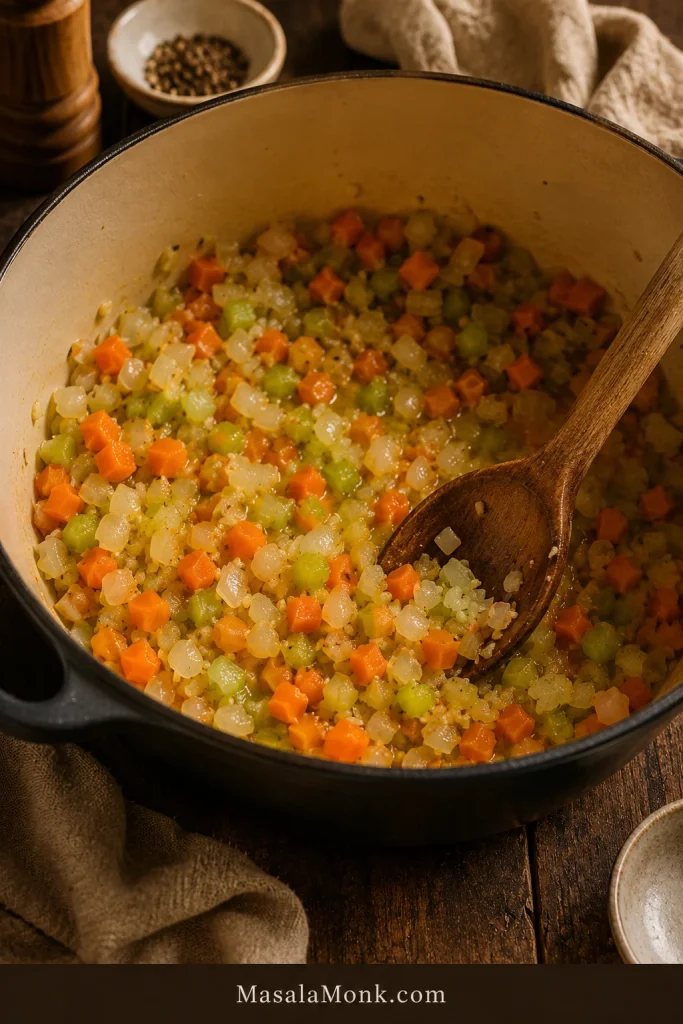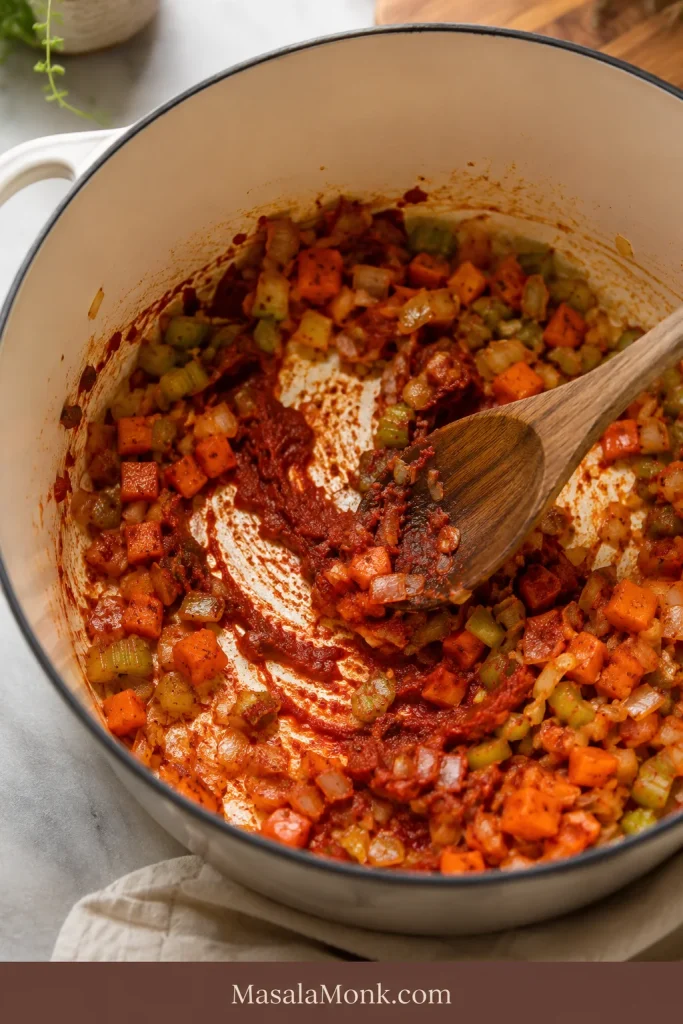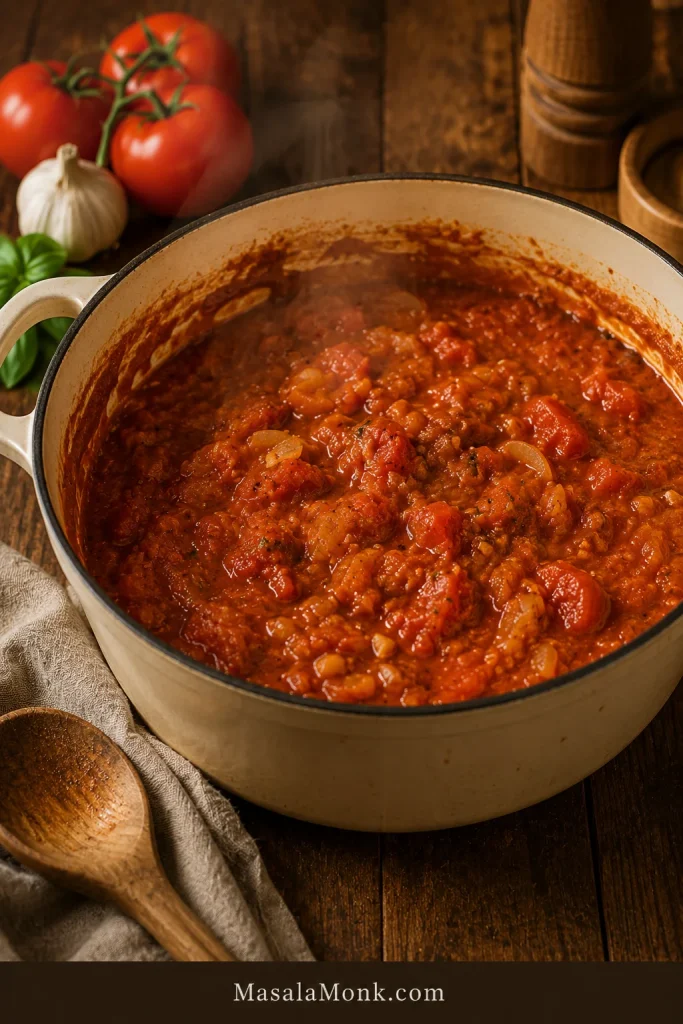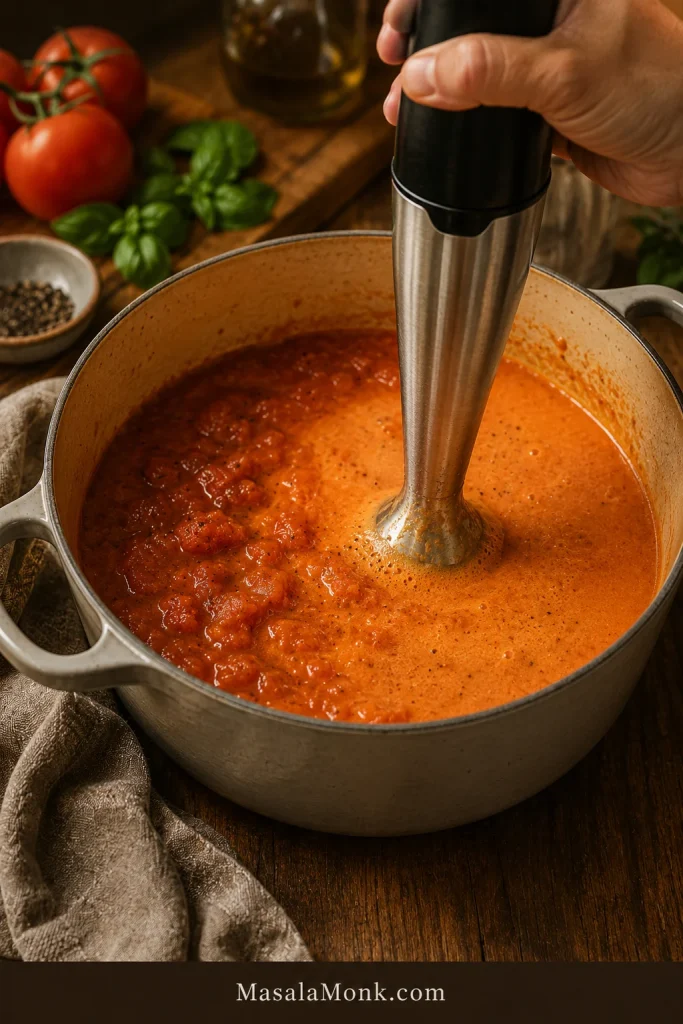
Posted on Leave a comment

French Onion Soup Recipe: Classic, Vegetarian, Slow Cooker & No-Wine Options

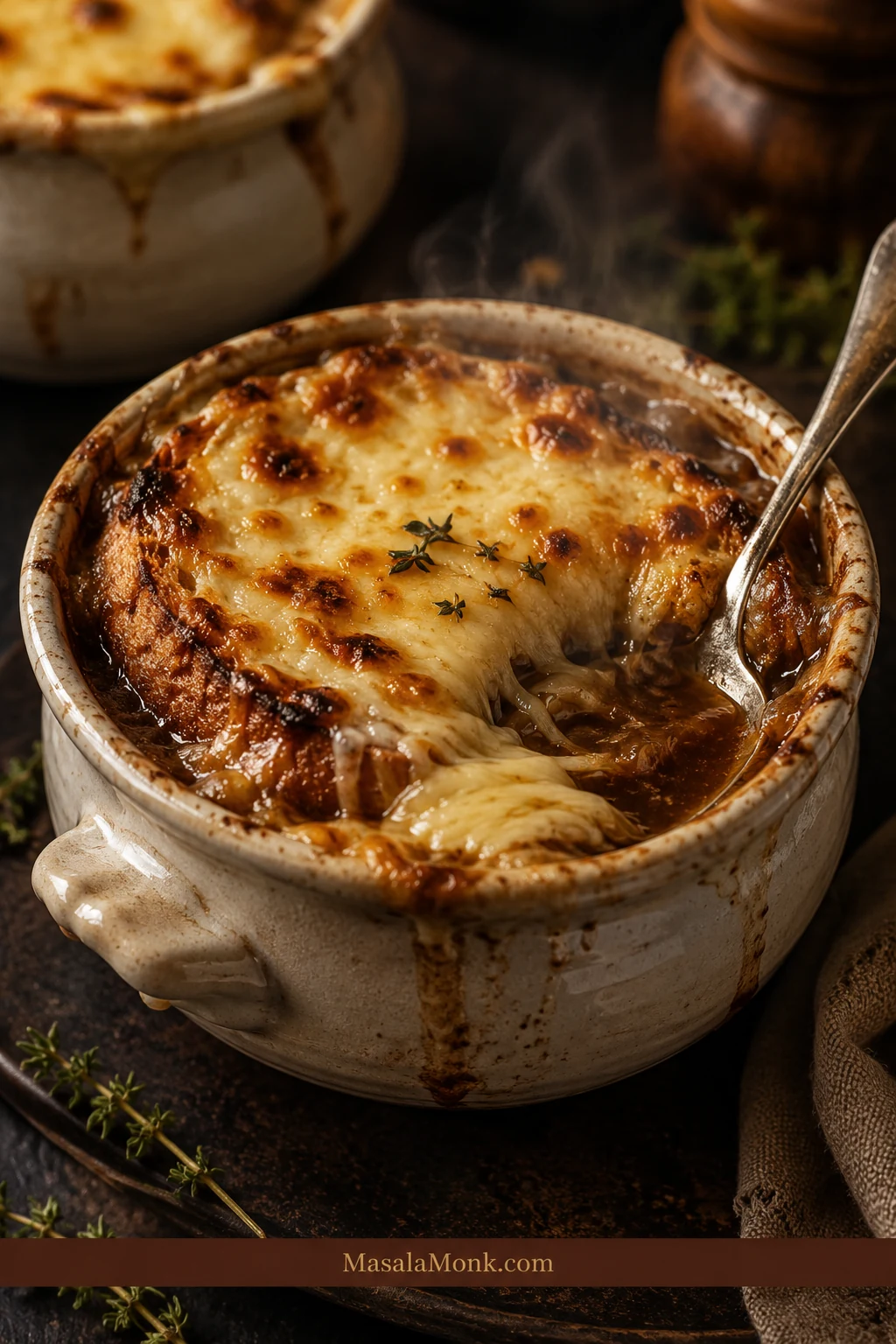
Classic French onion soup in a ceramic bowl with bubbling browned cheese, toasted bread, and dark onion broth.

This is the kind of soup that rewards the cook who lets the kitchen slow down for a little while. A mountain of sharp raw onions softens in butter, collapses into the pot, turns golden, and slowly becomes mellow, savory, and almost jammy. Then the broth goes in, the bread gets toasted, and the cheese melts over the top until every spoonful breaks through something crisp, bubbling, and deeply comforting.

The best part is that first spoonful: the cheese stretches, the toast softens at the edges, and the broth underneath tastes darker and fuller than the simple ingredient list suggests.

This recipe is built around the three places French onion soup usually fails: pale onions, weak broth, and a risky cheese finish.

This version starts with the classic bistro-style bowl: beef broth, wine or sherry, toasted bread, and Gruyère. The main path is simple — caramelize the onions, deglaze the pot, simmer with broth, toast the bread, and melt the cheese — and every variation in this guide follows that same path.

It is not a weeknight-speed soup. It is the kind of recipe you make when you want a few ordinary onions to slowly turn into something that feels like dinner out, only warmer.

Make It Now

  • Total time: About 1 hour 45 minutes to 2 hours
  • Onion time: 45 to 70 minutes for proper caramelization
  • Best broth: Beef broth for classic; mushroom broth or dark vegetable stock for vegetarian
  • Best cheese: Gruyère, Swiss, or a melty cheese blend
  • No crocks: Broil the cheesy toast separately, then place it on the soup
  • Ready to cook? Jump to the classic recipe

The 3 Things That Make This Soup Work

  1. Cook the onions until deep golden and jammy, not just soft.
  2. Use broth that tastes savory before it goes in.
  3. Toast the bread firmly so the cheese has somewhere to land.

Keep these three foundations in mind as you cook.

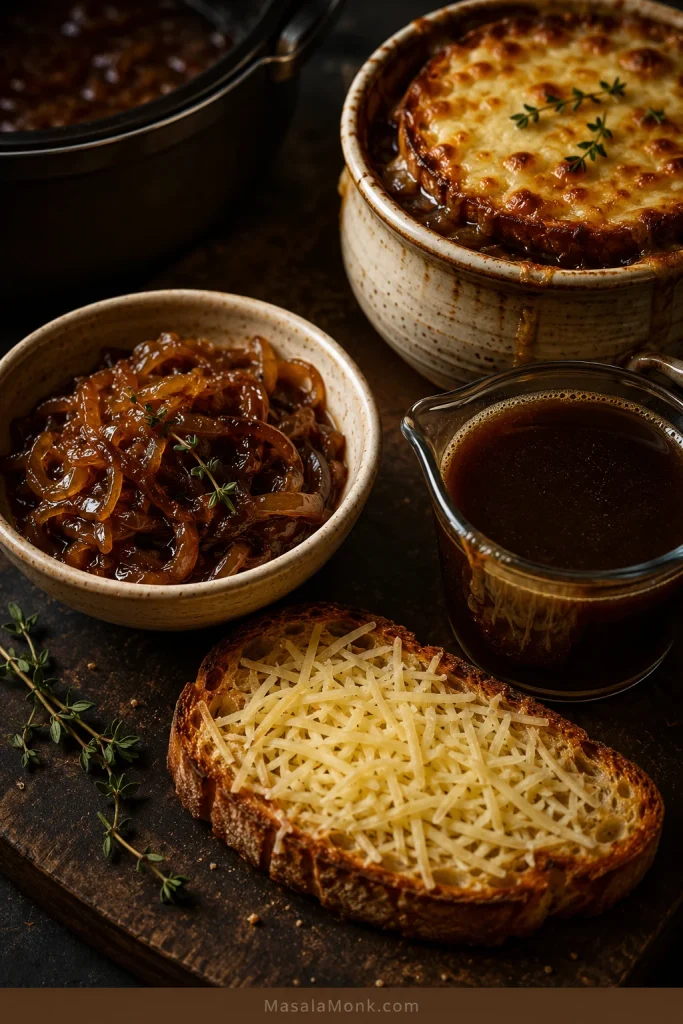
Caramelized onions, dark broth, toasted bread, cheese, and French onion soup arranged on a rustic table.
Before assembling the bowl, get the three foundations right: deeply browned onions, broth with real depth, and a cheese finish your kitchen setup can handle safely.

Jump to

Quick Answer

French onion soup is onion soup built around slowly caramelized onions, savory broth, toasted bread, and melted cheese. The cheese-topped version is what most people mean by classic bistro-style French onion soup.

You do not have to use wine or beef broth. For no-wine soup, deglaze with broth and finish with a small splash of vinegar or lemon after simmering. For vegetarian French onion soup, use mushroom broth or dark vegetable stock, then add one savory booster such as vegetarian Worcestershire, tamari, or browned mushrooms.

Need the swaps first? Jump to the vegetarian and no-wine options.

Choose Your French Onion Soup Version

Start with the classic path, then adjust only what your kitchen needs. The onions stay at the center; the broth, wine, cheese, and finishing method can move around them.

Make this when you want a bowl that feels special without needing expensive ingredients. Most of the flavor comes from time, not fuss.

What you wantBest versionRemember
Classic bistro flavorBeef broth, wine or sherry, GruyèreReduce wine before adding broth.
No beef, still savoryDark vegetable stock or mushroom brothAdd one savory booster.
No wine, still balancedDeglaze with brothReplace wine’s acid and fond-loosening job.
Vegetarian, not thinVegetable or mushroom broth plus acid and umamiDo not add every booster at once.
Less stove-watchingSlow cooker onions, then stovetop finish if possibleConvenience improves; browning still matters.
No crocks, no riskBroil cheesy toasts separatelyTop hot soup just before serving.

Classic French Onion Soup Recipe

Start with this stovetop version for the most classic bowl. It looks like restaurant soup, but the actual work is simple: slice onions, cook them slowly, simmer, toast, and melt cheese.

French Onion Soup

Servings: 4 main-course bowls or 6 starter bowls
Prep time: 20 minutes
Cook time: 1 hour 25 minutes to 1 hour 40 minutes
Total time: About 1 hour 45 minutes to 2 hours
Equipment: Large heavy pot or Dutch oven, wooden spoon, baking sheet, broiler-safe crocks or regular bowls plus the separate cheesy-toast method

The timing is flexible because onions vary. Trust the color, smell, and texture more than the clock.

Ingredients

  • 3 lb / 1.35 kg yellow onions, thinly sliced, about 1/8 inch / 3 mm thick
  • 3 tablespoons unsalted butter
  • 1 tablespoon olive oil or neutral oil
  • 1/2 teaspoon fine salt, plus more to taste after simmering
  • 1/2 teaspoon sugar, optional, only if your onions need help browning
  • 3 cloves garlic, minced
  • 1 tablespoon all-purpose flour, optional, for light body
  • 1/2 cup / 120 ml dry white wine or dry sherry, or 1/2 cup / 120 ml extra broth for no-wine soup
  • 6 cups / 1.4 liters beef broth or stock, or up to 7 cups / 1.65 liters for a brothier soup
  • 2 fresh thyme sprigs or 1/2 teaspoon dried thyme
  • 1 bay leaf
  • 1 teaspoon Worcestershire sauce, or vegetarian Worcestershire/tamari for vegetarian soup
  • 1 to 2 teaspoons apple cider vinegar, sherry vinegar, balsamic vinegar, or lemon juice, as needed after simmering
  • Black pepper, to taste
  • 4 to 6 slices baguette, sourdough, or sturdy crusty bread
  • 1 1/2 to 2 cups / 170 to 225 g grated Gruyère, Swiss, provolone, mozzarella, or a mix
  • 2 tablespoons grated Parmesan, optional, for extra savory flavor

Quick notes before you cook: Start light on salt because broth, cheese, Worcestershire, and Parmesan can all be salty. Skip the sugar if your onions brown well. Use 6 cups broth for a thicker bowl, or 7 cups for a brothier one.

Method

Cook the onions

  1. Slice the onions evenly. Aim for about 1/8 inch / 3 mm. Thin, even slices cook more predictably. Too thick and they take much longer; too thin and they can break down or burn at the edges.

  2. Start the onions. Set a large heavy pot or Dutch oven over medium heat. Add the butter and oil. When the butter melts, add the onions and 1/2 teaspoon salt. Stir until coated.
  3. Soften and collapse. Cook for 10 to 15 minutes, stirring often, until the onions release water and shrink down. Do not panic when the pot looks watery at first. That moisture has to cook off before browning can begin.
  4. Caramelize slowly. Lower the heat to medium-low and cook for 35 to 55 minutes more, stirring every few minutes. The onions should turn golden, then deep golden brown, and become soft and jammy. If they hiss loudly, stick hard, or darken too quickly, lower the heat. If the pot gets dry, add a splash of water or broth and scrape the golden browned bits into the onions.
  5. Check before adding liquid. The onion base should already smell like dinner. Look for soft strands, deep golden color, glossy texture, sweet roasted aroma, and browned—not black—bits on the bottom of the pot. If the onions are pale and wet, keep cooking. If the pot smells acrid or the bits are black, do not scrape those burnt spots into the soup.

Build and simmer the base

  1. Add garlic and flour. Stir in the garlic and cook for 30 seconds. If using flour, sprinkle it over the onions and cook for 1 minute, stirring well. The flour should disappear into the onions, not sit in dry clumps.
  2. Deglaze. Add wine or sherry, if using. Scrape the bottom of the pot and simmer until the liquid reduces and no longer smells sharp, about 5 to 8 minutes. The onions should look glossy again. For no-wine soup, use 1/2 cup broth instead.
  3. Add broth and herbs. Pour in 6 cups broth for a thicker onion-forward soup, or up to 7 cups for a brothier bowl. Add thyme, bay leaf, Worcestershire if using, and black pepper. Bring to a simmer.
  4. Simmer and taste. Simmer gently for 20 to 30 minutes. Taste and adjust salt. If the soup tastes too sweet or flat, add 1 teaspoon vinegar or lemon juice, then taste again before adding more. The base should taste savory before the bread and cheese go on. Cheese hides many things, but it will not fix weak broth.

Toast, broil, and serve

  1. Toast the bread. While the soup simmers, toast the bread until dry and crisp. Use a 400°F / 205°C oven for 6 to 10 minutes, or toast it in a skillet or toaster. Cut the bread so it sits just inside the bowl or crock.
  2. Finish with cheese. Ladle hot soup into broiler-safe crocks or bowls. Place toasted bread on top, cover with cheese, and broil for 2 to 5 minutes, watching closely, until melted and browned. Without broiler-safe bowls, broil the cheesy toasts separately on a baking sheet and place them on top of the soup.
  3. Serve hot. Let the bowls sit for a minute before serving. The cheese and soup will be very hot.

Short Recipe Notes

  • Vegetarian: Use mushroom broth or dark vegetable stock, plus one savory booster such as tamari, vegetarian Worcestershire, or browned mushrooms.
  • No wine: Deglaze with broth, then add a small splash of vinegar or lemon after simmering to keep the onion sweetness in check.
  • Slow cooker: Cook onions with butter/oil and salt on LOW for 8 to 10 hours, then finish in a pot on the stove for 10 to 15 minutes for better color.
  • Cheese: Gruyère is classic, but Swiss, provolone, mozzarella with Parmesan, or aged cheddar can work.
  • Broiler safety: Only broil in bowls marked broiler-safe. When in doubt, broil the toast, not the bowl.

Why This Recipe Works

The magic is not in a long ingredient list. It is in what happens when onions are given enough time. They lose their sharpness, release their moisture, brown slowly, and turn into the kind of base that makes the whole pot taste more satisfying than it should.

This is the part where the kitchen starts smelling like dinner is worth waiting for.

The broth matters too, but it should not have to do all the work. Beef broth gives the classic bistro flavor. Mushroom broth or dark vegetable stock can still make a satisfying vegetarian version when the onions are cooked well and the seasoning has a little lift.

That final lift is important because caramelized onions are naturally sweet. Wine, sherry, vinegar, lemon juice, Worcestershire, tamari, or a well-seasoned broth can wake up the pot just enough so the bowl tastes savory instead of syrupy.

Toasted bread gives the melted cheese structure, so it can sit on top instead of disappearing into the soup. That final bubbling layer turns a humble onion soup into the bowl people remember.

Back to top

Ingredients and Onion Tips

You do not need rare ingredients, but each one has a job. The onions bring sweetness, the broth brings backbone, the bread supports the topping, and the cheese makes the bowl feel finished.

How to Choose the Ingredients

Onions: Yellow onions are the safest all-purpose choice. They become sweet without making the soup sugary, and they give the broth a savory backbone. Sweet onions work too, but the finished bowl can taste noticeably sweeter. Red onions make a darker soup with a slightly sharper flavor.

Butter and oil: Butter is where the soup starts to smell like something is happening. A little oil helps keep the butter from scorching during the long cook. All butter is fine too, but keep the heat gentle and watch the bottom of the pot.

Broth, Wine, and Seasoning Choices

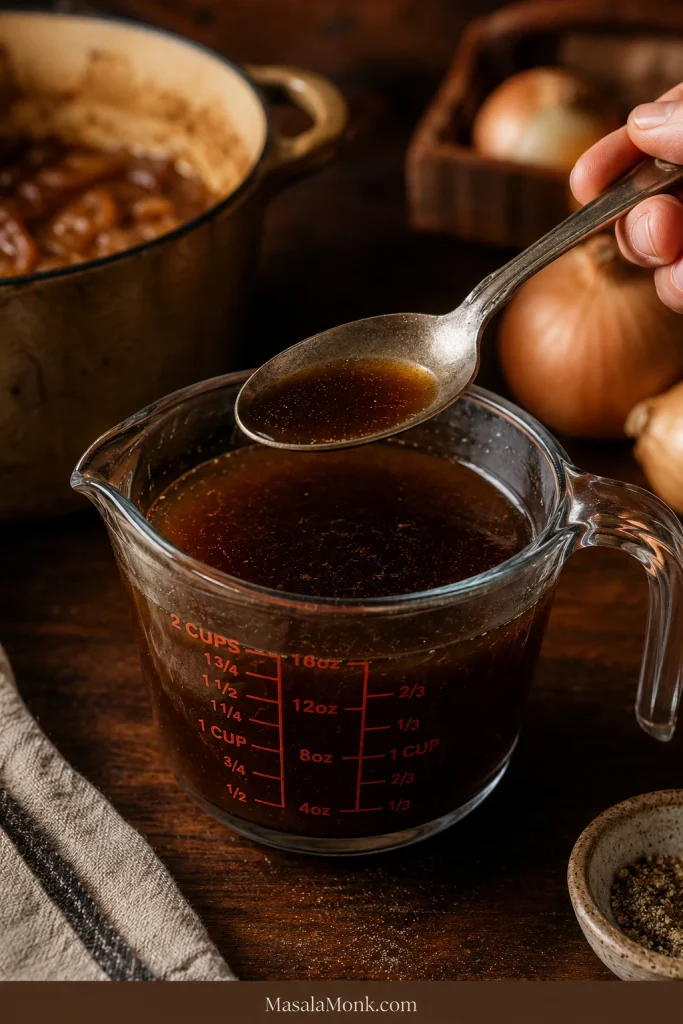
Taste the Broth Before It Goes In

If the broth tastes watery now, it will taste watery later. Use better stock, simmer weak broth for a few minutes to concentrate it, or add one savory booster before relying on cheese to rescue the bowl.

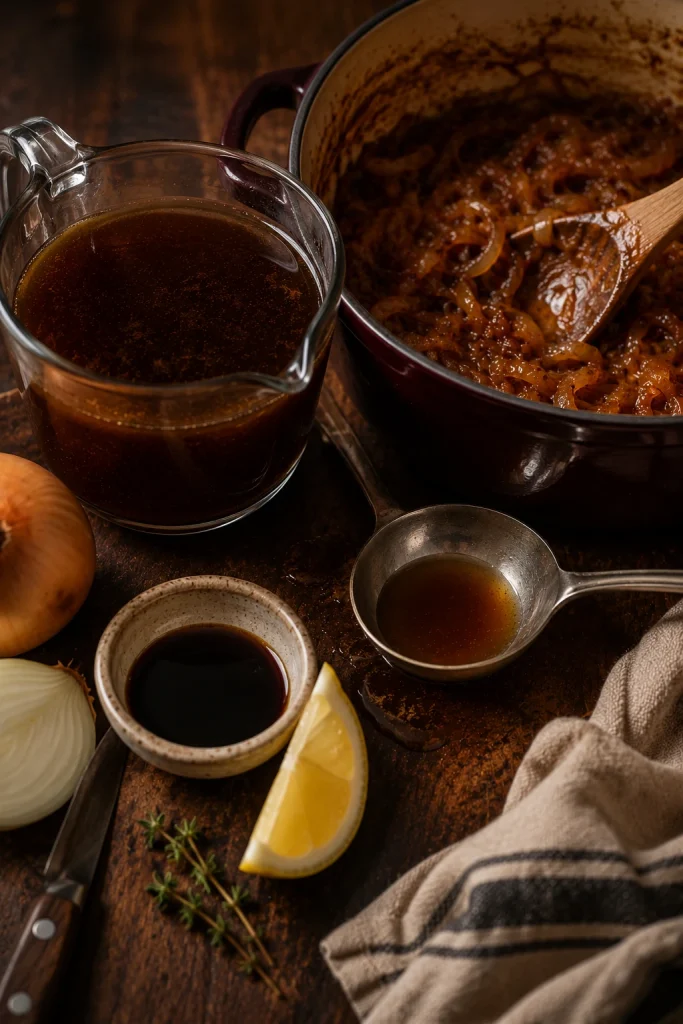
Dark broth in a measuring cup with a spoon for tasting before making French onion soup.
Taste the broth before it joins the onions. If it tastes weak by itself, add savory support now instead of hoping cheese will fix it later.

If the broth tastes flat or the onions seem too sweet, jump to troubleshooting before adding cheese.

Broth or stock: Classic French onion soup usually uses beef broth or beef stock. For a vegetarian version, use dark vegetable stock or mushroom broth. The broth should taste good before it meets the onions, because a pale base and thin broth will not become deeply savory just because cheese goes on top.

Wine, sherry, or no wine: Dry white wine or dry sherry adds character and helps keep the onion sweetness in check. It is helpful, but not mandatory. In a no-wine version, broth loosens the browned bits and vinegar or lemon replaces the brightness wine would have added.

Flour: Flour is optional, but a small spoonful gives the broth just enough body to cling to the onions. It should not turn the soup into gravy. Skip it for a thinner, clearer broth. When using flour, cook it briefly with the onions before adding liquid so it does not taste raw.

Herbs and seasoning: Thyme and bay leaf should stay in the background. You want people to taste onion first. Garlic helps, but it should not dominate. Worcestershire, tamari, soy sauce, or a small splash of vinegar can round out the pot, especially in no-wine or vegetarian versions. For vegetarian soup, use vegetarian Worcestershire, tamari, or soy sauce instead of regular Worcestershire.

Best Onions for French Onion Soup

The best onions for French onion soup are usually yellow onions. They are savory, reliable, and easy to find. They caramelize well without making the soup taste too sweet.

  • Yellow onions: balanced, savory, gently sweet, and the best everyday choice.
  • Sweet onions: softer and sweeter; good for a sweeter soup, but even better mixed with yellow onions.
  • Red onions: sharper, darker, and slightly fruitier; useful for variation, but they change the color and flavor.
  • White onions: cleaner and sharper; best used with yellow onions instead of alone.
  • Shallots: delicate and sweet; lovely as part of a mix, but expensive for the whole pot.

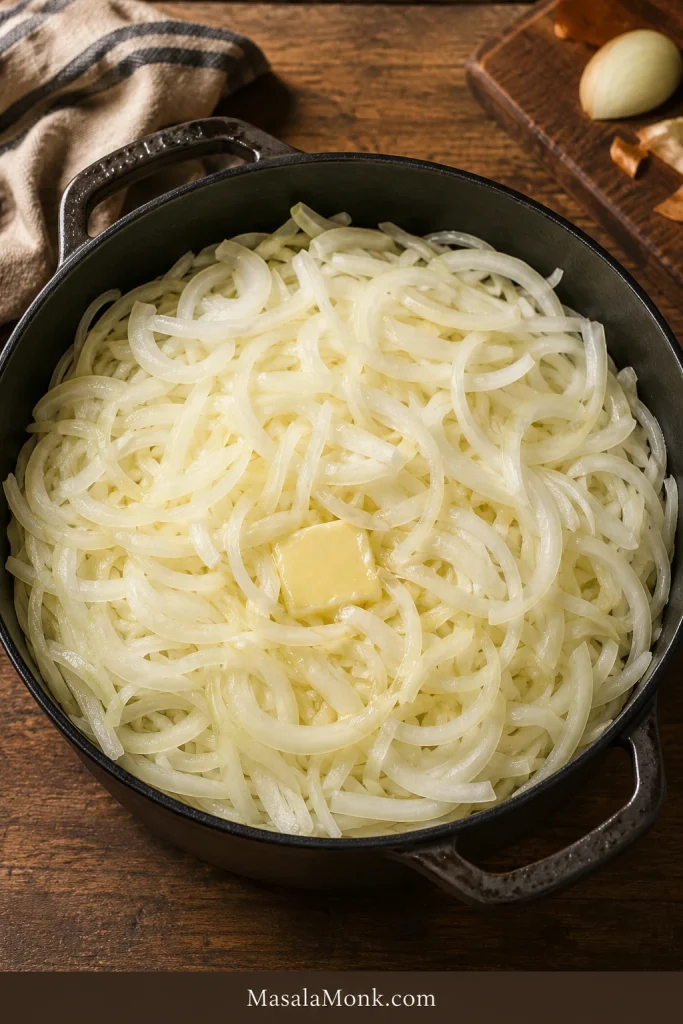
The slicing matters almost as much as the onion type. Aim for slices about 1/8 inch / 3 mm thick. Very thick slices take longer to soften. Paper-thin slices can break down too much or burn at the edges before the rest of the pot is ready.

Thinly sliced yellow onions piled high in a Dutch oven before cooking French onion soup.
Do not panic when the pot looks crowded. A mountain of sliced onions will shrink down before it ever starts to caramelize.

How to Caramelize Onions Properly

When it feels like nothing is happening for the first 20 minutes, you are probably doing it right. The onions soften before they brown. The waiting is part of the recipe, not a sign that something has gone wrong. Once the onions are glossy and deep gold, the soup starts doing some of the work for you.

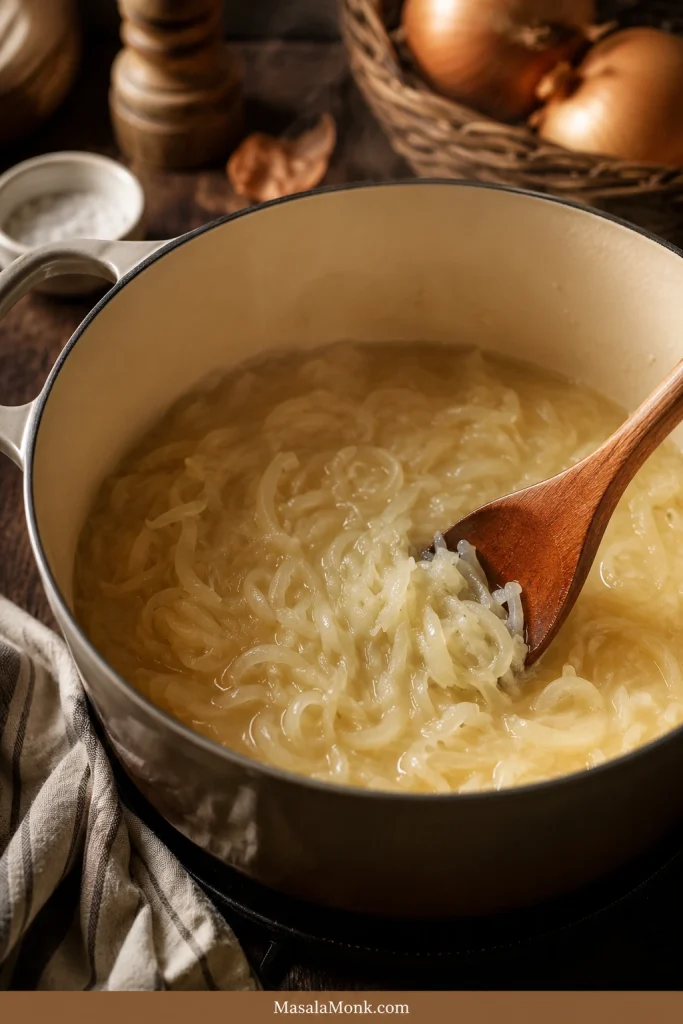
Softened sliced onions with visible moisture in a pot during the early stage of French onion soup.
The onions soften and release water before they begin to brown. Keep cooking past this steamy stage so the flavor can move from raw and sharp to sweet.

Read the Onion Stages

StageWhat you seeWhat to do
Wet and paleSteamy, crowded onionsKeep cooking
Soft and glossySharp smell fadesKeep cooking
GoldenFond starts formingStir and scrape gently
Deep golden and jammySweet roasted smell, soft strandsReady for liquid
Black or acridBurnt smell, black bitsDo not scrape burnt fond into the soup

If the pot looks boring for a while, that is normal. The reward comes late: first the sharp smell fades, then the onions turn glossy, and only near the end does the soup begin to smell deep and savory.

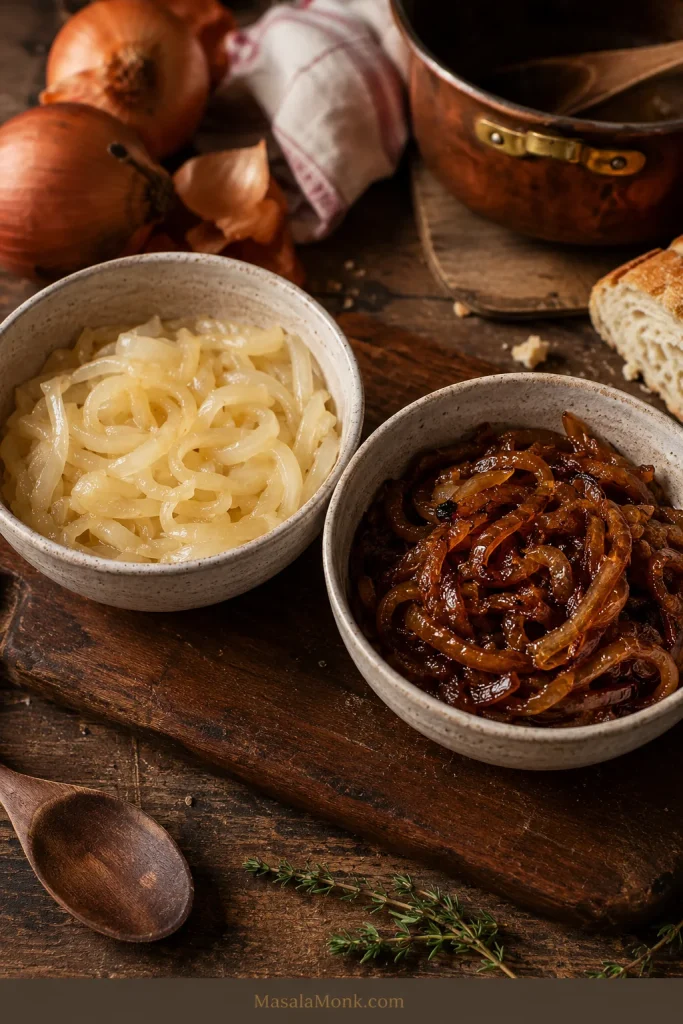
Pale softened onions beside deep golden caramelized onions for French onion soup comparison.
This is the color difference that changes the whole pot. Pale onions give you a lighter soup; deep golden onions give you classic French onion soup flavor.

Control Heat and Fond

Use a heavy pot if possible. A Dutch oven, heavy stainless steel pot, or heavy-bottomed saucepan gives the onions time to brown without scorching too quickly. A thin pot can create hot spots, which makes some onions burn while others stay pale.

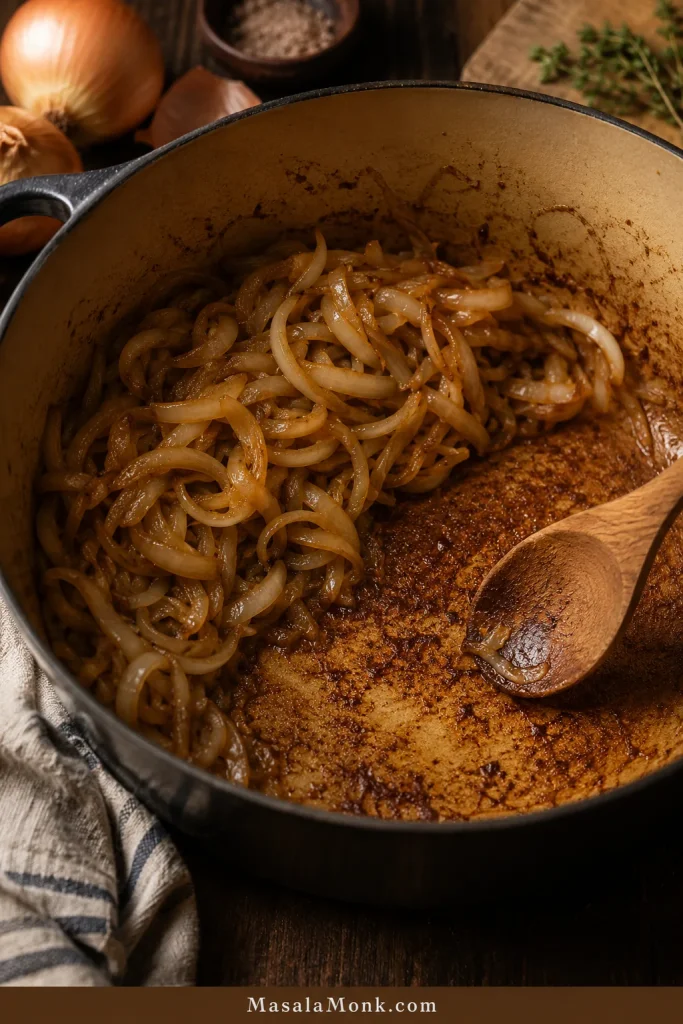
Golden onions with browned fond forming on the bottom of a pot while cooking French onion soup.
As the onions turn golden, the brown film on the pot becomes part of the flavor. Scrape it in early, while it tastes toasted instead of burnt.

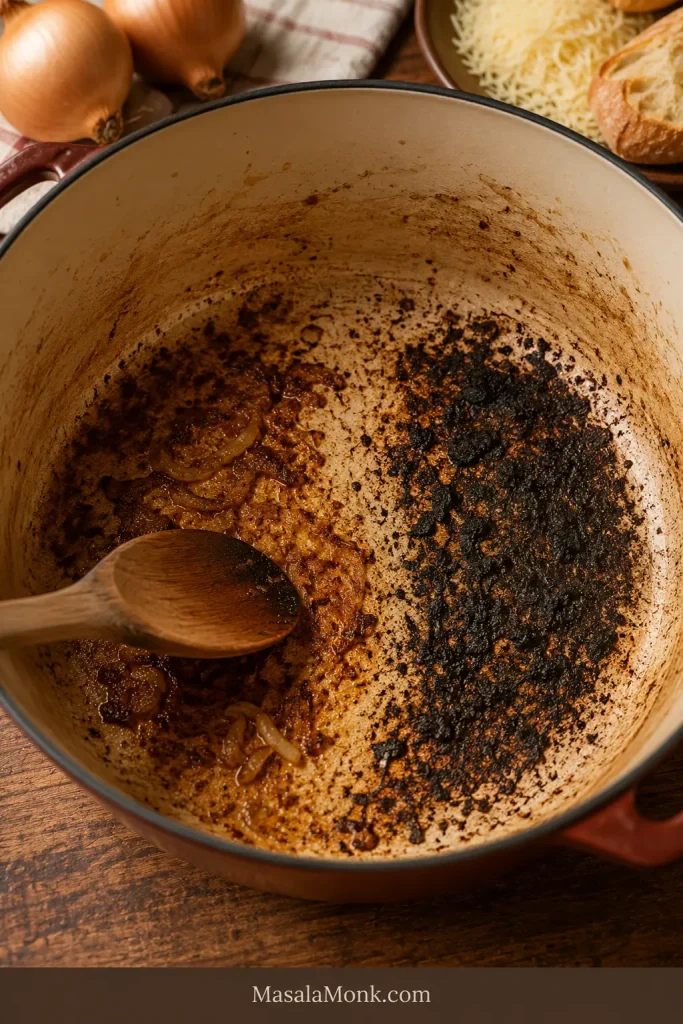
Keep the heat moderate. When the onions are not browning after a long time, raise the heat slightly. When they are sticking hard or the bottom of the pot is getting too dark, add a splash of water or broth and scrape the browned bits into the onions. Golden brown fond is flavor. Black scorched fond is bitterness.

Brown fond and black scorched bits on the bottom of a pot during onion cooking.
Brown bits can enrich the broth, but black scorch can make it bitter. Deglaze before the bottom of the pot crosses that line.

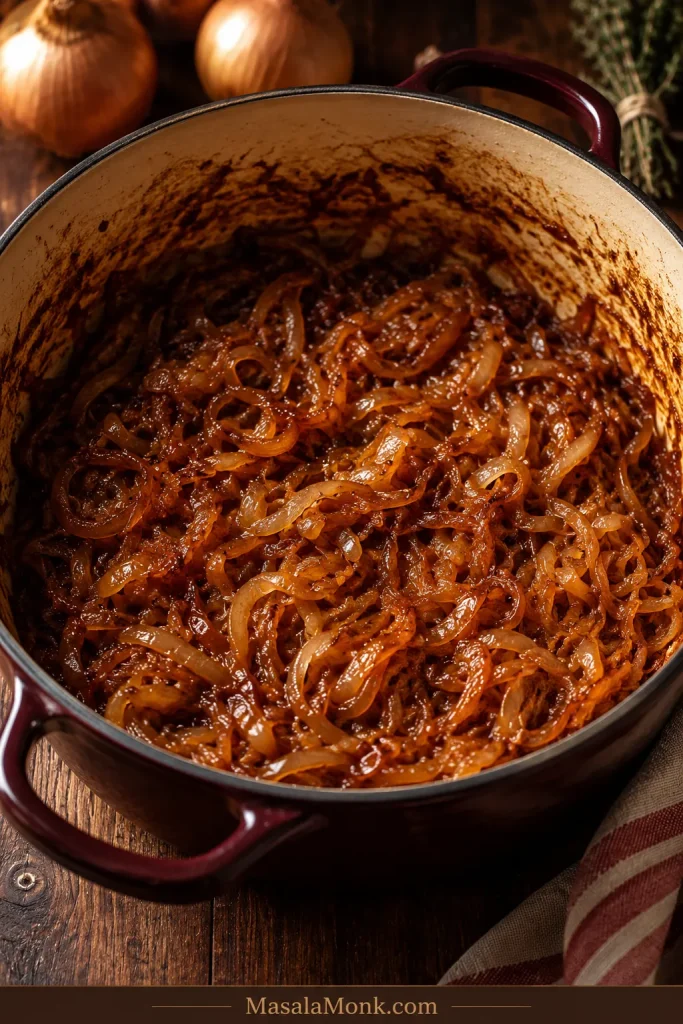
When the fond stays brown and the onions turn glossy, soft, and deep golden, you have the flavor base the soup needs. This is the success state before adding liquid.

Deep golden jammy caramelized onions in a pot, ready for broth in French onion soup.
The target is glossy, soft, and deep golden. Pale onions need more time before they can carry the soup.

For a deeper look at onion color, Serious Eats has a helpful French onion soup guide that explains why rich golden brown is better than burnt-dark.

A small pinch of sugar can help stubborn onions brown, but do not rely on sugar to replace time. This soup should taste like slowly cooked onions, not sweet onion syrup.

Back to top

How the Stovetop Method Works

The stovetop method gives you the most control. Once you understand what each stage is doing, the recipe feels much less mysterious.

On the stove, the onions release water, collapse, and slowly move from pale to golden to deep golden brown. Wine, sherry, or broth lifts the browned bits from the pot, and the final simmer lets the onion base and broth become one soup.

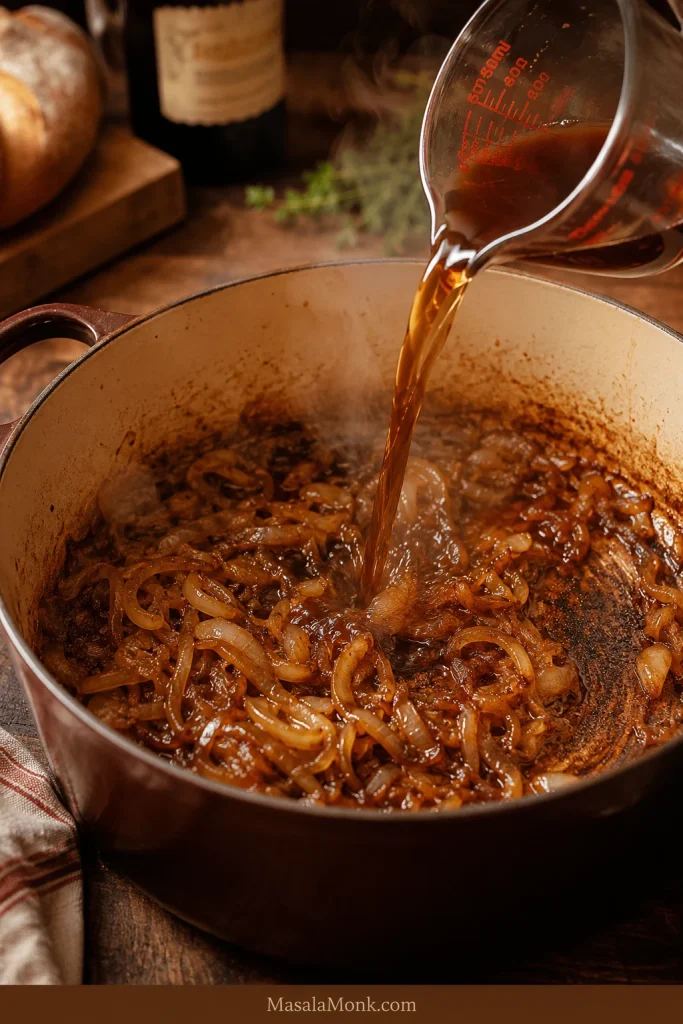
Broth being poured into caramelized onions in a pot to deglaze for French onion soup.
Deglazing turns the browned bits into soup flavor. Wine, sherry, or broth can all loosen the fond and pull it back into the base.

Taste near the end, before the bread and cheese go on. A little salt, acid, or umami can wake up the pot while you can still adjust it easily.

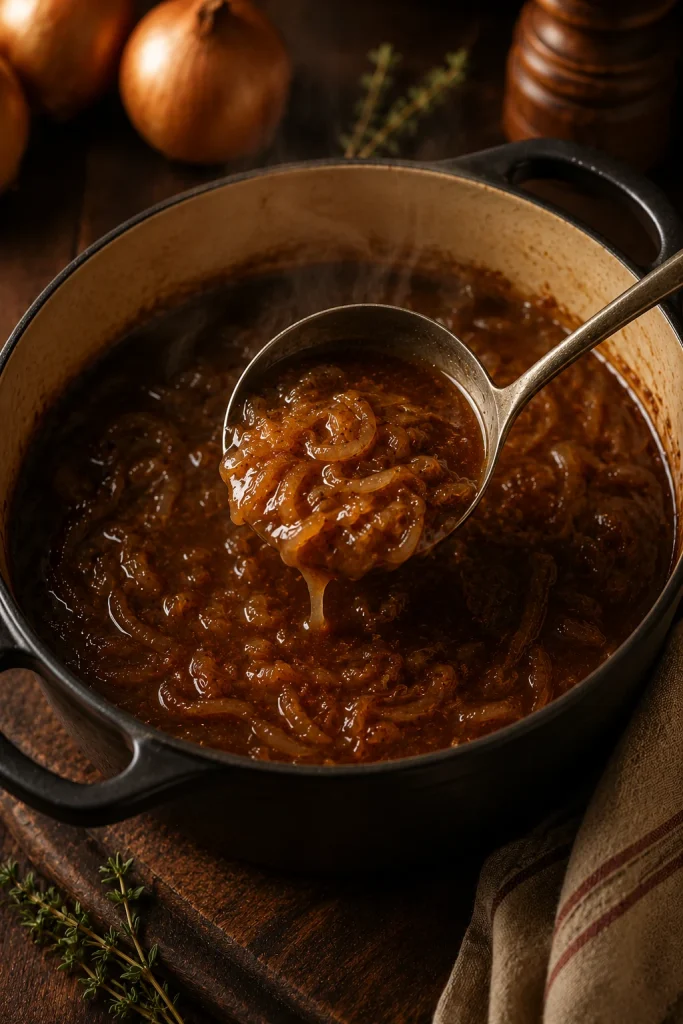
Finished French onion soup base with caramelized onions and dark broth in a pot before adding bread and cheese.
Before any toast or cheese is added, the soup base should already taste complete: onion-rich, savory, gently sweet, and balanced.

Once the stovetop method makes sense, every variation becomes easier. You are not learning four different soups. You are keeping the onions strong, then changing the broth, deglazing liquid, or finishing method to fit your kitchen.

No broiler-safe bowls? Jump to the no-crock cheese method before you finish the topping.

Back to top

Vegetarian and No-Wine Options

Vegetarian French Onion Soup

Vegetarian French onion soup should not taste like onions floating in weak vegetable broth. The stock needs to be dark, savory, and strong enough to support the caramelized onions.

Use mushroom broth or dark vegetable stock when available. Mushroom broth works especially well because it brings earthy savoriness that helps replace some of the depth people expect from beef broth.

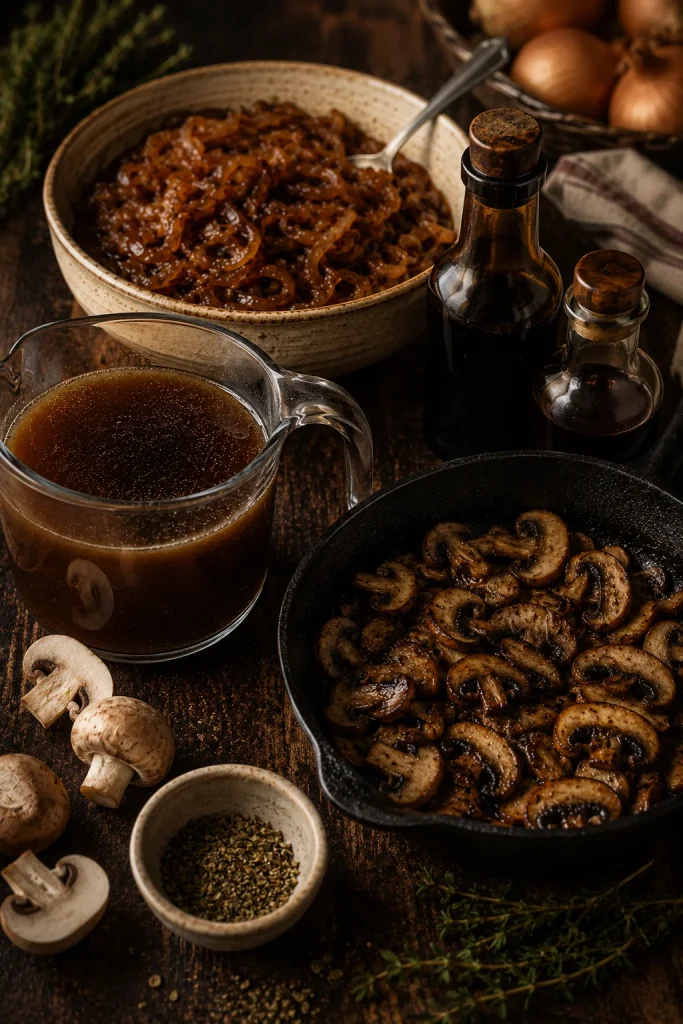
Mushroom broth, browned mushrooms, tamari, and caramelized onions for vegetarian French onion soup.
For vegetarian French onion soup, do not rely on plain vegetable stock alone. Mushroom broth, browned mushrooms, tamari, or vegetarian Worcestershire add the missing savory depth.

For the cleanest vegetarian version, choose one savory booster and one brightener. That keeps the soup controlled instead of turning it into a pantry experiment.

NeedUse one of these
More savory depthMushroom broth, browned mushrooms, tamari, vegetarian Worcestershire
More brightnessSherry vinegar, apple cider vinegar, lemon juice
More bodyLonger simmer, stronger stock, slightly more onions

A vegetarian bowl should still feel complete, not like a compromise. When the stock is dark, the onions are properly browned, and the finish has a little brightness, the soup keeps its cozy bistro feel.

  • Replace beef broth: use mushroom broth or dark vegetable stock.
  • Swap regular Worcestershire: use vegetarian Worcestershire, tamari, or soy sauce.
  • Skip the wine: deglaze with broth, then add vinegar or lemon after simmering.
  • For the cheese topping: use Gruyère, Swiss, provolone, mozzarella, or a vegetarian cheese that melts well.

Cheese eaters can finish the soup with Gruyère, Swiss, provolone, mozzarella, or a mix. For strictly vegetarian soup, check the cheese label because some cheeses use animal rennet. For a vegan version, use olive oil instead of butter, vegan Worcestershire or tamari, and your preferred vegan cheese or cheesy toast alternative.

Skipping wine too? Jump to the no-wine method for deglazing and acid balance.

No-Wine French Onion Soup

No-wine French onion soup can still taste deep and complete. You only need to replace wine’s two jobs: loosening the browned bits from the pot and balancing the natural sweetness of the onions.

Broth, vinegar, lemon, and caramelized onions arranged for no-wine French onion soup.
For a no-wine version, use broth to loosen the fond, then add a tiny splash of vinegar or lemon to balance the onions’ sweetness.

For a no-wine version, deglaze with broth instead of wine. Scrape up the browned bits, then simmer as usual. After the soup has simmered, taste it and add a small balancing ingredient if needed. Start with 1 teaspoon, taste, and stop as soon as the bowl feels brighter.

  • Apple cider vinegar: gently brightens the soup.
  • Balsamic vinegar: adds roundness and a little sweetness.
  • Lemon juice: lifts heavy flavors.
  • Worcestershire sauce: adds savory weight.
  • Vegetarian Worcestershire: adds weight without meat-based ingredients.
  • Tamari or soy sauce: adds umami and saltiness, so use carefully.

The point is not to make the soup sour. The point is to wake up the sweetness of the onions so the bowl tastes rounded instead of heavy.

Making it vegetarian as well? Jump back to the vegetarian broth tips and choose one savory booster.

Back to top

Slow Cooker Option, Plus an Instant Pot Note

Slow Cooker French Onion Soup

The slow cooker does not make the soup faster; it makes the waiting easier. It can handle the long onion softening while you do something else. A short stovetop finish is only there if you want deeper color and a more developed base.

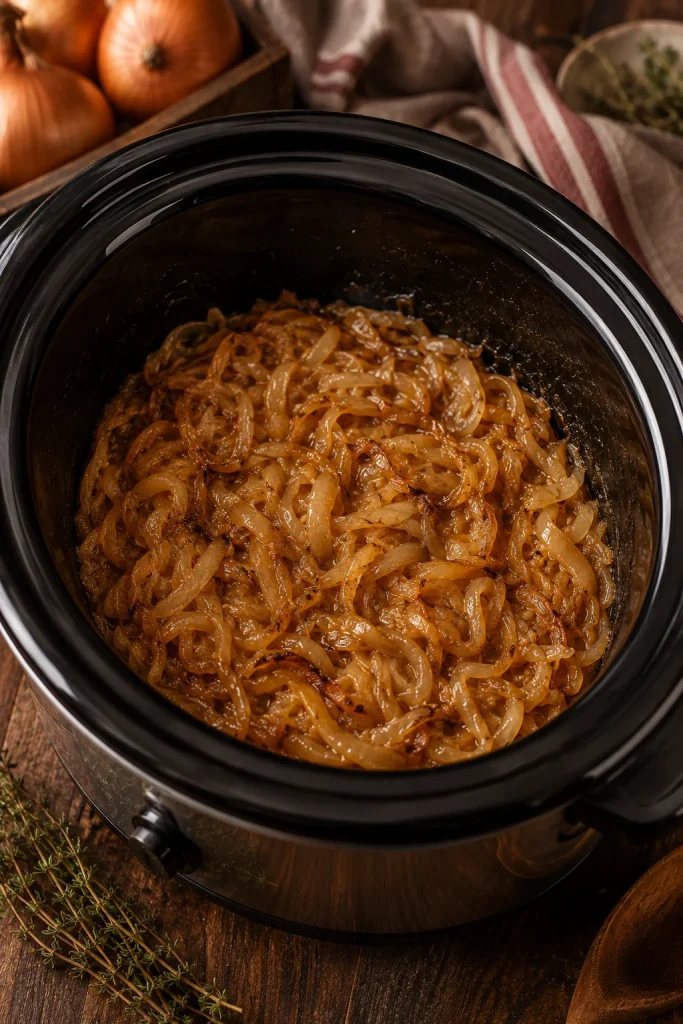
Soft onions cooked down in a slow cooker for French onion soup.
Slow cooker onions save attention, not time. For deeper flavor, give pale or wet onions a quick stovetop finish before adding broth.

For the easiest version, add sliced onions, butter or oil, and salt to a 5-quart or larger slow cooker. Cook on LOW for 8 to 10 hours, until the onions are very soft and browned around the edges. If they look pale and wet, transfer them to a pot and cook for 10 to 15 minutes to concentrate the color and flavor.

Slow cooker baseAmount
Sliced onions3 lb / 1.35 kg
Butter and oil3 tablespoons butter + 1 tablespoon oil
Salt1/2 teaspoon to start
Slow cooker time8 to 10 hours on LOW
Best flavor finish10 to 15 minutes on the stove
Broth simmer20 to 30 minutes on the stove, or 1 to 2 hours more in the slow cooker

Using pressure cooking instead? Jump to the Instant Pot note.

After the onions are ready, add broth, thyme, bay leaf, and seasoning, then simmer until the soup tastes rounded. Finish with toasted bread and cheese.

If you like cozy slow cooker dinners built around French onion flavor, this Slow Cooker French Onion Chicken is another easy comfort-food option.

Instant Pot Note

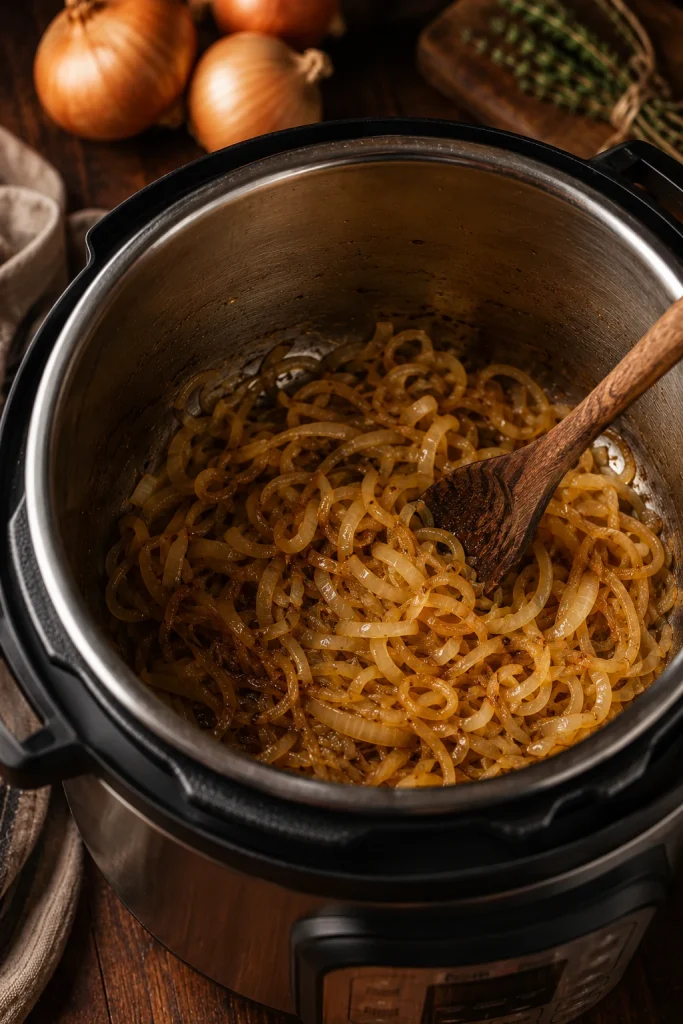
You can make the soup in an Instant Pot, but pressure cooking does not replace caramelization. Use sauté mode first, give the onions 20 to 30 minutes to soften and brown, then add broth and seasonings. Pressure cook for 5 to 6 minutes, release pressure carefully, taste and adjust, then finish with toasted bread and cheese. If the onions are pale before pressure cooking, the finished soup will taste less developed.

Onions browning on sauté mode inside an Instant Pot for French onion soup.
In an Instant Pot, sauté first and pressure cook second. The onion color has to develop before the broth goes in.

Back to top

Cheese, Bread, and Bowls

Best Cheese for French Onion Soup

Gruyère is the classic choice because it melts smoothly and has a nutty, savory flavor that suits the sweet onions. The best topping melts well, browns in spots, and still tastes good once it stretches.

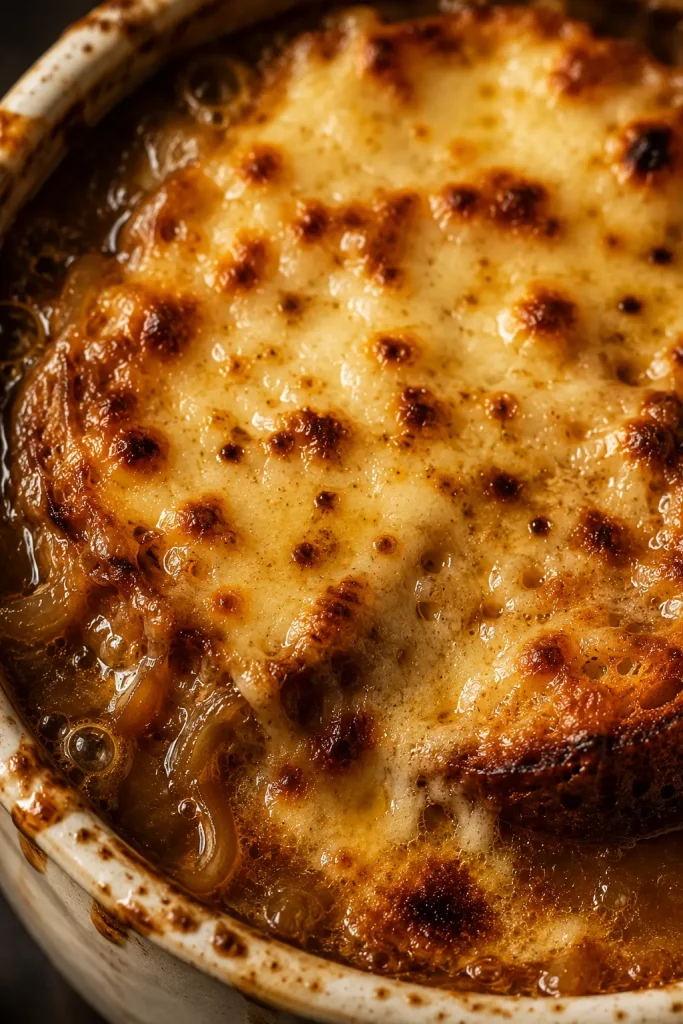
Close-up of bubbling browned cheese on top of French onion soup after broiling.
Broil just until the cheese bubbles and browns in patches. Pull it before the golden spots turn black.
  • Gruyère: the classic choice; nutty, rich, and beautifully melty.
  • Swiss: mild, melty, and a good substitute for Gruyère.
  • Provolone: smooth, stretchy, and mild.
  • Mozzarella: excellent for cheese pull, but mild in flavor.
  • Parmesan: salty and savory; best mixed with another cheese.
  • Aged cheddar: not classic, but flavorful and practical.
  • Processed cheese: melts easily, but can make the soup taste saltier and more snack-like.

If Gruyère is too expensive or hard to find, use mozzarella for melt and add Parmesan, aged cheddar, or a sharper cheese for flavor. Mostly mozzarella needs a small amount of Parmesan or sharp cheddar so the topping has flavor, not just stretch.

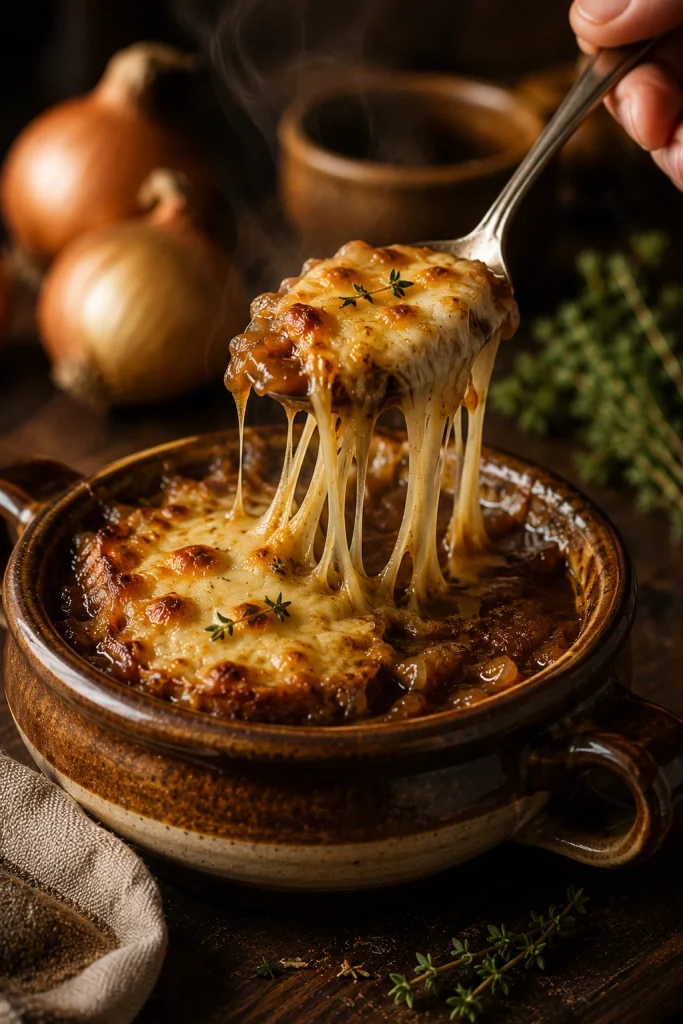
Spoon lifting French onion soup with melted cheese stretching from toasted bread.
When the bread is sturdy and the cheese melts properly, each spoonful catches the best parts: broth, onions, toast, and a satisfying cheese pull.

Best Bread for French Onion Soup

The toast keeps the cheese from sinking straight into the soup. It should be crisp enough to hold, but porous enough to soften at the edges. Baguette is classic because it is sturdy and easy to slice into rounds, but you have options.

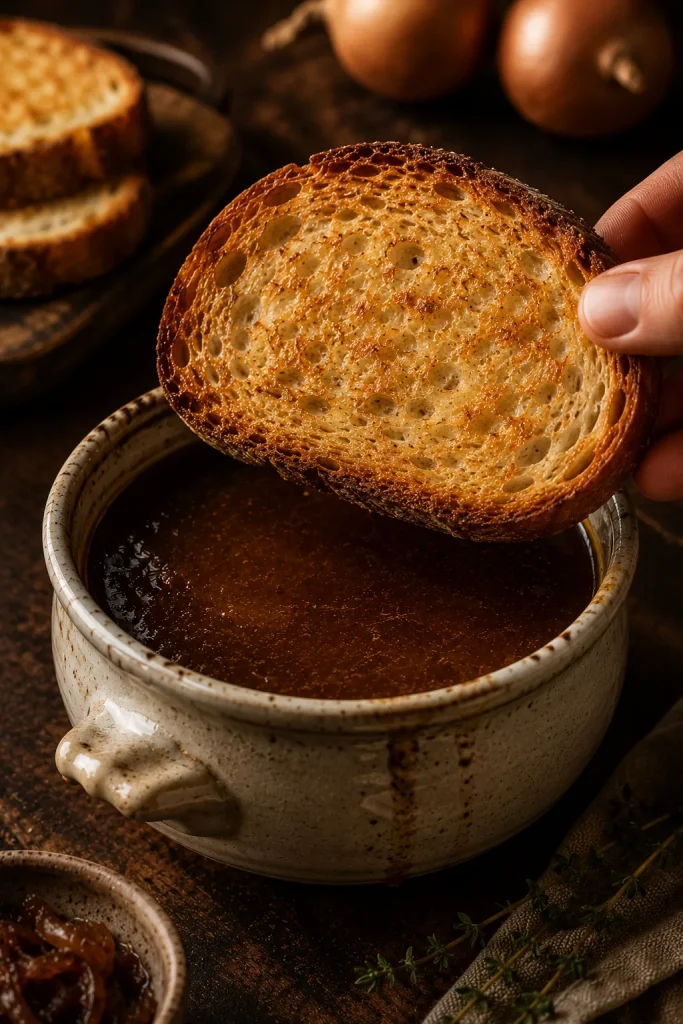
Firm toasted bread held above a bowl of French onion soup base to show size and texture.
Toast the bread until it feels dry and firm. That structure helps it support melted cheese without disappearing into the broth.
  • Baguette: classic, sturdy, and ideal for individual bowls.
  • Sourdough: flavorful and strong enough for soup.
  • Country bread: good for larger bowls if cut to fit.
  • Crusty rolls: useful when baguette is not available.
  • Regular sandwich bread: only use if toasted very firm; otherwise it gets soggy quickly.

Cut the bread so it sits just inside the bowl or crock. It should cover much of the surface without forcing you to wrestle with it. Toast it before adding cheese. Soft bread under melted cheese may look good for a moment, but it sinks and turns mushy quickly.

If your cheese sinks or the bread turns soggy, jump to troubleshooting before serving.

For a homemade bread side on another soup night, this Homemade Garlic Bread Loaf can be torn, toasted, or served beside a cheesy bowl.

No Broiler-Safe Crocks? Broil the Toast, Not the Bowl

French onion soup is often served in handled crocks because they can go under the broiler and hold heat well. But you do not need special crocks, and you should not risk a favorite bowl just for melted cheese.

Bowls marked only oven-safe are not automatically safe under the broiler. Broilers use intense direct heat, and some ceramic, stoneware, or glass dishes can crack or break if they are not made for it. For cookware safety, Southern Living’s guide on oven-safe versus broiler-safe dishes is worth checking before putting bowls under direct heat.

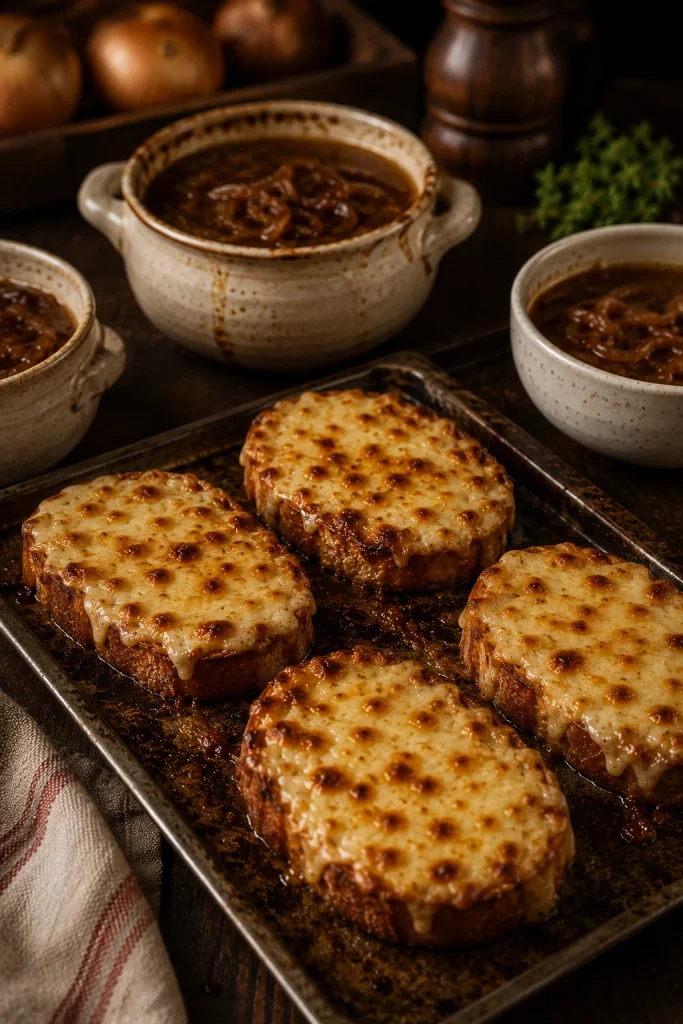
Cheesy toasts broiled on a sheet pan with bowls of French onion soup nearby.
Instead of putting regular bowls under intense heat, melt the cheese on toast separately. You still get the browned French onion soup topping without risking cracked dishes.

No-Crock Method

  1. Toast the bread until dry and crisp.
  2. Add cheese on top of the toast.
  3. Broil the cheesy toasts on a baking sheet until melted and browned.
  4. Ladle hot soup into regular bowls.
  5. Place the cheesy toast on top just before serving.

This gives you the same bubbling, browned cheese moment without guessing whether your bowls can handle the heat.

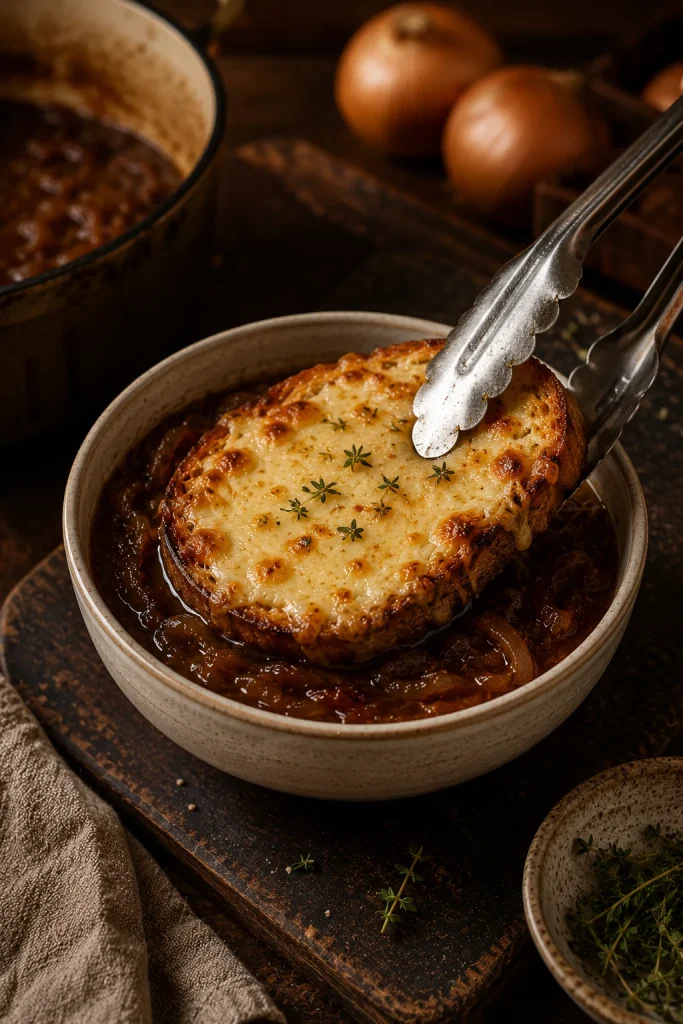
Broiled cheesy toast being placed with tongs on top of French onion soup in a regular bowl.
After broiling, move the cheesy toast onto the hot soup right before serving. The edges stay crisp while the center softens into the onion broth.

Back to top

Troubleshooting French Onion Soup

Most problems show up before the bowls reach the table, which is good news. Taste the pot while you can still fix it.

Scan the row that matches your pot; you do not need to read the whole table before cooking.

ProblemLikely causeHow to fix it
Soup tastes too sweetSweet onions, sugar, or not enough acidAdd a small splash of vinegar, lemon juice, Worcestershire, or tamari. Next time, use yellow onions and skip the sugar.
Soup tastes bitterBurnt onions or blackened fondDo not scrape black bits into the pot. Lower the heat next time and deglaze earlier.
Soup tastes like wineWine was not reduced enoughSimmer longer so the sharp wine flavor cooks off. Next time, reduce wine until the onions look glossy and jammy again.
Soup is too saltySalty broth, bouillon, Worcestershire, cheese, or reduced liquidDilute with unsalted broth or water. Add a small splash of acid to balance. Be careful adding more cheese.
Soup tastes wateryWeak stock or rushed onionsSimmer longer, use better stock, or add a small umami boost like Worcestershire, tamari, or mushroom broth.
Soup tastes flatNot enough salt, acid, or savory weightAdd salt carefully, then a tiny splash of vinegar or lemon. For vegetarian soup, add tamari or vegetarian Worcestershire.
Cheese sinksBread was too soft or too thinUse sturdier bread and toast it until crisp before adding cheese.
Bread turns soggy immediatelyBread was not toasted enoughToast bread until dry and firm. Add it right before serving.
No safe bowls for broilingBowls are not broiler-safeBroil cheesy toasts separately on a baking sheet and place them on top of the soup.

Back to top

Shortcuts and Lighter Options

Shortcut Reality Check

Shortcuts can help on a busy night, but they cannot replace the slow onion flavor that makes the bowl taste homemade.

  • French onion soup mix: seasoning, not a real soup base. Use it for dips, casseroles, and quick pantry meals.
  • Canned, condensed, or frozen soup: convenient, but better with extra caramelized onions, black pepper, thyme, toasted bread, and better cheese.
  • Best homemade shortcut: caramelize the onions ahead, store the base, and finish the soup fresh later.

For less stovetop attention, you can also caramelize onions in a covered Dutch oven in the oven, stirring occasionally, then finish the soup on the stove. It still takes time, but it needs less watching.

Lighter and Special-Diet Options

Once the classic bowl is understood, you can lighten it without losing the point of the soup. The onions still need time, and the broth still needs flavor.

  • Lower sodium: use low-sodium or unsalted broth, start with less salt, and season at the end. Remember that cheese, Worcestershire, bouillon, and Parmesan can all add salt.
  • Lower carb: use a smaller piece of toast or make cheese toasts separately and use less bread. The onions still contain natural carbohydrates, so this is lower-carb, not zero-carb.
  • Gluten-free soup: skip the flour, use gluten-free bread, and check broth, Worcestershire, and tamari labels.
  • Lighter bowl: use less cheese and a slightly brothier ratio, but do not rush the onion caramelization.
  • Lighter vegetarian version: use vegetable or mushroom broth and moderate the cheese, but avoid weak stock or the soup will taste watery.

For a broader look at onions in lower-carb eating, see MasalaMonk’s guide to whether onions are suitable for a keto diet.

Back to top

Storage, Reheating, and Serving

Storage, Freezing, and Reheating

The soup stores best before the bread and cheese are added. Keep the soup base separate, then finish each bowl fresh when you are ready to eat.

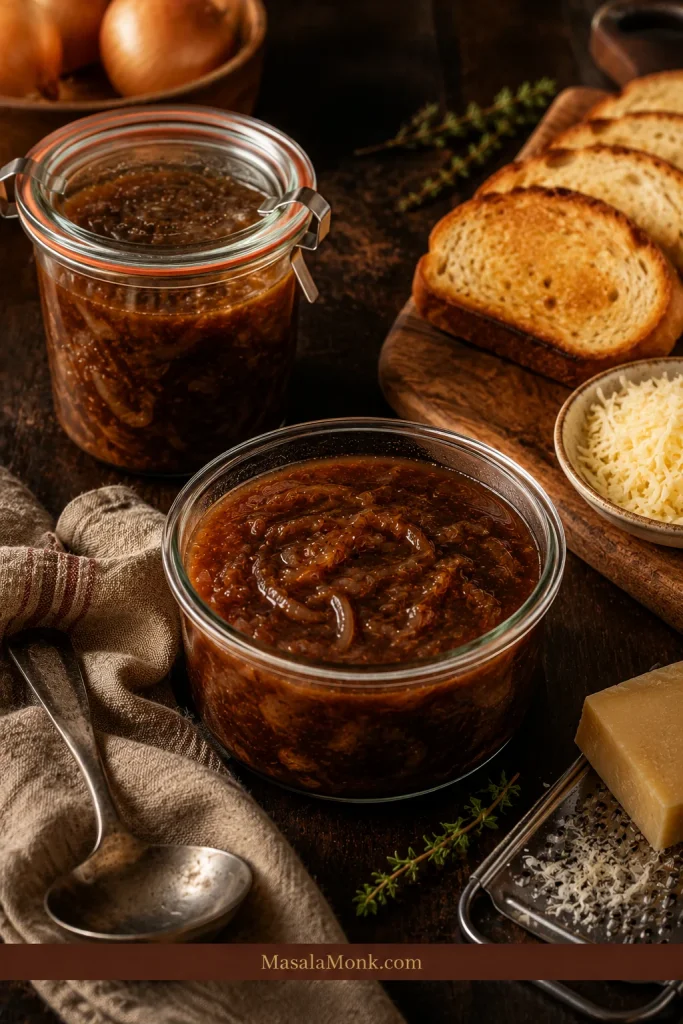
French onion soup base stored in glass containers with toasted bread and cheese kept separate.
For the best make-ahead texture, store only the onion soup base. Add fresh toast and cheese after reheating, not before storage.
  • Refrigerator: Store the soup base in an airtight container for 3 to 5 days.
  • Freezer: Freeze the soup base for up to 3 months.
  • Reheating: Reheat gently on the stove until hot. Taste again because salt and sweetness can feel stronger after storage.
  • Bread and cheese: Add fresh toast and cheese after reheating. Do not freeze fully assembled soup with bread and cheese if you care about texture.

If the soup thickens in the fridge, loosen it with a splash of broth or water while reheating. If it tastes flat after reheating, a few drops of vinegar or lemon juice can bring it back.

What to Serve with French Onion Soup

Serve it in small bowls as a starter, or make it the whole dinner with extra toast and a sharp salad. Because the soup is rich, salty, sweet, and cheesy, it pairs best with something fresh, crisp, or simple.

  • A crisp green salad with vinaigrette
  • Roast chicken
  • Steak or simple grilled meat
  • Roasted vegetables
  • Grilled cheese or cheese toast
  • Crusty bread and butter
  • A simple pasta or baked potato on the side

For a crisp, steakhouse-style side, MasalaMonk’s Wedge Salad Recipe works well beside a cheesy bowl because the cold lettuce and sharp dressing cut through the sweetness of the onions.

If you are planning a soup night with more vegetables, beans, and pasta, MasalaMonk’s Minestrone Soup Recipe is a lighter, hearty bowl to keep in rotation.

Give the onions time, finish the bread and cheese safely, and the bowl gives you everything French onion soup is supposed to give: sweet onions, savory broth, crisp toast, bubbling cheese, and that first spoonful that makes the wait feel sensible.

Back to top

FAQs

What are the best onions for French onion soup?

Yellow onions are the best all-purpose choice. They caramelize well and give the soup a rounded, savory-sweet flavor without making it too sweet.

How long should onions caramelize for French onion soup?

Plan on 45 to 70 minutes. The onions should be soft, deep golden brown, and jammy, not pale and not blackened.

Do you need beef broth for French onion soup?

No. Beef broth is classic, but mushroom broth or dark vegetable stock can also work. Taste the broth first; if it tastes weak before simmering, the soup will need help.

How do you make vegetarian French onion soup taste rich?

Use mushroom broth or dark vegetable stock, then add one savory booster such as vegetarian Worcestershire, tamari, or browned mushrooms.

What can replace wine in French onion soup?

Use broth to deglaze the pot, then add 1 teaspoon vinegar or lemon juice near the end. The goal is balance, not sourness.

Which cheese melts best on French onion soup?

Gruyère is classic because it melts smoothly and tastes nutty. Swiss, provolone, mozzarella, and aged cheddar can also work; if using mostly mozzarella, add Parmesan or a sharper cheese for flavor.

What bread works best for French onion soup?

Baguette is classic, but sourdough, country bread, crusty rolls, or any sturdy toasted bread can work. Toast it until dry and firm.

Do you need oven-safe crocks?

No. Without broiler-safe crocks, broil the cheesy toasts separately on a baking sheet and place them on top of the hot soup.

Is slow cooker French onion soup as good as stovetop?

It can be very good, but the flavor is usually deeper when the onions get a short stovetop finish before the broth goes in.

Is French onion soup mix the same as French onion soup?

No. French onion soup mix is a dry seasoning blend; it does not replace the flavor of slowly caramelized onions.

Why is my French onion soup too sweet?

Very sweet onions, extra sugar, or too little acid can make the soup taste sweet. Add a small splash of vinegar or lemon juice to balance it.

Why does French onion soup taste bitter?

Bitterness usually comes from burnt onions or blackened bits scraped from the pot. Brown fond is good; do not scrape black scorched bits into the soup.

Can French onion soup be frozen?

Yes. Freeze the soup base without bread and cheese for up to 3 months, then reheat and finish with fresh toast and cheese.

Back to top

Posted on Leave a comment

Minestrone Soup Recipe

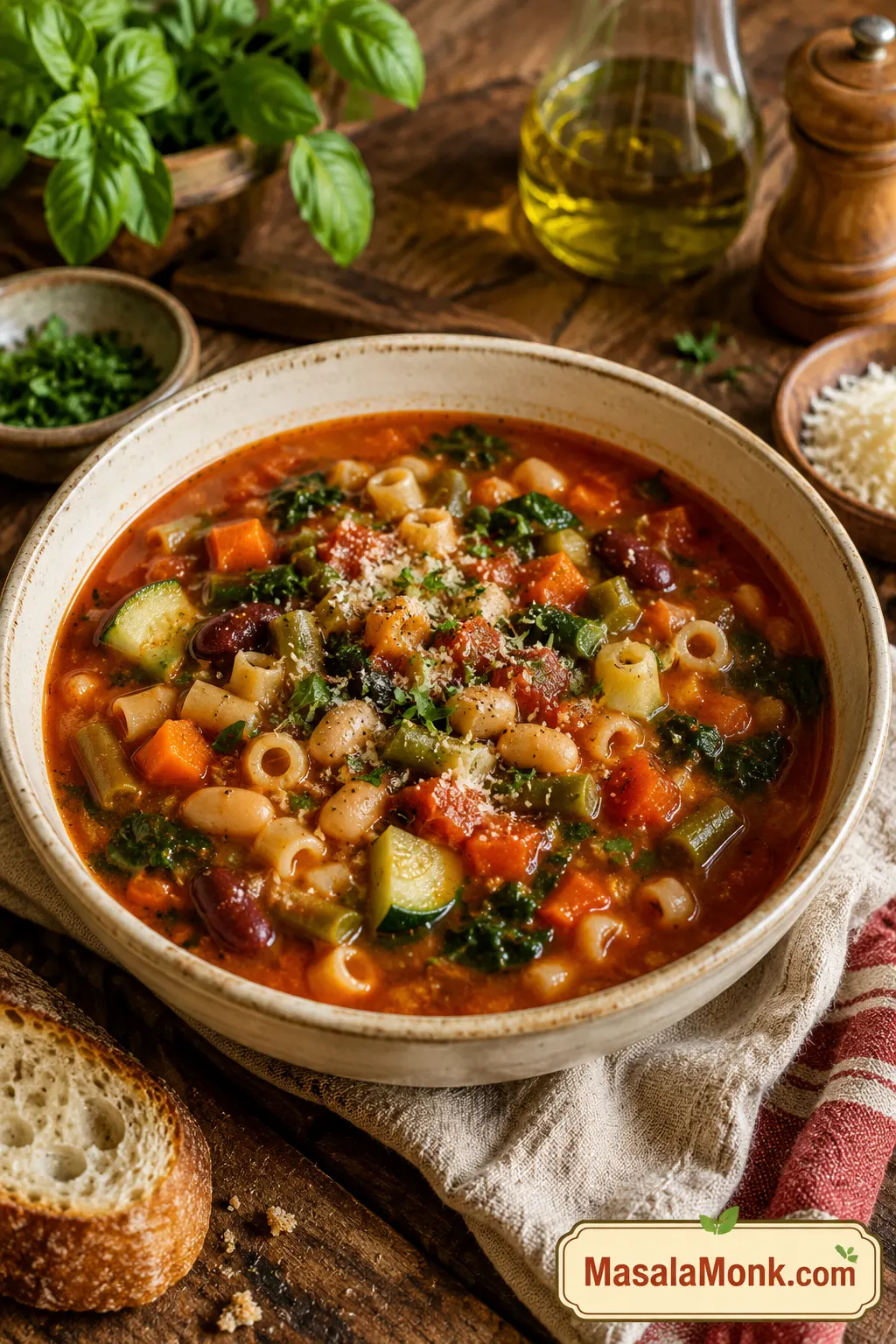
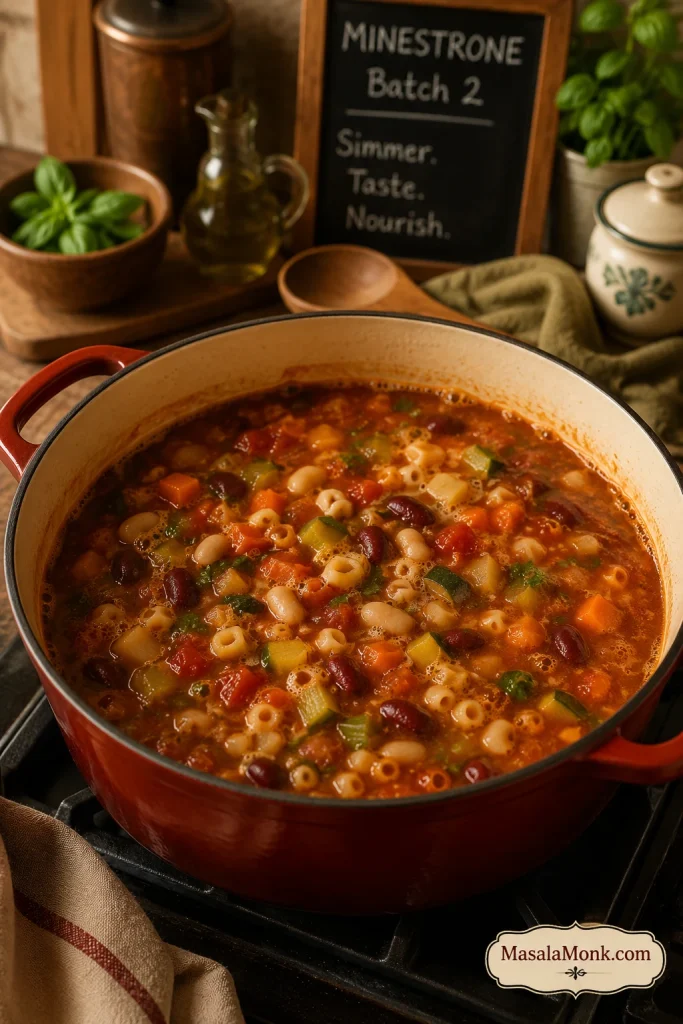
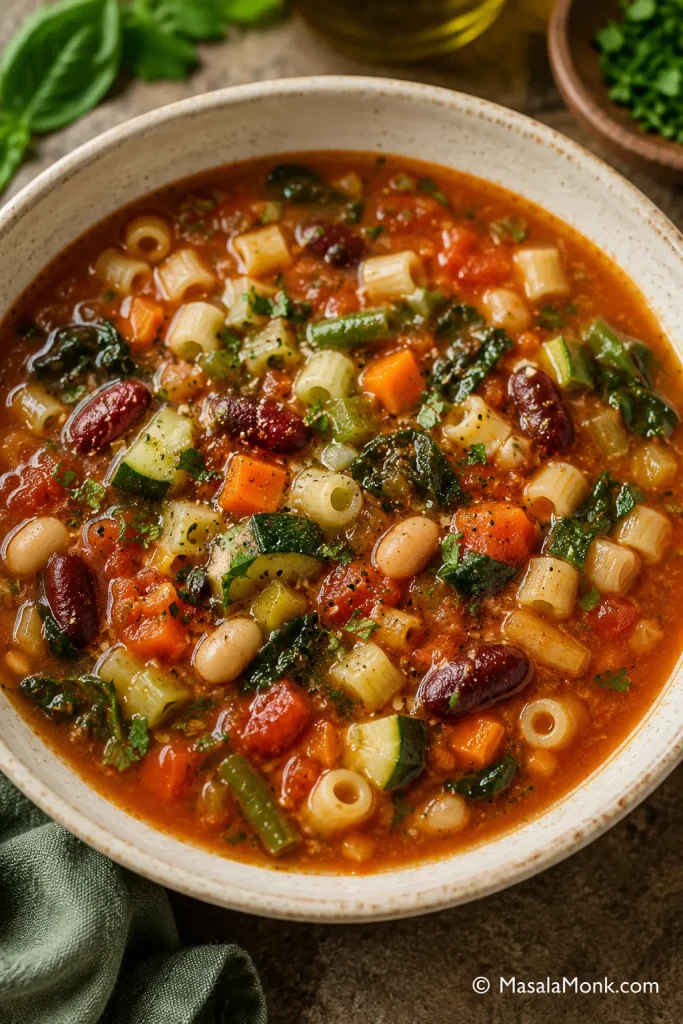
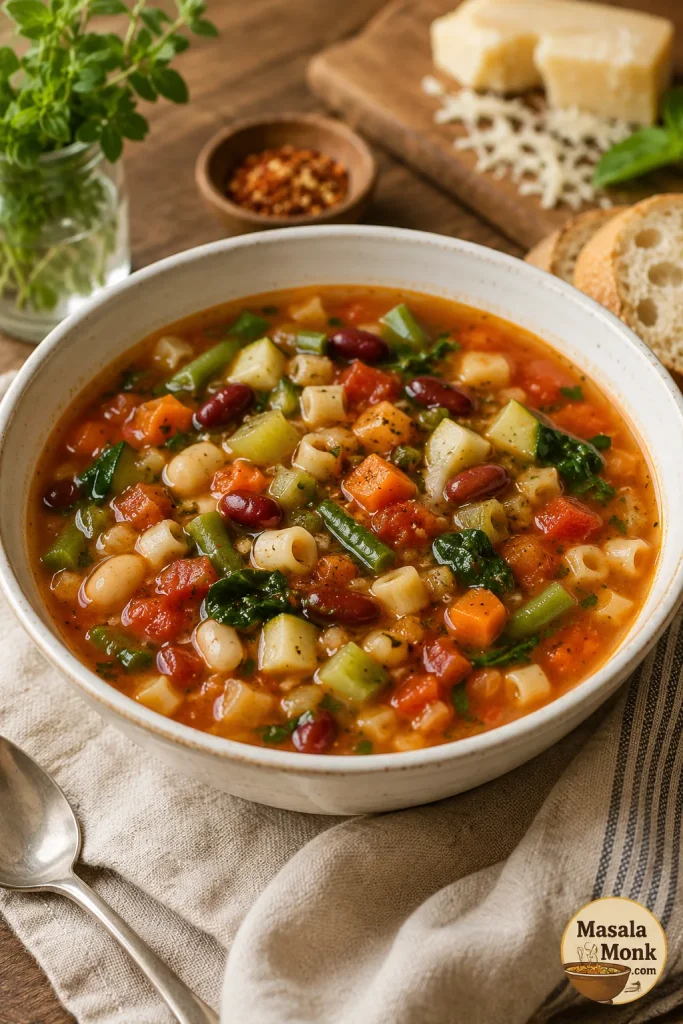
Bowl of minestrone soup with tomato broth, white beans, kidney beans, small pasta, carrots, zucchini, greens, herbs, and bread on the side.

A good minestrone soup should look generous before you even take the first spoonful: tender vegetables, creamy beans, small pasta, herbs, and a tomato broth that tastes rich instead of watery. The first spoonful should catch a little of everything — a soft bean, a piece of pasta, sweet carrot, zucchini, greens, and enough tomato broth to pull it all together.

This pot works because it protects the three things that matter most in minestrone: rich tomato broth, vegetables with texture, and pasta that does not turn the leftovers into mush. Even a half-used zucchini, a tired carrot, two cans of beans, and the last handful of pasta can become a proper dinner.

Homemade minestrone also gives you something canned soup rarely does: better texture. The vegetables do not have to be overcooked, the pasta can stay tender, and you control the salt, broth, and finish.

Cooking now? Jump to the recipe card. The notes below help keep the broth rich, the vegetables tender, and the leftovers useful.

What a Good Minestrone Spoonful Should Show

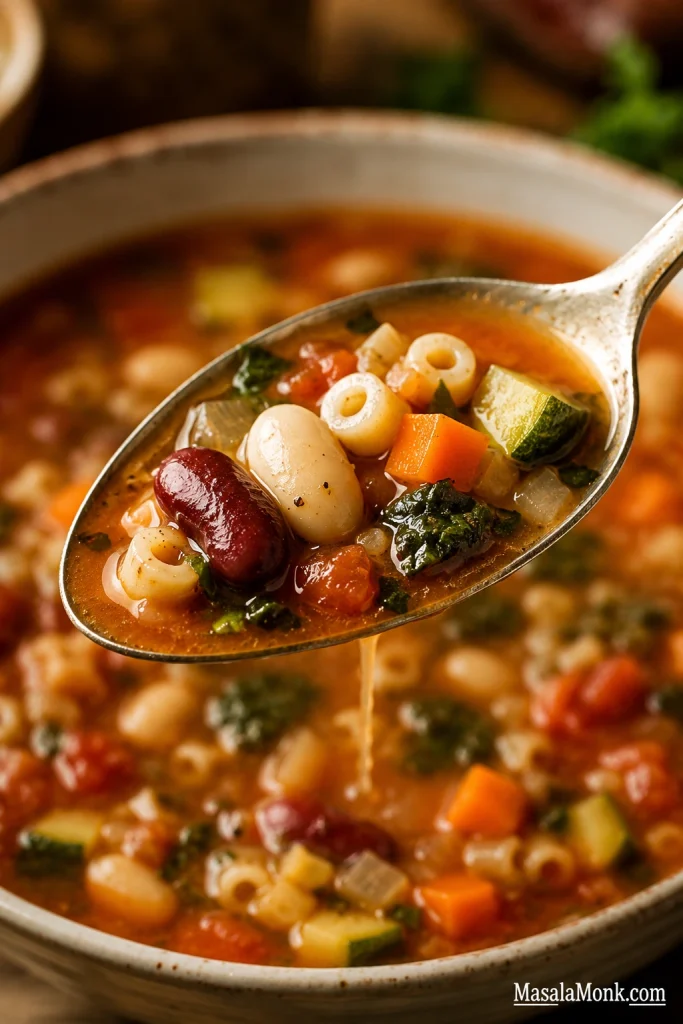
Before you start, notice the target balance: beans, vegetables, pasta, greens, and tomato broth should all show up in the same spoonful.

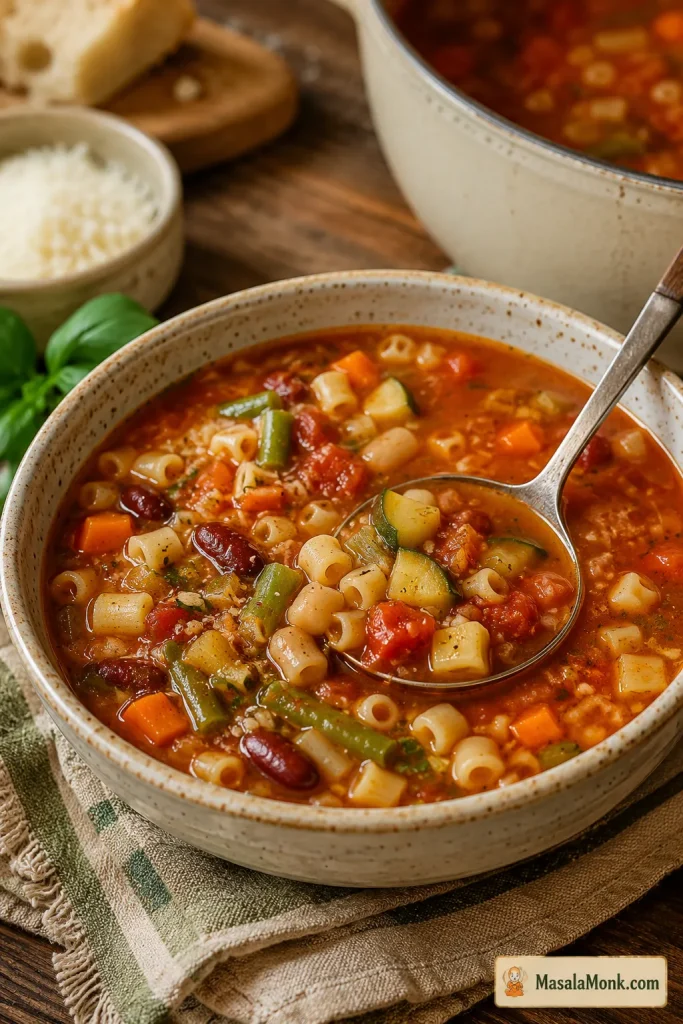
Spoon lifting minestrone soup with small pasta, white bean, kidney bean, carrot, zucchini, greens, and tomato broth dripping back into the bowl.
This spoonful shows the balance you want: beans for body, vegetables for freshness, small pasta for comfort, and tomato broth tying everything together.

Recipe at a Glance

Prep time20 minutes
Cook time45 minutes
Total time1 hour 5 minutes
Faster versionAbout 40 to 45 minutes with smaller diced vegetables, the full 6 cups broth, and a shorter 15 to 20 minute base simmer
Servings6 generous bowls
YieldAbout 11 to 13 cups soup
MethodStovetop
Best pot5 to 6 quart / 5 to 6 liter Dutch oven or heavy soup pot
Best forWeeknight dinner, meal prep, and freezer-friendly soup base
DietMeatless when made with vegetable broth; vegan option

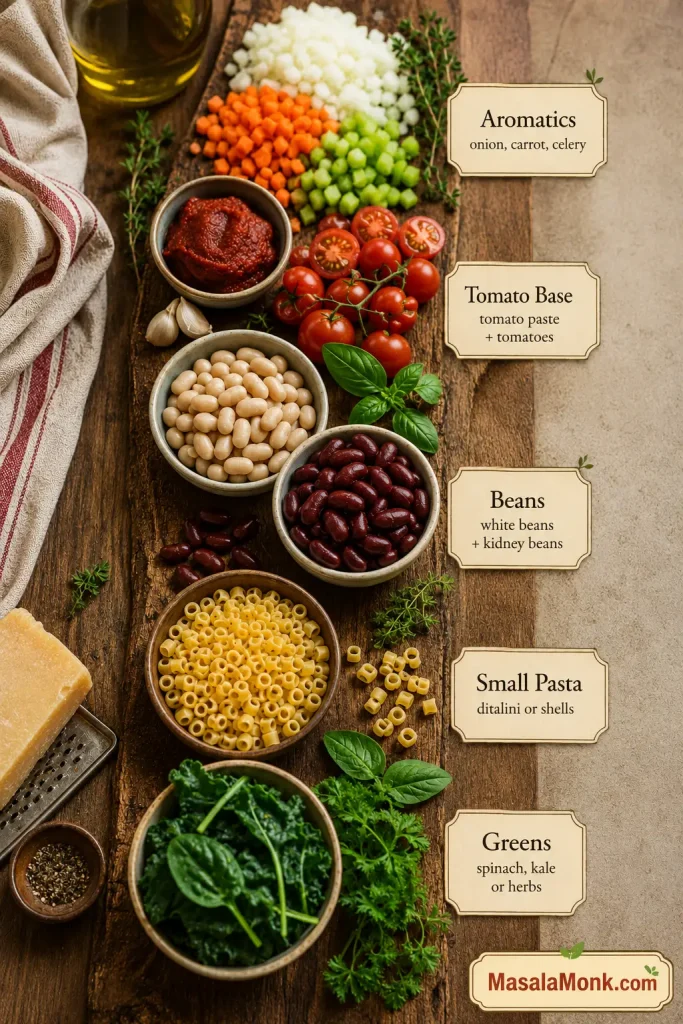
The Minestrone Rule of 5: soften the aromatics, build the tomato base, add beans for body, keep the pasta small, and save tender greens for the end. Vegetables can change; the rhythm is what keeps the pot balanced.

Why this works: tomato paste gives the soup depth, beans make it feel full, late-added vegetables keep their shape, and pasta goes in only when the broth already tastes good. That is what keeps the soup hearty without letting it turn heavy or dull.

The Minestrone Rule of 5

This visual is the memory hook for the whole recipe: keep the rhythm steady, even when the vegetables change.

Rustic board showing minestrone ingredients arranged as aromatics, tomato base, beans, small pasta, and leafy greens.
Use the Minestrone Rule of 5 when you want the recipe to feel flexible: aromatics, tomato base, beans, small pasta, and greens are the core building blocks.

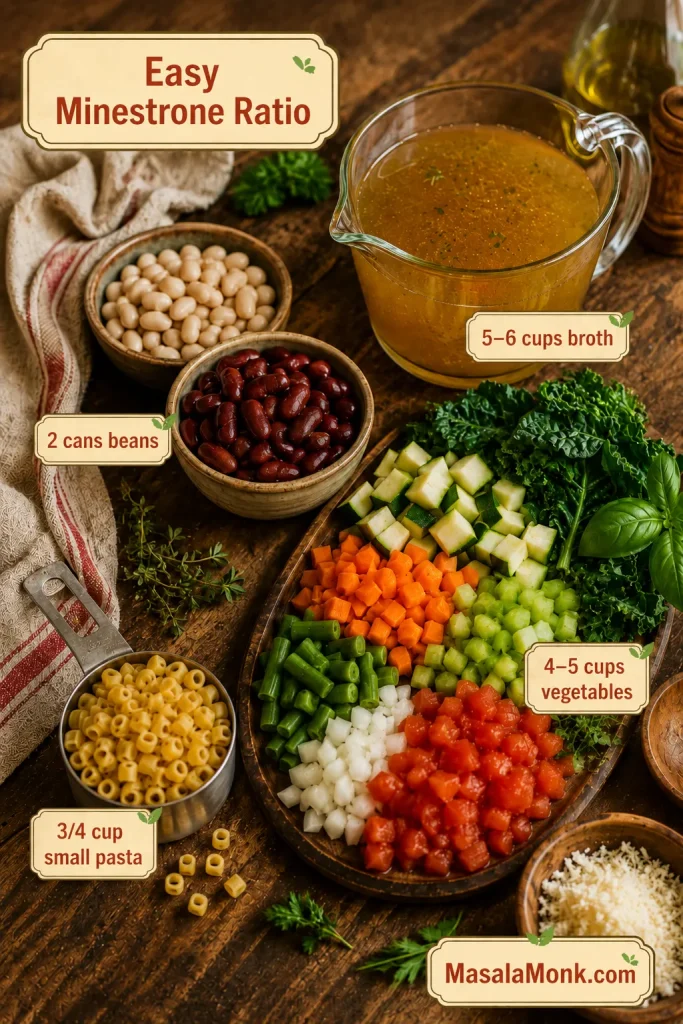
Easy minestrone ratio: for 6 bowls, use about 5 to 6 cups broth, 2 cans beans, 4 to 5 cups chopped vegetables, and 3/4 cup small pasta.

Short on time? Dice the vegetables smaller, use the full 6 cups broth, and simmer the soup base for 15 to 20 minutes before adding pasta and greens. The full cook gives deeper flavor, but the faster version still makes a good weeknight bowl.


Minestrone Soup Recipe Card

Description: A hearty minestrone soup with vegetables, beans, small pasta, and a rich tomato broth. It is meatless when made with vegetable broth, cozy without cream, and easy to adjust for leftovers or a thicker dinner-style bowl.

Prep: 20 minutes | Cook: 45 minutes | Total: 1 hour 5 minutes | Serves: 6 generous bowls | Yield: about 11 to 13 cups

Equipment: 5 to 6 quart / 5 to 6 liter Dutch oven or heavy soup pot, knife, cutting board, can opener, colander, wooden spoon, and ladle.

Ingredients

Base

  • 2 tablespoons olive oil, plus more for finishing, about 30 ml
  • 1 medium yellow onion, diced, about 150 to 180 g
  • 2 medium carrots, diced, about 130 to 160 g
  • 2 celery ribs, diced, about 90 to 120 g
  • 4 garlic cloves, minced
  • 3 tablespoons tomato paste, about 45 g

Broth and Seasoning

  • 1 can crushed or diced tomatoes, 28 oz / 794 g
  • 5 to 6 cups vegetable broth, 1.2 to 1.4 liters
  • 1 bay leaf
  • 1 1/2 teaspoons Italian seasoning
  • 1/2 teaspoon dried oregano, optional
  • 1/4 teaspoon red pepper flakes, optional
  • 1 teaspoon kosher salt or 3/4 teaspoon fine salt, plus more to taste; start with less if your broth is salted
  • 1/2 teaspoon black pepper, plus more to taste
  • 1 parmesan rind, optional; skip for vegan minestrone

Beans, Vegetables, and Pasta

  • 1 can cannellini beans or white beans, 15 oz / 425 g, drained and rinsed
  • 1 can kidney beans, 15 oz / 425 g, drained and rinsed
  • 1 cup chopped green beans, about 100 to 125 g
  • 1 medium zucchini, diced, about 180 to 220 g
  • 3/4 cup small pasta such as ditalini, small shells, elbows, or macaroni, about 75 to 90 g
  • 2 cups packed spinach or chopped kale, about 60 to 80 g

Finish

  • 1 to 2 teaspoons lemon juice or red wine vinegar, 5 to 10 ml
  • 1/4 cup chopped parsley or basil, about 10 to 15 g
  • Extra olive oil, for finishing
  • Grated parmesan, optional, for serving

Instructions

  1. Heat olive oil in a 5 to 6 quart / 5 to 6 liter Dutch oven or heavy soup pot over medium heat.
  2. Add onion, carrot, celery, and salt. Cook for 7 to 10 minutes, stirring often, until softened and fragrant.
  3. Add garlic and tomato paste. Cook for 1 to 2 minutes, stirring often, until the tomato paste darkens slightly.
  4. Add crushed or diced tomatoes, vegetable broth, bay leaf, Italian seasoning, oregano if using, red pepper flakes if using, black pepper, and parmesan rind if using. Stir well and scrape the bottom of the pot.
  5. Add the cannellini beans and kidney beans. Bring to a boil, then reduce to a gentle simmer.
  6. Simmer partly covered for 20 to 25 minutes, until the broth tastes developed. Add firm vegetables such as cabbage, potato, or squash during this simmer if using them.
  7. Add green beans, zucchini, and pasta. Cook for 8 to 10 minutes, or until the pasta is just tender.
  8. Stir in spinach or kale and cook for 1 to 3 minutes, just until wilted.
  9. Remove the bay leaf and parmesan rind. Stir in lemon juice or red wine vinegar, parsley or basil, and a drizzle of olive oil.
  10. Taste and adjust salt, pepper, and acidity. Let the soup rest for 5 minutes before serving.
  11. Serve hot with parmesan, extra herbs, crusty bread, garlic bread, or a simple salad.

Recipe Notes

  • Brothier soup: use 3/4 cup pasta and the full 6 cups broth.
  • Thicker soup: use 1 cup pasta or mash 1/2 cup beans into the broth.
  • Firmer zucchini: add zucchini during the final 5 minutes instead of with the pasta.
  • Better leftovers: cook pasta separately and add it to bowls.
  • Vegan version: use vegetable broth and skip parmesan rind and parmesan cheese.
  • Meal prep: toss separately cooked pasta with a tiny drizzle of olive oil after draining so it does not clump.
  • Gluten-free version: use gluten-free pasta or rice, preferably cooked separately.
  • Rice version: cooked rice is easiest. Add it near the end or directly to bowls because rice absorbs broth quickly.
  • Extra richness: simmer with a parmesan rind or finish with olive oil and herbs.

The recipe works on its own, but the notes below help you adjust the beans, pasta, vegetables, storage, and appliance methods without losing the minestrone feel. If leftovers matter, the storage and freezing notes are especially useful.

Before the deeper notes, this quick visual ratio gives you a flexible way to adjust the pot without losing the minestrone balance.

Easy Minestrone Ratio

Use this ratio when you want to adjust the recipe without losing the soup’s balance.

Broth, beans, chopped vegetables, and small pasta arranged on a rustic counter as an easy minestrone ratio guide.
Instead of measuring every vegetable perfectly, follow the ratio: broth keeps it loose, beans make it filling, vegetables add bulk, and pasta should stay modest.

What Is Minestrone Soup?

Minestrone is an Italian vegetable soup made with vegetables, beans, tomatoes, broth, herbs, olive oil, and usually pasta or rice. Classic minestrone is not about one fixed vegetable list; it is about building a generous, seasonal soup with enough beans and starch to feel like a meal.

That is why one pot might have zucchini and green beans while another has cabbage, kale, potato, or squash. A good bowl should be crowded, not dry: enough vegetables and beans to make it feel like dinner, but enough tomato broth to keep it unmistakably soup.

Why You’ll Like This Recipe

  • The broth tastes built, not diluted. Tomato paste, sautéed aromatics, herbs, beans, and olive oil give it a rounded tomato flavor.
  • The vegetables keep their texture. Firm vegetables simmer first, while zucchini and greens go in later.
  • The pasta will not hijack the leftovers. Cook it in the soup when serving right away, or separately when you want better storage.
  • It starts meatless. Use vegetable broth, and the whole pot stays hearty without meat.
  • It gives you room to use what you have. Small shells, elbows, ditalini, zucchini, green beans, cabbage, kale, spinach, white beans, kidney beans, or chickpeas can all work.
  • It can be lighter or heartier. Use more greens and less pasta for a lighter bowl, or extra beans and a little more pasta for a thicker dinner-style soup.

Minestrone feels hearty without cream because beans, vegetables, pasta, and olive oil do the work. If you like cozy tomato-and-pasta dinners, this sits near the same comfort zone as baked ziti, but it is lighter, brothier, and packed with vegetables.

Minestrone Soup Ingredients

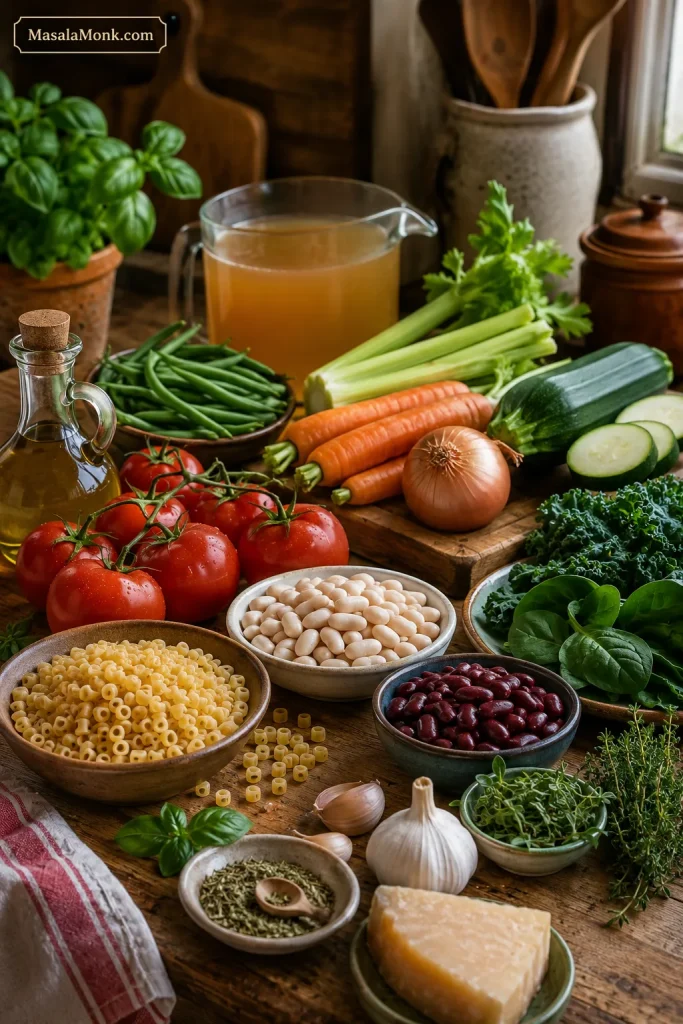
These ingredients follow the same Rule of 5: aromatics, tomato broth, beans, small pasta or rice, and tender greens at the end. Do not worry if you are missing one vegetable. Minestrone is forgiving as long as the base stays balanced.

If you are missing one vegetable or bean, check the easy minestrone swaps before changing the broth or pasta ratio.

Ingredients for minestrone soup on a counter, including tomatoes, broth, beans, pasta, carrots, celery, onion, garlic, zucchini, green beans, greens, herbs, olive oil, and parmesan rind.
Each minestrone ingredient has a role: aromatics create sweetness, tomatoes shape the broth, beans add substance, pasta brings comfort, and greens freshen the finish.

If you remember one thing: taste the broth before adding pasta. When it tastes thin or flat at that point, fix the broth first; pasta will not rescue a weak soup.

Build the Aromatic Base

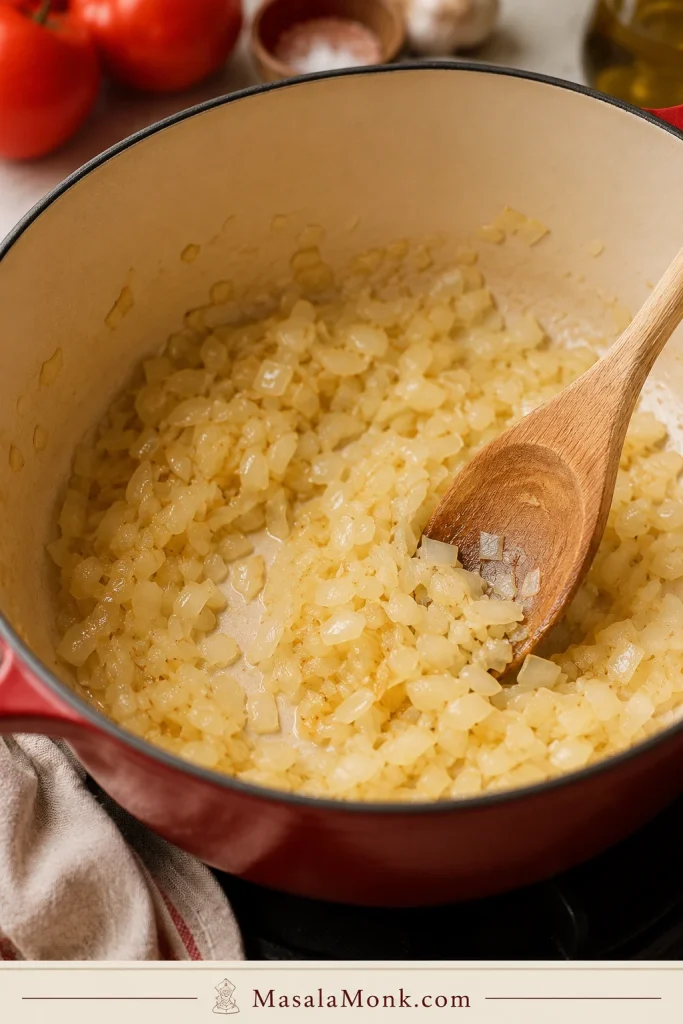
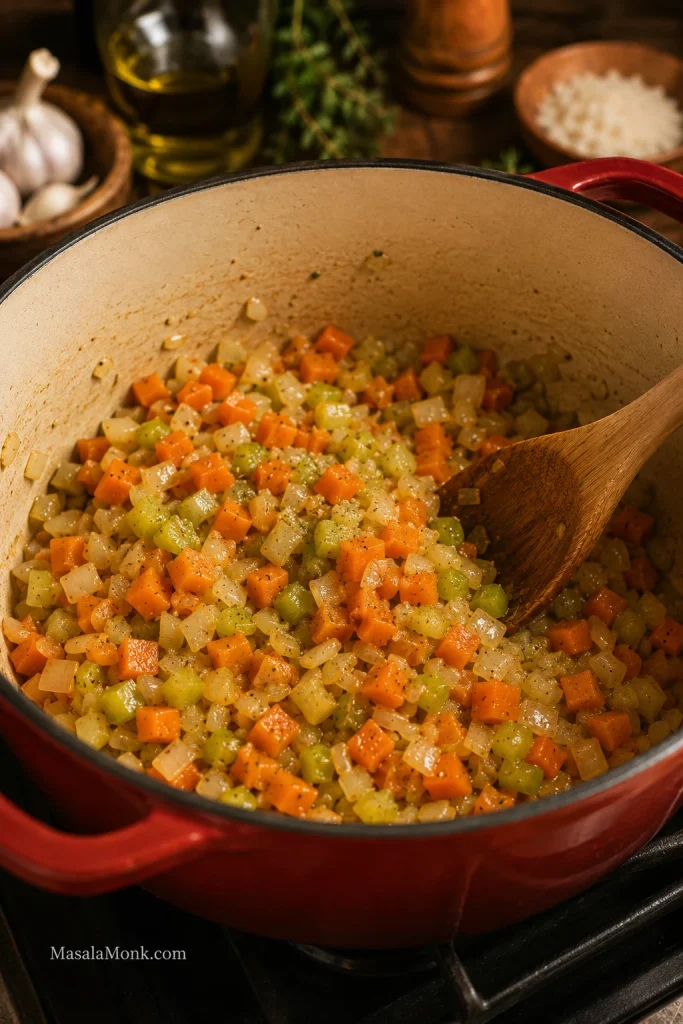
Onion, carrot, celery, garlic, and olive oil create the base. Cook the onion, carrot, and celery until the sharp onion smell softens and the pot starts smelling sweet. The onion should look translucent and the carrot edges should soften. This is the first moment the soup starts smelling like dinner instead of chopped vegetables.

Onion, carrot, and celery sautéing in olive oil inside a Dutch oven with a wooden spoon.
First, cook the onion, carrot, and celery until they soften and smell sweet. This step gives homemade minestrone a deeper base before the tomatoes arrive.

Cook the Tomato Paste Before Broth


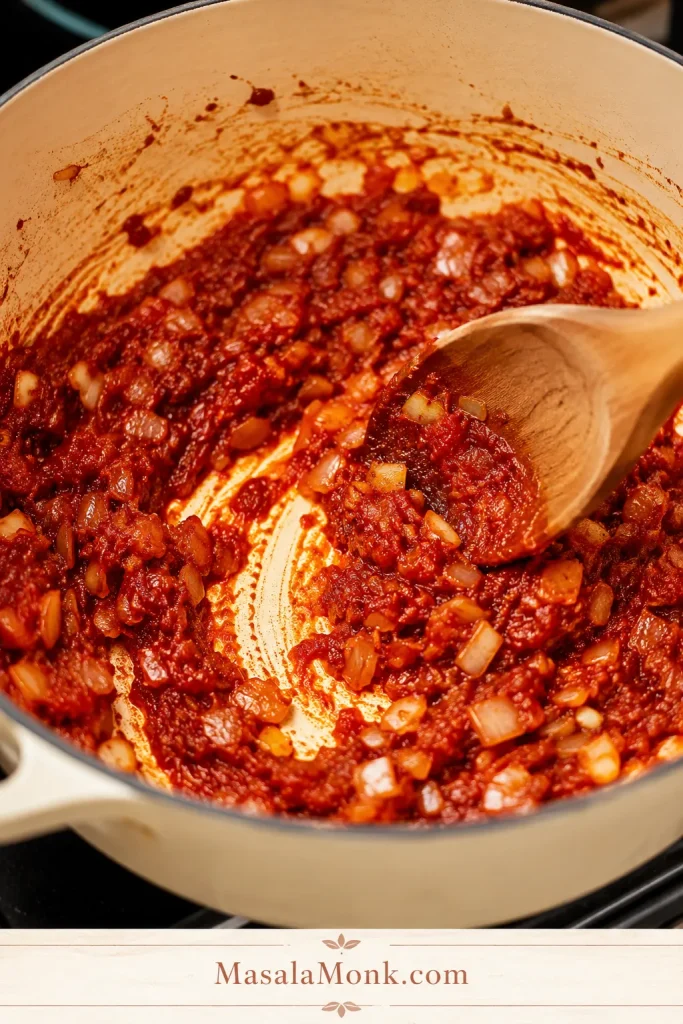
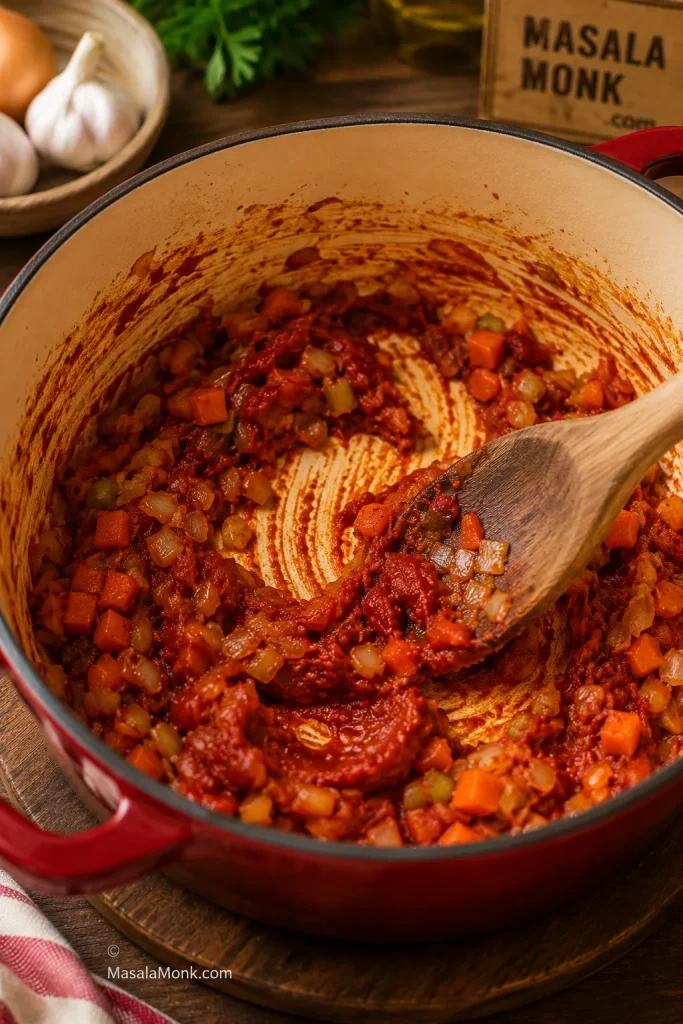
Tomato paste and a large can of crushed or diced tomatoes give the broth its color and flavor. Cook the tomato paste until it darkens slightly; it should leave orange-red streaks on the bottom of the pot, not black bits. Crushed tomatoes make a fuller, smoother broth, while diced tomatoes give a chunkier texture.

Tomato paste cooked with onion, carrot, and celery in a pot, with a wooden spoon dragging through the red paste.

Next, let the tomato paste cook briefly with the aromatics. It deepens the soup base and helps the broth taste rich instead of thin.

Broth


Vegetable broth keeps the soup meatless and easy to make vegan. Chicken broth also works if you are not keeping the soup vegetarian. Low-sodium broth gives you more control because canned beans, tomatoes, pasta, and cheese can all add salt.

Beans


White beans and kidney beans are a strong everyday combination. The white beans soften into the tomato broth and make the soup feel fuller, almost as if it simmered longer than it did. Kidney beans add color, bite, and the familiar minestrone look. Rinse canned beans before adding them so the broth stays clean and balanced.

Pasta or Rice


Small pasta is what keeps minestrone easy to eat by the spoonful. Ditalini is classic, but small shells, elbows, macaroni, or orzo all work. Use 3/4 cup for a brothier soup and up to 1 cup for a thicker bowl. Cooked rice also works when you want a pasta-free version. If you are cooking for leftovers, see how to keep minestrone pasta from getting mushy before adding pasta directly to the pot.

Vegetables


Zucchini, green beans, spinach, kale, cabbage, potato, peas, squash, carrots, and celery can all work. Dense vegetables such as potato, squash, cabbage, and carrots need more time. Zucchini, peas, spinach, and tender greens should go in later so they keep some color and shape.

Minestrone is not a test of whether you bought the exact vegetables; it is a way to turn the vegetables you have into a balanced soup.

Herbs and Finishers


Italian seasoning, oregano, basil, thyme, bay leaf, black pepper, parsley, and fresh basil all fit well. A parmesan rind is optional for extra depth, but use vegetarian-style parmesan if that matters to you, or skip cheese completely for a vegan version.

A small splash of lemon juice or red wine vinegar wakes up the whole pot at the end, especially after the beans and pasta have softened the broth. A spoonful of pesto can make the finish taste brighter; these basil pesto variations are useful if you like that herby direction.

How to Make Minestrone Soup

The steps follow the same rhythm as the Rule of 5: sauté, deepen, simmer, add quick-cooking ingredients late, finish fresh.

1. Sauté the Onion, Carrot, and Celery


Heat olive oil in a large Dutch oven or heavy soup pot over medium heat. Add onion, carrot, celery, and salt. Cook for 7 to 10 minutes, stirring often, until the vegetables soften and the onion turns translucent. The pot should smell sweet and savory before you move on.

2. Add Garlic and Tomato Paste


Stir in the garlic and tomato paste. Cook for 1 to 2 minutes, stirring often. The tomato paste should darken slightly and smell richer, but it should not scorch. A watery minestrone usually means the base was rushed, so give this step its minute.

3. Build the Broth


Add crushed or diced tomatoes, broth, Italian seasoning, bay leaf, black pepper, and parmesan rind if using. Scrape the bottom of the pot so all the tomato paste and aromatics dissolve into the broth.

Minestrone soup base in a Dutch oven with tomato broth, beans, carrots, celery, and firm vegetables before pasta and greens are added.

Let the tomato broth, beans, and firm vegetables simmer before adding pasta. As a result, the base tastes rounded instead of rushed.

4. Add Beans and Simmer Gently


Add the rinsed beans and any firm vegetables such as cabbage, potato, or squash. Bring the soup to a boil, then reduce it to a gentle simmer. You want small bubbles, not a rolling boil. Cook partly covered for 20 to 25 minutes, until the broth tastes fuller and the vegetables are tender.

Taste the broth before adding pasta. If it tastes thin or flat now, give it more simmering time, adjust the salt, or brighten it with a little lemon juice or vinegar. The broth should already taste good before the pasta goes in; if it still tastes weak, use the troubleshooting section before adding pasta.

Minestrone soup gently simmering in a Dutch oven with tomato broth, beans, carrots, celery, pasta, and vegetables.

Keep minestrone at a gentle simmer, not a hard boil. Small bubbles build flavor while helping the vegetables stay tender and intact.

5. Add Quick-Cooking Vegetables and Pasta


Add green beans, zucchini, and small pasta near the end. Cook for 8 to 10 minutes, or until the pasta is just tender. Stop while it still has a little structure, because it will keep softening in the hot broth.

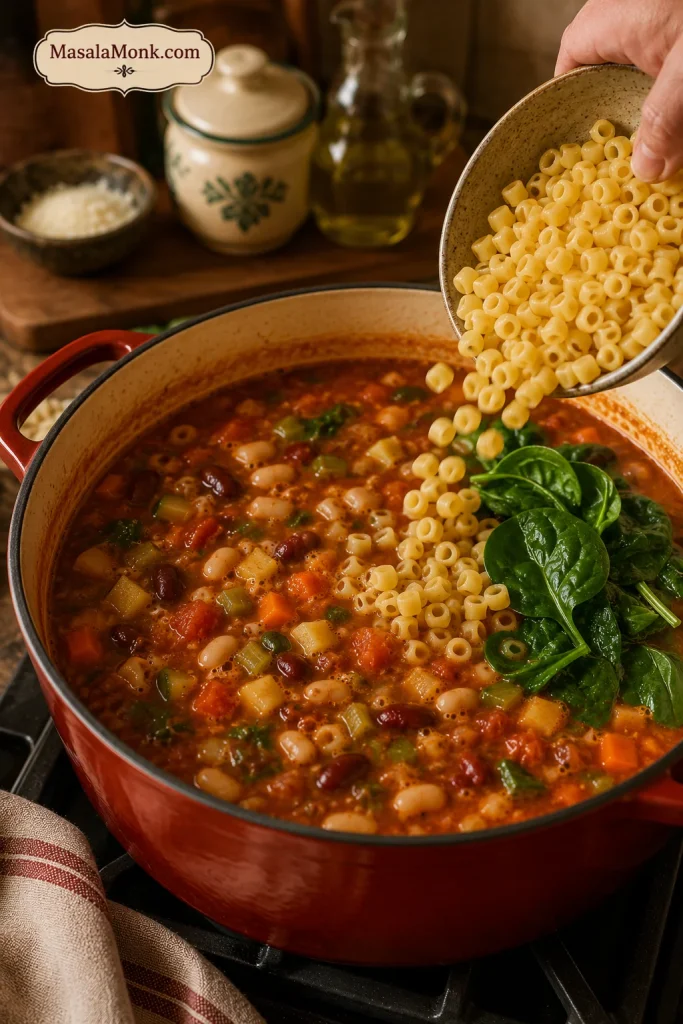
Small pasta being poured into a pot of minestrone soup with spinach added near the end of cooking.

Add pasta and greens near the end. This keeps the soup brighter, protects the greens, and helps prevent pasta from swelling in the pot.

6. Finish with Greens, Herbs, and Brightness


Stir in spinach or kale for the final 1 to 3 minutes. The greens only need to wilt; they do not need to cook down into the broth. Remove the bay leaf and parmesan rind. Finish with parsley or basil, a drizzle of olive oil, and lemon juice or red wine vinegar. Rest the soup for 5 minutes before serving so the broth settles and the flavors come together.

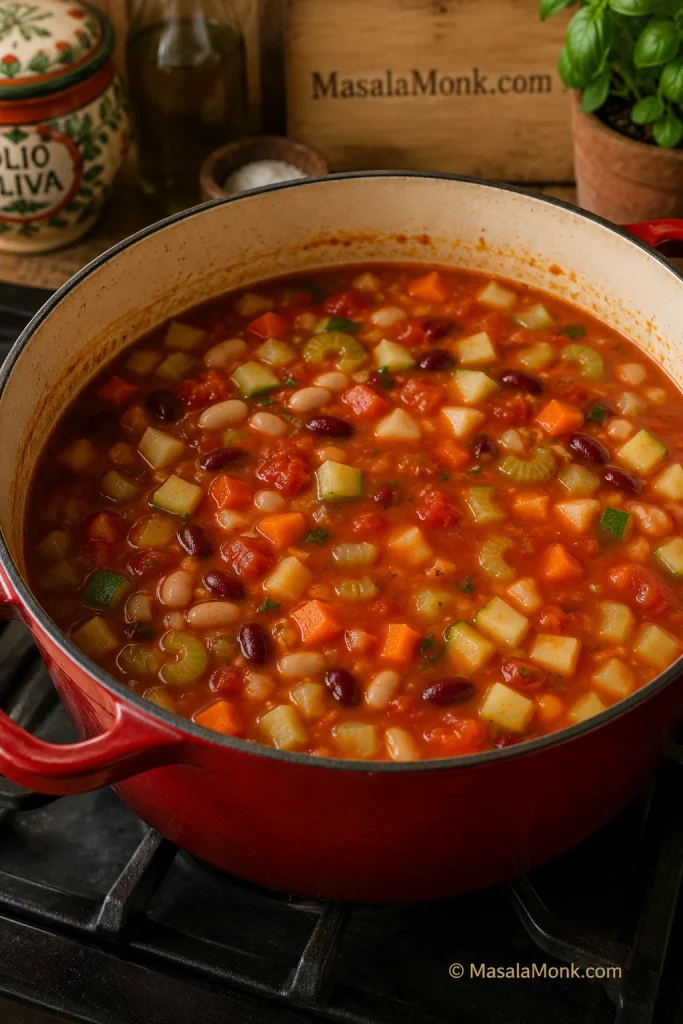
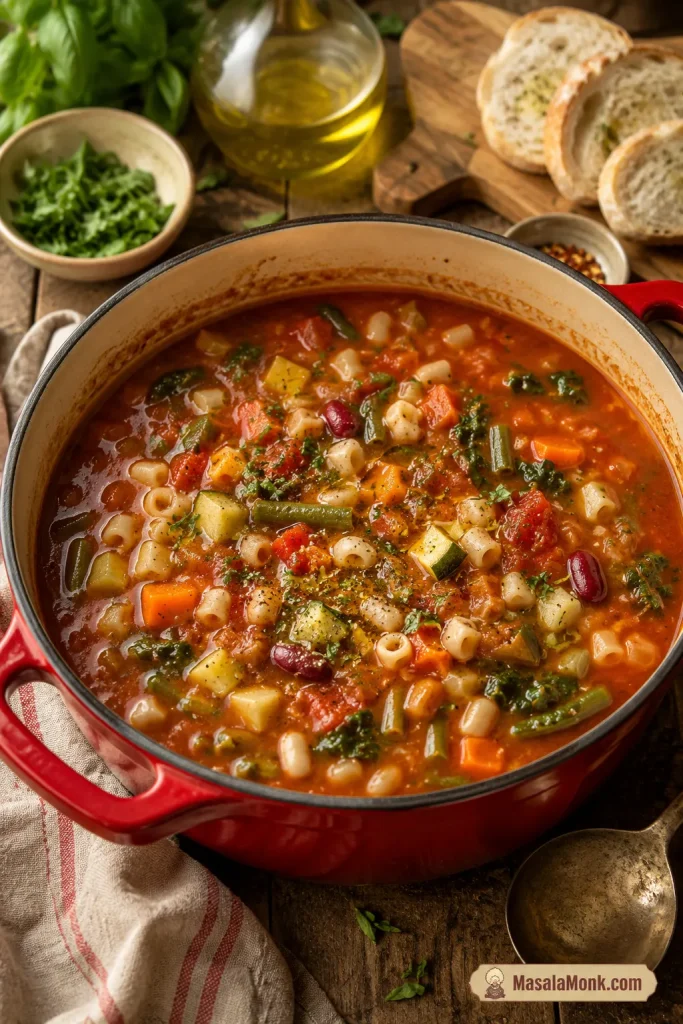
Finished pot of homemade minestrone soup with tomato broth, beans, pasta, carrots, zucchini, green beans, greens, herbs, and olive oil.

When the pot is ready, it should look colorful and ladle easily. If it feels crowded, loosen it with a splash of broth before serving.

Easy Minestrone Swaps

Once the base makes sense, the soup becomes forgiving. You do not need the exact same vegetables every time; you just need the right balance of broth, beans, pasta or rice, and timing.

Use What You Have

Use this section when the pot needs to adapt to the vegetables, beans, and pasta you already have.

Rustic board with minestrone swaps including zucchini, carrot, cabbage, kale, potato, white beans, green beans, herbs, and small pasta.

Minestrone is made for flexible cooking. Therefore, zucchini, cabbage, kale, potato, beans, herbs, and small pasta can all work when you add them at the right time.

If you do not have Use this instead
Cannellini beans Navy beans, great northern beans, white beans, or chickpeas
Kidney beans More white beans, borlotti beans, chickpeas, or lentils
Zucchini Cabbage, green beans, peas, spinach, kale, or squash
Ditalini Small shells, elbows, macaroni, or orzo
Vegetable broth Water with extra tomato paste, herbs, olive oil, and careful seasoning
Fresh greens Frozen spinach, frozen kale, or chopped cabbage added earlier
Parmesan rind Skip it, or finish with olive oil, herbs, and a little lemon juice or vinegar

This is also where minestrone becomes personal. One cook adds cabbage, another adds potato, another uses chickpeas, and another keeps it brothy. The base stays the same, but the pot can still feel like yours. For more timing help, see the firm-early, tender-late vegetable guide.

What the Soup Should Look and Taste Like

You are looking for a soup that is chunky but still brothy. The tomato broth should taste rounded rather than sharp or thin. Vegetables should be tender without collapsing, beans should stay creamy but mostly intact, and the pasta should be just tender, not swollen.

Finished Bowl Texture Check

Use the finished bowl as a quick check before serving: the soup should look full, but it should still move like soup.

Close-up bowl of finished minestrone soup with tomato broth, white beans, kidney beans, pasta, carrots, zucchini, greens, and herbs.

Use the finished bowl as a texture check. The vegetables and beans should stand out clearly, while the tomato broth still fills the gaps around them.

Chunky but Still Soup

If the pot looks crowded but still has enough broth to move around the vegetables, you are in the right place. You should be able to drag the spoon through the bowl and see vegetables and beans settle back into the tomato broth, not sit in a dry pile. The final olive oil, herbs, and lemon juice or vinegar should make the bowl taste brighter, not sour.

Close bowl of chunky but brothy minestrone soup with visible tomato broth, beans, pasta, carrots, zucchini, greens, and herbs.

Aim for chunky but not dry. The spoon should catch vegetables and beans, while the broth still makes the bowl feel like soup.

Best Beans, Pasta, and Vegetables for Minestrone

Beans, pasta, and vegetables are where minestrone becomes dinner. The choices do not need to be fancy; they just need to make sense together in the spoon.

Best Beans and Pasta for Minestrone

Start with spoon-friendly beans and small pasta shapes, then choose vegetables that match the season and cooking time.

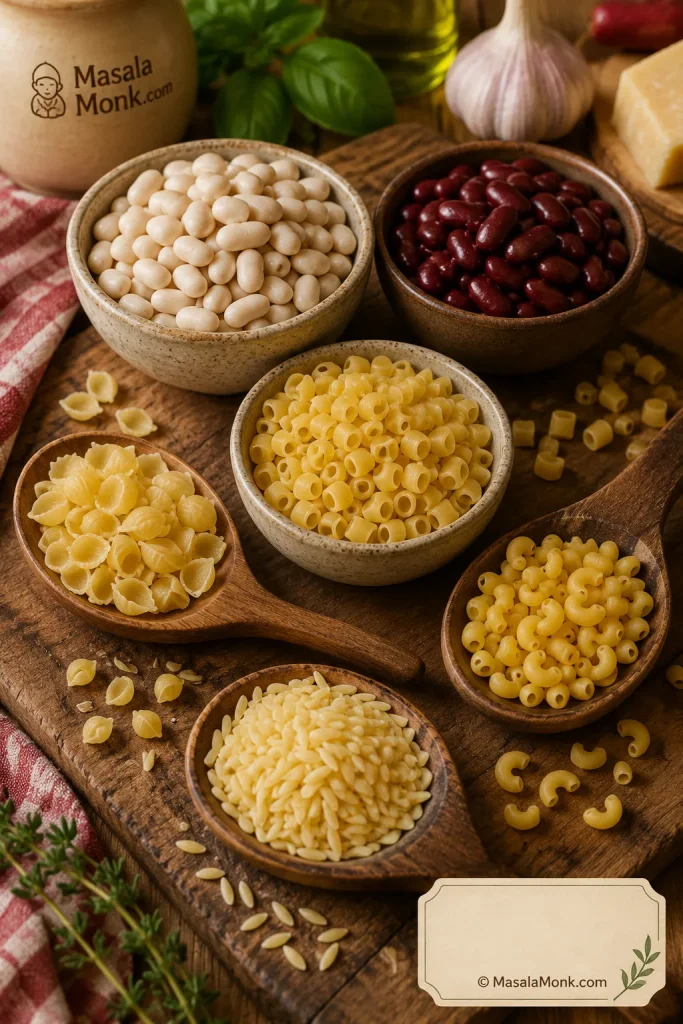
Bowls and spoons of cannellini beans, kidney beans, ditalini pasta, small shells, elbows, and orzo for minestrone soup.

Choose beans and pasta that fit easily on a spoon. Cannellini beans, kidney beans, ditalini, elbows, or small shells keep minestrone hearty without making it clumsy.

Best Beans


  • Cannellini or white beans: creamy, mild, and classic.

  • Kidney beans: firmer, colorful, and familiar in restaurant-style minestrone.

  • Borlotti beans: rustic and soft with a fuller bean flavor.

  • Chickpeas: nutty and firmer, good when you want more bite.

  • Lentils: useful for a thicker, higher-protein variation.

Best Pasta


  • Ditalini: classic and spoon-friendly.

  • Small shells: good for catching tomato broth.

  • Elbows or macaroni: easy pantry choice.

  • Orzo: soft and pleasant, but it thickens leftovers quickly.

  • Rice: useful if you do not want pasta. Cooked rice is easiest.

Once the beans and pasta are chosen, the vegetables are mostly about timing: firm ones early, tender ones late. That is what keeps the bowl generous without making it taste tired.

Firm Vegetables Early, Tender Vegetables Late


A good minestrone should never feel trapped by one vegetable list. Keep the tomato broth, aromatics, beans, herbs, and small pasta structure, then choose vegetables that fit the pot.

  • Summer: zucchini, green beans, fresh tomatoes, basil, spinach.

  • Winter: cabbage, kale, potato, squash, carrots, celery.

  • Spring: peas, asparagus, spinach, leeks, fresh herbs.

  • Pantry version: canned tomatoes, canned beans, frozen vegetables, cabbage, carrots, small pasta.

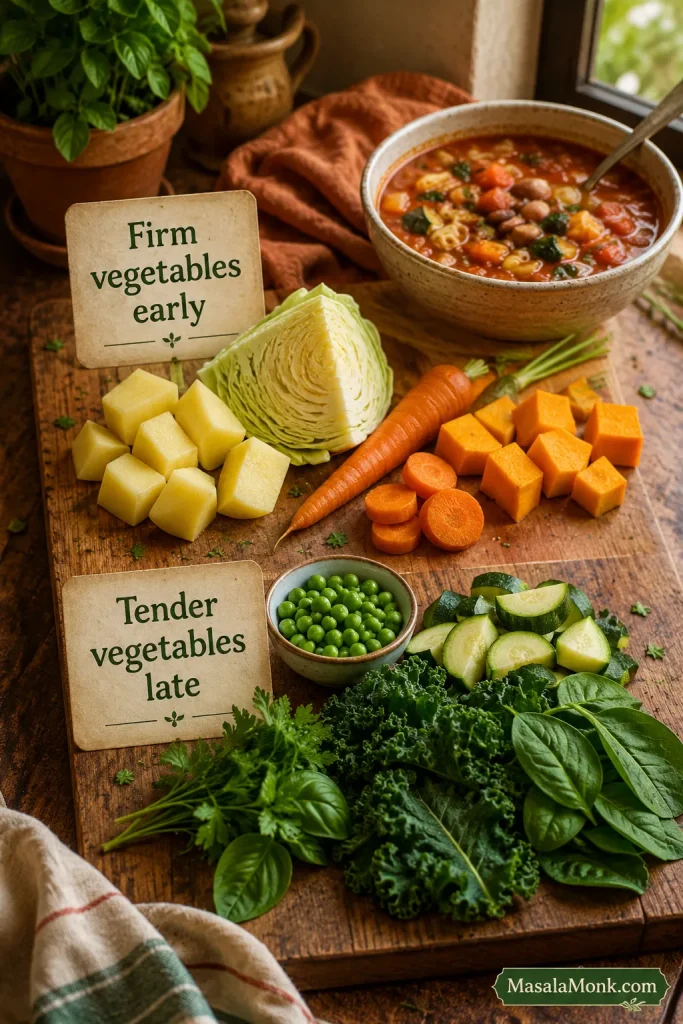
Add dense vegetables like potato, squash, cabbage, and carrots earlier. Add zucchini, peas, spinach, and tender greens near the end. Try not to overload the pot; minestrone should be hearty, but it should still have enough broth to feel like soup.

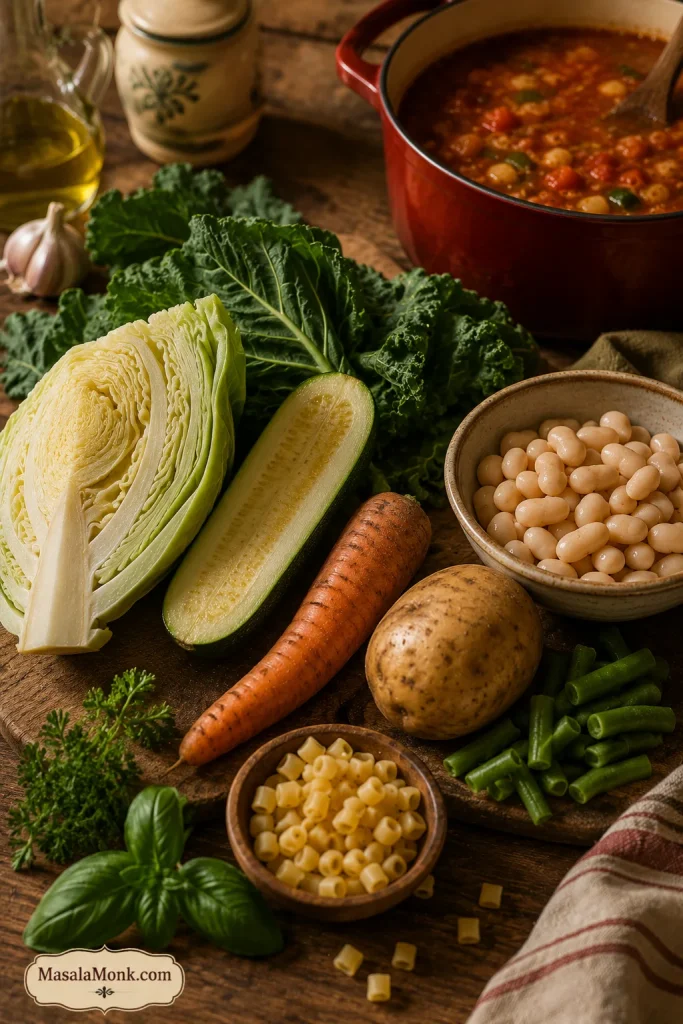
Rustic vegetable timing board showing firm vegetables like potato, cabbage, carrot, and squash beside tender vegetables like zucchini, peas, spinach, kale, and herbs.

Vegetable timing matters more than a perfect shopping list. Add firm vegetables early, then save tender greens, zucchini, peas, and herbs for the final minutes.

How to Fix Minestrone Soup Problems

If your minestrone tastes bland, watery, too thick, too acidic, or overcooked, it can usually be fixed. Most problems come down to seasoning, simmering, pasta timing, vegetable timing, or broth balance.

Fix Bland Minestrone Soup

Before rebuilding the whole pot, taste for salt, acid, herbs, pepper, and olive oil; those small finishes often fix a flat bowl.

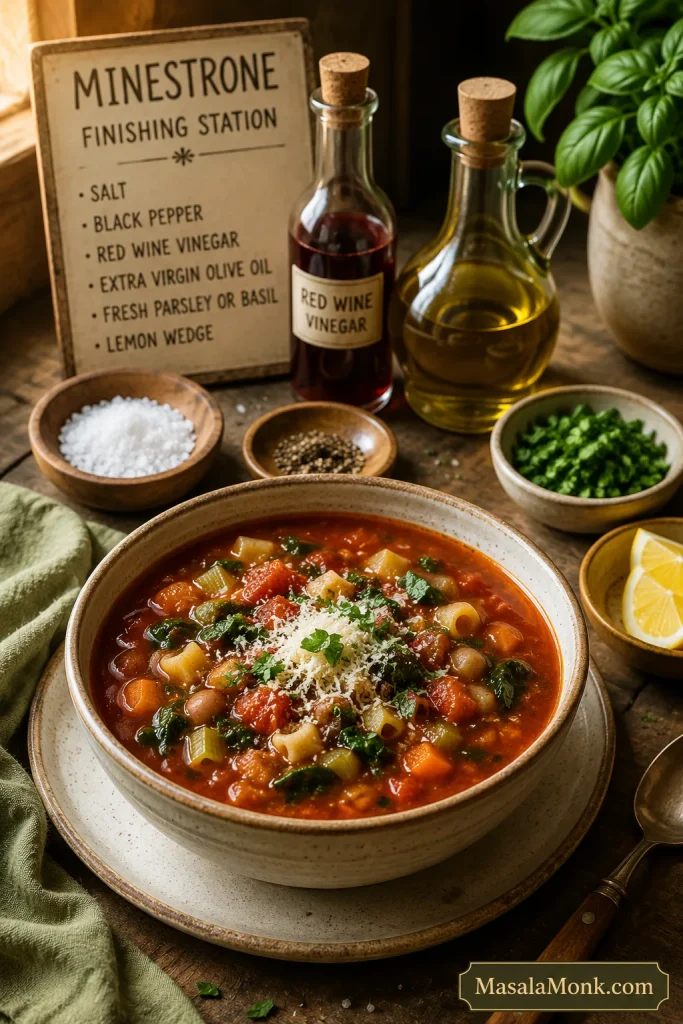
Bowl of minestrone soup beside salt, lemon wedge, red wine vinegar, olive oil, parsley or basil, and black pepper.

Bland minestrone often needs a finish, not a rebuild. Salt, lemon or vinegar, herbs, black pepper, and olive oil can wake up the whole pot.

Problem Fix
Soup tastes flat Add salt first, then a small splash of lemon juice or red wine vinegar.
Broth is too thin Simmer uncovered for a few minutes or mash 1/2 cup of beans into the broth.
Soup is too thick Add broth or water until it becomes spoonable again.
Pasta is too soft Add more broth, fresh herbs, and a little acidity. Next time, cook pasta separately.
Vegetables are overcooked Freshen the bowl with herbs, olive oil, and extra broth. Next time, add zucchini and greens later.
Soup tastes too acidic Add a drizzle of olive oil or a tiny pinch of sugar to round the tomato flavor.
Soup is too salty Add unsalted broth, water, extra beans, or more vegetables.

Most of the time, the fix is smaller than you think. A little salt, a little acid, a splash of broth, or a few mashed beans can bring the pot back.

Fix Watery Minestrone Soup

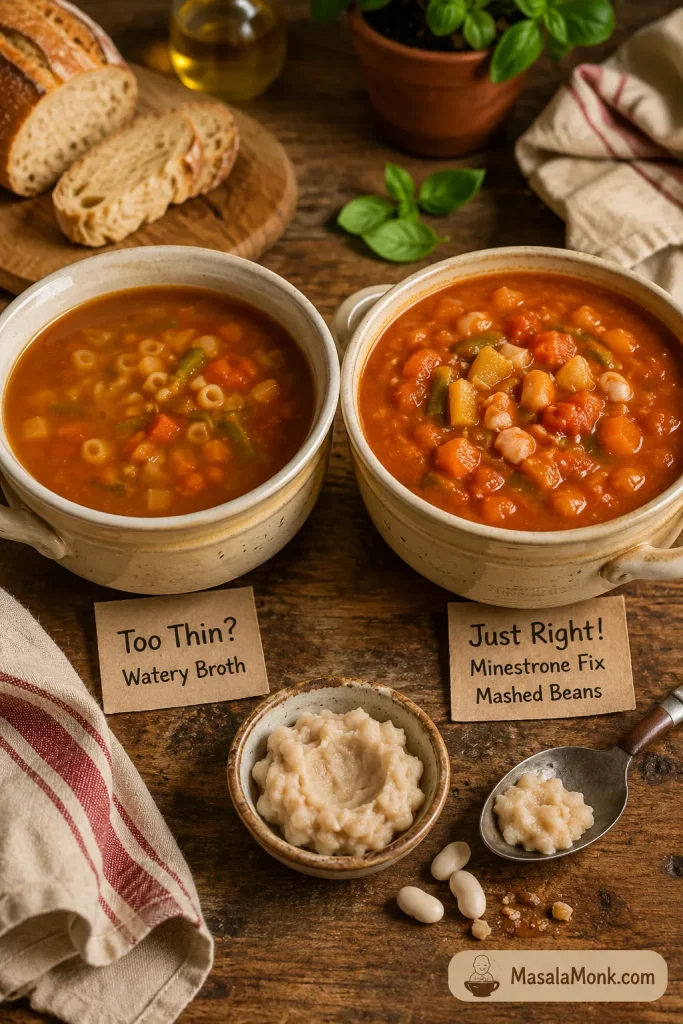
When the broth looks thin, mashed white beans are the quickest natural thickener because they add body without changing the soup into cream sauce.

Two bowls of minestrone comparing thin watery broth with richer tomato broth, with mashed white beans shown as the thickening fix.

If the broth tastes watery, mash a few white beans into the soup and simmer briefly. This thickens minestrone naturally without cream or flour.

How to Make Minestrone Richer

  • Cook the onion, carrot, and celery until they soften and smell sweet.

  • Cook the tomato paste before adding broth.

  • Use crushed tomatoes for a fuller broth.

  • Add a parmesan rind if you are using cheese.

  • Mash some of the beans into the soup for natural body.

  • Simmer partly uncovered when the soup looks too thin.

  • Finish with olive oil, herbs, and a small splash of lemon juice or vinegar.

How to Keep Pasta from Getting Mushy


Minestrone pasta gets mushy when it sits in hot broth for too long or stays in the soup through storage. The safest method depends on how you plan to serve it.

  • Serving immediately: add dry pasta during the final 8 to 10 minutes.

  • Meal prep: cook pasta separately and add it to each bowl.

  • Freezing: freeze the soup without pasta and add fresh pasta later.

  • Thick leftovers: reheat with extra broth or water.

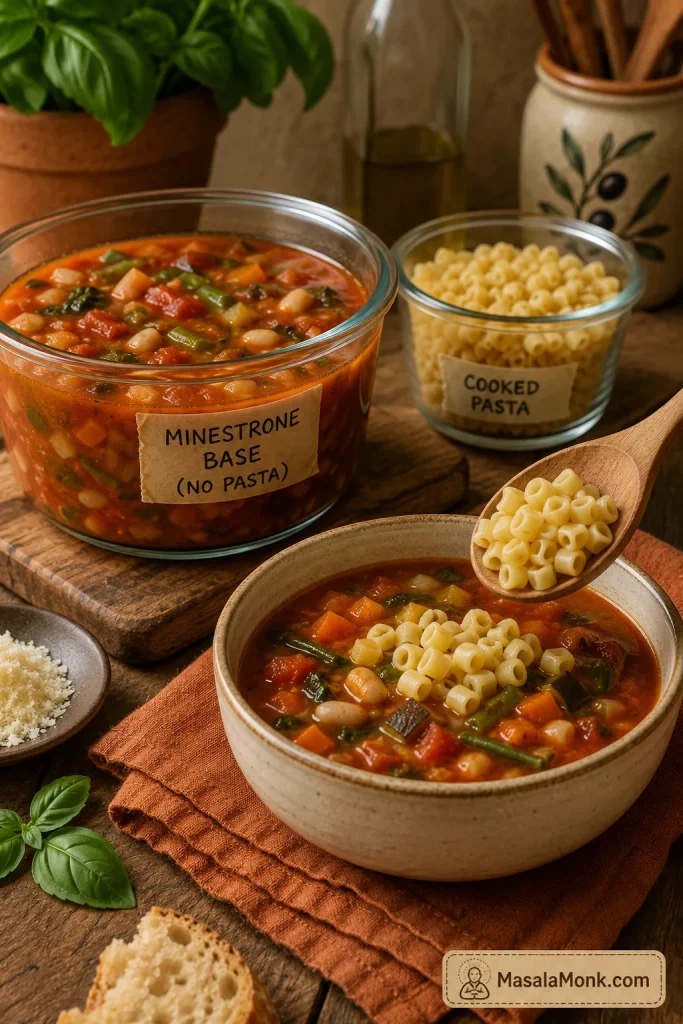
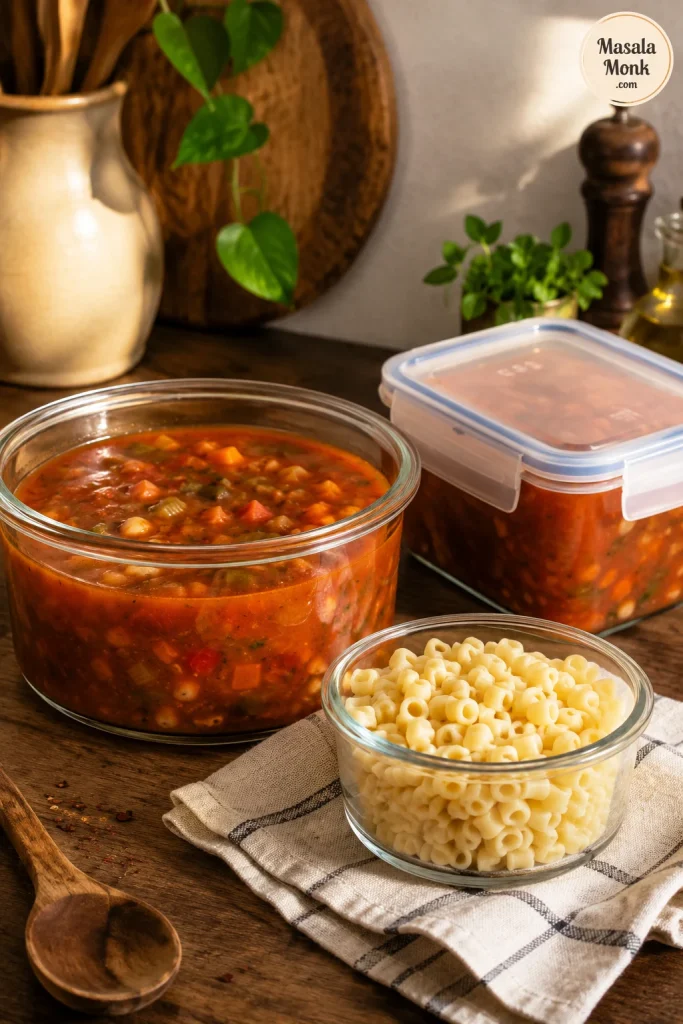
Glass containers showing minestrone soup base stored separately from cooked small pasta, with pasta being added to a serving bowl.

For better leftovers, store the soup base and pasta separately. Then add pasta to each serving so the next bowl stays fresh instead of soggy.

Slow Cooker and Instant Pot Minestrone

Slow Cooker vs Instant Pot Minestrone

For both appliance methods, the texture rule is the same: cook the base first and keep pasta and greens late. The pasta texture notes are especially useful for meal prep.

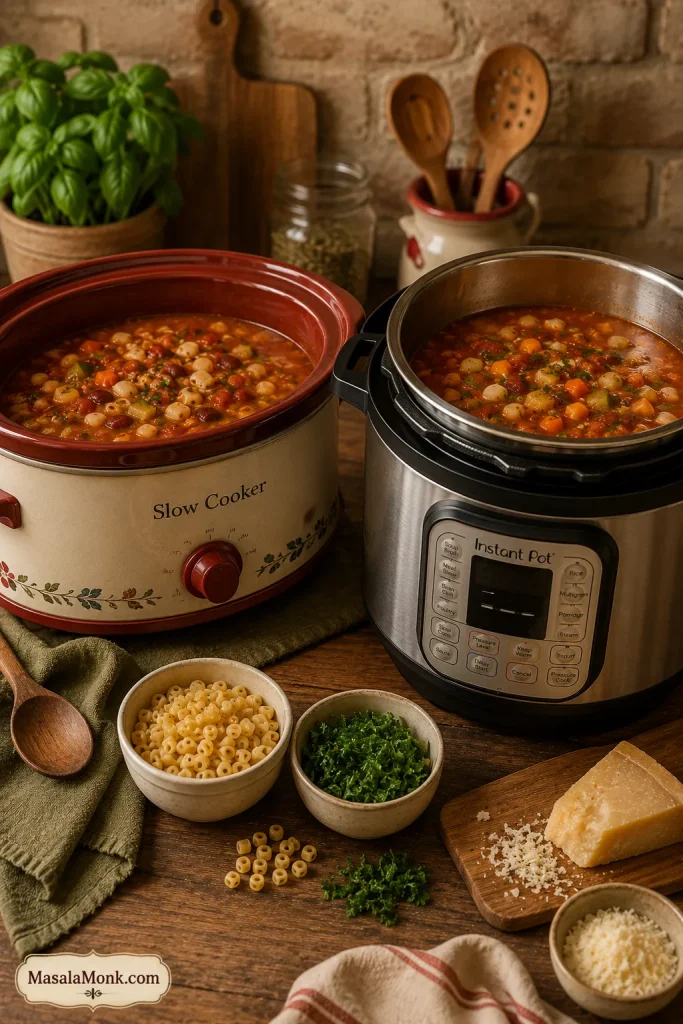
Slow cooker and Instant Pot filled with minestrone soup, with small bowls of pasta and greens nearby for adding near the end.

Whether you use a slow cooker or Instant Pot, cook the soup base first. Meanwhile, keep pasta and greens for the end so the texture stays better.

Slow Cooker Minestrone

Slow cooker minestrone is best for a hands-off soup base. Cook the broth, beans, aromatics, and firm vegetables first, then add zucchini, pasta, and greens near the end so they do not overcook.

  1. Add onion, carrot, celery, garlic, tomato paste, tomatoes, broth, herbs, bay leaf, beans, and firm vegetables to the slow cooker.

  2. Cook on low for 6 to 8 hours or high for 3 to 4 hours.

  3. Add zucchini and green beans during the final 30 minutes.

  4. Add pasta only during the final 20 to 30 minutes, or cook pasta separately.

  5. Stir in spinach or kale at the end, then finish with herbs, olive oil, and lemon juice or vinegar.

Instant Pot Minestrone


Instant Pot minestrone is best for a fast soup base. Pressure cook the broth, beans, and firm vegetables, then add cooked pasta and greens at the end so the pasta does not turn soft under pressure.

  1. Use sauté mode to cook onion, carrot, celery, and olive oil for 4 to 5 minutes.

  2. Add garlic and tomato paste. Cook for 1 minute.

  3. Add tomatoes, broth, herbs, bay leaf, beans, and firm vegetables.

  4. Pressure cook on high for 4 to 5 minutes.

  5. Let pressure release naturally for 5 to 10 minutes, then quick release carefully.

  6. Stir in greens and cooked pasta, then finish with herbs, olive oil, and lemon juice or vinegar.

Olive Garden-Style Minestrone Soup

If you like Olive Garden’s lighter tomato-broth style, use these adjustments while keeping the main recipe homemade. Olive Garden describes its minestrone as vegetables, beans, and pasta in a light tomato broth, so this is a home version in that familiar direction, not the official recipe. You can see Olive Garden’s menu description for the style reference.

Light tomato-broth minestrone soup in a cream bowl with kidney beans, white beans, pasta, carrots, zucchini, green beans, celery, spinach, and herbs.

For Olive Garden-style minestrone at home, keep the broth lighter, the beans whole, the vegetables small, and the pasta modest.

  • Use diced tomatoes instead of crushed for a lighter restaurant-style texture.

  • Do not mash the beans into the broth.

  • Keep the pasta modest so the soup stays brothy.

  • Use kidney beans, white beans, zucchini, green beans, carrots, celery, and spinach.

  • Finish with herbs and acidity so the bowl tastes bright, not heavy.

Minestrone Soup Variations

After the base tastes good, you can take the soup in a few different directions without losing the minestrone feel. Keep the tomato base, beans, vegetable timing, and small pasta structure in place, then adjust the bowl you want. For gluten-free, rice-based, or pasta-free versions, the storage section is useful if you plan to cook the starch separately.

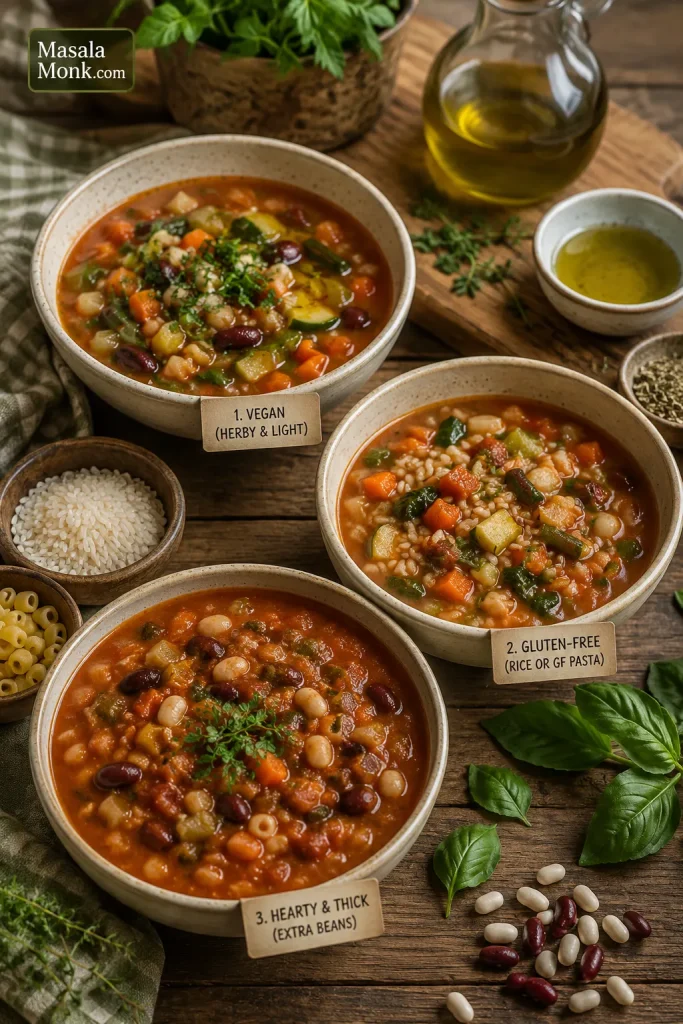
Three bowls of minestrone variations showing a vegan version, a gluten-free or rice version, and a thicker bean-rich version on a rustic table.

Once the tomato-bean base tastes good, you can take minestrone in several directions: vegan, gluten-free, rice-based, or thicker and extra hearty.

  • Vegan minestrone: use vegetable broth and skip parmesan rind, parmesan cheese, meat, and egg pasta. Finish with olive oil, herbs, nutritional yeast, or vegan pesto.

  • Gluten-free minestrone: use gluten-free pasta or rice. Cook gluten-free pasta separately for the best texture. Do not use barley or farro.

  • Minestrone without pasta: skip the pasta and add extra beans, cabbage, zucchini, potato, kale, spinach, or cooked rice.

  • Thick and hearty minestrone: use crushed tomatoes, 1 cup pasta, extra white beans, and a small potato. Mash some beans into the broth.

  • Brothy minestrone: use 3/4 cup pasta, unmashed beans, and an extra cup of broth for a lighter, restaurant-style bowl.

  • Low-sodium minestrone: start with low-sodium broth, rinse canned beans well, and choose no-salt-added tomatoes if available. Use garlic, herbs, lemon juice, vinegar, and olive oil to build flavor.

  • Add meat: brown Italian sausage or ground beef before adding the aromatics, or stir in shredded cooked chicken near the end.

Think of these as directions, not separate recipes. The same pot can become lighter, heartier, vegan, gluten-free, or meatier without losing its minestrone backbone.

What to Serve with Minestrone Soup

Minestrone can stand alone as dinner, especially with beans and pasta, but a simple side makes the meal feel complete.

  • A lighter meal: serve minestrone with a crisp salad, roasted vegetables, or something bright like beet salad.

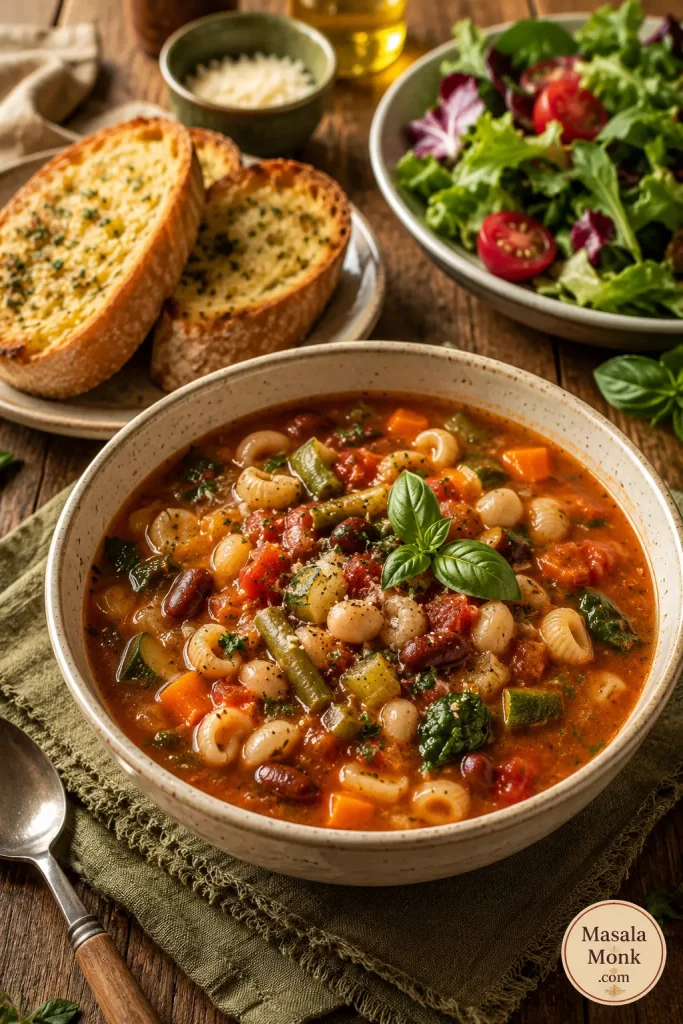
  • For a heartier dinner: add garlic bread, focaccia, grilled cheese, parmesan toast, or pesto toast.

Bowl of minestrone soup served with garlic bread, a green salad with tomatoes, herbs, and a spoon on a wooden table.

Minestrone can stand alone, but the sides change the meal. Garlic bread makes it heartier, while a fresh salad keeps dinner lighter.

The best side is something that balances the tomato broth without making the meal feel heavy.

Make-Ahead, Storage, Freezing, and Reheating

Make-Ahead Plan


Yes, you can make minestrone ahead of time. For the best texture, make the soup base without pasta, refrigerate it, and add freshly cooked pasta when serving.

  • Chop the onion, carrot, celery, zucchini, and green beans up to 1 day ahead.

  • Drain and rinse the beans ahead of time.

  • Make the soup base without pasta up to 3 days ahead.

  • Add greens when reheating so they stay brighter.

  • Cook pasta fresh, or store cooked pasta separately with a tiny drizzle of olive oil.

Store and Freeze Minestrone with Pasta Separately

This storage setup keeps the soup base useful and protects the pasta from swelling before the next serving.

Glass containers of minestrone soup base and a separate bowl of cooked small pasta for storing and freezing.

For freezing, leave pasta out of the soup base. This way, the broth, beans, and vegetables reheat well, and fresh pasta can be added later.

Fridge

Store minestrone soup in an airtight container in the fridge for 3 to 4 days, which matches the USDA’s general guidance for refrigerated leftovers. The next-day soup is often thicker and more flavorful. Loosen it with broth before reheating.

Freezer


Minestrone freezes best without pasta. Freeze the soup base for up to 3 months, then add freshly cooked pasta when reheating. If you freeze it with pasta, the flavor will still be good, but the pasta will become softer.

Reheating


Reheat gently on the stovetop over low to medium-low heat. Add broth or water to loosen the soup. After reheating, freshen the bowl with olive oil, herbs, lemon juice, vinegar, or parmesan. For the fastest fix when leftovers get thick, see the troubleshooting table.

Serve Minestrone Family-Style

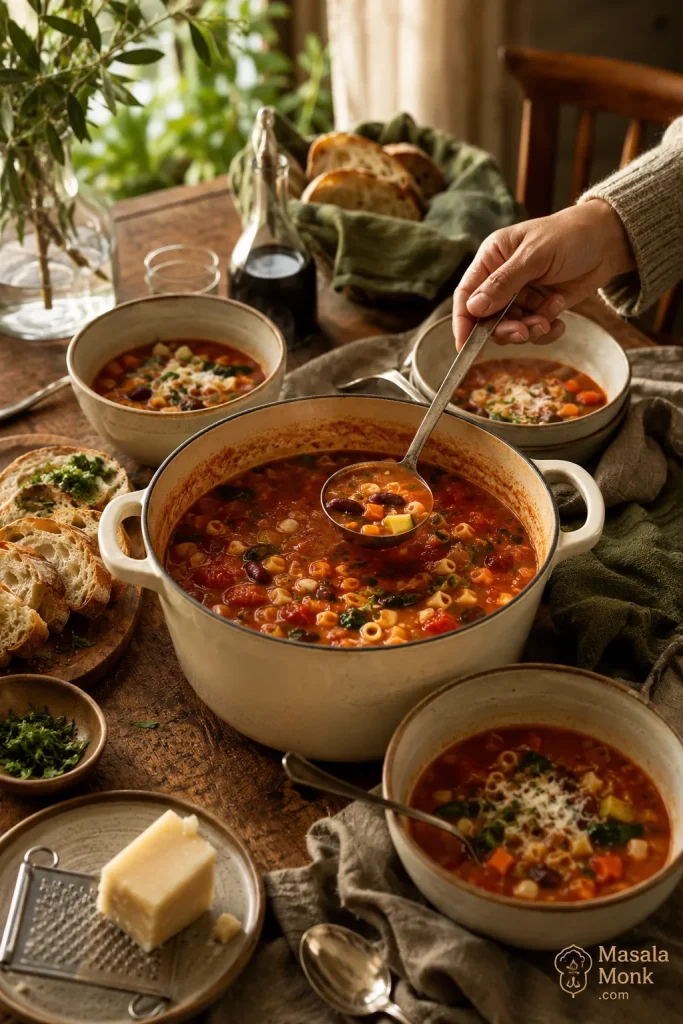
Family-style Dutch oven of minestrone soup on a wooden table with a ladle, bowls of soup, bread, herbs, cheese, and a hand serving soup.

Serve minestrone family-style when you want the meal to feel relaxed and generous, with herbs, cheese, bread, or extra broth added at the table.

Once you have the rhythm down, minestrone becomes one of those soups you can make again and again without overthinking it. Keep the tomato broth, beans, small pasta, and vegetable timing in place, then let the pot change with the season.

The best minestrone is not the one with the longest ingredient list; it is the one where the broth, beans, vegetables, and pasta all still feel like they belong in the same spoonful.

Minestrone changes from kitchen to kitchen. If your pot had cabbage, potato, chickpeas, kale, extra zucchini, or a pasta shape that worked beautifully, tell us. Those small choices are often what help the next person make a better pot from what they already have.


Frequently Asked Questions

What is minestrone soup made of?


Minestrone soup is an Italian vegetable soup made with vegetables, beans, tomatoes, broth, herbs, olive oil, and usually pasta or rice. Common vegetables include onion, carrot, celery, zucchini, green beans, cabbage, spinach, kale, potato, and peas.

Is minestrone soup vegetarian?


Minestrone soup is vegetarian when it is made with vegetable broth and no meat. If you add parmesan, choose vegetarian-style parmesan if that matters to you.

Is minestrone soup vegan?


Minestrone soup is vegan when it is made with vegetable broth and no parmesan, parmesan rind, meat, or egg pasta. For a vegan finish, use olive oil, herbs, nutritional yeast, or vegan pesto.

What is the best pasta for minestrone?


Ditalini is one of the best pasta shapes for minestrone because it is small and spoon-friendly. Small shells, elbows, macaroni, and orzo also work.

What beans are best for minestrone?


Cannellini beans, white beans, and kidney beans are the best everyday beans for minestrone. Borlotti beans, navy beans, chickpeas, and lentils also work.

Why does my minestrone taste bland?


Bland minestrone usually needs salt, acidity, or more simmering time. Cook the aromatics well, cook the tomato paste until it darkens slightly, taste the broth before adding pasta, then finish with lemon juice or vinegar if the tomato flavor tastes flat.

How do you make minestrone less watery?


To make minestrone less watery, simmer it uncovered, mash some beans into the broth, use crushed tomatoes, or add a parmesan rind if you are using cheese. A watery soup often means the aromatics or tomato paste needed more time at the beginning.

How do you keep pasta from getting mushy in minestrone?


To keep pasta from getting mushy in minestrone, add it only near the end and stop when it is just tender. For leftovers, meal prep, or freezing, cook pasta separately and add it to each bowl.

Can you make minestrone soup ahead of time?


Yes, minestrone is a good make-ahead soup, especially if you make the soup base without pasta. Refrigerate the base for 3 to 4 days, then add freshly cooked pasta when serving.

Can you freeze minestrone soup?


Yes, minestrone soup freezes well, but it freezes best without pasta. Freeze the soup base for up to 3 months, then add freshly cooked pasta when serving.

What is the difference between minestrone and vegetable soup?


Minestrone is usually heartier than plain vegetable soup because it often includes beans, pasta or rice, tomatoes, Italian herbs, and olive oil. Vegetable soup can be any broth-based soup made with vegetables.

What is the difference between minestrone and pasta e fagioli?


Minestrone is a vegetable-heavy soup that often includes beans plus pasta or rice. Pasta e fagioli means pasta and beans, so it is more focused on those two ingredients and is often thicker and more bean-forward.

Can I make minestrone without pasta?


Yes, you can make minestrone without pasta. Add extra beans, cabbage, zucchini, potato, kale, spinach, or cooked rice instead.

Can I use frozen vegetables in minestrone?


Yes, frozen peas, green beans, spinach, kale, and mixed vegetables can work well in minestrone. Add quick-cooking frozen vegetables near the end unless they are dense vegetables. If frozen spinach releases too much water, squeeze it before adding.

Can I make minestrone with canned vegetables?


Yes, canned vegetables can work in minestrone when you need a pantry version. Drain them well and add them near the end because they are already cooked and can become too soft if simmered for a long time.

Posted on Leave a comment

Creamy Vegetarian Corn Chowder Recipe

Hearty creamy corn chowder is a classic dish that has been loved for centuries. Corn Chowder is a type of chowder that originated in the Midwestern and Southern United States in 1800s, where corn was a staple crop. A bowl of chowder is as satisfying in the summer heat as it is in the winter when you want a bowl of cozy warmth. It is cream based soup which is loaded with sweet corn and potatoes and flavour packed corn broth. It is an absolute treat when fresh corn is in abundant. Fresh corn offers the best flavour but if you can’t find fresh corn, you can totally substitute it with frozen sweet corn kernels. Most chowder recipes call for either bacon or seafood. But fear not, this corn chowder is completely vegetarian-friendly!

What to serve Chowder with?

I like chowder with a homemade crusty garlic bread. It is like a match made in heaven. They are so meant to be together. But honestly, it is great just as it is also. I have also added boiled pasta in chowder which makes it a complete meal in a bowl.

Leftover and Storage

Leftovers can be kept in an airtight container in the fridge and reheated in a saucepan. I wouldn’t recommend keeping longer than 3-4 days due to cream in the recipe.

I do not recommend freezing it because of cream. Creamy dishes tend to get an unpleasant texture when frozen and can separate when reheated.

Recipe: serves 2

Ingredients:

  • Sweet Corn Kernels: 1 cup
  • Fresh Cream: 1.5 cups (I used cream with 25% fat)
  • Olive Oil: 2 tbsps 
  • Garlic: 6 cloves, chopped 
  • Onion: 1 small size, chopped 
  • Carrots: Handful, chopped finely 
  • Capsicum: Handful, chopped finely 
  • Mushrooms: Handful, chopped (retain the stems)
  • Black olives: 4 to 5
  • Potato: 1, medium, chopped finely
  • Pasta: 12 to 15 elbow pasta (you can use whichever you like)
  • Thyme: 1 tsp
  • All Purpose Flour: 1/2 tsp 
  • Salt to taste 
  • Peppercorns: 7 to 8, freshly ground
  • Chilli flakes: 1/2 tsp or more as per taste
  • Pasta stock/Vegetarian Stock: 1.5 cups
  • Lemon juice: just a few drops

Method 

  1. Boil pasta as per instructions and retain the stock.
  2. In a preheated olive oil, add garlic and sauté till sticky. Now add onion and sauté till translucent.
  3. Add the veggies except corn kernels. Season it with salt and thyme.
  4. Sauté till they start releasing all the juices and potatoes soften. 
  5. Sprinkle flour on the veggies and sauté for ten seconds.
  6. Now add cream and bring it to simmer. Lower the flame and stir occasionally so that it doesn’t stick to the bottom.
  7. Add corn kernels, olives, all the seasoning and pasta stock.
  8. Cook till you achieve the desired consistency. Check for seasoning.
  9. Add cooked pasta and give a nice mix.
  10. Switch off the flame. 
  11. Finish it with lemon juice. Cover it for 5 mins then add cilantro leaves for garnishing.
  12. Serve hot with garlic bread. 

Tips:

  • You can add veggies as per choice. Broccoli, zucchini, bell peppers go very well.
  • I personally don’t prefer a thick consistency in soups hence I added less of flour.
  • Preferably use a non-stick pan.
  • Add cooked pasta at the time of serving or pasta will become soggy.

I hope you enjoyed reading this recipe. Do give this recipe a shot. I am sure this recipe will bring you a lot of joy. If you try this recipe, do give us a shout out. Just click a picture and tag us on @masala.monk or use the hashtag #MasalaMonkRecipe and share on Instagram and Facebook. We would love to hear from you.