Posted on 1 Comment

Tater Tot Casserole Recipe

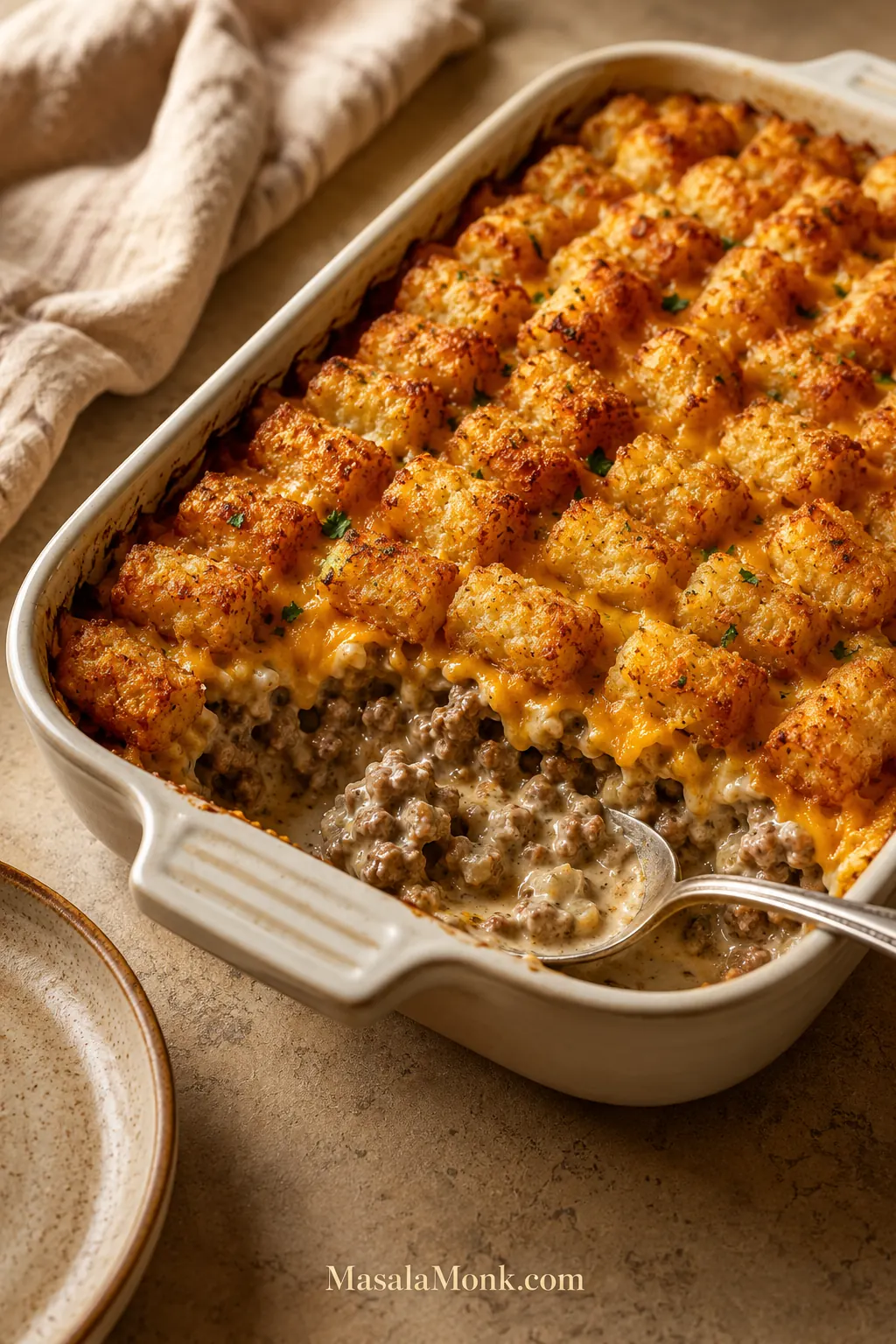
Tater tot casserole with golden crispy tots, creamy ground beef filling, cheddar, and a scoop served from a 9x13 dish

This tater tot casserole recipe is the cozy 9×13 dinner people come back to for seconds: seasoned ground beef, creamy mushroom filling, melted cheddar, and frozen tots that bake golden and crisp on top.

The small upgrade is all in the layering. Most of the cheese goes under the tots, the filling stays creamy but not loose, and the casserole bakes uncovered so the topping browns instead of steaming. That one change helps keep the casserole from turning into a soft, heavy pan of potatoes and sauce.

It does not ask much from you: one skillet for the beef, one baking dish, and a bag of tots straight from the freezer. Make it with cream of mushroom soup, green beans, corn, or mixed vegetables, or use the no-soup version below when you want a homemade sauce.

Best of all, it feels bigger than the effort: a little browning, a little stirring, one layer of tots, and then the oven turns everything into a bubbling, scoopable casserole. It is the kind of dinner that works on a cold night, a busy school night, or any evening when you want something familiar, filling, and easy to scoop straight from the pan.

Quick Answer: Tater Tot Casserole Recipe

To make tater tot casserole, brown 1 pound of ground beef with onion and seasoning, stir in cream of mushroom soup, sour cream, milk, vegetables, and cheese, spread the filling in a 9×13-inch baking dish, top with frozen tater tots, and bake uncovered at 375°F for 40–45 minutes. For the best texture, keep the tots frozen, arrange them in one layer, and add extra cheese only near the end.

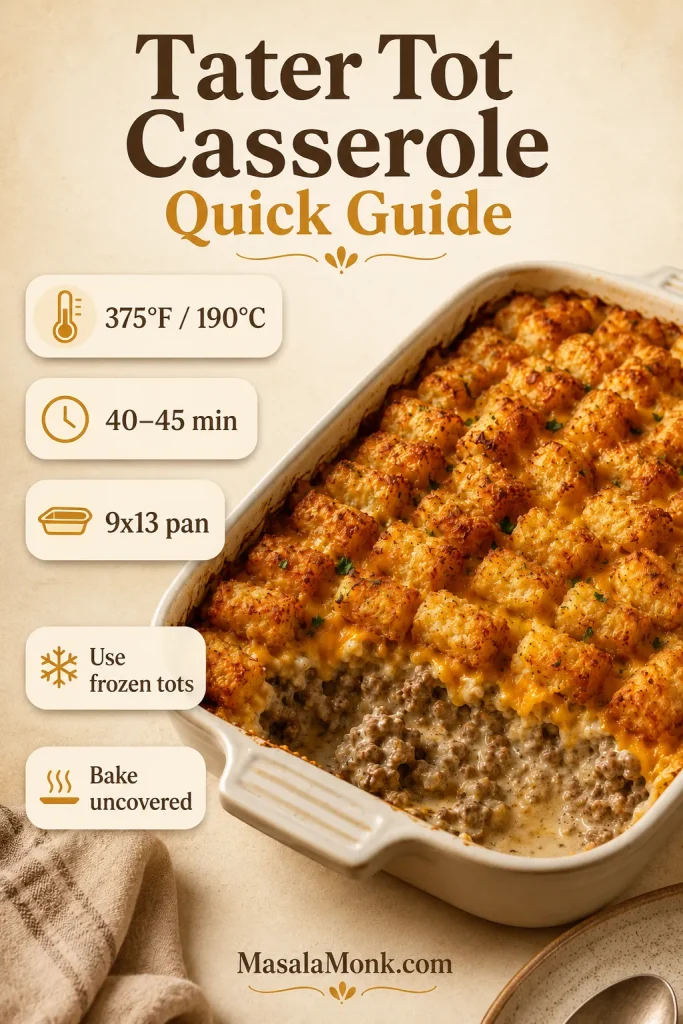
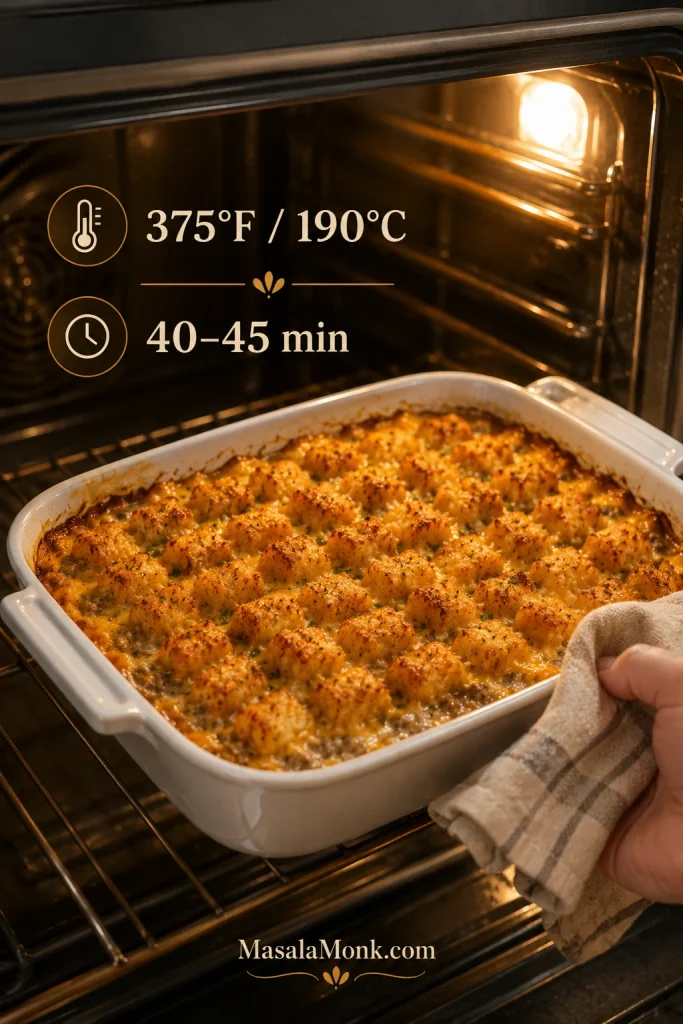
Tater tot casserole quick guide showing 375°F bake temperature, 40 to 45 minute bake time, 9x13 pan, frozen tots, and uncovered baking
Start with the basics: a 9×13 pan, frozen tots, 375°F heat, and an uncovered bake so the topping can brown.

When it comes out of the oven, the edges should be bubbling, the filling should scoop easily, and the tots on top should still have that little crisp bite. That balance comes from using a filling sturdy enough to support the tots, draining excess grease and vegetable liquid, and avoiding a heavy cheese layer over the top too early.

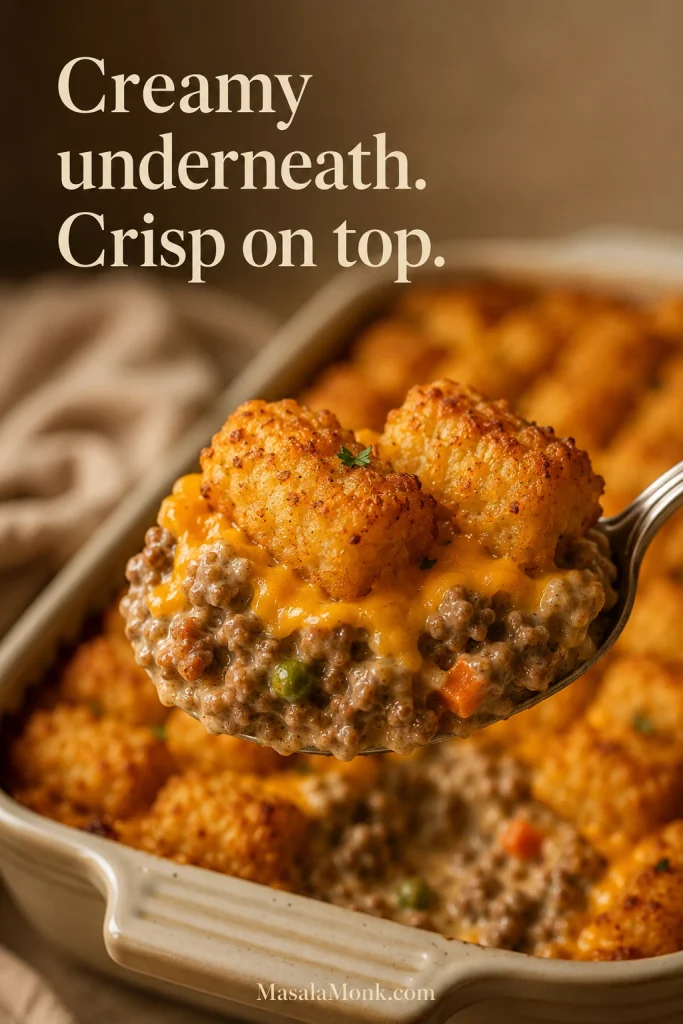
Spoon lifting tater tot casserole with creamy ground beef filling, melted cheese, vegetables, and crispy golden tater tots
A good scoop should hold together without turning soupy, while the tater tots on top still give the casserole a crisp finish.

If your biggest worry is a soft topping, check the crispy tater tot tips before you bake.

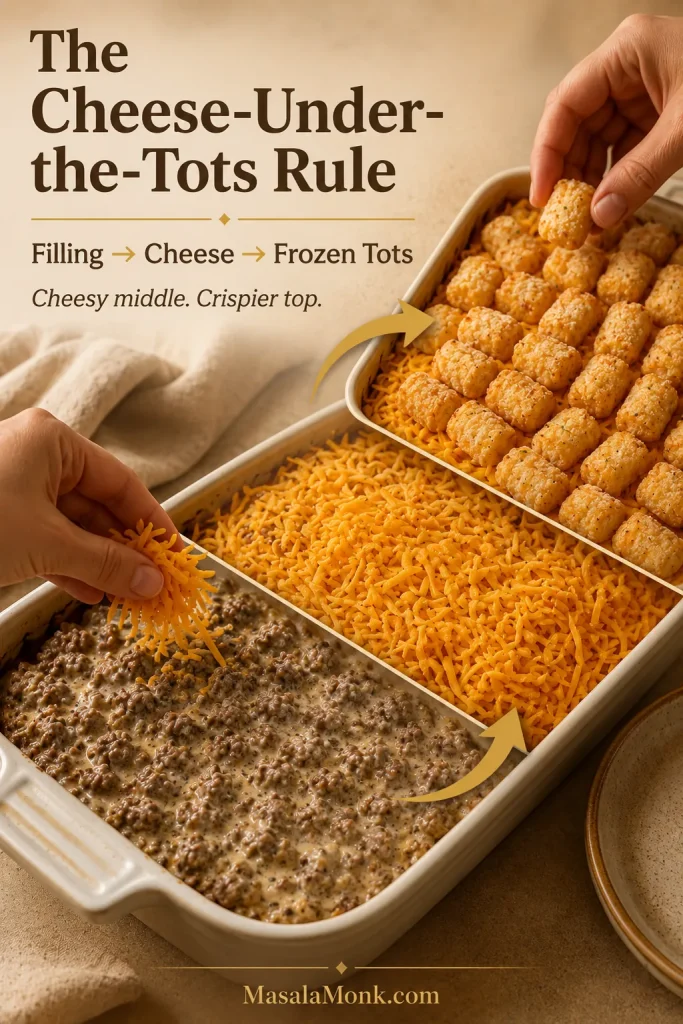
What makes this version different: The cheese-under-the-tots rule keeps most of the cheddar in the middle instead of burying the potato layer from the start. You still get a cheesy casserole bite, but the tots stay exposed to the oven so they have a better chance to turn golden instead of soft.
Cheese-under-the-tots rule showing creamy beef filling, cheddar cheese under the tots, and frozen tater tots arranged on top
By moving most of the cheddar under the tots, you keep the casserole cheesy without covering the potato layer too early.

This method is especially helpful when your old version tasted good but came out with soft tots, because it fixes the two biggest texture problems: trapped steam and loose filling.

Tater Tot Casserole at a Glance

Here is the simple version to keep in mind before you start cooking. It uses a full bag of frozen tater tots, a savory ground beef filling, and a 9×13-inch baking dish so the topping has enough room to brown.

Oven temperature 375°F / 190°C
Pan size 9×13-inch / about 3-quart baking dish
Bake time 40–45 minutes, plus 5–10 minutes resting
Best meat Lean ground beef or hamburger
Tater tots Use frozen tots, not thawed
Best vegetables Green beans, corn, peas and carrots, or mixed vegetables
Make ahead? Yes, but add frozen tater tots right before baking for the best topping
Freezer friendly? Yes, especially if you freeze the cooked filling separately and add tots before baking

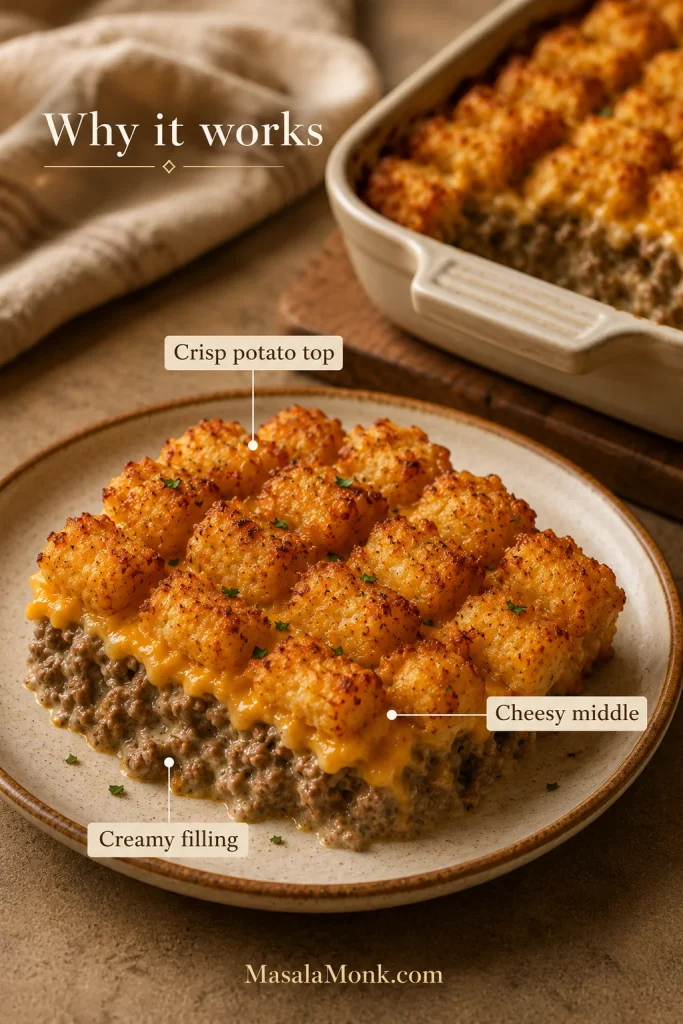
Why This Recipe Works

A good tater tot casserole should be creamy underneath, cheesy in the middle, and crisp on top. This tater tot casserole recipe keeps the comfort-food flavor people love, but it avoids the usual soggy topping problem by using a sturdy filling, a wide baking dish, frozen tots, and an uncovered bake.

Cutaway serving of tater tot casserole showing creamy beef filling, melted cheddar layer, and crispy tater tot topping
Each layer has a job: beefy filling below, cheddar through the middle, and browned tots on top for contrast.

The cheese placement does a lot of the work. Most of the cheddar melts over the beef filling, so you still get that cheesy casserole bite. Meanwhile, the tots stay exposed to the oven heat. A small final sprinkle of cheese can go on near the end if you want a little extra melt.

That matters because the best bite is not just creamy or cheesy. It is the contrast: hot beefy filling underneath, melted cheddar in the middle, and a potato topping that still has texture when your spoon breaks through.

The filling is creamy without being runny, the beef tastes seasoned rather than flat, and the vegetables add enough balance to keep each scoop from feeling too heavy. Because the filling is sturdy, the tots can sit on top instead of sinking into the sauce.

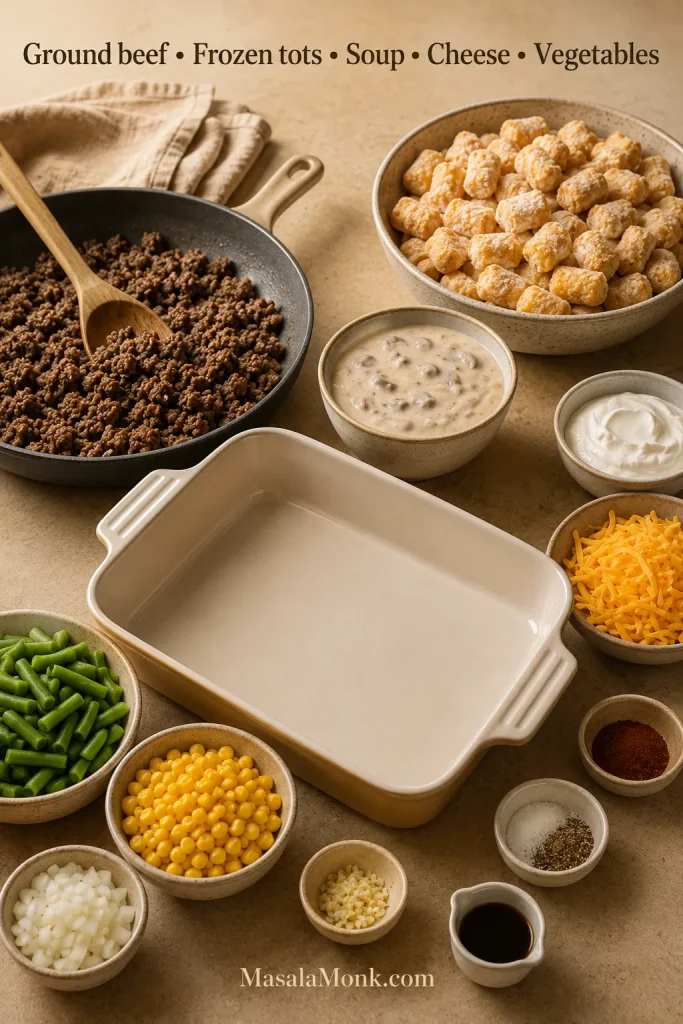
Ingredients for Tater Tot Casserole

The ingredient list stays simple: ground beef, frozen tater tots, cream of mushroom soup, cheese, and vegetables. However, small upgrades like sour cream, Worcestershire sauce, garlic, paprika, and careful layering give the casserole better flavor without making it fussy.

Ingredients for tater tot casserole including ground beef, frozen tater tots, cream of mushroom soup, sour cream, cheddar, vegetables, onion, garlic, and seasoning
Although the ingredients are familiar, Worcestershire, garlic, and proper layering help the filling taste more balanced than a plain soup-and-beef mix.

Frozen tater tots

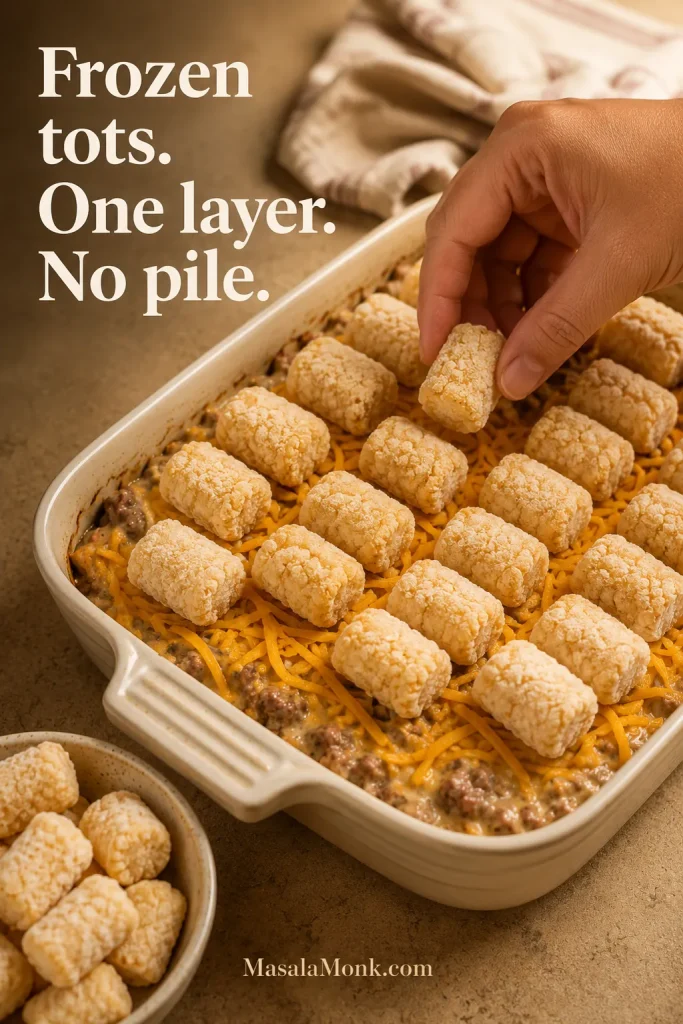
Use 28–32 ounces of frozen tater tots, or enough to cover the casserole in one generous layer. If a few are left in the bag, save them rather than piling them too high. Thawed tots soften quickly and are more likely to turn mushy on top of the filling.

A single layer is ideal. The tots do not need to be arranged perfectly, but they should not be stacked into a thick mound. More exposed edges mean better browning and more crunch.
Frozen tater tots arranged in one layer over tater tot casserole filling with extra tots kept aside
When the tots stay frozen and sit in one layer, they hold their shape better and get more direct heat around the edges.

For more texture help, the crispy tater tot tips explain how pan size, cheese placement, and uncovered baking work together.

Ground beef or hamburger

Lean ground beef gives this casserole its familiar flavor. An 85–90% lean blend works well because it browns nicely without leaving too much grease. Drain excess fat before adding the creamy ingredients so the filling does not turn oily or watery.

Ground turkey can work too, but it tastes milder. If you use turkey, add a little extra Worcestershire sauce, garlic powder, or paprika so the filling still has enough savory depth.

Cream of mushroom soup

Condensed cream of mushroom soup is the traditional base for this kind of casserole. It gives the beef filling a creamy, savory texture and helps everything hold together.

If you do not like mushroom soup, cream of chicken or cream of celery can work too. Also, there is a homemade no-soup sauce later in the post for anyone who wants more control over salt, thickness, and flavor.

There is no need to apologize for the soup version. This is the flavor many people grew up with, and it is the reason the casserole is fast, creamy, and dependable. The homemade sauce is there when you want it, not because the classic version needs fixing.

That same creamy, pantry-friendly style is why dishes like tuna noodle casserole are still so comforting: the sauce, filling, and topping all need to stay balanced.

Sour cream and milk

Sour cream makes the filling richer, while a little milk loosens the condensed soup so it spreads evenly. The sauce should coat the beef and vegetables without pooling in the pan. If it looks loose before baking, simmer it for another minute or two in the skillet.

Green beans, corn, or mixed vegetables

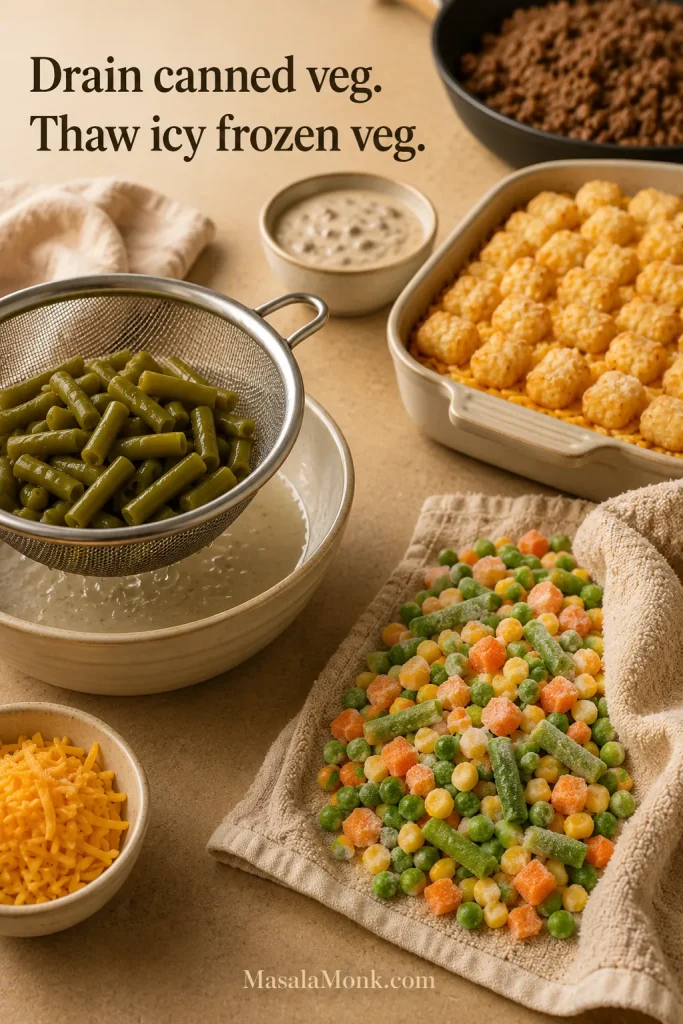
Green beans give the casserole an old-school hotdish feel, corn makes the filling sweeter and more kid-friendly, and mixed vegetables make it feel more like a full dinner in one pan. Drain canned vegetables well and thaw frozen vegetables if they are icy.

That draining step matters. Otherwise, extra liquid from canned green beans, corn, or frosty frozen vegetables can thin the filling and soften the potato topping from below.

Green beans draining in a sieve and frozen mixed vegetables being thawed before adding them to tater tot casserole
Since vegetables can add hidden moisture, drain canned green beans or corn well and thaw icy frozen vegetables before mixing them in.

Cheddar cheese

Sharp or medium cheddar works best. For a better topping, put most of the cheese over the filling and under the tots. Then, save a small handful for the last few minutes of baking.

Pre-shredded cheese is convenient, while freshly shredded cheddar melts more smoothly. Either one works here.

Easy Ingredient Swaps

You can bend this casserole in a lot of directions, but the filling still needs to stay thick enough to hold up the tots. These swaps keep that balance in mind.

Instead of Use What changes
Ground beef Ground turkey, ground chicken, or plant-based crumbles Milder flavor; add extra Worcestershire, garlic, or paprika
Cream of mushroom soup Cream of chicken, cream of celery, cheddar soup, or homemade sauce Changes the flavor and salt level of the filling
Green beans Corn, peas, carrots, or mixed vegetables Adjusts sweetness, color, and texture
Cheddar cheese Colby Jack, Monterey Jack, or a cheddar blend Softer, meltier cheese profile
Sour cream Greek yogurt or a little extra milk Tangier with yogurt; looser with milk

How to Make Tater Tot Casserole

The filling comes together in one skillet, and then the oven does the rest. The only real trick is layering it so the tots stay on top where they can brown.

1. Brown and season the beef

Cook the ground beef and onion in a large skillet until the beef is browned and the onion has softened. Break the meat into small crumbles so the filling spreads evenly through the casserole.

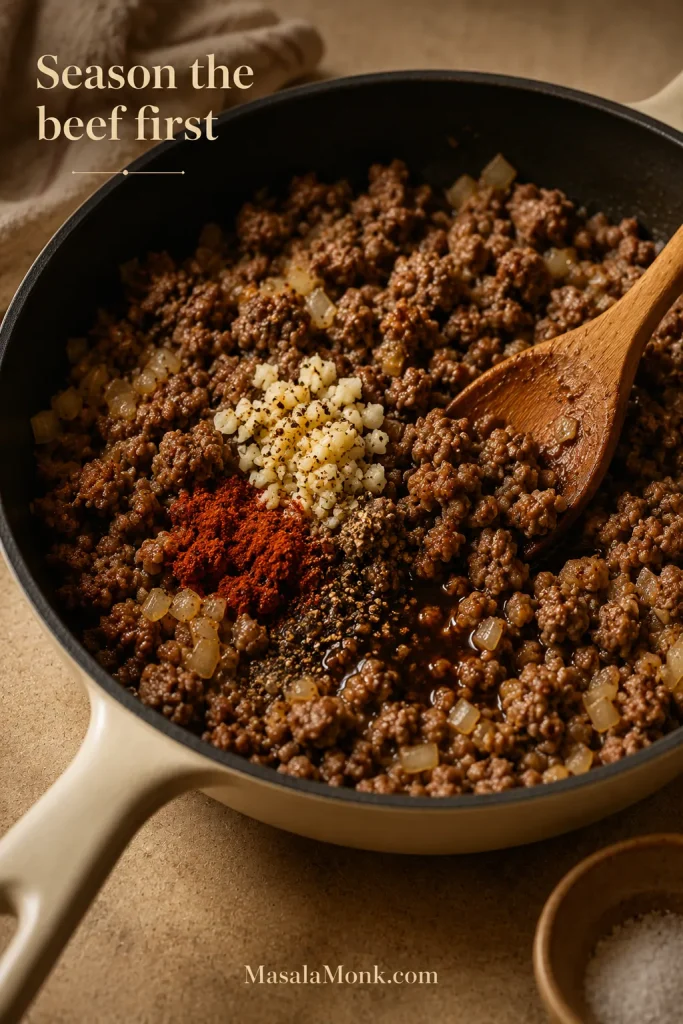
Next, drain excess grease. Then, stir in garlic, Worcestershire sauce, garlic powder, paprika, salt, and pepper. Let the seasonings cook for 30–60 seconds so the beef tastes savory before the creamy ingredients go in.

Browned ground beef with onion, garlic, Worcestershire sauce, paprika, and seasoning being stirred in a skillet
Before the soup and sour cream go in, season the beef well so the whole casserole starts with a savory base.

2. Make the creamy filling

Stir in the cream of mushroom soup, sour cream, milk, and vegetables. The mixture should be creamy but sturdy enough to hold the tots on top. After that, spread it evenly in a greased 9×13-inch baking dish.

Drain canned green beans or corn well before stirring them in. For frozen mixed vegetables, thaw any icy pieces first so the sauce does not thin out in the oven.

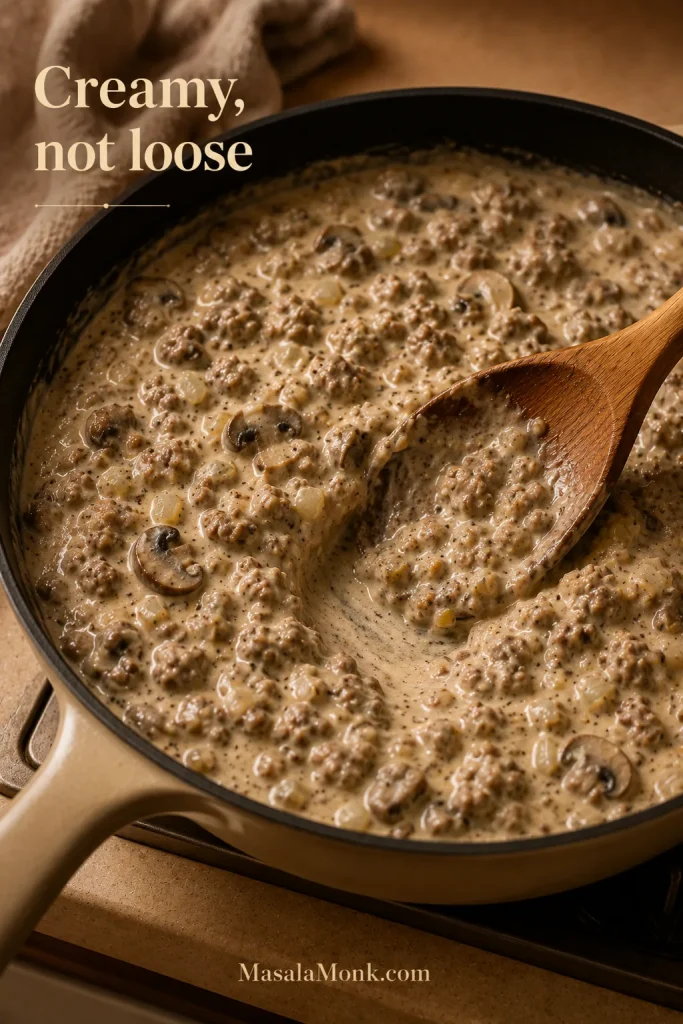
Thick creamy tater tot casserole filling in a skillet with a spoon path showing it is not loose or watery
If the filling looks loose in the skillet, simmer it briefly; a thicker base helps keep the tater tot topping from softening underneath.

3. Add cheese under the tots

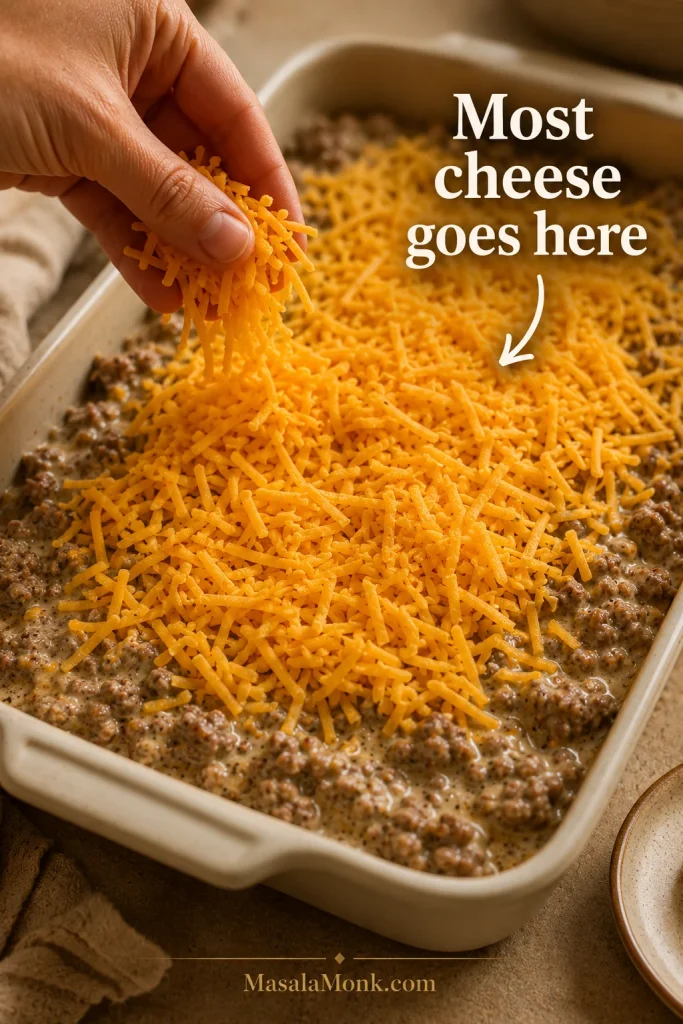
Sprinkle about 1 1/2 cups of cheddar over the filling. This gives the casserole a cheesy middle layer while leaving the top clear for browning.

Shredded cheddar cheese being sprinkled over creamy beef filling before tater tots are added
Sprinkling cheddar at this stage gives you a melted middle layer while leaving the top clear for the frozen tots.

You still get plenty of melted cheese, but the tots are not trapped under a heavy blanket of cheese for the entire bake. Instead, they stay on the surface where the oven heat can reach them.

4. Arrange frozen tots in one layer

Place the frozen tater tots over the cheese in one generous layer. Try not to pile them too tightly. A little space helps hot air reach more edges.

The tots do not need to be perfectly lined up, but a neat layer does bake more evenly and looks better when served.

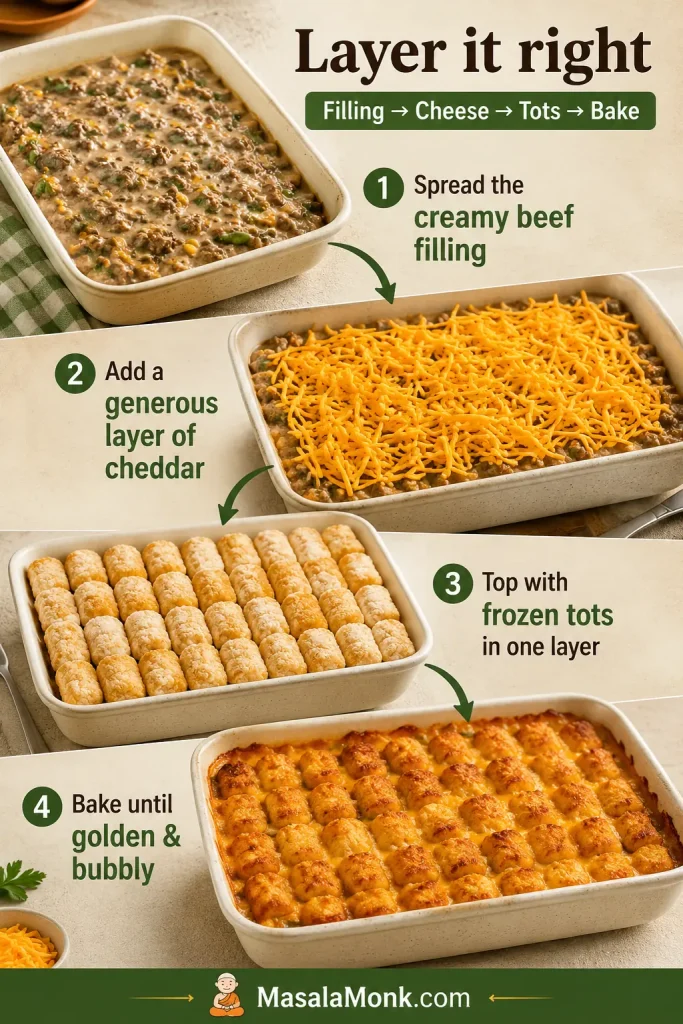
Layering guide for tater tot casserole showing creamy beef filling, cheddar cheese, frozen tots, and a baked golden top
Once the filling is spread, the order is simple: cheese next, tots last, and then an uncovered bake for better texture.

5. Bake uncovered until golden and crisp

Bake uncovered at 375°F for about 40 minutes. Then, sprinkle the remaining 1/2 cup of cheddar over the top if you want extra cheese. Finally, bake 5 minutes more, until the filling bubbles at the edges and the tots are golden and crisp.

Let the casserole rest for 5–10 minutes before scooping. That short rest helps the filling settle so it serves more neatly. Try not to let it sit too long, though, because the topping will slowly soften from the steam.

Before You Bake

  • The beef filling should be creamy, not runny.
  • Canned vegetables should be drained well.
  • Frozen vegetables should not be icy.
  • The cheddar should sit mostly under the tots.
  • The tots should cover the dish in one layer, not a pile.
  • The casserole should go into the oven uncovered.
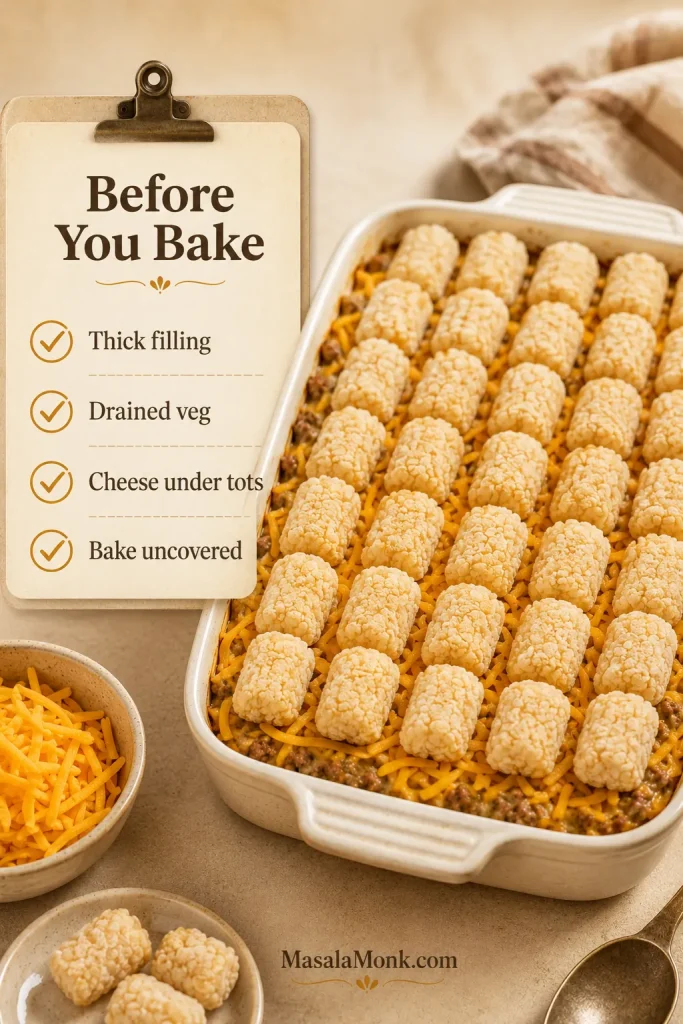
Tater tot casserole ready to bake with checklist for thick filling, drained vegetables, cheese under tots, and uncovered baking
Before the dish goes into the oven, check the texture basics: thick filling, drained vegetables, cheese below, and tots exposed.

After those checks, use the bake-time guide to judge when the center is hot and the topping is browned.

How Long to Bake Tater Tot Casserole

The best balance of bubbling filling and crisp tater tots comes from baking at 375°F / 190°C for 40–45 minutes. It is ready when the edges are bubbling, the center is hot, and the potato topping is browned.

Tater tot casserole baking at 375°F for 40 to 45 minutes until the edges bubble and the top browns
Rather than relying only on the timer, look for bubbling edges, a hot center, and browned tots before pulling the casserole out.

A lower oven temperature gives the filling more time to heat gently, but the topping may not brown as much. A hotter oven can work; however, it can also make the filling bubble too hard, especially if the dish is very full. That is why 375°F is the best default for this version.

If your baking dish is very full, set it on a rimmed baking sheet before it goes into the oven. It catches any bubbling sauce and makes the casserole easier to move in and out of the oven.

Oven temperature Approximate bake time Best use
350°F / 175°C 45–55 minutes Gentler bake, slightly softer topping
375°F / 190°C 40–45 minutes Best default for this recipe
400°F / 200°C 35–45 minutes Can brown well, but watch for aggressive bubbling
From the fridge Add 10–15 minutes Best if the filling was made ahead
From frozen Covered first, then uncovered Use a thermometer to check the center

If your casserole is coming from the refrigerator, see the make-ahead notes before you add extra time.

If you are baking the casserole from cold or reheating leftovers, check that the center is hot before serving. The USDA recommends reheating leftovers to 165°F / 74°C, and an instant-read thermometer is the easiest way to check a deep casserole. See the USDA safe temperature guidance here.

How to Keep Tater Tots Crispy in Casserole

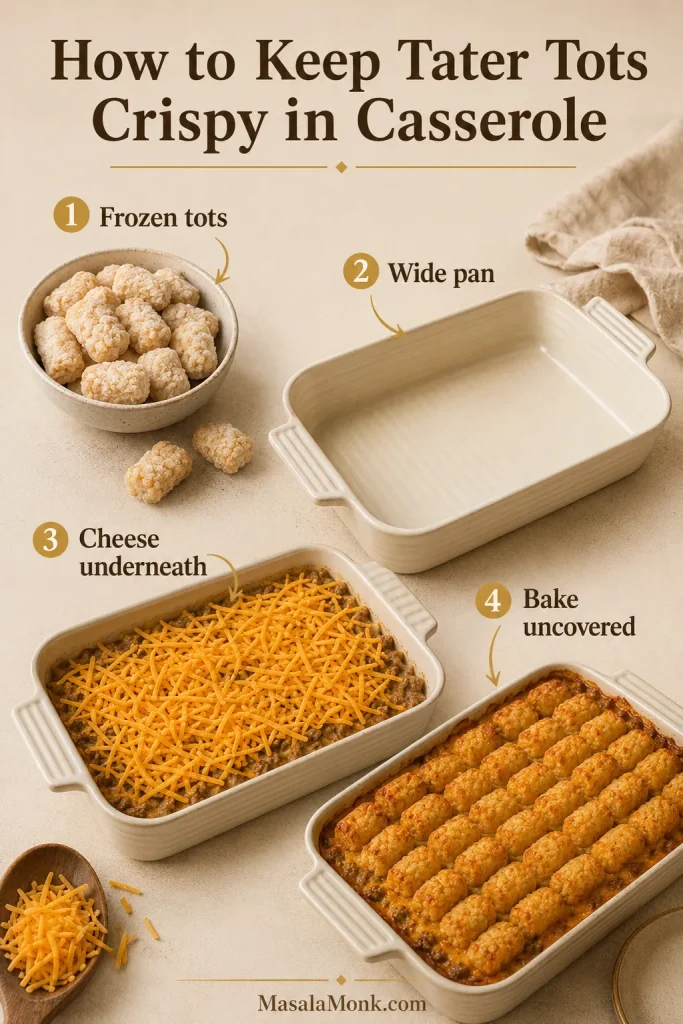
Soggy tots usually come from too much moisture, overcrowding, thawed tots, or a heavy cheese layer trapping steam. Fortunately, a few small choices make a big difference.

Guide to keeping tater tots crispy in casserole with frozen tots, wide pan, cheese underneath, and uncovered baking
For crispier tater tots, control moisture first: use frozen tots, a wide pan, sturdy filling, cheese underneath, and no cover.
  • Use frozen tots. Do not thaw them before adding them to the casserole.
  • Use a 9×13-inch dish. A wide dish helps the top layer spread out instead of steaming in a deep pile.
  • Keep the filling sturdy. Drain beef grease and vegetables well.
  • Arrange tots in one layer. Avoid piling them on top of each other.
  • Bake uncovered. Covering traps steam and softens the top.
  • Use the cheese-under-the-tots rule. Put most of the cheddar under the potato layer and add only a small final sprinkle near the end.
  • Serve after a short rest. Let it settle for 5–10 minutes, but do not let it sit too long before serving.
  • Reheat in the oven or air fryer. The microwave works, but the tots will soften.
Extra-crispy option: Pre-bake the frozen tots on a sheet pan for about 10 minutes while you cook the beef filling. Then arrange them on top of the casserole and bake as directed.

Another useful trick is to avoid overfilling the dish. If the filling comes too close to the top of the pan, it can bubble up through the tots and soften them. A 9×13-inch dish gives the filling room to heat while the potato layer stays exposed to dry oven heat.

If you like this kind of creamy potato bake but want a softer side-dish version, this hashbrown casserole recipe uses frozen potatoes in a different way.

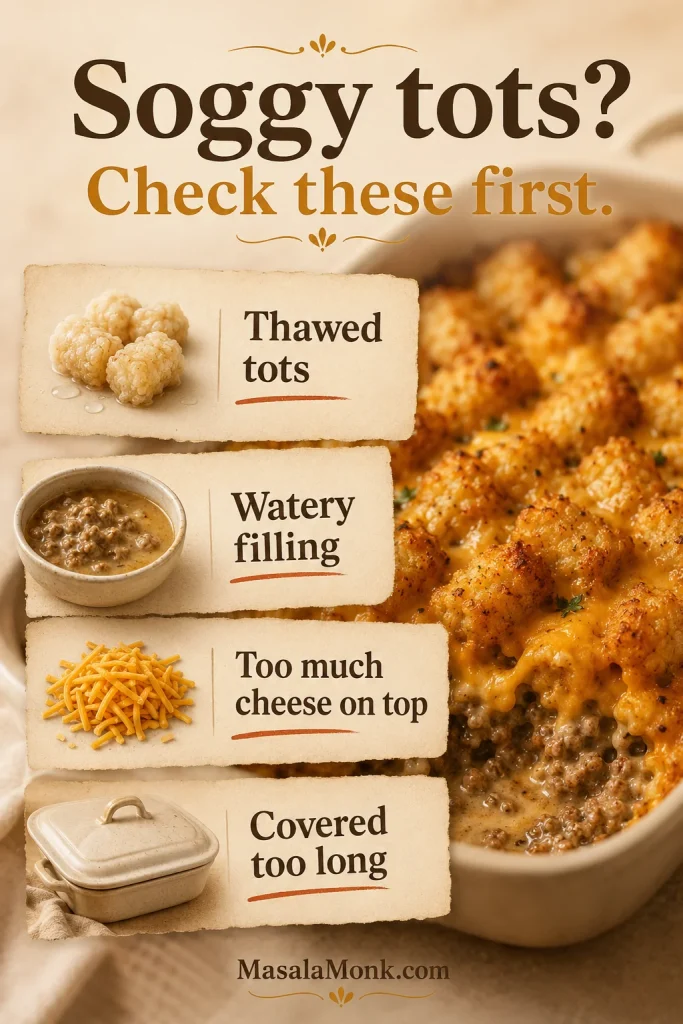
Common Mistakes That Make Tater Tot Casserole Soggy

Common mistakes that make tater tot casserole soggy, including thawed tots, watery filling, too much cheese on top, and covering too long
When the topping turns soft, the usual suspects are thawed tots, watery filling, too much early cheese, or trapped steam.
  • Using thawed tater tots instead of frozen ones.
  • Adding too much milk or soup so the filling turns loose.
  • Not draining ground beef grease or canned vegetables.
  • Using icy frozen vegetables without thawing or draining them first.
  • Covering the casserole for the whole bake.
  • Piling on cheese too early and trapping steam over the tots.
  • Using a deep small dish instead of a wide 9×13 pan.

Tater Tot Casserole with Cream of Mushroom Soup

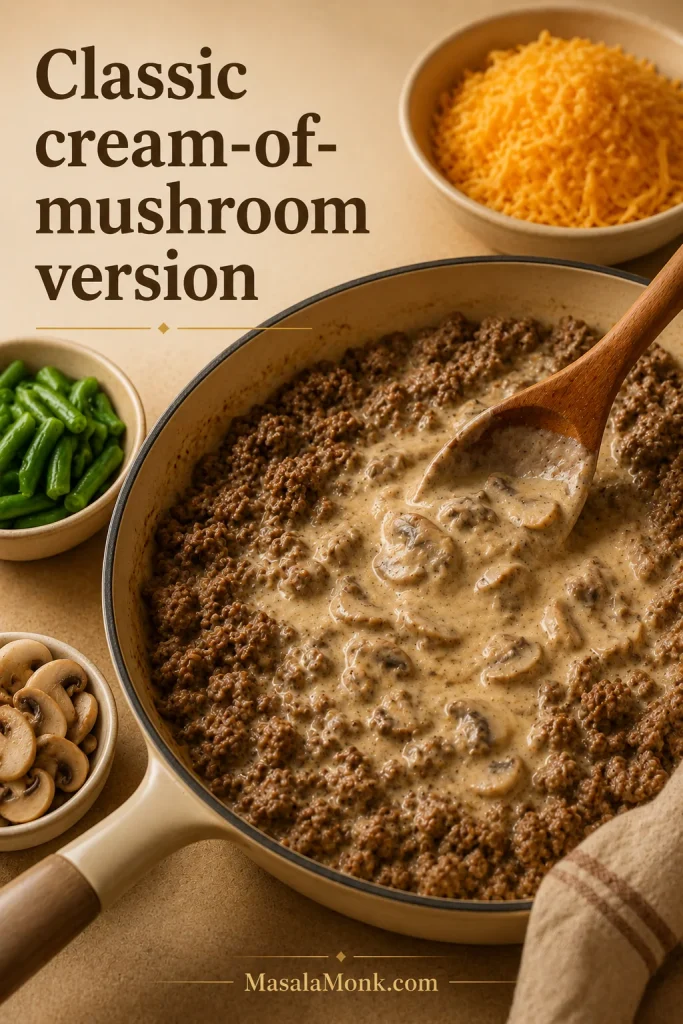
The traditional version uses condensed cream of mushroom soup because it thickens the filling, adds savory flavor, and keeps the recipe fast. One 10.5-ounce can is enough for this 9×13 casserole when mixed with sour cream and a little milk.

Cream of mushroom soup stirred into seasoned ground beef filling for classic tater tot casserole
The cream-of-mushroom version stays popular because it gives the filling body, savory flavor, and comfort-food familiarity without extra sauce work.

Cream of mushroom blends especially well with ground beef, green beans, corn, and cheddar. It also gives the dish the familiar flavor many people expect from tater tot hotdish.

If you want a slightly different flavor, cream of chicken, cream of celery, or cheddar cheese soup can also work. Cream of mushroom gives the most familiar flavor, while cream of chicken tastes milder. Cheddar soup, meanwhile, makes the filling richer and more obviously cheesy.

Prefer not to use canned soup? Use the no-soup version below.

Tater Tot Casserole Without Cream of Mushroom Soup

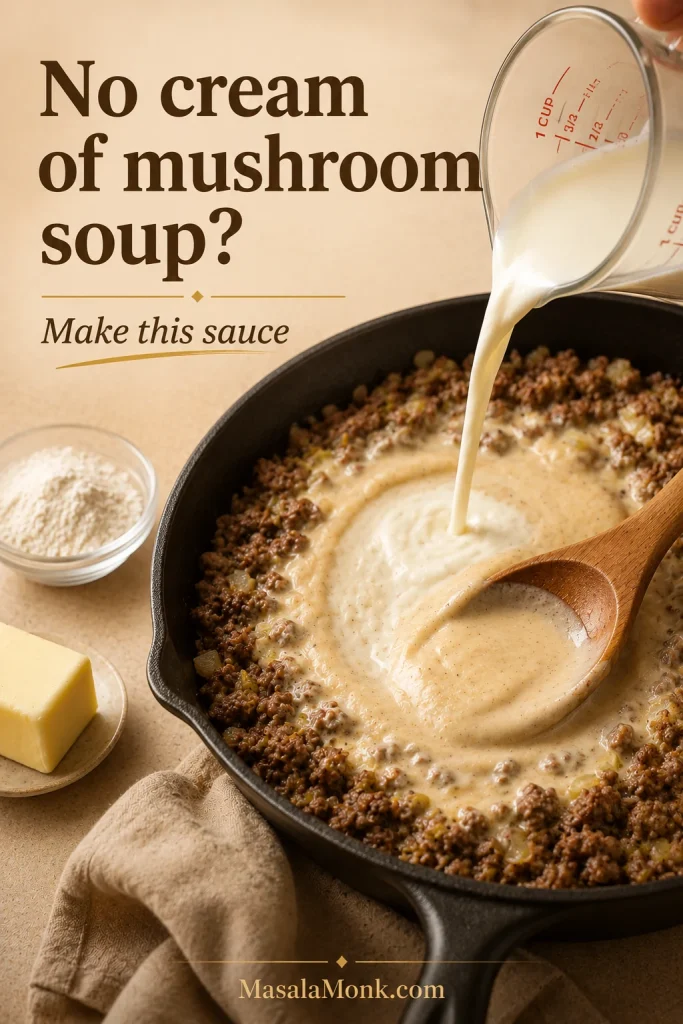
To make it without cream of mushroom soup, use a quick homemade sauce with butter, flour, beef broth, milk, and Worcestershire sauce. This replaces the canned soup, sour cream, and milk mixture in the main recipe.

Homemade sauce with milk or broth being poured into a skillet for tater tot casserole without cream of mushroom soup
Instead of condensed soup, the no-soup version uses a quick homemade sauce when you want more control over thickness and flavor.

The soup version wins on speed. The homemade sauce wins when you want more control over salt, thickness, and mushroom flavor. Either way, the sauce should coat the beef and vegetables without turning loose in the pan.

No-soup ingredient Amount
Butter 2 tbsp / 28 g
All-purpose flour 2 tbsp / 16–18 g
Beef broth 1 cup / 240 ml
Milk or half-and-half 1/2 cup / 120 ml
Worcestershire sauce 1 tbsp / 15 ml
Sour cream, optional 1/4–1/2 cup / 60–120 g

To make it, melt the butter in the skillet after browning the beef, sprinkle in the flour, and cook for about 1 minute. Slowly stir in the broth and milk, then simmer until thick. Once it thickens, fold the sauce into the beef and vegetables, then continue with the cheese and tater tot topping.

If the homemade sauce looks thin, simmer it a little longer before transferring it to the baking dish. Otherwise, a loose sauce can make the tots soften from underneath.

Once the sauce is ready, use it in the main recipe card in place of the canned soup mixture.

Tater Tot Hotdish vs Tater Tot Casserole

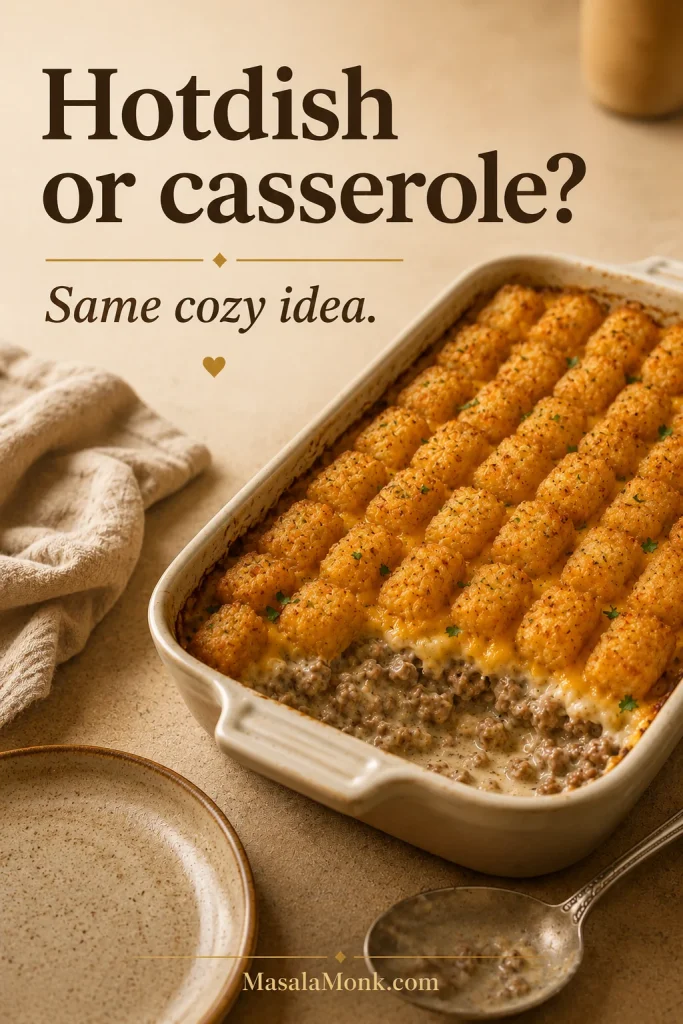
Tater tot hotdish and tater tot casserole are basically the same family of dish. “Hotdish” is the Midwest and Upper Midwest name, especially for a baked dish made with meat, vegetables, creamy sauce, and a starch topping. “Tater tot casserole” is the broader name many people use elsewhere.

Baked tater tot casserole in a dish labeled as hotdish or casserole with golden tots and creamy filling
Whether you call it hotdish or casserole, the same comfort-food formula remains: meat, vegetables, creamy sauce, cheddar, and tots.

Whatever you call it, the comfort-food idea is the same: savory beef, creamy sauce, vegetables, cheddar, and a potato topping that comes out browned instead of soggy.

Some hotdish versions use green beans, corn, or mixed vegetables. Others use two cans of soup for a heavier filling. This version, however, keeps the spirit of the dish but uses a balanced amount of sauce so the casserole stays creamy without drowning the tots.

Best Vegetables for Tater Tot Casserole

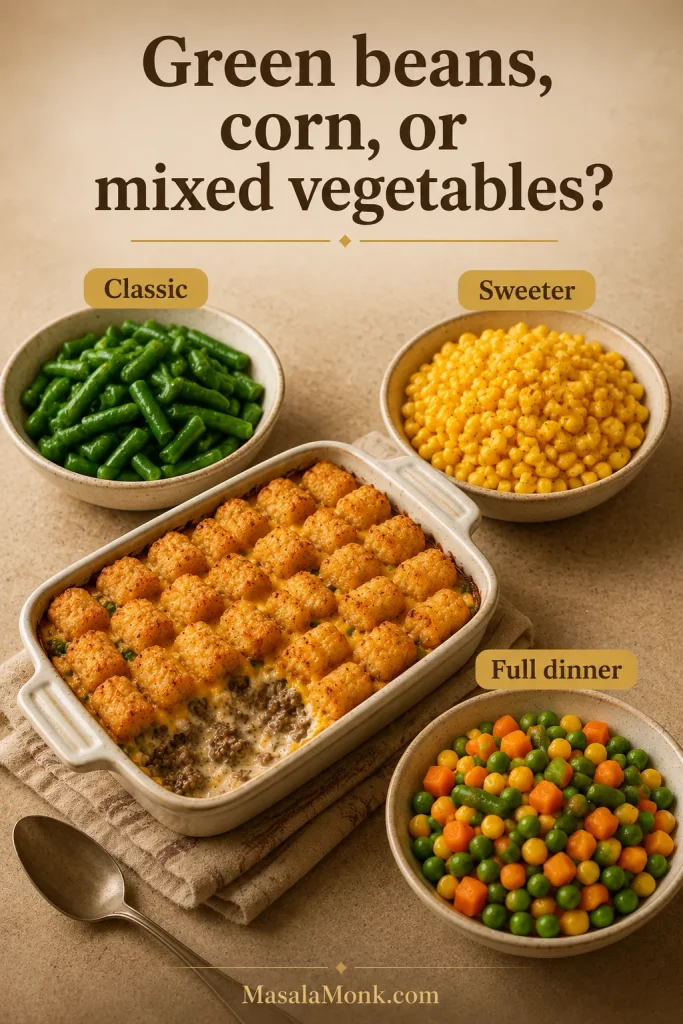
The vegetable changes the whole feel of the casserole: green beans make it old-school, corn makes it sweeter, and mixed vegetables make it feel more like a full dinner in one pan.

Green beans, corn, and mixed vegetables shown as options for tater tot casserole with a baked casserole dish
Green beans make it classic, corn makes it sweeter, and mixed vegetables make the tater tot casserole feel more like a full meal.
Vegetable Best for Tip
Green beans Classic hotdish flavor Drain canned green beans well
Corn Sweeter, kid-friendly casserole Use drained canned corn or thawed frozen corn
Mixed vegetables Easy family dinner Thaw if icy so the filling does not get watery
Peas and carrots Classic creamy casserole feel Use frozen or canned, but avoid excess liquid
Mushrooms Deeper savory flavor Sauté first to remove moisture

Green beans are the most nostalgic choice for many people, but corn is often the version kids go for first. If your family has a strong opinion about the “right” vegetable in tater tot casserole, this is usually where the debate starts.

Avoid very watery vegetables unless you cook off the moisture first. Zucchini, fresh mushrooms, spinach, and bell peppers can all work, but they should be sautéed before they go into the filling. That way, the casserole stays creamy instead of loose.

Make Ahead, Freezer, Storage, and Reheating

Tater tot casserole is make-ahead friendly, but the best method depends on whether you care more about convenience or texture. For the best result, the filling can wait in the fridge; meanwhile, the tots should wait in the freezer.

Best make-ahead method

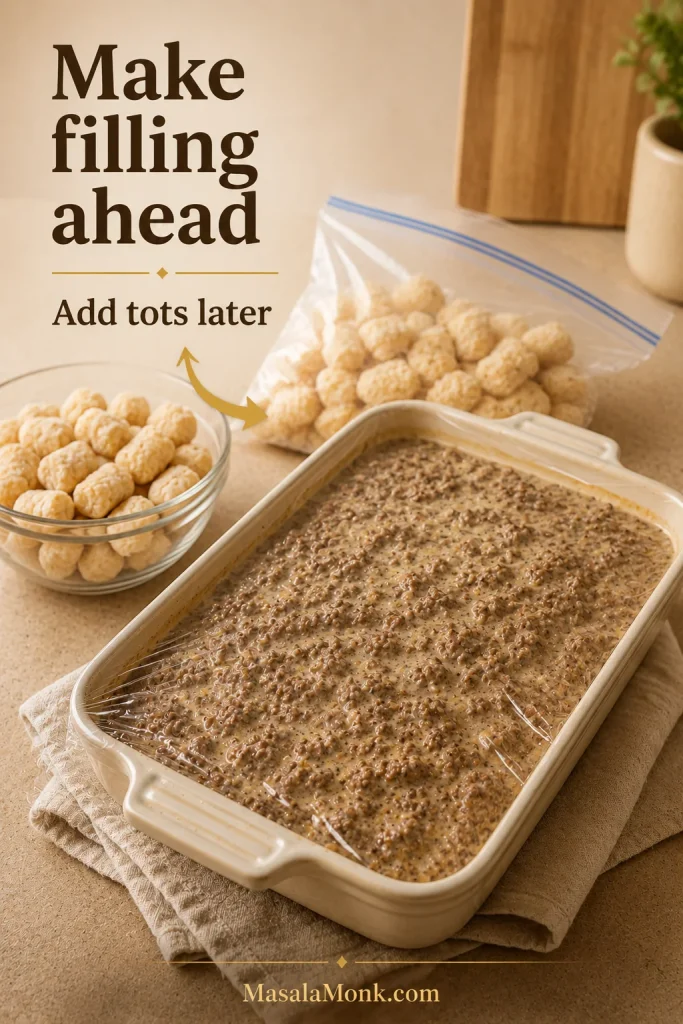
Cook the beef filling, spread it in the baking dish, cover, and refrigerate. When you are ready to bake, add the cheese and frozen tater tots, then bake as directed. If the filling is very cold, add 10–15 minutes to the bake time.

Make-ahead tater tot casserole with prepared beef filling covered in a baking dish and frozen tots kept separate
For make-ahead tater tot casserole, prep the filling first; then add frozen tots only when you are ready to bake.

That way, you get the convenience of a make-ahead dinner without letting the tots sit on the wet filling for hours. It is especially helpful if you are assembling dinner during a busy afternoon or prepping for guests.

It is also the best method if you are bringing the casserole to another family, prepping for a weeknight dinner, or trying to get the messy skillet work done before the evening rush.

For a brunch version of the same make-ahead comfort-food idea, this breakfast casserole with hash browns uses eggs, sausage, cheese, and potatoes in a 9×13 pan.

Best freezer method

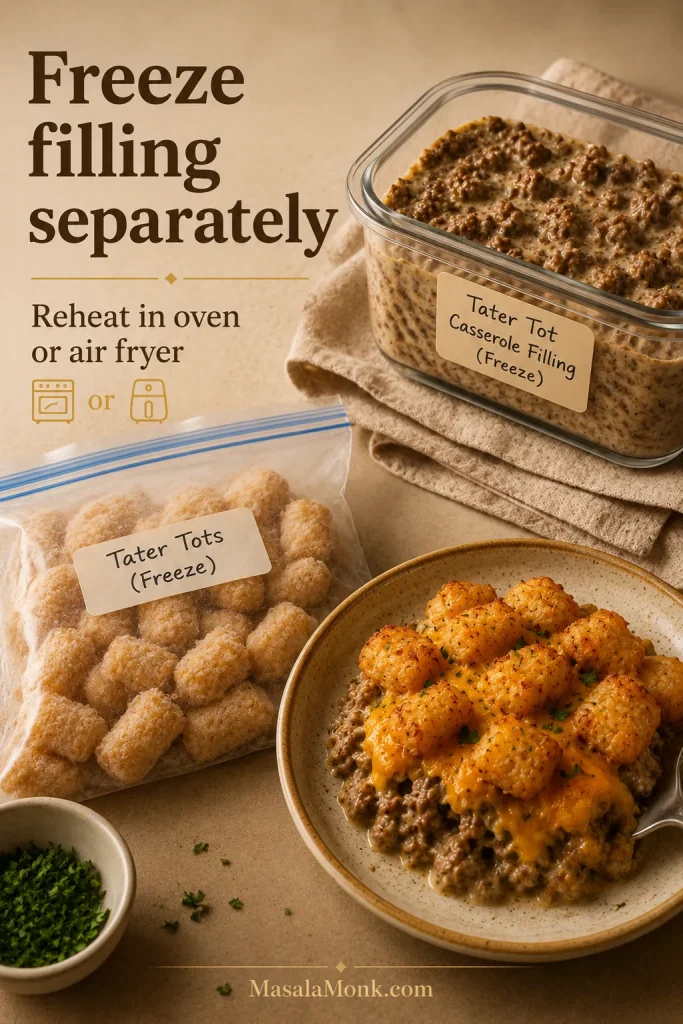
Freeze the cooked beef filling separately in an airtight container. Then, thaw it overnight in the refrigerator, spread it into the baking dish, add cheese and frozen tater tots, and bake uncovered until hot, bubbling, and golden on top.

Freezer-safe container of tater tot casserole filling, separate frozen tots, and reheated serving on a plate
Freezing the filling separately protects texture because the tots can go on fresh from the freezer instead of thawing on the sauce.

The texture is better this way because the tots are added fresh from the freezer instead of freezing and thawing on top of the filling.

Fully assembled freezer method

You can freeze the fully assembled casserole, but the tots may not bake quite as well. Wrap tightly and freeze for up to 2–3 months. Bake covered first until the center is hot, then uncover near the end so the top can brown.

How to store leftovers

Store leftovers in an airtight container in the refrigerator for 3–4 days. The topping will soften as it sits, but the flavor stays good.

How to reheat tater tot casserole

For the best texture, reheat leftovers in a 350°F oven or air fryer until hot. The microwave is fastest, but it will soften the tots.

If reheating a larger portion, cover it loosely at first so the center warms through. Then, uncover for the last few minutes to help the topping crisp again.

When you are ready to cook, use the timing in the recipe card and add extra minutes if the filling is cold.

Which Version Should You Make First?

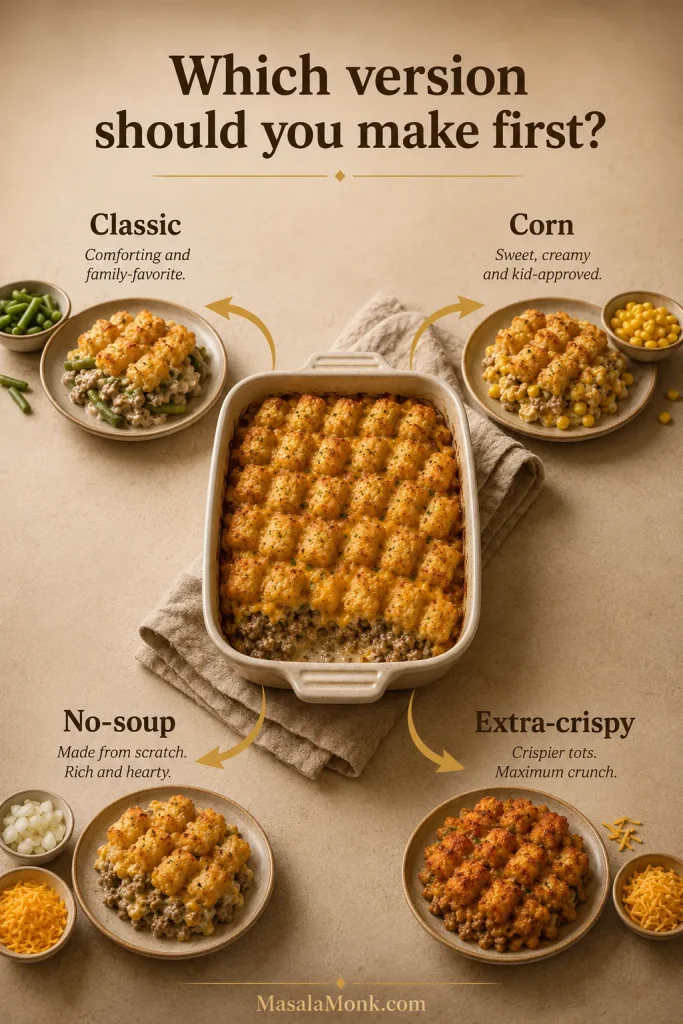
If this is your first time making tater tot casserole, start with the classic cream-of-mushroom version. It gives you the familiar creamy filling, beefy flavor, cheddar middle layer, and golden potato topping most people expect. After that, adjust the vegetable, sauce, or cheese to match your table.

Version chooser for tater tot casserole showing classic, corn, no-soup, and extra-crispy options around a casserole dish
Start with the classic version for familiar flavor, then adjust with corn, a no-soup sauce, or extra-crispy tots based on your table.
Choose this version Best for What to do
Classic green bean version Old-school comfort Use cream of mushroom soup, green beans, cheddar, and frozen tots.
Corn version Kid-friendly sweetness Swap green beans for drained corn and keep the seasoning mild.
No-soup version More control over salt and thickness Use the homemade butter, flour, broth, milk, and Worcestershire sauce base.
Extra-crispy version Best topping texture Keep cheese under the tots and pre-bake the frozen tots for about 10 minutes.

For more ways to change the filling, protein, or seasoning, see the variation ideas next.

Tater Tot Casserole Variations

Keep the main recipe simple the first time. Once the basic method works, you can change the vegetable, protein, seasoning, or sauce without losing the creamy filling and crisp topping.

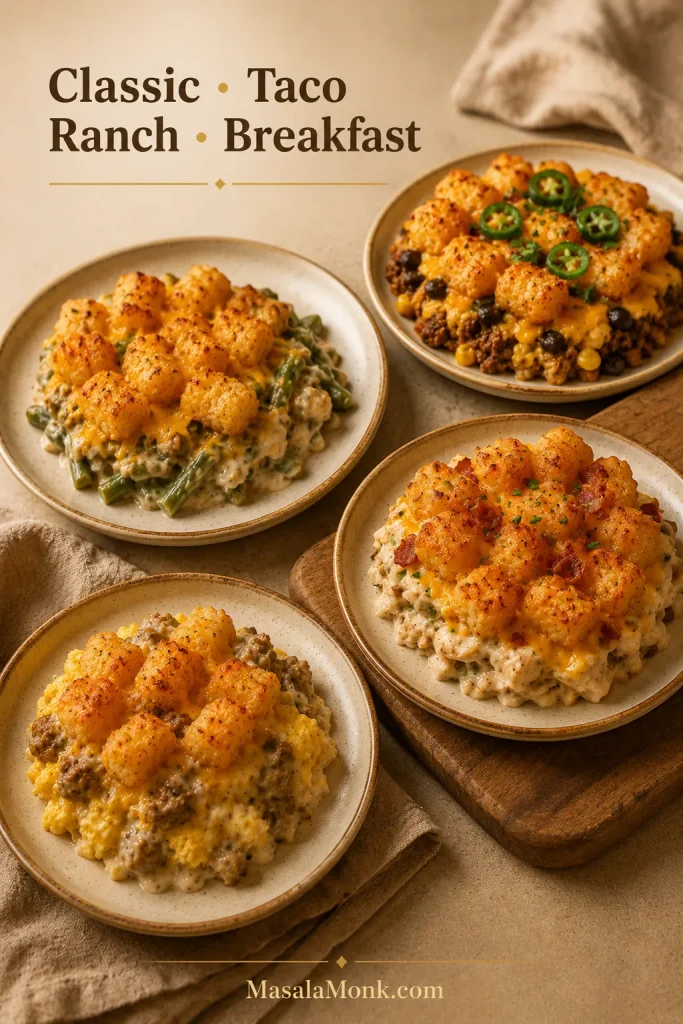
Tater tot casserole variations showing classic, taco, chicken bacon ranch, and breakfast-style servings
After the basic method works, the same casserole can shift toward taco night, brunch, chicken bacon ranch, or the classic green bean version.

Classic family versions

  • Green bean version: Use 2 cups drained green beans for the most old-school option, especially with cream of mushroom soup and cheddar.
  • Corn version: Use drained corn instead of green beans for a sweeter, softer, and usually more kid-friendly filling.
  • Mixed vegetable version: Use peas, carrots, corn, or a frozen mixed vegetable blend when you want the casserole to feel more like a full dinner in one pan.

Bigger flavor twists

  • Taco tater tot casserole: Add taco seasoning, corn, black beans, and Mexican-style cheese.
  • Chicken bacon ranch: Use cooked chicken, ranch seasoning, bacon, cheddar, and cream of chicken soup.
  • Breakfast tater tot casserole: Use eggs, breakfast sausage or bacon, cheese, and tots in a brunch-style bake. For another make-ahead breakfast option with smaller portions, these egg muffins are easier to pack, reheat, and meal prep than a full 9×13 casserole.

Meat, vegetarian, and method swaps

  • Hamburger tater tot casserole: Same as the main recipe; “hamburger” is another common name for ground beef here.
  • Ground turkey version: Use ground turkey instead of beef and add extra Worcestershire, garlic, or paprika so the filling does not taste flat.
  • Vegetarian version: Skip the beef and use sautéed mushrooms, extra vegetables, or plant-based crumbles.
  • Slow cooker tater tot casserole: Use the same flavor base, but expect a softer topping than the oven version. If you are in more of a crock pot mood, this slow cooker sausage casserole is built for a softer, saucier comfort-food dinner.

The best first variation is usually the vegetable: green beans for old-school comfort, corn for sweetness, or mixed vegetables when you want the casserole to feel more like dinner in one pan.

Once you choose a version, use the recipe card as the base and adjust only the vegetable, protein, or seasoning.

What to Serve with Tater Tot Casserole

Tater tot casserole is rich, creamy, and filling, so simple sides work best. Try it with a crisp green salad, roasted broccoli, steamed green beans, coleslaw, pickles, fruit salad, or soft dinner rolls.

For a lighter plate, choose something fresh and crunchy next to the casserole. A vinegar-based slaw, cucumber salad, or simple green salad helps balance the creamy filling and cheesy potato topping.

Recipe Card: Tater Tot Casserole

This version has enough sauce to stay creamy, but not so much that the tots sink or steam. You still get a cheesy middle layer, while the potato topping stays exposed to the oven heat.

If you ignore everything else, remember the cheese-under-the-tots rule. Keep the tots frozen, and do not bury them under cheese too early. Those two choices make the difference between a soft topping and the crisp golden layer everyone reaches for first.

Tater Tot Casserole Recipe

This easy tater tot casserole recipe is made with seasoned ground beef, creamy mushroom filling, vegetables, cheddar cheese, and a frozen tater tot layer that bakes golden and crisp on top.

Prep Time15 minutes
Cook Time40–45 minutes
Rest Time5–10 minutes
Servings6–8

Equipment: 12-inch skillet, 9×13-inch / 3-quart baking dish, spatula or wooden spoon, measuring cups and spoons.

Ingredients

  • 28–32 oz / 800–900 g frozen tater tots, or enough for one generous layer
  • 1 lb / 454 g lean ground beef
  • 1 medium yellow onion, diced, about 120–150 g
  • 2 garlic cloves, minced
  • 1 tbsp / 15 ml Worcestershire sauce
  • 1 can / 10.5 oz / 298 g condensed cream of mushroom soup
  • 1/2 cup / 120 g sour cream
  • 1/3 cup / 80 ml milk
  • 2 cups / about 250–300 g drained canned green beans, drained corn, or thawed mixed vegetables
  • 2 cups / 225 g shredded cheddar cheese, divided
  • 1/2 tsp garlic powder
  • 1/2 tsp paprika
  • 1/2 tsp black pepper
  • 1/2 tsp salt, plus more to taste
  • Chives or green onions, optional, for serving

Instructions

  1. Preheat the oven to 375°F / 190°C. Grease a 9×13-inch baking dish.
  2. In a large skillet over medium-high heat, cook the ground beef and onion until the beef is browned and the onion is softened. Drain excess grease.
  3. Add garlic, Worcestershire sauce, garlic powder, paprika, salt, and black pepper. Cook for 30–60 seconds.
  4. Stir in the cream of mushroom soup, sour cream, milk, and vegetables. The filling should be creamy but thick enough to support the tots.
  5. Spread the filling evenly in the prepared baking dish.
  6. Sprinkle 1 1/2 cups of cheddar cheese over the filling.
  7. Arrange the frozen tater tots in one generous layer over the cheese. Do not force extra tots on top if the dish is already covered.
  8. Bake uncovered for about 40 minutes, until the edges are bubbling and the tots are golden.
  9. Sprinkle the remaining 1/2 cup cheddar over the top, if using, and bake 5 minutes more.
  10. Rest for 5–10 minutes before serving. Garnish with chives or green onions if desired.

Notes

  • For crispier tots, follow the cheese-under-the-tots rule: bake uncovered, keep most cheddar under the potato layer, and add only a small sprinkle near the end.
  • This casserole is best served after a short 5–10 minute rest while the tots still have texture.
  • For the best make-ahead version, prepare the beef filling ahead and add frozen tots right before baking.
  • For a no-soup version, use the homemade sauce in the section above.
  • If baking from the refrigerator, add 10–15 minutes to the bake time.
  • If using salty soup, canned vegetables, or pre-shredded cheese, start with less salt and adjust after the filling is mixed.
  • Place the baking dish on a rimmed sheet pan if it is very full, because the sauce can bubble at the edges.
  • For best leftover texture, reheat in the oven or air fryer instead of the microwave.

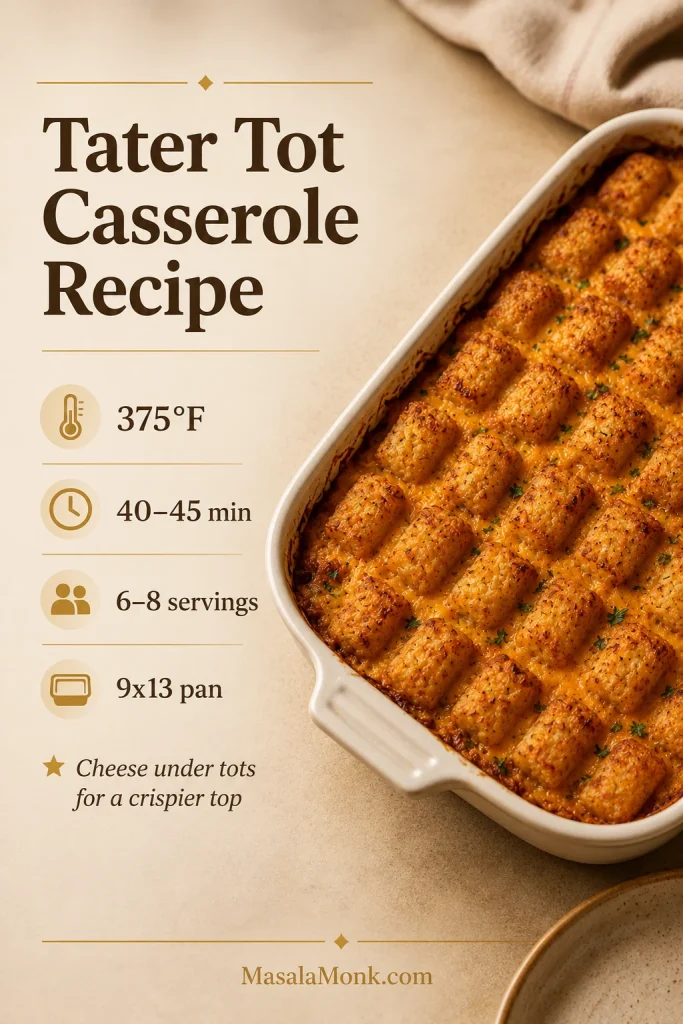
For a quick saveable version, use this visual recipe card as a reminder of the core timing, pan size, and cheese placement.

Saveable tater tot casserole recipe card with 375°F temperature, 40 to 45 minute bake time, 6 to 8 servings, 9x13 pan, and cheese under tots tip
Save the main method: bake in a 9×13 pan at 375°F, keep the tots frozen, and place most of the cheese below the potato layer.

If you grew up with tater tot casserole, I’d love to know what version was on your table: green beans, corn, mixed vegetables, extra cheese, or no vegetables at all? And if soggy tots have ever ruined a pan for you, try the cheese-under-the-tots method once and tell me if it changed the texture.

FAQs

Do you cook tater tots before adding them to casserole?

No, you do not need to cook tater tots before adding them. Put them on the casserole frozen so they bake on top while the filling heats underneath. For extra crunch, you can pre-bake them for about 10 minutes before layering.

Should tater tots be frozen or thawed for casserole?

Use frozen tater tots. Thawed tots soften quickly and can turn mushy during baking.

Do you cover tater tot casserole when baking?

For the best topping, bake tater tot casserole uncovered. Covering traps steam and can soften the tots. However, if baking from frozen or very cold, you can cover it first to heat the center, then uncover near the end to brown the top.

What temperature is best for tater tot casserole?

375°F / 190°C is the best default temperature. It gives the filling enough time to heat through while helping the tater tots turn golden and crisp.

How do you keep tater tot casserole from getting soggy?

Use frozen tots, drain excess grease and vegetable liquid, keep the filling sturdy, bake uncovered, and arrange the tots in one layer. Also, putting most of the cheese under the tots helps the top brown better.

Can I make tater tot casserole ahead of time?

For the best make-ahead texture, prepare the beef filling first, refrigerate it, and add the cheese and frozen tater tots right before baking.

Can I assemble tater tot casserole the night before?

You can make the beef filling the night before and refrigerate it, but wait to add the frozen tater tots until right before baking. If the tots sit on the creamy filling overnight, they are more likely to soften.

Can you freeze tater tot casserole?

Yes. The best method is to freeze the cooked filling separately, then thaw it, top with cheese and frozen tots, and bake. You can also freeze the fully assembled casserole, but the tots may bake softer.

What can I use instead of cream of mushroom soup?

You can use cream of chicken, cream of celery, cheddar cheese soup, or a homemade sauce made with butter, flour, beef broth, milk, and Worcestershire sauce.

Is tater tot hotdish the same as tater tot casserole?

They are basically the same style of dish. “Hotdish” is the Midwest name, while “casserole” is the broader term many people use elsewhere.

What meat works besides ground beef?

Ground turkey, ground chicken, cooked shredded chicken, or plant-based crumbles can work. Ground beef gives the most familiar flavor, but the same creamy filling and tater tot topping can handle many swaps.

Back to top

Posted on 1 Comment

Homemade Cheeseburger Macaroni Recipe

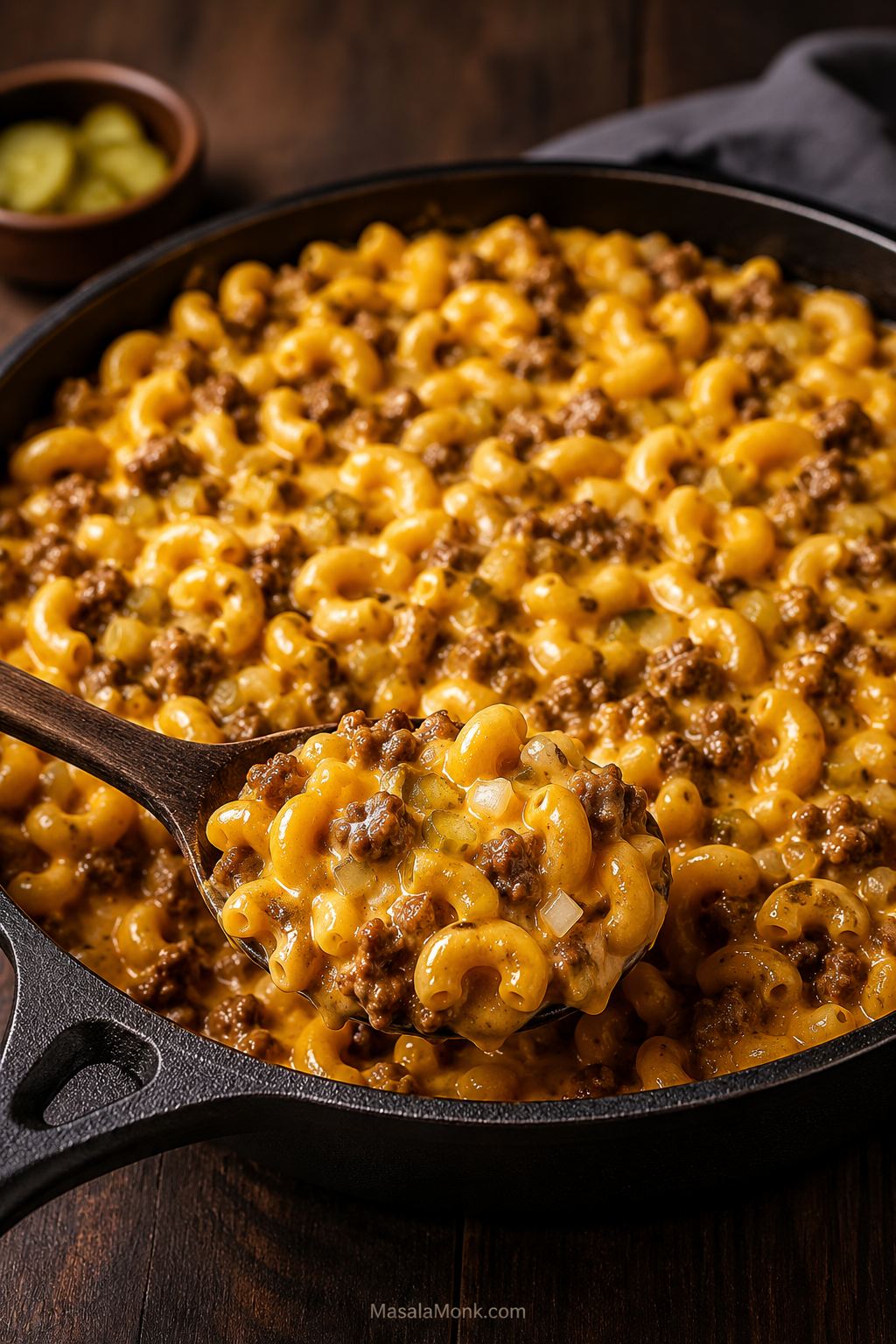
Homemade cheeseburger macaroni in a dark skillet with elbow pasta, browned ground beef, glossy cheddar sauce, and a serving spoon.

This homemade cheeseburger macaroni recipe is a one-pot stovetop dinner with browned ground beef, tender elbow macaroni, real cheddar, and the tangy-savory flavor of a cheeseburger. It has the comfort of the boxed skillet dinner many of us remember, but the sauce is richer, smoother, and easier to adjust because everything is made from simple pantry ingredients.

The macaroni cooks directly in beef broth and milk, so the pasta releases starch as it simmers and helps thicken the sauce from inside the pot. Then the cheddar goes in after the heat is off, which keeps the final pot glossy instead of grainy. In about 35 minutes, you get a saucy, spoonable ground beef pasta that tastes like cheeseburger mac and cheese without needing a packet.

This is the kind of dinner to make when you have a pound of ground beef, 8 ounces of pasta, and not much patience left for dinner decisions. It scratches the same nostalgic itch as the boxed version, but tastes fuller and fresher because the sauce is built in the pan instead of poured from a packet.

Quick Answer: How to Make Homemade Cheeseburger Macaroni

To make homemade cheeseburger macaroni, brown ground beef with onion and garlic, then stir in tomato paste, ketchup, mustard, Worcestershire, and seasonings. Add beef broth, milk, and dry elbow macaroni, then simmer until the pasta is tender. Turn off the heat, rest the pot for 2–3 minutes, and stir in freshly shredded cheddar until creamy.

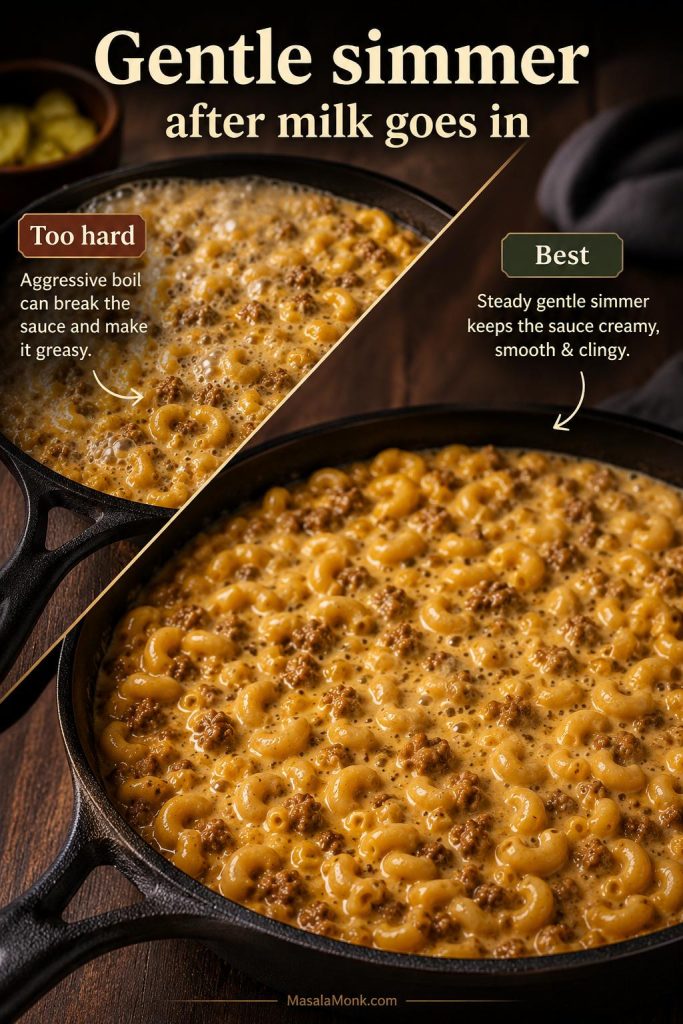
The recipe takes about 30–35 minutes in one deep skillet or Dutch oven. For the smoothest sauce, keep the simmer gentle once the milk goes in, then add the cheese after the heat is off.

It takes a few minutes longer than the fastest boxed-style versions, but those minutes go into browning the beef properly and building a sauce that tastes fuller than a packet.

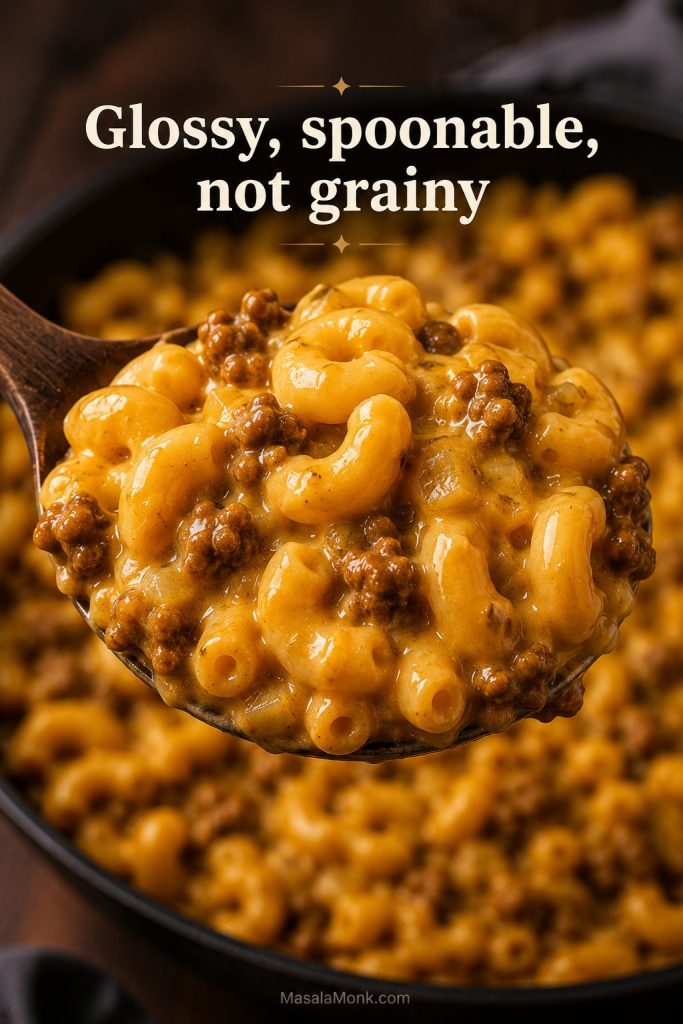
Spoon lifting creamy cheeseburger macaroni with elbow pasta, ground beef, and smooth cheddar sauce.
Aim for this texture early: glossy cheeseburger macaroni that holds together on the spoon without turning dry, oily, or grainy.

Best First Version

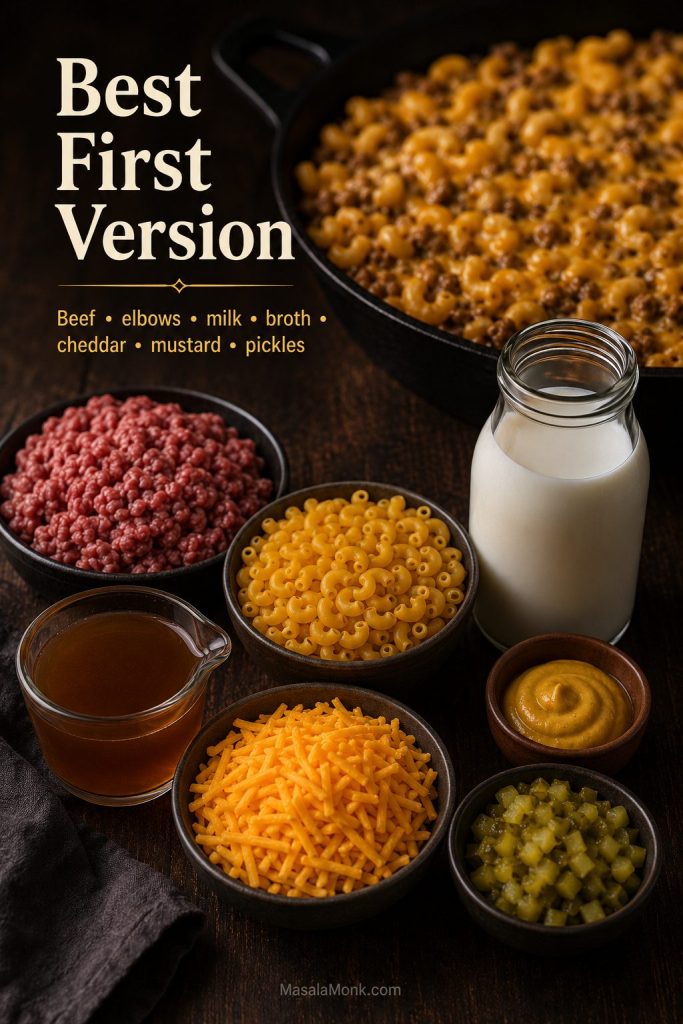
Best first version: Use 85/15 ground beef, elbow macaroni, whole milk, beef broth, sharp cheddar, yellow mustard, and chopped dill pickles at the end. The finished pot should look glossy and spoonable, with sauce clinging to the elbows instead of pooling at the bottom or tightening into a paste.
Ingredients for the best first version of cheeseburger macaroni, including ground beef, elbow pasta, milk, broth, cheddar, mustard, and pickles.
For the most balanced first batch, start with beef, elbows, broth, milk, sharp cheddar, mustard, and pickles so the pot tastes creamy, beefy, and burger-like.

Ready to cook from the exact amounts? Go straight to the homemade cheeseburger macaroni recipe card.

Why You’ll Love This Cheeseburger Macaroni

Depending on where you grew up, you might think of this as cheeseburger pasta, hamburger mac and cheese, cheeseburger mac and cheese, or the from-scratch version of that boxed skillet dinner many people remember. Whatever you call it, the goal is the same: browned ground beef, tender elbows, a cheddar-rich sauce, and enough tomato paste, ketchup, mustard, Worcestershire, and pantry spices to make the whole pot taste like a cheeseburger dinner.

Even better, the pasta cooks directly in the sauce. That means no separate pasta pot, no seasoning packet, and no watery finish. As the macaroni simmers, its starch helps everything thicken; afterward, the cheddar melts in gently so the final pot stays glossy and smooth.

It is also forgiving. When the sauce gets too thick, a splash of milk or broth loosens it. If the pasta needs another minute, add a little more liquid and cover the pot again. For more burger flavor, finish with extra mustard or a handful of chopped pickles at the end.

Most importantly, this is the kind of dinner that works when people are hungry now: familiar enough for kids, flexible enough for adults, and easy to adjust at the end with pickles, hot sauce, extra mustard, or more cheese.

It also has that rare weeknight-dinner quality where nobody needs convincing. The smell of beef, cheddar, onion, and pasta does most of the work before the bowls even hit the table.

What Is Cheeseburger Macaroni?

A good homemade cheeseburger macaroni recipe should feel like a complete stovetop dinner: tender elbows, browned ground beef, cheddar sauce, and the kind of tangy, savory seasoning you expect from a cheeseburger. It is not trying to be fancy, and that is the point. The charm is that it turns a pound of ground beef and a handful of pantry ingredients into a full, comforting meal.

Think of it as a homemade Hamburger Helper-style cheeseburger macaroni: the same cozy beefy-cheesy comfort, but with real cheddar, fresh onion and garlic, and a sauce you can adjust instead of a seasoning packet.

The dish sits somewhere between a skillet pasta and mac and cheese. It should be saucy and cheesy, but it should also taste beefy and slightly tangy, the way a cheeseburger does. That is why this version uses tomato paste for depth, a little ketchup for sweet-tangy flavor, mustard for sharpness, Worcestershire for savory depth, and optional pickles or relish at the end.

Cheeseburger Macaroni vs Cheeseburger Pasta

Cheeseburger macaroni usually means elbow macaroni, ground beef, and a cheddar-based sauce. It is the most classic name for this style of recipe.

Cheeseburger pasta is broader. It can use elbows, shells, rotini, cavatappi, or small penne. The flavor is still cheeseburger-inspired, but the shape can change depending on what you have in the pantry.

Hamburger Mac and Cheese vs Cheeseburger Macaroni

Hamburger mac and cheese usually leans creamier and cheesier, almost like classic mac and cheese with ground beef stirred in. Cheeseburger macaroni leans a little more beefy and seasoned, with a sauce that coats the pasta instead of burying it.

This pot lands in the sweet spot: rich enough for the hamburger mac and cheese crowd, but still burger-flavored enough for anyone craving homemade cheeseburger macaroni. For the more classic pasta-and-cheese version without the burger flavor, this macaroni and cheese recipe covers creamy stovetop, baked, and Southern-style versions in more detail.

Why This Cheeseburger Macaroni Works

The places this dish usually goes wrong are predictable: the pasta absorbs too much liquid, the cheese gets too hot, or the pot tastes creamy but not very burger-like. This method is built around avoiding those problems from the start.

If texture is your main worry, keep the creamy sauce tips and troubleshooting guide close; they cover the most common thick, thin, grainy, and bland-pot problems.

The trick is not complicated, but the order matters. Let the beef brown properly, give the tomato paste and spices a minute in the pan, simmer the macaroni gently, and wait until the heat is off before adding the cheese.

One-Pot Pasta Makes the Sauce Creamier

Instead of boiling the macaroni in a separate pot, the dry pasta simmers directly in beef broth and milk. As it cooks, the pasta releases starch into the liquid. Because of that, the sauce thickens and clings to the elbows without needing a heavy separate cheese sauce.

Tomato Paste, Mustard, and Worcestershire Add Cheeseburger Flavor

Plain ground beef and cheddar can taste like beefy mac, but not necessarily like a cheeseburger. Tomato paste gives the sauce a deeper cooked flavor, ketchup adds a little sweet-tangy burger note, mustard sharpens the sauce, and Worcestershire makes the beef taste richer.

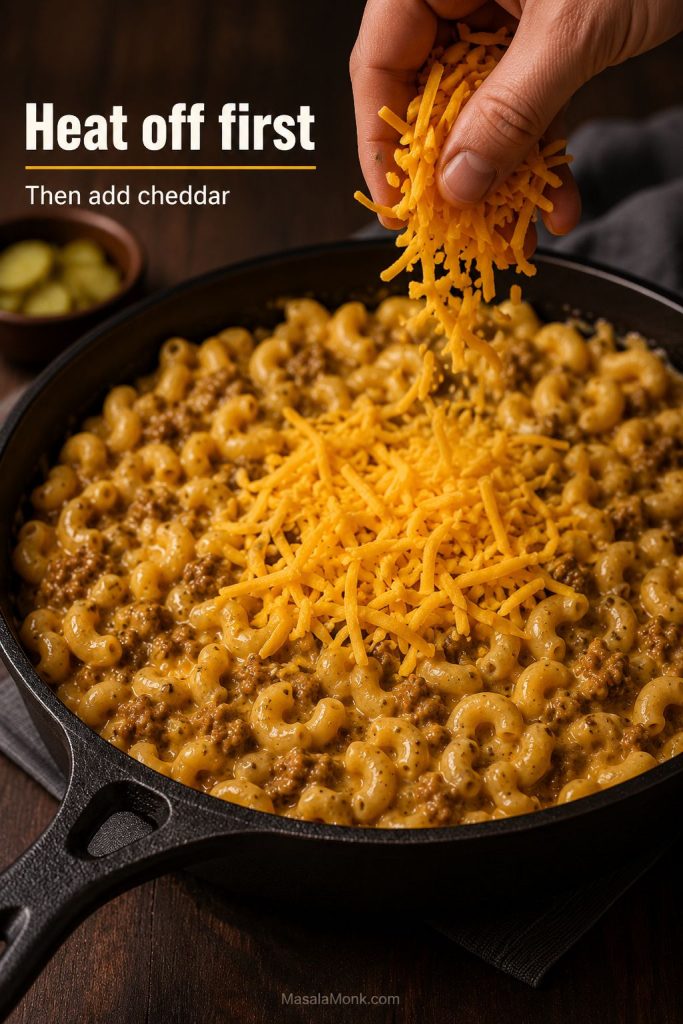
Add the Cheese After the Heat Is Off

Cheddar can turn oily or grainy if it is boiled. That is why the pasta finishes cooking first, rests briefly, and then gets the cheese stirred in after the heat is off. It is a small step, but it makes a big difference in the final texture.

Ingredients for Cheeseburger Macaroni

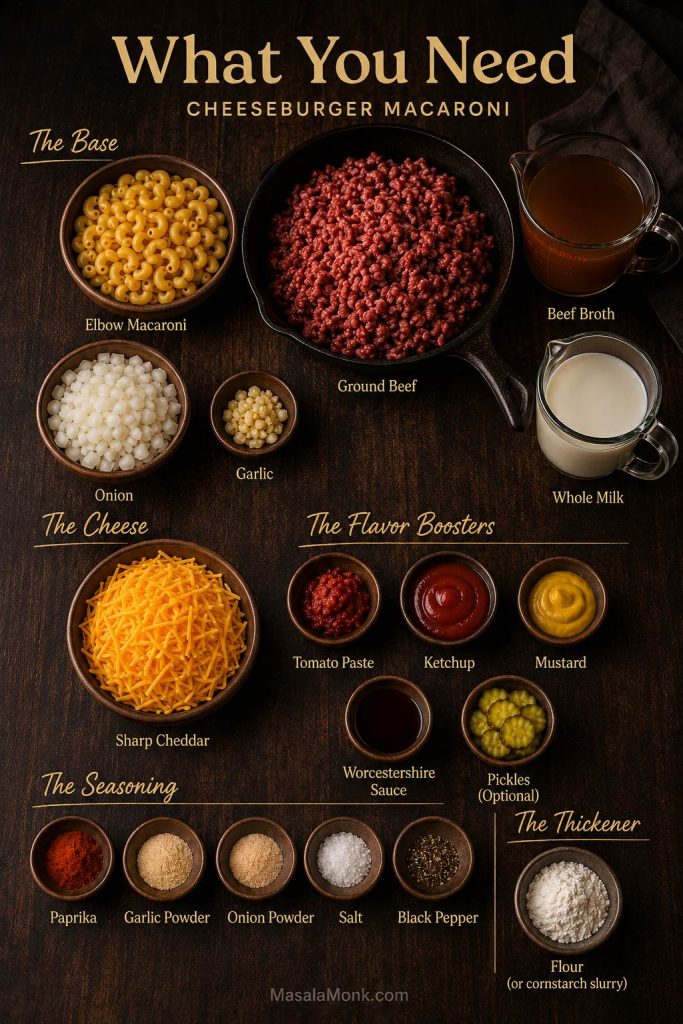
Nothing here is unusual, which is part of the appeal. This is pantry-and-fridge cooking: ground beef, a small pasta shape, milk, broth, cheddar, and a few sharp, savory extras that make the pot taste more like a cheeseburger than plain beefy pasta.

Ingredient guide for cheeseburger macaroni with ground beef, elbow macaroni, broth, milk, cheddar, tomato paste, mustard, Worcestershire, seasonings, and thickener.
Although the ingredient list is simple, tomato paste, mustard, Worcestershire, and a small thickener help the sauce taste deeper and cling better.

Ground Beef

Use 1 pound / 450 g of lean ground beef. An 85/15 or 90/10 blend works well because it has enough flavor without making the finished pasta greasy. If your beef releases a lot of fat, drain the excess before adding the tomato paste and liquids.

If you like to check with a thermometer, ground beef should reach 160°F / 71°C. The USDA’s safe minimum internal temperature chart lists 160°F / 71°C for ground meats.

Elbow Macaroni

Elbow macaroni is the classic shape for homemade cheeseburger macaroni. It cooks quickly, holds sauce well, and gives the dish that familiar skillet-dinner feel. Small shells, rotini, cavatappi, or small penne can also work, but they may need slightly different cooking times and a splash more liquid.

Beef Broth and Milk

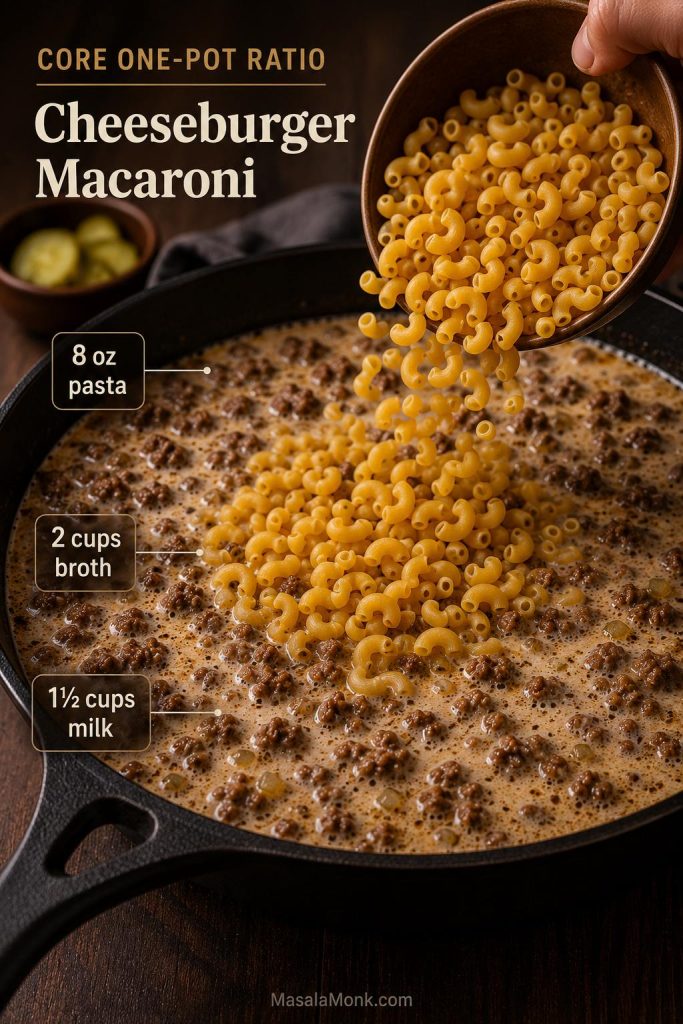
The base ratio here is 2 cups / 480 ml beef broth plus 1½ cups / 360 ml whole milk for 8 oz / 225 g dry macaroni. The broth keeps the pasta beefy, while the milk gives the sauce body. That amount gives the macaroni enough liquid to cook through without leaving you with soup at the end.

For the cooking sequence, see the simmer the pasta step, where the broth, milk, and dry elbows come together in one pot.

Tomato Paste, Ketchup, Mustard, and Worcestershire

This is the cheeseburger flavor base. Tomato paste adds depth without making the dish taste like tomato pasta. Ketchup gives a small sweet-tangy note, mustard adds sharpness, and Worcestershire sauce makes the beef flavor rounder.

Flour or Cornstarch

A little flour helps the sauce thicken and cling to the pasta. If you prefer cornstarch, mix it with cold milk or broth first so it becomes a smooth slurry. Do not sprinkle dry cornstarch straight into the hot skillet, because it can clump.

If the sauce thickens too much or turns clumpy, the troubleshooting table has the fastest fixes.

Cheddar Cheese

Freshly shredded sharp cheddar gives the best flavor. Mild cheddar works too, but sharp cheddar cuts through the richness better. For an extra-smooth skillet-dinner finish, you can add 2 oz / 55 g American cheese or cream cheese along with the cheddar.

For melting details, jump to best cheese for cheeseburger macaroni or the cheese-after-heat step.

Optional Pickles or Relish

Pickles are optional, but they are one of the easiest ways to make the pasta taste more like a cheeseburger. Add chopped dill pickles or relish at the end, not during the simmer. That keeps the flavor bright instead of harsh. For more topping ideas, this burger topping guide is useful for thinking about mustard, pickles, cheese, onions, and burger-sauce-style finishes.

How to Make Cheeseburger Macaroni in One Pot

Once everything is measured, the cooking moves quickly. Keep the pot nearby, stir a few times, and trust the resting step before you decide the sauce needs fixing.

You need a 12-inch deep skillet with a lid or a 5–6 quart Dutch oven. A shallow pan can reduce the liquid too quickly before the macaroni has time to soften, so choose something deep enough for the pasta to simmer evenly.

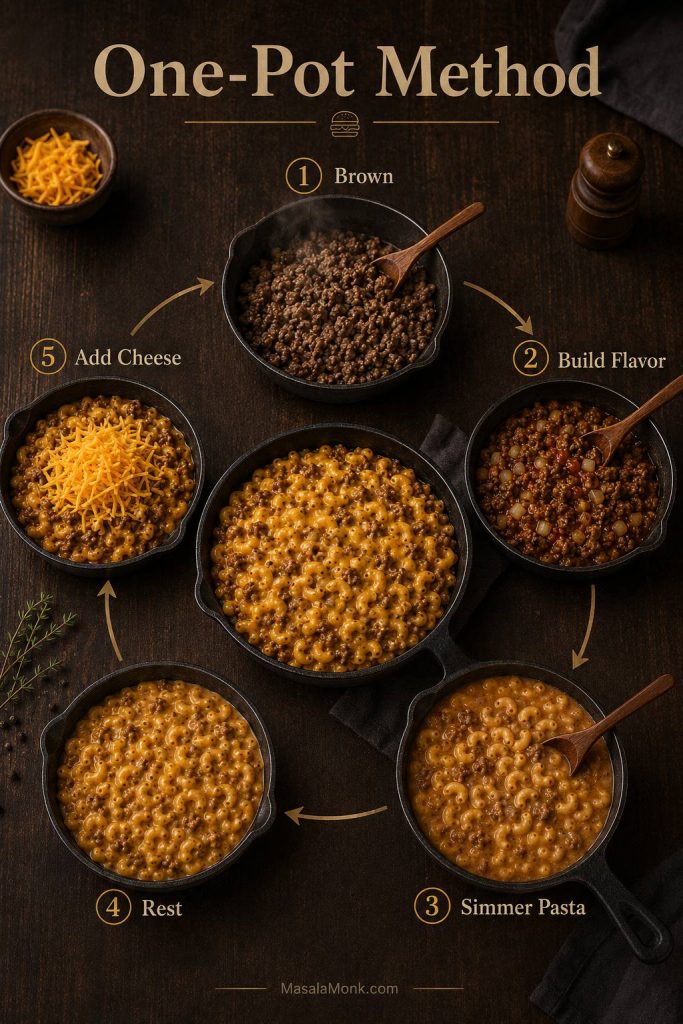
One-pot cheeseburger macaroni method board showing browning beef, building flavor, simmering pasta, resting, and adding cheese.
Once you see the order, the one-pot method is easy: brown the beef, build flavor, simmer the pasta, rest the pot, then add cheese gently.

Brown the Beef and Onion

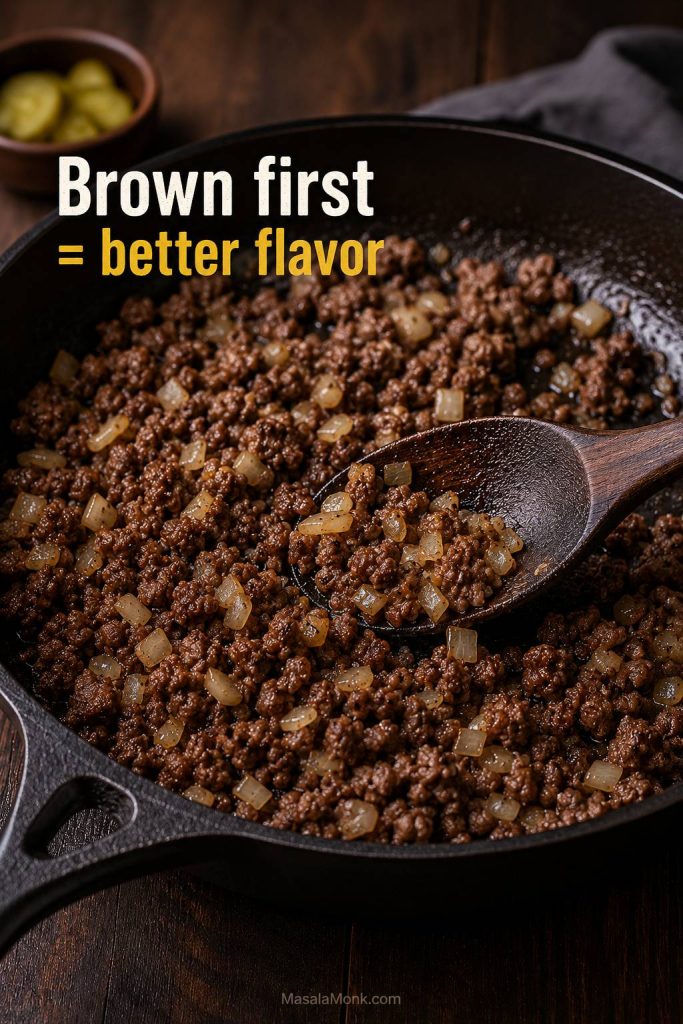
Heat the skillet over medium-high heat. Add a tablespoon of butter or oil, then add the chopped onion and ground beef. Cook for 6–8 minutes, breaking up the beef as it browns. The beef should be cooked through and the onion should soften. Drain excess fat if the pan looks greasy.

Ground beef and chopped onion browning in a skillet for cheeseburger macaroni.
Browning the beef before adding liquid gives the final pasta deeper flavor, while softened onion adds sweetness and body to the sauce.

Build the Cheeseburger Flavor Base

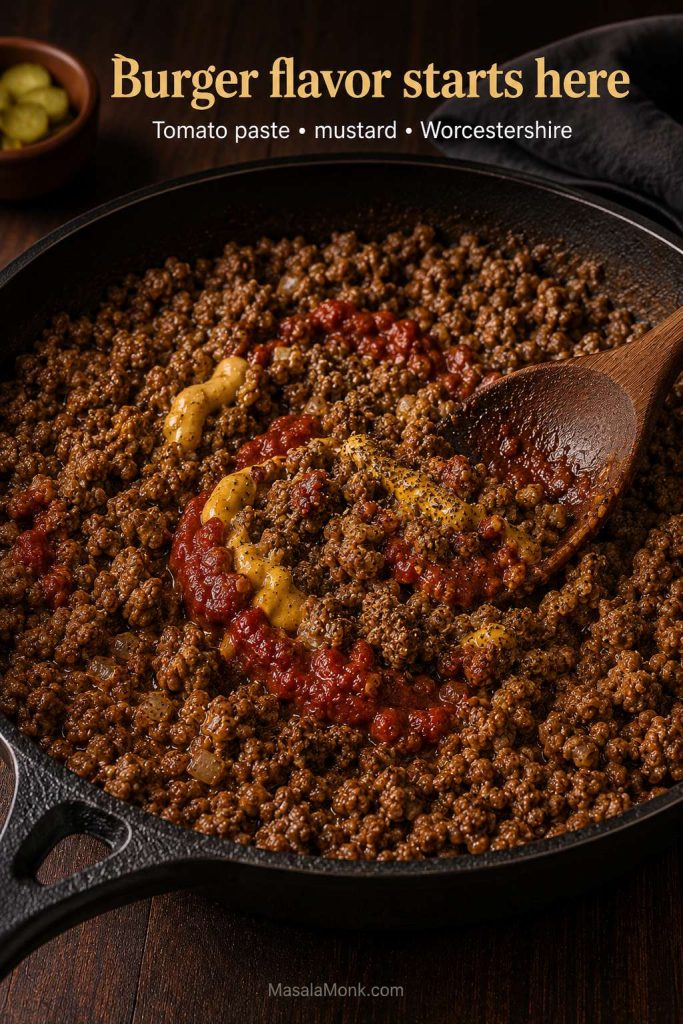
Stir in the garlic and cook for about 30 seconds. Then add tomato paste, ketchup, mustard, Worcestershire sauce, paprika, garlic powder, onion powder, salt, pepper, and flour. Cook for 1–2 minutes, stirring often, until the tomato paste darkens slightly and the spices smell warm.

Tomato paste, mustard, Worcestershire sauce, ketchup, and seasonings being stirred into browned beef for cheeseburger macaroni.
Before the broth and milk go in, the beef gets its cheeseburger flavor from tomato paste, mustard, Worcestershire, ketchup, and warm spices.

If you are using cornstarch instead of flour, do not add it dry at this stage. Mix 2 teaspoons cornstarch with 1 tablespoon cold milk or broth, then stir that slurry in after the broth and milk go into the pan.

Simmer the Pasta

Pour in the beef broth and milk, scraping the bottom of the pan so nothing sticks. If using the cornstarch slurry, stir it in now. Next, add the dry elbow macaroni and stir well.

Dry elbow macaroni being added to a skillet with ground beef, broth, and milk for one-pot cheeseburger macaroni.
Use the one-pot ratio as your anchor: 8 ounces elbows, 2 cups broth, and 1½ cups milk, then adjust only if the pasta needs it.

Bring the mixture to a boil, then reduce the heat to medium-low, cover, and simmer for 10–12 minutes. Stir once or twice so the pasta cooks evenly. The macaroni should be just tender and most of the liquid should be absorbed.

Gentle simmer guide for cheeseburger macaroni comparing a hard boil with a calmer simmer after milk is added.
After the milk is added, a gentle simmer is safer than a hard boil because it cooks the pasta evenly and protects the sauce texture.

If the pasta is still firm and the sauce is already thick, add ¼ cup broth or milk, cover again, and cook for another 2–3 minutes.

If the sauce looks too thick or too loose near the end, check the creamy sauce tips before adding more cheese.

Stir in the Cheese After the Heat Is Off

Turn off the heat and let the pasta rest for 2–3 minutes. After that, stir in the cheddar gradually, one handful at a time. This helps the cheese melt into the sauce instead of clumping or separating.

Shredded cheddar being added to hot cheeseburger macaroni after the skillet has been taken off the heat.
Instead of boiling the cheddar, add it after the heat is off so it melts into the pasta without turning oily or grainy.

Finish With Pickles, If Using

Taste the pasta and adjust the salt, pepper, mustard, or Worcestershire if needed. Finally, fold in chopped pickles or relish at the very end if you want a stronger cheeseburger flavor. Serve warm while the sauce is still soft and glossy.

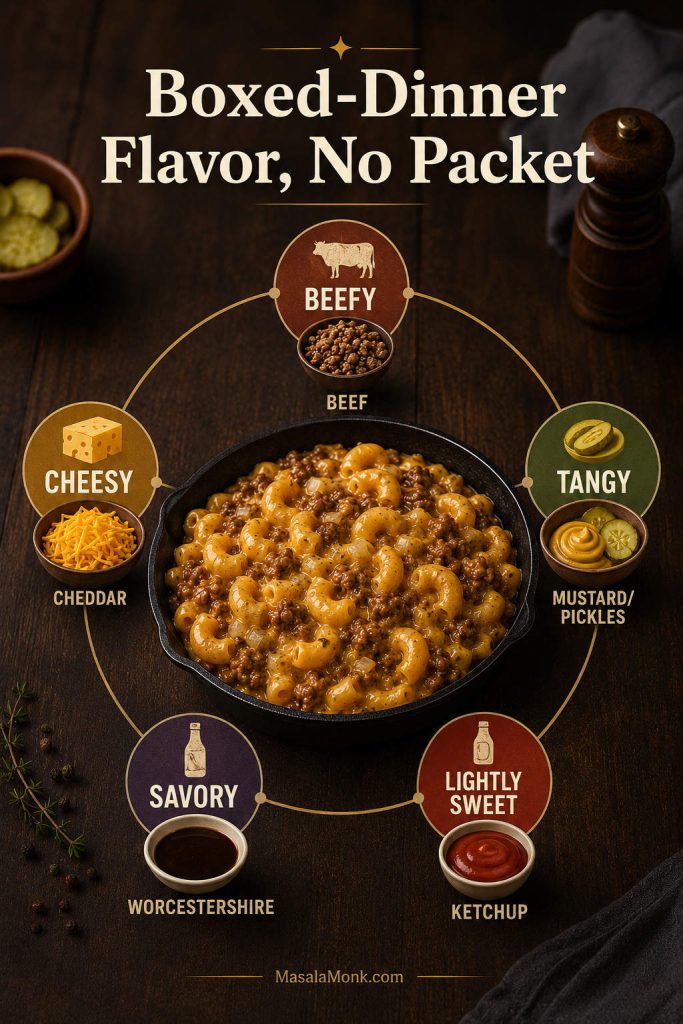
How to Get That Boxed-Dinner Flavor Without a Packet

The boxed version works because it hits a very specific craving: beefy, salty, cheesy, a little tangy, and soft enough to eat by the spoonful. The homemade version has to keep that comfort while adding better flavor.

Here, that flavor comes from a small group of pantry ingredients working together rather than from a packaged mix.

Flavor map for cheeseburger macaroni showing beef, cheddar, mustard, pickles, Worcestershire sauce, and ketchup around a skillet of pasta.
Boxed-dinner flavor comes from balance: beef, cheddar, mustard, pickles, Worcestershire, and ketchup create the savory, tangy, lightly sweet profile.
Ingredient What it adds
Tomato paste Deep cooked tomato flavor without making the sauce watery or too tomato-heavy.
Ketchup A small sweet-tangy burger note. Keep it modest so the dish does not taste like sloppy joe pasta.
Mustard Sharpness that makes the sauce taste more like a cheeseburger.
Worcestershire sauce Beefy depth and savory balance.
Paprika Warm color and a mild skillet-dinner seasoning note.
Garlic powder and onion powder Rounded pantry flavor that supports the fresh onion and garlic.

If your tomato paste tastes sharp, a tiny pinch of sugar can round it out. You may not need it if your ketchup is already sweet enough.

Once the base flavor is right, the variations section shows how to make it smokier, spicier, creamier, or more pickle-forward.

Best Cheese for Cheeseburger Macaroni

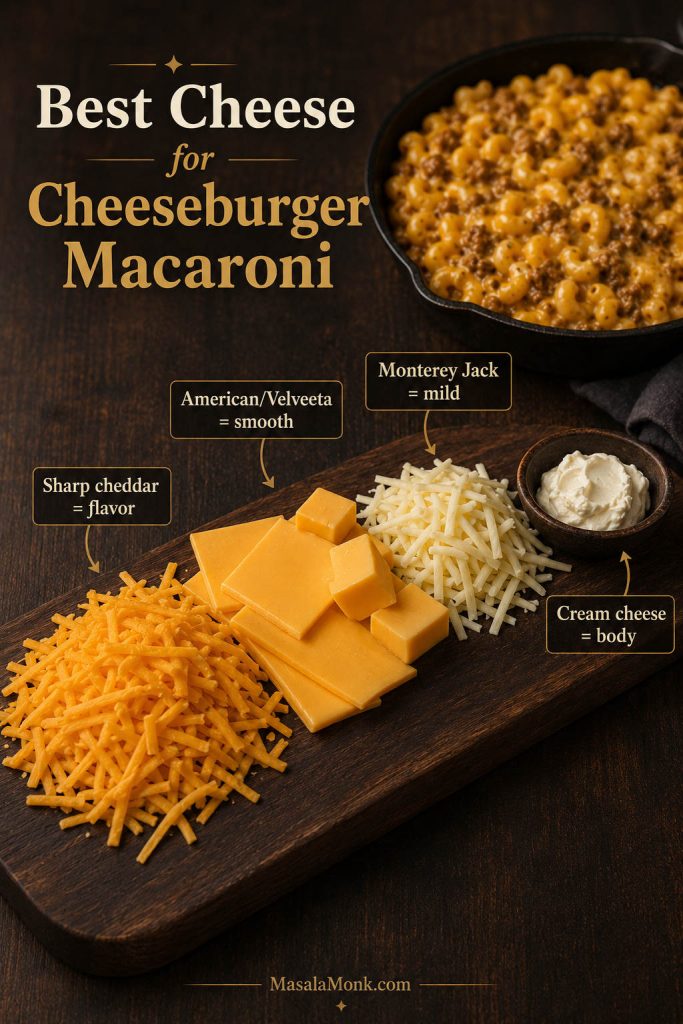
The cheese is where this dish either turns creamy or turns grainy. Use enough cheddar for bold flavor, but add it gently so it melts into the sauce instead of separating into oil and grit.

Cheese guide for cheeseburger macaroni with sharp cheddar, American cheese, Velveeta, Monterey Jack, cream cheese, and a skillet of pasta.
For flavor, sharp cheddar should lead; meanwhile, American cheese, Velveeta, Monterey Jack, or cream cheese can soften the sauce in smaller amounts.

Sharp Cheddar

Sharp cheddar is the best everyday choice. It has enough flavor to stand up to the beef, broth, and seasonings. Mild cheddar melts nicely but tastes softer, so the finished dish may need a little more mustard, Worcestershire, or salt to feel balanced.

American Cheese, Velveeta, or Cream Cheese as a Melt-Helper

For a smoother sauce, add 2 oz / 55 g American cheese, Velveeta, or cream cheese along with the cheddar. This is optional, not required. A little helps the sauce become silkier; however, too much can make the dish taste heavy.

Monterey Jack or Colby Jack

Monterey Jack or Colby Jack can replace part of the cheddar if you want a milder, softer pot. A mix of sharp cheddar and Monterey Jack is a good choice for kids or anyone who prefers a gentler cheese flavor.

Best balance: For the strongest flavor, use mostly sharp cheddar. For a smoother, softer sauce, replace ½ cup of the cheddar with Monterey Jack, or add 2 oz American cheese, Velveeta, or cream cheese after the heat is off.

Why Pre-Shredded Cheese Can Turn Grainy

Pre-shredded cheese is convenient, but it often has anti-caking coatings that can make sauces feel less smooth. For the silkiest cheeseburger macaroni, shred a block of cheddar yourself and add it after the heat is off.

For a deeper dive into smooth cheddar sauces, roux thickness, no-flour options, and reheating, this easy cheese sauce recipe is a useful companion.

How to Keep Cheeseburger Macaroni Creamy, Not Grainy

This is the section that matters most if you have ever made a skillet pasta that turned dry, gritty, oily, or gluey. Cheeseburger macaroni should be saucy and spoonable, not soupy and not stiff.

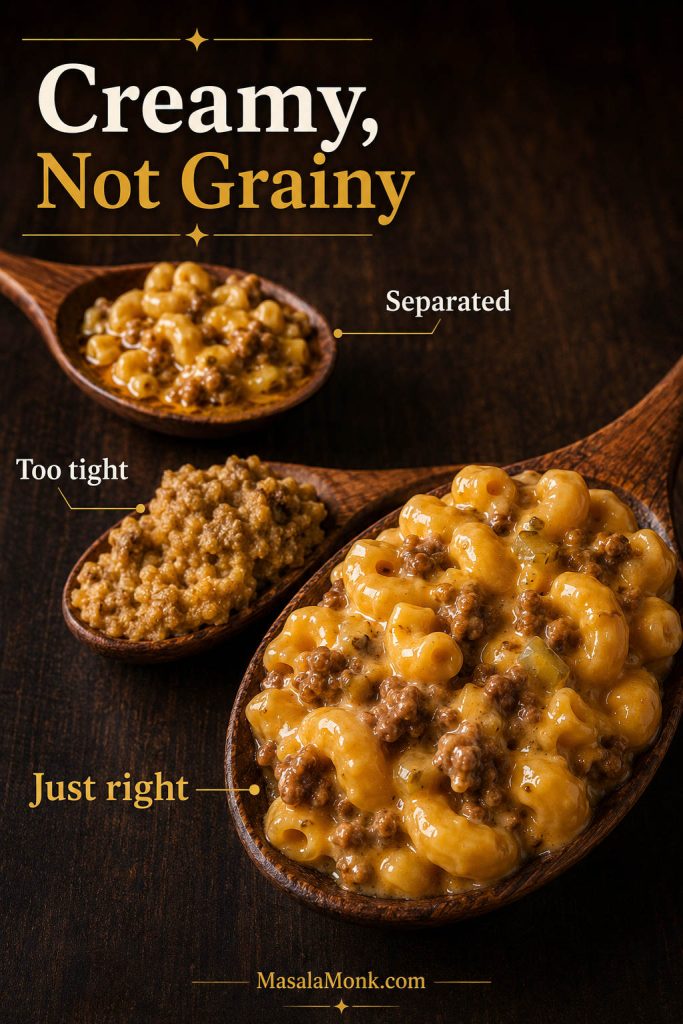
Texture guide for cheeseburger macaroni comparing separated sauce, too-thick sauce, and creamy just-right sauce on wooden spoons.
If the sauce separates or tightens, gentle heat, a short rest, and a splash of warm milk or broth can usually bring it back toward creamy.
Tip Why it helps
Use freshly shredded cheese Block cheese melts more smoothly than many pre-shredded cheeses.
Turn off the heat before adding cheddar High heat can make cheddar separate or turn grainy.
Add cheese gradually Small handfuls melt more evenly than one big pile.
Let the pasta rest first The sauce thickens as it sits, so do not rush to add extra cheese or thickener.
Use warm milk or broth to loosen A small splash brings back creaminess without watering down the whole pot.
Use evaporated milk for extra smoothness It gives a silkier, more stable sauce if you want a smoother finish.
Do not judge the sauce too early. When the pasta first finishes simmering, the sauce may look slightly loose. Let it rest for 2–3 minutes, then stir. It will thicken as the starch settles and the cheese melts in.

Milk vs Evaporated Milk vs Cream

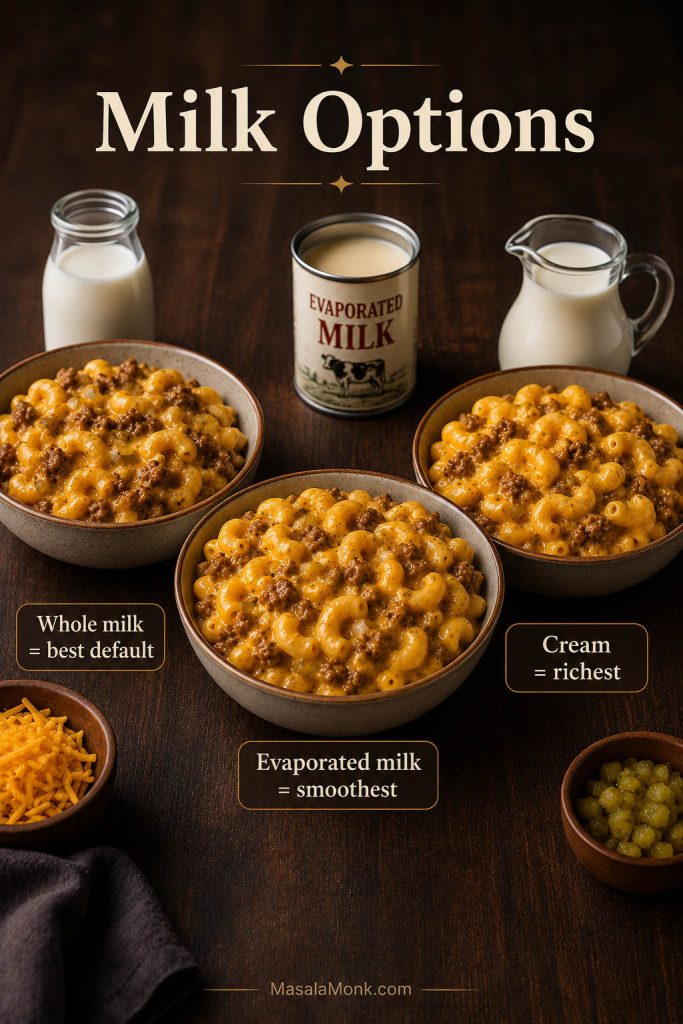
Whole milk is the best default for this recipe because it keeps the sauce smooth without making the pot too heavy. However, you can adjust the dairy depending on the texture you want.

Milk options for cheeseburger macaroni showing bowls made with whole milk, evaporated milk, and cream.
Whole milk keeps the sauce balanced, evaporated milk makes it silkier, and cream gives the pot a richer but heavier finish.
Dairy option Best for Notes
Whole milk Best default Balanced, easy to keep on hand, and rich enough for a weeknight skillet dinner.
Evaporated milk Smoothest sauce Great when you want a silkier cheeseburger macaroni.
Half-and-half Richer sauce Use if you want a heavier finish, but keep the heat gentle.
Heavy cream Very rich version Works, but can feel too heavy in a full pot of ground beef pasta.
Sour cream Tangy hamburger mac and cheese Add after the heat is off so it stays smooth.
Cream cheese Extra body Use a small amount so it does not dominate the cheddar flavor.

For a smoother, slightly richer sauce, replace the whole milk with the same amount of evaporated milk. Meanwhile, sour cream or cream cheese should go in after the pasta cooks and the heat is turned off.

Cheeseburger Macaroni Variations

Once the base pot works, you can push it in a few directions. Add bacon when you want it smoky, pickles when you want it more burger-like, jalapeños when you want heat, or extra cheese when you want it closer to hamburger mac and cheese.

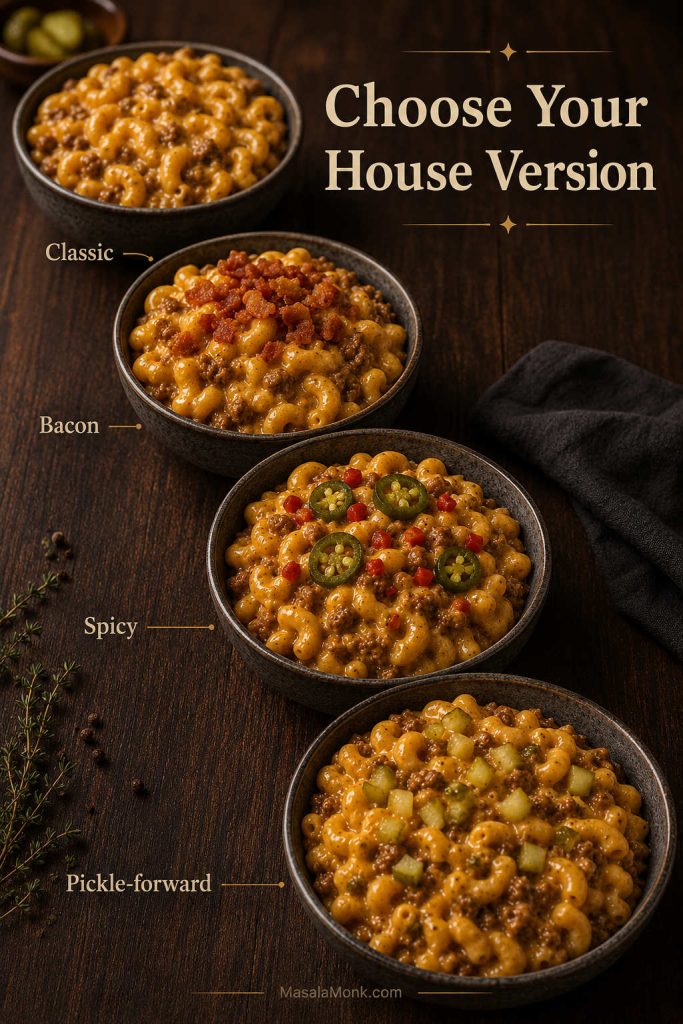
Choose the version based on what you want the bowl to taste like. Classic boxed-dinner comfort stays simple with cheddar and mustard, while a more burger-like pot gets pickles. If you want a richer hamburger mac and cheese direction, add extra cheddar plus a little American cheese, Velveeta, or cream cheese.

Four bowls of cheeseburger macaroni variations labeled classic, bacon, spicy, and pickle-forward.
After the base recipe works, adjust the finish: bacon adds smoke, jalapeño adds heat, and pickles make the pasta taste more burger-like.

Bacon Cheeseburger Macaroni

Cook 4–6 slices of bacon until crisp, crumble them, and stir them in at the end. You can also sprinkle some on top for crunch. Just drain some of the bacon fat before browning the beef so the dish does not turn greasy.
Cheeseburger Mac and Cheese

For a more mac-and-cheese-style version, add an extra ½ cup cheddar and 2 oz / 55 g American cheese, Velveeta, or cream cheese. The result will be richer, silkier, and less like a light skillet pasta.

Spicy Cheeseburger Pasta

Add diced jalapeños with the onion, use pepper jack for part of the cheddar, or stir in hot sauce at the end. A pinch of chili flakes also works if you want heat without changing the flavor too much.
Pickle Cheeseburger Macaroni

Fold in ¼ cup chopped dill pickles or relish after the cheese melts. This is the most direct way to make the pasta taste like a cheeseburger, but keep it optional because pickle flavor is personal.

Baked Cheeseburger Macaroni

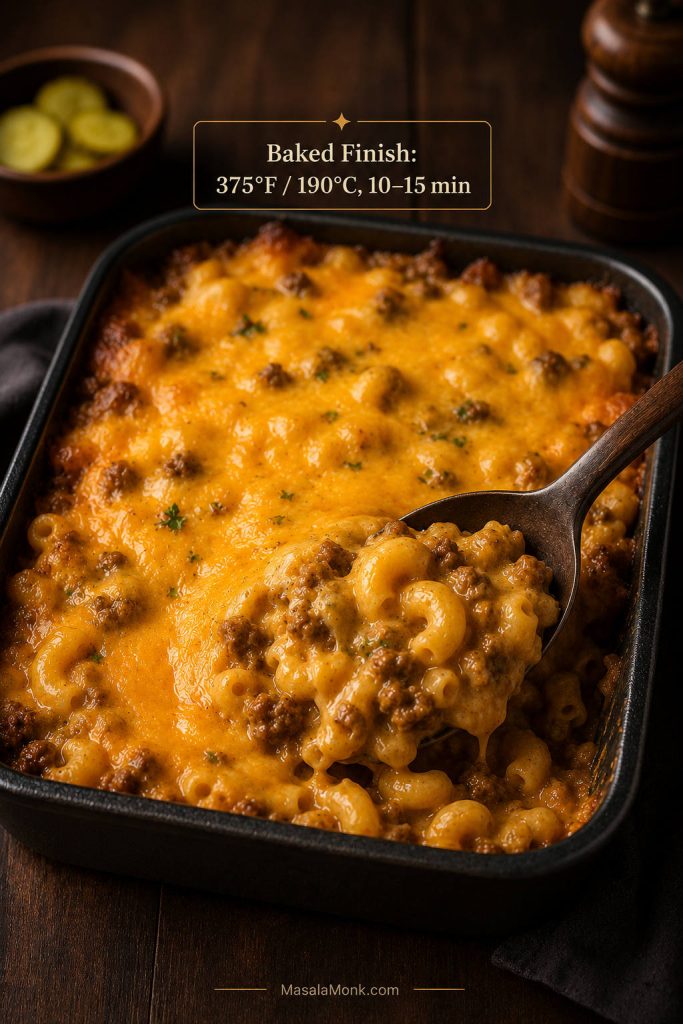
Prepare the stovetop recipe first. Then transfer it to a greased baking dish, top with ½–1 cup extra cheddar, and bake at 375°F / 190°C for 10–15 minutes, just until the top is melted and bubbly. Since the pasta is already cooked, this is a short finish, not a long casserole bake.

Baked cheeseburger macaroni in a rectangular dish with melted cheddar on top and a spoon lifting saucy pasta.
For a baked finish, the stovetop pasta only needs 10–15 minutes in the oven, just long enough to melt the topping without drying it out.

If you prefer old-school baked noodle dinners with a crunchier top, this tuna noodle casserole recipe follows that route with egg noodles, creamy sauce, peas, and a crisp topping.

Gluten-Free Cheeseburger Macaroni

Use a sturdy gluten-free elbow, shell, or brown-rice pasta. Watch the texture closely because some gluten-free pastas soften faster or release starch differently. Add extra broth or milk in small splashes only if needed.

Lighter Cheeseburger Macaroni

Use 90/10 ground beef, 2% milk, and a moderate amount of cheddar. The sauce will be a little less rich, but the tomato paste, mustard, Worcestershire, and spices will still keep the flavor strong.

What to Serve With Cheeseburger Macaroni

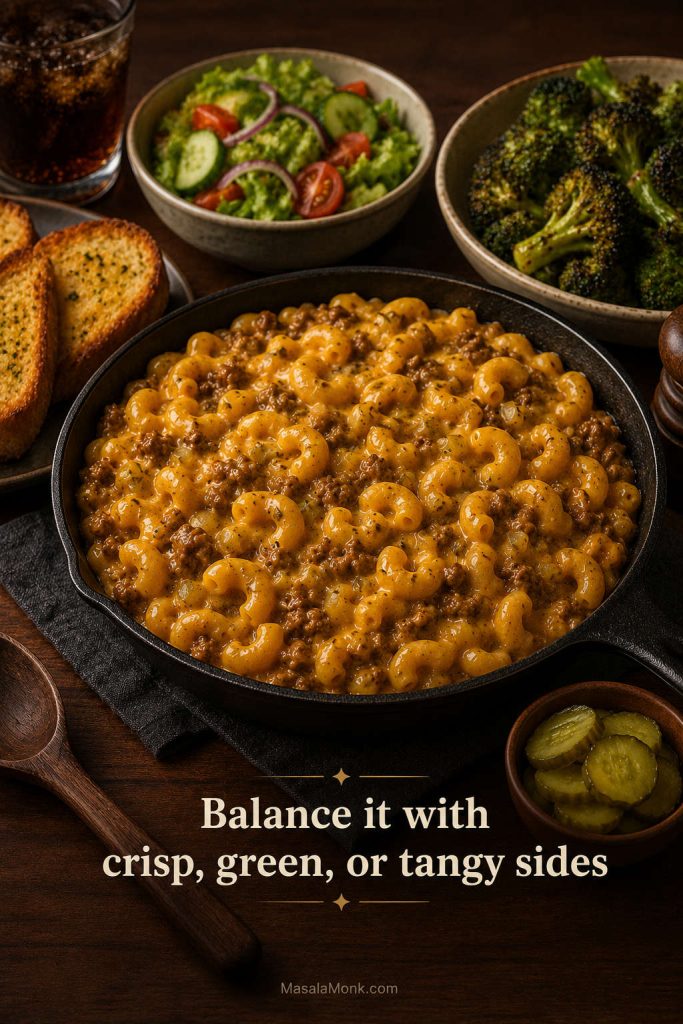
Cheeseburger macaroni is rich, so the best sides are crisp, green, acidic, or simple. A green salad, roasted broccoli, green beans, coleslaw, cucumber salad, or pickles all work well. Garlic bread is good too, especially if you want a bigger comfort-food dinner.

Cheeseburger macaroni served with green salad, roasted broccoli, pickles, and garlic bread on a dinner table.
Because cheeseburger macaroni is rich and cheesy, crisp greens, roasted broccoli, pickles, or salad help balance the meal.

If you are building a cozy dinner table, this pairs well with a crisp salad or a lighter vegetable side. For a bigger comfort-food spread, a creamy potato side like hashbrown casserole works best when the main bowl is not already extra cheesy.

Storage, Freezing, and Reheating

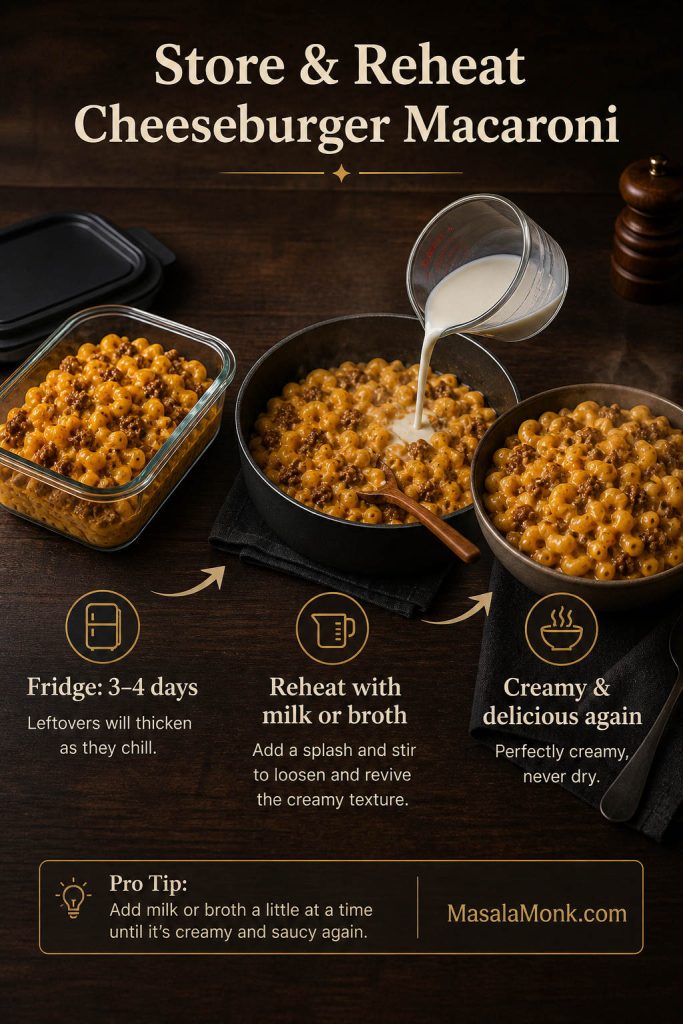
Store leftover cheeseburger macaroni in an airtight container in the refrigerator for 3–4 days. For general leftover safety guidance, you can also check the FoodSafety.gov cold storage chart.

Leftovers thicken in the fridge, so do not reheat them dry. A splash of milk or broth brings the sauce back much better than extra cheese does.

Leftover cheeseburger macaroni in a storage container, being reheated with milk or broth, with a finished bowl nearby.
Leftovers thicken as they chill, so reheat cheeseburger macaroni gently with milk or broth before deciding whether it needs more cheese.

If leftovers look tight after reheating, use the same logic from the creamy sauce tips: warm liquid first, extra cheese only if needed.

To reheat on the stove, add the pasta to a small pan with a splash of milk or broth and warm it gently over low heat, stirring often. To reheat in the microwave, use short bursts and stir between rounds. Add a spoonful of milk or broth before reheating if the pasta looks dry.

You can freeze cheeseburger macaroni, although the pasta will soften after thawing. For the best leftover texture, slightly undercook the macaroni if you know you are making the dish ahead. Then reheat gently and refresh the sauce with a little milk or broth.
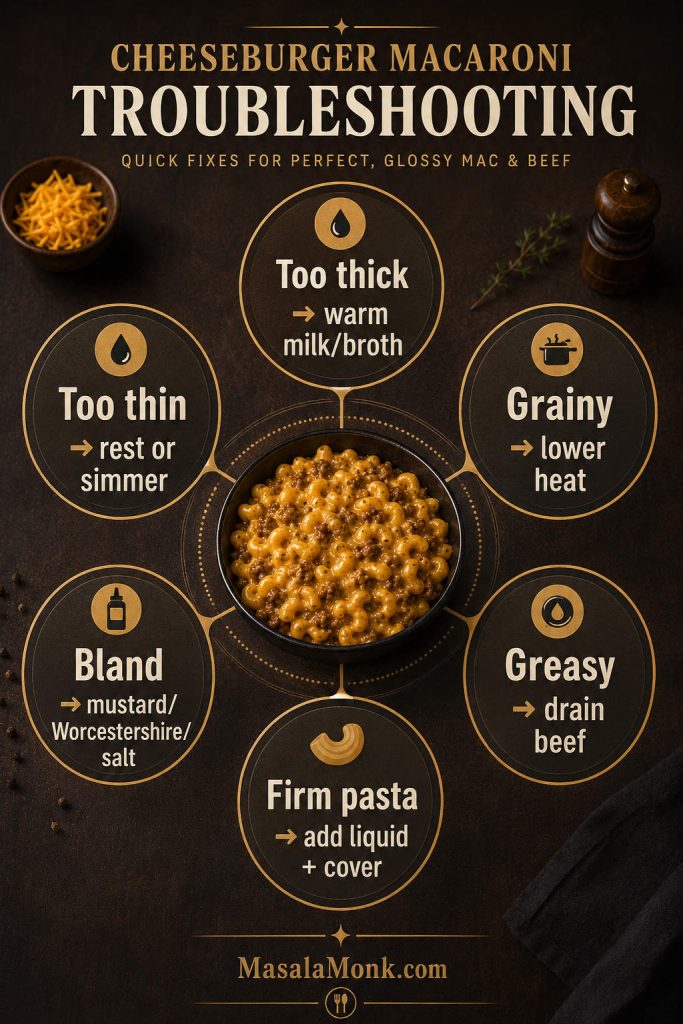
Cheeseburger Macaroni Troubleshooting

Most problems with cheeseburger macaroni are easy to fix. The key is to adjust the sauce slowly and avoid overheating the cheese.
Troubleshooting guide for cheeseburger macaroni with fixes for sauce that is too thick, too thin, grainy, bland, greasy, or undercooked.
Most problems are fixable: thin sauce needs rest, thick sauce needs warm liquid, grainy sauce needs gentler heat, and bland sauce needs more seasoning.
Problem What happened Fix
Sauce is too thick The pasta absorbed more liquid than expected. Add warm milk or broth, 2 tablespoons at a time, until smooth again.
Sauce is too thin It has not rested or reduced enough. Let it rest for 3 minutes first. If still loose, simmer uncovered for 1–2 minutes.
Pasta is undercooked The liquid reduced before the macaroni softened. Add ¼ cup broth or milk, cover, and cook 2–3 minutes more.
Pasta is mushy It simmered too long or too hard. Next time, keep the heat lower and start checking around 9–10 minutes.
Cheese sauce is grainy The cheese was added over high heat or pre-shredded cheese was used. Turn off the heat before adding cheese and use freshly shredded block cheese.
Dish tastes bland It needs more salt, acid, or savory depth. Add salt, pepper, mustard, Worcestershire, or chopped pickles.
Dish tastes greasy The beef released too much fat. Drain the beef before adding broth and milk.
Tastes too tomato-heavy Too much ketchup or tomato sauce was used. Use tomato paste for depth and keep ketchup to about 1 tablespoon.
Cornstarch clumped Dry cornstarch was added directly to the hot pan. Mix cornstarch with cold milk or broth first, then stir the slurry into the liquid.

Homemade Cheeseburger Macaroni Recipe Card

If you only remember two things, remember these: keep the simmer gentle once the milk goes in, and add the cheese after the heat is off. Those two steps do most of the work for a creamy, non-grainy sauce.

Homemade Cheeseburger Macaroni Recipe

A saucy one-pot homemade cheeseburger macaroni recipe with ground beef, elbow pasta, cheddar cheese, and classic burger-style seasoning.

Prep Time10 minutes
Cook Time25 minutes
Total Time35 minutes
Yield4 hearty or 6 smaller servings

Category: Dinner
Cuisine: American
Method: Stovetop
Equipment: 12-inch deep skillet with lid or 5–6 quart Dutch oven

Ingredients

  • 1 lb / 450 g lean ground beef
  • 1 tbsp butter or neutral oil
  • 1 small yellow onion, finely chopped
  • 2 cloves garlic, minced
  • 2 tbsp / 30 g tomato paste
  • 1 tbsp / 15 g ketchup
  • 1–2 tsp yellow mustard or Dijon mustard
  • 1 tsp Worcestershire sauce
  • 1 tsp paprika
  • 1 tsp garlic powder
  • 1 tsp onion powder
  • ¾ tsp salt, plus more to taste
  • ½ tsp black pepper
  • 1 tbsp all-purpose flour, or 2 tsp cornstarch mixed with 1 tbsp cold milk or broth
  • 2 cups / 480 ml beef broth
  • 1½ cups / 360 ml whole milk
  • 8 oz / 225 g elbow macaroni
  • 2 cups / 225 g freshly shredded sharp cheddar cheese
  • Optional: 2 oz / 55 g American cheese, Velveeta, or cream cheese
  • Optional: ¼ cup / 35–40 g chopped dill pickles or relish, added at the end

Instructions

  1. Heat a large deep skillet or Dutch oven over medium-high heat. Add butter or oil, then add the onion and ground beef. Cook for 6–8 minutes, breaking up the beef, until browned. Drain excess fat if needed.
  2. Stir in garlic and cook for 30 seconds. Add tomato paste, ketchup, mustard, Worcestershire sauce, paprika, garlic powder, onion powder, salt, pepper, and flour. Cook for 1–2 minutes, stirring, until the tomato paste darkens slightly. If using cornstarch instead of flour, do not add it here; use the slurry in the next step.
  3. Pour in beef broth and milk, scraping the bottom of the pan. If using the cornstarch slurry, stir it in now. Add the dry elbow macaroni and stir well.
  4. Bring to a boil, then reduce heat to medium-low. Cover and simmer gently for 10–12 minutes, stirring once or twice, until the pasta is just tender and most of the liquid has been absorbed.
  5. If the pasta is still firm and the sauce is already thick, add ¼ cup broth or milk, cover, and cook 2–3 minutes more.
  6. Turn off the heat and let the pasta rest for 2–3 minutes.
  7. Stir in the cheddar gradually until smooth. Add optional American cheese, Velveeta, or cream cheese if using.
  8. Taste and adjust salt, pepper, mustard, or Worcestershire. Fold in chopped pickles or relish at the end if using. Serve warm.

Recipe Notes

  • Keep the pasta at a gentle simmer after the milk goes in. A hard boil can make the sauce rougher and may cause sticking.
  • If the sauce looks loose, let it rest before adding more cheese. It thickens as it sits.
  • Add the cheese after the heat is off to reduce graininess.
  • Pickles should go in at the end so they stay bright.
  • For a baked finish, transfer to a greased dish, top with extra cheddar, and bake at 375°F / 190°C for 10–15 minutes.
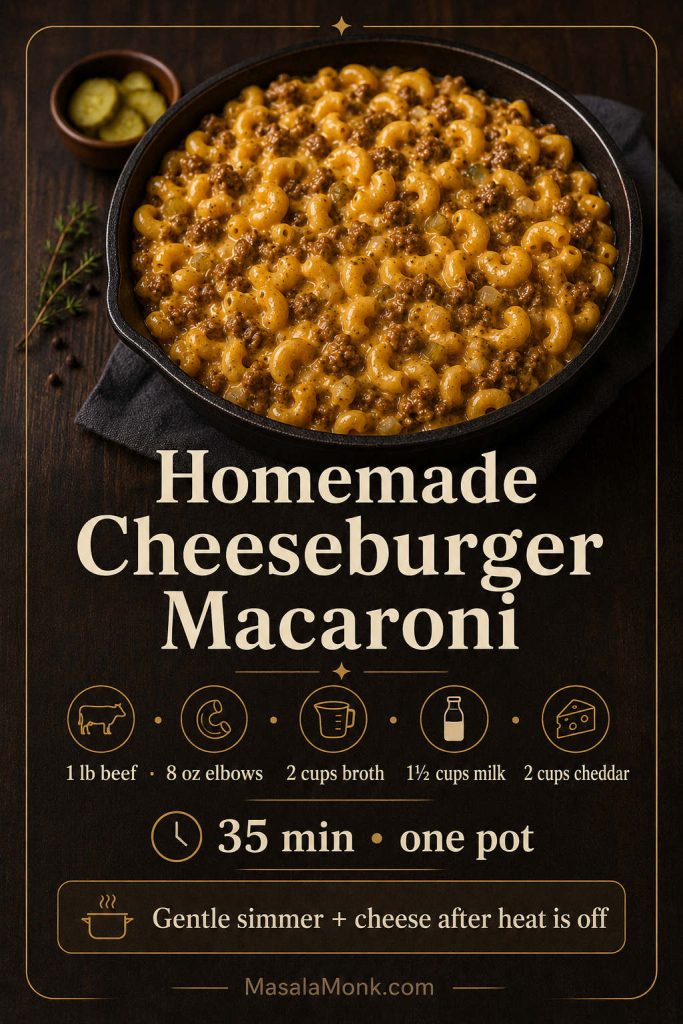
Saveable recipe card for homemade cheeseburger macaroni with beef, elbow pasta, broth, milk, cheddar, timing, and key sauce tips.
Keep the formula handy: 1 pound beef, 8 ounces elbows, 2 cups broth, 1½ cups milk, 2 cups cheddar, and cheese added after the heat is off.

FAQs

Once you understand the base pot, the recipe becomes easy to bend toward your own table: sharper with mustard, smokier with bacon, creamier with extra cheese, or brighter with pickles at the end.

Is cheeseburger macaroni the same as Hamburger Helper?

It has the same cozy skillet-dinner idea: ground beef, macaroni, cheddar, and a creamy sauce. This version is homemade, though, so it uses real cheese, fresh onion and garlic, tomato paste, mustard, Worcestershire, broth, milk, and pantry spices instead of a packaged seasoning mix.

What pasta works best for cheeseburger macaroni?

Elbow macaroni is the classic choice because it cooks quickly and holds the sauce well. Small shells, rotini, cavatappi, or small penne can also work, but check the pasta early and add a little extra liquid if needed.

Why did my cheese sauce turn grainy?

The heat was probably too high when the cheese went in, or the cheese did not melt smoothly. Turn off the heat before adding cheddar, stir it in gradually, and use freshly shredded block cheese whenever possible.

Should the pasta be cooked before adding it?

No. For this one-pot cheeseburger macaroni recipe, the dry pasta cooks directly in the broth and milk. That helps the sauce thicken and saves you from boiling pasta separately.

How do I make it more like hamburger mac and cheese?

Add a little extra cheddar and include 2 oz / 55 g American cheese, Velveeta, or cream cheese. You can also use evaporated milk instead of whole milk for a smoother, richer sauce.

Ground Turkey Instead of Beef

Ground turkey works, but it is leaner and milder than beef, so the pasta may need a little more Worcestershire, mustard, paprika, salt, or cheese to taste full and savory.

Using Velveeta or American Cheese

Use either one as a melt-helper rather than replacing all the cheddar. A small amount of American cheese or Velveeta makes the sauce smoother and more boxed-dinner-like, while sharp cheddar keeps the flavor stronger.

No-Milk or Dairy-Free Cheeseburger Macaroni

You can use more broth, but the sauce will be less creamy. For a dairy-free version, use an unsweetened plain milk alternative and a dairy-free cheese that melts well, then keep the heat gentle.

Vegetables That Work Well

Peas, diced bell pepper, corn, spinach, and finely chopped mushrooms all work. Add firm vegetables with the onion, and add quick-cooking vegetables near the end so they do not overcook.

What gives cheeseburger macaroni its cheeseburger flavor?

The cheeseburger flavor comes from more than just beef and cheese. Tomato paste gives depth, ketchup adds a little sweet tang, mustard brings sharpness, Worcestershire makes the beef taste richer, and pickles or relish at the end add that unmistakable burger finish.

Is this recipe freezer-friendly?

It can be frozen, but the pasta will soften after thawing. If you plan to freeze it, slightly undercook the macaroni and reheat gently with a splash of milk or broth.

If this becomes your house version, share where you landed: extra creamy, pickle-forward, bacon-topped, spicy, or closer to classic hamburger mac and cheese.

The best version is still the fresh stovetop pot: saucy elbows, browned beef, melted cheddar, and just enough tang to make it taste like a cheeseburger. Serve it hot, scoop it generously, and do not be surprised if the quietest part of dinner is the first few minutes.

Back to top

Posted on 2 Comments

Tuna Noodle Casserole Recipe with Egg Noodles

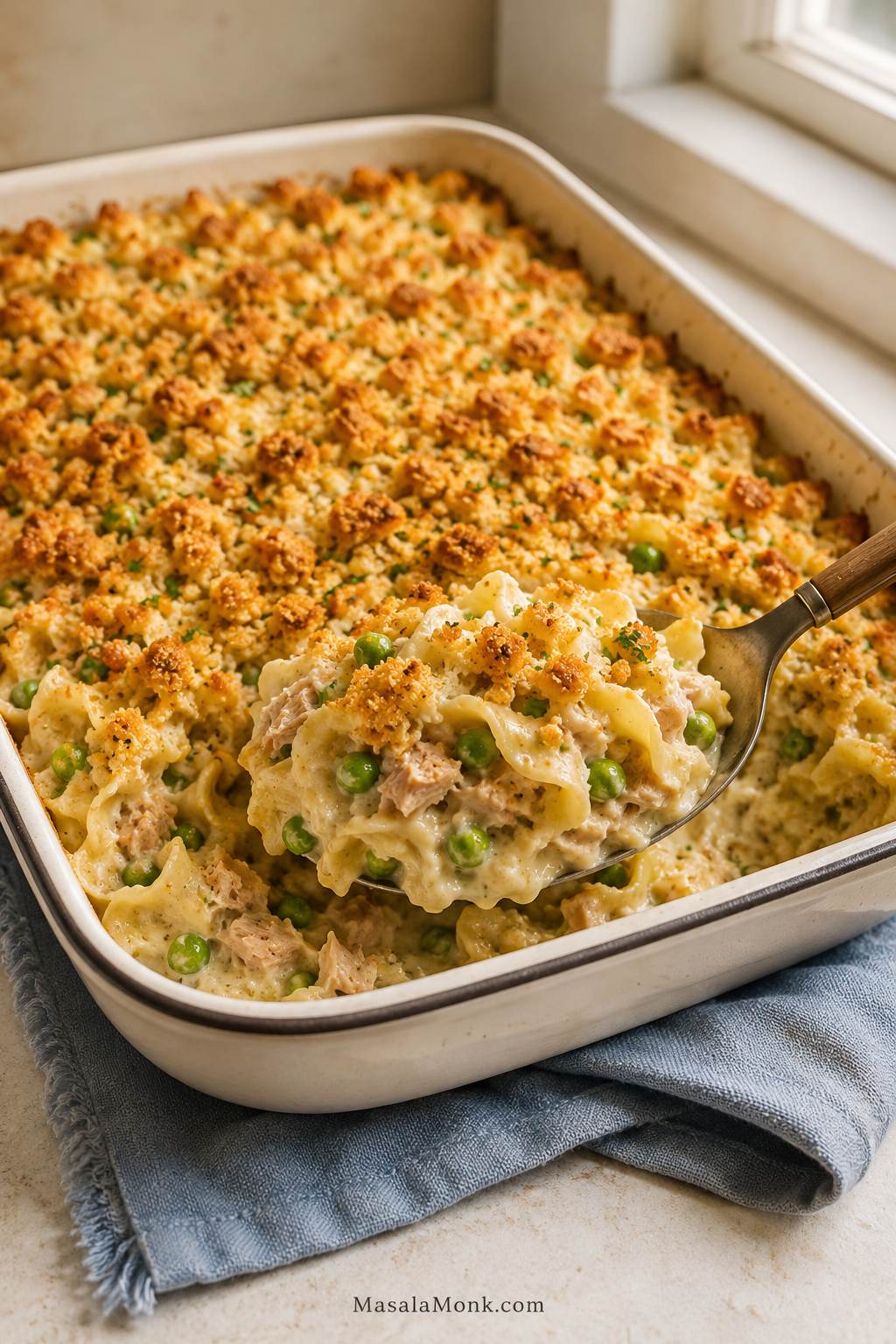
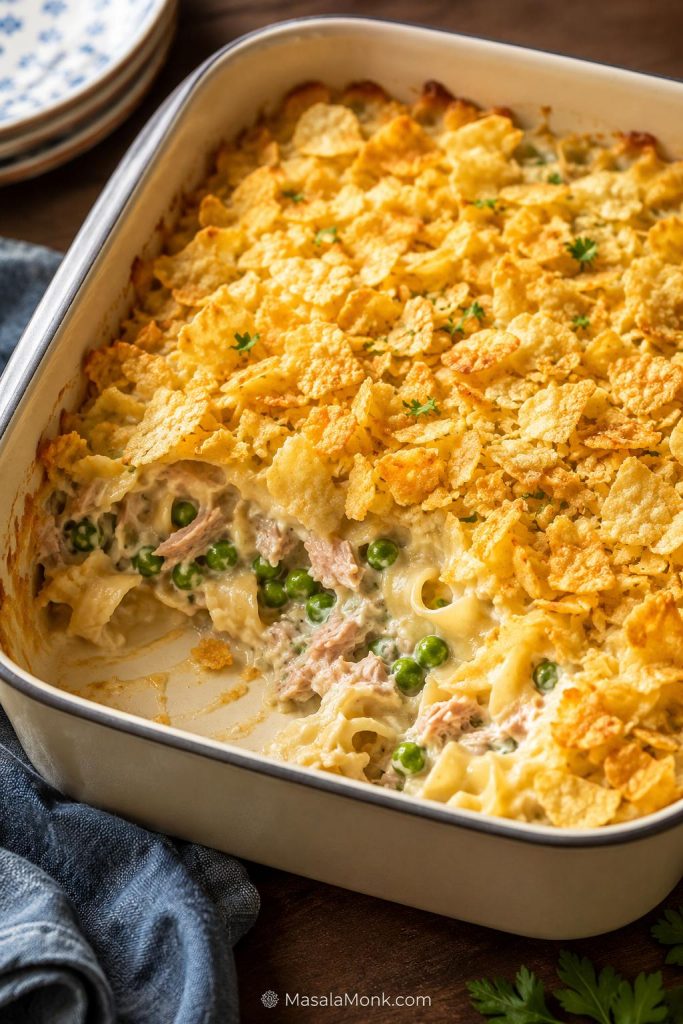
Baked tuna noodle casserole in a cream enamel dish with a spoonful lifted, showing egg noodles, peas, tuna flakes, creamy sauce, and golden topping.

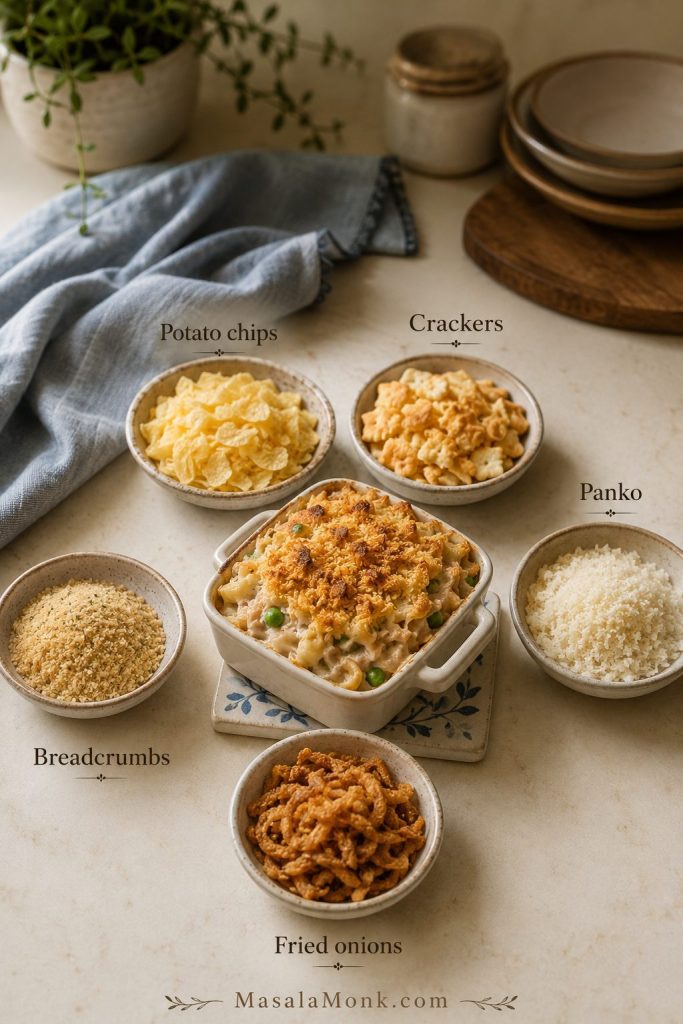
This tuna noodle casserole recipe with egg noodles is the creamy, cozy baked dinner people usually mean when they talk about old-fashioned tuna casserole: wide egg noodles, canned tuna, peas, cream of mushroom soup, milk, optional cheddar, and a crunchy potato chip, cracker, or breadcrumb topping.

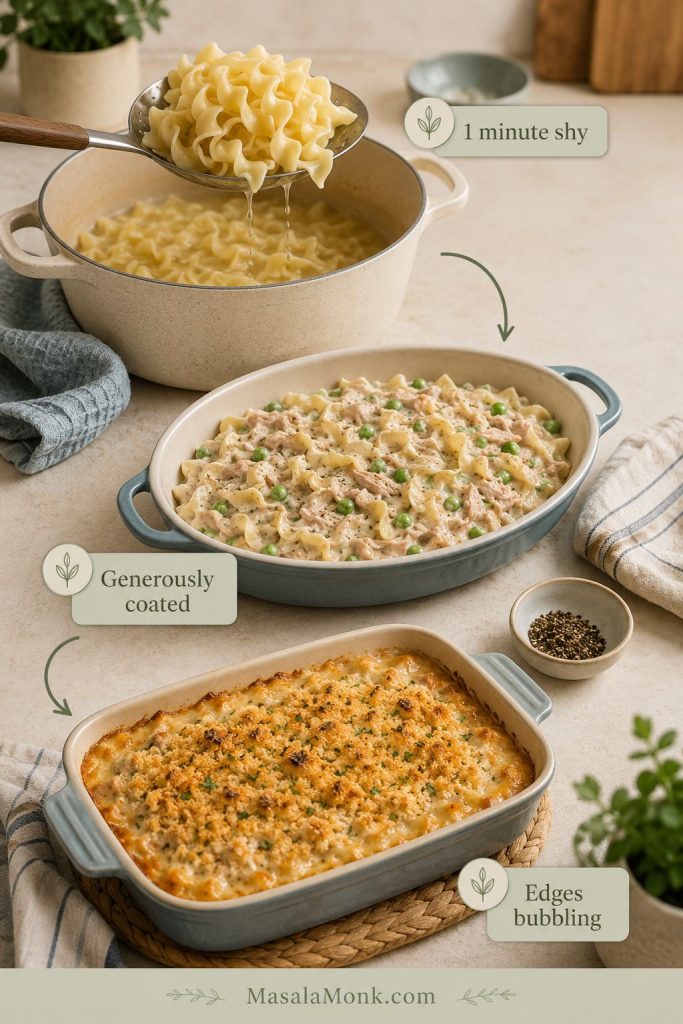
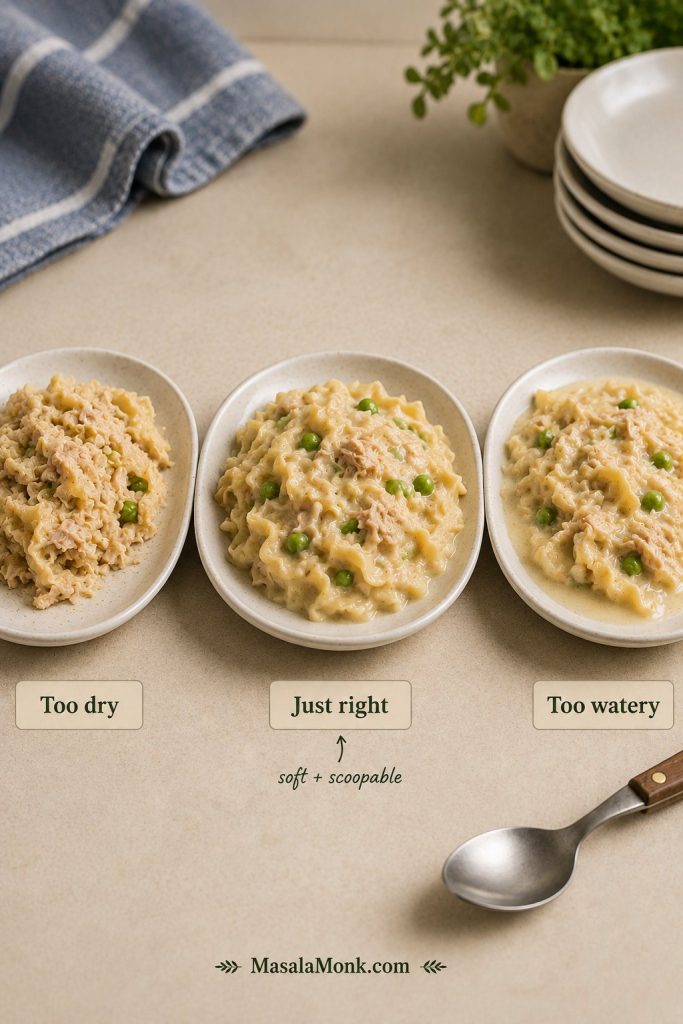
It is pantry comfort food, but it should still scoop creamy instead of baking into a dry noodle block. The key is simple: cook the noodles just shy of tender, use enough sauce for the full 9×13-inch dish, and pull the casserole when the edges are bubbling and the center still looks moist.

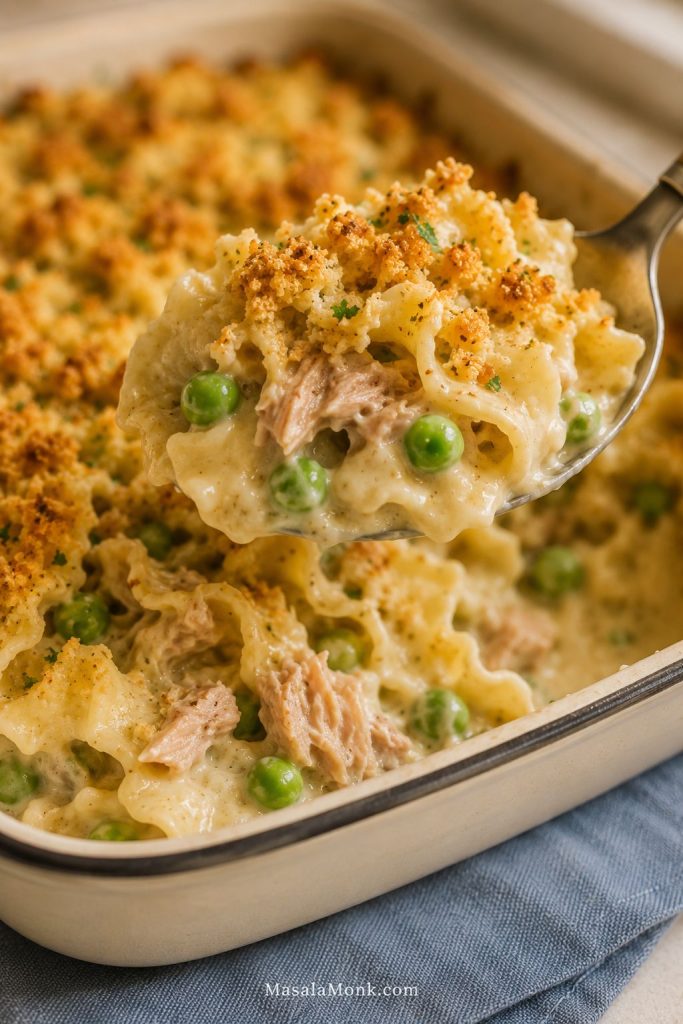
Close spoonful of tuna noodle casserole with saucy egg noodles, peas, tuna flakes, and crisp crumbs lifted from the dish.
This close scoop shows the goal before serving: soft egg noodles that stay moist underneath the crisp topping.

You’ll also find the no-soup version, topping choices, make-ahead and freezer notes, a small-batch option, and fixes for the usual problems: dry, watery, bland, or mushy tuna noodle casserole.

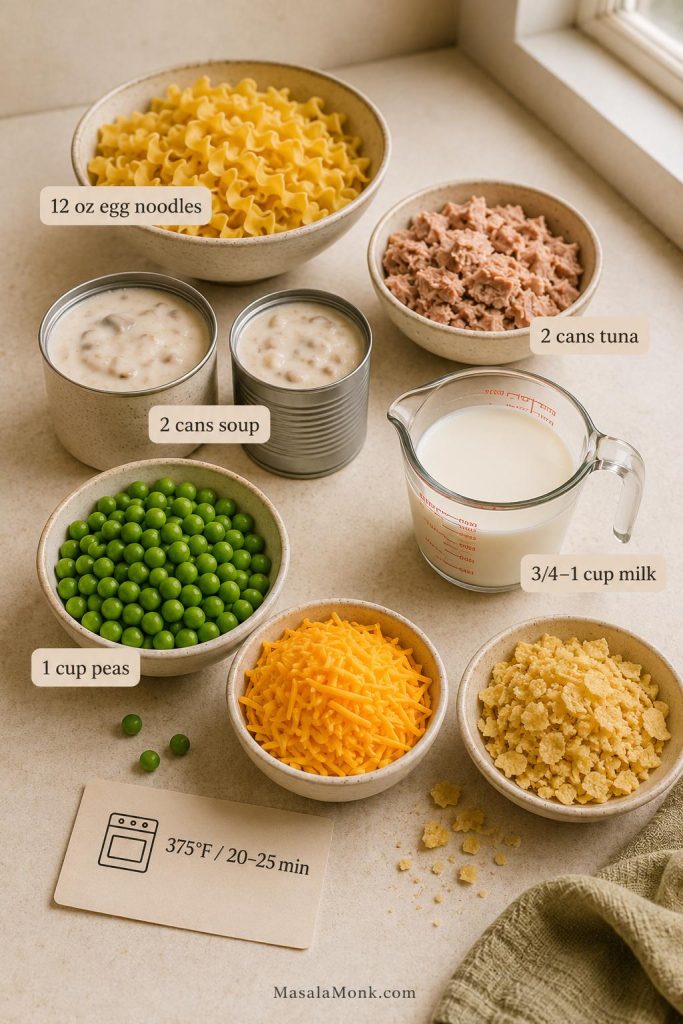
At a glance: This tuna noodle casserole uses 12 oz / 340 g wide egg noodles, 2 cans tuna, 2 cans cream of mushroom soup, 3/4 to 1 cup / 180 to 240 ml milk, 1 cup / 140 g peas, optional cheddar, and a crunchy topping. Bake in a 9×13-inch / 23×33 cm dish at 375°F / 190°C for 20 to 25 minutes, until bubbling at the edges.
Prep board with egg noodles, tuna, cream of mushroom soup, milk, peas, cheddar, crunchy topping, and bake time for tuna noodle casserole.
The classic full-pan formula starts with egg noodles, tuna, cream of mushroom soup, milk, peas, and a crisp topping, then bakes until the edges bubble.

Quick Answer: Tuna Noodle Casserole with Egg Noodles

To make tuna noodle casserole with egg noodles, boil wide egg noodles until just shy of tender. Mix them with well-drained canned tuna, peas, cream of mushroom soup, milk, seasonings, and cheddar if using. Spread into a greased 9×13-inch dish, add a crunchy topping, and bake at 375°F / 190°C for 20 to 25 minutes, until the edges bubble and the top is lightly golden.

Texture cue: before baking, the noodles should be generously coated and easy to stir. If the mixture already feels stiff in the bowl, it will be dry after baking.

Why This Tuna Noodle Casserole Works

The goal is not a fancy casserole. The goal is the old-school one done properly: creamy noodles, flaky tuna, sweet peas, and a crisp top. This version keeps the familiar cream-of-mushroom flavor while using enough sauce for a full 9×13-inch dish.

  • Wide egg noodles give the casserole its soft-but-sturdy bite.
  • Two cans of soup plus milk make enough sauce for a full pan.
  • Frozen peas add sweetness and color without extra prep.
  • Gently folded tuna stays in flakes instead of disappearing into the sauce.
  • A topping added right before baking stays crisp instead of steaming soft.

Best First Batch

If this is your first time making tuna noodle casserole, start with the classic version: cream of mushroom soup, wide egg noodles, tuna, peas, milk, and either potato chips or buttered panko on top. Once that base is right, the variations are easy.

Prefer homemade sauce instead? Jump to the tuna noodle casserole without soup section.

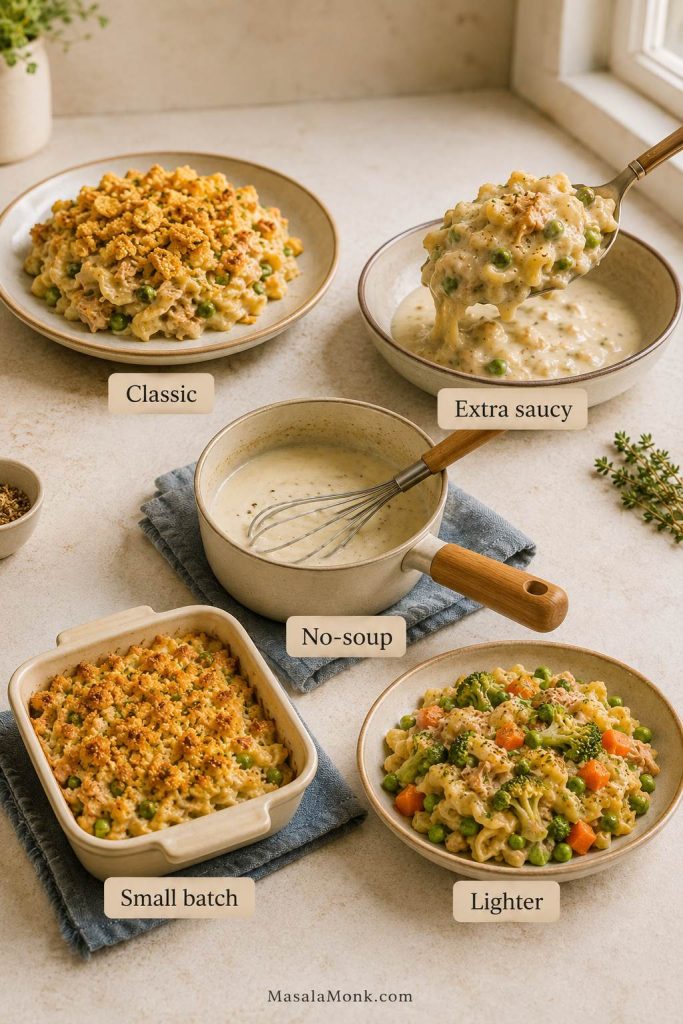
Version Use This When Key Change
Classic You want old-fashioned flavor Use 2 cans cream of mushroom soup and potato chips or crackers.
Extra creamy You worry about dry casserole Use the full 1 cup / 240 ml milk and optional sour cream.
No-soup You want homemade sauce Use butter, flour, milk, broth, mushrooms, onion, and celery.
Small batch You are cooking for 1–2 people Use 4 oz / 115 g noodles, 1 can tuna, and an 8×8-inch dish.
Lighter You want less richness Use more vegetables, less cheese, and the no-soup sauce option.

For the safest first batch, keep it classic: cream of mushroom soup, wide egg noodles, peas, optional cheddar, and potato chips or crackers on top. After that, adjust the sauce, topping, or vegetables to match your taste.

Five tuna noodle casserole version cues showing classic, extra saucy, no-soup, small batch, and lighter options.
Start with the classic tuna noodle casserole first, then adjust one part at a time: sauce, topping, batch size, or vegetables.

Ingredients for Tuna Noodle Casserole

The familiar version is built from pantry and freezer staples, but each ingredient still matters. Wide noodles give the casserole its soft structure, tuna adds protein, peas bring sweetness, condensed soup creates the sauce, and the topping adds the crunch that makes the bake feel finished.

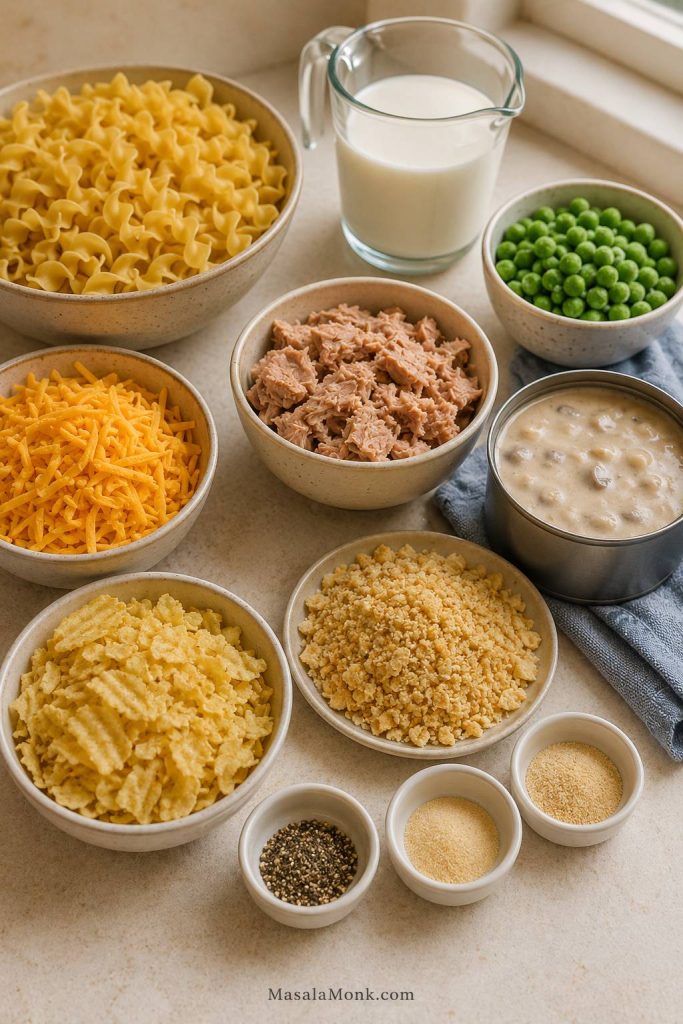
Tuna noodle casserole ingredients arranged on a counter, including egg noodles, tuna, soup, milk, peas, cheddar, seasonings, and topping.
Simple pantry staples work best when each one has a job: noodles for structure, tuna for protein, peas for sweetness, and crumbs or chips for crunch.
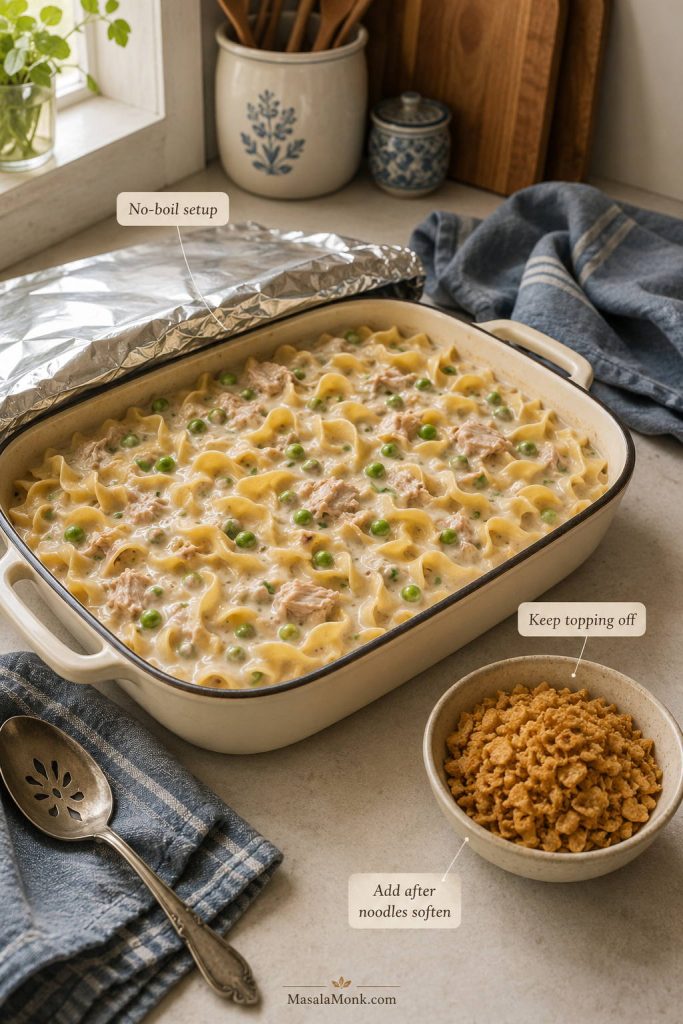
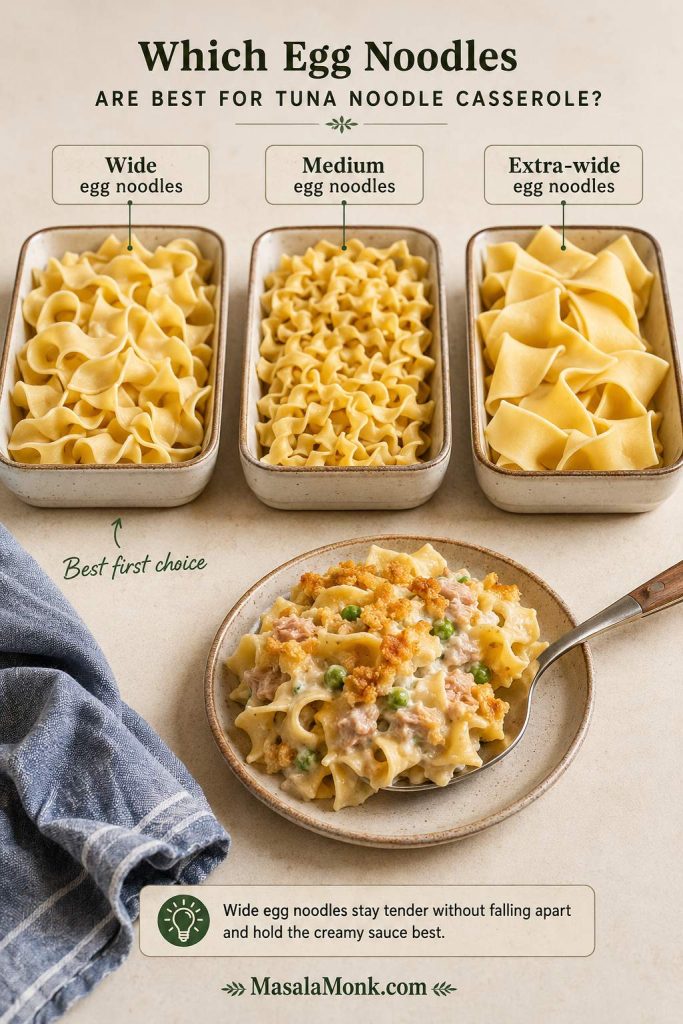
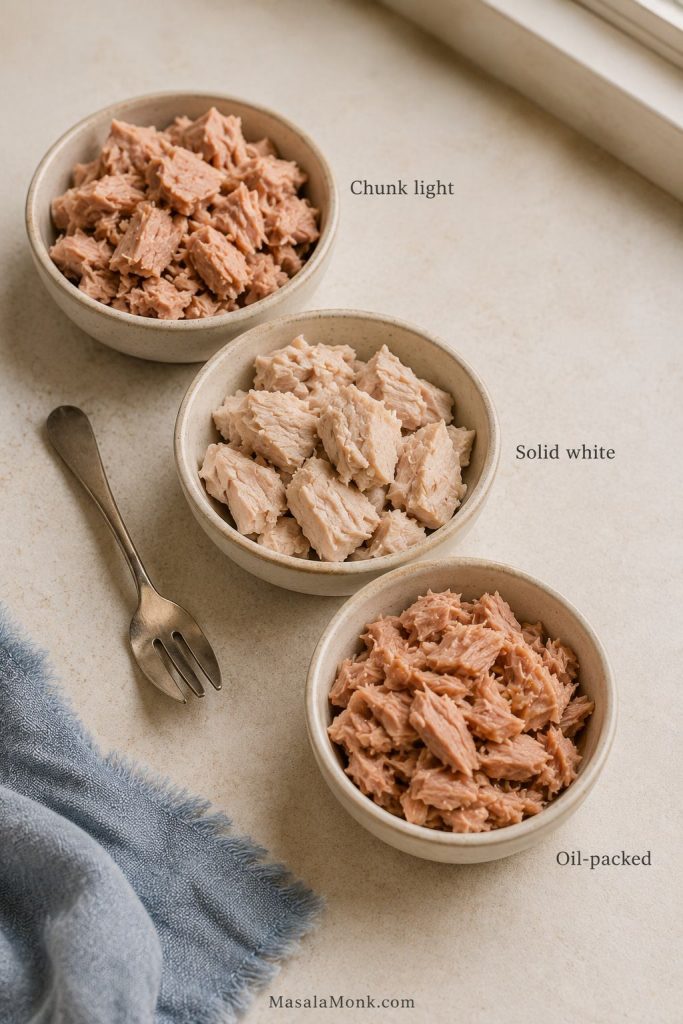
For the biggest texture decisions, start with the egg noodle guide and the tuna comparison below.

Egg Noodles

Wide egg noodles are part of what makes this casserole taste like tuna noodle casserole instead of just tuna pasta. They are tender but sturdy, hold sauce well, and give the dish the old-school texture people expect. Cook them 1 minute shy of al dente so they finish softening in the oven without turning mushy.

Wide, medium, and extra-wide egg noodles compared for tuna noodle casserole, with wide egg noodles marked as the best first choice.
Wide egg noodles give the most familiar bite; meanwhile, thinner noodles soften faster and extra-wide noodles need a little more sauce.
Noodle Type Best For What to Know
Wide egg noodles Best old-fashioned tuna noodle casserole texture Soft, saucy, and sturdy enough for baking.
Medium egg noodles Softer casserole texture Cook quickly, so check early and avoid overboiling.
Extra-wide egg noodles More rustic, hearty texture Need enough sauce because the larger noodles absorb more.
Elbow macaroni Tuna mac-style casserole Works well, but feels less like an egg noodle casserole.
Rotini or penne Pasta bake style Better for a tuna pasta bake than this old-school noodle casserole.

Canned Tuna

Two standard 5 oz / 142 g cans of tuna are enough for a full 9×13-inch casserole without making the dish taste overwhelmingly fishy. Chunk light tuna gives a milder, softer casserole, while solid white albacore gives larger, firmer flakes. Either works, but fold the tuna in gently so it does not disappear into the sauce.

Chunk light tuna, solid white albacore, and oil-packed tuna compared in small dishes for tuna noodle casserole.
Choose tuna by texture: chunk light blends in gently, while solid white tuna gives the casserole larger, more visible flakes.
Tuna Type Best For What to Know
Chunk light tuna in water Classic mild casserole Soft, affordable, and easy to mix into the sauce.
Solid white albacore Larger tuna flakes Firmer texture and cleaner pieces, but usually stronger tasting.
Tuna packed in oil Richer flavor Drain very well or the casserole can feel heavy.

Whatever tuna you use, drain it well. Extra liquid from the can can make the sauce loose in the wrong way, while undrained oil can make the casserole taste heavy. If you want a lighter canned-tuna meal for another day, these healthy tuna salad recipes give you avocado, Greek yogurt, Mediterranean, no-mayo, and high-protein options.

Canned tuna being drained in a fine mesh strainer before adding it to tuna noodle casserole.
Drain the tuna before mixing; extra liquid can make the sauce thin before the casserole even reaches the oven.

Cream of Mushroom Soup

Condensed cream of mushroom soup is the shortcut sauce behind the old-school flavor most people expect here. For a 9×13 casserole, use 2 cans, 10.5 oz / 298 g each, then loosen the condensed soup with 3/4 to 1 cup / 180 to 240 ml milk before adding the noodles.

Milk

Milk turns the condensed soup into a bakeable sauce. Start with 3/4 cup / 180 ml for a thicker casserole, or use a full cup / 240 ml if you want the noodles more generously coated or plan to make the casserole ahead.

Cream of mushroom soup being whisked with milk to make a smooth sauce for tuna noodle casserole.
Whisk cream of mushroom soup with milk before adding noodles so the sauce coats evenly instead of staying thick in pockets.

Peas and Vegetables

Frozen peas are the easiest vegetable here because they cook quickly and add sweetness. You do not need to thaw frozen peas before mixing them in; they warm through quickly in the oven. If using larger frozen vegetables, thaw and drain them first so they do not water down the sauce.

You can also add sautéed onion, celery, mushrooms, carrots, or a small amount of spinach. Watery vegetables should be cooked or drained first.

Frozen peas being added to tuna noodle casserole mixture with drained vegetables nearby.
Frozen peas can go straight into tuna noodle casserole, while larger vegetables should be thawed and drained so they do not thin the sauce.

Cheddar Cheese

Cheddar is optional, but it makes the casserole richer and more family-dinner friendly. Use 1 cup / 113 g for a balanced version or 1 1/2 cups / 170 g for a cheesier casserole.

Crunchy Topping

Potato chips, buttery crackers, panko, breadcrumbs, and fried onions all work. Add the topping right before baking so it stays crisp instead of turning soft from the sauce.

Because condensed soup, canned tuna, cheddar, crackers, chips, and fried onions can all be salty, taste the sauce before adding extra salt. Black pepper, garlic powder, onion powder, Dijon mustard, or a small squeeze of lemon can add flavor without making the casserole too salty.

Cheddar, pepper, garlic powder, onion powder, Dijon, lemon, and crushed topping arranged for seasoning tuna noodle casserole.
Since soup, tuna, cheese, chips, and crackers can all be salty, build flavor with pepper, garlic, onion, Dijon, or lemon before adding more salt.

Equipment You Need

You do not need special equipment, but the pan size matters more than it seems. A shallow 9×13-inch / 23×33 cm baking dish is better than a deep, narrow dish because the casserole heats evenly and does not turn dense in the center before the edges are hot.

Shallow 9x13 baking dish compared with a deep narrow dish for tuna noodle casserole.
A shallow 9×13 dish spreads the tuna noodle casserole evenly, so the center heats through before the edges overbake.
  • Large pot for boiling egg noodles
  • Colander for draining noodles
  • Large mixing bowl or deep skillet
  • 9×13-inch / 23×33 cm baking dish, about 3 quarts
  • Small bowl for mixing the topping
  • Foil for make-ahead, reheating, or chilled casserole baking
  • Optional skillet or saucepan if making the no-soup sauce

How to Make Tuna Noodle Casserole

Six-step guide showing noodles, sauce, tuna and peas, casserole dish, topping, and baked tuna noodle casserole.
The order keeps the texture in check: cook the noodles, mix the sauce, fold gently, spread evenly, then add topping just before baking.

1. Boil the Egg Noodles

Bring a large pot of salted water to a boil. Add 12 oz / 340 g wide egg noodles and cook them about 1 minute less than the package’s al dente time. The noodles should bend easily but still have a little firmness in the center.

Egg noodles lifted from a pot with a one-minute-shy cue for tuna noodle casserole.
Pull the egg noodles early because they keep absorbing sauce in the oven, which helps prevent a mushy tuna noodle casserole.

2. Mix the Creamy Sauce

In a large bowl, whisk together the cream of mushroom soup, milk, black pepper, garlic powder, and onion powder. The sauce should be smooth before the noodles go in.

3. Fold in Tuna, Peas, Cheese, and Noodles

Add the well-drained tuna, frozen peas, cheddar, and cooked egg noodles. Fold gently so the tuna stays in small flakes instead of disappearing into the sauce. The noodles should be coated, but not swimming.

Tuna, peas, cheddar, egg noodles, and creamy sauce being folded together in a mixing bowl.
Gentle folding keeps the tuna in flakes and helps the sauce coat the egg noodles without turning the filling pasty.

4. Spread Into a Baking Dish

Grease a 9×13-inch / 23×33 cm baking dish and spread the mixture evenly. Do not pack it down firmly; a lighter layer heats more evenly.

Unbaked tuna noodle casserole mixture spread in a shallow dish with coated noodles, peas, tuna, and no topping yet.
Before the topping goes on, the casserole mixture should spread easily, with sauce clinging to the noodles instead of pooling in the dish.

5. Add the Crunchy Topping

Sprinkle crushed potato chips, crackers, or buttered panko over the top. If using breadcrumbs or panko, mix them with melted butter first so they brown instead of drying out.

6. Bake Until Bubbly

Bake uncovered at 375°F / 190°C for 20 to 25 minutes, until the edges are bubbling and the topping is lightly golden. Rest for 5 minutes before serving.

Tuna Noodle Casserole Recipe Card

Tuna Noodle Casserole Recipe with Egg Noodles

This is the classic pantry-style tuna noodle casserole: wide egg noodles, tuna, peas, cream of mushroom soup, milk, cheddar, and a crisp potato chip, cracker, or breadcrumb topping. It is simple, cozy, and built to stay soft, saucy, and scoopable after baking.

Prep Time15 minutes
Cook Time25 minutes
Total Time40 minutes
Yield6–8 servings

Equipment: large pot, colander, large mixing bowl, 9×13-inch / 23×33 cm baking dish, small topping bowl.

Ingredients

  • 12 oz / 340 g wide egg noodles
  • Salt for the pasta water, plus extra only if the sauce needs it
  • 2 cans tuna, 5 oz / 142 g each, drained well
  • 2 cans condensed cream of mushroom soup, 10.5 oz / 298 g each
  • 3/4 to 1 cup / 180 to 240 ml milk
  • 1 cup / 140 g frozen peas, no need to thaw
  • 1 cup / 113 g shredded cheddar cheese, optional but recommended
  • 1/2 teaspoon black pepper
  • 1/4 teaspoon garlic powder
  • 1/4 teaspoon onion powder
  • 1 cup crushed potato chips or buttery crackers, about 35 to 45 g depending on the topping

Optional Buttered Breadcrumb Topping

  • 1/2 cup / about 30 g panko or breadcrumbs
  • 2 tablespoons / 28 g melted butter
  • 2 tablespoons grated parmesan, optional

Optional Add-Ins

  • 1/2 cup chopped celery, sautéed
  • 1/2 cup chopped onion, sautéed
  • 8 oz / 225 g mushrooms, sautéed
  • 1/2 cup sour cream or 2 to 3 tablespoons mayo for an extra creamy version
  • 1 teaspoon Dijon mustard or a small squeeze of lemon for brightness

Instructions

  1. Preheat the oven. Heat oven to 375°F / 190°C. Grease a 9×13-inch / 23×33 cm baking dish.
  2. Cook the noodles. Bring a large pot of salted water to a boil. Cook the egg noodles 1 minute shy of al dente. Drain well.
  3. Make the sauce mixture. In a large bowl, whisk together cream of mushroom soup, 3/4 cup milk, black pepper, garlic powder, and onion powder. If using sour cream, mayo, Dijon, lemon, sautéed celery, onion, or mushrooms, stir them into the sauce now. Add the remaining 1/4 cup milk if the sauce looks very thick.
  4. Add the filling. Fold in the well-drained tuna, peas, cheddar, and cooked egg noodles. Mix gently so the tuna stays in flakes instead of breaking down completely.
  5. Fill the dish. Spread the mixture evenly into the prepared baking dish. It should look creamy and slightly loose, with the noodles fully coated but not swimming in sauce. If it looks stiff before baking, stir in 2 to 4 tablespoons more milk.
  6. Add topping. Sprinkle crushed potato chips or crackers over the top. If using panko or breadcrumbs, mix them with melted butter first, then sprinkle over the casserole.
  7. Bake. Bake uncovered for 20 to 25 minutes, until the edges are bubbling and the topping is lightly golden.
  8. Rest and serve. Let the casserole rest for 5 minutes before serving.

Notes

  • Taste the sauce before adding extra salt because condensed soup, tuna, cheese, chips, and crackers can all be salty.
  • For a faster bake, use 400°F / 200°C and check after 15 minutes.
  • If baking from chilled, cover loosely for the first half of baking and add 10 to 15 extra minutes.
  • Add crunchy topping right before baking, especially for make-ahead casserole.
  • For leftovers, add a splash of milk before reheating; the reheating section shows the cue.
Saveable tuna noodle casserole recipe card with servings, prep time, bake time, oven temperature, ingredients, and short method.
Keep the core tuna noodle casserole formula handy: egg noodles, tuna, soup, milk, peas, topping, and a 375°F bake until bubbling.

A quick safety note for families: for general fish-consumption guidance, especially for children or people who are pregnant or breastfeeding, see the FDA’s advice about eating fish.

How Long to Bake Tuna Noodle Casserole

The best default is 375°F / 190°C for 20 to 25 minutes. This temperature heats the casserole through without drying the noodles too quickly or burning the topping.

Oven Temperature Best Use Approximate Time
375°F / 190°C Best all-purpose creamy bake 20–25 minutes
400°F / 200°C Faster weeknight bake if the mixture is warm 15–20 minutes
425°F / 220°C Very fast bake 15–20 minutes, but watch for drying or topping browning too quickly
375°F / 190°C from chilled Make-ahead casserole from the refrigerator 30–40 minutes; cover loosely for the first half if needed
Tuna noodle casserole bake time guide with 375°F, 400°F, chilled bake times, and a bubbling-edge cue.
Bake time is a cue, not just a number; when the edges bubble and the center is hot, the casserole is ready.

The casserole is done when the edges bubble, the center is hot, and the topping is golden in spots. If the topping browns before the center is hot, loosely tent the dish with foil and continue baking.

If the casserole is coming from the fridge, check the make-ahead guidance before baking.

Should Tuna Noodle Casserole Be Covered While Baking?

Bake freshly assembled tuna noodle casserole uncovered so the topping can crisp. Cover it loosely with foil only if the casserole is cold from the refrigerator, the topping is browning too fast, or you are reheating leftovers.

Covered and uncovered tuna noodle casserole dishes showing when to bake uncovered or cover loosely with foil.
Bake fresh tuna noodle casserole uncovered for crunch; cover loosely only when reheating, baking from chilled, or slowing down browning.

Tuna Noodle Casserole with Cream of Mushroom Soup

The cream-of-mushroom version is the main recipe here because it matches the comfort-food casserole most people are looking for: quick, pantry-friendly, creamy, and familiar. For a 9×13-inch tuna noodle casserole, use 2 cans condensed cream of mushroom soup and 3/4 to 1 cup milk.

Prefer a homemade sauce? Skip ahead to the without-soup method.

Stir the soup and milk together before adding noodles so there are no thick pockets of soup. Cream of celery soup gives a lighter vegetable flavor, while one can cream of mushroom plus one can cream of chicken makes the sauce richer and more savory.

If you like understanding sauce texture, this easy cheese sauce recipe shows how milk, cheese, and gentle heat keep sauces smooth instead of grainy or gluey.

Tuna Noodle Casserole Without Soup

For a homemade version without condensed soup, make a quick white sauce with butter, flour, milk, broth, mushrooms, onion, and celery. Melt 4 tablespoons / 56 g butter in a skillet. Cook 1 small chopped onion, 1 to 2 celery ribs, and 8 oz / 225 g mushrooms until softened. Add 2 minced garlic cloves, then stir in 1/3 cup / 40 g flour.

Slowly whisk in 1 1/2 cups / 360 ml milk and 1 1/2 cups / 360 ml broth. Simmer until creamy, then fold in tuna, peas, noodles, and cheese if using. If the sauce thickens before the noodles are added, loosen it with extra milk or broth 2 tablespoons at a time.

Homemade white sauce for tuna noodle casserole being whisked with mushrooms, onion, celery, milk, and broth.
For tuna noodle casserole without soup, a quick white sauce gives you better control over salt, thickness, and mushroom flavor.

For a deeper white-sauce reference, this béchamel sauce guide explains the butter-flour-milk method that also helps a homemade tuna casserole sauce stay smooth.

Best Tuna Noodle Casserole Toppings

The topping changes the whole personality of the casserole. Potato chips make it salty and old-fashioned, crackers make it buttery, panko makes it crisp, and fried onions make it taste more like a holiday casserole.

Potato chips give you the nostalgic church-supper casserole. Buttered panko gives you a cleaner, crispier top.

Topping Best For How to Use It
Potato chips Old-fashioned salty crunch Crush lightly and add right before baking.
Ritz or buttery crackers Buttery comfort-food topping Crush coarsely; mix with a little melted butter if needed.
Panko Crispest clean topping Mix with melted butter and optional parmesan.
Breadcrumbs Classic balanced topping Use with melted butter so they brown evenly.
Fried onions Green bean casserole-style crunch Use lightly because the flavor is strong.
Potato chips, crackers, panko, breadcrumbs, and fried onions compared as toppings for tuna noodle casserole.
The topping changes the whole casserole: potato chips taste nostalgic, crackers feel buttery, and panko gives a cleaner crunch.
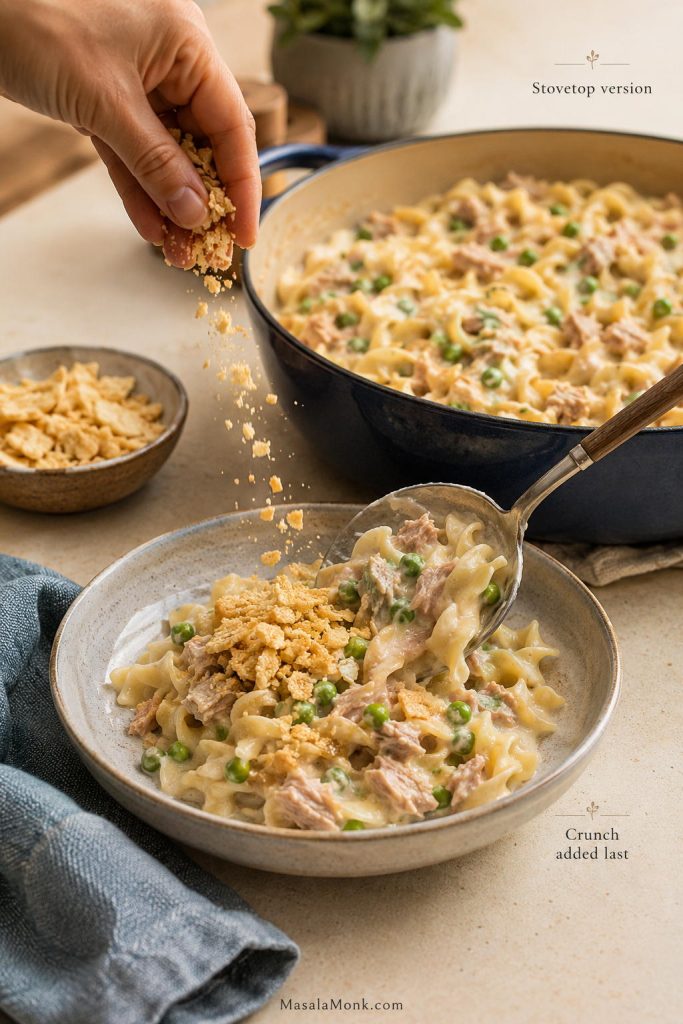
Old-fashioned tuna noodle casserole with crushed potato chip topping and a scooped corner showing noodles, peas, and tuna.
Crushed potato chips are the old-fashioned choice when you want salty crunch and a true retro tuna casserole finish.

Choosing a topping for a make-ahead casserole? See the make-ahead notes so the topping stays crisp.

How to Keep Tuna Noodle Casserole Creamy, Not Dry

The fix for dry tuna casserole happens before it goes into the oven, not after it comes out. Dryness usually comes from overcooked noodles, sauce that was too thick before baking, too much time in the oven, or leftovers reheated without adding moisture back.

Three-step guide showing one-minute-shy noodles, generously coated casserole mixture, and bubbling edges for creamy tuna noodle casserole.
The best texture starts before baking: slightly firm egg noodles, a generous sauce coating, and a stop point when the edges bubble.

Before Baking

  • Cook the noodles 1 minute shy of al dente.
  • Use the full 1 cup / 240 ml milk if making the casserole ahead.
  • Do not pack the noodles tightly into the baking dish.

After Baking or Reheating

  • Rest the casserole for 5 minutes, not 15 or 20.
  • For leftovers, add a splash of milk before reheating.
  • Cover while reheating, then uncover briefly to crisp the topping.
  • If a serving is already dry, stir in a spoonful of warm milk or cream before serving.
Three plates of tuna noodle casserole showing too dry, just right, and too watery textures.
The best tuna noodle casserole is soft and scoopable; if it slices like a block or leaks sauce, the balance needs adjusting.

If the casserole is already baked and the texture still seems off, use the troubleshooting guide to decide whether the issue is sauce, noodles, topping, or bake time.

No-Boil Tuna Noodle Casserole: Is It Worth It?

No-boil tuna noodle casserole works when convenience matters more than perfect noodle texture. It saves a pot, but the noodles need more liquid, a tightly covered pan, and a longer bake so they can soften in the sauce.

For the best egg noodle texture, boiling the noodles separately still gives the best result. If you do try a no-boil version, make the sauce much looser, press the noodles under the liquid, and cover the pan tightly with foil.

Add the topping only after the noodles are tender; otherwise the top can brown before the casserole is fully cooked.

No-boil tuna noodle casserole setup with noodles under sauce, foil nearby, and topping kept separate.
No-boil tuna noodle casserole needs extra liquid and patience, so keep the topping off until the noodles have softened.

Stovetop Tuna Noodle Casserole

This is the weeknight version when you want the flavor of tuna noodle casserole without waiting for a baked top. It will be softer and saucier than the oven version, and the topping is sprinkled on at the end instead of browned in the oven.

Cook the noodles separately, or simmer them gently in a creamy sauce in a Dutch oven. Stir in the tuna and peas near the end so the tuna stays flaky and the peas do not overcook. Finish each serving with crushed crackers, potato chips, or toasted breadcrumbs for crunch.
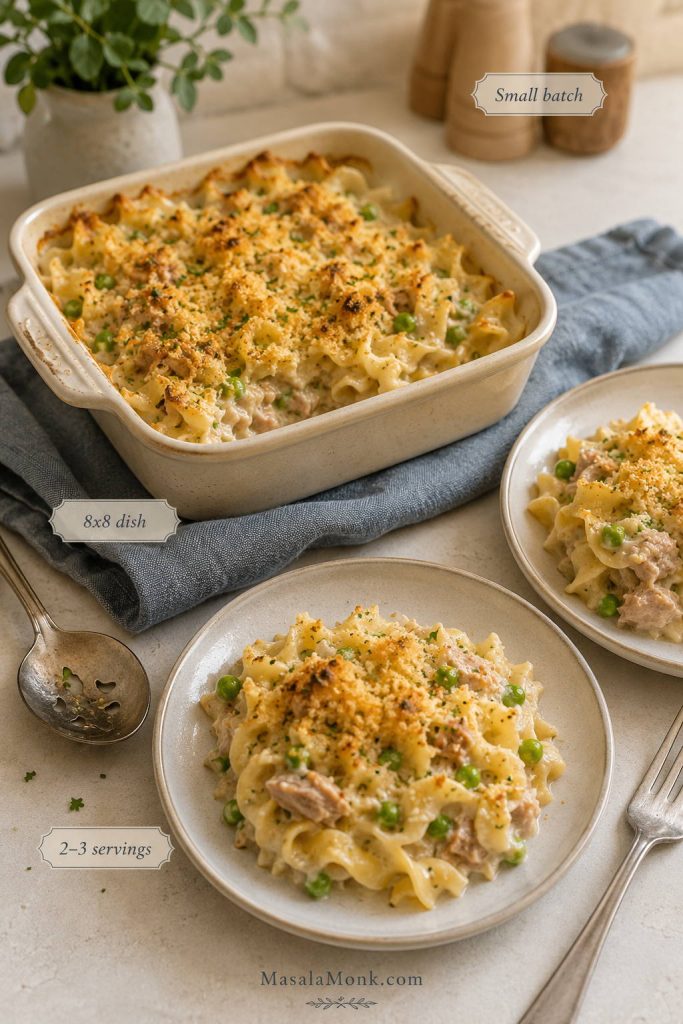
Stovetop tuna noodle casserole in a deep skillet with a serving topped with crushed crackers or chips.
The stovetop version stays softer and saucier, while the crunch comes from adding chips, crackers, or crumbs at the end.

Tuna Noodle Casserole for Two

A full 9×13-inch pan is great for family dinner, but an 8×8-inch dish or 1.5-quart baking dish is easier when you only want a few servings. Keep the sauce generous, add the topping right before baking, and check early because a smaller casserole heats faster.

Ingredient Small-Batch Amount
Egg noodles 4 oz / 115 g
Tuna 1 can, 5 oz / 142 g, drained
Peas 1/2 cup / 70 g
Cream of mushroom soup 1/2 to 2/3 can for balanced sauce, or 1 full can for extra creamy
Milk 1/4 to 1/3 cup / 60 to 80 ml
Dish 8×8-inch dish or 1.5-quart baking dish
Bake time 15–20 minutes at 375°F / 190°C
Small batch tuna noodle casserole in an 8x8 dish with two plated servings.
Use an 8×8 dish when you want the same comfort-food flavor without committing to a full 9×13 pan.

Old-Fashioned Tuna Noodle Casserole

For an old-fashioned tuna noodle casserole, keep the ingredients simple: egg noodles, canned tuna, cream of mushroom soup, milk, peas, cheddar, and crushed potato chips. Use light seasoning, add celery or onion only if you like that retro casserole flavor, and taste before salting because the soup, tuna, cheese, and chips already bring plenty.

What to Serve with Tuna Noodle Casserole

Tuna noodle casserole is rich, creamy, and filling, so the best sides are usually fresh, crisp, or simple. You do not need a heavy side dish unless you are feeding a larger crowd.

  • Fresh sides: green salad, cucumber salad, coleslaw, or tomato cucumber salad.
  • Vegetables: steamed broccoli, green beans, roasted carrots, asparagus, or peas and carrots.
  • Bread: dinner rolls, biscuits, garlic bread, or a simple slice of toasted sourdough.
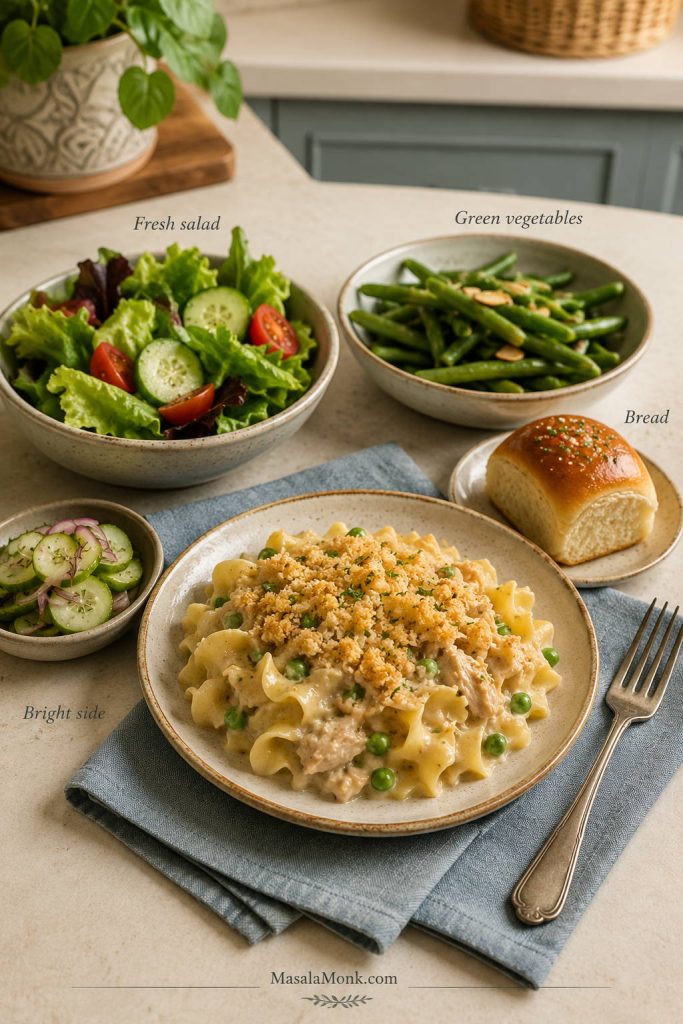
  • Bright sides: pickles, lemony salad, or vinegar-based slaw to balance the creamy casserole.
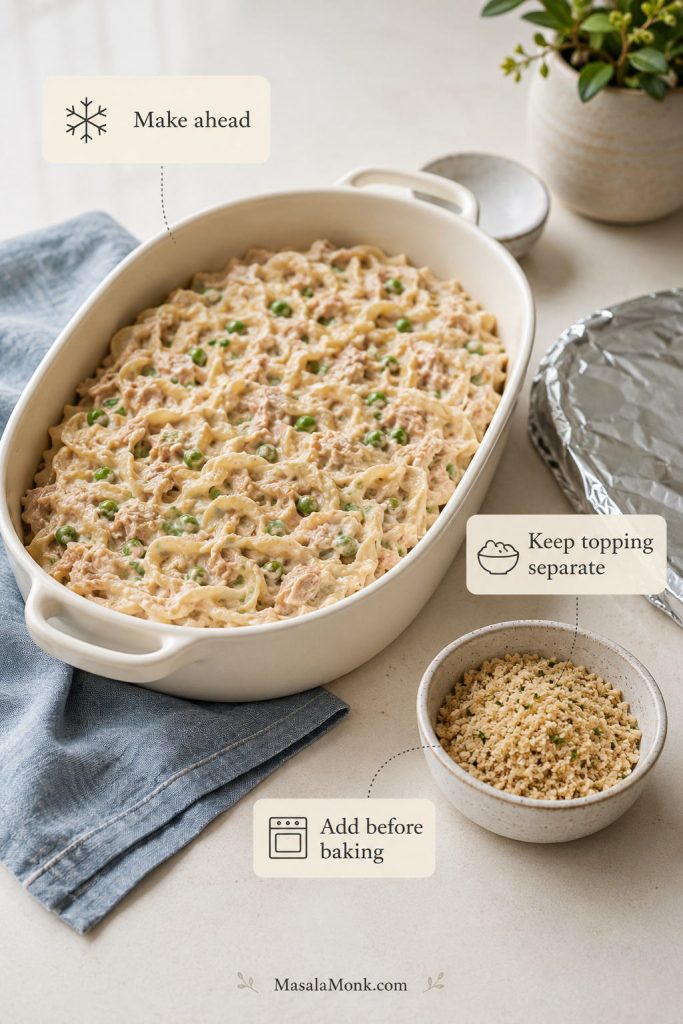
Tuna noodle casserole served with green salad, green vegetables, bread, and a bright side.
Because tuna noodle casserole is rich and filling, fresh salad, green vegetables, bread, or a bright pickle-style side keeps the plate balanced.

Serve it soon after the short rest, while the sauce is still creamy and the topping has some crunch.

Make Ahead, Store, and Freeze Tuna Noodle Casserole

Make Ahead

Assemble the casserole without the crunchy topping, cover, and refrigerate for up to 1 day. When ready to bake, let it sit at room temperature while the oven preheats, stir in a small splash of milk if the noodles have absorbed too much sauce, add the topping, and bake. A chilled casserole may need 10 to 15 extra minutes. For topping choices that hold up best, jump back to the topping guide.

Make-ahead tuna noodle casserole filling in a baking dish with crunchy topping stored separately.
For make-ahead tuna noodle casserole, refrigerate the filling without the topping so the crumbs, chips, or crackers stay crisp.

Storage

Store leftovers in an airtight container in the refrigerator for 3 to 4 days. For general leftover safety guidance, see the USDA’s leftovers and food safety guide.

Freezing

You can freeze tuna noodle casserole before or after baking, but the noodles will soften slightly after thawing. For best texture, freeze the casserole without the topping, then add fresh topping before baking or reheating.

Freezer-ready tuna noodle casserole in containers with crunchy topping stored separately for later.
Freeze tuna noodle casserole without the topping; then add fresh chips, crackers, or crumbs before baking or reheating.

Reheating

To reheat, add a splash of milk, cover loosely with foil, and warm in a 325°F / 165°C oven until hot. Remove the foil for the last few minutes if you want to re-crisp the topping. For single servings, microwave gently with a splash of milk and stir halfway through. If leftovers still seem dry, check the creamy, not dry tips for moisture fixes.

Leftover tuna noodle casserole in a small dish with milk being poured in and foil nearby for reheating.
When reheating tuna noodle casserole, a small splash of milk helps loosen the sauce after the noodles absorb moisture in the fridge.

Tuna Noodle Casserole Variations

Extra Cheesy Tuna Noodle Casserole

For a cheesier family-style bake, increase the cheddar to 1 1/2 or 2 cups and sprinkle a little extra cheese under the topping. For a sharper flavor, use sharp cheddar or add parmesan to the crumb topping. If you are in a full cheesy comfort-food mood, this macaroni and cheese recipe covers stovetop, baked, and Southern-style versions with similar creamy-baked pasta logic.

Tuna Noodle Casserole with Celery, Onion, or Mushrooms

Sautéed celery, onion, or mushrooms make the casserole taste a little fresher and more homemade. Cook them in a little butter before adding them to the dish so they add flavor without releasing too much water in the bake.

Healthier Tuna Noodle Casserole

For a lighter but still creamy version, use whole wheat egg noodles or a higher-protein pasta, add more vegetables, reduce the cheese, and use the no-soup sauce option.

Tuna Noodle Casserole Without Peas

Leave the peas out or replace them with corn, broccoli, mushrooms, spinach, or mixed vegetables. If using watery vegetables, cook or drain them first.

Tuna Hotdish

Tuna hotdish is often very similar to tuna noodle casserole, especially in Midwestern-style cooking. It usually means a creamy baked casserole with noodles or another starch, canned tuna, vegetables, and a crunchy topping.

Troubleshooting Tuna Noodle Casserole

Most tuna casserole problems are fixable once you know whether the issue came from the noodles, the sauce, the topping, or the bake time.

Tuna noodle casserole troubleshooting guide with fixes for dry, watery, mushy, and soggy topping problems.
Most tuna casserole problems come from the noodles, sauce, topping, or bake time; once you spot the cause, the fix is usually simple.
Problem Likely Cause Fix
Dry casserole Too little sauce, overcooked noodles, or overbaking Add more milk before baking, cook noodles short, and bake only until bubbly.
Mushy noodles Noodles boiled too long or held too long before baking Cook 1 minute shy of al dente and bake soon after mixing.
Watery sauce Undrained tuna, too much milk, or watery vegetables Drain tuna well, do not overdo the milk, thaw and drain larger frozen vegetables, and bake uncovered.
Bland flavor Not enough seasoning or too much plain pasta Add black pepper, garlic powder, onion powder, mustard, sharp cheddar, or a squeeze of lemon.
Soggy topping Topping added too early, casserole covered while hot, or leftovers stored with topping Add topping right before baking. For leftovers, refresh with a few new crumbs or chips after reheating.
Topping browns too fast Oven too hot or topping too close to broiler Tent loosely with foil and continue baking until the center is hot.

Once baked, the tuna noodle casserole should scoop easily, with creamy noodles underneath and a lightly crisp topping on top. If it looks bubbly at the edges and still moist in the center, it is ready.

FAQs

Do you cook egg noodles before baking tuna casserole?

Cook the egg noodles first, but stop about 1 minute before they are fully al dente. They will continue softening in the oven.

How much milk do you add to tuna noodle casserole?

For a 9×13-inch tuna noodle casserole with 2 cans of condensed soup, use 3/4 to 1 cup / 180 to 240 ml milk. Use the full cup if you want it creamier or are making it ahead.

Do you need one or two cans of cream of mushroom soup?

For a full 9×13-inch casserole with 12 oz / 340 g egg noodles, 2 cans of condensed soup give the best creamy texture. One can is better for a smaller casserole.

What kind of tuna works best?

Chunk light tuna works well for a softer, milder casserole, while solid white albacore gives larger flakes and a firmer bite. Drain either type well.

Should tuna noodle casserole be covered while baking?

Bake it uncovered if the casserole is freshly assembled. Cover loosely with foil only if it is chilled, reheating, or browning too quickly before the center is hot.

Why is my tuna noodle casserole dry?

It probably had too little sauce, overcooked noodles, or baked too long. The casserole should come out when the edges are bubbling, not when the top looks dry.

What can replace cream of mushroom soup?

Cream of celery soup is the closest easy swap. Cream of chicken makes the sauce richer, and a homemade butter-flour-milk sauce gives you the most control over salt and texture.

Can tuna noodle casserole be made ahead?

Make it up to 1 day ahead, but leave off the topping until just before baking. If the noodles absorb too much sauce in the fridge, stir in a small splash of milk before baking.

Can you freeze tuna noodle casserole?

Freezing works, though the noodles soften after thawing. Freeze without the topping for the best texture, then add fresh topping before baking or reheating.

Is tuna hotdish the same as tuna noodle casserole?

They are very similar. “Hotdish” is often the Midwestern term for a creamy baked casserole with a starch, protein, vegetables, and a topping.

What vegetables go well in tuna noodle casserole?

Peas are the classic choice, but celery, onion, mushrooms, carrots, broccoli, spinach, corn, and mixed vegetables all work. Cook or drain watery vegetables first so they do not thin the sauce.

Posted on Leave a comment

Easy Spam Fried Rice Recipe

A skillet of fried rice with browned Spam cubes, soft scrambled egg, peas, carrots, scallions, and glossy separated rice being lifted with a spoon.

This Spam fried rice recipe is for the night you have cold rice in the fridge, a can of Spam in the pantry, and no patience for a complicated dinner. The pan does the heavy lifting: crisp salty cubes, soft egg, garlic, scallions, vegetables, and loose grains tossed with just enough soy-oyster-sesame seasoning to make everything savory and glossy.

The trick is not adding everything at once. Brown the Spam until the edges crisp, cook the egg gently, let the rice loosen in a hot pan, and season near the end so the grains stay separate instead of turning soft and salty. Once everything is prepped, the cooking part takes about 12–15 minutes.

After that base makes sense, you can take the same method toward kimchi Spam fried rice, Hawaiian pineapple Spam fried rice, garlic-heavy Filipino-style rice, or a spicy chili-crisp version without losing the texture that makes the dish work.

Spam Fried Rice Guide

Start with the quick method, then use the rice, sauce, egg, variation, serving, and troubleshooting sections to adjust the pan you are actually cooking.

Quick Answer: How to Make Spam Fried Rice

Dice the Spam and brown it in a hot wok or large skillet until the edges look crisp and toasted. Scramble the eggs and set them aside. Stir-fry garlic, scallion whites, vegetables, and cold cooked rice, then add a simple sauce of soy sauce, oyster sauce, sesame oil, and pepper. Fold the crispy Spam and soft egg back through the rice and finish with scallion greens.

A quick visual guide showing browned Spam, soft scrambled egg, cold rice, sauce, and the finished fried rice pan.
The order matters here: brown the Spam, cook the egg gently, fry the cold rice, and add sauce near the end, because that sequence gives the rice its best texture.

Spam Fried Rice at a Glance

  • Main ratio: 1 can Spam + 4 cups cold cooked rice + 3 eggs
  • Base sauce: 2 tbsp soy sauce + 1 tbsp oyster sauce + 2 tsp toasted sesame oil
  • Rice to start with: cold day-old jasmine, long-grain, or medium-grain rice
  • Spam cut: ½-inch cubes for crisp edges and visible bites
  • Pan choice: wok, carbon-steel skillet, cast iron, or large nonstick skillet
  • Heat level: medium-high to high
  • Cook time: 12–15 minutes once everything is prepped

The rice does most of the texture work here. Because chilled rice has less surface moisture, it separates and fries instead of clumping into soft, steamy pockets. If your rice is freshly cooked, there is a quick fix in the rice section below.

Why This Version Works

This dish works best when every ingredient gets a quick moment in the pan before everything comes together. The Spam needs time against the hot surface, the rice needs enough heat to loosen, and the sauce should season the grains without drowning them.

  • Browned Spam comes first. Crisp edges give the finished rice salty-crisp bites instead of soft, barely warmed pieces.
  • Chilled rice keeps the texture loose. Drier grains separate more easily and give you a fluffier pan.
  • Soft egg goes back in near the end. Scrambling it first keeps it tender instead of dry or rubbery.
  • A measured sauce keeps the salt in check. Spam already brings salt, so the soy sauce and oyster sauce need a lighter hand.
  • Vegetables bring contrast. Peas, carrots, scallions, corn, cabbage, or bell pepper help lighten the richness.

Flavor balance: Spam brings salt and richness, rice softens everything, egg adds body, vegetables add relief, and scallions wake the pan up at the end. If the dish tastes heavy, do not add more sauce first. Add freshness, heat, acid, or crunch.

Texture cue: The rice should look glossy and separate, not wet. The Spam should stay visible in browned cubes, and the egg should be soft pieces folded through the rice rather than tiny dry crumbs.

Ingredients You Need

The ingredient list is short, but each piece matters. For the first batch, keep the base simple. After that, use the variation section to move toward kimchi, pineapple, garlic-heavy, spicy, or teriyaki-style fried rice.

Ingredients for Spam fried rice arranged on a dark surface, including Spam, cold cooked rice, eggs, peas, carrots, scallions, garlic, soy sauce, oyster sauce, and sesame oil.
The base is simple, yet the balance matters: Spam brings salt, rice softens it, egg adds body, and the sauce should pull everything together without taking over.

Spam

Use one 12 oz / 340 g can of Spam. SPAM 25% Less Sodium is helpful if you have it, especially because the sauce also includes soy sauce and oyster sauce. Cut the Spam into ½-inch cubes so the pieces brown quickly while still staying chunky enough to notice in the rice.

For extra texture, dice most of the Spam and roughly mash or crumble a small portion. The cubes give you crisp bites, while the rough pieces spread more savory flavor through the rice.

Comparison of Spam cut styles for fried rice, showing browned half-inch cubes, rough crumbles, and rectangular slices.
Half-inch cubes are the easiest first cut because they brown well and stay visible in the rice, while crumbles spread flavor more widely and slices suit simpler rice bowls.

Cold Cooked Rice

Use 4 cups cold cooked rice, about 680–730 g depending on the rice type and how tightly it is packed. Jasmine rice, long-grain white rice, and medium-grain rice all work well once chilled.

Eggs

Three large eggs are the most balanced amount for 4 cups of rice. Use 2 eggs for a lighter pan or 4 eggs if you want a more breakfast-style Spam egg rice.

Vegetables

Frozen peas and carrots are the easiest classic choice. Before adding them, rinse them briefly under warm water and drain them well. Corn, cabbage, bell pepper, onion, edamame, and extra scallions also work, but avoid adding too many watery vegetables at once.

Aromatics

Garlic and scallions are enough for the base recipe. Add garlic after the Spam has browned so it does not burn before the meat gets crisp. Use the scallion whites while cooking and save the green tops for the finish.

Sauce

The base sauce uses soy sauce, oyster sauce, toasted sesame oil, a little sugar, and white pepper. Soy sauce seasons the rice, oyster sauce adds depth, sesame oil brings aroma, sugar rounds the edges, and white pepper gives the rice a gentle fried-rice finish without making it hot.

The Rice That Gives You Separate Grains

The easiest rice to work with is cold, cooked, and slightly dry on the surface. It should not be hard or stale, but it should not be hot and steamy when it hits the pan.

Three bowls of rice labeled day-old jasmine, long-grain white, and chilled medium-grain rice for making fried rice.
Good fried rice starts before the pan gets hot. If the grains are cool, lightly dry, and easy to separate, they are much more likely to fry instead of clump.

If you are starting from uncooked rice, this guide on how to cook rice perfectly is useful for getting the base right before you chill it for fried rice.

Cold Day-Old Rice

Day-old rice is the most forgiving option at home. After a night in the refrigerator, the grains lose some surface moisture and separate more easily in a hot pan.

Jasmine Rice

Jasmine rice is the easiest everyday choice because it separates well once chilled but still tastes soft and fragrant.

Long-Grain White Rice

Long-grain white rice gives you a fluffier, more separate pan, especially if you want the grains to stay distinct.

Medium-Grain Rice

Medium-grain rice works well when it is fully chilled. It gives the dish a slightly chewier, more cohesive texture. Before cooking, break up the clumps so the rice does not go into the pan in large blocks.

Fresh Rice Emergency Fix

No day-old rice? You can still make this work. Spread freshly cooked rice in a thin layer on a tray or large plate, let the steam escape, and chill it uncovered until the surface feels cooler and drier. Even 20–30 minutes of cooling is better than adding hot rice straight from the cooker.

Freshly cooked rice spread thinly across a tray to cool before being used for fried rice.
Fresh rice is not a dealbreaker; however, the steam needs to escape first, so spreading it out gives the grains a better chance of frying well.

If the rice still feels damp, use a slightly wider pan, give it more time before adding the sauce, and avoid stirring nonstop. The pan should sound active, not steamy. Also, if you have more cooked rice than you need, save the rest for something sweet like rice pudding with cooked rice.

Avoid this: Very wet rice, overcooked rice, and hot rice straight from the pot. Those are the main reasons fried rice goes soft.

How to Make It

The basic rhythm is simple: crisp the Spam, scramble the egg, fry the rice, season lightly, and fold everything together.

Once the pan is hot, everything moves quickly, so dice the Spam, break up the rice, beat the eggs, drain the vegetables, and mix the sauce before you turn on the stove.

A step-by-step visual guide showing sauce mixing, egg scrambling, Spam browning, rice frying, sauce adding, and the finished fried rice.
Once the pan is hot, everything moves quickly, so having the Spam, rice, eggs, vegetables, and sauce ready makes the method easier and more reliable.

1. Mix the Sauce

In a small bowl, stir together soy sauce, oyster sauce, toasted sesame oil, sugar, white pepper, and optional water, broth, or Shaoxing wine. This gives you one seasoning mix to add later, instead of measuring bottles over a hot pan.

2. Scramble the Eggs

Heat 1 teaspoon of the neutral oil in a wok or large skillet over medium-high heat. Add the beaten eggs and scramble just until softly set. They should still look tender when you move them to a plate, because they will warm through again at the end.

Soft scrambled eggs in a skillet being moved with a spatula while still glossy and tender.
Pull the eggs while they still look soft and glossy. Later, they will finish gently in the hot rice instead of turning dry.

3. Brown the Spam

Add another teaspoon or two of oil only if the pan looks dry, then add the diced Spam. Spread it into a single layer and let it sit long enough to brown before stirring. The pieces should look darker at the edges and smell toasted, not just warmed through.

Cubes of Spam browning in a skillet until the edges look crisp and caramelized.
Give the Spam enough contact with the pan before stirring, because those browned edges bring much of the dish’s salty, savory character.

This step gives the finished rice its best salty-crisp bites. If your pan is crowded, transfer the browned Spam to a plate and add it back with the eggs near the end. In a wide wok, you can leave it in the pan or push it to one side.

4. Add Garlic, Scallion Whites, and Vegetables

Scatter in the garlic and scallion whites and stir for about 20–30 seconds, just until fragrant. Add the peas and carrots and cook until they are hot and dry. If the vegetables release water, pause and let that moisture cook off before adding the rice.

5. Add the Rice

Add the cold rice and press gently on any clumps with the spatula. At first, the grains may feel firm from the fridge. Keep tossing and pressing until they loosen, turn hot, and start to separate. If the pan sounds steamy instead of sizzling, give the rice another minute before adding the sauce.

Cold rice in a skillet being pressed from clumps into loose grains with a spatula.
Cold rice often goes in stiff and clumped, but gentle pressure and steady heat help the grains loosen and fry instead of steaming.

For a few crisp bits, spread the rice across the pan and let it sit undisturbed for 30–60 seconds before tossing again.

6. Add the Sauce Around the Pan Edge

In a wok, stainless skillet, or cast-iron pan, pour the sauce around the hot edge so it sizzles briefly before you toss it through the rice. If you are using nonstick, drizzle the sauce evenly over the rice and toss right away. Either way, stop and taste before adding more soy sauce; the Spam will keep seasoning the dish as you eat.

Sauce being poured around the exposed hot edge of a wok while fried rice cooks in the center.
When sauce hits the hot pan edge first, it wakes up quickly before coating the rice, which gives the whole pan a cleaner, more even savory finish.

7. Fold the Egg Back In

Add the soft scrambled eggs back to the pan and fold them through the rice with the crispy Spam. The finished pan should taste salty-savory, a little rich, and balanced by scallions or vegetables. Finish with scallion greens, extra white pepper, sesame seeds, chili crisp, or a tiny drizzle of sesame oil.

A close-up spoonful of finished fried rice with separate grains, browned Spam cubes, egg, scallions, peas, and carrots.
The finished texture should look glossy and loose rather than wet, with crisp Spam and tender egg balancing the richness of the rice.

Spam Fried Rice with Egg

Egg belongs in the base version because it balances the salty Spam and makes the rice more filling. It also gives the dish that familiar Spam-and-eggs comfort without turning the whole pan into a breakfast scramble.

A bowl of fried rice with visible scrambled egg, browned Spam cubes, scallions, peas, and carrots.
Egg does more than add protein. It also softens the salty edge of the Spam and makes the whole pan feel rounder and more complete.

For 4 cups of cooked rice, 3 large eggs give you visible pieces of egg without overwhelming the grains. Use 2 eggs if you want a lighter pan, or 4 eggs if you want the dish more protein-heavy.

The easiest method is to scramble the eggs first, remove them while still soft, and fold them back in at the end. You can also push the rice aside and scramble the eggs in an open space in the pan, but that works best in a wide wok or large skillet.

If you often have eggs to use up, these easy egg dishes are useful for quick meals beyond fried rice.

Best egg texture: Take the eggs off the heat when they are just set. If they cook all the way through at the start, they can turn dry by the time the rice is finished.

Spam and Rice vs Spam Fried Rice

People use “Spam and rice” to mean a few different meals, from a simple bowl to a full fried rice pan. The difference matters because the cooking method changes the texture.

  • Spam and rice is usually browned Spam served over plain white rice.
  • Spam egg rice is often a simple bowl or plate with Spam, egg, and rice.
  • Spam fried rice means the rice itself is stir-fried with Spam, egg, sauce, aromatics, and vegetables.
  • Spamsilog is a Filipino-style plate with Spam, garlic rice, and egg, usually served as separate components.
Three dishes labeled Spam and rice bowl, fried rice, and spamsilog-style, showing different ways to serve Spam with rice.
Spam and rice can be a simple bowl, a full fried rice pan, or a spamsilog-style plate; therefore, the cooking method changes the texture, flavor, and feel of the meal.

In this version, the rice actually fries with the Spam, egg, sauce, and aromatics, so every grain picks up flavor. If you want a simpler bowl instead, brown Spam slices, fry an egg, and serve both over hot white rice with scallions and chili crisp.

Sauce Guide

The sauce should make the rice savory, not salty for the sake of being salty. Start with the measured amount, toss well, then taste. It is much easier to add a splash more soy sauce at the end than to fix a pan that has gone too far.

A sauce guide showing small bowls labeled classic, less salty, oyster-forward, teriyaki-style, and spicy beside a spoonful of fried rice.
Start with less sauce than you think you need. Since Spam keeps seasoning the rice as you eat, a lighter hand usually gives the pan a better finish.
Sauce Style Formula Best For
Balanced classic 2 tbsp soy sauce + 1 tbsp oyster sauce + 2 tsp toasted sesame oil The main recipe and most everyday versions.
Less salty 1½ tbsp low-sodium soy sauce + 1 tbsp oyster sauce + 1 tbsp water or broth Regular Spam, salty rice, or anyone sensitive to salt.
Oyster-forward 1 tbsp soy sauce + 1½ tbsp oyster sauce + white pepper A deeper, rounder, more savory fried rice.
Teriyaki-style 2 tbsp soy sauce + 1 tbsp mirin + 1 tsp sugar A slightly sweeter Spam fried rice variation.
Garlic-butter Base sauce + 1 tbsp butter at the end + extra garlic Richer comfort-food style fried rice.
Spicy Base sauce + chili crisp, sriracha, gochujang, gochugaru, or sliced chilies Heat lovers and kimchi-style variations.

No Oyster Sauce?

You can make this without oyster sauce. Use 2 tablespoons low-sodium soy sauce, 1 teaspoon sugar, and a small splash of water or broth. For more depth, add a few drops of fish sauce, a small spoon of hoisin, or a little chili crisp. Start light, because Spam already brings plenty of salt.

A substitution guide showing soy sauce, sugar, broth, chili crisp, fish sauce, hoisin, and a spoonful of fried rice as alternatives when oyster sauce is missing.
No oyster sauce is not a dead end. Soy sauce, a little sugar, and a splash of broth still build a savory base, while chili crisp, fish sauce, or hoisin can deepen the flavor.

Start with the less-salty formula when your Spam is regular or the rice already tastes seasoned. When the rice tastes flat, go with the balanced classic. For a deeper, takeout-style flavor, lean slightly more oyster-forward.

Use a neutral oil for stir-frying and save toasted sesame oil for the sauce or final drizzle. Otherwise, the sesame oil can taste flat before the rice is finished. Added near the end, it keeps its aroma fresher.

Variations: Kimchi, Pineapple, Garlic, and Spicy

Choose the variation based on what you want from the bowl. Kimchi makes it tangy and bold, while pineapple pushes it sweet-salty. Extra garlic makes it more comforting, chili crisp makes it louder, and teriyaki-style sauce gives you a slightly sweeter weeknight version.

Kimchi Spam Fried Rice

Kimchi is the boldest direction here. Use ripe kimchi with good sourness, chop it into small pieces, and drain or squeeze it lightly if it is very wet. Fry the kimchi after browning the Spam and before adding the rice so the flavor deepens and extra moisture cooks off.

Kimchi fried rice in a bowl with red-orange rice, crispy Spam cubes, kimchi pieces, scallions, sesame seeds, and a fried egg.
Kimchi takes the rice in a tangier, bolder direction, adding acid, heat, and depth without needing many extra ingredients.

If you want stronger kimchi flavor without soggy rice, squeeze the chopped kimchi over a small bowl, fry the kimchi until it smells deeper and less raw, then add a spoonful of the reserved juice only after the rice is hot and separate.

Chopped kimchi being squeezed over a bowl to remove excess liquid, with fried kimchi cooking in a pan nearby.
For kimchi fried rice, control the liquid before it reaches the pan. Squeezing first lets you add tang later without making the grains soggy.

Use less soy sauce than the base recipe because both Spam and kimchi bring salt. Add a spoonful of kimchi juice only if the rice is dry enough to handle it. For more heat, add gochujang, gochugaru, chili crisp, or sliced chilies. A fried egg on top works especially well.

Hawaiian Spam Fried Rice with Pineapple

For a Hawaiian-style pan, add ½ to 1 cup diced pineapple. Fresh pineapple gives the cleanest texture, but canned pineapple works if it is drained very well. Add pineapple near the end for juicy pieces, or brown it briefly with the Spam if you want caramelized edges.

Hawaiian-style fried rice with pineapple, browned Spam cubes, egg, scallions, and vegetables in a bowl.
Pineapple gives the rice a sweet-salty contrast, but it works best when the fruit is well drained and added near the end so the grains stay loose.

A lighter hand with sauce works better here. Too much soy sauce plus pineapple juice can make the rice wet. Bell pepper, scallions, peas, carrots, and a little ginger all fit nicely with the sweet-salty flavor.

Drained pineapple in a strainer and lightly browned pineapple pieces in a pan beside fried rice ingredients.
To keep pineapple fried rice from turning watery, drain canned fruit well or brown fresh pineapple briefly before it reaches the rice.

Filipino Garlic Spam Fried Rice

For a Filipino-inspired garlic version, use extra garlic and keep the seasoning simple. Brown the Spam, fry plenty of minced garlic until fragrant, then add cold rice and season lightly with soy sauce or a small splash of fish sauce. Finish with scallions and serve with a fried egg if you want a spamsilog-style plate.

Garlic fried rice with crispy Spam, fried egg, scallions, and golden garlic pieces served on a plate.
A garlic-heavy version needs less sauce because the garlic, Spam, rice, and egg already create a deep comfort-food flavor on their own.

The difference is mostly in the format. Garlic Spam fried rice mixes diced Spam into the rice, while spamsilog usually serves fried Spam slices, garlic rice, and egg as separate parts on the same plate.

Spicy Spam Fried Rice

For heat, add chili crisp, sriracha, gochujang, gochugaru, sambal, sliced fresh chilies, or extra black pepper. Chili crisp is the easiest option because it brings heat, oil, crunch, and savoriness at the same time. Start small if your Spam and sauce are already salty.

Spicy fried rice with chili crisp being spooned over rice, Spam cubes, egg, and scallions.
Chili crisp is one of the easiest spicy finishes, since it adds heat, crunch, oil, and extra savoriness in one spoonful.

Spam Fried Rice with Peas and Carrots

Peas and carrots are the classic low-effort vegetable mix. Use ¾ to 1 cup for 4 cups of rice. Before adding them, rinse frozen vegetables briefly under warm water, drain them well, and add them before the rice so excess moisture can cook off.

Fried rice in a skillet with peas, carrots, browned Spam cubes, egg, and scallions being lifted with a spatula.
Peas and carrots are the easiest vegetable mix for this recipe, especially when they are drained well and heated long enough for extra moisture to cook off.

If you like the same leftover-rice logic with a different protein, MasalaMonk’s ground pork recipes include budget-friendly weeknight ideas that fit the same quick-dinner mood.

Teriyaki Spam Fried Rice

For a teriyaki-style version, replace the oyster sauce with a simple mix of soy sauce, mirin, and a little sugar. Ginger works nicely here. Keep the sweetness controlled so the rice still tastes savory, not sticky or glazed like a teriyaki bowl.

Teriyaki-style fried rice with glossy rice, browned Spam cubes, scallions, and sesame seeds.
A teriyaki-style version can be slightly sweeter and darker, but the sauce should glaze the rice lightly rather than make it sticky or heavy.

How to Fix Spam Fried Rice

If the pan is not perfect the first time, it is usually easy to understand what happened. Most problems come from moisture, heat, salt, or crowding. First, check the texture. Then, adjust the seasoning only after the rice has had enough time in the pan.

A troubleshooting image showing fixes for mushy fried rice, overly salty rice, and Spam that is not crispy enough.
Most fried rice problems come from moisture, salt, heat, or crowding, so the right fix depends on whether the pan looks steamy, tastes too salty, or never browned properly.

Texture Problems

Mushy fried rice being spread across a skillet with a spatula so excess moisture can cook off.
If the rice turns soft or clumpy, spread it out and pause before stirring again, because more pan contact helps moisture cook away.
Problem What Happened How to Fix It
Rice is mushy The rice was too warm, wet, or freshly cooked. Spread it out in the pan and let moisture cook off without stirring constantly. Next time, use cold day-old rice or chill fresh rice on a tray first.
Rice is dry The rice was very old or cooked too long after adding sauce. Add 1–2 tablespoons water or broth and toss quickly over heat.
Rice is clumping The rice was not broken up before cooking, or the pan was too small. Break up cold rice before adding it. Also, use a wide pan and enough heat to fry the grains.

Seasoning Problems

A pan of fried rice with plain rice, egg, vegetables, scallions, cucumber, and a bright finishing ingredient shown as ways to balance too much salt.
When the pan tastes too salty, add plain rice, egg, vegetables, or a fresh finish such as scallions or cucumber; more soy sauce will only push it further out of balance.
Problem What Happened How to Fix It
Fried rice is too salty The Spam, soy sauce, and oyster sauce added up quickly. Add more plain rice, egg, or vegetables. Then finish with scallions or a tiny splash of rice vinegar instead of more soy sauce.
Rice tastes bland The sauce did not spread evenly, or the rice needed a little more seasoning. Add a small splash of soy sauce around the hot pan edge, toss, and taste again before adding more.
Fried rice is greasy Too much oil was added before the Spam rendered. Use less oil next time and let the Spam release some fat before adding more oil.

Spam, Egg, and Add-In Problems

Problem What Happened How to Fix It
Spam is not crispy The pan was crowded or the Spam was stirred too often. Brown the Spam before adding rice. Let it sit in contact with the pan so the edges can crisp.
Egg is rubbery The eggs cooked too long at the beginning. Scramble eggs separately and remove them while still soft. Then fold them back in at the end.
Pineapple made it wet The pineapple was too juicy or added too early. Drain pineapple well and add it near the end. Alternatively, brown it briefly with the Spam before the rice goes in.
Kimchi made it soggy The kimchi carried too much liquid into the pan. Squeeze or drain very wet kimchi. Then fry it before adding rice so the extra moisture cooks off.

What to Serve with Spam Fried Rice

This fried rice can be dinner on its own, especially with egg and vegetables, but a fresh or tangy side makes the plate feel brighter.

Choose the side based on what the pan needs. For a rich-tasting pan, add cucumber salad, kimchi, or pickled vegetables. To make dinner fuller, add garlicky greens, bok choy, broccoli, or a fried egg. When the bowl needs more energy, finish with chili crisp, sesame seeds, scallions, or a squeeze of lime.

A serving spread with fried rice, cucumber salad, kimchi, greens, fried egg, chili crisp, scallions, and lime.
Choose sides based on what the rice needs: fresh or tangy dishes brighten a rich pan, while greens or a fried egg turn it into a fuller meal.

For another pantry-friendly dinner built around a canned protein, these salmon croquettes with canned salmon are a good next recipe to keep in rotation.

  • Cucumber salad, kimchi, or quick pickled vegetables
  • A fried egg on top
  • Chili crisp, hot sauce, sesame seeds, or extra scallions
  • Steamed bok choy, broccoli, or garlicky greens
  • Sliced avocado with lime or sesame seeds
  • A simple broth, miso soup, or clear vegetable soup

Storage and Reheating

Store leftover Spam fried rice in an airtight container in the refrigerator and use it within 3–4 days. That matches the USDA leftover guidance for cooked leftovers. You can also freeze portions, though the texture is best when the rice is freshly made or reheated from the fridge.

Fried rice stored in a clear airtight container and reheated in a skillet with a small splash of water.
A skillet gives leftovers a better second life than the microwave alone. Meanwhile, a small splash of water helps reheat the rice without making it dry or brittle.

For the best texture, reheat fried rice in a skillet over medium heat with a small splash of water or broth. Stir until hot, then let it sit briefly in the pan if you want the rice to regain a few crisp edges.

For a faster option, microwave the rice in a covered bowl with a damp paper towel. Stir halfway through so it heats evenly. After reheating, add scallions, sesame oil, or chili crisp to freshen it up.

The finished fried rice should not feel heavy or wet. You want separate grains, crisp-edged Spam, soft pieces of egg, and enough scallion or vegetable freshness to balance the salty richness. Once you know that texture, the recipe becomes easy to adjust with whatever is already in your fridge.

Spam Fried Rice Recipe

Crispy browned Spam, cold leftover rice, soft scrambled egg, vegetables, and a quick soy-oyster-sesame sauce come together in this easy one-pan fried rice.

Prep Time10 minutes
Cook Time12–15 minutes
Total Time22–25 minutes
Yield4 servings
CourseMain dish, quick dinner
StyleSpam fried rice with egg

Equipment

  • Wok, carbon-steel wok, cast-iron skillet, or large 12-inch nonstick skillet
  • Wide spatula
  • Small bowl for sauce
  • Plate or bowl for holding cooked egg and Spam if needed

Ingredients

  • 1 can Spam, 12 oz / 340 g, preferably low sodium, cut into ½-inch cubes
  • 4 cups cold cooked rice, about 680–730 g
  • 3 large eggs, beaten
  • 2 tablespoons / 30 ml neutral oil, divided, plus a little more only if the pan looks dry
  • 2 cloves garlic, minced
  • 2 green onions, whites and greens separated
  • ¾ to 1 cup frozen peas and carrots, thawed or rinsed and drained
  • Optional: ½ cup corn, diced bell pepper, cabbage, or edamame

Sauce

  • 2 tablespoons / 30 ml soy sauce, preferably low sodium
  • 1 tablespoon / 15 ml oyster sauce
  • 2 teaspoons / 10 ml toasted sesame oil
  • 1 teaspoon sugar, optional
  • ¼ teaspoon white pepper or black pepper
  • Optional: 1 tablespoon / 15 ml water, broth, or Shaoxing wine

Instructions

  1. Mix the sauce. In a small bowl, stir together soy sauce, oyster sauce, sesame oil, sugar, pepper, and optional water, broth, or Shaoxing wine.
  2. Scramble the eggs. Heat 1 teaspoon neutral oil in a wok or large skillet over medium-high heat. Add the beaten eggs and scramble until softly set. Then transfer to a plate.
  3. Brown the Spam. Add another teaspoon or two of oil only if the pan looks dry, then add the diced Spam. Cook until browned and crisp at the edges, about 4–6 minutes. If the pan is crowded, transfer the Spam to a plate and add it back near the end.
  4. Add aromatics and vegetables. Stir in garlic and scallion whites for 20–30 seconds, then add peas and carrots and cook until hot and dry.
  5. Add the rice. Add cold cooked rice and break up clumps with a spatula. Stir-fry until the rice is hot and the grains separate.
  6. Add the sauce. In a wok, stainless skillet, or cast-iron pan, pour the sauce around the hot edge and let it sizzle briefly. If using nonstick, drizzle it evenly over the rice and toss right away.
  7. Finish. Fold the scrambled egg and browned Spam back through the rice. Add scallion greens, taste, and adjust only if needed.
  8. Serve hot. Top with sesame seeds, chili crisp, extra scallions, or a fried egg if desired.

Notes

  • Cold day-old rice gives the best texture.
  • Use low-sodium Spam or low-sodium soy sauce if you are worried about saltiness.
  • Taste before adding extra soy sauce at the end.
  • If you skip oyster sauce, use the no-oyster-sauce option in the sauce section above.
  • For kimchi Spam fried rice, use ripe chopped kimchi and reduce the soy sauce.
  • For pineapple Spam fried rice, drain pineapple well and add it near the end.

Storage

Refrigerate leftovers in an airtight container and use within 3–4 days. Reheat in a skillet with a splash of water or broth for the best texture.

A saveable recipe card showing the base ratio of one can of Spam, four cups of rice, three eggs, and a 25-minute cooking time.
Remember the ratio first: one can of Spam, four cups of cold rice, and three eggs. Once that works, the sauce and vegetables are easy to adjust.

Before the FAQs, use the final serving cue as a quick check: the bowl should look loose, glossy, crisp-edged, and balanced by something fresh or spicy.

A plated serving of fried rice with browned Spam cubes, egg, scallions, chili crisp, cucumber, and kimchi side dishes.
A good final bowl has separate grains, crisp Spam, soft egg, and a fresh side or spicy finish to keep the dish lively from the first bite to the last.

For saving or sharing, this version is the simplest promise of the recipe: cold rice, crisp Spam, soft egg, vegetables, and a fast savory sauce.

A close-up image of easy Spam fried rice with crispy Spam cubes, egg, vegetables, scallions, and a bold title overlay.
Save this easy Spam fried rice idea for nights when there is cold rice in the fridge and dinner needs to be fast, savory, and still intentional.

FAQs

What rice is best for Spam fried rice?

Cold day-old jasmine rice is the easiest everyday choice because it separates well and stays fragrant. Long-grain white rice gives a fluffier texture, while medium-grain rice works if it is fully chilled and broken up before cooking.

Can I make Spam fried rice with fresh rice?

Yes, but do not add hot rice straight from the cooker. Instead, spread fresh rice on a tray, let the steam escape, and chill it uncovered until the surface feels cooler and drier. Fresh rice needs more help because it can steam in the pan instead of frying.

Is egg necessary in Spam fried rice?

Egg is not mandatory, but it makes the pan feel more complete. It softens the salty edges of the Spam, adds protein, and gives the rice those tender golden pieces people expect in fried rice.

Can I make Spam fried rice without oyster sauce?

Yes. Use low-sodium soy sauce, a little sugar, and a small splash of water or broth. For more depth, add a few drops of fish sauce, a small spoon of hoisin, or chili crisp. Start lightly because Spam is already salty.

Why is my Spam fried rice mushy?

Mushy fried rice usually starts before the sauce ever goes in. Hot, wet, or overcooked rice steams in the pan instead of frying, so the grains collapse together. Cold rice, a hot pan, and a light hand with sauce fix most of the problem.

How do I make Spam fried rice less salty?

Use low-sodium Spam or low-sodium soy sauce, start with less sauce, and add more rice, egg, or vegetables if the pan already tastes too salty. After that, scallions, cucumber, or a tiny splash of rice vinegar can help balance the flavor.

What vegetables go well with Spam fried rice?

Peas, carrots, corn, cabbage, bell pepper, onion, scallions, and edamame all work well. Keep vegetables cut small and avoid adding too many watery ingredients at once.

How do I make kimchi fried rice with Spam?

Brown the Spam first, then fry chopped ripe kimchi before adding the rice. Since kimchi and Spam are both salty, use less soy sauce than the base recipe. Finish with sesame oil, scallions, and egg.

How do I make Hawaiian Spam fried rice?

Add ½ to 1 cup diced pineapple, keep the sauce slightly lighter, and drain the pineapple well. Then add it near the end for juicy pieces, or brown it briefly with the Spam for caramelized edges.

If you make it, choose your direction: classic egg, kimchi, pineapple, garlic-heavy, or chili crisp. Leave a comment with the version you tried and whether you like your Spam cubed, sliced, or extra crispy.

Posted on 25 Comments

10 Best Chicken Sandwich Recipes (BBQ, Parm, Buffalo & More)

Hands presenting a crispy brioche chicken sandwich on a wooden board with waffles, hot honey, coleslaw and Parmesan—cover for 10 best chicken sandwich recipes.

If you’ve been hunting for chicken sandwich recipes that actually make weeknights easier and weekends more fun, you’re in the right kitchen. What follows is a practical, long-form guide that treats each sandwich as a modular build: master one or two base methods, then riff with sauces, textures, and breads to create a dozen outcomes without doubling your workload. Moreover, you’ll see natural places to swap in leaner spreads, make-ahead steps, and clever sides, so the same grocery list works across the entire lineup.

Before we stack our first bun, a few baseline techniques keep everything juicy and crisp. First, grill or pan-sear chicken breasts after a short marinade so the meat cooks evenly and stays tender. Then, for any crispy builds, shallow-fry panko-breaded cutlets or tenders and drain on a rack—maximum crunch, minimal oiliness. And when you do bake buns, brioche or potato rolls bring the gentle sweetness that makes the whole bite pop. Meanwhile, keep a small sauce kit at the ready: a house sandwich sauce (mayo + Dijon + lemon), a classic Buffalo, a simple hot honey, a blackened spice rub, and a Caesar you actually want to lick off your fingers. As you’ll soon notice, those five components power nearly everything below.

For safety’s sake, cook chicken to 165°F/74°C in the center; for a clear reference, the USDA maintains an up-to-date safe temperature chart. And for a beautifully crisp exterior that stays light rather than heavy, this tested method for fried breaded cutlets explains why panko plus proper oil temperature yields shattering crunch without greasiness. If you’re a home baker, buttery, tender brioche buns elevate even the simplest grilled build; they toast fast, so give them just a minute on the griddle.

With that mise en place squared away, let’s cook. Each section includes the build (bread • protein • sauce • toppings) plus variations, sides, storage, and “make it tonight” shortcuts. Transition from one to the next as your pantry dictates—every technique repeats cleanly, so you never start from scratch.

Also Read: Macaroni & Cheese Recipe: Creamy Stovetop, Baked & Southern


A flexible sauce & seasoning mini-kit for all 10 chicken sandwich recipes

House Sandwich Sauce (all-purpose): ¼ cup mayo + 1 Tbsp Dijon + 1 tsp lemon + a pinch of sugar + salt & pepper. Spread thinly on both buns so it touches the chicken on each side; you get flavor in every bite without sogging the crumb.

Buffalo: ¼ cup hot sauce + 2 Tbsp melted butter. Toss after cooking so the crust remains crisp. For herby cool-down, a tried-and-true ranch dressing stays stable even when sandwiches linger a few minutes.

Hot Honey: 3 Tbsp honey + 1–2 tsp hot sauce + a dot of vinegar. If you want a fail-safe template with good pourability, this quick hot honey method works on tenders, cutlets, and fries alike.

Blackened Rub: 1 tsp paprika + 1 tsp garlic powder + ½ tsp onion powder + ½ tsp thyme + ½ tsp oregano + ¼–½ tsp cayenne + salt & pepper. Pat onto lightly oiled chicken right before it hits the grill.

Caesar Dressing (anchovy-forward): Egg yolk, neutral oil, lemon, garlic, Worcestershire, grated Parmesan, and anchovies; for the classic balance of briny and creamy, follow this reliable Caesar dressing recipe. It clings to romaine and sliced chicken, preventing slippery stacks.

Pesto-Mayo: 3 Tbsp mayo + 2 Tbsp pesto. It supports rotisserie builds and grilled sandwiches without overpowering delicate greens.

Chipotle-Lime Mayo: ¼ cup mayo + 1–2 tsp minced chipotle + 1 tsp lime juice. Use in the Bacon Ranch section as a smoky alternative.

Greek-Yogurt Ranch (lighter swap): Blend thick yogurt with herbs, lemon, a touch of mayo, and garlic powder; the idea mirrors the creamy tactics used in MasalaMonk’s yogurt-based spreads. Pair particularly with Buffalo or grilled options when you want cool tang without extra weight.

Food safety reminder: Regardless of sauce or rub, finish chicken to 165°F/74°C and rest briefly. For the authoritative line on temperatures, bookmark the USDA chart.

Also Read: Pumpkin Spice, Your Way: Master Blend, Variations & Real-World Recipes


How to make these Chicken Sandwich recipes weeknight-proof

Batch once, eat many: Grill two or three extra breasts while the fire is hot; tomorrow they become Caesar or Bacon-Ranch, and the day after you’ll have Teriyaki or Rotisserie-Pesto. Because you’re relying on the same core textures, your brain gets faster with each repetition.

Toast strategically: A barely browned bun protects against sauce soak. Conversely, a too-dark toast can taste bitter and dry; aim for golden at the edges only.

Build with purpose: Moisture buffers—like lettuce dressed lightly or sauce spread on both buns—prevent sliding layers. Similarly, placing bacon between chicken and sauce keeps the lettuce crisp in the Bacon Ranch sub.

When crispy matters: Rack-cool cutlets for two minutes before moving them to buns. That tiny pause lets steam escape so crunch survives beneath hot sauce or marinara. For a refresher on oil temperature, dredge order, and panko behavior, revisit the fried breaded cutlets guide.

Use your freezer smartly: Portion shredded rotisserie chicken into flat bags (about 1½ cups each) and freeze. Later, thaw in minutes under running water, warm gently with sauce, and dinner appears before you can set the table.

Also Read: Lemon Drop Martini Recipe (Classic, 3-Ingredient, & More)


How to customize textures without complicating your shopping list

Although each of these chicken sandwich recipes is dialed for speed, you can nudge texture and flavor in countless ways without adding new errands. For instance, swap the potato bun for toasted sourdough in the Rotisserie build to add chew. Likewise, layer a thin slice of fresh mozzarella under pesto-mayo for creamy elasticity. Or, should you want spice that’s fragrant rather than fiery, opt for blackened seasoning without the cayenne and finish with lemon zest.

In contrast, if you crave bolder heat, look to drizzles instead of heavier sauces: a spoon of hot honey over Nashville-leaning fried cutlets lights up the palate while keeping crunch intact. Meanwhile, for Buffalo, try the harissa-ranch tweak; because harissa brings both chili and aromatics, it broadens the flavor without demanding more salt or sugar. And whenever you serve Buffalo or Bacon-Ranch, offer a ramekin of blue cheese dip or ranch on the side. For reliable party-style dips and their ideal thickness, MasalaMonk’s blue cheese dip guide is a helpful calibration tool.


Bread, heat, and timing: small details for Chicken Sandwich Recipes

Bread choices: Brioche is plush for grilled builds, potato rolls love BBQ, ciabatta resists Caesar’s dressing, and sub rolls cradle Parm and Teriyaki. Spread sauce thinly on both sides so every bite tastes seasoned; you’ll use less overall and the sandwich eats cleaner.

Heat management: Keep fried cutlets at 175°C/350°F oil temperature; too cool and they drink oil, too hot and the crust burns before the interior cooks. Simultaneously, warm sauces gently rather than boiling them; aggressive heat can split mayo-based dressings and turn glazes sticky.

Toasting sequence: Toast bread first; the residual heat keeps it aromatic while you stack. If you’re juggling batches, toast in the oven on a sheet tray—fast, even, and hands-free.

Slice direction: Cut grilled breasts on the bias to maximize surface area for sauce; sliced chicken absorbs flavor and nests into buns better than a whole filet.

Carryover cooking: Rest chicken a few minutes; juices redistribute, preventing the soggy-bun effect where a sudden gush soaks the bottom half.

Also Read: What to Mix with Jim Beam: Best Mixers & Easy Cocktails


1) BBQ Chicken Sandwich (pulled, shredded, or sliced breast)

Build: Potato bun • shredded chicken or sliced grilled breast • tangy BBQ sauce • creamy slaw • handful of greens.

Start by warming shredded chicken with just enough sauce to coat—about ⅓ to ½ cup per 3 cups meat. Consequently, the chicken stays moist while the bun doesn’t collapse under excess liquid. To finish, mound the sauced chicken onto a toasted potato bun, spoon on creamy slaw for crunch, and tuck in peppery greens or a few thin onion slices. If you prefer a lighter direction, use a smaller roll and add a crisp veg side; for lunch-oriented fiber boosts and smart bread choices, MasalaMonk’s guide to high-fiber sandwiches inspires sturdy, satisfying combinations without feeling heavy.

BBQ chicken sandwich on potato bun with creamy slaw, styled recipe card with MasalaMonk branding.
BBQ Chicken Sandwich Recipe — saucy pulled chicken on a toasted potato bun with creamy (or vinegar) slaw. Warm the meat just to coat (don’t drown), toast the bun for structure, and always cook chicken to 165°F/74°C. More weeknight builds at MasalaMonk.com.

Variations:

  • Vinegar-slaw vibe: Swap creamy slaw for a light, sharp version to cut through saucy richness.
  • Smoky-sweet glaze: Reduce BBQ sauce with a spoon of brown sugar until glossy, then brush onto sliced breasts right before serving.
  • Party sliders: Build on mini rolls and bake briefly under a foil tent to warm through.

Make-ahead: Shred chicken the day before; keep sauce separate until reheating. Additionally, toast buns just before serving to preserve texture.

Side serving ideas: Oven fries, corn salad, or quick-dressed cabbage with lime and a pinch of cumin. As an optional party move, set out a small bowl of extra sauce so diners can adjust heat and sweetness to taste.

Also Read: Classic vs. Authentic Alfredo: 5 Essential Recipes


2) Chicken Parm Sandwich (sub/hoagie/grinder)

Build: Sub roll • hot, crispy cutlet • warm marinara • provolone or mozzarella • grated Parmesan.

Here’s where shallow-fried cutlets shine. Bread them flour → egg → panko, season generously, and fry 3–4 minutes per side until golden. Subsequently, sauce a split sub roll, lay in the cutlet, blanket with cheese, and broil until the edges freckle and the center melts. For technique depth and crumb choices, this schnitzel-style approach to chicken schnitzel clarifies how oil temperature and dredge order affect crispness.

Chicken Parm sub with crispy panko cutlet, marinara, melted mozzarella and basil; elegant recipe card by MasalaMonk.
Chicken Parm Sub Recipe — crispy panko chicken cutlet in a toasted hoagie, topped with warm marinara and melty mozzarella. Re-crisp cutlet in a hot oven, then sauce and broil for bubbly cheese; finish with Parmesan and basil. Always cook chicken to 165°F/74°C. More chicken sandwich ideas at MasalaMonk.com.

Variations:

  • The grinder melt: Add a few spoonfuls of marinara on top, then more Parmesan before broiling—messy, magnificent.
  • The speed sub: Use toaster-oven heat while the cutlet rests; the bread will be ready the instant your cheese lands.
  • The basil finish: Tear basil over the top as you serve; aroma and freshness balance the rich sauce-cheese duo.

Make-ahead: Fry cutlets earlier in the day, cool on a rack, then re-crisp in a hot oven (220°C/425°F) for 6–8 minutes. In other words, you cook once, eat twice.

Sides: A tangy salad or roasted broccoli with lemon pairs beautifully. Keep the plate lean—this sandwich does the heavy lifting.

Also Read: Homemade & DIY Coffee Creamer: 16 Flavor Recipes (French Vanilla, Pumpkin Spice & More)


3) Buffalo Chicken Sandwich

Build: Kaiser roll • crispy or grilled chicken • Buffalo sauce • ranch or blue cheese • celery slaw.

Toss hot chicken with Buffalo sauce after cooking so the crust remains crisp. Meanwhile, choose your dressing wisely: blue cheese emphasizes tang and funk, ranch leans herbaceous and mellow. For an at-home classic you’ll reuse constantly, this homemade ranch dressing nails the buttermilk-herb balance. If you gravitate to blue cheese, MasalaMonk’s deep-dive on a party-friendly blue cheese dip offers useful tips on thickness and crumble size, which, incidentally, also govern how neatly your sandwich eats.

Buffalo chicken sandwich on brioche with celery slaw and ranch; elegant recipe card by MasalaMonk.
Buffalo Chicken Sandwich Recipe — crispy chicken tossed after frying in Buffalo sauce, stacked on toasted brioche with celery slaw and ranch (or blue cheese). Keep it glossy, not soggy; add a light hot-honey drizzle for balance. Always cook chicken to 165°F/74°C. Explore more weeknight chicken sandwiches at MasalaMonk.com.

Variations:

  • Grilled Buffalo: Brush a touch of sauce on the chicken right off the grill, then drizzle more once it’s on the bun.
  • Extra heat: Add a small squeeze of hot honey over the slaw to contrast the vinegar heat with gentle sweetness—there’s a quick method here: easy hot honey.
  • Harissa-ranch twist: Blend a spoon of harissa into ranch for smoky, floral warmth; a reliable reference is this streamlined harissa ranch.

Make-ahead: Celery slaw keeps well for a day; dress it lightly and add more right before serving. Likewise, buns can be split ahead, then toasted à la minute for speed.

Sides: Baked potato wedges or carrot sticks with extra dip—simple, crunchy, and well-matched.

Also Read: Air Fryer Chicken Wings (Super Crispy, No Baking Powder)


4) Chicken Salad Sandwiches (croissants, finger/tea, cranberry)

Build: Croissant or soft bread • chicken salad (chopped chicken + mayo + Dijon + lemon + salt & pepper) • crisp lettuce.

Cube or shred cooked chicken, stir with just enough dressing to coat, then fold in finely chopped celery for snap. If you like a tangy-sweet counterpoint, add dried cranberries and a handful of toasted pecans. For a lighter texture that still feels creamy, blend part of the mayo with strained yogurt; MasalaMonk’s tutorial on a protein-forward hung curd spinach sandwich shows how thick yogurt behaves in spreads without watering them down.

Chicken salad croissant with grapes, celery and pecans; elegant recipe card by MasalaMonk.
Chicken Salad Croissant Recipe — chunky chicken, celery, grapes and pecans in a creamy mayo-Dijon-lemon dressing. Chill 30 minutes for best texture; swap in part Greek yogurt for a lighter spread and add dill or a pinch of curry. Always cook chicken to 165°F/74°C. More easy lunch ideas at MasalaMonk.com.

Variations:

  • Tea sandwiches: Trim crusts, layer thinly, and cut into tidy rectangles; ideal for parties.
  • Crunch play: Gently fold in diced apple or halved grapes; sweetness brightens savory notes.
  • Herb garden: Dill and chives make this feel fresh without overpowering.

Make-ahead: The salad is better after an hour in the fridge; assemble just before serving to preserve bread texture. Additionally, croissants benefit from a quick, gentle warm-up to re-flake their layers.

Sides: A delicate salad with a lemony vinaigrette balances the richness. Thinly sliced cucumbers seasoned with salt and pepper add cool crunch without heaviness.

Also Read: Chicken Alfredo Pasta, 5 Ways (Classic to Cajun, Veg, 15-Minute Jar, Healthy)


5) Rotisserie Chicken Sandwich (quick recipe)

Build: Rustic sourdough • warm rotisserie chicken • house sandwich sauce or pesto-mayo • arugula • thin red onion.

This is the weeknight hero: already-cooked chicken, a fast sauce, and a handful of greens. Consequently, dinner appears in ten minutes flat. If you’re aiming for a mayo alternative, hummus makes a great stand-in; the texture lessons from MasalaMonk’s approachable hummus veggie sandwich translate perfectly—spread generously to “glue” loose shreds, then add greens so the bread doesn’t slip.

Chicken salad croissant with grapes, celery and pecans; elegant recipe card by MasalaMonk.
Chicken Salad Croissant Recipe — chunky chicken, celery, grapes and pecans in a creamy mayo-Dijon-lemon dressing. Chill 30 minutes for best texture; swap in part Greek yogurt for a lighter spread and add dill or a pinch of curry. Always cook chicken to 165°F/74°C. More easy lunch ideas at MasalaMonk.com.

Variations:

  • Pesto-mayo: Stir 2 Tbsp pesto into 3 Tbsp mayo; peppery, bright, and superb with arugula.
  • Warm press: After building, press the sandwich in a skillet under a small pan for a minute to marry the layers.
  • Citrus snap: A whisper of lemon zest over the top lifts everything.

Make-ahead: Portion rotisserie meat into small containers; freeze in flat bags for instant defrosting. Then, rewarm gently with your sauce to keep it juicy.

Sides: Tomato salad with olive oil and flaky salt; or, for a heartier plate, small roasted potatoes with rosemary.

Also Read: Ceramic vs Teflon (PTFE) Cookware: Safety, Heat Limits, Durability & Which to Buy


6) Grilled Chicken Sandwich (with Blackened option)

Build: Brioche • grilled breast • house sauce • tomato slices • shredded lettuce.

Pound chicken lightly for even thickness; marinate 30 minutes in oil, lemon, garlic, paprika, and salt. Grill over medium-high heat until the thickest area reaches 165°F/74°C, then rest 5 minutes before slicing. If you prefer a bolder profile, dust on a blackened spice blend (paprika, garlic and onion powders, thyme, oregano, cayenne, salt, and pepper) before grilling; the aromatic crust complements cool lettuce and a bright sauce.

Grilled chicken sandwich on brioche with lettuce, tomato and house sauce; blackened seasoning option—MasalaMonk recipe card.
Grilled Chicken Sandwich (Blackened Option) — quick marinade (oil, lemon, garlic, paprika), grill to 165°F/74°C, rest 5 minutes. Toast brioche, layer house sauce → lettuce → chicken → tomato for structure. For extra flavor, dust on a blackened spice rub before grilling; finish with a squeeze of lemon.

Variations:

  • Citrus-herb: Swap paprika for lemon zest and rosemary; finish with a squeeze of lemon.
  • Avocado layer: Mash avocado with lime and a pinch of salt; spread onto the bottom bun as a creamy shield.
  • Spicy mayo: Whisk in a teaspoon of hot sauce or a dab of chili crisp for a nudge of heat.

Make-ahead: Mix the marinade in the morning; the rest is mostly hands-off. Furthermore, you can grill extra breasts and hold them for salads or wraps later in the week.

Sides: Coleslaw, grilled corn, or a crunchy chopped salad. Toast the brioche lightly so it stays plush inside but sturdy outside—buns scorch quickly, so keep an eye out.

Also Read: Coconut Water Cocktails: 10 Easy, Refreshing Drinks


7) Chicken Bacon Ranch Sub Recipe

Build: Soft sub roll • grilled or crispy chicken • ranch • hot bacon • tomato • shredded lettuce.

This sandwich succeeds on balance: smoky bacon, cool ranch, crisp lettuce. To keep it from tipping heavy, toast the roll so the crumb stays resilient, then layer chicken first, bacon second; that way, heat rises to the ranch rather than sogging the lettuce. If you want a lighter profile, use a yogurt-forward dressing to cut richness while preserving body. For matching your spice to your mood, fold a spoon of minced chipotle into the ranch—smoky and gently fiery—or lean into herb brightness.

Helpful reference points: A dependable, from-scratch ranch dressing sets your baseline; if you’re looking to calibrate heat for snacks and sides on the same day, MasalaMonk’s timing and texture notes in their air fryer chicken wings guide help synchronize oven and counter space so everything lands hot together.

Chicken bacon ranch sub with grilled chicken, crispy bacon, lettuce, tomato and ranch on a toasted roll — MasalaMonk.
Chicken Bacon Ranch Sub Recipe — Toast split rolls, then stack ranch → lettuce → chicken → bacon → tomato for a tidy, crunchy bite. Oven-bake bacon on a rack for extra crisp, use a yogurt-forward ranch to lighten it, and cook chicken to 165°F/74°C. Try a chipotle-lime ranch for smoky heat.

Variations:

  • Club-style: Add a thin slice of cheddar and a second layer of lettuce; slice on the bias for neater halves.
  • Chipotle-ranch: Stir in smoky chile; add avocado for coolness.
  • BLT-plus: Use only lettuce, bacon, and ranch with grilled chicken—clean, classic, and fast.

Make-ahead: Cook bacon in the oven on a rack; it stays flat and extra crisp. Assemble subs quickly right before serving so the lettuce stays lively.

Sides: Crisp apples or cucumber spears; the fresh snap works wonders against the sandwich’s savory depth.

Also Read: 10 Creative Chia Pudding Recipes for Every Taste


8) Chicken Caesar Sandwich Recipes

Build: Ciabatta • sliced grilled chicken • Caesar dressing • romaine • shaved Parmesan.

Toss romaine lightly in dressing first, add it to the bread to create a moisture buffer, then layer chicken and extra Parmesan. Notably, the dressing choice shapes the whole experience: anchovy-forward versions read bold and classic, while mayo-based or yogurt-touched dressings feel round and gentle. For a rock-solid method that emulates the original table-side spirit, rely on this Caesar dressing recipe; it emulsifies into a silky sauce that clings to lettuce and chicken alike.

Chicken Caesar sandwich on charred ciabatta with dressed romaine and shaved Parmesan—MasalaMonk recipe card.
Chicken Caesar Sandwich Recipe — charred ciabatta, romaine tossed first in anchovy-forward Caesar, layered with sliced grilled chicken and shaved Parmesan. Finish with lemon and pepper. Use pasteurized egg if making classic dressing; cook chicken to 165°F/74°C. More weeknight builds at MasalaMonk.com.

Variations:

  • Grilled Caesar: Char the ciabatta briefly; smoke plus garlic equals big flavor.
  • Crispy-Caesar hybrid: Use a small crispy cutlet instead of sliced grilled chicken; the contrast is addictive.
  • Lemon-pepper finish: A final grind of pepper and a squeeze of lemon dial in brightness.

Make-ahead: Wash and spin romaine well in advance; dry leaves are the secret to a Caesar that doesn’t weep. Store dressing chilled; toss just before serving to preserve crunch.

Sides: Cherry tomatoes with olive oil and capers, or a simple zucchini sauté with garlic and herbs.

Also Read: Punch with Pineapple Juice: Guide & 9 Party-Perfect Recipes


9) How to make Chicken & Waffle Sandwich

Build: Belgian waffles • crispy tenders • hot honey or maple • (optional) thin pickle slices • napkins on standby.

Sometimes you want unabashed fun. Fry or air-fry tenders until audibly crisp, set between warm waffles, and drizzle lightly with a sweet-heat glaze. For a measured, quick approach that you can tune from gentle to fiery, this streamlined method for hot honey is remarkably consistent. If you prefer to skip pickles, lean on a bit more acidity in the glaze or finish with a squeeze of lemon to offset the sweetness.

Chicken & waffle sandwich with crispy tenders, hot honey drizzle and pickles—MasalaMonk recipe card.
Chicken & Waffle Sandwich Recipe — golden Belgian waffles with crispy chicken tenders, a light hot-honey drizzle, and optional pickles. Re-crisp waffles in a toaster for snap; keep tenders on a rack so they stay crunchy. If cooking chicken from raw, finish to 165°F/74°C. More comfort-food sandwiches at MasalaMonk.com.

Variations:

  • Spicy maple: Warm maple syrup with a pinch of cayenne; it reads classic diner in the best way.
  • Cheddar crunch: Add a thin layer of sharp cheddar; salty richness loves hot honey.
  • Waffle sliders: Quarter the waffles and use smaller tenders for two-bite party food.

Make-ahead: Waffles freeze beautifully; re-crisp them in a toaster or dry skillet. Meanwhile, keep tenders in a warm oven on a rack to hold crunch until serving.

Sides: Fruit salad or coleslaw; either option brings brightness to the party.

Also Read: How to make Mango Salad? 5 Crazy Ideas Inside


10) Recipe for Chicken Teriyaki Sandwich (sub)

Build: Soft sub • grilled chicken tossed in teriyaki glaze • mayonnaise or kewpie • cucumber • scallions.

Slice grilled chicken and warm it gently with a small pool of teriyaki until glazed—no need to simmer aggressively. Next, swipe the roll with a thin layer of mayo (or kewpie for silkiness), load the glazed chicken, then finish with cucumbers and scallions for refreshing crunch. Because the glaze carries sweetness, that fresh, green bite keeps balance in check.

Chicken teriyaki sub with glossy glazed chicken, shredded lettuce, Kewpie mayo and sesame—MasalaMonk recipe card.
Chicken Teriyaki Sub Recipe — warm sliced chicken in just enough teriyaki glaze to coat (don’t candy), tuck into a toasted hoagie with lettuce (or cucumber + scallions), finish with Kewpie mayo and sesame seeds. Try a chili-crisp mayo for heat. Cook chicken to 165°F/74°C. More weeknight subs at MasalaMonk.com.

Variations:

  • Pineapple-teriyaki: Add finely diced pineapple to the glaze and simmer for a minute; tropical, bright, and fun.
  • Sesame finish: Toast sesame seeds and scatter them on top; nutty aroma for almost zero effort.
  • Spicy-sesame mayo: Stir in a little chili crisp; it complements the glaze while adding texture.

Make-ahead: Mix glaze and prep scallions in the morning. Assemble at dinner with almost no cleanup.

Sides: Snap peas with a sesame-soy dressing, or oven fries dusted with garlic powder.

Also Read: 10 Easy Potato Appetizers: Crispy, Cheesy & Party-Perfect


Example week: five dinners from one weekend prep

Saturday: Grill four marinated breasts; fry a batch of cutlets; whisk house sauce, ranch, hot honey, and blackened rub. Bake or buy a pack of soft buns.

Sunday (BBQ): Shred one breast, warm with BBQ, pile onto potato buns with slaw. Save leftover slaw for tomorrow.

Monday (Buffalo): Re-crisp two cutlets; toss in Buffalo; add celery slaw and ranch. Offer a quick side of carrot sticks.

Wednesday (Caesar): Slice a grilled breast, toss romaine in dressing, and build on ciabatta with Parmesan. Serve cherry tomatoes on the side.

Friday (Teriyaki): Slice the last grilled breast, glaze quickly with teriyaki, and layer in a soft sub with cucumber and scallions. Finish with sesame seeds.

As a result, you’ve enjoyed five distinctive chicken sandwich recipes without feeling like you ate the same dinner twice. And, crucially, your sauces and prepped components carried you through with almost no midweek effort.


Final thoughts (and a few sources you’ll actually use again)

Cooking at home scales best when your core methods repeat effortlessly. Once you’ve internalized grilling to 165°F/74°C (see the USDA temperature chart) and crisping cutlets the right way (that cutlet guide is gold), you can improvise with confidence. Then, with a small sauce rotation—anchovy-forward Caesar dressing, trusty ranch, and adaptable hot honey—you’ll steer flavor from bright to rich to spicy without rewriting the shopping list.

Meanwhile, for days you want a gentle, wholesome vibe, sneak in hummus or strained yogurt as your creamy element; MasalaMonk’s approach to yogurt-based spreads and their straightforward hummus sandwich offer texture tricks that keep sandwiches tidy and satisfying. And when you’re in the mood to go full comfort—say, Chicken Parm on a broiled sub—remember that a little basil and a properly toasted roll raise the bar more than an extra ounce of cheese ever could.

In the end, these chicken sandwich recipes are a toolkit: start with either grilled or crispy, choose a sauce and a bread, add crunch and greens, and you’re done. Vary heat levels to suit the crowd, keep buns warm, and let rest times do their magic. Tonight, maybe it’s BBQ with slaw; tomorrow, Buffalo with harissa-ranch; next weekend, Teriyaki with cucumber and scallions. Different sandwiches, same ease—and the same happy table.

FAQs

1. What are the must-know basics for chicken sandwich recipes?

Start with even-thickness chicken, season generously, and cook to a safe internal temperature of 165°F/74°C. Moreover, rest the meat a few minutes so juices settle. Choose buns that match the filling (brioche for grilled, sub rolls for saucy builds), and toast lightly to resist sogginess.

2. Which buns work best for BBQ, Parm, and Buffalo styles?

For BBQ, potato buns cushion saucy fillings; conversely, Chicken Parm thrives in sturdy sub rolls that can handle broiling. Buffalo sandwiches prefer kaiser rolls or brioche—soft yet resilient—so the heat and dressing stay balanced.

3. How do I keep crispy cutlets crunchy after saucing?

Fry to golden, drain on a rack, then sauce right before serving. Additionally, spread condiments thinly on both sides of the bun and add a lettuce “buffer” to reduce steam and seepage.

4. What is the simplest “house” sauce to anchor most chicken sandwich recipes?

A quick blend of mayo, Dijon, lemon juice, a pinch of sugar, salt, and pepper delivers tang, creaminess, and balance. Furthermore, it pairs with grilled, crispy, or shredded chicken without overpowering.

5. How can I make a healthier chicken sandwich without losing flavor?

Go grilled rather than fried, then swap part of the mayo for strained yogurt. Likewise, load on crunchy vegetables, choose whole-grain or lighter rolls, and keep sauces to 1–2 tablespoons per sandwich.

6. What’s the easiest way to batch-prep for busy weeks?

Marinate and grill multiple breasts at once; slice some, keep others whole. Meanwhile, prep a small trio of sauces (Buffalo, house, pesto-mayo) and store them chilled. Consequently, you can build BBQ, Caesar, or Bacon-Ranch in minutes.

7. How do I prevent wet, collapsing sandwiches?

Toast buns, pat greens dry, and assemble in a moisture-smart order: sauce → lettuce → chicken → toppings → tiny sauce dot on the top bun. Notably, shredded and pulled versions benefit from being warmed with just enough sauce to coat—not drown.

8. What’s a reliable blueprint for BBQ chicken sandwich success?

Warm shredded chicken in your favorite BBQ sauce, pile onto a soft bun, then finish with slaw for crunch and acidity. Alternatively, thin-sliced grilled breast works when you want leaner texture.

9. How do I nail a Buffalo chicken sandwich without losing crispness?

Sauce after frying or grilling, not before. Add celery slaw for snap; pick ranch for herbal coolness or blue cheese for tang. Beyond that, a drizzle of hot honey can balance heat with gentle sweetness.

10. Any quick upgrades for Chicken Parm sandwich night?

Use panko-breaded cutlets, warm marinara, and melt provolone or mozzarella under the broiler. Even so, a final shower of grated Parmesan and torn basil lifts aroma and adds savory depth.

11. What defines a great chicken salad sandwich?

Tender, bite-size chicken bound with just enough dressing to coat, plus crisp celery and a bright note like lemon. Additionally, croissants or soft sandwich bread keep the bite tender; add cranberries or pecans for contrast when desired.

12. How do I turn rotisserie leftovers into a stellar sandwich?

Shred, warm gently with a spoon of sauce or pesto-mayo, then stack with fresh greens and thin onions on toasted sourdough. On the other hand, pressing the sandwich briefly in a skillet can marry layers without drying the filling.

13. What’s the difference between grilled and blackened chicken sandwiches?

Grilled relies on marinade and char for flavor; blackened adds a spice crust (paprika, garlic, thyme, oregano, cayenne) seared quickly for aroma and color. Ultimately, both finish at 165°F/74°C and benefit from a cool, crisp lettuce layer.

14. How do I balance a chicken bacon ranch sub so it isn’t too heavy?

Keep bacon crisp, use a thinner smear of ranch, and layer lettuce for freshness. Additionally, consider a yogurt-forward ranch or a chipotle-lime variation to add brightness without extra fat.

15. What makes a chicken Caesar sandwich work as well as the salad?

Dry, crunchy romaine, anchovy-forward dressing, and shaved Parmesan—plus sliced grilled chicken for protein. Furthermore, ciabatta or toasted sourdough stands up to dressing without collapsing.

16. Tips for a clean, handheld chicken & waffle experience?

Use waffles with defined pockets, keep tenders extra crisp, and drizzle hot honey sparingly. Alternatively, squeeze in a lemon wedge for acidity if you skip pickles but still want balance.

17. How do I keep teriyaki chicken sandwiches from turning sweet-heavy?

Glaze lightly and add fresh, watery crunch—think cucumber and scallions. Likewise, a thin swipe of mayo or kewpie creates silkiness while tempering sugar.

18. What are the best proteins for shredded chicken sandwich ideas?

Poached, slow-cooked, or rotisserie chicken shred cleanly and reheat well. Consequently, they absorb sauces quickly—BBQ, Buffalo, pesto-mayo, or Caesar—without long simmering.

19. Which spreads are smart substitutes for mayo in chicken sandwich recipes?

Strained yogurt, hummus, mashed avocado with lime, and pesto-mayo hybrids deliver creaminess with character. Moreover, they help “glue” loose shreds so sandwiches hold together better.

20. How can I scale these recipes for crowds?

Batch the proteins, toast rolls on sheet pans, and set sauces in squeeze bottles. Likewise, pre-slice tomatoes and rinse lettuce early; assemble to order so textures stay crisp.

21. What’s the quickest path from fridge to plate on weeknights?

Keep grilled chicken sliced, a house sauce ready, and buns pre-split. Beyond that, assemble cold with greens or rewarm the chicken briefly, then finish with a fast slaw or cucumber ribbons.

22. How do I integrate spice without overwhelming the family?

Offer scalable heat: a blackened rub with modest cayenne, chipotle-lime mayo on the side, or a restrained drizzle of hot honey. In short, build mild by default and let diners add heat to taste.

23. What are the top “crowd-pleaser” chicken sandwich recipes to start with?

Begin with BBQ pulled, Chicken Parm, and Buffalo. Likewise, rotate Grilled (Blackened option) and Caesar for balance, then add Bacon-Ranch or Teriyaki when you want variety.

24. Any storage advice so leftovers still taste fresh?

Store components separately—bread at room temp, sauces chilled, chicken in airtight containers. Furthermore, re-crisp cutlets in a hot oven on a rack and re-toast buns right before serving.

25. How do I choose the right lettuce and toppings for structure?

Pick shredded iceberg or romaine for crunch and moisture control. Additionally, slice tomatoes thin, use just enough onion for lift, and avoid stacking wet components directly on the bottom bun.

26. Which sides consistently complement these styles?

Think bright and crisp: simple slaws, chopped salads, oven fries, or fresh fruit. Alternatively, a light soup or corn salad keeps the plate balanced without overshadowing the sandwich.

27. Can I freeze components for future chicken sandwich recipes?

Absolutely. Freeze shredded chicken flat in small bags, then thaw fast under cool water. Likewise, baked cutlets re-crisp nicely; just cool completely before freezing to preserve texture.

28. What’s the quickest seasoning upgrade if I have zero time?

Salt early, then add lemon zest or a dash of smoked paprika. Nevertheless, a tiny squeeze of citrus at the end often tastes as if you cooked longer.

29. How do I use one grocery list to cook multiple styles in a week?

Buy chicken breasts, buns, lemons, greens, celery, onions, and a few pantry sauces or their building blocks (hot sauce, Dijon, honey). Consequently, you can pivot among BBQ, Caesar, Buffalo, and Rotisserie-Pesto without extra trips.

30. What’s the single best tip for sandwich success every time?

Toast the bread, season the chicken well, and assemble with intention—buffers first, wet items last. Ultimately, that sequence keeps bites structured, flavorful, and satisfying.