
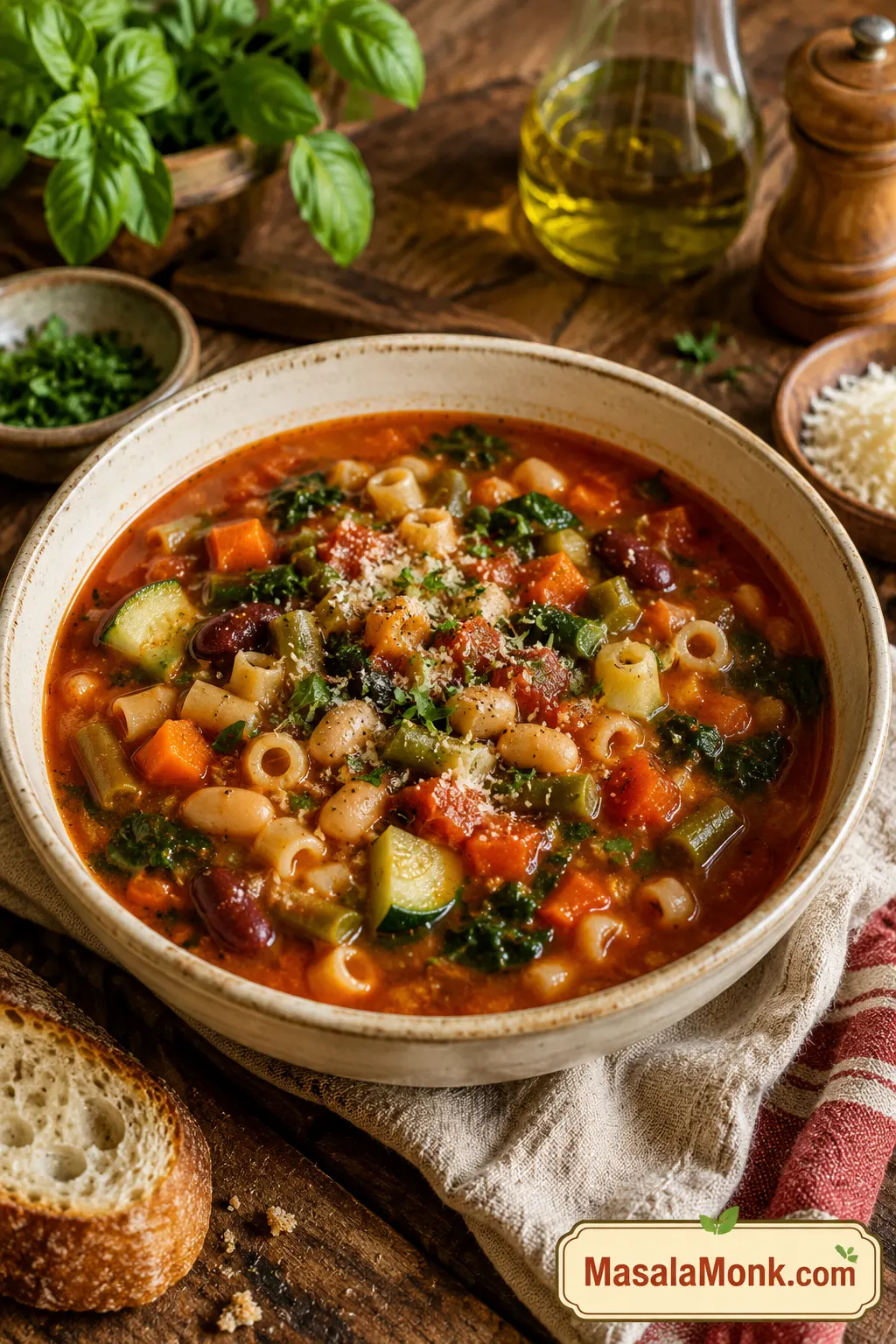
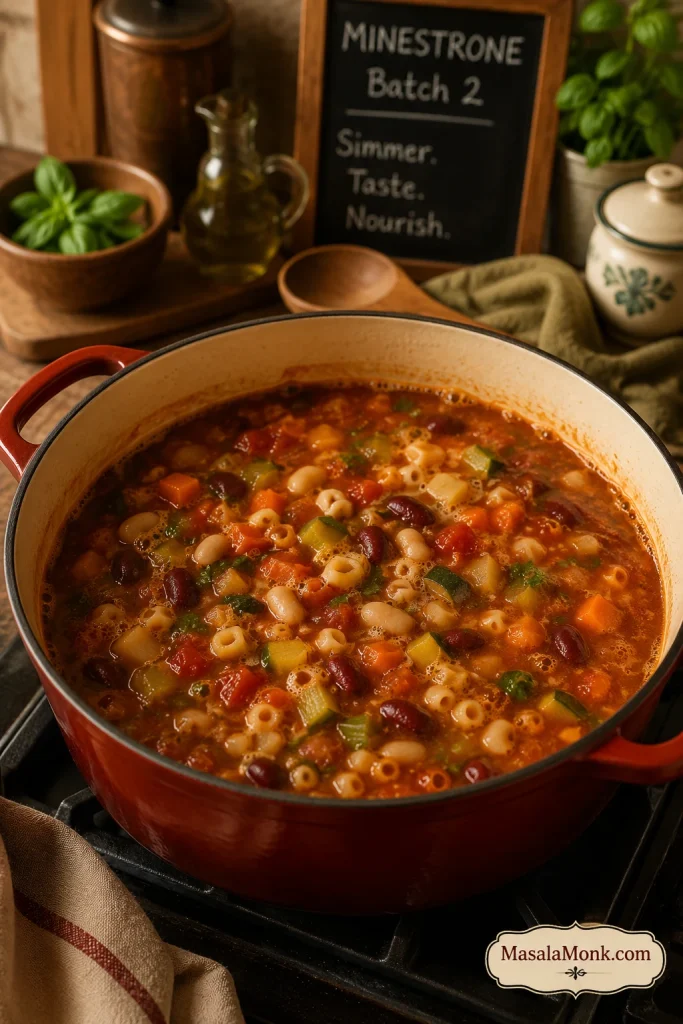
A good minestrone soup should look generous before you even take the first spoonful: tender vegetables, creamy beans, small pasta, herbs, and a tomato broth that tastes rich instead of watery. The first spoonful should catch a little of everything — a soft bean, a piece of pasta, sweet carrot, zucchini, greens, and enough tomato broth to pull it all together.
This pot works because it protects the three things that matter most in minestrone: rich tomato broth, vegetables with texture, and pasta that does not turn the leftovers into mush. Even a half-used zucchini, a tired carrot, two cans of beans, and the last handful of pasta can become a proper dinner.
Homemade minestrone also gives you something canned soup rarely does: better texture. The vegetables do not have to be overcooked, the pasta can stay tender, and you control the salt, broth, and finish.
Cooking now? Jump to the recipe card. The notes below help keep the broth rich, the vegetables tender, and the leftovers useful.
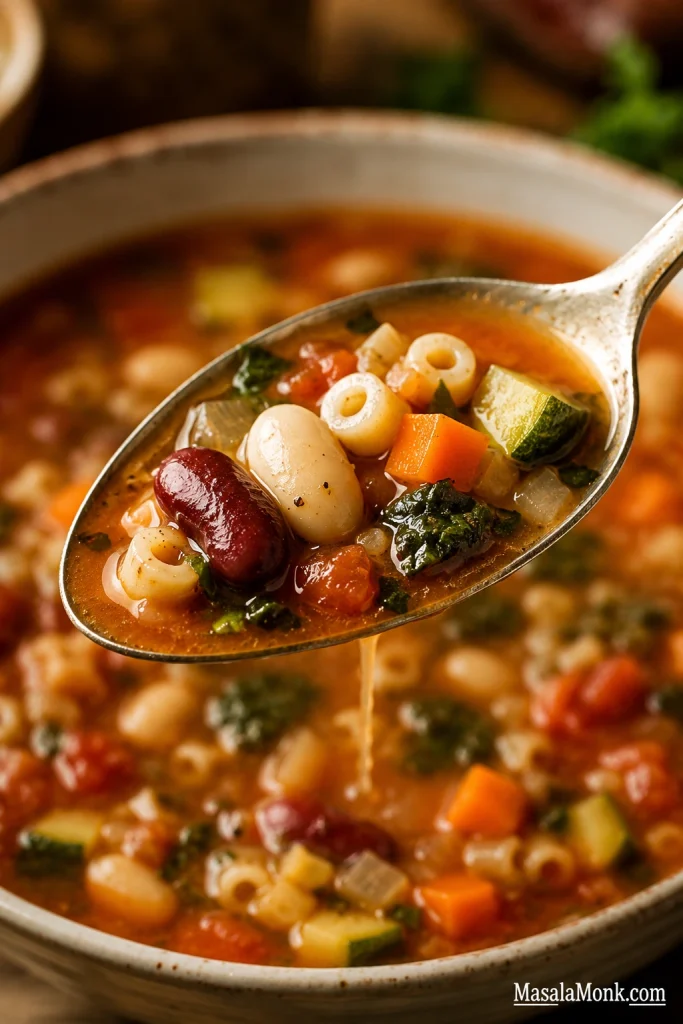
What a Good Minestrone Spoonful Should Show
Before you start, notice the target balance: beans, vegetables, pasta, greens, and tomato broth should all show up in the same spoonful.
Recipe at a Glance
| Prep time | 20 minutes |
| Cook time | 45 minutes |
| Total time | 1 hour 5 minutes |
| Faster version | About 40 to 45 minutes with smaller diced vegetables, the full 6 cups broth, and a shorter 15 to 20 minute base simmer |
| Servings | 6 generous bowls |
| Yield | About 11 to 13 cups soup |
| Method | Stovetop |
| Best pot | 5 to 6 quart / 5 to 6 liter Dutch oven or heavy soup pot |
| Best for | Weeknight dinner, meal prep, and freezer-friendly soup base |
| Diet | Meatless when made with vegetable broth; vegan option |
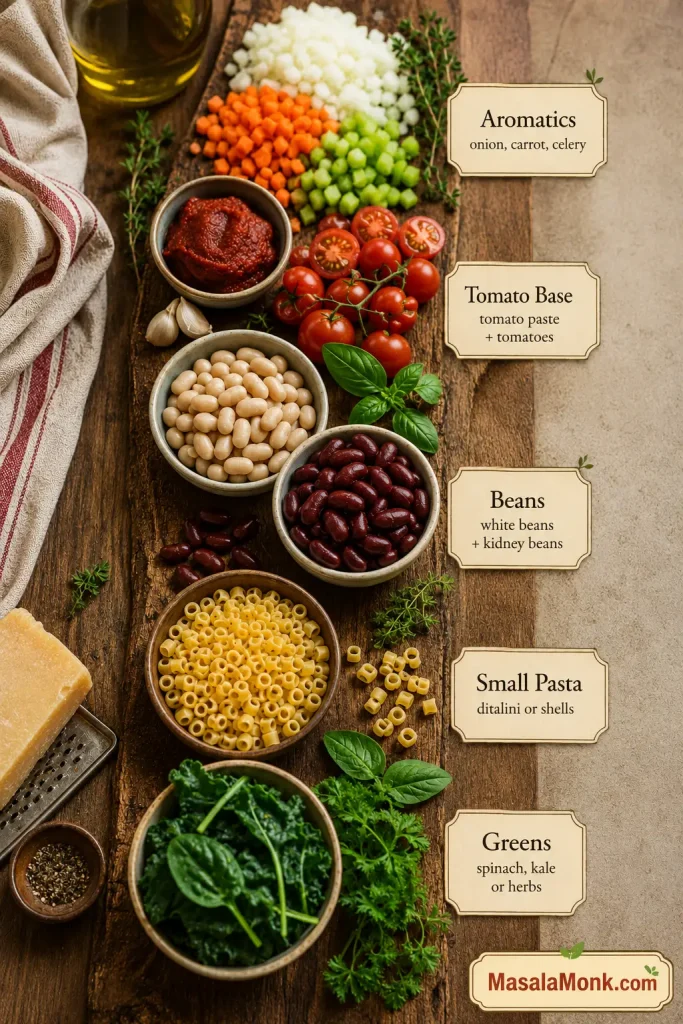
The Minestrone Rule of 5: soften the aromatics, build the tomato base, add beans for body, keep the pasta small, and save tender greens for the end. Vegetables can change; the rhythm is what keeps the pot balanced.
Why this works: tomato paste gives the soup depth, beans make it feel full, late-added vegetables keep their shape, and pasta goes in only when the broth already tastes good. That is what keeps the soup hearty without letting it turn heavy or dull.
The Minestrone Rule of 5
This visual is the memory hook for the whole recipe: keep the rhythm steady, even when the vegetables change.
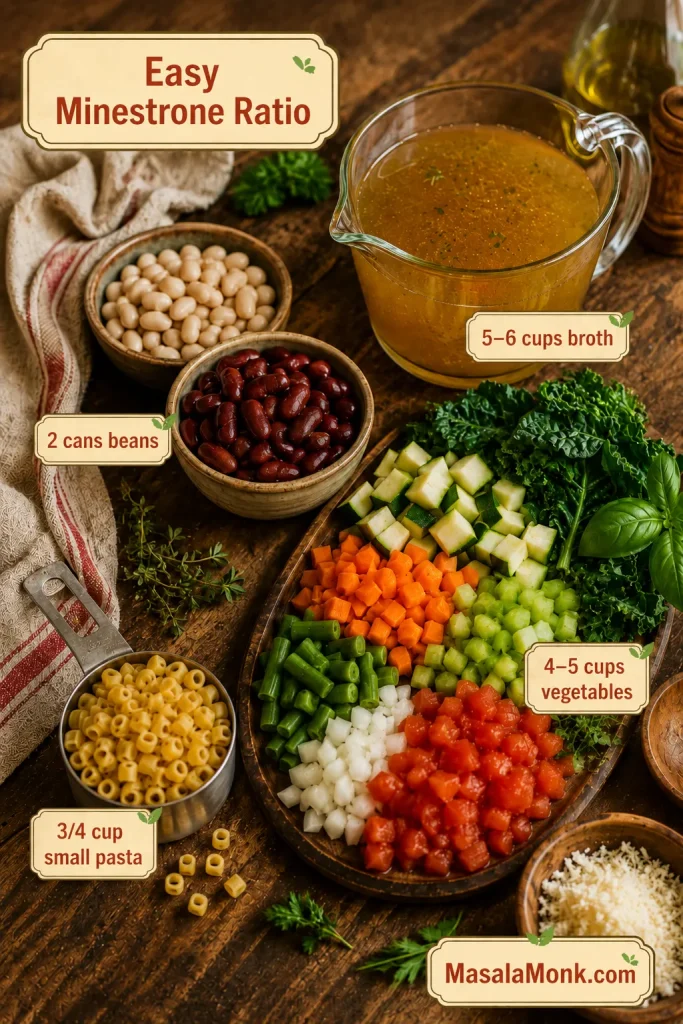
Easy minestrone ratio: for 6 bowls, use about 5 to 6 cups broth, 2 cans beans, 4 to 5 cups chopped vegetables, and 3/4 cup small pasta.
Short on time? Dice the vegetables smaller, use the full 6 cups broth, and simmer the soup base for 15 to 20 minutes before adding pasta and greens. The full cook gives deeper flavor, but the faster version still makes a good weeknight bowl.
Minestrone Soup Recipe Card
Description: A hearty minestrone soup with vegetables, beans, small pasta, and a rich tomato broth. It is meatless when made with vegetable broth, cozy without cream, and easy to adjust for leftovers or a thicker dinner-style bowl.
Prep: 20 minutes | Cook: 45 minutes | Total: 1 hour 5 minutes | Serves: 6 generous bowls | Yield: about 11 to 13 cups
Equipment: 5 to 6 quart / 5 to 6 liter Dutch oven or heavy soup pot, knife, cutting board, can opener, colander, wooden spoon, and ladle.
Ingredients
Base
- 2 tablespoons olive oil, plus more for finishing, about 30 ml
- 1 medium yellow onion, diced, about 150 to 180 g
- 2 medium carrots, diced, about 130 to 160 g
- 2 celery ribs, diced, about 90 to 120 g
- 4 garlic cloves, minced
- 3 tablespoons tomato paste, about 45 g
Broth and Seasoning
- 1 can crushed or diced tomatoes, 28 oz / 794 g
- 5 to 6 cups vegetable broth, 1.2 to 1.4 liters
- 1 bay leaf
- 1 1/2 teaspoons Italian seasoning
- 1/2 teaspoon dried oregano, optional
- 1/4 teaspoon red pepper flakes, optional
- 1 teaspoon kosher salt or 3/4 teaspoon fine salt, plus more to taste; start with less if your broth is salted
- 1/2 teaspoon black pepper, plus more to taste
- 1 parmesan rind, optional; skip for vegan minestrone
Beans, Vegetables, and Pasta
- 1 can cannellini beans or white beans, 15 oz / 425 g, drained and rinsed
- 1 can kidney beans, 15 oz / 425 g, drained and rinsed
- 1 cup chopped green beans, about 100 to 125 g
- 1 medium zucchini, diced, about 180 to 220 g
- 3/4 cup small pasta such as ditalini, small shells, elbows, or macaroni, about 75 to 90 g
- 2 cups packed spinach or chopped kale, about 60 to 80 g
Finish
- 1 to 2 teaspoons lemon juice or red wine vinegar, 5 to 10 ml
- 1/4 cup chopped parsley or basil, about 10 to 15 g
- Extra olive oil, for finishing
- Grated parmesan, optional, for serving
Instructions
- Heat olive oil in a 5 to 6 quart / 5 to 6 liter Dutch oven or heavy soup pot over medium heat.
- Add onion, carrot, celery, and salt. Cook for 7 to 10 minutes, stirring often, until softened and fragrant.
- Add garlic and tomato paste. Cook for 1 to 2 minutes, stirring often, until the tomato paste darkens slightly.
- Add crushed or diced tomatoes, vegetable broth, bay leaf, Italian seasoning, oregano if using, red pepper flakes if using, black pepper, and parmesan rind if using. Stir well and scrape the bottom of the pot.
- Add the cannellini beans and kidney beans. Bring to a boil, then reduce to a gentle simmer.
- Simmer partly covered for 20 to 25 minutes, until the broth tastes developed. Add firm vegetables such as cabbage, potato, or squash during this simmer if using them.
- Add green beans, zucchini, and pasta. Cook for 8 to 10 minutes, or until the pasta is just tender.
- Stir in spinach or kale and cook for 1 to 3 minutes, just until wilted.
- Remove the bay leaf and parmesan rind. Stir in lemon juice or red wine vinegar, parsley or basil, and a drizzle of olive oil.
- Taste and adjust salt, pepper, and acidity. Let the soup rest for 5 minutes before serving.
- Serve hot with parmesan, extra herbs, crusty bread, garlic bread, or a simple salad.
Recipe Notes
- Brothier soup: use 3/4 cup pasta and the full 6 cups broth.
- Thicker soup: use 1 cup pasta or mash 1/2 cup beans into the broth.
- Firmer zucchini: add zucchini during the final 5 minutes instead of with the pasta.
- Better leftovers: cook pasta separately and add it to bowls.
- Vegan version: use vegetable broth and skip parmesan rind and parmesan cheese.
- Meal prep: toss separately cooked pasta with a tiny drizzle of olive oil after draining so it does not clump.
- Gluten-free version: use gluten-free pasta or rice, preferably cooked separately.
- Rice version: cooked rice is easiest. Add it near the end or directly to bowls because rice absorbs broth quickly.
- Extra richness: simmer with a parmesan rind or finish with olive oil and herbs.
The recipe works on its own, but the notes below help you adjust the beans, pasta, vegetables, storage, and appliance methods without losing the minestrone feel. If leftovers matter, the storage and freezing notes are especially useful.
Before the deeper notes, this quick visual ratio gives you a flexible way to adjust the pot without losing the minestrone balance.
Easy Minestrone Ratio
Use this ratio when you want to adjust the recipe without losing the soup’s balance.
What Is Minestrone Soup?
Minestrone is an Italian vegetable soup made with vegetables, beans, tomatoes, broth, herbs, olive oil, and usually pasta or rice. Classic minestrone is not about one fixed vegetable list; it is about building a generous, seasonal soup with enough beans and starch to feel like a meal.
That is why one pot might have zucchini and green beans while another has cabbage, kale, potato, or squash. A good bowl should be crowded, not dry: enough vegetables and beans to make it feel like dinner, but enough tomato broth to keep it unmistakably soup.
Why You’ll Like This Recipe
- The broth tastes built, not diluted. Tomato paste, sautéed aromatics, herbs, beans, and olive oil give it a rounded tomato flavor.
- The vegetables keep their texture. Firm vegetables simmer first, while zucchini and greens go in later.
- The pasta will not hijack the leftovers. Cook it in the soup when serving right away, or separately when you want better storage.
- It starts meatless. Use vegetable broth, and the whole pot stays hearty without meat.
- It gives you room to use what you have. Small shells, elbows, ditalini, zucchini, green beans, cabbage, kale, spinach, white beans, kidney beans, or chickpeas can all work.
- It can be lighter or heartier. Use more greens and less pasta for a lighter bowl, or extra beans and a little more pasta for a thicker dinner-style soup.
Minestrone feels hearty without cream because beans, vegetables, pasta, and olive oil do the work. If you like cozy tomato-and-pasta dinners, this sits near the same comfort zone as baked ziti, but it is lighter, brothier, and packed with vegetables.
Minestrone Soup Ingredients
These ingredients follow the same Rule of 5: aromatics, tomato broth, beans, small pasta or rice, and tender greens at the end. Do not worry if you are missing one vegetable. Minestrone is forgiving as long as the base stays balanced.
If you are missing one vegetable or bean, check the easy minestrone swaps before changing the broth or pasta ratio.
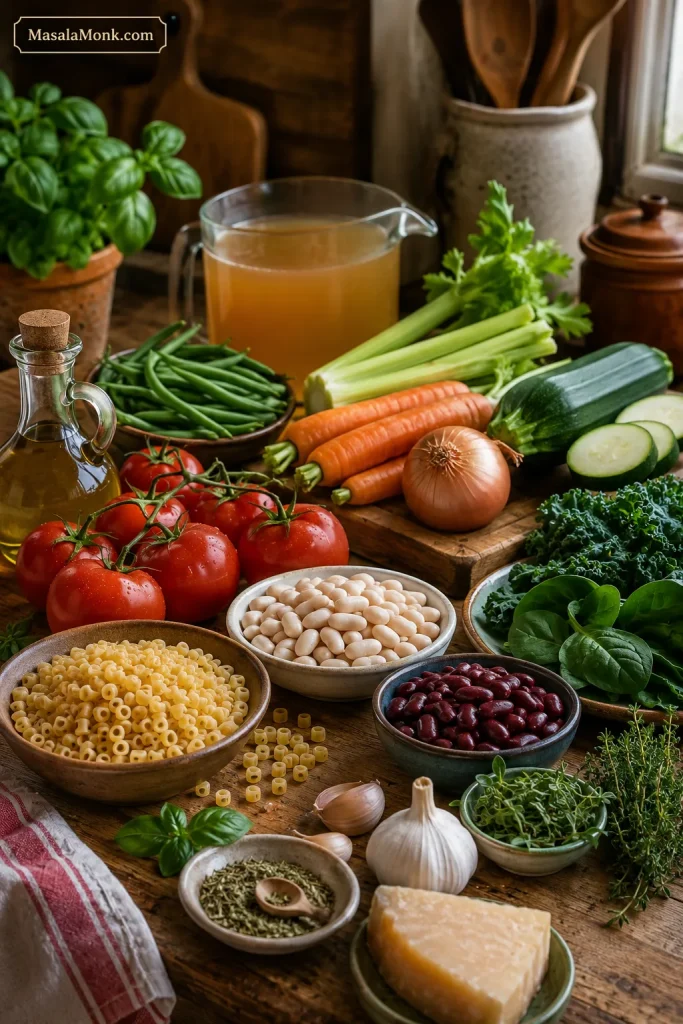
If you remember one thing: taste the broth before adding pasta. When it tastes thin or flat at that point, fix the broth first; pasta will not rescue a weak soup.
Build the Aromatic Base
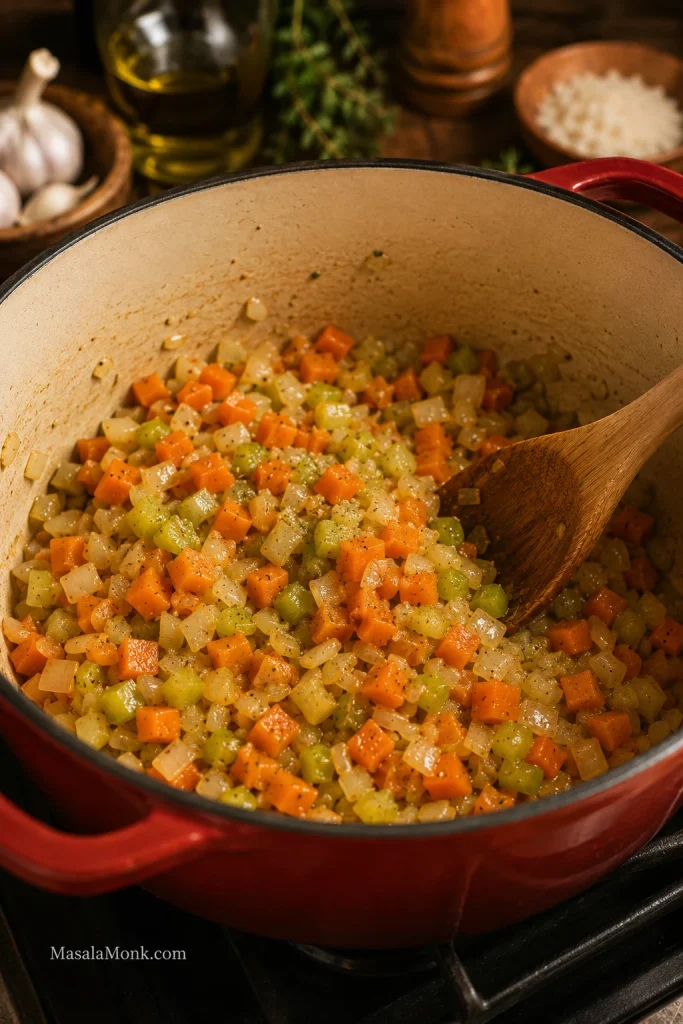
Onion, carrot, celery, garlic, and olive oil create the base. Cook the onion, carrot, and celery until the sharp onion smell softens and the pot starts smelling sweet. The onion should look translucent and the carrot edges should soften. This is the first moment the soup starts smelling like dinner instead of chopped vegetables.
Cook the Tomato Paste Before Broth
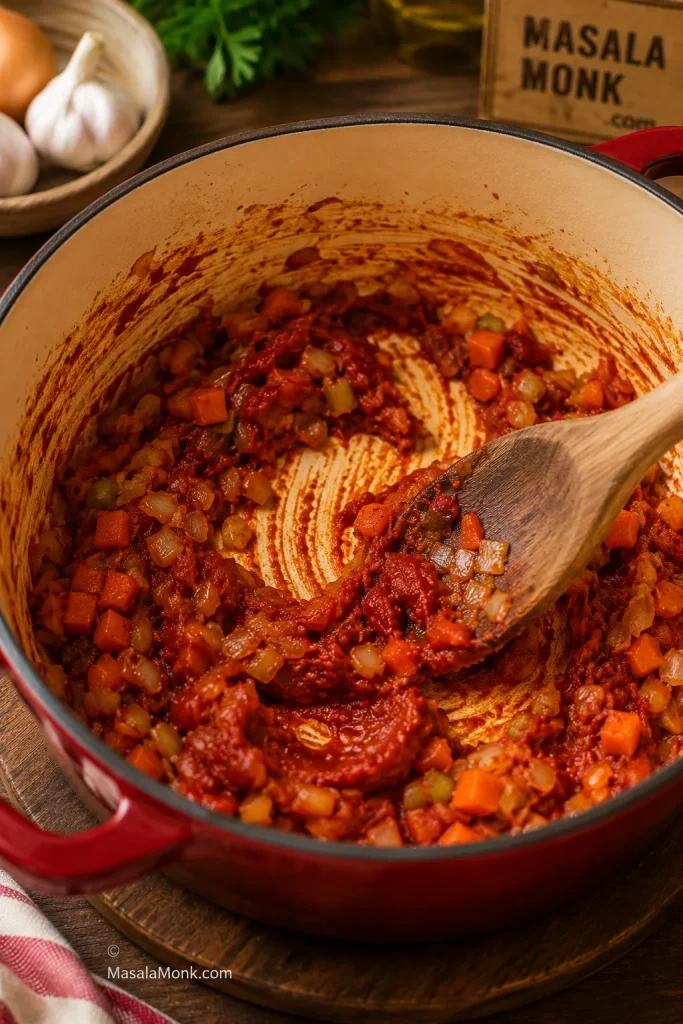
Tomato paste and a large can of crushed or diced tomatoes give the broth its color and flavor. Cook the tomato paste until it darkens slightly; it should leave orange-red streaks on the bottom of the pot, not black bits. Crushed tomatoes make a fuller, smoother broth, while diced tomatoes give a chunkier texture.
Broth
Vegetable broth keeps the soup meatless and easy to make vegan. Chicken broth also works if you are not keeping the soup vegetarian. Low-sodium broth gives you more control because canned beans, tomatoes, pasta, and cheese can all add salt.
Beans
White beans and kidney beans are a strong everyday combination. The white beans soften into the tomato broth and make the soup feel fuller, almost as if it simmered longer than it did. Kidney beans add color, bite, and the familiar minestrone look. Rinse canned beans before adding them so the broth stays clean and balanced.
Pasta or Rice
Small pasta is what keeps minestrone easy to eat by the spoonful. Ditalini is classic, but small shells, elbows, macaroni, or orzo all work. Use 3/4 cup for a brothier soup and up to 1 cup for a thicker bowl. Cooked rice also works when you want a pasta-free version. If you are cooking for leftovers, see how to keep minestrone pasta from getting mushy before adding pasta directly to the pot.
Vegetables
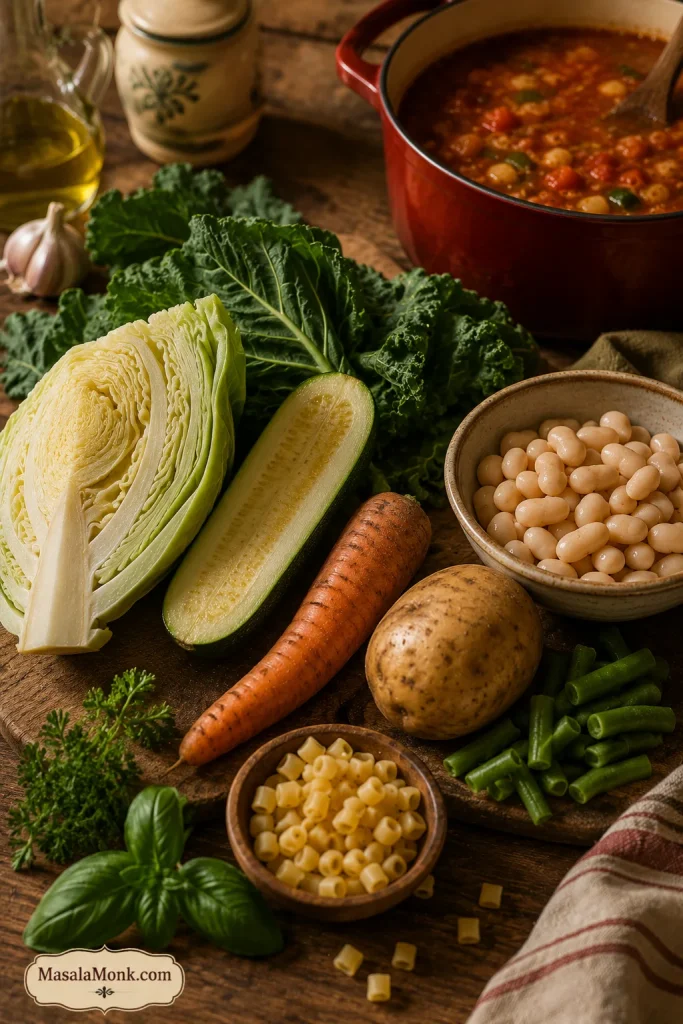
Zucchini, green beans, spinach, kale, cabbage, potato, peas, squash, carrots, and celery can all work. Dense vegetables such as potato, squash, cabbage, and carrots need more time. Zucchini, peas, spinach, and tender greens should go in later so they keep some color and shape.
Minestrone is not a test of whether you bought the exact vegetables; it is a way to turn the vegetables you have into a balanced soup.
Herbs and Finishers
Italian seasoning, oregano, basil, thyme, bay leaf, black pepper, parsley, and fresh basil all fit well. A parmesan rind is optional for extra depth, but use vegetarian-style parmesan if that matters to you, or skip cheese completely for a vegan version.
A small splash of lemon juice or red wine vinegar wakes up the whole pot at the end, especially after the beans and pasta have softened the broth. A spoonful of pesto can make the finish taste brighter; these basil pesto variations are useful if you like that herby direction.
How to Make Minestrone Soup
The steps follow the same rhythm as the Rule of 5: sauté, deepen, simmer, add quick-cooking ingredients late, finish fresh.
1. Sauté the Onion, Carrot, and Celery
Heat olive oil in a large Dutch oven or heavy soup pot over medium heat. Add onion, carrot, celery, and salt. Cook for 7 to 10 minutes, stirring often, until the vegetables soften and the onion turns translucent. The pot should smell sweet and savory before you move on.
2. Add Garlic and Tomato Paste
Stir in the garlic and tomato paste. Cook for 1 to 2 minutes, stirring often. The tomato paste should darken slightly and smell richer, but it should not scorch. A watery minestrone usually means the base was rushed, so give this step its minute.
3. Build the Broth
Add crushed or diced tomatoes, broth, Italian seasoning, bay leaf, black pepper, and parmesan rind if using. Scrape the bottom of the pot so all the tomato paste and aromatics dissolve into the broth.
4. Add Beans and Simmer Gently
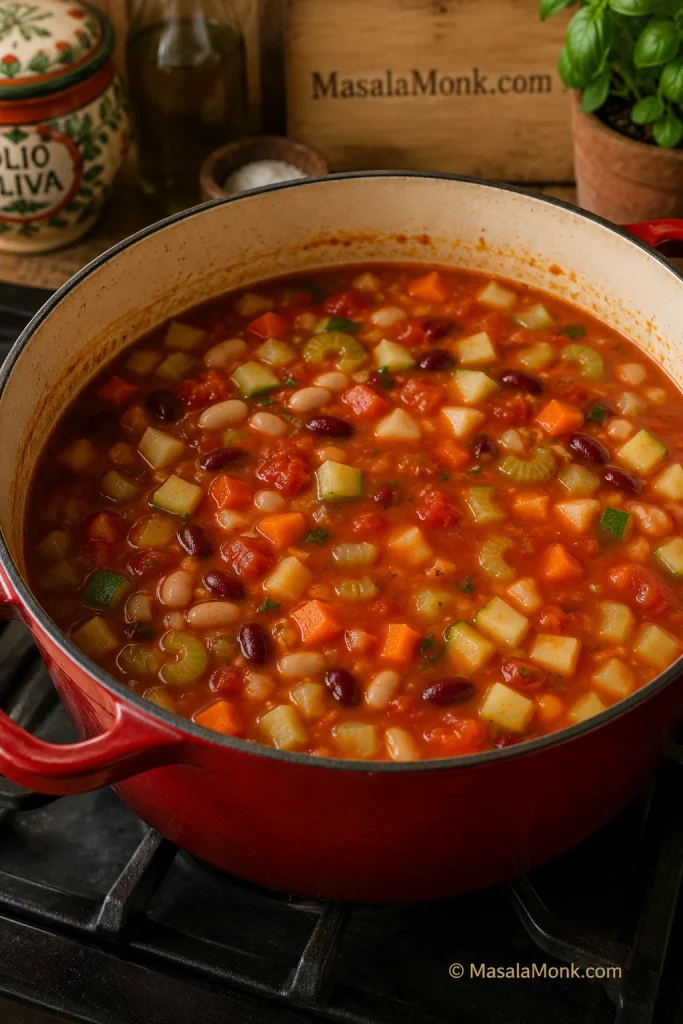
Add the rinsed beans and any firm vegetables such as cabbage, potato, or squash. Bring the soup to a boil, then reduce it to a gentle simmer. You want small bubbles, not a rolling boil. Cook partly covered for 20 to 25 minutes, until the broth tastes fuller and the vegetables are tender.
Taste the broth before adding pasta. If it tastes thin or flat now, give it more simmering time, adjust the salt, or brighten it with a little lemon juice or vinegar. The broth should already taste good before the pasta goes in; if it still tastes weak, use the troubleshooting section before adding pasta.
5. Add Quick-Cooking Vegetables and Pasta
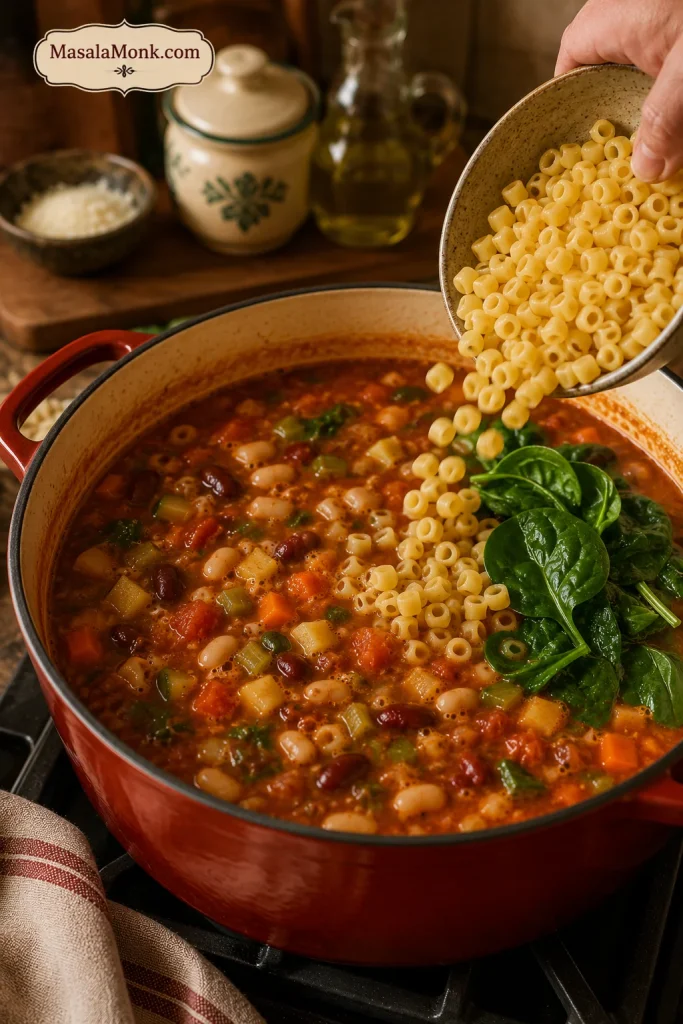
Add green beans, zucchini, and small pasta near the end. Cook for 8 to 10 minutes, or until the pasta is just tender. Stop while it still has a little structure, because it will keep softening in the hot broth.
6. Finish with Greens, Herbs, and Brightness
Stir in spinach or kale for the final 1 to 3 minutes. The greens only need to wilt; they do not need to cook down into the broth. Remove the bay leaf and parmesan rind. Finish with parsley or basil, a drizzle of olive oil, and lemon juice or red wine vinegar. Rest the soup for 5 minutes before serving so the broth settles and the flavors come together.
Easy Minestrone Swaps
Once the base makes sense, the soup becomes forgiving. You do not need the exact same vegetables every time; you just need the right balance of broth, beans, pasta or rice, and timing.
Use What You Have
Use this section when the pot needs to adapt to the vegetables, beans, and pasta you already have.
| If you do not have | Use this instead |
|---|---|
| Cannellini beans | Navy beans, great northern beans, white beans, or chickpeas |
| Kidney beans | More white beans, borlotti beans, chickpeas, or lentils |
| Zucchini | Cabbage, green beans, peas, spinach, kale, or squash |
| Ditalini | Small shells, elbows, macaroni, or orzo |
| Vegetable broth | Water with extra tomato paste, herbs, olive oil, and careful seasoning |
| Fresh greens | Frozen spinach, frozen kale, or chopped cabbage added earlier |
| Parmesan rind | Skip it, or finish with olive oil, herbs, and a little lemon juice or vinegar |
This is also where minestrone becomes personal. One cook adds cabbage, another adds potato, another uses chickpeas, and another keeps it brothy. The base stays the same, but the pot can still feel like yours. For more timing help, see the firm-early, tender-late vegetable guide.
What the Soup Should Look and Taste Like
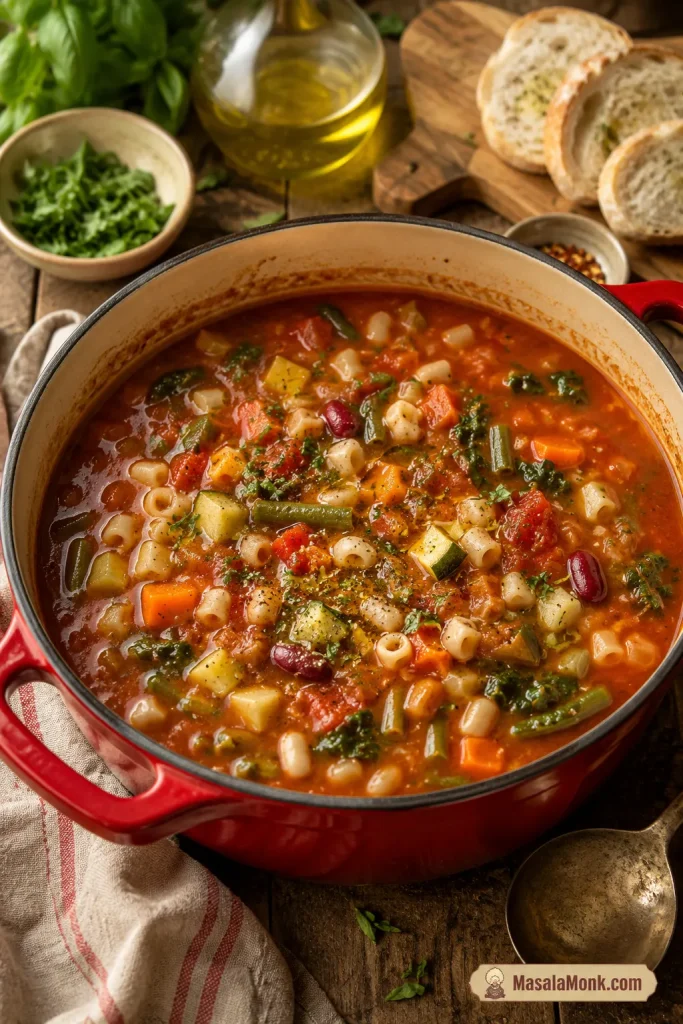
You are looking for a soup that is chunky but still brothy. The tomato broth should taste rounded rather than sharp or thin. Vegetables should be tender without collapsing, beans should stay creamy but mostly intact, and the pasta should be just tender, not swollen.
Finished Bowl Texture Check
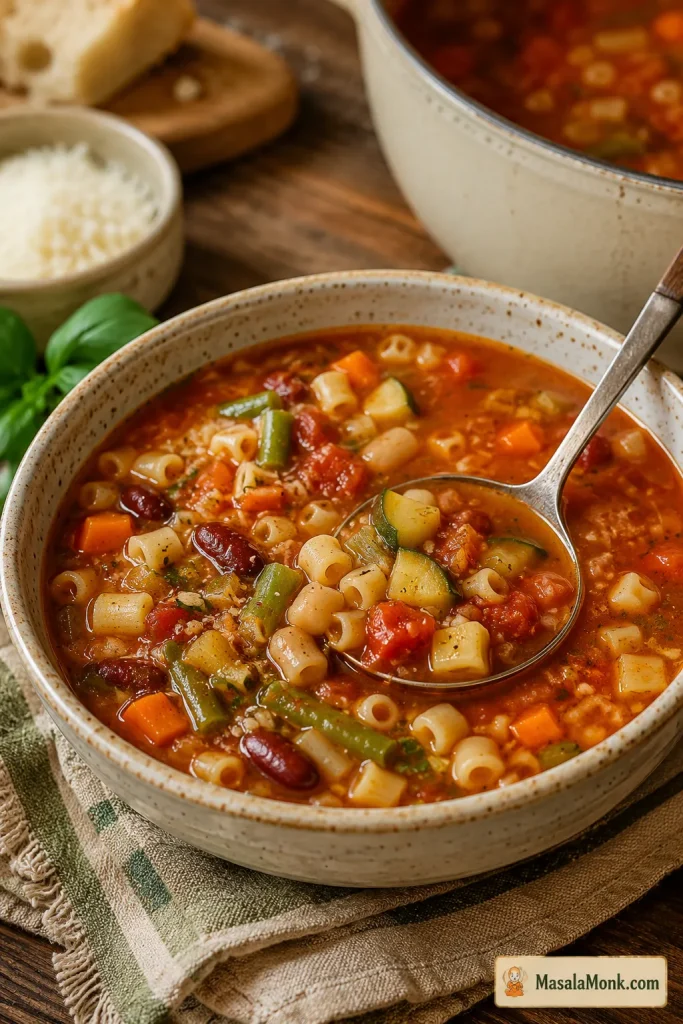
Use the finished bowl as a quick check before serving: the soup should look full, but it should still move like soup.
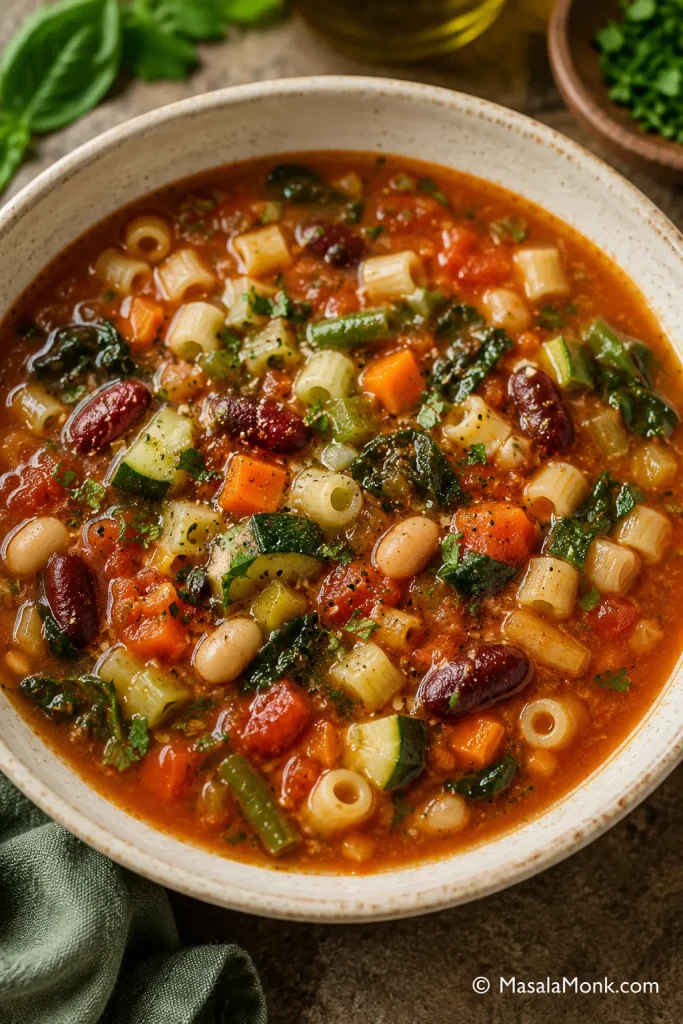
Chunky but Still Soup
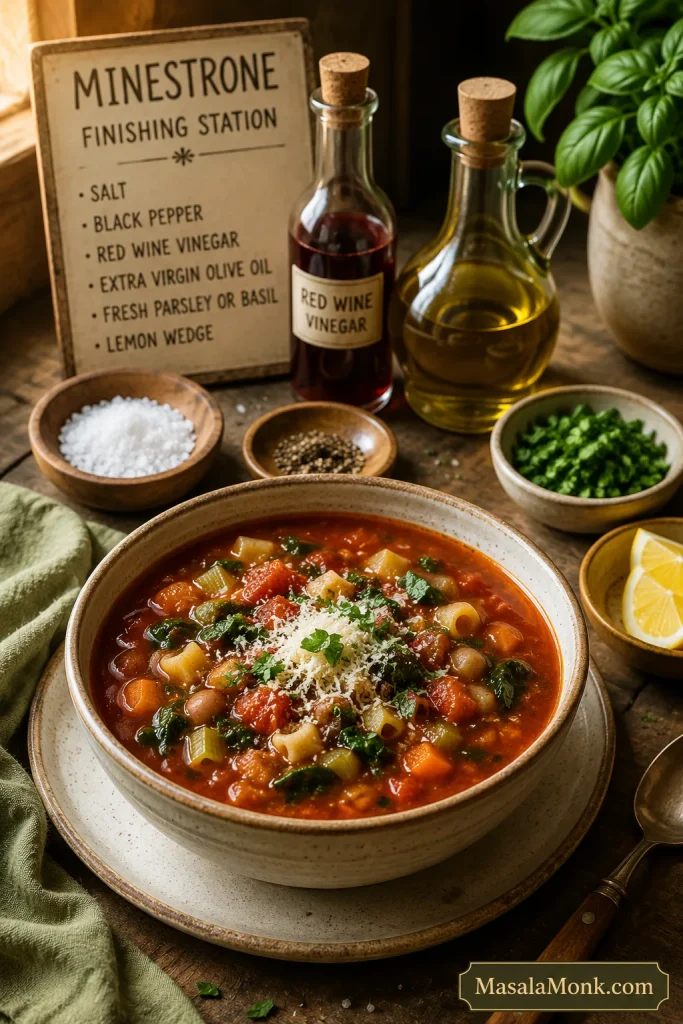
If the pot looks crowded but still has enough broth to move around the vegetables, you are in the right place. You should be able to drag the spoon through the bowl and see vegetables and beans settle back into the tomato broth, not sit in a dry pile. The final olive oil, herbs, and lemon juice or vinegar should make the bowl taste brighter, not sour.
Best Beans, Pasta, and Vegetables for Minestrone
Beans, pasta, and vegetables are where minestrone becomes dinner. The choices do not need to be fancy; they just need to make sense together in the spoon.
Best Beans and Pasta for Minestrone
Start with spoon-friendly beans and small pasta shapes, then choose vegetables that match the season and cooking time.
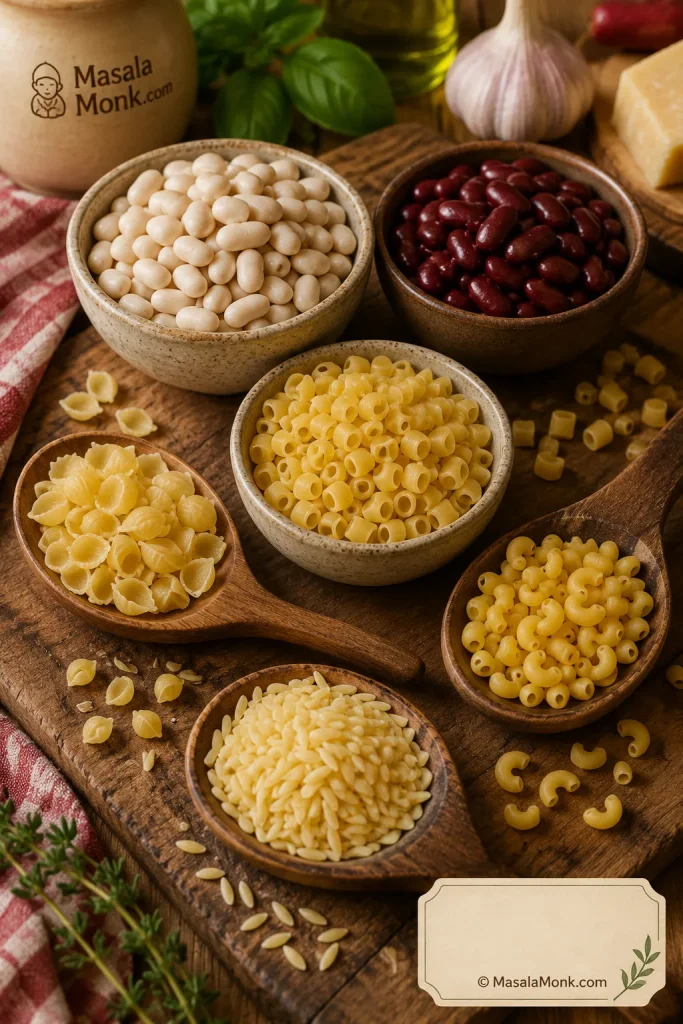
Best Beans
- Cannellini or white beans: creamy, mild, and classic.
- Kidney beans: firmer, colorful, and familiar in restaurant-style minestrone.
- Borlotti beans: rustic and soft with a fuller bean flavor.
- Chickpeas: nutty and firmer, good when you want more bite.
- Lentils: useful for a thicker, higher-protein variation.
Best Pasta
- Ditalini: classic and spoon-friendly.
- Small shells: good for catching tomato broth.
- Elbows or macaroni: easy pantry choice.
- Orzo: soft and pleasant, but it thickens leftovers quickly.
- Rice: useful if you do not want pasta. Cooked rice is easiest.
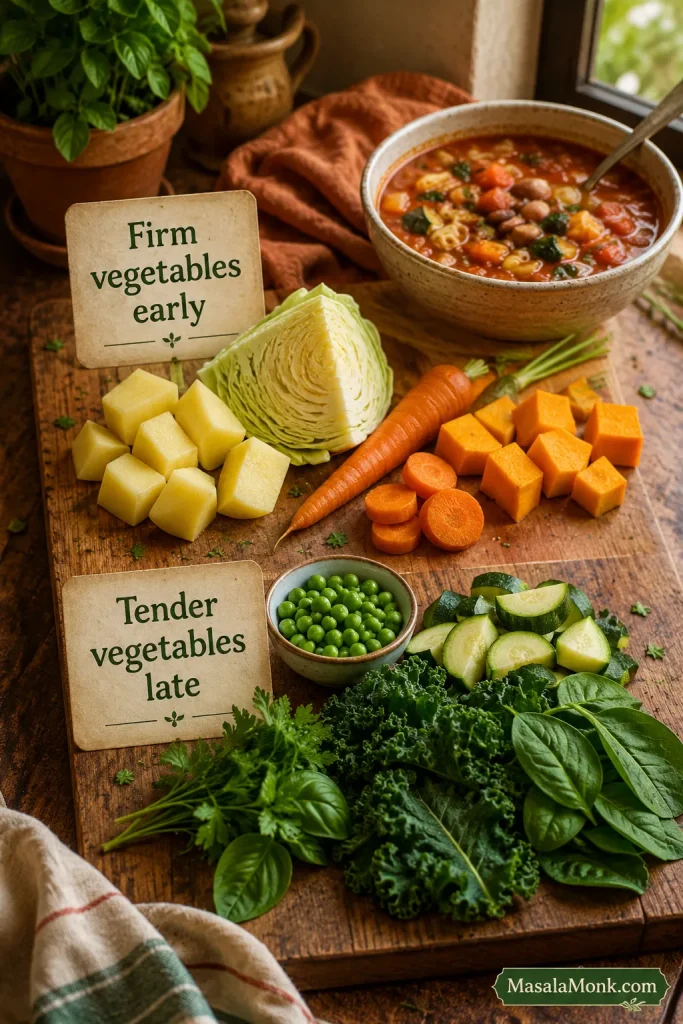
Once the beans and pasta are chosen, the vegetables are mostly about timing: firm ones early, tender ones late. That is what keeps the bowl generous without making it taste tired.
Firm Vegetables Early, Tender Vegetables Late
A good minestrone should never feel trapped by one vegetable list. Keep the tomato broth, aromatics, beans, herbs, and small pasta structure, then choose vegetables that fit the pot.
- Summer: zucchini, green beans, fresh tomatoes, basil, spinach.
- Winter: cabbage, kale, potato, squash, carrots, celery.
- Spring: peas, asparagus, spinach, leeks, fresh herbs.
- Pantry version: canned tomatoes, canned beans, frozen vegetables, cabbage, carrots, small pasta.
Add dense vegetables like potato, squash, cabbage, and carrots earlier. Add zucchini, peas, spinach, and tender greens near the end. Try not to overload the pot; minestrone should be hearty, but it should still have enough broth to feel like soup.
How to Fix Minestrone Soup Problems
If your minestrone tastes bland, watery, too thick, too acidic, or overcooked, it can usually be fixed. Most problems come down to seasoning, simmering, pasta timing, vegetable timing, or broth balance.
Fix Bland Minestrone Soup
Before rebuilding the whole pot, taste for salt, acid, herbs, pepper, and olive oil; those small finishes often fix a flat bowl.
| Problem | Fix |
|---|---|
| Soup tastes flat | Add salt first, then a small splash of lemon juice or red wine vinegar. |
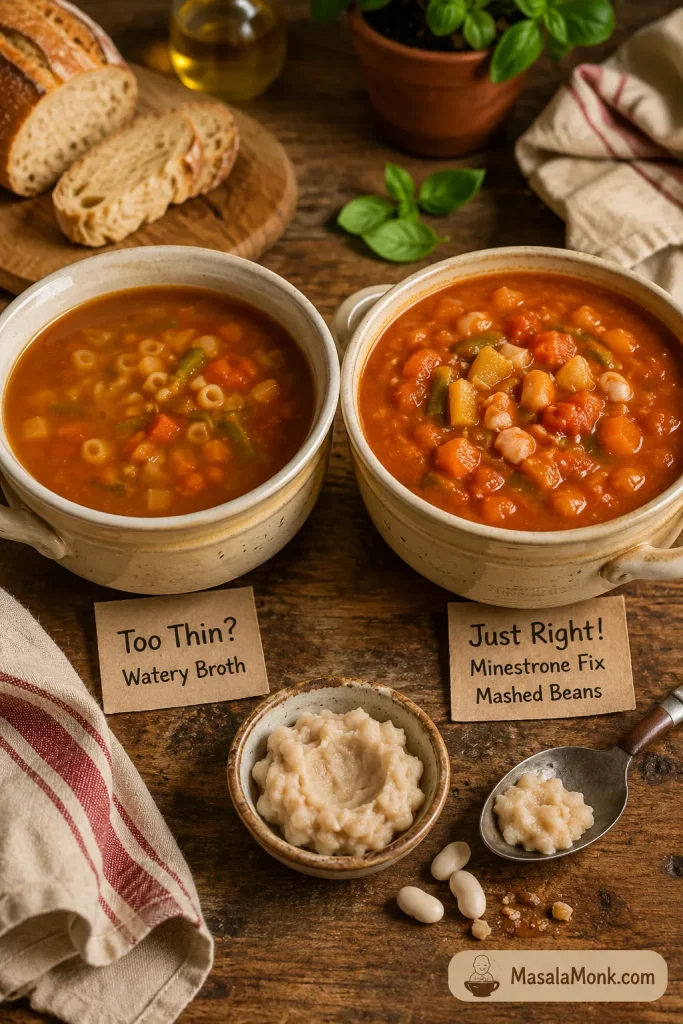
| Broth is too thin | Simmer uncovered for a few minutes or mash 1/2 cup of beans into the broth. |
| Soup is too thick | Add broth or water until it becomes spoonable again. |
| Pasta is too soft | Add more broth, fresh herbs, and a little acidity. Next time, cook pasta separately. |
| Vegetables are overcooked | Freshen the bowl with herbs, olive oil, and extra broth. Next time, add zucchini and greens later. |
| Soup tastes too acidic | Add a drizzle of olive oil or a tiny pinch of sugar to round the tomato flavor. |
| Soup is too salty | Add unsalted broth, water, extra beans, or more vegetables. |
Most of the time, the fix is smaller than you think. A little salt, a little acid, a splash of broth, or a few mashed beans can bring the pot back.
Fix Watery Minestrone Soup
When the broth looks thin, mashed white beans are the quickest natural thickener because they add body without changing the soup into cream sauce.
How to Make Minestrone Richer
- Cook the onion, carrot, and celery until they soften and smell sweet.
- Cook the tomato paste before adding broth.
- Use crushed tomatoes for a fuller broth.
- Add a parmesan rind if you are using cheese.
- Mash some of the beans into the soup for natural body.
- Simmer partly uncovered when the soup looks too thin.
- Finish with olive oil, herbs, and a small splash of lemon juice or vinegar.
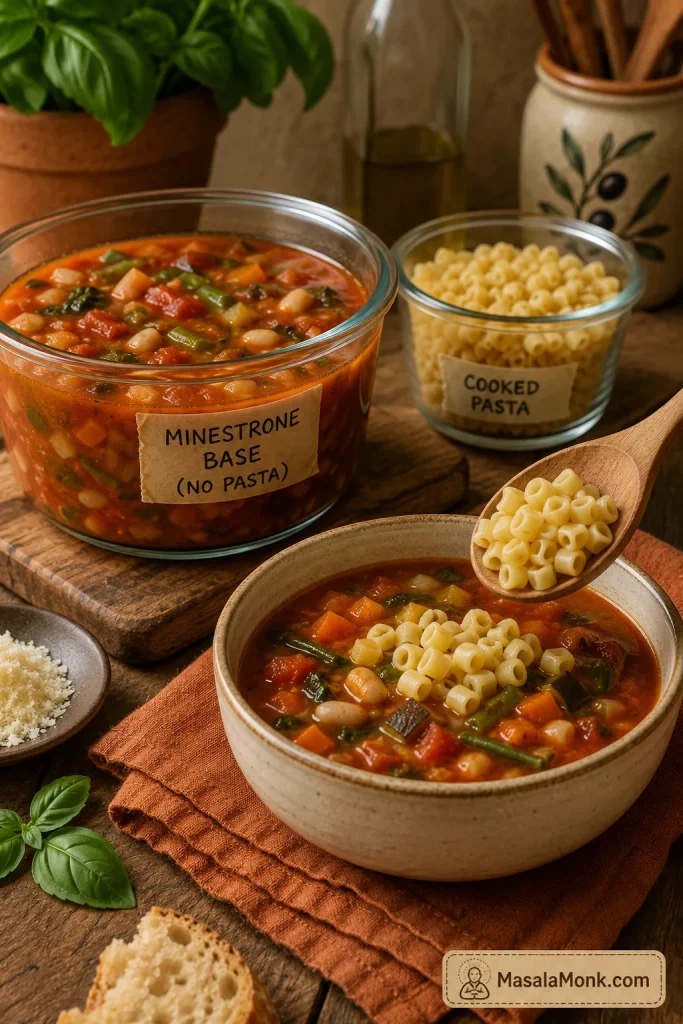
How to Keep Pasta from Getting Mushy
Minestrone pasta gets mushy when it sits in hot broth for too long or stays in the soup through storage. The safest method depends on how you plan to serve it.
- Serving immediately: add dry pasta during the final 8 to 10 minutes.
- Meal prep: cook pasta separately and add it to each bowl.
- Freezing: freeze the soup without pasta and add fresh pasta later.
- Thick leftovers: reheat with extra broth or water.
Slow Cooker and Instant Pot Minestrone
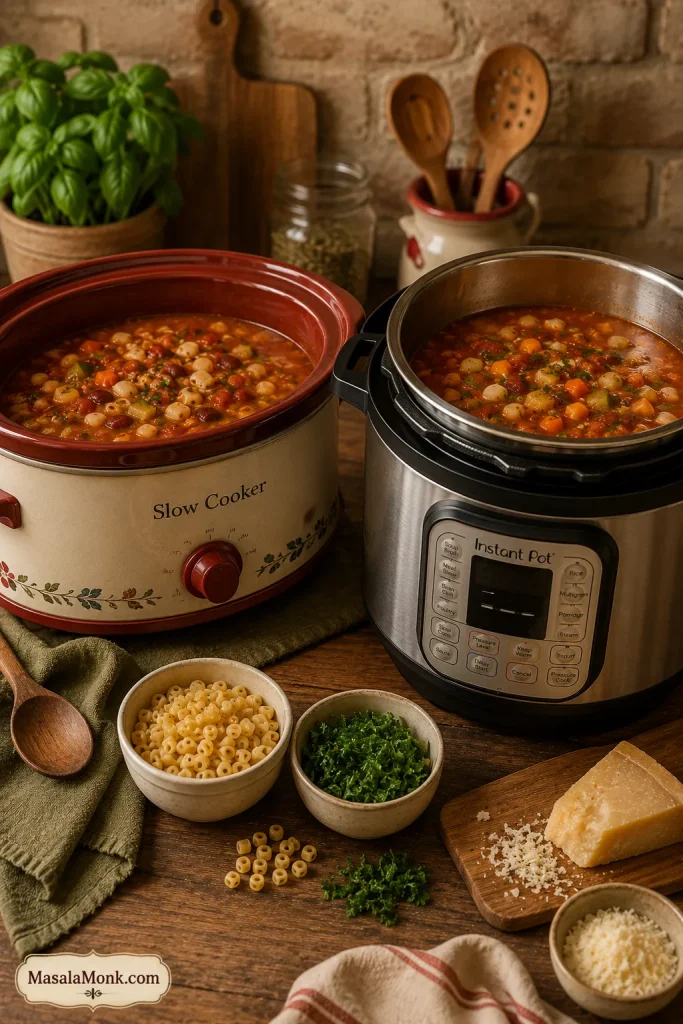
Slow Cooker vs Instant Pot Minestrone
For both appliance methods, the texture rule is the same: cook the base first and keep pasta and greens late. The pasta texture notes are especially useful for meal prep.
Slow Cooker Minestrone
Slow cooker minestrone is best for a hands-off soup base. Cook the broth, beans, aromatics, and firm vegetables first, then add zucchini, pasta, and greens near the end so they do not overcook.
- Add onion, carrot, celery, garlic, tomato paste, tomatoes, broth, herbs, bay leaf, beans, and firm vegetables to the slow cooker.
- Cook on low for 6 to 8 hours or high for 3 to 4 hours.
- Add zucchini and green beans during the final 30 minutes.
- Add pasta only during the final 20 to 30 minutes, or cook pasta separately.
- Stir in spinach or kale at the end, then finish with herbs, olive oil, and lemon juice or vinegar.
Instant Pot Minestrone
Instant Pot minestrone is best for a fast soup base. Pressure cook the broth, beans, and firm vegetables, then add cooked pasta and greens at the end so the pasta does not turn soft under pressure.
- Use sauté mode to cook onion, carrot, celery, and olive oil for 4 to 5 minutes.
- Add garlic and tomato paste. Cook for 1 minute.
- Add tomatoes, broth, herbs, bay leaf, beans, and firm vegetables.
- Pressure cook on high for 4 to 5 minutes.
- Let pressure release naturally for 5 to 10 minutes, then quick release carefully.
- Stir in greens and cooked pasta, then finish with herbs, olive oil, and lemon juice or vinegar.
Olive Garden-Style Minestrone Soup
If you like Olive Garden’s lighter tomato-broth style, use these adjustments while keeping the main recipe homemade. Olive Garden describes its minestrone as vegetables, beans, and pasta in a light tomato broth, so this is a home version in that familiar direction, not the official recipe. You can see Olive Garden’s menu description for the style reference.
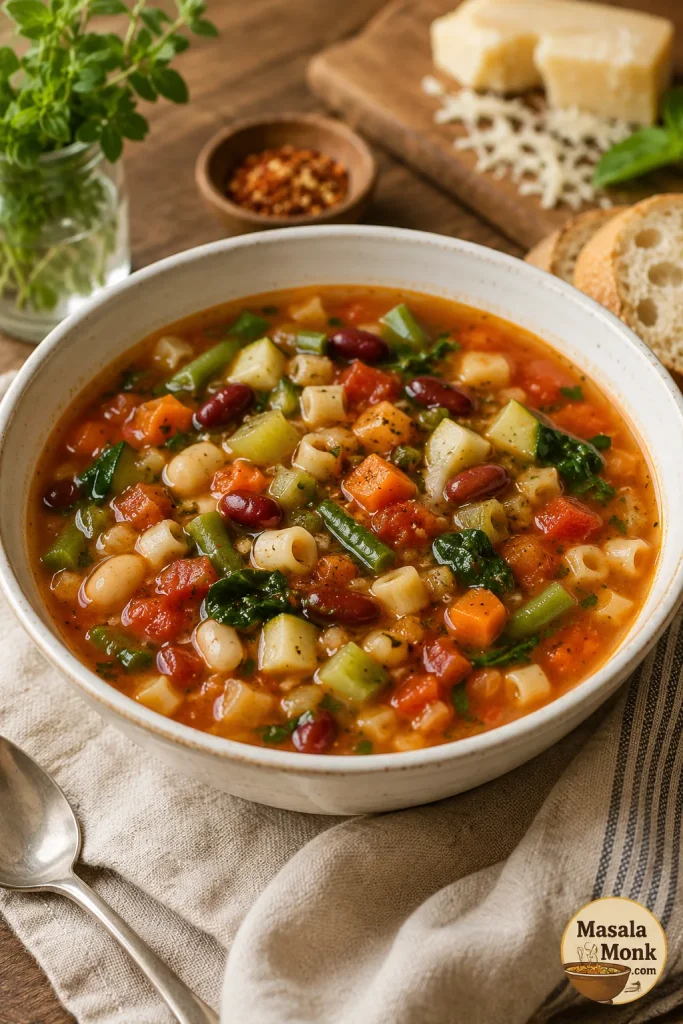
- Use diced tomatoes instead of crushed for a lighter restaurant-style texture.
- Do not mash the beans into the broth.
- Keep the pasta modest so the soup stays brothy.
- Use kidney beans, white beans, zucchini, green beans, carrots, celery, and spinach.
- Finish with herbs and acidity so the bowl tastes bright, not heavy.
Minestrone Soup Variations
After the base tastes good, you can take the soup in a few different directions without losing the minestrone feel. Keep the tomato base, beans, vegetable timing, and small pasta structure in place, then adjust the bowl you want. For gluten-free, rice-based, or pasta-free versions, the storage section is useful if you plan to cook the starch separately.
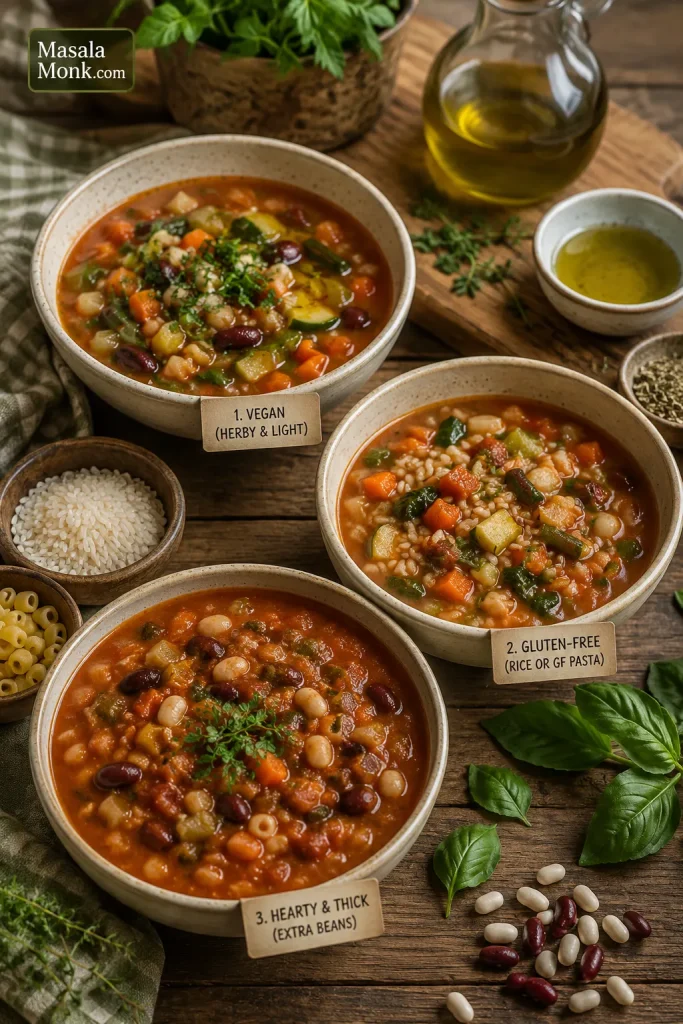
- Vegan minestrone: use vegetable broth and skip parmesan rind, parmesan cheese, meat, and egg pasta. Finish with olive oil, herbs, nutritional yeast, or vegan pesto.
- Gluten-free minestrone: use gluten-free pasta or rice. Cook gluten-free pasta separately for the best texture. Do not use barley or farro.
- Minestrone without pasta: skip the pasta and add extra beans, cabbage, zucchini, potato, kale, spinach, or cooked rice.
- Thick and hearty minestrone: use crushed tomatoes, 1 cup pasta, extra white beans, and a small potato. Mash some beans into the broth.
- Brothy minestrone: use 3/4 cup pasta, unmashed beans, and an extra cup of broth for a lighter, restaurant-style bowl.
- Low-sodium minestrone: start with low-sodium broth, rinse canned beans well, and choose no-salt-added tomatoes if available. Use garlic, herbs, lemon juice, vinegar, and olive oil to build flavor.
- Add meat: brown Italian sausage or ground beef before adding the aromatics, or stir in shredded cooked chicken near the end.
Think of these as directions, not separate recipes. The same pot can become lighter, heartier, vegan, gluten-free, or meatier without losing its minestrone backbone.
What to Serve with Minestrone Soup
Minestrone can stand alone as dinner, especially with beans and pasta, but a simple side makes the meal feel complete.
- A lighter meal: serve minestrone with a crisp salad, roasted vegetables, or something bright like beet salad.
- For a heartier dinner: add garlic bread, focaccia, grilled cheese, parmesan toast, or pesto toast.
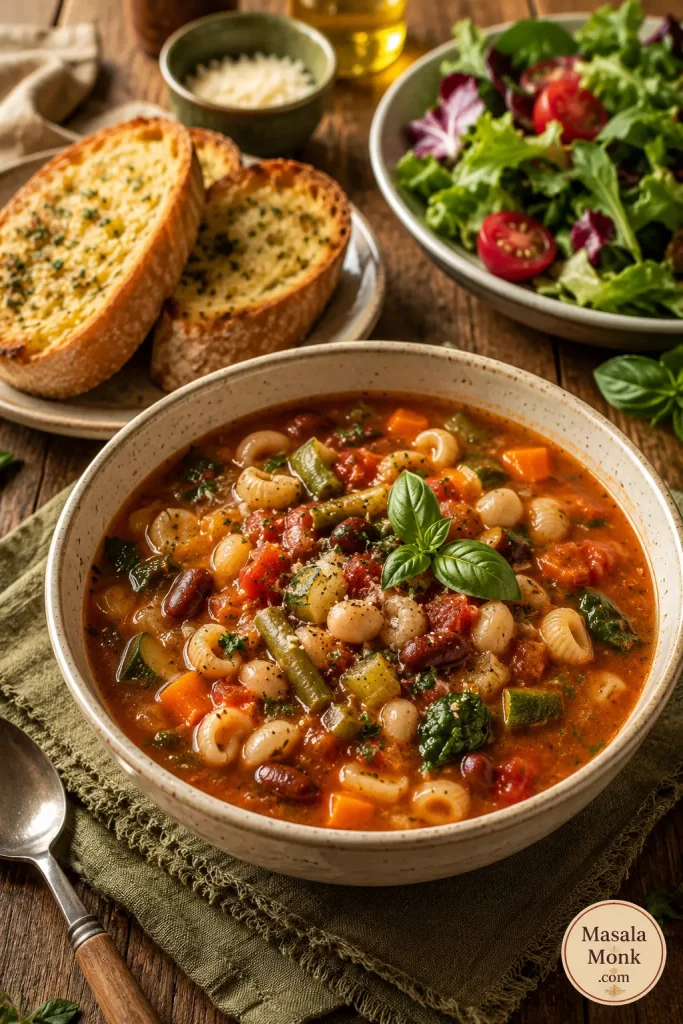
The best side is something that balances the tomato broth without making the meal feel heavy.
Make-Ahead, Storage, Freezing, and Reheating
Make-Ahead Plan
Yes, you can make minestrone ahead of time. For the best texture, make the soup base without pasta, refrigerate it, and add freshly cooked pasta when serving.
- Chop the onion, carrot, celery, zucchini, and green beans up to 1 day ahead.
- Drain and rinse the beans ahead of time.
- Make the soup base without pasta up to 3 days ahead.
- Add greens when reheating so they stay brighter.
- Cook pasta fresh, or store cooked pasta separately with a tiny drizzle of olive oil.
Store and Freeze Minestrone with Pasta Separately
This storage setup keeps the soup base useful and protects the pasta from swelling before the next serving.
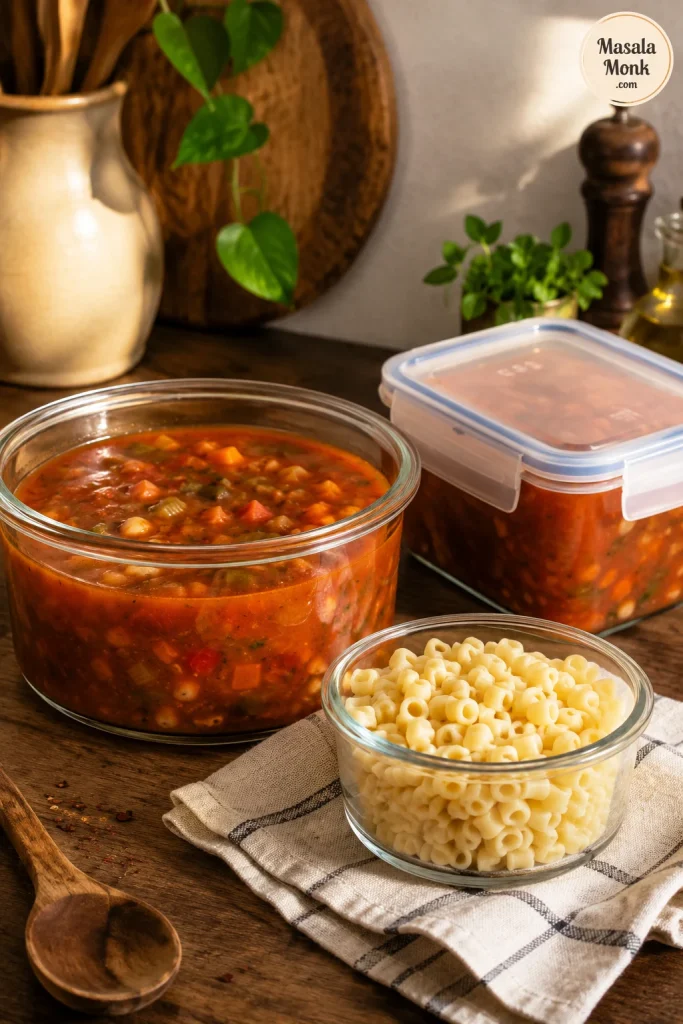
Fridge
Store minestrone soup in an airtight container in the fridge for 3 to 4 days, which matches the USDA’s general guidance for refrigerated leftovers. The next-day soup is often thicker and more flavorful. Loosen it with broth before reheating.
Freezer
Minestrone freezes best without pasta. Freeze the soup base for up to 3 months, then add freshly cooked pasta when reheating. If you freeze it with pasta, the flavor will still be good, but the pasta will become softer.
Reheating
Reheat gently on the stovetop over low to medium-low heat. Add broth or water to loosen the soup. After reheating, freshen the bowl with olive oil, herbs, lemon juice, vinegar, or parmesan. For the fastest fix when leftovers get thick, see the troubleshooting table.
Serve Minestrone Family-Style
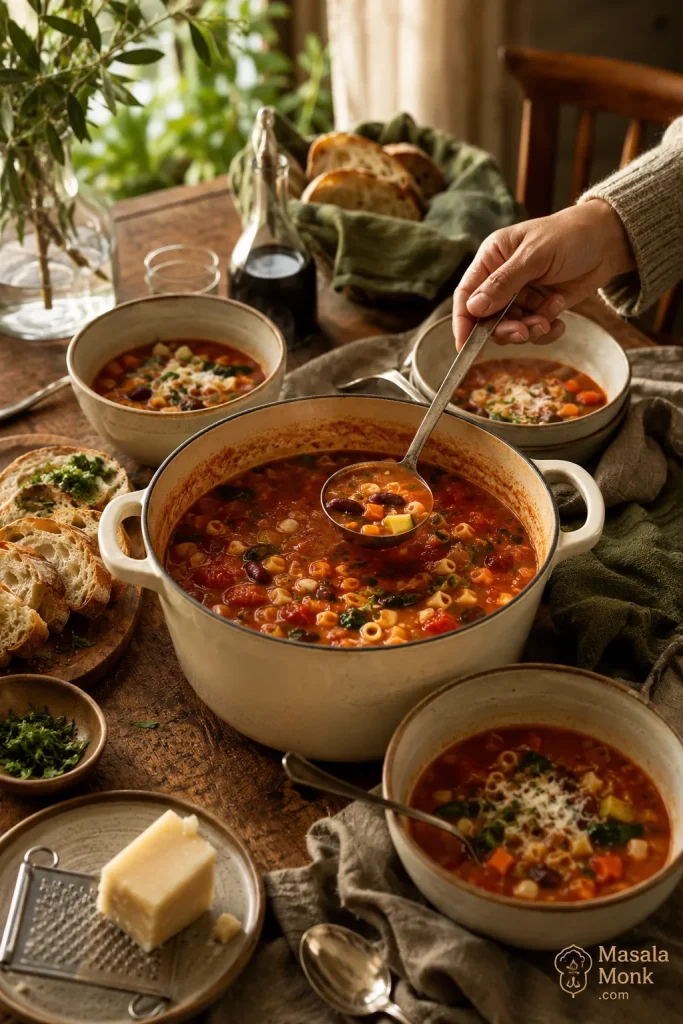
Once you have the rhythm down, minestrone becomes one of those soups you can make again and again without overthinking it. Keep the tomato broth, beans, small pasta, and vegetable timing in place, then let the pot change with the season.
The best minestrone is not the one with the longest ingredient list; it is the one where the broth, beans, vegetables, and pasta all still feel like they belong in the same spoonful.
Minestrone changes from kitchen to kitchen. If your pot had cabbage, potato, chickpeas, kale, extra zucchini, or a pasta shape that worked beautifully, tell us. Those small choices are often what help the next person make a better pot from what they already have.
Frequently Asked Questions
What is minestrone soup made of?
Minestrone soup is an Italian vegetable soup made with vegetables, beans, tomatoes, broth, herbs, olive oil, and usually pasta or rice. Common vegetables include onion, carrot, celery, zucchini, green beans, cabbage, spinach, kale, potato, and peas.
Is minestrone soup vegetarian?
Minestrone soup is vegetarian when it is made with vegetable broth and no meat. If you add parmesan, choose vegetarian-style parmesan if that matters to you.
Is minestrone soup vegan?
Minestrone soup is vegan when it is made with vegetable broth and no parmesan, parmesan rind, meat, or egg pasta. For a vegan finish, use olive oil, herbs, nutritional yeast, or vegan pesto.
What is the best pasta for minestrone?
Ditalini is one of the best pasta shapes for minestrone because it is small and spoon-friendly. Small shells, elbows, macaroni, and orzo also work.
What beans are best for minestrone?
Cannellini beans, white beans, and kidney beans are the best everyday beans for minestrone. Borlotti beans, navy beans, chickpeas, and lentils also work.
Why does my minestrone taste bland?
Bland minestrone usually needs salt, acidity, or more simmering time. Cook the aromatics well, cook the tomato paste until it darkens slightly, taste the broth before adding pasta, then finish with lemon juice or vinegar if the tomato flavor tastes flat.
How do you make minestrone less watery?
To make minestrone less watery, simmer it uncovered, mash some beans into the broth, use crushed tomatoes, or add a parmesan rind if you are using cheese. A watery soup often means the aromatics or tomato paste needed more time at the beginning.
How do you keep pasta from getting mushy in minestrone?
To keep pasta from getting mushy in minestrone, add it only near the end and stop when it is just tender. For leftovers, meal prep, or freezing, cook pasta separately and add it to each bowl.
Can you make minestrone soup ahead of time?
Yes, minestrone is a good make-ahead soup, especially if you make the soup base without pasta. Refrigerate the base for 3 to 4 days, then add freshly cooked pasta when serving.
Can you freeze minestrone soup?
Yes, minestrone soup freezes well, but it freezes best without pasta. Freeze the soup base for up to 3 months, then add freshly cooked pasta when serving.
What is the difference between minestrone and vegetable soup?
Minestrone is usually heartier than plain vegetable soup because it often includes beans, pasta or rice, tomatoes, Italian herbs, and olive oil. Vegetable soup can be any broth-based soup made with vegetables.
What is the difference between minestrone and pasta e fagioli?
Minestrone is a vegetable-heavy soup that often includes beans plus pasta or rice. Pasta e fagioli means pasta and beans, so it is more focused on those two ingredients and is often thicker and more bean-forward.
Can I make minestrone without pasta?
Yes, you can make minestrone without pasta. Add extra beans, cabbage, zucchini, potato, kale, spinach, or cooked rice instead.
Can I use frozen vegetables in minestrone?
Yes, frozen peas, green beans, spinach, kale, and mixed vegetables can work well in minestrone. Add quick-cooking frozen vegetables near the end unless they are dense vegetables. If frozen spinach releases too much water, squeeze it before adding.
Can I make minestrone with canned vegetables?
Yes, canned vegetables can work in minestrone when you need a pantry version. Drain them well and add them near the end because they are already cooked and can become too soft if simmered for a long time.








