
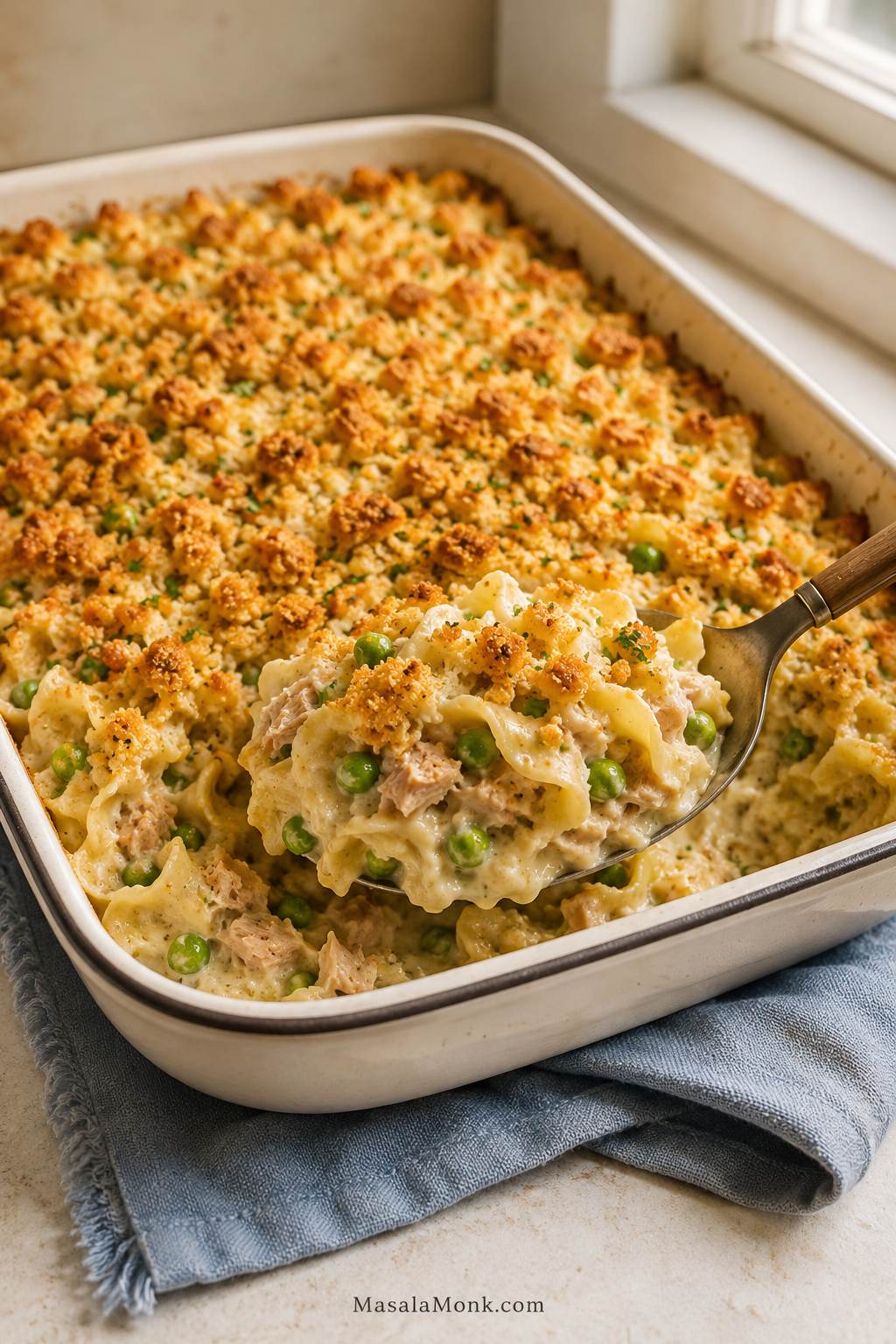
This tuna noodle casserole recipe with egg noodles is the creamy, cozy baked dinner people usually mean when they talk about old-fashioned tuna casserole: wide egg noodles, canned tuna, peas, cream of mushroom soup, milk, optional cheddar, and a crunchy potato chip, cracker, or breadcrumb topping.
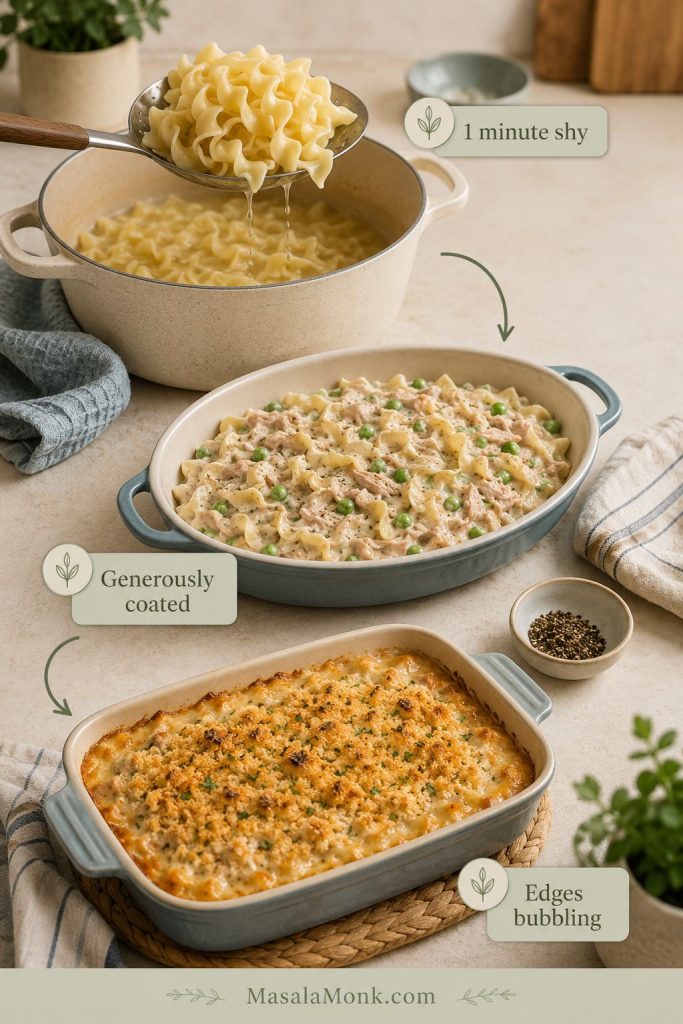
It is pantry comfort food, but it should still scoop creamy instead of baking into a dry noodle block. The key is simple: cook the noodles just shy of tender, use enough sauce for the full 9×13-inch dish, and pull the casserole when the edges are bubbling and the center still looks moist.
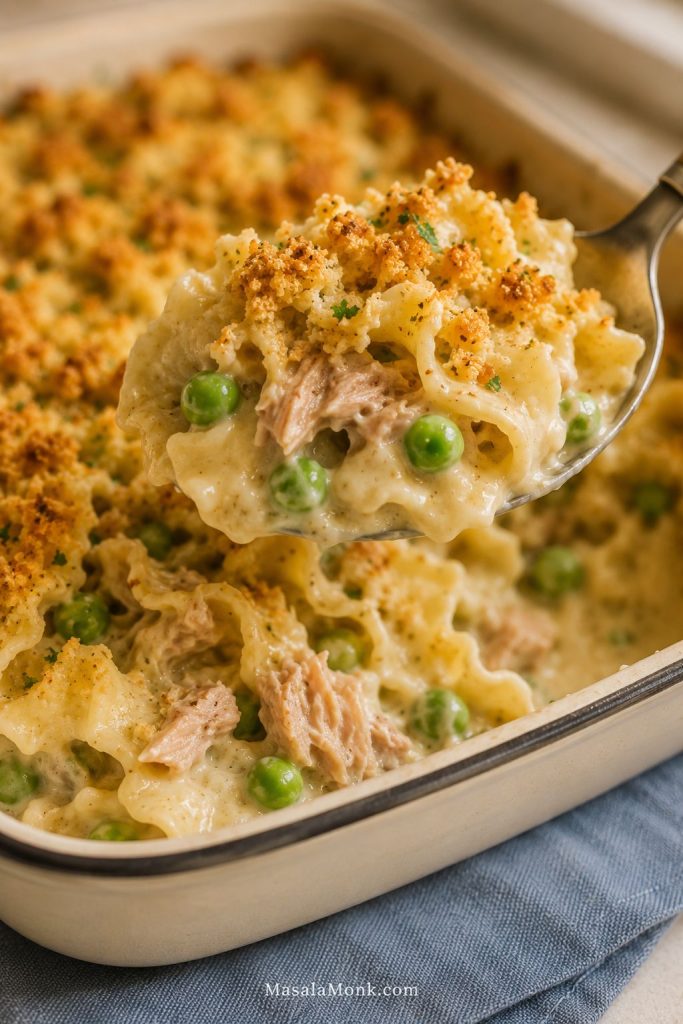
You’ll also find the no-soup version, topping choices, make-ahead and freezer notes, a small-batch option, and fixes for the usual problems: dry, watery, bland, or mushy tuna noodle casserole.
What You’ll Find in This Tuna Noodle Casserole Guide
Make the Casserole
Customize, Store & Fix
Quick Answer: Tuna Noodle Casserole with Egg Noodles
To make tuna noodle casserole with egg noodles, boil wide egg noodles until just shy of tender. Mix them with well-drained canned tuna, peas, cream of mushroom soup, milk, seasonings, and cheddar if using. Spread into a greased 9×13-inch dish, add a crunchy topping, and bake at 375°F / 190°C for 20 to 25 minutes, until the edges bubble and the top is lightly golden.
Why This Tuna Noodle Casserole Works
The goal is not a fancy casserole. The goal is the old-school one done properly: creamy noodles, flaky tuna, sweet peas, and a crisp top. This version keeps the familiar cream-of-mushroom flavor while using enough sauce for a full 9×13-inch dish.
- Wide egg noodles give the casserole its soft-but-sturdy bite.
- Two cans of soup plus milk make enough sauce for a full pan.
- Frozen peas add sweetness and color without extra prep.
- Gently folded tuna stays in flakes instead of disappearing into the sauce.
- A topping added right before baking stays crisp instead of steaming soft.
Best First Batch
If this is your first time making tuna noodle casserole, start with the classic version: cream of mushroom soup, wide egg noodles, tuna, peas, milk, and either potato chips or buttered panko on top. Once that base is right, the variations are easy.
Prefer homemade sauce instead? Jump to the tuna noodle casserole without soup section.
| Version | Use This When | Key Change |
|---|---|---|
| Classic | You want old-fashioned flavor | Use 2 cans cream of mushroom soup and potato chips or crackers. |
| Extra creamy | You worry about dry casserole | Use the full 1 cup / 240 ml milk and optional sour cream. |
| No-soup | You want homemade sauce | Use butter, flour, milk, broth, mushrooms, onion, and celery. |
| Small batch | You are cooking for 1–2 people | Use 4 oz / 115 g noodles, 1 can tuna, and an 8×8-inch dish. |
| Lighter | You want less richness | Use more vegetables, less cheese, and the no-soup sauce option. |
For the safest first batch, keep it classic: cream of mushroom soup, wide egg noodles, peas, optional cheddar, and potato chips or crackers on top. After that, adjust the sauce, topping, or vegetables to match your taste.

Ingredients for Tuna Noodle Casserole
The familiar version is built from pantry and freezer staples, but each ingredient still matters. Wide noodles give the casserole its soft structure, tuna adds protein, peas bring sweetness, condensed soup creates the sauce, and the topping adds the crunch that makes the bake feel finished.
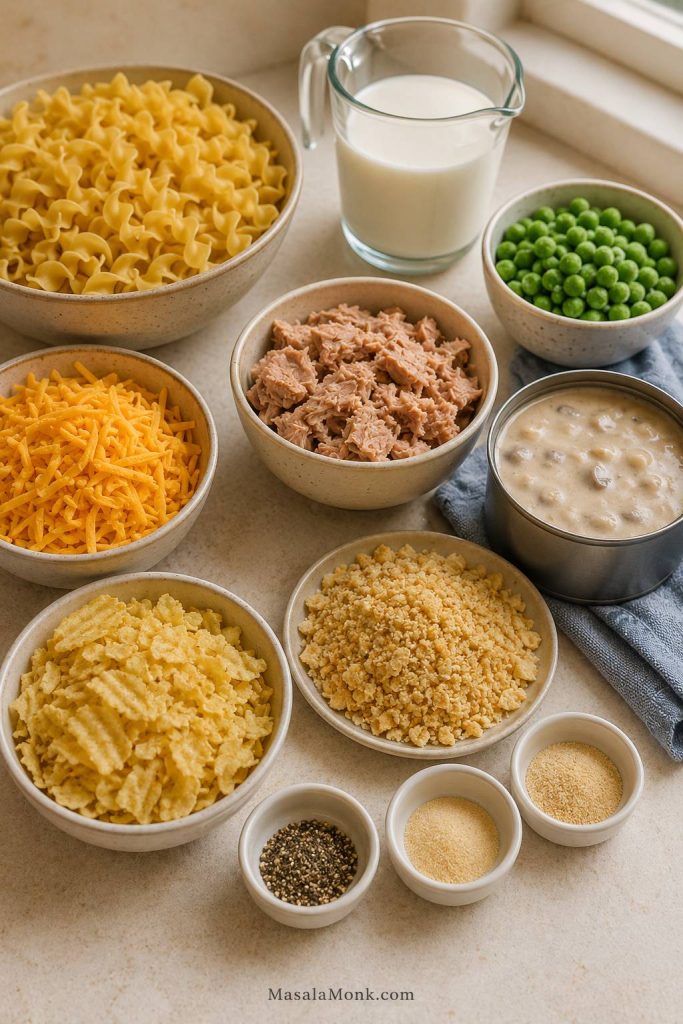
For the biggest texture decisions, start with the egg noodle guide and the tuna comparison below.
Egg Noodles
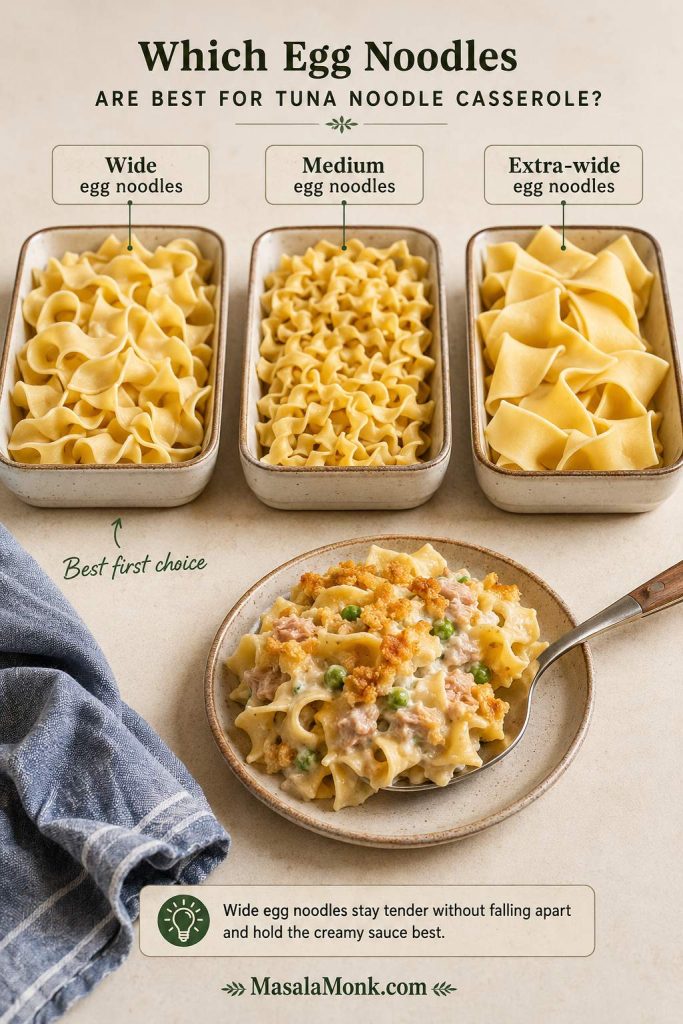
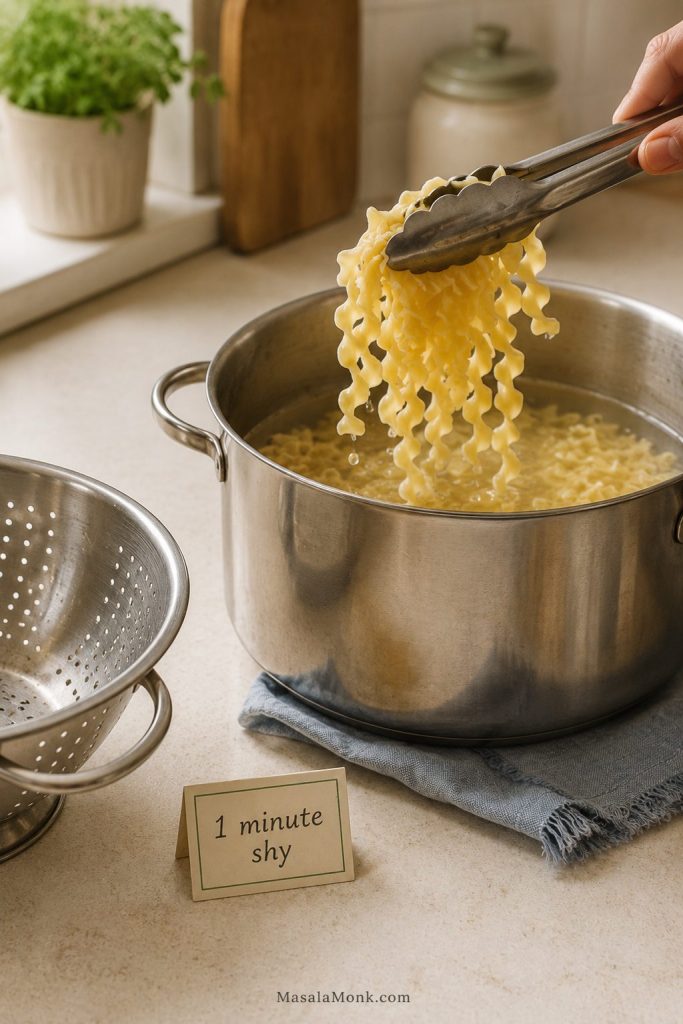
Wide egg noodles are part of what makes this casserole taste like tuna noodle casserole instead of just tuna pasta. They are tender but sturdy, hold sauce well, and give the dish the old-school texture people expect. Cook them 1 minute shy of al dente so they finish softening in the oven without turning mushy.
| Noodle Type | Best For | What to Know |
|---|---|---|
| Wide egg noodles | Best old-fashioned tuna noodle casserole texture | Soft, saucy, and sturdy enough for baking. |
| Medium egg noodles | Softer casserole texture | Cook quickly, so check early and avoid overboiling. |
| Extra-wide egg noodles | More rustic, hearty texture | Need enough sauce because the larger noodles absorb more. |
| Elbow macaroni | Tuna mac-style casserole | Works well, but feels less like an egg noodle casserole. |
| Rotini or penne | Pasta bake style | Better for a tuna pasta bake than this old-school noodle casserole. |
Canned Tuna
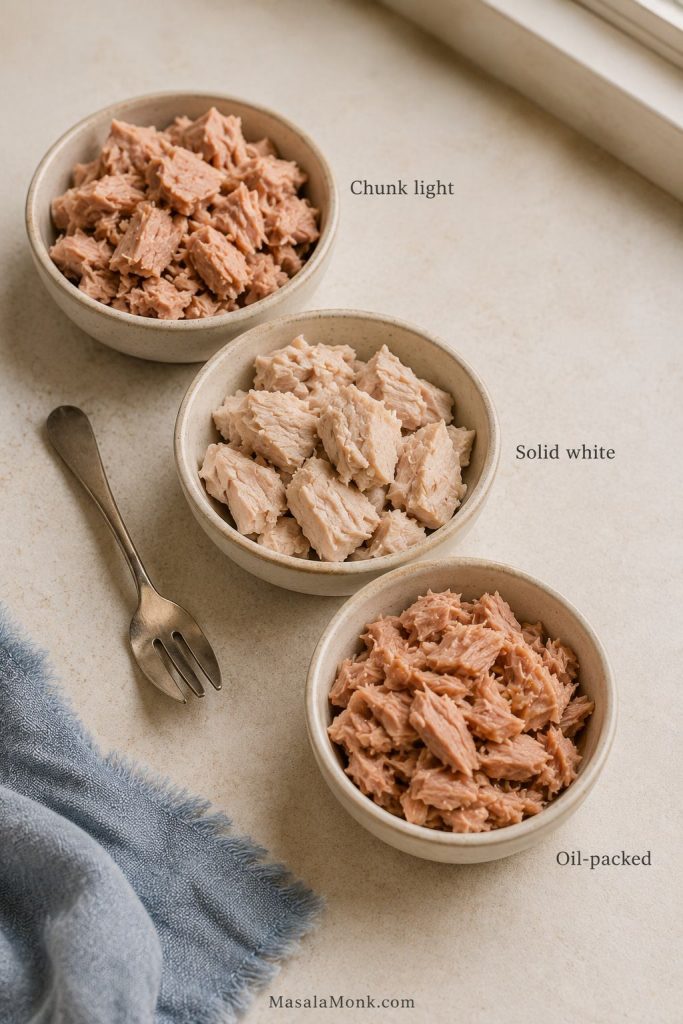
Two standard 5 oz / 142 g cans of tuna are enough for a full 9×13-inch casserole without making the dish taste overwhelmingly fishy. Chunk light tuna gives a milder, softer casserole, while solid white albacore gives larger, firmer flakes. Either works, but fold the tuna in gently so it does not disappear into the sauce.
| Tuna Type | Best For | What to Know |
|---|---|---|
| Chunk light tuna in water | Classic mild casserole | Soft, affordable, and easy to mix into the sauce. |
| Solid white albacore | Larger tuna flakes | Firmer texture and cleaner pieces, but usually stronger tasting. |
| Tuna packed in oil | Richer flavor | Drain very well or the casserole can feel heavy. |
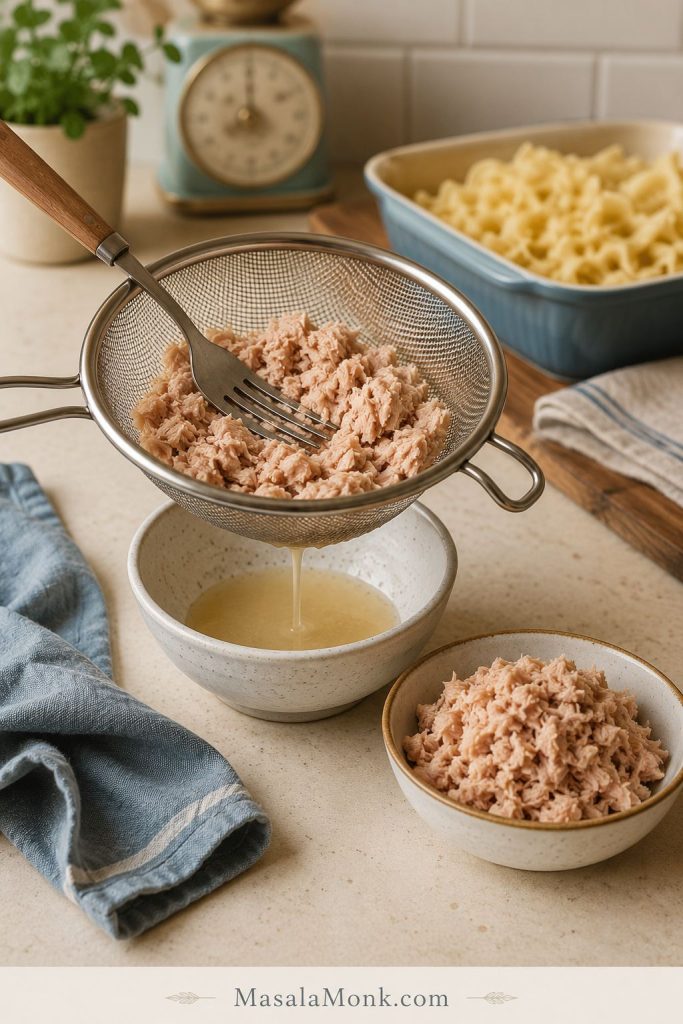
Whatever tuna you use, drain it well. Extra liquid from the can can make the sauce loose in the wrong way, while undrained oil can make the casserole taste heavy. If you want a lighter canned-tuna meal for another day, these healthy tuna salad recipes give you avocado, Greek yogurt, Mediterranean, no-mayo, and high-protein options.
Cream of Mushroom Soup
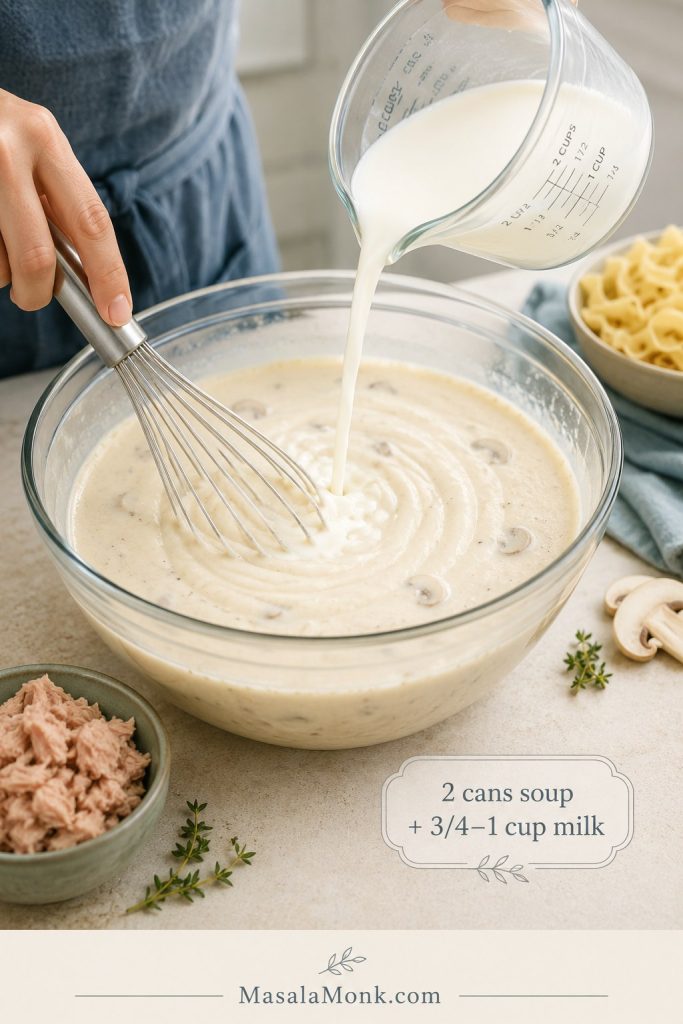
Condensed cream of mushroom soup is the shortcut sauce behind the old-school flavor most people expect here. For a 9×13 casserole, use 2 cans, 10.5 oz / 298 g each, then loosen the condensed soup with 3/4 to 1 cup / 180 to 240 ml milk before adding the noodles.
Milk
Milk turns the condensed soup into a bakeable sauce. Start with 3/4 cup / 180 ml for a thicker casserole, or use a full cup / 240 ml if you want the noodles more generously coated or plan to make the casserole ahead.
Peas and Vegetables
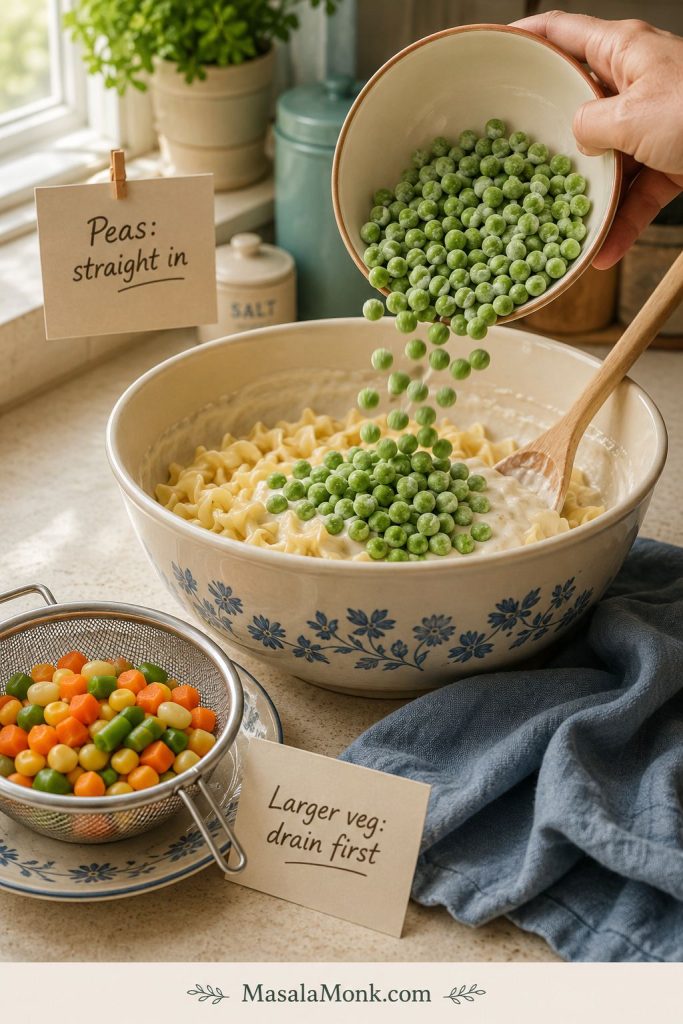
Frozen peas are the easiest vegetable here because they cook quickly and add sweetness. You do not need to thaw frozen peas before mixing them in; they warm through quickly in the oven. If using larger frozen vegetables, thaw and drain them first so they do not water down the sauce.
You can also add sautéed onion, celery, mushrooms, carrots, or a small amount of spinach. Watery vegetables should be cooked or drained first.
Cheddar Cheese
Cheddar is optional, but it makes the casserole richer and more family-dinner friendly. Use 1 cup / 113 g for a balanced version or 1 1/2 cups / 170 g for a cheesier casserole.
Crunchy Topping
Potato chips, buttery crackers, panko, breadcrumbs, and fried onions all work. Add the topping right before baking so it stays crisp instead of turning soft from the sauce.
Because condensed soup, canned tuna, cheddar, crackers, chips, and fried onions can all be salty, taste the sauce before adding extra salt. Black pepper, garlic powder, onion powder, Dijon mustard, or a small squeeze of lemon can add flavor without making the casserole too salty.

Equipment You Need
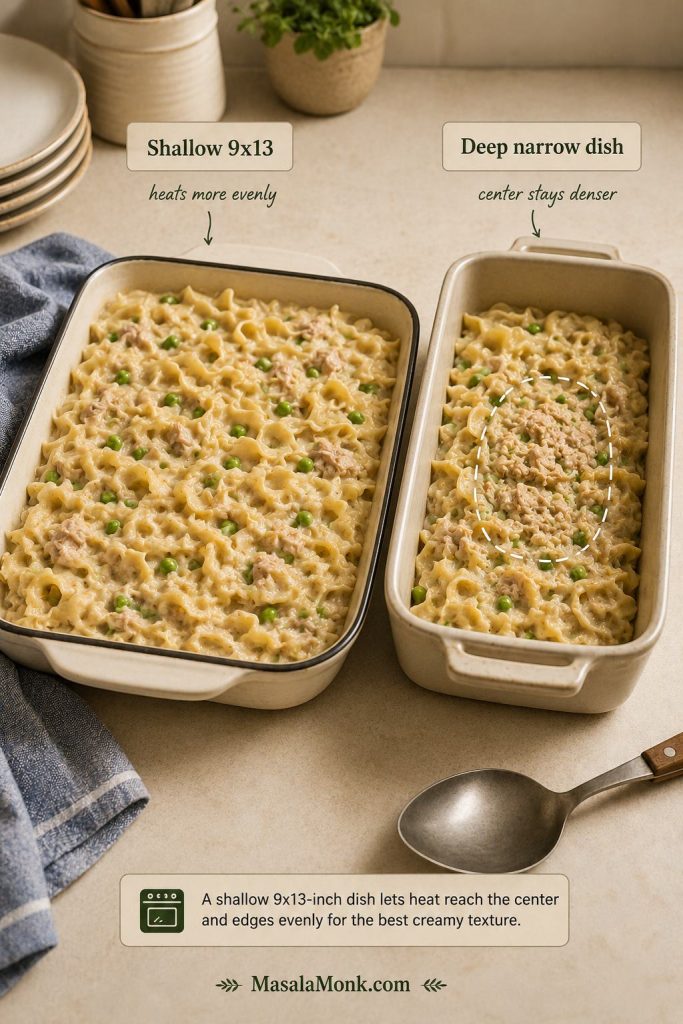
You do not need special equipment, but the pan size matters more than it seems. A shallow 9×13-inch / 23×33 cm baking dish is better than a deep, narrow dish because the casserole heats evenly and does not turn dense in the center before the edges are hot.
- Large pot for boiling egg noodles
- Colander for draining noodles
- Large mixing bowl or deep skillet
- 9×13-inch / 23×33 cm baking dish, about 3 quarts
- Small bowl for mixing the topping
- Foil for make-ahead, reheating, or chilled casserole baking
- Optional skillet or saucepan if making the no-soup sauce
How to Make Tuna Noodle Casserole
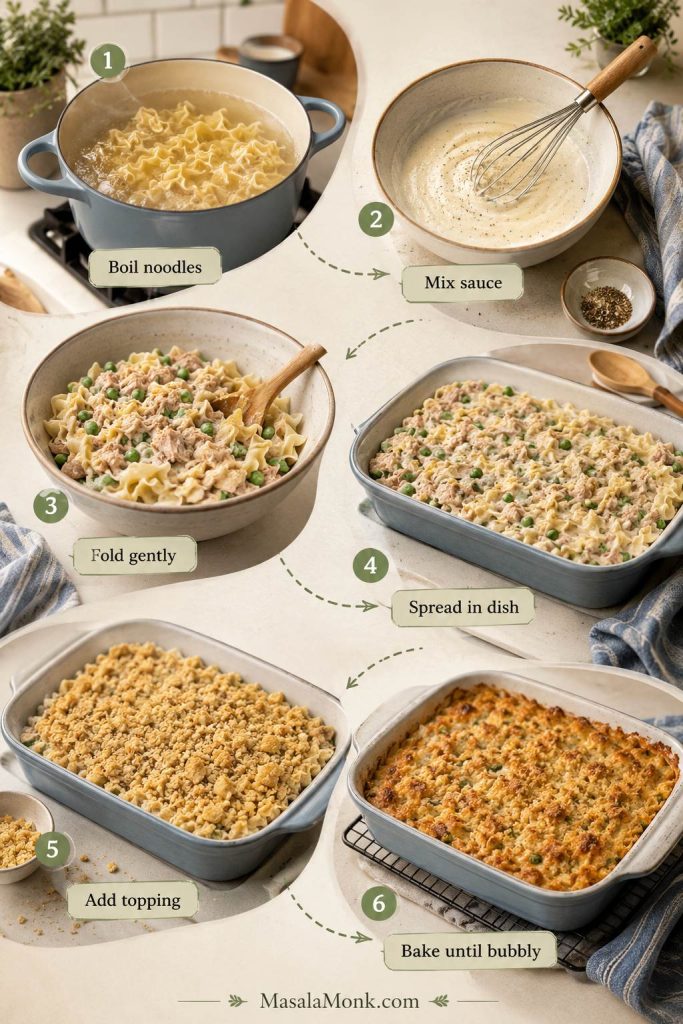
1. Boil the Egg Noodles
Bring a large pot of salted water to a boil. Add 12 oz / 340 g wide egg noodles and cook them about 1 minute less than the package’s al dente time. The noodles should bend easily but still have a little firmness in the center.
2. Mix the Creamy Sauce
In a large bowl, whisk together the cream of mushroom soup, milk, black pepper, garlic powder, and onion powder. The sauce should be smooth before the noodles go in.
3. Fold in Tuna, Peas, Cheese, and Noodles
Add the well-drained tuna, frozen peas, cheddar, and cooked egg noodles. Fold gently so the tuna stays in small flakes instead of disappearing into the sauce. The noodles should be coated, but not swimming.
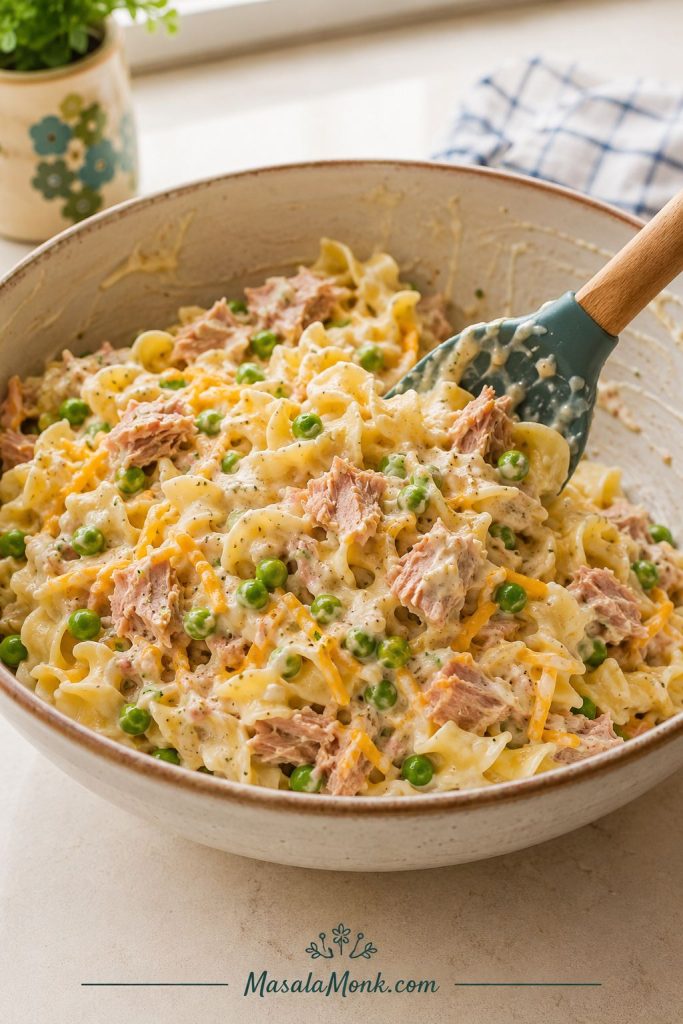
4. Spread Into a Baking Dish
Grease a 9×13-inch / 23×33 cm baking dish and spread the mixture evenly. Do not pack it down firmly; a lighter layer heats more evenly.
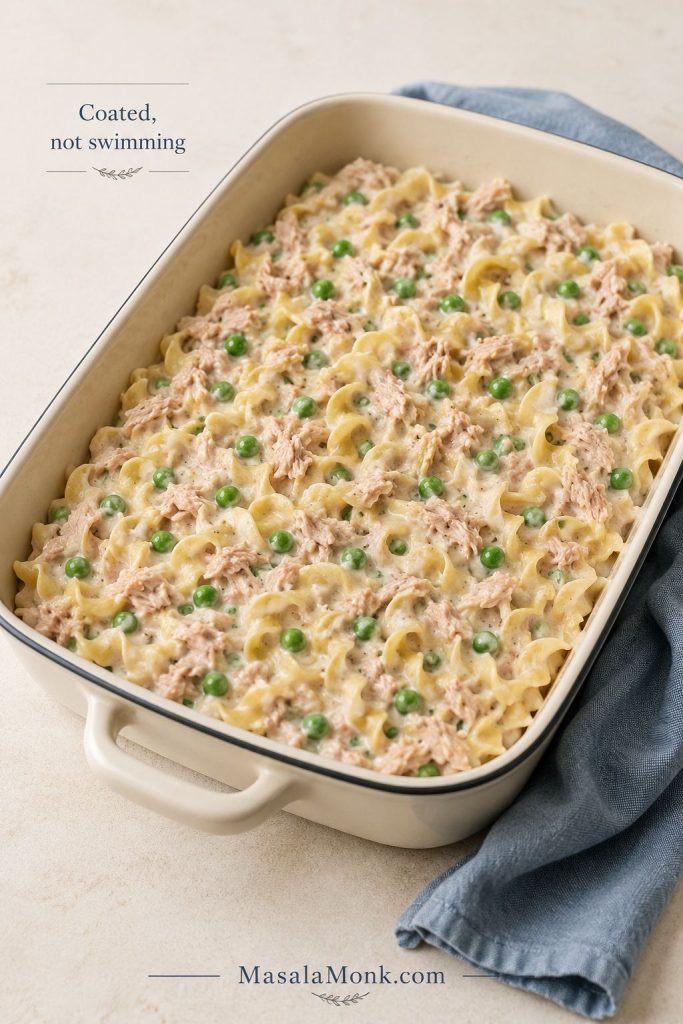
5. Add the Crunchy Topping
Sprinkle crushed potato chips, crackers, or buttered panko over the top. If using breadcrumbs or panko, mix them with melted butter first so they brown instead of drying out.
6. Bake Until Bubbly
Bake uncovered at 375°F / 190°C for 20 to 25 minutes, until the edges are bubbling and the topping is lightly golden. Rest for 5 minutes before serving.
Tuna Noodle Casserole Recipe Card
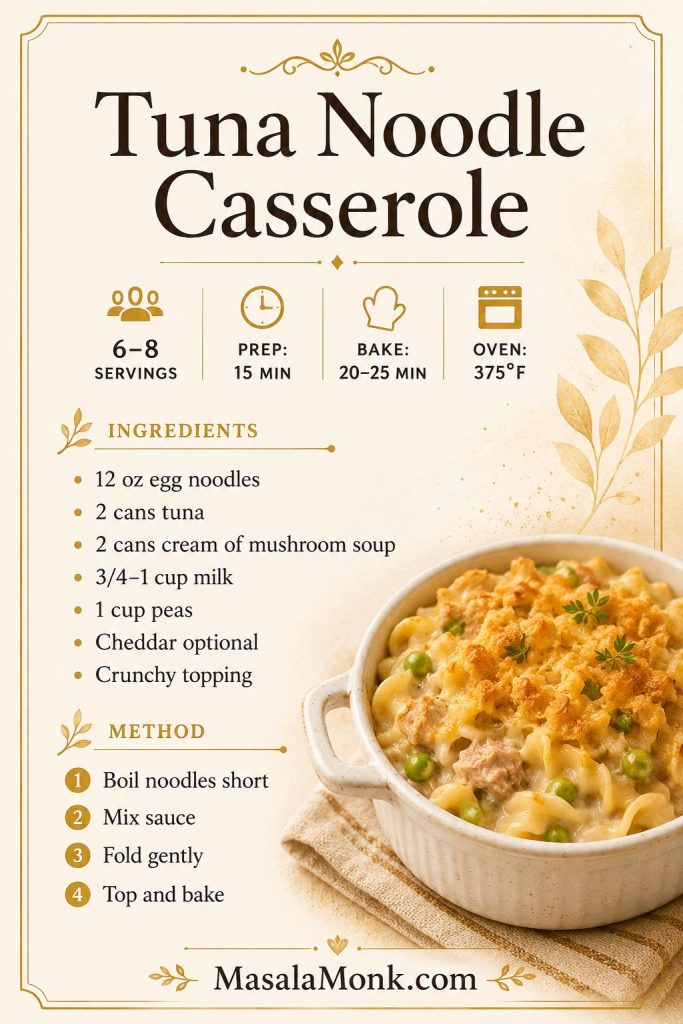
Tuna Noodle Casserole Recipe with Egg Noodles
This is the classic pantry-style tuna noodle casserole: wide egg noodles, tuna, peas, cream of mushroom soup, milk, cheddar, and a crisp potato chip, cracker, or breadcrumb topping. It is simple, cozy, and built to stay soft, saucy, and scoopable after baking.
Equipment: large pot, colander, large mixing bowl, 9×13-inch / 23×33 cm baking dish, small topping bowl.
Ingredients
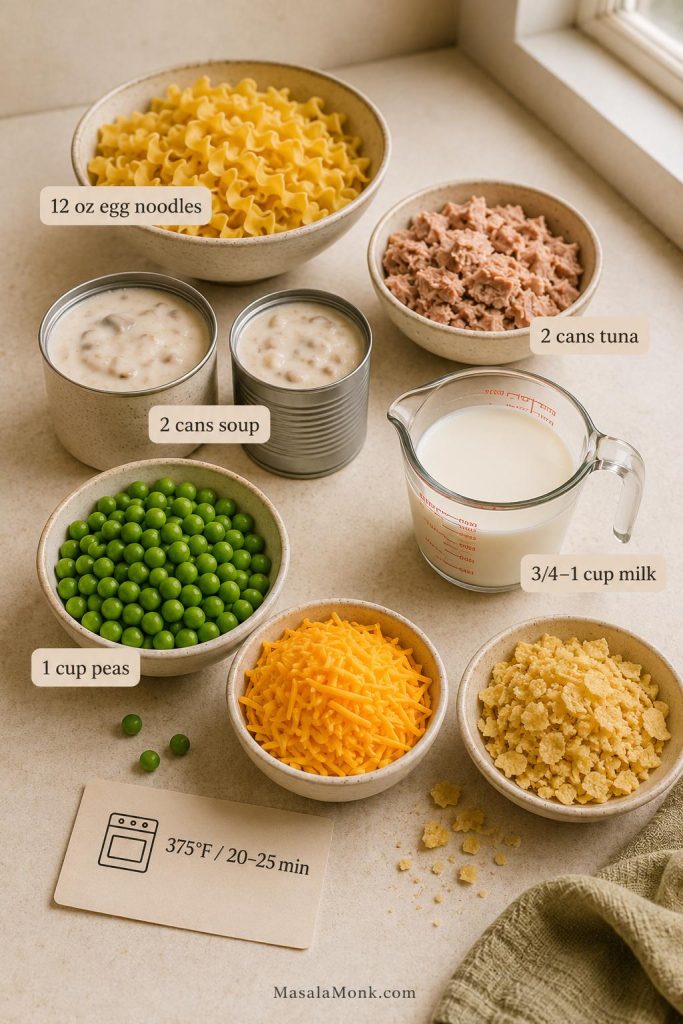
- 12 oz / 340 g wide egg noodles
- Salt for the pasta water, plus extra only if the sauce needs it
- 2 cans tuna, 5 oz / 142 g each, drained well
- 2 cans condensed cream of mushroom soup, 10.5 oz / 298 g each
- 3/4 to 1 cup / 180 to 240 ml milk
- 1 cup / 140 g frozen peas, no need to thaw
- 1 cup / 113 g shredded cheddar cheese, optional but recommended
- 1/2 teaspoon black pepper
- 1/4 teaspoon garlic powder
- 1/4 teaspoon onion powder
- 1 cup crushed potato chips or buttery crackers, about 35 to 45 g depending on the topping
Optional Buttered Breadcrumb Topping
- 1/2 cup / about 30 g panko or breadcrumbs
- 2 tablespoons / 28 g melted butter
- 2 tablespoons grated parmesan, optional
Optional Add-Ins
- 1/2 cup chopped celery, sautéed
- 1/2 cup chopped onion, sautéed
- 8 oz / 225 g mushrooms, sautéed
- 1/2 cup sour cream or 2 to 3 tablespoons mayo for an extra creamy version
- 1 teaspoon Dijon mustard or a small squeeze of lemon for brightness
Instructions
- Preheat the oven. Heat oven to 375°F / 190°C. Grease a 9×13-inch / 23×33 cm baking dish.
- Cook the noodles. Bring a large pot of salted water to a boil. Cook the egg noodles 1 minute shy of al dente. Drain well.
- Make the sauce mixture. In a large bowl, whisk together cream of mushroom soup, 3/4 cup milk, black pepper, garlic powder, and onion powder. If using sour cream, mayo, Dijon, lemon, sautéed celery, onion, or mushrooms, stir them into the sauce now. Add the remaining 1/4 cup milk if the sauce looks very thick.
- Add the filling. Fold in the well-drained tuna, peas, cheddar, and cooked egg noodles. Mix gently so the tuna stays in flakes instead of breaking down completely.
- Fill the dish. Spread the mixture evenly into the prepared baking dish. It should look creamy and slightly loose, with the noodles fully coated but not swimming in sauce. If it looks stiff before baking, stir in 2 to 4 tablespoons more milk.
- Add topping. Sprinkle crushed potato chips or crackers over the top. If using panko or breadcrumbs, mix them with melted butter first, then sprinkle over the casserole.
- Bake. Bake uncovered for 20 to 25 minutes, until the edges are bubbling and the topping is lightly golden.
- Rest and serve. Let the casserole rest for 5 minutes before serving.
Notes
- Taste the sauce before adding extra salt because condensed soup, tuna, cheese, chips, and crackers can all be salty.
- For a faster bake, use 400°F / 200°C and check after 15 minutes.
- If baking from chilled, cover loosely for the first half of baking and add 10 to 15 extra minutes.
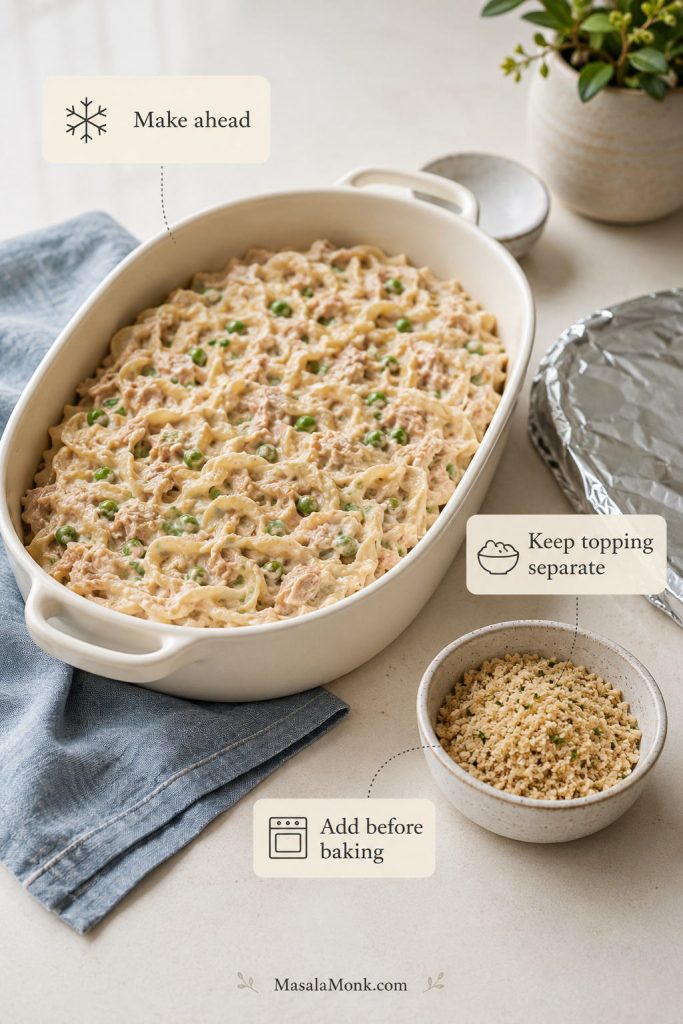
- Add crunchy topping right before baking, especially for make-ahead casserole.
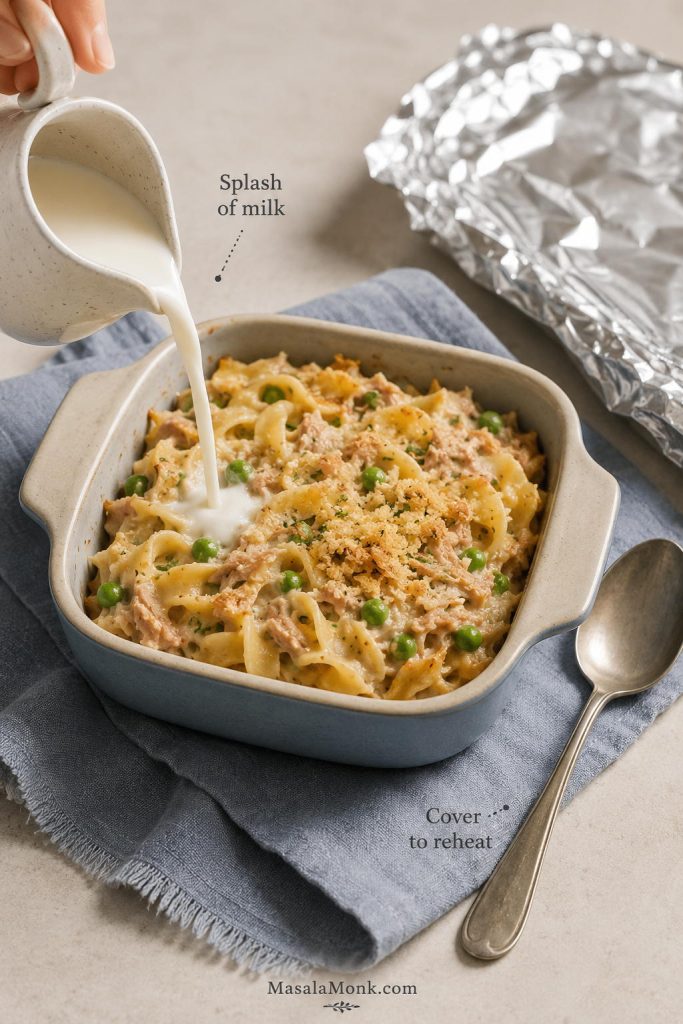
- For leftovers, add a splash of milk before reheating; the reheating section shows the cue.
A quick safety note for families: for general fish-consumption guidance, especially for children or people who are pregnant or breastfeeding, see the FDA’s advice about eating fish.
How Long to Bake Tuna Noodle Casserole
The best default is 375°F / 190°C for 20 to 25 minutes. This temperature heats the casserole through without drying the noodles too quickly or burning the topping.
| Oven Temperature | Best Use | Approximate Time |
|---|---|---|
| 375°F / 190°C | Best all-purpose creamy bake | 20–25 minutes |
| 400°F / 200°C | Faster weeknight bake if the mixture is warm | 15–20 minutes |
| 425°F / 220°C | Very fast bake | 15–20 minutes, but watch for drying or topping browning too quickly |
| 375°F / 190°C from chilled | Make-ahead casserole from the refrigerator | 30–40 minutes; cover loosely for the first half if needed |
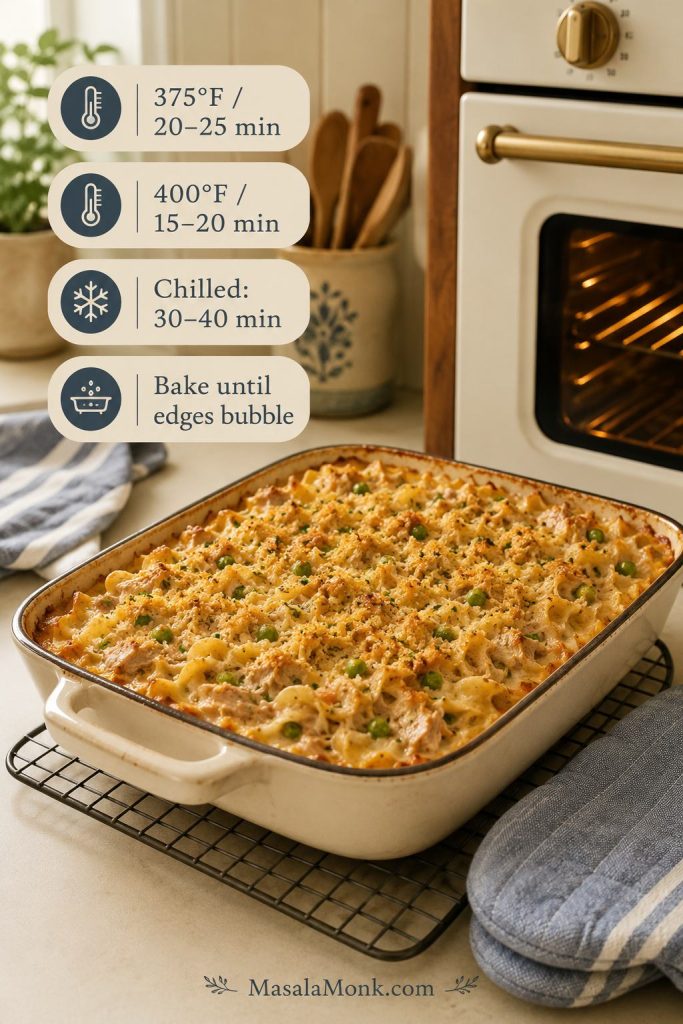
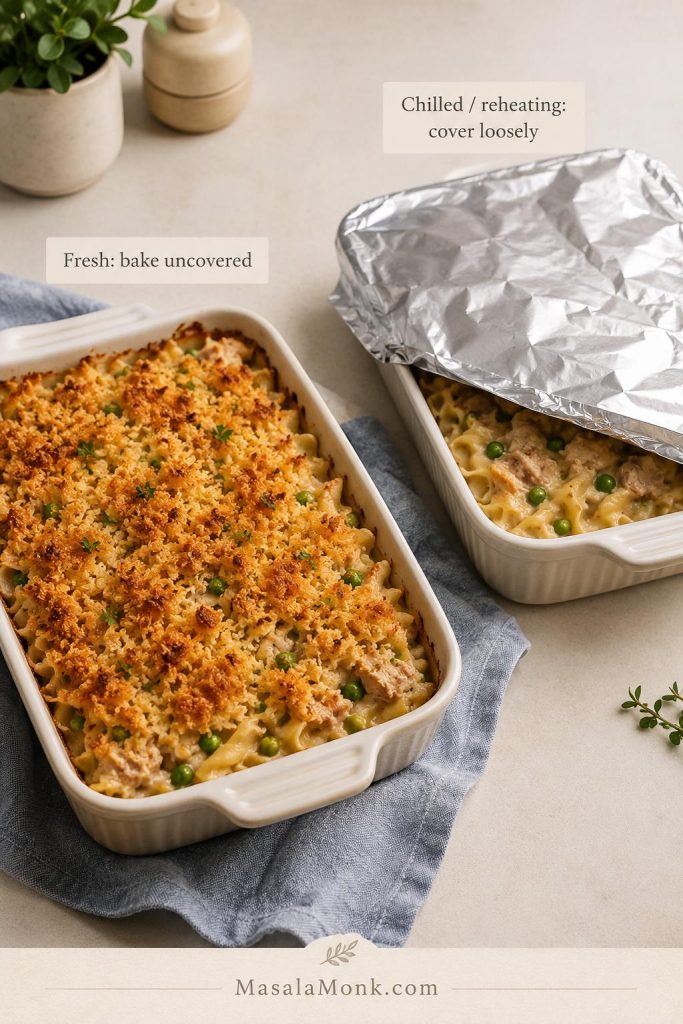
The casserole is done when the edges bubble, the center is hot, and the topping is golden in spots. If the topping browns before the center is hot, loosely tent the dish with foil and continue baking.
If the casserole is coming from the fridge, check the make-ahead guidance before baking.
Should Tuna Noodle Casserole Be Covered While Baking?
Bake freshly assembled tuna noodle casserole uncovered so the topping can crisp. Cover it loosely with foil only if the casserole is cold from the refrigerator, the topping is browning too fast, or you are reheating leftovers.
Tuna Noodle Casserole with Cream of Mushroom Soup
The cream-of-mushroom version is the main recipe here because it matches the comfort-food casserole most people are looking for: quick, pantry-friendly, creamy, and familiar. For a 9×13-inch tuna noodle casserole, use 2 cans condensed cream of mushroom soup and 3/4 to 1 cup milk.
Prefer a homemade sauce? Skip ahead to the without-soup method.
Stir the soup and milk together before adding noodles so there are no thick pockets of soup. Cream of celery soup gives a lighter vegetable flavor, while one can cream of mushroom plus one can cream of chicken makes the sauce richer and more savory.
If you like understanding sauce texture, this easy cheese sauce recipe shows how milk, cheese, and gentle heat keep sauces smooth instead of grainy or gluey.
Tuna Noodle Casserole Without Soup
For a homemade version without condensed soup, make a quick white sauce with butter, flour, milk, broth, mushrooms, onion, and celery. Melt 4 tablespoons / 56 g butter in a skillet. Cook 1 small chopped onion, 1 to 2 celery ribs, and 8 oz / 225 g mushrooms until softened. Add 2 minced garlic cloves, then stir in 1/3 cup / 40 g flour.
Slowly whisk in 1 1/2 cups / 360 ml milk and 1 1/2 cups / 360 ml broth. Simmer until creamy, then fold in tuna, peas, noodles, and cheese if using. If the sauce thickens before the noodles are added, loosen it with extra milk or broth 2 tablespoons at a time.
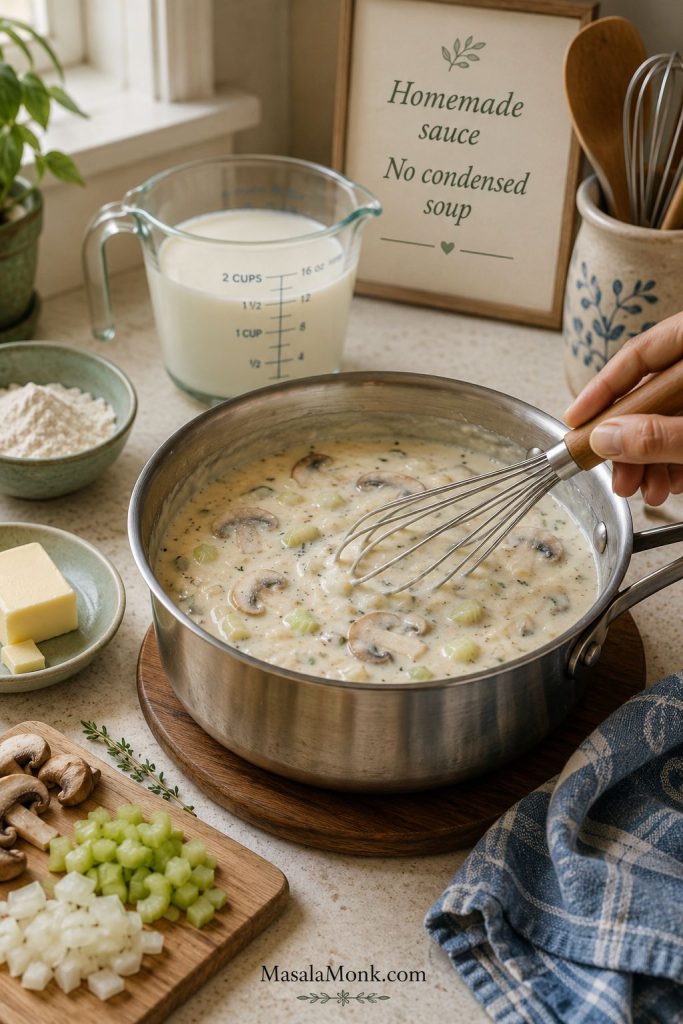
For a deeper white-sauce reference, this béchamel sauce guide explains the butter-flour-milk method that also helps a homemade tuna casserole sauce stay smooth.
Best Tuna Noodle Casserole Toppings
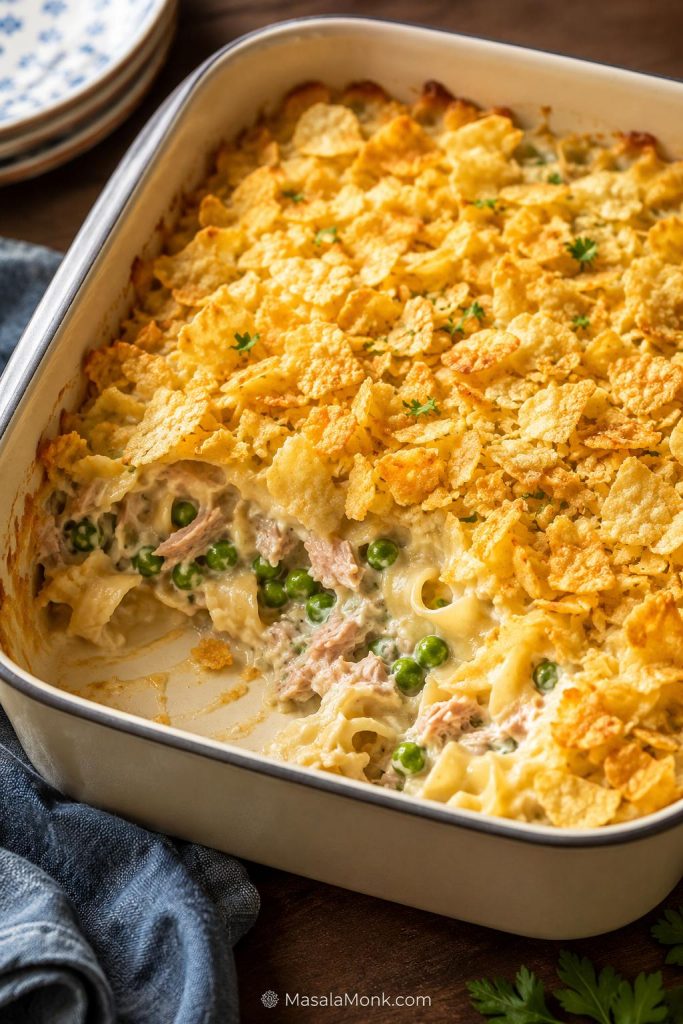
The topping changes the whole personality of the casserole. Potato chips make it salty and old-fashioned, crackers make it buttery, panko makes it crisp, and fried onions make it taste more like a holiday casserole.
Potato chips give you the nostalgic church-supper casserole. Buttered panko gives you a cleaner, crispier top.
| Topping | Best For | How to Use It |
|---|---|---|
| Potato chips | Old-fashioned salty crunch | Crush lightly and add right before baking. |
| Ritz or buttery crackers | Buttery comfort-food topping | Crush coarsely; mix with a little melted butter if needed. |
| Panko | Crispest clean topping | Mix with melted butter and optional parmesan. |
| Breadcrumbs | Classic balanced topping | Use with melted butter so they brown evenly. |
| Fried onions | Green bean casserole-style crunch | Use lightly because the flavor is strong. |
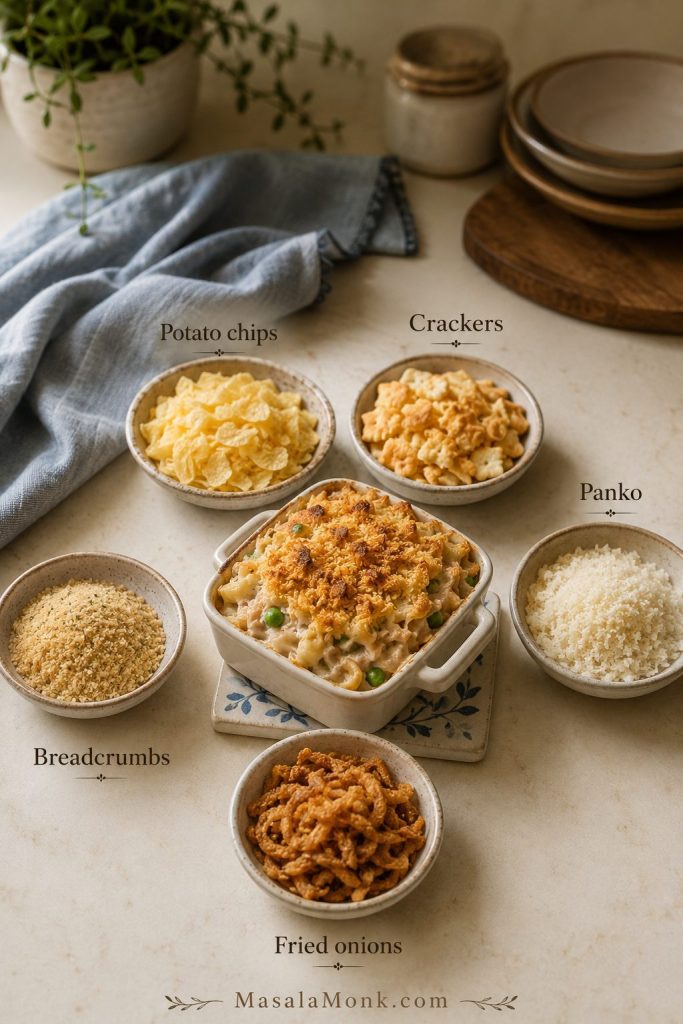
Choosing a topping for a make-ahead casserole? See the make-ahead notes so the topping stays crisp.
How to Keep Tuna Noodle Casserole Creamy, Not Dry
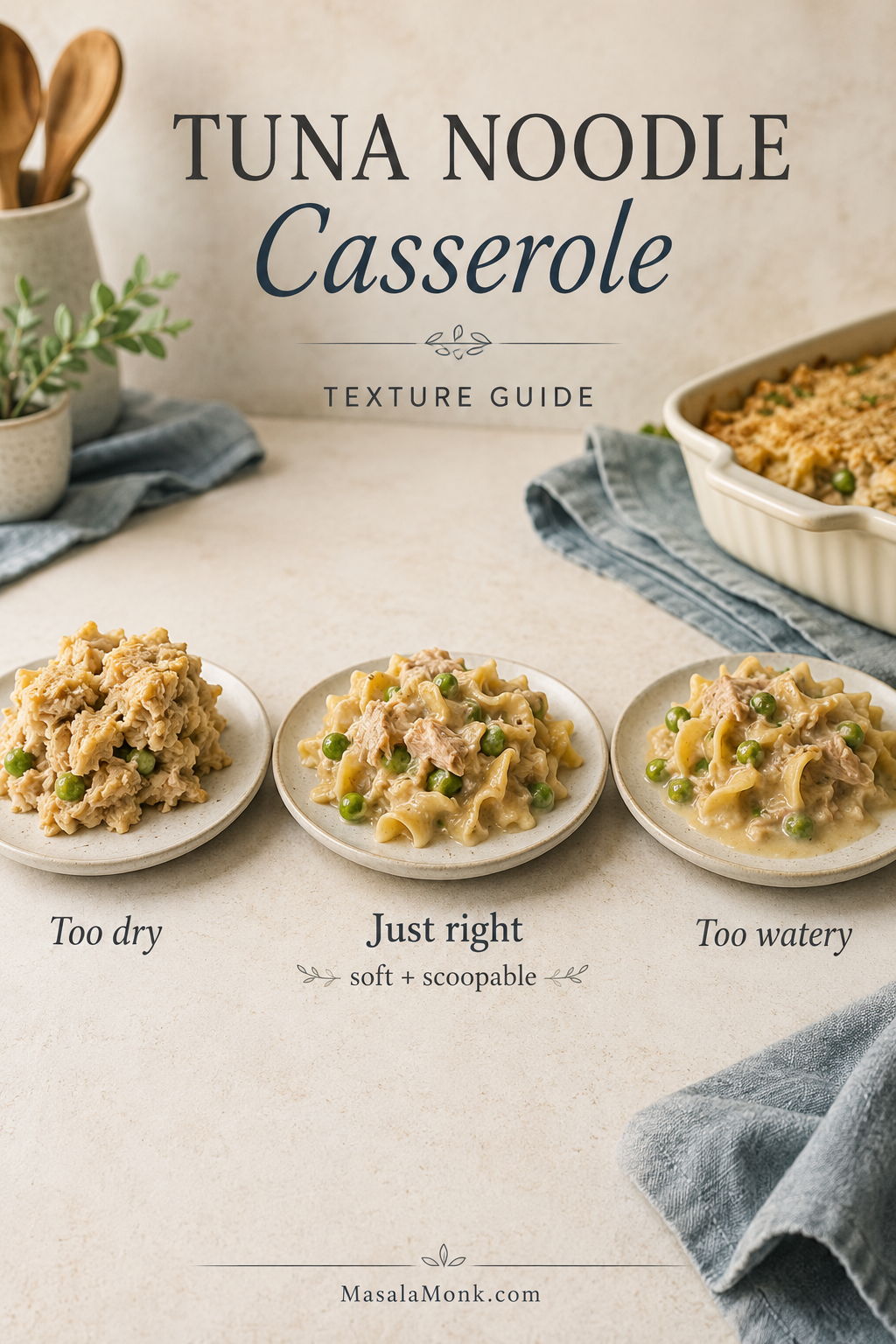
The fix for dry tuna casserole happens before it goes into the oven, not after it comes out. Dryness usually comes from overcooked noodles, sauce that was too thick before baking, too much time in the oven, or leftovers reheated without adding moisture back.
Before Baking
- Cook the noodles 1 minute shy of al dente.
- Use the full 1 cup / 240 ml milk if making the casserole ahead.
- Do not pack the noodles tightly into the baking dish.
After Baking or Reheating
- Rest the casserole for 5 minutes, not 15 or 20.
- For leftovers, add a splash of milk before reheating.
- Cover while reheating, then uncover briefly to crisp the topping.
- If a serving is already dry, stir in a spoonful of warm milk or cream before serving.
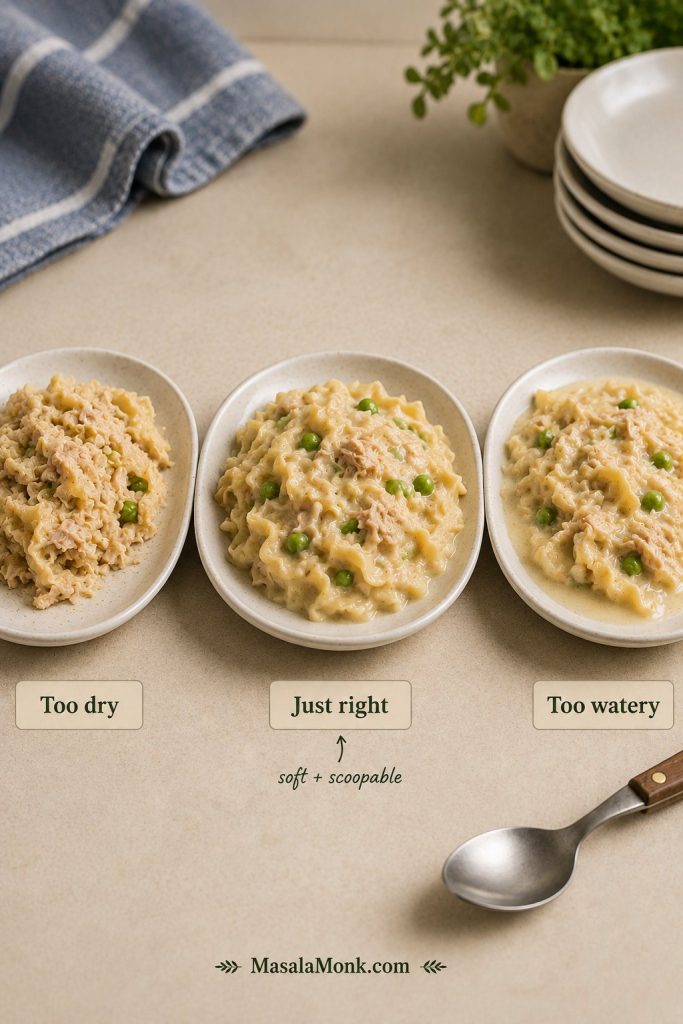
If the casserole is already baked and the texture still seems off, use the troubleshooting guide to decide whether the issue is sauce, noodles, topping, or bake time.
No-Boil Tuna Noodle Casserole: Is It Worth It?
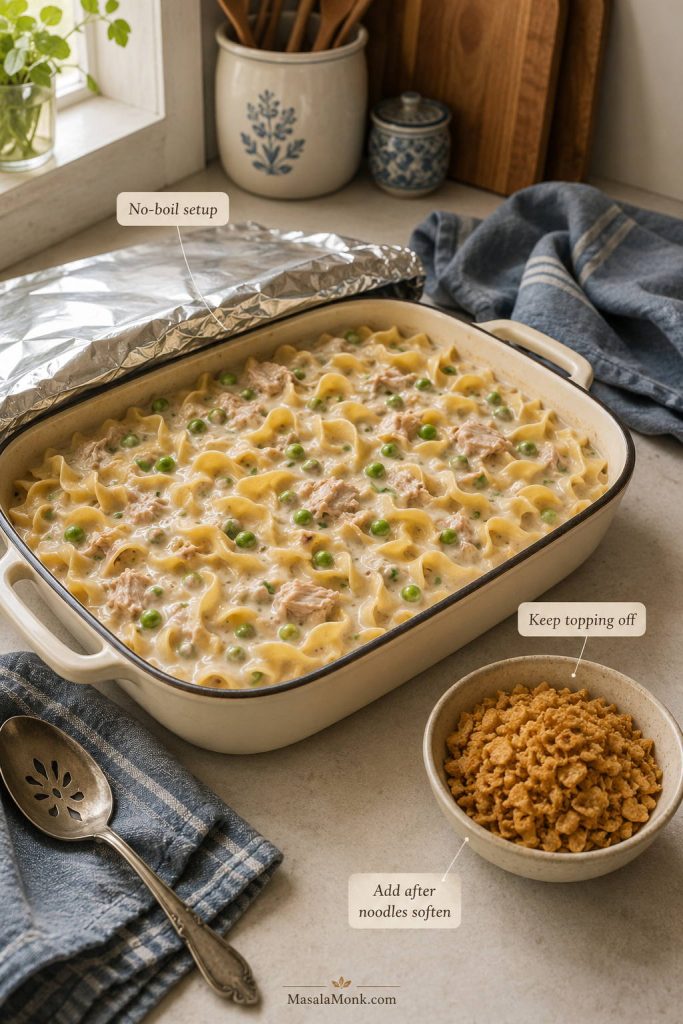
No-boil tuna noodle casserole works when convenience matters more than perfect noodle texture. It saves a pot, but the noodles need more liquid, a tightly covered pan, and a longer bake so they can soften in the sauce.
For the best egg noodle texture, boiling the noodles separately still gives the best result. If you do try a no-boil version, make the sauce much looser, press the noodles under the liquid, and cover the pan tightly with foil.
Add the topping only after the noodles are tender; otherwise the top can brown before the casserole is fully cooked.
Stovetop Tuna Noodle Casserole
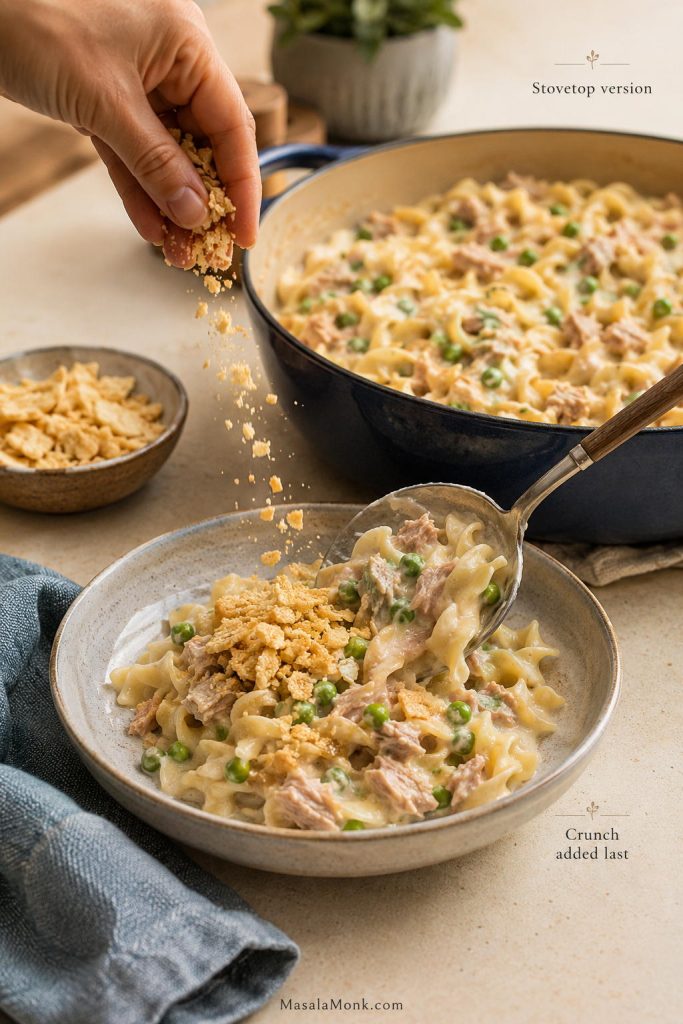
This is the weeknight version when you want the flavor of tuna noodle casserole without waiting for a baked top. It will be softer and saucier than the oven version, and the topping is sprinkled on at the end instead of browned in the oven.
Cook the noodles separately, or simmer them gently in a creamy sauce in a Dutch oven. Stir in the tuna and peas near the end so the tuna stays flaky and the peas do not overcook. Finish each serving with crushed crackers, potato chips, or toasted breadcrumbs for crunch.
Tuna Noodle Casserole for Two
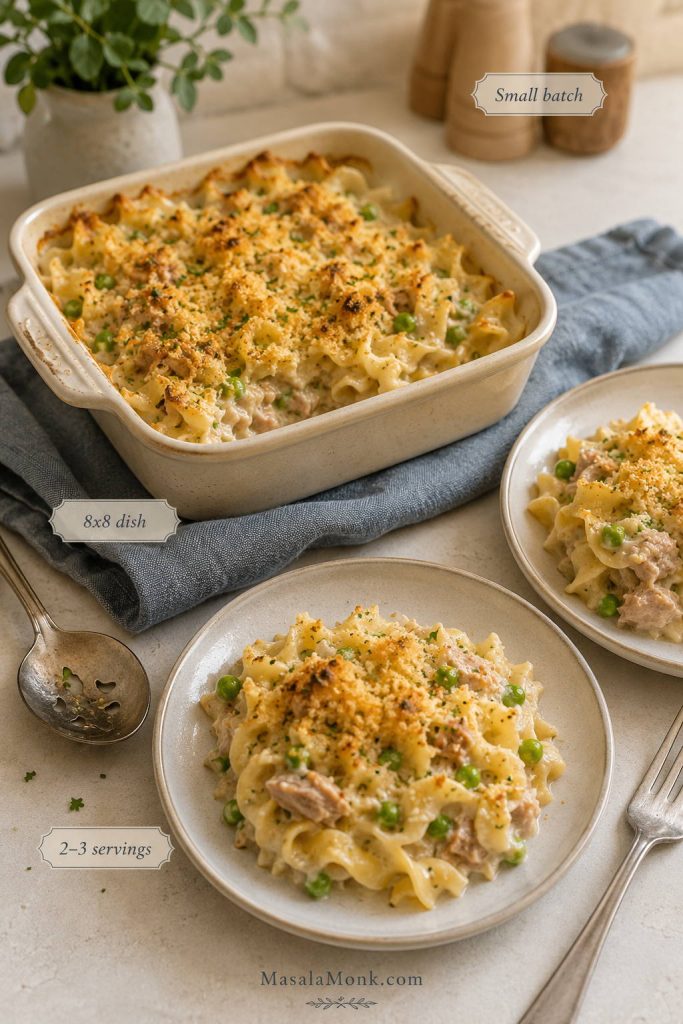
A full 9×13-inch pan is great for family dinner, but an 8×8-inch dish or 1.5-quart baking dish is easier when you only want a few servings. Keep the sauce generous, add the topping right before baking, and check early because a smaller casserole heats faster.
| Ingredient | Small-Batch Amount |
|---|---|
| Egg noodles | 4 oz / 115 g |
| Tuna | 1 can, 5 oz / 142 g, drained |
| Peas | 1/2 cup / 70 g |
| Cream of mushroom soup | 1/2 to 2/3 can for balanced sauce, or 1 full can for extra creamy |
| Milk | 1/4 to 1/3 cup / 60 to 80 ml |
| Dish | 8×8-inch dish or 1.5-quart baking dish |
| Bake time | 15–20 minutes at 375°F / 190°C |
Old-Fashioned Tuna Noodle Casserole
For an old-fashioned tuna noodle casserole, keep the ingredients simple: egg noodles, canned tuna, cream of mushroom soup, milk, peas, cheddar, and crushed potato chips. Use light seasoning, add celery or onion only if you like that retro casserole flavor, and taste before salting because the soup, tuna, cheese, and chips already bring plenty.
What to Serve with Tuna Noodle Casserole
Tuna noodle casserole is rich, creamy, and filling, so the best sides are usually fresh, crisp, or simple. You do not need a heavy side dish unless you are feeding a larger crowd.
- Fresh sides: green salad, cucumber salad, coleslaw, or tomato cucumber salad.
- Vegetables: steamed broccoli, green beans, roasted carrots, asparagus, or peas and carrots.
- Bread: dinner rolls, biscuits, garlic bread, or a simple slice of toasted sourdough.
- Bright sides: pickles, lemony salad, or vinegar-based slaw to balance the creamy casserole.
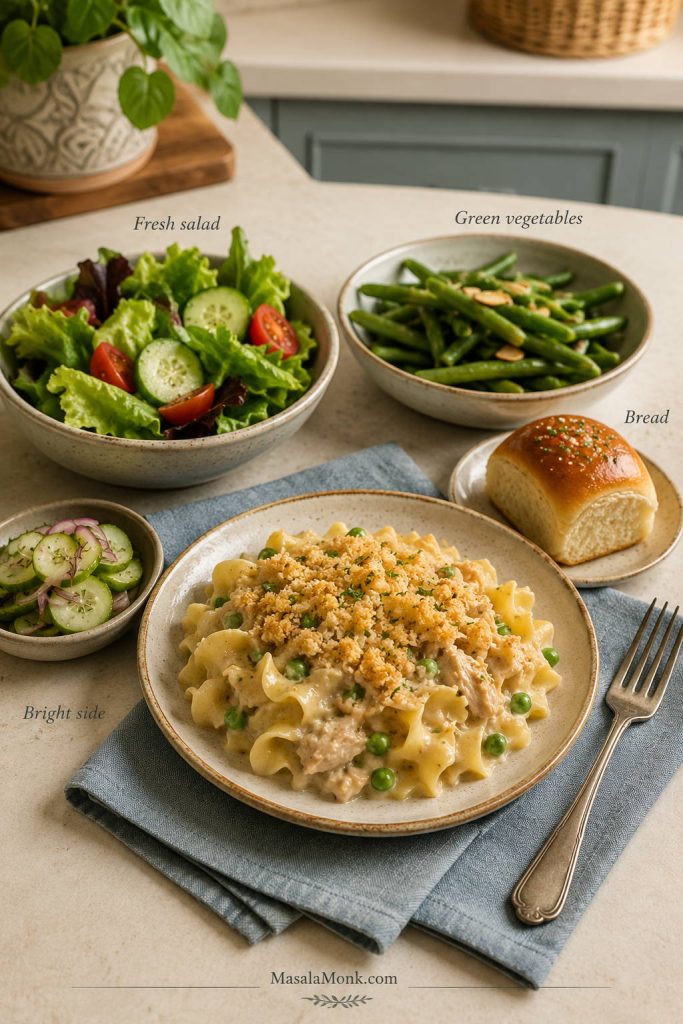
Serve it soon after the short rest, while the sauce is still creamy and the topping has some crunch.
Make Ahead, Store, and Freeze Tuna Noodle Casserole
Make Ahead
Assemble the casserole without the crunchy topping, cover, and refrigerate for up to 1 day. When ready to bake, let it sit at room temperature while the oven preheats, stir in a small splash of milk if the noodles have absorbed too much sauce, add the topping, and bake. A chilled casserole may need 10 to 15 extra minutes. For topping choices that hold up best, jump back to the topping guide.
Storage
Store leftovers in an airtight container in the refrigerator for 3 to 4 days. For general leftover safety guidance, see the USDA’s leftovers and food safety guide.
Freezing
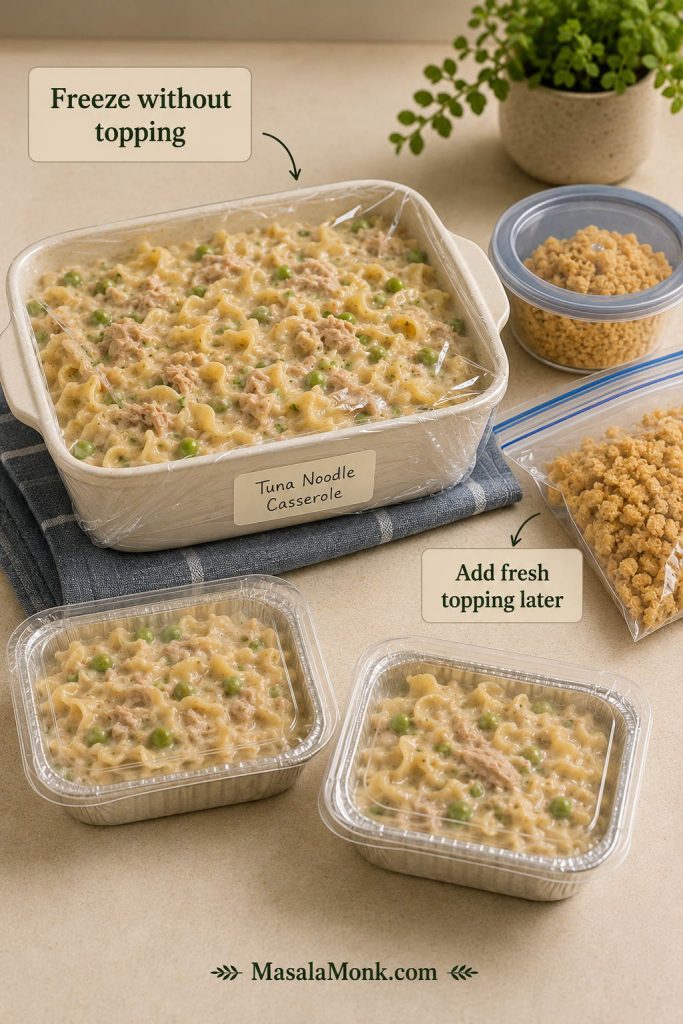
You can freeze tuna noodle casserole before or after baking, but the noodles will soften slightly after thawing. For best texture, freeze the casserole without the topping, then add fresh topping before baking or reheating.
Reheating
To reheat, add a splash of milk, cover loosely with foil, and warm in a 325°F / 165°C oven until hot. Remove the foil for the last few minutes if you want to re-crisp the topping. For single servings, microwave gently with a splash of milk and stir halfway through. If leftovers still seem dry, check the creamy, not dry tips for moisture fixes.
Tuna Noodle Casserole Variations
Extra Cheesy Tuna Noodle Casserole
For a cheesier family-style bake, increase the cheddar to 1 1/2 or 2 cups and sprinkle a little extra cheese under the topping. For a sharper flavor, use sharp cheddar or add parmesan to the crumb topping. If you are in a full cheesy comfort-food mood, this macaroni and cheese recipe covers stovetop, baked, and Southern-style versions with similar creamy-baked pasta logic.
Tuna Noodle Casserole with Celery, Onion, or Mushrooms
Sautéed celery, onion, or mushrooms make the casserole taste a little fresher and more homemade. Cook them in a little butter before adding them to the dish so they add flavor without releasing too much water in the bake.
Healthier Tuna Noodle Casserole
For a lighter but still creamy version, use whole wheat egg noodles or a higher-protein pasta, add more vegetables, reduce the cheese, and use the no-soup sauce option.
Tuna Noodle Casserole Without Peas
Leave the peas out or replace them with corn, broccoli, mushrooms, spinach, or mixed vegetables. If using watery vegetables, cook or drain them first.
Tuna Hotdish
Tuna hotdish is often very similar to tuna noodle casserole, especially in Midwestern-style cooking. It usually means a creamy baked casserole with noodles or another starch, canned tuna, vegetables, and a crunchy topping.
Troubleshooting Tuna Noodle Casserole
Most tuna casserole problems are fixable once you know whether the issue came from the noodles, the sauce, the topping, or the bake time.
| Problem | Likely Cause | Fix |
|---|---|---|
| Dry casserole | Too little sauce, overcooked noodles, or overbaking | Add more milk before baking, cook noodles short, and bake only until bubbly. |
| Mushy noodles | Noodles boiled too long or held too long before baking | Cook 1 minute shy of al dente and bake soon after mixing. |
| Watery sauce | Undrained tuna, too much milk, or watery vegetables | Drain tuna well, do not overdo the milk, thaw and drain larger frozen vegetables, and bake uncovered. |
| Bland flavor | Not enough seasoning or too much plain pasta | Add black pepper, garlic powder, onion powder, mustard, sharp cheddar, or a squeeze of lemon. |
| Soggy topping | Topping added too early, casserole covered while hot, or leftovers stored with topping | Add topping right before baking. For leftovers, refresh with a few new crumbs or chips after reheating. |
| Topping browns too fast | Oven too hot or topping too close to broiler | Tent loosely with foil and continue baking until the center is hot. |
Once baked, the tuna noodle casserole should scoop easily, with creamy noodles underneath and a lightly crisp topping on top. If it looks bubbly at the edges and still moist in the center, it is ready.
FAQs
Do you cook egg noodles before baking tuna casserole?
Cook the egg noodles first, but stop about 1 minute before they are fully al dente. They will continue softening in the oven.
How much milk do you add to tuna noodle casserole?
For a 9×13-inch tuna noodle casserole with 2 cans of condensed soup, use 3/4 to 1 cup / 180 to 240 ml milk. Use the full cup if you want it creamier or are making it ahead.
Do you need one or two cans of cream of mushroom soup?
For a full 9×13-inch casserole with 12 oz / 340 g egg noodles, 2 cans of condensed soup give the best creamy texture. One can is better for a smaller casserole.
What kind of tuna works best?
Chunk light tuna works well for a softer, milder casserole, while solid white albacore gives larger flakes and a firmer bite. Drain either type well.
Should tuna noodle casserole be covered while baking?
Bake it uncovered if the casserole is freshly assembled. Cover loosely with foil only if it is chilled, reheating, or browning too quickly before the center is hot.
Why is my tuna noodle casserole dry?
It probably had too little sauce, overcooked noodles, or baked too long. The casserole should come out when the edges are bubbling, not when the top looks dry.
What can replace cream of mushroom soup?
Cream of celery soup is the closest easy swap. Cream of chicken makes the sauce richer, and a homemade butter-flour-milk sauce gives you the most control over salt and texture.
Can tuna noodle casserole be made ahead?
Make it up to 1 day ahead, but leave off the topping until just before baking. If the noodles absorb too much sauce in the fridge, stir in a small splash of milk before baking.
Can you freeze tuna noodle casserole?
Freezing works, though the noodles soften after thawing. Freeze without the topping for the best texture, then add fresh topping before baking or reheating.
Is tuna hotdish the same as tuna noodle casserole?
They are very similar. “Hotdish” is often the Midwestern term for a creamy baked casserole with a starch, protein, vegetables, and a topping.
What vegetables go well in tuna noodle casserole?
Peas are the classic choice, but celery, onion, mushrooms, carrots, broccoli, spinach, corn, and mixed vegetables all work. Cook or drain watery vegetables first so they do not thin the sauce.








