Posted on Leave a comment

Peanut Noodles Recipe: Creamy Peanut Sauce Noodles in 20 Minutes

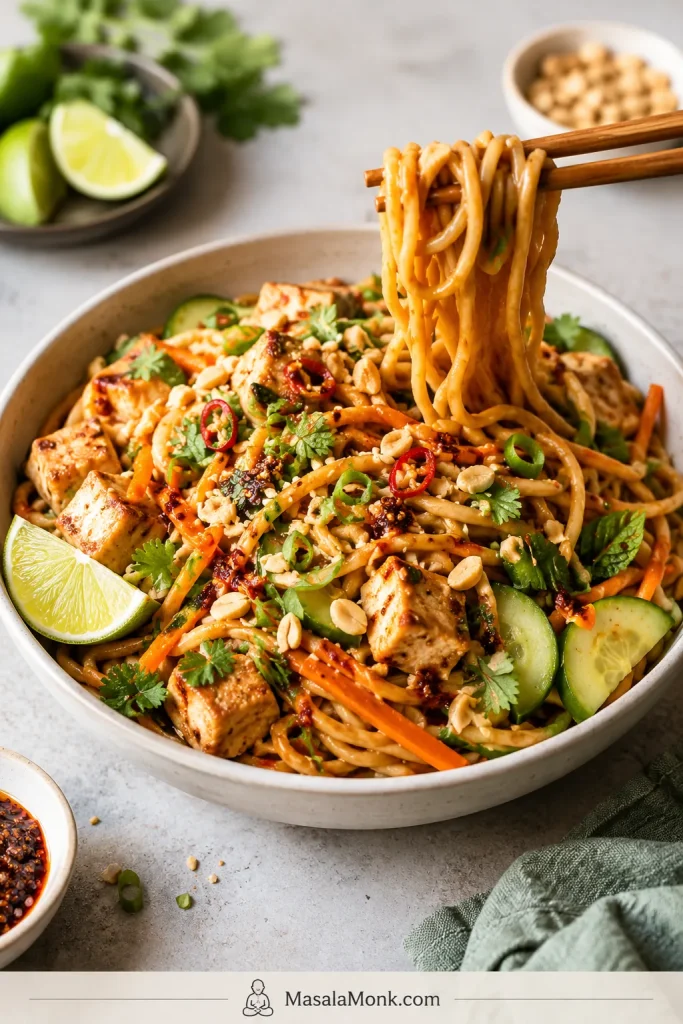
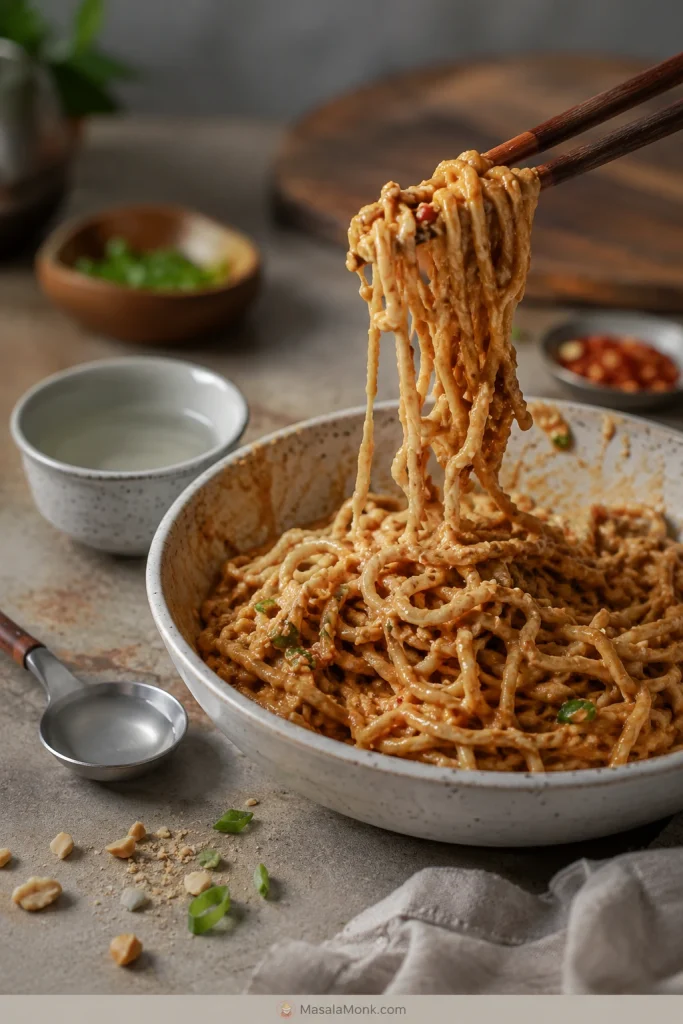
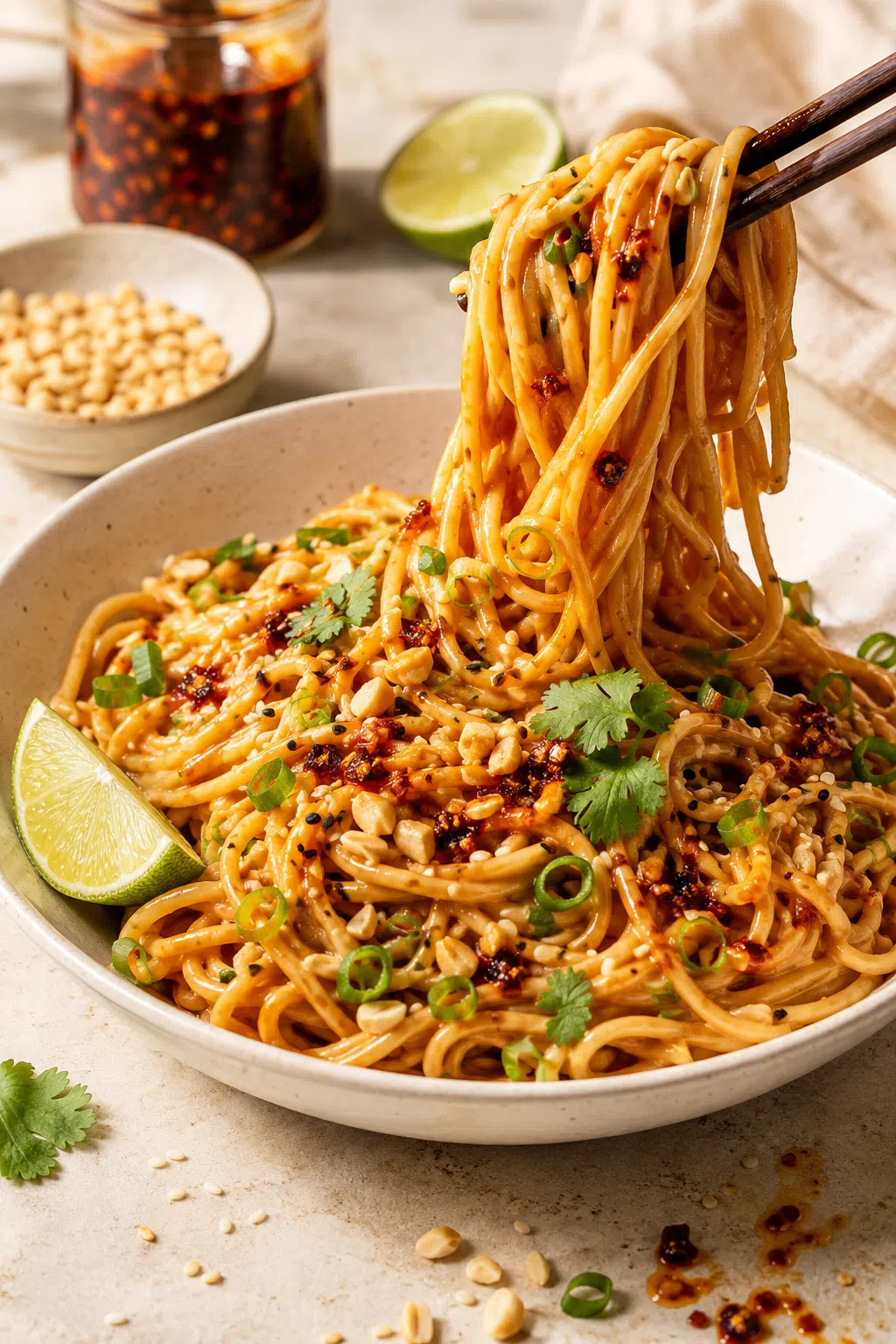
Bowl of creamy peanut noodles with chili crisp, scallions, chopped peanuts, sesame seeds, herbs, lime, and lifted noodles

Peanut noodles are the dinner you make when you have noodles, peanut butter, and very little patience. This version is built around the one thing that makes or breaks the bowl: a peanut sauce loose enough to cling to every strand without turning thick, dry, or clumpy.

These creamy peanut noodles are ready in about 20 minutes. They turn a packet of noodles and a jar of peanut butter into something that feels like dinner: rich but not heavy, peanutty but not pasty, and bright enough that you want another bite.

Keep them plain and pantry-friendly, make them spicy with chili crisp, serve them cold with cucumber and herbs, or turn them into a full meal with tofu, chicken, shrimp, egg, or edamame. However you build them, the goal is the same: glossy strands, salty-tangy peanut flavor, and enough crunch or lime to keep you going back for another bite.

Make This Tonight If You Have

  • 8 oz / 225 g dried noodles, spaghetti, ramen, rice noodles, udon, soba, or another noodle you already have
  • ½ cup / about 128 g peanut butter
  • Soy sauce or tamari
  • Rice vinegar, lime, lemon, or a small splash of regular vinegar
  • Warm water to turn the peanut butter into sauce
  • Garlic, ginger, chili, scallions, herbs, peanuts, or crunchy vegetables if available

The easiest version is spaghetti, peanut butter, soy sauce, vinegar or lemon, chili flakes, and warm water. No lime, no rice noodles, no chili crisp? Use what you have. This bowl forgives imperfect noodles, half a lime, and whatever crunchy vegetables are left in the fridge.

Pantry check: this is the simplest version of the recipe promise — noodles, peanut butter, salty seasoning, acid, chili, and enough liquid to make dinner happen.
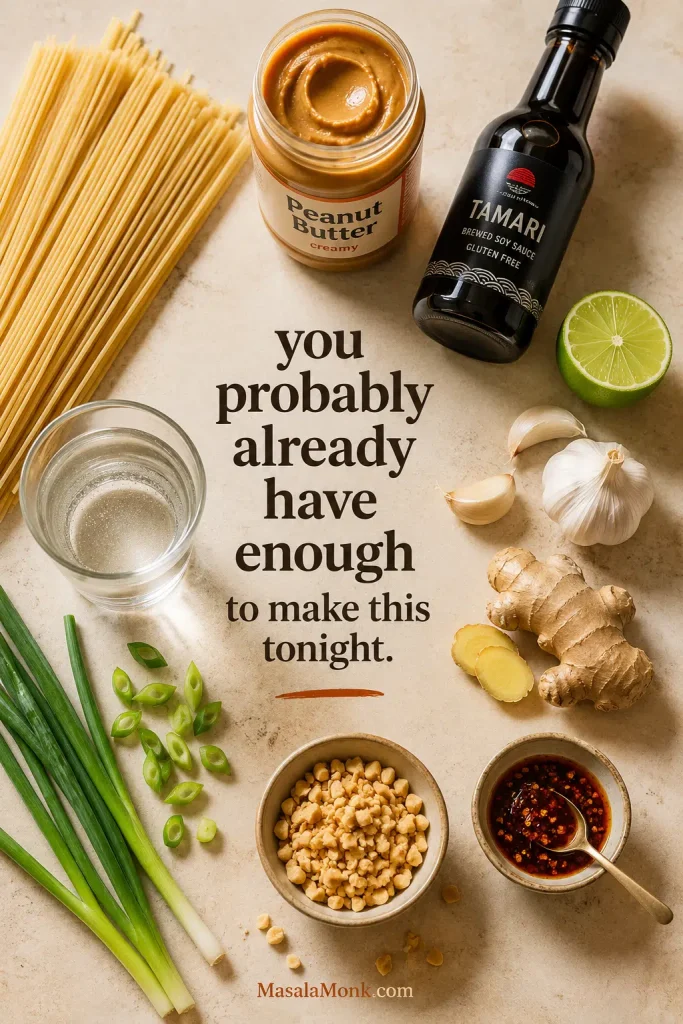
Dried noodles, peanut butter, soy sauce, lime, garlic, ginger, chili, scallions, peanuts, and water arranged on a countertop
Before you cook, check what you already have. Peanut butter, noodles, soy sauce, acid, chili, and warm water can turn into dinner quickly.

Quick Answer

To make peanut noodles, cook 8 oz / 225 g dried noodles, reserve ½ cup / 120 ml noodle water, then whisk ½ cup / about 128 g peanut butter with soy sauce or tamari, rice vinegar, lime juice, a little sweetener, garlic, ginger, chili, and ¼ cup / 60 ml warm water. Toss with the noodles, then loosen with reserved noodle water until the noodles look shiny, saucy, and easy to lift.

The basic peanut noodle sauce formula is simple: peanut butter for body, soy sauce for salt, vinegar or lime for brightness, a little sweetener for balance, chili for heat, and warm water to make it pourable. That is the difference between peanut butter on noodles and peanut sauce noodles.

For 4 servingsUse
Noodles8 oz / 225 g dried noodles
Peanut butter½ cup / about 128 g
First thinning liquid¼ cup / 60 ml warm water
Final adjustmentReserved noodle water or warm water, in small splashes
Best texture cuePourable sauce before tossing, glossy noodles after tossing

Sauce shortcut: use this formula when the bowl tastes flat, too thick, too salty, or too peanut-heavy.
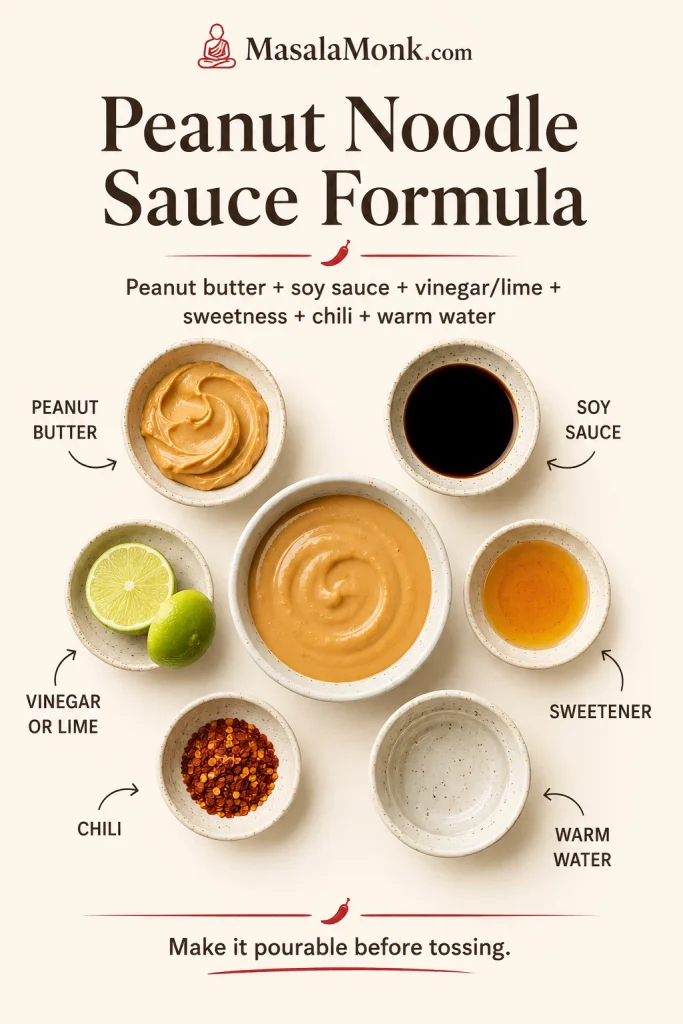
Peanut noodle sauce formula graphic showing peanut butter, soy sauce, vinegar or lime, sweetener, chili, warm water, and sauce
A good peanut noodle sauce is about balance: creamy body, salty depth, tangy lift, gentle sweetness, optional heat, and enough liquid to move.

Choose Your Bowl

Start with the same sauce, then steer the bowl toward the kind of dinner you need: pantry-simple, spicy, cold, protein-heavy, or extra saucy.

What you wantUseFinish with
Pantry dinnerSpaghetti, peanut butter, soy sauce, vinegar or lemonChili flakes, peanuts, scallions
Spicy takeout-ish bowlRamen, udon, wheat noodles, or spaghettiChili crisp, chili oil, lime
Cold lunch bowlRice noodles or sobaCucumber, cabbage, herbs, sesame
Full dinner bowlUdon, wheat noodles, spaghetti, or rice noodlesTofu, chicken, shrimp, egg, or edamame
Extra-saucy noodles6–7 oz / 170–200 g dried noodlesMore peanut sauce and noodle water

For the first time, start with spaghetti or udon, creamy peanut butter, low-sodium soy sauce, lime or vinegar, and chili crisp if you like heat. After that, the same sauce can go pantry-simple, spicy, cold, protein-heavy, or extra saucy.

Use the bowl guide below when you know the kind of meal you want but need help choosing the noodle, topping, or finish.
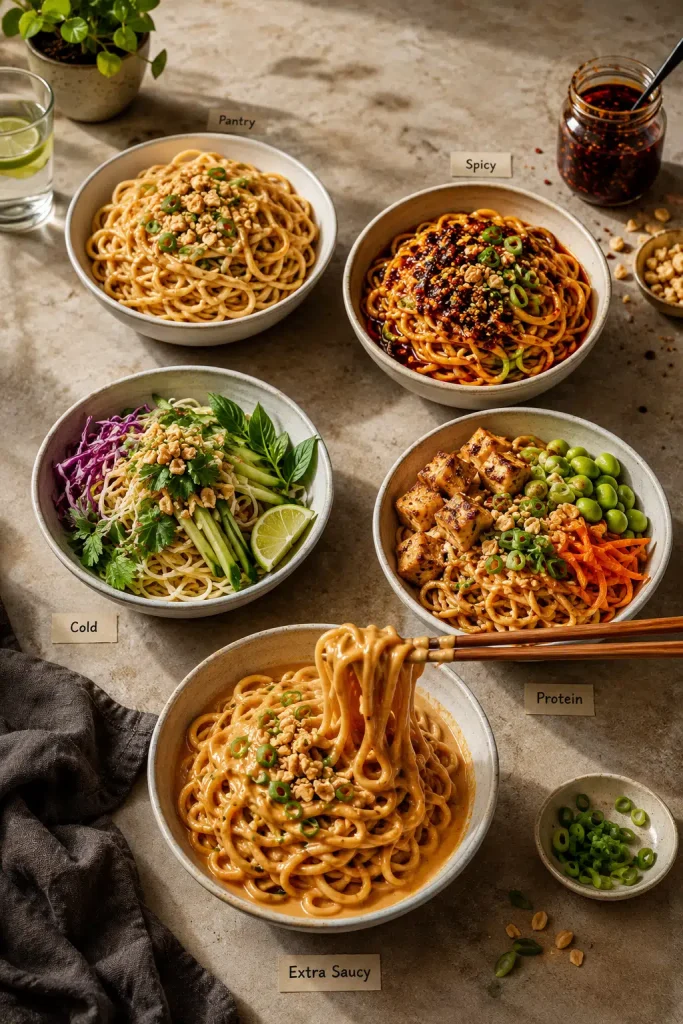
Five peanut noodle bowls showing pantry, spicy, cold, protein, and extra-saucy variations
Once the sauce tastes right, choose the mood: pantry-simple, spicy, cold and crisp, protein-rich, or extra saucy for comfort.

Creamy Peanut Noodles Recipe

This is the main recipe: 8 oz / 225 g noodles, a ½-cup peanut butter sauce, and just enough warm water and noodle water to make the sauce silky instead of stiff. You only need a pot, a colander, a bowl or jar for the sauce, a whisk or fork, and tongs for lifting and tossing.

Prep time10 minutes
Cook time10 minutes
Total time20 minutes
Servings4
Best servedWarm, room temperature, or cold

Ingredients

For the noodles

  • 8 oz / 225 g dried noodles, or 16–20 oz / 450–570 g fresh noodles
  • Salt for the cooking water, if using wheat noodles, spaghetti, or pasta-style noodles

For the peanut sauce

  • ½ cup / about 128 g creamy peanut butter
  • 2 tablespoons / 30 ml low-sodium soy sauce or tamari
  • 1 tablespoon / 15 ml rice vinegar
  • 1 tablespoon / 15 ml lime juice or lemon juice
  • 1 tablespoon honey, maple syrup, brown sugar, or jaggery
  • 1 small garlic clove, finely grated
  • 1 teaspoon grated fresh ginger
  • 1–2 teaspoons sriracha, chili garlic sauce, chili oil, or chili crisp
  • ¼ cup / 60 ml warm water, plus more as needed
  • ½ cup / 120 ml reserved noodle water, for adjusting while tossing

For finishing

  • 2 scallions, thinly sliced
  • 2–3 tablespoons chopped peanuts
  • Fresh cilantro, basil, or mint
  • Sesame seeds
  • Lime wedges
  • Optional vegetables or protein, such as cucumber, cabbage, carrots, tofu, chicken, egg, shrimp, or edamame

Method

1. Cook the Noodles

Bring a large pot of water to a boil for wheat noodles, spaghetti, udon, soba, or ramen. For rice noodles, cook or soak according to the package directions. Keep the noodles slightly firm rather than soft, because overcooked noodles can turn sticky once tossed with peanut sauce.

2. Reserve Noodle Water

Before draining, scoop out at least ½ cup / 120 ml of the cooking water. This gives you an easy way to loosen the sauce while mixing.
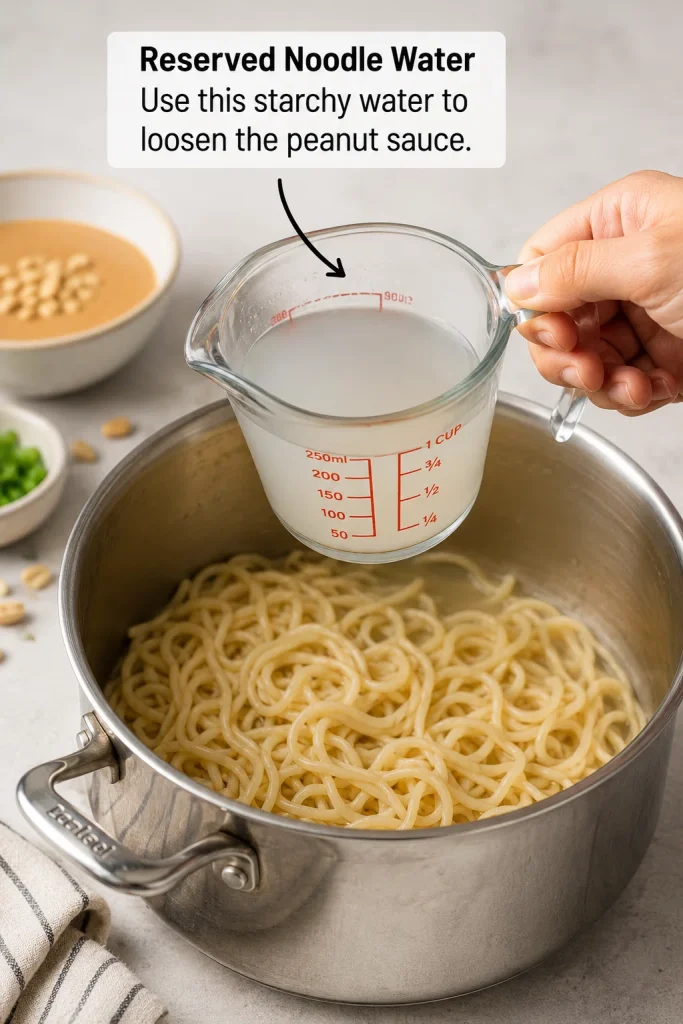
Cloudy noodle cooking water being scooped from a pot of noodles before draining
Before draining, save some cloudy cooking water. A small splash can loosen thick peanut sauce while helping it cling better.

3. Drain the Noodles

For warm wheat noodles, spaghetti, udon, or ramen, drain and keep the noodles warm. For rice noodles, soba, or cold noodles, rinse briefly under cool water to remove extra starch and stop the cooking. If cooked noodles must sit before saucing, toss them with only 1 teaspoon neutral oil; skip the oil if you are saucing right away.
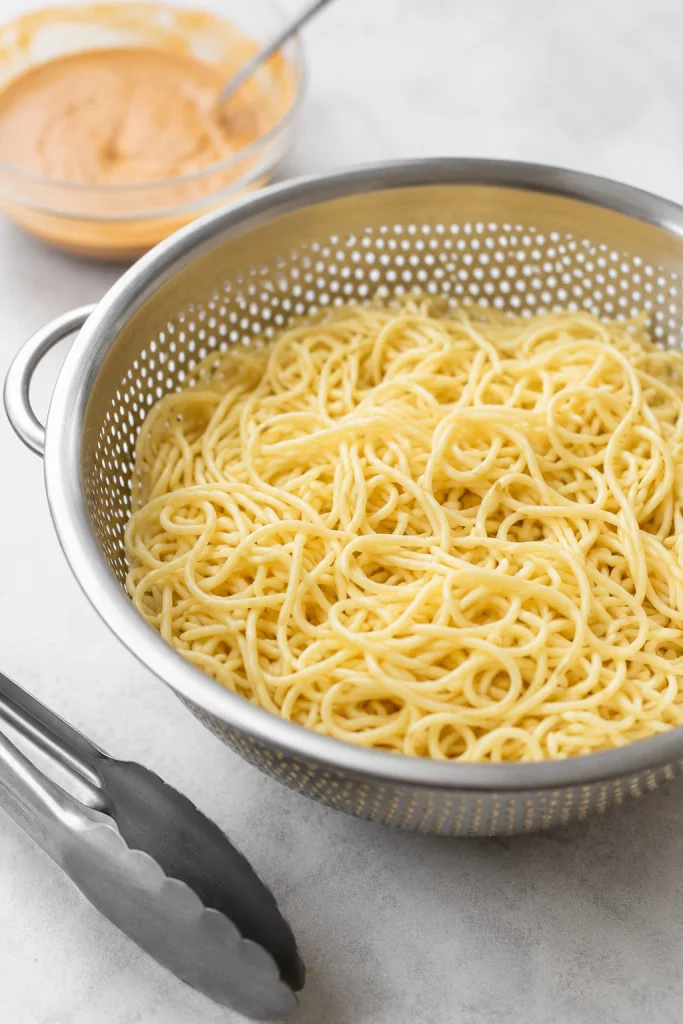
Cooked noodles with separate strands in a metal colander beside tongs and a bowl of peanut sauce
Meanwhile, stop the noodles while they still have a little bite. Firm, separate strands make better peanut sauce noodles.

4. Whisk the Peanut Sauce

In a medium bowl or jar, combine peanut butter, soy sauce or tamari, rice vinegar, lime juice, sweetener, garlic, ginger, chili, and ¼ cup / 60 ml warm water. Whisk until smooth and pourable. If the sauce resists the whisk or looks like peanut butter spread, add another small splash of warm water.

Texture check: the sauce should move before it meets the noodles, so fix thickness here rather than fighting clumps later.
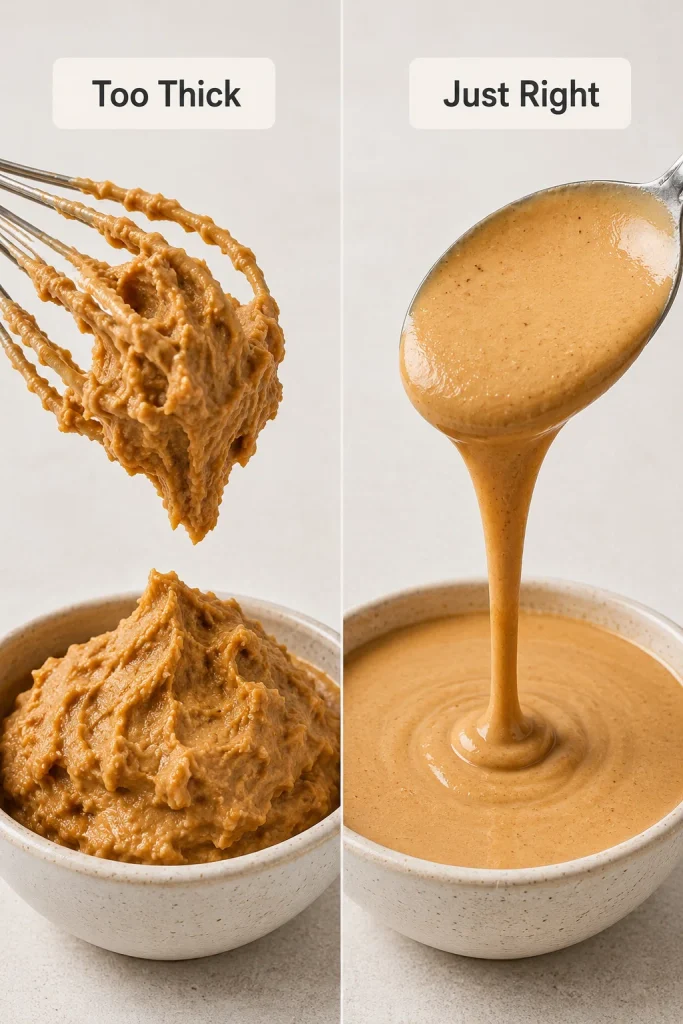
Side-by-side peanut sauce comparison showing thick peanut paste and smooth pourable sauce
Look for drizzle, not paste. If the peanut sauce moves from a spoon, it will coat the noodles more evenly.

5. Toss the Noodles

Add the noodles to a large bowl. Pour over most of the peanut sauce and lift with tongs until the strands look glossy. Add reserved noodle water in small splashes until the sauce falls around the noodles instead of dragging through them.
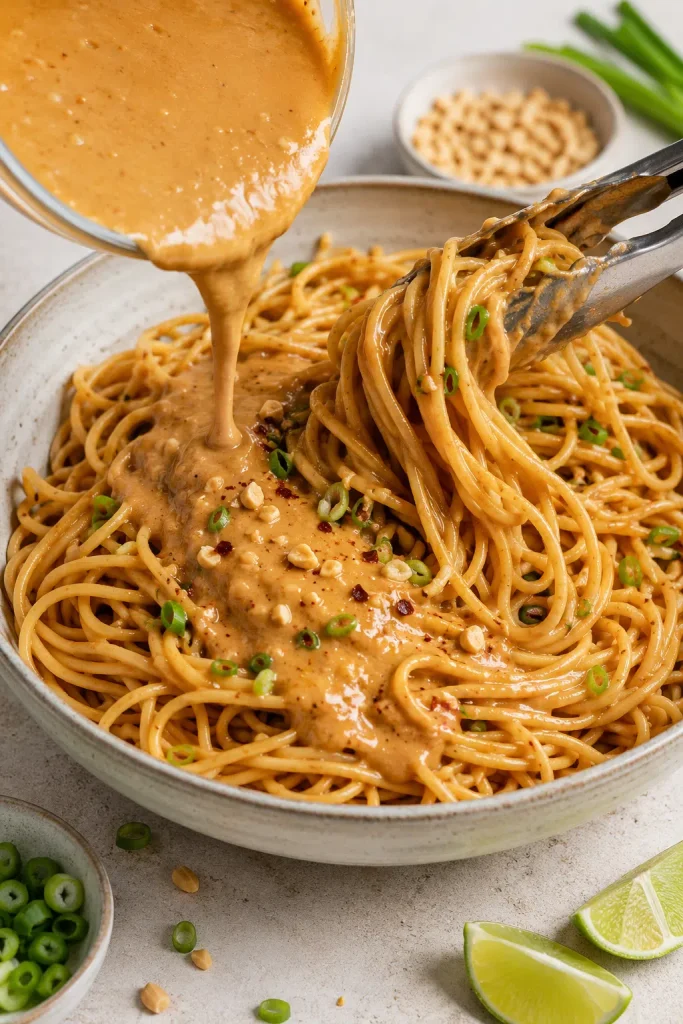
Peanut sauce being poured over noodles while tongs lift and turn the strands in a bowl
Then add sauce in stages and lift as you toss. That keeps the noodles coated instead of crushed into one thick mound.

6. Adjust the Flavor

Taste after mixing. Use soy sauce for more salt, lime for brightness, chili for heat, or a little water if the sauce is too intense. When the bowl tastes rich but sleepy, it probably needs lime.

7. Finish and Serve

Add scallions, chopped peanuts, herbs, sesame seeds, and lime wedges. If the bowl sits for a few minutes before serving, lift and turn the noodles once more with a small splash of water.

Final cue: the bowl is ready when the noodles are twirlable and the toppings add crunch, freshness, heat, and brightness.
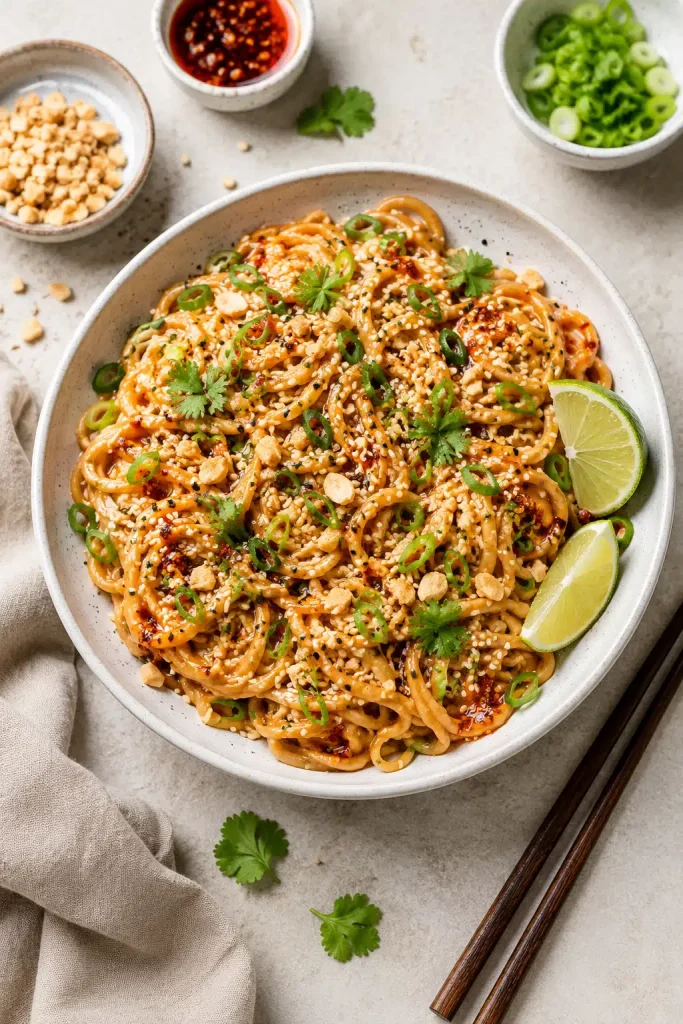
Finished peanut noodles topped with scallions, peanuts, sesame seeds, herbs, chili crisp, and lime
After tossing, finish with contrast. Scallions freshen the bowl, peanuts add crunch, chili brings heat, and lime cuts through the richness.

The finished bowl should be glossy, saucy enough to twirl, and bright at the edges from lime or vinegar. Add peanuts, scallions, herbs, or crunchy vegetables and it stops feeling like pantry noodles and starts feeling like dinner.

Recipe Notes

  • Natural peanut butter works, but every jar behaves differently. Stir it fully before measuring and expect to use a little more warm water.
  • If using regular soy sauce instead of low-sodium soy sauce, start with 1½ tablespoons and adjust after tossing.
  • For extra-saucy noodles, use 6–7 oz / 170–200 g dried noodles, or add another 1–2 tablespoons peanut butter and enough warm water to loosen the sauce.
  • Leftovers revive with 1–2 tablespoons hot water, broth, or cool water per serving.
  • This recipe contains peanuts. For a peanut-free kitchen, use a separate seed-butter noodle sauce recipe; seed butters thicken differently.
  • For a sauce-first version you can use for dipping, satay, salads, bowls, and noodles, see this MasalaMonk peanut sauce recipe.

Before you keep scrolling: if the sauce feels too thick, go to the peanut sauce texture guide. If you are choosing noodles, jump to best noodles for peanut noodles.

More Tips for Better Peanut Noodles

The Three Cues That Make Peanut Noodles Better

Peanut noodles are simple, but three small choices decide whether they feel silky or sticky.

  1. Do not overcook the noodles. Slightly firm noodles hold the sauce better than soft noodles.
  2. Make the sauce pourable. It should look like a thick dressing, not a dip.
  3. Taste at the end. Noodles dull the sauce, so the final salt, lime, chili, and sweetness should be adjusted after tossing.

The goal is not a thicker sauce. It is a sauce that moves. Once the noodles look shiny and twirlable, stop fixing them.

Ingredients and Smart Swaps

The sauce is simple, but each ingredient has a job: salty, tangy, sweet, spicy, aromatic, or creamy. Once you understand that, the swaps become easy.

Peanut Butter

Creamy peanut butter gives the most predictable sauce. Natural peanut butter works too, but every jar behaves a little differently; some are runny, some are dry, and some need extra warm water. Crunchy peanut butter adds texture, though the sauce will not be completely smooth. If you make pantry staples from scratch, homemade peanut butter works as long as it is loose enough to whisk smoothly.

Soy Sauce or Tamari

Soy sauce is the salty backbone, so low-sodium gives you room to fix the bowl at the end. Tamari is the closest gluten-free swap, as long as the label says gluten-free. Check the labels on your noodles and chili sauce too.

Rice Vinegar, Lime, or Lemon

Rice vinegar keeps the sauce from feeling heavy; lime makes the finished bowl taste awake. Lemon juice works too. Skipping the acid completely can leave the noodles tasting rich but flat.

Sweetener

Use honey, maple syrup, brown sugar, or jaggery. One tablespoon is enough to round the salty and tangy edges; the noodles should not taste sugary.

Chili

Sriracha gives smooth heat, chili garlic sauce adds punch, chili oil makes the bowl richer, and chili crisp adds heat plus crunch. Start small if you are cooking for a mixed table. Chili crisp takes the bowl into takeout-ish territory: spicy, crunchy, salty, and a little messy in the best way.

Garlic and Ginger

Fresh garlic and ginger keep the sauce from tasting like plain peanut butter and soy sauce. Grate them finely so they disappear into the sauce. In an emergency, use a small pinch of garlic powder and ginger powder.

Warm Water and Noodle Water

Warm water turns peanut butter from something that sticks to the spoon into something the noodles can actually wear. Noodle water helps it cling once the noodles are in the bowl. The same idea — salty, bright, slightly sweet, aromatic, and loose enough to coat — also matters in a good stir-fry sauce, especially with tofu, vegetables, or noodles.

Best Noodles for Peanut Noodles

The easiest default choices are spaghetti, wheat noodles, medium rice noodles, ramen, or udon. They hold sauce well, are easy to find, and do not need much fuss.

There is no single correct noodle here. The best choice is the one you can cook without overthinking it. That is why spaghetti belongs in the conversation.

Use this noodle guide to match the recipe to what you already have, whether you want a pantry bowl, a bouncy ramen version, or a cold lunch.
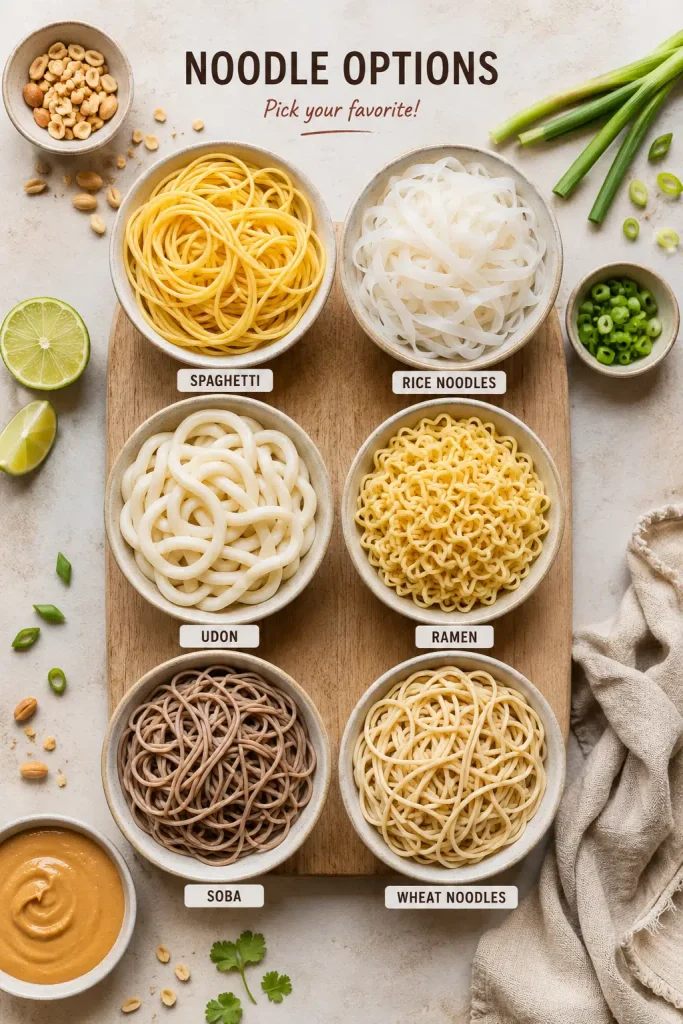
Bowls of spaghetti, rice noodles, udon, ramen, soba, and wheat noodles arranged on a board
The noodle changes the experience: spaghetti is easy, ramen is springy, udon is chewy, soba is nutty, and rice noodles work beautifully cold.
NoodleBest useRinse?Texture note
SpaghettiPantry hot bowlNo, unless gummyReliable and twirlable
Rice noodlesCold bowls, lighter bowls, gluten-free meals*Usually yesDelicate and fast-absorbing
UdonSaucy comfort bowlUsually noThick, chewy, satisfying
SobaCold nutty bowlYesEarthy and best cooled
RamenFast spicy bowlUsually noBouncy and quick to absorb
Wheat noodlesClassic warm bowlNo, unless gummyChewy and sauce-friendly
VermicelliLight cold bowlUsually yesSoft, delicate, easy to break

*For gluten-free bowls, use certified gluten-free noodles and gluten-free tamari.

A warm bowl is easiest with wheat noodles, spaghetti, udon, or ramen. Cold bowls work better with rice noodles or soba because they rinse and chill well.

Spaghetti is not a compromise here. It is easy to find, holds the sauce nicely, and makes this a real weeknight recipe.

Spaghetti Peanut Noodles

Choose spaghetti when you want the fastest pantry version and do not want to buy specialty noodles. The main trick is keeping the sauce loose enough for long strands.
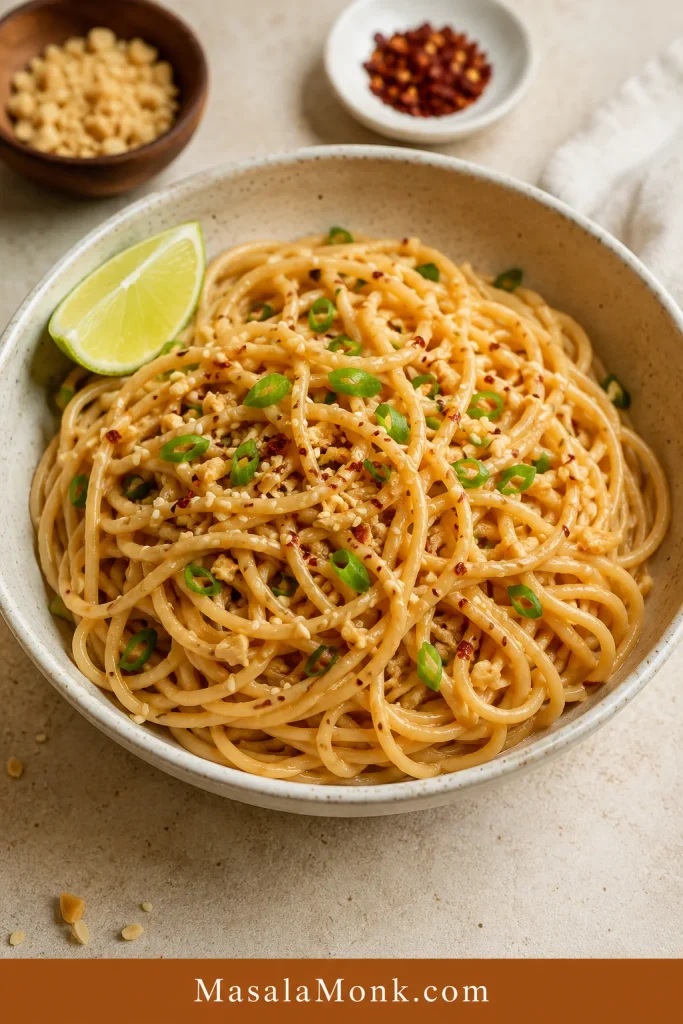
Spaghetti peanut noodles with creamy peanut sauce, scallions, chopped peanuts, chili flakes, sesame seeds, and lime
Spaghetti is the no-special-shopping shortcut. Those long strands need enough loose peanut sauce to stay silky.

Ramen Peanut Noodles

Ramen works when you want a bouncy bowl with chili oil, scallions, and a little takeout-style drama. Toss it right before serving because it absorbs sauce quickly.
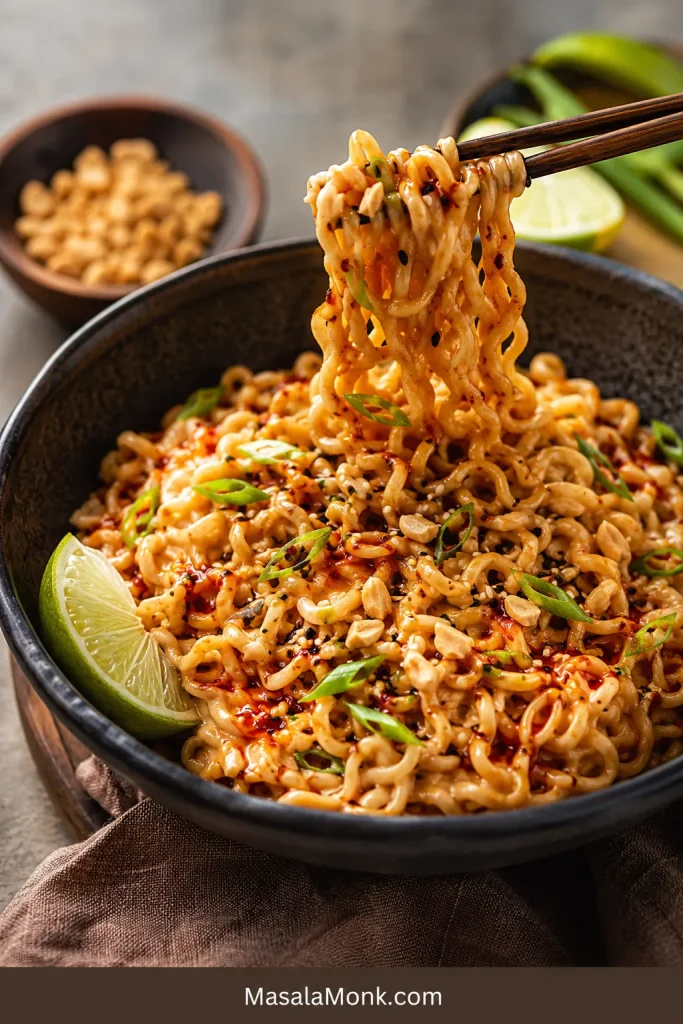
Ramen peanut noodles in a dark bowl with chili oil, scallions, peanuts, sesame seeds, lime, and noodles lifted with chopsticks
Ramen gives peanut noodles a bouncy, takeout-style feel. Since it absorbs sauce fast, start looser than you think.

How to Make Them Look and Taste Right

The recipe card gives you the steps. This section gives you the cues to watch while you cook, so you know when the noodles, sauce, and final bowl look right.

1. The Noodles Should Be Firm, Not Soft

Cook or soak the noodles according to the package directions, but stop before they go soft. Slightly firm noodles stay separate and hold sauce. Overcooked noodles can turn gummy, especially after sitting.

Rinse rice noodles or soba if they feel starchy, or if you are serving them cold. For warm spaghetti, udon, ramen, or wheat noodles, drain and toss while warm.

2. The Sauce Should Look Like Thick Dressing

When you first whisk peanut butter with soy sauce, vinegar, lime, and warm water, it may look stiff, split, or grainy. Keep going. Peanut butter often looks worse before it turns smooth.

Stop when the sauce falls from the spoon in thick ribbons. It should not sit on the spoon like peanut butter spread.

3. Lift the Noodles Instead of Mashing Them

Use tongs or two forks to lift and turn the noodles through the sauce. Heavy stirring can break delicate noodles and make soft noodles feel gummy.

If the sauce drags through the noodles, it needs a splash of liquid. If it puddles underneath, keep lifting for a few seconds before adding anything else.

4. The Final Bowl Should Be Shiny, Not Matte

Matte noodles usually mean the sauce is too thick or the noodles have absorbed it while sitting. Shiny noodles mean the sauce is still moving. That is the texture you want.

A final squeeze of lime is not decorative. It wakes up the sauce and keeps the noodles from tasting heavy.

Peanut Sauce Texture Guide

Start here when the problem is texture: sauce that turns too thick, too thin, clumpy, oily, dry, or stiff. Flavor fixes come later in troubleshooting.

Before tossing, the peanut mixture should be spoonable and pourable. After tossing, the noodles should look glossy and lightly covered. Most texture problems are fixed slowly, not by starting over.

Texture problemFix
Sauce is too thick before tossingWhisk in warm water in small splashes.
Sauce turns clumpy on noodlesAdd noodle water and lift gently until smooth.
Noodles look dry or matteUse hot water, noodle water, or broth to bring back shine.
Sauce puddles at the bottomStop adding liquid and keep lifting the noodles.
Sauce looks oilyWhisk in warm water and a little lime or vinegar.
Leftovers are stiffAdd 1–2 tablespoons water or broth per serving.

Use the visual cue: matte noodles need liquid; shiny noodles are ready to serve.
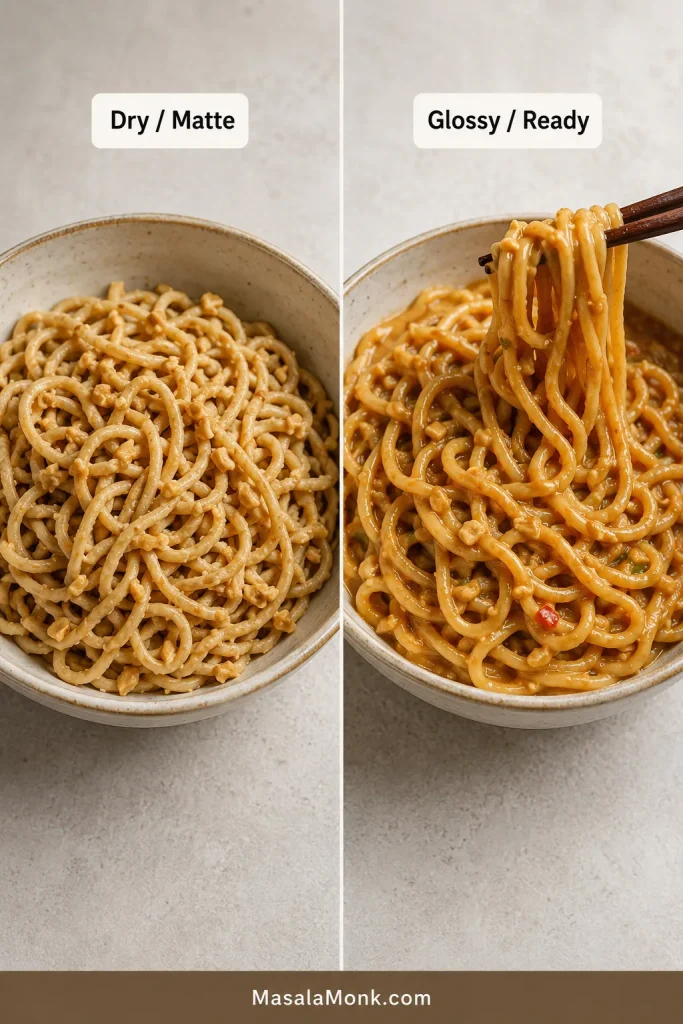
Comparison of dry matte peanut noodles and glossy saucy peanut noodles, with the glossy noodles lifted by chopsticks
If the noodles look matte, pause before serving. Add a splash of liquid until the strands loosen and shine.

Do not panic when the sauce thickens. Peanut butter wants to thicken. Add liquid slowly, lift the noodles gently, and it will loosen again.

Still not right? Go to troubleshooting for bland flavor, salty sauce, sticky noodles, and natural peanut butter problems.

Serve Them Hot or Cold

You can serve this bowl hot, room temperature, or cold. Warm, it leans cozy and saucy. Cold, it becomes brighter, crunchier, and more lunch-box friendly.

Pick the serving style first. Hot bowls need loosened sauce, while cold bowls need freshness, crunch, and enough lime to stay awake.
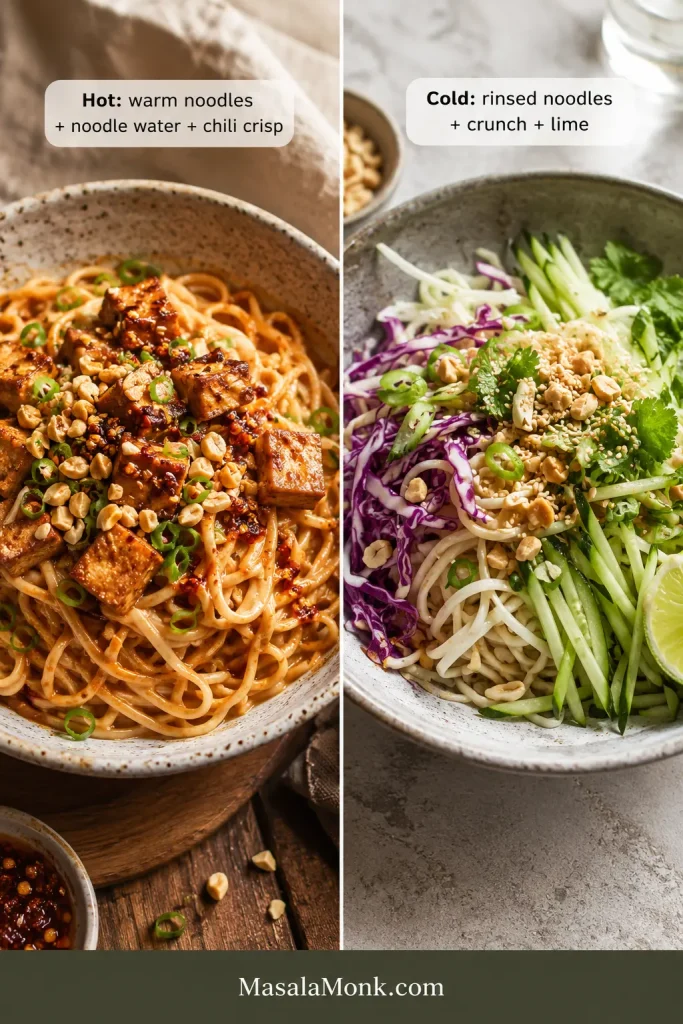
Hot peanut noodles with chili crisp beside cold peanut noodles with cucumber, cabbage, herbs, peanuts, sesame seeds, and lime
Hot peanut noodles want warmth and sauciness. Cold peanut noodles need crunch, herbs, and lime so they taste fresh rather than flat.
  • Hot bowl: Usually do not rinse, unless the noodles are gummy. Loosen with warm noodle water. Add tofu, chicken, shrimp, egg, broccoli, scallions, or chili crisp.
  • Cold bowl: Rinse and cool the noodles first. Use cool water and lime to loosen the sauce. Add crunch and herbs right before serving.

Cold peanut noodles are best when they feel crisp, not leftover-ish: cool noodles, cucumber snap, cabbage crunch, fresh herbs, sesame, peanuts, and enough lime to wake everything back up.

If you want the cold version to feel extra fresh, add cucumber inside the bowl or serve it with a crisp cucumber salad on the side.

Add-Ins and Variations

This bowl can stay simple or become a full meal. Think of the noodles as the base, then add one crunchy thing, one fresh thing, and one protein if you want it to feel complete.

Spicy Peanut Noodles

The spicy version should feel bold and a little messy: creamy peanut sauce, chili heat, scallions, peanuts, and crunchy chili crisp hitting at the end. Add 2 teaspoons sriracha or chili garlic sauce to the peanut sauce, then finish with chili crisp or chili oil. Keep chili crisp mostly on top if you want the crunchy bits to stay bold.
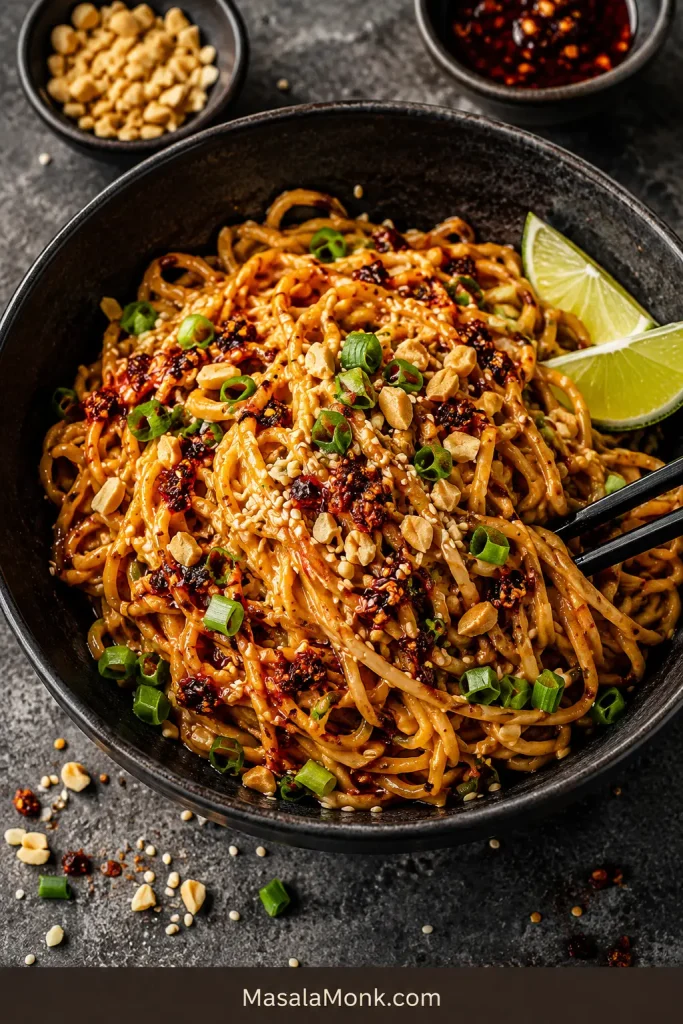
Spicy peanut noodles in a dark bowl with chili crisp, chili oil, scallions, peanuts, sesame seeds, and lime
For spicy peanut noodles, add chili crisp at the end. That keeps the heat bold and the crunchy bits noticeable.

Cold Peanut Noodles

Rice noodles and soba are the easiest choices because they rinse clean and stay light. Keep the sauce a little thinner so the noodles stay silky after chilling, then add cucumber, cabbage, herbs, sesame, peanuts, and lime. This is the version that makes tomorrow’s lunch feel intentional.
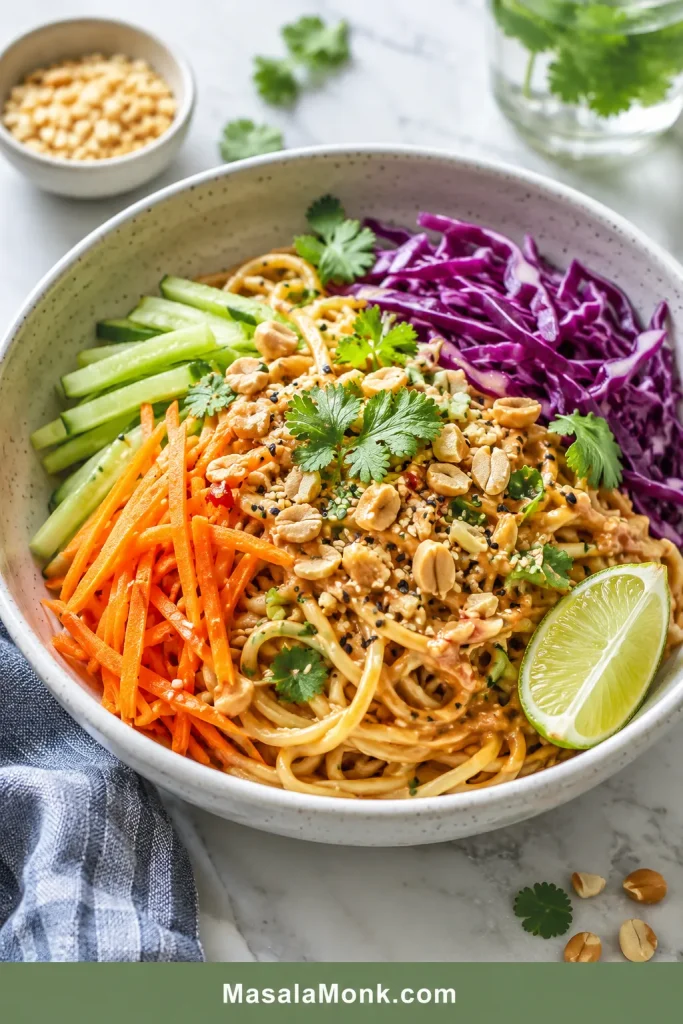
Cold peanut noodles with cucumber, purple cabbage, carrots, herbs, peanuts, sesame seeds, lime, and light peanut sauce
For cold peanut noodles, freshness matters most. Cucumber, cabbage, herbs, sesame, peanuts, and lime keep the creamy sauce from feeling heavy.

Protein Peanut Noodles

Crispy tofu, cooked chicken, sautéed shrimp, jammy egg, fried egg, tempeh, and edamame all work. Cook the protein separately so the noodles stay silky and the sauce does not dry out in the pan. For a plant-protein version, add crispy tofu or use one of these tofu meal prep ideas when you want bowls that hold up for weekday lunches.
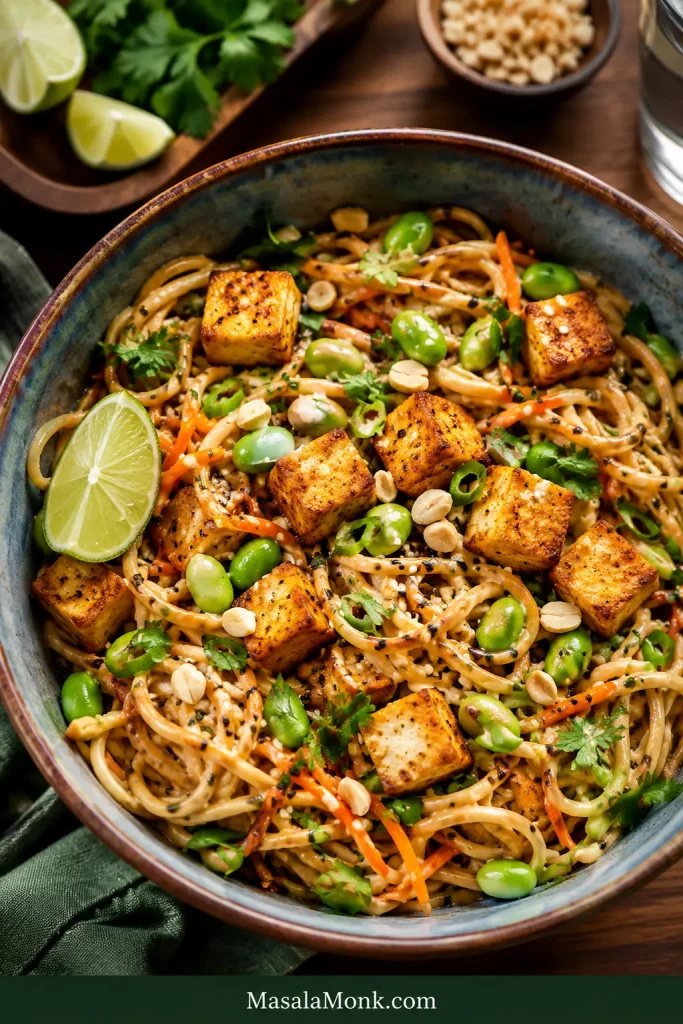
Peanut noodles topped with crispy tofu, edamame, carrots, herbs, peanuts, scallions, sesame seeds, and lime
To make peanut noodles feel like dinner, add protein with texture. Crispy tofu and edamame work well without hiding the noodles.

Sesame Peanut Noodles

A little toasted sesame oil makes the sauce deeper and rounder. Start with 1 teaspoon, taste, then add a second teaspoon only if you want more sesame aroma. It should support the peanut flavor, not cover it.

Thai-Style Peanut Noodles

Rice noodles, lime juice, cilantro, basil, chili, and crunchy vegetables move the bowl in a fresher, herbier direction. This Thai-style vegan bowl with peanut butter dressing has more ideas for pairing peanut sauce with vegetables and plant protein without making the noodles do all the work.

Pantry Peanut Noodles

Spaghetti, peanut butter, soy sauce, vinegar or lemon juice, chili flakes, and warm water are enough. It is not fancy, but it saves a busy night when takeout sounds tempting and the noodles are already in the pantry.

What to Serve with This Bowl

The easiest way to serve peanut noodles is to match the add-ins to the meal. Keep the sides fresh or simple because the noodles already bring the richness.

  • Light lunch: cucumber, cabbage, herbs, lime, and sesame seeds.
  • Protein dinner: crispy tofu, chicken, shrimp, egg, edamame, or tempeh.
  • Cold meal prep: rice noodles, carrots, cabbage, cucumber, herbs, and extra lime.
  • Spicy bowl: chili crisp, scallions, peanuts, and lime.
  • Kid-friendlier bowl: less chili, cucumber, carrots, mild vegetables, and extra peanuts if safe.

As a side dish, serve the noodles with fresh spring rolls, steamed broccoli, stir-fried greens, crispy tofu, grilled chicken, sautéed shrimp, a fried egg, or a light broth-based soup.

Storage, Leftovers, and Meal Prep

These noodles are best when freshly tossed, but leftovers are still useful if you know how to revive them.

Store leftovers in an airtight container in the fridge for 3–4 days. This matches the USDA’s general leftovers and food safety guidance. The noodles will absorb sauce as they sit, so they may look dry or stiff when cold.

Peanut Noodles Meal Prep

Meal prep works best when the noodles, sauce, and crunchy toppings are stored separately. Toss just before eating so tomorrow’s bowl still has contrast: silky strands, crisp vegetables, fresh herbs, and peanuts that still crunch.
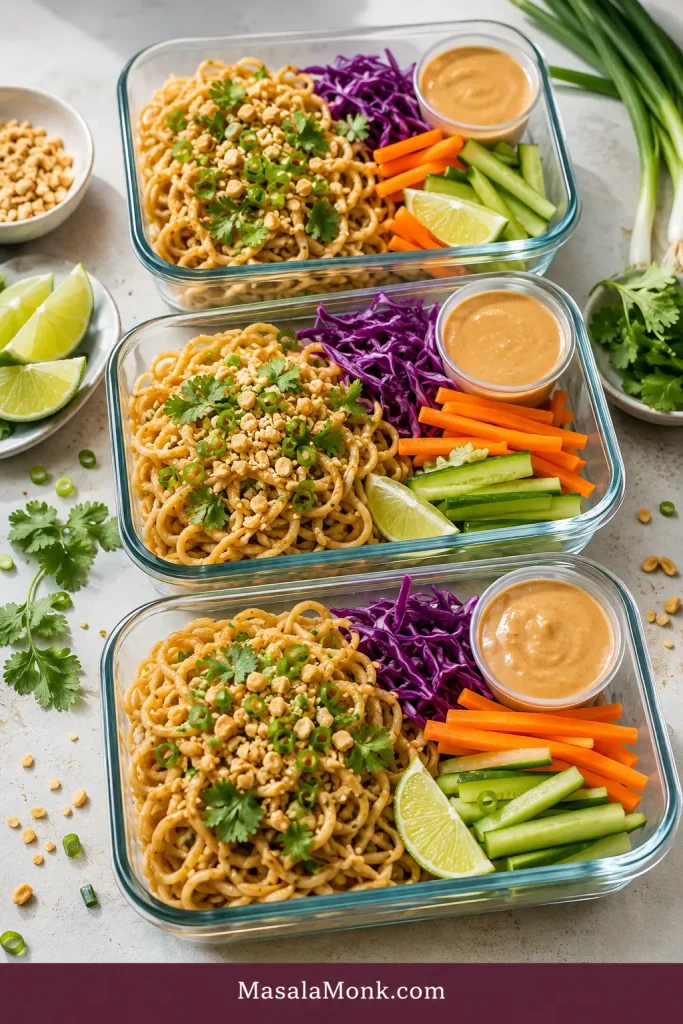
Glass meal prep containers with peanut noodles, vegetables, herbs, peanuts, lime wedges, and separate cups of peanut sauce
For peanut noodles meal prep, pack the sauce separately when possible. Then the vegetables stay crisp and lunch tastes brighter.

Revive Leftover Peanut Noodles

To reheat, add 1–2 tablespoons hot water or broth per serving, then warm gently and lift until saucy again. Avoid overheating for too long, because the sauce can tighten.

Cold leftovers come back with a splash of cool water and a squeeze of lime. Toss until the noodles loosen, then add herbs, cucumber, or peanuts if you want the serving to feel fresh again.
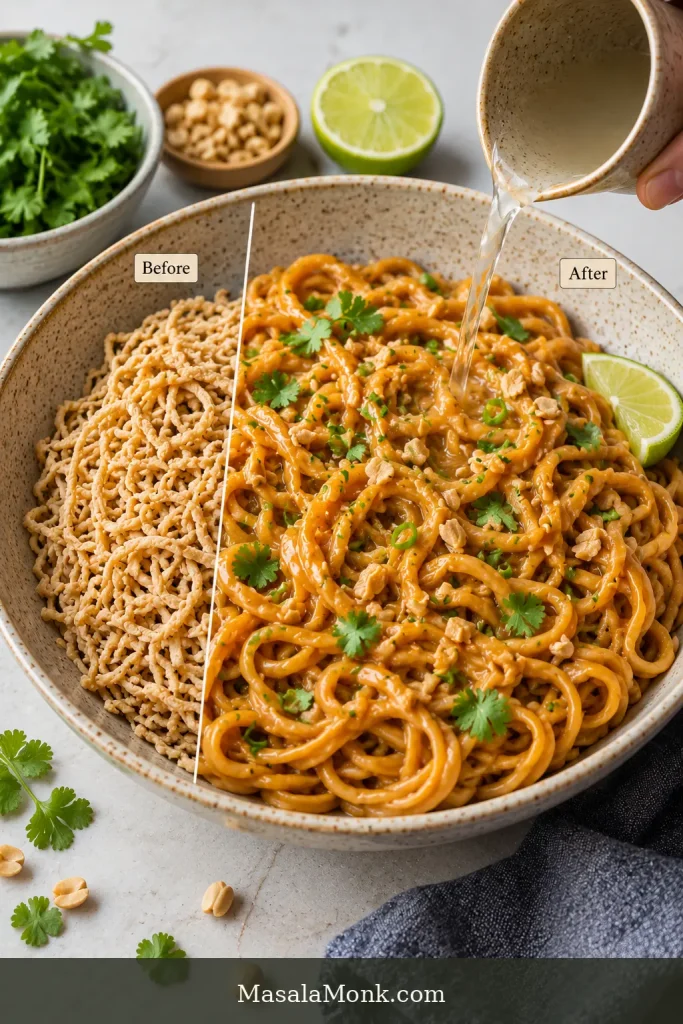
Before-and-after peanut noodles showing dry leftover noodles beside revived glossy noodles while liquid is poured in
Leftover peanut noodles are easy to rescue. Add water, broth, or lime, then toss until the strands relax and look ready again.

Troubleshooting: Sticky Noodles, Bland Flavor, Strong Sauce

Most peanut noodle problems are fixable, and very few require starting over. Usually the noodles need a splash of liquid, a little lime, more salt, or a gentler toss.

Sticky Noodles

Use plenty of water when boiling, avoid overcooking, and toss soon after draining. Rice noodles and soba can be rinsed if they feel gummy. Warm wheat noodles usually hold sauce better when they are not rinsed.

Grainy Peanut Sauce

Keep whisking and splash in warm water slowly. Peanut butter can look stiff or split before it turns smooth. A whisk is easiest, but a jar with a tight lid also works.
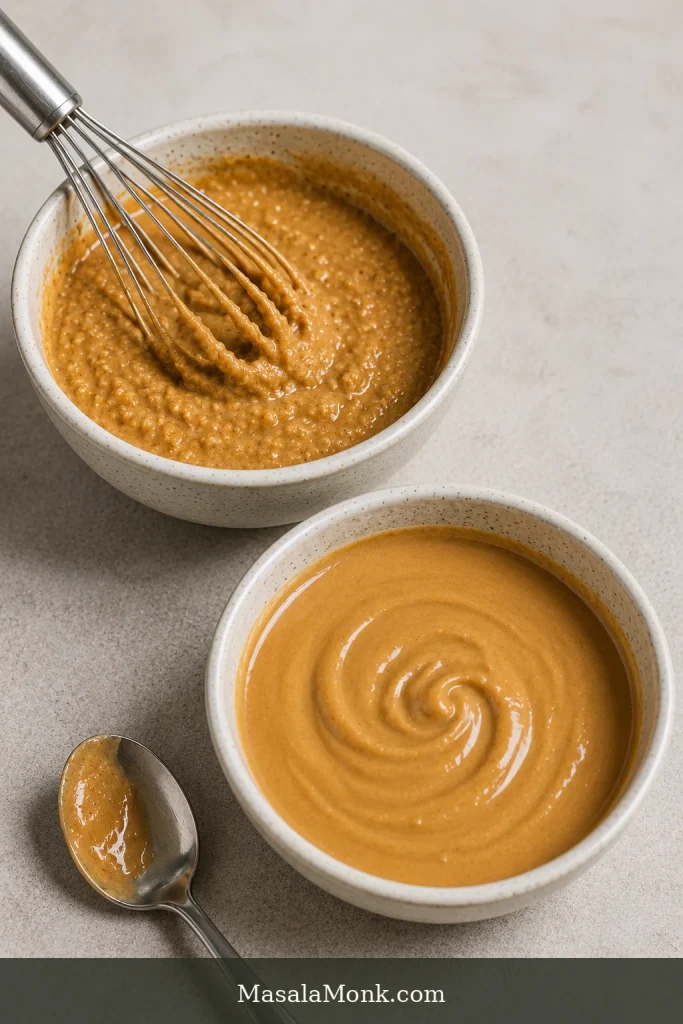
Two bowls of peanut sauce showing a grainy mixture with a whisk and a smooth sauce after mixing
Peanut sauce often looks rough before it turns creamy. Keep whisking and add warm water slowly until the texture smooths out.

Bland Peanut Noodles

They probably need balance, not more peanut butter. Use soy sauce or tamari for salt, lime or vinegar for brightness, chili for heat, and ginger or garlic for depth.

Too Salty

Soften the bowl with more noodles, cucumber, cabbage, carrots, lime, or water. Do not add more peanut butter first; that can make the sauce heavier without fixing the salt.

Too Spicy

Bring the heat back down with more noodles, peanut butter, a small touch of sweetener, or extra lime. Crunchy cucumber also helps calm the bowl.

Natural Peanut Butter Problems

Stir the jar well first, then whisk the measured peanut butter with warm water before adding the rest of the sauce ingredients.

Back to the recipe card or jump to more tips.

Frequently Asked Questions

What noodles are best for peanut noodles?

Spaghetti, wheat noodles, medium rice noodles, ramen, udon, and soba all work. If you are making this for the first time, spaghetti, wheat noodles, medium rice noodles, or udon are the easiest because they are predictable and easy to find.

Do you rinse noodles for peanut noodles?

Rinse rice noodles, soba, or noodles you plan to serve cold. For warm wheat noodles, spaghetti, udon, or ramen, it is usually better not to rinse because the surface starch helps the peanut sauce cling.

How do you keep peanut sauce from getting too thick?

Start with a pourable sauce, then loosen slowly with reserved noodle water or warm water. Peanut sauce thickens as it sits, so stop when it clings instead of clumps.

Are peanut noodles served hot or cold?

Both work. Hot noodles feel softer and saucier right away. Cold noodles are best when rinsed, cooled, and paired with crunchy vegetables, herbs, and a slightly thinner sauce.

Can you make peanut noodles ahead of time?

Yes, but they are best if the sauce, noodles, and crunchy toppings are stored separately. If the noodles are already dressed, make the sauce slightly thinner and loosen with water, broth, or lime before eating.

Can you use ramen noodles for peanut noodles?

Yes. Ramen works well because it is quick and bouncy, but it absorbs sauce fast. Keep the peanut sauce slightly thinner and toss right before serving.

Does natural peanut butter work for peanut sauce noodles?

Yes. Natural peanut butter works, but every jar behaves differently. Stir it fully before measuring, then loosen the sauce with warm water until it pours.

What protein goes well with peanut noodles?

Tofu, chicken, shrimp, egg, edamame, and tempeh all work well. Cook the protein separately, then add it on top or fold it in gently after the noodles are sauced.

How long do peanut noodles last in the fridge?

Peanut noodles keep for about 3–4 days in an airtight container, but they will need a splash of liquid to come back. Use water, broth, or lime juice before reheating or serving cold.

Why did my peanut noodles taste bland?

They probably need balance, not more peanut butter. Use soy sauce or tamari for salt, lime or vinegar for brightness, chili for heat, and ginger or garlic for more depth.

Is this recipe vegan?

It can be vegan if you use maple syrup, brown sugar, or jaggery instead of honey. Also check that your noodles, chili sauce, and other add-ins are vegan.

Are peanut noodles Thai or Chinese?

Peanut noodles can lean in different directions depending on the ingredients. Rice noodles, lime, herbs, and chili make the bowl feel Thai-style. Wheat noodles, soy sauce, sesame oil, and chili oil can make it feel closer to Chinese-style cold or warm noodles. This recipe is a practical peanut sauce noodle bowl, not a claim to one traditional regional dish.

Final Tips for Creamy Peanut Noodles

The best peanut noodles are not perfect because you followed every step exactly. They are good because you know what to look for: noodles that lift easily, sauce that clings without clumping, and enough lime, herbs, or crunch to keep the bowl bright.

Once the noodles look shiny and twirlable, stop adjusting and eat. Use the noodles you have, keep it mild, make it spicy, serve it hot, or pack it cold for lunch.
Posted on Leave a comment

Peanut Sauce Recipe for Spring Rolls, Satay, Noodles & Chicken

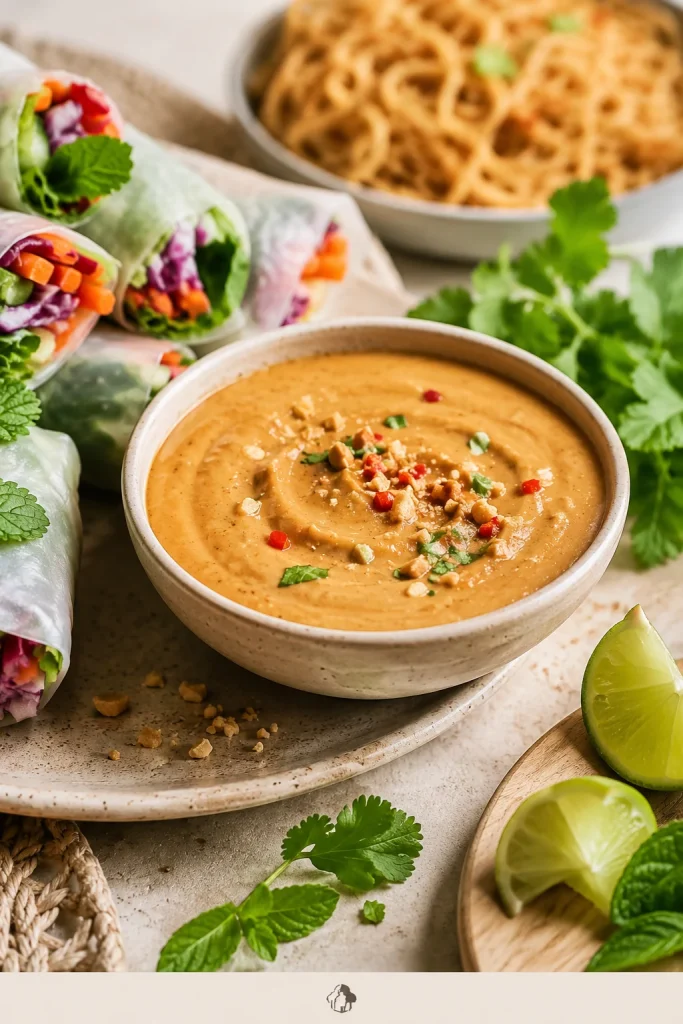
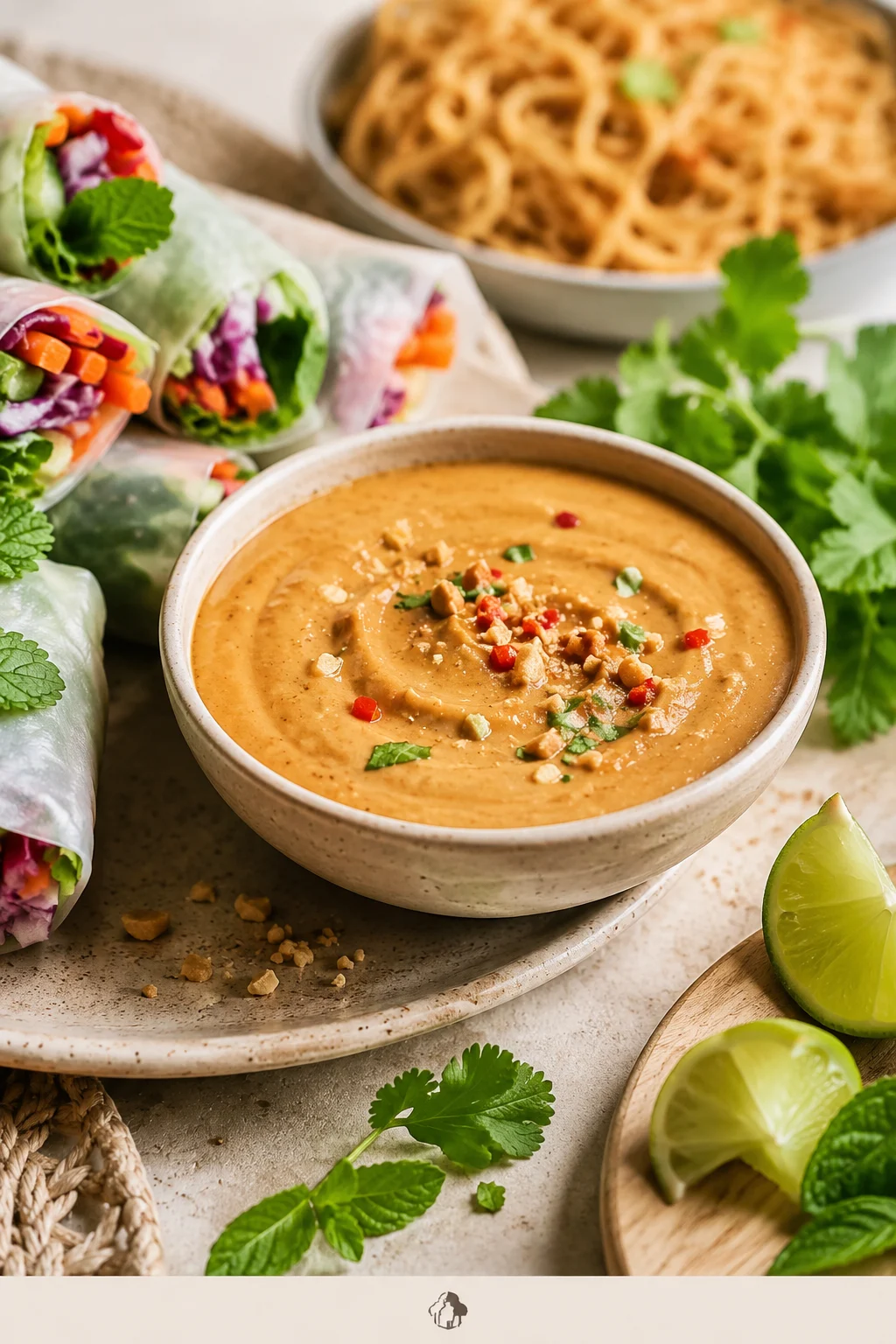
Bowl of creamy peanut sauce with spring rolls, noodles, lime wedges, herbs and crushed peanuts on a dinner table.

This is the peanut sauce you make when dinner is almost there but needs one creamy, salty-sweet thing to pull it together. It is rich from peanut butter, bright with lime and rice vinegar, warm with ginger and garlic, and easy to adjust depending on what is on the plate.

The promise is simple: one 5-minute peanut sauce, adjusted by texture. Make it easy to dip with spring rolls, warmer and richer for satay-style chicken or tofu skewers, looser for noodles, and brighter for salads or slaw.

Once you understand how the sauce should behave, the recipe becomes more than a dip. It becomes the jar that helps fresh rolls, plain noodles, grilled chicken, crispy tofu, rice bowls, vegetables, and leftovers feel like dinner. This is the kind of sauce that makes you feel like you planned dinner, even when you mostly assembled it.

Quick Answer: How to Make Peanut Sauce

To make peanut sauce, whisk the soy sauce or tamari, rice vinegar, lime juice, sweetener, chili sauce, ginger, garlic, and sesame oil first, then whisk in peanut butter and water until the sauce comes together. Start with less liquid, then add more until the sauce matches the food you are serving.

Rule one: fix texture before flavor. A thick peanut sauce can taste saltier, sweeter, and heavier than it really is, so get it close to the right consistency first. Then adjust with lime, soy sauce, sweetener, or chili.

Once the base comes together, the question is not only “is it smooth?” but “will it behave on the food?” If you are unsure, use the texture guide before adding all the liquid.

Jump to

5-Minute Peanut Sauce Recipe

Recipe name: Peanut Sauce Recipe

Prep time: 5 minutes
Cook time: 0 minutes
Total time: 5 minutes
Yield: About 1 to 1¼ cups / 240 to 300 ml, depending on how much water you add
Servings: 8 to 10
Serving size: About 2 tablespoons / 30 ml

Best as a dip: spring rolls, satay, lettuce wraps, dumplings, rice paper rolls
Best as a sauce: noodles, chicken, tofu, salads, rice bowls, roasted vegetables, slaw

Equipment: bowl and whisk or fork. Optional: jar for storage, grater for fresh ginger and garlic, small saucepan for the satay-style variation.

Ingredients

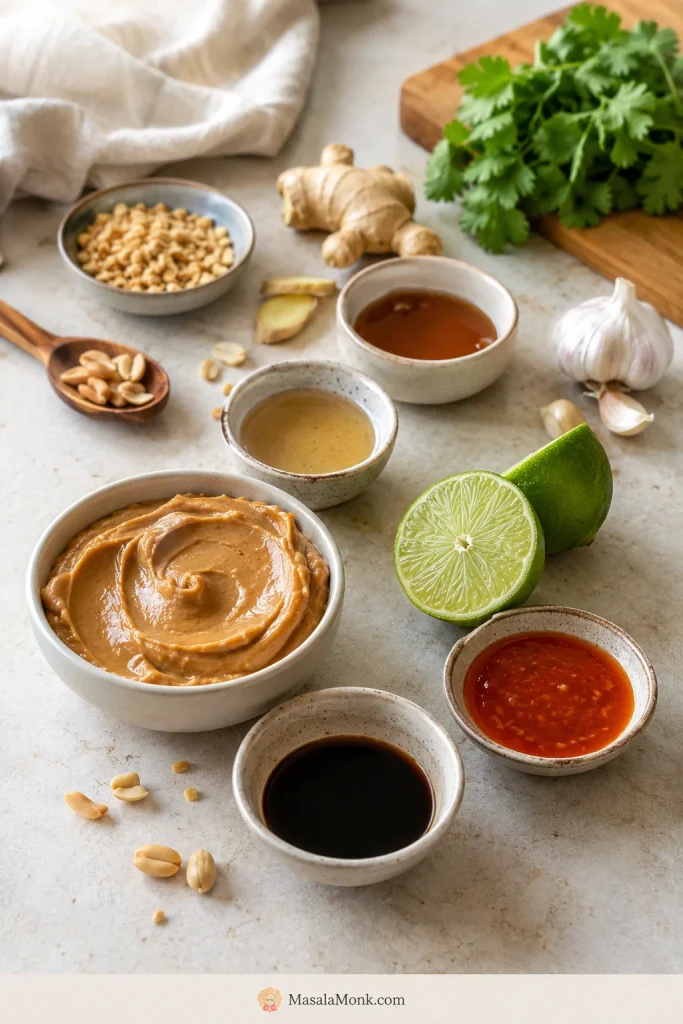
Line up the peanut sauce ingredients before you start so the balance is clear: nutty body, salty depth, tang, heat and just enough sweetness.

Peanut sauce ingredients including peanut butter, soy sauce, lime, rice vinegar, ginger, garlic, chili sauce, sweetener and sesame oil.
Peanut butter gives the sauce body, while soy sauce, lime, vinegar, ginger, garlic and chili give it balance. Together, they keep the peanut sauce savory enough for dinner instead of sweet and flat.
IngredientAmount
Creamy natural peanut butter½ cup / about 128 g
Low-sodium soy sauce or tamari2 tablespoons / 30 ml
Rice vinegar1 tablespoon / 15 ml
Fresh lime juice1 tablespoon / 15 ml
Maple syrup or honey1 to 2 tablespoons / 15 to 30 ml
Brown sugar, if using instead1 to 2 tablespoons / about 12 to 25 g
Sriracha or chili garlic sauce1 to 2 teaspoons / 5 to 10 ml
Fresh grated ginger1 teaspoon / about 2 g
Garlic1 small clove, finely grated, about 3 g
Toasted sesame oil, optional1 teaspoon / 5 ml
Warm water3 to 6 tablespoons / 45 to 90 ml, plus more as needed

Instructions

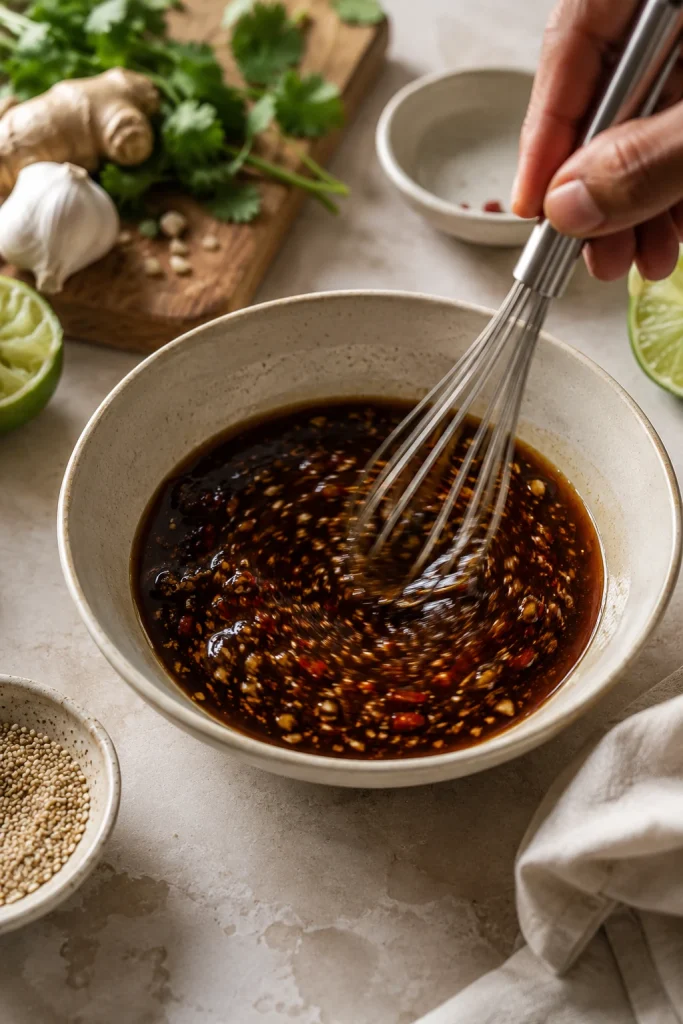
Start the peanut sauce by mixing the salty, tangy and spicy ingredients before the peanut butter goes in.

Soy sauce, lime juice, rice vinegar, chili sauce, ginger, garlic and sesame oil being whisked in a bowl before peanut butter is added.
First, whisk the salty, tangy and spicy ingredients together. Then the peanut butter blends into a balanced base instead of forcing you to fix the flavor later.
  1. Add the soy sauce or tamari, rice vinegar, lime juice, sweetener, chili sauce, ginger, garlic, and sesame oil to a medium bowl. Whisk briefly so the salty, tangy, spicy ingredients come together first.
  2. Add the peanut butter and whisk until the mixture looks thick, dark, and mostly combined. It may look stubborn before it turns silky.
  3. Add warm water or another thinning liquid 1 tablespoon at a time, whisking well after each addition.
  4. Stop when the texture matches the food you are serving. Satay can stay thicker, spring roll dip should glide, and noodles or salad dressing need more flow.
  5. Taste and adjust. More lime or vinegar helps if it tastes heavy, soy sauce or tamari helps if it tastes flat, sweetener softens sharpness, and chili adds heat.
  6. Serve right away, or store in an airtight jar in the fridge and re-whisk with a splash of water before using.

Recipe Notes

  • The 3 to 6 tablespoons water gives you a standard dip or drizzle. Noodles and salad dressing usually need more.
  • Warm liquid helps peanut butter loosen faster than cold liquid.
  • Natural peanut butter often needs more patience because it can start thicker, stiffer, or more separated than regular creamy peanut butter.
  • Regular sweetened peanut butter works, but start with less sweetener. The sauce should taste like peanut butter went to dinner, not dessert.
  • The sauce thickens as it sits, especially after refrigeration. If it has already thickened, jump to storage and make-ahead before changing the flavor.
  • For chicken, use this as a dip, drizzle, or finishing sauce. Keep any sauce that touches raw chicken separate from the serving sauce, and cook chicken to 165°F / 74°C.
  • Since this is peanut-based, check for peanut allergies before serving it to guests and read labels on bottled sauces if allergies are a concern.

Texture Guide for Spring Rolls, Satay, Noodles and More

If your sauce looks clumpy, tastes too heavy, or turns noodles sticky, you probably have not ruined anything. Peanut sauce is usually a texture problem before it is a flavor problem.

Clumps usually mean the sauce needs liquid and whisking, not a full restart.

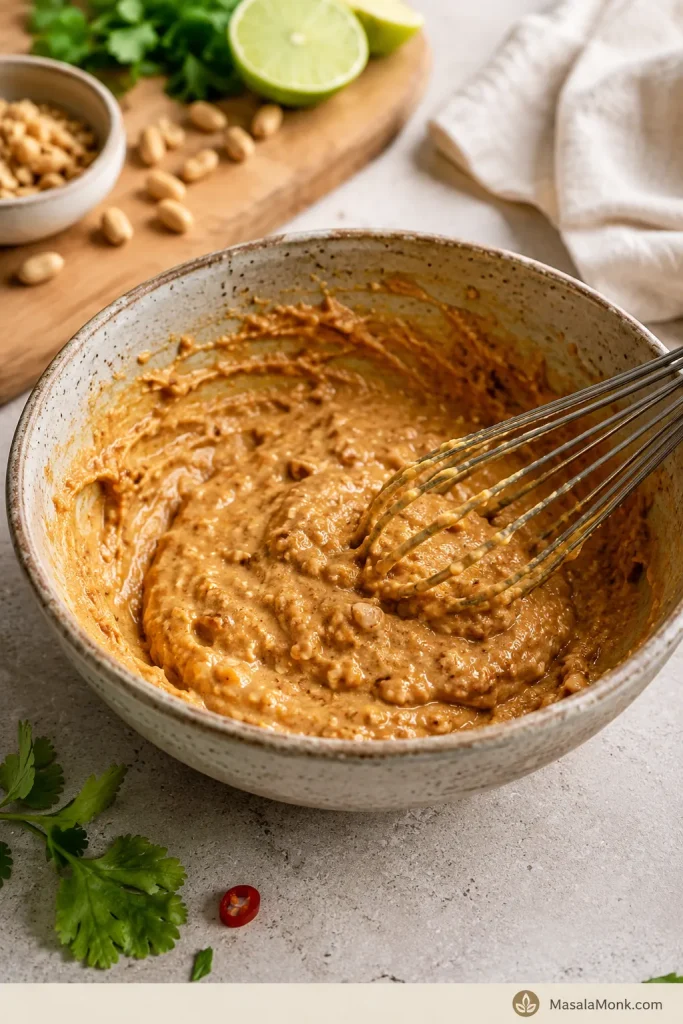
Thick clumpy peanut sauce in a bowl with whisk marks before enough liquid has been added.
At first, peanut sauce can look clumpy and stubborn. Instead of starting over, add liquid slowly and keep whisking until the mixture turns smooth and cohesive.

The mistake most people make is stopping when the sauce looks smooth. Peanut sauce is not done until it behaves right on the food. A spring roll dip should glide, satay sauce should cling, noodle sauce should fall from the spoon in a loose stream, and dressing should pour easily.

How to Read the Sauce Texture

Thin the sauce gradually so you can stop at dip, drizzle, noodle sauce or dressing instead of overshooting the texture.

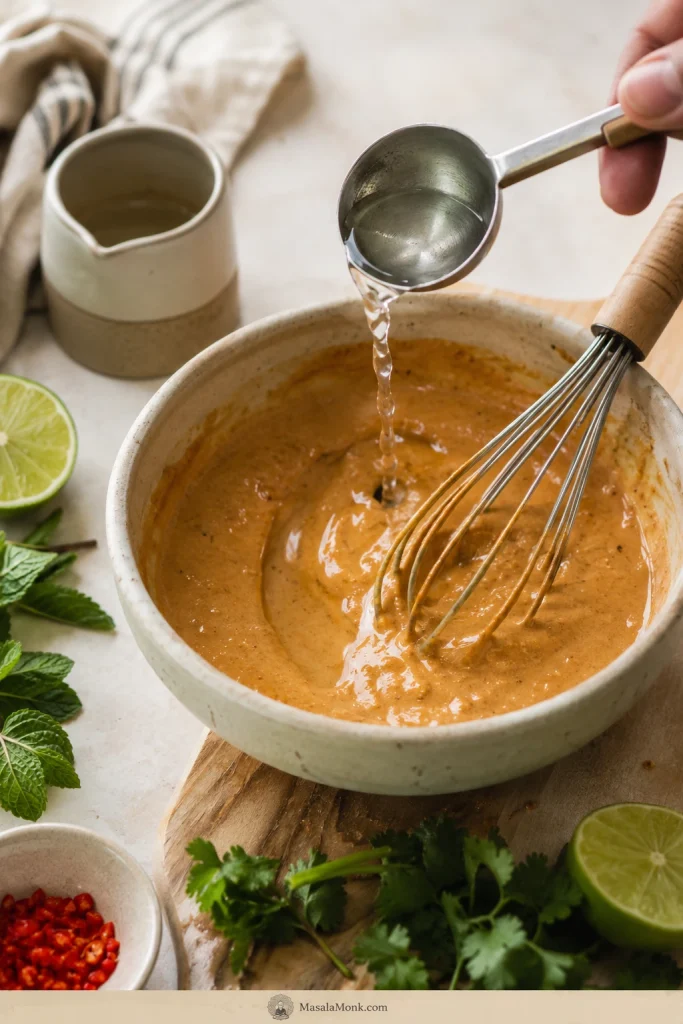
Water being added by spoon to thick peanut sauce while a whisk rests in the bowl.
Add liquid one spoonful at a time and watch how the sauce changes. Stop when it loosens for the job you need: thick dip, noodle sauce or pourable peanut dressing.
UseSauce Should Look LikeAdd This Much LiquidServe It
Spring rollsSoft sheen, easy to dip, clings lightly to rice paperAbout 4 to 6 tablespoons water totalRoom temperature or slightly chilled
SatayThicker, warm, spoonable, not mounded like pasteAbout 2 to 4 tablespoons water, or use the coconut milk variationWarm
NoodlesLoose stream from the spoon, easy to tossAbout 6 to 8 tablespoons hot water or noodle waterWarm or opened up with hot water
Salad dressingPourable, bright, thinner than dipping sauceExtra water plus more lime juice or rice vinegarChilled or room temperature
ChickenMedium-thick dip or drizzleKeep it savory and not too sweetRoom temperature or warm
TofuThicker for coating, thinner for bowlsAdd extra chili and lime for punchRoom temperature or warm
Rice bowlsSlow drizzle, not wateryThin slightly and re-whisk before servingRoom temperature

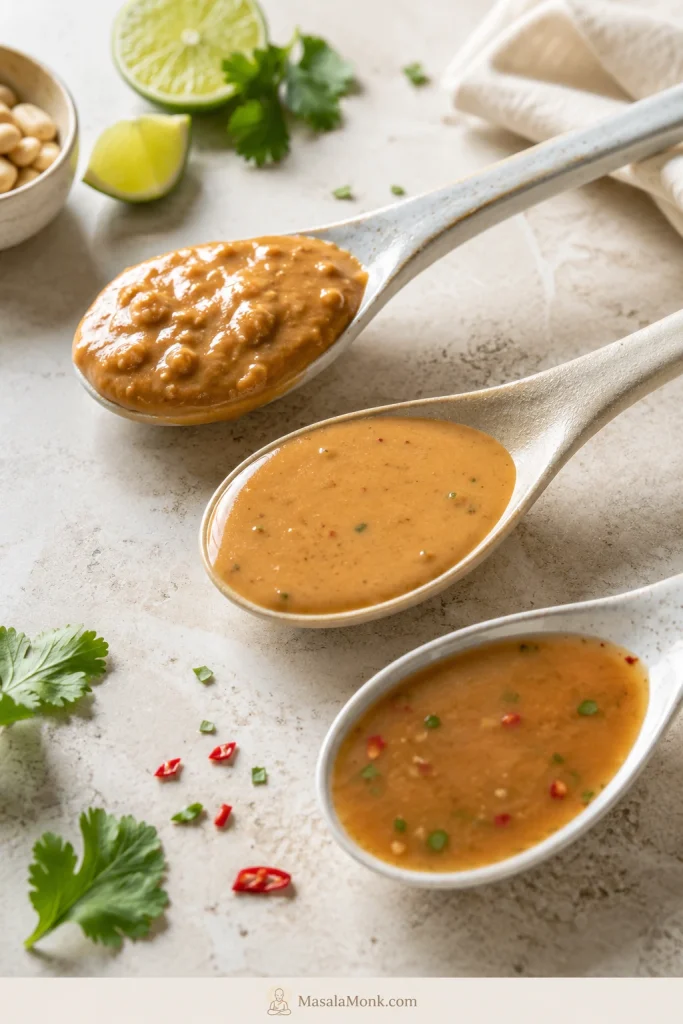
Use this visual guide when you are deciding whether the sauce should cling, glide, coat or pour.

Three spoons holding different peanut sauce textures for satay, spring rolls and noodles.
This is the texture rule worth saving: thicker peanut sauce clings to satay, softer sauce works for spring rolls, and looser sauce coats noodles without grabbing them.

Before you taste, fix the texture: peanut butter can look clumpy or slightly broken before it turns silky. Keep whisking, add liquid slowly, and taste only after the sauce is close to the consistency you want. A sauce that is too thick will taste saltier, sweeter, and heavier than it really is.

When in doubt, keep it a little thicker at first. You can always add a splash more liquid, but it takes extra peanut butter to fix a sauce that has gone too thin.

Why This Peanut Sauce Works

The finished sauce should not taste like sweet peanut butter. It should taste nutty first, then salty, tangy, lightly sweet, and gently spicy at the end.

Peanut butter gives body and nutty richness. Soy sauce or tamari gives dinner-level savoriness. Lime juice and rice vinegar cut the heaviness. Sweetener rounds the sharp edges. Ginger, garlic, and chili keep the sauce lively instead of flat.

Water is not filler here. It is the texture tool. A little gives the sauce enough body for dipping; more turns it into a noodle sauce or dressing. That is why the same bowl can taste right with cool rolls, hot noodles, grilled chicken, tofu, or a pile of vegetables. If the sauce already tastes off, check the troubleshooting table before adding more soy sauce, sugar or lime.

If the sauce tastes like peanut butter first and dinner second, it usually needs salt, acid, or chili before it needs more sweetness.

Ingredients and Smart Swaps

Peanut Butter

Creamy natural peanut butter gives the cleanest peanut flavor. If your jar has separated, stir it well before measuring. Homemade peanut butter also works well if you want more control over roast, salt, and texture.

Regular creamy peanut butter works too, but it is usually sweeter, so start with less sweetener. Crunchy peanut butter is fine if you like texture, especially for satay-style sauce or rice bowls.

Soy Sauce or Tamari

Low-sodium soy sauce keeps the sauce savory without pushing it too salty. Tamari is the best swap for gluten-free peanut sauce, as long as the label says gluten-free. Coconut aminos can work for a soy-free version, but it is sweeter and less salty, so adjust with salt and lime at the end.

Rice Vinegar and Lime Juice

Rice vinegar gives a clean tang; lime makes the sauce taste fresher. Together, they keep peanut butter from feeling heavy. Apple cider vinegar or white vinegar can work in a pinch, especially for a satay-style version.

Sweetener

Maple syrup keeps the sauce vegan and blends easily. Honey gives rounder sweetness. Brown sugar adds deeper flavor, especially in satay-style peanut sauce. When your peanut butter is already sweet, let the lime and soy sauce lead before adding more sugar.

Chili Sauce

Sriracha, chili garlic sauce, sambal, or chili crisp can all work. One teaspoon keeps the heat mild; two or more pushes it into spicy peanut sauce territory. For the satay-style variation, red curry paste adds better depth than sriracha alone.

Garlic and Ginger

Fresh grated garlic and ginger make the sauce taste alive. Grating them finely helps them disappear into the sauce instead of leaving sharp pieces. If raw garlic is too strong for you, use half a clove or a small pinch of garlic powder.

Sesame Oil

Toasted sesame oil is optional, but a small amount gives the sauce a deeper, nuttier flavor. Use it lightly because peanut butter is already rich.

Coconut Milk

Coconut milk is not required for the 5-minute sauce. Water keeps it quick, bright, and flexible.

Coconut milk is what makes the satay-style version feel rounder and warmer. Use it for skewers, grilled chicken, tofu satay, or roasted vegetables. Coconut cream makes the sauce thicker and more luxurious, while regular coconut milk keeps it smoother and more pourable. Making skewers? Jump to the satay-style peanut sauce variation. If you like that coconut-curry direction, the same balance shows up in Chicken Panang Curry, where peanut stays in the background instead of taking over like satay sauce.

Hoisin Sauce

Hoisin is not part of the main sauce, but it is very useful for a Vietnamese-style spring roll dip. It adds sweetness, body, and a deeper savory flavor that works beautifully with rice paper rolls, shrimp rolls, and fresh vegetable rolls.

Peanut Sauce for Spring Rolls

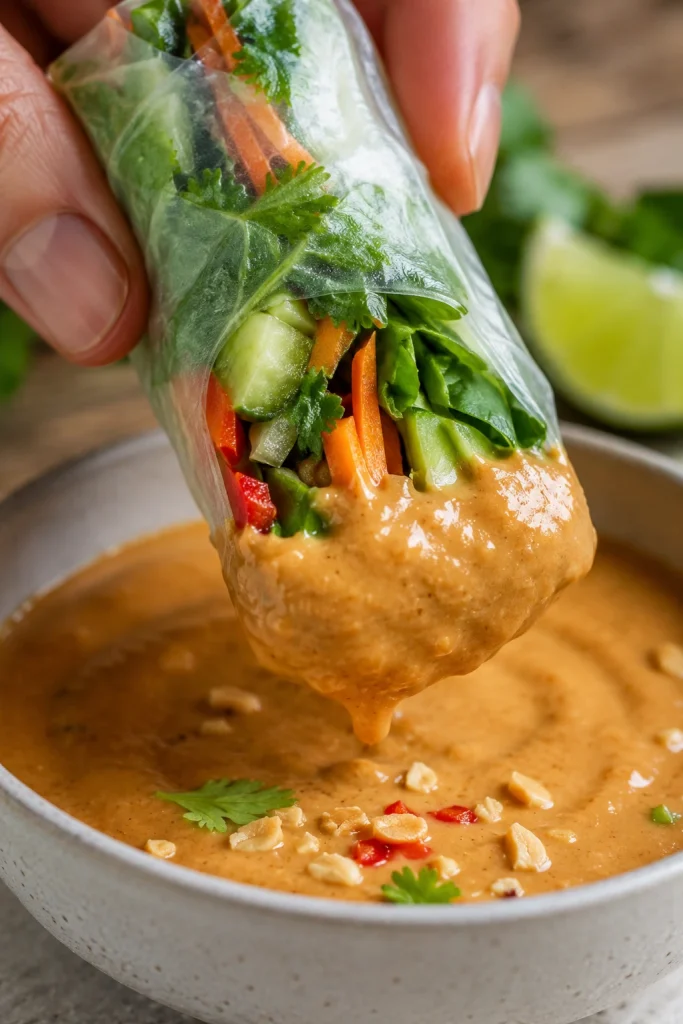
For spring rolls, fresh rolls, summer rolls, and rice paper rolls, the dip should be smooth enough for dipping but thick enough to cling. When it sits on the roll like paste, it needs more liquid. When it runs off immediately, it needs more peanut butter.

Start with the sauce as written and add liquid until it becomes easy to dip. A little extra lime juice or rice vinegar also helps because fresh rolls are usually full of cool vegetables, herbs, shrimp, tofu, or noodles. A good spring roll dip should catch on the rice paper, slide over the herbs and vegetables, and leave a little peanut richness behind.

Use fresh spring rolls as a texture check: the dip should feel light around herbs and vegetables while still leaving a creamy coat.

Fresh rice paper spring rolls cut open and served with peanut sauce, herbs and lime.
The dip should coat rice paper lightly, then get out of the way so the herbs, vegetables and filling still taste fresh.

How to Adjust the Sauce for Spring Rolls

  • Vegetable-heavy rolls taste better with a little extra lime juice or rice vinegar.
  • Shrimp rolls can handle a slightly sweeter dip, which is where the hoisin variation works especially well.
  • Tofu rolls benefit from chili crisp, extra ginger, or crushed peanuts for more punch.
  • A dip that drags across rice paper needs a small splash of water until it glides.
  • A dip that slides off the roll needs a small spoon of peanut butter to bring back body.

Before moving to the hoisin variation, check the basic spring roll texture: the dip should coat rice paper without dragging.

Fresh spring roll dipped into peanut sauce that clings lightly to the rice paper wrapper.
For spring rolls, the dip should leave a light coat on the rice paper. Too much drag means it needs liquid; too much slide means it needs more body.

Vietnamese-Style Hoisin Peanut Sauce for Rice Paper Rolls

Use this version when spring rolls are the main event. Hoisin gives the dip the darker, sweeter body people often expect with rice paper rolls, while peanut butter keeps it creamy and rich.

The hoisin version should look darker and glossier than the everyday peanut sauce, especially for rice paper rolls.

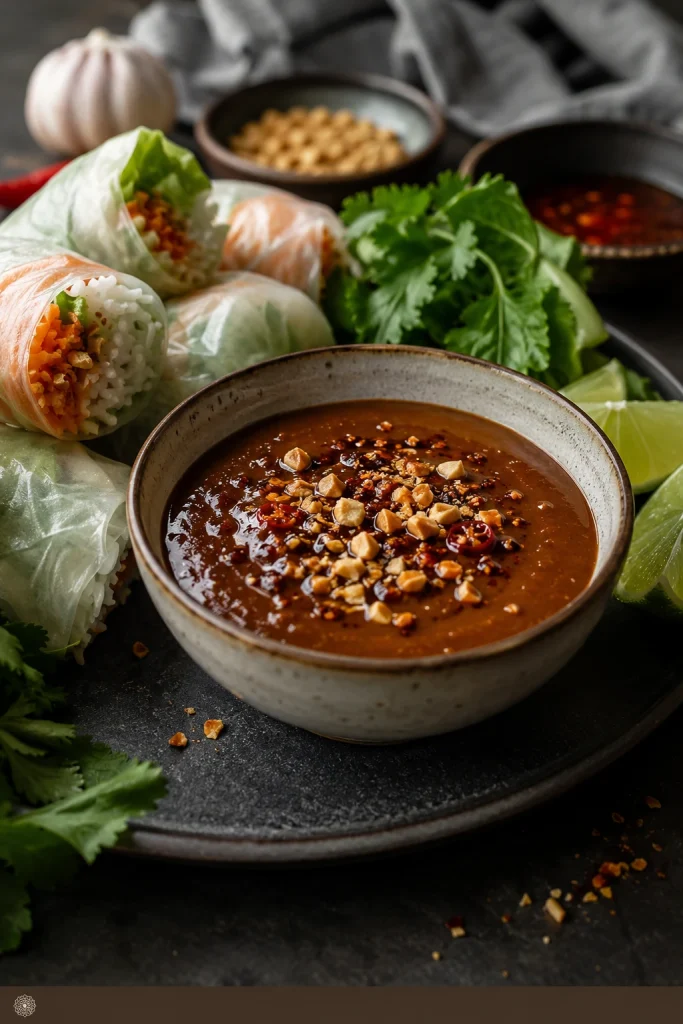
Dark Vietnamese-style hoisin peanut sauce served with rice paper rolls and crushed peanuts.
When rice paper rolls are the main event, hoisin gives peanut sauce a darker, sweeter body. After mixing, add lime or vinegar if the dip starts tasting too sweet.

Use this quick formula:

  • ½ cup peanut sauce
  • 1 tablespoon hoisin for lighter sweetness, or 2 tablespoons for a deeper dip
  • 1 to 3 tablespoons water, milk, or coconut milk, as needed
  • ½ teaspoon chili garlic sauce, optional
  • Crushed peanuts, optional, for finishing

Whisk until the dip has a soft sheen. It should be looser than satay sauce but thicker than salad dressing. Too sweet? Add lime juice or rice vinegar. Too thick? Add liquid a spoonful at a time.

This is the variation to reach for when the meal is built around fresh rolls, shrimp rolls, or rice paper rolls and you want a dip that feels complete on its own.

Satay-Style Peanut Sauce

Satay sauce is usually richer, warmer, and thicker than a quick peanut dipping sauce. Depending on the region and recipe, more traditional versions may use roasted peanuts, coconut milk, curry paste, tamarind, palm sugar, fish sauce, or other aromatics.

Think of this as the weeknight bridge between a quick peanut dip and a fuller satay sauce. Start with the 5-minute base, then add coconut milk and curry paste for depth. Warmth changes everything here: the sauce softens, the curry paste blooms, and the peanut flavor feels rounder before it ever reaches the skewers.

Use this as a satay-style shortcut, not as a claim that all satay sauces are the same. It works well with chicken satay, tofu satay, grilled paneer, roasted vegetables, and rice bowls because it clings well and tastes more complete with grilled food.

Satay-Style Peanut Sauce Variation

Coconut milk and curry paste turn the quick peanut sauce into a warmer satay-style sauce for skewers and grilled food.

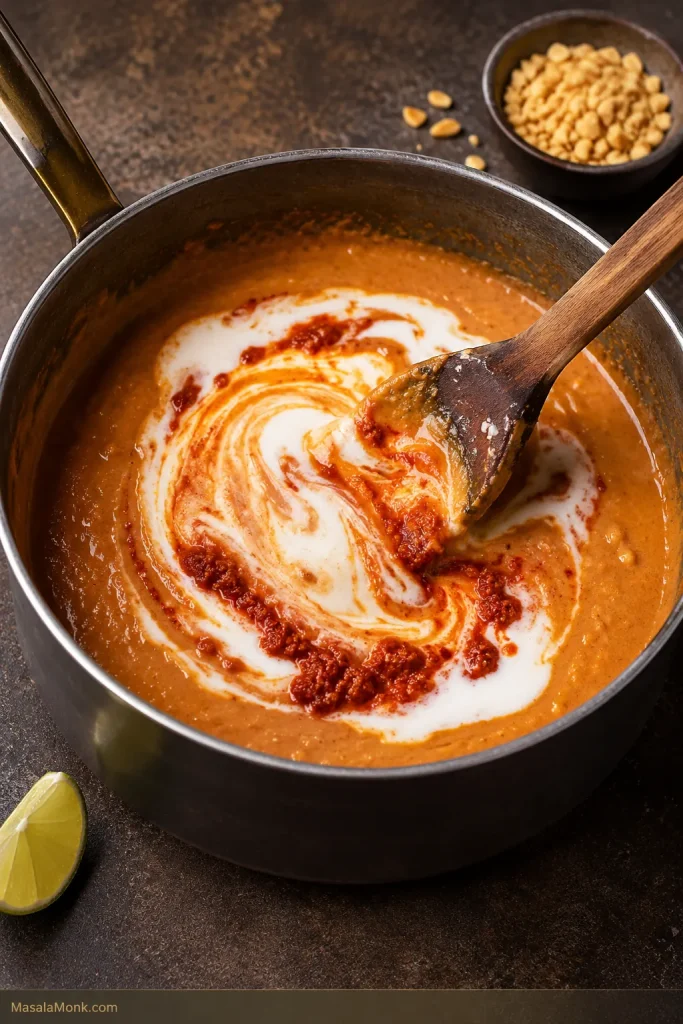
Coconut milk and red curry paste being stirred into peanut sauce in a saucepan.
For satay-style peanut sauce, coconut milk and curry paste add warmth and depth. Warm it gently so the curry paste blooms without reducing the sauce into paste.
  • ½ cup peanut sauce
  • ¼ cup coconut milk or coconut cream
  • 1 to 2 teaspoons red curry paste
  • 1 teaspoon brown sugar, optional
  • ½ teaspoon fish sauce, optional
  • 1 to 2 tablespoons crushed roasted peanuts, optional

Warm everything in a small saucepan over medium-low heat for 3 to 5 minutes, stirring often. Do not hard-boil the sauce. The goal is to warm it, not reduce it into paste. It should be thick, warm, and spoonable, but still loose enough to drizzle over skewers.

If it tightens too much, add water or coconut milk, a spoonful at a time. A squeeze of lime or splash of rice vinegar helps when the sauce tastes too rich.

For chicken satay, the sauce should be warm, spoonable and thick enough to cling to grilled edges.

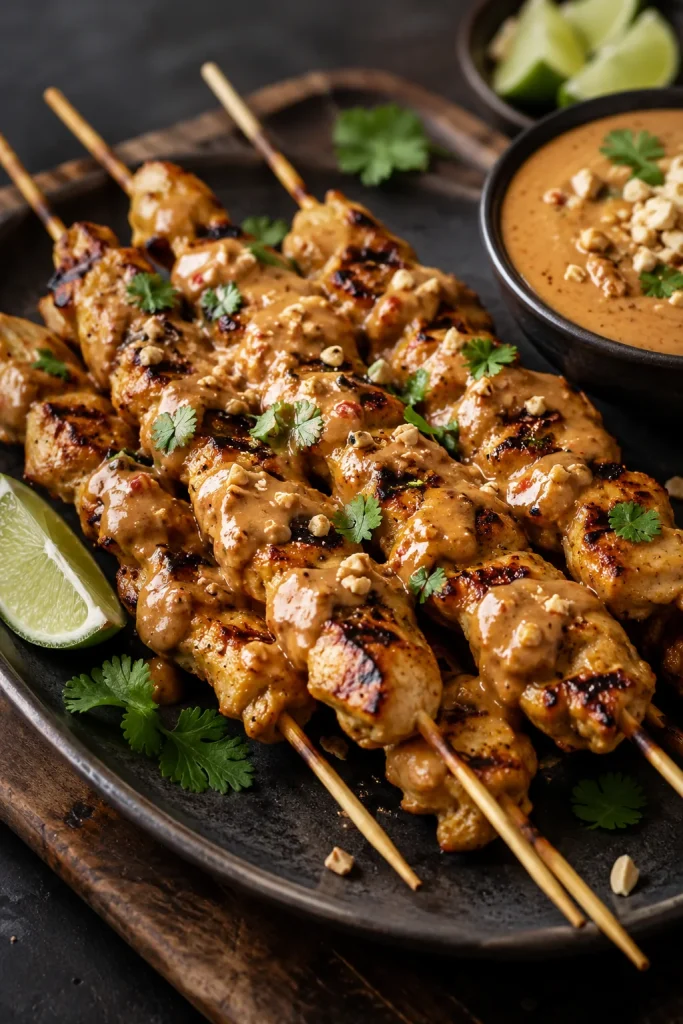
Grilled chicken satay skewers with peanut sauce, lime wedges, herbs and crushed peanuts.
Chicken satay needs a peanut sauce that clings to grilled edges without stiffening. If the sauce tightens as it warms, loosen it with a spoonful of water or coconut milk.

Because tofu starts mild, give the satay-style sauce more contrast with lime, chili and crunch.

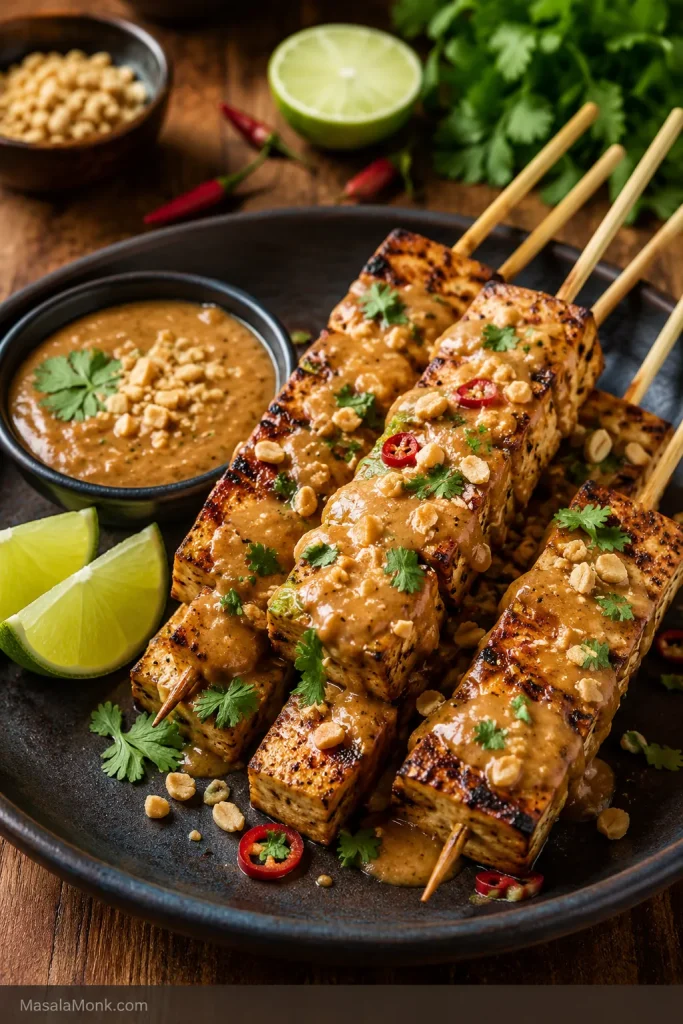
Grilled tofu satay skewers drizzled with peanut sauce, herbs, chili and crushed peanuts.
Keep the sauce thick enough to cling to grilled tofu, then use lime, ginger, chili and crushed peanuts for contrast.

Is Peanut Sauce the Same as Satay Sauce?

Not always. Peanut sauce is a broad term for sauces made with peanuts or peanut butter. Satay sauce usually refers to the peanut-based sauce served with satay skewers, and it is often warmer, richer, and more deeply seasoned.

For everyday cooking, this sauce can move in a satay-style direction with coconut milk, curry paste, and gentle heat. A very specific Thai, Indonesian, Malaysian, or Singaporean satay sauce may need a more traditional recipe built around that cuisine.

Peanut Sauce for Noodles

This is where the sauce becomes dinner, not just a dip. Noodles need a looser peanut sauce than spring rolls or satay. Peanut butter thickens quickly when it hits warm noodles, and a mixture that looks pourable in the bowl can turn sticky once tossed.

For 2 servings, start with about ½ cup peanut sauce and add 2 to 4 tablespoons hot water or noodle cooking water before tossing. For 8 ounces / 225 g noodles, use ½ to ¾ cup sauce, depending on how saucy you like your noodles.

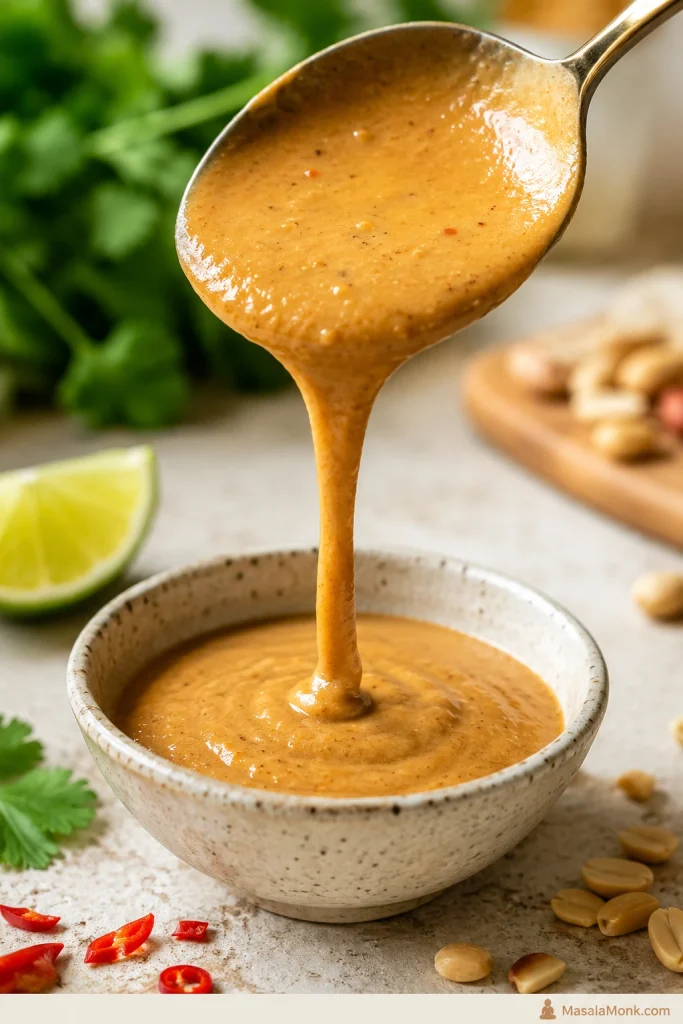
Before sauce meets noodles, it should already move in a loose stream from the spoon.

Loose peanut sauce falling from a spoon to show the texture needed for noodles.
For noodles, the sauce should fall from the spoon in a loose stream before tossing. Otherwise, peanut butter can tighten around warm noodles and make the bowl sticky fast.

The idea is similar to glossy pasta sauces: loosen first, then toss. The same idea shows up in pesto pasta, where pasta water keeps the sauce glossy instead of oily or dry.

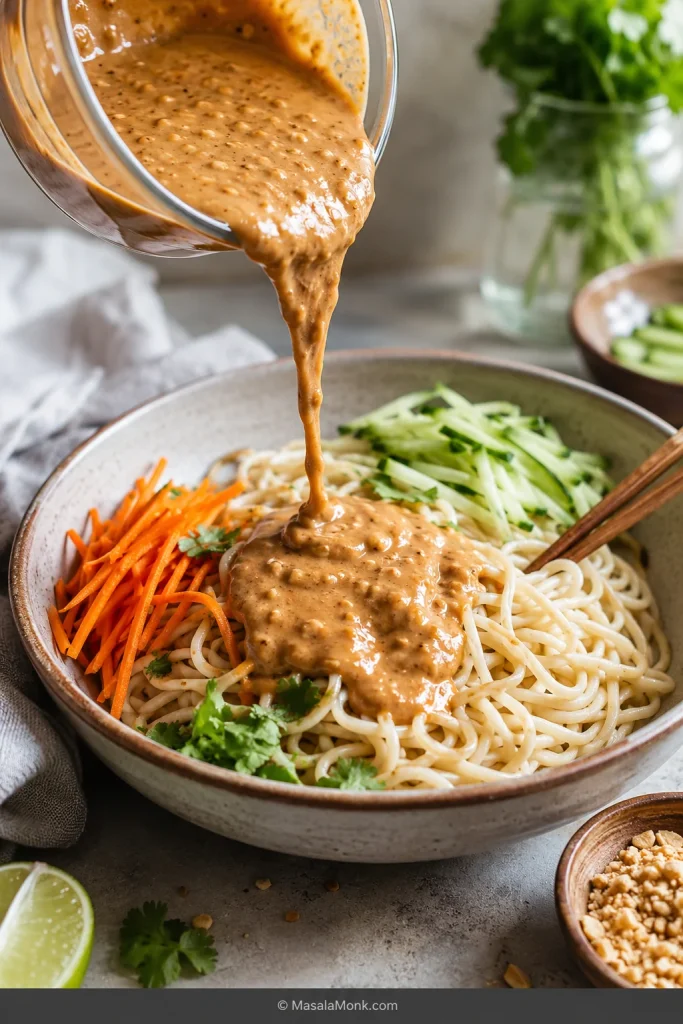
Pour the peanut sauce over noodles only after it has enough movement to coat the strands evenly.

Peanut sauce being poured over noodles before tossing, with vegetables and herbs nearby.
Before tossing noodles, loosen the peanut sauce until it moves easily. As a result, it coats the strands evenly instead of grabbing them into sticky clumps.

Sometimes the bowl looks perfect, then tightens while you are setting the table. Do not panic. Add hot water or noodle water, a spoonful at a time, and toss again until the sauce relaxes around the noodles instead of grabbing them. If it keeps clumping, jump to how to fix peanut sauce.

Tips for Peanut Noodles

  • Hot water or noodle water helps the sauce loosen cleanly; cold water can make it tighten.
  • Make the sauce looser before adding it to the noodles.
  • Toss gradually instead of dumping everything in at once.
  • Lime juice or rice vinegar helps when the noodles taste heavy.
  • Soy sauce or tamari helps when the noodles taste flat.
  • Cold peanut noodles need a looser sauce because it thickens as it chills.

Toss it with rice noodles, spaghetti, ramen, soba, udon, or egg noodles. Add cucumber, carrots, cabbage, scallions, cilantro, mint, edamame, tofu, chicken, shrimp, or a fried egg to turn it into a full meal.

Once the sauce is coating properly, fresh toppings finish the noodle bowl and keep it from tasting heavy.

Peanut sauce noodle bowl with vegetables, herbs, lime, chili and crushed peanuts.
Once the noodles are coated, add crunch, herbs, lime and protein to turn peanut sauce noodles into dinner. The finish should taste fresh, not just creamy.

Peanut Sauce for Chicken, Tofu and Bowls

This is where peanut sauce earns its place in the fridge: plain chicken, tofu, rice, and vegetables suddenly taste like a planned meal. The trick is matching the texture to the job, not pouring the same thickness over everything.

UseBest TextureBest Adjustment
Grilled chickenMedium-thick drizzleAdd lime after cooking so the sauce tastes bright, not heavy
Chicken rice bowlsSlow drizzleKeep it savory enough to season the rice
Peanut chicken noodlesLoose, tossable sauceUse hot water or noodle water before tossing
Crispy tofuThicker coating sauceAdd chili crisp, extra ginger, or crushed peanuts
Tofu bowlsDrizzle-able but not wateryAdd lime and tamari so the tofu does not taste flat
Lettuce wrapsEasy dip with bodyAdd lime and herbs for freshness

Chicken

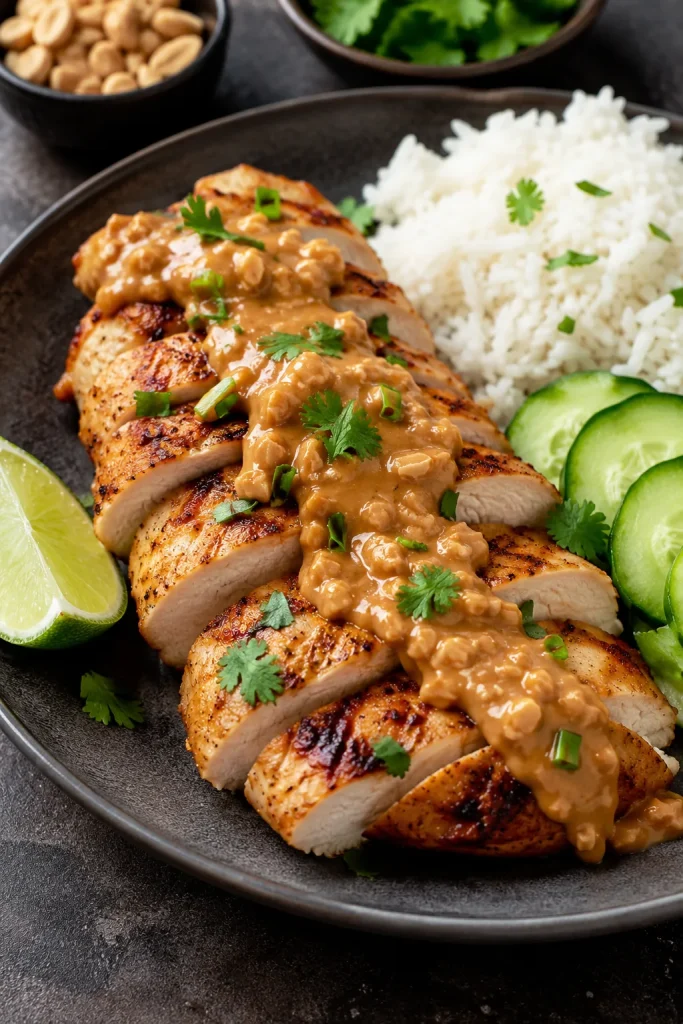
Spoon it over cooked chicken, serve it as a dip for grilled chicken, or use the warm satay-style version with skewers. Plain baked chicken works well here because the sauce brings most of the flavor. Once the chicken is cooked, you can slice it into bowls, tuck it into lettuce wraps, or serve it beside spring rolls and cucumber salad.

Everyday chicken needs a peanut sauce that drizzles cleanly and seasons the plate without turning sweet.

Sliced grilled chicken with peanut sauce, white rice, cucumber, lime and herbs.
For everyday chicken, keep the sauce savory and medium-thick. It should drizzle over the slices, season the rice and stay balanced without tasting dessert-sweet.

Tofu

Tofu can take this sauce in two directions. Keep it thicker if you want to coat crispy tofu, or make it slightly looser if you want to drizzle it over a tofu bowl. Tofu loves a bolder sauce because it gives the peanut, lime, chili, and ginger room to show up.

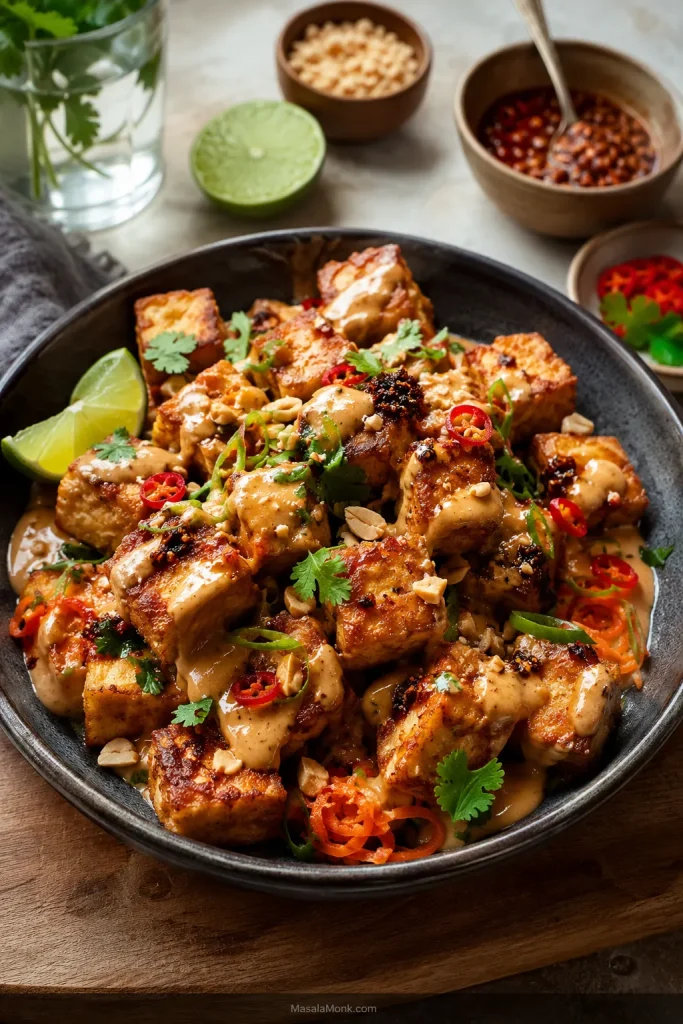
For crispy tofu, keep the sauce thick enough to coat without covering every crunchy edge.

Crispy golden tofu cubes with peanut sauce, chili, herbs, lime and crushed peanuts.
Crispy tofu can take a thicker peanut sauce because the edges stay sturdy. Then chili, lime, ginger and crushed peanuts help the tofu taste bold instead of bland.

For a vegan version, maple syrup or brown sugar keeps the sweetness simple. Gluten-free bowls work best with tamari for the same savory depth. When you need a soy-free version, use coconut aminos and adjust with salt and lime at the end.

Rice Bowls and Meal Prep

In rice bowls, aim for a slow drizzle, not a watery pour. It should settle into the rice, vegetables, and protein without disappearing. Fluffy rice matters because it can hold the sauce without turning gummy.

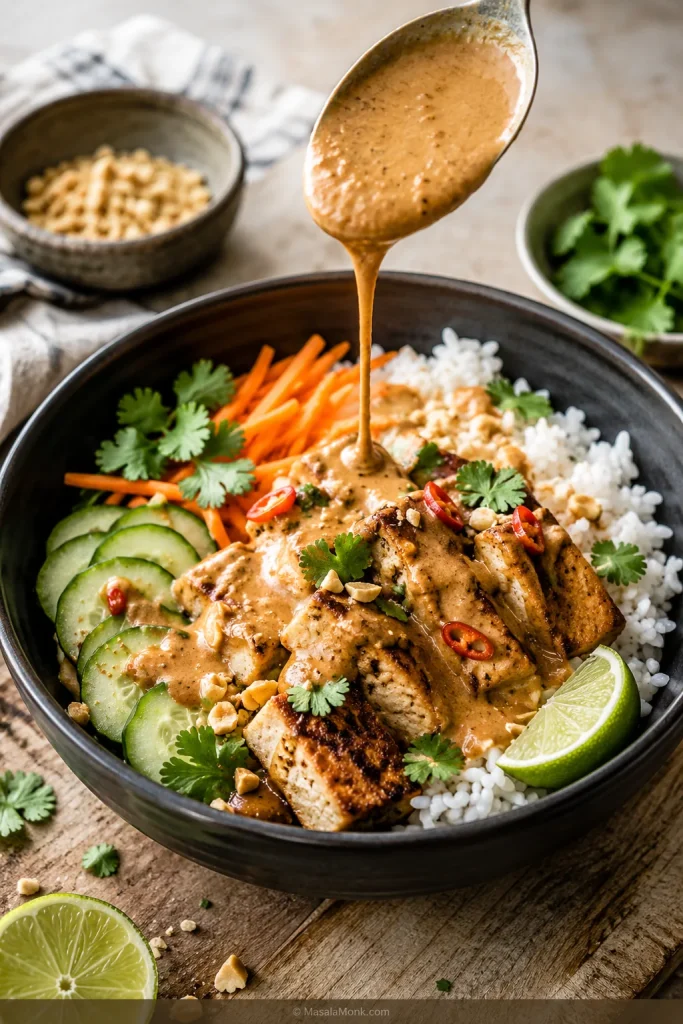
Rice bowls need a slow drizzle that settles into the grains and makes leftovers feel intentional.

Rice bowl with tofu, vegetables, herbs, lime and peanut sauce being drizzled from a spoon.
In rice bowls, aim for a slow peanut sauce drizzle that settles into the grains without disappearing. This is where leftover rice and vegetables start to feel planned.

When meal prepping, store the sauce separately. It will thicken in the fridge, so re-whisk it with a splash before adding it to bowls, noodles, or salads. A jar of peanut sauce can make leftover rice, roasted vegetables, cooked chicken, tofu, or even plain cucumber feel intentional.

For a full bowl meal, the same creamy-salty idea works beautifully in a Thai-style vegan bowl with peanut butter dressing.

Peanut Dressing for Salads, Slaw and Bowls

To make peanut dressing for salad, slaw, or cold noodle salad, use more liquid than you would for dipping. It should pour easily from a spoon and taste brighter than satay sauce.

Start with ½ cup peanut sauce, then whisk in 2 to 4 tablespoons water. Add 1 to 2 teaspoons extra lime juice or rice vinegar if the dressing tastes heavy. A good peanut dressing should taste a little brighter than you think, because raw vegetables soften its sharpness once everything is tossed.

For salad and slaw, the sauce has to pour easily and taste brighter than it would as a dip.

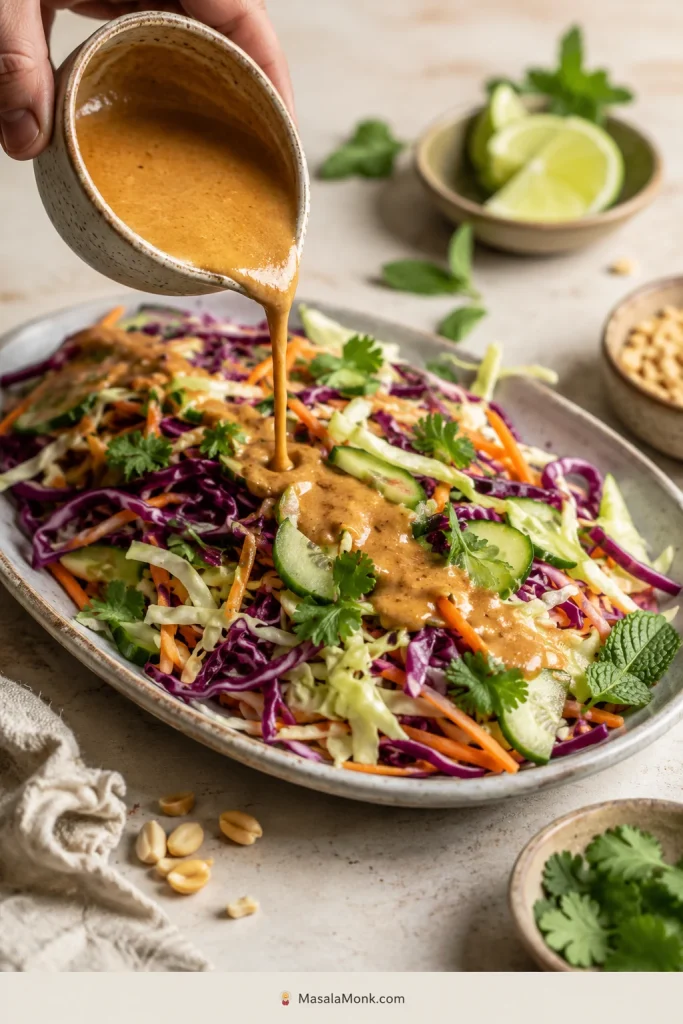
Pourable peanut dressing being drizzled over cabbage, cucumber and carrot slaw.
For slaw and salads, make the peanut dressing brighter and thinner than a dip. Once it hits cabbage, cucumber and carrots, the extra tang keeps everything fresh instead of heavy.

Once it hits cabbage, cucumber, herbs, or shredded carrots, that extra brightness settles into balance. Use it on cabbage slaw, Thai peanut salad, cold noodle salad, lettuce wraps, grilled vegetables, or shredded chicken salad. It also works beautifully beside a crisp cucumber salad, especially when the meal has satay-style chicken, tofu, noodles, or grilled vegetables.

Rich toppings like avocado, fried tofu, or chicken need more lime. Mostly raw vegetables can handle a dressing that is a little sweeter and saltier.

Everyday Peanut Sauce, Vietnamese-Style Hoisin Dip and Satay-Style Sauce

Peanut sauce can mean different things depending on the dish. This recipe is an everyday peanut-butter sauce for home cooking, not a claim that all peanut sauces are the same. Traditional and regional versions may use roasted peanuts, tamarind, palm sugar, fish sauce, coconut milk, hoisin, curry paste, or other aromatics depending on the cuisine and dish.

Use the color and thickness of the sauce to understand which direction it has moved: everyday dip, hoisin dip or satay-style sauce.

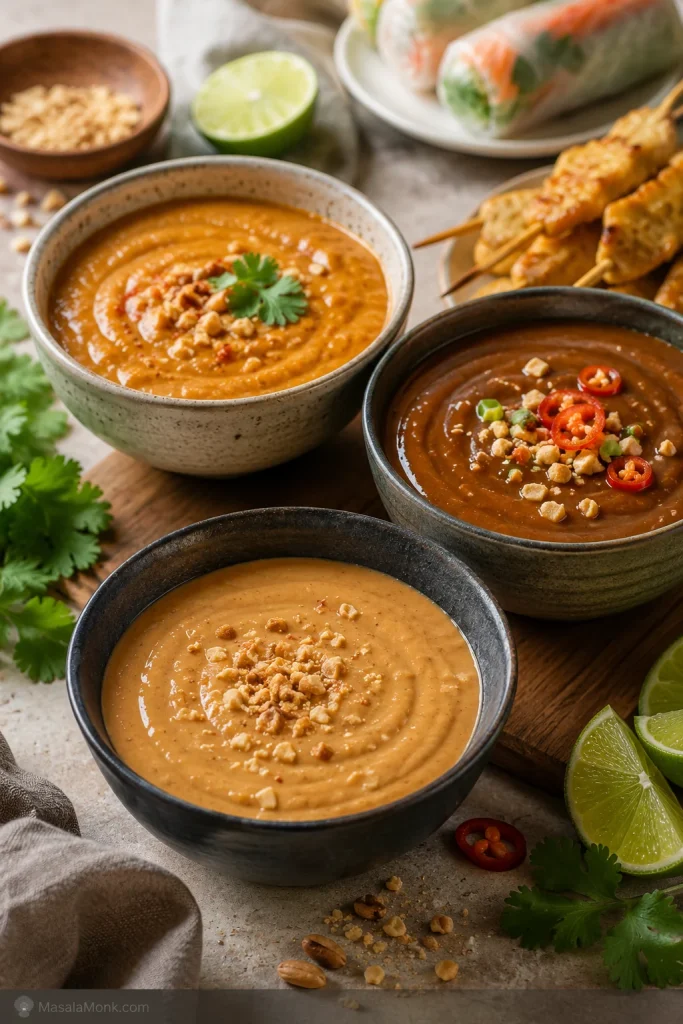
Three bowls showing light peanut sauce, darker hoisin peanut dip and golden satay-style peanut sauce.
One peanut sauce base can move in three directions: everyday dip, Vietnamese-style hoisin peanut sauce or warmer satay-style sauce. The color and thickness show where it belongs.
  • Thai-inspired home-cooking peanut sauce: often a flexible peanut butter sauce with soy or tamari, lime, rice vinegar, chili, ginger, garlic, and water. Use it for dipping, noodles, chicken, tofu, bowls, and salads.
  • Vietnamese-style spring roll sauce: often brings in hoisin with peanut butter, garlic, and water, milk, or coconut milk. Use it for fresh spring rolls, rice paper rolls, shrimp rolls, and summer rolls.
  • Satay-style peanut sauce: usually richer, thicker, and often warm, sometimes with coconut milk, curry paste, fish sauce, or crushed peanuts. Use it for chicken satay, tofu satay, skewers, and grilled vegetables.

The main sauce here is flexible and quick. Add hoisin, and it moves toward a Vietnamese-style spring roll dip. Stir in coconut milk and curry paste, and it becomes warmer, richer and closer to a satay-style sauce.

Substitutions and Variations

This is where peanut sauce is forgiving, but not automatic: every swap changes the balance a little. Use the table as a starting point, then taste again once the texture is right.

NeedUseWatch Out For
Gluten-free peanut sauceTamari or certified gluten-free soy sauceCheck labels on hoisin, chili sauce, and curry paste
Soy-free peanut sauceCoconut aminosAdd salt and lime because coconut aminos are sweeter and less salty
Vegan peanut sauceMaple syrup or brown sugar instead of honeySkip fish sauce in the satay-style variation
Richer satay-style sauceCoconut milk or coconut creamAdd lime or vinegar if it tastes too heavy
Vietnamese-style dipHoisin added to the base sauceAdd lime or vinegar if it tastes too sweet
Spicy peanut sauceSriracha, chili garlic sauce, sambal, chili crisp, or red pepper flakesAdd heat slowly; peanut butter can hide spice at first
Mild peanut sauceSkip chili sauce or use a tiny pinch of chili flakesAdd extra ginger or lime so it does not taste flat
More textureCrushed roasted peanuts or blended roasted peanutsAdd extra liquid if the sauce thickens

Emergency 3-Ingredient Peanut Sauce

If you do not have all the ingredients, you can still make a quick peanut sauce. It will not taste as layered as the full version, but it works for noodles, dipping, wraps, or a fast bowl sauce.

Simple Version

  • 3 tablespoons peanut butter
  • 1 tablespoon soy sauce or tamari
  • 1 to 3 tablespoons warm water

Whisk everything together until smooth. Add lime juice, rice vinegar, chili sauce, garlic, or sweetener if you have them.

Better 3-Ingredient Version

  • 3 tablespoons peanut butter
  • 1 tablespoon soy sauce or tamari
  • 1 tablespoon lime juice or rice vinegar

Whisk with enough liquid until the sauce reaches the texture you need. This version tastes more balanced because the acid cuts through the peanut butter.

How to Fix Peanut Sauce

Most peanut sauce problems are not recipe failures; they are texture problems. Too thick, too salty, too heavy, grainy, separated, or sticky on noodles usually means the sauce needs one small adjustment, not a full restart.

Rule one still applies: fix texture first, then salt, then acid, then sweetness, then heat. If the problem happened after chilling, the storage and make-ahead fix may be all you need.

Fix Texture First, Then Flavor

If the noodles clump, treat it as a sauce-texture problem before you change the flavor.

Chopsticks lifting peanut noodles that have clumped because the sauce is too thick.
If peanut noodles turn sticky, the sauce usually needs hot water or noodle water, not a remake. Add a spoonful, toss again and let the sauce relax around the noodles.
ProblemWhy It HappenedFix
Too thickPeanut butter seized, not enough water, or sauce chilledWhisk in warm water 1 tablespoon at a time
Too thinToo much liquid was addedAdd peanut butter 1 tablespoon at a time
Too saltyToo much soy sauce, tamari, or fish sauceAdd peanut butter, lime juice, sweetener, or water
Too sweetToo much sugar, honey, maple syrup, or hoisinAdd lime juice, rice vinegar, chili, or soy sauce
Too spicyToo much chili sauce or curry pasteAdd peanut butter, coconut milk, sweetener, or water
GrainyNatural peanut butter, cold liquid, or poor mixingUse warm water and whisk hard, or blend briefly
Oily or separatedPeanut butter separated, sauce chilled, or sauce overheatedRewarm gently and whisk in warm water
BlandNeeds salt, acid, heat, or aromaticsAdd soy sauce or tamari, lime, vinegar, ginger, garlic, or chili
Too heavyToo much peanut butter or not enough acidAdd lime juice, rice vinegar, water, and fresh herbs
Noodles turned stickyThe sauce thickened after tossingAdd hot water or noodle water and toss again

Noodles need the loosest sauce. Satay can stay thicker and warmer. Spring rolls need a dip that coats the rice paper but still feels easy to bite through.

Storage and Make-Ahead

Store peanut sauce in an airtight jar or container in the fridge for up to 1 week. It will thicken as it chills, so do not judge the texture straight from the fridge.

Straight from the fridge, peanut sauce can look hopeless, but it is not broken; it is just waiting for a splash of water and a firm whisk. Let it sit for a few minutes before adding too much liquid, because the sauce often softens as it warms slightly.

A short rest and a firm whisk are usually enough to bring refrigerated peanut sauce back.

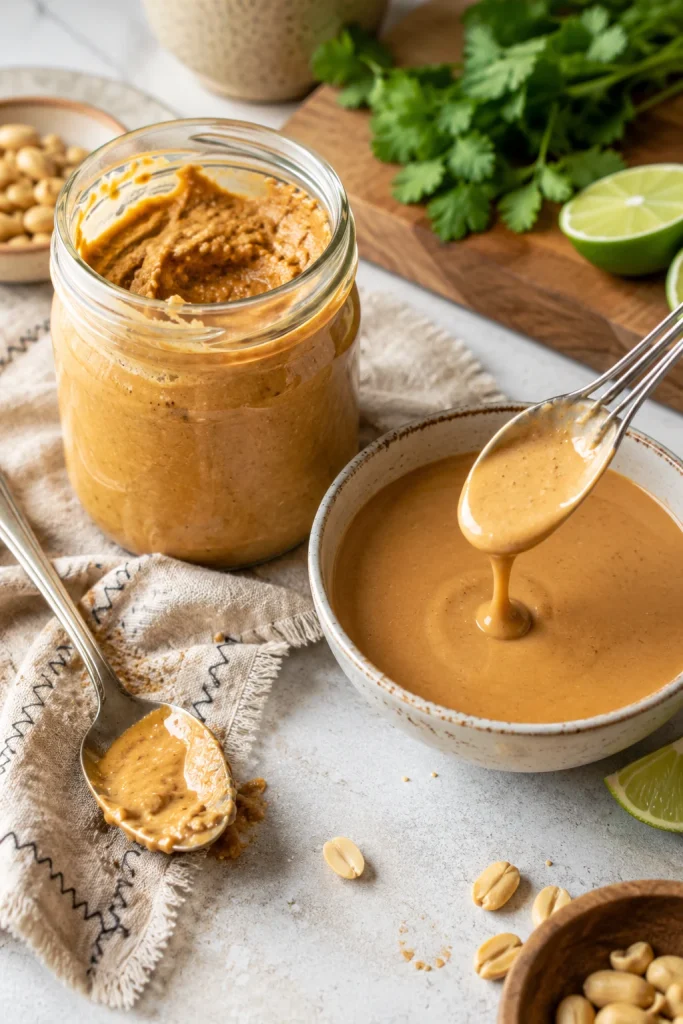
Glass jar of thick refrigerated peanut sauce beside a bowl of re-whisked pourable peanut sauce.
After chilling, peanut sauce often looks thicker than expected. Let it sit briefly, then re-whisk with a splash of water until it flows again.

Noodles usually need more liquid than you expect. Spring roll dip only needs enough water to flow again. Satay-style sauce is best rewarmed gently, then loosened with water or coconut milk.

You can freeze peanut sauce if needed, but the texture may change after thawing. Thaw it in the fridge, then whisk or blend it with a splash of warm water until smooth.

What to Serve with Peanut Sauce

Once the sauce is in the fridge, the question becomes less “what recipe am I making?” and more “what needs help tonight?” Use it where you want something fresh and cool, warm and grilled, dinner-like, or snacky and dippable.

MoodServe It With
Fresh and coolFresh spring rolls, rice paper rolls, summer rolls, shrimp rolls, cabbage slaw, cucumber salad, Vegan Som Tam / Thai raw papaya salad
Warm and grilledChicken satay, tofu satay, grilled chicken, grilled paneer or tofu skewers, roasted shrimp, roasted vegetables
Full dinnerPeanut noodles, rice noodles, cold noodle salad, rice bowls, chicken bowls, tofu bowls, roasted vegetable bowls
Snacky and dippableLettuce wraps, dumplings, potstickers, fresh vegetables, crispy tofu bites

If the sauce is going over something rich, add more lime or vinegar. If it is going over plain rice, noodles, or vegetables, keep it a little saltier and spicier so it can carry the whole bowl. For a thicker Indian peanut condiment rather than a pourable sauce, try peanut chutney.

FAQ

What is peanut sauce made of?

Peanut sauce is usually made with peanut butter or ground peanuts, soy sauce or tamari, vinegar or lime juice, sweetener, chili, garlic, ginger, and water. Some satay-style versions also use coconut milk, curry paste, fish sauce, tamarind, or crushed roasted peanuts.

Is peanut sauce the same as satay sauce?

Not exactly. Peanut sauce is broad; satay sauce usually means the richer peanut-based sauce served with satay skewers.

Do you serve peanut sauce warm or cold?

Serve it room temperature or slightly chilled for spring rolls, warm for satay, and loosened with hot water for noodles. For salad dressing, chilled or room temperature both work.

How do you thin peanut sauce for spring rolls?

Add water 1 tablespoon at a time until the sauce is easy to dip. It should cling lightly to the spring roll without feeling pasty or running off immediately.

Why did my peanut sauce get so thick?

It thickens because peanut butter absorbs liquid and firms up as it sits, especially in the fridge. Whisk in a splash of water at a time until it relaxes again.

What peanut butter works best for peanut sauce?

Creamy natural peanut butter gives the cleanest peanut flavor. Regular creamy peanut butter also works, but it is usually sweeter, so start with less sweetener. Crunchy peanut butter works if you do not mind a textured sauce.

How long does peanut sauce last in the fridge?

It keeps well in an airtight jar in the fridge for up to 1 week. It will thicken as it chills, so whisk in a splash of water before serving.

Is peanut sauce gluten-free?

It can be gluten-free if you use tamari or certified gluten-free soy sauce. Check labels on hoisin, chili sauce, curry paste, and any bottled ingredients because they can vary.

How do you make peanut sauce vegan?

Use maple syrup or brown sugar instead of honey, and skip fish sauce in the satay-style variation. The 5-minute sauce is easy to keep vegan with peanut butter, tamari or soy sauce, lime, vinegar, chili, garlic, ginger, and water.

Can you make peanut sauce without peanut butter?

Yes, but it becomes a different sauce. For a similar creamy dip, use tahini, almond butter, cashew butter, or sunflower seed butter, then adjust salt, acid, sweetness, and liquid to taste. For peanut allergies, do not call it peanut sauce when serving guests; label it clearly.

How much peanut sauce do you need for noodles?

For 2 servings of noodles, start with about ½ cup peanut sauce and thin it with 2 to 4 tablespoons hot water or noodle water before tossing. For 8 ounces / 225 g noodles, use about ½ to ¾ cup sauce depending on how saucy you want them.

Make It Your House Sauce

Make it once, then keep adjusting it by feel. One night, it is a dip for fresh rolls. Another night, it saves plain noodles. Later in the week, it can turn leftover rice, tofu, chicken, or vegetables into a meal you actually meant to make. That is when peanut sauce becomes the jar you are glad to have waiting in the fridge.

If you try it, I would love to know where it landed first: spring rolls, noodles, satay, tofu, or a fridge-cleanout bowl. That is usually the version worth saving and making again.