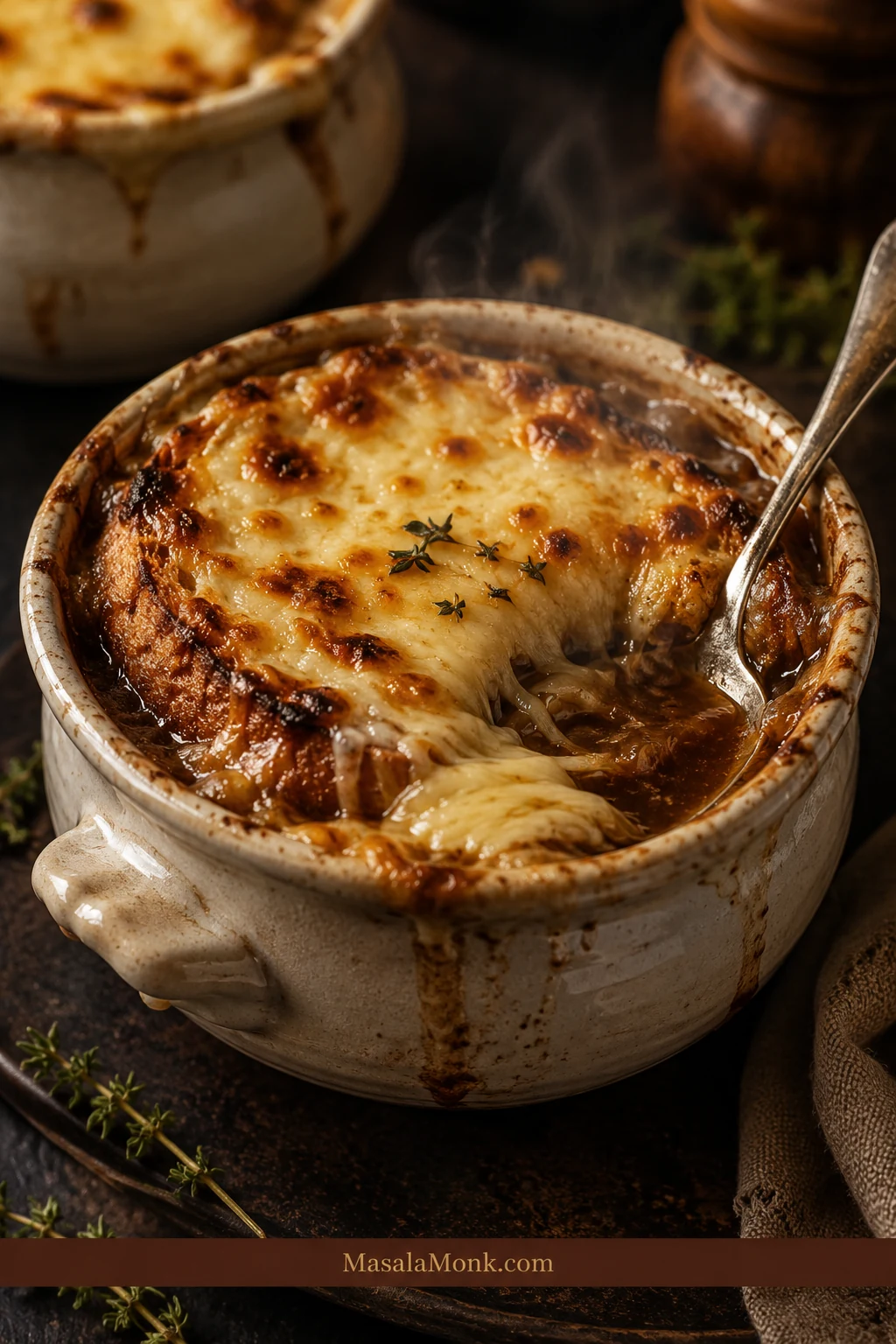
This is the kind of soup that rewards the cook who lets the kitchen slow down for a little while. A mountain of sharp raw onions softens in butter, collapses into the pot, turns golden, and slowly becomes mellow, savory, and almost jammy. Then the broth goes in, the bread gets toasted, and the cheese melts over the top until every spoonful breaks through something crisp, bubbling, and deeply comforting.
The best part is that first spoonful: the cheese stretches, the toast softens at the edges, and the broth underneath tastes darker and fuller than the simple ingredient list suggests.
This recipe is built around the three places French onion soup usually fails: pale onions, weak broth, and a risky cheese finish.
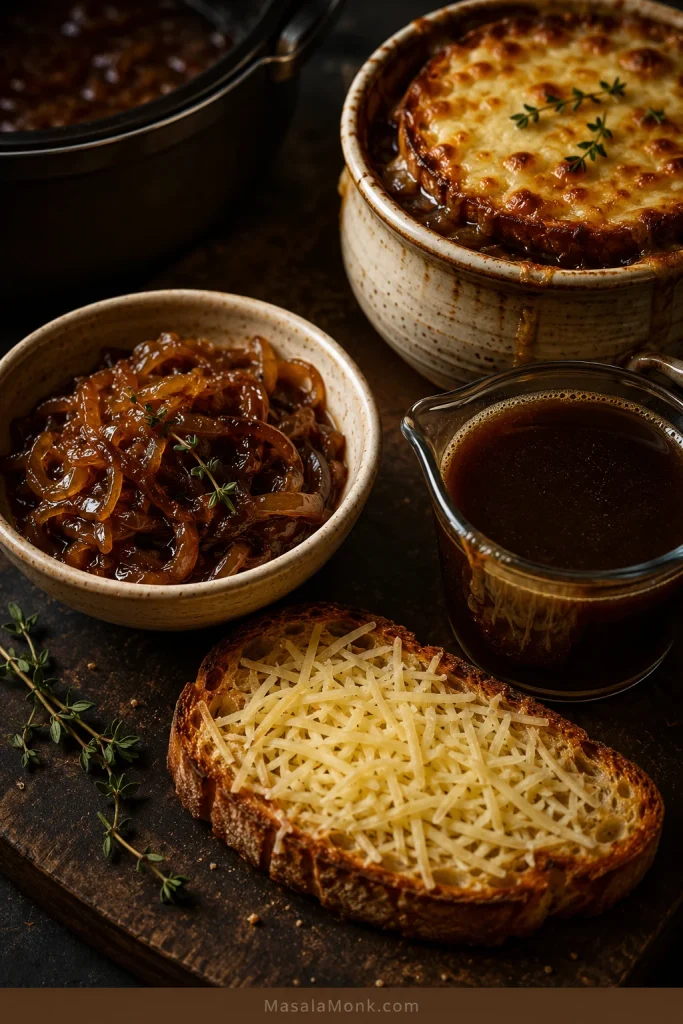
This version starts with the classic bistro-style bowl: beef broth, wine or sherry, toasted bread, and Gruyère. The main path is simple — caramelize the onions, deglaze the pot, simmer with broth, toast the bread, and melt the cheese — and every variation in this guide follows that same path.
It is not a weeknight-speed soup. It is the kind of recipe you make when you want a few ordinary onions to slowly turn into something that feels like dinner out, only warmer.
Make It Now
- Total time: About 1 hour 45 minutes to 2 hours
- Onion time: 45 to 70 minutes for proper caramelization
- Best broth: Beef broth for classic; mushroom broth or dark vegetable stock for vegetarian
- Best cheese: Gruyère, Swiss, or a melty cheese blend
- No crocks: Broil the cheesy toast separately, then place it on the soup
- Ready to cook? Jump to the classic recipe
The 3 Things That Make This Soup Work
- Cook the onions until deep golden and jammy, not just soft.
- Use broth that tastes savory before it goes in.
- Toast the bread firmly so the cheese has somewhere to land.
Keep these three foundations in mind as you cook.
Jump to
- Quick Answer
- Choose Your Version
- Recipe
- Why It Works
- Ingredients + Onions
- Stovetop Method
- Vegetarian + No-Wine
- Slow Cooker + Instant Pot
- Cheese, Bread + Bowls
- Troubleshooting
- Shortcuts + Lighter Options
- Storage + Serving
- FAQs
Quick Answer
French onion soup is onion soup built around slowly caramelized onions, savory broth, toasted bread, and melted cheese. The cheese-topped version is what most people mean by classic bistro-style French onion soup.
You do not have to use wine or beef broth. For no-wine soup, deglaze with broth and finish with a small splash of vinegar or lemon after simmering. For vegetarian French onion soup, use mushroom broth or dark vegetable stock, then add one savory booster such as vegetarian Worcestershire, tamari, or browned mushrooms.
Need the swaps first? Jump to the vegetarian and no-wine options.
Choose Your French Onion Soup Version
Start with the classic path, then adjust only what your kitchen needs. The onions stay at the center; the broth, wine, cheese, and finishing method can move around them.
Make this when you want a bowl that feels special without needing expensive ingredients. Most of the flavor comes from time, not fuss.
| What you want | Best version | Remember |
|---|---|---|
| Classic bistro flavor | Beef broth, wine or sherry, Gruyère | Reduce wine before adding broth. |
| No beef, still savory | Dark vegetable stock or mushroom broth | Add one savory booster. |
| No wine, still balanced | Deglaze with broth | Replace wine’s acid and fond-loosening job. |
| Vegetarian, not thin | Vegetable or mushroom broth plus acid and umami | Do not add every booster at once. |
| Less stove-watching | Slow cooker onions, then stovetop finish if possible | Convenience improves; browning still matters. |
| No crocks, no risk | Broil cheesy toasts separately | Top hot soup just before serving. |
Classic French Onion Soup Recipe
Start with this stovetop version for the most classic bowl. It looks like restaurant soup, but the actual work is simple: slice onions, cook them slowly, simmer, toast, and melt cheese.
French Onion Soup
Servings: 4 main-course bowls or 6 starter bowls
Prep time: 20 minutes
Cook time: 1 hour 25 minutes to 1 hour 40 minutes
Total time: About 1 hour 45 minutes to 2 hours
Equipment: Large heavy pot or Dutch oven, wooden spoon, baking sheet, broiler-safe crocks or regular bowls plus the separate cheesy-toast method
The timing is flexible because onions vary. Trust the color, smell, and texture more than the clock.
Ingredients
- 3 lb / 1.35 kg yellow onions, thinly sliced, about 1/8 inch / 3 mm thick
- 3 tablespoons unsalted butter
- 1 tablespoon olive oil or neutral oil
- 1/2 teaspoon fine salt, plus more to taste after simmering
- 1/2 teaspoon sugar, optional, only if your onions need help browning
- 3 cloves garlic, minced
- 1 tablespoon all-purpose flour, optional, for light body
- 1/2 cup / 120 ml dry white wine or dry sherry, or 1/2 cup / 120 ml extra broth for no-wine soup
- 6 cups / 1.4 liters beef broth or stock, or up to 7 cups / 1.65 liters for a brothier soup
- 2 fresh thyme sprigs or 1/2 teaspoon dried thyme
- 1 bay leaf
- 1 teaspoon Worcestershire sauce, or vegetarian Worcestershire/tamari for vegetarian soup
- 1 to 2 teaspoons apple cider vinegar, sherry vinegar, balsamic vinegar, or lemon juice, as needed after simmering
- Black pepper, to taste
- 4 to 6 slices baguette, sourdough, or sturdy crusty bread
- 1 1/2 to 2 cups / 170 to 225 g grated Gruyère, Swiss, provolone, mozzarella, or a mix
- 2 tablespoons grated Parmesan, optional, for extra savory flavor
Quick notes before you cook: Start light on salt because broth, cheese, Worcestershire, and Parmesan can all be salty. Skip the sugar if your onions brown well. Use 6 cups broth for a thicker bowl, or 7 cups for a brothier one.
Method
Cook the onions
- Slice the onions evenly. Aim for about 1/8 inch / 3 mm. Thin, even slices cook more predictably. Too thick and they take much longer; too thin and they can break down or burn at the edges.
- Start the onions. Set a large heavy pot or Dutch oven over medium heat. Add the butter and oil. When the butter melts, add the onions and 1/2 teaspoon salt. Stir until coated.
- Soften and collapse. Cook for 10 to 15 minutes, stirring often, until the onions release water and shrink down. Do not panic when the pot looks watery at first. That moisture has to cook off before browning can begin.
- Caramelize slowly. Lower the heat to medium-low and cook for 35 to 55 minutes more, stirring every few minutes. The onions should turn golden, then deep golden brown, and become soft and jammy. If they hiss loudly, stick hard, or darken too quickly, lower the heat. If the pot gets dry, add a splash of water or broth and scrape the golden browned bits into the onions.
- Check before adding liquid. The onion base should already smell like dinner. Look for soft strands, deep golden color, glossy texture, sweet roasted aroma, and browned—not black—bits on the bottom of the pot. If the onions are pale and wet, keep cooking. If the pot smells acrid or the bits are black, do not scrape those burnt spots into the soup.
Build and simmer the base
- Add garlic and flour. Stir in the garlic and cook for 30 seconds. If using flour, sprinkle it over the onions and cook for 1 minute, stirring well. The flour should disappear into the onions, not sit in dry clumps.
- Deglaze. Add wine or sherry, if using. Scrape the bottom of the pot and simmer until the liquid reduces and no longer smells sharp, about 5 to 8 minutes. The onions should look glossy again. For no-wine soup, use 1/2 cup broth instead.
- Add broth and herbs. Pour in 6 cups broth for a thicker onion-forward soup, or up to 7 cups for a brothier bowl. Add thyme, bay leaf, Worcestershire if using, and black pepper. Bring to a simmer.
- Simmer and taste. Simmer gently for 20 to 30 minutes. Taste and adjust salt. If the soup tastes too sweet or flat, add 1 teaspoon vinegar or lemon juice, then taste again before adding more. The base should taste savory before the bread and cheese go on. Cheese hides many things, but it will not fix weak broth.
Toast, broil, and serve
- Toast the bread. While the soup simmers, toast the bread until dry and crisp. Use a 400°F / 205°C oven for 6 to 10 minutes, or toast it in a skillet or toaster. Cut the bread so it sits just inside the bowl or crock.
- Finish with cheese. Ladle hot soup into broiler-safe crocks or bowls. Place toasted bread on top, cover with cheese, and broil for 2 to 5 minutes, watching closely, until melted and browned. Without broiler-safe bowls, broil the cheesy toasts separately on a baking sheet and place them on top of the soup.
- Serve hot. Let the bowls sit for a minute before serving. The cheese and soup will be very hot.
Short Recipe Notes
- Vegetarian: Use mushroom broth or dark vegetable stock, plus one savory booster such as tamari, vegetarian Worcestershire, or browned mushrooms.
- No wine: Deglaze with broth, then add a small splash of vinegar or lemon after simmering to keep the onion sweetness in check.
- Slow cooker: Cook onions with butter/oil and salt on LOW for 8 to 10 hours, then finish in a pot on the stove for 10 to 15 minutes for better color.
- Cheese: Gruyère is classic, but Swiss, provolone, mozzarella with Parmesan, or aged cheddar can work.
- Broiler safety: Only broil in bowls marked broiler-safe. When in doubt, broil the toast, not the bowl.
Why This Recipe Works
The magic is not in a long ingredient list. It is in what happens when onions are given enough time. They lose their sharpness, release their moisture, brown slowly, and turn into the kind of base that makes the whole pot taste more satisfying than it should.
This is the part where the kitchen starts smelling like dinner is worth waiting for.
The broth matters too, but it should not have to do all the work. Beef broth gives the classic bistro flavor. Mushroom broth or dark vegetable stock can still make a satisfying vegetarian version when the onions are cooked well and the seasoning has a little lift.
That final lift is important because caramelized onions are naturally sweet. Wine, sherry, vinegar, lemon juice, Worcestershire, tamari, or a well-seasoned broth can wake up the pot just enough so the bowl tastes savory instead of syrupy.
Toasted bread gives the melted cheese structure, so it can sit on top instead of disappearing into the soup. That final bubbling layer turns a humble onion soup into the bowl people remember.
Ingredients and Onion Tips
You do not need rare ingredients, but each one has a job. The onions bring sweetness, the broth brings backbone, the bread supports the topping, and the cheese makes the bowl feel finished.
How to Choose the Ingredients
Onions: Yellow onions are the safest all-purpose choice. They become sweet without making the soup sugary, and they give the broth a savory backbone. Sweet onions work too, but the finished bowl can taste noticeably sweeter. Red onions make a darker soup with a slightly sharper flavor.
Butter and oil: Butter is where the soup starts to smell like something is happening. A little oil helps keep the butter from scorching during the long cook. All butter is fine too, but keep the heat gentle and watch the bottom of the pot.
Broth, Wine, and Seasoning Choices
Taste the Broth Before It Goes In
If the broth tastes watery now, it will taste watery later. Use better stock, simmer weak broth for a few minutes to concentrate it, or add one savory booster before relying on cheese to rescue the bowl.
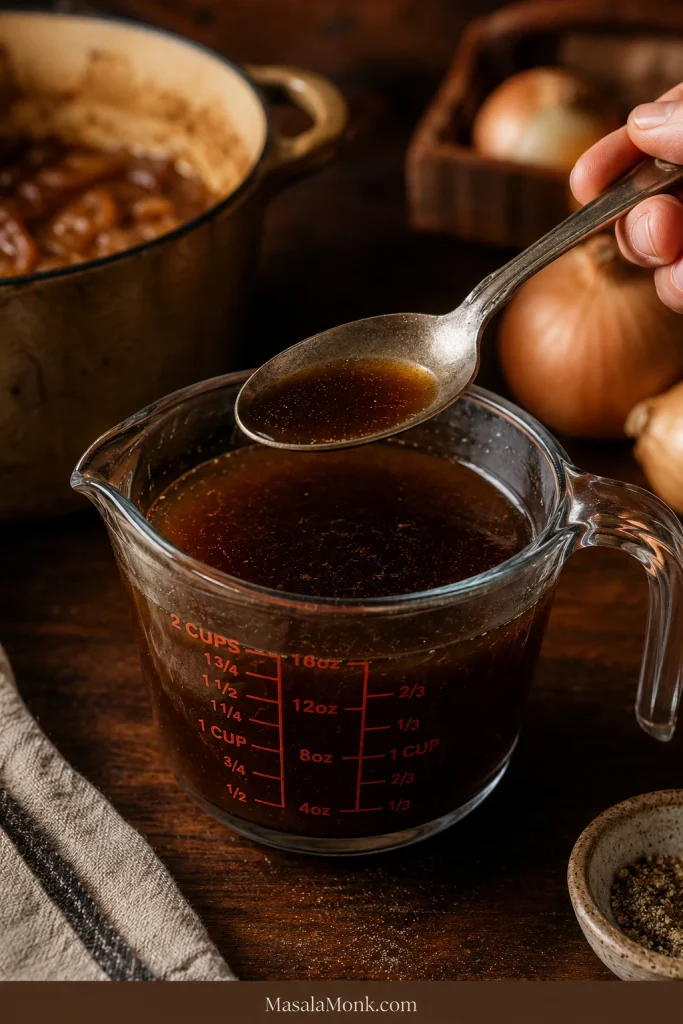
If the broth tastes flat or the onions seem too sweet, jump to troubleshooting before adding cheese.
Broth or stock: Classic French onion soup usually uses beef broth or beef stock. For a vegetarian version, use dark vegetable stock or mushroom broth. The broth should taste good before it meets the onions, because a pale base and thin broth will not become deeply savory just because cheese goes on top.
Wine, sherry, or no wine: Dry white wine or dry sherry adds character and helps keep the onion sweetness in check. It is helpful, but not mandatory. In a no-wine version, broth loosens the browned bits and vinegar or lemon replaces the brightness wine would have added.
Flour: Flour is optional, but a small spoonful gives the broth just enough body to cling to the onions. It should not turn the soup into gravy. Skip it for a thinner, clearer broth. When using flour, cook it briefly with the onions before adding liquid so it does not taste raw.
Herbs and seasoning: Thyme and bay leaf should stay in the background. You want people to taste onion first. Garlic helps, but it should not dominate. Worcestershire, tamari, soy sauce, or a small splash of vinegar can round out the pot, especially in no-wine or vegetarian versions. For vegetarian soup, use vegetarian Worcestershire, tamari, or soy sauce instead of regular Worcestershire.
Best Onions for French Onion Soup
The best onions for French onion soup are usually yellow onions. They are savory, reliable, and easy to find. They caramelize well without making the soup taste too sweet.
- Yellow onions: balanced, savory, gently sweet, and the best everyday choice.
- Sweet onions: softer and sweeter; good for a sweeter soup, but even better mixed with yellow onions.
- Red onions: sharper, darker, and slightly fruitier; useful for variation, but they change the color and flavor.
- White onions: cleaner and sharper; best used with yellow onions instead of alone.
- Shallots: delicate and sweet; lovely as part of a mix, but expensive for the whole pot.
The slicing matters almost as much as the onion type. Aim for slices about 1/8 inch / 3 mm thick. Very thick slices take longer to soften. Paper-thin slices can break down too much or burn at the edges before the rest of the pot is ready.
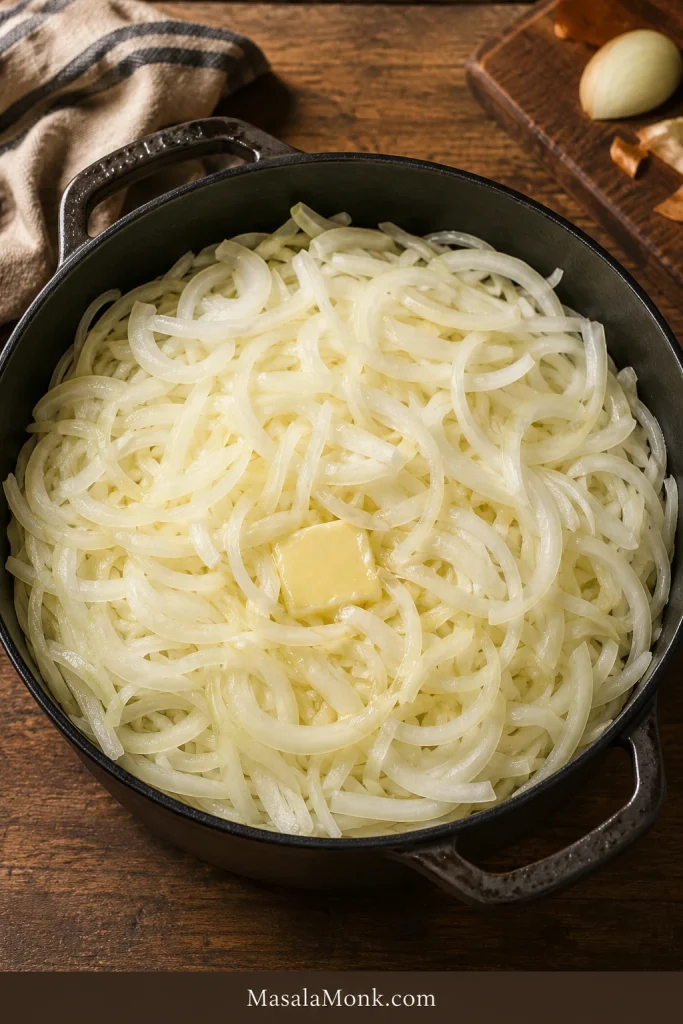
How to Caramelize Onions Properly
When it feels like nothing is happening for the first 20 minutes, you are probably doing it right. The onions soften before they brown. The waiting is part of the recipe, not a sign that something has gone wrong. Once the onions are glossy and deep gold, the soup starts doing some of the work for you.
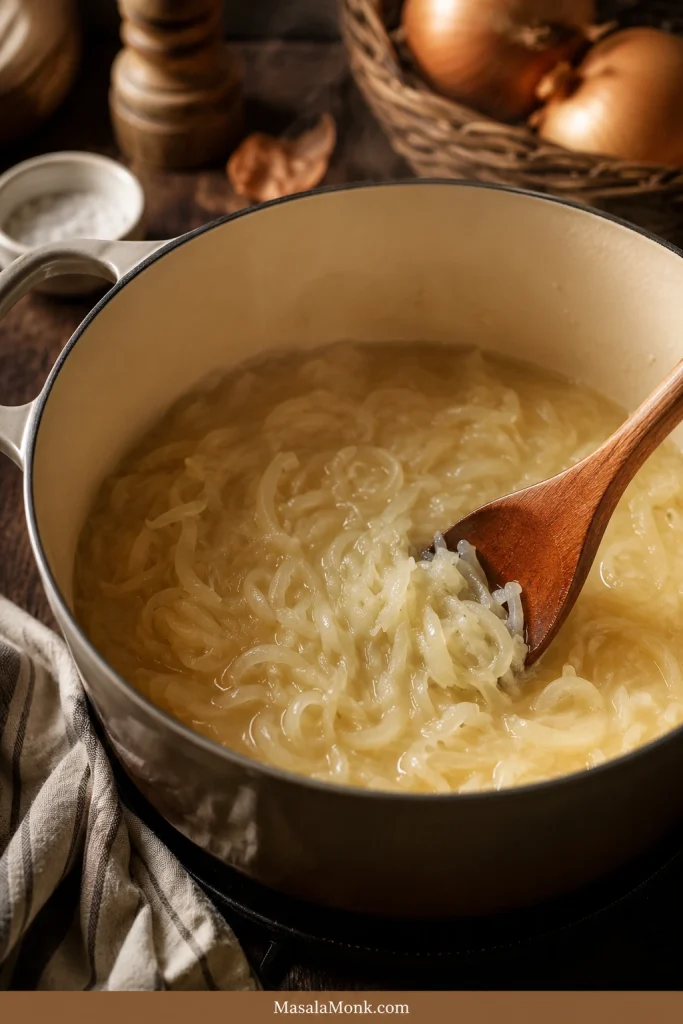
Read the Onion Stages
| Stage | What you see | What to do |
|---|---|---|
| Wet and pale | Steamy, crowded onions | Keep cooking |
| Soft and glossy | Sharp smell fades | Keep cooking |
| Golden | Fond starts forming | Stir and scrape gently |
| Deep golden and jammy | Sweet roasted smell, soft strands | Ready for liquid |
| Black or acrid | Burnt smell, black bits | Do not scrape burnt fond into the soup |
If the pot looks boring for a while, that is normal. The reward comes late: first the sharp smell fades, then the onions turn glossy, and only near the end does the soup begin to smell deep and savory.
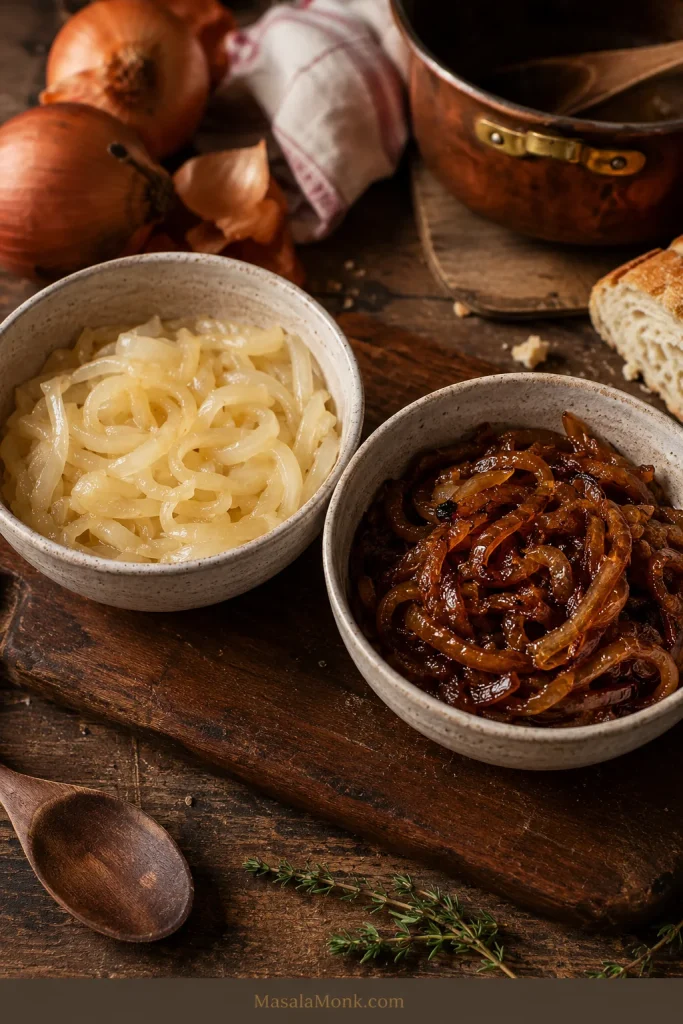
Control Heat and Fond
Use a heavy pot if possible. A Dutch oven, heavy stainless steel pot, or heavy-bottomed saucepan gives the onions time to brown without scorching too quickly. A thin pot can create hot spots, which makes some onions burn while others stay pale.
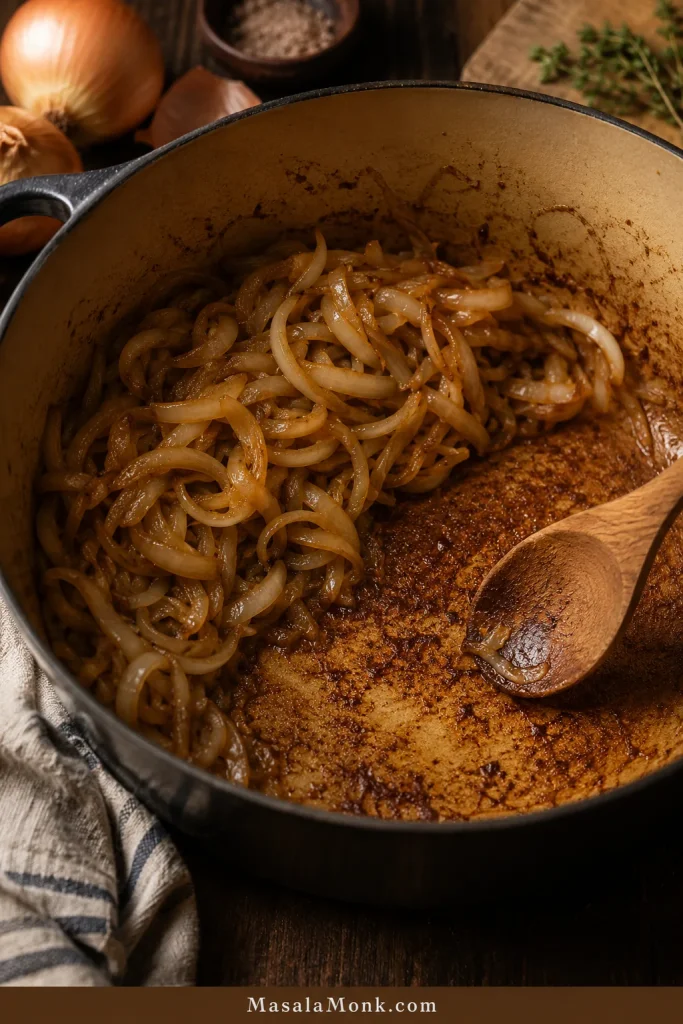
Keep the heat moderate. When the onions are not browning after a long time, raise the heat slightly. When they are sticking hard or the bottom of the pot is getting too dark, add a splash of water or broth and scrape the browned bits into the onions. Golden brown fond is flavor. Black scorched fond is bitterness.
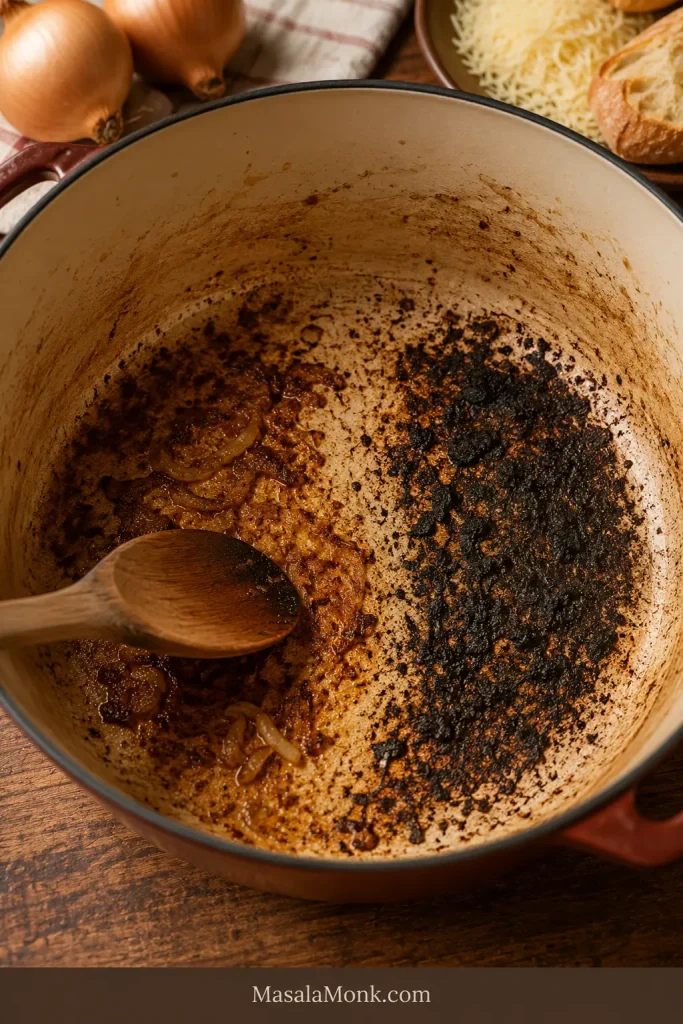
When the fond stays brown and the onions turn glossy, soft, and deep golden, you have the flavor base the soup needs. This is the success state before adding liquid.
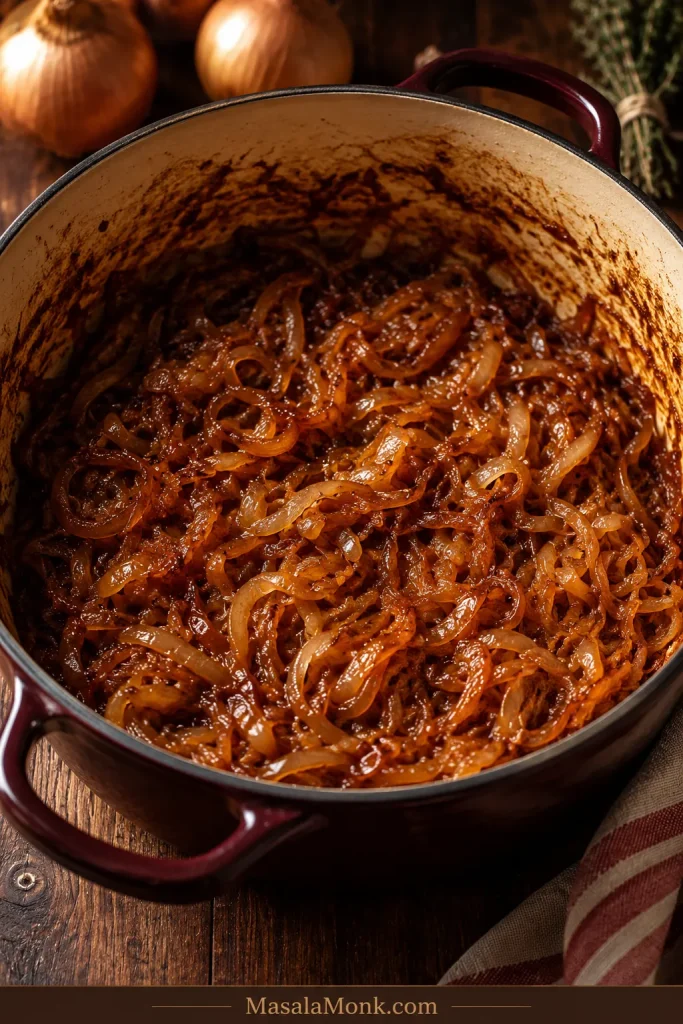
For a deeper look at onion color, Serious Eats has a helpful French onion soup guide that explains why rich golden brown is better than burnt-dark.
A small pinch of sugar can help stubborn onions brown, but do not rely on sugar to replace time. This soup should taste like slowly cooked onions, not sweet onion syrup.
How the Stovetop Method Works
The stovetop method gives you the most control. Once you understand what each stage is doing, the recipe feels much less mysterious.
On the stove, the onions release water, collapse, and slowly move from pale to golden to deep golden brown. Wine, sherry, or broth lifts the browned bits from the pot, and the final simmer lets the onion base and broth become one soup.
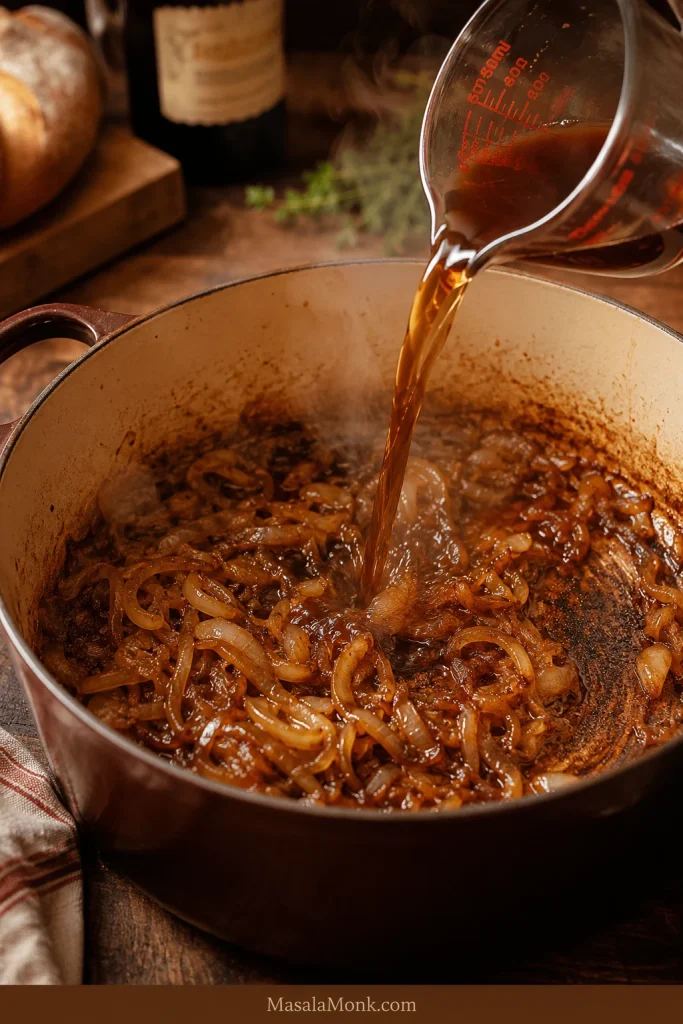
Taste near the end, before the bread and cheese go on. A little salt, acid, or umami can wake up the pot while you can still adjust it easily.
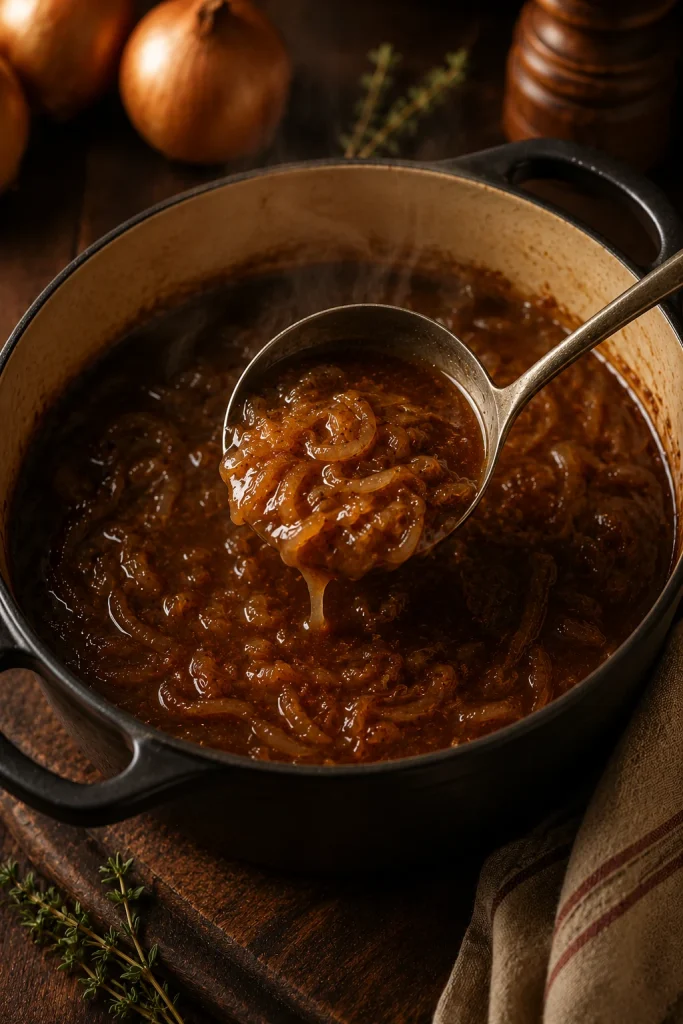
Once the stovetop method makes sense, every variation becomes easier. You are not learning four different soups. You are keeping the onions strong, then changing the broth, deglazing liquid, or finishing method to fit your kitchen.
No broiler-safe bowls? Jump to the no-crock cheese method before you finish the topping.
Vegetarian and No-Wine Options
Vegetarian French Onion Soup
Vegetarian French onion soup should not taste like onions floating in weak vegetable broth. The stock needs to be dark, savory, and strong enough to support the caramelized onions.
Use mushroom broth or dark vegetable stock when available. Mushroom broth works especially well because it brings earthy savoriness that helps replace some of the depth people expect from beef broth.
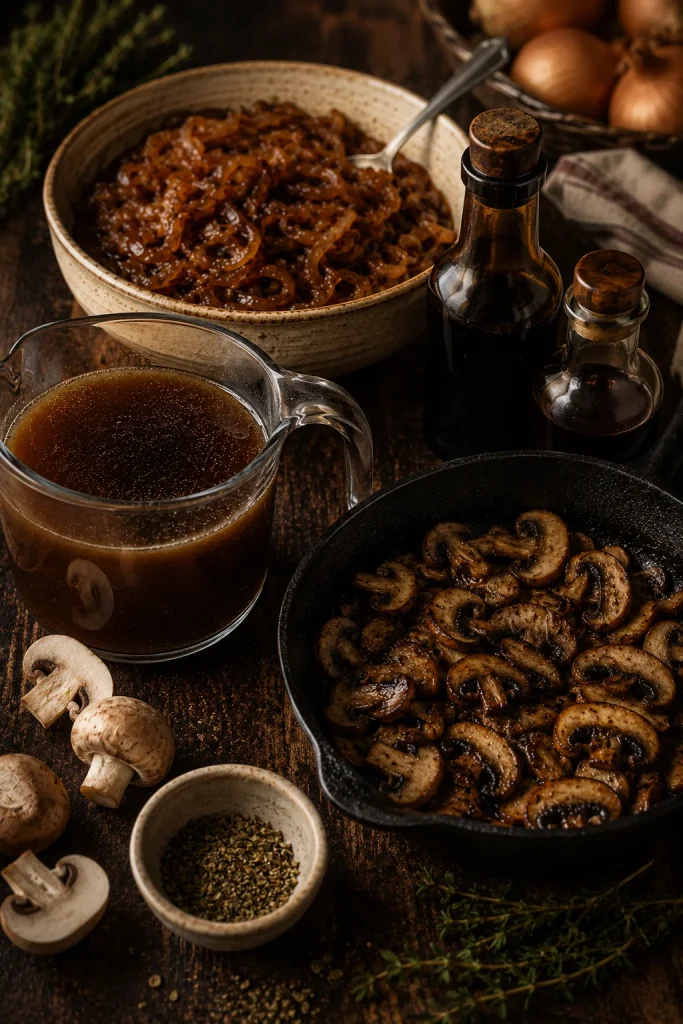
For the cleanest vegetarian version, choose one savory booster and one brightener. That keeps the soup controlled instead of turning it into a pantry experiment.
| Need | Use one of these |
|---|---|
| More savory depth | Mushroom broth, browned mushrooms, tamari, vegetarian Worcestershire |
| More brightness | Sherry vinegar, apple cider vinegar, lemon juice |
| More body | Longer simmer, stronger stock, slightly more onions |
A vegetarian bowl should still feel complete, not like a compromise. When the stock is dark, the onions are properly browned, and the finish has a little brightness, the soup keeps its cozy bistro feel.
- Replace beef broth: use mushroom broth or dark vegetable stock.
- Swap regular Worcestershire: use vegetarian Worcestershire, tamari, or soy sauce.
- Skip the wine: deglaze with broth, then add vinegar or lemon after simmering.
- For the cheese topping: use Gruyère, Swiss, provolone, mozzarella, or a vegetarian cheese that melts well.
Cheese eaters can finish the soup with Gruyère, Swiss, provolone, mozzarella, or a mix. For strictly vegetarian soup, check the cheese label because some cheeses use animal rennet. For a vegan version, use olive oil instead of butter, vegan Worcestershire or tamari, and your preferred vegan cheese or cheesy toast alternative.
Skipping wine too? Jump to the no-wine method for deglazing and acid balance.
No-Wine French Onion Soup
No-wine French onion soup can still taste deep and complete. You only need to replace wine’s two jobs: loosening the browned bits from the pot and balancing the natural sweetness of the onions.
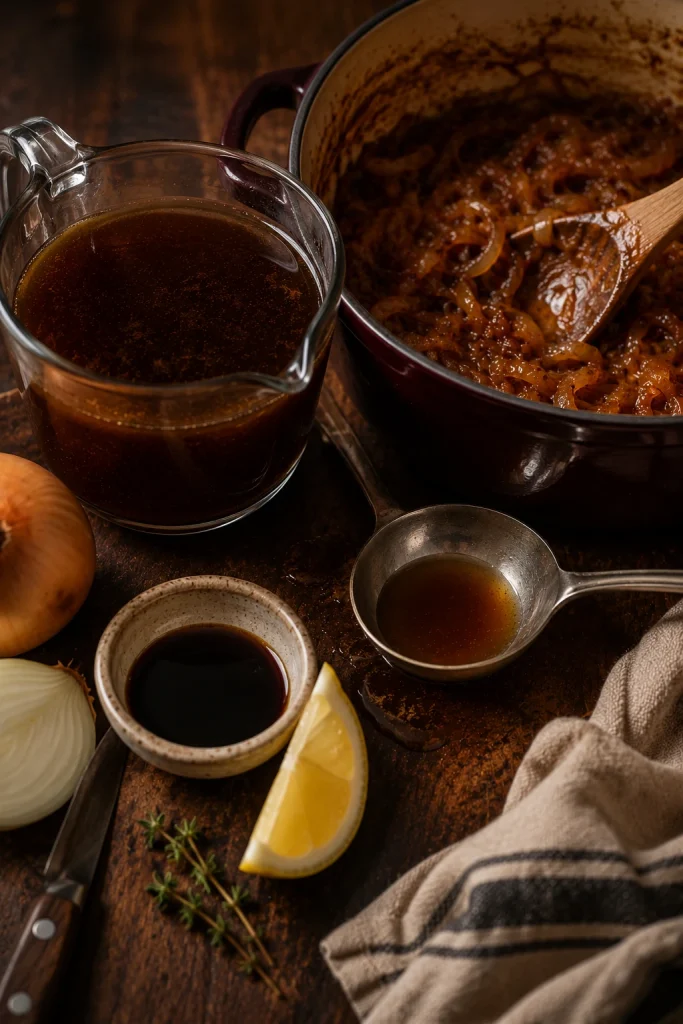
For a no-wine version, deglaze with broth instead of wine. Scrape up the browned bits, then simmer as usual. After the soup has simmered, taste it and add a small balancing ingredient if needed. Start with 1 teaspoon, taste, and stop as soon as the bowl feels brighter.
- Apple cider vinegar: gently brightens the soup.
- Balsamic vinegar: adds roundness and a little sweetness.
- Lemon juice: lifts heavy flavors.
- Worcestershire sauce: adds savory weight.
- Vegetarian Worcestershire: adds weight without meat-based ingredients.
- Tamari or soy sauce: adds umami and saltiness, so use carefully.
The point is not to make the soup sour. The point is to wake up the sweetness of the onions so the bowl tastes rounded instead of heavy.
Making it vegetarian as well? Jump back to the vegetarian broth tips and choose one savory booster.
Slow Cooker Option, Plus an Instant Pot Note
Slow Cooker French Onion Soup
The slow cooker does not make the soup faster; it makes the waiting easier. It can handle the long onion softening while you do something else. A short stovetop finish is only there if you want deeper color and a more developed base.
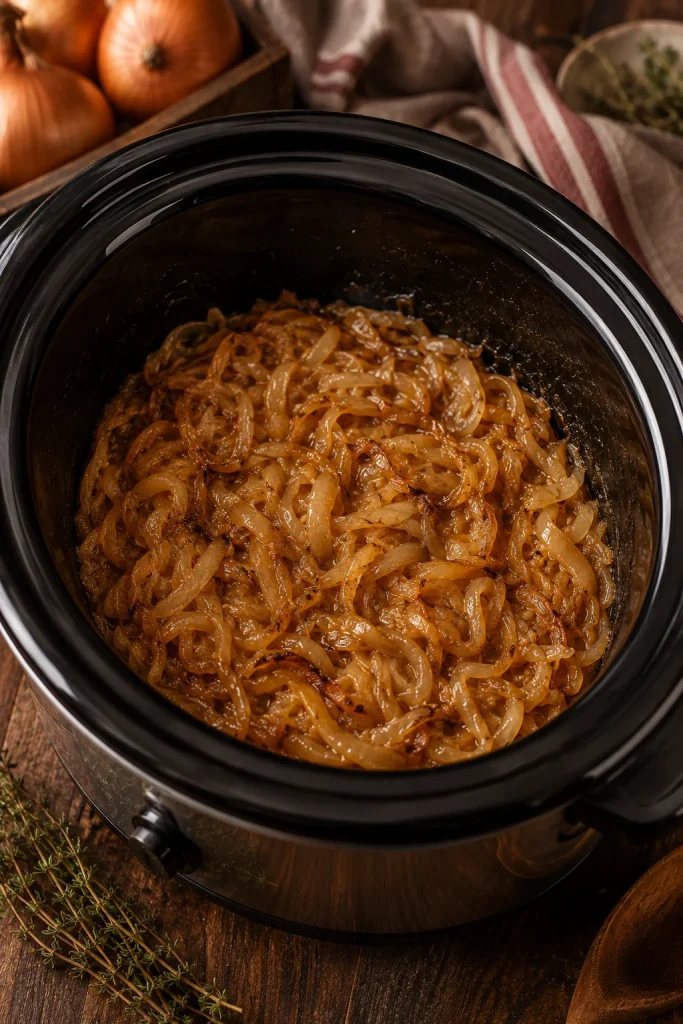
For the easiest version, add sliced onions, butter or oil, and salt to a 5-quart or larger slow cooker. Cook on LOW for 8 to 10 hours, until the onions are very soft and browned around the edges. If they look pale and wet, transfer them to a pot and cook for 10 to 15 minutes to concentrate the color and flavor.
| Slow cooker base | Amount |
|---|---|
| Sliced onions | 3 lb / 1.35 kg |
| Butter and oil | 3 tablespoons butter + 1 tablespoon oil |
| Salt | 1/2 teaspoon to start |
| Slow cooker time | 8 to 10 hours on LOW |
| Best flavor finish | 10 to 15 minutes on the stove |
| Broth simmer | 20 to 30 minutes on the stove, or 1 to 2 hours more in the slow cooker |
Using pressure cooking instead? Jump to the Instant Pot note.
After the onions are ready, add broth, thyme, bay leaf, and seasoning, then simmer until the soup tastes rounded. Finish with toasted bread and cheese.
If you like cozy slow cooker dinners built around French onion flavor, this Slow Cooker French Onion Chicken is another easy comfort-food option.
Instant Pot Note
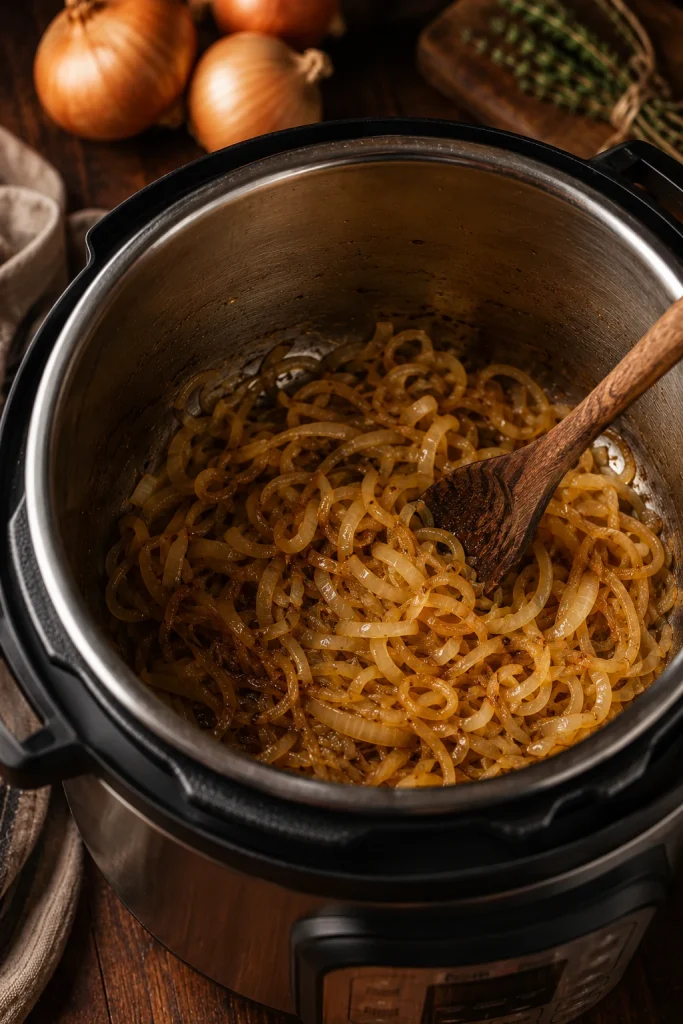
You can make the soup in an Instant Pot, but pressure cooking does not replace caramelization. Use sauté mode first, give the onions 20 to 30 minutes to soften and brown, then add broth and seasonings. Pressure cook for 5 to 6 minutes, release pressure carefully, taste and adjust, then finish with toasted bread and cheese. If the onions are pale before pressure cooking, the finished soup will taste less developed.
Cheese, Bread, and Bowls
Best Cheese for French Onion Soup
Gruyère is the classic choice because it melts smoothly and has a nutty, savory flavor that suits the sweet onions. The best topping melts well, browns in spots, and still tastes good once it stretches.
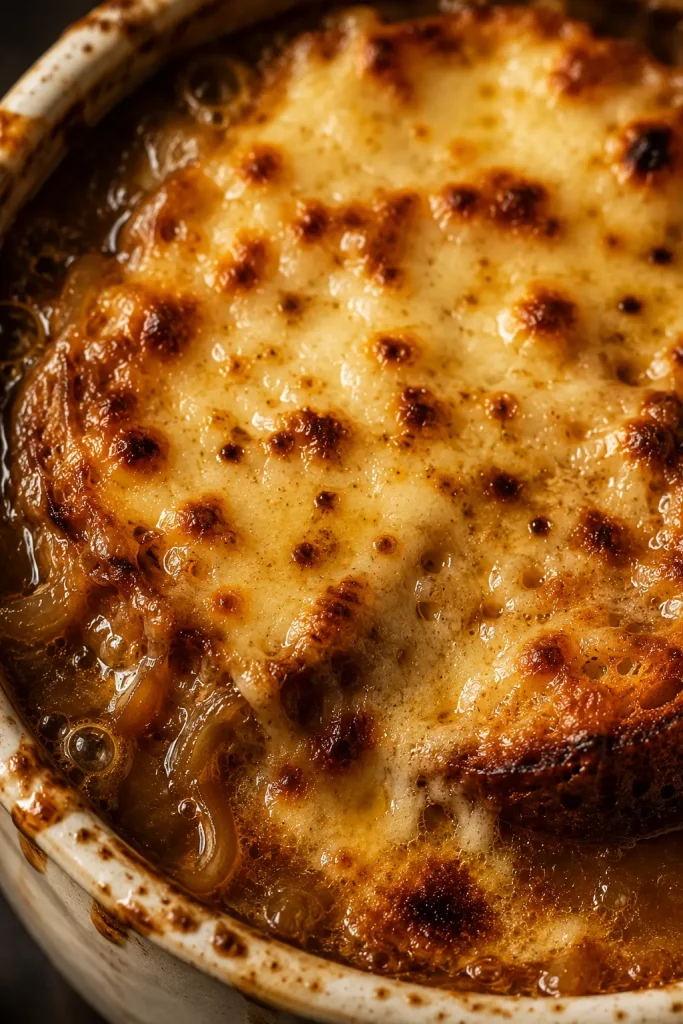
- Gruyère: the classic choice; nutty, rich, and beautifully melty.
- Swiss: mild, melty, and a good substitute for Gruyère.
- Provolone: smooth, stretchy, and mild.
- Mozzarella: excellent for cheese pull, but mild in flavor.
- Parmesan: salty and savory; best mixed with another cheese.
- Aged cheddar: not classic, but flavorful and practical.
- Processed cheese: melts easily, but can make the soup taste saltier and more snack-like.
If Gruyère is too expensive or hard to find, use mozzarella for melt and add Parmesan, aged cheddar, or a sharper cheese for flavor. Mostly mozzarella needs a small amount of Parmesan or sharp cheddar so the topping has flavor, not just stretch.
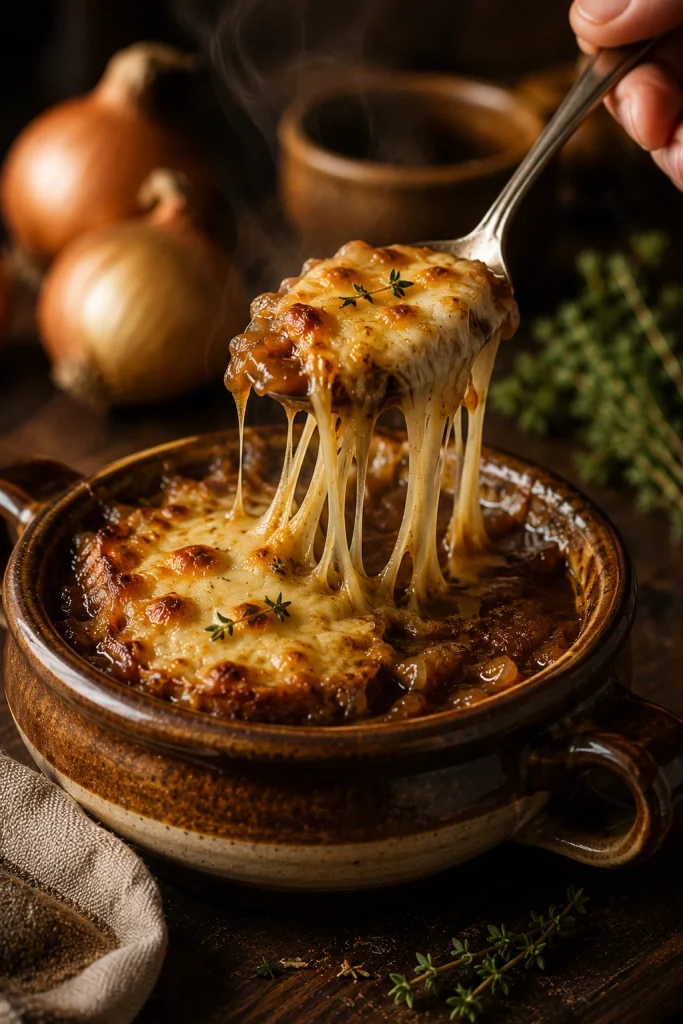
Best Bread for French Onion Soup
The toast keeps the cheese from sinking straight into the soup. It should be crisp enough to hold, but porous enough to soften at the edges. Baguette is classic because it is sturdy and easy to slice into rounds, but you have options.
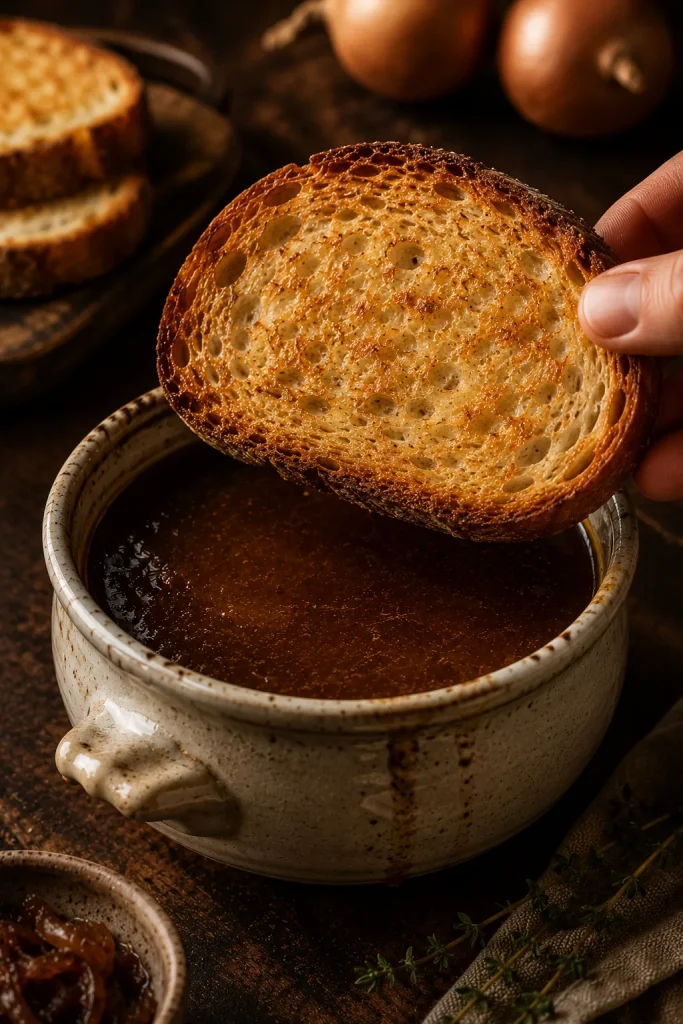
- Baguette: classic, sturdy, and ideal for individual bowls.
- Sourdough: flavorful and strong enough for soup.
- Country bread: good for larger bowls if cut to fit.
- Crusty rolls: useful when baguette is not available.
- Regular sandwich bread: only use if toasted very firm; otherwise it gets soggy quickly.
Cut the bread so it sits just inside the bowl or crock. It should cover much of the surface without forcing you to wrestle with it. Toast it before adding cheese. Soft bread under melted cheese may look good for a moment, but it sinks and turns mushy quickly.
If your cheese sinks or the bread turns soggy, jump to troubleshooting before serving.
For a homemade bread side on another soup night, this Homemade Garlic Bread Loaf can be torn, toasted, or served beside a cheesy bowl.
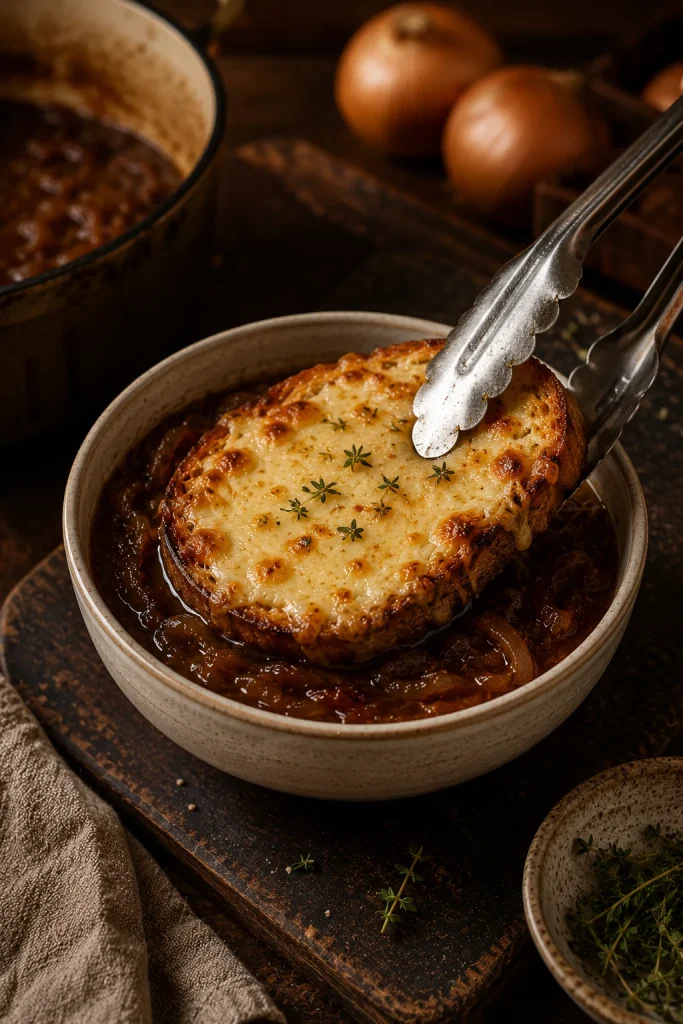
No Broiler-Safe Crocks? Broil the Toast, Not the Bowl
French onion soup is often served in handled crocks because they can go under the broiler and hold heat well. But you do not need special crocks, and you should not risk a favorite bowl just for melted cheese.
Bowls marked only oven-safe are not automatically safe under the broiler. Broilers use intense direct heat, and some ceramic, stoneware, or glass dishes can crack or break if they are not made for it. For cookware safety, Southern Living’s guide on oven-safe versus broiler-safe dishes is worth checking before putting bowls under direct heat.
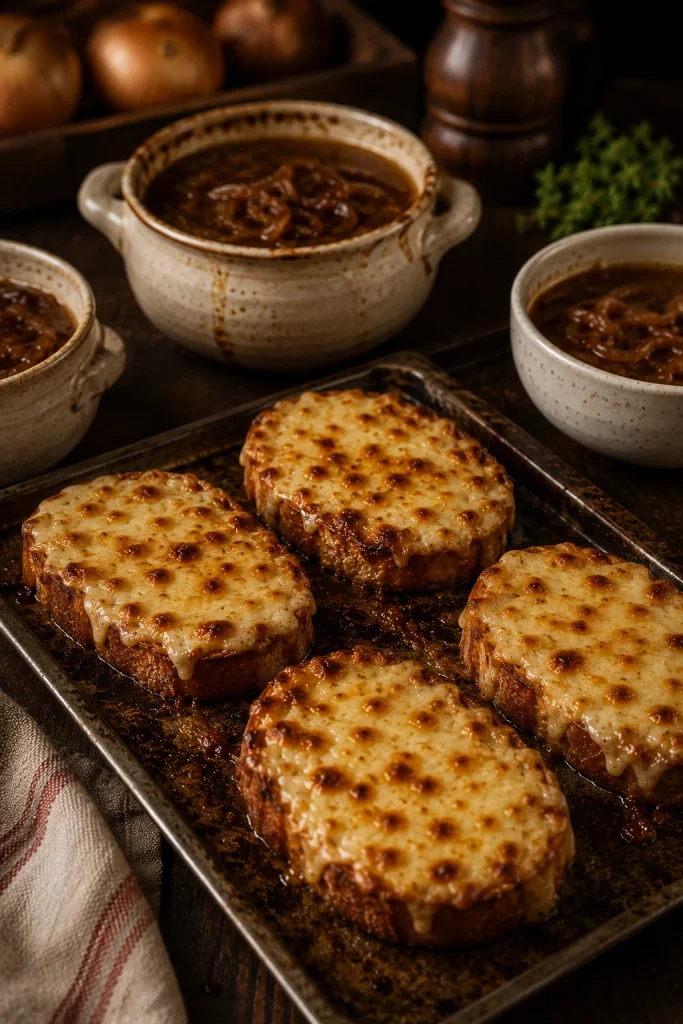
No-Crock Method
- Toast the bread until dry and crisp.
- Add cheese on top of the toast.
- Broil the cheesy toasts on a baking sheet until melted and browned.
- Ladle hot soup into regular bowls.
- Place the cheesy toast on top just before serving.
This gives you the same bubbling, browned cheese moment without guessing whether your bowls can handle the heat.
Troubleshooting French Onion Soup
Most problems show up before the bowls reach the table, which is good news. Taste the pot while you can still fix it.
Scan the row that matches your pot; you do not need to read the whole table before cooking.
| Problem | Likely cause | How to fix it |
|---|---|---|
| Soup tastes too sweet | Sweet onions, sugar, or not enough acid | Add a small splash of vinegar, lemon juice, Worcestershire, or tamari. Next time, use yellow onions and skip the sugar. |
| Soup tastes bitter | Burnt onions or blackened fond | Do not scrape black bits into the pot. Lower the heat next time and deglaze earlier. |
| Soup tastes like wine | Wine was not reduced enough | Simmer longer so the sharp wine flavor cooks off. Next time, reduce wine until the onions look glossy and jammy again. |
| Soup is too salty | Salty broth, bouillon, Worcestershire, cheese, or reduced liquid | Dilute with unsalted broth or water. Add a small splash of acid to balance. Be careful adding more cheese. |
| Soup tastes watery | Weak stock or rushed onions | Simmer longer, use better stock, or add a small umami boost like Worcestershire, tamari, or mushroom broth. |
| Soup tastes flat | Not enough salt, acid, or savory weight | Add salt carefully, then a tiny splash of vinegar or lemon. For vegetarian soup, add tamari or vegetarian Worcestershire. |
| Cheese sinks | Bread was too soft or too thin | Use sturdier bread and toast it until crisp before adding cheese. |
| Bread turns soggy immediately | Bread was not toasted enough | Toast bread until dry and firm. Add it right before serving. |
| No safe bowls for broiling | Bowls are not broiler-safe | Broil cheesy toasts separately on a baking sheet and place them on top of the soup. |
Shortcuts and Lighter Options
Shortcut Reality Check
Shortcuts can help on a busy night, but they cannot replace the slow onion flavor that makes the bowl taste homemade.
- French onion soup mix: seasoning, not a real soup base. Use it for dips, casseroles, and quick pantry meals.
- Canned, condensed, or frozen soup: convenient, but better with extra caramelized onions, black pepper, thyme, toasted bread, and better cheese.
- Best homemade shortcut: caramelize the onions ahead, store the base, and finish the soup fresh later.
For less stovetop attention, you can also caramelize onions in a covered Dutch oven in the oven, stirring occasionally, then finish the soup on the stove. It still takes time, but it needs less watching.
Lighter and Special-Diet Options
Once the classic bowl is understood, you can lighten it without losing the point of the soup. The onions still need time, and the broth still needs flavor.
- Lower sodium: use low-sodium or unsalted broth, start with less salt, and season at the end. Remember that cheese, Worcestershire, bouillon, and Parmesan can all add salt.
- Lower carb: use a smaller piece of toast or make cheese toasts separately and use less bread. The onions still contain natural carbohydrates, so this is lower-carb, not zero-carb.
- Gluten-free soup: skip the flour, use gluten-free bread, and check broth, Worcestershire, and tamari labels.
- Lighter bowl: use less cheese and a slightly brothier ratio, but do not rush the onion caramelization.
- Lighter vegetarian version: use vegetable or mushroom broth and moderate the cheese, but avoid weak stock or the soup will taste watery.
For a broader look at onions in lower-carb eating, see MasalaMonk’s guide to whether onions are suitable for a keto diet.
Storage, Reheating, and Serving
Storage, Freezing, and Reheating
The soup stores best before the bread and cheese are added. Keep the soup base separate, then finish each bowl fresh when you are ready to eat.
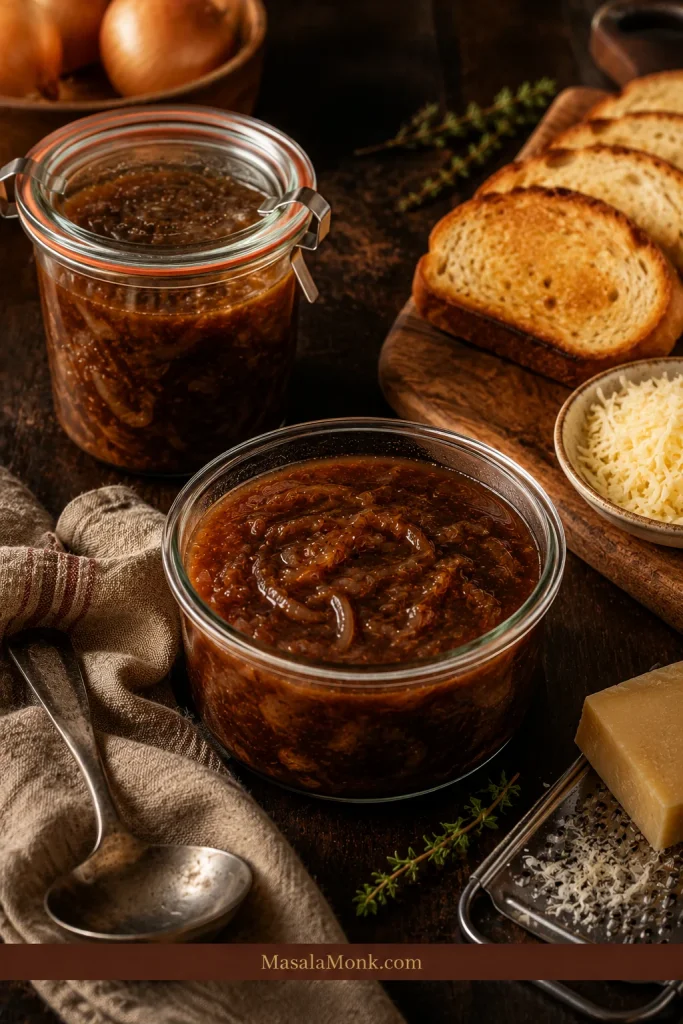
- Refrigerator: Store the soup base in an airtight container for 3 to 5 days.
- Freezer: Freeze the soup base for up to 3 months.
- Reheating: Reheat gently on the stove until hot. Taste again because salt and sweetness can feel stronger after storage.
- Bread and cheese: Add fresh toast and cheese after reheating. Do not freeze fully assembled soup with bread and cheese if you care about texture.
If the soup thickens in the fridge, loosen it with a splash of broth or water while reheating. If it tastes flat after reheating, a few drops of vinegar or lemon juice can bring it back.
What to Serve with French Onion Soup
Serve it in small bowls as a starter, or make it the whole dinner with extra toast and a sharp salad. Because the soup is rich, salty, sweet, and cheesy, it pairs best with something fresh, crisp, or simple.
- A crisp green salad with vinaigrette
- Roast chicken
- Steak or simple grilled meat
- Roasted vegetables
- Grilled cheese or cheese toast
- Crusty bread and butter
- A simple pasta or baked potato on the side
For a crisp, steakhouse-style side, MasalaMonk’s Wedge Salad Recipe works well beside a cheesy bowl because the cold lettuce and sharp dressing cut through the sweetness of the onions.
If you are planning a soup night with more vegetables, beans, and pasta, MasalaMonk’s Minestrone Soup Recipe is a lighter, hearty bowl to keep in rotation.
Give the onions time, finish the bread and cheese safely, and the bowl gives you everything French onion soup is supposed to give: sweet onions, savory broth, crisp toast, bubbling cheese, and that first spoonful that makes the wait feel sensible.
FAQs
What are the best onions for French onion soup?
Yellow onions are the best all-purpose choice. They caramelize well and give the soup a rounded, savory-sweet flavor without making it too sweet.
How long should onions caramelize for French onion soup?
Plan on 45 to 70 minutes. The onions should be soft, deep golden brown, and jammy, not pale and not blackened.
Do you need beef broth for French onion soup?
No. Beef broth is classic, but mushroom broth or dark vegetable stock can also work. Taste the broth first; if it tastes weak before simmering, the soup will need help.
How do you make vegetarian French onion soup taste rich?
Use mushroom broth or dark vegetable stock, then add one savory booster such as vegetarian Worcestershire, tamari, or browned mushrooms.
What can replace wine in French onion soup?
Use broth to deglaze the pot, then add 1 teaspoon vinegar or lemon juice near the end. The goal is balance, not sourness.
Which cheese melts best on French onion soup?
Gruyère is classic because it melts smoothly and tastes nutty. Swiss, provolone, mozzarella, and aged cheddar can also work; if using mostly mozzarella, add Parmesan or a sharper cheese for flavor.
What bread works best for French onion soup?
Baguette is classic, but sourdough, country bread, crusty rolls, or any sturdy toasted bread can work. Toast it until dry and firm.
Do you need oven-safe crocks?
No. Without broiler-safe crocks, broil the cheesy toasts separately on a baking sheet and place them on top of the hot soup.
Is slow cooker French onion soup as good as stovetop?
It can be very good, but the flavor is usually deeper when the onions get a short stovetop finish before the broth goes in.
Is French onion soup mix the same as French onion soup?
No. French onion soup mix is a dry seasoning blend; it does not replace the flavor of slowly caramelized onions.
Why is my French onion soup too sweet?
Very sweet onions, extra sugar, or too little acid can make the soup taste sweet. Add a small splash of vinegar or lemon juice to balance it.
Why does French onion soup taste bitter?
Bitterness usually comes from burnt onions or blackened bits scraped from the pot. Brown fond is good; do not scrape black scorched bits into the soup.
Can French onion soup be frozen?
Yes. Freeze the soup base without bread and cheese for up to 3 months, then reheat and finish with fresh toast and cheese.