Posted on Leave a comment

Tomato Bisque Recipe

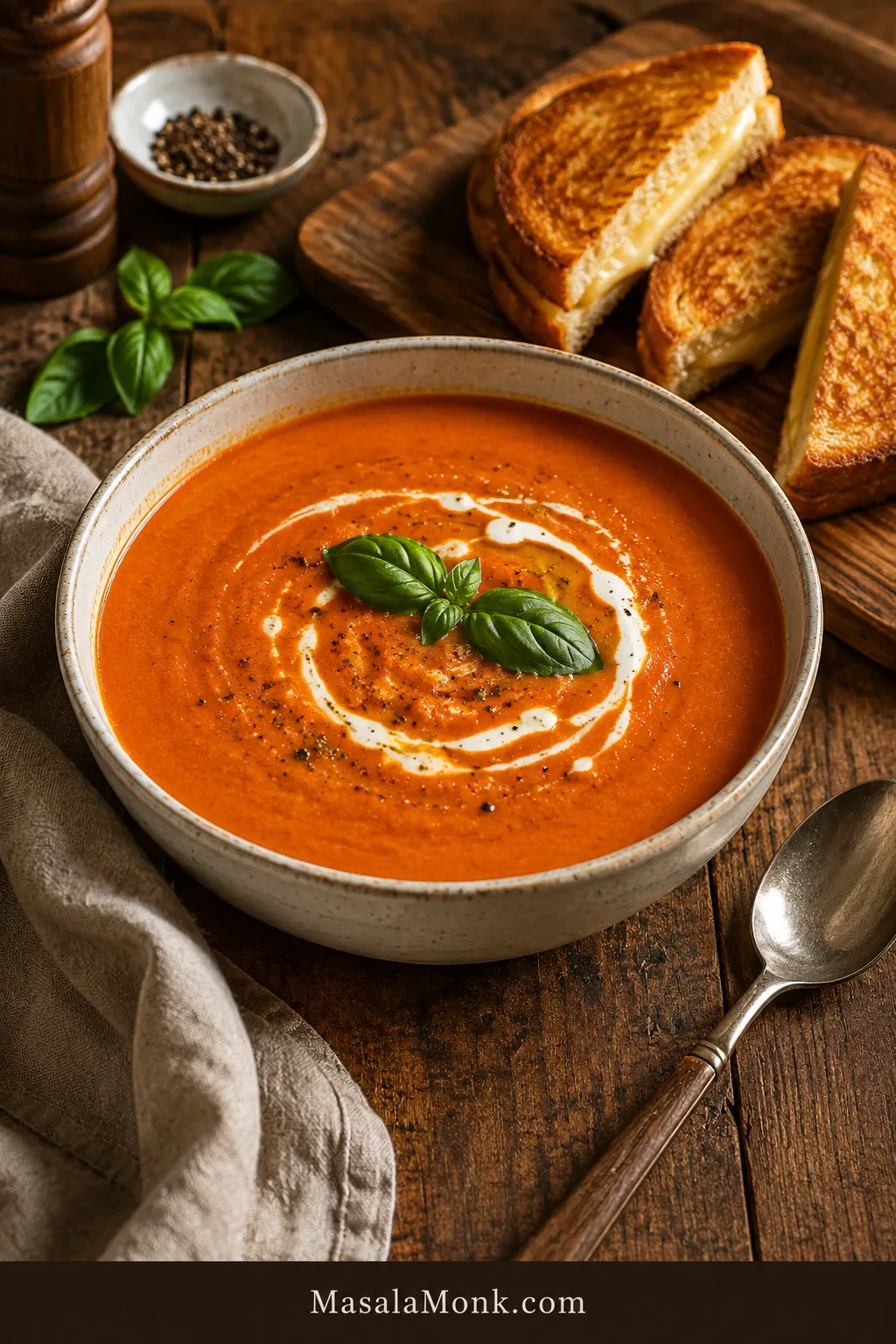
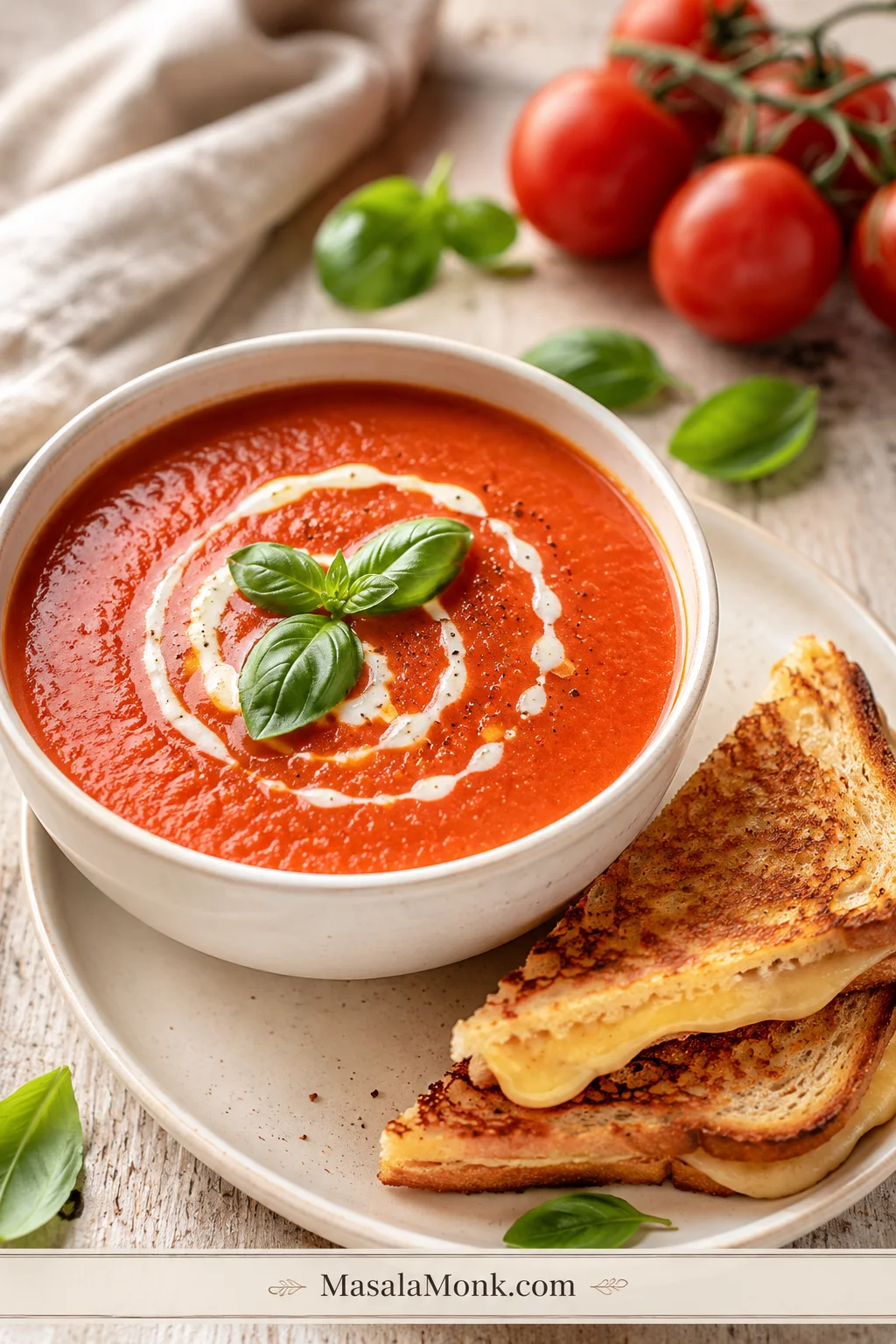
Bowl of creamy tomato bisque with a cream swirl, basil garnish, black pepper, and grilled cheese on the side.

A good tomato bisque should feel like tomato soup got dressed up for grilled cheese night: glossy, velvety, rich enough to comfort you, but still bright enough to taste like tomatoes. This is the bowl you make when classic tomato soup sounds good, but you want it creamier, smoother, and a little more special.

The main recipe starts with canned tomatoes because they are reliable, pantry-friendly, and easy to turn into a rich, blended soup. When fresh tomatoes are ripe and sweet, you can use those too. Either way, the method is simple: cook the vegetables, deepen the tomato paste, simmer the tomatoes, blend, then finish gently with cream.

The one rule to remember is this: blend first, loosen later, cream last. That keeps the soup silky instead of watery, rounded instead of heavy, and creamy without splitting.

If you want the lightest fresh-tomato bowl, make this fresh tomato soup recipe. This one is the richer lane: blended, cream-softened, spoon-coating, and built for a grilled cheese dunk.

Quick Answer: What Is Tomato Bisque?

For most home cooks, tomato bisque means tomato soup made smoother, richer, and creamier. It is blended until silky and finished with cream, milk, butter, or a creamy dairy-free alternative.

Tomato soup can be light, brothy, chunky, or fresh-tasting. A bisque is usually smoother, thicker, fuller-bodied, and more rounded. Some restaurant-style versions use a roux, but you do not need one for a good homemade bowl.

The promise: This recipe stays spoon-coating because the broth is controlled early, the vegetables are blended into the base, and the cream goes in only after the soup is already smooth. It is better to start slightly thick; the blender will tell you what the soup needs.

Texture Cue Before You Start
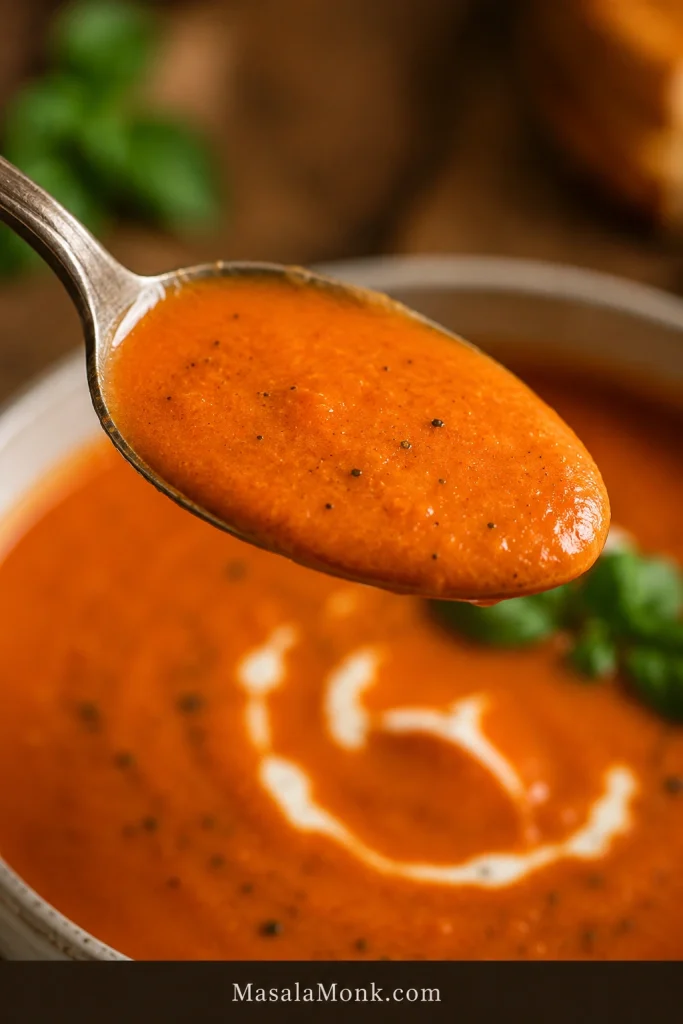
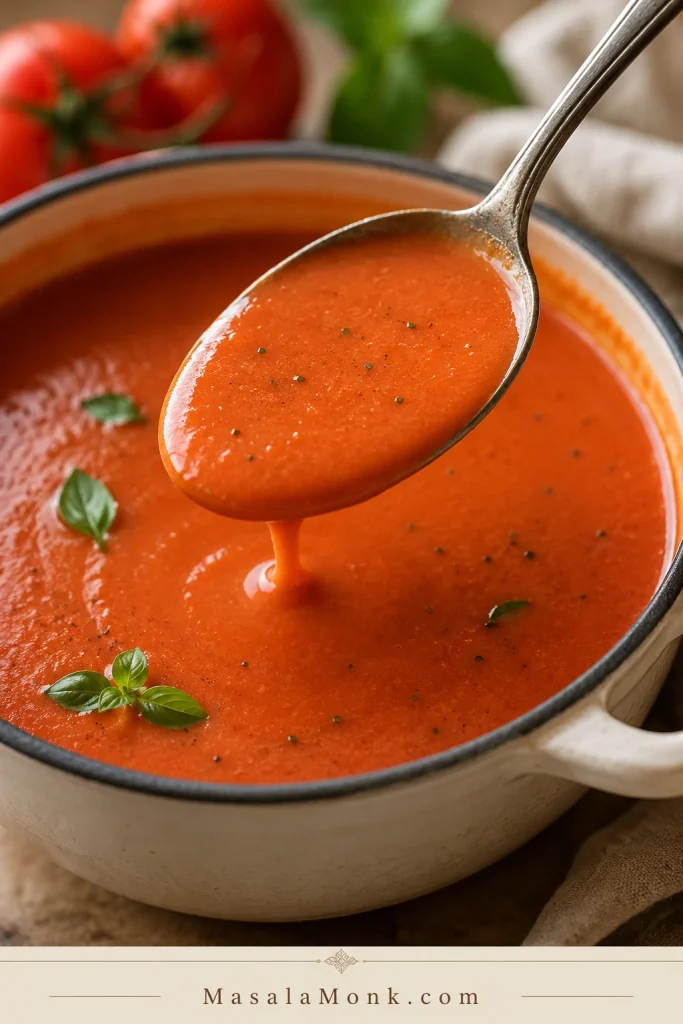
Spoon coated with smooth creamy tomato bisque above a bowl.
Before serving, check the spoon. The bisque should cling in a smooth layer instead of running off like broth or sitting thick like sauce.

At a Glance

Here is the recipe logic before you start.

Main versionEasy creamy canned tomato bisque
Total timeAbout 40 minutes
Servings4 large bowls or 6 smaller bowls
YieldAbout 6 to 7 cups soup
Tomatoes1 can whole peeled or crushed tomatoes, 28 oz / about 794 g
Fresh tomato swap2.5 lb / about 1.1 kg ripe tomatoes, or up to 3 lb / 1.35 kg if watery
Broth for canned tomatoesStart with 2 cups / 480 ml
Broth for fresh tomatoesStart with 1 to 1 1/2 cups / 240 to 360 ml because fresh tomatoes release liquid
Cream1/2 cup / 120 ml heavy cream, half-and-half, or cashew cream
Best toolImmersion blender
Texture cueSmooth, glossy, spoon-coating, and pourable
Best pairingGrilled cheese

Recipe Card

Prep time: 10 minutes
Cook time: 30 minutes
Total time: 40 minutes
Servings: 4 large bowls or 6 smaller bowls
Yield: About 6 to 7 cups
Method: Stovetop
Difficulty: Easy

Ingredients

  • 2 tablespoons olive oil or butter, about 30 ml oil or 28 g butter
  • 1 medium onion, chopped, about 150 g
  • 1 medium carrot, chopped, about 70 to 80 g
  • 1 celery rib, chopped, about 40 to 50 g
  • 3 garlic cloves, minced, about 9 to 12 g
  • 2 tablespoons tomato paste, about 30 g
  • 1 can whole peeled tomatoes or crushed tomatoes, 28 oz / about 794 g
  • Fresh tomato option: use 2.5 lb / about 1.1 kg ripe tomatoes, or up to 3 lb / 1.35 kg if watery
  • 2 cups vegetable broth or chicken broth, 480 ml, for canned tomatoes
  • For fresh tomatoes, start with 1 to 1 1/2 cups broth, 240 to 360 ml, plus more as needed
  • 1 teaspoon dried basil or Italian seasoning
  • 1/2 teaspoon dried oregano or thyme
  • 1/2 teaspoon salt, then more to taste
  • 1/4 teaspoon black pepper
  • Pinch of red pepper flakes, optional
  • 1/2 cup heavy cream, half-and-half, or cashew cream, 120 ml
  • 1 tablespoon butter, optional, for finishing, about 14 g
  • Fresh basil, Parmesan, croutons, or grilled cheese, for serving

Instructions

  1. Warm the olive oil or butter in a large non-reactive soup pot or Dutch oven over medium heat.
  2. Add the onion, carrot, and celery. Cook for 6 to 8 minutes, stirring often, until the vegetables soften and the onion turns translucent.
  3. Add the garlic and cook for about 30 seconds, just until fragrant.
  4. Stir in the tomato paste. Cook for 1 to 2 minutes, until it darkens slightly and smells deeper. If it starts sticking, splash in a spoonful of broth and scrape the bottom of the pot.
  5. Add the canned tomatoes with their juices. If using whole peeled tomatoes, crush them lightly with a spoon in the pot.
  6. Add 2 cups broth for canned tomatoes, or 1 to 1 1/2 cups broth for fresh tomatoes. Stir in the dried basil or Italian seasoning, oregano or thyme, salt, black pepper, and red pepper flakes if using.
  7. Bring to a gentle boil, then reduce the heat and simmer uncovered for 20 to 25 minutes, until the vegetables are very soft and the tomato flavor tastes less sharp.
  8. Blend the soup until smooth with an immersion blender. For an extra-silky texture, use a countertop blender in batches.
  9. Check the texture. If the soup is too thick, add broth a little at a time until it is spoon-coating and pourable.
  10. Lower the heat. Stir in the cream and warm gently for 2 to 3 minutes. Do not boil hard after adding cream.
  11. Taste and adjust with more salt first. Add butter or Parmesan for richness, or basil for freshness.
  12. Serve hot with fresh basil, croutons, Parmesan, or grilled cheese.

Recipe Notes

  • Best tomato choice: whole peeled tomatoes or crushed tomatoes.
  • Texture rule: blend first, loosen later, cream last.
  • Fresh tomato swap: use 2.5 lb / about 1.1 kg ripe tomatoes, or up to 3 lb / 1.35 kg if the tomatoes are watery.
  • Broth for fresh tomatoes: start with 1 to 1 1/2 cups / 240 to 360 ml broth because fresh tomatoes release more liquid.
  • Optional depth upgrade: simmer the soup with a small Parmesan rind, then remove it before blending. Or finish with a tiny splash of sherry vinegar or lemon juice if the soup tastes flat. Skip the Parmesan rind for dairy-free soup.
  • Thicker bowl: use the optional roux method or simmer uncovered a little longer.
  • Dairy-free soup: use vegetable broth, olive oil, and cashew cream.

Make This When

This is the soup to make when you want comfort without a complicated cooking project. It works especially well when:

  • Tomato soup sounds good, but you want it richer and creamier.
  • Grilled cheese is already part of the plan.
  • A pantry dinner needs to feel more homemade than a plain can of soup.
  • Fresh tomatoes are out of season, but deep tomato flavor still matters.
  • Restaurant-style tomato soup sounds good, but a heavy floury roux does not.

For a lighter meal around the soup, a fresh side like this chickpea salad adds brightness and protein without making the bowl itself heavier.

Choose Your Version

The easiest reliable version starts with canned tomatoes, not fresh tomatoes and not canned tomato soup. Canned whole peeled tomatoes or crushed tomatoes give steady flavor, enough body, and repeatable results without waiting for perfect summer produce.

Make the main pot first, then choose the lane that fits your tomatoes, time, and mood. Once you make the base once, you will probably know your house version: basil-heavy, extra creamy, roasted, spicy, or built around grilled cheese.

You want…Make this versionWhat to change
The easiest reliable bowlCanned tomato bisqueUse 28 oz / 794 g canned whole peeled or crushed tomatoes
Fresh garden flavorFresh tomato bisqueUse 2.5 lb / 1.1 kg ripe tomatoes and start with less broth
Deeper fresh tomato flavorRoasted tomato bisqueRoast fresh tomatoes before simmering
Brighter herb flavorTomato basil bisqueAdd fresh basil near the end, then blend
Smoky-sweet flavorRoasted red pepper tomato bisqueAdd one drained 12 oz / 340 g jar roasted red peppers
Restaurant-style thicknessRoux-thickened tomato bisqueAdd a small butter-and-flour roux
Dairy-free creaminessVegan tomato bisqueUse vegetable broth and cashew cream
A quick pantry shortcutCanned tomato soup bisqueUpgrade condensed tomato soup with milk or half-and-half, butter, herbs, and Parmesan

Visual Guide to Tomato Bisque Versions
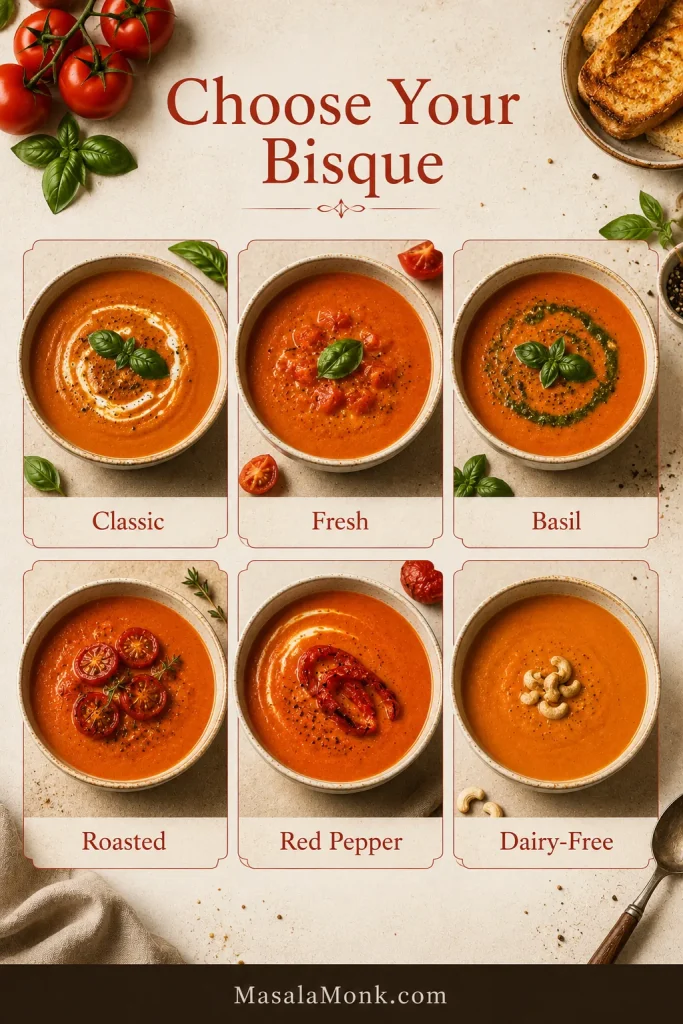
Guide board showing tomato bisque variations labeled classic, fresh, basil, roasted, red pepper, and dairy-free.
Use this guide to choose your tomato bisque style, from classic and fresh to basil, roasted, red pepper, or dairy-free.

Why This Recipe Works

The recipe is not trying to be fancy. It is trying to keep the tomato flavor deep, the texture smooth, and the cream from taking over.

  • Tomato paste adds depth. Give it a minute in the pot and it stops tasting raw, turning deeper and almost sweet.
  • Onion, carrot, and celery soften the acidity. The carrot especially helps balance sharp tomatoes naturally.
  • Canned tomatoes make the result reliable. You do not have to wait for peak-season tomatoes to make a good bowl.
  • Blending creates body. The vegetables become part of the texture, not just flavor in the background.
  • Gentle cream keeps the flavor balanced. It should soften the tomato edge, not make the soup pale and sleepy.

Equipment You Need

The only tool that really changes the experience is the blender. Everything else is basic soup-pot cooking.

  • Large non-reactive soup pot or Dutch oven: stainless steel, enamel-coated cast iron, or a heavy nonstick soup pot works well.
  • Immersion blender: the easiest tool because you can blend directly in the pot.
  • Countertop blender: gives the silkiest texture, but hot soup must be blended carefully in batches.
  • Fine mesh sieve, optional: use it only if you want an ultra-smooth restaurant-style finish.

Hot blender safety: If using a countertop blender, do not fill the jar more than halfway. Vent the lid, cover it with a towel, and start on low speed. Hot soup expands quickly in a sealed blender.

Ingredients You Need

The ingredients are simple, but each one has a job in the pot.

Ingredient Snapshot
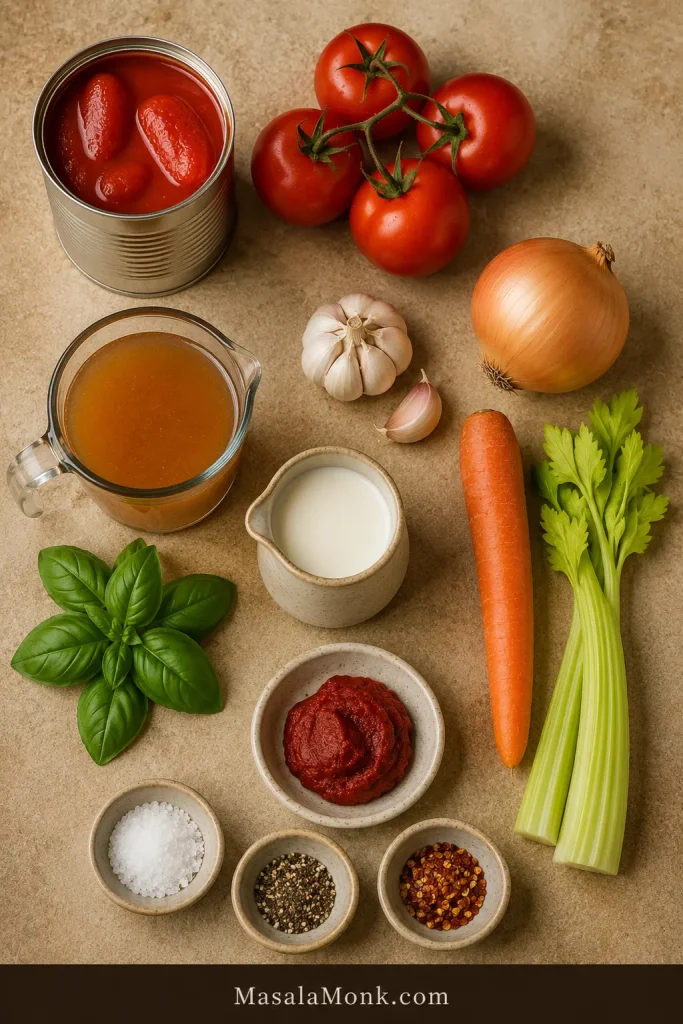
Tomato bisque ingredients arranged on a surface, including tomatoes, onion, carrot, celery, garlic, cream, broth, basil, and tomato paste.
Each ingredient has a job: aromatics build body, tomato paste adds depth, and cream finishes the soup.

Tomatoes

A 28 oz / 794 g can of whole peeled or crushed tomatoes is the easiest starting point. Whole peeled tomatoes usually give the best balance of flavor and body. Crushed tomatoes are convenient and blend quickly. Diced tomatoes can work, but they may need longer blending. Fire-roasted tomatoes add smoky depth if you want a bolder bowl.

If you are choosing between whole, crushed, diced, and fire-roasted tomatoes, this guide to canned tomato types is helpful.

Onion, Carrot, Celery, and Garlic

This is the flavor base. Onion brings sweetness, carrot helps soften tomato acidity, celery adds savory depth, and garlic makes the soup taste fuller. Cook them until the pot smells sweet and savory before the tomatoes go in.

Tomato Paste

Tomato paste is the little shortcut to deeper flavor. Stir it into the softened vegetables and let it cook for 1 to 2 minutes before adding broth. When it is ready, it should smell less sharp and more like roasted tomatoes.

Broth

Vegetable broth keeps the recipe vegetarian. Chicken broth gives a slightly deeper savory flavor. Canned tomatoes need about 2 cups / 480 ml broth to start. Fresh tomatoes release more liquid, so they need less at first.

Cream

Heavy cream gives the most classic finish. Half-and-half makes it lighter. Cashew cream gives the best neutral dairy-free texture. The color should turn slightly softer after cream, not pale orange.

Herbs and Finishes

Dried basil or Italian seasoning can simmer with the tomatoes. Fresh basil tastes best near the end, when it still smells bright. Parmesan, butter, croutons, black pepper, and grilled cheese all make the finished bowl more satisfying.

Canned Tomatoes vs Fresh Tomatoes

Both canned and fresh tomatoes can work. The best choice depends on what you have and how the tomatoes taste before they go into the pot.

Canned vs Fresh Tomato Guide
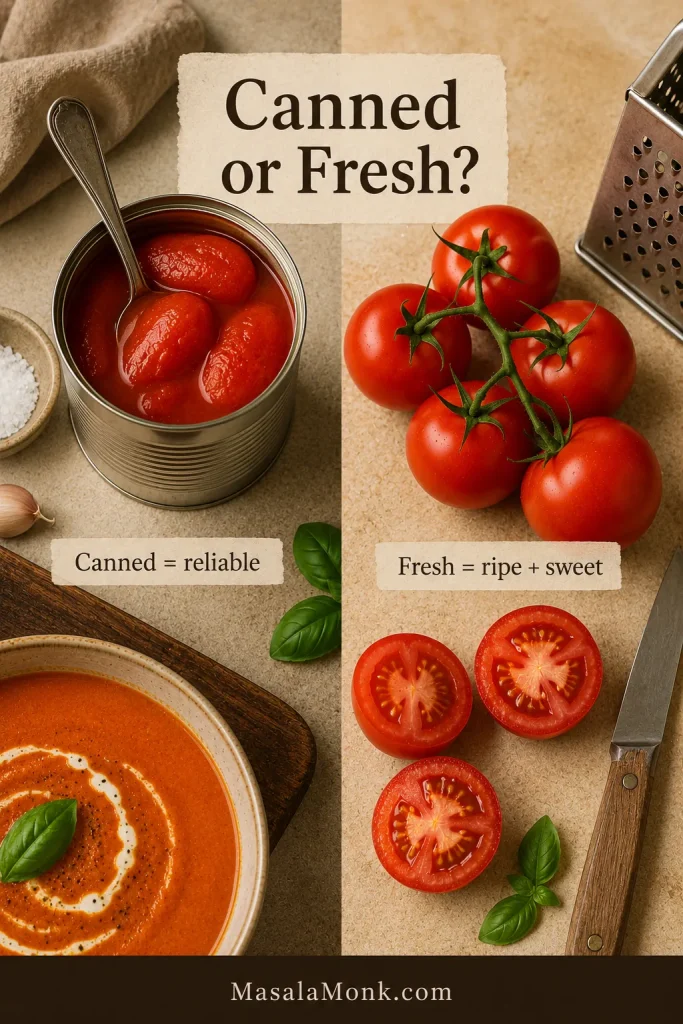
Canned tomatoes and fresh tomatoes compared side by side for tomato bisque.
Canned tomatoes are the reliable year-round choice. Fresh tomatoes work best when they smell sweet, taste ripe, and are in season.
Canned tomatoes work best when…Fresh tomatoes work best when…
You want reliable flavor year-roundTomatoes are ripe, sweet, and in season
You want the easiest versionYou want a brighter garden-style bowl
You want less prepYou do not mind peeling, grating, roasting, or simmering longer
Your fresh tomatoes are bland or wateryYour fresh tomatoes smell sweet and taste good raw

One 28 oz can of tomatoes is about 794 g. For the closest fresh swap, use 2.5 lb / about 1.1 kg ripe tomatoes. If your tomatoes are watery or you want a fuller fresh-tomato base, use up to 3 lb / 1.35 kg.

Fresh Tomato Grating Shortcut

For the smoothest fresh version, peel the tomatoes first or roast them before blending. If you do not want to peel tomatoes, halve them and grate the cut side on the large holes of a box grater. The pulp goes into the bowl, and most of the skin stays in your hand. Use that pulp in place of peeled chopped tomatoes.
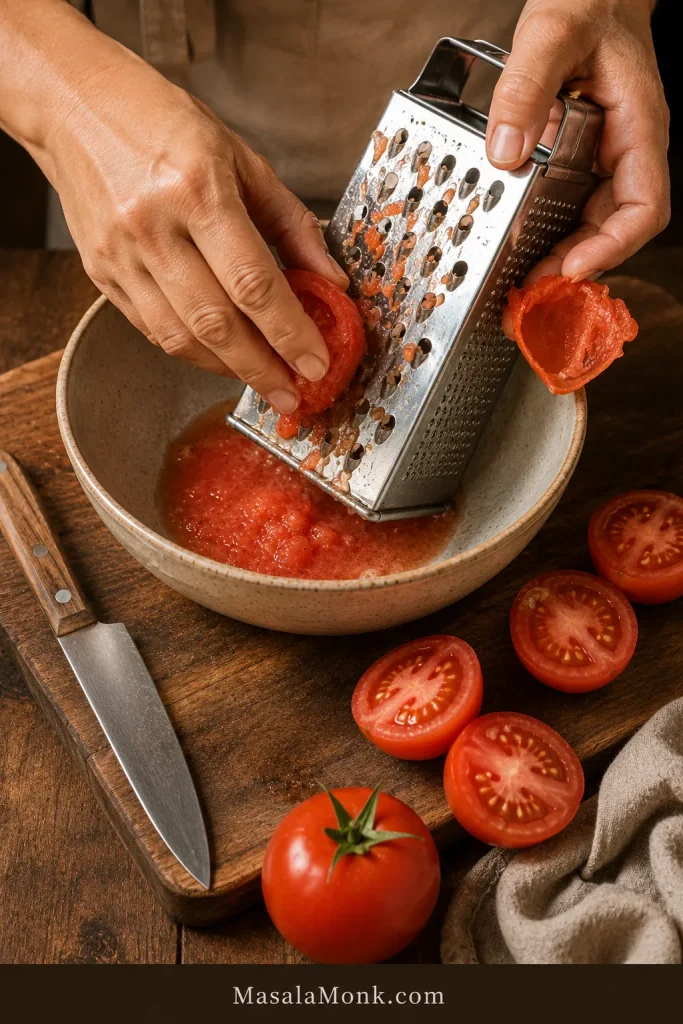
Hands grating fresh tomato halves on a box grater over a bowl of tomato pulp.
For fresh tomato bisque, grate ripe tomatoes when you want the pulp without peeling. Most of the skin stays behind on the grater.

If fresh tomatoes taste watery raw, roast them or use canned tomatoes instead. A soup that looks thick before blending is usually on the right track. Adjust the body after it has been blended.

If you have more ripe tomatoes than this soup needs, turn the rest into this tomato sauce from fresh tomatoes for pasta, pizza, or freezer meals.

How to Make Tomato Bisque

The tricky part is not the cooking. It is adding too much liquid before the soup has a chance to blend smooth. Keep the order simple: build the base, deepen the tomato paste, simmer, blend, adjust the body, then add cream.

Step 1: Soften the Vegetables

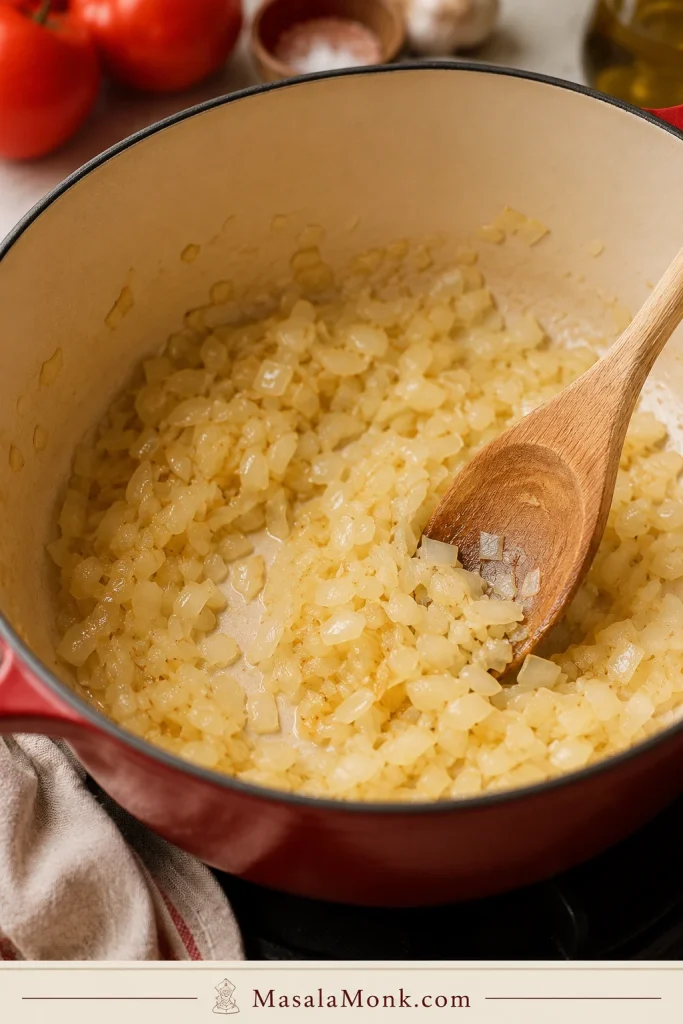
Warm olive oil or butter in a large non-reactive pot over medium heat. Add the onion, carrot, and celery. Cook for 6 to 8 minutes, stirring often, until the onion is translucent and the vegetables are softening. The carrot should be tender enough to blend cleanly later.
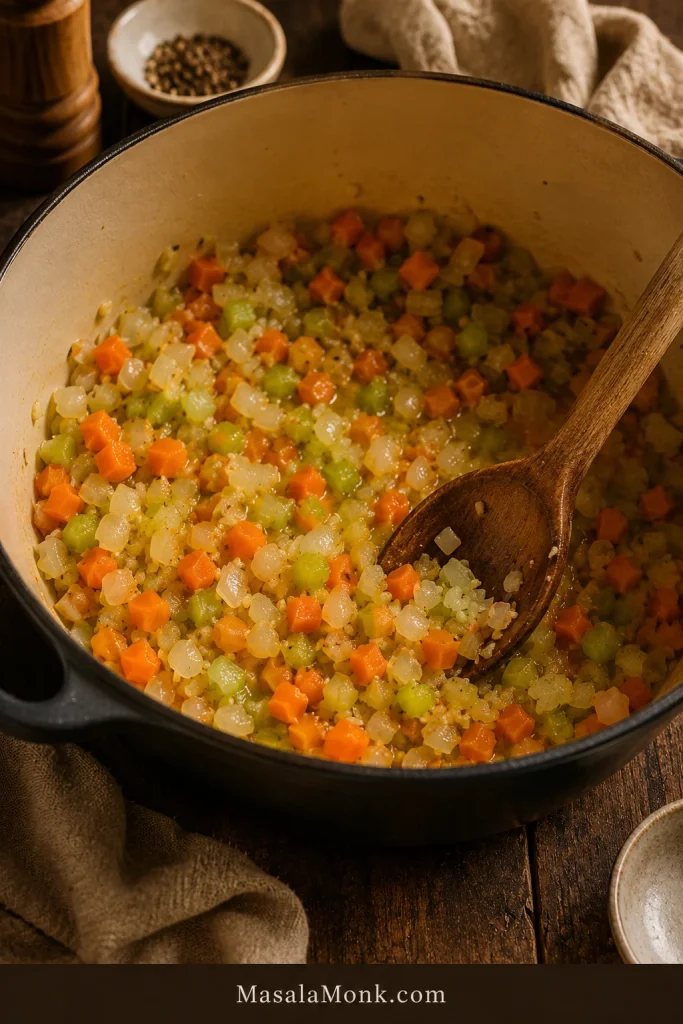
Chopped onion, carrot, celery, and garlic softening in a pot.
First, soften the onion, carrot, celery, and garlic until the pot smells sweet and savory. This gives the soup body before tomatoes go in.

Step 2: Cook the Tomato Paste

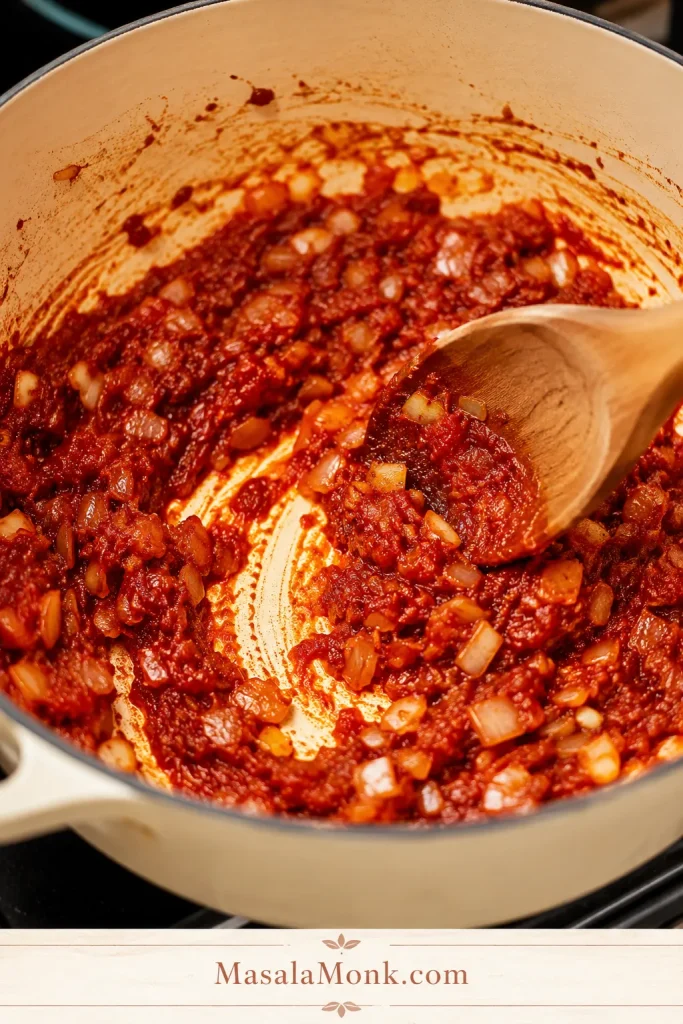
Add the garlic and cook for about 30 seconds. Stir in the tomato paste and cook for 1 to 2 minutes. It should darken slightly and leave rusty streaks on the vegetables. If the bottom of the pot gets sticky, add a spoonful of broth and scrape it clean as you stir.
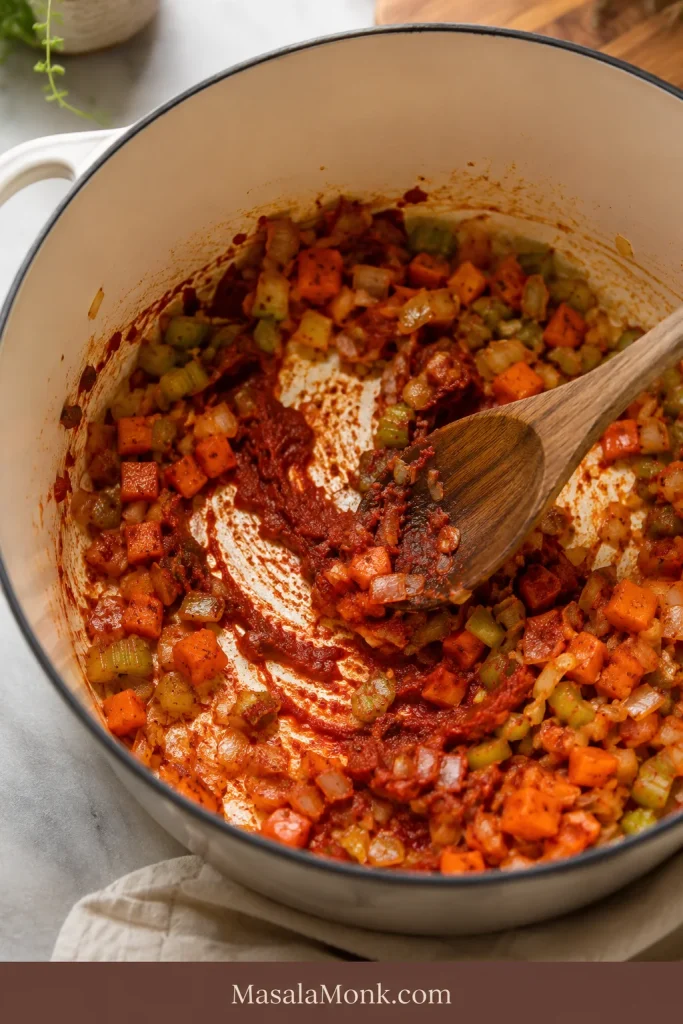
Tomato paste cooked into softened onion, carrot, celery, and garlic in a light-colored pot with a wooden spoon.
Next, cook the tomato paste into the vegetables until rusty red-orange streaks appear. That small step makes the tomato flavor deeper.

Step 3: Simmer the Tomatoes

Add the tomatoes with their juices. Crush whole peeled tomatoes lightly with a spoon so they simmer evenly. Add broth, herbs, salt, pepper, and red pepper flakes if using. Simmer uncovered for 20 to 25 minutes, until the vegetables are very soft and the tomato flavor tastes rounder.
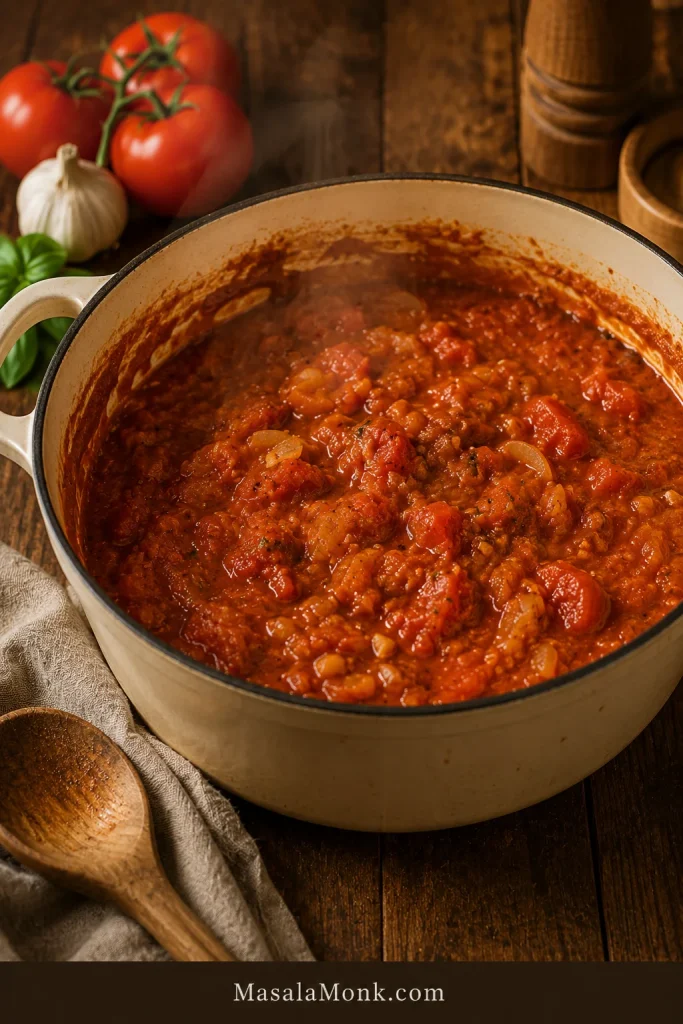
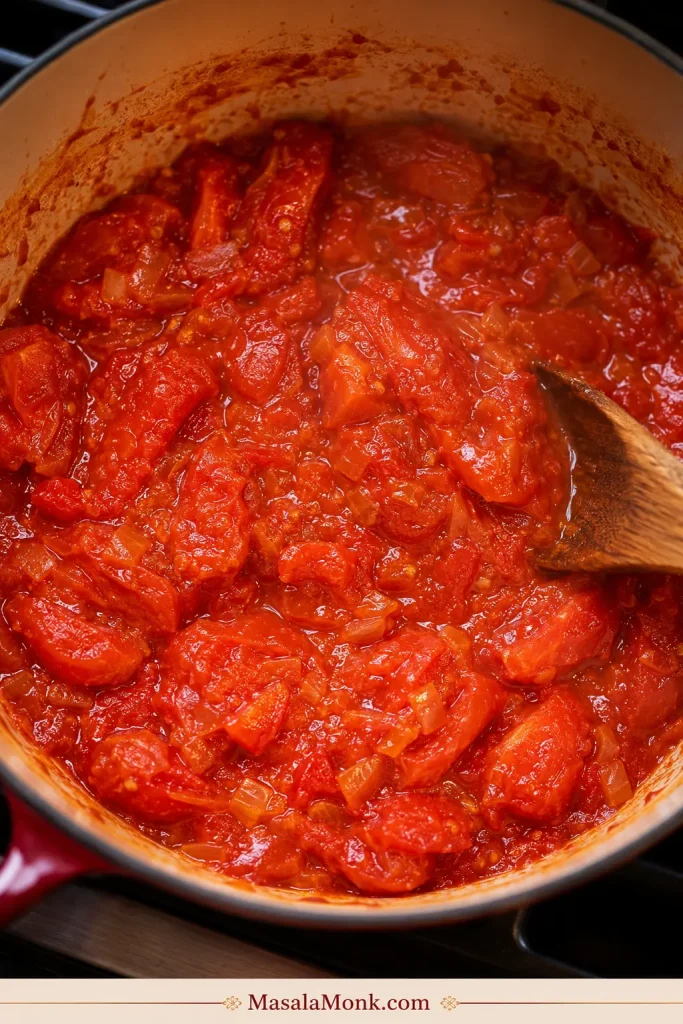
Thick tomato bisque base simmering in a pot before blending, with softened tomatoes and vegetables visible.
Before blending, the soup base should look thick and concentrated. A slightly thick pot is easy to loosen; a watery one is harder to fix.

Step 4: Blend and Adjust

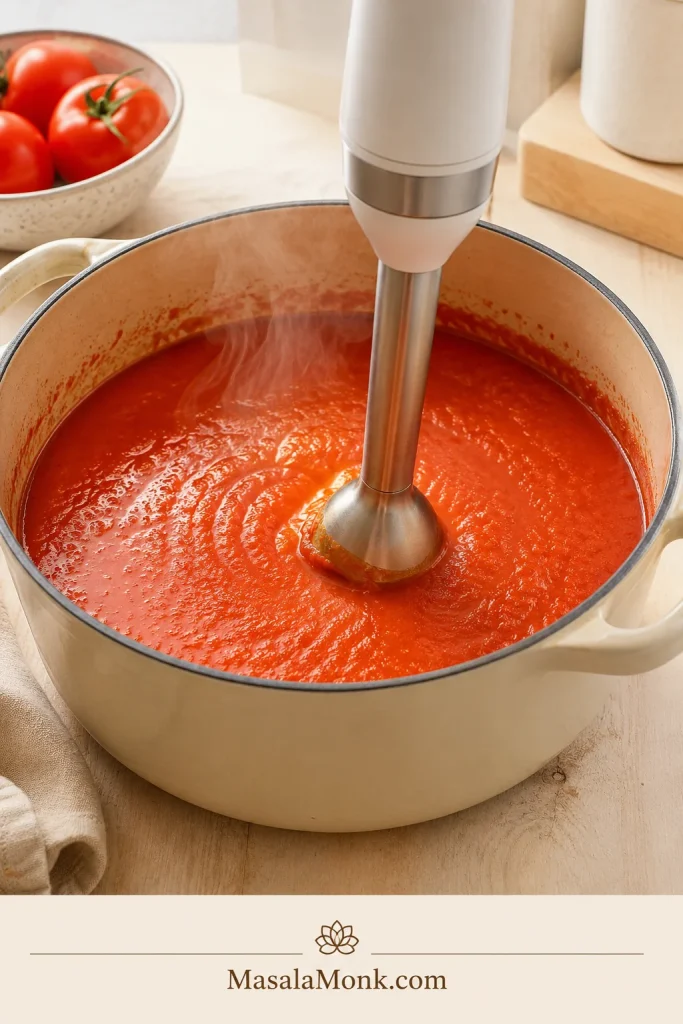
Blend until smooth. An immersion blender is easiest; a countertop blender gives a silkier finish. After blending, the soup should fall from a spoon in a smooth ribbon, not splash like broth. If it is too thick, add broth a splash at a time.
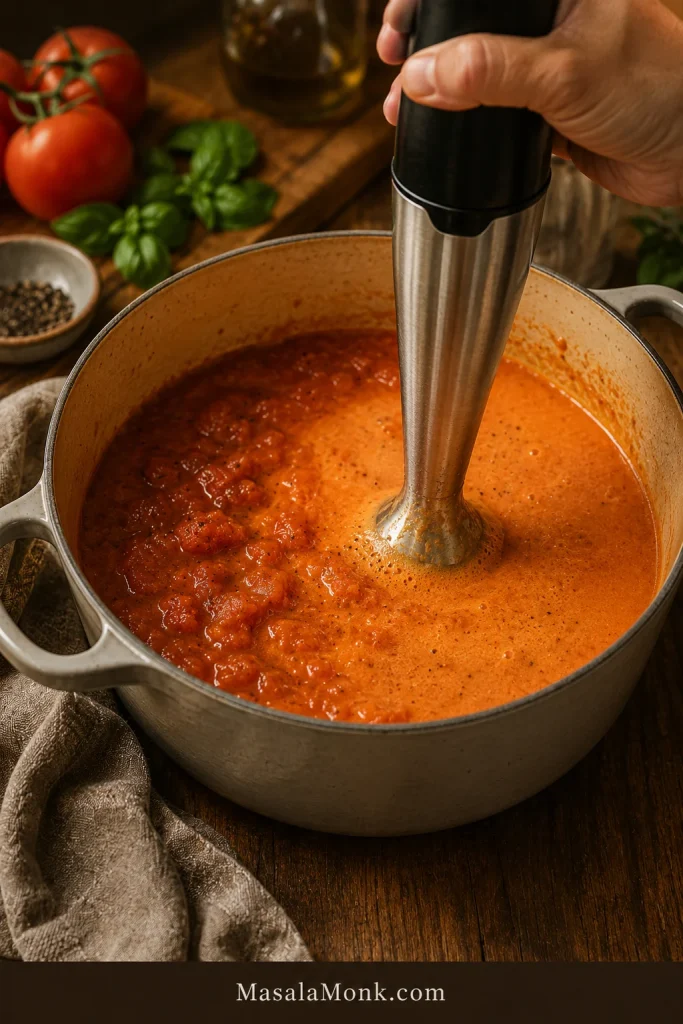
Immersion blender smoothing tomato bisque in a pot.
Once the vegetables are soft, blending turns the tomato base into one smooth, creamy body.

Step 5: Finish Gently

Lower the heat and stir in the cream. Warm gently for 2 to 3 minutes. Taste and adjust with salt first, then richness or brightness if needed. The final spoonful should feel rounded, not heavy, with enough tomato brightness to make you want the next bite.
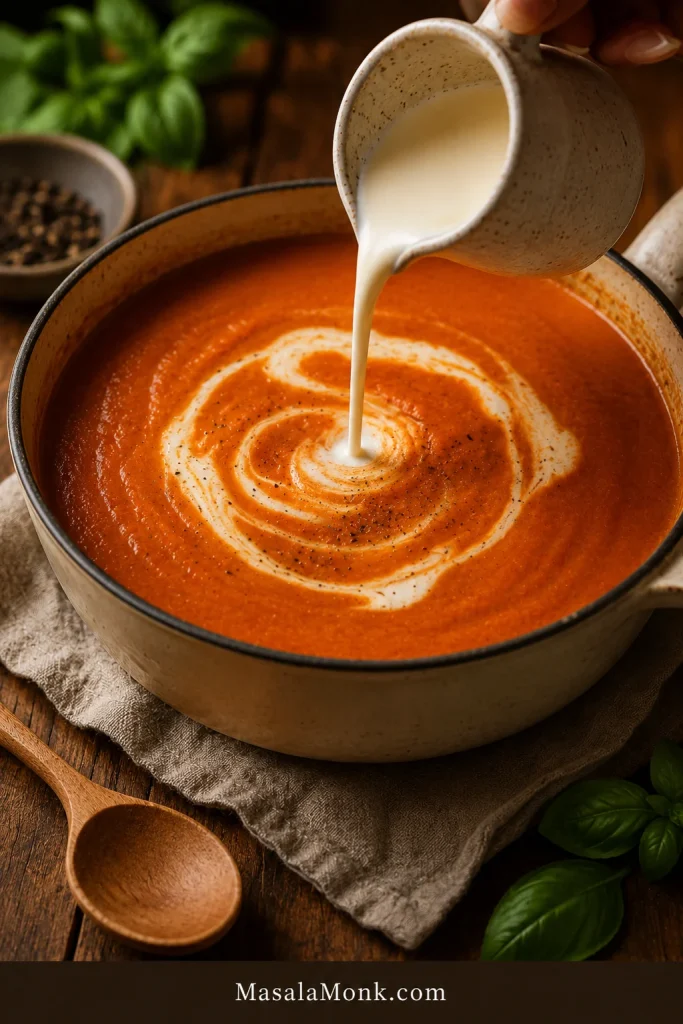
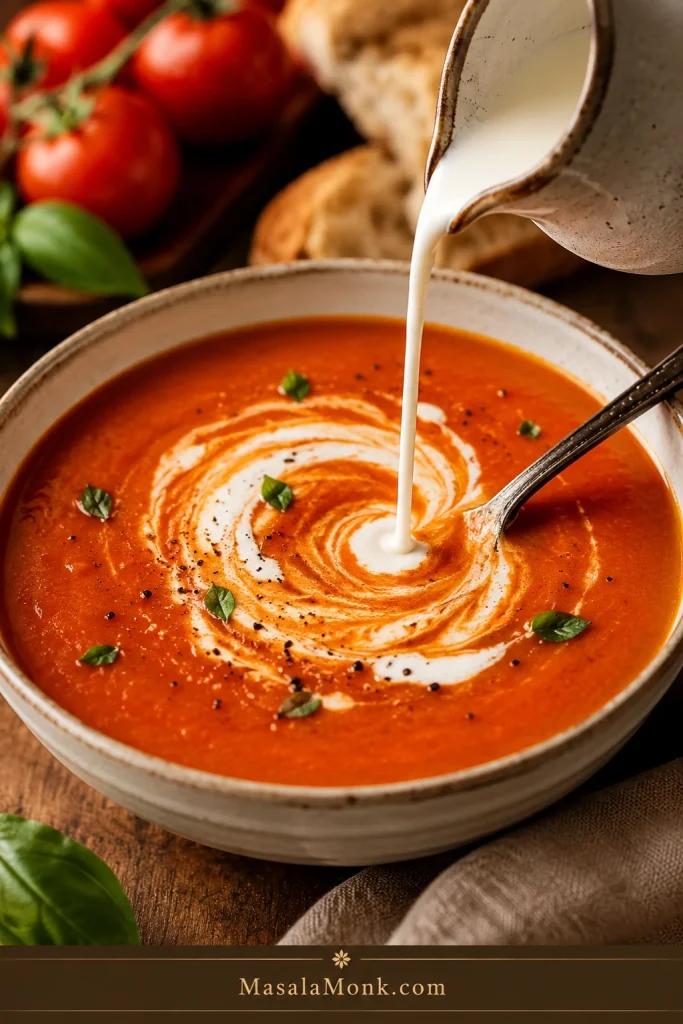
Cream being poured into smooth tomato bisque.
Add cream only after the soup is blended, then warm it gently. This keeps the bisque smooth instead of grainy or split.

Success Cues

  • Vegetables: the carrot and celery should be soft enough to mash against the side of the pot.
  • Tomato paste: it should smell deeper and less metallic.
  • After simmering: the tomato flavor should taste rounder, not raw or sharp.
  • Blended texture: the soup should be glossy, smooth, and spoon-coating.
  • Before serving: if it tastes flat, add salt first; if it tastes sharp, add butter, cream, or a very small pinch of sugar.

Smooth Ribbon Texture
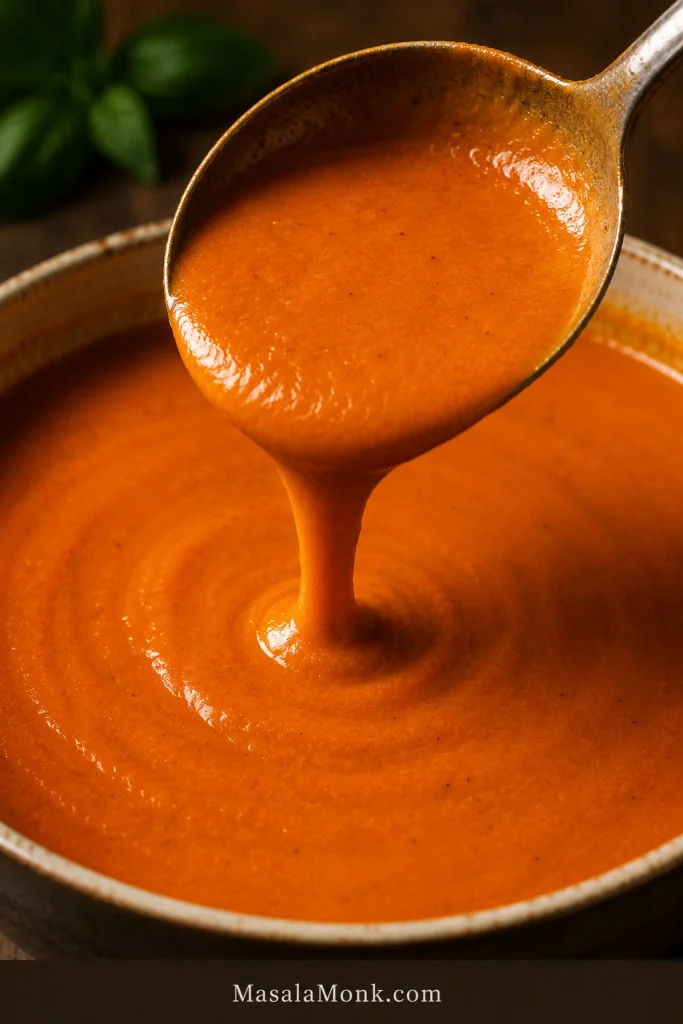
Tomato bisque falling from a spoon in a smooth ribbon back into a bowl.
After blending, look for a smooth ribbon from the spoon. That means the soup is creamy, spoon-coating, and still pourable.

Creamy Options

Creaminess is mostly about restraint. You want the finish to soften the tomato edge, not bury the tomato flavor.

If you want…Use…Watch for…
Classic richnessHeavy creamWarm gently after adding
A lighter finishHalf-and-halfThe soup may be slightly thinner
Dairy-free creaminessCashew creamBlend the cashew cream completely smooth
More glossButterAdd near the end
More savory depthParmesanAdd less salt first
A green finishBasil pestoUse a small spoon on top, not too much

A small spoon of basil pesto works well on top, especially if you want more basil flavor without adding more cream.

Optional Restaurant-Style Roux

You do not need a roux for this recipe. The blended vegetables and tomatoes already give the soup body. Use a small roux only if you want a thicker, restaurant-style bowl.

For that version, use 2 tablespoons butter / 28 g and 2 tablespoons flour / about 16 g. After the vegetables soften, melt the butter, stir in the flour, and cook for 1 to 2 minutes. Slowly add the broth while stirring, then add the tomatoes and continue with the recipe.

Keep the roux small. Too much flour can mute tomato brightness and make the soup taste more like cream sauce. To keep it gluten-free, skip the roux and control thickness with less broth, longer simmering, and good blending.

For a restaurant-style finish, blend until completely smooth, strain only if you want it extra silky, then serve with a small swirl of cream, cracked black pepper, basil oil, or Parmesan. Aim for a glossy bowl, not a grainy one.

Variations

You do not need any of these to make a good bowl. They are simply easy ways to steer the same base in a different direction.

Tomato Basil

For a brighter, greener bowl, add 1 cup loosely packed fresh basil, about 20 to 25 g, after simmering. Blend it into the hot soup, then save a few leaves for garnish if you like. Long simmering can make fresh basil taste dull.
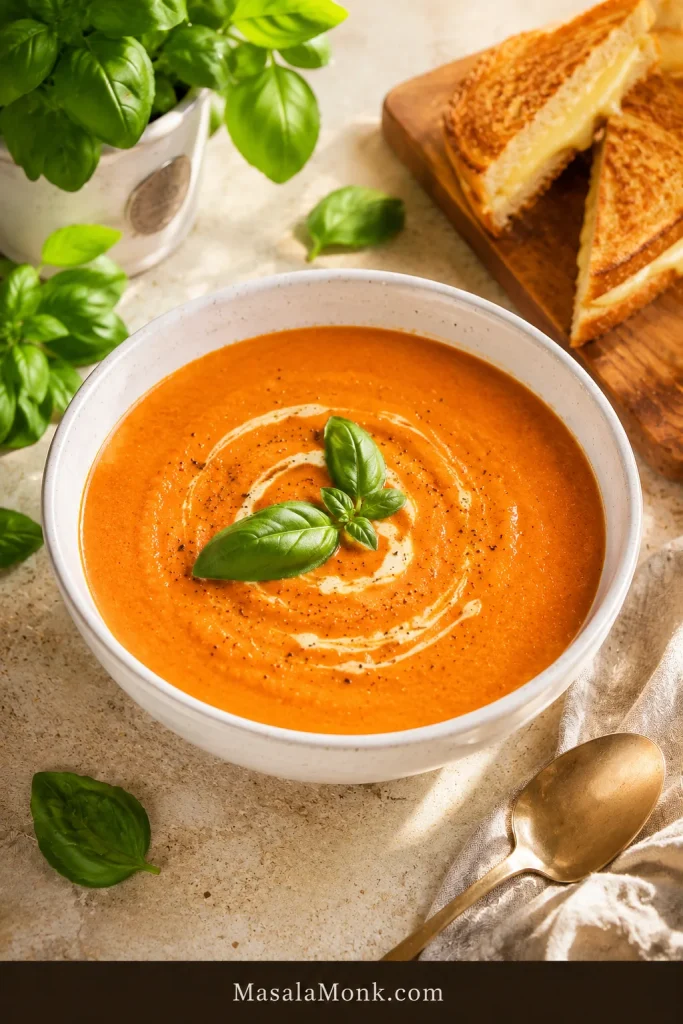
Bowl of tomato basil bisque with fresh basil garnish and grilled cheese nearby.
For tomato basil bisque, add fresh basil near the end so the flavor stays green, fragrant, and bright instead of cooked down.

If you want a lighter basil-forward soup rather than a creamier bisque, use this tomato basil soup recipe.

Roasted Tomato

Roasting is best when fresh tomatoes are ripe but a little watery. It concentrates their flavor, softens acidity, and gives the soup deeper sweetness.

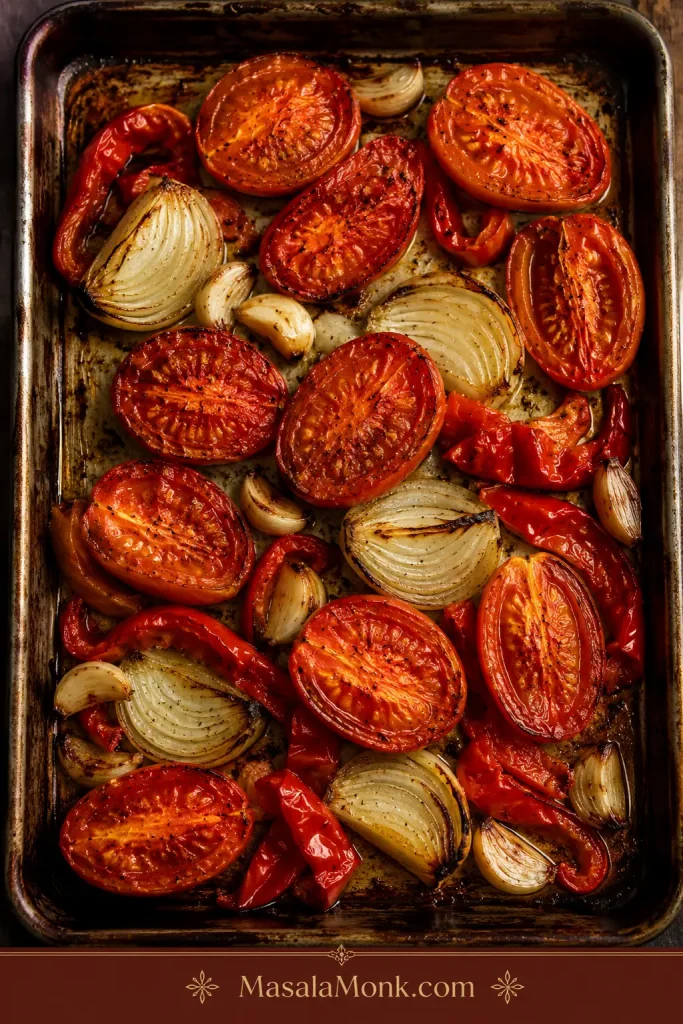
Use 2.5 to 3 lb / 1.1 to 1.35 kg fresh tomatoes. Halve them and roast with olive oil, onion, and garlic at 400°F / 200°C for 25 to 35 minutes, until the tomatoes collapse and the edges start to caramelize. Add the roasted tomatoes to the pot with broth and continue with the main recipe.
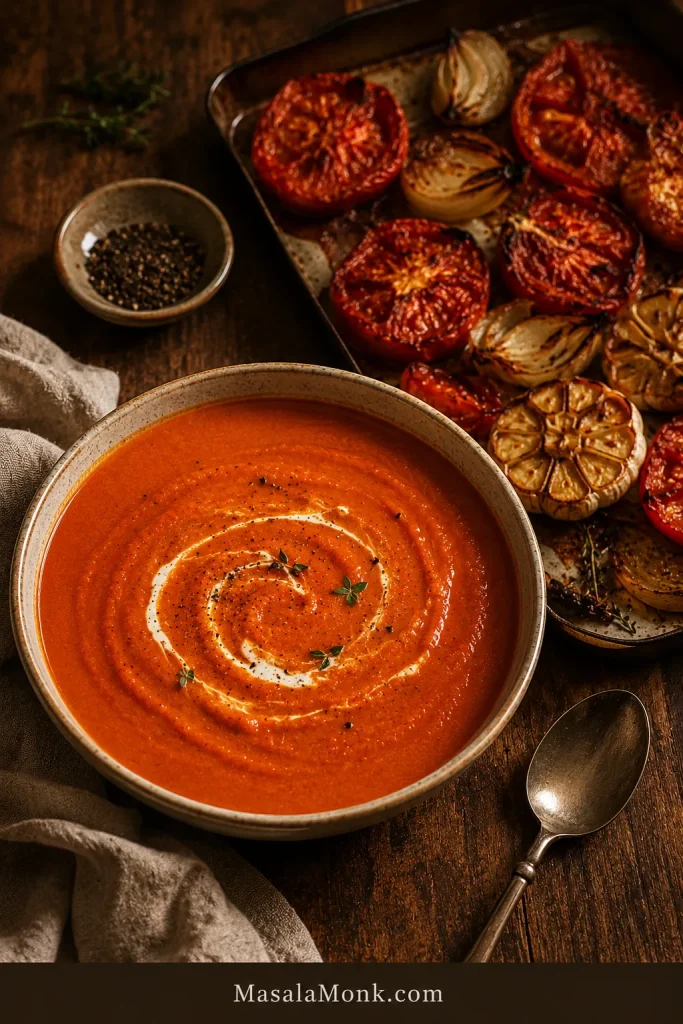
Bowl of roasted tomato bisque beside a tray of roasted tomatoes, onions, and garlic.
Roasting the tomatoes first concentrates their sweetness, giving the bisque deeper flavor and a softer acidic edge.

If you are building a fuller soup-night meal, these roasted carrots keep the table warm, sweet, and simple without making the soup heavier.

Roasted Red Pepper

Roasted red peppers make the bowl sweeter, deeper, and slightly smoky. Add one drained 12 oz / 340 g jar with the tomatoes before simmering. Blend until smooth, then finish with cream. A small pinch of smoked paprika works well, but keep it light.
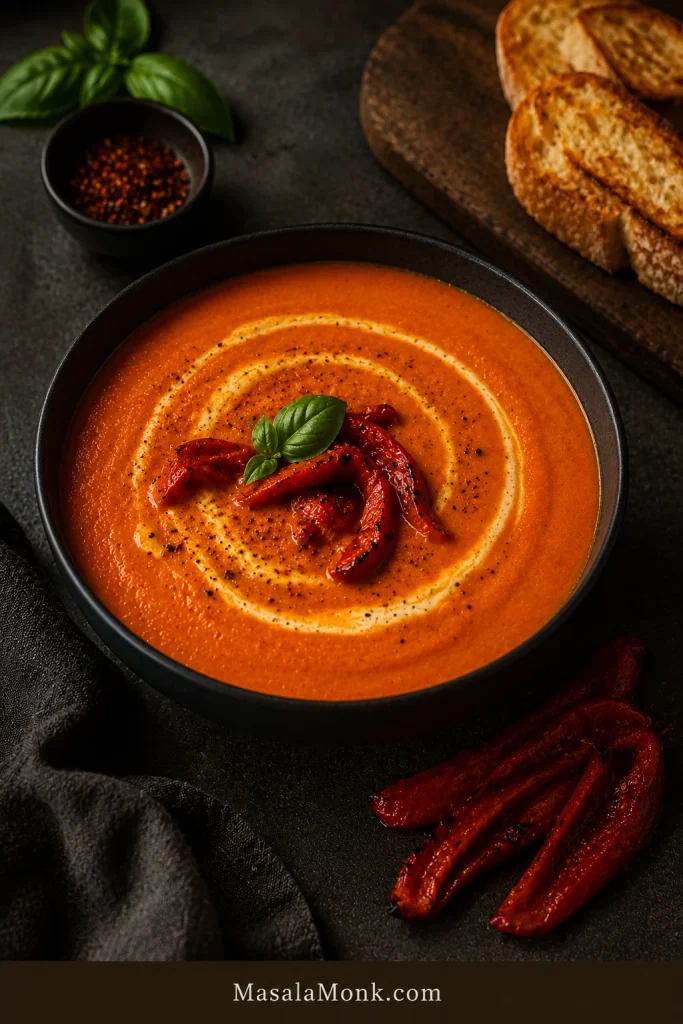
Bowl of roasted red pepper tomato bisque with roasted red pepper strips on top and beside the bowl.
Roasted red peppers bring smoky sweetness to the bowl, making tomato bisque taste richer without relying on extra cream.

Can You Make Tomato Bisque From Canned Tomato Soup?

Yes. You can turn canned tomato soup into a quick pantry version when speed matters more than full homemade flavor. Think of the can as the foundation, not the finished soup: a little fat, dairy, seasoning, and a fresh garnish can make it taste more intentional.

Shortcut From Condensed Tomato Soup

For 1 can condensed tomato soup, add:

  • 1 can milk or half-and-half, or milk with a splash of cream
  • 1 tablespoon butter
  • 1/4 teaspoon garlic powder
  • 1/4 teaspoon onion powder
  • 1/2 teaspoon dried basil or Italian seasoning
  • Black pepper to taste
  • 1 to 2 tablespoons Parmesan, optional

Simmer gently for 8 to 10 minutes, stirring often. Finish with fresh basil, croutons, Parmesan, or grilled cheese.
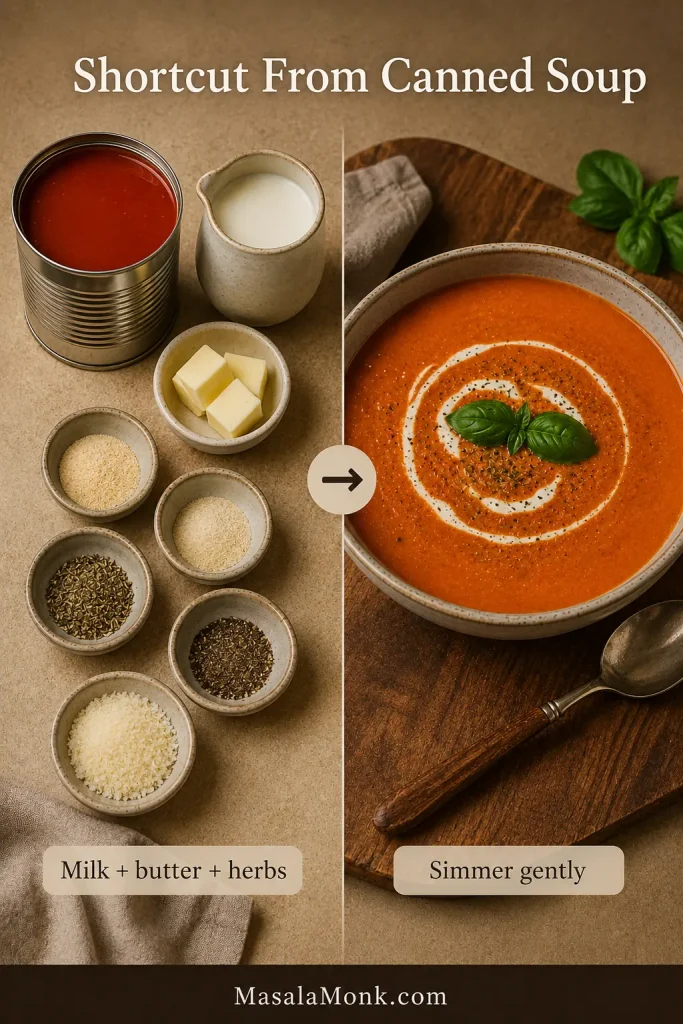
Shortcut guide showing canned tomato soup, milk, butter, herbs, Parmesan, and a finished bowl of tomato soup.
When using canned tomato soup, treat it as a base. Milk or half-and-half, butter, herbs, pepper, and Parmesan make it taste more intentional.

For the best flavor, start with canned tomatoes or fresh tomatoes instead of canned tomato soup. When speed matters, the shortcut works. To make a true homemade bowl, use the main recipe.

Dietary Options

The creamy finish is flexible, so no one has to miss the comfort of the bowl. Once the broth, fat, cream, and toppings match your needs, the recipe still works.

NeedHow to adjust
VegetarianUse vegetable broth. The rest of the main recipe can stay the same.
VeganUse vegetable broth, olive oil instead of butter, and cashew cream instead of heavy cream.
Dairy-freeCashew cream or a plain unsweetened plant-based cream works best. Leave out Parmesan and the Parmesan rind.
Gluten-freeSkip the optional roux, or use a gluten-free thickener if needed. Check broth and toppings.
Lower sodiumUse no-salt-added canned tomatoes and low-sodium broth, then season at the end.

Dairy-Free Cashew Cream

To make cashew cream, soak 1/2 cup cashews in hot water for 20 to 30 minutes. Drain, then blend with 1/2 cup fresh water until completely smooth. Add about 1/2 cup to the soup, then add more only if needed.
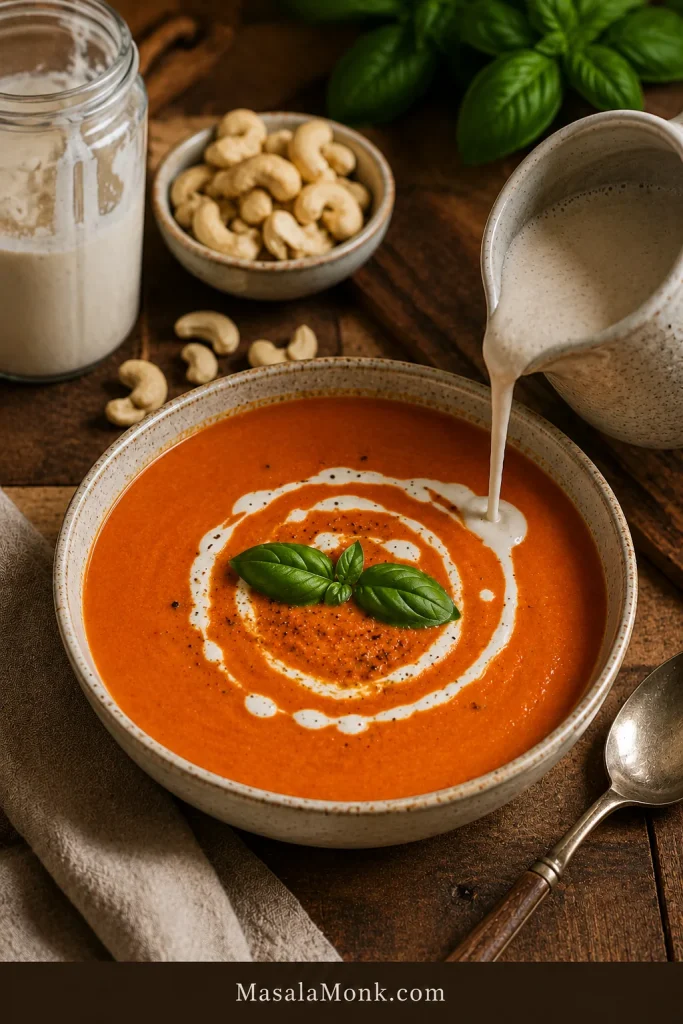
Bowl of tomato bisque with cashew cream being poured in, with cashews and basil nearby.
For dairy-free tomato bisque, cashew cream gives the soup a smooth, neutral finish without coconut flavor.

Slow Cooker, Instant Pot / Pressure Cooker, and Blender Notes

The stovetop method gives the most control, but the recipe adapts well when you need a more hands-off path. These versions are best for the days when you want the same cozy bowl without standing over the stove.

Keep the same order in mind: cook for flavor, blend for body, then add cream at the end.

Slow Cooker and Pressure Cooker Tomato Bisque
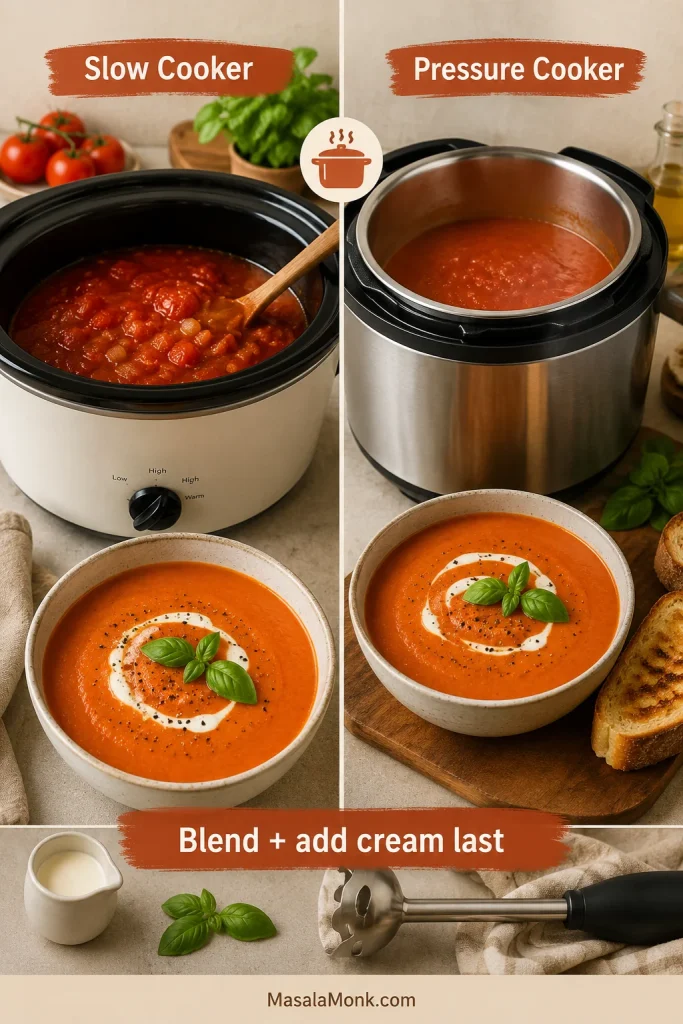
Split guide showing tomato bisque in a slow cooker and pressure cooker with finished bowls.
Slow cooker or Instant Pot / pressure cooker both work, but the rule stays the same: blend the tomato base first, then add cream last.

Slow Cooker

For best flavor, sauté the onion, carrot, celery, garlic, and tomato paste first. Add them to the slow cooker with the tomatoes, herbs, and broth. Cook on low for 6 to 8 hours or high for 3 to 4 hours. Blend until smooth, then stir in the cream at the end.

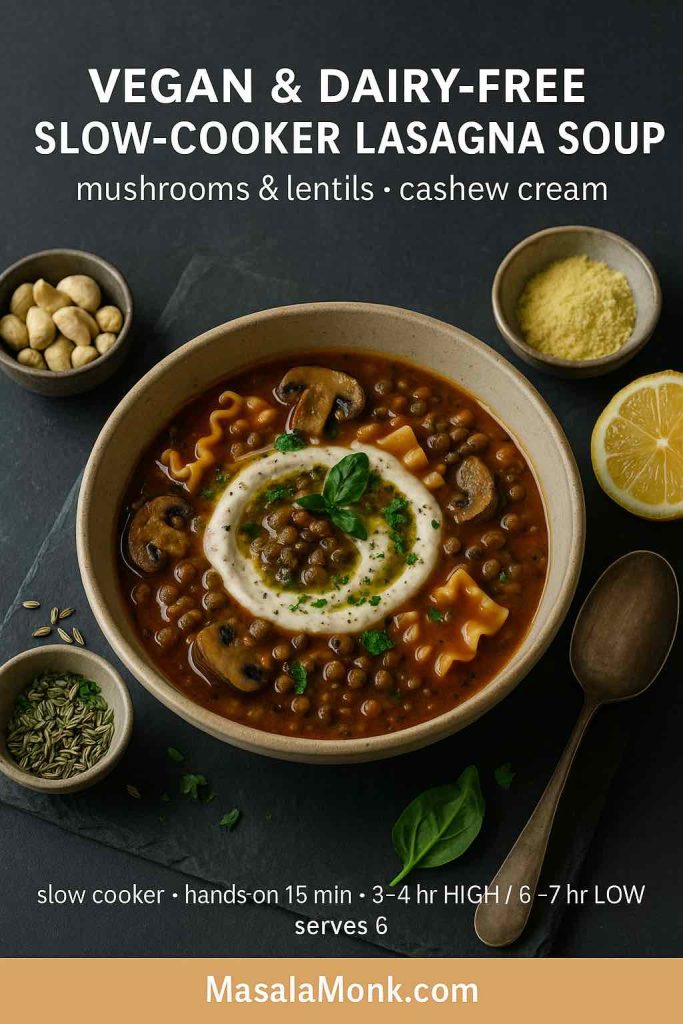
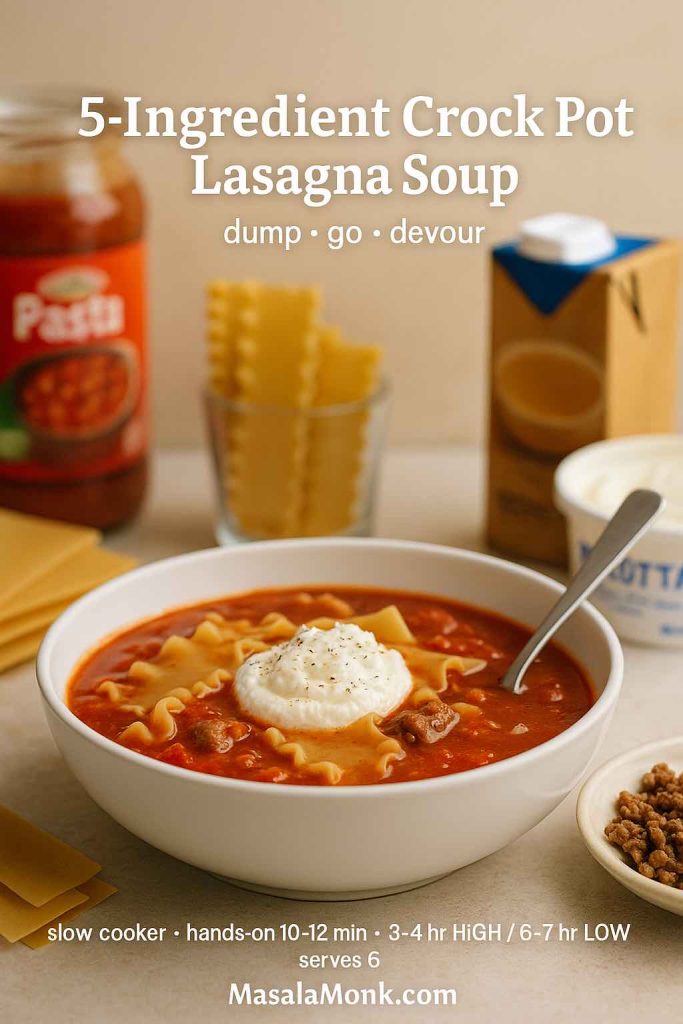
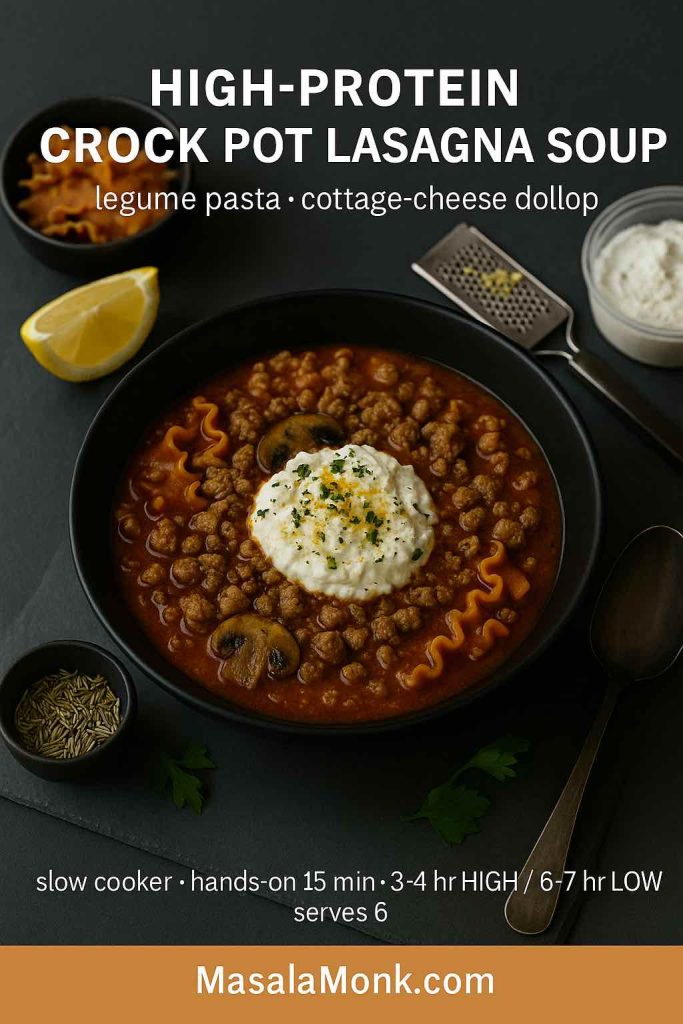
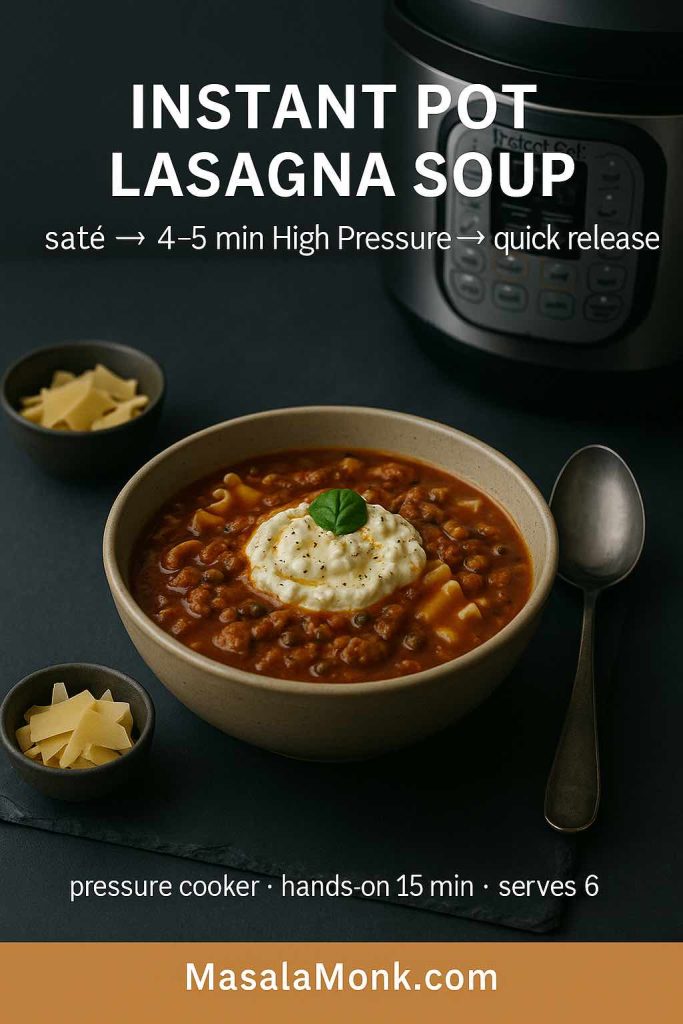
For a heartier tomato-rich slow cooker dinner, this crock pot lasagna soup goes in a pasta-and-ricotta direction instead of a smooth creamy bisque.

Instant Pot or Pressure Cooker

Use the sauté function for the onion, carrot, celery, garlic, and tomato paste. Add the tomatoes, broth, and herbs. Pressure cook for 8 to 10 minutes, let the pressure release naturally for 5 minutes, then quick release. Blend smooth and stir in the cream after cooking.

Countertop Blender

If blending hot soup in a countertop blender, work in batches, vent the lid, cover with a towel, and start slowly. A high-speed blender gives the smoothest texture.

What to Serve With Tomato Bisque

This is where the soup turns into dinner. Grilled cheese is the classic pairing for a reason: the soup is creamy and tangy; the sandwich is crisp, buttery, and salty. The best bite is the corner of grilled cheese after it has been dipped: crisp at the edge, soft where it meets the soup, salty enough to make the tomato taste brighter.

Grilled Cheese Dunk
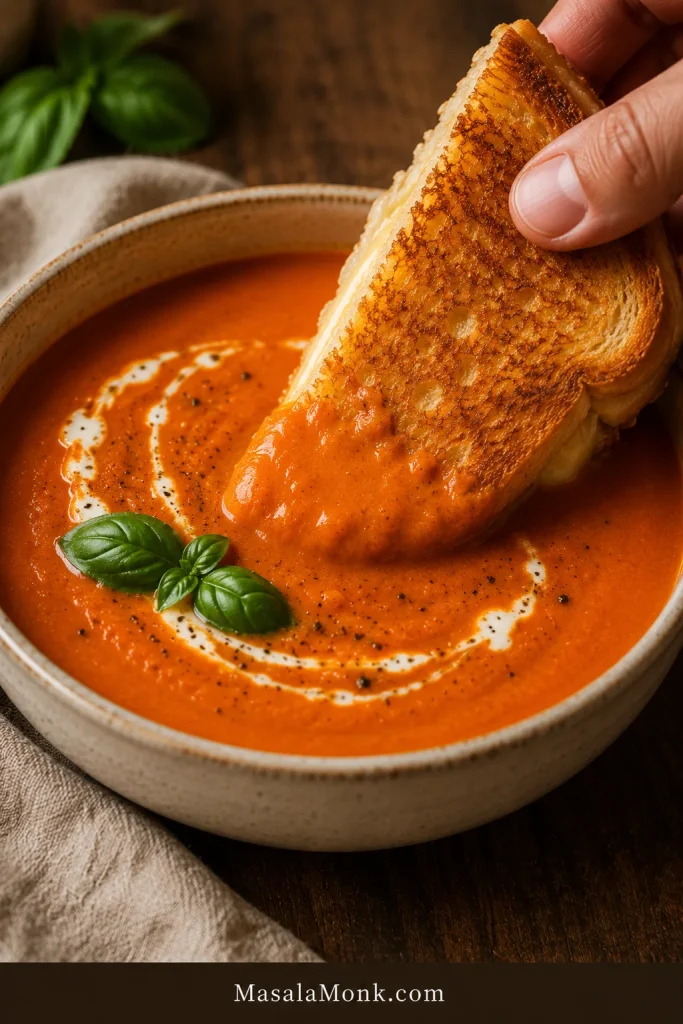
Hand dipping a grilled cheese sandwich into creamy tomato bisque.
Serve tomato bisque with grilled cheese for contrast: crisp bread, melted cheese, and creamy soup clinging to the corner.

If you want bread on the side instead of a sandwich, this homemade garlic bread loaf is a natural fit with a creamy tomato bowl. For a grilled cheese upgrade, a thin layer of garlic aioli adds savory depth without needing another filling.

  • Classic cheddar grilled cheese
  • Sourdough grilled cheese
  • Garlic bread
  • Parmesan croutons
  • Toasted cheese sandwich
  • Basil oil or fresh basil
  • Simple green salad
  • Roasted vegetables
  • Crusty bread
  • Parmesan toast

Mistakes to Avoid

  • Adding too much broth early: start with the listed amount, then adjust after blending.
  • Skipping the tomato paste step: cooked tomato paste gives deeper flavor.
  • Using bland fresh tomatoes without roasting: watery tomatoes make watery soup.
  • Adding cream before blending: the base should be smooth first.
  • Boiling after adding cream: gentle heat keeps the texture creamy.
  • Under-seasoning: tomato-based soups often taste flat until they have enough salt.
  • Overdoing the roux: too much flour can dull the tomato flavor.

Troubleshooting

Most problems come down to the same three things: acidity, thickness, and heat. If your first taste seems too sharp, do not panic. Tomato soups often settle after a few more minutes of simmering and a small amount of cream or butter.

Tomato Bisque Troubleshooting Guide
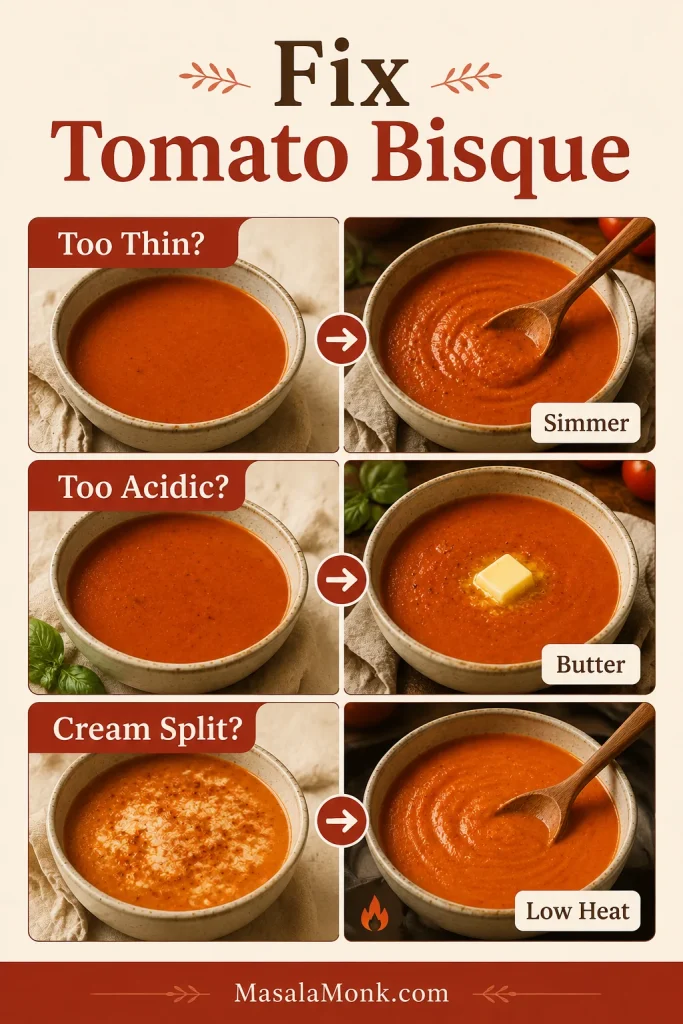
Troubleshooting guide for tomato bisque showing fixes for soup that is too thin, too acidic, or has split cream.
Most tomato bisque problems have simple fixes: simmer thin soup, soften sharpness with butter or cream, and lower the heat if cream splits.

Why does it taste too acidic?

Simmer it a little longer, then taste again. If it still tastes sharp, add a pinch of sugar, a little more cream, or a tablespoon of butter. A very small pinch of baking soda can also help, but use less than 1/8 teaspoon to start. Too much baking soda can make the soup taste dull.

How do I fix thin soup?

Simmer uncovered for a few more minutes. For a thicker version, use the optional roux, add cream or cashew cream, or blend in a little more cooked carrot.

How do I thin it without making it watery?

Add broth or water a little at a time until it reaches the texture you like. Warm gently and taste again after thinning because you may need more salt or pepper.

Why did the cream split?

The heat was probably too high. Add cream after blending, lower the heat, and warm the soup gently. Avoid boiling once the cream is in the pot.

How do I make it smoother?

Blend it longer. A countertop blender gives a silkier texture than an immersion blender. For a very smooth restaurant-style finish, strain the blended soup through a fine mesh sieve before adding cream.

Why does it taste flat?

Add salt first. If it still needs brightness, add black pepper, fresh basil, Parmesan, or a tiny splash of lemon juice.

Storage, Freezing, and Reheating

This soup reheats well, especially if you store the tomato base before adding cream. Reheated gently, it makes tomorrow’s lunch feel planned instead of leftover.

How long does it last in the fridge?

Cool the soup before storing, and refrigerate leftovers within 2 hours. Store it in an airtight container for 3 to 4 days. For general leftover safety, the USDA’s leftovers and food safety guide also recommends using refrigerated leftovers within 3 to 4 days.

Can you freeze it?

It freezes best before cream is added. Freeze the blended tomato base for up to 3 months, then thaw, reheat, and stir in the cream at the end. If the soup already has cream in it, you can still freeze it, but the texture may be less smooth after thawing.

How should you reheat it?

Reheat over low to medium-low heat, stirring often. Do not boil hard after cream has been added. Add a splash of broth or water if the soup thickens in the fridge.

If you want a chunkier tomato-broth soup with beans, vegetables, and pasta, this minestrone soup recipe is the better direction for another night.

FAQs

What is the difference between tomato soup and tomato bisque?

Tomato bisque is usually smoother, creamier, and richer than basic tomato soup. It is blended until silky and finished with cream, butter, milk, or a creamy alternative. Some restaurant-style versions also use a roux.

Are canned tomatoes or fresh tomatoes better?

Canned tomatoes are better for reliable flavor and easy cooking. Fresh tomatoes are best when they are ripe, sweet, and in season. If fresh tomatoes taste watery, roast them first or combine them with canned tomatoes.

What kind of canned tomatoes should I use?

Whole peeled tomatoes are the best first choice because they usually bring the best balance of flavor and body. Crushed tomatoes are the easier shortcut when you want less blending. Diced tomatoes can work, but they may need more blending.

How many fresh tomatoes replace a 28 oz can?

Start with about 2.5 lb / 1.1 kg ripe tomatoes to replace one 28 oz / 794 g can. Go up to 3 lb / 1.35 kg if your tomatoes are watery or you want a fuller fresh-tomato base.

Does tomato bisque need cream?

Classic tomato bisque is usually creamy, but you have options. Heavy cream is richest, half-and-half is lighter, and cashew cream works well for dairy-free soup.

What is the best way to thicken tomato bisque?

Blend the vegetables into the soup, start with controlled broth, and simmer uncovered if needed. For a restaurant-style texture, use a small roux with butter and flour. A dairy-free thicker soup can use cashew cream.

Can you make tomato bisque from canned tomato soup?

Yes. Add milk or half-and-half to condensed tomato soup, then season it with butter, garlic powder, onion powder, basil, black pepper, and Parmesan. A splash of cream can make it richer, but a full can of cream may be too heavy.

How do I make vegan tomato bisque?

Use vegetable broth, olive oil instead of butter, and cashew cream or another dairy-free cream instead of heavy cream. Cashew cream gives the most neutral creamy texture.

Can you freeze tomato bisque without ruining the texture?

Freeze the blended tomato base before adding cream. Thaw, reheat gently, and stir in the cream at the end. If the soup already contains cream, the texture may change slightly after freezing.

What goes well with tomato bisque?

Grilled cheese is the classic pairing. It also goes well with garlic bread, Parmesan croutons, sourdough toast, basil oil, a green salad, roasted vegetables, or a toasted cheese sandwich.

The Bowl You’re Aiming For

Once you understand the method, this soup becomes flexible. Make it richer, make it fresher, add basil, roast the tomatoes, or rescue a can on a busy night. As long as you smooth the base before thinning and add cream gently at the end, you are in control of the bowl.

Are you making the classic creamy version, the fresh tomato version, or the canned-soup shortcut tonight? Whichever way you go, keep the order gentle: blend the base smooth, adjust the body slowly, and add the cream at the end. Do that, and you get a glossy, velvety bowl with enough richness for comfort and enough brightness to keep every spoonful alive.

Ladle it into a warm bowl, add basil or a swirl of cream, and keep the grilled cheese close.
Posted on Leave a comment

Fresh Tomato Soup Recipe With Fresh Tomatoes: Easy Homemade Tomato Basil Soup

A bowl of smooth fresh tomato soup topped with basil and a cream swirl, with grilled cheese on the side.

Fresh tomato soup should taste bright, smooth, rich, and comforting — not watery, sour, thin, or like hot tomato juice. The goal is simple: take ripe fresh tomatoes, cook them down until they smell sweet and saucy, then blend them into the kind of cozy bowl you actually want to dip grilled cheese into.

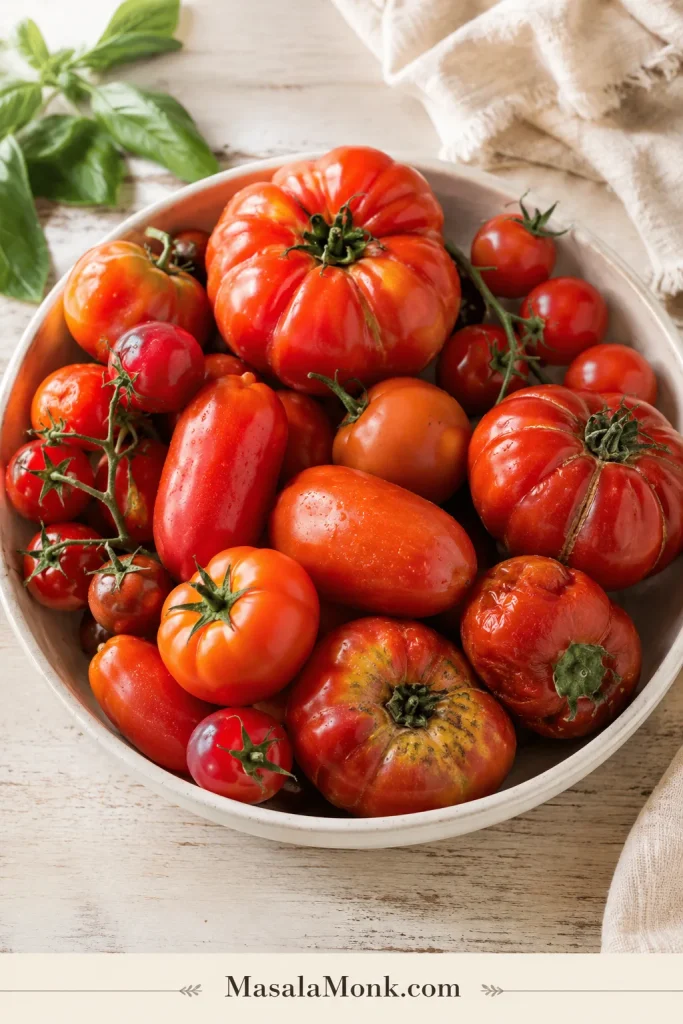
This is the soup for the awkward tomato bowl: a few Roma tomatoes, a few garden tomatoes, one soft vine tomato, and cherry tomatoes that need to be used today. It works because you do not force those tomatoes into a fixed amount of liquid. You cook them down first, then loosen the soup after blending.

That makes this recipe useful even when your tomatoes are not identical — Roma, cherry, vine, garden, watery, soft, or mixed. The method keeps the soup from turning thin because the tomatoes get a chance to concentrate before the final broth goes in.

From there, the base recipe is simple; the extra sections are only there to help you adjust the tomatoes you have. Start with the stovetop method for speed, roast the tomatoes for deeper flavor, keep the bowl light, make it creamy, or turn it into tomato basil soup with fresh basil at the end.

Mixed Roma, vine, cherry, or garden tomatoes can still make smooth homemade tomato soup when the pot is reduced first and loosened later.

A bowl filled with mixed fresh tomatoes, including Roma, cherry, vine, and garden tomatoes.
Even mixed, soft, or uneven tomatoes can make excellent homemade tomato soup when they are cooked down first and loosened only after blending.

Cooking now? Start with the recipe card. Still deciding how to handle your tomatoes? Use the soup ratio, success cues, tomato guide, roasted method, or troubleshooting section before you begin.

Quick Answer: How to Make Tomato Soup With Fresh Tomatoes

To make tomato soup with fresh tomatoes, soften onion in olive oil or butter, add garlic and tomato paste, then add chopped ripe tomatoes, salt, pepper, and herbs. Simmer uncovered until the tomatoes collapse into their own juices and the flavor concentrates. Add broth gradually, blend until smooth, stir in fresh basil near the end, and finish with cream only if you want a richer bowl.

You are not rushing fresh tomatoes into soup; you are letting them collapse, sweeten, and turn saucy before you decide how much broth they need.

The most important rule is this: do not add all the broth too early. Your tomatoes may release more juice than mine, so hold some liquid back until after blending. That one habit keeps the soup full and spoonable instead of thin.

Next step: Need exact amounts? Jump to the recipe card. Still adjusting your tomatoes? Use the soup ratio first.

The Fresh Tomato Soup Ratio

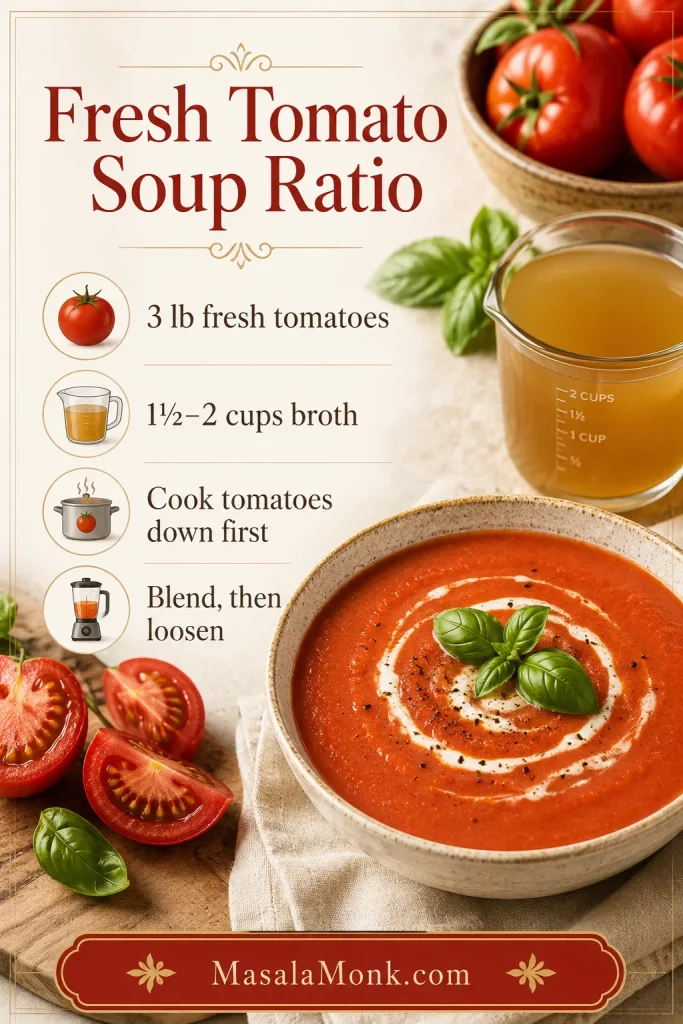
For a balanced fresh tomato soup, use about 3 lb / 1.35 kg fresh tomatoes to 1 1/2 to 2 cups / 360 to 480 ml broth. Start with the lower amount, blend, then add more only if the soup needs loosening.

Before adding extra broth, use the ratio below as a starting point, especially when your fresh tomatoes are very juicy or unusually meaty.

A guide card showing the ratio for fresh tomato soup with 3 pounds of tomatoes and 1 1/2 to 2 cups of broth.
Start with this fresh tomato soup ratio, then adjust after blending because different tomatoes release very different amounts of juice.

Thicker soup

Use Roma or plum tomatoes, begin with 1 1/2 cups broth, and simmer uncovered before blending.

Lighter soup

Add the full 2 cups broth after blending, especially if the tomatoes are meaty and the soup feels too thick.

Watery tomatoes

Roast first or simmer longer. Let the tomato juices reduce before you loosen the soup.

Creamy soup

Keep the base slightly thick, then finish with cream or a no-cream thickener after blending.

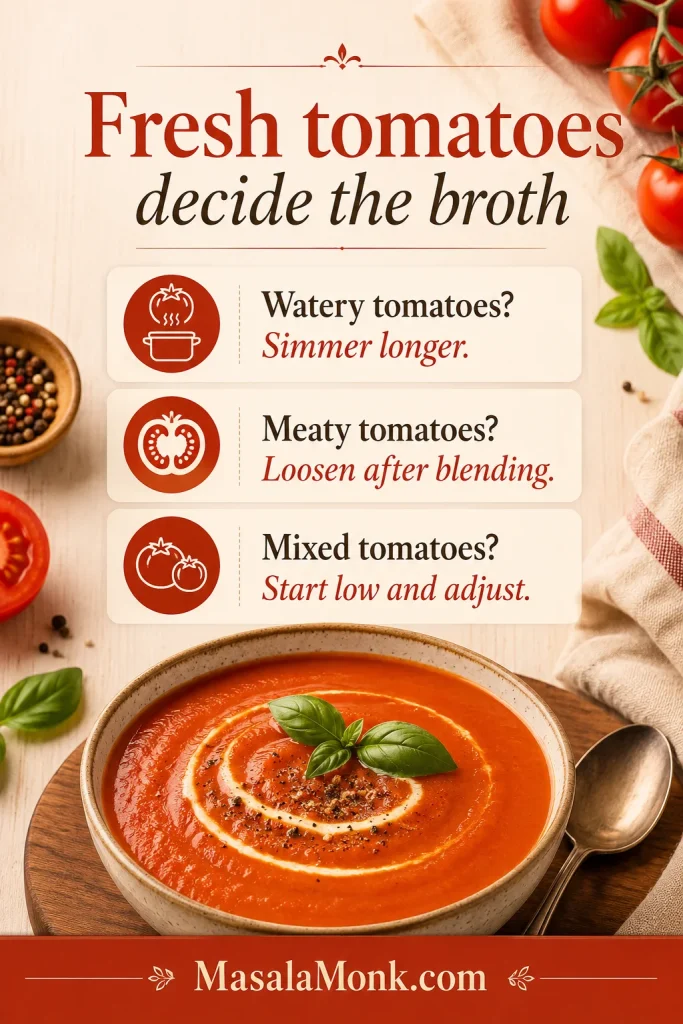
If you remember only one thing: fresh tomatoes decide the broth, not the other way around.

The main method rule is simple: reduce the tomatoes first, then loosen the soup only after blending.

A guide card explaining that fresh tomatoes decide how much broth tomato soup needs.
Instead of forcing a fixed broth amount, let the tomatoes lead; juicy tomatoes need more reduction, while meatier tomatoes may need loosening later.

Still deciding? Compare the best tomatoes for soup, use the roasted method for watery tomatoes, or go straight to troubleshooting.

Recipe Card

Easy Homemade Tomato Soup With Fresh Tomatoes

A smooth, easy homemade tomato soup made with ripe fresh tomatoes, onion, garlic, tomato paste, basil, and optional cream. Use the stovetop method for speed or the roasted method for deeper flavor.

Prep Time
10 minutes
Cook Time
30 to 35 minutes
Total Time
40 to 45 minutes
Servings
6 bowls
Yield
About 7 cups
Tomatoes
About 8 to 10 medium tomatoes
Texture
Smooth, strain optional
Diet
Vegetarian if using vegetable broth; vegan option

Ingredients

  • 3 lb / 1.35 kg ripe fresh tomatoes, roughly chopped
  • 2 tablespoons olive oil, or 2 tablespoons / 28g butter
  • 1 medium onion, chopped, about 150g
  • 4 to 6 garlic cloves, minced
  • 2 tablespoons / about 30g tomato paste
  • 1 small carrot, chopped, or 1/2 red bell pepper, chopped, optional
  • 1 teaspoon fine salt, plus more to taste
  • 1/2 teaspoon black pepper
  • 1/2 teaspoon dried oregano or dried thyme
  • 1 1/2 to 2 cups / 360 to 480 ml vegetable broth or chicken broth
  • 1/2 cup loosely packed fresh basil leaves
  • 1/4 cup / 60 ml heavy cream, optional
  • 1 to 2 teaspoons sugar, honey, or maple syrup, only if the tomatoes taste too sharp; use sugar or maple syrup for vegan soup
  • Extra basil, cream, parmesan, croutons, olive oil, or black pepper, for serving

Equipment

  • Large pot or Dutch oven
  • Sharp knife and cutting board
  • Immersion blender, regular blender, or high-speed blender
  • Fine-mesh strainer, optional, for extra-smooth soup
  • Rimmed baking sheet, only if using the roasted method

Instructions

Cook Down the Tomatoes

  1. Soften the onion. Warm the olive oil or butter in a large pot or Dutch oven over medium heat. Cook the onion for 5 to 6 minutes, until soft, translucent, and lightly golden.
  2. Build the tomato base. Stir in the garlic for about 30 seconds. Spoon in the tomato paste and cook for 1 minute, stirring often, until it darkens slightly and smells rich.
  3. Tip in the tomatoes. Add the chopped tomatoes, carrot or red bell pepper if using, salt, pepper, and oregano or thyme. Stir well.
  4. Cook them down. Simmer uncovered for 20 to 25 minutes, stirring occasionally, until the tomatoes collapse and the mixture looks saucy. Splash in a little broth only if the pot starts to dry out.
  5. Pour in the first broth. Stir in 1 1/2 cups / 360 ml broth and simmer for about 5 minutes. Hold back the remaining broth until after blending.

Blend, Finish, and Serve

  1. Puree until smooth. Turn off the heat. Blend with an immersion blender until smooth, or blend carefully in batches in a regular blender. Vent the blender lid so steam can escape.
  2. Drop in the basil. Add the fresh basil and blend briefly again. For a fresher speckled finish, chop the basil and stir it in after blending instead.
  3. Finish the texture. Loosen with more broth if the soup is too thick. Simmer uncovered for a few minutes if it is too thin.
  4. Make it creamy, if desired. Stir in the cream over low heat. If the soup is very hot, mix a spoonful of soup into the cream first, then add it back to the pot. Do not boil hard after adding cream. Taste and adjust salt, pepper, and acidity.
  5. Serve. Ladle into bowls and finish with basil, black pepper, cream, parmesan, croutons, or olive oil.

Recipe Notes

  • Roma and plum tomatoes make the thickest soup. Garden tomatoes give great flavor but may need more simmering.
  • The broth range is flexible on purpose because Roma tomatoes, vine tomatoes, cherry tomatoes, and mixed garden-style tomatoes release different amounts of juice.
  • Before blending, the tomatoes should look collapsed and saucy, not like chopped tomatoes floating in liquid.
  • No peeling is required for everyday soup. Blend well, then strain only if you want an ultra-smooth finish.
  • If your broth is salty, start with 3/4 teaspoon salt and adjust after blending.
  • The listed cook time is for the stovetop method. Roasted method timing is about 55 to 65 minutes total.
  • For a vegan version, use olive oil, vegetable broth, and skip the cream or replace it with cashew cream, coconut milk, white beans, potato, or carrot.

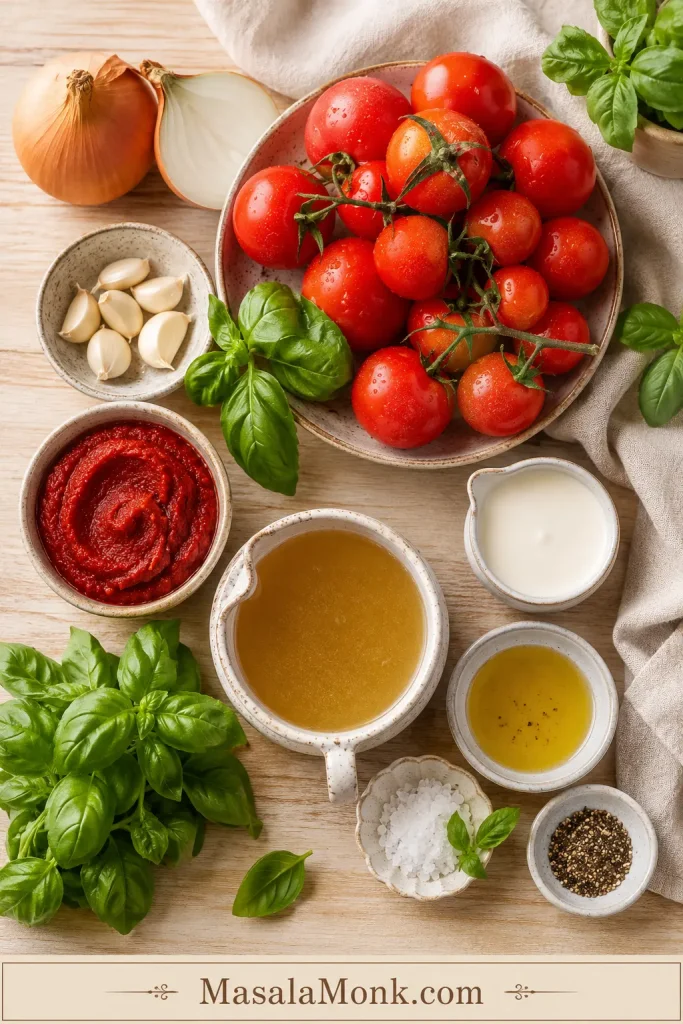
This ingredient view shows why the short list still works: each item builds sweetness, depth, brightness, or body.

Fresh tomato soup ingredients arranged overhead, including tomatoes, onion, garlic, basil, tomato paste, broth, cream, oil, salt, and pepper.
Each ingredient has a clear job: onion builds sweetness, tomato paste adds depth, basil brightens the finish, and broth controls the final texture.

Success Cues

Use these cues more than the clock. Fresh tomatoes vary, but the signs of a good pot stay the same.

Tomatoes before blending

The tomatoes should look collapsed and saucy, not like chopped tomatoes floating in broth.

Puree before more broth

The puree should be smooth first. Loosen the soup only after you know how thick the blended base is.

Before serving

The soup should coat a spoon lightly, pour easily, and taste bright first, then soft and savory.

At the finish

Add basil late, keep cream gentle, and adjust salt after the soup is fully blended.

Look for this cue before blending: the tomatoes should be collapsed and saucy, not floating in loose liquid.

Fresh tomatoes cooked down in a pot until soft, thick, and saucy before blending.
Before blending, the tomatoes should look collapsed and saucy rather than loose and chunky; this cue is one of the best ways to avoid watery tomato soup.

Table of Contents

Need a tomato, texture, roasting, storage, or rescue answer? Jump to the section you need.

Fresh Tomato Soup vs Canned Tomato Soup

Fresh tomatoes do not behave like canned tomatoes, and that is exactly why this soup needs a gentler, more flexible method. Canned tomatoes are already cooked, concentrated, and fairly consistent. Fresh tomatoes are brighter and more seasonal, but they also bring their own water, sweetness, acidity, skin, and seeds.

That is why this recipe builds flavor before the pot gets too loose. The same reduction logic matters in this tomato sauce from fresh tomatoes, where the final texture depends on cooking off extra water before adjusting the finished dish.

For a thicker, pasta-ready version of tomato depth, this classic marinara sauce recipe stays in the sauce lane. This soup stays softer, smoother, and more spoonable.

Why This Fresh Tomato Soup Works

Fresh tomatoes give you that bright, just-cut flavor, but they also bring a lot of water with them. The soup gets its body before the blender comes out, while the tomatoes are still bubbling down into something sweeter and fuller.

By the time the blender comes out, the pot should already smell like tomato sauce becoming soup.

  • Onion softens the sharp edge of the tomatoes and adds natural sweetness.
  • Garlic gives the pot savory warmth without overpowering the fresh tomato flavor.
  • Tomato paste boosts color and depth, especially when the tomatoes are juicy or mild.
  • Uncovered simmering concentrates the base before the final texture is adjusted.
  • Fresh basil goes in late so the soup tastes fragrant, not dull.
  • Cream is optional, so the final bowl can be light, creamy, vegan, or dairy-free.

The Best Tomatoes for a Smooth, Flavorful Soup

Start with the tomatoes you have, then decide how much help they need. A soft tomato that smells sweet can still make a beautiful soup, even if it is past its salad-perfect moment.

Use the tomato guide below to decide whether your batch needs more simmering, more sweetness, or a roasted start.

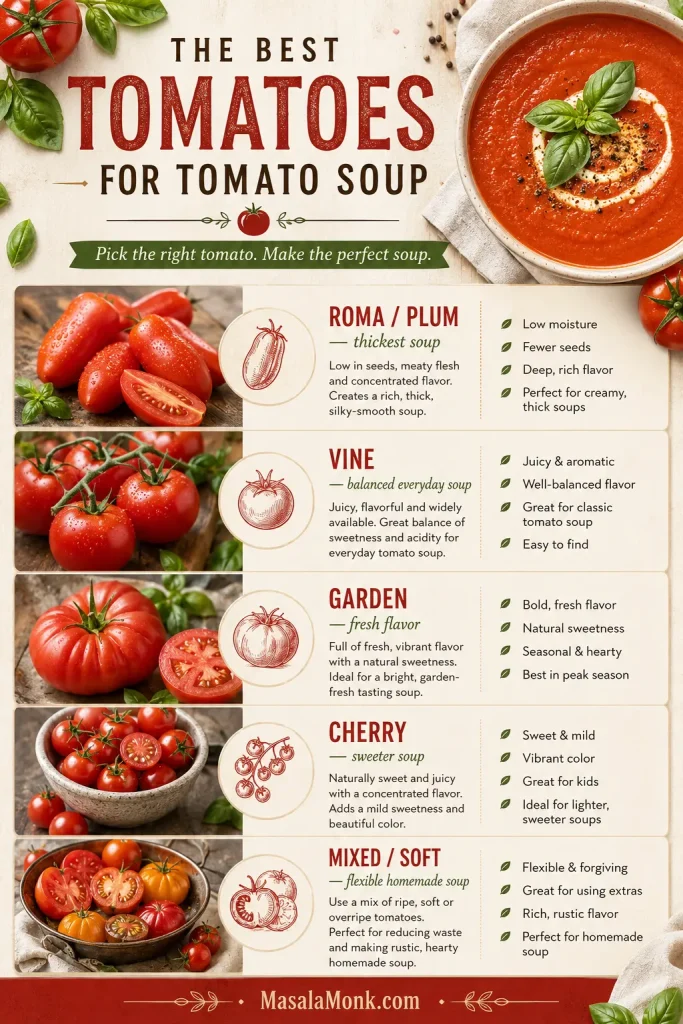
A visual guide showing Roma, vine, garden, cherry, and mixed tomatoes for tomato soup.
Roma tomatoes give body, cherry tomatoes add sweetness, and mixed garden tomatoes bring complexity, so the best tomato choice depends on the flavor and texture you want.
Tomato Type Best Use What to Know
Roma or plum tomatoes Thicker fresh tomato soup Meaty, less watery, and excellent for a smooth soup base.
Vine tomatoes Everyday tomato soup Good balance of sweetness, juice, and acidity.
Garden tomatoes Fresh summer flavor Great when ripe, but may need longer cooking if very juicy.
Cherry tomatoes Sweet roasted tomato soup Sweet and juicy. Roast them or hold back more broth at first.
Overripe tomatoes Rich homemade soup Excellent if soft and fragrant, but avoid spoiled tomatoes.
Watery tomatoes Roasted or reduced soup Roast first or simmer uncovered to concentrate them.
Underripe tomatoes Not ideal They can make the soup sharp, pale, and bland.

The tomato does not have to be perfect. It just needs to taste ripe enough that you would still want another bite — sweet, juicy, and a little fragrant when you cut into it. If you are mixing tomato types, use that to your advantage: Roma tomatoes can thicken juicy garden tomatoes, while cherry tomatoes can add sweetness to sharper ones.

Tomatoes chosen? Review the soup ratio, then move to the stovetop method.

Ingredients That Make the Soup Taste Full

The ingredient list is short, so each ingredient has to pull its weight. The right balance keeps the soup from tasting watery, flat, or too acidic.

Fresh Tomatoes

Choose ripe tomatoes that feel heavy and smell sweet. Roma, plum, vine, garden, and cherry tomatoes all work, but they behave differently. Juicy tomatoes need more time. Meaty tomatoes make a thicker base more easily.

Onion and Garlic

Onion rounds out the acidity and gives the soup a softer base. Garlic adds that warm, savory smell that makes the pot feel fuller before you even blend it. Cook the onion first, then add the garlic briefly so it stays fragrant instead of bitter.

Tomato Paste

Tomato paste is the backup plan for tomatoes that are juicy, pale, or mild. Cook it for a minute before adding the tomatoes so it darkens slightly and makes the soup taste deeper.

Broth

Vegetable broth keeps the soup light and vegetarian. Chicken broth makes it a little more savory and old-fashioned, especially if you are serving it with grilled cheese. Add it in stages so the tomatoes can show you how much they need.

Fresh Basil

Fresh basil wakes up the bowl at the end. Add it late so the flavor stays green and fragrant. When basil is the flavor you want to push harder, this classic basil pesto guide gives you another way to use the same herb as a swirl, toast spread, or pasta sauce.

Dried basil can work, but it should go in earlier with the dried herbs. Fresh basil is more delicate, so save it for the finish.

Cream, Optional

Heavy cream softens the acidity and makes the soup richer, but it is not required. You can keep the bowl bright and light, or use no-cream options like carrot, potato, cashews, white beans, bread, or coconut milk.

Peeling, Seeding, and the Smooth-Soup Shortcut

You do not need to peel or seed tomatoes for everyday homemade tomato soup. Once the tomatoes are cooked until soft and blended well, most skins disappear into the bowl.

For a very smooth, restaurant-style bowl, blend fully, strain once, and finish with a small splash of cream over low heat. Straining removes seeds, tiny bits of skin, and any grainy texture without making you peel every tomato first.

A silky bowl does not require peeling every tomato; blend first, then strain only if the texture needs it.

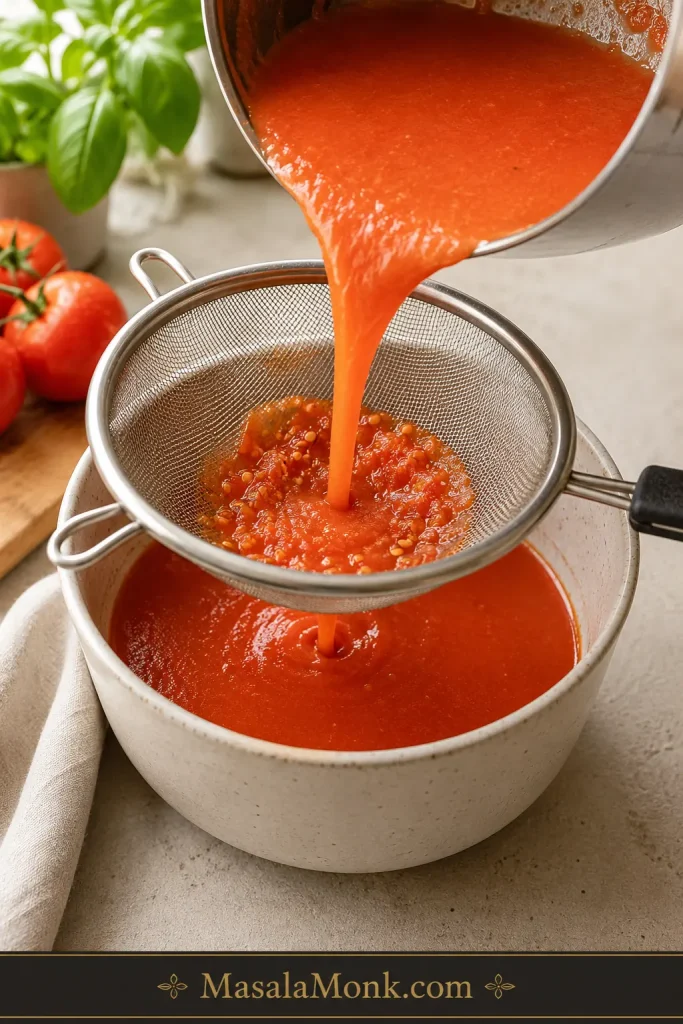
Tomato soup being poured through a fine-mesh strainer, with seeds and skin bits left behind.
For silky tomato soup without peeling every tomato, blend first and strain afterward to catch seeds and tiny skin pieces.

Prefer rustic tomato soup? Blend only half the pot and leave the rest slightly chunky.

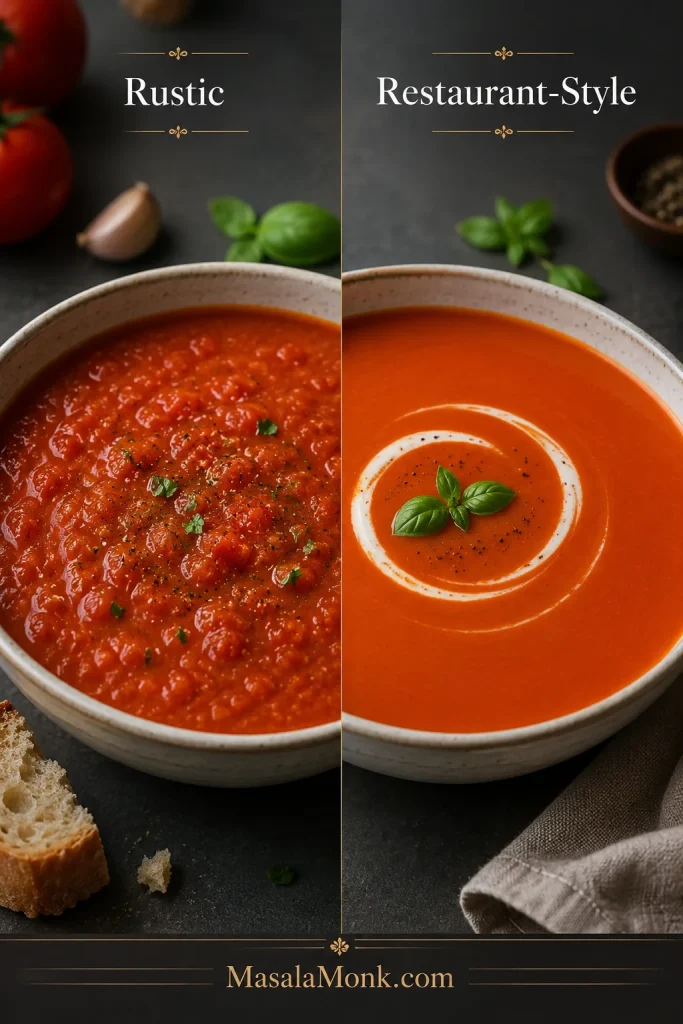
Choose the final texture here: leave some body for rustic soup or strain once for a smoother restaurant-style finish.

Two bowls comparing rustic tomato soup and smooth restaurant-style tomato soup.
For a rustic bowl, leave some texture behind; however, for a restaurant-style finish, blend thoroughly and strain once.

Once you know whether you want rustic or silky soup, the stovetop method is straightforward.

Texture chosen? Continue to how to make fresh tomato soup, or keep the visual cues nearby while you cook.

How to Make Fresh Tomato Soup

The stovetop method is the easiest place to start. It is fast, flexible, and lets you taste as you go.

1. Soften the Onion Until Sweet

Warm olive oil or butter in a large pot. Cook the onion until soft and lightly golden. Do not rush this part; it creates sweetness before the tomatoes go in.

At this stage, the onion should smell sweet and look translucent before the acidity of the tomatoes enters the pot.

Chopped onion softening in a Dutch oven with a wooden spoon.
Soften the onion until it smells sweet and turns translucent; this early step helps balance acidity before the fresh tomatoes go in.

2. Add Garlic and Tomato Paste

Let the garlic sizzle for about 30 seconds, then stir in the tomato paste. The paste should darken slightly and smell rich, almost like the tomato flavor is already getting deeper.

Cooking tomato paste briefly with the aromatics gives the soup deeper color and a fuller tomato base.

Tomato paste cooking with onion and garlic in a pot.
Briefly cooking tomato paste with onion and garlic deepens the base, so the finished soup tastes fuller even when the tomatoes are mild or extra juicy.

3. Collapse the Tomatoes

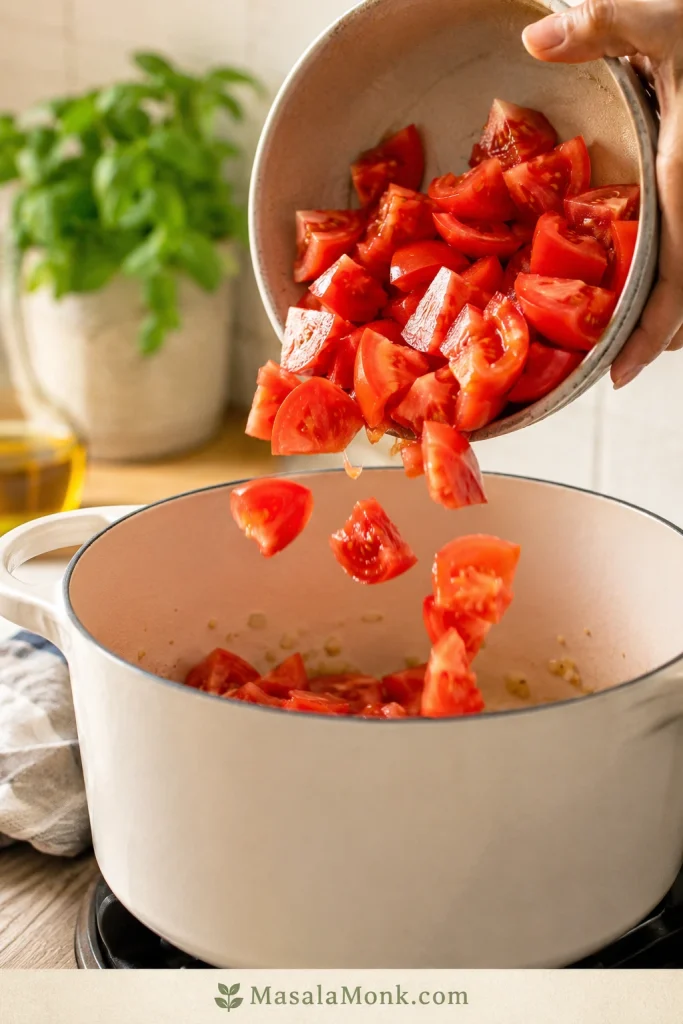
Tip in the chopped tomatoes, seasoning, and carrot or bell pepper if using. Simmer uncovered until the tomatoes collapse into their juices and the pot looks saucy.

Once the fresh tomatoes hit the pot, give them time to soften and concentrate before you decide how much broth they need.

Chopped fresh tomatoes being tipped from a bowl into a pot.
Add the fresh tomatoes before most of the broth so they can soften, concentrate, and build flavor before you decide how loose the soup should be.

4. Blend and Adjust

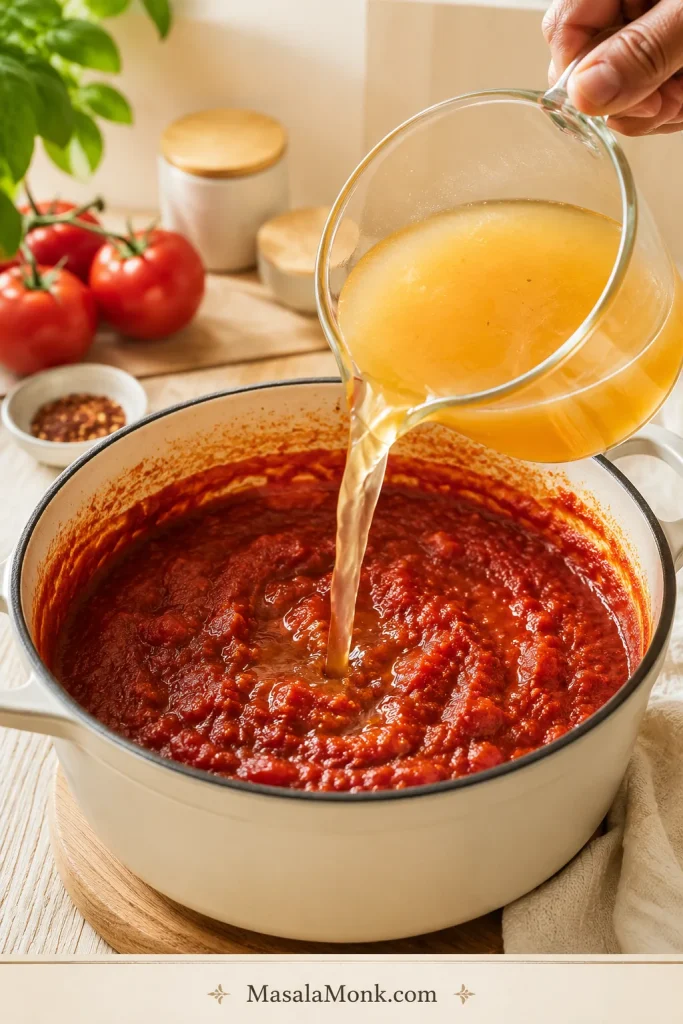
Pour in part of the broth, puree until smooth, then finish the texture. A good bowl should pour like cream but still taste like tomatoes first.

Add broth gradually after the tomato base has cooked down so the soup stays easier to control.

Broth being poured into a pot of concentrated cooked tomato mixture.
Once the tomatoes have cooked down, add broth gradually rather than all at once; that keeps fresh tomato soup full-bodied and easier to control.

After you get used to blending first and loosening after, you can use the same habit in other smooth soups too, like this butternut squash soup.

Safety cue: Hot soup expands in a blender. Work in batches, vent the lid, and cover the top with a towel so steam can escape.

When the soup is hot, work carefully and judge the thickness before adding more liquid or cream.

An immersion blender blending tomato soup inside a large pot.
Blend directly in the pot until smooth, then check the thickness before adding anything else because fresh tomato soup often loosens more than expected.

Cooking from the card? Return to the recipe card, or keep going for texture cues and variations.

What to Look For While the Soup Cooks

Tomatoes do not all behave the same, so use the timing as a guide and the texture as the final signal. The pot should smell sweeter before it looks smooth.

Stage What You Should See Why It Matters
Onion cooked Soft, translucent, and lightly golden This adds sweetness before the tomatoes go in.
Tomato paste cooked Darker red and fragrant This deepens the tomato flavor and color.
Tomatoes simmered Collapsed, saucy, and no longer floating in liquid This is where the soup starts getting body.
After blending Smooth, spoon-coating, and pourable You are aiming for soft body, not a thick paste.
Final soup Bright red-orange, balanced, and not grainy At this point, taste once more, then serve.

Aim for the texture shown here: smooth, spoon-coating tomato soup that still pours easily.

Smooth tomato soup lightly coating a spoon above the pot.
The right texture should coat a spoon lightly while still pouring easily, giving the soup a creamy feel without making it heavy.

Roasted Fresh Tomato Soup Method for Deeper Flavor

When to Roast Fresh Tomatoes

Roasting is the method to choose when your tomatoes taste good but not amazing yet. The oven pulls out sweetness, softens acidity, and gives the soup a deeper red, slightly jammy flavor before it ever reaches the blender.

It is especially useful when your tomatoes are watery, very juicy, mild, or garden-grown.

The roasted method takes longer than the stovetop version, but most of that time is hands-off. Plan on about 55 to 65 minutes total if you roast first.

Roasting helps watery or mild tomatoes taste sweeter and more concentrated before they become soup.

Roasted tomatoes, onions, garlic, and red pepper on a sheet pan.
Roasted fresh tomatoes create a deeper, sweeter soup because the oven concentrates their flavor before they reach the pot.

Roasting Setup

Use the same 3 lb / 1.35 kg fresh tomatoes. For roasting, use olive oil on the baking sheet. If you prefer butter, stir it into the pot after roasting instead. Cut medium tomatoes into halves or quarters. Leave the garlic cloves whole for roasting instead of mincing them, then squeeze the softened garlic out of the skins before blending.

How to Finish the Roasted Soup

  1. Heat the oven to 425°F / 220°C.
  2. Spread the tomatoes, onion, whole garlic cloves, and optional red bell pepper on a rimmed baking sheet.
  3. Toss with olive oil, salt, and pepper.
  4. Roast for 35 to 45 minutes, until the tomatoes are soft, jammy, and lightly browned at the edges.
  5. Transfer the roasted vegetables to a pot. Stir the tomato paste into the roasted juices and cook for 30 to 60 seconds.
  6. Pour in only 1 cup / 240 ml broth at first, then blend.
  7. Loosen gradually with more broth until the soup reaches your preferred thickness.
  8. Simmer for 5 to 10 minutes, blend until smooth, then add basil and blend briefly again. Finish with cream only if you want a richer roasted tomato basil soup.

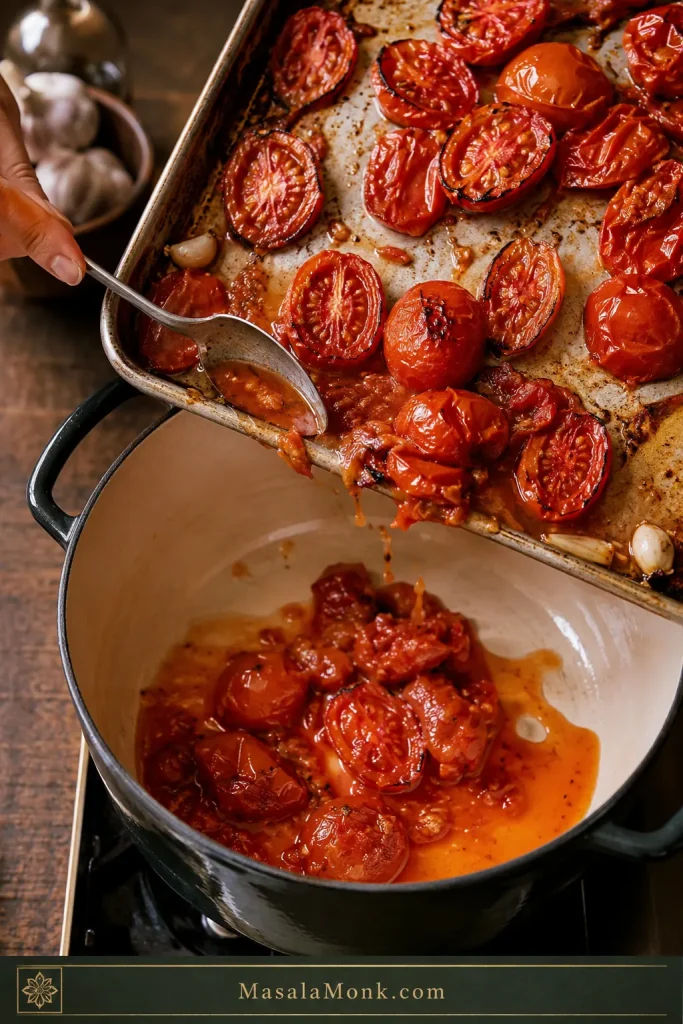
The roasted tray should smell sweet and garlicky before it ever reaches the pot. If the baking sheet has a lot of tomato liquid, add those juices gradually instead of dumping everything in at once.

When transferring roasted tomatoes, add the tray juices thoughtfully so the roasted flavor stays strong without thinning the pot.

Roasted tomatoes and juices being transferred from a sheet pan into a pot.
Scrape the roasted tomatoes and tray juices into the pot, but add the liquid thoughtfully so the soup keeps its roasted flavor without thinning too much.

After roasting: Keep the bowl bright, make it creamy or dairy-free, turn it into tomato basil soup, or choose what to serve with it.

Creamy, No-Cream, and Vegan Options

Choose the Creaminess Level

Creaminess is not just about adding cream. It is about deciding how soft, rich, and mellow you want the final bowl to feel. Some bowls want the classic silkiness of dairy; others only need a carrot, a potato, or a handful of cashews to feel round.

Creamy Options and No-Cream Thickeners

Option How Much to Use Best For
Heavy cream 1/4 cup / 60 ml for light creaminess; 1/2 cup / 120 ml for richer soup Classic creamy tomato soup.
Half-and-half 1/4 to 1/2 cup / 60 to 120 ml Lighter everyday creamy soup.
Butter 1 tablespoon blended in at the end Silky texture without much cream.
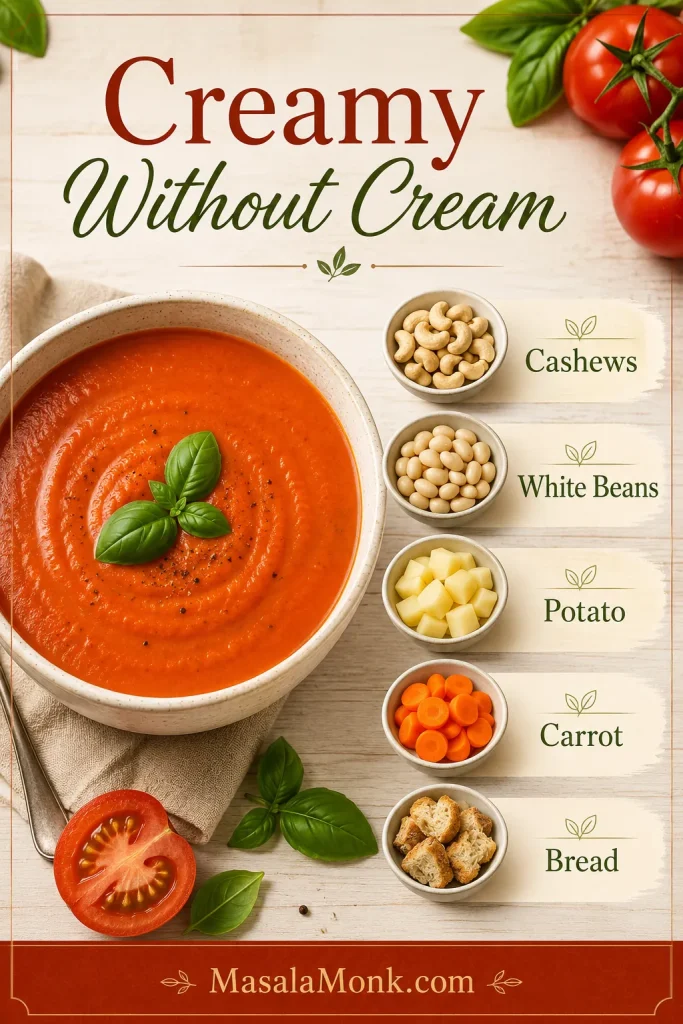
Cashews 1/4 to 1/3 cup soaked cashews Dairy-free creamy body.
White beans 1/2 cup cooked white beans Thicker soup with more body.
Potato 1 small peeled potato, simmered with the tomatoes Thick, mild, no-cream soup.
Carrot 1 small carrot, cooked with the tomatoes Sweetness, body, and acidity balance.
Bread 1 small slice crusty bread, blended in Rustic creamy texture without cream.
Coconut milk 2 to 4 tablespoons Vegan creamy tomato soup.

Creaminess can come from dairy or from body-building ingredients like cashews, beans, potato, carrot, or bread.

A guide showing cashews, white beans, potato, carrot, and bread as no-cream thickener options for tomato soup.
For creamy tomato soup without cream, use cashews, beans, potato, carrot, or bread to add body while keeping the tomato flavor clear.

The best creamy version still tastes like fresh tomatoes first. Cream, butter, cashews, beans, potato, or bread should round the edges, not hide them.

The goal is a soup that feels softer on the spoon, not one that forgets it started with fresh tomatoes.

Add Dairy Gently

With dairy, add it after blending and keep the heat low. If the soup is very hot, stir a spoonful of soup into the cream first, then add it back to the pot.

Cream belongs at the end, over low heat, where it softens the tomato flavor without splitting or muting the soup.

Cream being swirled into a bowl of tomato soup.
Add cream gently at the end and keep the heat low; creamy tomato soup should taste softer and rounder, not muted or split.

Vegan Tomato Soup Adjustments

For vegan tomato soup, use olive oil instead of butter and vegetable broth instead of chicken broth. Skip the cream, or blend in cashews, white beans, potato, carrot, or coconut milk for body. If the soup tastes sharp, use carrot, roasted red pepper, or a tiny amount of maple syrup instead of honey.

Tomato Basil Soup Variation

To make this a fresh tomato basil soup, increase the basil to about 3/4 cup loosely packed fresh basil leaves. Add the basil near the end, then blend briefly. For a brighter finish, save a little chopped basil for the bowls.

Fresh basil should go in late so tomato basil soup keeps its green aroma and bright finish.

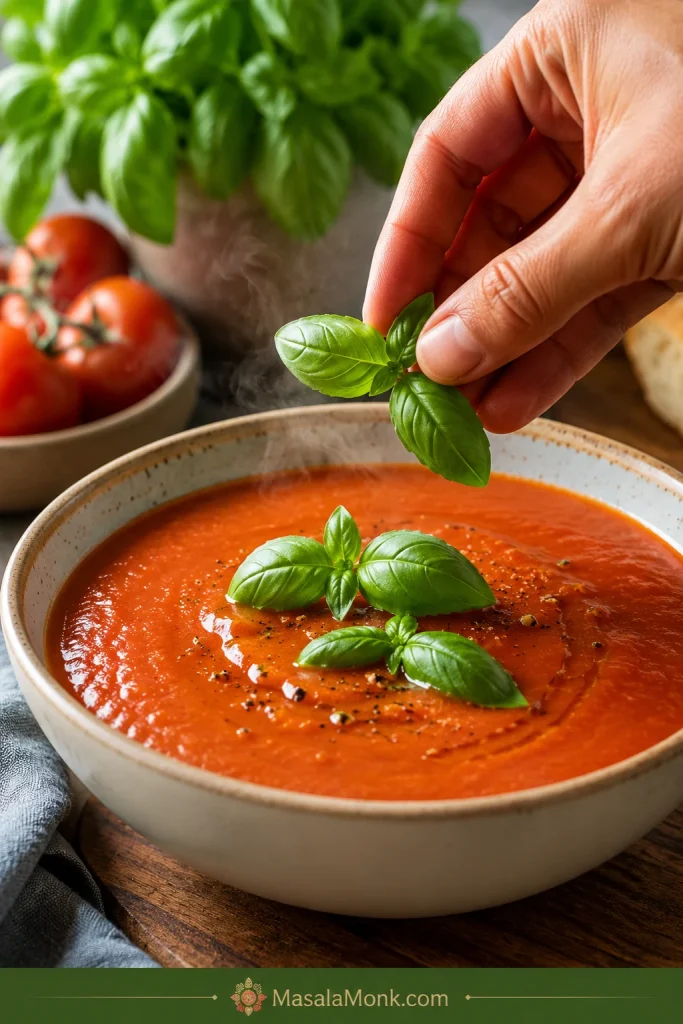
Fresh basil leaves being added to warm tomato soup.
Add basil at the end so tomato basil soup keeps its fresh green aroma; otherwise, long cooking can flatten both the color and flavor.

The basil should smell fresh the moment it hits the warm soup. If it cooks too long, that bright green lift disappears.

No fresh basil? Use 1/2 to 1 teaspoon dried basil and add it with the oregano or thyme. The flavor will be less fresh, but the soup will still be good. If basil is what you love most, save this pesto pasta recipe for another night — same fresh-herb comfort, completely different dinner.

Old-Fashioned Fresh Tomato Soup Variation

For an old-fashioned tomato soup texture, use butter instead of olive oil and add a light roux. After the onion softens, stir in 1 to 2 tablespoons flour and cook for 1 minute before adding the tomatoes and broth. Finish with a splash of milk or cream and a tiny pinch of sugar if the tomatoes are sharp.

This version is thicker, softer, and more diner-style, especially good with grilled cheese, buttered toast, or homemade croutons. It is for eating fresh, refrigerating, or freezing — not for canning.

This variation leans softer and creamier, with the kind of diner-style texture that suits toast or grilled cheese.

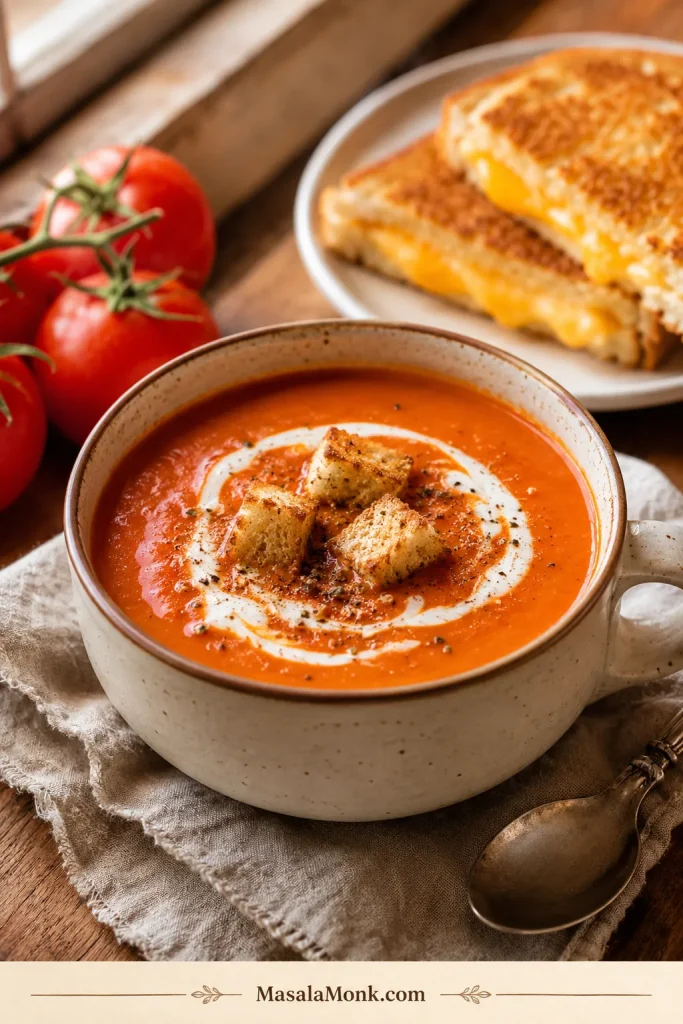
A bowl of old-fashioned creamy tomato soup topped with croutons and black pepper, with grilled cheese in the background.
For an old-fashioned tomato soup feel, go a little creamier and softer in flavor, then serve it with croutons, toast, or grilled cheese for classic comfort.

Once the base method is clear, you can adapt it to the appliance you actually want to use.

Adapt the Method for Instant Pot, Slow Cooker, or Blender

You do not need a separate recipe for every appliance. The same rule still matters: cook the tomatoes into something flavorful before you loosen the soup.

Method How to Adapt It
Instant Pot Sauté onion and garlic, deglaze well, then add tomatoes. Keep tomato paste off the bottom to reduce burn risk. Use 1 cup / 240 ml broth for pressure cooking, pressure cook 15 minutes, release naturally 5 to 10 minutes, then blend and loosen.
Slow cooker For best flavor, sauté onion, garlic, and tomato paste first. For the easiest version, add everything directly. Use only part of the broth. Cook on high for 3 to 4 hours or low for 5 to 8 hours, then blend and add basil and cream at the end.
High-speed blender Use it for the smoothest texture, especially if you do not want to peel tomatoes. When blending hot soup, work in batches, vent the lid, and cover the top with a towel.

These versions are there for convenience, but the best flavor still comes from the same small cues: softened onion, cooked tomato paste, tomatoes that smell sweeter, and final liquid added with care.

When you want the slow-cooker route but a much heartier dinner, this crock pot lasagna soup is the richer tomato-and-pasta version.

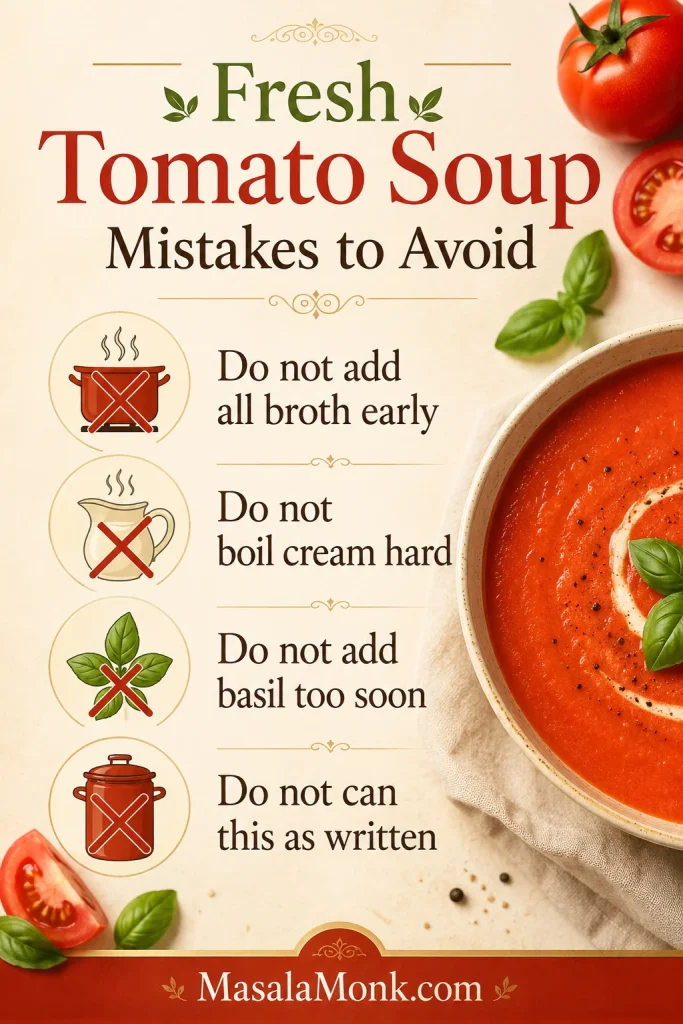
Before troubleshooting, check the mistakes most likely to make fresh tomato soup thin, dull, or unsafe to store.

A guide card listing common fresh tomato soup mistakes, including adding broth too early, boiling cream, adding basil too soon, and canning the soup as written.
These fresh tomato soup mistakes are easy to avoid: hold back broth, keep dairy gentle, add basil late, and do not can this recipe as written.

How to Fix Watery, Sour, or Bland Tomato Soup

Start With the Simple Fixes

Do not panic if the first taste is sharp, thin, or a little bland. Fresh tomatoes vary a lot, and most soup problems are easy to fix before the bowls hit the table. Salt wakes the flavor up, cream softens acidity, tomato paste deepens the base, and a few more minutes of simmering can rescue a thin pot.

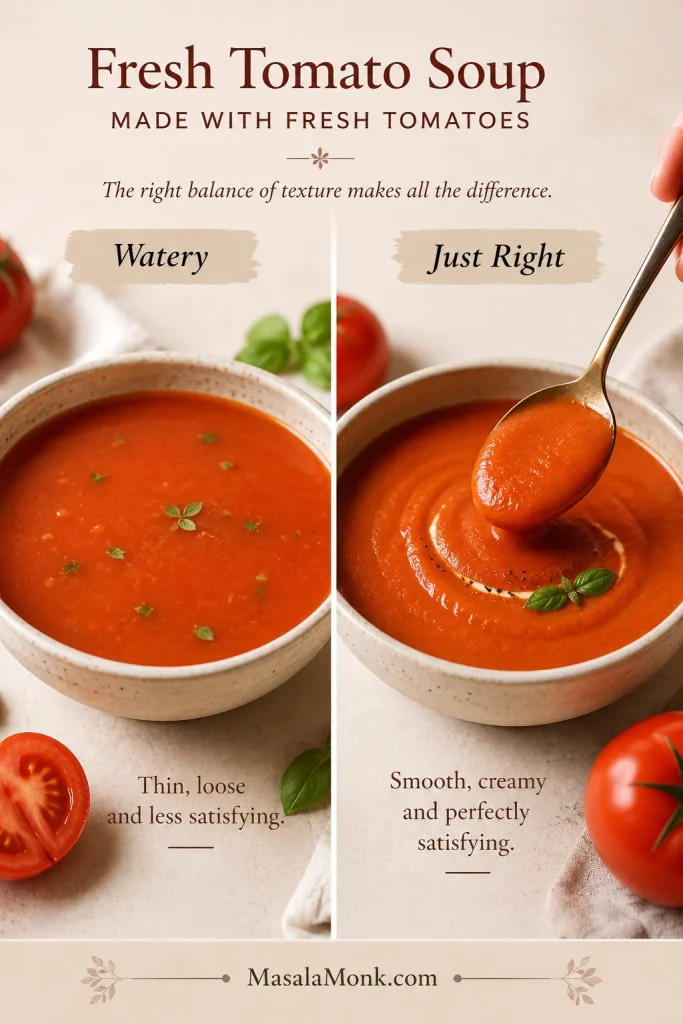
Use this comparison to see the difference between loose tomato soup and the thicker spoon-coating texture you want.

A side-by-side comparison showing watery tomato soup and thicker tomato soup labeled just right.
If the soup looks watery, keep cooking or add body before serving; the goal is smooth tomato soup that feels spoon-coating, not loose and flat.

Common Tomato Soup Problems

Problem Why It Happens How to Fix It
Watery soup Tomatoes were very juicy or too much broth was added. Simmer uncovered, add tomato paste, roast tomatoes next time, or blend in potato, white beans, cashews, or a small piece of bread.
Sour soup Tomatoes were acidic or underripe. Add carrot, roasted red pepper, cream, butter, or a tiny amount of sugar or maple syrup.
Bland soup Not enough salt, tomato depth, or aromatics. Add salt gradually, more black pepper, tomato paste, basil, or roasted garlic.
Bitter soup Garlic burned, basil overcooked, or tomatoes were underripe. Avoid burnt garlic, add basil late, and balance with cream or carrot.
Thin soup Too much liquid or not enough body. Simmer longer, add potato, white beans, cashews, bread, or cream.
Too thick Soup reduced too much. Add broth or water slowly until the texture loosens.
Seedy soup Tomato seeds remained after blending. Strain the soup through a fine-mesh strainer.
Skins in soup Tomato skins did not fully blend. Blend longer, use a high-speed blender, or strain.
Pale soup Tomatoes were not deeply red or tomato paste was skipped. Use ripe red tomatoes and add tomato paste.
Grainy soup Soup was not blended enough or solids were fibrous. Blend longer and strain for a smoother finish.

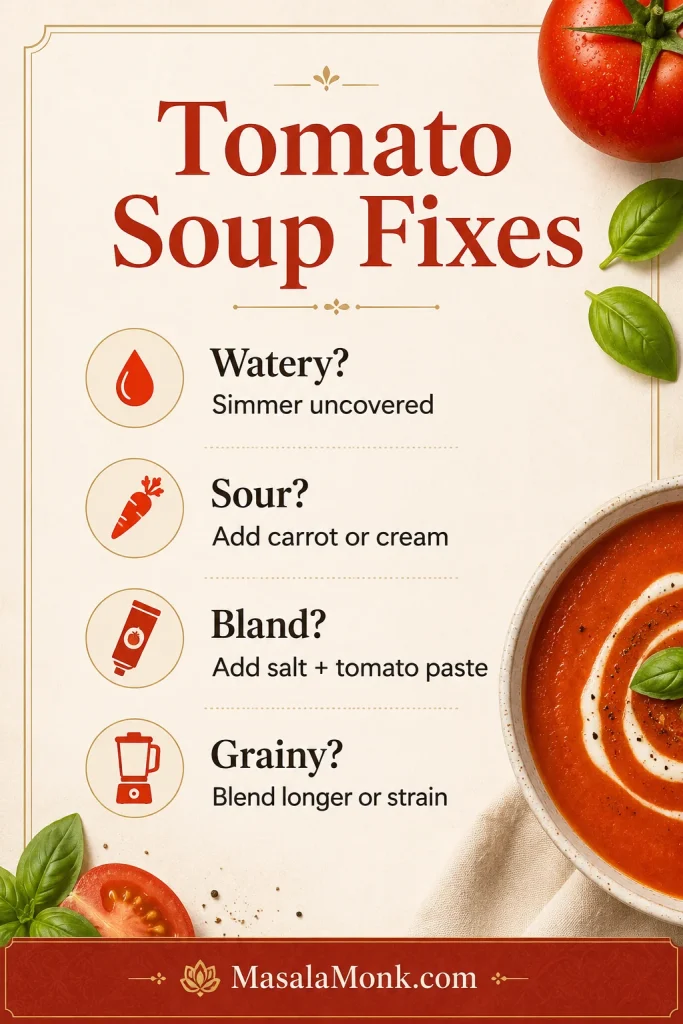
After the troubleshooting table, this card gives quick fixes for watery, sour, bland, or grainy soup.

A guide card showing fixes for watery, sour, bland, and grainy tomato soup.
Most tomato soup problems can be fixed before serving: simmer watery soup, soften sour edges, deepen bland flavor, and blend or strain rough texture.

What Not to Overdo

Do not fix everything with sugar. A tiny amount can help sharp tomatoes, but better soup usually comes from ripe tomatoes, enough salt, tomato paste, proper simmering, and a little fat or cream when needed.

For a chunkier tomato-broth soup where beans naturally add body, this minestrone soup is a good next bowl to make.

Soup fixed? Return to the recipe card, choose what to serve with tomato soup, or check storage and freezing.

What to Serve With Tomato Soup

Tomato soup is built for crisp, toasted, cheesy, or herby sides. The best bowl has that red-orange glow, a little basil on top, and something crisp on the side for dipping.

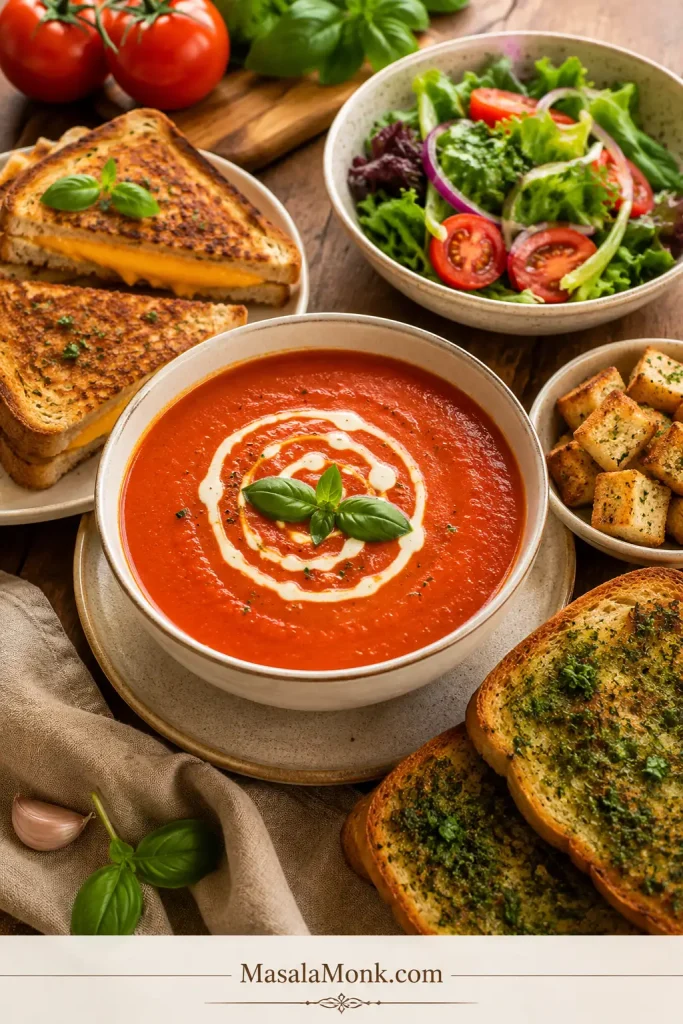
A bowl of tomato soup becomes a fuller meal when you add something crisp, cheesy, herby, or fresh on the side.

Tomato soup served with grilled cheese, toast, croutons, and a fresh salad on a table.
Tomato soup becomes a fuller meal with crisp, cheesy, or herby sides, so grilled cheese, garlic toast, croutons, and a fresh salad all work especially well.
  • Grilled cheese sandwich
  • Garlic bread
  • Cheese toast
  • Croutons
  • Toasted sourdough
  • Basil pesto toast
  • Cucumber salad for a crisp, cool side
  • Parmesan and black pepper
  • Chili flakes or chili oil
  • A swirl of cream or olive oil

For the classic version, make grilled cheese and dip the crisp edges into the soup. The first dip should leave a little orange-red trail on the bread. To keep the bowl lighter, serve it with salad, toasted bread, and extra basil. For a more filling lunch that still stays fresh, pair it with this chickpea salad instead of making the soup heavier.

The grilled cheese dip is also a texture test: the soup should cling lightly instead of running off like water.

A grilled cheese sandwich being dipped into a bowl of tomato soup.
A good tomato soup should cling lightly to grilled cheese and leave a warm orange-red trail, which is another sign that the texture is right.

Storage, Freezing, and Reheating

  • Refrigerate: Store cooled soup in an airtight container for up to 4 days.
  • Freeze: Freeze for up to 3 months for best quality. For best texture, freeze before adding cream.
  • Reheat: Warm gently on the stovetop over medium-low heat, stirring often.
  • Adjust after reheating: Add a splash of broth or water if the soup thickens in the fridge or freezer.
  • Add cream later: If freezing, stir in cream after reheating rather than before freezing.

Freeze the soup in portions for quick lunches. Leave a little space at the top of the container because soup expands as it freezes.

Portion the soup before adding cream, then adjust the texture gently when reheating.

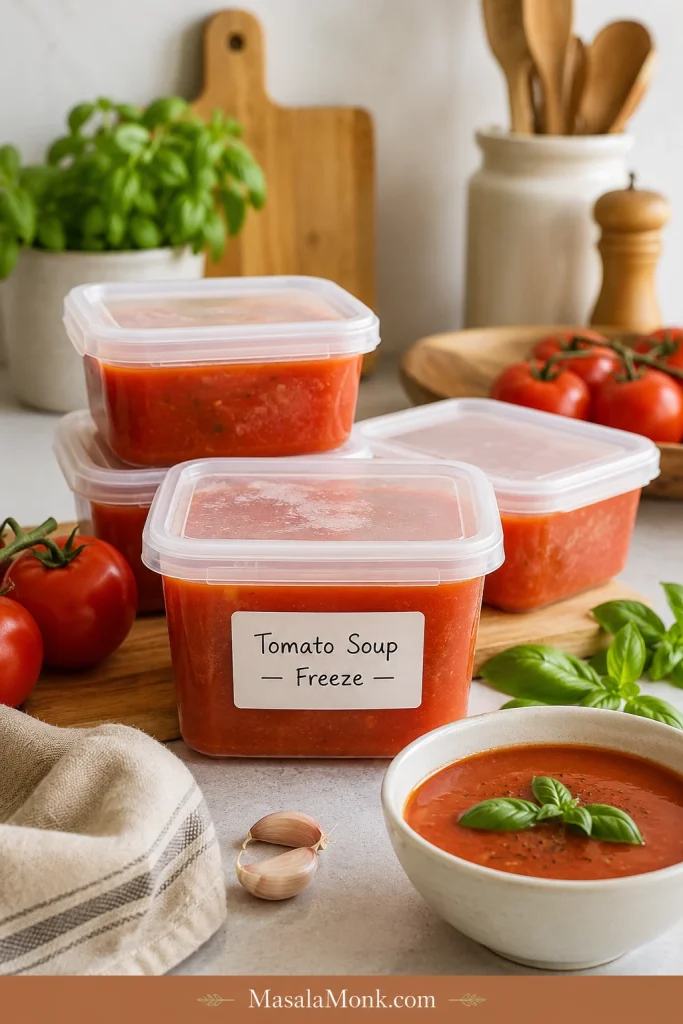
Fresh tomato soup stored in freezer-safe containers labeled for freezing, with a bowl of soup nearby.
Freeze fresh tomato soup before adding cream for the best reheated texture; later, warm it gently and loosen it with a splash of broth if needed.

For general leftover timing, FoodSafety.gov’s cold food storage chart lists soups and stews at 3 to 4 days in the refrigerator and 2 to 3 months in the freezer, which is why this recipe keeps the storage guidance conservative.

Cooking again later? Return to the recipe card, or jump back to the top of the post.

Canning Safety Note

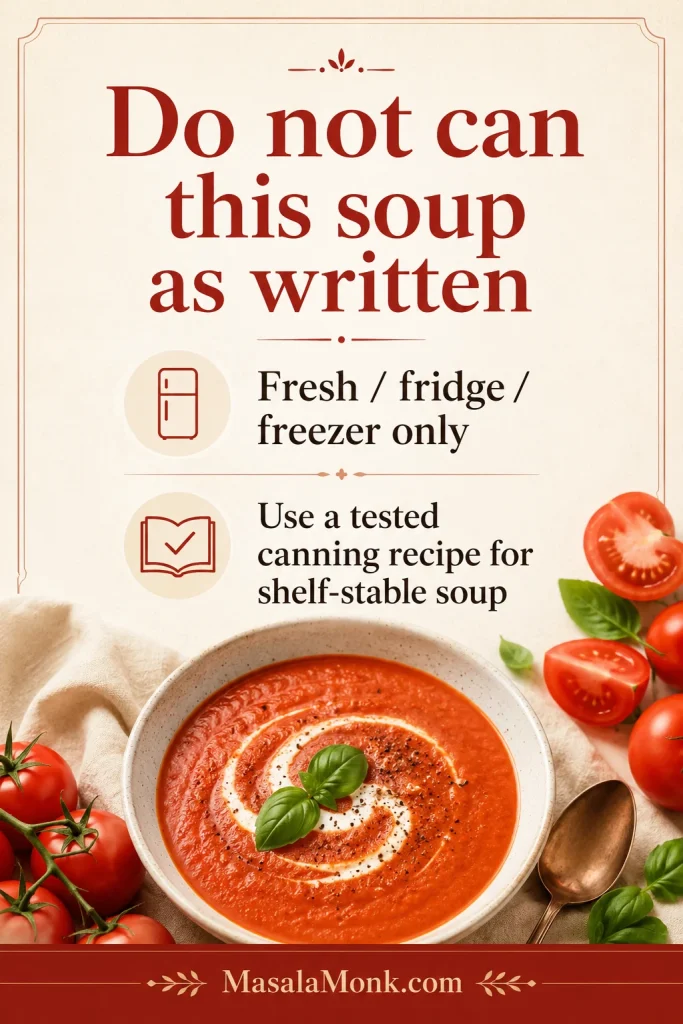
This fresh tomato soup recipe is written for eating fresh, refrigerating, or freezing. It is not a tested shelf-stable canning recipe.

Keep the storage advice clear: fresh eating, refrigeration, and freezing are fine, but this is not a canning recipe.

A safety card stating not to can this soup as written and to use a tested canning recipe for shelf-stable soup.
This recipe is meant for fresh eating, refrigeration, or freezing, while shelf-stable tomato soup should come from a properly tested canning recipe.

Do not can this soup as written, especially if you add cream, milk, flour, cashews, bread, potato, white beans, pasta, rice, or other thickeners. Those ingredients can change density and heat penetration in home-canned soup. If you want pantry-stable tomato soup, follow a tested pressure-canning recipe from start to finish rather than adapting this one. The National Center for Home Food Preservation is a good place to start.

Fresh Tomato Soup FAQs

Do I need to peel tomatoes for tomato soup?

No. You do not need to peel tomatoes for everyday tomato soup. Blend well, then strain the soup if you want a very smooth finish.

How many fresh tomatoes do I need?

For about 6 bowls of soup, use 3 lb / 1.35 kg fresh tomatoes. This is usually around 8 to 10 medium tomatoes, depending on their size.

Can I use cherry, garden, or mixed tomatoes?

Yes. Cherry tomatoes add sweetness, garden tomatoes add fresh flavor, and mixed tomatoes work well together. If the mix is very juicy, cook it longer before adding more broth.

Why did my soup turn watery?

Tomato soup turns watery when the tomatoes are very juicy, the soup is not simmered long enough, or too much broth is added early. Simmer uncovered, add tomato paste, or roast the tomatoes next time for a thicker bowl.

How do you make fresh tomato soup less acidic?

Use ripe tomatoes, add carrot or roasted red bell pepper, and finish with cream, butter, or a small pinch of sugar if needed. Roasting the tomatoes also helps soften sharp acidity.

What if I do not have tomato paste?

You can still make the soup, but it may taste lighter and look paler. Cook the tomatoes longer, use the roasted method if possible, and add a little extra salt or a small knob of butter at the end for depth.

Should I add cream to fresh tomato soup?

Add cream if you want the soup softer, richer, and closer to classic creamy tomato soup. Skip it if you want the fresh tomato flavor to stay brighter. For no-cream body, use carrot, potato, cashews, white beans, bread, or extra simmering.

How do I make tomato basil soup with fresh tomatoes?

Make the base recipe, then add fresh basil near the end and blend briefly. For stronger basil flavor, use extra basil and garnish each bowl with chopped basil or basil oil.

Can this be made without onion or garlic?

Yes. Use carrot, celery, roasted red bell pepper, bay leaf, basil, black pepper, and olive oil or butter for flavor. For an Indian-style no onion no garlic version, an optional tiny pinch of hing can add savory depth.

How long does homemade tomato soup last?

Homemade tomato soup lasts up to 4 days in the refrigerator when stored in an airtight container.

Can I freeze fresh tomato soup?

Yes. Fresh tomato soup freezes well for up to 3 months for best quality. For the smoothest texture, freeze it before adding cream and stir in cream after reheating.

Can I can this tomato soup?

No. This is not a tested shelf-stable canning recipe. It is written for eating fresh, refrigerating, or freezing. Use a tested pressure-canning recipe if you want pantry-stable soup.

Final Thought

The best fresh tomato soup tastes like you caught the tomatoes at the right moment — ripe, sweet, a little messy, and worth turning into something warm. Cook them down until the pot smells saucy, blend until smooth, then let the tomatoes tell you how much broth they need. The final bowl should taste bright enough for summer, soft enough for comfort, and ready for grilled cheese.

Posted on 13 Comments

Crock Pot Lasagna Soup (Easy Base + Cozy Slow-Cooker Recipes)

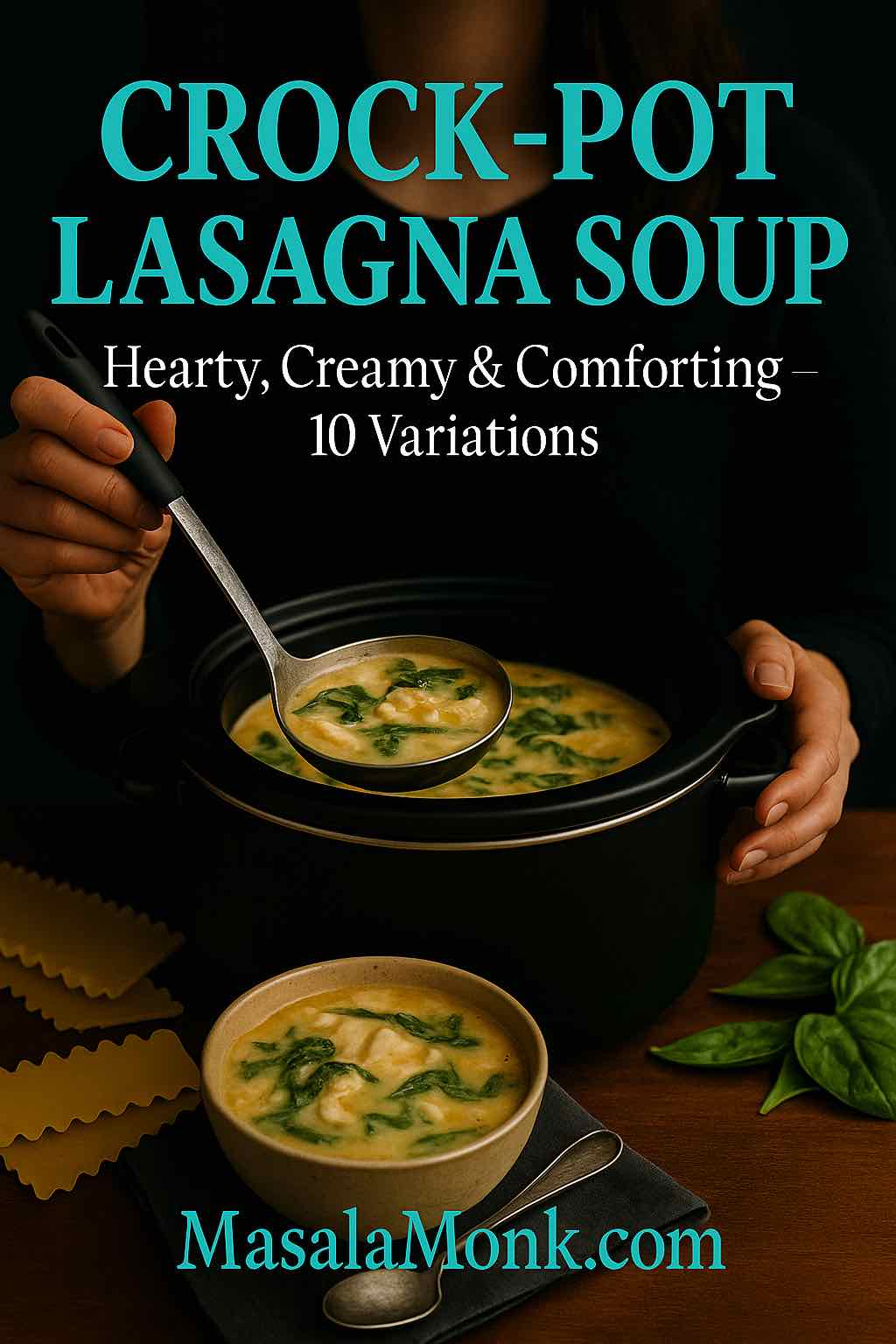
Woman ladling creamy crock pot lasagna soup from a black slow cooker into a bowl, with spinach and lasagna noodles on the table.

Some nights call for a bowl you can wrap your hands around—steamy, tomato-rich, and finished with a cloud of creamy cheese. That’s exactly what this crock pot lasagna soup delivers. You’ll do a brief sauté to build flavor, then let the slow cooker do the patient work while you get on with life. Toward the end, in go the broken lasagna noodles so they stay pleasantly toothsome, and right before serving, a lemon-zesty ricotta (or protein-forward cottage-cheese) dollop brings the full lasagna effect.

If you’re into creamier spins, you’ll also find a white, Alfredo-inspired version below; if you lean plant-based, there’s a hearty vegetarian and a fully vegan path; if you crave extra comfort, a tortellini twist waits for you; and if you want maximum convenience, there’s a five-ingredient crock-pot shortcut too. As you read, you’ll see links to deeper dives—MasalaMonk articles for noodles, sauces, and plant-protein ideas; and a few trusted external pieces for technique nerdery and food safety.

Also Read: How to Make Churros (Authentic + Easy Recipe)


The Base: Crock Pot Lasagna Soup, From Pantry to Ladle

Hands-on time: about 15 minutes
Cook time: 3–4 hours on HIGH or 6–7 hours on LOW
Serves: 6 cozy bowls

What you’ll gather

  • Olive oil for a quick sauté
  • Aromatics: 1 medium onion (diced), 3 garlic cloves (minced)
  • Tomato backbone: 2 tablespoons tomato paste + 1 can crushed tomatoes (800 g) or one 700–720 ml jar of spaghetti sauce
  • Broth: 4 cups low-sodium chicken or vegetable
  • Seasoning: Italian seasoning, a pinch of chili flakes, salt, black pepper
  • Pasta: about 225 g broken lasagna noodles (press them under the liquid so they soften evenly)
  • Finishers: a small splash of cream or half-and-half (optional), plus a ricotta or cottage-cheese topping whisked with grated parmesan, lemon zest, and parsley
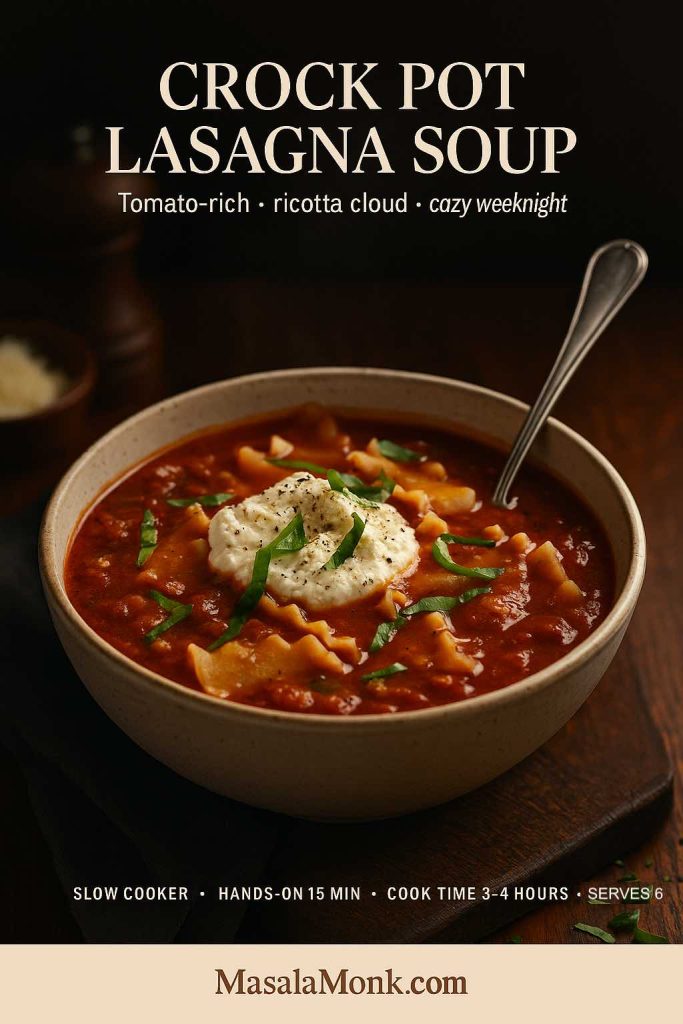
Slow-cooker lasagna soup in an ivory bowl with tomato-rich broth, ruffled noodles, and a ricotta dollop topped with basil and black pepper.
Cozy, tomato-rich crock pot lasagna soup with ricotta and basil. Hands-on 15 min; cook 3–4 hr on HIGH or 6–7 hr on LOW. Tip: add noodles in the last 25–30 min so they stay pleasantly al dente.

How it comes together

  1. Sauté for depth. Heat a drizzle of oil in a skillet. Soften onion with a pinch of salt until sweet and glossy; add garlic for 30 seconds.
  2. Bloom and brown. Stir in tomato paste and Italian seasoning; let the paste darken a shade. If you’re using meat (beef, turkey, or sausage), brown it now.
  3. Layer the base. Transfer everything to the slow cooker with crushed tomatoes (or jarred sauce) and broth. Cover and let it go—LOW 6–7 hours or HIGH 3–4.
  4. Time the noodles. Add broken lasagna sheets for the final 25–30 minutes, stirring once so they don’t clump. For leftover-friendly texture, you can boil pasta separately and add per bowl; that move keeps the soup brothy rather than starchy, and mirrors what pasta pros suggest about managing starch and sauce. For more on why timing, starch, and emulsification matter, see the technique explainer on the right way to sauce pasta and the cold-start experiment that explores starchier pasta water for better cling.
  5. Finish and serve. Off heat, swirl in a touch of cream if you want it plush. Ladle into bowls and crown each with a spoon of ricotta-parmesan (or whipped cottage cheese), a few basil ribbons, and cracked pepper.

A quick word on safety. If you’re cooking ground beef or turkey, aim for 160°F / 71°C internally; for chicken, 165°F / 74°C is your mark. Slow cookers make tenderness easy; a digital thermometer makes doneness certain. See the USDA and FoodSafety.gov temperature charts if you want a reliable reference at your fingertips.

Also Read: How to Cook Bacon in the Oven (Crispy, No-Mess, Crowd-Ready Recipe)


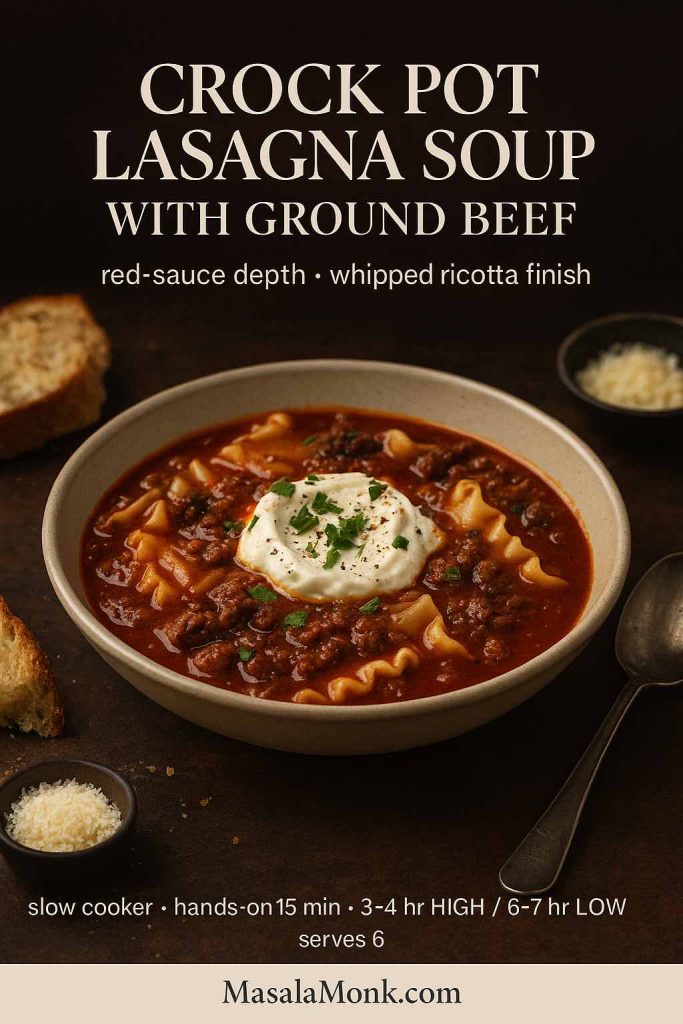
Crock Pot Lasagna Soup with Ground Beef (Classic & Comforting)

When your mood says “lasagna like Nonna makes,” reach for ground beef. Brown 450 g in the skillet after the aromatics and tomato paste, breaking it into small, even crumbles. Its richness seeps into the tomato base during the slow cook, giving you the kind of depth that feels like dinner at a red-sauce joint.

Ground-beef lasagna soup in a stoneware bowl with tomato broth, ruffled noodles, whipped ricotta, parsley, and cracked pepper; slow-cooked.
Classic crock pot lasagna soup with ground beef and a whipped-ricotta finish. Brown the beef well for “red-sauce” depth, drain excess fat, and add the lasagna noodles in the last 25–30 minutes so they stay pleasantly al dente.

Right before serving, whipped ricotta makes it taste unmistakably like lasagna; however, if you’re nudging the bowl lighter without losing indulgence, a dollop based on cottage cheese is shockingly good. For proof of concept—and a super handy reference for balancing dairy and acidity—peek at Cottage Cheese Lasagna for how cottage’s clean, tangy profile behaves with tomato and parmesan.

Also Read: French Toast Sticks (Air Fryer + Oven Recipe) — Crispy Outside, Custardy Inside


Italian Sausage Slow-Cooker Lasagna Soup (Savory, Aromatic, Irresistible)

Prefer a touch of fennel and a whisper of heat? Use 450 g Italian sausage (casings removed). Brown it with a pinch of fennel seed and a shake of chili flakes; drain the fat if needed, then carry on with the base. Because sausage runs salty, hold back on extra salt until the end. A little parmesan stirred in off heat helps everything taste round, while the ricotta spoon on top keeps the spice in check.

Charcoal bowl of Italian-sausage lasagna soup—tomato broth, ruffled noodles, sausage coins, ricotta with chili flakes; fennel and parmesan props.
Italian Sausage Lasagna Soup: fennel-kissed with gentle heat. Brown sausage well, hold extra salt until the end, and add noodles in the last 25–30 minutes; finish with parmesan for a rounded, trattoria-style bite.

Also Read: Homemade Salami: Minimal Processing, Maximum Flavor


Turkey or Turkey Sausage Crock Pot Lasagna Soup (Light but Satisfying)

When you want the nostalgic flavor without quite as much richness, turkey is your friend. A teaspoon of olive oil in the pan helps lean turkey stay juicy, and the slow cooker does the rest. You’ll still get that cozy tomato-garlic aura—especially if you perfume the pot with a bay leaf—and a lemon-zest ricotta (or a cottage-cheese whip) makes the finish feel luxurious rather than “diet.” If you’re exploring macro-friendly swaps or high-protein sides, you might like the research-forward primer Are Lentils Good for Weight Loss? which breaks down protein, fiber, and satiety science in practical terms.

Light turkey lasagna soup in a white bowl with tomato broth, ruffled noodles, lemon-zest ricotta, bay leaf, and cracked pepper; overhead.
Lighter, zesty turkey lasagna soup topped with lemon-zest ricotta. Brown turkey in 1 tsp oil, add a bay leaf for aroma, and drop noodles in the last 25–30 minutes for a bouncy, non-mushy bite.

Also Read: 10 Best Chicken Sandwich Recipes (BBQ, Parm, Buffalo & More)


White Chicken Alfredo Crock Pot Lasagna Soup (Creamy, Balanced, Weeknight-Tame)

Sometimes the soul wants creamy. This crock pot lasagna soup variation begins with boneless, skinless chicken thighs; nestle them into the slow cooker with broth, aromatics, and a measured amount of Alfredo. After the long simmer, shred the chicken with two forks, add noodles for the last half hour, and finish with parmesan and a handful of baby spinach to wilt. The result is luscious but not heavy, especially if you dial the Alfredo and use broth for balance.

Creamy white chicken Alfredo lasagna soup in a white coupe bowl with shredded chicken, wilted spinach, ruffled noodles, and parmesan curls.
Silky Alfredo-style lasagna soup with shredded chicken and spinach. Balance the sauce with broth, stir Alfredo in off heat, and add noodles in the last 25–30 minutes for a plush, non-gluey finish.

Craving ideas for seasoning profiles that play nicely with cream? Browse Chicken Alfredo Pasta, 5 Ways for riffs that translate beautifully to soup, and—if you love a whisper of warm spice—consider the thoughtful tweaks in Alfredo Pasta Reinvented: Indian-Inspired Twists to layer in cumin, coriander, or a pinch of garam masala without overpowering the bowl.

Also Read: 10 Best Espresso Martini Recipe Variations (Bar-Tested)


Vegetarian Crock Pot Lasagna Soup (Big Flavor, Plant-Forward)

Skip the meat and load up savory depth with mushrooms, zucchini, and a teaspoon of soy sauce or tamari to boost umami. For stick-to-your-ribs satisfaction, stir 1 cup brown lentils into the slow cooker at the start; they’ll tenderize right alongside the tomatoes and broth, giving you a stew-like body that feels satisfying without dairy.

Vegetarian crock pot lasagna soup with tomato broth, mushrooms, zucchini, brown lentils, ruffled noodles, parsley and herb-oil drizzle.
Big-flavor, plant-forward lasagna soup—mushrooms, zucchini, and brown lentils. Add 1 tsp soy/tamari for umami, put lentils in at the start, zucchini in the last 30–40 min, and noodles in the last 25–30 min for the best texture.

When it’s time to add noodles, consider lentil-based lasagna sheets or mini mafaldine for extra protein and fiber. If that’s new territory, Lentil Pasta for Weight Loss: Nutrition, Brands & 5 Recipes is a practical guide to textures, blends, and cooking cues so your pasta stays pleasantly firm. For additional soup-night inspiration, Wholesome & Hearty: Red Lentil Soup Recipes gives you flavor maps that echo nicely with Italian seasonings.

Also Read: Macaroni & Cheese Recipe: Creamy Stovetop, Baked & Southern


Vegan & Dairy-Free Slow-Cooker Lasagna Soup (Luxurious Without Cream)

Go with vegetable broth, build body with mushrooms and lentils (or plant-based crumbles), and finish with cashew cream: blend soaked cashews with a ladle of hot soup, a squeeze of lemon, and a spoon of nutritional yeast, then swirl it in off heat. The texture becomes velvety; the flavor stays bright.

Vegan lasagna soup with mushrooms and lentils in a rustic bowl, tomato broth, ruffled noodles, cashew-cream swirl and herb oil; lemon and cashews nearby.
Plant-based and luxurious: blend soaked cashews + a ladle of hot soup + lemon + nutritional yeast for a velvety finish. Stir in off heat. Season with 1 tsp tamari for umami and add noodles in the last 25–30 minutes so they stay bouncy.

If you’re also cutting back on refined carbs, you can stretch or replace pasta with vegetable “noodles.” For a practical overview—zoodles, spaghetti squash, shirataki, and more—skim Finding Pasta Alternatives for the Keto Diet and the companion thought piece Is There a Place for Pasta in Keto? to choose swaps that make sense for your bowl.

Also Read: Vegan French Toast: 6 Easy Recipes (Pan, Air Fryer, GF & High-Protein)


5-Ingredient Crock Pot Lasagna Soup (Dump, Go, Devour)

There are evenings when you need dinner to take care of itself. This streamlined crock pot lasagna soup is exactly that: jarred spaghetti sauce, broth, ground beef or turkey, broken lasagna noodles, and ricotta. You’ll still sauté the meat with garlic for a minute or two, because the browned bits deliver outsized flavor. Everything else simply simmers until the noodles are tender. Right before serving, a spoon of ricotta and a flutter of parmesan make it taste more complex than the ingredient list suggests.

Five-ingredient crock pot lasagna soup in a white bowl with ruffled noodles, meat, and ricotta; jarred sauce, broth carton, pasta, and ricotta nearby.
Dump-and-go weeknight lasagna soup: jarred sauce + broth + ground meat + lasagna sheets + ricotta. Brown meat 2–3 minutes for flavor, then add noodles in the last 25–30 minutes so they turn tender but keep their bite.

Also Read: Pumpkin Spice, Your Way: Master Blend, Variations & Real-World Recipes


Tortellini Lasagna Soup (Slow-Cooker Shortcut, Extra Cheesy)

Here’s the cheat code: swap the lasagna sheets for fresh cheese tortellini and add them during the final 20 minutes. Because tortellini bring their own dairy and salt, you can skip cream entirely and still get a luscious bowl. A small handful of chopped spinach or kale at the end adds color and balance; a grating of parmesan brings fragrance.

Tortellini lasagna soup in an off-white coupe bowl with tomato broth, cheese tortellini and spinach; parmesan wedge, bay leaf, and grater nearby.
Shortcut comfort: swap lasagna sheets for fresh cheese tortellini and add them in the last 20 minutes so they stay plump. No cream needed—finish with parmesan and a handful of greens for color and balance.

Butternut “White” Lasagna Soup (Autumny, Silky, Comforting)

Blend roasted butternut squash into the broth for a naturally sweet, velvety base. A pinch of nutmeg leans cozy; a swirl of cream (or coconut milk) right before serving makes it indulgent. If you’re minding carbs or just curious about portions, The Keto Guide to Butternut Squash offers helpful context about servings and smart swaps without scolding you for loving soup.

Butternut “white” lasagna soup in an ivory bowl—silky squash base with a cream swirl, ruffled noodles, parsley; roasted squash and parmesan on the side.
Silky without heaviness: roast squash for sweetness, purée into broth, then finish with cream or coconut milk off heat. Add a pinch of nutmeg and drop noodles in the final 25–30 minutes to keep the ruffles intact.

Healthy High-Protein Crock Pot Lasagna Soup (Lighter, Not Lesser)

If your goal is something that tastes like a hug and still fits a training day, try this approach:

  • Use half lean turkey and half finely chopped mushrooms to keep things juicy yet modest.
  • Choose high-protein lasagna noodles (lentil or chickpea-based) and add them near the end so the texture stays bouncy.
  • Whip cottage cheese with parmesan and lemon as your topping instead of heavy ricotta; it’s creamy, tangy, and protein-rich.
High-protein lasagna soup in a matte black bowl with red-lentil pasta, lean turkey, and a whipped cottage-cheese dollop with lemon zest.
Protein-forward comfort: use chickpea or red-lentil lasagna noodles and finish with a whipped cottage cheese + parmesan + lemon zest dollop. Add legume pasta in the last 25–30 minutes so it stays bouncy and doesn’t cloud the broth.

For long-run habits that make bowls like this sustainable, the deep dive Are Lentils Good for Weight Loss? pairs the science with actionable ideas, while Lentil Pasta: Nutrition & Brands helps you pick a noodle that suits your texture preferences.


Ingredients & Noodles: How to Make Every Bowl Shine

Although this is a forgiving recipe, a few thoughtful choices help your crock pot lasagna soup taste restaurant-good on a Monday.

Tomatoes & paste. Tomato paste that’s briefly cooked until brick-red tastes deeper and slightly caramelized; that one extra minute is worth it. If you’re using jarred spaghetti sauce, you may barely need salt—always taste first.

Broth. Chicken broth gives meat versions a savory lift; vegetable broth keeps vegetarian and vegan versions bright and clean. If you’re feeling fancy, toss in a parmesan rind at the start and fish it out later—that old-school trick perfumes the whole pot.

Pasta. Broken lasagna sheets are classic for texture and nostalgia. Mini mafaldine also work: their ruffles echo lasagna’s edges and offer a great bite. Want to explore higher-protein options? Lentil Pasta outlines one-ingredient pastas and blended versions (e.g., lentils + brown rice flour), with cooking cues to keep them from going mushy.

Creaminess. A small splash of cream or half-and-half added off heat prevents splitting and keeps the soup glossy, not heavy. For dairy-free richness, cashew cream is your friend. And for a lighter spin that still tastes decadent, a whipped cottage-cheese dollop—shown in Cottage Cheese Lasagna—is endlessly useful beyond baked casseroles.

Timing & texture. Pasta improves when it finishes cooking in a flavorful liquid; what you’re really after is a gentle exchange, where starch slightly thickens the broth and the noodles sip up seasoned tomato. If you’re curious about the “why” behind timing and starch management, the Serious Eats pieces on properly saucing pasta and cold-start cooking show how adjusting water and timing changes surface starch, which translates to better cling and less watery soup.

Safety, reheating & leftovers. With slow cookers, the food practically takes care of itself; nonetheless, internal temps matter. Think 160°F / 71°C for ground meats and 165°F / 74°C for chicken; then store leftovers in shallow containers and reheat to 165°F / 74°C. The official charts from USDA/FSIS and FoodSafety.gov are the gold standards, and they’re easy to keep bookmarked.

Also Read: Lemon Drop Martini Recipe (Classic, 3-Ingredient, & More)


The Instant Pot Detour (If You Insist)

This is a slow-cooker celebration, but life sometimes demands speed. If you pivot to pressure cooking, you’ll follow the same logic—sauté aromatics and protein, add liquids and pasta, then cook briefly under pressure and quick-release. The texture is different—more direct, less simmered—but it scratches the lasagna itch on a tight timeline. Afterward, come back to the crock-pot version when you want deeper melded flavors and that plush, rested finish only a long, quiet simmer achieves.

Instant Pot lasagna soup in a ceramic bowl with tomato broth, ruffled noodles, and ricotta; Instant Pot blurred in background on dark slate.
Instant Pot detour: sauté aromatics and meat, add liquids and pasta, cook 4–5 min on High Pressure, quick release, then finish with a ricotta dollop. Use the slow-cooker method when you want deeper, long-simmered flavor.

Serving Ideas That Elevate Without Effort

  • Fresh herb finish. Basil is obvious; parsley and chives are terrific too.
  • A lemony note. A quick zest over the bowl perks up tomato and dairy.
  • A peppery edge. Coarsely cracked black pepper right before serving gives every spoonful lift.
  • Crusty bread or garlic toast to dunk—an old-fashioned pleasure that never gets old.
  • A side salad with a sharp vinaigrette if you like contrast.

Also Read: Punch with Pineapple Juice: Guide & 9 Party-Perfect Recipes


Make-Ahead, Freezing, and Leftover Magic

Slow-cooker soups are forgiving with schedules, which makes this crock pot lasagna soup exactly the kind of recipe to batch on a Sunday. If you plan to freeze portions, stop before adding pasta and dairy; then, on reheat day, cook noodles fresh and finish with ricotta or cottage-cheese topping. Your future self will thank you when the bowl tastes as lively as day one.

If you’re the kind of cook who enjoys stretching leftovers, consider the “next-day bake”: combine thickened soup (pasta included) with a little extra sauce, spoon into a dish, top with mozzarella and parmesan, and broil until bubbly. It transforms yesterday’s comfort into a fresh, golden-topped dinner.

Also Read: Daiquiri Recipe (Classic, Strawberry & Frozen Cocktails)


When You Want to Improvise

Once you’ve made the base, tweaking becomes second nature:

  • Heat seekers: add Calabrian chili paste or a pinch of red pepper flakes to the aromatics.
  • Umami boosters: a teaspoon of miso or a splash of Worcestershire disappears into the pot and makes everything taste more savory.
  • Vegetable lift: shredded carrots or diced bell peppers melt right into the saucey base.
  • Greens: chopped kale or baby spinach stirred in with the noodles adds color and nutrition without drama.
  • Cheese play: pecorino romano instead of parmesan shifts the profile to sharper, saltier, and wonderfully aromatic.

Also Read: Piña Colada: Classic Recipe + 10 Variations (Virgin & On the Rocks)


A Final Ladle

There’s a reason this crock pot lasagna soup lands on repeat: the method is calm, the ingredients are familiar, and the results feel like a hug you can eat. On busy days, the slow cooker holds the line for you; on relaxed evenings, it asks almost nothing and gives you back a simmered, savory depth you can’t fake in a rush.

If creamy white bowls call your name, let Classic vs. Authentic Alfredo nudge your seasoning instincts before you go the white-chicken route; if you’re leaning plant-based or just curious about higher-protein noodles, Lentil Pasta: Nutrition & Brands has your back; and when you want to understand the “why” behind pasta texture and timing, the Serious Eats explorations on saucing and cold-start cooking are endlessly illuminating.

And now, ladles up. Dinner’s ready.

FAQs

1) What is crock pot lasagna soup, exactly?

Think of it as all the cozy flavors of classic lasagna—tomato, herbs, noodles, and a creamy cheese finish—gently simmered into one bowl. Moreover, crock pot lasagna soup trades layers for ease: you slow-cook the saucey base, then add broken lasagna noodles near the end for the ideal bite.

2) How long does crock pot lasagna soup take in a slow cooker?

On HIGH, plan about 3–4 hours; on LOW, budget 6–7 hours. Additionally, factor in 25–30 minutes at the end for noodles to turn perfectly al dente without going soft.

3) When should I add noodles for the best texture?

Add broken lasagna noodles during the last 25–30 minutes of cooking. Consequently, they absorb flavor yet keep structure. If you expect leftovers, cook pasta separately and stir into each serving afterward.

4) What are the best noodles for crock pot lasagna soup?

Broken lasagna sheets are classic; however, mini mafaldine or ruffled short pasta also cling nicely to the sauce. For protein-focused bowls, chickpea or lentil lasagna sheets work well if added late.

5) Can I use jarred spaghetti sauce instead of crushed tomatoes?

Absolutely. In fact, spaghetti sauce is a speedy shortcut. Taste before salting, though, since many jars are pre-seasoned; afterward, adjust spices to your preference.

6) How do I keep noodles from getting mushy?

Stir once after adding, keep the lid on, and set a timer for 25 minutes. Furthermore, for meal prep, boil noodles separately and combine just before serving to preserve texture.

7) Can I make creamy white crock pot lasagna soup?

Yes. Alternately to a tomato-only base, swirl in a measured amount of Alfredo or a splash of cream at the end. Importantly, add dairy off heat so the soup stays silky and doesn’t split.

8) What cheeses work best—ricotta or cottage cheese?

Ricotta tastes traditional and lush; nevertheless, whipped cottage cheese with parmesan and lemon zest delivers a lighter, high-protein finish. Both give that “lasagna” signature on top.

9) Can I make crock pot lasagna soup with ground beef?

Definitely. Brown beef with onion, garlic, tomato paste, and Italian seasoning first. Subsequently, slow-cook with broth and tomatoes, then add noodles late and finish with ricotta.

10) What about Italian sausage, turkey, or chicken?

Italian sausage brings fennel-forward savoriness; turkey offers a leaner profile; chicken thighs become tender and shred beautifully. Notably, each protein works—choose based on flavor and nutrition goals.

11) How do I make vegetarian lasagna soup in the crock pot?

Skip the meat, add mushrooms and zucchini, and use vegetable broth. Beyond that, include brown lentils at the start for fiber and body; finish with ricotta or a dairy-free swirl.

12) Can I make vegan and dairy-free versions?

Yes. Use plant-based crumbles or lentils, vegetable broth, and finish with cashew cream or a creamy oat-almond blend. Even so, add plant “cream” at the end to maintain a velvety texture.

13) Is there a 5-ingredient crock pot lasagna soup?

There is. Combine spaghetti sauce, broth, ground beef or turkey, broken lasagna noodles, and ricotta for serving. In short, it’s a weeknight lifesaver with minimal prep.

14) Can I do a tortellini lasagna soup in the slow cooker?

You can. Reduce or skip lasagna sheets and add fresh cheese tortellini for the final 20 minutes. As a result, you’ll get an extra cheesy bowl without extra dairy.

15) How do I make a high-protein or lighter option?

Choose lean turkey, fold in finely chopped mushrooms, use high-protein noodles, and top with whipped cottage cheese. Generally, seasoning generously keeps “lighter” from tasting bland.

16) What gluten-free options work for crock pot lasagna soup?

Opt for gluten-free lasagna sheets or short ruffled pasta made from corn, rice, chickpea, or lentils. Ideally, add them late and check doneness a few minutes early.

17) Can I add spinach or other vegetables?

Absolutely. Stir in baby spinach, chopped kale, or roasted peppers in the final 5 minutes. Conversely, if adding water-heavy veggies earlier, reduce broth slightly to keep the soup robust.

18) What’s the right slow-cooker setting for rich flavor?

LOW yields deeper melded flavors; HIGH gets dinner on the table sooner. That said, either setting works—just remember to time noodles near the finish either way.

19) How do I thicken crock pot lasagna soup without heavy cream?

Use a parmesan rind during the slow cook, blend a ladle of soup with a spoon of ricotta, or simmer uncovered the last 10 minutes. Additionally, a small cornstarch slurry (added at the end) tightens the base quickly.

20) Can I make crock pot lasagna soup in an Instant Pot?

Yes, with adjustments. Sauté aromatics and protein, add liquids and pasta, pressure cook briefly, then quick-release. On the flip side, flavor is a bit fresher and less slow-simmered than the crock pot method.

21) How do I season crock pot lasagna soup properly?

Start with Italian seasoning, garlic, and tomato paste; afterward, balance acidity with a pinch of sugar if needed and finish with parmesan, black pepper, and fresh basil. Notably, salt last if using sausage or jarred sauce.

22) What’s the ideal noodle-to-liquid ratio?

For about 225 g noodles, 4 cups broth plus tomatoes usually hits a hearty-but-soupy sweet spot. To clarify, thicker preferences can add fewer noodles or a little less broth.

23) Can I freeze crock pot lasagna soup?

Freeze the base without pasta or dairy; subsequently, add freshly cooked noodles and cheese when reheating. This approach avoids swollen noodles and keeps the broth vibrant.

24) How long do leftovers keep and how should I reheat?

Refrigerate up to 4 days in airtight containers. Reheat gently until steaming throughout; meanwhile, add a splash of broth if the soup thickened overnight.

25) Why did my noodles clump together?

They likely sat on top or weren’t stirred initially. Next time, push noodles under the liquid and give one gentle stir midway through the final 25–30 minutes.

26) Can I make crock pot lasagna soup without onions or garlic?

Certainly. Use scallions or shallots for milder sweetness; alternatively, add a pinch of asafoetida or extra herbs to keep the aroma inviting.

27) What herbs pair best beyond the basics?

Basil is classic; oregano and thyme deepen savoriness; a touch of rosemary adds perfume. Crucially, finish with fresh herbs off heat for brightness.

28) How do I build umami if I skip meat?

Mushrooms, tomato paste cooked until brick-red, a parmesan rind, and a splash of soy sauce or tamari deliver savory depth. Beyond that, roasting vegetables first adds gentle smokiness.

29) Does cottage cheese really taste like ricotta on top?

Whipped cottage cheese with parmesan and lemon zest is surprisingly close. Importantly, blend until smooth for a velvety dollop that mimics ricotta’s creaminess.
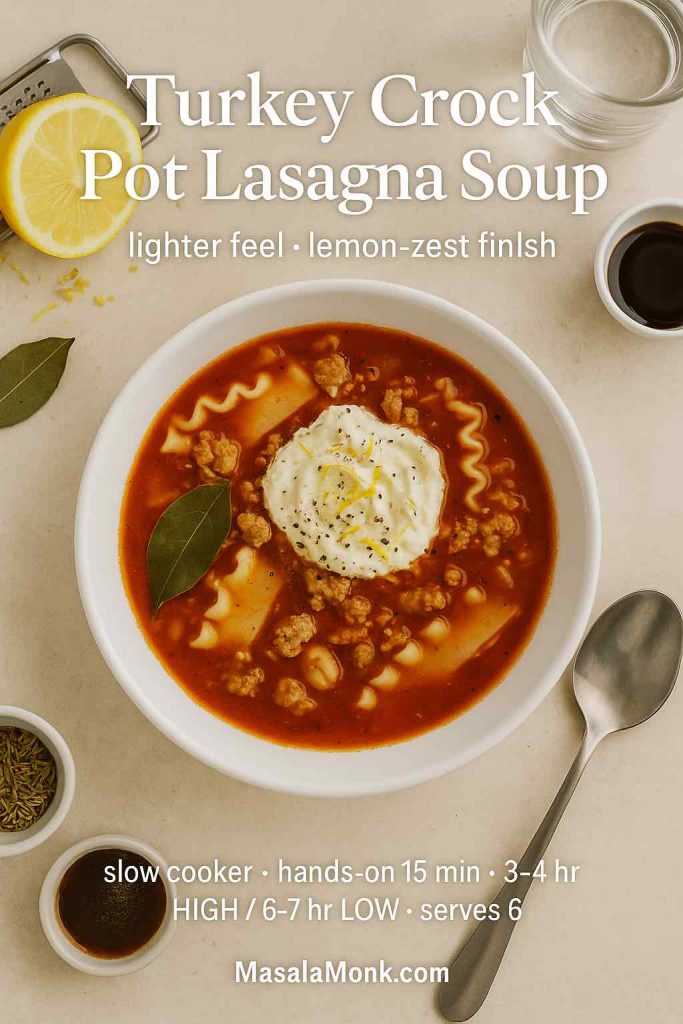
30) Can I make a low-carb crock pot lasagna soup?

Yes—use fewer noodles, lean on vegetables, and finish with a cheesy dollop. Alternatively, add zucchini ribbons near the end so they stay crisp-tender and don’t water down the soup.

31) How spicy can I take it without overwhelming the lasagna profile?

Add chili flakes with aromatics or spoon in a little Calabrian chili paste. Nevertheless, keep cheese on top to balance the heat and preserve that familiar lasagna comfort.
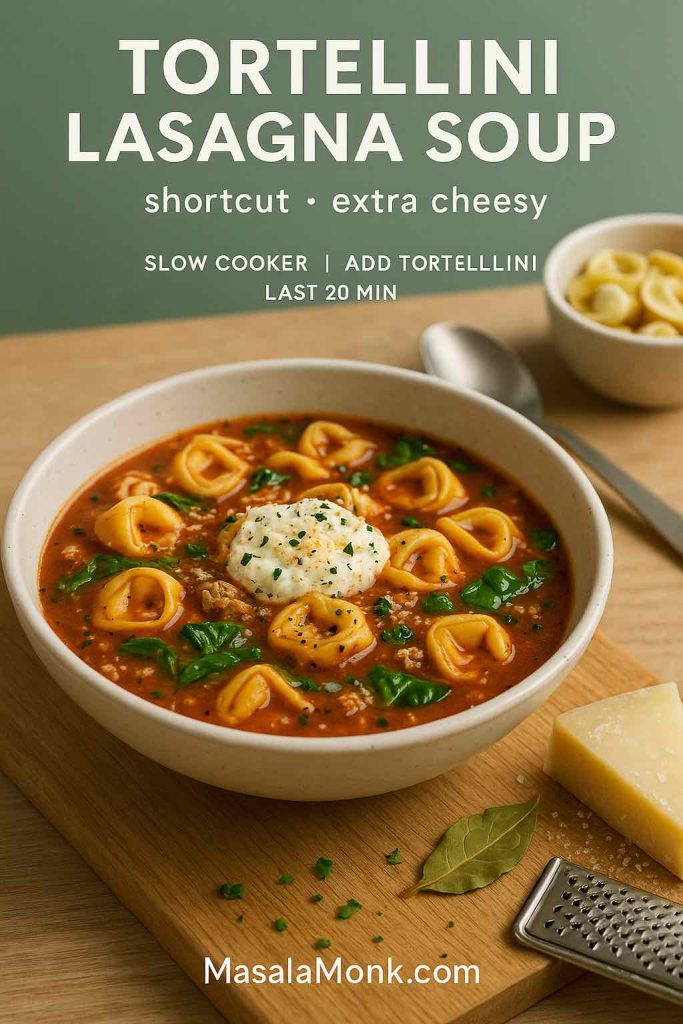
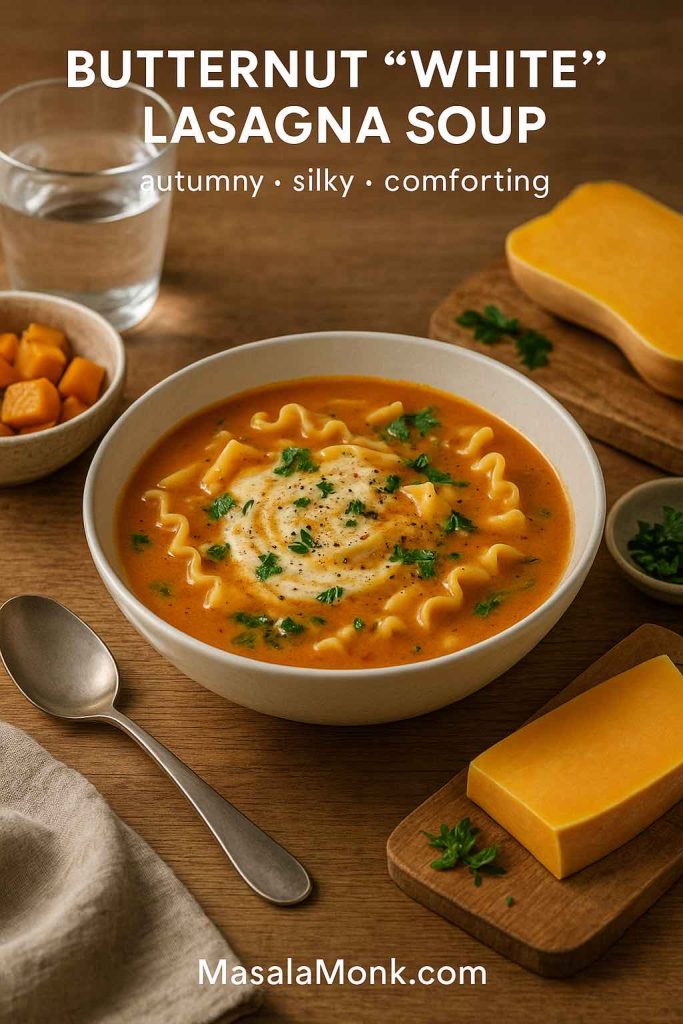
32) What’s the simplest way to scale for a crowd?

Double everything except noodles, then add pasta gradually and stop when the texture feels right. Afterward, finish with extra parmesan and a big bowl of whipped ricotta for topping.

33) Any tricks for a richer tomato flavor?

Toast tomato paste until it darkens, use fire-roasted tomatoes, and finish with a knob of butter off heat. Consequently, the sauce tastes rounder and slightly sweet without extra sugar.

34) Can I prepare components the night before?

Yes. Brown aromatics and protein, refrigerate, then load the slow cooker in the morning. Subsequently, add noodles when you return so the texture lands just right.

35) Why does dairy sometimes split in soup?

High heat or long simmering can cause separation. Therefore, add cream or dairy substitutes at the very end, stir gently, and serve promptly.

36) What’s the most reliable finishing move for restaurant-level flavor?

A squeeze of lemon zest over each bowl, freshly grated parmesan, and a drizzle of good olive oil. Finally, a few basil ribbons make the aroma bloom and the whole bowl sing.

Posted on Leave a comment

Comfort in Every Spoonful: 5 Turmeric and Moringa Soups for Weight Loss

bowl of soup and two silver spoons

Hello, health enthusiasts! Looking to warm up your dinner table with something that’s both comforting and supportive of your weight loss goals? Look no further! We’re stirring up some delicious and nutrient-rich soup recipes featuring two powerful superfoods: Turmeric and Moringa! 🌟🥣

Why Turmeric and Moringa for Weight Loss?

Turmeric, the golden spice, is known for its anti-inflammatory and antioxidant properties. It may also boost your metabolism and manage inflammatory responses associated with obesity.

Moringa, the “miracle tree,” is a treasure trove of vitamins, minerals, and protein. It’s low in calories but high in nutrients, making it a great addition to weight-loss-friendly recipes. Its high fiber content can help keep you satiated, which may deter overeating.

Ready to simmer? Let’s dive in! 🎉

1. Turmeric Moringa Vegetable Soup: This soup is a garden in a bowl, loaded with your favorite veggies, turmeric, and moringa. The vegetables provide a variety of nutrients and fiber to keep you full, while the turmeric and moringa deliver their superfood benefits. It’s a light, flavorful, and filling choice for any meal. 🥦🥕🌽

2. Turmeric Moringa Chicken Soup: Comforting chicken soup gets a superfood upgrade in this recipe. Lean protein from the chicken, coupled with the nutrition of turmeric and moringa, make this soup a balanced meal that supports weight loss. Plus, it’s a delicious way to use up leftover chicken! 🐔🥣

3. Turmeric Moringa Lentil Soup: Lentils are high in protein and fiber, which can contribute to feelings of fullness and support weight loss. This hearty soup combines lentils with turmeric and moringa for a warming and nourishing meal. A sprinkle of fresh herbs like cilantro or parsley can add a fresh pop of flavor. 🌿🥣

4. Turmeric Moringa Tomato Soup: A classic with a twist, this tomato soup incorporates turmeric and moringa for added health benefits. Tomatoes are low in calories and high in fiber, making them a great choice for weight loss. Enjoy this comforting soup with a side of whole-grain toast for a satisfying meal. 🍅🍞

5. Turmeric Moringa Pumpkin Soup: Ideal for the cooler months, this creamy pumpkin soup is low in calories but high in flavor. Pumpkin is a good source of fiber, while turmeric and moringa bring their signature health benefits. Top with a dollop of Greek yogurt for a creamy contrast and a protein boost. 🎃🥄

These five delightful turmeric and moringa soup recipes can offer a comforting and healthful addition to your weight loss plan. Remember, achieving your wellness goals is not just about shedding pounds, but also about enjoying nutrient-dense and flavorful meals. Savor these soups as part of a balanced diet, and here’s to your health and happiness! 🥂🌿🥣