

Pinakbet Tagalog is the kind of vegetable dish that makes rice feel necessary. The best spoonful has salty bagoong-rich juices, sweet squash, silky eggplant, tender okra, a little bitter ampalaya, and enough porky depth to make the vegetables feel like the meal.
It is generous, home-style Filipino cooking: vegetables cooked until they soften into each other, but not so far that everything turns muddy. The squash should become creamy at the edges, the eggplant should turn soft and shiny, and the bitter melon should balance the sweetness instead of taking over.
If your pinakbet has ever turned watery, too salty, too bitter, or too soft, the problem usually is not the ingredient list. It is the order. Squash needs a head start, okra needs restraint, and bagoong needs to be cooked with the tomatoes instead of dumped in heavily at the end.
This is a Pinakbet Tagalog-style home recipe: squash-forward, shrimp-paste seasoned, saucy enough for rice, and built to keep the vegetables tender but distinct. It also includes notes for a sharper Ilocano direction, no-bagoong substitutions, and the small timing cues that keep pakbet from becoming mushy.
Table of Contents
Quick Answer: What Is Pinakbet?
Pinakbet is a Filipino vegetable stew made with bagoong, tomatoes, and vegetables such as squash, okra, eggplant, bitter melon, and long beans. This version is Pinakbet Tagalog, made with bagoong alamang, pork, squash, and mixed vegetables in a salty, savory sauce that is meant for rice.
For the easiest balanced version, cook pork with onion, garlic, tomatoes, and shrimp paste. Add squash first, long beans next, and eggplant, ampalaya, and okra near the end. That order keeps the vegetables tender without turning everything into one soft mixed stew; the full vegetable cooking order is below.
- Main seasoning: bagoong alamang, or shrimp paste
- Protein: pork belly or pork shoulder, cut into 1-inch pieces
- Vegetables: squash, long beans, okra, eggplant, and ampalaya
- Liquid: 1 cup / 240 ml water or light stock, plus more only if needed
- Texture goal: glossy and saucy, not soupy or mushy
Start here: Use 1 tablespoon bagoong first, then adjust with 1–3 teaspoons more near the end. Bagoong brands vary a lot, and starting low gives you room to correct the seasoning.
Pinakbet at a Glance
| Yield | 4 generous servings with rice, or 5–6 smaller side servings |
| Prep time | 20 minutes |
| Cook time | About 40 minutes |
| Total time | About 1 hour |
| Best pan | 12-inch wide pan, wok, deep skillet, or wide Dutch oven |
| Main flavor | Salty, savory, lightly sweet, earthy, and a little bitter |
| Main fix | Give squash a head start and add delicate vegetables near the end |

Why these amounts work: This recipe starts with 1 tablespoon bagoong and 1 cup / 240 ml water because both salt and liquid build as the vegetables cook. Bagoong tastes sharper before it softens into the tomatoes and squash, and the vegetables release liquid as they simmer. If you are unsure how saucy the finished dish should look, use the texture guide below before adding more water.
Pinakbet Tagalog vs Ilocano: What This Recipe Is
This is a Pinakbet Tagalog-style recipe: squash-forward, seasoned with bagoong alamang, and saucy enough to spoon over rice. It is the style many home cooks expect when they want pakbet with pork, shrimp paste, kalabasa, eggplant, okra, ampalaya, and long beans.
A stricter Ilocano-style pinakbet is often more closely tied to bagoong isda or fermented fish seasoning, and the finish can be drier and more vegetable-forward. To move this recipe in that direction, use bagoong isda, reduce the liquid slightly, stir less, and let the vegetables cook down more quietly.

Cook’s clarity: Follow the recipe as written for a rounder, shrimp-paste Tagalog-style pakbet. Use the Ilocano notes if you want a sharper, drier, more fermented-fish direction. The bagoong guide below explains when to use bagoong alamang, bagoong isda, or a lighter substitute.
Why This Pinakbet Recipe Works
Good pinakbet is not about throwing every vegetable into the pan and hoping for the best. Squash, okra, eggplant, long beans, and bitter melon do not cook at the same speed, and shrimp paste is strong enough that small choices matter.
The goal is a pan of vegetables that has softened into itself without losing every shape and texture. Squash should yield but still stay visible. Eggplant should look silky and soft. Okra should be tender, not slippery across the whole dish. Ampalaya should bring enough bitterness to balance the squash and tomato, not dominate every bite.
Brown the pork first
Pork belly or pork shoulder gives the tomato and seasoning mixture more depth. Let a little fat render before the aromatics go in.
Bloom the bagoong with tomatoes
Cooking the shrimp paste with softened tomatoes rounds out the sharp saltiness and helps the flavor spread through the pan.
Stage the vegetables
Squash needs a head start. Eggplant, okra, and ampalaya go in later so they soften without collapsing.
Tested texture target: In a wide pan, 1 cup / 240 ml water is usually enough to soften the pork and start the vegetables. Add up to 1/2 cup / 120 ml more only if the pork or squash needs extra time. The finished dish should have shallow glossy juices that cling lightly to the vegetables, not a soup-like broth.
Pinakbet Ingredients
The amounts below make 4 generous servings with rice, or 5–6 smaller servings as part of a larger meal. You get enough pork for richness, enough fermented seasoning for depth, enough tomato for body, and enough vegetable contrast to make the dish feel generous.
If you are cooking outside the Philippines, check Filipino or broader Asian groceries for long beans, bitter melon, Filipino eggplant, kalabasa, and bagoong alamang. Green beans, kabocha, butternut squash, and slender eggplant can still make a good home version if you keep the same balance of sweet, bitter, tender, and firm. If your market does not carry every Filipino vegetable, the substitution guide shows which swaps keep the dish closest to the original balance.
If you cannot find every traditional ingredient, do not let that stop you. The dish still works when the pan has the same basic shape: something sweet, something bitter if possible, something tender, something green, and enough savory depth to make it feel complete.
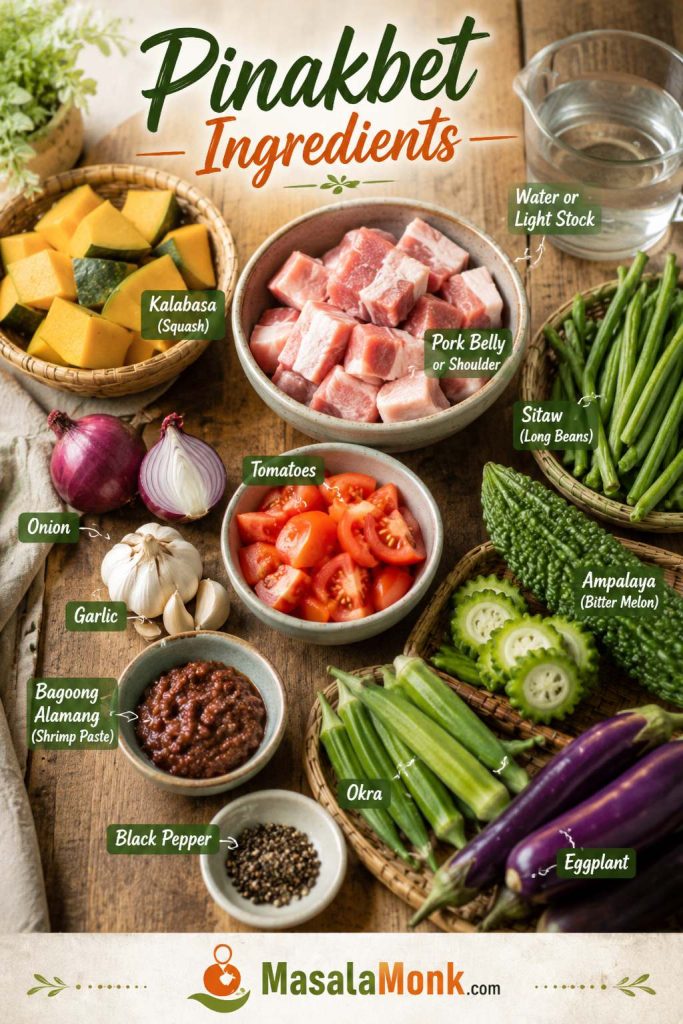
Ingredient Amounts and Why They Matter
| Ingredient | US measure | Metric | Why it matters |
|---|---|---|---|
| Pork belly or pork shoulder | 1/2 lb | 225 g | Pork belly gives richness; shoulder is leaner and may need a little more time. |
| Cooking oil | 1 tbsp | 15 ml | Use less if the pork is very fatty. |
| Onion | 1 medium | 110–150 g | Builds sweetness in the savory foundation. |
| Garlic | 3–4 cloves | 12–16 g | Add after the onion so it does not burn. |
| Tomatoes | 2 medium | About 225 g | Cook down into the savory juices. |
| Bagoong alamang | 1 tbsp to start, plus 1–3 tsp more to taste | 15 g to start, plus more to taste | Starting low helps prevent the dish from becoming too salty. |
| Water or light stock | 1 cup, plus up to 1/2 cup more as needed | 240 ml, plus up to 120 ml more as needed | Loosens the tomato-bagoong mixture without making the dish soupy. |
| Kalabasa / squash | 2 cups cubed | 250–300 g | Adds sweetness and body. |
| Sitaw / long beans | 1–1 1/2 cups cut | 100–150 g | Adds green bite and structure. |
| Okra | 6–8 pieces | 100–150 g | Add late so it keeps its shape. |
| Ampalaya / bitter melon | 1/2 medium, or up to 1 medium if you enjoy bitterness | About 100–225 g | Gives the signature bitter edge. |
| Eggplant | 1 large or 2 small | 170–250 g | Add late so it softens without dissolving. |
| Black pepper | 1/4 tsp | About 0.5 g | Optional, but rounds the flavor. |
Best Vegetables for Pinakbet
The best bites have contrast: sweet squash, bitter ampalaya, silky eggplant, tender okra, and salty tomato-bagoong juices that pull everything together.

Kalabasa / Squash
This sweet squash makes the salty seasoning feel round. Cut it into sturdy chunks so the edges turn creamy without the pieces disappearing.
Okra
Okra is there for softness and body, but it needs a light hand. Trim only the ends, add it late, and let it turn tender without stirring it into the whole pan.
Eggplant
Eggplant is at its best when it turns silky and soaks up the tomato-bagoong juices. Keep the pieces thick so they soften without vanishing.
Ampalaya
Ampalaya is the edge of the dish. Use less if you want a milder pan, but do not erase all the bitterness; that little bite is what keeps the squash and tomato from tasting too sweet.
Sitaw / Long Beans
Long beans keep the dish from feeling too soft, especially beside squash and eggplant. Cut them into 2- to 3-inch pieces so they cook evenly and keep a little bite.
Tomatoes
Once tomatoes soften into the pan, they make the fermented seasoning taste fuller and less sharp. Give them time to collapse before adding water.
Best Cut Sizes for Pinakbet
Pinakbet is forgiving, but the knife work quietly decides a lot. Small squash collapses too early, thin eggplant disappears, and overcut okra can make the texture slippery.

| Ingredient | Best cut size | What to watch |
|---|---|---|
| Pork belly or shoulder | About 1-inch pieces | Small enough to tenderize, large enough to stay juicy. |
| Squash / kalabasa | 1 to 1 1/2-inch chunks | Holds shape while becoming tender. |
| Long beans / sitaw | 2 to 3-inch pieces | Cooks evenly and stays easy to serve. |
| Eggplant | Thick diagonal pieces or large chunks | Softens without dissolving into the dish. |
| Ampalaya | Thin half-moons | Distributes bitterness without taking over every bite. |
| Okra | Whole small pods or halved large pods | Less cutting means a cleaner texture. |
| Tomatoes | Rough chopped | Breaks down into the tomato-bagoong mixture without needing perfect dice. |
How to Reduce Ampalaya Bitterness
Optional ampalaya tip: For milder bitter melon, soak the sliced ampalaya in water with a big pinch of salt for 20–30 minutes, then drain before cooking. Skip this if you enjoy the stronger bitter edge.

Ingredient Substitutes If You Cannot Find Everything
Pinakbet is best with traditional vegetables, but a home pot can still work when the market does not give you everything. Think about what each ingredient brings to the pan: sweetness from squash, bitterness from ampalaya, body from okra, and salty depth from the fermented seasoning.
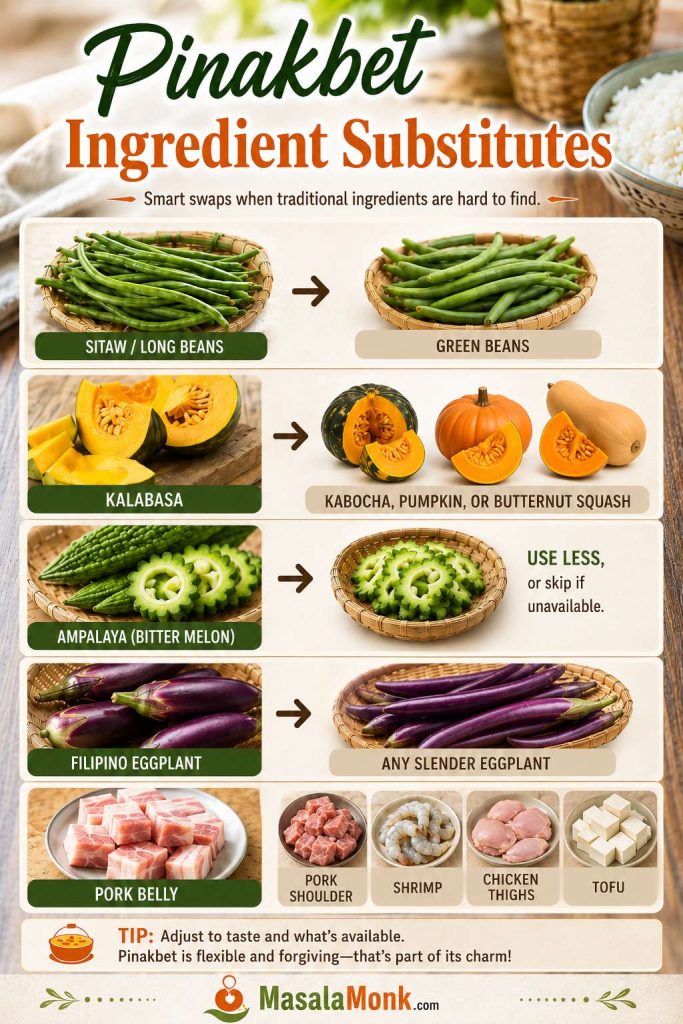
| Traditional ingredient | Good substitute | What to watch |
|---|---|---|
| Sitaw / long beans | Green beans | Green beans cook faster, so add them a little later. |
| Kalabasa | Kabocha, pumpkin, or butternut squash | Sweetness and cooking time vary by squash type. |
| Ampalaya | Use less, or skip if unavailable | The dish becomes less bitter and milder. |
| Filipino eggplant | Any slender eggplant | Similar texture; avoid tiny pieces because they collapse. |
| Pork belly | Pork shoulder, shrimp, chicken thighs, or tofu | Changes richness and cooking time. |
From here, the seasoning does the heavy lifting. This is where pinakbet can become deep and rounded, or too salty too quickly, so taste slowly and let the tomatoes do their work.
Bagoong Alamang vs Bagoong Isda
Bagoong is the ingredient that makes pinakbet taste like pinakbet. In this Tagalog-style version, bagoong alamang gives a round shrimp-paste flavor. To move the dish in a sharper Ilocano direction, use bagoong isda or bagoong monamon instead. For more background on Filipino pantry staples like bagoong and patis, this Filipino pantry guide is helpful.
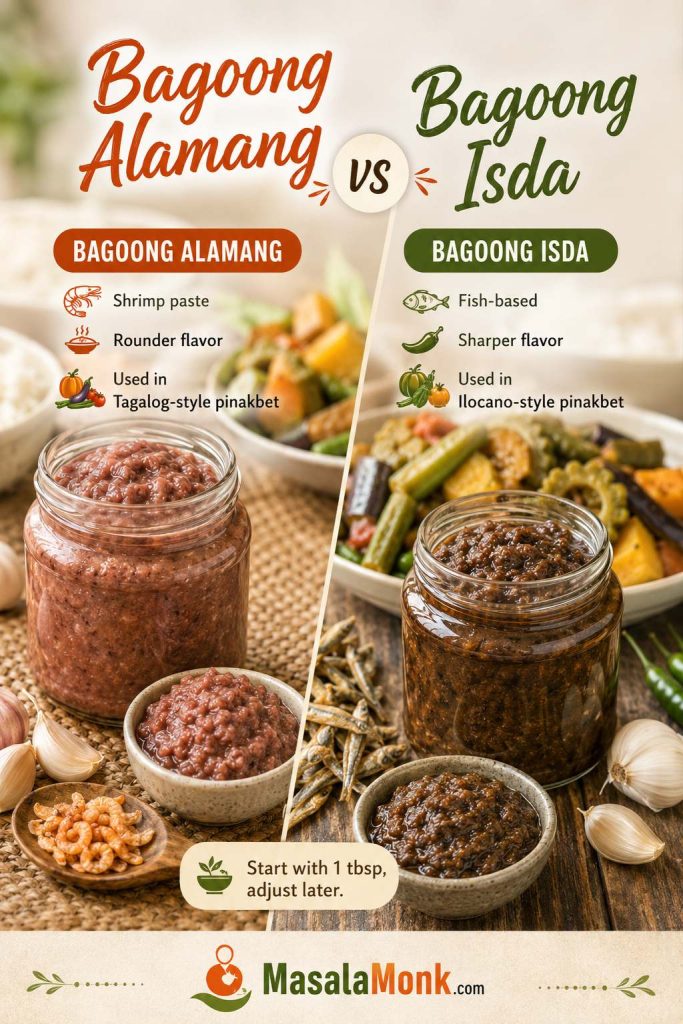
Raw vs Ginisang Bagoong
Raw bagoong alamang tends to taste sharper and saltier, so it benefits from being cooked briefly with tomatoes before the water goes in. Ginisang bagoong is already sautéed and often tastes rounder, but many jars are also sweeter. Taste before adding more, especially if the jar is meant to be eaten as a condiment.
If your ginisang bagoong tastes sweet straight from the jar, be slower with extra squash and do not add more seasoning until the vegetables are cooked. Sweet jarred shrimp paste can taste pleasantly round at first, then too sweet once the squash softens.
Taste Before Adding More
Bagoong is powerful, so use it with patience. Let it bloom with the tomatoes, then taste again later when the vegetables have softened around it. A spoonful of cooking liquid may taste strong by itself; taste with squash or rice before deciding whether the dish needs more. If you cannot use shrimp paste at all, skip ahead to the without-bagoong options.
| Bagoong type | Start with | Add more when |
|---|---|---|
| Very salty bagoong alamang | 1 tbsp | The vegetables are cooked but the dish tastes flat. |
| Sweeter ginisang bagoong | 1 tbsp, then adjust | The dish needs more savory depth, not more sweetness. |
| Bagoong isda | 1 tbsp | You want a sharper Ilocano-style flavor. |
| Fish sauce substitute | 1 tbsp | Only after tasting near the end. |
Bloom the bagoong: Cook it briefly with the tomatoes before adding water. Raw-stirred bagoong can taste sharp; cooked shrimp paste tastes rounder and spreads better through the dish.
Equipment You Need
A 12-inch wide pan, wok, deep skillet, or wide Dutch oven works best. Pinakbet has bulky vegetables, so a narrow pot forces you to stir more aggressively, which can break the squash and eggplant. Use a lid for gentle steaming and a wooden spoon or silicone spatula for turning.
How to Cook Pinakbet
Once everything is cut, the cooking is mostly patience. Brown the pork, soften the aromatics, let the tomatoes collapse, then cook the bagoong long enough for the smell to turn round and savory instead of sharply salty.
Do not rush the beginning. The tomato and shrimp paste mixture is what makes the vegetables taste complete, not like plain vegetables wearing salt. Once the squash and beans are in, give the pan enough time before you decide it needs more water. If your past batches turned watery, salty, bitter, or mushy, the troubleshooting table after the method will help you fix the problem.
A wide cooking surface helps everything cook in a shallow layer instead of being crushed. Do not stir just because the pan is quiet. You are looking for pieces that have softened into each other without losing themselves.
Best Vegetable Cooking Order
Slow-cooking vegetables and fast-cooking vegetables should not be treated the same way. This is the order that keeps pinakbet tender without making it mushy.
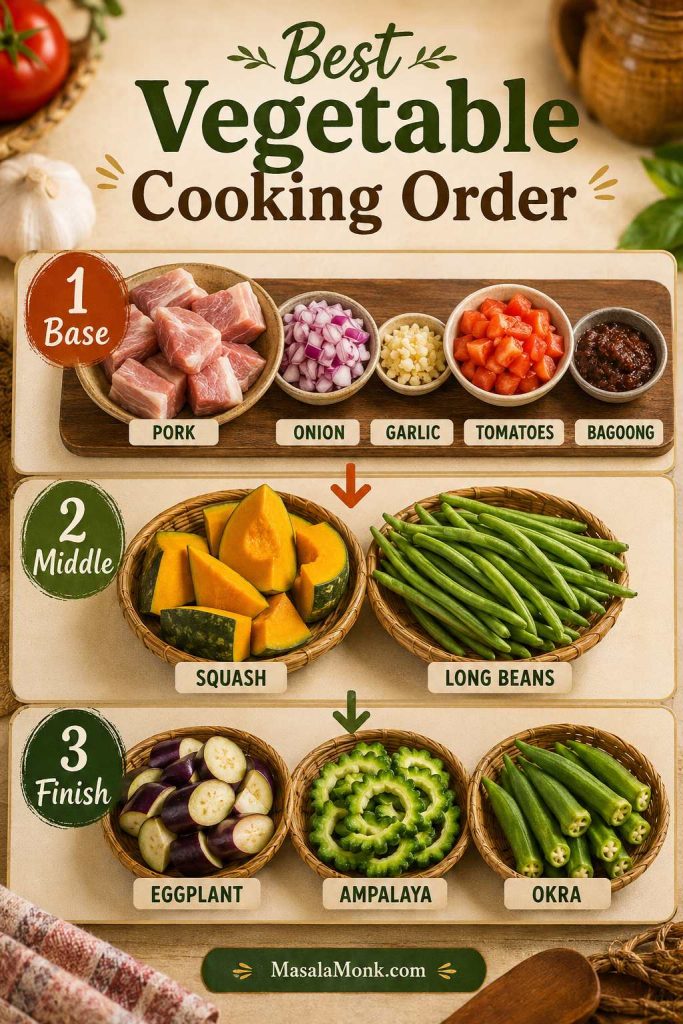
| Add first | Add in the middle | Add last |
|---|---|---|
| Pork, onion, garlic, tomatoes, bagoong | Squash, kamote if using, long beans | Eggplant, ampalaya, okra |
| Builds the savory foundation | Needs time but should hold shape | Overcooks faster and can turn too soft |
Step-by-Step Method
Build the Pork, Tomato, and Bagoong Base
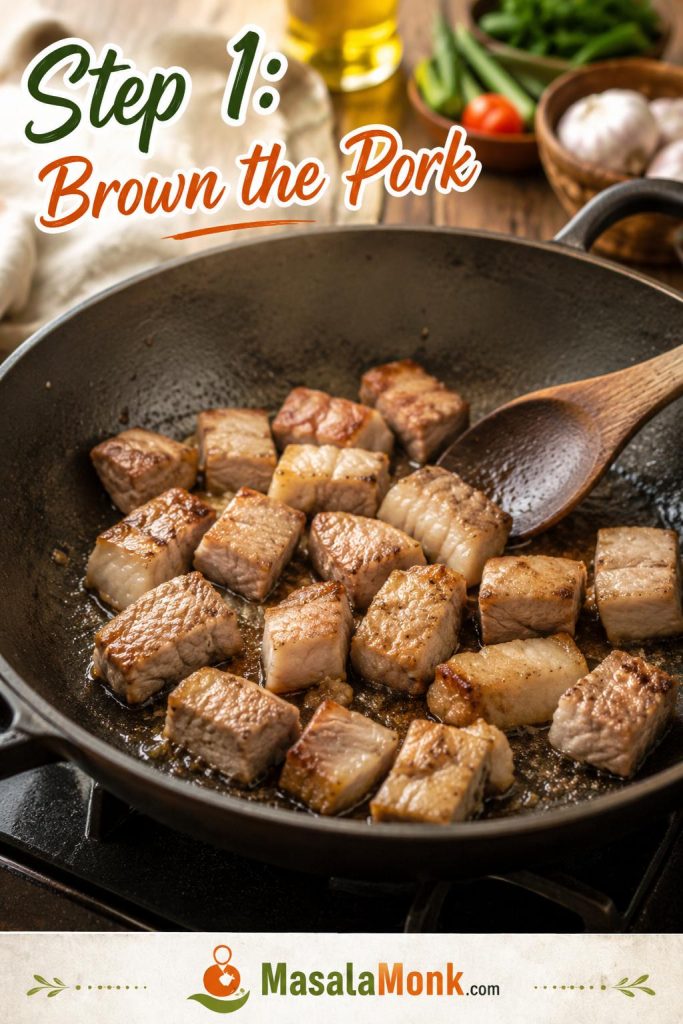
- Brown the pork. Heat oil in a wide pan over medium heat. Add pork in one layer and cook for 5–8 minutes, until lightly browned and some fat has rendered. Spread the pork out so it browns instead of steaming.
Visual Cue: Brown the Pork
- Cook the aromatics. Add onion and cook for about 2 minutes, until softened. Add garlic and cook for 30 seconds to 1 minute, just until fragrant.
- Soften the tomatoes. Add tomatoes and cook for 3–5 minutes, pressing them gently with the spoon. They should lose their raw shape and look juicy around the edges.
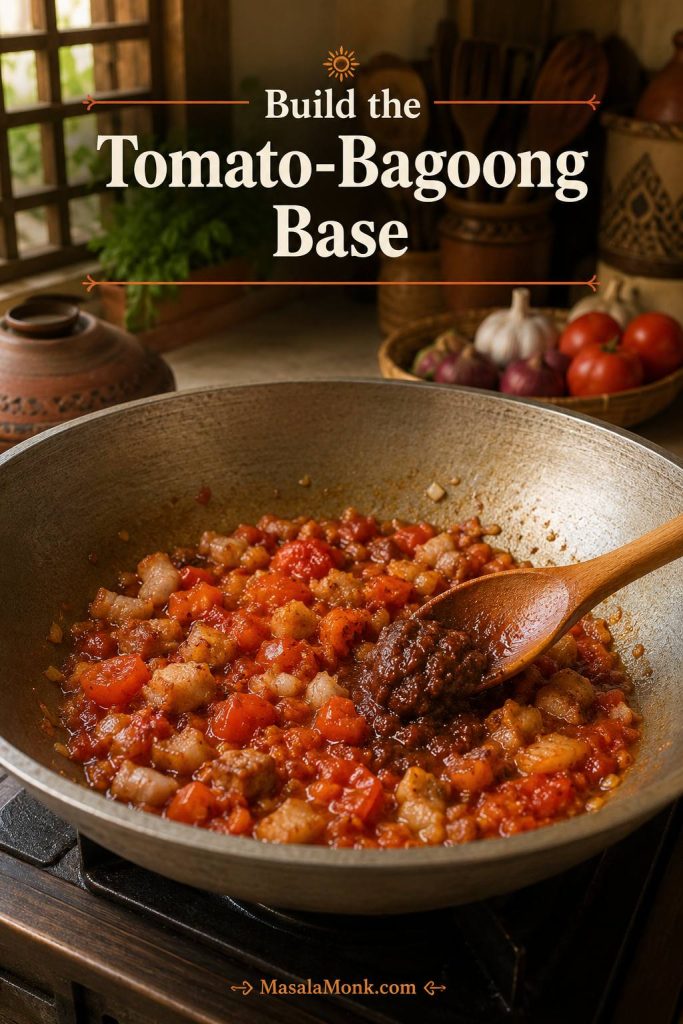
- Bloom the bagoong. Stir in 1 tablespoon bagoong and cook for 1–2 minutes. The smell should become rounder and more savory.
Visual Cue: Build the Tomato-Bagoong Base
- Simmer the pork. Add 1 cup water or light stock. Cover and simmer for 15–20 minutes, or until the pork starts to become tender. If using pork shoulder and it still feels firm, simmer 5–10 minutes longer before adding squash. If the liquid already looks high before the squash goes in, do not add more yet; the vegetables will release more as they cook.
Visual Cue: Simmer the Pork

Add the Vegetables and Finish the Dish
- Add the squash. Add kalabasa and cook for 5–7 minutes. It should begin to soften, but it should not be falling apart. Add up to 1/2 cup / 120 ml more water only if the pan looks dry or the squash needs more time.
Visual Cue: Add Squash First

- Add the long beans. Add sitaw and cook for 2–3 minutes. The beans should brighten and begin to soften while still keeping some bite.
Visual Cue: Add Long Beans Next

- Finish with eggplant, ampalaya, and okra. Cover and cook for 4–6 minutes, turning gently once or twice. The eggplant should look silky, the okra should still hold shape, and the ampalaya should soften without taking over the whole pan.
Visual Cue: Finish with Eggplant, Ampalaya, and Okra

- Taste and adjust. Add 1–3 teaspoons more bagoong, pepper, or a small splash of water only if needed. The cooking liquid should cling lightly to the vegetables, with no large pool of broth at the bottom. Serve hot with rice.
Visual Cue: Taste, Adjust, and Finish

How Long to Cook Pinakbet
Pinakbet is a stovetop dish, so the “temperature” is really about heat control. Medium heat is enough for most of the recipe. If the pan gets too hot, the juices can stick and the vegetables can break before they cook through.
| Stage | Heat | Time | Visual cue |
|---|---|---|---|
| Brown pork | Medium to medium-high | 5–8 minutes | Edges lightly browned, fat beginning to render |
| Aromatics | Medium | 2–3 minutes | Onion softened, garlic fragrant |
| Tomato and bagoong | Medium | 3–5 minutes | Tomatoes juicy, bagoong darker and aromatic |
| Pork simmer | Medium-low | 15–20 minutes, longer if needed for pork shoulder | Pork starting to tenderize |
| Squash | Medium | 5–7 minutes | Fork enters but squash holds shape |
| Long beans | Medium | 2–3 minutes | Brighter, tender-crisp |
| Eggplant, ampalaya, okra | Medium | 4–6 minutes | Tender, silky, and not collapsed |
How Pinakbet Should Look When It Is Done
The best pinakbet does not look perfect. It looks generous, saucy, and ready for rice. The squash should be creamy at the edges but still in chunks. The long beans should keep a little bite. The eggplant should turn silky, not disappear. The okra should be tender without making the whole dish slippery.
If there is a lot of loose liquid, simmer uncovered for a few minutes. If the pan is dry before everything is tender, add a small splash of water, cover again, and continue gently. The final texture should feel saucy and spoonable, with shallow coated juices rather than loose broth. For a quick visual check, compare your pan with the watery vs right vs mushy guide.
You are done when the squash is fork-tender, the eggplant is silky, the long beans still have bite, and the cooking liquid lightly clings to the vegetables.

Too Watery, Just Right, or Too Mushy

Pinakbet Recipe Card
Pinakbet Tagalog Recipe
This Filipino Pinakbet Tagalog recipe builds a savory pork, tomato, and bagoong mixture first, then adds the vegetables in stages. The squash softens, the eggplant turns silky, and the okra and long beans keep their shape.
Ingredients
- 1/2 lb / 225 g pork belly or pork shoulder, cut into 1-inch pieces
- 1 tbsp / 15 ml cooking oil
- 1 medium onion, chopped
- 3–4 garlic cloves, minced
- 2 medium tomatoes, chopped
- 1 tbsp / 15 g bagoong alamang, plus 1–3 tsp more to taste
- 1 cup / 240 ml water or light stock, plus up to 1/2 cup / 120 ml more as needed
- 2 cups / 250–300 g kalabasa or squash, cut into 1 to 1 1/2-inch chunks
- 1 to 1 1/2 cups / 100–150 g sitaw or long beans, cut into 2- to 3-inch pieces
- 6–8 okra, trimmed
- 1/2 medium ampalaya, or up to 1 medium if you enjoy bitterness, seeded and sliced into thin half-moons
- 1 large eggplant or 2 small eggplants, cut into thick pieces
- 1/4 tsp black pepper, optional
Instructions
- Heat oil in a wide pan over medium heat. Add pork in one layer and cook for 5–8 minutes, until lightly browned and some fat has rendered.
- Add onion and cook for about 2 minutes, until softened. Add garlic and cook for 30 seconds to 1 minute, just until fragrant.
- Add tomatoes and cook for 3–5 minutes, pressing them gently, until softened and juicy around the edges.
- Stir in 1 tablespoon bagoong and cook for 1–2 minutes, until the smell becomes rounder and more savory.
- Add 1 cup water or light stock. Cover and simmer for 15–20 minutes, until the pork starts to become tender. If using pork shoulder and it still feels firm, simmer 5–10 minutes longer before adding the squash. Add up to 1/2 cup more water only if needed.
- Add squash and cook for 5–7 minutes, until a fork starts to enter but the pieces still hold shape.
- Add long beans and cook for 2–3 minutes, until brighter and beginning to soften.
- Finish with eggplant, ampalaya, and okra. Cover and cook for 4–6 minutes, turning gently once or twice, until the vegetables are tender but still distinct.
- Taste and adjust with 1–3 teaspoons more bagoong or pepper if needed. The finished dish should be moist and spoonable, with no large pool of broth at the bottom of the pan. Serve hot with rice.
Notes
- Use a wide 12-inch pan so the vegetables cook evenly without being crushed.
- Start with 1 tablespoon bagoong, especially if your brand is very salty.
- For milder ampalaya, soak the slices in salted water for 20–30 minutes, then drain.
- Add extra water only if the pork or squash needs more time.
- Add crispy pork, bagnet, or lechon kawali just before serving so it does not become soggy.
A good batch should make rice feel like part of the recipe, not just a side. The juices should be salty enough to carry the vegetables, but not so strong that the squash, eggplant, okra, and ampalaya disappear.
Cook’s confidence: Flexible: exact vegetable mix, protein, and bitterness level. Not flexible: cooking the seasoning with the tomatoes, keeping the liquid modest, and giving slower vegetables more time than delicate ones.
What Pinakbet Should Feel Like
Pinakbet is not meant to eat like a smooth stew. It is a dish of contrast: squash softening at the edges, bitter melon cutting through sweetness, eggplant soaking up salty juices, and rice pulling everything together.
Some homes make it drier and sharper; others prefer it saucier and sweeter from squash. This version stays in the Pinakbet Tagalog lane while giving you room to adjust the bitterness, protein, and finish toward your own table.
Pakbet is simply the everyday shorter name many people use for pinakbet. The more useful difference is style: Pinakbet Tagalog is often shrimp-paste and squash-forward, while Ilocano pinakbet often leans more toward fermented fish seasoning and a drier finish.
Can You Make Pinakbet Without Bagoong?
You can make pinakbet without bagoong, but it becomes a pinakbet-inspired vegetable stew. Bagoong does three jobs at once: it adds salt, fermentation, and deep umami. Replacing it means rebuilding all three, not just adding something salty.
If seafood is fine, fish sauce is the closest simple substitute. For seafood-free versions, use soy sauce or tamari for salt, mushroom powder for umami, and a little miso or extra cooked tomato for depth. Add these slowly and taste with a piece of squash or rice, because substitutes can become too salty fast.
- No bagoong available: start with 1 tablespoon fish sauce, then adjust once the vegetables are tender.
- Seafood-free version: use soy sauce or tamari plus mushroom powder and extra tomato.
- Vegetarian or vegan direction: use miso, tamari, mushroom powder, and tomato to rebuild depth.
- Lower-sodium attempt: use less bagoong rather than removing it completely, if possible.

Pinakbet Variations
You can change the protein, but do not rush the vegetables; they are still the heart of the dish.
Pinakbet with Pork Belly
This is the richest everyday version. Brown the pork first so the rendered fat flavors the tomatoes and shrimp paste.
Pinakbet with Bagnet
Stir some bagnet or lechon kawali in near the end, then reserve a few crisp pieces for topping. If all of it simmers too long, it will soften.

Pinakbet with Shrimp
Add shrimp in the final 2–3 minutes, after the vegetables are almost tender. Shrimp cooks quickly and turns rubbery if simmered too long.

Chicken Pinakbet
Use boneless chicken thighs rather than chicken breast. Brown them first, then simmer until nearly tender before adding the squash.
Ginataang Pinakbet
Add coconut milk after the pork has softened and the squash has started cooking. Simmer gently; hard boiling can make coconut milk split.

Meatless Pinakbet
Skip the pork but build depth with extra tomato, mushroom powder, and careful seasoning. If using tofu, add it near the end so it does not break apart.

Timing is what keeps each vegetable from disappearing into the next. Pork and chicken need time early, shrimp goes in late, crispy pork is best partly reserved for the top, and coconut milk needs gentle heat.
How to Fix Common Pinakbet Problems
Pinakbet is forgiving, but it tells on you quickly. Too much water pools under the vegetables, too much bagoong shows up in the first bite, and too much stirring shows up in the squash.
Start With the Problem You See

Problem-by-Problem Fixes
| Problem | Fix now | Next time |
|---|---|---|
| Too watery | Simmer uncovered for 3–5 minutes. | Use less water and add extra only if pork or squash needs more time. Remember that the vegetables release liquid too. |
| Too salty | Add more squash, eggplant, or tomato. Serve with plain rice. | Start with less bagoong and adjust after vegetables cook. |
| Too bitter | Add a little more squash or tomato. | Use less ampalaya, slice it thinner, or soak it briefly. |
| Vegetables are mushy | You cannot fully reverse this, but you can simmer uncovered if watery. | Add vegetables in stages and turn gently. |
| Squash collapsed | Let it thicken the dish and avoid more stirring. | Use larger chunks and do not add squash too early. |
| Okra made it slimy | Simmer uncovered briefly and avoid stirring hard. | Trim only the ends and add okra near the end. |
| Tastes flat | Add a little more bagoong, fish sauce, or tomato, then simmer briefly. | Bloom the seasoning with the tomatoes before adding water. |
| Bagoong tastes too strong | Add tomato or squash, simmer gently, and serve with plain rice. | Use less at the start and adjust later. |
| Dish tastes too sweet | Add a little fish sauce or bagoong. | Watch sweet ginisang bagoong and very sweet squash. |
| Too oily | Spoon off excess fat before serving. | Render pork first and remove extra fat before adding vegetables. |
| Pork is tough | Simmer the pork pieces longer before serving if vegetables can handle it. | Give pork more time before adding squash and delicate vegetables. |
What to Serve With Pinakbet

Pinakbet is best with hot steamed rice. Because the tomato-bagoong mixture is bold, plain rice is not an afterthought here; it is part of how the dish works. If you want a dependable pot of rice, MasalaMonk’s guide on how to cook rice covers stovetop, cooker, and Instant Pot methods.
For a fuller Filipino-style meal, pinakbet sits naturally beside a savory protein dish like chicken adobo. Fried fish, grilled pork, simple chicken, or crispy pork also work well. If the pinakbet itself already has pork belly or bagnet, keep the rest of the meal simple.
Pinakbet is at its best when it tastes like more than the sum of its vegetables: salty enough for rice, sweet from squash, bitter enough to stay interesting, and saucy without becoming soup.
How to Store, Reheat, and Freeze Pinakbet
Cool leftovers quickly and store them in a shallow airtight container in the refrigerator. Pinakbet is best eaten within 3–4 days because it contains cooked vegetables and often pork or seafood-based seasoning. Store rice separately so the vegetables do not continue softening in the rice.
To reheat, warm it gently in a pan over low to medium-low heat. Add a splash of water only if the vegetables look dry. Avoid aggressive stirring because the squash and eggplant can break apart.
Microwaving is fine for a quick lunch, but the vegetables will soften more than they do in a pan. Freezing is possible, but not ideal; squash, eggplant, and okra soften further after thawing.
For general leftover safety, follow the USDA FSIS guidance on leftovers and food safety.
Some families prefer pinakbet drier and sharper; others like it saucier and sweeter from squash. Once you understand the timing, you can move the dish toward your table without losing its shape.
FAQs About Pinakbet
What is pinakbet made of?
Most pinakbet starts with bagoong, tomatoes, and mixed vegetables such as squash, okra, eggplant, ampalaya, and long beans. Pork, shrimp, fish, bagnet, or crispy pork may be added depending on the household version.
Is pinakbet the same as pakbet?
Yes. Pakbet is the everyday shorter name many people use for pinakbet, though the exact style can change by region and household.
What does pinakbet taste like?
Pinakbet is savory, salty, earthy, lightly sweet, and a little bitter. The squash and tomatoes bring sweetness, while bagoong gives deep umami. A good version should taste balanced, not simply salty.
What is the difference between Pinakbet Tagalog and Ilocano pinakbet?
Pinakbet Tagalog usually uses bagoong alamang and squash, while Ilocano pinakbet is more closely tied to bagoong isda and a drier, more vegetable-forward finish. This recipe is Tagalog-style, with notes for adjusting it in a sharper Ilocano direction.
What is the best bagoong for pinakbet?
For Pinakbet Tagalog, bagoong alamang is the easiest fit because it gives a rounded shrimp-paste flavor. For a sharper Ilocano-style direction, use bagoong isda or bagoong monamon.
How do you keep pinakbet from getting mushy?
Add vegetables in stages and stir gently. Squash needs a head start, long beans need only a few minutes, and eggplant, ampalaya, and okra should go in near the end. A wide pan also helps because the vegetables steam and simmer instead of being crushed together.
Is pinakbet supposed to be soupy?
No. Pinakbet should be moist and saucy, not soupy. The vegetables should soften and shrink slightly, with cooking liquid clinging to them rather than floating in broth. If there is too much liquid, simmer uncovered for a few minutes.
Why is my pinakbet watery?
Pinakbet can turn watery if too much water was added or if the vegetables released more liquid than expected. Simmer uncovered until the liquid reduces and clings lightly to the vegetables. Next time, start with less water and add extra only if the pork or squash needs more time.
How do you reduce ampalaya bitterness in pinakbet?
Use less ampalaya, slice it evenly, and avoid overcooking it. For a milder flavor, soak the sliced bitter melon in lightly salted water for 20–30 minutes, then drain before cooking. A little bitterness should remain because it keeps the dish balanced.
What can I use instead of bagoong alamang?
Fish sauce is the easiest substitute if seafood is not a problem. For seafood-free versions, use soy sauce or tamari with mushroom powder and extra tomato. The flavor will not be the same, but it will have more depth than plain salt.
What is the difference between pinakbet and dinengdeng?
Both are Filipino vegetable dishes, but they eat differently. Pinakbet is usually a sautéed or simmered vegetable stew with bagoong, tomatoes, and often pork or seafood, while dinengdeng is generally lighter and more broth-like.
How long does pinakbet last in the fridge?
Pinakbet is best eaten within 3–4 days when stored in a shallow airtight container in the refrigerator. Reheat gently so the squash, eggplant, and okra do not break apart.








