

Posted on Leave a comment

Baked Haddock Recipe: Easy Oven Haddock with Buttery Ritz or Panko Topping

Baked haddock fillet with golden crumb topping served with lemon wedges, roasted potatoes, green beans, and tartar sauce.

This baked haddock recipe gives you tender, flaky white fish with a golden buttery topping in about 25 minutes. It is simple oven fish, but with the small details that keep haddock from turning dry, watery, bland, or hidden under soggy crumbs.

Haddock cooks quickly, which can feel a little unforgiving at first. The rhythm is simple: dry the fish, season it directly, add a buttery topping, and stop baking when the fish is done. After that, it becomes one of the easiest weeknight seafood dinners.

Quick Answer: Bake Time, Temperature, and Doneness

Bake haddock fillets at 400°F / 200°C for 12 to 16 minutes, depending on thickness. The fish is done when it turns opaque, flakes easily with a fork, and reaches 145°F / 63°C in the thickest part.

  • 400°F / 200°C is the easiest everyday temperature for quick, flaky baked haddock.
  • 350°F / 175°C is gentler for thick haddock loins, a heavier Ritz cracker topping, or a more traditional New England-style bake.
  • Bake uncovered when using panko, breadcrumbs, or Ritz crackers.
  • The fish comes first. The crumbs come second. Pull the haddock when it is done; the broiler can finish a pale surface in a minute.

A pale topping can be fixed. Overcooked fish cannot. That one idea makes this recipe much easier.

Recipe guide card showing baked haddock timing of 400°F for 12 to 16 minutes and doneness at 145°F.
For most haddock fillets, 400°F gives a fast oven bake; then 145°F confirms the center is cooked without drying out.

Easy Baked Haddock Recipe

Easy Baked Haddock with Buttery Ritz or Panko Topping

Mild haddock fillets baked with lemon, butter, herbs, and your choice of panko, breadcrumbs, or crushed Ritz crackers. The fish turns soft and flaky while the surface becomes golden and savory.

Prep Time10 minutes
Cook Time12 to 16 minutes
Total TimeAbout 25 minutes
Servings4
Yield4 baked haddock fillets
Oven Temperature400°F / 200°C
Doneness145°F / 63°C, opaque, and flaky

Ingredients

  • 4 skinless boneless haddock fillets, about 6 oz / 170 g each, or about 1 1/2 lb / 680 g total
  • 1 tablespoon olive oil or melted butter, for the baking dish and fish
  • Fine salt, to taste: about 3/4 teaspoon for plain crumbs, or 1/4 to 1/2 teaspoon for Ritz crackers, salted butter, or Parmesan
  • 1/4 teaspoon black pepper
  • 1 tablespoon lemon juice / 15 ml, plus lemon wedges for serving
  • 1 teaspoon lemon zest, optional but excellent in the topping
  • 1/2 teaspoon garlic powder
  • 1/2 teaspoon paprika
  • 2 tablespoons chopped parsley, plus more for serving

For a Breadcrumb or Panko Topping

  • 3/4 to 1 cup panko or breadcrumbs
  • 4 tablespoons melted butter / 56 g
  • 1/4 cup grated Parmesan / about 22 g, optional

For a Ritz Cracker Topping

  • 1 sleeve Ritz crackers, about 34 crackers / roughly 90 to 100 g, crushed
  • 3 to 4 tablespoons melted butter / 42 to 56 g
  • 1/4 to 1/2 teaspoon fine salt total, added only after tasting the cracker mixture

Instructions

  1. Preheat the oven. Heat the oven to 400°F / 200°C. Lightly grease a 9×13-inch / 23×33 cm baking dish.
  2. Dry the haddock. Pat the fillets very dry with paper towels. Dry fish before the oven means better texture after the oven.
  3. Season the fish. Arrange the fillets in one layer. Brush lightly with olive oil or melted butter, then season with salt, pepper, lemon juice, garlic powder, and paprika.
  4. Make the topping. Mix panko, breadcrumbs, or crushed Ritz crackers with melted butter, lemon zest, parsley, and Parmesan if using. The mixture should look like damp sand, not wet paste.
  5. Top the fillets. Spoon the mixture over the fish and press gently so it sticks. Keep the layer loose rather than packed down.
  6. Bake uncovered. Bake for 12 to 16 minutes, depending on thickness, until the fish is opaque and flakes easily.
  7. Check doneness. For the most reliable result, check the thickest part with an instant-read thermometer. Haddock is done at 145°F / 63°C.
  8. Brown only if needed. If the fish is done but the topping is pale, broil, or use the oven grill, for 1 to 2 minutes. Watch closely.
  9. Rest and serve. Let the fish rest for 2 minutes, then serve with lemon wedges and more parsley.

When it is right, the fish should lift in soft flakes, the center should look opaque and moist, and the buttery layer should be golden without feeling greasy.

Recipe Notes

  • For thicker haddock loins or a heavier Ritz layer, bake at 350°F / 175°C for 18 to 25 minutes instead.
  • Thin fillets may be done in less than 12 minutes, so start checking early.
  • If using a fan or convection oven, begin checking 2 to 3 minutes early.
  • Mixed-size fillets need mixed timing: lift out thinner pieces first and let thicker ones finish.
  • Serve soon after baking. The fish stays moist, but the golden layer is best while warm and fresh.

Four baked haddock fillets in a white baking dish with golden topping, parsley, and lemon wedges.
Baking the fillets uncovered helps the topping toast while the haddock underneath stays tender, moist, and easy to lift from the dish.

Choose Your Baked Haddock Version

Start with the dinner you want, then choose the topping. Ritz gives you buttery New England comfort, panko gives you crunch, breadcrumbs keep it classic, and lemon butter keeps the plate lighter.

Four-panel guide showing baked haddock versions with Ritz, panko, no breadcrumbs, and a from-frozen method.
Once you know the style you want, this guide helps you choose between Ritz, panko, no breadcrumbs, or a from-frozen method.

Best Topping by Dinner Style

What You WantUseBest TemperatureWhy It Works
New England baked haddockCrushed Ritz crackers350°F or 400°FButtery, cozy, and classic with lemon and parsley.
Crispy baked haddock without fryingPanko and Parmesan400°FLight crunch without a pot of oil.
Soft classic baked fishPlain breadcrumbs375°F or 400°FGentler texture and familiar flavor.
Baked haddock without breadcrumbsLemon, butter or olive oil, herbs400°FClean, bright, and lighter.
Thick center-cut haddockHaddock loins350°F or longer 400°F timingThicker fish needs gentler timing.
Baked haddock from frozenEmergency frozen method400°FBake briefly first, blot moisture, then season.

Use this topping comparison to choose the texture you want before you bake: buttery Ritz, crisp panko, or softer breadcrumbs.

Comparison board showing Ritz crackers, panko, and breadcrumbs as three topping options for baked haddock.
Choose Ritz for buttery New England baked haddock, panko for a crisp finish, or breadcrumbs for a softer classic crust.

For a first try, choose Ritz if you want the coziest fish dinner and panko if you want the crispest finish. Both make mild haddock feel more complete than plain baked fish.

Craving fried fish instead of baked fish? This fish batter recipe is the better path.

More Baked Haddock Tips

Why This Baked Haddock Works

Haddock needs three things: a dry surface, seasoning on the fish itself, and the confidence to stop baking before the fillets turn firm. The buttery layer adds flavor and comfort, but the fish is still the main event.

If baked fish has disappointed you before, it was probably not because you did anything dramatic wrong. Delicate white fish simply rewards early checking. Once you learn that, this recipe feels relaxed instead of risky.

The buttered surface protects the fish, the lemon keeps the flavor bright, and the broiler gives you a backup plan when the fish is done before the surface looks perfect.

Ingredients You’ll Need

The ingredient list is short, so balance matters. Haddock is mild; it needs direct seasoning and enough butter in the topping to brown without turning greasy.
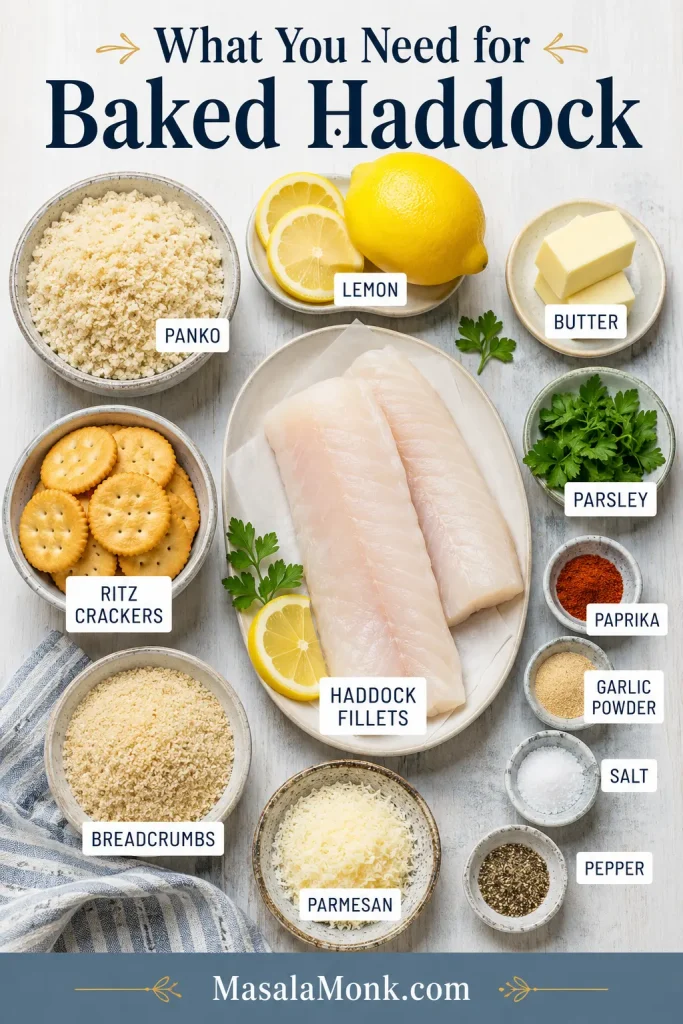
Ingredients for baked haddock arranged overhead, including haddock fillets, lemon, butter, parsley, Ritz crackers, panko, breadcrumbs, Parmesan, and spices.
Before choosing your topping, gather the essentials: mild haddock, lemon, butter, herbs, and either Ritz crackers, panko, or breadcrumbs.

Haddock Fillets

Skinless boneless haddock fillets are easiest. Four fillets, about 6 oz / 170 g each, fit well in a 9×13-inch baking dish. Thinner pieces cook quickly; thick haddock loins need more time. Skin-on haddock can still be baked skin-side down.

Butter or Olive Oil

Butter gives the most classic flavor and helps the surface turn golden and savory. Olive oil works when you want a lighter plate, especially with plenty of lemon and herbs.

Panko, Breadcrumbs, or Ritz Crackers

Panko gives the lightest crunch. Fine breadcrumbs make a softer classic crust. Ritz crackers bring buttery New England comfort and need a lighter hand with salt.

Crush Ritz crackers into coarse pieces, not powder. You want little buttery bits that toast on top of the fish.

Lemon, Garlic, Paprika, and Herbs

Lemon brightens the fish, garlic powder seasons evenly, paprika adds color, and parsley keeps the plate fresh. For a seafood-seasoning flavor, replace the paprika with a small pinch of seafood seasoning and reduce the salt.

Parmesan

Parmesan is optional, but it works beautifully with panko. It adds savory depth and helps the panko crust taste more finished.

Step-by-Step Tips for Better Baked Haddock

The recipe card gives you the fast version. These cues help with thin fillets, thick loins, frozen fish, and heavier toppings.

1. Start with dry fillets

Pat both sides of the fish with paper towels. This one step helps seasoning stick and keeps the dish from turning watery.

Raw haddock fillets being patted dry with paper towels on a light surface before baking.
First, pat the haddock dry; otherwise, extra surface moisture can make the fish steam and soften the topping.

2. Season the fish, not just the topping

Add salt, pepper, lemon juice, garlic powder, and paprika before the topping goes on. The golden layer should support the fish, not carry all the flavor by itself.

Haddock fillets in a white baking dish being seasoned with lemon, paprika, garlic powder, salt, and pepper before topping.
Next, season the haddock itself with lemon, salt, pepper, garlic, and paprika so the fish tastes good beneath the topping.

3. Keep the topping loose

Mix the panko, breadcrumbs, or crushed crackers with melted butter until the texture looks like damp sand. Spoon it over the fish, press gently, and stop there. A loose layer browns better than a packed one.

Bowl of buttered panko breadcrumb topping with herbs and lemon zest, lifted with a spoon to show a damp sand texture.
The topping should feel like damp sand because that texture browns better than dry crumbs or a greasy butter paste.

After mixing the crumbs, keep the layer loose on top of the fillets so the heat can move through the fish.

Loose breadcrumb topping being spooned over seasoned haddock fillets in a white ceramic baking dish.
Spoon the topping on lightly instead of pressing it down, because a loose layer leaves room for heat to cook the fish evenly.

4. Bake uncovered

An uncovered dish gives the surface a chance to toast. Covering traps steam, which is useful for some foods but not for buttery topping on delicate fish.

5. Let the fish win

Pull the haddock when it flakes, even if the top is not quite as golden as you hoped. A minute under the broiler can fix the color.

Before and after comparison of baked haddock topping before broiling and after becoming golden brown.
If the haddock is done but the surface looks pale, broil the topping briefly instead of extending the bake time.

Once the topping choice is clear, the only real timing question is temperature.

350°F vs 400°F: Which Is Better?

Both temperatures can work. Choose based on thickness and topping.

Oven TemperatureBest ForTypical Timing
350°F / 175°CThicker fillets, haddock loins, heavier Ritz layer, gentler New England-style bake18 to 25 minutes
375°F / 190°CA middle path when the topping browns quickly but the fish is thick14 to 20 minutes
400°F / 200°CMost everyday baked haddock fillets12 to 16 minutes
425°F / 220°CVery thin fillets or quick browning at the end8 to 12 minutes

For most weeknight dinners, 400°F / 200°C is the easiest default. For a thicker loin or a heavy Ritz layer, 350°F / 175°C gives the fish more time to cook gently.
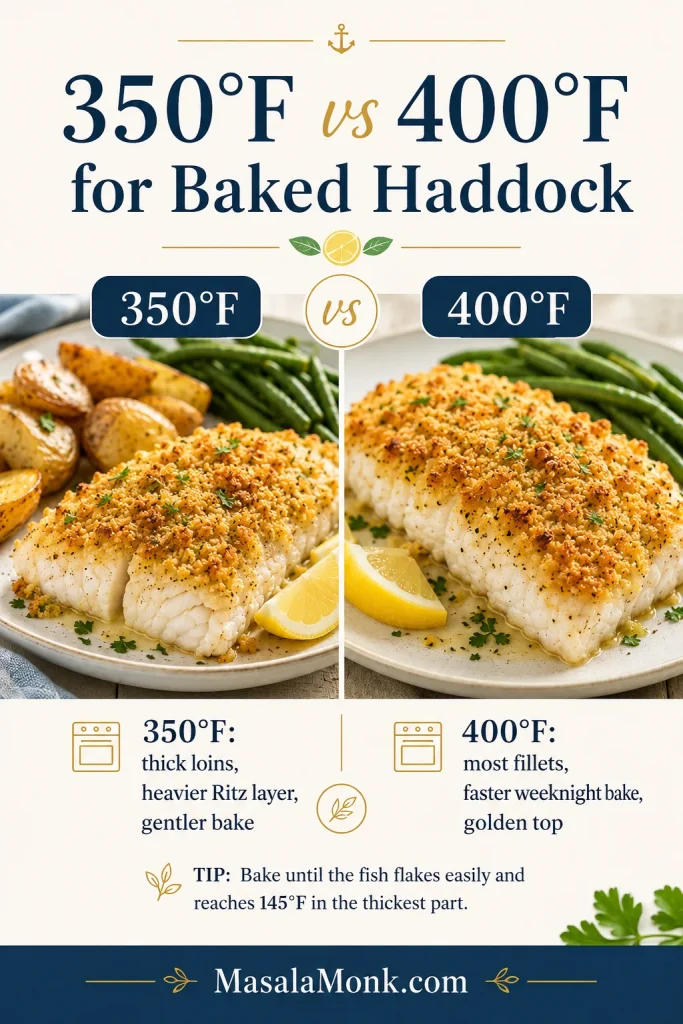
Infographic comparing 350°F and 400°F oven temperatures for baked haddock with notes for thick loins and most fillets.
Use 400°F for most weeknight haddock fillets; however, thicker loins or a heavier Ritz layer often bake better at 350°F.

How Long to Bake Haddock by Thickness

Thickness matters more than weight. A thin 6 oz fillet can cook faster than a smaller but thicker haddock loin.

Fillets vs Loins

Haddock fillets are usually thinner and cook quickly, while haddock loins are thicker center-cut pieces that need more time and often do better with gentler heat.

If your dish has mixed sizes, remove the thinner fillets as soon as they are done and let the thicker pieces finish. This simple move prevents dry edges and underdone centers.

Haddock ThicknessAt 400°F / 200°CAt 350°F / 175°C
Thin fillet, about 1/2 inch8 to 10 minutes12 to 15 minutes
Medium fillet, about 3/4 inch10 to 14 minutes15 to 18 minutes
Thick fillet, about 1 inch14 to 17 minutes18 to 22 minutes
Very thick haddock loin17 to 20 minutes22 to 25 minutes

Start checking at the early end of the range. Haddock rewards early checking more than extra oven time.
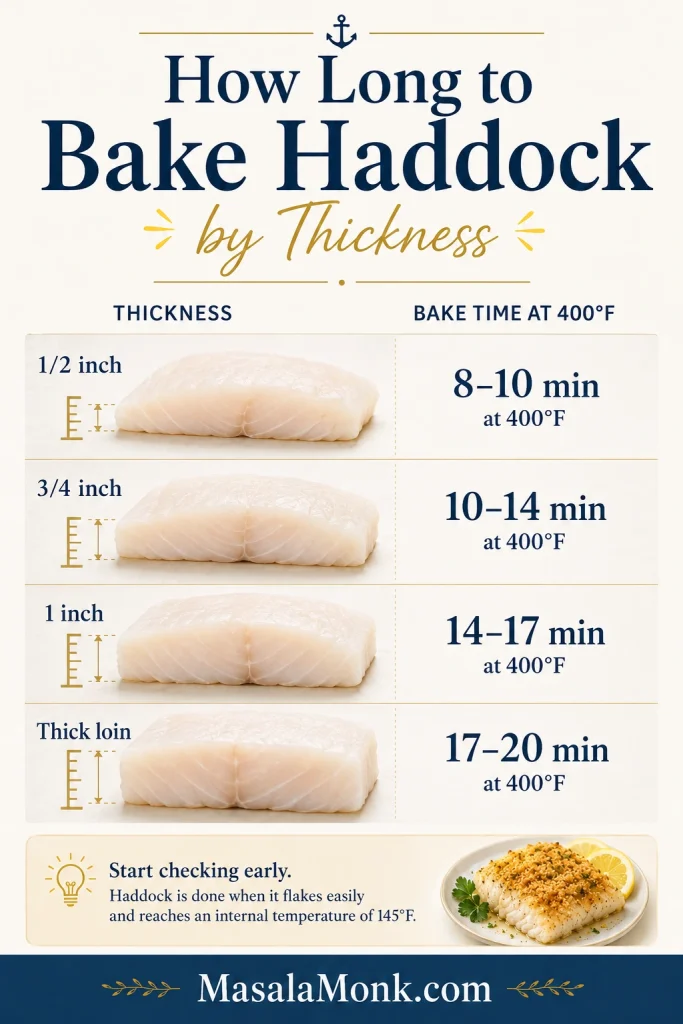
Bake time chart for haddock by thickness, showing 1/2 inch, 3/4 inch, 1 inch, and thick loin timing at 400°F.
Because thickness changes bake time more than weight, thin fillets need early checking while thick haddock loins need extra minutes.

How to Know When Haddock Is Done

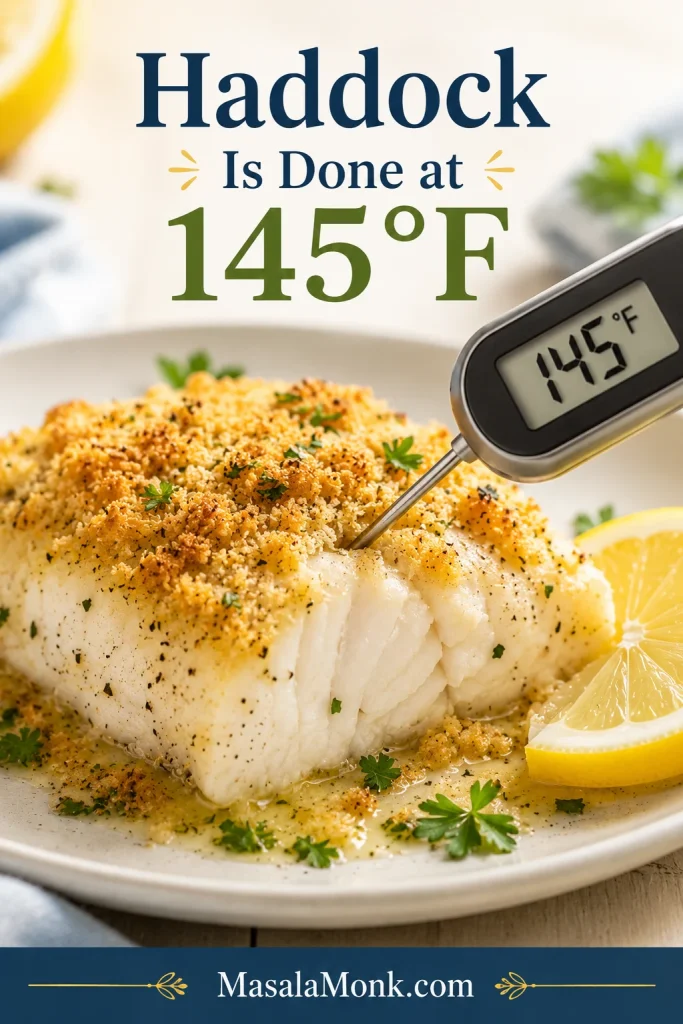
Haddock is done when the center is opaque, moist-looking, and flakes with gentle pressure. The most reliable check is an instant-read thermometer in the thickest part.

  • Temperature: 145°F / 63°C in the thickest part
  • Fork test: soft flakes separate without force
  • Visual cue: opaque center, not translucent or glossy

The first time, a thermometer is helpful. After that, you will start recognizing the soft flakes and opaque center by sight.
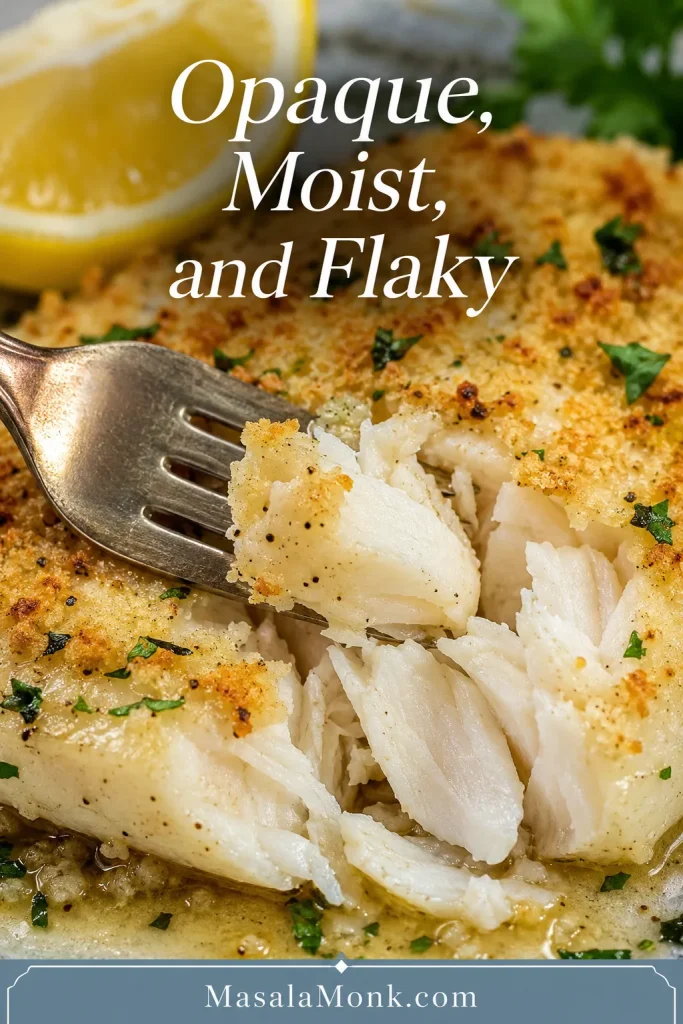
Close-up of baked haddock flaking apart with a fork, showing a moist opaque center and golden topping.
When the center turns opaque and separates into soft flakes, pull the haddock from the oven before the delicate fish overcooks.
Instant-read thermometer inserted into baked haddock, showing doneness at 145°F with lemon and parsley nearby.
A thermometer gives the clearest first-time answer: haddock is done when the thickest part reaches 145°F.

The safe minimum internal temperature for fish is 145°F / 63°C. Once haddock looks firm, dry, or heavily shrunken, it has probably gone too far.

Fresh vs Frozen Haddock

Fresh haddock is easiest, but frozen haddock works well when it is thawed and dried properly. Crumb-topped fish needs a dry surface more than extra liquid in the dish.
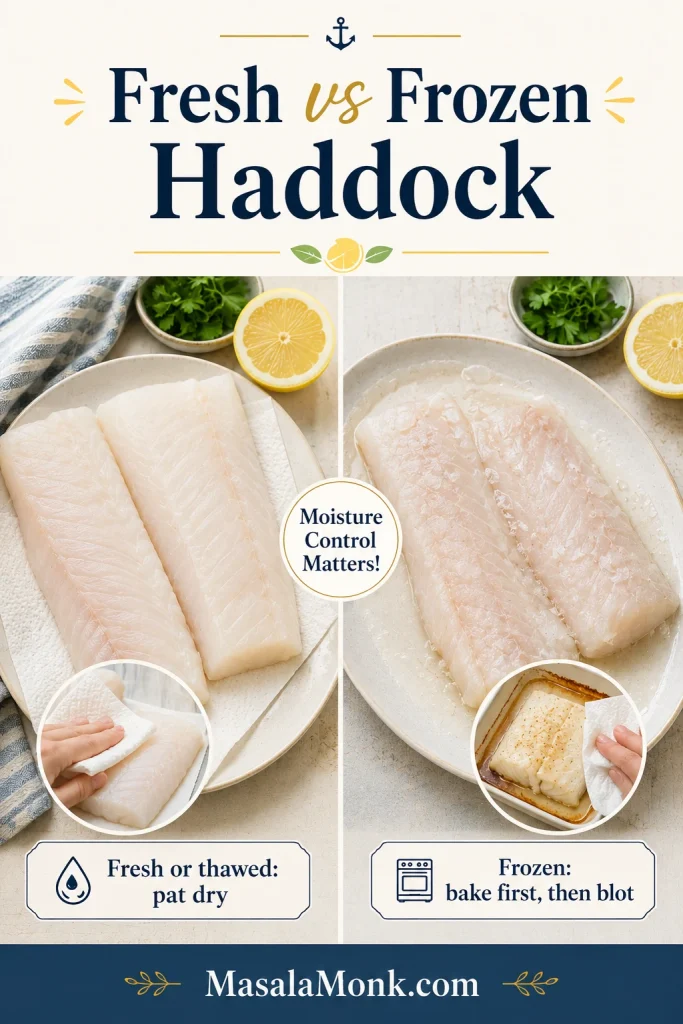
Side-by-side comparison of fresh or thawed haddock patted dry and frozen haddock needing moisture control before baking.
Fresh or thawed haddock needs a dry surface; for frozen haddock, a short first bake and a quick blot help control moisture.

Best Method: Thaw First

Thaw frozen haddock overnight in the refrigerator. For a faster method, keep the fish sealed and thaw it in cold water, changing the water every 30 minutes. The USDA describes refrigerator thawing, cold-water thawing, and microwave thawing as safe defrosting methods. Fish thawed by cold water or microwave should be cooked right away.

After thawing, unwrap the fillets and pat them dry before seasoning. That is the difference between a golden top and a wet crust.

Emergency Method: Baking Haddock from Frozen

Thawed fish gives the best texture, but frozen fillets can still become dinner. Keep the topping off at first.

  1. Heat the oven to 400°F / 200°C.
  2. Place frozen fillets in a lightly greased baking dish.
  3. Bake plain for 5 to 8 minutes, just until surface ice melts and moisture starts to release.
  4. Blot or drain the dish carefully.
  5. Season the fish, add the topping, and continue baking until the center reaches 145°F / 63°C.

This will get dinner on the table, but thawed fish gives you a drier surface and a better topping.
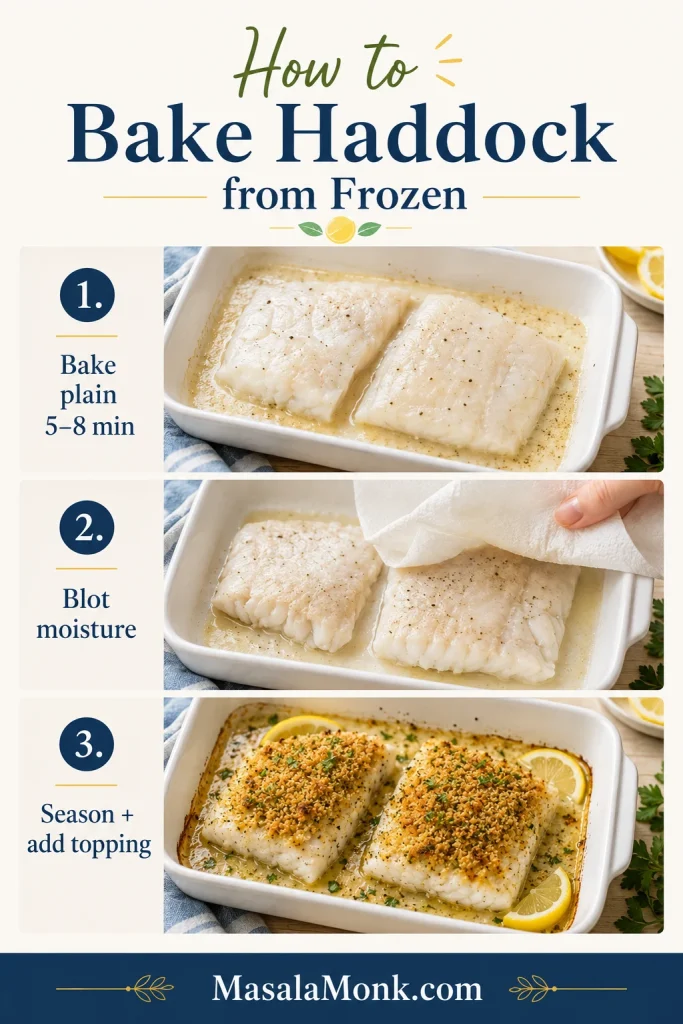
Three-step guide showing how to bake haddock from frozen by baking plain, blotting moisture, then seasoning and adding topping.
When baking haddock from frozen, bake it plain first, blot the released moisture, and only then add seasoning and topping.

Flavor Variations

Choose one flavor direction and keep it simple. Haddock is mild, so it does not need a crowded topping.

New England Baked Haddock with Ritz Crackers

This is the buttery comfort version: crushed Ritz crackers, melted butter, lemon, and parsley over mild white fish. Bake at 350°F for a gentler old-school feel, or 400°F when you want dinner faster. Keep the salt light and let the crackers do their job.

New England baked haddock with buttery Ritz cracker topping served on a plate with lemon and parsley.
Crushed Ritz crackers give this New England baked haddock its buttery comfort, while lemon and parsley keep each bite balanced.

Panko Parmesan Baked Haddock

Panko and Parmesan give you the crunch of fried fish without pulling out a pot of oil. This version is best at 400°F so the panko crust can toast while the fish stays tender.

Panko Parmesan baked haddock with a crisp golden crust, lemon wedge, and parsley garnish on a plate.
Panko and Parmesan add crispness without frying, so this baked haddock version works well when you want crunch with less mess.

Lemon Butter Haddock

Skip the crumbs and let lemon butter lead. This is the lightest path, especially when the fish is fresh and you want a clean, bright dinner.

Lemon butter baked haddock without breadcrumbs served with herbs, lemon, and a light side.
For a lighter baked haddock variation, skip the crumbs and let lemon butter, herbs, and gentle oven heat carry the flavor.

Garlic Butter Haddock

Add garlic powder or a little finely grated garlic to the melted butter, then finish with parsley and lemon. Fresh garlic can burn under the broiler, so use a light hand.

Warm Paprika or Chili Crumb Haddock

Add a small pinch of smoked paprika, mild chili powder, or Kashmiri chili powder to the buttered crumbs. Keep the warmth gentle; haddock tastes best when the spice supports the fish instead of taking over.

Healthy Baked Haddock

Use olive oil instead of some of the butter, keep the topping thin, and add lemon, herbs, and quick-cooking vegetables around the fish. The plate stays lighter, but the golden finish still makes it feel like dinner.

Cod or Another White Fish

This method also works with cod, pollock, hake, or another mild white fish. Cod is often thicker and meatier than haddock, so use the thickness chart instead of only the clock.

For a crisp battered dinner instead, save this fish and chips recipe for another night.

What to Serve with Baked Haddock

For the easiest comfort plate, serve the haddock with roasted potatoes, green beans, lemon wedges, and a spoonful of tartar sauce. It feels classic, but still light enough for a weeknight.

Baked haddock served with roasted potatoes, green beans, lemon wedges, parsley, and tartar sauce on a dinner plate.
To make baked haddock feel like a full dinner, pair the flaky fish with roasted potatoes, green beans, lemon, and tartar sauce.

Cozy Sides

Fresh Sides

  • Green beans
  • Peas
  • Cucumber salad or simple green salad
  • Coleslaw
  • Roasted carrots

Sauces and Extras

  • Lemon wedges
  • Tartar sauce
  • Lemon butter sauce
  • Herb yogurt sauce
  • Crusty bread

Keep the sides simple so the fish still feels like the center of the plate. For something brighter than tartar sauce, spoon a little mango salsa over the lemon-butter version, especially with rice or salad.

Troubleshooting

Most baked haddock problems come down to moisture, timing, or seasoning. The fix is usually simple.

Three things to remember: Start with dry fillets, bake uncovered when using a topping, and pull the fish when it is done. The surface can always be browned for one more minute.
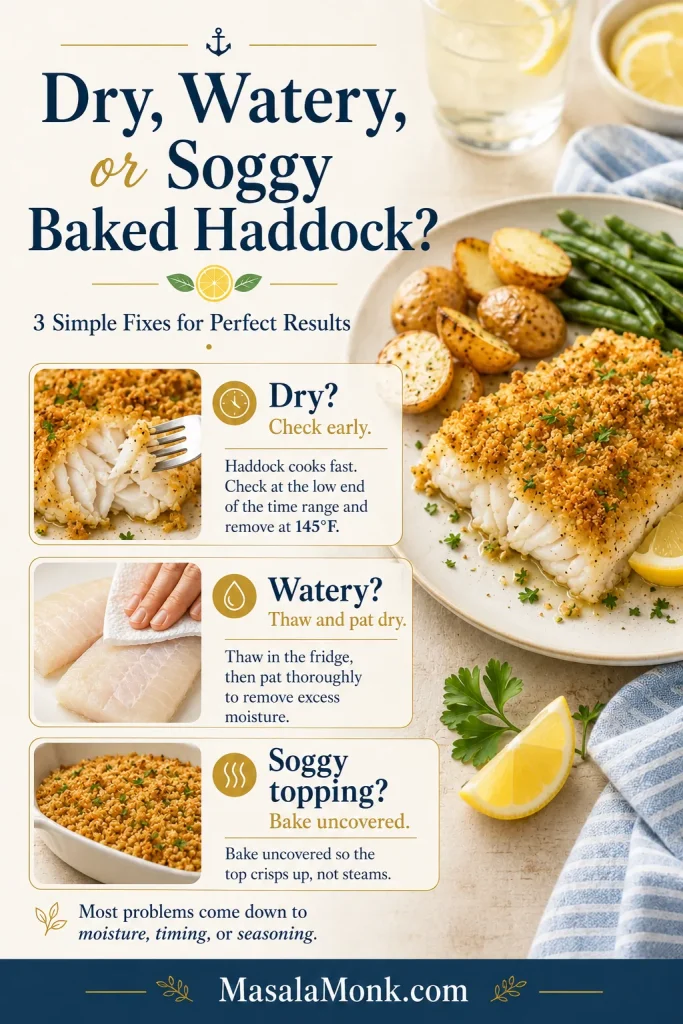
Troubleshooting guide for baked haddock with fixes for dry fish, watery fish, and soggy topping.
If baked haddock turns dry, watery, or soggy, adjust the timing, dry the fillets better, and bake uncovered next time.
ProblemLikely CauseHow to Fix It
Haddock is dryIt baked too long or the fillets were thin.Check early and pull the fish when it reaches 145°F / 63°C.
Fish is wateryThe fish was frozen, not fully thawed, or crowded in the dish.Thaw fully, pat dry, and leave space between fillets.
Topping is soggyToo much moisture or a covered dish.Bake uncovered and avoid adding extra liquid under the topping.
Topping is paleThe fish cooked before the surface browned.Broil for 1 to 2 minutes after the fish is done.
Fish tastes blandOnly the topping was seasoned.Season the fish directly before adding the top layer.
Fish fell apartIt was overcooked or lifted too roughly.Rest for 2 minutes and use a thin fish spatula.
Topping is greasyToo much butter, especially with crackers.Use less butter with Ritz and keep the layer loose.
Fish smells too strongThe fish may not be fresh or was stored too long after thawing.Use fresh-smelling fish and cook soon after thawing.

Make Ahead, Storage, and Reheating

Can You Make It Ahead?

Assemble this recipe right before baking. You can thaw the fish ahead and mix the dry topping ahead, but add butter, seasoning, and the final layer close to oven time.

How to Store Leftovers

Store leftovers in an airtight container in the refrigerator for up to 2 days. Keep extra lemon wedges separate and add fresh lemon after reheating.

Flaked leftovers are useful, not wasted. Fold them into potato and herbs for simple fish cakes, or tuck them into fish tacos with slaw, lime, and a creamy sauce.

Three-panel guide showing leftover baked haddock as flaked fish, golden fish cakes, and fish tacos with slaw and lime.
Leftover baked haddock still has options: flake it into bowls, shape it into fish cakes, or tuck it into tacos with slaw and lime.

How to Reheat It

Reheat gently in a low oven or air fryer until warmed through. The microwave works in a pinch, but it softens the topping and can make fish smell stronger.

Can You Freeze Cooked Haddock?

Cooked crumb-topped haddock does not freeze beautifully. The fish can turn watery and the topping usually softens. For best texture, freeze raw haddock, thaw it safely, and bake it fresh.

FAQ

What temperature is best for baked haddock?

For most fillets, 400°F / 200°C is the easiest everyday temperature. It cooks the fish quickly while giving the topping time to turn golden. For thicker loins or a heavier Ritz cracker topping, 350°F / 175°C gives a gentler bake.

How long does haddock take in the oven?

Most medium fillets take 12 to 16 minutes at 400°F / 200°C. Thin pieces may be ready in 8 to 10 minutes, while thick loins may need 17 to 20 minutes or more.

Should baked haddock be covered or uncovered?

Bake it uncovered when using a crumb topping. Covering traps steam, which helps some dishes but makes buttery crumbs soft instead of golden.

Can I bake frozen haddock?

Yes, but thawing first gives a drier surface and a better topping. For a frozen emergency, bake the plain fish briefly, blot the released moisture, season, add the topping, and continue baking until done.

Can I use cod instead of haddock?

Yes — cod works well here, but it is often thicker and meatier than haddock. Use the thickness chart and doneness cues instead of relying only on the clock.

Is haddock done at 145°F?

Yes. For safety, fish should reach 145°F / 63°C in the thickest part. It should also look opaque and flake easily with a fork.

Why did my baked haddock turn watery?

Watery haddock usually means the fish carried too much moisture into the oven. Fully thaw frozen fillets, pat them dry, and leave space in the dish so the fish bakes instead of steaming.

Can I make baked haddock without breadcrumbs?

Yes. Use melted butter or olive oil, lemon juice, lemon zest, parsley, salt, and pepper. Bake just until the fish is opaque and flaky. It will be lighter and softer, more lemon-butter fish than crisp-topped fish.

What is the best topping for baked haddock?

Ritz crackers give the buttery New England-style finish. Panko gives the crispest bite. Plain breadcrumbs give a softer, classic baked-fish texture.

Can I use smoked haddock for this recipe?

You can, but reduce the salt because smoked haddock is already salty and stronger in flavor. Smoked haddock is also excellent in chowder, Cullen skink, fish pie, and kedgeree.

A Few Last Tips Before You Bake

Baked haddock should feel simple, not stressful. Dry the fish, season the fish, bake it uncovered, and stop when the center is flaky and moist. The surface can always get one more minute under the broiler; the fish cannot be uncooked.
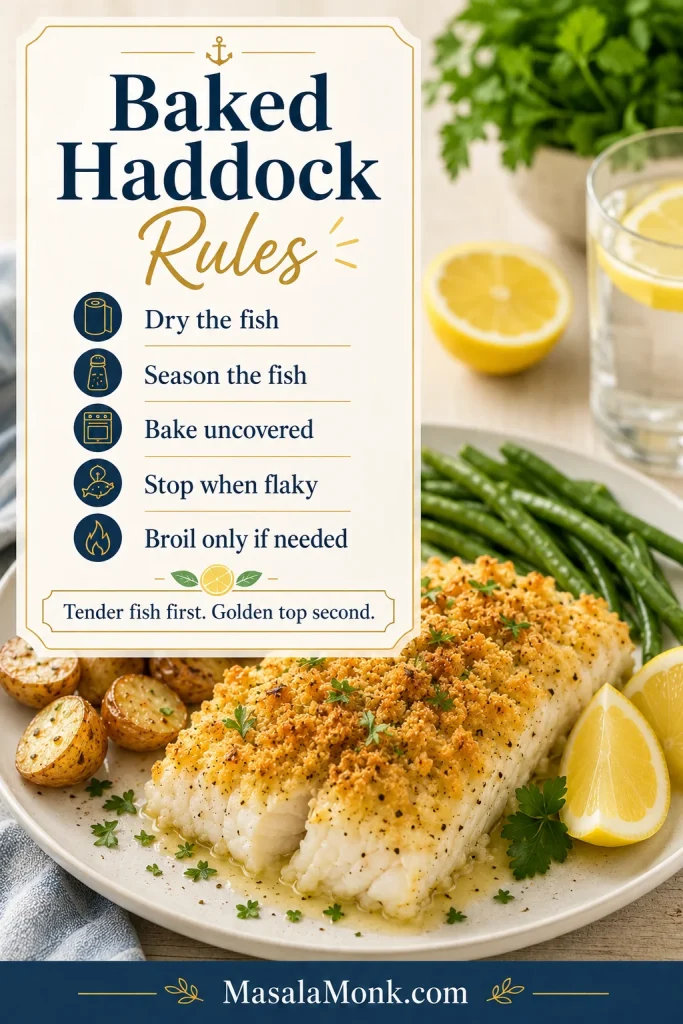
Baked haddock rules card listing dry the fish, season the fish, bake uncovered, stop when flaky, and broil only if needed.
Finally, remember the core baked haddock rules: dry the fish, season it directly, bake uncovered, stop when flaky, and broil only if needed.

Whether you choose buttery Ritz crackers, crisp panko, plain breadcrumbs, or lemon butter, the goal is the same. You want tender haddock with enough golden flavor on top to make it feel like a proper dinner.

If you make this baked haddock, leave a comment and tell us which version you chose: Ritz, panko, breadcrumbs, or lemon butter. Also mention whether you used thin fillets, thick loins, or frozen haddock. Your notes help other readers choose their own path.

Posted on 1 Comment

Beans for Diabetes and Blood Sugar Management

Introduction: Beans are a versatile and nutritious food option that can play a significant role in managing diabetes. They are rich in fiber, protein, and essential nutrients while having a low glycemic index (GI), making them an ideal choice for individuals seeking to regulate their blood sugar levels. In this comprehensive guide, we will explore the impact of various types of beans on diabetes, their benefits, and delicious ways to incorporate them into your diet. Let’s dive in and discover the incredible benefits of beans for diabetes management! 🌿🥦

Table of Contents:

  1. Understanding the Glycemic Index (GI) and its Significance in Diabetes
  2. Kidney Beans: The Blood Sugar Stabilizers 🍛
    • Impact on Blood Sugar Levels: Low GI, Steady Glucose Absorption
    • Nutritional Benefits and Recipes
  3. Lima Beans: Fiber-Rich Allies for Blood Sugar Control 🌽
    • Impact on Blood Sugar Levels: Low GI, Slower Carbohydrate Digestion
    • Nutritional Benefits and Recipes
  4. Mung Beans: Blood Sugar Regulators with Antioxidant Power 🌱
    • Impact on Blood Sugar Levels: Low GI, Enhanced Insulin Sensitivity
    • Nutritional Benefits and Recipes
  5. Red Beans: Diabetes-Friendly Legumes for Heart Health 💓
    • Impact on Blood Sugar Levels: Low GI, Stable Glucose Release
    • Nutritional Benefits and Recipes
  6. Soya Beans: Plant-Based Protein for Optimal Glycemic Control 🌿
    • Impact on Blood Sugar Levels: Low GI, Improved Insulin Sensitivity
    • Nutritional Benefits and Recipes
  7. Green Beans: Fiber-Packed Support for Blood Sugar Stability 🥬
    • Impact on Blood Sugar Levels: Low GI, Essential Nutrient Boost
    • Nutritional Benefits and Recipes
  8. Pinto Beans: Blood Sugar Balancers with High Nutritional Value 🌮
    • Impact on Blood Sugar Levels: Low GI, Enhanced Insulin Sensitivity
    • Nutritional Benefits and Recipes
  9. Black Beans: Fiber-Rich Gems for Steady Blood Sugar 🖤
    • Impact on Blood Sugar Levels: Low GI, Heart Health Promotion
    • Nutritional Benefits and Recipes
  10. Tips for Incorporating Beans Into Your Diabetes-Friendly Diet 🍽️
  • Portion Control: The Right Amount of Beans
  • Cooking Methods: Healthy Ways to Prepare Beans
  • Meal Ideas: Creative Bean-Based Recipes
  1. Conclusion: Beans as a Nutritious Ally in Diabetes Management 🌱🌟

1. Understanding the Glycemic Index (GI) and its Significance in Diabetes The glycemic index (GI) is a ranking system that measures the impact of carbohydrate-containing foods on blood sugar levels. Foods with a low GI (55 or less) are digested and absorbed more slowly, leading to a gradual rise in blood sugar levels. This slow release of glucose can help prevent spikes in blood sugar and provide sustained energy levels. Incorporating low GI foods like beans into your diet can contribute to stable blood sugar control and improved overall glycemic management.

2. Kidney Beans: The Blood Sugar Stabilizers 🍛 Kidney beans have a low glycemic index, making them excellent choices for individuals with diabetes. They are packed with fiber, protein, and essential nutrients, which promote satiety and help regulate blood sugar levels. The soluble fiber in kidney beans slows down digestion and the absorption of carbohydrates, preventing blood sugar spikes. Additionally, kidney beans provide a good source of iron and folate. Here are some delicious recipes to incorporate kidney beans into your diabetes-friendly diet:

  • Kidney Bean Chili: A hearty and flavorful dish that combines kidney beans, tomatoes, spices, and lean ground turkey or beef. It’s a nutritious option packed with protein and fiber.
  • Kidney Bean Salad: A refreshing salad with kidney beans, mixed greens, cherry tomatoes, cucumbers, and a tangy vinaigrette dressing. It’s a great option for a light and nutritious meal.

3. Lima Beans: Fiber-Rich Allies for Blood Sugar Control 🌽 Lima beans are known for their fiber content, making them an ideal addition to a diabetes-friendly diet. They have a low glycemic index and high fiber content, which slows down carbohydrate digestion and glucose absorption. This gradual release of glucose supports steady blood sugar levels and promotes better glycemic control. Lima beans are also a good source of potassium and magnesium. Try these tasty recipes to enjoy the benefits of lima beans:

  • Lima Bean Soup: A comforting and filling soup made with lima beans, vegetables, and herbs. It’s a nutritious option that provides a good balance of carbohydrates, protein, and fiber.
  • Lima Bean Salad with Roasted Vegetables: A colorful salad combining roasted vegetables, lima beans, feta cheese, and a tangy lemon dressing. It’s a flavorful and nutrient-dense meal option.

4. Mung Beans: Blood Sugar Regulators with Antioxidant Power 🌱 Mung beans are not only rich in fiber but also packed with antioxidants, offering numerous health benefits. They have a low glycemic index, which helps regulate blood sugar levels and improves insulin sensitivity. Mung beans are also a good source of plant-based protein and provide essential nutrients like folate, magnesium, and potassium. Try these delicious recipes to incorporate mung beans into your diabetes-friendly diet:

  • Mung Bean Curry: A flavorful curry made with mung beans, vegetables, and aromatic spices. It’s a protein-rich and satisfying dish that pairs well with whole grains like brown rice or quinoa.
  • Mung Bean Salad: A refreshing salad combining cooked mung beans, mixed greens, cherry tomatoes, cucumbers, and a zesty dressing. It’s a light and nutritious option for a quick and easy meal.

5. Red Beans: Diabetes-Friendly Legumes for Heart Health 💓 Red beans, such as kidney beans or adzuki beans, are not only delicious but also beneficial for individuals with diabetes. They have a low glycemic index and are rich in fiber, protein, and antioxidants. Red beans provide a gradual release of glucose into the bloodstream, preventing sudden blood sugar spikes. They also offer cardiovascular benefits, including reduced risk of heart disease and improved cholesterol levels. Here are some tasty recipes to enjoy the benefits of red beans:

  • Red Bean Stew: A hearty stew made with red beans, vegetables, lean meat or plant-based protein, and flavorful spices. It’s a satisfying and nutritious option for a comforting meal.
  • Red Bean Salad with Quinoa: A protein-packed salad combining cooked red beans, quinoa, fresh vegetables, herbs, and a tangy dressing. It’s a balanced and filling meal option.

6. Soya Beans: Plant-Based Protein for Optimal Glycemic Control 🌿 Soya beans, also known as soybeans, are an excellent source of plant-based protein and can be highly beneficial for individuals with diabetes. They have a low glycemic index and are packed with fiber, healthy fats, and essential nutrients like calcium and iron. Soya beans offer several health benefits, including improved insulin sensitivity and heart health. Incorporate soya beans or soya-based products like tofu or edamame into your diet with these delicious recipes:

  • Soya Bean Stir-Fry: A flavorful stir-fry combining soya beans, colorful vegetables, and aromatic spices. It’s a quick and nutritious option for a wholesome meal.
  • Grilled Tofu Salad: A protein-rich salad featuring grilled tofu, soya beans, mixed greens, cherry tomatoes, and a tangy dressing. It’s a satisfying and refreshing choice for a light lunch or dinner.

7. Green Beans: Fiber-Packed Support for Blood Sugar Stability 🥬 Green beans are not only low in calories but also rich in fiber, vitamins, and minerals. They have a low glycemic index, which promotes stable blood sugar control and prevents rapid glucose spikes. The fiber content in green beans slows down carbohydrate digestion and glucose absorption, contributing to better glycemic management. Enjoy the benefits of green beans with these delightful recipes:

  • Green Bean Casserole: A classic dish made with green beans, mushrooms, and a creamy sauce, topped with crispy onions. It’s a comforting and nutritious option for a special occasion or family gathering.
  • Sautéed Green Beans with Garlic: A simple and flavorful side dish featuring sautéed green beans, garlic, and a squeeze of lemon. It’s a quick and healthy addition to any meal.

8. Pinto Beans: Blood Sugar Balancers with High Nutritional Value 🌮 Pinto beans are packed with fiber, protein, and essential nutrients, making them an excellent choice for individuals with diabetes. They have a low glycemic index and offer a slow release of glucose into the bloodstream, promoting stable blood sugar levels. Pinto beans also contribute to improved insulin sensitivity and heart health. Try these delicious recipes to incorporate pinto beans into your diet:

  • Pinto Bean Burritos: Flavorful and filling burritos filled with pinto beans, whole grain tortillas, vegetables, and your favorite toppings. It’s a satisfying and nutritious meal option.
  • Pinto Bean Salad: A refreshing salad combining cooked pinto beans, fresh vegetables, herbs, and a tangy dressing. It’s a light and flavorful choice for a healthy lunch or dinner.

9. Black Beans: Fiber-Rich Gems for Steady Blood Sugar 🖤 Black beans, with their low glycemic index and abundant fiber content, are a valuable addition to a diabetes-friendly diet. They provide sustained energy due to their slow release of glucose, helping to maintain stable blood sugar levels. Black beans also offer additional health benefits, including improved heart health and increased satiety. Enjoy the benefits of black beans with these delicious recipes:

  • Black Bean Soup: A comforting and flavorful soup made with black beans, vegetables, and aromatic spices. It’s a nutritious option that provides a good balance of carbohydrates, protein, and fiber.
  • Black Bean Salad with Avocado: A refreshing salad combining black beans, avocado, cherry tomatoes, red onions, and a lime-cilantro dressing. It’s a satisfying and nutritious choice for a light meal or side dish.

10. Tips for Incorporating Beans Into Your Diabetes-Friendly Diet 🍽️ Incorporating beans into your diabetes-friendly diet can be a delicious and nutritious choice. Here are some tips to help you make the most of beans in your meals:

  • Portion Control: While beans are nutrient-dense, it’s important to watch your portion sizes to manage carbohydrate intake effectively. Aim for around ½ to 1 cup of cooked beans per serving.
  • Cooking Methods: Opt for healthier cooking methods such as boiling, steaming, or baking instead of frying to minimize added fats and calories.
  • Meal Ideas: Add beans to soups, stews, salads, or side dishes to enhance the nutritional value of your meals. They can be a great replacement for higher-glycemic ingredients like rice or pasta.
  • Pairing with Whole Grains: Combining beans with whole grains like brown rice or quinoa creates a balanced meal that provides essential nutrients and promotes steady blood sugar control.
  • Experiment with Recipes: Explore diverse recipes and cooking techniques to enjoy the variety of flavors and textures that beans offer.

FAQs (Frequently Asked Questions) – Beans and Diabetes

Q1: Are beans suitable for individuals with diabetes? A1: Yes, beans are highly suitable for individuals with diabetes. They have a low glycemic index, which means they cause a gradual rise in blood sugar levels. Additionally, beans are rich in fiber, protein, and essential nutrients, making them a nutritious choice for blood sugar management.

Q2: How do beans impact blood sugar levels? A2: Beans impact blood sugar levels by providing a slow release of glucose into the bloodstream. Their low glycemic index and high fiber content help regulate blood sugar levels, preventing sudden spikes. This gradual release of glucose promotes stable blood sugar control.

Q3: Which types of beans have a low glycemic index? A3: Several types of beans have a low glycemic index, including kidney beans, lima beans, mung beans, red beans, soya beans, green beans, pinto beans, and black beans. These beans are excellent choices for individuals with diabetes.

Q4: How can beans benefit individuals with diabetes? A4: Beans offer several benefits for individuals with diabetes, including:

  • Providing a good source of fiber, which aids in blood sugar control and promotes satiety.
  • Offering plant-based protein, which is beneficial for overall health.
  • Supplying essential nutrients like iron, folate, magnesium, and potassium.
  • Supporting heart health by reducing the risk of cardiovascular diseases.

Q5: How can I incorporate beans into my diabetes-friendly diet? A5: Here are some tips for incorporating beans into your diabetes-friendly diet:

  • Add them to soups, stews, salads, or side dishes for a nutrient boost.
  • Combine beans with whole grains like brown rice or quinoa for a balanced meal.
  • Experiment with different recipes to enjoy the variety of flavors and textures that beans offer.
  • Watch portion sizes to manage carbohydrate intake effectively.

Q6: Can I freeze homemade beans for later use? A6: Yes, homemade beans can be frozen for later use. Allow them to cool completely before transferring to airtight containers or freezer bags. Label and date the containers, and store them in the freezer for up to 3 months. Thaw beans in the refrigerator before reheating.

Q7: Are there any precautions when consuming beans for individuals with diabetes? A7: While beans are generally considered healthy for individuals with diabetes, it’s essential to monitor portion sizes and carbohydrate intake. Each person’s tolerance to beans may vary, so it’s advisable to check your blood sugar levels after consuming beans and adjust your portion sizes accordingly. Consult with a healthcare professional or a registered dietitian for personalized guidance.

Q8: Can I incorporate canned beans into my diabetes-friendly diet? A8: Yes, canned beans can be incorporated into a diabetes-friendly diet. Opt for low-sodium or no-added-salt varieties and rinse them thoroughly to reduce the sodium content. It’s always a good idea to check the ingredient list and choose options without added sugars or unhealthy fats.

Q9: Are there any specific beans that are best for diabetes management? A9: While all beans have similar beneficial properties, some studies suggest that certain beans like kidney beans, mung beans, and black beans may have a more significant impact on blood sugar management. However, incorporating a variety of beans into your diet can provide a wide range of nutrients and health benefits.

Q10: Can beans replace other carbohydrate sources in a diabetes-friendly diet? A10: Beans can be a healthy replacement for other higher-glycemic carbohydrate sources in a diabetes-friendly diet. They offer a good balance of carbohydrates, fiber, and protein, which can contribute to better blood sugar control. However, it’s essential to work with a healthcare professional or a registered dietitian to create a well-balanced meal plan that suits your individual needs.

Remember, it’s always recommended to consult with a healthcare professional or a registered dietitian before making significant changes to your diet, especially if you have diabetes or any other medical condition. They can provide personalized guidance based on your specific needs and help you create a meal plan that supports your overall health and well-being.

Conclusion: Beans as a Nutritious Ally in Diabetes Management 🌱🌟 Incorporating beans into a diabetes-friendly diet can be an excellent strategy for blood sugar management. Their low glycemic index, high fiber content, and nutritional value make them valuable allies in promoting stable blood sugar levels and overall well-being. By embracing kidney beans, lima beans, mung beans, red beans, soya beans, green beans, pinto beans, and black beans, individuals with diabetes can enjoy a wide range of delicious and nutrient-packed meals. Remember to consult with a healthcare professional or a registered dietitian to create a personalized meal plan that suits your specific dietary needs. Embrace the goodness of beans and embark on a journey toward better diabetes management and improved health! 🌱❤️

Blog Tags: diabetes, blood sugar management, beans and diabetes, low glycemic index, kidney beans, lima beans, mung beans, red beans, soya beans, green beans, pinto beans, black beans, diabetes-friendly recipes, diabetes-friendly meals, healthy eating, nutrition, glycemic control







