Posted on 7 Comments

Belgian Waffle Recipe + 5 Indian Twists on a Breakfast Classic

Magazine-style cover image of Belgian waffles with an Indian twist—stacked waffles drizzled with jaggery syrup, topped with caramelized peanuts, with chai and spices in the background.

A Belgian waffle recipe has a particular kind of charm. To begin with, it’s the sound: the soft click of the waffle maker closing, the gentle hiss as batter hits heat, the tiny pause while steam builds. Then comes the moment the lid lifts and a golden grid appears—crisp at the edges, tender at the center, and made for whatever you’re craving: syrup, fruit, chocolate, chutney, even spicy chicken.

If you’ve been looking for a recipe that feels dependable and still leaves room for playful Indian flavours, you’re in exactly the right place. We’ll start with a classic Belgian waffle batter you’ll want to keep forever. After that, we’ll take five Indian detours that feel completely natural rather than forced: a coconut–jaggery waffle recipe without milk, peanut butter waffles with chikki-style crunch, a “paneer-style” protein waffle recipe using cottage cheese, soft yogurt waffles with dahi and elaichi, and finally a bold tandoori chicken and waffles sandwich that turns brunch into a proper event.

Before long, you’ll also have a simple waffle mix recipe you can stash in a jar for quick mornings, plus a handful of desi-leaning drizzles and toppings that make every plate feel intentional. So, with that in mind, let’s warm up the waffle iron and get into it.


Belgian Waffle Recipe, Desi Edition: Why This Waffle Recipe Works Every Time

A great waffle is all about contrast. On one hand, you want a crisp exterior that holds its shape and tastes lightly toasted. On the other, you want a soft interior that feels comforting—almost like cake, but lighter. Meanwhile, you also want pockets deep enough to catch every last drop of syrup, sauce, or chutney, so each bite tastes complete.

Torn Belgian waffle showing a crisp golden edge and fluffy interior with syrup pouring into deep pockets; Indian pantry accents like cardamom, yogurt, and peanut butter in the background; text overlay about texture with MasalaMonk.com footer.
Pro tip for that iconic Belgian waffle contrast: cook until deep golden (a shade darker than pancakes), then rest on a wire rack so steam escapes and the pockets stay crisp for syrups, chutneys, and sauces.

That balance is why a classic Belgian waffle recipe is such a keeper. Better still, it’s one of those bases that welcomes small, smart changes. Swap milk for coconut milk and suddenly you’ve got a no milk waffle recipe that tastes like dessert. Stir in peanut butter and the waffle turns richer and more filling. Add yogurt and the crumb gets tender with a pleasant tang. Fold in cottage cheese and it becomes a true protein waffle recipe without tasting “diet.” Push it into savoury territory and it becomes a full waffle breakfast sandwich experience.

In other words, you’re not learning five different recipes. Instead, you’re learning one waffle batter and then remixing it with purpose.

If you like comparing your fundamentals to well-known technique sources, this classic approach to waffles from King Arthur Baking is a steady reference point for ratios and method: classic waffles. Likewise, if you enjoy the “why” behind crispness, browning, and texture, Serious Eats explains waffle mechanics beautifully here: buttermilk vanilla waffles.

Now, let’s build the foundation.

Also Read: Mayo Recipe: 15+ Homemade Mayonnaise Variations


Belgian Waffle Recipe Batter: Ingredients for Belgian Waffle Batter

This Belgian waffle batter is your master key. Even though the twists will change the flavour, the structure stays steady.

Belgian waffle batter ingredients (makes about 6–8 waffles)

  • 2 cups (260 g) all-purpose flour
  • 2 tbsp sugar
  • 2 tsp baking powder
  • 1/2 tsp baking soda
  • 1/2 tsp salt
  • 2 large eggs
  • 1 3/4 cups milk
  • 1/2 cup melted butter (or neutral oil)
  • 1 tsp vanilla extract

At first glance, it’s simple. Nevertheless, each ingredient has a job—especially once we start making variations like waffle recipe without milk, vegan waffle batter, or oat flour waffles.

Belgian waffle batter ingredients arranged with milk, eggs, flour, sugar, leaveners and swap ideas like coconut milk, dahi, peanut butter and cottage cheese for Indian-style Belgian waffles.
Use this as your ‘base batter map’: keep the dry mix constant, then change one wet ingredient (coconut milk / dahi / peanut butter / cottage cheese) to control texture—crisp outside, tender inside—without rewriting the recipe.

What each ingredient is doing in this Belgian waffle recipe

Flour gives structure. Without enough structure, waffles tear when you lift them out or collapse under toppings. With too much, they turn bready.

Baking powder gives the main lift. That lift creates the light interior that makes Belgian waffles so satisfying.

Baking soda supports browning and helps the waffle colour evenly, particularly when the batter includes something slightly acidic (like yogurt later on).

Eggs bring richness and help the waffle set. They also support browning and help waffles hold together when you’re building bigger plates like a chicken and waffles sandwich.

Milk provides moisture, flavour, and tenderness. Still, it’s also one of the easiest ingredients to swap—coconut milk makes a dreamy no milk waffle recipe.

Butter (or oil) helps the exterior crisp while keeping the interior tender. Butter brings flavour. Oil brings practicality. Both work.

Sugar isn’t just sweetness. It encourages browning and that faint caramel flavour that makes waffles taste “toasted” instead of pale.

Vanilla and salt are the quiet heroes. Vanilla adds warmth. Salt sharpens everything so the waffle tastes alive rather than flat.

With the ingredients ready, it’s time to cook.

Also Read: Whole Chicken in Crock Pot Recipe (Slow Cooker “Roast” Chicken with Veggies)


How to Make Waffles: Belgian Waffle Recipe Method in a Waffle Maker or Waffle Iron

The method stays the same for every twist. Consequently, once you learn this rhythm, all the variations feel easy.

Step 1: Preheat the waffle maker properly

Start by turning on your waffle maker (or waffle iron) and letting it fully preheat. If it has a readiness light, wait for it. Even so, don’t rush—give it another minute after it signals hot.

Why? Because heat is the secret behind crispness. When the iron is truly hot, the batter sets quickly at the surface, creating that crisp shell. When the iron is only “kind of warm,” the batter steams and stays soft.

Preheating a Belgian waffle maker with steam rising for crispy Belgian waffles; tip to wait 60–90 seconds after the ready light for better texture.
Extra crisp hack: once the light says ‘ready,’ give the iron another minute—high heat sets the outside fast, so the inside stays fluffy instead of turning steamy.

Step 2: Whisk the dry ingredients

In a large bowl, whisk together flour, sugar, baking powder, baking soda, and salt. This isn’t busywork. Rather, it spreads the leavening evenly so every waffle rises and browns consistently.

Whisking dry ingredients for Belgian waffle batter to evenly distribute baking powder and baking soda for consistent rise and crisp waffles.
Pro tip: whisk the dry mix thoroughly so baking powder/soda don’t clump—uneven mixing can cause bitter pockets and patchy browning.

Step 3: Whisk the wet ingredients

In a second bowl, whisk eggs, milk, melted butter (or oil), and vanilla until smooth. If your butter is very hot, let it cool slightly first—warm is fine, scorching is not.

Whisking eggs, milk and vanilla for Belgian waffle batter while pouring cooled melted butter to prevent scrambled eggs and keep waffles tender.
Pro move: let melted butter cool slightly, then whisk it in slowly—your batter stays smooth, your waffles stay light, and the iron won’t steam out a gummy center.

Step 4: Combine gently

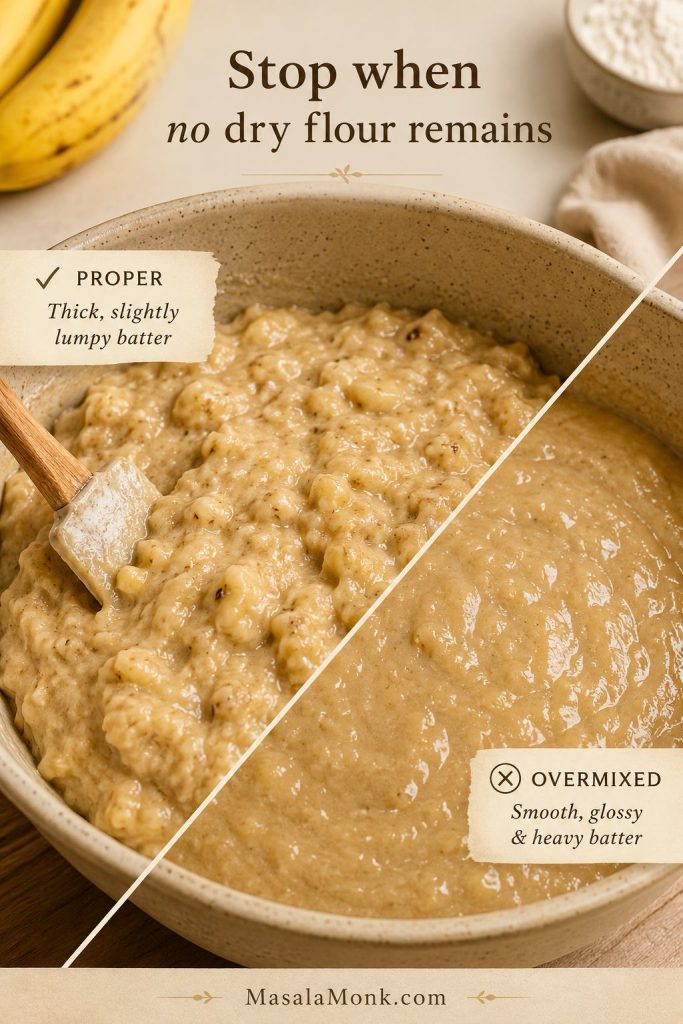
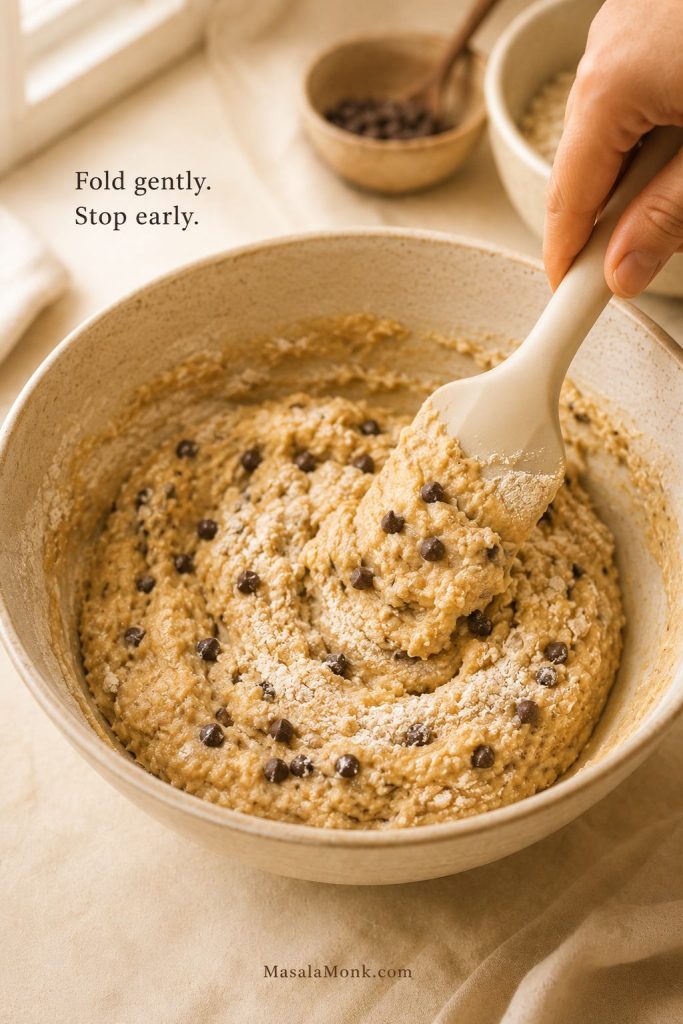
Pour wet into dry. Stir until you don’t see dry flour. Then stop. A few small lumps are fine. In fact, chasing perfectly smooth batter often leads to overmixing—and overmixing is the fastest route to dense waffles.

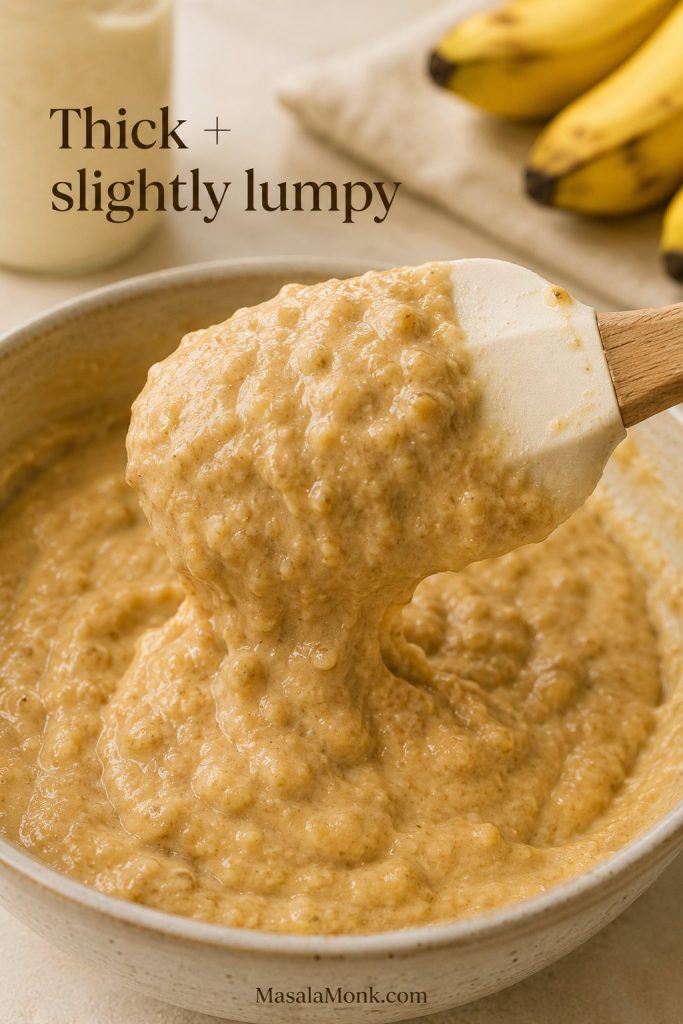
Close-up of Belgian waffle batter being folded in a bowl with a spatula, showing small lumps for lighter, fluffier waffles.
Pro texture move: fold just until the dry flour disappears. A few lumps = steam pockets + lift; overmixing develops gluten and makes waffles bread-like.

Step 5: Rest the waffle batter briefly

Let the batter rest for 5–10 minutes. Meanwhile, keep the waffle maker hot. During the rest, flour hydrates and the batter settles into a better consistency.

Covered bowl of Belgian waffle batter resting for 5–10 minutes with a timer and cardamom, showing why resting batter helps crisp edges and reduces sticking.
Pro tip: resting lets flour hydrate and bubbles stabilize—your batter spreads more evenly in the iron, releases cleaner, and the waffle browns more uniformly (especially helpful for eggless and coconut-milk versions).

Step 6: Cook until deep golden

Lightly grease the plates if your waffle iron tends to stick. Pour in batter, close the lid, and cook until the waffle is richly golden and smells toasted. Don’t pull it out too pale. In contrast to pancakes, waffles often benefit from deeper colour.

Belgian waffle releasing cleanly from a hot waffle iron as steam slows—tip for crisp waffles and preventing sticking.
Pro cue: when the steam drops from a heavy hiss to a light wisp, the waffle has set—this is when it lifts cleanly and stays crisp.

Step 7: Cool on a rack

Move each waffle onto a wire rack, not a plate. Otherwise, steam trapped underneath softens the crust. On a rack, air circulates and the waffle stays crisp longer.

Belgian waffles cooling on a wire rack vs a plate to prevent sogginess and keep edges crispy, with airflow tip overlay.
Pro move: cool waffles on a rack for 1–2 minutes before topping—steam escapes instead of soaking back in, so the pockets stay crisp for syrups and chutneys.

That’s the base. Before we get into crisp vs fluffy, let’s cover two common situations: making waffles without a waffle maker, and making eggless waffles without losing texture. Even without a waffle iron—or if you’re cooking egg-free—you can still use the same batter ideas. Here are two practical routes that work beautifully in an Indian kitchen.

Also Read: Air Fryer Hard-Boiled Eggs (No Water, Easy Peel Recipe)


How to Make Waffles Without a Waffle Maker (Skillet / Pan Method)

No waffle iron? You can still make a satisfying waffle-style breakfast at home using a heavy skillet or tawa. You won’t get the deep grid pattern, yet you can still achieve crisp edges and a soft center.

Use your regular waffle batter (the Belgian waffle batter works here too). Aim for a slow-pouring consistency: thicker than crepe batter, but not so thick it sits in a lump. If it feels runny, whisk in 1–2 tablespoons flour. If it feels too thick, loosen it with a small splash of milk, coconut milk, or water.

Tawa waffles cooking on a cast-iron skillet with a lid to steam-cook the center, showing a no-waffle-maker waffle method with pour-cover-flip-rack steps.
Pro tip for better texture: keep the flame medium-low and cover for 2–3 minutes so the middle sets before browning; then flip and finish, and cool on a rack so the crust stays crisp instead of steaming soft.

Quick skillet checklist (waffles in a skillet):

  • Heat a heavy pan/tawa on medium-low for 2–3 minutes
  • Grease lightly (too much oil can fry the surface)
  • Pour batter, spread to about ½ inch thick
  • Cover with a lid so the center cooks through
  • Flip once set, cook until deep golden
  • Rest on a wire rack for crisp edges

Now cook it: heat the pan, grease lightly, then pour about ⅓ to ½ cup batter into the center. Spread into a round about ½ inch thick and cover with a lid immediately. The lid matters because trapped heat helps the center cook through without burning the base.

Cook for 2–3 minutes until the underside is deep golden and the top looks mostly set. Flip carefully and cook the second side for 1–2 minutes until it smells toasted. If you want extra crispness, flip once more for 20–30 seconds per side.

Finally, rest it on a wire rack for a minute instead of a plate. That quick step helps waffles without a waffle iron stay crisp instead of steaming soft. Serve like a classic pan waffle with jaggery drizzle, yogurt, peanut butter, fruit, or a savoury filling.

Also Read: Authentic Louisiana Red Beans and Rice Recipe (Best Ever)


Eggless Waffles (Waffle Recipe Without Egg)

Eggless waffles are a natural fit for Indian kitchens. The goal is to replace what eggs usually do—binding and structure—so your waffle recipe without egg still holds together, tastes rich, and cooks up golden.

Keep your dry ingredients exactly the same as the base recipe. Then choose one of these eggless methods depending on what you have.

Option A: Dahi method (most “desi”, very dependable)

In your wet bowl:

  • Skip the 2 eggs
  • Add ½ cup thick dahi/curd (plain yogurt)
  • Add 2 tablespoons extra melted butter or oil (to bring back richness)
  • Keep milk the same, or reduce milk by ¼ cup if your curd is very thick
  • Add an extra ½ teaspoon baking powder for lift
Eggless waffle batter made with thick dahi (curd) being whisked in a bowl, showing the “dahi method” for a waffle recipe without egg.
Pro tip: Eggless batters need a slightly longer cook for clean release—wait for deeper golden edges, then rest the waffle on a rack for 1–2 minutes to firm up and stay crisp.

Whisk until smooth, combine wet into dry gently, and rest the batter for 10 minutes. Cook until the waffles are a deeper golden than usual—eggless batters often need that extra minute to set firmly and release cleanly.

Option B: Flax method (eggless and vegan-leaning)

Replace 2 eggs with 2 flax eggs:

  • Mix 2 tbsp ground flaxseed + 6 tbsp water
  • Let it sit 8–10 minutes until gel-like
  • Whisk it into the wet ingredients
Spoon lifting gelled flax egg (ground flaxseed + water) from a glass bowl with ratio text overlay—easy binder for eggless waffle batter; MasalaMonk.com footer.
Fast egg substitute for waffles: 2 tbsp ground flax + 6 tbsp water, rest 8–10 min until gelled. Use this to replace 2 eggs (best for peanut butter, coconut–jaggery, and oat-flour waffle variations).

This option pairs especially well with coconut–jaggery, peanut butter waffles, and oat flour swaps.

One last tip: once cooked, rest waffles on a wire rack for 1–2 minutes. That short pause helps eggless waffles firm up and keeps the edges crisp. For a straightforward reference recipe style, you can look at vegan waffles.

Now that you can make waffles with or without eggs—and even without a waffle iron—let’s talk texture and choose your ideal finish.

Also Read: Double Chocolate Chip Cookies – Easy Recipe with 7 Variations


How to Make Belgian Waffles Crispy or Fluffy: Crispy Waffle Method vs Fluffy Waffle Method

Different mornings call for different waffles. Sometimes you want a crispy waffle recipe style bite with crackly edges. Other times, you want a fluffy waffle recipe feel—soft, tender, and comforting.

Side-by-side Belgian waffles showing crispy vs fluffy texture—one cooled on a rack for crunch, one plated to highlight a soft, airy crumb.
Quick texture cheat: darker color = more crunch, and a wire rack prevents steam from softening the crust—pick your finish based on toppings (syrup-heavy plates love the crispier side).

Crispy waffle method (for crisp outside, tender inside)

  • Preheat the waffle maker thoroughly
  • Cook to deep golden brown
  • Cool on a wire rack
  • Avoid stacking waffles on a plate

Fluffy waffle method (for soft, cake-like tenderness)

  • Mix gently and stop early
  • Rest the batter
  • Cook until golden (not too dark)
  • Serve soon after cooking

The sweet spot (what most people love)

Cook until richly golden, then let the waffle sit on a rack for a moment. The crust sets. The interior stays tender. You get the classic Belgian waffle contrast without effort.

Now we can start the Indian twists.

Also Read: Negroni Recipe: Classic Cocktail & Its Variation Drinks


Homemade Waffle Mix Recipe: DIY Waffle Mix for Quick Mornings

Sometimes the craving hits, but you don’t want to measure five powders while half awake. That’s when a jar of homemade waffle mix makes life easier. Additionally, it keeps your base consistent, which means your flavour experiments taste more controlled.

Portrait photo of a labeled glass jar filled with homemade waffle mix on a kitchen counter, surrounded by flour and measuring spoons, with text overlay showing the dry mix ratios and wet add-ins for quick Belgian waffles; MasalaMonk.com in the footer.
Meal-prep win: label the jar with the date and batch size—then you only measure wet ingredients on waffle mornings. Store airtight and keep the jar away from humidity so the leavening stays effective.

DIY waffle mix (dry)

Whisk together and store airtight:

  • 2 cups flour
  • 2 tbsp sugar
  • 2 tsp baking powder
  • 1/2 tsp baking soda
  • 1/2 tsp salt

How to use waffle mix in a waffle maker

For every 2 cups of dry mix, whisk:

  • 2 eggs
  • 1 3/4 cups milk
  • 1/2 cup melted butter or oil
  • vanilla (optional)

Then combine wet into dry, rest briefly, and cook as usual.

From here, you can transform the batter by changing only the wet bowl: coconut milk, yogurt, peanut butter, cottage cheese, jaggery. As a result, you can create a full waffle spread without making five separate batters.

Also Read: Béchamel Sauce for Lasagna: Classic, Vegan & Ricotta Sauce Recipe


Waffle Recipe Without Milk: Coconut–Jaggery Belgian Waffles

If you’ve ever needed a waffle recipe without milk, you already know the risk: some no-milk batters taste thin. Coconut milk fixes that immediately. It adds richness and aroma, while jaggery brings that deep caramel warmth that feels unmistakably Indian.

If you’d like a simple explanation of jaggery for anyone unfamiliar, this is a clean reference: jaggery.

Dairy-free coconut–jaggery Belgian waffle batter being poured into a hot waffle iron, with coconut milk, grated jaggery and desiccated coconut shown for a no-milk waffle variation.
Coconut milk keeps the crumb rich even without dairy, while jaggery browns faster than sugar—cook a shade deeper golden, then cool on a rack for crisp edges.

Dairy-free waffle batter variation (coconut–jaggery)

Start with the base Belgian waffle batter, then swap and add:

  • Replace milk with coconut milk (same quantity)
  • Replace butter with neutral oil or melted coconut oil
  • Replace sugar with grated jaggery (2–4 tbsp, to taste)
  • Add 1/2 tsp cardamom
  • Optional: 2 tbsp desiccated coconut

Cooking coconut–jaggery waffles

Because jaggery browns quickly, trust aroma and colour. Wait until the waffle is deep golden and smells toasted, almost like caramelised coconut. Then cool it on a rack so crispness sets.

Coconut jaggery waffle topping ideas

  • Quick jaggery syrup (jaggery warmed with a splash of water until glossy)
  • Toasted coconut + chopped cashews
  • A tiny pinch of salt to sharpen sweetness
  • Thick curd on the side if you enjoy sweet-tang contrast

If this flavour feels like your comfort zone, you’ll probably love the coconut dessert world too—these traditional coconut ladoos share a similar coconut-forward warmth.


Peanut Butter Waffles With Chikki Crunch: Peanut Butter Waffle Recipe Twist

Peanut butter waffles are comforting on their own. However, once you bring in jaggery and roasted peanuts, the flavour becomes distinctly Indian—like chikki in waffle form.

If readers want context for the “chikki” idea, this quick reference works neatly: chikki.

Peanut butter waffles topped with roasted peanuts, jaggery drizzle, and chikki crunch—Indian-style Belgian waffle variation.
Pro tip: warm the jaggery with a splash of water for 30–45 seconds so it turns glossy and pours into the waffle pockets; finish with a pinch of salt to make the peanut flavour pop.

Peanut butter waffle batter add-ins

Start with the base batter and add:

  • 3 tbsp peanut butter (creamy works best)
  • 1–2 tbsp jaggery or brown sugar (optional)
  • 1/4 tsp cardamom or cinnamon (choose one)

Peanut butter thickens batter. If it seems too stiff, add a splash of milk or coconut milk until it pours smoothly.

Cooking peanut butter waffles

Cook until deeply golden. Peanut butter tastes best when it’s a little toasted, so let the waffle develop colour. Afterward, cool it on a rack for a minute so the surface stays crisp.

Chikki-style topping for waffles

  • Crushed roasted peanuts
  • Warm jaggery drizzle
  • Pinch of salt

If you like a sweet-and-spicy plate, peanut flavours pair surprisingly well with chutney too. This spicy peanut chutney (no onion, no garlic) is a punchy companion, especially when you want contrast.


Protein Waffle Recipe: Cottage Cheese Belgian Waffles, Paneer-Style

A protein waffle recipe doesn’t have to feel like a compromise. Cottage cheese makes waffles tender and rich, with a mild flavour that takes beautifully to cardamom, nuts, and honey. If you’ve ever loved paneer-based sweets, this “paneer-style” direction will feel familiar in the best way.

This twist also fits naturally with what many people look for when they want cottage cheese waffles: satisfying, filling, and still delicious.

Protein waffle recipe made with blended cottage cheese (paneer-style), topped with yogurt, honey and pistachios, with tips for crisp edges.
Quick texture fix: blend cottage cheese until smooth, then cook 1–2 minutes longer than usual—this gives you a crisp shell with a soft, high-protein center.

Cottage cheese waffle batter (paneer-style)

Add to the base batter:

  • 1/2 cup cottage cheese, blended smooth
  • 1/2 tsp cardamom
  • 2 tbsp chopped pistachios or cashews
  • Optional: 1 tbsp honey or sugar if you like it sweeter

Blend the cottage cheese first; otherwise, the batter can feel bumpy rather than creamy. Then whisk it into the wet ingredients before combining wet and dry.

Cooking protein waffles without losing crispness

Because cottage cheese adds moisture, cook until deep golden and let the waffle rest on a rack. That extra browning helps the outside stay crisp while the inside stays tender.

High-protein waffle toppings (still indulgent)

  • Thick yogurt + honey + pistachios
  • Saffron honey drizzle
  • Mango slices when in season
  • A spoon of something creamy and fragrant

If you enjoy protein-focused breakfast ideas beyond waffles, you might also like these high-protein plant-based breakfast ideas.


Yogurt Waffles: Dahi–Elaichi Belgian Waffle Recipe, Waffle Yogurt Variation

Yogurt waffles are quietly wonderful. They come out tender, lightly tangy, and perfect with fruit and nuts. Using dahi keeps it familiar; adding cardamom keeps it fragrant.

This is also a natural home for what people mean by “waffle yogurt” or “yogurt waffle batter,” except we’re leaning into Indian pantry logic rather than forcing an imported style.

Dahi–elaichi yogurt Belgian waffle variation topped with thick curd, honey drizzle, and crushed pistachios, with quick batter-thickness tips and MasalaMonk.com footer.
Pro tip: if your dahi is very thick, whisk it smooth first, then loosen with 1 tbsp water at a time—this keeps the batter pourable and helps the waffle cook through without losing crisp edges.

Yogurt waffle batter (dahi–elaichi)

Start with the base batter, then adjust:

  • Replace 1/2 cup of milk with thick yogurt/curd
  • Add 1/2 tsp cardamom
  • Optional: lemon zest for brightness
  • Optional: 1 tbsp sugar if the yogurt is very tangy

Whisk yogurt into the wet ingredients until smooth, then combine gently with the dry bowl.

Cooking yogurt waffles

Since yogurt adds moisture, cook slightly longer for a crisp exterior. Even so, the inside stays plush and soft, which is exactly what you want in this variation.

Mango shrikhand topping for waffles

When mangoes are in season, this combination is hard to beat: warm waffle + chilled creamy topping + pistachios. If you want inspiration for that topping, this mango shrikhand direction is perfect for waffles.


Chicken and Waffles Sandwich, Tandoori Style: Waffle Breakfast Sandwich

Now we go savoury, and not subtly.

Classic chicken and waffles works because it’s built on contrast: crisp waffles, juicy chicken, savoury seasoning, and a sauce that pulls everything together. The Indian version keeps that logic and changes the flavour language—tandoori spice, chutney, yogurt, onions, lemon.

For a simple reference on the classic pairing, this is unobtrusive: chicken and waffles.

Step-by-step tandoori chicken and waffles sandwich assembly guide with chutney base, sliced onions, lemon squeeze, and yogurt sauce drizzle on Belgian waffles.
Build order matters: spread chutney first (it protects the waffle from sogginess), keep onions thin, squeeze lemon before the yogurt drizzle, and finish with a light zig-zag so the waffle stays crisp.

What you need for a chicken and waffles sandwich

  • 2 waffles (smaller waffles are easiest as a sandwich)
  • Cooked tandoori-style chicken, sliced thin
  • Thin onion slices
  • Lemon wedge
  • Yogurt sauce: yogurt + salt + pinch of chaat masala
  • Chutney

For a bold chutney option that brings heat and depth, this kara chutney works beautifully with chicken.

Waffle breakfast sandwich assembly

Spread chutney on the first waffle. Layer chicken. Add onions. Drizzle yogurt sauce. Squeeze lemon. Close with the second waffle and press gently.

Tandoori chicken and waffles sandwich cut in half with green chutney, onion, and yogurt sauce; text overlay shows the build order and a honey-in-yogurt flavor hack; MasalaMonk.com footer.
Keep the waffle crisp: toast the waffle for 30–45 seconds after cooking, then assemble fast. For a cleaner bite, spread chutney thick (not runny) and drizzle yogurt sauce last.

Variations that keep the same spirit

  • Paneer tikka waffle sandwich for a vegetarian version
  • Butter chicken filling for a richer, saucier plate—this butter chicken recipe is a natural fit
  • Add cucumber slices for freshness
  • Add a tiny honey drizzle to the yogurt sauce if you love sweet-savoury contrast

Belgian Waffle Recipe Variants: Chocolate Waffles, Banana Waffles, Cinnamon Comfort

Once your base Belgian waffle recipe is second nature, classic flavours become easy. Besides, they’re perfect when you want variety without planning a whole new list of twists.

Portrait triptych showing Belgian waffle recipe variants—chocolate waffle, banana waffle, and cinnamon waffle—with quick mix-in tips and MasalaMonk.com footer.
Use this as your quick decision chart: cocoa + a little extra sugar for chocolate, 1 mashed banana (reduce liquid slightly) for banana, and a cinnamon-spice dry-mix boost for cozy, bakery-style waffles.

Chocolate waffles: Belgian waffle recipe with cocoa and warm spice

To make chocolate waffles, add to the dry ingredients:

  • 1/4 cup cocoa powder
  • 2 tbsp extra sugar (cocoa needs balance)
  • Pinch of cardamom or cinnamon

Cook until deep golden, then top with chocolate sauce, nuts, or fruit. Alternatively, add a jaggery-cocoa drizzle for a deeper sweetness that feels less “candy” and more “grown-up dessert.”

Banana waffles: Belgian waffle recipe with jaggery and cinnamon

Mash 1 ripe banana into the wet ingredients, then add:

  • 1/2 tsp cinnamon
  • Optional: swap some sugar for jaggery

These banana waffles are especially good with peanut butter, roasted nuts, and honey. In fact, they’re a natural bridge between comfort and indulgence.

Cinnamon waffle recipe comfort, without rewriting the batter

Add 1 tsp cinnamon to the dry mix and finish with butter and cinnamon sugar. On cooler mornings, this tastes like instant coziness.

Also Read: Greek Tzatziki Sauce Recipe (1 Master Sauce + 10 Easy Variations)


Oat Flour Waffles and Oatmeal Flour Waffles: Belgian Waffle Recipe With a Hearty Swap

Oat flour waffles are popular because they taste hearty and pair beautifully with bananas, peanut butter, and honey. Still, oat flour can weaken structure if you swap too much at once. So, rather than going all in immediately, start gently.

Side-by-side comparison of oat flour waffles (1/3 flour swap) versus classic Belgian waffles, showing texture differences and tips for crisp edges.
Quick oat-flour swap guide: start with ⅓ oat flour, loosen batter with 1–2 tbsp liquid if needed, and cook one shade darker for crisp edges.

Oat flour waffle batter approach

Replace one-third of the all-purpose flour with oat flour. Keep the rest the same. Then cook until deep golden and cool on a rack.

Once you like the result, you can increase the oat flour portion. Either way, the flavour pairs naturally with jaggery, cinnamon, banana, and nuts—so it fits perfectly with the Indian direction of this post.

Also Read: Healthy Oat Protein Bars – 5 Easy No Sugar Recipes for Snacks


Waffle Recipe Without Milk, Again: No Milk Waffle Recipe Shortcuts That Still Taste Rich

If you’re returning to the waffle recipe without milk idea on busy mornings, coconut milk is the easiest win. Yet there are other workable no-milk directions too.

Portrait infographic with three no-milk waffle batter options—coconut milk, dahi + water, and water with extra oil + vanilla—plus MasalaMonk.com footer.
Quick swap guide for dairy-free waffles: choose coconut milk for richness, dahi + water when you need body + gentle tang, or water + extra oil + vanilla when you’re improvising—then cook a shade darker and cool on a rack for crisp edges.
  • If you have coconut milk, use it.
  • If you only have water, add a little extra fat (oil) and a touch more vanilla to keep flavour rounded.
  • If you have yogurt but no milk, use yogurt plus water to thin it slightly, then whisk until smooth.

Even when you’re improvising, the key is to keep batter pourable and cook until the waffle is deeply golden so it tastes toasted, not pale.

Also Read: 10 High Calorie Protein Shakes & Smoothie Recipes for Healthy Weight Gain


Waffle Batter Confidence: How to Tell When Waffle Batter Is “Right” Without Overthinking

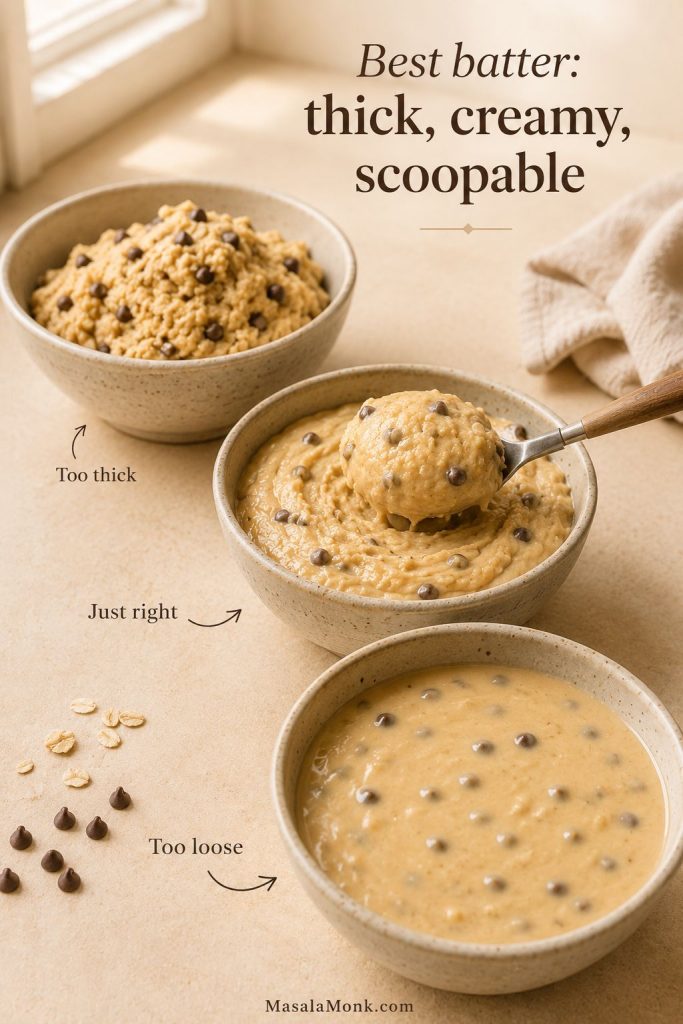
Batter consistency matters, yet it doesn’t need to become stressful. A good waffle batter should pour, but not run like water. It should settle into the grid when you close the lid, not explode out the sides immediately.

Waffle batter consistency guide showing the 10-second ribbon test—too thick, just right, and too thin—with quick fixes for Belgian waffle batter.
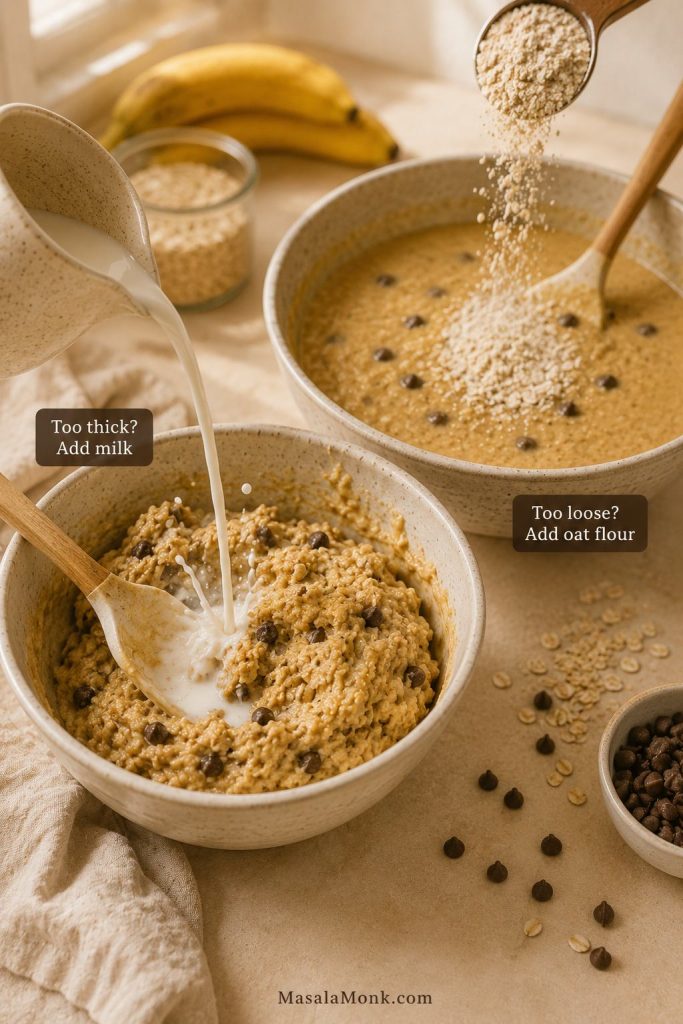
Quick fix guide: if your batter drops in clumps, loosen with 1 tbsp milk/coconut milk; if it runs like water, add 1 tbsp flour—aim for a slow ribbon that disappears in ~2 seconds.

If your batter is too thick, add liquid one splash at a time. If it’s too thin, add a spoon of flour and whisk gently. Then, once you cook one waffle, you’ll know exactly what to adjust.

With that settled, let’s make toppings feel as exciting as the waffles themselves.

Also Read: Simple Bloody Mary Recipe – Classic, Bloody Maria, Virgin & More


Waffle Syrup and Waffle Toppings, Desi Style: From Jaggery Drizzle to Saffron Honey

Waffles exist for toppings. The pockets practically demand syrup. Maple is lovely, of course, but Indian pantry drizzles can feel even more exciting with coconut, jaggery, peanut butter, yogurt, and cardamom.

Triptych showing three Indian waffle toppings—jaggery syrup, saffron honey, and rose-lemon drizzle—poured over Belgian waffles, with MasalaMonk.com footer.
Quick rule: warm your syrup for 15–20 seconds so it flows into the pockets. Finish with a tiny pinch of salt (especially with jaggery) to make the flavours pop.

Jaggery waffle syrup

Warm jaggery with a splash of water until glossy. Then add cardamom and a pinch of salt. This syrup is perfect for coconut–jaggery waffles, banana waffles, and peanut chikki waffles.

Saffron honey drizzle

Warm honey gently and steep saffron strands for a few minutes. This tastes especially good on yogurt waffles and cottage cheese protein waffles.

Rose drizzle

Rose syrup with lemon and a tiny pinch of cardamom turns waffles into something festive—especially with pistachios.

Ice cream and waffle dessert plates

If you want a dessert moment, warm waffles plus ice cream is always a win. For mango season inspiration, these mango kulfi ideas are brilliant as waffle toppings too.


Bubble Waffles and Hong Kong Waffles: Street-Style Filling Ideas That Feel Indian

Bubble waffles—often called bubble waffles, bubbles waffles, or Hong Kong waffle—are lighter, snack-like, and made for stuffing and folding.

If you want a quick reference for the style, this explains it clearly: egg waffle. For a baseline recipe format, this is approachable: bubble waffles.

Pro tip for bubble waffles: keep the waffle warm, build with one cold element (kulfi/ice cream), and always drizzle sauces at the end—your “egg waffle” stays crisp longer instead of turning cakey.

Bubble waffle filling ideas (Indian street-dessert style)

  • Kulfi scoop + nuts + rose syrup
  • Rabri-like drizzle + pistachios + saffron
  • Chocolate + banana + crushed biscuits
  • Mango ice cream + cardamom sugar + toasted coconut

Even if you don’t have a bubble waffle maker, the flavour ideas still work with Belgian waffles. Make smaller waffles, fold them like cones, fill them, and eat them like street food.

Also Read: Peanut Butter Cookies (Classic Recipe & 3 Variations)


Belgian Waffle Recipe, One Base, Endless Plates

Ultimately, the reason to keep a Belgian waffle recipe in your back pocket is simple: one batter, many moods.

Sometimes you want coconut–jaggery comfort from a waffle recipe without milk. Other times you want peanut butter waffles with chikki crunch. On busy days, a “paneer-style” protein waffle recipe feels like a gift. When you want soft and fragrant, yogurt waffles deliver. And when brunch needs to be bold, a tandoori chicken and waffles sandwich becomes the centerpiece.

If you want another India-leaning waffle idea to explore next, these sabudana waffles are a fun companion read—especially if you enjoy Indian pantry twists.

FAQs

1) What is a Belgian waffle recipe, and how is it different from regular waffles?

A Belgian waffle recipe typically makes waffles that are thicker, airier, and built with deeper pockets. As a result, they hold syrup, sauces, and toppings more generously than thinner, “regular” waffles.

2) Can I make a Belgian waffle recipe without a Belgian waffle maker?

Yes. Even if your waffle iron makes thinner waffles, the same batter still works; the main change is that cook time may be shorter and the waffles may turn out crispier rather than thick.

3) How do I make waffles crispy on the outside and soft inside?

For that classic contrast, preheat the waffle maker thoroughly, cook until deep golden, and place cooked waffles on a rack instead of stacking them. That combination helps the crust stay crisp while the center remains tender.

4) Why are my waffles turning out soggy after cooking?

Most often, waffles go soft because steam gets trapped—especially when waffles are stacked on a plate. Instead, let them cool briefly on a rack so moisture can escape.

5) What’s the best waffle batter consistency for a Belgian waffle recipe?

The ideal waffle batter should pour easily but still feel slightly thick—similar to a smooth pancake batter. If it runs like water, it may spread too fast and steam; if it’s too stiff, it may cook unevenly.

6) Can I make waffle batter ahead of time for breakfast?

You can mix the dry ingredients ahead, and you can also whisk the wet ingredients ahead. However, once everything is combined, it’s usually best to cook within a few hours so the leavening stays effective.

7) What is a waffle mix, and can I make waffle mix at home?

Waffle mix is a pre-mixed dry blend (flour, sugar, salt, leavening) that you combine with wet ingredients later. Homemade waffle mix works well and makes weekday waffles much faster.

8) How do I make a waffle recipe without milk that still tastes rich?

Use coconut milk, oat milk, or another creamy plant milk, and include enough fat (oil or dairy-free butter). In addition, vanilla and a pinch of salt help round out flavor.

9) Are dairy-free waffles the same as vegan waffles?

Not always. Dairy-free waffles avoid milk and butter, but they can still include eggs. Vegan waffles avoid all animal products, so you’ll replace both dairy and eggs.

10) How do I make vegan waffles that don’t fall apart?

Use a good binder such as a flax “egg” (ground flax mixed with water) and cook waffles until fully set and golden. Also, avoid opening the waffle maker too early.

11) Can I make eggless waffles that still rise properly?

Yes. Eggless waffles can rise well with fresh baking powder and a binder like flax, yogurt alternatives, or fruit puree. Even so, slightly longer cooking helps them set firmly.

12) What’s the easiest way to make gluten-free waffles?

A reliable gluten-free flour blend is the simplest option because it’s designed for structure. If you’re experimenting, start with a blend before trying single flours.

13) Can I make oat flour waffles with a Belgian waffle recipe?

Absolutely. Replace part of the all-purpose flour with oat flour to keep structure. Gradually increasing oat flour works better than swapping all flour at once.

14) How do I make protein waffles that still taste good?

A protein waffle recipe tastes best when the “protein” comes from ingredients that also improve texture, like cottage cheese or yogurt. Furthermore, balanced sweetness and vanilla keep flavor pleasant.

15) Are cottage cheese waffles the same as paneer-style waffles?

They’re not identical, yet cottage cheese waffles can feel “paneer-style” in spirit—mild, creamy, and perfect with cardamom, nuts, and honey.

16) Can I add peanut butter to waffle batter?

Yes, peanut butter waffles are a popular variation. Since peanut butter thickens batter, add a splash of milk (or plant milk) if the batter becomes too dense.

17) How can I make peanut butter waffles taste more “Indian”?

Try adding jaggery and cardamom, then top with roasted peanuts for a chikki-like finish. This approach creates a warm, nutty profile rather than a plain “PB” taste.

18) What are yogurt waffles, and why add yogurt to waffle batter?

Yogurt waffles use curd or yogurt in the batter to add tenderness and a gentle tang. Consequently, they pair especially well with fruit, honey, and nuts.

19) Can I use thick curd (dahi) instead of milk in waffles?

Yes. You can replace a portion of milk with thick curd, then whisk until smooth. If the batter becomes too thick, thin it with a small splash of water.

20) What toppings go best with Indian-style waffles?

Jaggery syrup, saffron honey, rose drizzle, chopped nuts, coconut, shrikhand-style toppings, and fresh fruit all work beautifully. Additionally, savory waffles pair well with chutneys and yogurt sauces.

21) What is the best syrup for waffles if I don’t have maple syrup?

Jaggery syrup is a great alternative, and honey works well too. For a more festive vibe, saffron-infused honey or rose-lemon drizzle can feel special.

22) Can I make a chicken and waffles sandwich at home?

Definitely. Use waffles as the “bun,” then layer spiced chicken, onions, and a yogurt-based sauce. For extra punch, add a chutney spread.

23) What kind of chicken works best for chicken and waffles?

Crispy fried chicken is classic, yet grilled or tandoori-style chicken works beautifully with Indian flavors. The key is juicy chicken with bold seasoning.

24) Can I make a vegetarian version of chicken and waffles?

Yes. Paneer tikka, crispy tofu, or spiced potato patties can stand in for chicken, especially when paired with chutney and a creamy sauce.

25) What are bubble waffles, and how are they different from Belgian waffles?

Bubble waffles (often called Hong Kong egg waffles) are lighter and designed to be folded and filled. By comparison, Belgian waffles are thicker with deeper pockets meant for syrup and toppings.

26) Can I make bubble waffles with Belgian waffle batter?

Not exactly. Bubble waffles usually use a different batter and a different waffle maker. Nonetheless, you can mimic the “filled-and-folded” idea using smaller Belgian waffles.

27) How do I stop waffles from sticking to the waffle iron?

Preheat fully, grease lightly if needed, and cook until the waffle releases easily. Often, sticking happens when waffles are undercooked and tear during removal.

28) Why do my waffles taste bland even when they look good?

Bland waffles usually need more salt, vanilla, or sweetness. Also, cooking a bit longer to deepen browning can intensify flavor noticeably.

29) Can I freeze waffles and reheat them later?

Yes. Let waffles cool completely, freeze in a single layer first, then store in a bag. Later, reheat in a toaster or oven so they crisp up again.

30) What’s the best way to reheat waffles so they stay crispy?

Use a toaster or an oven rather than a microwave. The microwave adds moisture; meanwhile, dry heat restores crisp edges and keeps the center warm.

Posted on 9 Comments

Almond Flour Pancakes (Easy Recipes) Fluffy, High-Protein, Keto & More

Dark, Vogue-style portrait cover featuring a stack of almond flour pancakes with almond flour, eggs, blueberries, cottage cheese, and spices, with elegant headline text and MasalaMonk.com in the footer.

There’s a reason pancakes are so deeply comforting. They’re warm, they’re familiar, and they’re endlessly customizable. Yet when you swap regular flour for almond flour (or almond meal) to make pancakes, the first attempt can feel like the rules changed overnight. The batter looks thicker. The surface browns faster. The flip feels delicate. And instead of an easy breakfast, you’re suddenly negotiating with your pan.

Even so, almond-based pancakes are incredibly forgiving once you learn their rhythm. They’re naturally gluten-free, they’re filling in a way that many traditional stacks aren’t, and they can suit everything from low-carb mornings to protein-heavy meal prep. Best of all, they can taste like a real treat instead of “diet food,” as long as you cook them with gentle heat and a little patience.

This guide is designed to make that process feel simple. You’ll start with a dependable base recipe, then branch into variations that still feel natural in a home kitchen: almond meal pancakes, fluffy almond flour pancakes, 3 ingredient almond flour pancakes, 2 ingredient almond flour pancakes, protein almond flour pancakes, almond flour cottage cheese pancakes, vegan almond flour pancakes, low carb pancakes with almond flour, and seasonal versions like almond flour and banana pancakes, almond flour blueberry pancakes, and almond flour pumpkin pancakes. You’ll also get a practical section for almond flour pancake mix and pancake-and-waffle mix style batters—because sometimes convenience is the whole point.

Now, let’s get into the batter.

Stack of almond flour pancakes on a plate with text overlay highlighting gluten-free and low-carb breakfast.
Quick cue for success: almond-flour pancakes like gentle heat and smaller rounds—aim for a matte top before flipping for clean, tender centers.

Almond Flour vs Almond Meal for Pancakes

Almond flour and almond meal both come from ground almonds, but they aren’t identical. That difference matters most in texture and hydration.

Almond flour is usually finely ground, often from blanched almonds. As a result, pancakes made with almond flour tend to be smoother, lighter on the tongue, and more “cake-like” in the center.

Almond meal is often coarser and may include the skins. That coarser texture can create a heartier pancake—more rustic, more “flapjack,” with a slightly deeper nutty taste. Almond meal pancakes are still tender, but they can feel sturdier and more substantial. If you’ve ever heard people call them almond flour flapjacks, this is usually what they mean: a thicker, cozier pancake made with nut flour that eats more like a tender breakfast cake than a diner-style wheat pancake.

Almond flour vs almond meal in bowls showing fine vs coarse texture for making pancakes, with tips for batter hydration.
If your batter suddenly thickens, it’s not “wrong”—nut flours keep absorbing liquid. Add milk 1 tbsp at a time, stir, then wait 20 seconds before deciding again.

Here’s the practical part: almond meal often absorbs liquid differently. So if you’re making pancakes made with almond meal and the batter thickens quickly, don’t fight it. Add liquid in small amounts. Stir. Pause for 20–30 seconds. Then decide if it needs more. That tiny pause is surprisingly powerful because nut flours keep hydrating even after you’ve mixed them.

In other words, treat the batter like it has a heartbeat. Give it a moment. Then adjust.

Also Read: Almond Flour and Diabetes: A Low-Carb, High-Impact Swap for Better Blood Sugar


A Dependable Almond Flour Pancakes Recipe

This is your everyday base: easy almond flour pancakes that work plain, but also welcome banana, blueberries, pumpkin, cottage cheese, protein powder, or savory add-ins. Think of it as your go-to pancake made with almond flour (what some people simply call almond pancakes): dependable on its own, but flexible enough for mix-ins.

It’s also built on a logic you’ll see in reliable tested recipes, like King Arthur Baking’s almond flour pancakes: almond flour + eggs for structure + milk for moisture + baking powder for lift.

Ingredients (makes about 8–10 small pancakes)

  • 1 cup almond flour (or almond meal)
  • 2 large eggs
  • 1/3 cup milk of choice (dairy or non-dairy)
  • 1 teaspoon baking powder
  • Pinch of salt
    Optional: 1 tablespoon sweetener, 1/2 teaspoon vanilla
Recipe card for almond flour pancakes (gluten-free) showing ingredients, quick method, and a tip for fluffy centers.
Save this card for repeat mornings: keep pancakes small, rest the batter briefly, and flip only when the surface turns matte—this is the easiest way to avoid undercooked centers.

Method

  1. In a bowl, whisk almond flour, baking powder, and salt until evenly combined.
  2. In a second bowl, whisk eggs and milk until smooth. Add vanilla or sweetener if using.
  3. Pour wet into dry and stir until the batter is cohesive. It should be thick but still spoonable.
  4. Let the batter rest for 3–5 minutes while you warm your pan.
  5. Cook on medium-low heat in a lightly greased skillet. Make small rounds (3–4 inches wide). Flip only once the edges look set and the top looks more matte than glossy.

That brief rest is not a fussy extra step—it’s what keeps the batter consistent from the first pancake to the last. Resting batter is a classic pancake habit even outside nut-flour cooking, and it’s baked into traditional approaches like King Arthur’s classic pancake method.

Also Read: Mayo Recipe: 15+ Homemade Mayonnaise Variations


Almond Flour Pancake Batter That Behaves

Nut-flour batters don’t look like wheat batters. They’re thicker, less elastic, and they set differently. Once you accept that, the rest becomes easier.

What “right consistency” looks like

  • The batter falls from a spoon in a ribbon and spreads slowly.
  • It looks glossy and cohesive, not dry and clumpy.
  • It doesn’t run like crepe batter.
Visual guide showing almond flour pancake batter consistency: too thick, just right, and too thin, with quick fixes for each.
Use this as a mid-batch rescue chart: adjust in tablespoon steps and give the batter a short pause—almond flour keeps hydrating even after you stop stirring.

The three most common batter problems

Too thick: It won’t spread; it sits like a mound.
Fix it by adding 1 tablespoon milk, stirring, then waiting 20–30 seconds before deciding whether to add more.

Too thin: It spreads into very wide, fragile pancakes.
Fix it by adding 1 tablespoon almond flour (or almond meal), stirring, and resting briefly.

Thickens mid-batch: This is normal.
Fix it by stirring and loosening with small splashes of milk if needed.

That last point matters more than you’d expect. Almond flour pancake batter often changes slightly as it sits. Instead of trying to “perfect” it in one go, treat it like a living mixture and make micro-adjustments.

Also Read: Pepper Sauce Recipe Guide: Classic Vinegar Heat to Chipotle, Ají & Peppercorn


Fluffy Almond Flour Pancakes

If your goal is fluffy almond flour pancakes—soft, tender, and slightly lifted—there are a few levers that do most of the work. Fortunately, none of them require culinary gymnastics.

1) Fresh leavening

Baking powder is the lift here. If it’s old, the pancakes can turn out flat even if everything else is right. A quick way to check freshness is the method described in King Arthur’s baking powder test.

2) Gentle heat

Almond flour browns quickly. Medium-low heat gives the pancake time to set inside without over-darkening outside. You’ll get a more even crumb and a cleaner flip.

Fluffy almond flour pancakes with a cut-open crumb photo and a quick guide for lift, heat, pancake size, and resting batter.
Want height without fuss? Keep rounds small, cook on medium-low, and wait for a matte top—most “flat” almond pancakes are just heat + timing.

3) Smaller pancakes

It’s tempting to pour big rounds, especially when you want a “proper stack.” Nevertheless, smaller pancakes cook more evenly and rise more consistently. Once you’ve nailed the method, you can go bigger. Until then, keep it tidy.

A quiet upgrade: rest the batter a little longer

A short rest already helps. A slightly longer rest—say 10 minutes—can make the texture even more uniform. Resting batter is a widely recommended way to improve pancake texture in general, not just for nut flours.

For a classic pancake inspiration that leans cozy and traditional, MasalaMonk’s fluffy buttermilk pancakes with stewed cinnamon apples is a delicious reference point for texture and topping ideas.


Simple Almond Flour Pancakes for Everyday Mornings

Sometimes you want a no-drama breakfast—something you can make on autopilot. Simple almond flour pancakes are exactly that once you settle into a routine.

First, treat the first pancake as your “test pancake.” If it browns too quickly, lower the heat. If it takes too long to set, nudge the heat slightly higher. Then keep the rest consistent.

Simple almond flour pancakes on a plate with a quick routine checklist for a test pancake, thick-but-pourable batter, and flipping once gently.
Your “test pancake” is the thermostat: if it browns too fast, lower heat; if it takes forever to set, nudge heat up—then don’t touch the dial again.

Second, keep the batter slightly thicker than you think. Thin batter tends to spread, and spreading creates pancakes that are harder to flip and easier to tear. Thick-but-pourable is your friend.

Third, flip gently and only once. Pancakes made with almond flour don’t love being pressed, smashed, or flipped repeatedly. If you let them set properly, they hold together beautifully.

Also Read: Whole Chicken in Crock Pot Recipe (Slow Cooker “Roast” Chicken with Veggies)


3 Ingredient Almond Flour Pancakes

There are mornings when you want breakfast in the fewest possible steps. Three-ingredient versions are perfect for that.

Ingredients

  • 1 cup almond flour
  • 2 eggs
  • 1/3 cup milk
Recipe card showing 3-ingredient almond flour pancakes with almond flour, eggs, milk, a quick method, and simple add-on ideas.
Shortcut math: the add-ons aren’t new recipes—just one small change. Cinnamon for cozy, lemon zest for brightness, blueberries for bursts, yogurt for contrast.

Method

Whisk everything until smooth, rest 3 minutes, then cook small pancakes on medium-low. If you have salt, add a pinch. If you have baking powder, add 1/2 teaspoon for a little lift. Still, even without extras, these can be satisfying when cooked gently.

To add “juice” without adding complexity, you can fold in one of these single-ingredient upgrades:

  • cinnamon for warmth
  • lemon zest for brightness
  • a handful of blueberries placed on the pan after pouring
  • a spoonful of yogurt on top after cooking

Each one changes the experience without changing the method.

Also Read: Cheesy Chicken Broccoli Rice – 4 Ways Recipe (One Pot, Casserole, Crockpot & Instant Pot)


2 Ingredient Almond Flour Pancakes

Two-ingredient versions are as minimal as it gets. They’re also more egg-forward, and the texture leans closer to soft breakfast cakes than classic diner pancakes.

Ingredients

  • 1 cup almond flour
  • 3 eggs
2-ingredient almond flour pancakes with a cake-like crumb and tips to whisk thoroughly, cook small rounds, and flip later, plus topping contrast ideas.
Two-ingredient batter is naturally egg-forward—treat it like a mini breakfast cake: cook smaller, wait longer on side one, then balance with something tangy (yogurt) or juicy (berries).

How to make them feel more pancake-like

  • Whisk very thoroughly so the batter becomes uniform.
  • Cook smaller rounds so they set through.
  • Wait longer before flipping; the first side needs time.

These are excellent with toppings that bring contrast. For instance, something creamy and tangy (yogurt), something juicy (berries), or something nutty and rich (nut butter) can make the whole plate feel balanced rather than heavy.

Also Read: Sheet Pan Chicken Fajitas Recipe (Easy One-Pan Oven Fajitas)


5 Ingredient Almond Flour Pancakes

If you want the minimal version that still feels consistently “right,” five ingredients is often the sweet spot.

  • almond flour
  • eggs
  • milk
  • baking powder
  • salt
Flat-lay guide showing the five ingredients for almond flour pancakes and a “choose your direction” chart for sweet, fruity, spiced, or savory variations.
Think of this as your neutral batter “template”: keep the five ingredients constant, then change the mood with one direction—sweet, fruity, spiced, or savory.

This is basically the base recipe without vanilla or sweetener. It’s also ideal for customization. Because the flavor is neutral, you can push it sweet, fruity, spiced, or savory without fighting the batter.

Also Read: Authentic Louisiana Red Beans and Rice Recipe (Best Ever)


Protein Almond Flour Pancakes

If you want breakfast that keeps you full, protein almond flour pancakes are an obvious move. The trick is to add protein without drying the batter or turning it rubbery. Moisture and gentle heat solve most issues.

Protein almond flour pancakes with protein powder

Start with the base batter. Add one scoop of protein powder. Then loosen with milk a tablespoon at a time until it returns to thick-but-pourable.

Protein almond flour pancake batter with protein powder being added, showing tips to adjust thickness with milk, cook on lower heat, and avoid overmixing.
Protein powder is thirsty: add it, then “dial back” thickness with milk in tablespoon steps—over-thinning is what makes pancakes spread and tear.

Because protein powder thickens batter quickly and can brown faster, keep the heat lower and cook longer. Also, resist the urge to keep stirring after you’ve mixed it. Overmixing can make protein batters feel tougher.

To make the flavor feel like breakfast rather than a shake in pancake form, add one of these:

  • cinnamon + vanilla
  • cocoa + a touch of sweetener
  • citrus zest for a bright finish
  • chopped nuts for texture

Almond meal protein pancakes

If you’re using almond meal rather than almond flour, the same concept applies, but the batter may thicken faster because of the coarser grind. In that case, add liquid in smaller steps and give it a short pause between additions. You’re aiming for a batter that spreads slowly rather than sitting in a mound.

Side-by-side comparison of almond flour vs almond meal protein pancake batter showing how almond meal thickens faster and needs smaller liquid additions.
Almond meal + protein is a “thickener combo.” Treat liquid like seasoning—add a little, pause, then repeat until the batter spreads slowly instead of sitting like a scoop.

Almond flour cottage cheese pancakes

This is the high-protein option that stays moist and tender without needing protein powder.

Blend until smooth:

  • 1 cup cottage cheese
  • 2 eggs
  • 3/4 cup almond flour
  • 1 teaspoon baking powder
  • pinch of salt
Recipe card for cottage cheese almond flour pancakes showing blended ingredients, rest time, medium-low cooking tip, and moist high-protein results.
For the smoothest, most tender bite: blend until completely silky, then let the batter rest 5 minutes so it thickens evenly before hitting the pan.

Let it rest for 5 minutes, then cook on medium-low. The texture tends to be soft, moist, and satisfying—especially when served warm.

For more protein-focused breakfast variety that’s still pancake-adjacent, MasalaMonk’s millet protein pancakes and protein-rich cherry pancakes are great rotation options.

Also Read: Baked Jalapeño Poppers (Oven) — Time, Temp & Bacon Tips


Almond Flour and Banana Pancakes

Banana adds sweetness and tenderness, which can make almond-based batter feel plush. It’s also one of the easiest ways to make breakfast feel like a treat without doing much extra work.

Almond flour banana pancake guide showing mashed banana in batter, tips to reduce milk and cook smaller rounds, plus cozy, bright, dessert, and balanced flavor options.
Banana makes pancakes brown faster—keep heat medium-low and think “mini pancakes” for the cleanest flips. Then pick one flavor path to change the vibe without changing the method.

Method

Mash 1 ripe banana into the base batter and reduce milk slightly (banana adds moisture). Cook on medium-low and keep pancakes smaller; banana encourages faster browning.

To add more “juice” while keeping it simple, you can choose a direction:

Cozy direction: cinnamon + a tiny pinch of nutmeg
Bright direction: lemon zest + berries
Dessert direction: cocoa + a few chocolate chips
Balanced direction: top with yogurt and fruit

Each direction uses the same batter, so you’re not learning a new recipe—just playing with the flavor.

Also Read: Carbonara Recipe: Italian Pasta (Creamy, Veggie, Chicken, Shrimp, Tuna & Keto)


Almond Flour Blueberry Pancakes

Blueberries work beautifully with a nutty base. The key is to avoid turning the entire batter purple and to keep the pancakes easy to flip.

Almond flour blueberry pancake guide showing pour batter first, add blueberries on top, flip when edges set, with tips for frozen berries and flavor add-ins.
The cleanest blueberry pancakes come from a simple order of operations: batter first, berries second. You’ll get better structure, less bleeding, and easier flips—especially with frozen blueberries.

Method

Pour your batter onto the skillet first, then place blueberries on top of each pancake. Flip once the edges are set. This works especially well with frozen berries because you keep control of the moisture.

MasalaMonk’s blueberry pancake roundup reinforces the same practical approach of keeping heat moderate and adding berries on the pan for better results.

To deepen flavor without complicating the recipe, try one small add-on:

  • vanilla in the batter
  • lemon zest in the batter
  • cinnamon in the batter
  • a dollop of yogurt on top after cooking

The goal is contrast: warm pancake, juicy berries, creamy topping.

Also Read: Protein Oatmeal: Turn Plain Oats into a High-Protein Meal


Almond Flour Pumpkin Pancakes

Pumpkin makes nut-flour pancakes feel especially tender because it adds moisture and body. It also brings that cozy, spiced flavor that makes breakfast feel seasonal even in the middle of an ordinary week.

Almond flour pumpkin pancake guide showing pumpkin purée added to batter, resting time, medium-low cooking tip, and topping balance ideas like yogurt, nut butter, toasted nuts, and banana.
Pumpkin adds moisture, so give the batter time to “settle” (8–10 minutes). That rest is what turns a loose bowl into a smooth, spoonable batter that cooks up tender.

Method

Add 1/2 cup pumpkin purée to the base batter, add cinnamon (or pumpkin spice), and reduce milk slightly. Rest 8–10 minutes so the batter becomes smoother and more uniform. Cook on medium-low.

To “juice” the experience, pair pumpkin pancakes with toppings that create balance:

  • yogurt + cinnamon (creamy and tangy)
  • nut butter + a drizzle of maple (rich and sweet)
  • toasted nuts (crunch)
  • sliced banana (soft sweetness)

Also Read: Healthy Oat Protein Bars – 5 Easy No Sugar Recipes for Snacks


Keto Pancakes With Almond Flour

If you’re going for keto pancakes with almond flour, the base recipe already fits the general structure. The difference is mainly what you add.

  • Use unsweetened milk or a mix of milk and water.
  • Skip banana.
  • Sweeten only if desired, with a keto-friendly sweetener.
Keto pancakes with almond flour guide showing keto swaps like unsweetened milk, optional sweetener, skipping banana, and a tip to add coconut flour for structure.
Keto success is mostly “what you don’t add”: keep the base, skip banana and sugar, and use unsweetened liquid—then fine-tune texture with a small pinch of coconut flour plus extra liquid.

In other words, this becomes your basic almond flour keto pancake template—then you decide whether you want it plain, spiced, or protein-boosted.

If you like blending flours for structure, King Arthur’s keto pancake recipe is a useful reference for how almond flour and coconut flour can work together and why the batter may need extra liquid. For days when you want something keto-friendly that isn’t pancakes, MasalaMonk’s chia breakfast ideas provide a nice change of pace.


Gluten-Free Almond-Flour Pancakes

Almond flour is naturally gluten-free. Still, if you’re cooking for someone who needs strict gluten avoidance, packaged ingredients matter: baking powder, flavorings, add-ins, and especially mixes.

Gluten-free almond flour pancakes checklist showing label checks for baking powder and add-ins plus clean pan and spatula tips to avoid cross-contact.
The biggest gluten-free “gotchas” aren’t almond flour—they’re the extras. Treat baking powder, flavorings, mix-ins, and shared cookware as the real checklist items.

For official context, the FDA’s page on gluten-free labeling explains the standard used for foods labeled “gluten-free.” The Celiac Disease Foundation’s label reading guide is also helpful because it clarifies that “wheat-free” isn’t always the same as gluten-free and encourages checking the ingredients list.

In practice, the simplest approach is: trusted ingredients, a clean pan, and careful add-ins.

Also Read: 10 Best Espresso Martini Recipe Variations (Bar-Tested)


Vegan Almond Flour Pancakes

Vegan nut-flour pancakes are absolutely possible. They just need a binder, because eggs usually provide structure. Flax works well because it gels and helps hold the batter together.

Ingredients

  • 1 cup almond flour
  • 1 tablespoon ground flax + 3 tablespoons water (rest 5–10 minutes)
  • 1 teaspoon baking powder
  • 1/2 to 2/3 cup plant milk
  • pinch of salt
Vegan almond flour pancake guide showing how to make a flax egg binder, ingredient ratios, cooking cues, and add-ins for richer egg-free pancakes.
The flax gel is the “glue.” If your vegan pancakes feel fragile, the fix is usually more resting time for the binder—not more flipping.

Method

Mix flax and water first and let it thicken. Then whisk in the remaining ingredients. Rest 5 minutes. Cook small pancakes on low-to-medium heat, and let the first side set properly before flipping.

To make vegan almond flour pancakes feel richer without breaking the structure, you can add:

  • vanilla + cinnamon
  • a spoonful of nut butter stirred in
  • citrus zest for lift

The batter remains the same in spirit; it simply becomes more interesting.

Also Read: Vegan French Toast: 6 Easy Recipes (Pan, Air Fryer, GF & High-Protein)


Almond Flour Pancake Mix and Pancake-and-Waffle Mixes

Sometimes you want speed. Mixes are useful. Still, nut-based mixes can frustrate people because they thicken mid-batch or brown too quickly. Luckily, the solution is consistent and simple.

Almond flour pancake and waffle mix guide showing a 4-step routine to rest batter, stir again, add liquid 1 tablespoon at a time, and cook on medium-low.
The 5-minute rest is the secret: it reveals the “true” thickness of nut-based mixes so you can adjust once—then cook consistently without chasing the batter.

A routine that makes mixes behave

  1. Mix batter and rest 5 minutes.
  2. Stir again and check thickness.
  3. Add liquid one tablespoon at a time if it becomes too thick.
  4. Cook on medium-low.

If you want ideas for improving the flavor and texture of boxed mixes in general—without turning breakfast into a science project—Serious Eats tested a wide range of additions in their boxed pancake mix upgrade guide.

Meanwhile, if you enjoy making breakfast feel playful, waffles are the natural cousin of pancakes. MasalaMonk’s post on waffle twists is a fun way to add variety when you’re using a pancake-and-waffle mix style batter.


Coconut Flour Pancake Recipes and Almond–Coconut Blends

Coconut flour is extremely absorbent. That’s why coconut flour pancake recipes often use very different ratios compared to almond flour batters. If you’re blending coconut flour into an almond-based batter for structure, start small.

Guide showing almond and coconut flour pancake batter blend with bowls comparing thickness and tips to swap only 2–3 tablespoons coconut flour, add liquid gradually, and rest before adjusting.
Coconut flour’s superpower is absorbency—measure it in tablespoons, not handfuls. The pause after mixing is part of the recipe because it keeps thickening.

A gentle approach:

  • Replace only 2–3 tablespoons of almond flour with coconut flour.
  • Add liquid gradually.
  • Rest and reassess before adding more.

Again, King Arthur’s keto pancake recipe is a practical reference for how blended low-carb batters behave and why the mixture may need extra liquid.

Also Read: Fermented RAGI (Finger Millet) IDLIS- Gluten Free | Gut Friendly | Breakfast Recipe


Almond and Oat Flour Pancakes, Buckwheat, Tapioca, and Other Blends

Once you’ve nailed your base batter, blending becomes a fun way to tailor texture.

  • Oat flour often makes pancakes feel softer and more familiar.
  • Buckwheat adds depth and a sturdier bite.
  • Tapioca can add a gentle spring and flexibility.
Texture map for almond flour pancake blends showing oat flour, buckwheat flour, and tapioca with beginner starting ratios and tips to adjust liquid gradually and rest batter.
Use this like a dial: oat flour softens, buckwheat deepens, tapioca adds spring. Start small, let the batter rest, then decide—most blend mistakes come from adjusting too fast.

The method stays the same: adjust liquid gradually, rest briefly, cook gently. The biggest mistake with blends is over-correcting too fast. Small adjustments win.

Also Read: Buckwheat and Weight Loss: Examining Its Role in a Healthy Diet


Savory Pancakes and Breakfast Variety

Not every pancake needs syrup. Savory nut-flour pancakes can be delicious when you treat them like a quick breakfast flatbread: skip sweetener and vanilla, add spices and herbs, and fold in greens or grated vegetables.

Savory almond flour pancakes guide with herb-and-greens, spiced veggie, and cheesy variations plus serving ideas like yogurt, chutney, or a fried egg.
Savory pancakes work best when you build contrast: salty batter + cool yogurt, or herby pancakes + bright chutney. Pick one “cool” topping and one “punchy” condiment and you’re done.

If you want savory pancake inspiration that naturally expands a breakfast menu, MasalaMonk has great posts that fit here:

These aren’t almond flour recipes, but they’re perfect recipes for readers who want more savory breakfast options without switching to entirely different meal categories.


Toppings That Make Nut-Flour Pancakes Feel Special

A pancake can be perfectly cooked and still feel a little flat emotionally. Toppings fix that. More importantly, toppings create contrast—creamy with crisp, bright with rich, salty with sweet.

Creamy toppings

  • Greek yogurt or thick yogurt: tangy, cooling, protein-friendly.
  • Cottage cheese whipped smooth: especially good on banana or pumpkin pancakes.
  • Nut butter: rich, filling, and great for low-carb routines.

Fruity toppings

  • Warm berries: makes any stack feel like brunch.
  • Sliced banana: soft sweetness and extra satiety.
  • Stewed apples: a cozy topping that feels like dessert for breakfast—MasalaMonk’s cinnamon-apple method is a good reference.
Pancake toppings guide showing how to pick two contrasts—creamy, fruity, and crunchy—with yogurt, whipped cottage cheese, nut butter, warm berries, banana, nuts, seeds, granola, and sweet finishes.
A simple rule that makes any stack feel “complete”: choose one creamy base, one bright fruit, and finish with either crunch or a light drizzle—three elements max keeps it special, not messy.

Crunch toppings

  • Toasted nuts: excellent with pumpkin or banana.
  • Seeds: add texture without much effort.
  • A sprinkle of granola: great on yogurt-topped pancakes.

Sweeteners (when you want them)

  • Maple syrup: classic for a reason.
  • Honey: floral sweetness.
  • A small dusting of powdered sweetener: subtle and quick.

The point isn’t to overdo it. Rather, it’s to pick one or two contrasts so the plate feels complete.

Also Read: Upma Recipe: 10+ Easy Variations (Rava, Millet, Oats, Semiya & More)


Meal Prep: How to Store and Reheat Without Ruining Texture

Nut-flour pancakes are surprisingly meal-prep friendly, especially the cottage cheese version, which stays moist even after chilling.

Storage

Let pancakes cool completely, then store them in an airtight container. If stacking, place parchment between layers so they don’t stick.

Freezing

Freeze in a single layer first, then transfer to a container or bag with parchment between pancakes. This prevents them from freezing into one solid slab.

Meal prep guide for almond flour pancakes showing how to store in the fridge, freeze with parchment between layers, and reheat using skillet, toaster oven, or microwave.
Best texture trick: reheat in a covered skillet on low for a minute or two—gentle steam warms the center without drying the edges.

Reheating

  • Skillet: best for texture. Low heat, cover briefly to warm through.
  • Toaster oven: great for gentle crisping.
  • Microwave: fastest, but keep it short to avoid rubberiness.

Because almond flour can go rancid faster than wheat flour (it contains natural oils), it’s also worth storing almond flour and almond meal properly. UC Davis provides practical guidance on nut storage—such as refrigeration/freezing for quality and using odor-tight containers—in their PDF on safe handling and storing nuts. For broader pantry staples and general storage practices, Penn State Extension’s guide to storing staple ingredients is a helpful reference.


Troubleshooting: Small Fixes That Save a Batch

Even good cooks get weird pancakes sometimes. Fortunately, most problems come from a few predictable causes.

Pancakes are crumbly

Usually too dry or flipped too early.
Fix: add 1–2 tablespoons milk, cook smaller pancakes, and wait longer before flipping.

Pancakes are gummy in the center

Often the heat is too high or the batter is too thin.
Fix: lower the heat, cook longer, and thicken with 1 tablespoon almond flour if needed.

Troubleshooting guide for almond flour pancakes showing four common problems—crumbly, gummy center, browns too fast, and batter thickens—with quick fixes.
No panic fixes: change just one variable at a time—heat first, then thickness. Most “bad batches” turn around with a lower flame and a tablespoon-level adjustment.

Pancakes brown too quickly

Heat is too high. Almond flour browns fast.
Fix: reduce heat and give the center time to set.

Batter thickens between pancakes

Normal.
Fix: stir and loosen with small splashes of milk.

That’s it. No panic. No starting over.


Nutrition Lookups Without Guessing

If you like checking nutrition details—almond flour vs almond meal, cottage cheese vs yogurt, or comparing add-ins—the USDA’s FoodData Central and its food search are the standard public references.


A Final Way to Think About It

Once you get comfortable with how almond flour pancake batter looks and cooks, everything becomes easier. The process becomes familiar: a thicker batter than wheat pancakes, medium-low heat, smaller rounds for clean flips, and tiny adjustments instead of big corrections.

Closing guide image showing almond flour pancakes with options to choose your version—everyday base, fluffy, protein, or fruity—with a tip to cook on medium-low and flip when matte.
Use this as your shortcut: pick the goal (fluffy, protein, fruity, or everyday), then keep the two universal rules—medium-low heat and flip when the top turns matte—for consistently tender pancakes.

From there, the variations stop feeling like separate recipes. Banana becomes a sweetness choice. Blueberries become a texture choice. Pumpkin becomes a cozy-season choice. Cottage cheese becomes a protein choice. Flax becomes a vegan choice. Coconut flour becomes a structure choice. Savory spices become a mood choice.

That’s when almond flour pancakes stop being a “special” breakfast and become what they should be: a simple, comforting meal you can make on any morning—without drama.

Also Read: Peanut Butter Cookies (Classic Recipe & 3 Variations)

FAQs

1) Can I replace all-purpose flour with almond flour in pancakes?

Yes, although it isn’t a 1:1 swap in behavior. Almond flour has less starch and more fat, so the batter is usually thicker and the pancakes brown faster. Use a recipe designed for almond flour rather than converting a wheat-flour one directly.

2) What’s the difference between almond flour and almond meal for pancakes?

Almond flour is typically finer, so the texture comes out smoother and more “classic.” Almond meal is coarser and can produce a heartier bite. Either works, but almond meal often needs a touch more liquid to keep the batter pourable.

3) Why is my almond flour pancake batter so thick?

Because almond flour absorbs liquid and thickens as it rests. If it becomes too stiff, add milk one tablespoon at a time, stir, then pause briefly before adjusting again.

4) Why do my pancakes made with almond flour fall apart?

Most often, the pancakes are too thin, too large, or flipped too early. Make smaller pancakes, cook longer on the first side, and ensure the batter is thick-but-pourable rather than runny.

5) How do I make fluffy almond flour pancakes?

Use fresh baking powder, rest the batter, keep the heat on medium-low, and cook smaller rounds. If you want extra lift, add one egg white without changing the rest of the recipe.

6) Why are my almond pancakes browning too fast?

Almond flour browns quickly due to its fat content and fine particles. Lower the heat and extend the cook time so the center sets without over-darkening the outside.

7) Can I make 3 ingredient almond flour pancakes?

Absolutely. The common three are almond flour, eggs, and milk. They’ll be more tender if you also add salt and baking powder, but the minimalist version can still work with gentle heat and small pancakes.

8) Do 2 ingredient almond flour pancakes really work?

They do, though the texture is more egg-forward. Typically it’s almond flour plus eggs; cook smaller pancakes and wait longer before flipping so they set properly.

9) What are 5 ingredient almond flour pancakes?

Usually almond flour, eggs, milk, baking powder, and salt. This “simple but reliable” set is a popular middle ground between minimalist versions and more flavored recipes.

10) How can I make a simple almond flour pancakes recipe taste better?

Add one flavor element rather than many: vanilla, cinnamon, lemon zest, or a pinch of salt if you skipped it. Also, avoid high heat—better texture often tastes better too.

11) How do I make protein almond flour pancakes without them turning dry?

Protein powder thickens batter fast, so increase liquid gradually and cook on lower heat. Alternatively, use cottage cheese for moisture and protein without the “chalky” texture.

12) How do almond meal protein pancakes differ from almond flour protein pancakes?

Almond meal is coarser, so the batter can be thicker and sometimes needs more liquid. Beyond that, the cooking approach is similar: smaller pancakes, steady heat, and a careful flip.

13) Can I make almond flour cottage cheese pancakes without a blender?

Yes. Mash and whisk thoroughly; you may get a slightly more textured batter. For smoother pancakes, blending helps, but it’s not mandatory.

14) Are cottage cheese almond flour pancakes good for meal prep?

They’re one of the best options for meal prep because they stay moist and tender after refrigeration compared to some other high-protein versions.

15) How do I make keto pancakes with almond flour?

Use unsweetened milk (or partially water), skip banana, and sweeten only if needed with a keto-friendly option. Keep the batter thicker and cook on medium-low for even setting.

16) Are almond flour pancakes low carb?

They’re typically lower carb than wheat-based pancakes, although the exact carbs depend on add-ins like banana, sweeteners, and mix-ins.

17) Can I make almond flour gluten free pancakes?

Yes, almond flour is naturally gluten-free. Still, confirm that baking powder, flavorings, and any mix-ins are also gluten-free if you need strict avoidance.

18) Can I make vegan almond flour pancakes?

Yes, but you’ll need a binder since eggs normally provide structure. A flax “egg” (ground flax + water) is a common solution, and small pancakes flip more easily.

19) Why do vegan almond flour pancakes stick more?

Egg-free batters can be more delicate and take longer to set. Use a good nonstick pan, cook on lower heat, and wait until the first side is fully set before flipping.

20) How do I make almond flour and banana pancakes that aren’t mushy?

Use a ripe banana but reduce the added milk since banana adds moisture. Cook gently and longer on the first side so the center sets.

21) Can I make almond flour pancakes with banana and no sweetener?

Yes. Banana naturally sweetens the batter, especially when very ripe. Add cinnamon or vanilla for extra flavor without additional sugar.

22) How do I make almond flour blueberry pancakes without streaky batter?

Instead of mixing berries into the bowl, pour batter into the pan first, then add blueberries on top. This keeps the batter cleaner and helps them cook evenly.

23) Can I use frozen blueberries in blueberry almond flour pancakes?

Yes. Place frozen berries onto the batter once it’s in the pan. This reduces “bleeding” and makes flipping easier.

24) How do I make almond flour pumpkin pancakes thicker and fluffy?

Pumpkin adds moisture, so reduce the milk slightly and rest the batter longer. Cook on medium-low to prevent over-browning while the center sets.

25) Can I turn almond flour pancake batter into waffles?

Yes. Make the batter slightly thicker than for pancakes and add a teaspoon of oil or melted butter for crisping. Cook until the waffle is deeply set before opening the iron.

26) Why does my almond flour pancake mix turn out dry?

Many mixes thicken as they sit. Rest the batter, then adjust with small splashes of milk or water. Also, avoid high heat, which can dry the outside before the inside finishes.

27) How do I fix an almond flour pancake mix batter that’s too thick?

Add liquid one tablespoon at a time, stir, then wait briefly. This stepwise method prevents over-thinning and keeps the pancakes from turning fragile.

28) Can I make an almond flour pancake mix recipe at home?

Yes. A common DIY “mix” combines almond flour with baking powder, salt, and optional sweetener; then you add eggs and milk when cooking. Store the dry mix airtight for quick mornings.

29) How should I store almond flour so it doesn’t taste off?

Because almond flour contains oils, store it in an airtight container in a cool place; refrigeration or freezing helps for longer storage. If it smells bitter or “paint-like,” it may be rancid.

30) Why are my pancakes using almond flour gummy in the middle?

Typically the heat is too high or the batter is too thin. Lower the heat, cook a bit longer, and thicken the batter slightly if it spreads too much.

Posted on 5 Comments

Mimosa Recipe: 10 Easy Versions from Classic to Caramel Apple

Tall mimosa cocktail in a champagne flute on an outdoor brunch table, with oranges, pastries and flowers, promoting a mimosa recipe with 10 variations from classic to caramel apple.

There are very few drinks that say “slow, happy morning” as clearly as a glass of mimosa. It looks sunny, tastes bright, and somehow makes even a regular Sunday feel like a small celebration. At the same time, a good mimosa recipe is almost ridiculously simple: chilled sparkling wine, chilled juice, and a moment’s care when you pour.

Yet once you start playing with that basic formula, things get interesting fast. A splash of orange liqueur suddenly turns your drink into something restaurant-worthy. A bit of pineapple or strawberry purée sends it straight to the tropics. Apple cider and caramel transform it into a cosy fall treat. In other words, there isn’t just one mimosa recipe—there are dozens, and most of them are only a tiny tweak away from the classic.

Before we jump into all the fun twists, it’s worth grounding ourselves in what a mimosa actually is and where it came from. That way, every variation feels like part of a story rather than just a random splash of juice.


What Is a Mimosa?

At its core, a mimosa is a simple mixed drink made with sparkling wine and orange juice, usually served in a champagne flute. Most sources agree that it’s closely related to the Buck’s Fizz, a drink created in the 1920s at Buck’s Club in London. The Buck’s Fizz tends to use more Champagne and less juice, whereas the mimosa often leans toward equal parts. Over the years, the mimosa has become tightly linked with brunch, weddings, and leisurely daytime events.

Consequently, the mimosa picked up a reputation as the “acceptable” morning drink. Because the orange juice feels familiar and breakfast-y, the bubbles don’t come across as heavy or “too much.” This combination of freshness and festivity is why the mimosa recipe remains such a favourite.

However, there’s nothing in the original idea that says the juice must be orange, or that you can’t add a small splash of something extra. Once you accept that, a whole world of variations opens up. Still, everything begins with one foundational drink.

Also Read: 10 Best Chicken Sandwich Recipes (BBQ, Parm, Buffalo & More)


Classic Mimosa Recipe (Champagne and Orange Juice)

Think of this as the blueprint. Once you can make this with your eyes half-closed, every other version will feel easy and natural.

Ingredients (Per Glass)

  • 2 ounces (60 ml) chilled orange juice
    • Freshly squeezed is wonderful; good-quality not-from-concentrate works too.
  • 4 ounces (120 ml) chilled dry sparkling wine
    • Brut Champagne, cava, or prosecco are all excellent choices.
  • 1 thin orange slice or twist, to garnish (optional)
Classic mimosa recipe card with two champagne flutes of orange juice and brut sparkling wine on a vibrant brunch table, MasalaMonk.com branding.
Classic Mimosa – 2 oz chilled orange juice topped with 4 oz brut sparkling wine. This simple 1:2 ratio is the base recipe for all the mimosa variations below, perfect to save or pin for your next brunch.

Step-by-Step Method

  1. Chill everything thoroughly
    First of all, get the temperature right. Pop the orange juice and sparkling wine into the fridge for several hours, or even overnight, so they’re properly cold. If you have room, you can even chill the glasses. A cold base means the bubbles last longer and the drink tastes much cleaner.
  2. Pour the orange juice first
    Next, pour the orange juice into the flute. Beginning with juice gives you more control and keeps the carbonation from going wild right away.
  3. Top with sparkling wine
    After that, tilt the glass slightly and pour the sparkling wine in a thin stream down the side. Many detailed guides, such as this classic mimosa recipe from Love & Lemons, recommend this order for exactly that reason—it preserves the delicate fizz.
  4. Garnish and serve immediately
    Finally, garnish with an orange slice or twist if you like, and serve right away. Mimosas aren’t meant to sit around; they’re brightest and most effervescent in the first 10–15 minutes.

What’s the Best Ratio for a Mimosa Recipe?

Although plenty of traditional recipes suggest a 1:1 ratio of orange juice to sparkling wine, modern tastes often drift toward a slightly drier drink. For that reason, a lot of bartenders and home hosts now prefer 1 part juice to 2 parts bubbly. It still tastes familiar and citrusy, yet it doesn’t feel heavy or overly sweet.

That said, the “best” ratio depends on your guests:

  • Equal parts for people who like a juicier, softer drink
  • 1:2 juice-to-wine for a crisper, more Champagne-forward profile
  • Just a splash of juice in a tall glass of bubbles for those who mainly want sparkling wine with a hint of orange

You can even set up a small card at your brunch that suggests all three options, then let people choose their style.

Choosing Sparkling Wine for a Mimosa Recipe

Because you’re mixing the wine with juice, there’s no need to splurge. In fact, a number of tastings suggest that an affordable, well-made cava or similar sparkling wine beats expensive Champagne once you add orange juice. Pieces like the roundup on The Kitchn’s best Champagne for mimosas and the expert picks in Simply Recipes’ guide to sparkling wines for mimosas both lean toward dry, budget-friendly options.

As a rule of thumb:

  • Look for “brut” or “extra dry” to balance the sweetness of the juice.
  • Choose bottles with good acidity; they cut through the fruit and keep each sip refreshing.
  • Save vintage Champagne for drinking on its own, where all those subtle flavours can shine.

Once you’re comfortable with this classic mimosa recipe, you’re ready to branch out into more playful territory.

Also Read: Chicken Alfredo Pasta, 5 Ways (Classic to Cajun, Veg, 15-Minute Jar, Healthy)


10 Easy Mimosa Recipe Variations from Classic to Caramel Apple

The beauty of a mimosa is that you can change its personality just by switching juices or adding a small splash of liqueur. Nevertheless, the basic technique stays the same, so you never have to relearn the whole process.

Below you’ll find ten versions that cover everything from summer pool days to winter holidays, from soft and fruity to stronger, cocktail-style flavours. You can serve them one at a time, or mix and match several as part of a mimosa bar.


1. Classic Mimosa Recipe for Laid-Back Weekends

The very first variation is the one you’ve already seen, yet it deserves a spot in the lineup. Sometimes you just want the original.

Per glass:

  • 2 oz orange juice
  • 4 oz dry sparkling wine

Pour the juice, then the wine, garnish, and you’re done. You can make a whole tray of these to greet guests as they come in, and then move on to other mimosa recipe experiments once everyone’s settled.

If you’re planning a whole range of Champagne-style drinks, you might later enjoy stepping up to something slightly stronger and more sophisticated, such as the French 75 cocktail recipe on MasalaMonk, which blends gin, lemon, and bubbly in a beautifully balanced way.


2. Grand Marnier Mimosa Recipe (Grand Mimosa)

Now let’s upgrade that simple base. By adding a little orange liqueur, you create a “grand” mimosa that feels like it belongs on a hotel brunch menu.

Ingredients (per glass):

  • 2 oz orange juice
  • ½–1 oz Grand Marnier or Cointreau
  • 3–4 oz dry sparkling wine
  • Orange twist, to garnish
Grand Marnier mimosa recipe card with an elegant Champagne flute filled with a golden orange cocktail made from 60 ml orange juice, 30 ml Grand Marnier and 90 ml brut sparkling wine, MasalaMonk.com branding.
Grand Marnier Mimosa – 60 ml orange juice, 30 ml Grand Marnier and 90 ml brut sparkling wine for a richer, hotel-style brunch mimosa.

How to build it:

  1. Start by pouring orange juice into your glass.
  2. Then add Grand Marnier. If you’d like more warmth and depth, go closer to 1 ounce; for a gentler effect, ½ ounce is plenty.
  3. Next, pour in the sparkling wine, slowly and at an angle.
  4. Finally, garnish with a twist of orange peel.

Because Grand Marnier brings both orange and a subtle cognac base, this mimosa recipe feels richer and more layered than the original. On the other hand, if you prefer a cleaner citrus profile, you might swap Grand Marnier for Cointreau. Either way, this is an effortless way to impress guests without making your life harder.

Also Read: Béchamel Sauce for Lasagna: Classic, Vegan & Ricotta Sauce Recipe


3. Vodka Mimosa Recipe (Playful Manmosa)

Occasionally, the table wants something a little stronger. That’s where a vodka mimosa recipe comes in. It’s still bubbly and citrusy, yet it carries more of a cocktail-style punch.

You’ll need:

  • 2 oz orange juice
  • 1 oz vodka
  • 3–4 oz sparkling wine
Vodka mimosa recipe card showing a bright orange Champagne flute cocktail made with 60 ml orange juice, 30 ml vodka and 90 ml brut sparkling wine on a modern brunch table, MasalaMonk.com branding.
Vodka Mimosa – 60 ml orange juice, 30 ml vodka and 90 ml brut sparkling wine. A stronger, cocktail-style mimosa for guests who like a little extra kick with their brunch.

Method:

  1. Pour orange juice and vodka into the flute.
  2. Stir briefly to blend the vodka into the juice.
  3. Top with sparkling wine and serve at once.

Some people call this a “manmosa,” although the name is more joke than rule. It’s simply a bright, easy-drinking cocktail with added backbone from the vodka. If you have guests who enjoy vodka-based drinks, you could, later on, direct them toward more complex options like the vodka with lemon cocktails or the mango vodka cocktail drinks on MasalaMonk for after-brunch sipping.


4. Pineapple Mimosa Recipe with Malibu Option

As soon as the weather warms up, a pineapple mimosa recipe feels almost essential. It’s juicy, sunny, and incredibly refreshing.

Classic Pineapple Mimosa

Per glass:

  • 2 oz pineapple juice
  • 4 oz prosecco or cava
  • Pineapple wedge or lime wheel, for garnish

Pour the pineapple juice, then add the sparkling wine. A squeeze of lime over the top lifts the flavour beautifully.

Pineapple mimosa recipe card with a bright yellow Champagne flute cocktail made from 60 ml pineapple juice and 120 ml prosecco, garnished with a pineapple wedge on a sunny tropical-style brunch table, MasalaMonk.com branding.
Pineapple Mimosa – 60 ml pineapple juice topped with 120 ml prosecco or cava and a squeeze of lime. A sunny, tropical twist on the classic mimosa that’s perfect for warm-weather brunches.

Pineapple Mimosa with Malibu

For a more tropical twist, add a bit of coconut rum:

  • 2 oz pineapple juice
  • 1 oz Malibu or another coconut rum
  • 3 oz sparkling wine

Mix the juice and Malibu first, then top with bubbly and garnish with pineapple. Suddenly, your mimosa recipe tastes like a tiny vacation in a glass.

Pineapple coconut mimosa recipe card with an elegant Champagne flute filled with a tropical yellow cocktail made from 60 ml pineapple juice, 30 ml coconut rum and 90 ml brut sparkling wine, garnished with pineapple and coconut on a bright brunch table, MasalaMonk.com branding.
Pineapple Coconut Mimosa – 60 ml pineapple juice, 30 ml coconut rum and 90 ml brut sparkling wine. A Malibu-style tropical mimosa that tastes like a beach holiday in a Champagne flute.

If you’d like to build a full tropical-themed drinks menu, you can easily combine these pineapple mimosas with coconut water cocktails and some playful piña colada variations as the day goes on.


5. Cranberry Mimosa Recipe (Holiday Pink Mimosa)

When autumn and winter roll around, a cranberry mimosa recipe fits the mood perfectly. It’s tart, jewel-toned, and very festive.

Ingredients:

  • 2 oz cranberry juice (100% juice if possible)
  • 4 oz sparkling wine
  • Optional: ¼ oz orange liqueur
  • Fresh cranberries and orange slice, to garnish
Cranberry mimosa recipe card with a festive pink Champagne flute cocktail made from 60 ml cranberry juice, 120 ml brut sparkling wine and an optional 15 ml orange liqueur, garnished with cranberries and orange on a holiday-style table, MasalaMonk.com branding.
Cranberry Mimosa – 60 ml cranberry juice, 120 ml brut sparkling wine and an optional 15 ml orange liqueur. A jewel-toned holiday mimosa that’s perfect for Christmas morning, New Year’s brunch or any winter celebration.

How to make it:

  1. Pour cranberry juice into the flute.
  2. Add the orange liqueur if you like a slightly richer profile.
  3. Top with sparkling wine.
  4. Drop a few cranberries into the glass and hang an orange slice on the rim.

Because of its colour, this mimosa recipe works beautifully for Christmas morning, holiday brunch, or even New Year’s Day. If you blend equal parts cranberry and orange juice instead, you’ll get a softer pink mimosa that still looks glamorous but tastes a bit less sharp.

Also Read: Natural Detoxification: Cranberry Juice and Apple Cider Vinegar for Weight Loss


6. Strawberry Mimosa Recipe (Plus Watermelon Twist)

Next, we turn to strawberries. A strawberry mimosa recipe feels romantic and celebratory—ideal for Mother’s Day, birthdays, or any spring gathering.

Strawberry Purée

To begin with, make a simple purée:

  • 1 cup strawberries (fresh or thawed frozen)
  • 1–2 tablespoons sugar or honey, to taste
  • 1–2 teaspoons lemon juice

Blend everything until smooth. If you prefer a very silky drink, strain the mixture to remove seeds.

Strawberry Mimosa

Per glass:

  • 1½–2 oz strawberry purée
  • 3–4 oz sparkling wine

Spoon the purée into your glass, then add the sparkling wine carefully. If the purée is thick, you might stir once, gently, to combine.

Strawberry mimosa recipe card with a blush pink Champagne flute cocktail made from 45 ml strawberry purée and 120 ml brut sparkling wine, garnished with fresh strawberries on an elegant brunch table, MasalaMonk.com branding.
Strawberry Mimosa – 45 ml strawberry purée topped with 120 ml brut sparkling wine and an optional splash of orange juice. A soft, pink mimosa that’s perfect for spring brunches, Mother’s Day and romantic celebrations.

For extra brightness, feel free to add a small splash of orange juice or lemonade between the purée and the sparkling wine.

Watermelon Variation

If you’re craving something even more summery, you can adapt this mimosa recipe to watermelon. Simply blend cubes of seedless watermelon, strain the juice, and use that instead of the strawberry purée. A touch of lime juice makes the flavour pop.

Later on, if your guests fall in love with watermelon in their drinks, you can steer them toward a whole set of watermelon margarita variations for evening cocktails.

Watermelon mimosa recipe card with a coral pink Champagne flute cocktail made from 60 ml fresh watermelon juice and 120 ml brut sparkling wine, garnished with a watermelon wedge and lime on a sunny summer brunch table, MasalaMonk.com branding.
Watermelon Mimosa – 60 ml fresh watermelon juice topped with 120 ml brut sparkling wine and a squeeze of lime. A super-refreshing, summery twist that’s perfect for hot-weather brunches and pool parties.

7. Peach Mimosa Recipe (Bellini-Style)

This peach mimosa recipe slides very close to the classic Bellini, and that’s exactly why people adore it. It’s soft, fragrant, and just a little decadent.

Ingredients:

  • 2 oz peach nectar or peach purée
  • 4 oz prosecco
  • Peach slice, to garnish
Peach mimosa recipe card with an elegant Champagne flute filled with a pastel peach Bellini-style cocktail made from 60 ml peach nectar and 120 ml prosecco, garnished with a peach slice on a light marble brunch table, MasalaMonk.com branding.
Peach Mimosa – 60 ml peach nectar or purée topped with 120 ml prosecco and finished with a peach slice. A Bellini-style mimosa that’s perfect for bridal showers, engagement brunches and any soft, romantic celebration.

Instructions:

  1. Pour the peach nectar or purée into the flute.
  2. Top slowly with prosecco so it foams gently rather than exploding over the rim.
  3. Garnish with a thin peach slice.

Because it feels so elegant, this mimosa recipe is lovely for bridal showers, engagement brunches, or any gathering where you want something a bit special. It also pairs nicely with light desserts and fruit-forward sweets, especially something creamy like a tres leches cake.


8. Grapefruit Paloma Mimosa Recipe

If you enjoy a slightly bitter edge in your drinks, this grapefruit Paloma mimosa recipe will be right up your street. It’s bright, zesty, and just bold enough to wake everyone up.

Per glass:

  • 2 oz pink grapefruit juice
  • ½–1 oz blanco tequila (optional)
  • 3 oz sparkling wine
  • Salt or Tajín, for the rim
  • Grapefruit wedge, to garnish
Grapefruit Paloma mimosa recipe card with a pale pink Champagne flute cocktail made from 60 ml pink grapefruit juice, 90 ml brut sparkling wine and optional 15–30 ml tequila, served with a salted Tajín rim and grapefruit wedge on a modern brunch table, MasalaMonk.com branding.
Grapefruit Paloma Mimosa – 60 ml pink grapefruit juice, 90 ml brut sparkling wine and an optional 15–30 ml tequila with a salted or Tajín rim. A bright, slightly bitter mimosa that bridges brunch and taco-hour perfectly.

How to assemble:

  1. First, run a grapefruit wedge around the rim of the glass, then dip it in salt or Tajín.
  2. Next, pour grapefruit juice and tequila into the prepared flute.
  3. After that, top with sparkling wine.
  4. Finally, garnish with a small grapefruit wedge.

This mimosa recipe straddles the line between breakfast drink and cocktail, so it’s ideal for brunch that stretches into an afternoon filled with snacks and tacos. Later in the day, once people are in a more “cocktail hour” mood, you might bring out classics such as a Negroni recipe for those who love bitters.


9. Caramel Apple Cider Mimosa Recipe (Cozy Fall Favourite)

As soon as the air turns chilly, it’s time for a caramel apple mimosa recipe. It tastes like dessert but looks just as elegant as the classic.

Ingredients:

  • Cinnamon sugar, for rimming the glass
  • 2 oz chilled apple cider
  • 1 oz caramel vodka
  • 3 oz sparkling wine
  • Thin apple slice, for garnish
Caramel apple cider mimosa recipe card with a golden Champagne flute cocktail made from 60 ml apple cider, 30 ml caramel vodka and 90 ml brut sparkling wine, served with a cinnamon sugar rim and apple slice on a cozy fall brunch table, MasalaMonk.com branding.
Caramel Apple Cider Mimosa – 60 ml chilled apple cider, 30 ml caramel vodka and 90 ml brut sparkling wine with a cinnamon sugar rim. A dessert-like fall mimosa that’s perfect for chilly weekend brunches and holiday mornings.

Method:

  1. Pour a little apple cider onto a plate and dip the rim of the glass in it. Then roll the rim in cinnamon sugar.
  2. Add the apple cider and caramel vodka to the glass.
  3. Top gently with sparkling wine.
  4. Add a thin apple slice as garnish.

If you’d like a lighter apple cider mimosa recipe, you can skip the vodka and simply enjoy the cider and bubbles with that fragrant cinnamon rim. Alongside this drink, you could serve dishes leaning into the same cosy mood: maybe something seasoned with homemade pumpkin pie spice, or a warm side like green bean casserole or crock pot lasagna soup.


10. Non-Alcoholic Mimosa Recipe (Sparkling Mock Mimosa)

Lastly, no mimosa collection feels complete without a non-alcoholic mimosa recipe. Everyone deserves a pretty, bubbly drink, whether they’re drinking alcohol or not.

Mock mimosa (per glass):

  • 2 oz orange juice
  • 2–3 oz sparkling water, club soda, or non-alcoholic sparkling wine
  • Optional: splash of pineapple juice or white grape juice
  • Orange slice, to garnish
Non-alcoholic sparkling mock mimosa recipe card with a bright orange Champagne flute drink made from 60 ml orange juice and 90 ml sparkling water or alcohol-free bubbly, garnished with an orange slice on a light brunch table, MasalaMonk.com branding.
Sparkling Mock Mimosa – 60 ml orange juice topped with 90 ml sparkling water or alcohol-free bubbly and an optional splash of pineapple juice. A zero-proof mimosa that looks just as festive as the classic so everyone can join the toast.

Instructions:

  1. Pour orange juice into the flute.
  2. Add the optional extra juice if you’d like more complexity.
  3. Top with sparkling water or alcohol-free bubbly.
  4. Garnish and serve.

Some mocktail versions use ginger ale and citrus-flavoured sparkling water, as in this mimosa mocktail idea, while others mix several juices and flavoured sparkling water, as in this non alcoholic mimosa version.

Meanwhile, if you’d like to round out your zero-proof options, you can add a margarita mocktail or a few keto mocktails to keep everyone happy all day.


How to Make Any Mimosa Recipe Taste Its Best

Although the recipes above give you plenty to play with, a few general habits will make every mimosa recipe you pour taste better, no matter which variation you choose.

Keep Everything Cold, Not Just the Wine

To begin with, treat the juice with as much respect as the bubbly. Store juices and purées in the coldest part of the fridge, and don’t leave them on the counter too long while you set up. Cold ingredients:

  • Preserve the fizz in the sparkling wine
  • Keep flavours bright and refreshing
  • Make each mimosa recipe feel more polished and intentional

If you can, chill the glassware too. Even a quick 20 minutes in the fridge or freezer helps.

Use the Right Order and Gentle Pours

Furthermore, the sequence in which you pour makes a noticeable difference. Juice goes in first, then any spirit or liqueur, then sparkling wine. This order:

  • Stops the fizz from erupting and overflowing
  • Makes it easier to estimate your ratio
  • Keeps the drink visually neat

Moreover, always pour the sparkling wine slowly and at an angle. You’re not just filling a glass; you’re preserving bubbles.

Choose Good, Not Fancy, Sparkling Wine

As mentioned earlier, there’s broad agreement that you don’t need expensive bottles for a mimosa recipe. Guides such as the mimosa-focused tasting on The Kitchn and expert opinions on Simply Recipes consistently favour dry, affordable options.

Therefore, you can happily:

  • Reach for cava, a dry prosecco, or any well-made brut sparkling wine
  • Keep a couple of different bottles on hand for variety
  • Save the top-shelf Champagne for sipping later in the day

Add Spirits Sparingly

Because it’s tempting to think “more is more,” it’s easy to overdo vodka, bourbon, or tequila. However, the charm of a mimosa recipe lies in its gentle nature. For that reason:

  • ½ ounce of spirit is enough for a subtle twist
  • 1 ounce is plenty for a stronger brunch cocktail
  • Anything beyond that risks turning the drink into something harsh and unbalanced

Think of the spirit as seasoning—just a touch to shift the mood, not the main feature.

Also Read: How to Cook Perfect Rice Every Time (Recipe)


Building a Mimosa Bar Around Your Favourite Mimosa Recipe

Once you’ve tried a few variations, you might feel inspired to put it all together into a full mimosa bar. That way, guests can customise their own drinks, and you can relax and enjoy your own glass.

Step 1: Arrange the Juices

Start with a few chilled carafes or jugs. At minimum, you might offer:

  • Orange juice
  • Pineapple juice
  • Cranberry juice

In addition, if you’d like more variety, you can add:

  • Pink grapefruit juice
  • Peach nectar
  • Apple cider (especially in autumn)
  • Strawberry or watermelon purée in small bottles or jugs

Label each one clearly so people know what they’re choosing. You can also add a small sign with suggested combinations, such as “cranberry + orange,” “peach + prosecco,” or “apple cider + caramel vodka.”

Step 2: Offer a Couple of Bubbly Options

Next, set out the sparkling choices in an ice bucket or large bowl filled with ice and water. You don’t need a huge lineup. Two or three options are plenty:

  • One dry cava
  • One prosecco
  • One non-alcoholic sparkling wine or citrus-flavoured sparkling water

That way, people can create an alcoholic or non-alcoholic mimosa recipe with exactly the same flavours.

If you’re expecting a large crowd, you might also mix a big pitcher of pineapple-based punch to sit alongside the mimosa bar. The ideas in these punch recipes with pineapple juice give you easy ways to extend the menu without much extra work.

Step 3: Add Spirits and Liqueurs as “Upgrades”

After that, you can create a small “upgrade station” with a few carefully chosen bottles:

  • Grand Marnier or Cointreau, for a grand mimosa
  • Vodka, for stronger orange or cranberry mimosa recipes
  • Malibu or another coconut rum, for tropical pineapple mimosas
  • Blanco tequila, for grapefruit Paloma mimosas
  • Bourbon, for cosy apple or orange-bourbon variations

Place tiny jiggers or measuring spoons nearby to encourage moderation. A small card can list combinations like “orange + Grand Marnier + bubbles,” “grapefruit + tequila + bubbles,” or “apple cider + bourbon + bubbles.”

Step 4: Finish with Garnishes and Glassware

Finally, add the finishing touches that make everything feel polished:

  • Orange slices, wedges, and twists
  • Lemon and lime wheels
  • Pineapple wedges
  • Strawberry halves and raspberries
  • Fresh cranberries in a little bowl during the holidays
  • Herbs such as mint or rosemary
  • Dishes of cinnamon sugar and Tajín for rimming glasses

Set out plenty of flutes, coupes, or even sturdy wine glasses if you expect people to be moving around. A small tray for used garnishes or toothpicks helps keep the table tidy.

Also Read: Homemade Hot Chocolate with Cocoa Powder Recipe


What to Serve with Any Mimosa Recipe

A great mimosa recipe becomes even more memorable when you serve it alongside simple, comforting food. Furthermore, you don’t need restaurant-level skills to create a spread that feels thoughtful and generous.

Classic Brunch Companions

To start, think about familiar breakfast favourites and lean into those.

  • French toast sticks
    They’re easy to eat with your hands and always a hit. A batch of French toast sticks with maple syrup on the side works beautifully with citrusy drinks.
  • Crispy oven bacon
    Instead of standing over a pan, bake your bacon. A tray of oven-cooked bacon gives you crisp, evenly cooked strips with almost no mess.
  • Fluffy pancakes
    For something sweet and soft, serve a stack of fluffy buttermilk pancakes with stewed cinnamon apples. The cinnamon and apple flavours mirror the caramel apple mimosa recipe wonderfully.
  • Mediterranean-inspired plates
    If you’d rather go a little lighter, create brunch boards inspired by these popular Mediterranean breakfasts: think eggs, olives, tomatoes, cucumbers, cheese, and good bread. These flavours are vibrant but not too rich, which makes them ideal partners for all kinds of mimosas.

Heartier Party and Holiday Ideas

On the other hand, if your mimosa recipe is showing up at a party or holiday gathering rather than a pure breakfast, you can reach for more substantial dishes.

  • Potato appetisers
    Little bites always disappear quickly when people have a glass in hand. A selection of snacks inspired by these easy potato appetizers pairs nicely with both classic and fruity mimosas.
  • Mac and cheese
    A bubbling baking dish of macaroni and cheese feels comforting and familiar. Guests can spoon out a scoop whenever they need something hearty between refills.
  • Casseroles and soups
    Especially in cooler months, dishes like green bean casserole, cottage cheese lasagna, or crock pot lasagna soup work beautifully alongside richer mimosa recipes like the caramel apple or bourbon twists.
  • Sweet finishes
    Once people are ready to move from mimosas to coffee, desserts such as tres leches cake or a plate piled with homemade churros round off the gathering in a very satisfying way.

Bringing It All Together

In the end, a mimosa recipe is one of the most forgiving and flexible things you can make for guests. At its simplest, it’s just orange juice and sparkling wine in a cold glass. However, with a little curiosity and a few extra ingredients, that same idea can stretch into Grand Marnier mimosas, vodka manmosas, pineapple and strawberry spins, grapefruit Paloma mashups, caramel apple cider creations, and even non-alcoholic mock mimosas that look just as celebratory.

Because the method hardly changes—chill, pour juice, add spirit if using, top with bubbles—you can focus on enjoying the process rather than worrying about perfection. Meanwhile, a small selection of brunch dishes or party snacks turns those drinks into a full experience, whether you’re hosting a quiet weekend breakfast, a loud holiday brunch, or a relaxed evening get-together.

So the next time you reach for a bottle of sparkling wine, you don’t have to stop at one standard mimosa. Instead, you can choose any mimosa recipe from this collection, set out a few juices and garnishes, and let the people you care about mix, sip, and linger as long as they like.

Also Read: Peanut Butter Cookies (Classic Recipe & 3 Variations)

FAQs

1. What is the classic mimosa recipe ratio?

To begin with, the most popular mimosa recipe ratio is 1 part orange juice to 2 parts sparkling wine. This gives you a drink that tastes bright and citrusy without becoming too sweet or heavy. However, if you prefer a softer, more juice-forward mimosa recipe, you can absolutely go for a 1:1 ratio instead. Conversely, if you like your drink drier, use just a splash of juice in a flute mostly filled with bubbles.


2. How are mimosas made, step by step?

Firstly, chill your orange juice, sparkling wine, and glasses thoroughly. Next, pour the juice into the glass so you can easily control the amount. After that, add any optional liqueur or spirit if you’re upgrading your mimosa recipe. Finally, tilt the flute slightly and slowly top it with sparkling wine to preserve the fizz. Serve right away, because mimosas are at their best when they’re freshly poured and still dancing with bubbles.


3. What is the best champagne or sparkling wine for a mimosa recipe?

Generally, the best choice is a dry, affordable sparkling wine rather than an expensive bottle. In particular, brut cava, dry prosecco, and other brut “champagne-style” wines work brilliantly in a mimosa recipe. They bring crisp acidity and subtle fruit without clashing with the sweetness of the juice. On the other hand, very sweet sparkling wines can make the drink taste cloying, so it’s wiser to keep those for desserts.


4. Can I make a mimosa recipe ahead of time?

Strictly speaking, you shouldn’t fully assemble mimosas in advance, because the bubbles will fade. Instead, prepare everything except the sparkling wine beforehand. For example, you can chill juices, mix juice blends (like cranberry–orange or pineapple–orange), and even rim glasses with sugar or cinnamon. Then, just before serving, you pour the juice and top each glass with bubbly. That way, your mimosa recipe still tastes fresh but your prep work is mostly done.


5. How do I make a pitcher of mimosas for a crowd?

For a pitcher, it’s usually easiest to start with the juice. As a guideline, combine about 3 cups of chilled juice in a large jug (plain orange or a mix) and keep it in the fridge. When guests arrive, gently pour in one 750 ml bottle of chilled sparkling wine, taste, and adjust if you want more bubbles or more juice. Alternatively, you can keep the pitcher filled just with juice and let everyone top their glass with sparkling wine individually, which keeps every mimosa recipe fizzy from first pour to last.


6. What juices work best for different mimosa recipes?

In most cases, orange juice is the classic starting point. Nevertheless, many other juices make fantastic variations. For instance, pineapple is perfect for tropical mimosas, cranberry suits holidays and “pink mimosa recipe” versions, grapefruit creates a slightly bitter, grown-up twist, peach nectar gives Bellini-style vibes, and apple cider turns a mimosa recipe into a cosy fall drink. Additionally, purées like strawberry or watermelon add colour, texture, and a dessert-like feel without needing much extra effort.


7. How do I make a stronger “manmosa” or vodka mimosa recipe?

If you’d like something a bit bolder, you can build a vodka mimosa recipe very easily. Simply start with 2 ounces of orange juice, then add about 1 ounce of vodka. Afterward, top the glass with 3–4 ounces of sparkling wine. This variation is sometimes called a “manmosa,” although anyone who enjoys a stronger brunch drink can absolutely order it. Just remember, because the spirit adds extra alcohol, it’s wise to sip slowly and serve some food alongside.


8. How do I set up a simple mimosa bar at home?

To create a mimosa bar, first arrange several chilled juices in labelled carafes—orange, pineapple, cranberry, grapefruit, peach nectar, and perhaps apple cider. Next, place two or three bottles of chilled sparkling wine in an ice bucket, including at least one dry option and one non-alcoholic bubbly or sparkling water. Then, add a few optional spirits like Grand Marnier, vodka, Malibu, or tequila for guests who want to upgrade their mimosa recipe. Finally, provide garnishes such as orange slices, berries, pineapple wedges, herbs, and rimming mixes like sugar or Tajín. Guests can then pick a juice, add bubbles, and customise their own glass.


9. Can I make a non-alcoholic mimosa recipe?

Absolutely, and it’s kinder to include one. For a mock mimosa, simply combine 2 ounces of chilled orange juice with 2–3 ounces of sparkling water, club soda, or alcohol-free sparkling wine in a flute. Optionally, you can also introduce pineapple juice, white grape juice, or cranberry juice for extra flavour. This non-alcoholic mimosa recipe still looks festive and bubbly, so everyone at the table can join in the toast without feeling left out.


10. Is prosecco or cava better for a mimosa recipe?

Both options work extremely well, although they offer slightly different personalities. Prosecco often tastes fruitier and softer, which suits lighter, fruit-forward variations such as strawberry or peach. Cava, by contrast, usually brings higher acidity and a more “Champagne-like” structure, making it ideal for a very classic mimosa recipe or anything with sweeter juice like orange or pineapple. Ultimately, you can keep one bottle of each and experiment to see which style your guests prefer.


11. How sweet should a mimosa recipe be?

Ideally, a mimosa should taste refreshing rather than sugary. Consequently, you want the sweetness of the juice balanced by the dryness of the sparkling wine. If your drink feels too sweet, try one of these quick fixes: add more brut sparkling wine, squeeze in a bit of lemon or lime, or switch to a less sugary juice blend. Conversely, if the drink seems too sharp, a tiny extra splash of juice will soften it. Over time, you’ll find a personal sweet spot that makes your favourite mimosa recipe feel just right.


12. How many mimosas can I get from one bottle of sparkling wine?

Roughly speaking, a 750 ml bottle of sparkling wine will pour about five to six standard mimosas, depending on your ratio and glass size. For example, if you use 4 ounces of sparkling wine and 2 ounces of juice per glass, you usually get six servings. Therefore, if you’re hosting, it helps to estimate one bottle for every two to three guests, especially when you’re planning multiple mimosa recipe variations and expect people to try more than one flavour.


13. What food goes best with a mimosa recipe?

Generally, mimosas pair beautifully with classic brunch dishes. Soft scrambled eggs, crispy bacon, French toast, pancakes, and breakfast casseroles all work wonderfully. Additionally, fresh fruit, yoghurt parfaits, and pastry baskets give people something light to snack on between sips. For heartier occasions, you can also serve potato appetisers, small sandwiches, or even pasta bakes. As long as the food isn’t overwhelmingly spicy or smoky, it will usually play nicely with a citrusy, sparkling mimosa recipe.


14. Can I use rosé or red wine in a mimosa-style drink?

Yes, although the drink will feel a bit different. A rosé mimosa recipe can be delightful: just replace the usual sparkling wine with dry sparkling rosé and pair it with juices such as orange, cranberry, or pomegranate. In contrast, red wine generally isn’t used in traditional mimosas, yet you could experiment with light, chilled reds in sangria-style brunch cocktails instead. If you do try rosé in place of white bubbly, keep the juice ratio similar so the drink stays balanced and refreshing.

Posted on 7 Comments

Air Fryer Hard-Boiled Eggs (No Water, Easy Peel Recipe)

Top view of a person holding toast topped with a halved air fryer hard boiled egg, next to an open air fryer basket filled with eggs, a bowl of eggs in ice water, and text reading "Air Fryer Hard Boiled Eggs – Time & temp guide inside".

If there’s one tiny kitchen trick that quietly changes your weekly routine, it might be this: making air fryer hard boiled eggs instead of dragging out a pot of water every time you want a few eggs. You lay them gently in the basket, set the time, walk away, and come back to perfectly cooked eggs that slide out of their shells with almost no effort.

No hovering over the stove. No pan to scrub. Just reliable, easy-peel eggs you can eat on toast, turn into deviled eggs, throw into salads, or stash in the fridge for busy days.


What Are Air Fryer Hard Boiled Eggs, Really?

The phrase “hard boiled eggs” is a bit of a lie here, because there’s no actual boiling. Instead of simmering in water, the eggs sit in the dry, circulating heat of the air fryer. The shells protect the whites and yolks, and the hot air cooks them kind of like a tiny oven.

The result is surprisingly close to classic boiled eggs:

  • Whites set and firm
  • Yolks as soft, jammy, or firm as you like, depending on time
  • Shells that usually peel very cleanly after a cold plunge

Curious about how other recipe developers handle it too? It’s interesting later to compare this method with recipes like Feel Good Foodie’s air fryer hard boiled eggs, but first it’s helpful to get your own timing dialed in.


Why Bother With Air Fryer Hard Boiled Eggs?

You might already have a foolproof stovetop method. So why move to the air fryer?

Less watching, more living

On the stove, you need to:

  • Bring water to a boil
  • Lower in the eggs gently
  • Track the timing
  • Adjust the heat to maintain a gentle simmer

With an air fryer, you:

  1. Preheat
  2. Put the eggs in
  3. Set the time
  4. Walk away

That makes it incredibly convenient if you’re also juggling toast, coffee, kids, or work messages in the morning.

Easily scale up or down

Some days you just need one egg for a snack. Other days you want a whole batch for meal prep. Either way, air fryer hard boiled eggs handle it effortlessly:

  • One egg cooks just as easily as eight
  • The method stays the same; you may only tweak the time by a minute if you pack the basket

It’s especially handy if you’re prepping a full week’s worth of eggs for breakfast boxes or high-protein snacks. If you’re tracking macros or protein intake, it’s useful to know exactly how much protein two boiled eggs give you, so a weekly batch practically becomes a pre-portioned protein stash in the fridge.

Great for meal prep and snacking

Because hard cooked eggs store well, they’re perfect for:

  • Lunchboxes
  • Salad toppers
  • Quick snacks with just a pinch of salt and spice
  • Deviled eggs for parties

The USDA notes that once eggs are hard-cooked and refrigerated, they can be safely stored for up to one week. That guideline, explained in their note on how long you can keep hard cooked eggs, makes a weekly egg-prep session genuinely worthwhile.


Ingredients and Equipment

You might already have everything you need.

Ingredients

  • Eggs – any number that fits in a single layer in your air fryer basket
  • Ice and cold water – for an ice bath to stop cooking and help with peeling

That’s all. No oil, no vinegar, no baking soda tricks required.

Equipment

  • Air fryer – basket or drawer style
  • Tongs or a spoon – to lift hot eggs safely
  • Large bowl – to hold the ice water bath

If you’re new to air fryers in general, it’s worth giving a quick read to 12 common air fryer mistakes and how to fix them. Simple things like overcrowding, skipping preheating, or using the wrong temperature can make a big difference with eggs too.


Step-by-Step Recipe: Air Fryer Hard Boiled Eggs

Let’s walk through the whole process from cold eggs to easy-peel perfection.

Step 1: Preheat the air fryer for Hard Boiled Eggs

Begin by preheating your air fryer to 270°F (about 130–135°C) for 3–5 minutes.

Step 1 for making air fryer hard boiled eggs – hand pressing the start button on a black air fryer preheated to 270°F (130–135°C).
Step 1: For perfectly cooked air fryer hard boiled eggs, preheat the air fryer to 270°F (130–135°C) for 3–5 minutes so the eggs go into evenly hot air, not a cold basket.

This short preheat helps ensure the eggs start cooking in a stable, even environment. If you’ve ever had eggs with slightly undercooked whites or overcooked yolks, a proper preheat alone can fix a lot of that inconsistency.

Step 2: Arrange the eggs in the basket

Once the air fryer is hot, carefully place the eggs in the basket:

  • Lay them in a single layer
  • Leave a little space between each egg so hot air can circulate
  • Avoid stacking or using multiple racks for this method
Step 2 for air fryer hard boiled eggs – eight brown eggs arranged in a single layer inside a black air fryer basket with space between each egg.
Step 2: Arrange the eggs in a single layer in the air fryer basket with a little space between them. This helps every egg cook evenly and reduces the chance of shells cracking while they “boil” in the air fryer.

Packing too many eggs too tightly can cause uneven cooking, especially at the edges of the basket. A little breathing room gives you more consistent results.

Step 3: Set the time and temperature

Now comes the key part: the timing.

At 270°F (about 132°C), these ranges work well:

  • Soft “boiled” eggs with runny yolks:
    About 11–12 minutes
  • Jammy eggs with custardy yolks:
    Around 13–14 minutes
  • Fully hard boiled eggs with firm yolks:
    Roughly 15–17 minutes
Step 3 for making air fryer hard boiled eggs – close-up of an air fryer set to 270°F and 15 minutes, with sliced eggs in the background showing soft, jammy, and hard yolks.
Step 3: Set the timer based on how you like your air fryer hard boiled eggs – about 11–12 minutes for soft eggs, 13–14 minutes for jammy centers, and 15–17 minutes for fully hard yolks, then adjust by a minute to match your own air fryer.

As a starting point, many people enjoy hard boiled eggs at about 15 minutes, then adjust slightly up or down on the next batch. Air fryers vary a bit in intensity, so once you test your machine, you’ll know your own perfect “house timing”.

If you’re curious how other cooks adapt the same idea, recipes like Skinnytaste’s air fryer hard boiled eggs or Cook At Home Mom’s air fryer eggs use similar combinations of temperature and timing, which can reassure you that you’re in a safe, sensible range.

Step 4: Shock the eggs in an ice bath

As soon as the timer beeps, move quickly:

  1. Carefully lift the eggs from the basket with tongs or a spoon.
  2. Transfer them straight into a bowl filled with ice and cold water.
  3. Let them rest there for at least 5–10 minutes.
Step 4 for air fryer hard boiled eggs – hand lowering a cooked egg into a glass bowl filled with ice water to cool the eggs quickly.
Step 4: Transfer the cooked eggs straight into an ice bath and let them cool for 5–10 minutes. Rapid chilling stops the cooking and makes air fryer hard boiled eggs much easier to peel.

This “shock” does two important things:

  • It stops the cooking instantly, so your yolks don’t overcook and turn chalky.
  • It helps the membrane pull away from the shell, making the eggs significantly easier to peel.

The FDA’s egg safety guidance on what you need to know about egg safety also emphasizes proper chilling and refrigeration to minimize foodborne risk, which is another good reason not to skip the ice bath.

Step 5: Peel or store Air Fryer Hard Boiled Eggs

After the eggs have cooled down:

  • Crack each egg gently on the counter, then roll it to create a network of cracks.
  • Start peeling from the wider end; there’s often a little air pocket there that makes it easier to get under the shell.
  • If the shell clings in spots, peel under a gentle stream of running water to loosen it.
Step 5 for air fryer hard boiled eggs – hands peeling a hard boiled egg on a countertop with eggshells scattered and a bowl of whole eggs in the background.
Step 5: Gently crack and roll each egg, then peel from the wider end where the air pocket sits. This helps the shell slip off cleanly so your air fryer hard boiled eggs look smooth and photo-ready.

You can now:

  • Eat the eggs right away
  • Store them whole and unpeeled in the fridge
  • Peel them all at once and keep them in an airtight container for quick snacks

For food safety, the USDA’s note on how long to keep hard cooked eggs clearly states they can be refrigerated for up to one week. That applies whether the eggs are peeled or still in their shells, as long as they’ve been chilled promptly.

Also Read: Negroni Recipe: Classic Cocktail & Its Variation Drinks


Air Fryer Hard Boiled Eggs: Soft, Jammy, and Hard

The beauty of this method is how easy it is to fine-tune the yolks.

How to make Soft air fryer eggs

If you love a runny yolk for dipping toast, try:

  • 11–12 minutes at 270°F, followed by the same ice bath
Soft air fryer egg sliced in half to show a runny yolk, with text indicating 11–12 minutes at 270°F and serving ideas over toast, ramen, and roasted veggies.
Soft air fryer eggs: Cook for 11–12 minutes at 270°F for a set white and runny yolk that’s perfect for dipping toast, topping hot ramen, or serving with roasted veggies on the side.

The white should be set while the center stays liquid or very soft. These are gorgeous served:

  • Over toast with butter and black pepper
  • On top of hot ramen or noodle soup
  • Alongside roasted veggies and bread

Also Read: How to Cook Perfect Rice Every Time (Recipe)

How to make Jammy air fryer eggs

Jammy eggs fall right in the middle: the yolk is thick and creamy rather than runny or crumbly.

  • Aim for 13–14 minutes at 270°F, then chill in ice water
Jammy air fryer egg sliced in half with a thick, creamy yolk, with text showing 13–14 minutes at 270°F and serving ideas for grain salads, rice bowls, and snack plates with hummus.
Jammy air fryer eggs: Cook for 13–14 minutes at 270°F to get a thick, custardy yolk that’s perfect for grain salads, rice or quinoa bowls, and snack plates with hummus and veggies.

This texture shines in:

  • Salads (especially grain-based ones)
  • Rice and quinoa bowls
  • Snack plates with vegetables, hummus, and a few olives

How to make Classic Air Fryer Hard Boiled Eggs

For air fryer hard boiled eggs that slice cleanly and mash well:

  • Go with 15–17 minutes at 270°F, depending on how firm you prefer the yolk
Hard air fryer egg sliced in half with a fully set yolk, with text showing 15–17 minutes at 270°F and serving ideas like egg salad, deviled eggs, and sandwiches.
Hard air fryer eggs: Cook for 15–17 minutes at 270°F for firm yolks that hold their shape. These hard boiled air fryer eggs are perfect for egg salad, deviled eggs, and slices on sandwiches or buttery toast.

These are ideal for:

  • Egg salad
  • Deviled eggs
  • Sliced eggs on sandwiches or toast
  • Protein-packed lunch boxes

Once you’ve tested your air fryer, you can even jot down separate timings for “soft,” “jammy,” and “hard” on a sticky note and keep it near the machine.

Also Read: Whiskey Sour Recipe: Classic Cocktail, Best Whiskey & Easy Twists


Ways to Use Air Fryer Hard Boiled Eggs

Having a container of air fryer hard boiled eggs in the fridge is like having a little protein toolkit ready whenever hunger hits.

Deviled eggs and party platters

Perhaps the most classic way to dress up hard boiled eggs is to turn them into deviled eggs. After you cook and chill your eggs in the air fryer, you can follow the fillings and flavor variations from this deviled eggs recipe with eight delicious twists.

Because air fryer hard boiled eggs usually have:

  • Evenly cooked yolks
  • Shells that peel cleanly

they’re perfect for deviled eggs that look neat enough to take to potlucks, brunches, or holiday tables.

Everyday breakfasts (and special brunches)

It’s very easy to build breakfast around a couple of eggs:

  • Slice them over buttered toast with a sprinkle of chilli flakes.
  • Pair them with a small fruit bowl and coffee.
  • Serve them alongside sautéed greens or leftover veggies.

On weekends or special mornings, you can go further and pair your air fryer hard boiled eggs with something sweet from the same appliance, such as french toast sticks that work in both the oven and the air fryer.

If you’re cooking for someone who avoids eggs but still loves brunch, you could switch them to vegan french toast with air fryer options or eggless french toast that’s crispy and fluffy while you enjoy your eggs on the side.

High-protein snacks

Hard boiled eggs are basically ready-made high-protein snacks. Two eggs alone make a surprisingly satisfying mini-meal. For more detailed macro info, you can peek at this breakdown of protein in three scrambled eggs, then adapt the numbers for your boiled eggs.

For a snack plate, try combining:

  • A couple of egg halves
  • Some cut vegetables
  • A handful of nuts or seeds
  • A little hummus or yogurt dip

When you’d rather keep things plant-based, it’s nice to still lean on the air fryer. For example, high-protein vegan meal prep ideas using an air fryer offer plenty of tofu and legume-based options to enjoy alongside, or instead of, eggs.

Salads, bowls, and sandwiches

Because they slice and chop so neatly, hard boiled eggs slot beautifully into:

  • Green salads
  • Pasta salads
  • Grain bowls with roasted vegetables
  • Sandwiches and wraps

For a slightly more global twist, you might draw inspiration from a list of popular Mediterranean breakfasts, adding olives, cucumbers, tomatoes, olive oil, and fresh herbs around your eggs.


Simple Seasoning Ideas (and a Deep Dive if You Want One)

Plain boiled eggs with just a pinch of salt are comforting. Still, once you start sprinkling on spices and toppings, they get much more exciting.

If you want a full playground of ideas, there’s a dedicated guide to seasoning options that make eggs come alive, but here are a few easy combinations you can try immediately:

  • Classic: Sea salt, black pepper, a drizzle of olive oil
  • Desi-inspired: Chaat masala, red chilli powder, a squeeze of lime
  • Smoky: Smoked paprika, garlic powder, a tiny bit of butter
  • Crunchy: Toasted sesame seeds, soy sauce, chopped spring onions
  • Herby: Fresh coriander or parsley, lemon zest, cracked pepper

You can also slice eggs onto toasted buns or pav and spoon over a light hollandaise or yoghurt-based sauce if you’d like to riff on some of the ideas from a desi twist on Eggs Benedict.


Nutrition and Health: Are Air Fryer Hard Boiled Eggs Good for You?

Eggs are one of those foods that look simple but come with a lot of nutrition and a lot of opinions.

What’s inside an egg?

Each egg contains:

  • High-quality protein
  • Fat (mostly in the yolk)
  • A mix of vitamins and minerals, including B vitamins, choline, and some fat-soluble vitamins

For a closer look at what each part gives you, you can check:

Together, those explain why egg whites are popular in weight loss diets, while yolks carry their own valuable nutrients.

How many eggs are okay per day?

That question comes up constantly. The answer depends on your health profile, cholesterol levels, and the rest of your diet. However, modern research tends to be kinder to eggs than older headlines suggested.

If you’d like a nuanced, readable explanation, this article on eggs and daily consumption walks through what studies actually say instead of relying on myths. It’s a great companion if you’re eating eggs regularly and want to understand where they fit in.

For people following low-carb or keto-style eating, eggs are almost a foundation food. There’s even a separate deep dive on why eggs are such a keto staple, which is useful if you’re combining this air fryer method with keto meal prep.

Are air fryers themselves healthy?

The air fryer is often marketed as a “healthy” appliance because it lets you cook crispy foods with much less oil than deep frying. That’s mostly true, but there are a couple of details worth knowing:

  • For starchy foods like fries, research has shown air frying can sometimes lead to higher acrylamide levels than boiling or steaming. Acrylamide is a compound formed in browned, carbohydrate-rich foods. A research summary on air frying and acrylamide in foods goes into detail on this.
  • However, eggs are not starchy, and they don’t contain the sugars and amino acids in the same way that potatoes or bread do, so acrylamide isn’t really a concern when you’re making air fryer hard boiled eggs.

For a balanced look at the broader question, you can read a practical overview in “Do Air Fryers Cause Cancer?” on Poison.org, which essentially concludes that moderation, variety, and proper cooking habits matter far more than any single appliance.

Also Read: 10 High Calorie Protein Shakes & Smoothie Recipes for Healthy Weight Gain


Storage, Safety, and Freshness

It’s easy to get excited about convenience and forget the boring-but-important part: food safety.

How long do hard boiled eggs last?

As mentioned earlier, the USDA has a clear answer: hard cooked eggs, once cooled and refrigerated, are safe to eat for up to one week. Their short note on how long you can keep hard cooked eggs is worth reading if you’re prepping a big batch.

In addition:

  • Don’t leave cooked eggs at room temperature for more than two hours. The FDA’s egg safety page on what you need to know about egg safety emphasizes that time window to reduce the risk of bacteria growing.
  • Store eggs in the refrigerator, not on the counter, once they’re cooked.

Storing raw eggs before cooking

It also helps to start with fresh eggs. For raw eggs, USDA guidance on how long eggs can be stored in the fridge explains that whole eggs in their shells typically keep for several weeks when refrigerated promptly.

If you’re curious about egg quality, cost, and labels, it can be useful to read whether expensive eggs are truly worth your money. That guide walks through cage-free, organic, and other terms so you can decide whether the premium is worthwhile for you.


Troubleshooting: Common Air Fryer Hard Boiled Eggs Issues

Even though the method is simple, questions do pop up. Fortunately, most problems have easy fixes.

My shells have brown spots

Sometimes, you’ll see little brown or tan spots on the shells after cooking in the air fryer. This usually happens where the hot air or heating element browned the shell. The inside is almost always fine.

If it bothers you aesthetically, you can:

  • Lower the temperature slightly and cook a bit longer, or
  • Experiment with moving the basket further from the top element if your machine allows

Once peeled, the egg usually looks completely normal.

I’m getting a greenish ring around the yolk

That green or grey ring around the yolk is a classic sign of overcooking. It’s safe to eat, but the texture can be a bit chalky.

To prevent it:

  • Shorten the cooking time by 1–2 minutes next time
  • Make sure you’re using a prompt, cold ice bath to stop the cooking

If it happens occasionally, don’t worry; you’re still very close to the right timing, and a tiny adjustment usually fixes it.

Some eggs cracked in the air fryer

Small hairline cracks can happen when:

  • Eggs are packed too tightly
  • There are tiny existing cracks you didn’t notice
  • The temperature in your air fryer is very intense in one spot

To reduce cracking:

  • Space the eggs out
  • Avoid dropping them into the basket
  • Try starting with room-temperature eggs if you consistently see cracks coming from fridge-cold eggs

Minor cracks are mostly cosmetic; as long as you chill and store the eggs properly, they’re usually fine to eat.

Also Read: High Protein Overnight Oats | 5 Recipes (Low Calorie, Vegan, Bulking & More)


Variations and Related Air Fryer Recipes

Once you’re comfortable knocking out air fryer hard boiled eggs, it’s only natural to cast around for more things to cook in there—especially for breakfasts, snacks, and meal prep.

Chicken wings and party snacks

For game nights or casual gatherings, a tray of eggs alone feels a bit bare. Adding something crispy and shareable works beautifully. That’s where super crispy air fryer chicken wings with no baking powder come in. They’re crunchy, flavorful, and much easier than dragging out a deep fryer.

On the side, you can offer more nibbles like:

Those snacky ideas turn a simple batch of eggs into part of a full spread.

Plant-based air fryer inspiration

Just as eggs are a powerhouse for omnivores, the air fryer is also a great ally for plant-based meal prep. On days when you want to rely less on animal protein, you can reach for:

Those resources make it easy to keep your air fryer busy even when you’re giving eggs a rest.

Beyond breakfast: falafel, potatoes, and more

As your confidence with the air fryer grows, it’s fun to explore more adventurous recipes, such as:

Add a few air fryer hard boiled eggs on the side, and you suddenly have mezze-style spreads, brunch boards, and snack platters that feel far more impressive than the effort required.


Bringing It All Together

In the end, air fryer hard boiled eggs are one of those quiet, unflashy techniques that earn their spot in your regular routine simply because they work so well:

  • The method is straightforward and hands-off.
  • The results are consistent once you know your air fryer’s timing.
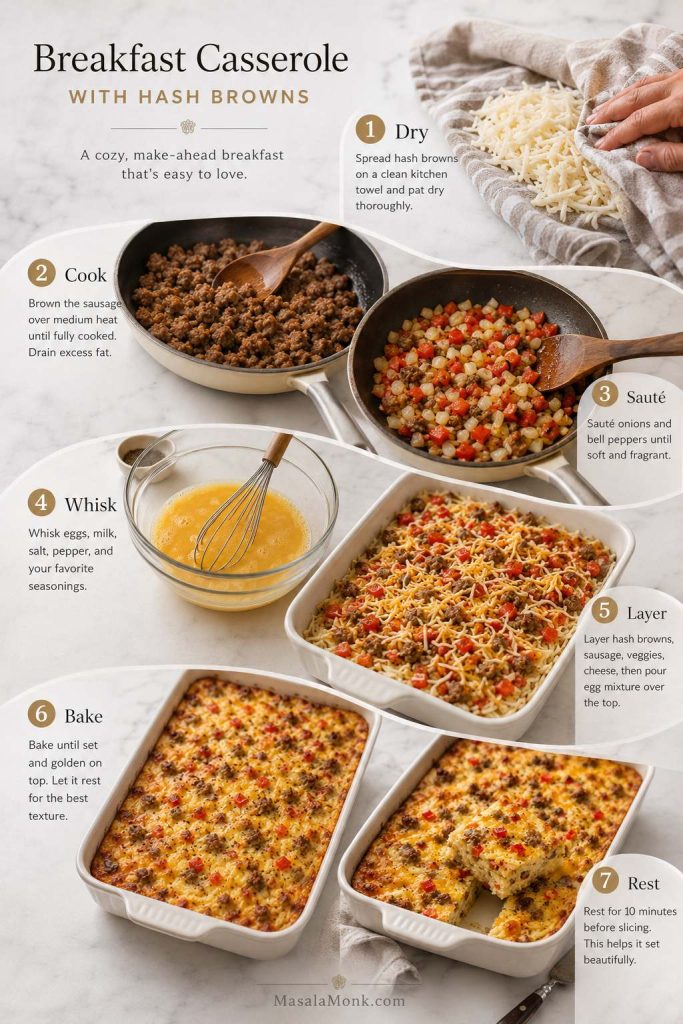
  • The eggs themselves are endlessly versatile—breakfasts, snacks, salads, deviled trays, and everything in between.
As you start making them week after week, you’ll probably find your own little twists: a preferred level of doneness, a favorite seasoning, or a go-to way to serve them. And once the air fryer is already hot and humming, you might find yourself adding a few wings, potatoes, or plant-based bites to the basket as well.

All from the simple idea of “boiling” eggs without ever boiling water.

Also Read: Tres Leches – Mexican 3 Milk Cake Recipe

FAQs for Air Fryer Hard Boiled Eggs

1. What are air fryer hard boiled eggs, exactly?

Air fryer hard boiled eggs are whole eggs cooked in their shells using the hot, circulating air of an air fryer instead of boiling water on the stove. The heat gently cooks the whites and yolks until they reach your preferred level of doneness—soft, jammy, or fully hard—so you get the same result as traditional boiled eggs, just with a much simpler, hands-off method. In short, it’s a no-water way to make “boiled” eggs in an air fryer.


2. How long does it take to make air fryer hard boiled eggs?

To begin with, timing depends on how you like your yolks. For most air fryer hard boiled eggs, a good range is 15–17 minutes at a moderate temperature like 270°F (about 130–135°C). If you prefer softer centers, you can drop that to around 11–12 minutes for soft “boiled” eggs or 13–14 minutes for jammy yolks. After cooking, an ice bath finishes the job and helps them peel easily.


3. What is the best temperature for hard boiled eggs in the air fryer?

For reliable results, a medium temperature usually works best. Rather than cranking the heat all the way up, aim for about 270°F (around 132°C) when making air fryer hard boiled eggs. This gentler heat cooks the eggs evenly from shell to center and reduces the risk of rubbery whites or overcooked yolks. You can adjust a little up or down based on how powerful your specific air fryer feels.


4. Do I need water to make boiled eggs in the air fryer?

Interestingly, no water is needed at all for air fryer boiled eggs. The eggs sit directly in the basket in their shells, and the hot air does the cooking. Water baths, simmering, and boiling are replaced by a simple timer plus an ice bath afterward. The only water you really want is in the bowl for cooling the eggs quickly once they’re done.


5. Can I cook soft, jammy, and hard eggs in the air fryer using the same method?

Yes, you can use the same basic method and simply change the time. Soft air fryer eggs with runny yolks usually need around 11–12 minutes. Jammy eggs with a creamy, custardy center often do well at about 13–14 minutes. Finally, truly hard boiled air fryer eggs typically sit in the basket for 15–17 minutes. Everything else about the process—preheating, arranging the eggs, and chilling them—stays the same.


6. How many eggs can I cook in an air fryer at once?

Generally, you can cook as many eggs as fit in a single layer in your air fryer basket. They should sit comfortably without stacking or crowding so that the hot air can move around them. If your basket is big, you might easily handle a dozen eggs; if it’s smaller, you might cook six or eight. When the basket is very full, you might add a minute or so to your usual time for fully hard boiled eggs in the air fryer.


7. Why do my eggs crack or “explode” in the air fryer?

Every so often, eggs in an air fryer can crack, and occasionally a little egg white leaks out. Frequently, this happens when the eggs are packed too tightly, dropped into the basket, or have tiny hairline cracks already. In addition, a very high temperature can make pressure build up quickly inside the shell. To reduce cracking, space the eggs out, handle them gently, and stick to a moderate temperature instead of blasting them on maximum.


8. How do I make air fryer hard boiled eggs easier to peel?

Peeling is all about two key steps. First, don’t overcook the eggs; overdone eggs tend to cling to their shells. Second, transfer the eggs straight into an ice bath as soon as they come out of the air fryer. The sudden chill helps the egg pull away from the membrane inside the shell, which makes air fryer hard boiled eggs peel with far less frustration. Rolling the egg on the counter to crack the shell all over before peeling also helps.


9. Can I cook eggs in an air fryer without the shell?

Absolutely, you can cook eggs in an air fryer without the shell by using ramekins or silicone cups. For example, you can crack an egg into a greased ramekin for a baked or “boiled” style result, whisk eggs with milk and cheese for scrambled eggs in the air fryer, or pour a seasoned mixture into silicone molds for egg cups or egg bites. In each case, the air fryer becomes a tiny oven for your eggs, rather than just a replacement for boiling.


10. Is it safe to cook eggs in an air fryer?

Yes, cooking eggs in an air fryer is safe as long as you treat it like any other cooking method and follow basic food safety. Eggs should be cooked until the whites are fully set and yolks reach your chosen level of doneness, and any mixed egg dishes like egg bites or air fryer omelettes should be cooked until firm and steaming hot. Once they’re done, they need to be cooled and refrigerated promptly if you’re not eating them right away.


11. How long do air fryer boiled eggs last in the fridge?

Once you’ve cooled them down, air fryer boiled eggs keep well in the refrigerator. Typically, they can be stored for up to one week in a covered container. You can keep them in their shells or peel them in advance; either way, the key is to chill them promptly after cooking and then keep them cold. If they’ve been sitting at room temperature for more than a couple of hours, it’s safer to discard them.


12. Can I make scrambled eggs in the air fryer?

Yes, scrambled eggs in the air fryer are very doable. Instead of putting eggs straight in the basket, you whisk them in a bowl with a splash of milk, seasonings, and perhaps cheese, then pour the mixture into a greased, oven-safe dish or ramekin. After that, you cook the eggs at a moderate temperature, stirring once or twice if you like smaller curds, until they’re just set. The result is a gentle, baked-style scramble that pairs nicely with toast or vegetables.


13. Can I cook poached-style eggs in an air fryer?

You can’t poach eggs in the traditional sense inside an air fryer basket, but you can get a very similar result in cups. To create an air fryer poached egg effect, you grease a small ramekin or silicone cup, add a spoonful of water, and gently crack in an egg. Then, you cook it at a moderate heat until the whites are set and the yolk is still soft. The texture won’t be identical to a water-poached egg, yet it comes pleasantly close and works well for toast or brunch dishes.


14. How do I make air fryer egg bites or egg cups?

For air fryer egg bites, you whisk eggs with a little milk or cream, then stir in extras like cheese, chopped vegetables, herbs, or cooked meats. Next, you pour this mixture into greased silicone molds, muffin cups, or small ramekins, filling them about three-quarters full. After that, you cook them in the air fryer at a gentle temperature until they’re puffed and set in the center. These egg cups are easy to refrigerate and reheat, which makes them perfect for quick breakfasts.


15. Can I make an omelette or frittata in an air fryer?

Yes, an air fryer omelette or frittata is a great way to use the same appliance for a heartier dish. You simply whisk eggs with milk or cream, season well, and fold in fillings like vegetables, cheese, or leftover meats. Then, you pour everything into a greased, oven-safe pan that fits in the basket. Once it’s in, you cook the mixture until the center is set and the top is lightly golden. Thinner mixtures resemble an omelette, while thicker ones turn into a frittata-style bake.


16. Are air fryer hard boiled eggs healthier than regular boiled eggs?

Nutritionally, air fryer hard boiled eggs and classic stovetop boiled eggs are very similar. In both cases, you’re cooking the egg in its shell without added fat, and the protein, vitamins, and minerals remain largely the same. The main advantage of the air fryer method is convenience and ease rather than a big shift in nutrition. As always, how healthy your meal is overall depends more on what else is on the plate alongside those eggs.


17. Why do my air fryer boiled eggs sometimes have a green ring around the yolk?

When you see a green or grey ring around the yolk, it’s usually a sign that the eggs have been slightly overcooked. In an air fryer, this often means the temperature was a bit high or the time a little long. To fix it next time, you can reduce the cooking time by a minute or two and make sure the eggs go straight into an ice bath at the end. Even with the ring, the eggs are still safe to eat; the change is mainly cosmetic and affects texture more than anything else.


18. Can I use air fryer hard boiled eggs for deviled eggs?

Definitely, air fryer hard boiled eggs are excellent for deviled eggs. In fact, once you dial in the timing, the whites tend to be evenly cooked and the yolks nicely centered, which makes them ideal for neat deviled halves. After cooking and cooling, you simply peel the eggs, slice them, and mash the yolks with your chosen ingredients to make the filling. From there, you can keep things classic or experiment with spices, herbs, and toppings to create a tray of deviled eggs that really stands out.

Posted on 3 Comments

10 Most Popular Mediterranean Breakfasts

Photorealistic portrait of a Mediterranean breakfast spread with bread, olives, cheese, yogurt, fruit, and coffee, styled like a premium magazine cover.

If you’ve ever wondered “What do Mediterraneans really eat for breakfast?” you’re not alone. A Mediterranean breakfast isn’t just food on a plate—it’s a ritual, a slower start to the day, and a celebration of simple, nourishing ingredients. Think ripe fruit, creamy yogurt, a drizzle of golden olive oil, and just enough bread to soak it all up.

The beauty of this style of eating is its balance. Some mornings are as light as a Greek yogurt bowl with honey and nuts, while others are heartier, like shakshuka simmering away in a pan. Whether your goal is to enjoy a traditional spread, follow the Mediterranean diet for better health, or pick up a few quick breakfast ideas for busy mornings, you’ll find inspiration here.

The Mediterranean diet isn’t just delicious—it’s also one of the most studied and recommended eating patterns in the world. Research shows it helps lower the risk of heart disease, diabetes, and even some cancers, while supporting long-term health and longevity (Mayo Clinic; NCBI Review).

For a deeper dive, check out our own Mediterranean diet guide or download a free Mediterranean diet meal plan.

So, let’s begin by exploring what a typical Mediterranean breakfast looks like across the region—because once you see the variety, you’ll realize there’s no one-size-fits-all.


What is a Typical Mediterranean Breakfast?

When people ask about a “typical” or “traditional” Mediterranean breakfast, the truth is—it depends on where you are. The Mediterranean is a patchwork of cultures and flavors, and breakfast looks a little different in each country. What they all share, though, is a love for fresh, seasonal food and the art of keeping things simple.

Here’s a quick tour:

Greek Breakfast

Mornings in Greece are often slow and satisfying. Imagine a bowl of thick Greek yogurt topped with honey, nuts, and figs, or a slice of fresh bread with cheese, olives, and a drizzle of olive oil. Coffee, of course, is always nearby.

Turkish Breakfast (Kahvaltı)

If you love variety, you’ll fall in love with a Turkish breakfast. It’s not just a meal, it’s a spread—plates of tomatoes, cucumbers, olives, cheeses, and bread fill the table. Eggs might be served boiled or as menemen (scrambled with tomatoes and peppers). Black tea in little tulip-shaped glasses ties it all together.

Italian Breakfast

In Italy, breakfast is more about a quick bite than a feast. A strong espresso or cappuccino, maybe paired with fresh fruit, yogurt, or a slice of wholemeal toast drizzled with olive oil. Simple, light, and elegant—just like the Italian lifestyle.

Spanish Breakfast

Spain leans toward hearty simplicity. The classic pan con tomate—toasted bread rubbed with fresh tomato and olive oil—is often topped with cheese or ham. Add a piece of fruit and a cup of coffee, and you’ve got a perfect Mediterranean morning.


In many Eastern Mediterranean countries, mornings begin with a generous spread of cheese, olives, hummus, and beans like ful medames—a tradition highlighted by Oldways.

👉 As you can see, there isn’t one “correct” Mediterranean breakfast. Instead, it’s a celebration of fresh produce, wholesome grains, and healthy fats—delicious proof that eating well can also feel joyful.

Mediterranean Diet Breakfast Ideas for Every Lifestyle

The Mediterranean diet isn’t a strict set of rules—it’s more of a lifestyle. And that’s exactly why breakfast on this diet can be so flexible. Whether you’re looking for something quick and easy, healthy and balanced, or even a little indulgent, there’s always an option that feels doable.

Educational photograph of a typical Mediterranean breakfast plate featuring bread, olive oil, cheese, olives, and fresh fruit, labeled for clarity.
This typical Mediterranean breakfast plate brings together bread, olive oil, cheese, olives, and fruit—simple staples that transition beautifully into a healthy start.

Here are a few ways you can bring the Mediterranean morning to your own kitchen:


Healthy Mediterranean Breakfast Ideas

If you want to start the day feeling energized, focus on whole foods and natural flavors. Some simple but powerful options include:

  • Greek yogurt with berries and chia seeds – creamy, tangy, and full of protein.
  • Whole-grain toast with hummus and veggies – a savory option packed with fiber.
  • Fruit with nuts and a drizzle of olive oil – yes, olive oil on fruit! It adds a silky richness and healthy fats.

These choices are light, refreshing, and perfect if you like to feel fueled but not heavy in the morning.


Easy Mediterranean Diet Breakfast Recipes

Not a morning person? No problem. These quick breakfasts can be ready in minutes—or prepped ahead for grab-and-go ease:

  • Overnight oats with figs and walnuts – soak your oats in almond milk overnight, then top with Mediterranean favorites like figs and nuts.
  • Mediterranean smoothie – blend spinach, Greek yogurt, banana, and flaxseeds for a fast, nutrient-packed drink.
  • Avocado toast with olives and tomato – the ultimate 5-minute breakfast with all the flavors of the Mediterranean coast.

When You Want Something Cozy

Some mornings call for a little extra comfort. On those days, go for:

  • Warm oatmeal with honey and pistachios
  • A slice of rustic bread with olive oil and za’atar
  • A cup of herbal tea or Turkish-style coffee to complete the ritual.

👉 The best part? You can mix and match these ideas all week long. One day might be yogurt and fruit, the next a hearty smoothie, and the next something as simple as bread with olive oil. That’s the beauty of the Mediterranean diet—it’s flexible, joyful, and endlessly adaptable to your lifestyle.

Mediterranean Breakfast Recipes with Eggs

Eggs are a big part of Mediterranean mornings, and for good reason—they’re affordable, versatile, and a fantastic source of protein. In many Mediterranean countries, eggs are combined with fresh vegetables, herbs, and olive oil to create dishes that are both comforting and nourishing.

Here are a few classic recipes you’ll want to try:


Shakshuka

If there’s one Mediterranean egg dish that has gone global, it’s shakshuka. Originating in North Africa and popular across the Middle East, shakshuka features eggs gently poached in a sauce of tomatoes, onions, peppers, and spices. Serve it right out of the skillet with crusty bread to scoop up every last bite—it’s hearty, flavorful, and perfect for brunch or a lazy weekend morning.


Menemen (Turkish Scrambled Eggs)

Menemen is Turkey’s answer to comfort food. It’s made by slowly cooking tomatoes, peppers, and onions until soft, then scrambling in eggs with a drizzle of olive oil. Creamy, slightly sweet, and full of vegetables, it’s a dish that feels indulgent yet light at the same time. Pair it with warm bread and olives for a true Turkish-style breakfast.


Vegetable Omelet with Feta and Herbs

Sometimes, simple is best. A classic Mediterranean omelet often includes fresh vegetables like spinach, zucchini, or peppers, finished with a sprinkle of crumbled feta and fragrant herbs like dill or parsley. It’s quick enough for weekdays but tasty enough to impress guests at brunch.


Looking for more exciting egg options, read our post on 10 Examples of Egg Dishes, with 2 Eggs.

👉 These egg dishes are more than just recipes—they’re traditions, often shared at the table with family or friends. And the beauty of them is how flexible they are: add more veggies if you want a lighter meal, or pair them with whole-grain bread if you need something more filling.

Mediterranean Breakfast Without Eggs

Not everyone is an egg lover—and that’s completely fine. The good news? The Mediterranean diet offers plenty of delicious, satisfying breakfasts without a single egg in sight. These meals are light, nourishing, and just as authentic as their egg-based counterparts.

Here are some of the best ideas:


Greek Yogurt with Nuts and Honey

Creamy, protein-rich Greek yogurt topped with walnuts, almonds, or pistachios and a drizzle of honey is a classic choice. Add fresh fruit like figs, grapes, or berries for natural sweetness. It’s quick, filling, and feels like a little treat.


Oatmeal with Olive Oil and Fruit

Yes, you read that right—olive oil on oatmeal! In the Mediterranean, it’s common to drizzle good extra-virgin olive oil over warm oats, then top with dried figs, dates, or pomegranate seeds. It’s earthy, slightly sweet, and packed with fiber and healthy fats.

Olive oil is more than just a fat—it’s one of the Mediterranean diet’s true superfoods, known for its anti-inflammatory benefits.


Hummus and Veggie Toast

A slice of whole-grain bread spread with creamy hummus and layered with tomatoes, cucumbers, or roasted peppers makes for a savory, egg-free option that keeps you satisfied. Sprinkle a little za’atar or paprika for extra flavor. Here is a simple recipe to help you out: Hummus Veggie Sandwich: A Nutritious and Delicious Delight.


Chia Pudding with Almond Milk

If you’re looking for something you can prep the night before, chia pudding is a perfect fit. Mix chia seeds with almond milk, let it thicken overnight, and top with fruit, nuts, or even a spoonful of tahini in the morning.

Fan of Chia Pudding – explore 10 Creative Chia Pudding Recipes for Every Taste.


For more Egg Free and Vegan variety, here are some more plant-based High Protein breakfast ideas.

👉 As you can see, skipping eggs doesn’t mean missing out. These breakfasts are fresh, wholesome, and incredibly versatile, making them perfect for anyone who prefers plant-based meals or simply wants to switch things up.

Mediterranean Diet Breakfast for Weight Loss

One of the reasons the Mediterranean diet is so popular is because it’s naturally supportive of weight loss. Instead of focusing on restrictions, it encourages balance—lots of fresh vegetables, fruits, whole grains, lean proteins, and of course, heart-healthy fats like olive oil and nuts. The result? Meals that keep you satisfied without feeling heavy.

Infographic showing three Mediterranean breakfast ideas for weight loss: Day 1 yogurt with berries and nuts, Day 2 avocado toast with olives and tomatoes, Day 3 shakshuka with a side of oranges.
Follow this easy 3-day Mediterranean breakfast plan for weight loss—moving from protein-rich yogurt bowls to avocado toast and shakshuka for balance.

When it comes to breakfast, the trick is to combine protein + healthy fats + fiber so you feel full for hours and avoid mid-morning cravings. Here’s a simple 3-day Mediterranean breakfast plan for weight loss you can try:


First Day – Fresh & Protein-Packed

  • Breakfast: Greek yogurt topped with a handful of walnuts, blueberries, and a drizzle of honey.
  • Why it works: High in protein and antioxidants, this bowl balances creaminess with crunch while keeping sugar levels stable.

Second Day – Light & Energizing

  • Breakfast: Whole-grain toast with smashed avocado, sliced tomatoes, olives, and a sprinkle of feta.
  • Why it works: Packed with fiber, healthy fats, and just enough protein to keep you energized until lunch.

Third Day – Hearty & Comforting

  • Breakfast: Shakshuka (eggs poached in tomato and pepper sauce) served with a side of fruit.
  • Why it works: A filling yet nutrient-dense meal that’s rich in protein and perfect for days when you need extra energy.

Why it helps: Mediterranean-style eating is linked to a healthier gut microbiome, which plays an important role in weight regulation. In a controlled non-human primate study, animals fed a Mediterranean diet self-regulated their intake and avoided overeating compared with those on a Western diet (PubMed: Obesity study; Wake Forest News Release). Adding seasonal produce like tomatoes to support weight-loss makes these meals even more effective.

Bonus for brain health: In a large U.S. cohort (92,383 adults), consuming at least 7 g/day of olive oil (about half a tablespoon) was associated with a 28% lower risk of dementia-related death, independent of overall diet quality (JAMA Network Open; NIA Summary).

👉 These breakfasts aren’t about cutting calories to the extreme—they’re about eating smart, flavorful meals that naturally support weight management. By focusing on whole foods and keeping portions balanced, the Mediterranean diet makes weight loss feel less like a “diet” and more like a lifestyle you’ll actually enjoy.

Mediterranean Breakfast Menu & Meal Prep Ideas

One of the best things about the Mediterranean diet is how easy it is to plan ahead. With just a little prep, you can set yourself up for a whole week of nourishing breakfasts—whether you prefer sweet, savory, quick, or sit-down meals.

Here are some Mediterranean breakfast menu ideas and meal prep tips to make your mornings stress-free:


Weekly Mediterranean Breakfast Menu (Sample)

  • Monday – Greek yogurt with figs, almonds, and a drizzle of honey
  • Tuesday – Whole-grain toast with hummus, cucumbers, and olive oil
  • Wednesday – Vegetable omelet with feta and fresh herbs
  • Thursday – Overnight oats with dates, walnuts, and a splash of almond milk
  • FridayPan con tomate (Spanish tomato toast) with a side of fruit
  • Saturday – Shakshuka served with wholemeal bread
  • Sunday – Chia pudding with pomegranate seeds and pistachios

Mediterranean Breakfast Meal Prep Tips

  • Yogurt jars for the week: Portion Greek yogurt into small containers, then just add toppings in the morning.
  • Overnight oats in batches: Prep 3–4 jars at once so you always have a grab-and-go option.
  • Shakshuka base ready to go: Cook the tomato-pepper sauce ahead of time, then reheat and crack in eggs when you’re ready to eat.
  • Pre-chopped veggies: Keep cucumbers, peppers, and tomatoes washed and ready in the fridge for quick toasts or salads.
  • Homemade hummus: Make a batch on Sunday and use it all week for toast, wraps, or veggie dips.

👉 With these ideas, your Mediterranean breakfast isn’t just healthy—it’s also quick, practical, and adaptable. By mixing and matching simple staples like yogurt, bread, eggs, hummus, and fresh produce, you’ll never run out of delicious combinations.

FAQs About Mediterranean Breakfasts

What is a traditional Mediterranean breakfast?

A traditional Mediterranean breakfast often includes simple, fresh foods such as bread with olive oil, cheese, olives, fruit, and yogurt. In some regions, eggs, tomatoes, and herbs are added too. The focus is always on whole, minimally processed ingredients.


What do Mediterraneans eat for breakfast?

It varies by country, but common choices include Greek yogurt with honey and nuts, pan con tomate (Spanish tomato toast), Turkish menemen (eggs with tomatoes and peppers), or just fresh fruit with bread and olive oil.


Can you eat eggs on the Mediterranean diet?

Yes, absolutely. Eggs are a healthy source of protein and are widely used in Mediterranean breakfasts—think omelets with herbs, shakshuka, or simply boiled eggs with olives and bread.


What is a good Mediterranean breakfast for weight loss?

A weight-loss-friendly Mediterranean breakfast combines protein, fiber, and healthy fats. Examples include Greek yogurt with fruit and nuts, avocado toast with vegetables, or oatmeal topped with seeds and olive oil. These keep you full and satisfied without excess calories.


What are examples of Mediterranean breakfasts without eggs?

Great egg-free options include Greek yogurt bowls, hummus and veggie toast, chia pudding with almond milk, or oatmeal with figs and olive oil. They’re just as filling and perfectly aligned with the Mediterranean diet.

Conclusion

A Mediterranean breakfast can be as simple as bread with olive oil or as hearty as shakshuka bubbling away on the stove. What makes it special is the balance of fresh ingredients, healthy fats, and vibrant flavors.

Whether you’re after something traditional, diet-friendly, egg-free, or quick and easy, there’s a Mediterranean breakfast waiting to brighten your morning. So why not bring a little sunshine from the Mediterranean coast to your own kitchen tomorrow? 🌿🍅🥖

If you’d like to dive deeper, the Cleveland Clinic offers an excellent overview of the Mediterranean diet food list and benefits.