Posted on Leave a comment

Broccoli Pasta Recipe: Garlic Parmesan Broccoli Pasta That Stays Saucy Without Cream

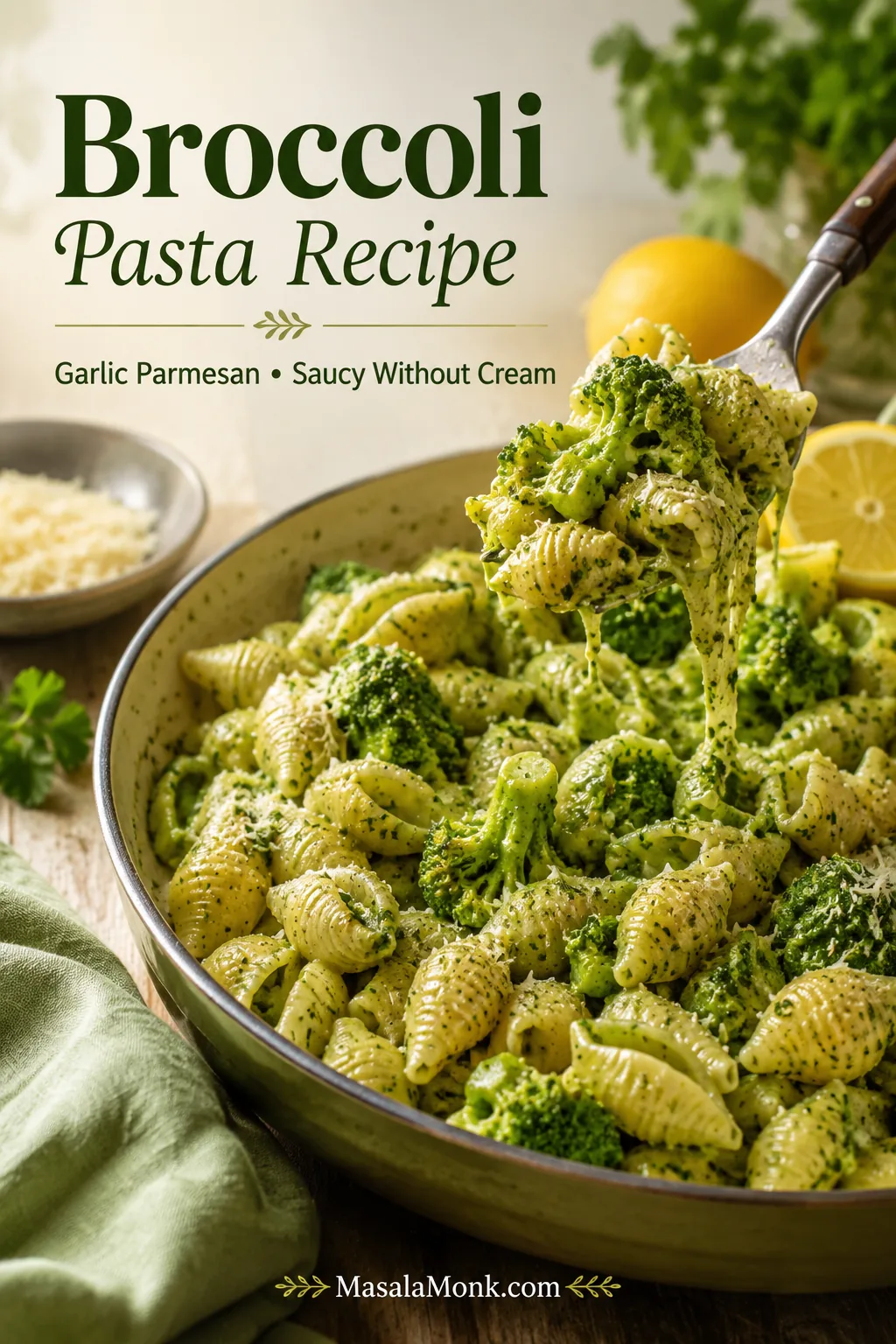
Shell pasta and broccoli in a shallow bowl with a fork lifting a glossy bite, lemon and Parmesan nearby, with text reading “Broccoli Pasta Recipe” and “Garlic Parmesan • Saucy Without Cream.”

Broccoli pasta should be easy: pasta, broccoli, garlic, Parmesan, done. But anyone who has made a disappointing bowl knows the usual problems. The pasta turns dry before it reaches the table. Broccoli tastes watery or bland. Cheese clumps instead of melting. Somehow, dinner ends up tasting like plain noodles with steamed vegetables.

This broccoli pasta recipe is built to avoid that. The trick is simple: use broccoli in two textures — small pieces for sauce, florets for freshness.

The good version should feel like vegetables and comfort food finally agreeing with each other. Some broccoli melts into the garlic-Parmesan coating; some stays green and visible. Lemon keeps the cheese from feeling heavy, and the whole bowl lands somewhere between fresh weeknight pasta and cozy comfort food.

Once the broccoli is cut, the pasta comes together in about 25 minutes. The first time may take closer to 30 minutes while you grate the cheese, learn the timing, and see how loose the sauce should look in the pan.

If your broccoli pasta usually turns dry, the two biggest fixes are simple: save pasta water, and add Parmesan off the heat.

Quick Answer: How Do You Make Broccoli Pasta?

To make broccoli pasta, cook the pasta with finely chopped broccoli until some of the broccoli is soft enough to mash. Toss it with garlic, butter or olive oil, Parmesan, and starchy pasta water until saucy. Add a few visible florets near the end so the bowl still looks green and fresh. That balance keeps the pasta saucy without turning the whole bowl soft.

What makes this version different is that broccoli is not just a topping. Some becomes sauce, some stays visible, and the best bites taste like broccoli all the way through.

What Good Broccoli Pasta Should Look Like

Use this as the visual target before you cook: the pasta should look coated and lively, not matte, stiff, or separated from the broccoli.
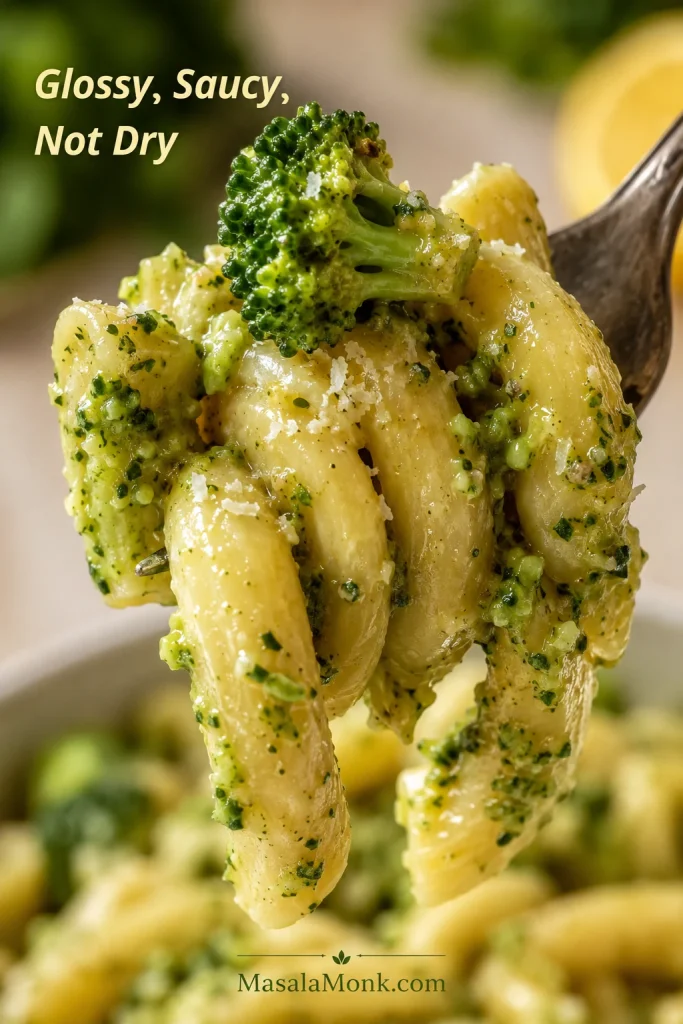
Close-up of glossy broccoli pasta lifted on a fork, with green broccoli sauce clinging to short pasta and text reading “Glossy, Saucy, Not Dry.”
Look for a glossy coating, not sauce pooling at the bottom.

At a Glance

  • Total time: about 25 minutes once you know the rhythm
  • Yield: 4 dinner servings or 6 smaller side servings
  • Main flavor: garlic, Parmesan, lemon, black pepper, broccoli
  • Texture: saucy, green-flecked, lightly creamy, not heavy
  • Best pasta: shells, fusilli, orecchiette, penne, rigatoni, or cavatappi
  • Fresh or frozen: both work

Garlic Parmesan Broccoli Pasta That Stays Saucy Without Cream

Recipe Card

This garlic Parmesan broccoli pasta turns finely chopped broccoli, garlic, Parmesan, and pasta water into a light, glossy sauce, with a few florets kept whole for freshness. It stays saucy without heavy cream.

Servings
4 dinner servings
Prep Time
10 minutes
Cook Time
15 minutes
Total Time
25 minutes

Equipment

  • Large pot
  • 12-inch skillet or wide sauté pan
  • Colander, slotted spoon, or spider
  • Measuring cup for pasta water
  • Fine grater or microplane
  • Fork, potato masher, wooden spoon, or spatula

Ingredients

  • 12 oz / 340g short pasta, such as shells, fusilli, orecchiette, penne, rigatoni, or cavatappi
  • 1¼ to 1½ lb / 565 to 675g broccoli, florets and tender stems
  • Kosher salt, for the pasta water
  • 3 tbsp / 45 ml olive oil
  • 1 to 2 tbsp / 14 to 28g butter
  • 4 garlic cloves, finely minced or grated
  • ½ tsp red pepper flakes, optional
  • ½ cup / 45 to 50g finely grated Parmesan, plus more for serving
  • 1 cup / 240 ml reserved pasta water, divided
  • 1 to 2 tsp lemon zest or 1 tbsp lemon juice, to taste
  • Black pepper, to taste

Optional Add-Ins

  • 2 tbsp cream cheese for a creamier sauce
  • ¼ cup / 60 ml milk for a lighter creamy version
  • ½ cup shredded cheddar or mozzarella for a cheesier pasta
  • 2 cups cooked chicken for a fuller dinner

Instructions: Cook the Pasta and Broccoli

  1. Cut the broccoli in two textures. Finely chop about two-thirds of the broccoli into ¼ to ½ inch pieces, including tender stems. Cut the remaining broccoli into small visible florets, about ¾ to 1 inch. Peel thick stems first if the outside feels tough.
  2. Boil the pasta water. Bring a large pot of water to a boil and salt it well. Add pasta and cook until just shy of al dente. Start checking 1 to 2 minutes before the package time.
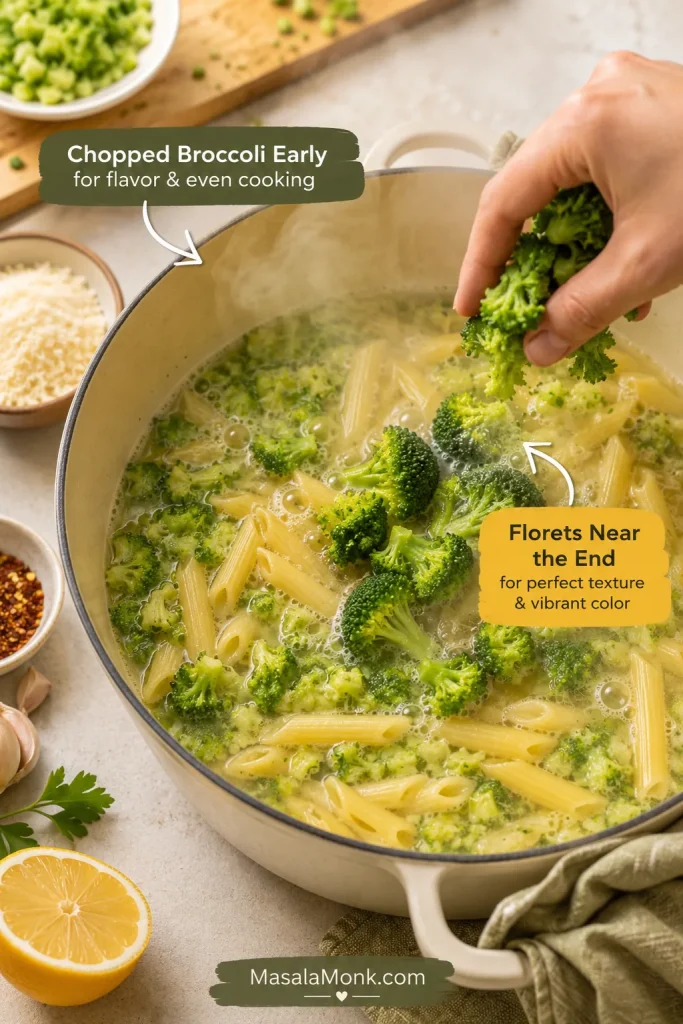
  3. Add the finely chopped broccoli. When the pasta has about 5 minutes left, add the finely chopped broccoli pieces. Make sure the water returns to a steady boil.
  4. Add the visible florets. When the pasta has about 2 minutes left, add the remaining small florets.
  5. Reserve pasta water. Scoop out 1 cup / 240 ml pasta water before draining. Do not rinse the pasta.

Build the Sauce and Finish

  1. Make the garlic base. While the pasta cooks, warm olive oil and butter in a wide skillet over medium-low heat. Add garlic and red pepper flakes. Cook for 30 to 60 seconds, until fragrant but not browned.
  2. Mash some broccoli. If using a slotted spoon, move broccoli into the skillet first and mash the soft pieces into the garlic oil. Then add pasta. If everything was drained together, add pasta and broccoli to the skillet and mash some broccoli in place.
  3. Toss with pasta water. Add ½ cup / 120 ml reserved pasta water. Toss until the pasta looks coated and green bits cling to it. Add more pasta water a few tablespoons at a time if needed.
  4. Add Parmesan off the heat. Turn off the heat. Add Parmesan gradually, tossing until it melts into the pasta. Loosen with more hot pasta water if needed.
  5. Finish and serve. Add lemon zest or juice, black pepper, and more Parmesan. Taste and adjust salt, lemon, pepper, and cheese before serving.

Notes

  • If your pasta cooks in less than 9 minutes, boil the finely chopped broccoli pieces for 2 to 3 minutes before adding the pasta, or cook the broccoli separately until mashable.
  • Frozen broccoli: thaw large florets enough to chop and drain well.
  • Gluten-free, chickpea, or lentil pasta: check early and toss gently.
  • Add Parmesan off the heat so it melts smoothly.
  • Chicken: add extra pasta water because it absorbs sauce.
  • Stop while the skillet looks slightly loose; the pasta thickens as it sits.

Why the Two-Texture Broccoli Method Works

The method works because the broccoli has two jobs. Chopped broccoli softens enough to coat the pasta; florets keep the bowl green and fresh. If all the broccoli is large, the pasta tastes like noodles with vegetables on top. If all of it is finely chopped, the flavor is good but the bowl looks dull.

The best broccoli pieces are not the pretty ones. They are the little bits that disappear into the garlic oil and make every shell taste like sauce. Do not worry if the broccoli looks a little messy in the skillet. That mess is what makes the sauce.

Small Pieces for Sauce, Florets for Freshness

This cut is the foundation of the recipe. The small pieces are for flavor and body; the larger florets are for color, bite, and the finished look.
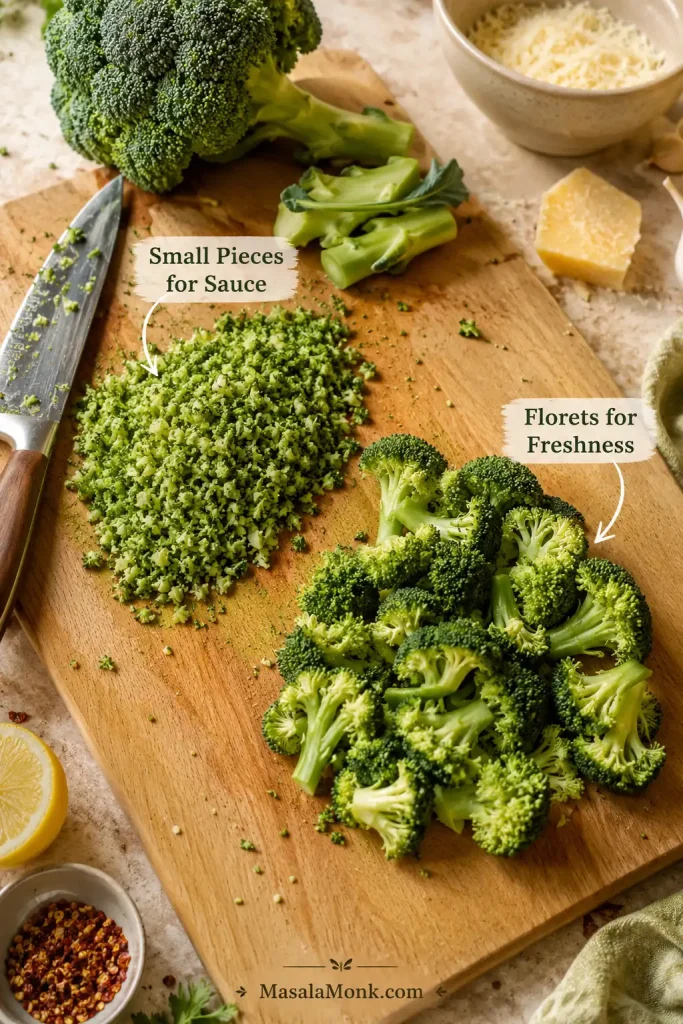
Cutting board with finely chopped broccoli and stems on one side and larger broccoli florets on the other, labeled “Small Pieces for Sauce” and “Florets for Freshness.”
Chopped broccoli builds sauce; larger florets keep the pasta green and fresh.

Success cue: the pasta should look a little saucier in the pan than you want on the plate. Hot pasta keeps absorbing as it sits, so a slightly loose skillet becomes a well-coated bowl by the time you eat.

Do not chase dryness with more cheese. Wake the sauce up with pasta water first, then add cheese for flavor.

Ingredients You’ll Need

The ingredients are simple, but three details matter most: broccoli cut size, starchy pasta water, and finely grated Parmesan.

The Ingredients That Make the Sauce Work

Use short pasta, enough broccoli, fresh garlic, finely grated cheese, and lemon. Those few choices carry most of the flavor.
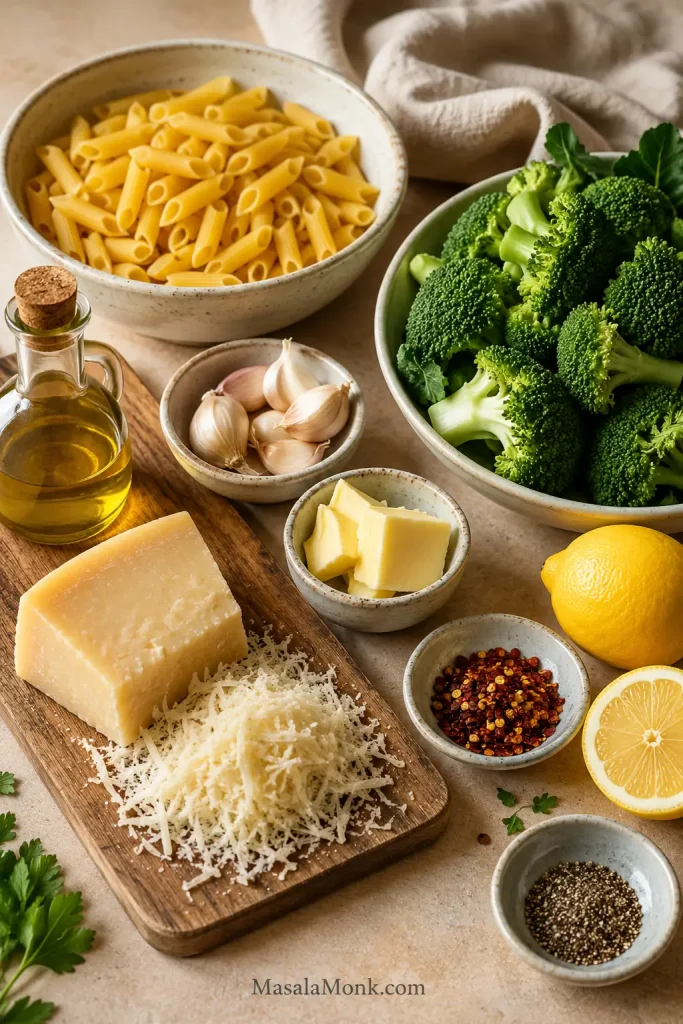
Ingredients for broccoli pasta arranged on a kitchen surface, including short pasta, broccoli, Parmesan, garlic, lemon, olive oil, butter, black pepper, and red pepper flakes.
Short pasta, broccoli, garlic, Parmesan, and lemon each carry part of the flavor.

Best Pasta Shapes for Broccoli Pasta

Use 12 oz / 340g short pasta. Shells and fusilli are especially good because mashed broccoli catches in their curves. Orecchiette, penne, rigatoni, and cavatappi also work. Long pasta needs smaller broccoli and more tossing.
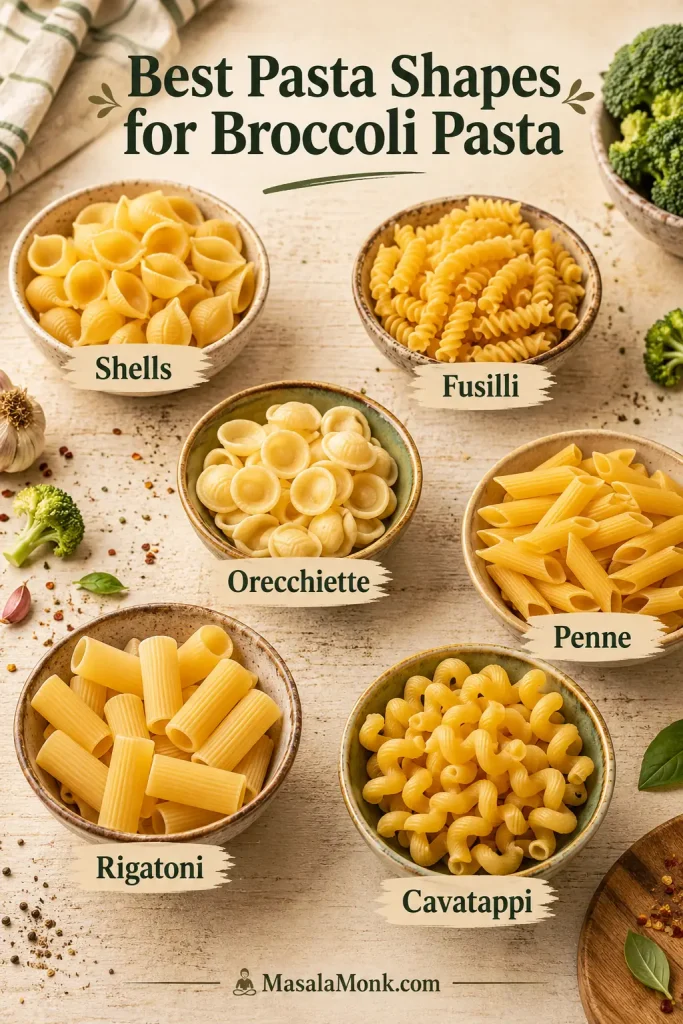
Six bowls of dry pasta labeled Shells, Fusilli, Orecchiette, Penne, Rigatoni, and Cavatappi under the heading “Best Pasta Shapes for Broccoli Pasta.”
Curves, ridges, and cups give broccoli sauce places to cling.

Chickpea, lentil, and gluten-free pasta can work too, but check early and toss gently because they can break more easily than regular wheat pasta.

Broccoli

Use 1¼ to 1½ lb / 565 to 675g broccoli. Chop most of it into ¼ to ½ inch pieces so it can soften into the sauce. Save a handful of ¾ to 1 inch florets so the finished pasta still looks green and fresh.

Do not waste the stems. Peel tough outsides, then chop the tender centers small so they can help thicken the sauce.

Using frozen broccoli instead? Jump to the fresh vs frozen broccoli notes before you start, because frozen broccoli needs a little more moisture control.

Garlic, Oil, and Butter

Use 4 garlic cloves, 3 tbsp / 45 ml olive oil, and 1 to 2 tbsp / 14 to 28g butter. They build the warm base later, so keep the heat gentle.

Parmesan

Use ½ cup / 45 to 50g finely grated Parmesan, plus more for serving. A block grated finely at home melts better than large shreds. Pecorino Romano is sharper; Grana Padano is milder. Taste before adding extra salt.

Lemon, Salt, Pepper, and Red Pepper Flakes

Use 1 to 2 tsp lemon zest or 1 tbsp lemon juice. Lemon does not need to taste loud; it just keeps the cheese and broccoli from feeling flat. Finish with black pepper and red pepper flakes if you want gentle heat.

Common Broccoli Pasta Mistakes to Avoid

Before you cook, watch these four things:

  • Do not cut all the broccoli large. You need chopped broccoli that can collapse into sauce.
  • Do not forget pasta water. It is the difference between glossy and dry.
  • Do not add Parmesan over high heat. That is how smooth cheese turns grainy.
  • Do not rinse the pasta. The surface starch helps the broccoli sauce cling.

How to Make Broccoli Pasta with the Two-Texture Method

Once you know the basic steps, the real difference is in the cues: how soft the broccoli gets, how loose the sauce looks, and when to stop adding heat.

When to Add Broccoli to Pasta

Use the timing as a texture guide, not just a clock. Chopped broccoli needs time to soften enough for sauce; florets need less time so they stay green.

TimingAdd ThisGoal
5 minutes before pasta is doneFinely chopped broccoliSoft enough to mash
2 minutes before pasta is doneVisible floretsGreen and tender
Before drainingPasta waterSauce insurance
Off the heatParmesanSmooth, not grainy
A hand adding broccoli florets to a pot of pasta and chopped broccoli, with text explaining “Chopped Broccoli Early” and “Florets Near the End.”
Chopped broccoli goes in early; florets go in near the end.

1. Cut for Sauce, Not for Perfect Florets

Do not worry about perfect broccoli shapes here. The chopped broccoli is supposed to look a little messy because it is going to disappear into the sauce. Keep a handful of visible florets aside so the finished pasta still looks like broccoli pasta, not just green pasta.

2. Use the Pasta Pot for Timing

The only timing that matters is this: chopped broccoli needs enough time to soften; florets only need enough time to turn green and tender. If the water slows down after adding broccoli, give the pasta a little extra time and check before draining.

3. Why Pasta Water Makes Broccoli Pasta Glossy

Pasta water is boring until the moment your skillet looks dry. Then it becomes the thing that saves dinner. Scoop it before draining so you are not trying to fix dry pasta with plain water later.
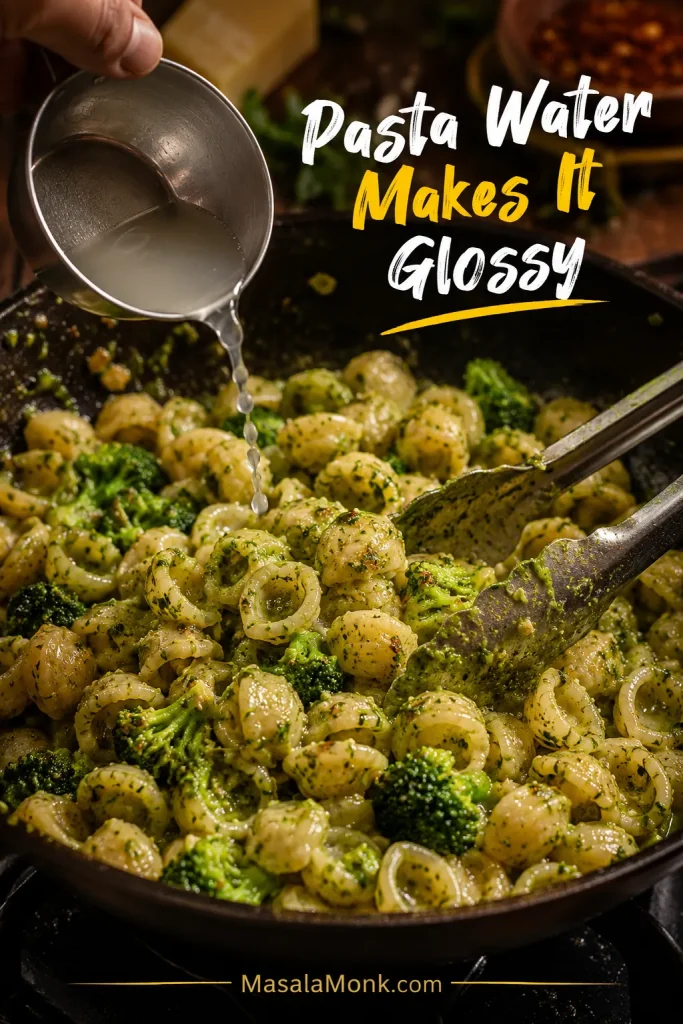
Starchy pasta water being poured into a skillet of short broccoli pasta while tongs toss the glossy sauce, with text reading “Pasta Water Makes It Glossy.”
Pasta water loosens the broccoli sauce and brings back gloss before more cheese.

If your pasta already looks matte or tight, see the dry vs glossy broccoli pasta fix before adding more cheese.

4. Keep the Garlic Gentle

Warm the olive oil, butter, garlic, and red pepper flakes over medium-low heat. The goal is fragrance, not color; if the garlic browns hard here, the bitterness follows the broccoli sauce into the bowl.
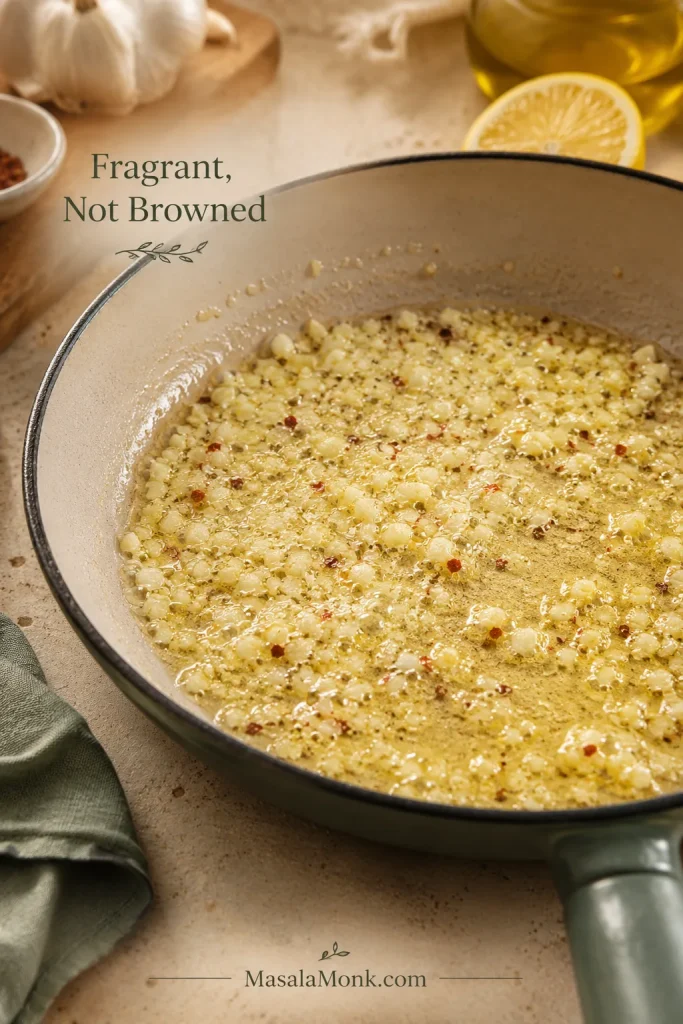
Close-up of sliced garlic warming in olive oil and butter in a skillet, with text reading “Fragrant, Not Browned.”
Pale garlic tastes warm and sweet; browned garlic can turn bitter.

5. Mash Broccoli Into the Sauce

Mash the soft broccoli into the garlic oil, then add pasta water and toss until the sauce clings. The pan should look slightly too loose before serving; the bowl will catch up. By the end, the green bits should be tucked into the curves of the pasta, not sitting at the bottom of the pan.
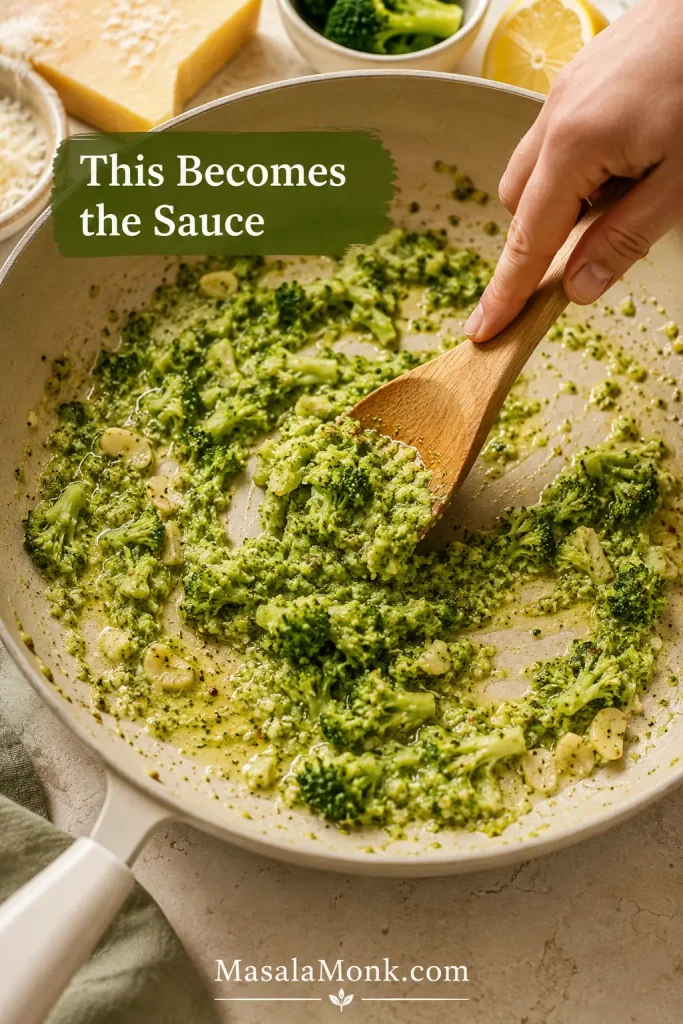
Soft broccoli being mashed with a wooden spoon in a skillet with garlic oil and butter, with text reading “This Becomes the Sauce.”
Mashing tender broccoli turns it from topping into sauce.

6. Add Parmesan Off the Heat and Finish

Turn off the heat before adding Parmesan. Finish with lemon when the pasta tastes good but not quite awake. The lemon should lift the cheese, not make the pasta sour.
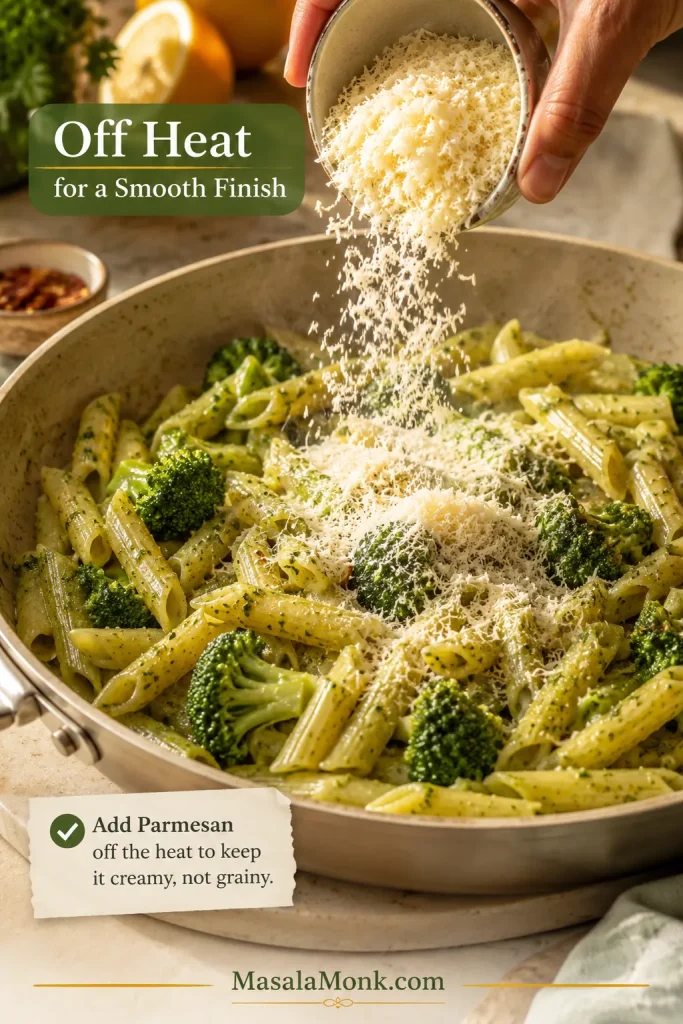
Finely grated Parmesan being added to hot short pasta with broccoli in a skillet, with text reading “Off Heat for a Smooth Finish.”
Off-heat Parmesan melts smoother and coats instead of clumping.

If the cheese clumps or turns grainy, use the troubleshooting table instead of adding more Parmesan.

Fresh vs Frozen Broccoli for Pasta

The choice is not about right or wrong broccoli. It is about what kind of bowl you want. Use fresh when you want the pasta to look bright and dinner-table pretty. Use frozen when you want a softer, saucier weeknight bowl.

Choose the Broccoli Texture You Want

Fresh and frozen broccoli both work here, but they do not behave the same way. Use the image and table below to choose the texture you want before you cook.
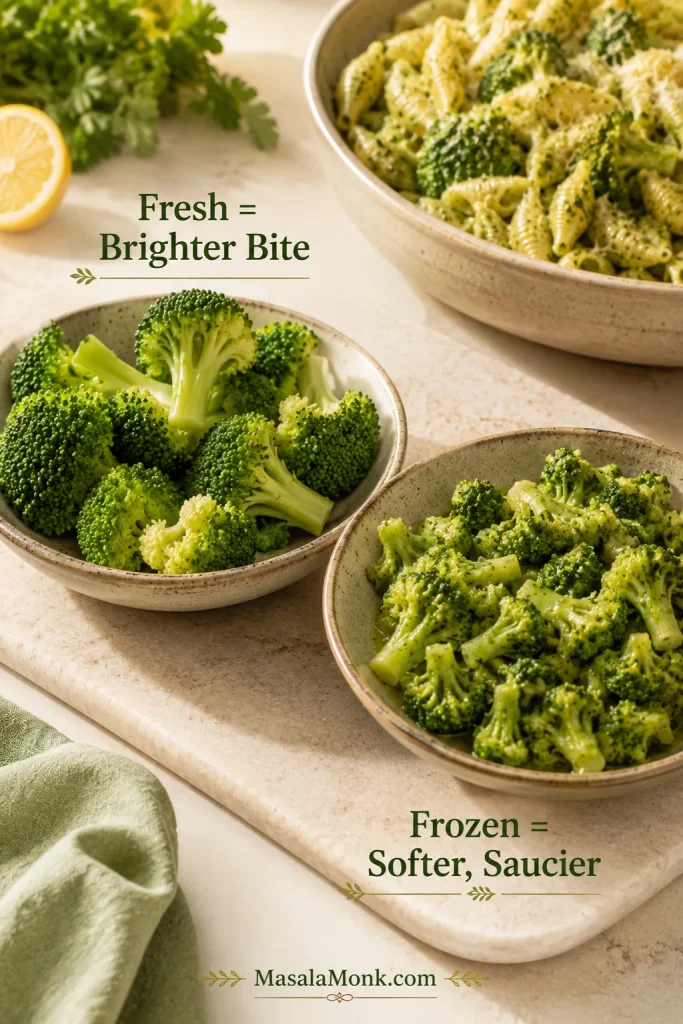
Fresh broccoli florets in one bowl, softer cooked broccoli in another bowl, and broccoli pasta in the background, with text reading “Fresh = Brighter Bite” and “Frozen = Softer, Saucier.”
Fresh broccoli stays brighter; frozen broccoli cooks softer and saucier.
Broccoli TypeBest ForHow to Use It
Fresh broccoliPrettiest bowl and cleaner biteCut small pieces for sauce and save a few small florets for the end.
Frozen broccoli, thawed and choppedBest control with frozen broccoliThaw just enough to chop large florets, drain extra water, then cook until mashable.
Frozen broccoli added directlyFastest pantry versionAdd near the end of pasta cooking, mash in the skillet, and add pasta water slowly.

Is This Creamy Broccoli Pasta?

Yes, but it is not cream-sauce pasta. The creaminess comes from soft broccoli, pasta water, butter or olive oil, and finely grated Parmesan, so the pasta feels glossy and coated while the broccoli stays central. These add-ins push it further toward comfort food.

Make It Creamier or Cheesier

Build the broccoli sauce first, then add dairy slowly. That keeps the flavor green instead of turning the bowl into plain cheese pasta.
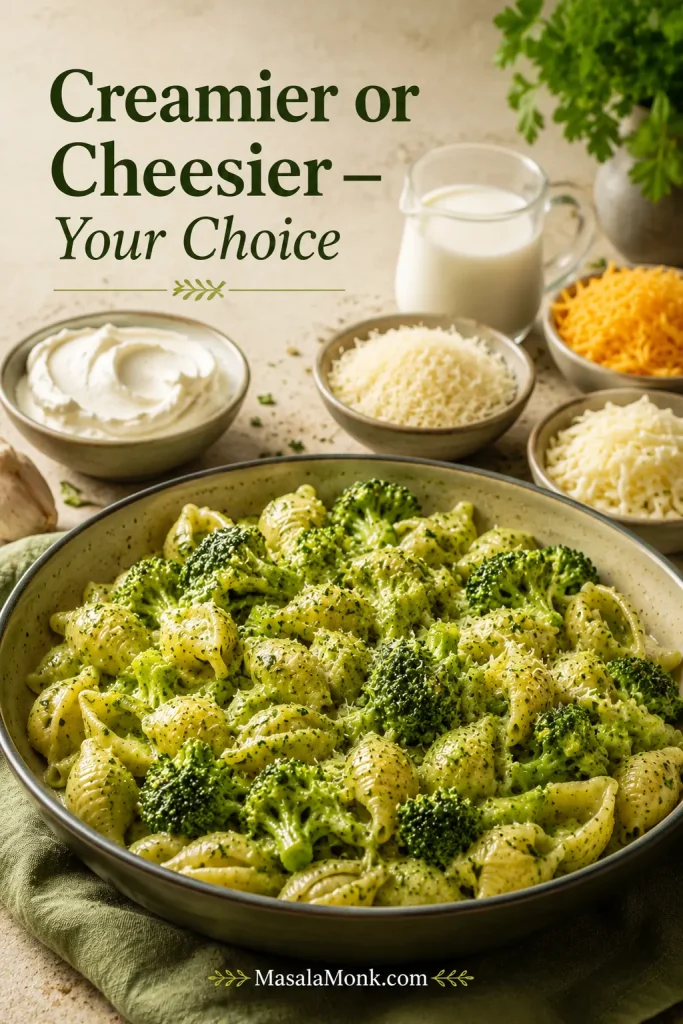
A bowl of glossy broccoli pasta with bowls of cream cheese, milk, grated Parmesan, cheddar, and mozzarella nearby, with text reading “Creamier or Cheesier — Your Choice.”
Add richness slowly so cheese supports the broccoli instead of hiding it.
GoalWhat to AddWhen to Add It
Creamier sauce2 tbsp cream cheeseAfter mashing broccoli and adding pasta water, before Parmesan
Lighter creamy sauce¼ cup / 60 ml milkAdd with pasta water and warm gently before cheese
More Parmesan flavorExtra ¼ cup ParmesanOff the heat, gradually, with splashes of pasta water
Broccoli-cheddar pasta½ cup shredded cheddarOff the heat or very low heat after Parmesan
Stretchy cheesy pasta½ cup shredded mozzarellaOff the heat, then serve immediately

If you want a true mac-and-cheese style dinner, MasalaMonk’s macaroni and cheese recipe is the better direction.

If the cheese turns grainy, the heat was probably too high when it went in. Move the pan off the heat, add a splash of hot pasta water, and stir gently.

Can You Make This One-Pot?

Yes, but the skillet version gives better garlic flavor and more room to toss. Use the one-pot shortcut when convenience matters more than maximum garlic flavor.

The One-Pot Shortcut

In the one-pot version, stop while the pasta still looks a little loose. It tightens faster than the skillet version, so serve as soon as the sauce coats.
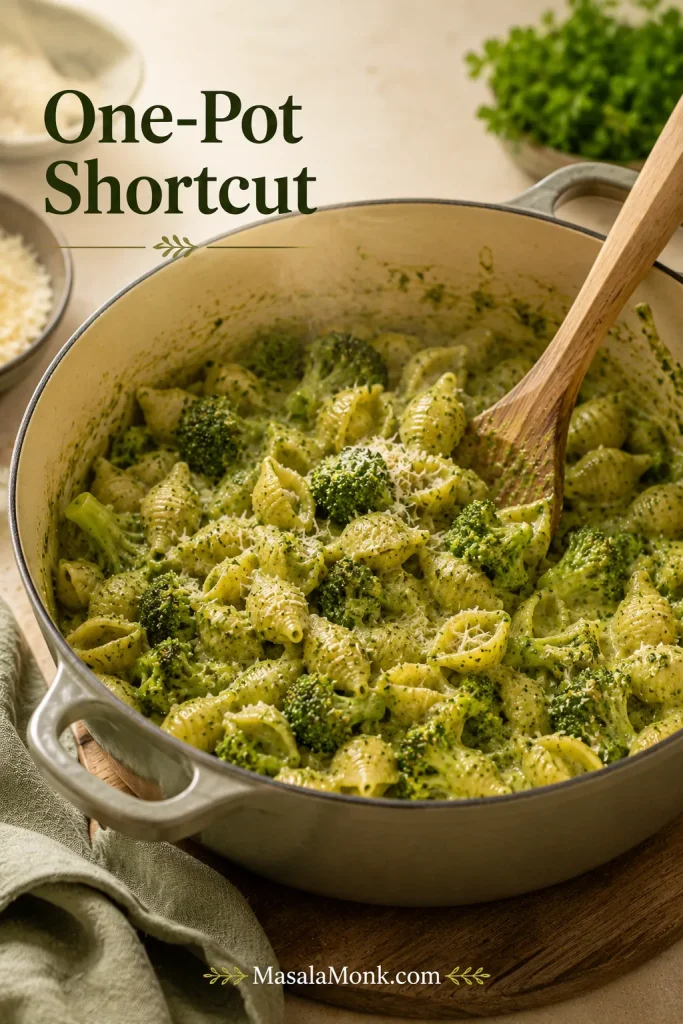
Broccoli pasta with short shells in a Dutch oven with a wooden spoon, grated Parmesan, and text reading “One-Pot Shortcut.”
Stop one-pot pasta a little loose; it tightens faster as it sits.

For the shortcut, cook the pasta and broccoli in one large pot, reserve pasta water, drain, then build the garlic oil in the same pot. Return the pasta and broccoli, mash some of the soft pieces, loosen with pasta water, and add Parmesan off the heat.

Finishing Options That Make It Better

Broccoli pasta is simple, so the best finishes solve small problems in the bowl.

  • If it tastes flat: add lemon juice.
  • When it smells good but needs lift: add lemon zest.
  • For mild flavor: add Parmesan and black pepper.
  • If it feels too soft: add toasted breadcrumbs.
  • When it needs warmth: add red pepper flakes or extra black pepper.

Broccoli Pasta Variations by Dinner Mood

Once the base works, the variations are easy. Keep the broccoli sauce loose, then add whatever makes dinner feel complete.

Make It a Full Dinner

Choose one of these when the pasta needs to become the whole meal.

  • Chicken broccoli pasta: fold in 2 cups cooked chicken once the pasta is coated. Add extra pasta water because chicken absorbs moisture quickly. For a more casserole-style chicken and broccoli dinner, MasalaMonk’s Cheesy Chicken Broccoli Rice is the better fit.
  • Salmon broccoli pasta: fold cooked salmon flakes in at the end, after the pasta is coated. Lemon matters even more here because it balances both the fish and broccoli.
  • Sausage broccoli pasta: brown sausage in the skillet first, scoop it out if needed, then use the same pan for the garlic base so the broccoli picks up the browned bits.
  • White beans or chickpeas: add them at the end with a splash of pasta water so they warm without breaking apart.

Make It More Comforting

  • Cheesy broccoli pasta: add cheddar off the heat with the Parmesan when you want the bowl to feel closer to mac and cheese but still taste like broccoli.
  • Baked broccoli pasta: best as a leftover move. Add a splash of milk or pasta water, spoon into a baking dish, top with cheese and breadcrumbs, and bake until bubbling.

Make It Fresher

  • Broccoli pesto pasta: blend some cooked broccoli with basil or parsley, Parmesan, lemon, olive oil, garlic, and pasta water. MasalaMonk’s pesto pasta recipe uses a similar pasta-water tossing technique.
  • Lemon breadcrumb broccoli pasta: finish with toasted breadcrumbs and extra lemon zest for crunch and brightness.
  • Broccoli rabe or rapini pasta: treat it as its own dish. Broccoli rabe is more bitter and leafy than regular broccoli, and it works especially well with garlic, chili, olive oil, and sausage.

What to Serve with Broccoli Pasta

A bowl of this with extra Parmesan is enough for a quick dinner, but it also plays well with protein, crunch, and something fresh on the side.

  • For a light dinner, serve it with a simple salad, lemony greens, grilled fish, or baked tofu.
  • Need more protein? Add chicken, shrimp, salmon, sausage, or a fried egg.
  • For a vegetarian full meal, add white beans, chickpeas, toasted nuts, or extra broccoli.
  • To make it a comfort meal, serve it with extra Parmesan, toasted breadcrumbs, or MasalaMonk’s homemade garlic bread loaf.

Storage, Reheating, and Make-Ahead Tips

Broccoli pasta is best right after tossing, while the pasta is warm and glossy. Leftovers can still be good, but they need a splash of moisture when reheating because pasta keeps absorbing sauce in the fridge.

  • Refrigerate: store in an airtight container for 3 to 4 days. For general cold-storage guidance, see the FoodSafety.gov cold food storage chart.
  • Reheat on the stovetop: add a splash of water, milk, or stock and warm gently over low heat, stirring often.
  • Reheat in the microwave: add a splash of water or milk, cover loosely, heat in short bursts, and stir halfway through.
  • Add lemon after reheating: a fresh squeeze at the end tastes brighter than lemon added before storage.
  • Freeze: possible, but not ideal. Pasta softens after freezing, and cheesier versions can reheat less smoothly.

If leftovers seem gluey after reheating, add moisture first, then cheese. The same rescue logic works after storage.

For make-ahead, prep the broccoli and grate the cheese ahead of time, but cook the pasta just before serving. When saving leftovers, keep the pan a little saucier than usual and save extra Parmesan for reheating.

Troubleshooting Broccoli Pasta

Most broccoli pasta problems look worse than they are. If you saved pasta water, you can usually bring the pan back. Match the problem to the fix below.

Dry or Glossy: What to Fix First

This is the fastest visual check. If the pasta looks dull or tight, loosen it before you add more cheese or toppings.
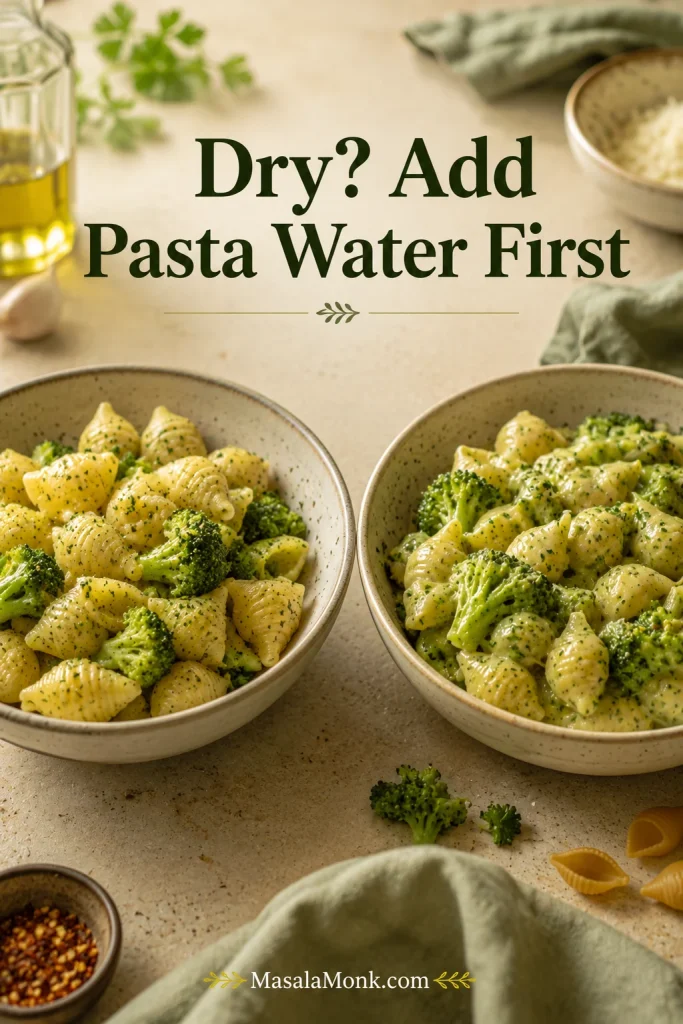
Two bowls of broccoli pasta side by side, one looking drier and one glossier, with text reading “Dry? Add Pasta Water First.”
Dry pasta usually needs hot pasta water before it needs more cheese.
ProblemFix NowFix Next Time
Pasta is dry or matteAdd hot pasta water 2 tbsp at a time and toss vigorously.Reserve a full cup of pasta water and keep the pan slightly saucier.
Liquid is poolingToss over medium-low heat for 1 to 2 minutes, then rest briefly.Drain broccoli better and add pasta water gradually.
Pasta tastes bland or broccoli tastes dullAdd salt, lemon, black pepper, and more Parmesan.Salt the pasta water properly and keep some florets greener.
Garlic tastes bitterAdd lemon and cheese to soften the bitterness, if mild.Cook garlic over medium-low heat and do not brown it hard.
Parmesan turned grainy or clumpyAdd a splash of hot pasta water and stir gently off heat.Add finely grated Parmesan gradually, off the heat or over very low heat.
Broccoli is too firmAdd a splash of water, cover, and cook 2 to 3 minutes.Cut the broccoli smaller and add it earlier.
Frozen broccoli made it wateryStop adding liquid and toss until the coating tightens.Thaw, chop, and drain frozen broccoli before adding.
Leftovers are glueyReheat with water, milk, or stock and stir gently.Store with a little extra moisture or loosen before refrigerating.

FAQs About Broccoli Pasta

How do you make broccoli pasta creamy without cream?

Mash tender broccoli into garlic oil and butter, loosen it with hot pasta water, then add finely grated Parmesan off the heat. The sauce should look glossy and loose, not thick like Alfredo. For a richer version, add cream cheese or milk before the Parmesan.

Fresh or frozen broccoli — which works better?

Fresh broccoli gives brighter florets and better bite. Frozen broccoli gives a softer, saucier pasta. Both work; just add pasta water slowly with frozen broccoli.

Can I use broccoli stems in broccoli pasta?

Yes. Peel thick stems if the outside feels tough, then chop the tender inside into small pieces. Stems soften well and are excellent for the sauce.

Why did my broccoli pasta turn dry?

It needed more pasta water or sat too long before serving. Add hot pasta water a few tablespoons at a time and toss until shiny again. Loosen first, then add more cheese only if the flavor still needs it.

What is the best pasta shape for broccoli pasta?

Short pasta shapes are best because they catch the small broccoli pieces. Shells, fusilli, orecchiette, penne, rigatoni, and cavatappi all work well. Long pasta can work too, but chop the broccoli smaller and toss more thoroughly.

How do you keep Parmesan from turning grainy?

Add finely grated Parmesan gradually, off the heat, not all at once. High heat can make it clump or turn grainy. If it tightens, loosen with a splash of hot pasta water.

Can I add chicken to broccoli pasta?

Yes. Add about 2 cups cooked chicken or rotisserie chicken once the pasta is coated. Add an extra splash of pasta water because chicken absorbs sauce quickly.

Is this the same as broccoli Alfredo?

No. Broccoli Alfredo usually uses a heavier cream-based sauce. This version is lighter; the sauce comes from mashed broccoli, pasta water, butter or olive oil, and Parmesan.

Can this be made as a one-pot broccoli pasta?

Yes. It is convenient, but a skillet gives better garlic flavor and more room to toss. For one-pot broccoli pasta, cook the pasta and broccoli together, reserve pasta water, drain, build the garlic oil in the same pot, then return everything and add Parmesan off the heat.

Does broccoli rabe work in this recipe?

Broccoli rabe, or rapini, is more bitter and leafy than regular broccoli, so it needs different handling. It is delicious with garlic, olive oil, chili, and sausage, but use regular broccoli for this version.

How can I make this more kid-friendly?

Chop the broccoli smaller, mash more into the sauce, skip the red pepper flakes, and use shells. A little extra Parmesan or cheddar can make the broccoli flavor feel familiar.

Can leftovers be reheated without drying out?

Yes. Add a splash of water, milk, or stock before reheating. Warm gently and finish with extra Parmesan, black pepper, or lemon.

Final Thoughts

Once you learn the rhythm — soften, mash, loosen, cheese off the heat — broccoli pasta stops feeling like a compromise dinner. It becomes something worth repeating.

Did you keep it simple, make it cheesy, add chicken, or use frozen broccoli? Tell me how you made it — those little changes are often what help the next cook.
Back to top

Posted on 2 Comments

Creamy Cajun Chicken Pasta Recipe

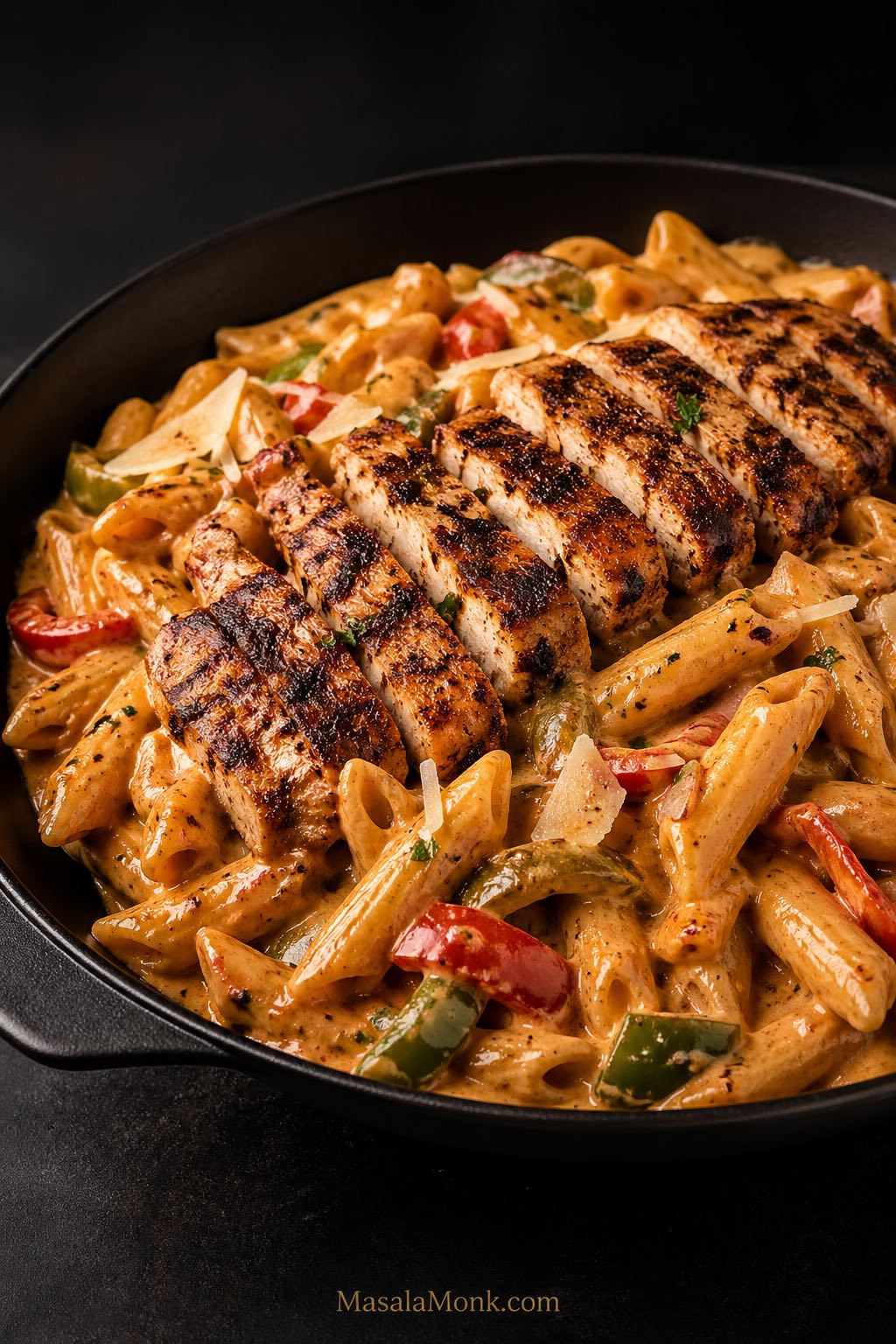
Creamy Cajun chicken pasta with sliced seared chicken, penne, bell peppers, parmesan, and a smoky orange cream sauce in a dark skillet.

A good cajun chicken pasta recipe should give you juicy chicken, tender pasta, and a smoky, spicy cream sauce that clings to every bite. It should taste bold and creamy without turning salty, greasy, watery, or painfully hot.

This version starts with the most reliable skillet method because it gives you better control over the chicken, pasta, sauce, and seasoning. After that, you can use the same base to make it one-pot, Alfredo-style, smoky with sausage, restaurant-style with shrimp, blackened, lighter, no-cream, or slow cooker friendly.

Most importantly, this recipe solves the little problems that usually ruin creamy Cajun pasta: dry chicken, salty seasoning, split sauce, mushy pasta, and leftovers that thicken into a block. Instead of leaving you to guess, the guide gives you exact amounts, pan sizes, timing, temperatures, sauce fixes, and variation rules.

Quick Answer: Cajun Chicken Pasta Recipe

This cajun chicken pasta recipe is made by searing Cajun-spiced chicken, building a garlic-tomato cream sauce in the same skillet, and tossing it with pasta, parmesan, and reserved pasta water. The best version uses a wide skillet, gently simmered cream, freshly grated parmesan, and chicken cooked to 165°F / 74°C.

For four generous servings, use 340 g / 12 oz pasta, 500 g / 1.1 lb chicken, 4–5 tsp Cajun seasoning, 240 ml / 1 cup cream, 180 ml / 3/4 cup chicken stock, 55–65 g parmesan, and 120–240 ml / 1/2–1 cup reserved pasta water.

Although the one-pot method is convenient, the separate-boil skillet method is the better first version because it gives you more control over pasta texture, salt, and sauce thickness. Once you know how the sauce should look, the one-pot version becomes much easier to adjust.

At a Glance

Use this quick guide before you start cooking. It gives you the easiest path to a creamy, balanced bowl before you experiment with sausage, shrimp, Alfredo-style sauce, or lighter swaps.

DetailBest choice
Best pastaPenne or rigatoni for everyday cooking; linguine or fettuccine for a restaurant-style look
Best chickenThin chicken breast cutlets or boneless thighs
Best sauce baseHeavy cream, parmesan, chicken stock, and reserved pasta water
Best pan30 cm / 12-inch wide skillet or shallow braiser
Heat levelMedium, adjustable with cayenne or hot sauce
Main riskSalty Cajun seasoning
Best fixAdd seasoning in stages and loosen the sauce with pasta water at the end
Best variationSausage for smoky, shrimp for restaurant-style, Alfredo for extra rich
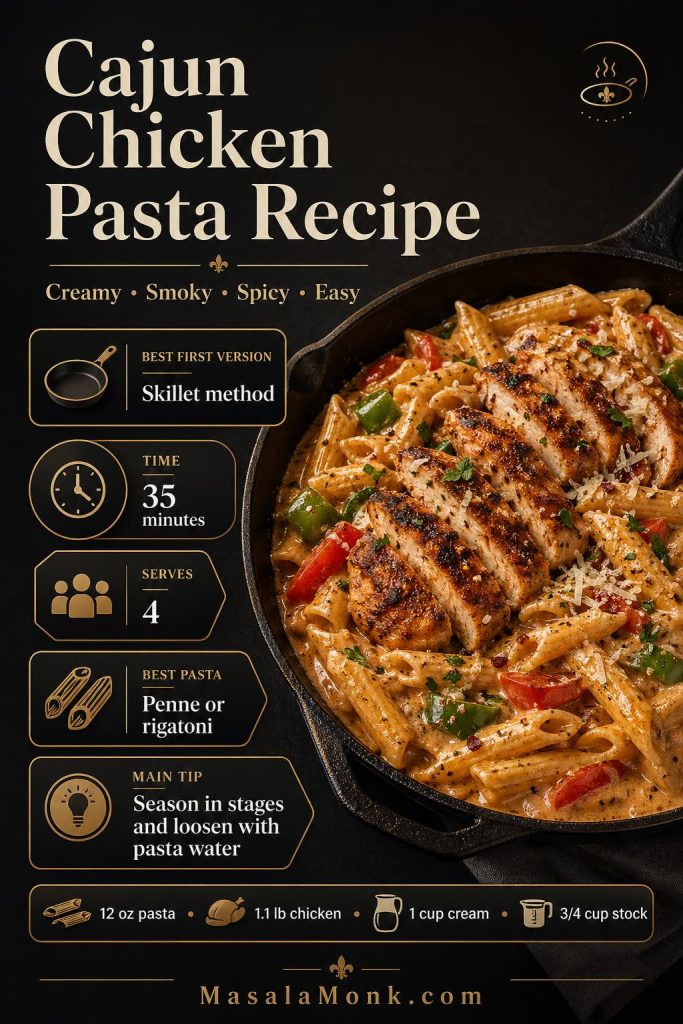
Cajun chicken pasta recipe guide showing skillet method, 35-minute timing, four servings, penne or rigatoni, and the pasta water tip.
Start with the skillet version first: it gives the best control over sauce texture, seasoning, and pasta doneness before you branch into one-pot or variation versions.

What It Tastes Like

This creamy Cajun chicken pasta is smoky, lightly spicy, garlicky, and rich without being heavy. The sauce has warm paprika-cayenne flavor, a little tomato depth, and enough parmesan to make it savory. Meanwhile, the lemon at the end keeps the cream from tasting flat.

The texture should be saucy and glossy, not dry or soupy. When you drag a spoon through the pan, the sauce should coat the pasta and slowly settle back instead of running like broth.

Best First Version to Make

For the first batch, make the skillet version with penne or rigatoni, chicken breast cutlets or boneless thighs, heavy cream, low-sodium chicken stock, and freshly grated parmesan. Also, start with less Cajun seasoning if you are using a store-bought blend, because many blends are saltier than they seem.

This first version gives you the best sense of how the sauce should behave. It should look creamy and loose in the pan, then tighten slightly after a two-minute rest. If it looks dry before serving, add hot pasta water instead of extra cream. Pasta water loosens the sauce without making it heavy.

After you make the base once, the variations become easier. Sausage needs less added salt, shrimp needs shorter cooking, Alfredo needs less tomato paste, and the one-pot version needs more stirring and more careful liquid control.

Why This Recipe Works

This cajun chicken pasta recipe works because the flavor is built in layers rather than added all at once. First, the chicken is seared so the spices toast and the skillet picks up browned bits. Then, onion, bell pepper, garlic, tomato paste, and Cajun seasoning cook in the same pan, which gives the sauce a deeper base.

  • The chicken is cooked separately first, so it stays juicy instead of simmering too long in the sauce.
  • The seasoning is added in stages, which helps prevent the pasta from turning too salty.
  • The tomato paste is cooked briefly, so the sauce tastes rounder and less raw.
  • The cream is added on lower heat, which reduces the risk of splitting.
  • The parmesan goes in gradually, so it melts into the sauce instead of clumping.
  • The reserved pasta water controls the finish, making the sauce glossy, loose, and clingy.

As a result, the pasta tastes creamy and bold without becoming greasy, grainy, dry, or overloaded with salt.

Ingredients and Exact Amounts

For this cajun chicken pasta recipe, the ingredient list is simple, but the amounts matter. Too much seasoning can make the dish salty, too much cream can mute the Cajun flavor, and too little pasta water can make the sauce feel heavy instead of silky.

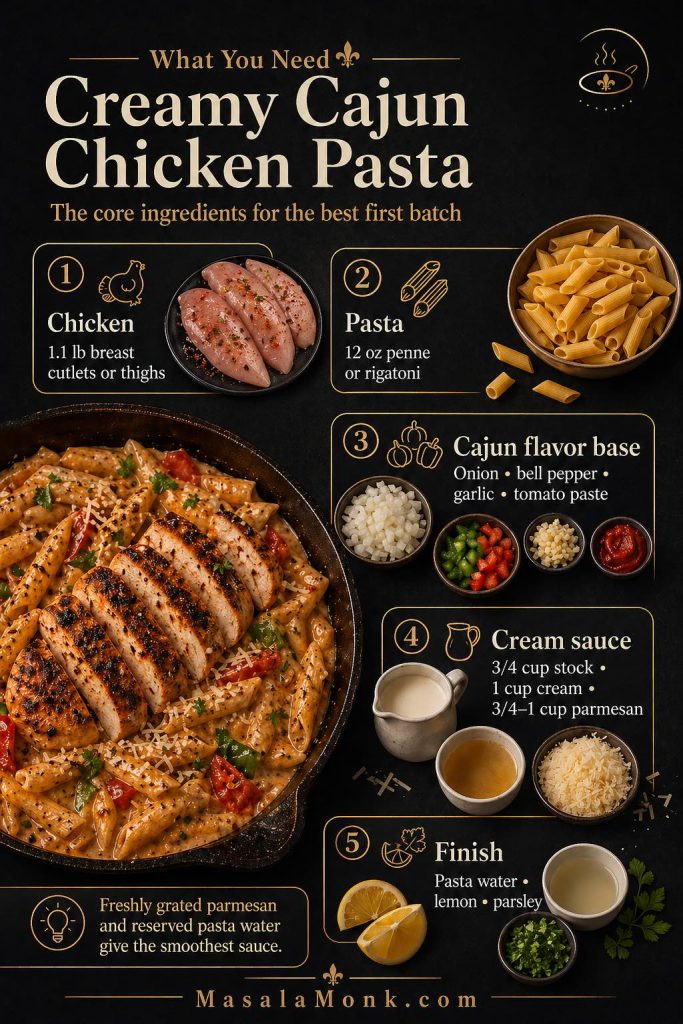
Ingredients for creamy Cajun chicken pasta, including chicken, penne, onion, bell pepper, garlic, tomato paste, stock, cream, parmesan, pasta water, lemon, and parsley.
The easiest first batch uses a simple core: chicken, pasta, Cajun seasoning, cream, parmesan, stock, and pasta water. The aromatics and finishers make the sauce taste fuller and fresher.

Chicken

Use 500 g / 1.1 lb boneless skinless chicken breast or boneless thighs. Chicken breast gives a leaner, cleaner result. However, thighs are juicier and more forgiving, especially if you are cooking for meal prep.

When using chicken breast, slice thick pieces horizontally into cutlets and pound them to about 1.3–1.5 cm / 1/2–5/8 inch thick. This small step matters because evenly thin chicken cooks faster, browns better, and stays juicier.

Pasta

Use 340 g / 12 oz dry pasta for four generous servings. Penne and rigatoni are the most practical choices because they hold the sauce well. Meanwhile, linguine and fettuccine give the dish a more restaurant-style look.

Cream Sauce

The sauce uses 180 ml / 3/4 cup low-sodium chicken stock, 240 ml / 1 cup heavy cream, 55–65 g parmesan, and 120–240 ml / 1/2–1 cup reserved pasta water. Heavy cream is the most reliable choice because it stays smooth more easily than milk or half-and-half.

Also, use freshly grated parmesan whenever possible. Pre-shredded cheese often contains anti-caking ingredients, and those can make creamy pasta sauce grainy.

Vegetables and Aromatics

Use 1/2 medium onion, 1 medium bell pepper, 4 large garlic cloves, and 1 tbsp / 16 g tomato paste. The onion adds sweetness, the bell pepper adds color, the garlic adds sharpness, and the tomato paste gives the sauce body.

Ingredient Table

IngredientMetricUSPurpose
Dry pasta340 g12 ozMain base of the recipe
Boneless chicken breast or thighs500 g1.1 lbPrimary protein
Cajun seasoning16–20 g4–5 tspSmoky heat and seasoning
Oil15 ml1 tbspFor searing chicken
Unsalted butter28 g2 tbspFor sauce flavor and gloss
Yellow onion100 g1/2 mediumSweetness and depth
Bell pepper140–160 g1 mediumColor and Cajun-inspired flavor
Garlic12–16 g4 large clovesSavory sharpness
Tomato paste16 g1 tbspColor and body
Low-sodium chicken stock180 ml3/4 cupDeglazes the skillet
Heavy cream240 ml1 cupCreamy sauce base
Parmesan55–65 g3/4–1 cupThickness and savory flavor
Reserved pasta water120–240 ml1/2–1 cupControls sauce texture
Lemon juice5–10 ml1–2 tspBalances richness
Parsley or scallions5–10 g2–3 tbspFresh finish

The table is there for precision, but the easiest version is simple: chicken, pasta, Cajun seasoning, garlic, cream, parmesan, stock, and pasta water. Everything else helps with flavor, balance, or flexibility.

Cajun Seasoning and Salt Control

The fastest way to ruin a cajun chicken pasta recipe is to use a very salty Cajun seasoning blend at full strength, then also salt the pasta water heavily and add parmesan. Therefore, add the seasoning in stages and taste before making final adjustments.

A full tablespoon of salty Cajun seasoning can overpower the sauce before you realize what happened. For that reason, this recipe seasons the chicken first, blooms a smaller amount in the sauce, and leaves the final adjustment until the pasta, cream, parmesan, and pasta water are all in the pan.

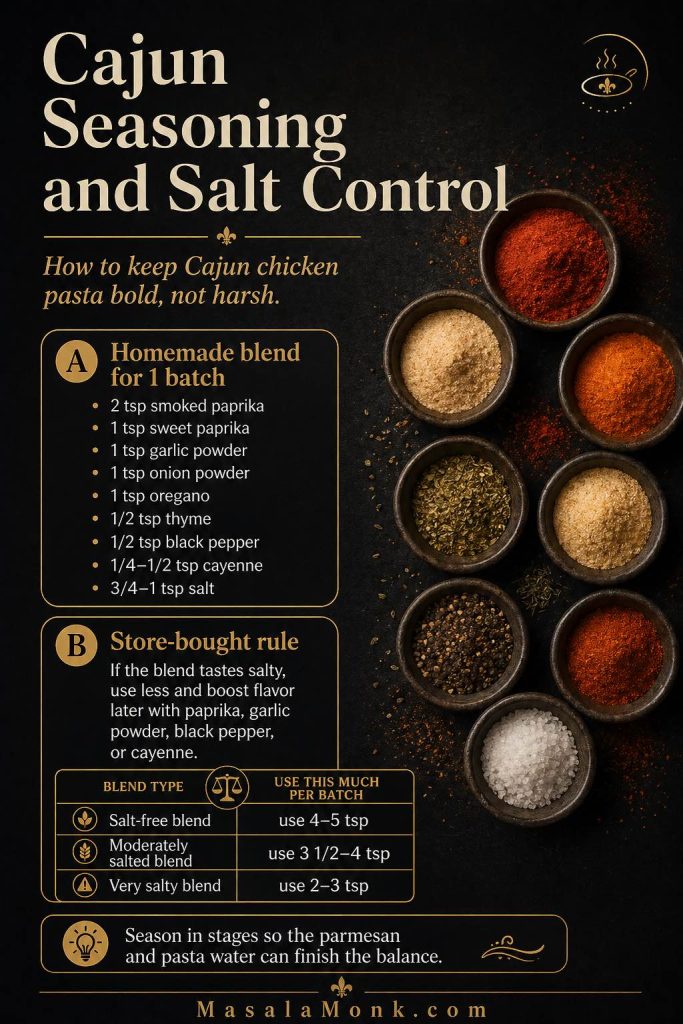
Cajun seasoning and salt control guide with homemade spice blend amounts and store-bought seasoning ranges for Cajun chicken pasta.
Cajun seasoning can bring smoke, heat, garlic, herbs, and salt all at once. Adding it in stages keeps the pasta bold without letting the sauce turn harsh or overly salty.

Homemade Cajun Seasoning for One Batch

This blend makes enough for one four-serving batch. Use the lower cayenne amount for medium heat and the higher amount for a spicier pasta.

SpiceMetricUS
Smoked paprika5 g2 tsp
Sweet paprika2.5 g1 tsp
Garlic powder3 g1 tsp
Onion powder2.5 g1 tsp
Dried oregano1 g1 tsp
Dried thyme0.5 g1/2 tsp
Black pepper1 g1/2 tsp
White pepper, optional0.5 g1/4 tsp
Cayenne pepper0.5–1 g1/4–1/2 tsp
Fine sea salt4–6 g3/4–1 tsp

Store-Bought Cajun Seasoning Rule

If your store-bought blend tastes salty on its own, start with less. Then, if the pasta needs more heat or color later, add smoked paprika, garlic powder, black pepper, and cayenne instead of more salty seasoning.

Seasoning typeHow much to useBest adjustment
Salt-free Cajun seasoning4–5 tspAdd 3/4–1 tsp fine salt separately across the dish.
Moderately salted Cajun seasoning3 1/2–4 tspSalt pasta water lightly and adjust at the end.
Very salty Cajun seasoning2–3 tspAdd paprika, garlic powder, black pepper, or cayenne for extra flavor.
Homemade blend aboveUse the full batchHold back a little salt if your parmesan is very salty.

The goal is not to make the pasta timid. The goal is to separate heat and smoke from salt, so you can make the sauce bolder without making it harsh.

Cajun Cream Sauce for Pasta

The sauce is what makes this cajun chicken pasta recipe work. A good Cajun cream sauce should taste smoky, garlicky, lightly spicy, and savory without becoming salty or heavy. The most reliable base is chicken stock, heavy cream, parmesan, tomato paste, Cajun seasoning, and reserved pasta water.

Although the sauce is creamy, it should not feel thick like dip. It should be loose and glossy in the skillet, coat the pasta evenly, and then tighten slightly after a short rest. If it looks perfect while still bubbling in the pan, it may become too thick by the time it reaches the plate.

You want the sauce…Adjust it this way
Richer and more Alfredo-styleUse less tomato paste, more parmesan, and fettuccine.
Lighter but still creamyUse evaporated milk or half-and-half, then keep the heat gentle.
More tomato-forwardAdd 2–3 tbsp crushed tomatoes or an extra teaspoon of tomato paste.
SpicierAdd cayenne or hot sauce at the end instead of more salty Cajun seasoning.
GlossierAdd hot pasta water 1–2 tbsp at a time while tossing.
Less heavyFinish with lemon juice, parsley, scallions, or extra black pepper.
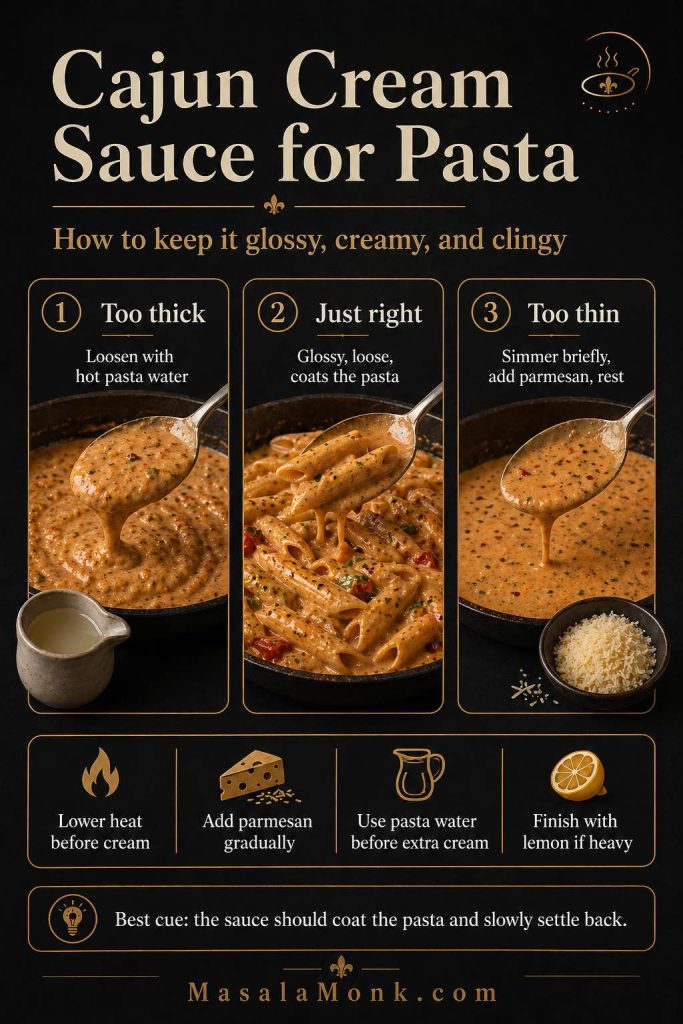
Cajun cream sauce texture guide showing too thick, just right, and too thin sauce, with tips for pasta water, parmesan, gentle heat, and lemon.
A good Cajun cream sauce should look slightly loose in the pan because it tightens as it rests. Pasta water, gentle heat, and gradual parmesan are the key controls.

The most important rule is to add dairy gently. Bring the stock and tomato paste to a simmer first, then lower the heat before adding cream. After that, add parmesan gradually and use pasta water to loosen the sauce instead of adding more cream every time it thickens.

If you are using a salty Cajun seasoning blend, do not keep adding more of it when the sauce tastes flat. Instead, build flavor with smoked paprika, garlic powder, black pepper, lemon juice, parmesan, or cayenne. That keeps the pasta bold without making it too salty.

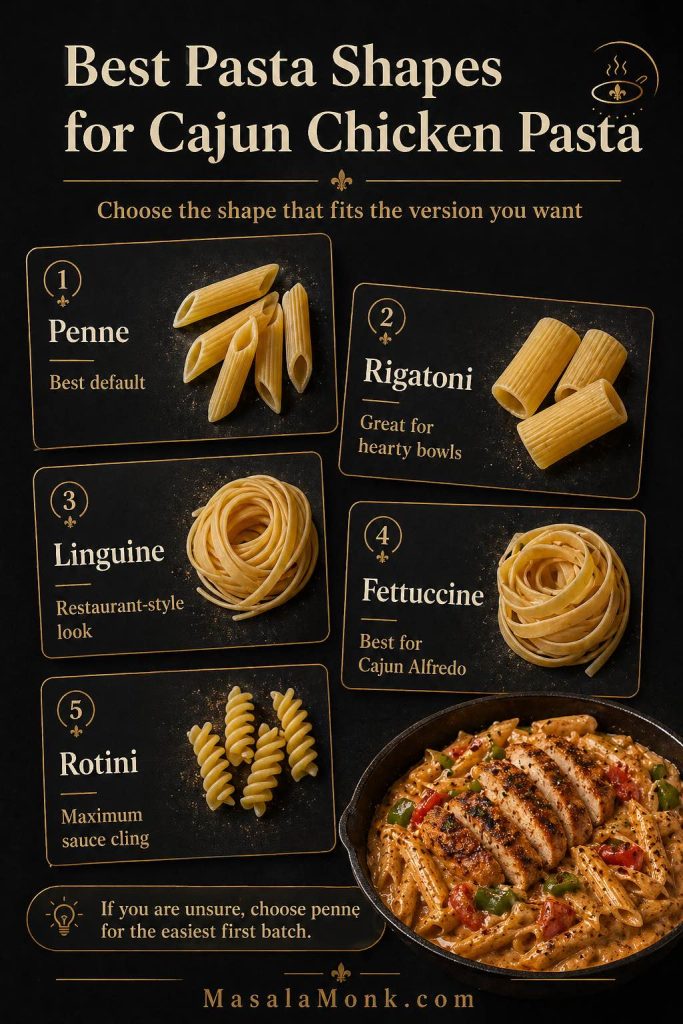
Best Pasta Shapes for Cajun Chicken Pasta

The best pasta shape depends on the version you want. Short pasta is easier to toss and more practical for one-pot cooking. On the other hand, long pasta gives the dish a more restaurant-style finish.

For most readers, penne or rigatoni is the safest first choice. Both shapes hold the sauce, stand up to sliced chicken, and reheat better than delicate noodles. However, fettuccine is the better choice when you want the dish to feel more like Cajun chicken Alfredo.

Pasta shapeBest forNotes
PenneBest defaultThe tubes catch sauce and work well for skillet or one-pot versions.
RigatoniHearty bowlsExcellent with sausage because the larger shape holds up well.
LinguineRestaurant-style lookGood for a classic creamy Cajun chicken pasta presentation.
FettuccineCajun AlfredoBest when the sauce is richer and more parmesan-forward.
Fusilli or rotiniMaximum sauce clingThe spirals catch cream sauce, spices, and cheese well.
FarfalleVegetable-heavy versionsWorks nicely with peppers, mushrooms, and spinach.
SpaghettiPantry backupIt works, but the sauce may not cling as evenly.
Angel hairNot idealIt overcooks quickly and can clump in creamy sauce.
Best pasta shapes for Cajun chicken pasta, comparing penne, rigatoni, linguine, fettuccine, and rotini with their best uses.
Penne is the safest first choice, rigatoni is great for hearty bowls, fettuccine suits Cajun Alfredo, and rotini gives the sauce plenty of ridges to cling to.

Creamy Cajun Chicken Linguine Version

For a creamy Cajun chicken linguine version, use the same chicken, seasoning, and sauce amounts, but swap the short pasta for 340 g / 12 oz linguine. Toss the linguine with the sauce for 60–90 seconds, adding pasta water slowly so the strands stay glossy instead of sticky.

Linguine gives this dish a more restaurant-style finish, especially when the sauce is loose, creamy, and parmesan-forward. However, penne and rigatoni are easier for everyday bowls because they hold sauce well and reheat more forgivingly.

If you are unsure, choose penne. It is easy to cook, easy to toss, and forgiving if the sauce thickens while you finish the chicken.

Best Pan, Pot, and Tools

Good equipment makes this recipe easier because the sauce reduces quickly and the chicken needs enough surface area to sear. A crowded pan steams the chicken. Meanwhile, a tiny saucepan makes the cream sauce reduce unevenly.

The most important tool is a wide skillet. A 30 cm / 12-inch pan gives the chicken room to brown and gives the sauce enough surface area to reduce without scorching. Also, a thermometer helps because chicken breast can go from juicy to dry quickly.

ToolBest sizeWhy it helps
Pasta pot5–6 L / 5–6 qtGives pasta room to cook evenly.
Wide skillet or shallow braiser30 cm / 12 inchLets chicken sear and sauce reduce evenly.
TongsStandardBest for tossing pasta through sauce.
Instant-read thermometerAny reliable modelHelps avoid dry or undercooked chicken.
Fine grater or microplaneFor parmesanFresh fine parmesan melts more smoothly.
Measuring jug500 ml / 2 cupUseful for stock, cream, and pasta water.

You do not need special equipment, but the wide skillet matters more than almost anything else. It gives the chicken room to brown and keeps the cream sauce from reducing too aggressively.

Common Mistakes to Avoid

Most creamy Cajun pasta problems start before the sauce is finished. Avoid these mistakes and the recipe becomes much easier to control.

  • Using salty Cajun seasoning at full strength: Start with less, then adjust at the end.
  • Salting the pasta water too heavily: Salt moderately because Cajun seasoning and parmesan also add salt.
  • Boiling the cream hard: Keep the sauce at a gentle simmer so it stays smooth.
  • Adding parmesan on high heat: Lower the heat first, then add cheese gradually.
  • Overcooking the pasta before the sauce: Stop one minute shy of al dente so the pasta can finish in the skillet.
  • Slicing chicken immediately: Rest it for 5 minutes so the juices stay in the meat.
  • Simmering shrimp in the sauce: Sear shrimp separately and fold it in at the end.
  • Loosening the sauce with extra cream only: Use pasta water first because it makes the sauce glossy without making it heavier.

How to Make Creamy Cajun Chicken Pasta

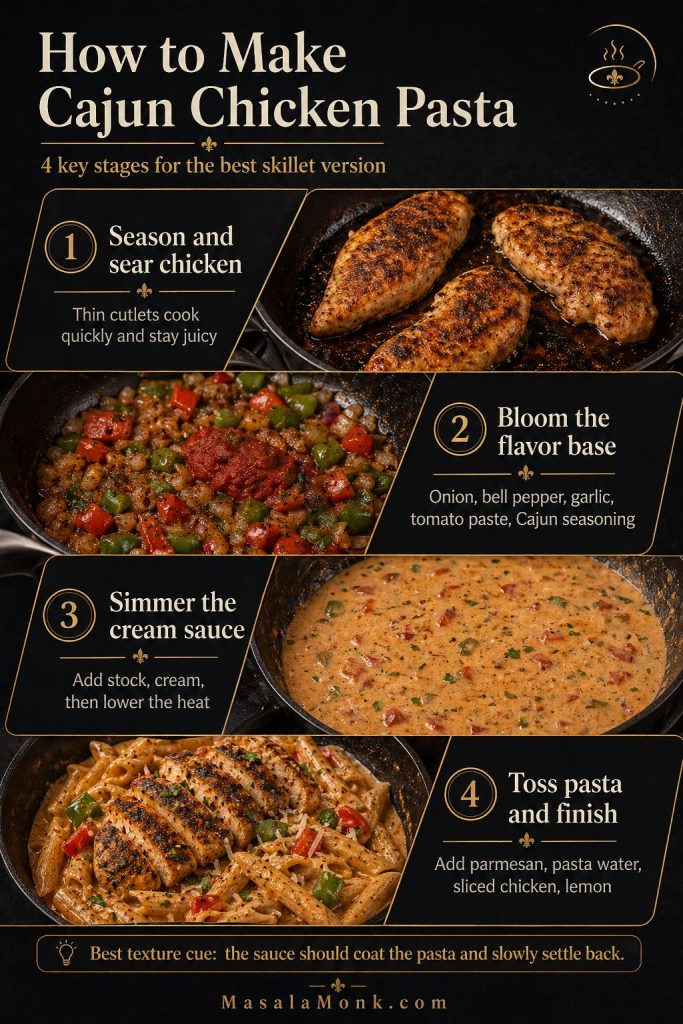
The best cajun chicken pasta recipe uses the skillet like a flavor builder. First, the chicken seasons the pan. After that, the vegetables, garlic, tomato paste, and spices pick up the browned flavor. Finally, cream, parmesan, and pasta water turn everything into a smooth sauce.

Step-by-step guide for Cajun chicken pasta showing seared chicken, Cajun flavor base, cream sauce, and finished pasta with parmesan and pasta water.
The recipe works best when the flavor is built in stages: sear the chicken, bloom the Cajun base, simmer the cream sauce gently, then finish with parmesan and pasta water.

1. Prep the Chicken

Slice thick chicken breasts horizontally into thinner cutlets. Next, pound them to about 1.3–1.5 cm / 1/2–5/8 inch thick. Pat the chicken dry before seasoning because surface moisture prevents browning.

Season the chicken with about 2 1/2–3 tsp Cajun seasoning. If your seasoning is salt-free, add about 1/2 tsp fine salt to the chicken. However, if your seasoning is already salty, skip extra salt for now.

2. Boil the Pasta

Bring 3.5–4 L / 3.5–4 qt water to a rolling boil in a large pot. Salt the water moderately, not aggressively, because Cajun seasoning and parmesan will also season the dish.

Use about 12–16 g fine sea salt or 18–22 g kosher salt for the pot, depending on how salty your Cajun seasoning is. Then add 340 g / 12 oz pasta and cook it 1 minute shy of al dente. Before draining, reserve at least 360 ml / 1 1/2 cups pasta water.

3. Sear the Chicken

Heat a 30 cm / 12-inch skillet over medium-high heat for about 2 minutes. Once the pan is hot, add 1 tbsp / 15 ml oil. The oil should shimmer, but it should not smoke heavily.

Place the chicken in a single layer. Sear the cutlets for 3–4 minutes on the first side, then flip and cook for 2–3 minutes on the second side. The chicken should be browned outside and reach 74°C / 165°F internally. After cooking, transfer it to a board and rest for 5 minutes before slicing.

4. Build the Cajun Flavor Base

Reduce the heat to medium. Add 1 tbsp / 14 g butter to the same skillet, followed by the onion and bell pepper. Cook for 4–5 minutes, until the vegetables soften and the edges pick up light browning.

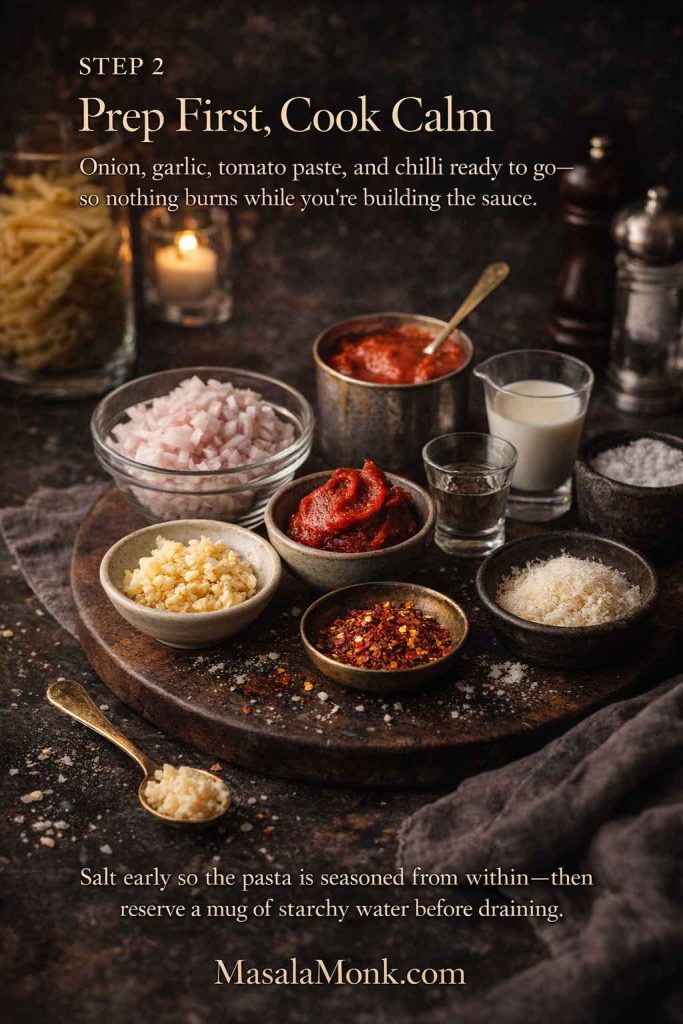
After that, stir in the garlic and cook for 30 seconds. Add the tomato paste and another 1–1 1/2 tsp Cajun seasoning. Stir for 30–45 seconds, just until the tomato paste darkens slightly and the spices smell warm.

This step matters because blooming the seasoning in butter gives the sauce deeper flavor than simply stirring dry spice into cream.

5. Make the Cream Sauce

Pour in 180 ml / 3/4 cup low-sodium chicken stock and scrape the browned bits from the pan. Simmer for 1–2 minutes, until the liquid reduces slightly and smells savory.

Then lower the heat to medium-low and stir in 240 ml / 1 cup heavy cream. Keep the sauce at a gentle simmer rather than a hard boil. If you are using a thermometer, aim for roughly 82–90°C / 180–195°F, where the sauce steams and bubbles softly.

6. Toss the Pasta and Finish

Add the drained pasta to the skillet. Toss for 60–90 seconds, then pour in 120 ml / 1/2 cup reserved pasta water. Once the pasta is coated, lower the heat and add the parmesan gradually.

If the sauce looks too thick, add more pasta water 1–2 tbsp at a time. If it looks slightly loose, let it rest for 2 minutes. During that short rest, the pasta will absorb sauce and the texture will tighten.

Finally, add the sliced chicken and any resting juices. Finish with 1–2 tsp lemon juice, parsley or scallions, black pepper, and extra parmesan if needed. The finished sauce should coat the pasta and slowly settle back when stirred.

Creamy Cajun Chicken Pasta Recipe Card

This cajun chicken pasta recipe is smoky, spicy, saucy, and rich without being heavy. Thin chicken cutlets cook quickly, Cajun seasoning blooms in the skillet, and the cream sauce stays glossy because parmesan and pasta water are added gently at the end.

Servings4 generous servings
Prep time15 minutes
Cook time20 minutes
Total time35 minutes
Best pan30 cm / 12-inch skillet

Ingredients

  • 340 g / 12 oz penne, rigatoni, linguine, or fettuccine
  • 500 g / 1.1 lb boneless skinless chicken breast cutlets or boneless thighs
  • 4–5 tsp Cajun seasoning, divided and adjusted for salt level
  • 1 tbsp / 15 ml olive oil or neutral oil
  • 2 tbsp / 28 g unsalted butter, divided
  • 1/2 medium yellow onion, finely sliced or diced, about 100 g
  • 1 medium bell pepper, sliced, about 140–160 g
  • 4 large garlic cloves, minced, about 12–16 g
  • 1 tbsp / 16 g tomato paste
  • 3/4 cup / 180 ml low-sodium chicken stock
  • 1 cup / 240 ml heavy cream
  • 3/4–1 cup / 55–65 g finely grated parmesan
  • 1/2–1 cup / 120–240 ml reserved pasta water, as needed
  • 1–2 tsp / 5–10 ml lemon juice
  • 2–3 tbsp chopped parsley or scallions
  • Black pepper, to taste
  • Fine salt, only if needed

Method

  1. Prepare the chicken. Slice thick chicken breasts into thinner cutlets if needed. Pound to 1.3–1.5 cm / 1/2–5/8 inch thick. Pat dry and season with 2 1/2–3 tsp Cajun seasoning.
  2. Cook the pasta. Bring 3.5–4 L / 3.5–4 qt water to a boil. Salt moderately, then cook pasta 1 minute shy of al dente. Reserve 360 ml / 1 1/2 cups pasta water before draining.
  3. Sear the chicken. Heat a 30 cm / 12-inch skillet over medium-high heat. Add oil, then sear chicken for 3–4 minutes on the first side and 2–3 minutes on the second side, until it reaches 74°C / 165°F internally. Rest for 5 minutes, then slice.
  4. Cook the vegetables. Reduce heat to medium. Add 1 tbsp butter, onion, and bell pepper. Cook for 4–5 minutes, until softened with lightly browned edges.
  5. Bloom the flavor base. Add garlic and cook for 30 seconds. Add tomato paste and 1–1 1/2 tsp Cajun seasoning. Stir for 30–45 seconds, until fragrant.
  6. Deglaze the skillet. Add chicken stock and scrape the bottom of the pan. Simmer for 1–2 minutes.
  7. Add the cream. Lower heat to medium-low. Stir in heavy cream and keep the sauce at a gentle simmer.
  8. Toss the pasta. Add drained pasta and 1/2 cup reserved pasta water. Toss for 60–90 seconds.
  9. Add parmesan. Lower the heat and add parmesan gradually. Toss until glossy, adding more pasta water 1–2 tbsp at a time if needed.
  10. Finish. Add sliced chicken, lemon juice, parsley or scallions, black pepper, and extra parmesan. Rest 2 minutes before serving.

Recipe note: If your Cajun seasoning is salty, use less at the beginning and correct the flavor at the end with smoked paprika, cayenne, black pepper, lemon, and parmesan instead of adding more salty blend.

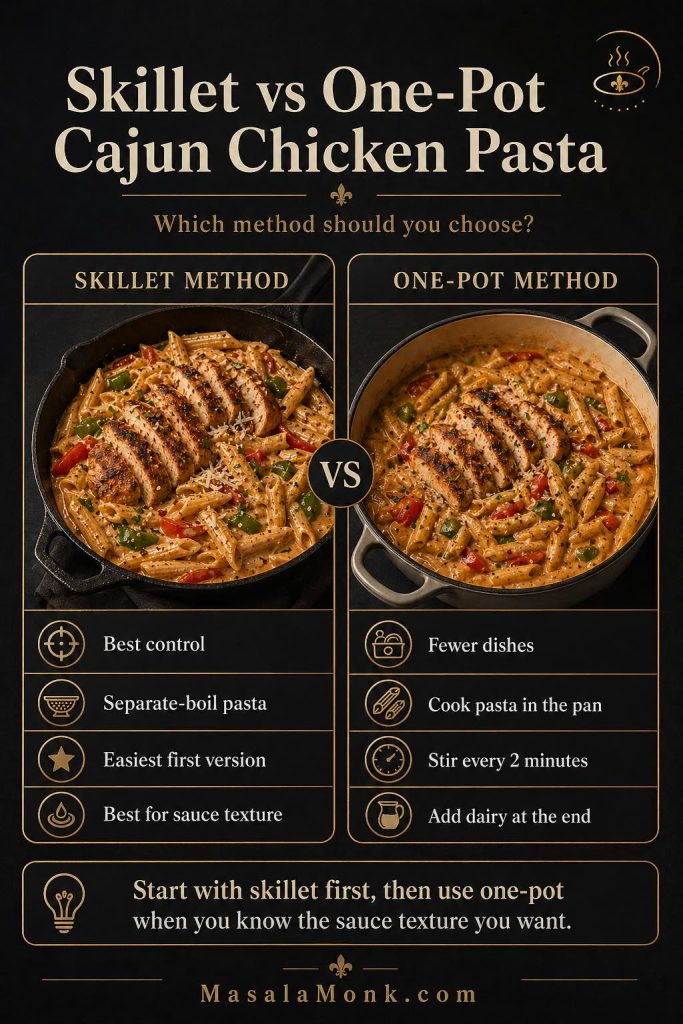
Skillet versus one-pot Cajun chicken pasta comparison showing skillet method for control and one-pot method for fewer dishes.
The skillet method gives the best first result because you control the pasta and sauce separately. The one-pot method is excellent once you know how loose and glossy the sauce should be.

One-Pot Cajun Chicken Pasta Method

To turn this cajun chicken pasta recipe into a one-pot version, use short pasta and cook it directly in stock, water, tomato paste, seasoning, and pan juices. Then add cream and cheese near the end. This method is convenient, but it needs more stirring and closer timing than the separate-boil method.

If you like pasta that cooks directly in the sauce, the same one-pan principle also works in MasalaMonk’s one-pot chicken pasta, where the pasta starch helps thicken the cooking liquid.

One-Pot Formula for 4 Servings

IngredientAmount
Chicken, bite-size pieces450–500 g / 1–1.1 lb
Short pasta300–340 g / 10.5–12 oz
Chicken stock720 ml / 3 cups
Water240 ml / 1 cup
Tomato paste1 tbsp / 16 g
Heavy cream180–240 ml / 3/4–1 cup
Cream cheese, optional55 g / 2 oz
Parmesan50–60 g / about 3/4 cup
Cajun seasoning4–5 tsp total, adjusted for salt

One-Pot Steps

  1. Use a 30 cm / 12-inch deep skillet, Dutch oven, or 3.5–4 L shallow braiser.
  2. Season bite-size chicken pieces, then sear them in oil for 4–5 minutes.
  3. Add onion and bell pepper. Cook for 3–4 minutes.
  4. Stir in garlic, tomato paste, and Cajun seasoning for 30 seconds.
  5. Add dry short pasta, stock, water, and optional diced tomatoes.
  6. Bring to a boil, then reduce to an active simmer.
  7. Cover and cook for 10–13 minutes, stirring every 2 minutes.
  8. Add hot water or stock 60 ml / 1/4 cup at a time if the pan dries before the pasta is tender.
  9. Once the pasta is just al dente, lower the heat.
  10. Stir in cream, optional cream cheese, and parmesan.
  11. Finally, rest for 3–5 minutes before serving so the sauce can settle.

One-pot rule: Add dairy at the end. If cream and cheese boil hard while the pasta is still cooking, the sauce can split or turn grainy.

Slow Cooker or Crockpot Cajun Chicken Pasta

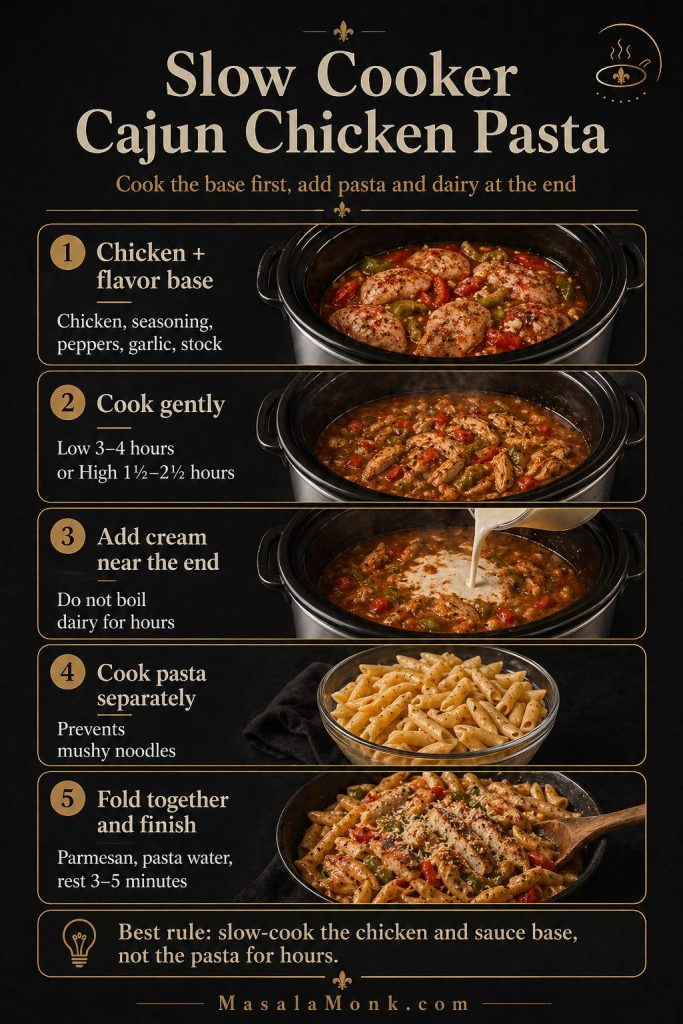
You can make Cajun chicken pasta in a slow cooker, but it works best when the pasta and dairy are added near the end. If pasta cooks for hours in the slow cooker, it can turn soft and heavy. If cream and cheese cook too long, the sauce can split or become grainy.

The best slow cooker version is not a true dump-and-cook pasta. Instead, use the crockpot for the chicken and Cajun sauce base, then add cooked pasta and dairy at the end. That gives you the convenience of slow cooking without ruining the creamy sauce texture.

Best Slow Cooker Method

  1. Add chicken, Cajun seasoning, onion, bell pepper, garlic, tomato paste, and chicken stock to the slow cooker.
  2. Cook on low for 3–4 hours or high for 1 1/2–2 1/2 hours, until the chicken is cooked through.
  3. Remove the chicken, then slice or shred it.
  4. Stir cream or evaporated milk into the sauce base near the end.
  5. Cook the pasta separately until just shy of al dente.
  6. Fold the cooked pasta into the slow cooker sauce.
  7. Add parmesan on the lowest setting or off heat, then loosen with hot pasta water if needed.
  8. Return the chicken to the pasta and let everything sit for 3–5 minutes before serving.
Slow cooker Cajun chicken pasta guide showing chicken and sauce base cooked first, cream added near the end, pasta cooked separately, and parmesan folded in before serving.
For the best crockpot version, use the slow cooker for the chicken and sauce base, then add cooked pasta, cream, and parmesan near the end so the noodles stay tender and the sauce stays smooth.

Best slow cooker rule: Cook the chicken and sauce base in the crockpot, but cook the pasta separately. That gives you creamy Cajun chicken pasta without mushy noodles or broken sauce.

If you want a richer crockpot version, add a small amount of cream cheese near the end. However, keep the heat low and stir gently so the sauce stays smooth.

Cajun Chicken Pasta Variations

Once the base is right, this cajun chicken pasta recipe can move in several directions. However, the key is to change the technique, not just throw extra ingredients into the pan.

Which Version Should You Make?

You want…Make this version
Best texture and sauce controlSeparate-boil skillet method
Fewer dishesOne-pot Cajun chicken pasta
Slow cooker convenienceCrockpot chicken and sauce base with pasta added at the end
Richest sauceCajun chicken Alfredo
Smokier flavorCajun chicken and sausage pasta
Restaurant-style proteinCajun chicken and shrimp pasta
Dramatic spice and colorBlackened chicken pasta
Lighter bowlHalf-and-half or evaporated milk version
Dairy-free optionCashew cream or coconut milk version
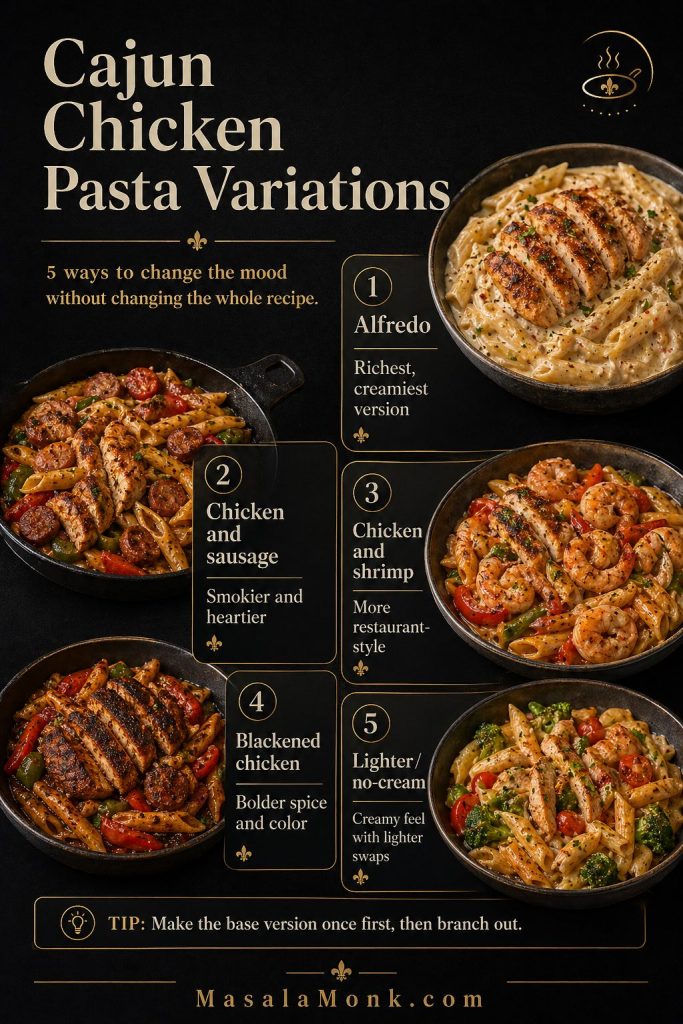
Cajun chicken pasta variations guide showing Alfredo, chicken and sausage, chicken and shrimp, blackened chicken, and lighter no-cream versions.
Once the base recipe is right, the variations become easy: Alfredo makes it richer, sausage makes it smokier, shrimp makes it more restaurant-style, and lighter swaps keep it weeknight-friendly.
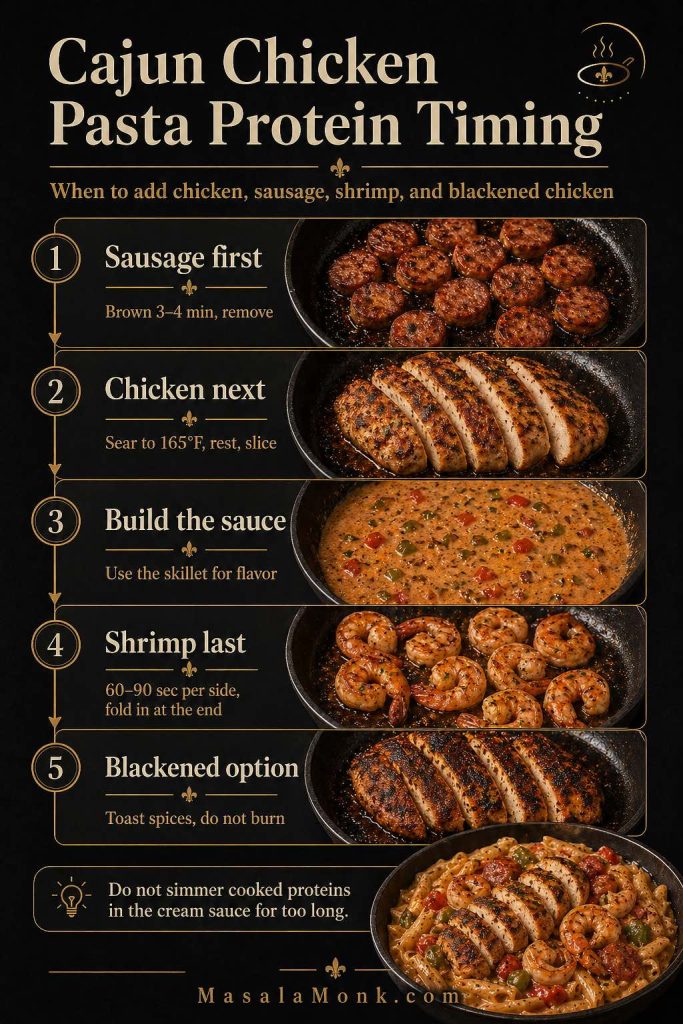
Cajun chicken pasta protein timing guide showing when to brown sausage, sear chicken, cook shrimp separately, and add blackened chicken back to the sauce.
Protein variations work best when each ingredient gets the right timing. Brown sausage first, rest sliced chicken, cook shrimp separately, and fold everything back into the creamy pasta at the end.

Cajun Chicken Alfredo Version

Choose the Alfredo version when you want the richest, most restaurant-style bowl. For this variation, use fettuccine, more parmesan, less tomato paste, and a smoother cream sauce.

Use 340 g / 12 oz fettuccine, 500 g / 1.1 lb chicken, 2 tbsp / 28 g butter, 240 ml / 1 cup heavy cream, 60–75 g parmesan, and 120–180 ml pasta water. Instead of building a tomato-forward sauce, bloom the Cajun seasoning briefly in butter, add the cream gently, toss in fettuccine, and add parmesan off heat.

For a deeper Alfredo-style guide, see MasalaMonk’s Cajun chicken Alfredo pasta section.

Cajun Chicken and Sausage Pasta

Choose the sausage version when you want the pasta to taste smokier, heartier, and more savory. Because sausage brings salt and fat, reduce the Cajun seasoning slightly and taste before adding more.

Use 350 g / 12 oz chicken and 225–300 g / 8–10 oz smoked sausage or andouille. Slice the sausage into 6–8 mm / 1/4-inch coins, brown it first for 3–4 minutes, then remove it. Next, sear the chicken in the same skillet, build the sauce, and add the sausage back near the end.

For a more traditional Louisiana-inspired comfort-food direction, MasalaMonk’s Louisiana red beans and rice guide is a useful companion for smoky sausage, the trinity, and slow-simmered flavor.

Cajun Chicken and Shrimp Pasta

Choose shrimp when you want a more restaurant-style bowl. However, cook it separately because shrimp turns rubbery much faster than chicken.

Use 300–350 g / 10–12 oz chicken and 250–300 g / 9–10 oz peeled and deveined shrimp. Pat the shrimp dry, season with 1/2–3/4 tsp Cajun seasoning, and sear it for 60–90 seconds per side, just until opaque. Then remove it and fold it back into the pasta for only the final 30–60 seconds.

Blackened Chicken Pasta Version

Choose blackened chicken when you want dramatic color, toasted spice, and a bolder chicken topping. However, avoid burning the spices. You want deep color and smoky edges, not bitter black dust.

Blackened chicken rub for 500 g chickenAmount
Smoked paprika2 tsp
Garlic powder1 tsp
Onion powder1 tsp
Dried thyme1/2 tsp
Dried oregano1/2 tsp
Black pepper1/2 tsp
Cayenne1/4–1/2 tsp
Fine salt3/4 tsp

How to Make It Lighter or No-Cream

A lighter Cajun chicken pasta can still be creamy, but it needs gentler heat. Instead of boiling the sauce aggressively, use low heat, reserved pasta water, and a little patience.

Evaporated milk is the easiest lighter swap because it is stable and still feels creamy. Half-and-half also works, although it needs lower heat. Greek yogurt, cottage cheese, and cashew cream can work too, but they should be added on low heat or off heat so they do not split.

SwapAmountHow to use it
Half-and-half240 ml / 1 cupUse like cream, but simmer gently.
Evaporated milk240 ml / 1 cupStable and creamy, with less heaviness than cream.
Milk + flour240 ml milk + 1 tbsp flourWhisk into the pan after garlic and tomato paste, then simmer gently.
Greek yogurt120 g / 1/2 cupTemper with warm pasta water and add off heat.
Blended cottage cheese150 g / 2/3 cupBlend smooth with stock, then add on low heat.
Cashew cream180–240 ml / 3/4–1 cupBest dairy-free creamy texture.
Coconut milk240 ml / 1 cupWorks for dairy-free pasta, but it changes the flavor.
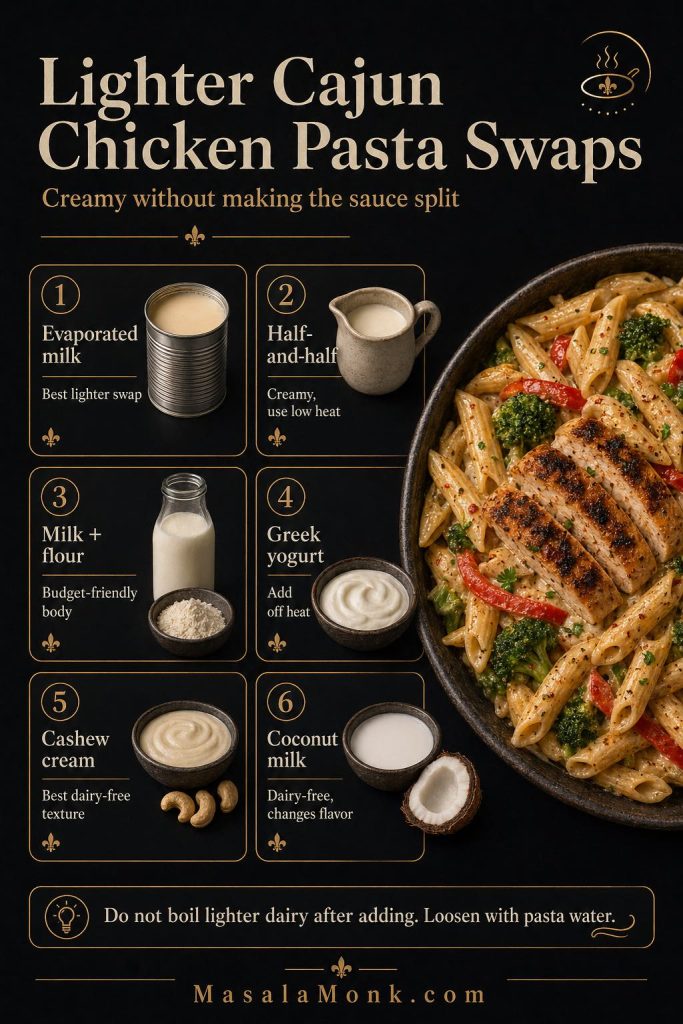
Lighter Cajun chicken pasta swaps guide showing evaporated milk, half-and-half, milk with flour, Greek yogurt, cashew cream, and coconut milk with low-heat tips.
Lighter creamy sauces need gentler heat. Evaporated milk is the easiest swap, while yogurt and cashew cream work best when added on low heat or off heat.

If you want a higher-protein pasta bowl, you can also pair the sauce with a firmer protein pasta. MasalaMonk’s lentil pasta for weight loss guide is useful for comparing that kind of swap.

Important: Do not boil yogurt, cottage cheese sauce, or cashew cream after adding. Add them on low heat or off heat, then loosen with pasta water until the sauce clings.

How to Fix Cajun Chicken Pasta

Even a good cajun chicken pasta recipe can go wrong if the heat is too high, the seasoning is salty, or the pasta absorbs more sauce than expected. Fortunately, most problems are easy to fix if you adjust slowly instead of adding a lot of liquid, salt, cream, or spice at once.

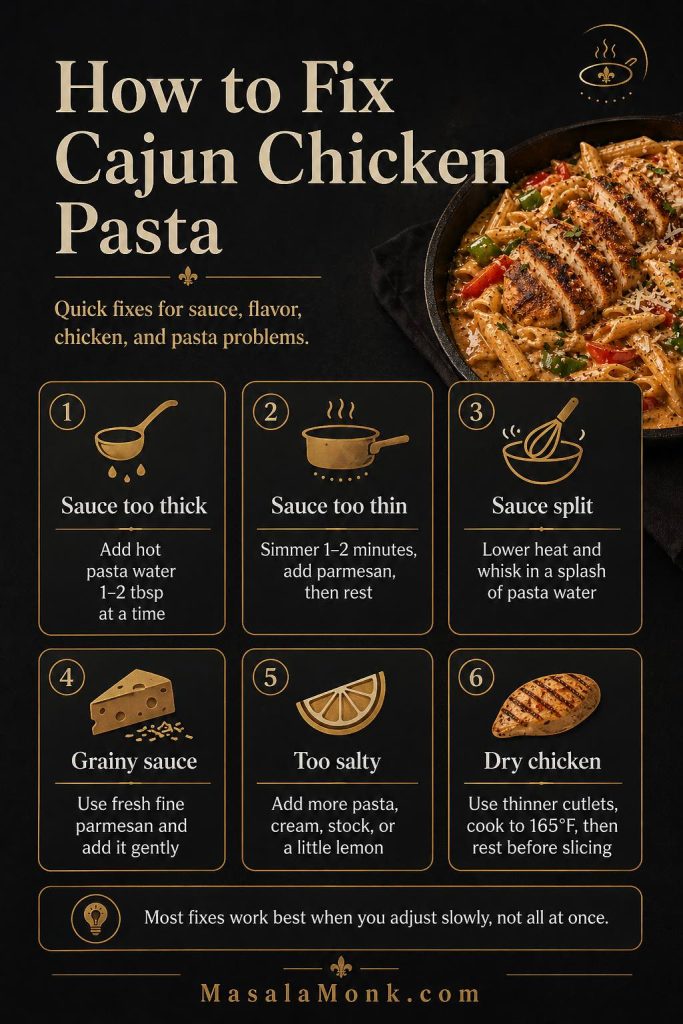
Troubleshooting guide for Cajun chicken pasta with fixes for thick sauce, thin sauce, split sauce, grainy sauce, salty pasta, and dry chicken.
Most Cajun chicken pasta problems are fixable if you adjust slowly. Pasta water, gentle heat, fresh parmesan, and a short rest can save the sauce before it goes too far.

Cream Sauce Problems

Start here if the sauce looks too thick, too thin, oily, split, or grainy. In most cases, the solution is gentle heat plus a small amount of hot pasta water.

ProblemWhy it happenedExact fix
Thick, heavy sauceThe pasta absorbed liquid, or the heat reduced the sauce too far.Loosen it with hot pasta water, milk, or stock 1–2 tbsp at a time, then toss until glossy.
Loose, watery sauceThere is too much liquid, not enough parmesan, or the pasta has not rested yet.Simmer for 1–2 minutes, add a little parmesan, then rest off heat for 2 minutes.
Split cream sauceThe dairy boiled too hard, or the cheese was added over high heat.Lower the heat, add a splash of pasta water, and whisk gently until the sauce comes back together.
Grainy textureThe cheese was pre-shredded, added too quickly, or heated too aggressively.Use finely grated parmesan next time. For now, lower the heat and add pasta water gradually while tossing.

Flavor Problems

If the pasta tastes flat, salty, or too spicy, fix the balance before adding more Cajun seasoning. Many Cajun blends already contain salt, so adding more seasoning can make the problem worse.

ProblemWhy it happenedExact fix
Overly salty pastaSalty Cajun seasoning, salted pasta water, parmesan, and sausage may have stacked together.Add cream, unsalted stock, more cooked pasta, or a squeeze of lemon. Do not add more Cajun seasoning.
Too much heatThe Cajun blend had a lot of cayenne, or extra spice was added too early.Soften the heat with cream, butter, parmesan, or more pasta. Add lemon only after the sauce is balanced.
Flat or bland flavorThe sauce needs more salt, spice, garlic, cheese, or acidity.Add Cajun seasoning carefully, then finish with black pepper, parmesan, and a small squeeze of lemon.
Too rich or heavyThe sauce has plenty of cream but not enough brightness.Add lemon juice 1 tsp at a time, then finish with parsley, scallions, or a little extra black pepper.

Chicken, Shrimp, Sausage, and Pasta Problems

These fixes are mostly about timing. Chicken needs to rest, shrimp needs very little heat, sausage should be browned instead of boiled, and pasta should stop just before it turns fully soft.

ProblemWhy it happenedExact fix
Dry chickenThe chicken breast was too thick, cooked too long, or sliced before resting.Pound cutlets thin, sear quickly, rest before slicing, and avoid simmering cooked chicken in the sauce.
Mushy pastaThe pasta cooked too long before being tossed with the sauce.Cook pasta 1 minute shy of al dente. For the one-pot method, start checking earlier than the package time.
Sticky one-pot pastaThere was too little liquid, not enough stirring, or the pan was too hot.Add hot stock or water 60 ml / 1/4 cup at a time, then stir every 2 minutes until the pasta loosens.
Rubbery shrimpThe shrimp simmered too long in the cream sauce.Sear shrimp separately for 60–90 seconds per side, then fold it in at the end for only 30–60 seconds.
Tough sausageThe sausage boiled in the sauce instead of being browned and added back later.Brown sausage first, remove it, then return it near the end so it stays smoky and firm.

Storage, Reheating, and Freezing

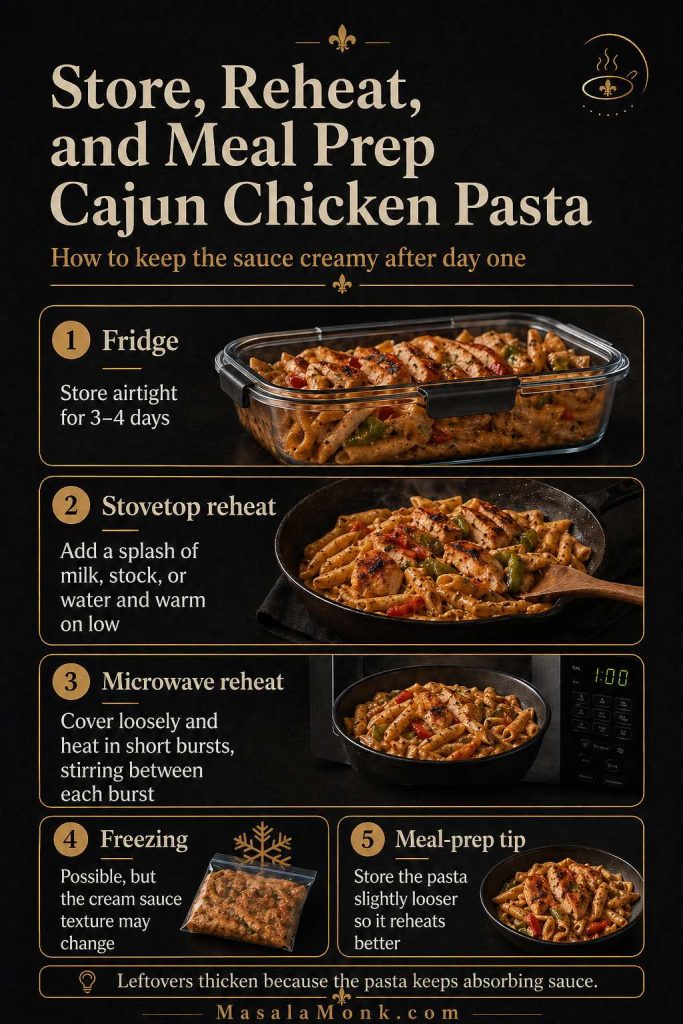
Leftovers from this cajun chicken pasta recipe will thicken as they sit because pasta keeps absorbing sauce in the fridge. Therefore, make the sauce slightly looser if you are cooking for meal prep.

Storage and reheating guide for Cajun chicken pasta with fridge, stovetop, microwave, freezing, and meal prep tips.
Creamy pasta thickens as it sits, so leftovers reheat best with a splash of milk, stock, or water and gentle heat instead of a hard boil.
  • Fridge: Store in an airtight container for 3–4 days, in line with USDA leftover food safety guidance.
  • Stovetop reheating: Add 1–2 tbsp milk, stock, or water per serving. Warm over low heat and stir often.
  • Microwave reheating: Add a splash of liquid, cover loosely, and heat in short bursts, stirring between each burst.
  • Freezing: You can freeze it, but creamy pasta may split and the pasta can soften after thawing.
  • Meal-prep tip: Store extra sauce or a little stock separately, then loosen each portion when reheating.

The best reheated bowl is slightly looser before storage. As the pasta sits, it absorbs sauce, so a creamy pasta that looks perfect on day one can look dry on day two unless you add liquid back gently.

What to Serve with Cajun Chicken Pasta

Because the pasta is rich and creamy, simple sides work best. Serve it with a crisp green salad, roasted broccoli, sautéed green beans, garlic bread, or a lemony cucumber salad. Also, if you are serving a heavier sausage version, keep the side dish lighter and sharper so the meal does not feel too heavy.

For another creamy pasta direction, MasalaMonk’s chicken pesto pasta is useful because it also relies on gentle heat and pasta water to keep the sauce glossy instead of oily.

A Note on Cajun-Inspired Pasta

This is a Cajun-inspired creamy chicken pasta, not a claim of traditional Louisiana Cajun cooking. The flavor comes from Cajun-style seasoning, garlic, peppers, tomato paste, cream, parmesan, and a skillet pasta method. In other words, it is closer to a restaurant-style creamy pasta than a classic Cajun stew, gumbo, jambalaya, or rice dish.

For cultural context, Britannica’s overview of Cajun culture and cuisine explains how Cajun food reflects Louisiana’s blended food traditions. That is why this recipe uses the word Cajun carefully: the seasoning profile is Cajun-inspired, while the creamy pasta format is modern and weeknight-friendly.

FAQs

What is a cajun chicken pasta recipe made of?

A cajun chicken pasta recipe is usually made with chicken, pasta, Cajun seasoning, garlic, cream, parmesan, and vegetables such as bell pepper, onion, tomatoes, or mushrooms. This version also uses chicken stock and reserved pasta water so the sauce stays creamy without becoming too heavy.

Is Cajun chicken pasta very spicy?

It can be mild, medium, or hot depending on your Cajun seasoning. For a medium version, use 1/4 tsp cayenne in the homemade blend. For a hotter version, use 1/2 tsp cayenne or add hot sauce at the end. However, if you are cooking for mixed heat preferences, keep the base milder and let people add more heat at the table.

What pasta is best for Cajun chicken pasta?

Penne and rigatoni are the best default choices because they hold sauce well and are easy to toss. Linguine gives a restaurant-style finish, while fettuccine is best for a Cajun Alfredo version. Meanwhile, rotini and fusilli are great when you want maximum sauce cling.

Can I make Cajun chicken pasta one pot?

Yes. Use short pasta, stock, water, tomato paste, and seasoning, then cook the pasta directly in the pan. However, add cream and parmesan only near the end. Otherwise, the dairy can split before the pasta finishes cooking.

Can I make Cajun chicken pasta in a slow cooker?

Yes, but the best slow cooker method is to cook the chicken and sauce base first, then add cooked pasta, cream, and parmesan near the end. This keeps the pasta from becoming mushy and helps the cream sauce stay smooth.

Can I use chicken thighs instead of chicken breast?

Yes. Boneless skinless chicken thighs work very well because they stay juicy and tolerate a little extra cooking. Cut them into bite-size pieces or sear them whole, then slice before serving.

How do I stop the cream sauce from splitting?

Keep the heat gentle after adding cream. Also, add parmesan gradually on low heat or off heat, and loosen the sauce with reserved pasta water. A hard boil is the biggest reason creamy pasta sauce turns oily or split.

How do I make Cajun chicken pasta less salty?

Add more cooked pasta, cream, unsalted stock, or a squeeze of lemon. Do not add more Cajun seasoning if the blend is salty. Next time, salt the pasta water lightly and use a salt-free or lower-salt Cajun seasoning.

Can I add sausage?

Yes. Brown smoked sausage or andouille first, remove it, then cook the chicken and sauce in the same skillet. After that, add the sausage back near the end so it keeps its browned flavor and does not become rubbery.

Can I add shrimp?

Yes. Sear shrimp separately for 60–90 seconds per side, then fold it into the finished pasta at the end. Do not simmer shrimp in the cream sauce for several minutes because it can overcook quickly.

Can I make Cajun chicken pasta without cream?

Yes. Use evaporated milk, half-and-half, milk with a little flour, blended cottage cheese, Greek yogurt, cashew cream, or coconut milk. However, add lighter dairy options on low heat and loosen with pasta water so the sauce stays smooth.

Can I make Cajun chicken pasta gluten-free?

Yes. Use a sturdy gluten-free pasta shape such as penne, rigatoni, or fusilli, and check that your Cajun seasoning and stock are gluten-free. Cook the pasta just shy of al dente because gluten-free pasta can soften quickly when tossed in hot cream sauce.

Can I make it ahead?

Yes, but creamy pasta is best fresh. If making it ahead, keep the sauce slightly looser, store it airtight, and reheat gently with a splash of milk, stock, or water.

Can I freeze creamy Cajun chicken pasta?

You can freeze it, but the texture may change. Cream sauce can split and pasta can soften after thawing. For best results, freeze the sauce and chicken separately from freshly cooked pasta if possible.

Final Tips for the Best Creamy Cajun Chicken Pasta

The best cajun chicken pasta recipe is not just about adding cream and spice. It is about balance: enough Cajun seasoning for smoky heat, enough cream for richness, enough pasta water for gloss, and enough lemon or parmesan at the end to keep the sauce from tasting flat.

Most importantly, control the salt early, keep the dairy heat gentle, and save more pasta water than you think you need. Once those three things are handled, this becomes the kind of creamy Cajun chicken pasta you can make on a weeknight without worrying about dry chicken, broken sauce, or bland flavor.

Start with the skillet version first. Then use the same base for one-pot, slow cooker, Alfredo, sausage, shrimp, blackened chicken, or a lighter bowl whenever you want to change the mood without learning a whole new recipe.

Back to top

Posted on 5 Comments

How to Cook Tortellini (Fresh, Frozen, Dried) + Easy Dinner Ideas

Magazine-style cover showing cheese tortellini in rich tomato sauce topped with basil and Parmesan, titled “How to Cook Perfect Tortellini” (MasalaMonk.com).

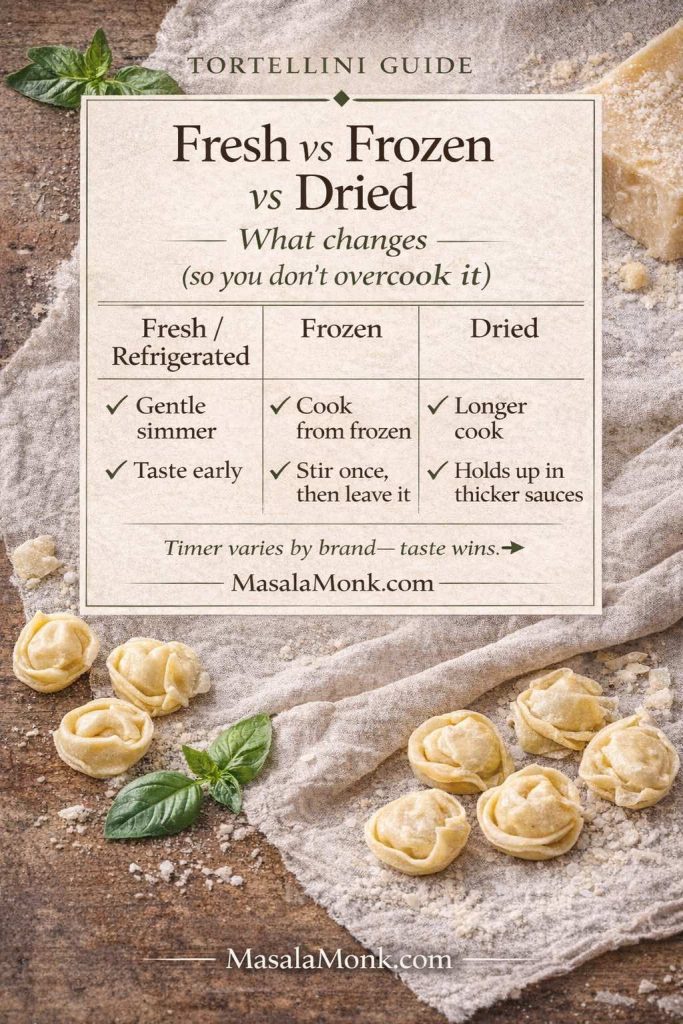
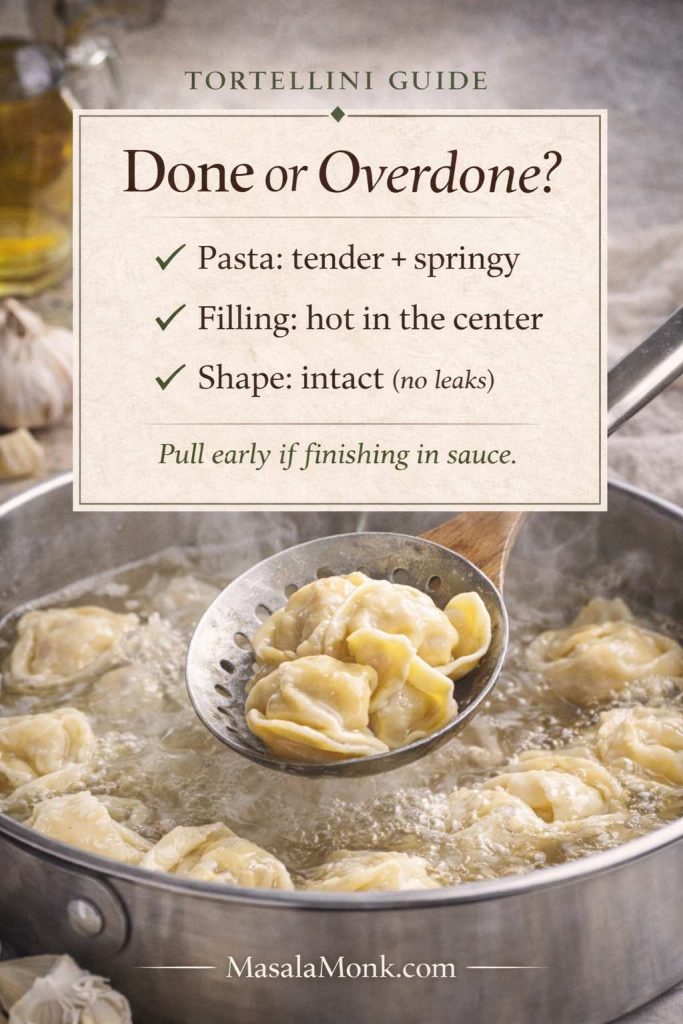
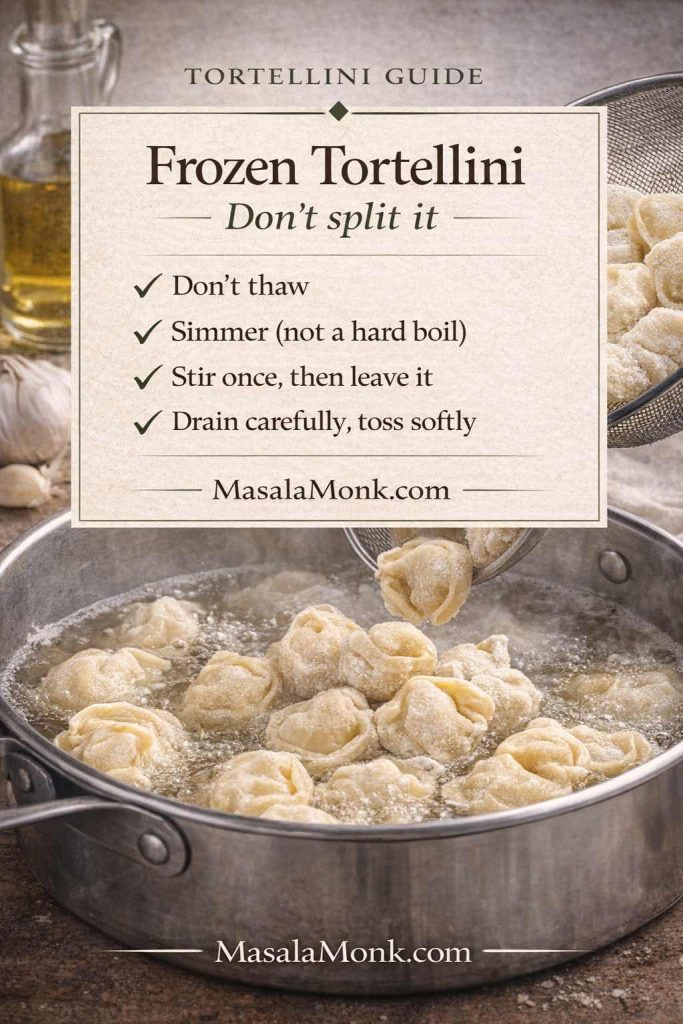
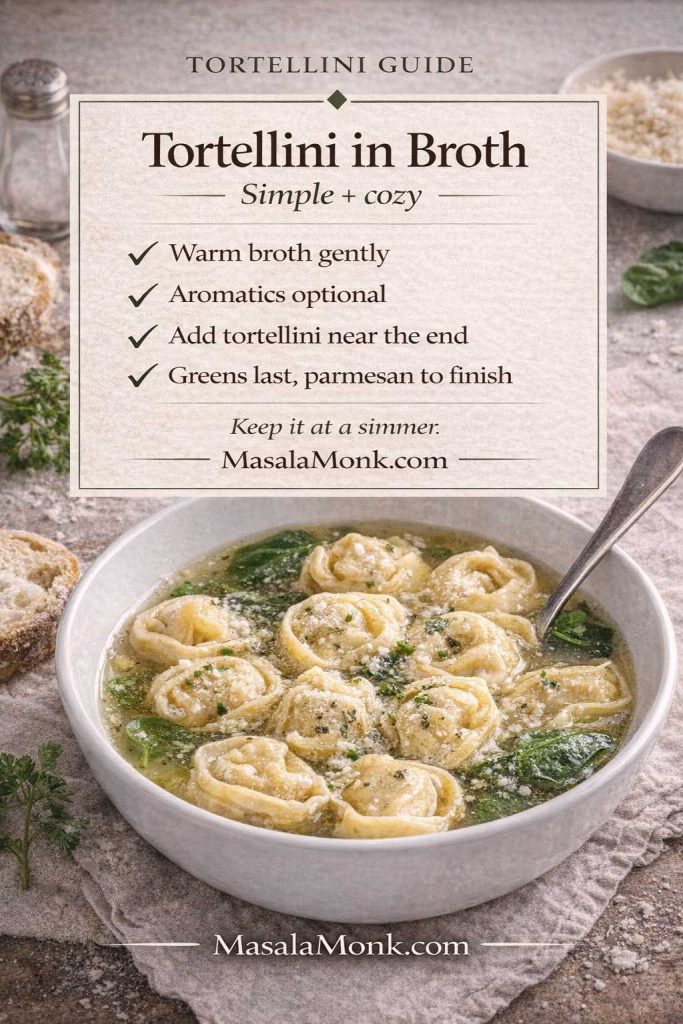
If you’re figuring out how to cook tortellini so it stays tender, bouncy, and intact—without turning mushy or splitting open—you’re about to make tortellini nights much easier. Cooking tortellini is mostly about a few small, repeatable moves: salted water, a controlled simmer, early tasting, and a quick finish in sauce or broth. Once those habits click, you can cook tortellini confidently whether it’s fresh tortellini from the fridge, frozen tortellini from the freezer, or dried tortellini from the pantry.

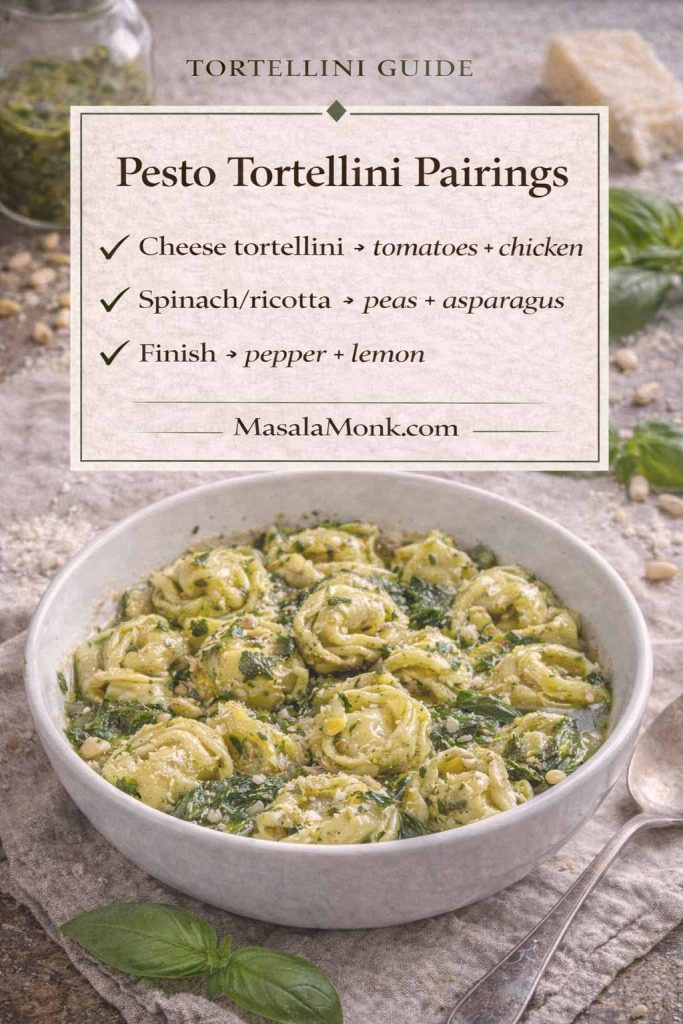
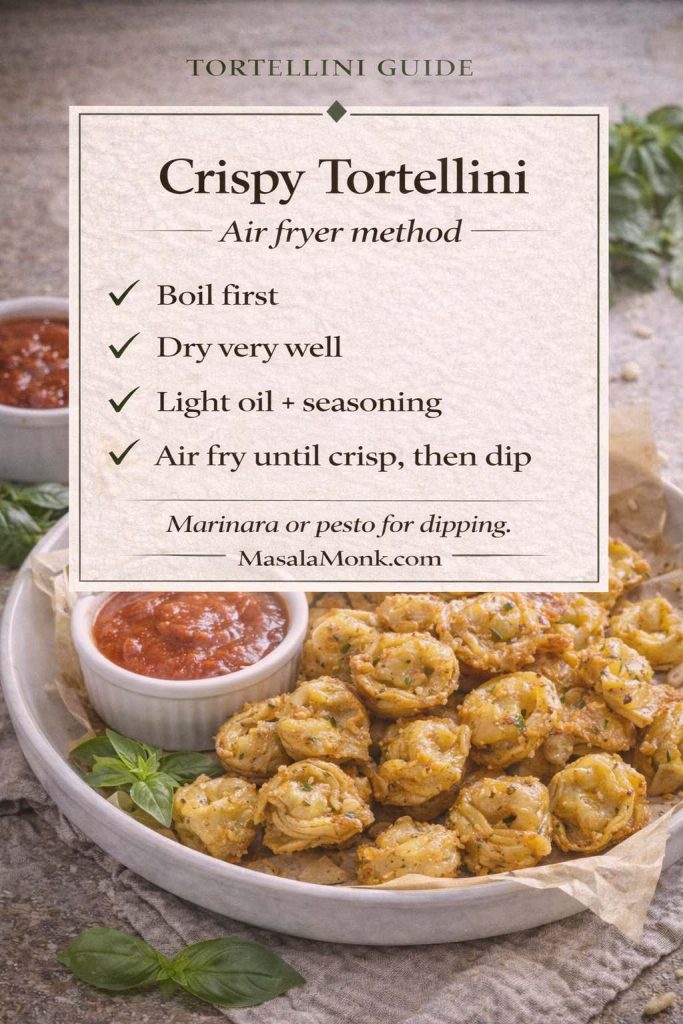
Because tortellini is stuffed pasta, it brings its own richness and seasoning. As a result, dinner doesn’t need a complicated plan. On one night, cheese tortellini can become pesto tortellini with chicken and tomatoes. On another, spinach and ricotta tortellini can turn into a bright, simple pomodoro bowl. Meanwhile, meat tortellini in broth can feel soothing in the best way. And when you want something snacky, you can air fry tortellini until crisp and dip it into marinara.

This is a practical, reader-first guide to how to cook tortellini in the formats you actually buy, followed by dinner frameworks you can reuse without boredom—one pot tortellini, slow cooker tortellini, creamy tortellini pasta, tortellini pomodoro, bolognese tortellini, tortellini in brodo, and tortellini prosciutto e panna.


Tortellini basics that make everything else easier

Tortellini is a small, ring-shaped stuffed pasta with deep roots in Bologna and the surrounding region. Traditionally, tortellini in brodo—tortellini served in broth—is one of the most iconic ways to eat it. If you’re curious about the cultural side, the Dotta Confraternita del Tortellino shares the tradition around the “registered” tortellino filling on their site. You don’t need that history to cook well; still, it explains why tortellini is designed to taste complete with simple treatment.

In everyday cooking, tortellini’s superpower is this: the filling is already seasoned, and the pasta shape catches sauce naturally. Therefore, you can keep your sauce straightforward and still end up with a bowl that feels finished.

Tortellini vs ravioli: why shape changes how you cook and serve

Ravioli is larger and often more delicate, so it’s commonly served with sauce spooned over the top. Tortellini is smaller, which makes it easy to toss in sauce and easy to serve in soups. If you enjoy stuffed pasta in general, you might like MasalaMonk’s playful take on variation and filling ideas in this ravioli piece. It’s a nice reminder that stuffed pasta can be flexible and fun.

Also Read: Manhattan Cocktail Recipe (Classic + 6 Variations)


How to cook tortellini every time: the universal method

Before you choose pesto or cream or broth, lock in the basics. This is how to cook tortellini successfully no matter what the filling is—cheese tortellini, spinach tortellini, meat tortellini, mushroom tortellini, or pumpkin tortellini.

  1. Use a roomy pot and plenty of water
    Stuffed pasta needs space. When the pot is crowded, tortellini sticks and cooks unevenly. More water also helps the temperature recover quickly after you add the pasta.
  2. Salt the water generously
    This matters more than people expect. Tortellini is thick and filled, so the outer pasta can taste bland if the water isn’t seasoned. With salted water, even simple sauces taste better.
  3. Choose a lively simmer over a violent boil
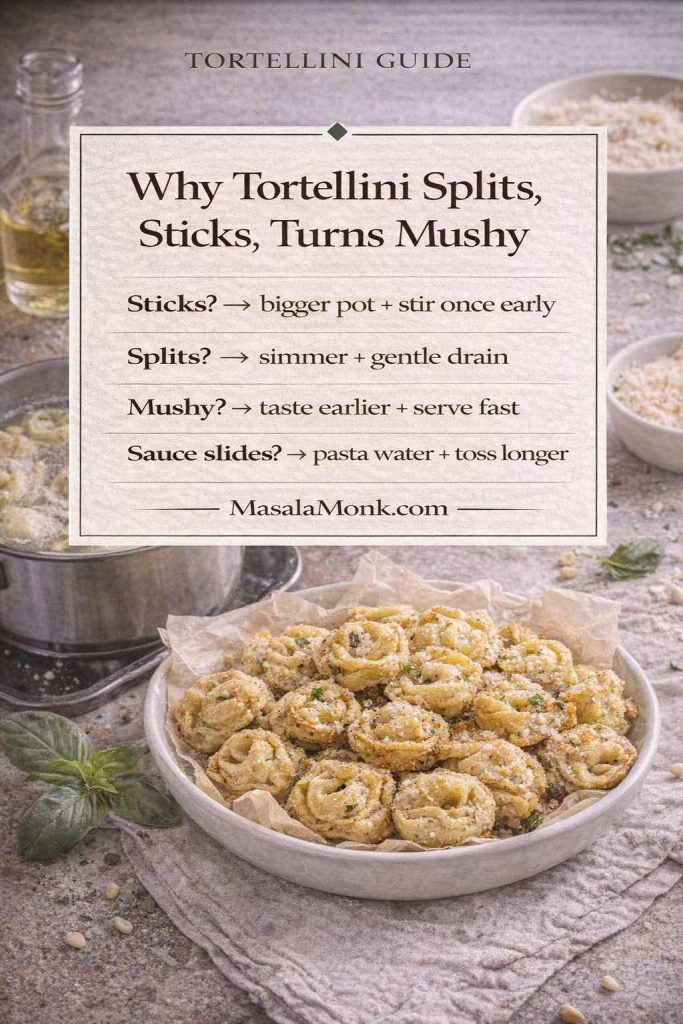
    A roaring, chaotic boil can knock tortellini around and encourage splitting. Instead, keep the water bubbling actively but not aggressively—especially for fresh tortellini and refrigerated tortellini.
  4. Stir early, then back off
    Stir gently right after adding tortellini so it doesn’t stick to itself or to the pot. After that, let it cook. Too much stirring can tear delicate pasta.
  5. Reserve pasta water—every time
    Before draining, scoop out a mug of cooking water. That starchy water helps sauces cling and emulsify. Consequently, pesto turns glossy instead of oily, cream sauces loosen without thinning, and tomato sauces coat instead of sliding.
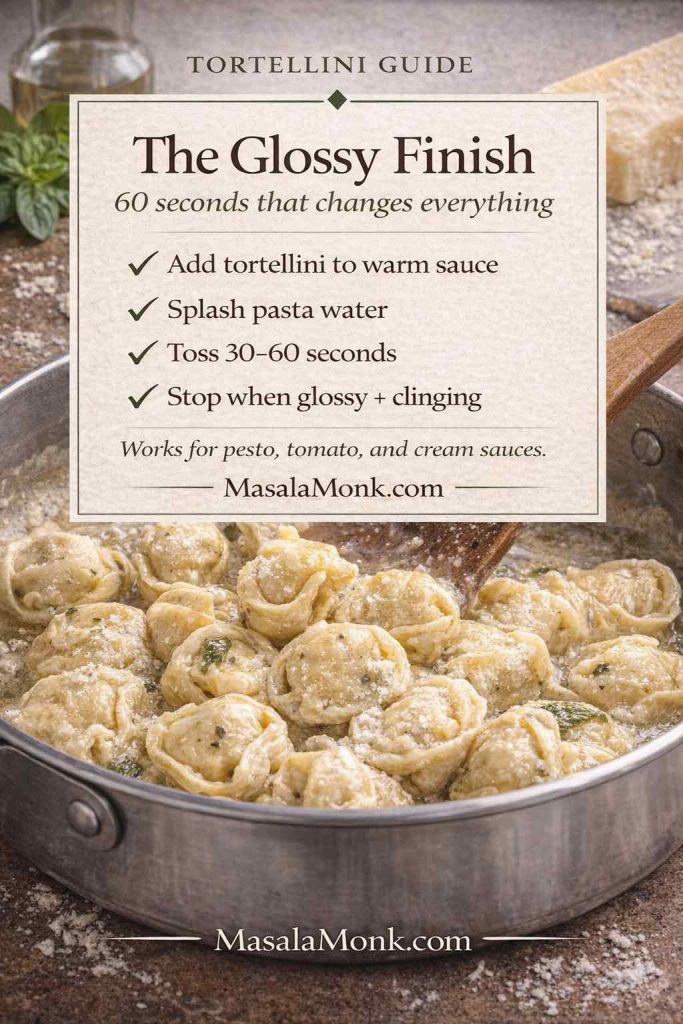
  6. Finish in sauce or broth for 30–60 seconds
    Instead of draining and pouring sauce over the top, toss cooked tortellini in a warm pan of sauce for a minute. This short finish is a major part of how to cook tortellini so it tastes cohesive rather than assembled.

You’ll see these steps repeated throughout the recipes below because they’re the foundation.

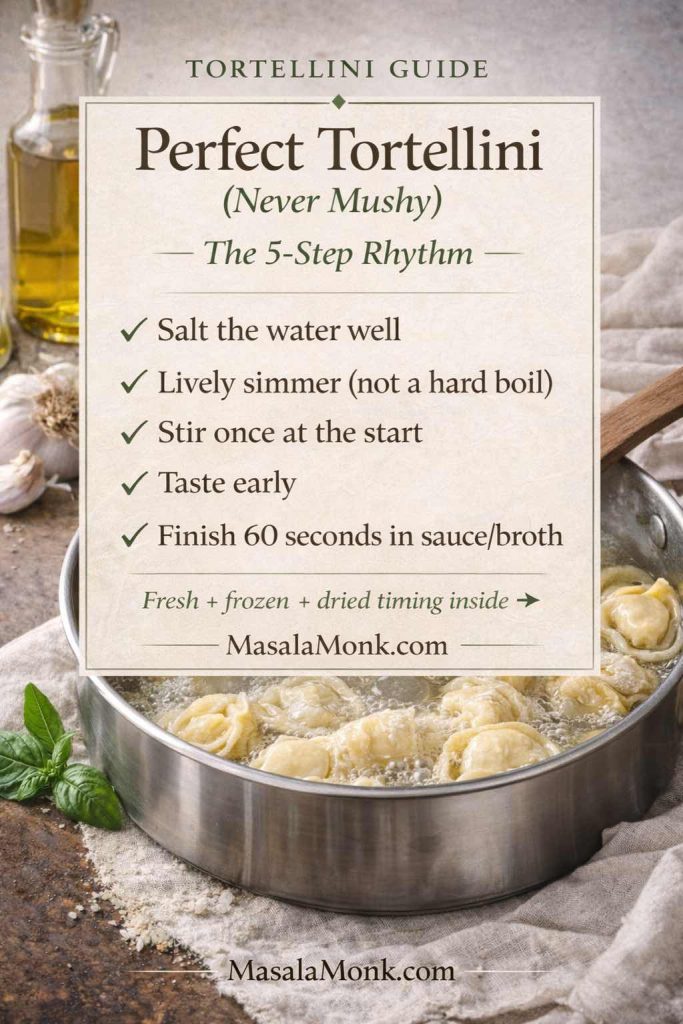
Tortellini guide card showing the 5-step rhythm for how to cook tortellini so it stays tender and not mushy: salt water, simmer, stir once, taste early, finish in sauce or broth.
Save this: the 5-step rhythm for how to cook tortellini (fresh, frozen, or dried) so it stays tender—then finish it in sauce or broth for a glossy, restaurant-style bite.

Also Read: Green Chutney Recipe (Coriander–Mint / Cilantro Chutney)


Tortellini you’ll see most often: fillings and formats

Knowing what you bought makes “what should I do with it?” instantly easier.

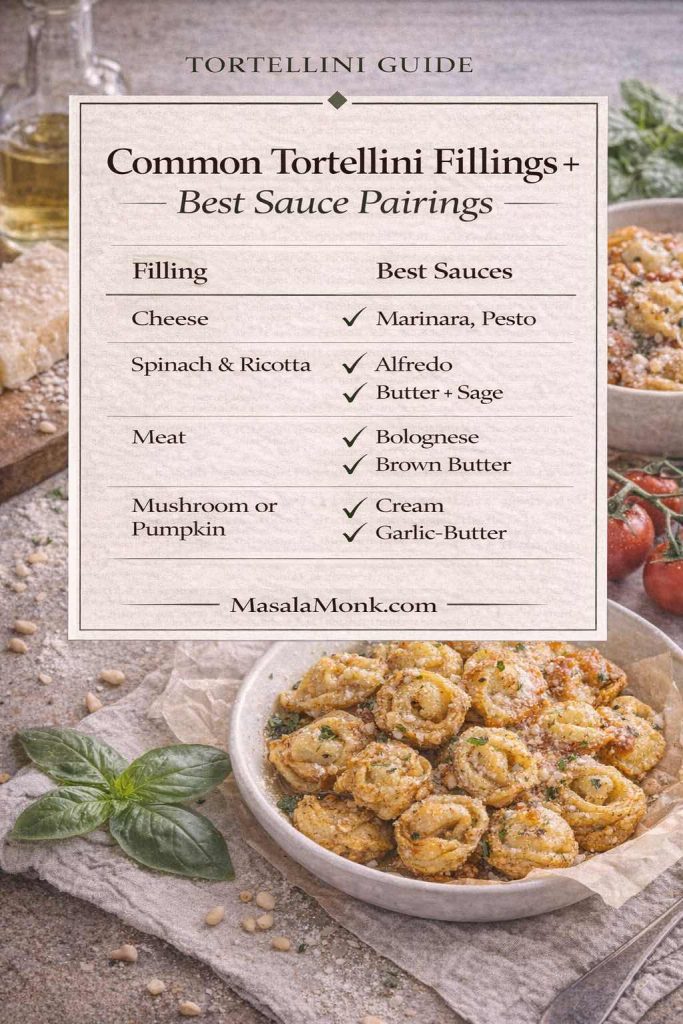
Common fillings and what they naturally like

  • Cheese tortellini is the weeknight workhorse. It might be labeled three cheese tortellini, 3 cheese tortellini, four cheese tortellini, 4 cheese tortellini, five cheese tortellini, or 5 cheese tortellini. It also shows up as tortellini formaggi or tortellini formaggio. Because it’s rich, it pairs beautifully with pesto, tomato sauce, or broth. It also works in a cream sauce, especially with pepper.
  • Spinach tortellini often appears as spinach and ricotta tortellini, ricotta spinach tortellini, or tortellini ricotta spinaci. It’s excellent with lighter sauces: butter and garlic, bright tomato, or a gentle cream finish.
  • Meat tortellini can be labeled meat filled tortellini, meat stuffed tortellini, beef tortellini, or veal tortellini. It shines in broth and also works in ragù when the sauce is balanced.
  • Specialty fillings like mushroom tortellini, porcini tortellini, gorgonzola tortellini, pumpkin tortellini, lobster tortellini, and truffle tortellini (tortellini tartufo) usually taste best with a restrained sauce so the filling remains the star.
Guide card showing common tortellini fillings and best sauce pairings: cheese tortellini with marinara or pesto, spinach and ricotta tortellini with alfredo or butter and sage, meat tortellini with bolognese or brown butter, and mushroom or pumpkin tortellini with cream or garlic butter.
Quick pairing chart: match cheese, spinach & ricotta, meat, and mushroom/pumpkin tortellini to the sauce that flatters the filling—an easy way to pick pesto, marinara, cream, or bolognese without overthinking dinner.

Formats: fresh, refrigerated, frozen, dried

  • Fresh tortellini / refrigerated tortellini cooks quickly and needs gentle heat.
  • Frozen tortellini cooks straight from frozen and benefits from careful tasting.
  • Dried tortellini takes longer and holds up well in thicker sauces.

Once you identify the format, how to cook tortellini becomes far more predictable.

Infographic comparing how to cook fresh tortellini, frozen tortellini, and dried tortellini: gentle simmer and taste early for fresh, cook from frozen and stir once for frozen, longer cook and thicker sauces for dried.
Quick cheat sheet: how to cook fresh, frozen, and dried tortellini without overcooking—use this guide to choose the right simmer style and finish based on what you bought.

Also Read: Best Vermouth for a Negroni Cocktail Drink Recipe


How to cook fresh tortellini and refrigerated tortellini

Fresh and refrigerated tortellini cook fast, so the goal is to hit tender-and-bouncy rather than soft-and-saggy.

Bring salted water to a gentle boil. Then reduce slightly to a lively simmer. Add tortellini and stir gently once or twice. Start checking early and keep tasting.

A lot of refrigerated “fresh style” tortellini lines cook in just a few minutes. For an example of clear brand timing, Giovanni Rana shares cooking guidance on this product page. If you’re cooking rana tortellini, rana cheese tortellini, or a similar refrigerated pack, that’s a helpful reference point.

How to tell it’s done:
The pasta should feel tender but still springy, and the filling should be hot through the center. If the pasta feels floppy or waterlogged, it’s gone too far.

Done-or-overdone tortellini doneness test card showing how to tell tortellini is done: pasta should be tender and springy, filling hot in the center, and the tortellini shape intact without leaks.
Don’t rely on floating alone—use this quick doneness test to know when tortellini is perfectly cooked (tender, springy, hot in the center) before you finish it in sauce.

What to do immediately after draining:
Fresh tortellini keeps cooking from residual heat. Therefore, have your sauce ready before you drain. Toss it in warm sauce right away and loosen with pasta water until glossy. This is a crucial detail in how to cook tortellini well, and it’s also the easiest improvement to make.

Also Read: Sandwich for Breakfast: Breakfast Sandwich Recipe + 10 Variations


How to cook frozen tortellini so it doesn’t split

Frozen tortellini is convenient, but it’s easiest to ruin by treating it roughly.

Don’t thaw it first. Instead, cook it straight from frozen in salted water. Stir gently at the beginning to prevent sticking. Then let it cook and start tasting early. Since frozen tortellini thickness varies by brand and style, tasting beats guessing.

Frozen tortellini cooking guide card with tips to prevent splitting: cook from frozen, simmer not a hard boil, stir once then leave it, drain carefully and toss softly.
Frozen tortellini tip sheet: cook straight from frozen and keep the water at a steady simmer—this prevents splitting and keeps the filling where it belongs.

If you’re using a refrigerated line that’s meant to be cooked from frozen with a simple adjustment, follow the package guidance. Giovanni Rana notes a cook-from-frozen timing approach on the same instruction page.

Once tender, drain carefully and finish gently in sauce. A soft toss matters because hot tortellini is delicate; consequently, aggressive stirring can cause splits right at the end.

That “gentle finish” is central to how to cook tortellini from frozen with consistent results.

Also Read: Rob Roy Drink Recipe: Classic Scotch Cocktail (Perfect + Dry + Sweet Variations)


How to cook dried tortellini and keep it tender

Dried tortellini behaves more like pantry pasta. It needs longer cooking and tolerates a stronger boil, yet it still benefits from tasting near the end.

Bring salted water to a boil. Add tortellini and stir gently. Maintain a steady boil until the pasta is fully tender and the filling is hot through the center.

If you want a reference point for timing expectations, Barilla provides context on this tortellini recipe page. It’s especially useful if you’re cooking barilla tortellini or another shelf-stable tortellini.

After draining, finish the tortellini in sauce for a minute with pasta water. Because dried tortellini is sturdy, it’s excellent for marinara tortellini, bolognese tortellini, and baked pasta dinners.

Also Read: Strawberry Smoothie Recipes (12 Easy Blends + Bowls & Protein Shakes)


How to cook tortellini in broth and tortellini in brodo

Broth is one of the most satisfying ways to serve stuffed pasta. It’s light, soothing, and surprisingly elegant. Better still, broth allows the filling to shine rather than competing with it.

Warm good broth gently. Add aromatics if you like—garlic, onion, pepper, herbs, or a Parmesan rind. Then add tortellini and cook until tender. Finish with Parmesan and pepper.

Tortellini in broth guide card showing how to cook tortellini in brodo: warm broth gently, add aromatics if desired, add tortellini near the end, finish with greens and parmesan.
Tortellini in broth (brodo) template: keep the broth at a gentle simmer and add tortellini near the end so it stays intact—then finish with greens, parmesan, and pepper.

Tortellini in broth with greens and herbs

To make it feel more complete, add greens near the end. Spinach is easiest because it wilts quickly. Kale works too, although it benefits from a little more time. Finish with herbs and a squeeze of lemon if you want extra lift.

Meat tortellini in broth is especially satisfying. However, cheese tortellini in broth can be wonderful too, particularly when you want comfort without heaviness.

Tortellini in brodo: the classic style

Tortellini in brodo is a traditional presentation associated with Bologna. For a cultural reference and overview, Bologna Welcome shares an explanation on this page. At home, keep it simple: good broth, gently cooked tortellini, Parmesan, and pepper. That restraint is what makes it special.

If you’re learning how to cook tortellini for soups, remember this: add the tortellini near the end and keep the simmer gentle so the pasta stays intact.

Also Read: Paper Plane Cocktail Recipe + Best Amaro Substitutes & Tips


Pesto tortellini: bright dinners in minutes

Pesto tortellini is fast, vibrant, and forgiving. It’s especially good with cheese tortellini because the basil and garlic cut the richness. Spinach tortellini works too, although a lighter coating tends to taste better.

Cook tortellini, drain, and reserve pasta water. Warm pesto gently in a pan without boiling it. Toss in tortellini and add pasta water a spoonful at a time until the sauce becomes glossy and clings.

Pesto tortellini pairings guide card showing what to add to pesto tortellini: cheese tortellini with tomatoes and chicken, spinach and ricotta tortellini with peas and asparagus, and a pepper and lemon finish.
Save this pairing guide for pesto tortellini: add tomatoes + chicken to cheese tortellini, pair spinach and ricotta tortellini with peas/asparagus, then finish with pepper and lemon for a brighter bowl.

For pesto inspiration and variations, these MasalaMonk posts fit naturally, and you might want to have a look:

Chicken pesto tortellini with tomatoes

To make chicken pesto tortellini, add shredded chicken at the end and toss briefly. Then add cherry tomatoes or roasted peppers for sweetness. Finish with pepper and a squeeze of lemon. As a result, the bowl stays bright rather than heavy.

Pesto and tortellini with vegetables

For a lighter dinner, add vegetables. Broccoli, peas, asparagus, and zucchini all work. Add sturdy vegetables earlier and leafy greens later. Meanwhile, keep the pesto coating light and glossy.

This is a simple way to practice how to cook tortellini while also making it feel fresh and varied.

Also Read: 7 Pizza Sauce Recipes | Marinara, White Garlic, Alfredo, Buffalo, BBQ, Vodka & Ranch


Creamy tortellini pasta that tastes rich but not heavy

Creamy tortellini is comfort food. Still, it doesn’t have to feel overly heavy. The trick is using pasta water to create a silky sauce rather than a thick one.

Start with butter and garlic in a pan. Add cream and warm gently. Then add tortellini and toss. Finally, loosen with pasta water until glossy. Finish with Parmesan and pepper.

For creamy pasta technique and variations, these MasalaMonk resources are excellent companions:

Tortellini guide card showing how to finish tortellini in sauce with pasta water for a glossy coating: add to warm sauce, splash pasta water, toss 30–60 seconds, stop when glossy and clinging.
The easiest upgrade: finish tortellini in warm sauce with a splash of pasta water for 30–60 seconds—this makes pesto, tomato, and creamy tortellini cling beautifully instead of sliding off.

Cream cheese tortellini for weeknights

Cream cheese tortellini is a fast shortcut that still tastes luxurious. Warm a splash of broth or milk, whisk in cream cheese, and then loosen with pasta water. Add garlic, pepper, and Parmesan. Toss in tortellini and finish with spinach.

Because spinach adds freshness, the bowl feels balanced. Moreover, it turns “creamy” into “creamy but not too much.”

Creamy chicken tortellini and creamy sausage tortellini

To make creamy chicken tortellini, stir shredded chicken in at the end and finish with lemon zest or herbs. For creamy sausage tortellini, brown sausage first, then build the cream sauce around it. Add spinach near the end for color and contrast.

When you’re building these bowls, you’re practicing how to cook tortellini and how to finish it properly—two skills that make the whole category easier.

Also Read: Oat Pancakes Recipe (Healthy Oatmeal Pancakes)


Tortellini pomodoro and marinara tortellini for classic comfort

Tomato sauce is one of the easiest ways to balance rich fillings. Tortellini pomodoro tastes bright and simple, while marinara tortellini leans more cozy and savory.

Warm tomato sauce in a pan. Cook tortellini. Add it to the sauce and toss gently. Use pasta water to help the sauce cling. Finish with Parmesan and a drizzle of olive oil.

If you like making sauce from scratch, MasalaMonk has a helpful guide to tomato sauce from fresh tomatoes. If you want multiple sauce styles for different moods, this roundup is useful: sauce variations including marinara and vodka.

How to cook tortellini and mushrooms in tomato sauce

Sauté mushrooms until browned. Add them to the sauce. Then toss in tortellini and finish with Parmesan and pepper. This works especially well with mushroom tortellini, but it upgrades plain cheese tortellini too.

Tortellini and spinach in tomato sauce

Add spinach at the end so it stays green. Meanwhile, keep the sauce bright with a little basil or oregano.

In both cases, the key is the finish: that quick toss is still how to cook tortellini so it tastes unified.

Also Read: Double Chocolate Chip Cookies – Easy Recipe with 7 Variations


Bolognese tortellini, ground beef tortellini, and sausage tortellini

Ragù-style sauces pair beautifully with tortellini, particularly meat tortellini and cheese tortellini. However, because tortellini filling is already rich, the sauce should be savory and balanced rather than greasy.

For a solid ragù foundation, MasalaMonk’s bolognese sauce recipe is a great internal reference.

How to cook ground beef and tortellini: weeknight ragù energy

Brown ground beef with onion and garlic. Add tomato sauce and herbs. Simmer briefly. Cook tortellini separately, then toss it into the sauce for a minute with a splash of pasta water. Finish with Parmesan.

Italian sausage and tortellini: deeper flavor, same method

Brown sausage first. Add onion and garlic. Add sauce and a splash of broth. Toss in cooked tortellini and finish with spinach and Parmesan. Consequently, sausage and tortellini tastes hearty without feeling clumsy.

Tortelloni bolognese note

If you’re using tortelloni (larger stuffed pasta), keep the stirring gentle and taste early. Tortelloni can be slightly more delicate when hot, so finishing carefully matters even more.

In every case, you’re applying the same idea: cook tortellini gently, then finish it briefly in sauce. That’s how to cook tortellini so it stays intact and tastes cohesive.

Also Read: 10 High Calorie Protein Shakes & Smoothie Recipes for Healthy Weight Gain


How to cook one pot tortellini that doesn’t feel like a shortcut

One pot tortellini is popular because it saves dishes, but it can also taste genuinely good when the sauce and pasta finish together.

Start by sautéing onion and garlic in olive oil. Add broth and sauce. Bring to a gentle simmer. Add tortellini and cook until tender. Finish with Parmesan and herbs.

One-pot tortellini guide card showing the correct order: sauté aromatics, add sauce and broth, simmer gently, add tortellini, add greens last and finish with parmesan.
One-pot tortellini works when the order is right—sauté first, simmer the liquid, then add tortellini and finish with greens so it stays tender instead of overcooking.

If you like the general one-pot structure, MasalaMonk’s one-pot chicken bacon ranch pasta shows the comfort-forward approach in a way that’s easy to adapt.

One pot tortellini and sausage

Brown sausage first to build flavor. Then add onion and garlic, pour in marinara and broth, and add tortellini. Finish with spinach and Parmesan.

One pot chicken and tortellini

Build a lighter base with broth and a spoonful of tomato sauce. Add tortellini, then stir in shredded chicken near the end. Finish with basil and pepper. Alternatively, swap the tomato base for pesto and you’ve got chicken tortellini with pesto in a one-pot lane.

One pot tortellini and vegetables

Add broccoli, peas, asparagus, or zucchini. Add sturdy vegetables earlier and greens later. Meanwhile, keep the sauce simple so the bowl stays clean.

These dinners reinforce how to cook tortellini while also keeping the routine interesting.

Also Read: Healthy Pumpkin Spice Latte (Low Cal, Real Pumpkin)


Slow cooker tortellini and crock pot chicken tortellini that stays tender

Slow cooker tortellini can be excellent, yet timing matters. Tortellini cooks quickly, so it should go in near the end. Add it too early and it turns soft. Therefore, build the base first, then add tortellini late.

Slow cooker tortellini guide card explaining when to add tortellini: build the base first, cook chicken and vegetables until tender, add tortellini near the end, and serve soon to prevent mush.
Slow cooker rule: add tortellini at the end so it stays tender—this is the key to crock pot chicken tortellini and slow cooker tortellini that doesn’t turn mushy.

For a useful internal reference on slow cooker soup structure, MasalaMonk’s crock pot lasagna soup is a strong companion.

How to cook chicken tortellini crock pot style (brothy or creamy)

Add chicken, broth, aromatics, and vegetables to the slow cooker. Cook until the chicken is tender, then shred it. Add tortellini during the final stretch. Finish with spinach and Parmesan.

For a creamy version, stir in cream cheese or a splash of cream right before serving. This approach naturally covers chicken tortellini crock pot, chicken tortellini in crock pot, chicken tortellini slow cooker, and crockpot chicken and tortellini without forcing anything.

How to cook slow cooker tortellini with sausage

Brown sausage if you can; it adds depth. If you’re short on time, it still works, although the flavor is milder. Add sauce and broth, let the base cook, then add tortellini near the end. Finish with Parmesan and pepper.

Again, the principle holds: timing is the heart of how to cook tortellini in slow cooker meals.

Also Read: Mayo Recipe: 15+ Homemade Mayonnaise Variations


How to cook instant Pot tortellini with better control

Stuffed pasta can overcook under pressure, so a controlled simmer often works better than a long pressure cook.
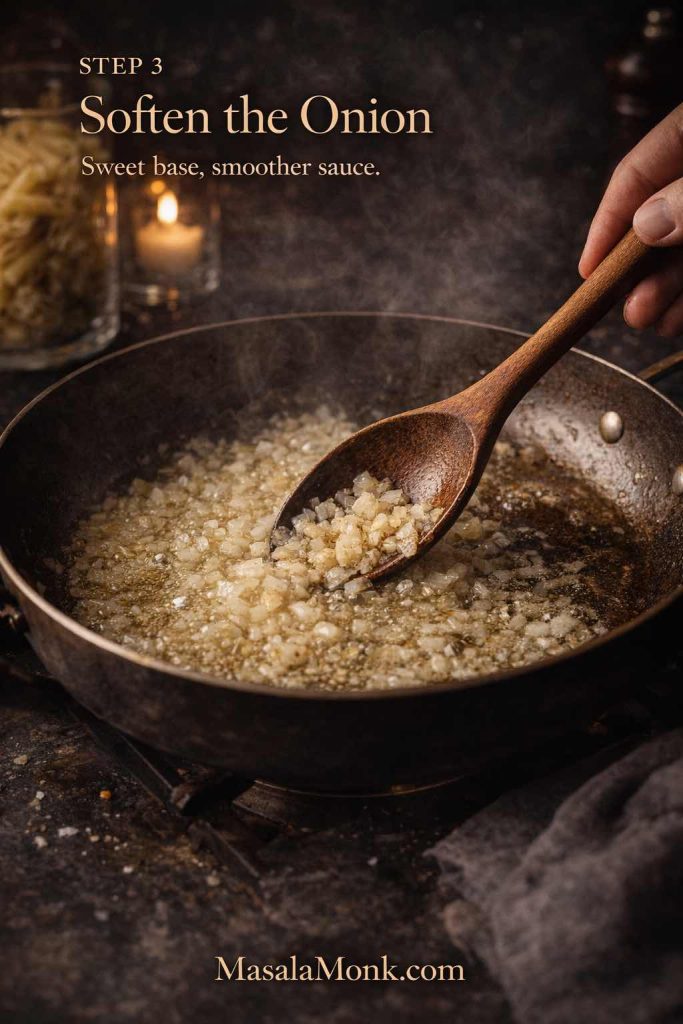
Use sauté mode to cook onion and garlic. Add broth and sauce. Bring to a simmer. Add tortellini and cook until tender, tasting early. Finish with Parmesan and herbs.

It’s simple, yet it’s reliable. In other words, it’s a practical way to apply how to cook tortellini when you want speed without guesswork.

Also Read: Instant Pot Lentil Recipes for Effortless Weight Loss and Quick Meals


Air fry tortellini: crunchy snacks and easy appetizers

Air fried tortellini is crunchy, salty, and perfect for dipping. It’s also a great way to make a simple package feel like a fun event.

Cook tortellini first. Drain thoroughly and pat dry. Toss lightly with oil and seasoning. Air fry until crisp, shaking occasionally for even browning.

Crispy tortellini air fryer guide card showing how to air fry tortellini: boil first, dry very well, toss with light oil and seasoning, air fry until crisp, then serve with marinara or pesto for dipping.
Air fried tortellini tip: boil, then dry it really well before air frying—this is the key to crispy tortellini (not soggy), perfect with marinara or pesto for dipping.

For a tested external reference, The Kitchn shares a method and review on air-fried cheese tortellini.

Air fryers vary, so technique matters. If you run into uneven browning or sogginess, MasalaMonk’s air fryer mistakes guide helps you troubleshoot quickly.

For another crisp snack companion, MasalaMonk’s air fried chilli garlic potato bites is a fun pairing idea for parties.

Serve air fry tortellini with marinara, pesto, or a creamy dip. If you want “fried tortellini” vibes without deep frying, this method hits that craving.

Also Read: French Toast Sticks (Air Fryer + Oven Recipe) — Crispy Outside, Custardy Inside


Tortellini prosciutto e panna: How to cook the creamy classic

Tortellini prosciutto e panna is one of those dishes that tastes like you ordered it, even though it comes together quickly. You get a silky cream sauce, savory prosciutto, tender pasta, and a peppery finish.

For a traditional reference, La Cucina Italiana shares a classic approach on tortellini panna e prosciutto.

To make it at home, cook tortellini gently and reserve pasta water. Warm butter in a pan, sizzle chopped prosciutto briefly, then add cream. Toss in tortellini and loosen with pasta water until glossy. Finish with black pepper and Parmesan.

If you enjoy understanding how different Parmesan styles affect flavor, MasalaMonk’s Parmesan guide is a great companion.

This dish is also a reminder that how to cook tortellini for cream sauces is mostly about the finish: gentle toss, glossy coating, and serving promptly.

Also Read: Peanut Butter Cookies (Classic Recipe & 3 Variations)


Store-bought tortellini: Rana, Barilla, Buitoni, and what really matters

Store-bought tortellini can taste excellent. The secret isn’t magic—it’s matching format to method and finishing properly.

  • For refrigerated rana tortellini or giovanni rana tortellini, keep the simmer gentle and taste early. If you want a concrete reference for timing, check Giovanni Rana’s instructions.
  • For pantry-style products such as barilla tortellini (where available), longer boiling and sturdier sauces work well. Timing expectations are reflected on Barilla’s recipe page.
  • For buitoni tortellini, the same logic applies: salted water, gentle simmer, early tasting, and a brief finish in sauce.

If you like browsing for variation ideas, these external sources are useful for inspiration:

The big takeaway is simple: brands vary, but how to cook tortellini successfully is consistent—gentle cooking and a smart finish.

Also Read: Moscow Mule Recipe (Vodka Mule): The Master Formula + 9 Variations


Dietary versions: vegan tortellini, vegetarian tortellini, gf tortellini, eggless, non-dairy

Tortellini can fit many diets if you choose the right product and pair it with the right sauce.

  • Vegan tortellini / non dairy tortellini: finish in tomato sauce, broth, or dairy-free pesto. For pesto flexibility, MasalaMonk’s pesto hub is a helpful starting point.
  • Vegetarian tortellini: cheese tortellini and spinach and ricotta tortellini work beautifully in pesto, tomato, and light cream lanes.
  • GF tortellini: keep the simmer gentle and stir carefully, since gluten-free pastas can be more delicate.
  • Eggless tortellini: treat it like delicate fresh pasta and avoid aggressive boiling.

If you occasionally enjoy pasta alternatives, MasalaMonk has thoughtful reads on lentil pasta and keto-friendly pasta alternatives.

No matter the diet, the method stays the same. In other words, how to cook tortellini still comes down to gentle heat, tasting early, and finishing properly.

Also Read: Blueberry Pancakes (6 Recipes) + Homemade Pancake Mix


Troubleshooting: quick fixes when tortellini misbehaves

Even when you’ve learned how to cook tortellini, a few common problems can pop up. Fortunately, most fixes are simple.

Tortellini troubleshooting guide card with quick fixes: tortellini sticks (use a bigger pot and stir once early), splits (simmer and drain gently), turns mushy (taste earlier and serve fast), and sauce slides (use pasta water and toss longer).
If tortellini sticks, splits, or turns mushy, it’s usually a heat-and-handling issue—use these quick fixes to keep stuffed pasta intact and perfectly tender.

Tortellini sticks together
Use a larger pot and more water. Stir gently right after adding it. If it clumps anyway, don’t force it aggressively; often it loosens as it cooks.

Tortellini splits or leaks filling
Lower the boil to a lively simmer. Stir less. Drain gently. If it’s frozen, don’t thaw first.

Tortellini turns mushy
It likely overcooked or sat too long in hot sauce. Next time, taste earlier and serve soon after finishing.

Sauce is thin or slides off
Use reserved pasta water and toss longer. The starch helps emulsify. As a result, the sauce clings instead of slipping.

Also Read: Baked Jalapeño Poppers (Oven) — Time, Temp & Bacon Tips


Leftovers: storing and reheating without ruining the texture

Tortellini is best fresh, yet leftovers can still be enjoyable when reheated gently.

Reheat tortellini guide card with tips for leftovers: for creamy tortellini add a splash of milk or water and warm gently, for tomato-based tortellini add a spoon of water and stir, and for tortellini in broth reheat without hard boiling.
Leftover tortellini reheats best with gentle heat and a splash of liquid—use this quick guide to keep creamy, tomato, and broth-based tortellini from turning dry or mushy.

For safety guidance, these references are reliable:

For texture, reheat slowly and add a splash of liquid:

  • For creamy tortellini pasta, add a little milk or water and warm gently.
  • For tomato-based tortellini, add a spoonful of water and stir.
  • For tortellini in broth, warm slowly without boiling hard.

This approach preserves the “just cooked” feel as much as possible.

Also Read: Classic Deviled Eggs (Easy) + 8 Flavorful Variations


What to serve with tortellini so dinner feels complete

A good side dish doesn’t need to be complicated. It just needs to complement the bowl.

Garlic bread is a classic with marinara tortellini and bolognese tortellini. If you want a homemade option, MasalaMonk’s garlic bread loaf recipe fits naturally.

What to serve with tortellini pairing guide card suggesting sides for different sauces: tomato sauces with garlic bread and salad, cream sauces with roasted vegetables and lemony greens, broth/brodo with crusty bread and herbs, and pesto with tomatoes and simple vegetables.
Not sure what to serve with tortellini? Use this quick pairing guide to build a complete dinner—match your sauce (tomato, creamy, broth, or pesto) with an easy side that balances the bowl.

If you’re building a more social meal—especially with tortellini prosciutto e panna—a small board works beautifully. MasalaMonk’s charcuterie board guide can help you set that up with confidence.

For quick seasoning support in soups and sauces, an herb blend can help. MasalaMonk’s Italian seasoning mix is a simple pantry staple.

If you want baked-pasta comfort on another night, MasalaMonk’s baked ziti recipes can offer inspiration, while their béchamel sauce guide and cottage cheese lasagna are excellent for creamy, layered comfort.


A simple dinner “template” that makes tortellini nights effortless

When you’re holding a pack of tortellini and don’t want to overthink, use this quick template:

  1. Pick the format: fresh/refrigerated, frozen, or dried.
  2. Pick the lane: pesto, creamy, tomato, broth, or ragù.
  3. Pick one add-in: chicken, sausage, mushrooms, or greens.
  4. Pick a finish: Parmesan, pepper, lemon, or herbs.
Tortellini dinner template guide card showing a simple build-your-own dinner method: pick the format (fresh, frozen, dried), pick the lane (pesto, cream, tomato), pick one add-in (chicken, sausage, mushrooms, greens), and pick a finish (parmesan, pepper, lemon, herbs).
Save this “pick 4” tortellini dinner template: choose your tortellini format, sauce lane, one add-in, and a finishing touch—an easy way to turn any pack of tortellini into dinner without overthinking.

That’s it. With those four choices, you’ll never feel stuck—and you’ll naturally practice how to cook tortellini in ways that keep getting easier.

Also Read: Sheet Pan Chicken Fajitas Recipe (Easy One-Pan Oven Fajitas)


The bottom line on how to cook tortellini

The best way to master how to cook tortellini isn’t memorizing an exact number of minutes. It’s repeating the same handful of habits until they become automatic: salt the water, keep the simmer controlled, taste early, reserve pasta water, and finish in sauce or broth.

From there, tortellini becomes endlessly flexible. Pesto tortellini can become a bright chicken dinner. Creamy tortellini pasta can become a cozy bowl with spinach. Tortellini pomodoro can become a reliable classic. Tortellini in brodo can become your comforting reset meal. One pot tortellini can become your low-dishes routine. Slow cooker tortellini can become your hands-off plan. Air fry tortellini can become your crunchy appetizer.

Once you have the rhythm, you won’t just know how to cook tortellini—you’ll know how to turn it into dinner, almost any way you want, whenever you need it.

Also Read: How to Make Churros (Authentic + Easy Recipe)

FAQs about How to Cook Tortellini

1) How long does it take to cook tortellini?

Most tortellini cooks quickly, yet the exact time depends on whether it’s fresh tortellini, refrigerated tortellini, frozen tortellini, or dried tortellini. In practice, the best approach is to taste early and keep checking until the pasta is tender and the filling is hot through the center. If you’re learning how to cook tortellini consistently, tasting is more dependable than relying on one fixed number.

2) How do I know when tortellini is done cooking?

Tortellini is done when the pasta feels tender but still springy and the filling tastes fully warmed. Also, the pieces usually look slightly plumper. If the pasta feels firm at the edges, it needs a bit more time. Conversely, if it feels floppy or waterlogged, it likely cooked too long.

3) Should tortellini float when it’s finished?

Often, tortellini will float as it nears doneness, although floating alone isn’t a guarantee. Instead, treat floating as a sign to start tasting. That way, you’ll learn how to cook tortellini to the exact texture you like.

4) Do I cook frozen tortellini without thawing?

Yes—cook frozen tortellini straight from frozen. Thawing can weaken the pasta and increase the chance of splitting. Rather than thawing, add the frozen tortellini to salted water at a controlled boil and taste early as it cooks.

5) Why does my tortellini break or leak filling?

Tortellini may split if the boil is too aggressive, if it’s stirred roughly, or if it’s overcooked. For better results, keep the water at a lively simmer, stir gently only at the start, and drain carefully. In addition, finishing tortellini in sauce with a light toss helps prevent tearing.

6) What’s the best way to cook cheese tortellini?

Cheese tortellini tastes best when the water is salted and the pasta is finished briefly in sauce. After draining, toss it in marinara, pesto, or a light cream sauce with a splash of pasta water to help the sauce cling. If you’re focusing on how to cook tortellini for weeknights, cheese-filled tortellini is the easiest place to start.

7) How do I cook spinach and ricotta tortellini without making it soggy?

For spinach and ricotta tortellini (also called ricotta spinach tortellini or tortellini ricotta spinaci), use a gentle simmer and start tasting early. Then, avoid letting it sit in a colander. Instead, transfer it straight into a warm sauce so it stays tender yet not mushy.

8) Can I cook tortellini in broth?

Absolutely. Tortellini in broth is a classic way to serve stuffed pasta. Warm the broth gently, then cook tortellini at a mild simmer until tender. Afterwards, add herbs or spinach near the end for a fresher bowl.

9) What is tortellini in brodo?

Tortellini in brodo is tortellini served in broth, traditionally associated with Bologna. Even at home, it’s straightforward: a flavorful broth, tender tortellini, and a simple finish like Parmesan and pepper.

10) How do I make pesto tortellini without it turning oily?

To keep pesto tortellini glossy, warm the pesto gently instead of boiling it. Then, add a splash of reserved pasta water while tossing. As a result, the sauce emulsifies and coats the tortellini evenly.

11) What’s the easiest creamy tortellini pasta for beginners?

A simple creamy tortellini pasta often starts with butter, garlic, and cream, finished with pasta water for a silky texture. Alternatively, cream cheese tortellini is even simpler: melt cream cheese with a little milk or broth, then loosen with pasta water before tossing in tortellini.

12) Can I make one pot tortellini?

Yes—one pot tortellini is a practical dinner. Simmer your sauce with broth, then add tortellini and cook until tender. Finally, finish with Parmesan or herbs. This method works particularly well for cheese tortellini pasta and tortellini with veggies.

13) Can I make tortellini in a slow cooker or crock pot?

Yes, though timing matters. For slow cooker tortellini or crock pot tortellini, build the soup or sauce base first and add tortellini near the end so it doesn’t overcook. The same idea applies to chicken tortellini crock pot and chicken tortellini slow cooker recipes.
14) How do I make chicken tortellini in a crock pot without mushy pasta?

Cook the chicken and broth base first, shred the chicken, then add tortellini during the last part of cooking. That way, the tortellini stays tender. Likewise, add spinach at the end so it remains bright.

15) Can I cook tortellini in an Instant Pot?

Yes, although it’s easy to overcook stuffed pasta under pressure. For better control, use sauté mode to build flavor, then simmer tortellini gently until tender. This approach fits how to cook tortellini when you want speed without guesswork.

16) How do I make air fryer tortellini?

To make air fry tortellini (or air fried tortellini), cook tortellini first, drain well, pat dry, then toss lightly with oil and seasoning. Next, air fry until crisp, shaking occasionally for even browning. Serve with marinara, pesto, or a creamy dip.

17) What’s the difference between tortellini and tortelloni?

Tortelloni is larger than tortellini and often has a softer, more delicate feel. Because of its size, it may need a bit more time to heat through. Still, the same principles for how to cook tortellini apply: gentle simmer, early tasting, and a careful finish in sauce.

18) How do I cook store-bought tortellini like Rana tortellini or Buitoni tortellini?

For rana tortellini, giovanni rana tortellini, and buitoni tortellini, follow the package timing as a baseline, then taste to confirm doneness. Usually, refrigerated styles cook quickly, whereas dried versions take longer. In all cases, finishing in sauce with pasta water improves texture and flavor.

19) How do I keep tortellini from sticking together?

Use plenty of water, stir gently right after adding tortellini, and avoid overcrowding the pot. Additionally, don’t drain and let it sit too long; transferring into sauce promptly helps keep pieces separate.

20) Can I reheat tortellini without it turning mushy?

Yes. Reheat gently with a splash of liquid—water for tomato sauces, milk or broth for creamy sauces, and extra broth for soups. Then warm slowly rather than boiling hard. This method helps preserve texture when you’re practicing how to cook tortellini for leftovers, too.

21) Can tortellini be vegetarian or vegan?

Yes. Vegetarian tortellini often includes cheese or spinach and ricotta. Vegan tortellini and non dairy tortellini are also available depending on brand and store. Even so, the cooking method stays similar: gentle simmer, early tasting, and a careful finish.

22) Is there gluten-free tortellini?

Yes—gf tortellini exists, although it can be more delicate than wheat-based pasta. Therefore, keep the simmer controlled, stir minimally, and taste early so it doesn’t overcook.
23) Can I make tortellini with sausage or ground beef?

Definitely. Sausage tortellini works well in tomato sauce, creamy sauces, or one-pot dinners. Similarly, ground beef tortellini pairs nicely with a bolognese-style sauce. For best texture, cook tortellini separately and toss it in the sauce briefly right before serving.

24) What are the best sauces for tortellini?

The best sauces depend on the filling. Cheese tortellini suits pesto, marinara, pomodoro, and cream sauces. Spinach and ricotta tortellini often shines with lighter tomato or butter-garlic sauces. Meat tortellini is excellent in broth and also works in ragù. When in doubt, keep the sauce balanced and let the filling lead.

25) Why does my tortellini taste bland even when the sauce is good?

Usually, the cooking water wasn’t salted enough, or the tortellini wasn’t finished in sauce. Salted water seasons the pasta itself, while a short toss in sauce helps the flavors stick. Together, those steps are the simplest upgrade in how to cook tortellini so it tastes fully seasoned.

Posted on 12 Comments

Vodka Pasta (Penne alla Vodka) + Spicy Rigatoni, Chicken, and Gigi Recipes

Penne alla vodka in a creamy tomato vodka sauce, with a fork lifting glossy pasta in a moody restaurant-style setting.

Vodka pasta is the kind of dinner that looks and tastes like you planned ahead—even when you absolutely didn’t. A good vodka pasta sauce is silky and tomato-forward, softened by cream, and finished in a way that makes it cling to the pasta instead of sliding off. Make it once and you’ll understand why penne alla vodka became a modern classic, why spicy rigatoni vodka is so hard to stop eating, and why chicken vodka pasta feels like a complete meal without extra fuss.

Vodka isn’t there to make anything taste boozy. Used correctly, it subtly lifts aroma and rounds the sauce into something that feels brighter and more “restaurant.” If you like reading the why behind the method, Serious Eats explains what vodka contributes (and what happens when you skip it). Does vodka sauce really need vodka?

Now let’s cook a vodka sauce pasta that tastes like the one you crave, then turn it into the versions people actually make at home: rigatoni alla vodka, spaghetti vodka, linguine alla vodka, spicy vodka rigatoni, gigi pasta style, and chicken and vodka pasta.

Also Read: Authentic Louisiana Red Beans and Rice Recipe (Best Ever)


Vodka Pasta Sauce: The Flavor You’re Aiming For

A proper vodka pasta sauce has a very particular balance:

  • Tomatoes taste deep, not raw because tomato paste is cooked until it smells rich and slightly sweet.
  • Cream softens edges so the sauce feels luxurious without turning heavy.
  • Vodka adds a subtle lift—not a vodka flavor, but a brighter finish and aroma.
  • Pasta water ties everything together so the sauce coats the noodles in a glossy layer.

When it’s right, vodka sauce and pasta tastes cohesive—like every component was meant to be together. When it’s “almost right,” the sauce usually falls into one of these traps: the tomato paste wasn’t cooked enough, the cream was added over too-high heat, the sauce wasn’t seasoned in stages, or the pasta wasn’t finished in the pan with pasta water.

You don’t need fancy ingredients to fix any of that. You just need a steady method.

Also Read: Vodka with Lemon: Easy Cocktails, Martini Twist & DIY Infusion


Penne alla Vodka Ingredients for Classic Vodka Pasta

This is written as penne alla vodka because it’s the classic, but the sauce is equally good for pasta penne alla vodka variations, penne and vodka nights, and even spaghetti and vodka sauce.

Pasta

  • 350–400 g penne (or see the pasta-shape section for rigatoni/spaghetti/linguine swaps)

Vodka pasta sauce

  • 2–3 tbsp olive oil (or 1 tbsp olive oil + 1 tbsp butter)
  • 1 small onion, finely chopped (or 2 shallots)
  • 4–6 garlic cloves, minced
  • 2–3 tbsp tomato paste
  • ½ to 1 tsp chilli flakes (optional; you’ll adjust later for spicy vodka pasta)
  • ½ cup (120 ml) vodka
  • 1 can (400 g) crushed tomatoes or passata
  • ½ cup (120 ml) cream (heavy cream or cooking cream)
  • ½ cup grated Parmesan (plus extra to serve)
  • Salt and plenty of black pepper

To finish

  • 1–2 cups reserved pasta water (hot)

If you like the idea of building your tomato foundation from scratch, a smooth homemade base makes the final sauce feel especially clean: Tomato sauce from fresh tomatoes
And if you want a simple tomato sauce reference that’s useful across many dinners—not just vodka pasta—this is a strong baseline: Marinara sauce recipe

For cheese, a proper grating-style Parmesan melts smoothly and adds the savory depth vodka and cream sauces need. If you’ve ever wondered why some “Parmesan” behaves differently (melting well vs turning grainy), this internal guide is genuinely helpful: Parmesan cheese and its varieties


How to Make Vodka Pasta Step by Step

Start the pasta water for vodka sauce pasta

Bring a large pot of water to a boil. Once boiling, salt it well. Drop in the pasta and cook it until it’s just shy of al dente—because it’s going to finish in the sauce.

Hand sprinkling coarse salt into a steaming pot of boiling water before cooking pasta for penne alla vodka.
Salt early so the pasta is seasoned from within—then reserve a mug of starchy water to make the sauce cling later.

Before draining, reserve at least 1 cup of pasta water (2 cups is even better). This isn’t optional; it’s how vodka pasta becomes glossy and cohesive. Barilla’s explanation of why pasta water matters is one of the clearest practical references out there: How to use pasta water

Drain the pasta, but don’t rinse it. That surface starch helps the sauce cling.

Prepped ingredients for penne alla vodka—chopped onion, minced garlic, tomato paste, chilli flakes, cream, vodka, and grated Parmesan arranged on a dark countertop.
Having everything measured and within reach prevents scorched garlic and overcooked tomato paste—two small mistakes that can dull the sauce.

Build the base: onion, garlic, chilli

While the pasta cooks, warm olive oil (and butter if using) in a wide pan over medium heat.

Add onion with a pinch of salt. Let it soften slowly until translucent and lightly golden. This step quietly shapes the entire sauce—rush it and the sauce can taste sharp; do it properly and the sauce tastes rounded.

Chopped onions gently sautéing in olive oil in a skillet, stirred with a wooden spoon to build the base for penne alla vodka sauce.
Cook the onion until it turns translucent and smells sweet—this mellow base keeps the finished sauce smooth instead of sharp.

Stir in the garlic and cook until fragrant. Keep it moving and keep the heat moderate. Garlic should smell sweet and warm, not toasted.

If you want a gentle baseline heat, add chilli flakes now. If you’re aiming for a crowd-pleasing pot and a separate spicy rigatoni vodka variation, hold most of the heat until later.

Minced garlic and red chilli flakes sizzling in olive oil in a skillet, stirred quickly to release aroma without browning.
Keep this step short—once the garlic turns fragrant, move on immediately so the flavor stays sweet instead of bitter.

Toast the tomato paste for depth

Add tomato paste and cook it for 2–3 minutes, stirring frequently. This is where penne alla vodka gets its backbone. Tomato paste transforms as it cooks: the raw tang fades, the flavor deepens, and the aroma turns rich.

This “tomato paste first” approach is also common in well-tested vodka sauce methods, because it builds depth before the tomatoes and cream arrive.

Tomato paste being stirred and toasted in a skillet until dark and glossy, building depth for penne alla vodka sauce.
Keep stirring until the paste turns deeper and smells caramelized—this is what makes the sauce taste slow-cooked, even on a weeknight.

Add vodka, simmer briefly, and let it mellow

Pour in the vodka and stir immediately, scraping up any browned bits stuck to the bottom of the pan. Let it simmer for a couple of minutes so the initial sharpness softens.

If you want a well-tested reference for the classic order of operations—paste, vodka, tomatoes, cream—Serious Eats lays it out clearly: Pasta with vodka sauce

A quick real-world note: alcohol doesn’t always “cook off completely,” and retention varies by cooking method and time. If that’s important to you, these explain the nuance plainly.

Vodka being poured into a skillet with toasted tomato paste while a wooden spoon scrapes the pan to deglaze and loosen the sauce base.
Let the vodka simmer briefly while you scrape—those browned bits dissolve into the sauce and give the base a cleaner, brighter finish.

Add tomatoes and simmer until balanced

Stir in crushed tomatoes or passata. Bring the sauce to a gentle simmer and cook about 8–12 minutes.

During this simmer, taste and season. Tomatoes often taste flat until they’re salted properly. Add salt in small pinches, stir, and taste again. If the sauce still feels sharp, give it a few more minutes rather than trying to “fix” it with extra cream too soon.

Tomato vodka sauce base simmering in a skillet with a wooden spoon, steam rising as the tomatoes reduce and deepen in color.
Keep the simmer gentle—this short reduction softens acidity and concentrates flavor before the cream goes in.

If you’re using a homemade tomato base, the sauce can feel especially smooth and clean; this is a good internal reference for that foundation: Tomato sauce from fresh tomatoes

Add cream gently for vodka and cream sauce

Lower the heat before adding cream. Pour it in slowly while stirring. The sauce turns blush-pink and suddenly smells like vodka pasta.

Cream being poured into a simmered tomato vodka sauce in a skillet while a spoon swirls it into a smooth blush-orange sauce.
Pour slowly over low heat and stir continuously—the gentle swirl is what keeps the sauce velvety instead of separating.

Now add black pepper generously—pepper matters here. It adds warmth that lifts the sauce differently than chilli heat.

Then stir in Parmesan a handful at a time until smooth. If you’ve ever had a creamy sauce turn grainy, it’s often heat plus cheese choice. This internal guide helps you understand your options: Parmesan cheese and its varieties

Grated Parmesan melting into creamy tomato vodka sauce in a skillet while freshly ground black pepper is added and stirred.
Add cheese in a light snowfall and stir until it disappears—this builds savory depth while keeping the sauce smooth.

Finish the pasta in the pan for glossy vodka sauce and pasta

Add the drained pasta directly into the sauce. Toss well.

Now add reserved pasta water a splash at a time while tossing, until the sauce coats the pasta in a glossy layer. The sauce should look slightly loose in the pan and then tighten as it clings to the noodles.

Starchy pasta water being poured into a pan of creamy tomato vodka sauce while pasta is tossed with tongs to create a glossy coating.
Add pasta water in small splashes while tossing—this is the moment the sauce turns silky and starts clinging to every tube.

This is the difference between “vodka sauce poured over pasta” and vodka sauce pasta that tastes integrated.

Barilla’s pasta water guide is worth revisiting here because it explains what you’re doing in plain kitchen logic: How to use pasta water

Serve immediately with extra Parmesan and black pepper.


Vodka Pasta Finish: Why Pasta Water Makes It Restaurant-Glossy

If you’ve ever wondered why your home sauces sometimes feel separate—fat floating, liquid pooling, cheese clumping—the answer is often emulsification. Pasta water helps because it carries starch, salt, and heat. That starch encourages the sauce to bind into a cohesive coating rather than splitting into components.

This is especially important for vodka pasta because the sauce includes fat (oil, dairy, cheese) and liquid (tomatoes, vodka). Pasta water is the bridge that brings it together.

A reliable pattern helps:

  1. Toss pasta with sauce first.
  2. Add pasta water in small splashes.
  3. Toss again and again until the sauce coats.

When it works, the sauce looks like it has been “whipped” into the pasta. When it doesn’t, it tends to sit heavy at the bottom. The fix, most of the time, is simply more tossing and a little more pasta water.

Also Read: Waffle Recipe Without Milk: Fluffy, Golden, and Crisp


Pasta Shapes for Vodka Pasta Sauce: Penne, Rigatoni, Spaghetti, Linguine

The same vodka pasta sauce feels different on different pasta shapes. That’s not marketing—it’s texture.

Penne alla vodka

Penne is classic for a reason: the sauce fills the tubes and clings to the outside, so each bite feels saucy. If you’re making pasta penne alla vodka for the first time, penne is the most forgiving starting point.

Rigatoni alla vodka

Rigatoni alla vodka is bolder. The ridges grip sauce and the hollow center becomes a reservoir. If you want the full comfort-food effect, rigatoni is hard to beat.

Spaghetti vodka

Spaghetti vodka feels sleeker and a little lighter. Because the sauce coats strands instead of pooling in tubes, the sauce should be slightly looser—so you’ll usually use an extra splash of pasta water during the toss.

Linguine alla vodka

Linguine alla vodka is a beautiful middle ground. The strands have enough width to carry a creamy sauce well, yet it still feels elegant.

If you’re feeding people with different preferences, you can keep the sauce constant and vary the pasta shape. The method stays the same, and the final vibe changes.

Also Read: What to Mix with Jim Beam: Best Mixers & Easy Cocktails


Spicy Rigatoni Vodka: Heat That Feels Rounded, Not Harsh

Spicy rigatoni vodka is popular because it hits comfort and heat at the same time. Done well, it tastes warm and addictive, not aggressively spicy or sharp.

Hand sprinkling chilli flakes over creamy rigatoni in tomato vodka sauce in a skillet to adjust spice at the end.
Dial up the chilli after the sauce turns creamy—late heat tastes warmer and more balanced than spice cooked too early.

How to make spicy vodka rigatoni taste balanced

The key is when you add extra heat.

Start the base with a modest amount of chilli flakes, then taste again after the cream is added and the sauce has simmered. Add more chilli gradually near the end. That timing matters because the cream mellows spice, and the tomato base becomes more rounded after simmering.

Black pepper also matters more than you’d expect here. It brings a different kind of warmth that lifts the sauce rather than just increasing burn.

Adding deeper “pepper heat” without ruining the sauce

If you like experimenting with heat profiles—bright, smoky, vinegary, peppery—this internal guide is a good place to explore: Pepper sauce recipe

Instead of dumping extra heat into the whole pot, a pepper sauce at the table lets people customize their bowl. That’s especially helpful if you’re cooking for mixed spice tolerance.

Spicy vodka pasta with a cleaner finish

A small handful of extra Parmesan and a splash of pasta water during the final toss can make spicy vodka pasta feel smoother and more cohesive. When spice climbs, sauce can feel thicker and “stuck.” Pasta water fixes that by restoring glide.

Also Read: Healthy Tuna Salad – 10 Easy Recipes (Avocado, Mediterranean, No Mayo & More)


Chicken Vodka Pasta: The Creamy Protein Version That Still Feels Light

Chicken vodka pasta is what you make when you want vodka pasta comfort plus a full-meal feel. The goal is tender chicken that tastes integrated into the sauce—not dry chunks dropped on top.

Bite-size chicken pieces searing in a skillet while tongs turn one piece, with creamy tomato vodka sauce visible in the background.
Sear chicken until golden, then add it back only at the end—this keeps it juicy while the pan drippings deepen the sauce.

Chicken vodka pasta method that keeps chicken juicy

  1. Slice chicken breast thin (or use boneless thighs for a more forgiving texture).
  2. Season with salt and pepper.
  3. Sear in oil over medium-high heat until cooked through.
  4. Remove chicken to a plate.
  5. Build the vodka pasta sauce in the same pan.
  6. Add chicken back near the end, then toss pasta with sauce and pasta water.

This creates chicken and vodka pasta where everything tastes unified. It also works beautifully for chicken penne vodka pasta because penne holds sauce and chicken in the same bite.

If you want to compare another tested approach, Serious Eats has a dedicated recipe for chicken and penne in vodka cream sauce.

Chicken vodka pasta with penne vs rigatoni vs spaghetti

  • Chicken penne vodka pasta: classic, balanced, very satisfying.
  • Chicken rigatoni alla vodka: bolder, heartier, especially good if you’re going spicy.
  • Chicken spaghetti vodka: lighter, but easier to make messy—slice chicken smaller if you go this route.

If you love creamy chicken pasta nights in general, these internal posts fit naturally into your rotation:


Gigi Pasta Style: A Close Cousin of Vodka Pasta Sauce

Gigi pasta sits extremely close to vodka pasta in technique and comfort level. It’s still a tomato-cream sauce with spice and gloss; the difference is that many gigi pasta versions skip vodka, leaning more into a spicy tomato cream finish.

The method is familiar once you’ve mastered pasta alla vodka:

  • soften onion
  • warm garlic
  • toast tomato paste
  • simmer tomatoes
  • add cream gently
  • toss pasta with pasta water until glossy

Gigi pasta style with vodka

If you include vodka, you’re basically steering it toward vodka pasta sauce with a little extra heat. Keep the base spicy and finish with plenty of pepper and Parmesan.

Gigi pasta style without vodka

If you skip vodka, cook the tomato paste a touch longer and simmer the tomatoes a bit more before cream. That extra time gives you depth and mellowness. A tiny squeeze of lemon at the end can bring lift if you want a brighter finish.

If you’re curious what vodka specifically changes in the aroma and overall taste, Serious Eats’ explanation is still one of the clearest.

Also Read: Love Mangoes? Try These 5 Delicious Mango Dessert Recipes


Vodka and Cream: Getting the Texture Right Every Time

Vodka and cream can sound heavy, yet the best vodka pasta doesn’t eat like a brick of richness. The sauce stays light enough to keep you reaching for another bite because pasta water and technique do the work that people often try to force with extra cream.

If vodka pasta sauce feels too thick

Add pasta water while tossing. Keep going until the sauce clings without feeling stodgy. A sauce that looks slightly loose in the pan often coats perfectly on the plate.

If the vodka sauce pasta feels too thin

Next time, simmer the tomato-vodka base a bit longer before adding cream. For the current pot, toss longer and add a touch more Parmesan; the starch plus cheese often builds body quickly.

If the sauce looks like it might split

Lower the heat immediately and stir gently. Add pasta water gradually. Often, it comes back together once the temperature drops and the emulsion stabilizes.

If you want deeper instincts for creamy sauce behavior, these internal guides help build confidence around heat control and smooth texture:


Vodka Pasta Without Vodka: A Delicious Tomato-Cream Alternative

Sometimes you want the penne alla vodka vibe but prefer not to cook with alcohol. You can still make a creamy tomato pasta that scratches the same itch.

Creamy tomato sauce in a skillet being finished with a squeeze of lemon, showing a no-vodka option for a bright, glossy pasta sauce.
When you skip vodka, a tiny citrus finish brings lift—use just enough to brighten the sauce without making it taste lemony.

The “bright finish” approach

Skip vodka. Build the sauce with onion, garlic, tomato paste, and tomatoes. Simmer until mellow, add cream gently, then toss with pasta water until glossy. Finish with a small squeeze of lemon to lift the sauce.

The “extra depth” approach

Skip vodka again, but cook the tomato paste slightly longer and simmer the tomato base a few extra minutes before adding cream. That extra time adds the depth people often associate with vodka pasta.

If alcohol content matters for your household, it’s worth knowing that cooking doesn’t always reduce alcohol to zero, and retention varies widely depending on method and time.

Also Read: High-Protein Pasta Dishes: 10 Plant-Based Meal Prep Ideas

Bowl of penne alla vodka coated in creamy tomato sauce, topped with grated Parmesan and herbs, styled in a moody restaurant-like setting.
Look for a satin sheen on the pasta—when the sauce clings like this, you’ve nailed the finish and the bowl won’t taste heavy.

More Vodka Pasta Versions That Still Taste Like Vodka Pasta

Once you understand the base, vodka pasta becomes a flexible weeknight template rather than a one-off recipe.

Mushroom vodka pasta

Sauté mushrooms until browned before you start the onion. Then proceed with the vodka pasta sauce as written. The sauce becomes deeper and more savory without adding meat.

Shrimp vodka pasta

Cook shrimp separately and fold it in near the end so it stays tender. This version is especially good with linguine alla vodka because the strands carry a slightly looser sauce beautifully.

Spicy vodka pasta with greens

Add spinach or baby kale at the end of tossing. It wilts instantly and makes the dish feel fresher against the creaminess.

Baked vodka pasta

Toss cooked pasta with sauce, add mozzarella, and bake until bubbly. Keep the sauce slightly looser before baking so it doesn’t dry out.

If baked creamy pasta is your comfort lane, the internal sauce structure guides above (béchamel and mac & cheese) are genuinely useful for building intuition about how dairy behaves under heat.

Also Read: Cheesy Chicken Broccoli Rice – 4 Ways Recipe (One Pot, Casserole, Crockpot & Instant Pot)


What to Serve with Vodka Pasta

Vodka pasta is rich enough that sides should either cut through the sauce or echo it simply.

Garlic bread with vodka sauce pasta

Garlic bread is the classic partner because it lets you scoop up extra sauce and makes the meal feel complete. If you want a homemade version, this internal recipe is a strong one: Homemade garlic bread loaf

A cool side for spicy rigatoni vodka

If you’re going spicy, a cool tangy side can be a lifesaver at the table. A cucumber-yogurt sauce works as a palate reset between bites: Greek tzatziki sauce recipes

A simple salad that keeps the meal feeling light

Even a basic salad with lemon and olive oil is enough to keep creamy vodka pasta from feeling heavy halfway through.


Fork-twirled spaghetti coated in creamy tomato vodka sauce, served in a bowl with grated Parmesan and herbs in a moody setting.
On spaghetti, the sauce feels lighter and silkier—use an extra splash of pasta water while tossing so it coats the strands instead of pooling.

Storing and Reheating Vodka Pasta

Vodka pasta reheats well if you treat it gently. Cream sauces tighten in the fridge, so you’ll usually need a splash of water or milk to loosen the texture again.

How long leftovers keep

USDA FSIS guidance for leftovers is a practical baseline: Leftovers and food safety

Reheating vodka sauce pasta without breaking it

Reheat over low heat on the stovetop with a splash of water or milk, stirring frequently. Finish with black pepper and a little Parmesan again. The sauce often tastes surprisingly close to the original once it’s loosened and re-seasoned.

Also Read: 10 Best Espresso Martini Recipe Variations (Bar-Tested)


Close-up of rigatoni alla vodka coated in creamy tomato vodka sauce, topped with grated Parmesan and black pepper to show how ridges hold sauce.
Rigatoni’s ridges and hollow center trap more sauce per bite, which is why this version tastes extra indulgent even with the same recipe.

More Pasta Night Comfort After Vodka Pasta

If vodka pasta is your comfort zone, these internal posts fit naturally into the same rotation:


A Final Bowl: Why Vodka Pasta Becomes a Habit

Vodka pasta becomes a repeat dinner because it’s dependable and adaptable. Once you’ve cooked tomato paste until it turns rich, simmered tomatoes until they mellow, added cream gently, and finished everything with pasta water until glossy, you’ve learned the entire trick. From there, you can make penne alla vodka for classic comfort, swap to rigatoni alla vodka for a bigger bite, choose spaghetti vodka or linguine alla vodka for a sleeker feel, turn it into spicy rigatoni vodka when you want heat, fold in chicken for chicken vodka pasta, or pivot into a gigi pasta style sauce when you want the same tomato-cream comfort tuned differently.

Also Read: Blueberry Pancakes (6 Recipes) + Homemade Pancake Mix

FAQs

1) What is vodka pasta?

It’s pasta tossed in a creamy tomato-vodka sauce made with tomato paste, tomatoes, vodka, and cream. The finished dish is meant to taste rich and balanced—never “boozy.”

2) Does penne alla vodka taste like vodka?

No. When the sauce is simmered and balanced with tomatoes and cream, the vodka doesn’t taste like a shot; instead, it adds a subtle lift to aroma and finish.

3) Can I make this without vodka?

Yes. Skip the spirit and build flavor by cooking the tomato paste until deeper in color, simmering the tomatoes until mellow, then finishing with cream and starchy pasta water for a smooth coating.

4) What can I substitute for vodka in pasta alla vodka?

For a similar brightness, use a small splash of pasta water earlier to loosen the tomato paste, then add a tiny squeeze of lemon at the end. As another option, a teaspoon of mild vinegar can add lift—use a light hand so it doesn’t turn tangy.

5) Does alcohol cook off completely in the sauce?

Not always. Alcohol retention depends on time and method. If you need to avoid alcohol entirely, choose the no-vodka approach rather than relying on simmering.

6) Which pasta shape is best for vodka sauce?

Penne is classic because the tubes catch sauce. Rigatoni feels heartier and holds more sauce per bite, while spaghetti and linguine give a sleeker, silkier coating.

7) Is rigatoni alla vodka different from penne alla vodka?

The sauce style is the same, but the texture changes. Rigatoni is larger with ridges, so it grabs more sauce and often tastes more “substantial” in each mouthful.

8) How do I make spicy rigatoni vodka without it tasting harsh?

Add extra chilli gradually after the cream goes in. That way, the heat feels rounded rather than sharp. Also, extra black pepper and Parmesan help keep the sauce balanced as spice increases.

9) What’s the difference between spicy vodka rigatoni and spicy vodka pasta?

Spicy vodka rigatoni refers to using rigatoni specifically. Spicy vodka pasta is broader and can include penne, rigatoni, spaghetti, or other shapes—so the sauce may be similar, but the eating experience changes.

10) How do I keep chicken tender in chicken vodka pasta?

Sear the chicken first, remove it, make the sauce in the same pan, then add the chicken back near the end. That sequence keeps it juicy and prevents overcooking.

11) Can I use rotisserie chicken for this?

Definitely. Shred it and stir it into the sauce during the final simmer, just long enough to warm through.

12) Why is my sauce too thick?

It can thicken from too much reduction, too much cheese added quickly, or cooling in the pan. To fix it, loosen with reserved pasta water a splash at a time until it turns glossy again.

13) Why is my sauce watery?

Usually the tomato base didn’t simmer long enough, or the pasta wasn’t finished in the sauce. Simmer until the tomatoes taste mellow, then toss pasta in the pan and use pasta water to help the sauce cling.

14) Why did my sauce split after adding cream?

Most often the heat was too high. Lower the heat right away, stir gently, and add a little pasta water to help it come back together.

15) How do I make a smoother vodka and cream sauce?

Add cream over low heat and stir in cheese gradually. Then finish the pasta in the sauce with pasta water so everything emulsifies into a silky coating.

16) Can I make it without cream?

Yes. You can use a plant-based cream alternative, or rely on pasta water plus grated cheese for body. Even so, it will taste less “lush” than the classic version.

17) Can I make a vegan version?

Yes—use a thick dairy-free cream (like cashew or oat-based) and a vegan Parmesan-style topping. Additionally, pasta water becomes even more important for texture.

18) Is gigi pasta the same as this?

They’re closely related. Gigi-style pasta is typically a spicy tomato cream pasta that may skip vodka, while the classic version uses vodka as part of the sauce method.

19) Can I make the sauce ahead of time?

Yes. Make it, cool it, refrigerate, then reheat gently and loosen with a splash of water or pasta water before tossing with freshly cooked pasta.

20) How long will leftovers keep?

Stored properly in the fridge, it’s best within 3–4 days for flavor and texture.

21) Can I freeze the sauce?

You can, though creamy sauces sometimes change texture after thawing. If you plan to freeze, freezing the sauce (without pasta) tends to work better.

22) What should I serve with penne alla vodka?

Garlic bread and a simple salad are classic. Alternatively, if you made it spicy, a cool side can be a refreshing contrast.

23) Why isn’t my sauce turning pink?

Either the sauce needs more cream, or the tomato base is too light. Let the tomatoes simmer briefly before adding cream, and the color usually turns that signature blush tone.

24) How do I make it taste more like a restaurant version?

Cook the tomato paste until rich, season in layers, keep heat gentle after adding cream, and finish the pasta in the sauce with pasta water until glossy and clingy.

Posted on 18 Comments

One-Pot Chicken Bacon Ranch Pasta (Easy & Creamy Recipe)

Hands holding a bowl of creamy chicken bacon ranch pasta with crispy bacon pieces, styled like a premium magazine cover for MasalaMonk.

Some evenings call for salad and restraint. Other evenings call for a big, bubbling pan of chicken, bacon and ranch–coated pasta and absolutely no apologies. This one-pot Chicken Bacon Ranch Pasta is made for those nights.

Everything happens in a single pan: tender pasta, juicy chicken, crispy bacon and a silky, ranch-flavoured cheese sauce that clings to every bite. It has all the flavours people love in baked casseroles, slow cooker bacon ranch chicken and pasta dishes, and Instant Pot versions, yet you can make it quickly on the stove with very little fuss.

Once you know the base method, it’s easy to steer this towards a baked bacon ranch pasta casserole, a crock pot version, a lighter chicken ranch pasta without bacon, Alfredo-style twists, spicy Cajun variations, veggie-loaded bowls or even cold pasta salad for the next day.

If creamy pasta nights are your thing, you might also enjoy MasalaMonk’s guide to chicken Alfredo pasta, five ways, or curl up later with their creamy macaroni and cheese – stovetop, baked and Southern-style.


Why This Bacon Ranch Chicken Pasta Works So Well

Before diving into the ingredients, it helps to see why this combination has become such a favourite.

One pot, big flavour

Instead of boiling pasta in one pot, crisping bacon in another and making a sauce in a third, everything cooks together in one deep pan or Dutch oven. The pasta simmers directly in ranch-spiked liquid, soaking up flavours and releasing starch that naturally thickens the sauce.

Overhead view of a cream Dutch oven filled with one-pot bacon ranch chicken pasta, topped with crispy bacon and parsley, with bowls of bacon and herbs on the side.
One-pot bacon ranch chicken pasta simmered in a Dutch oven: all the comfort of a casserole or bake, without the extra dishes.

You end up with something that tastes as indulgent as a cheesy casserole, but without a long oven bake or a pile of dishes. Popular recipes from sites like Belly Full, The Cookie Rookie and The Real Food Dietitians lean into exactly this one-pan approach, because it hits the sweet spot between restaurant-style comfort food and genuine weeknight practicality.

Endlessly adaptable

Once you’ve tried the simple version, you can nudge it in so many directions:

  • Make it extra rich with an Alfredo twist.
  • Strip it back to a super-simple chicken ranch pasta inspired by 5-ingredient recipes like The Tex-Mex Mom’s one-pot dish.
  • Skip pork for a lighter chicken and ranch pasta with vegetables.
  • Add broccoli or spinach for a more balanced one-pan dinner.
  • Switch the shape to penne, rotini, shells, bowties, spaghetti or even tortellini.

The basic idea stays the same, while the flavours and textures shift to match what you’re craving.

Three bowls of chicken bacon ranch pasta showing classic, broccoli veggie, and Alfredo-style variations on a wooden table with ranch packet, bacon and herbs.
One creamy chicken bacon ranch pasta base, three ways – classic, veggie-packed and Alfredo-style – to show just how adaptable this one-pot recipe can be.

Friendly to shortcuts

This is the kind of recipe that actually likes shortcuts:

Also Read: 10 Best Espresso Martini Recipe Variations (Bar-Tested)


Ingredients for Creamy Ranch Chicken Bacon Pasta

You don’t need fancy ingredients to make this comforting bowl of goodness, but understanding each component makes it easy to customise.

Chicken

Use whichever cut suits you:

  • Boneless, skinless breasts for a leaner dish
  • Thighs for extra juiciness
  • Leftover roast or slow-cooker chicken for speed

Dice raw chicken into bite-sized pieces so it cooks quickly and evenly. If you’re using pre-cooked meat, add it later so it warms through gently instead of drying out.

Bacon

Bacon brings smokiness, salt and texture. Thick-cut slices give you meaty chunks that stay satisfying inside the sauce.

You can:

  • Fry chopped bacon directly in the pot at the beginning
  • Or prepare a batch ahead of time using the no-mess oven method in this bacon guide

The rendered fat becomes the base for browning your chicken and aromatic ingredients, so you don’t need much added oil.

Ingredients for creamy ranch chicken bacon pasta laid out on a wooden table, including raw chicken, bacon, penne pasta, milk, broth, ranch seasoning, cheeses, greens and spices.
Everything you need for a pan of creamy ranch chicken bacon pasta, laid out in one place so you can see how simple the ingredients really are.

Pasta

Most short shapes are ideal:

  • Penne, rotini, shells and bowties are sturdy and hold sauce well.
  • Fusilli or cavatappi trap the creamy coating in their curls.
  • Spaghetti or linguine give the dish a “bacon ranch chicken spaghetti” feel that’s slightly more elegant, but just as comforting.

If you’re curious about gluten-free or low-carb options, chickpea, lentil or speciality low-carb pastas can be used too. MasalaMonk explores a range of alternatives in their look at whether pasta has a place in a keto diet.

Ranch flavour

There are several ways to bring that familiar flavour into the pan:

  • Dry ranch packet: the classic option, especially if you’re used to Hidden Valley style dishes.
  • Homemade seasoning blend: dried dill, parsley, garlic, onion and buttermilk powder let you control the salt.
  • Bottled ranch dressing: useful when you want a richer, pourable sauce and a very simple “pasta with ranch dressing” style dinner.

Dry seasoning is especially handy in one-pot and slow cooker recipes, because it disperses easily without thinning the sauce too much.

Also Read: Whole Chicken in Crock Pot Recipe (Slow Cooker “Roast” Chicken with Veggies)

Dairy and creaminess

To create that silky coating, you can combine:

  • Chicken stock for savoury depth
  • Milk for a lighter base
  • Cream or half-and-half for extra richness
  • Cream cheese for a velvety finish that many slow cooker and pressure cooker recipes rely on
  • Or a little Greek yogurt added at the end for tang and extra protein

Recipes that aim to be a bit lighter, like the healthy meal-prep bowls with Greek-yogurt ranch on MasalaMonk, can inspire how you tweak your own mixture.

Cheese

Parmesan gives the sauce saltiness and depth. To make it more indulgent, you can also use:

  • Cheddar, for a flavour close to mac and cheese
  • Mozzarella, for stretchy strings when you lift the fork
  • Colby Jack or Monterey Jack, which melt smoothly and pair well with Cajun seasoning

The overall effect is similar to a ranch-flavoured version of MasalaMonk’s creamy macaroni and cheese.

Vegetables and extras

You can keep things simple or build the dish out into a one-pan meal:

  • Broccoli florets: classic with both cheese and ranch; think of it as a pasta cousin to cheesy chicken broccoli rice.
  • Baby spinach: wilts down into the hot sauce, adding colour and nutrients.
  • Peas or sweetcorn: bring sweetness and pops of texture.
  • Cajun seasoning or chilli flakes: for those who prefer a spicy kick.

Also Read: Easy Lemon Pepper Chicken Wings (Air Fryer, Oven & Fried Recipe)


Step-by-Step: One-Pot Ranch Chicken Pasta with Bacon

Here’s how to turn the ingredients into a pan of bubbling, creamy comfort, without using more than one pot.

Crisp the bacon

Set a large, heavy-bottomed skillet or Dutch oven over medium heat. Add your chopped bacon and cook, stirring occasionally, until the pieces are crisp at the edges and the fat has rendered.

Scoop the bacon onto a plate lined with paper towel, leaving 2–3 tablespoons of bacon fat in the pan. If the pan looks very dry, you can top it up with a little olive oil.

Bacon pieces sizzling in a cast iron skillet while a wooden spatula stirs them, with a plate of crispy bacon in the background for chicken bacon ranch pasta.
Step 1: Crisp the bacon in a heavy pan until the edges are golden and the fat renders – this smoky base flavours every bite of the pasta.

Starting this way means your chicken bacon ranch pasta stovetop version already tastes like it spent extra time developing flavour, even though it’s still a relatively quick dish.

Brown the chicken

Season the cubed chicken lightly with salt, pepper and a teaspoon or so of ranch seasoning. Add it to the hot bacon fat and cook until the edges are golden. It doesn’t need to be fully cooked through yet; it will simmer further with the pasta.

Golden-brown chicken pieces being seared in a cast iron skillet with tongs, with crisp bacon and seasoning bowls in the background for chicken bacon ranch pasta.
Step 2: Brown the chicken in the bacon fat until the edges turn golden – this locks in flavour before it simmers in the creamy ranch sauce.

As the chicken browns, it picks up smoky notes from the bacon and ranch. Many popular recipes from places like The Forked Spoon and The Cookie Rookie rely on this same succession of bacon first, chicken second, for maximum flavour.

Remove the chicken to the same plate as the bacon if the pan is very crowded, or simply push it aside if there’s still space to sauté your aromatics.

Build the ranch-scented base

Lower the heat slightly and add chopped onion (if using) to the pan. Cook until softened, then stir in minced garlic. When everything smells fragrant, sprinkle in most of your ranch seasoning, keeping a little back for later.

Pour in the chicken stock and milk or cream, scraping up any browned bits from the bottom. This is your fundamental ranch pasta recipe base. If you’re modelling it after classic Hidden Valley ranch chicken pasta dishes, you can dissolve a full envelope of their seasoning into the liquid now.

Hand sprinkling ranch seasoning into a cast iron skillet with sautéed onions and cream, with cooked bacon and chicken blurred in the background for chicken bacon ranch pasta.
Step 3: Build the ranch-scented base by softening onions, adding cream and sprinkling in ranch seasoning before the pasta goes in.

If you like a creamier texture along the lines of cheesy bacon ranch chicken pasta, whisk in a few spoonfuls of cream cheese until smooth. That technique echoes many bacon ranch chicken pasta slow cooker and Instant Pot creamy chicken bacon ranch pasta recipes, which use cream cheese to stabilise the sauce.

Cook the Pasta Right in the Chicken Bacon Ranch Sauce

Bring the liquid up to a gentle simmer. Tip in your dry pasta, stir well, and let it cook uncovered for a minute or two so the shapes start to soften.

Next, return the browned chicken (and any juices) to the pan, tucking the pieces down into the liquid. Cover the pot and let everything cook, stirring occasionally, until the pasta is just al dente. The exact time will depend on shape—penne and rotini usually take a little longer than smaller shells or elbows, while spaghetti for chicken bacon ranch noodles softens faster.

Penne pasta and chicken simmering in a creamy ranch sauce in a cast iron skillet, with a hand stirring using a wooden spoon for one-pot chicken bacon ranch pasta.
Step 4: Let the pasta simmer right in the creamy ranch sauce so it soaks up flavour and naturally thickens the one-pot chicken bacon ranch pasta.

Because the pasta cooks directly in the sauce, you get that luscious, clingy texture similar to a dedicated chicken bacon ranch pasta skillet or one pot chicken ranch pasta recipe. The starch from the pasta turns the stock, dairy and ranch into a glossy coating without needing a separate roux.

If the liquid seems to be reducing too quickly before the pasta is tender, simply splash in a bit more stock or water and keep going.

Finish with cheese and bacon

When the pasta is cooked and the sauce has thickened to your liking, drop the heat right down. Stir in the parmesan and any extra melting cheese you’re using—cheddar for a cheddar bacon ranch pasta vibe, or mozzarella for maximum stretch.

Hand sprinkling crispy bacon over a skillet of creamy penne and melted cheese for the final step of chicken bacon ranch pasta.
Step 5: Finish with cheese and a shower of crisp bacon so every forkful of pasta is smoky, creamy and comforting.

Once the cheese has melted smoothly, fold in most of the crispy bacon, keeping a handful for sprinkling over the top. Taste and adjust the seasoning with more ranch mix, salt or pepper.

At this stage, you have the comforting pan of easy chicken bacon ranch pasta that most people picture: creamy, cheesy, studded with chicken and bacon in every forkful.

Also Read: Katsu Curry Rice (Japanese Recipe, with Chicken Cutlet)


Turning It Into a Baked Chicken Bacon Ranch Pasta Casserole

Sometimes you want browned edges and a crust of bubbling cheese. It’s easy to transform this dish into an oven-baked pasta.

  1. Cook the pasta slightly under al dente on the stove.
  2. Grease a baking dish and pour in the pasta mixture.
  3. Top with extra cheddar, mozzarella and some of the reserved bacon.
  4. Bake at 180–190°C (350–375°F) until the top is golden and the sauce is bubbling at the sides.
Golden baked chicken bacon ranch pasta casserole in an oval dish with melted cheese and bacon on top, next to a spoon and a recipe card overlay with simple casserole instructions.
Baked Chicken Bacon Ranch Pasta Casserole – a simple five-step shortcut that turns the one-pot stovetop recipe into a bubbly, golden, oven-baked crowd-pleaser.

This method gives you a comforting casserole similar in spirit to MasalaMonk’s cheesy chicken broccoli rice bakes or their classic macaroni and cheese, but with the tang of ranch and the smokiness of bacon woven through.

If you prefer a more layered, lasagna-style feel, you can borrow ideas from MasalaMonk’s béchamel sauce for lasagna and swirl a thicker white sauce into some of the pasta before baking.


Slow Cooker Bacon Ranch Chicken and Pasta

For days when you want dinner to cook itself while you do other things, the same flavours adapt beautifully to the slow cooker.

A simple approach looks like this:

  1. Add cubed chicken to the slow cooker.
  2. Sprinkle over ranch seasoning and garlic powder.
  3. Dot with cream cheese or pour in a mixture of stock and cream.
  4. Cook on low until the chicken is tender and shreddable.
  5. Stir in cooked pasta and cheese towards the end, or cook spaghetti directly in the sauce if your slow cooker runs hot enough.

This “dump and go” style echoes popular recipes, which offer straightforward, family-friendly versions of slow cooker chicken with ranch and bacon.

White slow cooker filled with creamy bacon ranch chicken and rotini pasta, topped with bacon and parsley, with a recipe card overlay showing dump-and-go slow cooker steps.
Slow Cooker Bacon Ranch Chicken & Pasta – a true dump-and-go method where the crock pot does the work and dinner still comes out ultra-creamy and comforting.

If you’d like to keep closer to your one-pot stovetop version, you can still brown your bacon and chicken in a pan first, then deglaze with a bit of stock and transfer everything into the slow cooker. You’ll get the same deep flavour, with less attention required while it cooks.

Also Read: Crispy Homemade French Fries From Fresh Potatoes (Recipe Plus Variations)


Instant Pot Ranch Chicken Pasta with Bacon

Pressure cookers are made for recipes where pasta cooks in a seasoned liquid, so this dish is a natural fit. Many well-rated versions, come together in well under 30 minutes.

Instant Pot filled with creamy ranch chicken pasta and crispy bacon pieces, with a recipe card overlay showing a quick 30-minute pressure cooker method.
Instant Pot Ranch Chicken Pasta with Bacon – all the creamy ranch comfort you love, made in about 30 minutes in the pressure cooker.

A basic Instant Pot method goes like this:

  1. Use Sauté mode to crisp bacon. Remove it and leave a thin layer of fat.
  2. Sauté the chicken until lightly browned.
  3. Stir in garlic and ranch seasoning.
  4. Add stock and dry pasta, making sure the pasta is mostly submerged.
  5. Seal the lid and cook on high pressure for a short time (often 4–6 minutes, depending on pasta shape).
  6. Quick release the pressure.
  7. Stir in cream, cream cheese and cheese until the sauce is smooth and thick.
  8. Fold in bacon and any wilt-in vegetables such as spinach.

You get the same comforting combination—tender pasta, savoury chicken, bacon and creamy ranch sauce—without having to watch the stove. If you like this style of cooking, there are more cosy ideas in MasalaMonk’s pressure-friendly dishes such as their one-pot cheesy chicken broccoli rice.


Alfredo, Cajun and Extra Cheesy Chicken Bacon Ranch Pasta Twists

Once the basic flavours are familiar, it’s fun to play with the sauce and spices.

Alfredo-inspired variation

To lean towards Alfredo, you can:

  • Swap a portion of the milk and cream for a jar of Alfredo sauce or a homemade version.
  • Keep ranch seasoning on the lighter side so the Alfredo character still comes through.
  • Add extra parmesan and a little butter at the end.
Bowl of Alfredo-style chicken bacon ranch pasta with fettuccine coated in creamy sauce, chicken and crispy bacon, with a fork twirling a bite and a recipe card overlay.
Alfredo-style chicken bacon ranch pasta – a silky hybrid twist where Alfredo sauce and ranch come together for an ultra-creamy, restaurant-style bowl.

You’ll get a silky, indulgent hybrid of Alfredo and ranch. For more detailed sauce technique and inspiration, MasalaMonk’s guides to classic vs authentic Alfredo and Indian-inspired Alfredo twists are both helpful.

Spicy and Cajun version

If you enjoy heat, Cajun seasoning pairs beautifully with ranch and bacon:

  • Add a spoonful to the chicken as it browns.
  • Stir a little into the sauce alongside the ranch mix.
  • Finish with a pinch of chilli flakes or sliced jalapeños on top.
Bowl of spicy Cajun bacon ranch pasta with rotini, creamy orange sauce, crispy bacon and jalapeño slices, surrounded by Cajun spice and chilli flakes with a recipe card overlay.
Spicy Cajun Bacon Ranch Pasta – a smoky heat twist on the classic, with Cajun seasoning, crispy bacon and fresh chilli bringing extra punch to the creamy ranch sauce.

The result is a bolder, smoky bowl of pasta with just enough kick to keep each bite exciting.

Extra-cheesy “mac and cheese” style

For full mac and cheese energy:

  • Use a mix of cheddar and mozzarella along with parmesan.
  • Bake the dish with a light breadcrumb topping until crisp.
Extra-cheesy bacon ranch pasta bake in a white dish with a golden crust of melted cheese and bacon, a spoonful missing to show the creamy pasta inside, and a recipe card overlay with simple baking steps.
Extra-Cheesy Bacon Ranch Pasta Bake – a mac-and-cheese-style twist with cheddar, mozzarella and breadcrumbs baked until the top is crisp and the pasta underneath is ultra-creamy.

You’ll end up with a casserole that sits somewhere between traditional mac and cheese and a ranch-flavoured chicken bacon bake, reminiscent of MasalaMonk’s macaroni and cheese recipe.


Lighter Chicken Bacon Ranch Pasta Options

This is undeniably comfort food, yet there are a few ways to nudge it in a lighter direction without losing its character.

With broccoli, peas and less bacon

For a more balanced pan of pasta:

  • Start with a smaller amount of bacon for flavour and crisp garnish.
  • Use olive oil for the rest of the cooking fat.
  • Add plenty of broccoli florets, peas or both to the pan while the pasta cooks.
  • Use more milk than cream, and go easy on the cheese.

This kind of approach is similar in spirit to Eat the Gains’ chicken ranch pasta with broccoli and Slimming Eats’ easy creamy chicken ranch pasta, which aim to keep things creamy but not overly heavy.

Bowl of lighter chicken bacon ranch pasta with rotini, broccoli, peas and a few bacon pieces, surrounded by Greek yogurt, light ranch dressing and fresh vegetables with a text overlay about the veggies and yogurt twist.
Lighter Chicken Bacon Ranch Pasta – more greens, less bacon and a Greek-yogurt ranch twist for when you want comfort food that still feels a little fresher.

With Greek yogurt and lighter ranch

Another option is to stir in Greek yogurt at the end instead of using all cream. Off the heat, it blends into the sauce and adds tang without splitting.

You can also use a lighter, yogurt-based ranch dressing like the ones MasalaMonk uses in their healthy 5-day meal prep bowls. It’s a good way to keep the flavour profile you love while dialing back richness.


Pasta Shapes for Chicken Bacon Ranch Pasta and Using Leftovers

Because everything cooks in one pot, pasta shape affects not only texture but also how the sauce behaves.

Flatlay of different pasta shapes for chicken bacon ranch pasta, with a creamy bowl of rotini in the center and separate dishes of penne, spaghetti and tortellini labelled short, long and stuffed.
Short, long or stuffed – different pasta shapes change how the creamy ranch sauce clings, from cosy penne and rotini to elegant noodles and indulgent tortellini.

Short shapes

Penne, rotini, shells, bowties and similar shapes:

  • Hold sauce in ridges and hollows
  • Reheat well the next day
  • Are forgiving if you need to simmer a little longer

These are ideal if you’re planning lunches from leftovers or turning the dish into a baked casserole.

Long noodles

Spaghetti, linguine and fettuccine give the dish a slightly more refined feel. They’re great if you like slurpable strands coated in creamy sauce.

Stir a bit more often to prevent clumping, and consider breaking the strands in half before adding them to the pot.

Also Read: Simple Bloody Mary Recipe – Classic, Bloody Maria, Virgin & More

Stuffed pasta

Cheese-filled tortellini or similar shapes turn this into something even more decadent. They’re a fun way to take the recipe in a special-occasion direction with hardly any extra work.

Storing and reusing

Leftovers keep well in the fridge for a couple of days. As the dish cools, the sauce thickens, giving you a texture not unlike pasta salad.

Side-by-side view of creamy chicken bacon ranch pasta for dinner, a glass container of pasta salad with vegetables, and a chicken bacon sandwich to show how to use leftovers for tomorrow’s lunch.
Tonight’s Dinner, Tomorrow’s Lunch – turn leftover chicken bacon ranch pasta into a colourful pasta salad or a hearty chicken bacon sandwich for an easy next-day meal.

With leftovers of chicken bacon ranch pasta you can:

  • Loosen it with a spoonful of milk or ranch dressing before reheating.
  • Turn it cold into a hearty pasta salad by adding cherry tomatoes, cucumber and sweetcorn, then adjusting the seasoning.
  • Use leftover chicken and bacon pieces in sandwiches the next day; MasalaMonk’s collection of chicken sandwich recipes includes ideas that pair perfectly with a smaller scoop of reheated pasta on the side.

What to Serve with Chicken Bacon Ranch Pasta

Because this dish is rich and comforting, a few simple sides help balance the plate.

Garlic bread, veggie sticks with ranch dip and a fresh green salad in the foreground, with a blurred bowl of chicken bacon ranch pasta in the background to highlight the best side dishes.
Fresh salad, crunchy veg with ranch dip and plenty of garlic bread – simple sides that balance the richness of chicken bacon ranch pasta without stealing the spotlight.

Fresh and crisp

A crunchy salad with a sharp vinaigrette or lemony dressing cuts through the creaminess. Sliced cucumbers, cherry tomatoes and red onion tossed with a light yogurt ranch dressings also work nicely.

If you enjoy dips and spreads, MasalaMonk’s selection of spinach dip recipes can inspire a small platter of raw vegetables and crackers to nibble alongside.

Bread and “sauce catchers”

Garlic bread, crusty rolls or toasted baguette slices are natural companions. They’re wonderful for scooping up any remaining sauce and bacon bits from the bottom of the bowl.

Also Read: French 75 Cocktail Recipe: 7 Easy Variations


By the time you’ve cooked this a couple of times, you’ll have a reliable, flexible one-pan dinner up your sleeve that can shapeshift into all kinds of variations. Some nights it might be a quick stovetop bowl of creamy ranch chicken pasta with bacon and peas; others it might become a deeply cheesy, oven-baked casserole with broccoli tucked in and crumbs on top.

Either way, it’s the sort of dish that makes the table go quiet for a few minutes while everyone just eats, and sometimes that’s exactly what dinner should do.

A cozy dinner scene with a hand twirling a forkful of creamy chicken bacon ranch pasta with peas in the foreground, and a cheesy baked chicken bacon ranch casserole in the background on a wooden table.
Creamy one-pan chicken bacon ranch pasta and a bubbling baked casserole – the kind of comforting dinner that makes the table go quiet for all the right reasons.

FAQs for Chicken Bacon Ranch Pasta

1. Can I make chicken bacon ranch pasta ahead of time?

Yes, chicken bacon ranch pasta keeps well, so you can absolutely make it in advance. Cool it quickly, then store it in an airtight container in the fridge for up to 3 days. When reheating, add a splash of milk, cream, or even a spoonful of ranch dressing to loosen the sauce, since it thickens as it chills. Warm it gently on the stove over low heat, stirring often, or reheat in the microwave in short bursts so the chicken doesn’t dry out.


2. How do I stop the sauce from curdling when I reheat chicken bacon ranch pasta?

Curdling usually happens when dairy gets too hot too fast. To avoid that, reheat chicken bacon ranch pasta over low heat and stir frequently. Add a little extra liquid first (milk, cream, or stock), and bring everything up to temperature slowly rather than blasting it on high. If you’re using Greek yogurt in a lighter chicken ranch pasta, always stir it in off the heat and avoid boiling once it has been added.


3. Can I make chicken bacon ranch pasta without cream cheese?

You can definitely skip cream cheese and still end up with a rich chicken bacon ranch pasta. In that case, rely on a combination of stock, milk or cream, and grated cheese to make the sauce velvety. Simmer the pasta in the liquid until it has released enough starch to thicken everything naturally. If you still want a bit more body, whisk in a small knob of butter or a spoonful of extra parmesan at the end instead of cream cheese.


4. Is there a way to make chicken bacon ranch pasta a bit healthier?

There are several easy tweaks. Swap some or all of the cream for milk or evaporated milk, and use less cheese overall while choosing a strongly flavoured one like parmesan so a small amount goes further. Reduce the amount of bacon and keep most of it as a crunchy topping rather than mixing it all into the sauce. Furthermore, add plenty of vegetables such as broccoli, peas, spinach or bell peppers so the final bowl has more colour and fibre. For an even lighter chicken ranch pasta, you can omit bacon entirely and rely on herbs, garlic and ranch seasoning.


5. What’s the best pasta shape for chicken bacon ranch pasta?

Short shapes like penne, rotini, shells and bowties are usually the most forgiving because they hold onto the ranch sauce and stand up well to one-pot cooking and reheating. However, spaghetti, linguine or fettuccine are great if you like long strands coated in a silky bacon ranch sauce, you just need to stir more often to prevent clumping. Stuffed shapes like cheese tortellini also work if you’re after an ultra-indulgent version, though they tend to be better in a slightly looser sauce so the filling doesn’t dry out.


6. Can I make chicken bacon ranch pasta in the slow cooker?

You can, and it’s surprisingly straightforward. Put the chicken, ranch seasoning, garlic and cream cheese (or cream) into the slow cooker with enough stock to cover. Cook on low until the chicken is tender and shreddable. Toward the end, stir in cooked pasta and grated cheese so it doesn’t overcook. Some people like to cook the pasta directly in the slow cooker; if you try that, add it near the end and keep an eye on the texture so it doesn’t turn mushy.

7. How do I adapt this to Instant Pot chicken bacon ranch pasta?

To make an Instant Pot version, use Sauté mode to cook the bacon first, then brown the chicken in the rendered fat. Stir in ranch seasoning, garlic and stock, followed by the dry pasta, making sure the pasta is mostly submerged. Pressure cook for a short time, release the pressure, and then stir in cream, cream cheese and cheese until smooth. Finally, fold in the bacon and any soft vegetables like spinach. It’s a fast way to get chicken bacon ranch pasta on the table with very little hands-on time.


8. Can I use bottled ranch dressing instead of a dry ranch packet?

Yes, bottled ranch dressing works, though it gives a slightly different result. Dry ranch seasoning is concentrated and doesn’t dilute the sauce, which is why it’s popular in many one-pot and slow cooker chicken ranch pasta recipes. Bottled dressing adds flavour and creaminess but also thins the sauce. If you use bottled ranch, reduce the amount of other liquid slightly and taste as you go; you may need less salt because dressing is often quite seasoned already.


9. How do I make a good chicken bacon ranch pasta without bacon?

For a bacon-free version, cook the chicken in olive oil or butter with garlic, onion and ranch seasoning. Build the sauce with stock, milk or cream, then add plenty of vegetables for texture and flavour. You might want a little extra parmesan or a pinch of smoked paprika to replace the bacon’s savoury edge. This style of chicken ranch pasta still feels creamy and comforting, only lighter and friendlier for people who don’t eat pork.

10. What cheeses work best in chicken bacon ranch pasta?
Parmesan is almost always a good starting point thanks to its salty, nutty flavour. Cheddar is excellent if you want a mac-and-cheese-style chicken bacon ranch pasta bake, while mozzarella provides that classic stretch when you lift your fork. Jack-style cheeses melt very smoothly and are ideal if you plan to add Cajun seasoning or chilli for a spicier twist. Start with parmesan, then layer one or two melting cheeses depending on how gooey you want the final dish.


11. Can chicken bacon ranch pasta be frozen?

It can be frozen, although the texture changes slightly. For best results, undercook the pasta a little, cool everything quickly, then portion into freezer-safe containers. When you reheat, thaw in the fridge overnight if possible, add a splash of milk or stock, and warm it slowly on the stove, stirring often. The sauce may separate a bit at first but usually comes back together as you stir in the extra liquid and gently heat it through.


12. How can I turn leftover chicken bacon ranch pasta into a pasta salad?

Leftovers make a great base for a cold pasta dish. Once chilled, the sauce thickens and clings to the pasta. To transform it, stir in a spoonful or two of ranch dressing or plain yogurt to loosen the coating. After that, add chopped tomatoes, cucumber, sweetcorn, red onion or olives, then taste and adjust with a little extra salt, pepper or lemon juice. Serve it straight from the fridge as a hearty chicken ranch pasta salad.


13. Is there a good way to make spicy chicken bacon ranch pasta?

To add heat, mix Cajun seasoning or chilli flakes into the dish at different stages. You can season the chicken while it browns, add more spice with the ranch seasoning when building the sauce, and finish with extra chilli on top. Jalapeños, hot sauce or smoked paprika also work well. The key is to taste gradually so the heat complements the creamy ranch instead of drowning it out.


14. How can I keep the bacon crispy in chicken bacon ranch pasta?

If you want truly crisp bacon pieces, cook the bacon until well rendered and crunchy, then set most of it aside. Stir just a portion into the sauce so it flavours the dish, and sprinkle the rest over the top right before serving. You can also cook bacon separately in the oven, which tends to dry it out pleasantly and keep it crunchy even when scattered over a creamy pasta.


15. What side dishes go well with chicken bacon ranch pasta?

Because this dish is rich, lighter sides work beautifully. Simple salads with lemony dressing, crisp cucumber and tomato bowls, or green beans with garlic are all excellent choices. Additionally, crusty bread, garlic toast or warm rolls are handy for catching every last streak of sauce. If you’re feeding a crowd, you can round things out with a tray of roasted vegetables or a big bowl of slaw to balance the creamy pasta.