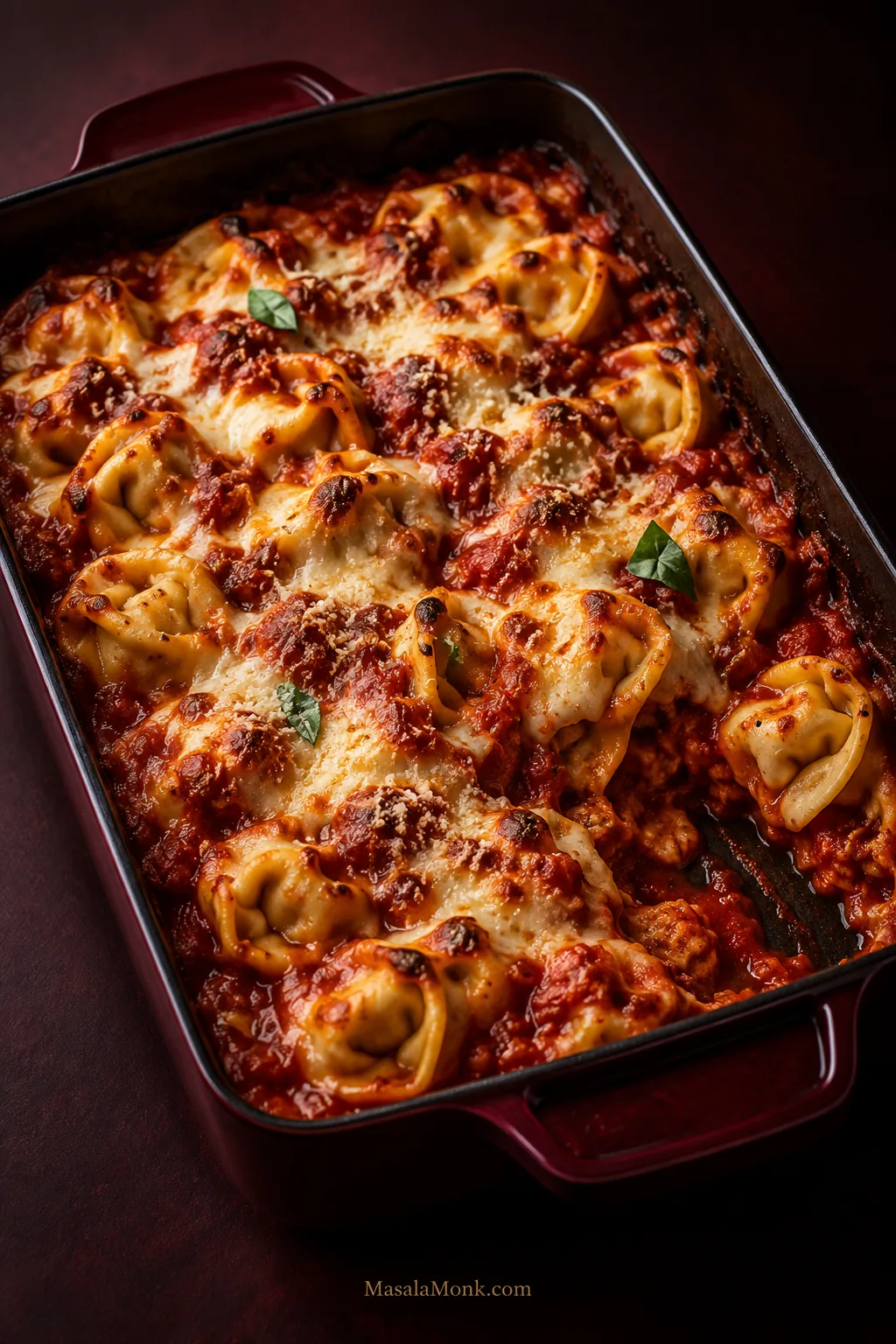
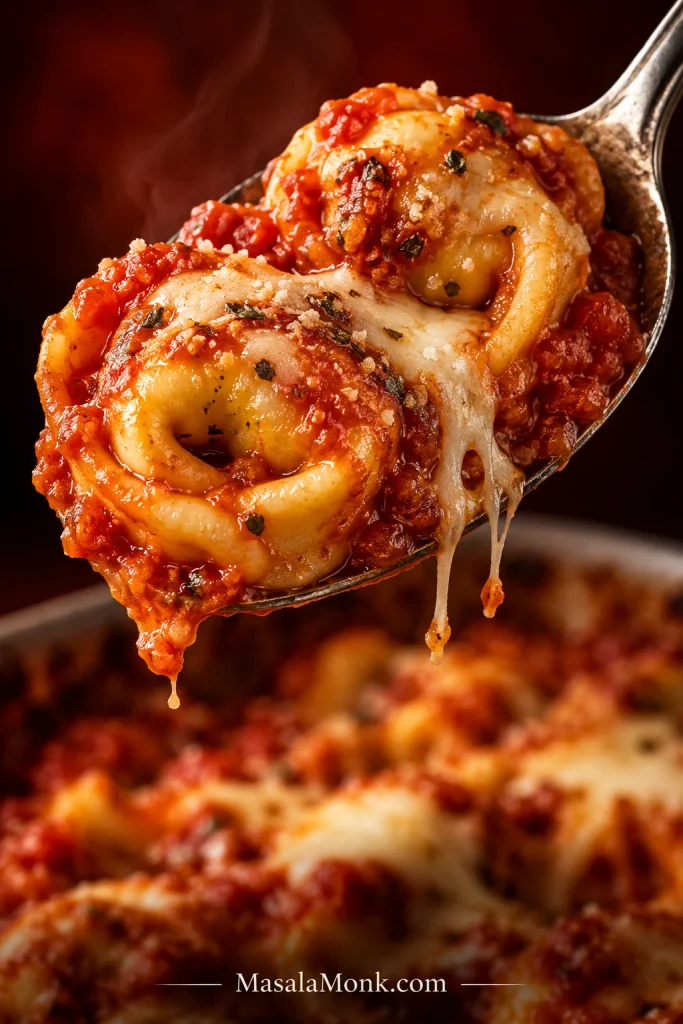
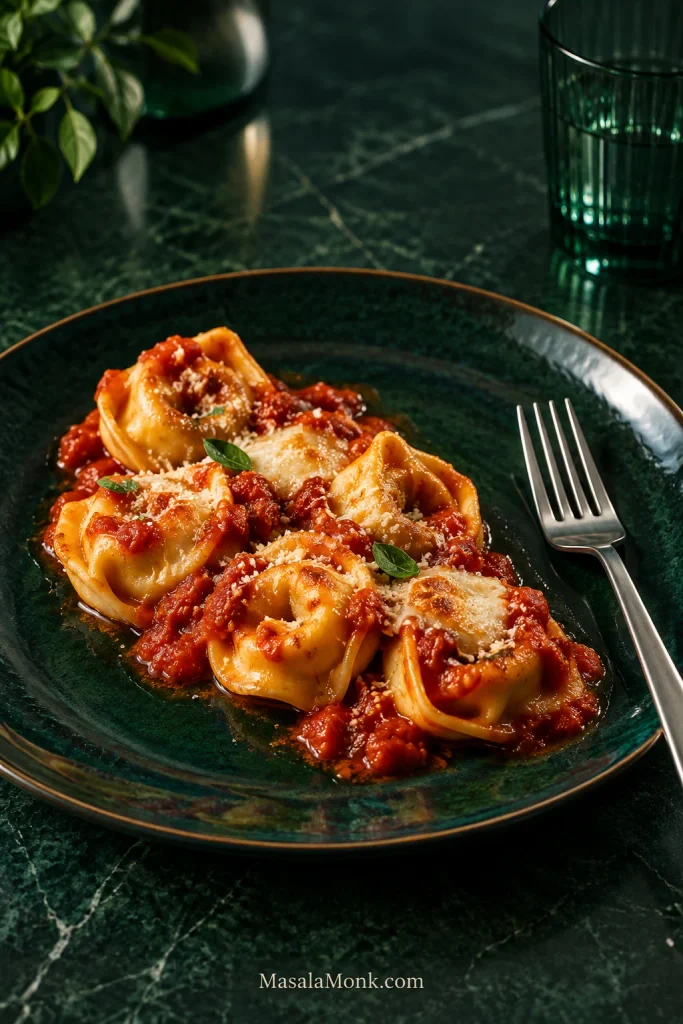
A package of refrigerated tortellini, a jar of marinara and some mozzarella can become dinner with about 10 minutes of hands-on work and no separate pot of boiling water. By the time the dish comes out of the oven, the sauce is bubbling around plump cheese-filled pasta and the mozzarella has melted into browned patches across the top.
Sometimes the package of tortellini is the whole dinner plan. That’s enough here.
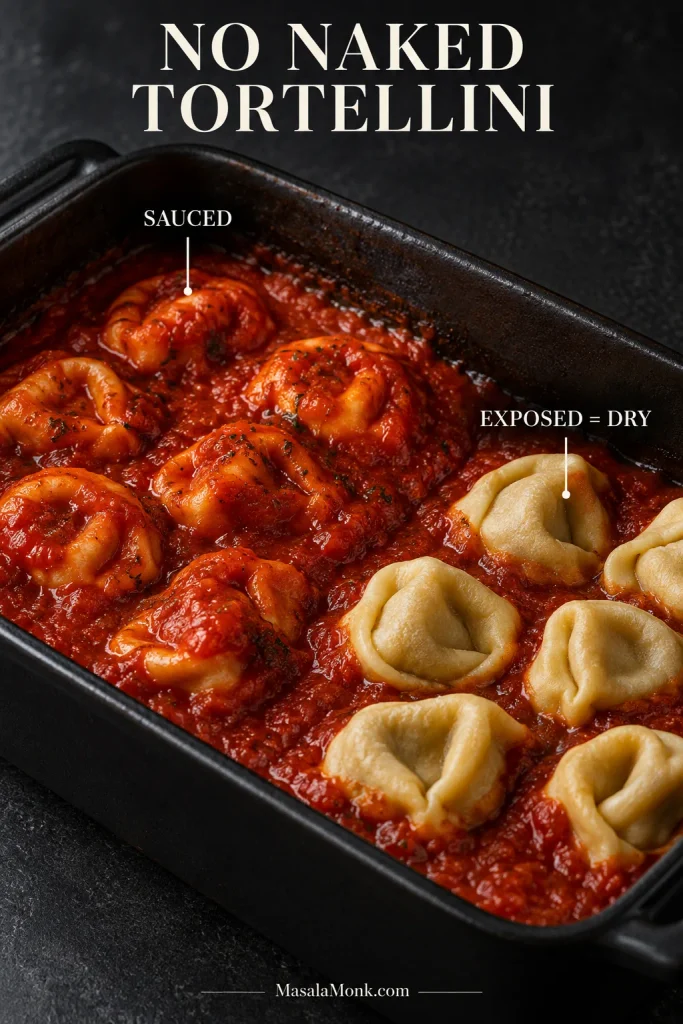
The one thing worth watching is the pasta underneath the cheese. The folded edges take longer to soften. Pieces left completely above the sauce can also turn dry and chewy even while the bottom of the pan still looks plenty saucy.
The fix is simple: keep the tortellini surrounded by sauce and check one from the middle before you uncover the pan.
This baked tortellini recipe uses refrigerated cheese tortellini straight from the package. Frozen and dried tortellini work differently, so you’ll find those adjustments below along with the variations and fixes that are actually useful.
Quick Answer: Do You Need to Boil Tortellini Before Baking?
No. Refrigerated tortellini needs no pre-boiling here because it is soft enough to finish cooking in sauce. What it needs in the oven is enough sauce around it, trapped steam and time under cover to become tender.
Add it uncooked to marinara thinned with a little water, coat every piece with sauce, cover the dish securely and bake at 400°F / 205°C. Before uncovering, take one from the middle. It should be tender all the way through with no hard or floury center.
No naked tortellini: pasta left completely above the sauce can dry out while everything underneath cooks normally. Push exposed pieces down or spoon sauce over them before covering the dish.
Baked Tortellini Recipe
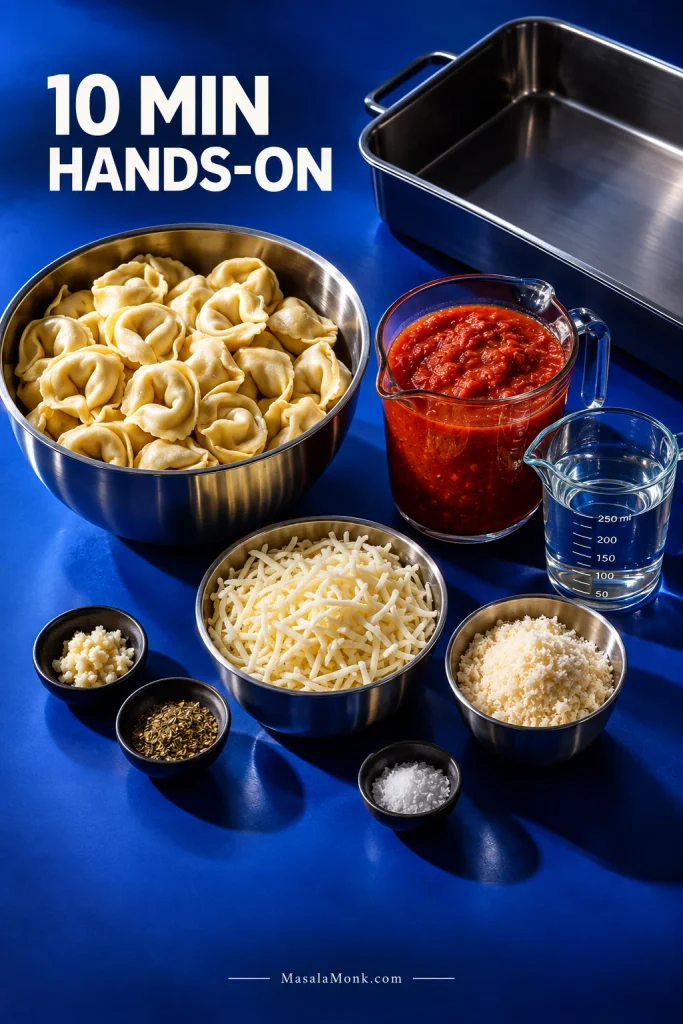
The base tortellini casserole is deliberately simple: cheese tortellini, marinara, mozzarella and Parmesan, with garlic and a few seasonings if you want them.
You have about 10 minutes of hands-on work. Most of the rest is oven time and one quick check before the final cheese goes on.
Easy No-Boil Baked Tortellini
Refrigerated cheese tortellini cooks directly in marinara, then finishes uncovered with mozzarella and Parmesan until the sauce bubbles around the pasta and the top is lightly browned.
Recipe at a Glance
Yield
6 servings
Hands-on
10 minutes
Bake
About 30–40 minutes
Rest
5–10 minutes
Total
45–60 minutes
Oven
400°F / 205°C
Pan
9×13 in / 23×33 cm, about 3 qt / 2.8 L
You’ll need: a 9×13-inch / 23×33-cm baking dish and heavy-duty foil or a tightly fitting oven-safe lid.
Ingredients
20 oz / 567 g refrigerated cheese tortellini, uncooked
24 oz / 680 g marinara sauce
¼–½ cup / 60–120 ml water, depending on sauce thickness
1½ cups / 170 g low-moisture mozzarella, shredded and divided
¼ cup / 25 g Parmesan, finely grated
2 garlic cloves, minced (optional)
1 tsp Italian seasoning (optional)
¼ tsp red pepper flakes (optional)
black pepper, to taste
fresh basil or parsley (optional)
salt, only if needed
Five ingredients do the structural work: tortellini, marinara, water, mozzarella and Parmesan.
1. Loosen the Marinara
Heat the oven to 400°F / 205°C. Spread a little marinara over the bottom of the baking dish.
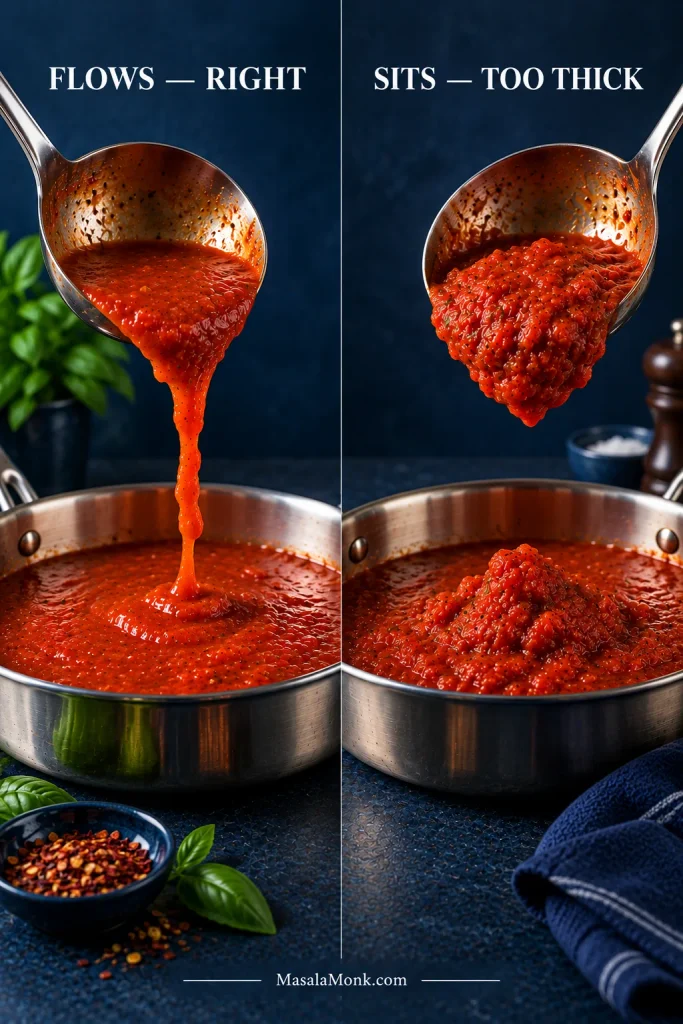
Stir the rest with the garlic, Italian seasoning, black pepper and red pepper flakes, if using. Add ¼ cup / 60 ml water if the sauce already pours easily, or closer to ½ cup / 120 ml if it sits in thick spoonfuls. You want the marinara to flow easily around the tortellini once everything is mixed.
The added water is cooking liquid, not the target final texture. It helps soften the pasta under cover; afterward, the uncovered finish and rest bring the marinara back toward serving consistency.
2. Coat the Tortellini
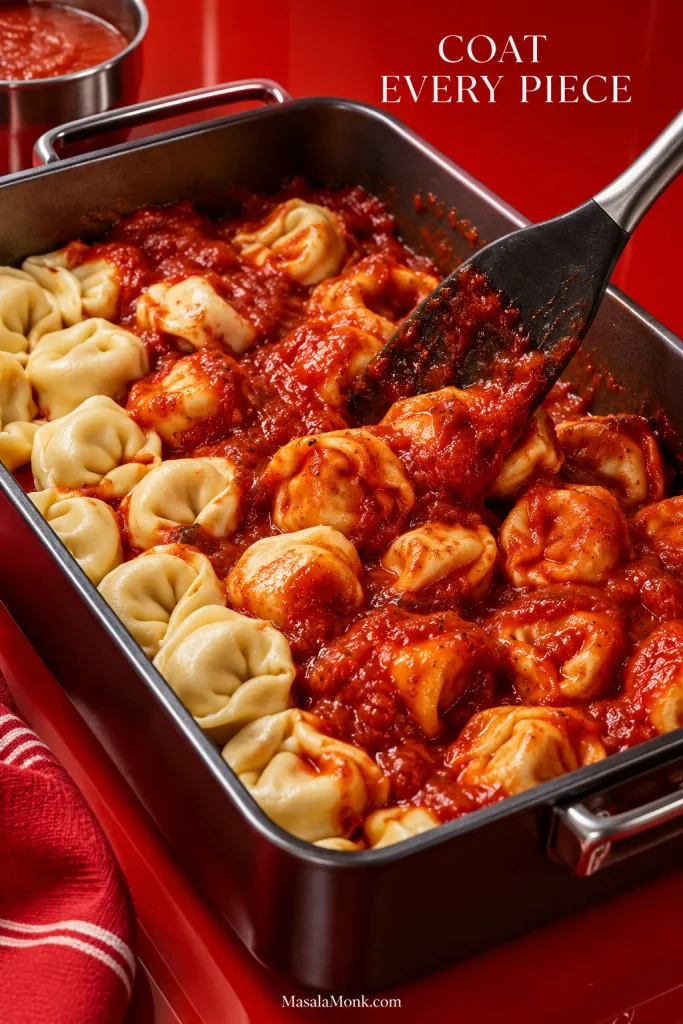
Add the refrigerated tortellini straight from the package. Turn it gently through the marinara until every piece is glossy with sauce, then scatter ½ cup / 57 g mozzarella through the dish.
Every piece should look glossy with sauce before the pan is covered.
Give the top a quick look. Press any pale, exposed pieces down or cover them with another spoonful of sauce.
Dry on top but saucy underneath usually points to a contact problem, not a dry casserole. Before adding more water, get those exposed tortellini back into the sauce and restore the covered cooking environment.
3. Cover and Bake
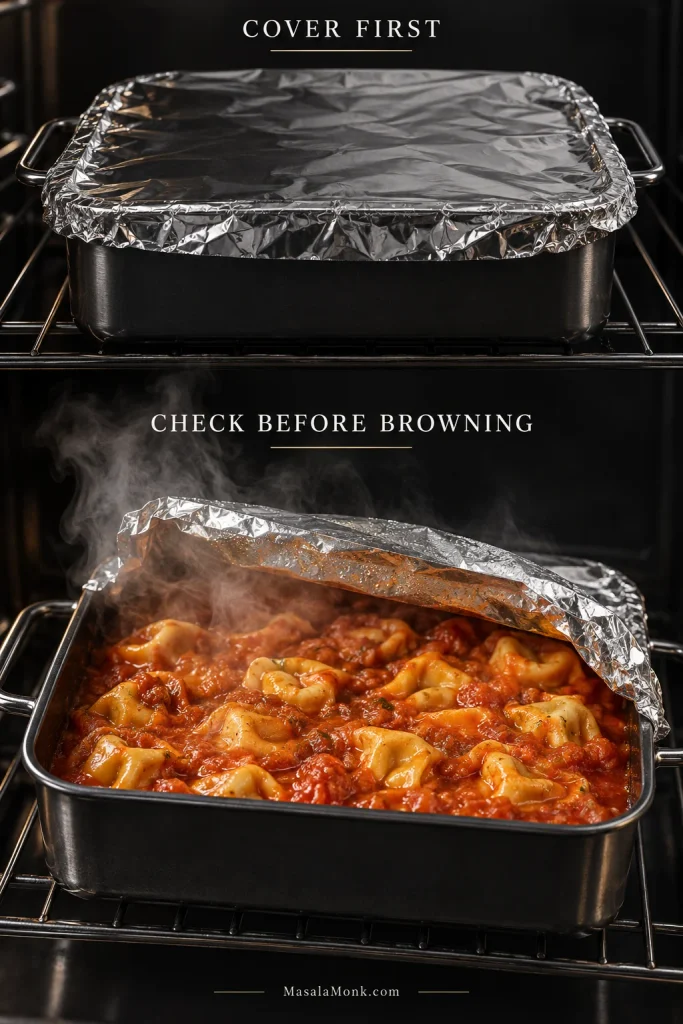
Crimp foil around the rim so steam cannot escape freely. Bake for 20 minutes, then steal a tortellini from somewhere near the middle and check the thick fold.
A loose foil tent is not the same as a tight cover. Crimp the foil around the rim—or use a snug oven-safe lid—so the steam that softens the tortellini stays in the pan.
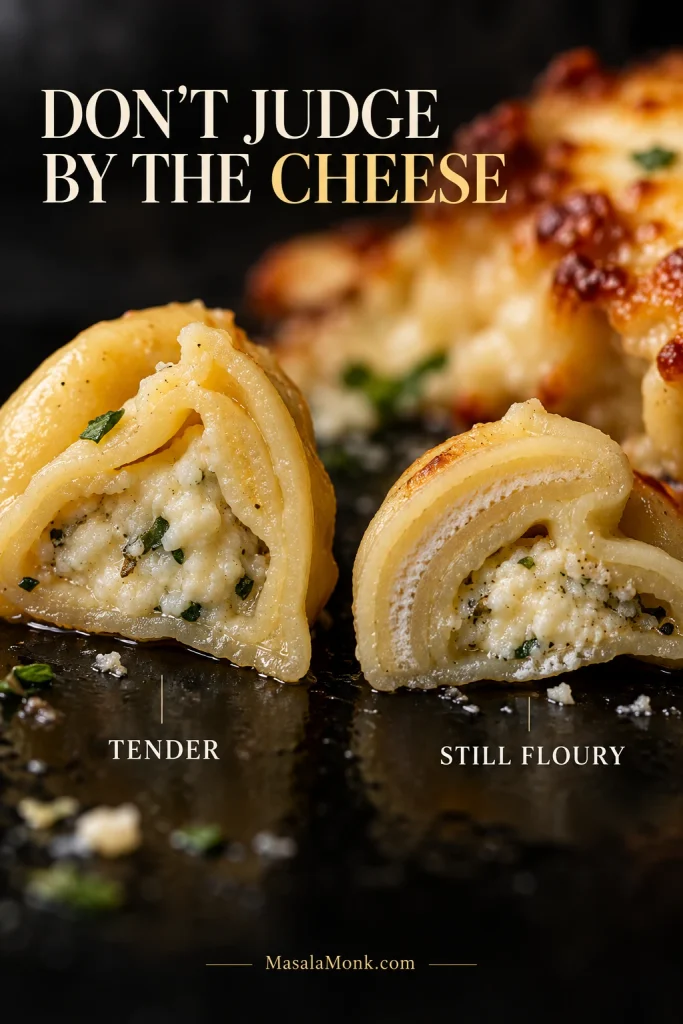
Don’t judge doneness by the cheese. Check a tortellini. The top can look beautifully melted before the filled pasta underneath is ready.
Sample from near the center, not the hot edge. The outside of a casserole heats sooner, so an edge piece can turn tender while the middle is still catching up.
If it is still hard or floury inside, cover the pan again and give it another 5 minutes. If the sauce has almost disappeared too, add a splash of hot water or warm marinara first.
Once the pasta is tender, look at the sauce rather than the clock. If it is still watery, leave the pan uncovered for 3–5 minutes before adding the final cheese. If it already looks thick enough to cling to the pasta, move straight on.
4. Add the Cheese and Brown
Scatter over the remaining 1 cup / 113 g mozzarella and all of the Parmesan.
Bake uncovered for 8–10 minutes. Look for browned patches of mozzarella with little pockets of tomato sauce still visible between plump tortellini.
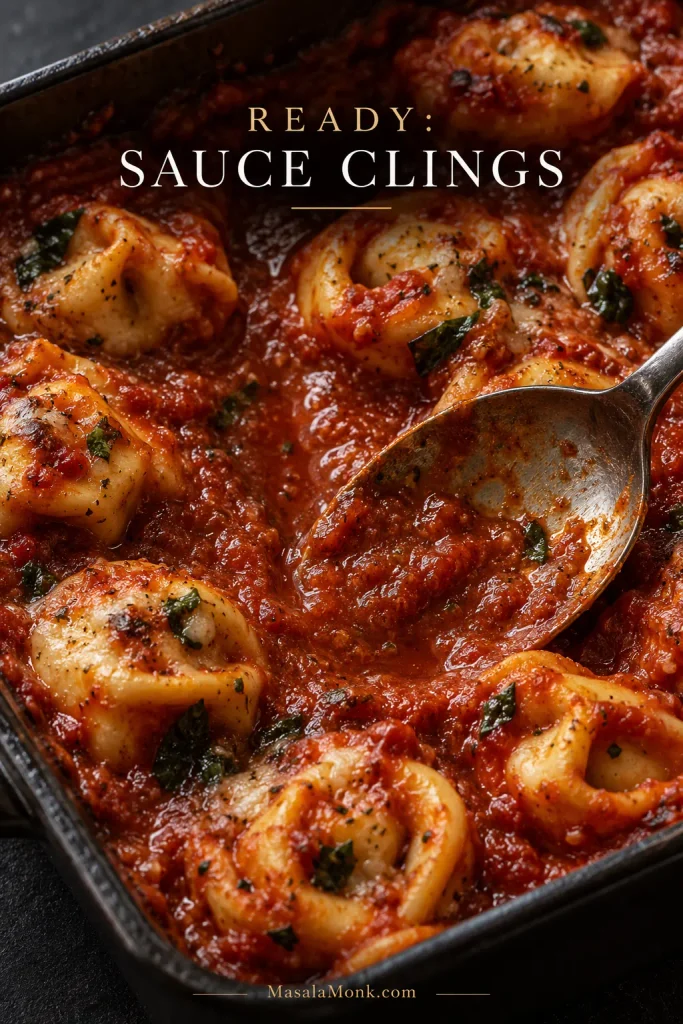
Draw a spoon through the pan. The sauce should cling around the pasta instead of immediately flooding the gap. For deeper color, broil for 1–2 minutes at the end. Stay nearby; mozzarella can move from spotted to scorched quickly.
The spoon trail is a better stopping cue than surface bubbling. If the sauce coats the pasta and the gap closes slowly, the bake has enough body; the short rest can finish the settling without extra oven time.
5. Rest Before Serving
Rest for 5–10 minutes so the sauce settles and the tortellini is easier to spoon out cleanly. If the casserole looks a little loose, give it that time before judging it.
After the rest, the sauce should cling while the tortellini still holds its shape.
Finish with torn basil or parsley and another little grating of Parmesan.
A Few Useful Notes
Marinara: jarred sauce is ideal here. Making your own? A pourable fresh tomato sauce works too; stop reducing it while it still flows easily around the pasta.
Mozzarella: low-moisture mozzarella melts predictably without adding much extra water. Pre-shredded is completely fine. Drain and blot fresh mozzarella well before using it.
Salt: taste first. Filled pasta, marinara and Parmesan may already provide enough.
Using refrigerated tortellini? You’re done. Everything below is optional.
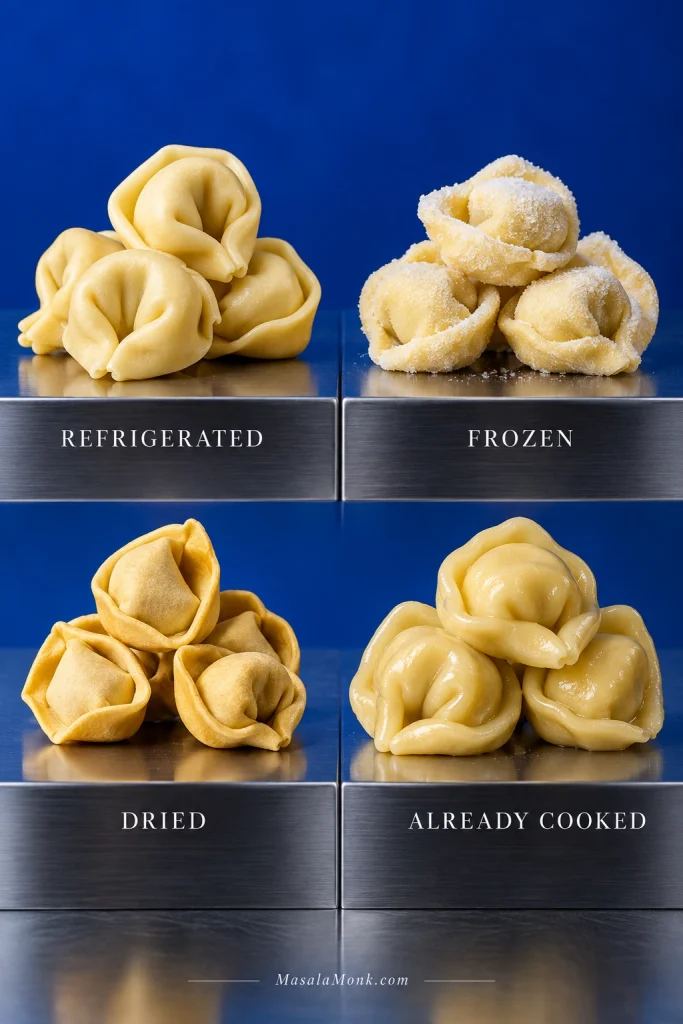
Check the package before you do anything else. The main recipe uses soft refrigerated tortellini from the chilled section—the kind often sold as “fresh.” It can go straight into the dish. Frozen can too, but it needs more water and time. Dried tortellini is where I would stop using the no-boil shortcut.
On supermarket packaging, “fresh tortellini” usually refers to the soft pasta sold in the refrigerated case. Check the storage instructions if you are unsure which method applies.
What you have
What to do
Refrigerated tortellini
Add uncooked and use the main recipe
Frozen tortellini
Keep frozen; use more water and a longer covered bake
Dried / shelf-stable tortellini
Parboil before assembling the casserole
Already cooked tortellini
Skip extra water and bake only until hot with a browned top
Already cooked? The tortellini only needs to heat through. Skip the extra water and stop once the sauce is bubbling and the cheese has melted.
Frozen Tortellini
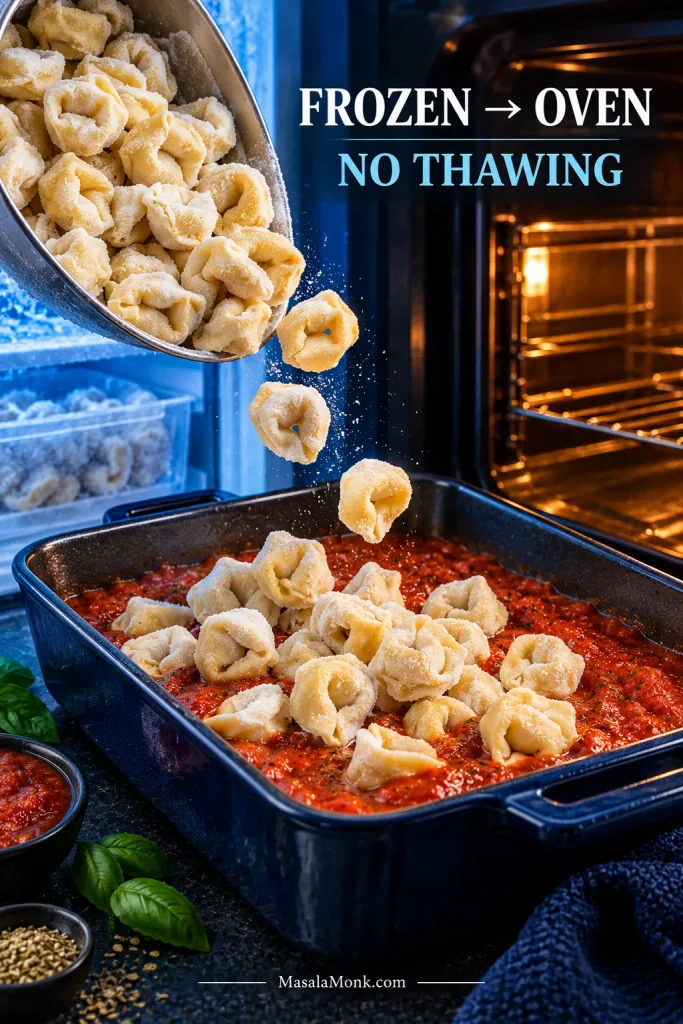
Frozen tortellini can go straight into the dish. Do not thaw it first for this method.
No thawing also keeps the frozen-tortellini method predictable. The extra liquid and covered bake are designed for pasta going into the dish straight from the freezer.
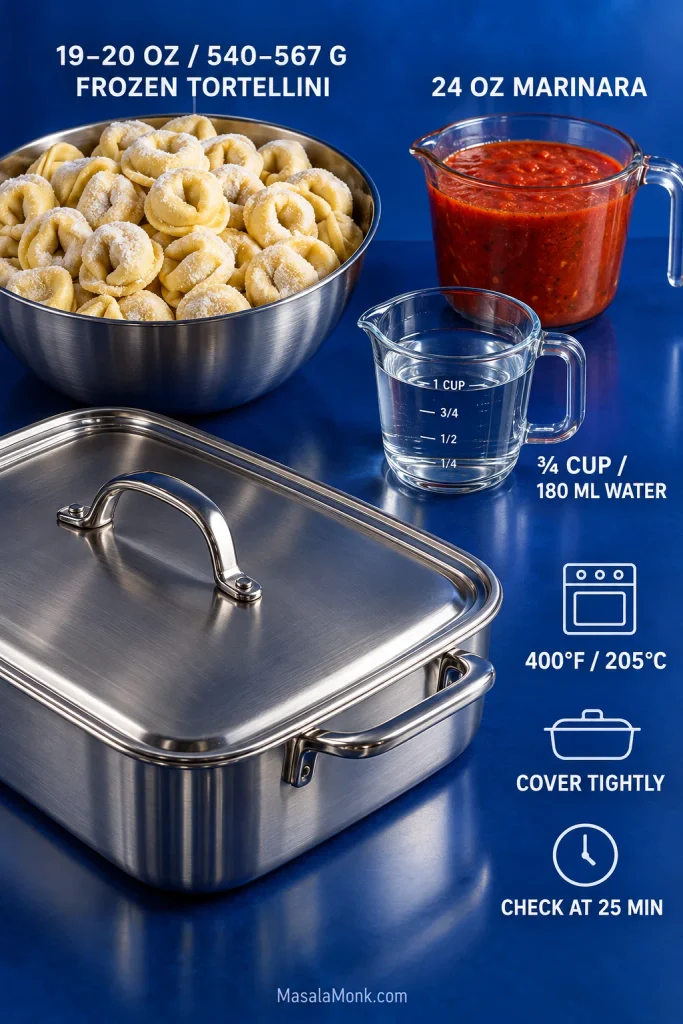
For a 19–20 oz / 540–567 g package, use 24 oz / 680 g marinara and ¾ cup / 180 ml water. Cover securely and bake at 400°F / 205°C, starting your first check around 25 minutes.
Treat 25 minutes as the first check, not the finish line. Brand, filling and sauce thickness vary, so a fully tender center piece is a better endpoint than the clock.
Still firm and the sauce is disappearing? Add ¼ cup / 60 ml hot water, cover again and check every 5 minutes until one from the middle is tender. Then add the final cheese and finish uncovered.
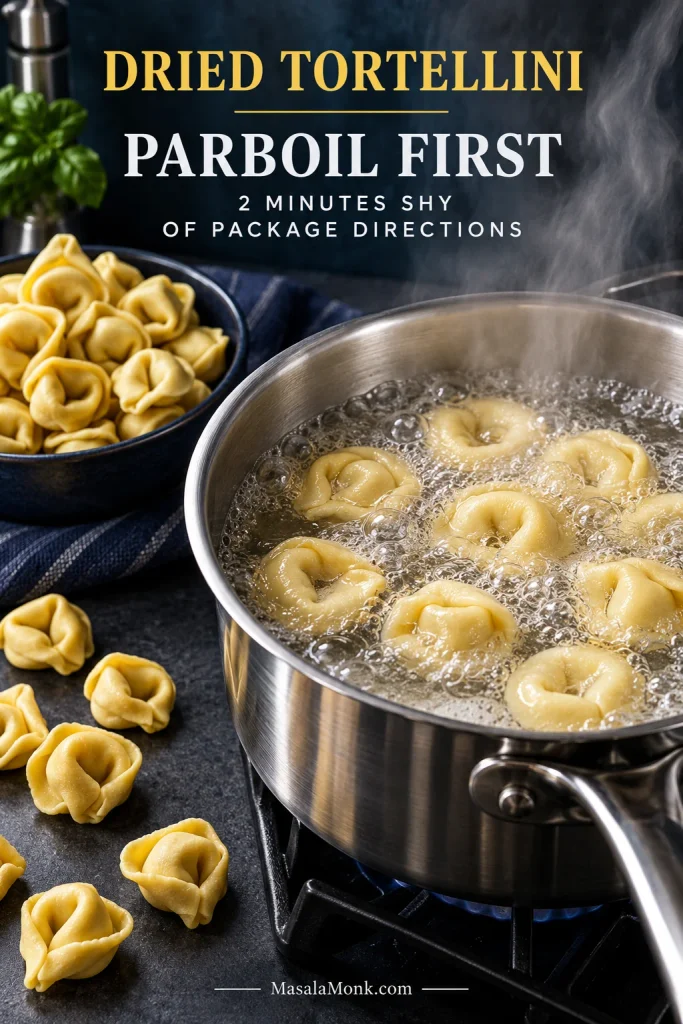
Don’t force dried tortellini into the no-boil method. Boil it until about 2 minutes shy of the package directions, drain it and assemble the casserole without the extra water unless the marinara itself is unusually thick. At that point the oven is finishing the pasta and browning the top, not trying to cook it from dry.
Parboiling dried tortellini is about stopping early, not cooking it twice. Drain it while the pasta still has some bite so the oven can finish the center without pushing the filled edges too far.
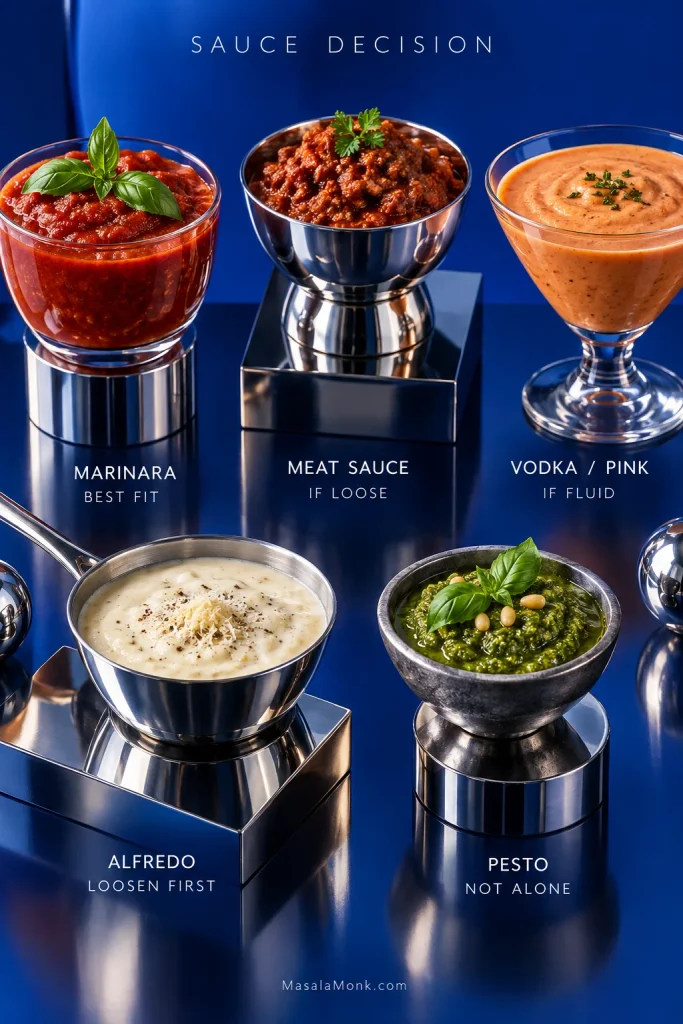
Marinara gives you the widest margin for error. It contains enough water for the pasta to cook while the pan is covered, and its acidity keeps all that mozzarella from tasting heavy.
For no-boil baked tortellini, sauce has a structural job as well as a flavor job. If it cannot move into the gaps between the pasta, loosen it or combine it with a wetter base before it goes under cover.
Vodka or pink sauce can work too—just keep it pourable. A meat sauce is fine as long as it still slips easily between the tortellini rather than sitting in a dense layer.
For a deliberately creamy tomato version, the vodka pasta recipe is a better starting point.
Alfredo is different. A sauce can be rich and creamy without containing enough water to soften uncooked pasta. A no-boil Alfredo version needs milk, broth or another cooking liquid built into the formula from the beginning. If you want the creamy chicken version instead, go straight to our Chicken Tortellini Alfredo.
Creamy is not the same as wet enough to cook pasta. Ricotta, cream cheese and grated cheese bring richness; the tortellini still needs actual sauce or water around it.
I wouldn’t use pesto by itself here. Pair it with tomato sauce, broth, or a cream sauce loosened with enough milk or broth to cook the pasta.
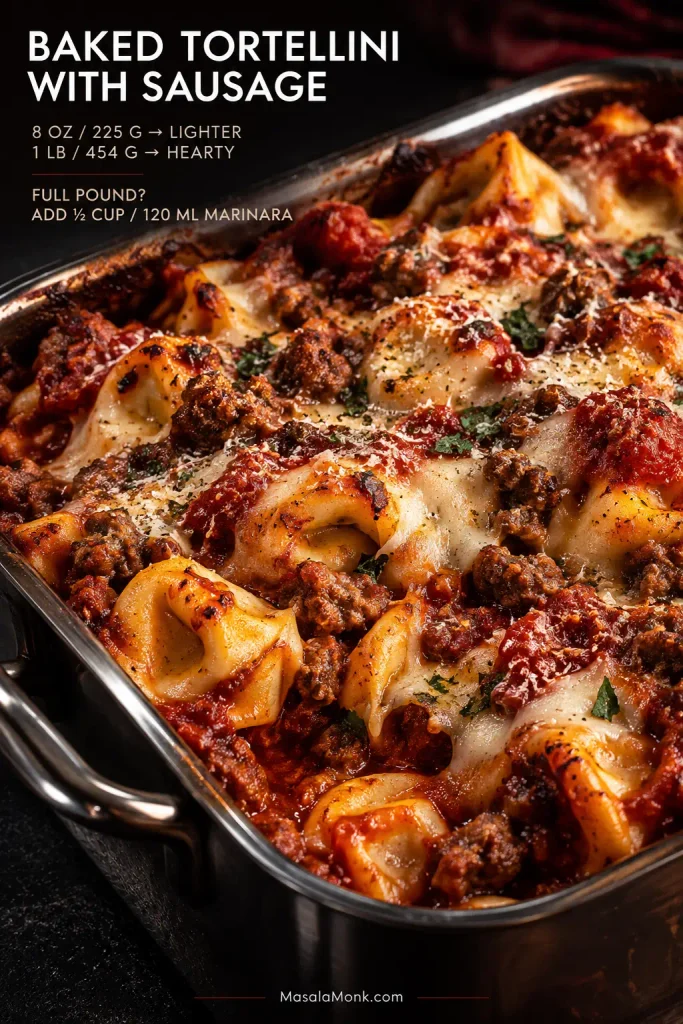
Sausage is my first choice when you want a heartier dinner without changing the method much. Brown 8 oz / 225 g for a lighter addition or 1 lb / 454 g for a meatier pan, then drain the excess fat. With a full pound, add another ½ cup / 120 ml marinara if the dish starts looking crowded rather than saucy.
Small sausage crumbles distribute more evenly; add the extra marinara if a full pound makes the pan look crowded.
Ground beef works too. Brown and drain up to 1 lb / 454 g lean beef, stir it into the marinara and add enough sauce to keep the tortellini well coated. Taste before adding salt once either meat is in the pan.
Add Spinach or Other Vegetables
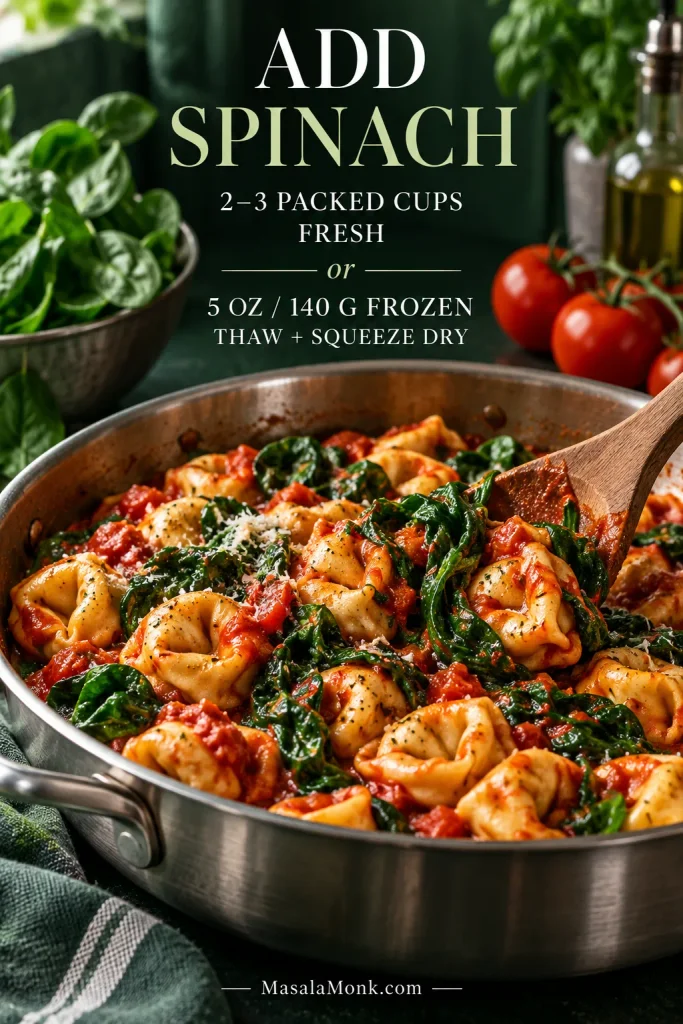
Spinach disappears into this bake with almost no extra work. Fold in 2–3 packed cups / 60–90 g baby spinach; it looks like a lot at first and quickly cooks down around the tortellini.
For frozen spinach, thaw 5 oz / 140 g and squeeze it very dry first. Spinach-and-ricotta tortellini itself can be treated like cheese tortellini unless its package says otherwise.
Fresh spinach wilts down dramatically; frozen spinach is already concentrated, so the quantities are not interchangeable.
Broccoli can go straight in if you like a little bite; blanch it first for softer florets. Sauté mushrooms first so they lose some of their water, and drain roasted peppers well.
Add More Cheese or a Crisp Topping
Increase the mozzarella to 2 cups / 226 g for a cheesier pan. Put some inside and save the rest for the top so bright tomato sauce still peeks between browned patches of cheese.
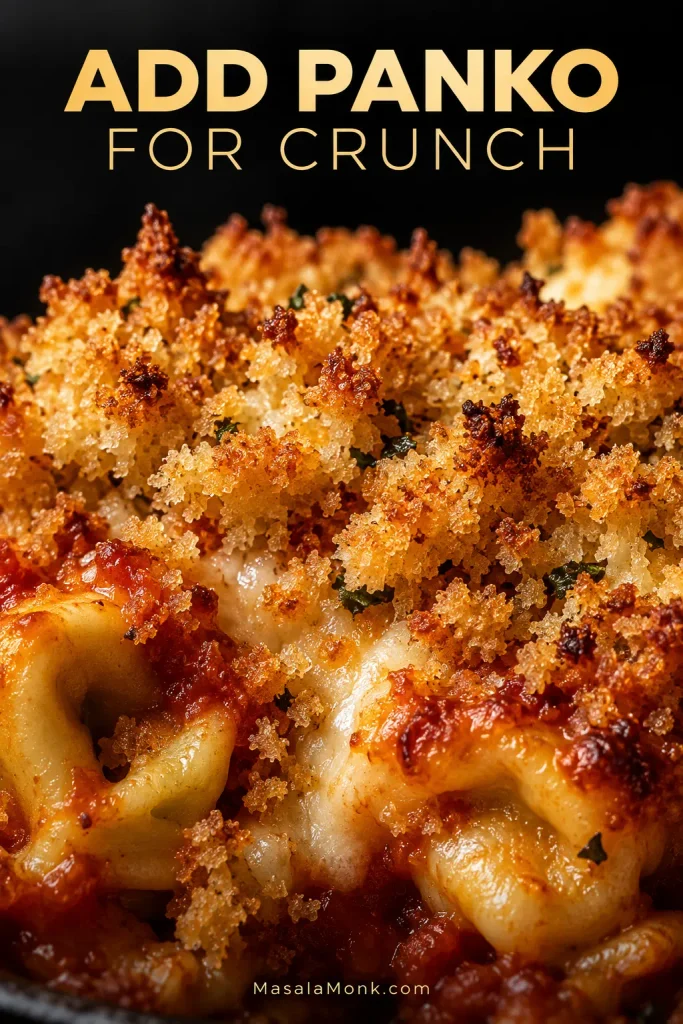
For crunch, mix ¼ cup / 15 g panko with 2 tbsp / 10 g finely grated Parmesan and 1 tbsp olive oil or melted butter. Use up to ½ cup / 30 g panko for a fuller crumb layer.
Panko adds crisp contrast without burying the tortellini under another layer of cheese.
Add the crumbs only for the final uncovered bake so they toast instead of steaming.
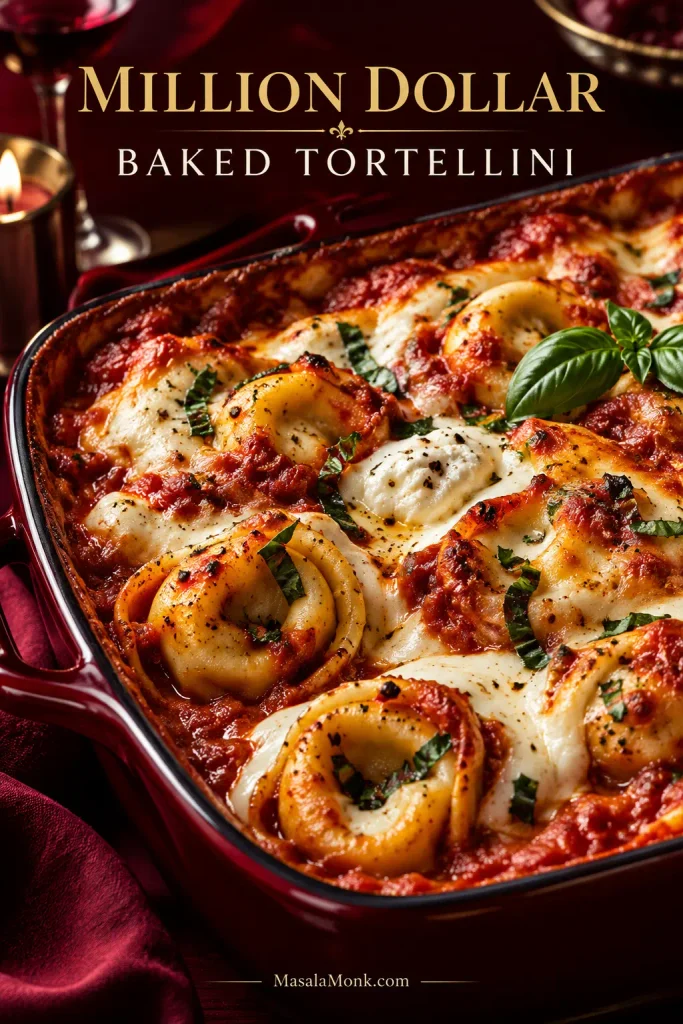
The “Million Dollar” style adds cream cheese, ricotta or cottage cheese, plenty of mozzarella and often ground meat. It is noticeably richer than the simple marinara version.
For this variation, par-cooking the tortellini first is the simpler route because all that thick dairy leaves less sauce around uncooked pasta. A purpose-built no-boil version can work, but it needs extra cooking liquid from the beginning.
This version is richer and thicker, which is why par-cooking the tortellini is the simpler route.
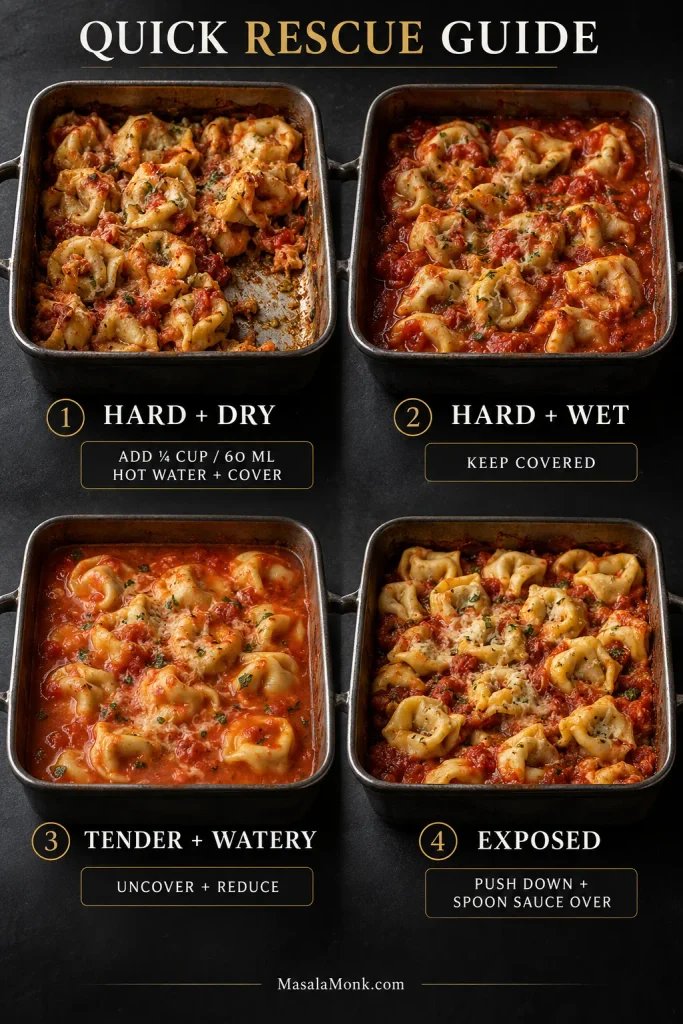
Baked Tortellini Still Hard? Use This Quick Rescue Guide
Something looks wrong when the foil comes off? Check one away from the edges and then look at the sauce before simply adding more time.
Quick Fixes at a Glance
The same symptom can need opposite fixes. Hard tortellini in a dry pan needs moisture; hard pasta sitting in plenty of sauce usually needs better contact or more covered time.
Problem
Likely cause
Best fix
Still hard + dry pan
Not enough sauce or water remains
Add ¼ cup / 60 ml hot water or warm marinara, cover and bake 5–10 minutes more
Still hard + sauce underneath
The sauce is not reaching the pasta evenly
Push exposed pieces into the sauce and cover again
Dry or leathery pieces on top
Those pieces were exposed
Spoon sauce over them, press them down and cover
Tender + watery sauce
The pasta is done but the sauce needs reducing
Uncover and let the sauce reduce, then rest the casserole
Still firm + watery sauce
The pasta still needs that moisture
Keep the pan covered
Brown top + center still firm
The cheese browned before the pasta finished
Cover again; add a little hot water or sauce too if the pan is dry
Mushy or split tortellini
The pasta has cooked too far
Stop baking. Next time check sooner and don’t fully boil refrigerated tortellini first
Two rows deserve a closer look because the obvious fix is often the wrong one.
There Is Sauce Below but the Pasta on Top Is Hard
If you’re looking at the pan thinking, “There is plenty of sauce—why is the pasta still hard?”, check whether those top pieces are actually touching it.
Push them down, spoon sauce over the dry spots and cover the dish again. More water is not necessarily the answer when plenty is already sitting underneath.
The Sauce Is Watery but the Pasta Is Still Firm
Keep it covered. The tortellini still needs that water. Let the pasta become tender first. Reduce the sauce afterward.
You can assemble the refrigerated-tortellini casserole up to 24 hours ahead and keep it covered in the refrigerator.
The tortellini will soften a little as it sits in the sauce, which is fine overnight but is another reason not to assemble it more than 24 hours ahead.
Keep the marinara pourable when you assemble the dish, and save the final layer of mozzarella and Parmesan for just before baking so the top melts and browns freshly.
Because everything starts refrigerator-cold, expect roughly 5–15 extra minutes under the foil. The edges may bubble first, so test one away from the sides before adding the final cheese.
Cool leftovers promptly and refrigerate them in a covered container for 3–4 days, following USDA leftover-storage guidance.
Tomorrow’s serving will be thicker as the pasta absorbs sauce, so add a little water or marinara when reheating.
Reheating
For one serving, add 1–2 teaspoons water or a spoonful of marinara, cover loosely and microwave in short intervals until hot.
For a larger portion, add a little sauce or water around the pasta, cover and warm at 350°F / 175°C. USDA guidance for leftovers is to reheat them to 165°F / 74°C in the center.
Once it’s hot, stop. More reheating only makes filled pasta softer.
Freezing
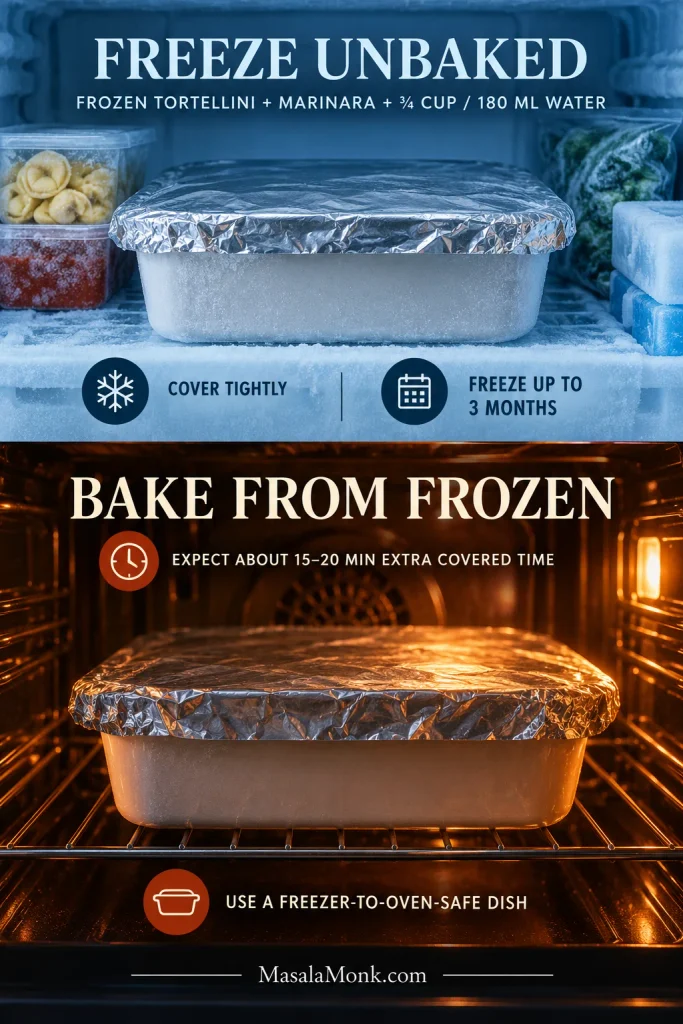
For freezer prep, I’d start with frozen tortellini and bake the assembled casserole straight from frozen.
Combine the frozen tortellini with the marinara and ¾ cup / 180 ml water, cover the unbaked casserole tightly and freeze for up to 3 months.
It will need substantially more covered baking time—often another 15–20 minutes or more. Keep going until one from the center is tender, then add the final cheese and finish uncovered.
If the casserole is frozen in glass or ceramic, make sure the dish is rated to go from freezer to a hot oven. A sudden temperature change can crack some bakeware.
Freezing the casserole unbaked avoids a full cook–freeze–reheat cycle. That usually preserves a firmer tortellini texture than freezing leftovers, which tend to soften after reheating.
Cooked leftovers can be frozen too, but the tortellini will usually be softer after thawing and reheating. If you’ll eat them within 3–4 days, refrigeration gives the better texture.
What to Serve With Baked Tortellini
Because this is already rich and soft, my first choice is something crisp, sharp or green.
After its 5–10 minute rest, the casserole should spoon out with sauce clinging around the tortellini.
Sharp green salad — cuts through the cheese and tomato sauce
Garlic bread or toasted sourdough — useful when there is extra sauce on the plate
Roasted broccoli or green beans — an easy warm vegetable side
Cucumber or tomato salad — a cool, acidic contrast to the casserole
A cold cucumber salad is particularly good beside a sausage-heavy or extra-cheesy version; the acidity and crunch cut through the melted cheese.
For another tomato-and-cheese pasta bake, baked ziti takes the same comfort-food idea in a different direction.
Frequently Asked Questions
Do you have to boil tortellini before baking?
No. Refrigerated tortellini can go straight into the sauce for this baked tortellini recipe. Keep it covered until one from the middle is tender.
How long does baked tortellini take?
About 30–40 minutes at 400°F / 205°C. Keep it covered until the pasta is tender, then uncover for the final 8–10 minutes to brown the cheese.
Why is my baked tortellini still hard?
It may need more covered time, the exposed pieces may not be touching enough sauce, or the pan may have dried out. If plenty of sauce is already underneath, push the pasta down rather than automatically adding more water.
Can tortellini cook directly in sauce?
Yes. Refrigerated and frozen tortellini can cook directly in sauce when there is enough moisture around them and the dish stays covered. Dried tortellini is better par-cooked first.
Can you bake frozen tortellini without thawing it?
Yes. Don’t thaw it first. For 19–20 oz / 540–567 g frozen tortellini, use 24 oz / 680 g marinara and ¾ cup / 180 ml water, then allow more covered time.
Can you bake dried tortellini?
Yes, but parboil it about 2 minutes shy of the package directions first. Once partly cooked, skip the no-boil water unless the sauce itself needs thinning.
Can I assemble baked tortellini the night before?
Yes. Refrigerate it covered for up to 24 hours. Save the final cheese layer for just before baking and expect a little extra covered oven time because the casserole starts cold.
Can baked tortellini be frozen?
Yes. For freezer prep, I prefer assembling the casserole with frozen tortellini and baking it straight from frozen. Cooked leftovers can also be frozen, although the pasta will usually be softer after reheating.
The next time dinner starts with a bag of tortellini and a jar of sauce, you won’t have to rely on the timer alone. You’ll know what the pasta should feel like, what the sauce should look like and when that bubbling pan is actually ready to come out.
If you’re figuring out how to cook tortellini so it stays tender, bouncy, and intact—without turning mushy or splitting open—you’re about to make tortellini nights much easier. Cooking tortellini is mostly about a few small, repeatable moves: salted water, a controlled simmer, early tasting, and a quick finish in sauce or broth. Once those habits click, you can cook tortellini confidently whether it’s fresh tortellini from the fridge, frozen tortellini from the freezer, or dried tortellini from the pantry.
Because tortellini is stuffed pasta, it brings its own richness and seasoning. As a result, dinner doesn’t need a complicated plan. On one night, cheese tortellini can become pesto tortellini with chicken and tomatoes. On another, spinach and ricotta tortellini can turn into a bright, simple pomodoro bowl. Meanwhile, meat tortellini in broth can feel soothing in the best way. And when you want something snacky, you can air fry tortellini until crisp and dip it into marinara.
This is a practical, reader-first guide to how to cook tortellini in the formats you actually buy, followed by dinner frameworks you can reuse without boredom—one pot tortellini, slow cooker tortellini, creamy tortellini pasta, tortellini pomodoro, bolognese tortellini, tortellini in brodo, and tortellini prosciutto e panna.
Tortellini basics that make everything else easier
Tortellini is a small, ring-shaped stuffed pasta with deep roots in Bologna and the surrounding region. Traditionally, tortellini in brodo—tortellini served in broth—is one of the most iconic ways to eat it. If you’re curious about the cultural side, the Dotta Confraternita del Tortellino shares the tradition around the “registered” tortellino filling on their site. You don’t need that history to cook well; still, it explains why tortellini is designed to taste complete with simple treatment.
In everyday cooking, tortellini’s superpower is this: the filling is already seasoned, and the pasta shape catches sauce naturally. Therefore, you can keep your sauce straightforward and still end up with a bowl that feels finished.
Tortellini vs ravioli: why shape changes how you cook and serve
Ravioli is larger and often more delicate, so it’s commonly served with sauce spooned over the top. Tortellini is smaller, which makes it easy to toss in sauce and easy to serve in soups. If you enjoy stuffed pasta in general, you might like MasalaMonk’s playful take on variation and filling ideas in this ravioli piece. It’s a nice reminder that stuffed pasta can be flexible and fun.
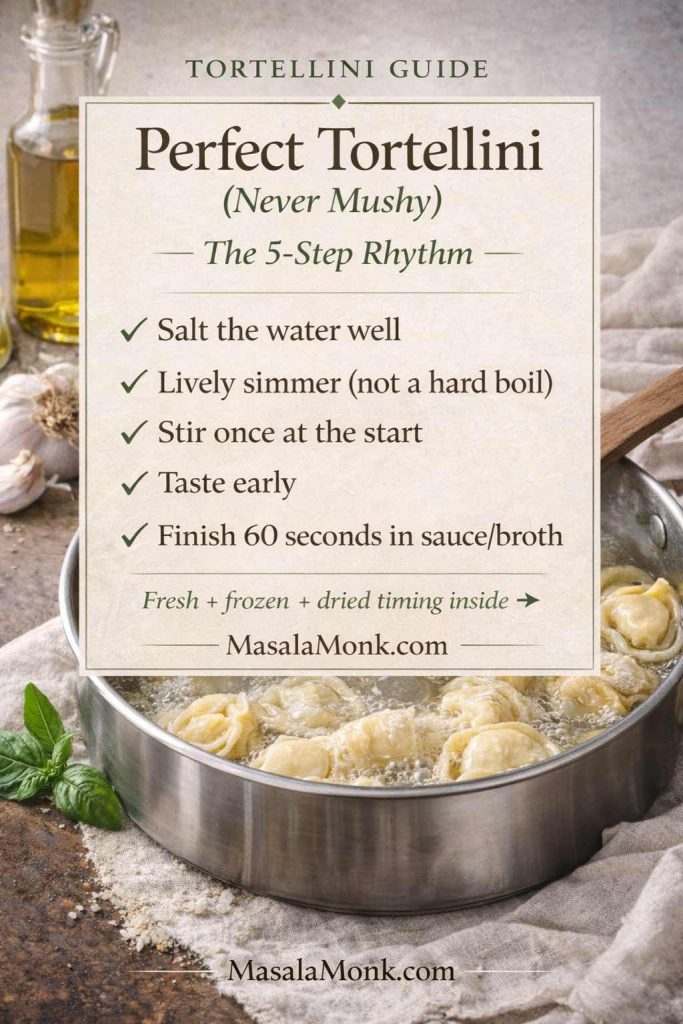
How to cook tortellini every time: the universal method
Before you choose pesto or cream or broth, lock in the basics. This is how to cook tortellini successfully no matter what the filling is—cheese tortellini, spinach tortellini, meat tortellini, mushroom tortellini, or pumpkin tortellini.
Use a roomy pot and plenty of water Stuffed pasta needs space. When the pot is crowded, tortellini sticks and cooks unevenly. More water also helps the temperature recover quickly after you add the pasta.
Salt the water generously This matters more than people expect. Tortellini is thick and filled, so the outer pasta can taste bland if the water isn’t seasoned. With salted water, even simple sauces taste better.
Choose a lively simmer over a violent boil A roaring, chaotic boil can knock tortellini around and encourage splitting. Instead, keep the water bubbling actively but not aggressively—especially for fresh tortellini and refrigerated tortellini.
Stir early, then back off Stir gently right after adding tortellini so it doesn’t stick to itself or to the pot. After that, let it cook. Too much stirring can tear delicate pasta.
Reserve pasta water—every time Before draining, scoop out a mug of cooking water. That starchy water helps sauces cling and emulsify. Consequently, pesto turns glossy instead of oily, cream sauces loosen without thinning, and tomato sauces coat instead of sliding.
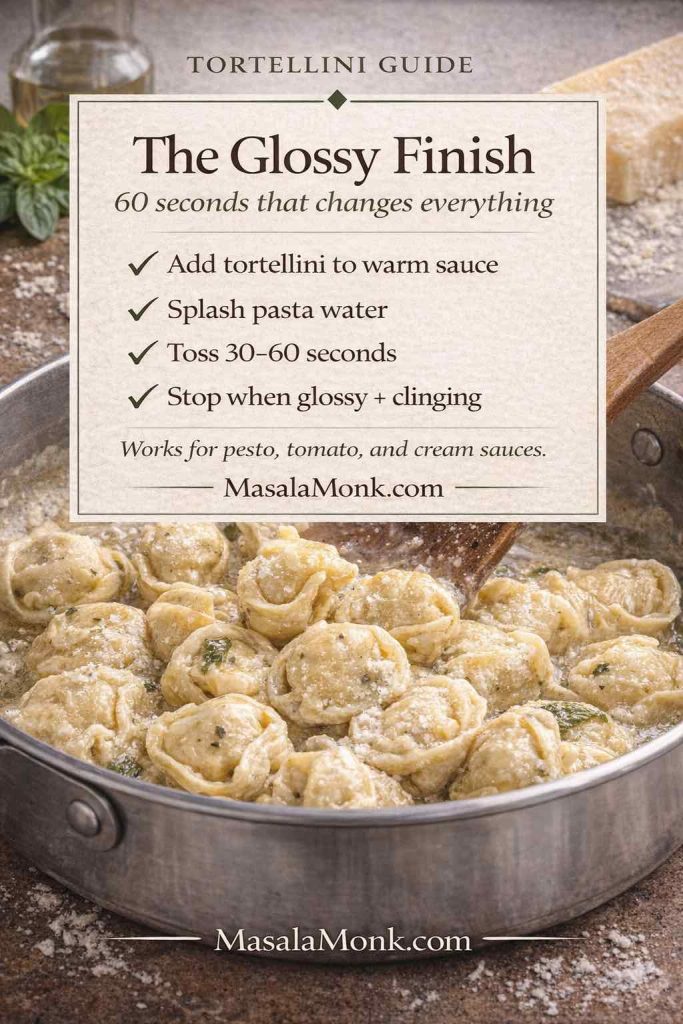
Finish in sauce or broth for 30–60 seconds Instead of draining and pouring sauce over the top, toss cooked tortellini in a warm pan of sauce for a minute. This short finish is a major part of how to cook tortellini so it tastes cohesive rather than assembled.
You’ll see these steps repeated throughout the recipes below because they’re the foundation.
Save this: the 5-step rhythm for how to cook tortellini (fresh, frozen, or dried) so it stays tender—then finish it in sauce or broth for a glossy, restaurant-style bite.
Tortellini you’ll see most often: fillings and formats
Knowing what you bought makes “what should I do with it?” instantly easier.
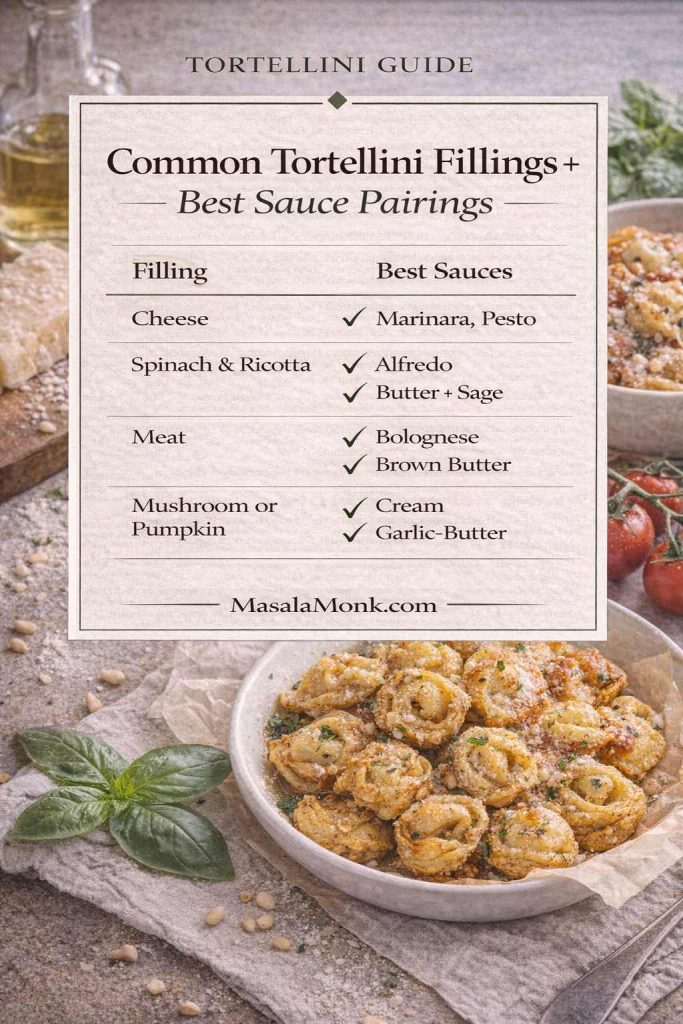
Common fillings and what they naturally like
Cheese tortellini is the weeknight workhorse. It might be labeled three cheese tortellini, 3 cheese tortellini, four cheese tortellini, 4 cheese tortellini, five cheese tortellini, or 5 cheese tortellini. It also shows up as tortellini formaggi or tortellini formaggio. Because it’s rich, it pairs beautifully with pesto, tomato sauce, or broth. It also works in a cream sauce, especially with pepper.
Spinach tortellini often appears as spinach and ricotta tortellini, ricotta spinach tortellini, or tortellini ricotta spinaci. It’s excellent with lighter sauces: butter and garlic, bright tomato, or a gentle cream finish.
Meat tortellini can be labeled meat filled tortellini, meat stuffed tortellini, beef tortellini, or veal tortellini. It shines in broth and also works in ragù when the sauce is balanced.
Specialty fillings like mushroom tortellini, porcini tortellini, gorgonzola tortellini, pumpkin tortellini, lobster tortellini, and truffle tortellini (tortellini tartufo) usually taste best with a restrained sauce so the filling remains the star.
Quick pairing chart: match cheese, spinach & ricotta, meat, and mushroom/pumpkin tortellini to the sauce that flatters the filling—an easy way to pick pesto, marinara, cream, or bolognese without overthinking dinner.
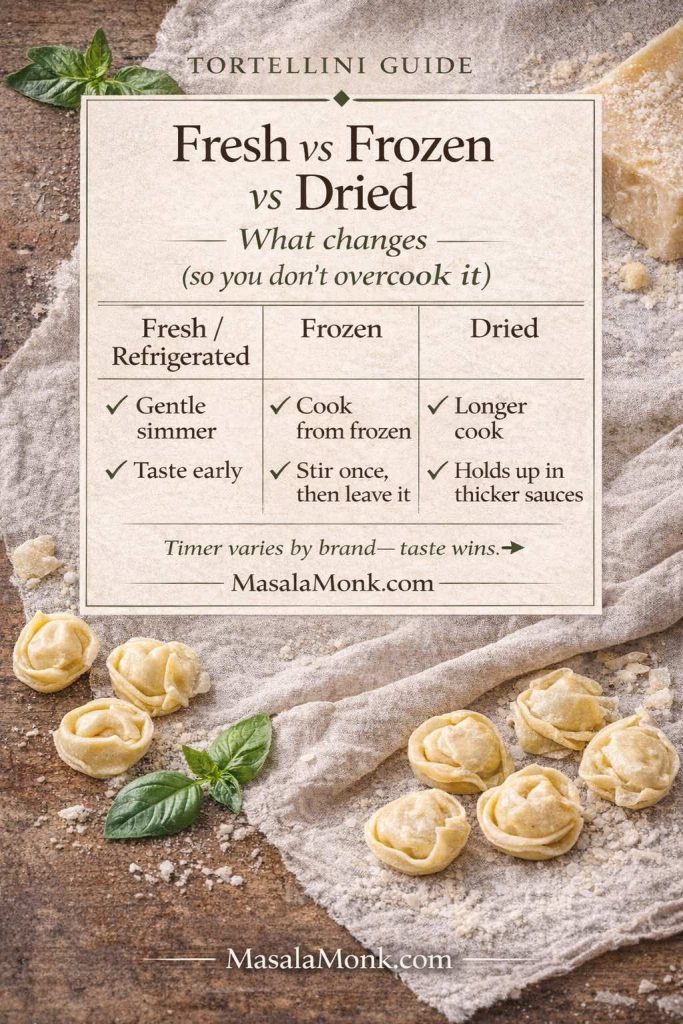
Frozen tortellini cooks straight from frozen and benefits from careful tasting.
Dried tortellini takes longer and holds up well in thicker sauces.
Once you identify the format, how to cook tortellini becomes far more predictable.
Quick cheat sheet: how to cook fresh, frozen, and dried tortellini without overcooking—use this guide to choose the right simmer style and finish based on what you bought.
How to cook fresh tortellini and refrigerated tortellini
Fresh and refrigerated tortellini cook fast, so the goal is to hit tender-and-bouncy rather than soft-and-saggy.
Bring salted water to a gentle boil. Then reduce slightly to a lively simmer. Add tortellini and stir gently once or twice. Start checking early and keep tasting.
A lot of refrigerated “fresh style” tortellini lines cook in just a few minutes. For an example of clear brand timing, Giovanni Rana shares cooking guidance on this product page. If you’re cooking rana tortellini, rana cheese tortellini, or a similar refrigerated pack, that’s a helpful reference point.
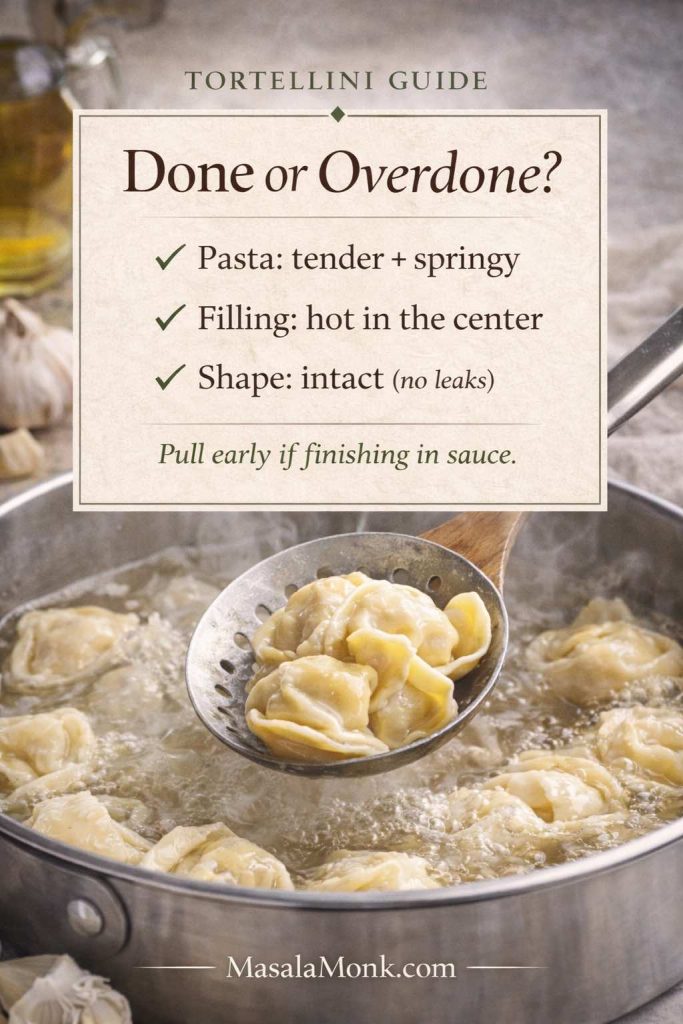
How to tell it’s done: The pasta should feel tender but still springy, and the filling should be hot through the center. If the pasta feels floppy or waterlogged, it’s gone too far.
Don’t rely on floating alone—use this quick doneness test to know when tortellini is perfectly cooked (tender, springy, hot in the center) before you finish it in sauce.
What to do immediately after draining: Fresh tortellini keeps cooking from residual heat. Therefore, have your sauce ready before you drain. Toss it in warm sauce right away and loosen with pasta water until glossy. This is a crucial detail in how to cook tortellini well, and it’s also the easiest improvement to make.
Frozen tortellini is convenient, but it’s easiest to ruin by treating it roughly.
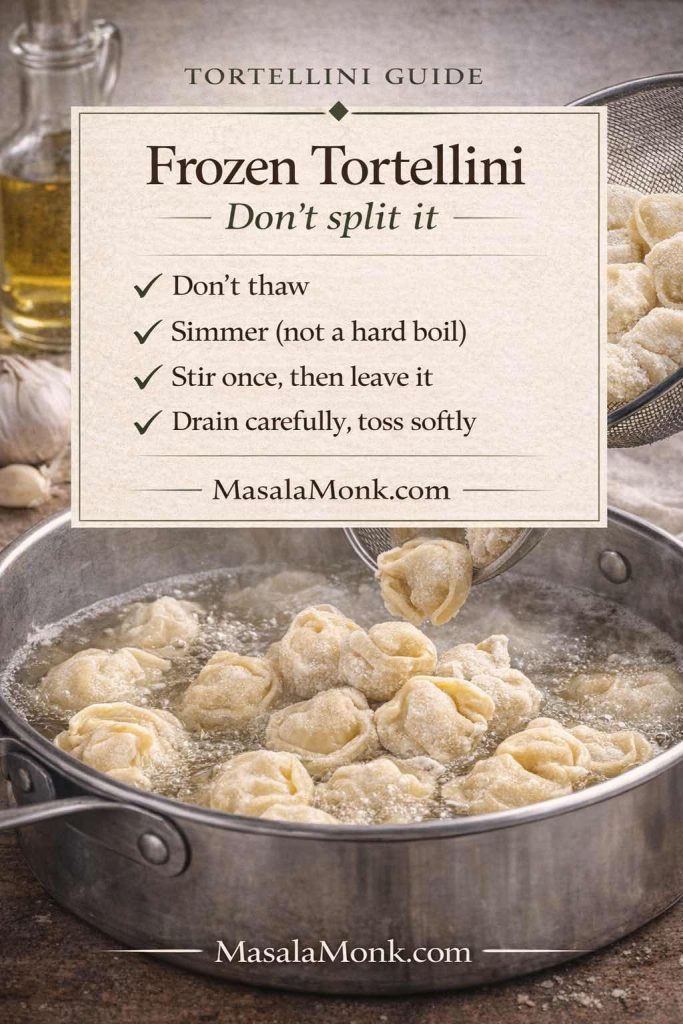
Don’t thaw it first. Instead, cook it straight from frozen in salted water. Stir gently at the beginning to prevent sticking. Then let it cook and start tasting early. Since frozen tortellini thickness varies by brand and style, tasting beats guessing.
Frozen tortellini tip sheet: cook straight from frozen and keep the water at a steady simmer—this prevents splitting and keeps the filling where it belongs.
If you’re using a refrigerated line that’s meant to be cooked from frozen with a simple adjustment, follow the package guidance. Giovanni Rana notes a cook-from-frozen timing approach on the same instruction page.
Once tender, drain carefully and finish gently in sauce. A soft toss matters because hot tortellini is delicate; consequently, aggressive stirring can cause splits right at the end.
That “gentle finish” is central to how to cook tortellini from frozen with consistent results.
Dried tortellini behaves more like pantry pasta. It needs longer cooking and tolerates a stronger boil, yet it still benefits from tasting near the end.
Bring salted water to a boil. Add tortellini and stir gently. Maintain a steady boil until the pasta is fully tender and the filling is hot through the center.
If you want a reference point for timing expectations, Barilla provides context on this tortellini recipe page. It’s especially useful if you’re cooking barilla tortellini or another shelf-stable tortellini.
After draining, finish the tortellini in sauce for a minute with pasta water. Because dried tortellini is sturdy, it’s excellent for marinara tortellini, bolognese tortellini, and baked pasta dinners.
How to cook tortellini in broth and tortellini in brodo
Broth is one of the most satisfying ways to serve stuffed pasta. It’s light, soothing, and surprisingly elegant. Better still, broth allows the filling to shine rather than competing with it.
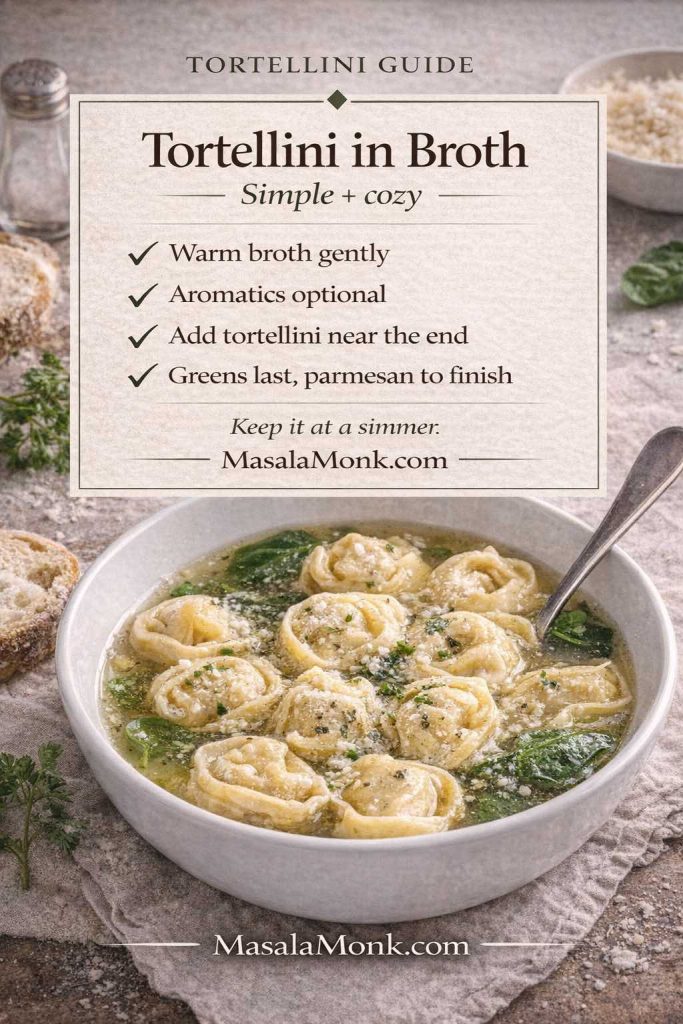
Warm good broth gently. Add aromatics if you like—garlic, onion, pepper, herbs, or a Parmesan rind. Then add tortellini and cook until tender. Finish with Parmesan and pepper.
Tortellini in broth (brodo) template: keep the broth at a gentle simmer and add tortellini near the end so it stays intact—then finish with greens, parmesan, and pepper.
Tortellini in broth with greens and herbs
To make it feel more complete, add greens near the end. Spinach is easiest because it wilts quickly. Kale works too, although it benefits from a little more time. Finish with herbs and a squeeze of lemon if you want extra lift.
Meat tortellini in broth is especially satisfying. However, cheese tortellini in broth can be wonderful too, particularly when you want comfort without heaviness.
Tortellini in brodo: the classic style
Tortellini in brodo is a traditional presentation associated with Bologna. For a cultural reference and overview, Bologna Welcome shares an explanation on this page. At home, keep it simple: good broth, gently cooked tortellini, Parmesan, and pepper. That restraint is what makes it special.
If you’re learning how to cook tortellini for soups, remember this: add the tortellini near the end and keep the simmer gentle so the pasta stays intact.
Pesto tortellini is fast, vibrant, and forgiving. It’s especially good with cheese tortellini because the basil and garlic cut the richness. Spinach tortellini works too, although a lighter coating tends to taste better.
Cook tortellini, drain, and reserve pasta water. Warm pesto gently in a pan without boiling it. Toss in tortellini and add pasta water a spoonful at a time until the sauce becomes glossy and clings.
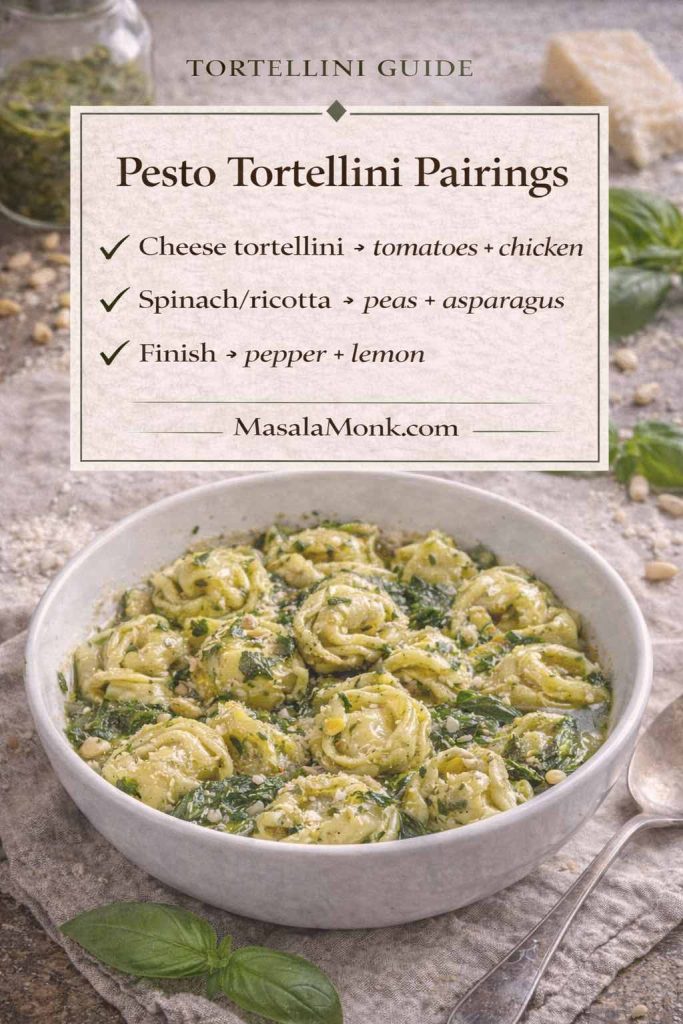
Save this pairing guide for pesto tortellini: add tomatoes + chicken to cheese tortellini, pair spinach and ricotta tortellini with peas/asparagus, then finish with pepper and lemon for a brighter bowl.
For pesto inspiration and variations, these MasalaMonk posts fit naturally, and you might want to have a look:
To make chicken pesto tortellini, add shredded chicken at the end and toss briefly. Then add cherry tomatoes or roasted peppers for sweetness. Finish with pepper and a squeeze of lemon. As a result, the bowl stays bright rather than heavy.
Pesto and tortellini with vegetables
For a lighter dinner, add vegetables. Broccoli, peas, asparagus, and zucchini all work. Add sturdy vegetables earlier and leafy greens later. Meanwhile, keep the pesto coating light and glossy.
This is a simple way to practice how to cook tortellini while also making it feel fresh and varied.
Creamy tortellini pasta that tastes rich but not heavy
Creamy tortellini is comfort food. Still, it doesn’t have to feel overly heavy. The trick is using pasta water to create a silky sauce rather than a thick one.
Start with butter and garlic in a pan. Add cream and warm gently. Then add tortellini and toss. Finally, loosen with pasta water until glossy. Finish with Parmesan and pepper.
For creamy pasta technique and variations, these MasalaMonk resources are excellent companions:
The easiest upgrade: finish tortellini in warm sauce with a splash of pasta water for 30–60 seconds—this makes pesto, tomato, and creamy tortellini cling beautifully instead of sliding off.
Cream cheese tortellini for weeknights
Cream cheese tortellini is a fast shortcut that still tastes luxurious. Warm a splash of broth or milk, whisk in cream cheese, and then loosen with pasta water. Add garlic, pepper, and Parmesan. Toss in tortellini and finish with spinach.
Because spinach adds freshness, the bowl feels balanced. Moreover, it turns “creamy” into “creamy but not too much.”
Creamy chicken tortellini and creamy sausage tortellini
To make creamy chicken tortellini, stir shredded chicken in at the end and finish with lemon zest or herbs. For creamy sausage tortellini, brown sausage first, then build the cream sauce around it. Add spinach near the end for color and contrast.
When you’re building these bowls, you’re practicing how to cook tortellini and how to finish it properly—two skills that make the whole category easier.
Tortellini pomodoro and marinara tortellini for classic comfort
Tomato sauce is one of the easiest ways to balance rich fillings. Tortellini pomodoro tastes bright and simple, while marinara tortellini leans more cozy and savory.
Warm tomato sauce in a pan. Cook tortellini. Add it to the sauce and toss gently. Use pasta water to help the sauce cling. Finish with Parmesan and a drizzle of olive oil.
How to cook tortellini and mushrooms in tomato sauce
Sauté mushrooms until browned. Add them to the sauce. Then toss in tortellini and finish with Parmesan and pepper. This works especially well with mushroom tortellini, but it upgrades plain cheese tortellini too.
Tortellini and spinach in tomato sauce
Add spinach at the end so it stays green. Meanwhile, keep the sauce bright with a little basil or oregano.
In both cases, the key is the finish: that quick toss is still how to cook tortellini so it tastes unified.
Bolognese tortellini, ground beef tortellini, and sausage tortellini
Ragù-style sauces pair beautifully with tortellini, particularly meat tortellini and cheese tortellini. However, because tortellini filling is already rich, the sauce should be savory and balanced rather than greasy.
For a solid ragù foundation, MasalaMonk’s bolognese sauce recipe is a great internal reference.
How to cook ground beef and tortellini: weeknight ragù energy
Brown ground beef with onion and garlic. Add tomato sauce and herbs. Simmer briefly. Cook tortellini separately, then toss it into the sauce for a minute with a splash of pasta water. Finish with Parmesan.
Italian sausage and tortellini: deeper flavor, same method
Brown sausage first. Add onion and garlic. Add sauce and a splash of broth. Toss in cooked tortellini and finish with spinach and Parmesan. Consequently, sausage and tortellini tastes hearty without feeling clumsy.
Tortelloni bolognese note
If you’re using tortelloni (larger stuffed pasta), keep the stirring gentle and taste early. Tortelloni can be slightly more delicate when hot, so finishing carefully matters even more.
In every case, you’re applying the same idea: cook tortellini gently, then finish it briefly in sauce. That’s how to cook tortellini so it stays intact and tastes cohesive.
How to cook one pot tortellini that doesn’t feel like a shortcut
One pot tortellini is popular because it saves dishes, but it can also taste genuinely good when the sauce and pasta finish together.
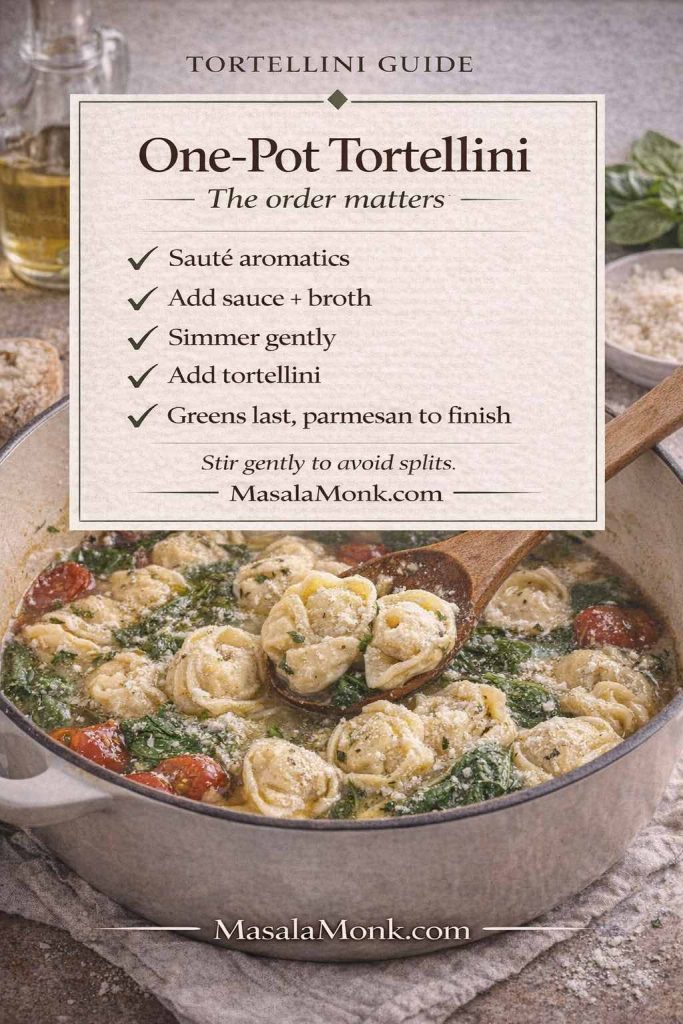
Start by sautéing onion and garlic in olive oil. Add broth and sauce. Bring to a gentle simmer. Add tortellini and cook until tender. Finish with Parmesan and herbs.
One-pot tortellini works when the order is right—sauté first, simmer the liquid, then add tortellini and finish with greens so it stays tender instead of overcooking.
If you like the general one-pot structure, MasalaMonk’s one-pot chicken bacon ranch pasta shows the comfort-forward approach in a way that’s easy to adapt.
One pot tortellini and sausage
Brown sausage first to build flavor. Then add onion and garlic, pour in marinara and broth, and add tortellini. Finish with spinach and Parmesan.
One pot chicken and tortellini
Build a lighter base with broth and a spoonful of tomato sauce. Add tortellini, then stir in shredded chicken near the end. Finish with basil and pepper. Alternatively, swap the tomato base for pesto and you’ve got chicken tortellini with pesto in a one-pot lane.
One pot tortellini and vegetables
Add broccoli, peas, asparagus, or zucchini. Add sturdy vegetables earlier and greens later. Meanwhile, keep the sauce simple so the bowl stays clean.
These dinners reinforce how to cook tortellini while also keeping the routine interesting.
Slow cooker tortellini and crock pot chicken tortellini that stays tender
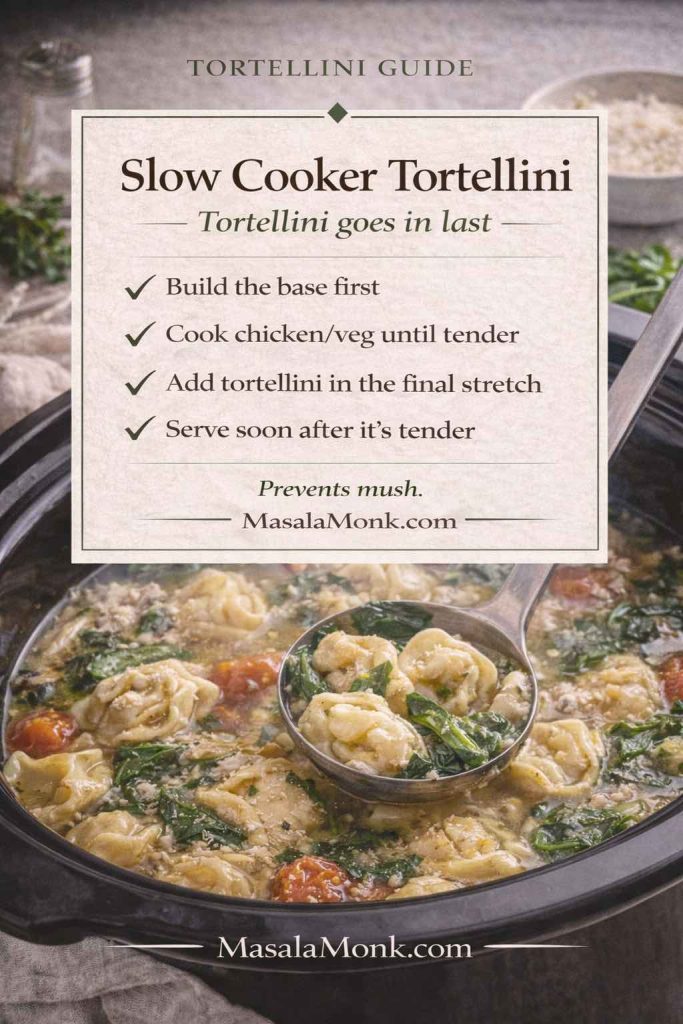
Slow cooker tortellini can be excellent, yet timing matters. Tortellini cooks quickly, so it should go in near the end. Add it too early and it turns soft. Therefore, build the base first, then add tortellini late.
Slow cooker rule: add tortellini at the end so it stays tender—this is the key to crock pot chicken tortellini and slow cooker tortellini that doesn’t turn mushy.
For a useful internal reference on slow cooker soup structure, MasalaMonk’s crock pot lasagna soup is a strong companion.
How to cook chicken tortellini crock pot style (brothy or creamy)
Add chicken, broth, aromatics, and vegetables to the slow cooker. Cook until the chicken is tender, then shred it. Add tortellini during the final stretch. Finish with spinach and Parmesan.
For a creamy version, stir in cream cheese or a splash of cream right before serving. This approach naturally covers chicken tortellini crock pot, chicken tortellini in crock pot, chicken tortellini slow cooker, and crockpot chicken and tortellini without forcing anything.
How to cook slow cooker tortellini with sausage
Brown sausage if you can; it adds depth. If you’re short on time, it still works, although the flavor is milder. Add sauce and broth, let the base cook, then add tortellini near the end. Finish with Parmesan and pepper.
Again, the principle holds: timing is the heart of how to cook tortellini in slow cooker meals.
How to cook instant Pot tortellini with better control
Stuffed pasta can overcook under pressure, so a controlled simmer often works better than a long pressure cook.
Use sauté mode to cook onion and garlic. Add broth and sauce. Bring to a simmer. Add tortellini and cook until tender, tasting early. Finish with Parmesan and herbs.
It’s simple, yet it’s reliable. In other words, it’s a practical way to apply how to cook tortellini when you want speed without guesswork.
Air fry tortellini: crunchy snacks and easy appetizers
Air fried tortellini is crunchy, salty, and perfect for dipping. It’s also a great way to make a simple package feel like a fun event.
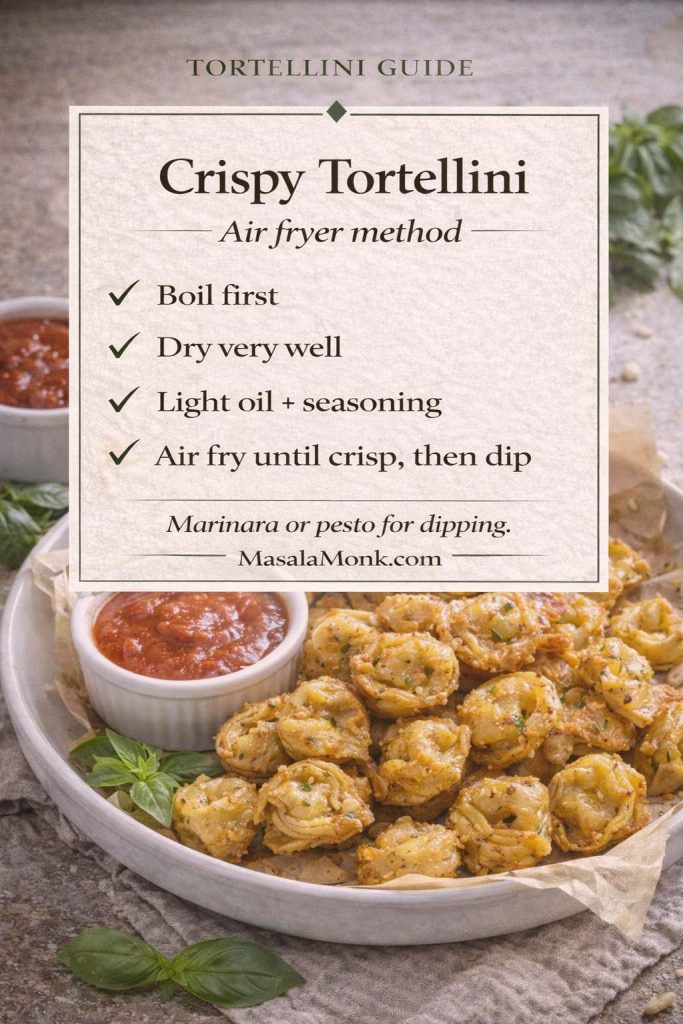
Cook tortellini first. Drain thoroughly and pat dry. Toss lightly with oil and seasoning. Air fry until crisp, shaking occasionally for even browning.
Air fried tortellini tip: boil, then dry it really well before air frying—this is the key to crispy tortellini (not soggy), perfect with marinara or pesto for dipping.
Air fryers vary, so technique matters. If you run into uneven browning or sogginess, MasalaMonk’s air fryer mistakes guide helps you troubleshoot quickly.
Serve air fry tortellini with marinara, pesto, or a creamy dip. If you want “fried tortellini” vibes without deep frying, this method hits that craving.
Tortellini prosciutto e panna: How to cook the creamy classic
Tortellini prosciutto e panna is one of those dishes that tastes like you ordered it, even though it comes together quickly. You get a silky cream sauce, savory prosciutto, tender pasta, and a peppery finish.
To make it at home, cook tortellini gently and reserve pasta water. Warm butter in a pan, sizzle chopped prosciutto briefly, then add cream. Toss in tortellini and loosen with pasta water until glossy. Finish with black pepper and Parmesan.
If you enjoy understanding how different Parmesan styles affect flavor, MasalaMonk’s Parmesan guide is a great companion.
This dish is also a reminder that how to cook tortellini for cream sauces is mostly about the finish: gentle toss, glossy coating, and serving promptly.
Store-bought tortellini: Rana, Barilla, Buitoni, and what really matters
Store-bought tortellini can taste excellent. The secret isn’t magic—it’s matching format to method and finishing properly.
For refrigerated rana tortellini or giovanni rana tortellini, keep the simmer gentle and taste early. If you want a concrete reference for timing, check Giovanni Rana’s instructions.
For pantry-style products such as barilla tortellini (where available), longer boiling and sturdier sauces work well. Timing expectations are reflected on Barilla’s recipe page.
For buitoni tortellini, the same logic applies: salted water, gentle simmer, early tasting, and a brief finish in sauce.
If you like browsing for variation ideas, these external sources are useful for inspiration:
Tortellini can fit many diets if you choose the right product and pair it with the right sauce.
Vegan tortellini / non dairy tortellini: finish in tomato sauce, broth, or dairy-free pesto. For pesto flexibility, MasalaMonk’s pesto hub is a helpful starting point.
Vegetarian tortellini: cheese tortellini and spinach and ricotta tortellini work beautifully in pesto, tomato, and light cream lanes.
GF tortellini: keep the simmer gentle and stir carefully, since gluten-free pastas can be more delicate.
Eggless tortellini: treat it like delicate fresh pasta and avoid aggressive boiling.
No matter the diet, the method stays the same. In other words, how to cook tortellini still comes down to gentle heat, tasting early, and finishing properly.
Troubleshooting: quick fixes when tortellini misbehaves
Even when you’ve learned how to cook tortellini, a few common problems can pop up. Fortunately, most fixes are simple.
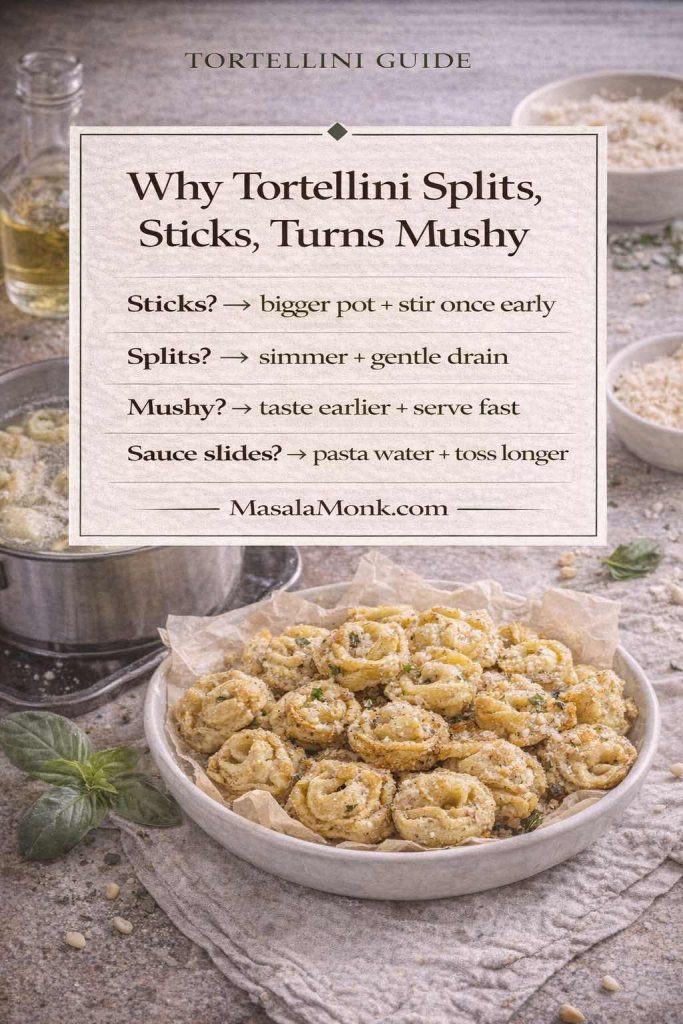
If tortellini sticks, splits, or turns mushy, it’s usually a heat-and-handling issue—use these quick fixes to keep stuffed pasta intact and perfectly tender.
Tortellini sticks together Use a larger pot and more water. Stir gently right after adding it. If it clumps anyway, don’t force it aggressively; often it loosens as it cooks.
Tortellini splits or leaks filling Lower the boil to a lively simmer. Stir less. Drain gently. If it’s frozen, don’t thaw first.
Tortellini turns mushy It likely overcooked or sat too long in hot sauce. Next time, taste earlier and serve soon after finishing.
Sauce is thin or slides off Use reserved pasta water and toss longer. The starch helps emulsify. As a result, the sauce clings instead of slipping.
Leftovers: storing and reheating without ruining the texture
Tortellini is best fresh, yet leftovers can still be enjoyable when reheated gently.
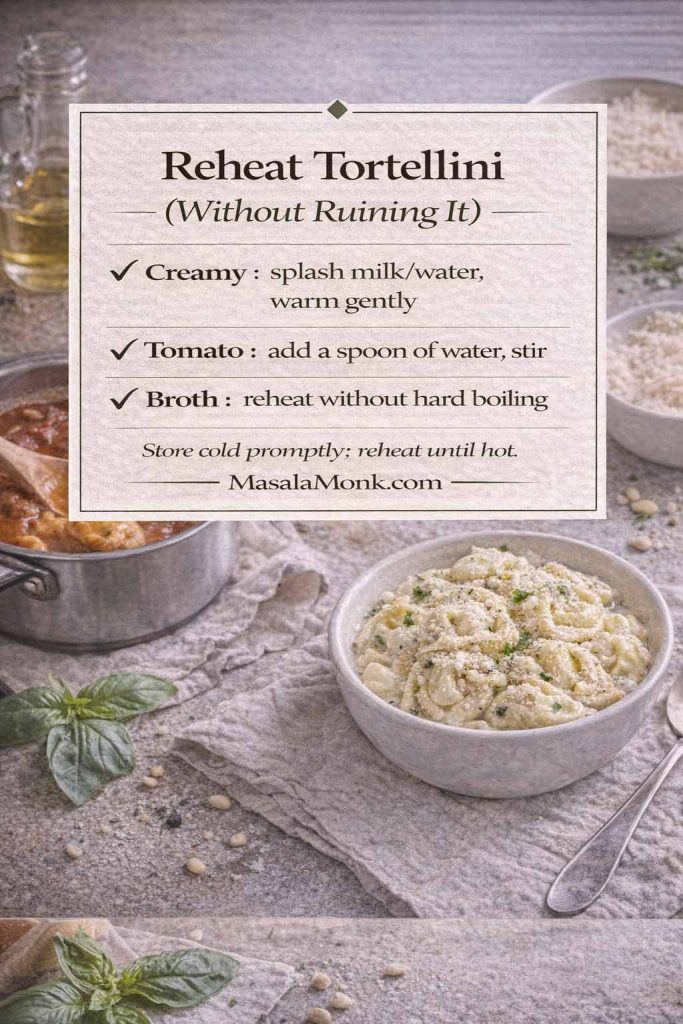
Leftover tortellini reheats best with gentle heat and a splash of liquid—use this quick guide to keep creamy, tomato, and broth-based tortellini from turning dry or mushy.
For safety guidance, these references are reliable:
What to serve with tortellini so dinner feels complete
A good side dish doesn’t need to be complicated. It just needs to complement the bowl.
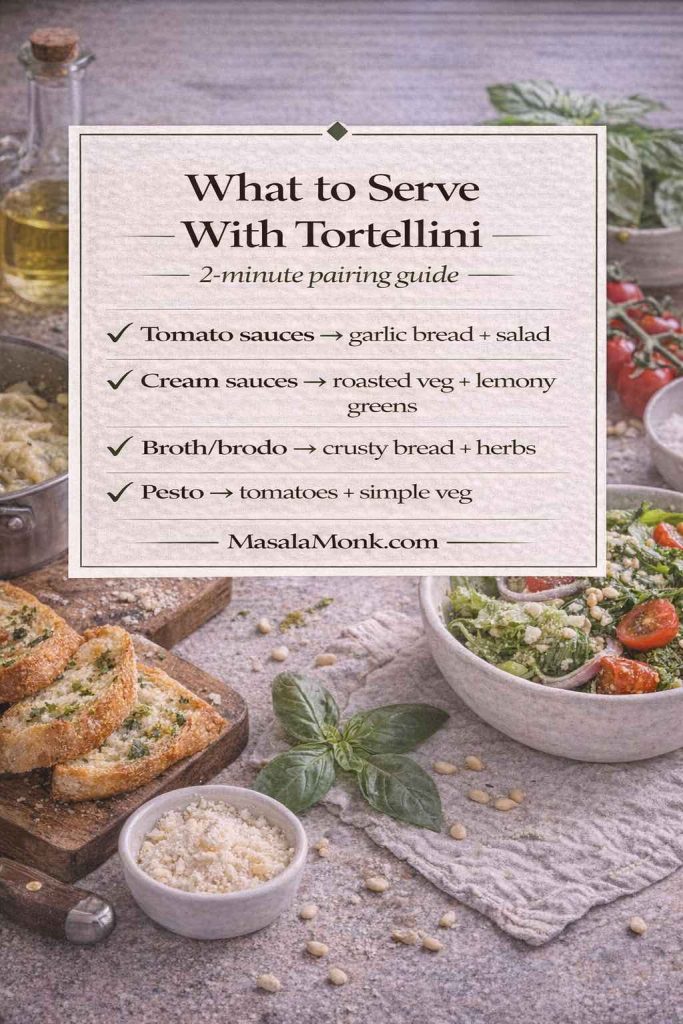
Garlic bread is a classic with marinara tortellini and bolognese tortellini. If you want a homemade option, MasalaMonk’s garlic bread loaf recipe fits naturally.
Not sure what to serve with tortellini? Use this quick pairing guide to build a complete dinner—match your sauce (tomato, creamy, broth, or pesto) with an easy side that balances the bowl.
If you’re building a more social meal—especially with tortellini prosciutto e panna—a small board works beautifully. MasalaMonk’s charcuterie board guide can help you set that up with confidence.
For quick seasoning support in soups and sauces, an herb blend can help. MasalaMonk’s Italian seasoning mix is a simple pantry staple.
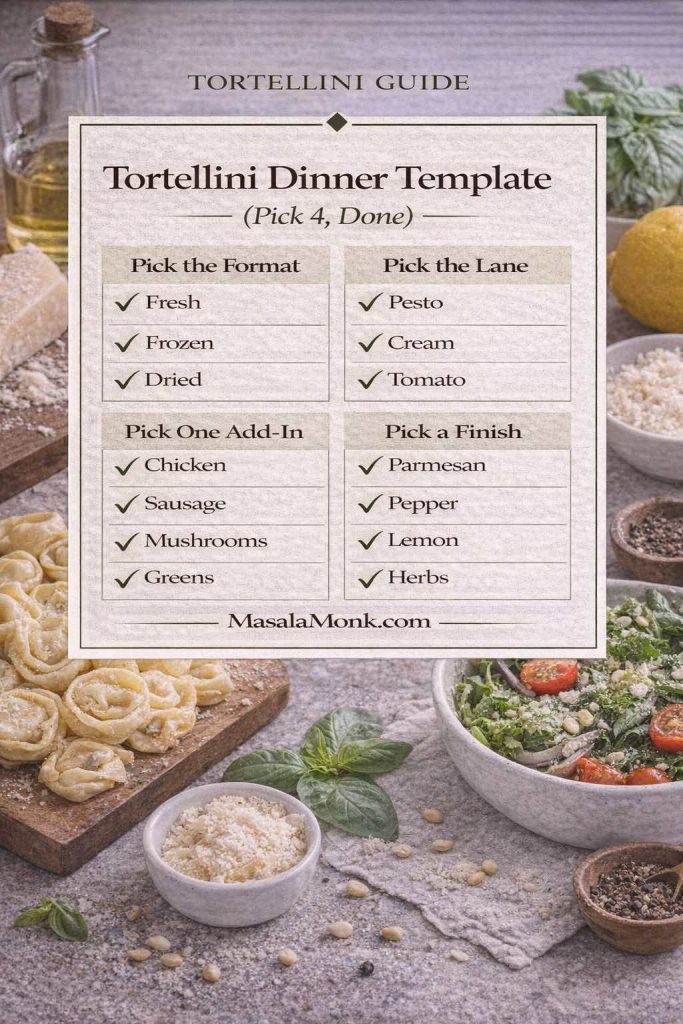
A simple dinner “template” that makes tortellini nights effortless
When you’re holding a pack of tortellini and don’t want to overthink, use this quick template:
Pick the format: fresh/refrigerated, frozen, or dried.
Pick the lane: pesto, creamy, tomato, broth, or ragù.
Pick one add-in: chicken, sausage, mushrooms, or greens.
Pick a finish: Parmesan, pepper, lemon, or herbs.
Save this “pick 4” tortellini dinner template: choose your tortellini format, sauce lane, one add-in, and a finishing touch—an easy way to turn any pack of tortellini into dinner without overthinking.
That’s it. With those four choices, you’ll never feel stuck—and you’ll naturally practice how to cook tortellini in ways that keep getting easier.
The best way to master how to cook tortellini isn’t memorizing an exact number of minutes. It’s repeating the same handful of habits until they become automatic: salt the water, keep the simmer controlled, taste early, reserve pasta water, and finish in sauce or broth.
From there, tortellini becomes endlessly flexible. Pesto tortellini can become a bright chicken dinner. Creamy tortellini pasta can become a cozy bowl with spinach. Tortellini pomodoro can become a reliable classic. Tortellini in brodo can become your comforting reset meal. One pot tortellini can become your low-dishes routine. Slow cooker tortellini can become your hands-off plan. Air fry tortellini can become your crunchy appetizer.
Once you have the rhythm, you won’t just know how to cook tortellini—you’ll know how to turn it into dinner, almost any way you want, whenever you need it.
Most tortellini cooks quickly, yet the exact time depends on whether it’s fresh tortellini, refrigerated tortellini, frozen tortellini, or dried tortellini. In practice, the best approach is to taste early and keep checking until the pasta is tender and the filling is hot through the center. If you’re learning how to cook tortellini consistently, tasting is more dependable than relying on one fixed number.
2) How do I know when tortellini is done cooking?
Tortellini is done when the pasta feels tender but still springy and the filling tastes fully warmed. Also, the pieces usually look slightly plumper. If the pasta feels firm at the edges, it needs a bit more time. Conversely, if it feels floppy or waterlogged, it likely cooked too long.
3) Should tortellini float when it’s finished?
Often, tortellini will float as it nears doneness, although floating alone isn’t a guarantee. Instead, treat floating as a sign to start tasting. That way, you’ll learn how to cook tortellini to the exact texture you like.
4) Do I cook frozen tortellini without thawing?
Yes—cook frozen tortellini straight from frozen. Thawing can weaken the pasta and increase the chance of splitting. Rather than thawing, add the frozen tortellini to salted water at a controlled boil and taste early as it cooks.
5) Why does my tortellini break or leak filling?
Tortellini may split if the boil is too aggressive, if it’s stirred roughly, or if it’s overcooked. For better results, keep the water at a lively simmer, stir gently only at the start, and drain carefully. In addition, finishing tortellini in sauce with a light toss helps prevent tearing.
6) What’s the best way to cook cheese tortellini?
Cheese tortellini tastes best when the water is salted and the pasta is finished briefly in sauce. After draining, toss it in marinara, pesto, or a light cream sauce with a splash of pasta water to help the sauce cling. If you’re focusing on how to cook tortellini for weeknights, cheese-filled tortellini is the easiest place to start.
7) How do I cook spinach and ricotta tortellini without making it soggy?
For spinach and ricotta tortellini (also called ricotta spinach tortellini or tortellini ricotta spinaci), use a gentle simmer and start tasting early. Then, avoid letting it sit in a colander. Instead, transfer it straight into a warm sauce so it stays tender yet not mushy.
8) Can I cook tortellini in broth?
Absolutely. Tortellini in broth is a classic way to serve stuffed pasta. Warm the broth gently, then cook tortellini at a mild simmer until tender. Afterwards, add herbs or spinach near the end for a fresher bowl.
9) What is tortellini in brodo?
Tortellini in brodo is tortellini served in broth, traditionally associated with Bologna. Even at home, it’s straightforward: a flavorful broth, tender tortellini, and a simple finish like Parmesan and pepper.
10) How do I make pesto tortellini without it turning oily?
To keep pesto tortellini glossy, warm the pesto gently instead of boiling it. Then, add a splash of reserved pasta water while tossing. As a result, the sauce emulsifies and coats the tortellini evenly.
11) What’s the easiest creamy tortellini pasta for beginners?
A simple creamy tortellini pasta often starts with butter, garlic, and cream, finished with pasta water for a silky texture. Alternatively, cream cheese tortellini is even simpler: melt cream cheese with a little milk or broth, then loosen with pasta water before tossing in tortellini.
12) Can I make one pot tortellini?
Yes—one pot tortellini is a practical dinner. Simmer your sauce with broth, then add tortellini and cook until tender. Finally, finish with Parmesan or herbs. This method works particularly well for cheese tortellini pasta and tortellini with veggies.
13) Can I make tortellini in a slow cooker or crock pot?
Yes, though timing matters. For slow cooker tortellini or crock pot tortellini, build the soup or sauce base first and add tortellini near the end so it doesn’t overcook. The same idea applies to chicken tortellini crock pot and chicken tortellini slow cooker recipes.
14) How do I make chicken tortellini in a crock pot without mushy pasta?
Cook the chicken and broth base first, shred the chicken, then add tortellini during the last part of cooking. That way, the tortellini stays tender. Likewise, add spinach at the end so it remains bright.
15) Can I cook tortellini in an Instant Pot?
Yes, although it’s easy to overcook stuffed pasta under pressure. For better control, use sauté mode to build flavor, then simmer tortellini gently until tender. This approach fits how to cook tortellini when you want speed without guesswork.
16) How do I make air fryer tortellini?
To make air fry tortellini (or air fried tortellini), cook tortellini first, drain well, pat dry, then toss lightly with oil and seasoning. Next, air fry until crisp, shaking occasionally for even browning. Serve with marinara, pesto, or a creamy dip.
17) What’s the difference between tortellini and tortelloni?
Tortelloni is larger than tortellini and often has a softer, more delicate feel. Because of its size, it may need a bit more time to heat through. Still, the same principles for how to cook tortellini apply: gentle simmer, early tasting, and a careful finish in sauce.
18) How do I cook store-bought tortellini like Rana tortellini or Buitoni tortellini?
For rana tortellini, giovanni rana tortellini, and buitoni tortellini, follow the package timing as a baseline, then taste to confirm doneness. Usually, refrigerated styles cook quickly, whereas dried versions take longer. In all cases, finishing in sauce with pasta water improves texture and flavor.
19) How do I keep tortellini from sticking together?
Use plenty of water, stir gently right after adding tortellini, and avoid overcrowding the pot. Additionally, don’t drain and let it sit too long; transferring into sauce promptly helps keep pieces separate.
20) Can I reheat tortellini without it turning mushy?
Yes. Reheat gently with a splash of liquid—water for tomato sauces, milk or broth for creamy sauces, and extra broth for soups. Then warm slowly rather than boiling hard. This method helps preserve texture when you’re practicing how to cook tortellini for leftovers, too.
21) Can tortellini be vegetarian or vegan?
Yes. Vegetarian tortellini often includes cheese or spinach and ricotta. Vegan tortellini and non dairy tortellini are also available depending on brand and store. Even so, the cooking method stays similar: gentle simmer, early tasting, and a careful finish.
22) Is there gluten-free tortellini?
Yes—gf tortellini exists, although it can be more delicate than wheat-based pasta. Therefore, keep the simmer controlled, stir minimally, and taste early so it doesn’t overcook.
23) Can I make tortellini with sausage or ground beef?
Definitely. Sausage tortellini works well in tomato sauce, creamy sauces, or one-pot dinners. Similarly, ground beef tortellini pairs nicely with a bolognese-style sauce. For best texture, cook tortellini separately and toss it in the sauce briefly right before serving.
24) What are the best sauces for tortellini?
The best sauces depend on the filling. Cheese tortellini suits pesto, marinara, pomodoro, and cream sauces. Spinach and ricotta tortellini often shines with lighter tomato or butter-garlic sauces. Meat tortellini is excellent in broth and also works in ragù. When in doubt, keep the sauce balanced and let the filling lead.
25) Why does my tortellini taste bland even when the sauce is good?
Usually, the cooking water wasn’t salted enough, or the tortellini wasn’t finished in sauce. Salted water seasons the pasta itself, while a short toss in sauce helps the flavors stick. Together, those steps are the simplest upgrade in how to cook tortellini so it tastes fully seasoned.