
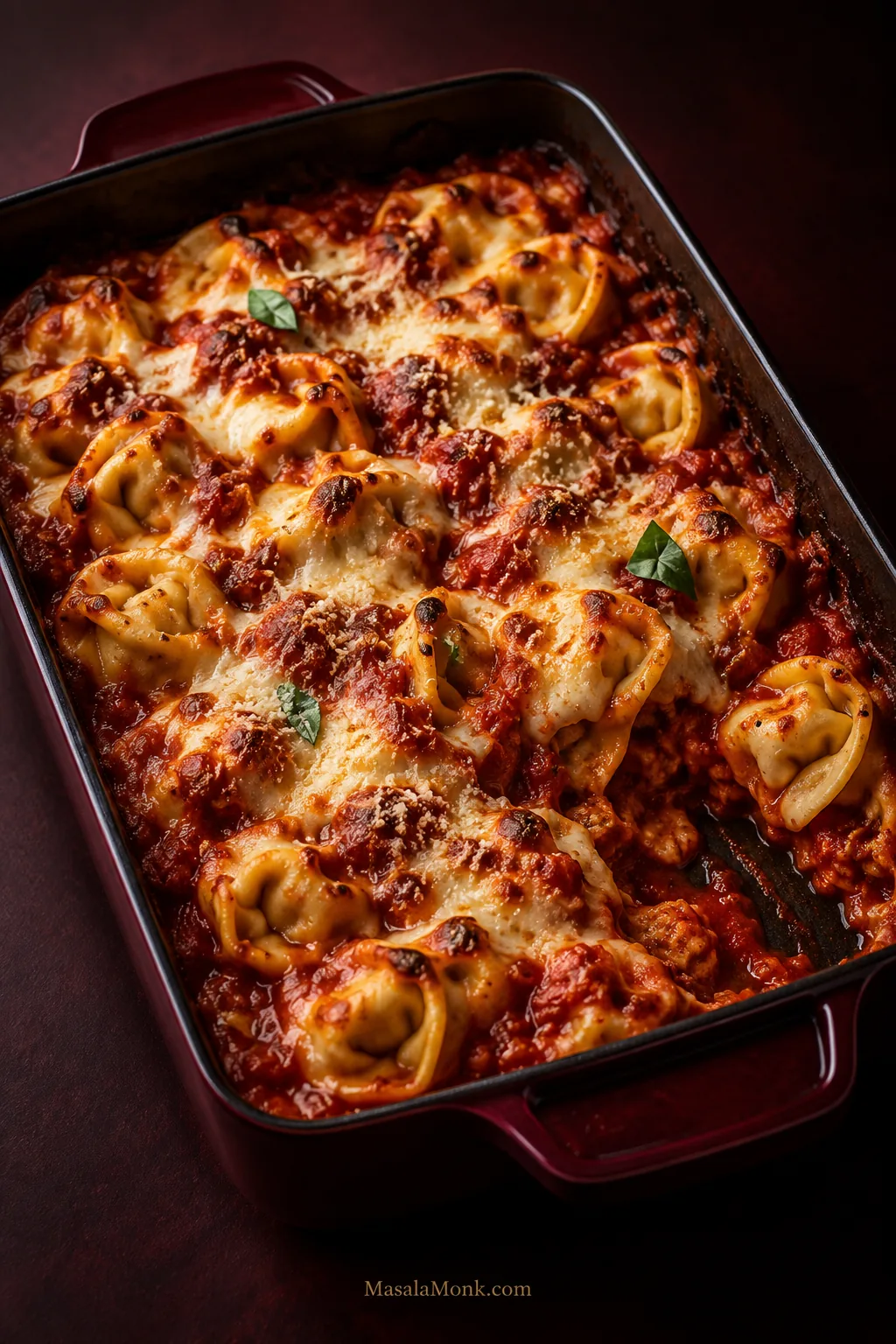
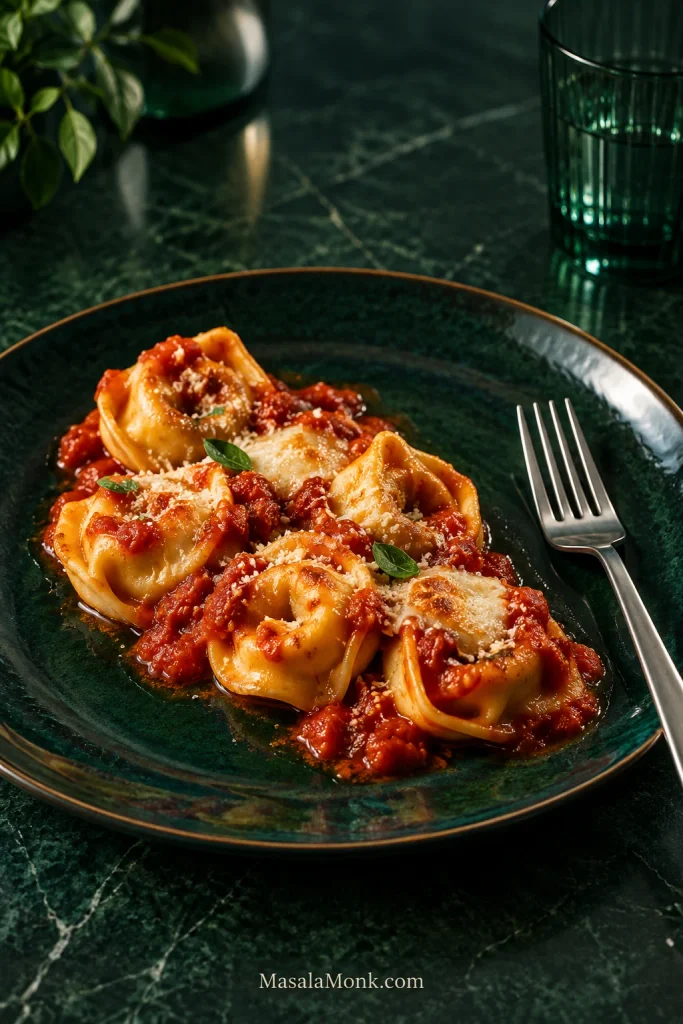
A package of refrigerated tortellini, a jar of marinara and some mozzarella can become dinner with about 10 minutes of hands-on work and no separate pot of boiling water. By the time the dish comes out of the oven, the sauce is bubbling around plump cheese-filled pasta and the mozzarella has melted into browned patches across the top.
Sometimes the package of tortellini is the whole dinner plan. That’s enough here.
The one thing worth watching is the pasta underneath the cheese. The folded edges take longer to soften. Pieces left completely above the sauce can also turn dry and chewy even while the bottom of the pan still looks plenty saucy.
The fix is simple: keep the tortellini surrounded by sauce and check one from the middle before you uncover the pan.
This baked tortellini recipe uses refrigerated cheese tortellini straight from the package. Frozen and dried tortellini work differently, so you’ll find those adjustments below along with the variations and fixes that are actually useful.
Quick Answer: Do You Need to Boil Tortellini Before Baking?
No. Refrigerated tortellini needs no pre-boiling here because it is soft enough to finish cooking in sauce. What it needs in the oven is enough sauce around it, trapped steam and time under cover to become tender.
Add it uncooked to marinara thinned with a little water, coat every piece with sauce, cover the dish securely and bake at 400°F / 205°C. Before uncovering, take one from the middle. It should be tender all the way through with no hard or floury center.
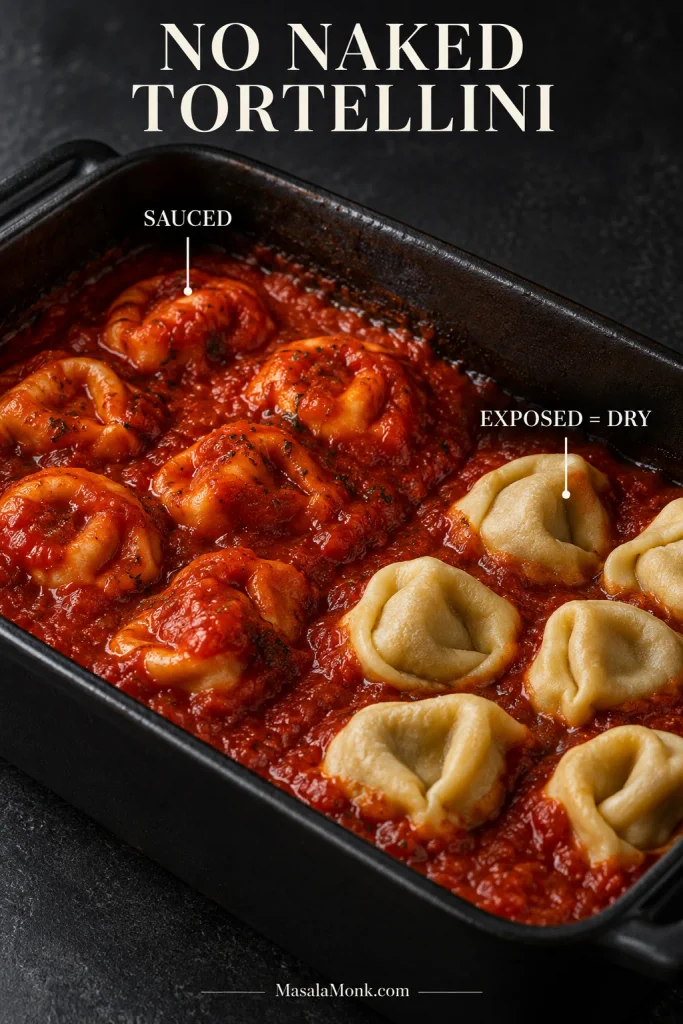
No naked tortellini: pasta left completely above the sauce can dry out while everything underneath cooks normally. Push exposed pieces down or spoon sauce over them before covering the dish.
Baked Tortellini Recipe
The base tortellini casserole is deliberately simple: cheese tortellini, marinara, mozzarella and Parmesan, with garlic and a few seasonings if you want them.
You have about 10 minutes of hands-on work. Most of the rest is oven time and one quick check before the final cheese goes on.
Easy No-Boil Baked Tortellini
Refrigerated cheese tortellini cooks directly in marinara, then finishes uncovered with mozzarella and Parmesan until the sauce bubbles around the pasta and the top is lightly browned.
Recipe at a Glance
| Yield | 6 servings |
|---|---|
| Hands-on | 10 minutes |
| Bake | About 30–40 minutes |
| Rest | 5–10 minutes |
| Total | 45–60 minutes |
| Oven | 400°F / 205°C |
| Pan | 9×13 in / 23×33 cm, about 3 qt / 2.8 L |
You’ll need: a 9×13-inch / 23×33-cm baking dish and heavy-duty foil or a tightly fitting oven-safe lid.
Ingredients
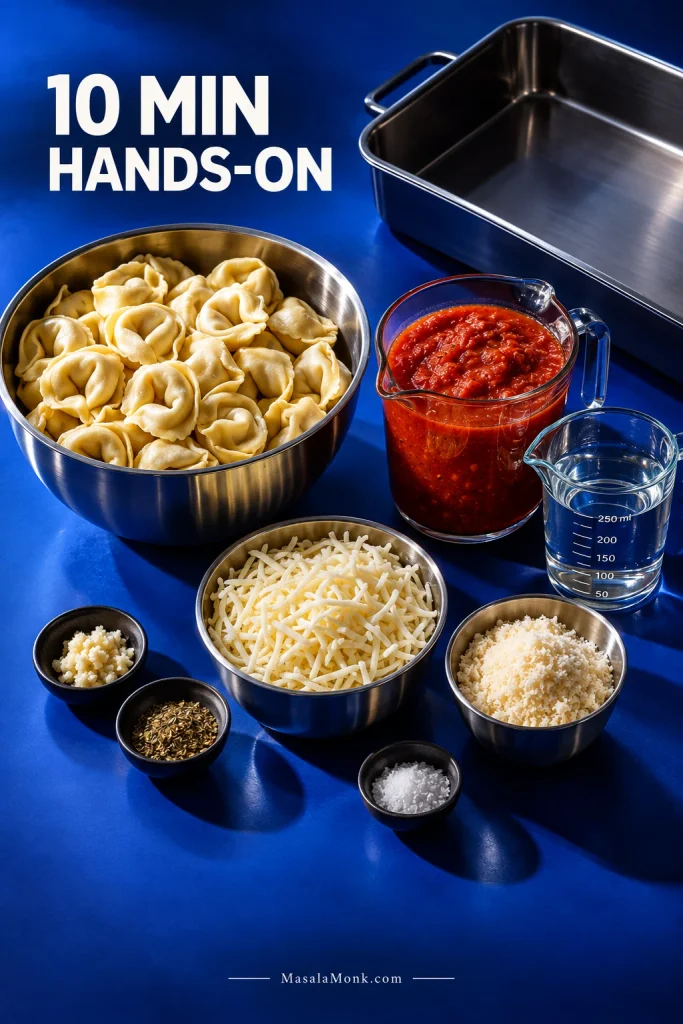
- 20 oz / 567 g refrigerated cheese tortellini, uncooked
- 24 oz / 680 g marinara sauce
- ¼–½ cup / 60–120 ml water, depending on sauce thickness
- 1½ cups / 170 g low-moisture mozzarella, shredded and divided
- ¼ cup / 25 g Parmesan, finely grated
- 2 garlic cloves, minced (optional)
- 1 tsp Italian seasoning (optional)
- ¼ tsp red pepper flakes (optional)
- black pepper, to taste
- fresh basil or parsley (optional)
- salt, only if needed
1. Loosen the Marinara
Heat the oven to 400°F / 205°C. Spread a little marinara over the bottom of the baking dish.
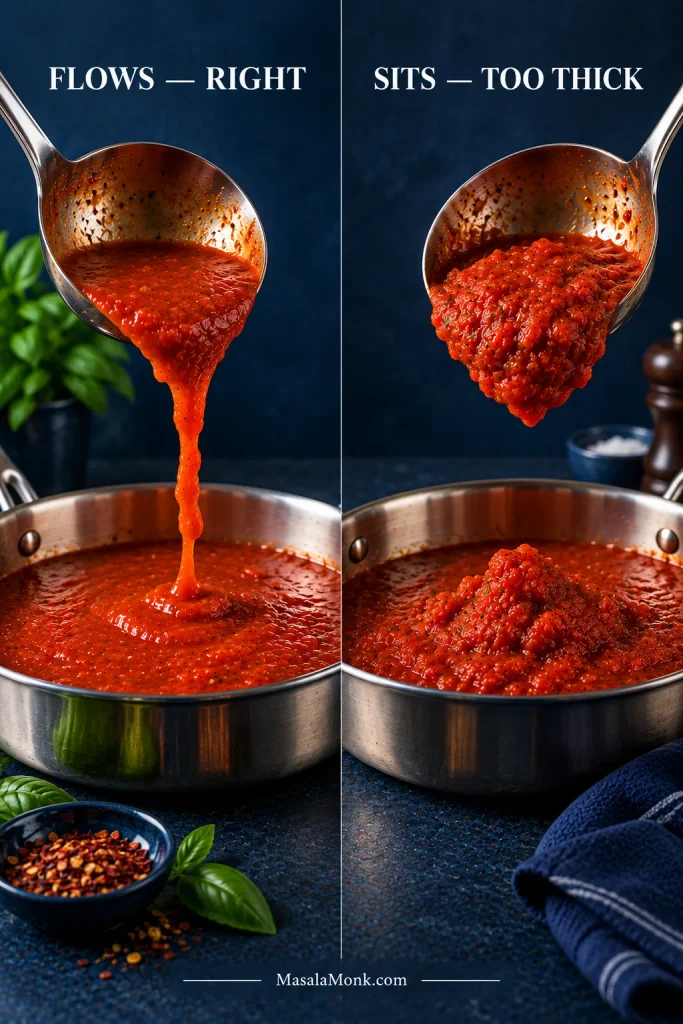
Stir the rest with the garlic, Italian seasoning, black pepper and red pepper flakes, if using. Add ¼ cup / 60 ml water if the sauce already pours easily, or closer to ½ cup / 120 ml if it sits in thick spoonfuls. You want the marinara to flow easily around the tortellini once everything is mixed.
2. Coat the Tortellini
Add the refrigerated tortellini straight from the package. Turn it gently through the marinara until every piece is glossy with sauce, then scatter ½ cup / 57 g mozzarella through the dish.
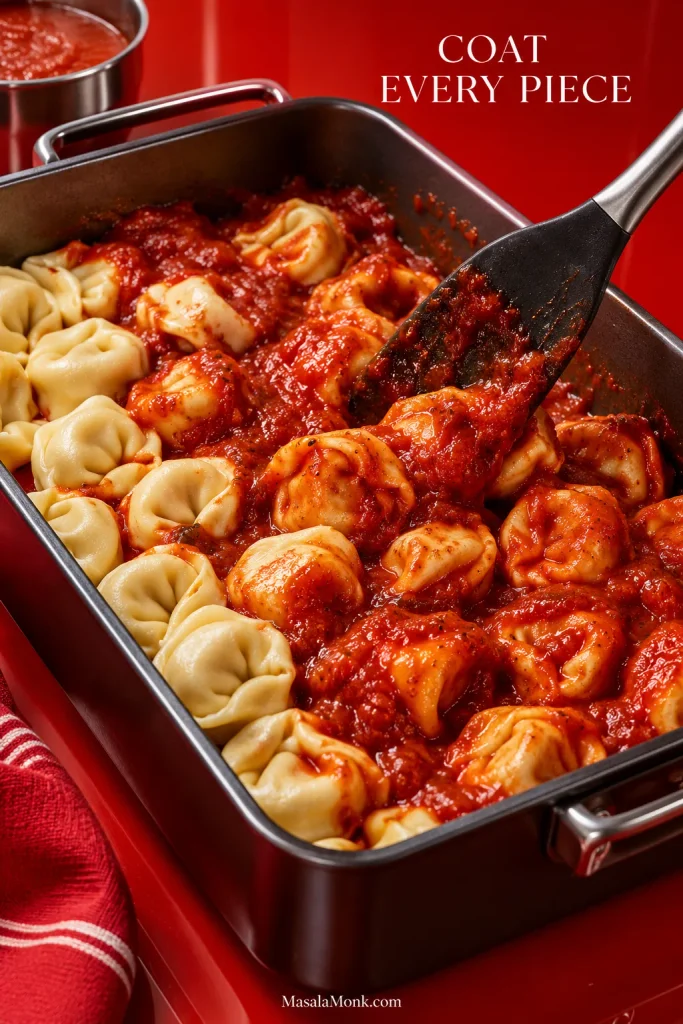
Give the top a quick look. Press any pale, exposed pieces down or cover them with another spoonful of sauce.
3. Cover and Bake
Crimp foil around the rim so steam cannot escape freely. Bake for 20 minutes, then steal a tortellini from somewhere near the middle and check the thick fold.
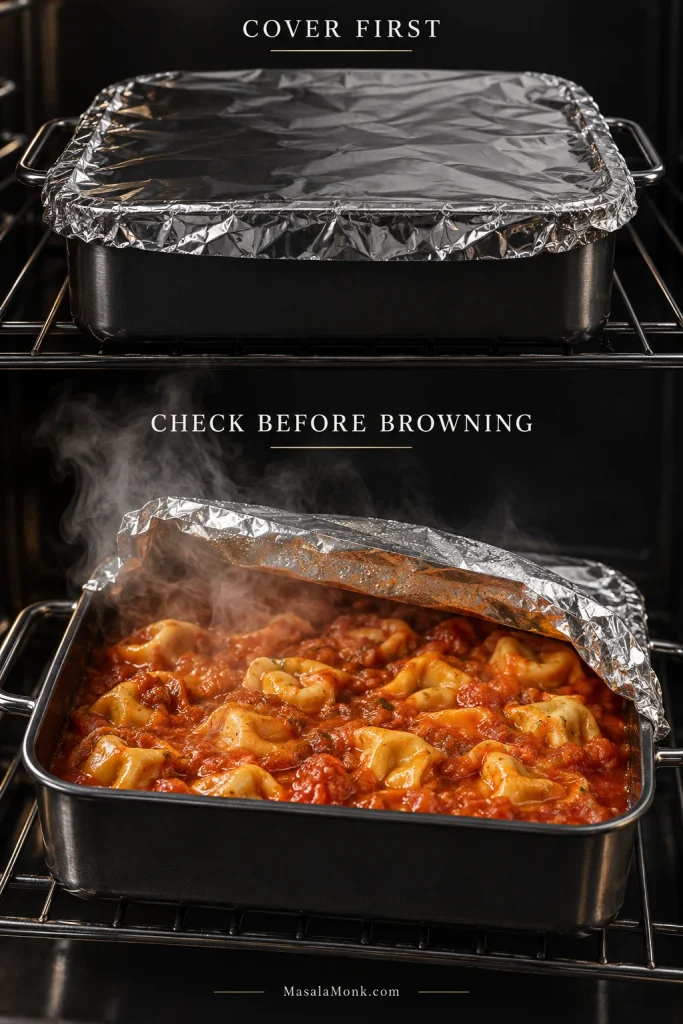
Don’t judge doneness by the cheese. Check a tortellini. The top can look beautifully melted before the filled pasta underneath is ready.
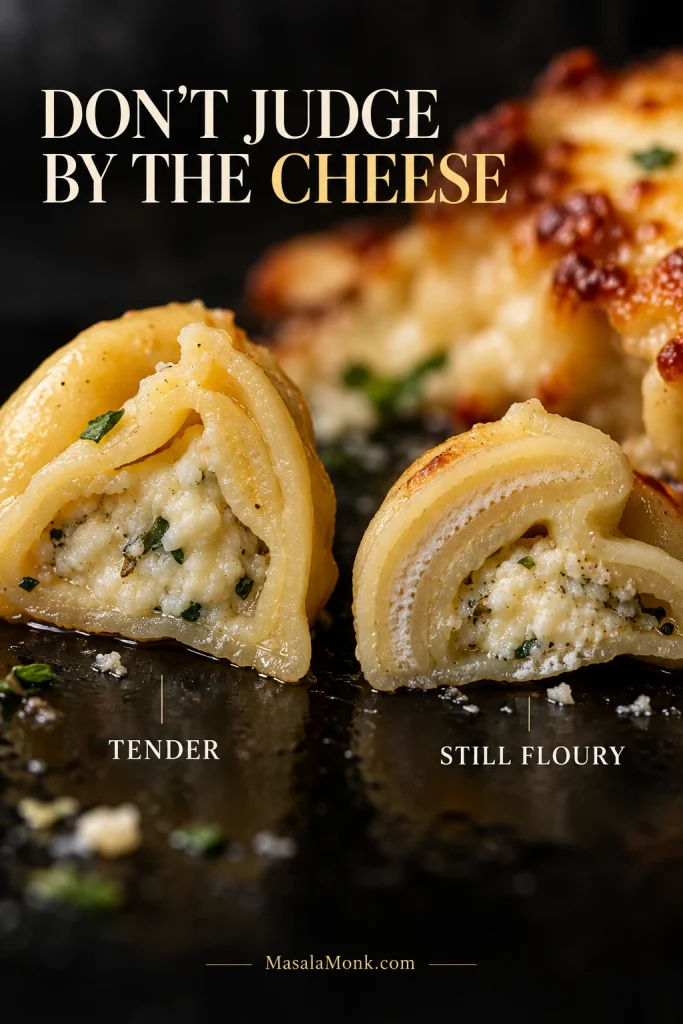
If it is still hard or floury inside, cover the pan again and give it another 5 minutes. If the sauce has almost disappeared too, add a splash of hot water or warm marinara first.
Once the pasta is tender, look at the sauce rather than the clock. If it is still watery, leave the pan uncovered for 3–5 minutes before adding the final cheese. If it already looks thick enough to cling to the pasta, move straight on.
4. Add the Cheese and Brown
Scatter over the remaining 1 cup / 113 g mozzarella and all of the Parmesan.
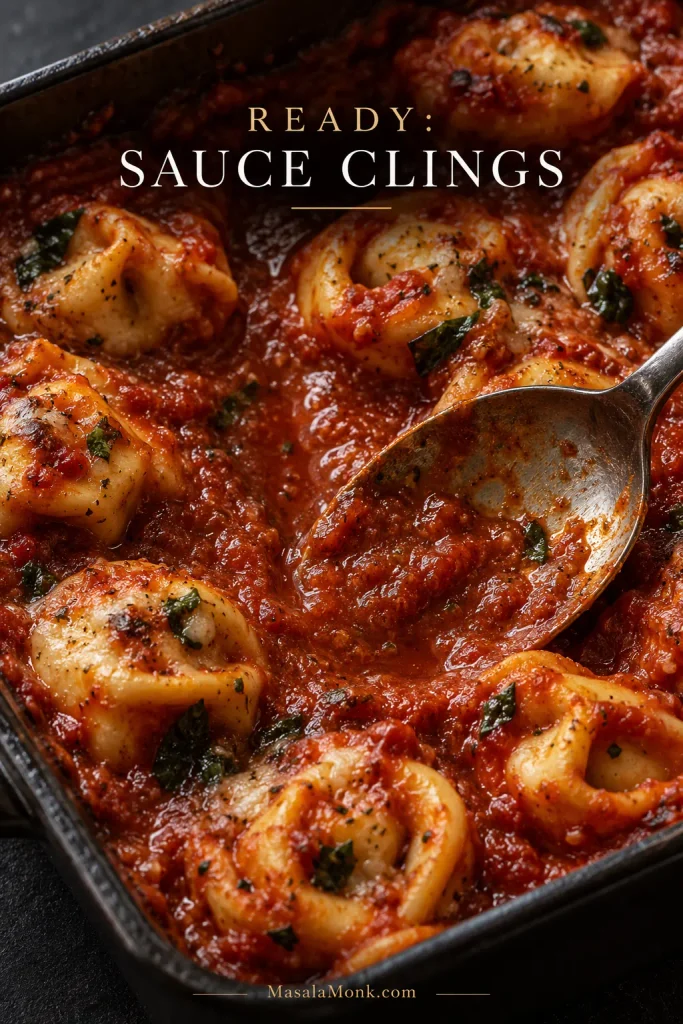
Bake uncovered for 8–10 minutes. Look for browned patches of mozzarella with little pockets of tomato sauce still visible between plump tortellini.
Draw a spoon through the pan. The sauce should cling around the pasta instead of immediately flooding the gap. For deeper color, broil for 1–2 minutes at the end. Stay nearby; mozzarella can move from spotted to scorched quickly.
5. Rest Before Serving
Rest for 5–10 minutes so the sauce settles and the tortellini is easier to spoon out cleanly. If the casserole looks a little loose, give it that time before judging it.
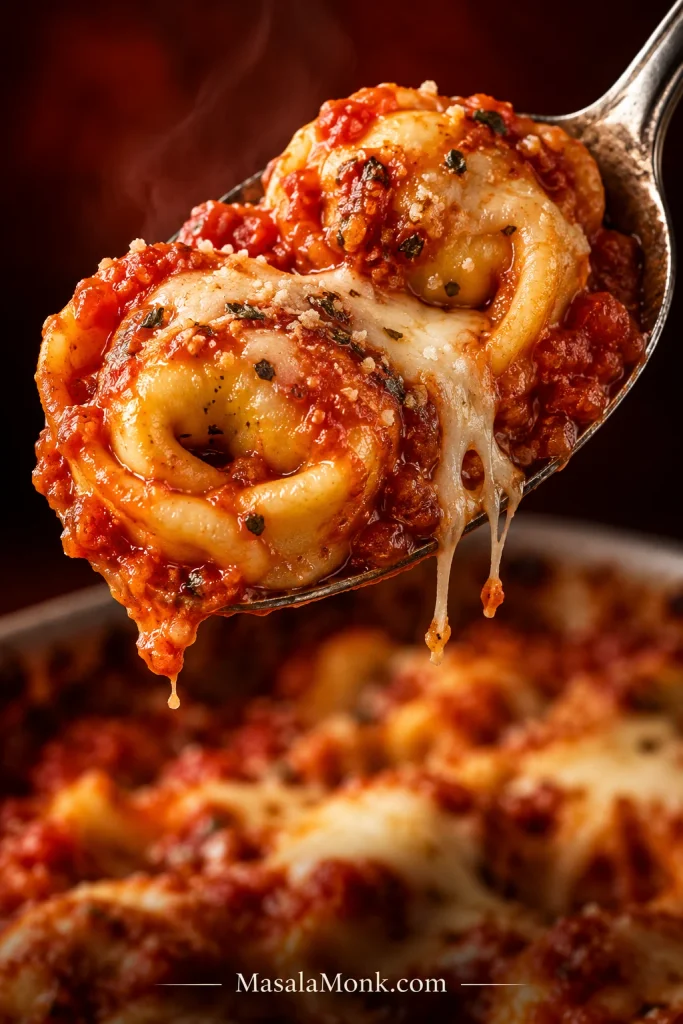
Finish with torn basil or parsley and another little grating of Parmesan.
A Few Useful Notes
- Marinara: jarred sauce is ideal here. Making your own? A pourable fresh tomato sauce works too; stop reducing it while it still flows easily around the pasta.
- Mozzarella: low-moisture mozzarella melts predictably without adding much extra water. Pre-shredded is completely fine. Drain and blot fresh mozzarella well before using it.
- Salt: taste first. Filled pasta, marinara and Parmesan may already provide enough.
Using refrigerated tortellini? You’re done. Everything below is optional.
In This Guide
Refrigerated, Frozen or Dried Tortellini?
Check the package before you do anything else. The main recipe uses soft refrigerated tortellini from the chilled section—the kind often sold as “fresh.” It can go straight into the dish. Frozen can too, but it needs more water and time. Dried tortellini is where I would stop using the no-boil shortcut.
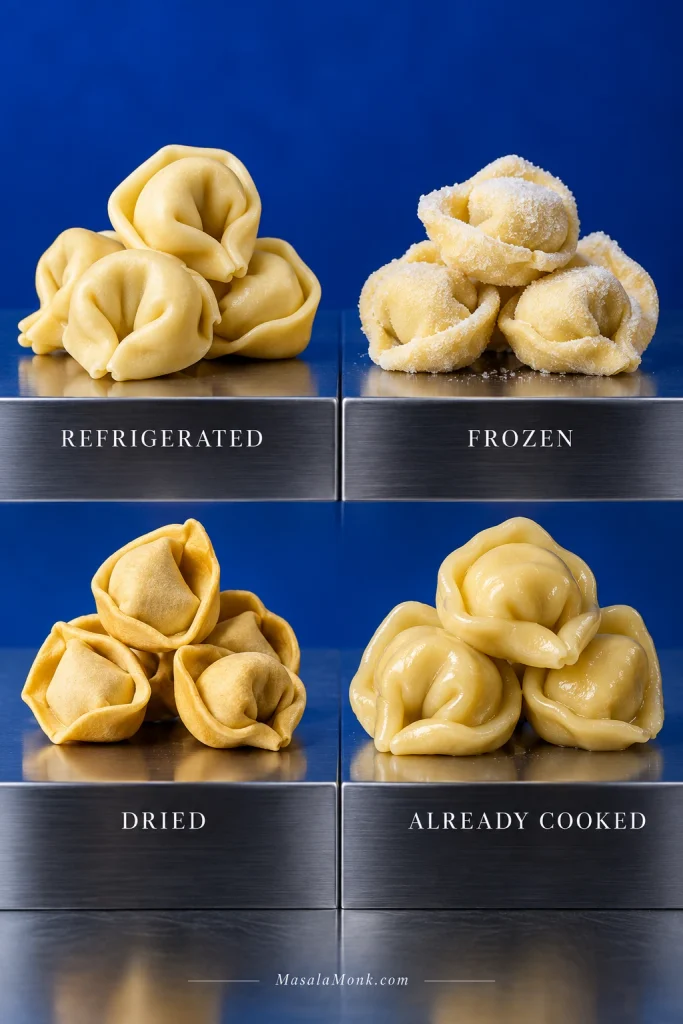
| What you have | What to do |
|---|---|
| Refrigerated tortellini | Add uncooked and use the main recipe |
| Frozen tortellini | Keep frozen; use more water and a longer covered bake |
| Dried / shelf-stable tortellini | Parboil before assembling the casserole |
| Already cooked tortellini | Skip extra water and bake only until hot with a browned top |
Already cooked? The tortellini only needs to heat through. Skip the extra water and stop once the sauce is bubbling and the cheese has melted.
Frozen Tortellini
Frozen tortellini can go straight into the dish. Do not thaw it first for this method.
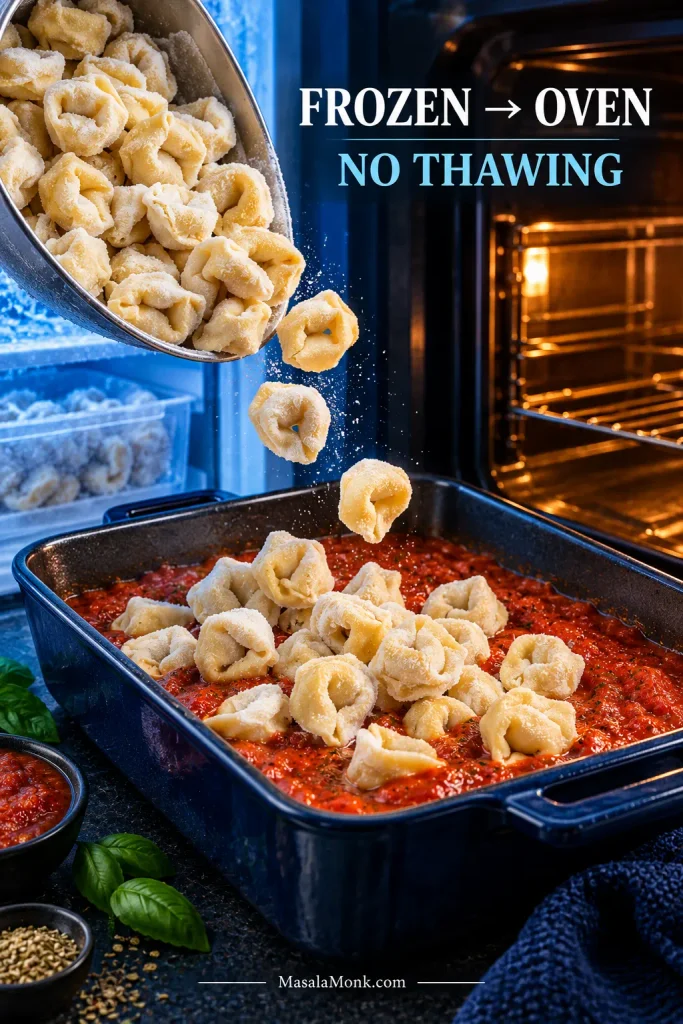
For a 19–20 oz / 540–567 g package, use 24 oz / 680 g marinara and ¾ cup / 180 ml water. Cover securely and bake at 400°F / 205°C, starting your first check around 25 minutes.
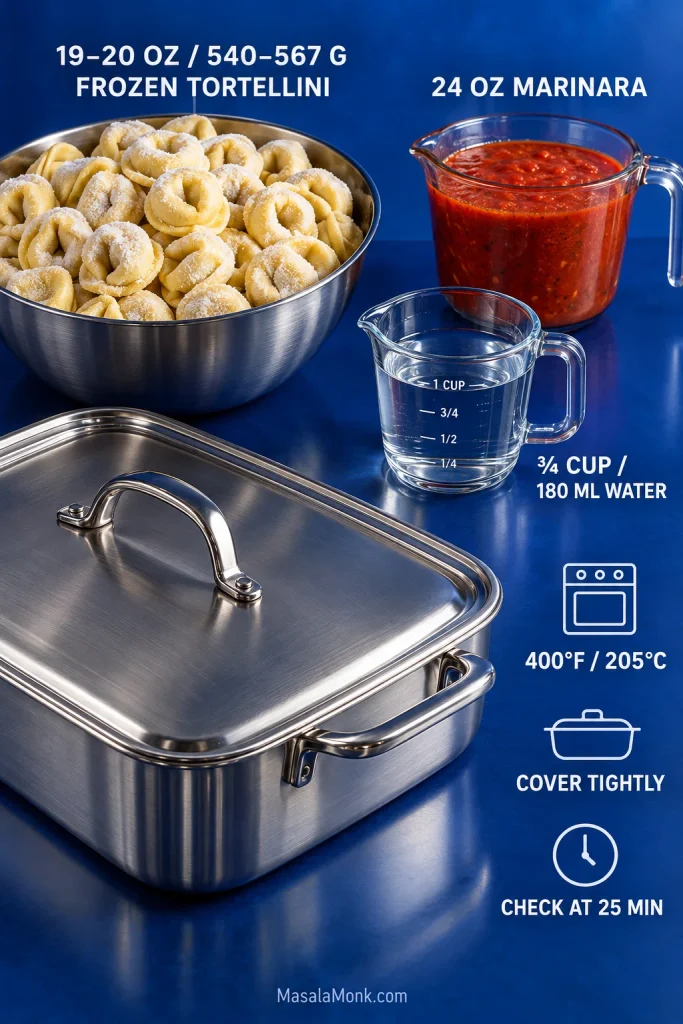
Still firm and the sauce is disappearing? Add ¼ cup / 60 ml hot water, cover again and check every 5 minutes until one from the middle is tender. Then add the final cheese and finish uncovered.
Assembling one for later? Jump to freezer prep →
Dried Tortellini
Don’t force dried tortellini into the no-boil method. Boil it until about 2 minutes shy of the package directions, drain it and assemble the casserole without the extra water unless the marinara itself is unusually thick. At that point the oven is finishing the pasta and browning the top, not trying to cook it from dry.
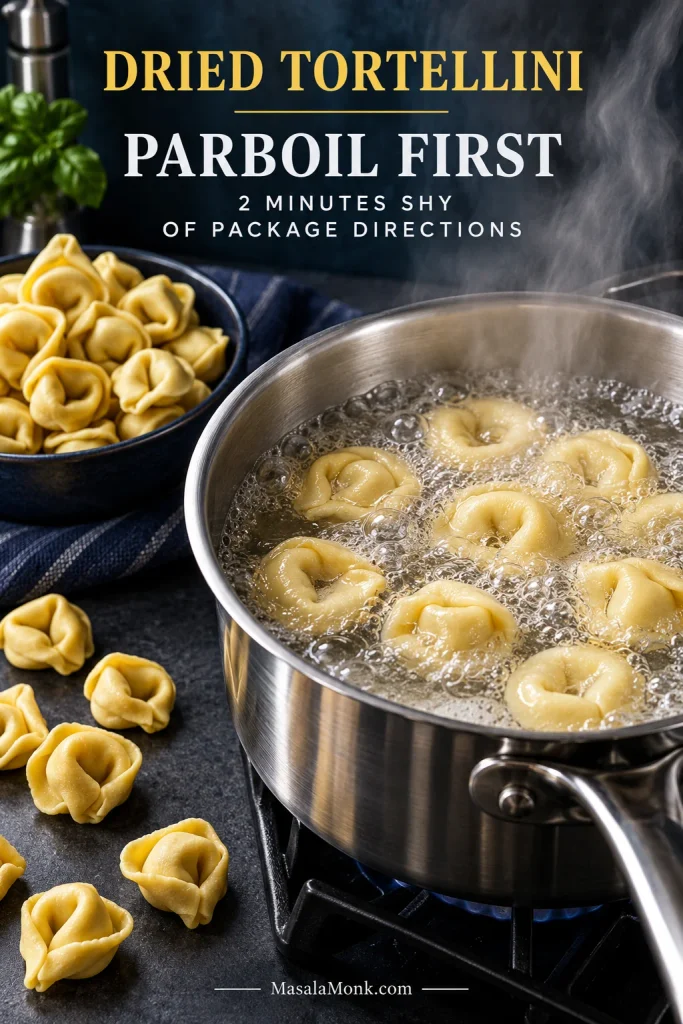
For package-specific cooking details, see the tortellini cooking guide.
Which Sauces Work for Baked Tortellini?
Marinara gives you the widest margin for error. It contains enough water for the pasta to cook while the pan is covered, and its acidity keeps all that mozzarella from tasting heavy.
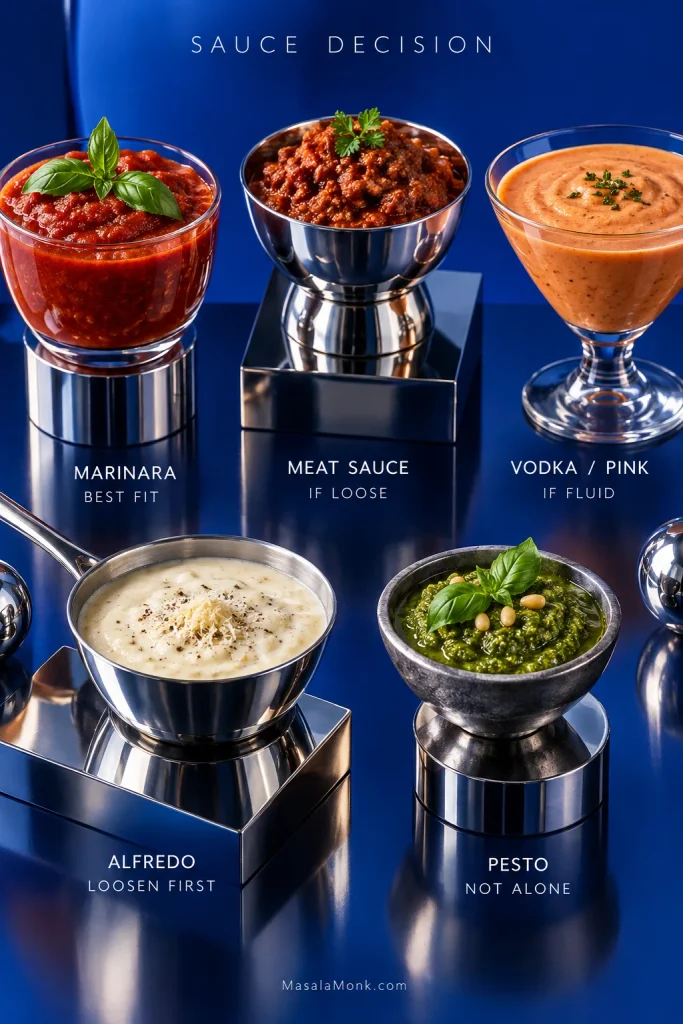
Vodka or pink sauce can work too—just keep it pourable. A meat sauce is fine as long as it still slips easily between the tortellini rather than sitting in a dense layer.
For a deliberately creamy tomato version, the vodka pasta recipe is a better starting point.
Alfredo is different. A sauce can be rich and creamy without containing enough water to soften uncooked pasta. A no-boil Alfredo version needs milk, broth or another cooking liquid built into the formula from the beginning. If you want the creamy chicken version instead, go straight to our Chicken Tortellini Alfredo.
Creamy is not the same as wet enough to cook pasta. Ricotta, cream cheese and grated cheese bring richness; the tortellini still needs actual sauce or water around it.
I wouldn’t use pesto by itself here. Pair it with tomato sauce, broth, or a cream sauce loosened with enough milk or broth to cook the pasta.
Want a richer, creamier version? See the Million Dollar variation →
Add Sausage or Ground Beef
Sausage is my first choice when you want a heartier dinner without changing the method much. Brown 8 oz / 225 g for a lighter addition or 1 lb / 454 g for a meatier pan, then drain the excess fat. With a full pound, add another ½ cup / 120 ml marinara if the dish starts looking crowded rather than saucy.
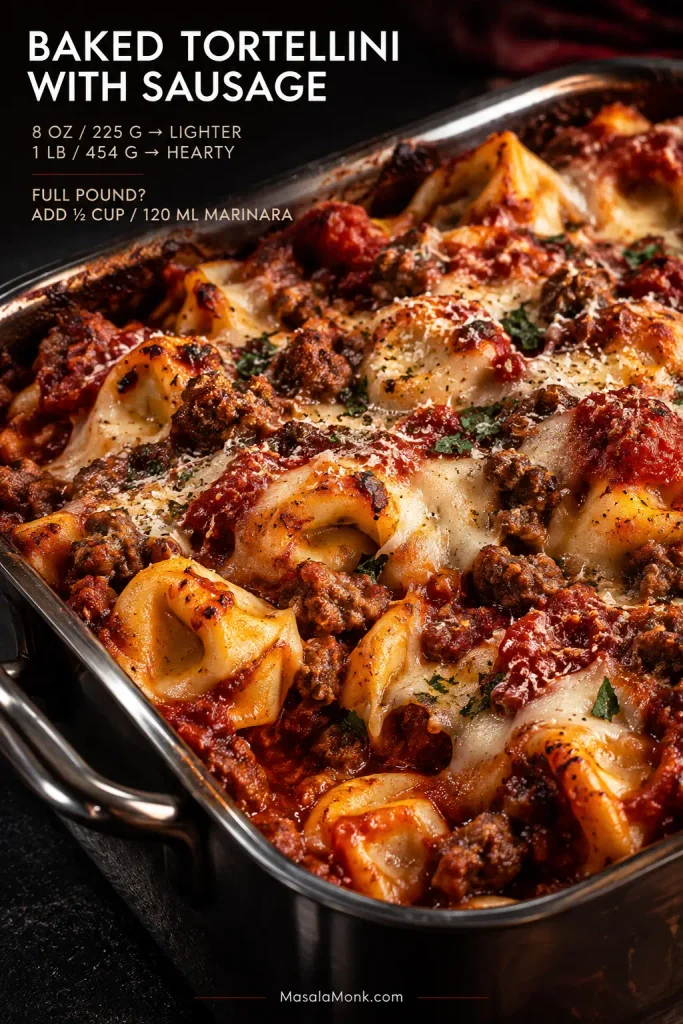
Ground beef works too. Brown and drain up to 1 lb / 454 g lean beef, stir it into the marinara and add enough sauce to keep the tortellini well coated. Taste before adding salt once either meat is in the pan.
Add Spinach or Other Vegetables
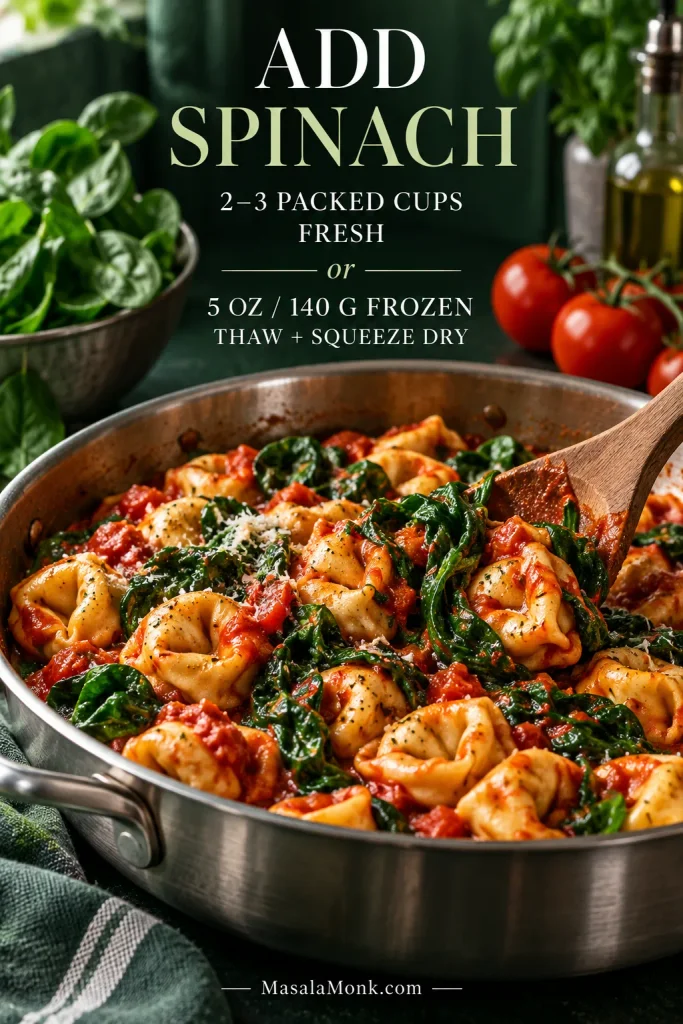
Spinach disappears into this bake with almost no extra work. Fold in 2–3 packed cups / 60–90 g baby spinach; it looks like a lot at first and quickly cooks down around the tortellini.
For frozen spinach, thaw 5 oz / 140 g and squeeze it very dry first. Spinach-and-ricotta tortellini itself can be treated like cheese tortellini unless its package says otherwise.
Broccoli can go straight in if you like a little bite; blanch it first for softer florets. Sauté mushrooms first so they lose some of their water, and drain roasted peppers well.
Add More Cheese or a Crisp Topping
Increase the mozzarella to 2 cups / 226 g for a cheesier pan. Put some inside and save the rest for the top so bright tomato sauce still peeks between browned patches of cheese.
For crunch, mix ¼ cup / 15 g panko with 2 tbsp / 10 g finely grated Parmesan and 1 tbsp olive oil or melted butter. Use up to ½ cup / 30 g panko for a fuller crumb layer.
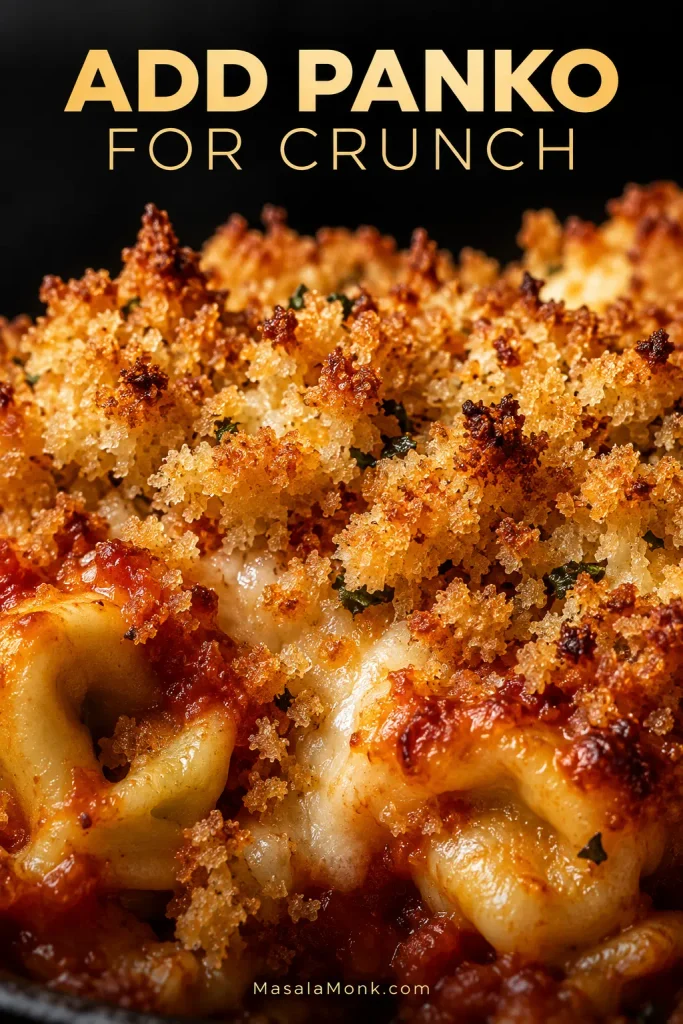
Add the crumbs only for the final uncovered bake so they toast instead of steaming.
Using panko on the base recipe? Return to the final browning step →
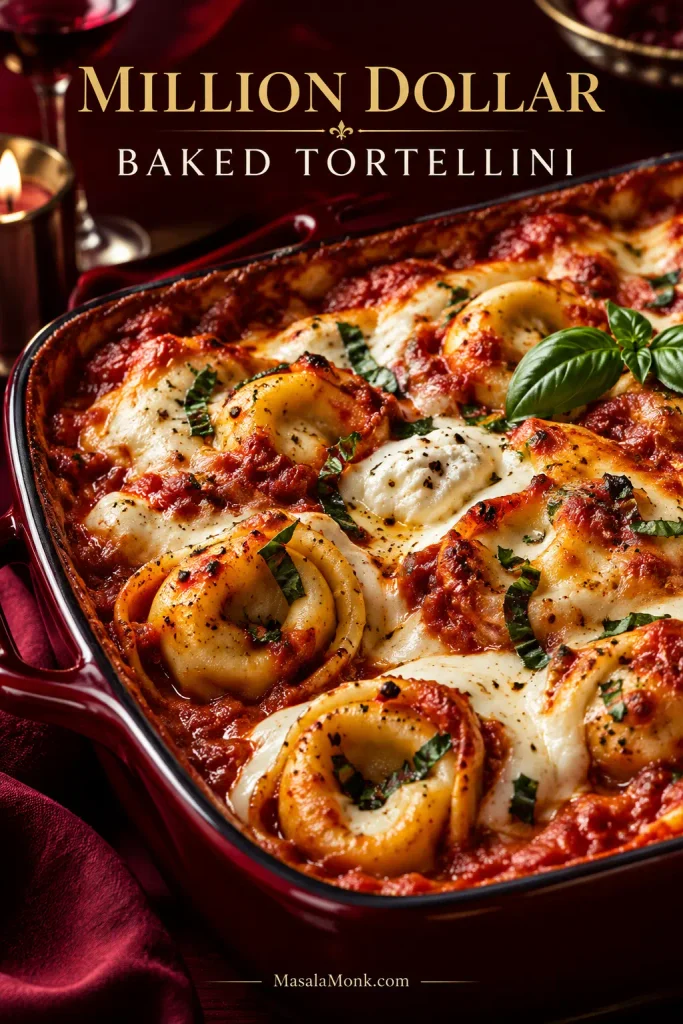
For an Extra-Creamy “Million Dollar” Version
The “Million Dollar” style adds cream cheese, ricotta or cottage cheese, plenty of mozzarella and often ground meat. It is noticeably richer than the simple marinara version.
For this variation, par-cooking the tortellini first is the simpler route because all that thick dairy leaves less sauce around uncooked pasta. A purpose-built no-boil version can work, but it needs extra cooking liquid from the beginning.
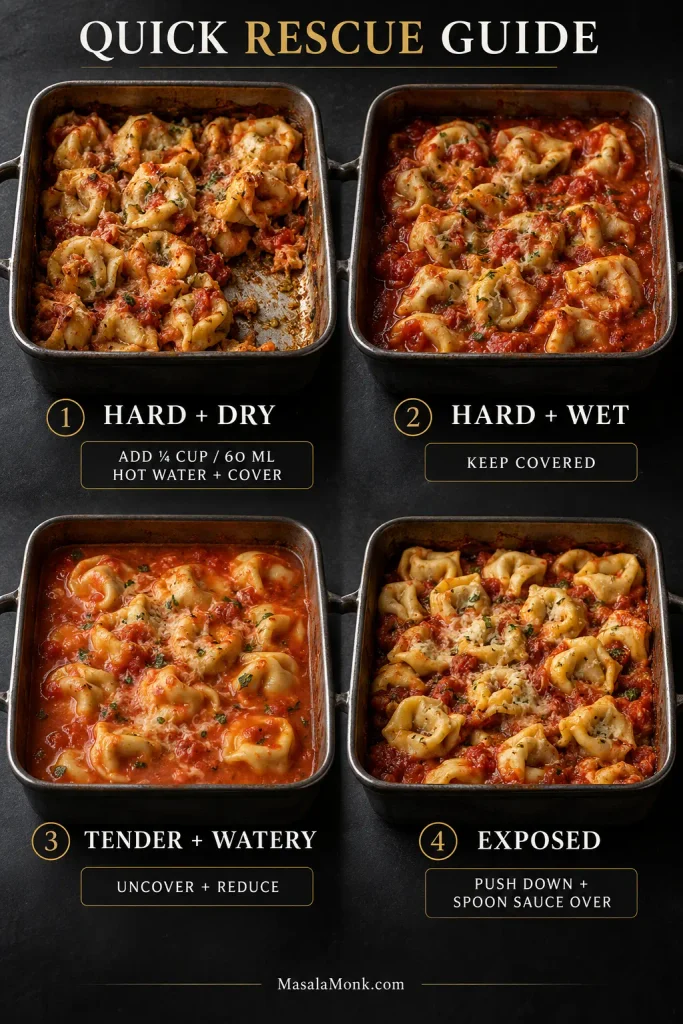
Baked Tortellini Still Hard? Use This Quick Rescue Guide
Something looks wrong when the foil comes off? Check one away from the edges and then look at the sauce before simply adding more time.
Quick Fixes at a Glance
| Problem | Likely cause | Best fix |
|---|---|---|
| Still hard + dry pan | Not enough sauce or water remains | Add ¼ cup / 60 ml hot water or warm marinara, cover and bake 5–10 minutes more |
| Still hard + sauce underneath | The sauce is not reaching the pasta evenly | Push exposed pieces into the sauce and cover again |
| Dry or leathery pieces on top | Those pieces were exposed | Spoon sauce over them, press them down and cover |
| Tender + watery sauce | The pasta is done but the sauce needs reducing | Uncover and let the sauce reduce, then rest the casserole |
| Still firm + watery sauce | The pasta still needs that moisture | Keep the pan covered |
| Brown top + center still firm | The cheese browned before the pasta finished | Cover again; add a little hot water or sauce too if the pan is dry |
| Mushy or split tortellini | The pasta has cooked too far | Stop baking. Next time check sooner and don’t fully boil refrigerated tortellini first |
Two rows deserve a closer look because the obvious fix is often the wrong one.
There Is Sauce Below but the Pasta on Top Is Hard
If you’re looking at the pan thinking, “There is plenty of sauce—why is the pasta still hard?”, check whether those top pieces are actually touching it.
Push them down, spoon sauce over the dry spots and cover the dish again. More water is not necessarily the answer when plenty is already sitting underneath.
The Sauce Is Watery but the Pasta Is Still Firm
Keep it covered. The tortellini still needs that water. Let the pasta become tender first. Reduce the sauce afterward.
Problem solved? Back to the baked tortellini recipe →
Make Baked Tortellini Ahead
You can assemble the refrigerated-tortellini casserole up to 24 hours ahead and keep it covered in the refrigerator.
The tortellini will soften a little as it sits in the sauce, which is fine overnight but is another reason not to assemble it more than 24 hours ahead.
Keep the marinara pourable when you assemble the dish, and save the final layer of mozzarella and Parmesan for just before baking so the top melts and browns freshly.
Because everything starts refrigerator-cold, expect roughly 5–15 extra minutes under the foil. The edges may bubble first, so test one away from the sides before adding the final cheese.
Freezing instead of refrigerating overnight? Jump to freezer prep →
Store, Freeze and Reheat Baked Tortellini
Cool leftovers promptly and refrigerate them in a covered container for 3–4 days, following USDA leftover-storage guidance.
Tomorrow’s serving will be thicker as the pasta absorbs sauce, so add a little water or marinara when reheating.
Reheating
For one serving, add 1–2 teaspoons water or a spoonful of marinara, cover loosely and microwave in short intervals until hot.
For a larger portion, add a little sauce or water around the pasta, cover and warm at 350°F / 175°C. USDA guidance for leftovers is to reheat them to 165°F / 74°C in the center.
Once it’s hot, stop. More reheating only makes filled pasta softer.
Freezing
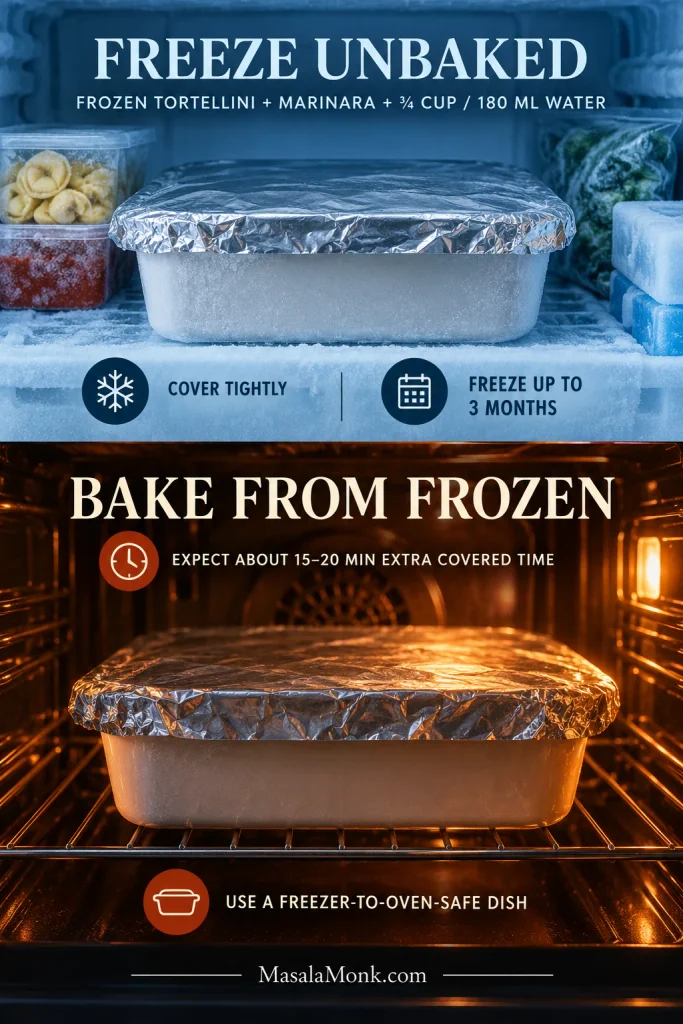
For freezer prep, I’d start with frozen tortellini and bake the assembled casserole straight from frozen.
Combine the frozen tortellini with the marinara and ¾ cup / 180 ml water, cover the unbaked casserole tightly and freeze for up to 3 months.
It will need substantially more covered baking time—often another 15–20 minutes or more. Keep going until one from the center is tender, then add the final cheese and finish uncovered.
If the casserole is frozen in glass or ceramic, make sure the dish is rated to go from freezer to a hot oven. A sudden temperature change can crack some bakeware.
Cooked leftovers can be frozen too, but the tortellini will usually be softer after thawing and reheating. If you’ll eat them within 3–4 days, refrigeration gives the better texture.
What to Serve With Baked Tortellini
Because this is already rich and soft, my first choice is something crisp, sharp or green.
- Sharp green salad — cuts through the cheese and tomato sauce
- Garlic bread or toasted sourdough — useful when there is extra sauce on the plate
- Roasted broccoli or green beans — an easy warm vegetable side
- Cucumber or tomato salad — a cool, acidic contrast to the casserole
A cold cucumber salad is particularly good beside a sausage-heavy or extra-cheesy version; the acidity and crunch cut through the melted cheese.
For another tomato-and-cheese pasta bake, baked ziti takes the same comfort-food idea in a different direction.
Frequently Asked Questions
Do you have to boil tortellini before baking?
No. Refrigerated tortellini can go straight into the sauce for this baked tortellini recipe. Keep it covered until one from the middle is tender.
How long does baked tortellini take?
About 30–40 minutes at 400°F / 205°C. Keep it covered until the pasta is tender, then uncover for the final 8–10 minutes to brown the cheese.
Why is my baked tortellini still hard?
It may need more covered time, the exposed pieces may not be touching enough sauce, or the pan may have dried out. If plenty of sauce is already underneath, push the pasta down rather than automatically adding more water.
Can tortellini cook directly in sauce?
Yes. Refrigerated and frozen tortellini can cook directly in sauce when there is enough moisture around them and the dish stays covered. Dried tortellini is better par-cooked first.
Can you bake frozen tortellini without thawing it?
Yes. Don’t thaw it first. For 19–20 oz / 540–567 g frozen tortellini, use 24 oz / 680 g marinara and ¾ cup / 180 ml water, then allow more covered time.
Can you bake dried tortellini?
Yes, but parboil it about 2 minutes shy of the package directions first. Once partly cooked, skip the no-boil water unless the sauce itself needs thinning.
Can I assemble baked tortellini the night before?
Yes. Refrigerate it covered for up to 24 hours. Save the final cheese layer for just before baking and expect a little extra covered oven time because the casserole starts cold.
Can baked tortellini be frozen?
Yes. For freezer prep, I prefer assembling the casserole with frozen tortellini and baking it straight from frozen. Cooked leftovers can also be frozen, although the pasta will usually be softer after reheating.
The next time dinner starts with a bag of tortellini and a jar of sauce, you won’t have to rely on the timer alone. You’ll know what the pasta should feel like, what the sauce should look like and when that bubbling pan is actually ready to come out.








