
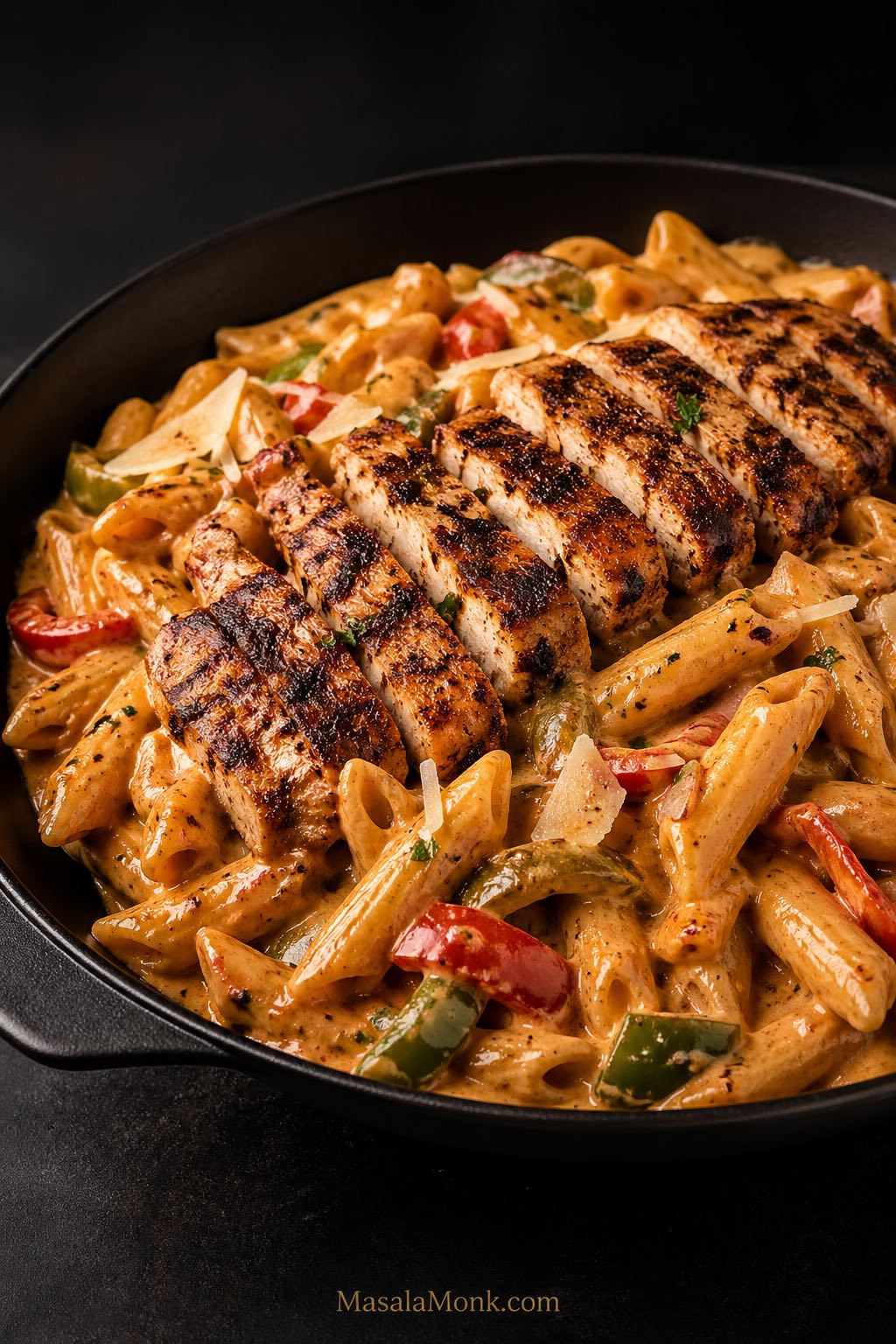
A good cajun chicken pasta recipe should give you juicy chicken, tender pasta, and a smoky, spicy cream sauce that clings to every bite. It should taste bold and creamy without turning salty, greasy, watery, or painfully hot.
This version starts with the most reliable skillet method because it gives you better control over the chicken, pasta, sauce, and seasoning. After that, you can use the same base to make it one-pot, Alfredo-style, smoky with sausage, restaurant-style with shrimp, blackened, lighter, no-cream, or slow cooker friendly.
Most importantly, this recipe solves the little problems that usually ruin creamy Cajun pasta: dry chicken, salty seasoning, split sauce, mushy pasta, and leftovers that thicken into a block. Instead of leaving you to guess, the guide gives you exact amounts, pan sizes, timing, temperatures, sauce fixes, and variation rules.
Recipe guide
Table of Contents
Use the quick recipe path if you are ready to cook, or jump to the sauce, seasoning, variation, and troubleshooting sections when you need them.
Cook It Right
Quick Answer: Cajun Chicken Pasta Recipe
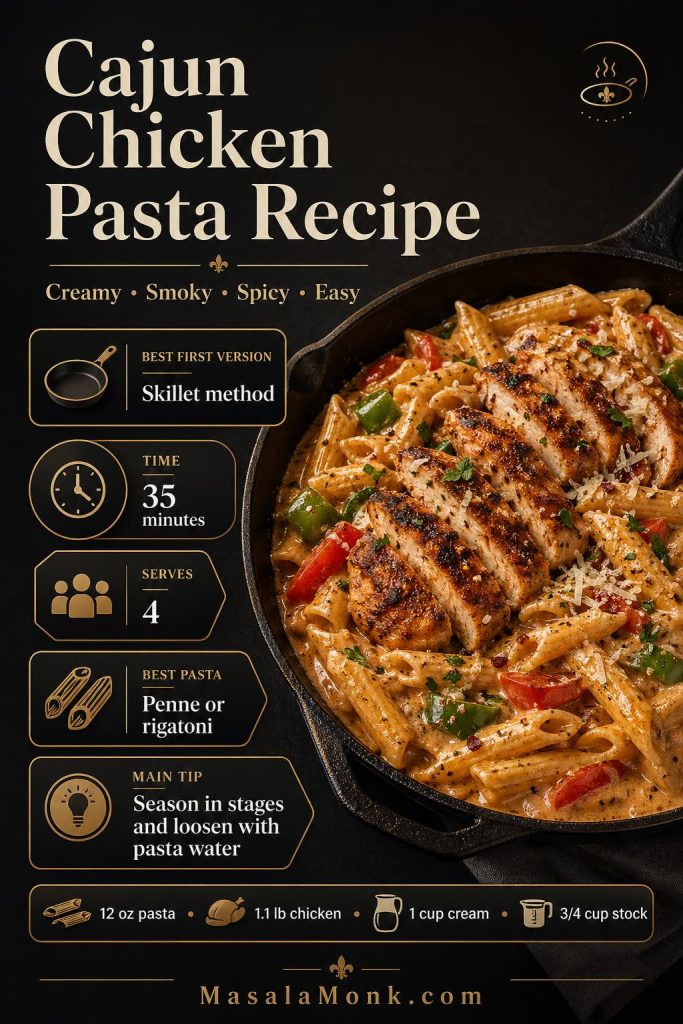
This cajun chicken pasta recipe is made by searing Cajun-spiced chicken, building a garlic-tomato cream sauce in the same skillet, and tossing it with pasta, parmesan, and reserved pasta water. The best version uses a wide skillet, gently simmered cream, freshly grated parmesan, and chicken cooked to 165°F / 74°C.
For four generous servings, use 340 g / 12 oz pasta, 500 g / 1.1 lb chicken, 4–5 tsp Cajun seasoning, 240 ml / 1 cup cream, 180 ml / 3/4 cup chicken stock, 55–65 g parmesan, and 120–240 ml / 1/2–1 cup reserved pasta water.
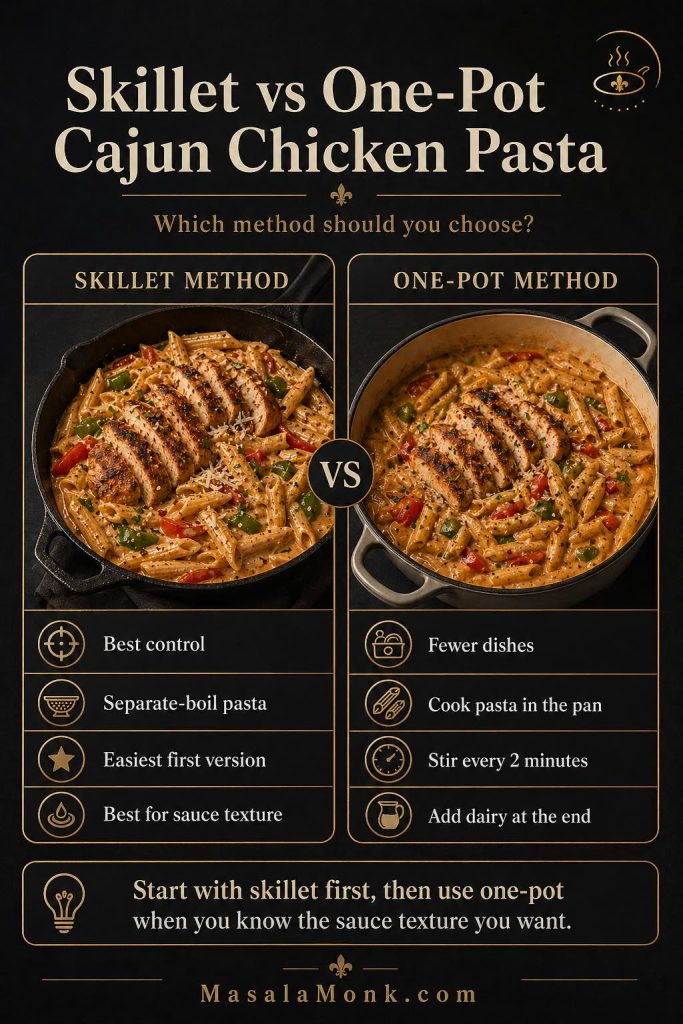
Although the one-pot method is convenient, the separate-boil skillet method is the better first version because it gives you more control over pasta texture, salt, and sauce thickness. Once you know how the sauce should look, the one-pot version becomes much easier to adjust.
At a Glance
Use this quick guide before you start cooking. It gives you the easiest path to a creamy, balanced bowl before you experiment with sausage, shrimp, Alfredo-style sauce, or lighter swaps.
| Detail | Best choice |
|---|---|
| Best pasta | Penne or rigatoni for everyday cooking; linguine or fettuccine for a restaurant-style look |
| Best chicken | Thin chicken breast cutlets or boneless thighs |
| Best sauce base | Heavy cream, parmesan, chicken stock, and reserved pasta water |
| Best pan | 30 cm / 12-inch wide skillet or shallow braiser |
| Heat level | Medium, adjustable with cayenne or hot sauce |
| Main risk | Salty Cajun seasoning |
| Best fix | Add seasoning in stages and loosen the sauce with pasta water at the end |
| Best variation | Sausage for smoky, shrimp for restaurant-style, Alfredo for extra rich |
What It Tastes Like
This creamy Cajun chicken pasta is smoky, lightly spicy, garlicky, and rich without being heavy. The sauce has warm paprika-cayenne flavor, a little tomato depth, and enough parmesan to make it savory. Meanwhile, the lemon at the end keeps the cream from tasting flat.
The texture should be saucy and glossy, not dry or soupy. When you drag a spoon through the pan, the sauce should coat the pasta and slowly settle back instead of running like broth.
Ready to cook or still deciding?
Best First Version to Make
For the first batch, make the skillet version with penne or rigatoni, chicken breast cutlets or boneless thighs, heavy cream, low-sodium chicken stock, and freshly grated parmesan. Also, start with less Cajun seasoning if you are using a store-bought blend, because many blends are saltier than they seem.
This first version gives you the best sense of how the sauce should behave. It should look creamy and loose in the pan, then tighten slightly after a two-minute rest. If it looks dry before serving, add hot pasta water instead of extra cream. Pasta water loosens the sauce without making it heavy.
After you make the base once, the variations become easier. Sausage needs less added salt, shrimp needs shorter cooking, Alfredo needs less tomato paste, and the one-pot version needs more stirring and more careful liquid control.
Next step
Why This Recipe Works
This cajun chicken pasta recipe works because the flavor is built in layers rather than added all at once. First, the chicken is seared so the spices toast and the skillet picks up browned bits. Then, onion, bell pepper, garlic, tomato paste, and Cajun seasoning cook in the same pan, which gives the sauce a deeper base.
- The chicken is cooked separately first, so it stays juicy instead of simmering too long in the sauce.
- The seasoning is added in stages, which helps prevent the pasta from turning too salty.
- The tomato paste is cooked briefly, so the sauce tastes rounder and less raw.
- The cream is added on lower heat, which reduces the risk of splitting.
- The parmesan goes in gradually, so it melts into the sauce instead of clumping.
- The reserved pasta water controls the finish, making the sauce glossy, loose, and clingy.
As a result, the pasta tastes creamy and bold without becoming greasy, grainy, dry, or overloaded with salt.
Ingredients and Exact Amounts
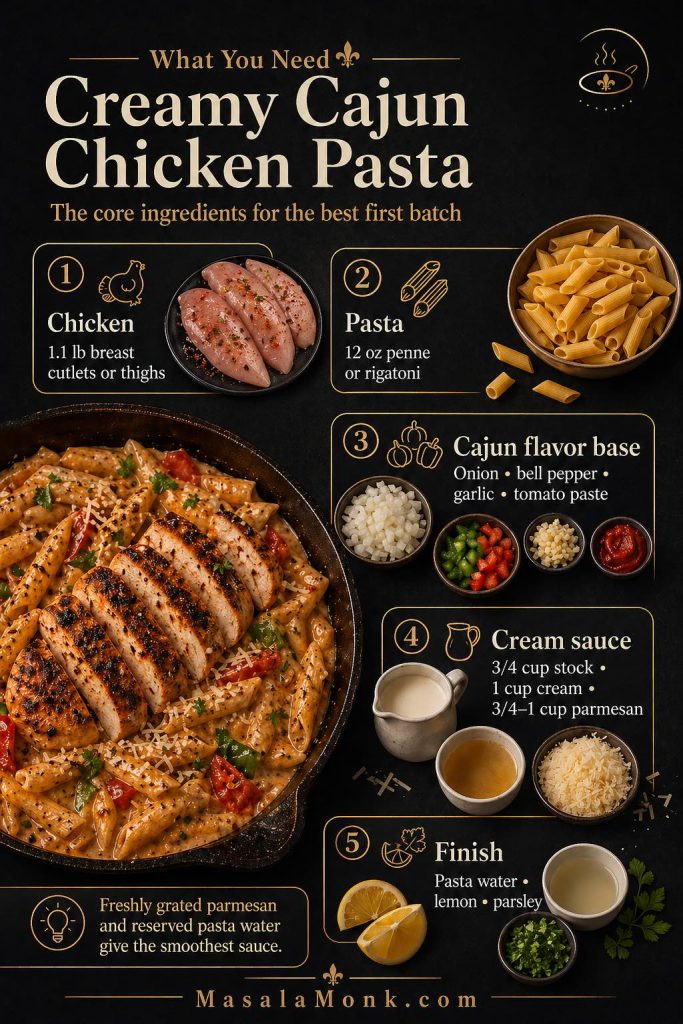
For this cajun chicken pasta recipe, the ingredient list is simple, but the amounts matter. Too much seasoning can make the dish salty, too much cream can mute the Cajun flavor, and too little pasta water can make the sauce feel heavy instead of silky.
Chicken
Use 500 g / 1.1 lb boneless skinless chicken breast or boneless thighs. Chicken breast gives a leaner, cleaner result. However, thighs are juicier and more forgiving, especially if you are cooking for meal prep.
When using chicken breast, slice thick pieces horizontally into cutlets and pound them to about 1.3–1.5 cm / 1/2–5/8 inch thick. This small step matters because evenly thin chicken cooks faster, browns better, and stays juicier.
Pasta
Use 340 g / 12 oz dry pasta for four generous servings. Penne and rigatoni are the most practical choices because they hold the sauce well. Meanwhile, linguine and fettuccine give the dish a more restaurant-style look.
Cream Sauce
The sauce uses 180 ml / 3/4 cup low-sodium chicken stock, 240 ml / 1 cup heavy cream, 55–65 g parmesan, and 120–240 ml / 1/2–1 cup reserved pasta water. Heavy cream is the most reliable choice because it stays smooth more easily than milk or half-and-half.
Also, use freshly grated parmesan whenever possible. Pre-shredded cheese often contains anti-caking ingredients, and those can make creamy pasta sauce grainy.
Vegetables and Aromatics
Use 1/2 medium onion, 1 medium bell pepper, 4 large garlic cloves, and 1 tbsp / 16 g tomato paste. The onion adds sweetness, the bell pepper adds color, the garlic adds sharpness, and the tomato paste gives the sauce body.
Ingredient Table
| Ingredient | Metric | US | Purpose |
|---|---|---|---|
| Dry pasta | 340 g | 12 oz | Main base of the recipe |
| Boneless chicken breast or thighs | 500 g | 1.1 lb | Primary protein |
| Cajun seasoning | 16–20 g | 4–5 tsp | Smoky heat and seasoning |
| Oil | 15 ml | 1 tbsp | For searing chicken |
| Unsalted butter | 28 g | 2 tbsp | For sauce flavor and gloss |
| Yellow onion | 100 g | 1/2 medium | Sweetness and depth |
| Bell pepper | 140–160 g | 1 medium | Color and Cajun-inspired flavor |
| Garlic | 12–16 g | 4 large cloves | Savory sharpness |
| Tomato paste | 16 g | 1 tbsp | Color and body |
| Low-sodium chicken stock | 180 ml | 3/4 cup | Deglazes the skillet |
| Heavy cream | 240 ml | 1 cup | Creamy sauce base |
| Parmesan | 55–65 g | 3/4–1 cup | Thickness and savory flavor |
| Reserved pasta water | 120–240 ml | 1/2–1 cup | Controls sauce texture |
| Lemon juice | 5–10 ml | 1–2 tsp | Balances richness |
| Parsley or scallions | 5–10 g | 2–3 tbsp | Fresh finish |
The table is there for precision, but the easiest version is simple: chicken, pasta, Cajun seasoning, garlic, cream, parmesan, stock, and pasta water. Everything else helps with flavor, balance, or flexibility.
Cajun Seasoning and Salt Control
The fastest way to ruin a cajun chicken pasta recipe is to use a very salty Cajun seasoning blend at full strength, then also salt the pasta water heavily and add parmesan. Therefore, add the seasoning in stages and taste before making final adjustments.
A full tablespoon of salty Cajun seasoning can overpower the sauce before you realize what happened. For that reason, this recipe seasons the chicken first, blooms a smaller amount in the sauce, and leaves the final adjustment until the pasta, cream, parmesan, and pasta water are all in the pan.
Homemade Cajun Seasoning for One Batch
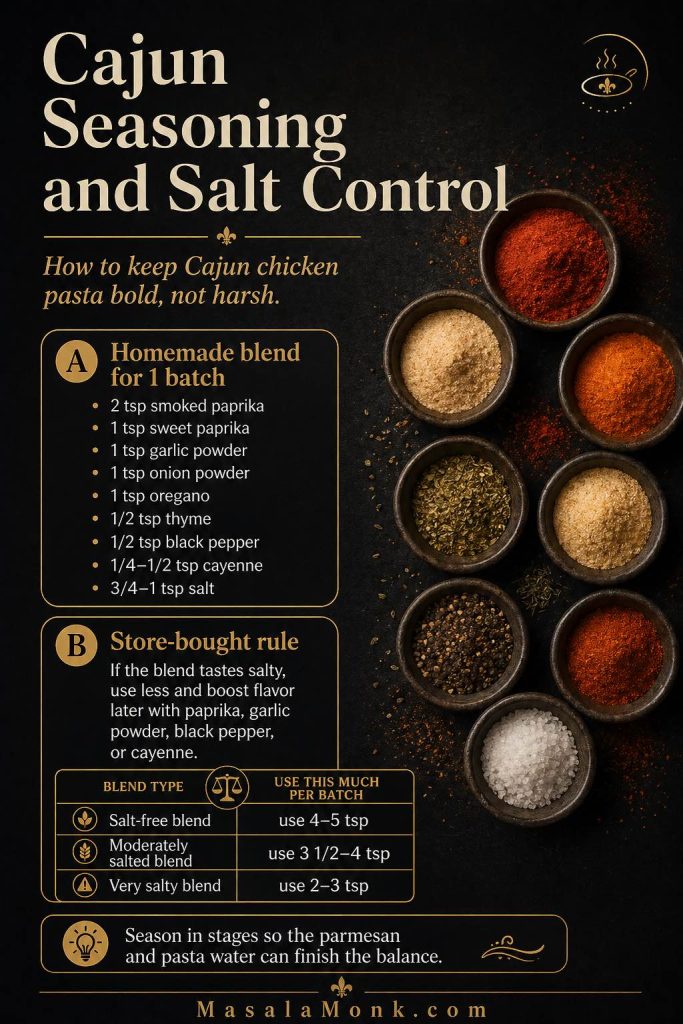
This blend makes enough for one four-serving batch. Use the lower cayenne amount for medium heat and the higher amount for a spicier pasta.
| Spice | Metric | US |
|---|---|---|
| Smoked paprika | 5 g | 2 tsp |
| Sweet paprika | 2.5 g | 1 tsp |
| Garlic powder | 3 g | 1 tsp |
| Onion powder | 2.5 g | 1 tsp |
| Dried oregano | 1 g | 1 tsp |
| Dried thyme | 0.5 g | 1/2 tsp |
| Black pepper | 1 g | 1/2 tsp |
| White pepper, optional | 0.5 g | 1/4 tsp |
| Cayenne pepper | 0.5–1 g | 1/4–1/2 tsp |
| Fine sea salt | 4–6 g | 3/4–1 tsp |
Store-Bought Cajun Seasoning Rule
If your store-bought blend tastes salty on its own, start with less. Then, if the pasta needs more heat or color later, add smoked paprika, garlic powder, black pepper, and cayenne instead of more salty seasoning.
| Seasoning type | How much to use | Best adjustment |
|---|---|---|
| Salt-free Cajun seasoning | 4–5 tsp | Add 3/4–1 tsp fine salt separately across the dish. |
| Moderately salted Cajun seasoning | 3 1/2–4 tsp | Salt pasta water lightly and adjust at the end. |
| Very salty Cajun seasoning | 2–3 tsp | Add paprika, garlic powder, black pepper, or cayenne for extra flavor. |
| Homemade blend above | Use the full batch | Hold back a little salt if your parmesan is very salty. |
The goal is not to make the pasta timid. The goal is to separate heat and smoke from salt, so you can make the sauce bolder without making it harsh.
Cajun Cream Sauce for Pasta
The sauce is what makes this cajun chicken pasta recipe work. A good Cajun cream sauce should taste smoky, garlicky, lightly spicy, and savory without becoming salty or heavy. The most reliable base is chicken stock, heavy cream, parmesan, tomato paste, Cajun seasoning, and reserved pasta water.
Although the sauce is creamy, it should not feel thick like dip. It should be loose and glossy in the skillet, coat the pasta evenly, and then tighten slightly after a short rest. If it looks perfect while still bubbling in the pan, it may become too thick by the time it reaches the plate.
| You want the sauce… | Adjust it this way |
|---|---|
| Richer and more Alfredo-style | Use less tomato paste, more parmesan, and fettuccine. |
| Lighter but still creamy | Use evaporated milk or half-and-half, then keep the heat gentle. |
| More tomato-forward | Add 2–3 tbsp crushed tomatoes or an extra teaspoon of tomato paste. |
| Spicier | Add cayenne or hot sauce at the end instead of more salty Cajun seasoning. |
| Glossier | Add hot pasta water 1–2 tbsp at a time while tossing. |
| Less heavy | Finish with lemon juice, parsley, scallions, or extra black pepper. |
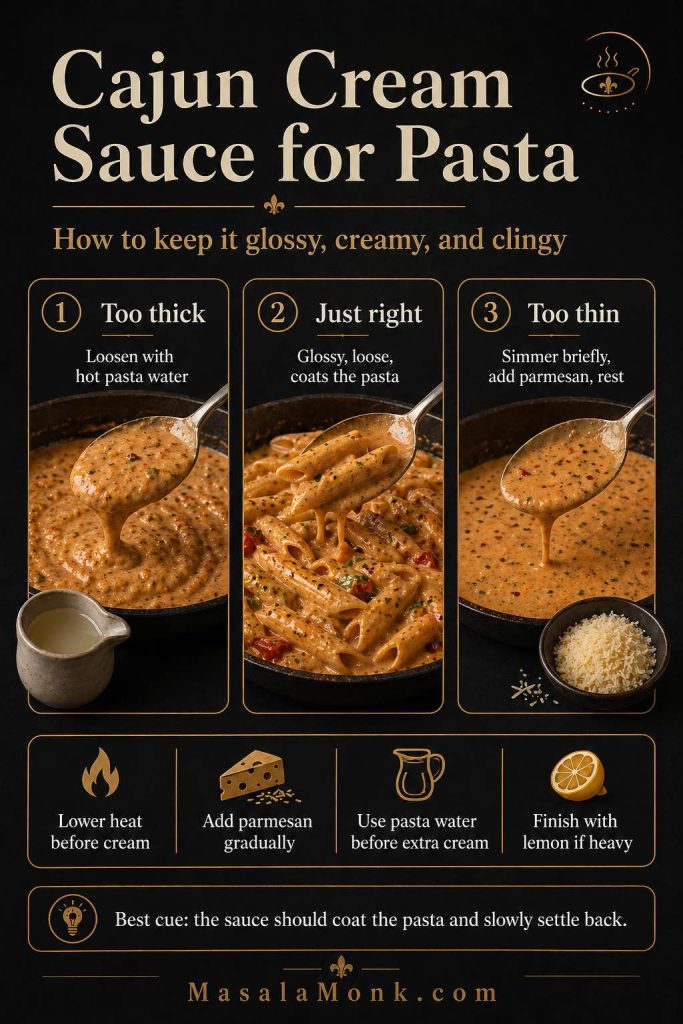
The most important rule is to add dairy gently. Bring the stock and tomato paste to a simmer first, then lower the heat before adding cream. After that, add parmesan gradually and use pasta water to loosen the sauce instead of adding more cream every time it thickens.
If you are using a salty Cajun seasoning blend, do not keep adding more of it when the sauce tastes flat. Instead, build flavor with smoked paprika, garlic powder, black pepper, lemon juice, parmesan, or cayenne. That keeps the pasta bold without making it too salty.
Sauce looking wrong?
Best Pasta Shapes for Cajun Chicken Pasta
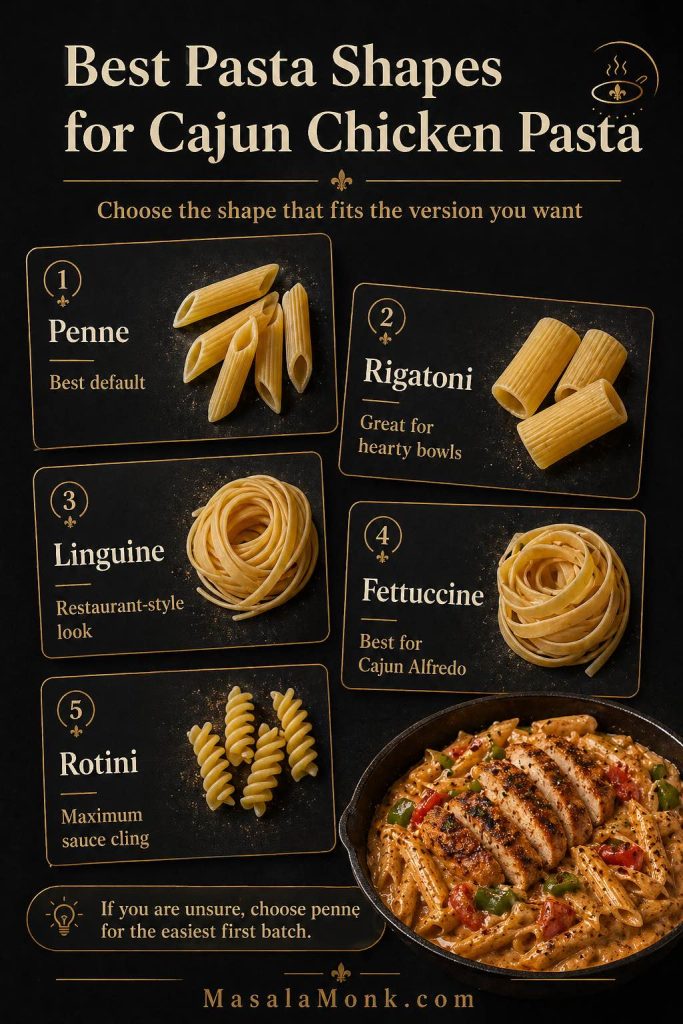
The best pasta shape depends on the version you want. Short pasta is easier to toss and more practical for one-pot cooking. On the other hand, long pasta gives the dish a more restaurant-style finish.
For most readers, penne or rigatoni is the safest first choice. Both shapes hold the sauce, stand up to sliced chicken, and reheat better than delicate noodles. However, fettuccine is the better choice when you want the dish to feel more like Cajun chicken Alfredo.
| Pasta shape | Best for | Notes |
|---|---|---|
| Penne | Best default | The tubes catch sauce and work well for skillet or one-pot versions. |
| Rigatoni | Hearty bowls | Excellent with sausage because the larger shape holds up well. |
| Linguine | Restaurant-style look | Good for a classic creamy Cajun chicken pasta presentation. |
| Fettuccine | Cajun Alfredo | Best when the sauce is richer and more parmesan-forward. |
| Fusilli or rotini | Maximum sauce cling | The spirals catch cream sauce, spices, and cheese well. |
| Farfalle | Vegetable-heavy versions | Works nicely with peppers, mushrooms, and spinach. |
| Spaghetti | Pantry backup | It works, but the sauce may not cling as evenly. |
| Angel hair | Not ideal | It overcooks quickly and can clump in creamy sauce. |
Creamy Cajun Chicken Linguine Version
For a creamy Cajun chicken linguine version, use the same chicken, seasoning, and sauce amounts, but swap the short pasta for 340 g / 12 oz linguine. Toss the linguine with the sauce for 60–90 seconds, adding pasta water slowly so the strands stay glossy instead of sticky.
Linguine gives this dish a more restaurant-style finish, especially when the sauce is loose, creamy, and parmesan-forward. However, penne and rigatoni are easier for everyday bowls because they hold sauce well and reheat more forgivingly.
If you are unsure, choose penne. It is easy to cook, easy to toss, and forgiving if the sauce thickens while you finish the chicken.
Best Pan, Pot, and Tools
Good equipment makes this recipe easier because the sauce reduces quickly and the chicken needs enough surface area to sear. A crowded pan steams the chicken. Meanwhile, a tiny saucepan makes the cream sauce reduce unevenly.
The most important tool is a wide skillet. A 30 cm / 12-inch pan gives the chicken room to brown and gives the sauce enough surface area to reduce without scorching. Also, a thermometer helps because chicken breast can go from juicy to dry quickly.
| Tool | Best size | Why it helps |
|---|---|---|
| Pasta pot | 5–6 L / 5–6 qt | Gives pasta room to cook evenly. |
| Wide skillet or shallow braiser | 30 cm / 12 inch | Lets chicken sear and sauce reduce evenly. |
| Tongs | Standard | Best for tossing pasta through sauce. |
| Instant-read thermometer | Any reliable model | Helps avoid dry or undercooked chicken. |
| Fine grater or microplane | For parmesan | Fresh fine parmesan melts more smoothly. |
| Measuring jug | 500 ml / 2 cup | Useful for stock, cream, and pasta water. |
You do not need special equipment, but the wide skillet matters more than almost anything else. It gives the chicken room to brown and keeps the cream sauce from reducing too aggressively.
Common Mistakes to Avoid
Most creamy Cajun pasta problems start before the sauce is finished. Avoid these mistakes and the recipe becomes much easier to control.
- Using salty Cajun seasoning at full strength: Start with less, then adjust at the end.
- Salting the pasta water too heavily: Salt moderately because Cajun seasoning and parmesan also add salt.
- Boiling the cream hard: Keep the sauce at a gentle simmer so it stays smooth.
- Adding parmesan on high heat: Lower the heat first, then add cheese gradually.
- Overcooking the pasta before the sauce: Stop one minute shy of al dente so the pasta can finish in the skillet.
- Slicing chicken immediately: Rest it for 5 minutes so the juices stay in the meat.
- Simmering shrimp in the sauce: Sear shrimp separately and fold it in at the end.
- Loosening the sauce with extra cream only: Use pasta water first because it makes the sauce glossy without making it heavier.
How to Make Creamy Cajun Chicken Pasta
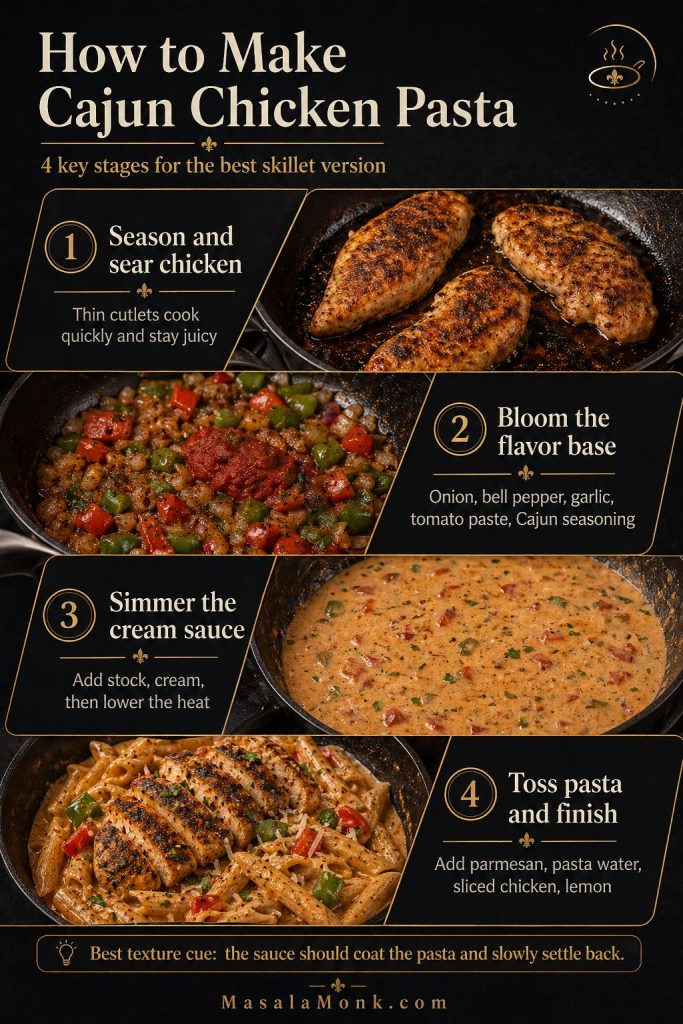
The best cajun chicken pasta recipe uses the skillet like a flavor builder. First, the chicken seasons the pan. After that, the vegetables, garlic, tomato paste, and spices pick up the browned flavor. Finally, cream, parmesan, and pasta water turn everything into a smooth sauce.
1. Prep the Chicken
Slice thick chicken breasts horizontally into thinner cutlets. Next, pound them to about 1.3–1.5 cm / 1/2–5/8 inch thick. Pat the chicken dry before seasoning because surface moisture prevents browning.
Season the chicken with about 2 1/2–3 tsp Cajun seasoning. If your seasoning is salt-free, add about 1/2 tsp fine salt to the chicken. However, if your seasoning is already salty, skip extra salt for now.
2. Boil the Pasta
Bring 3.5–4 L / 3.5–4 qt water to a rolling boil in a large pot. Salt the water moderately, not aggressively, because Cajun seasoning and parmesan will also season the dish.
Use about 12–16 g fine sea salt or 18–22 g kosher salt for the pot, depending on how salty your Cajun seasoning is. Then add 340 g / 12 oz pasta and cook it 1 minute shy of al dente. Before draining, reserve at least 360 ml / 1 1/2 cups pasta water.
3. Sear the Chicken
Heat a 30 cm / 12-inch skillet over medium-high heat for about 2 minutes. Once the pan is hot, add 1 tbsp / 15 ml oil. The oil should shimmer, but it should not smoke heavily.
Place the chicken in a single layer. Sear the cutlets for 3–4 minutes on the first side, then flip and cook for 2–3 minutes on the second side. The chicken should be browned outside and reach 74°C / 165°F internally. After cooking, transfer it to a board and rest for 5 minutes before slicing.
4. Build the Cajun Flavor Base
Reduce the heat to medium. Add 1 tbsp / 14 g butter to the same skillet, followed by the onion and bell pepper. Cook for 4–5 minutes, until the vegetables soften and the edges pick up light browning.
After that, stir in the garlic and cook for 30 seconds. Add the tomato paste and another 1–1 1/2 tsp Cajun seasoning. Stir for 30–45 seconds, just until the tomato paste darkens slightly and the spices smell warm.
This step matters because blooming the seasoning in butter gives the sauce deeper flavor than simply stirring dry spice into cream.
5. Make the Cream Sauce
Pour in 180 ml / 3/4 cup low-sodium chicken stock and scrape the browned bits from the pan. Simmer for 1–2 minutes, until the liquid reduces slightly and smells savory.
Then lower the heat to medium-low and stir in 240 ml / 1 cup heavy cream. Keep the sauce at a gentle simmer rather than a hard boil. If you are using a thermometer, aim for roughly 82–90°C / 180–195°F, where the sauce steams and bubbles softly.
6. Toss the Pasta and Finish
Add the drained pasta to the skillet. Toss for 60–90 seconds, then pour in 120 ml / 1/2 cup reserved pasta water. Once the pasta is coated, lower the heat and add the parmesan gradually.
If the sauce looks too thick, add more pasta water 1–2 tbsp at a time. If it looks slightly loose, let it rest for 2 minutes. During that short rest, the pasta will absorb sauce and the texture will tighten.
Finally, add the sliced chicken and any resting juices. Finish with 1–2 tsp lemon juice, parsley or scallions, black pepper, and extra parmesan if needed. The finished sauce should coat the pasta and slowly settle back when stirred.
Cooking from here?
Creamy Cajun Chicken Pasta Recipe Card
This cajun chicken pasta recipe is smoky, spicy, saucy, and rich without being heavy. Thin chicken cutlets cook quickly, Cajun seasoning blooms in the skillet, and the cream sauce stays glossy because parmesan and pasta water are added gently at the end.
| Servings | 4 generous servings |
| Prep time | 15 minutes |
| Cook time | 20 minutes |
| Total time | 35 minutes |
| Best pan | 30 cm / 12-inch skillet |
Ingredients
- 340 g / 12 oz penne, rigatoni, linguine, or fettuccine
- 500 g / 1.1 lb boneless skinless chicken breast cutlets or boneless thighs
- 4–5 tsp Cajun seasoning, divided and adjusted for salt level
- 1 tbsp / 15 ml olive oil or neutral oil
- 2 tbsp / 28 g unsalted butter, divided
- 1/2 medium yellow onion, finely sliced or diced, about 100 g
- 1 medium bell pepper, sliced, about 140–160 g
- 4 large garlic cloves, minced, about 12–16 g
- 1 tbsp / 16 g tomato paste
- 3/4 cup / 180 ml low-sodium chicken stock
- 1 cup / 240 ml heavy cream
- 3/4–1 cup / 55–65 g finely grated parmesan
- 1/2–1 cup / 120–240 ml reserved pasta water, as needed
- 1–2 tsp / 5–10 ml lemon juice
- 2–3 tbsp chopped parsley or scallions
- Black pepper, to taste
- Fine salt, only if needed
Method
- Prepare the chicken. Slice thick chicken breasts into thinner cutlets if needed. Pound to 1.3–1.5 cm / 1/2–5/8 inch thick. Pat dry and season with 2 1/2–3 tsp Cajun seasoning.
- Cook the pasta. Bring 3.5–4 L / 3.5–4 qt water to a boil. Salt moderately, then cook pasta 1 minute shy of al dente. Reserve 360 ml / 1 1/2 cups pasta water before draining.
- Sear the chicken. Heat a 30 cm / 12-inch skillet over medium-high heat. Add oil, then sear chicken for 3–4 minutes on the first side and 2–3 minutes on the second side, until it reaches 74°C / 165°F internally. Rest for 5 minutes, then slice.
- Cook the vegetables. Reduce heat to medium. Add 1 tbsp butter, onion, and bell pepper. Cook for 4–5 minutes, until softened with lightly browned edges.
- Bloom the flavor base. Add garlic and cook for 30 seconds. Add tomato paste and 1–1 1/2 tsp Cajun seasoning. Stir for 30–45 seconds, until fragrant.
- Deglaze the skillet. Add chicken stock and scrape the bottom of the pan. Simmer for 1–2 minutes.
- Add the cream. Lower heat to medium-low. Stir in heavy cream and keep the sauce at a gentle simmer.
- Toss the pasta. Add drained pasta and 1/2 cup reserved pasta water. Toss for 60–90 seconds.
- Add parmesan. Lower the heat and add parmesan gradually. Toss until glossy, adding more pasta water 1–2 tbsp at a time if needed.
- Finish. Add sliced chicken, lemon juice, parsley or scallions, black pepper, and extra parmesan. Rest 2 minutes before serving.
Recipe note: If your Cajun seasoning is salty, use less at the beginning and correct the flavor at the end with smoked paprika, cayenne, black pepper, lemon, and parmesan instead of adding more salty blend.
Want to adapt this recipe?
One-Pot Cajun Chicken Pasta Method
To turn this cajun chicken pasta recipe into a one-pot version, use short pasta and cook it directly in stock, water, tomato paste, seasoning, and pan juices. Then add cream and cheese near the end. This method is convenient, but it needs more stirring and closer timing than the separate-boil method.
If you like pasta that cooks directly in the sauce, the same one-pan principle also works in MasalaMonk’s one-pot chicken pasta, where the pasta starch helps thicken the cooking liquid.
One-Pot Formula for 4 Servings
| Ingredient | Amount |
|---|---|
| Chicken, bite-size pieces | 450–500 g / 1–1.1 lb |
| Short pasta | 300–340 g / 10.5–12 oz |
| Chicken stock | 720 ml / 3 cups |
| Water | 240 ml / 1 cup |
| Tomato paste | 1 tbsp / 16 g |
| Heavy cream | 180–240 ml / 3/4–1 cup |
| Cream cheese, optional | 55 g / 2 oz |
| Parmesan | 50–60 g / about 3/4 cup |
| Cajun seasoning | 4–5 tsp total, adjusted for salt |
One-Pot Steps
- Use a 30 cm / 12-inch deep skillet, Dutch oven, or 3.5–4 L shallow braiser.
- Season bite-size chicken pieces, then sear them in oil for 4–5 minutes.
- Add onion and bell pepper. Cook for 3–4 minutes.
- Stir in garlic, tomato paste, and Cajun seasoning for 30 seconds.
- Add dry short pasta, stock, water, and optional diced tomatoes.
- Bring to a boil, then reduce to an active simmer.
- Cover and cook for 10–13 minutes, stirring every 2 minutes.
- Add hot water or stock 60 ml / 1/4 cup at a time if the pan dries before the pasta is tender.
- Once the pasta is just al dente, lower the heat.
- Stir in cream, optional cream cheese, and parmesan.
- Finally, rest for 3–5 minutes before serving so the sauce can settle.
One-pot rule: Add dairy at the end. If cream and cheese boil hard while the pasta is still cooking, the sauce can split or turn grainy.
Slow Cooker or Crockpot Cajun Chicken Pasta
You can make Cajun chicken pasta in a slow cooker, but it works best when the pasta and dairy are added near the end. If pasta cooks for hours in the slow cooker, it can turn soft and heavy. If cream and cheese cook too long, the sauce can split or become grainy.
The best slow cooker version is not a true dump-and-cook pasta. Instead, use the crockpot for the chicken and Cajun sauce base, then add cooked pasta and dairy at the end. That gives you the convenience of slow cooking without ruining the creamy sauce texture.
Best Slow Cooker Method
- Add chicken, Cajun seasoning, onion, bell pepper, garlic, tomato paste, and chicken stock to the slow cooker.
- Cook on low for 3–4 hours or high for 1 1/2–2 1/2 hours, until the chicken is cooked through.
- Remove the chicken, then slice or shred it.
- Stir cream or evaporated milk into the sauce base near the end.
- Cook the pasta separately until just shy of al dente.
- Fold the cooked pasta into the slow cooker sauce.
- Add parmesan on the lowest setting or off heat, then loosen with hot pasta water if needed.
- Return the chicken to the pasta and let everything sit for 3–5 minutes before serving.
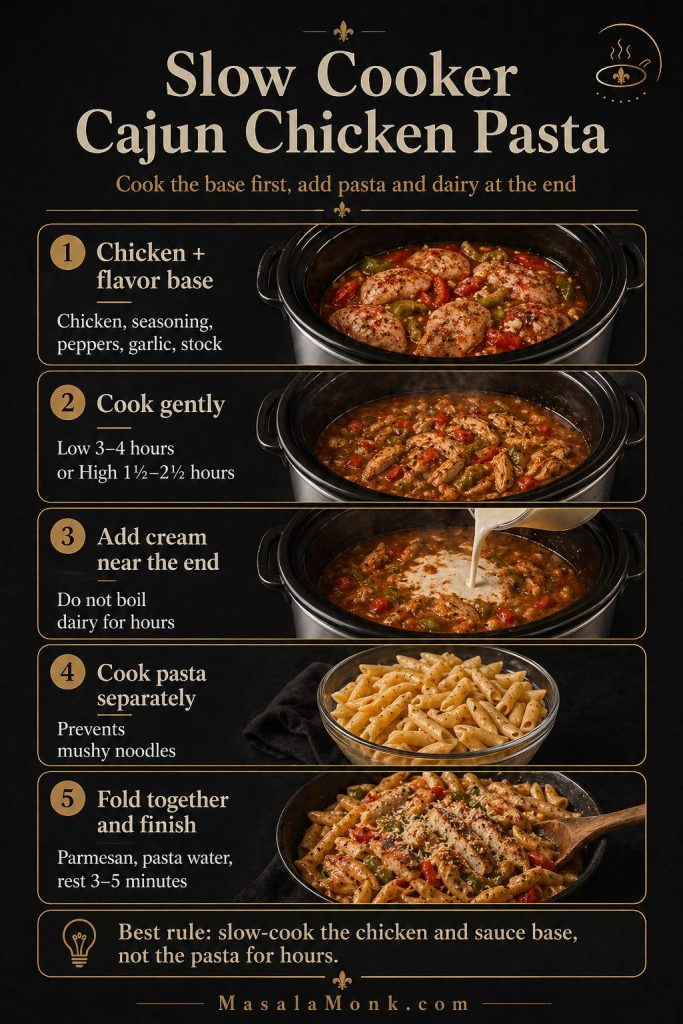
Best slow cooker rule: Cook the chicken and sauce base in the crockpot, but cook the pasta separately. That gives you creamy Cajun chicken pasta without mushy noodles or broken sauce.
If you want a richer crockpot version, add a small amount of cream cheese near the end. However, keep the heat low and stir gently so the sauce stays smooth.
Back to recipe card · See variations · Back to top
Cajun Chicken Pasta Variations
Once the base is right, this cajun chicken pasta recipe can move in several directions. However, the key is to change the technique, not just throw extra ingredients into the pan.
Jump to a variation
Which Version Should You Make?
| You want… | Make this version |
|---|---|
| Best texture and sauce control | Separate-boil skillet method |
| Fewer dishes | One-pot Cajun chicken pasta |
| Slow cooker convenience | Crockpot chicken and sauce base with pasta added at the end |
| Richest sauce | Cajun chicken Alfredo |
| Smokier flavor | Cajun chicken and sausage pasta |
| Restaurant-style protein | Cajun chicken and shrimp pasta |
| Dramatic spice and color | Blackened chicken pasta |
| Lighter bowl | Half-and-half or evaporated milk version |
| Dairy-free option | Cashew cream or coconut milk version |
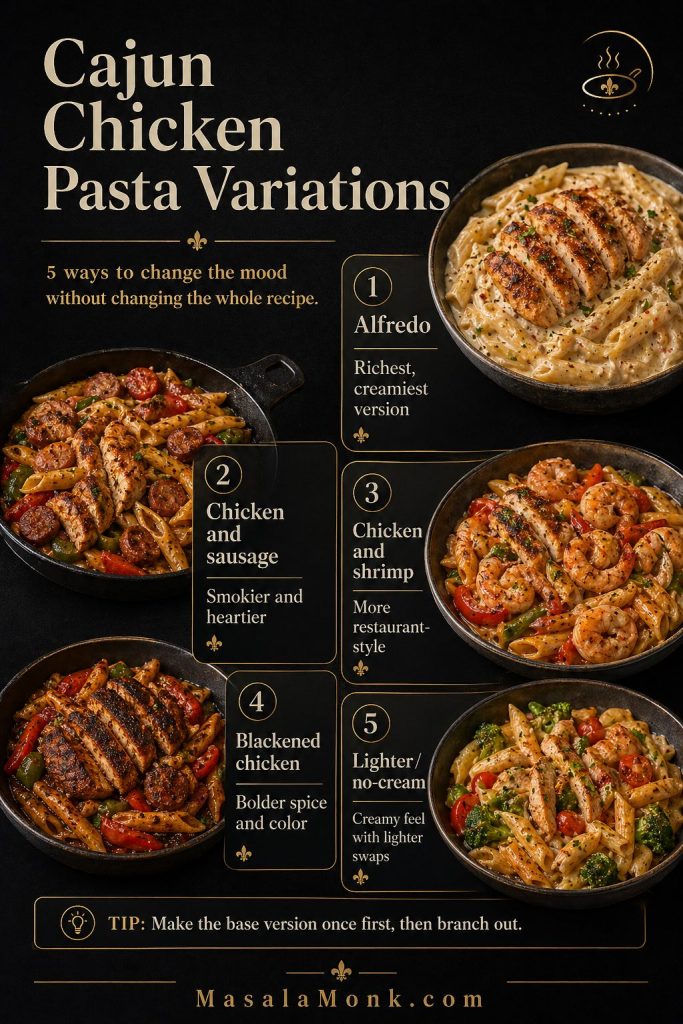
Cajun Chicken Alfredo Version
Choose the Alfredo version when you want the richest, most restaurant-style bowl. For this variation, use fettuccine, more parmesan, less tomato paste, and a smoother cream sauce.
Use 340 g / 12 oz fettuccine, 500 g / 1.1 lb chicken, 2 tbsp / 28 g butter, 240 ml / 1 cup heavy cream, 60–75 g parmesan, and 120–180 ml pasta water. Instead of building a tomato-forward sauce, bloom the Cajun seasoning briefly in butter, add the cream gently, toss in fettuccine, and add parmesan off heat.
For a deeper Alfredo-style guide, see MasalaMonk’s Cajun chicken Alfredo pasta section.
Cajun Chicken and Sausage Pasta
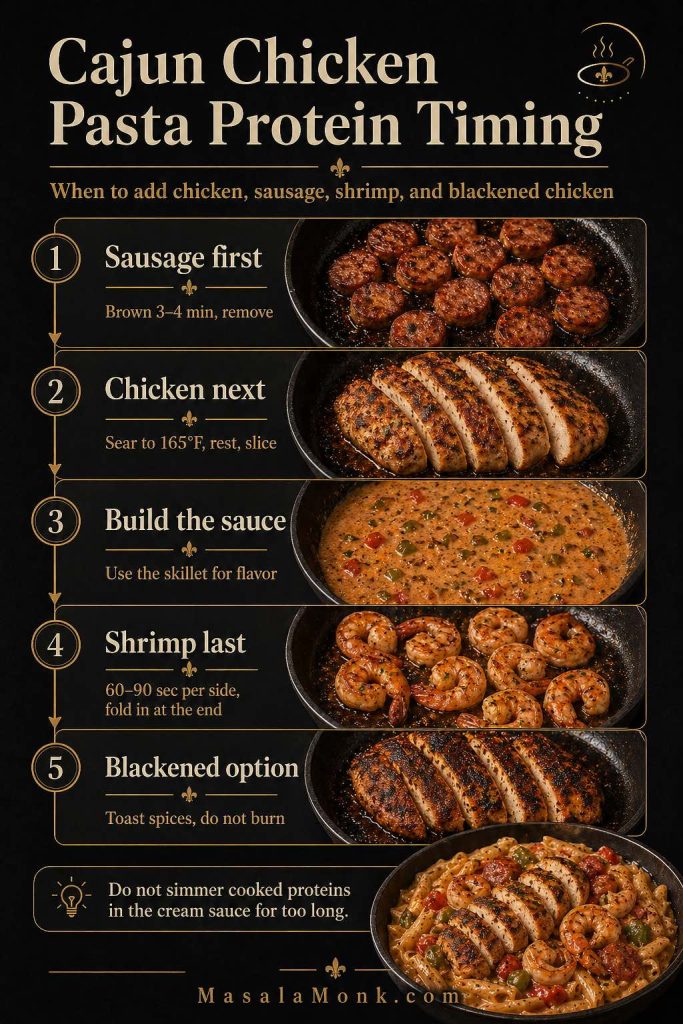
Choose the sausage version when you want the pasta to taste smokier, heartier, and more savory. Because sausage brings salt and fat, reduce the Cajun seasoning slightly and taste before adding more.
Use 350 g / 12 oz chicken and 225–300 g / 8–10 oz smoked sausage or andouille. Slice the sausage into 6–8 mm / 1/4-inch coins, brown it first for 3–4 minutes, then remove it. Next, sear the chicken in the same skillet, build the sauce, and add the sausage back near the end.
For a more traditional Louisiana-inspired comfort-food direction, MasalaMonk’s Louisiana red beans and rice guide is a useful companion for smoky sausage, the trinity, and slow-simmered flavor.
Cajun Chicken and Shrimp Pasta
Choose shrimp when you want a more restaurant-style bowl. However, cook it separately because shrimp turns rubbery much faster than chicken.
Use 300–350 g / 10–12 oz chicken and 250–300 g / 9–10 oz peeled and deveined shrimp. Pat the shrimp dry, season with 1/2–3/4 tsp Cajun seasoning, and sear it for 60–90 seconds per side, just until opaque. Then remove it and fold it back into the pasta for only the final 30–60 seconds.
Blackened Chicken Pasta Version
Choose blackened chicken when you want dramatic color, toasted spice, and a bolder chicken topping. However, avoid burning the spices. You want deep color and smoky edges, not bitter black dust.
| Blackened chicken rub for 500 g chicken | Amount |
|---|---|
| Smoked paprika | 2 tsp |
| Garlic powder | 1 tsp |
| Onion powder | 1 tsp |
| Dried thyme | 1/2 tsp |
| Dried oregano | 1/2 tsp |
| Black pepper | 1/2 tsp |
| Cayenne | 1/4–1/2 tsp |
| Fine salt | 3/4 tsp |
Back to recipe card · Fix a problem · Back to top
How to Make It Lighter or No-Cream
A lighter Cajun chicken pasta can still be creamy, but it needs gentler heat. Instead of boiling the sauce aggressively, use low heat, reserved pasta water, and a little patience.
Evaporated milk is the easiest lighter swap because it is stable and still feels creamy. Half-and-half also works, although it needs lower heat. Greek yogurt, cottage cheese, and cashew cream can work too, but they should be added on low heat or off heat so they do not split.
| Swap | Amount | How to use it |
|---|---|---|
| Half-and-half | 240 ml / 1 cup | Use like cream, but simmer gently. |
| Evaporated milk | 240 ml / 1 cup | Stable and creamy, with less heaviness than cream. |
| Milk + flour | 240 ml milk + 1 tbsp flour | Whisk into the pan after garlic and tomato paste, then simmer gently. |
| Greek yogurt | 120 g / 1/2 cup | Temper with warm pasta water and add off heat. |
| Blended cottage cheese | 150 g / 2/3 cup | Blend smooth with stock, then add on low heat. |
| Cashew cream | 180–240 ml / 3/4–1 cup | Best dairy-free creamy texture. |
| Coconut milk | 240 ml / 1 cup | Works for dairy-free pasta, but it changes the flavor. |
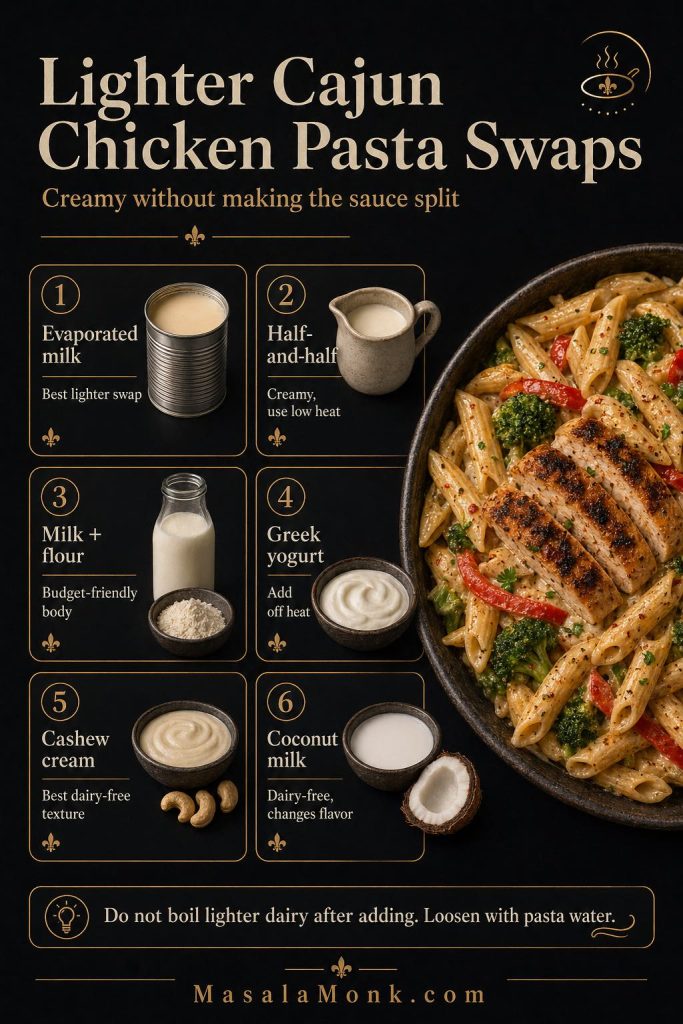
If you want a higher-protein pasta bowl, you can also pair the sauce with a firmer protein pasta. MasalaMonk’s lentil pasta for weight loss guide is useful for comparing that kind of swap.
Important: Do not boil yogurt, cottage cheese sauce, or cashew cream after adding. Add them on low heat or off heat, then loosen with pasta water until the sauce clings.
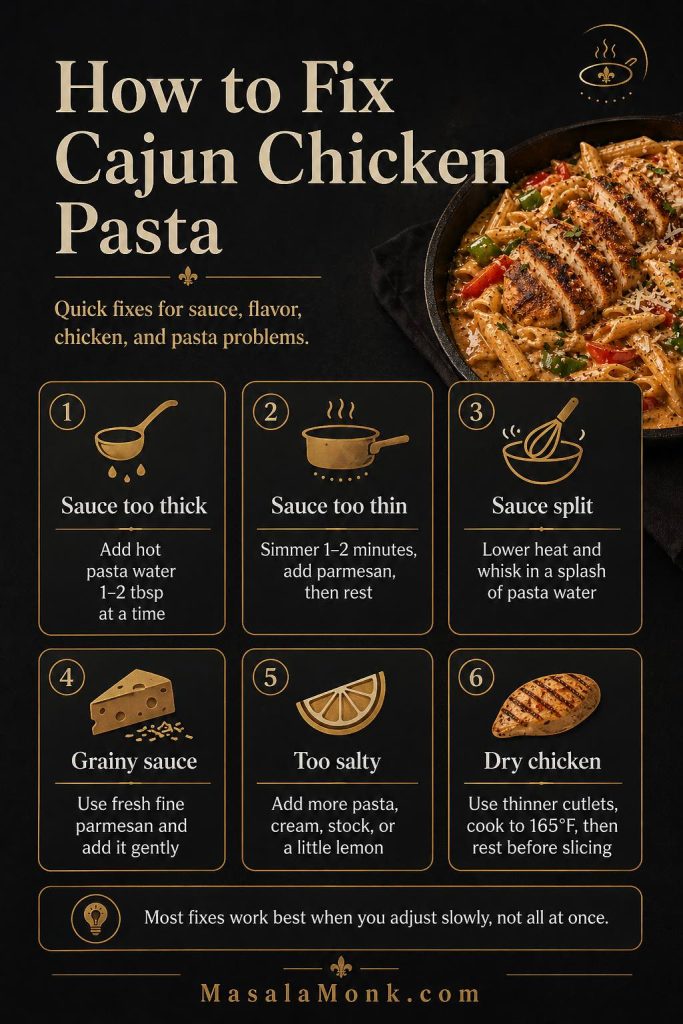
How to Fix Cajun Chicken Pasta
Even a good cajun chicken pasta recipe can go wrong if the heat is too high, the seasoning is salty, or the pasta absorbs more sauce than expected. Fortunately, most problems are easy to fix if you adjust slowly instead of adding a lot of liquid, salt, cream, or spice at once.
Jump to the problem
Cream Sauce Problems
Start here if the sauce looks too thick, too thin, oily, split, or grainy. In most cases, the solution is gentle heat plus a small amount of hot pasta water.
| Problem | Why it happened | Exact fix |
|---|---|---|
| Thick, heavy sauce | The pasta absorbed liquid, or the heat reduced the sauce too far. | Loosen it with hot pasta water, milk, or stock 1–2 tbsp at a time, then toss until glossy. |
| Loose, watery sauce | There is too much liquid, not enough parmesan, or the pasta has not rested yet. | Simmer for 1–2 minutes, add a little parmesan, then rest off heat for 2 minutes. |
| Split cream sauce | The dairy boiled too hard, or the cheese was added over high heat. | Lower the heat, add a splash of pasta water, and whisk gently until the sauce comes back together. |
| Grainy texture | The cheese was pre-shredded, added too quickly, or heated too aggressively. | Use finely grated parmesan next time. For now, lower the heat and add pasta water gradually while tossing. |
Flavor Problems
If the pasta tastes flat, salty, or too spicy, fix the balance before adding more Cajun seasoning. Many Cajun blends already contain salt, so adding more seasoning can make the problem worse.
| Problem | Why it happened | Exact fix |
|---|---|---|
| Overly salty pasta | Salty Cajun seasoning, salted pasta water, parmesan, and sausage may have stacked together. | Add cream, unsalted stock, more cooked pasta, or a squeeze of lemon. Do not add more Cajun seasoning. |
| Too much heat | The Cajun blend had a lot of cayenne, or extra spice was added too early. | Soften the heat with cream, butter, parmesan, or more pasta. Add lemon only after the sauce is balanced. |
| Flat or bland flavor | The sauce needs more salt, spice, garlic, cheese, or acidity. | Add Cajun seasoning carefully, then finish with black pepper, parmesan, and a small squeeze of lemon. |
| Too rich or heavy | The sauce has plenty of cream but not enough brightness. | Add lemon juice 1 tsp at a time, then finish with parsley, scallions, or a little extra black pepper. |
Chicken, Shrimp, Sausage, and Pasta Problems
These fixes are mostly about timing. Chicken needs to rest, shrimp needs very little heat, sausage should be browned instead of boiled, and pasta should stop just before it turns fully soft.
| Problem | Why it happened | Exact fix |
|---|---|---|
| Dry chicken | The chicken breast was too thick, cooked too long, or sliced before resting. | Pound cutlets thin, sear quickly, rest before slicing, and avoid simmering cooked chicken in the sauce. |
| Mushy pasta | The pasta cooked too long before being tossed with the sauce. | Cook pasta 1 minute shy of al dente. For the one-pot method, start checking earlier than the package time. |
| Sticky one-pot pasta | There was too little liquid, not enough stirring, or the pan was too hot. | Add hot stock or water 60 ml / 1/4 cup at a time, then stir every 2 minutes until the pasta loosens. |
| Rubbery shrimp | The shrimp simmered too long in the cream sauce. | Sear shrimp separately for 60–90 seconds per side, then fold it in at the end for only 30–60 seconds. |
| Tough sausage | The sausage boiled in the sauce instead of being browned and added back later. | Brown sausage first, remove it, then return it near the end so it stays smoky and firm. |
Back to recipe card · Storage and reheating · Back to top
Storage, Reheating, and Freezing
Leftovers from this cajun chicken pasta recipe will thicken as they sit because pasta keeps absorbing sauce in the fridge. Therefore, make the sauce slightly looser if you are cooking for meal prep.
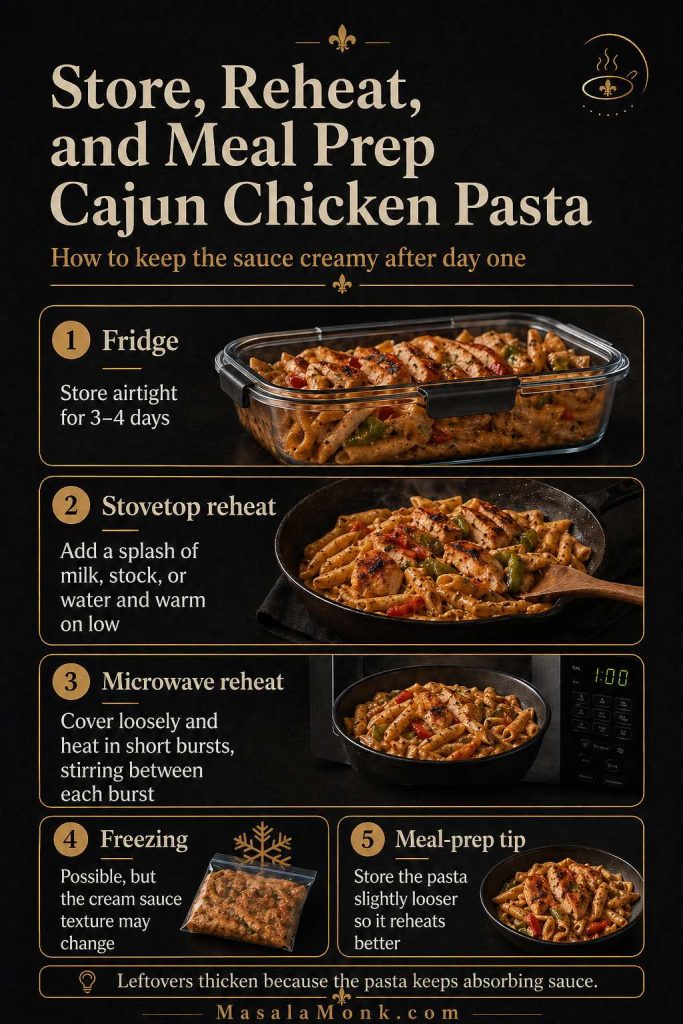
- Fridge: Store in an airtight container for 3–4 days, in line with USDA leftover food safety guidance.
- Stovetop reheating: Add 1–2 tbsp milk, stock, or water per serving. Warm over low heat and stir often.
- Microwave reheating: Add a splash of liquid, cover loosely, and heat in short bursts, stirring between each burst.
- Freezing: You can freeze it, but creamy pasta may split and the pasta can soften after thawing.
- Meal-prep tip: Store extra sauce or a little stock separately, then loosen each portion when reheating.
The best reheated bowl is slightly looser before storage. As the pasta sits, it absorbs sauce, so a creamy pasta that looks perfect on day one can look dry on day two unless you add liquid back gently.
What to Serve with Cajun Chicken Pasta
Because the pasta is rich and creamy, simple sides work best. Serve it with a crisp green salad, roasted broccoli, sautéed green beans, garlic bread, or a lemony cucumber salad. Also, if you are serving a heavier sausage version, keep the side dish lighter and sharper so the meal does not feel too heavy.
For another creamy pasta direction, MasalaMonk’s chicken pesto pasta is useful because it also relies on gentle heat and pasta water to keep the sauce glossy instead of oily.
A Note on Cajun-Inspired Pasta
This is a Cajun-inspired creamy chicken pasta, not a claim of traditional Louisiana Cajun cooking. The flavor comes from Cajun-style seasoning, garlic, peppers, tomato paste, cream, parmesan, and a skillet pasta method. In other words, it is closer to a restaurant-style creamy pasta than a classic Cajun stew, gumbo, jambalaya, or rice dish.
For cultural context, Britannica’s overview of Cajun culture and cuisine explains how Cajun food reflects Louisiana’s blended food traditions. That is why this recipe uses the word Cajun carefully: the seasoning profile is Cajun-inspired, while the creamy pasta format is modern and weeknight-friendly.
FAQs
What is a cajun chicken pasta recipe made of?
A cajun chicken pasta recipe is usually made with chicken, pasta, Cajun seasoning, garlic, cream, parmesan, and vegetables such as bell pepper, onion, tomatoes, or mushrooms. This version also uses chicken stock and reserved pasta water so the sauce stays creamy without becoming too heavy.
Is Cajun chicken pasta very spicy?
It can be mild, medium, or hot depending on your Cajun seasoning. For a medium version, use 1/4 tsp cayenne in the homemade blend. For a hotter version, use 1/2 tsp cayenne or add hot sauce at the end. However, if you are cooking for mixed heat preferences, keep the base milder and let people add more heat at the table.
What pasta is best for Cajun chicken pasta?
Penne and rigatoni are the best default choices because they hold sauce well and are easy to toss. Linguine gives a restaurant-style finish, while fettuccine is best for a Cajun Alfredo version. Meanwhile, rotini and fusilli are great when you want maximum sauce cling.
Can I make Cajun chicken pasta one pot?
Yes. Use short pasta, stock, water, tomato paste, and seasoning, then cook the pasta directly in the pan. However, add cream and parmesan only near the end. Otherwise, the dairy can split before the pasta finishes cooking.
Can I make Cajun chicken pasta in a slow cooker?
Yes, but the best slow cooker method is to cook the chicken and sauce base first, then add cooked pasta, cream, and parmesan near the end. This keeps the pasta from becoming mushy and helps the cream sauce stay smooth.
Can I use chicken thighs instead of chicken breast?
Yes. Boneless skinless chicken thighs work very well because they stay juicy and tolerate a little extra cooking. Cut them into bite-size pieces or sear them whole, then slice before serving.
How do I stop the cream sauce from splitting?
Keep the heat gentle after adding cream. Also, add parmesan gradually on low heat or off heat, and loosen the sauce with reserved pasta water. A hard boil is the biggest reason creamy pasta sauce turns oily or split.
How do I make Cajun chicken pasta less salty?
Add more cooked pasta, cream, unsalted stock, or a squeeze of lemon. Do not add more Cajun seasoning if the blend is salty. Next time, salt the pasta water lightly and use a salt-free or lower-salt Cajun seasoning.
Can I add sausage?
Yes. Brown smoked sausage or andouille first, remove it, then cook the chicken and sauce in the same skillet. After that, add the sausage back near the end so it keeps its browned flavor and does not become rubbery.
Can I add shrimp?
Yes. Sear shrimp separately for 60–90 seconds per side, then fold it into the finished pasta at the end. Do not simmer shrimp in the cream sauce for several minutes because it can overcook quickly.
Can I make Cajun chicken pasta without cream?
Yes. Use evaporated milk, half-and-half, milk with a little flour, blended cottage cheese, Greek yogurt, cashew cream, or coconut milk. However, add lighter dairy options on low heat and loosen with pasta water so the sauce stays smooth.
Can I make Cajun chicken pasta gluten-free?
Yes. Use a sturdy gluten-free pasta shape such as penne, rigatoni, or fusilli, and check that your Cajun seasoning and stock are gluten-free. Cook the pasta just shy of al dente because gluten-free pasta can soften quickly when tossed in hot cream sauce.
Can I make it ahead?
Yes, but creamy pasta is best fresh. If making it ahead, keep the sauce slightly looser, store it airtight, and reheat gently with a splash of milk, stock, or water.
Can I freeze creamy Cajun chicken pasta?
You can freeze it, but the texture may change. Cream sauce can split and pasta can soften after thawing. For best results, freeze the sauce and chicken separately from freshly cooked pasta if possible.
Back to recipe card · Back to top
Final Tips for the Best Creamy Cajun Chicken Pasta
The best cajun chicken pasta recipe is not just about adding cream and spice. It is about balance: enough Cajun seasoning for smoky heat, enough cream for richness, enough pasta water for gloss, and enough lemon or parmesan at the end to keep the sauce from tasting flat.
Most importantly, control the salt early, keep the dairy heat gentle, and save more pasta water than you think you need. Once those three things are handled, this becomes the kind of creamy Cajun chicken pasta you can make on a weeknight without worrying about dry chicken, broken sauce, or bland flavor.
Start with the skillet version first. Then use the same base for one-pot, slow cooker, Alfredo, sausage, shrimp, blackened chicken, or a lighter bowl whenever you want to change the mood without learning a whole new recipe.








