A good mushroom stroganoff recipe gets wetter before it gets better. Halfway through browning, the skillet can suddenly fill with mushroom water and look as though everything has gone wrong. It hasn’t. Keep cooking and the puddle disappears, the sharper frying sound comes back, and gray mushrooms begin picking up browned edges.
The goal is a mushroom-heavy stroganoff with browned pieces and silky sauce clinging to the noodles instead of pooling underneath them. It takes about 40–50 minutes for four servings, with most of the attention going to one worthwhile stage: letting the mushrooms cook through the water they release before the sauce begins.
This is the meatless counterpart to Beef Stroganoff, but the sauce still needs plenty of savory depth before the sour cream arrives. Wine, Dijon, tomato paste and a small umami boost do most of that work; the sour cream gives the finished sauce its familiar tang.
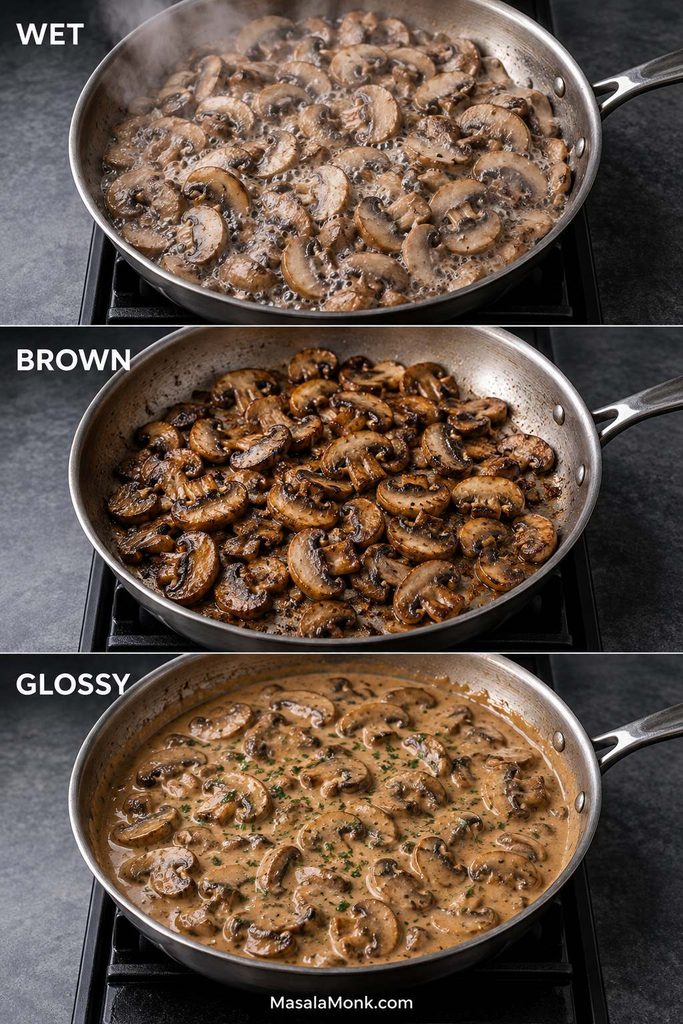
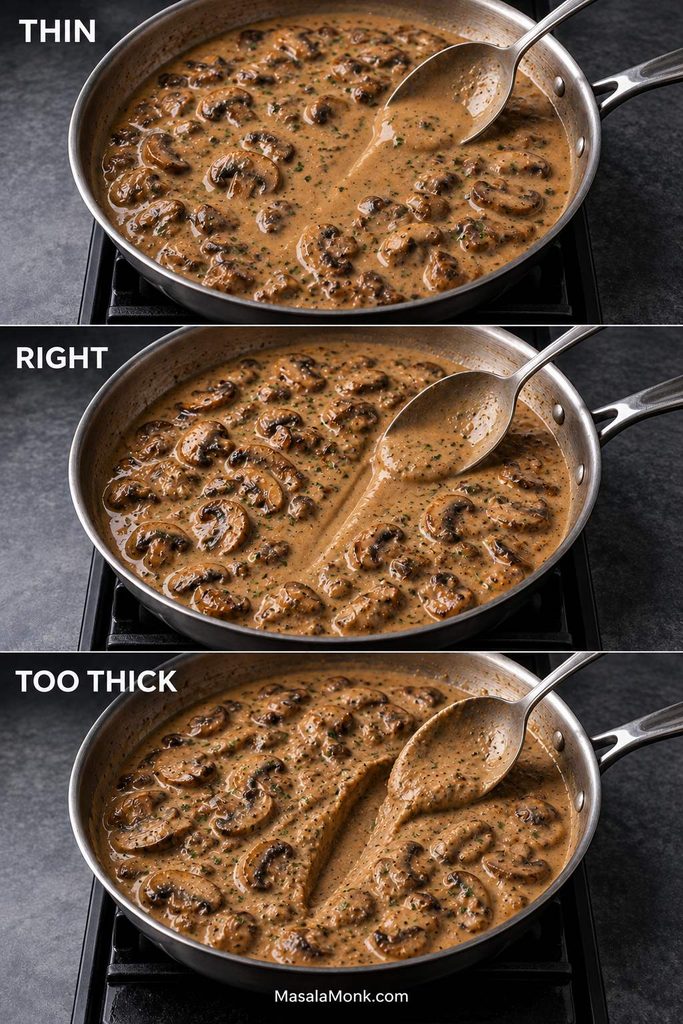
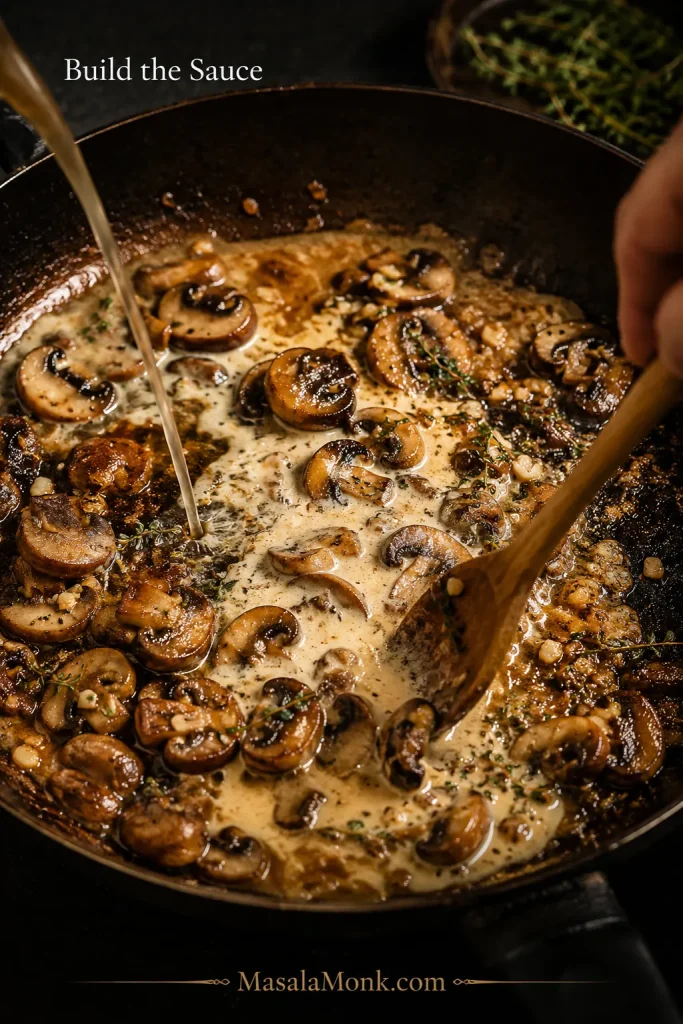
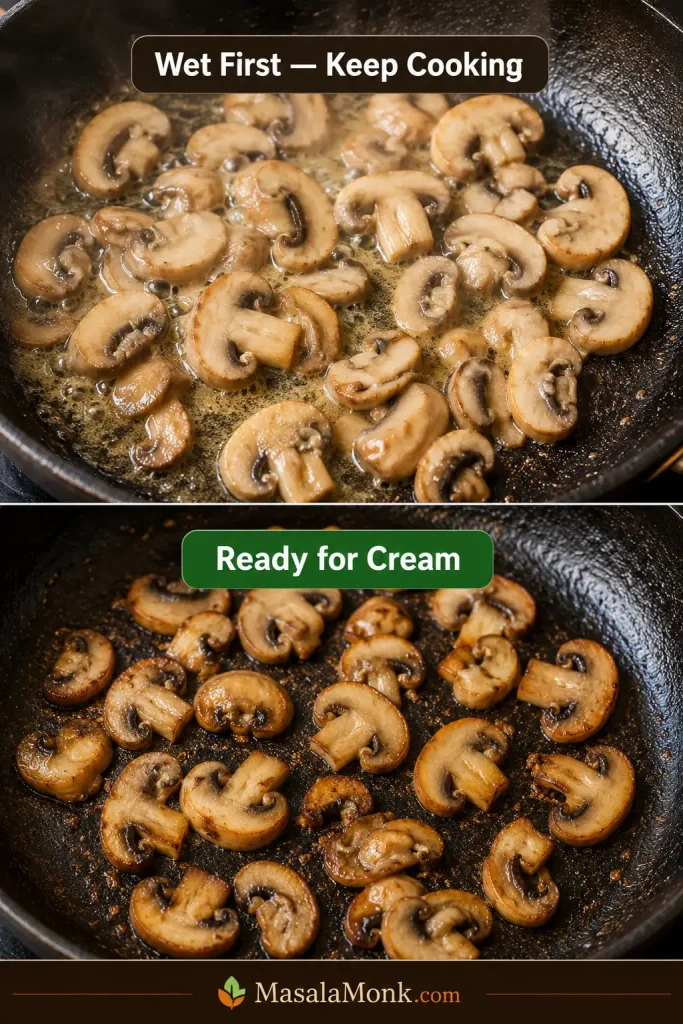
Quick answer: to know when mushroom stroganoff is going right, read the skillet as Wet → Brown → Glossy.
WET
The mushrooms have released water. Keep cooking; the sauce comes later.
BROWN
The water has mostly gone, frying resumes and real brown patches appear.
GLOSSY
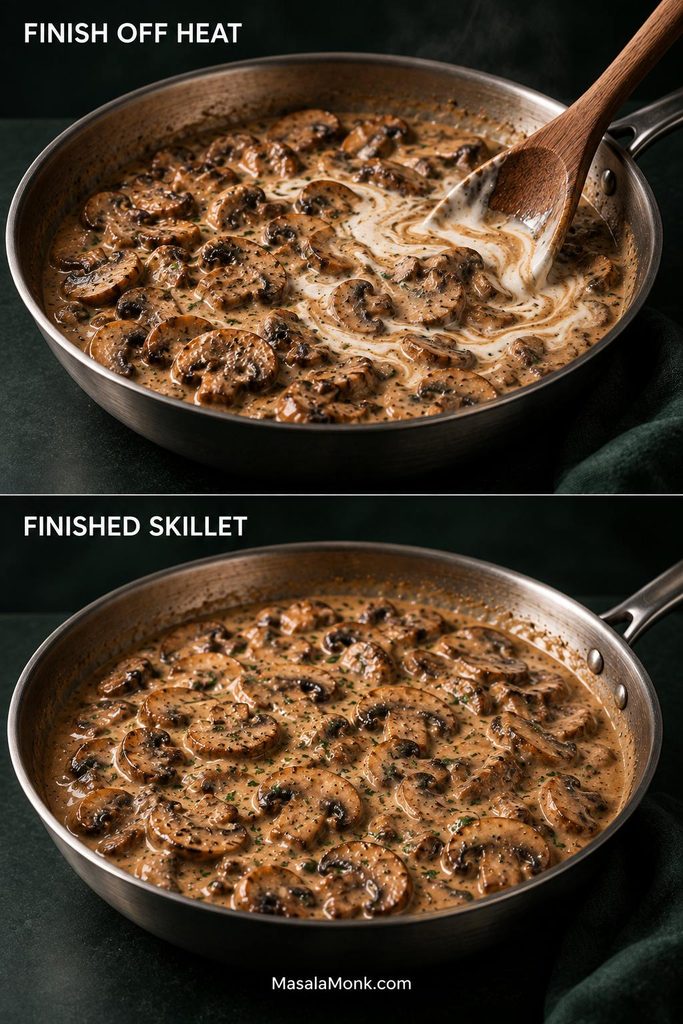
The sauce coats a spoon but still flows. Return the mushrooms and finish with sour cream off heat.
Mushroom Stroganoff Recipe
This recipe uses 20 oz / 570 g mushrooms for four servings, enough sauce to coat the noodles, and a little broth held back so you can loosen the sauce only if it needs it.
Serves
4
Prep
About 10–15 minutes
Cook
About 30–35 minutes
Total
About 40–50 minutes
Mushrooms
20 oz / 570 g
Main pan
12-inch / 30-cm wide skillet or sauté pan
Ingredients
20 oz / 570 g mushroomsUse cremini, brown or chestnut mushrooms, or replace up to about 6 oz / 170 g with shiitake or oyster mushrooms.
1 tbsp / 15 ml olive or neutral oil, divided
2 tbsp / 28 g / 1 oz butter, divided
1 medium yellow onion or 2 large shallots, about 5 oz / 140 g, finely chopped
3 garlic cloves, finely minced
1 tbsp tomato paste
½ cup / 4 fl oz / 120 ml dry white wineFor strict vegetarian or vegan cooking, use suitably labeled wine or replace it with broth.
2 tbsp / about 16 g all-purpose flour
1¼ cups / 10 fl oz / 300 ml low-sodium vegetable or mushroom brothFor the no-wine version, have 1¾ cups / 14 fl oz / 420 ml broth total available.
2 tsp Dijon mustard
2 tsp / 10 ml soy sauce, tamari or vegetarian Worcestershire sauceChoose one.
1 tsp sweet paprika
½ tsp dried thyme or 1–1½ tsp fresh thyme leaves
½ tsp fine salt for the mushrooms, plus more for the pasta water and final seasoning
½ tsp freshly ground black pepper, plus more to finish
½ cup / about 120 g full-fat sour cream
10 oz / about 280 g wide egg noodles
2 tbsp chopped parsley or dill, to finish
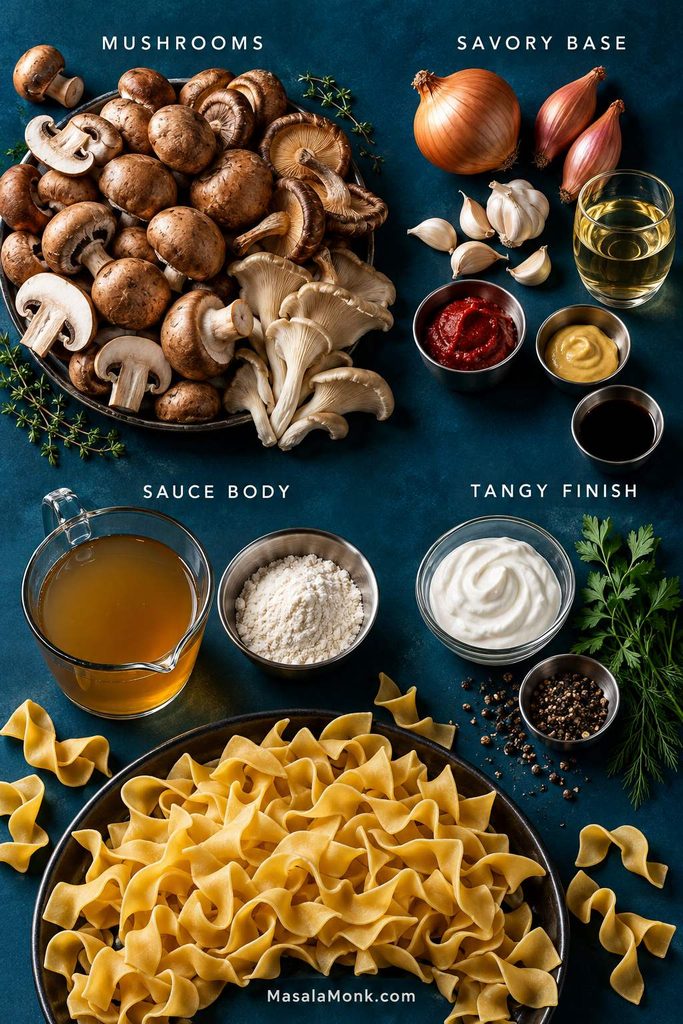
Mushroom stroganoff ingredients make more sense when read by function: mushrooms create the core flavor, aromatics and seasonings deepen it, broth and flour control body, while sour cream contributes cultured tang at the finish.
Method
1. Prep the Mushrooms
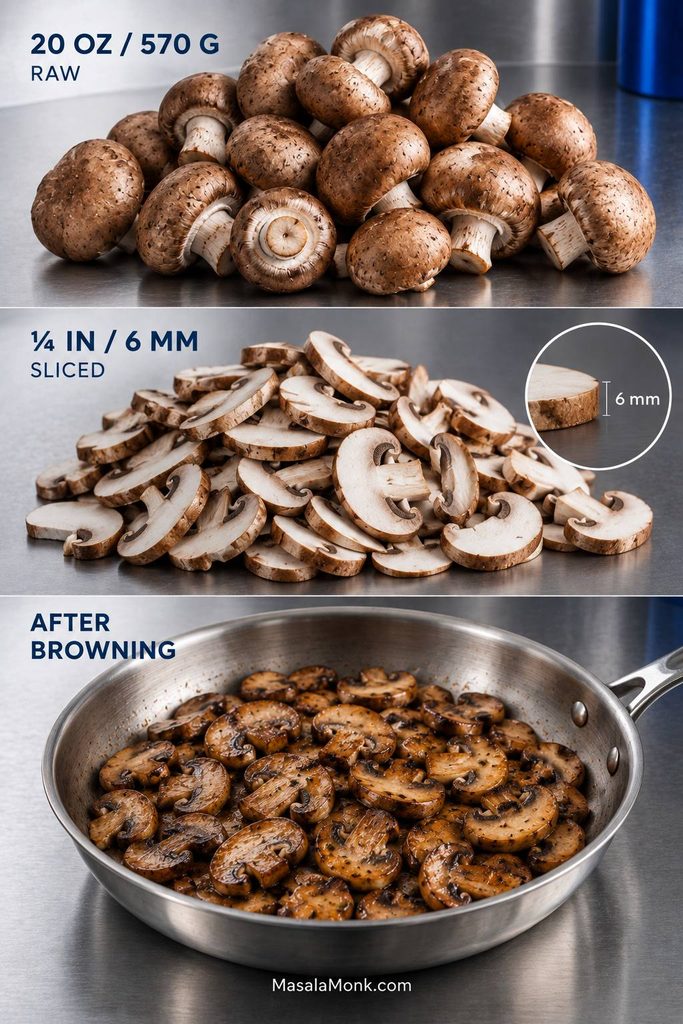
Slice cremini, brown, chestnut or white button mushrooms around ¼ inch / 6 mm thick. Tear oyster mushrooms into bite-size pieces and remove tough shiitake stems before slicing the caps. Chop the onion and garlic so everything is ready once the pan gets hot.
2. Brown the Mushrooms in Two Batches
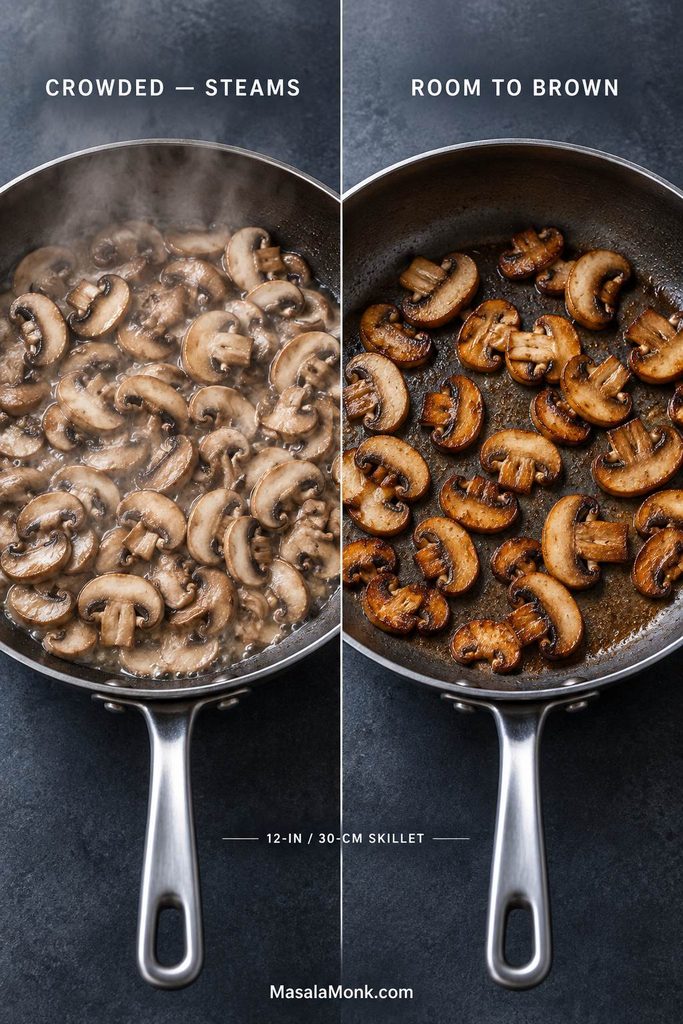
Heat a 12-inch / 30-cm wide skillet over medium-high heat. Add half the oil and about ½ tablespoon butter, then spread half the mushrooms across the skillet. Leave them alone for a couple of minutes before stirring.
The pan may suddenly look very wet. That’s normal. Keep it uncovered and let the moisture cook away. As the puddle disappears, listen for the pan to start sounding like it is frying again. Give the mushrooms another couple of minutes to develop real brown patches and a roasted smell.
You aren’t looking for perfect browning on every slice. Once the batch has good color across it, season with about ¼ teaspoon salt and transfer it to a plate. This often takes around 6–9 minutes, although a wetter batch can take longer.
Now put a large pot of water over high heat for the noodles. Add the remaining oil and another ½ tablespoon butter to the skillet, then repeat with the second half of the mushrooms. Season with the remaining ¼ teaspoon salt and move them to the plate.
Crowding is mainly a moisture-management problem. Because more exposed pan surface lets water escape faster, two smaller batches reach the frying stage sooner and spend less time steaming.
3. Build the Aromatic Base
Reduce the skillet heat to medium and add the remaining 1 tablespoon butter. Cook the onion or shallots for about 3–4 minutes, until soft and beginning to color.
Add the garlic for about 30 seconds, then stir in the tomato paste. Give the paste another minute against the hot skillet. It should darken slightly and lose its raw, sharp smell.
4. Deglaze, Reduce and Cook the Noodles
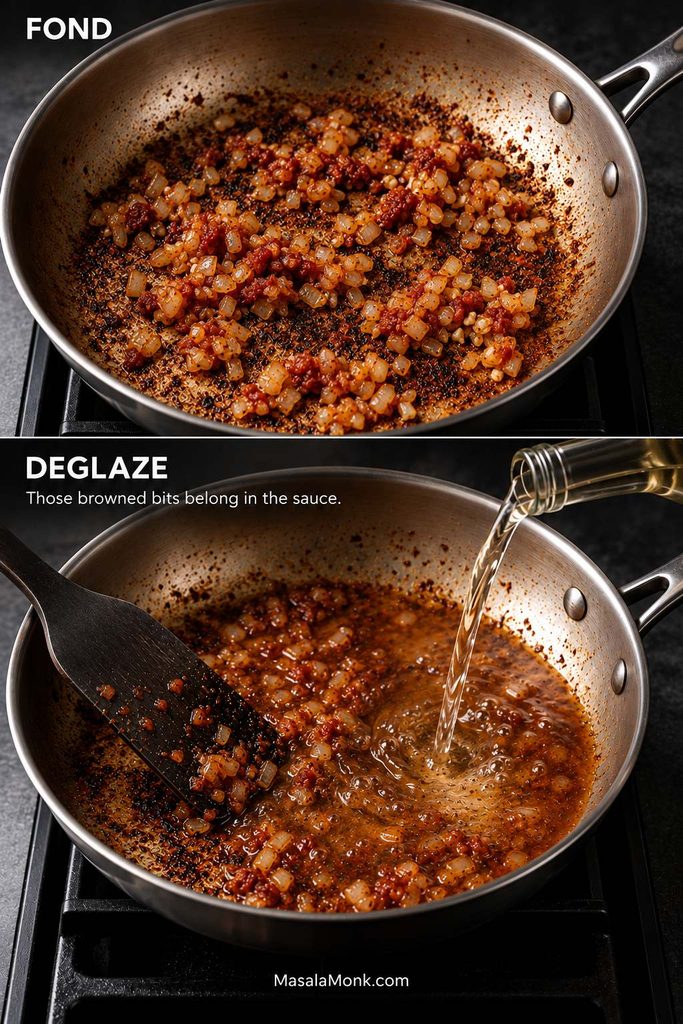
Pour in the ½ cup / 120 ml dry white wine and scrape up the browned bits from the skillet. Simmer for about 2–4 minutes. The sharp wine smell should fade and the liquid should reduce to a shallow, concentrated layer.
No wine? Use ½ cup / 120 ml extra low-sodium broth and reduce it to the same point.
Once the pasta water is boiling, salt it and add the 10 oz / 280 g egg noodles. Cook according to the package directions while you finish the sauce.
Fond is flavor already paid for: the browned layer left on the skillet after cooking. Once wine or broth loosens it, those concentrated mushroom and aromatic notes dissolve into the stroganoff sauce instead of staying stuck to the pan.
5. Thicken and Season the Sauce
Sprinkle the 2 tablespoons / 16 g flour over the onion mixture and stir for 30–60 seconds. Gradually pour in 1 cup / 240 ml broth, stirring or whisking until smooth. Hold back the final ¼ cup / 60 ml; you may not need it.
Add 2 teaspoons Dijon, then 2 teaspoons of one chosen savory seasoning: soy sauce, tamari or vegetarian Worcestershire. Stir in the paprika, thyme and black pepper.
Simmer gently for about 4–6 minutes. By now the sharp wine aroma should be gone and the pan should smell rounded, savory and distinctly mushroomy. A thin film of sauce should cling to the back of a spoon.
Gluten-free: skip the flour and use verified gluten-free broth plus tamari or another verified gluten-free savory seasoning. Once the broth is hot, whisk in a slurry of 1 tablespoon / about 8 g cornstarch mixed with 2 tablespoons / 30 ml cold reserved broth.
6. Taste Before the Sour Cream
Take a spoonful now. The sauce should already taste like dinner.
Start with salt when it tastes flat. A well-seasoned sauce that still seems washed out needs more concentration, not more seasoning, so reduce it another minute or two. Then check the Dijon. Extra soy, tamari or Worcestershire comes last.
7. Return the Mushrooms and Finish Off Heat
Return the mushrooms and any juices from the plate. Give them 1–2 minutes to warm through. You should still see plenty of actual mushroom pieces in the pan.
Switch off the burner and let vigorous bubbling settle. Refrigerator-cold sour cream can be loosened first with a spoonful of warm sauce. Fold in the ½ cup / 120 g full-fat sour cream.
Tilt the skillet. The sauce should cling to the mushrooms while still moving easily. Add reserved broth 1 tablespoon / 15 ml at a time if it has tightened too much; it will continue to thicken as it stands.
Get the reduction and seasoning right before the sour cream goes in. Off heat, the dairy should add tang and smoothness—not do the sauce-building for you.
Drain the noodles when tender. Spoon the stroganoff over them and finish with parsley or dill and freshly ground black pepper.
Pan-size rule: a 12-inch / 30-cm skillet handles this amount well in two batches. With a smaller skillet, use three. When doubling the recipe, more batches or a second skillet are worth the trouble.
Treat Wet → Brown → Glossy as checkpoints rather than timestamps. Stay in Wet until the water cooks away, move on once Brown develops, and stop reducing at Glossy before the mushroom stroganoff sauce loses its flow.
Mushrooms do not brown on a perfectly predictable clock. Freshness, storage, variety, slice thickness, pan material and burner strength all change how quickly their moisture cooks away. One batch may brown in six minutes. Another may need ten.
Wet: Let the Mushroom Water Cook Away
The skillet can look alarmingly wet for a while. If the mushrooms are still sitting in a puddle, don’t judge the browning yet. Leave the pan uncovered and give that water somewhere to go.
Still a puddle? Keep going.
Frozen mushrooms usually make an even wetter pan and need longer before browning begins. They work, but fresh mushrooms are the better choice here when texture matters.
Brown: Listen for the Frying Sound to Return
As the last puddles disappear, the soft wet hiss turns into a sharper sizzle. That’s the useful moment. The mushrooms are frying again, and the last couple of minutes are where much of their deeper flavor develops.
Don’t chase restaurant-perfect browning on every slice. Once you have real color across the batch and the mushrooms smell roasted instead of damp, you’re there.
Glossy: Stop While the Sauce Still Flows
Drag a spoon or spatula through the sauce. A brief trail should appear, then slowly fill back in. Sauce that races together immediately needs more reduction; a trail that stays sharply open means the pan is heading too thick.
There is some margin here. Slightly loose is easier to correct than a sauce that has already tightened too far.
Best Mushrooms for Stroganoff
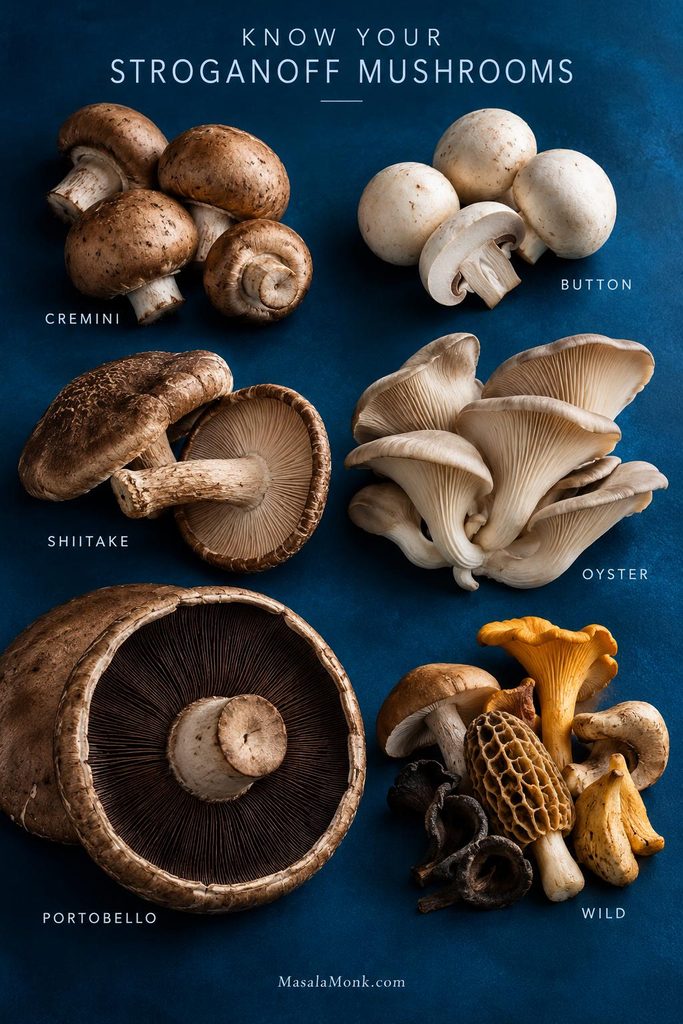
For an everyday stroganoff, start with cremini, brown or chestnut mushrooms. They have more earthy flavor than white button mushrooms, hold their shape well and brown reliably.
The best mushrooms for stroganoff are the ones you can brown well. All-cremini is not a compromise; use shiitake, oyster or wild mushrooms when you specifically want a deeper aroma or different texture.
If you want…
Use…
Why
Best everyday choice
Cremini, brown or chestnut
Good flavor, firm texture and dependable browning
A milder version
White button
Perfectly workable once well browned
Deeper aroma
Mostly cremini + some shiitake
Shiitake adds a stronger, woodier note
More textural contrast
Mostly cremini + some oyster
Oyster mushrooms give tender pieces and crisped edges
Meatier pieces
Portobello
Thicker slices keep more bite
A special batch
Fresh wild mushrooms
More aroma and variety, but not necessary
How Much to Use and How to Cut Them
Uniformity matters more than ruler-perfect slices. Keeping most mushrooms near ¼ inch / 6 mm helps the batch shed moisture at roughly the same pace, so thin pieces do not overcook while thicker ones are still steaming.
20 oz / 570 g may look like a lot of mushrooms at the cutting board. It won’t once their water cooks away. That amount keeps the final bowl mushroom-heavy enough that the noodles never take over.
All cremini is completely fine. For more aroma, replace about 6 oz / 170 g with shiitake or oyster mushrooms; there is no need to build an expensive five-mushroom mix.
Slice cremini, button and shiitake caps around ¼ inch / 6 mm thick. Tear oyster mushrooms. Portobellos can stay closer to ⅜–½ inch / 10–12 mm. Very thin slices cook quickly, but they also lose more of the bite that makes the finished dish satisfying.
Cleaning mushrooms: a brief rinse is fine when they need it. Dry them well before they hit the skillet.
Once those mushrooms taste properly roasted, the sauce has a simpler job: deepen that flavor and carry it across the plate.
Build a Stroganoff Sauce That Tastes Savory Before It Tastes Creamy
Build the Savory Base
Cook the tomato paste briefly after the onions and garlic. Once it darkens, deglaze with wine and scrape up the browned bits left from the mushrooms. Reduce until the sharp alcohol smell has gone and only a concentrated layer remains in the skillet.
Dijon gives the sauce brightness. Choose one savory seasoning—soy sauce, tamari or vegetarian Worcestershire—to deepen the mushrooms. Many traditional Worcestershire sauces contain anchovy, so use a vegetarian-labeled version when that matters.
Flat flavor is easier to fix when you diagnose it in order: salt → concentration → brightness → extra umami. Salt cannot fix a diluted sauce, and soy sauce cannot replace proper reduction. By this point, the pan should smell rounder and more savory than it did a few minutes earlier.
How to Thicken Mushroom Stroganoff Sauce
Flour gives the broth a light gravy-like body. Cornstarch provides the thickening for the gluten-free version. In either case, keep part of the broth out of the pan until the sauce tells you it needs more.
You’re looking for enough body to coat a spoon without turning stiff. A slightly loose sauce is easier to correct, especially because sour cream and a few minutes of standing will thicken it further.
Judge stroganoff sauce while it is hot, not after it has sat on the plate. Because sour cream, cooling and an absorbent base all tighten the experience, the ideal skillet consistency should still have visible movement.
Finish With Sour Cream Without Splitting It
Once the mushrooms are back in the sauce, take the skillet off the heat and let hard bubbling stop. Then add the sour cream. Full-fat sour cream is the best overall choice here: enough tang to keep the sauce lively, but enough fat to stay smooth when handled gently.
Finish
Result
Verdict / adjustment
Full-fat sour cream
Classic creamy-tangy balance
Best overall choice
Crème fraîche
Richer and milder
Excellent substitute; may need more acidity
Full-fat Greek yogurt
Lighter and tangier
Best lighter option; always add off heat
Low/nonfat Greek yogurt
Leaner and less rich
Works, but is more prone to looking grainy
Heavy or double cream
Smooth and mild
Needs extra acidity to taste like stroganoff
Cream cheese
Thick, rich and mild
Possible, but not the closest substitute
Plant-based sour cream
Dairy-free finish
Useful for vegan versions; adjust by taste
If what you want is a broader cream-and-mushroom sauce without stroganoff’s tang, the Creamy Mushroom Sauce Recipe is the better fit.
Useful Substitutions and Variations
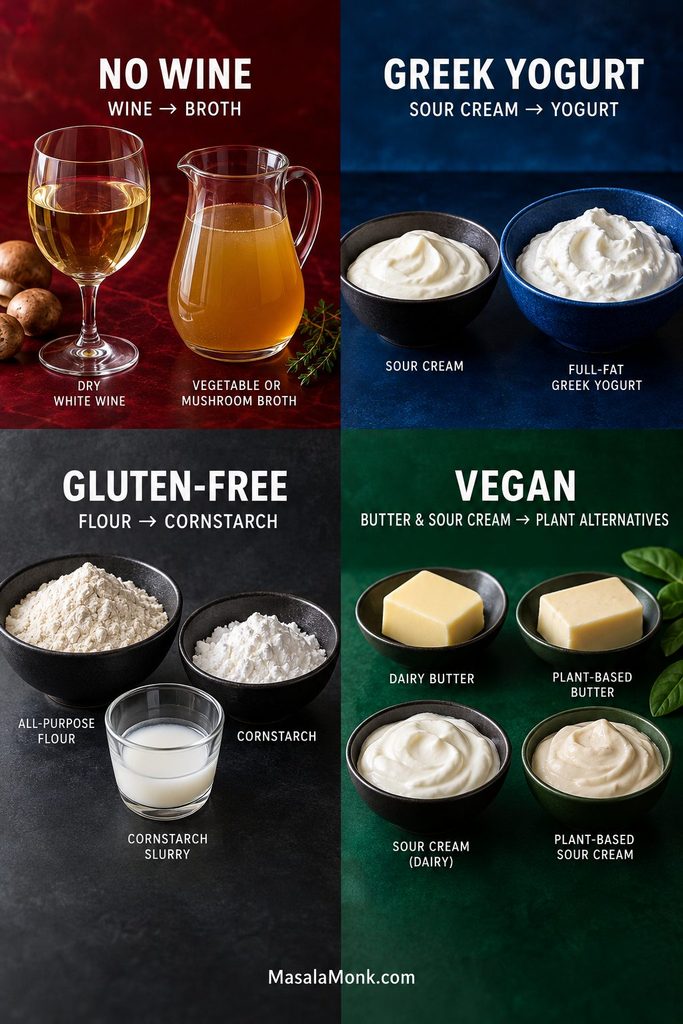
A mushroom stroganoff without wine, with Greek yogurt, gluten-free, or vegan can still behave like the original when each swap preserves function—liquid, tang, thickening or richness—rather than merely matching appearance.
Can I Make Mushroom Stroganoff Without Wine?
Yes. Use ½ cup / 120 ml extra low-sodium broth in place of the wine and reduce it well. Taste the finished sauce after the sour cream goes in before adding extra acid. When it still tastes heavy or dull, about 1 teaspoon / 5 ml lemon juice or white-wine vinegar is usually enough to wake it up.
Using Greek Yogurt Instead of Sour Cream
Use about ½ cup / 120 g full-fat Greek yogurt. Take the skillet off the heat first; refrigerator-cold yogurt benefits from a spoonful of warm sauce mixed into it before it reaches the pan. Because yogurt is already tangy, taste before adding more acid.
Gluten-Free or Vegan Stroganoff
For gluten-free stroganoff, use verified gluten-free broth, tamari or another verified gluten-free savory seasoning, gluten-free noodles and the cornstarch method given in the recipe.
To make the stroganoff vegan, use oil or plant butter, vegetable or mushroom broth, soy or tamari, suitably labeled wine or extra broth, plant-based sour cream and egg-free noodles. Plant-based sour creams vary more than dairy sour cream, so taste first and adjust the looseness or acidity only when needed.
Add Spinach Near the End
Add 4–5 oz / 115–140 g baby spinach once the sauce has thickened. Let it wilt, then take the skillet off the heat and add the sour cream. Earlier is not better here—the spinach only needs enough time to collapse into the sauce.
What to Serve With Mushroom Stroganoff
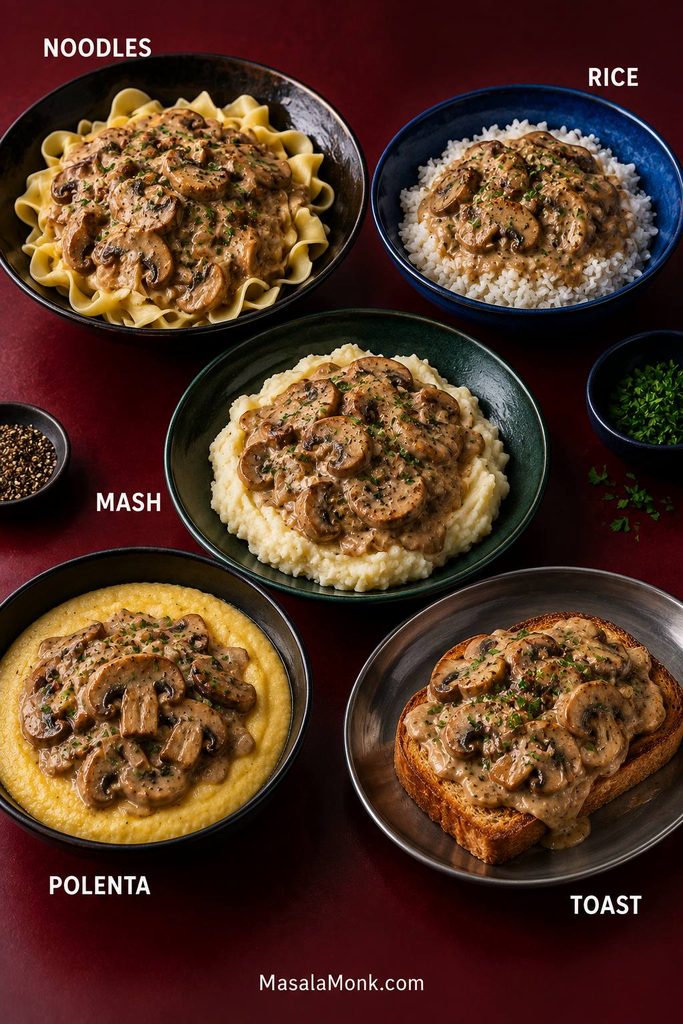
Best Bases: Noodles, Rice, Potatoes or Polenta
Wide egg noodles are the classic choice, but rice, mashed potatoes, polenta and toast all work. The base changes how quickly the sauce tightens on the plate, so something absorbent such as rice or mash benefits from a slightly looser stroganoff.
The more absorbent the base, the looser the sauce should be when it leaves the skillet.
Serve over
Keep the sauce…
Why
Wide egg noodles
Glossy and spoon-coating
Noodles catch sauce well but keep absorbing it
Rice
Slightly looser
Rice absorbs sauce quickly
Mashed potatoes
Loose and generous
Thick mash benefits from more flowing sauce
Polenta
Medium-loose
Keeps the bowl creamy without becoming stodgy
Toast
Slightly thicker
The sauce stays on top instead of soaking straight through
For four servings, use about 10 oz / 280 g wide egg noodles or 1–1¼ cups / 190–240 g uncooked rice. Tagliatelle, pappardelle and fettuccine are good pasta alternatives. Our guide to cooking rice covers stovetop ratios if rice is your base.
Mashed potatoes and soft polenta need no special ratio here—just enough on each plate to catch a generous spoonful of sauce. The Mashed Potatoes Recipe is particularly good when you want a richer dinner.
Side Dishes That Cut the Richness
A crisp green salad with sharp vinaigrette, cucumber-dill salad, green beans, asparagus, broccoli or simple crusty bread all work well. The useful principle is contrast: stroganoff is soft and creamy, so freshness, crunch or acidity keeps the plate lively.
Cornichons, crispy shallots or plenty of black pepper can create the same contrast without adding another side dish.
Troubleshooting: Read What Went Wrong
What you see or taste
Likely cause
What to do
Water around the mushrooms
They are still releasing moisture
Keep cooking uncovered before starting the sauce
Gray, pale mushrooms
They steamed before they could brown
Cook off the water completely; use smaller batches if needed
Thin finished sauce
Wine or broth did not reduce enough
Before dairy, simmer uncovered until the sauce clings lightly to a spoon
Thick or pasty sauce
Too much reduction or thickener
Add warm low-sodium broth 1 tbsp / 15 ml at a time
Bland sauce
Salt, concentration, brightness or umami is missing
Check them in that order
Tastes mainly of sour cream
The base was under-seasoned or too much dairy was added
A little Dijon or black pepper may rebalance it; next time strengthen the base before adding dairy
Too tangy
Very sour dairy or too much added acid
Soften with a little cream or butter if needed
Soft or soggy mushrooms
Thin slices, crowding or too much time simmering in sauce
They cannot fully crisp again; next time slice thicker, brown in batches and return them near the end
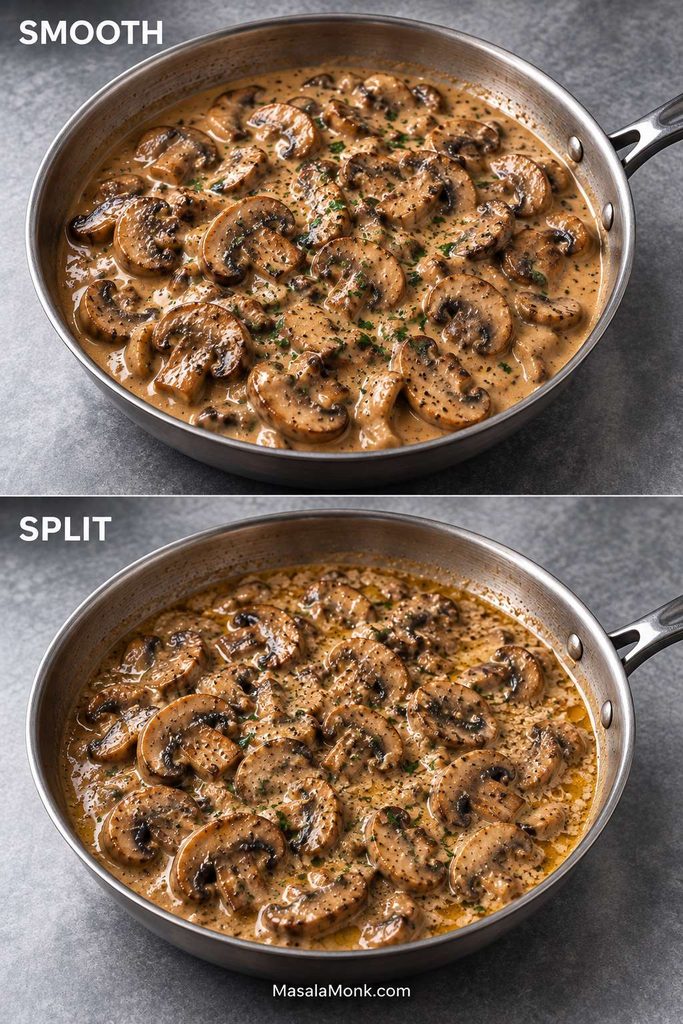
Split or grainy sauce
Sour cream or yogurt got too hot
Remove the skillet from heat and whisk gently
Too salty
Broth and savory seasonings compounded
Loosen carefully with unsalted liquid; use low-sodium broth and season later next time
Not mushroomy enough
Weak browning or very mild mushrooms
Better browning helps more than adding extra cream
Not enough sauce
Over-reduction or pasta was mixed into the sauce too early
Add warm low-sodium broth 1 tbsp / 15 ml at a time
Why Is My Mushroom Stroganoff Watery?
There are two different problems. Water pooling around the mushrooms means they have not finished releasing moisture. A thin sauce after browning means the wine or broth needs more reduction. Fix the stage you’re actually looking at.
What If the Sour Cream Split?
Take the skillet off the heat and whisk gently. A sauce that has only started separating may smooth out somewhat with a spoonful of cool cream or sour cream. Once the sauce is fully curdled, it may not become perfectly silky again, but it will usually still taste good.
Graininess is the first warning; visible fat means the emulsion has broken further. Pull the pan from aggressive heat as soon as separation begins.
How to Store, Reheat and Freeze Mushroom Stroganoff
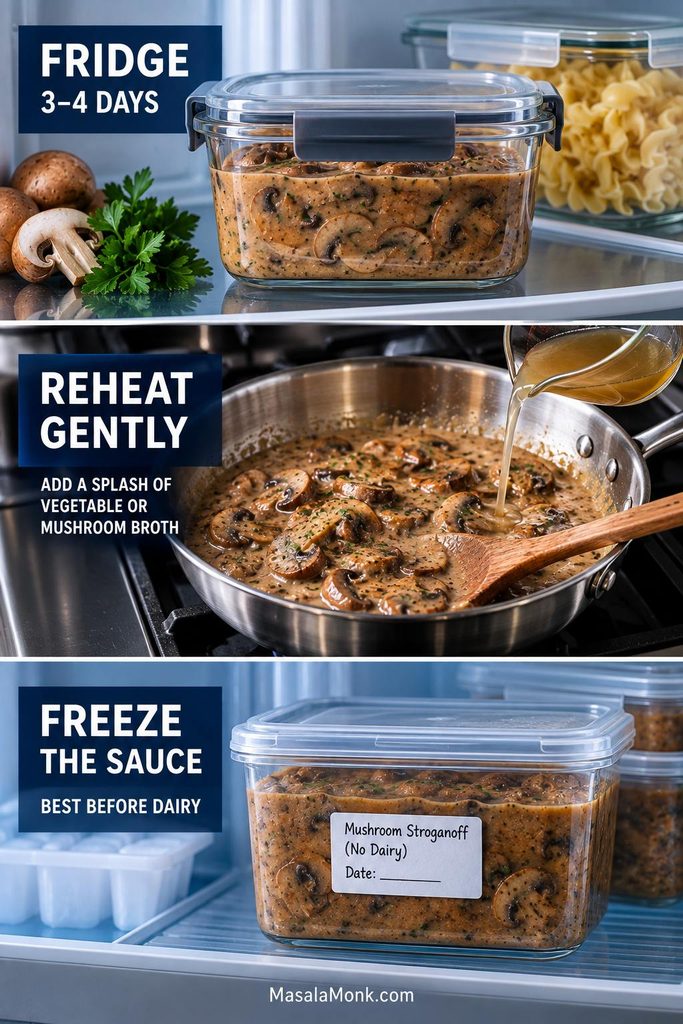
Refrigerate mushroom stroganoff for 3–4 days. Keep the noodles separate when practical because they continue soaking up sauce in the refrigerator.
Reheating
Warm the sauce gradually, stirring often. It commonly tightens overnight, so loosen it with a splash of broth or water when needed. Heat thoroughly, but once hot there is no advantage in keeping a sour-cream sauce at a hard boil.
For the smoothest result, freeze the mushroom sauce before adding sour cream and leave the noodles out. Thaw and reheat the base, adjust the consistency, then add fresh sour cream off heat.
Already finished the whole dish? Freeze it if you need to. Expect the noodles to soften and the dairy to look a little less silky after thawing.
For better leftovers, portion the sauce separately before chilling or freezing. That lets you loosen only what you reheat and keeps stored noodles from becoming increasingly soft.
Mushroom Stroganoff FAQ
1. Is Mushroom Stroganoff Vegetarian?
Yes. This mushroom stroganoff is vegetarian when made with vegetable or mushroom broth, vegetarian Worcestershire, soy sauce or tamari, and suitably labeled wine—or broth in place of the wine. Many traditional Worcestershire sauces contain anchovy.
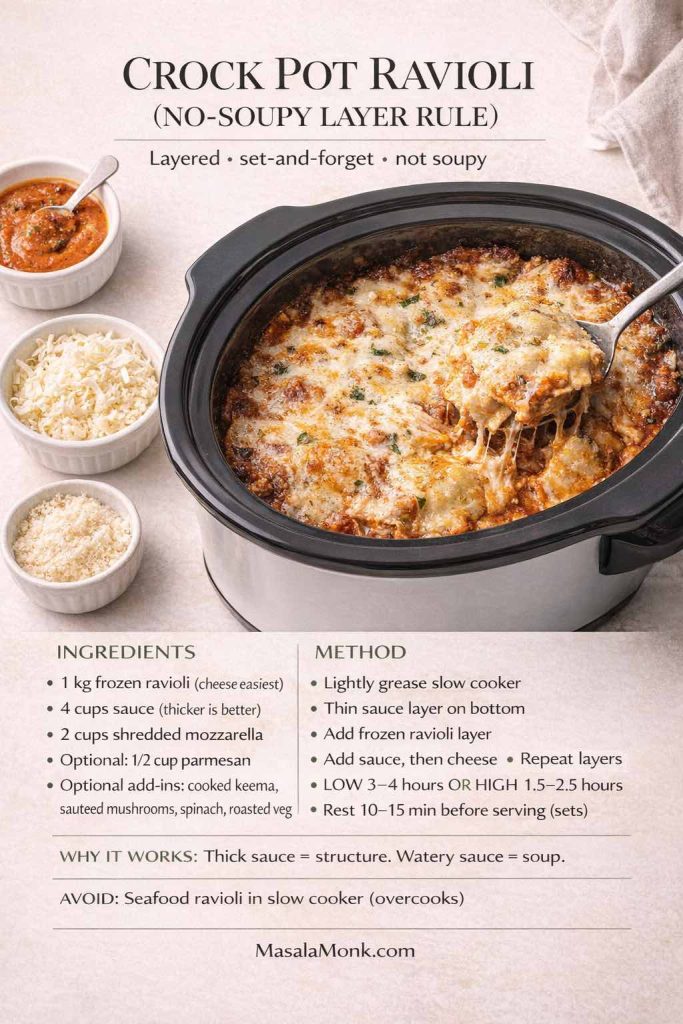
2. Can I Make This Recipe in a Slow Cooker?
Not with these ratios. This recipe depends on uncovered skillet cooking to evaporate mushroom moisture and concentrate the sauce. A slow-cooker version needs different starting liquid and thickening; transferring these quantities directly is likely to produce a thinner stroganoff.
3. Can I Double This Mushroom Stroganoff Recipe?
Yes. Use 40 oz / about 1.1 kg mushrooms and double the main sauce ingredients, but brown the mushrooms in more batches or use a second skillet. Hold back the extra reserved broth until you know the larger batch needs it, and expect reduction to take a little longer.
4. Can I Make It Ahead?
Yes. Make the sauce ahead and keep it separate from the noodles. For the smoothest finish, stop before adding sour cream, reheat the sauce later, then stir in fresh sour cream off heat.
What the Finished Mushroom Stroganoff Should Look Like
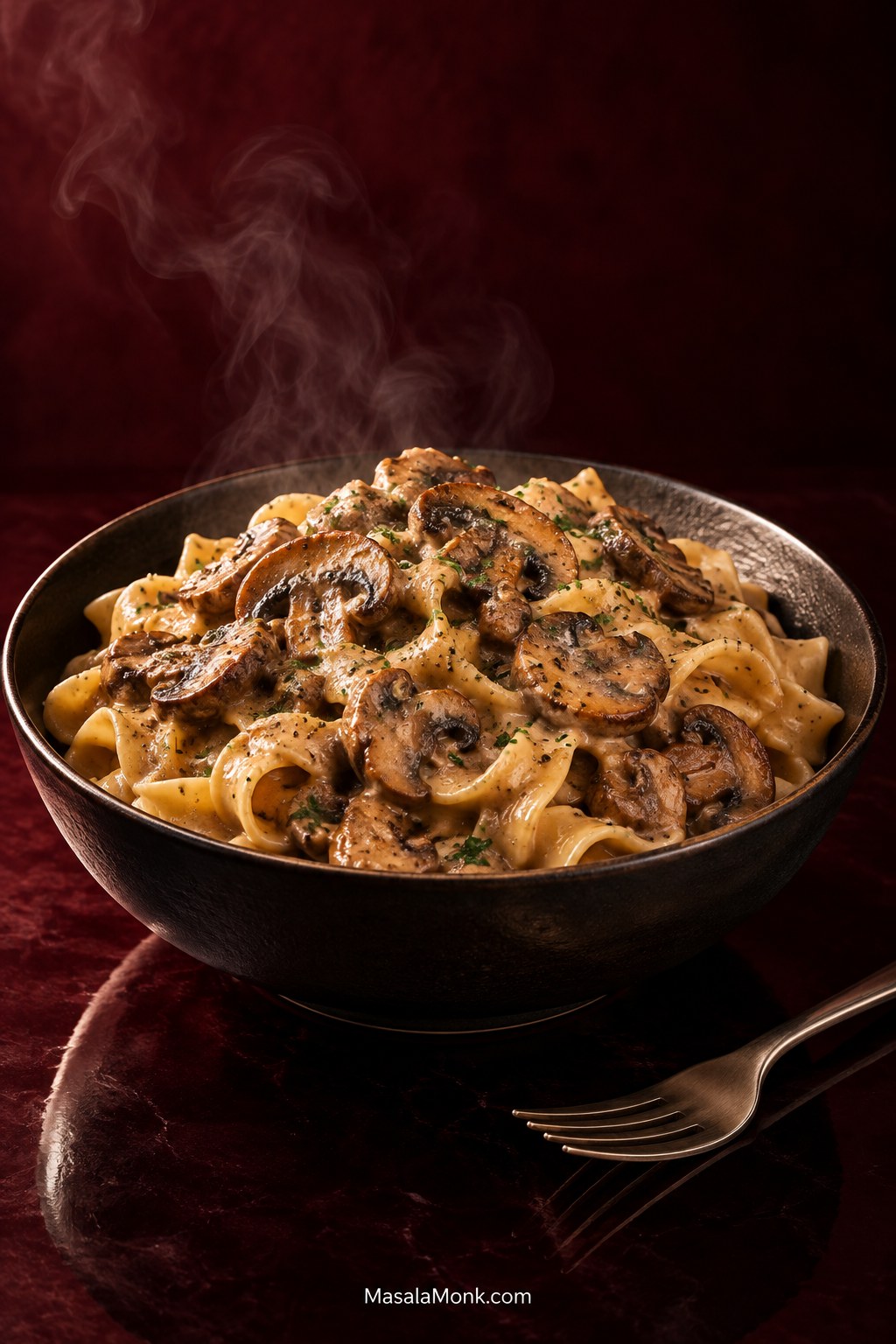
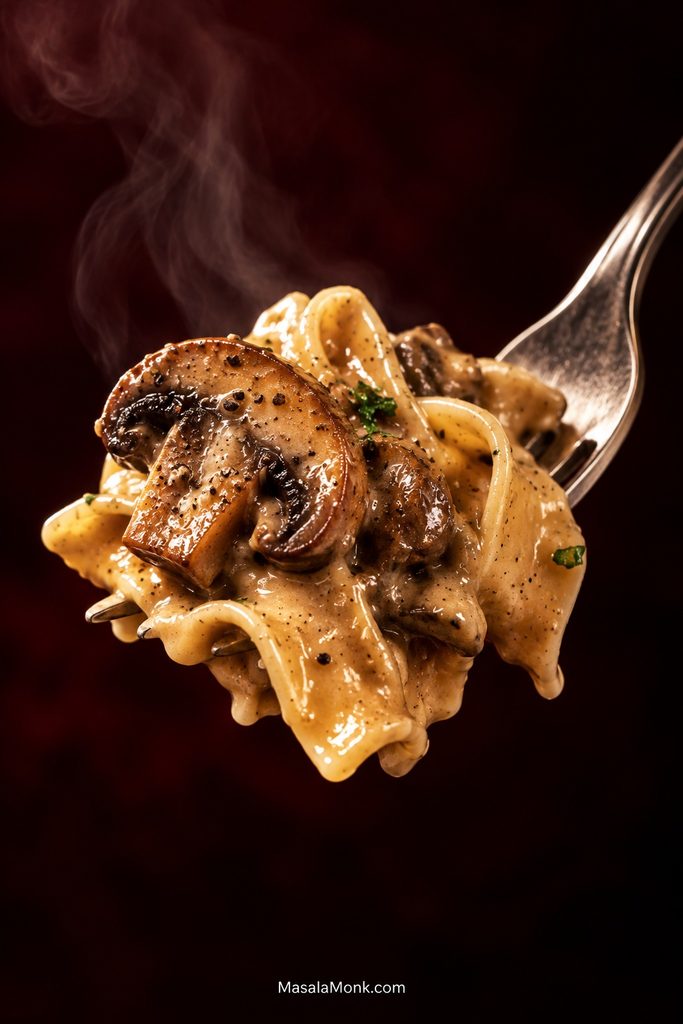
The recipe’s 20 oz mushrooms to 10 oz noodles ratio is deliberate. Even after the mushrooms release water and shrink, the finished forkful should still contain browned mushroom—not just pasta coated in cream.
Don’t chase perfection in every slice or spoonful. When the mushrooms taste roasted, the sauce still flows and the sour cream stays smooth, you’re there. You want mushrooms with some bite, silky sauce around the noodles, and enough tang and black pepper to keep the next forkful interesting.
Made it? Tell us which mushrooms you used and whether you served it over noodles, rice or potatoes. If your pan behaved differently from the cues above, that is useful to hear too.
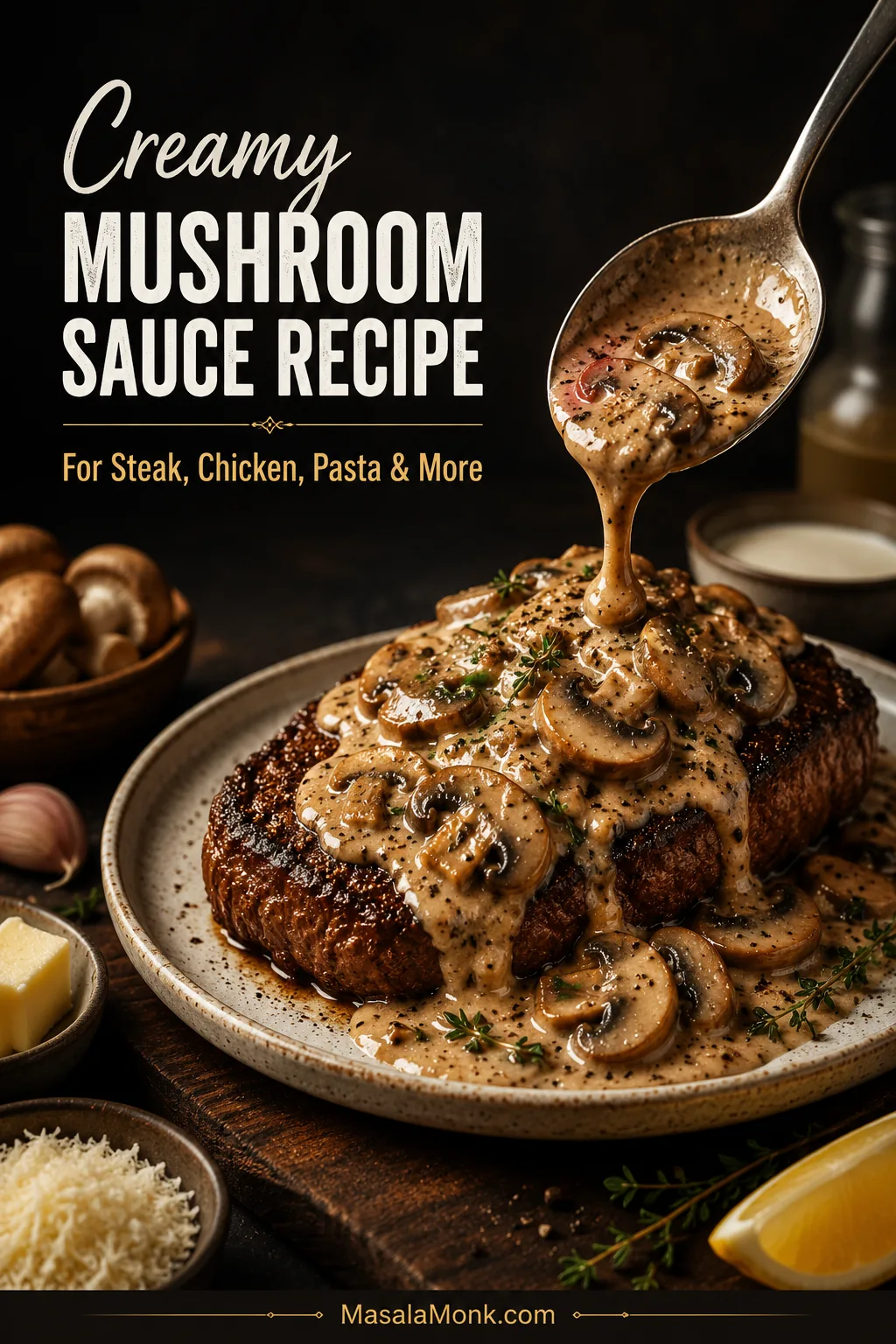
This is the sauce to make when dinner is almost there but needs one thing to pull it together. Steak feels restaurant-style. Chicken tastes richer. Pasta turns silky. Even potatoes, rice, toast, or roasted vegetables feel like a proper meal once a glossy mushroom sauce lands on top.
It is not quite a side dish and not quite a gravy; it is the thing that makes the plate feel finished.
The secret is simple: brown the mushrooms first, then choose the finish. Let them release their moisture, shrink, darken, and catch at the edges before the cream goes in. Once that happens, garlic, broth, cream, parmesan, thyme, black pepper, and a little lemon turn those browned bits into a sauce you can use half a dozen ways.
This creamy mushroom sauce recipe takes about 20 to 25 minutes and makes roughly 3 cups / 700 to 720 ml. Keep it thick for steak, loosen it for pasta, soften it for chicken, or push it slightly toward gravy for potatoes and rice. Start with the creamy version below; the no-cream, no-wine, dairy-free, and gravy-style notes are adaptations, not separate recipes.
A good mushroom sauce starts with well-browned mushrooms, then turns into a shiny skillet sauce that tastes savory first and creamy second.
Time: about 20 to 25 minutes in a wide skillet
Yield: about 3 cups / 700 to 720 ml
Mushrooms: 400–450g / 14–16 oz, roughly two 8 oz packs
Best mushrooms: cremini, baby bella, button, portobello, or mixed mushrooms
Best uses: steak, chicken, pork chops, pasta, mashed potatoes, rice, vegetables, toast, and omelettes
Texture: smooth and spoonable, not watery, gluey, greasy, or split
This is a skillet mushroom sauce, not a condensed soup shortcut or a mushroom ragu. Brown the mushrooms first, then finish with cream and parmesan so the sauce tastes deep before it tastes creamy.
Choose the Finish Before You Start
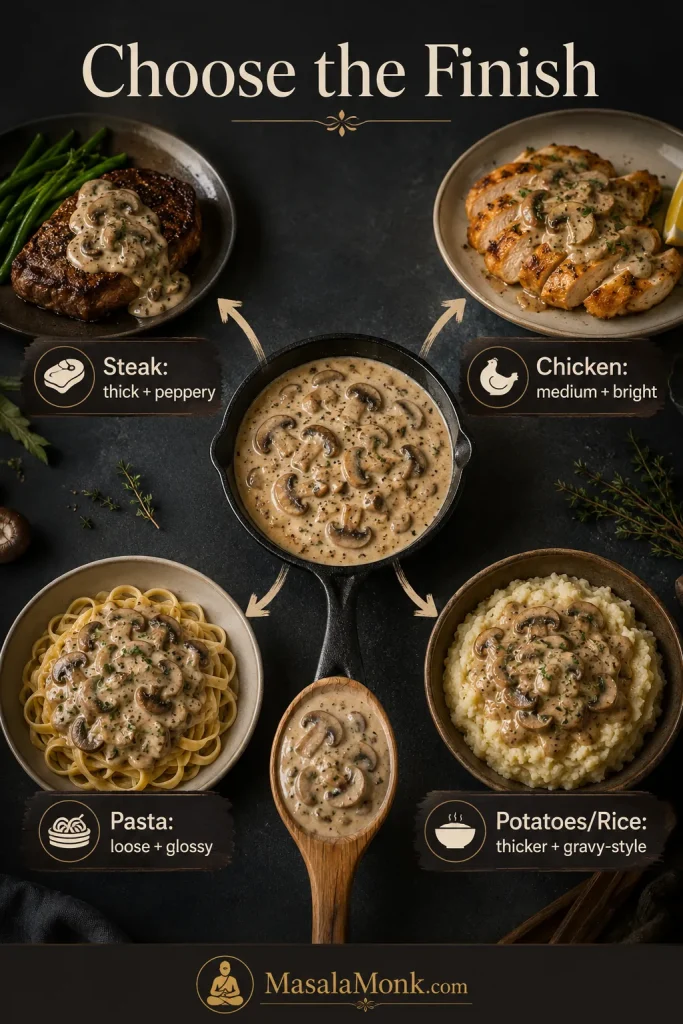
One skillet, one base, many possible dinners. Before you reduce it too far, decide where it is going: over steak, through pasta, across chicken, or closer to gravy.
Use the Sauce Map before the final simmer so one mushroom sauce can move toward steak, chicken, pasta, or potatoes without starting over.
Before you start: Use a wide skillet. Wait until the mushroom liquid cooks off. Add parmesan over low heat. Those three choices prevent most watery, bland, split, or clumpy mushroom sauce problems.
Pick the direction first, then cook the base recipe below. In the final 2 minutes, the same skillet can stay thick for steak, loosen for pasta, or move closer to gravy.
Creamy Mushroom Sauce Recipe for Steak, Chicken, Pasta & More
A flexible skillet mushroom sauce built on deeply browned mushrooms, garlic, broth, cream, parmesan, thyme, and black pepper. Keep it spoonable for steak, looser for pasta, or thicken it slightly for a gravy-style finish.
Prep Time8 minutes
Cook Time15 minutes
Total Time23 minutes
YieldAbout 3 cups / 700–720 ml
Serves: 4 to 5 over steak, chicken, or pork chops; 3 to 4 with pasta
Equipment: 10- to 12-inch skillet, wooden spoon or spatula, whisk, measuring cup, fine grater or microplane
Ingredients
400–450g / 14–16 oz mushrooms, sliced about 1/4 inch / 6 mm thick
2 tbsp / 28g butter
1 tbsp / 15 ml olive oil
1 small shallot, finely minced, or 1/4 cup minced onion
3 garlic cloves, minced
2 tsp fresh thyme leaves, or 1/2 tsp dried thyme
1/4 cup / 60 ml dry white wine, optional
1/2 cup / 120 ml chicken, beef, or vegetable broth
1 cup / 240 ml heavy cream or double cream
1/3 cup / about 30g finely grated parmesan
1–2 tsp lemon juice, to taste
1/4 tsp salt to start, plus more to taste after parmesan
Freshly ground black pepper, to taste
1–2 tbsp chopped parsley, optional, for finishing
Optional thickener for a gravy-style sauce: 1 tsp cornstarch mixed with 1 tbsp cold water.
Instructions
Brown the mushrooms. Heat the butter and olive oil in a wide skillet over medium-high heat. Add the mushrooms and cook for 6 to 8 minutes, stirring occasionally, until they release moisture, the moisture evaporates, the pan looks mostly dry, and the edges begin to brown. If the pan is crowded, cook them in two batches.
Add aromatics. Season the browned mushrooms with 1/4 tsp salt and black pepper. Add the shallot or onion and cook for 1 to 2 minutes. Add the garlic and thyme and cook for 30 to 45 seconds, just until fragrant.
Deglaze the pan. Pour in the wine, or use extra broth if skipping wine. Scrape the browned bits from the bottom of the skillet. Simmer until the wine smells less sharp and reduces by about half, about 1 minute.
Add broth and cream. Lower the heat to medium. Add the broth and cream. Simmer gently for 4 to 6 minutes, stirring occasionally, until the cream turns beige, the sauce begins to thicken, and it leaves light trails when you stir.
Finish with parmesan. Reduce the heat to low. Stir in the parmesan gradually until melted and smooth. Taste before adding more salt.
Balance the sauce. Add black pepper and 1 teaspoon lemon juice. Taste again. If it tastes flat, add salt. If it tastes heavy, add lemon. If it tastes creamy but not savory, add parmesan, Worcestershire, or more pepper.
Adjust thickness. For steak or pork chops, simmer a little longer until spoonable. For pasta, stop slightly loose and loosen with reserved pasta water as needed. For a thicker gravy-style sauce, stir in the cornstarch slurry and simmer for 30 to 60 seconds.
Serve warm. Spoon over steak, chicken, pork chops, pasta, mashed potatoes, rice, roasted vegetables, meatballs, toast, or omelettes.
Best Finishes
Steak: beef broth, Dijon, Worcestershire, and extra black pepper.
Chicken: chicken broth, lemon, parsley, and a medium-thick texture.
Pasta: stop the sauce slightly loose and loosen with pasta water.
No wine or gravy-style: use broth instead of wine; add the optional slurry for a thicker finish.
Storage: Refrigerate leftovers and reheat gently with a splash of liquid.
This is the quick turn from browned mushrooms to sauce: liquid lifts the browned bits, and cream pulls everything together.
After browning, deglazing pulls flavor from the skillet into the sauce. Then cream ties the mushrooms, garlic, thyme, and pan juices together.
What Browning Should Look and Smell Like
This is the part where patience pays you back. Mushrooms do not become rich the second they hit the pan. First they steam, then they shrink, then the pan goes quieter and drier, and only after that do the edges begin to brown.
Do not judge the sauce in the first few minutes; mushrooms get messy before they get good. They may look wet, crowded, and pale at first, but keep going. The pan should smell deeper and nuttier before the cream goes in, not just buttery.
First comes moisture, then color. When the pan quiets down and the mushrooms turn golden at the edges, the sauce will taste much more savory.
Too wet: keep cooking until the pan looks mostly dry.
Too crowded: cook the mushrooms in two batches.
Too pale: give them another minute or two before adding garlic.
Ready for cream: the mushrooms are smaller, darker, and golden at the edges.
If the sauce still turns watery, bland, or thin after browning, use the troubleshooting guide before adding more cream.
Once the cream goes in, keep the heat gentle. The cream should turn beige as it picks up the browned mushroom juices. If it tastes creamy but not mushroomy, the problem is usually browning, not the amount of cream.
Tested texture note: A 12-inch skillet browns 400–450g mushrooms much better than a small saucepan. If the mushrooms pile up deeply, cook them in two batches. The sauce also thickens after parmesan and again as it cools, so stop slightly looser than you want it on the plate if it will sit for more than 5 minutes or if you are tossing it with pasta.
Ingredient Notes
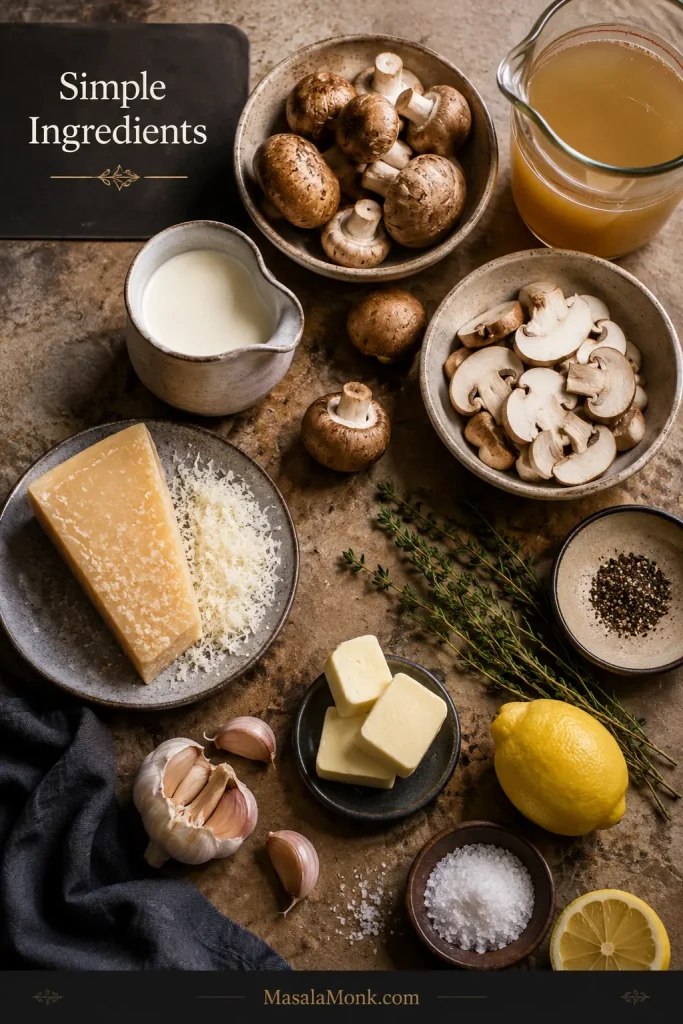
The sauce is simple enough that the small choices show. Mushrooms bring savoriness, broth balances the pan, cream gives body, parmesan adds depth, and lemon keeps the finish lifted.
Before the pan gets hot, line up the sauce builders: dry mushrooms for searing, broth for the pan, cream for body, parmesan for depth, and lemon for balance.
Cremini or baby bella mushrooms give the best everyday flavor, but button, portobello, or mixed mushrooms also work. Slice them about 1/4 inch / 6 mm thick.
Fresh, dry-looking mushrooms sear better than damp ones. If the mushrooms are dirty, a quick rinse is fine, but dry them well before cooking. For a quick visual reference, the Mushroom Council’s mushroom cleaning tips show the same brush, wipe, or brief-rinse approach.
Butter adds roundness, olive oil helps with heat, and pan drippings make the sauce deeper if you cooked steak, chicken, or pork first. Use chicken broth for chicken and pasta, beef broth for steak, and vegetable broth for a vegetarian version.
Heavy cream gives the smoothest finish, and finely grated parmesan melts into the pan instead of sitting in clumps. MasalaMonk’s Parmesan vs Parmigiano Reggiano guide is helpful when choosing between hard cheeses.
Dry white wine helps lift the browned bits from the pan, but broth works well too. If you skip wine, finish with lemon juice so the sauce still tastes bright.
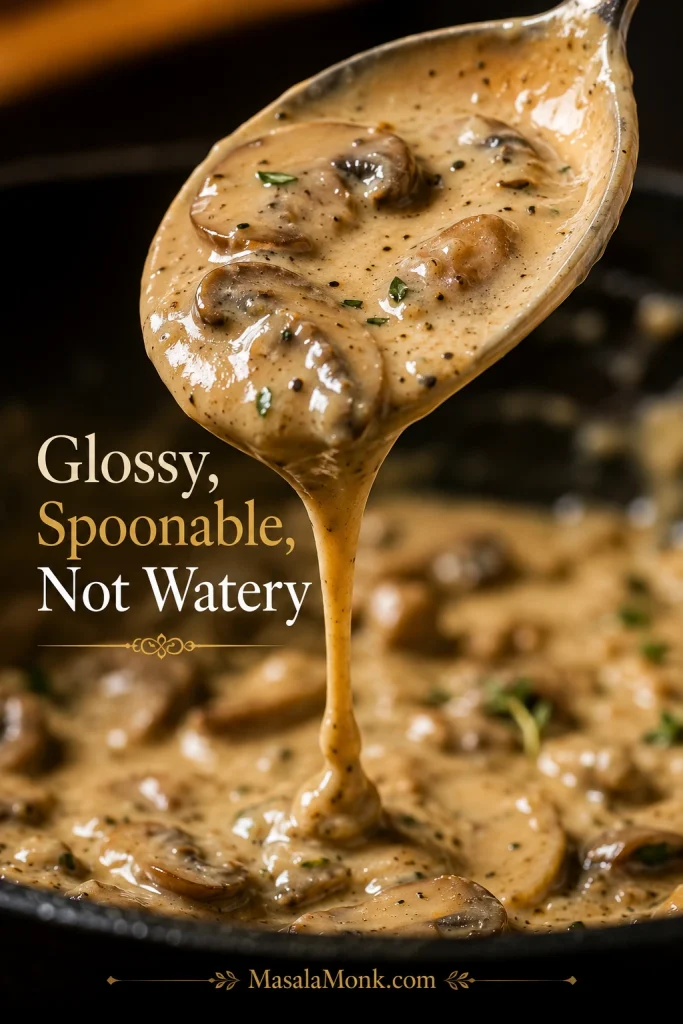
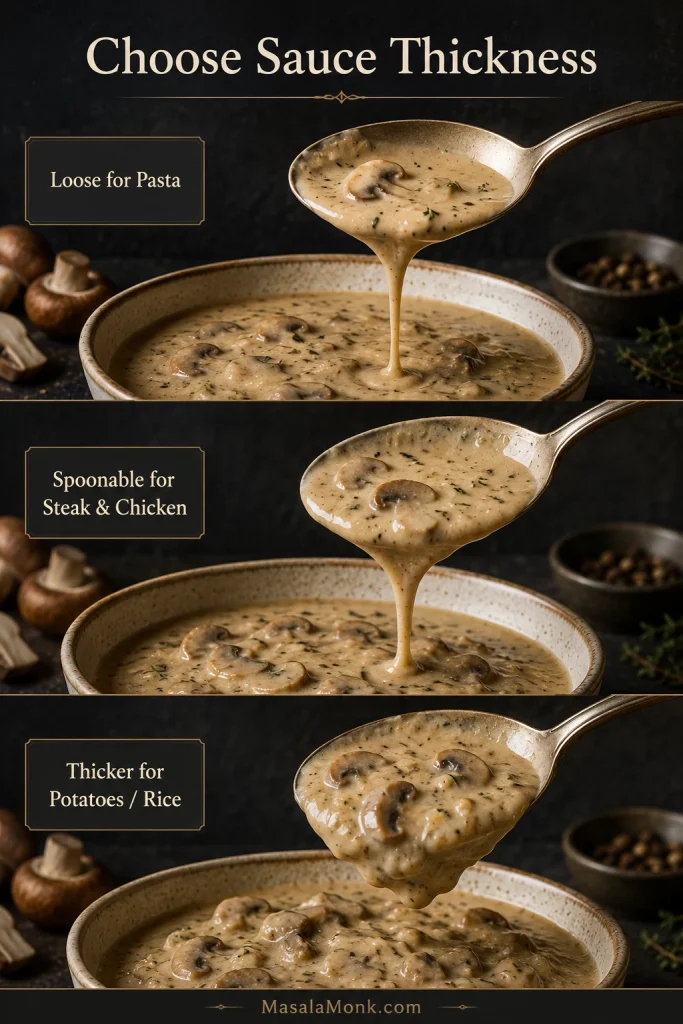
The sauce should coat the back of a spoon and fall in a slow ribbon for steak, chicken, and pork chops. For pasta, it should flow more loosely because it tightens as you toss. For potatoes, rice, or meatballs, it can sit closer to gravy.
Spoon test: Dip a spoon into the sauce and run your finger through the coating on the back. A line that holds for a moment means it is thick enough for steak or chicken. When the coating closes immediately, simmer longer. Loosen the sauce gently if it barely moves.
Use the spoon test before serving. If the sauce coats and drips slowly, it is ready; if it runs, reduce it; if it drags, loosen it gently.
Then check the final texture.
Thickness is the final choice. Keep it loose for pasta, medium-spoonable for steak and chicken, and heavier when you want a mushroom gravy finish.
If pasta tightens in the bowl, that is normal. A splash of hot pasta water brings it back.
How Much Sauce to Use — and Where It Works Best
Use enough sauce to feel generous, not so much that steak, pasta, or potatoes disappear under it.
Serve it with
How much to use
Steak
1/3 to 1/2 cup per steak
Chicken breast or thigh
1/3 cup per piece
Pork chop
1/3 to 1/2 cup per chop
Pasta
Full batch for 250g / 8 oz long pasta or 300g / 10 oz short pasta
Mashed potatoes, rice, or vegetables
1/4 to 1/3 cup per serving
Toast or omelette
2 to 4 tbsp per serving
Mushroom Sauce for Steak
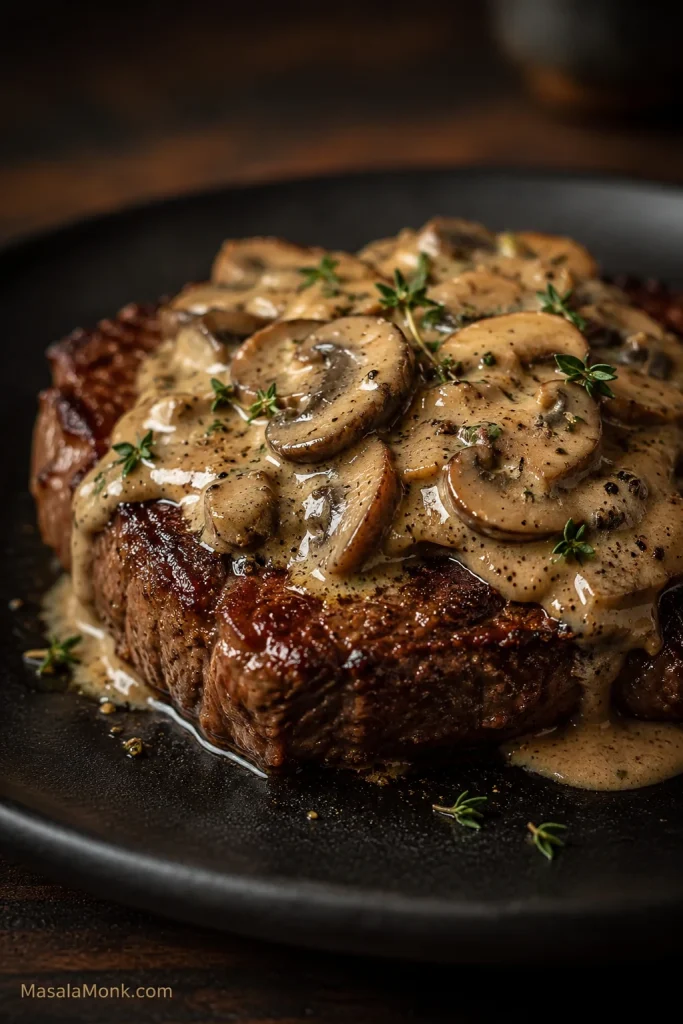
For steak: use pan drippings if you have them, and reduce until the sauce sits on the meat instead of running across the plate.
Mushroom sauce for steak should cling to the meat while the seared crust stays visible. Pepper, thyme, Dijon, or Worcestershire can deepen the finish.
Mushroom Sauce for Chicken
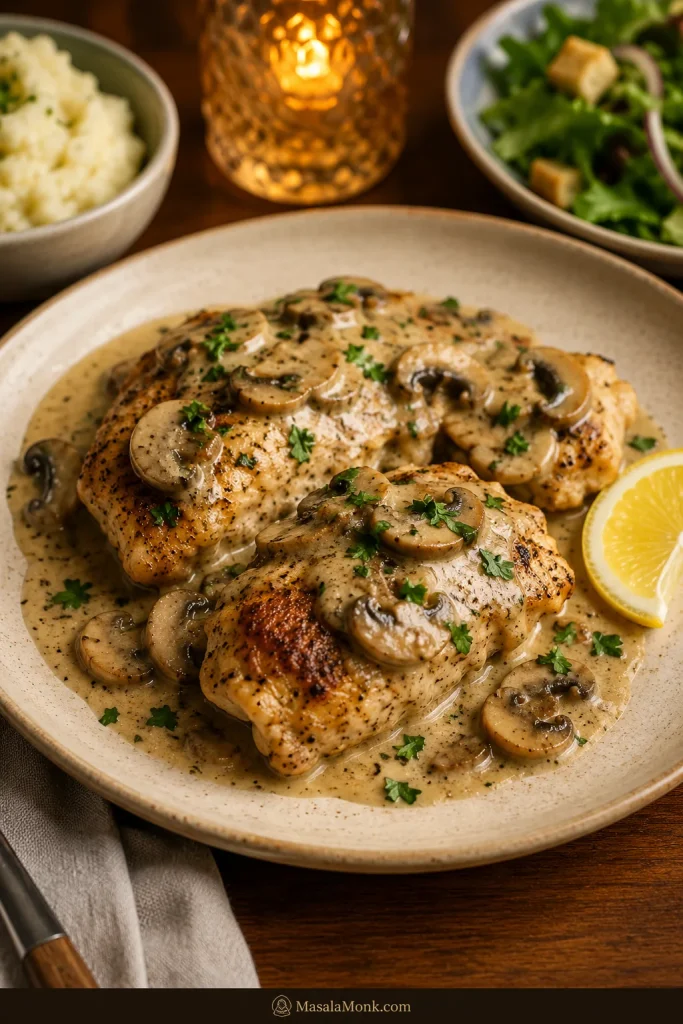
For chicken: keep the sauce medium-thick and bright with lemon or parsley. If the chicken is already cooked, warm it gently in the sauce. If it is not fully cooked, finish it gently until the thickest part reaches 165°F / 74°C. For a complete chicken dinner using this flavor family, see MasalaMonk’s Cream of Mushroom Chicken Recipe.
Mushroom sauce for chicken works best when it is rich but still bright. Parsley and lemon keep the cream from feeling too heavy.
Mushroom Sauce for Pasta
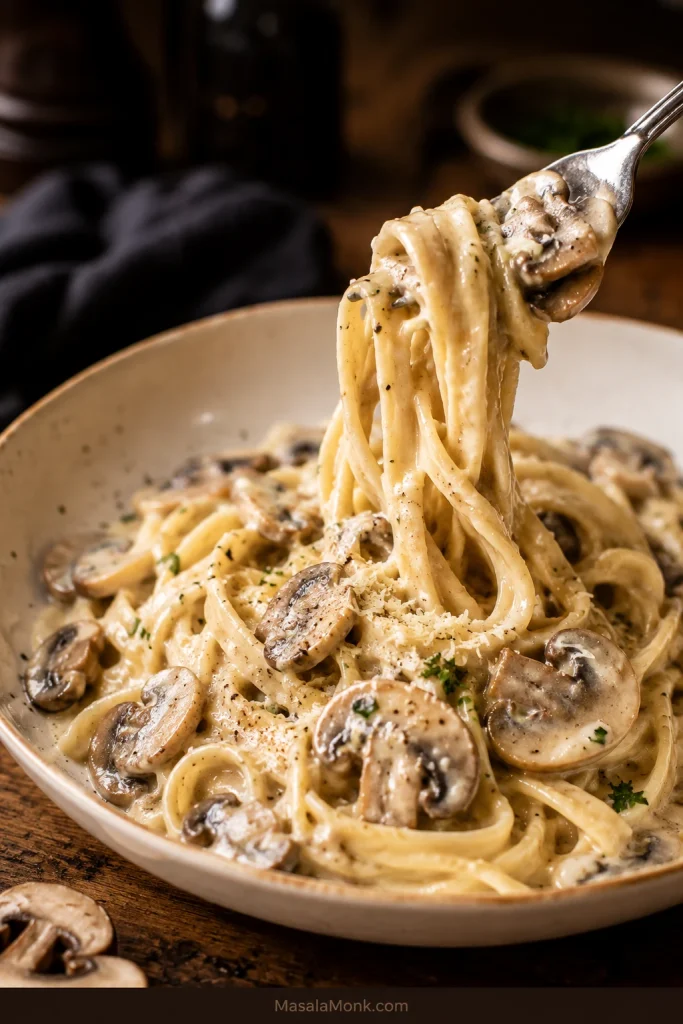
For pasta: keep the sauce loose enough to coat, not clump. Reserve 1 cup pasta water before draining, then toss over low heat and add pasta water 2 to 4 tablespoons at a time until glossy.
Keep mushroom pasta sauce loose and glossy so it slides through the noodles instead of settling in clumps.
Mushroom Sauce for Pork Chops
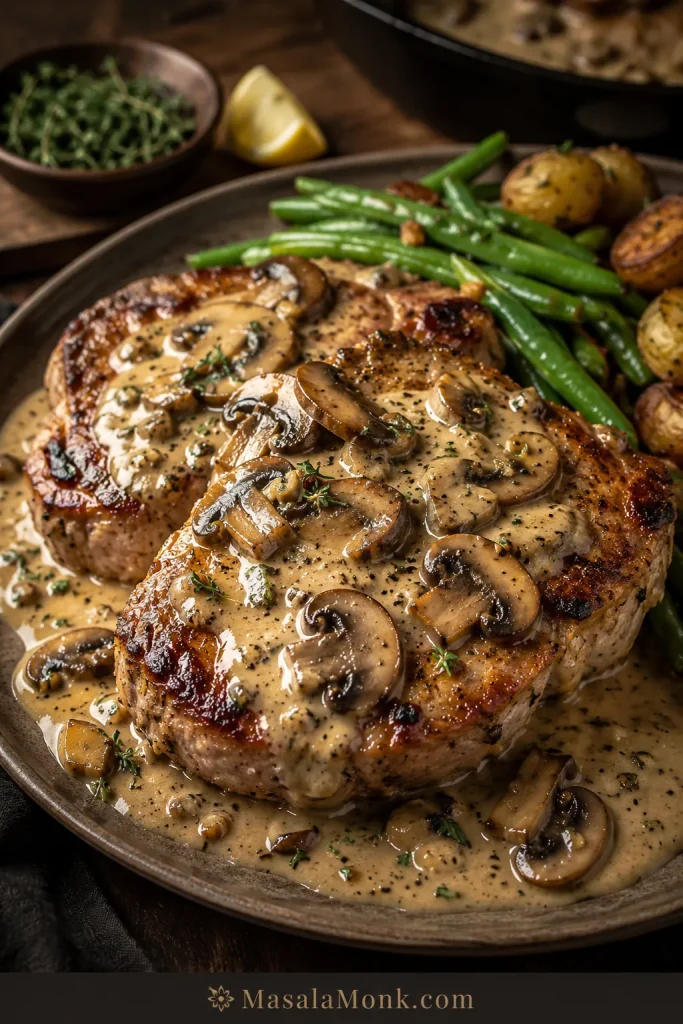
Pork chops: use chicken broth or pork pan juices and reduce until the sauce coats the chops well. A full pork version is waiting in MasalaMonk’s Cream of Mushroom Pork Chops.
Mushroom sauce for pork chops should be generous but controlled, coating the chop while leaving the seared edges visible.
Mushroom Sauce for Potatoes and Rice
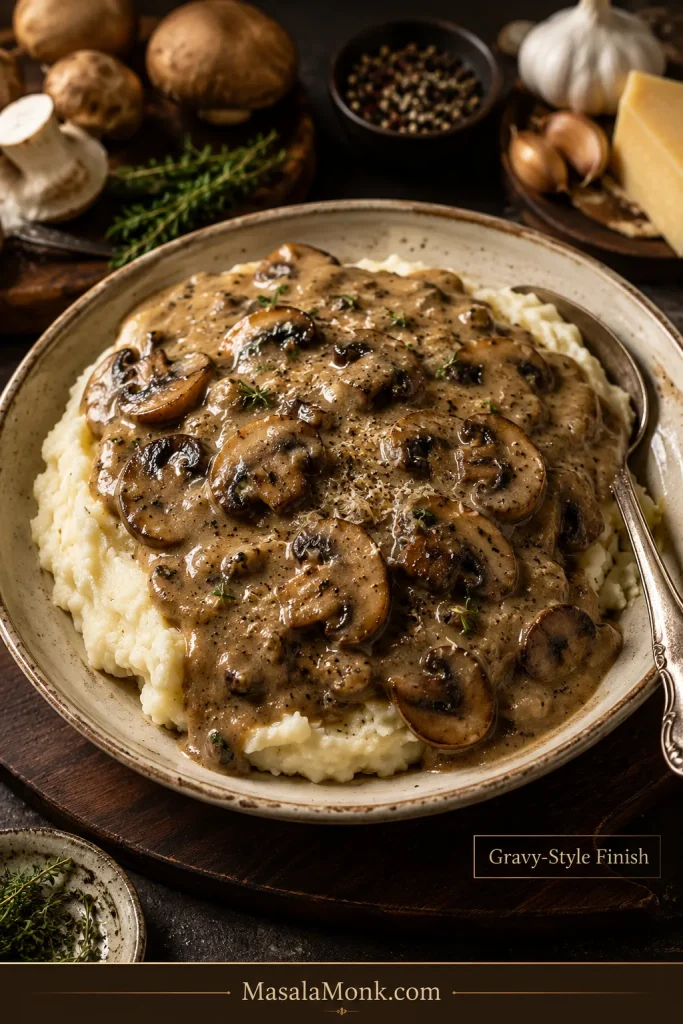
Potatoes, rice, vegetables, toast, or omelettes: use a slightly thicker finish and let the mushrooms stay the focus. This sauce is especially good over garlic mashed potatoes. With rice, keep it looser so it soaks in instead of sitting heavily on top; MasalaMonk’s guide on how to cook rice is a simple place to start.
Potatoes or rice work best when the sauce moves toward mushroom gravy: thicker, spoonable, and full of visible mushroom pieces.
No Cream, No Wine & Dairy-Free Options
Once the base works, substitutions become less risky because you know what each ingredient is replacing. Remove cream and you need body. Skip wine and you need brightness. Go dairy-free and you need body plus savoriness.
Without Cream
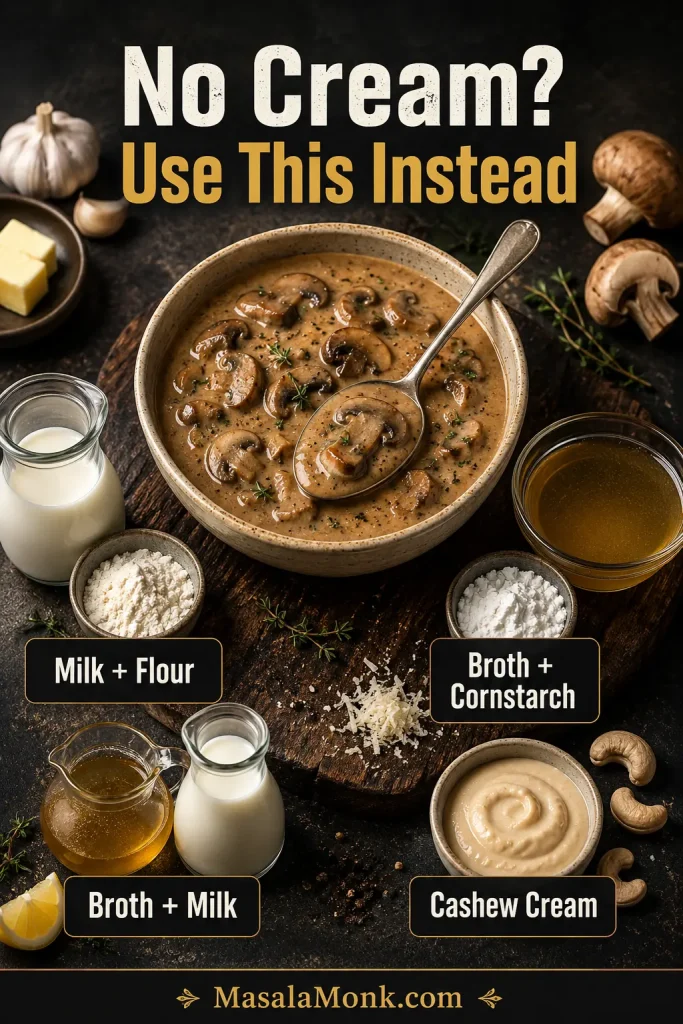
The no-cream versions will not all taste identical, but they can still be rich, savory, and useful. Choose milk + flour for creamy, broth + cornstarch for gravy-like, and cashew cream for dairy-free richness.
Version
How to replace 1 cup / 240 ml cream
Best for
Milk + flour
Cook 1 tbsp flour in the fat for 1 minute, then whisk in 1 cup / 240 ml whole milk gradually.
Chicken, pasta, toast
Broth + cornstarch
Use 1 cup / 240 ml extra broth, then thicken with 1–2 tsp cornstarch mixed with cold water.
Steak, potatoes, rice, gravy-style sauce
Broth + milk
Use 3/4 cup / 180 ml broth plus 1/4 cup / 60 ml whole milk, then thicken lightly if needed.
Lighter creamy sauce
Cashew cream
Use 1 cup / 240 ml cashew cream in place of heavy cream.
Dairy-free pasta or vegetables
Mushroom sauce without cream still needs body. Flour, cornstarch, broth, milk, or cashew cream can thicken the sauce depending on what you have.
If using milk instead of cream, keep the heat gentle. Milk-based sauces are more likely to curdle or separate if boiled hard.
Without Wine
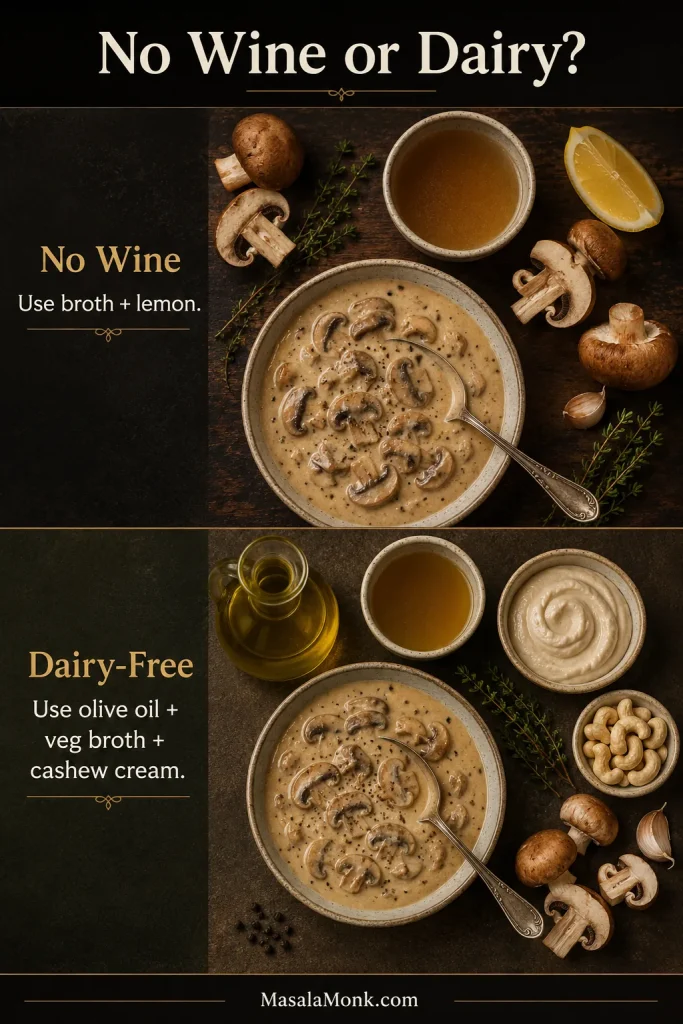
Wine helps, but it is not the soul of the sauce. Browned mushrooms, broth, parmesan, and lemon do most of the real work. Replace the wine with the same amount of broth, then add 1 to 2 teaspoons lemon juice before serving.
Dairy-Free
Use olive oil or vegan butter instead of butter, vegetable broth instead of chicken or beef broth, and cashew cream for the most neutral creamy body. For a lighter sauce, use vegetable broth and cornstarch slurry, then add a small splash of soy sauce or tamari for savory depth. Use unsweetened dairy-free milk only. Avoid sweetened plant milks; coconut milk works but changes the flavor.
These two swaps solve different problems: broth and lemon replace wine’s brightness, while olive oil, vegetable broth, and cashew cream replace dairy’s body.
Without wine, add brightness with broth and lemon. A dairy-free mushroom sauce gets body from olive oil, vegetable broth, and cashew cream.
Small Flavor Adjustments
To make it more garlicky, increase the garlic to 4 or 5 cloves and add it only after the mushrooms brown. A deeper steak version can use red wine, beef broth, Dijon, Worcestershire, thyme, and extra black pepper. Brighten the pan with lemon, parsley, or a splash of white wine. For more savoriness, add a few drops of Worcestershire or soy sauce, more parmesan, or a little extra broth.
Mushroom Sauce vs Mushroom Gravy
The line between sauce and gravy is blurry in real kitchens. If it is going over steak or pasta, keep it silkier. If it is going over potatoes, rice, meatballs, or roasts, you can push it thicker and more stock-forward.
Feature
Mushroom sauce
Mushroom gravy
Base
Cream + broth
Stock + roux or slurry
Color
Creamy, pale, golden, or beige
Brown and savory
Texture
Silky, rich, spoonable
Pourable, thicker, gravy-like
Best for
Steak, chicken, pork chops, pasta
Mashed potatoes, meatloaf, roasts, rice
Freezing
Not ideal if cream-based
Better if made without cream
Thickener
Reduction, parmesan, optional slurry
Flour, roux, or cornstarch
This recipe is a creamy sauce first. To take it closer to gravy, use more broth, less cream, and the optional cornstarch slurry.
Can This Replace Canned Cream of Mushroom Soup?
Yes, this homemade sauce can replace canned cream of mushroom soup as a spoonable topping for chicken, pork chops, rice, pasta, potatoes, or vegetables. It tastes fresher and more mushroom-forward than canned soup.
As a pourable dinner sauce, keep the full 3-cup batch as written. To make a condensed-soup-style replacement, reduce and thicken it to about 2 cups. A gravy-style topping can stay closer to 2 1/2 to 3 cups, then thicken with slurry or roux.
Casseroles need a thicker sauce than a pourable skillet topping because the sauce has to hold vegetables, noodles, protein, and topping together. To turn the same sauce idea into a full casserole, MasalaMonk’s green bean casserole is a useful next step.
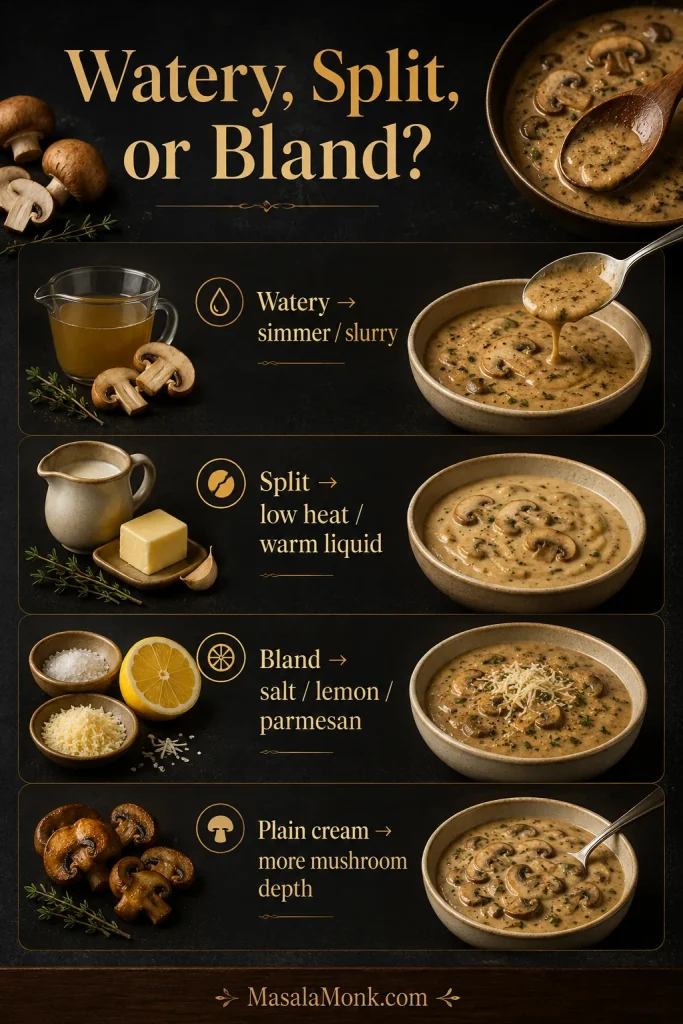
Watery, Split or Bland? Fix It Fast
If your sauce looks wrong, do not panic. Most mushroom sauce problems are fixable. Usually, the issue comes from mushrooms that steamed instead of browned, cream that boiled too hard, cheese added over high heat, or a sauce that was made too thick before pasta or reheating.
Quick Visual Fixes
Use the fix-it guide at the first sign of trouble: reduce watery sauce, warm split sauce gently, brighten bland sauce, and build more mushroom depth.
Detailed Fix Table
Problem
Fix now
Next time
Watery sauce
Simmer uncovered for 2 to 5 minutes, or stir in 1 tsp cornstarch mixed with 1 tbsp cold water.
Give the mushrooms enough time for the pan to dry before adding cream.
Too thick
Add warm broth, milk, cream, or pasta water 1 tbsp at a time.
Stop simmering while the sauce is slightly looser than you want it on the plate.
Split or greasy
Lower heat and whisk in a splash of warm broth or cream. Avoid adding cold liquid directly.
Keep the cream at a gentle simmer.
Tastes like plain cream
Add parmesan, salt, pepper, thyme, lemon, Worcestershire, or a splash of broth.
Brown mushrooms longer and deglaze the pan before adding cream.
Bland
Add salt if flat, lemon if heavy, parmesan or Worcestershire if it lacks depth.
Taste after parmesan before final seasoning.
Rubbery mushrooms
Keep cooking until moisture evaporates and edges brown.
Use a wide pan and avoid crowding.
Floury taste
Simmer 2 to 3 minutes longer after adding liquid.
Cook flour in the fat for about 1 minute before adding liquid.
Parmesan clumped
Take the pan off the heat and whisk gently. Add a splash of warm liquid if needed.
Use finely grated parmesan and avoid high heat.
Pasta absorbed the sauce
Add pasta water 2 to 4 tbsp at a time and toss over low heat.
Keep the sauce looser before adding pasta.
Most fixes come back to two things: give the mushrooms more time in the pan, then keep the creamy finish gentle. For watery or bland sauce problems, recheck the wet-to-browned mushroom cue and the spoon test.
Storage, Reheating, and Make-Ahead Tips
Cream sauces are not difficult to reheat; they just do not like being rushed. Store leftovers in an airtight container in the refrigerator for 3 to 4 days. For general leftover safety, the USDA recommends using refrigerated leftovers within 3 to 4 days.
To refrigerate: cool the sauce, then store in an airtight container.
To reheat on the stove: warm over low or medium-low heat, stirring often.
To loosen: add a splash of broth, milk, cream, or pasta water.
To microwave: use short bursts and stir between each one.
To freeze: cream-based sauce is not ideal because it can split. A no-cream, gravy-style version freezes better.
If the sauce looks separated after chilling, warm it slowly and whisk in a little liquid. Do not bring it to a hard boil. For more general leftover storage guidance, see the USDA’s Leftovers and Food Safety guide.
FAQs About Mushroom Sauce
Can I use canned mushrooms?
Yes, canned mushrooms work in a pinch, but fresh mushrooms give better browning and flavor. Drain canned mushrooms well, pat them dry, and brown them before adding liquid.
How do I make mushroom sauce thicker?
Simmer mushroom sauce uncovered first; that gives the best flavor. For a faster fix, add a slurry made from 1 teaspoon cornstarch and 1 tablespoon cold water.
Why is my mushroom sauce watery?
Mushroom sauce is usually watery when the pan is still too wet before the cream goes in. Simmer uncovered, or use a small cornstarch slurry if dinner is waiting.
Why does it taste like plain cream?
If mushroom sauce tastes like plain cream, the mushrooms probably needed more browning, or the sauce needs salt, parmesan, pepper, lemon, or Worcestershire. It should taste savory before it tastes creamy.
Is this the same as mushroom gravy?
No. Mushroom sauce is usually creamier and better for steak, chicken, pasta, and pork chops. Mushroom gravy is usually more stock-based, brown, and thickened with flour or cornstarch.
What can I use instead of cream?
Use milk with flour for a lighter creamy sauce, broth with cornstarch for a gravy-style sauce, or cashew cream for dairy-free richness. Milk and broth are thinner than cream, so they usually need a thickener.
Can I make mushroom sauce ahead of time?
Yes. Make it 2 to 3 days ahead, refrigerate, and reheat gently with a splash of liquid. Leftovers keep for 3 to 4 days in an airtight container.
Why did the sauce split?
Cream sauces usually split when boiled too hard or reheated too aggressively. Lower the heat and whisk in a splash of warm broth or cream.
Final Spoonful
Once you understand the texture, this becomes the sauce you can pull out for half-finished dinners: steak that needs polish, chicken that needs richness, pasta that needs gloss, or potatoes that need comfort.
Tried it over steak, chicken, pasta, potatoes, or something else? Tell me what you spooned it over and how you finished it — Dijon, Worcestershire, extra pepper, pasta water, or your own trick.
• Recipe research and editorial by MasalaMonk.com.
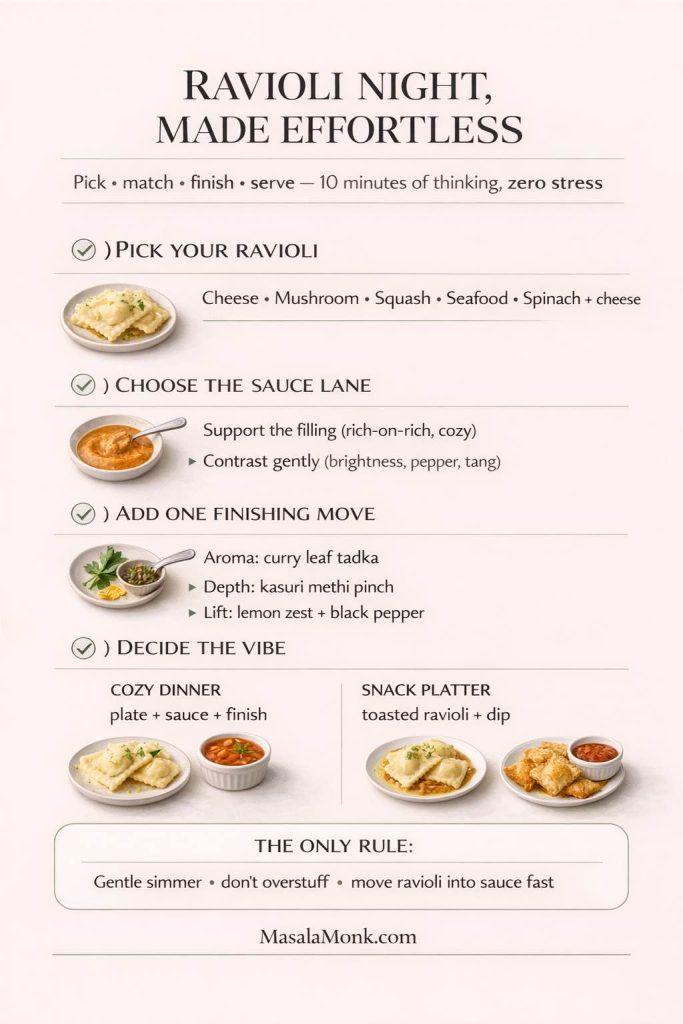
Ravioli can be a quiet bowl of buttered pasta on a Tuesday or the dish you bring out when dinner deserves a little ceremony. Either way, a good ravioli recipe lives or dies on surprisingly small details: cook the pasta gently, keep the filling inside it, and use a sauce that coats rather than floods. This guide covers those basics first, then takes ravioli in a distinctly MasalaMonk direction with ghee, curry leaves, kasuri methi, paneer, keema and chutneys.
Making everything from scratch? Start with the egg dough, sealing guide and six filling ideas. Using refrigerated or frozen ravioli? Skip straight to the cooking times and sauces.
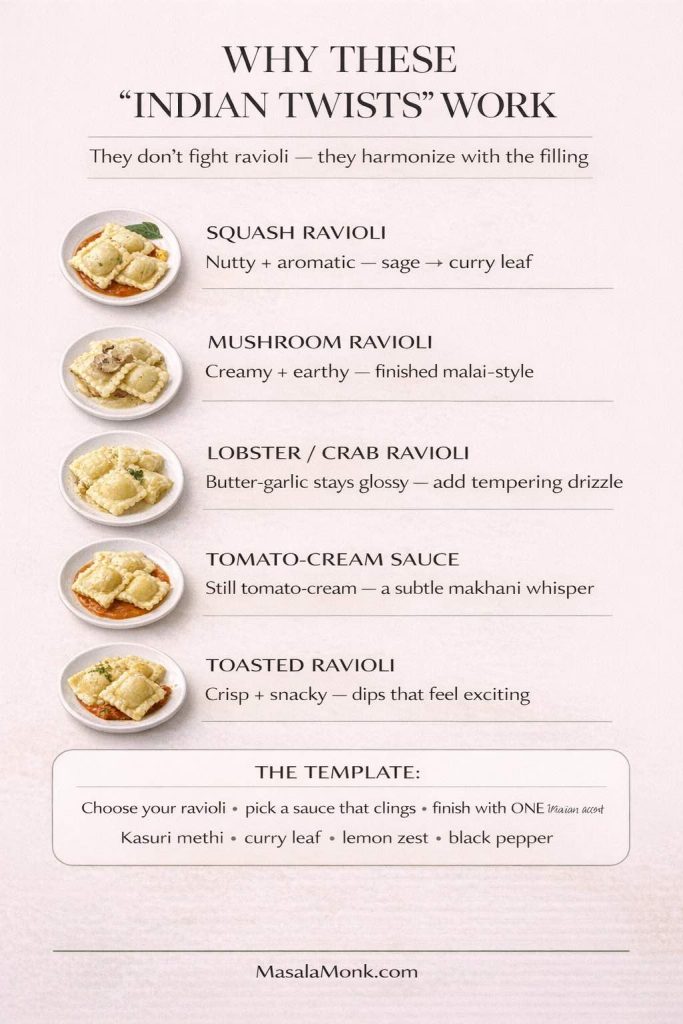
The five main twists move from butternut squash with brown ghee and curry leaves to mushroom malai, lobster with a curry-leaf tadka, makhani-style tomato cream and crisp toasted ravioli with Indian chutneys. None of them needs a long spice list. One or two well-chosen Indian flavors are enough when they make sense with the filling already inside.
The same approach runs through our Indian-inspired Alfredo pasta. For a brighter, herb-led pasta night, the pesto pasta guide is a useful companion—especially for the pasta-water and sauce-cling techniques that come up here too.
One thing is worth settling before the flour comes out: ravioli does not need to look factory-perfect. A slightly wonky edge is harmless. Trapped air, watery filling and a violent boil are the things that cause trouble. Get those under control and the rest becomes much more forgiving.
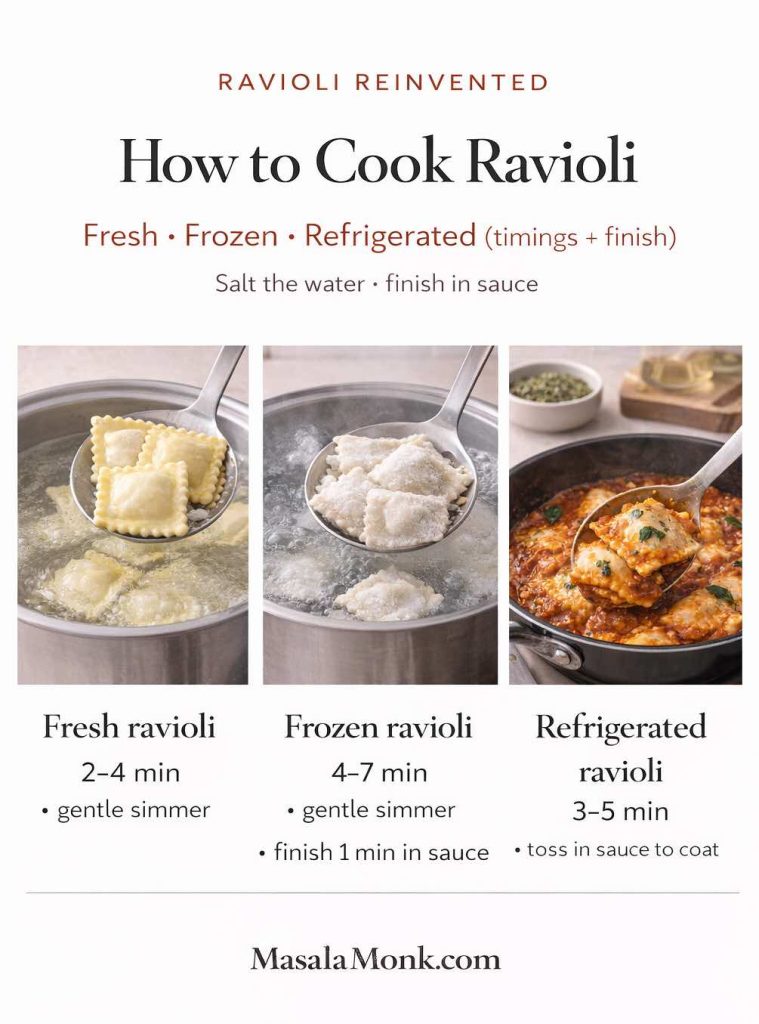
The package matters less than the water and the finish. Fresh ravioli needs the gentlest handling; frozen ravioli needs a little more time without a hard boil; refrigerated ravioli sits somewhere in between. In all three cases, have the sauce warm before the pasta is done. Filled pasta deteriorates quickly when it sits wet in a colander.
Use the clock as a starting point, not the finish line. Keep the water at a controlled simmer and check the wrapper and filling before lifting the ravioli into sauce.
Treat the timings below as check windows, not a stopwatch. Ravioli size, wrapper thickness and filling all change the final minute, so use the clock to know when to start checking and texture to decide when to stop.
For a second visual reference on rolling, filling and shaping handmade pasta, King Arthur’s ravioli guide is a useful companion. If you cook stuffed pasta often, our tortellini cooking guide covers the same fresh-versus-frozen timing problem in a different shape.
How to Cook Fresh Ravioli Without Bursting
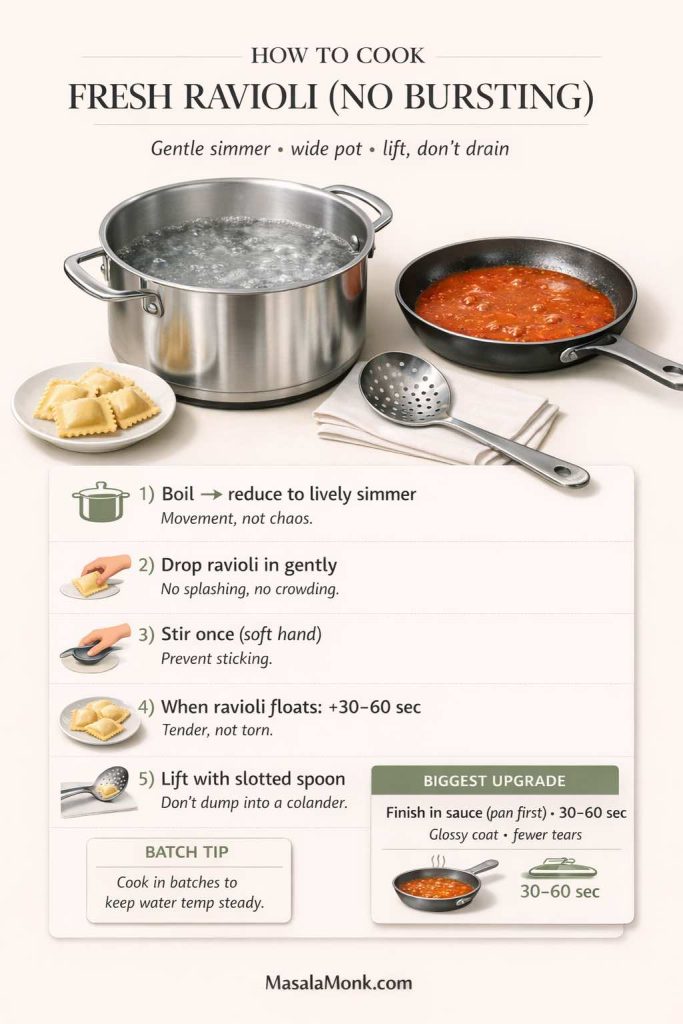
Fresh ravioli is delicate enough that a wide pot helps. Salt the water, bring it to a boil, then ease it back to a lively simmer before the pasta goes in. You want small, steady bubbles moving the ravioli around—not a rolling boil that throws one piece into another.
A wide pot gives delicate seams room to move. Stir once, check 30–60 seconds after floating, then lift each piece with a slotted spoon.
Use this simple rhythm:
Bring water to a boil, then reduce to a lively simmer.
Drop ravioli in gently.
Stir once with a soft hand to prevent sticking.
When ravioli floats, give it another 30–60 seconds.
Lift out with a slotted spoon, not a colander.
Warm the sauce in a wide skillet before the ravioli is ready. Lift the pasta straight into that pan, add a spoonful of cooking water if the sauce needs loosening, and spoon the sauce over gently. Aggressive tossing is what stresses delicate seams; thirty to sixty seconds is usually enough to coat the surface.
Very delicate handmade ravioli is easier to manage in batches. The water temperature recovers faster, the pieces have room to move, and you can lift them out without fishing through a crowded pot.
How to Cook Frozen Ravioli So It Stays Tender
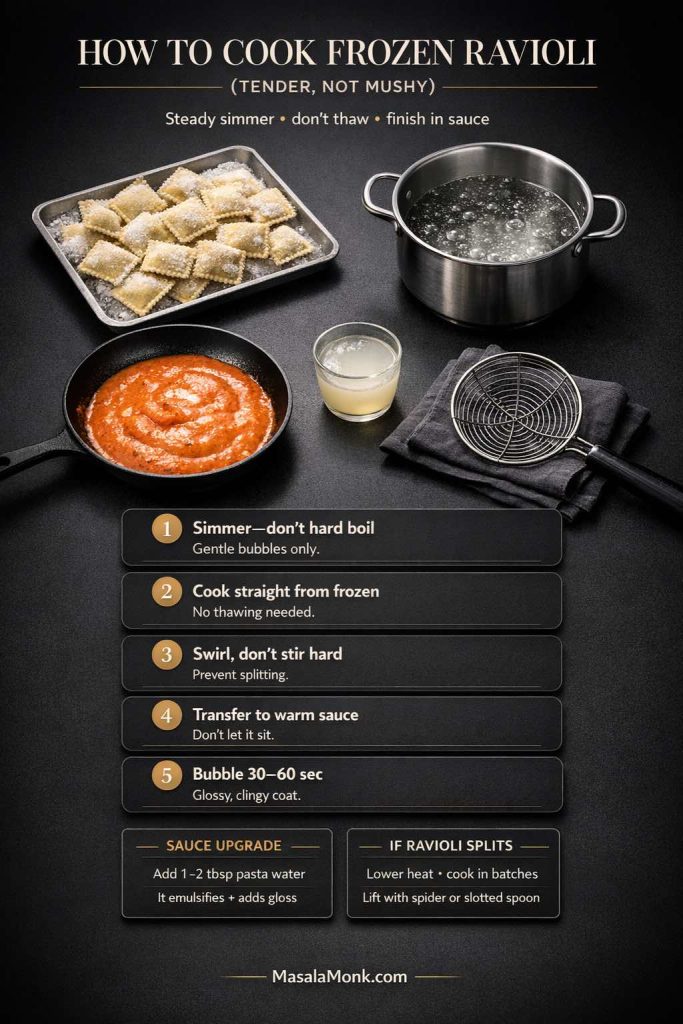
Cook frozen ravioli straight from the freezer. Thawing softens the wrapper before the filling is hot and makes sticking more likely. Once the pieces go into the pot, keep the water at a steady simmer and stir only enough to stop them settling on the bottom.
Frozen ravioli does better with steady heat than a hard boil. A spoonful of starchy water in the sauce helps it coat the pasta instead of collecting underneath.
Lift frozen ravioli directly into warm sauce and let it bubble there for 30–60 seconds. A tablespoon or two of starchy cooking water helps butter, tomato or cream sauce cling to the wet wrapper instead of pooling underneath. That brief pan finish does more for the bowl than an elaborate garnish.
If frozen ravioli splits, lower the heat first. A gentle swirl is often enough to prevent sticking, and a spider or slotted spoon is kinder than pouring the whole pot through a colander.
How to Cook Refrigerated Ravioli
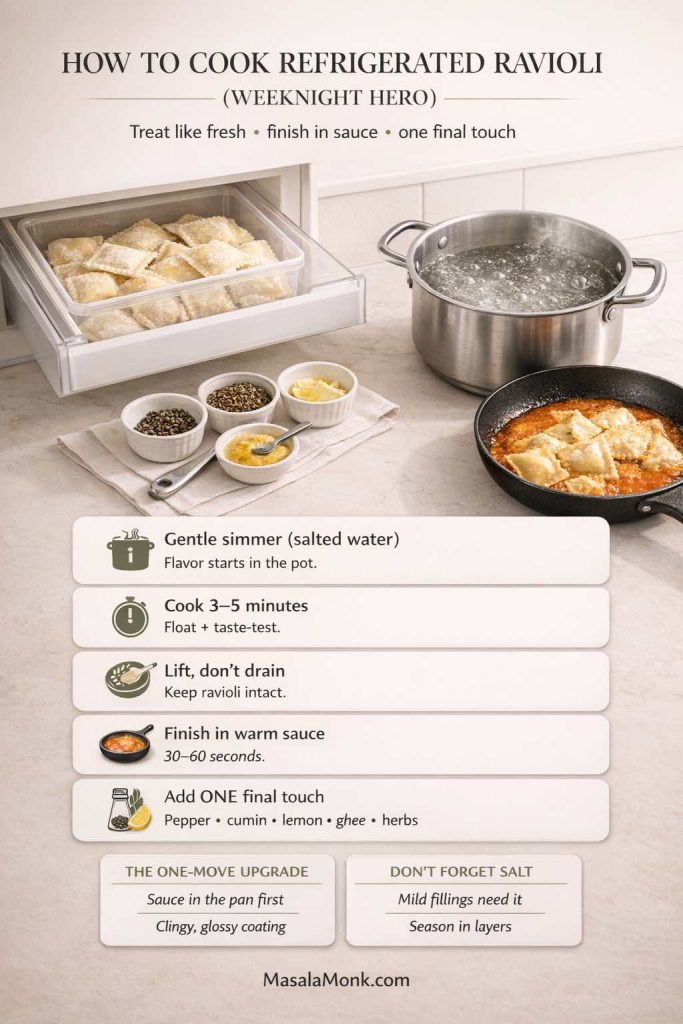
Refrigerated ravioli is quick but usually sturdier than handmade pasta. Treat it much like fresh ravioli: salted water, a controlled simmer and an early check for doneness.
Three to five minutes is a useful check window for refrigerated ravioli. Finish it in warm sauce, then choose one accent—pepper, lemon, herbs or spiced ghee.
Once it reaches the sauce, choose one finishing note: black pepper for bite, lemon for acidity, toasted cumin for warmth, spiced ghee for aroma, or fresh herbs for lift. The filling is already seasoned; several accents at once usually blur it.
That small finish is often all a refrigerated packet needs to feel like a composed dinner.
Do not leave all the seasoning to the sauce. A mild cheese or spinach filling benefits from properly salted cooking water; otherwise the wrapper can taste flat even when the sauce is well balanced.
Homemade dough is worth doing when the making is part of the evening. On a busy night, wonton wrappers are a completely different—but useful—route. Whichever path you take, the same rules decide whether the ravioli survives: a dry-enough filling, clean edges, trapped air pressed out and a firm seal.
How to Seal Ravioli Without Leaks
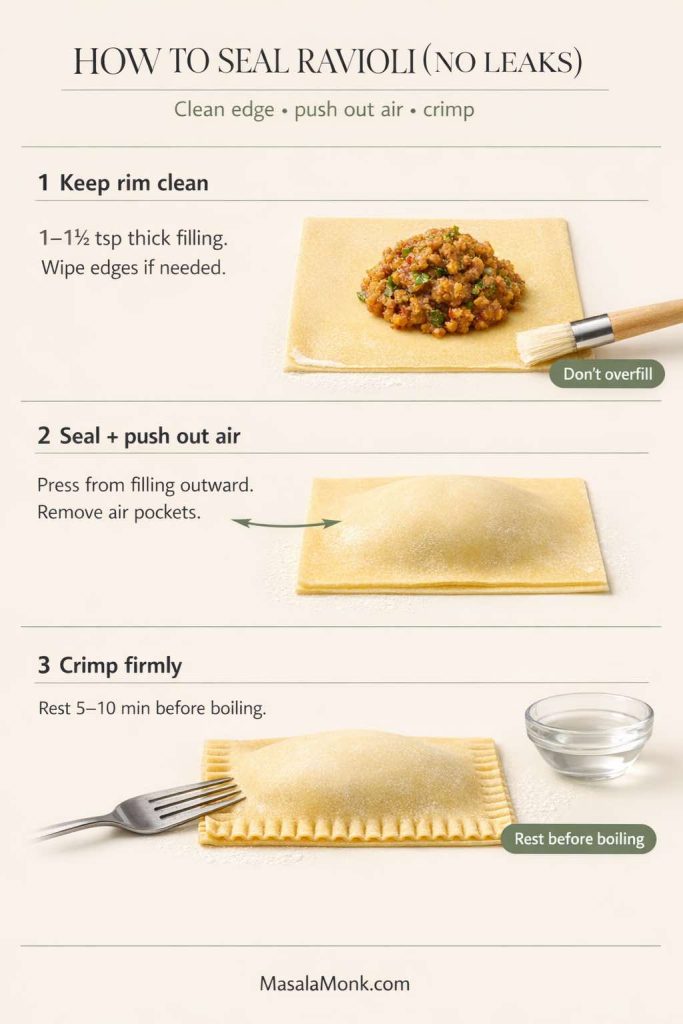
Most leaks begin before the ravioli reaches the pot. Keep the border free of filling, press outward from the center to remove trapped air, and use a modest amount of filling so the dough is not stretched tight. A short 5–10 minute rest after shaping helps the seam settle before cooking.
Most leaks start before the pot. Keep filling off the rim, press air outward, crimp firmly and give the shaped pasta a short rest.
Classic Egg Ravioli Dough
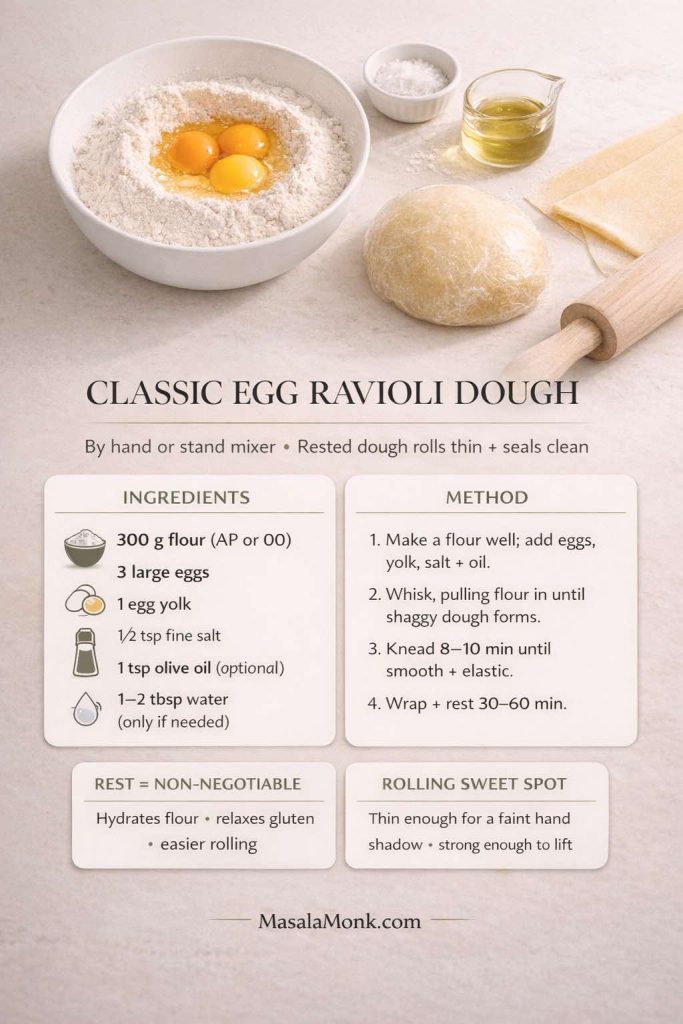
By hand or in a mixer, the dough needs to become smooth enough to stretch without tearing and relaxed enough to roll thin. The 30–60 minute rest does more for easy rolling than adding extra water to a tight dough.
Ingredients
300 g flour (all-purpose works; 00 flour is lovely if you have it)
3 large eggs
1 egg yolk (for elasticity and richer color)
1/2 tsp fine salt
1 tsp olive oil (optional, helps handling)
1–2 tbsp water only if needed
The dough should feel smooth and elastic after kneading. Rest it for 30–60 minutes before rolling; a faint shadow of your hand through the sheet is a useful thickness cue.
Method
Make a mound of flour, create a well, add eggs, yolk, salt, and oil.
Whisk inside the well, slowly pulling flour inward until a shaggy dough forms.
Knead 8–10 minutes until smooth and elastic.
Wrap and rest 30–60 minutes.
During the rest, the flour finishes hydrating and the gluten relaxes. The dough should roll with much less spring-back afterward. Keep the sheets thin and the filling modest; thick pasta and overfilled centers are two common reasons homemade ravioli feels heavy.
The dough itself is covered in full here; use the sealing guide above when you start shaping so the filling stays away from the border.
A useful visual test: hold the sheet over your hand. You should be able to see a faint shadow through it, but the sheet should still lift without stretching under its own weight. If it feels leathery, keep rolling; if it looks translucent and fragile around the edges, stop.
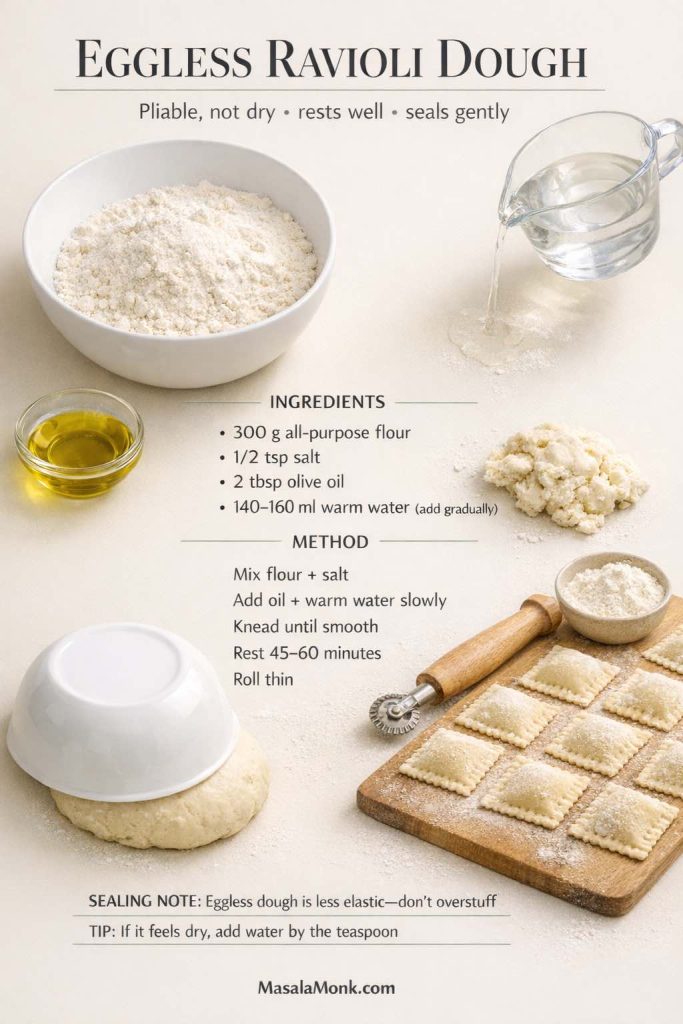
Eggless Ravioli Dough
Eggless dough has less built-in elasticity, so hydration matters more. Add the warm water gradually and stop when the dough is smooth and pliable rather than sticky.
Add the water a little at a time and stop as soon as the dough turns pliable. Rest it well, then avoid stretching the wrapper around too much filling.
Ingredients
300 g all-purpose flour
1/2 tsp salt
2 tbsp olive oil
~140–160 ml warm water (add gradually)
Knead until smooth, rest 45–60 minutes, and roll thin. Eggless dough can be slightly less elastic, so seal carefully and avoid overstuffing.
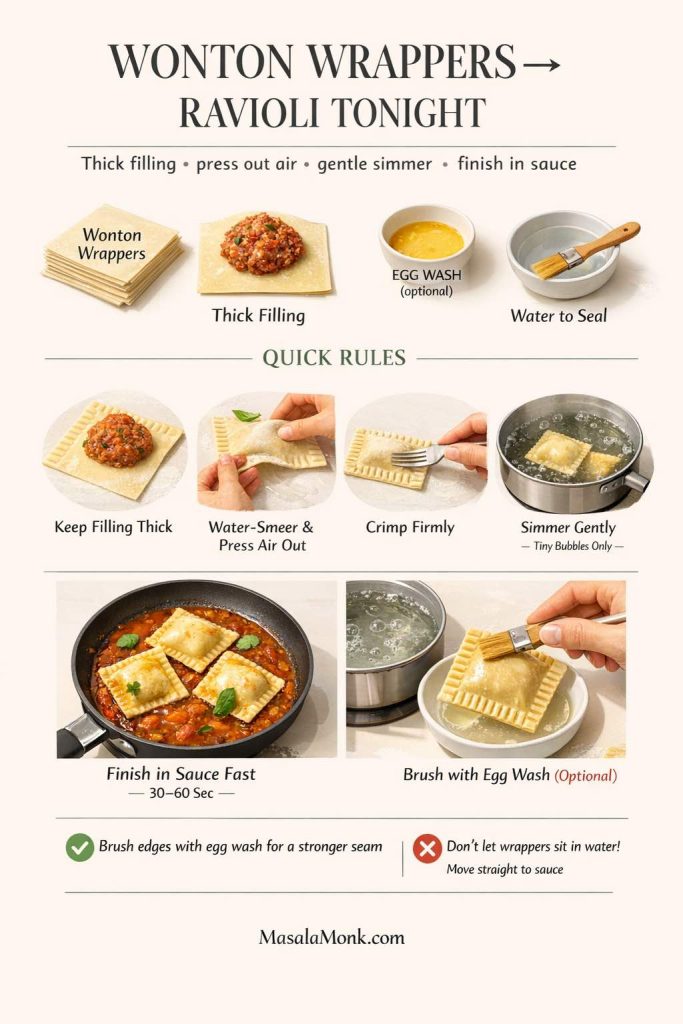
Wonton-Wrapper Ravioli for a Faster Night
Wonton wrappers do not taste exactly like fresh pasta, but they solve the hardest part of homemade ravioli: getting thin, even sheets. They work best with a thick filling and a gentle simmer.
Wonton wrappers save the rolling step, but they soften faster than egg pasta. Keep the filling thick, seal carefully and serve soon after cooking.
For the cleanest seals:
Keep filling thick, not wet.
Seal with a thin smear of water, press out air, and crimp firmly.
Simmer gently—don’t boil hard.
Finish in sauce quickly; don’t let wrappers sit too long in water.
Expect a softer, slightly more delicate wrapper than classic pasta dough. That difference matters less once the ravioli is filled well and moved straight from the pot into sauce.
A thin brush of egg wash gives the seam a little more insurance, particularly with wetter fillings. Keep the water gentle and serve soon after cooking; wonton wrappers soften faster than egg-pasta sheets.
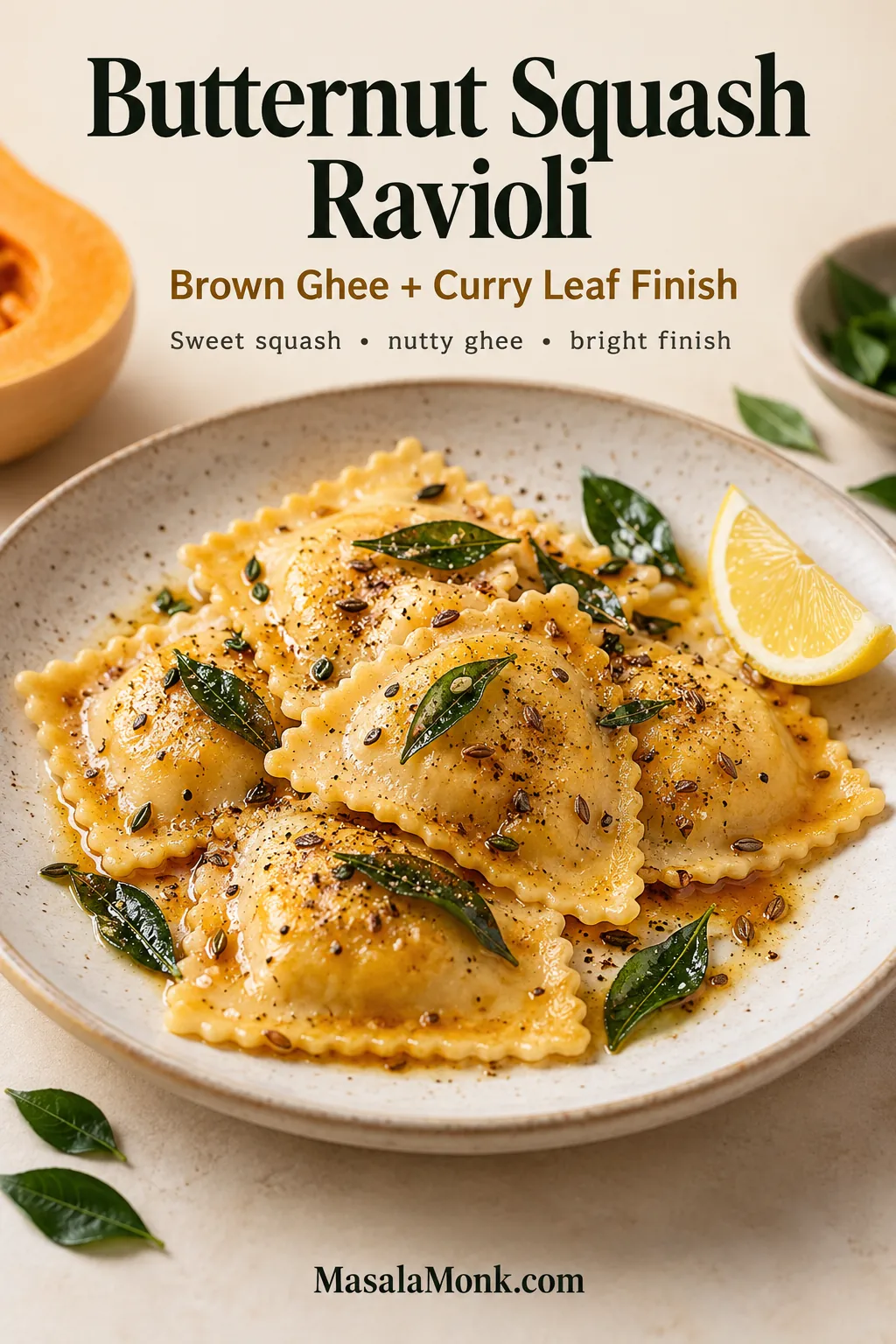
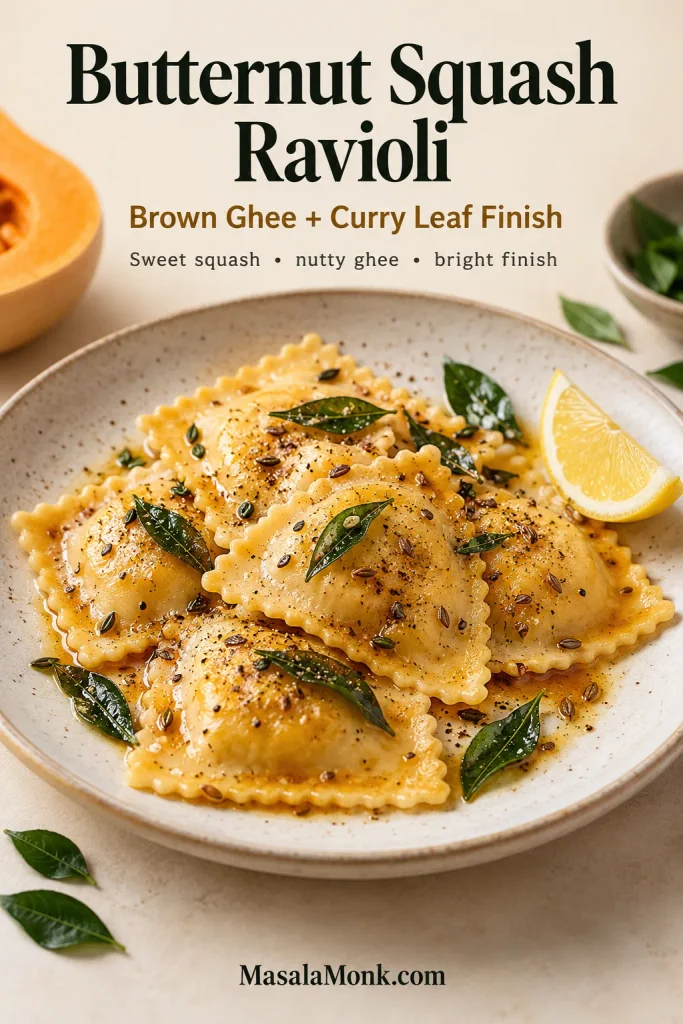
Twist 1: Butternut Squash Ravioli with Brown Ghee & Curry Leaves
Butternut squash is naturally sweet, so it needs nuttiness, aroma and a little acidity around it. Brown butter and sage do that beautifully. Here, ghee brings its own toasted, nutty character while curry leaves add a sharper, citrusy-herbal edge.
Sweet squash gets its contrast from fragrant ghee, crisp curry leaves, cumin and black pepper. Add lemon at the end only when the filling needs a brighter edge.
The result should still read as squash ravioli first. Here, “brown ghee” means ghee warmed until fragrant and slightly deeper in color—not butter browned with its milk solids, because finished ghee has already had most of those removed. Let the curry leaves splutter in the hot fat, add cumin and black pepper, and reach for lemon only if the filling needs a brighter edge.
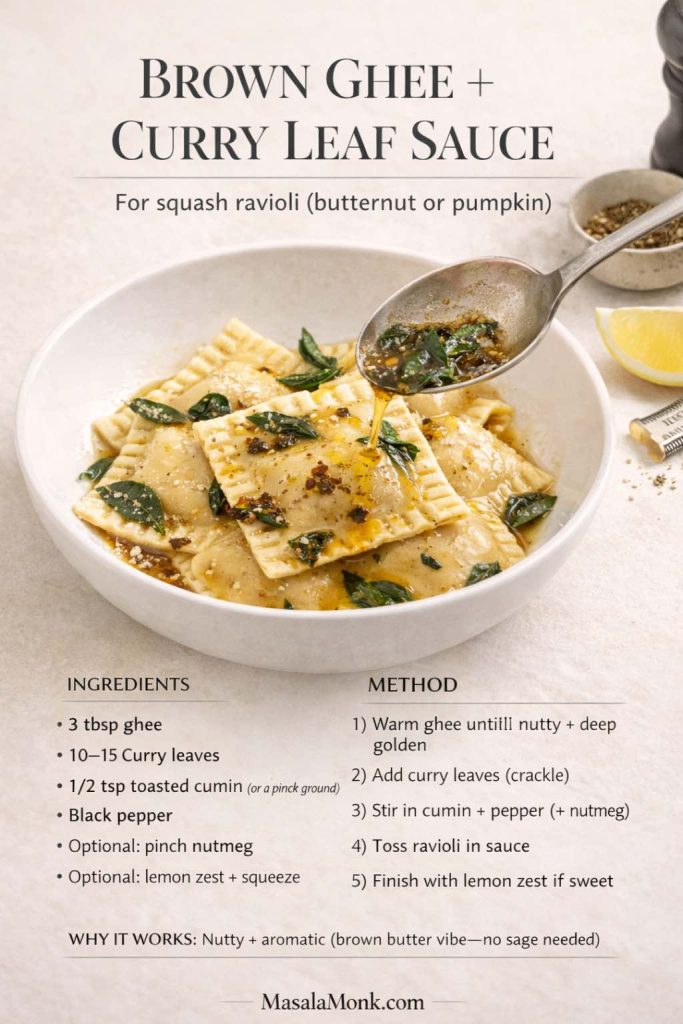
Brown Ghee & Curry Leaf Sauce for Squash Ravioli
Use this finish with homemade or store-bought squash ravioli, and with pumpkin ravioli too. It is especially useful when the filling tastes sweeter than expected.
Warm the ghee until fragrant, let the curry leaves crackle, then add cumin and pepper. Toss the ravioli gently and adjust with lemon only if the squash reads too sweet.
Ingredients
3 tbsp ghee
10–15 curry leaves (fresh is best; dried works in a pinch)
1/2 tsp toasted cumin seeds or a pinch of ground cumin
Black pepper
Optional: pinch of nutmeg
Optional: lemon zest + a squeeze of lemon
Method
Warm ghee in a small pan until fragrant and slightly deeper in color; do not try to brown it like whole butter.
Add curry leaves. They’ll crackle and perfume the ghee.
Stir in cumin and black pepper.
Add nutmeg for a warmer, slightly sweet background note.
Toss cooked ravioli in the sauce and finish with lemon zest if the ravioli is very sweet.
Ghee already brings toasted, nutty flavor; blooming curry leaves and cumin in it adds aroma without turning the finish into a gravy. That is enough contrast for sweet squash, with lemon as an optional final correction.
Pumpkin Ravioli Variation
Pumpkin ravioli can take a small pinch of Kashmiri chili in the ghee. Use it for color and gentle warmth, not enough to turn the sauce hot.
A few roasted pistachios are optional but useful: the crunch gives very soft pumpkin ravioli some texture, and their nuttiness echoes the nutty ghee.
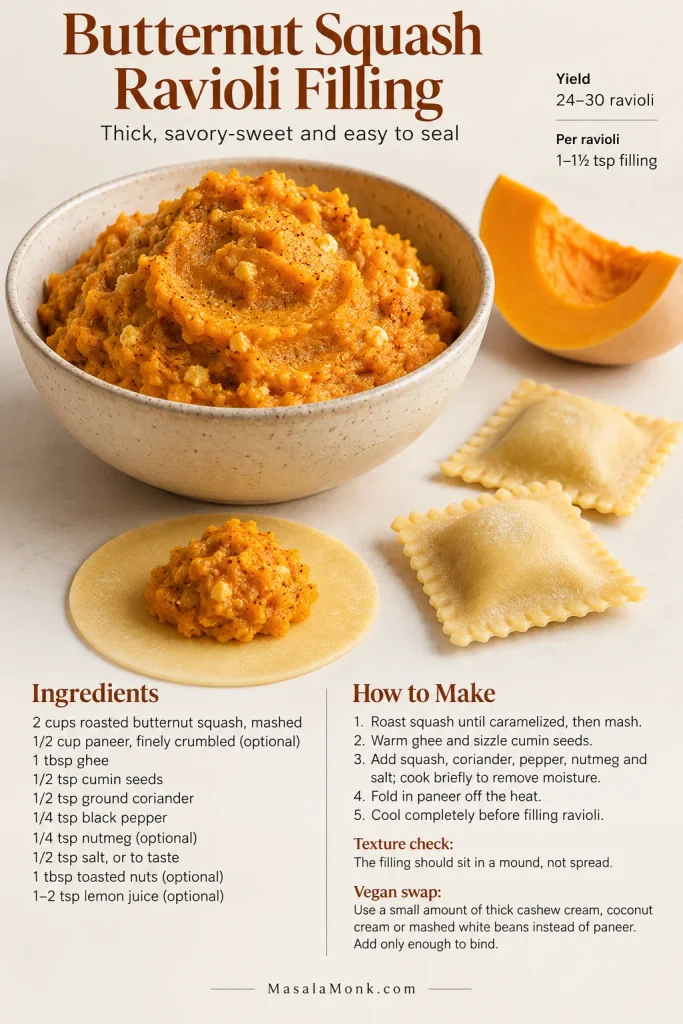
Butternut Squash & Cumin-Paneer Ravioli Filling
For homemade squash ravioli, the filling needs to sit in a mound rather than spread. Roasting concentrates the squash; a short cook after mashing removes more moisture; paneer adds body without making the center runny.
Yield: enough filling for roughly 24–30 standard ravioli.
A spoonful should stay where you put it. Roast the squash well, cook off excess moisture and use about 1–1½ teaspoons for each standard ravioli.
Ingredients
2 cups roasted butternut squash (roast cubes until caramelized, then mash)
1/2 cup paneer, finely crumbled (optional but excellent)
1 tbsp ghee
1/2 tsp cumin seeds
1/2 tsp ground coriander
1/4 tsp black pepper
1/4 tsp nutmeg (optional, but gorgeous with squash)
1/2 tsp salt (adjust)
1 tbsp finely chopped toasted nuts (optional)
1–2 tsp lemon juice (optional, for brightness)
Method
Roast squash until edges caramelize, then mash until smooth.
Heat ghee, add cumin seeds, let them sizzle briefly.
Stir in mashed squash and spices, cook 2–3 minutes to evaporate excess moisture.
Fold in paneer off heat so it stays creamy.
Let cool completely before filling ravioli.
Vegan swap: replace the paneer with a small amount of thick cashew cream, coconut cream or mashed white beans. Add only enough to bind; a loose filling is much harder to seal.
Assembly: use about 1 to 1½ teaspoons for a standard ravioli. It should look slightly underfilled before sealing. Press out the air and use the no-leak sealing method above.
For a tangier variation, replace part of the paneer with goat cheese. Keep the amount modest so the filling remains squash-forward and the curry-leaf ghee still has room to come through.
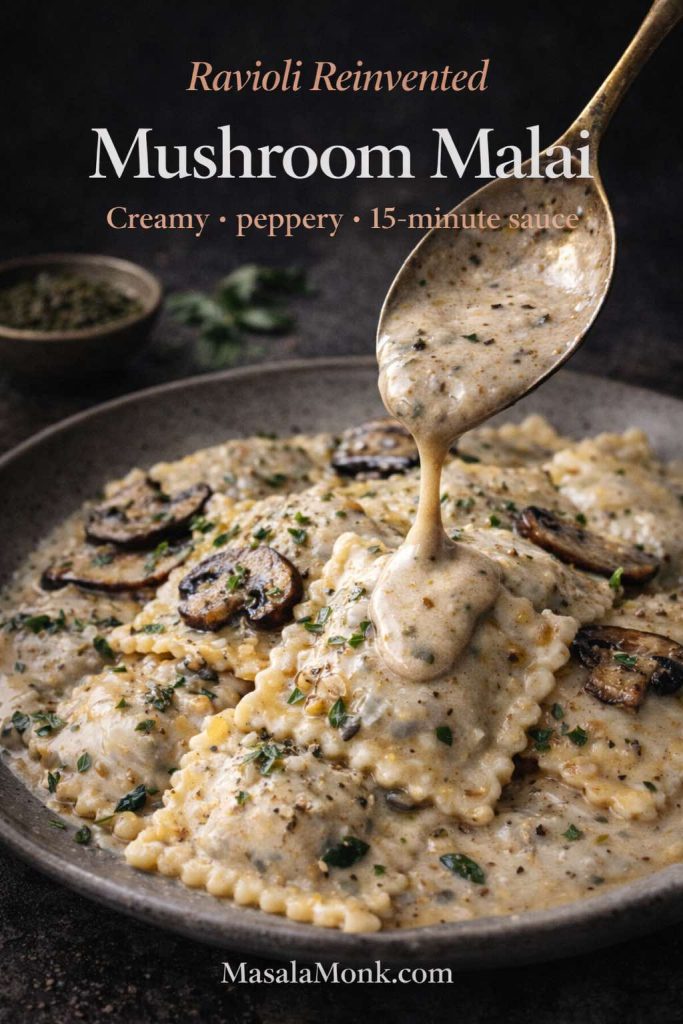
Twist 2: Mushroom Ravioli with a Peppery Malai-Style Sauce
Mushroom ravioli already carries plenty of earthiness, so the sauce does not need a large spice list. Brown more mushrooms, use black pepper generously and let a small pinch of kasuri methi sit in the background.
This one should taste mushroom-first. Brown the mushrooms well, keep the cream loose, and add kasuri methi near the end so it stays in the background.
This is closer to a peppery mushroom cream than a curry. Cream rounds the browned mushrooms, cumin adds warmth, and crushed kasuri methi gives the finish a dry, savory aroma that works unexpectedly well with ricotta or cheese-filled pasta.
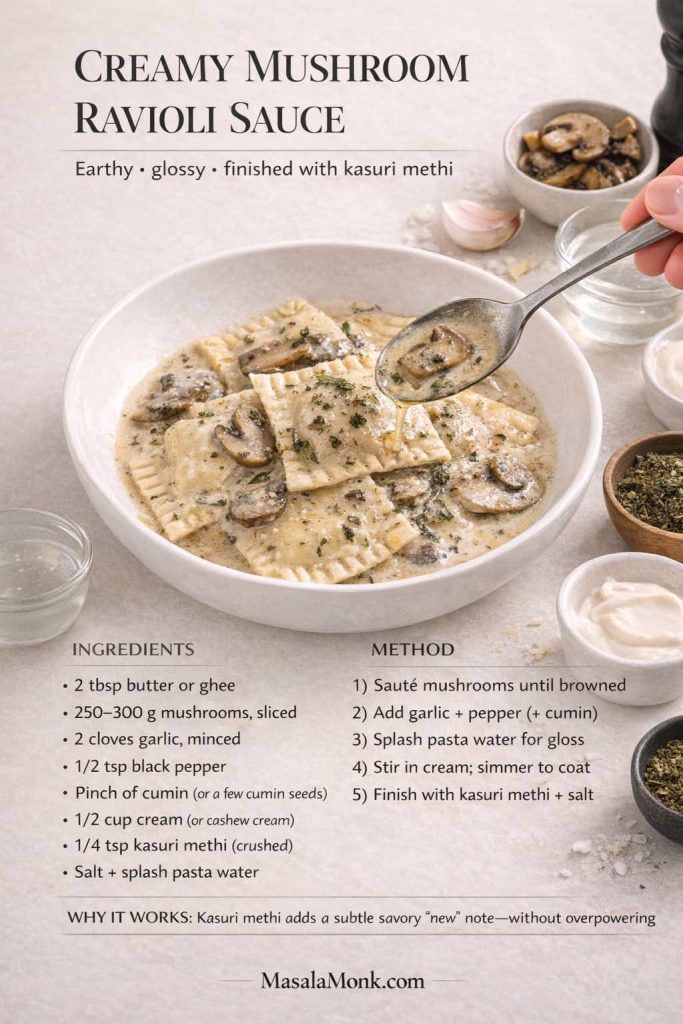
Creamy Mushroom Malai Sauce
The sauce suits mushroom ravioli best, but it is also good with cheese or spinach-filled ravioli. Once the mushrooms are sliced, the sauce itself usually comes together in about 15 minutes; wetter mushrooms may need a little longer to give up their water and brown. For a more classic version without the Indian finish, see our creamy mushroom sauce guide.
Ingredients
2 tbsp butter or ghee
250–300 g mushrooms, sliced
2 cloves garlic, minced
1/2 tsp black pepper (more if you love peppery sauces)
Pinch of cumin (or a few cumin seeds toasted first)
1/2 cup cream (or cashew cream for a plant-based ravioli dinner)
1/4 tsp kasuri methi, crushed between your palms
Salt
A splash of pasta water
Watch the spoon: once the sauce coats it lightly, stop reducing. Pasta water can loosen the cream without muting the mushroom flavor.
Method
Sauté mushrooms in butter/ghee until they release water and start browning.
Add garlic and pepper; cook until fragrant.
Add a splash of pasta water to create a glossy base.
Stir in cream; simmer until thick enough to coat a spoon.
Finish with kasuri methi and adjust salt.
Crush the kasuri methi between your palms before adding it at the end. Heat softens its aroma quickly, so a late addition gives you the most character without making the sauce taste medicinal or dusty.
For a Darker, More Savory Mushroom Finish
For a darker, more savory finish, push the mushrooms further. Let them brown until their edges are dark, use a little more black pepper, and finish with butter or ghee and Parmesan.
Three small changes are enough:
Brown mushrooms harder for deeper savoriness.
Use more black pepper than you normally would.
Finish with a small gloss of butter/ghee and a sprinkle of Parmesan.
The sauce ends up darker, nuttier and more savory without one perfume dominating the bowl.
Because the sauce is rich, a bitter green salad or simply dressed vegetables make a better counterpoint than another creamy side. Keep the plate fairly spare and let the mushrooms do the work.
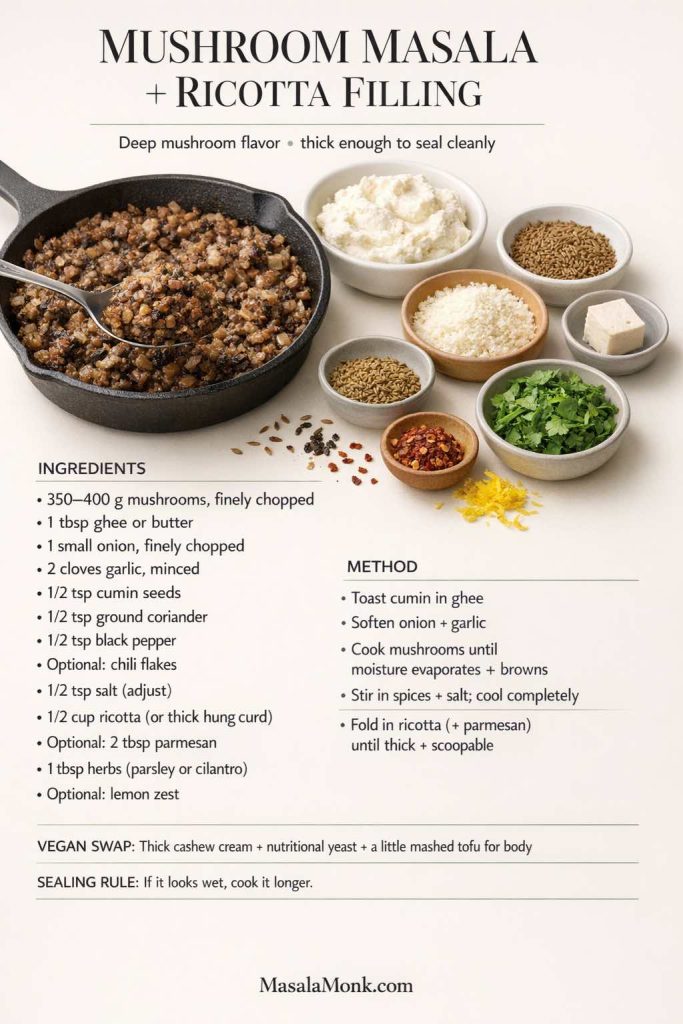
Mushroom Masala & Ricotta Ravioli Filling
Mushrooms can look ready while they are still steaming out water. Keep cooking until the pan stops looking wet and the chopped mushrooms begin to brown; only then cool them completely before folding in the ricotta.
The pan should look nearly dry before the ricotta goes in. Cool the mushrooms completely, then fold in the cheese until a spoonful holds its shape.
Ingredients
350–400 g mushrooms, finely chopped (a mix is best, but even one type works)
1 tbsp ghee or butter
1 small onion, finely chopped
2 cloves garlic, minced
1/2 tsp cumin seeds
1/2 tsp ground coriander
1/2 tsp black pepper
1/4 tsp chili flakes (optional)
1/2 tsp salt (adjust)
1/2 cup ricotta (or thick hung curd; ricotta is classic)
2 tbsp grated Parmesan (optional, but helps structure)
1 tbsp chopped herbs (parsley or cilantro—either works)
1 tsp lemon zest (optional)
Method
Heat ghee, toast cumin seeds briefly.
Add onion, cook until translucent, then add garlic.
Add mushrooms and cook until moisture evaporates and the mixture browns.
Stir in spices and salt, cook another minute.
Cool completely.
Fold in ricotta and Parmesan; mix until thick and scoopable.
Vegan option: use thick cashew cream, a spoonful of nutritional yeast and a little mashed tofu. Add them after the mushrooms cool, and stop as soon as the filling holds its shape.
Pair the filling with the mushroom malai sauce for a deep, earthy plate, or use a lighter butter-and-pepper finish when you want the filling to stand out more.
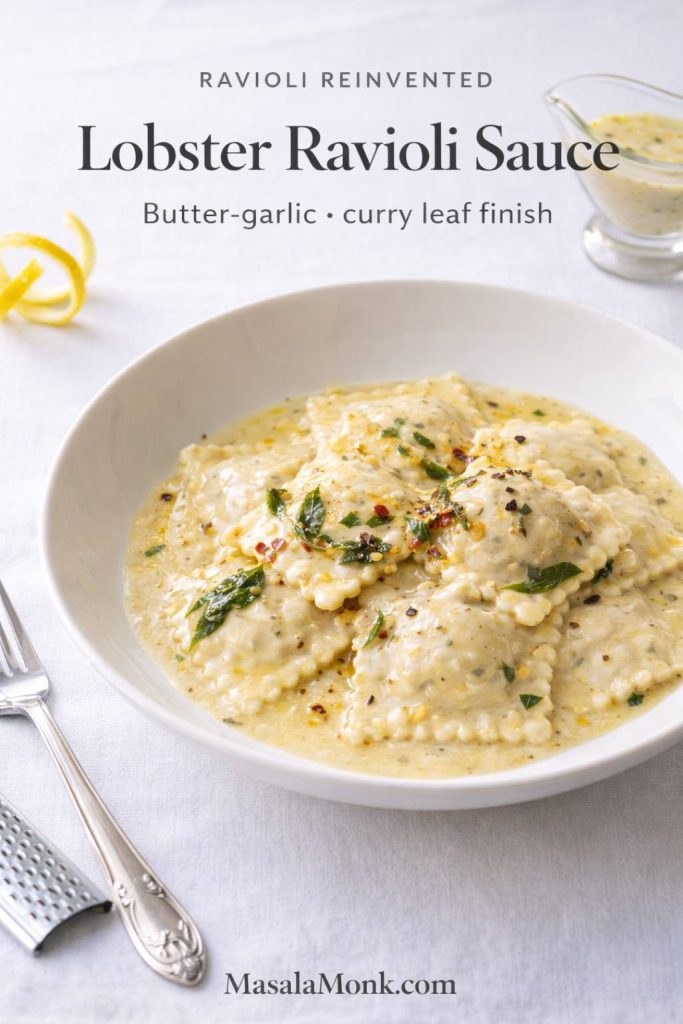
Twist 3: Lobster Ravioli with Butter-Garlic Cream & Curry Leaves
Lobster and crab ravioli need a lighter hand than meat or mushroom fillings. The seafood is delicate, the filling is usually already rich, and a heavy sauce can flatten both. Butter, garlic, cream and lemon make a familiar base; the Indian turn comes from a small curry-leaf and Kashmiri-chili tadka at the end.
Keep the cream sauce fluid enough to move when the pan tilts. Lemon lifts the seafood; the curry-leaf tadka belongs at the very end so its aroma stays vivid.
Keep the garlic pale; browned garlic becomes too assertive here. Use pasta water to loosen the cream until the sauce moves around the ravioli when the pan tilts instead of hiding the filling.
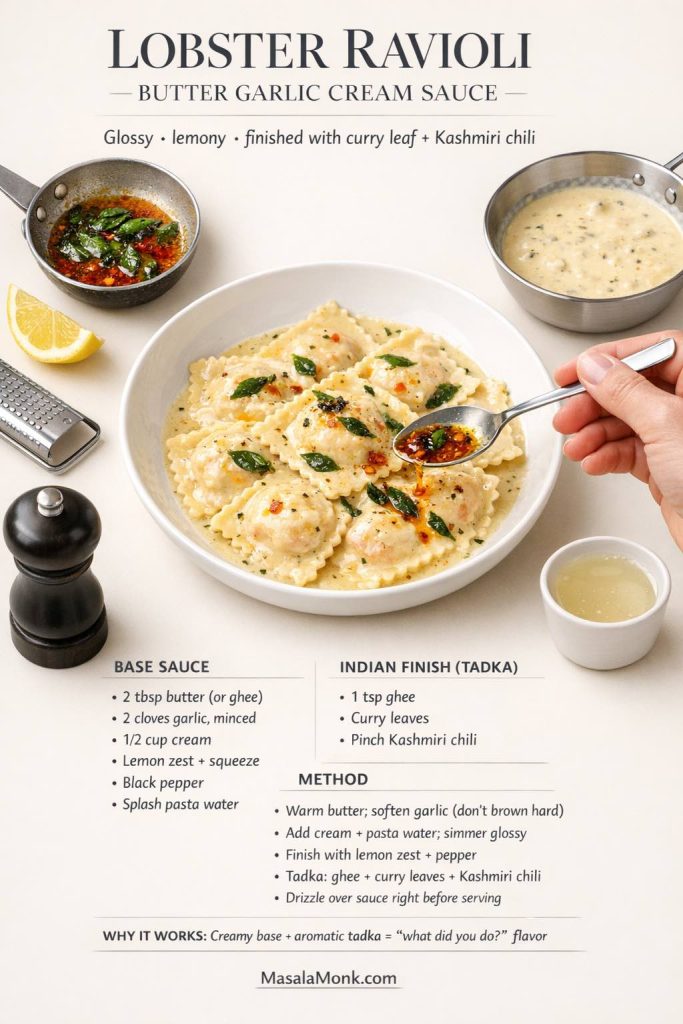
Butter-Garlic Cream Sauce for Lobster Ravioli
This sauce is deliberately short: butter, garlic, cream, pasta water, lemon and black pepper.
Ingredients
2 tbsp butter (or ghee)
2 cloves garlic, minced
1/2 cup cream
Lemon zest + a squeeze of lemon
Black pepper
A splash of pasta water
Method
Melt butter, sauté garlic gently (don’t brown it aggressively).
Stir in cream and a splash of pasta water.
Simmer until slightly thick and glossy.
Finish with lemon and pepper.
Make the tadka separately so the curry leaves stay crisp and aromatic.
Pale garlic gives a softer base than browned garlic here. Loosen the cream with pasta water, finish with lemon, then spoon the tadka over just before serving.
Curry Leaf & Kashmiri Chili Tadka
In a separate small pan:
Warm 1 tsp ghee.
Add a handful of curry leaves (they crackle instantly).
Add a pinch of Kashmiri chili.
Drizzle the tadka over the plated ravioli at the last moment. Simmering it into the cream dulls the curry-leaf aroma; the hot ghee should stay distinct while the chili adds color and mild warmth.
If you are preparing the seafood filling from scratch, keep cooked lobster or crab cold until you mix the filling and refrigerate shaped ravioli promptly. FoodSafety.gov’s fish and shellfish guidance is the external safety reference used for this section.
How to Balance a Butter-Garlic Ravioli Sauce
Butter and cream can make seafood ravioli taste dull if there is no acidity. Add lemon zest first, then a small squeeze of juice after the pan comes off the heat. Black pepper gives the sauce bite; pasta water keeps the fat and cream from feeling greasy.
The same base also works with cheese or spinach ravioli, although the curry-leaf tadka is especially good with lobster and crab.
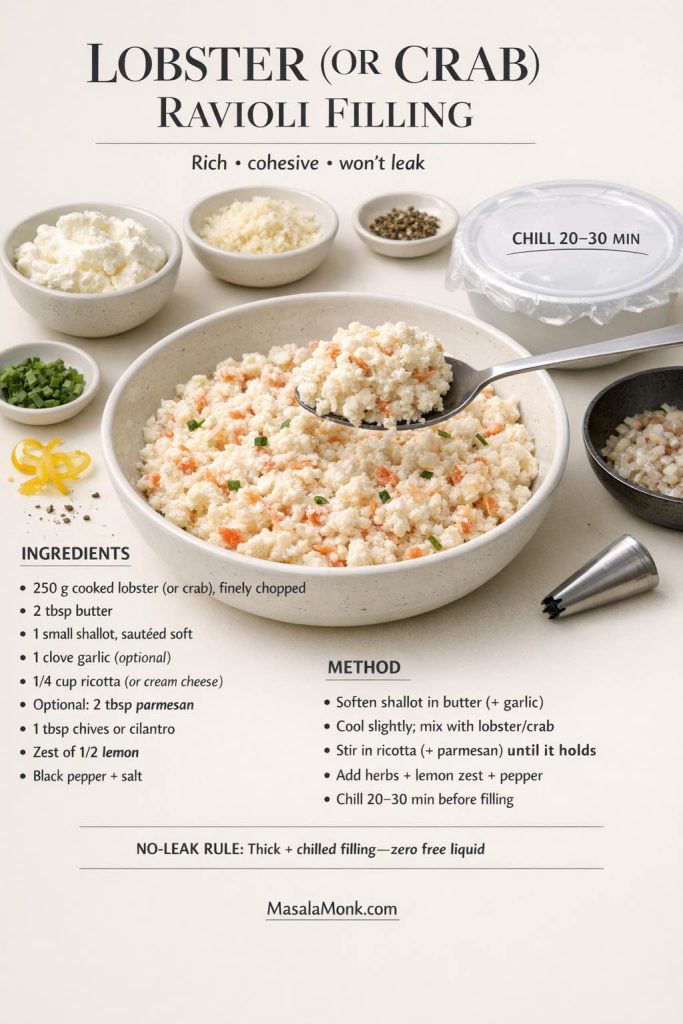
Lobster or Crab Ravioli Filling
For homemade seafood ravioli, chop the cooked lobster or crab finely enough that the filling can be portioned cleanly. Ricotta or cream cheese binds the pieces and reduces free liquid; the short chill makes the mixture easier to seal.
Finely chopped seafood plus a little soft cheese makes a cohesive center. Chill the mixture for 20–30 minutes so it portions cleanly and stays away from the seams.
Ingredients
250 g cooked lobster meat (or crabmeat), finely chopped
2 tbsp butter
1 small shallot (or very finely chopped onion), sautéed until soft
1 clove garlic, minced (optional)
1/4 cup ricotta (or cream cheese for a firmer set)
2 tbsp grated Parmesan (optional)
1 tbsp chopped chives or cilantro
Zest of 1/2 lemon
Black pepper
Salt to taste
Method
Sauté shallot in butter until soft; add garlic briefly if using.
Cool slightly, then combine with chopped lobster/crab.
Stir in ricotta and Parmesan until the mixture holds together.
Add herbs, lemon zest, pepper, and salt.
Chill 20–30 minutes so it firms up before filling.
Texture check: the chilled filling should hold on a teaspoon without dripping. If it looks loose, chill it longer before adding more cheese or binder.
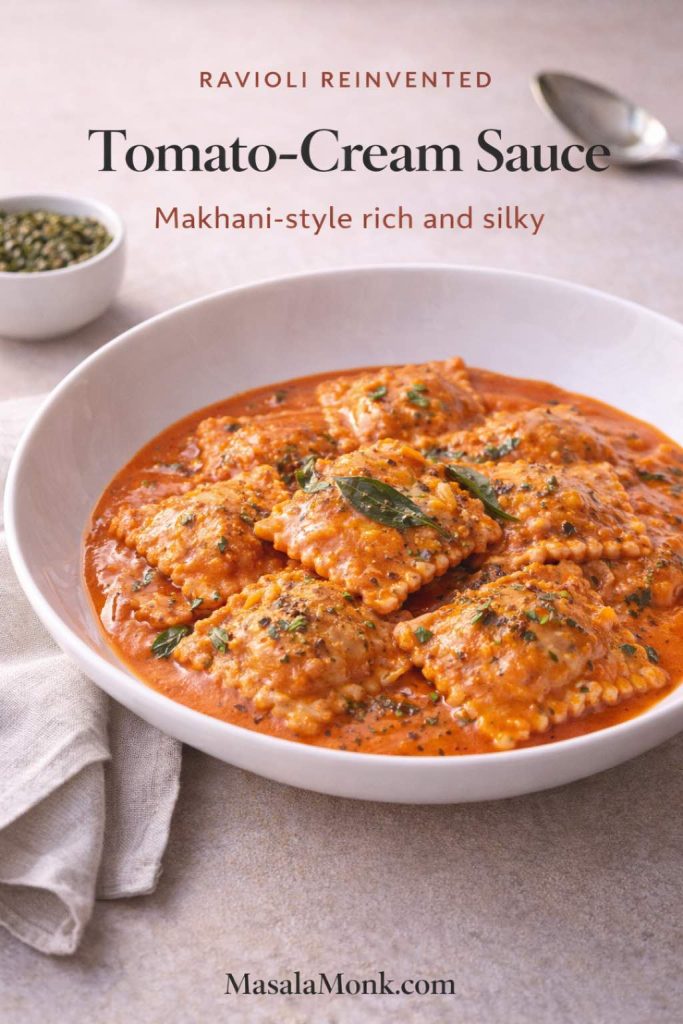
Twist 4: Makhani-Style Tomato-Cream Sauce for Ravioli
The tomato base should look dark and concentrated before the cream ever goes in. Cream then turns it glossy without washing out the tang, while kasuri methi arrives as a dry, savory aroma at the end; use garam masala only as a tiny background note.
Reduce the tomato base first; cream should enrich it, not rescue a watery sauce. Kasuri methi and garam masala belong in small amounts so tomato remains the lead flavor.
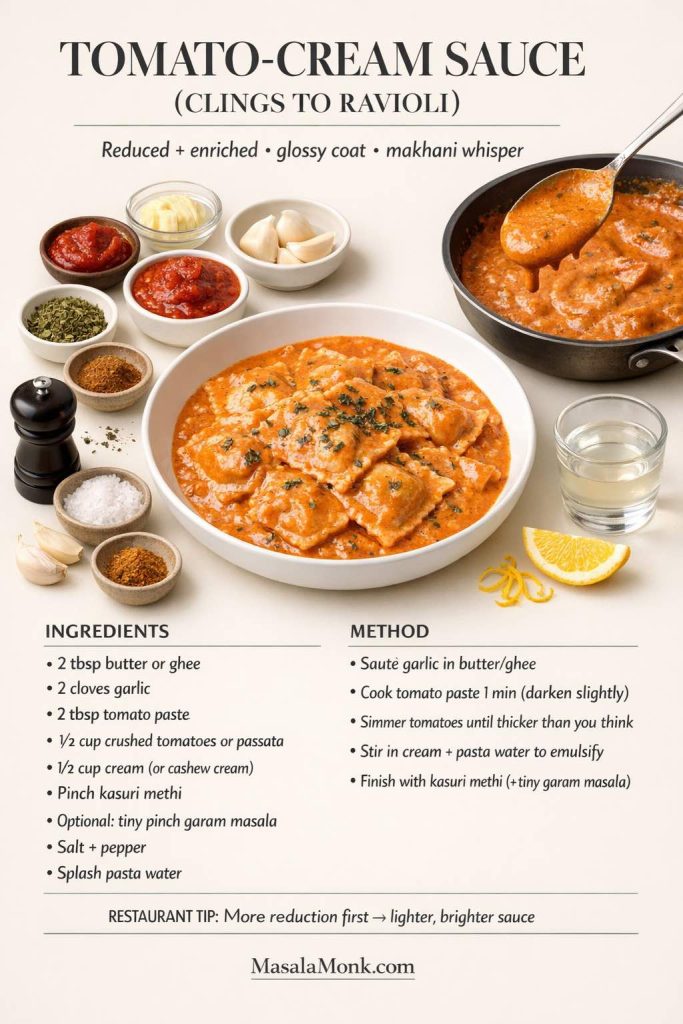
Tomato-Cream Sauce That Clings to Ravioli
A ravioli sauce should leave a thin coating on the pasta when you lift it from the pan. If tomato liquid runs straight back to the bottom, reduce it longer before adding cream.
Ingredients
2 tbsp butter or ghee
2 cloves garlic
2 tbsp tomato paste
1/2 cup crushed tomatoes or passata
1/2 cup cream (or cashew cream)
Pinch of kasuri methi
Pinch of garam masala (optional, keep it light)
Salt, pepper
Pasta water
Cling comes from reduction. Cook the tomato base until concentrated, stir in cream, and add pasta water only when the sauce needs loosening.
Method
Heat butter/ghee, sauté garlic.
Add tomato paste and cook it for a minute until it darkens slightly.
Add crushed tomatoes; simmer until thicker than you think it needs to be.
Add cream/cashew cream and a splash of pasta water to emulsify.
Finish with kasuri methi and, optionally, a tiny pinch of garam masala for a more distinctly makhani finish.
Use it with lobster, crab, cheese or meat-filled ravioli. A brighter homemade tomato base also works here; our fresh tomato sauce guide explains how to reduce tomatoes without losing their clean flavor.
Keep Tomato-Cream Sauce Rich but Balanced
When the sauce tastes heavy, adjust the edges before changing the whole recipe:
lemon zest
black pepper
a hint of heat
or simply more reduction before adding cream
Taste again after each adjustment. Often a little acid or pepper is enough to make the tomato and cream feel separate and clear rather than muddy.
For a dairy-free version, cashew cream gives the sauce body without introducing a strong coconut flavor. Add it after the tomato has reduced and keep the heat gentle once it is in the pan.
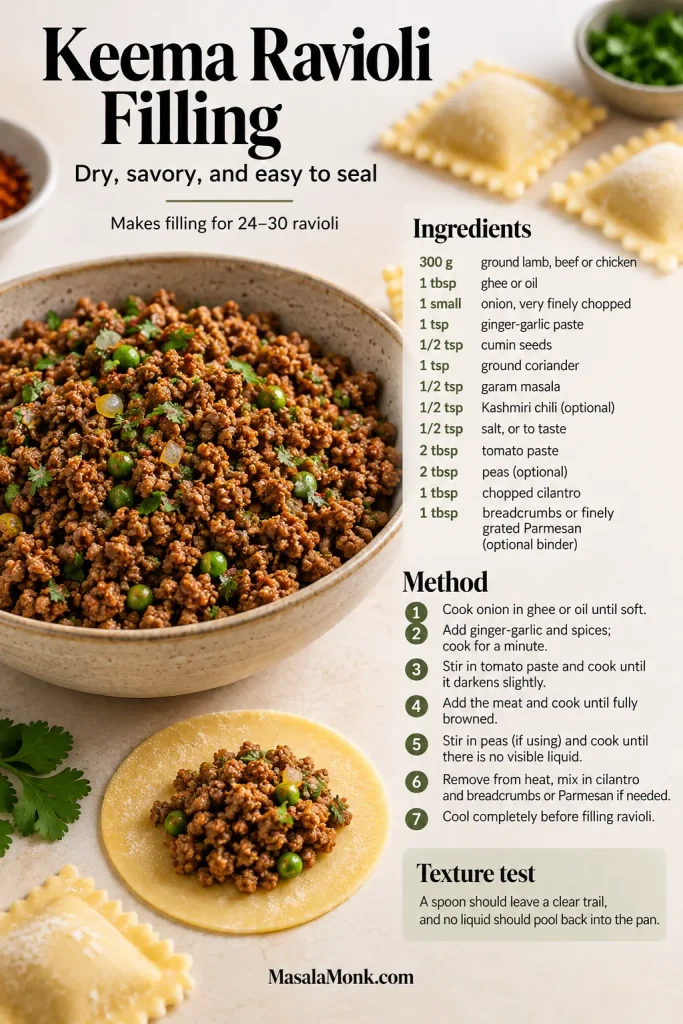
Keema Ravioli Filling
Keema makes a naturally good ravioli filling because minced meat can be cooked down until dry, finely textured and intensely seasoned. The important part is evaporating the tomato and meat juices before the mixture cools.
Yield: enough filling for roughly 24–30 standard ravioli.
Cook the keema until a spoon leaves a clear trail and no liquid pools back into the pan. Cool it completely before filling so the ravioli seals cleanly.
1 tbsp breadcrumbs or finely grated Parmesan (optional binder)
Method
Heat ghee, toast cumin seeds.
Add onion, cook until golden.
Add ginger-garlic, cook until fragrant.
Add meat, break it up, cook until browned.
Stir in spices, salt, and tomato paste; cook until the mixture looks dry and cohesive.
Add peas if using; cook briefly.
Cool completely; fold in cilantro and a binder if needed.
Texture check: drag a spoon through the pan. The path should stay visible and no liquid should run back into it. If the keema is dry but too crumbly, bind it with a spoonful of ricotta, cream or finely grated Parmesan.
Two sauces work particularly well:
butter-garlic cream with curry leaf tempering for a luxurious feel, or
tomato-cream makhani style for a warmer, more tomato-forward finish.
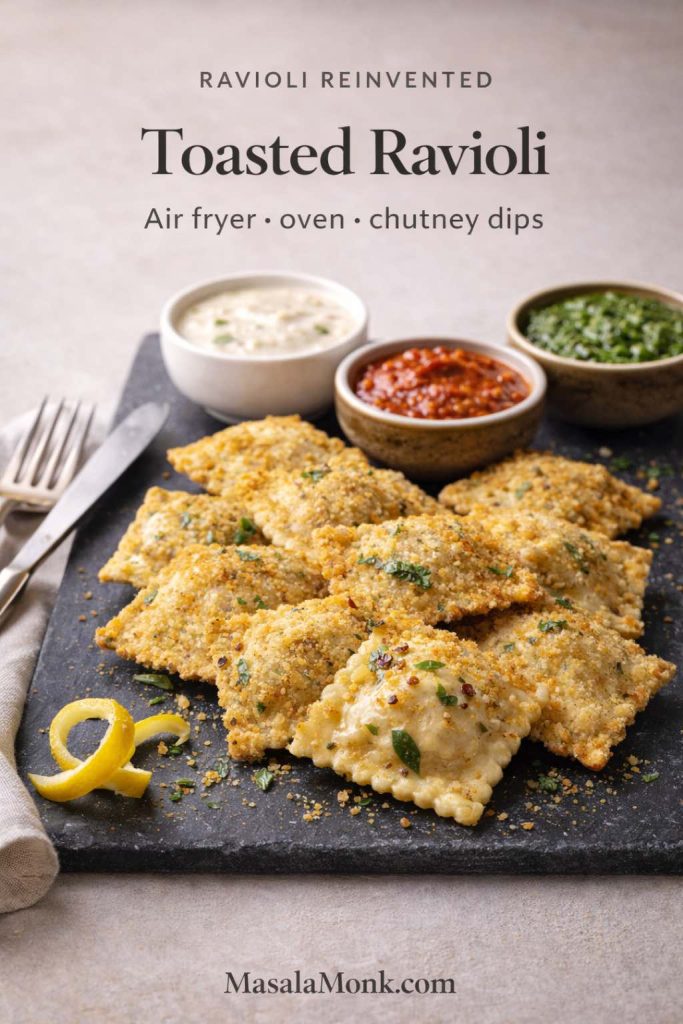
Twist 5: Toasted Ravioli with Chutney Dips
Toasted ravioli changes the texture completely: the wrapper becomes crisp, the filling stays soft, and suddenly a pasta dinner can be eaten with your fingers. Cheese, meat and mushroom fillings all work; very delicate seafood ravioli is better saved for a sauce.
The dips work because they do different jobs: coconut cools, kara chutney brings roasted chili depth, and thecha adds sharp garlic heat. Two contrasting dips are usually enough.
Marinara still works, but chutneys are what make this feel different from a standard toasted-ravioli plate; the detailed dip pairings come later.
For one batch
450 g / 1 lb ravioli (cheese, meat or mushroom; refrigerated or frozen)
1 tbsp neutral oil or cooking spray, plus more as needed
1 large egg, beaten (optional, for breading)
1 cup breadcrumbs or panko (optional, for breading)
Coconut chutney, kara chutney, thecha or marinara, for serving
For meat-filled ravioli, follow the package directions and make sure the filling is fully cooked before serving. The times below are crisping ranges; they are not a substitute for safely cooking a raw meat filling.
Air-Fryer Toasted Ravioli
Refrigerated ravioli is easiest to bread because the surface is pliable. Frozen ravioli can work too; if the coating will not adhere while it is rock-hard, thaw it only long enough to become easy to handle. Ravioli size and package directions still take priority.
Method
For a breaded crust, dip the ravioli in beaten egg, coat in breadcrumbs or panko and mist lightly with oil. For an unbreaded version, toss the ravioli with a thin film of oil.
Air fry in a single layer at 390°F / 200°C for 6–10 minutes, flipping halfway. Start checking at 6 minutes.
Remove the ravioli when the edges are deep golden and the shell feels crisp; serve while the coating is still dry and crunchy.
Air fryers vary in fan strength and basket size, so the range matters more than one exact minute. Small refrigerated ravioli may finish near the lower end; larger or frozen pieces can take longer.
Oven-Baked Toasted Ravioli
Heat the oven to 425°F / 220°C. A rack over a sheet pan keeps hot air moving around both sides; without a rack, flip the ravioli halfway so the underside does not steam against the tray.
Arrange breaded ravioli in a single layer on a lightly oiled rack or sheet pan and mist the tops with oil.
Bake for 10–15 minutes, flipping halfway if the ravioli sits directly on the tray.
Pull the tray when the crumb coating is dry, crisp and golden at the edges.
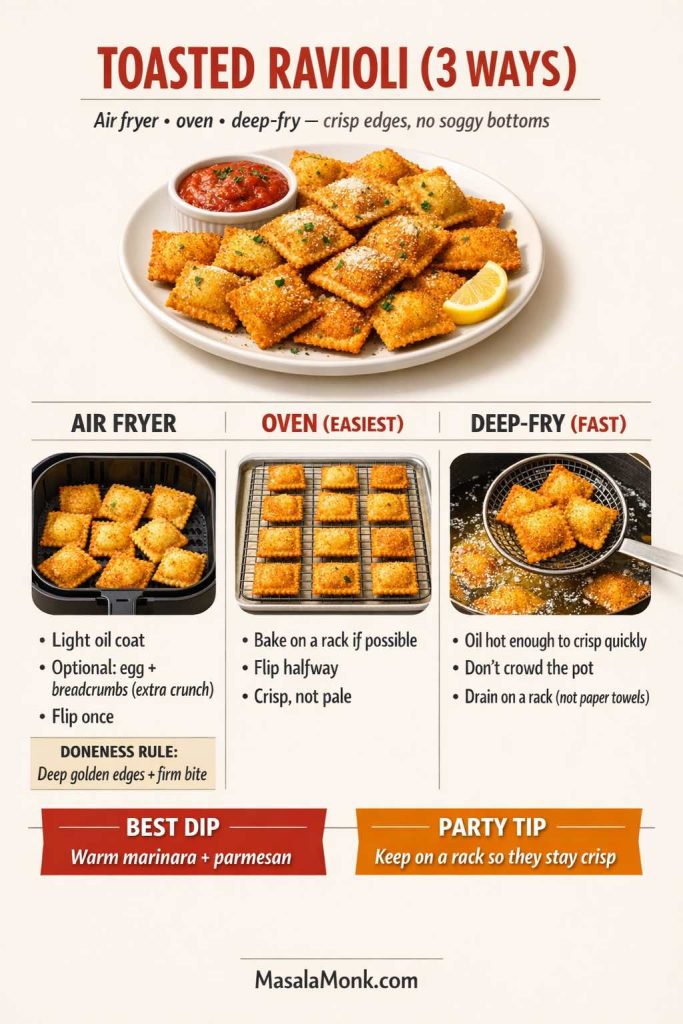
Quick comparison: toasted ravioli three ways. Air frying is the easiest small-batch option, the oven handles a tray with less fuss, and deep-frying gives the crispest shell.
For a starting point, air fry at 390°F / 200°C for 6–10 minutes, bake at 425°F / 220°C for 10–15 minutes, or deep-fry at 350°F / 175°C for about 2–4 minutes. Stop at deep-golden edges.
Deep-Fried Ravioli
Deep-frying gives the most even, brittle crust. Use a thermometer if you have one and give the oil time to return to temperature between batches; each new handful cools it quickly.
Heat about 2 inches / 5 cm neutral oil to 350°F / 175°C.
Fry in uncrowded batches for about 2–4 minutes, turning as needed, until the coating is evenly deep golden.
Lift to a wire rack and let the oil return to 350°F / 175°C before adding the next batch.
The rack matters because steam can escape from underneath; a flat paper-lined plate softens the crust more quickly.
Chutney Dips for Toasted Ravioli
Choose dips with different jobs—one cool, one tangy or roasted, and one hot:
For sharper garlic heat: thecha; serve a smaller spoonful because it can dominate a mild filling.
A platter works best when one dip cools, one brings acidity and one brings heat. That gives each bite somewhere different to go without burying the ravioli.
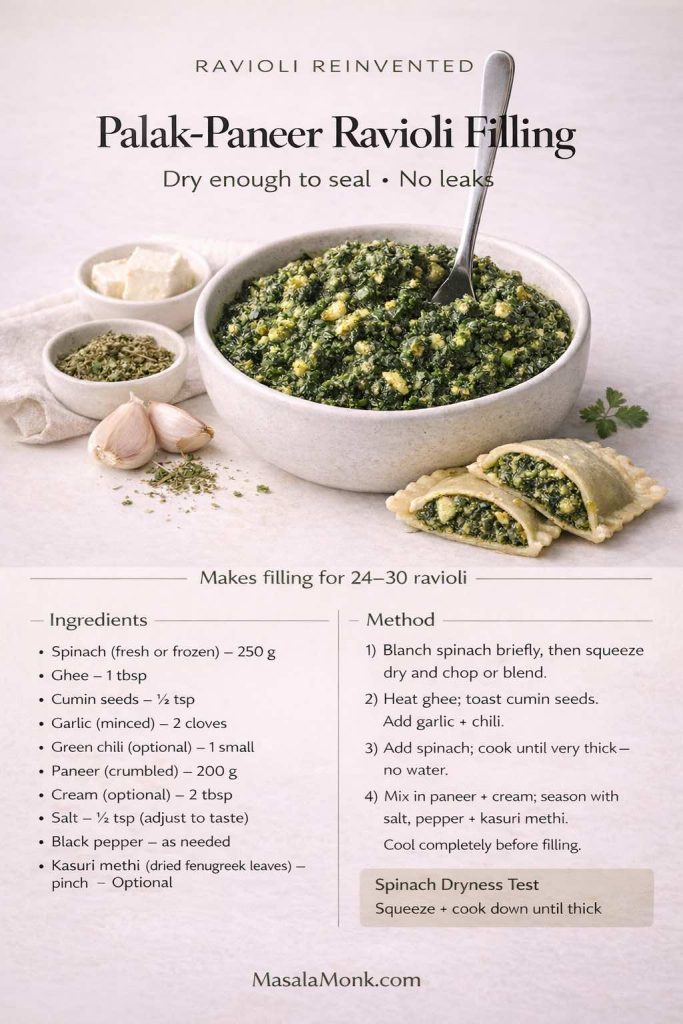
Palak-Paneer Ravioli Filling
Palak-paneer filling works because both components help with structure: squeezed spinach loses the water that causes leaks, while crumbly paneer absorbs moisture and keeps the center tender.
Yield: enough filling for roughly 24–30 standard ravioli.
Squeeze the spinach before it ever reaches the pan, then cook until no water remains. Paneer gives the filling body without making the center heavy.
Ingredients
250 g spinach (fresh or frozen)
1 tbsp ghee
1/2 tsp cumin seeds
2 cloves garlic, minced
1 small green chili (optional, adjust)
200 g paneer, crumbled finely
2 tbsp cream (optional, for richness; use only if the filling remains thick)
1/2 tsp salt (adjust)
Black pepper
Optional: pinch of kasuri methi
Method
Blanch spinach quickly, squeeze out moisture, then chop finely or blend.
Heat ghee, toast cumin seeds, add garlic and chili.
Add spinach and cook until thick and not watery.
Mix in paneer, salt, pepper and kasuri methi. Add cream only if wanted and the filling is still thick enough to hold its shape.
Cool completely before filling ravioli.
Squeezed spinach and crumbly paneer leave very little free liquid, which is why this filling seals so reliably. For softer homemade paneer, our homemade paneer guide explains how pressing time changes the texture.
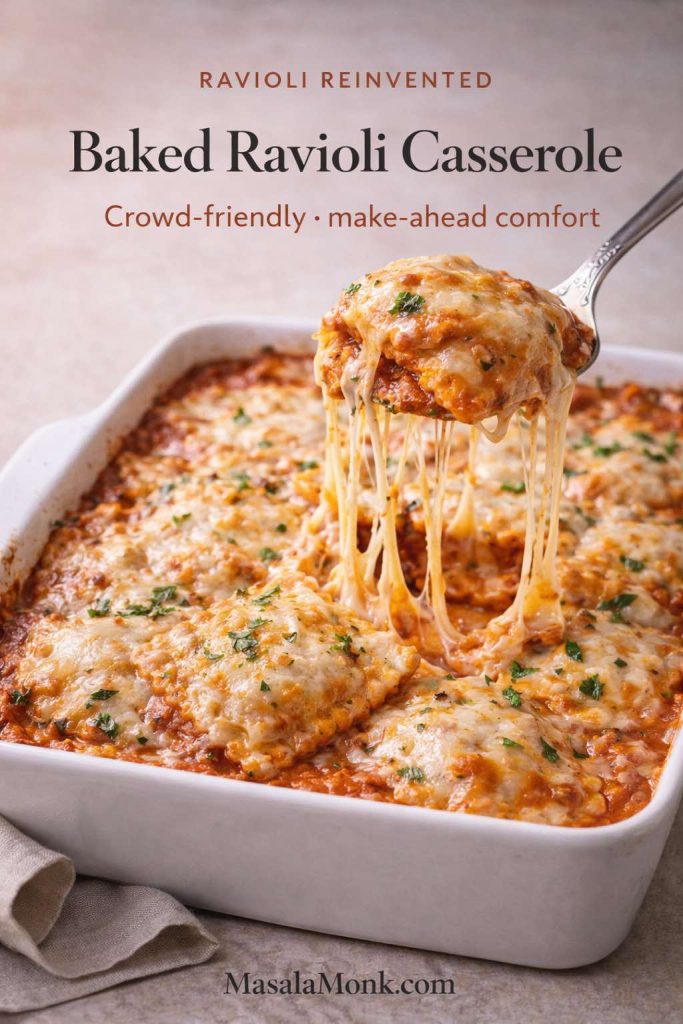
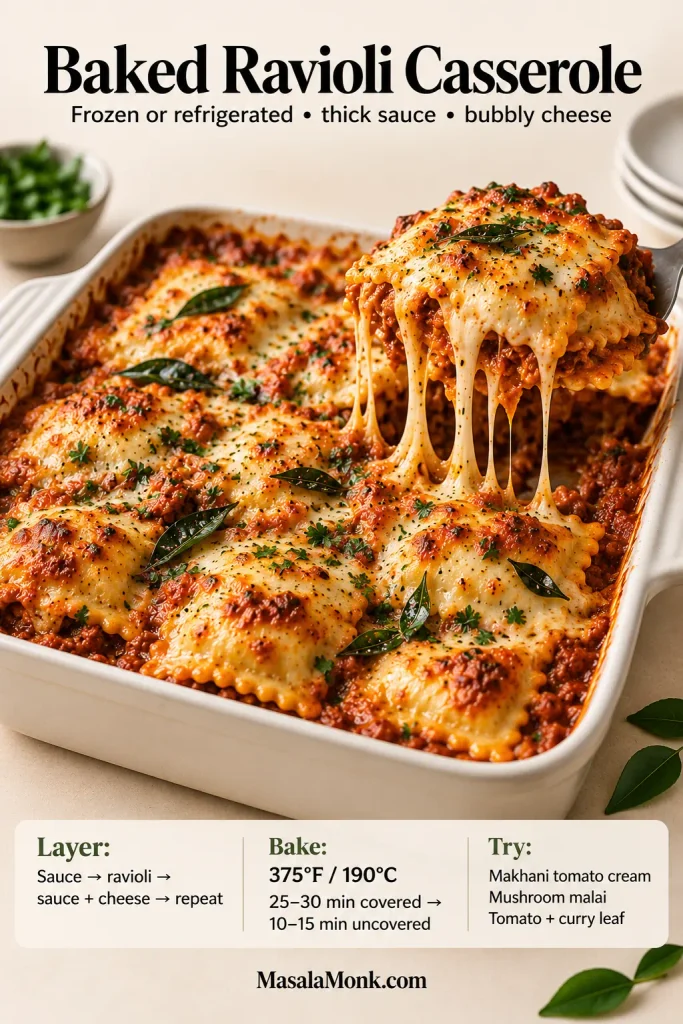
It also holds up well in the baked ravioli casserole later in the post because the filling remains cohesive under longer heat.
Ravioli is a three-part construction: wrapper, filling and sauce. Change one of those and the other two need to carry a little more of the texture or flavor. That is the useful way to think about keto, vegan and gluten-free versions.
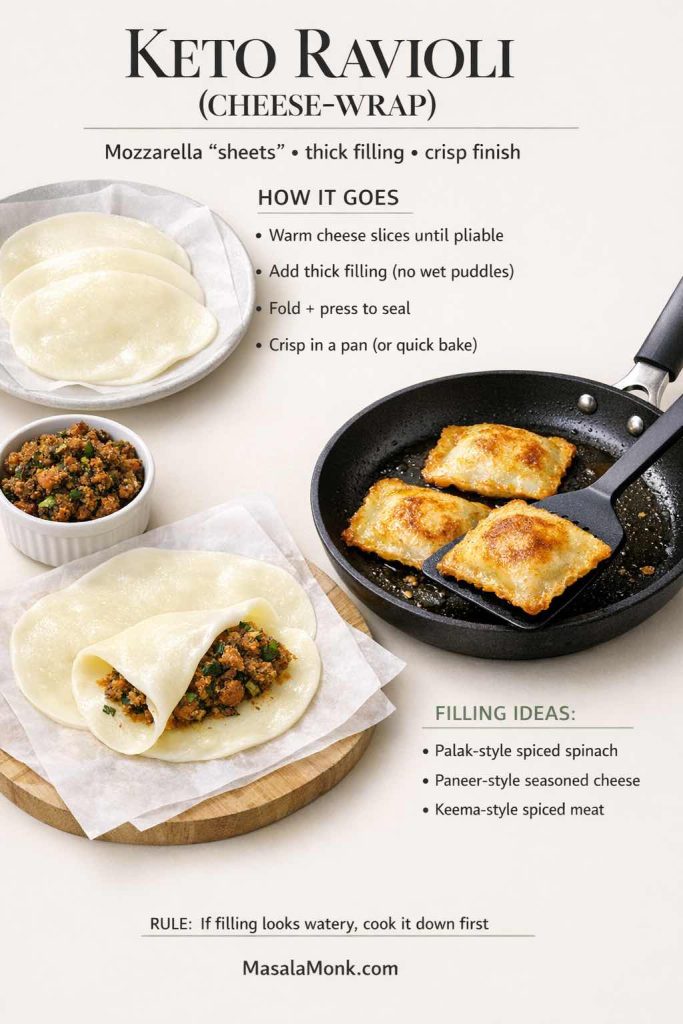
Keto Ravioli with a Cheese Wrapper
With a mozzarella wrapper, the filling has to do more of the structural work. Keep it compact and fairly dry, and work while the cheese is just pliable enough to fold without cracking.
Look for flexibility, not a full melt: the mozzarella should bend around a thick filling without cracking before you seal and crisp it.
How it goes
Use thin mozzarella slices as “sheets.”
Warm until pliable.
Add a thick filling, fold, and seal.
Crisp lightly in a pan or bake briefly.
Thick, strongly seasoned fillings work best:
palak-style spiced spinach
paneer-style seasoned cheese
keema-style spiced meat
A Lower-Carb Ravioli Plate
If you are lowering carbs without replacing the pasta wrapper, treat ravioli as a smaller part of the plate:
choose a richer sauce (butter-garlic cream, mushroom malai, tomato-cream)
add protein and vegetables on the side
serve fewer ravioli, but make each bite count
Vegan Ravioli Filling Ideas
Vegan fillings are easiest to seal when they are naturally thick:
lentil filling (dal-style, reduced until thick)
spiced mushroom-onion filling
coconut vegetable filling with mustard seeds and curry leaves
Pair lentil or mushroom fillings with tomato sauce for contrast, or use a coconut-based sauce when you want a softer, rounder finish.
Gluten-Free Ravioli
Gluten-free ravioli is more sensitive to hydration and handling than the egg dough above. Use a gluten-free pasta dough or wrapper formula designed for filled pasta rather than simply swapping flour cup-for-cup, then keep the filling thick and the simmer gentle.
The mechanics do not change: clean border, modest filling, trapped air pressed out, firm seal. Use the same sealing checklist and handle the gluten-free wrapper with less stretching.
Vegan Red Lentil Dal Ravioli Filling
Red lentils are unusually well suited to ravioli because they become cohesive as they cook down. The filling should mound on a spoon; if it spreads, keep reducing it.
Ingredients
1 cup red lentils
2 1/2 cups water
1 tbsp oil
1/2 tsp cumin seeds
1 small onion, finely chopped
1 tsp ginger-garlic paste
1 tsp ground coriander
1/2 tsp turmeric
1/2 tsp salt (adjust)
Lemon juice
Chopped cilantro
Cook the lentils past soft until they hold a mound on the spoon. Once cool, the filling should be easy to portion without spreading toward the dough edge.
Method
Cook lentils until soft; then cook down until thick.
In a separate pan, temper cumin in oil, sauté onion until golden.
Add ginger-garlic and spices, then stir into lentils.
Cook another few minutes until the mixture is scoopable.
Finish with lemon and cilantro, then cool.
Use a tomato-based sauce for acidity or a coconut-based sauce for a softer finish. Let the lentils provide the body rather than trying to mimic cheese.
How to Match Ravioli with the Right Sauce
There is no single best sauce because the filling has already done half the seasoning. Ask what it needs next: sweet squash likes nutty fat and acid, mushrooms like pepper and restrained cream, seafood wants brightness, and mild cheese is flexible.
Use the chart as a troubleshooting shortcut: sweet fillings often need acidity, earthy ones like pepper, and seafood usually benefits from the lightest finish.
Sauces for Cheese Ravioli
Mild cheese fillings are flexible. Good options include:
or a lighter butter sauce with lemon zest for balance
Taste the filling before deciding on the finish. Sweet fillings need brightness, rich fillings need acid or pepper, and mild fillings benefit from aroma. That small check prevents most sauce mismatches.
Once the ravioli and sauce are decided, the rest of dinner should get simpler. Rich or creamy bowls benefit from something sharp and green; crisp ravioli can stand on its own as a snack; and a crowd is usually easier to feed with a baked or slow-cooker version than with individual plates.
Use the graphic as a stop rule, not a shopping list: choose the filling, sauce and one finishing accent, then decide whether the meal needs a side at all.
Toasted ravioli with two contrasting chutneys is enough for a snack plate. Mushroom ravioli with the malai-style sauce needs little more than a bitter salad or green vegetable; squash or lobster ravioli can take a lemony salad when the sauce is rich.
When the job is feeding more people, move away from individual plating. The baked casserole and slow-cooker versions below trade delicacy for convenience and are much easier to serve at the table.
Baked Ravioli Casserole
Baked ravioli uses the filled pasta as both noodle and filling layer, which is why it comes together faster than lasagna. Frozen cheese or meat ravioli is the most forgiving choice. Keep the sauce thick enough to coat the layers, cover for most of the bake, then uncover only long enough to brown the top.
This is the crowd-friendly branch of ravioli night: assemble it earlier, refrigerate, then bake when you need it. Because each ravioli already carries a filling, the casserole stays simpler than lasagna.
Baked Ravioli Casserole Recipe
Ingredients
1 to 1.5 kg ravioli (frozen or refrigerated)
3–4 cups sauce (choose one below)
2 cups shredded mozzarella (or a mix of mozzarella + cheddar)
1/2 cup Parmesan (optional)
1 tbsp butter or ghee (for greasing)
Optional: sautéed mushrooms, spinach, or cooked keema as an extra layer
Simple marinara-style tomato sauce finished with curry leaf tempering (lighter, still special)
Layer sauce, ravioli, then sauce and cheese; repeat and bake at 375°F / 190°C. Keep the sauce thick so the casserole sets instead of turning soupy.
For meat-filled ravioli, use commercially prepared ravioli whose package directions allow this baking method, or make sure a homemade meat filling is fully cooked. The casserole times below are baking ranges, not a substitute for safely cooking a raw meat filling.
Method
Heat oven to 190°C / 375°F.
Grease a baking dish with butter/ghee.
Add a thin layer of sauce.
Layer ravioli in a single layer.
Spoon sauce over, then add cheese.
Repeat layers until you’re done, finishing with sauce and cheese.
Cover with foil and bake 25–30 minutes.
Uncover and bake another 10–15 minutes until bubbly and browned.
Make ahead: assemble the casserole earlier in the day, cover and refrigerate it, then bake when needed. A chilled casserole may take a little longer; use a hot, bubbling center and browned top as the final cues.
Each ravioli already contains a filling, so the casserole does not need a separate ricotta layer. For a fuller bake, add one thin layer of keema or browned mushrooms between the ravioli; too many extras make the layers heavy and wet.
Finish after baking, not before: a spoonful of curry-leaf ghee keeps its aroma, while crushed kasuri methi gives a tomato-cream casserole a drier, savory edge. If baked pasta is the format you cook most often, our baked ziti guide goes deeper on saucy layers and preventing a dry bake.
Baking Lobster Ravioli
Lobster ravioli needs enough sauce to stay moist in the oven. Use:
a gentle tomato-cream sauce
or a butter-cream sauce with lemon
Do not chase a dark crust with seafood-filled ravioli. Bake only until the center is hot and the sauce bubbles; prolonged heat can make the lobster or crab filling firm and dry.
Crock Pot Ravioli / Slow Cooker Ravioli Lasagna
Slow-cooker ravioli is essentially a shortcut lasagna: frozen ravioli, thick sauce and cheese layered directly in the crock pot. It is less precise than boiling ravioli to order, but useful when the meal needs to hold for a group.
A slow cooker traps more steam than an oven, so start with sauce that looks slightly too thick for stovetop pasta. That extra body helps the finished layers hold.
Crock Pot Ravioli Recipe
Ingredients
1 kg frozen ravioli (cheese ravioli is the easiest starting point)
4 cups sauce (thicker is better)
2 cups shredded mozzarella
1/2 cup Parmesan (optional)
Optional add-ins: cooked keema, sautéed mushrooms, spinach, or roasted vegetables
Method
Lightly grease the slow cooker.
Spread a thin layer of sauce on the bottom.
Add a layer of frozen ravioli.
Add sauce, then cheese.
Repeat layers.
Cook on LOW for 3–4 hours or HIGH for 1.5–2.5 hours, depending on your slow cooker.
Let it sit 10–15 minutes before serving so it sets.
Use a thick sauce. The slow cooker traps steam, so a loose sauce becomes thinner as the ravioli cooks. Start thicker than you would for stovetop pasta and let the finished dish rest before serving.
Layer sauce, frozen ravioli and cheese, then leave the finished dish alone for 10–15 minutes before serving. The rest is what turns bubbling layers into cleaner portions.
Indian-Inspired Slow Cooker Variations
Makhani-style: use the tomato-cream sauce and add a light kasuri methi finish at the end.
Keema ravioli lasagna: add the cooked keema filling as a thin layer between ravioli.
Palak-paneer: layer the spinach-paneer filling lightly between ravioli, or use spinach-and-cheese ravioli with a creamy sauce.
Skip seafood-filled ravioli in the slow cooker. Cheese, mushroom, spinach, squash and cooked-keema versions tolerate the longer holding time far better.
These five combinations work because the Indian element answers something the ravioli already needs:
Curry leaves take over sage’s aromatic role with squash, while ghee keeps the nutty richness that sweet fillings already like.
Mushrooms can handle kasuri methi because both lean earthy; cream keeps the combination familiar rather than turning it into a heavy curry.
Lobster gets the tadka at the very end, so aroma arrives on top of the butter-garlic sauce without burying the seafood.
Tomato and cream already sit close to makhani territory; a little dried fenugreek nudges the sauce in that direction without changing its basic identity.
Crisp ravioli needs contrast more than another heavy sauce, which is why coconut chutney, kara chutney and thecha work so well beside it.
Use the same logic beyond these recipes: identify whether the filling is sweet, earthy, rich or mild; choose a sauce with the right weight; then add one Indian accent only where it improves aroma, acidity or texture.
The common thread is restraint: use the Indian accent to solve a flavor problem already on the plate—more aroma, more depth, more brightness or sharper contrast.
That restraint is what keeps the crossover coherent. Curry leaves take over the aromatic job sage often does with squash. Kasuri methi deepens cream without taking over the sauce, and chutneys sit beside crisp ravioli because contrast is the point. The pasta should still taste like ravioli when you are done.
Ravioli FAQs
The full methods live above; these are the few questions that still benefit from a quick answer.
Cooking & Timing
1) How do you cook ravioli so it doesn’t fall apart?
Use a wide pot and keep the water at a lively simmer, not a rolling boil. Stir once, then lift cooked ravioli with a slotted spoon straight into warm sauce. Handmade ravioli also depends on clean seams and pressed-out air; see How to Seal Ravioli Without Leaks.
Dough & Sealing
2) What flour is best for ravioli dough?
All-purpose flour works well in most kitchens, while Italian “00” flour can give a silkier sheet. A little semolina can add chew, but good kneading and enough rest matter more than chasing one perfect flour.
3) How thin should ravioli dough be?
Thin enough that you can see a faint shadow of your hand through the sheet, but sturdy enough to lift without stretching or tearing. Thick dough makes the seams bulky; paper-thin dough is more likely to split around the filling.
Sauces & Fillings
4) What is the best sauce for ravioli?
Match the sauce to the filling: cheese is flexible, mushroom likes pepper and restrained cream, squash likes nutty fat and acidity, and seafood benefits from butter and lemon. Use the ravioli sauce chart for a quick match.
5) What makes a good homemade ravioli filling?
Flavor matters, but texture decides whether the ravioli survives. A good filling is cool, thick and scoopable with no loose liquid. The squash-paneer, mushroom-ricotta, lobster, keema, palak-paneer and red-lentil fillings in this guide all follow that rule.
Serving & Leftovers
6) Is ravioli healthy?
It depends on the wrapper, filling, sauce and portion. For a lighter plate, choose a vegetable or lean-protein filling, use a less-heavy sauce and serve a modest ravioli portion with vegetables or salad.
7) What is the best way to reheat ravioli?
For sauced ravioli, warm it gently in a covered skillet with a spoonful of water or extra sauce. For toasted ravioli, use the oven or air fryer so the coating crisps again. Avoid high microwave heat for long stretches; filled pasta dries at the edges quickly.
8) How should cooked ravioli be stored?
Cool leftovers promptly, refrigerate them in a covered container and keep enough sauce with the pasta to prevent the wrapper drying out. Seafood-filled ravioli deserves extra care with chilling and reheating; use the FoodSafety.gov seafood guidance linked in the lobster section for handling details.