
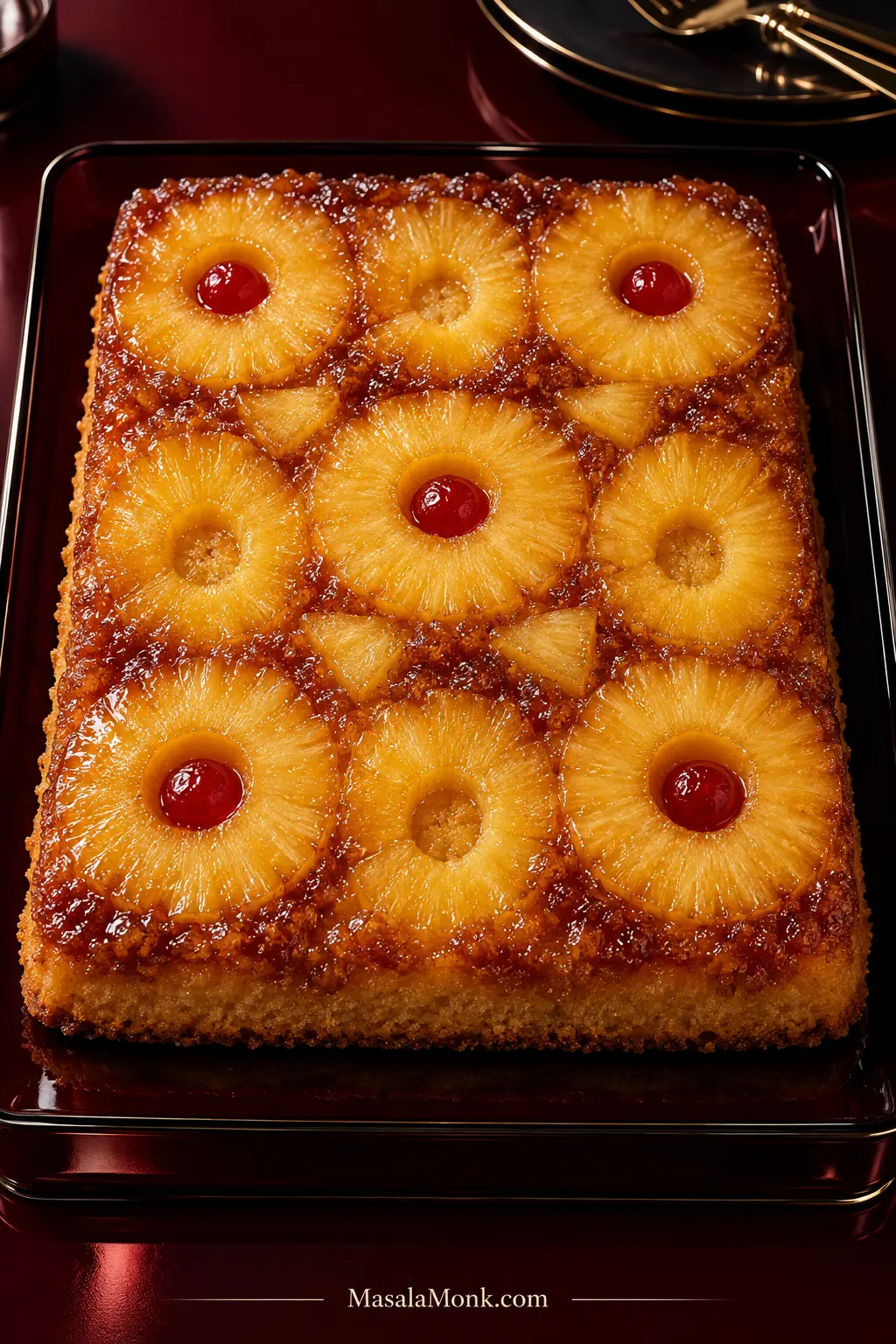
The best moment comes when you lift the pan: glossy pineapple rings, amber-brown caramel and soft yellow cake underneath, with the topping still warm around the fruit.
A box of cake mix makes the batter easy. The parts that need a little attention are the pineapple, the amount of water, the bake and the flip. Get those right and this pineapple upside down cake with cake mix stays moist without turning gummy, and the topping comes out with the cake instead of staying behind in the pan.
If you would rather make the batter from scratch, use our pineapple upside down cake recipe.
Before You Mix: Box, Juice, Fruit and Flip
For a straightforward version, use yellow cake mix, pineapple rings packed in juice and a light-colored 13 × 9-inch metal pan. Then keep these four points straight:
| What matters | What to do |
|---|---|
| Cake mix box | Use the eggs or egg whites and oil or butter listed on the package in your hand. |
| Water | Count the reserved pineapple juice toward the amount of water called for on the box. |
| Fruit | Drain and blot the pineapple on both sides before it goes into the pan. |
| Flip | Loosen and invert the cake while it is hot, then leave the pan over it for 5 minutes. |
Pineapple Upside Down Cake with Cake Mix Recipe
A simple 13 × 9-inch cake-mix version with pineapple juice in the batter and pineapple rings baked into a warm brown-sugar topping.
Yield: 12 servings
Equipment
- 13 × 9-inch (33 × 23 cm) light-colored metal baking pan
- Mixing bowl and hand mixer or sturdy whisk
- Strainer and liquid measuring cup
- Thin knife or small offset spatula and a toothpick or thin skewer
- Oven mitts and a large heatproof rimmed platter, tray or baking sheet that fully covers the pan
Ingredients
- 1 box yellow cake mix, usually 13.25–15.25 oz (about 376–432 g)
- 1 can pineapple rings in juice, 20 oz (567 g), juice reserved
- Eggs or egg whites, in the quantity called for on your cake-mix box
- Oil or butter, in the quantity called for on your cake-mix box
- Reserved pineapple juice + enough water to equal the amount of water called for on the box
- ¼ cup unsalted butter (4 tbsp / 57 g), melted, for the topping
- 1 cup packed light brown sugar (about 200 g)
- Maraschino cherries, one per pineapple ring, drained and blotted dry, optional
Instructions
- Heat the oven and prepare the pan. Preheat to 350°F (175°C) with a rack in the center. Lightly grease or spray the sides of a 13 × 9-inch pan; leave the bottom for the caramel topping. Set the empty pan against your serving platter or tray now and make sure the platter completely covers it. It is much easier to sort that out before the cake is hot.
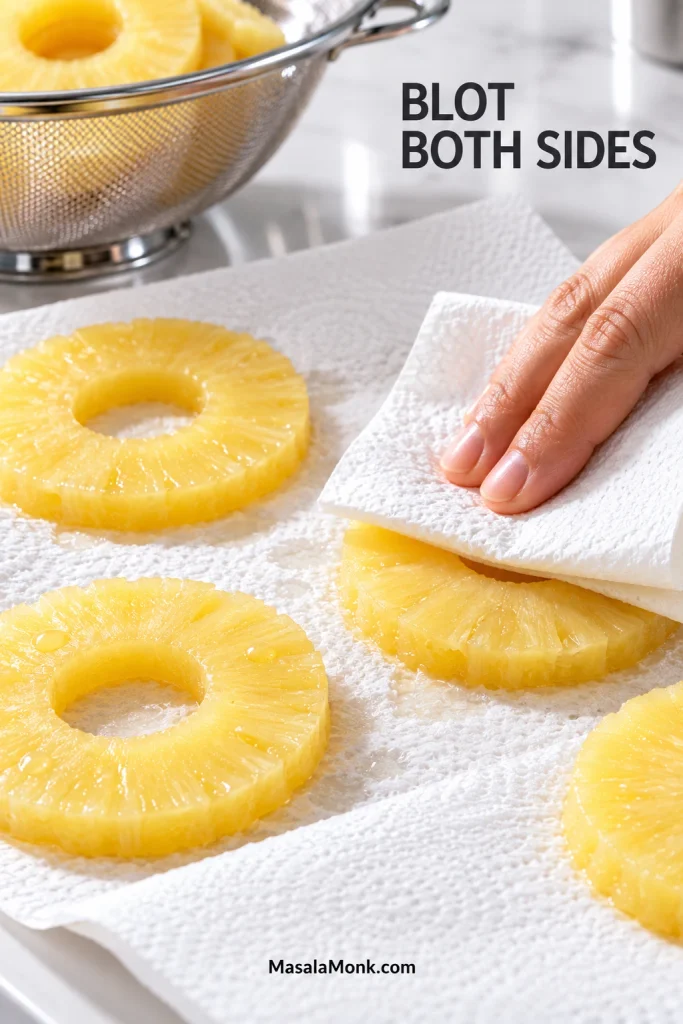
- Drain and dry the fruit. Set a measuring cup beneath a strainer and save the pineapple juice. Lay the rings on paper towels and blot both sides. Blot the cherries too, if using, so loose syrup does not run into the caramel.
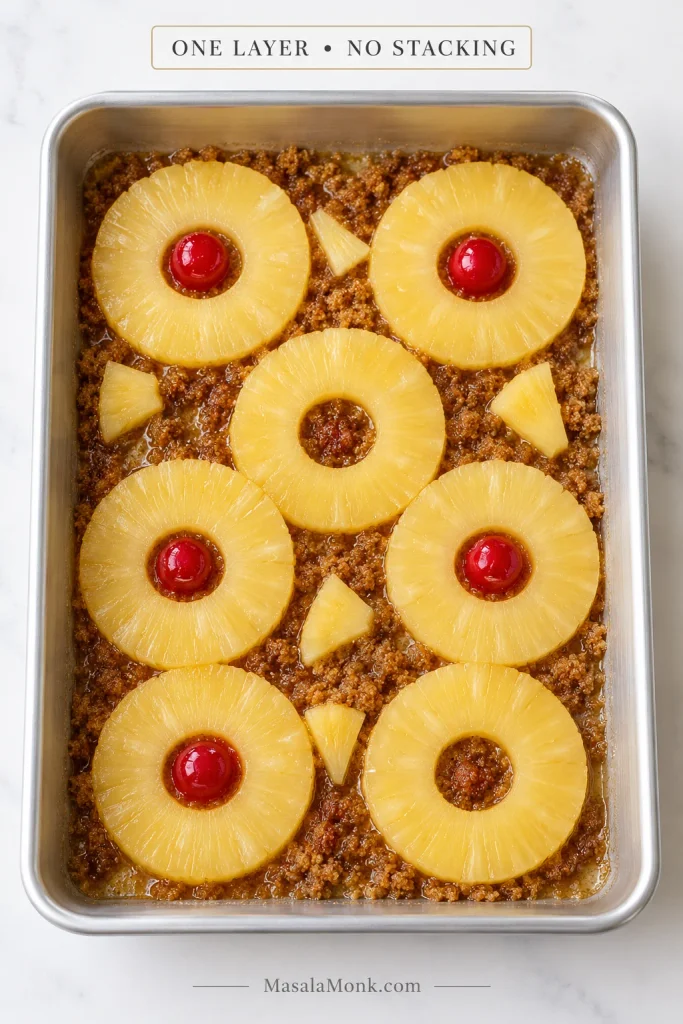
- Build the topping. Pour the melted butter evenly over the bottom of the pan, then sprinkle the brown sugar from edge to edge. Arrange the pineapple rings in a single layer and place a cherry in each center if you like. Cut another ring into pieces to fill larger spaces; avoid stacking the fruit.
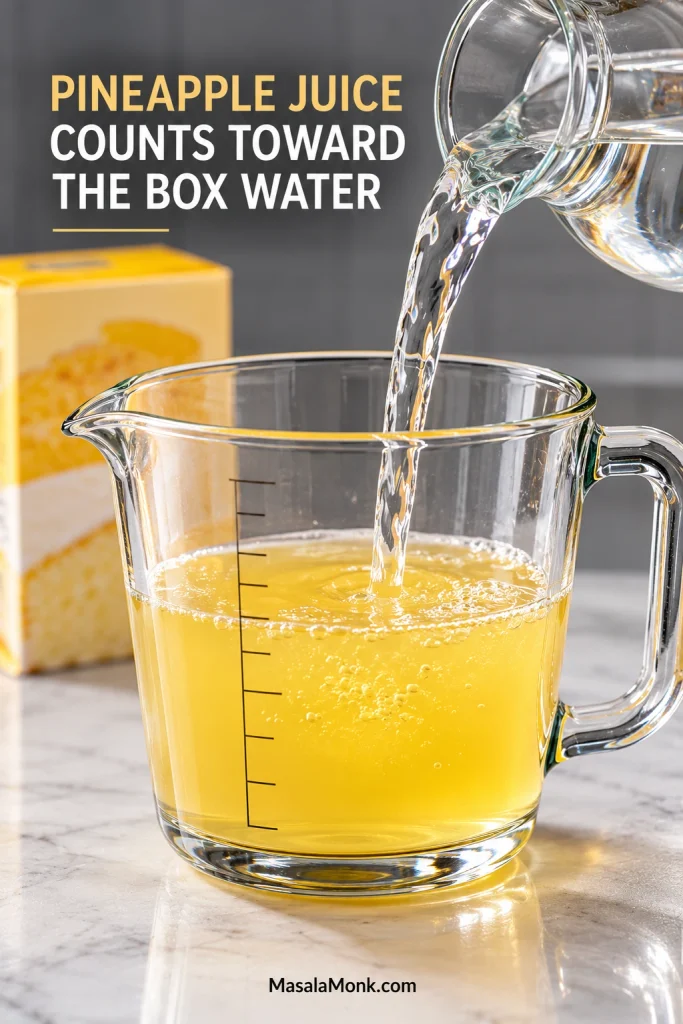
- Measure the cake liquid. Check how much water your box requires. Measure the reserved pineapple juice, then add only enough water to reach that amount.
- Mix the batter. Add the eggs or egg whites and oil or butter listed on your package, then use the measured pineapple-juice mixture in place of the box water. Mix as directed on the box. The batter should look like ordinary cake batter, not unusually thin.
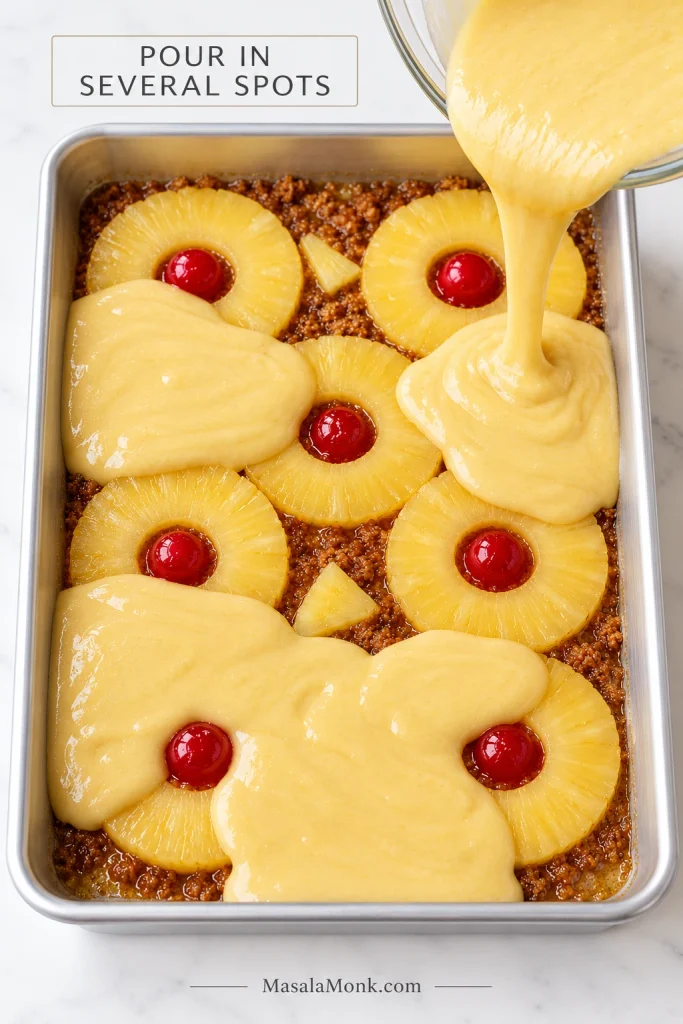
- Cover the pineapple gently. Pour or spoon the batter over several areas of the pan, then smooth it lightly to the corners so the fruit stays in place.
Before baking, the batter only needs even coverage; it does not need a perfectly smooth surface.
Bake, Check and Flip
- Bake. Put the cake on the center rack and start checking at about 40 minutes. In a light-colored metal 13 × 9-inch pan, expect roughly 40–46 minutes, but use the cake itself to decide when it is ready.
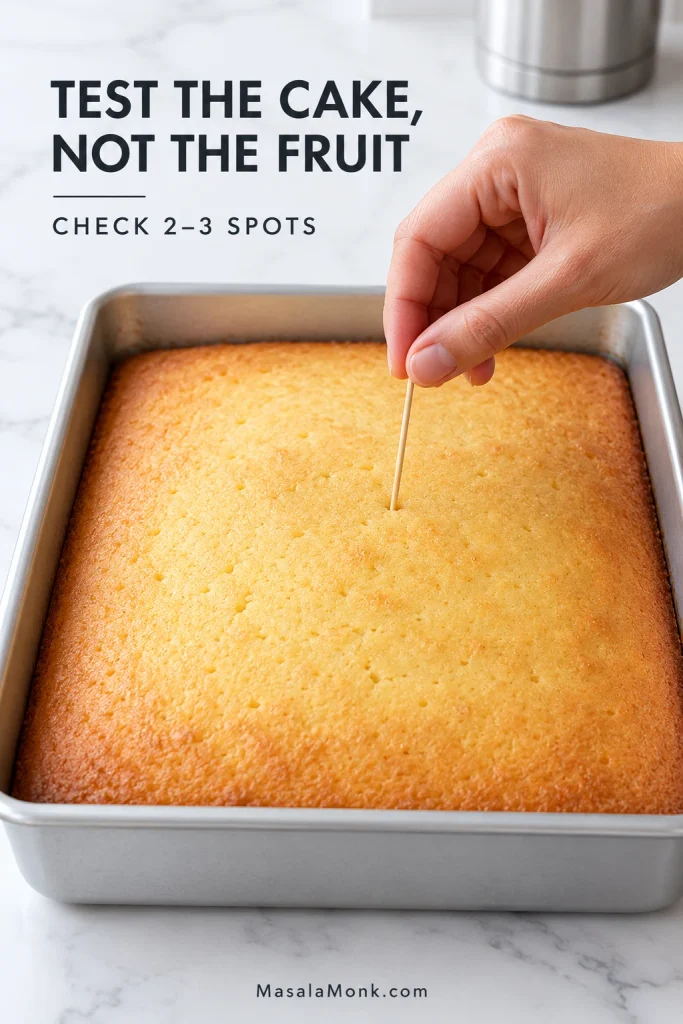
- Check the center. The middle should look set, show no obvious wobble and spring back lightly. Test 2–3 spots near the center; there should be no wet batter. Keep the tester in the cake crumb. If it reaches the pineapple underneath, the juice can make a finished cake look underdone. If the top browns before the center is ready, tent it loosely with foil and keep baking.
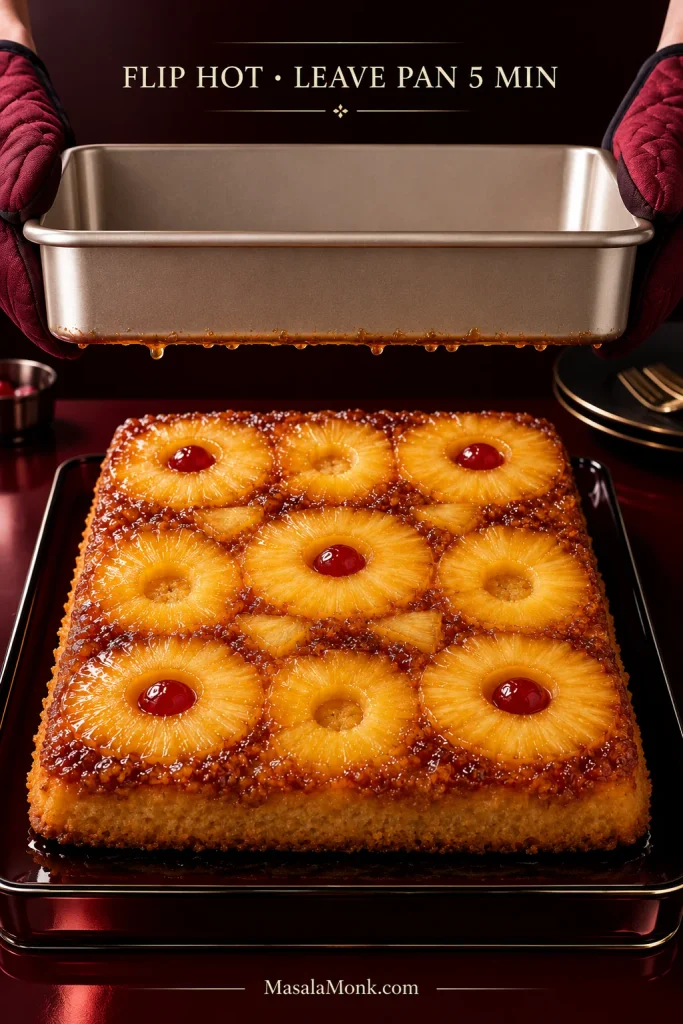
- Loosen and flip while hot. As soon as the cake comes out, run a thin knife around the edge. Put the rimmed serving platter directly against the pan. Wearing oven mitts, hold the two together and rotate them as one unit. The flip feels more dramatic than it is because the cake never needs to fall through the air.
- Let the topping release. Leave the inverted pan over the cake for about 5 minutes, then lift it straight up. If a pineapple ring stays behind, put it back while everything is warm and spoon over any caramel left in the pan. Nothing is ruined.
- Cool before slicing. Let the cake stand for about 30 minutes. It will still be pleasantly warm, but the crumb will be firm enough for cleaner slices and the caramel will remain soft around the pineapple.
Recipe Notes
- Less-sweet topping: reduce the brown sugar to ¾ cup (about 150 g). The caramel will be lighter and the pineapple will come through more clearly.
- Dark or nonstick pan: follow the pan-specific temperature guidance on your cake-mix package rather than automatically using 350°F.
Method note: MasalaMonk has not independently kitchen-tested this version. The method is based on current cake-mix directions and established pineapple upside-down cake techniques.
Cake Mix, Pan and Flip Guide
If you are using the yellow cake mix, pineapple rings in juice and the light-colored metal pan above, you can make the cake from the recipe card alone. The rest is here for substitutions, pan questions and anything that does not go quite as planned.
Cake Mix and Pineapple Juice
Baking and Flipping
Options, Troubleshooting & Storage
Let the Cake Mix Box Set the Batter Formula
Whether your cake mix is around 13.25 oz (376 g) or 15.25 oz (432 g), use the eggs or egg whites and oil or butter printed on that package. Keep the box’s water amount the same; the reserved pineapple juice simply supplies part or all of it.
Cake mixes do not all use the same formula. One may call for oil, another for butter, and a white mix may give you an egg-white option. The package in your hand is a better guide than an old one-size-fits-all formula.
Which cake mix works best?
Yellow cake mix gives the most classic result. Its buttery vanilla crumb lets the pineapple and caramel stay in front. Butter yellow is richer, while white or French vanilla gives the cake a lighter vanilla background.
Skip angel-food cake mix for this method. Its foam-based batter behaves very differently from standard cake mix, so it is not a straight substitute here.
Can I use pineapple cake mix?
Yes. It puts pineapple flavor into the crumb as well as the topping. Use yellow mix when you want the rings and caramel to lead; choose pineapple-flavored mix when you want the fruit flavor throughout the cake.
Pineapple Juice Is a Swap, Not an Extra Ingredient
A 20-ounce can may or may not provide enough juice to replace all the water called for on your cake-mix box. Measure the reserved juice first, then add only enough water to reach the box’s required amount.
Adding the full amount of water from the package and then pouring in pineapple juice as well makes the batter wetter than the mix was designed to handle.
Choose pineapple packed in juice if you can. You get useful juice for the batter without the extra sweetness of heavy syrup. If you only have pineapple in heavy syrup, drain the fruit thoroughly and use water or separate pineapple juice for the batter. Don’t use the thick syrup cup for cup.
The pineapple can stay juicy inside. Blotting each ring on both sides removes the loose surface water that can thin the butter-and-sugar layer underneath.
If the cake turns out wet or gummy, the soggy-cake troubleshooting below helps separate excess moisture from an underbaked center.
Pineapple and the Brown-Sugar Topping
For a 13 × 9-inch pan, ¼ cup (57 g) butter and 1 cup (about 200 g) packed brown sugar gives you the classic glossy caramel layer. After baking, the caramel should settle into amber-brown pockets around the pineapple instead of forming a thin watery layer.
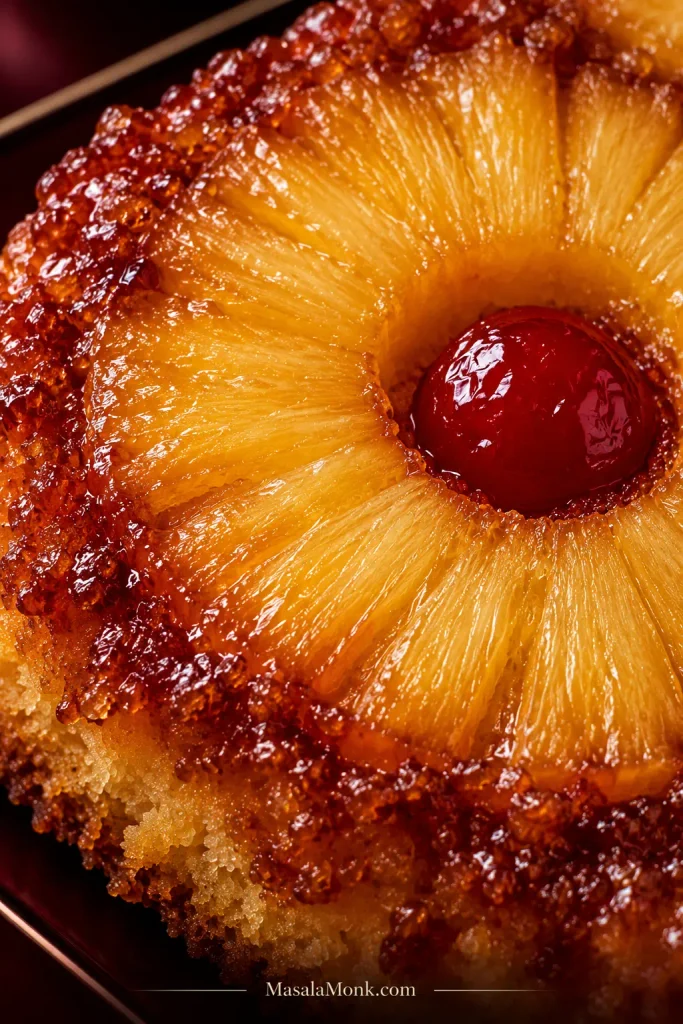
For a less-sweet cake, reduce the brown sugar to ¾ cup (about 150 g). The caramel will be lighter and less candy-like, so the pineapple tastes brighter.
Best pan for pineapple upside down cake
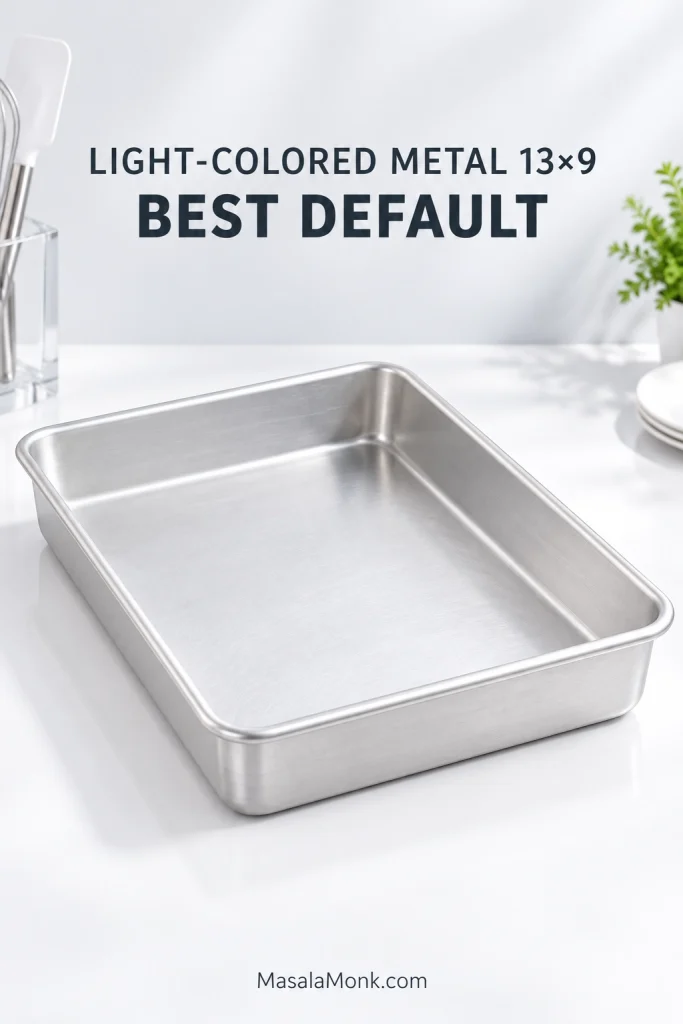
Use a light-colored metal 13 × 9-inch pan if you have one. It gives the caramel steady heat from underneath without browning as aggressively as very dark bakeware.
Glass is usable, though metal is the better choice here. Skip silicone for this cake, and avoid springform pans because melted butter and sugar can leak through the seam.
A single 8- or 9-inch round pan is too small for the full recipe. If you want round pineapple upside-down cakes, use a method designed for two round pans because the topping amounts, fruit arrangement and bake time all change.
Avoid a substantially larger pan too. The batter becomes much shallower and the balance between cake and topping changes.
Bake Time and Doneness
For the light-colored metal 13 × 9-inch version, 40–46 minutes at 350°F (175°C) is a practical working range. Start checking at about 40 minutes.
One clean toothpick can miss a wet pocket, so check 2–3 places near the center. Keep the tester in the cake crumb; pineapple juice underneath can make a finished cake look wet. If the top browns before the middle is ready, tent it loosely with foil and keep baking.
When to Flip Pineapple Upside Down Cake
The topping releases best while the caramel is still hot, so don’t leave the baked cake sitting in the pan to cool. Loosen and invert it promptly, then leave the pan over the cake for about 5 minutes so the warm topping can settle over the fruit.
If a pineapple ring stays behind, put it back in place while everything is warm and spoon over any caramel left in the pan.
Pineapple Options: Rings, Crushed, Tidbits or Fresh
| Pineapple | Best use and what to watch |
|---|---|
| Rings | Classic look, juicy pineapple bites and straightforward moisture control. |
| Crushed | Fruit in almost every bite; press out loose juice thoroughly. |
| Tidbits | More even pineapple in each portion; drain well so extra juice does not thin the caramel. |
| Fresh | Firmer fruit with a little more bite; remove the core, slice about ¼ inch thick and provide the batter water separately. |
Using crushed pineapple with cake mix
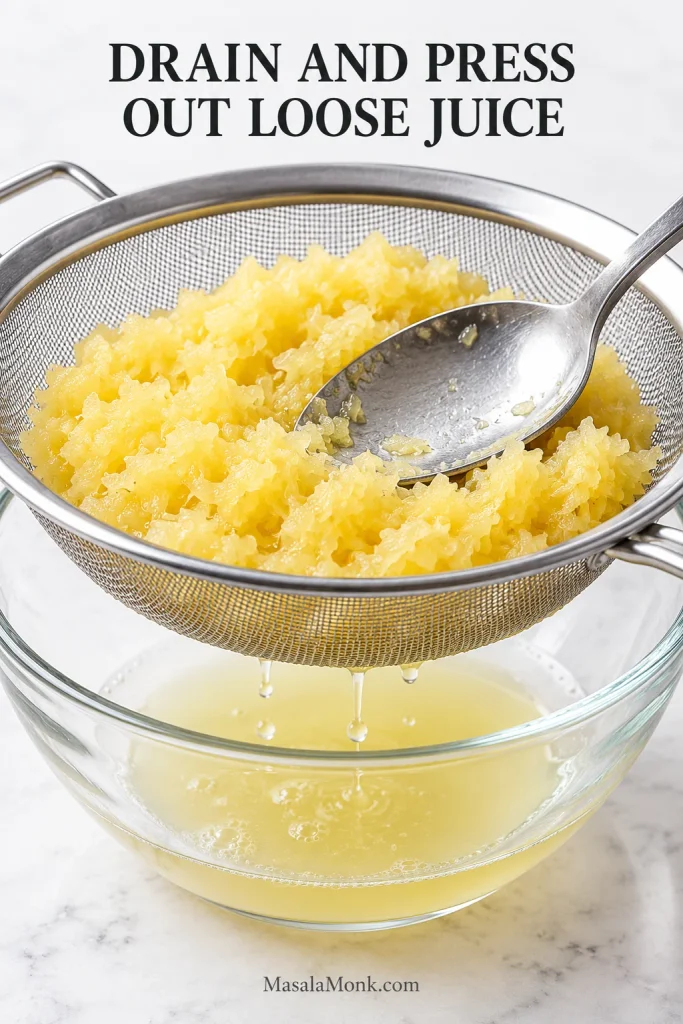
Start with one 20 oz (567 g) can of crushed pineapple. Drain it in a fine-mesh strainer, then give it a few firm presses to remove more loose juice before spreading it in a thin layer over the brown sugar. Crushed pineapple is messier than rings, but pressing out the loose juice gives you an even fruit layer without watering down the caramel.
Using fresh pineapple
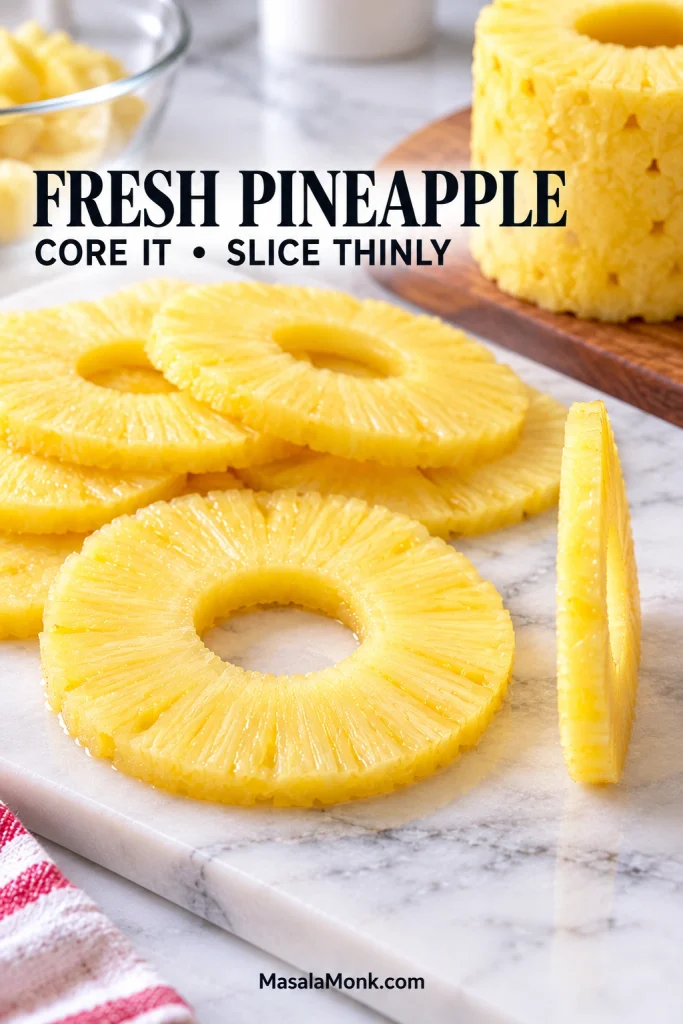
You can use fresh pineapple. Remove the tough core and slice the fruit about ¼ inch thick so it has time to soften during baking. Since there is no canned juice to reserve, use purchased pineapple juice or the amount of water called for on your cake-mix box.
Extra fruit can go into our pineapple jam recipe, which also works with canned crushed pineapple.
Are the cherries necessary?
No. Maraschino cherries give you the familiar bright red centers and classic pineapple upside down cake look, but they do not affect the bake. Leave them out if you prefer the pineapple and caramel on their own.
Once you have chosen your fruit, return to the recipe card when you are ready to bake.
Pineapple Upside Down Cake Troubleshooting
Why is my pineapple upside down cake soggy?
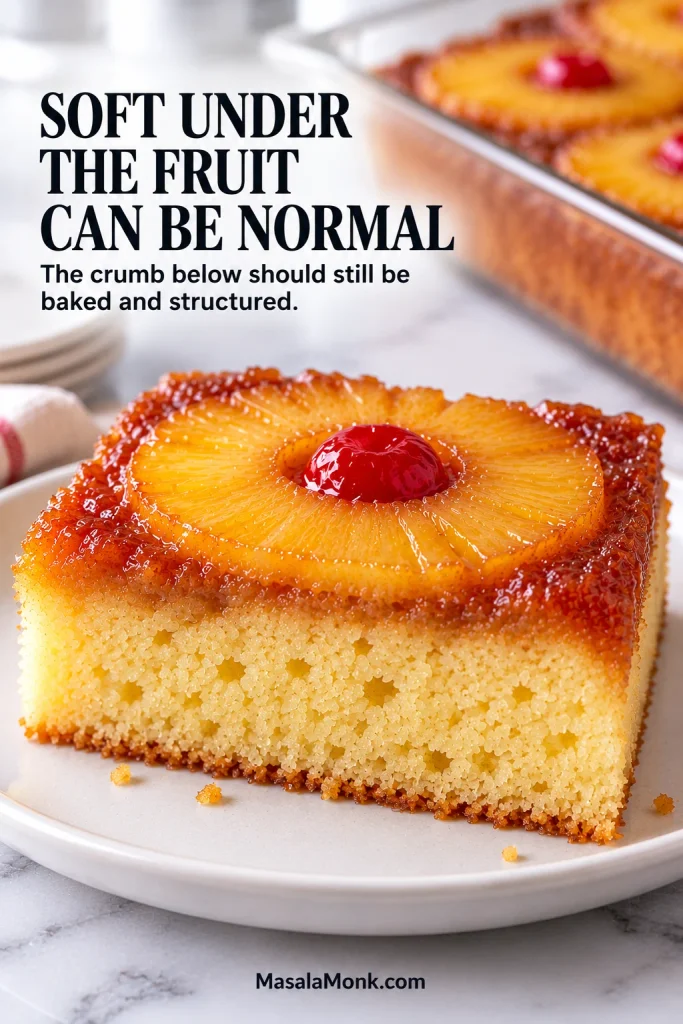
A soggy pineapple upside down cake usually comes from too much water or juice in the batter, very wet fruit or an underbaked center. Blot the pineapple well, count its juice toward the water on the cake-mix box, and check more than one spot near the center before taking the cake out of the oven.
A softer crumb directly beneath the pineapple is normal. A wet, gummy layer or raw center is not.
Common Pineapple Upside Down Cake Problems and Fixes
| Problem | Likely cause and fix |
|---|---|
| Raw center | The middle needs more time. Check several spots near the true center; one clean toothpick can miss a wet pocket. |
| Pineapple stuck to the pan | A ring can occasionally stay behind even with good timing. Put it back in place while everything is warm and spoon over any caramel left in the pan. |
| Watery caramel | Loose pineapple or cherry liquid diluted the butter and sugar. Drain and blot the fruit more thoroughly. |
| Pineapple moved out of place | The batter may have been too thin or poured heavily into one spot. Keep the package water ratio and spread the batter gently from several areas of the pan. |
| Cake broke during the flip | An underbaked center is fragile. Confirm that the middle is done and keep the platter pressed firmly against the pan as you turn it. |
| Pale topping | Excess fruit moisture can dilute the caramel. Drain the fruit thoroughly and use a metal pan when possible. |
| Greasy topping | Too much butter can leave the topping oily. Measure the ¼ cup accurately and spread it evenly before adding the sugar. |
| Whole cake feels unusually dense | Extra water or juice, extra eggs or rich add-ins such as pudding mix and sour cream can make the cake heavier than intended. Stick with the wet-ingredient amounts on your box and count pineapple juice toward its water amount. |
| Cake is too sweet | Use pineapple packed in juice and reduce the brown sugar to ¾ cup (about 150 g) if you want a lighter caramel topping. |
Once you have found the likely cause, return to the recipe card or go back to the top.
Make Ahead, Storage and Serving
To get ahead, prepare the individual parts first. Drain the pineapple, measure what you need and have the pan and serving platter ready. Mix the batter shortly before baking.
The cake is especially good the day it is baked, while the topping is glossy and the crumb directly under the pineapple is moist but still holds its shape.
Once completely cool, cover the cake and refrigerate it. For the best texture, plan to finish refrigerated leftovers within about 3 days. Bring a slice closer to room temperature before serving, or warm it gently if you want the caramel softer.
Freezing is possible, but it is not the best choice for this cake because the pineapple and caramel can become softer after thawing. Refrigeration is better when you expect to finish it within a few days.
For serving, no frosting is needed. A spoonful of homemade whipped cream gives you a cool, lightly sweet contrast to the warm pineapple and brown-sugar caramel.
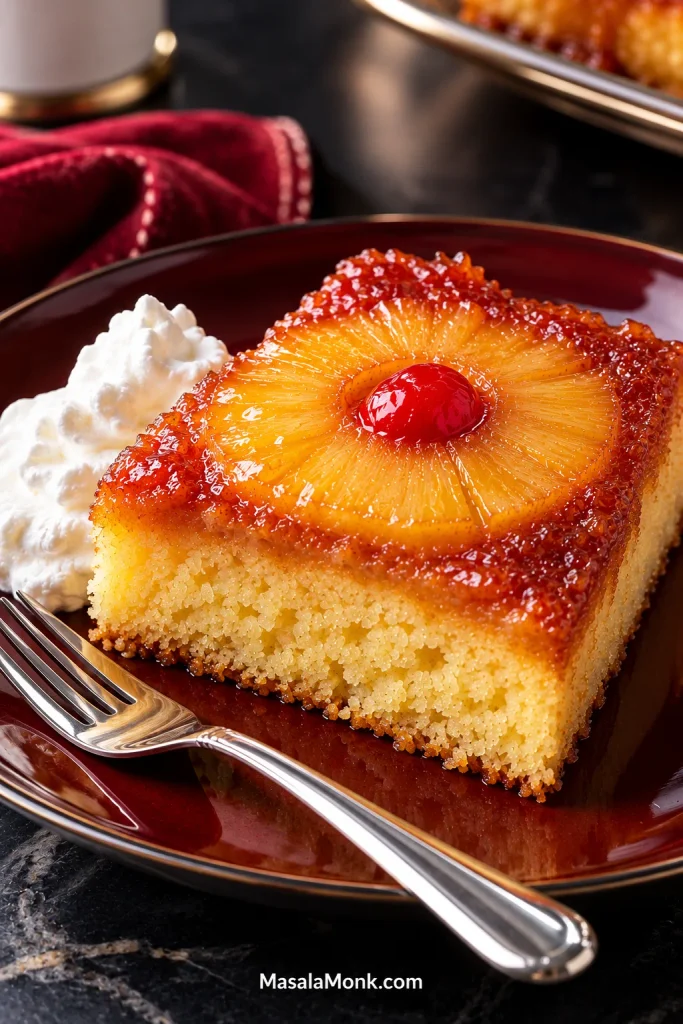
After about 30 minutes, the cake should still be warm, the caramel soft around the pineapple and the crumb firm enough for a clean slice. That is a good time to take the first one.








