
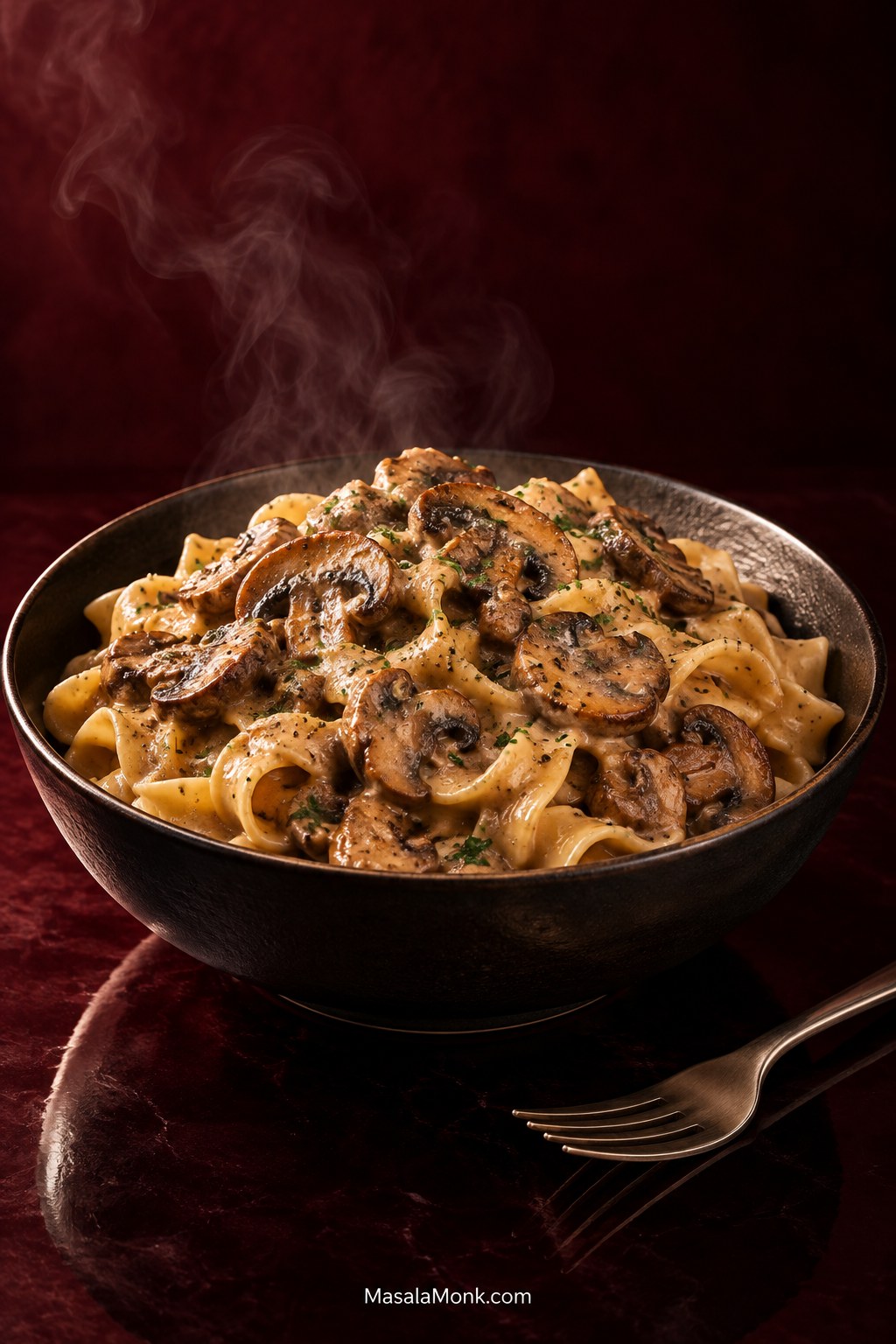
A good mushroom stroganoff recipe gets wetter before it gets better. Halfway through browning, the skillet can suddenly fill with mushroom water and look as though everything has gone wrong. It hasn’t. Keep cooking and the puddle disappears, the sharper frying sound comes back, and gray mushrooms begin picking up browned edges.
The goal is a mushroom-heavy stroganoff with browned pieces and silky sauce clinging to the noodles instead of pooling underneath them. It takes about 40–50 minutes for four servings, with most of the attention going to one worthwhile stage: letting the mushrooms cook through the water they release before the sauce begins.
This is the meatless counterpart to Beef Stroganoff, but the sauce still needs plenty of savory depth before the sour cream arrives. Wine, Dijon, tomato paste and a small umami boost do most of that work; the sour cream gives the finished sauce its familiar tang.
Quick answer: to know when mushroom stroganoff is going right, read the skillet as Wet → Brown → Glossy.
WET
The mushrooms have released water. Keep cooking; the sauce comes later.
BROWN
The water has mostly gone, frying resumes and real brown patches appear.
GLOSSY
The sauce coats a spoon but still flows. Return the mushrooms and finish with sour cream off heat.
Mushroom Stroganoff Recipe
This recipe uses 20 oz / 570 g mushrooms for four servings, enough sauce to coat the noodles, and a little broth held back so you can loosen the sauce only if it needs it.
| Serves | 4 |
|---|---|
| Prep | About 10–15 minutes |
| Cook | About 30–35 minutes |
| Total | About 40–50 minutes |
| Mushrooms | 20 oz / 570 g |
| Main pan | 12-inch / 30-cm wide skillet or sauté pan |
Ingredients
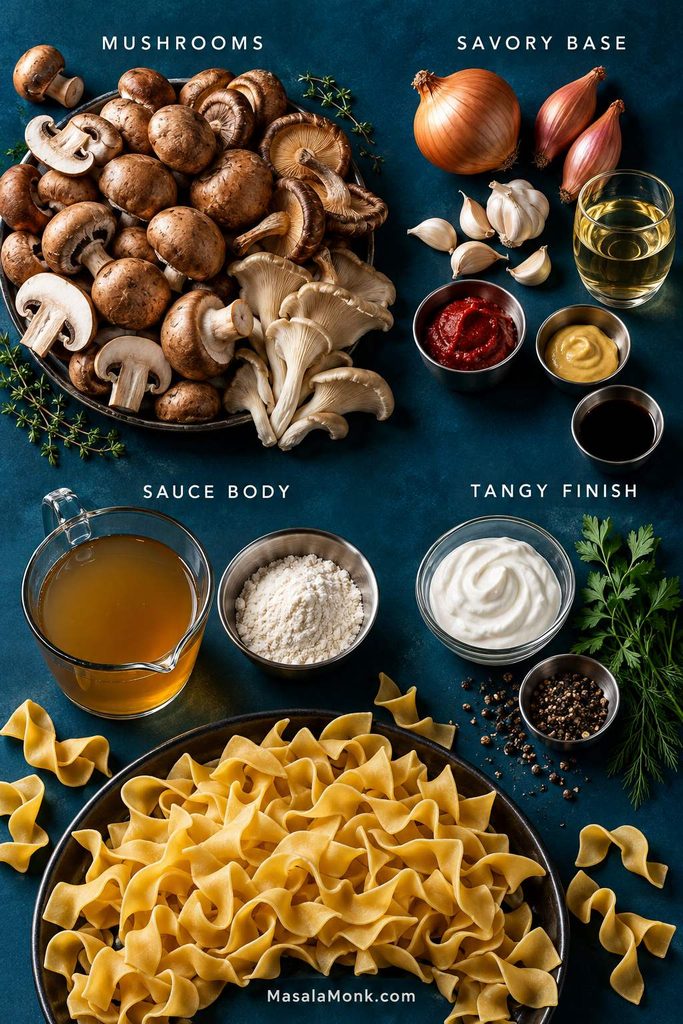
- 20 oz / 570 g mushroomsUse cremini, brown or chestnut mushrooms, or replace up to about 6 oz / 170 g with shiitake or oyster mushrooms.
- 1 tbsp / 15 ml olive or neutral oil, divided
- 2 tbsp / 28 g / 1 oz butter, divided
- 1 medium yellow onion or 2 large shallots, about 5 oz / 140 g, finely chopped
- 3 garlic cloves, finely minced
- 1 tbsp tomato paste
- ½ cup / 4 fl oz / 120 ml dry white wineFor strict vegetarian or vegan cooking, use suitably labeled wine or replace it with broth.
- 2 tbsp / about 16 g all-purpose flour
- 1¼ cups / 10 fl oz / 300 ml low-sodium vegetable or mushroom brothFor the no-wine version, have 1¾ cups / 14 fl oz / 420 ml broth total available.
- 2 tsp Dijon mustard
- 2 tsp / 10 ml soy sauce, tamari or vegetarian Worcestershire sauceChoose one.
- 1 tsp sweet paprika
- ½ tsp dried thyme or 1–1½ tsp fresh thyme leaves
- ½ tsp fine salt for the mushrooms, plus more for the pasta water and final seasoning
- ½ tsp freshly ground black pepper, plus more to finish
- ½ cup / about 120 g full-fat sour cream
- 10 oz / about 280 g wide egg noodles
- 2 tbsp chopped parsley or dill, to finish
Method
1. Prep the Mushrooms
Slice cremini, brown, chestnut or white button mushrooms around ¼ inch / 6 mm thick. Tear oyster mushrooms into bite-size pieces and remove tough shiitake stems before slicing the caps. Chop the onion and garlic so everything is ready once the pan gets hot.
2. Brown the Mushrooms in Two Batches
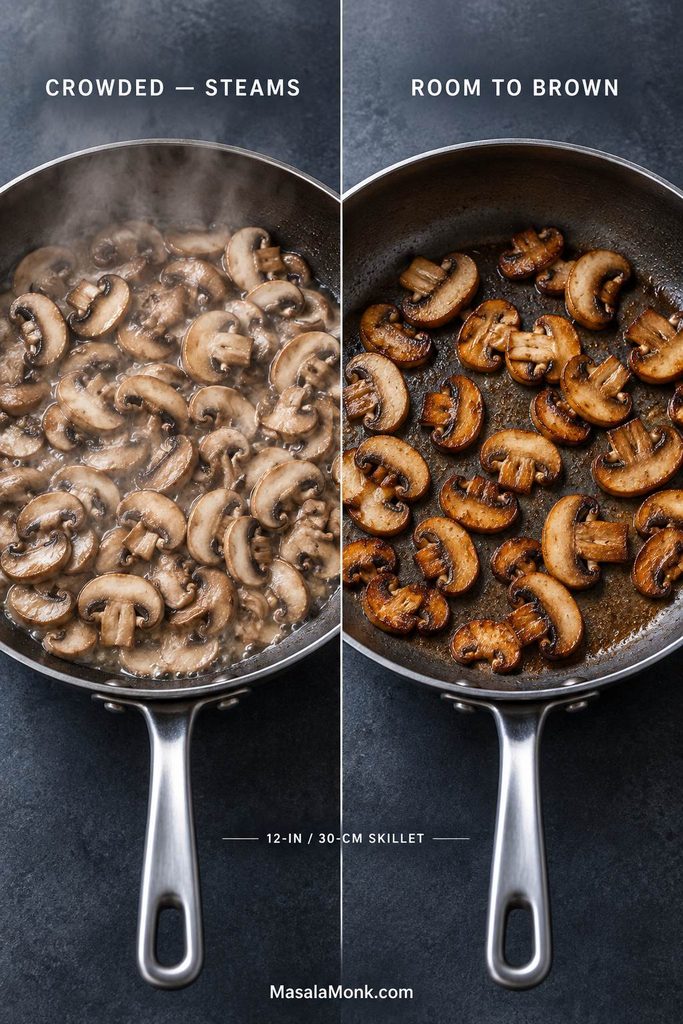
Heat a 12-inch / 30-cm wide skillet over medium-high heat. Add half the oil and about ½ tablespoon butter, then spread half the mushrooms across the skillet. Leave them alone for a couple of minutes before stirring.
The pan may suddenly look very wet. That’s normal. Keep it uncovered and let the moisture cook away. As the puddle disappears, listen for the pan to start sounding like it is frying again. Give the mushrooms another couple of minutes to develop real brown patches and a roasted smell.
You aren’t looking for perfect browning on every slice. Once the batch has good color across it, season with about ¼ teaspoon salt and transfer it to a plate. This often takes around 6–9 minutes, although a wetter batch can take longer.
Now put a large pot of water over high heat for the noodles. Add the remaining oil and another ½ tablespoon butter to the skillet, then repeat with the second half of the mushrooms. Season with the remaining ¼ teaspoon salt and move them to the plate.
3. Build the Aromatic Base
Reduce the skillet heat to medium and add the remaining 1 tablespoon butter. Cook the onion or shallots for about 3–4 minutes, until soft and beginning to color.
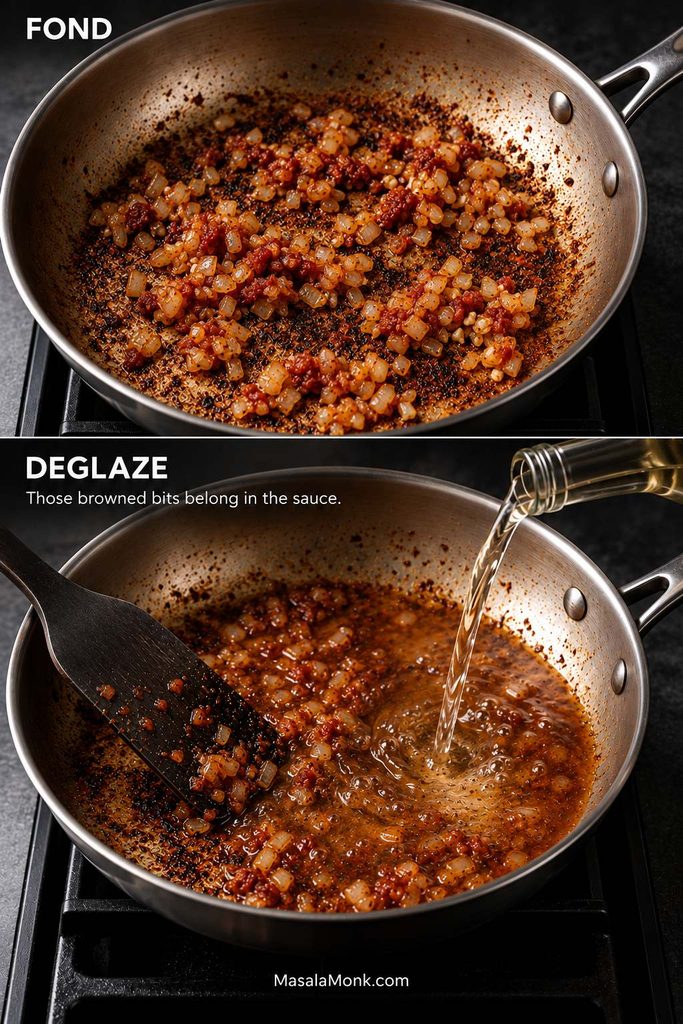
Add the garlic for about 30 seconds, then stir in the tomato paste. Give the paste another minute against the hot skillet. It should darken slightly and lose its raw, sharp smell.
4. Deglaze, Reduce and Cook the Noodles
Pour in the ½ cup / 120 ml dry white wine and scrape up the browned bits from the skillet. Simmer for about 2–4 minutes. The sharp wine smell should fade and the liquid should reduce to a shallow, concentrated layer.
No wine? Use ½ cup / 120 ml extra low-sodium broth and reduce it to the same point.
Once the pasta water is boiling, salt it and add the 10 oz / 280 g egg noodles. Cook according to the package directions while you finish the sauce.
5. Thicken and Season the Sauce
Sprinkle the 2 tablespoons / 16 g flour over the onion mixture and stir for 30–60 seconds. Gradually pour in 1 cup / 240 ml broth, stirring or whisking until smooth. Hold back the final ¼ cup / 60 ml; you may not need it.
Add 2 teaspoons Dijon, then 2 teaspoons of one chosen savory seasoning: soy sauce, tamari or vegetarian Worcestershire. Stir in the paprika, thyme and black pepper.
Simmer gently for about 4–6 minutes. By now the sharp wine aroma should be gone and the pan should smell rounded, savory and distinctly mushroomy. A thin film of sauce should cling to the back of a spoon.
Gluten-free: skip the flour and use verified gluten-free broth plus tamari or another verified gluten-free savory seasoning. Once the broth is hot, whisk in a slurry of 1 tablespoon / about 8 g cornstarch mixed with 2 tablespoons / 30 ml cold reserved broth.
6. Taste Before the Sour Cream
Take a spoonful now. The sauce should already taste like dinner.
Start with salt when it tastes flat. A well-seasoned sauce that still seems washed out needs more concentration, not more seasoning, so reduce it another minute or two. Then check the Dijon. Extra soy, tamari or Worcestershire comes last.
7. Return the Mushrooms and Finish Off Heat
Return the mushrooms and any juices from the plate. Give them 1–2 minutes to warm through. You should still see plenty of actual mushroom pieces in the pan.
Switch off the burner and let vigorous bubbling settle. Refrigerator-cold sour cream can be loosened first with a spoonful of warm sauce. Fold in the ½ cup / 120 g full-fat sour cream.
Tilt the skillet. The sauce should cling to the mushrooms while still moving easily. Add reserved broth 1 tablespoon / 15 ml at a time if it has tightened too much; it will continue to thicken as it stands.
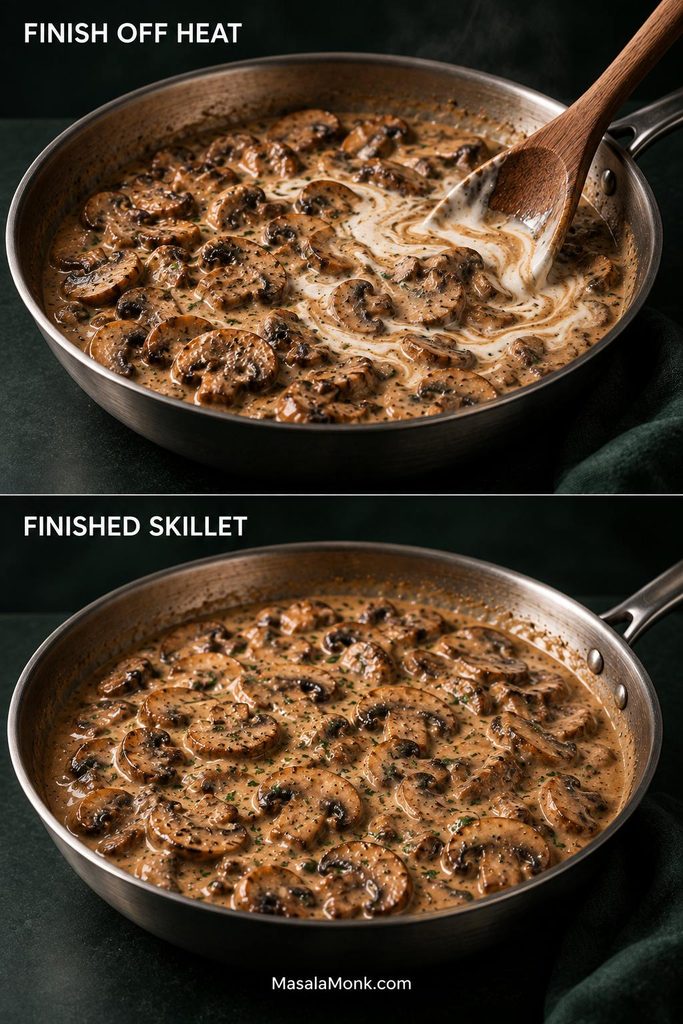
Drain the noodles when tender. Spoon the stroganoff over them and finish with parsley or dill and freshly ground black pepper.
Pan-size rule: a 12-inch / 30-cm skillet handles this amount well in two batches. With a smaller skillet, use three. When doubling the recipe, more batches or a second skillet are worth the trouble.
More Help With Mushroom Stroganoff
Serve, Fix & Store
Read the Skillet: Wet → Brown → Glossy
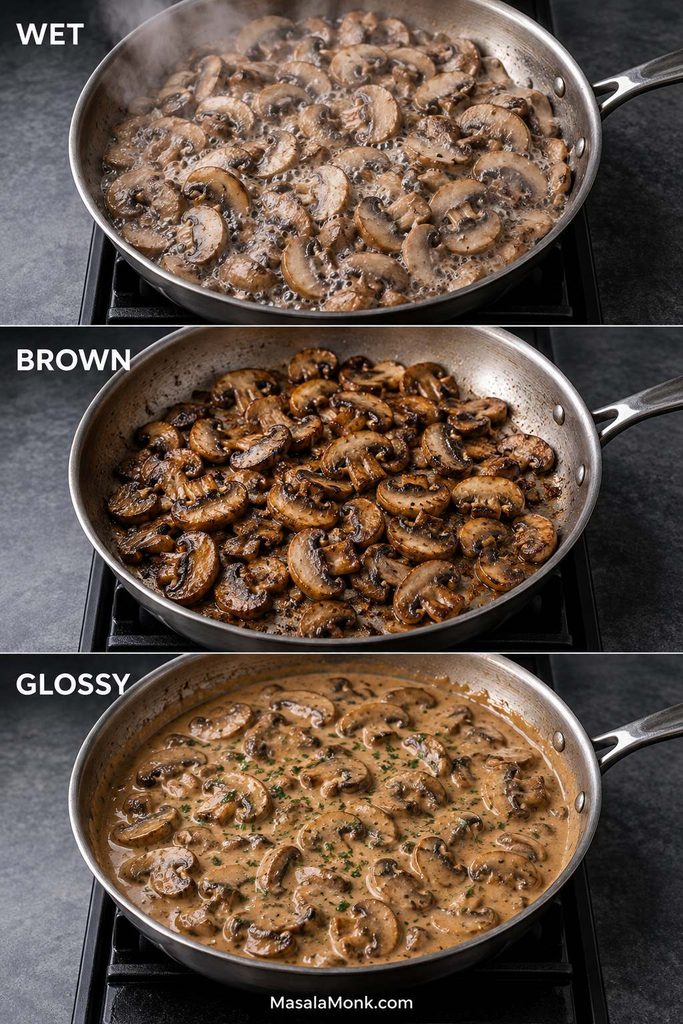
Mushrooms do not brown on a perfectly predictable clock. Freshness, storage, variety, slice thickness, pan material and burner strength all change how quickly their moisture cooks away. One batch may brown in six minutes. Another may need ten.
Wet: Let the Mushroom Water Cook Away
The skillet can look alarmingly wet for a while. If the mushrooms are still sitting in a puddle, don’t judge the browning yet. Leave the pan uncovered and give that water somewhere to go.
Still a puddle? Keep going.
Frozen mushrooms usually make an even wetter pan and need longer before browning begins. They work, but fresh mushrooms are the better choice here when texture matters.
Brown: Listen for the Frying Sound to Return
As the last puddles disappear, the soft wet hiss turns into a sharper sizzle. That’s the useful moment. The mushrooms are frying again, and the last couple of minutes are where much of their deeper flavor develops.
Don’t chase restaurant-perfect browning on every slice. Once you have real color across the batch and the mushrooms smell roasted instead of damp, you’re there.
Glossy: Stop While the Sauce Still Flows
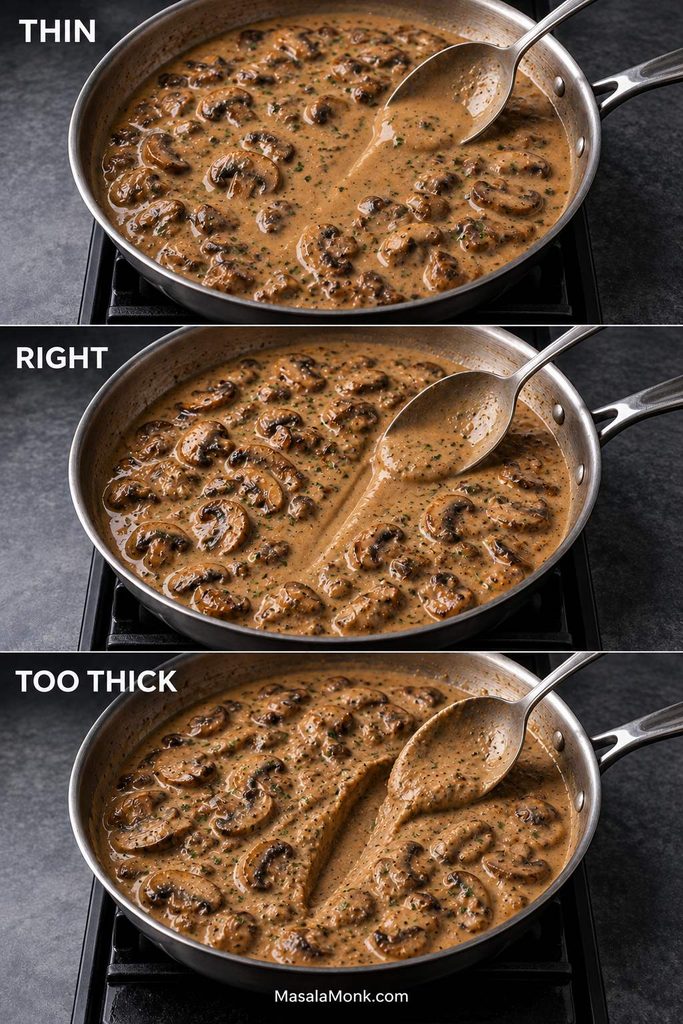
Drag a spoon or spatula through the sauce. A brief trail should appear, then slowly fill back in. Sauce that races together immediately needs more reduction; a trail that stays sharply open means the pan is heading too thick.
There is some margin here. Slightly loose is easier to correct than a sauce that has already tightened too far.
Best Mushrooms for Stroganoff
For an everyday stroganoff, start with cremini, brown or chestnut mushrooms. They have more earthy flavor than white button mushrooms, hold their shape well and brown reliably.
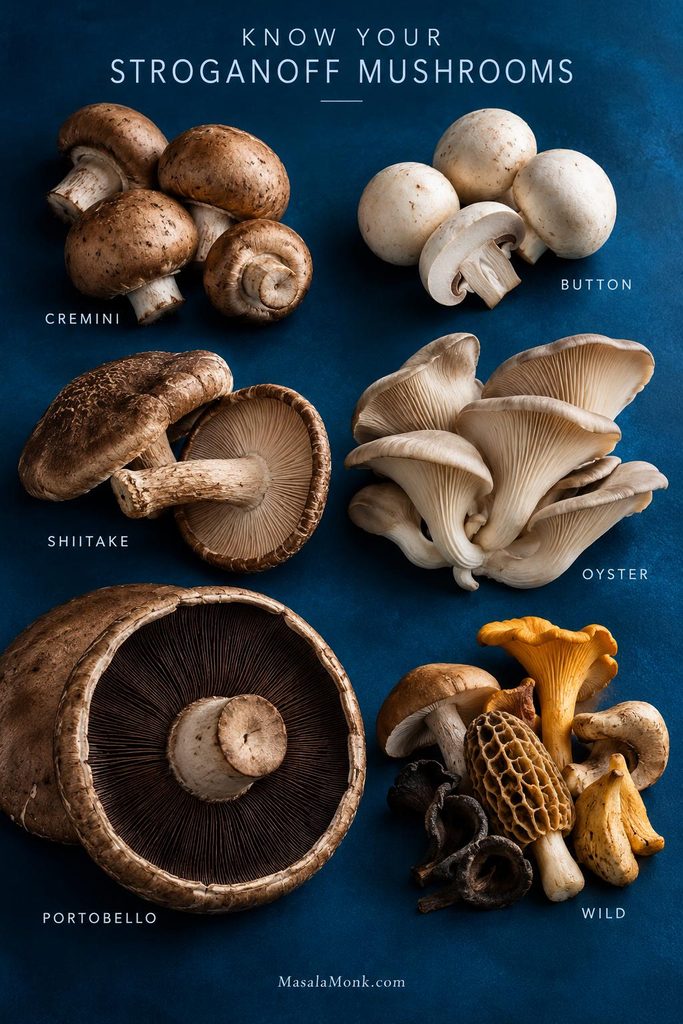
| If you want… | Use… | Why |
|---|---|---|
| Best everyday choice | Cremini, brown or chestnut | Good flavor, firm texture and dependable browning |
| A milder version | White button | Perfectly workable once well browned |
| Deeper aroma | Mostly cremini + some shiitake | Shiitake adds a stronger, woodier note |
| More textural contrast | Mostly cremini + some oyster | Oyster mushrooms give tender pieces and crisped edges |
| Meatier pieces | Portobello | Thicker slices keep more bite |
| A special batch | Fresh wild mushrooms | More aroma and variety, but not necessary |
How Much to Use and How to Cut Them
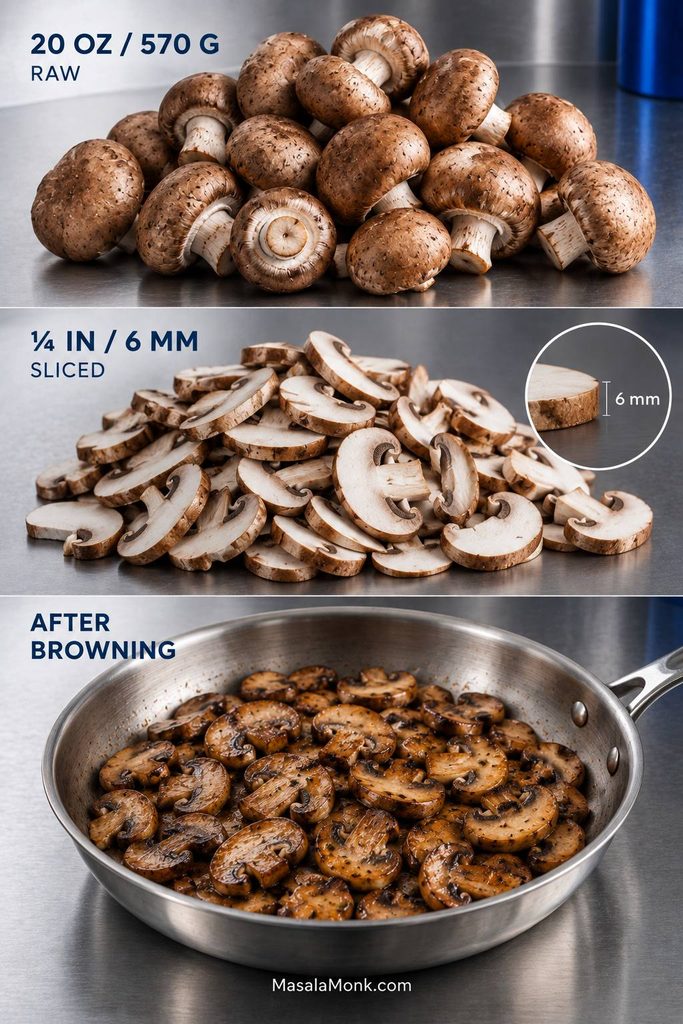
20 oz / 570 g may look like a lot of mushrooms at the cutting board. It won’t once their water cooks away. That amount keeps the final bowl mushroom-heavy enough that the noodles never take over.
All cremini is completely fine. For more aroma, replace about 6 oz / 170 g with shiitake or oyster mushrooms; there is no need to build an expensive five-mushroom mix.
Slice cremini, button and shiitake caps around ¼ inch / 6 mm thick. Tear oyster mushrooms. Portobellos can stay closer to ⅜–½ inch / 10–12 mm. Very thin slices cook quickly, but they also lose more of the bite that makes the finished dish satisfying.
Cleaning mushrooms: a brief rinse is fine when they need it. Dry them well before they hit the skillet.
Once those mushrooms taste properly roasted, the sauce has a simpler job: deepen that flavor and carry it across the plate.
Build a Stroganoff Sauce That Tastes Savory Before It Tastes Creamy
Build the Savory Base
Cook the tomato paste briefly after the onions and garlic. Once it darkens, deglaze with wine and scrape up the browned bits left from the mushrooms. Reduce until the sharp alcohol smell has gone and only a concentrated layer remains in the skillet.
Dijon gives the sauce brightness. Choose one savory seasoning—soy sauce, tamari or vegetarian Worcestershire—to deepen the mushrooms. Many traditional Worcestershire sauces contain anchovy, so use a vegetarian-labeled version when that matters.
Flat flavor is easier to fix when you diagnose it in order: salt → concentration → brightness → extra umami. Salt cannot fix a diluted sauce, and soy sauce cannot replace proper reduction. By this point, the pan should smell rounder and more savory than it did a few minutes earlier.
How to Thicken Mushroom Stroganoff Sauce
Flour gives the broth a light gravy-like body. Cornstarch provides the thickening for the gluten-free version. In either case, keep part of the broth out of the pan until the sauce tells you it needs more.
You’re looking for enough body to coat a spoon without turning stiff. A slightly loose sauce is easier to correct, especially because sour cream and a few minutes of standing will thicken it further.
Finish With Sour Cream Without Splitting It
Once the mushrooms are back in the sauce, take the skillet off the heat and let hard bubbling stop. Then add the sour cream. Full-fat sour cream is the best overall choice here: enough tang to keep the sauce lively, but enough fat to stay smooth when handled gently.
| Finish | Result | Verdict / adjustment |
|---|---|---|
| Full-fat sour cream | Classic creamy-tangy balance | Best overall choice |
| Crème fraîche | Richer and milder | Excellent substitute; may need more acidity |
| Full-fat Greek yogurt | Lighter and tangier | Best lighter option; always add off heat |
| Low/nonfat Greek yogurt | Leaner and less rich | Works, but is more prone to looking grainy |
| Heavy or double cream | Smooth and mild | Needs extra acidity to taste like stroganoff |
| Cream cheese | Thick, rich and mild | Possible, but not the closest substitute |
| Plant-based sour cream | Dairy-free finish | Useful for vegan versions; adjust by taste |
If what you want is a broader cream-and-mushroom sauce without stroganoff’s tang, the Creamy Mushroom Sauce Recipe is the better fit.
Useful Substitutions and Variations
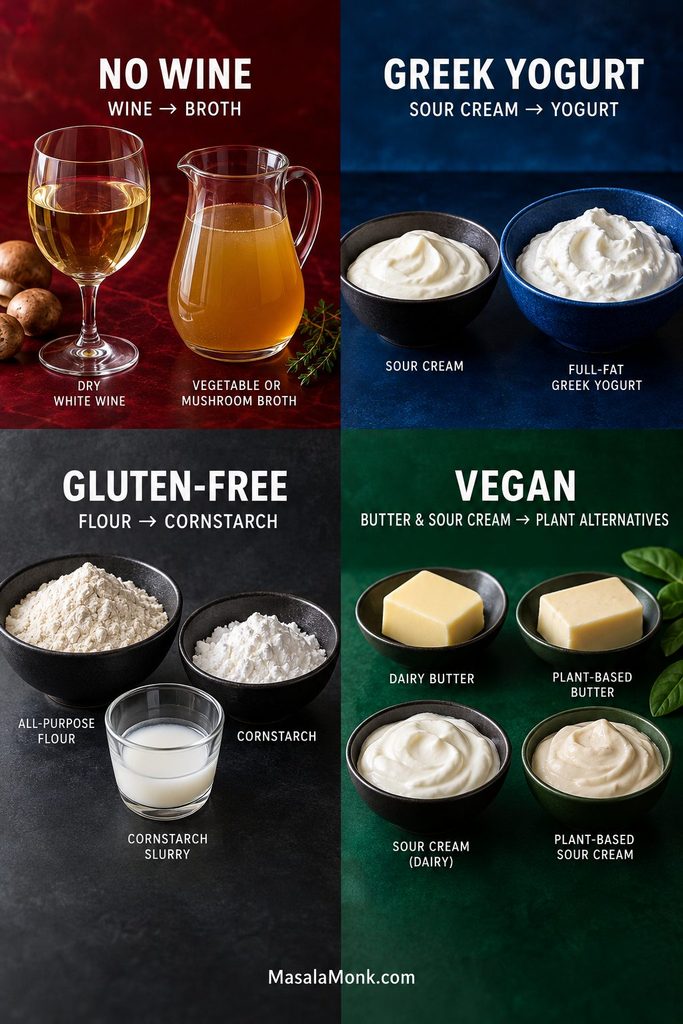
Can I Make Mushroom Stroganoff Without Wine?
Yes. Use ½ cup / 120 ml extra low-sodium broth in place of the wine and reduce it well. Taste the finished sauce after the sour cream goes in before adding extra acid. When it still tastes heavy or dull, about 1 teaspoon / 5 ml lemon juice or white-wine vinegar is usually enough to wake it up.
Using Greek Yogurt Instead of Sour Cream
Use about ½ cup / 120 g full-fat Greek yogurt. Take the skillet off the heat first; refrigerator-cold yogurt benefits from a spoonful of warm sauce mixed into it before it reaches the pan. Because yogurt is already tangy, taste before adding more acid.
Gluten-Free or Vegan Stroganoff
For gluten-free stroganoff, use verified gluten-free broth, tamari or another verified gluten-free savory seasoning, gluten-free noodles and the cornstarch method given in the recipe.
To make the stroganoff vegan, use oil or plant butter, vegetable or mushroom broth, soy or tamari, suitably labeled wine or extra broth, plant-based sour cream and egg-free noodles. Plant-based sour creams vary more than dairy sour cream, so taste first and adjust the looseness or acidity only when needed.
Add Spinach Near the End
Add 4–5 oz / 115–140 g baby spinach once the sauce has thickened. Let it wilt, then take the skillet off the heat and add the sour cream. Earlier is not better here—the spinach only needs enough time to collapse into the sauce.
What to Serve With Mushroom Stroganoff
Best Bases: Noodles, Rice, Potatoes or Polenta
Wide egg noodles are the classic choice, but rice, mashed potatoes, polenta and toast all work. The base changes how quickly the sauce tightens on the plate, so something absorbent such as rice or mash benefits from a slightly looser stroganoff.
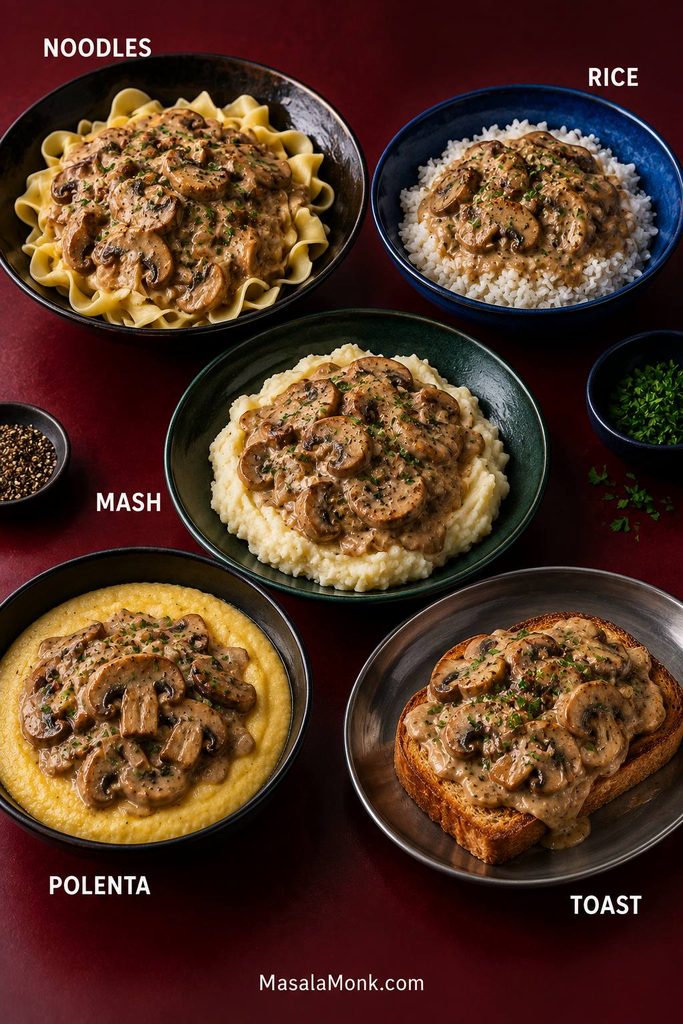
| Serve over | Keep the sauce… | Why |
|---|---|---|
| Wide egg noodles | Glossy and spoon-coating | Noodles catch sauce well but keep absorbing it |
| Rice | Slightly looser | Rice absorbs sauce quickly |
| Mashed potatoes | Loose and generous | Thick mash benefits from more flowing sauce |
| Polenta | Medium-loose | Keeps the bowl creamy without becoming stodgy |
| Toast | Slightly thicker | The sauce stays on top instead of soaking straight through |
For four servings, use about 10 oz / 280 g wide egg noodles or 1–1¼ cups / 190–240 g uncooked rice. Tagliatelle, pappardelle and fettuccine are good pasta alternatives. Our guide to cooking rice covers stovetop ratios if rice is your base.
Mashed potatoes and soft polenta need no special ratio here—just enough on each plate to catch a generous spoonful of sauce. The Mashed Potatoes Recipe is particularly good when you want a richer dinner.
Side Dishes That Cut the Richness
A crisp green salad with sharp vinaigrette, cucumber-dill salad, green beans, asparagus, broccoli or simple crusty bread all work well. The useful principle is contrast: stroganoff is soft and creamy, so freshness, crunch or acidity keeps the plate lively.
Cornichons, crispy shallots or plenty of black pepper can create the same contrast without adding another side dish.
Troubleshooting: Read What Went Wrong
| What you see or taste | Likely cause | What to do |
|---|---|---|
| Water around the mushrooms | They are still releasing moisture | Keep cooking uncovered before starting the sauce |
| Gray, pale mushrooms | They steamed before they could brown | Cook off the water completely; use smaller batches if needed |
| Thin finished sauce | Wine or broth did not reduce enough | Before dairy, simmer uncovered until the sauce clings lightly to a spoon |
| Thick or pasty sauce | Too much reduction or thickener | Add warm low-sodium broth 1 tbsp / 15 ml at a time |
| Bland sauce | Salt, concentration, brightness or umami is missing | Check them in that order |
| Tastes mainly of sour cream | The base was under-seasoned or too much dairy was added | A little Dijon or black pepper may rebalance it; next time strengthen the base before adding dairy |
| Too tangy | Very sour dairy or too much added acid | Soften with a little cream or butter if needed |
| Soft or soggy mushrooms | Thin slices, crowding or too much time simmering in sauce | They cannot fully crisp again; next time slice thicker, brown in batches and return them near the end |
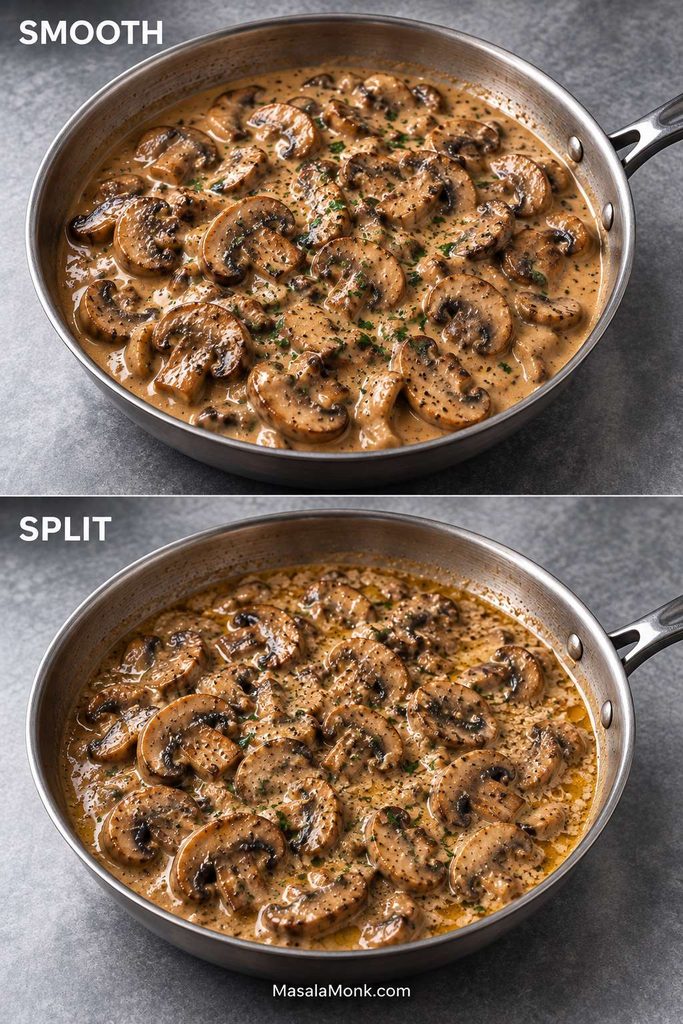
| Split or grainy sauce | Sour cream or yogurt got too hot | Remove the skillet from heat and whisk gently |
| Too salty | Broth and savory seasonings compounded | Loosen carefully with unsalted liquid; use low-sodium broth and season later next time |
| Not mushroomy enough | Weak browning or very mild mushrooms | Better browning helps more than adding extra cream |
| Not enough sauce | Over-reduction or pasta was mixed into the sauce too early | Add warm low-sodium broth 1 tbsp / 15 ml at a time |
Why Is My Mushroom Stroganoff Watery?
There are two different problems. Water pooling around the mushrooms means they have not finished releasing moisture. A thin sauce after browning means the wine or broth needs more reduction. Fix the stage you’re actually looking at.
What If the Sour Cream Split?
Take the skillet off the heat and whisk gently. A sauce that has only started separating may smooth out somewhat with a spoonful of cool cream or sour cream. Once the sauce is fully curdled, it may not become perfectly silky again, but it will usually still taste good.
How to Store, Reheat and Freeze Mushroom Stroganoff
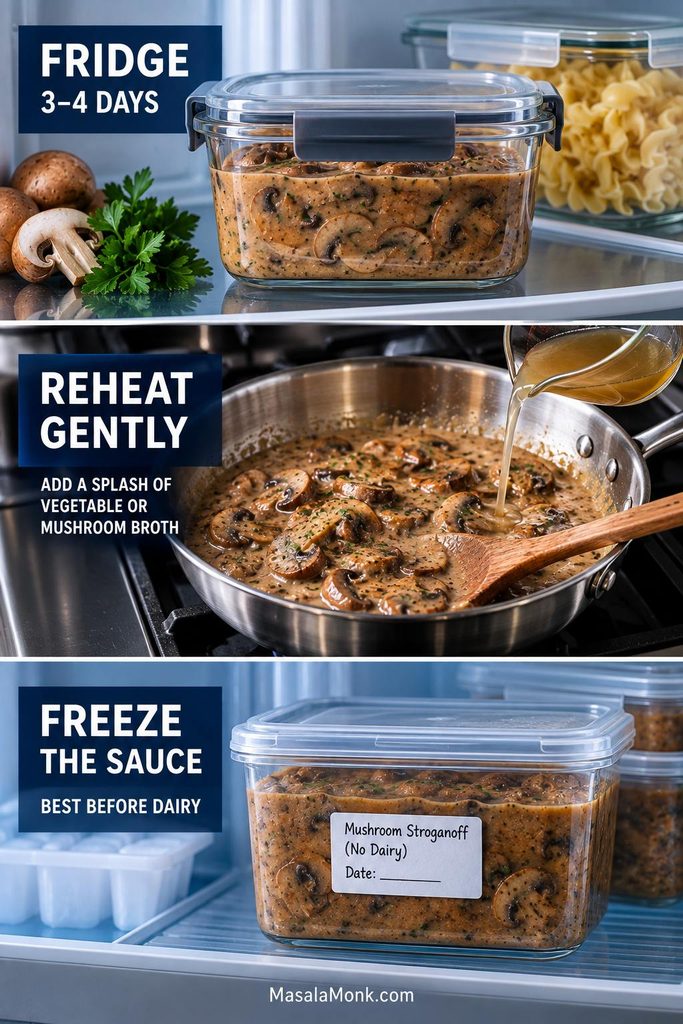
Refrigerate mushroom stroganoff for 3–4 days. Keep the noodles separate when practical because they continue soaking up sauce in the refrigerator.
Reheating
Warm the sauce gradually, stirring often. It commonly tightens overnight, so loosen it with a splash of broth or water when needed. Heat thoroughly, but once hot there is no advantage in keeping a sour-cream sauce at a hard boil.
Food-safety guidance recommends reheating leftovers to 165°F / 74°C. See the USDA leftovers and food-safety guidance.
Freezing
For the smoothest result, freeze the mushroom sauce before adding sour cream and leave the noodles out. Thaw and reheat the base, adjust the consistency, then add fresh sour cream off heat.
Already finished the whole dish? Freeze it if you need to. Expect the noodles to soften and the dairy to look a little less silky after thawing.
Mushroom Stroganoff FAQ
1. Is Mushroom Stroganoff Vegetarian?
Yes. This mushroom stroganoff is vegetarian when made with vegetable or mushroom broth, vegetarian Worcestershire, soy sauce or tamari, and suitably labeled wine—or broth in place of the wine. Many traditional Worcestershire sauces contain anchovy.
2. Can I Make This Recipe in a Slow Cooker?
Not with these ratios. This recipe depends on uncovered skillet cooking to evaporate mushroom moisture and concentrate the sauce. A slow-cooker version needs different starting liquid and thickening; transferring these quantities directly is likely to produce a thinner stroganoff.
3. Can I Double This Mushroom Stroganoff Recipe?
Yes. Use 40 oz / about 1.1 kg mushrooms and double the main sauce ingredients, but brown the mushrooms in more batches or use a second skillet. Hold back the extra reserved broth until you know the larger batch needs it, and expect reduction to take a little longer.
4. Can I Make It Ahead?
Yes. Make the sauce ahead and keep it separate from the noodles. For the smoothest finish, stop before adding sour cream, reheat the sauce later, then stir in fresh sour cream off heat.
What the Finished Mushroom Stroganoff Should Look Like
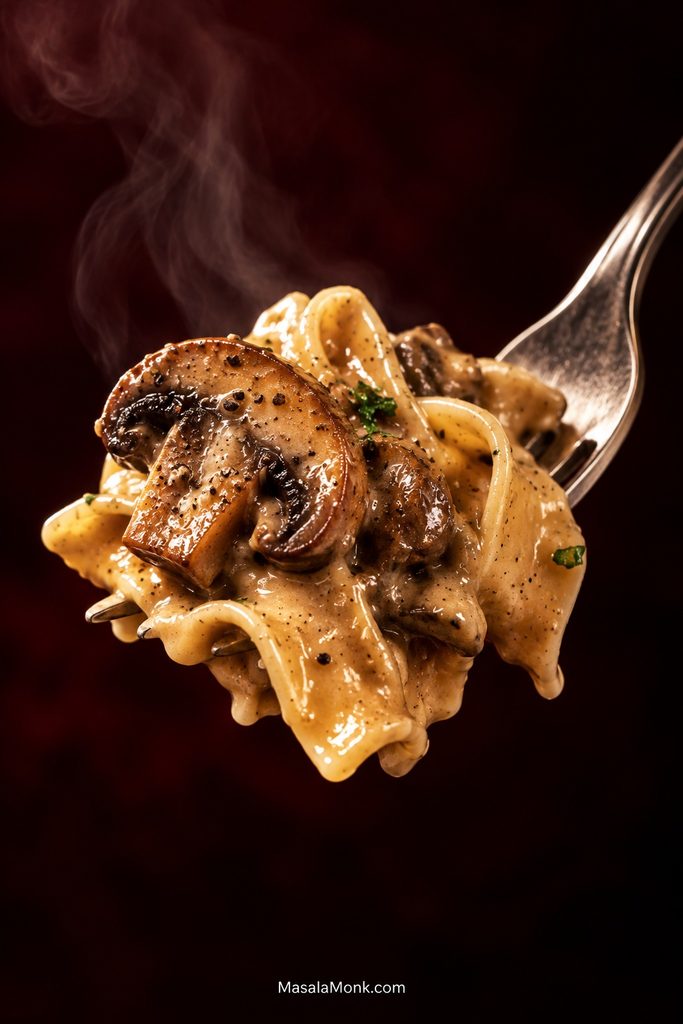
Don’t chase perfection in every slice or spoonful. When the mushrooms taste roasted, the sauce still flows and the sour cream stays smooth, you’re there. You want mushrooms with some bite, silky sauce around the noodles, and enough tang and black pepper to keep the next forkful interesting.
Made it? Tell us which mushrooms you used and whether you served it over noodles, rice or potatoes. If your pan behaved differently from the cues above, that is useful to hear too.








