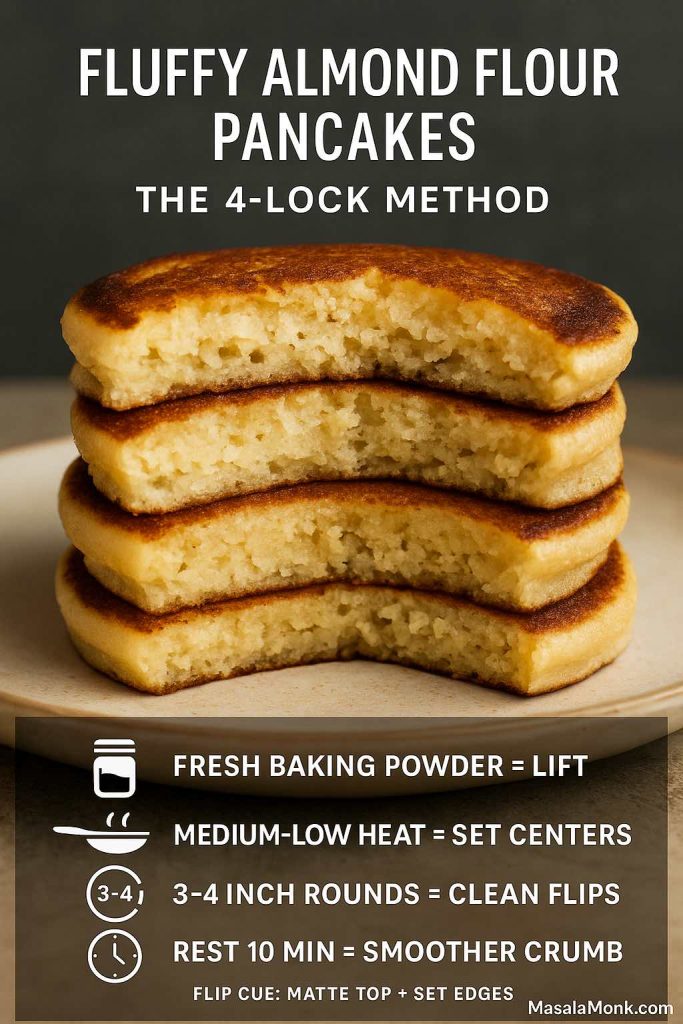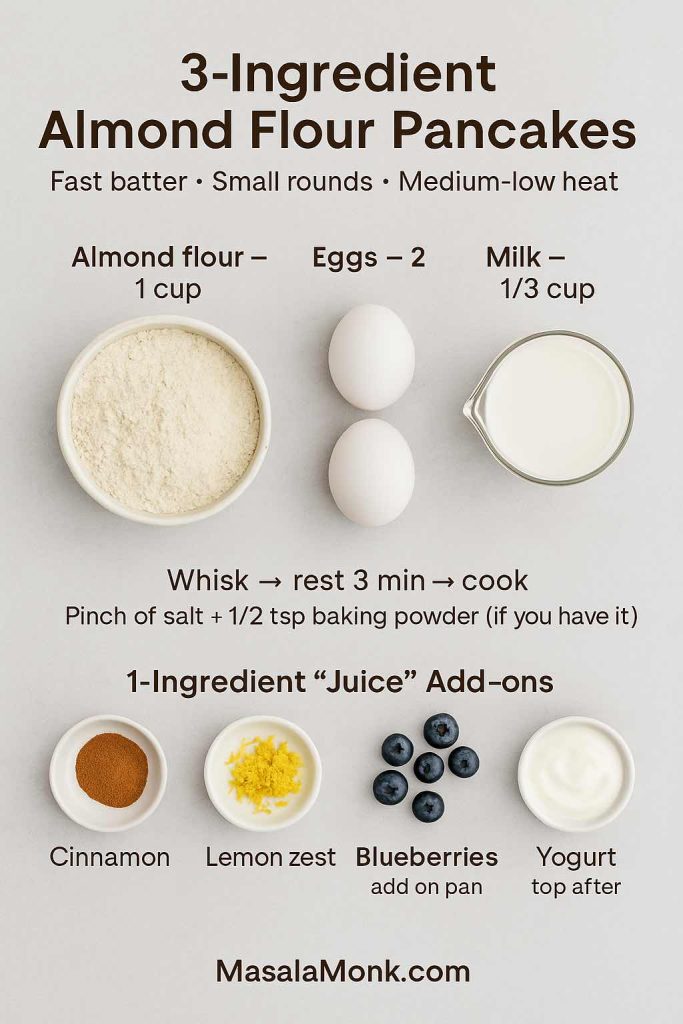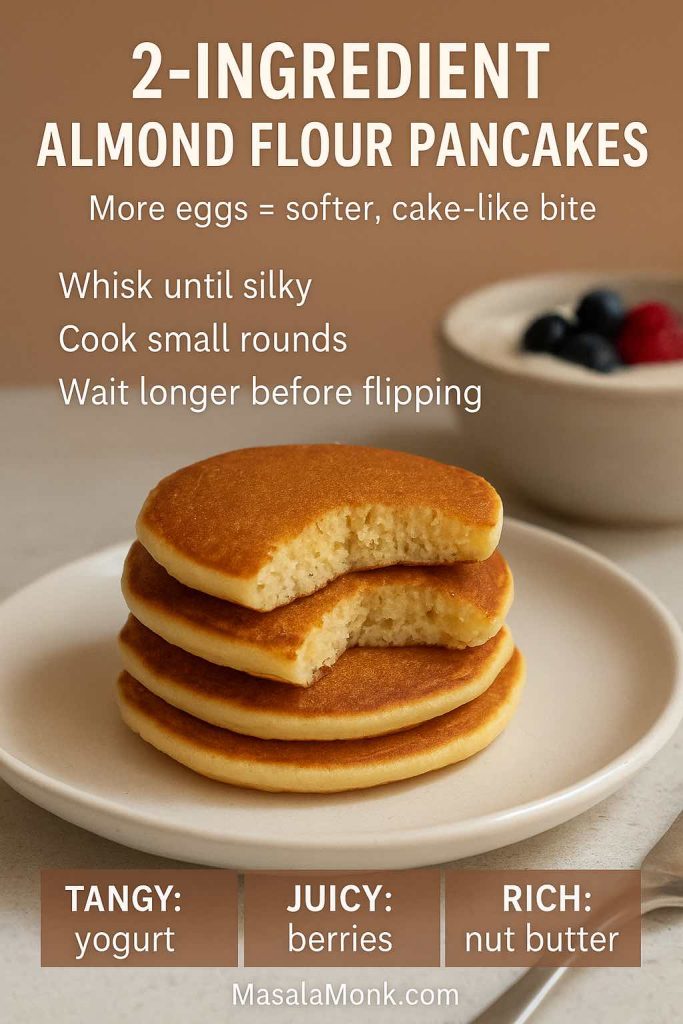
Posted on 6 Comments

Blueberry Pancakes (6 Recipes) + Homemade Pancake Mix

For photo-worthy blueberry pancakes, keep the heat medium and add blueberries on the pan (especially if they’re frozen), then finish with a warm maple-syrup pour for glossy, golden edges.

Some mornings call for something simple. Others practically demand a warm stack, a pat of butter sliding into the edges, and that first bite where the blueberries burst and the pancake stays airy instead of heavy. That’s the promise here: blueberry pancakes that taste like blueberries, not like flour with a few berries sprinkled in out of obligation.

To get there, we’ll start with a dependable classic—your “best blueberry pancake” base—then move through the variations people actually look for: blueberry hotcakes, banana and blueberry pancakes, blueberry lemon pancake, blueberry ricotta hotcakes, blueberry oat pancakes (and blueberry oatmeal pancake), plus high protein blueberry pancakes that still taste like breakfast. Along the way, you’ll get a practical approach for frozen blueberries for pancakes, a homemade blueberry pancake mix you can stash for fast mornings, and an easy way to make blueberry pancakes with pancake mix taste like you made them from scratch.

If you’re the type who loves building a whole breakfast scene, there are plenty of natural pairings too: crisp bacon, cozy hot chocolate, café-style coffee, or even a bright smoothie. We’ll get to those at the end—without turning breakfast into a project.


Blueberry Pancakes That Stay Fluffy: A Simple Recipe That Works Every Time

Blueberry pancakes become reliably fluffy for a handful of reasons, and once you understand them, you can switch flavours, add protein, go gluten-free, or use frozen berries—without losing the texture you came for.

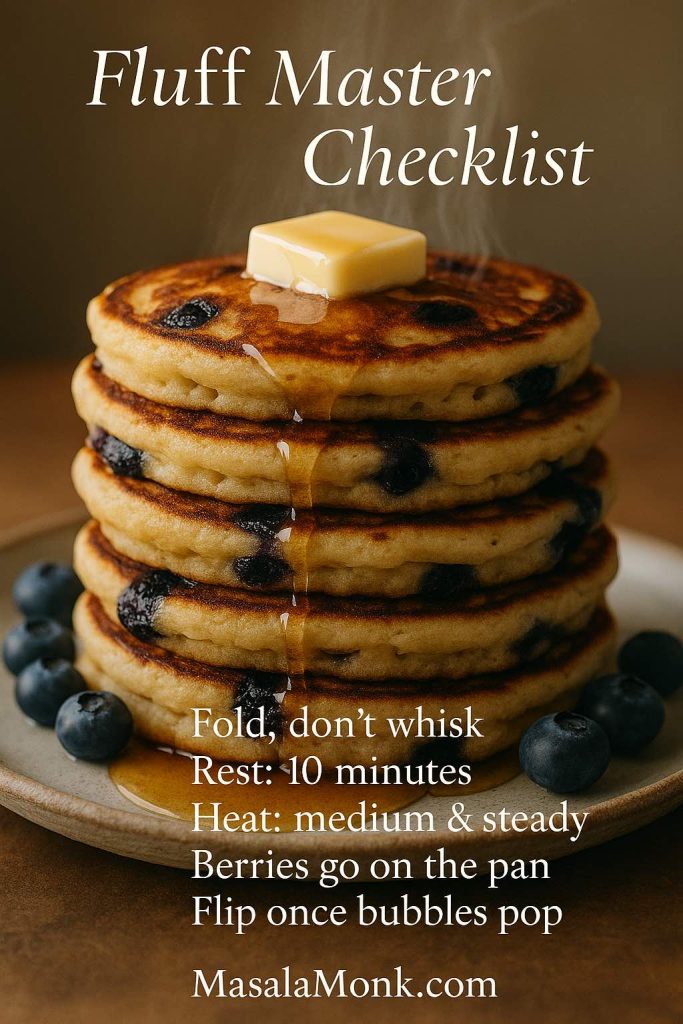
Fluffy blueberry pancakes with butter and maple syrup, featuring a quick checklist for keeping pancakes light and airy.
Pro tip: if your first pancake spreads too thin, let the batter rest 3–5 minutes more—hydration thickens it and improves lift.

First, keep the batter gentle

Pancakes want a light touch. As soon as flour meets liquid, gluten starts developing. Stir vigorously and the batter tightens; cook that batter and you’ll get dense pancakes that feel more like bread. Instead, fold until the dry flour disappears and stop. Even if you see a few lumps, leave them alone. They relax as the batter rests.

If you like seeing the logic behind the “don’t overmix” rule, King Arthur’s pancake guidance is consistently practical and clear: Simply Perfect Pancakes. Epicurious also explains why mixing matters in a way that’s easy to remember: why overmixing matters in baking.

Next, let the batter rest—briefly, not forever

A short rest—about 8 to 15 minutes—lets the flour hydrate and the leavening begin to work. The batter thickens slightly, bubbles form more evenly, and the pancakes cook up softer. Serious Eats has a great, tested perspective on pancake rest and texture: The Easiest, Fluffiest Pancake Recipe.

Meanwhile, treat heat like an ingredient

High heat is the fastest way to scorch the outside while leaving the middle undercooked. Low heat, on the other hand, can dry pancakes out before they brown. Medium heat is the sweet spot for most stoves—steady enough to set the center and gentle enough to cook through.

Finally, handle blueberries with intention

Fresh berries and frozen berries behave differently. Frozen blueberries for pancakes bleed juice as they warm; if you fold them into the bowl, you may end up with purple batter and uneven streaking. Consequently, the simplest move is also the smartest: add blueberries per pancake on the pan rather than mixing all of them into the batter. King Arthur recommends this approach for a reason.

With those basics in place, you’re ready for the classic.

Also Read: Double Chocolate Chip Cookies – Easy Recipe with 7 Variations


Classic Blueberry Pancakes (The Best Blueberry Pancake Base Recipe)

This is the stack that fits almost any situation: weekend brunch, quick weekday comfort, or the kind of morning when you want blueberries and pancakes without fuss. It also forms the backbone for many of the variations below.

Ingredients (makes about 10–12 medium pancakes)

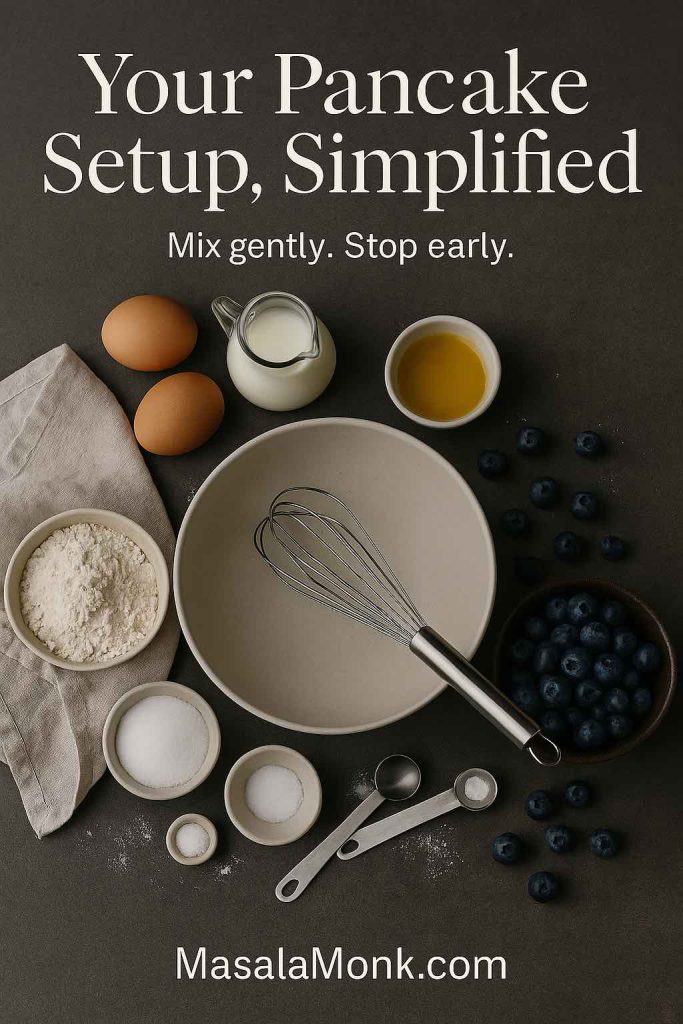
Overhead portrait photo of measured blueberry pancake ingredients arranged on a dark countertop with a mixing bowl and whisk, featuring text overlay “Your Pancake Setup, Simplified” and “Mix gently. Stop early.” with MasalaMonk.com in the footer.
Pre-measuring your ingredients keeps the batter calm—once wet meets dry, mix only until the flour disappears to keep blueberry pancakes light and fluffy.

Dry ingredients

  • 1 ½ cups (190 g) all-purpose flour
  • 2 tbsp (25 g) sugar
  • 2 tsp baking powder
  • ½ tsp baking soda
  • ½ tsp fine salt
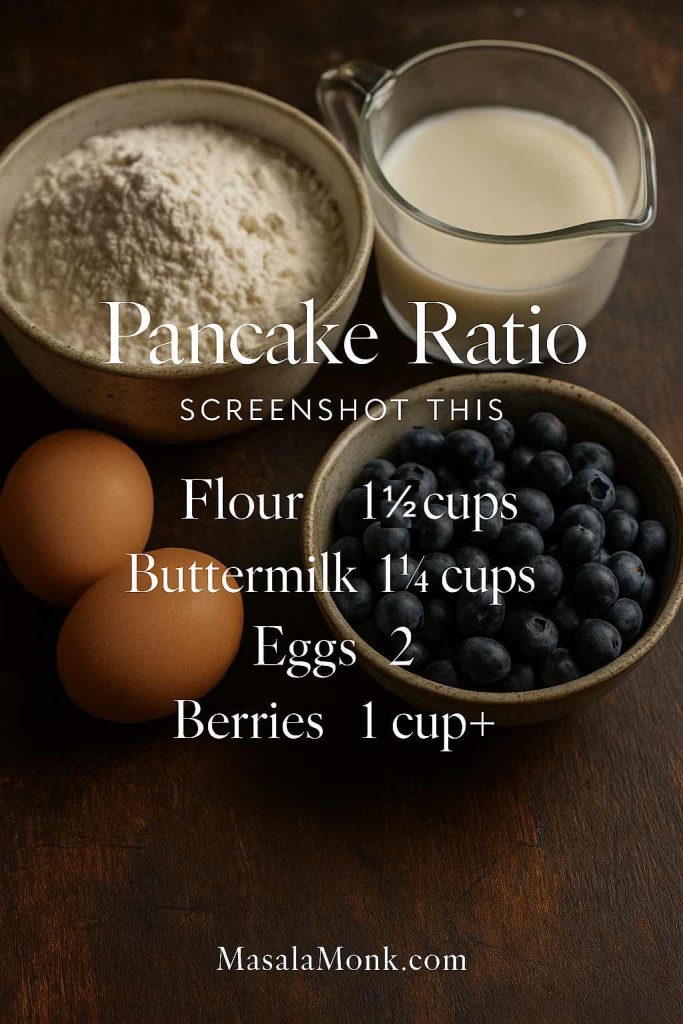
Pancake ingredient ratio card showing flour, buttermilk, eggs, and blueberries for classic blueberry pancakes.
Use this as your “batter compass”: if it feels thick like scoopable yogurt, you’re in the fluffy zone; if it pours like milk, add 1–2 tbsp flour.

Wet ingredients

  • 1 ¼ cups (300 ml) buttermilk
  • 2 large eggs
  • 3 tbsp (45 g) melted butter (or neutral oil)
  • 1 tsp vanilla extract (optional)

Berries

  • 1 to 1 ¼ cups blueberries (fresh preferred here)

Buttermilk substitute: If you don’t have buttermilk, stir 1 tbsp lemon juice (or vinegar) into 1 ¼ cups milk and let it stand for 5–10 minutes.

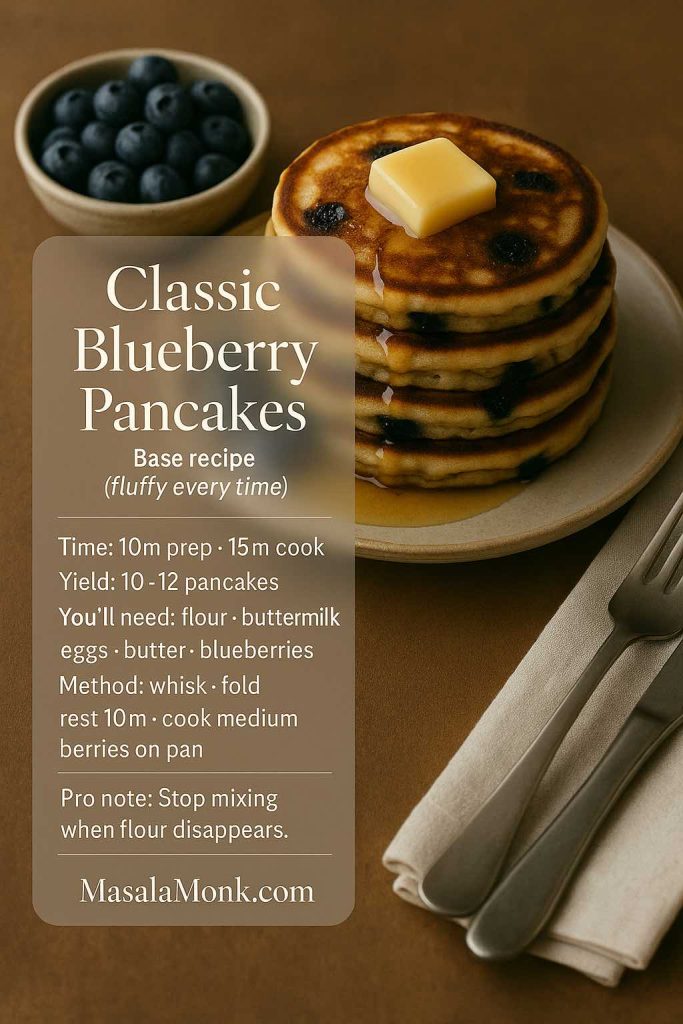
Classic blueberry pancakes recipe card with buttermilk batter, showing time, yield, key ingredients, and a quick method for fluffy pancakes.
Batter consistency check: it should mound, then slowly spread. If it pours like milk, add 1–2 tbsp flour; if it’s too thick to ribbon off a spoon, add a splash of buttermilk.

Step by Step Method – How to make Blueberry Pancakes

1. Whisk the dry ingredients in a large bowl: flour, sugar, baking powder, baking soda, salt.

Close-up portrait photo of a whisk mixing dry pancake ingredients in a ceramic bowl with text overlay “Whisk 20 Seconds” and “Even lift, no salty pockets,” with MasalaMonk.com in the footer.
A quick whisk spreads baking powder and salt evenly, so every blueberry pancake rises the same way—no bitter spots, no uneven texture.

2. Whisk the wet ingredients in a second bowl: buttermilk, eggs, melted butter, vanilla.

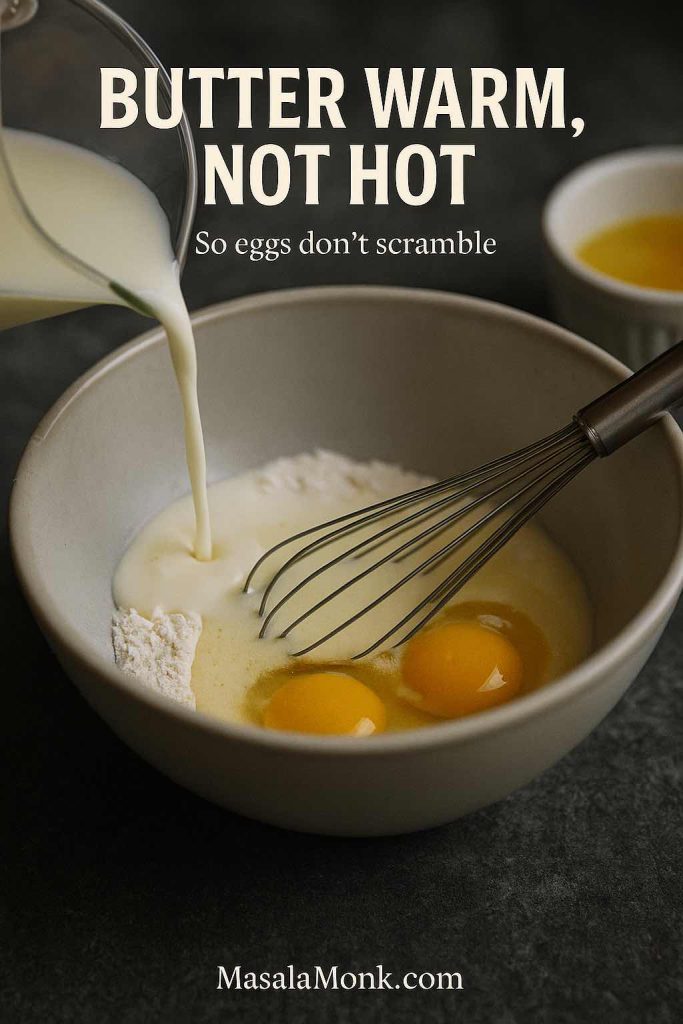
Portrait close-up of wet ingredients for blueberry pancakes—eggs and buttermilk in a mixing bowl with a whisk—featuring text overlay “Butter warm, not hot” and “So eggs don’t scramble,” with MasalaMonk.com in the footer.
Let melted butter cool slightly before whisking it in—smooth, glossy wet batter blends faster and keeps blueberry pancakes tender.

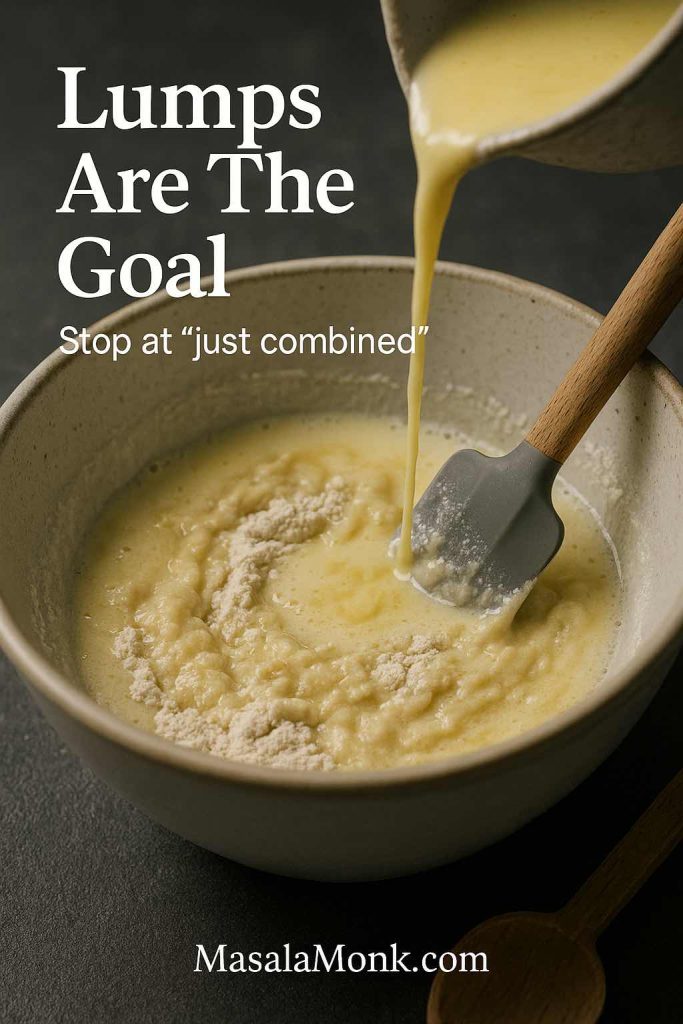
3. Combine gently. Pour wet into dry and fold with a spatula until just combined. Stop the moment the flour disappears.

Portrait action shot of blueberry pancake batter as wet ingredients are poured into dry ingredients in a ceramic bowl, with a spatula folding gently and visible lumps, featuring text overlay “Lumps Are The Goal” and “Stop at ‘just combined’,” with MasalaMonk.com in the footer.
Resist smoothing the batter—those small lumps are what keep blueberry pancakes tender instead of chewy.

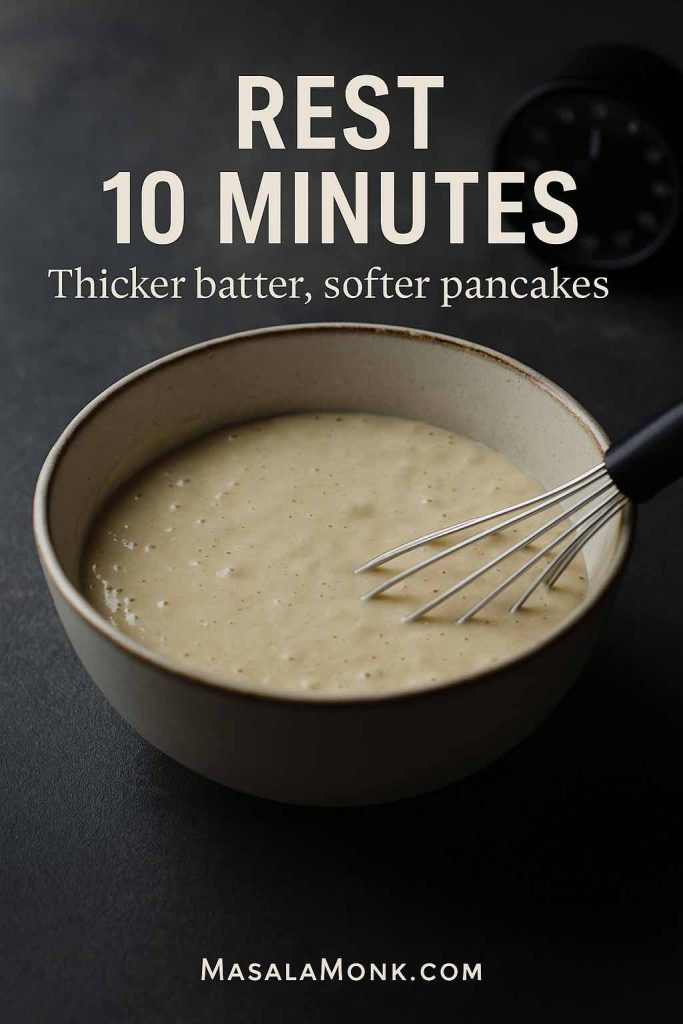
4. Rest the batter for 10 minutes while you warm your pan.

Portrait photo of blueberry pancake batter resting in a ceramic bowl on a dark counter with a whisk, featuring text overlay “Rest 10 Minutes” and “Thicker batter, softer pancakes,” with MasalaMonk.com in the footer.
A short rest lets the batter thicken and bubble—so your blueberry pancakes cook up fluffy instead of spreading thin.

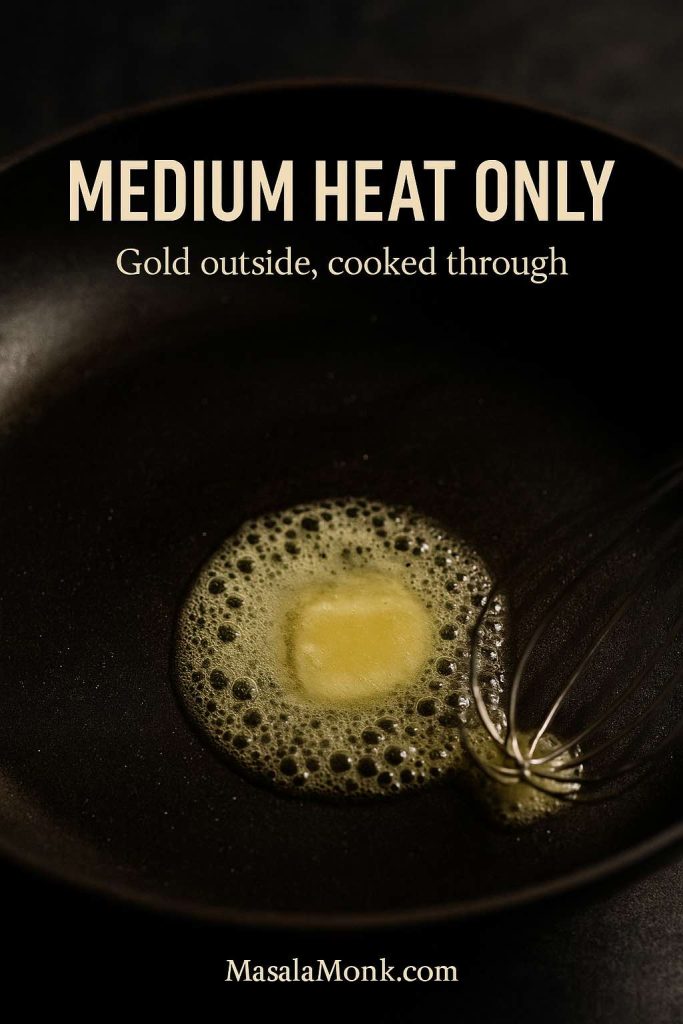
5. Preheat a skillet over medium heat and lightly grease it.

Portrait close-up of butter melting and foaming in a dark skillet for blueberry pancakes, with text overlay “Medium Heat Only” and “Gold outside, cooked through,” and MasalaMonk.com in the footer.
When butter foams gently (not smoking), the pan is ready—medium heat helps blueberry pancakes brown evenly while cooking through.

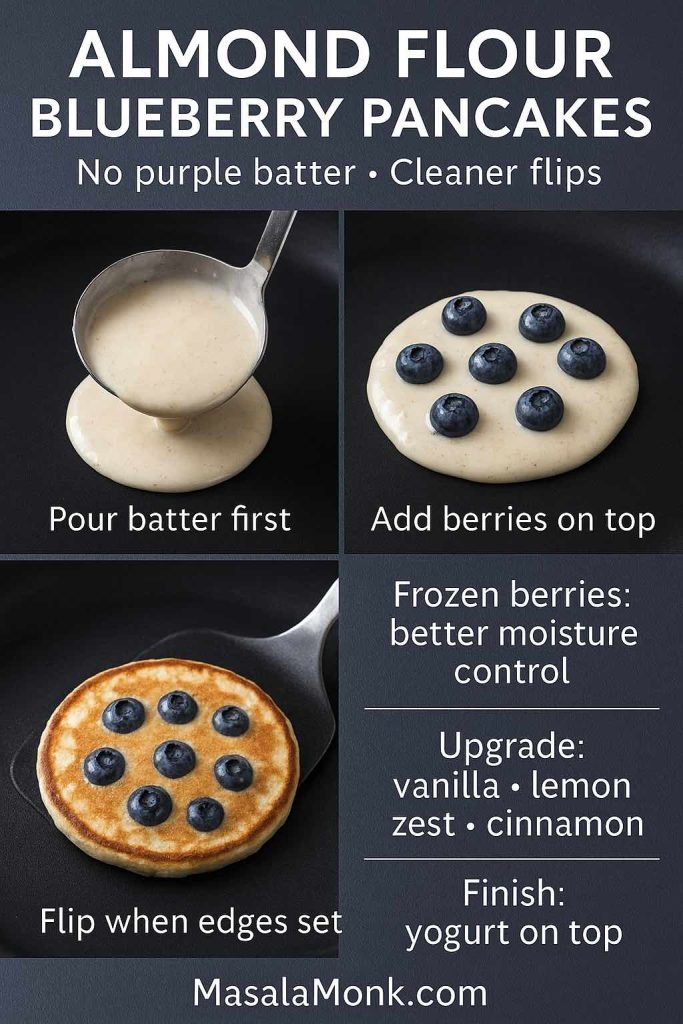
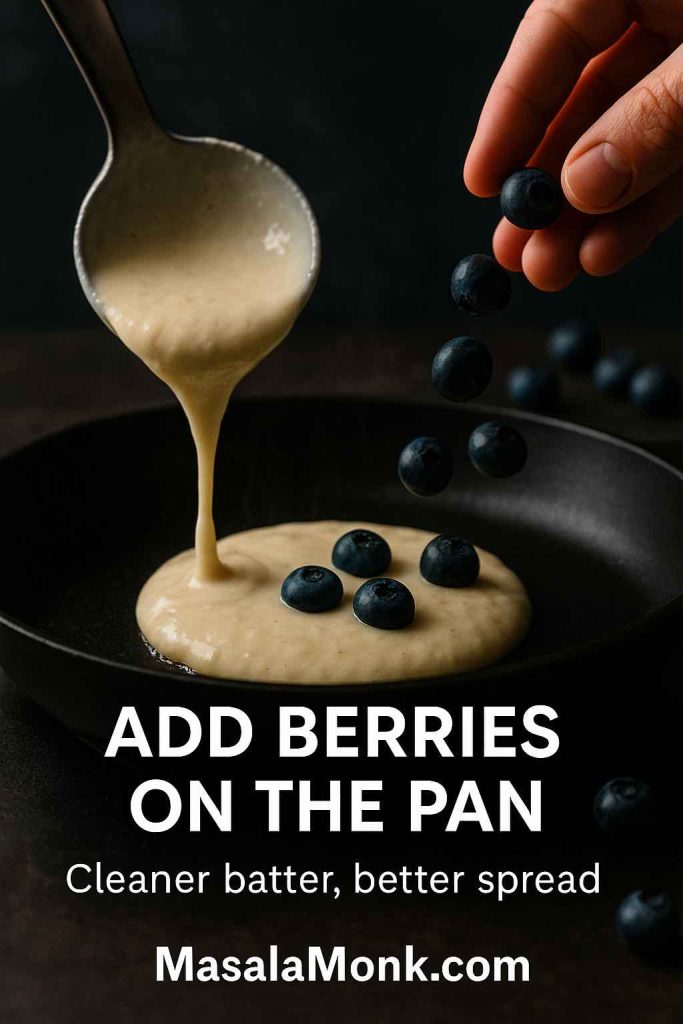
6. Spoon the batter (about ¼ cup per pancake). Immediately sprinkle blueberries on top of each pancake. This keeps the batter from turning grey-purple and ensures berries distribute evenly.

Portrait action photo of blueberry pancakes being cooked as batter is ladled onto a skillet and blueberries are added on top, with text overlay “Add berries on the pan” and “Cleaner batter, better spread,” and MasalaMonk.com in the footer.
Adding blueberries on the pan works for fresh berries and frozen blueberries for pancakes—your batter stays clean and each pancake gets an even scatter of fruit.

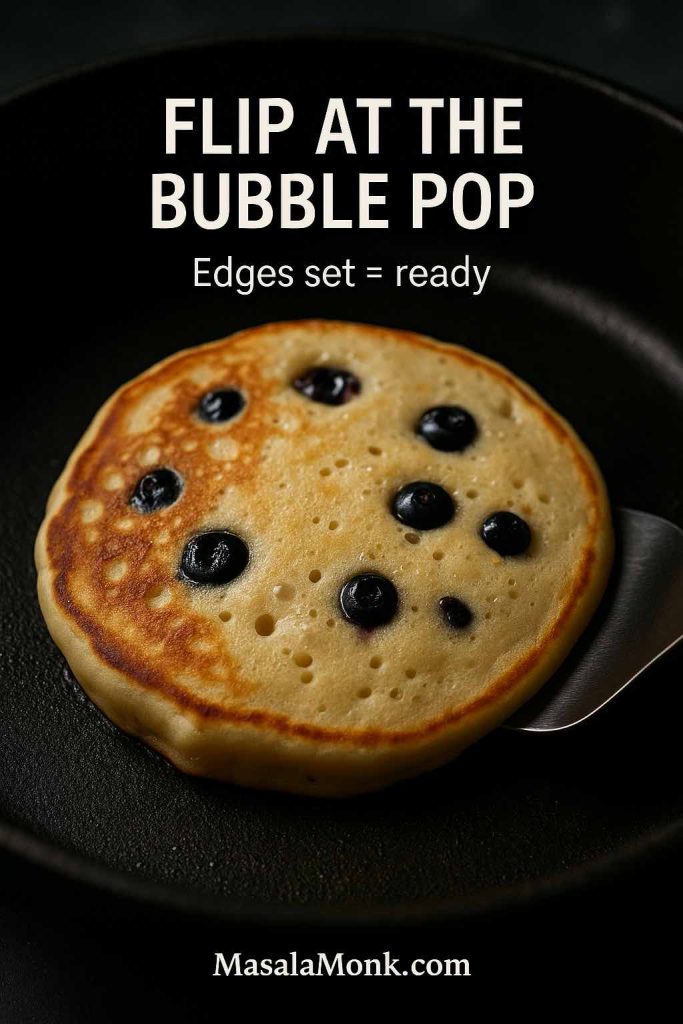
7. Flip when ready. Look for bubbles that rise and pop on the surface and edges that look set. Flip and cook 1–2 minutes more.

Portrait close-up of a blueberry pancake cooking in a skillet with bubbles on the surface and a spatula sliding underneath, featuring text overlay “Flip at the Bubble Pop” and “Edges set = ready,” with MasalaMonk.com in the footer.
Wait for popped bubbles and set edges before flipping—this timing helps blueberry pancakes cook through without tearing or going pale.
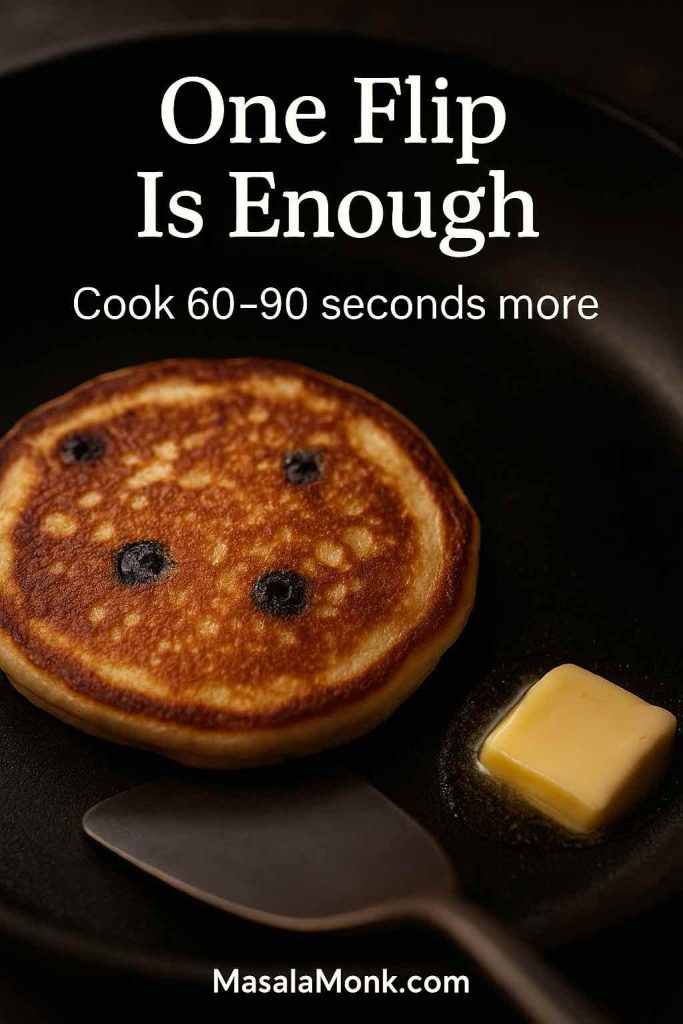
Portrait photo of a blueberry pancake in a skillet after flipping, showing an even golden-brown surface and a pat of butter melting nearby, with text overlay “One Flip Is Enough” and “Cook 60–90 seconds more,” plus MasalaMonk.com in the footer.
After flipping, cook briefly—just long enough to set the center—so blueberry pancakes stay fluffy instead of drying out.

Why this classic recipe works

Because the batter is thick enough to suspend bubbles, the rest improves hydration, and the berries are added at the right moment. In other words, the method protects the fluff.

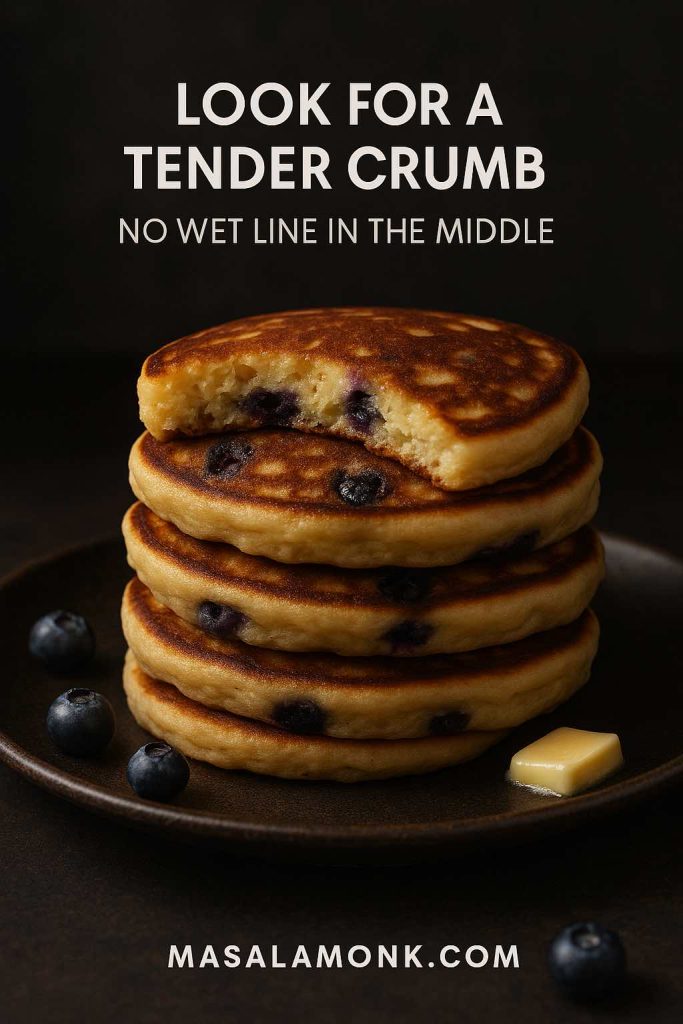
Portrait photo of a stack of blueberry pancakes with one pancake cut open to show the tender crumb and blueberries inside, featuring text overlay “Look for a tender crumb” and “No wet line in the middle,” with MasalaMonk.com in the footer.
A fully cooked blueberry pancake looks moist but not raw—check for a tender crumb with no wet line through the center.

If you’re making a bigger breakfast and want something warm-spiced on the side, you could borrow ideas from fluffy buttermilk pancakes with stewed cinnamon apples—even if you stick with blueberries here.


Blueberry Hotcakes: How to Choose and Store Blueberries for Pancakes

Blueberry hotcakes are only as good as the berries you put in them. Fortunately, “good berries” doesn’t always mean expensive berries—it usually means berries with the right texture and storage.

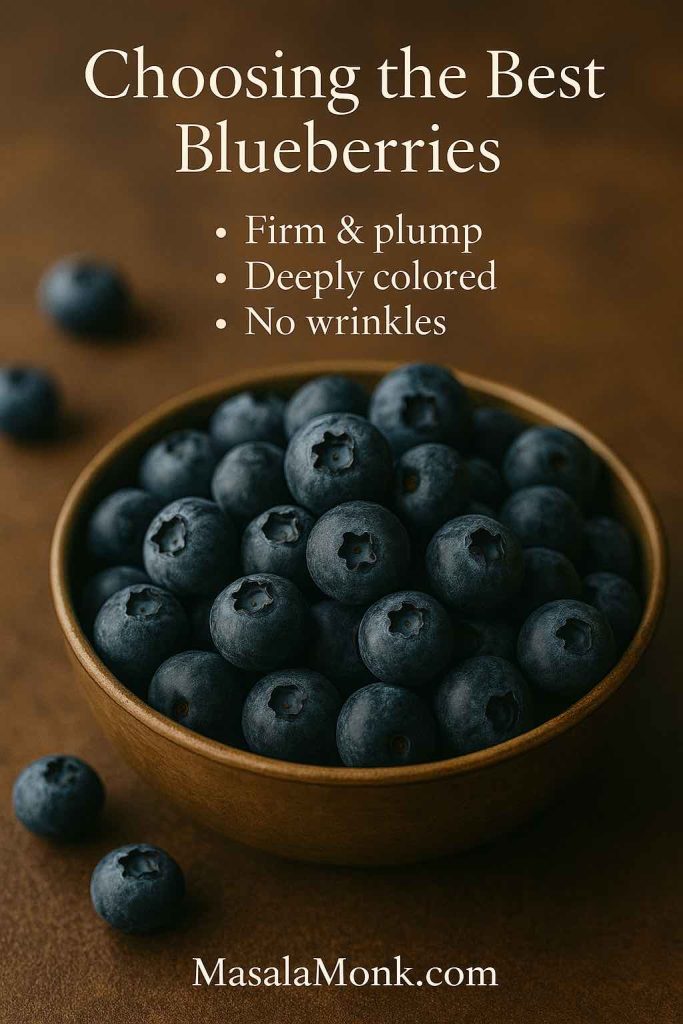
Choosing blueberries

  • Look for berries that are plump and deep blue, not shriveled.
  • A light silvery “bloom” is normal and protective.
  • Avoid wet or leaky containers; moisture speeds spoilage.

For practical storage guidelines on Blueberries, this Martha Stewart guide is straightforward.

Close-up of fresh blueberries with a guide for choosing firm, deeply colored berries for blueberry pancakes and blueberry hotcakes.
Buying ahead? Keep berries unwashed in the fridge, then rinse right before cooking—dry berries brown better and prevent watery batter.

Storing blueberries

  • Don’t wash berries until you’re ready to use them.
  • Keep them chilled and dry.
  • If you notice a few soft berries, remove them quickly so the rest stay fresher longer.

If you also enjoy the “why blueberries are good for you” angle—without turning breakfast into homework—this reader-friendly overview is a solid companion: health benefits of blueberries. For a reputable broader look at blueberries and health, the American Heart Association has a helpful summary: fresh or frozen—what to know about blueberries and health.

Now, if fresh berries aren’t an option—or you simply prefer keeping a bag in the freezer—let’s make frozen blueberry pancakes that taste just as good.


Frozen Blueberry Pancakes: How to Use Frozen Blueberries for Pancakes Without Purple Batter

Frozen blueberry pancakes can be wonderful; they can also become streaky and odd-looking if the berries leak too much juice. Thankfully, there’s a calm, dependable approach.

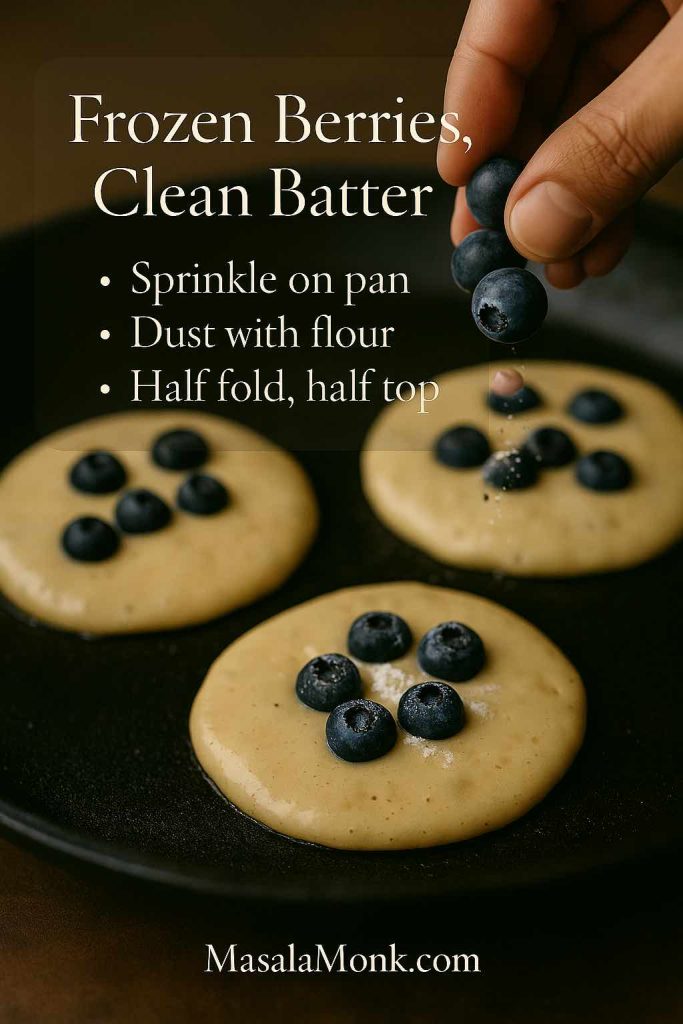
Frozen blueberries being sprinkled onto pancake batter on a skillet, showing methods to prevent purple batter when making frozen blueberry pancakes.
Keep berries frozen until the last second—cold berries bleed less. Sprinkle them on each pancake after ladling batter, then flip once bubbles pop for clean edges and even berry distribution.

The easiest method: add berries on the pan

Make your batter as usual, then ladle batter onto the hot skillet and sprinkle frozen blueberries right on top. Flip once the edges set. The berries warm inside the pancake rather than staining the whole bowl.

Frozen blueberry pancakes recipe card showing frosty blueberries and the no-purple method of adding frozen blueberries on the pan instead of mixing into batter.
Extra insurance: toss frozen berries with 1 tsp flour per cup before cooking—this helps them “grip” the batter and reduces streaking, especially if your kitchen is warm.

A second method: a light flour coat

If you prefer folding berries into the batter, toss frozen berries with 1 tsp flour per cup of berries. This reduces bleeding and helps the berries grip the batter. Then fold gently and cook immediately.

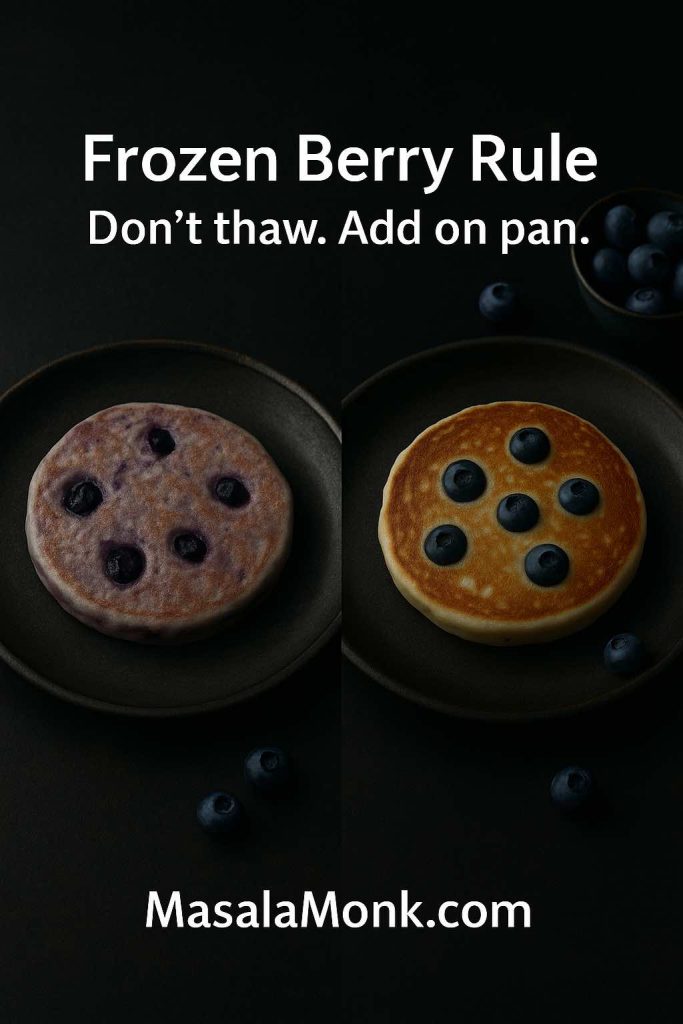
Portrait comparison image showing two blueberry pancakes side by side—one made with thawed frozen blueberries that stains the batter purple and one with frozen blueberries added on the pan—featuring text overlay “Frozen Berry Rule: Don’t thaw. Add on pan.” and MasalaMonk.com in the footer.
For frozen blueberry pancakes with clean color and better berry distribution, skip thawing and add frozen blueberries directly onto each pancake after ladling the batter.

A third method: half-and-half

Fold in half the berries, then add the rest per pancake on the skillet. This gives you berries throughout without turning everything purple.

For a well-tested, practical take on blueberry handling and pancake texture, King Arthur is again a dependable reference: Blueberry Pancakes recipe.


Banana Blueberry Pancake: Banana and Blueberry Pancakes That Stay Light

Banana blueberry pancake batter can become heavy because banana adds moisture and density. The trick is balance: enough banana for sweetness and structure, but not so much that the pancake turns cakey.

Ingredients (makes about 8–10 pancakes)

  • 1 ripe banana, mashed (about 120–140 g)
  • 1 ¼ cups (160 g) all-purpose flour
  • 2 tsp baking powder
  • ½ tsp salt
  • 1 tbsp sugar or honey (optional, depending on banana)
  • 1 large egg
  • ¾ cup (180 ml) milk
  • 2 tbsp melted butter or oil
  • ¾ to 1 cup blueberries
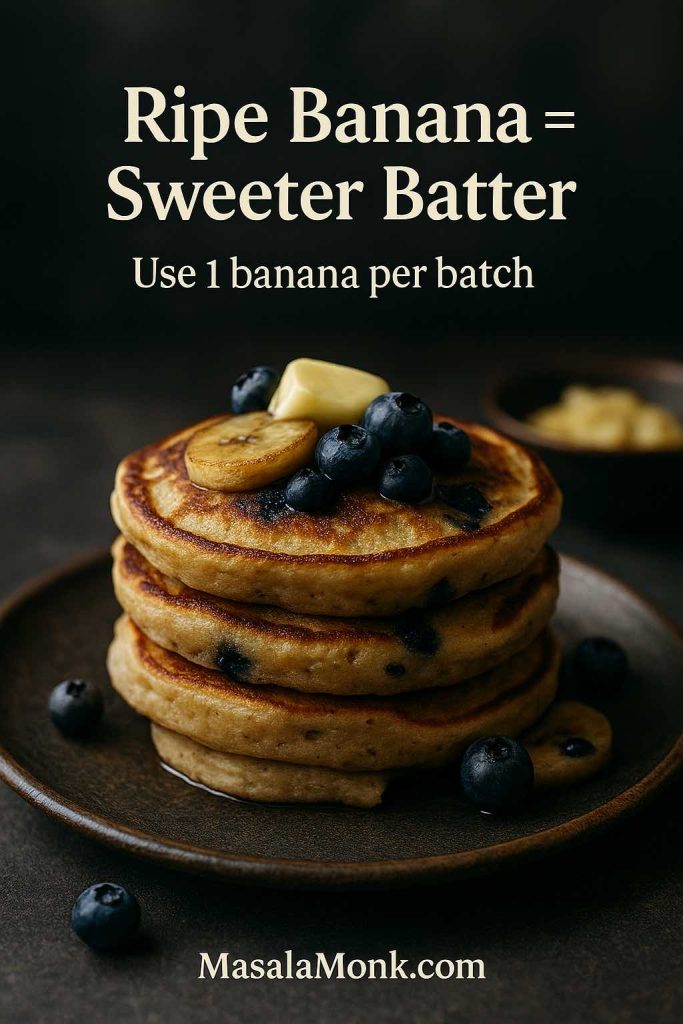
Portrait photo of a stack of banana blueberry pancakes topped with blueberries, a caramelized banana slice, and a small butter pat, featuring text overlay “Ripe Banana = Sweeter Batter” and “Use 1 banana per batch,” with MasalaMonk.com in the footer.
For banana and blueberry pancakes that stay fluffy, use one very ripe banana per batch—enough sweetness and moisture without turning the stack dense.

Method

  1. Mash banana until mostly smooth.
  2. Whisk in egg, milk, and oil.
  3. Add flour, baking powder, salt, and sugar if using; fold gently.
  4. Rest 5–8 minutes.
  5. Cook on medium heat and add blueberries per pancake on the skillet.
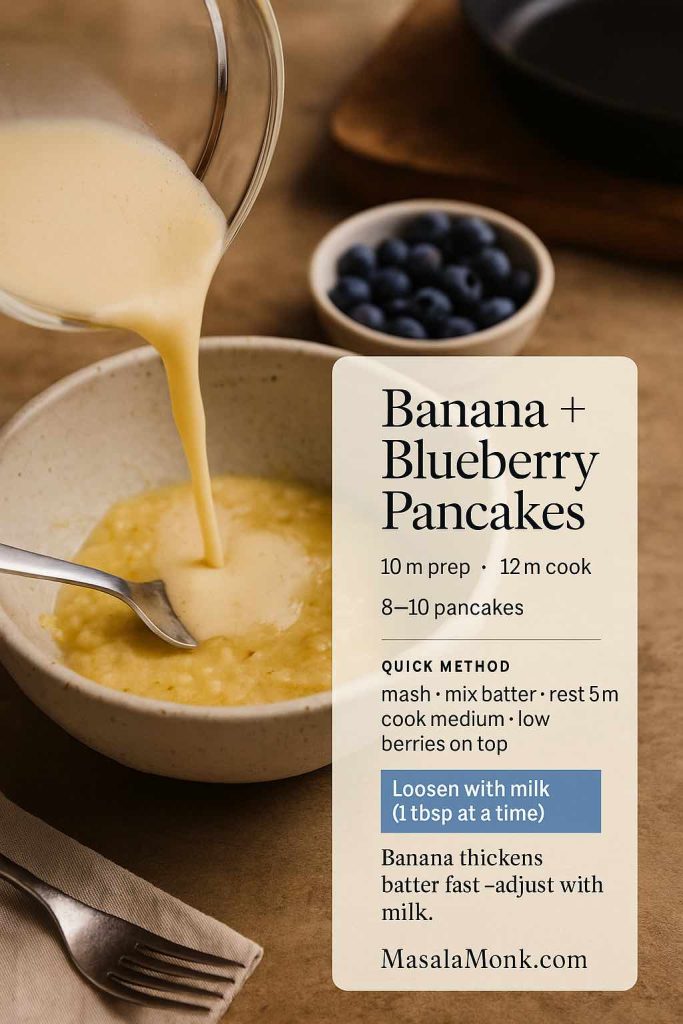
Banana and blueberry pancakes recipe card showing batter being poured into mashed banana, with tips to keep banana blueberry pancake batter fluffy and not dense.
Banana moisture changes by ripeness—aim for a batter that pours in a slow ribbon. If it’s too thick, add milk 1 tbsp at a time; if too loose, add 1 tbsp flour.

Small upgrades that feel special

  • A pinch of cinnamon makes the whole thing taste like banana bread meets blueberry pancakes.
  • A little lemon zest brightens the fruit flavour, especially if your blueberries are mild.

If you’re cooking for kids and want another soft breakfast option, you might enjoy apple pancakes for baby-led weaning or toddlers. It’s a different flavour, yet the easy, forgiving style pairs nicely with the banana-blueberry approach.

Also Read: 10 Best Espresso Martini Recipe Variations (Bar-Tested)


Blueberry Lemon Pancake: Bright, Fragrant, and Balanced

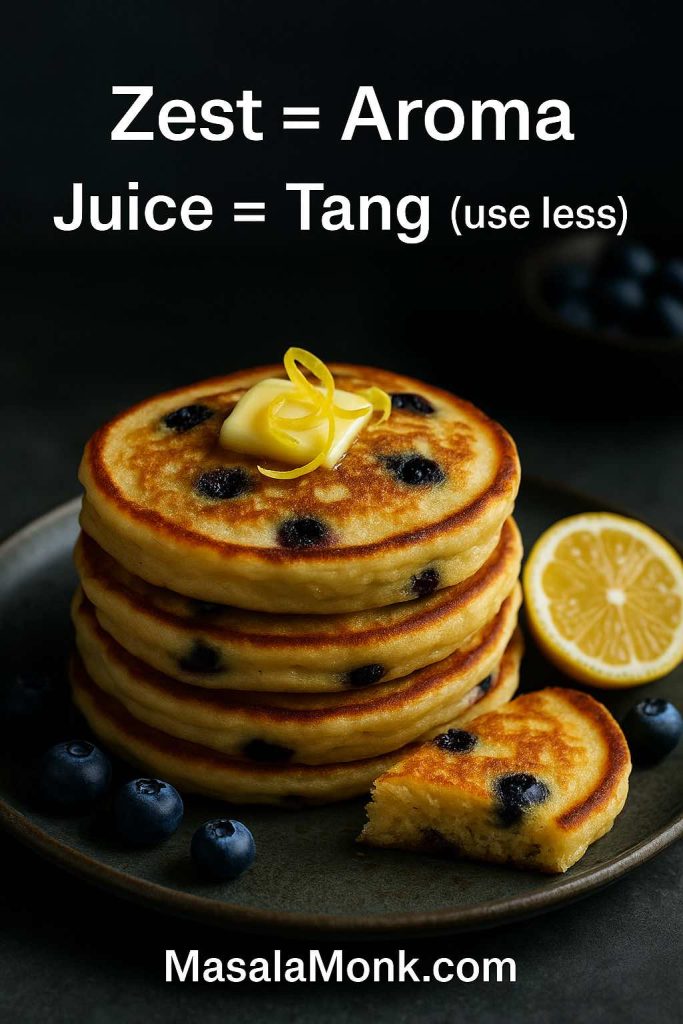
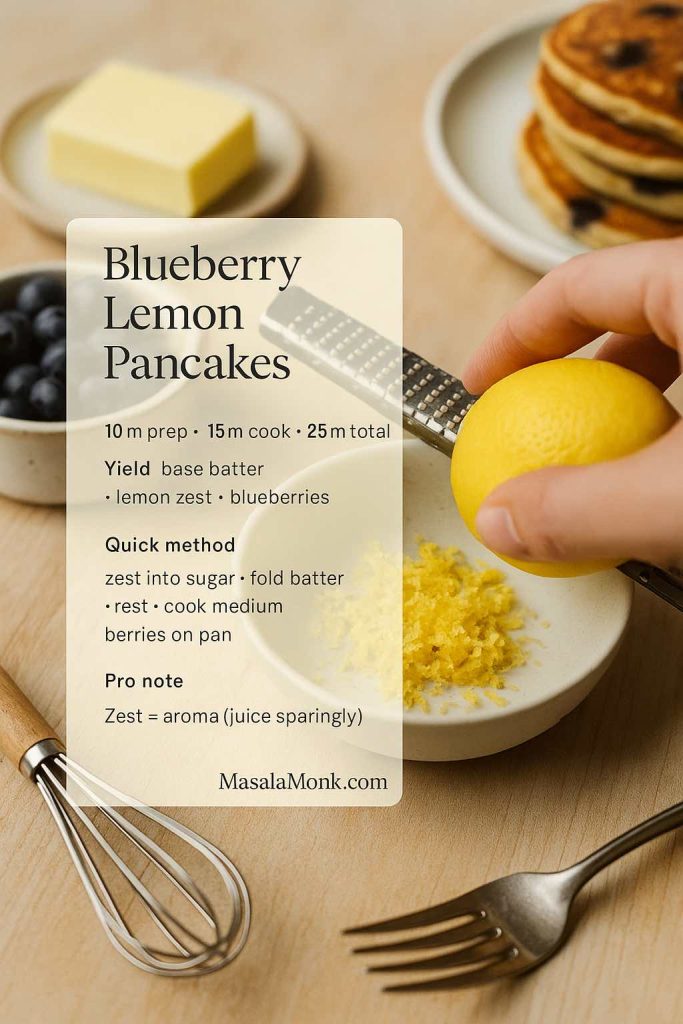
A blueberry lemon pancake should taste sunny, not sour. That’s why zest matters more than juice. Juice adds acidity; zest adds aroma and perceived sweetness.

Ingredients (makes about 10 pancakes)

  • 1 ½ cups (190 g) flour
  • 2 tbsp sugar
  • 2 tsp baking powder
  • ½ tsp baking soda
  • ½ tsp salt
  • Zest of 1 lemon
  • 1 ¼ cups buttermilk
  • 2 eggs
  • 3 tbsp melted butter
  • 1 cup blueberries
Portrait photo of a stack of blueberry lemon pancakes with a butter pat and lemon zest on top, a lemon half and blueberries on the plate, featuring text overlay “Zest = Aroma” and “Juice = Tang (use less),” with MasalaMonk.com in the footer.
For blueberry lemon pancakes that taste bright (not sour), lean on lemon zest for aroma and use lemon juice lightly for tang.

Method

  1. Whisk flour, sugar, baking powder, baking soda, salt, lemon zest.
  2. Whisk buttermilk, eggs, melted butter.
  3. Combine gently; rest 10 minutes.
  4. Cook on medium heat; add blueberries per pancake on the pan.
Blueberry lemon pancakes recipe card showing lemon zest added for aroma, with blueberries ready to sprinkle for a bright, balanced blueberry lemon pancake flavor.
Avoid bitter lemon notes: zest only the yellow skin (stop before the white pith). If you accidentally hit pith, reduce zest slightly and lean on vanilla for balance.

Turning this into blueberry lemon ricotta pancakes

If you want blueberry lemon ricotta pancakes—one of the most craveable brunch variations—stir ⅓ to ½ cup ricotta into the wet ingredients. If the batter looks too thick afterward, loosen it with a splash of milk. The result is softer, richer, and still balanced.

For a topping that leans into the citrus, lemon curd is a classic companion. If you’d like a reliable method you can make once and use all week, this is a solid starting point: silky smooth lemon curd.


Blueberry Ricotta Hotcakes: Blueberry and Ricotta Pancakes With a Café Feel

Blueberry ricotta hotcakes are tender and slightly rich, the kind of breakfast that feels like a treat even if you’re still in your pajamas. They also align beautifully with searches for blueberry and ricotta pancakes and blueberry ricotta hotcakes because the texture really is different: softer, thicker, and more luxurious.

Ingredients (makes about 8–10 thicker pancakes)

  • 1 ¼ cups (160 g) flour
  • 2 tbsp sugar
  • 2 tsp baking powder
  • ½ tsp salt
  • 3 eggs, separated
  • 1 cup ricotta
  • ¾ cup milk (plus a bit more if needed)
  • 1 tsp vanilla
  • 1 tbsp melted butter or oil
  • 1 cup blueberries
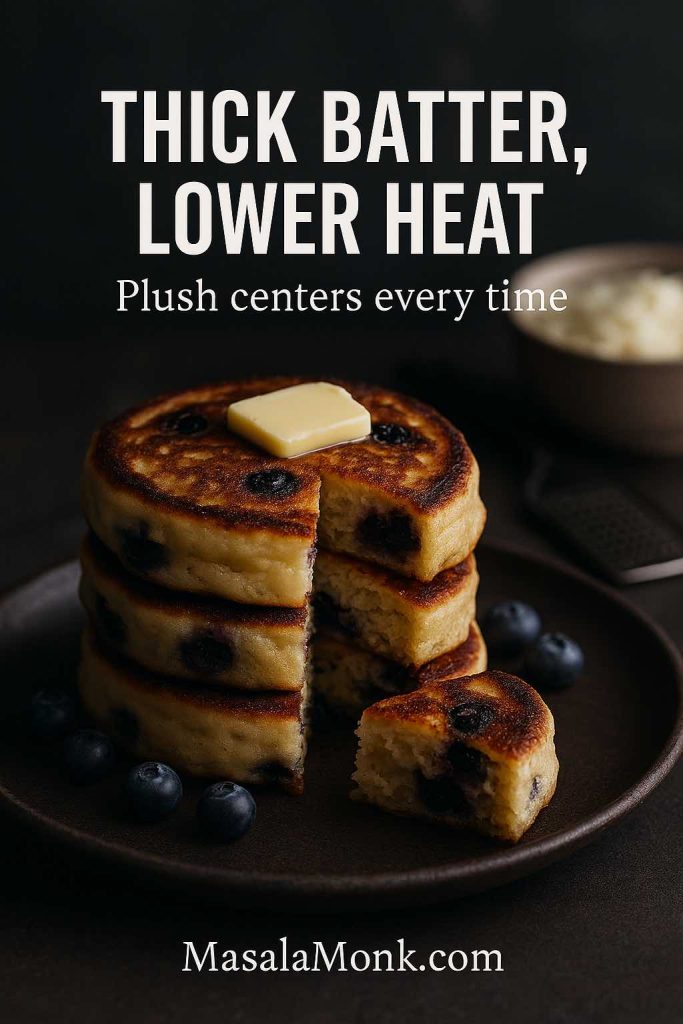
Portrait photo of blueberry ricotta hotcakes stacked on a dark plate with a butter pat and a cut-out piece showing the plush interior, featuring text overlay “Thick batter, lower heat” and “Plush centers every time,” with MasalaMonk.com in the footer.
Blueberry ricotta hotcakes cook best low and steady—thick batter needs gentler heat so the centers set soft and fully cooked.

Method

  1. Whisk flour, sugar, baking powder, salt in a bowl.
  2. In a separate bowl, whisk egg yolks, ricotta, milk, vanilla, melted butter.
  3. Combine wet and dry gently.
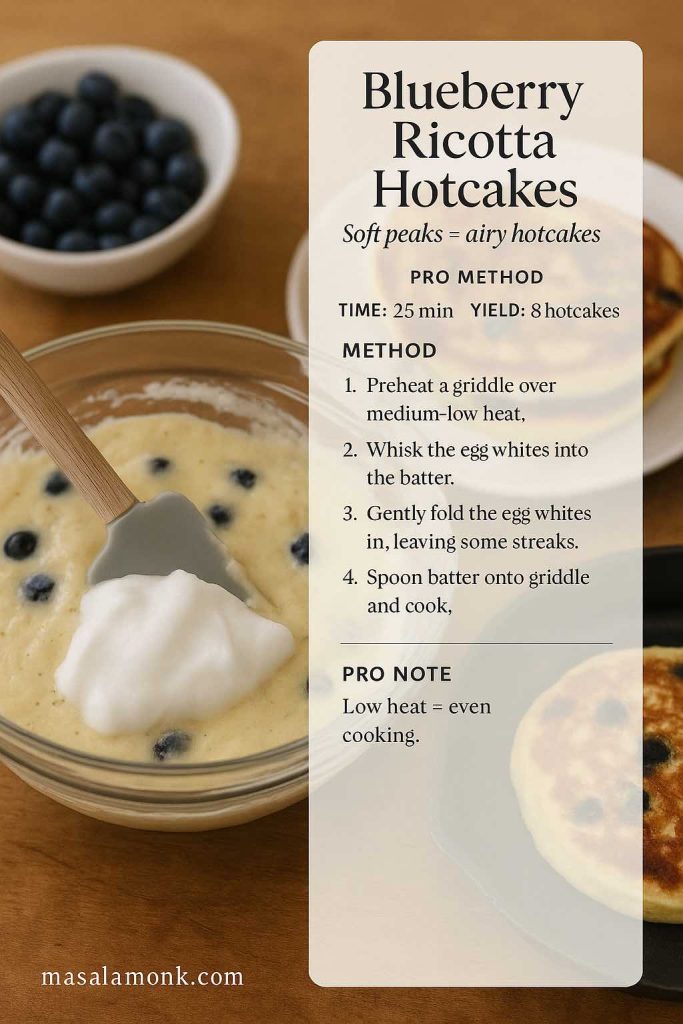
  4. Whip egg whites to soft peaks and fold them into the batter. This step is what makes the hotcakes airy rather than heavy.
  5. Cook on medium-low heat because the batter is thicker. Add blueberries per pancake on the skillet.
Blueberry ricotta hotcakes recipe card showing ricotta batter with blueberries and a dollop of whipped egg whites, highlighting the soft-peaks method for airy hotcakes.
Soft peaks, not stiff: stop whipping when the whites hold a gentle curve. Stiff whites fold poorly and can leave the batter dense instead of airy.

A lovely pairing

If you’re building a brunch plate, these ricotta hotcakes work beautifully with something crisp and salty—especially bacon cooked in a way that doesn’t splatter your kitchen. This method is simple and reliable: how to cook bacon in the oven.


High Protein Blueberry Pancakes: Blueberry Protein Pancakes That Don’t Taste “Healthy”

High protein blueberry pancakes get searched for constantly, yet many recipes lean too hard on protein powder and end up chalky. Instead, the goal is to keep the pancake structure familiar and use protein in a way that supports tenderness.

Below are two dependable routes: blueberry cottage cheese pancakes (especially easy) and a Greek-yogurt approach that can include protein powder without taking over.

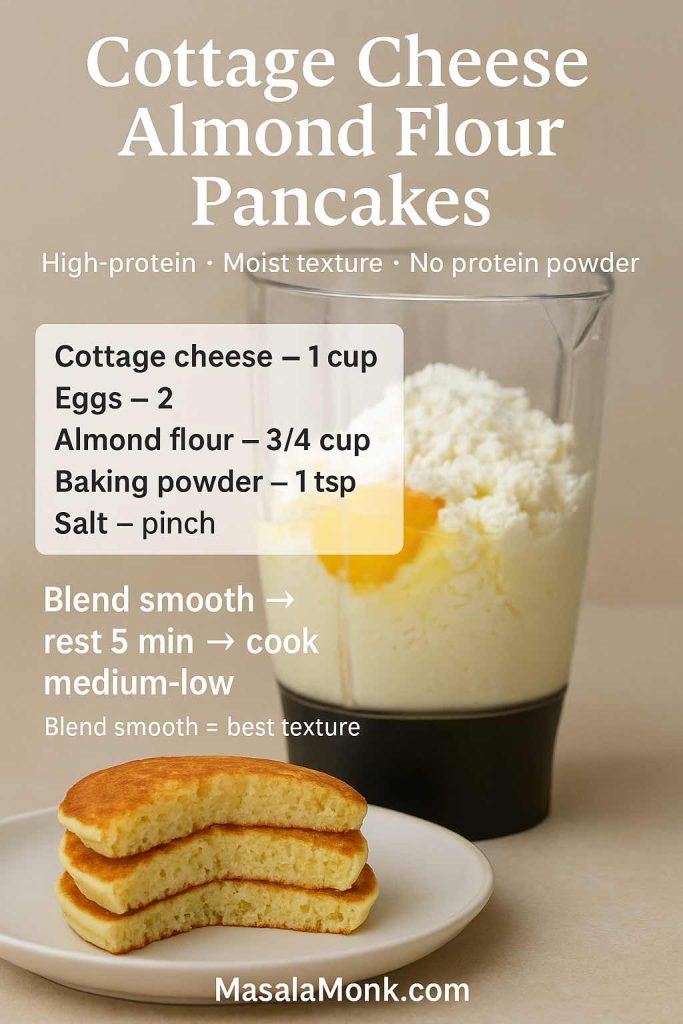
Blueberry Cottage Cheese Pancakes (Blender Option)

These blueberry cottage cheese pancakes are especially popular because they cook up tender and filling, and the batter comes together quickly.

Ingredients

  • 1 cup cottage cheese
  • 2 eggs
  • ½ cup rolled oats (or oat flour)
  • 1 tsp baking powder
  • ½ tsp vanilla
  • Pinch of salt
  • ¾ cup blueberries
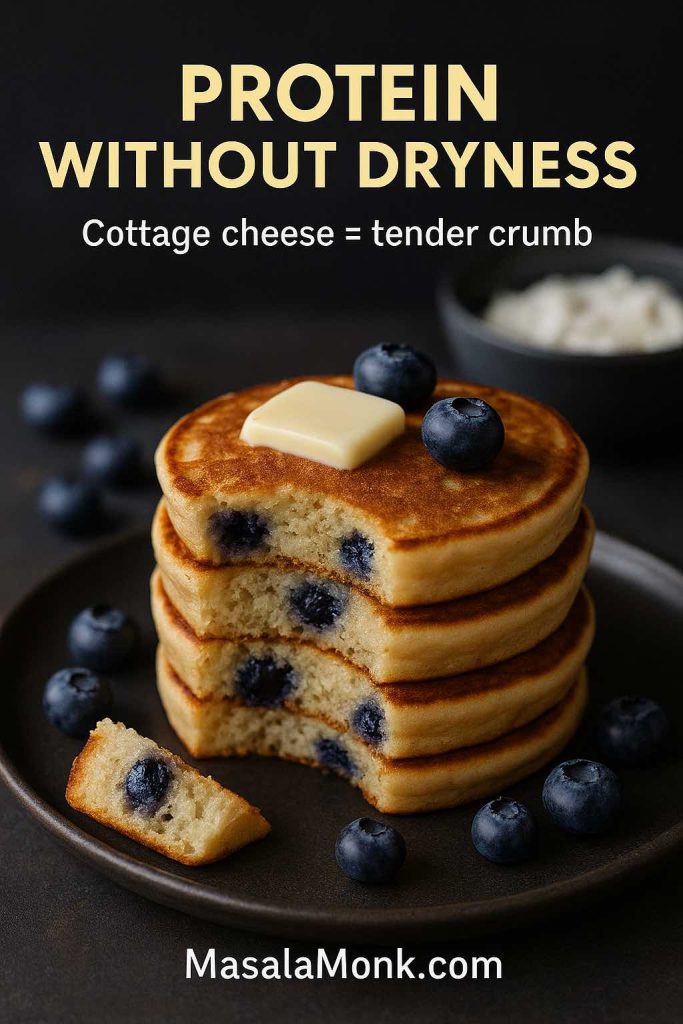
Portrait photo of high protein blueberry pancakes with a cut piece showing a tender crumb and blueberries inside, topped with a small butter pat, with text overlay “Protein Without Dryness” and “Cottage cheese = tender crumb,” and MasalaMonk.com in the footer.
High protein blueberry pancakes stay soft when the protein comes from dairy like cottage cheese—gentle heat and minimal mixing keep the crumb tender.

Method

  1. Blend cottage cheese, eggs, oats, baking powder, vanilla, and salt until smooth.
  2. Rest 5 minutes; the batter thickens slightly.
  3. Cook on medium-low heat; add blueberries per pancake on the pan.
  4. Flip gently once edges set.

If you enjoy learning how cottage cheese can fit into breakfasts beyond pancakes, this is a helpful read: cottage cheese for breakfast.

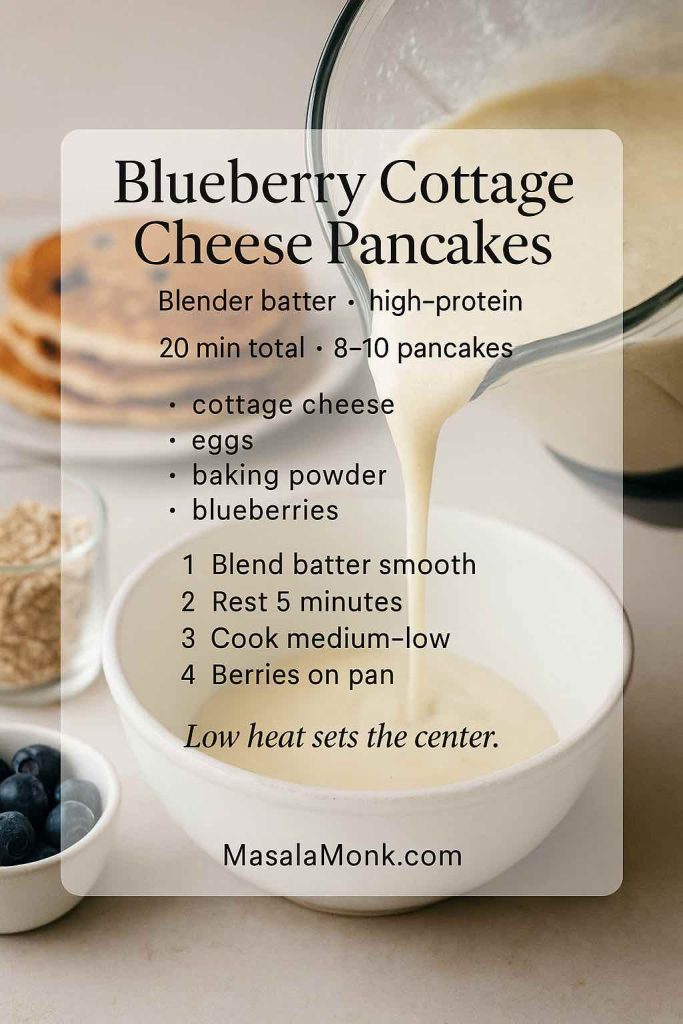
Blueberry cottage cheese pancakes recipe card showing blender batter being poured into a bowl, a high-protein pancake method with cottage cheese, eggs, and blueberries.
For the best texture, blend until the batter looks completely smooth, then rest 5 minutes so the oats hydrate—this prevents gummy centers and helps the pancakes set cleanly.

Blueberry Pancakes Protein Style (Greek Yogurt + Optional Protein Powder)

This version targets blueberry protein pancakes and blueberry pancakes protein queries naturally because the recipe genuinely is protein-forward—yet it still tastes like a pancake.

Ingredients

  • 1 cup flour (or ½ flour + ½ oat flour)
  • 2 tsp baking powder
  • ½ tsp salt
  • ¾ cup milk
  • ½ cup Greek yogurt
  • 2 eggs
  • 1 tbsp honey or sugar
  • Optional: 1 scoop protein powder (whey or plant)
  • ¾ to 1 cup blueberries
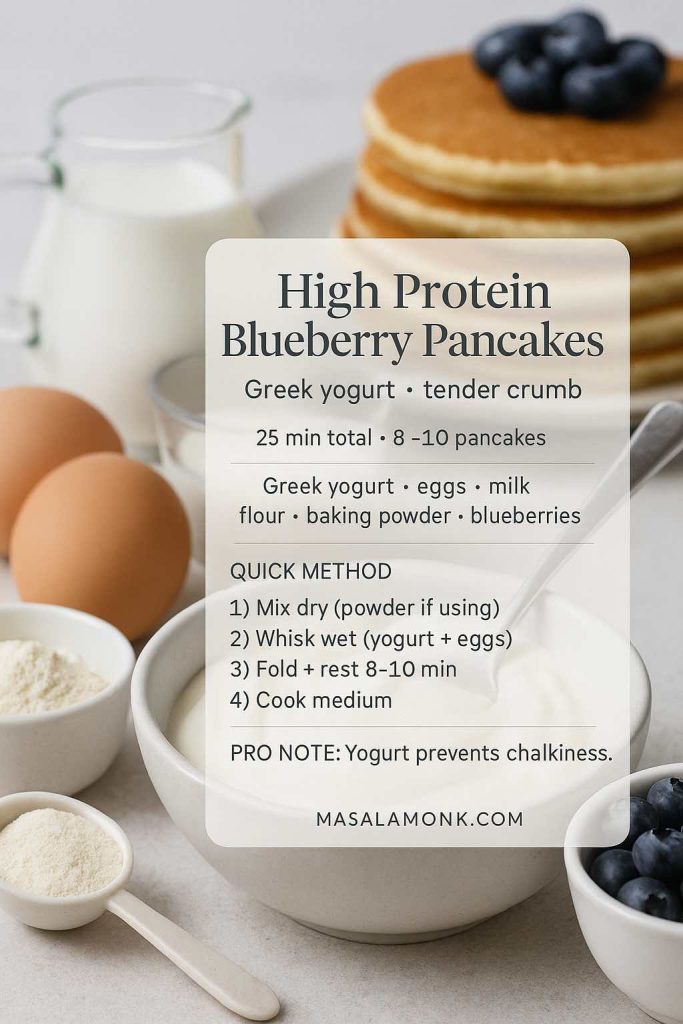
High protein blueberry pancakes recipe card featuring Greek yogurt, eggs, and blueberries, with quick steps for blueberry protein pancakes that stay tender and not chalky.
If you add protein powder, reduce flour by 2–3 tbsp (or add an extra splash of milk). Most powders absorb more liquid than flour, which is the #1 reason protein pancakes turn dry.

Method

  1. Mix dry ingredients first (including protein powder if using).
  2. Whisk milk, yogurt, eggs, honey.
  3. Combine gently; rest 8–10 minutes.
  4. Cook on medium heat; add blueberries per pancake on the skillet.

If you’re into high-protein breakfast planning more broadly, you might also like how to eat 100 grams of protein a day, as well as high protein overnight oats for mornings when you want “grab-and-go” instead of “stand-and-flip.”

For another protein-leaning pancake idea that’s fruit-based, this is a fun variation to browse: protein rich cherry pancakes.


Blueberry Oat Pancakes and Blueberry Oatmeal Pancake Variations

Blueberry oat pancakes sit in a sweet spot: heartier than classic flour pancakes, lighter than a dense “health” pancake, and ideal for anyone who wants a blueberry oatmeal pancake that still feels fluffy.

Here are two options—one softer and one more rustic—so you can pick based on what you have.

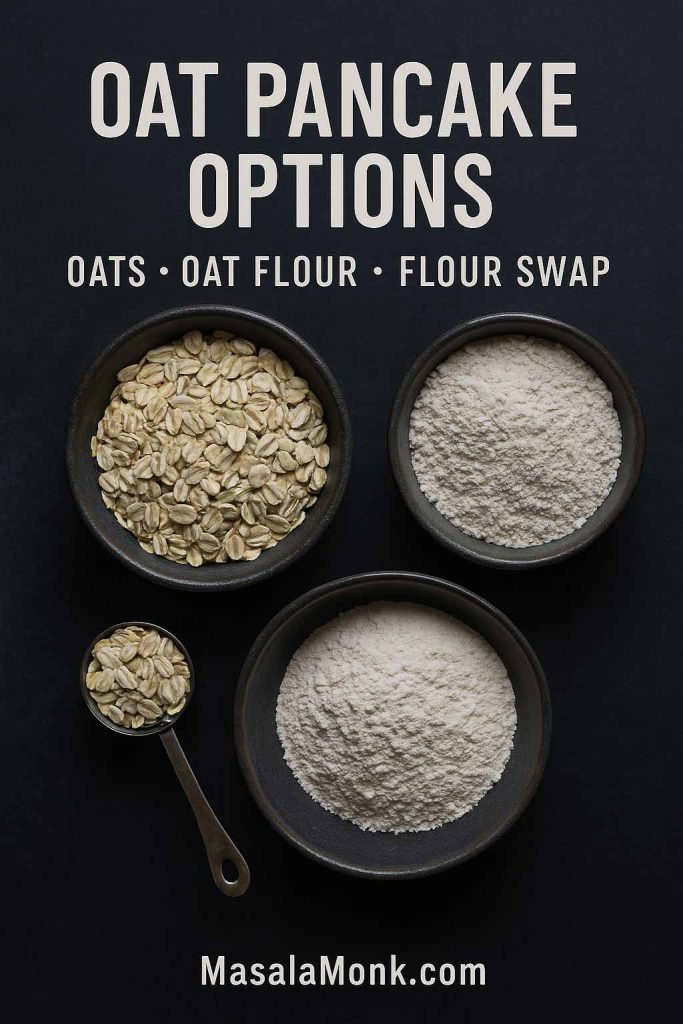
Portrait flatlay showing oats, oat flour, and flour swap options in dark bowls with a measuring spoon, featuring text overlay “Oat Pancake Options” and “Oats • Oat flour • Flour swap,” with MasalaMonk.com in the footer.
For blueberry oat pancakes (or a blueberry oatmeal pancake), choose your base: soaked rolled oats for texture, oat flour for a smoother crumb, or a simple flour swap for the easiest upgrade.

Option A: Soaked-Oat Blueberry Oatmeal Pancake

Ingredients

  • 1 cup rolled oats
  • ¾ cup buttermilk (or milk + lemon)
  • ¾ cup flour
  • 1 tbsp sugar or honey
  • 1 ½ tsp baking powder
  • ½ tsp baking soda
  • ½ tsp salt
  • 1 egg
  • 2 tbsp melted butter or oil
  • ¾ to 1 cup blueberries

Method

  1. Combine oats and buttermilk; soak 10–15 minutes.
  2. Add egg and melted butter.
  3. Fold in flour, sugar, baking powder, baking soda, salt.
  4. Cook on medium heat; add blueberries per pancake.
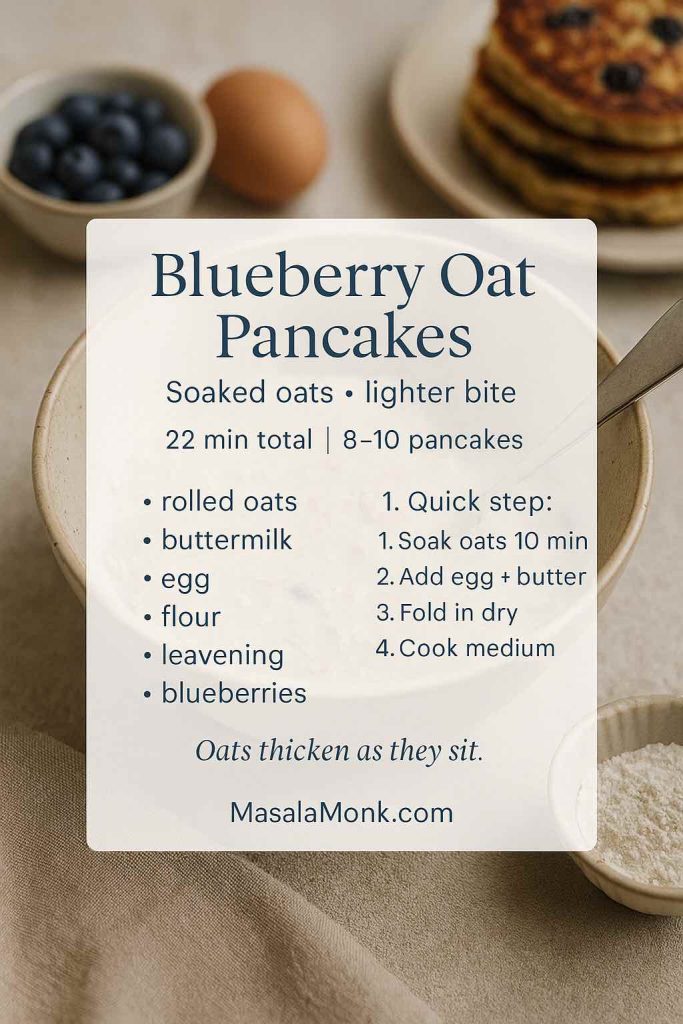
Blueberry oat pancakes recipe card showing rolled oats soaking in buttermilk with quick steps for a lighter blueberry oatmeal pancake texture.
Oats keep absorbing liquid after mixing—if the batter thickens while you cook, add a small splash of milk to the bowl and fold gently to keep later batches just as fluffy as the first.

Option B: Oat-Flour Blueberry Oat Pancakes

This is smoother and more uniform.

Swap

  • Replace ⅓ of the flour in the classic recipe with oat flour.

Let the batter rest the full 10–15 minutes so oat flour hydrates properly.

If you’re building meal-prep breakfasts, these oat-based pancakes pair nicely with snackable, make-ahead items like healthy oat protein bars.


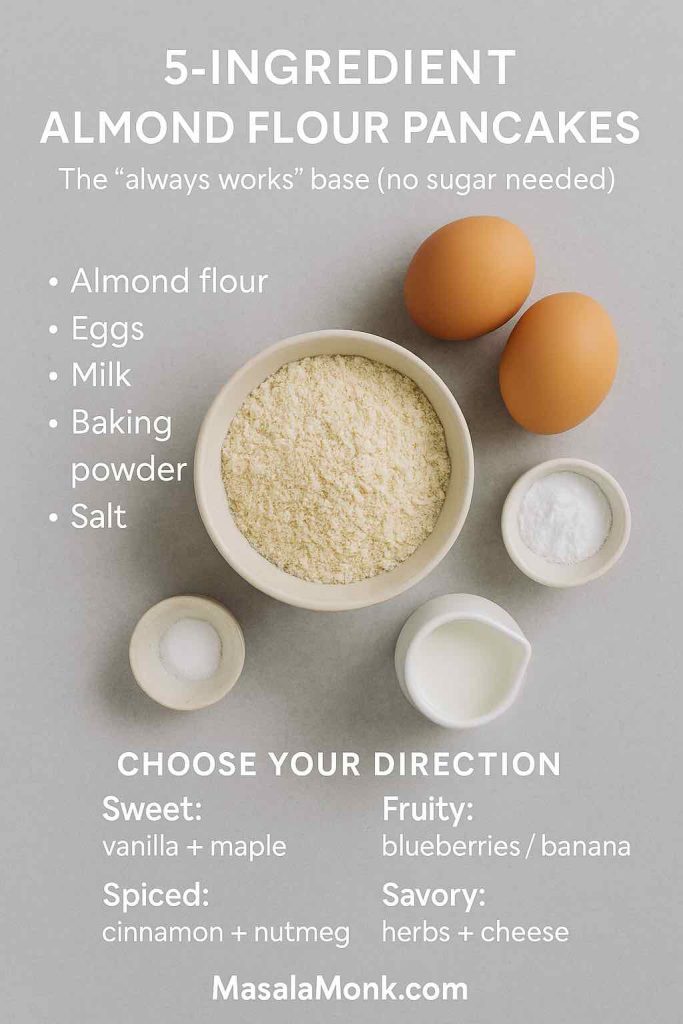
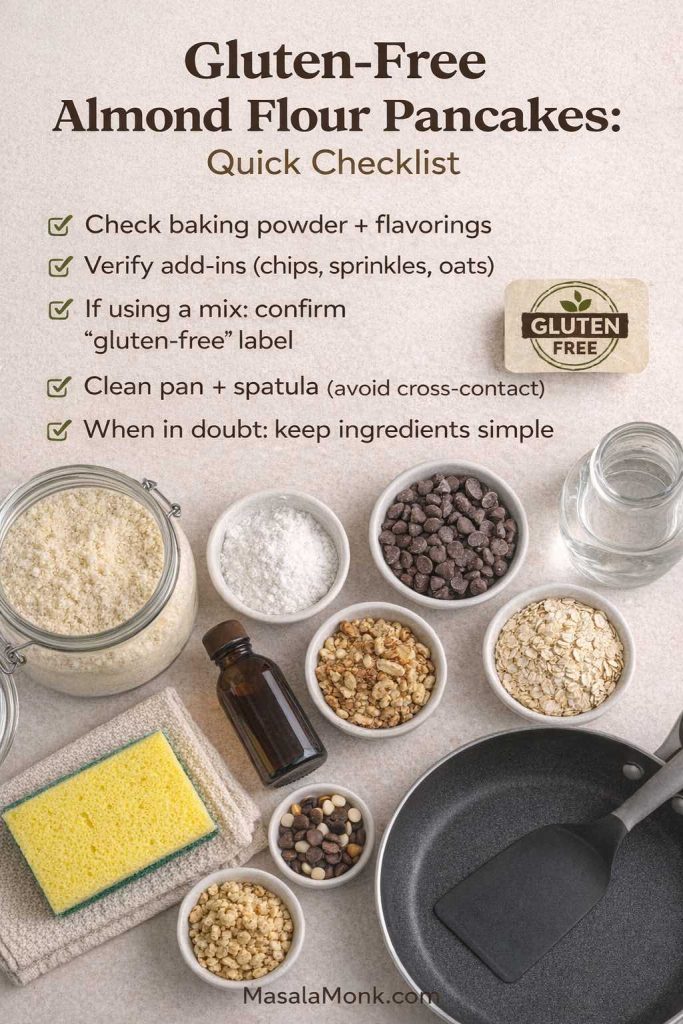
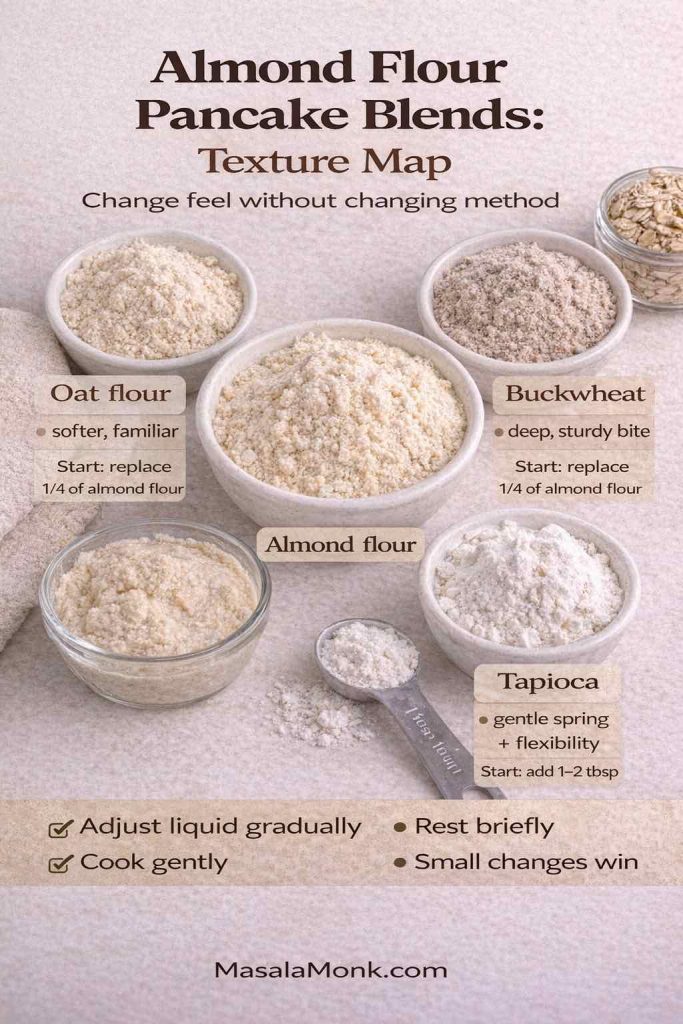
Blueberry Pancakes Gluten Free: Blueberry Gluten Free Pancakes and Almond Flour Blueberry Pancakes

Gluten-free blueberry pancakes can be just as tender as the classic if you choose the right structure. Instead of chasing a “perfect substitute,” pick a method that suits the ingredients you have.

Portrait photo of a gluten-free blueberry pancake cut open on a dark surface with a bowl of gluten-free flour and a kitchen timer, featuring text overlay “Gluten-Free Tip” and “Rest batter 15 minutes,” with MasalaMonk.com in the footer.
For blueberry pancakes gluten free that hold together, let the batter rest longer—extra hydration improves structure and keeps the crumb tender.

Approach 1: Blueberry Pancakes Gluten Free with a 1:1 Blend

Use your favourite gluten-free 1:1 flour blend in place of all-purpose flour in the classic recipe. Then add one small adjustment: let the batter rest 15 minutes instead of 10. That extra time helps the starches hydrate, which improves tenderness.

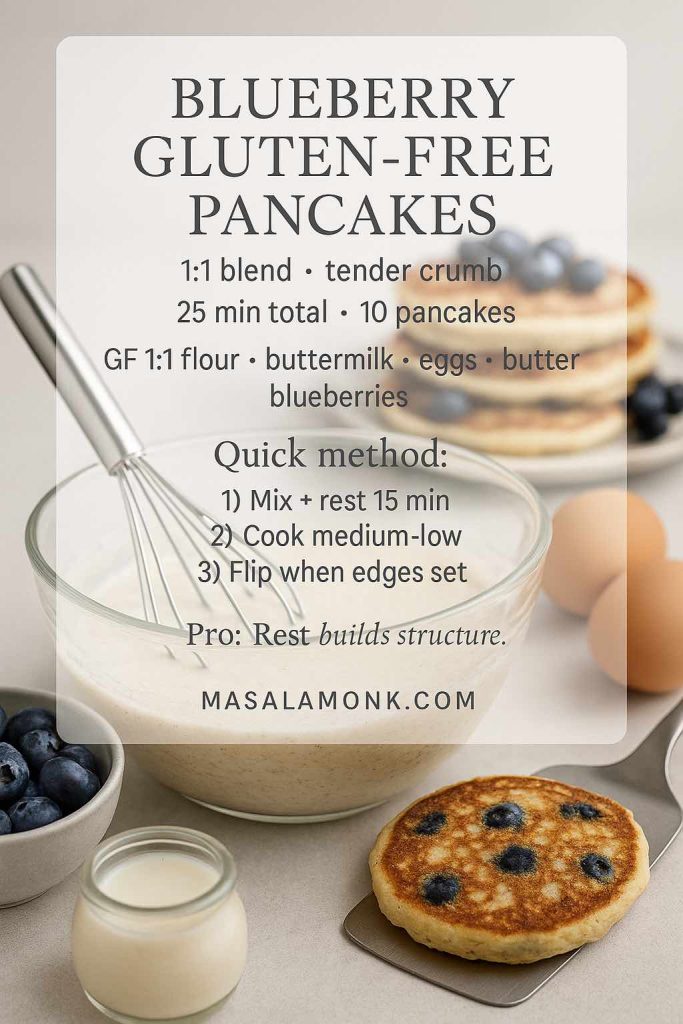
Blueberry gluten free pancakes recipe card using a 1:1 gluten-free flour blend, showing batter rest time, medium-low cooking, and flip-when-edges-set guidance.
Gluten-free batters benefit from patience: give the first side an extra 30–60 seconds so the starches set—then flip once and avoid pressing the pancake (pressing pushes out air).

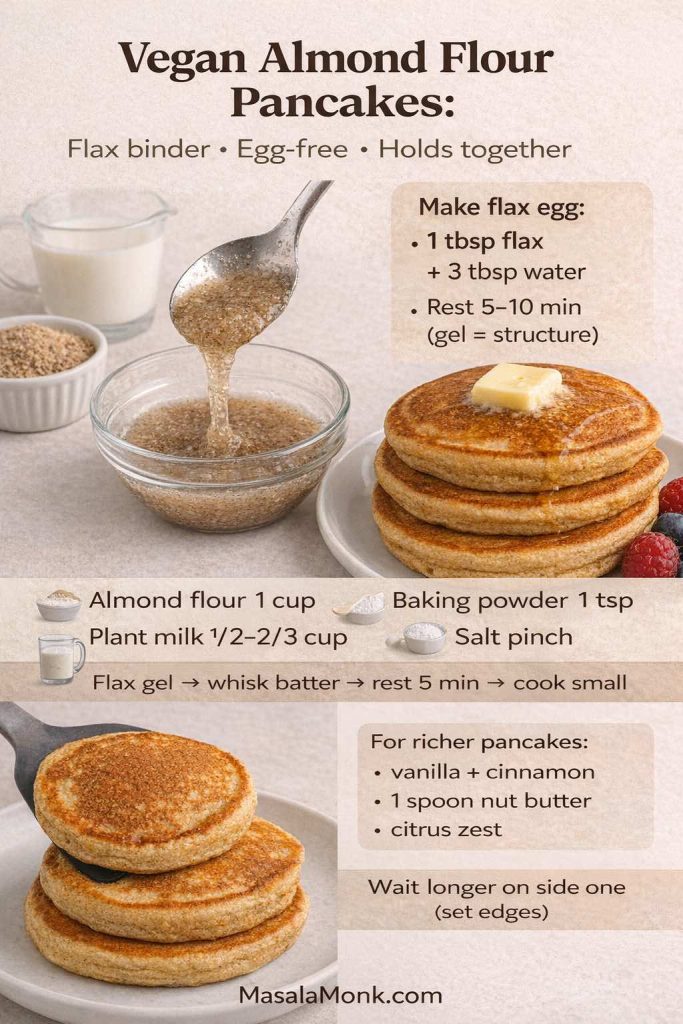
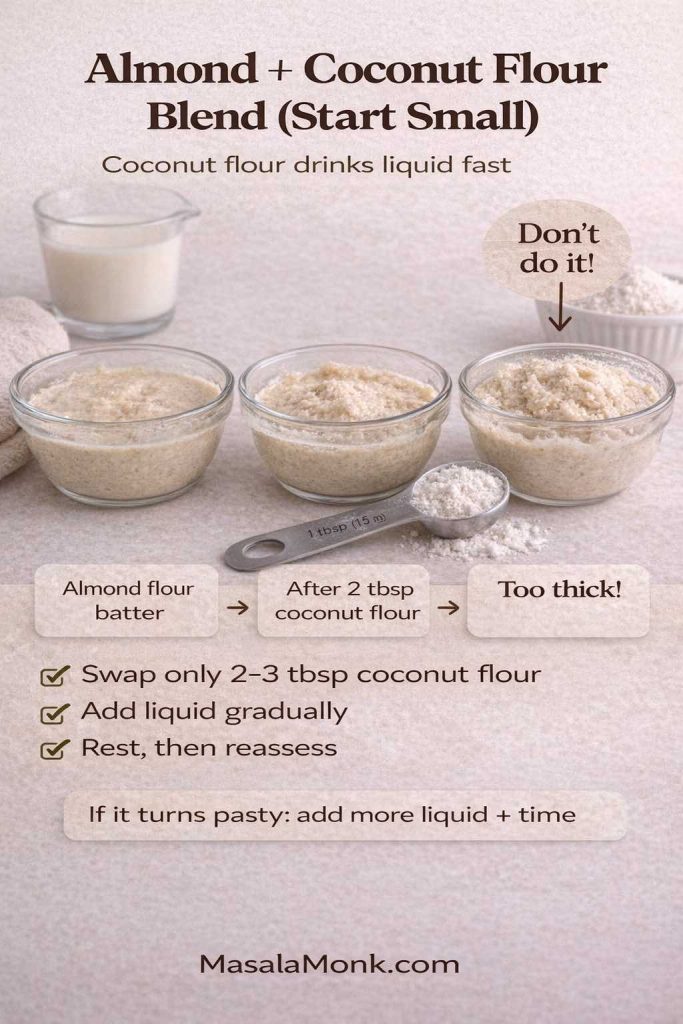
Approach 2: Almond Flour Blueberry Pancakes (Tender and Rich)

Almond flour blueberry pancakes tend to be moist and slightly rich; however, almond flour alone can be fragile. So this hybrid approach keeps them tender yet sturdy.

Ingredients

  • ¾ cup almond flour
  • ½ cup gluten-free 1:1 blend (or oat flour)
  • 2 tsp baking powder
  • ½ tsp salt
  • 2 eggs
  • ¾ cup milk (dairy or plant)
  • 2 tbsp melted butter or oil
  • 1 tbsp honey or sugar
  • ¾ cup blueberries
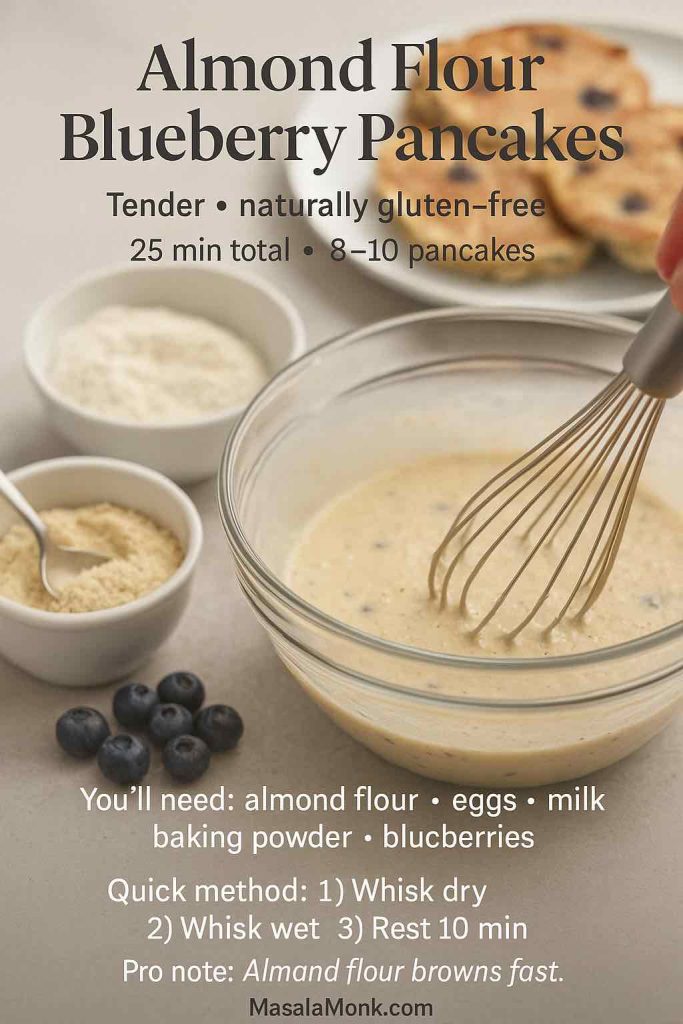
Almond flour blueberry pancakes recipe card showing almond flour batter being whisked with blueberries, with a note to cook on medium-low heat because almond flour browns quickly.
Almond flour sets differently than wheat flour—cook a little slower on medium-low and wait for firm edges before flipping so the centers finish without over-browning the crust.

Method

  1. Whisk dry ingredients.
  2. Whisk wet ingredients.
  3. Combine gently; rest 10 minutes.
  4. Cook on medium-low heat; add blueberries per pancake.

If you like exploring other gluten-free pancake styles, you might enjoy healthy millet protein packed pancakes as another naturally gluten-free direction.


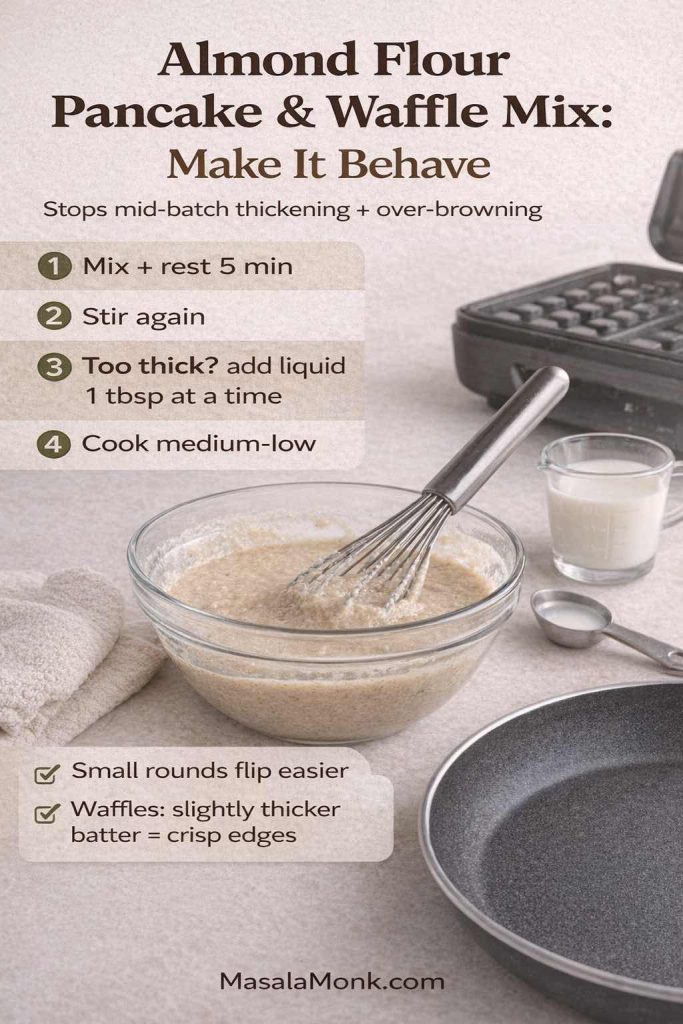
Blueberry Pancake Mix: A Homemade Pancake Mix You’ll Actually Use

A blueberry pancake mix isn’t just about speed. It’s about setting yourself up for mornings when you want pancakes and blueberries without measuring five different leaveners while half-awake.

This homemade pancake mix is a neutral base: you can use it for classic pancakes, blueberry pancakes with pancake mix, blueberry mini pancakes, and even a quick blueberry Dutch pancake. Moreover, if you keep it in an airtight jar, it’s ready whenever you are.

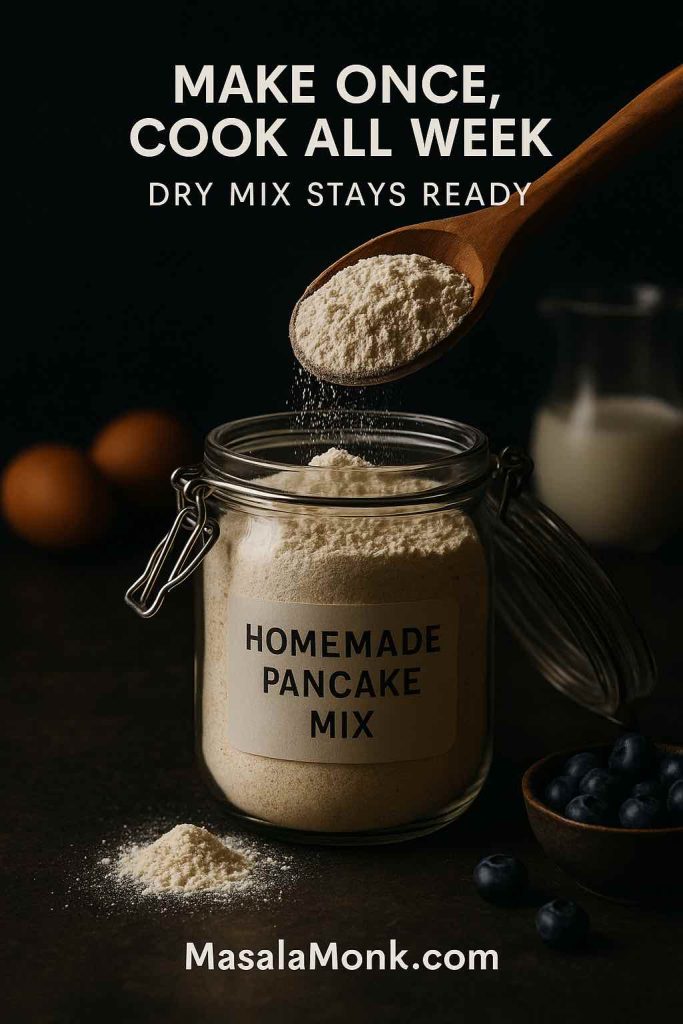
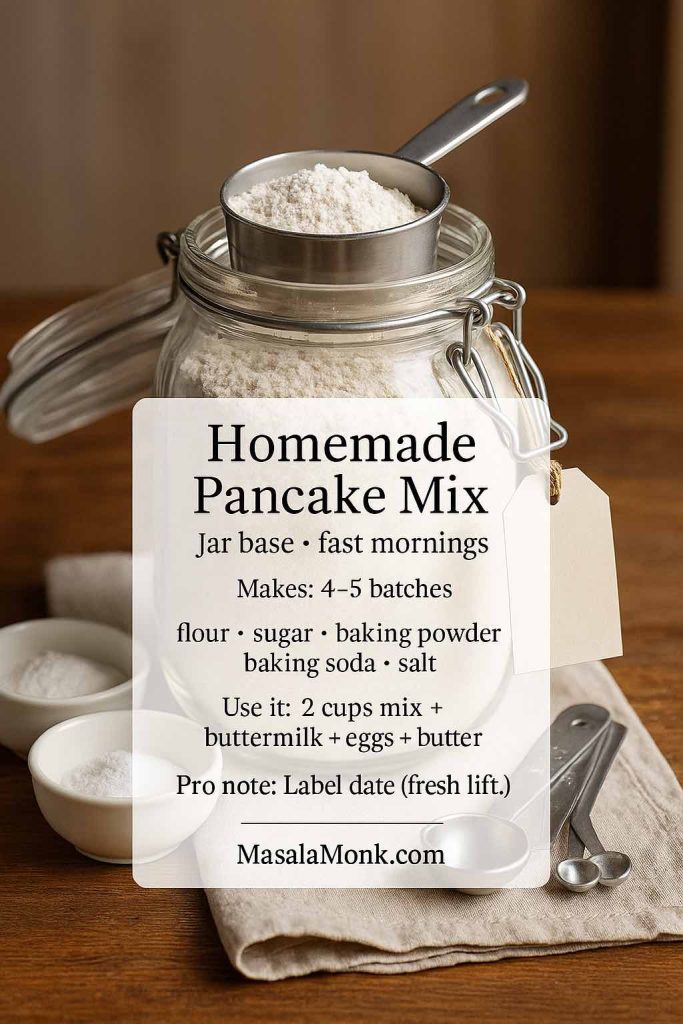
Portrait photo of a glass jar labeled “Homemade Pancake Mix” with flour being poured from a wooden scoop, blueberries and eggs nearby, featuring text overlay “Make once, cook all week” and “Dry mix stays ready,” with MasalaMonk.com in the footer.
A homemade pancake mix keeps weekday breakfasts effortless—stash the dry mix, then add milk, eggs, and butter when you’re ready to cook.

Homemade Pancake Mix (makes about 4–5 batches)

  • 4 cups (500 g) all-purpose flour
  • ¼ cup (50 g) sugar
  • 4 tbsp baking powder
  • 1 tbsp baking soda
  • 2 tsp fine salt

Whisk thoroughly and store airtight.

If you ever wonder whether your baking powder still has life, King Arthur has an easy freshness test: how to test baking powder and baking soda.

Homemade pancake mix in a jar recipe card showing dry ingredients and the “2 cups mix + buttermilk + eggs + butter” formula for making blueberry pancake mix quickly.
Whisk the jar mix for a full 30 seconds before storing—uneven baking powder distribution is the quiet reason some batches rise patchy while others stay flat.

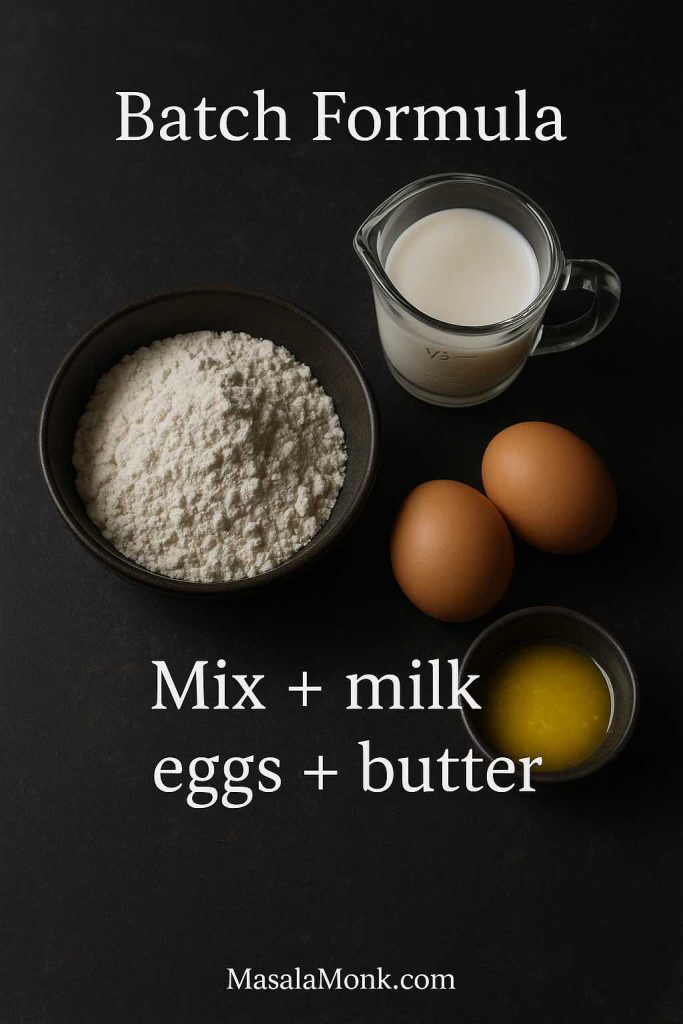
Turning the mix into pancakes (one batch)

  • 2 cups pancake mix
  • 1 ½ cups buttermilk (or milk + lemon)
  • 2 eggs
  • 3 tbsp melted butter or oil
  • Optional: 1 tsp vanilla

Fold gently, rest 8–10 minutes, cook on medium heat.

Portrait flatlay showing pancake mix in a bowl with a measuring cup of milk, two eggs, and melted butter, featuring text overlay “Batch Formula” and “Mix + milk + eggs + butter,” with MasalaMonk.com in the footer.
This simple batch formula turns homemade pancake mix into a smooth batter fast—then you can add blueberries on the pan for cleaner color and even fruit in every pancake.

Keeping it safe and sensible

Because flour is a raw ingredient, it’s best not to taste raw batter. The FDA explains why raw flour matters here: flour is a raw food. CDC also reinforces the same idea in plain language: don’t eat raw dough or batter.


Blueberry Pancakes with Pancake Mix: How to Make Pancakes from the Mix Taste Homemade

Blueberry pancakes with pancake mix can be excellent. The difference between “boxy” pancakes and “why are these so good?” pancakes is usually just a few small choices.

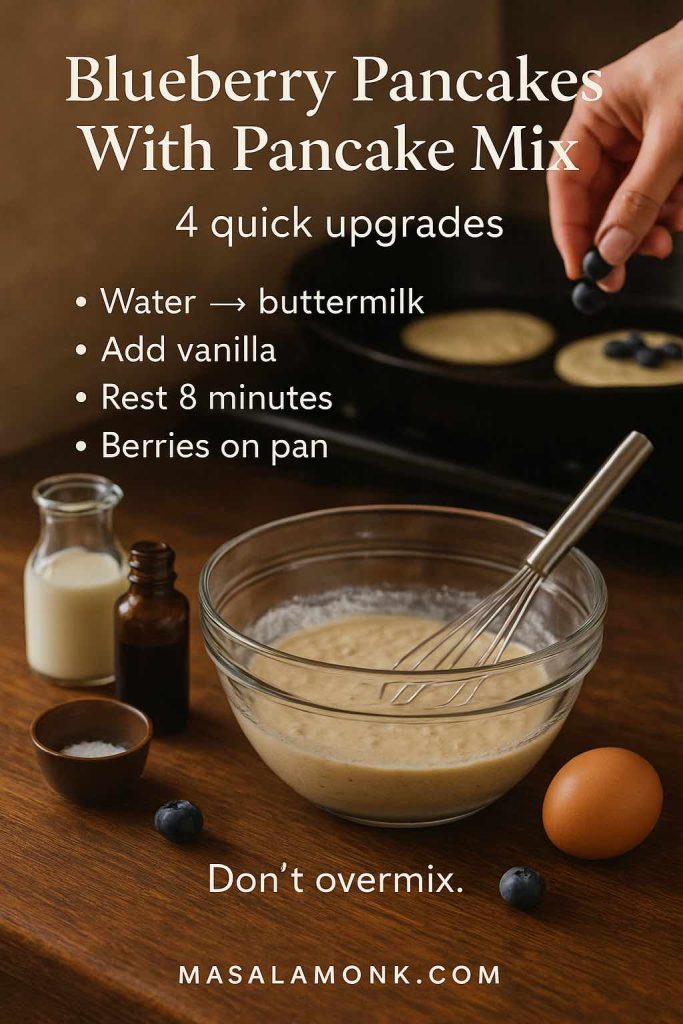
Blueberry pancakes with pancake mix recipe card showing four upgrades—swap water for buttermilk, add vanilla, rest the batter, and add blueberries on the pan—for fluffier pancakes.
If your mix batter gets foamy quickly, cook sooner—boxed mixes can lose lift if they sit too long. Rest 5–8 minutes, then start cooking.

A simple upgrade approach

  • Use buttermilk (or milk + lemon) instead of water.
  • Add vanilla for warmth.
  • Rest the batter briefly.
  • Add blueberries on the pan, especially if using frozen berries.

Serious Eats tested mix upgrades thoroughly and shares what’s worth doing: how to make boxed pancake mix even better.

Portrait action photo of blueberry pancakes with pancake mix being cooked in a cast-iron skillet as batter is poured from a ladle and blueberries are placed on top, with text overlay “Upgrade Your Mix” and “Milk + rest + berries on pan,” and MasalaMonk.com in the footer.
For blueberry pancakes with pancake mix that taste homemade, swap in milk, let the batter rest briefly, then add blueberries on the pan for clean color and even fruit.

Blueberry pancake mix variations without a second recipe

Once you have the base pancake mix in a jar, you can steer it toward different styles:

  • For a more hearty flavour, replace part of the flour with oat flour and you’re halfway to blueberry oat pancakes.
  • For a lighter texture, add a tablespoon of cornstarch per batch.
  • For a warm brunch vibe, add cinnamon and a pinch of nutmeg—especially good for banana blueberry pancake stacks.

Blueberry Mini Pancakes: Tiny, Quick, Freezer-Friendly

Blueberry mini pancakes feel playful, yet they’re also practical. They cook faster, they’re easy for kids, and they reheat beautifully. Additionally, they’re perfect for those mornings when you want pancakes and blueberries but don’t want to commit to a tall stack.

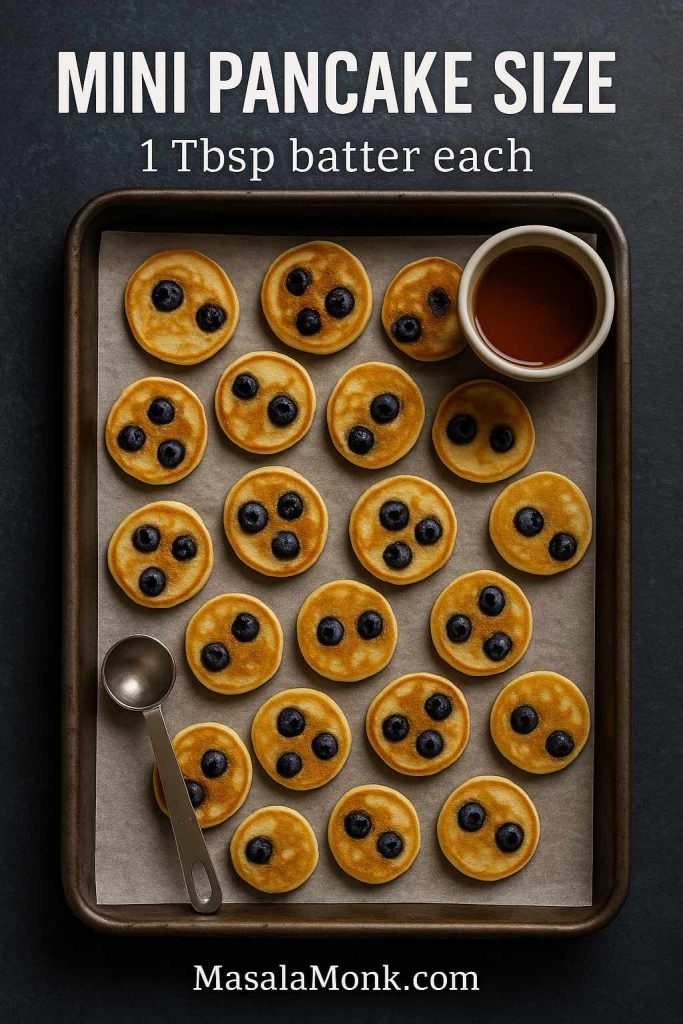
Portrait overhead photo of blueberry mini pancakes arranged on a parchment-lined baking sheet with a measuring tablespoon and a cup of syrup, featuring text overlay “Mini Pancake Size” and “1 Tbsp batter each,” with MasalaMonk.com in the footer.
Blueberry mini pancakes cook fast and freeze well—keep them uniform by using 1 tablespoon of batter per pancake for even browning and easy reheating.

How to make blueberry mini pancakes

Use any batter above—classic, pancake mix, oat, protein, or gluten-free—then spoon 1 to 2 tablespoons per pancake onto a medium skillet. Sprinkle blueberries on top. Flip sooner than usual; mini pancakes set fast.

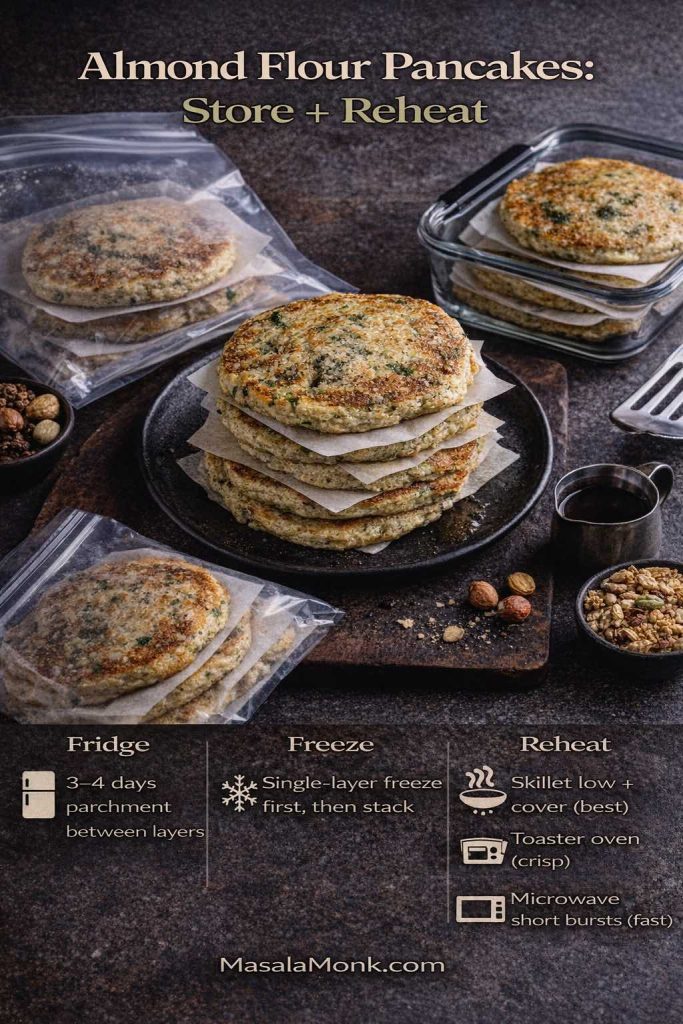
Turning them into frozen blueberry pancakes for busy mornings

Cool completely, freeze in a single layer on a tray, then transfer to a bag. Reheat in the toaster for crisp edges.

Portrait top-down photo showing blueberry pancakes cooling on a rack and freezing on a parchment-lined tray with a labeled freezer bag, featuring text overlay “Freeze Like This” and “Freeze flat → then bag,” with MasalaMonk.com in the footer.
For freezer-friendly frozen blueberry pancakes, freeze them flat first so they don’t stick together—then bag them for quick toaster reheats on busy mornings.

If you need a simple, reliable freezing and reheating guide, Better Homes & Gardens lays it out well: how to freeze and reheat pancakes. For broader freezer safety grounding, USDA has a clear overview: freezing and food safety.

Portrait triptych image showing three ways to reheat blueberry pancakes—toaster, oven, and pan—featuring text overlay “Reheat for Crisp Edges,” method labels, and MasalaMonk.com in the footer.
To bring frozen blueberry pancakes back to life, reheat for crisp edges—use a toaster for speed, the oven for batches, or a covered pan for a softer center.

Blueberry Dutch Pancake: The Big, Puffy Oven Version

A blueberry Dutch pancake is a different experience from classic blueberry pancakes: it’s puffed and dramatic, more custardy in the center, crisp at the edges, and made in one pan. It’s also a great choice when you want blueberries and pancakes but don’t want to stand at the stove flipping.

Ingredients (serves 2–3)

  • 3 eggs
  • ¾ cup milk
  • ½ cup flour (or ⅓ cup pancake mix as a shortcut)
  • Pinch of salt
  • 1 tbsp sugar (optional)
  • 2 tbsp butter for the pan
  • ¾ cup blueberries
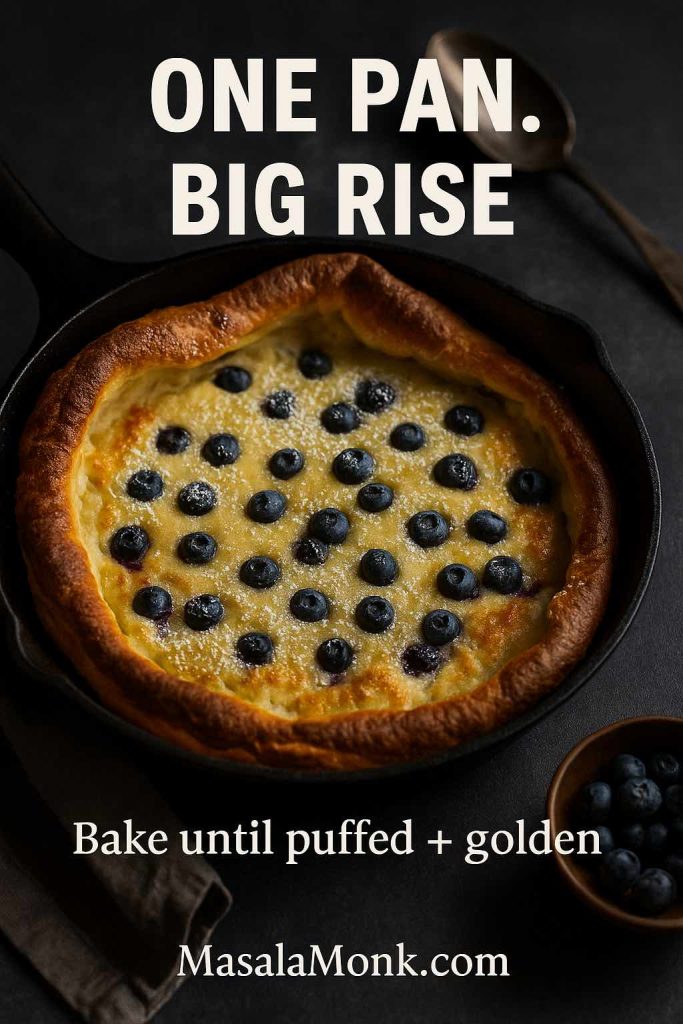
Portrait photo of a blueberry Dutch pancake baked in a cast-iron skillet with puffed golden edges and blueberries on top, featuring text overlay “One Pan. Big Rise.” and “Bake until puffed + golden,” with MasalaMonk.com in the footer.
A blueberry Dutch pancake is the no-flip option—bake until the edges puff deep golden, then slice and serve straight from the skillet.

Method

  1. Preheat oven to 220°C / 425°F. Put a cast-iron skillet (or oven-safe pan) in the oven to heat.
  2. Blend or whisk eggs, milk, flour (or pancake mix), salt, and sugar until smooth.
  3. Carefully remove hot pan, add butter, swirl to coat.
  4. Pour in batter and scatter blueberries over the top.
  5. Bake 14–18 minutes until puffed and golden.

Serve immediately; Dutch pancakes deflate quickly, but that’s part of their charm.

Also Read: What to Mix with Jim Beam: Best Mixers & Easy Cocktails


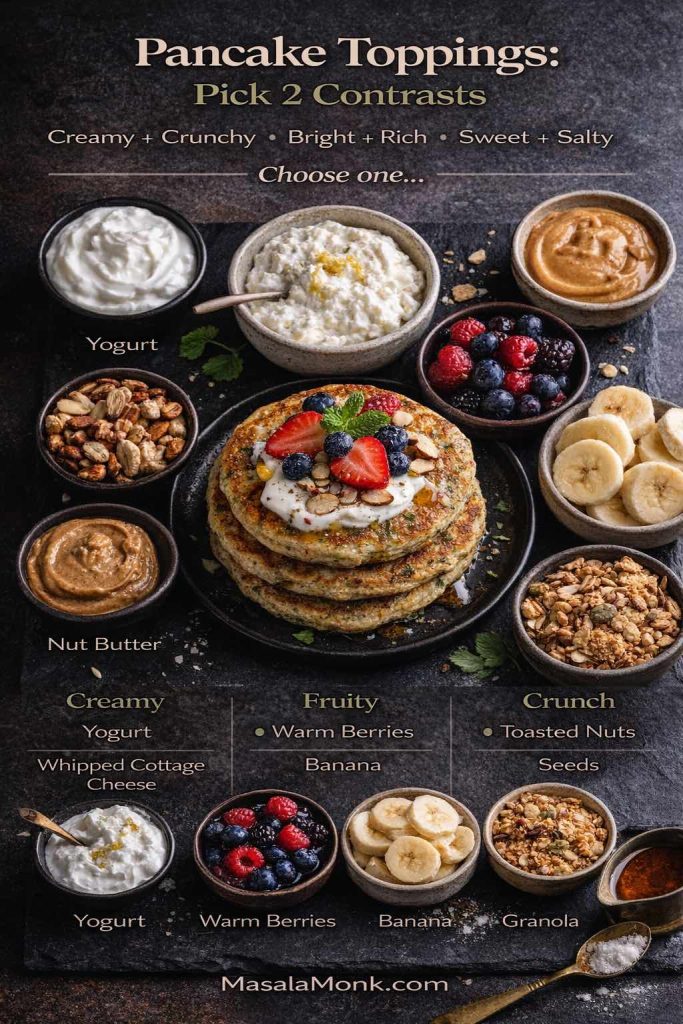
Blueberry Maple Pancakes and Other Toppings That Make the Stack Sing

Sometimes the pancake is the main event; other times, toppings turn a good pancake into a “remember this breakfast” pancake. Blueberry maple pancakes are a classic direction—blueberries and maple simply belong together.

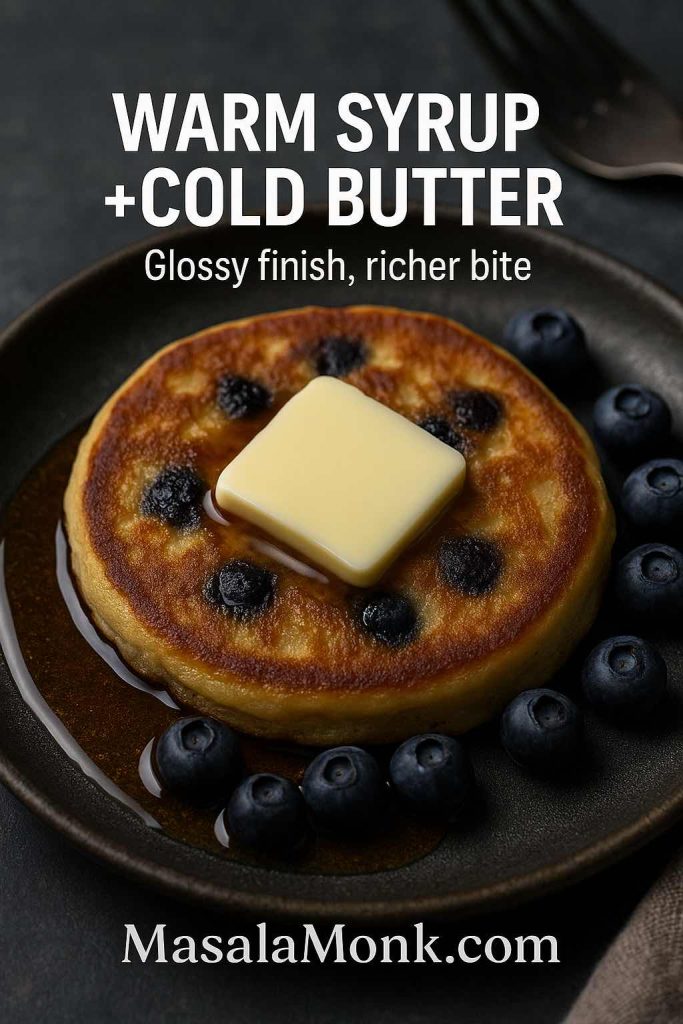
Portrait close-up of a blueberry maple pancake on a dark plate with warm maple syrup pooling around it and a cold pat of butter melting on top, featuring text overlay “Warm syrup + cold butter” and “Glossy finish, richer bite,” with MasalaMonk.com in the footer.
For blueberry maple pancakes with a restaurant-style sheen, warm the syrup and add cold butter at the end—the contrast creates a glossy finish and a richer bite.

A few topping routes that feel natural

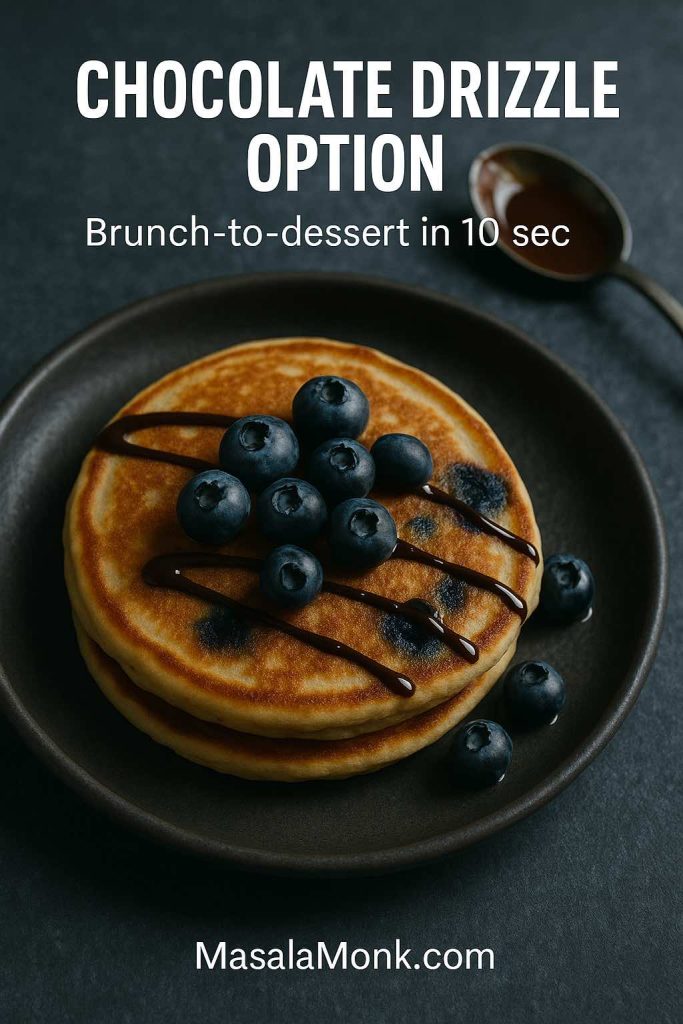
Portrait photo of blueberry pancakes on a dark plate with a chocolate drizzle and fresh blueberries, featuring text overlay “Chocolate Drizzle Option” and “Brunch-to-dessert in 10 sec,” with MasalaMonk.com in the footer.
Turn blueberry pancakes into an easy dessert by adding a quick chocolate drizzle—especially good with frozen blueberry pancakes when you want extra richness.

If you’d rather keep it ultra-simple, don’t underestimate fresh berries scattered on top. Sometimes blueberries and pancakes need no persuasion.


What to Serve with Blueberry Pancakes (So Breakfast Feels Complete)

A stack is wonderful on its own; nevertheless, adding one drink and one side can make breakfast feel like a proper moment.

Drinks that pair beautifully

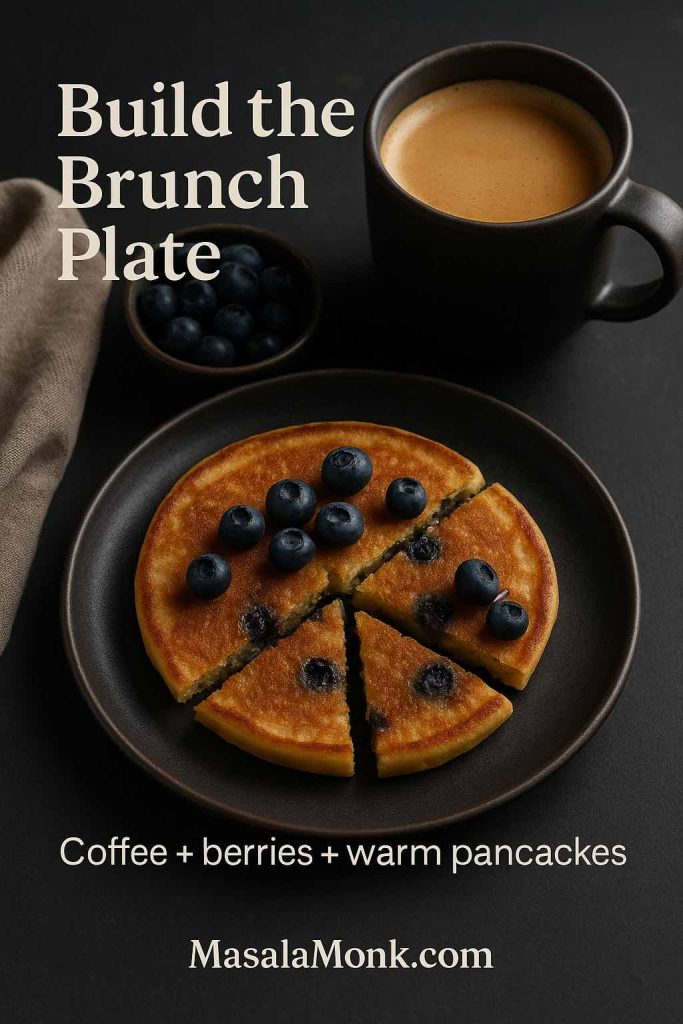
Portrait brunch pairing image showing a blueberry pancake sliced into wedges on a dark plate with fresh blueberries and a cup of coffee, featuring text overlay “Build the Brunch Plate” and “Coffee + berries + warm pancakes,” with MasalaMonk.com in the footer.
Serve blueberry pancakes with coffee and a side bowl of berries for an easy brunch plate that feels complete without extra cooking.

Sides that balance sweetness


A Few Final Details That Make Every Batch Better

Even a great recipe can stumble if one small detail goes off. So before you close the tab and heat the pan, here are the most common friction points—plus the quick fixes that keep blueberry pancakes fluffy.

If pancakes turn dense

Mix less. Seriously. Fold until the flour disappears and stop. Also, let the batter rest so the flour hydrates. If you want the science behind the tenderness, Scientific American has a friendly explanation on gluten and pancakes: the science of gluten in pancakes.

If pancakes brown too fast

Lower the heat. Thick pancakes—especially blueberry ricotta hotcakes and high protein blueberry pancakes—need steadier, gentler heat than thin batters.

If your blueberries sink

Either your batter is thin or your berries went in too early. In either case, add berries per pancake on the skillet. It’s a small habit that pays off immediately.

If you’re cooking for later

Freeze properly so your frozen blueberry pancakes reheat with good texture. The Better Homes & Gardens guide is a great quick reference: how to freeze and reheat pancakes.

Also Read: Mayo Recipe: 15+ Homemade Mayonnaise Variations

FAQs

1) What makes blueberry pancakes turn out fluffy instead of flat?

Fluffy blueberry pancakes usually come from a thicker batter, minimal mixing, and cooking over steady medium heat. In addition, letting the batter rest briefly helps the texture set up so the pancakes rise rather than spread.

2) Can I use frozen blueberries for pancakes without the batter turning purple?

Yes. To avoid streaky batter, use frozen blueberries straight from the freezer and add them after you pour the batter onto the pan. That way, the berries warm inside the pancake instead of bleeding into the bowl.

3) Should I fold blueberries into the batter or add them on top?

For the most even distribution, add blueberries on top of each pancake right after ladling the batter. This method works for blueberries and pancakes in general, and it’s especially helpful for frozen blueberry pancakes.

4) Why do my blueberries sink to the bottom of the pancakes?

Most often, the batter is too thin or the berries were stirred in early. As a result, the berries drop before the pancake sets. A thicker batter and adding berries per pancake solves it.

5) How do I keep blueberry hotcakes from burning on the outside?

If blueberry hotcakes brown too quickly, the heat is likely too high. Instead, lower the heat slightly and give the pan time to stabilize before cooking the next batch.

6) What’s the best blueberry pancake batter consistency?

The batter should be thick enough to mound slightly when spooned, then slowly spread. If it pours like milk, the pancakes may end up thin; conversely, if it’s stiff like dough, they can turn dense.

7) How long should I rest blueberry pancake batter?

Generally, 8–15 minutes is enough. Meanwhile, preheat the pan and prep toppings. Longer rests can work too, yet over-resting may reduce lift as the leavening loses strength.

8) Can I make blueberry pancakes with pancake mix and still get a homemade taste?

Absolutely. Start by using milk (or buttermilk) instead of water, then let the batter rest briefly. Finally, add blueberries on the pan so the mix stays light and the berries stay distinct.

9) What is blueberry pancake mix, and is it different from regular pancake mix?

Blueberry pancake mix may refer to a plain mix used to make blueberry pancakes, or a mix that already includes blueberry flavouring. Either way, you can create a better “blueberry pancakes with pancake mix” result by adding real berries during cooking.

10) How do I make pancakes from the mix without ending up with rubbery texture?

Mix gently, avoid over-stirring, and don’t cook on high heat. Additionally, resting the batter for a few minutes helps the flour hydrate, which leads to softer pancakes.

11) How can I make a blueberry oatmeal pancake that isn’t heavy?

Soak oats briefly before cooking, and keep the batter from getting too thick. Also, cook on medium heat so the center sets without drying out the edges.

12) Are blueberry oat pancakes the same as blueberry oatmeal pancakes?

They’re closely related. Blueberry oat pancakes often use oat flour or blended oats, while a blueberry oatmeal pancake usually features rolled oats for texture. Either way, both pair well with blueberries.

13) How do I make banana and blueberry pancakes without them becoming dense?

Use one ripe banana rather than multiple bananas, and keep mixing minimal. Furthermore, if the batter feels too thick, add a small splash of milk to loosen it.

14) What’s the difference between blueberry pancakes and blueberry hotcakes?

Typically, “hotcakes” are thicker and sometimes slightly sweeter, while “pancakes” can range from thin to thick. However, most recipes can be adjusted either way by tweaking batter thickness and pan temperature.

15) How do I make blueberry mini pancakes that cook evenly?

Use smaller portions of batter and keep the heat moderate. Then, add blueberries to each mini pancake before flipping so they don’t scatter in the pan.

16) Can I freeze blueberry pancakes for later?

Yes. Cool them fully, freeze in a single layer first, then store in a bag. Afterward, reheat in a toaster or oven for the best texture.

17) How do I reheat frozen blueberry pancakes so they don’t get soggy?

To avoid sogginess, reheat in a toaster or oven rather than microwaving. If you must microwave, use short bursts and finish briefly in a pan to restore texture.

18) How do I make high protein blueberry pancakes that still taste good?

Choose protein sources that add tenderness—like Greek yogurt or cottage cheese—rather than relying only on protein powder. Also, keep the batter moist and cook at a slightly lower heat.

19) Are blueberry protein pancakes and blueberry pancakes protein searches basically the same thing?

Yes—both phrases generally refer to pancakes designed to be higher in protein. Accordingly, the best recipes emphasize both nutrition and a fluffy, pleasant bite.

20) How do blueberry cottage cheese pancakes taste compared to classic pancakes?

They’re usually a bit creamier and more filling, with a tender interior. Moreover, they can be either smooth or lightly textured depending on whether you blend the batter.

21) What are blueberry ricotta hotcakes, and how are they different?

Blueberry ricotta hotcakes are thicker, softer pancakes enriched with ricotta. Consequently, they tend to feel more “brunch-style,” with a rich, delicate crumb.

22) Can I make blueberry and ricotta pancakes without separating eggs?

Yes. You can whisk ricotta into the wet ingredients and proceed normally. Still, separating eggs and folding in whipped whites often creates a lighter hotcake texture.

23) How do I make blueberry lemon pancake flavour stand out without making it sour?

Prioritize lemon zest for aroma and use lemon juice sparingly. Then, balance the brightness with a touch of sweetness and plenty of blueberries.

24) What are blueberry lemon ricotta pancakes, and why are they popular?

They combine berry sweetness, citrus fragrance, and creamy ricotta richness. As a result, they deliver a layered flavour that feels special while staying easy to cook.

25) Can I make blueberry pancakes gluten free without them crumbling?

Yes. Use a reliable gluten-free flour blend, let the batter rest longer, and avoid flipping too early. Additionally, cooking on medium-low heat helps the structure set before turning.

26) Are almond flour blueberry pancakes naturally gluten free?

They can be, since almond flour doesn’t contain gluten. Nevertheless, almond flour often benefits from extra eggs or a small amount of gluten-free blend to improve structure.

27) What’s the best way to keep blueberries from bursting too much?

Add blueberries on the pan rather than mixing aggressively, and avoid pressing them into the batter. Also, cook on moderate heat so the berries warm gently instead of exploding quickly.

28) Why do some “best blueberry pancake” recipes recommend buttermilk?

Buttermilk adds acidity that reacts with baking soda, which improves rise and tenderness. In turn, it creates a softer crumb and a pleasant tang that complements blueberries.

29) Can I make blueberry pancakes ahead for brunch guests?

Definitely. Make a large batch, keep them warm in a low oven, and serve in stacks. Meanwhile, you can cook bacon, prep toppings, or mix up drinks without rushing.

30) What’s a blueberry dutch pancake, and can I use blueberries in it?

A blueberry dutch pancake is an oven-baked, puffy pancake with crisp edges and a custardy center. Yes, blueberries work beautifully—scatter them over the batter before baking for a dramatic, fruit-studded result.

Posted on 11 Comments

High Protein Overnight Oats | 5 Recipes (Low Calorie, Vegan, Bulking & More)

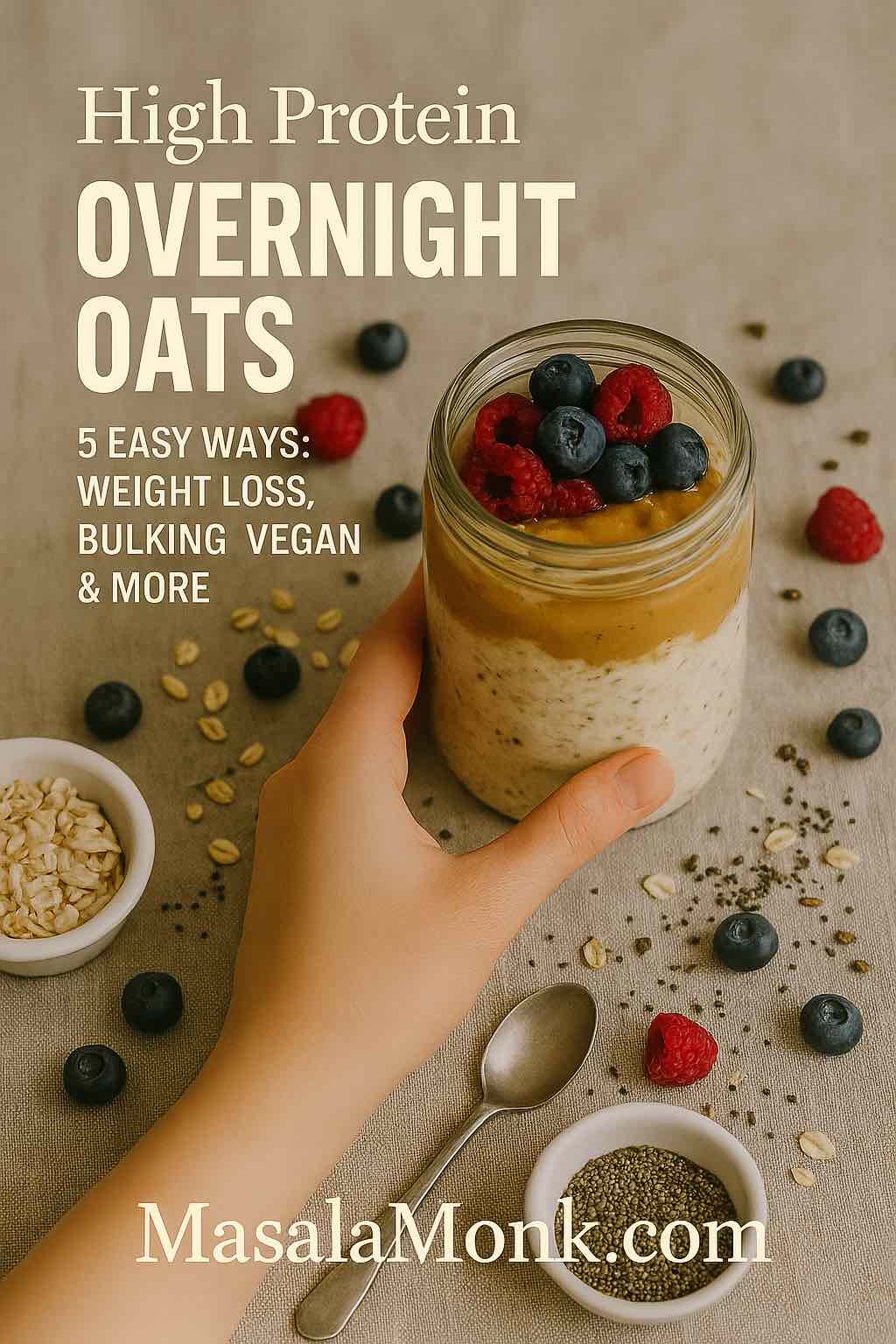
High protein overnight oats in a glass jar with berries and peanut butter, showing 5 easy ways for weight loss, bulking, vegan and more

If you like the idea of breakfast quietly getting ready for you while you sleep, high protein overnight oats are one of the easiest wins you can build into your routine. You stir a few ingredients into a jar at night, tuck it into the fridge, and wake up to something cold, creamy, filling and actually useful for your goals—whether that’s dropping a bit of weight, building muscle, eating more plant-based, or simply avoiding chaos in the morning.

At their core, high protein overnight oats are just oats soaked in liquid with enough protein-rich ingredients added to push the bowl into the 20–30 gram range. Because oats already bring slow-digesting carbohydrates and fibre, you get a steady release of energy instead of a blood-sugar spike and crash. When you add protein and a few smart toppings, you end up with a breakfast that feels like dessert in a jar but behaves like something a dietitian would approve of.

In this guide, you’ll first see a flexible base recipe for high protein overnight oats. After that, we’ll walk through four simple variations: a low-calorie, weight-loss–friendly version, a bulking/bodybuilder version, a vegan and dairy-free version, and finally a no-protein-powder version for days when you want everything to come from regular foods. Along the way, you’ll find links to deeper resources on oats, chia, peanut butter and more so you can tweak things to perfectly fit your macros and taste.


What Makes High Protein Overnight Oats So Powerful?

Before getting into measurements and jars, it’s worth understanding why this basic idea has so much staying power.

Oats are one of those old-school ingredients that have quietly earned their place in modern nutrition. They provide complex carbohydrates, a decent amount of plant protein, and a type of soluble fibre called beta-glucan. That fibre forms a gentle gel in your digestive system, slowing the release of glucose into your bloodstream and helping you feel full for longer. If you want to geek out on the details, the Harvard overview of oats explains how they support heart health, cholesterol and digestion without being complicated to cook.

Because oats are a whole grain, they also bring B-vitamins and minerals along for the ride. The key, though, is not to drown them in sugar. A piece on oatmeal as a smart breakfast choice makes the point that the base is excellent; it’s the flavoured instant sachets and excessive sweeteners that usually cause problems. In overnight oats, you’re in control of every ingredient, which makes it easy to keep things balanced.

Now add protein to that picture. Breakfasts that contain around 20–30 grams of protein are consistently associated with better appetite control and fewer random cravings later in the day. If you’re aiming to manage weight or just avoid mid-morning snack attacks, that’s a big deal. A simple explainer on protein at breakfast and weight loss breaks down why that 20-gram mark is such a useful target. High protein overnight oats are basically a painless way to hit that threshold.

Also Read: 10 High Calorie Protein Shakes & Smoothie Recipes for Healthy Weight Gain

Toppings for Extra Protein

On top of all that, you have chia seeds, nuts and seeds, Greek yogurt, soy products and protein powders—each of which brings its own extra protein, fibre and healthy fats. A quick look at chia seeds and their benefits shows how much fibre and omega-3 fat you get from just a couple of spoonfuls. When you combine all these pieces inside one jar, you get a breakfast that’s easy to prepare, genuinely satisfying, and far more interesting than a plain bowl of porridge.


Choosing Your Oats and Other Building Blocks

Although “oats are oats” is a nice simple idea, the supermarket shelves tell a different story. You’ll see steel-cut, rolled, old-fashioned, quick-cooking and instant oats, plus flavoured packets and granola mixes. The good news is that most plain, unflavoured oat types can work in high protein overnight oats, as long as you adjust the liquid and soaking time.

If you’re a bit confused by the options, MasalaMonk has a detailed guide to oat types and nutrition that walks through steel-cut, rolled, quick and instant oats in simple language. Pair that with their breakdown of oats vs oatmeal and you’ll never stand in the cereal aisle unsure what to buy again.

For overnight oats specifically:

  • Rolled or old-fashioned oats are the sweet spot. They soften nicely overnight and keep some texture.
  • Quick oats will give you a softer, more pudding-like texture and tend to thicken faster.
  • Steel-cut oats need more liquid and time; if you like a bit of chew, they can be great, but you may want to pre-soak or use slightly warm liquid.

If you want to see what happens when oats and chia get together specifically for weight loss and texture, take a look at MasalaMonk’s article on harnessing the power of oats and chia seeds for weight loss. It’s essentially a deep dive into the same idea we’re using here: using fibre and volume to keep hunger in check.

Beyond the oats themselves, you’ll be choosing:

  • Liquid – milk, oat milk, soy milk, almond milk, coconut milk or a mix. If you enjoy DIY projects, the homemade oat milk tutorial at MasalaMonk gives you a one-ingredient version that works beautifully in jars.
  • Protein source – Greek yogurt, skyr, cottage cheese, silken tofu, protein powder (whey or plant-based), or combinations of these.
  • Thickeners and boosters – chia seeds, ground flax, nut butters, seeds.
  • Flavour and sweetness – fruit, cocoa powder, vanilla, cinnamon, cardamom, a small amount of honey, jaggery or dates.

Once you see high protein overnight oats as a formula rather than a single strict recipe, it becomes much easier to customise them.

Also Read: How to Cook Perfect Rice Every Time (Recipe)


The Base High Protein Overnight Oats Recipe

Let’s start with a foundation you can come back to repeatedly. This base high protein overnight oats recipe is designed to land around the 22–28 gram protein mark for most people, depending on your protein powder and yogurt.

Ingredients for One Jar

  • ½ cup (around 40 g) rolled oats
  • ¾ cup (about 180 ml) milk of choice (dairy, soy, or another plant milk)
  • ¼ cup (60 g) thick Greek yogurt or hung curd
  • 1 scoop (20–25 g) protein powder
  • 1 tablespoon chia seeds
  • ½ medium banana, mashed or 1–2 teaspoons honey/jaggery powder
  • A pinch of salt
  • ½ teaspoon vanilla extract or ground cinnamon
  • Optional toppings in the morning: berries, sliced banana, a few chopped nuts, a teaspoon of nut butter, extra seeds

If you’re sensitive to sweetness, err on the side of less banana or sweetener at first. You can always drizzle a bit of honey or maple syrup on top the next day.

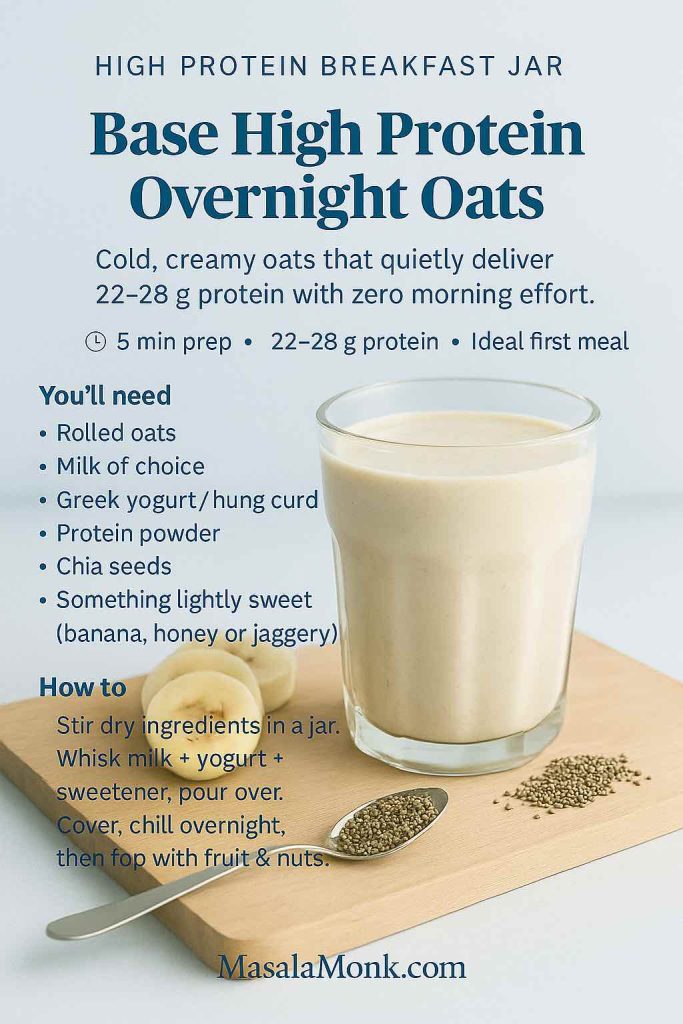
Base High Protein Overnight Oats recipe card showing a glass of creamy overnight oats with banana slices and chia seeds on a wooden board, plus a simple list of ingredients and 3-step method.
Screenshot or pin this base high protein overnight oats formula—oats, milk, Greek yogurt, protein powder and chia—then tweak the toppings to match your calories and macros for the day.

Step-by-Step Method

  1. Combine the dry ingredients.
    Add oats, protein powder, chia seeds, salt and any spices into a jar or container. Stir them together so the powder and seeds are evenly distributed.
  2. Whisk the wet ingredients.
    In a small bowl, whisk milk, yogurt and mashed banana or liquid sweetener. This little step helps your protein powder dissolve more evenly and keeps clumps away.
  3. Bring everything together.
    Pour the wet mixture over the oats mixture. Stir thoroughly, scraping down the sides and bottom of the jar. If it looks very thick, add a splash more milk; if it looks thin, remember that chia and oats will thicken it overnight.
  4. Let the fridge do the work.
    Seal the jar and refrigerate it for at least 4 hours. Overnight (8–12 hours) is ideal. A simple overnight refrigerator oatmeal recipe from Mayo Clinic notes that this kind of mixture can keep for a couple of days if stored properly, which makes prepping multiple jars at once very practical.
  5. Top and adjust in the morning.
    When you’re ready to eat, open the jar and give your high protein overnight oats a quick stir. If it’s too thick, loosen it with a little extra milk or yogurt. Then add toppings: a handful of berries, a spoonful of chopped nuts, some seeds, or a drizzle of peanut butter.

If you enjoy this kind of “prepped once, ready for several days” breakfast, you’ll probably also like MasalaMonk’s healthy oat protein bars. Those bars use oats and protein in a portable, no-sugar way that pairs naturally with this overnight oats approach.

From this base, you can move in four directions depending on your goals and preferences.

Also Read: Homemade Hot Chocolate with Cocoa Powder Recipe


Low Calorie High Protein Overnight Oats for Weight Loss

Sometimes you want your breakfast to be filling and high in protein, but not too heavy on calories. In that case, the idea is to keep protein high while dropping the overall energy density and increasing fibre and water content.

A low calorie high protein overnight oats version is especially useful when:

  • You’re in a fat-loss phase
  • You tend to snack a lot mid-morning
  • You’d rather save more calories for lunch and dinner

How to Lighten the Base Recipe

Starting from the base, you can make a few simple adjustments:

  • Reduce oats to ⅓ cup instead of ½ cup.
  • Use 1 cup unsweetened almond milk, oat milk or skimmed dairy milk instead of ¾ cup regular milk.
  • Keep ¼ cup of low-fat Greek yogurt, or use a slightly smaller portion if you’re very calorie-conscious.
  • Leave the protein powder scoop as-is so protein stays high.
  • Increase chia seeds to 1½ tablespoons; they add fibre and volume for very few additional calories.
  • Swap mashed banana for grated apple and cinnamon or use a zero-calorie sweetener if needed.
  • Focus toppings on fruit and a few seeds rather than heavy nut butters.
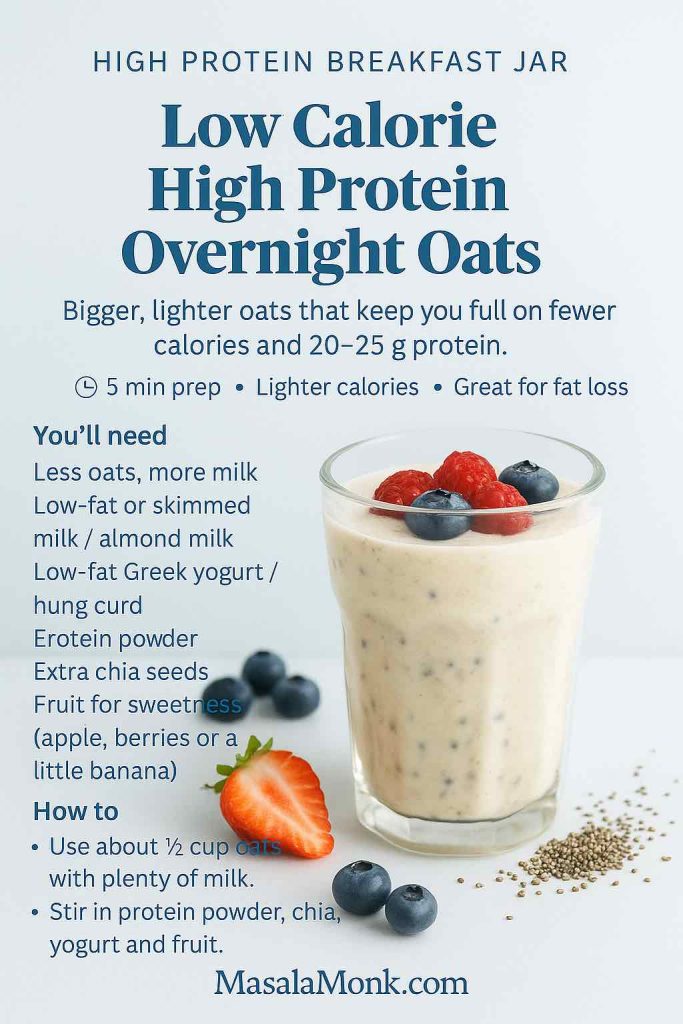
Low Calorie High Protein Overnight Oats recipe card showing a glass jar of creamy overnight oats topped with berries, with a simple list of lighter ingredients and quick method for a weight-loss friendly breakfast.
Save this low calorie high protein overnight oats formula for busy mornings—use less oats, more milk, extra chia and fruit for sweetness to stay full on fewer calories while still hitting 20–25 g of protein.

This gives you a jar of high protein overnight oats that feels generous in size, thanks to extra liquid and chia, but doesn’t eat up your entire calorie budget for the morning. If you like reading about how oats and chia can support fat loss specifically, the MasalaMonk post on oats and chia seeds for weight loss goes into both the science and practical tips.

Importance of Protein

On the protein side, starting your day with a substantial amount can help you feel satisfied for longer and spontaneously eat a little less later on. An accessible explainer on protein at breakfast and weight loss points out that aiming for around 20 grams or more can be particularly helpful for hunger and cravings. With this lighter jar, you remain in that target zone without feeling like you’re dieting.

If you’re building a broader plan around this approach, you might enjoy moving on to other whole-grain, high-protein options during the week, like oat-based snack bars or savoury legumes. The important thing is that this low calorie high protein overnight oats version gives you a stable, predictable base to fall back on during busy mornings.


Bulking and Bodybuilder High Protein Overnight Oats

Of course, not every phase is about eating less. When you’re trying to add muscle mass, train harder or simply maintain weight on an active schedule, you often need more calories in a compact, digestible form. That’s where a bulking version of high protein overnight oats shines.

Instead of nibbling on toast after toast, you can get a serious hit of calories and protein in one bowl or jar, without feeling like you’re stuffing yourself.

Also Read: Peanut Butter Cookies (Classic Recipe & 3 Variations)

Turning the Base Into a Bulking Jar

Using the base high protein overnight oats recipe, make the following changes:

  • Increase oats to ¾ cup for more carbohydrates and volume.
  • Use 1 cup whole milk or even add a splash of cream if you’re really struggling to get enough calories.
  • Keep ¼ cup Greek yogurt, or go up to ⅓ cup if you enjoy the tang.
  • Keep the full scoop of protein powder.
  • Add 1–2 tablespoons peanut butter or almond butter into the mixture.
  • Top with 1–2 tablespoons chopped nuts (almonds, walnuts, peanuts) and a spoon of seeds in the morning.
  • If you tolerate sugar well, a small drizzle of honey or dates syrup can add pleasant sweetness and extra energy.
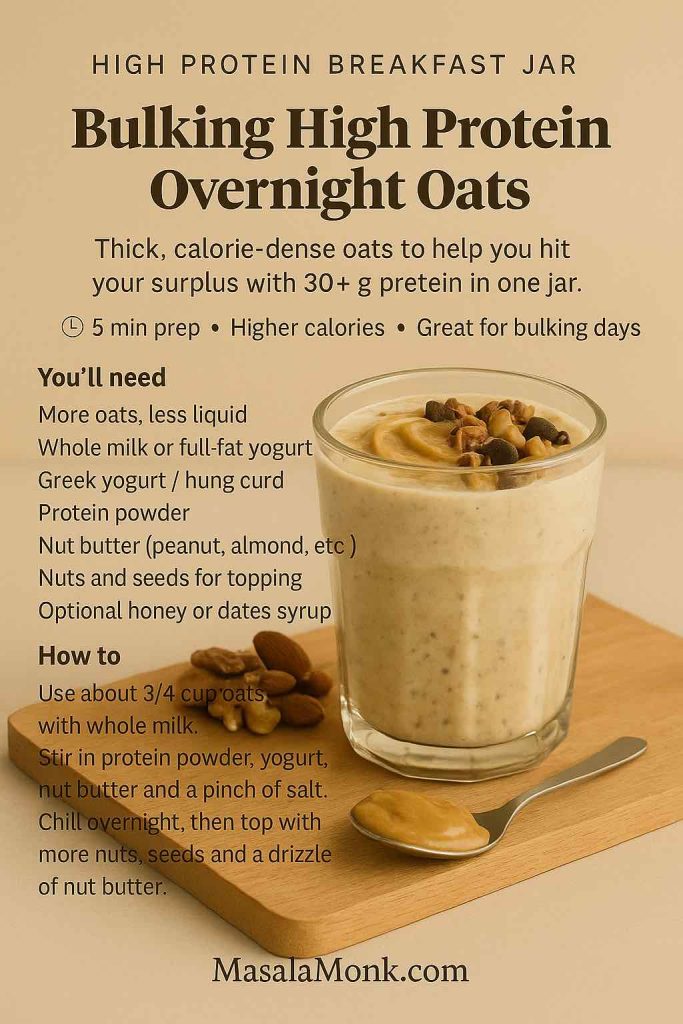
Bulking High Protein Overnight Oats recipe card showing a creamy jar of overnight oats on a wooden board with nuts and chia seeds, plus a short list of higher-calorie ingredients and a simple how-to for mass-gainer breakfast.
Use this bulking high protein overnight oats formula on heavy training days—extra oats, whole milk, Greek yogurt, protein powder and nut butter give you a dense, 30+ gram protein jar that helps you hit your calorie surplus without feeling stuffed.

This kind of bodybuilder high protein overnight oats can easily reach the 500–700 kcal range depending on your exact ingredient choices, while still leaving you feeling comfortable rather than bloated. It’s the sort of breakfast that pairs nicely with heavy training days or long work mornings when lunch is far away.

Why this combination of Oats and Peanut Butter works

The combination of oats and peanut butter, in particular, is a classic for a reason. It brings complex carbohydrates, protein, fibre and healthy fats together in a simple package. MasalaMonk has a full article on oatmeal and peanut butter as a powerful combination that, while written with weight management in mind, also explains why the pairing is so effective for energy and satiety.

For extra protein and crunch, it’s worth looking at which nuts and seeds give you the most per serving. The MasalaMonk guide to protein-packed nuts and seeds breaks down the standouts, making it easier to choose toppings that aren’t just tasty but also macro-friendly for a bulking phase.

Also Read: Béchamel Sauce for Lasagna: Classic, Vegan & Ricotta Sauce Recipe


Vegan and Dairy-Free High Protein Overnight Oats

If you avoid dairy or just prefer a plant-based diet, you might wonder whether high protein overnight oats are still realistic. The good news is that they absolutely are. You simply shift the emphasis towards soy, pea protein and seeds instead of yogurt, cottage cheese or whey.

A vegan high protein overnight oats jar can still hit the same 20–25 gram range while feeling light and fresh.

Building a Plant-Based High Protein Jar

Here’s how you can adapt the base recipe without any dairy:

  • Use ½ cup rolled oats, as usual.
  • Swap dairy milk for 1 cup unsweetened soy milk; it’s one of the highest-protein plant milks.
  • Replace Greek yogurt with ¼ cup soy yogurt or a few spoons of silken tofu blended into the liquid.
  • Choose a plant-based protein powder, such as pea, soy or a rice-pea blend.
  • Keep at least 1 tablespoon chia seeds, and consider adding some ground flax for extra omega-3 fats.
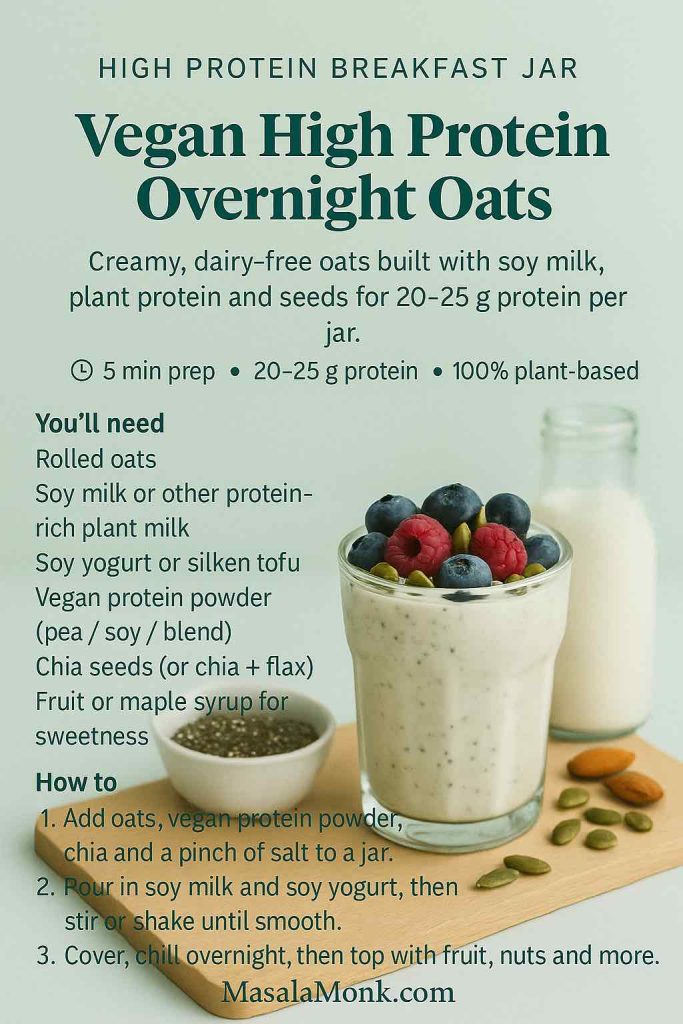
  • Sweeten naturally with mashed banana, blended dates or a small spoonful of maple syrup.
Vegan High Protein Overnight Oats recipe card showing a jar of creamy dairy-free overnight oats with berries and seeds, plus a simple list of plant-based ingredients and a quick how-to for a 20–25 g protein breakfast.
Screenshot this vegan high protein overnight oats formula for dairy-free mornings—rolled oats, soy milk, plant-based protein powder, chia seeds and fruit give you a creamy 20–25 g protein jar without any yogurt or whey.

Chia seeds play an especially important role in vegan high protein overnight oats, because they add both protein and fibre, helping you reach your targets without relying on dairy. For a deeper look at why these tiny seeds are often described as nutritional heavyweights, you can read a concise summary on chia seed nutrition and benefits, which explains their fibre, protein and omega-3 content in a straightforward way.

If you’re looking to generally increase your plant-based protein intake at breakfast, MasalaMonk’s article on high protein plant-based breakfast ideas fits nicely alongside this jar formula. You could rotate between tofu scrambles, chickpea patties and this vegan high protein overnight oats recipe throughout the week to keep things interesting.

Also Read: Cottage Cheese Lasagna Recipe | Chicken, Spinach, & Ricotta


High Protein Overnight Oats Without Protein Powder

Protein powders are convenient, versatile and usually taste good in overnight oats. Even so, you might prefer to get all your protein from “regular” foods, or you may occasionally run out of your favourite tub. In those situations, high protein overnight oats without protein powder are absolutely possible.

The key is to lean heavily on Greek yogurt, curd, cottage cheese or paneer, along with seeds and milk.

A Whole-Food, No-Powder Version

Use this pattern when you’d rather skip the scoop:

  • ½ cup rolled oats
  • ½–¾ cup milk or fortified plant milk
  • ½ cup thick Greek yogurt or hung curd
  • Optional: ¼ cup soft paneer or cottage cheese, crumbled finely
  • 1–2 tablespoons chia seeds or a mix of chia and ground flax
  • A little honey, jaggery or mashed fruit for sweetness
  • Cinnamon, cardamom or vanilla for flavour
  • Fruit and a small handful of chopped nuts on top
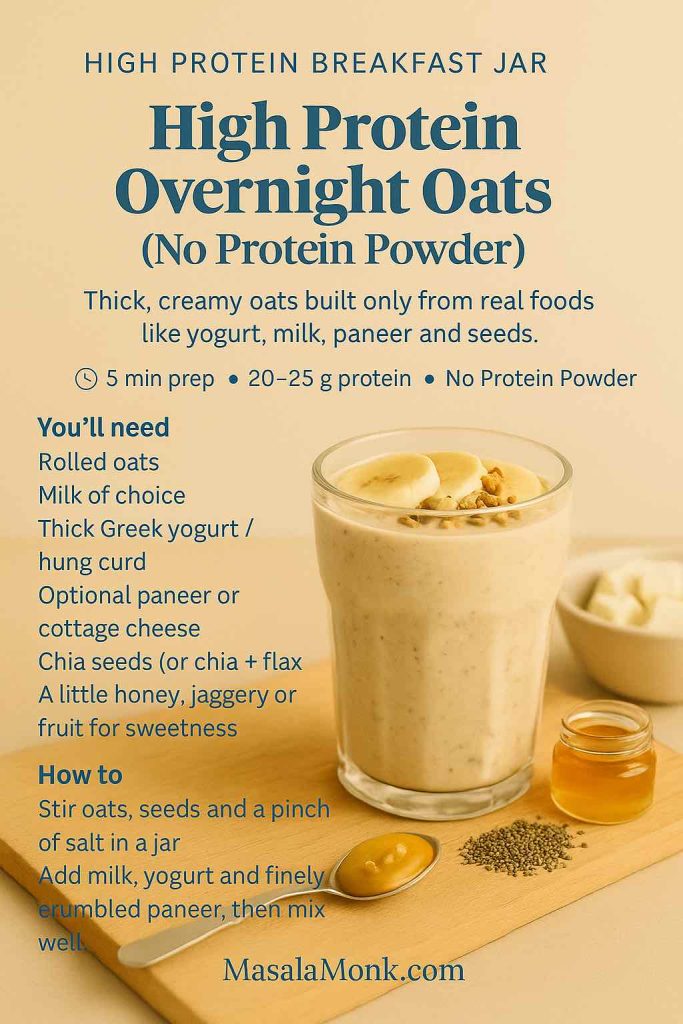
High Protein Overnight Oats without protein powder recipe card showing a creamy jar of oats with seeds and fruit, plus a simple list of whole-food ingredients like yogurt, milk, paneer and chia.
Keep this high protein overnight oats formula handy for days you don’t want to use protein powder—Greek yogurt, milk, a little paneer or cottage cheese and chia seeds give you a 20–25 g protein breakfast built entirely from everyday foods.

Greek yogurt can provide 8–10 grams of protein in just 100 grams, and cottage cheese or paneer adds even more. Between that, the milk and the seeds, you can still reach a meaningful protein intake without relying on any processed powders.

You might see recipes online that add raw egg whites straight into overnight oats to raise the protein. It’s best to be cautious there. If you do experiment, use pasteurised liquid egg whites and heat the mixture gently before serving rather than eating them fully raw from the fridge.

For the bigger picture—how this jar fits into your whole day—it’s worth checking out MasalaMonk’s article on how to eat 100 grams of protein a day. That guide shows you how a strong breakfast like high protein overnight oats can take some pressure off lunch and dinner, especially if you’re trying to hit more ambitious protein targets.

Also Read: French Toast Sticks (Air Fryer + Oven Recipe) — Crispy Outside, Custardy Inside


Flavour Ideas to Keep High Protein Overnight Oats Interesting

Once you understand the structure of high protein overnight oats, you can create an almost endless range of flavours without losing the macro balance. Keeping things exciting is important; even the healthiest recipe will get abandoned if it feels boring after three days.

Here are a few flavour profiles you can use across all four variations:

Chocolate Peanut Butter High Protein Overnight Oats

Stir cocoa powder into the base mixture along with a spoon of peanut butter. In the bulking version, you can be generous with both; in the low-calorie version, go lighter on the peanut butter and rely more on cocoa and a few crushed peanuts for flavour. A little chopped dark chocolate on top makes it feel like dessert.

If you want to understand why oats and peanut butter are such a satisfying combination, the MasalaMonk piece on oatmeal and peanut butter explores how they work together for fullness and nutrition.

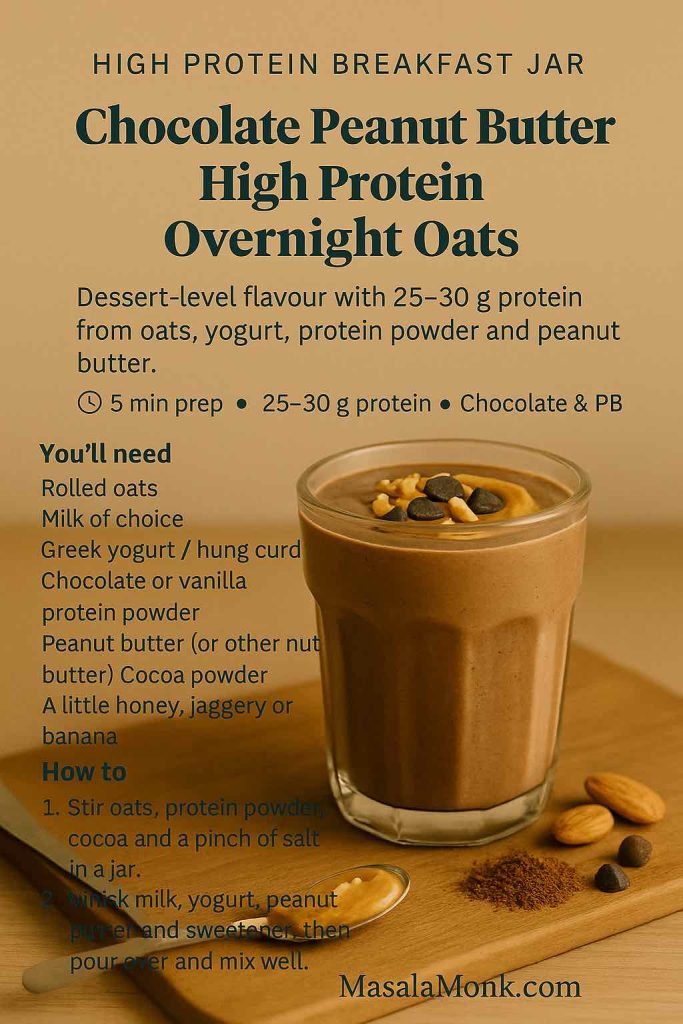
Chocolate Peanut Butter High Protein Overnight Oats recipe card showing a jar of chocolate overnight oats on a wooden board with peanuts, cocoa and peanut butter, plus a simple list of ingredients and a quick how-to.
Turn your basic high protein overnight oats into a chocolate peanut butter jar—just add cocoa, peanut butter and a chocolate or vanilla protein powder for a dessert-style breakfast that still delivers around 25–30 grams of protein.

Apple Cinnamon High Protein Overnight Oats

Grate half an apple into the jar before refrigerating and add a generous pinch of cinnamon. The apple softens overnight, adding natural sweetness and volume. In the morning, you can top with a few raisins and a sprinkle of chopped walnuts to echo classic apple-pie flavours while still keeping the jar balanced.

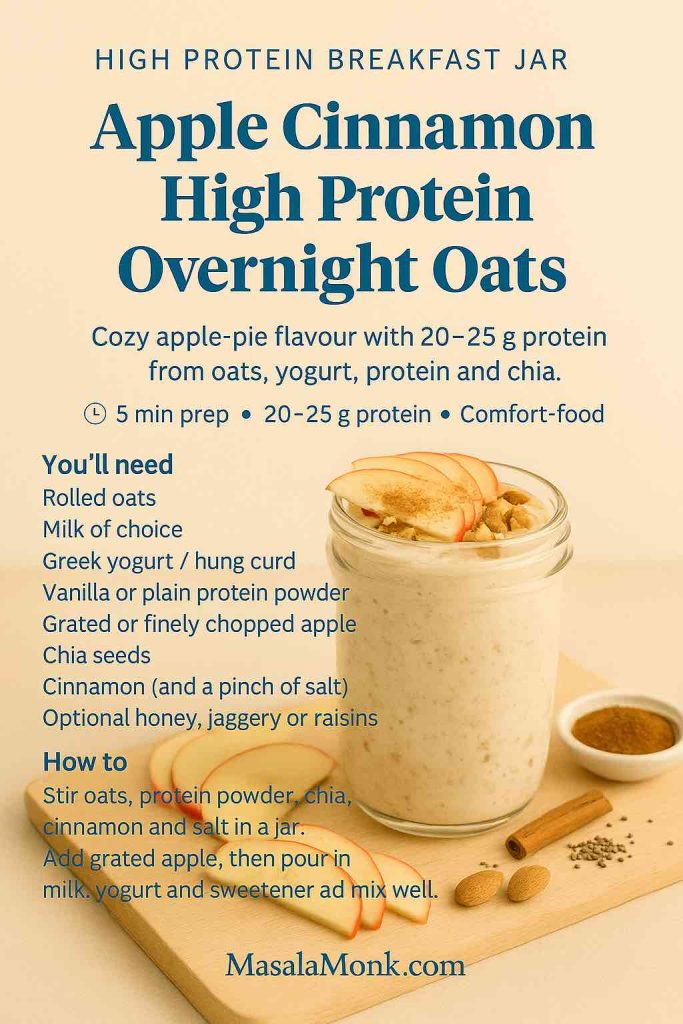
Apple Cinnamon High Protein Overnight Oats recipe card showing a jar of creamy oats with apple slices and cinnamon on a wooden board, plus a simple list of ingredients and a quick how-to.
Save this apple cinnamon high protein overnight oats formula for cozy mornings—grated apple, cinnamon, oats, Greek yogurt, protein powder and chia give you warm apple-pie flavour with 20–25 grams of protein in each jar.

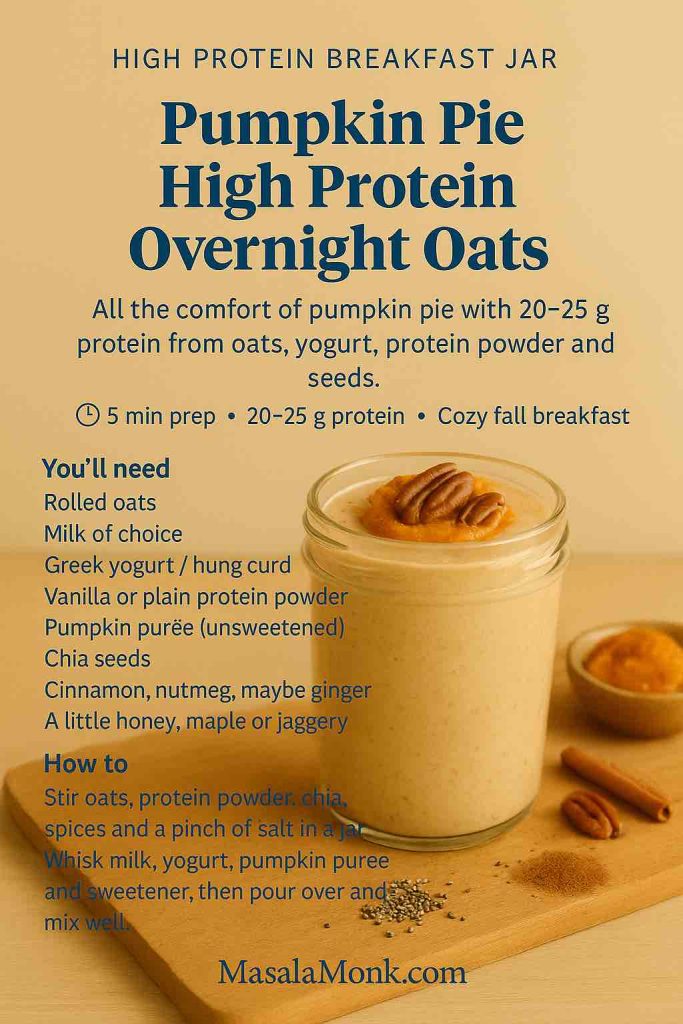
Pumpkin Pie High Protein Overnight Oats

For a seasonal twist, add a few spoons of pumpkin purée, cinnamon, nutmeg and a touch of sweetener. This works especially well with the no-powder or vegan versions, as the pumpkin adds thickness and comfort without much extra fat. A small handful of toasted pumpkin seeds on top brings extra crunch and protein.

Pumpkin Pie High Protein Overnight Oats recipe card showing a jar of pumpkin-coloured overnight oats topped with nuts and cinnamon on a wooden board, with a simple ingredient list and quick how-to for a cozy high protein breakfast.
Pin this pumpkin pie high protein overnight oats formula for autumn—stir pumpkin purée, cinnamon, nutmeg, oats, Greek yogurt, protein powder and chia together for a dessert-style jar that still delivers around 20–25 grams of protein.

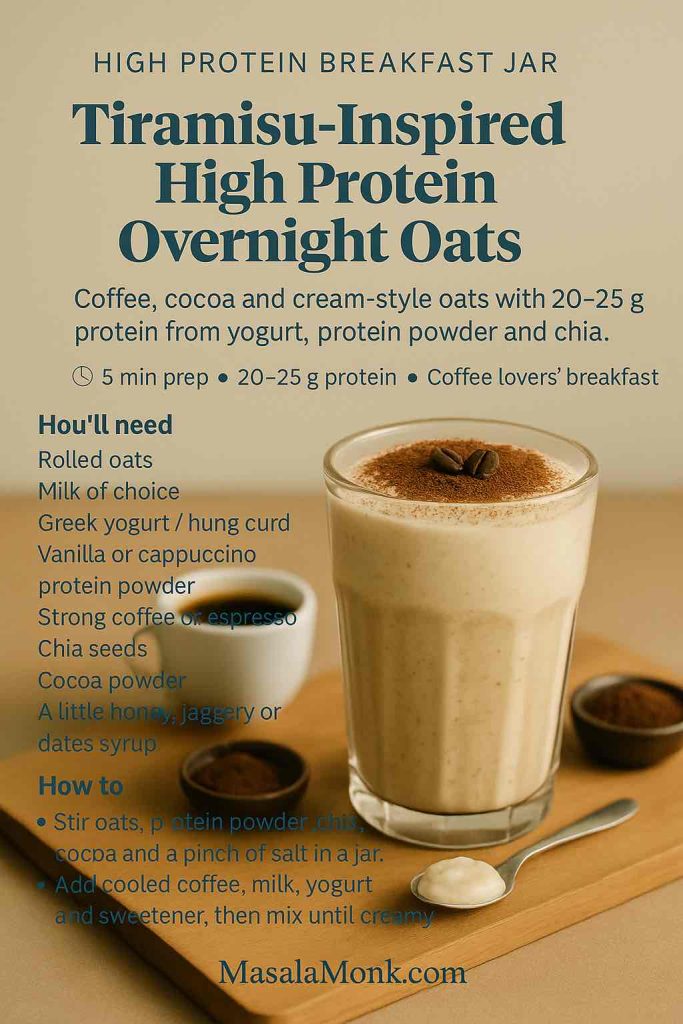
Tiramisu-Inspired High Protein Overnight Oats

Add a shot of strong coffee (or a spoonful of instant coffee dissolved in your milk), along with cocoa and vanilla. In the morning, dust the top with a little more cocoa powder and add a spoon of yogurt for a “cream” effect. This variation leans heavily on the idea that high protein overnight oats can feel like a treat rather than a chore.

Tiramisu-Inspired High Protein Overnight Oats recipe card showing a jar of coffee-and-cocoa overnight oats with a creamy topping and cocoa dusting, alongside a simple ingredient list and quick how-to for a 20–25 g protein breakfast.
Turn your morning coffee into breakfast with this tiramisu-inspired high protein overnight oats—espresso, cocoa, oats, Greek yogurt, protein powder and chia come together for a dessert-style jar that still delivers around 20–25 grams of protein.

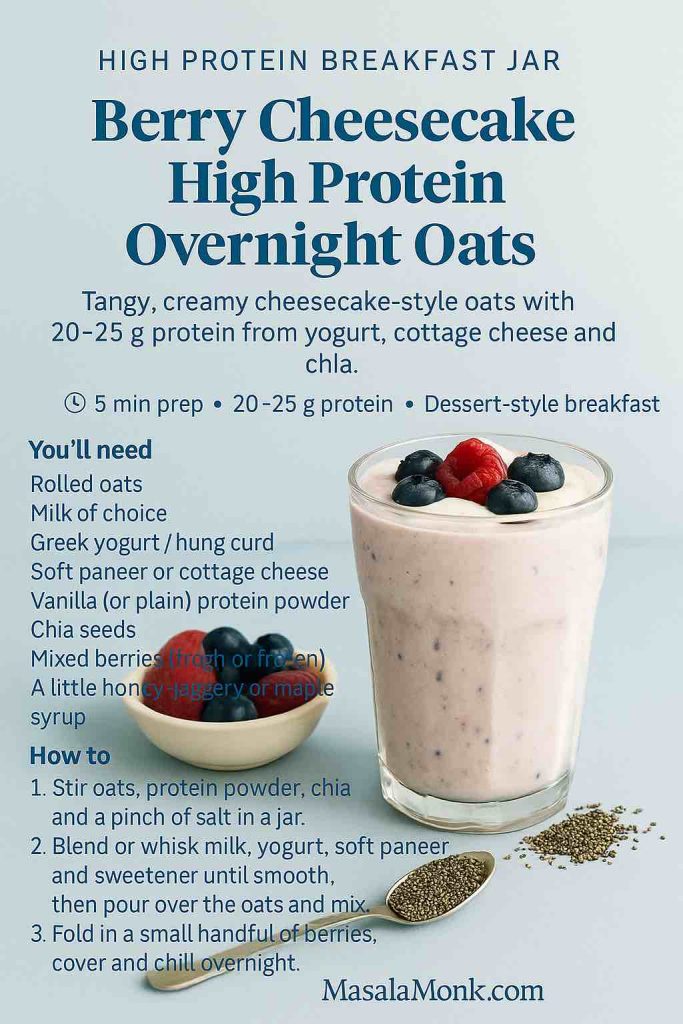
Berry Cheesecake High Protein Overnight Oats

Use a mix of Greek yogurt and cottage cheese in the base, plus a little vanilla and lemon zest. Top with a small handful of mixed berries. This flavour profile sits very naturally inside the no-powder version, because the dairy itself creates that cheesecake-like tang and creaminess.

You can also borrow ideas from other jar-style recipes. For instance, MasalaMonk’s chia pudding with steel-cut oats and mango uses layered textures and fruit in a way that translates beautifully to high protein overnight oats. The formats are similar; only the exact macro balance and ingredients change.

Berry Cheesecake High Protein Overnight Oats recipe card showing a jar of creamy cheesecake-style overnight oats topped with mixed berries, alongside a short ingredient formula and step-by-step method including folding in berries and topping them in the morning.
Screenshot this berry cheesecake high protein overnight oats formula for days you want dessert at breakfast—Greek yogurt, soft paneer or cottage cheese, oats, protein powder and chia make a tangy cheesecake-style base, then you fold in berries and add a fresh berry topping in the morning for 20–25 grams of protein per jar.

Also Read: 10 Best Chicken Sandwich Recipes (BBQ, Parm, Buffalo & More)


Making High Protein Overnight Oats Part of Your Week

A single jar is great, but where high protein overnight oats really shine is in repeatable meal prep. Because the ingredients are simple and inexpensive, you can batch-prepare several jars at once and line them up in the fridge.

A few practical strategies make life easier:

  • Choose one or two base patterns for the week—perhaps the low calorie version on workdays and the bulking version on heavy training days.
  • Prep 3–4 jars of the same base high protein overnight oats, then vary the toppings in the morning with different fruits, nuts and spices so you don’t get bored.
  • Keep a small box of mixed nuts and seeds ready to sprinkle over the top; the guide to protein-rich nuts and seeds can help you stock up on the most efficient options.
  • On days when you’re in the mood for something different, switch to a bar or baked format like the healthy oat protein bars or an oat-based snack, but keep the overall ingredients similar.

Overnight oats also sit comfortably inside a more general pattern of eating that emphasises whole grains, plenty of plants and adequate protein. If you enjoy exploring that style of eating, resources like the Harvard Healthy Eating Plate give a simple visual summary of how to balance your plate (or jar) without obsessing over exact numbers.

Also Read: Vegan French Toast: 6 Easy Recipes (Pan, Air Fryer, GF & High-Protein)


Bringing It All Together

High protein overnight oats are one of those rare habits that manage to be practical, enjoyable and nutritionally solid at the same time. Once you’re comfortable with the base method—mix, soak, top—you can adapt them in countless ways.

You’ve seen:

  • A base recipe that can easily reach 20–30 grams of protein.
  • A low-calorie version that supports weight loss and appetite control while still feeling generous.
  • A bulking and bodybuilder version for days when you need more energy and strength.
  • A vegan and dairy-free version that keeps everything plant-based without sacrificing protein.
  • A no-powder version built entirely from regular foods like yogurt, paneer, milk and seeds.

From there, you can apply as many flavour layers as you like—chocolate peanut butter, apple cinnamon, pumpkin pie, tiramisu and beyond—while still respecting your macro goals. You can keep things simple on busy weekdays and get creative when you have more time, all without changing the underlying habit of prepping your high protein overnight oats the night before.

With a few jars, some rolled oats, a protein source you like and a handful of toppings, you’re only a five-minute stir away from a breakfast that quietly takes care of you every morning.

Also Read: Pumpkin Spice, Your Way: Master Blend, Variations & Real-World Recipes


FAQs

1. How much protein should be in high protein overnight oats?

For most people, high protein overnight oats make sense when each serving delivers at least 20 grams of protein. Plenty of bowls will land between 20–30 grams, depending on how much yogurt, milk and protein powder you use. That kind of overnight oats protein content is usually enough to support better appetite control and muscle repair after training.

To nudge your jar into the high end of that range, simply combine rolled oats with a scoop of protein powder, Greek yogurt and a little milk. Together, those ingredients turn regular oats into genuinely high protein overnight oats instead of just a carb-heavy breakfast.


2. Are high protein overnight oats good for weight loss?

Yes, high protein overnight oats can fit very well into a fat-loss plan, especially when you build low calorie high protein overnight oats on purpose. Protein and fibre help you feel full, which makes it easier to avoid random snacking later in the day. Meanwhile, the slow-digesting carbs from oats give you steady energy rather than a crash.

To keep your bowl helpful for weight loss, emphasise high protein low calorie overnight oats: reduce the amount of oats slightly, choose a lean protein source, increase chia seeds or fruit for volume, and be modest with nut butters and sugary toppings. In that way, you enjoy a big jar, satisfying texture and a proper hit of protein without blowing through your calorie budget.


3. Which oats are best for high protein overnight oats?

Rolled or old-fashioned oats tend to be the best choice for high protein overnight oats because they soften nicely overnight while still keeping some bite. Quick oats also work, particularly if you enjoy a smoother, pudding-like texture, although they can get a bit mushy if you leave the jar for several days.

Steel-cut oats are an option too, yet they usually need more liquid and a longer soak. If you like a chewier texture, you can mix a spoonful of steel-cut oats into rolled oats and adjust the liquid accordingly. In short, any plain oat variety can be used, but rolled oats give the most reliable texture for high protein overnight oats recipes.


4. What is the best protein powder for overnight oats and oatmeal?

There isn’t a single “best protein powder for overnight oats,” because it depends on your taste, digestion and dietary needs. Even so, there are a few reliable patterns. Whey concentrate or isolate dissolves easily and creates creamy whey protein overnight oats with a dessert-like texture. Casein, on the other hand, thickens the mixture a little more and keeps you full for longer.

If you prefer a plant-based option, pea, soy or a rice–pea blend often makes the best protein powder for oats and oatmeal because those powders usually mix smoothly without chalkiness. Flavours such as vanilla, chocolate or cinnamon roll pair especially well with oats. Regardless of which you choose, start with a small scoop and adjust the liquid until your high protein overnight oats feel just right.


5. Can I make high protein overnight oats without protein powder?

Absolutely. High protein overnight oats without protein powder are easy to build if you lean on whole foods. Thick Greek yogurt, hung curd, cottage cheese or paneer, plus milk and seeds, can all add meaningful protein. When you combine these with oats, it’s still simple to reach 20 grams of protein per serving.

To do this, simply increase your yogurt or curd to at least half a cup, keep a generous splash of milk, and include one or two tablespoons of chia or other seeds. That way, you end up with high protein overnight oats that rely entirely on familiar ingredients and still feel indulgent and creamy.


6. Can I use whey protein in overnight oats, or will it get gritty?

You can definitely use whey protein in overnight oats, and it usually blends in very well. To avoid any gritty texture, first whisk the whey with your milk and yogurt before pouring it over the oats. Once everything is smooth, stir in the oats and chia seeds. After chilling, whey protein overnight oats become thick, creamy and easy to eat straight from the jar.

Because whey tends to dissolve quickly, it is particularly good for people who want high protein overnight oats with a simple, milkshake-like flavour. If your scoop is very sweet, you may not need extra sugar, honey or banana at all.


7. Is it possible to make high protein overnight oats low carb?

It’s tricky to make overnight oats truly low carb, since oats themselves are a carbohydrate-rich grain. Nevertheless, you can move toward high protein low carb overnight oats by adjusting the ratios. For example, you can use a slightly smaller portion of oats, then increase protein sources such as Greek yogurt, protein powder and seeds.

In addition, focus on toppings like berries and nuts rather than bananas, dried fruit or large amounts of honey. The result will still contain some carbs from the oats, yet the overall balance shifts toward higher protein, more healthy fats and fewer sugars. As a result, your high protein overnight oats feel steadier on blood sugar while still being enjoyable.


8. Are high protein overnight oats suitable for vegans and people who are dairy-free?

Yes, it’s straightforward to make vegan high protein overnight oats. Instead of dairy milk and yogurt, choose soy milk, almond milk or oat milk and use a plant-based yogurt or silken tofu. Then add a scoop of vegan protein powder made from pea, soy or a blend, and finish with chia seeds, flaxseeds and nuts.

This approach gives you vegan high protein overnight oats that still reach a solid protein target, without any dairy at all. On top of that, you add extra fibre and good fats, which makes the jar satisfying and nutrient-dense even without animal products.


9. How long do high protein overnight oats last in the fridge?

Typically, high protein overnight oats keep well for around three days in the fridge when stored in a sealed container. The texture often improves on day two as the oats and chia seeds absorb more liquid. After that, the mixture can become very thick, and fruit mixed in from the beginning may start to soften too much.
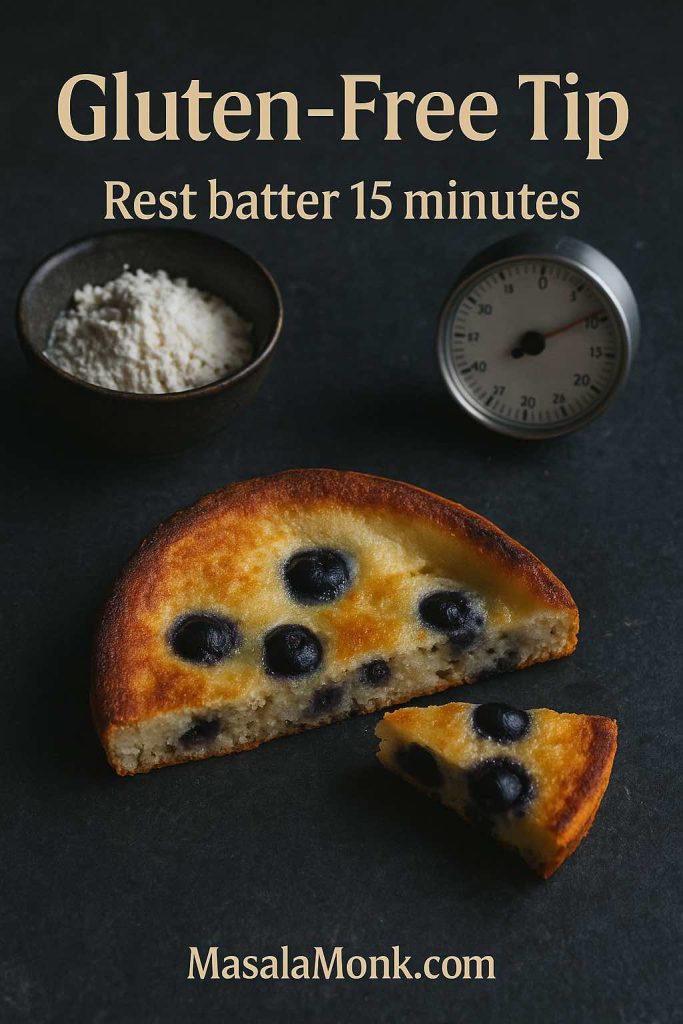
If you want to meal prep several portions, it’s better to prepare the base high protein overnight oats in jars and then add fresh toppings on the day you plan to eat each one. In that manner, you get the convenience of batch-prep while keeping the flavours and textures bright.


10. Can high protein overnight oats really replace a full breakfast?

For most people, a well-balanced serving of high protein overnight oats can absolutely stand in for a complete breakfast. You’re getting complex carbohydrates from oats, a solid chunk of protein, and depending on your toppings, fibre, healthy fats and micronutrients from fruit, nuts and seeds. That combination tends to keep you full and focused for several hours.

To turn the jar into a more substantial meal, you can simply scale the recipe slightly upward or add an extra side such as a small piece of fruit or a handful of nuts. Consequently, high protein overnight oats become a flexible foundation that you can adjust up or down depending on your hunger, training schedule and goals.

Posted on 3 Comments

How to Make Pineapple Chia Pudding: A Refreshing Low-Carb Breakfast Option

LOW-CARB PINEAPPLE CHIA PUDDING

Are you tired of the same old eggs or overnight oats for breakfast? Do you crave something light, refreshing, and tropical, but still want to keep your carbs in check? Look no further—pineapple chia pudding is about to become your new favorite!


Why Pineapple Chia Pudding?

Chia pudding is a superstar in the world of healthy breakfasts. With just a handful of ingredients, you get a creamy, satisfying dish that’s loaded with fiber, healthy fats, and protein. When you add pineapple into the mix, you get a burst of sunshine in every bite—tart, sweet, and absolutely invigorating.

But here’s the kicker: most tropical puddings are loaded with sugar or carb-heavy ingredients. This version keeps carbs to a minimum while maximizing flavor, texture, and satiety.


What Makes This Breakfast Low-Carb and Healthy?

  • Chia Seeds: Nearly all carbs in chia seeds are fiber, which doesn’t spike blood sugar and helps you stay full longer. Chia is also a source of omega-3 fats and plant-based protein.
  • Pineapple: Used sparingly for flavor and nutrition—just enough for a sweet, tangy pop without going overboard on sugar.
  • Unsweetened Non-Dairy Milk: Almond or coconut milk keeps things creamy and super low in carbs compared to dairy milk or fruit juice.
  • Natural Sweeteners: Swap out honey or maple syrup for monk fruit, erythritol, or stevia for a guilt-free treat.

Ingredients: What You’ll Need

Let’s break down everything you’ll need to whip up a perfect low-carb pineapple chia pudding:

IngredientWhy Use It?Carb Impact
Chia seeds (3 tbsp)Thickens, fiber, protein, omega-3s~2-3g net per serving
Unsweetened almond/coconut milk (3/4 cup)Creamy, low-cal, low-carb~1g net per serving
Fresh/frozen pineapple (2-3 tbsp)Tangy, tropical flavor~3-4g net per serving
Monk fruit/stevia/erythritolAdds sweetness, no sugar0g
Lime juice (optional)Brightness, balances flavorsNegligible
Vanilla extract (optional)Depth, classic pudding flavorNegligible
Unsweetened coconut flakes (optional)Texture, more tropical vibesMinimal
Greek yogurt (optional, topping)Creaminess, protein boostCheck label for carbs

PINEAPPLE CHIA
PUDDING
PINEAPPLE CHIA PUDDING

Step-by-Step Guide: From Ingredients to Bowl

1. Prep the Pineapple

  • Use fresh or frozen pineapple, but keep the serving to about 2–3 tablespoons per portion. Dice it small, or better yet, blend it with a little of your chosen milk for a smooth “pineapple milk.” This gives every bite a burst of flavor without overloading on carbs.

2. Mix the Chia Pudding

  • In a jar or bowl, add:
    • 3 tablespoons chia seeds
    • 3/4 cup unsweetened almond or coconut milk
    • 1/2 teaspoon vanilla extract
    • 1–2 teaspoons low-carb sweetener (to taste)
    • Optional: juice from half a lime for zing
  • Stir vigorously. Wait 5 minutes, stir again to break up clumps.

3. Let It Set

  • Cover the container and refrigerate for at least 2 hours (overnight is best). Chia seeds absorb the liquid and become thick, creating a pudding texture.
  • Pro Tip: For an ultra-smooth, quick version, blend everything (including chia) before chilling. This gives a silky “Dole Whip” vibe, as seen in new 2025 recipe trends.

4. Assemble and Top

  • Before serving, give your pudding a stir.
  • Top with your diced/blended pineapple and sprinkle with unsweetened coconut flakes. A dollop of Greek yogurt makes it extra creamy and satisfying.
  • Want to get fancy? Garnish with a mint leaf or a wedge of lime!

How to Keep It Low-Carb (And Delicious!)

  • Watch your pineapple portion. Pineapple is higher in sugar than berries, so moderation is key.
  • Always use unsweetened milks and yogurts. Sweetened versions can double or triple your carb count.
  • Sweeten smartly. A few drops of monk fruit or stevia goes a long way!
  • Protein boost: Add a scoop of your favorite low-carb protein powder, or swirl in Greek yogurt for extra staying power.
  • Make it your own: Add a hint of cinnamon, lime zest, or even a few toasted pumpkin seeds for crunch.
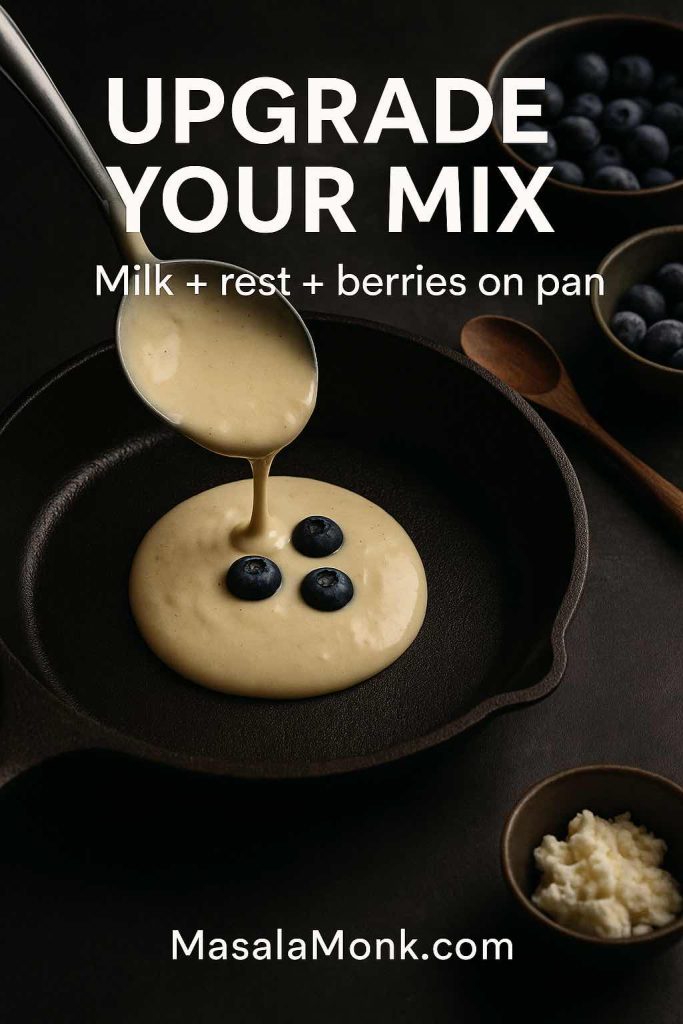
Meal Prep & Storage Tips

  • Batch-friendly: Make a few jars at once; pudding keeps in the fridge for up to 4 days.
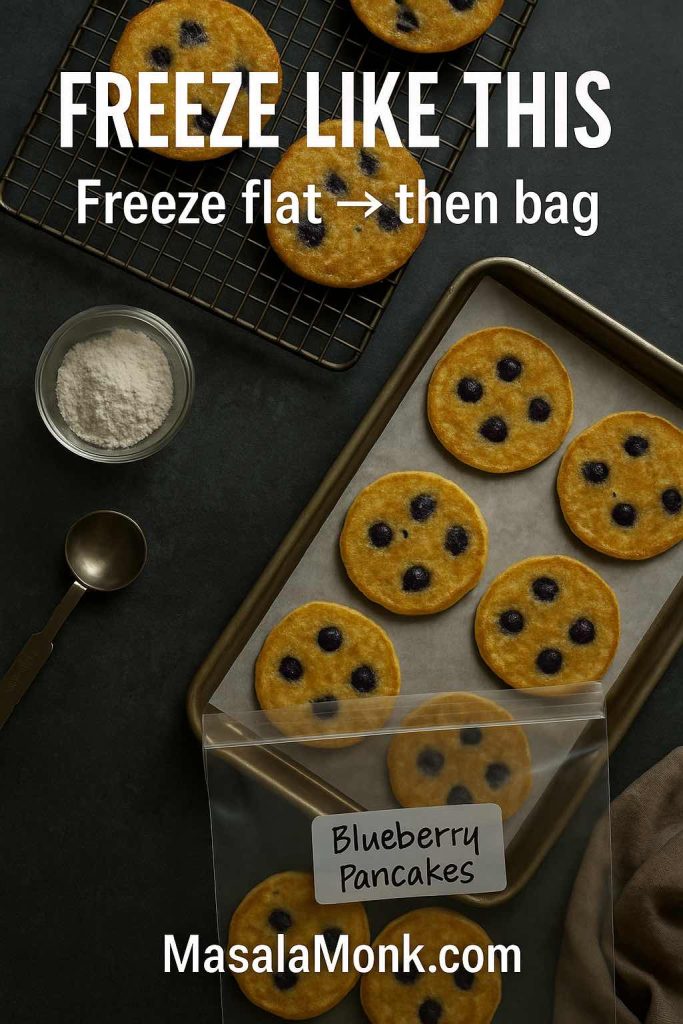
  • Travel-ready: Perfect for grab-and-go breakfasts or snacks.
  • Add fruit just before eating to keep it fresh and vibrant.
  • Texture: If pudding is too thick after chilling, just stir in a splash more milk.

Nutrition Facts (Approximate per serving)

  • Calories: 120–160
  • Net carbs: 6–8g (with 3 Tbsp pineapple and low-carb sweetener)
  • Protein: 3–5g
  • Fiber: 5–7g
  • Fat: 5–7g

(Exact numbers will depend on your ingredients and serving sizes—always check labels if you’re carb counting strictly.)


Why Pineapple Chia Pudding Works—And Why You’ll Love It

  • Hydrating and filling: Chia seeds soak up liquid, so you get a sense of fullness that lasts.
  • Gut-friendly: The fiber helps keep your digestion on track.
  • Vegan, dairy-free, and gluten-free: Works for most diets!
  • Versatile: Easily swap in strawberries, mango, or kiwi for variety—or try a coconut‑lime version for a twist.

Common Questions & Troubleshooting

Q: My pudding isn’t thick! What happened?
A: You may need to add a bit more chia, or let it chill longer. Sometimes different brands of chia absorb liquid differently.

Q: Can I use canned pineapple?
A: Fresh or frozen is best—canned often has added sugar. If using canned, look for “in juice, not syrup” and rinse well.

Q: Is this really filling?
A: Yes! The combination of fiber, fat, and a little protein will keep you satisfied for hours.


Variations to Try

  1. Piña Colada Chia Pudding: Use coconut milk, pineapple, and a drop of coconut extract.
  2. Green Power: Add a handful of baby spinach to the blender for a boost (you won’t taste it!).
  3. Berry-Pineapple Swirl: Mix in a tablespoon of chopped strawberries or raspberries.
  4. Spicy Tropic: Add a pinch of cayenne for a fun kick!

Final Thoughts: Your Low-Carb Breakfast Upgrade

With just a few minutes of prep and a handful of pantry staples, you can wake up to a breakfast that’s bright, satisfying, and actually good for you. Pineapple chia pudding is endlessly adaptable—try it for a week, and you’ll never get bored.

Ready to try it? Let me know your favorite twists—or if you need help adapting this for keto, vegan, or nut-free diets! And don’t forget to tag your pudding pics #TropicalChia on Instagram so we can cheer you on.


Printable Recipe Card

Pineapple Chia Pudding (Low-Carb)

  • 3 tbsp chia seeds
  • 3/4 cup unsweetened almond or coconut milk
  • 2–3 tbsp diced pineapple
  • Sweetener (monk fruit/stevia), to taste
  • 1/2 tsp vanilla extract (optional)
  • 1 tsp lime juice (optional)

Directions:

  1. Blend or stir all ingredients except chia, then mix in chia seeds.
  2. Stir well, chill 2+ hours or overnight.
  3. Top with pineapple & coconut before serving. Enjoy!

Try this once, and you’ll see why pineapple chia pudding is the low-carb breakfast that delivers on taste, nutrition, and pure tropical joy—all in one bowl!

10 FAQs for Pineapple Chia Pudding (Low-Carb)

1. Can I use canned pineapple instead of fresh or frozen?
Yes, but choose pineapple canned in its own juice (not syrup) and drain/rinse well. Be aware canned pineapple is often slightly higher in sugar than fresh or frozen.


2. How can I make my chia pudding creamier?
Use full-fat coconut milk or a spoonful of Greek yogurt. Blending the pudding before chilling also results in a smoother, silkier texture.


3. Is this recipe suitable for keto diets?
With careful portioning (1-2 tablespoons pineapple) and zero-carb sweetener, you can keep net carbs low enough for most keto plans. Substitute even lower-carb berries if stricter keto compliance is needed.


4. How long does chia pudding keep in the fridge?
It keeps well for up to 4 days. Store in an airtight container and add fresh toppings just before serving for the best texture and flavor.


5. Why isn’t my chia pudding thickening properly?
Either not enough chia seeds were used, the milk ratio was off, or the pudding needs more time. Stir well after the first 10 minutes, and if it’s still runny after several hours, add an extra teaspoon of chia and let it sit longer.


6. Can I meal-prep pineapple chia pudding for the week?
Yes! Portion individual servings into jars for grab-and-go breakfasts. Add pineapple and toppings the day you plan to eat them for maximum freshness.


7. Are there nut-free options for the milk?
Absolutely. Use unsweetened coconut milk (carton or canned) or oat milk (if carbs are not a concern). Hemp milk is also a low-carb, nut-free alternative.


8. Is pineapple chia pudding suitable for kids?
Yes! It’s a fun, nutritious, and naturally sweet breakfast or snack for children. Consider using less sweetener if your child already enjoys fruit as-is.


9. Can I freeze chia pudding?
You can, but the texture may change upon thawing (it can get a bit watery). Freezing in popsicle molds is a great summer treat option!


10. How do I add more protein to this recipe?
Stir in a scoop of protein powder, use Greek yogurt, or add a layer of cottage cheese. You can also top with chopped nuts or seeds for a protein boost.