Posted on 1 Comment

Homemade Hamburger Helper Recipe

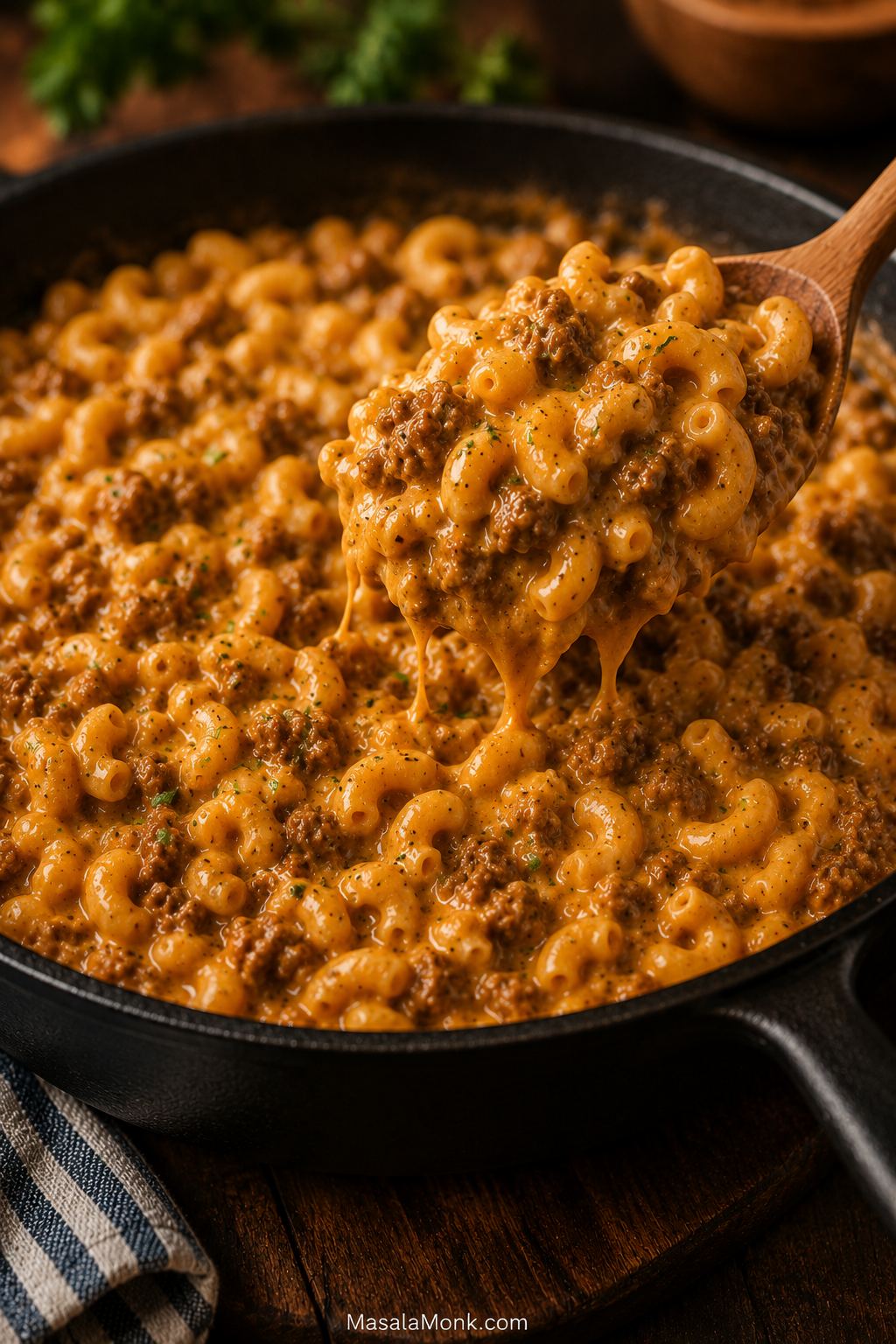
Deep skillet of homemade Hamburger Helper with elbow macaroni, ground beef, and glossy cheddar sauce lifted on a spoon.

This homemade Hamburger Helper recipe is for the night when you want the comfort of the box, but not the box itself. You want browned beef, tender macaroni, a creamy cheddar sauce, and that familiar cheeseburger-macaroni flavor — only fresher, saucier, and made with ingredients you can actually adjust.

It is still the kind of dinner you make when everyone is hungry and you do not want three pans in the sink. The beef browns in one deep skillet, the pasta cooks right in the sauce, and the cheese melts in at the end. No packet, no separate pasta pot, no fussy sauce.

A Cozy One-Pan Dinner With More Control

The secret is not making it fancy. Instead, it is getting the little things right: enough liquid for the pasta, enough tomato and mustard for that nostalgic tang, enough cheese for comfort, and gentle heat so the sauce stays creamy instead of grainy.

That is why this version is built around control, not reinvention. You still get the childhood boxed-dinner feeling: beefy noodles, creamy sauce, orange cheddar comfort, and that little tomato-mustard tang in the background. Now you can make it saucier, sharper, milder, tangier, lighter, or closer to the version you remember depending on the night.

Once the ratio clicks, this homemade Hamburger Helper recipe stops feeling like a boxed-dinner workaround and starts feeling like a back-pocket dinner: the kind you can make when the day ran long, the fridge is ordinary, and everyone still needs something warm, cheesy, and reliable.

The short version: For a reliable homemade Hamburger Helper recipe, use 1 pound ground beef, 8 ounces short pasta, 2 cups beef broth, 1 cup milk, 2 tablespoons tomato paste, and 1 1/2 to 2 cups freshly grated cheddar. Simmer the pasta gently in the sauce, then turn off the heat before adding cheese. That gives you creamy cheeseburger macaroni instead of dry, grainy beef pasta.

Quick Answer: How Do You Make Homemade Hamburger Helper?

To make this homemade Hamburger Helper recipe, brown 1 pound ground beef in a large deep skillet, add onion, garlic, tomato paste, Worcestershire sauce, mustard, paprika, broth, milk, and dry macaroni, then simmer until the pasta is tender. After that, take the pan off the heat and stir in freshly grated cheddar until the sauce turns creamy.

For the best balance, use 1 pound ground beef, 8 ounces dry short pasta, 2 cups beef broth, 1 cup milk, and 1 1/2 to 2 cups shredded cheddar. As a result, you get a saucy, one-pot cheeseburger macaroni that thickens as it rests.

The goal is not to make this taste expensive or restaurant-style. The goal is to make it taste like the comfort you remember, only creamier, fresher, and easier to adjust when your pan, pasta, cheese, or family preference changes.
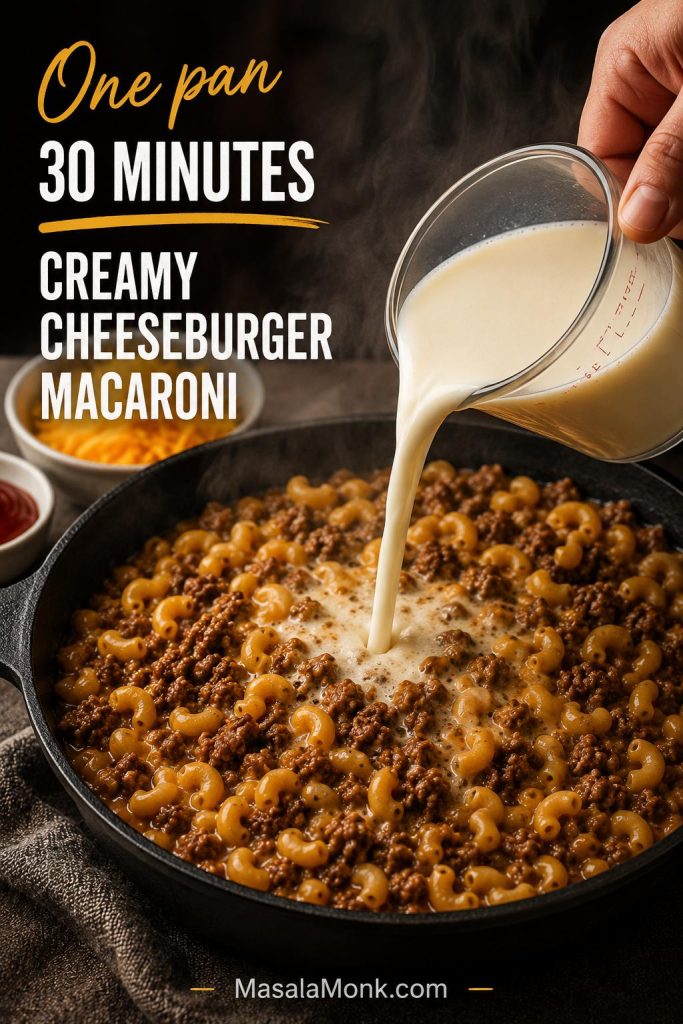
One-pan homemade Hamburger Helper in progress with ground beef, pasta, liquid, and cheddar for a quick skillet dinner.
Everything starts in one pan, so the beef, pasta, liquid, and cheese work together instead of turning into a separate sauce-and-noodle project.

Already know you want the classic version? Jump to the full recipe card, or keep reading for the sauce ratio and texture cues that help prevent dry or grainy results.

Homemade Hamburger Helper Recipe at a Glance

Total Time
30 minutes

Servings
4 to 6

Main Pan
Deep skillet or Dutch oven

Best Pasta
Elbows or small shells

Best Starting Version

Best starting version: Use 85/15 ground beef, elbow macaroni, beef broth, whole milk, sharp orange cheddar, tomato paste, Worcestershire sauce, mustard, and the optional ketchup. That combination gives the recipe a strong creamy, beefy, cheesy, and nostalgic direction.
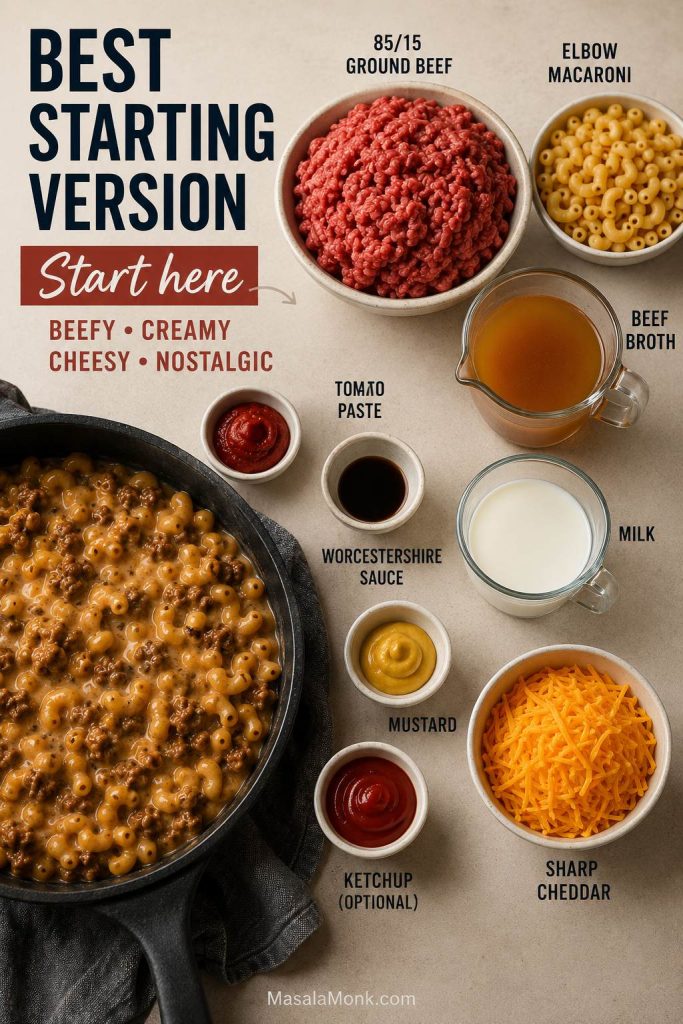
Best starting version ingredients for homemade Hamburger Helper with ground beef, elbow macaroni, broth, milk, cheddar, tomato paste, mustard, Worcestershire sauce, and ketchup.
Start here when you want the most classic flavor lane: beefy, creamy, cheesy, slightly tangy, and close to the skillet dinner people remember.

Before you cook, check the full skillet ratio so the pasta has enough liquid to soften without turning the sauce soupy.

What Is Homemade Hamburger Helper?

A homemade Hamburger Helper recipe is a from-scratch version of the classic skillet-dinner idea: ground beef, pasta, seasonings, liquid, and a creamy sauce cooked together in one pan. Instead of relying on a prepared sauce mix, this version builds the flavor with tomato paste, garlic, onion, paprika, Worcestershire sauce, mustard, broth, milk, and real cheese.

Think of it as homemade cheeseburger macaroni. The goal is a cozy, weeknight ground beef dinner that tastes nostalgic, cheesy, savory, and satisfying without tasting flat or overly processed. If you want the same idea with an even stronger burger-style angle, this homemade cheeseburger macaroni recipe goes deeper into that version.

That is the charm of this dinner. It is the skillet you make when the day ran long, the pantry is doing most of the work, and everyone still wants something warm, cheesy, and familiar.

Hamburger Helper, the commercial boxed product, is a pasta meal where you add ingredients like ground beef, water, and milk. The official Hamburger Helper Cheeseburger Macaroni product page shows that basic dinner format. This homemade version keeps the same easy skillet spirit but gives you more control over the flavor, cheese, salt, and sauce texture.

Why This Homemade Hamburger Helper Recipe Works

The biggest mistake with a homemade Hamburger Helper recipe is treating it like ordinary mac and cheese with beef. It needs a little more savory depth. The flavor people remember is not just cheese; it is beefy, salty, slightly tangy, gently tomatoey, and deeply comforting.

This recipe works because tomato paste gives the sauce body, Worcestershire sauce adds beefy depth, mustard gives a subtle cheeseburger note, and paprika brings warm, familiar flavor. Meanwhile, the pasta cooks directly in broth and milk, so the starch helps thicken the sauce naturally. Then the pan comes off the heat before the cheddar goes in, which keeps the sauce smoother and less grainy.

The result is creamy but not soupy, cheesy but not gluey, and familiar without needing a packet. You still get the easy skillet-dinner feeling, while keeping control over the salt, cheese, sauce thickness, pasta shape, and add-ins.

Why This Method Helps Prevent Dry, Grainy, or Bland Results

The most important safeguards in this homemade Hamburger Helper recipe are the liquid ratio, the flavor base, and when the cheese goes in. Too little liquid can leave the pasta firm before the sauce is ready. A sauce that leans too heavily on milk can taste softer and less beefy. Cheese added while the pan is still bubbling is also more likely to turn grainy.

That is why this method relies on broth for beefy depth, milk for creaminess, tomato paste for body, mustard and Worcestershire sauce for cheeseburger-style tang, and cheese added off heat. Elbows keep the result classic, while small shells make the bowl feel extra saucy.

Key technique: Do not boil hard after adding the milk, and let the pan calm down before adding the cheese. A gentle simmer cooks the pasta; off-heat cheese gives the sauce a smoother finish.

What This Homemade Hamburger Helper Should Taste Like

The finished skillet should taste beefy, cheesy, lightly tomatoey, and just a little tangy. It should not taste like plain macaroni with ground beef, and it should not taste like tomato pasta with cheese thrown in. Instead, the best version lands right in the middle: cozy cheeseburger macaroni with a creamy sauce that clings to every bite.

Texture matters just as much. The pasta should be tender but not mushy, the sauce should look glossy and spoonable, and the cheese should melt into the sauce instead of sitting in oily strings. The skillet should look slightly loose before resting because the pasta will keep drinking in sauce for a few minutes after the heat is off.

Before You Start: 5 Things That Make or Break This Recipe

Homemade Hamburger Helper is easy, but one-pot pasta gives you less room to ignore the pan. These five details matter more than they might seem.

  • Use a wide, deep pan. A 12-inch deep skillet or Dutch oven lets the pasta cook evenly instead of clumping.
  • Brown the beef well. The browned bits give the sauce more flavor than the seasonings alone.
  • Simmer gently after adding milk. A hard boil can make the sauce look separated.
  • Stir often. Pasta cooked in sauce can stick to the bottom if ignored.
  • Add cheese off heat. This is the easiest way to avoid a grainy cheddar sauce.

A few small choices early on make the final skillet creamier, smoother, and easier to adjust.

Ingredients You Need

The ingredient list for this homemade Hamburger Helper recipe is simple on purpose. This is the kind of dinner that should work with the beef in the freezer, the pasta in the pantry, and the cheese already in the fridge. The difference between “fine” and “really good” is balance: enough beefy flavor, enough liquid for the pasta, and enough cheese added at the right moment.
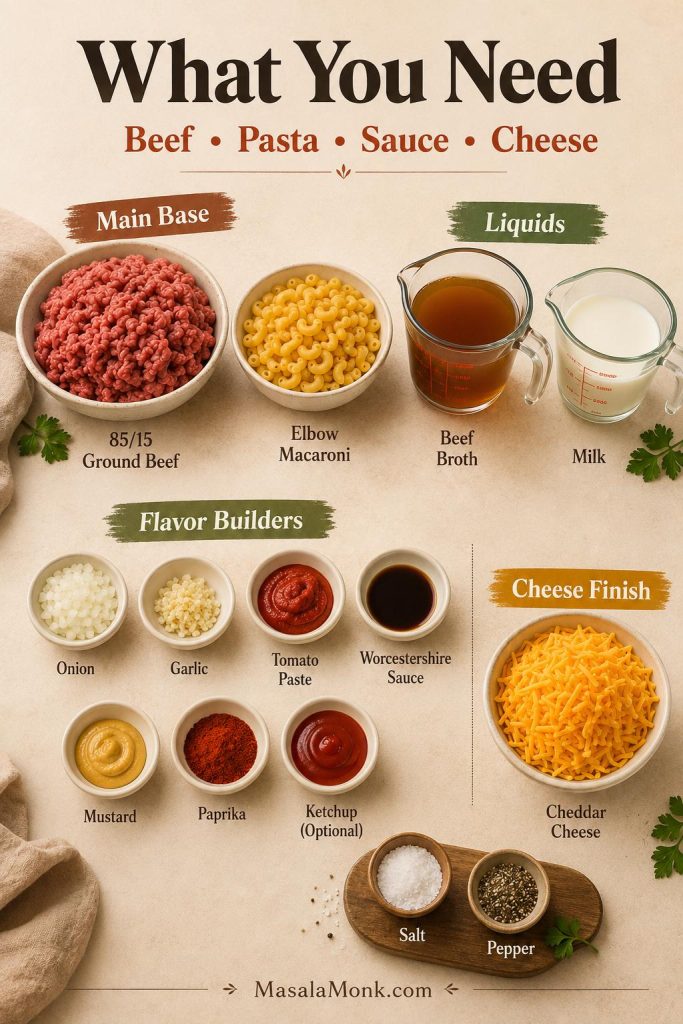
Ingredients for homemade Hamburger Helper including ground beef, elbow macaroni, beef broth, milk, cheddar, onion, garlic, tomato paste, mustard, Worcestershire sauce, and paprika.
The ingredient list is short, but the balance matters: savory beef, starchy pasta, creamy liquid, tangy flavor builders, and cheddar at the end.

Choosing a pasta shape first? Jump to the best pasta guide before you start, especially if you are using shells, rotini, cavatappi, or gluten-free pasta.

Ground Beef

Use 1 pound / 450 g ground beef. An 85/15 blend gives the richest comfort-food flavor, while 90/10 or 93/7 keeps the dish lighter. If the beef releases a lot of fat, drain most of it after browning, but leave a little behind for flavor.

Very lean beef works too, but it may need a tablespoon of oil at the start and a little more seasoning at the end. Ground turkey or ground chicken can also work, although the flavor will be milder and less like the classic beefy skillet dinner.

Short Pasta

Elbow macaroni is the most classic choice. Small shells are excellent too because they catch the sauce. Rotini, cavatappi, and small penne also work, but they may need an extra splash of liquid and a few more minutes.

Broth and Milk

Beef broth gives the sauce a deeper flavor than water. Milk makes it creamy. The best starting point is 2 cups broth plus 1 cup milk for 8 ounces dry pasta. Keep another splash of broth or water nearby in case your pasta needs more liquid before it softens.

Cheese

Freshly grated sharp cheddar gives the strongest flavor and the smoothest melt. Pre-shredded cheese can work, but its anti-caking starches may make the sauce less silky. For a meltier, more nostalgic finish, blend cheddar with Monterey Jack, Colby Jack, or a little American cheese. Before you stir cheddar into the pan, see the off-heat cheese step so the sauce has a better chance of staying smooth. This macaroni and cheese recipe is useful if you want a more classic pasta-and-cheese direction with stovetop, baked, and Southern-style versions.

Flavor Builders

Tomato paste, Worcestershire sauce, mustard, garlic, onion, paprika, and a little chili powder create the flavor that makes this taste like a true homemade replacement instead of plain beefy mac and cheese. A spoonful of ketchup is optional, but it helps if you want a sweeter, tangier, more nostalgic cheeseburger macaroni flavor.

Best Pasta for Homemade Hamburger Helper

The best pasta is a short, sturdy shape that can simmer in sauce without falling apart. Because the pasta cooks directly in the pan, delicate noodles can go soft before the sauce is right.
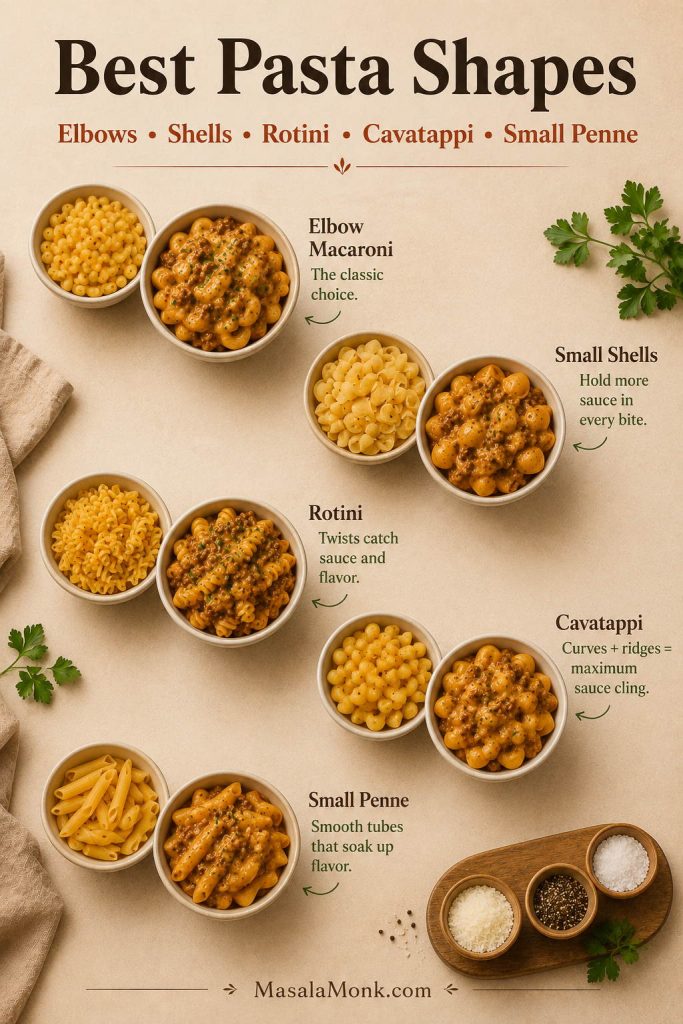
Best pasta shapes for homemade Hamburger Helper including elbow macaroni, small shells, rotini, cavatappi, and small penne.
Short pasta works best because it cooks evenly in the skillet and catches the cheddar sauce; thicker shapes may need extra liquid and time.
Pasta ShapeHow It WorksBest Use
Elbow macaroniClassic, reliable, cooks evenlyBest first choice
Small shellsHolds sauce well and feels extra creamyBest saucy version
RotiniGood texture but may need extra liquidGood pantry swap
CavatappiChewy and fun, slightly longer cook timeHeartier version
Small penneWorks, but the center can take longer to softenAdd liquid as needed
Gluten-free short pastaWorks, but can soften quicklyCheck early and stir gently
Egg noodlesToo delicate for this cheeseburger macaroni styleBetter for stroganoff
Spaghetti or long pastaWrong texture and harder to simmer evenlyNot recommended here

If you use a larger or thicker pasta shape, do not panic if it needs more liquid. Instead, add 2 to 4 tablespoons of broth or water at a time, stir, and keep simmering gently until the pasta is tender.

The Homemade Hamburger Helper Ratio: Saucy, Not Soupy

The ratio is the difference between a creamy homemade Hamburger Helper recipe and a skillet of dry beefy noodles. Because the pasta cooks directly in the pan, it needs enough liquid to soften, but not so much that the final dish turns soupy.

The most reliable starting point is 1 pound beef, 8 ounces dry short pasta, 2 cups broth, 1 cup milk, and 1 1/2 to 2 cups cheese. That gives the pasta room to cook while leaving enough starchy liquid for the cheddar to turn into a creamy sauce.
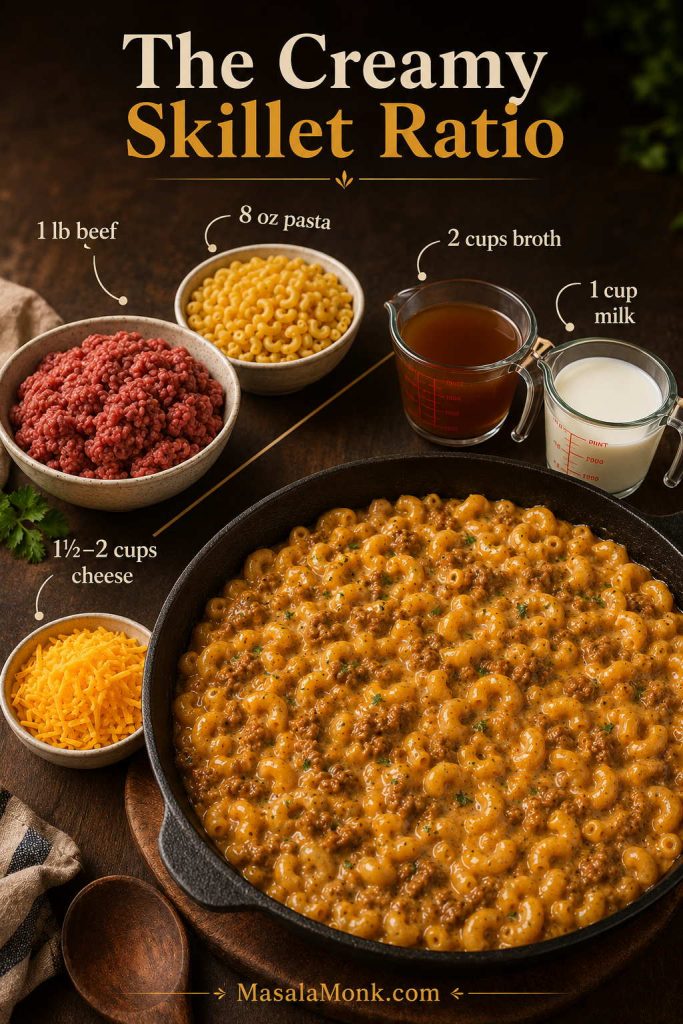
Homemade Hamburger Helper ratio guide showing 1 pound ground beef, 8 ounces pasta, 2 cups broth, 1 cup milk, and 1 1/2 to 2 cups cheese.
This creamy skillet ratio gives the pasta enough liquid to cook while keeping the finished cheeseburger macaroni thick, glossy, and scoopable.
  • 1 pound / 450 g ground beef
  • 8 ounces / 225 g dry short pasta
  • 2 cups / 480 ml beef broth
  • 1 cup / 240 ml milk
  • 1 1/2 to 2 cups / 170 to 225 g shredded cheese

This ratio is intentionally saucy at first because the pasta keeps absorbing liquid while it rests. As a result, the skillet should look slightly looser than the final texture when you turn off the heat. If the pasta is still firm and the pan looks dry, add liquid. If the pasta is tender and the sauce looks loose, simmer uncovered for a minute or two, then rest before judging.

Saucy, Not Soupy Texture Guide

Use this texture cue before serving: the sauce should still move and coat the pasta, not sit dry in clumps or pool thinly around the edges.
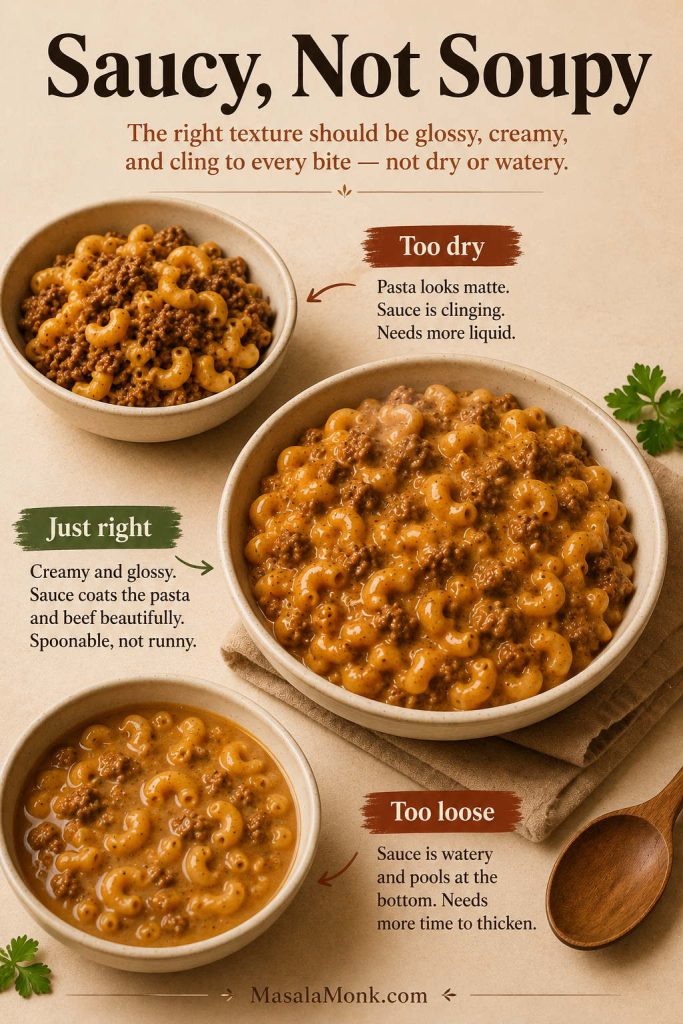
Texture guide for homemade Hamburger Helper showing too dry, just right, and too loose sauce consistency.
Aim for saucy, not soupy: the skillet should look slightly loose before resting because the macaroni keeps soaking up sauce.

If the sauce still turns too thick, too loose, or grainy, jump to the troubleshooting table for quick fixes.

How to Make Homemade Hamburger Helper

This homemade Hamburger Helper recipe is one-pot, but the order still matters. First, browning the beef builds flavor. Then, blooming the tomato paste and spices keeps the sauce from tasting raw. Finally, turning off the heat before adding cheese keeps the finish creamy. The same one-pot logic works in other creamy pasta dinners too, like this one-pot chicken bacon ranch pasta, where the pasta simmers directly in the sauce.

1. Brown the Beef

Heat a large deep skillet or Dutch oven over medium-high heat. Add the ground beef and cook until browned, breaking it up as it cooks. Then add the onion and cook until softened. If there is a lot of grease in the pan, drain most of it.

Do not stop as soon as the beef turns gray. Let some of the pieces brown against the pan, because those browned bits help the sauce taste deeper and less like boiled beef.
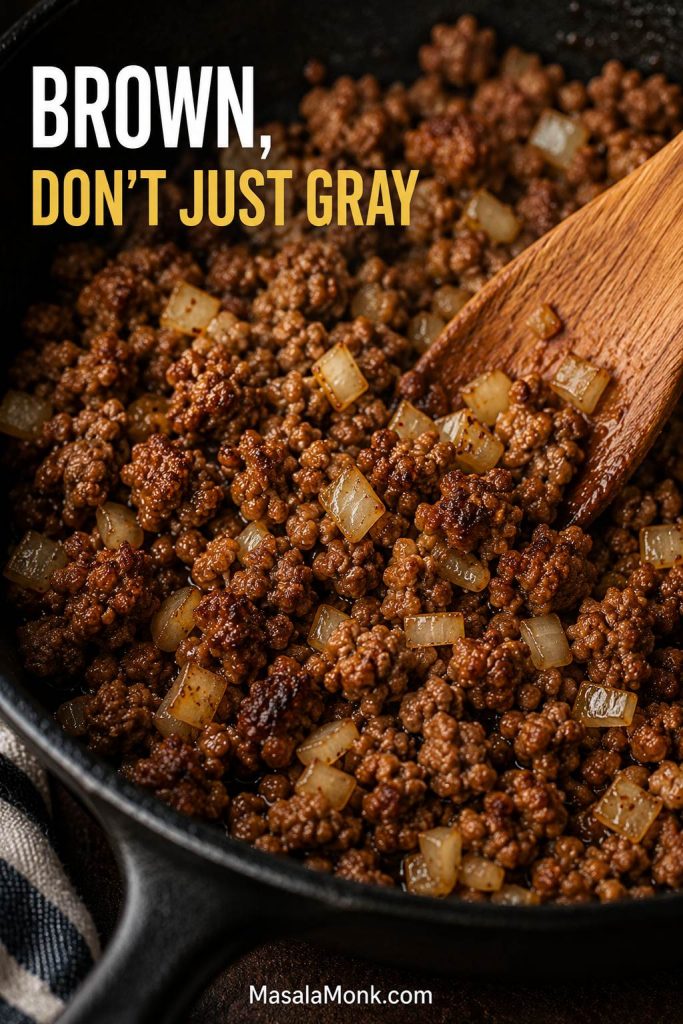
Ground beef browning with onions in a skillet for homemade Hamburger Helper, with browned bits visible on the pan.
Browning the beef instead of just graying it builds the savory base, so the sauce has depth before the cheese ever goes in.

Ground beef should be cooked to a safe minimum internal temperature of 160°F / 71°C. A food thermometer is the most reliable way to check. USDA safe minimum temperature chart

2. Build the Flavor Base

Add the garlic, tomato paste, Worcestershire sauce, mustard, paprika, chili powder, salt, and pepper. Stir for about 1 minute. The tomato paste should darken slightly and coat the beef. This quick step makes the sauce taste deeper and less flat.

After about a minute, the tomato paste should look darker and smell savory instead of raw. If it still smells sharp and tinny, give it another 30 seconds before adding the liquid.
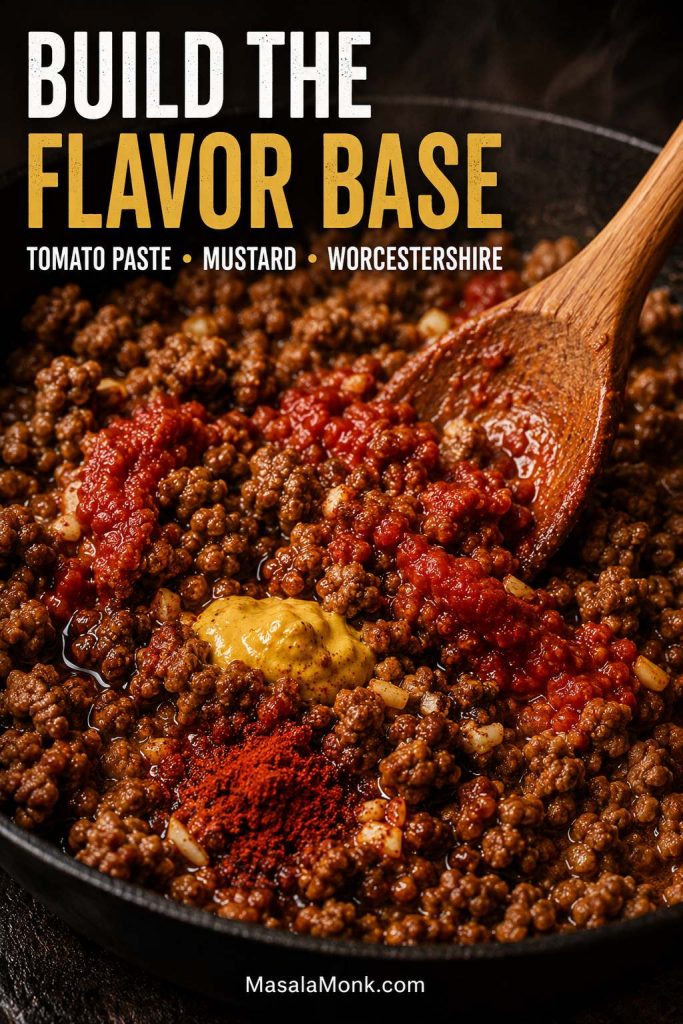
Tomato paste, mustard, Worcestershire sauce, garlic, paprika, and browned beef being stirred together in a skillet.
Tomato paste, mustard, Worcestershire, and paprika move the pan toward cheeseburger-style flavor instead of plain beef macaroni.

3. Add the Liquid and Pasta

Pour in the beef broth and milk, then stir in the dry pasta. Bring the mixture to a gentle simmer. At this point, avoid a harsh boil, especially after the milk is in the pan.
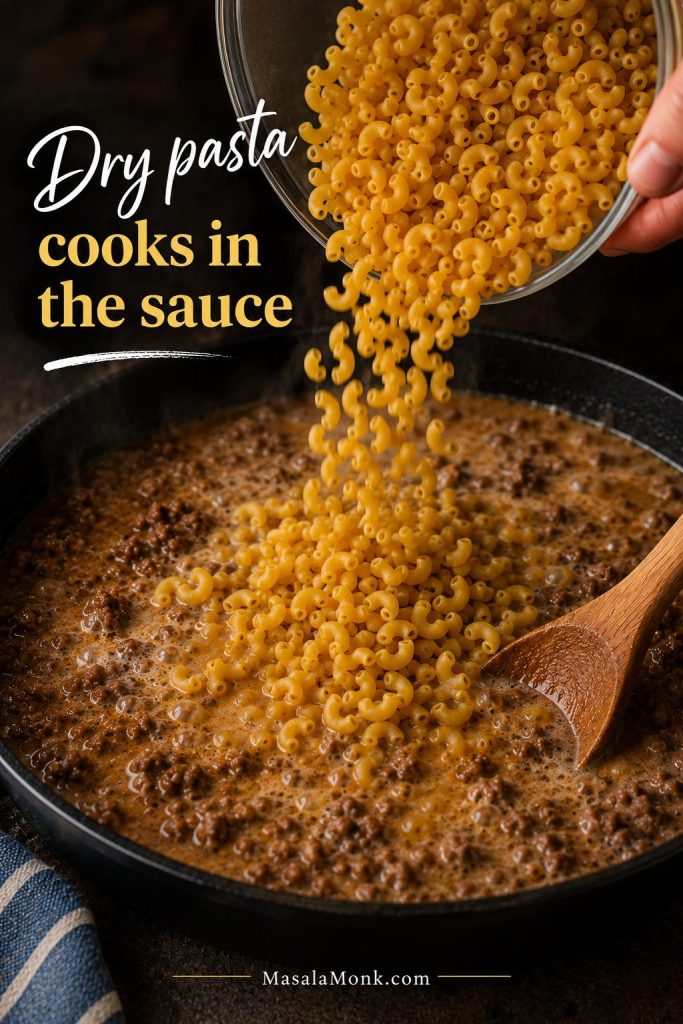
Dry elbow macaroni being added to a skillet with ground beef, broth, and milk for one-pot homemade Hamburger Helper.
Dry pasta cooks directly in the skillet, so the starch helps thicken the sauce while saving you a separate pasta pot.

4. Simmer Until the Pasta Is Tender

Cook uncovered or partially covered, stirring often, until the pasta is tender and the sauce has reduced. This usually takes 10 to 14 minutes, depending on the pasta shape. If the pan gets too dry before the pasta is done, add a splash of broth, milk, or water.

The sauce should bubble gently, not aggressively. Stir across the bottom of the pan so the pasta does not stick, and start checking early if you are using small shells or gluten-free pasta.
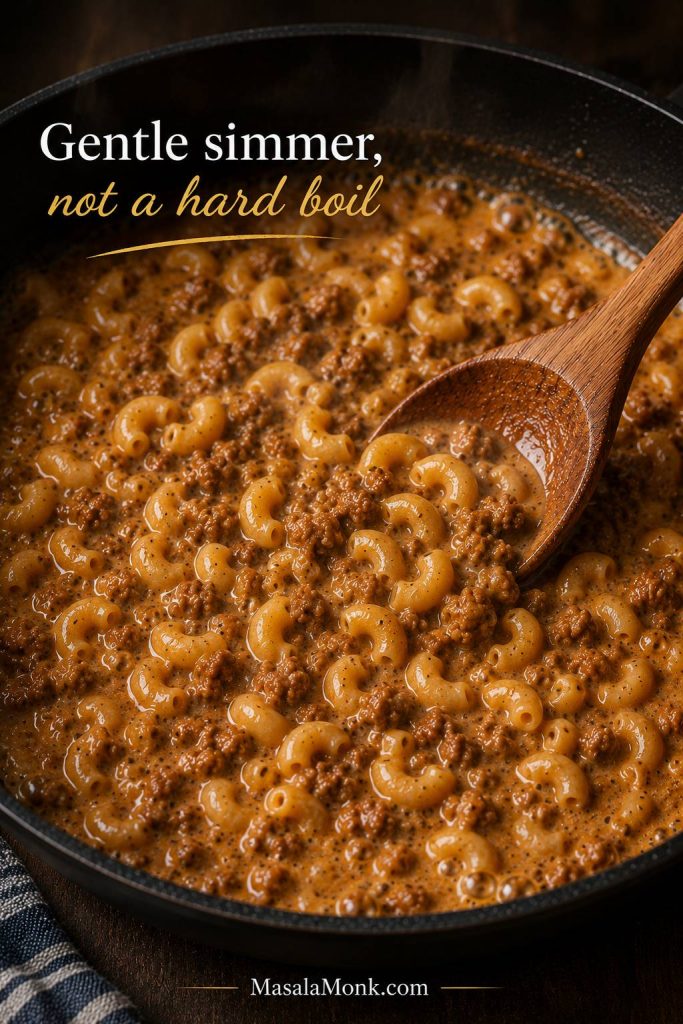
Homemade Hamburger Helper simmering gently in a skillet with macaroni, ground beef, milk, and broth.
A gentle simmer gives the macaroni time to soften while keeping the milk-based sauce smooth, steady, and controlled.

Should You Cover the Pan?

You can cook it uncovered or partially covered. Uncovered gives you more control because you can watch the sauce reduce. Partially covered helps if the pasta is still firm but the liquid is reducing too fast. Avoid fully covering the pan for the whole cook time unless you are checking often, because the sauce can stay too loose while the pasta softens.

5. Stir in the Cheese Off Heat

Turn off the heat. Add the shredded cheese a handful at a time, stirring until melted. Then let the skillet sit for 2 to 3 minutes before serving so the sauce can settle and thicken.

Wait until the bubbling calms before adding the cheese. The sauce should look hot and glossy, but not actively boiling. That pause is what keeps the cheddar creamy instead of grainy.

Fresh cheddar being added to homemade Hamburger Helper after the pan has been taken off the heat.
Cheddar melts more smoothly when the pan is calm, so this finishing step is about temperature control as much as cheese.

Cook’s check: Before adding the cheese, the pasta should be tender and the pan should still have a small amount of glossy liquid. If it looks completely dry, add a splash of milk or broth. If it looks watery, simmer for another minute. Then turn off the heat and add the cheese.

The Spoon Test for the Right Sauce Texture

Before serving, drag a spoon through the skillet. The sauce should coat the pasta, leave a glossy trail, and still move enough to feel creamy.
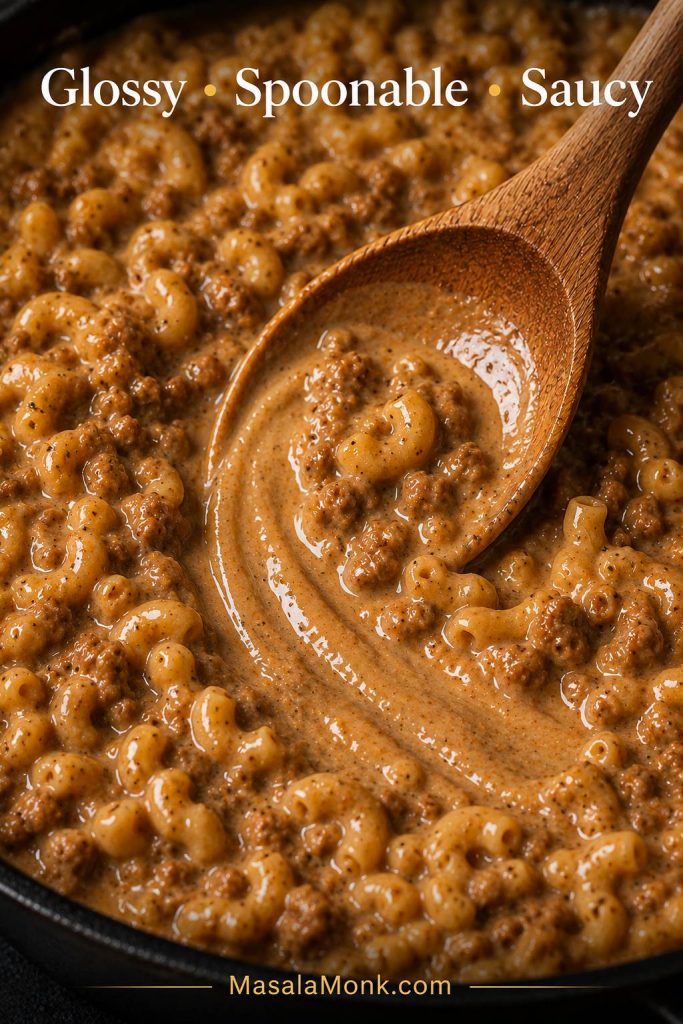
Spoon test showing glossy homemade Hamburger Helper sauce coating macaroni and ground beef in a skillet.
This is the texture to look for: sauce that clings to the spoon, coats the macaroni, and still has enough movement to stay creamy.

Common Mistakes That Make the Sauce Dry, Grainy, or Bland

Most problems come from the same few places: the pan gets too dry before the pasta softens, the cheese goes in while the sauce is still bubbling, or the beef-and-pasta base is not seasoned before the cheddar is added. Fix those three things and the skillet becomes much easier to control.

Need the compact cooking version now? Jump to the recipe card. If dinner is already going sideways, use the troubleshooting table.

Homemade Hamburger Helper Recipe

A creamy, one-pot homemade Hamburger Helper recipe with browned ground beef, tender macaroni, real cheddar, and a savory cheeseburger-style sauce. It has the comfort of the boxed classic, but a fresher flavor and a sauce you can actually control.
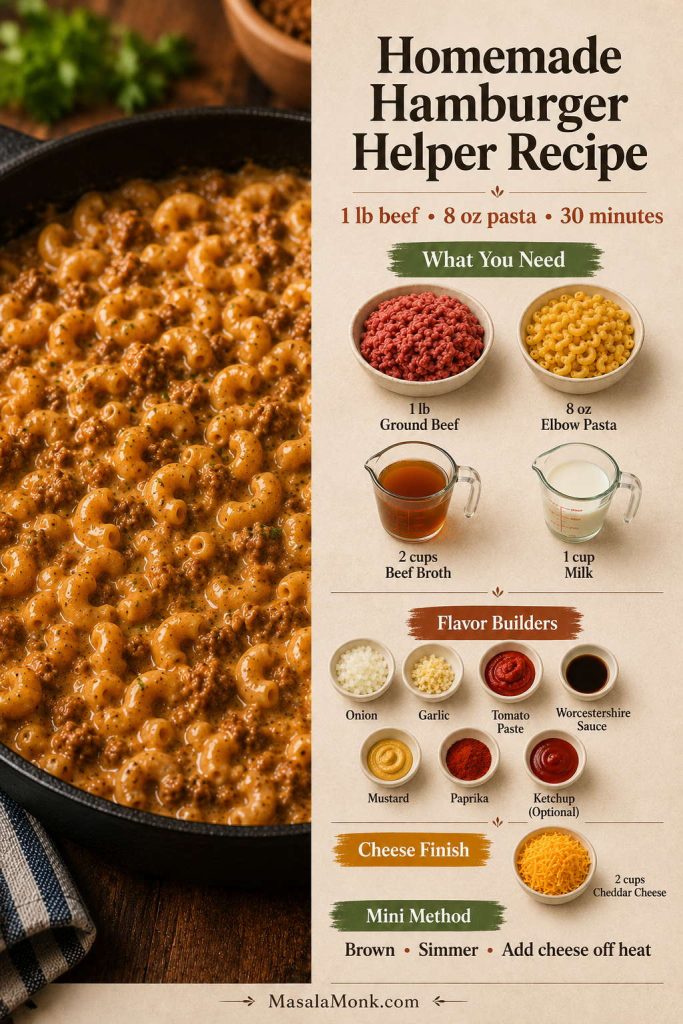
Saveable homemade Hamburger Helper recipe card with ground beef, macaroni, cheddar sauce, and the one-pot method.
Save the core method: brown the beef, simmer the pasta in broth and milk, then add cheddar off heat for a creamy one-pan dinner.

Prep Time
10 minutes

Cook Time
20 minutes

Total Time
30 minutes

Servings
4 to 6

Equipment

  • Large deep 12-inch skillet, sauté pan, or Dutch oven
  • Wooden spoon or spatula
  • Measuring cups and spoons
  • Box grater, if shredding cheese fresh

Ingredients

  • 1 tablespoon olive oil or neutral oil, only if using very lean beef
  • 1 pound / 450 g ground beef
  • 1/2 medium yellow onion, finely chopped, about 1/2 cup / 75 g
  • 2 to 3 garlic cloves, minced
  • 2 tablespoons / 30 g tomato paste
  • 1 tablespoon ketchup, optional for a sweeter nostalgic flavor
  • 1 to 2 teaspoons Worcestershire sauce
  • 1 teaspoon Dijon mustard or 1/2 teaspoon mustard powder
  • 1 teaspoon paprika or smoked paprika
  • 1/2 teaspoon chili powder
  • 1/2 teaspoon garlic powder
  • 1/2 teaspoon onion powder
  • 3/4 teaspoon fine salt, plus more to taste
  • 1/4 teaspoon black pepper
  • 2 cups / 480 ml beef broth
  • 1 cup / 240 ml milk
  • 8 ounces / 225 g elbow macaroni or small shells
  • 1 1/2 to 2 cups / 170 to 225 g freshly grated sharp cheddar cheese
  • Optional: chopped parsley, chives, or extra black pepper for serving

Instructions

  1. Brown the beef. Set a large deep skillet or Dutch oven over medium-high heat. Add the beef and cook, breaking it into small pieces, until browned and cooked through. Add the onion and cook for 2 to 3 minutes, until softened. Drain excess fat if needed.
  2. Add the flavor base. Stir in the garlic, tomato paste, ketchup if using, Worcestershire sauce, mustard, paprika, chili powder, garlic powder, onion powder, salt, and black pepper. Cook for about 1 minute, stirring constantly, until the tomato paste darkens slightly and coats the beef.
  3. Add liquid and pasta. Pour in the beef broth and milk. Stir well, scraping the bottom of the pan. Add the dry pasta and stir again.
  4. Simmer gently. Bring to a gentle simmer, then reduce the heat to medium or medium-low. Cook for 10 to 14 minutes, stirring often, until the pasta is tender and the sauce has reduced. Add a splash of broth, milk, or water if the pan looks dry before the pasta is done.
  5. Finish with cheese. Turn off the heat. Stir in the cheese a handful at a time until melted and creamy.
  6. Rest and serve. Let the skillet sit for 2 to 3 minutes. Taste and adjust salt, pepper, or Worcestershire sauce if needed. Serve warm.

Notes

  • For the smoothest sauce, grate the cheese yourself, add it off heat, and see the grainy cheese prevention tip.
  • Small penne, rotini, or cavatappi may need an extra splash of liquid and 2 to 4 more minutes.
  • Too thick after resting? Stir in a splash of warm milk or broth, or see the dry sauce fix.
  • For stronger cheeseburger-macaroni flavor, keep the ketchup and mustard in the recipe.

Choose Your Hamburger Helper Style

This is where the recipe becomes yours. Some readers want the closest possible version of the childhood box. Others want a sharper, more homemade skillet pasta with real cheddar and extra garlic. Some need it lighter, higher-protein, or easier for kids. The base ratio stays the same; the flavor direction changes.
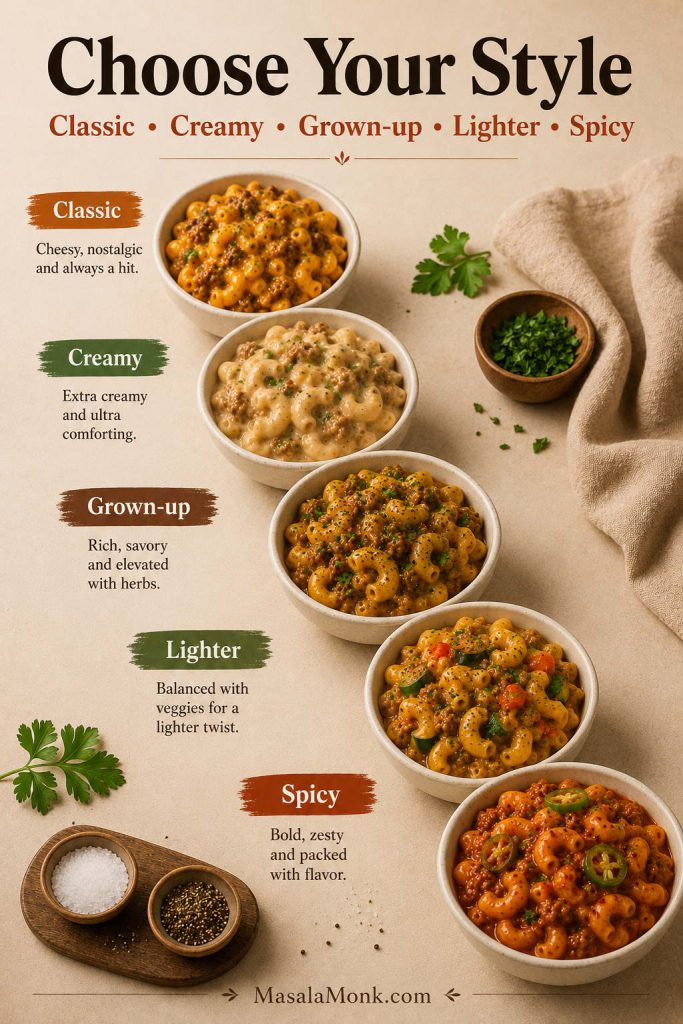
Five homemade Hamburger Helper style bowls showing classic, creamy, grown-up, lighter, and spicy cheeseburger macaroni variations.
The base ratio stays the same, but the final bowl can lean classic, extra creamy, lighter, sharper, or spicy depending on what your table likes.

Want to compare the actual versions? Jump to variations for the lighter, high-protein, no-milk, gluten-free, spicy, and vegetable options.

StyleUse ThisFlavor Result
Closest to the childhood boxKetchup, mustard, orange cheddar, a little paprikaSweet-tangy cheeseburger macaroni
Creamiest family-style versionFresh cheddar plus Monterey Jack or American cheeseSmoother, meltier, more kid-friendly
More grown-up skillet pastaExtra garlic, sharp cheddar, black pepper, herbsLess packet-style, more savory and homemade
Lighter but still cozyLean beef or turkey, vegetables, whole wheat pastaComforting without feeling as heavy
Spicy cheeseburger macHot sauce, jalapeño, cayenne, Pepper JackCheesy with a warm kick

This is usually where every household has an opinion. Some people want it sweeter and closer to the box, some want it sharper with real cheddar, some want it extra creamy for kids, and some want enough hot sauce to make it feel more grown-up. If your table is split, start with the classic version, then let people add hot sauce, extra cheddar, pickles, black pepper, or herbs at the end.

How to Get That Nostalgic Cheeseburger Macaroni Flavor

For the most nostalgic version, think savory, cheesy, slightly sweet, slightly tangy, and beefy. Tomato paste gives the sauce body. Ketchup adds the familiar sweet-acidic note. Mustard makes it taste more like cheeseburger macaroni. Worcestershire sauce keeps the beef flavor from tasting flat.

How to Build the Boxed-Dinner Flavor Without the Packet

This is the part many homemade versions miss. The familiar flavor does not come from cheese alone; it comes from beefy depth, a little tomato tang, a subtle mustard edge, warm color, and a sauce that feels creamy without turning gluey.
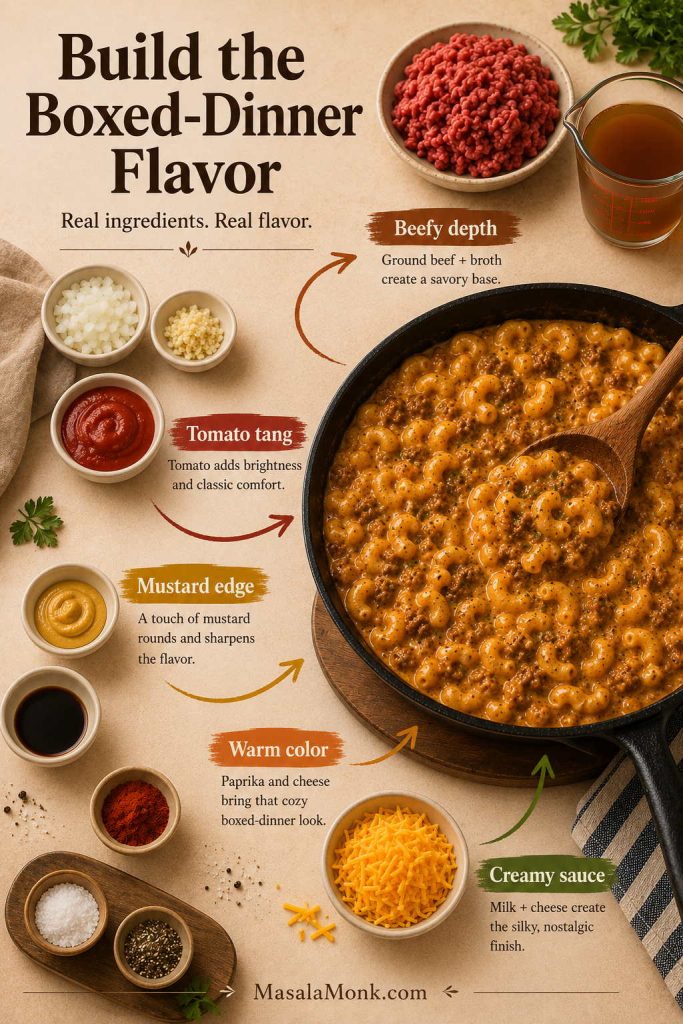
Boxed-dinner flavor map for homemade Hamburger Helper showing beefy depth, tomato tang, mustard edge, warm color, and creamy sauce.
Think of the boxed-dinner flavor as layers: beefy, tangy, warm, and creamy working together rather than one big hit of cheese.

Want the most nostalgic version? Jump to the closest boxed-dinner style variation.

What You RememberHow to Build It Here
Beefy, savory baseBrowned beef, beef broth, Worcestershire sauce
Light tomato tangTomato paste plus optional ketchup
Cheeseburger-style edgeMustard, cheddar, optional pickles or bacon
Warm orange colorPaprika and orange cheddar
Smooth, family-style sauceFresh cheddar plus a little American cheese, Monterey Jack, or Colby Jack

That is why this recipe uses small amounts of several flavor builders instead of relying only on cheese. Cheese gives comfort, but tomato paste, mustard, Worcestershire sauce, paprika, and ketchup are what make the skillet taste like cheeseburger macaroni instead of plain beef mac.

  • Sweeter tang: add 1 tablespoon ketchup.
  • Cheeseburger flavor: use Dijon or mustard powder.
  • Deeper savory flavor: use Worcestershire sauce and beef broth.
  • Smoother melt: use part cheddar and part American cheese or Colby Jack.
  • Stronger color: use paprika and sharp orange cheddar.

Make-Ahead Homemade Hamburger Helper Seasoning Mix

If the boxed version appealed because it was easy, this is the part to save. Mix the dry seasonings ahead of time and keep them in a small jar. Then a busy-night dinner starts with browning beef, not measuring five spices while everyone is hungry.
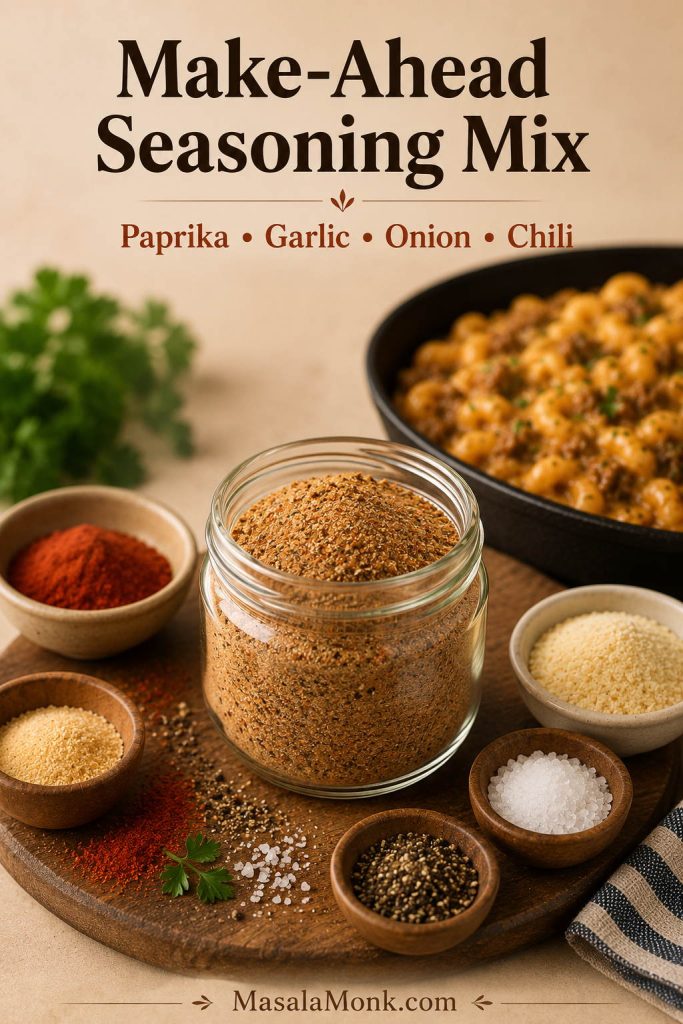
Homemade Hamburger Helper seasoning mix with paprika, chili powder, garlic powder, onion powder, salt, and black pepper in a jar.
A make-ahead seasoning mix keeps the homemade version convenient, while tomato paste, mustard, Worcestershire, and cheese still build the sauce fresh during cooking.
  • 1 teaspoon paprika or smoked paprika
  • 1/2 teaspoon chili powder
  • 1/2 teaspoon garlic powder
  • 1/2 teaspoon onion powder
  • 3/4 teaspoon fine salt
  • 1/4 teaspoon black pepper
  • Optional: 1 teaspoon cornstarch for a slightly thicker sauce

Label the jar “Homemade Hamburger Helper mix.” When you cook, still add the tomato paste, Worcestershire sauce, mustard, and cheese fresh. Those ingredients are what keep the sauce from tasting flat.

How to Make It Taste More Homemade

If you want less boxed nostalgia and more homemade skillet-pasta flavor, skip the ketchup, use sharp cheddar, add an extra clove of garlic, and finish with black pepper, chives, parsley, or a little hot sauce. You can also add sautéed mushrooms or bell pepper with the onion for a more grown-up version.

Variations

Cheeseburger Macaroni Hamburger Helper Style

For the most cheeseburger-like version, use elbow macaroni, keep the ketchup and mustard, and use a mix of sharp cheddar and American cheese. You can also top each bowl with chopped pickles, diced tomatoes, or a little crumbled cooked bacon.
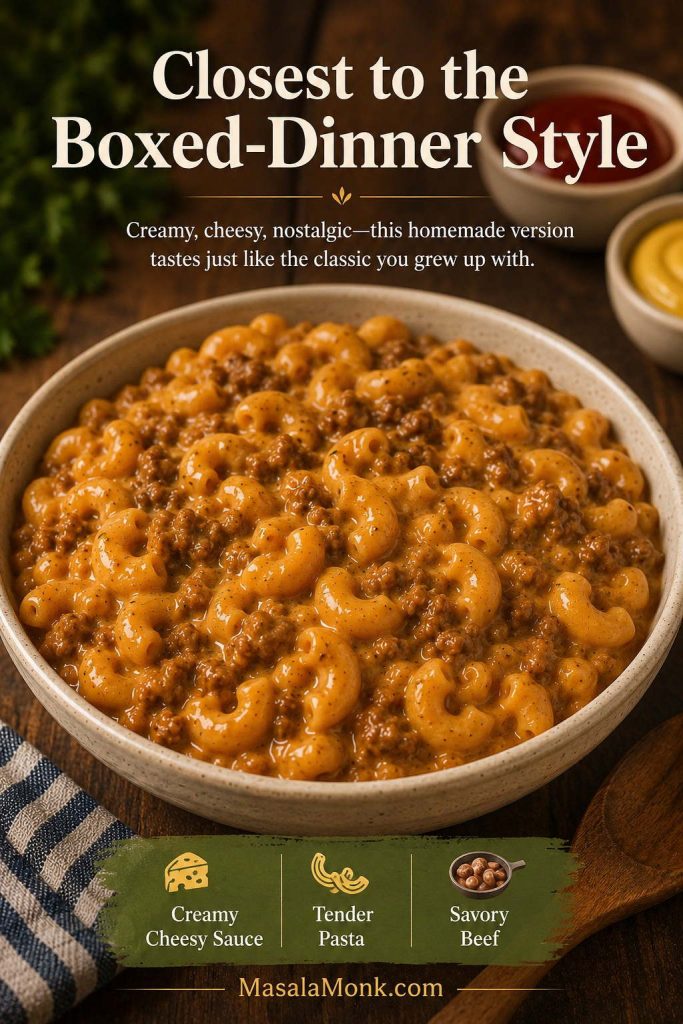
Closest-to-the-box homemade Hamburger Helper style with elbow macaroni, orange cheddar sauce, ground beef, ketchup, and mustard cues.
For a more nostalgic cheeseburger macaroni flavor, keep the ketchup and mustard, use elbow macaroni, and lean into orange cheddar.

Healthy Homemade Hamburger Helper

For a lighter version, use 90/10 or 93/7 ground beef, ground turkey, or ground chicken. Add finely chopped bell pepper, grated carrot, zucchini, spinach, peas, or mushrooms. Whole wheat pasta also works, although it may need a little extra liquid and a few more minutes.
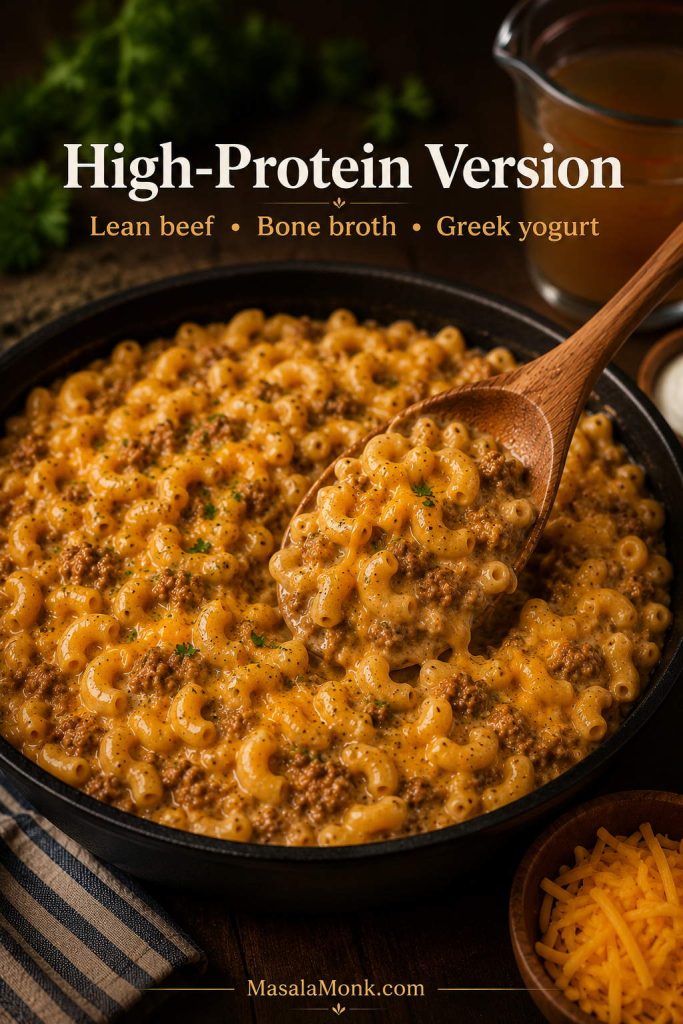
Healthy homemade Hamburger Helper variation with creamy macaroni, ground beef or turkey, vegetables, and cheddar sauce.
A lighter skillet should still feel comforting, so use leaner meat and vegetables while keeping enough sauce to coat the pasta well.

For extra creaminess with a lighter finish, stir in a spoonful or two of plain Greek yogurt after turning off the heat. Do not boil it. The flavor becomes a little tangier and less classic, but the sauce stays creamy if the heat is gentle.

High-Protein Homemade Hamburger Helper

For a higher-protein version, use lean ground beef or ground turkey, high-protein short pasta, beef bone broth, and a little plain Greek yogurt stirred in off heat. Keep the cheddar for flavor, but do not boil the yogurt or the sauce can separate. Because high-protein pastas vary in cooking time and starch release, start checking early and keep extra broth nearby. This version tastes less like the childhood box, but it works well when you want the same comfort-food idea with more protein.
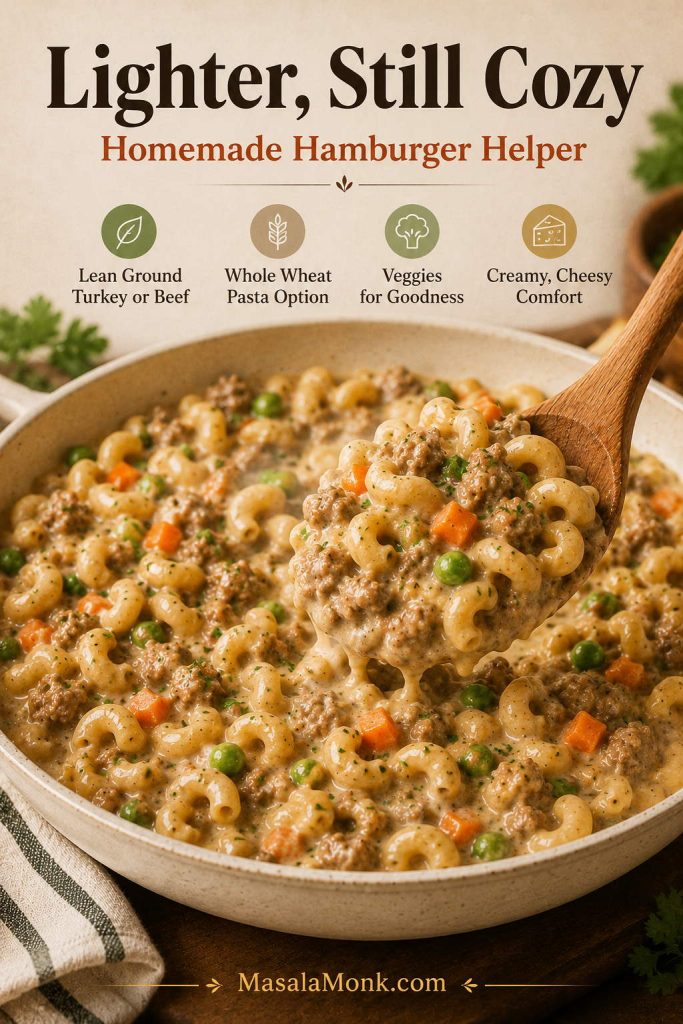
High-protein homemade Hamburger Helper with lean beef, high-protein pasta, bone broth, Greek yogurt, and cheddar cheese.
High-protein pasta and Greek yogurt can make the dish more filling, but they need gentle heat and extra broth nearby so the sauce stays creamy.

No-Milk Homemade Hamburger Helper

You can make this without milk. Replace the milk with extra beef broth, then make the sauce creamier with cheese at the end. The result is a little less creamy but still very good. For more body, stir 1 teaspoon cornstarch into 2 tablespoons cold broth, then add it near the end and simmer briefly before adding cheese.
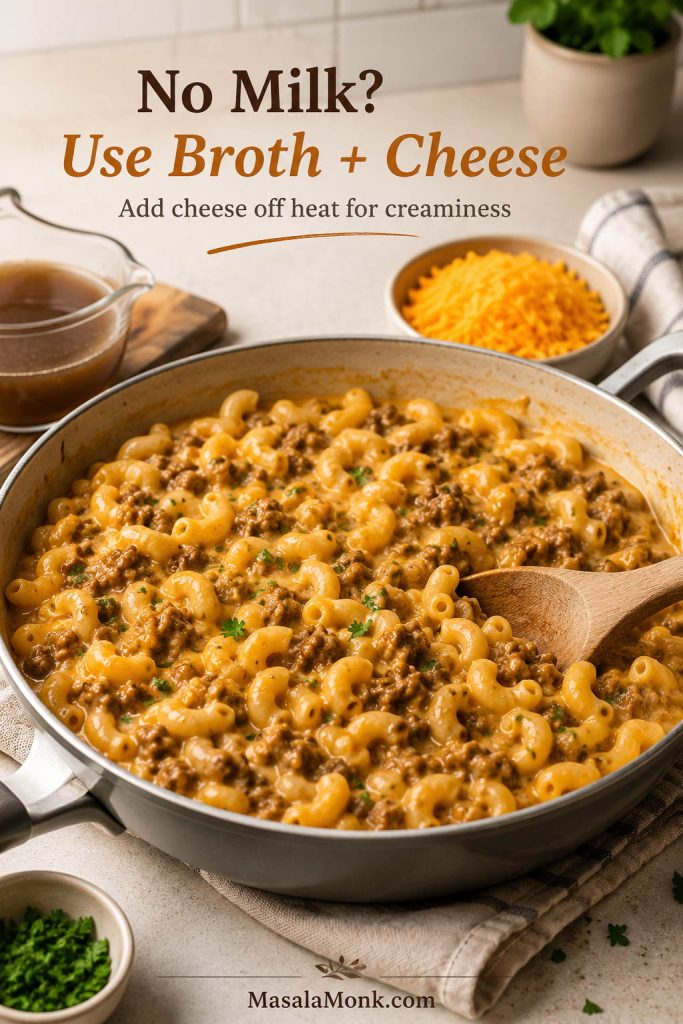
No-milk homemade Hamburger Helper made with extra broth, cheddar cheese, elbow macaroni, and ground beef in a creamy skillet sauce.
Milk gives the sauce softness, but broth can still cook the pasta while cheddar brings creaminess at the end.

Gluten-Free Homemade Hamburger Helper

Use a sturdy gluten-free short pasta and check it early. Gluten-free pasta can go from firm to soft quickly, and it often releases more starch. Stir gently, add liquid only as needed, and serve right away for the best texture.
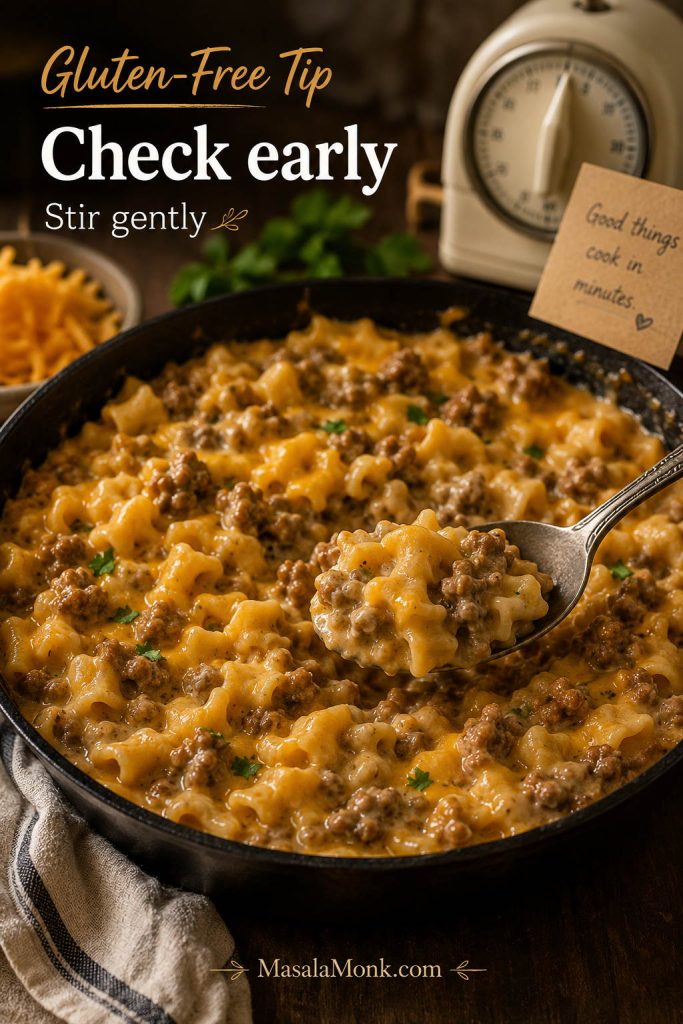
Gluten-free homemade Hamburger Helper with short gluten-free pasta, ground beef, creamy cheddar sauce, and a spoon checking texture.
Gluten-free pasta can soften quickly, so check early, stir gently, and keep extra liquid nearby if the sauce tightens before the pasta is done.

Spicy Hamburger Helper

Add cayenne, hot sauce, diced jalapeño, or crushed red pepper. Pepper Jack cheese also works well if you want heat without changing the one-pot method.
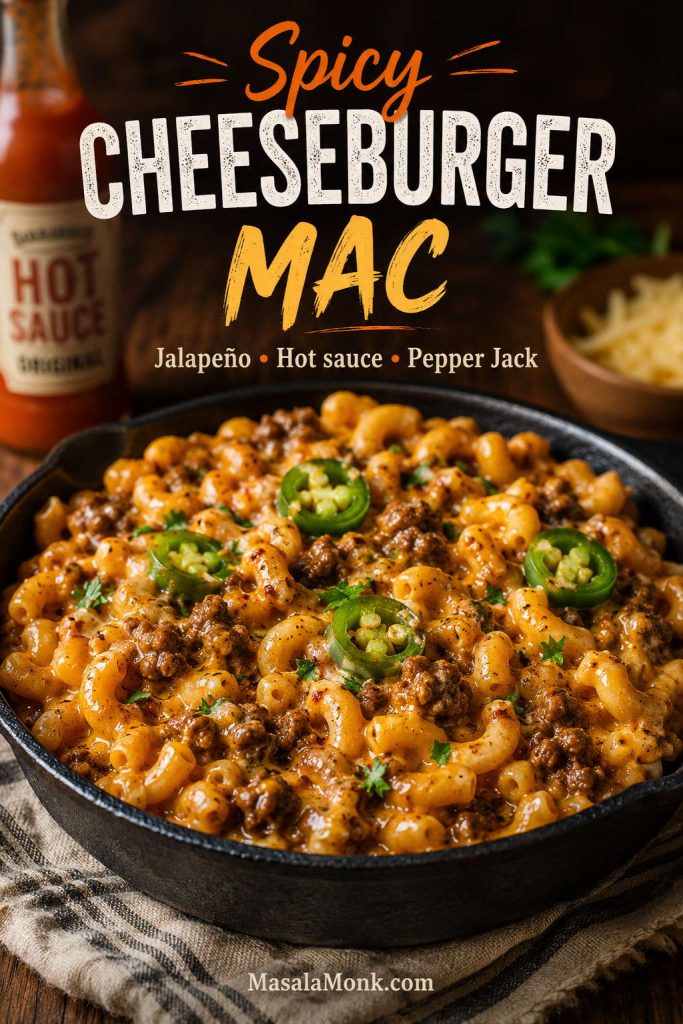
Spicy homemade Hamburger Helper with jalapeño slices, hot sauce, Pepper Jack, cheddar, macaroni, and ground beef.
Spicy cheeseburger mac is easy to adjust at the end with jalapeños, hot sauce, crushed red pepper, or Pepper Jack.

Hamburger Helper with Vegetables

For vegetables that blend into the sauce, add grated carrot or zucchini with the onion. For vegetables that keep their shape, stir in peas, corn, or spinach near the end. Avoid adding too many watery vegetables unless you are ready to simmer the sauce a little longer.
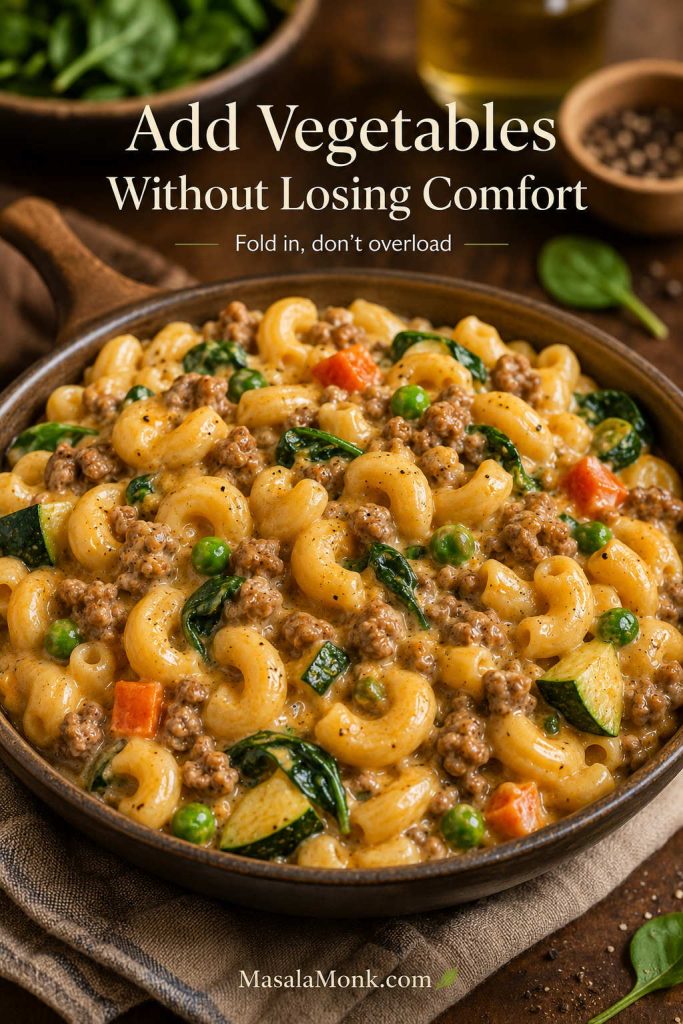
Homemade Hamburger Helper with vegetables including peas, spinach, carrot, and zucchini mixed into creamy macaroni and ground beef.
Vegetables work best when folded into the sauce, not piled on top, so the skillet stays creamy while gaining color, texture, and balance.

If your comfort-food memory leans more creamy casserole than skillet pasta, this tuna noodle casserole recipe follows the old-school pantry-dinner route with noodles, creamy sauce, and a golden topping.

Is This for Boxed Hamburger Helper or Homemade?

This recipe is the homemade version. It does not use a box, sauce packet, or seasoning packet. It is meant for readers who want the same cozy skillet-dinner idea — beef, pasta, creamy sauce, cheese — made from scratch.
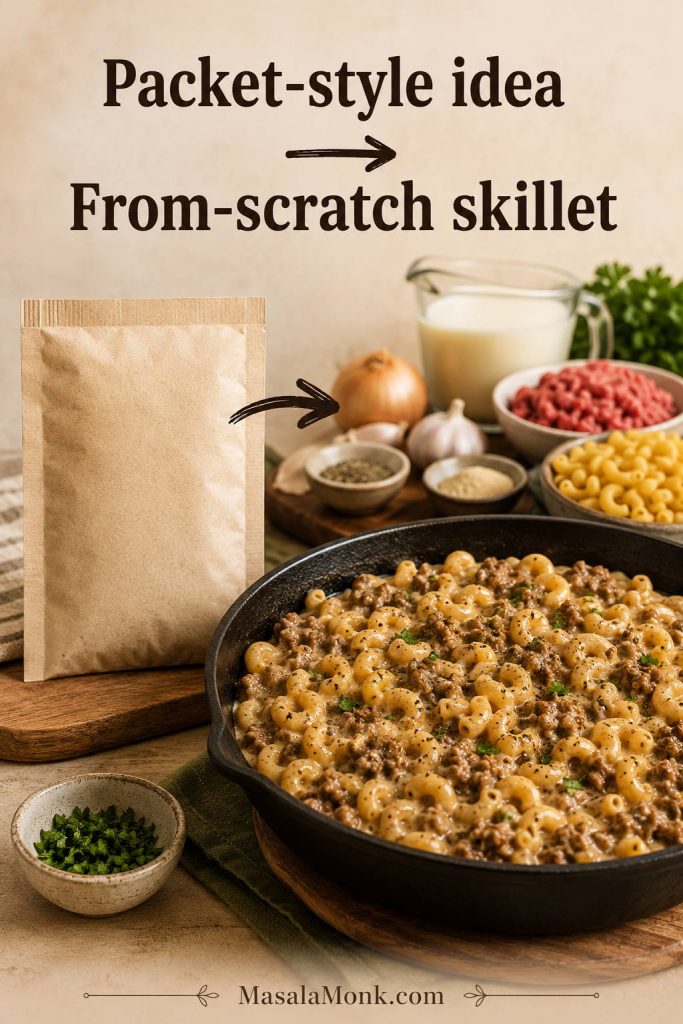
Neutral packet-style idea next to a from-scratch skillet of homemade Hamburger Helper with pasta, ground beef, cheese, milk, and seasonings.
This recipe keeps the cozy skillet-dinner idea, but the sauce comes from real ingredients like broth, milk, cheddar, tomato paste, mustard, and Worcestershire.

If you already have a box in the pantry, you can still borrow the flavor ideas here. Sauté onion and garlic with the beef, add a little tomato paste for depth, use milk or broth for a richer sauce, and finish with extra cheese or a spoonful of sour cream. That is a different recipe path, but the flavor logic is the same.

Troubleshooting Homemade Hamburger Helper

One-pot pasta is easy, but the sauce can change quickly because the pasta keeps absorbing liquid. Fortunately, most problems are fixable if you catch them before serving.
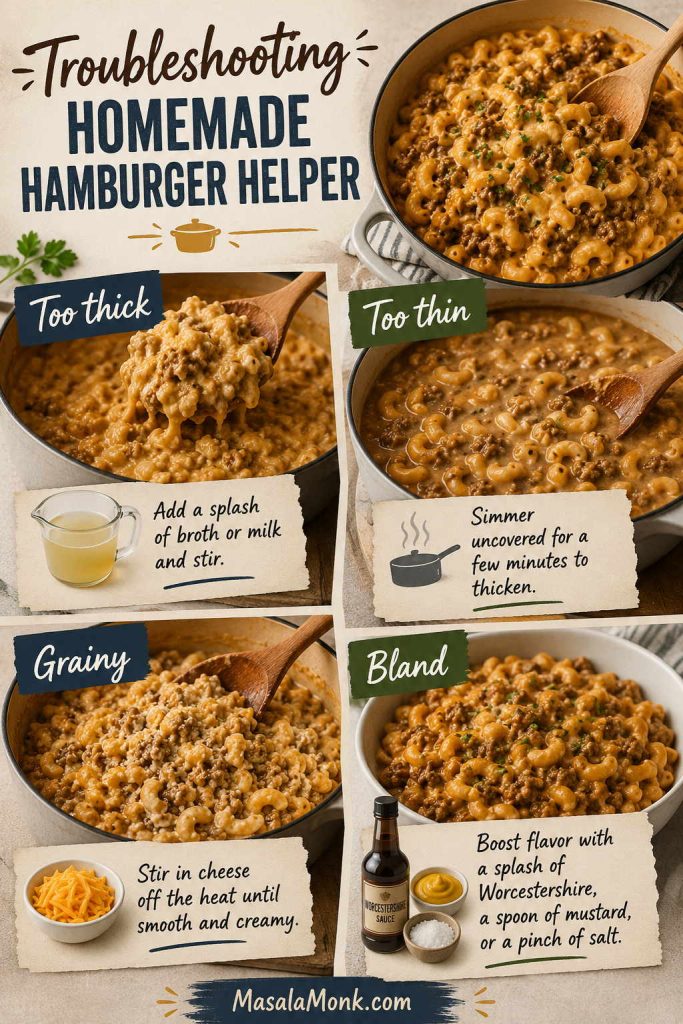
Troubleshooting guide for homemade Hamburger Helper showing fixes for sauce that is too thick, too thin, grainy, or bland.
Most sauce problems come down to liquid, heat, cheese timing, or seasoning, and each one can usually be fixed before serving.
ProblemWhy It HappenedHow to Fix It
Sauce is too thickThe pasta absorbed more liquid than expectedStir in warm milk, broth, or water a splash at a time
Sauce is too thinToo much liquid or pasta not starchy enoughSimmer uncovered for a few minutes, then rest before serving
Pasta is still firmThe liquid reduced before the pasta cookedAdd 1/4 cup liquid, cover briefly, and simmer gently
Cheese sauce is grainyCheese was added over high heat or pre-shredded cheese was usedRemove from heat before adding cheese and use freshly grated cheese
Dish tastes blandNot enough salt, acid, or savory depthAdd salt, Worcestershire sauce, mustard, black pepper, or a small spoon of ketchup
Dish tastes greasyBeef released too much fatDrain excess fat after browning; use leaner beef next time
Milk looks separatedThe sauce boiled too hardLower the heat, stir gently, and finish with cheese off heat
Pasta is stickingThe heat is too high or the pan is too dryLower the heat, stir more often, and add a splash of liquid

How to Fix Dry or Too-Thick Hamburger Helper

If the skillet tightens up, do not add a large pour of liquid at once. Start with a small splash of warm milk, broth, or water, stir, and let the sauce loosen evenly.
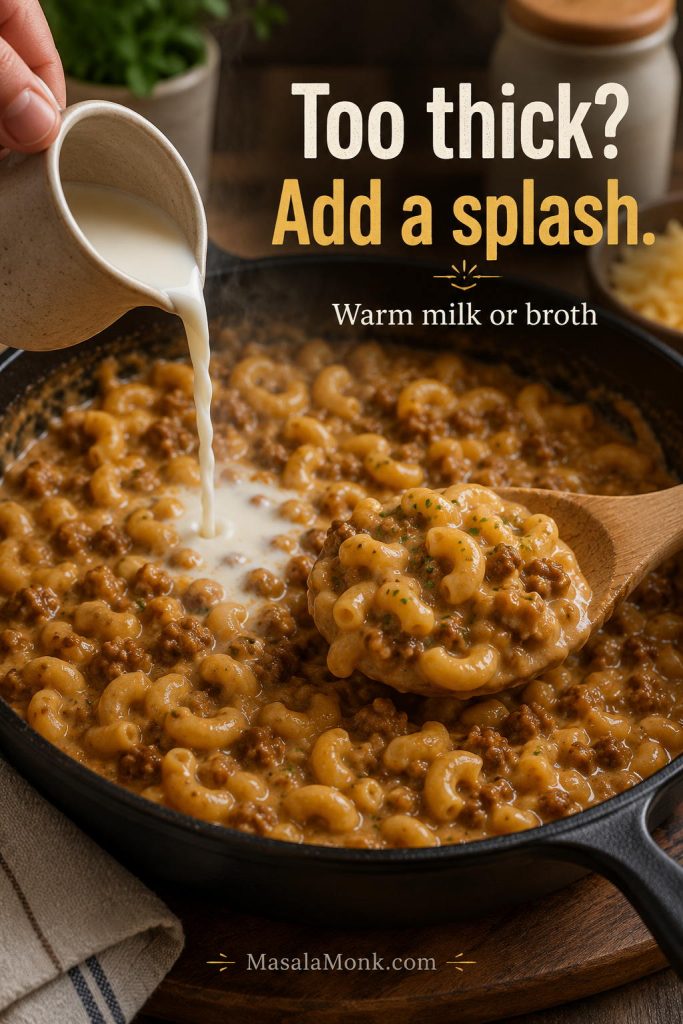
Warm milk or broth being poured into thick homemade Hamburger Helper to loosen the sauce in a skillet.
A thick skillet usually needs only a small rescue: warm liquid, a few stirs, and a minute for the sauce to loosen evenly.

How to Prevent Grainy Cheese Sauce

For a smoother cheddar finish, make sure the sauce is hot but no longer bubbling hard before the cheese goes in.

Cheddar being added off heat to homemade Hamburger Helper in a skillet on a trivet for a smoother cheese sauce.
The smoother the sauce looks before the cheese goes in, the easier it is for cheddar to melt in gently instead of breaking.

If cheese sauces are where dinner usually goes wrong, this easy cheese sauce recipe explains the smooth-cheddar method in more detail.

Storage, Reheating, and Freezing

This homemade Hamburger Helper recipe is best right after cooking, when the sauce is creamy and the pasta still has a little bite. However, leftovers are still useful for lunch or an easy next-day dinner.
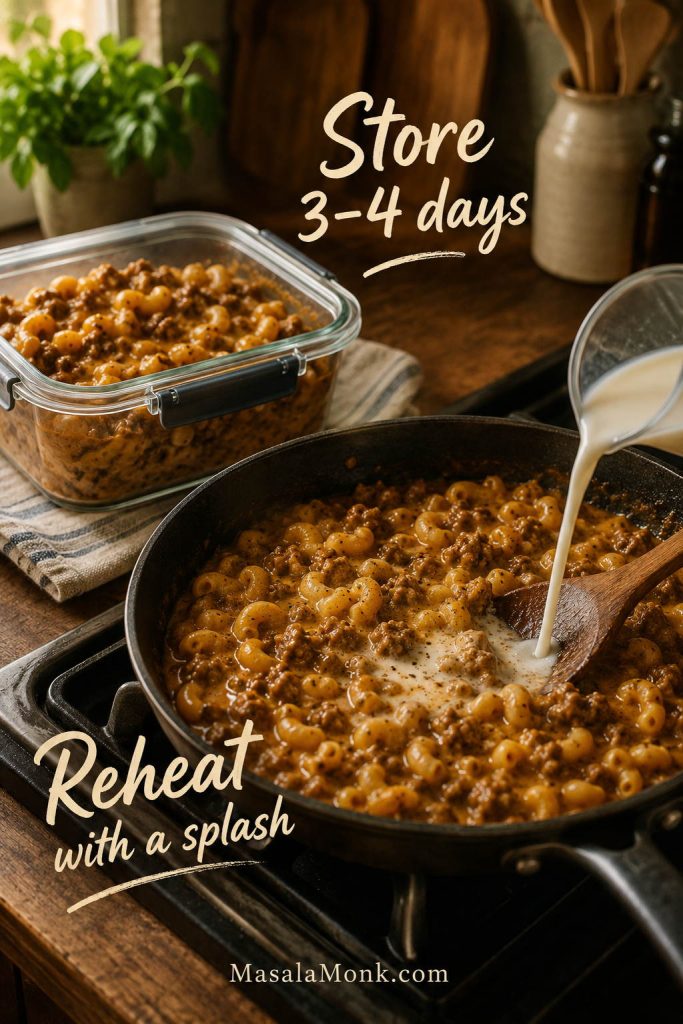
Leftover homemade Hamburger Helper in a storage container and a skillet being reheated with a splash of milk.
Leftovers thicken in the fridge, so reheat gently with a splash of milk, broth, or water to bring the sauce back.

How to Store It

Let leftovers cool, then store them in an airtight container in the refrigerator for up to 3 to 4 days. The pasta will continue absorbing sauce as it sits, so the leftovers will be thicker than the fresh skillet.

How to Reheat It

Reheat gently on the stovetop or in the microwave with a splash of milk, broth, or water. Then stir, warm slowly, and add more liquid if needed. Do not blast it with high heat for too long, because the sauce can turn oily.

Can You Freeze Homemade Hamburger Helper?

You can freeze it, but the pasta will soften after thawing. For best texture, refrigerate leftovers and eat them within a few days. If you do freeze it, use an airtight container, thaw overnight in the refrigerator, and reheat gently with extra liquid.

What to Serve With Homemade Hamburger Helper

This is already a complete comfort-food dinner, so the best sides are simple and fresh. A crisp salad, roasted broccoli, green beans, peas, cucumber salad, or steamed vegetables help balance the richness. Garlic bread works too if you want the meal to feel extra cozy.
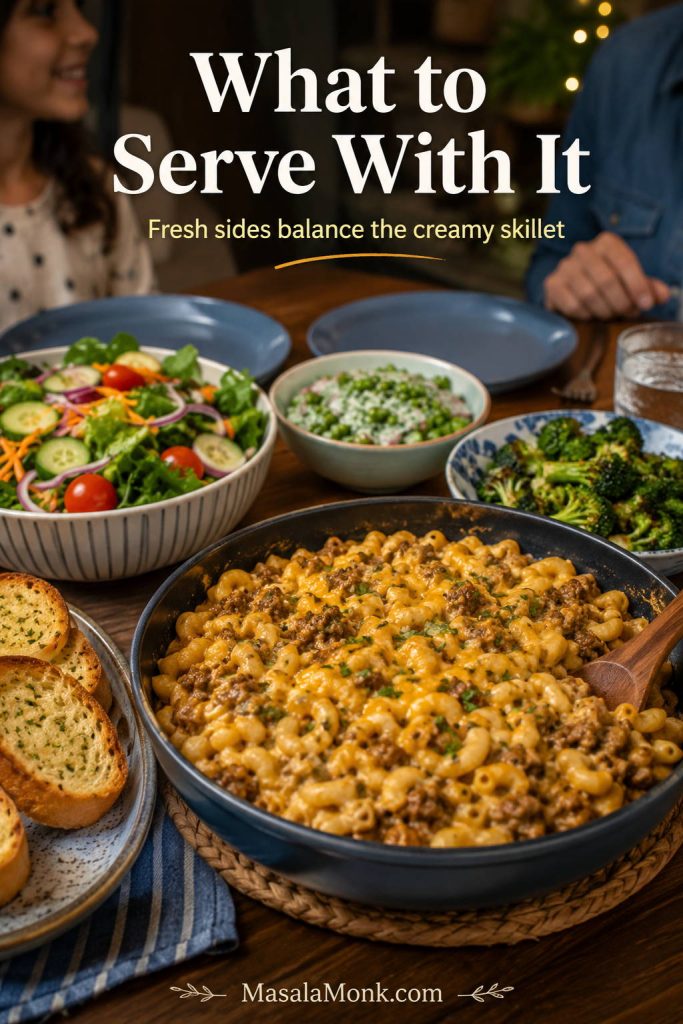
Homemade Hamburger Helper served with salad, broccoli, peas, garlic bread, and vegetables for a family-style dinner.
Since the skillet is rich and creamy, fresh sides like salad, broccoli, peas, green beans, or cucumber salad help balance the meal.

To keep the plate lighter, serve smaller bowls with a big salad or steamed vegetables. If you are feeding everyone family-style, set the skillet in the center of the table and let people add black pepper, herbs, hot sauce, or extra cheese.

Another cozy ground-beef dinner in the same family-comfort lane is this tater tot casserole recipe, especially if you want a baked, cheesy version of the same pantry-dinner feeling.

FAQs

Is homemade Hamburger Helper the same as cheeseburger macaroni?

It is very close. Cheeseburger macaroni is the best way to describe this homemade Hamburger Helper recipe because it has ground beef, macaroni, cheddar cheese, and a savory cheeseburger-style sauce.

What Hamburger Helper flavor is this closest to?

This recipe is closest to Cheeseburger Macaroni Hamburger Helper. It has ground beef, short pasta, cheddar cheese, tomato paste, mustard, and a little paprika for that familiar cheesy, savory, slightly tangy flavor.

Do I need to boil the pasta separately?

No. The pasta cooks directly in the skillet with the beef, broth, milk, and seasonings. This saves time and helps the sauce thicken because the pasta releases starch as it cooks.

What kind of cheese melts best?

Freshly grated sharp cheddar gives the best flavor. For a smoother, more nostalgic melt, use a blend of cheddar and American cheese, Monterey Jack, or Colby Jack.

Can I make homemade Hamburger Helper without milk?

Milk gives the sauce a softer, creamier finish, but it is not mandatory. Replace it with extra broth, then let the cheese do more of the creamy work at the end. For a thicker sauce, stir 1 teaspoon cornstarch into 2 tablespoons cold broth and add it before the cheese.

Can I use water instead of beef broth?

Water works in a pinch, but beef broth gives the sauce more depth. If water is all you have, add a little more Worcestershire sauce, tomato paste, paprika, salt, and pepper so the dish does not taste flat.

Can I use ground turkey instead of beef?

Ground turkey works well for a lighter skillet, especially with a little extra seasoning. Because turkey is milder than beef, add more Worcestershire sauce, paprika, mustard, or cheese to bring back some of the savory depth.

Why did my sauce get dry?

The pasta absorbed more liquid than expected, or the heat was too high. Stir in warm milk, broth, or water a splash at a time until the sauce loosens, or see the dry sauce fix above.

Why did my cheese turn grainy?

Cheddar can turn grainy when it is boiled or added while the pan is too hot. Turn off the heat, let the bubbling calm, then add freshly grated cheese gradually, or see the smooth cheese tip.

How do I make it more flavorful?

Start with salt, then add savory depth with Worcestershire sauce, mustard, smoked paprika, and tomato paste. For a sweeter boxed-style flavor, keep the optional ketchup.

Can I double the recipe?

A double batch works best in a Dutch oven or very large deep pan. If the pan is crowded, the pasta cooks unevenly and the sauce can reduce before the pasta softens. Stir often and add liquid as needed.

Is this recipe affiliated with Hamburger Helper?

No. This is a homemade, from-scratch recipe inspired by the style of the boxed skillet dinner. It does not use the boxed mix or seasoning packet.

Final Thoughts

The best homemade Hamburger Helper recipe is not trying to turn a boxed dinner into something fancy. It is trying to keep the part people actually loved: the warm skillet, the creamy beef-and-macaroni sauce, the orange cheddar comfort, and the relief of dinner being done.

Start with the classic cheeseburger macaroni version, then bend it toward your own memory. Make it tangier with mustard and ketchup, richer with extra cheddar, lighter with lean beef and vegetables, or saucier with a splash of broth at the end. Once the ratio clicks, this becomes one of those back-pocket dinners you can make without staring at a recipe every time.

What was the boxed dinner flavor in your house: cheeseburger macaroni, stroganoff, lasagna, chili mac, or something else? And if you make it from scratch now, do you want it closer to the childhood version, sharper and more grown-up, or extra creamy for family dinner?
Back to top

Posted on 9 Comments

Almond Flour Pancakes (Easy Recipes) Fluffy, High-Protein, Keto & More

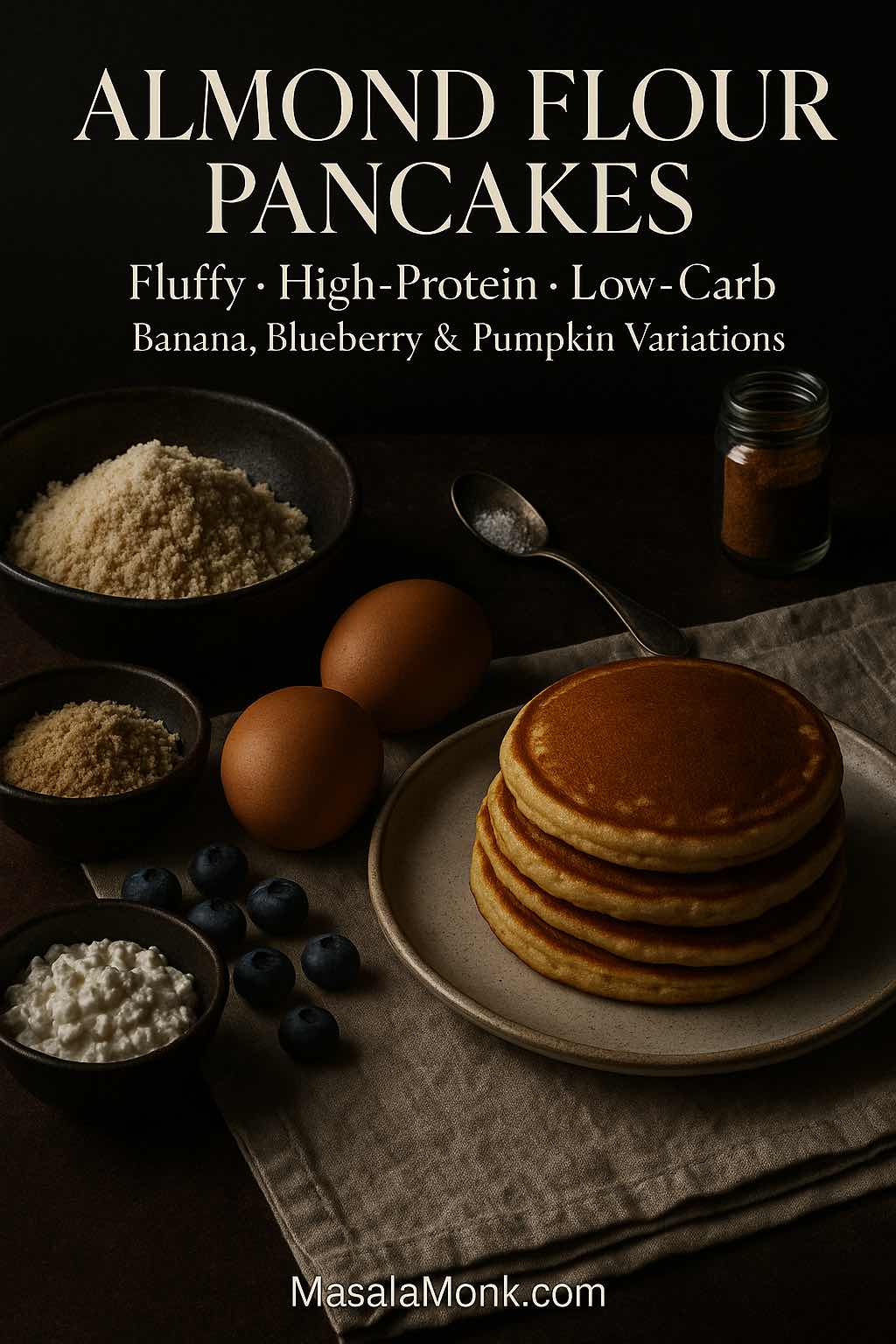
Dark, Vogue-style portrait cover featuring a stack of almond flour pancakes with almond flour, eggs, blueberries, cottage cheese, and spices, with elegant headline text and MasalaMonk.com in the footer.

There’s a reason pancakes are so deeply comforting. They’re warm, they’re familiar, and they’re endlessly customizable. Yet when you swap regular flour for almond flour (or almond meal) to make pancakes, the first attempt can feel like the rules changed overnight. The batter looks thicker. The surface browns faster. The flip feels delicate. And instead of an easy breakfast, you’re suddenly negotiating with your pan.

Even so, almond-based pancakes are incredibly forgiving once you learn their rhythm. They’re naturally gluten-free, they’re filling in a way that many traditional stacks aren’t, and they can suit everything from low-carb mornings to protein-heavy meal prep. Best of all, they can taste like a real treat instead of “diet food,” as long as you cook them with gentle heat and a little patience.

This guide is designed to make that process feel simple. You’ll start with a dependable base recipe, then branch into variations that still feel natural in a home kitchen: almond meal pancakes, fluffy almond flour pancakes, 3 ingredient almond flour pancakes, 2 ingredient almond flour pancakes, protein almond flour pancakes, almond flour cottage cheese pancakes, vegan almond flour pancakes, low carb pancakes with almond flour, and seasonal versions like almond flour and banana pancakes, almond flour blueberry pancakes, and almond flour pumpkin pancakes. You’ll also get a practical section for almond flour pancake mix and pancake-and-waffle mix style batters—because sometimes convenience is the whole point.

Now, let’s get into the batter.

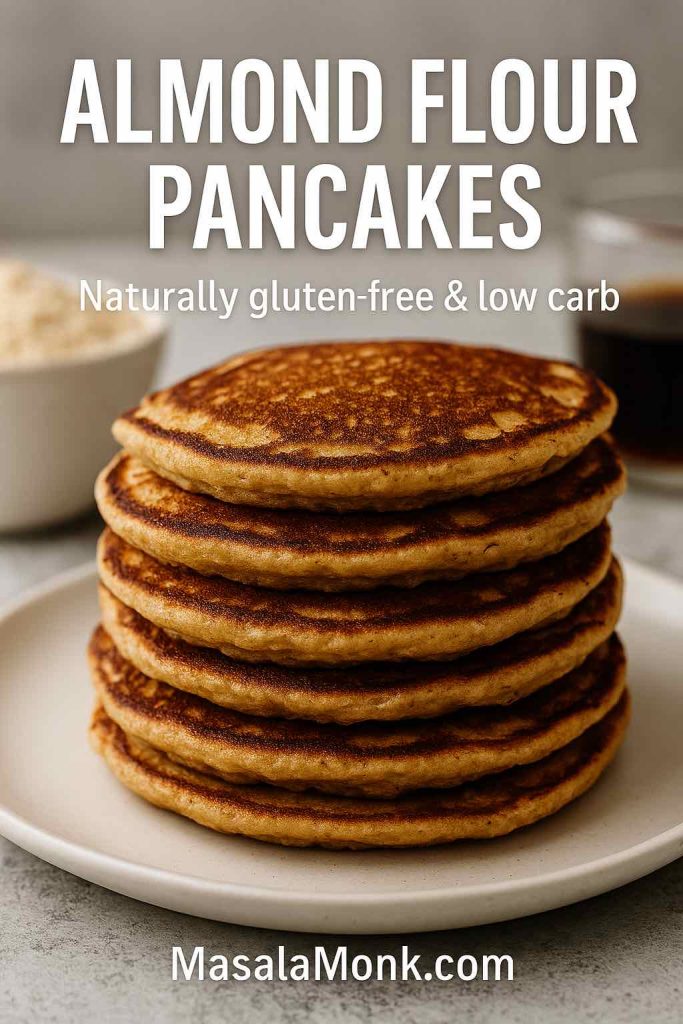
Stack of almond flour pancakes on a plate with text overlay highlighting gluten-free and low-carb breakfast.
Quick cue for success: almond-flour pancakes like gentle heat and smaller rounds—aim for a matte top before flipping for clean, tender centers.

Almond Flour vs Almond Meal for Pancakes

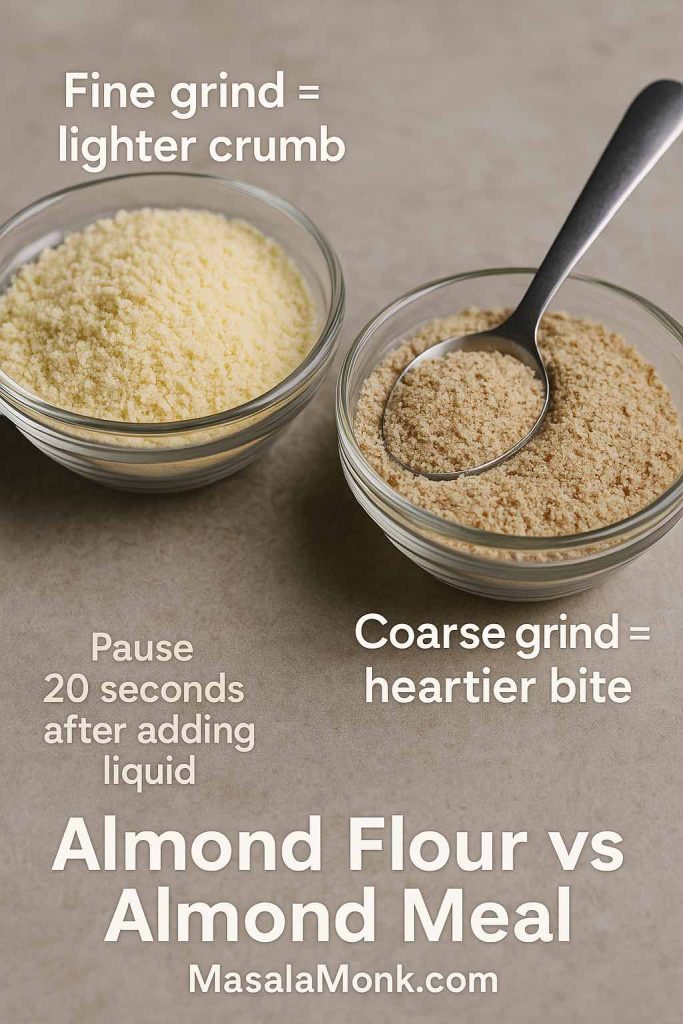
Almond flour and almond meal both come from ground almonds, but they aren’t identical. That difference matters most in texture and hydration.

Almond flour is usually finely ground, often from blanched almonds. As a result, pancakes made with almond flour tend to be smoother, lighter on the tongue, and more “cake-like” in the center.

Almond meal is often coarser and may include the skins. That coarser texture can create a heartier pancake—more rustic, more “flapjack,” with a slightly deeper nutty taste. Almond meal pancakes are still tender, but they can feel sturdier and more substantial. If you’ve ever heard people call them almond flour flapjacks, this is usually what they mean: a thicker, cozier pancake made with nut flour that eats more like a tender breakfast cake than a diner-style wheat pancake.

Almond flour vs almond meal in bowls showing fine vs coarse texture for making pancakes, with tips for batter hydration.
If your batter suddenly thickens, it’s not “wrong”—nut flours keep absorbing liquid. Add milk 1 tbsp at a time, stir, then wait 20 seconds before deciding again.

Here’s the practical part: almond meal often absorbs liquid differently. So if you’re making pancakes made with almond meal and the batter thickens quickly, don’t fight it. Add liquid in small amounts. Stir. Pause for 20–30 seconds. Then decide if it needs more. That tiny pause is surprisingly powerful because nut flours keep hydrating even after you’ve mixed them.

In other words, treat the batter like it has a heartbeat. Give it a moment. Then adjust.

Also Read: Almond Flour and Diabetes: A Low-Carb, High-Impact Swap for Better Blood Sugar


A Dependable Almond Flour Pancakes Recipe

This is your everyday base: easy almond flour pancakes that work plain, but also welcome banana, blueberries, pumpkin, cottage cheese, protein powder, or savory add-ins. Think of it as your go-to pancake made with almond flour (what some people simply call almond pancakes): dependable on its own, but flexible enough for mix-ins.

It’s also built on a logic you’ll see in reliable tested recipes, like King Arthur Baking’s almond flour pancakes: almond flour + eggs for structure + milk for moisture + baking powder for lift.

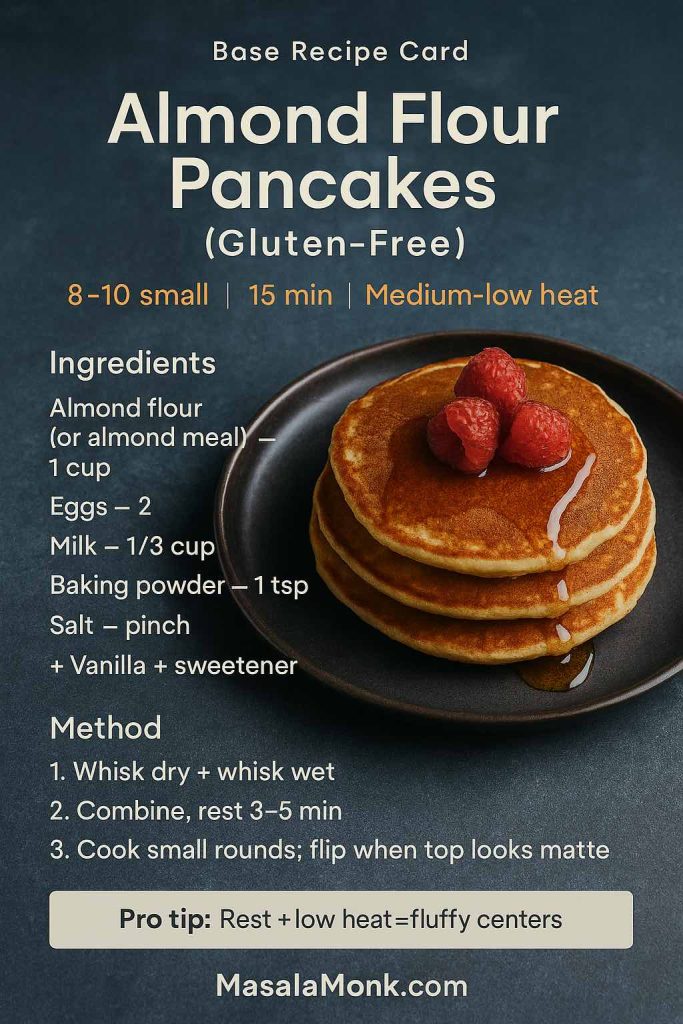
Ingredients (makes about 8–10 small pancakes)

  • 1 cup almond flour (or almond meal)
  • 2 large eggs
  • 1/3 cup milk of choice (dairy or non-dairy)
  • 1 teaspoon baking powder
  • Pinch of salt
    Optional: 1 tablespoon sweetener, 1/2 teaspoon vanilla
Recipe card for almond flour pancakes (gluten-free) showing ingredients, quick method, and a tip for fluffy centers.
Save this card for repeat mornings: keep pancakes small, rest the batter briefly, and flip only when the surface turns matte—this is the easiest way to avoid undercooked centers.

Method

  1. In a bowl, whisk almond flour, baking powder, and salt until evenly combined.
  2. In a second bowl, whisk eggs and milk until smooth. Add vanilla or sweetener if using.
  3. Pour wet into dry and stir until the batter is cohesive. It should be thick but still spoonable.
  4. Let the batter rest for 3–5 minutes while you warm your pan.
  5. Cook on medium-low heat in a lightly greased skillet. Make small rounds (3–4 inches wide). Flip only once the edges look set and the top looks more matte than glossy.

That brief rest is not a fussy extra step—it’s what keeps the batter consistent from the first pancake to the last. Resting batter is a classic pancake habit even outside nut-flour cooking, and it’s baked into traditional approaches like King Arthur’s classic pancake method.

Also Read: Mayo Recipe: 15+ Homemade Mayonnaise Variations


Almond Flour Pancake Batter That Behaves

Nut-flour batters don’t look like wheat batters. They’re thicker, less elastic, and they set differently. Once you accept that, the rest becomes easier.

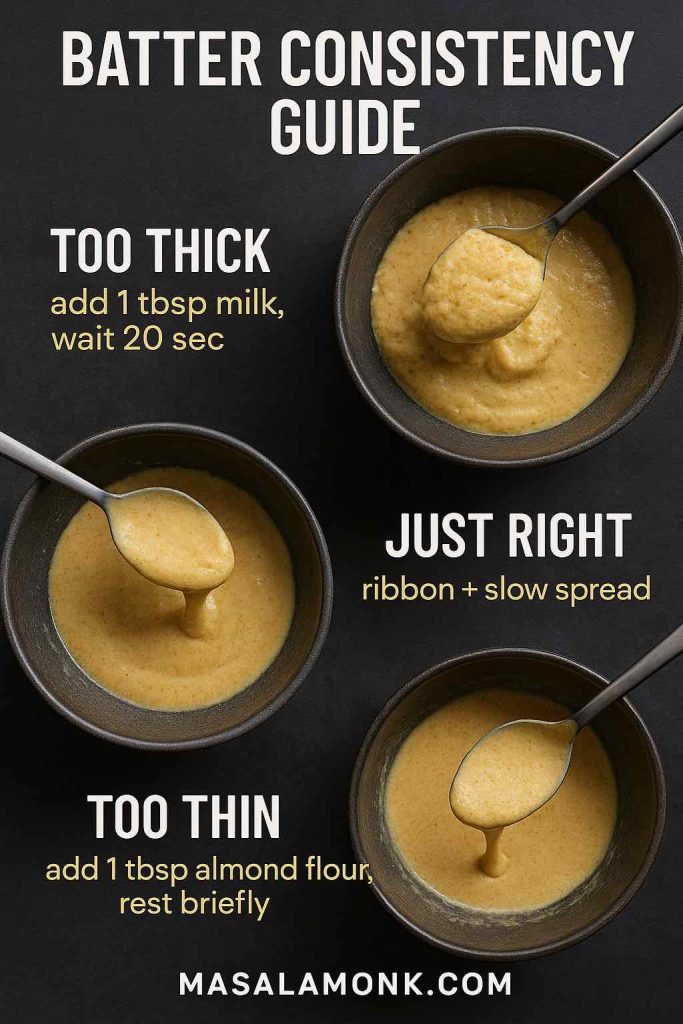
What “right consistency” looks like

  • The batter falls from a spoon in a ribbon and spreads slowly.
  • It looks glossy and cohesive, not dry and clumpy.
  • It doesn’t run like crepe batter.
Visual guide showing almond flour pancake batter consistency: too thick, just right, and too thin, with quick fixes for each.
Use this as a mid-batch rescue chart: adjust in tablespoon steps and give the batter a short pause—almond flour keeps hydrating even after you stop stirring.

The three most common batter problems

Too thick: It won’t spread; it sits like a mound.
Fix it by adding 1 tablespoon milk, stirring, then waiting 20–30 seconds before deciding whether to add more.

Too thin: It spreads into very wide, fragile pancakes.
Fix it by adding 1 tablespoon almond flour (or almond meal), stirring, and resting briefly.

Thickens mid-batch: This is normal.
Fix it by stirring and loosening with small splashes of milk if needed.

That last point matters more than you’d expect. Almond flour pancake batter often changes slightly as it sits. Instead of trying to “perfect” it in one go, treat it like a living mixture and make micro-adjustments.

Also Read: Pepper Sauce Recipe Guide: Classic Vinegar Heat to Chipotle, Ají & Peppercorn


Fluffy Almond Flour Pancakes

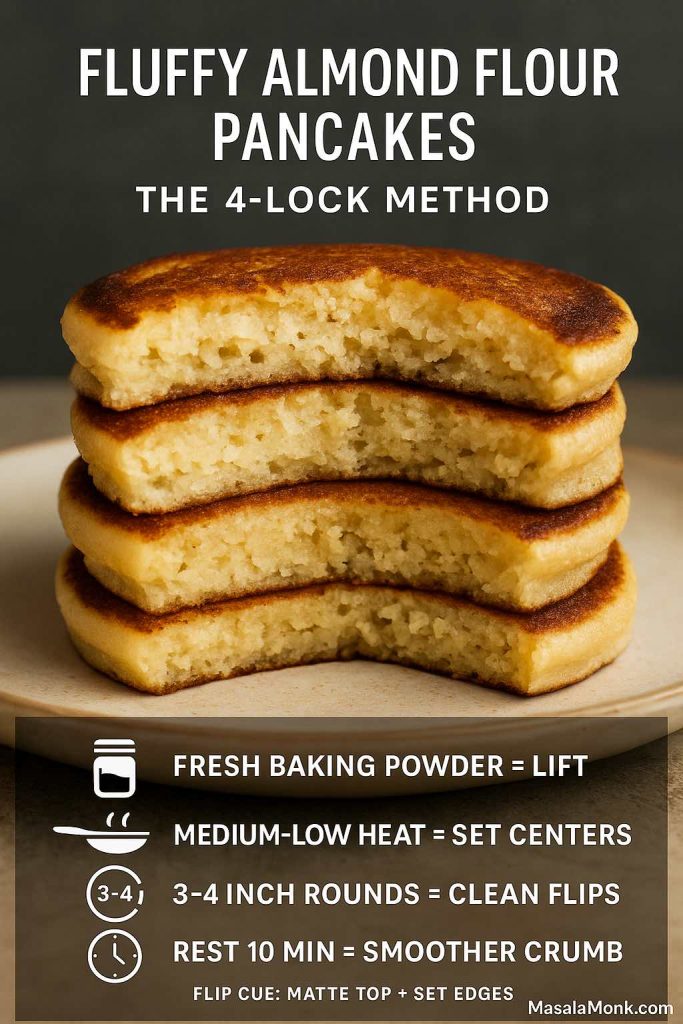
If your goal is fluffy almond flour pancakes—soft, tender, and slightly lifted—there are a few levers that do most of the work. Fortunately, none of them require culinary gymnastics.

1) Fresh leavening

Baking powder is the lift here. If it’s old, the pancakes can turn out flat even if everything else is right. A quick way to check freshness is the method described in King Arthur’s baking powder test.

2) Gentle heat

Almond flour browns quickly. Medium-low heat gives the pancake time to set inside without over-darkening outside. You’ll get a more even crumb and a cleaner flip.

Fluffy almond flour pancakes with a cut-open crumb photo and a quick guide for lift, heat, pancake size, and resting batter.
Want height without fuss? Keep rounds small, cook on medium-low, and wait for a matte top—most “flat” almond pancakes are just heat + timing.

3) Smaller pancakes

It’s tempting to pour big rounds, especially when you want a “proper stack.” Nevertheless, smaller pancakes cook more evenly and rise more consistently. Once you’ve nailed the method, you can go bigger. Until then, keep it tidy.

A quiet upgrade: rest the batter a little longer

A short rest already helps. A slightly longer rest—say 10 minutes—can make the texture even more uniform. Resting batter is a widely recommended way to improve pancake texture in general, not just for nut flours.

For a classic pancake inspiration that leans cozy and traditional, MasalaMonk’s fluffy buttermilk pancakes with stewed cinnamon apples is a delicious reference point for texture and topping ideas.


Simple Almond Flour Pancakes for Everyday Mornings

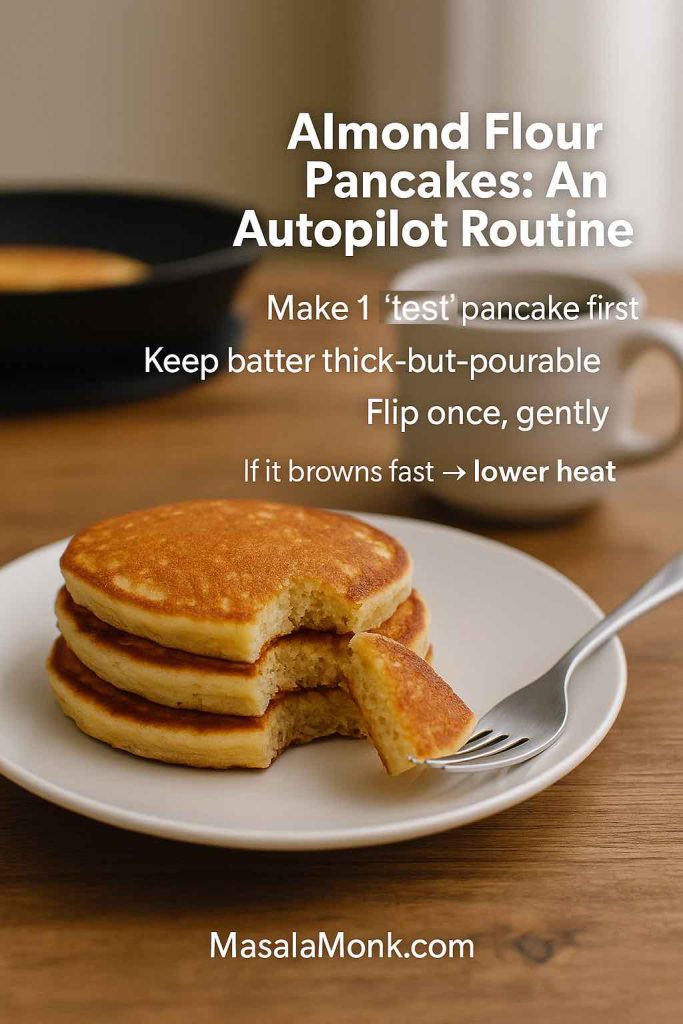
Sometimes you want a no-drama breakfast—something you can make on autopilot. Simple almond flour pancakes are exactly that once you settle into a routine.

First, treat the first pancake as your “test pancake.” If it browns too quickly, lower the heat. If it takes too long to set, nudge the heat slightly higher. Then keep the rest consistent.

Simple almond flour pancakes on a plate with a quick routine checklist for a test pancake, thick-but-pourable batter, and flipping once gently.
Your “test pancake” is the thermostat: if it browns too fast, lower heat; if it takes forever to set, nudge heat up—then don’t touch the dial again.

Second, keep the batter slightly thicker than you think. Thin batter tends to spread, and spreading creates pancakes that are harder to flip and easier to tear. Thick-but-pourable is your friend.

Third, flip gently and only once. Pancakes made with almond flour don’t love being pressed, smashed, or flipped repeatedly. If you let them set properly, they hold together beautifully.

Also Read: Whole Chicken in Crock Pot Recipe (Slow Cooker “Roast” Chicken with Veggies)


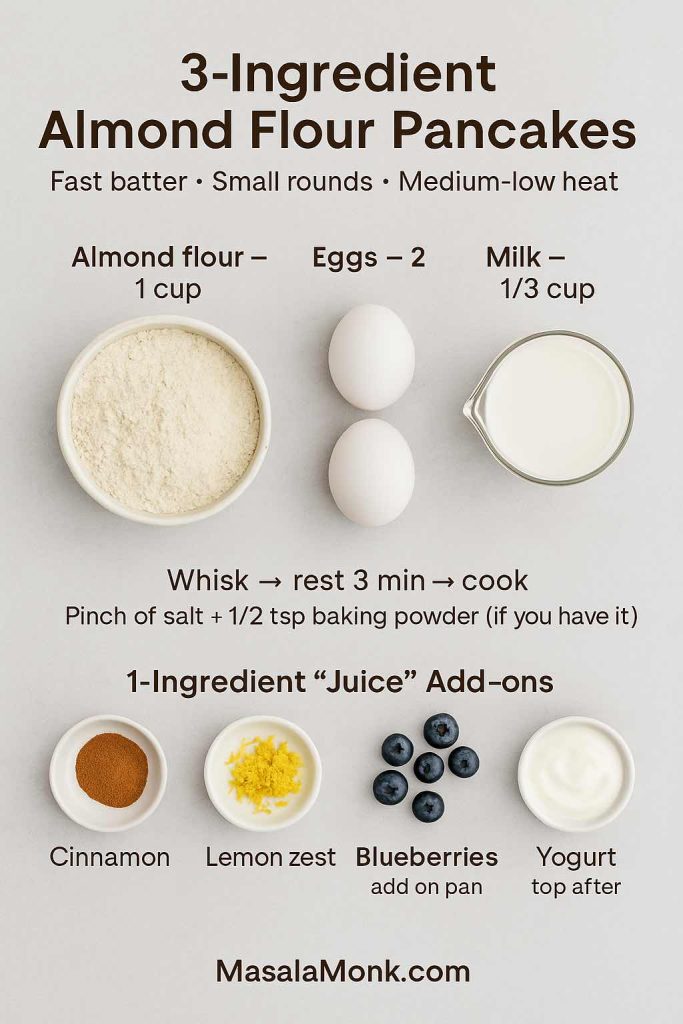
3 Ingredient Almond Flour Pancakes

There are mornings when you want breakfast in the fewest possible steps. Three-ingredient versions are perfect for that.

Ingredients

  • 1 cup almond flour
  • 2 eggs
  • 1/3 cup milk
Recipe card showing 3-ingredient almond flour pancakes with almond flour, eggs, milk, a quick method, and simple add-on ideas.
Shortcut math: the add-ons aren’t new recipes—just one small change. Cinnamon for cozy, lemon zest for brightness, blueberries for bursts, yogurt for contrast.

Method

Whisk everything until smooth, rest 3 minutes, then cook small pancakes on medium-low. If you have salt, add a pinch. If you have baking powder, add 1/2 teaspoon for a little lift. Still, even without extras, these can be satisfying when cooked gently.

To add “juice” without adding complexity, you can fold in one of these single-ingredient upgrades:

  • cinnamon for warmth
  • lemon zest for brightness
  • a handful of blueberries placed on the pan after pouring
  • a spoonful of yogurt on top after cooking

Each one changes the experience without changing the method.

Also Read: Cheesy Chicken Broccoli Rice – 4 Ways Recipe (One Pot, Casserole, Crockpot & Instant Pot)


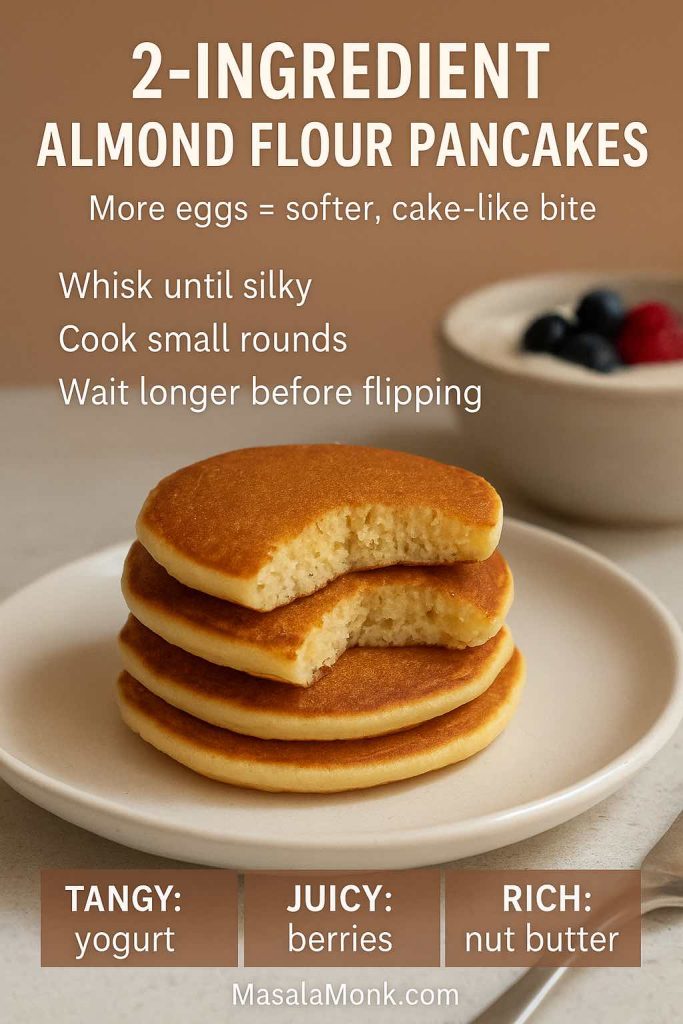
2 Ingredient Almond Flour Pancakes

Two-ingredient versions are as minimal as it gets. They’re also more egg-forward, and the texture leans closer to soft breakfast cakes than classic diner pancakes.

Ingredients

  • 1 cup almond flour
  • 3 eggs
2-ingredient almond flour pancakes with a cake-like crumb and tips to whisk thoroughly, cook small rounds, and flip later, plus topping contrast ideas.
Two-ingredient batter is naturally egg-forward—treat it like a mini breakfast cake: cook smaller, wait longer on side one, then balance with something tangy (yogurt) or juicy (berries).

How to make them feel more pancake-like

  • Whisk very thoroughly so the batter becomes uniform.
  • Cook smaller rounds so they set through.
  • Wait longer before flipping; the first side needs time.

These are excellent with toppings that bring contrast. For instance, something creamy and tangy (yogurt), something juicy (berries), or something nutty and rich (nut butter) can make the whole plate feel balanced rather than heavy.

Also Read: Sheet Pan Chicken Fajitas Recipe (Easy One-Pan Oven Fajitas)


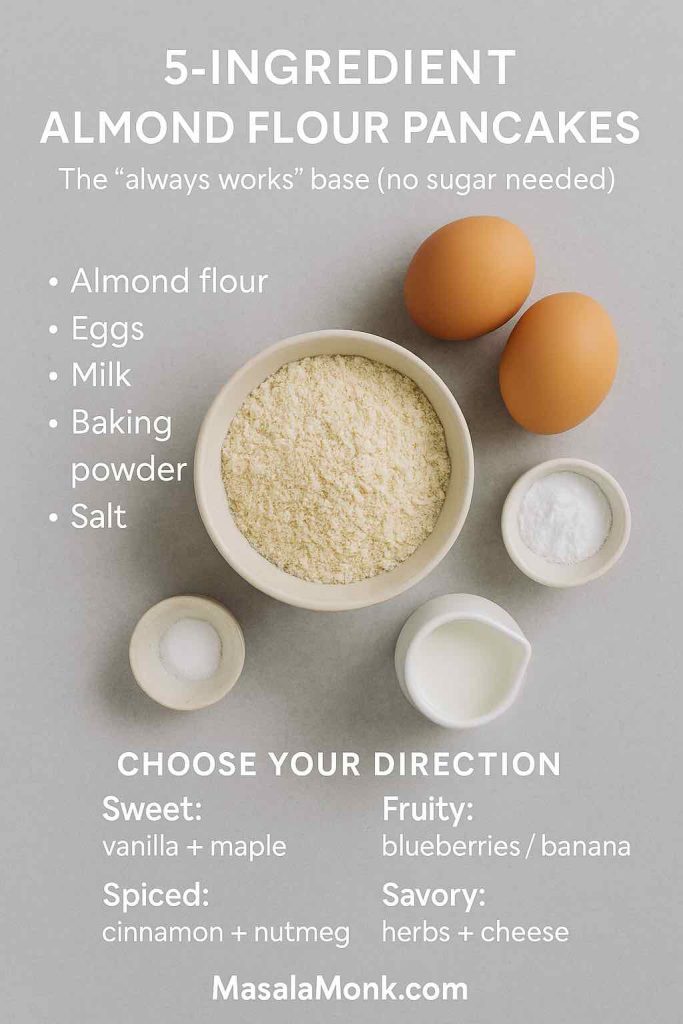
5 Ingredient Almond Flour Pancakes

If you want the minimal version that still feels consistently “right,” five ingredients is often the sweet spot.

  • almond flour
  • eggs
  • milk
  • baking powder
  • salt
Flat-lay guide showing the five ingredients for almond flour pancakes and a “choose your direction” chart for sweet, fruity, spiced, or savory variations.
Think of this as your neutral batter “template”: keep the five ingredients constant, then change the mood with one direction—sweet, fruity, spiced, or savory.

This is basically the base recipe without vanilla or sweetener. It’s also ideal for customization. Because the flavor is neutral, you can push it sweet, fruity, spiced, or savory without fighting the batter.

Also Read: Authentic Louisiana Red Beans and Rice Recipe (Best Ever)


Protein Almond Flour Pancakes

If you want breakfast that keeps you full, protein almond flour pancakes are an obvious move. The trick is to add protein without drying the batter or turning it rubbery. Moisture and gentle heat solve most issues.

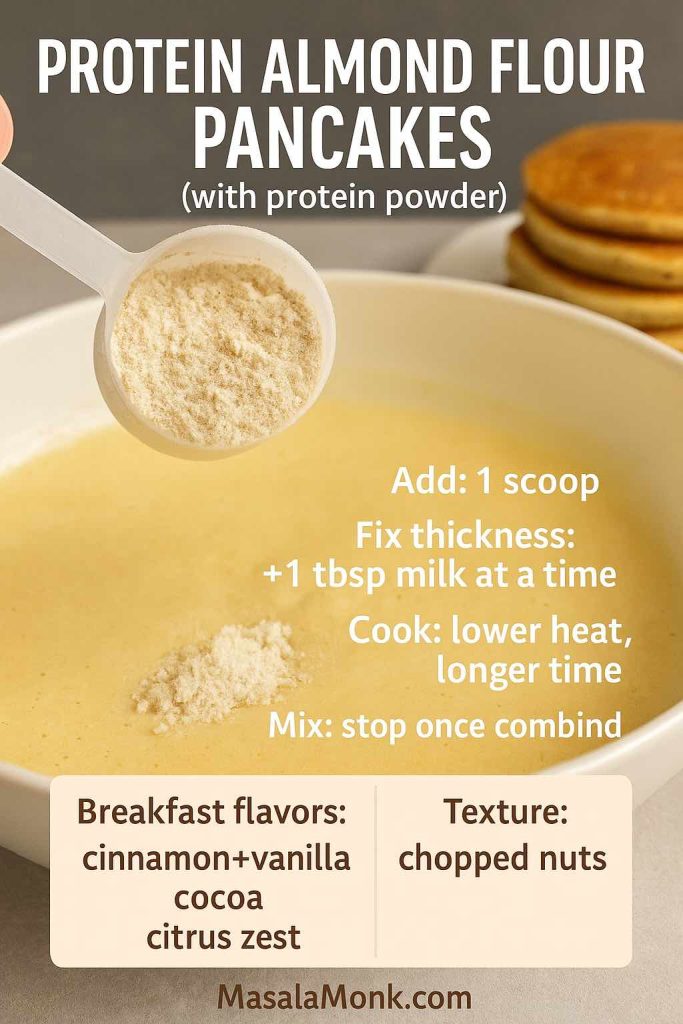
Protein almond flour pancakes with protein powder

Start with the base batter. Add one scoop of protein powder. Then loosen with milk a tablespoon at a time until it returns to thick-but-pourable.

Protein almond flour pancake batter with protein powder being added, showing tips to adjust thickness with milk, cook on lower heat, and avoid overmixing.
Protein powder is thirsty: add it, then “dial back” thickness with milk in tablespoon steps—over-thinning is what makes pancakes spread and tear.

Because protein powder thickens batter quickly and can brown faster, keep the heat lower and cook longer. Also, resist the urge to keep stirring after you’ve mixed it. Overmixing can make protein batters feel tougher.

To make the flavor feel like breakfast rather than a shake in pancake form, add one of these:

  • cinnamon + vanilla
  • cocoa + a touch of sweetener
  • citrus zest for a bright finish
  • chopped nuts for texture

Almond meal protein pancakes

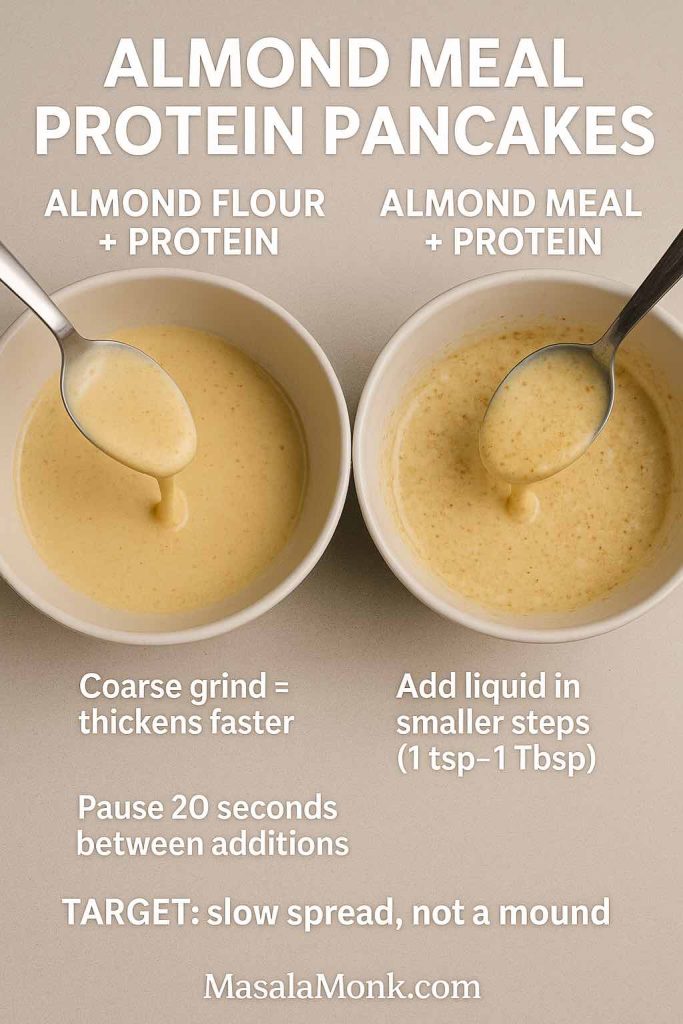
If you’re using almond meal rather than almond flour, the same concept applies, but the batter may thicken faster because of the coarser grind. In that case, add liquid in smaller steps and give it a short pause between additions. You’re aiming for a batter that spreads slowly rather than sitting in a mound.

Side-by-side comparison of almond flour vs almond meal protein pancake batter showing how almond meal thickens faster and needs smaller liquid additions.
Almond meal + protein is a “thickener combo.” Treat liquid like seasoning—add a little, pause, then repeat until the batter spreads slowly instead of sitting like a scoop.

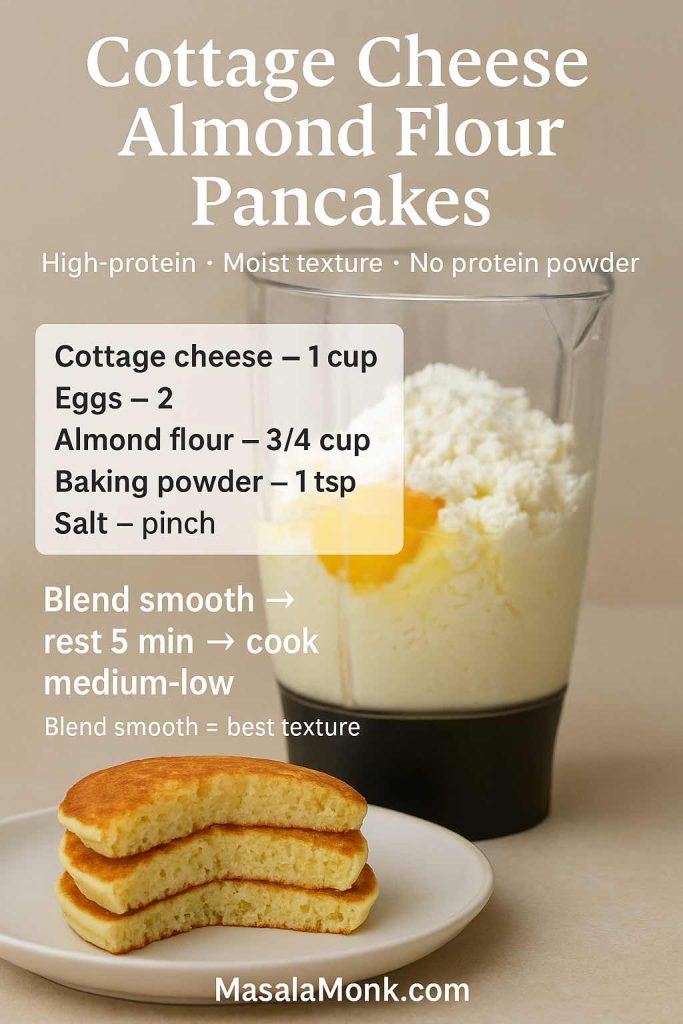
Almond flour cottage cheese pancakes

This is the high-protein option that stays moist and tender without needing protein powder.

Blend until smooth:

  • 1 cup cottage cheese
  • 2 eggs
  • 3/4 cup almond flour
  • 1 teaspoon baking powder
  • pinch of salt
Recipe card for cottage cheese almond flour pancakes showing blended ingredients, rest time, medium-low cooking tip, and moist high-protein results.
For the smoothest, most tender bite: blend until completely silky, then let the batter rest 5 minutes so it thickens evenly before hitting the pan.

Let it rest for 5 minutes, then cook on medium-low. The texture tends to be soft, moist, and satisfying—especially when served warm.

For more protein-focused breakfast variety that’s still pancake-adjacent, MasalaMonk’s millet protein pancakes and protein-rich cherry pancakes are great rotation options.

Also Read: Baked Jalapeño Poppers (Oven) — Time, Temp & Bacon Tips


Almond Flour and Banana Pancakes

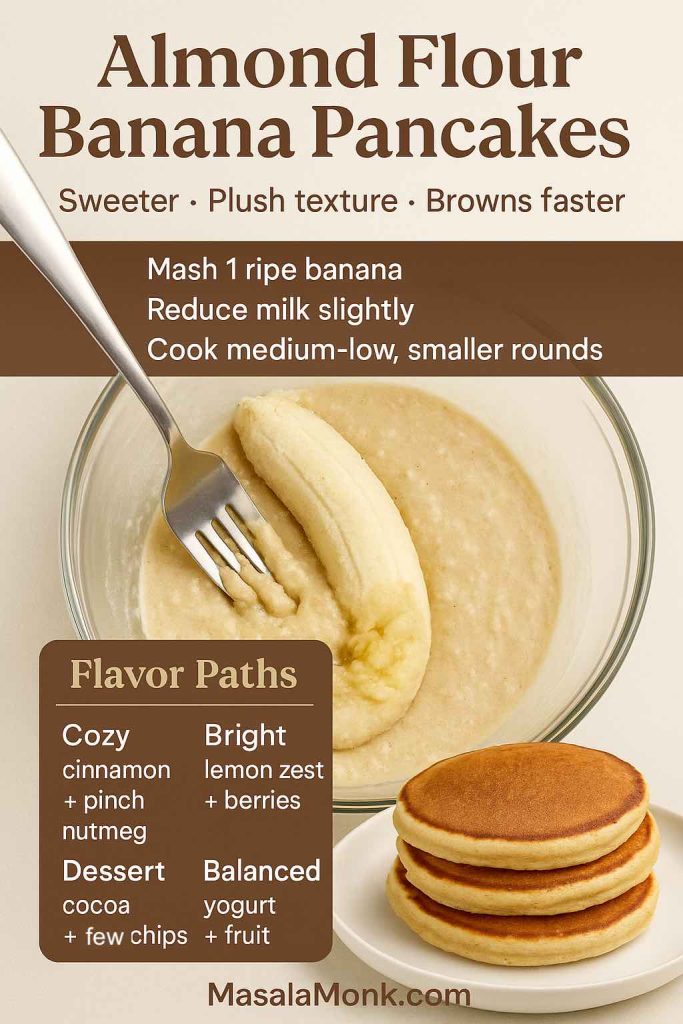
Banana adds sweetness and tenderness, which can make almond-based batter feel plush. It’s also one of the easiest ways to make breakfast feel like a treat without doing much extra work.

Almond flour banana pancake guide showing mashed banana in batter, tips to reduce milk and cook smaller rounds, plus cozy, bright, dessert, and balanced flavor options.
Banana makes pancakes brown faster—keep heat medium-low and think “mini pancakes” for the cleanest flips. Then pick one flavor path to change the vibe without changing the method.

Method

Mash 1 ripe banana into the base batter and reduce milk slightly (banana adds moisture). Cook on medium-low and keep pancakes smaller; banana encourages faster browning.

To add more “juice” while keeping it simple, you can choose a direction:

Cozy direction: cinnamon + a tiny pinch of nutmeg
Bright direction: lemon zest + berries
Dessert direction: cocoa + a few chocolate chips
Balanced direction: top with yogurt and fruit

Each direction uses the same batter, so you’re not learning a new recipe—just playing with the flavor.

Also Read: Carbonara Recipe: Italian Pasta (Creamy, Veggie, Chicken, Shrimp, Tuna & Keto)


Almond Flour Blueberry Pancakes

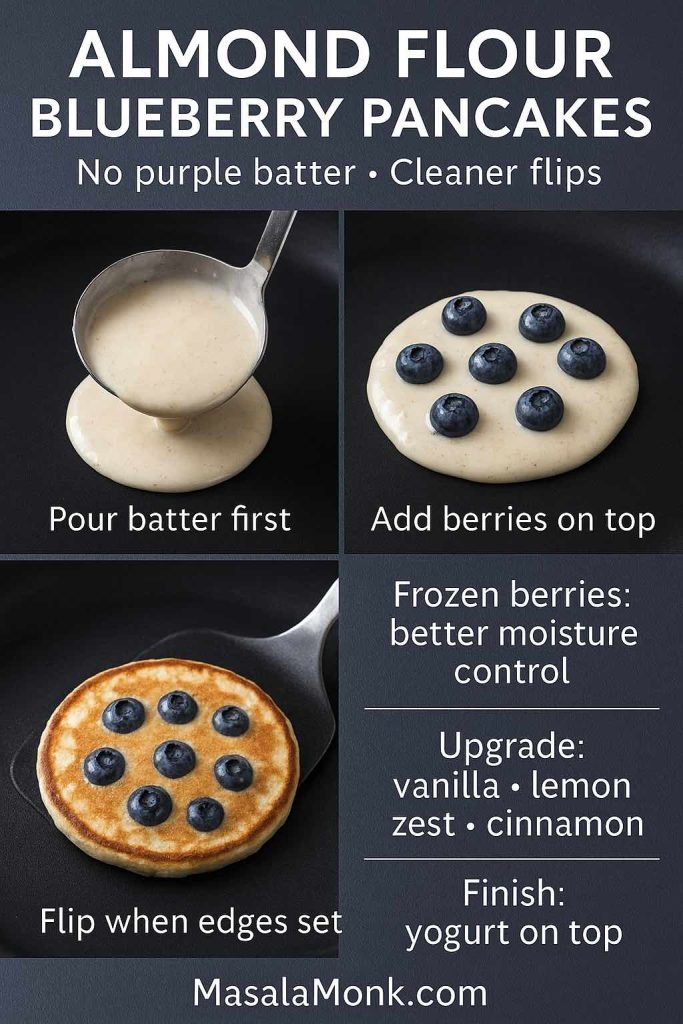
Blueberries work beautifully with a nutty base. The key is to avoid turning the entire batter purple and to keep the pancakes easy to flip.

Almond flour blueberry pancake guide showing pour batter first, add blueberries on top, flip when edges set, with tips for frozen berries and flavor add-ins.
The cleanest blueberry pancakes come from a simple order of operations: batter first, berries second. You’ll get better structure, less bleeding, and easier flips—especially with frozen blueberries.

Method

Pour your batter onto the skillet first, then place blueberries on top of each pancake. Flip once the edges are set. This works especially well with frozen berries because you keep control of the moisture.

MasalaMonk’s blueberry pancake roundup reinforces the same practical approach of keeping heat moderate and adding berries on the pan for better results.

To deepen flavor without complicating the recipe, try one small add-on:

  • vanilla in the batter
  • lemon zest in the batter
  • cinnamon in the batter
  • a dollop of yogurt on top after cooking

The goal is contrast: warm pancake, juicy berries, creamy topping.

Also Read: Protein Oatmeal: Turn Plain Oats into a High-Protein Meal


Almond Flour Pumpkin Pancakes

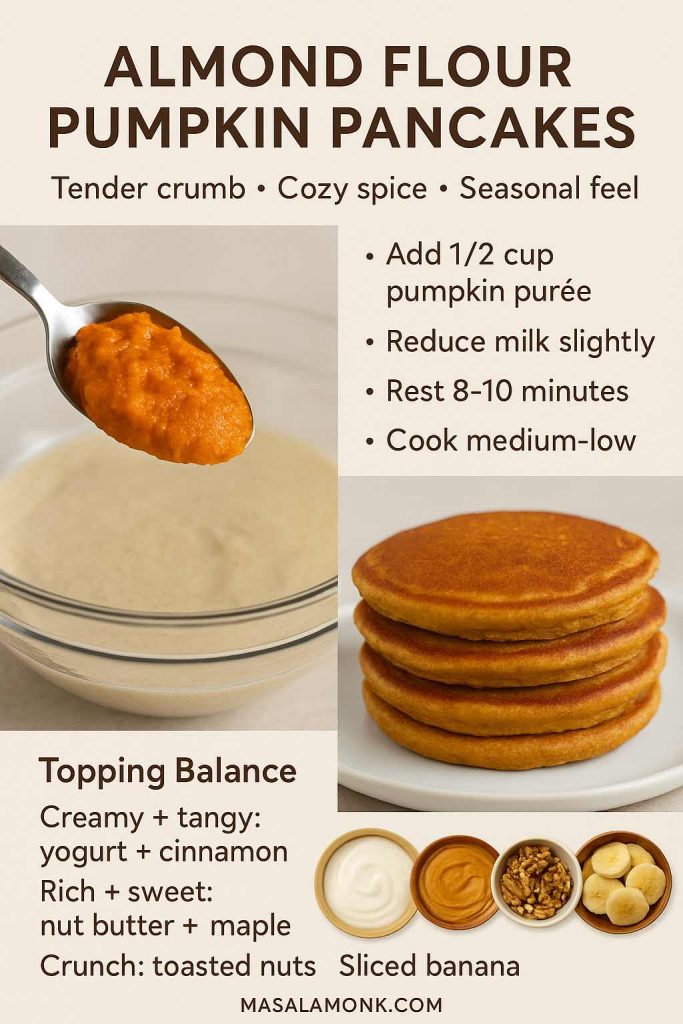
Pumpkin makes nut-flour pancakes feel especially tender because it adds moisture and body. It also brings that cozy, spiced flavor that makes breakfast feel seasonal even in the middle of an ordinary week.

Almond flour pumpkin pancake guide showing pumpkin purée added to batter, resting time, medium-low cooking tip, and topping balance ideas like yogurt, nut butter, toasted nuts, and banana.
Pumpkin adds moisture, so give the batter time to “settle” (8–10 minutes). That rest is what turns a loose bowl into a smooth, spoonable batter that cooks up tender.

Method

Add 1/2 cup pumpkin purée to the base batter, add cinnamon (or pumpkin spice), and reduce milk slightly. Rest 8–10 minutes so the batter becomes smoother and more uniform. Cook on medium-low.

To “juice” the experience, pair pumpkin pancakes with toppings that create balance:

  • yogurt + cinnamon (creamy and tangy)
  • nut butter + a drizzle of maple (rich and sweet)
  • toasted nuts (crunch)
  • sliced banana (soft sweetness)

Also Read: Healthy Oat Protein Bars – 5 Easy No Sugar Recipes for Snacks


Keto Pancakes With Almond Flour

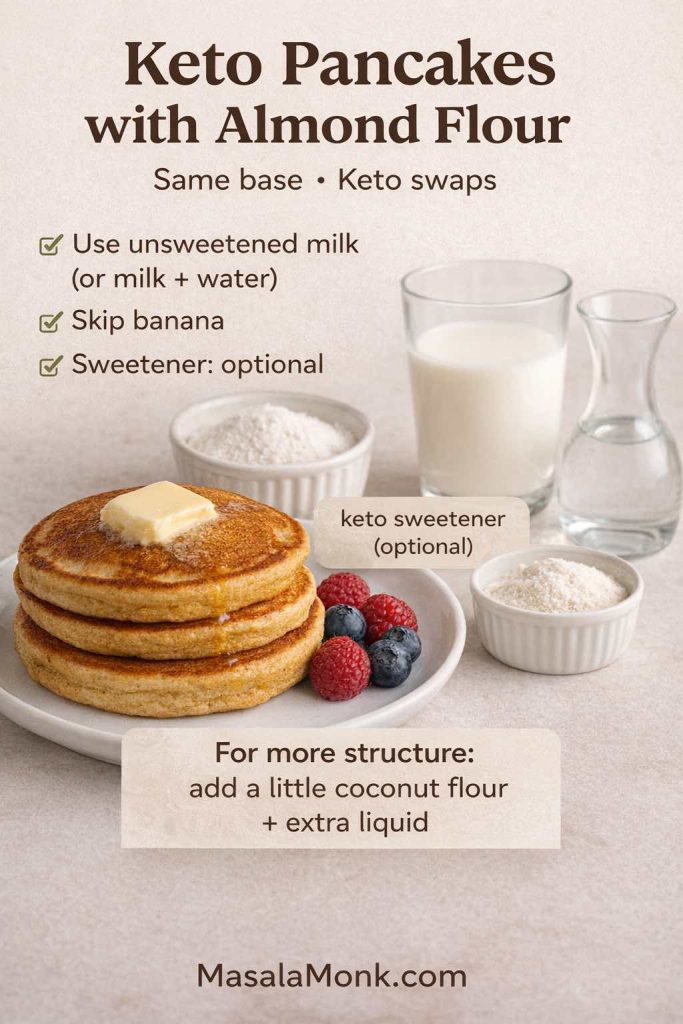
If you’re going for keto pancakes with almond flour, the base recipe already fits the general structure. The difference is mainly what you add.

  • Use unsweetened milk or a mix of milk and water.
  • Skip banana.
  • Sweeten only if desired, with a keto-friendly sweetener.
Keto pancakes with almond flour guide showing keto swaps like unsweetened milk, optional sweetener, skipping banana, and a tip to add coconut flour for structure.
Keto success is mostly “what you don’t add”: keep the base, skip banana and sugar, and use unsweetened liquid—then fine-tune texture with a small pinch of coconut flour plus extra liquid.

In other words, this becomes your basic almond flour keto pancake template—then you decide whether you want it plain, spiced, or protein-boosted.

If you like blending flours for structure, King Arthur’s keto pancake recipe is a useful reference for how almond flour and coconut flour can work together and why the batter may need extra liquid. For days when you want something keto-friendly that isn’t pancakes, MasalaMonk’s chia breakfast ideas provide a nice change of pace.


Gluten-Free Almond-Flour Pancakes

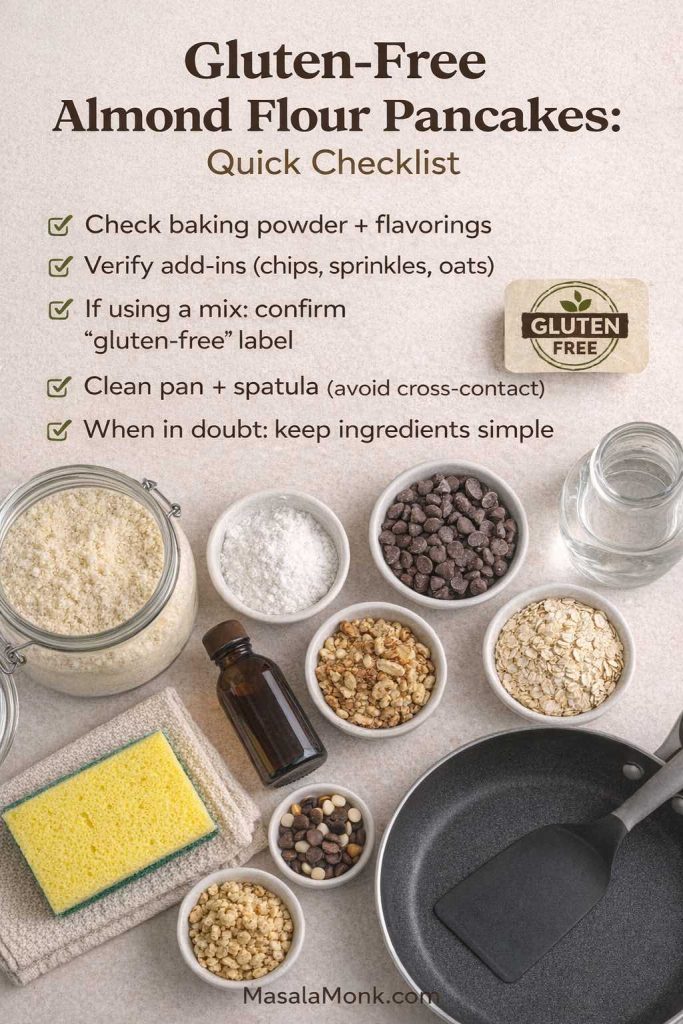
Almond flour is naturally gluten-free. Still, if you’re cooking for someone who needs strict gluten avoidance, packaged ingredients matter: baking powder, flavorings, add-ins, and especially mixes.

Gluten-free almond flour pancakes checklist showing label checks for baking powder and add-ins plus clean pan and spatula tips to avoid cross-contact.
The biggest gluten-free “gotchas” aren’t almond flour—they’re the extras. Treat baking powder, flavorings, mix-ins, and shared cookware as the real checklist items.

For official context, the FDA’s page on gluten-free labeling explains the standard used for foods labeled “gluten-free.” The Celiac Disease Foundation’s label reading guide is also helpful because it clarifies that “wheat-free” isn’t always the same as gluten-free and encourages checking the ingredients list.

In practice, the simplest approach is: trusted ingredients, a clean pan, and careful add-ins.

Also Read: 10 Best Espresso Martini Recipe Variations (Bar-Tested)


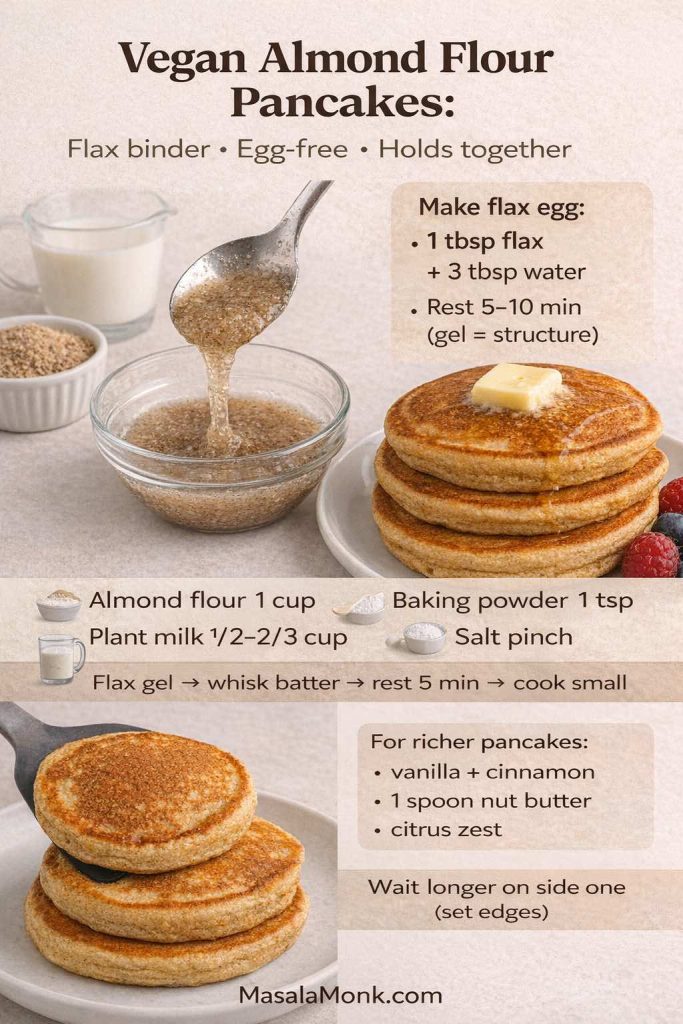
Vegan Almond Flour Pancakes

Vegan nut-flour pancakes are absolutely possible. They just need a binder, because eggs usually provide structure. Flax works well because it gels and helps hold the batter together.

Ingredients

  • 1 cup almond flour
  • 1 tablespoon ground flax + 3 tablespoons water (rest 5–10 minutes)
  • 1 teaspoon baking powder
  • 1/2 to 2/3 cup plant milk
  • pinch of salt
Vegan almond flour pancake guide showing how to make a flax egg binder, ingredient ratios, cooking cues, and add-ins for richer egg-free pancakes.
The flax gel is the “glue.” If your vegan pancakes feel fragile, the fix is usually more resting time for the binder—not more flipping.

Method

Mix flax and water first and let it thicken. Then whisk in the remaining ingredients. Rest 5 minutes. Cook small pancakes on low-to-medium heat, and let the first side set properly before flipping.

To make vegan almond flour pancakes feel richer without breaking the structure, you can add:

  • vanilla + cinnamon
  • a spoonful of nut butter stirred in
  • citrus zest for lift

The batter remains the same in spirit; it simply becomes more interesting.

Also Read: Vegan French Toast: 6 Easy Recipes (Pan, Air Fryer, GF & High-Protein)


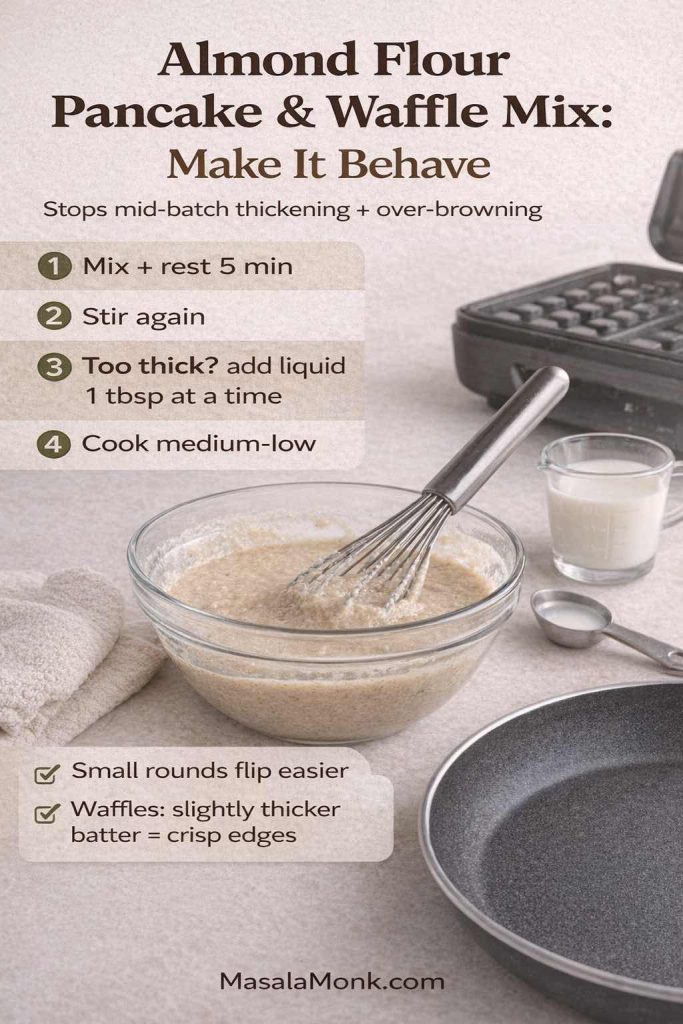
Almond Flour Pancake Mix and Pancake-and-Waffle Mixes

Sometimes you want speed. Mixes are useful. Still, nut-based mixes can frustrate people because they thicken mid-batch or brown too quickly. Luckily, the solution is consistent and simple.

Almond flour pancake and waffle mix guide showing a 4-step routine to rest batter, stir again, add liquid 1 tablespoon at a time, and cook on medium-low.
The 5-minute rest is the secret: it reveals the “true” thickness of nut-based mixes so you can adjust once—then cook consistently without chasing the batter.

A routine that makes mixes behave

  1. Mix batter and rest 5 minutes.
  2. Stir again and check thickness.
  3. Add liquid one tablespoon at a time if it becomes too thick.
  4. Cook on medium-low.

If you want ideas for improving the flavor and texture of boxed mixes in general—without turning breakfast into a science project—Serious Eats tested a wide range of additions in their boxed pancake mix upgrade guide.

Meanwhile, if you enjoy making breakfast feel playful, waffles are the natural cousin of pancakes. MasalaMonk’s post on waffle twists is a fun way to add variety when you’re using a pancake-and-waffle mix style batter.


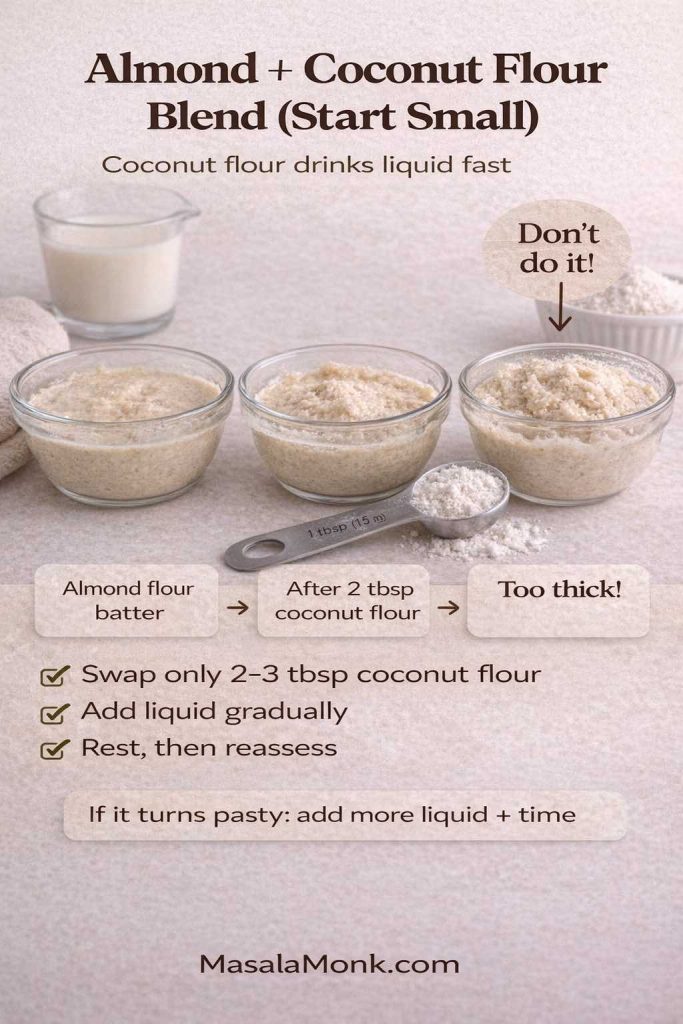
Coconut Flour Pancake Recipes and Almond–Coconut Blends

Coconut flour is extremely absorbent. That’s why coconut flour pancake recipes often use very different ratios compared to almond flour batters. If you’re blending coconut flour into an almond-based batter for structure, start small.

Guide showing almond and coconut flour pancake batter blend with bowls comparing thickness and tips to swap only 2–3 tablespoons coconut flour, add liquid gradually, and rest before adjusting.
Coconut flour’s superpower is absorbency—measure it in tablespoons, not handfuls. The pause after mixing is part of the recipe because it keeps thickening.

A gentle approach:

  • Replace only 2–3 tablespoons of almond flour with coconut flour.
  • Add liquid gradually.
  • Rest and reassess before adding more.

Again, King Arthur’s keto pancake recipe is a practical reference for how blended low-carb batters behave and why the mixture may need extra liquid.

Also Read: Fermented RAGI (Finger Millet) IDLIS- Gluten Free | Gut Friendly | Breakfast Recipe


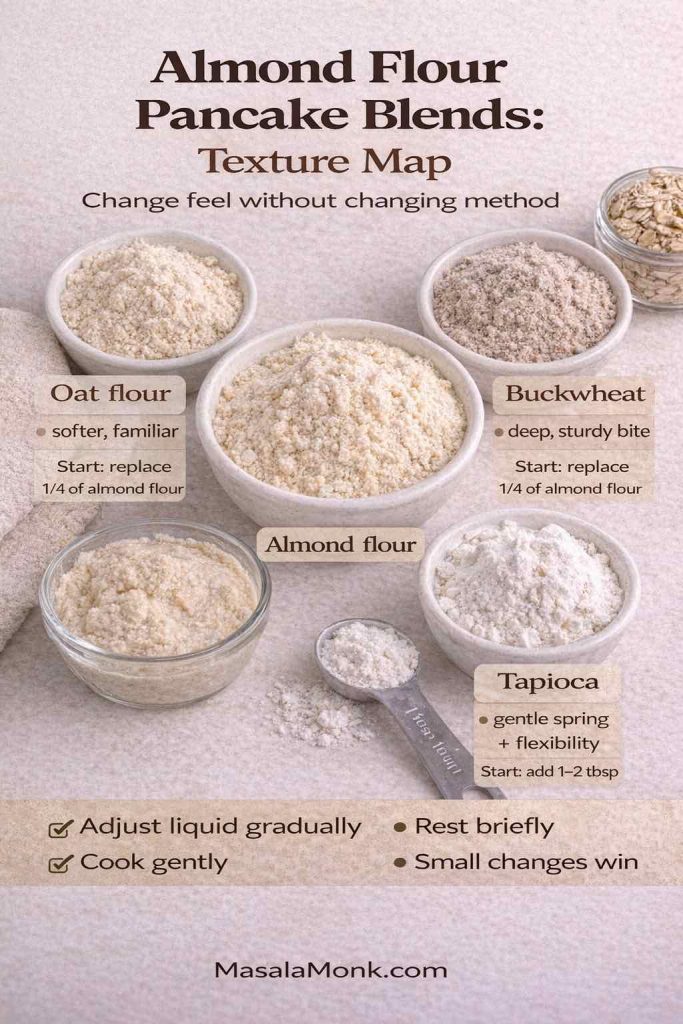
Almond and Oat Flour Pancakes, Buckwheat, Tapioca, and Other Blends

Once you’ve nailed your base batter, blending becomes a fun way to tailor texture.

  • Oat flour often makes pancakes feel softer and more familiar.
  • Buckwheat adds depth and a sturdier bite.
  • Tapioca can add a gentle spring and flexibility.
Texture map for almond flour pancake blends showing oat flour, buckwheat flour, and tapioca with beginner starting ratios and tips to adjust liquid gradually and rest batter.
Use this like a dial: oat flour softens, buckwheat deepens, tapioca adds spring. Start small, let the batter rest, then decide—most blend mistakes come from adjusting too fast.

The method stays the same: adjust liquid gradually, rest briefly, cook gently. The biggest mistake with blends is over-correcting too fast. Small adjustments win.

Also Read: Buckwheat and Weight Loss: Examining Its Role in a Healthy Diet


Savory Pancakes and Breakfast Variety

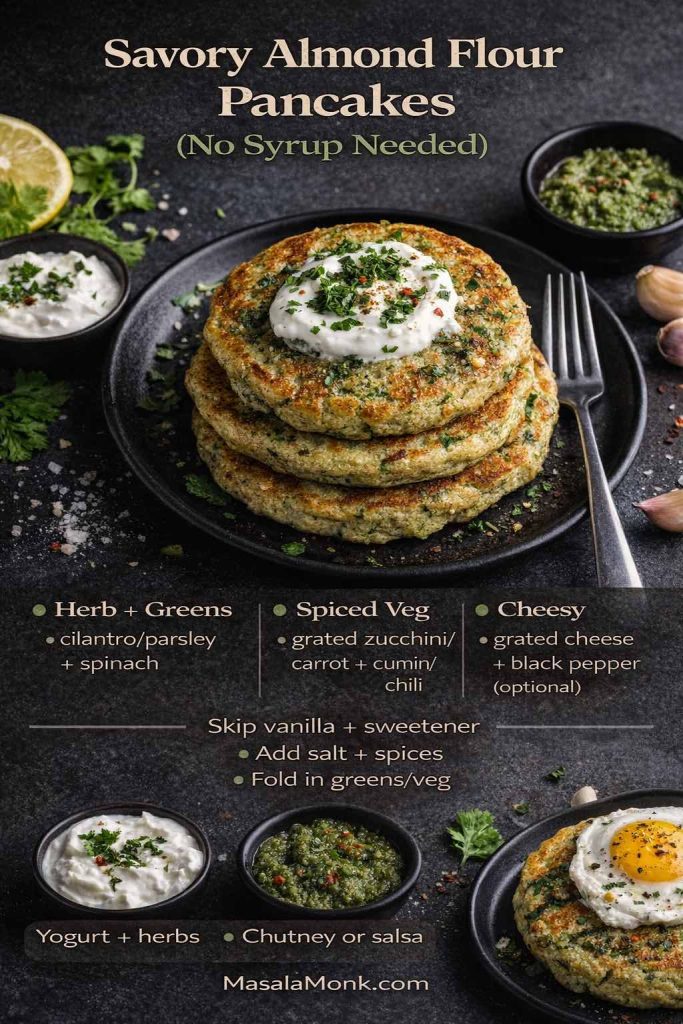
Not every pancake needs syrup. Savory nut-flour pancakes can be delicious when you treat them like a quick breakfast flatbread: skip sweetener and vanilla, add spices and herbs, and fold in greens or grated vegetables.

Savory almond flour pancakes guide with herb-and-greens, spiced veggie, and cheesy variations plus serving ideas like yogurt, chutney, or a fried egg.
Savory pancakes work best when you build contrast: salty batter + cool yogurt, or herby pancakes + bright chutney. Pick one “cool” topping and one “punchy” condiment and you’re done.

If you want savory pancake inspiration that naturally expands a breakfast menu, MasalaMonk has great posts that fit here:

These aren’t almond flour recipes, but they’re perfect recipes for readers who want more savory breakfast options without switching to entirely different meal categories.


Toppings That Make Nut-Flour Pancakes Feel Special

A pancake can be perfectly cooked and still feel a little flat emotionally. Toppings fix that. More importantly, toppings create contrast—creamy with crisp, bright with rich, salty with sweet.

Creamy toppings

  • Greek yogurt or thick yogurt: tangy, cooling, protein-friendly.
  • Cottage cheese whipped smooth: especially good on banana or pumpkin pancakes.
  • Nut butter: rich, filling, and great for low-carb routines.

Fruity toppings

  • Warm berries: makes any stack feel like brunch.
  • Sliced banana: soft sweetness and extra satiety.
  • Stewed apples: a cozy topping that feels like dessert for breakfast—MasalaMonk’s cinnamon-apple method is a good reference.
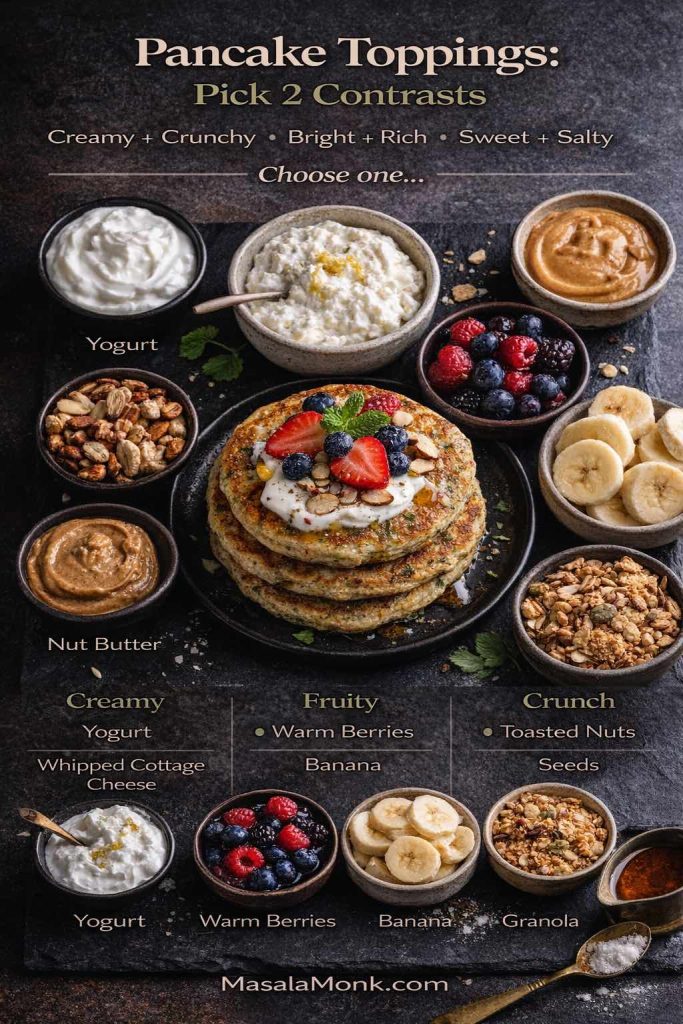
Pancake toppings guide showing how to pick two contrasts—creamy, fruity, and crunchy—with yogurt, whipped cottage cheese, nut butter, warm berries, banana, nuts, seeds, granola, and sweet finishes.
A simple rule that makes any stack feel “complete”: choose one creamy base, one bright fruit, and finish with either crunch or a light drizzle—three elements max keeps it special, not messy.

Crunch toppings

  • Toasted nuts: excellent with pumpkin or banana.
  • Seeds: add texture without much effort.
  • A sprinkle of granola: great on yogurt-topped pancakes.

Sweeteners (when you want them)

  • Maple syrup: classic for a reason.
  • Honey: floral sweetness.
  • A small dusting of powdered sweetener: subtle and quick.

The point isn’t to overdo it. Rather, it’s to pick one or two contrasts so the plate feels complete.

Also Read: Upma Recipe: 10+ Easy Variations (Rava, Millet, Oats, Semiya & More)


Meal Prep: How to Store and Reheat Without Ruining Texture

Nut-flour pancakes are surprisingly meal-prep friendly, especially the cottage cheese version, which stays moist even after chilling.

Storage

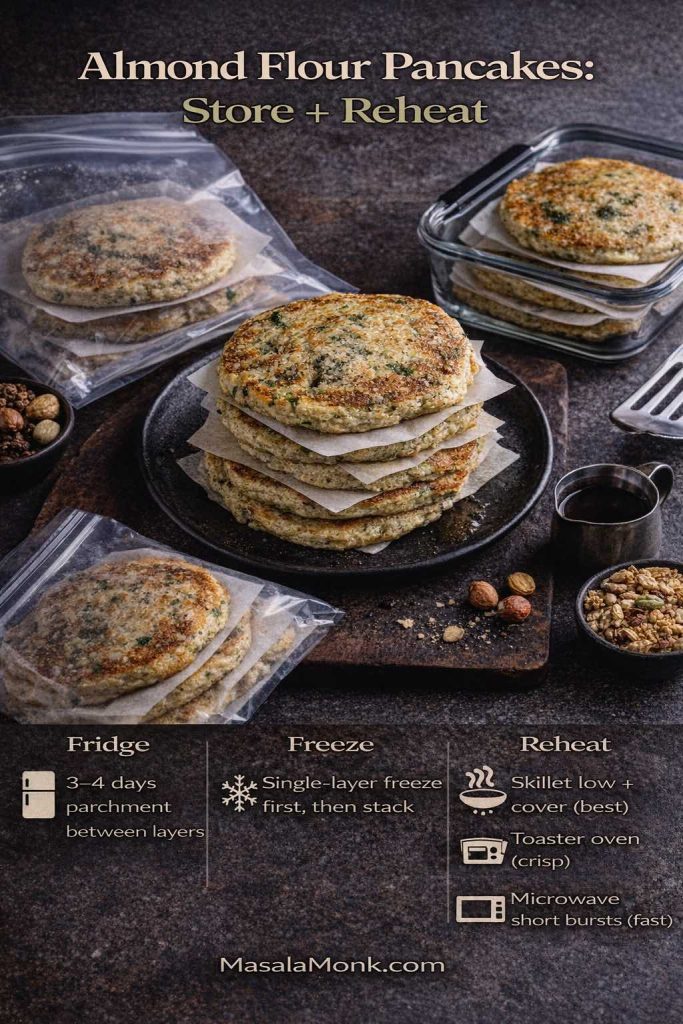
Let pancakes cool completely, then store them in an airtight container. If stacking, place parchment between layers so they don’t stick.

Freezing

Freeze in a single layer first, then transfer to a container or bag with parchment between pancakes. This prevents them from freezing into one solid slab.

Meal prep guide for almond flour pancakes showing how to store in the fridge, freeze with parchment between layers, and reheat using skillet, toaster oven, or microwave.
Best texture trick: reheat in a covered skillet on low for a minute or two—gentle steam warms the center without drying the edges.

Reheating

  • Skillet: best for texture. Low heat, cover briefly to warm through.
  • Toaster oven: great for gentle crisping.
  • Microwave: fastest, but keep it short to avoid rubberiness.

Because almond flour can go rancid faster than wheat flour (it contains natural oils), it’s also worth storing almond flour and almond meal properly. UC Davis provides practical guidance on nut storage—such as refrigeration/freezing for quality and using odor-tight containers—in their PDF on safe handling and storing nuts. For broader pantry staples and general storage practices, Penn State Extension’s guide to storing staple ingredients is a helpful reference.


Troubleshooting: Small Fixes That Save a Batch

Even good cooks get weird pancakes sometimes. Fortunately, most problems come from a few predictable causes.

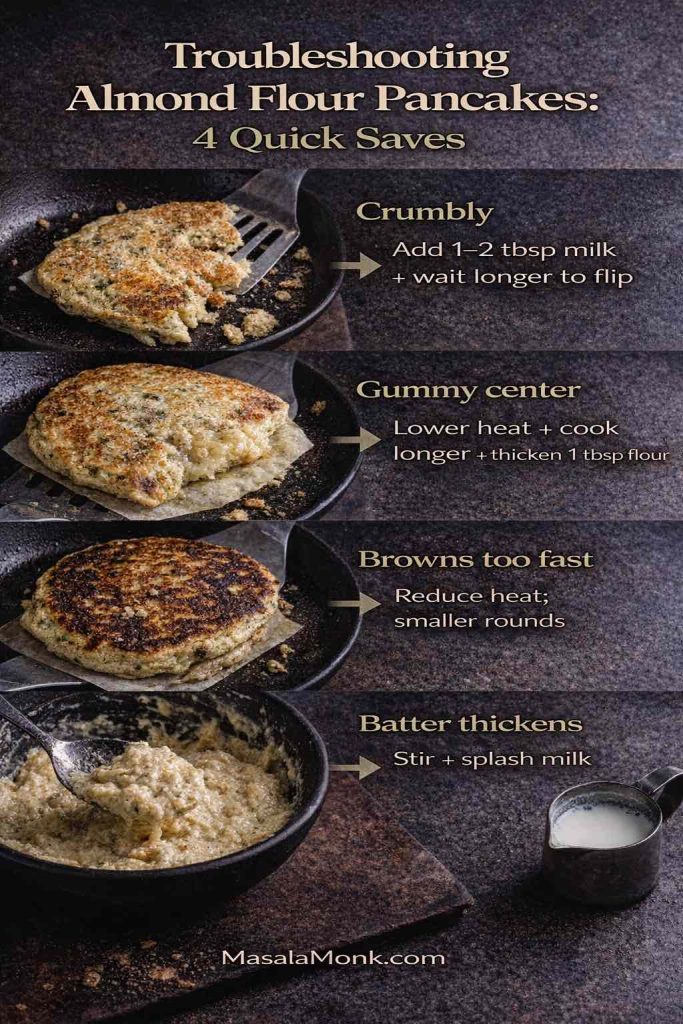
Pancakes are crumbly

Usually too dry or flipped too early.
Fix: add 1–2 tablespoons milk, cook smaller pancakes, and wait longer before flipping.

Pancakes are gummy in the center

Often the heat is too high or the batter is too thin.
Fix: lower the heat, cook longer, and thicken with 1 tablespoon almond flour if needed.

Troubleshooting guide for almond flour pancakes showing four common problems—crumbly, gummy center, browns too fast, and batter thickens—with quick fixes.
No panic fixes: change just one variable at a time—heat first, then thickness. Most “bad batches” turn around with a lower flame and a tablespoon-level adjustment.

Pancakes brown too quickly

Heat is too high. Almond flour browns fast.
Fix: reduce heat and give the center time to set.

Batter thickens between pancakes

Normal.
Fix: stir and loosen with small splashes of milk.

That’s it. No panic. No starting over.


Nutrition Lookups Without Guessing

If you like checking nutrition details—almond flour vs almond meal, cottage cheese vs yogurt, or comparing add-ins—the USDA’s FoodData Central and its food search are the standard public references.


A Final Way to Think About It

Once you get comfortable with how almond flour pancake batter looks and cooks, everything becomes easier. The process becomes familiar: a thicker batter than wheat pancakes, medium-low heat, smaller rounds for clean flips, and tiny adjustments instead of big corrections.

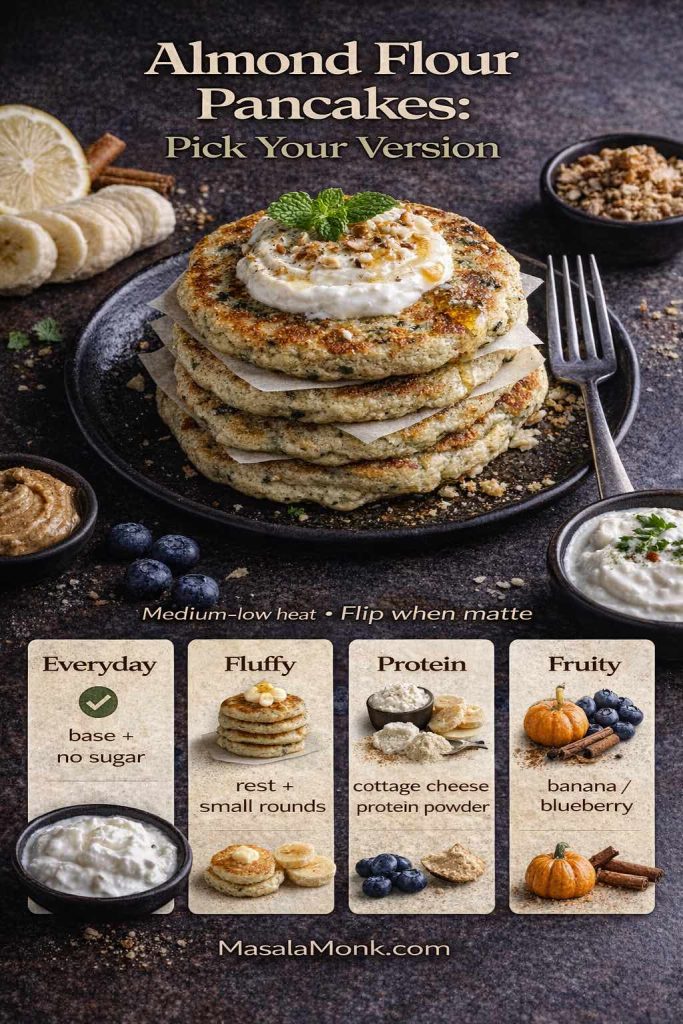
Closing guide image showing almond flour pancakes with options to choose your version—everyday base, fluffy, protein, or fruity—with a tip to cook on medium-low and flip when matte.
Use this as your shortcut: pick the goal (fluffy, protein, fruity, or everyday), then keep the two universal rules—medium-low heat and flip when the top turns matte—for consistently tender pancakes.

From there, the variations stop feeling like separate recipes. Banana becomes a sweetness choice. Blueberries become a texture choice. Pumpkin becomes a cozy-season choice. Cottage cheese becomes a protein choice. Flax becomes a vegan choice. Coconut flour becomes a structure choice. Savory spices become a mood choice.

That’s when almond flour pancakes stop being a “special” breakfast and become what they should be: a simple, comforting meal you can make on any morning—without drama.

Also Read: Peanut Butter Cookies (Classic Recipe & 3 Variations)

FAQs

1) Can I replace all-purpose flour with almond flour in pancakes?

Yes, although it isn’t a 1:1 swap in behavior. Almond flour has less starch and more fat, so the batter is usually thicker and the pancakes brown faster. Use a recipe designed for almond flour rather than converting a wheat-flour one directly.

2) What’s the difference between almond flour and almond meal for pancakes?

Almond flour is typically finer, so the texture comes out smoother and more “classic.” Almond meal is coarser and can produce a heartier bite. Either works, but almond meal often needs a touch more liquid to keep the batter pourable.

3) Why is my almond flour pancake batter so thick?

Because almond flour absorbs liquid and thickens as it rests. If it becomes too stiff, add milk one tablespoon at a time, stir, then pause briefly before adjusting again.

4) Why do my pancakes made with almond flour fall apart?

Most often, the pancakes are too thin, too large, or flipped too early. Make smaller pancakes, cook longer on the first side, and ensure the batter is thick-but-pourable rather than runny.

5) How do I make fluffy almond flour pancakes?

Use fresh baking powder, rest the batter, keep the heat on medium-low, and cook smaller rounds. If you want extra lift, add one egg white without changing the rest of the recipe.

6) Why are my almond pancakes browning too fast?

Almond flour browns quickly due to its fat content and fine particles. Lower the heat and extend the cook time so the center sets without over-darkening the outside.

7) Can I make 3 ingredient almond flour pancakes?

Absolutely. The common three are almond flour, eggs, and milk. They’ll be more tender if you also add salt and baking powder, but the minimalist version can still work with gentle heat and small pancakes.

8) Do 2 ingredient almond flour pancakes really work?

They do, though the texture is more egg-forward. Typically it’s almond flour plus eggs; cook smaller pancakes and wait longer before flipping so they set properly.

9) What are 5 ingredient almond flour pancakes?

Usually almond flour, eggs, milk, baking powder, and salt. This “simple but reliable” set is a popular middle ground between minimalist versions and more flavored recipes.

10) How can I make a simple almond flour pancakes recipe taste better?

Add one flavor element rather than many: vanilla, cinnamon, lemon zest, or a pinch of salt if you skipped it. Also, avoid high heat—better texture often tastes better too.

11) How do I make protein almond flour pancakes without them turning dry?

Protein powder thickens batter fast, so increase liquid gradually and cook on lower heat. Alternatively, use cottage cheese for moisture and protein without the “chalky” texture.

12) How do almond meal protein pancakes differ from almond flour protein pancakes?

Almond meal is coarser, so the batter can be thicker and sometimes needs more liquid. Beyond that, the cooking approach is similar: smaller pancakes, steady heat, and a careful flip.

13) Can I make almond flour cottage cheese pancakes without a blender?

Yes. Mash and whisk thoroughly; you may get a slightly more textured batter. For smoother pancakes, blending helps, but it’s not mandatory.

14) Are cottage cheese almond flour pancakes good for meal prep?

They’re one of the best options for meal prep because they stay moist and tender after refrigeration compared to some other high-protein versions.

15) How do I make keto pancakes with almond flour?

Use unsweetened milk (or partially water), skip banana, and sweeten only if needed with a keto-friendly option. Keep the batter thicker and cook on medium-low for even setting.

16) Are almond flour pancakes low carb?

They’re typically lower carb than wheat-based pancakes, although the exact carbs depend on add-ins like banana, sweeteners, and mix-ins.

17) Can I make almond flour gluten free pancakes?

Yes, almond flour is naturally gluten-free. Still, confirm that baking powder, flavorings, and any mix-ins are also gluten-free if you need strict avoidance.

18) Can I make vegan almond flour pancakes?

Yes, but you’ll need a binder since eggs normally provide structure. A flax “egg” (ground flax + water) is a common solution, and small pancakes flip more easily.

19) Why do vegan almond flour pancakes stick more?

Egg-free batters can be more delicate and take longer to set. Use a good nonstick pan, cook on lower heat, and wait until the first side is fully set before flipping.

20) How do I make almond flour and banana pancakes that aren’t mushy?

Use a ripe banana but reduce the added milk since banana adds moisture. Cook gently and longer on the first side so the center sets.

21) Can I make almond flour pancakes with banana and no sweetener?

Yes. Banana naturally sweetens the batter, especially when very ripe. Add cinnamon or vanilla for extra flavor without additional sugar.

22) How do I make almond flour blueberry pancakes without streaky batter?
Instead of mixing berries into the bowl, pour batter into the pan first, then add blueberries on top. This keeps the batter cleaner and helps them cook evenly.

23) Can I use frozen blueberries in blueberry almond flour pancakes?
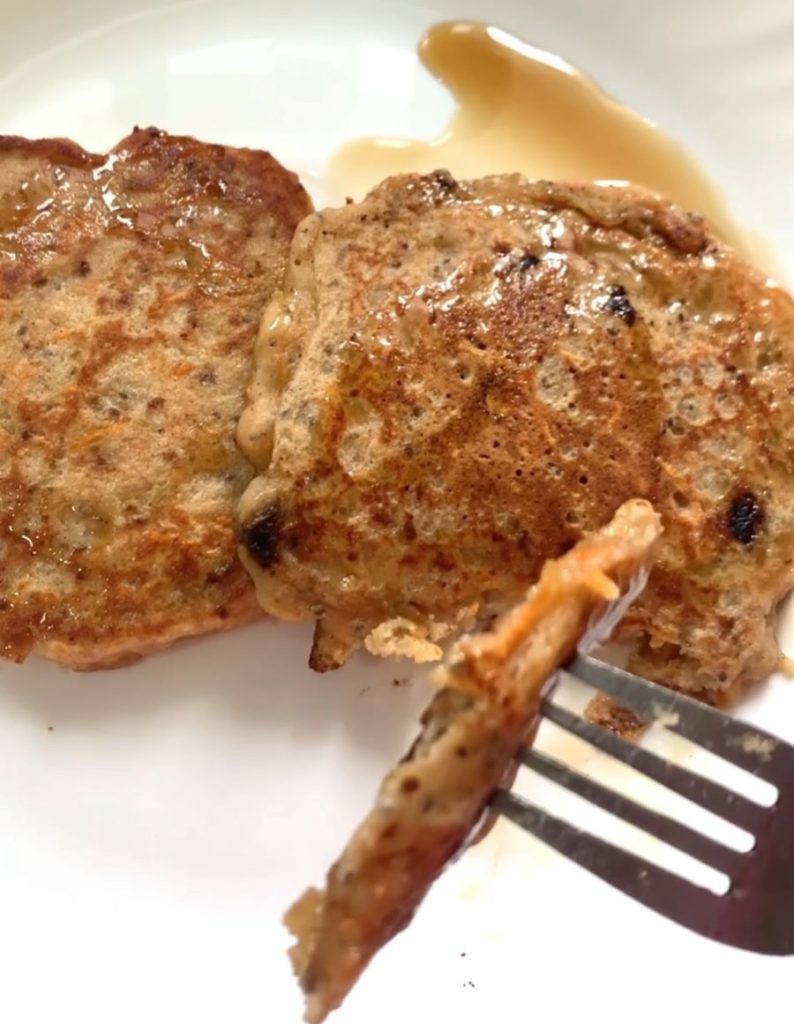
Yes. Place frozen berries onto the batter once it’s in the pan. This reduces “bleeding” and makes flipping easier.

24) How do I make almond flour pumpkin pancakes thicker and fluffy?

Pumpkin adds moisture, so reduce the milk slightly and rest the batter longer. Cook on medium-low to prevent over-browning while the center sets.

25) Can I turn almond flour pancake batter into waffles?

Yes. Make the batter slightly thicker than for pancakes and add a teaspoon of oil or melted butter for crisping. Cook until the waffle is deeply set before opening the iron.

26) Why does my almond flour pancake mix turn out dry?

Many mixes thicken as they sit. Rest the batter, then adjust with small splashes of milk or water. Also, avoid high heat, which can dry the outside before the inside finishes.

27) How do I fix an almond flour pancake mix batter that’s too thick?

Add liquid one tablespoon at a time, stir, then wait briefly. This stepwise method prevents over-thinning and keeps the pancakes from turning fragile.

28) Can I make an almond flour pancake mix recipe at home?

Yes. A common DIY “mix” combines almond flour with baking powder, salt, and optional sweetener; then you add eggs and milk when cooking. Store the dry mix airtight for quick mornings.

29) How should I store almond flour so it doesn’t taste off?

Because almond flour contains oils, store it in an airtight container in a cool place; refrigeration or freezing helps for longer storage. If it smells bitter or “paint-like,” it may be rancid.

30) Why are my pancakes using almond flour gummy in the middle?

Typically the heat is too high or the batter is too thin. Lower the heat, cook a bit longer, and thicken the batter slightly if it spreads too much.

Posted on 3 Comments

Easy and Healthy Oat Cookies- No Sugar | No Butter | No Refined Flour

If you are looking for healthy cookies recipe for your kids, this is it! These soft, chewy, perfectly sweet and wholesome cookies will be your go to recipe. I highly recommend this for your sweet cravings and pick-me-up snack moments.

Being a mother I am always on a look out for healthy snacking options for my child. I hate to give him sugary packet snacks everyday. While they are ok as once in a while indulgence but I get wary of all the artificial flavours, preservatives and processed sugar added in bakery cookies. 

These cookies have the goodness of whole-grains, oatmeal, egg and dates as prime ingredients. The natural sweetness and moisture come from a fruit, dates and coconut oil. The best part about these cookies is that they are one bowl cookies. No endless use of utensils and whisking is required. 

Main Ingredients and their Substitutes

Rolled Oats: I have used rolled oats or old fashioned oats here because they are better for baking. However, you can also quick oats. Quick oats will give you a slightly uniform texture. I however, prefer the taste and texture of rolled oats

Wholewheat Flour: I have added wholewheat flour for more fibre. Also, it brings together the cookie dough and gives nice crunch to these cookies. 

Apple: I like to add an apple in the cookies for moisture and natural sweetness. You can totally substitute apple with either a banana or applesauce. 

Virgin Coconut Oil: Coconut oil offers an almost direct substitute to butter. It lends a sweet but subtle flavour to bakes. You do not need to use as much coconut oil to get the same fat content as butter, since butter comprises 20% water. You can use butter here if coconut oil is not available. Just increase the butter by 20%.

Egg: Egg not only adds more protein and nutrition in cookies but it also helps to bind and improve texture of the cookies resulting in more light and chewy cookies. However you can totally make them eggless too by substituting 1 egg with flaxmeal. 1 tsp ground roasted flaxseeds in 4 tbsps water. Let it sit for 10 minutes. Use this mixture in place of egg or use 1/4th cup of greek yogurt. 

Dates: I have added dates as a natural replacement for sugar. Dates are also rich in iron, fibre and antioxidants. If you want to substitute dates in this recipe, you do that by adding 1/4th cup of pure maple syrup.

Dark Chocolate: Use a good quality dark chocolate, atleast 70%. You can totally substitute it by adding raisins, black currants, cranberries, walnuts, dried blueberries or any other dried fruits or nuts of your choice.

Now let’s get to the recipe

Recipe: makes 14 to 15 cookies

Ingredients 

  • Rolled Oats: 1 cup
  • Wholewheat flour: 1/2 cup
  • Apple: 1 medium
  • Virgin Coconut oil: 3 tbsps
  • Egg: 1 
  • De-seeded dates: 4
  • Baking powder: 1/2 tsp
  • Cinnamon powder: 1/2 tsp
  • Vanilla Extract: 1 tsp
  • Dark Chocolate chunks (70%): 1/2 cup

Method:

  • Soak dates in hot water for 10 minutes to soften it.
  • Sieve wholewheat flour, baking powder and cinnamon in a large bowl. Now mix rolled oats. Keep aside. 
  • In a blender, crack an egg or add flaxmeal/yogurt. Add chopped apple, softened dates, vanilla and oil. Blend this mixture to a purée.
  • Now add wet ingredients to dry ingredients in batches. Mix till everything incorporates well. Do not over mix. Cut and fold gently.
  • Add chocolate chunks and mix well. The mixture will be moist at this time. You can refrigerate the cookie dough for 30 minutes. It will become easier to give it a shape. Also, the oats will absorb the flavour and soften.
  • Line baking tray with a baking paper or a silicon sheet.
  • Take one tbsp scoop and scoop out the mixture on the baking tray. Scoop will give you even size cookies. Flatten a little with a back of a spoon.
  • Bake in the preheated oven for 10 to 12 minutes at 180 C
  • Transfer on a wire rack. Allow it to cool. Once cooled, store in an airtight container.

How to store

These Healthy Cookies store well for a few days, so you can make a batch on the weekend and enjoy them throughout the week. Store in an airtight container at room temperature or in the fridge for up a week. They will soften further as they sit in the container making it perfect for toddlers. 

You can also try more of such healthy bakes- Healthy Carrot Orange Marmalade Cake and Wholewheat Banana and Jaggery Cake. 

Do give these healthy cookies a try. I am sure you and your kids will love it. Let me know in the comment section below if you do give it a try. It will be great to hear from you guys. Stay Healthy! 🙂

Posted on 1 Comment

Indian Cottage Cheese Jaffles- Vegetarian Protein Rich- Ultimate Comfort Food

Did you know, a Jaffle is an Australian name for closed toasted sandwich? It’s an Aussie invention. The first electric jaffle maker was released in 1974 that seal and cut a sandwich. When it comes to the iconic jaffle, there is something about the crispy sealed edges and perfectly cut triangular chambers of gooey goodness that makes them simply irresistible. This ultimate comfort food makes the perfect anytime meal or snack, and takes the humble sandwich to the next level.

I have sweet childhood memories attached to jaffles. My mother would often fix us quick breakfast with leftover sabji from last night, add her own touch of masalas to make it even more flavourful and turn it into delicious jaffles. As a child this used to be one of favourite breakfast options.

These paneer jaffles are my 10 year old and family’s favourite. I am sure every one of you have had jaffles atleast once. Every household has its own recipe. So sharing one out of many of my jaffle recipes with you. These are different, tastes very fresh, summery and of course it’s super healthy. I can bet you are going to love it. Do try!

Recipe: makes 6 jaffles

Ingredients 

  • Indian Cottage Cheese/Paneer: 250 grams
  • Capsicum: 1/2 cup, finely chopped
  • Minced ginger and garlic: 1 tsp
  • Fresh Mint Leaves: Handful
  • Fresh Sweet Basil Leaves: Handful
  • Salt and pepper to taste
  • Italian Seasoning to taste
  • Red pepper flakes to taste
  • Cream Cheese: 2 tbsps (optional)
  • Bread Slice: 12

Instructions 

  • Crumble cottage cheese. To it, add capsicum, minced garlic & ginger, chopped fresh mint leaves, chopped fresh sweet basil leaves and cream cheese. Cream cheese will bring it all together and will also add creaminess. 
  • Now add Italian seasoning, freshly ground pepper, red pepper flakes & salt. 
  • Mix it all well. Apply it on a slice of bread, top it with another slice. Apply butter on both sides and toast it in jaffle iron.
  • Serve hot with ketchup or dip of your choice. 
  • Note: You can store the leftover filling in the refrigerator and use within 3 days.

Substitutes: 

  1. For Vegan option substitute paneer with tofu.
  2. If cream cheese is not available, you can add hung curd/Greek yogurt. 
  3. You can also add vegetables of your choice like bell peppers, shredded carrots or cabbage.

Do try out this simple recipe. I am sure you guys will love it. Let me know what other kind of jaffles you make at home and what is your comfort filling in the comments section. It will be great to know. Stay Healthy! 🙂

Posted on 1 Comment

Healthy Wholewheat Carrot Chia Seed Pancakes- Vegetarian High Protein Recipe

These fluffy Carrot Pancakes are high protein vegetarian pancakes and are a brilliant way of incorporating vegetable or fruit in your or your child’s diet. These pancakes remind me of carrot cake, without the frosting of course. They are packed with all the healthy ingredients with inclusion of yogurt to give it more nutrition and a fluffy texture. 

They are so easy to whip up with wholesome, easy to find ingredients and you are just going to love the flavor and texture! Carrots are a great addition to pancakes because of their subtle flavor. Your child will definitely notice bits of carrots but will not mind it. You can also check out my healthy carrot cake recipe here- Wholewheat Carrot Orange Tea Cake

Ingredients you will need

  • Wholewheat flour: Wholewheat flour gives a nice nutty flavor to these pancakes. However if you want to make these pancakes gluten free, you can use buckwheat flour. It is a little more nutrient-dense, though the two work similarly. For more gluten free pancake recipes check out my Healthy Protein Packed Pancake recipe.
  • Jaggery Powder: Jaggery adds some natural caramel like sweetness. You can also try these pancakes with applesauce.
  • Plain yogurt: This adds moisture and protein. You can also use milk instead. If you want to make it vegan, you can add Almond Milk or Coconut Milk or any other nut milk. Check out the recipe of Homemade Almond Milk here
  • Coconut Oil: I used coconut oil that’s melted in the pancakes to add some moisture and richness. You can choose to add Olive Oil or Unsalted Butter too.
  • Pure Vanilla Extract: This adds lovely flavor to the pancakes batter.
  • Baking powder and Baking Soda: They are essential to give the pancakes rise, make it fluffy and light in texture
  • Cinnamon and Nutmeg: I love to add these flavors in carrot pancakes or cake. They add a nice warmth and cozy feeling to the pancakes.
  • Chia Seeds: Chia seeds will add more nutrition and protein to the pancakes since we are not using eggs here. Also, it will add more moisture. 2 tbsps of Chia Seeds contain 5 grams of protein.

Recipe: makes 7 pancakes

Ingredients 

  • 1.5 cups of Wholewheat flour
  • 1/2 tsp Baking Soda
  • 1/4th tsp Baking Powder
  • 1/2 tsp Cinnamon Powder
  • 1/4th tsp Salt
  • 1/4th tsp Nutmeg Powder
  • 4 tbsps Jaggery Powder
  • 1 cup Grated Carrot
  • 1.5 cups Yogurt
  • 2 tbsps Chia seeds soaked in 1/4th cup water for 10 minutes 
  • 2 tbsps Oil (Olive/Coconut) or Melted Unsalted Butter
  • 1/2 cup Dark Chocolate Chunks (70%)

Instructions

  • Stir together jaggery, yogurt or milk or almond milk, butter or oil and vanilla in a medium bowl.
  • Add in the flour, baking powder & soda, cinnamon, nutmeg, salt, and stir gently to combine.
  • Now add grated carrots and mix gently. Top it with chocolate chunks if using.
  • Heat a nonstick or cast iron pan or griddle over medium-heat, coat it with some butter. Add a ladle full of batter and spread it thinly. 
  • Cook per side for 2-3 minutes or till the top sets and bubbles start bursting. Flip and cook the other side.

Enjoy 😊 I hope you enjoy this recipe. It is a must try especially for your child if he/she is a picky eater. Do let me know in the comments if you try this recipe and want more of such healthy recipes.