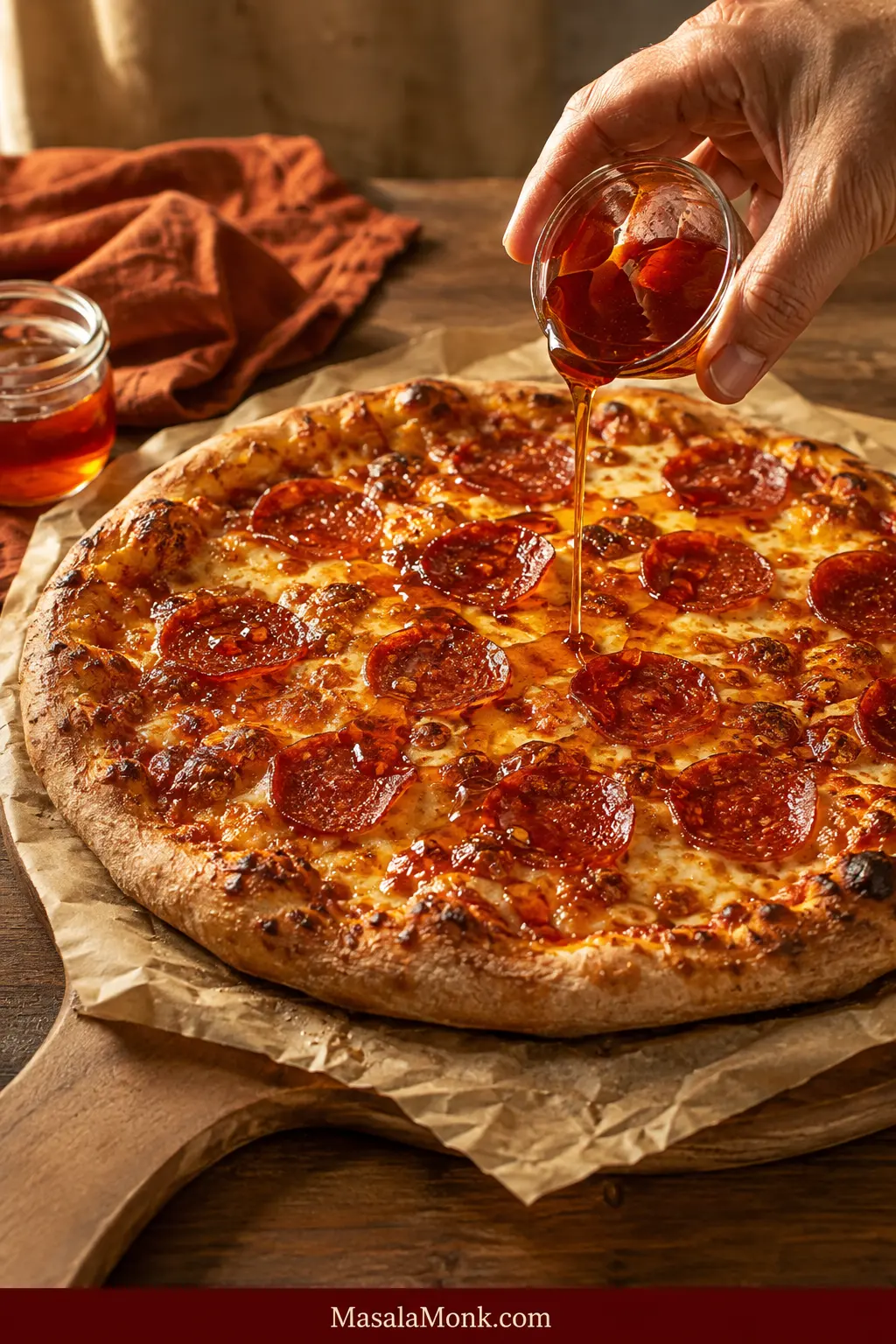
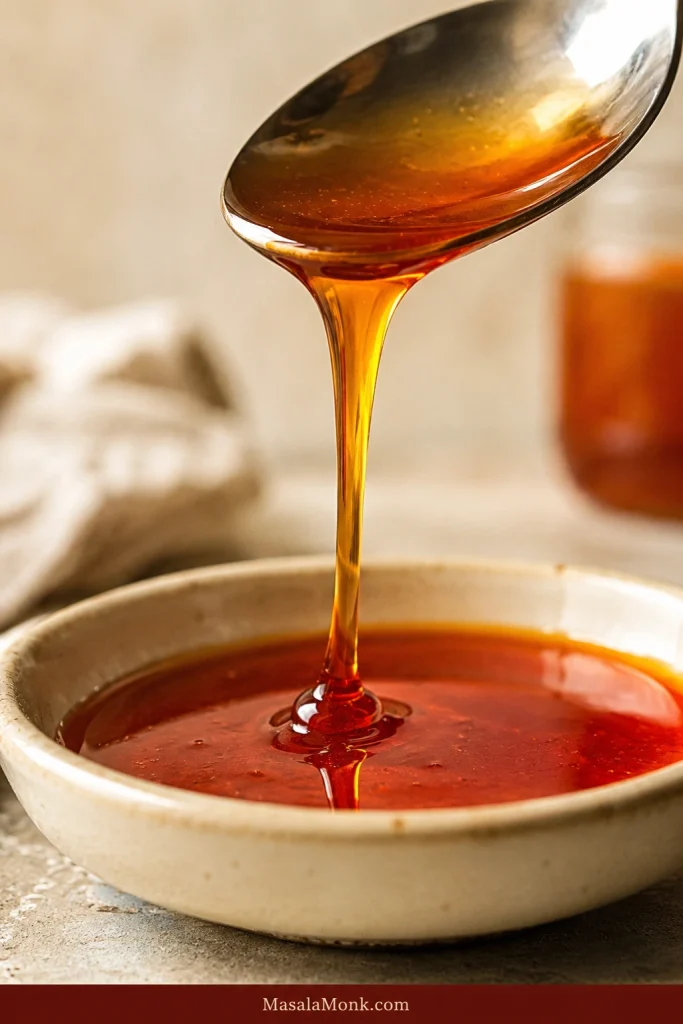
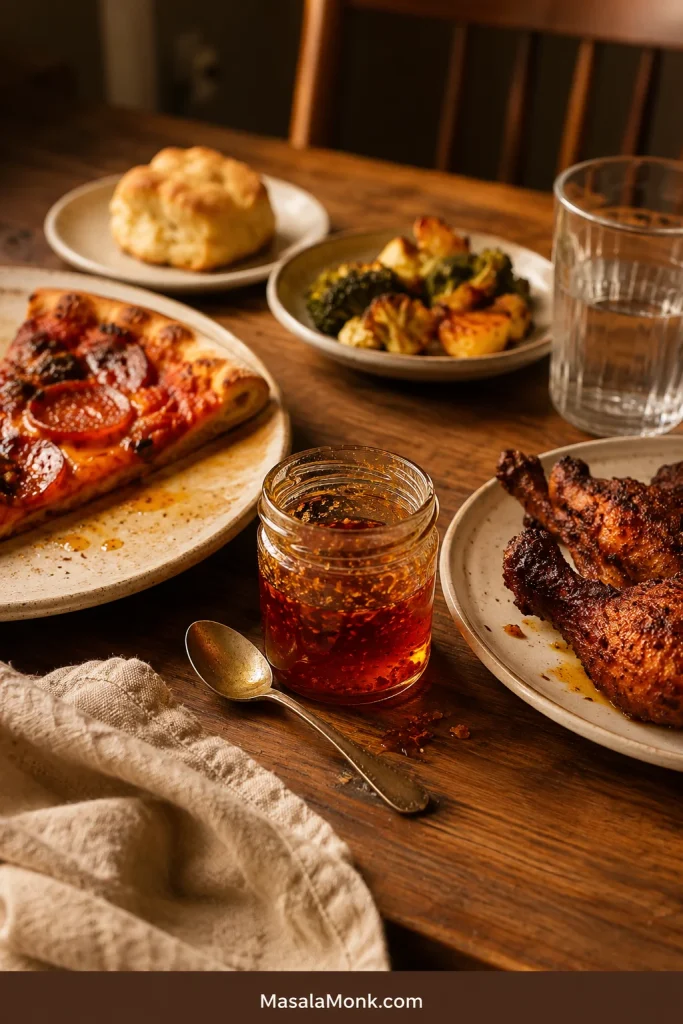
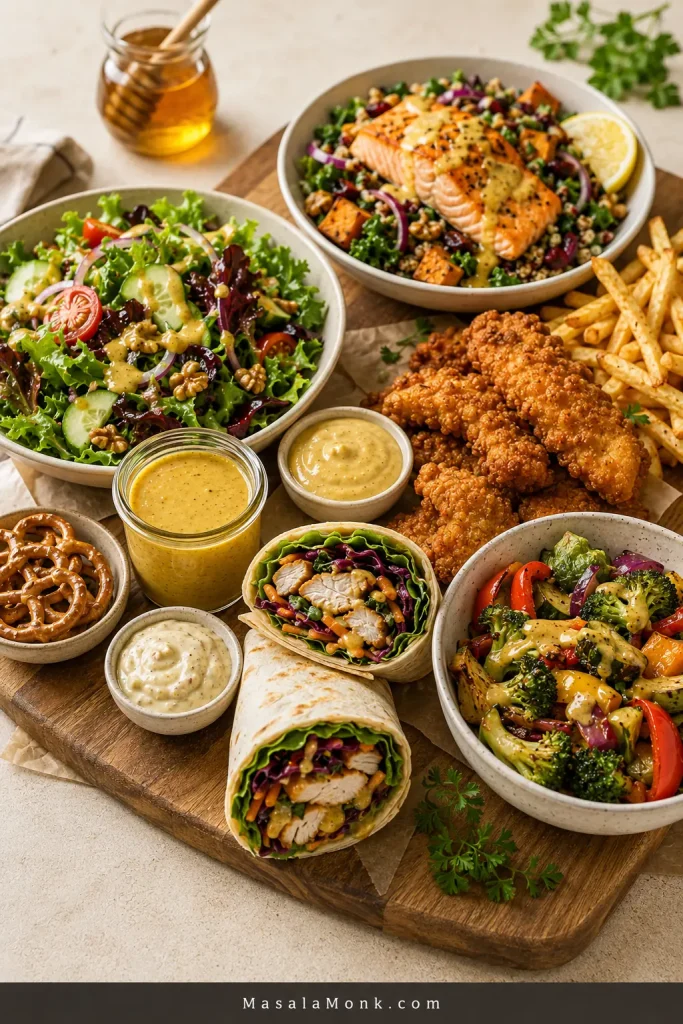
Hot honey sauce is what you make when plain honey feels too sweet, ordinary hot sauce feels too sharp and the food in front of you needs both. It gives pizza a glossy finishing drizzle, wakes up chicken tenders, clings to crisp wings and turns a warm biscuit into something worth slowing down for.
In its simplest form, hot honey is a two-ingredient, no-cook mixture of honey and hot sauce. A small pinch of salt can sharpen the balance when the sauce needs it. Whisk everything together in about two minutes and use it immediately.
You can also infuse honey with dried chilli for a clearer pepper flavour or add butter for a richer glaze. They share the same name, but they do different jobs: one drizzles, one tastes clearly of dried chilli and one stays where it lands.
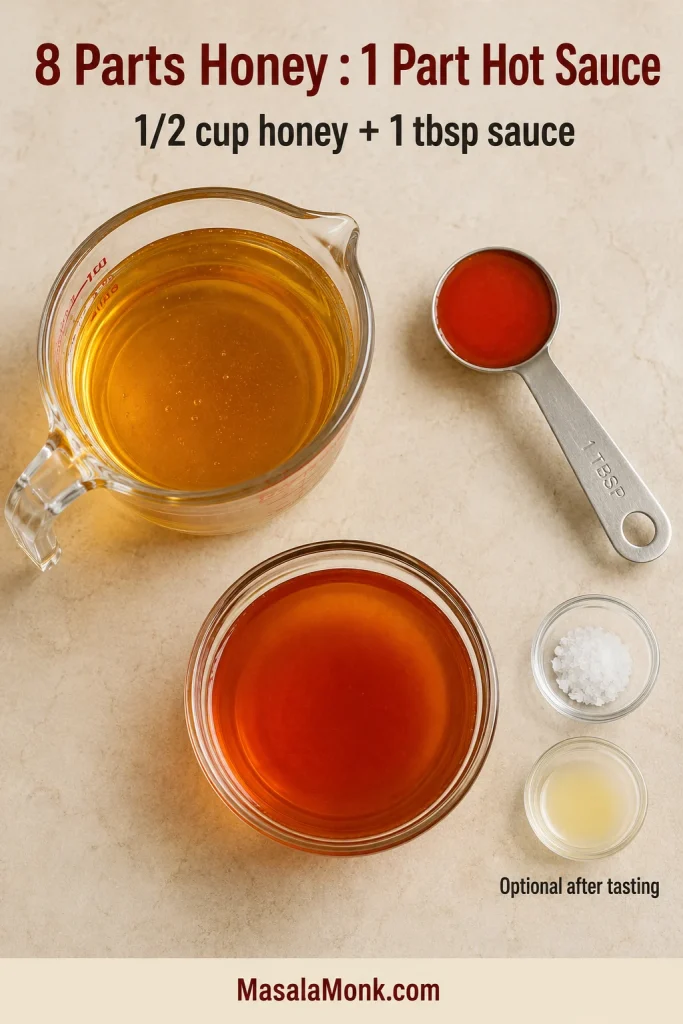
Start with an 8:1 ratio of honey to thin cayenne-style hot sauce: ½ cup / 170 g honey to 1 tablespoon / 15 ml hot sauce for the full batch. Add one small pinch of salt only if the sauce needs it.
Cayenne raises the heat without adding more liquid. If the sweetness feels heavy, stir in a little vinegar or lemon juice. Honey and hot sauce may already be enough.
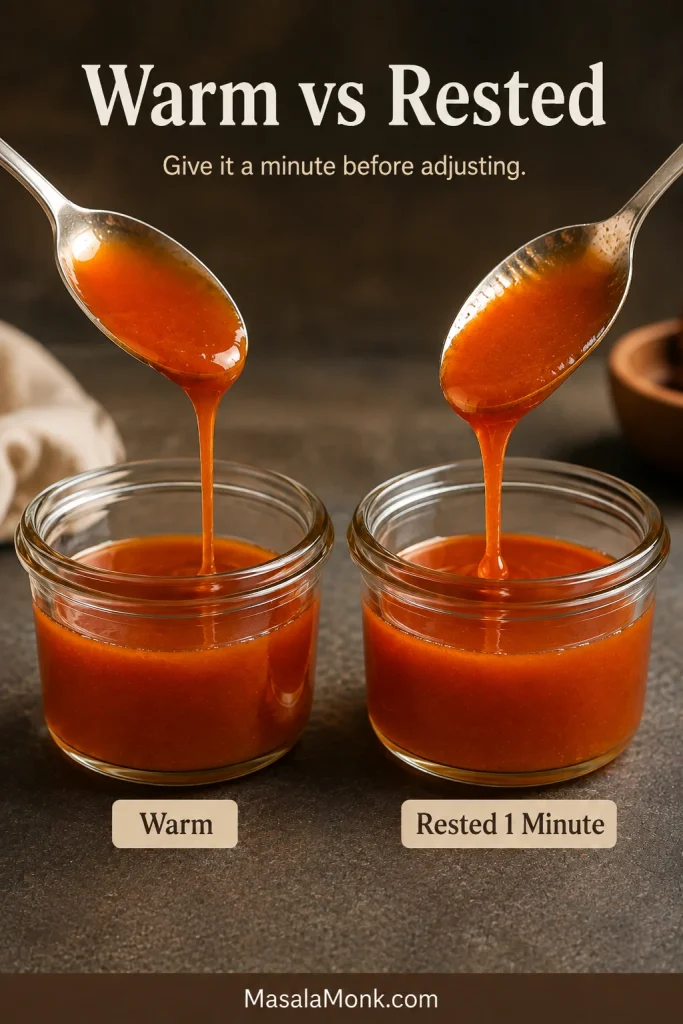
Warm hot honey always looks looser. Give it a minute before deciding that it needs more honey.
Scale the 8:1 ratio easily: 8 teaspoons honey to 1 teaspoon thin hot sauce makes a small test batch.
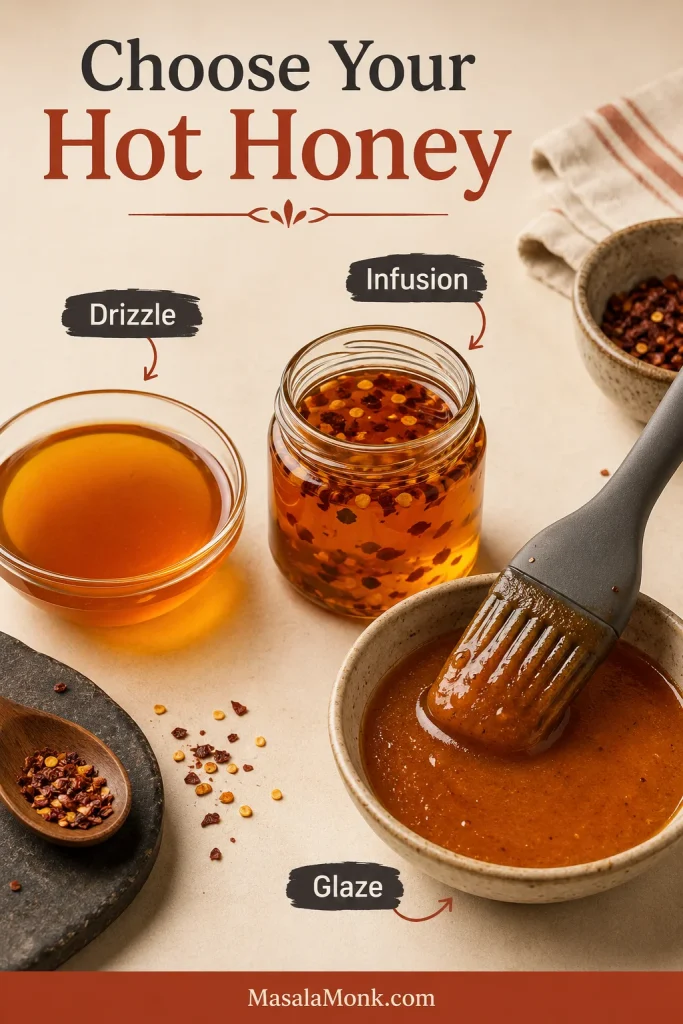
Choose Your Hot Honey Sauce
The no-cook sauce is the everyday choice. For a more distinct pepper flavour, use the dried-chilli infusion. Butter turns hot honey into a glaze that coats wings, chicken or salmon.
Swipe or scroll sideways to see the full table.
Method
Consistency
Hands-on
Total
Best for
Quick hot honey sauce
Smooth and pourable
2 minutes
2 minutes
Pizza, chicken, sandwiches and dipping
Chilli-infused hot honey
Clear, glossy and lightly textured
About 5 minutes
About 10–20 minutes
Pizza, biscuits, cheese and fried foods
Buttery hot honey glaze
Rich, glossy and clingy
About 5 minutes
About 5–7 minutes
Wings, tenders, salmon and vegetables
Choose by how the sauce should behave: smooth hot honey drizzles, butter glaze clings, and dried-chilli infusion leaves visible chilli in the sauce.
Make this first
Quick No-Cook Hot Honey Sauce Recipe
This is the default sauce: honey-led, clearly spicy and fluid enough to drizzle while still leaving a light coating on chicken, bread or pizza crust.
Time 2 minutes
Yield About 9 tbsp / 135 ml
Serving size 1 tbsp / 15 ml
Texture Glossy and pourable
Ingredients
Core ingredients
½ cup runny honey — 4 fl oz / 120 ml; about 6 oz / 170 g by weight
1 tablespoon thin, medium-heat cayenne-style hot sauce — ½ fl oz / 15 ml
Optional after tasting
One small pinch fine salt — useful when the hot sauce is not already salty
Up to 1 teaspoon apple cider vinegar or lemon juice — added ¼ teaspoon at a time
⅛–¼ teaspoon cayenne pepper for extra heat
Method
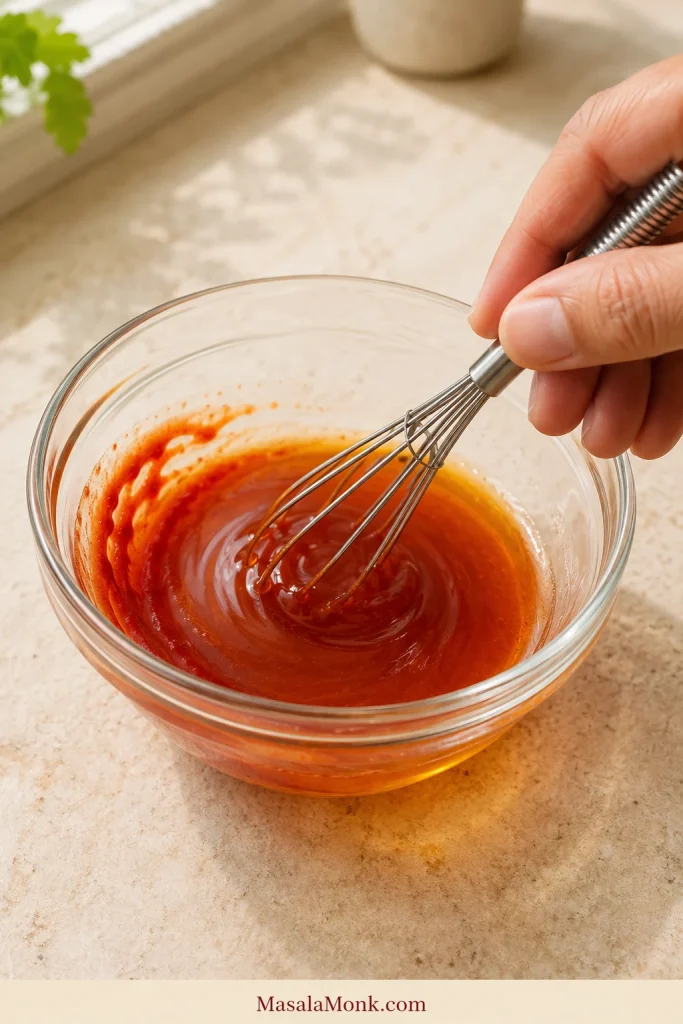
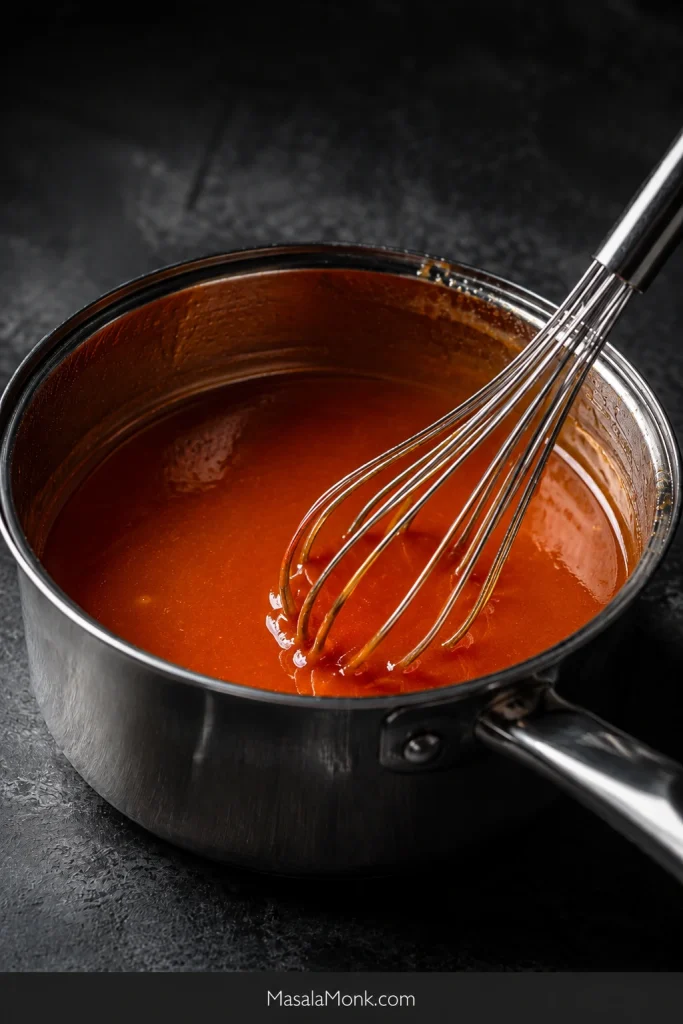
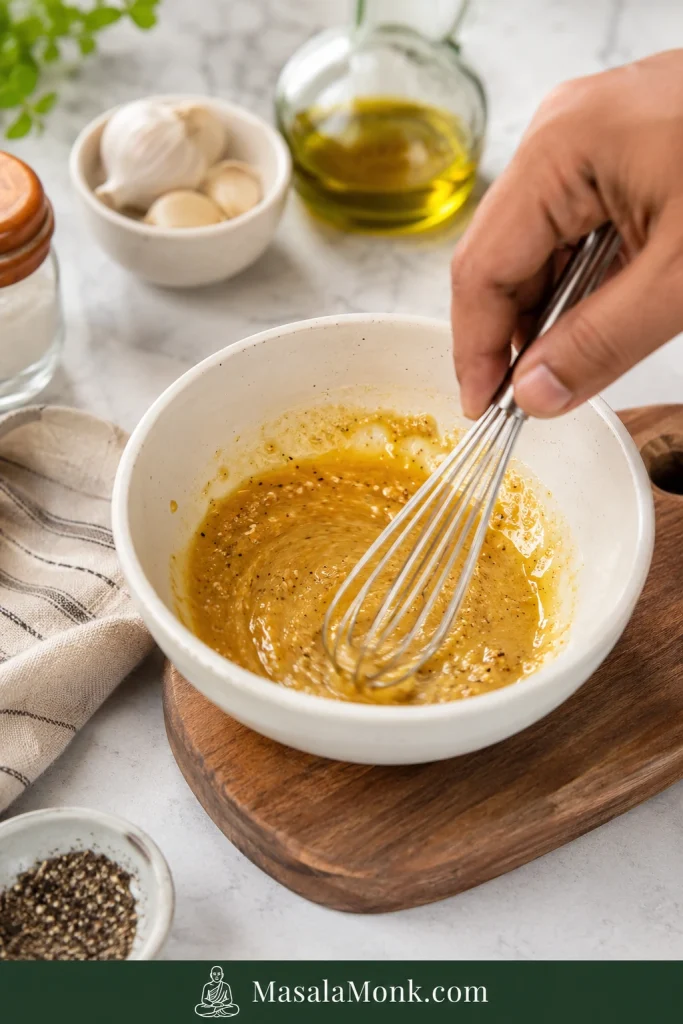
Whisk. Combine the honey and hot sauce in a small bowl until the colour is even and no red streaks remain. Stir in the salt if needed.
Taste. The honey should come through first, then give way to the hot sauce’s tang and chilli warmth.
Adjust only if needed. Cayenne makes it hotter. Vinegar or lemon juice lightens sweetness that lingers too heavily.
Sweep the whisk around the bowl edge before stopping; concentrated hot sauce can hide along the rim.
For a finer drizzle: warm the sauce over low heat for 30–60 seconds or microwave it in a microwave-safe bowl for 10 seconds at a time. Stop as soon as the honey loosens. It does not need to bubble.
That is it—no simmering, steeping or special chilli required.
What success looks like: the sauce falls from a spoon in a smooth ribbon and leaves a light glossy film behind. Honey should arrive first and chilli should follow. If the first taste already works, leave it alone.
A good drizzle stays continuous for a moment, letting you draw thin lines instead of blobs.
Recipe Notes
Taste your hot sauce first: cayenne sauce, Sriracha and concentrated habanero sauce will not produce the same flavour or flow.
Sauce crisp food last: the longer fried food sits under honey, the softer its coating becomes.
How to Use Hot Honey Sauce
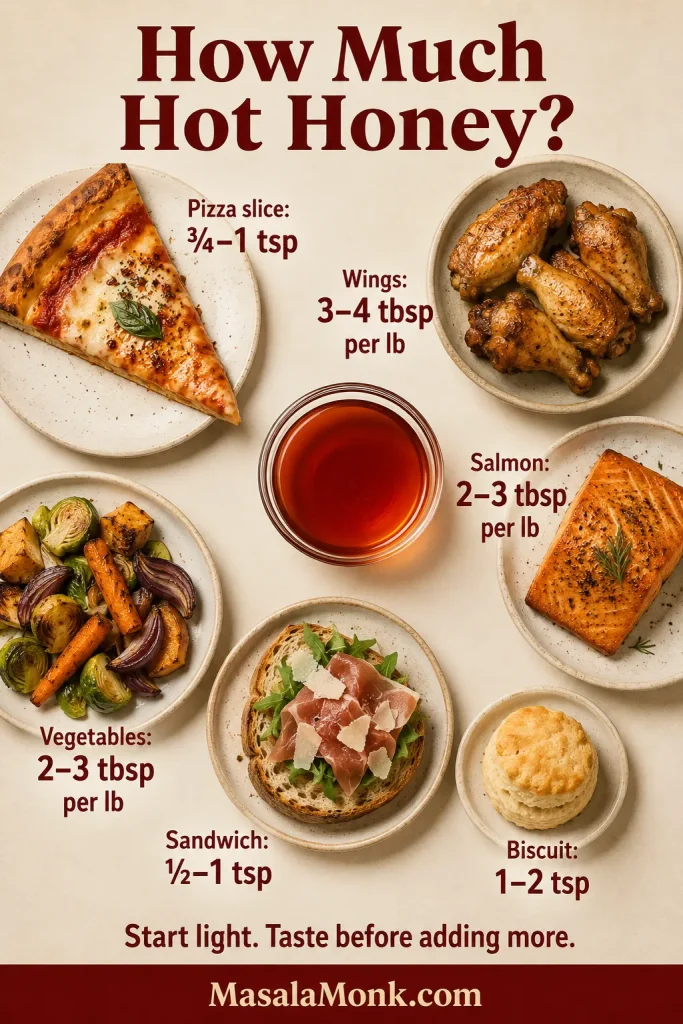
A light coating is usually enough. Taste the food before pouring on more.
Brown first; glaze late. Crisp food gets the sauce shortly before serving.
Swipe or scroll sideways to see the full table.
Food
Starting amount
When to add it
12-inch pizza
2–3 tbsp / 30–45 ml
Immediately after baking
One pizza slice
¾–1 tsp / 4–5 ml
After baking
1 lb / 450 g wings
3–4 tbsp / 45–60 ml
Toss after cooking
1 lb / 450 g tenders
3–4 tbsp / 45–60 ml
Toss or drizzle shortly before serving
1 lb / 450 g salmon
2–3 tbsp / 30–45 ml
Brush on near the end
1 lb / 450 g vegetables
2–3 tbsp / 30–45 ml
Add near the end or after roasting
Four sandwiches
2–4 tsp / 10–20 ml
Drizzle during assembly
Biscuits or cornbread
1–2 tsp per serving
Add at the table
Use the guide as a starting range; even distribution often gives enough sweet heat without more sauce.
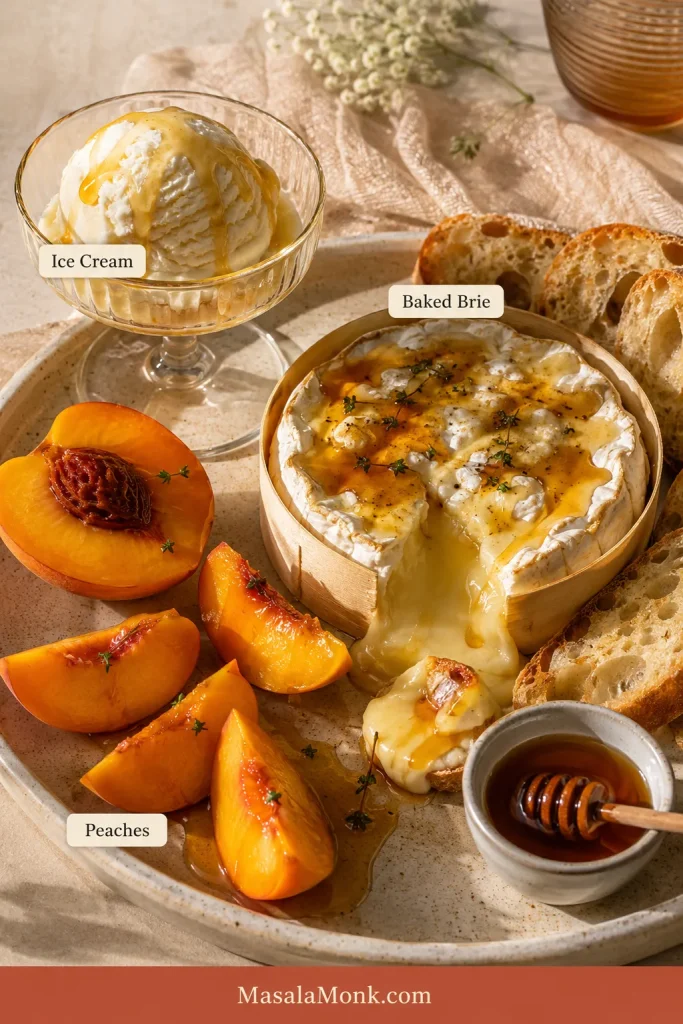
For a sweeter contrast, try a teaspoon over vanilla ice cream, baked brie or ripe peaches. Cold dairy softens the heat; warm cheese and fruit brighten the sweetness.
For desserts, drizzle at the table so the contrast stays distinct against cold dairy, warm cheese or fruit.
Hot Honey for Pizza
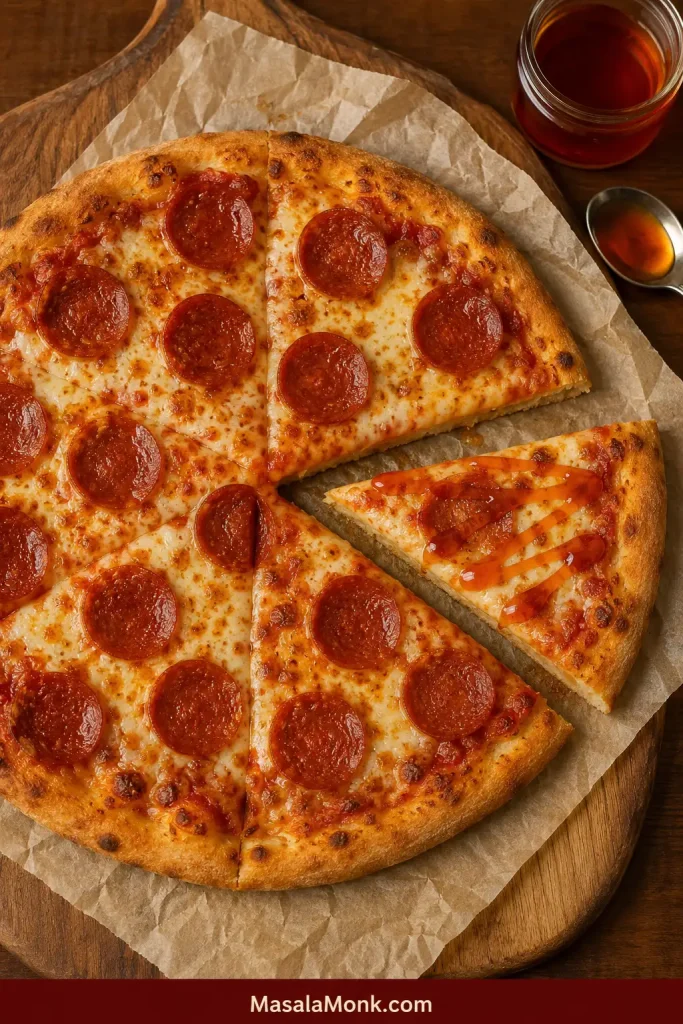
Hot honey belongs on the pizza after it leaves the oven. Residual heat loosens the drizzle without baking it into the cheese.
Not sure whether it belongs there? Drizzle one slice first. The cheese tastes richer, salty toppings become sharper and the crust suddenly feels worth dipping. Then decide whether the rest needs it.
Test a slice with representative toppings; extra cheese, cured meat or pickles can change how much heat the pizza needs.
Choose the base from these pizza sauce recipes, then finish with a light drizzle. Too much makes the centre wet and sweet.
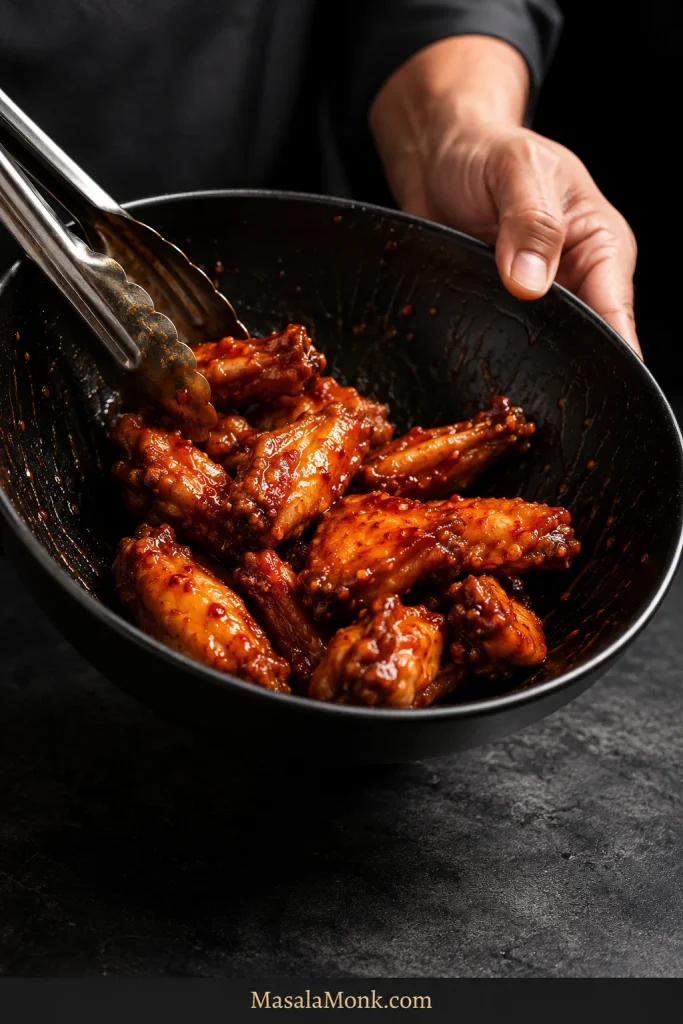
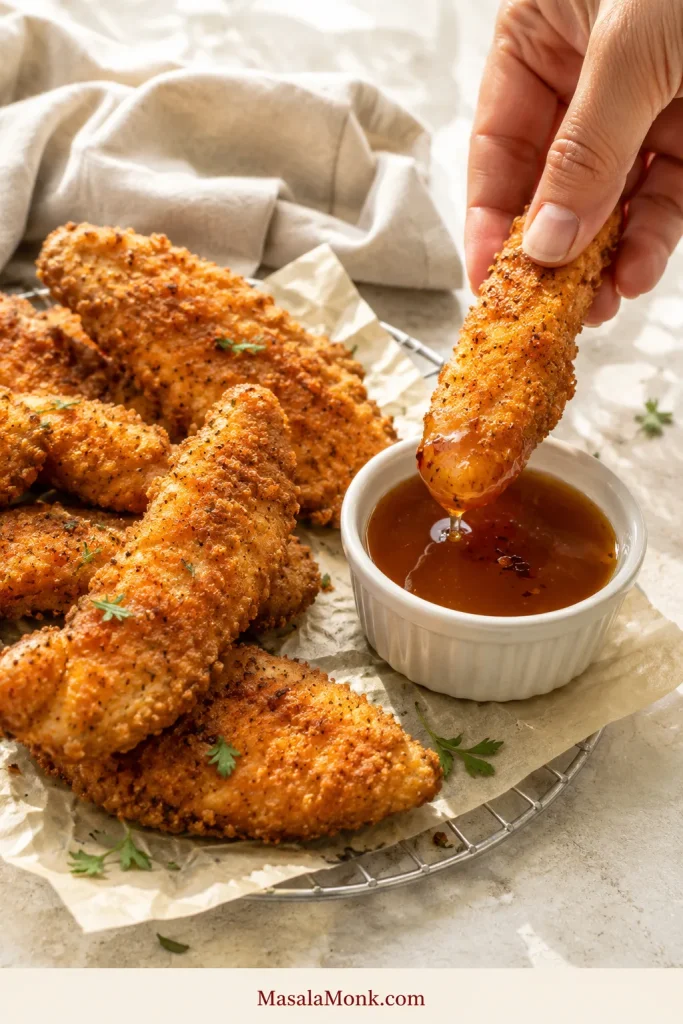
Hot Honey for Wings and Chicken Tenders
Cook the chicken until crisp, then add the sauce shortly before serving.
Use a wide bowl and toss rather than stir so a smaller amount coats the wings evenly.
Dip one edge to keep sauce and crunch in the same bite; a full dunk softens more coating.
Crisp food should not sit in sauce while everyone slowly finds their way to the table.
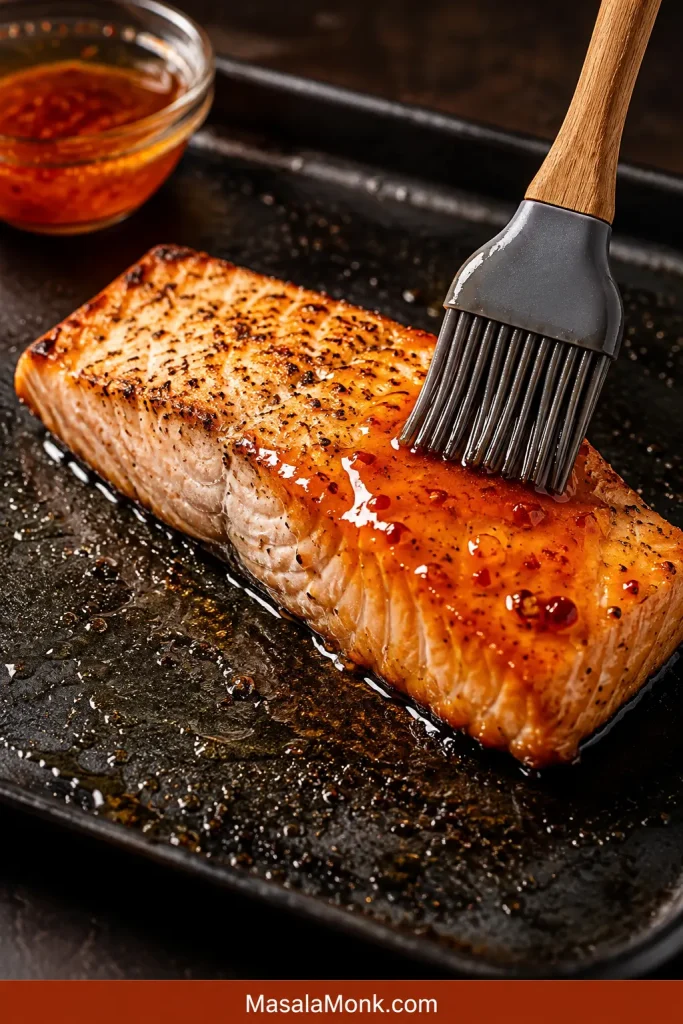
Hot Honey Glaze for Salmon
Brush the glaze on once the salmon is nearly opaque and beginning to flake. In this honey garlic salmon, the fish browns before the honey sauce enters the pan.
Brush salmon with a thin film, not a puddle; it clings evenly and is easy to build.
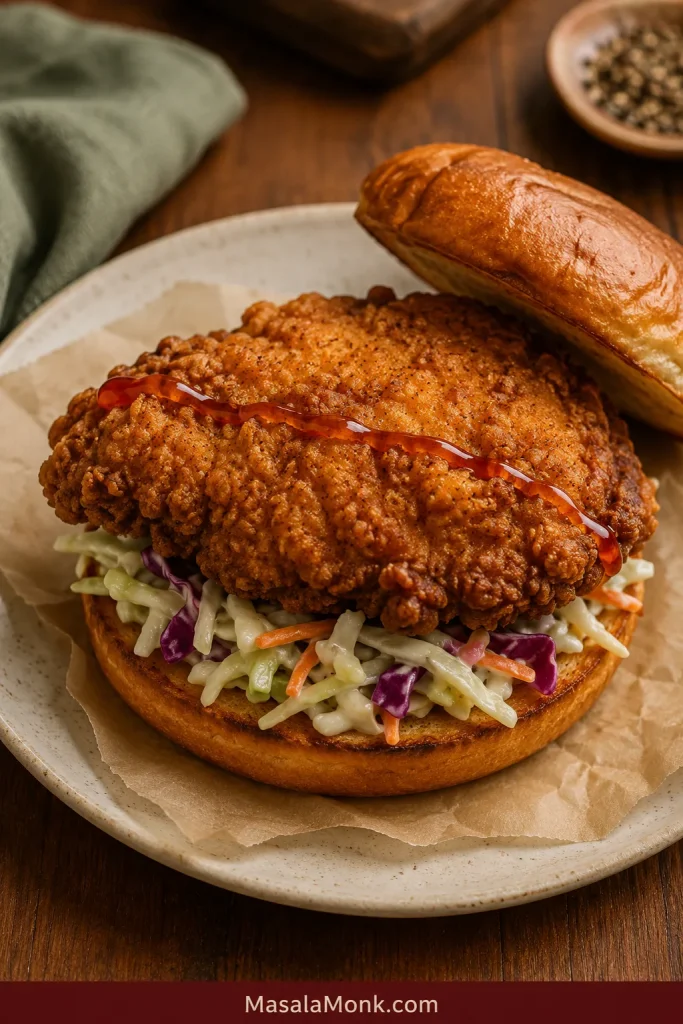
Hot Honey on Sandwiches
Usually, a thin line across the filling is enough. A heavier pour sinks into the bread and dulls the contrast between crisp, creamy and salty ingredients.
Put hot honey on the filling rather than the bun so the bread stays drier and the chicken stays crisp.
It works particularly well on the crispy, Buffalo and BBQ options in these chicken sandwich recipes.
Hot Honey on Roasted Vegetables
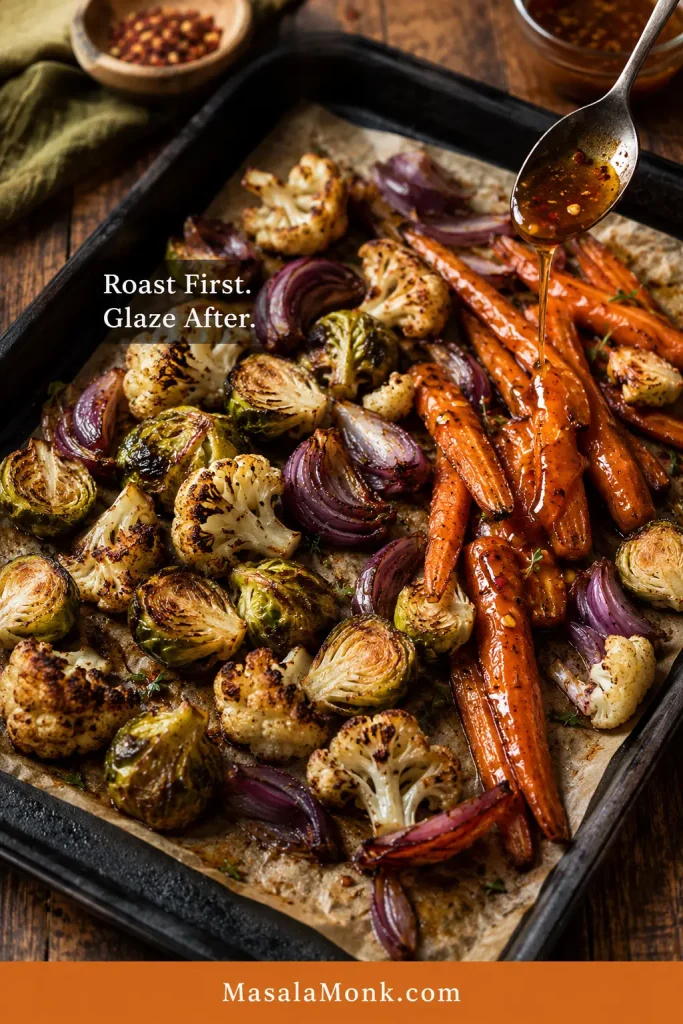
Carrots, sweet potatoes, cauliflower, Brussels sprouts and squash all take hot honey well. Let them brown and become tender before adding it.
These oven roasted carrots show the timing clearly: the vegetables should look roasted before they look glazed.
Toss roasted vegetables while the tray is still hot; residual heat helps a little hot honey spread farther.
The bottle changes more than the heat. It can make the sauce sharper, thinner or thicker, sweeter, saltier or more garlicky before you add anything else.
Best Honey for Hot Honey
Ordinary runny honey is the easiest choice. Mild clover or a light, gently flavoured wildflower honey lets the chilli stand out. Darker honey brings more character.
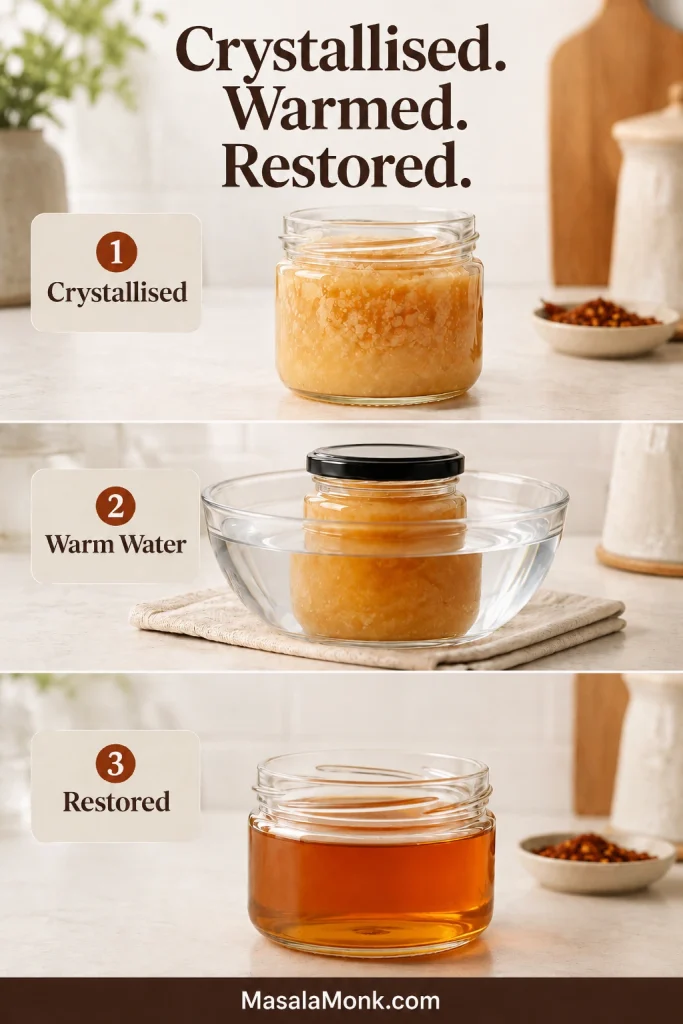
Partially crystallised honey is still fine. Set the tightly closed, heat-safe glass jar in warm—not boiling—water, or heat the measured honey briefly over low heat. Once it flows freely, use it.
Choose the Right Hot Sauce
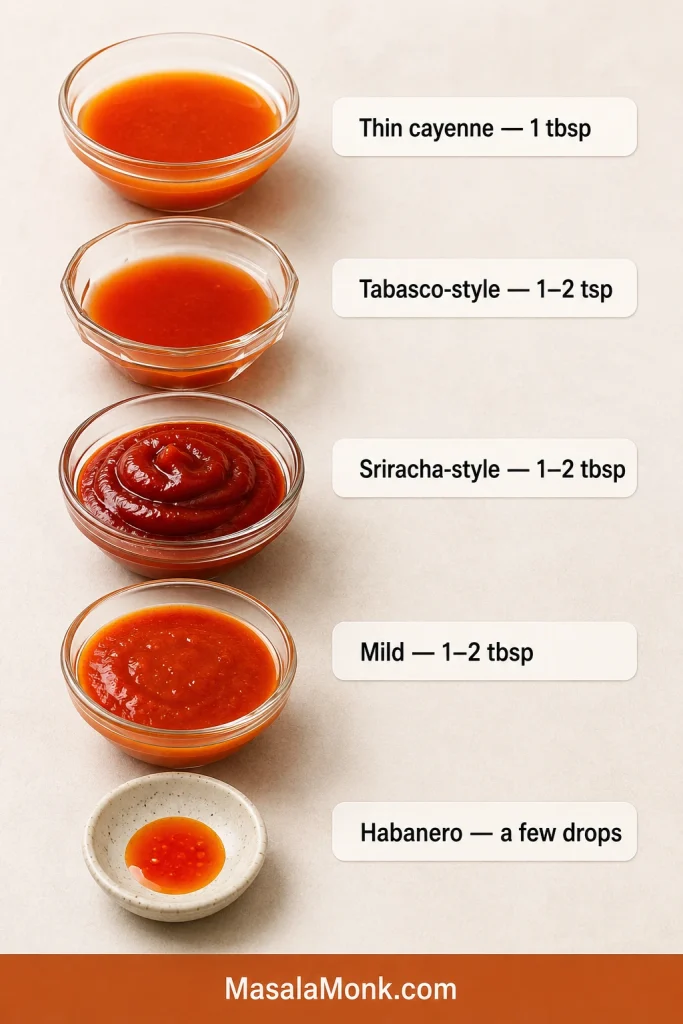
This recipe is written for a thin, medium-heat cayenne sauce—the familiar kind that pours easily from the bottle.
Swipe or scroll sideways to see the full table.
Hot-sauce style
Start with
Effect on the hot honey
Thin cayenne-style sauce
1 tbsp / 15 ml
Moderate acidity and easy pourability
Tabasco-style sauce
1–2 tsp / 5–10 ml
Sharper, thinner and more concentrated
Sriracha
1–2 tbsp / 15–30 ml
Thicker, sweeter and more garlicky
Mild hot sauce
1–2 tbsp / 15–30 ml
More tang before strong heat develops
Habanero or super-hot sauce
A few drops
Strong heat without noticeably thinning the honey
Watch viscosity as well as heat; a thick sauce can alter the drizzle more than a hotter sauce used by the drop.
Fruit-based sauces make the mixture sweeter and more aromatic. Habanero sauces bring sharper, faster heat. The pepper sauce guide compares those styles in more detail.
Cayenne and Dried Chilli Flakes
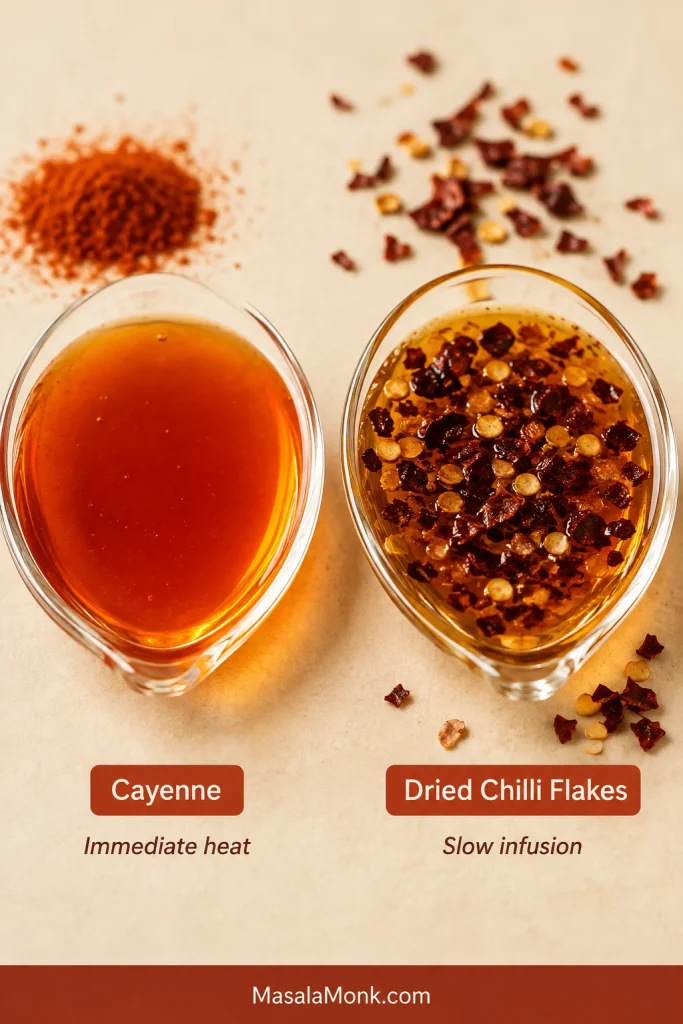
Cayenne gives immediate heat without adding liquid. It is useful when the flavour is right but the sauce needs more fire.
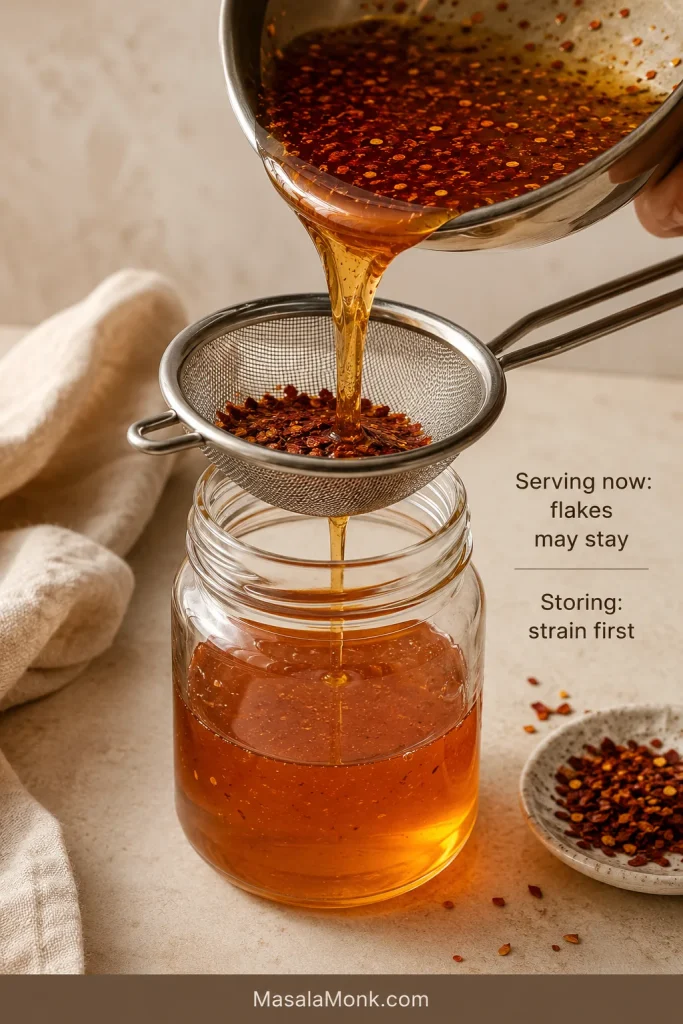
Dried chilli flakes release their warmth more slowly. Leave them in if you are serving the hot honey soon and want the heat to keep building. Strain them out before bottling or storing.
Cayenne keeps hot honey smooth; dried chilli adds visible texture and slower-building heat.
Oregon State University Extension’s infused-honey safety guidance explains handling, straining, storage and spoilage signs for honey infused with fully dried ingredients.
Acid, salt and butter: bottled hot sauce may already bring all the acidity the honey needs, so taste before adding more. A small pinch of salt clears away some of the syrupy sweetness. Butter changes the job completely, turning the drizzle into a glaze that stays on the food.
How Spicy Should Hot Honey Be?
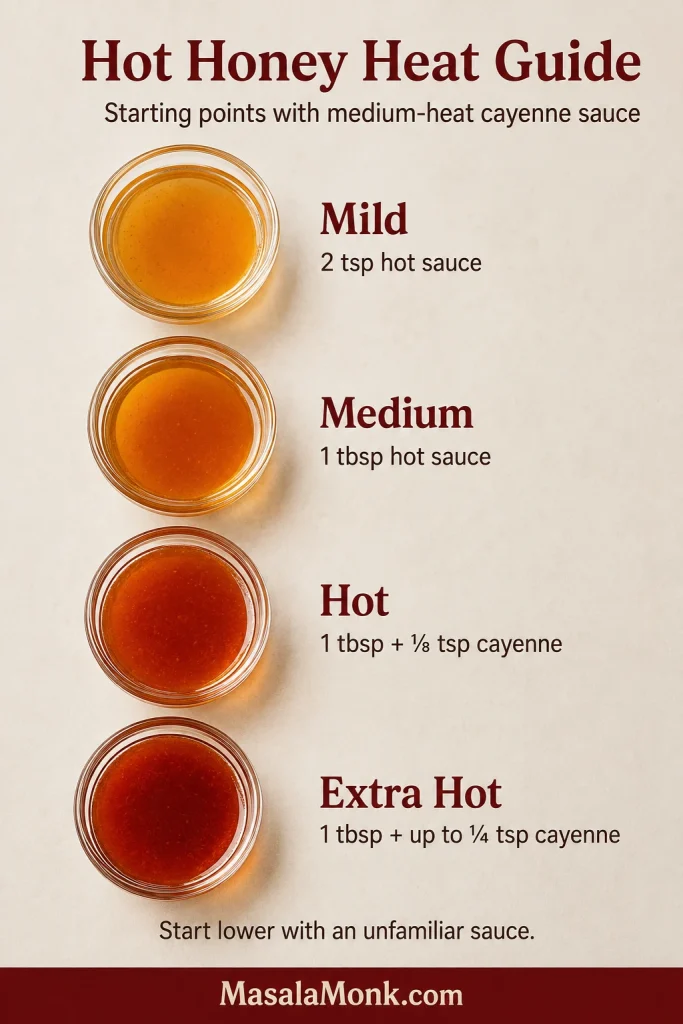
The amounts below are starting points using a medium-heat cayenne-style hot sauce. They are not universal heat ratings; begin lower with an unfamiliar sauce or cayenne powder.
Swipe or scroll sideways to see the full table.
Heat level
Cayenne-style hot sauce
Cayenne powder
What to expect
Mild
2 tsp / 10 ml
None
Mostly honey with a warm finish
Medium
1 tbsp / 15 ml
None
Clear chilli warmth after the sweetness
Hot
1 tbsp / 15 ml
⅛ tsp
Stronger heat without changing the flow
Extra hot
1 tbsp / 15 ml
Up to ¼ tsp
Strong, lingering heat
Change one variable at a time: hot sauce affects acidity and flow, while cayenne mostly raises heat.
A spoonful tasted alone feels much hotter than the same amount spread across dinner.
For dipping, stir hot honey into Dijon or mayonnaise. When you need a coating rather than a pour, use the butter glaze.
To adjust the consistency: let a thin-looking sauce cool before changing it. More honey will thicken it. If it is too thick, warmth may be all it needs. When the flavour is already right, thin only the portion you plan to serve with a few drops of warm water.
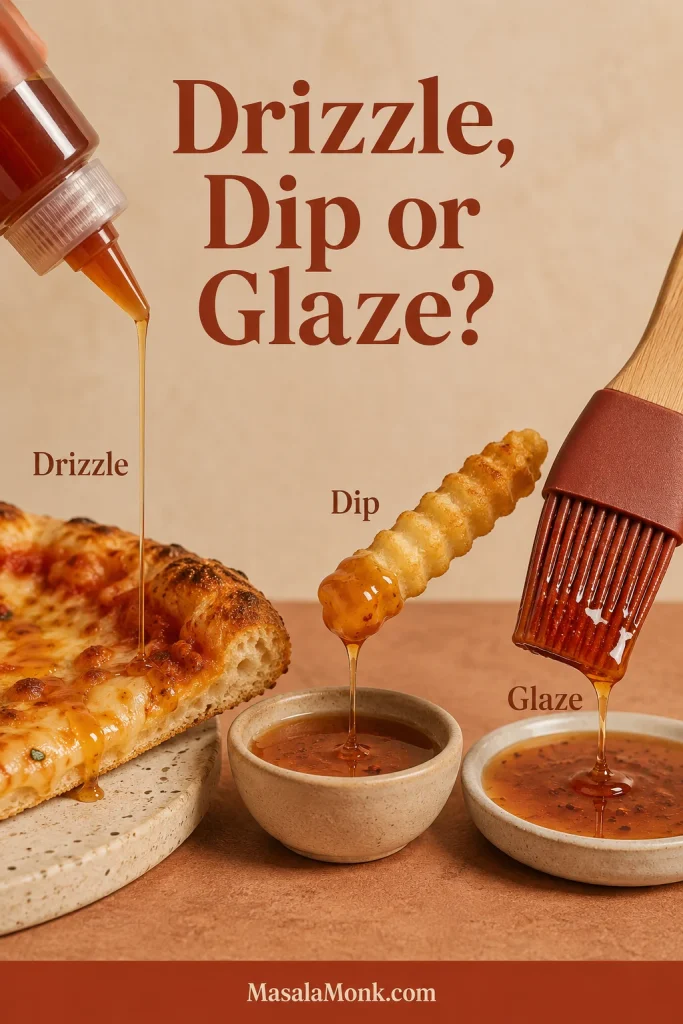
Drizzle is a last-second accent, dip stays separate until the bite, and glaze is meant to cling.
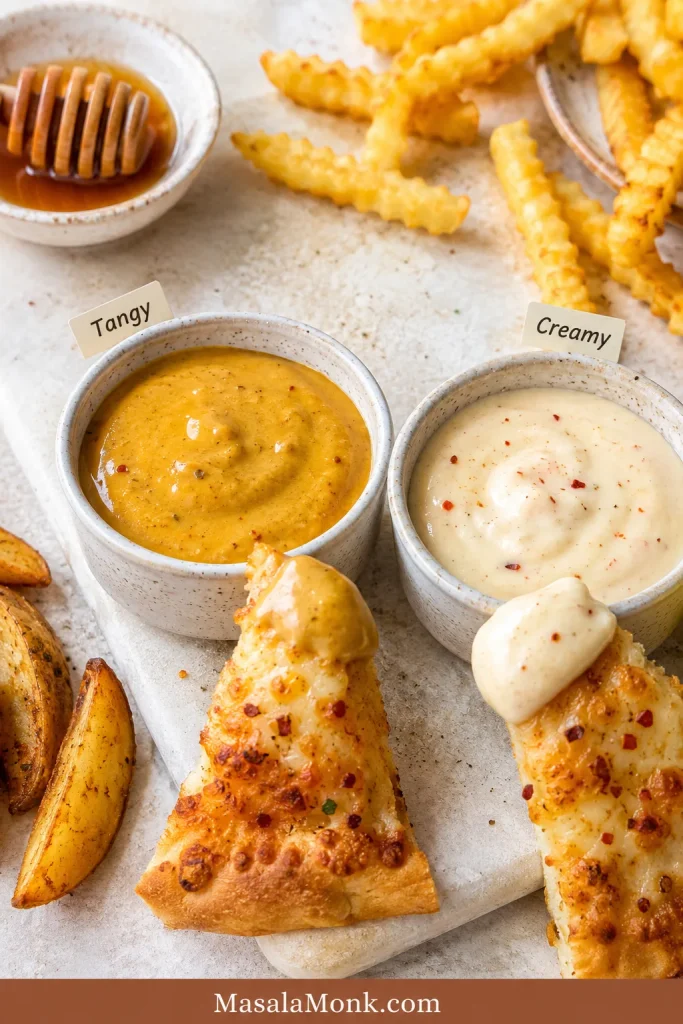
Hot Honey Dipping Sauce
Tangy mustard dip: mix 2 tablespoons Dijon mustard with 1 tablespoon hot honey. Stir in more hot honey for a sweeter dip.
Creamy hot honey dip: mix ¼ cup / 60 g mayonnaise with 1–2 tablespoons hot honey.
Mustard adds tang; a creamy hot honey dip softens the edge of heavily seasoned fried food.
Choose the infusion when you want the dried chilli itself to come through. Butter is better when the sauce needs to stay on a wing instead of running into the bowl.
Classic Chilli-Infused Hot Honey
½ cup honey — 4 fl oz / 120 ml; about 6 oz / 170 g by weight
½–1 teaspoon fully dried red pepper flakes
One small pinch fine salt, optional
½ teaspoon apple cider vinegar, optional for immediate use
Combine the honey and dried chilli flakes in a small saucepan.
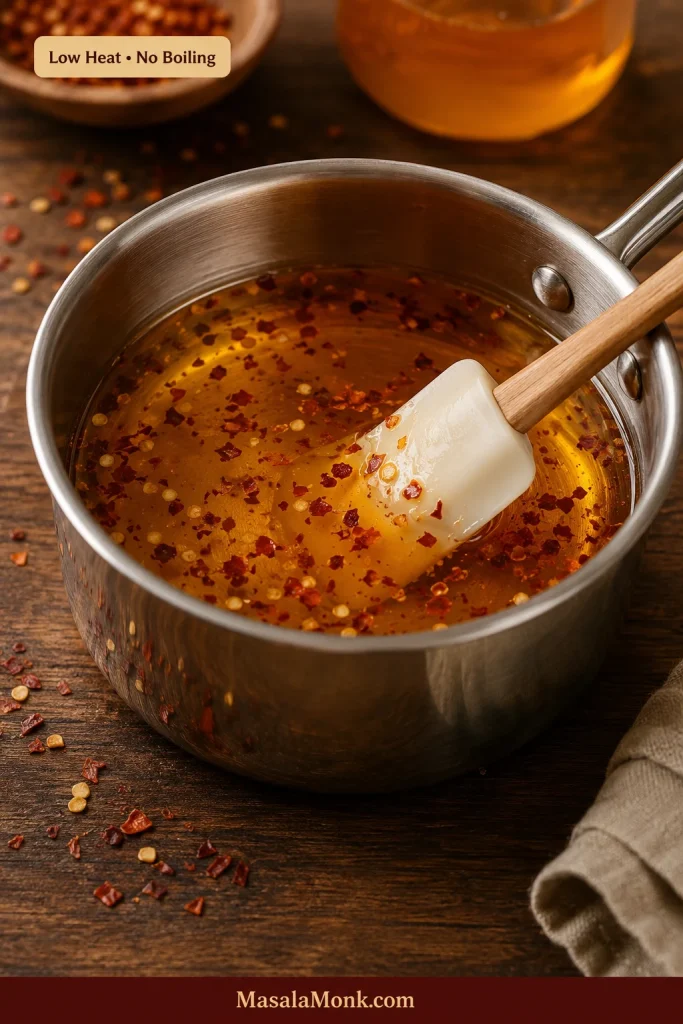
Warm over low heat for 3–4 minutes, stirring often. The honey should loosen and smell like warm chilli—not caramel.
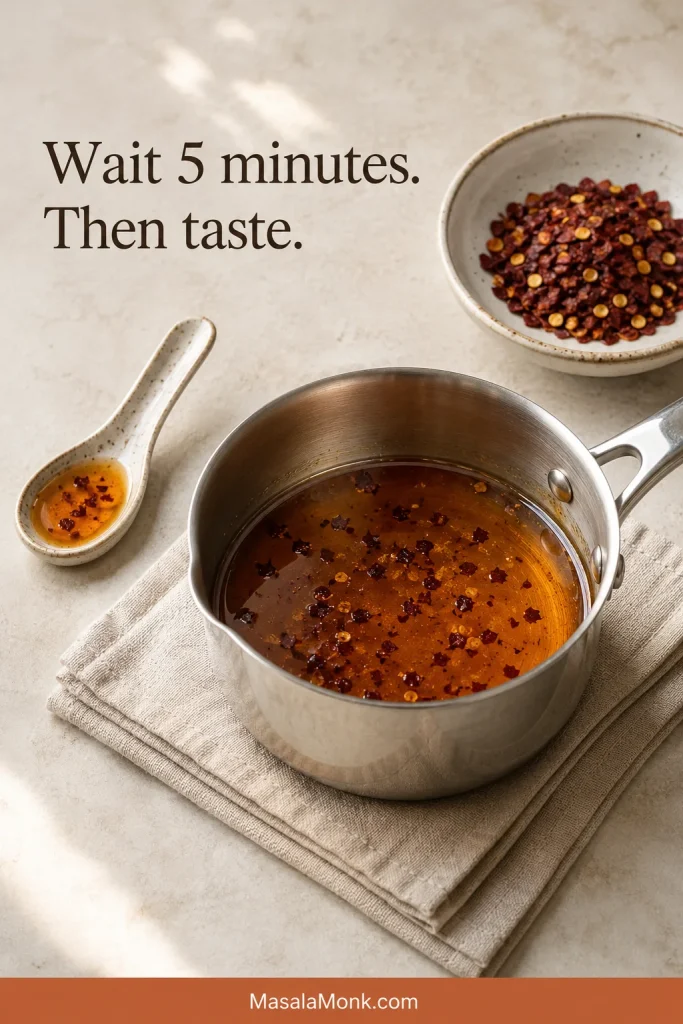
Remove it from the heat. Use it immediately for gentle warmth or leave it for 5–15 minutes for more chilli flavour.
Stir in the salt. For a sauce being served now, vinegar can lighten sweetness that still feels heavy.
Strain for a smooth drizzle.
Watch the surface: looser honey and easy stirring are enough. Active bubbling means the infusion is too hot.
The chilli may taste quiet at first. Give it a few minutes before adding more; a gentle infusion can become fierce while it rests.
After resting, stir before tasting again; settled flakes can make one spoonful much hotter than the batch.
Serving now or storing? Flakes may remain in a batch being served immediately, but strain them out before bottling or storing.
Let the sieve drain naturally rather than pressing the flakes; fewer fine solids make a cleaner pour.
Warm glaze can look alarmingly loose. Give it a minute. Glossy streaks in the tossing bowl are fine; a pool beneath the wings means you used too much or the glaze needs another spoonful of honey.
After resting, look for cling rather than stiffness: the glaze should coat the spoon but still move when tilted.
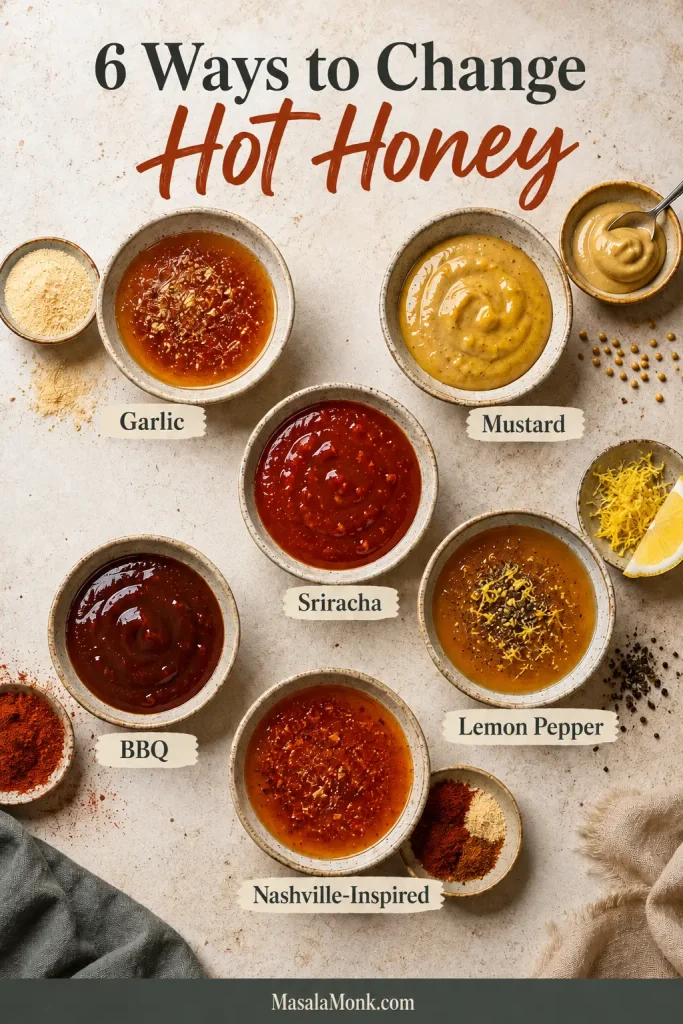
Make the plain sauce first. Change it only if the food calls for something more specific.
Try one flavour family at a time; garlic, mustard or BBQ should still taste like hot honey.
Garlic hot honey: stir in ¼ teaspoon garlic powder. It works particularly well on chicken and honey garlic pork chops.
Hot honey mustard: mix 2 tablespoons Dijon with 1–2 tablespoons hot honey.
Honey-Sriracha: replace the cayenne-style sauce with 1–2 tablespoons Sriracha for a thicker, sweeter and more garlicky sauce.
Hot honey BBQ: stir 2–3 tablespoons hot honey into ½ cup BBQ sauce. Brush it over chicken or pork near the end of cooking.
Lemon pepper: add ½ teaspoon finely grated lemon zest and ¼ teaspoon coarse black pepper. It is especially good on lemon pepper chicken wings.
Nashville-inspired: add ⅛ teaspoon each cayenne and smoked paprika, plus a small pinch of garlic powder.
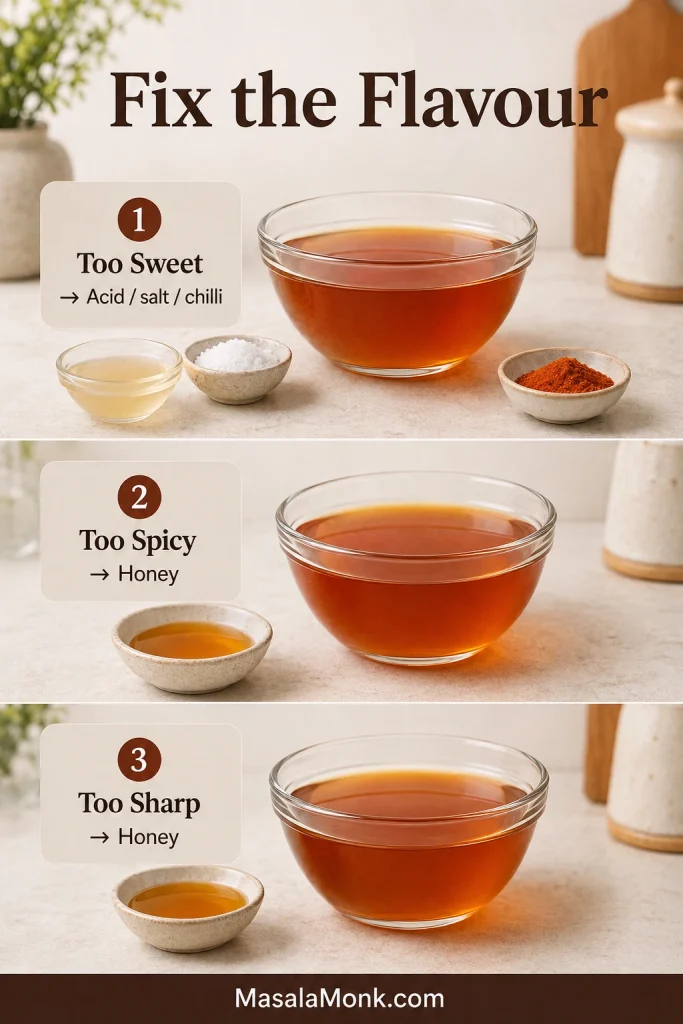
How to Fix Hot Honey Sauce
Hot honey is forgiving. Most batches are one small adjustment from balance, so judge the flavour first and the consistency second.
Fix one problem at a time: make a small correction, stir, then retaste. Multiple changes are harder to judge.
Swipe or scroll sideways to see the full table.
What happened
Why
What to do
Too sweet
It needs brightness, salt or heat
Stir in a little vinegar, salt or chilli
Too spicy
Too much chilli or a long infusion
Add honey and remove any chilli solids
Too acidic
The hot sauce or vinegar is too sharp
Add honey
Too thin
It is still warm or contains too much liquid
Cool first, then add honey if needed
Too thick while cool
The honey is cold or the ratio needs adjusting
Warm gently; thin only the serving portion if needed
Hard or chewy after cooking
It was heated too far
Rewarm and loosen the serving portion with a little liquid
Scorched or bitter
The honey overheated
Start again; burnt honey cannot be repaired
Butter separated
The glaze became too hot
Remove from the heat and whisk firmly
Wings became soggy
Too much sauce or too much waiting
Use less and toss immediately before serving
Gets hotter in storage
Chilli solids remain in the jar
Strain them out or dilute the sauce with honey
Grainy or crystallised
Natural honey crystallisation
Warm in a water bath or short microwave bursts
How to Store and Reheat Hot Honey Sauce
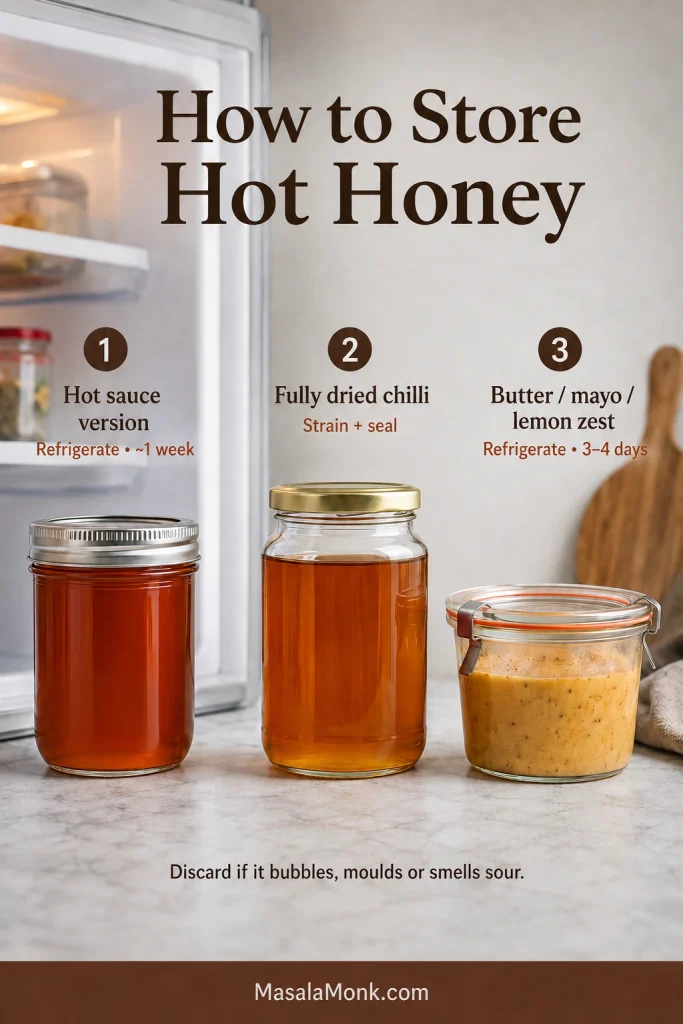
Bottled-hot-sauce version: refrigerate it and use it within about one week for the best flavour and texture. This is a cautious home-kitchen window because bottled sauces vary in acidity and moisture.
Fully dried-chilli infusion: strain it into a clean, tightly sealed food-grade container before storing. Keep moisture out. Refrigerate the batch if vinegar has been added.
Butter glaze, mayonnaise dip or lemon-zest variation: refrigerate promptly and use within 3–4 days.
Label the jar with the version you made; storage changes with butter, mayonnaise, lemon zest or dried-chilli infusion.
Discard any batch that develops bubbling, mould or an alcoholic or sour smell.
To loosen cold hot honey, microwave it in a microwave-safe container with any metal lid removed, in 10-second bursts. Set a tightly closed, heat-safe glass jar in warm—not boiling—water as another option. Butter glaze can be rewarmed over the lowest heat. Stop as soon as the sauce flows again.
The simplest version is honey and hot sauce, with a small pinch of salt only if the balance needs it.
Can You Make Hot Honey With Regular Hot Sauce?
Yes. A thin cayenne-style hot sauce is the easiest choice; use less if the bottle is unusually hot or sharp.
Do You Need to Cook Hot Honey?
No. Whisk the bottled-hot-sauce version together cold; heat only to loosen thick honey or infuse dried chilli.
Can You Make Hot Honey Without Vinegar?
Yes. Skip it when the hot sauce already gives the mixture enough brightness.
Can I Use Cayenne Instead of Chilli Flakes?
Yes. Cayenne gives immediate, even heat; chilli flakes create a slower infusion and visible texture.
Does Homemade Hot Honey Need Refrigeration?
Refrigerate the bottled-hot-sauce version in this recipe. Fully dried-chilli infusions have separate storage guidance, while butter glaze, mayonnaise dip and lemon-zest versions should remain refrigerated.
Why Did My Hot Honey Harden or Crystallise?
Honey naturally crystallises, and a cooked sauce can also stiffen if heated too long. Warm it gently until it flows again. If it smells scorched or tastes bitter, start over.
Crystals often appear at the sides or bottom first. Stop warming once the graininess has dissolved throughout.
A Small Jar That Solves Dinner
The jar looks almost too simple for how often it solves dinner. Then it lands on hot pizza or crisp chicken, the honey turns glossy and the chilli arrives a second later.
Keep the jar on the table and let everyone add their own; the right amount is personal.
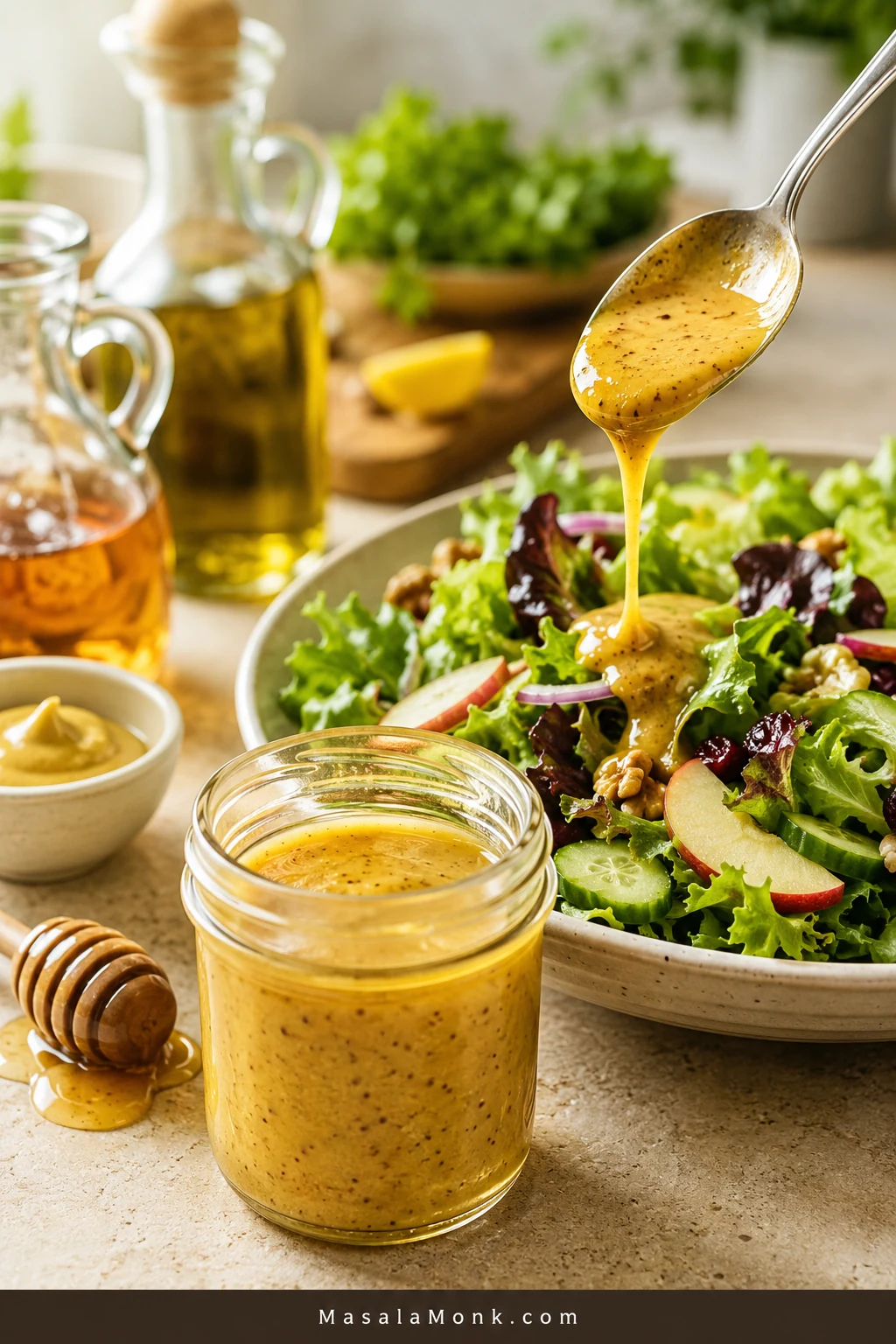
A good honey mustard dressing should taste bright before it tastes sweet. It should cling lightly to salad leaves, drizzle smoothly over grain bowls, and still have enough punch for chicken, roasted vegetables, salmon, ham, wraps, or sandwiches. Too much honey makes it taste like bottled yellow sugar; too much vinegar leaves it sharp and thin. The best batch tastes lively, not sugary.
This honey mustard dressing recipe starts with a simple no-mayo Dijon base: mustard, honey, apple cider vinegar, olive oil, salt, and pepper. It takes about five minutes, uses pantry ingredients, and gives you a clean dressing you can turn into a creamy sauce, a thicker dip, or a lighter vinaigrette.
The little trick is knowing what your plate actually needs, because the dressing you want for greens is not always the one you want for fries. For salads, start with the no-mayo dressing. When chicken tenders, fries, nuggets, burgers, or sandwiches are involved, make the creamy mayo sauce.
It is the kind of quick jar that rescues plain greens, leftover chicken, roasted vegetables, and rushed lunches without making anything feel heavy.
Quick Answer: How Do You Make Honey Mustard Dressing?
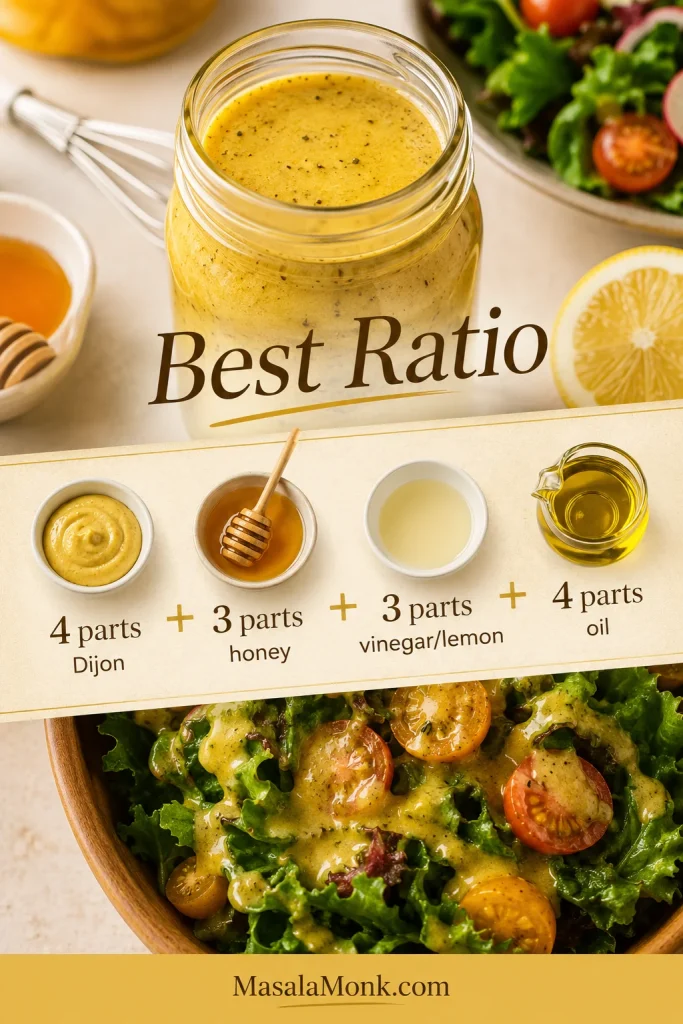
To make honey mustard dressing, whisk Dijon mustard, honey, apple cider vinegar or lemon juice, olive oil, salt, and black pepper until smooth. For the main 1-cup batch, use ¼ cup Dijon mustard, 3 tablespoons honey, 3 tablespoons vinegar or lemon juice, and ¼ cup olive oil. Add 1–2 tablespoons water at the end only if the dressing needs loosening.
Best honey mustard dressing ratio: 4 parts Dijon mustard, 3 parts honey, 3 parts vinegar or lemon juice, and 4 parts oil. For a sweeter, bolder dressing, use equal parts mustard, honey, vinegar, and oil.
Start with the 4:3:3:4 honey mustard dressing ratio, then adjust the jar with more vinegar for brightness, more honey for sweetness, or a pinch of salt when the flavor tastes flat.
The flavor should be tangy first, lightly sweet second, with a clean Dijon bite and enough body to coat greens without feeling heavy. Taste before serving; a tiny splash or pinch is usually enough.
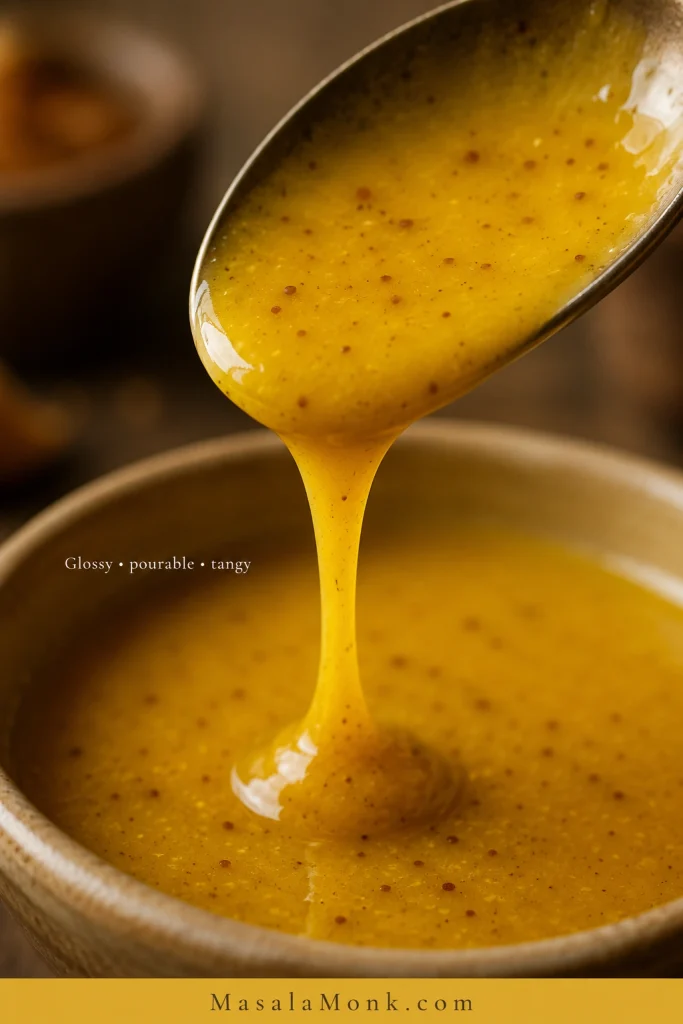
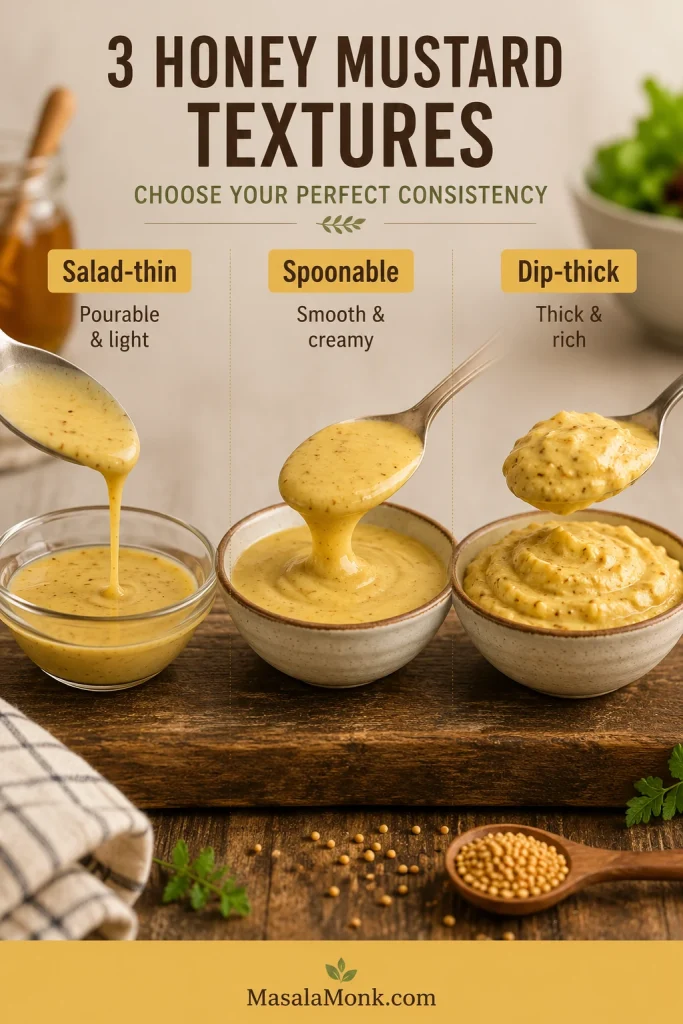
Texture cue: The finished dressing should fall in a glossy ribbon, not sit like a thick dip.
Look for a glossy ribbon when the dressing falls from the spoon; if it holds thick peaks instead, you have moved from salad dressing toward honey mustard dip.
5-Minute Honey Mustard Dressing Recipe
This is the main no-mayo dressing: glossy, zippy, lightly sweet, and loose enough to drizzle. Use it on salads, roasted vegetables, grain bowls, chicken, salmon, ham, wraps, or any meal-prep bowl that needs a quick sweet-tangy finish.
Prep Time 5 minutes
Cook Time 0 minutes
Total Time 5 minutes
Yield About 1 cup / 240 ml
Servings 7–8 servings
Serving Size About 2 tbsp / 30 ml
Equipment
Small bowl or clean jar with lid
Small whisk or fork
Measuring spoons and cups
Optional: small blender or immersion blender for a more blended dressing
Ingredients
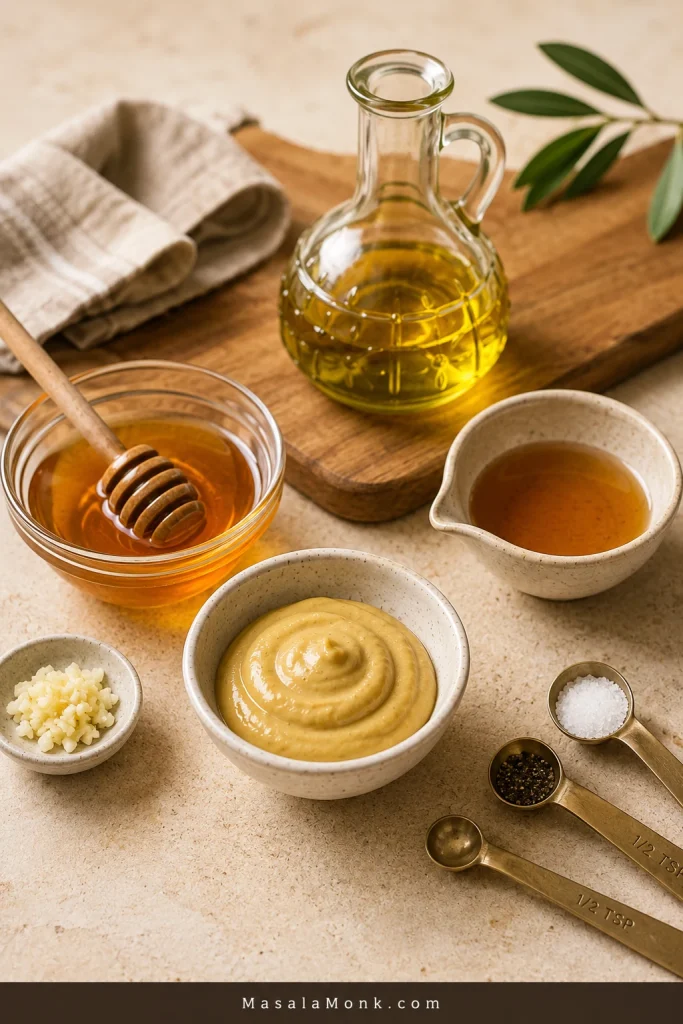
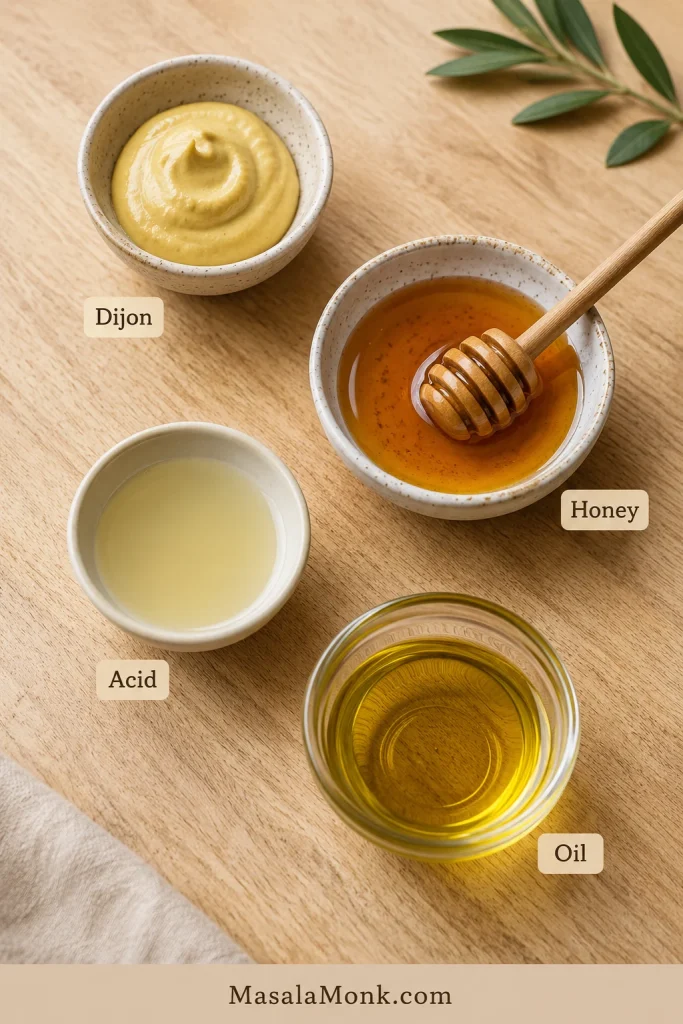
Because homemade honey mustard dressing uses only a few pantry ingredients, each one shows up clearly: Dijon adds bite, honey rounds it out, acid brightens it, and oil gives it body.
¼ cup Dijon mustard, about 60 ml / 60–65 g
3 tablespoons honey, about 45 ml / 60–65 g
3 tablespoons apple cider vinegar, or 2 tablespoons apple cider vinegar plus 1 tablespoon fresh lemon juice, about 45 ml total
¼ cup extra-virgin olive oil, about 60 ml
1–2 tablespoons cool water, only as needed to loosen
¼ teaspoon fine salt, plus more to taste
¼ teaspoon black pepper
Optional: 1 small grated garlic clove or ¼ teaspoon garlic powder
Instructions
Add the Dijon mustard, honey, vinegar or vinegar-lemon mix, salt, pepper, and garlic to a small bowl or jar.
Whisk until the mustard and honey look smooth and evenly mixed.
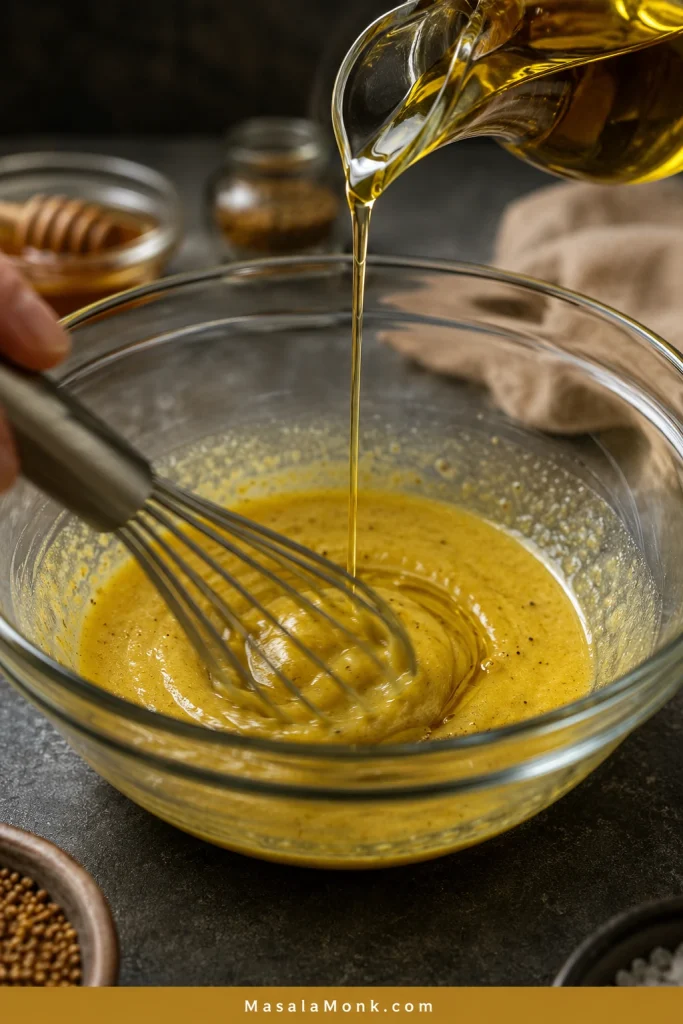
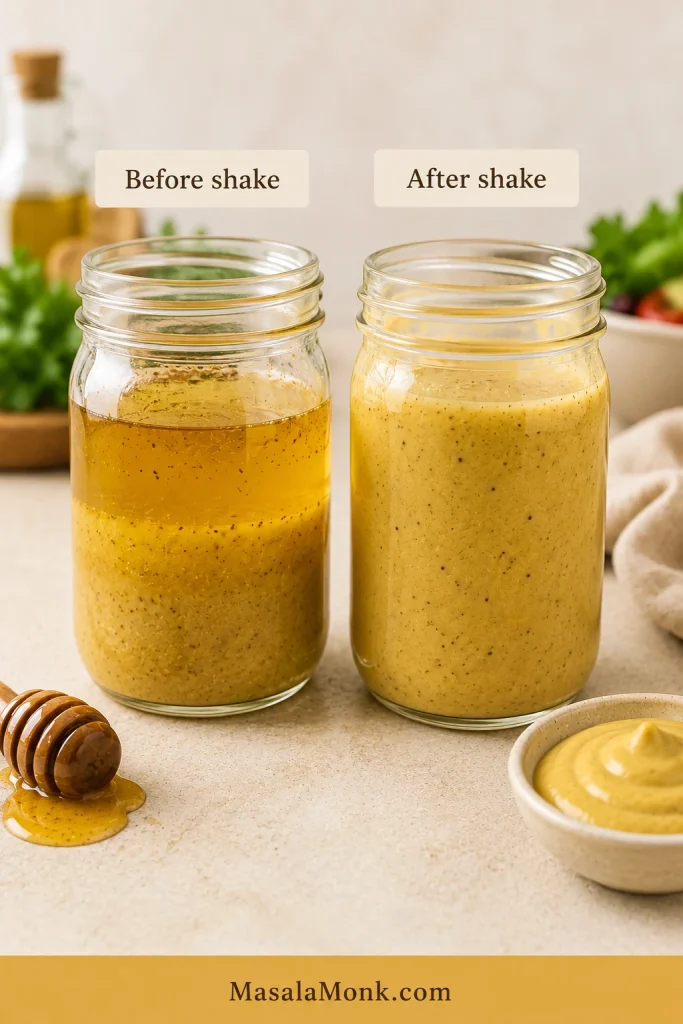
Slowly whisk in the olive oil until the dressing turns glossy and pourable. For the jar method, add the oil with everything else, close the lid tightly, and shake hard for 15–20 seconds.
Taste the dressing. Add more honey for sweetness, more vinegar or lemon juice for zip, or a small pinch of salt when the flavor tastes flat.
If the dressing feels too thick, loosen it with 1–2 tablespoons water.
Use right away or refrigerate in an airtight jar. Shake or whisk again before serving.
Recipe Notes
Use 2 tablespoons honey for a sharper salad dressing.
Use up to 4 tablespoons honey for a sweeter sauce-style dressing.
Strong olive oil can dominate the dressing. Light olive oil, avocado oil, or a neutral oil gives a milder result.
For meal prep, garlic powder keeps the flavor smoother and more predictable than fresh garlic.
Separation after chilling is normal. Shake the jar hard before using.
Strip it down and honey mustard dressing is just four things: mustard for bite, honey for roundness, acid for brightness, and oil for body. Salt and pepper are the difference between “fine” and “finished,” but the core flavor comes from those four ingredients.
Dijon mustard: use it for the cleanest salad-style flavor.
Honey: use more for dipping sauce and less for sharper greens.
Apple cider vinegar or lemon juice: use it to keep the dressing bright.
Olive oil: use enough to help the dressing cling instead of running off.
At its simplest, 4-ingredient honey mustard dressing is mustard for bite, honey for roundness, acid for brightness, and oil for a smooth drizzle.
For a quick small batch, whisk 2 tablespoons Dijon mustard, 1 tablespoon honey, 2 tablespoons apple cider vinegar or lemon juice, and 2 tablespoons olive oil. Add salt and pepper to taste. This makes enough for one large salad or two smaller side salads.
Honey Mustard Dressing Ratio
Once you know the ratio, the recipe becomes less of a rule and more of a dial. You can make the same jar sweeter, sharper, thicker, thinner, creamier, or lighter without starting over.
Style
Easy Ratio
Use It For
Everyday dressing
4 parts mustard : 3 parts honey : 3 parts vinegar : 4 parts oil
Everyday salads and bowls
Equal-parts dressing
1 part mustard : 1 part honey : 1 part vinegar : 1 part oil
Sweeter, bolder dressing
Sharper salad dressing
More vinegar or lemon, less honey
Greens, slaws, roasted vegetables
Creamy sauce
Mayo or yogurt base + mustard + honey + acid
Chicken, fries, sandwiches
Vinaigrette
More oil and vinegar, no creamy base
Spinach, kale, cabbage, grain bowls
Texture cue: Salad dressing should drizzle, sauce should spoon, and dip should hold onto crispy food.
Texture changes the job of the recipe: salad-thin dressing coats greens, spoonable sauce works for bowls and sandwiches, and dip-thick honey mustard belongs with crispy food.
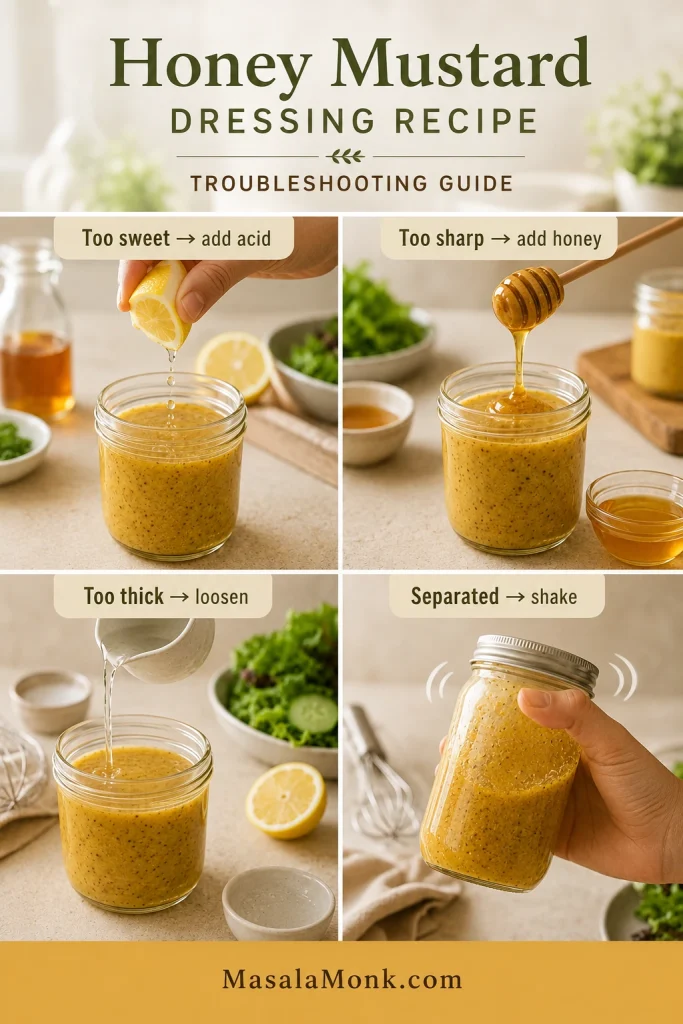
Easy memory trick: too sweet needs acid, too punchy needs honey, and flat almost always needs salt before anything else.
Not sure whether the batch should be thin, spoonable, or dip-thick? Go to the style guide.
Should You Make Dressing, Sauce, Dip, or Vinaigrette?
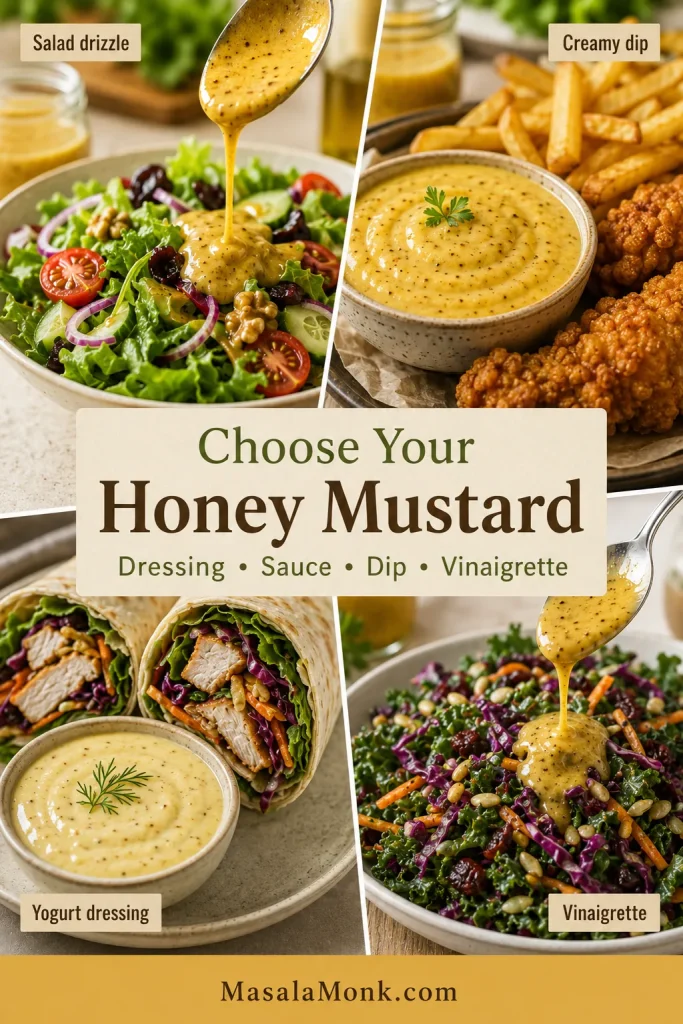
This is where honey mustard changes personality. Thin it and it belongs on greens. Make it creamy and suddenly it is the sauce everyone reaches for beside fries or chicken.
Do not force a salad dressing to behave like a dip. If fries, nuggets, or chicken tenders are involved, give the bowl a creamy base.
Match the honey mustard style to the food: keep it pourable for salads, make it creamy for dipping, use yogurt for a lighter sauce, or thin it into vinaigrette for sturdy greens.
The Plate Needs…
Make This
Texture
Best For
A clean salad dressing
No-mayo Dijon dressing
Pourable
Green salads, bowls, roasted vegetables
A classic dip
Creamy mayo sauce
Thick and smooth
Chicken tenders, fries, nuggets, pretzels
A lighter creamy dressing
Greek yogurt dressing
Creamy and tangy
Wraps, lunch bowls, chicken salads
A sharper vinaigrette
Oil-vinegar dressing
Light and glossy
Slaws, spinach, kale, grain bowls
A sandwich sauce
Dijon + yellow mustard + mayo
Medium-thick
Ham, turkey, burgers, wraps
Good rule: salads need a dressing that drizzles; fries and chicken need a sauce that stays put.
Make the no-mayo dressing first when you are unsure. Once you taste that base, it is easy to make the next batch richer, sharper, sweeter, or thick enough for dipping without guesswork.
Ingredients and Substitutions
Because the ingredient list is short, the jar changes fast. A bold mustard can make it bite, a floral honey can push it sweeter, and a strong olive oil can take over if you are not expecting it. Taste the base before adding more salt, honey, or vinegar.
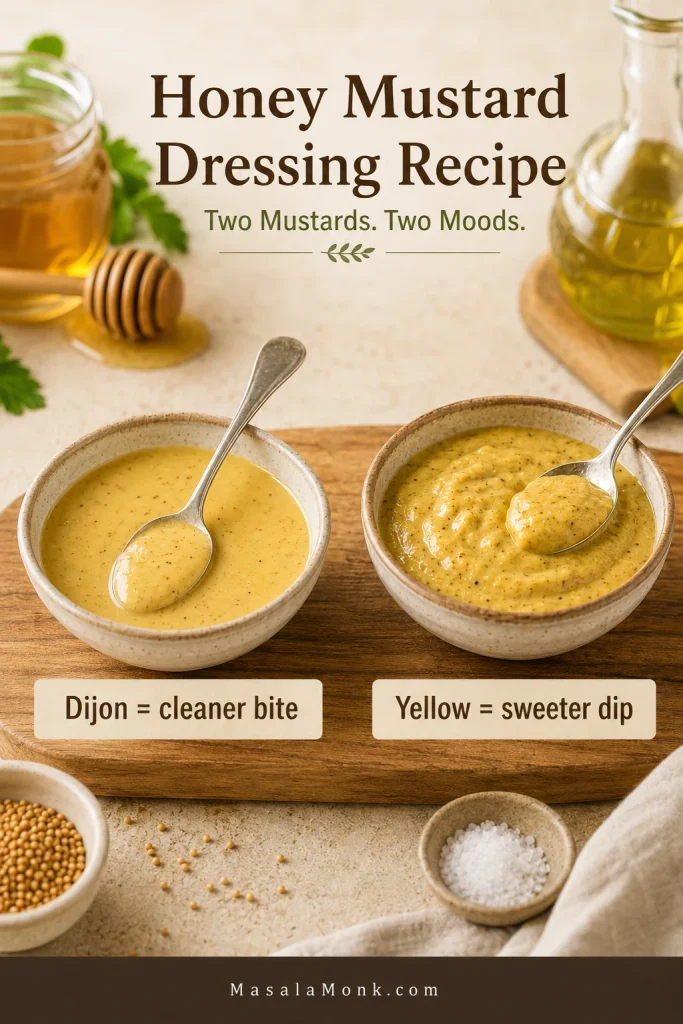
Dijon mustard is the safest starting point because it blends easily and gives the dressing a clean mustard bite without turning harsh. Yellow mustard works too, but it tastes brighter and sweeter, so it is better in creamy dips and sandwich-style sauces.
Honey softens the mustard and vinegar so the dressing tastes rounded instead of biting. Use 2 tablespoons for a sharper salad dressing, 3 for the balanced batch, and 4 when you want it sweeter and more sauce-like.
Apple cider vinegar gives the dressing a rounder tang. Lemon juice makes it brighter and more awake. Use either one, or mix them when you want both depth and freshness.
Olive oil gives the dressing enough body to cling to leaves instead of running straight to the bottom of the bowl. Extra-virgin olive oil adds flavor; light olive oil, avocado oil, or a neutral oil keeps the dressing milder.
Salt, pepper, and garlic finish the jar. When the dressing tastes dull, salt is usually the quiet fix. Garlic is optional, but garlic powder is easier for meal prep because it stays smoother and gentler after a day or two in the fridge.
Bowl Method vs Jar Method
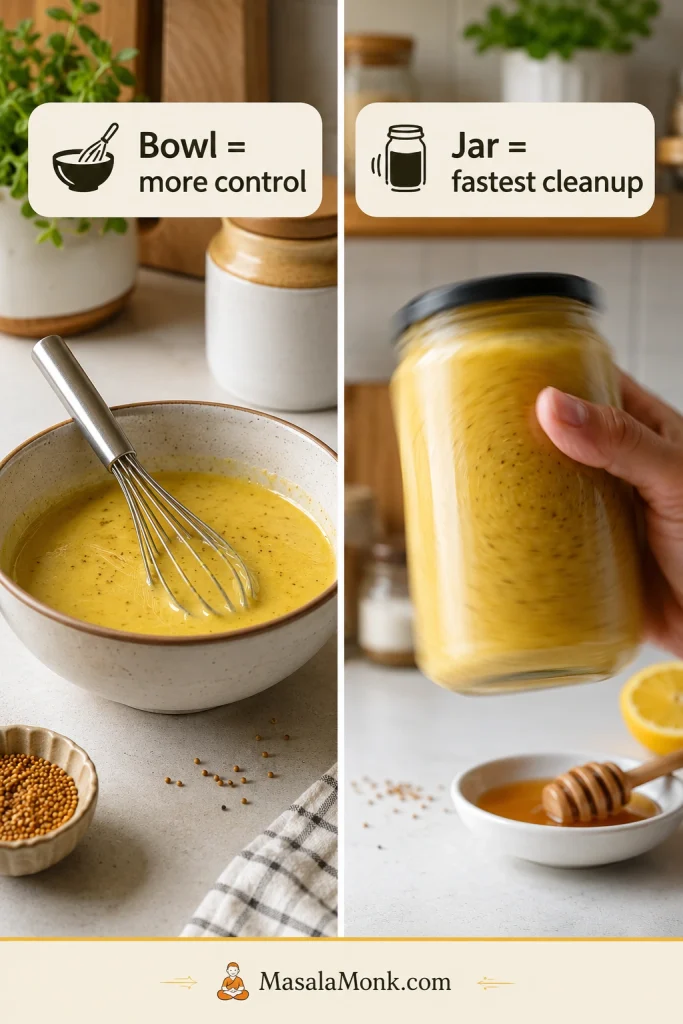
The order matters more than the effort. Mix the mustard, honey, vinegar, salt, and pepper first, then add the oil. This gives the dressing a smoother texture and makes it easier to adjust before serving.
The bowl method is best when you want to fine-tune flavor and thickness; the jar method wins when you need a quick dressing that stores neatly.
Bowl Method
Whisk the Dijon mustard, honey, vinegar or vinegar-lemon mix, salt, pepper, and garlic together first.
Drizzle in the olive oil slowly while whisking.
Keep whisking until the dressing looks smooth and lightly thickened.
Taste before serving and adjust one thing at a time.
Method cue: Mix the flavor base before adding oil.
First, build flavor before texture: whisking mustard, honey, vinegar, salt, and pepper together makes the dressing easier to balance before the oil goes in.
Emulsion cue: Add oil slowly for a smoother dressing.
Next, the slow oil pour is what turns the mixture glossy, helping homemade honey mustard dressing cling to leaves instead of separating right away.
Jar Method
Add all ingredients to a clean jar.
Close the lid tightly.
Shake hard for 15–20 seconds, until the dressing looks glossy and combined.
Refrigerate in the same jar and shake again before using.
Why mustard helps: Dijon helps the oil and vinegar hold together long enough to coat greens evenly. If the dressing separates later, nothing is wrong; just shake it again.
You do not need mayo for a good honey mustard dressing. The oil-vinegar base is usually better for salads because it stays lighter, brighter, and easier to drizzle.
Use the small-batch formula below when you want just enough for one salad, one wrap night, or a quick bowl.
Small-Batch No-Mayo Formula
2 tablespoons Dijon mustard / 30 ml
1 tablespoon honey / 15 ml / about 20 g
2 tablespoons apple cider vinegar or lemon juice / 30 ml
2 tablespoons olive oil / 30 ml
Salt and black pepper, to taste
This makes enough for one large salad or two smaller side salads. Taste it with a lettuce leaf, cucumber slice, or piece of chicken before adjusting; a spoonful can taste stronger than it will taste on food.
Creamy Honey Mustard Dressing
Use the creamy version when honey mustard needs to sit beside crispy food, not disappear into greens. Mayo gives it the thicker, smoother body you want for chicken tenders, fries, nuggets, burgers, wraps, and sandwiches. Thin it slightly when you want a spoonable salad dressing.
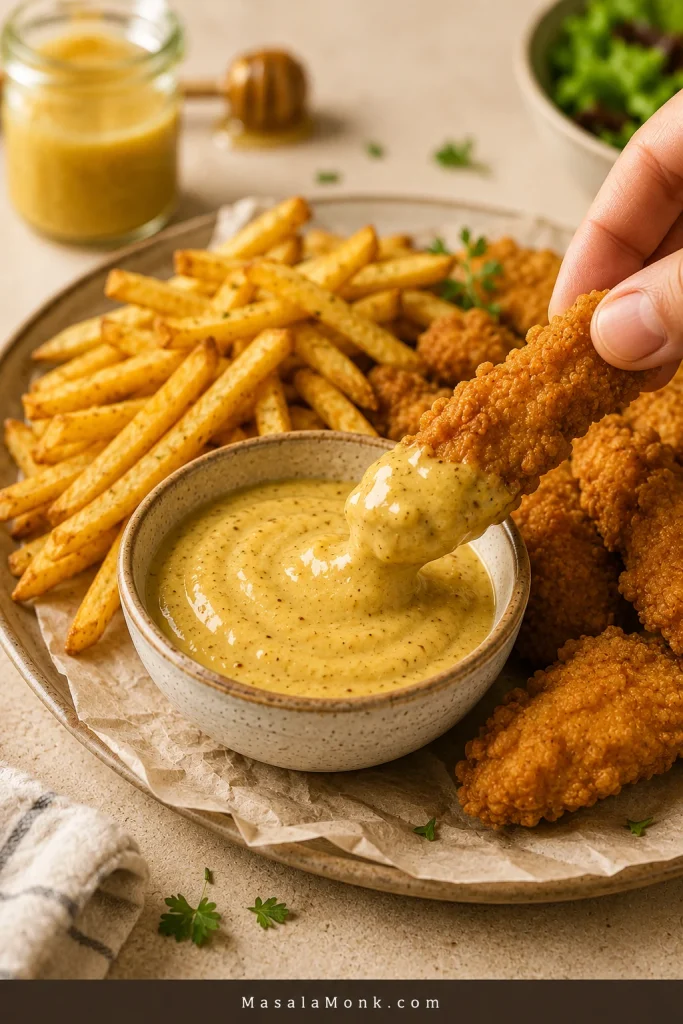
For fries, nuggets, and chicken tenders, make creamy honey mustard sauce thick enough to stay on the food instead of sliding off like salad dressing.
Creamy Mayo Honey Mustard
½ cup mayonnaise / 120 ml / about 110–115 g
2 tablespoons Dijon mustard / 30 ml
1 tablespoon yellow mustard / 15 ml
2–3 tablespoons honey / 30–45 ml / about 40–60 g
1–2 teaspoons lemon juice or apple cider vinegar / 5–10 ml
Salt and pepper, to taste
Whisk everything together until silky. Two tablespoons honey keeps it tangier; three makes it sweeter and more dip-like. Add a teaspoon or two of water only when you want it loose enough to drizzle instead of scoop.
Already making homemade mayo? This is one of the easiest ways to turn it into a quick dipping sauce.
Use Greek yogurt when you want the creamy feel of a dip but still want something fresh enough for lunch bowls, wraps, and chicken salads. It is the one to make when mayo feels too heavy but the no-mayo dressing feels too thin.
Greek yogurt honey mustard dressing gives wraps and lunch bowls a creamy feel while keeping the flavor brighter and lighter than a mayo-based dip.
½ cup Greek yogurt / 120 ml / about 125 g
2 tablespoons Dijon mustard / 30 ml
2–3 tablespoons honey / 30–45 ml / about 40–60 g
1 tablespoon lemon juice or apple cider vinegar / 15 ml
1 tablespoon olive oil / 15 ml, optional for a smoother texture
Salt and pepper, to taste
Yogurt dressing is naturally tangier than mayo-based sauce, so taste before adding extra vinegar. Thin a thick batch with water, lemon juice, or a little olive oil.
This tangy, creamy dressing also works well in a chicken salad sandwich, especially when the filling needs creaminess without feeling too heavy.
Honey Mustard Vinaigrette
Make the vinaigrette when the salad needs brightness more than richness. It is especially good with sturdy greens, cabbage, apples, nuts, roasted vegetables, and grain bowls because it cuts through heavier ingredients instead of coating them like a dip.
For kale, cabbage, apples, nuts, and roasted vegetables, honey mustard vinaigrette works better than a thick sauce because the extra acid keeps hearty ingredients lively.
⅓ cup to ½ cup olive oil / 80–120 ml
3 tablespoons apple cider vinegar, white wine vinegar, or white balsamic vinegar / 45 ml
2 tablespoons Dijon mustard / 30 ml
2–3 tablespoons honey / 30–45 ml / about 40–60 g
Salt and black pepper, to taste
Shake everything in a jar until combined. Vinaigrettes naturally separate as they sit, so give the jar another hard shake before pouring. If the olive oil firms up in the fridge, let the jar sit at room temperature for 10–15 minutes, then shake again.
This lighter dressing is especially good when the salad has cabbage, apples, nuts, roasted vegetables, or anything that needs a sweet-tangy spark. Use it on a crunchy chickpea salad, cabbage slaw, kale salad, or roasted vegetable bowl. It can also replace the creamier dressing in a coleslaw recipe when the bowl needs more tang and less richness.
For the main dressing, Dijon is the best all-purpose choice because it blends smoothly, tastes clean, and has enough bite to stand up to honey without turning harsh.
Dijon mustard: best for the main dressing and vinaigrette.
Yellow mustard: brighter, sweeter, and more classic for creamy dip or sandwich sauce.
Whole grain mustard: rustic and textured, especially good with roasted vegetables or grain bowls.
Spicy brown mustard: bolder and better for pork, ham, and sandwiches.
Half Dijon + half yellow: a good middle path for creamy honey mustard sauce.
Only yellow mustard in the fridge? Start with less honey and taste as you go, because yellow mustard already has a sweeter, brighter flavor than Dijon.
Dijon mustard gives honey mustard dressing a cleaner bite, while yellow mustard tastes sweeter and works especially well in creamy dipping sauces.
Healthy and Dietary Options
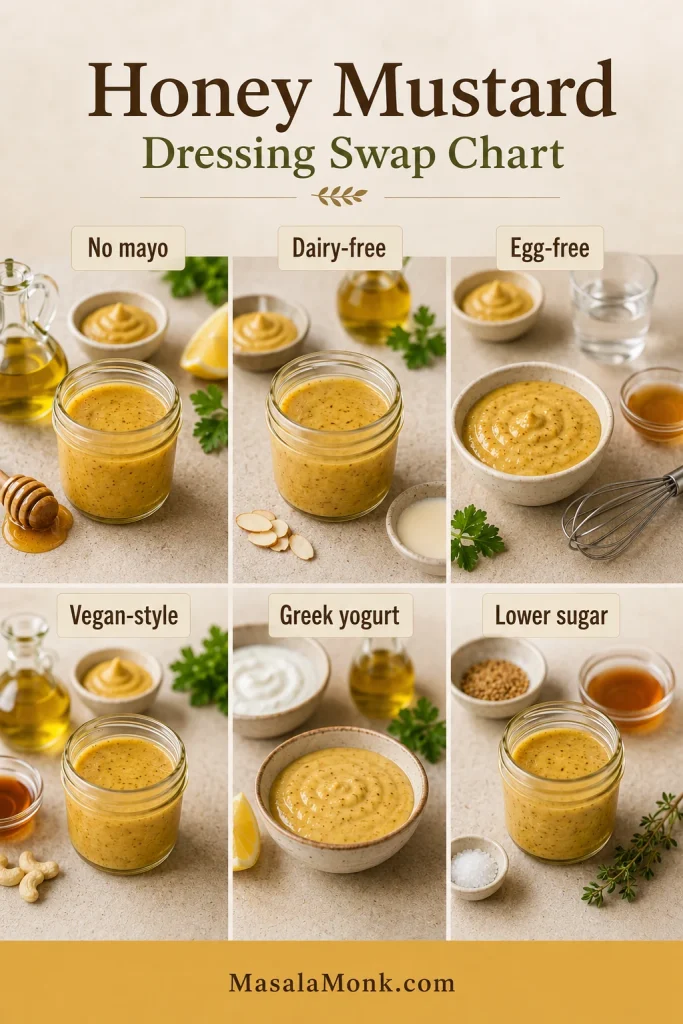
Begin with the no-mayo dressing when you want something lighter, then adjust from there. The same basic jar can become dairy-free, egg-free, lower-sugar, lower-oil, or creamy with Greek yogurt.
Once the no-mayo honey mustard base is balanced, it becomes easy to steer the recipe toward dairy-free, egg-free, vegan-style, Greek yogurt, or lower-sugar versions.
No mayo: use the Dijon, honey, vinegar, and oil base.
Dairy-free: the main no-mayo dressing is dairy-free as written.
Lighter creamy dressing: use Greek yogurt instead of mayo.
Vegan-style: honey is not vegan, so use maple syrup or agave instead.
Lightened-up: reduce some oil and honey, then loosen the dressing with vinegar, lemon juice, or water so it still drizzles well.
Lower sugar: use less honey, then add a little extra mustard and acid so the dressing still tastes complete.
Do not remove all the sweetness unless you are replacing it with something else. Mustard and vinegar need a little sweetness to taste rounded instead of harsh.
How to Fix Honey Mustard Dressing
This dressing is easy to fix because nothing is cooked. Taste it, change one thing, then taste again. Most batches need one small adjustment, not a fresh start.
Most honey mustard dressing problems need one small fix: add acid if it is too sweet, honey if it is too sharp, liquid if it is too thick, or shake if it separates.
Problem
What to Do
Overly sweet
Add vinegar or lemon juice, 1 teaspoon at a time.
Sharp or sour
Add honey, mayo, or Greek yogurt.
Too thick
Add water, vinegar, lemon juice, or oil, 1 teaspoon at a time.
Runny or thin
Add Dijon mustard, mayo, Greek yogurt, or a little more honey.
Mustard-heavy
Add honey or a creamy base.
Oily-tasting
Add more Dijon and a splash of vinegar or lemon juice.
Flat flavor
Add a pinch of salt first, then adjust acid if needed.
Separated dressing
Shake hard in a jar or whisk again.
Firm olive oil
Let the jar sit for 10–15 minutes, then shake.
Unsure what is missing? Add salt first. A tiny pinch often makes the honey, mustard, and vinegar taste like one dressing instead of three separate ingredients.
Think of this as the jar you pull out when dinner is already cooked but the plate still needs a little lift. The salad-style dressing is bright and pourable, while the creamy sauce works better as a dip.
One batch can work across the whole meal: drizzle no-mayo honey mustard dressing over salads and bowls, then use the creamy version for fries, chicken, wraps, and pretzels.
Green salads with lettuce, spinach, arugula, kale, or cabbage
Grain bowls with rice, quinoa, roasted vegetables, or grilled chicken
Chicken tenders, nuggets, grilled chicken, or chicken wraps
Salmon, shrimp, or simple seafood bowls
Ham, turkey sandwiches, burgers, and wraps
Roasted potatoes, carrots, broccoli, Brussels sprouts, or sweet potatoes
Fries, pretzels, and snack plates when you make the creamy dip
Slaws and pasta salads when you want something sweet and tangy
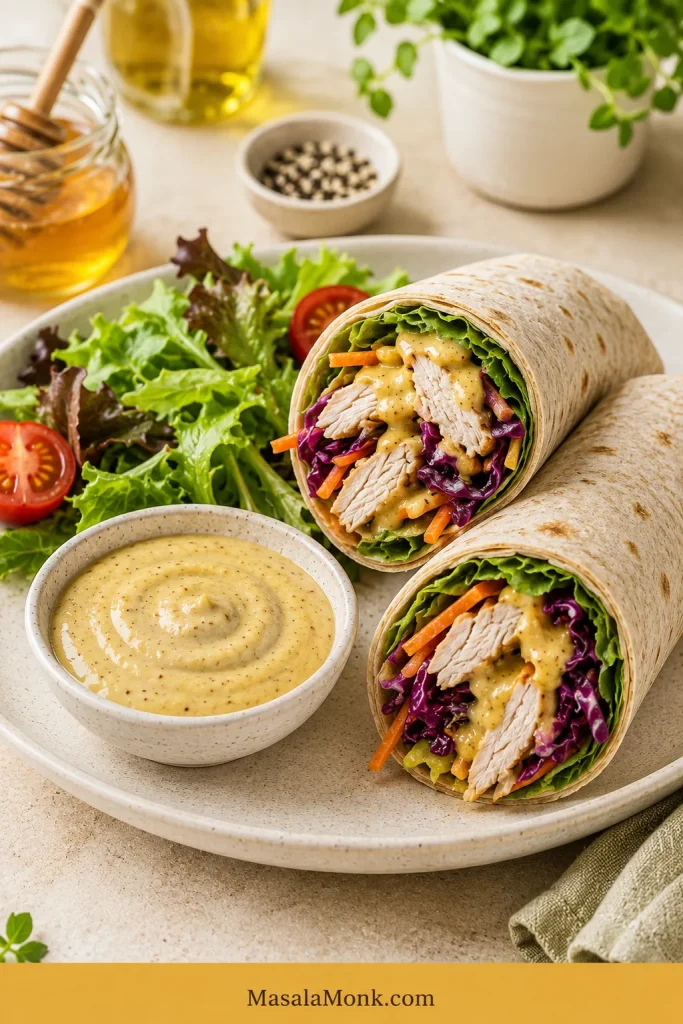
At dinner, spoon it over sliced baked chicken breast when the plate needs a quick lift. The creamy sauce belongs in wraps, burgers, and chicken sandwich recipes, where a loose vinaigrette would disappear.
In bowls, drizzle it over rice, greens, cucumbers, roasted vegetables, or a simple salmon bowl. Delicate greens work best with the no-mayo dressing. Hearty salads with cabbage, kale, apples, nuts, or roasted vegetables are especially good with the vinaigrette.
How to Store Homemade Honey Mustard Dressing
Keep the dressing in a clean airtight jar in the fridge. It may look a little separated the next day. That is normal; it just needs a shake.
Storage cue: If the dressing separates after chilling, it is usually normal oil-and-vinegar separation, not a failed batch.
Finally, separated dressing is not ruined; once the chilled oil and mustard base loosen slightly, a firm shake brings the jar back to a smooth, glossy texture.
Style
Best Storage Time
Notes
No-mayo dressing
7–10 days
Shake before using.
Creamy mayo sauce
5–7 days
Keep refrigerated and use a clean spoon.
Greek yogurt dressing
5–7 days or by yogurt expiry
May thicken as it sits.
Vinaigrette
About 1 week
Olive oil may firm up in the fridge.
Do not freeze creamy honey mustard dressing. Mayo and yogurt can split after thawing. The no-mayo dressing is so quick that it is better to make a fresh batch when you need it.
Not always. Salad-style honey mustard dressing is often made without mayo using mustard, honey, vinegar or lemon juice, and oil. Creamy honey mustard sauce usually adds mayo or Greek yogurt.
How do I make honey mustard dressing without mayo?
Use Dijon mustard, honey, vinegar or lemon juice, olive oil, salt, and pepper. It will be lighter and more pourable than a mayo-based sauce, which makes it better for salads, slaws, roasted vegetables, and grain bowls.
What is honey mustard dressing made of?
Honey mustard dressing is usually made with mustard, honey, vinegar or lemon juice, oil, salt, and pepper. Creamy sauces add mayonnaise or Greek yogurt. A simple 4-ingredient batch uses Dijon mustard, honey, vinegar or lemon juice, and olive oil.
Is honey mustard dressing dairy-free?
The main no-mayo dressing is dairy-free as written because it uses mustard, honey, vinegar or lemon juice, and oil. Greek yogurt dressing is not dairy-free unless you use a dairy-free yogurt.
Can I use maple syrup instead of honey?
Yes. Maple syrup or agave can replace honey if you want a vegan-style mustard dressing. Start with the same amount, then taste and adjust because maple syrup tastes different from honey.
Is honey mustard dressing the same as honey mustard sauce?
They overlap, but texture is the difference. Dressing is usually thinner and pourable for salads. Sauce is thicker and often contains mayo or yogurt, so it works better as a dip or sandwich spread.
Dijon or yellow mustard: which one works better?
Dijon gives a cleaner, more balanced dressing. Yellow mustard tastes brighter and sweeter, which is why it works well in creamy dipping sauces. A mix of Dijon and yellow mustard is a good choice for sandwich-style honey mustard.
What can I use instead of vinegar?
Lemon juice is the easiest substitute. It gives the dressing a fresh, lifted flavor. Apple cider vinegar gives it a deeper tang, and a mix of both works well.
How long does homemade honey mustard dressing last?
The no-mayo dressing is best within 7–10 days in the fridge. Mayo and Greek yogurt sauces are best within 5–7 days. Store everything in a clean airtight jar and shake before using.
Why did my dressing separate?
Oil and vinegar naturally separate over time. Shake the dressing hard in a jar or whisk it again before serving. For a smoother texture, whisk the oil in slowly or blend the dressing briefly.
How do I make it creamy?
Whisk in mayonnaise for a classic dipping sauce, or Greek yogurt for a tangier, lighter version. Thin with lemon juice, vinegar, or water when you want it pourable.
Can honey mustard dressing be used as a marinade?
Yes, the no-mayo dressing can work as a quick marinade for chicken, salmon, pork, or vegetables. Avoid mayo or yogurt sauces for marinating. Do not reuse marinade that has touched raw meat unless it has been boiled thoroughly. Cook poultry to a safe minimum internal temperature of 165°F / 74°C. For dipping, make a separate fresh batch.
A Five-Minute Dressing You Can Use All Week
Once you make this once, you stop needing the bottle. The base is simple enough for a weekday salad, but flexible enough to become a dip, sauce, or vinaigrette depending on what is on the plate.
Keep it pourable for greens, make it creamy for dipping, or add a little extra acid when a bowl needs lift. After a batch or two, you will know when it needs more honey, more vinegar, a pinch of salt, or just a good shake.
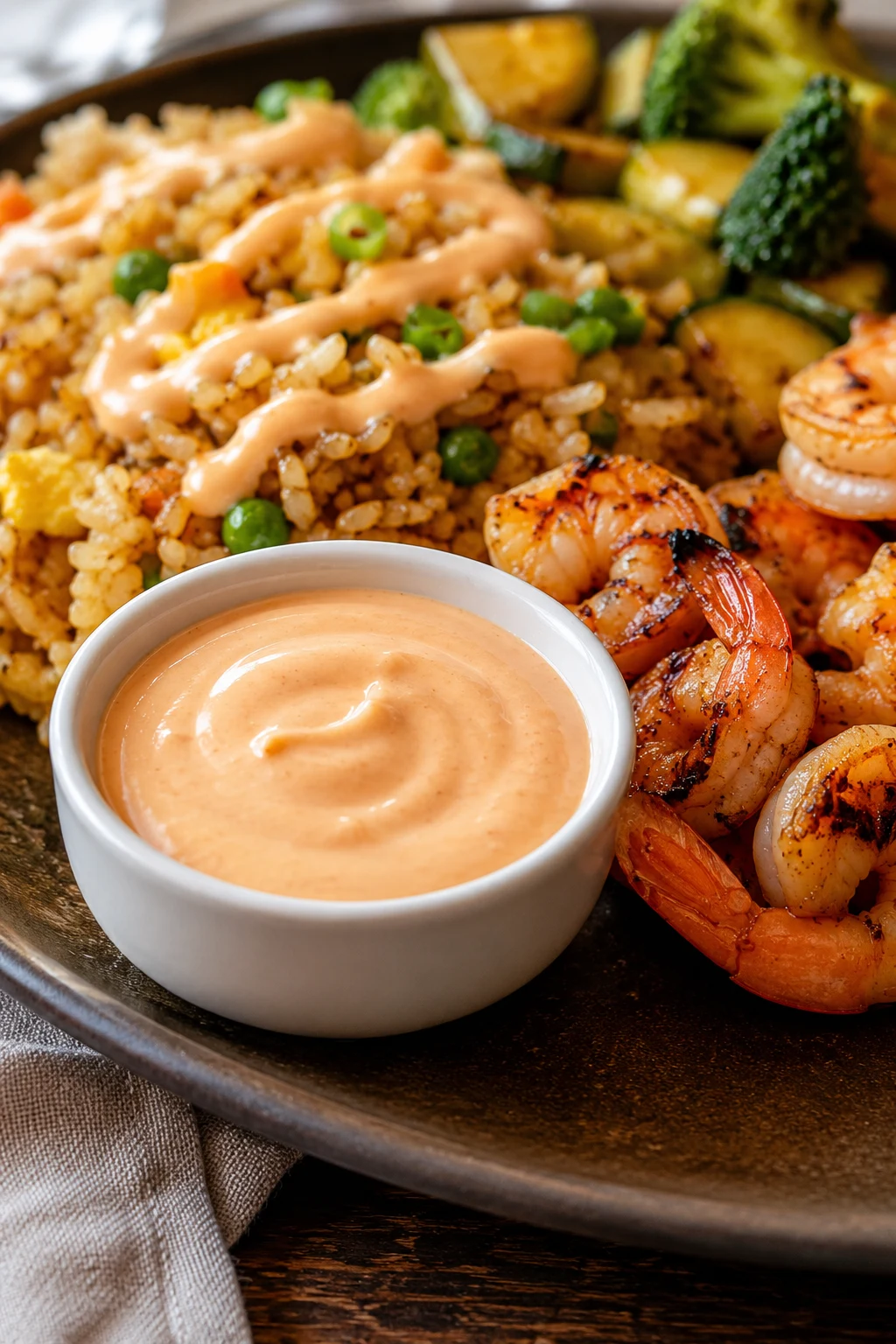
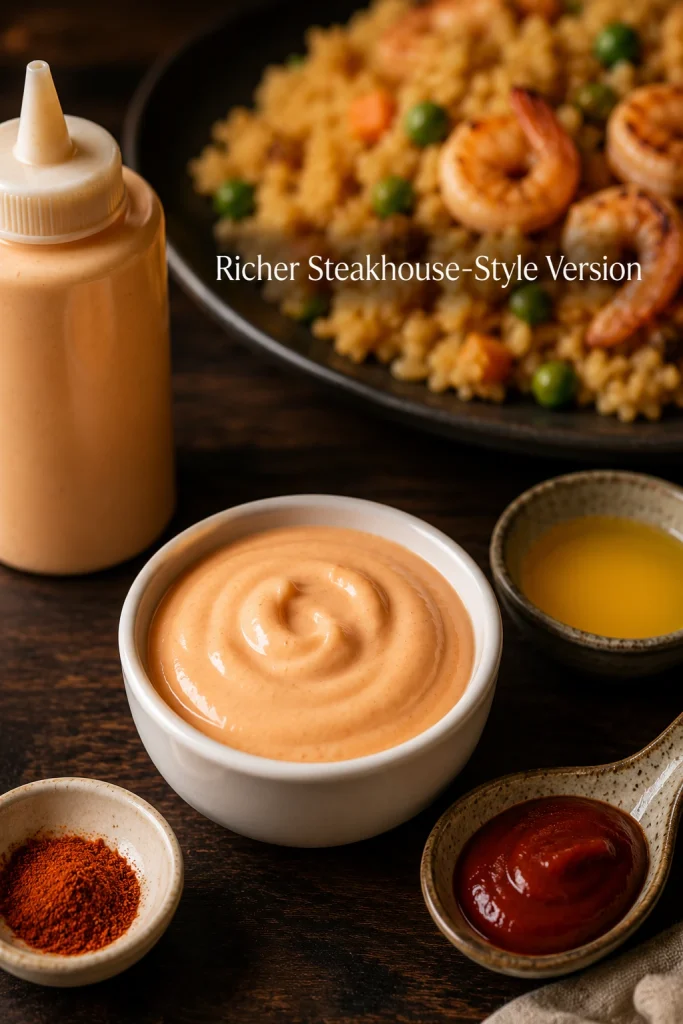
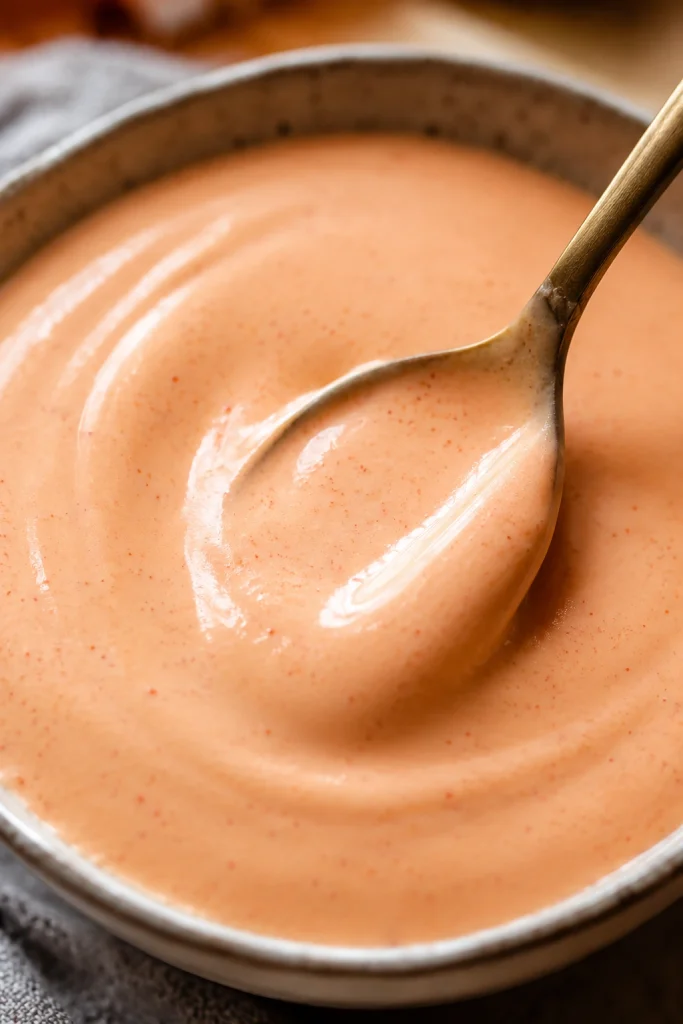
This yum yum sauce is the cool, creamy, pale pink-orange sauce people remember from the hibachi plate before anything else. It is a little sweet, a little tangy, rich enough for dipping, and somehow good on almost everything at the table.
Yum yum sauce is a mayo-based hibachi-style sauce made with ketchup or tomato paste, rice vinegar, sugar, garlic powder, onion powder, paprika, and water. It takes about 5 minutes to whisk together, then the fridge does the final work.
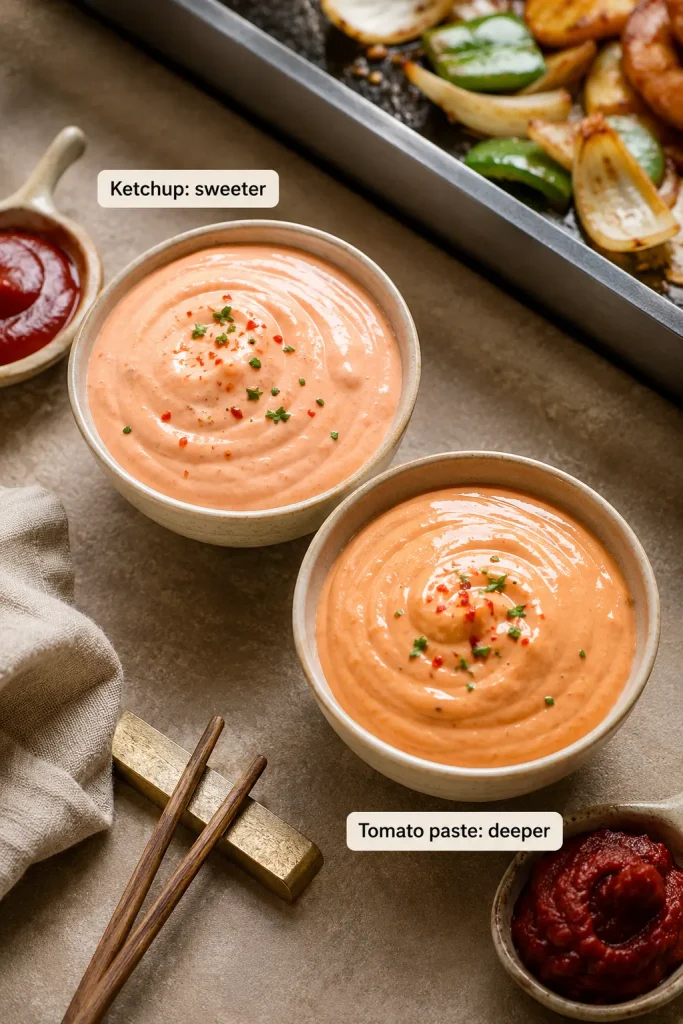
Make the simple ketchup version first. Once it chills, you can tune it sweeter, tangier, richer, thinner, or spicier without guessing. Ketchup gives you the friendly first batch; tomato paste gives you the deeper, less sweet version you try once you know what you like.
The goal is not just copying one restaurant bottle. It is to give you the sauce people keep reaching for: creamy but not heavy, sweet but not sugary, thin enough to drizzle, and bold enough to make rice, shrimp, chicken, and vegetables taste finished.
Keep it nearby when dinner is moving toward shrimp, vegetables, or a quick shrimp fried rice plate.
To make yum yum sauce, whisk mayonnaise with ketchup, rice vinegar, sugar, garlic powder, onion powder, paprika, a pinch of salt, and enough water to make it smooth. Ketchup gives the easiest sweet, pale pink-orange version. Tomato paste can replace ketchup when you want a deeper, less sweet sauce.
You can use it immediately if dinner is ready, but it tastes more like steakhouse-style yum yum sauce after chilling. Thirty minutes helps, 2 hours is better, and overnight gives the smoothest flavor. Stir before serving and thin with a little water if you want it pourable enough for fried rice, shrimp, chicken, vegetables, or bowls.
This sauce is often called hibachi white sauce, Japanese white sauce, shrimp sauce, pink sauce, or Japanese steakhouse sauce. It is best understood as an American hibachi-style restaurant sauce, not a traditional Japanese condiment.
Already cooking? Go straight to the recipe card, or use the texture guide if you need dip, drizzle, or dressing consistency.
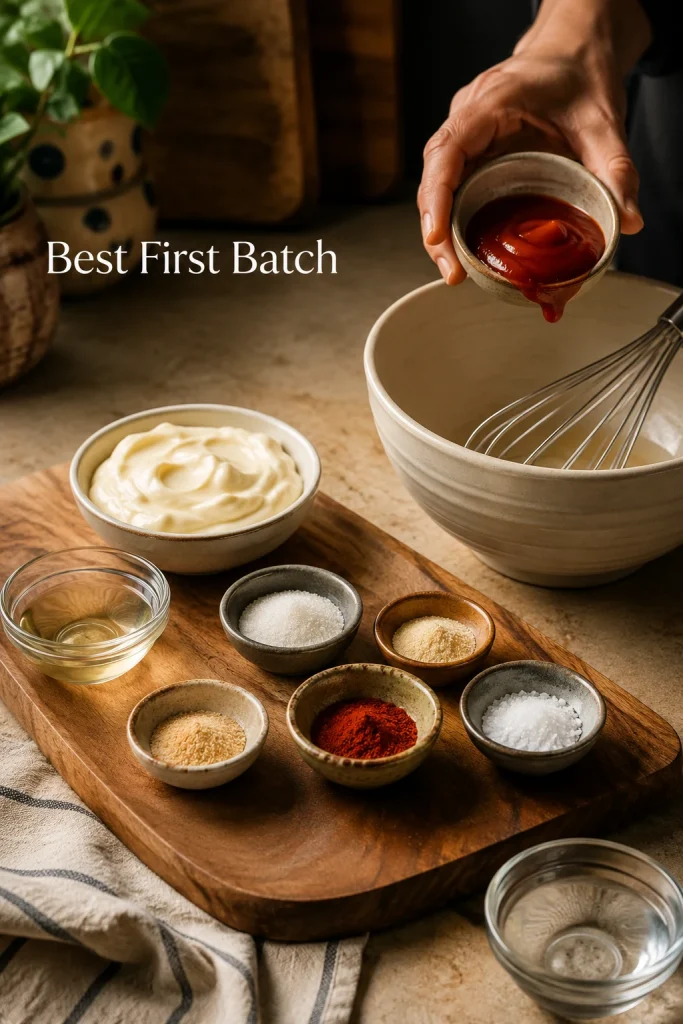
Best first batch: Use 1 cup mayo, 2 tablespoons ketchup, 2 teaspoons rice vinegar, 1 teaspoon sugar, 1 teaspoon garlic powder, ½ teaspoon onion powder, ½ teaspoon paprika, a pinch of salt, and 1 to 2 tablespoons water. Chill for 30 minutes. This gives you the classic sweet, creamy hibachi-style version before you start adjusting.
Start with the ketchup version when making your first batch because it gives the easiest sweet baseline before you adjust tang, heat, or richness.
Yum Yum Sauce at a Glance
Best default version
Regular mayo, ketchup, rice vinegar, sugar, garlic powder, onion powder, paprika, salt, and water
Active time
5 minutes
Minimum total time
35 minutes, including a 30-minute chill
Best flavor
After 2 hours or overnight
Yield
About 1¼ to 1½ cups / 300 to 360 ml, depending on thinning
Texture goal
Thick enough to dip, smooth enough to drizzle after thinning
Best with
Shrimp, fried rice, chicken, steak bites, vegetables, fries, spring rolls, rice bowls, wraps, and burgers
Storage
Up to 1 week in an airtight container in the refrigerator
Yum Yum Sauce Recipe
This easy yum yum sauce starts thick and creamy, then thins into the pale pink-orange drizzle people love with fried rice, shrimp, chicken, vegetables, steak bites, fries, spring rolls, and hibachi-style bowls. The main recipe uses ketchup for the easiest first batch. Tomato paste, Kewpie mayo, butter, and heat are included as optional upgrades when you want a richer steakhouse-style sauce.
1 to 2 tablespoons water / 15 to 30 ml, plus more as needed
Pinch of salt, to taste
Optional Restaurant-Style Add-Ins
Use 1 tablespoon tomato paste / 15 to 16 g instead of ketchup for a deeper, less sweet sauce.
Add 1 tablespoon melted cooled butter / 14 g for a silkier, richer finish.
Use Kewpie mayo instead of regular mayo for a fuller, more savory base.
Add a pinch of cayenne or ½ teaspoon sriracha for gentle heat.
If using tomato paste instead of ketchup, increase sugar to 2 teaspoons / 8 g.
Instructions
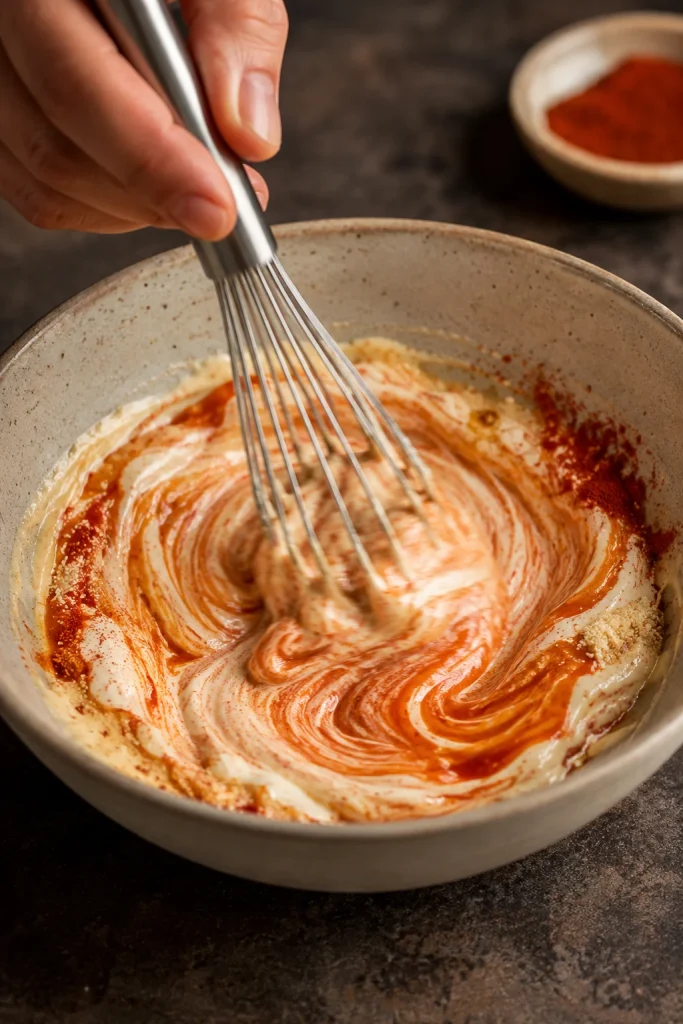
Add the mayonnaise, ketchup, rice vinegar, sugar, garlic powder, onion powder, paprika, and a pinch of salt to a mixing bowl.
Whisk until the sauce is smooth and evenly colored, with no streaks of tomato or spice.
Add water 1 tablespoon at a time until the sauce reaches your preferred thickness.
If using butter, let the melted butter cool slightly, then whisk it into the sauce. Do not add hot butter directly to the mayo.
Taste lightly, but do not over-adjust yet. The flavor becomes smoother after chilling.
Cover and refrigerate for at least 30 minutes. For better flavor, chill for 2 hours or overnight.
Stir again before serving. Thin with another teaspoon or two of water if needed.
Recipe Notes
The ketchup version is sweeter, easier, and the best place to start.
The tomato paste version is deeper, less sweet, and better when you want the richer steakhouse-style finish.
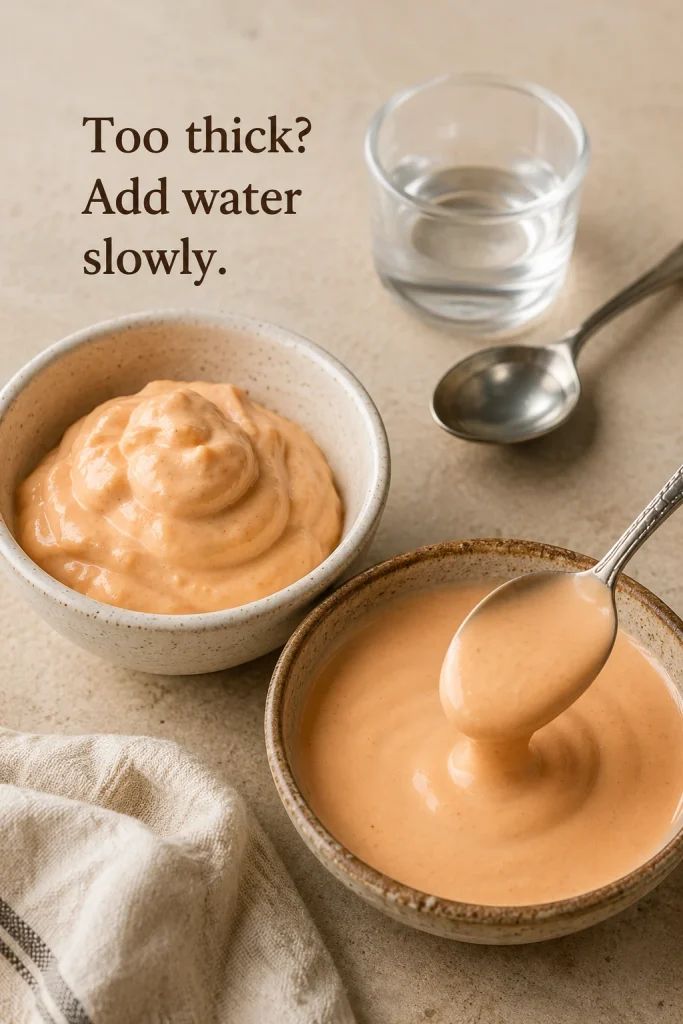
Thick dip texture needs about 1 tablespoon water. Drizzle texture usually needs 2 to 3 tablespoons water. A looser dressing-style sauce can take up to 4 tablespoons.
To double the recipe, double everything except the water. Add water slowly at the end until the texture looks right.
Store in an airtight jar in the refrigerator for up to 1 week.
Freezing is not recommended because mayo-based sauces can separate after thawing.
Closest restaurant-style version: Use Kewpie mayo, 1 tablespoon tomato paste instead of ketchup, 2 teaspoons sugar, 1 tablespoon cooled melted butter, 2 tablespoons water, and a tiny pinch of cayenne. Chill for at least 2 hours before serving.
For a richer steakhouse-style sauce, tomato paste, cooled melted butter, and a tiny pinch of heat make the flavor rounder.
Before You Start
Start with the ketchup version if this is your first batch. It tastes familiar right away: sweet, creamy, lightly tangy, and close to the sauce-cup flavor people remember from hibachi dinners. Try tomato paste next time if you want deeper color, stronger tomato flavor, and less sweetness.
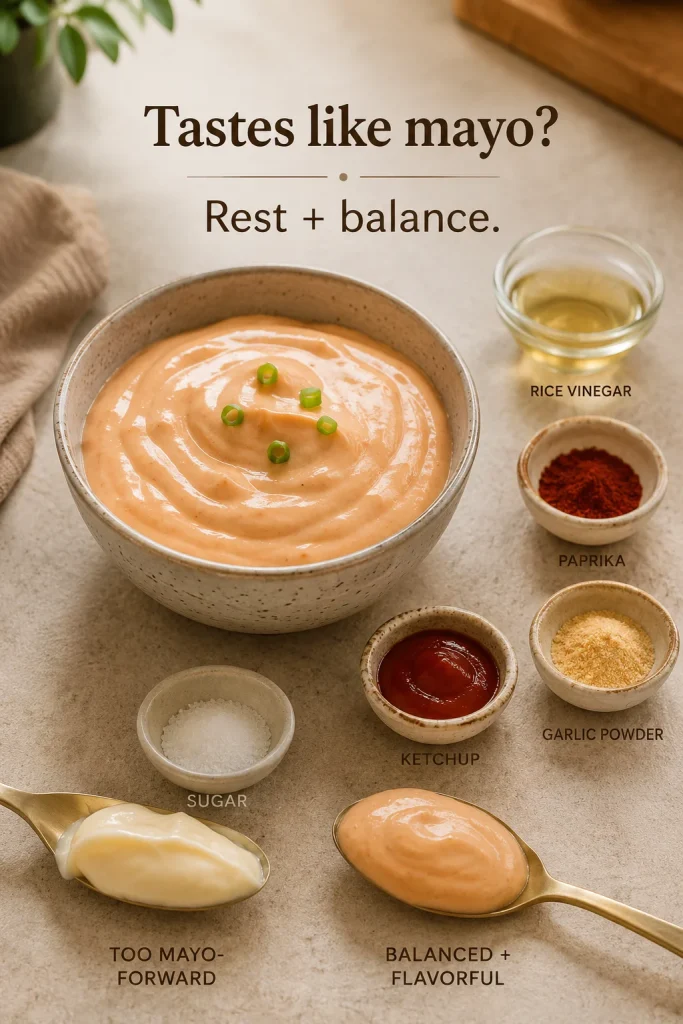
If it tastes like plain mayo after the first whisk, do not panic. That is normal before the sauce rests. A freshly mixed batch can taste sharper than expected, so give it 30 minutes before you start fixing things that may not be broken.
Yum yum sauce is a finishing sauce, not a pan sauce. Add it after cooking, not while the food is simmering or frying. For a sauce that cooks with the food, use this stir fry sauce recipe instead.
Choose Your Version: Classic, Richer, Spicy, or Lighter
The best version depends on what you want from the sauce tonight. Ketchup gives you the familiar sweet hibachi-night flavor. Tomato paste makes it deeper and less sweet. Kewpie and butter push it richer. Yogurt makes it lighter for bowls, even though it moves away from the classic copycat feel.
Add cayenne, sriracha, sambal, or chili garlic sauce
Creamy with gentle to medium heat
Keto or lower-sugar sauce
Tomato paste instead of ketchup + keto sweetener
Tangier, less sweet, still creamy
Lighter bowl sauce
Half mayo + half Greek yogurt
Brighter, lighter, better for bowls than copycat flavor
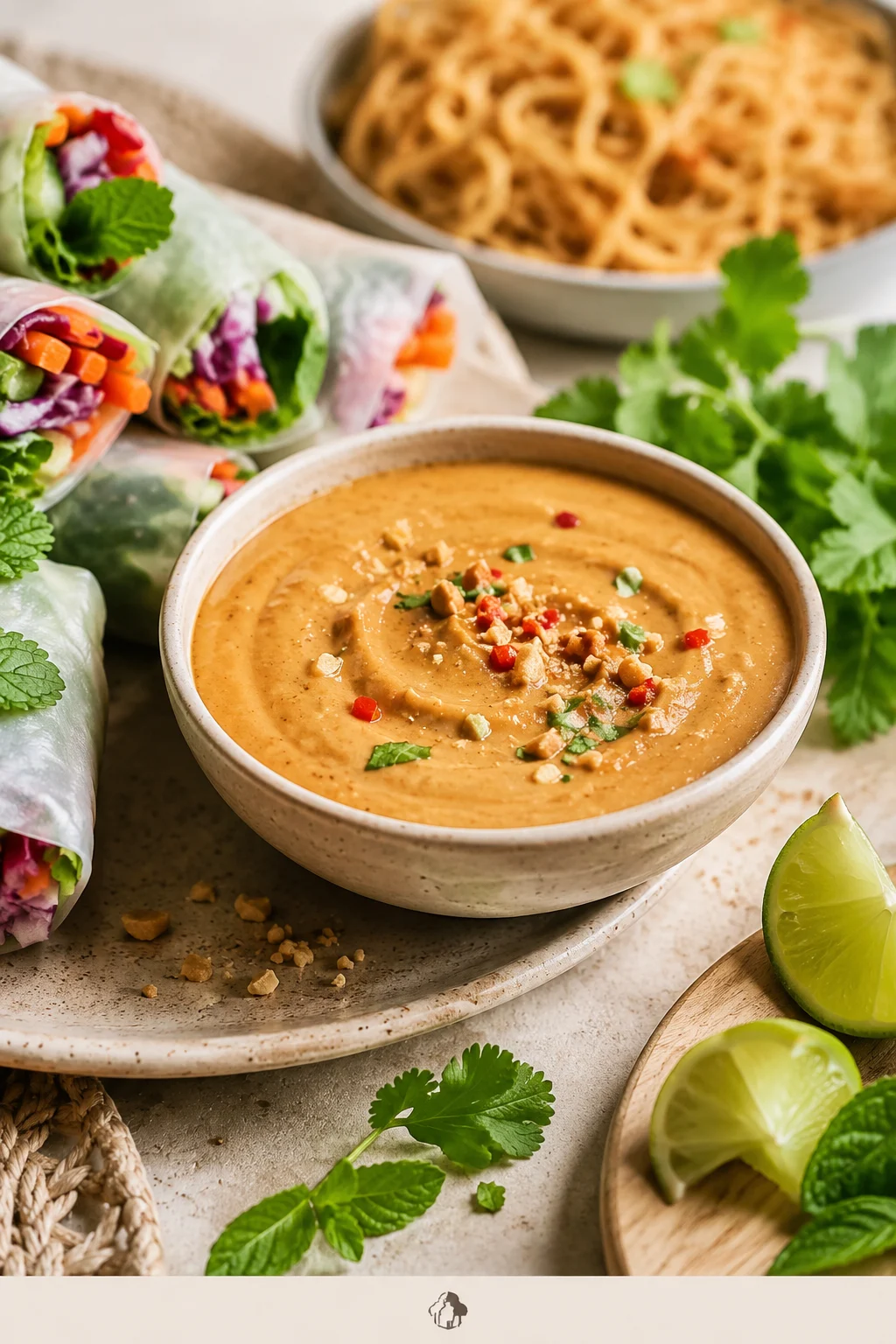
For a completely different quick dip in the same weeknight-sauce family, this peanut sauce recipe is better when you want something nutty, salty-sweet, and built for noodles or spring rolls.
Ketchup vs Tomato Paste
Stuck between ketchup and tomato paste? Use this as the simple rule: use ketchup for the easy sweet version and tomato paste for the deeper, less-sweet version.
Choose ketchup for a sweeter yum yum sauce, or tomato paste for a deeper, less-sweet restaurant-style flavor.
Use Ketchup When
Use Tomato Paste When
You want the easiest version
You want a deeper flavor
You prefer a sweeter sauce
You want less sweetness
You want a brighter pale pink-orange color
You want a more concentrated tomato taste
You are making it for kids or family meals
You are making a keto or lower-sugar version
You want a softer, familiar flavor
You want a richer steakhouse-style base
Ketchup usually needs less sugar. Tomato paste usually needs a little more. Taste after chilling.
Ingredients You Need
The core yum yum sauce ingredients are mayonnaise, ketchup or tomato paste, rice vinegar, sugar, garlic powder, onion powder, paprika, water, and salt. Butter and heat are optional.
Mayonnaise
Mayonnaise is the body of the sauce. Use one you already like, because its flavor comes through. Regular mayo works well. Kewpie tastes richer and slightly more savory. Light mayo or avocado oil mayo can work if you like the flavor, but the sauce may taste sharper or thinner. If using Miracle Whip, reduce the sugar and vinegar because it is already sweeter and tangier.
Ketchup or Tomato Paste
Ketchup gives the sauce that familiar hibachi-night sweetness. Tomato paste is the version you try when you want it to taste a little less sweet and a little more grown-up.
Rice Vinegar
Rice vinegar cuts through the richness of the mayo and keeps the sauce from tasting flat. It is mild enough to brighten the sauce without making it harsh.
Sugar
A little sugar gives the sauce its familiar sweet finish. Ketchup already contains sweetness, so the ketchup version needs less. Tomato paste is less sweet, so it usually needs a little more.
Garlic Powder, Onion Powder, and Paprika
Garlic powder and onion powder give savory depth without raw garlic bite. Paprika gives the sauce its warm color and keeps the flavor from feeling plain. Smoked paprika adds a deeper note that works well with grilled chicken, fried rice, shrimp, or steak bites.
Butter and Water
Butter is optional. Add it when you want the sauce to feel fuller and more like the little cup from a steakhouse; skip it when you want a brighter drizzle for rice or vegetables. Water decides whether the sauce behaves like a dip, drizzle, or dressing. Add it slowly because a small amount changes the consistency quickly.
Why This Recipe Works
This sauce works because every small ingredient fixes one common problem. Vinegar keeps the mayo from tasting heavy. Tomato gives color and tang. Sugar rounds the edges. Garlic powder, onion powder, and paprika make it taste like more than seasoned mayo. Water turns it from a thick dip into the soft ribbon people want over fried rice, shrimp, chicken, and vegetables.
The rest time matters too. After chilling, the garlic powder softens, the paprika settles into the mayo, and the vinegar stops tasting sharp. After 30 minutes it tastes more blended; after 2 hours it tastes closer to the steakhouse-style sauce people remember.
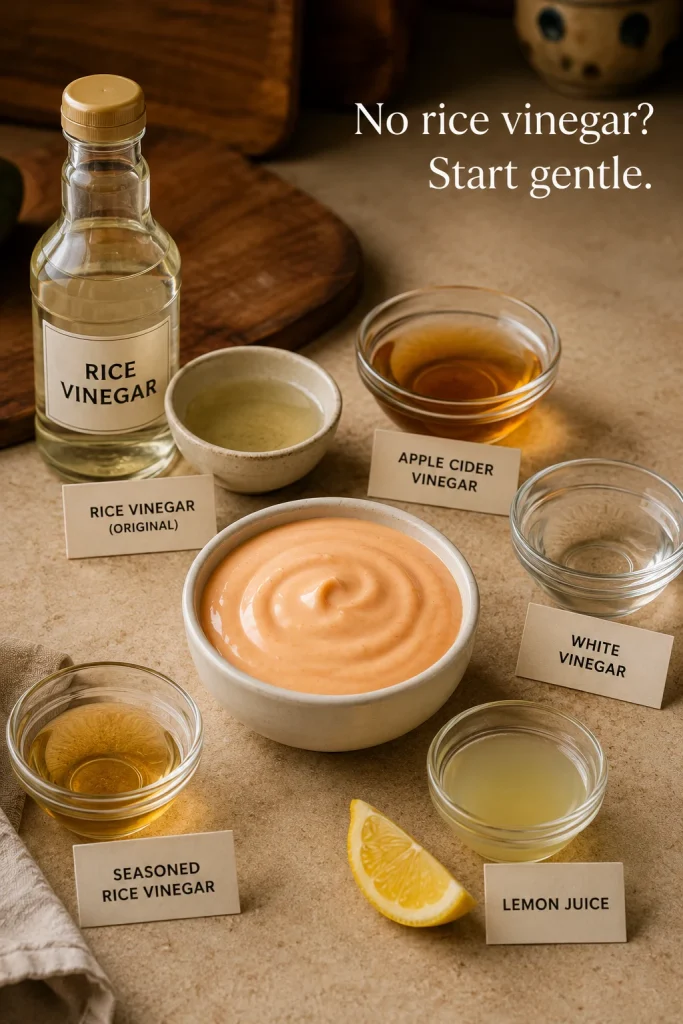
No Rice Vinegar? Use These Instead
Rice vinegar is mild and slightly sweet, which is why it works well here. Rice vinegar is usually milder than sharp white vinegar; for example, Kikkoman lists its rice vinegar at 4.2% acidity. If you need a swap, use another gentle acid and adjust slowly.
When replacing rice vinegar, start small; apple cider vinegar, white vinegar, lemon juice, and seasoned rice vinegar all sharpen the sauce differently.
Substitute
How to Use It
Apple cider vinegar
Use the same amount. It is slightly fruitier and a little sharper.
White vinegar
Use a little less at first because it can taste sharper.
Lemon juice
Use the same amount for a fresher, brighter sauce.
Seasoned rice vinegar
Use the same amount, but reduce the sugar slightly because it may already be sweetened.
Mirin
Use a small splash for sweetness and depth, but do not rely on it as the only acid.
Avoid strong vinegars like balsamic or malt vinegar. They can overpower the mayo and tomato. Whichever swap you use, start small, let the sauce rest, and adjust after the flavor settles.
Butter or No Butter?
No, yum yum sauce does not need butter. A good sauce can be made with mayo, ketchup or tomato paste, vinegar, sugar, seasonings, and water. Butter is optional; it makes the sauce richer and silkier, but the sauce still works without it.
Add butter if you want a fuller, sauce-cup style finish. Skip it if you want a brighter sauce for fried rice, spring rolls, or vegetables. If you use butter, melt it gently and let it cool until warm, not hot, before whisking it into the mayo.
How to Make Yum Yum Sauce
Add the mayo, ketchup, vinegar, sugar, garlic powder, onion powder, paprika, and salt to a bowl. Whisk until the sauce is completely smooth and there are no streaks of tomato or spice left in the mayo.
Once the mayo, ketchup, vinegar, sugar, and spices turn evenly colored, the sauce is ready to chill and settle.
Thin the sauce with water. Start with 1 tablespoon for a thick dip. Add more water 1 teaspoon to 1 tablespoon at a time until it reaches the texture you want. If you are adding butter, make sure it is warm, not hot, before whisking it in.
Finished Sauce Texture
Once the sauce is fully whisked, check the spoon trail before you start changing the flavor. The texture should look glossy and smooth, not stiff or grainy.
A good finished sauce should leave a glossy spoon trail; if it looks stiff or heavy, loosen it slowly with water.
Taste the sauce, but do not make aggressive adjustments right away. Freshly mixed sauce often tastes more mayo-forward than the finished version. Cover and refrigerate it for at least 30 minutes, then stir and taste again.
A Few Things Not to Rush
Do not add all the water at once. The sauce can go from thick dip to thin dressing quickly.
Do not add hot butter directly to mayo. Let it cool first so the sauce stays smooth.
Do not cook the finished sauce in fried rice or stir-fry. Add it after cooking.
Do not use strong vinegars like balsamic or malt vinegar. They take the sauce in a completely different direction.
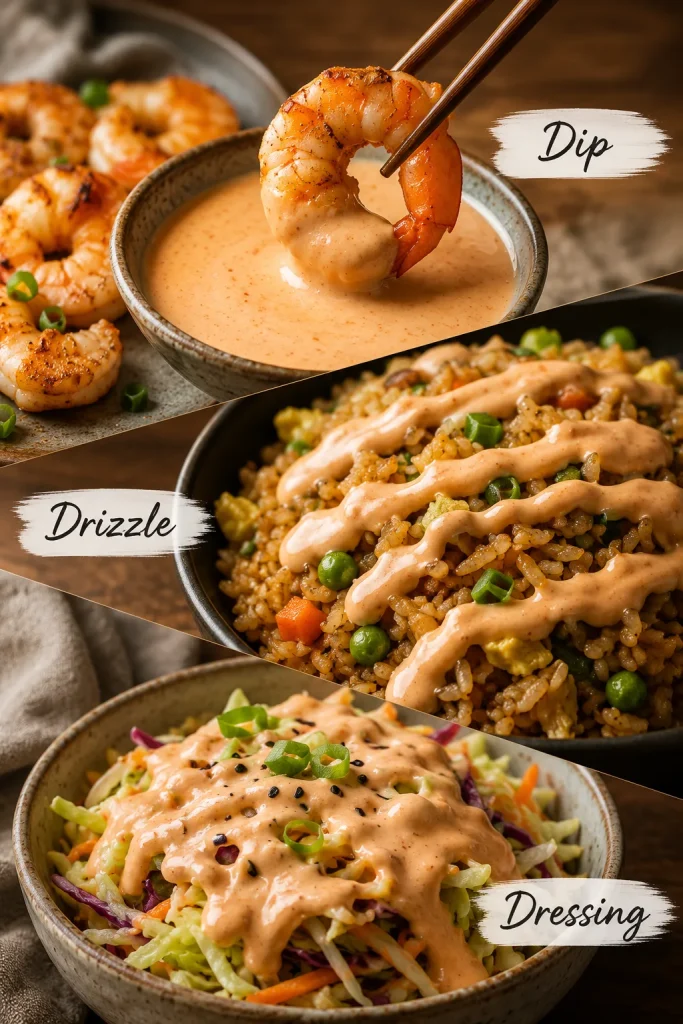
Best Texture: Dip, Drizzle, or Dressing
The right texture depends on the plate. Fries need a thick dip. Fried rice needs a loose ribbon. Shrimp can go either way.
Instead of using one texture for everything, keep it thick for dipping, looser for rice, and lightest for bowls or slaw.
Texture
Water Amount
Best For
Thick dip
1 tablespoon / 15 ml
Shrimp, fries, nuggets, spring rolls, dumplings, roasted potatoes
3 to 4 tablespoons / 45 to 60 ml, plus a little extra vinegar
Salads, slaws, grain bowls, cold noodle bowls
The sauce should fall softly from a spoon for rice, but cling after one dip for shrimp, fries, and spring rolls. If you are serving it with hot fried rice, make it slightly thinner than you think; the rice will make a thick sauce feel heavier. If the sauce is for fries or spring rolls, stop thinning early so it clings to crispy edges.
You can use the sauce immediately, but it tastes better after chilling. Right after mixing, the mayo, vinegar, tomato, sugar, and spices can taste separate. The sauce may also taste more mayo-forward than expected.
After 30 minutes in the fridge, the garlic powder and onion powder soften into the sauce. The paprika and tomato blend into the fat. The vinegar becomes less sharp, and the sweetness tastes less raw. After 2 hours, the flavor usually lands much closer to the hibachi-style sauce people remember from restaurants.
If you have time, make it the night before. Overnight chilling gives the smoothest flavor. If the sauce has been in the fridge overnight, let it sit for 5 to 10 minutes and stir before serving. It should be cool, not icy-thick.
Hibachi White Sauce, Japanese White Sauce, and Shrimp Sauce
If you have ever searched for “that white sauce from hibachi,” this is probably the sauce you meant. In many American hibachi and Japanese steakhouse-style restaurants, this creamy sauce is called yum yum sauce, hibachi white sauce, Japanese white sauce, shrimp sauce, pink sauce, or Japanese steakhouse sauce.
The names come from how people use it. Some remember it with shrimp, some with fried rice, and some from the little sauce cups at a steakhouse. Even though it is often called white sauce, most homemade versions are pale peach or pink-orange because of ketchup, tomato paste, and paprika.
There is no single official formula. The goal is the familiar balance: cool mayo base, gentle sweetness, mild tang, pale tomato color, and enough water to make it dip-friendly or drizzle-friendly.
Homemade vs Store-Bought Yum Yum Sauce
Store-bought yum yum sauce is useful when you just want a squeeze bottle in the fridge. The problem is that bottled versions can swing too sweet, too salty, too thin, or too much like a generic mayo dressing.
Homemade is better when you want the sauce to match the plate: thicker for fries, looser for fried rice, sweeter for kids, tangier for shrimp, richer for steakhouse-style bowls. You can also make gluten-free, vegan, keto, or lighter versions more easily when you control the ingredients.
What to Eat with Yum Yum Sauce
Think of this as a cool finishing sauce. It works anywhere you want something creamy enough to soften heat, bright enough to wake up rice, and rich enough to cling to crispy snacks. This is the drizzle that makes plain rice, shrimp, and vegetables feel like hibachi night at home.
Use
Best Texture
Fried rice
Loose drizzle
Shrimp
Thick dip or light drizzle
Chicken bowls
Drizzle
Fries and nuggets
Thick dip
Spring rolls and dumplings
Thick dip
Burgers, wraps, and tacos
Spread texture
Salads and slaws
Dressing-style
Fried Rice and Hibachi Plates
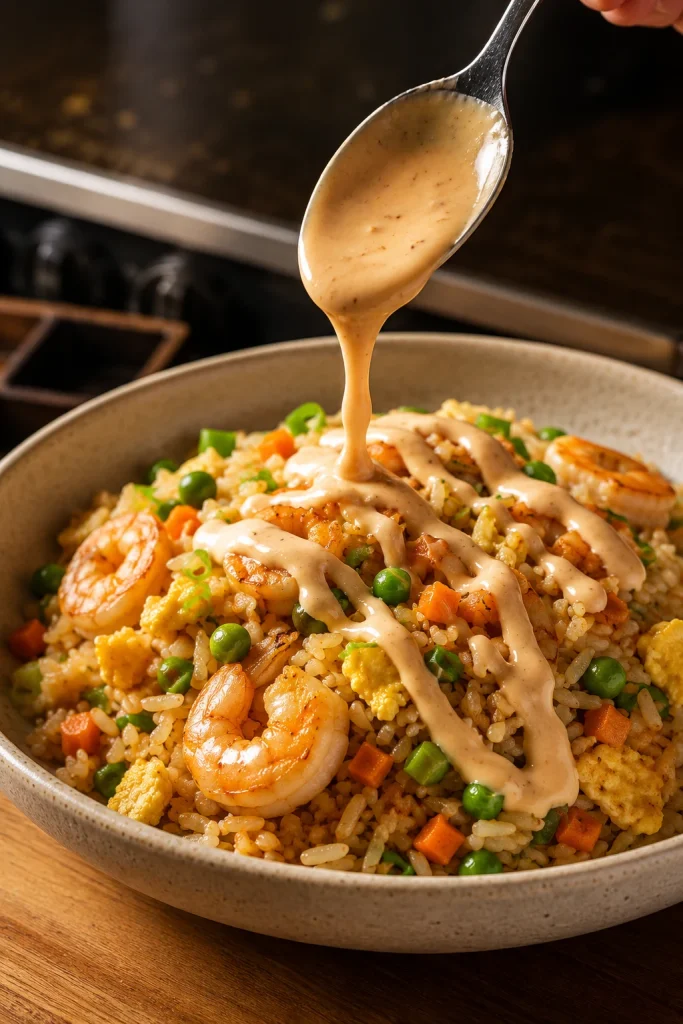
On fried rice and hibachi-style plates, keep it loose enough to fall from a spoon. You want pale, creamy streaks across hot rice, not a heavy scoop sitting on top. Add the sauce after cooking so the rice stays fluffy and the sauce stays smooth.
Drizzle the sauce after cooking fried rice so the grains stay fluffy and the cool sauce does not turn oily.
Shrimp, Seafood, and Chicken
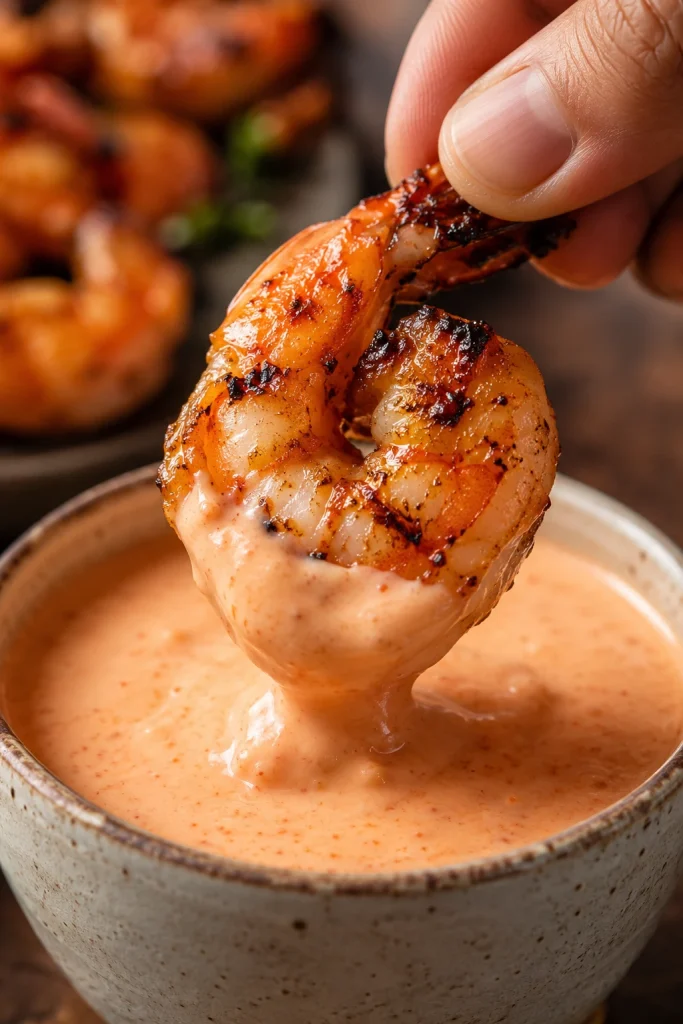
Shrimp can go either way: thick as a dip or slightly loosened as a drizzle. For shrimp, the sauce should be thick enough to cling after one dip. If the protein is already rich or fried, add a little extra vinegar to the sauce for balance.
Hibachi shrimp sauce works best as a thicker dip that clings after one swipe instead of sliding off the shrimp.
For another quick shrimp dinner with a brighter lemon-garlic direction, keep this shrimp scampi recipe nearby. If the meal is more fried fish than hibachi shrimp, this homemade tartar sauce is the better match.
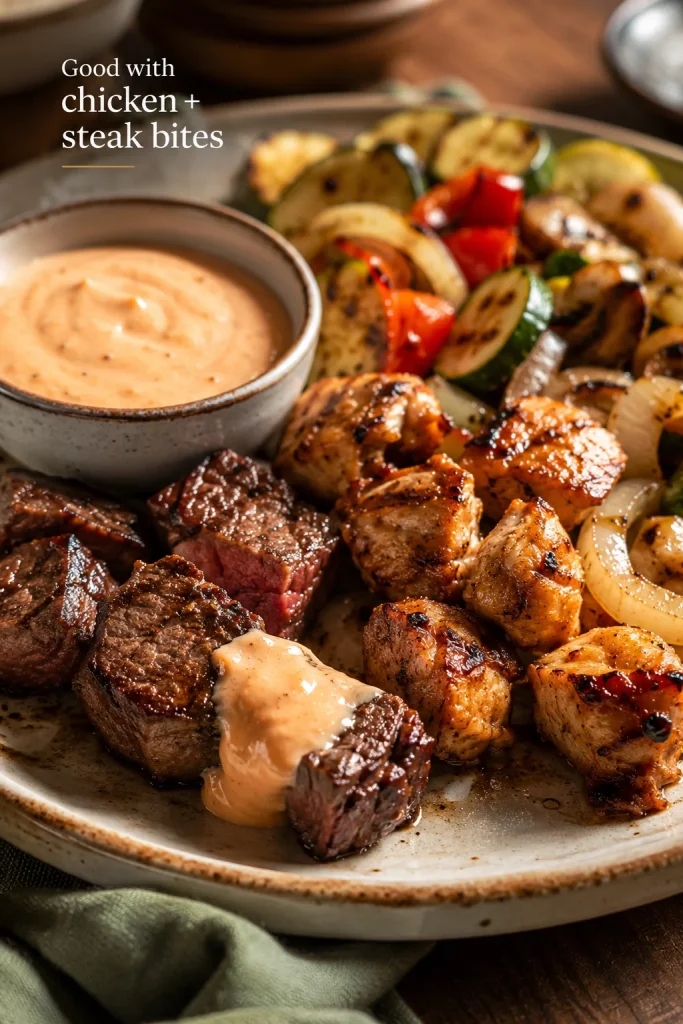
Chicken, Steak Bites, and Hibachi Vegetables
Chicken and steak bites are best with a cool, smooth sauce that softens charred edges without hiding the grilled flavor.
Beyond shrimp, a cool hibachi-style sauce helps balance grilled chicken, steak bites, onions, zucchini, and peppers.
Bowls, Wraps, and Rice Meals
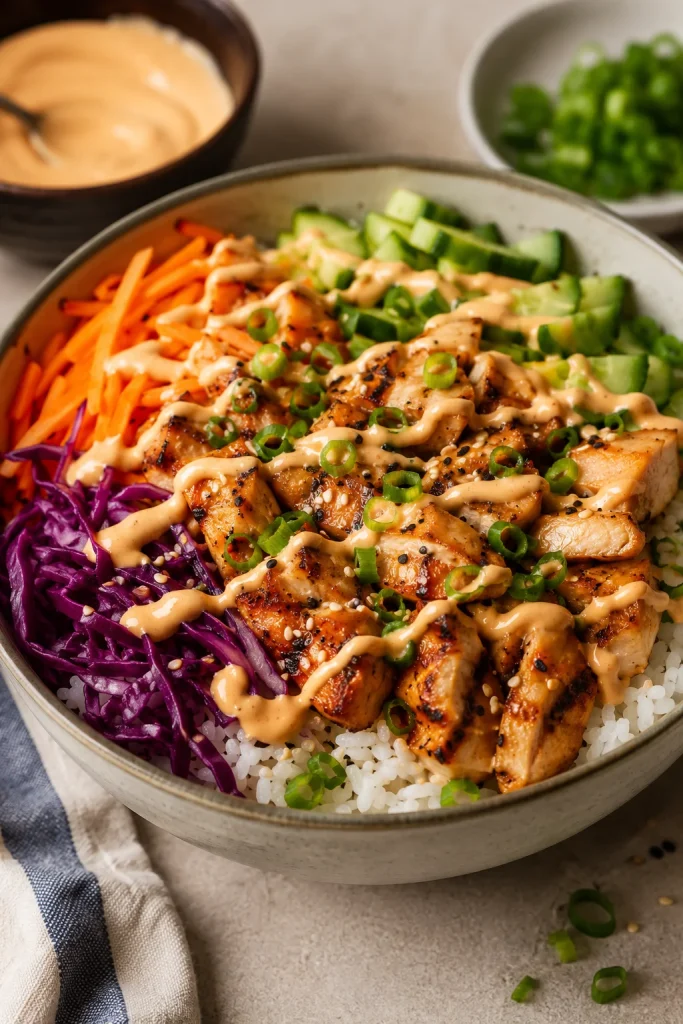
Bowls need a smoother drizzle. A spoonful can make a simple bowl feel finished, especially when there is warm rice, crunchy cucumber, cabbage, lettuce, carrots, grilled chicken, shrimp, beef, tofu, or crispy vegetables.
In rice bowls, a light drizzle adds flavor without covering the crunch of cucumber, cabbage, and carrots.
A seafood rice bowl can borrow the build from this salmon bowl recipe. With beef and rice, use it as a cool creamy contrast beside a saucy Korean beef bowl.
Fries, Spring Rolls, Dumplings, and Snacks
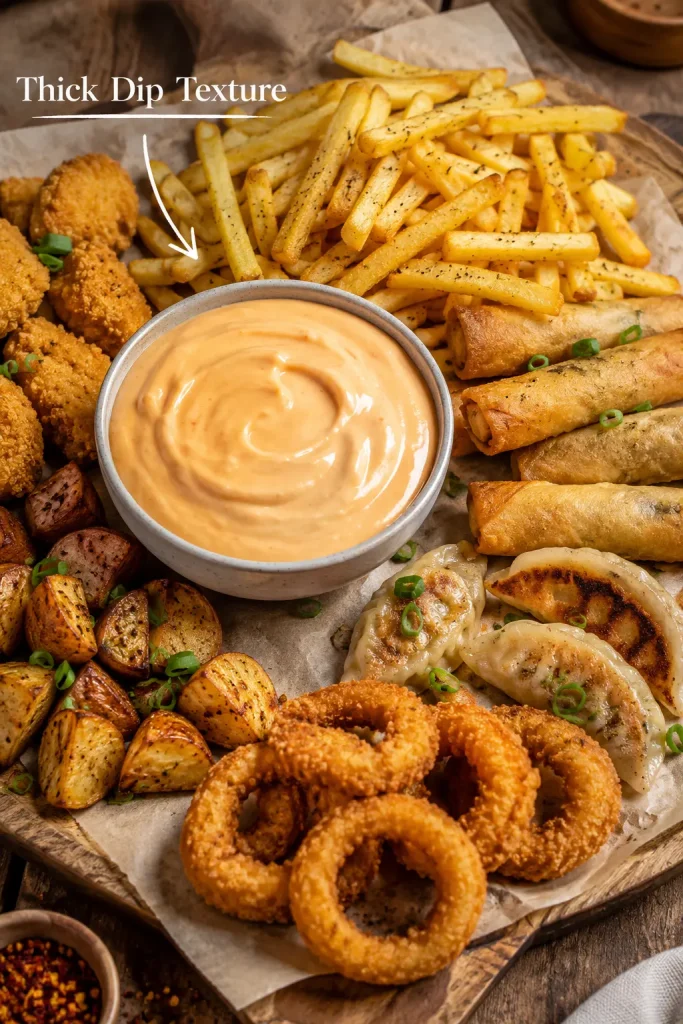
Crispy snacks are where the thicker version wins. Start with only 1 tablespoon water so the sauce clings to fries, nuggets, spring rolls, dumplings, potstickers, onion rings, roasted potatoes, and other crunchy bites instead of sliding back into the bowl.
Crispy snacks need a thicker sauce, so fries, spring rolls, dumplings, nuggets, and onion rings can catch it on their edges.
With spring rolls and fries, keep it spoonable and thick so every crispy edge catches some sauce. A crisp snack plate works well beside crispy veg spring rolls, fries, dumplings, or roasted potatoes.
Sandwiches, Burgers, and Tacos
As a burger, taco, or sandwich spread, keep it thicker than drizzle texture so it stays where you put it. It pairs especially well with crunchy lettuce, cucumber, cabbage, grilled chicken, shrimp, or crispy tofu.
Yum Yum Sauce Variations
Make the main version first if you can. Once you know the baseline, these variations help you make it spicier, richer, lighter, vegan, gluten-free, or lower in sugar.
Spicy Yum Yum Sauce
Add cayenne, sriracha, sambal, chili garlic sauce, or your favorite hot sauce. A pinch of cayenne gives gentle heat. About ½ to 1 teaspoon sriracha makes the sauce noticeably spicy. If it becomes too hot, add more mayo and a small pinch of sugar.
For a hotter fruit-and-chili direction that goes further than yum yum sauce, save this mango habanero sauce recipe for tacos, wings, shrimp, grilled chicken, paneer, tofu, or vegetables.
Kewpie Mayo Version
Kewpie mayo makes the sauce richer, smoother, and slightly more savory. It is a good choice if you want a fuller steakhouse-style flavor. Regular mayo still works well, especially when balanced with vinegar, tomato, garlic powder, paprika, and rest time.
Gluten-Free Version
This sauce can be made gluten-free if every packaged ingredient you use is labeled gluten-free. Check the mayo, ketchup, tomato paste, vinegar, hot sauce, and spice blends. If you add soy sauce, chili garlic sauce, or another condiment, choose a gluten-free version.
Vegan Version
Use vegan mayo in place of regular mayo. Skip the butter or use vegan butter. Sugar, maple syrup, or another sweetener can round out the flavor. Vegan mayo gives a more classic result than yogurt-style bases because it keeps the sauce creamy and rich.
Keto or Lower-Sugar Version
Tomato paste is usually the cleaner low-sugar base because ketchup brings sweetness before you even add a sweetener. Replace the sugar with a keto-friendly sweetener, then taste after chilling because some sweeteners can feel sharper before the sauce rests.
Low-Calorie or Greek Yogurt Version
The half-mayo, half-yogurt version is the sweet spot. It still tastes like a creamy sauce, while a full-yogurt version tastes more like a tangy bowl dressing. Use it for bowls, salads, slaws, or lighter chicken-and-rice plates rather than a strict hibachi copycat.
No-Mayo Version
You can make a no-mayo version with Greek yogurt, sour cream, vegan sour cream, or blended cashew cream, but it becomes a different sauce. To keep it balanced, add tomato, vinegar, sweetener, and seasoning in small amounts, then let it rest before adjusting again.
Troubleshooting Yum Yum Sauce
Most “failed” yum yum sauce is not actually failed. It usually just needs a short rest, a tiny splash of acid, or a spoonful of mayo to bring it back. If the flavor still feels off after chilling, the fix is usually small.
If the sauce is too thick, add water one teaspoon at a time until it changes from a mound to a smooth drizzle.
Problem
How to Fix It
It tastes too much like mayo
Chill first. Then add a little more vinegar, paprika, garlic powder, ketchup or tomato paste, and a small pinch of sugar.
Too sweet
Add rice vinegar, lemon juice, or a pinch of salt.
Sharp or tangy
Add more mayo and a tiny pinch of sugar.
Thick and heavy
Add water 1 teaspoon at a time until it loosens.
Thin or runny
Add mayo 1 tablespoon at a time until it thickens.
Looks too pale
Add a little more tomato paste, ketchup, or paprika.
Looks too orange
Add more mayo.
Not steakhouse-style enough
Use Kewpie mayo, add the optional cooled butter, and chill the sauce longer.
Too spicy
Add mayo and a small pinch of sugar.
Tastes flat
Add salt, onion powder, garlic powder, or a tiny splash of rice vinegar.
When It Tastes Too Much Like Mayo
A mayo-heavy sauce usually needs rest and small balancing moves, not a full restart.
When the sauce tastes mayo-heavy, rest it first; then balance it with rice vinegar, ketchup or tomato paste, paprika, garlic, and sweetness.
Storage and Make-Ahead
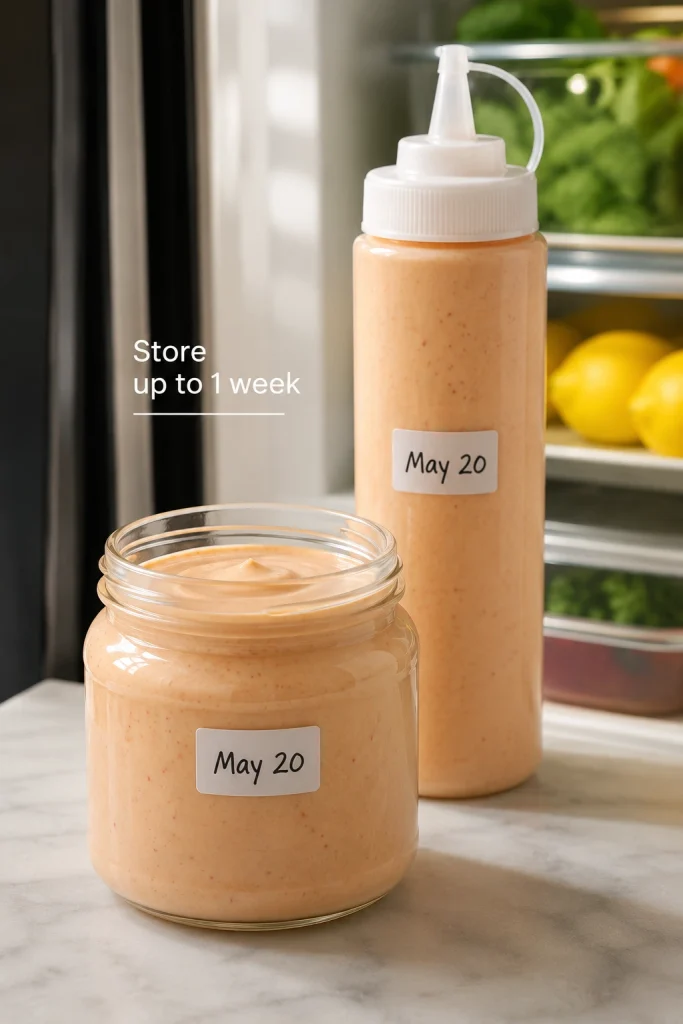
Store yum yum sauce in an airtight jar or covered container in the refrigerator for up to 1 week. Stir it before serving because the sauce may thicken slightly as it chills.
Refrigerate homemade yum yum sauce in a jar or squeeze bottle, then stir before serving because it thickens as it chills.
This is a good make-ahead sauce. The flavor is better after at least 30 minutes and usually best after 2 hours or overnight. If you are serving it for a hibachi-style dinner, make the sauce first and let it chill while you prepare the rice, shrimp, chicken, or vegetables.
A squeeze bottle is helpful when you want the restaurant-style drizzle over rice and shrimp. For storage, a jar is easier to clean.
Keep the sauce refrigerated and do not leave it sitting out for long periods. This is not a shelf-stable sauce and it is not meant for canning. For general food safety, FoodSafety.gov recommends refrigerating perishable foods within 2 hours and keeping the refrigerator at 40°F / 4°C or below.
If you use Greek yogurt, vegan mayo, homemade mayo, or any ingredient with a shorter use-by date, follow the shortest storage time. Freezing is not recommended because mayo-based sauces can separate and turn grainy after thawing.
Make-ahead tip: Make the sauce first when you start dinner. By the time the rice, shrimp, chicken, or vegetables are ready, the flavor will already be smoother. It is one of those small prep steps that makes tomorrow’s rice bowl easier before tomorrow even starts.
Yum yum sauce is usually made with mayonnaise, ketchup or tomato paste, vinegar, sugar, garlic powder, paprika, and water. Some versions also include butter, onion powder, cayenne, sriracha, mirin, or hot sauce.
Is yum yum sauce actually Japanese?
Not traditionally. It is best known as an American hibachi-style sauce served at many Japanese steakhouse-style restaurants.
Is yum yum sauce the same as hibachi white sauce?
Usually, yes. Many restaurants and home cooks use those names for the same creamy mayo-based sauce.
Is yum yum sauce the same as spicy mayo?
No. Spicy mayo is usually mayo mixed with sriracha or another hot sauce. Yum yum sauce has more rounded flavor from tomato, vinegar, sugar, garlic powder, paprika, and water.
Can I make yum yum sauce without tomato paste?
Yes. Use ketchup instead. For this recipe, 2 tablespoons ketchup gives the easiest sweet, pale pink-orange sauce. Because ketchup is already sweet, start with only 1 teaspoon sugar and adjust after chilling.
Is this Benihana-style yum yum sauce?
It is a homemade hibachi-style sauce in the same creamy, sweet-tangy family, but restaurant formulas vary. For the closest restaurant-style version, use Kewpie mayo, tomato paste, cooled melted butter, a tiny pinch of heat, and a 2-hour chill.
What can I use instead of rice vinegar?
Use apple cider vinegar, white vinegar, lemon juice, or seasoned rice vinegar. White vinegar is sharper, so start with a little less. Seasoned rice vinegar may already contain sugar, so reduce the sugar slightly.
Does yum yum sauce need butter?
No. Butter is optional. It adds richness and a silkier texture, but the sauce still works without it. If using butter, cool it before whisking it into the mayo.
Why does my yum yum sauce taste like mayo?
Freshly mixed sauce often tastes mayo-forward before it rests. Chill it for at least 30 minutes, then add a little more vinegar, paprika, garlic powder, tomato, and sugar if needed.
Is yum yum sauce good on fried rice?
Yes. Thin it to drizzle texture and add it after cooking, not in the pan. It gives hot fried rice a creamy, tangy finish without making the rice soggy.
What does yum yum sauce go with?
It goes well with shrimp, fried rice, chicken, steak, vegetables, rice bowls, fries, spring rolls, dumplings, nuggets, burgers, wraps, and roasted potatoes.
Is yum yum sauce gluten-free?
It can be gluten-free if every packaged ingredient you use is labeled gluten-free. Check mayo, ketchup, vinegar, hot sauce, spice blends, and any add-ins.
How long does homemade yum yum sauce last?
It keeps for up to 1 week in an airtight container in the refrigerator. Stir before serving and discard it if it smells off, changes texture, or has been left out too long.
Can you freeze yum yum sauce?
Freezing is not recommended. Mayo-based sauces can separate, turn watery, or become grainy after thawing. Make a fresh batch and store it in the refrigerator instead.
How do I make yum yum sauce spicy?
Add cayenne, sriracha, sambal, chili garlic sauce, or hot sauce. Start small, chill the sauce, and taste again before adding more.
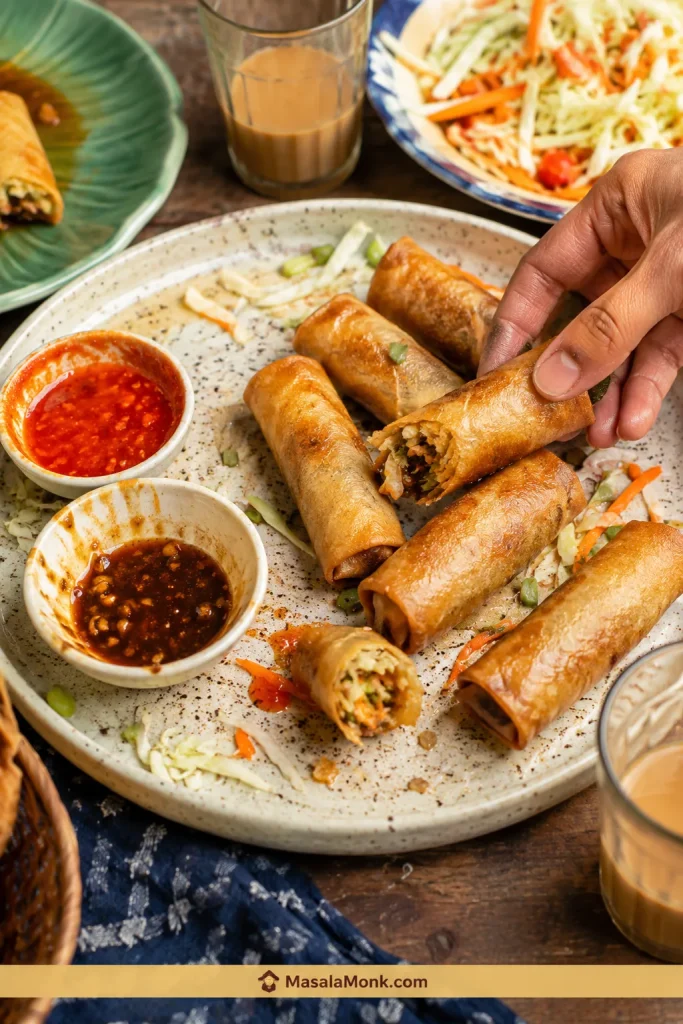
These spring rolls are for the moment you want that crackly first bite: a thin golden wrapper, hot vegetable filling, and a bright little dip waiting on the side. The goal is simple: crisp, not greasy; full, not bursting; flavorful, not watery.
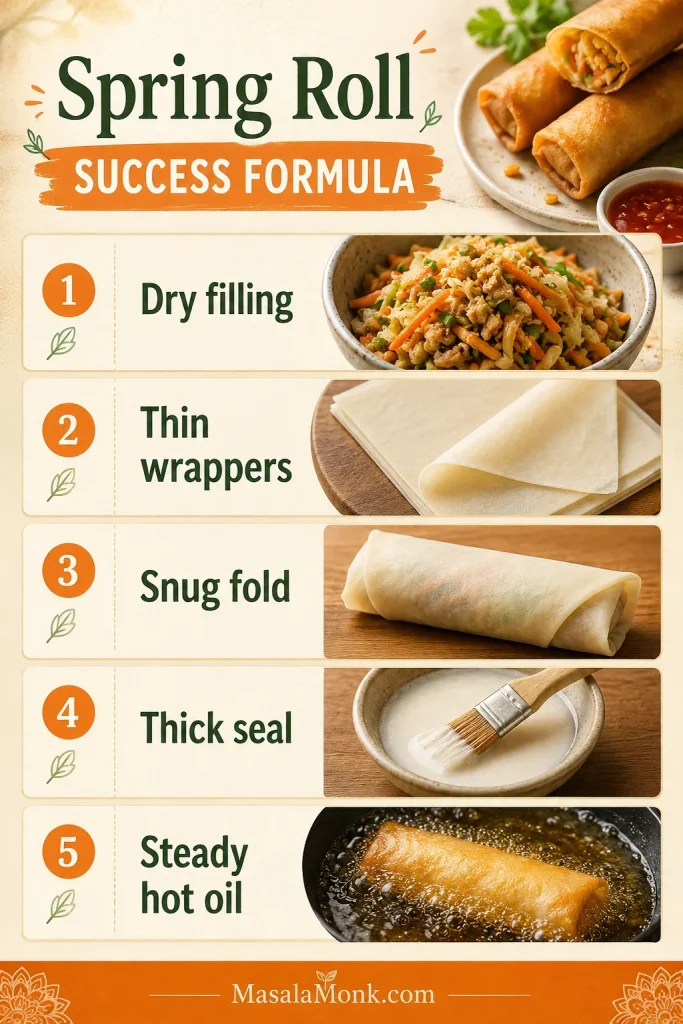
They feel easy until you are standing there with wet filling, wrappers drying at the edges, and oil getting hotter by the second. The good news is that they are not difficult once you know what usually goes wrong. This recipe keeps the process steady with five checks: dry filling, thin wrappers, snug fold, thick seal, and steady hot oil.
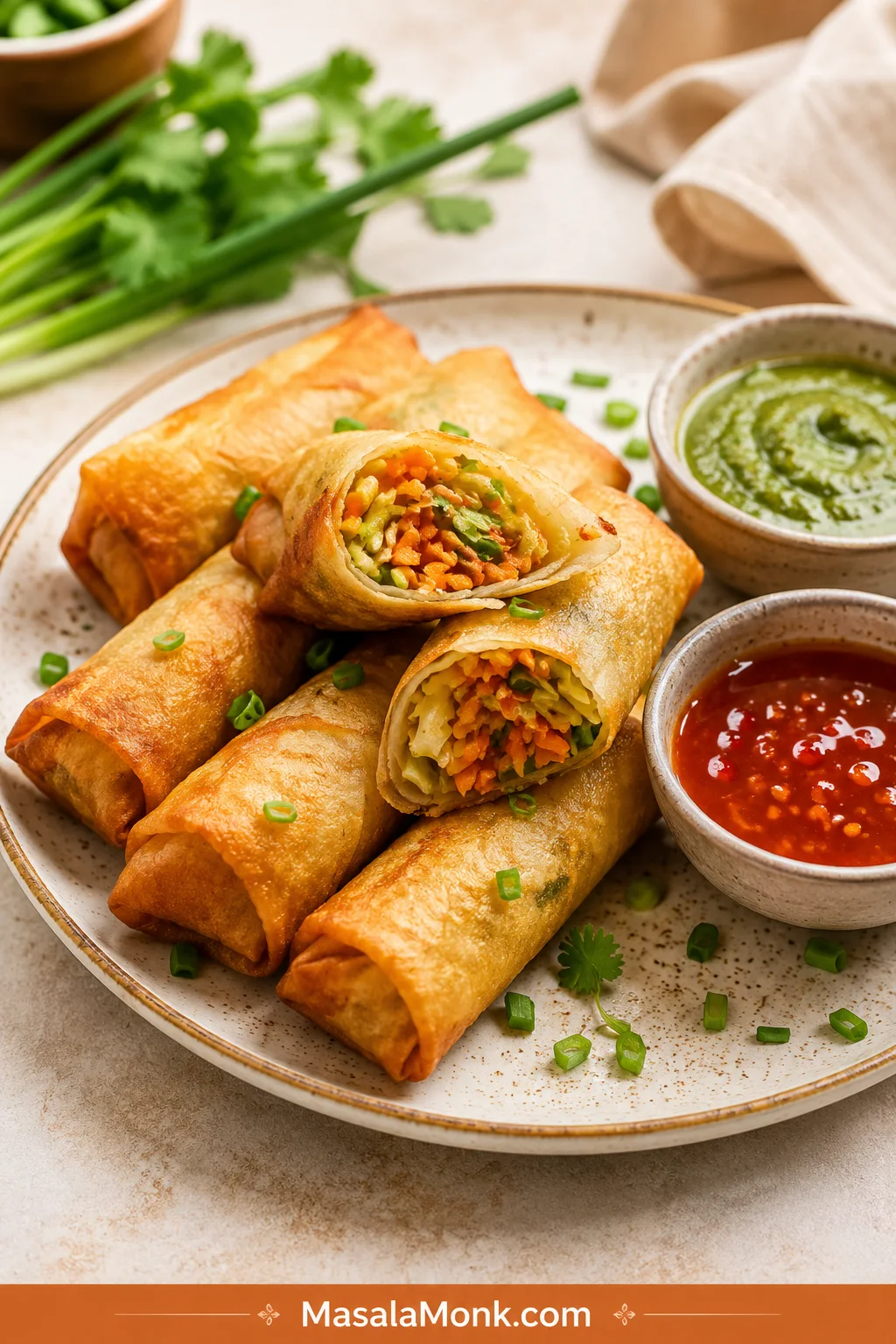
This repeatable home method uses store-bought thin wrappers, ginger-garlic vegetables, clear wrapping cues, and a light golden shell that cracks when served hot.
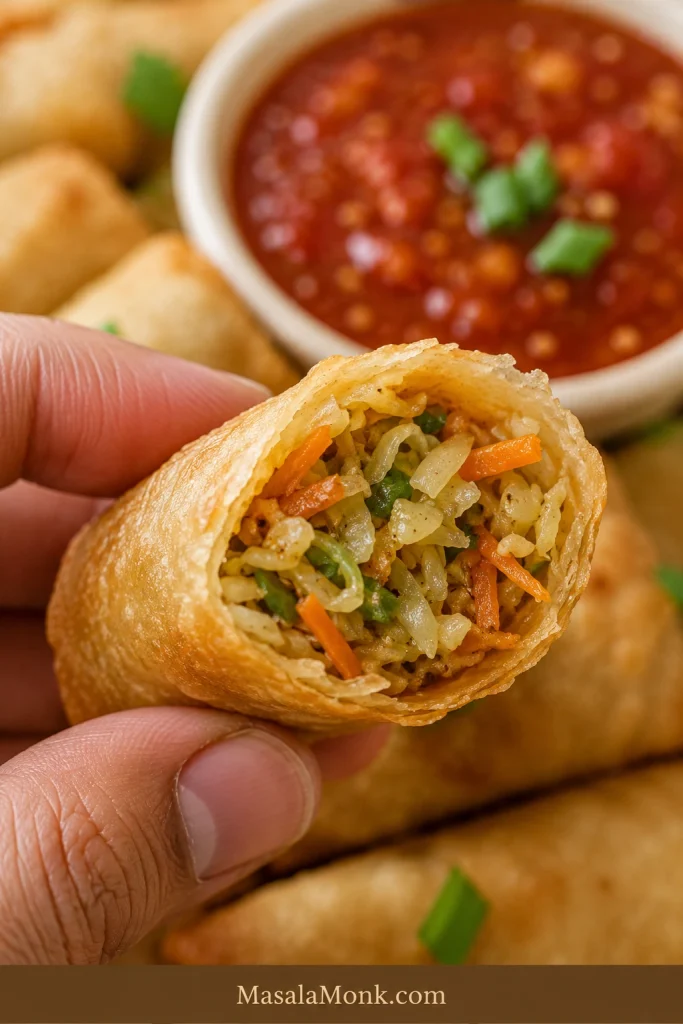
When the wrapper is right, it breaks before it bends. The filling stays hot and savory inside, the edges stay crisp for those first few minutes, and the dip makes the next bite feel brighter.
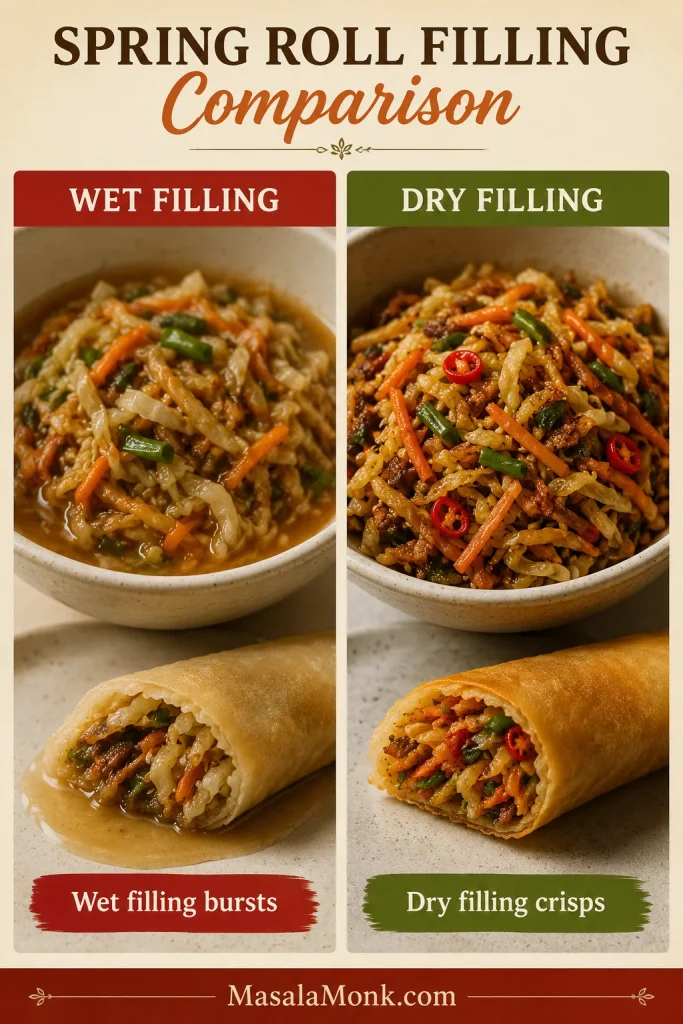
Dry filling, covered wrappers, steady oil — that is the whole spring roll game.
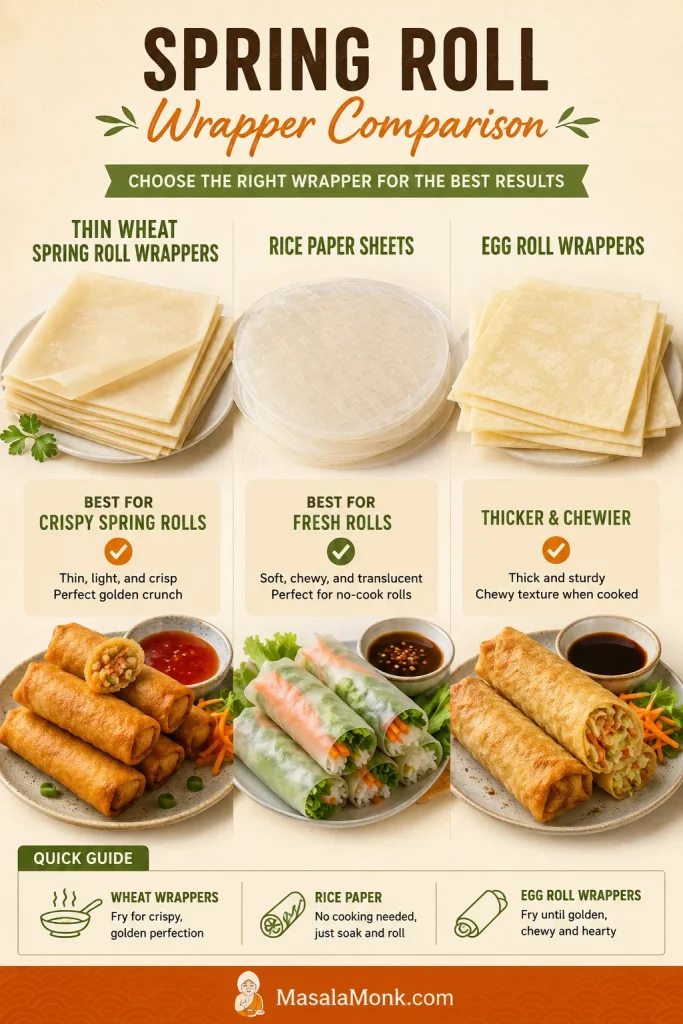
A spring roll is a filled roll made with a thin wrapper and vegetables, noodles, tofu, meat, or seafood. In this recipe, spring roll means the crispy fried version made with thin wheat wrappers and a cooked vegetable filling.
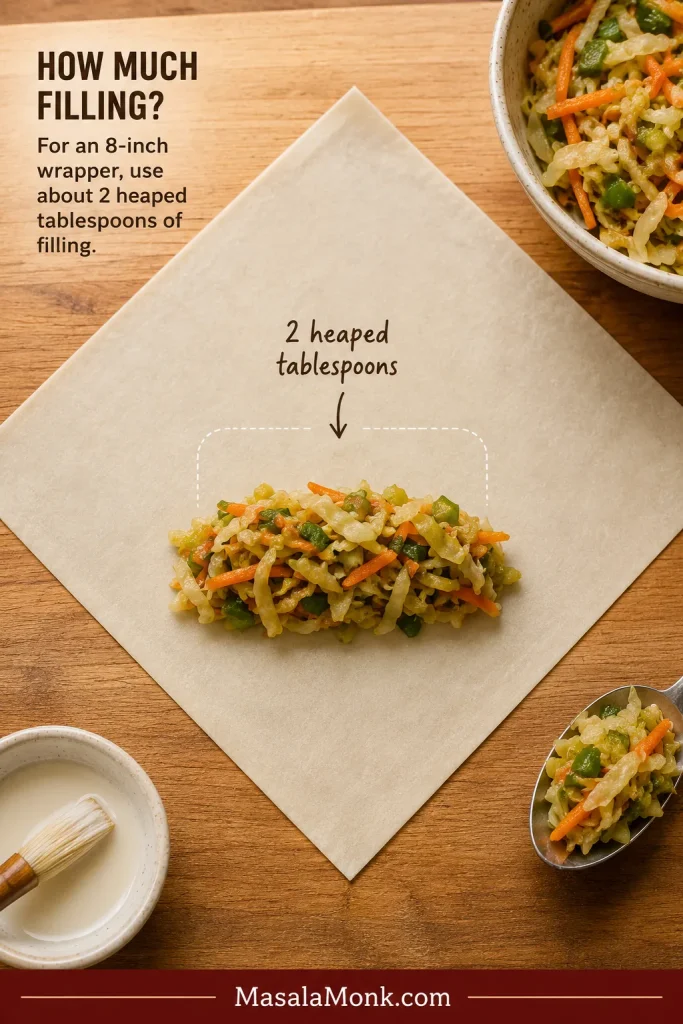
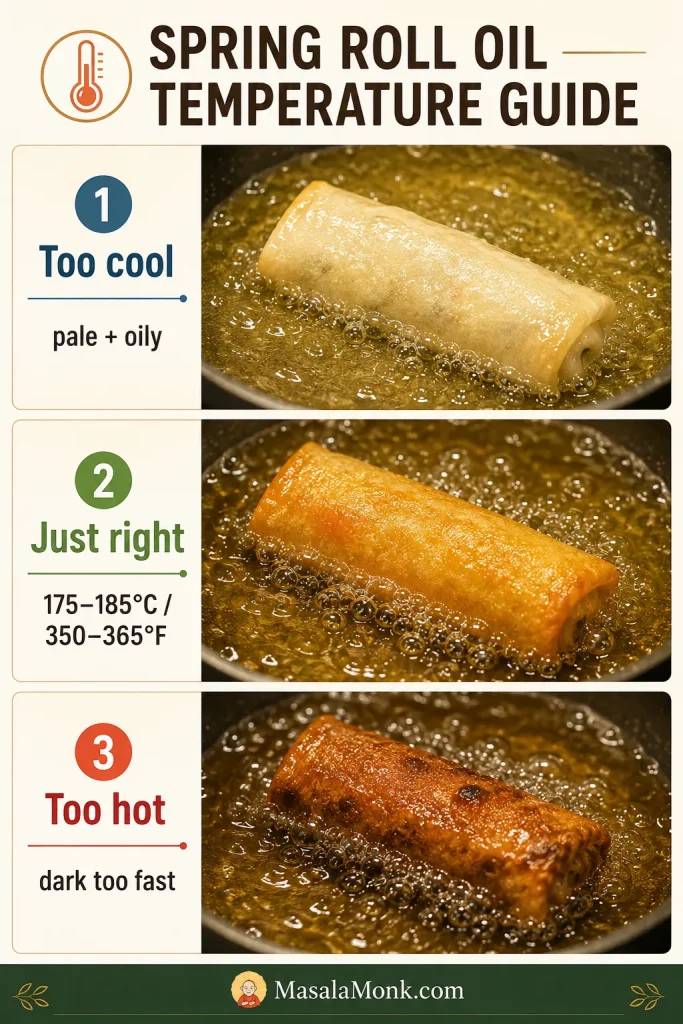
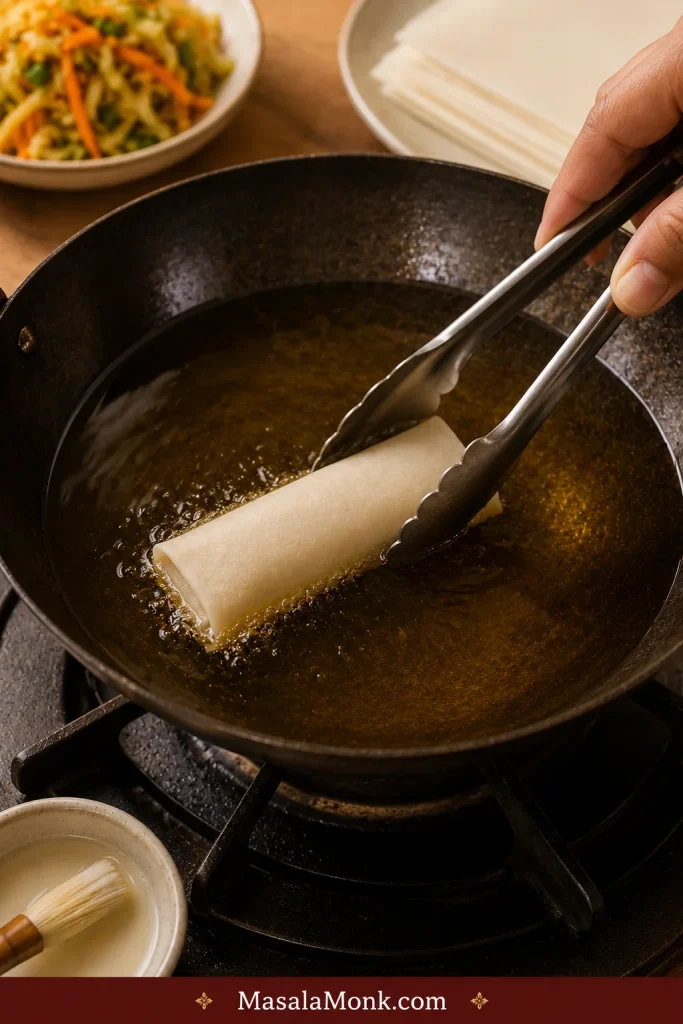
For crisp rolls, use thin spring roll wrappers and a cooked vegetable filling that is glossy, cooled, and free of loose liquid. Add about 2 heaped tablespoons filling to each standard 8-inch wrapper, roll snugly, seal with flour or cornstarch paste, and fry at 175–185°C / 350–365°F until golden and lightly blistered.
The most important thing is not perfect rolling. It is starting with filling that has stopped steaming, wrappers that stay covered, and oil that bubbles steadily. Get those right, and the rest becomes much easier.
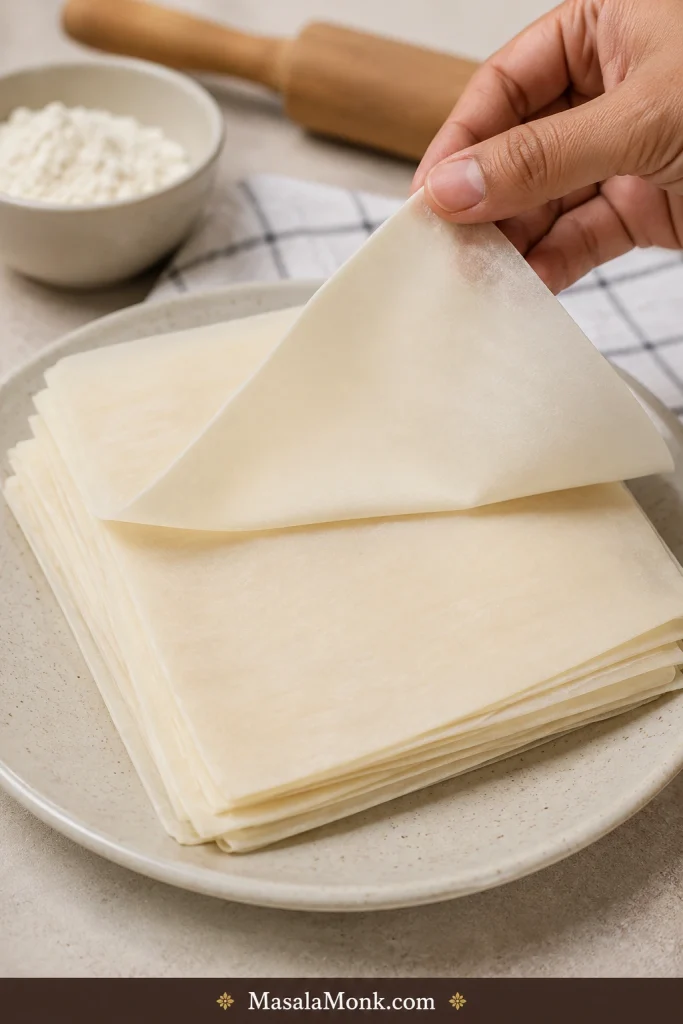
Wrapper: thin frozen spring roll sheets or wheat spring roll wrappers.
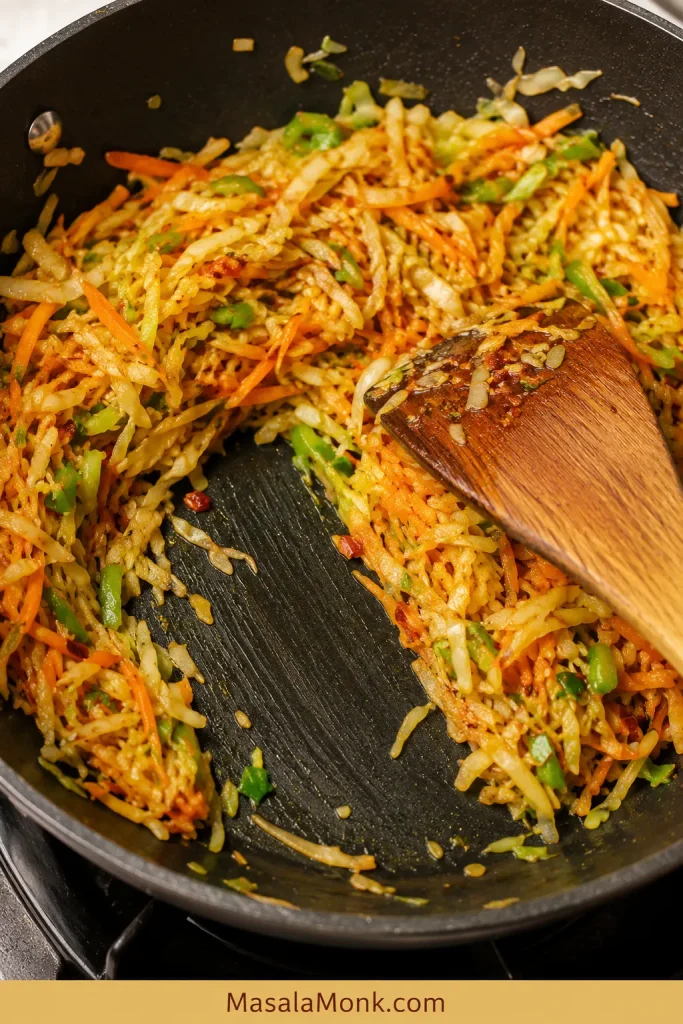
Filling cue: glossy vegetables, no puddle in the pan, and no heavy steam.
Frying range: 175–185°C / 350–365°F for freshly wrapped rolls.
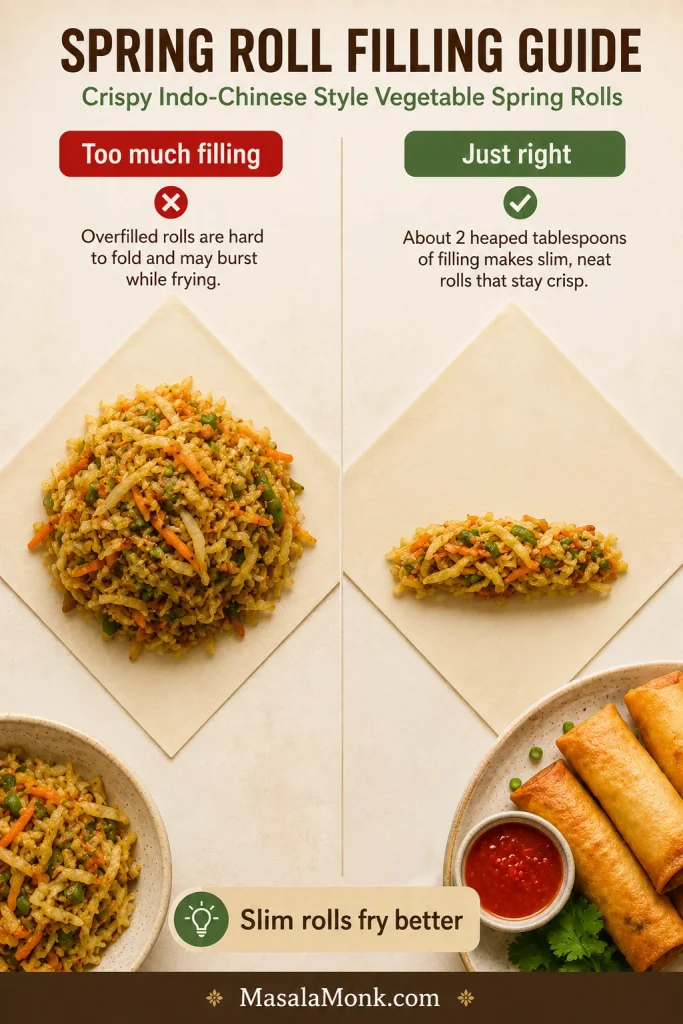
Filling amount: about 2 heaped tablespoons for an 8-inch / 20–22 cm wrapper.
Make-ahead: freeze homemade uncooked rolls on a tray, then cook from frozen.
That is the whole rhythm: dry filling, flexible sheets, a firm seal, and oil hot enough to crisp before the wrapper can soak.
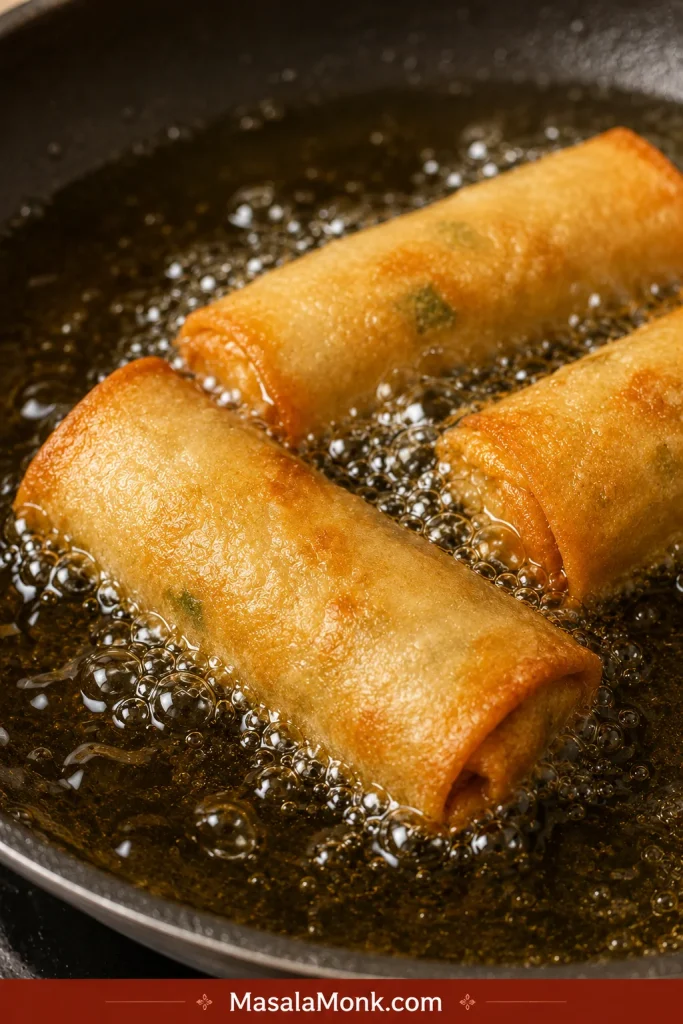
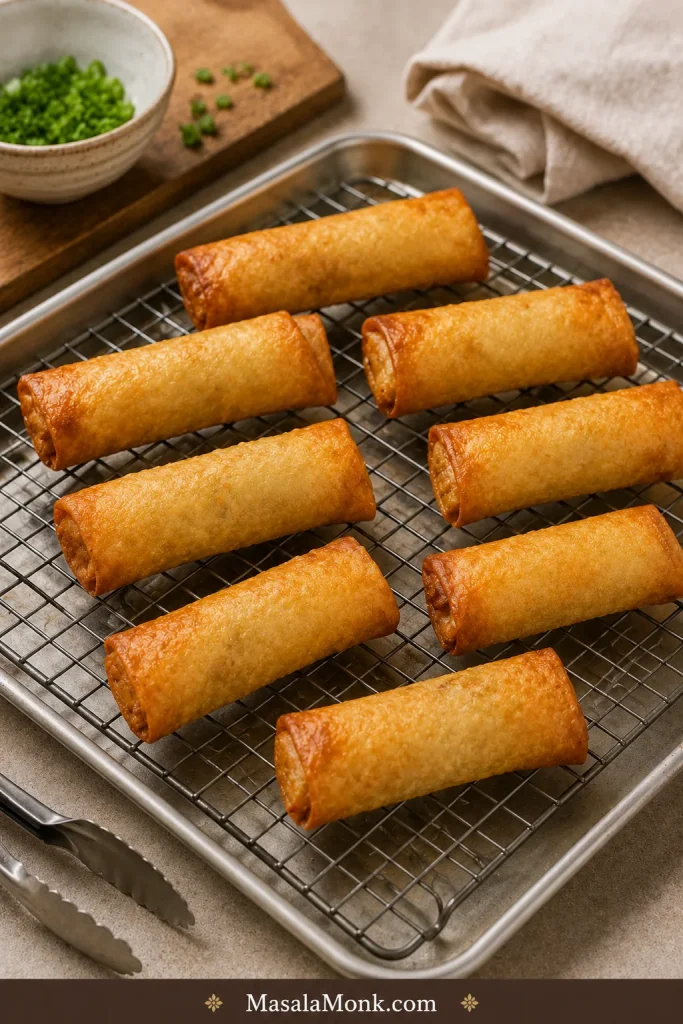
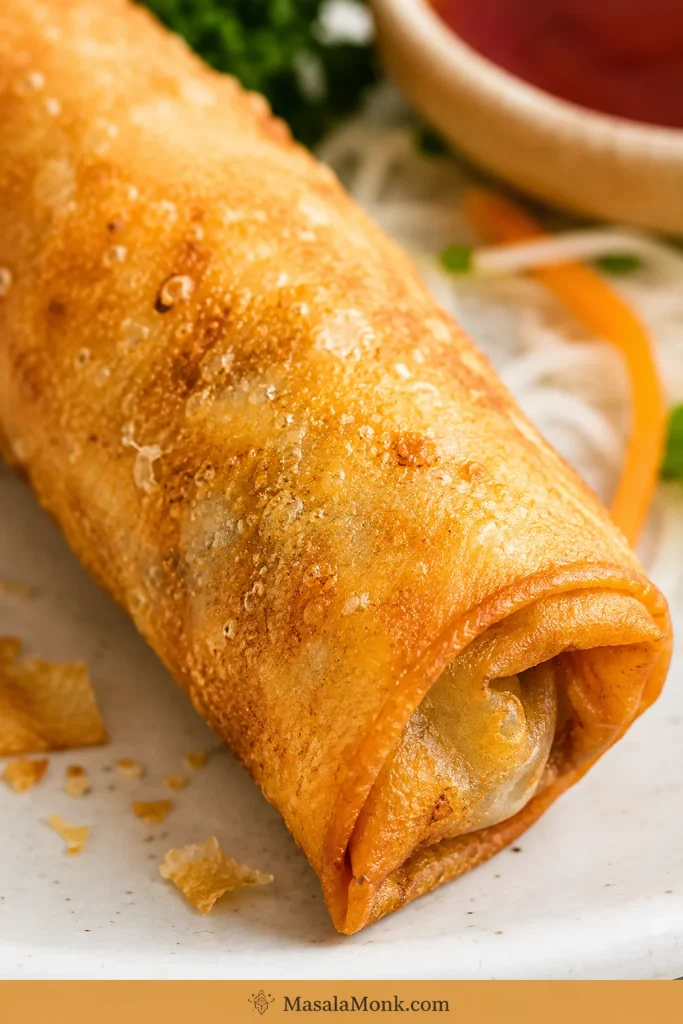
Texture cue: The finished roll should crack before it bends, with filling that stays tucked inside instead of steaming the wrapper soft.
Use the first bite as your test: the wrapper should crack cleanly, while the hot vegetable filling stays tucked inside.
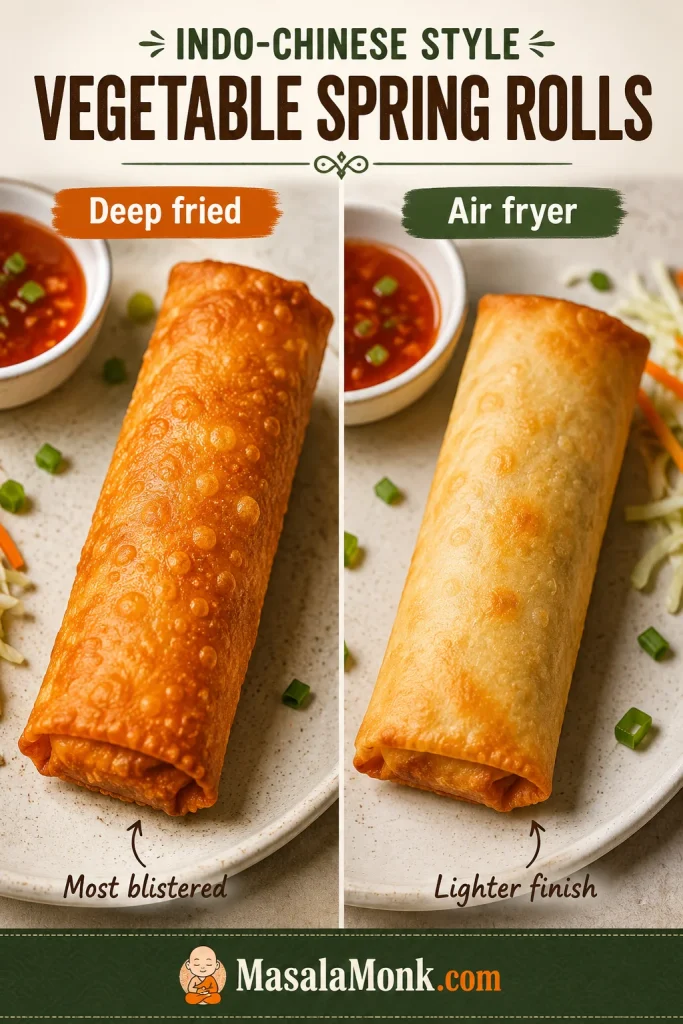
This Indo-Chinese style vegetable spring rolls recipe makes 18–22 crispy rolls with a savory cooked filling and thin golden wrappers. Keep the filling cool, the wrappers covered, and the oil steady. After the first few rolls, your hands find the rhythm and the batch moves quickly.
The filling is vegetarian as written and can also be vegan if your wrappers and sauces are vegan.
Prep time
30 minutes
Cook time
20 minutes
Cooling time
10–15 minutes
Total time
60–65 minutes
Yield
18–22 spring rolls
Serves
4–6 as a snack or appetizer
Style
Crispy veg spring rolls / Indo-Chinese inspired
Main method
Deep fried
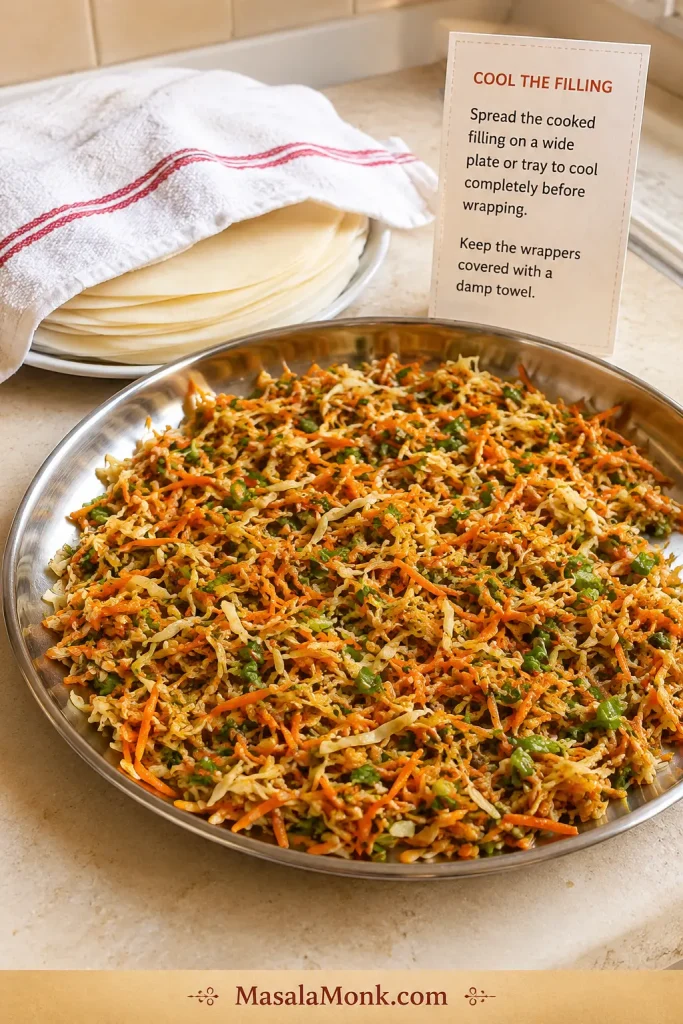
The timing above includes cooling. Spread the filling on a wide plate or tray so steam escapes faster and the wrappers stay dry.
Cook’s Notes for the Best Texture
Cool the filling fully before wrapping.
Keep unused wrappers covered with a damp towel.
Seal with a thick flour or cornstarch paste, not a watery one.
Fry one test roll first if unsure, then cook in small batches and drain on a rack.
Ingredients
For the spring roll filling
20 thin spring roll wrappers, about 8 inches / 20–22 cm square, plus a few extra if your pack has them
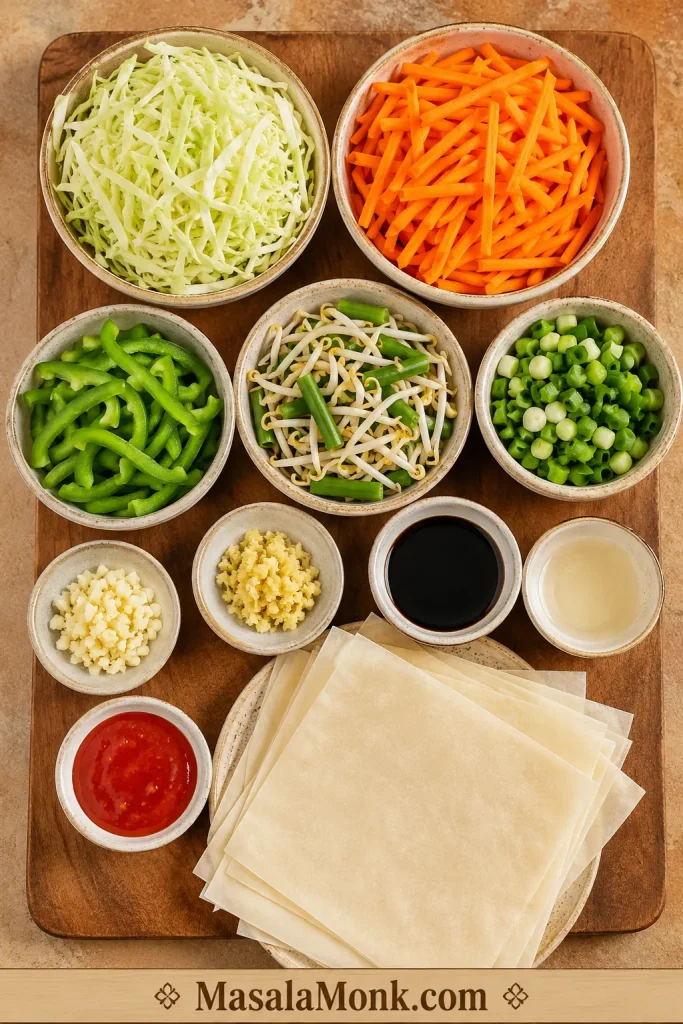
200g cabbage, finely shredded, about 3 packed cups
80–100g carrot, julienned or thickly grated, about ¾–1 cup
½ cup capsicum / bell pepper, thinly sliced
½ cup finely sliced French beans or bean sprouts
½ cup spring onions, whites and greens separated
3–4 garlic cloves, finely minced
1 tablespoon ginger, finely minced
1 tablespoon neutral oil for stir-frying the filling
1½–2 tablespoons soy sauce
1–1½ tablespoons vinegar
1–2 teaspoons red chili sauce or green chili sauce, optional
½ teaspoon white pepper or black pepper
½–1 teaspoon sugar, optional, to balance the seasoning
½–1 cup cooked, cooled, roughly chopped noodles, optional
Salt only after tasting, because soy sauce, wrappers, and dipping sauces already add salt
The yield depends on wrapper size and filling amount. With the full 1 cup noodles, you may get closer to 22 rolls.
For sealing
2 tablespoons all-purpose flour or cornstarch
2–3 tablespoons water, or enough to make a thick paste
For frying
Neutral oil for deep frying, such as sunflower, peanut, canola, rice bran, or another suitable high-heat frying oil
Avoid strongly flavored oils for frying because they can overpower the ginger, garlic, soy, and vegetable filling.
Method
1. Make the sealing paste
Mix the flour or cornstarch with water to make a thick, smooth paste. It should be spreadable, not runny. Keep it nearby while wrapping. Plain water can work with some wrappers, but paste is safer for fried rolls.
2. Cook the filling
Heat 1 tablespoon oil in a wok, kadai, or wide pan over medium-high to high heat. Add the garlic, ginger, and spring onion whites. Stir for a few seconds until aromatic, but do not let the garlic brown too much.
Add the cabbage, carrot, capsicum, and beans or sprouts. Stir-fry on high heat for 2–4 minutes, just until the vegetables soften slightly but still keep some crunch.
Add soy sauce, vinegar, chili sauce if using, pepper, and sugar if needed. Toss well. Add cooked noodles now, if using. Chop long noodles roughly before adding them so they do not pull the filling out when you bite.
Continue cooking until the vegetables smell savory and gingery and there is no visible liquid at the bottom of the pan. Drag a spatula through the filling; if liquid runs back into the space, cook it a little longer. The filling should be glossy and flavorful, not saucy.
Taste and adjust the seasoning. Go light on extra salt because the wrappers and dipping sauces add more. Add spring onion greens at the end. Transfer the filling to a plate or tray and let it cool to room temperature before wrapping.
3. Prepare the wrappers
Thaw frozen spring roll wrappers according to the package instructions. Keep the wrapper stack covered with a clean damp towel while you work; this one small habit prevents most cracking and tearing.
The sheets should feel soft and flexible, not dry, cracked, or sticky. If they stick together, wait a few more minutes after thawing instead of pulling hard. Avoid microwaving frozen wrappers unless the package says it is safe, because they can turn steamy, sticky, and easier to tear.
4. Fill and fold
Place one wrapper on the counter like a diamond, with one corner pointing toward you. Add about 2 heaped tablespoons of cooled filling just below the center. Fold the bottom corner over the filling, tuck gently, fold the left and right corners inward, then roll tightly toward the top corner. Brush the final corner with sealing paste and press to close. Place the roll seam-side down.
The first roll is allowed to look a little awkward. Keep going; the next few usually get neater.
Keep finished rolls covered while you wrap the rest. Exposed wrappers dry quickly, especially in a warm kitchen.
5. Fry until crisp
Heat 2–3 inches of oil in a deep pan to 175–185°C / 350–365°F. Lower the rolls gently into the oil, away from your body. Fry one test roll first if you want to check the seal and oil temperature before committing the whole batch. If it browns evenly and stays closed, the rest of the batch is ready.
Fry 3–5 rolls at a time, depending on pan size. Do not crowd the pan; too many rolls drop the oil temperature and can make the wrappers oily. Turn gently and fry until golden, crisp, and lightly blistered, about 3–5 minutes.
The oil should sizzle steadily. When the rolls brown too slowly, let the oil move closer to 185°C / 365°F before adding more. If they brown too fast, lower the heat and give the oil a moment to settle. Homemade frozen rolls that have not been cooked yet should start closer to 190°C / 375°F, because they drop the oil temperature quickly. When frozen rolls brown before the center is hot, lower the heat slightly after the first minute.
Remove with tongs or a slotted spoon and drain on a wire rack or paper towel-lined plate. The best rolls feel light when you lift them and sound crisp when they touch the rack. Serve hot with sweet chili sauce, soy-vinegar dip, Schezwan-style sauce, green chutney, peanut chutney, or another spring roll dipping sauce.
Success cue: Most spring roll problems trace back to five details: dry filling, thin wrappers, snug folding, thick paste, and steady oil.
Use this as your final check before wrapping so the rolls fry crisp instead of soggy, oily, or burst.
What Kind of Spring Rolls Are These?
This recipe is for the crispy, fried kind of spring roll: thin wheat wrappers, cooked vegetable filling, and a golden shell that cracks when hot. It is not the soft fresh rice paper version.
For this recipe, choose thin wheat spring roll wrappers or frozen spring roll sheets. Rice paper is better for fresh rolls, and egg roll wrappers make a thicker, chewier roll. The important thing is not only the name on the packet; it is how the wrapper behaves once it hits heat.
Wrapper cue: Use the wrapper that matches the roll you want. Thin wheat wrappers give the crisp fried version in this recipe.
Choose thin wheat spring roll wrappers for a light fried shell, because rice paper and egg roll wrappers behave very differently.
Type
Wrapper
Cooked?
Best for
Crispy spring rolls
Thin wheat spring roll wrappers
Fried, air fried, or baked
Crunchy snacks, appetizers, party food
Fresh rice paper rolls / summer rolls
Rice paper sheets
No
Fresh rolls with herbs, noodles, vegetables, shrimp, tofu, or peanut sauce
Now that the recipe path is clear, the rest of the guide is about making each step easier: the filling, the wrapper, the fold, and the heat.
A good spring roll is not only about ingredients. It is a balance of three small things: filling that does not steam, wrappers that stay flexible, and oil hot enough to set the shell before it turns greasy.
The best rolls are not just crunchy. They have contrast: a thin shell that cracks, vegetables that still have bite, and a dip sharp enough to make the next roll tempting.
The filling dries out before it goes inside
Loose moisture is the enemy of that crackly shell. Quick stir-frying cooks off extra water while keeping the vegetables lightly crunchy.
Cooling stops the wrapper from steaming
Warm filling creates steam. Steam trapped inside a sealed wrapper can soften the roll or make it burst in the oil. Letting the filling rest gives you a cleaner wrap.
Thin wrappers create the crackly shell
For this crispy version, thin wheat spring roll wrappers are not optional — they are what give the roll its light, crackly shell. Thicker egg roll wrappers work differently and give a chewier, heavier result.
A snug fold keeps the roll calm in hot oil
A neatly folded roll fries more evenly and is less likely to open in the oil. Snug is better than squeezed; too much pressure can tear the wrapper.
Helpful Tools for Crisp Spring Rolls
Use what you have. Spring rolls do not need fancy equipment; the useful tools simply help with the three real jobs: cooking moisture out, keeping wrappers flexible, and letting steam escape after frying.
Wok, kadai, or wide pan: for cooking moisture out of the filling quickly.
Deep heavy pan: for steadier frying heat.
Frying thermometer: the easiest way to stay around 175–185°C / 350–365°F.
Wire rack: keeps fried rolls crisp by letting steam escape.
Damp towel: keeps wrappers flexible while you work.
Spring Roll Ingredients and Filling Formula
The filling should taste bright and savory on its own, because the wrapper only adds crunch; it does not fix a flat filling. You should smell ginger, garlic, soy, and vinegar before you turn off the heat. If the filling tastes dull now, it will taste dull inside the wrapper too.
The formula is simple: crunch, aroma, salt, acid, heat, and a little body. Cabbage and carrot bring texture, ginger and garlic build aroma, soy sauce adds depth, vinegar keeps the fried wrapper from feeling heavy, pepper and chili sauce add bite, and optional noodles make the filling fuller.
Ingredient cue: Build the filling around crunch, aroma, salt, acid, and heat so the rolls taste bright before they reach the dip.
Start the vegetable spring roll filling with crunchy vegetables and aromatics, then use soy sauce and vinegar for that Indo-Chinese flavor.
Crunch: cabbage, carrot, capsicum, beans, sprouts, and spring onions.
Aroma: ginger, garlic, and spring onion whites.
Umami: soy sauce for depth and salt.
Brightness: vinegar to balance the fried shell.
Heat: pepper and optional chili sauce for Indo-Chinese snack-shop flavor.
Body: a small amount of cooked, cooled, roughly chopped noodles, if you want a fuller filling.
The same soy-garlic-ginger balance is useful beyond this recipe too; this stir fry sauce recipe works well for noodles, vegetables, tofu, chicken, shrimp, and quick weeknight bowls.
Best Wrappers for Crispy Spring Rolls
Once you know which kind of roll you are making, wrapper choice becomes simple. Use thin wheat spring roll wrappers or frozen spring roll sheets for this recipe. Rice paper is for fresh rolls, and egg roll wrappers make a thicker, heavier roll.
Thin sheets give a delicate shatter; thicker wrappers make the roll heavier and chewier.
Wrapper type
Use for this recipe?
What to know
Thin wheat spring roll wrappers
Yes
Best choice for crispy fried spring rolls.
Frozen spring roll sheets
Yes
Common in Indian and Asian grocery stores. Thaw while sealed.
Lumpia wrappers
Yes, when available
Thin and crisp, though size and texture may vary.
Rice paper
Not for this main method
Best for fresh summer rolls. Fried rice paper rolls need a different technique.
Egg roll wrappers
Not ideal
Thicker, heavier, and chewier than spring roll wrappers.
Homemade spring roll sheets
Possible
Useful if already made thin and flexible.
Homemade spring roll sheets can work when they are thin and flexible, but they are a separate project. For this recipe, store-bought frozen sheets are easier and more reliable.
If you cannot find spring roll wrappers, lumpia wrappers are the closest substitute. Thaw frozen wrappers while they are still sealed so they do not dry out. Once opened, cover the stack with a clean damp towel, separate one sheet at a time, and cover the rest again immediately.
How to Tell If Wrappers Are Ready
A good wrapper should feel easy in your hands: soft enough to bend, dry enough to separate, and strong enough to roll without splitting. If the sheet fights you, wait. A wrapper that is still too cold or too dry will tear before it rolls.
Readiness cue: A wrapper should separate cleanly and bend easily. If it cracks, it is too dry or still too cold.
A flexible wrapper is easier to fold, seal, and fry; if the sheet cracks while lifting, it may tear during rolling.
For a deeper look at why rice paper packages are sometimes confusingly labeled as “spring roll skin,” Viet World Kitchen has a helpful rice paper buying guide.
How to Make Spring Roll Filling That Is Not Watery
After the wrapper, the filling is the next place the recipe succeeds or fails. Raw vegetables release water inside the wrapper, which is why the filling is cooked first. When that moisture stays trapped, the rolls can burst, leak, or turn oily while frying.
Moisture Cues Before Wrapping
Moisture cue: The filling can be bold and glossy, but it should never be wet enough to leave a puddle.
Moisture causes trouble fast: wet filling can soften, leak, or burst, while dry cooled filling helps the rolls fry crisp and clean.
Cook the filling quickly over high heat. The vegetables should soften slightly but not collapse. Once the sauces go in, keep tossing until the pan looks almost clean when you push the filling aside. Flavor can be bold, but the mixture should not be saucy.
Visual cue: The filling is ready when it looks glossy but not saucy. Push it aside in the pan before wrapping.
Before the filling goes into wrappers, push it aside in the pan; if liquid runs back, the mixture needs a little more cooking.
Slightly wet filling needs another minute over high heat. A tiny pinch of cornstarch can help bind moisture, but the better fix is usually cooking the liquid off.
When the filling is right, it smells sharp from vinegar, warm from ginger and garlic, and savory enough that it tastes good before it ever reaches the wrapper.
After cooking, spread the mixture on a plate or tray and let the steam escape. Do not wrap while it is still warm. Trapped steam can soften the wrapper and make the rolls burst during frying.
Cooling cue: Spread the filling out instead of leaving it piled up, so steam escapes before the wrappers touch it.
Once cooked, spread the filling thinly so steam escapes quickly; cooler filling protects delicate spring roll wrappers from softening.
Before You Wrap, Check This
The filling is cool, not warm.
There is no liquid at the bottom of the plate or tray.
The wrappers bend without cracking.
The sealing paste is thick, not runny.
A damp towel is ready for the unused wrappers.
When all five are true, you are ready to wrap. Anything off? Fix it now; this is much easier than rescuing rolls in hot oil.
Overfilling is tempting, but it causes rolls to split. Underfilling makes them hollow and oily. Each one should feel like a small firm parcel, not a stuffed pillow.
Wrapper size
Filling amount
6-inch wrapper
About 1–1½ tablespoons
8-inch / 20–22 cm wrapper
About 2 heaped tablespoons
10-inch wrapper
About 3 tablespoons
For standard 8-inch wrappers, about 2 heaped tablespoons of cooled filling is usually enough. When in doubt, underfill the first two rolls. A slightly slimmer roll fries better than a swollen one that splits.
Correct Filling Amount
Amount cue: The filling should sit below the center of the wrapper with enough empty space left for folding and sealing.
With an 8-inch wrapper, two heaped tablespoons of filling keeps the spring roll full without making it bulky or hard to seal.
Shape cue: A roll that looks swollen before frying is usually too full. Slimmer rolls fry cleaner and split less.
If a spring roll looks swollen before frying, it is already more likely to split; leave enough wrapper space for a tight close.
Folding is easier when the filling is cool and the wrapper is soft. Work with one sheet at a time and keep the rest covered.
Place one wrapper on the counter like a diamond, with one corner pointing toward you.
Add the filling just below the center.
Fold the bottom corner over the filling.
Tuck gently once so the filling sits snugly inside.
Fold the left and right corners inward.
Roll tightly toward the top corner.
Brush the final corner with sealing paste.
Press to seal and place the roll seam-side down.
Folding Sequence
First fold cue: Start with a gentle tuck, not a hard squeeze, so the wrapper stays smooth and the filling stays compact.
First, pull the bottom corner over the filling and tuck it gently, creating a firm base before the side folds.
Side fold cue: Bring the corners in evenly so there are fewer open edges for oil to find.
Next, bring both side corners inward so the filling stays contained and the roll has fewer chances to leak.
Folding cue: Once the fold pattern makes sense, repeat the same light-fill, firm-tuck, neat-fold rhythm for the whole tray.
Once you understand the fold, the process becomes repeatable: fill lightly, tuck firmly, fold neatly, seal well, and move on.
The roll should feel snug but not stretched. If the wrapper is pulling tight before you seal it, there is too much filling.
Torn wrapper? Patch it with a small scrap and paste, then use that roll as the test piece. The first one is allowed to look a little awkward. A secure seal matters more than a perfect shape, and the next few usually get neater as your hands find the rhythm.
Sealing and Resting Before Frying
Seal cue: The paste should be thick enough to hold the final edge closed without running down the wrapper.
Use thick flour or cornstarch paste on the final edge, since a stronger seal holds better once the rolls hit hot oil.
Resting cue: Keep each wrapped roll seam-side down while the rest of the batch is finished.
After sealing, rest each roll seam-side down; the gentle pressure helps the closed edge stay secure before frying.
After the first few, the motion becomes simple: fill, tuck, fold, seal, repeat. The tray starts filling up, the rolls look neater, and the frying suddenly feels much less intimidating.
Wrapped and sealed? Go to frying while the wrappers are still flexible.
How to Fry Spring Rolls So They Stay Crispy
This is the part where the rolls change from neat little parcels into the snack everyone starts reaching for. Once they are wrapped, the oil temperature decides whether they turn crackly or greasy. They need hot oil, but not smoking oil. Cool oil makes wrappers absorb oil before they crisp. Oil that is too hot browns the outside before the center heats evenly.
Use the temperature range as your guardrail, then watch the oil and listen to the sizzle. It should sound active but not angry. Rolls should sizzle steadily, not sit quietly and soak, and not brown the second they touch the oil.
Situation
Temperature
What it means
Freshly wrapped spring rolls
175–185°C / 350–365°F
Best range for crisp, golden rolls.
Homemade frozen rolls, uncooked
About 190°C / 375°F
The frozen rolls drop the oil temperature quickly.
Too cool
Below 170°C / 340°F
Rolls can become oily and pale.
Too hot
Above 190°C / 375°F
Wrappers brown too fast and may blister aggressively.
Temperature and Bubble Cues While Frying
Temperature cue: Use 175–185°C / 350–365°F for fresh rolls so the wrapper crisps before it absorbs too much oil.
Fresh spring rolls crisp best at 175–185°C / 350–365°F, where the wrapper gets even color without darkening too fast.
Bubble cue: Look for steady bubbling around the wrapper, not a quiet soak and not an angry boil.
During frying, watch the bubbles: steady bubbling means crisping, quiet oil suggests heaviness, and violent bubbling can brown the wrapper too fast.
Use 2–3 inches of oil or enough for the rolls to float. Fry in small batches and turn gently. In a medium pan, 3–5 at a time is usually safer than a crowded batch.
A thermometer is best. Without one, dip the handle of a wooden spoon or a chopstick into the oil. Small, steady bubbles around it usually mean the oil is ready. Violent bubbling or smoke means the oil is too hot.
What the First Test Roll Tells You
Opens in oil: the seal is weak or the paste is too thin.
Browns too fast: the oil is too hot.
Turns pale and oily: the oil is too cool.
Bursts: the filling is wet, warm, or overpacked.
That first roll tells you everything: whether the seal holds, whether the oil is hot enough, and whether the filling stayed dry. Once it comes out crisp, the rest of the batch feels easy.
Test cue: One roll can save the batch by showing whether the seal holds and the oil is in range.
Fry one test roll before the full batch; it quickly reveals whether the filling, seal, and oil temperature are ready.
Drain fried rolls on a wire rack when possible. A rack lets steam escape and keeps the wrappers crisp. Paper towels also work, but avoid stacking hot rolls on top of each other. Give them a minute on the rack, then serve while the shell still sounds crisp when you move it.
Drain and Check the Shell
Draining cue: Airflow matters after frying too. A rack lets steam escape instead of trapping it under the rolls.
After frying, use a wire rack when possible; it lets steam escape instead of collecting underneath and softening the shell.
Texture cue: The best shell looks thin, golden, and lightly blistered rather than thick, smooth, or oily.
Look for this lightly blistered surface: it signals a thin wrapper that fried hot enough to crisp without soaking up excess oil.
Deep frying gives the crispiest, most delicate result. Think of the air fryer version as a lighter, weeknight-friendly roll, not an exact copy of the deep-fried one. It can still be crisp, but it will not have the same delicate blistered shell.
Deep Fried vs Air Fryer Texture
Texture comparison: Deep frying gives the most blistered shell, while the air fryer trades some delicacy for convenience.
Deep frying gives the most delicate blistered shell, while air frying gives a lighter finish that still works for easier home cooking.
Preheat the air fryer if your model recommends it. A hot basket helps the wrapper start crisping sooner instead of drying out slowly.
Method
Temperature
Time
Best cue
Deep fry
175–185°C / 350–365°F
3–5 minutes
Golden, crisp, lightly blistered wrapper.
Air fryer, standard rolls
190–200°C / 375–400°F
10–15 minutes
Crisp outside, lightly browned, flipped halfway.
Air fryer, thicker rolls
180°C / 355°F
16–20 minutes
Cooked through without burning outside.
Oven-baked
200°C / 400°F
20–25 minutes
Crisp edges and golden patches.
Homemade frozen rolls, uncooked
200°C / 400°F
12–16 minutes, plus more if needed
Hot center and crisp wrapper.
Store-bought frozen spring rolls are often smaller or partially cooked, so they may air fry faster. Follow the package timing and use the same cues: hot center, crisp wrapper, and no cold spots.
Air Fryer Setup That Crisps Evenly
For the air fryer, brush or spray the rolls lightly with oil on all sides. Arrange them in a single layer with space between each one. Flip halfway through cooking. Dry-looking wrappers usually need a little more oil coating.
Air fryer cue: Arrange rolls in one layer with space between them, then use a light oil coating for better browning.
Space is the first trick for air fryer spring rolls; a single layer helps hot air reach the wrapper from all sides.
If air-fried rolls brown unevenly or stay soft in patches, this guide to common air fryer mistakes is worth checking, especially for crowding, airflow, and oil coating.
For baked rolls, place them on a rack set over a tray when available. Brush or spray with oil and bake until crisp-edged and golden. Turn once for more even browning.
Best Sauces for Spring Rolls
The dip is not just extra. It is what makes the second bite as exciting as the first. A good dip resets the bite: it cuts the oil, wakes up the filling, and makes the next roll feel lighter than the last.
Put the sauce close to the platter, because the first few rolls usually disappear before the next batch is out of the oil.
Mood
Dip
Best with
Street-style sweet heat
Sweet chili sauce
Crispy vegetable spring rolls
Sharp and salty
Soy-vinegar-garlic dip
Chinese-style spring rolls
Indo-Chinese spicy
Schezwan-style sauce
Veg, chicken, or noodle rolls
Indian snack plate
Green chutney
Fried snacks and veg rolls
Creamy and rich
Peanut chutney or peanut sauce
Tofu rolls, fresh rice paper rolls, and some vegetable rolls
Sauce cue: Pick a dip that cuts through the fried shell instead of making the bite feel heavier.
Choose a spring roll sauce by contrast: sweet chili adds heat, soy-vinegar adds sharpness, and chutney keeps each bite fresh.
Quick soy-vinegar dipping sauce
For a quick soy-vinegar dipping sauce, mix 2 tablespoons soy sauce, 1 tablespoon vinegar, 1 small grated garlic clove, ½ teaspoon sugar, chili oil or chili flakes to taste, and 1 tablespoon finely chopped spring onion. Taste and add more vinegar if you want it sharper.
Fresh chutney option
For an Indian-style fresh dip, green chutney brings coriander, mint, chili, lemon, and ginger brightness that cuts beautifully through fried spring rolls.
Peanut sauce note
Peanut sauce is excellent with fresh rice paper rolls, tofu rolls, and summer rolls. With crispy spring rolls, it works best when you want a richer, creamier dip rather than a sharp chili sauce. For a thicker Indian-style peanut dip, this tangy spicy peanut chutney gives the rolls a creamy, nutty, slightly sharp contrast without needing a heavy mayo-style sauce.
Once you understand the dry-filling rule, variations stop feeling risky. The filling can change; the moisture rule does not. Cook the filling, let excess liquid evaporate, cool it, then wrap.
Vegan spring rolls: use vegan wrappers and keep the filling vegetable, mushroom, tofu, or noodle-based.
Mushroom spring rolls: add sliced mushrooms, but cook them until their moisture evaporates.
Chicken spring rolls: add cooked shredded chicken or cooked minced chicken; do not add wet gravy.
Shrimp or prawn spring rolls: use chopped cooked shrimp or prawns, pat dry if needed, and avoid wet sauce.
Tofu spring rolls: press the tofu first, then brown it lightly or crumble it into the vegetable mixture.
Noodle spring rolls: use cooked, cooled, roughly chopped noodles. Too many noodles make the filling heavy.
Fresh rice paper rolls: use rice paper, fresh herbs, noodles, vegetables, tofu, shrimp, or chicken. Do not fry this version.
Meat, seafood, or tofu should be cooked before wrapping unless a specific recipe is designed for raw filling. Spring rolls fry quickly, so the wrapper can brown before a raw filling cooks safely and evenly.
Make Ahead, Freezing, and Reheating
These are good for prep, but timing matters. The filling can be made ahead. Wrapped uncooked rolls should either be cooked soon or frozen, because moisture from the filling can soften the wrappers over time.
This is the part that makes spring rolls party-friendly: the messy work can happen earlier, and the crisping can happen when everyone is ready to eat. Frying from frozen also keeps the wrappers from sitting around and slowly softening.
Filling only: refrigerate for 1 day once cool. Bring closer to room temperature before wrapping and drain off any collected moisture.
Wrapped uncooked rolls: refrigerate for 2–4 hours if needed, but cook them soon for the best texture.
Wrapped uncooked frozen rolls: freeze on a tray until firm, then transfer to a freezer-safe bag or container.
Cooked leftovers: reheat in an air fryer or oven at 180–200°C / 350–400°F until hot and crisp.
Freezing cue: Freeze uncooked rolls separately first, then bag or box them once firm.
To freeze spring rolls properly, firm them up on a tray first; once solid, they store neatly and cook more evenly later.
Freeze homemade uncooked rolls for up to 2–3 months for best quality. If stacking, use parchment between layers so they do not stick together. Fry or air fry from frozen without thawing, because thawing can make the wrappers wet and sticky.
Use the microwave only when crunch does not matter. It heats the filling, but it softens the wrapper.
Spring Roll Substitutions and Method Swaps
Most swaps are safe once you know what they change: wrapper texture, moisture level, or cooking method.
Swap
Works?
What changes
Rice paper
Not for this main method
Use it for fresh rolls unless following a separate fried rice paper technique.
Egg roll wrappers
In a pinch
The rolls will be thicker, heavier, and chewier.
Frozen vegetables
Only if cooked dry
They release more moisture and can make the filling soggy.
Air fryer
Yes
Lighter result, less blistered shell, needs oil coating.
Homemade spring roll sheets
Yes, if thin and flexible
More work and less predictable than store-bought frozen wrappers.
The safest swap is the one that keeps the roll thin, dry, and quick-cooking. Once the wrapper gets thicker or the filling gets wetter, the texture changes too.
Spring Roll Troubleshooting
Most spring roll problems are not mysterious. They usually come from moisture, filling amount, sealing, or oil temperature. A soggy or burst roll does not mean the recipe failed. Do not judge the whole batch by one bad roll; the first failure usually tells you exactly what to change.
Problem
Likely cause
Fix
Spring rolls are soggy
Wet filling, warm filling, or cool oil
Cook filling until the pan looks dry, let it cool, and fry hotter.
Rolls burst while frying
Overfilled roll, trapped steam, or loose wrapping
Use less filling, let it stop steaming first, and roll more securely.
Wrappers tear
Wrappers dried out or were handled roughly
Keep wrappers covered and use gentle pressure.
Rolls open in the oil
Weak seal or watery paste
Use a thicker paste and place rolls seam-side down.
Spring rolls are oily
Oil too cool or pan overcrowded
Fry fewer at a time and keep oil in the correct range.
Outside browns too fast
Oil too hot
Lower heat slightly and keep the oil below 190°C / 375°F.
Air fryer rolls look dry
Not enough oil on the wrapper
Brush or spray lightly with oil before air frying.
Filling tastes flat
Not enough acid, pepper, or aromatics
Add vinegar, pepper, chili sauce, garlic, or spring onion.
Troubleshooting cue: Match the symptom to the cause before changing the whole recipe.
Use the symptom as your clue: soggy, burst, oily, torn, and flat spring rolls each point to a different fix.
No. These crispy rolls use thin wheat-based wrappers and are cooked. Rice paper rolls are softer, fresh rolls made with soaked rice paper sheets.
What wrappers are best for crispy spring rolls?
Thin wheat spring roll wrappers or frozen spring roll sheets are best. Rice paper is for fresh rolls, while egg roll wrappers make a thicker, chewier fried roll.
How do you keep spring rolls from getting soggy?
Cook the filling until there is no loose liquid, let it cool before wrapping, avoid overfilling, fry in hot oil, and do not stack the rolls while hot.
Why did my spring rolls burst while frying?
They usually burst because the filling was too wet, too warm, or packed too tightly. Weak sealing can also make rolls open in the oil.
What temperature should oil be for spring rolls?
Freshly wrapped rolls do best around 175–185°C / 350–365°F. Homemade frozen rolls that have not been cooked yet can start closer to 190°C / 375°F.
How long do you fry spring rolls?
Freshly wrapped crispy spring rolls usually take 3–5 minutes at 175–185°C / 350–365°F, depending on wrapper thickness, filling amount, and batch size.
Can you pan fry spring rolls instead of deep frying?
Yes, but use enough oil to coat the bottom of the pan generously and turn the rolls carefully. They can still crisp, but the browning will usually be less even than deep frying.
Do you cook the filling before wrapping spring rolls?
Yes. Raw vegetables release too much water inside the wrapper. A quick stir-fry seasons them and keeps the finished rolls crisper.
How long do spring rolls take in the air fryer?
Standard homemade air fryer spring rolls usually take 10–15 minutes at 190–200°C / 375–400°F. Brush or spray them lightly with oil and flip halfway.
Should spring rolls be frozen before or after frying?
Freeze homemade spring rolls before frying for the best make-ahead texture. Fry or air fry them from frozen without thawing.
What sauce goes best with spring rolls?
Sweet chili sauce is the easiest match. Soy-vinegar-garlic dip, Schezwan-style sauce, green chutney, and peanut chutney also work well.
Before You Fry Your Next Batch
Once the filling is dry, the wrappers stay covered, and the oil is steady, the recipe becomes simple.
The first batch may not look perfect. That is fine. As you understand the filling, wrapper, fold, and oil, every batch gets cleaner, crisper, and easier.
A good batch rarely waits politely on the platter. Serve the spring rolls while the wrappers still crackle, with a bright dip close by. That contrast — hot filling, crisp shell, sharp sauce — is the reason they disappear so quickly from the plate.
Serving cue: Serve the rolls while the shell still crackles and the sauce is close enough for every bite.
Serve spring rolls hot, before the wrappers lose their crackle; the best bite is crisp shell, savory filling, and bright sauce together.
This is the peanut sauce you make when dinner is almost there but needs one creamy, salty-sweet thing to pull it together. It is rich from peanut butter, bright with lime and rice vinegar, warm with ginger and garlic, and easy to adjust depending on what is on the plate.
The promise is simple: one 5-minute peanut sauce, adjusted by texture. Make it easy to dip with spring rolls, warmer and richer for satay-style chicken or tofu skewers, looser for noodles, and brighter for salads or slaw.
Once you understand how the sauce should behave, the recipe becomes more than a dip. It becomes the jar that helps fresh rolls, plain noodles, grilled chicken, crispy tofu, rice bowls, vegetables, and leftovers feel like dinner. This is the kind of sauce that makes you feel like you planned dinner, even when you mostly assembled it.
Quick Answer: How to Make Peanut Sauce
To make peanut sauce, whisk the soy sauce or tamari, rice vinegar, lime juice, sweetener, chili sauce, ginger, garlic, and sesame oil first, then whisk in peanut butter and water until the sauce comes together. Start with less liquid, then add more until the sauce matches the food you are serving.
Rule one: fix texture before flavor. A thick peanut sauce can taste saltier, sweeter, and heavier than it really is, so get it close to the right consistency first. Then adjust with lime, soy sauce, sweetener, or chili.
Once the base comes together, the question is not only “is it smooth?” but “will it behave on the food?” If you are unsure, use the texture guide before adding all the liquid.
Prep time: 5 minutes Cook time: 0 minutes Total time: 5 minutes Yield: About 1 to 1¼ cups / 240 to 300 ml, depending on how much water you add Servings: 8 to 10 Serving size: About 2 tablespoons / 30 ml
Best as a dip: spring rolls, satay, lettuce wraps, dumplings, rice paper rolls Best as a sauce: noodles, chicken, tofu, salads, rice bowls, roasted vegetables, slaw
Equipment: bowl and whisk or fork. Optional: jar for storage, grater for fresh ginger and garlic, small saucepan for the satay-style variation.
Ingredients
Line up the peanut sauce ingredients before you start so the balance is clear: nutty body, salty depth, tang, heat and just enough sweetness.
Peanut butter gives the sauce body, while soy sauce, lime, vinegar, ginger, garlic and chili give it balance. Together, they keep the peanut sauce savory enough for dinner instead of sweet and flat.
Ingredient
Amount
Creamy natural peanut butter
½ cup / about 128 g
Low-sodium soy sauce or tamari
2 tablespoons / 30 ml
Rice vinegar
1 tablespoon / 15 ml
Fresh lime juice
1 tablespoon / 15 ml
Maple syrup or honey
1 to 2 tablespoons / 15 to 30 ml
Brown sugar, if using instead
1 to 2 tablespoons / about 12 to 25 g
Sriracha or chili garlic sauce
1 to 2 teaspoons / 5 to 10 ml
Fresh grated ginger
1 teaspoon / about 2 g
Garlic
1 small clove, finely grated, about 3 g
Toasted sesame oil, optional
1 teaspoon / 5 ml
Warm water
3 to 6 tablespoons / 45 to 90 ml, plus more as needed
Instructions
Start the peanut sauce by mixing the salty, tangy and spicy ingredients before the peanut butter goes in.
First, whisk the salty, tangy and spicy ingredients together. Then the peanut butter blends into a balanced base instead of forcing you to fix the flavor later.
Add the soy sauce or tamari, rice vinegar, lime juice, sweetener, chili sauce, ginger, garlic, and sesame oil to a medium bowl. Whisk briefly so the salty, tangy, spicy ingredients come together first.
Add the peanut butter and whisk until the mixture looks thick, dark, and mostly combined. It may look stubborn before it turns silky.
Add warm water or another thinning liquid 1 tablespoon at a time, whisking well after each addition.
Stop when the texture matches the food you are serving. Satay can stay thicker, spring roll dip should glide, and noodles or salad dressing need more flow.
Taste and adjust. More lime or vinegar helps if it tastes heavy, soy sauce or tamari helps if it tastes flat, sweetener softens sharpness, and chili adds heat.
Serve right away, or store in an airtight jar in the fridge and re-whisk with a splash of water before using.
Recipe Notes
The 3 to 6 tablespoons water gives you a standard dip or drizzle. Noodles and salad dressing usually need more.
Warm liquid helps peanut butter loosen faster than cold liquid.
Natural peanut butter often needs more patience because it can start thicker, stiffer, or more separated than regular creamy peanut butter.
Regular sweetened peanut butter works, but start with less sweetener. The sauce should taste like peanut butter went to dinner, not dessert.
The sauce thickens as it sits, especially after refrigeration. If it has already thickened, jump to storage and make-ahead before changing the flavor.
For chicken, use this as a dip, drizzle, or finishing sauce. Keep any sauce that touches raw chicken separate from the serving sauce, and cook chicken to 165°F / 74°C.
Since this is peanut-based, check for peanut allergies before serving it to guests and read labels on bottled sauces if allergies are a concern.
Texture Guide for Spring Rolls, Satay, Noodles and More
If your sauce looks clumpy, tastes too heavy, or turns noodles sticky, you probably have not ruined anything. Peanut sauce is usually a texture problem before it is a flavor problem.
Clumps usually mean the sauce needs liquid and whisking, not a full restart.
At first, peanut sauce can look clumpy and stubborn. Instead of starting over, add liquid slowly and keep whisking until the mixture turns smooth and cohesive.
The mistake most people make is stopping when the sauce looks smooth. Peanut sauce is not done until it behaves right on the food. A spring roll dip should glide, satay sauce should cling, noodle sauce should fall from the spoon in a loose stream, and dressing should pour easily.
How to Read the Sauce Texture
Thin the sauce gradually so you can stop at dip, drizzle, noodle sauce or dressing instead of overshooting the texture.
Add liquid one spoonful at a time and watch how the sauce changes. Stop when it loosens for the job you need: thick dip, noodle sauce or pourable peanut dressing.
Use
Sauce Should Look Like
Add This Much Liquid
Serve It
Spring rolls
Soft sheen, easy to dip, clings lightly to rice paper
About 4 to 6 tablespoons water total
Room temperature or slightly chilled
Satay
Thicker, warm, spoonable, not mounded like paste
About 2 to 4 tablespoons water, or use the coconut milk variation
Warm
Noodles
Loose stream from the spoon, easy to toss
About 6 to 8 tablespoons hot water or noodle water
Warm or opened up with hot water
Salad dressing
Pourable, bright, thinner than dipping sauce
Extra water plus more lime juice or rice vinegar
Chilled or room temperature
Chicken
Medium-thick dip or drizzle
Keep it savory and not too sweet
Room temperature or warm
Tofu
Thicker for coating, thinner for bowls
Add extra chili and lime for punch
Room temperature or warm
Rice bowls
Slow drizzle, not watery
Thin slightly and re-whisk before serving
Room temperature
Use this visual guide when you are deciding whether the sauce should cling, glide, coat or pour.
This is the texture rule worth saving: thicker peanut sauce clings to satay, softer sauce works for spring rolls, and looser sauce coats noodles without grabbing them.
Before you taste, fix the texture: peanut butter can look clumpy or slightly broken before it turns silky. Keep whisking, add liquid slowly, and taste only after the sauce is close to the consistency you want. A sauce that is too thick will taste saltier, sweeter, and heavier than it really is.
When in doubt, keep it a little thicker at first. You can always add a splash more liquid, but it takes extra peanut butter to fix a sauce that has gone too thin.
Why This Peanut Sauce Works
The finished sauce should not taste like sweet peanut butter. It should taste nutty first, then salty, tangy, lightly sweet, and gently spicy at the end.
Peanut butter gives body and nutty richness. Soy sauce or tamari gives dinner-level savoriness. Lime juice and rice vinegar cut the heaviness. Sweetener rounds the sharp edges. Ginger, garlic, and chili keep the sauce lively instead of flat.
Water is not filler here. It is the texture tool. A little gives the sauce enough body for dipping; more turns it into a noodle sauce or dressing. That is why the same bowl can taste right with cool rolls, hot noodles, grilled chicken, tofu, or a pile of vegetables. If the sauce already tastes off, check the troubleshooting table before adding more soy sauce, sugar or lime.
If the sauce tastes like peanut butter first and dinner second, it usually needs salt, acid, or chili before it needs more sweetness.
Ingredients and Smart Swaps
Peanut Butter
Creamy natural peanut butter gives the cleanest peanut flavor. If your jar has separated, stir it well before measuring. Homemade peanut butter also works well if you want more control over roast, salt, and texture.
Regular creamy peanut butter works too, but it is usually sweeter, so start with less sweetener. Crunchy peanut butter is fine if you like texture, especially for satay-style sauce or rice bowls.
Soy Sauce or Tamari
Low-sodium soy sauce keeps the sauce savory without pushing it too salty. Tamari is the best swap for gluten-free peanut sauce, as long as the label says gluten-free. Coconut aminos can work for a soy-free version, but it is sweeter and less salty, so adjust with salt and lime at the end.
Rice Vinegar and Lime Juice
Rice vinegar gives a clean tang; lime makes the sauce taste fresher. Together, they keep peanut butter from feeling heavy. Apple cider vinegar or white vinegar can work in a pinch, especially for a satay-style version.
Sweetener
Maple syrup keeps the sauce vegan and blends easily. Honey gives rounder sweetness. Brown sugar adds deeper flavor, especially in satay-style peanut sauce. When your peanut butter is already sweet, let the lime and soy sauce lead before adding more sugar.
Chili Sauce
Sriracha, chili garlic sauce, sambal, or chili crisp can all work. One teaspoon keeps the heat mild; two or more pushes it into spicy peanut sauce territory. For the satay-style variation, red curry paste adds better depth than sriracha alone.
Garlic and Ginger
Fresh grated garlic and ginger make the sauce taste alive. Grating them finely helps them disappear into the sauce instead of leaving sharp pieces. If raw garlic is too strong for you, use half a clove or a small pinch of garlic powder.
Sesame Oil
Toasted sesame oil is optional, but a small amount gives the sauce a deeper, nuttier flavor. Use it lightly because peanut butter is already rich.
Coconut Milk
Coconut milk is not required for the 5-minute sauce. Water keeps it quick, bright, and flexible.
Coconut milk is what makes the satay-style version feel rounder and warmer. Use it for skewers, grilled chicken, tofu satay, or roasted vegetables. Coconut cream makes the sauce thicker and more luxurious, while regular coconut milk keeps it smoother and more pourable. Making skewers? Jump to the satay-style peanut sauce variation. If you like that coconut-curry direction, the same balance shows up in Chicken Panang Curry, where peanut stays in the background instead of taking over like satay sauce.
Hoisin Sauce
Hoisin is not part of the main sauce, but it is very useful for a Vietnamese-style spring roll dip. It adds sweetness, body, and a deeper savory flavor that works beautifully with rice paper rolls, shrimp rolls, and fresh vegetable rolls.
Peanut Sauce for Spring Rolls
For spring rolls, fresh rolls, summer rolls, and rice paper rolls, the dip should be smooth enough for dipping but thick enough to cling. When it sits on the roll like paste, it needs more liquid. When it runs off immediately, it needs more peanut butter.
Start with the sauce as written and add liquid until it becomes easy to dip. A little extra lime juice or rice vinegar also helps because fresh rolls are usually full of cool vegetables, herbs, shrimp, tofu, or noodles. A good spring roll dip should catch on the rice paper, slide over the herbs and vegetables, and leave a little peanut richness behind.
Use fresh spring rolls as a texture check: the dip should feel light around herbs and vegetables while still leaving a creamy coat.
The dip should coat rice paper lightly, then get out of the way so the herbs, vegetables and filling still taste fresh.
How to Adjust the Sauce for Spring Rolls
Vegetable-heavy rolls taste better with a little extra lime juice or rice vinegar.
Shrimp rolls can handle a slightly sweeter dip, which is where the hoisin variation works especially well.
Tofu rolls benefit from chili crisp, extra ginger, or crushed peanuts for more punch.
A dip that drags across rice paper needs a small splash of water until it glides.
A dip that slides off the roll needs a small spoon of peanut butter to bring back body.
Before moving to the hoisin variation, check the basic spring roll texture: the dip should coat rice paper without dragging.
For spring rolls, the dip should leave a light coat on the rice paper. Too much drag means it needs liquid; too much slide means it needs more body.
Vietnamese-Style Hoisin Peanut Sauce for Rice Paper Rolls
Use this version when spring rolls are the main event. Hoisin gives the dip the darker, sweeter body people often expect with rice paper rolls, while peanut butter keeps it creamy and rich.
The hoisin version should look darker and glossier than the everyday peanut sauce, especially for rice paper rolls.
When rice paper rolls are the main event, hoisin gives peanut sauce a darker, sweeter body. After mixing, add lime or vinegar if the dip starts tasting too sweet.
Use this quick formula:
½ cup peanut sauce
1 tablespoon hoisin for lighter sweetness, or 2 tablespoons for a deeper dip
1 to 3 tablespoons water, milk, or coconut milk, as needed
½ teaspoon chili garlic sauce, optional
Crushed peanuts, optional, for finishing
Whisk until the dip has a soft sheen. It should be looser than satay sauce but thicker than salad dressing. Too sweet? Add lime juice or rice vinegar. Too thick? Add liquid a spoonful at a time.
This is the variation to reach for when the meal is built around fresh rolls, shrimp rolls, or rice paper rolls and you want a dip that feels complete on its own.
Satay-Style Peanut Sauce
Satay sauce is usually richer, warmer, and thicker than a quick peanut dipping sauce. Depending on the region and recipe, more traditional versions may use roasted peanuts, coconut milk, curry paste, tamarind, palm sugar, fish sauce, or other aromatics.
Think of this as the weeknight bridge between a quick peanut dip and a fuller satay sauce. Start with the 5-minute base, then add coconut milk and curry paste for depth. Warmth changes everything here: the sauce softens, the curry paste blooms, and the peanut flavor feels rounder before it ever reaches the skewers.
Use this as a satay-style shortcut, not as a claim that all satay sauces are the same. It works well with chicken satay, tofu satay, grilled paneer, roasted vegetables, and rice bowls because it clings well and tastes more complete with grilled food.
Satay-Style Peanut Sauce Variation
Coconut milk and curry paste turn the quick peanut sauce into a warmer satay-style sauce for skewers and grilled food.
For satay-style peanut sauce, coconut milk and curry paste add warmth and depth. Warm it gently so the curry paste blooms without reducing the sauce into paste.
½ cup peanut sauce
¼ cup coconut milk or coconut cream
1 to 2 teaspoons red curry paste
1 teaspoon brown sugar, optional
½ teaspoon fish sauce, optional
1 to 2 tablespoons crushed roasted peanuts, optional
Warm everything in a small saucepan over medium-low heat for 3 to 5 minutes, stirring often. Do not hard-boil the sauce. The goal is to warm it, not reduce it into paste. It should be thick, warm, and spoonable, but still loose enough to drizzle over skewers.
If it tightens too much, add water or coconut milk, a spoonful at a time. A squeeze of lime or splash of rice vinegar helps when the sauce tastes too rich.
For chicken satay, the sauce should be warm, spoonable and thick enough to cling to grilled edges.
Chicken satay needs a peanut sauce that clings to grilled edges without stiffening. If the sauce tightens as it warms, loosen it with a spoonful of water or coconut milk.
Because tofu starts mild, give the satay-style sauce more contrast with lime, chili and crunch.
Keep the sauce thick enough to cling to grilled tofu, then use lime, ginger, chili and crushed peanuts for contrast.
Is Peanut Sauce the Same as Satay Sauce?
Not always. Peanut sauce is a broad term for sauces made with peanuts or peanut butter. Satay sauce usually refers to the peanut-based sauce served with satay skewers, and it is often warmer, richer, and more deeply seasoned.
For everyday cooking, this sauce can move in a satay-style direction with coconut milk, curry paste, and gentle heat. A very specific Thai, Indonesian, Malaysian, or Singaporean satay sauce may need a more traditional recipe built around that cuisine.
Peanut Sauce for Noodles
This is where the sauce becomes dinner, not just a dip. Noodles need a looser peanut sauce than spring rolls or satay. Peanut butter thickens quickly when it hits warm noodles, and a mixture that looks pourable in the bowl can turn sticky once tossed.
For 2 servings, start with about ½ cup peanut sauce and add 2 to 4 tablespoons hot water or noodle cooking water before tossing. For 8 ounces / 225 g noodles, use ½ to ¾ cup sauce, depending on how saucy you like your noodles.
Before sauce meets noodles, it should already move in a loose stream from the spoon.
For noodles, the sauce should fall from the spoon in a loose stream before tossing. Otherwise, peanut butter can tighten around warm noodles and make the bowl sticky fast.
The idea is similar to glossy pasta sauces: loosen first, then toss. The same idea shows up in pesto pasta, where pasta water keeps the sauce glossy instead of oily or dry.
Pour the peanut sauce over noodles only after it has enough movement to coat the strands evenly.
Before tossing noodles, loosen the peanut sauce until it moves easily. As a result, it coats the strands evenly instead of grabbing them into sticky clumps.
Sometimes the bowl looks perfect, then tightens while you are setting the table. Do not panic. Add hot water or noodle water, a spoonful at a time, and toss again until the sauce relaxes around the noodles instead of grabbing them. If it keeps clumping, jump to how to fix peanut sauce.
Tips for Peanut Noodles
Hot water or noodle water helps the sauce loosen cleanly; cold water can make it tighten.
Make the sauce looser before adding it to the noodles.
Toss gradually instead of dumping everything in at once.
Lime juice or rice vinegar helps when the noodles taste heavy.
Soy sauce or tamari helps when the noodles taste flat.
Cold peanut noodles need a looser sauce because it thickens as it chills.
Toss it with rice noodles, spaghetti, ramen, soba, udon, or egg noodles. Add cucumber, carrots, cabbage, scallions, cilantro, mint, edamame, tofu, chicken, shrimp, or a fried egg to turn it into a full meal.
Once the sauce is coating properly, fresh toppings finish the noodle bowl and keep it from tasting heavy.
Once the noodles are coated, add crunch, herbs, lime and protein to turn peanut sauce noodles into dinner. The finish should taste fresh, not just creamy.
Peanut Sauce for Chicken, Tofu and Bowls
This is where peanut sauce earns its place in the fridge: plain chicken, tofu, rice, and vegetables suddenly taste like a planned meal. The trick is matching the texture to the job, not pouring the same thickness over everything.
Use
Best Texture
Best Adjustment
Grilled chicken
Medium-thick drizzle
Add lime after cooking so the sauce tastes bright, not heavy
Chicken rice bowls
Slow drizzle
Keep it savory enough to season the rice
Peanut chicken noodles
Loose, tossable sauce
Use hot water or noodle water before tossing
Crispy tofu
Thicker coating sauce
Add chili crisp, extra ginger, or crushed peanuts
Tofu bowls
Drizzle-able but not watery
Add lime and tamari so the tofu does not taste flat
Lettuce wraps
Easy dip with body
Add lime and herbs for freshness
Chicken
Spoon it over cooked chicken, serve it as a dip for grilled chicken, or use the warm satay-style version with skewers. Plain baked chicken works well here because the sauce brings most of the flavor. Once the chicken is cooked, you can slice it into bowls, tuck it into lettuce wraps, or serve it beside spring rolls and cucumber salad.
Everyday chicken needs a peanut sauce that drizzles cleanly and seasons the plate without turning sweet.
For everyday chicken, keep the sauce savory and medium-thick. It should drizzle over the slices, season the rice and stay balanced without tasting dessert-sweet.
Tofu
Tofu can take this sauce in two directions. Keep it thicker if you want to coat crispy tofu, or make it slightly looser if you want to drizzle it over a tofu bowl. Tofu loves a bolder sauce because it gives the peanut, lime, chili, and ginger room to show up.
For crispy tofu, keep the sauce thick enough to coat without covering every crunchy edge.
Crispy tofu can take a thicker peanut sauce because the edges stay sturdy. Then chili, lime, ginger and crushed peanuts help the tofu taste bold instead of bland.
For a vegan version, maple syrup or brown sugar keeps the sweetness simple. Gluten-free bowls work best with tamari for the same savory depth. When you need a soy-free version, use coconut aminos and adjust with salt and lime at the end.
Rice Bowls and Meal Prep
In rice bowls, aim for a slow drizzle, not a watery pour. It should settle into the rice, vegetables, and protein without disappearing. Fluffy rice matters because it can hold the sauce without turning gummy.
Rice bowls need a slow drizzle that settles into the grains and makes leftovers feel intentional.
In rice bowls, aim for a slow peanut sauce drizzle that settles into the grains without disappearing. This is where leftover rice and vegetables start to feel planned.
When meal prepping, store the sauce separately. It will thicken in the fridge, so re-whisk it with a splash before adding it to bowls, noodles, or salads. A jar of peanut sauce can make leftover rice, roasted vegetables, cooked chicken, tofu, or even plain cucumber feel intentional.
To make peanut dressing for salad, slaw, or cold noodle salad, use more liquid than you would for dipping. It should pour easily from a spoon and taste brighter than satay sauce.
Start with ½ cup peanut sauce, then whisk in 2 to 4 tablespoons water. Add 1 to 2 teaspoons extra lime juice or rice vinegar if the dressing tastes heavy. A good peanut dressing should taste a little brighter than you think, because raw vegetables soften its sharpness once everything is tossed.
For salad and slaw, the sauce has to pour easily and taste brighter than it would as a dip.
For slaw and salads, make the peanut dressing brighter and thinner than a dip. Once it hits cabbage, cucumber and carrots, the extra tang keeps everything fresh instead of heavy.
Once it hits cabbage, cucumber, herbs, or shredded carrots, that extra brightness settles into balance. Use it on cabbage slaw, Thai peanut salad, cold noodle salad, lettuce wraps, grilled vegetables, or shredded chicken salad. It also works beautifully beside a crisp cucumber salad, especially when the meal has satay-style chicken, tofu, noodles, or grilled vegetables.
Rich toppings like avocado, fried tofu, or chicken need more lime. Mostly raw vegetables can handle a dressing that is a little sweeter and saltier.
Everyday Peanut Sauce, Vietnamese-Style Hoisin Dip and Satay-Style Sauce
Peanut sauce can mean different things depending on the dish. This recipe is an everyday peanut-butter sauce for home cooking, not a claim that all peanut sauces are the same. Traditional and regional versions may use roasted peanuts, tamarind, palm sugar, fish sauce, coconut milk, hoisin, curry paste, or other aromatics depending on the cuisine and dish.
Use the color and thickness of the sauce to understand which direction it has moved: everyday dip, hoisin dip or satay-style sauce.
One peanut sauce base can move in three directions: everyday dip, Vietnamese-style hoisin peanut sauce or warmer satay-style sauce. The color and thickness show where it belongs.
Thai-inspired home-cooking peanut sauce: often a flexible peanut butter sauce with soy or tamari, lime, rice vinegar, chili, ginger, garlic, and water. Use it for dipping, noodles, chicken, tofu, bowls, and salads.
Vietnamese-style spring roll sauce: often brings in hoisin with peanut butter, garlic, and water, milk, or coconut milk. Use it for fresh spring rolls, rice paper rolls, shrimp rolls, and summer rolls.
Satay-style peanut sauce: usually richer, thicker, and often warm, sometimes with coconut milk, curry paste, fish sauce, or crushed peanuts. Use it for chicken satay, tofu satay, skewers, and grilled vegetables.
The main sauce here is flexible and quick. Add hoisin, and it moves toward a Vietnamese-style spring roll dip. Stir in coconut milk and curry paste, and it becomes warmer, richer and closer to a satay-style sauce.
Substitutions and Variations
This is where peanut sauce is forgiving, but not automatic: every swap changes the balance a little. Use the table as a starting point, then taste again once the texture is right.
Need
Use
Watch Out For
Gluten-free peanut sauce
Tamari or certified gluten-free soy sauce
Check labels on hoisin, chili sauce, and curry paste
Soy-free peanut sauce
Coconut aminos
Add salt and lime because coconut aminos are sweeter and less salty
Vegan peanut sauce
Maple syrup or brown sugar instead of honey
Skip fish sauce in the satay-style variation
Richer satay-style sauce
Coconut milk or coconut cream
Add lime or vinegar if it tastes too heavy
Vietnamese-style dip
Hoisin added to the base sauce
Add lime or vinegar if it tastes too sweet
Spicy peanut sauce
Sriracha, chili garlic sauce, sambal, chili crisp, or red pepper flakes
Add heat slowly; peanut butter can hide spice at first
Mild peanut sauce
Skip chili sauce or use a tiny pinch of chili flakes
Add extra ginger or lime so it does not taste flat
More texture
Crushed roasted peanuts or blended roasted peanuts
Add extra liquid if the sauce thickens
Emergency 3-Ingredient Peanut Sauce
If you do not have all the ingredients, you can still make a quick peanut sauce. It will not taste as layered as the full version, but it works for noodles, dipping, wraps, or a fast bowl sauce.
Simple Version
3 tablespoons peanut butter
1 tablespoon soy sauce or tamari
1 to 3 tablespoons warm water
Whisk everything together until smooth. Add lime juice, rice vinegar, chili sauce, garlic, or sweetener if you have them.
Better 3-Ingredient Version
3 tablespoons peanut butter
1 tablespoon soy sauce or tamari
1 tablespoon lime juice or rice vinegar
Whisk with enough liquid until the sauce reaches the texture you need. This version tastes more balanced because the acid cuts through the peanut butter.
How to Fix Peanut Sauce
Most peanut sauce problems are not recipe failures; they are texture problems. Too thick, too salty, too heavy, grainy, separated, or sticky on noodles usually means the sauce needs one small adjustment, not a full restart.
Rule one still applies: fix texture first, then salt, then acid, then sweetness, then heat. If the problem happened after chilling, the storage and make-ahead fix may be all you need.
Fix Texture First, Then Flavor
If the noodles clump, treat it as a sauce-texture problem before you change the flavor.
If peanut noodles turn sticky, the sauce usually needs hot water or noodle water, not a remake. Add a spoonful, toss again and let the sauce relax around the noodles.
Problem
Why It Happened
Fix
Too thick
Peanut butter seized, not enough water, or sauce chilled
Whisk in warm water 1 tablespoon at a time
Too thin
Too much liquid was added
Add peanut butter 1 tablespoon at a time
Too salty
Too much soy sauce, tamari, or fish sauce
Add peanut butter, lime juice, sweetener, or water
Too sweet
Too much sugar, honey, maple syrup, or hoisin
Add lime juice, rice vinegar, chili, or soy sauce
Too spicy
Too much chili sauce or curry paste
Add peanut butter, coconut milk, sweetener, or water
Grainy
Natural peanut butter, cold liquid, or poor mixing
Use warm water and whisk hard, or blend briefly
Oily or separated
Peanut butter separated, sauce chilled, or sauce overheated
Rewarm gently and whisk in warm water
Bland
Needs salt, acid, heat, or aromatics
Add soy sauce or tamari, lime, vinegar, ginger, garlic, or chili
Too heavy
Too much peanut butter or not enough acid
Add lime juice, rice vinegar, water, and fresh herbs
Noodles turned sticky
The sauce thickened after tossing
Add hot water or noodle water and toss again
Noodles need the loosest sauce. Satay can stay thicker and warmer. Spring rolls need a dip that coats the rice paper but still feels easy to bite through.
Storage and Make-Ahead
Store peanut sauce in an airtight jar or container in the fridge for up to 1 week. It will thicken as it chills, so do not judge the texture straight from the fridge.
Straight from the fridge, peanut sauce can look hopeless, but it is not broken; it is just waiting for a splash of water and a firm whisk. Let it sit for a few minutes before adding too much liquid, because the sauce often softens as it warms slightly.
A short rest and a firm whisk are usually enough to bring refrigerated peanut sauce back.
After chilling, peanut sauce often looks thicker than expected. Let it sit briefly, then re-whisk with a splash of water until it flows again.
Noodles usually need more liquid than you expect. Spring roll dip only needs enough water to flow again. Satay-style sauce is best rewarmed gently, then loosened with water or coconut milk.
You can freeze peanut sauce if needed, but the texture may change after thawing. Thaw it in the fridge, then whisk or blend it with a splash of warm water until smooth.
What to Serve with Peanut Sauce
Once the sauce is in the fridge, the question becomes less “what recipe am I making?” and more “what needs help tonight?” Use it where you want something fresh and cool, warm and grilled, dinner-like, or snacky and dippable.
If the sauce is going over something rich, add more lime or vinegar. If it is going over plain rice, noodles, or vegetables, keep it a little saltier and spicier so it can carry the whole bowl. For a thicker Indian peanut condiment rather than a pourable sauce, try peanut chutney.
FAQ
What is peanut sauce made of?
Peanut sauce is usually made with peanut butter or ground peanuts, soy sauce or tamari, vinegar or lime juice, sweetener, chili, garlic, ginger, and water. Some satay-style versions also use coconut milk, curry paste, fish sauce, tamarind, or crushed roasted peanuts.
Is peanut sauce the same as satay sauce?
Not exactly. Peanut sauce is broad; satay sauce usually means the richer peanut-based sauce served with satay skewers.
Do you serve peanut sauce warm or cold?
Serve it room temperature or slightly chilled for spring rolls, warm for satay, and loosened with hot water for noodles. For salad dressing, chilled or room temperature both work.
How do you thin peanut sauce for spring rolls?
Add water 1 tablespoon at a time until the sauce is easy to dip. It should cling lightly to the spring roll without feeling pasty or running off immediately.
Why did my peanut sauce get so thick?
It thickens because peanut butter absorbs liquid and firms up as it sits, especially in the fridge. Whisk in a splash of water at a time until it relaxes again.
What peanut butter works best for peanut sauce?
Creamy natural peanut butter gives the cleanest peanut flavor. Regular creamy peanut butter also works, but it is usually sweeter, so start with less sweetener. Crunchy peanut butter works if you do not mind a textured sauce.
How long does peanut sauce last in the fridge?
It keeps well in an airtight jar in the fridge for up to 1 week. It will thicken as it chills, so whisk in a splash of water before serving.
Is peanut sauce gluten-free?
It can be gluten-free if you use tamari or certified gluten-free soy sauce. Check labels on hoisin, chili sauce, curry paste, and any bottled ingredients because they can vary.
How do you make peanut sauce vegan?
Use maple syrup or brown sugar instead of honey, and skip fish sauce in the satay-style variation. The 5-minute sauce is easy to keep vegan with peanut butter, tamari or soy sauce, lime, vinegar, chili, garlic, ginger, and water.
Can you make peanut sauce without peanut butter?
Yes, but it becomes a different sauce. For a similar creamy dip, use tahini, almond butter, cashew butter, or sunflower seed butter, then adjust salt, acid, sweetness, and liquid to taste. For peanut allergies, do not call it peanut sauce when serving guests; label it clearly.
How much peanut sauce do you need for noodles?
For 2 servings of noodles, start with about ½ cup peanut sauce and thin it with 2 to 4 tablespoons hot water or noodle water before tossing. For 8 ounces / 225 g noodles, use about ½ to ¾ cup sauce depending on how saucy you want them.
Make It Your House Sauce
Make it once, then keep adjusting it by feel. One night, it is a dip for fresh rolls. Another night, it saves plain noodles. Later in the week, it can turn leftover rice, tofu, chicken, or vegetables into a meal you actually meant to make. That is when peanut sauce becomes the jar you are glad to have waiting in the fridge.
If you try it, I would love to know where it landed first: spring rolls, noodles, satay, tofu, or a fridge-cleanout bowl. That is usually the version worth saving and making again.