Posted on Leave a comment

Candied Yams Recipe

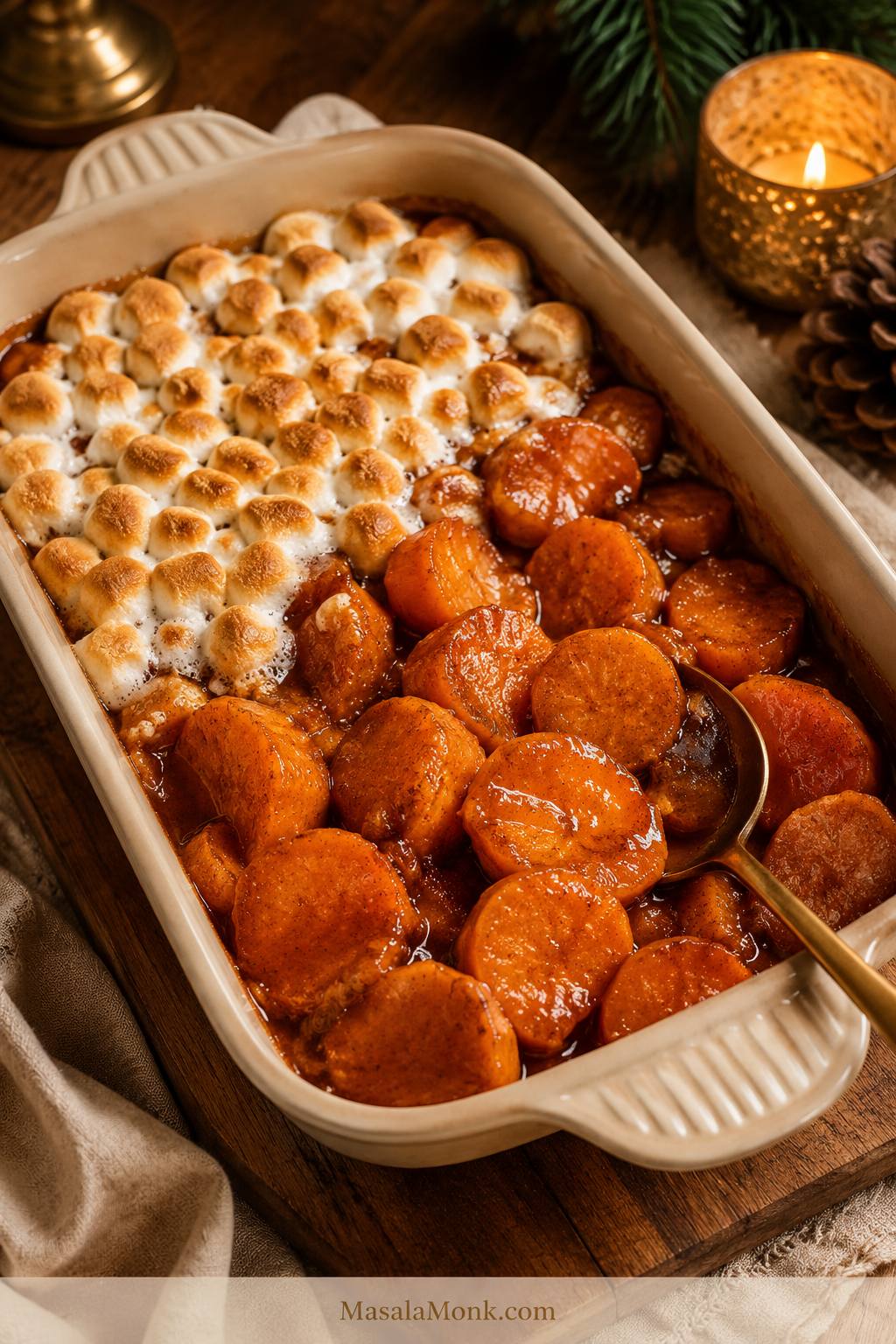
Classic candied yams should show tender orange slices, not mashed sweet potatoes. Keeping one side plain and one side topped with marshmallows is an easy way to satisfy both holiday-table preferences.

Candied yams are one of those sides people remember by texture: soft orange slices, a shiny brown sugar glaze, warm spice, and maybe a toasted marshmallow topping. This version keeps that familiar comfort, but gives you the cues that prevent watery sauce, mushy canned yams, burnt sugar, or marshmallows that disappear into the dish.

Fresh or canned, oven or stovetop, marshmallows or not — this recipe is built around the same goal: soft, buttery yams, a spoonable brown sugar glaze, and no thin liquid pooling at the bottom of the pan. This is the kind of side dish people expect to taste familiar, not reinvented.

For many tables, candied yams are not the place for wild reinvention. Use this recipe as a steady base, then finish it the way your family remembers it.

Best quick method: for classic candied yams, use fresh orange sweet potatoes sliced 1/2 inch thick.
  1. Make a smooth butter, brown sugar, and spice glaze, then stir in vanilla off the heat.
  2. Bake covered at 350°F / 175°C for 35–40 minutes.
  3. Uncover and bake 20–25 minutes more, basting once.
  4. Add marshmallows only during the final 8–12 minutes, if using.
  5. Rest 10 minutes so the sauce turns shiny and spoonable.

The full guide below covers fresh, canned, stovetop, marshmallow, no-marshmallow, and make-ahead versions, but the basic idea stays the same: soften the yams, thicken the sauce, and give it a short rest.

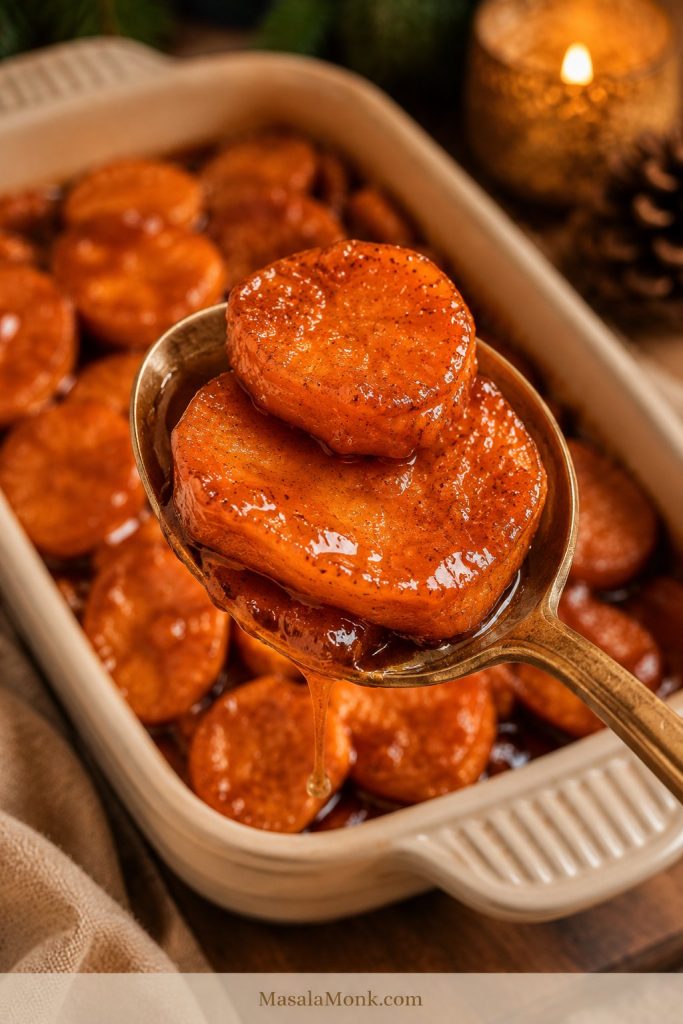
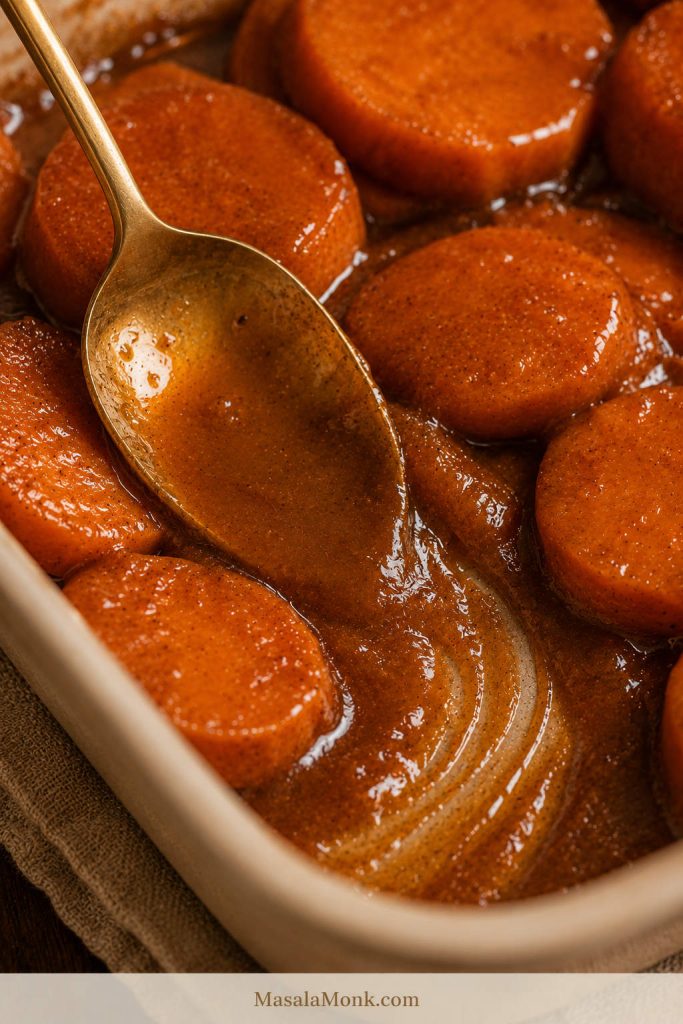
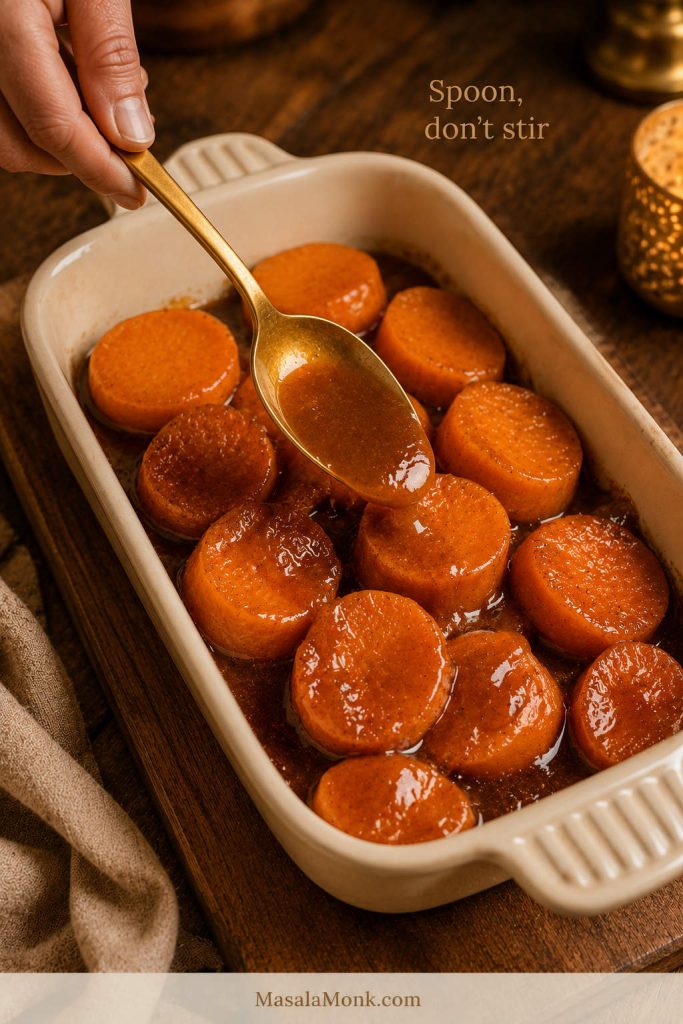
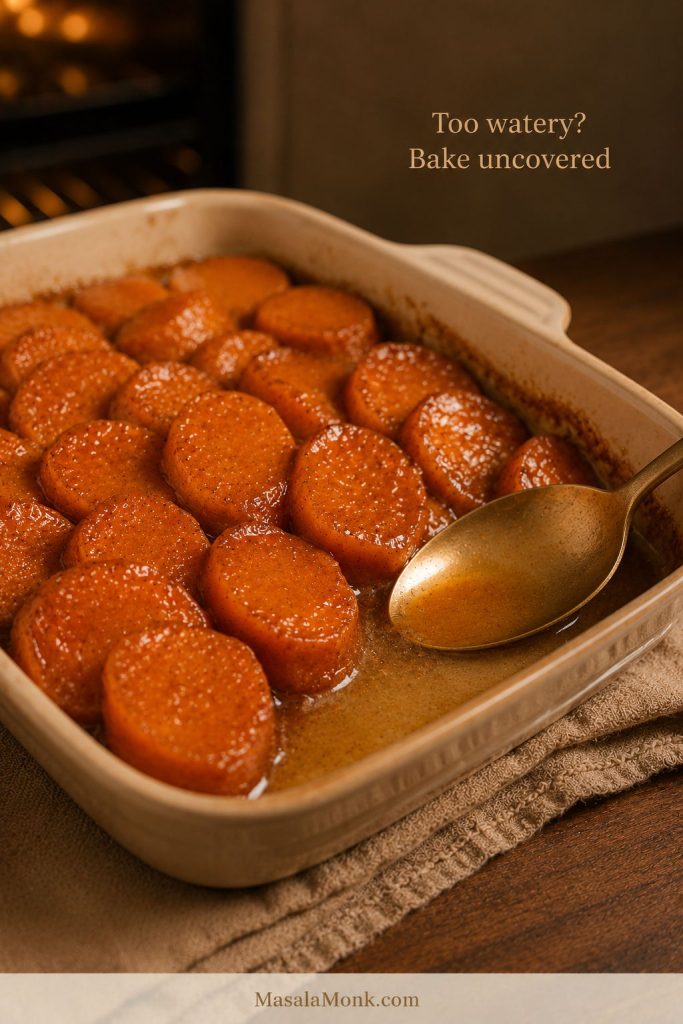
Spoon lifting soft orange candied yam slices from a cream baking dish with sauce coating the pieces.
Aim for a soft but still sliceable texture. If the yams lift cleanly and the syrup clings to the spoon, they are ready to rest before serving.

Quick Answer: What Are Candied Yams?

Candied yams are a sweet side dish made with orange-fleshed sweet potatoes, butter, brown sugar, cinnamon, nutmeg, vanilla, and sometimes marshmallows. At the table, they eat like soft sweet potatoes in a buttery brown sugar sauce.

In most U.S. grocery stores, the “yams” used for candied yams are actually sweet potatoes, and they are exactly what you want here. For the classic orange color and soft texture, look for sweet potatoes labeled as garnet yams, jewel yams, red yams, or simply yams.

Here, there is no need to hunt for true yams. Buy orange-fleshed sweet potatoes, even if your store labels them yams. They soften into the glaze instead of staying dry or starchy.

Why This Recipe Works

The difference here is that the recipe is built around texture cues, not just time: covered heat to soften, uncovered heat to reduce, and a short rest so the sauce clings.

Thick slices hold their shape, a smooth saucepan glaze prevents grainy sugar, covered baking softens the yams, uncovered baking reduces the extra liquid, and resting helps the brown sugar butter mixture cling instead of pool.

Think of it as steam first, reduction second, rest last. That order keeps the yams tender without leaving a watery pool underneath.

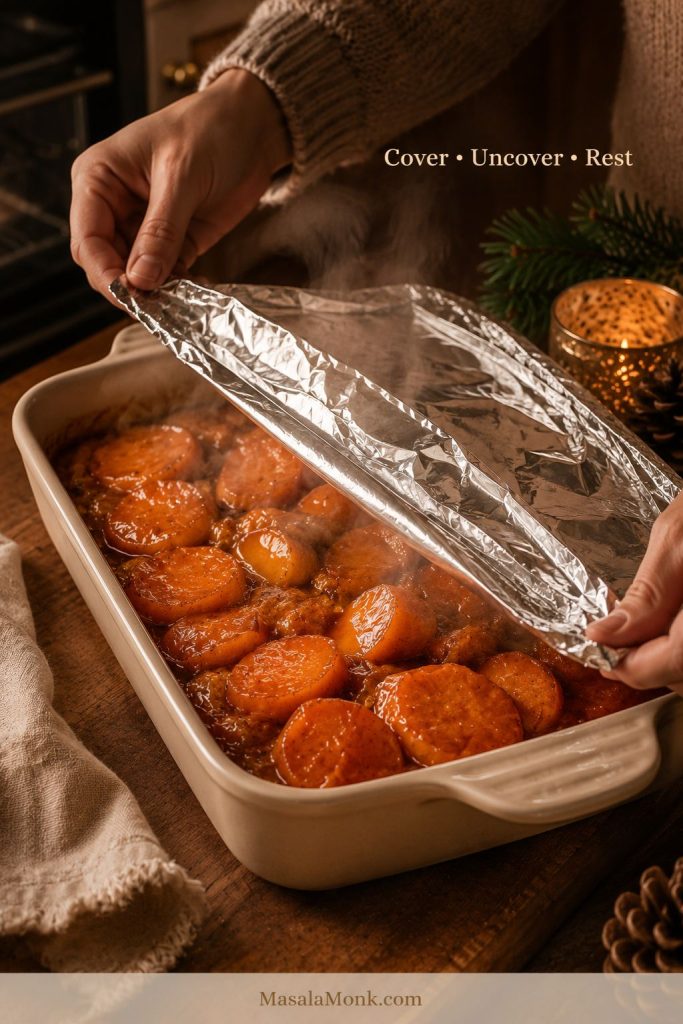
Hands peeling foil from a baking dish of candied yams with visible text reading Cover, Uncover, Rest.
Think of the bake in three stages: steam, reduce, settle. Covered heat softens the slices, uncovered heat concentrates the syrup, and the short rest helps the sauce cling.

The watery batches usually have one thing in common: too much liquid and not enough uncovered time. Often, the best batches look a little loose straight from the oven, then settle into a glossy coating after the rest.

The simple rhythm:
  • Fresh yams: cover, uncover, rest.
  • Canned yams: drain, coat, heat, stop.
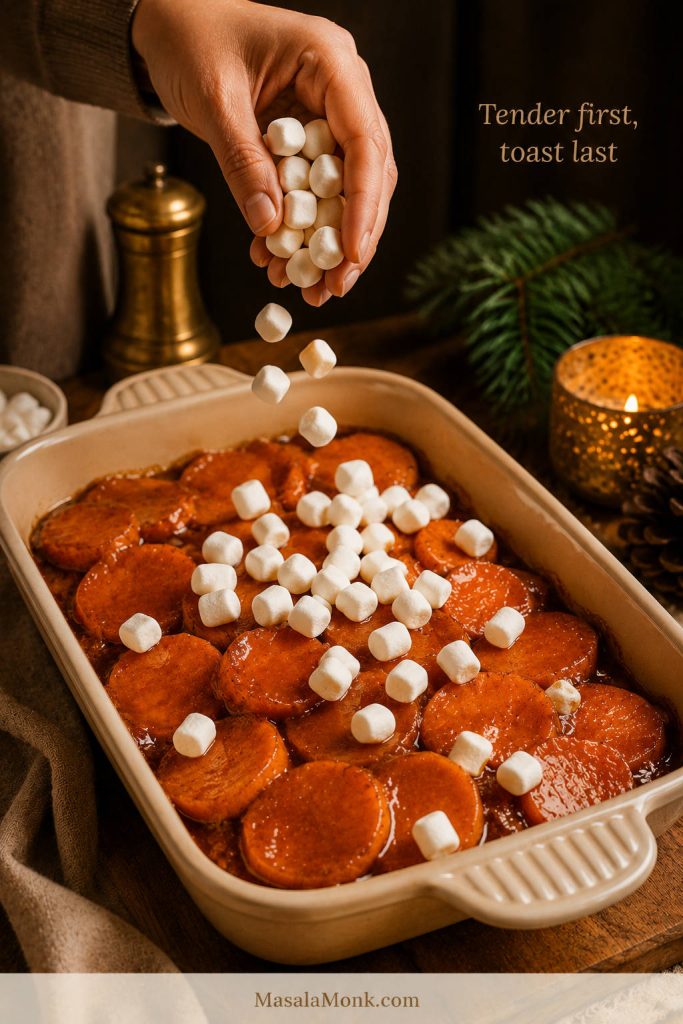
  • Marshmallows: tender first, toast last.
  • Sauce: shiny and spoonable, not watery or caramel-thick.

Candied Yams Quick Facts

Fact Detail
Servings 8
Main oven temp 350°F / 175°C for fresh sweet potatoes
Fresh bake time 35–40 minutes covered, then 20–25 minutes uncovered
Best baking dish 9×13-inch / 23×33 cm glass or ceramic dish
Rest time 10 minutes before serving
Marshmallow timing Final 8–12 minutes for fresh yams; 5–8 minutes for canned yams

Which Candied Yams Method Should You Use?

Start with the method that fits the day. Maybe you have time for fresh sweet potatoes. Or maybe the oven is crowded with turkey, ham, stuffing, green bean casserole, or another side. You may already have canned yams in the pantry.

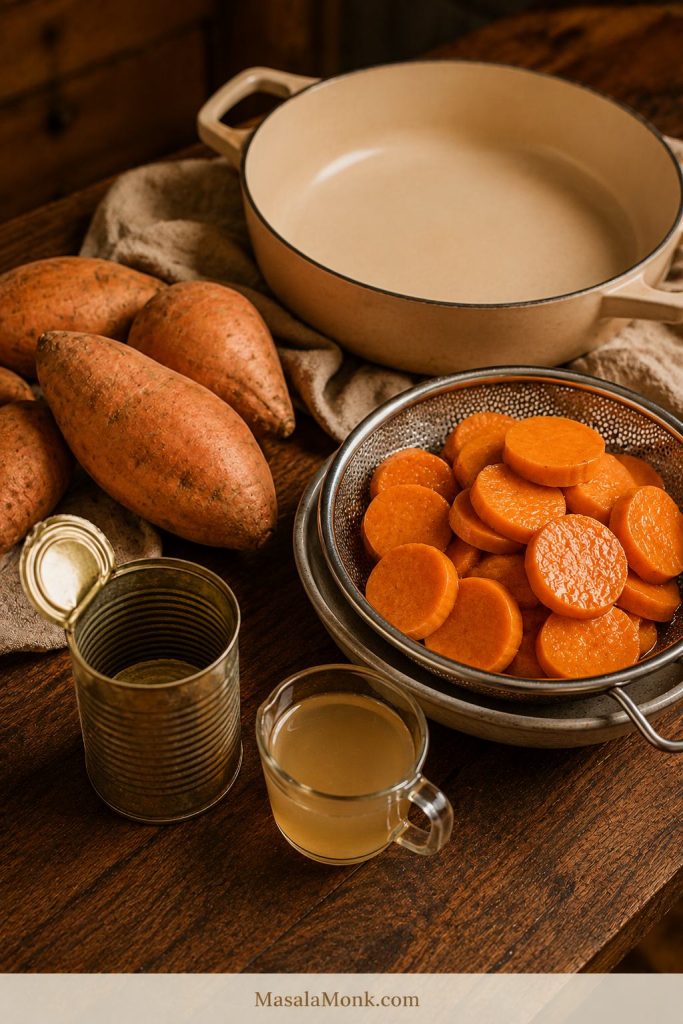
Fresh sweet potatoes, drained canned yams, an opened unbranded can, and a Dutch oven arranged on a warm kitchen counter.
Fresh sweet potatoes, canned yams, and stovetop candied yams can all work well. However, fresh slices need time, canned yams need gentleness, and stovetop yams need steady low heat.

Fresh yams give you the prettiest slices. Canned yams give you speed. Stovetop cooking gives you control. Marshmallows give you nostalgia. None of those choices are wrong.

Method Best For Approx. Time Key Cue
Fresh baked candied yams Best texture, neat slices, holiday table presentation 60–70 minutes Uncover long enough for the sauce to reduce
Canned baked candied yams Fast shortcut, pantry version, smaller batch 20–30 minutes Drain well and heat gently
Stovetop candied yams Oven is full, spoon-coated finish, Southern-style cooking 50–65 minutes Keep the heat medium-low
Crockpot candied yams Freeing oven space and holding a side dish warm 3–4 hours on low Expect a thinner syrup
Marshmallow finish Classic Thanksgiving-style topping 5–12 minutes Add only at the end

As a default, use the fresh baked version when texture matters, canned yams when speed matters, and stovetop cooking when the oven is full. If you are starting with cans, keep the rhythm even simpler: drain, coat, heat, stop.

Are Candied Yams Actually Sweet Potatoes?

Most of the time, yes. In the United States, the orange “yams” sold in regular grocery stores are usually orange-fleshed sweet potatoes. True yams are starchier, drier, and less common in everyday U.S. supermarkets. The Library of Congress explanation of sweet potatoes and yams is useful if you want the longer background.

For this recipe, buy orange sweet potatoes or yams labeled garnet, jewel, red yam, or simply yam. That naming confusion matters less than the flesh color here. Orange, moist sweet potatoes give the classic color, sweetness, and soft texture people expect in candied yams.

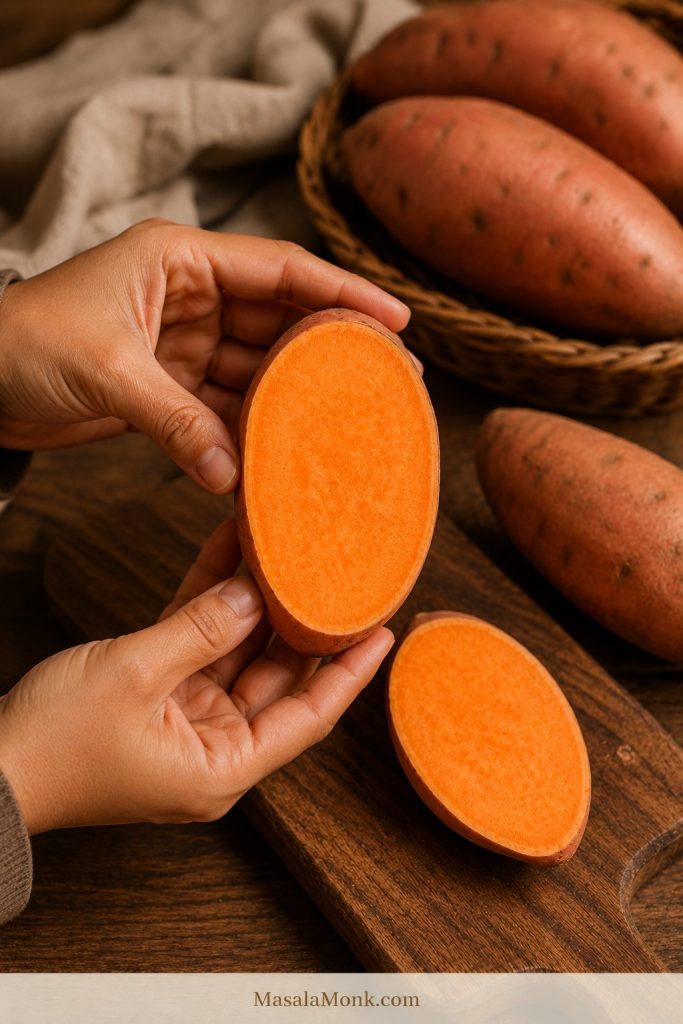
Hands holding a freshly cut raw orange sweet potato half with whole sweet potatoes in the background.
For most candied yams recipes, orange-fleshed sweet potatoes are the right choice even when the store labels them “yams.” Their color, sweetness, and soft texture create the familiar holiday side dish.
Simple shopping rule: if the inside is deep orange and the label says sweet potato, yam, jewel, garnet, or red yam, it will work for this recipe.

Ingredients You’ll Need

The ingredient list is simple because candied yams are not trying to be fancy. What matters is balance: enough brown sugar to feel candied, enough butter to feel rich, enough salt and citrus to keep the sweetness from going flat.

Brown sugar gives the sauce depth, butter gives it body, and salt keeps the dish balanced. Vanilla, warm spices, and a little orange juice or lemon juice round out the flavor. If you like that orange-bright flavor, the same idea works beautifully in cranberry sauce with orange juice.

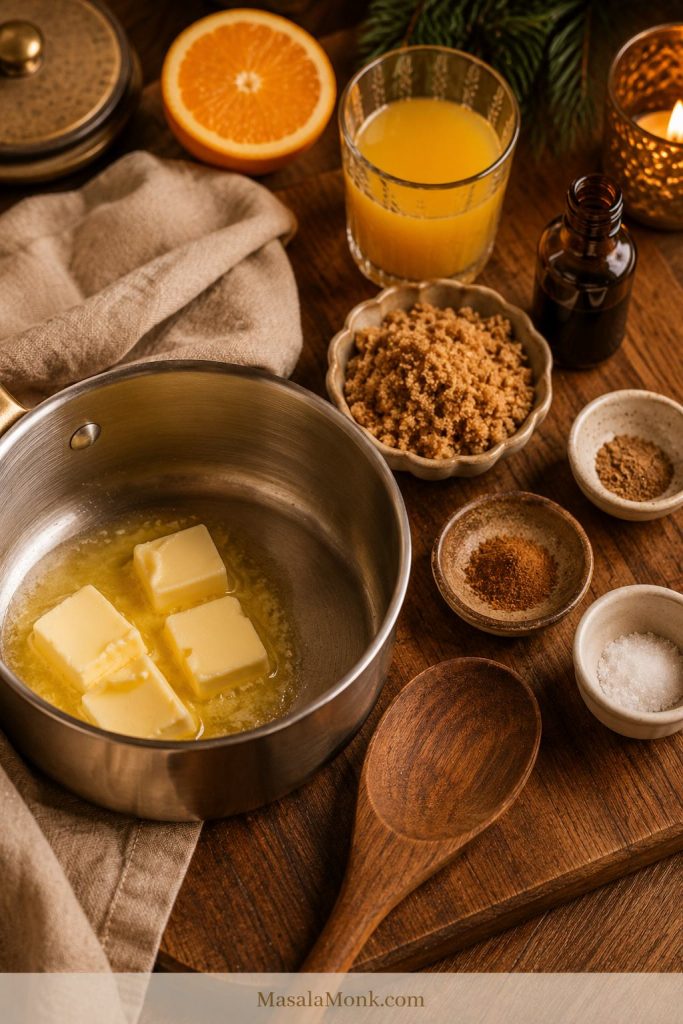
Butter, brown sugar, cinnamon, nutmeg, orange juice, vanilla, and salt arranged beside a small saucepan.
A good candied yams sauce needs more than sweetness. Butter and brown sugar bring richness, while salt, vanilla, warm spices, and citrus keep the flavor rounded.

Ingredient Amounts and Cues

Ingredient Amount Why It Matters
Orange sweet potatoes / yams 3 lb / 1.35 kg The base of the dish. Use orange sweet potatoes for the classic color and texture.
Unsalted butter 1/2 cup / 113 g Makes the sauce rich and smooth.
Brown sugar 3/4 cup / 150 g, or up to 1 cup / 200 g for a sweeter style Gives the deep caramel-like sweetness.
Maple syrup or orange juice 1/4 cup / 60 ml Maple gives deeper flavor; orange juice gives brightness.
Water 2–4 tbsp / 30–60 ml Helps the sugar dissolve into a smooth sauce.
Cinnamon 1 tsp The main warm spice.
Nutmeg 1/4 tsp Adds classic warmth.
Ginger 1/4 tsp, optional Adds a little extra spice without taking over.
Salt 1/2 tsp Balances the sugar and butter.
Vanilla extract 1–2 tsp Rounds out the brown sugar mixture. Add it off the heat.
Lemon juice or apple cider vinegar 1–2 tsp, optional Useful if you want a sweet-but-not-cloying finish.
Mini marshmallows 2–3 cups, optional Add at the end for a toasted topping.
Chopped pecans 1/2 cup, optional Adds crunch. Best added near the end so they stay crisp.

Small Ingredient Choices That Matter

When the balance is right, the coating tastes buttery and warm, not just sugary, and the sweet potatoes stay tender enough to spoon but firm enough to hold.

Less sweet version: use 3/4 cup brown sugar instead of 1 cup, choose orange juice instead of maple syrup, and add 1–2 teaspoons lemon juice or apple cider vinegar to balance the sauce.

If you are tempted to use a ready spice blend, keep it gentle. A small pinch of apple pie spice can work because it usually leans on cinnamon, nutmeg, and warm baking spices, but too much can make the yams taste more like dessert than a side dish.

Best dish: use a deep 9×13-inch / 23×33 cm glass or ceramic baking dish for the fresh version. Use an 8×8-inch / 20×20 cm dish for one 29 oz / 822 g can. Avoid sheet pans because the syrup spreads too thin and can burn before the yams soften.

How to Make Candied Yams

This is the version to make when you want the dish to look generous on the table: tender slices, glossy sauce, and enough structure that the yams do not collapse when you spoon them out. For the fresh baked version, the rhythm is simple: cover, uncover, rest.

1. Prep the sweet potatoes

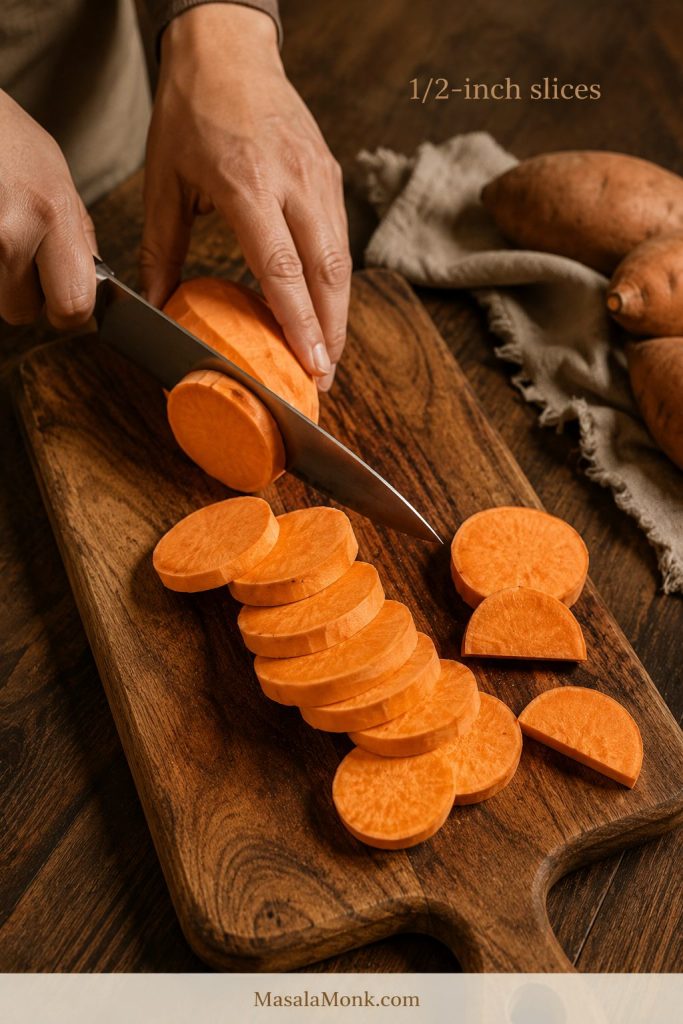
Peel the sweet potatoes and slice them into 1/2-inch / 1.25 cm rounds. If the sweet potatoes are very wide, cut the rounds into half-moons so they are easier to serve.

Thin slices tend to soften before the syrup has time to reduce, while very thick slices need longer and can make the edges overcook. The best texture comes from slices that are thick enough to hold together but thin enough to soften in the covered bake.

Hands slicing peeled orange sweet potatoes into half-inch rounds on a wooden cutting board.
Even slices make the whole dish easier to control. Around 1/2 inch gives the sweet potatoes enough body to stay intact while still softening into the sauce.

2. Make the brown sugar butter glaze

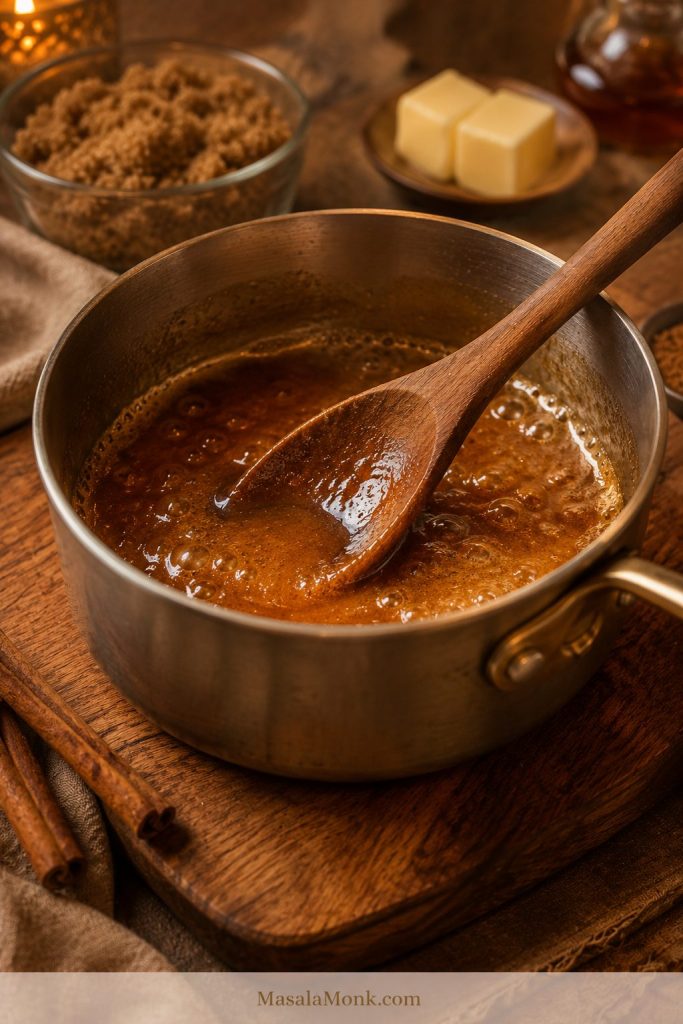
Melt the butter in a saucepan over medium heat. Add the brown sugar, maple syrup or orange juice, water, cinnamon, nutmeg, ginger if using, and salt. Stir until the sugar dissolves and the mixture looks smooth and shiny.

Let it bubble gently for 1–2 minutes, then remove it from the heat and stir in the vanilla. If using lemon juice or apple cider vinegar, stir it in now.

Brown sugar butter sauce simmering in a saucepan while a wooden spoon moves through the mixture.
Before it goes over the sweet potatoes, the butter and brown sugar mixture should look smooth and shiny. If it looks grainy, warm it gently until the sugar dissolves.
Glaze cue: the mixture should look shiny and pourable, not grainy or separated. It does not need to be thick like caramel at this stage. The oven will reduce it more.

3. Arrange and coat the yams

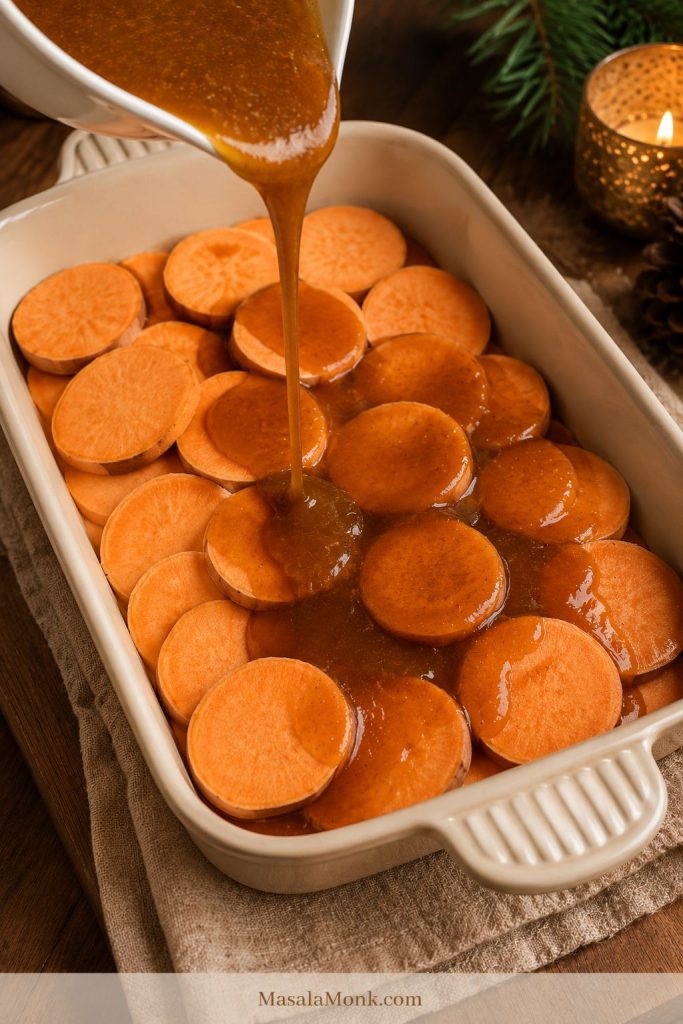
Place the sliced sweet potatoes in a greased 9×13-inch / 23×33 cm baking dish. Pour the warm glaze over the top, then gently turn the slices or spoon the brown sugar mixture over them so they are coated.

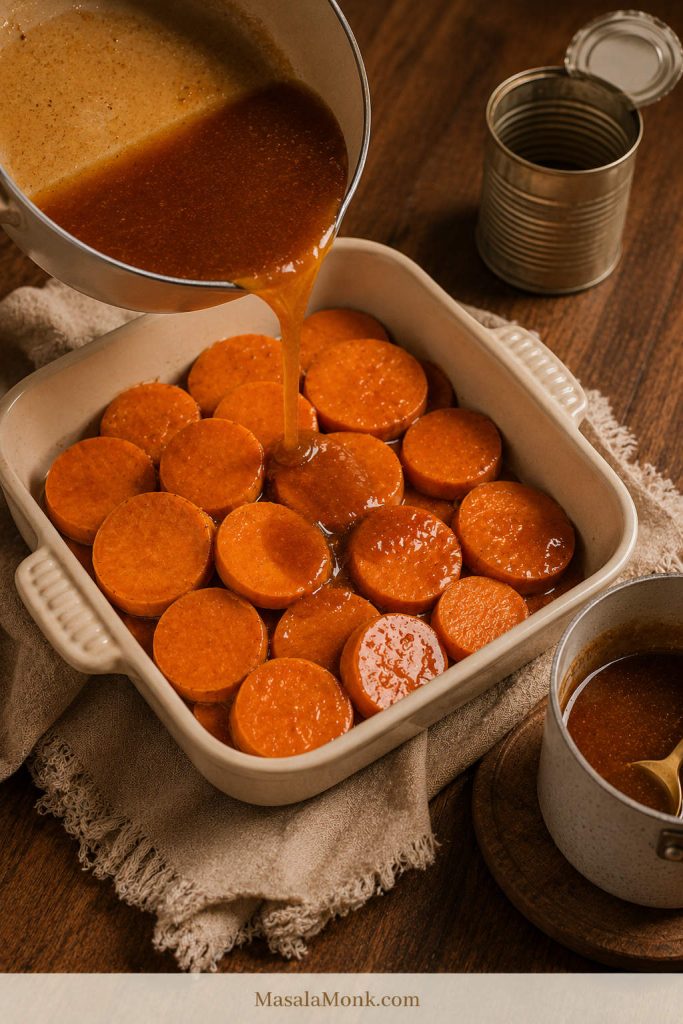
Brown sugar butter sauce being poured over arranged orange sweet potato slices in a cream baking dish.
Coat every slice before the dish goes into the oven. As a result, the sweet potatoes bake into the sauce instead of drying out on top.

The slices do not have to be in one perfect layer, but avoid packing them so tightly that the sauce cannot move around them. A little space helps the edges bubble slowly and the syrupy coating thicken without scorching.

4. Bake covered

Cover the dish tightly with foil and bake at 350°F / 175°C for 35–40 minutes. The yams should begin to soften, but they should not be falling apart yet.

During the covered stage, steam softens the sweet potatoes without drying them out. It also gives the buttery syrup time to soak into the slices.

5. Bake uncovered

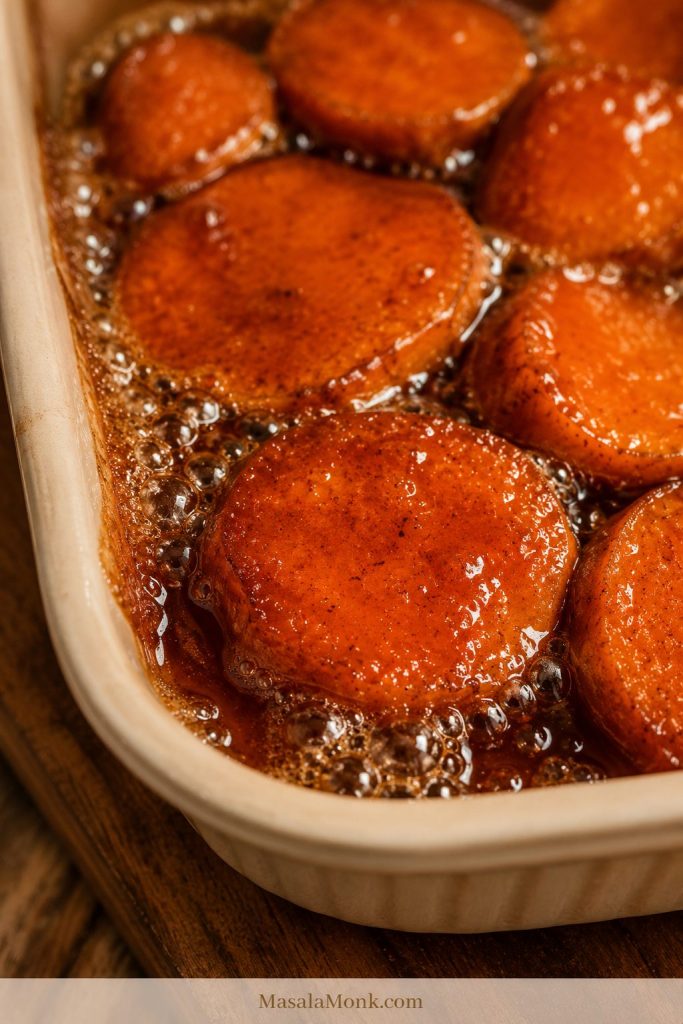
Remove the foil, spoon the sauce over the yams, and bake uncovered for another 20–25 minutes. By the end of baking, the edges should bubble slowly and the top slices should look lacquered, not dry.

The yams are ready when they are fork-tender and a spoon drags a shiny trail over the slices instead of leaving thin liquid behind. They do not need to look perfect at every stage; by the time they rest, they should be tender, coated, and sitting in a glossy coating. If the dish still looks loose, give it another 5–10 minutes uncovered.

Candied yams bubbling uncovered in a cream baking dish as the sauce reduces around the orange slices.
The uncovered bake is where the sauce tightens. Look for gentle bubbling around the edges and shiny slices instead of thin liquid sitting underneath.

If the edges darken too quickly or the syrup starts to smell scorched instead of buttery and spiced, move the dish away from the hottest part of the oven.

What success looks like: the yams are fork-tender but still holding together, the edges bubble slowly, a spoon drags a shiny trail through the coating, and there is no thin liquid pooling at the bottom.
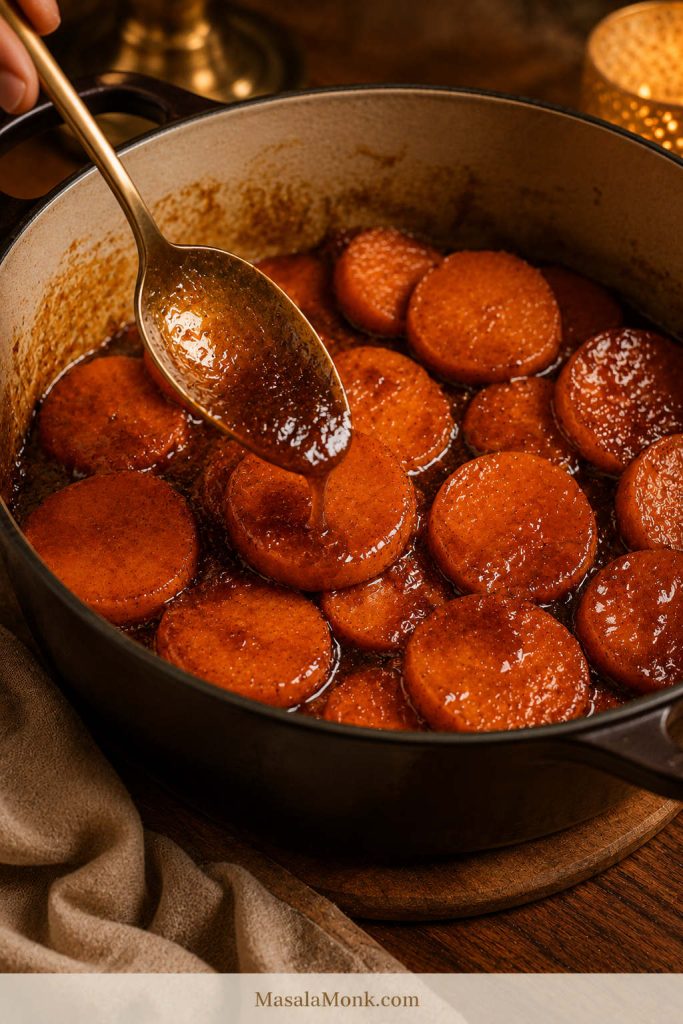
Spoon dragging through thick brown sugar sauce between candied yam slices in a baking dish.
A spoon trail is one of the clearest doneness cues. When the sauce leaves a shiny path before slowly settling back, the candied yams are close to ready.

6. Add marshmallows if you want them

If using marshmallows, scatter them over the yams during the final 8–12 minutes of baking. They should puff into a soft golden blanket, with toasted tops and a little give underneath. For deeper browning, use the broiler for a few seconds at the end.

Marshmallows brown fast, so this is the one moment to stay by the oven.

7. Rest before serving

Let the dish rest for about 10 minutes before serving. Give the brown sugar sauce a chance to settle before deciding it is too thin. A short rest is part of the recipe, not just waiting time, and the resting section explains why it works.

After that rest, the slices are easier to lift and the sauce clings better. Serve the yams warm, not straight-from-the-oven hot, so the glossy coating has time to settle. The dish should smell like butter, brown sugar, cinnamon, and sweet potatoes — not scorched sugar.

How to Make Candied Yams with Canned Yams and Marshmallows

Canned yams are not a shortcut you need to apologize for. For many families, they are the version that actually tastes familiar. The only trick is to remember that they are already cooked, so you are simply warming, coating, and finishing them.

With canned yams, keep the rhythm even simpler: drain, coat, heat, stop. Add marshmallows at the end if you want that classic topping.

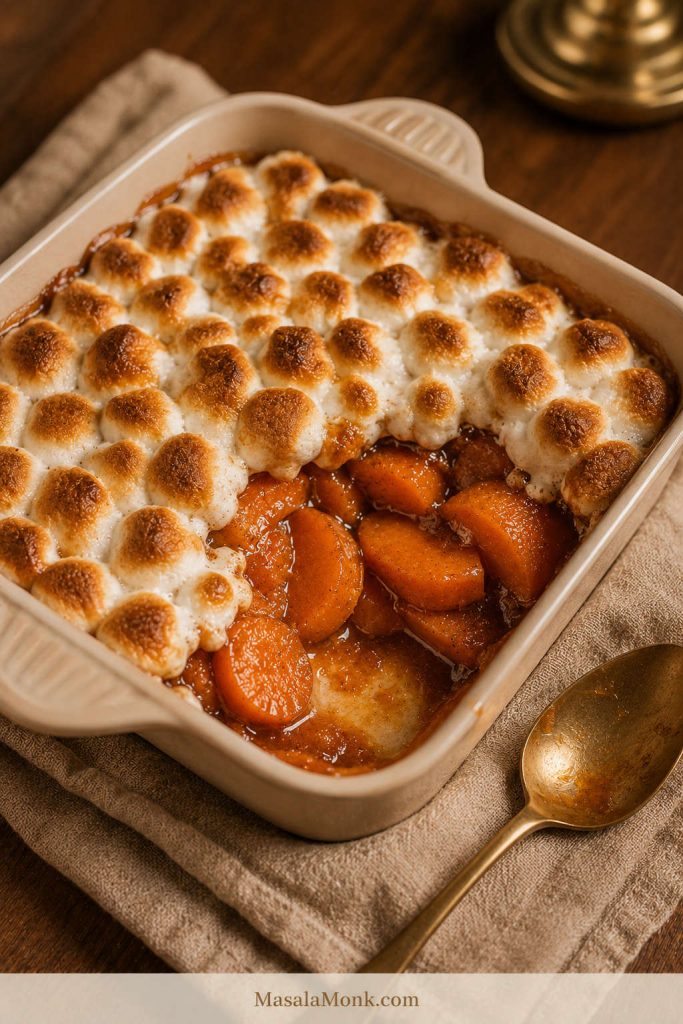
Small cream baking dish of canned candied yams with toasted mini marshmallows and a scooped corner showing orange yams underneath.
With canned yams, the best result is a warm coated center and a toasted finish. The scooped corner should still show orange pieces underneath, not a mashed layer hidden by marshmallows.

Canned-Yam Timing

Batch Size Canned Yams Dish Oven Timing
Small batch 1 can, 29 oz / 822 g, drained 8×8-inch / 20×20 cm 375°F / 190°C 15 minutes, then 5–8 minutes with marshmallows
Larger batch 1 large can, 40 oz / 1.13 kg, drained 9×13-inch / 23×33 cm 375°F / 190°C 18–20 minutes, then 5–8 minutes with marshmallows
Double-can batch 2 cans, 29 oz / 822 g each, drained 9×13-inch / 23×33 cm 375°F / 190°C 20–22 minutes, then 5–8 minutes with marshmallows
Mini canned-yam version: for one 29 oz / 822 g can, drain well, use 3 tbsp butter, 1/3–1/2 cup brown sugar, 1/2 tsp cinnamon, a pinch of nutmeg, a pinch of salt, and 1 tsp vanilla. Bake at 375°F / 190°C for 15 minutes, then add marshmallows for 5–8 minutes if using.
Small cream baking dish filled with canned yams as brown sugar sauce is poured over them.
For a one-can batch, scale the dish and sauce down together. Since canned yams are already cooked, the goal is warming and coating, not long baking.

Drain well. A few tablespoons of canning liquid can loosen a thick sauce; the full can usually makes the dish watery.

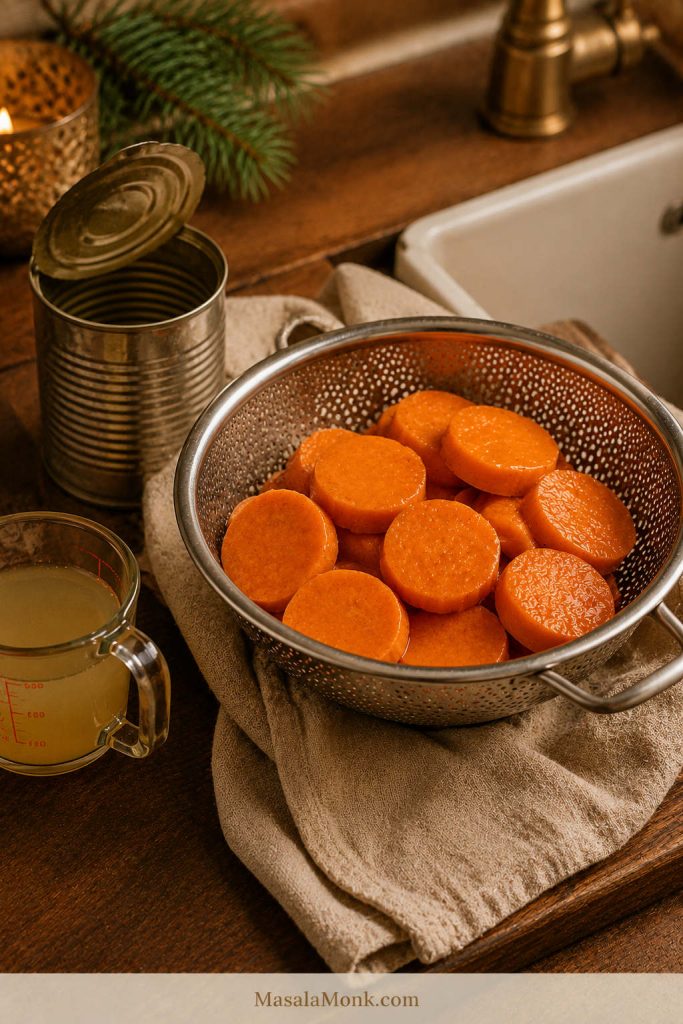
Drained canned yams in a metal colander with an opened unbranded can and a small measuring cup of liquid nearby.
Canned yams save time, but the liquid in the can can thin the sauce quickly. Drain first, then add back only a spoonful or two if the mixture needs loosening.

Warm the butter, brown sugar, cinnamon, nutmeg, salt, and vanilla into a quick glaze, pour it over the drained canned yams, and bake only until hot. With canned yams, gentleness matters most. Stirring breaks them down faster than baking does.

How to keep canned yams from getting mushy

Spoon gently pouring sauce over intact canned yam pieces with visible text reading Spoon, don’t stir.
Instead of stirring canned yams, spoon the sauce over the top. This keeps the pieces intact and helps prevent the dish from turning into sweet potato mash.
  • Leave large pieces large. Smaller pieces break down faster.
  • Use less sugar if the yams are packed in syrup. Start lower, then adjust next time if you want them sweeter.
  • Rinse only if the syrup is very heavy. Draining is usually enough. Rinsing helps only if you want a less sweet version.
  • Spoon instead of stirring. Tilt the dish gently or ladle sauce over the top.
  • Bake uncovered if the syrup looks loose. This helps extra moisture evaporate.
  • Make canned yams closer to serving time if presentation matters. They soften more as they sit.

Quick glaze for canned yams

Can Size Butter Brown Sugar Spices and Vanilla
29 oz / 822 g can 3 tbsp 1/3 cup if packed in syrup, 1/2 cup if packed in water or light syrup 1/2 tsp cinnamon, pinch nutmeg, pinch salt, 1 tsp vanilla
40 oz / 1.13 kg can 4 tbsp 1/2 cup 3/4 tsp cinnamon, pinch nutmeg, pinch salt, 1 tsp vanilla
2 cans, 29 oz / 822 g each 5–6 tbsp 2/3 cup if packed in syrup, 3/4 cup if packed in water or light syrup 1 tsp cinnamon, 1/4 tsp nutmeg, 1/4 tsp salt, 2 tsp vanilla

If your canned yams are very sweet already, start with the lower sugar amount. You can always make the next batch sweeter, but it is harder to rescue a dish that has become cloying.

Stovetop Candied Yams, Southern-Style

Southern-style candied yams are often less about a casserole and more about tender sweet potatoes coated in a buttery brown sugar syrup. Some versions are baked, some are made on the stovetop, some finish with marshmallows, and some stay plain and glossy.

When the oven is full, the stovetop is often the easiest way to stay in control of the sauce. It is also a good choice if you like a spoon-coated finish because you can watch it reduce in real time, baste the slices, and stop when the yams are tender but still holding together.

The flavor usually leans brown sugar, butter, cinnamon, nutmeg, vanilla, and sometimes citrus. Done well, it tastes rich without becoming flat: enough sugar to feel candied, enough salt and spice to keep every bite balanced.

Use the widest heavy-bottomed skillet or Dutch oven you have. A wide pan gives the sweet potatoes enough room to cook evenly, and a heavy base helps protect the sugar from scorching.

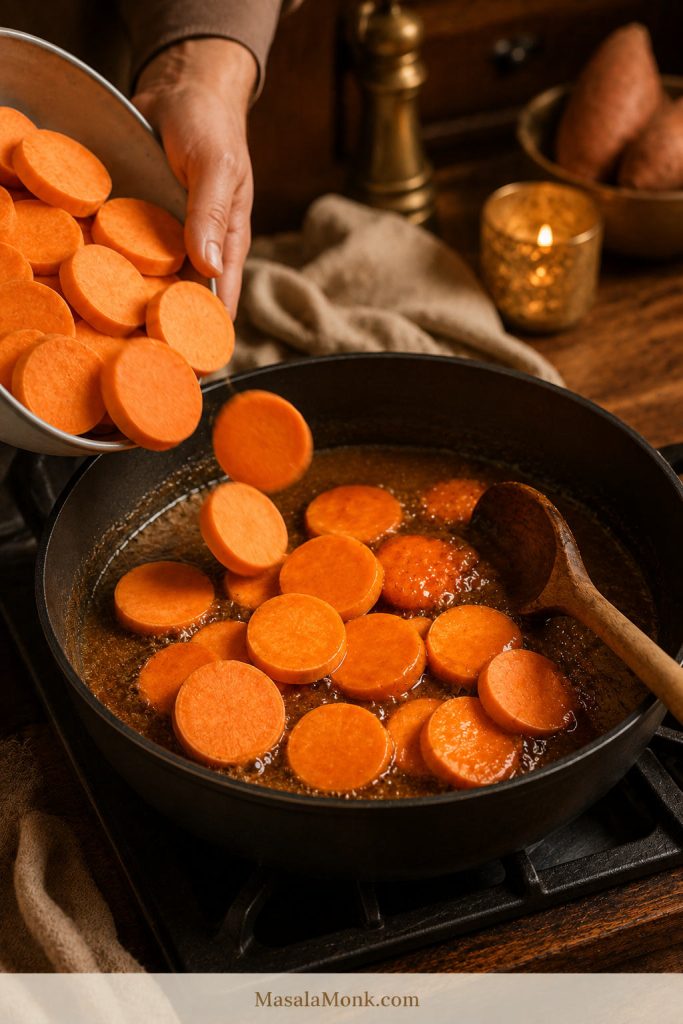
Fresh orange sweet potato slices being added by hand to a dark skillet with a shallow butter and sugar mixture.
For stovetop candied yams, use a wide pan so the slices have room to cook evenly. A shallow butter-sugar mixture also helps the syrup reduce without crushing the sweet potatoes.

How to make candied yams on the stove

  • Melt the butter in a wide skillet or Dutch oven over medium-low heat.
  • Add brown sugar, maple syrup or orange juice, water, cinnamon, nutmeg, ginger if using, and salt.
  • Stir until the sugar starts to dissolve and the glaze looks smooth.
  • Add the 1/2-inch / 1.25 cm sweet potato slices and gently coat them.
  • Cover and cook over medium-low heat for 35–45 minutes, basting every 10–15 minutes. Start checking at 35 minutes.
  • When the yams are almost tender, uncover and simmer for 7–15 minutes more so the syrup thickens.
  • Finish with vanilla off the heat. Add lemon juice or apple cider vinegar if the sauce tastes too sweet.

Stovetop Reduction Cues

Keep the stovetop version patient and gentle; high heat can burn the sugar before the potatoes soften. If the pan looks dry at any point, lower the heat before adding more liquid.

Spoon basting brown sugar syrup over orange candied yam rounds in a dark skillet.
Once the stovetop syrup begins to thicken, baste gently instead of stirring hard. This coats the tops while the sweet potato rounds stay whole.

Stay close during the uncovered reduction stage. The syrup can move from shiny to scorched quickly once the extra moisture cooks off.

Stovetop cue: the yams are done when they are fork-tender and the sauce coats the back of a spoon. If the syrup thickens before the yams are soft, add 1–2 tablespoons water and keep cooking covered. When the yams are soft but the sauce is thin, uncover and simmer a little longer.

Stir as little as possible. Use a spoon to baste the slices or gently shake the pan instead of stirring like a stir-fry. This keeps the sweet potatoes from breaking apart.

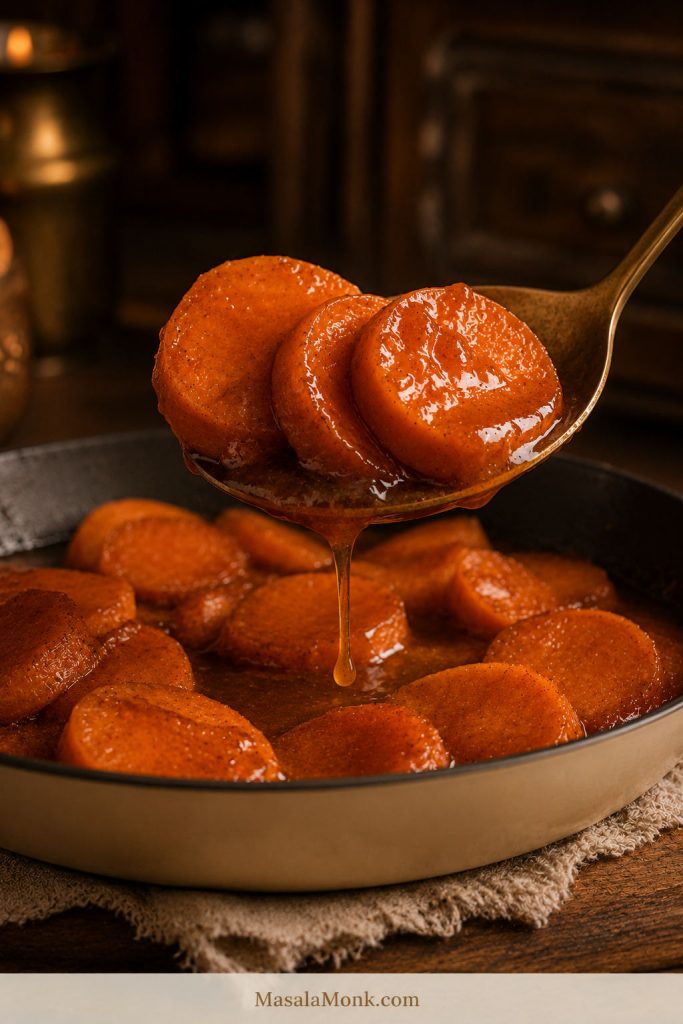
Spoon lifting stovetop candied yam slices from a dark skillet with thick syrup dripping back into the pan.
Finished stovetop candied yams should look rich and syrupy, with a darker, deeper glaze than the baked version. Keep the heat gentle so the sugar thickens without scorching.

Can I Bake Candied Yams at 375°F?

Yes. The main recipe uses 350°F / 175°C for steady, even softening, but 375°F / 190°C works if you need a slightly faster bake. Check earlier, baste once or twice, and watch the edges so the sugar does not dry out before the yams are tender.

Candied Yams with Marshmallows

For marshmallows, the timing is everything: tender first, toast last. Marshmallows are the part people notice first, so they deserve a little timing. Add them too early and they disappear into the sauce; add them at the end and you get the soft, golden topping people remember.

Mini marshmallows being sprinkled over hot candied yams with visible text reading Tender first, toast last.
Marshmallows are a finish, not a cooking ingredient. Add them when the yams are already tender so they puff on top instead of disappearing into the sauce.

If your family expects marshmallows, let them be the finish, not the sauce.

When to Add Marshmallows

  • At 350°F / 175°C, add marshmallows for the final 8–12 minutes.
  • For 375°F / 190°C, add them for the final 5–8 minutes.
  • In a 400°F / 200°C oven, watch closely and check after 5 minutes.
  • Under the broiler, they may brown in 30–90 seconds.

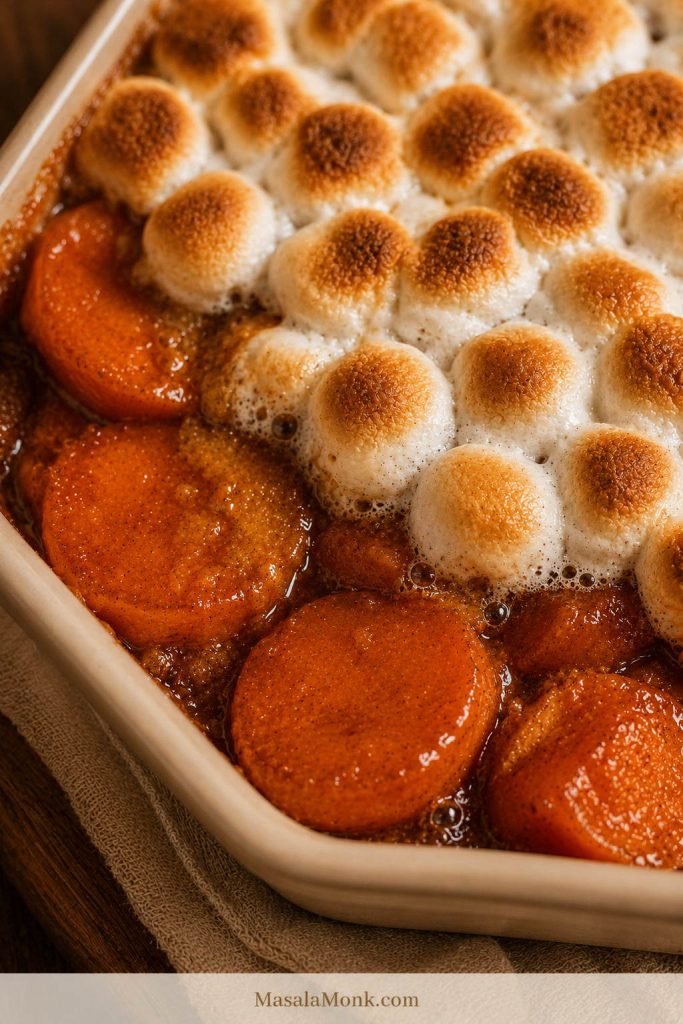
You want the topping puffed, soft, and lightly golden — not fully dissolved into the glaze.

Close-up of toasted mini marshmallows on candied yams with orange yam slices visible underneath.
The marshmallow topping is ready when it is puffed, soft, and lightly golden. Importantly, you should still see orange yams and a little sauce underneath.

The best marshmallow topping comes from adding them when the yams are already hot, so they puff quickly instead of sinking into the sauce.

Mini marshmallows are easiest because they scatter evenly and brown quickly. Large marshmallows can work, but cut them in half or use fewer so the topping does not become too thick.

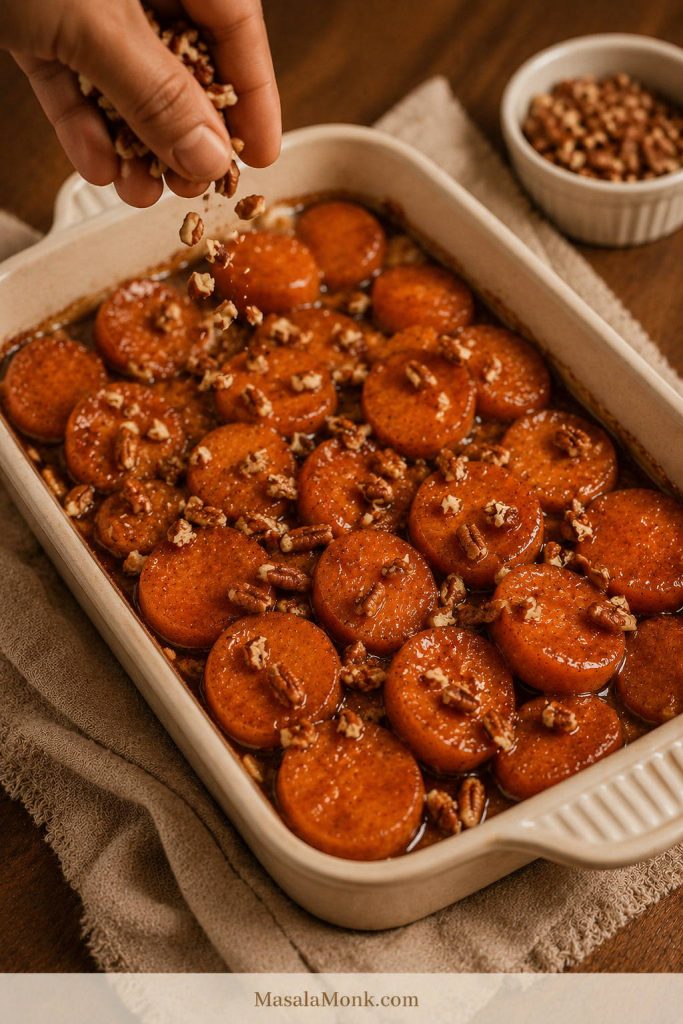
For pecans and marshmallows together, add the pecans near the end, then scatter marshmallows over the top. This keeps the nuts from sitting under foil for too long and turning soft.

Hand sprinkling chopped pecans over candied yam slices in a cream baking dish.
Add pecans near the end so they stay crisp instead of steaming under foil. They bring crunch and nuttiness without taking over the brown sugar flavor.

How to make candied yams without marshmallows

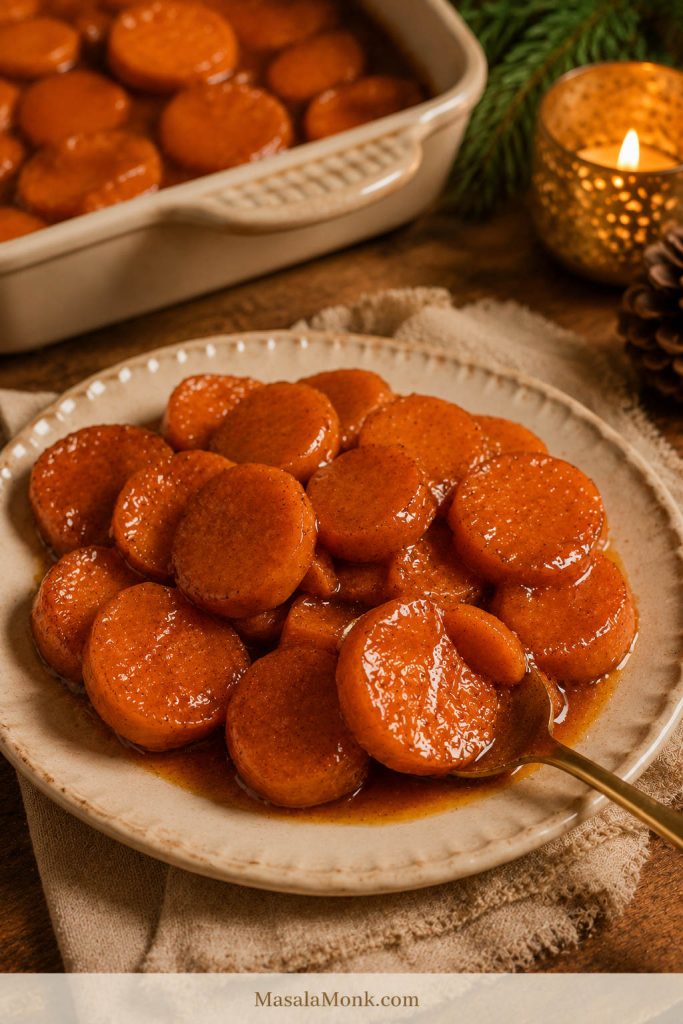
To make candied yams without marshmallows, simply skip the topping and focus on the glaze. Bake uncovered until the yams are tender and the brown sugar butter sauce looks shiny and spoonable. For a little finish without marshmallows, add pecans near the end, a small pinch of orange zest, or nothing at all.

Candied yams without marshmallows served on a cream plate with brown sugar sauce.
No-marshmallow candied yams rely on the sauce for their finish. The flavor should be buttery, warmly spiced, and complete without needing a topping.

If your table loves the glossy plain version, stop before the topping and let the brown sugar butter sauce shine. The plain version is often the best choice when you want the sweet potatoes, butter, brown sugar, and warm spices to be the main flavor.

Small Things That Make a Big Difference

These are the small choices that prevent most candied-yam problems before they start.

  • Keep slices about 1/2 inch thick. Thin slices soften quickly and can fall apart before the sauce thickens.
  • Drain canned yams well. A few tablespoons of liquid can loosen the syrup, but the full can may make it watery.
  • Handle canned yams gently. Spoon sauce over them instead of stirring hard.
  • Save marshmallows for the end. They need just enough time to puff and brown.
  • Let the sauce rest before judging it. It thickens after the dish cools slightly.
  • Use a deeper baking dish. A flat sheet pan spreads the syrup too thin for this style.

Thanksgiving Timing Plan

On a holiday table, candied yams should not be the dish that makes the day harder. They can wait, reheat, hold their sauce, and still feel special when they come to the table warm and glossy.

The best part of this dish is that it does not need to be dramatic at the last minute. Make it ahead, reheat it gently, and save the marshmallows for the final finish.

For storage and reheating details, use the make-ahead section before planning the serving-day schedule, especially if your oven also needs time for macaroni and cheese or other baked sides.

When What to Do
2 days before Buy sweet potatoes or yams, butter, brown sugar, spices, marshmallows, and pecans if using.
1 day before Bake the fresh candied yams without marshmallows. Cool, cover, and refrigerate.
Serving day Reheat covered at 350°F / 175°C until hot, usually 20–25 minutes.
Final 8–12 minutes Add marshmallows or pecans and bake until puffed, golden, and hot.
When the oven is full Use the stovetop method, or reheat the baked yams once the oven opens up.
Using canned yams Make them closer to serving time for the best texture and cleanest presentation.

If you are transporting candied yams, keep the marshmallows off until you reheat, if possible. Marshmallows soften as they sit, and they look best when added close to serving.

Crockpot Candied Yams

Crockpot candied yams are helpful when the oven is full, but the sauce will usually stay thinner than baked or stovetop versions. Use fresh sweet potatoes, not canned, for the best shape. Cook on low for 3–4 hours, then reduce extra liquid in a small saucepan if needed. Add marshmallows only before serving.

Variations

  • No marshmallows: keep the top plain and let the brown sugar butter sauce shine.
  • Pecan topping: add chopped pecans near the end so they stay crisp instead of steaming under the foil.
  • Orange juice glaze: use it instead of maple syrup for a brighter, less heavy glaze.
  • Maple finish: use maple syrup for a deeper, rounder flavor.
  • Pineapple version: add well-drained pineapple near the end so it does not thin the sauce too much.
  • Less sweet: reduce brown sugar to 3/4 cup and add lemon juice or apple cider vinegar.
  • Vegan version: use plant-based butter and skip marshmallows unless they are vegan.

Keep variations simple. Candied yams are already rich, so one or two upgrades are usually enough. Pecans and marshmallows work well together. Orange juice and maple syrup are both good, but you do not need every sweet ingredient in the same dish.

Troubleshooting Candied Yams

Most candied-yam problems are fixable because they usually come from one of four things: too much liquid, too much heat, too much time, or too much stirring.

Candied yams in a baking dish with a spoon lifting thin liquid from one corner and visible text reading Too watery? Bake uncovered.
For watery candied yams, a thin pool at the edge usually means more uncovered time, not a full rescue. Let extra moisture evaporate, then give the sauce a few minutes to settle.

They often look worse in the pan than they taste on the plate. If the dish tastes good but looks loose, pause before changing anything. Rest it, then reduce it if needed. Hot sauce almost always looks thinner than settled sauce, so check why the sauce thickens after resting before extending the bake time.

Quick Fixes by Problem

Problem Why It Happened How to Fix It
Yams are watery Too much liquid, canned yams were not drained, or the dish stayed covered too long Bake or simmer uncovered until the sauce reduces. Spoon out extra liquid if needed.
Yams are mushy Slices were too thin, overcooked, or canned yams were stirred too much Use 1/2-inch slices for fresh yams and handle canned yams gently.
Sauce is thin It has not reduced enough, or it is still very hot Bake uncovered longer and let the dish rest for 10 minutes before serving.
Sugar burned Heat was too high or the pan was too shallow Use a deeper baking dish or lower heat. Spoon sauce over the yams during baking.
Butter separated The sugar did not dissolve fully into the butter mixture Simmer the glaze until smooth before pouring it over the yams.
Too sweet Heavy syrup canned yams or too much sugar Add a little salt, orange juice, lemon juice, or apple cider vinegar. Use less sugar next time.
Marshmallows disappeared They were added too early Add marshmallows only in the final 5–12 minutes.
Pecans got soggy They were baked under foil too long Add pecans near the end or sprinkle them on before the marshmallows.

Why the sauce thickens after resting

The sauce often looks loose when the dish first comes out of the oven. That does not mean it failed. As the butter-sugar mixture cools slightly, it becomes thicker and clings better to the sweet potatoes. Give the dish 10 minutes before deciding it is too thin.

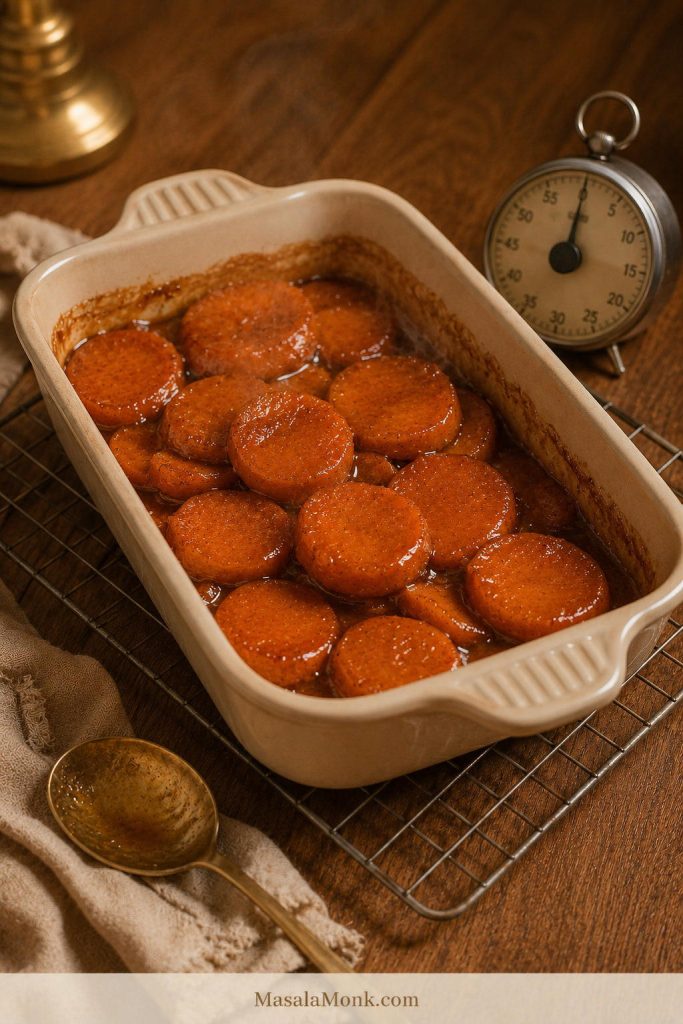
Candied yams resting on a wire cooling rack in a cream baking dish with a kitchen timer nearby.
The sauce often looks looser when it is boiling hot. A short rest lets the bubbles calm down and turns the syrup into a better coating for the sweet potato slices.

Make Ahead, Storage, and Reheating

Can you make candied yams ahead?

Yes. For the best texture, make the fresh version up to 1 day ahead. Bake the yams without marshmallows, cool, cover, and refrigerate. Add marshmallows only when reheating before serving.

Canned yams are more delicate, so they are best made closer to serving time. If you do make them ahead, reheat gently and avoid stirring.

How to reheat candied yams

Reheat covered at 350°F / 175°C for 20–25 minutes, or until hot. If the sauce is very thick, add a small splash of water or orange juice before reheating. Add marshmallows near the end and bake until puffed and golden.

How long do leftovers last?

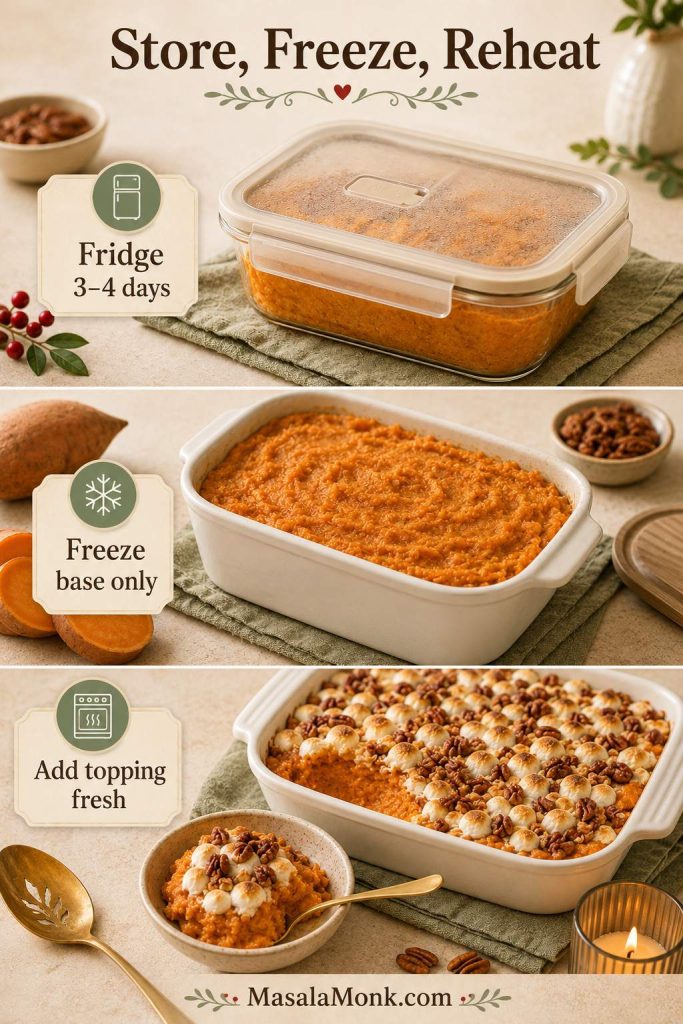
Store leftover candied yams in an airtight container in the refrigerator for 3–4 days. The texture will soften as they sit, especially if you used canned yams or marshmallows. For general leftover safety, the USDA FSIS leftovers guide is a helpful reference.

Can you freeze candied yams?

You can freeze them without marshmallows, but the texture may soften after thawing. For a special meal, refrigeration and reheating usually gives a better result than freezing.

What to do with leftovers

Leftover candied yams can be served again as a side dish, mashed into oatmeal, spooned over pancakes or waffles, folded into muffin batter, or used like a sweet potato pie-style filling. If they have marshmallows on top, the texture will be softer, but the flavor will still be good.

What to Serve with Candied Yams

Because candied yams are sweet and buttery, they work best beside something savory, salty, green, or tangy.

They pair well with roast turkey, baked ham, roast chicken, stuffing or dressing, green beans, cranberry sauce, collard greens, mac and cheese, garlic mashed potatoes, and cornbread.

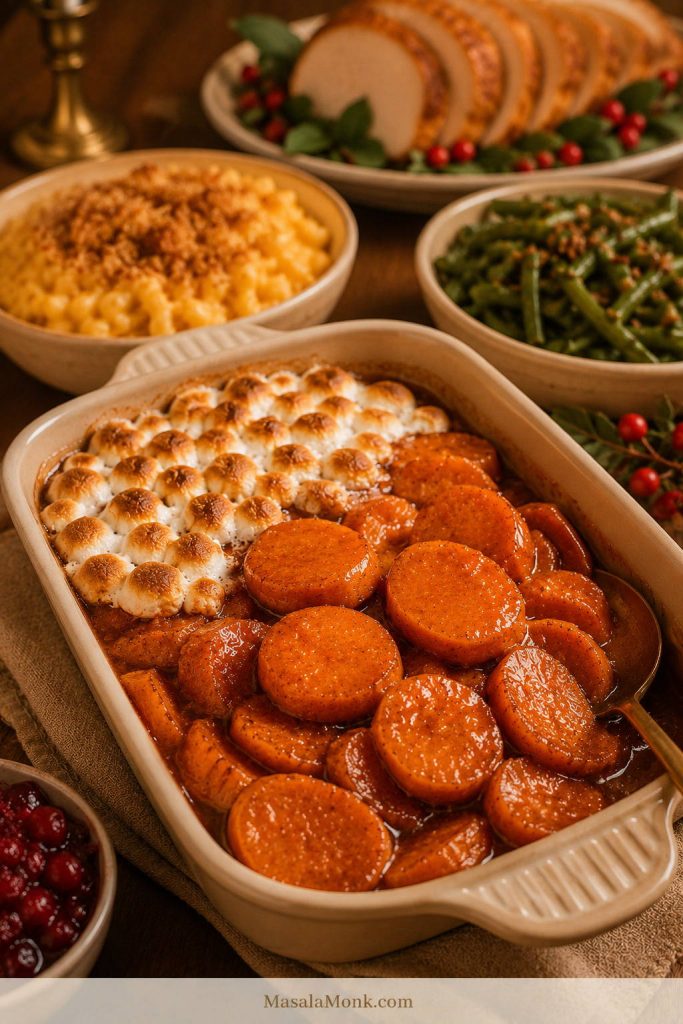
Candied yams in a cream serving dish on a Thanksgiving table with green beans, mac and cheese, cranberry sauce, and sliced turkey in the background.
Thanksgiving candied yams bring sweetness and warmth to the plate. They work especially well beside savory sides like green beans, mac and cheese, cranberry sauce, turkey, or ham.

For a Southern-style plate, candied yams also work beside richer mains like smothered pork chops, especially when you want something sweet to balance gravy, greens, and cornbread.

Candied Yams vs Sweet Potato Casserole

Candied yams are usually sliced or chunked sweet potatoes cooked in a brown sugar butter glaze. Sweet potato casserole is usually mashed or whipped, then baked with marshmallows, pecans, or streusel on top.

The two dishes can overlap, especially when marshmallows are involved, but candied yams are more about tender pieces in sauce, while casserole is creamy and scoopable. If you want that creamy version instead, use this sweet potato casserole recipe.

Frequently Asked Questions

Are candied yams actually sweet potatoes?

In most U.S. grocery stores, yes. The orange “yams” used for this dish are usually sweet potatoes, and they are exactly what you want for soft, classic candied yams.

Do you peel sweet potatoes for candied yams?

Yes, peel them for the classic soft, glossy dish. Sweet potato skins can turn chewy in a brown sugar glaze, and peeled slices give candied yams their traditional smooth texture.

Is brown sugar or white sugar better for candied yams?

Brown sugar is better for this version because it gives the glaze deeper flavor and a softer caramel-like finish. White sugar makes a cleaner, sweeter glaze with less depth. You can use a mix if you want a more candy-sweet style.

Can I make candied yams with canned yams?

Yes. Drain canned yams well, use a smaller sauce, bake at 375°F / 190°C only until hot, and avoid stirring. Canned yams are already cooked, so the goal is coating and warming, not softening.

Do I drain canned yams before making candied yams?

Yes, drain them first. A few tablespoons of the liquid can loosen a thick glaze, but the full can usually makes the dish watery.

Should I rinse canned yams?

Usually, no. Draining is enough unless the yams are packed in very heavy syrup and you want a less sweet dish.

Can I make candied yams on the stove?

Yes. Cook fresh 1/2-inch sweet potato slices in a wide skillet with the glaze over medium-low heat, covered until tender and uncovered at the end until the glaze coats the slices.

Do I need to boil sweet potatoes first?

No, not for this baked version. Slicing the sweet potatoes evenly and baking them covered first lets them soften in the sauce. Boiling first can save time, but it also makes the pieces easier to overcook.

When do I add marshmallows?

Add marshmallows near the end, once the yams are tender and the sauce has started to thicken. At 350°F / 175°C, the final 8–12 minutes is usually enough. If you add them too early, they melt into the sauce instead of forming a toasted topping.

Can I use large marshmallows?

Large marshmallows work, but mini marshmallows brown more evenly. If using large ones, cut them in half or use fewer so the topping does not become too thick.

How do I keep candied yams from getting watery?

Drain canned yams well, keep added liquid modest, bake uncovered long enough for the sauce to reduce, and let the dish rest before judging the texture.

How do I keep canned yams from getting mushy?

Handle them gently and do not bake them too long. Canned yams need heat, not more cooking, so spoon the sauce over them instead of stirring.

Can I make candied yams ahead for Thanksgiving?

Yes. Make the fresh version 1 day ahead without marshmallows, refrigerate, then reheat covered at 350°F / 175°C until hot. Add marshmallows only during the final few minutes before serving.

Can I double this recipe?

You can double it, but use two baking dishes instead of piling everything too deeply into one pan. Crowding the yams traps steam and makes it harder for the sauce to reduce.

Candied Yams Recipe

Soft orange sweet potatoes baked in a brown sugar butter glaze until tender, shiny, and spoon-coated — with canned-yam, stovetop, marshmallow, no-marshmallow, and make-ahead notes included.

Prep Time20 minutes
Cook Time60–70 minutes
Rest Time10 minutes
Servings8

Ingredients

  • 3 lb / 1.35 kg orange-fleshed sweet potatoes or yams
  • 1/2 cup / 113 g unsalted butter
  • 3/4 cup / 150 g packed brown sugar, or up to 1 cup / 200 g for a sweeter style
  • 1/4 cup / 60 ml maple syrup or orange juice
  • 2–4 tbsp / 30–60 ml water
  • 1 tsp ground cinnamon
  • 1/4 tsp ground nutmeg
  • 1/4 tsp ground ginger, optional
  • 1/2 tsp salt
  • 1–2 tsp vanilla extract
  • 1–2 tsp lemon juice or apple cider vinegar, optional
  • 2–3 cups mini marshmallows, optional
  • 1/2 cup chopped pecans, optional

Instructions

  1. Preheat the oven to 350°F / 175°C. Grease a 9×13-inch / 23×33 cm glass or ceramic baking dish.
  2. Peel the sweet potatoes and slice them into 1/2-inch / 1.25 cm rounds or half-moons.
  3. In a saucepan over medium heat, melt the butter. Add brown sugar, maple syrup or orange juice, water, cinnamon, nutmeg, ginger if using, and salt. Stir until smooth and shiny.
  4. Simmer the glaze gently for 1–2 minutes. Remove from heat and stir in vanilla. Add lemon juice or apple cider vinegar if using.
  5. Arrange the sweet potatoes in the baking dish. Pour the glaze over the top and gently coat the slices.
  6. Cover tightly with foil and bake for 35–40 minutes, until the yams begin to soften.
  7. Remove foil, spoon sauce over the yams, and bake uncovered for another 20–25 minutes, until fork-tender and shiny.
  8. If using marshmallows, add them during the final 8–12 minutes of baking. Bake until puffed and lightly golden.
  9. Rest for 10 minutes before serving so the sauce can thicken slightly. Serve warm, not piping hot.

Notes

  • Main cue: fresh or canned, the yams should be fork-tender and coated in sauce, not sitting in watery liquid.
  • Canned yams: bake drained canned yams at 375°F / 190°C: 15 minutes for a 29 oz / 822 g can, 18–20 minutes for a 40 oz / 1.13 kg can, or 20–22 minutes for two 29 oz / 822 g cans. Add marshmallows for the final 5–8 minutes. Canned yams need heat, not more cooking.
  • Stovetop method: cook sliced fresh sweet potatoes with the glaze ingredients in a wide skillet over medium-low heat for 35–45 minutes covered, then uncover and reduce for 7–15 minutes.
  • No marshmallows: skip the topping and bake uncovered until the sauce is glossy and spoonable.
  • Make-ahead: bake without marshmallows, refrigerate, reheat covered, and add marshmallows before serving.
  • Less sweet: use 3/4 cup brown sugar and add lemon juice or apple cider vinegar for balance.

Final Thoughts

Candied yams do not need to be complicated. Once the slices are soft, the sauce is shiny, and the marshmallows go on only at the end, the dish feels exactly how it should: familiar, sweet, buttery, and ready to be passed around the table.

When it works, the dish lands exactly where it should: soft slices, glossy sauce, warm spice, and that familiar sweet-buttery smell that makes people reach for the spoon.

Some families want the glossy plain version. Others want marshmallows browned until the corners catch. A few want pecans, orange juice, stovetop yams, or the canned version because that is the one that was always on the table.

Use this recipe as the steady base, then finish it the way your table remembers it. If your family has a must-have candied-yam tradition, I’d love to hear which version shows up every year.

Posted on Leave a comment

Sweet Potato Casserole Recipe

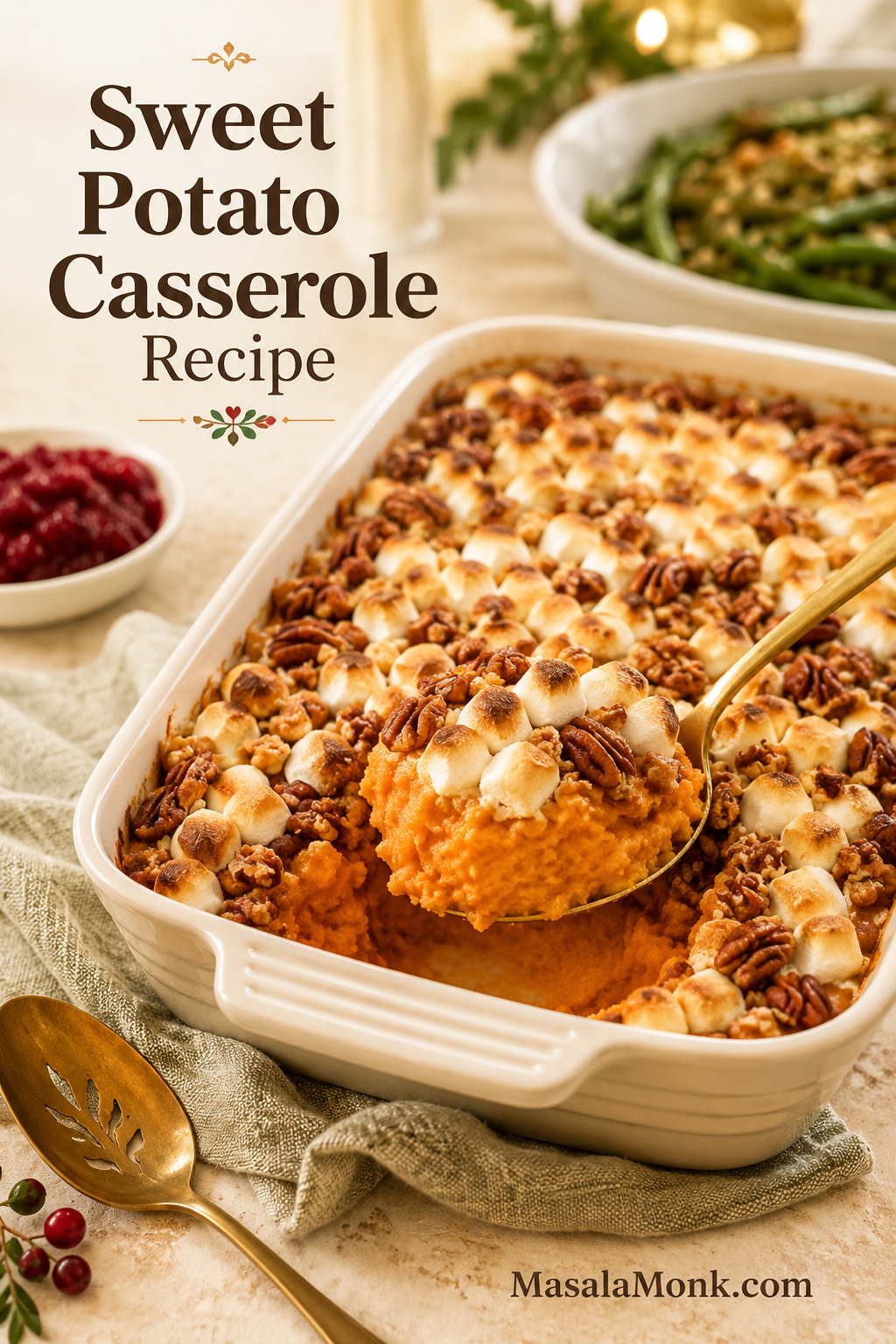
Sweet potato casserole in a cream baking dish with toasted marshmallows, pecan streusel, and a spoon lifting a creamy orange scoop.

A good sweet potato casserole has to do more than taste sweet. It needs to be creamy without turning watery, rich without feeling heavy, golden on top without burning, and easy enough to fit into a busy oven schedule that already has too much going on.

This sweet potato casserole recipe is built for that exact moment, especially when Thanksgiving or a big holiday meal has several dishes competing for the oven. You can make it with fresh sweet potatoes or drained canned yams, finish it with marshmallows, pecan streusel, or both, and prep most of it ahead so the final bake feels calm instead of chaotic.

The filling is smooth, spoonable, lightly set, and warmly seasoned with butter, brown sugar, vanilla, cinnamon, and just enough salt to keep the sweetness balanced. It should feel like a satiny orange mash under a golden, buttery topping — sweet, but not candy-sweet.

Think of this as one dependable base for a table full of opinions: the marshmallow crowd, the pecan-streusel crowd, the canned-yam shortcut cook, and the person who wants the dish to stay more side than dessert.

Quick Answer: How to Make Sweet Potato Casserole

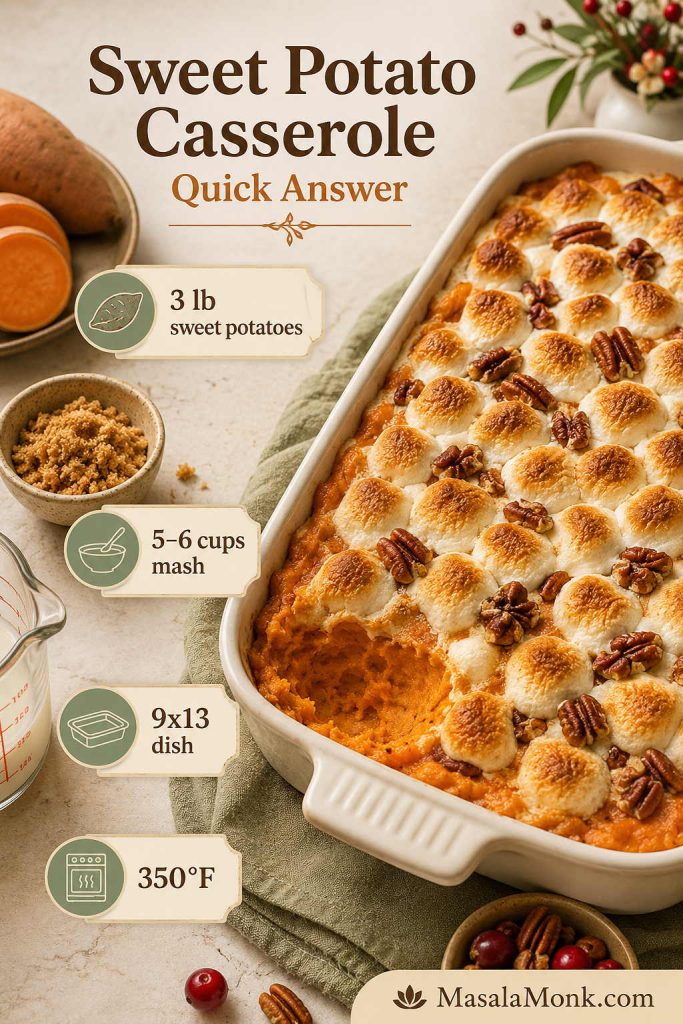
For a full sweet potato casserole, use 3 lb / 1.36 kg fresh sweet potatoes, which gives about 5–6 cups cooked mashed sweet potato. Mix the mash with melted butter, ⅓ cup brown sugar for a balanced version, milk or cream, eggs, vanilla, cinnamon, nutmeg, and salt, then spread it in a 9×13-inch / 3-quart baking dish.

Bake at 350°F / 175°C until the casserole is hot and lightly set. Because the filling contains eggs, the center should reach 165°F / 74°C if you check with an instant-read thermometer.

Pecan streusel goes on before baking. Save marshmallows for the final 8–10 minutes so they puff and brown instead of melting away.

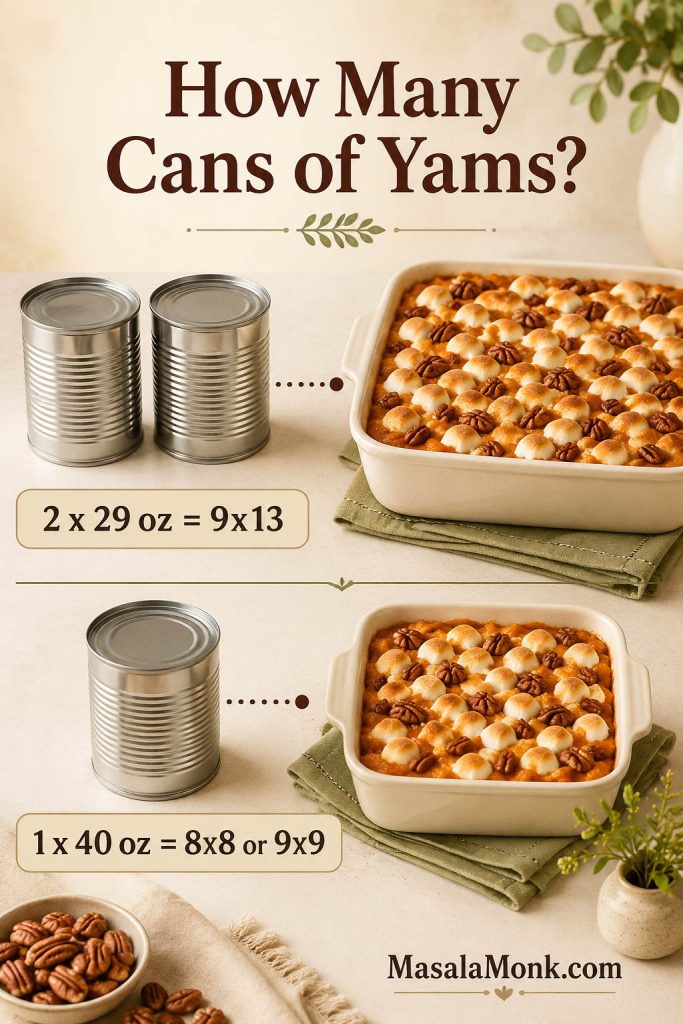
For canned yams, use 2 x 29 oz cans, drained, for a 9×13 casserole, or 1 x 40 oz can, drained, for an 8×8 or 9×9 dish. If the cans are syrup-packed, start with less sugar.

Quick answer guide for sweet potato casserole showing a finished casserole with callouts for 3 pounds sweet potatoes, 5 to 6 cups mash, a 9x13 dish, and 350°F baking temperature
Use this quick formula as the anchor, then adjust the casserole for canned yams, pecan streusel, marshmallows, or a less-sweet holiday table.

If you are using canned yams, the fresh vs canned guide and canned-yam texture tips will help you adjust sugar and liquid before mixing.

Best crowd version: Use the balanced filling with pecan streusel for structure, then add mini marshmallows at the end if your table expects them. You get buttery crunch, soft toasted pockets, and a casserole that still eats like a side dish.

For a closer look at the final layer, see the topping options and the marshmallows vs pecans comparison before choosing your version.

Sweet Potato Casserole at a Glance

DetailStarting point
Sweet potatoes3 lb / 1.36 kg fresh sweet potatoes
Cooked mash yieldAbout 5–6 cups
Baking dish9×13-inch / 3-quart dish
Oven temperature350°F / 175°C
Potato cooking time12–20 minutes for boiling, or 40–50 minutes for roasting
Bake time30–35 minutes, or 40–50 minutes if chilled
Servings10–12 side-dish servings
TextureCreamy, scoopable, lightly set, not watery
Best topping pathsPecan streusel, marshmallows, or both
Make-aheadBase can be made 1–2 days ahead; topping stays better when added later
Canned-yam optionYes, drain well, measure the mash, and reduce sugar/liquid as needed
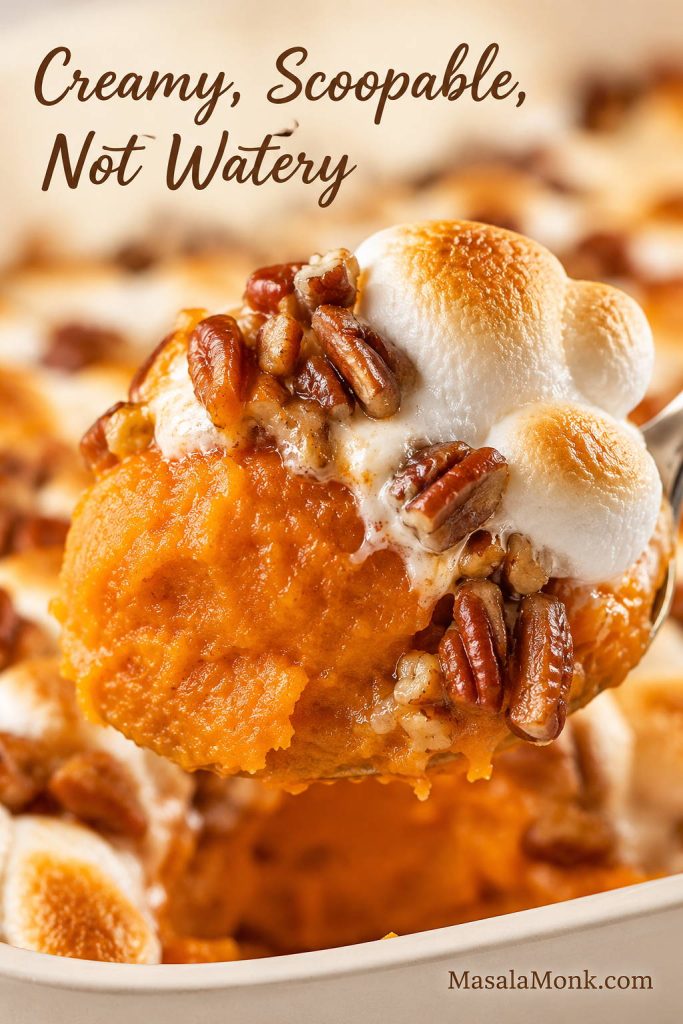
Close-up spoonful of sweet potato casserole showing creamy orange filling with pecan topping and toasted marshmallow pieces
The spoon test matters because a good casserole should lift in a creamy scoop, not slide apart like loose mashed sweet potatoes.

Why This Sweet Potato Casserole Works

The whole recipe depends on one idea: build a thick, balanced sweet potato base first, then treat the topping as a separate timing decision. The sweet potato mixture needs to be thick, seasoned, and creamy before it goes into the oven. The top needs enough heat to turn golden, but not so much time that it burns, sinks, or goes sticky.

  • Three pounds of sweet potatoes gives enough mash for a proper 9×13 casserole without making the filling too thin.
  • Butter and milk or cream make the mash rich, while controlled liquid keeps it from turning soupy.
  • Eggs help the filling set just enough to scoop neatly. Leave them out for a softer, spoonier casserole.
  • Brown sugar stays flexible. Use ⅓ cup when you want a side-dish sweet casserole, or ½ cup when your table expects the sweeter classic version.
  • Pecan streusel bakes from the start. Marshmallows wait until the casserole is hot or nearly hot.
  • The canned version needs a lighter hand because it is already tender and often sweeter or wetter than fresh cooked sweet potatoes.
  • Resting time matters. A 10–15 minute rest helps the casserole scoop cleanly and lets the streusel settle into a buttery crunch.

That is the difference between a casserole that simply tastes sweet and one that earns its space on the holiday plate: a hot, creamy center, a topping with texture, and a first scoop that holds together instead of sliding apart.

Not Sure Which Version to Make?

Sweet potato casserole is one of those dishes people remember before they even taste it. One person wants the marshmallows from childhood. Another wants pecans and less sweetness. Sometimes the main goal is simply getting the dish to come out hot while the oven is full.

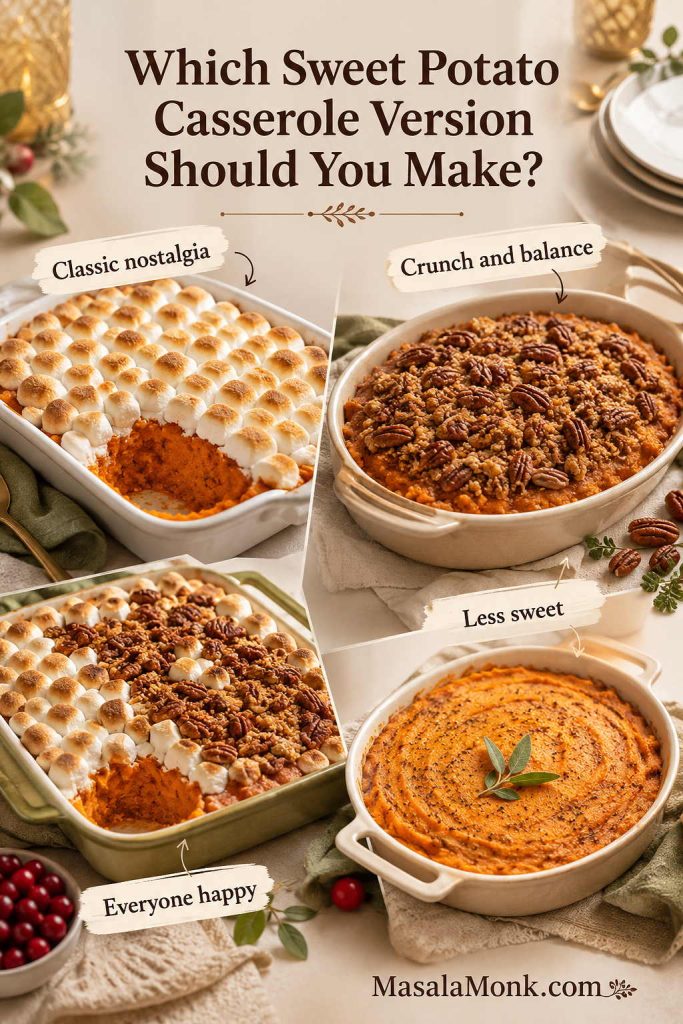
Your table wants…Make this version
Classic nostalgiaMini marshmallow topping
Crunch and balancePecan streusel topping
Everyone happyPecan streusel plus marshmallows added near the end
Less sweetness¼–⅓ cup brown sugar with pecan, oat, cornflake, or savory crumb topping
Fastest shortcutDrained canned yams, less sugar, and milk added slowly
Make-ahead calmFilling made ahead, topping stored separately, marshmallows added late

The best version is the one your table will actually reach for twice. Choose the topping that matches the people you are feeding, then keep the base creamy, hot, and well rested.

Decision guide showing four sweet potato casserole versions: marshmallow topping, pecan streusel, both toppings, and a less-sweet no-marshmallow option
Choose the version before you bake so the topping matches your table: nostalgic marshmallows, crunchy pecans, both together, or a quieter less-sweet finish.

Ingredients and What Each One Does

The ingredient list is simple, but small choices matter. The goal is a casserole that tastes warm and generous, not thin, sugary, or heavy.

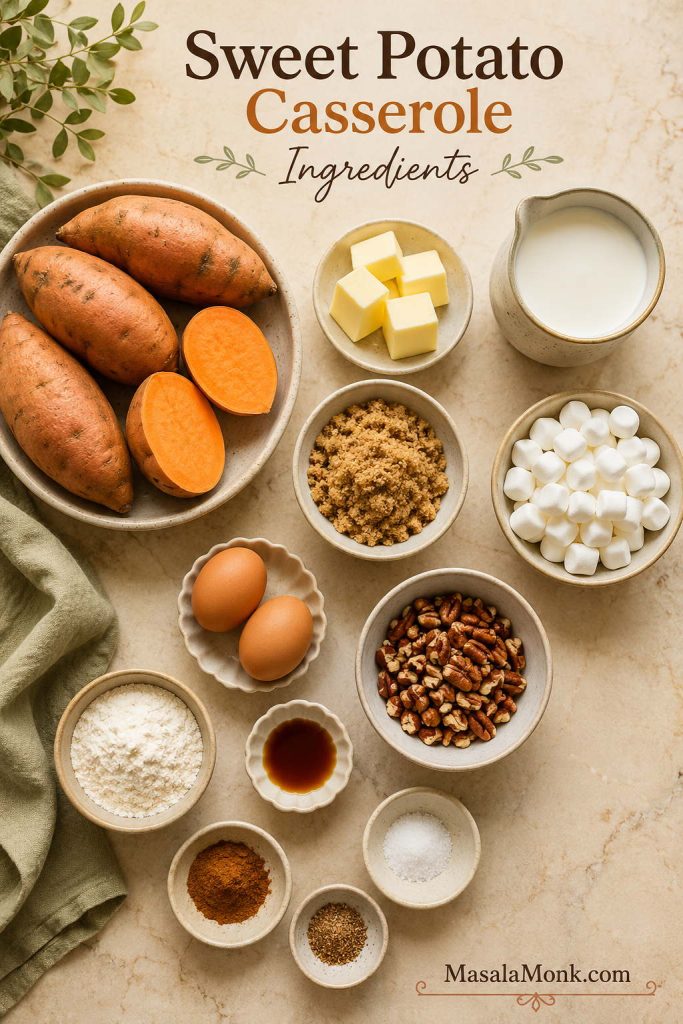
Overhead ingredient spread for sweet potato casserole with sweet potatoes, butter, brown sugar, milk, eggs, vanilla, spices, pecans, flour, and mini marshmallows
These simple ingredients work best when each one has a job: butter rounds the flavor, eggs help structure, liquid softens, and salt balances the sweetness.

For the Sweet Potato Filling

  • Sweet potatoes: Use 3 lb / 1.36 kg fresh sweet potatoes for a full 9×13 casserole. Orange-fleshed sweet potatoes give the classic color, sweetness, and creamy texture. For a separate look at calories, carbs, fiber, and portions, see MasalaMonk’s sweet potato nutrition facts.
  • Butter: Melted butter adds richness and helps the mash taste rounded instead of flat.
  • Brown sugar: Use ⅓ cup / about 65–70 g for a side-dish sweet casserole, or ½ cup / 100 g for the sweeter classic version. Start lower if your cans are syrup-packed.
  • Milk, half-and-half, cream, or evaporated milk: This loosens the mash and makes it creamy. Evaporated milk gives a slightly old-fashioned richness without using heavy cream.
  • Eggs: Eggs help the casserole set and scoop neatly. If you skip them, the dish will be softer and more spoonable.
  • Vanilla: A little vanilla belongs in the background here. You want warmth, not a filling that tastes like dessert pudding.
  • Cinnamon and nutmeg: Cinnamon gives the main warmth. Nutmeg is optional but helpful in small amounts. You can also use 1–1½ teaspoons pumpkin pie spice instead.
  • Salt: Salt keeps the sweetness from going flat. It is especially important when marshmallows or a brown sugar topping are involved.
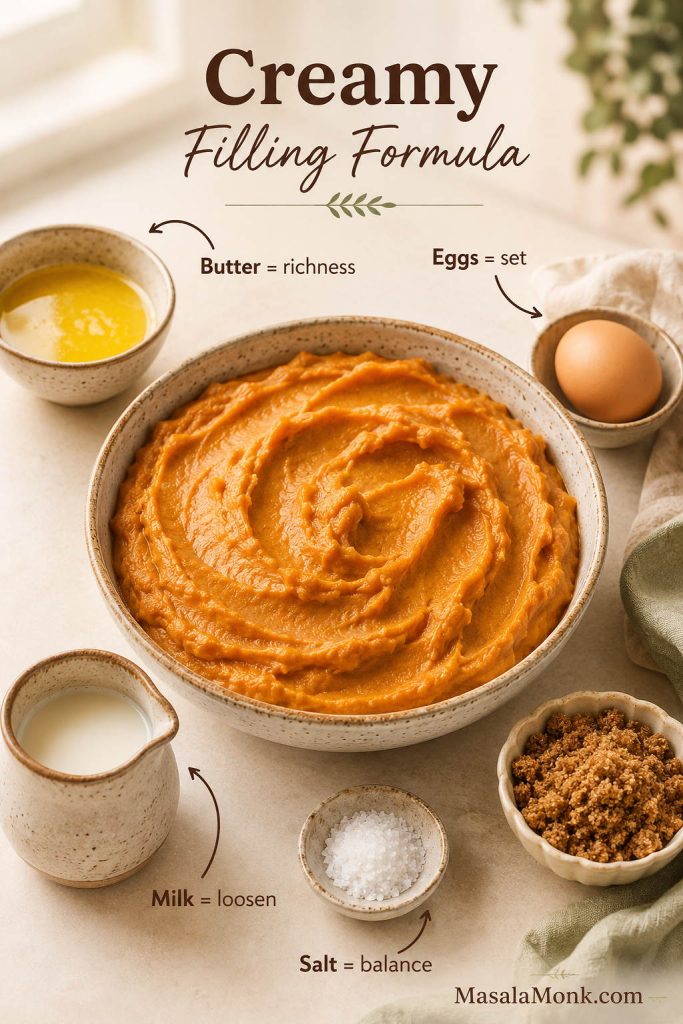
Sweet potato casserole filling formula with mashed sweet potatoes, butter for richness, eggs for set, milk to loosen, and salt for balance
Before the topping goes on, the filling needs balance: rich enough from butter, lightly set from eggs, loosened carefully with milk, and sharpened with salt.

For the Pecan Streusel Topping

  • Pecans: Pecans bring crunch and a buttery flavor that balances the soft filling. Toast them for 3–5 minutes in a dry skillet if you want a deeper nutty edge.
  • Brown sugar: Helps the topping caramelize and gives the crumble a classic flavor.
  • Flour: Holds the topping together so it bakes into crumbs instead of a sugary butter puddle.
  • Butter: Melted butter binds the topping. Start with 5 tablespoons and add the 6th only if the mixture still looks dry.
  • Cinnamon and salt: These keep the topping warm and balanced.

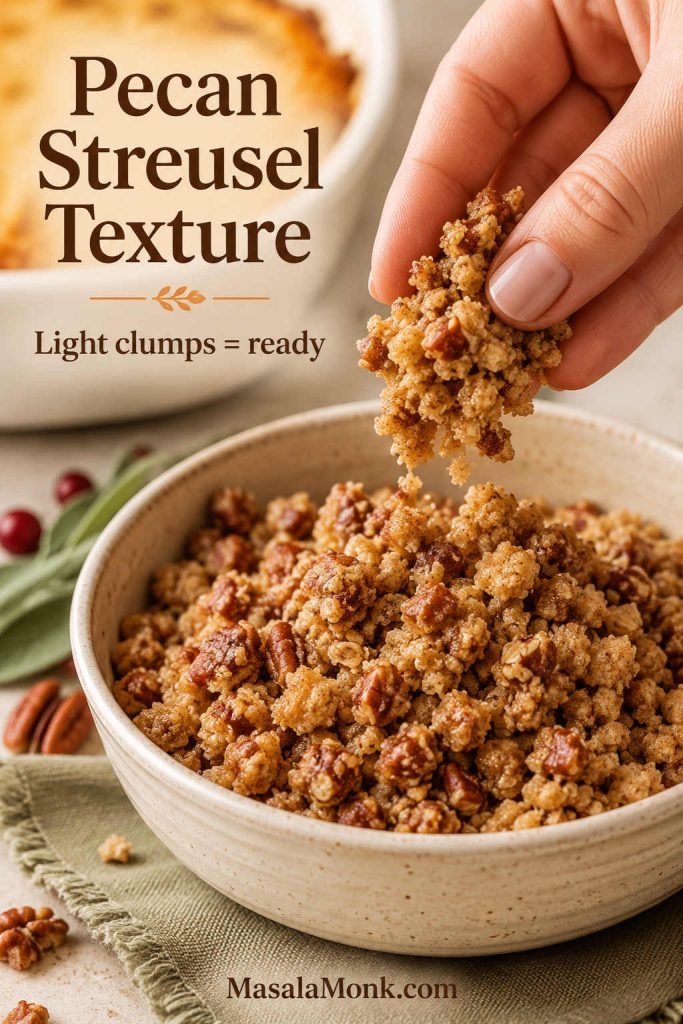
If the streusel clumps lightly when squeezed, it has enough butter. If it looks sandy and dry, add the remaining tablespoon before scattering it over the casserole.

Nut-free option: Replace pecans with crushed cornflakes, oat crumble, or plain brown sugar crumble.

For the Marshmallow Topping

Mini marshmallows are easiest to distribute and brown more evenly than large ones. Use 2–3 cups for a 9×13 casserole, depending on whether you want a light scattered top or a full classic layer.

If you only have large marshmallows, cut them into smaller pieces before adding them. Whole large marshmallows brown unevenly and can make the top patchy.

MasalaMonk note: When using both pecans and marshmallows, bake the pecan layer first and add marshmallows at the end. That gives you buttery crunch underneath and soft toasted pockets on top.

Fresh Sweet Potatoes or Canned Yams: Which Should You Use?

Fresh sweet potatoes give the deepest flavor and the most control over texture. Shortcut cans are faster and completely useful when you are cooking a big meal and need one less thing to peel, chop, boil, or roast.

The goal is not to prove anything; it is to get a creamy, well-balanced casserole on the table. A canned version can still taste intentional when the pieces are drained, mashed gently, seasoned well, and kept thick enough before baking.

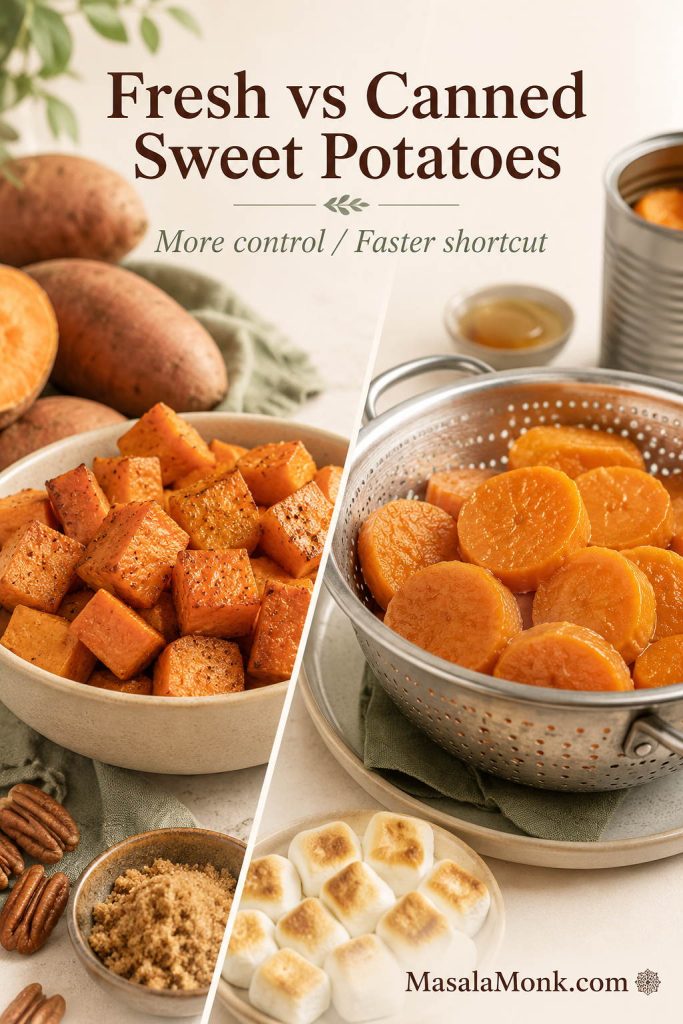
Fresh sweet potatoes compared with drained canned yams for making sweet potato casserole, with a note that fresh gives more control and canned is faster
Fresh sweet potatoes give the most control, but canned yams are still a smart shortcut when they are drained well and sweetened with a lighter hand.

Canned-yam shortcut: Can sizes are only a starting point. Drain first, then measure the mash. Aim for 5–6 cups for a full 9×13 casserole or 3–4 cups for a smaller one.

In many U.S. grocery stores, “canned yams” are usually canned sweet potatoes. True yams are a different root vegetable, but for this style of casserole, most U.S. canned “yams” are the orange sweet potatoes readers expect.

The main difference is moisture and sweetness. Fresh cooked sweet potatoes can be steam-dried or roasted until sturdy. Canned pieces are already tender and may be packed in syrup, so taste before adding the full sugar amount and add milk gradually.

How Many Cans of Yams Do You Need?

For shortcut batches, think in mashed yield rather than can labels alone. Once you know your amount, use the watery-casserole prevention tips before adding milk.

Guide showing that 2 cans of 29 ounce yams fit a 9x13 sweet potato casserole and 1 can of 40 ounce yams fits an 8x8 or 9x9 dish
Instead of guessing from can size alone, aim for the right amount of mashed sweet potato for your pan: 5–6 cups for a full 9×13 casserole.
Starting pointAmount to useWhere it fits
Fresh sweet potatoes3 lb / 1.36 kgFull 9×13 casserole
Cooked mashed sweet potato5–6 cupsSame as the main full batch
Canned yams or canned sweet potatoes2 x 29 oz cans, drainedFull 9×13 canned shortcut
Canned yams or canned sweet potatoes1 x 40 oz can, drainedSmaller 8×8, 9×9, or 2-quart casserole
Small batch mash3–4 cups6–8 servings

How to Use Canned Yams Without Making the Casserole Watery

  • Let excess syrup run off. A few minutes in a colander helps more than rushing straight to the bowl.
  • Start lower on sugar. Syrup-packed cans often need only ¼–⅓ cup brown sugar in the filling.
  • Add milk slowly. Stop when the mash looks creamy but still holds soft ridges.
  • Mash by hand. A potato masher gives better control than a blender or food processor.
  • Taste before topping. The filling should taste pleasantly sweet and slightly salty before the final layer goes on.
Drained canned yams in a colander with mashed sweet potatoes and tips to drain, mash by hand, and add milk slowly
For canned-yam sweet potato casserole, draining comes first; after that, add milk slowly so the mash turns creamy instead of watery.

Handled this way, the shortcut does not feel like a compromise. It feels like the calm choice on a crowded cooking day.

What Pan Size Should You Use?

Pan size matters because sweet potato casserole should be deep enough to stay creamy, but not so deep that the center stays cold while the top browns. A too-deep pan is one of the quiet reasons casseroles come out cold in the middle.

Do not overthink the dish, but do respect the depth. A shallow casserole heats faster and gives you more topping in every scoop; a deeper one stays creamier but needs more time.

Dish sizeSweet potato mash amountWorks well forApprox. servings
8×8-inch or 9×9-inch dish3–4 cupsSmall batch, canned-yam version, smaller gathering6–8
2-quart baking dish3–4 cupsClassic smaller casserole6–8
9×13-inch / 3-quart dish5–6 cupsFull side-dish batch10–12
Half batch2½–3 cupsSmall family side5–6
Mini batch1½–2 cupsTwo to four people2–4
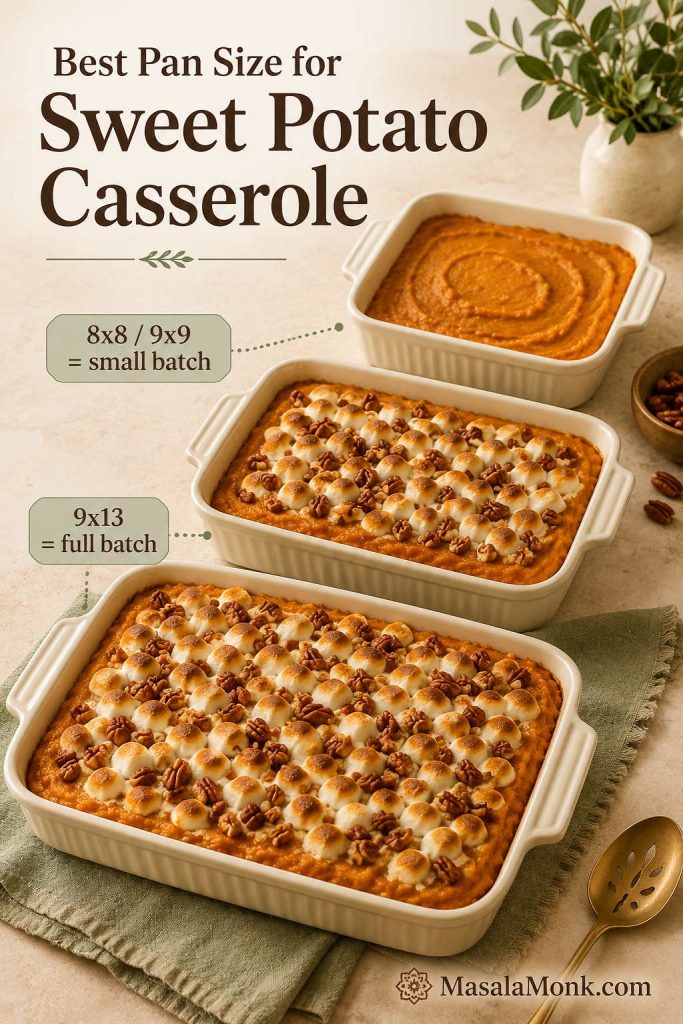
Pan size guide for sweet potato casserole showing small 8x8 or 9x9 dishes and a larger 9x13 dish for a full batch
Match the pan to the amount of mash: a full 9×13 casserole feeds a crowd, while smaller dishes give a thicker, cozier bake.

If you are using a deeper dish or baking from cold, the fridge-to-oven timing guide will help you avoid a cold center.

For most families, the 9×13 version is the most practical full batch. For a smaller dinner, the 8×8 version feels more generous because every scoop gets topping.

If your casserole is in a deeper dish, expect it to take longer to heat through. If it is in a wider, shallower dish, the topping may brown faster. Either way, the center should be hot before you call it done.

If you like this kind of full-pan side, MasalaMonk’s hashbrown casserole follows a similar 9×13 comfort-food logic, but moves in a savory, cheesy potato direction instead of a sweet one.

Roast, Boil, Steam, or Open a Can?

There is no single correct way to prepare the sweet potatoes. The right method depends on the kind of cooking day you are having: slow and flavor-focused, or busy and shortcut-friendly.

MethodTimingChoose this ifWatch for
Roasting425°F / 220°C for 40–50 minutes, depending sizeYou want a more concentrated flavor and a sturdier mashTakes longer; cool slightly before scooping and mashing
Boiling12–20 minutes for peeled chunksYou want the fastest fresh methodDrain very well and steam-dry 3–5 minutes before mashing
Steaming15–25 minutes, depending chunk sizeYou want good texture with less water absorption than boilingNeeds a steamer basket or enough pot space
Drained canned sweet potatoes or yamsNo cooking before mixing, just drain and mashYou want the fastest shortcutReduce sugar and add liquid gradually
Cooking method guide for sweet potatoes showing roasted chunks, boiled chunks, steamed pieces, and canned yams for casserole
Pick the method around your schedule: roast for deeper flavor, boil for speed, steam for moisture control, or use canned yams when time is tight.

If you have time, roasting gives a more concentrated flavor because the sweet potatoes lose some moisture and become naturally sweeter. If you need the practical version, boiling peeled cubes is faster and still works well as long as you let them steam-dry before mixing.

You do not need to heavily salt the cooking water because the filling is seasoned after mashing.

Marshmallows, Pecans, or Both?

This is where family opinions usually show up. Some people want the marshmallows they grew up with; others want pecans, crunch, and less sweetness. The base recipe is flexible enough to satisfy both camps without making two casseroles.

ToppingChoose this ifWhat it brings
Mini marshmallowsYou want the classic nostalgic versionSoft, sweet, toasted pockets
Pecan streuselYou want crunch and less dessert-heavy sweetnessButtery texture and a sweet-salty edge
Pecans + marshmallowsYou want a reliable crowd compromiseCrunch underneath, golden marshmallows on top
No marshmallowsYou want a more savory-table-friendly casseroleA less dessert-like finish
Nut-free toppingYou are serving a table with nut allergiesCrunch from cornflakes or oats, or softness from marshmallows
Sweet potato casserole topping options showing marshmallows, pecan streusel, both toppings, and a no-marshmallow version
The topping sets the mood of the whole dish, from soft marshmallow nostalgia to pecan-streusel crunch or a simpler side-dish-style finish.

Marshmallows vs Pecans: Which Topping Fits Your Table?

One sweet potato casserole split between toasted mini marshmallows on one side and pecan streusel on the other side
Marshmallows make the casserole softer and sweeter, while pecan streusel adds crunch that helps it sit comfortably beside savory holiday sides.

Once you choose the topping, check the pecan streusel texture cue or when to add marshmallows so the top bakes correctly.

If you are unsure, the pecan-plus-marshmallow version keeps both camps happy: buttery crumble for the people who want texture, and toasted marshmallows for the people who would miss them.

Marshmallow Topping

Marshmallows are the classic choice for many tables. Let the casserole get hot first, then give the marshmallows just enough oven time to puff, brown, and stay visible on the surface.

Pecan Streusel Topping

Pecan streusel turns the casserole into something more textured and less dessert-heavy. The best spoonfuls have creamy sweet potato underneath and a little buttery crunch on top.

If You Do Not Want Marshmallows

Skip them and use pecan streusel, oat crumble, cornflake crumble, or a savory breadcrumb topping. This is the path for a table that wants sweet potatoes to stay firmly beside the savory food.

Broiler warning: If you use the broiler to brown marshmallows, stay at the oven. They can go from golden to scorched in seconds. Broil for 30–90 seconds only, watching constantly.

How Sweet Should It Be?

Sweet potato casserole sits in a funny place: it is a side dish, but it often shares ingredients with dessert. This is where a lot of casseroles go wrong: the filling is sweetened like dessert, then covered with an even sweeter topping.

Start with the kind of dish you want, then choose the sugar level. If you are using marshmallows or syrup-packed cans, the filling usually needs less sugar than you think.

StyleBrown sugar in fillingTopping ideaResult
Less sweet¼–⅓ cup / 50–65 gPecan, oat, cornflake, or savory crumbMore like a side dish
Balanced⅓ cup / about 65–70 gPecans, marshmallows, or bothSweet but not candy-like
Classic sweet½ cup / 100 gMarshmallows or pecan streuselTraditional sweetness
Dessert-like½ cup or moreMarshmallows plus sweeter streuselVery sweet, closer to pie filling
Sweetness guide for sweet potato casserole showing less sweet, balanced, classic sweet, and dessert-like options
Decide the sweetness before adding the topping, because marshmallows and syrup-packed canned yams can quickly push the recipe toward dessert.

If you are starting with syrup-packed cans, revisit the canned-yam notes before adding the full sugar amount.

For most tables, ⅓ cup brown sugar in the filling is the safest starting point. It leaves room for a sweet topping without making the whole dish feel heavy. If you are nervous about sweetness, start lower. You can always make the topping sweeter, but you cannot easily pull sugar back once the filling is mixed.

Texture Target Before You Bake

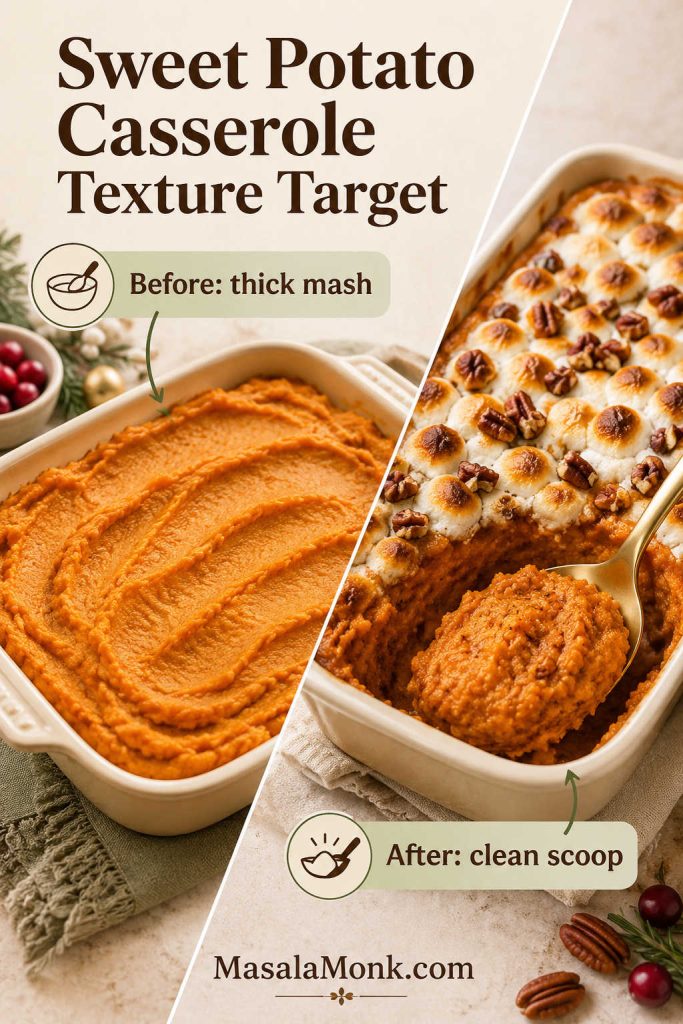
Look for this: The mash should be thick, creamy, and able to hold soft ridges when you drag a spoon through it. It should not pour like soup. After baking, the edges should look hot and slightly puffed, the center should be hot, and the casserole should rest 10–15 minutes before serving.

Before and after texture guide showing thick sweet potato mash before baking and a clean scoop of baked casserole after baking
A thick mash that holds spoon ridges is your best early clue that the baked casserole will scoop neatly after it rests.

This is the quiet moment where the casserole is either set up for success or headed toward watery. When the base is thick before baking and fully hot before serving, the first scoop feels generous: soft, creamy, and steady enough to hold its place on the plate.

How to Make Sweet Potato Casserole

This is the main fresh-sweet-potato method. Use the canned-yam notes above if you are starting with canned sweet potatoes.

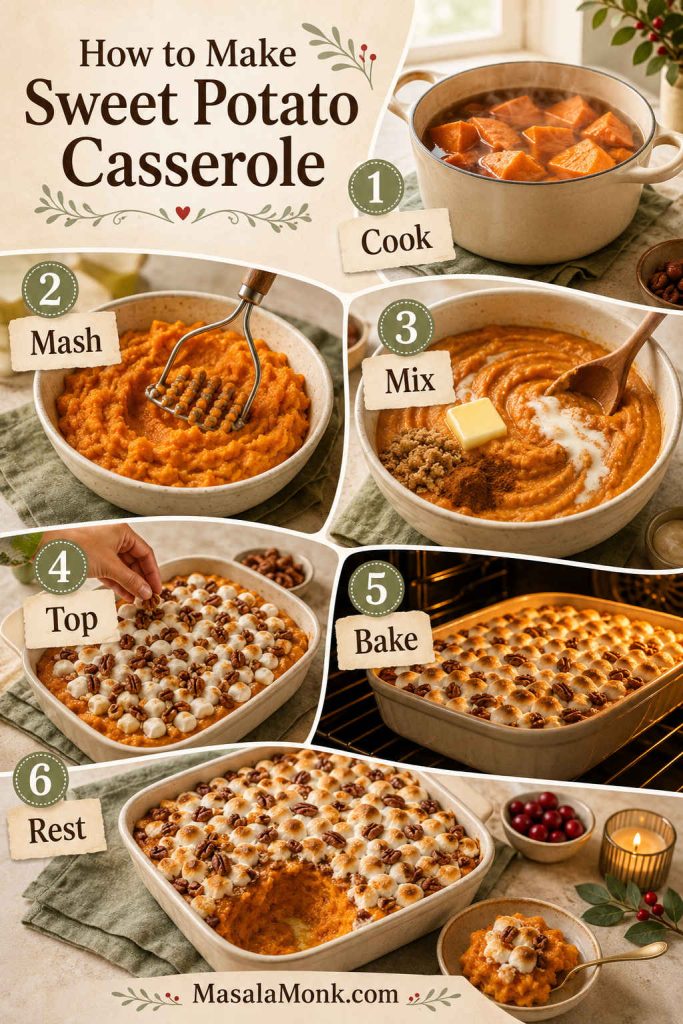
Step-by-step sweet potato casserole guide showing the sequence cook, mash, mix, top, bake, and rest
The process stays simple when you follow the order: cook, mash, mix, top, bake, and let the casserole rest before the first scoop.

Step 1: Cook the Sweet Potatoes

Peel the sweet potatoes and cut them into even chunks. Add them to a large pot, cover with water, and simmer until fork-tender, usually 12–20 minutes depending on the size of the pieces. Drain very well, then let them sit in the hot pot for 3–5 minutes so extra steam can escape.

If roasting, halve the sweet potatoes or roast them whole at 425°F / 220°C until completely tender, usually 40–50 minutes depending on size. Let them cool slightly, then scoop out the flesh. Roasting takes longer, but it gives a thicker, more flavorful mash.

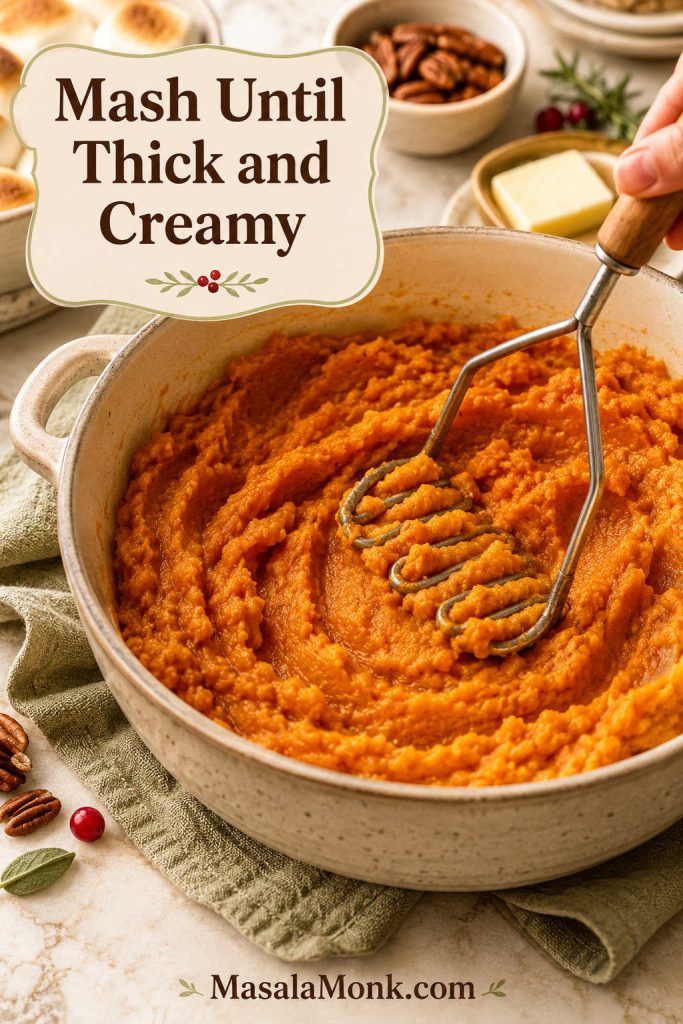
Step 2: Mash Until Thick and Mostly Smooth

Mash the cooked sweet potatoes with a potato masher until mostly smooth. A few small soft pieces are fine. Avoid over-processing in a food processor, especially if your potatoes are very moist, because the filling can become too loose.

Stop when the mash looks creamy and holds soft ridges. If it levels out immediately, wait before adding more milk.

Cooked sweet potatoes being mashed in a bowl with a potato masher until thick and creamy
After boiling, let the sweet potatoes steam-dry before mashing; otherwise, extra water can weaken the base before the filling is even mixed.

Step 3: Add Butter, Sugar, Milk, Vanilla, Spices, and Salt

Stir in melted butter, brown sugar, milk or cream, vanilla, cinnamon, nutmeg, and salt. Start with the lower sugar amount if you prefer a less-sweet casserole, if you plan to use marshmallows, or if your shortcut yams were packed in syrup.

Taste the filling before adding the eggs. Once the eggs go in, it is better not to keep tasting the raw mixture.

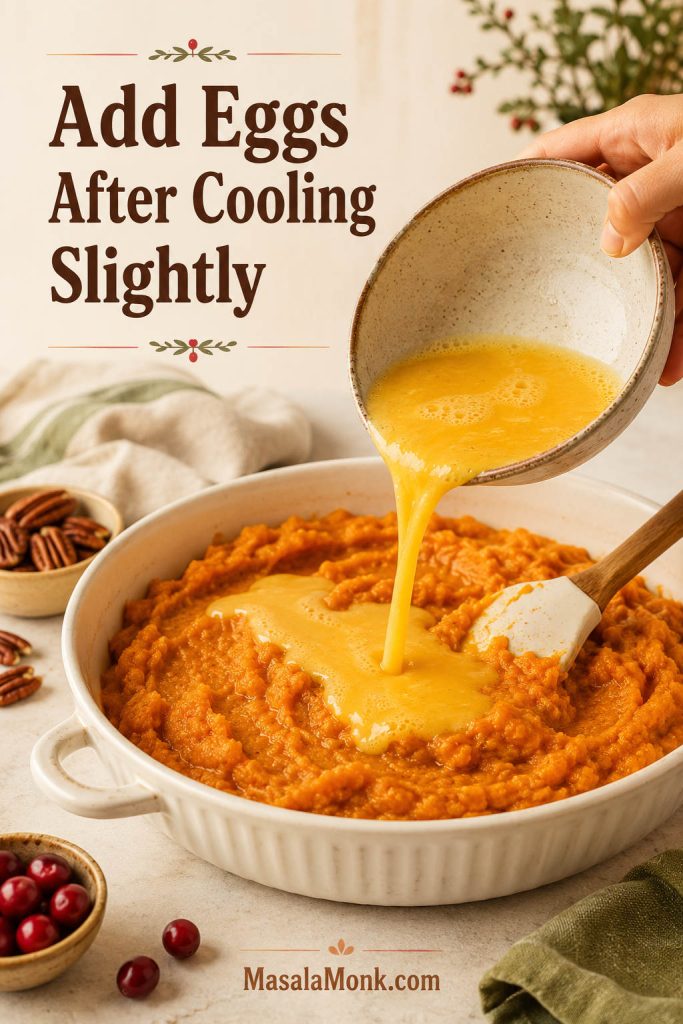
Step 4: Cool Slightly, Then Add Eggs

Let the mash cool for a few minutes before stirring in the eggs. The potatoes can be warm, but they should not be steaming hot. This prevents the eggs from scrambling and helps them blend smoothly into the filling.

If you are making the casserole without eggs, skip this step and use a little less milk so the filling stays sturdy.

Beaten eggs being added to slightly cooled sweet potato mash in a mixing bowl
Let the mash cool slightly before adding eggs so they blend into the filling instead of tightening into uneven bits.

Step 5: Spread in the Baking Dish

Grease a 9×13-inch / 3-quart baking dish and spread the filling evenly. Smooth the top, but do not pack it down too firmly. This is a scoopable casserole, not a sliceable cake.

If using a smaller 8×8, 9×9, or 2-quart dish, use 3–4 cups mashed sweet potato instead of the full 5–6 cups.

Step 6: Add the Topping

Sprinkle pecan streusel evenly over the casserole before baking. If using marshmallows only, bake the filling until nearly hot first. With both toppings, start with the pecan layer and finish with marshmallows.

Pecan Streusel Texture Cue

Close-up of pecan streusel being pinched above a bowl to show light clumps and crumbly texture
The pecan topping should look crumbly but moist enough to gather in small pieces, which helps it bake into buttery crunch.

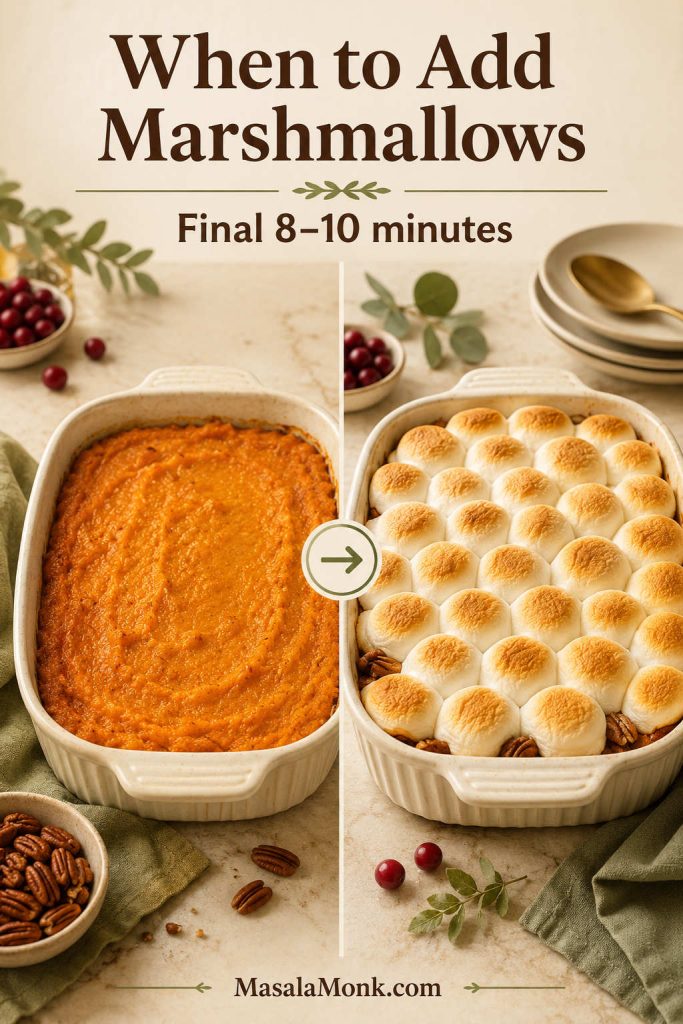
When to Add Marshmallows

Before and after guide showing plain hot sweet potato casserole before marshmallows and toasted marshmallows after the final 8 to 10 minutes
Wait until the casserole is hot before adding marshmallows; then they toast on top instead of disappearing into the filling.

Step 7: Bake Until Hot and Lightly Set

Bake at 350°F / 175°C until the filling is hot in the center and the topping looks golden. A room-temperature casserole usually takes 30–35 minutes. A chilled make-ahead casserole may need 40–50 minutes, especially if it goes into the oven straight from the fridge.

Because this filling contains eggs, you can check the center with an instant-read thermometer if you want precision: it should reach 165°F / 74°C. If the topping is ready but the center is not, cover the top loosely with foil and keep baking.

Step 8: Rest Before Serving

Let the casserole rest for 10–15 minutes before serving. This helps the filling settle, makes it easier to scoop, and lets the streusel firm up slightly. The first spoonful should look creamy and generous, not watery or collapsed.

At the table, the best scoop should feel soft underneath, with just enough golden crunch or toasted marshmallow on top to remind everyone why this dish always disappears.

Sweet Potato Casserole Recipe

This sweet potato casserole is creamy, lightly set, and flexible enough for marshmallows, pecan streusel, or both. For the most crowd-friendly version, use pecan streusel with marshmallows added near the end, but either topping works on its own.

Prep Time
20 minutes
Potato Cook Time
12–20 minutes
Bake Time
30–35 minutes, or 40–50 if chilled
Total Time
About 1 hour 10–15 minutes, plus resting

Servings: 10–12   |   Oven: 350°F / 175°C   |   Dish: 9×13-inch / 3-quart baking dish

Total time is based on boiling the sweet potatoes and baking the casserole right away. If roasting, add about 25–30 minutes. If baking from chilled, allow 40–50 minutes of bake time. Let the casserole rest 10–15 minutes before serving.

Equipment

  • 9×13-inch / 3-quart baking dish
  • Large pot or sheet pan
  • Potato masher
  • Mixing bowls
  • Measuring cups and spoons
  • Foil, if making ahead or reheating
  • Instant-read thermometer, optional

Ingredients

For the Sweet Potato Filling

  • 3 lb / 1.36 kg fresh sweet potatoes, peeled and cut into chunks, or 2 x 29 oz cans of canned yams, drained, aiming for 5–6 cups mashed
  • 4 tbsp / 57 g butter, melted
  • ⅓–½ cup / 65–100 g brown sugar, depending on sweetness preference
  • ⅓ cup / 80 ml milk, half-and-half, cream, or evaporated milk
  • 2 large eggs, lightly beaten
  • 1 tsp / 5 ml vanilla extract
  • 1 tsp ground cinnamon
  • ⅛–¼ tsp ground nutmeg, optional
  • ¾ tsp fine salt, or to taste

For the Pecan Streusel Topping

  • 1 cup / 100–115 g chopped pecans
  • ½ cup / 100 g brown sugar
  • ⅓ cup / 42 g all-purpose flour
  • 5–6 tbsp / 70–85 g butter, melted
  • ½ tsp ground cinnamon
  • Pinch of salt

Nut-free option: Replace pecans with crushed cornflakes, oat crumble, or plain brown sugar crumble.

For the Marshmallow Topping

  • 2–3 cups mini marshmallows / about 100–150 g

Instructions

Cook and Mix the Filling

  1. Cook the sweet potatoes. Add the peeled sweet potato chunks to a large pot and cover with water. Bring to a boil, then simmer until fork-tender, about 12–20 minutes. Drain very well and let the potatoes steam-dry in the hot pot for 3–5 minutes. If using canned yams, drain them very well and skip to mashing.
  2. Preheat the oven. Heat the oven to 350°F / 175°C. Grease a 9×13-inch / 3-quart baking dish.
  3. Mash the sweet potatoes. Mash until mostly smooth. A few small soft pieces are fine, but avoid leaving large chunks.
  4. Mix the filling. Stir in melted butter, brown sugar, milk or cream, vanilla, cinnamon, nutmeg, and salt. Taste and adjust sweetness or salt before adding eggs.
  5. Add the eggs. Let the mash cool slightly, then stir in the beaten eggs until evenly mixed. Do not add eggs to steaming-hot potatoes.
  6. Fill the dish. Spread the sweet potato filling evenly in the prepared baking dish.

Top, Bake, and Rest

  1. Make the pecan topping, if using. In a bowl, mix pecans, brown sugar, flour, 5 tablespoons melted butter, cinnamon, and salt until crumbly. Add the 6th tablespoon of butter only if the mixture still looks dry. Sprinkle over the sweet potato filling.
  2. Bake the casserole. Bake with the streusel on top if using pecan topping. For marshmallows only, bake the filling for about 20–25 minutes first, until nearly hot. A refrigerated casserole may need about 40–50 minutes total bake time, covered loosely if the top browns too quickly. For egg-based doneness, the center should reach 165°F / 74°C.
  3. Add marshmallows near the end. Scatter marshmallows over the hot or nearly hot casserole during the last 8–10 minutes of baking. If using both pecans and marshmallows, add them over the baked streusel. Bake until puffed and golden.
  4. Rest and serve. Let the casserole rest for 10–15 minutes before serving.

Recipe Notes

  • Shortcut canned version: Use 2 x 29 oz cans for a full 9×13 batch, or 1 x 40 oz can for a smaller 8×8 or 9×9 batch. Drain well and aim for 5–6 cups mashed.
  • Roasted sweet potatoes: Roast whole or halved sweet potatoes at 425°F / 220°C for 40–50 minutes, then scoop and mash.
  • Less sweet: Start with ¼–⅓ cup brown sugar, especially if using syrup-packed cans or marshmallows.
  • Nut-free: Use marshmallows, oat crumble, cornflake crumble, or plain brown sugar crumble instead of pecans.
  • No egg: Omit the eggs and reduce the milk slightly. The casserole will be softer and more spoonable.
  • Make-ahead: Prepare the filling 1–2 days ahead and refrigerate covered without topping. Add topping before baking.
  • Storage: Refrigerate leftovers for 3–4 days. Freeze the base without topping for up to 3 months.

Make-Ahead Timeline

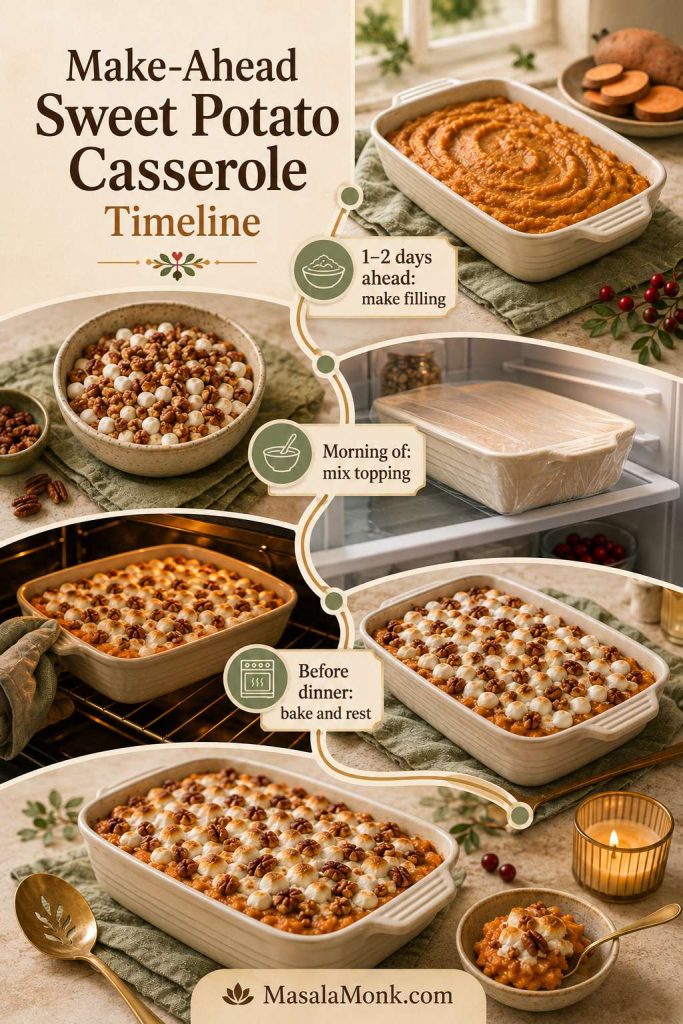
Sweet potato casserole is one of the easier big-meal sides to make ahead because the filling holds well in the fridge. The most reliable make-ahead version is not the one where everything is assembled as early as possible. It is the one where the filling waits calmly and the topping stays fresh until the final bake.

Holiday timing plan: Make the filling 1–2 days ahead, mix the topping the morning of serving, bake the chilled casserole 60–75 minutes before dinner, add marshmallows near the end if using them, then rest before serving.

Make-ahead timeline for sweet potato casserole showing filling made 1 to 2 days ahead, topping mixed the morning of serving, and casserole baked and rested before dinner
For a make-ahead sweet potato casserole that still tastes fresh, prepare the filling early but save the topping for baking day.
WhenWhat to do
2 days beforeCook, drain, and mash the sweet potatoes. Refrigerate the mash in an airtight container.
1 day beforeMix the filling and spread it in the baking dish. Cover and refrigerate without topping.
Morning of servingMix the pecan streusel separately if using. Keep marshmallows in the bag until needed.
60–75 minutes before servingBake the chilled casserole until hot through, allowing extra time for topping and resting.
Near the end of bakingFinish any marshmallow topping until puffed and golden.
Before servingRest 10–15 minutes so the filling settles and the topping has a moment to firm up.

If the assembled casserole is going straight from the refrigerator to the oven, use the baking-from-the-fridge guide before planning your final topping.

This is also a good moment to handle other make-ahead sides. A bright cranberry sauce with orange juice can be made ahead and chilled, which helps keep the final cooking window focused on dishes that need the oven.

That small separation — filling ready, topping fresh — keeps the casserole from tasting like leftovers before dinner even starts.

Should You Add Marshmallows Before Refrigerating?

No. Marshmallows should be added right before the final part of baking. If they sit on the casserole overnight, they can absorb moisture, collapse, or melt unevenly in the oven.

Can You Add Pecan Topping Ahead?

You can, but the texture is better if you store the topping separately and sprinkle it on before baking. If the topping sits on the filling overnight, it may absorb moisture and bake up softer.

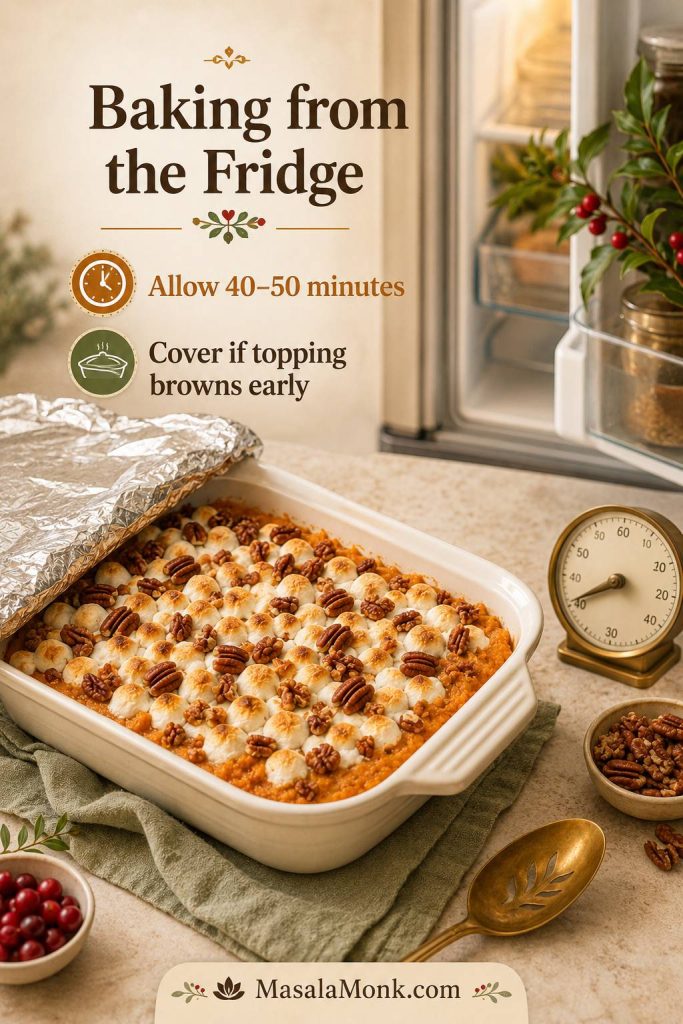
Can You Bake It Straight from the Fridge?

Yes, but allow 40–50 minutes of bake time if the casserole is cold from the fridge. If your baking dish is not safe for sudden temperature changes, let it sit at room temperature for about 30 minutes before baking.

Sweet potato casserole with foil near an open refrigerator, showing guidance to bake from the fridge for 40 to 50 minutes and cover if topping browns early
When baking from the fridge, plan for a longer oven window and use foil as backup if the top finishes before the middle.

How to Fit It Into a Busy Oven

Sweet potato casserole is usually not the only thing fighting for oven space. The good news is that it is flexible. It can bake at 350°F / 175°C with many other sides, sit for a short rest before serving, or be baked earlier and reheated gently.

If you are also baking green bean casserole, keep both dishes on the same 350°F / 175°C schedule when possible. The sweet potato casserole can rest while another side finishes, and marshmallows can still go on at the very end.

Best Timing Paths for a Crowded Oven

  • At 350°F / 175°C: Bake as written. This is the most forgiving temperature for the casserole.
  • For a hotter oven: Check early and cover loosely if the topping browns before the center is hot.
  • Already baked: Reheat covered at 325–350°F until hot, then uncover briefly to refresh the topping.
  • Using marshmallows: Add them only after the filling is hot or nearly hot, especially when reheating.
  • When oven space is tight: Use the slow cooker to warm or hold the filling, then broil marshmallows in a baking dish if you want a toasted top.
  • When dinner is delayed: Keep the casserole loosely covered in a warm spot, but avoid sealing it tightly while hot because trapped steam softens the topping.

How to Finish the Topping Before Serving

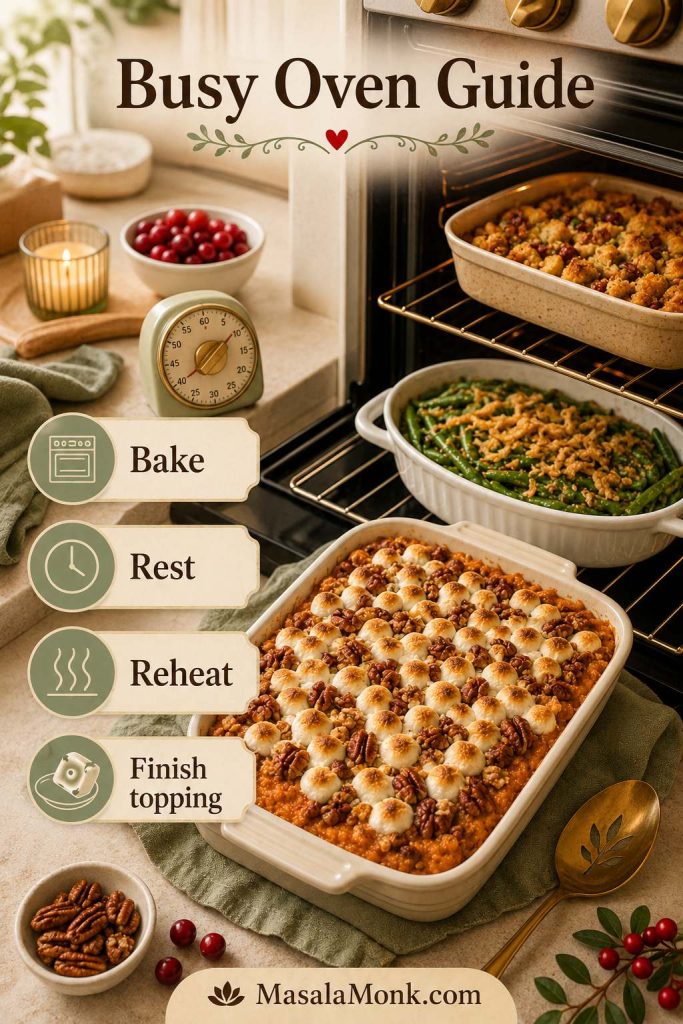
Busy oven guide showing sweet potato casserole with other holiday side dishes and steps to bake, rest, reheat, and finish the topping
During a crowded holiday oven schedule, this casserole can bake early, rest safely, reheat gently, and still get a fresh final topping.

If oven space is the main problem, the slow cooker option can hold the base while other sides finish.

Think of the casserole as a side that can wait a little. Bake it before the final rush, rest it while other dishes finish, and add marshmallows late enough that they still look fresh when it reaches the table.

If the casserole is running late, do not rush the marshmallows. Get the filling hot first. A pale marshmallow topping can be browned in a minute, but a cold center cannot be fixed at the table.

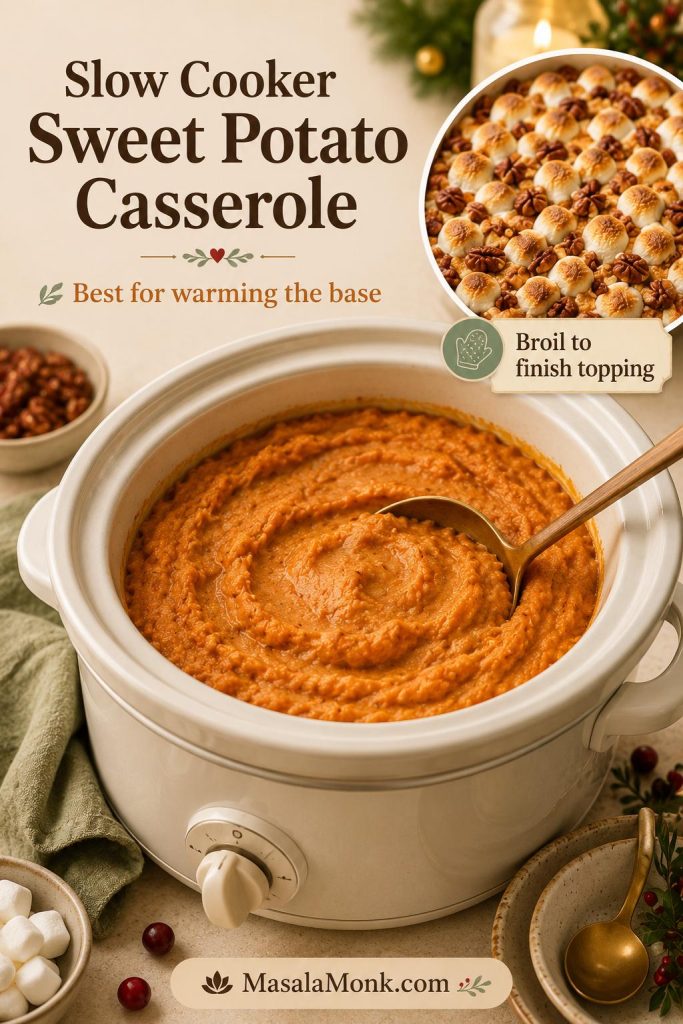
Slow Cooker Sweet Potato Casserole Option

The slow cooker is useful when the oven is full, but it changes the topping. Think of it as a warming tool here, not the place to create a crisp top. It keeps the sweet potato base warm and soft, but pecan streusel will not crisp the way it does in the oven, and marshmallows will become gooey rather than deeply toasted.

Use this route when oven space matters more than a perfect topping. Then, if you want the golden holiday look, transfer the hot filling to a baking dish and finish it under the broiler.

Slow cooker filled with creamy sweet potato casserole base and a small broiled topping inset with marshmallows and pecans
A slow cooker solves the oven-space problem, but a quick broiler finish is what gives marshmallows and pecans their best texture.
Slow cooker situationTimingWhat to know
Prepared filling, already cooked sweet potatoesLow for 2–3 hours, or high for 1–1½ hoursGood for warming and holding the casserole base
Marshmallows in slow cookerLast 10–15 minutes onlyThey soften and melt; they will not toast like oven marshmallows
Pecan topping in slow cookerAdd near the end or finish in ovenExpect a softer topping unless broiled or baked briefly

For the most practical slow cooker version, prepare the sweet potato filling and spread it in a greased slow cooker. Warm until hot through. If condensation is dripping onto the topping, place a clean kitchen towel under the lid, making sure it does not touch the heating element.
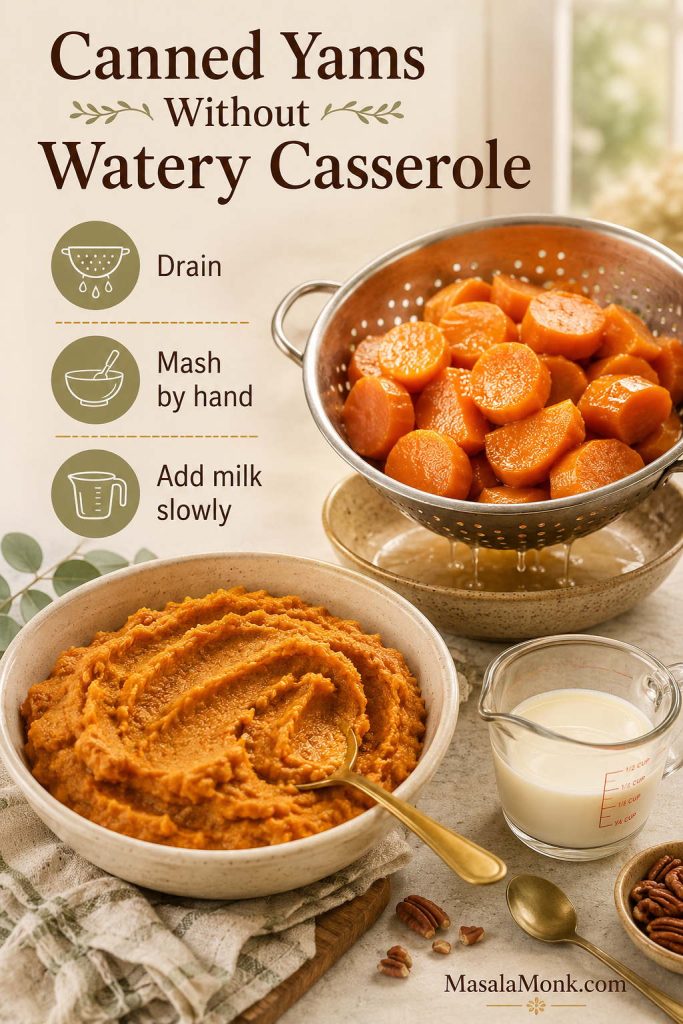
No Egg, Vegan, Dairy-Free, and Other Easy Swaps

The base recipe is classic, but it is easy to adapt. Keep the sweet potato mash thick, add liquids gradually, and choose a topping that fits the version you need.

NeedHow to adjustTexture note
No eggOmit the eggs and reduce the milk slightlySofter and more spoonable, less set
VeganUse vegan butter, non-dairy milk, no eggs, and vegan marshmallows if usingKeep the mash thick so the filling does not loosen
Dairy-freeUse dairy-free butter and oat milk, almond milk, coconut milk, or another non-dairy milkCoconut milk gives richer flavor; oat milk is more neutral
Gluten-freeUse gluten-free flour, oat flour, or certified gluten-free oats in the toppingCheck all topping ingredients if serving someone with a strict allergy or intolerance
Nut-freeUse marshmallows, oat crumble, cornflake topping, or plain brown sugar crumbleCornflakes give the most crisp, sweet-salty crunch without pecans
Less sweetUse ¼–⅓ cup brown sugar, skip marshmallows, and use pecan or oat toppingAdd enough salt, cinnamon, and vanilla so the flavor still feels full
No marshmallowsUse pecan streusel, oat crumble, cornflake topping, or savory crumb toppingGood when you want a side dish, not a dessert-like casserole
Ingredient swap guide for sweet potato casserole showing no egg, vegan, dairy-free, gluten-free, nut-free, and less sweet options
Whether the casserole is no-egg, vegan, dairy-free, gluten-free, nut-free, or less sweet, the key is keeping the mash thick before baking.

Regular marshmallows often contain gelatin, so check the label if the dish needs to be vegetarian or vegan. For gluten-free guests, use certified gluten-free oats if you choose an oat topping, and check packaged ingredients carefully.

Flavor Variations

  • Brighter: Add orange zest or fold in a few small pieces of tart apple. Use orange juice sparingly because too much can thin the filling.
  • Maple-sweet: Replace part of the brown sugar with maple syrup, then reduce the milk slightly if the filling loosens.
  • Fruitier: Add well-drained crushed pineapple for a sweeter, old-fashioned variation.
  • More savory: Skip the sugar and marshmallows. Use butter, herbs, black pepper, and a savory breadcrumb or pecan topping.
  • Praline-style: Increase the pecans and brown sugar for a sweeter, more dessert-like topping.

Sweet Potato Casserole vs Sweet Potato Souffle

Sweet potato casserole and sweet potato souffle are closely related, and you will see the names used loosely, especially in holiday recipes. In general, sweet potato casserole is denser, more spoonable, and more flexible with toppings like marshmallows, pecans, or both.

Sweet potato souffle is usually smoother, lighter, and more egg-based. It often has a pecan topping and a more custardy interior. This recipe sits firmly in classic casserole territory: creamy and lightly set, but not so airy or eggy that it becomes a true souffle.

Troubleshooting Sweet Potato Casserole

If the casserole does not look perfect halfway through, do not panic. This is a forgiving dish, and most problems come from the same few places: too much moisture, topping added at the wrong time, or sweetness that was not balanced before baking.

Troubleshooting guide for sweet potato casserole with texture problems such as watery, loose, dry, and cold center, plus topping problems such as too sweet, burnt topping, soggy topping, and disappeared marshmallows
Most sweet potato casserole problems trace back to moisture, sweetness, heat, or topping timing, so spotting the cause makes the fix much easier.

If the problem starts before baking, compare your mash with the texture target; if it starts after chilling, check the fridge-to-oven timing.

Texture and Moisture Problems

ProblemWhy it happenedFix nowFix next time
Watery casserolePotatoes absorbed too much water, the cans were not drained well, or too much milk was addedBake uncovered a little longer; if the topping is browning, cover only the top loosely with foilDrain and steam-dry potatoes; drain shortcut yams very well; add liquid gradually
Filling is too looseNo eggs, too much liquid, or underbakingBake longer and rest before servingUse eggs or reduce milk slightly for egg-free versions
Dry fillingToo little liquid or overbakingAdd a splash of warm milk or melted butter when reheatingMeasure liquid carefully and avoid baking long after the center is hot
Stringy textureFibrous sweet potatoes or not enough mashingMash more thoroughly if still possibleChoose good orange-fleshed sweet potatoes and remove tough fibers before mixing
Cold centerCasserole went into the oven chilled and did not bake long enoughCover loosely and continue baking until hot in the centerAdd 10–15 minutes when baking from cold
Topping browns before filling is hotDish was too deep, oven was too hot, or casserole was coldCover loosely with foil and keep bakingLet chilled casserole sit out briefly and use the right dish size

Topping and Sweetness Problems

ProblemWhy it happenedFix nowFix next time
Too sweetToo much sugar, syrup-packed cans, or marshmallow toppingAdd a small pinch of salt, then serve small scoops with tart cranberry sauce, green beans, salty ham, or other savory sidesUse ¼–⅓ cup sugar and choose pecan topping instead of marshmallows
Burnt marshmallowsMarshmallows were added too early or broiled too longRemove the darkest pieces if neededAdd marshmallows only during the last 8–10 minutes and watch closely
Marshmallows disappearedThey were added too early or the filling was too wetAdd a fresh layer and bake brieflyAdd marshmallows near the end and make sure the filling is thick
Soggy pecan toppingTopping sat on the filling too long or absorbed refrigerator moistureReturn to the oven uncovered for a few minutes, or broil briefly while watching closelyStore topping separately and add before baking

Storage, Freezing, and Reheating

Leftover sweet potato casserole stores well, but the topping changes texture over time. The leftovers will still taste good after reheating, but the topping will never be quite as crisp or fluffy as it was on the first day. That is normal.

Marshmallows soften, pecan streusel loses some crunch, and any crumb topping will absorb moisture in the fridge. For general food-safety timing, the USDA’s leftovers and food safety guidance is a useful reference.

  • Refrigerator: Store covered for 3–4 days.
  • Freezer: Freeze the sweet potato base without topping for up to 3 months.
  • Thawing: Thaw the base overnight in the refrigerator before baking or reheating, then add topping fresh.
  • Marshmallow topping: Add fresh for the cleanest texture. Marshmallows do not freeze or reheat as cleanly as the filling.
  • Pecan topping: Can be frozen separately, but it is crispiest when mixed and baked fresh.
  • Oven reheating: Cover and reheat at 325–350°F until steaming hot throughout, then uncover briefly to refresh the topping.
  • Microwave reheating: Works for single servings, but the topping will soften.
Storage guide for sweet potato casserole showing fridge storage for 3 to 4 days, freezing the base only, and adding fresh topping after reheating
The filling handles storage better than the topping, so freeze the base plain and add fresh marshmallows or crumble after reheating.

For broader sweet potato freezing guidance, the National Center for Home Food Preservation has a helpful reference on freezing sweet potatoes, including mashed sweet potatoes.

What to Serve With Sweet Potato Casserole

Sweet potato casserole is sweet, rich, and soft, so the rest of the plate should bring contrast. Think savory, tart, crunchy, green, or herb-heavy rather than more soft sweetness.

MealGood plate balance
Thanksgiving plateTurkey, stuffing, green beans, tart cranberry sauce, and a scoop of sweet potato casserole
Ham dinnerSalty ham, roasted Brussels sprouts or green beans, sharp mustard or cranberry sauce, and the casserole on the side
Vegetarian holiday tableMushroom gravy, roasted vegetables, green bean casserole, salad, and pecan-topped sweet potato casserole
Potluck plateA small scoop of casserole beside something savory, something crisp, and something acidic so the sweetness does not take over

For a classic side-dish table, serve it with green vegetables, stuffing, roasted vegetables, a simple savory main, and creamy garlic mashed potatoes. The casserole brings softness and sweetness; the rest of the plate should make it feel complete.

FAQs About Sweet Potato Casserole

Do canned yams work here?

Yes. The canned version works well when you want a faster casserole. Drain the pieces thoroughly, reduce the sugar if they were packed in syrup, and add milk gradually because they are already tender and more delicate than fresh cooked sweet potatoes.

How many cans of yams do I need?

For a full 9×13 casserole, use 2 x 29 oz cans, drained. For a smaller 8×8 or 9×9 casserole, use 1 x 40 oz can, drained. Because drained yield varies, aim for about 5–6 cups mashed sweet potato for a full batch or 3–4 cups for a smaller batch.

When should marshmallows go on top?

Add marshmallows during the last 8–10 minutes of baking, once the filling is hot or nearly hot. This gives them time to puff and brown without melting completely or burning before the center is ready.

How do I keep it from getting watery?

Drain the sweet potatoes well, let boiled potatoes steam-dry before mashing, drain canned yams thoroughly, and add milk gradually. The mash should be creamy but thick before it goes into the baking dish.

How far ahead can I make it?

You can make the filling 1–2 days ahead. Spread it in the baking dish, cover, and refrigerate without topping. Add pecan topping before baking and marshmallows near the end.

Does it freeze well?

The sweet potato base freezes well without topping for up to 3 months. Marshmallows and crumb toppings are best added fresh after thawing.

Do you have to put eggs in sweet potato casserole?

No. Eggs help the filling set and scoop neatly, but you can leave them out for a softer casserole. If skipping eggs, reduce the milk slightly so the mash stays thick.

Can I make it without marshmallows?

Yes. Use pecan streusel, oat crumble, cornflake topping, or a savory breadcrumb topping instead. Without marshmallows, the casserole tastes less candy-like and works better as a true side dish.

Can I make it in a slow cooker?

Yes, especially if you need to save oven space. The slow cooker is best for warming or holding the sweet potato base. Marshmallows will soften rather than toast, so transfer to a baking dish and broil briefly if you want a browned top.

What is the difference between casserole and souffle?

Sweet potato casserole is usually denser and more spoonable. Sweet potato souffle is usually smoother, lighter, and more egg-based. Many recipes blur the line, but this recipe is written as a classic casserole.

How much do I need for 10 people?

A 9×13-inch casserole made with about 5–6 cups mashed sweet potato serves 10–12 people as a side dish. If it is one of many sides, portions can be smaller.

Once the mash is thick, the sweetness tastes right, and the topping goes on at the right moment, you can stop worrying about this dish. It goes to the table hot, creamy, golden, and ready for the first generous scoop.

Back to top

Posted on Leave a comment

Easy 7 Layer Dip Recipe

Finished 7 layer dip in a clear 9x13 glass dish with visible layers, colorful toppings, tortilla chips, and one corner lightly scooped.

This is the kind of 7 layer dip recipe people hover around at gatherings: cool, creamy, salty, fresh, and loaded enough that every chip gets a little bit of everything. The best versions look colorful when they land on the table and still taste good after the first few scoops.

This one keeps that appetizer-table magic while fixing the usual problems: stiff beans, loose salsa, browning avocado, broken chips, and layers that collapse too quickly. Instead of baking, it stays cold and no-bake, with seasoned refried beans, fresh avocado, taco-seasoned sour cream, drained salsa or pico, shredded cheese, tomatoes, olives, green onions, and jalapeños layered into a 9×13-inch dish.

The trick is not a secret ingredient. Most 7 layer dips are easy; this one is built around the parts that usually go wrong. The beans need to scoop cleanly, the avocado needs protection, the salsa should brighten without leaking, and the layers should be thin enough that the first scoop does not ruin the whole dish.
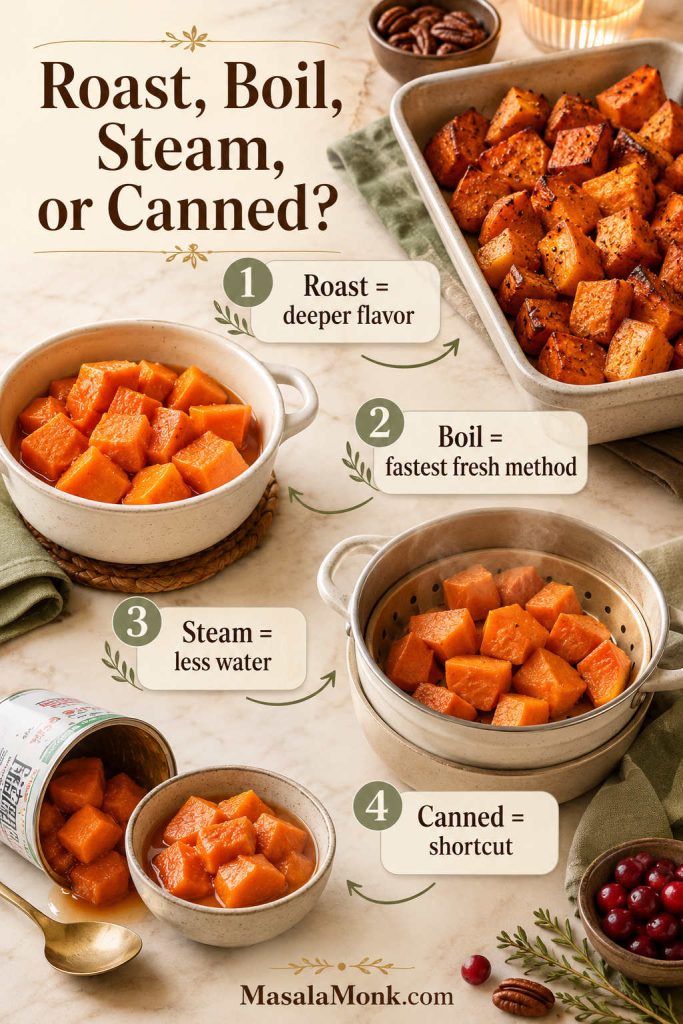
That is the difference between a dip people nibble at and a dip people keep “evening out” with one more chip until the corner of the dish is mysteriously gone.

Quick Answer: The Best 7 Layer Dip Recipe

This cold, no-bake 7 layer dip recipe is built in a 9×13-inch dish with seasoned refried beans on the bottom, then guacamole, taco-seasoned sour cream, drained salsa or pico de gallo, shredded cheese, diced tomatoes, and a final topping layer of olives, green onions, jalapeños, and cilantro.

The best layer order is the one that keeps the dip sturdy, fresh, and easy to scoop: heavy beans first, avocado protected in the middle, creamy sour cream above it, drained salsa for brightness, cheese for structure, and fresh toppings on top. If you have time, chill the dish for about 30 minutes so the layers settle before serving.

For exact amounts, jump to the recipe card. If you want the visual test first, see what a clean scoop should look like.

What a Clean Scoop Should Look Like

A good scoop should pick up beans, avocado, sour cream, salsa, cheese, and toppings together without pulling the whole dish apart. If the first scoop collapses the corner, the layers are usually too thick, too cold, or too loose.

Tortilla chip lifting a clean scoop of 7 layer dip with refried beans, guacamole, sour cream, salsa, cheese, tomatoes, olives, and green onions.
A good scoop should catch beans, avocado, sour cream, salsa, cheese, and toppings together; if it drags the whole dish apart, the layers are probably too thick or too cold.

7 Layer Dip at a Glance

7 layer dip planning scene with a 9x13 dish, tortilla chips, avocados, salsa strainer, timer, and labels for servings, prep time, chill time, and draining salsa.
Before layering, check the dish size, serving count, chill time, and salsa-draining step so the dip is easier to serve when guests arrive.
Recipe type Cold, no-bake layered taco dip
Best dish 9×13-inch / about 23×33 cm glass or ceramic dish
Servings 12–16 appetizer servings
Main base 2 cans refried beans + 3 medium-large avocados
Prep time 25 minutes
Chill time 30 minutes recommended, optional if serving right away
Serve temperature Cold or lightly chilled
Best chips Sturdy tortilla chips or scoop-style chips
Make-ahead window Best assembled the same day; components can be prepped 1 day ahead
Biggest mistake Using loose salsa or pico without draining it first

What Is 7 Layer Dip?

7 layer dip is a cold layered Tex-Mex-style appetizer made with beans, avocado or guacamole, sour cream, salsa, cheese, and fresh toppings. It is usually served with tortilla chips and shows up at game days, potlucks, tailgates, movie nights, and casual parties because it is easy to make and easy to share.

The names often overlap. Some people call it seven layer dip, 7 layer taco dip, layered taco dip, Mexican layer dip, or layered bean dip. Although the exact toppings can change from kitchen to kitchen, the goal is always the same: a colorful, scoopable dish with a sturdy base, creamy middle layers, bright salsa, cheese, and fresh toppings.

If you are building a cold appetizer table, this dip also works well beside a make-ahead cheese ball recipe. Both can be chilled ahead, served with sturdy dippers, and set out when guests arrive.

Why This 7 Layer Dip Recipe Works

The goal is not just seven layers; it is seven layers that taste good together. The bean layer should be savory, the avocado should be bright, the sour cream should be tangy, the salsa should wake everything up, and the toppings should make each scoop feel fresh instead of heavy.

The best bite should be creamy from the beans and avocado, tangy from the sour cream and salsa, salty from the cheese and olives, and fresh from the tomatoes, green onions, cilantro, and jalapeños.

Flavorful bean base

The refried beans are loosened and seasoned before spreading, so they taste better and stay soft enough for chips to scoop through.

Fresh avocado middle

The avocado layer adds cool, creamy freshness. Covering it with sour cream helps slow browning and keeps the middle from drying out.

Bright but balanced salsa

Drained salsa or pico brings tangy tomato flavor without taking over the whole bite or sinking into the creamy layers.

Clean serving-dish structure

A 9×13-inch dish gives the layers room to spread, keeps the dip easier to scoop, and makes enough for a real appetizer table.

Loaded tortilla chip with 7 layer dip and small callouts for creamy, tangy, salty, fresh, and crunchy flavors.
The best bite is balanced: creamy beans and avocado, tangy salsa and sour cream, salty cheese and olives, plus fresh toppings for crunch and brightness.

7 Layer Dip Ingredients

Ingredients for 7 layer dip arranged on a light surface, including refried beans, avocados, sour cream, taco seasoning, salsa, cheese, tomatoes, olives, green onions, jalapeños, lime, cilantro, and tortilla chips.
Simple ingredients work harder when the creamy layers are seasoned first, because plain beans or sour cream can make the finished dip taste flat.

This dip only works if the bean layer, avocado layer, and sour cream layer each taste good before they go into the dish. So, season the creamy layers first, then build the dish. That way every bite tastes balanced instead of just like plain beans, sour cream, and jarred salsa stacked together.

1. Refried Beans

Use two cans of refried beans for a full 9×13-inch dish. Pinto refried beans give the most classic flavor, while black refried beans taste a little earthier. If you are serving vegetarian guests, check the label because some refried beans are made with lard.

Plain canned beans can be stiff when cold, so stir them with a little salsa, cumin, chili powder, garlic powder, lime juice, and salt before spreading. You want a base that is thick enough to hold the layers but soft enough for a tortilla chip to scoop through.

Seasoned refried beans in a bowl with a spatula showing thick scoopable texture, plus salsa, lime, chips, and seasoning nearby.
A sturdy refried bean base holds the dip together, but the texture still needs to be soft enough for chips to scoop cleanly.

2. Guacamole or Mashed Avocado

Fresh avocado gives the dip a cool, creamy middle. Mash ripe avocados with lime juice, salt, cilantro, and jalapeño if you like heat. Keep it slightly chunky for a fresher texture, or mash it smoother for cleaner layers.

Store-bought guacamole works too when you need a faster party dip. Choose a thicker guacamole, taste it first, and brighten it with lime juice, cilantro, or a little salt if it tastes flat.

Bowl of fresh mashed avocado with lime, cilantro, jalapeño, and a hand mixing the guacamole layer for 7 layer dip.
Lime, cilantro, and salt brighten the avocado layer, while a slightly chunky texture keeps the dip fresh instead of heavy.

3. Sour Cream and Taco Seasoning

Sour cream mixed with taco seasoning creates the creamy taco-dip layer. Use enough seasoning to give it flavor, but do not overdo it because salsa, chips, cheese, and olives also bring salt.

A taco seasoning packet works well here. Start with less than the full packet if your chips, cheese, salsa, and olives are already salty, then add more to taste.

Bowl of sour cream being mixed with taco seasoning for the creamy layer of 7 layer dip.
Taco seasoning turns plain sour cream into a flavorful middle layer; however, add it gradually if your chips, cheese, salsa, and olives are already salty.

For a thicker texture, beat 4 oz / 113 g softened cream cheese into the sour cream before spreading. Cream cheese is optional. A small amount makes the layer richer and more stable; however, too much can make the dip feel heavy instead of fresh.

4. Salsa or Pico de Gallo

The best salsa for 7 layer dip is thick, chunky salsa or well-drained pico de gallo. Although pico tastes fresh and bright, tomatoes release liquid as they sit. Avoid thin restaurant-style salsa unless you strain it first, because it can leak into the sour cream and make the dip watery.

Chunky salsa, drained pico de gallo, and thin salsa in a fine-mesh strainer with text saying thick salsa or drained pico is best.
Thick salsa or drained pico gives 7 layer dip bright tomato flavor without letting excess liquid sink into the sour cream layer.

Most importantly, the salsa layer should brighten the dip, not take over the whole bite. If you want a brighter salsa bowl on the side, this mango salsa recipe gives the table something fresh, juicy, and chip-friendly without weighing down the creamy layers.

Place the salsa or pico in a fine-mesh strainer before layering. If it leaves a puddle in the bowl, it will leave a puddle in the dish.

For the full moisture-control guide, use the no-watery dip section.

5. Shredded Cheese

Cheddar gives sharper flavor, Monterey Jack tastes milder and creamier, pepper jack adds heat, and a Mexican cheese blend is the easiest all-purpose option. Freshly shredded cheese tastes best, but pre-shredded cheese works when you need a fast appetizer dish.

The cheese also helps separate the salsa from the fresh toppings, which keeps the top looking cleaner.

6 and 7. Fresh Toppings

Finish with diced Roma tomatoes, black olives, green onions, cilantro, and jalapeños. Roma tomatoes are useful because they are meatier and less juicy than many slicing tomatoes. If your tomatoes are especially wet, seed them or blot them before adding them to the top.

Fresh toppings being added to 7 layer dip, including shredded cheese, diced tomatoes, sliced black olives, green onions, cilantro, and jalapeños.
Fresh toppings add color and crunch, although juicy tomatoes and delicate herbs are best added thoughtfully when making the dip ahead.

Best 7 Layer Dip Layer Order

Side view of 7 layer dip in a glass dish with labeled layers for beans, avocado, sour cream, salsa, cheese, tomatoes, and toppings.
The best 7 layer dip layer order keeps heavy beans on the bottom, protects avocado in the middle, and leaves fresh toppings on top.

There are several common layer orders, and many of them work. In some versions, cheese goes earlier; in others, salsa sits on top or lettuce becomes one of the layers. For this 7 layer dip recipe, I like the order below because it keeps the heaviest layer on the bottom, protects the avocado, controls excess liquid, and leaves the top fresh and colorful.

The best order for 7 layer dip is:

  1. Seasoned refried beans
  2. Guacamole or mashed avocado
  3. Taco-seasoned sour cream
  4. Drained salsa or pico de gallo
  5. Shredded cheese
  6. Diced tomatoes
  7. Olives, green onions, jalapeños, and cilantro

The point is not to build the tallest dip. The point is to build layers thin enough that a normal chip can reach more than one flavor before it breaks.

Why Thin Layers Scoop Better

Thin layers help a chip reach more than one flavor without snapping. They also make the first scoop cleaner because the dip spreads across the dish instead of stacking too high in one deep spot.

Shallow 9x13 dish of 7 layer dip being scooped cleanly, compared with a deeper bowl that is harder to scoop from.
A normal chip should reach more than one flavor before it breaks; that is why thinner, even layers beat a tall, heavy stack.

This order works because the beans create the sturdy base, the avocado stays tucked into the middle, the sour cream spreads gently over it, and the salsa is managed before the cheese and toppings go on. As a result, the top stays bright while the bottom stays strong enough for scooping.

Layer-order tip: Spread each layer gently all the way to the edges. That makes the dip look cleaner from the side, gives every scoop a bit of every layer, and helps protect the avocado from air.

Equipment You’ll Need

A 9×13-inch dish, a fine-mesh strainer, a few mixing bowls, and a spatula are the only tools that really matter. The strainer keeps salsa from watering down the dip, while the spatula helps spread the soft layers without dragging them into each other.

  • 9×13-inch / 23×33 cm glass or ceramic dish: best for a crowd and visible layers.
  • Fine-mesh strainer: for draining salsa or pico.
  • Mixing bowls: for the beans, avocado, and sour cream.
  • Fork or potato masher: for mashing avocado.
  • Silicone spatula or offset spatula: for spreading soft layers gently.
  • Knife and cutting board: for tomatoes, green onions, jalapeños, and herbs.
  • Plastic wrap: for covering the dish tightly if making it ahead.

How to Make 7 Layer Dip

The method is simple, but the small details matter: season each creamy layer, spread gently, drain the salsa, and chill the dish briefly if you have time.

Four-step 7 layer dip guide showing beans spread in a dish, avocado added, salsa drained in a strainer, and toppings finished on the dip.
Build the dip in the right order: spread the beans, add avocado, drain the salsa, and finish with toppings for cleaner layers.

Step 1: Season and Loosen the Beans

Stir the refried beans with salsa, cumin, chili powder, garlic powder, lime juice, and salt. If the beans still feel too stiff, add another spoonful of salsa or a small spoonful of sour cream. The goal is thick and scoopable, not runny.

Spread the beans edge to edge in the bottom of the dish, including the corners. This gives every scoop a sturdy base and keeps the first chip from pulling up toppings with no beans underneath.

Spatula spreading seasoned refried beans into the corner of a clear 9x13 dish for the base layer of 7 layer dip.
Spreading beans into the corners gives every scoop a base, so early chips do not pull up toppings without the refried bean layer underneath.

Step 2: Make the Avocado Layer

Mash the avocados with lime juice, cilantro, jalapeño, and salt. Taste before layering; bland avocado makes the whole dish feel flat.

Then, dollop the avocado over the bean layer first and spread it gently. Do not press too hard, or you will drag the beans underneath.

Step 3: Mix the Sour Cream Layer

Stir sour cream with taco seasoning until smooth. If using cream cheese, make sure it is fully softened, then beat it with the sour cream before adding the seasoning so there are no lumps.

Next, dollop the sour cream mixture across the avocado and spread it gently to the edges. Try to cover the avocado completely; this helps slow browning and gives the dip a clean creamy middle.

Taco-seasoned sour cream being spread over the avocado layer in a glass dish to cover the green layer.
Covering avocado with sour cream helps slow browning and keeps the middle layer creamy through chilling and serving.

Step 4: Drain the Salsa or Pico

Place the salsa or pico in a fine-mesh strainer and drain for 5 to 10 minutes if it looks loose. You do not need to squeeze it dry; you just want to remove the liquid that would otherwise run into the sour cream.

Chunky salsa draining in a fine-mesh strainer over a glass bowl with visible liquid below and text saying drain salsa first.
If salsa releases liquid in the strainer, it would have released that liquid into the dip, so drain it before layering.

After that, spread the drained salsa in a thin, even layer. Too much can overpower the creamy layers and make them slide around, so use less if your salsa is very juicy.

Step 5: Add Cheese and Fresh Toppings

Sprinkle the cheese evenly over the salsa, then add diced tomatoes, olives, green onions, cilantro, and jalapeños. If the dip is being made several hours ahead, save the most delicate herbs and a few extra green onions for just before serving so the top looks fresh.

Step 6: Chill Briefly and Serve

Chill the dish for about 30 minutes if you have time. This helps the layers settle and makes the dip easier to scoop. If it has been refrigerated for several hours, let it sit for about 10 minutes before serving so the bean layer softens slightly.

Finally, serve with sturdy tortilla chips, scoop-style chips, or crunchy vegetables. The first scoop should cut through the layers without turning the whole dish into a landslide.

Planning for a party? The make-ahead section explains what to prep the day before and what to add right before serving.

Easy 7 Layer Dip Recipe

This easy 7 layer dip recipe is built for clean scooping: seasoned refried beans, guacamole, taco sour cream, drained salsa, cheese, tomatoes, olives, green onions, and jalapeños layered in a 9×13-inch dish. It is cold, creamy, colorful, crowd-friendly, and made to stay fresher and cleaner on the appetizer table.

Prep time:
25 minutes
Chill time:
30 minutes optional
Total time:
25–55 minutes
Yield:
12–16 servings
Dish:
9×13-inch / 23×33 cm dish
Serve:
Cold or lightly chilled

Ingredients

Bean layer

  • 2 cans refried beans, 15–16 oz each / 850–900 g total
  • ⅓ cup salsa / 80 ml, drained if loose
  • 1 teaspoon ground cumin / 2–3 g
  • ½ teaspoon chili powder / 1–2 g
  • ½ teaspoon garlic powder / about 1.5 g, optional
  • 1 tablespoon lime juice / 15 ml, optional
  • Salt, to taste

Guacamole layer

  • 3 medium-large ripe avocados / about 400–500 g avocado flesh
  • 2 tablespoons lime juice / 30 ml
  • ¼ cup chopped cilantro / 10–15 g
  • 1 small jalapeño, finely chopped, optional
  • Salt, to taste

Sour cream layer

  • 1½ cups sour cream / about 360 g
  • 2 tablespoons taco seasoning / about 18–20 g
  • Optional for a thicker texture: 4 oz cream cheese / 113 g, softened

Salsa layer

  • 1½ cups chunky salsa or pico de gallo / 360 ml, drained well
  • Use 1 cup / 240 ml if your salsa is very wet

Cheese and toppings

  • 1½–2 cups shredded cheddar, Monterey Jack, pepper jack, or Mexican cheese blend / 170–225 g
  • 1 cup diced Roma tomatoes / 150–180 g, seeded if juicy
  • ½ cup sliced black olives / about 60–75 g, drained
  • ⅓ cup sliced green onions / 25–35 g
  • Optional: chopped cilantro, pickled jalapeños, diced fresh jalapeño

For serving

  • Sturdy tortilla chips or scoop-style chips

Instructions

  1. Season the beans. In a bowl, stir the refried beans with salsa, cumin, chili powder, garlic powder, lime juice, and salt until thick but scoopable.
  2. Spread the base. Spread the bean layer evenly in a 9×13-inch dish, going all the way to the edges and corners.
  3. Make the avocado layer. Mash the avocados with lime juice, cilantro, jalapeño, and salt. Taste and adjust with more lime or salt if needed.
  4. Add the avocado. Dollop the avocado over the beans, then spread gently so you do not pull up the layer underneath.
  5. Mix the sour cream layer. Stir sour cream with taco seasoning until smooth. For a thicker texture, beat softened cream cheese into the sour cream before adding the seasoning.
  6. Cover the avocado. Dollop the sour cream layer over the avocado and spread it gently to the edges.
  7. Drain the salsa. Spoon salsa or pico into a fine-mesh strainer and drain for 5–10 minutes if it is loose or watery.
  8. Add the salsa and cheese. Spread the drained salsa in a thin layer, then sprinkle evenly with cheese.
  9. Finish the top. Add tomatoes, olives, green onions, cilantro, and jalapeños.
  10. Chill and serve. Chill for 30 minutes if possible. Serve cold or lightly chilled with sturdy tortilla chips.

Notes

  • Drain the salsa or pico well. This is the main fix for a loose, soggy dip.
  • Dollop each soft layer across the dish before spreading it gently for cleaner layers.
  • Halve the recipe for a smaller 8×8-inch dish.
  • Assemble the dip the same day you serve it for the best texture.
  • Cream cheese is optional. It makes the sour cream layer thicker but is not required.
Saveable easy 7 layer dip recipe card with a finished dip, tortilla chips, and text for 9x13 dish, servings, prep time, chill time, and draining salsa first.
Keep the core details handy: use a 9×13 dish, plan for 12 to 16 servings, chill briefly if possible, and drain salsa first.

Can You Make 7 Layer Dip Ahead?

You can make this 7 layer dip recipe ahead, but the real test is how it looks when guests arrive: bright avocado, clean creamy layers, no salsa leaking at the edges, and a top that still looks like you just finished it.

For guests, assemble the dip a few hours before serving, cover it tightly, and keep it chilled. However, if it is just for casual snacking or leftovers, overnight assembly is fine; just expect softer layers and a little avocado darkening.

The cleanest make-ahead plan is to prep the parts separately one day ahead. Mix the beans, stir together the sour cream layer, shred the cheese, slice the olives, chop the green onions, and drain the salsa. Then mash the avocado and assemble the full dish closer to serving time.

Make-ahead timing Best approach Why it works
30 minutes ahead Fully assemble and chill Best balance of fresh flavor and settled layers
2–6 hours ahead Fully assemble, cover tightly, refrigerate Great for guests if salsa is drained well
1 day ahead Prep components separately; assemble later Keeps toppings fresher and avocado brighter
Overnight fully assembled Possible, but not ideal Avocado can darken and salsa can release moisture

Easy Party Timeline

Make-ahead timeline for 7 layer dip showing day-before component prep, 2 to 4 hour assembly and chilling, and fresh toppings added before serving.
For the freshest make-ahead 7 layer dip, prep sturdy components early, assemble a few hours before serving, and add delicate toppings last.
  • The day before: mix the bean layer, mix the sour cream layer, shred cheese, chop sturdy toppings, and drain olives.
  • 2–4 hours before serving: mash the avocado, drain the salsa, assemble the dip, cover, and refrigerate.
  • Right before serving: add extra cilantro, green onions, jalapeños, or a few fresh tomatoes to brighten the top.

If you need to assemble the whole dish the night before, drain the salsa very well, seed juicy tomatoes, spread each layer to the edges, and press plastic wrap close to the surface before refrigerating. Then, add delicate toppings like cilantro and extra green onions right before serving so the top still looks fresh.

Best hosting move: Keep the full dish chilled until guests arrive. If the gathering is long, set out part of the dip and refill from the refrigerator instead of letting the whole dish sit out for hours.

For leftovers and food-safety timing, see how to store leftover 7 layer dip.

How to Keep 7 Layer Dip from Getting Watery

If a 7 layer dip looks perfect when you assemble it and then turns soupy around the edges, salsa is usually the first suspect. The fix is not more cheese or thicker sour cream. Instead, drain the salsa or pico before it ever touches the creamy layers.

If you remember only one thing before assembling the dip, make it this: drain the salsa first.

No-Watery-Dip Rules

Spoon salsa or pico into a fine-mesh strainer and let the loose liquid run off. If your salsa is especially juicy, use less of it, choose a thicker chunky salsa, or add only enough to create a thin flavorful layer. The salsa should brighten the dip, not turn it into a tomato-heavy puddle.

No-watery-dip rules: Drain salsa or pico, use Roma tomatoes or seed juicy tomatoes, keep the avocado layer thick, add delicate toppings late, and avoid making the layers so deep that chips have to dig through them.
No-watery 7 layer dip rules board with salsa draining in a strainer, thick guacamole, seeded tomatoes, fresh herbs, and shallow dip layers.
Watery dip is usually preventable: drain salsa, seed juicy tomatoes, keep avocado thick, add herbs late, and avoid overly deep layers.

Common Watery Dip Problems and Fixes

Problem What causes it Best fix
Liquid pools around the edges Salsa or pico was added straight from the jar or bowl Drain it in a fine-mesh strainer before layering
Tomatoes make the top soggy Very juicy tomatoes or unseeded tomatoes Use Roma tomatoes, seed them, or blot them lightly
The layers loosen after chilling Too many fresh watery toppings were added too early Add herbs, green onions, and extra tomatoes closer to serving
The avocado layer softens too much The avocados were overmixed or too much liquid was added Use just enough lime for flavor and keep the avocado layer thick
Lettuce turns limp Lettuce was layered too far ahead Use lettuce only for same-day serving, or save it for taco salad

Do Not Ignore the Bean Layer

The bean layer matters too. If the beans are too stiff, guests press harder with chips, which breaks the layers and makes the dish messy. If the beans are too loose, the base loses structure. Aim for thick, spreadable, and chip-friendly.

Best Dish Size for 7 Layer Dip

Comparison of 7 layer dip serving sizes with a 9x13 dish, 8x8 dish, individual cups, and a deep bowl labeled harder to scoop.
For a crowd, a shallow 9×13 dish gives the layers room and makes serving easier than a deep bowl.

A 9×13-inch / 23×33 cm glass or ceramic dish is the best choice for this 7 layer dip recipe because it gives you enough surface area for even layers, easy scooping, and a crowd-friendly amount of dip. A clear dish also shows off the layers from the side, which makes it look more impressive without any extra fuss.

The best serving dish is not just the prettiest one; it is the one that lets a chip reach more than one layer at a time. Although a deep bowl may show off the layers, a shallower dish is usually easier to eat from.

Dish or serving style Best for Watch out for
9×13-inch dish Parties, potlucks, game day, large family gatherings Use enough toppings so the surface does not look sparse
8×8-inch dish Small batch, family snack, casual dinner side Halve the recipe so the layers do not get too thick
Shallow platter Pretty presentation and easy scooping Layers spread thinner and can look messier faster
Deep trifle bowl Dramatic visible layers Harder to dip cleanly; better with a serving spoon
Individual cups or jars Office parties, kids, tailgates, no double-dipping More prep work, but very neat to serve

How to Make a Smaller 8×8 7 Layer Dip

For an 8×8-inch dish, halve the recipe. Use 1 can of refried beans, 1 to 2 avocados, about ¾ cup sour cream, ¾ cup drained salsa, ¾ to 1 cup cheese, and a lighter handful of toppings. Keep the same layer order; only reduce the quantities.

How to Make 7 Layer Dip Cups

For individual cups, use small clear cups or jars and add a spoonful of each layer in the same order: beans, guacamole, sour cream, drained salsa, cheese, tomatoes, and toppings. This works well when you want a cleaner appetizer table or when guests need an easy grab-and-go serving.

Individual 7 layer dip cups in clear glasses with visible beans, avocado, sour cream, salsa, cheese, tomatoes, olives, jalapeños, cilantro, and tortilla chips.
Individual 7 layer dip cups take more prep, but they make portions neat, visible, and easy for guests to grab.

Is 7 Layer Dip Served Hot or Cold?

The classic version is served cold or lightly chilled. Beans, guacamole, sour cream, salsa, cheese, and toppings are layered into a no-bake dip and served with tortilla chips. That cold, creamy, crunchy contrast is part of why it works so well as a shared appetizer.

If you want a hot dip, use a baked taco dip structure instead. Warm versions usually need a different base, especially if you add ground beef, melty cheese, or more cream cheese. For this dish, keep it cold and focus on clean layers, managed moisture, and sturdy chips.

Cold 7 layer dip in a clear glass dish compared with a warm skillet taco dip in the background, with labels for classic cold and hot dip different structure.
Classic 7 layer dip is served cold or lightly chilled, while hot taco dip needs a different structure with warm fillings and melted cheese.

For a game-day spread, keep this dip cold and pair it with something hot and crisp, like air fryer chicken wings. The contrast works well: cool creamy layers, crunchy chips, and hot wings that bring the heat.

What to Serve with 7 Layer Dip

Best Chips and Dippers

Sturdy tortilla chips are the best choice because they can handle the bean layer without breaking. Scoop-style chips are especially useful because they pick up more of the layers at once. Thin restaurant-style chips taste great, but they can snap if the dip is very cold or the beans were not softened before spreading.

For a full 9×13 dish, plan on one 10–13 oz / 280–370 g bag of sturdy tortilla chips for every 6 to 8 people, and more if this is one of the main snacks on the table. Because every scoop tastes a little different — creamy, salty, tangy, fresh, and crunchy all at once — it usually disappears in uneven corners first, with everyone going back for the bite that has the most cheese, salsa, and avocado.

For a party where this is one of several appetizers, plan about ⅓ to ½ cup dip per person. Once it becomes the main snack on the table, expect people to eat more because every scoop tastes a little different.
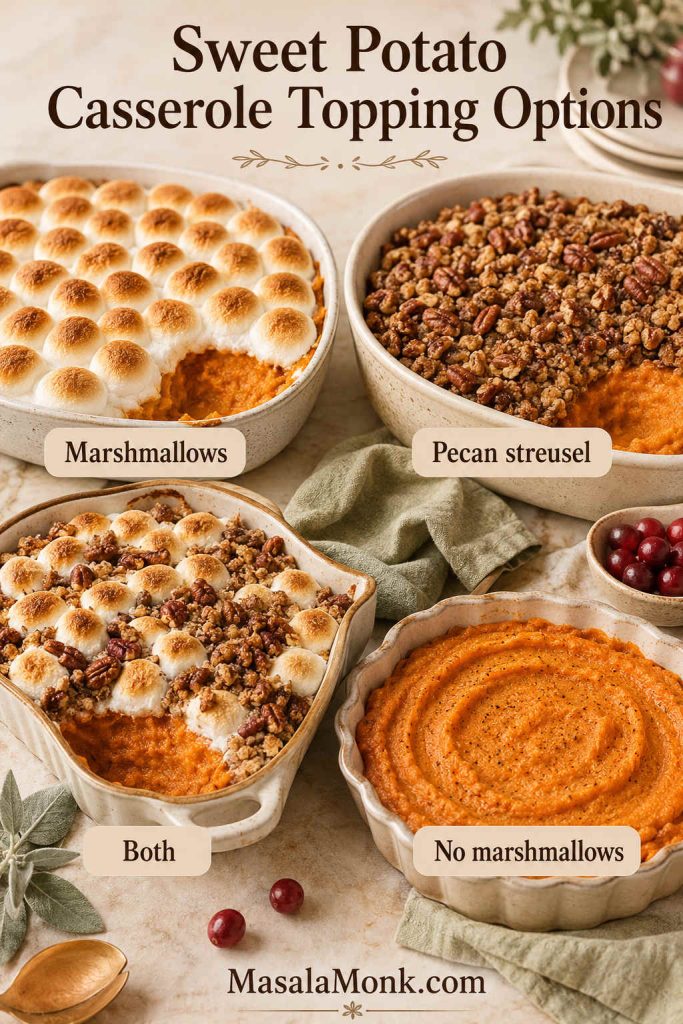
Party Appetizer Pairings

Party appetizer spread with 7 layer dip, tortilla chips, sliced vegetables, small plates, napkins, and a warm appetizer in the background.
Sturdy tortilla chips are the main dipper, while crisp vegetables and one warm appetizer can round out the party table without crowding the dip.

You can also serve 7 layer dip with mini tostadas, pita chips, crunchy lettuce cups, bell pepper strips, cucumber rounds, celery sticks, or carrot sticks. For a bigger appetizer spread, it fits naturally next to creamy favorites like buffalo chicken dip and spinach dip.

For something warm and crisp beside the cold dip, a tray of potato appetizers works well with the same chips-and-dips mood: salty, crunchy, easy to share, and friendly for a mixed crowd. Deciding between a cold layered dip and a warm baked version? See hot vs cold 7 layer dip.

Chip tip: If the dip is very cold from the refrigerator, let it sit for 10 minutes before serving. The layers will still be chilled, but the beans will be easier to scoop.

7 Layer Dip Variations

This is where 7 layer dip gets personal. Some people want olives, some want no olives, some want lettuce, some want ground beef, and some want the classic cold layers exactly as they are. Use the structure here as the base, then adjust the toppings without losing the clean scoop.

7 layer dip variation scene with a main dip and bowls of ground beef, shredded lettuce, and spicy jalapeño salsa.
Once the base structure is solid, you can add ground beef, lettuce, or jalapeño heat without losing the layered scoop.

7 Layer Dip with Ground Beef

For a heartier taco-night version, add cooked, well-drained, cooled taco-seasoned ground beef above the bean layer. Do not add hot beef to a cold dip because it can loosen the sour cream and avocado. Keeping the beef cooled and well-drained gives you taco flavor without making the layers greasy or soupy.

7 Layer Dip with Cream Cheese

This is the richer party version: beat 4 oz / 113 g softened cream cheese into the sour cream before adding taco seasoning. It makes the creamy layer thicker and more stable, but keep the amount modest so the dip still tastes fresh rather than heavy.

7 Layer Dip with Lettuce

Lettuce only belongs in this dip when it is heading to the table soon. It adds taco-salad crunch, but it wilts quickly once it sits against salsa and sour cream. Add it near the top and serve the dish the same day.

Spicy 7 Layer Dip

To add heat without making the dip watery, use hot salsa sparingly, mix diced jalapeño into the avocado, swap in pepper jack cheese, or finish with pickled jalapeños. For another creamy-spicy bite on the side, these baked jalapeño poppers fit the same party mood.

Vegetarian 7 Layer Dip

This recipe is vegetarian as written if your refried beans are vegetarian. Some canned refried beans contain lard, so check the label if that matters for your guests. Black refried beans or pinto refried beans both work well.

Lighter 7 Layer Dip

For a lighter version, use Greek yogurt in place of some or all of the sour cream, use a little less cheese, and add more fresh toppings. Keep the bean and avocado layers flavorful so the dip still tastes satisfying instead of like a reduced version of the original.

Troubleshooting 7 Layer Dip

If a layered dip goes wrong, it usually shows up fast: a watery edge, a broken chip, a smeared top, or one scoop that pulls half the dish with it. However, most of these are not disasters. They are small texture issues you can prevent before the dish reaches the table.
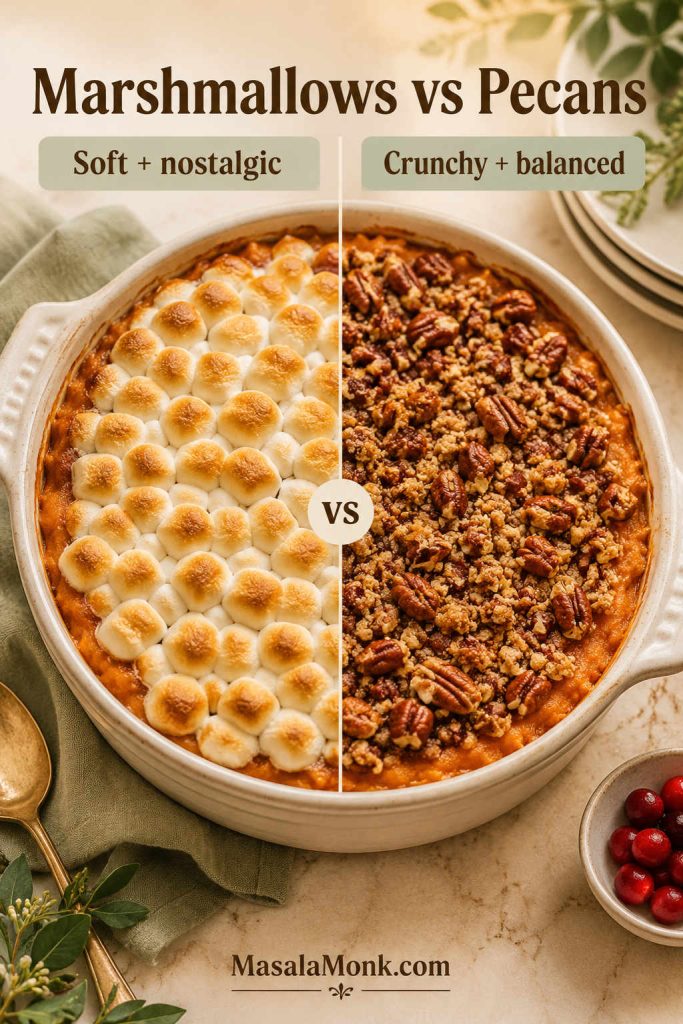
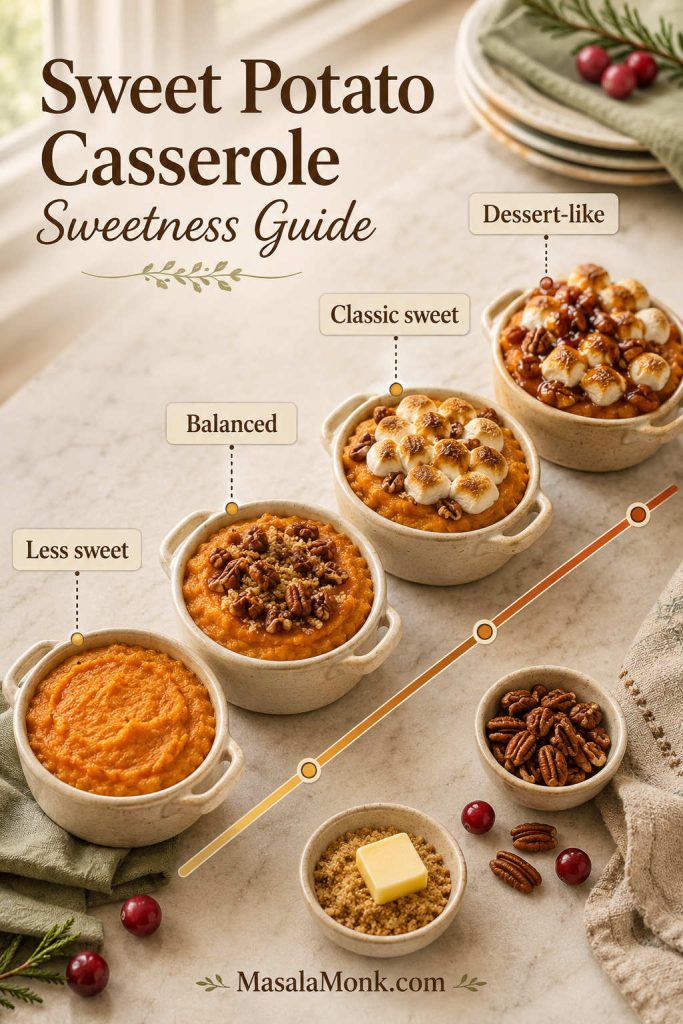
Troubleshooting board for 7 layer dip showing watery salsa, a broken chip, browning avocado, messy layers, and fix labels for draining salsa, loosening beans, covering avocado, and using shallow layers.
When 7 layer dip turns messy, the cause is usually excess liquid, stiff beans, exposed avocado, or layers built too deep.

Moisture and Texture Fixes

Problem Why it happened How to fix it
The dip is watery Salsa, pico, tomatoes, or lettuce released too much liquid Drain salsa and pico, seed juicy tomatoes, and add delicate toppings closer to serving
The beans are too stiff Refried beans were spread straight from the can or chilled too hard Mix beans with salsa, lime juice, or a spoonful of sour cream until scoopable
Chips keep breaking The dip is too dense, too cold, or served in a deep dish Loosen the beans slightly, use a shallower dish, and serve with sturdy chips
Every scoop destroys the layers Layers are too thick, the dish is too deep, or the dip is too cold Use a 9×13 dish, spread thinner even layers, and let the dip sit 10 minutes before serving
The guacamole is browning The avocado layer had too much air exposure Use lime juice, cover the avocado with sour cream, and press plastic wrap close to the surface when chilling

Flavor and Serving Fixes

Problem Why it happened How to fix it
The layers look messy Each layer was spread too aggressively from one spot Dollop each soft layer across the dish first, then spread gently with an offset spatula or spoon
The dip tastes flat The beans or avocado were not seasoned enough Season the bean layer and avocado layer separately before assembly
The top looks dull after chilling Fresh herbs and green onions sat too long in the fridge Add cilantro, green onions, and extra jalapeños just before serving
The dip feels too salty Taco seasoning, cheese, olives, and chips all added salt Use less taco seasoning next time and balance with more avocado, sour cream, or fresh tomato

How to Store Leftover 7 Layer Dip

Cover leftovers from this 7 layer dip recipe tightly and refrigerate them as soon as the party is over. The dip is best within 1 to 2 days. The flavor will still be good the next day, but the layers may soften, the salsa may bleed into the creamy layers, and the avocado may darken slightly.

Do not freeze it. Sour cream, avocado, salsa, and fresh toppings do not thaw cleanly, so the texture will turn watery and grainy. Instead, if the leftovers look messy but still smell fresh and have been stored safely, scoop them into tacos, burrito bowls, quesadillas, or nachos rather than trying to serve them as a neat layered dip again.

Because this dip contains dairy and avocado, keep it chilled until serving and do not let it sit out for hours. The FDA recommends refrigerating perishable foods within 2 hours, or within 1 hour when the temperature is above 90°F / 32°C. A refrigerator should be kept at 40°F / 4°C or below. You can read the FDA’s safe food handling guidance here: Safe Food Handling.

Storage tip: For a long game day or gathering, serve a smaller portion first and keep the rest covered in the refrigerator for refills.

FAQs About 7 Layer Dip

What are the seven layers in 7 layer dip?

A classic version usually has refried beans, guacamole, sour cream, salsa, cheese, tomatoes, and toppings such as olives, green onions, jalapeños, or cilantro. The toppings can vary, but the best versions balance creamy, fresh, salty, and crunchy layers.

Which layer goes first?

Start with refried beans because they are the heaviest layer and create the base. Loosen and season them first, then spread them all the way to the corners so every scoop has structure.

What is the best layer order?

For most gatherings, use beans, guacamole, taco-seasoned sour cream, drained salsa or pico, cheese, tomatoes, and toppings. That order keeps the base sturdy, protects the avocado, and controls extra liquid. For the full explanation, see the best layer order section.

How many people does a 9×13 dish serve?

A 9×13 dish serves about 12 to 16 people as an appetizer. If it is one of several snacks, it can stretch further. If it is the main dip on the table, expect larger servings.

How much 7 layer dip should I plan per person?

For a party with several appetizers, plan about ⅓ to ½ cup dip per person. If this is the main snack with chips, plan more because people tend to come back for extra scoops.

How far ahead should I make it?

For guests, make this 7 layer dip recipe 30 minutes to 6 hours before serving. You can prep most components one day ahead, but full overnight assembly is not ideal because salsa can release liquid and avocado can darken. For timing details, see the make-ahead section.

Why did my dip get watery?

Usually, the culprit is loose salsa, pico de gallo, juicy tomatoes, or lettuce. Drain salsa before layering, use Roma tomatoes, seed or blot juicy tomatoes, and add delicate toppings closer to serving. For the full fix, see how to keep 7 layer dip from getting watery.

What salsa is best for 7 layer dip?

Thick, chunky salsa or well-drained pico de gallo works best. Thin restaurant-style salsa can taste good, but it should be strained first so it does not leak into the sour cream layer.

Can I use store-bought guacamole?

Yes. Store-bought guacamole is fine for a faster version. Choose a thick guacamole, taste it first, and add lime juice, cilantro, or salt if it needs more brightness.

Is it supposed to be hot or cold?

Serve it cold or lightly chilled. Hot taco dip is a separate style and usually needs a different structure with cooked meat, melted cheese, or a baked base.

Should lettuce go in it?

Use lettuce only when serving the dip soon after assembly. It adds crunch, but it wilts quickly once it sits against salsa and sour cream.

Do I need taco seasoning?

Taco seasoning gives the sour cream layer more flavor, and a packet works well. Start with less than the full packet if your chips, cheese, salsa, and olives are already salty, then add more to taste.

What can I use instead of sour cream?

Plain Greek yogurt is the easiest substitute. It tastes tangier and slightly lighter, but it works well with taco seasoning. You can also use half Greek yogurt and half sour cream.

What chips are best?

Sturdy tortilla chips or scoop-style chips are best because they can cut through the bean layer without snapping. If the dip has been refrigerated for several hours, let it sit for about 10 minutes so the beans soften slightly before serving. For more serving ideas, see what to serve with 7 layer dip.

How long can it sit out?

Do not leave it out for more than 2 hours, or more than 1 hour in hot weather above 90°F / 32°C. For long gatherings, set out a smaller amount and keep the rest refrigerated.

What is the difference between 7 layer dip and taco dip?

7 layer dip is a type of taco dip with distinct visible layers. Taco dip can be simpler, creamier, baked, meatier, or mixed together rather than layered. In everyday cooking, the names often overlap.

Is it the same as Mexican layer dip?

They are usually very similar. Mexican layer dip is a broader name that may include fewer or more than seven layers, while 7 layer dip specifically suggests a seven-part layered appetizer with beans, creamy layers, salsa, cheese, and toppings.

Final Tips for the Best 7 Layer Dip

The best 7 layer dip recipe is not complicated. It just needs care in the places that matter: seasoned beans, drained salsa, protected avocado, a 9×13 dish for a crowd, sturdy chips for scooping, and enough fresh toppings to make the dish look bright and generous.

When those pieces are in place, the dip does exactly what a great party appetizer should do. It looks colorful when it hits the table, scoops cleanly through the first rush, tastes creamy and fresh in the same bite, and keeps people coming back long after they said they were done snacking.

Are you team olives, team no olives, team lettuce, team ground beef, or classic cold layers only? Tell me which version disappears fastest at your table.

Final serving of 7 layer dip in a clear 9x13 dish with one corner scooped, tortilla chips around the dish, and colorful toppings still visible.
When the layers are built well, the dip can still look colorful, inviting, and easy to scoop after the first rush of chips.

Back to top

Posted on 2 Comments

Hashbrown Casserole Recipe

Golden hashbrown casserole in a baking dish with a scoop lifted to show the creamy shredded potato center.

This hashbrown casserole recipe bakes up with bubbling edges, a soft cheesy potato center, and a golden top that feels right at home on a holiday table, potluck spread, or Sunday dinner plate. It starts with frozen shredded hash browns, so you get the comfort of a classic potato casserole without peeling, shredding, or squeezing potatoes from scratch.

Whether you call it hashbrown casserole or hash brown casserole, this is the creamy shredded-potato bake made with cheese, sour cream, and a golden topping. The filling is the cozy kind: hash browns folded into sour cream, cream soup or a quick homemade sauce, sharp cheddar, melted butter, onion, and seasoning.

This hashbrown casserole recipe is the cheesy potato side-dish style, rather than an egg-based breakfast bake. The goal is simple: creamy potatoes in the middle, bubbling edges at the sides, and a topping that still tastes like a topping when it reaches the table. Keep the top soft and melty with extra cheese, or add buttered cornflakes or crackers for the crunchy finish often associated with funeral potatoes.

If you were looking for the egg-and-potato breakfast lane instead, this breakfast burrito recipe uses eggs, potatoes or hash browns, cheese, and freezer-friendly filling ideas.

Quick Answer: Hashbrown Casserole Recipe Basics

To make hashbrown casserole, thaw frozen shredded hash browns and remove excess moisture. After that, mix them with sour cream, cream of chicken or cream of mushroom soup, melted butter, sharp cheddar, onion, garlic powder, black pepper, and a small amount of salt. Spread the mixture in a greased 9×13-inch baking dish, add more cheese or a buttery cornflake topping, and bake at 350°F / 175°C for 45–55 minutes.

This hashbrown casserole recipe is done when the top is golden, but the edges matter more: they should be bubbling steadily, and the center should be hot and creamy when you spoon into it. Do not panic if the top looks done early; that is exactly when a loose tent of foil helps the middle finish without over-browning the topping.

Finally, let the pan rest for about 10 minutes so the filling settles into soft, scoopable squares. Serve it as a holiday potato side, potluck casserole, brunch side, or cozy dinner side with ham, chicken, pork, eggs, or simple vegetables.

Ready to cook now? Jump to the recipe card, or keep reading for the style choices, topping options, and make-ahead tips.

Quick answer board for hashbrown casserole showing 32 oz hash browns, 9x13 pan, 350°F bake time, and 10 minute rest.
Use this as the core formula: 32 oz hash browns, a 9×13 pan, 350°F oven, 45–55 minutes of baking, and 10 minutes to rest.

Hashbrown Casserole at a Glance

Recommended potatoes Frozen shredded hash browns, thawed and dried well
Pan 9×13-inch baking dish
Oven temperature 350°F / 175°C
Bake time 45–55 minutes
Rest time 10 minutes
Servings 10–12 side servings

Choose Your Hashbrown Casserole Style

The base of this hashbrown casserole recipe is flexible, so you can steer the same pan toward a classic potluck side, funeral potatoes, a soft restaurant-style casserole, or a no-soup version. This is the fastest way to choose your topping before you start mixing.

Quick Style Guide

Classic potluck style Use cream of chicken soup, sour cream, cheddar, and a buttered cornflake topping.
Soft restaurant-style top Keep the top cheese-only for a softer, melty finish instead of a crunchy cornflake layer.
Funeral potatoes style Add buttered cornflakes or crackers and bake until the edges are bubbling.
No canned soup Use the quick homemade butter-flour-broth-milk sauce below.
Best make-ahead version Assemble the filling ahead, but add the crunchy topping right before baking.

For the crunchy finish, go to topping options. For the homemade sauce version, jump to hashbrown casserole without canned soup.

Style guide showing classic, restaurant-style, funeral potatoes, no-soup, and make-ahead hashbrown casserole options.
Choose the version before you start: cornflakes for classic crunch, cheese-only for a soft restaurant-style top, or homemade sauce for a no-soup casserole.

Before You Start: The 4 Things That Matter Most

If this casserole fails, it usually fails in one of four places: frozen potatoes, excess moisture, flat seasoning, or a topping that sat too long before baking. Check these before the pan goes into the oven.

  • Thaw the hash browns. Frozen clumps release water as they bake and make the timing less predictable.
  • Dry off the extra moisture. The potatoes can feel lightly damp, but they should not be icy, soaked, or dripping.
  • Season the sauce before adding potatoes. Otherwise, the hash browns can mellow the flavor too much once everything is folded together.
  • Add crunchy topping right before baking. For make-ahead prep, cornflakes, crackers, and panko stay crispest when they do not sit in the fridge overnight.

Not sure how dry the potatoes should be? The thawing section shows the texture cue before mixing.

Hashbrown casserole prep guide showing thawed potatoes, drying, seasoned sauce, and topping kept separate.
Before baking, solve the usual trouble spots first: frozen clumps, excess moisture, flat seasoning, and crunchy topping added too early.

Why This Hashbrown Casserole Works

The recipe is simple, but it is not random. Each part is there to solve a common casserole problem: watery potatoes, flat sauce, a soft topping, or a middle that needs more time than the top.

  • Frozen shredded potatoes keep prep easy. You get a soft potato center without peeling, shredding, or par-cooking fresh potatoes.
  • Sour cream keeps the sauce from tasting flat. It adds tang against the cheese, butter, and cream soup.
  • Sharp cheddar gives more flavor than mild cheddar. That means the casserole tastes cheesy without needing an excessive amount of cheese.
  • Bubbling edges are a better doneness cue than color alone. The top can brown before the center is fully hot.
  • The topping is flexible. Cheese-only gives a soft, melty finish, while cornflakes or crackers give a crunchy funeral-potatoes-style top.
Explainer image showing frozen hash browns, sour cream, cheddar, bubbling edges, and topping choices for hashbrown casserole.
This recipe works because each part solves a problem: frozen potatoes save prep, sour cream adds tang, sharp cheddar adds flavor, and bubbling edges show doneness.

Ingredients and Why They Matter

The ingredient list is short, but each piece has a job. This is not the kind of casserole that needs fancy extras; it just needs the potatoes dry enough, the sauce thick enough, and the top added at the right time.

Ingredients for hashbrown casserole including hash browns, sour cream, cream soup or sauce, cheddar, butter, onion, and seasonings.
The ingredient list is short, but the balance matters: potatoes for body, sour cream for tang, cheddar for flavor, and topping for texture.

Frozen Shredded Hash Browns

A 32 oz / 907 g bag of frozen shredded hash browns is the easiest starting point here. Let the potatoes thaw, then press away surface moisture with a clean towel before mixing. Shredded hash browns blend easily with the sauce and cheese, giving the casserole that soft, spoonable potato texture.

Diced hash browns also work, although they create a chunkier bite and may need a few extra minutes in the oven.

Sour Cream

Use 1 cup / about 240 g sour cream. Some old-school versions use a full 16 oz container; however, 1 cup gives enough tang and richness without making the casserole feel too heavy.

For a richer pan, you can add a little more. Need a substitute? See what to use instead of sour cream.

Cream of Chicken Soup or Cream of Mushroom Soup

Many traditional hashbrown casseroles use one 10.5 oz / 298 g can of condensed cream soup. For the most savory old-school flavor, use cream of chicken. If you want a deeper, earthier base or prefer to skip chicken-based soup, cream of mushroom is the better choice.

Cream of celery also works if you want a milder vegetable-style base. Prefer homemade sauce? Jump to the no-soup version, which replaces the can with butter, flour, broth, and milk.

Comparison of cream of chicken soup and cream of mushroom soup for hashbrown casserole.
Pick cream of chicken for the classic savory flavor, or use cream of mushroom when you want a deeper, earthier casserole base.

Sharp Cheddar Cheese

Use 2½ cups / about 280 g shredded sharp cheddar, divided between the filling and the top. Sharp cheddar gives the casserole more flavor than mild cheddar and helps every bite taste properly cheesy.

Freshly shredded cheese melts the smoothest. That said, bagged shredded cheddar is still fine for a practical casserole like this. For a softer restaurant-style direction, you can also use Colby, Colby Jack, or a cheddar-Colby blend.

Cheese options for hashbrown casserole including sharp cheddar, Colby Jack, and a cheddar-Colby blend.
Sharp cheddar gives the casserole stronger flavor, while Colby-style blends melt softer for a restaurant-style finish.

Butter

Use ½ cup / 113 g melted butter in the casserole base. It adds richness and helps the top brown. If you choose cornflakes, crackers, or panko, that topping gets its own smaller amount of melted butter.

Onion, Garlic Powder, Salt, and Pepper

Finely diced onion gives the strongest flavor, while onion powder is useful when you want a smoother filling. Garlic powder and black pepper round out the sauce.

Start with only ¼ teaspoon salt, then add more only if needed. Because condensed soup, cheese, and salted toppings can already bring plenty of salt, tasting the sauce before adding the potatoes is the safest move.

Optional Crunchy Topping

The topping is where this casserole changes personality. Extra cheese keeps it soft and gooey. Meanwhile, buttered cornflakes make it crisp and nostalgic, crushed crackers taste richer and a little softer, and panko gives a lighter crunch.

Best Hash Browns for Hash Brown Casserole: Shredded, Diced, Refrigerated, or Fresh?

Frozen shredded hash browns are the safest first choice for this recipe. They mix evenly into the creamy base, bake through reliably, and make the casserole easy to scoop. However, refrigerated shredded hash browns can also work well when you want a firmer, less icy starting point.

If you are comparing shredded hash browns, diced potatoes, and patties, this air fryer hash browns guide is useful for understanding the different frozen hash brown styles before you choose what to use.

Hash brown type Use it for What to know
Frozen shredded hash browns Soft, creamy casserole Most reliable choice for this recipe. Thaw and dry well before mixing.
Frozen diced hash browns Chunkier potato bite Works well, but may need 5–10 extra minutes in the oven.
Refrigerated shredded hash browns Firmer, less icy texture Useful for a soft restaurant-style hash brown casserole; still check for excess moisture before mixing.
Fresh grated potatoes From-scratch version Must be rinsed and squeezed very dry so the casserole does not turn thin or soupy.
Hash brown patties Layered casserole styles Better for a patty-style breakfast casserole than this creamy side-dish version.
Four hash brown options for hash brown casserole: frozen shredded, frozen diced, refrigerated shredded, and fresh grated potatoes.
Frozen shredded hash browns are the easiest first choice; however, diced, refrigerated, and fresh potatoes each change the bite and bake time.

Once you choose your potatoes, the next texture step is simple: thaw and dry the hash browns before mixing.

Do You Thaw Frozen Hash Browns First?

Thawing is the quiet step that saves the texture. Once the hash browns are thawed, press out surface moisture before mixing them into the creamy base. As a result, the casserole bakes more evenly and extra water is less likely to thin the sauce.

The potatoes do not need to be bone-dry, but they should not be icy, soaked, or dripping. Icy potatoes can stretch the bake time and leave the edges loose instead of creamy.

Hands pressing thawed shredded hash browns in a towel to remove surface moisture before making casserole.
Thawing first gives you a chance to remove surface moisture before the potatoes go into the sauce.

Easy Ways to Thaw Hash Browns

  • Overnight in the fridge: Place the bag in a bowl or on a tray in case condensation collects.
  • Microwave in short bursts: Use low or medium power, break up clumps, and stop before the potatoes begin to cook.
  • Spread on a tray: Spread the hash browns in a thin layer, let them soften, then dry off wet spots with a clean towel.

What Happens If You Use Frozen Hash Browns Without Thawing?

You can use them straight from frozen in a pinch, but it is not ideal for this hashbrown casserole recipe. Frozen hash browns release moisture as they bake, which can make the sauce thinner and the bake time less predictable. If you use them frozen, break up icy clumps, add extra baking time, and cover the dish loosely if the top browns before the center is hot.

If you already baked the casserole and it turned thin or watery, use the troubleshooting guide for fixes.

How Dry Should They Be?

They should feel thawed and lightly damp, not soaked. Press gently with a clean kitchen towel or paper towels. You are only removing the surface moisture that would thin the filling.

Moisture guide showing icy, lightly damp, and too-wet hash browns before mixing into casserole.
The hash browns do not need to be bone-dry; instead, aim for lightly damp potatoes with no icy clumps or dripping water.

How to Make It

This casserole is mostly mixing and baking, but the order matters. Start with dry potatoes, season the creamy base before adding the hash browns, and let the finished pan rest before serving.

Step-by-step hashbrown casserole method showing drying potatoes, mixing sauce, folding, spreading, topping, baking, and resting.
The order matters: dry the potatoes, season the creamy base, fold gently, spread evenly, top, bake until bubbly, and rest before serving.

Step 1: Thaw and Dry the Hash Browns

Thaw the frozen shredded hash browns and remove surface moisture with a clean towel. Then, break up any clumps so the potatoes mix evenly with the sauce.

Step 2: Mix the Creamy Base

In a large bowl, stir together the cream soup, sour cream, melted butter, onion, garlic powder, black pepper, ¼ teaspoon salt, and most of the cheddar cheese.

This is the right time to check seasoning. The base should taste savory and cheesy because the potatoes will soften the flavor once everything is folded together.

Creamy hashbrown casserole base being mixed in a bowl before the potatoes are added.
Mix and season the creamy base before adding potatoes so the sauce tastes savory enough to carry the whole casserole.

Step 3: Fold in the Hash Browns

Add the thawed hash browns and fold gently until they are coated. Avoid mashing them; instead, keep the filling creamy but still textured.

Step 4: Spread in the Baking Dish

Grease a 9×13-inch baking dish, then spread the mixture into an even layer. A shallow, even layer helps the center heat through and the top brown properly.

Step 5: Add Cheese or Crunchy Topping

Sprinkle the remaining cheddar over the top. For a crunchy finish, mix crushed cornflakes, crackers, or panko with melted butter and scatter it over the casserole.

Step 6: Bake Until Bubbly and Golden

Bake at 350°F / 175°C for 45–55 minutes, until the center is hot, the edges are bubbling, and the top is golden. However, the topping may brown before the middle is fully hot, so use bubbling edges as your main doneness cue.

If the top is golden but the center still looks unsettled when nudged, cover the dish loosely with foil and keep baking until the edges bubble steadily.

Step 7: Rest Before Serving

Those 10 minutes matter. Straight from the oven, the filling is still loose; after a short rest, it scoops like a casserole instead of sliding across the plate.

Hashbrown casserole doneness cues showing bubbling edges, hot center, and a rested scoop.
A golden top is not enough by itself; look for bubbling edges, a hot center, and a short rest for cleaner scoops.

Texture Tips: Creamy Center, Not Watery Edges

The casserole should scoop softly, not slide apart in a puddle of sauce. Once the hash browns are thawed and dried well, the next details are baking time, pan depth, and when you add the topping.

Texture comparison showing watery hashbrown casserole beside a creamy, cohesive casserole scoop.
A watery hashbrown casserole usually needs one of four fixes: drier potatoes, a shallower pan, more bake time, or a longer rest.
  • Use a 9×13-inch dish for the full recipe. A deeper dish can work, but the center may need more time to heat through.
  • Look for bubbling edges. A golden top is not enough; the edges should bubble steadily and the center should be hot.
  • Give diced hash browns extra time. They are thicker than shredded potatoes and may need 5–10 more minutes.
  • Cover only if the top browns too fast. Foil protects the topping while the center finishes baking.
  • Rest the pan before serving. Ten minutes helps the sauce settle into the potatoes instead of running across the plate.

Hashbrown Casserole Topping Options: Cornflakes, Crackers, or Cheese

The topping is where the casserole changes personality. Cheese-only keeps it soft and melty; cornflakes turn it into the crunchy holiday pan many people recognize as funeral potatoes. Crackers make the top buttery and softer, while panko gives a lighter finish.

Buttery round crackers, such as Ritz-style crackers, give a richer and softer topping than cornflakes.

If you are taking this to a potluck, choose cornflakes or crackers and add them just before baking. If you want the soft restaurant-style top, skip the crunchy layer and let the cheese do the work.

Topping options for hashbrown casserole showing cheese, cornflakes, crackers, and panko.
The topping changes the whole bite: cheese stays soft, cornflakes turn crunchy, crackers taste buttery, and panko keeps the finish lighter.
Topping Amount for 9×13 Texture Best for
Extra cheddar ½ cup reserved cheese Gooey and simple Soft cheesy top
Cornflakes 2 cups crushed + 3–4 tbsp melted butter Crisp and nostalgic Funeral-potatoes-style casserole, holidays, potlucks
Buttery crackers 1–1½ cups crushed + 2–3 tbsp melted butter Rich and softer than cornflakes Family dinners and comfort-food spreads
Panko 1 cup + 2–3 tbsp melted butter Light and crisp A less sweet topping

When to Add the Topping

For same-day baking, add the topping before the pan goes into the oven. For make-ahead prep, keep the topping separate and scatter it over the casserole just before baking.

Making the casserole ahead? The make-ahead section shows how to keep the topping crisp.

Buttered cornflakes being added to hashbrown casserole before baking.
Add cornflakes right before baking, especially for make-ahead hashbrown casserole, so the topping stays crisp instead of softening in the fridge.

What If the Topping Browns Too Fast?

Tent the dish loosely with foil if the top browns before the center is hot. Afterward, remove the foil near the end so the topping can crisp again.

Hashbrown Casserole Without Canned Soup

This is the version to use if you like the comfort of the original but do not want the canned-soup flavor. Condensed cream soup keeps the old-school style easy, thick, and familiar; however, this hashbrown casserole recipe also works with a quick white sauce made from butter, flour, broth, and milk.

Homemade white sauce for hashbrown casserole without canned soup, with butter, flour, broth, and milk.
For hashbrown casserole without canned soup, the homemade sauce needs enough body to coat the potatoes and hold the filling together.

This swap works because condensed soup is mostly doing two jobs here: adding savory flavor and giving the casserole a thick sauce that can hold the potatoes together. Use this homemade sauce to replace one 10.5 oz can of condensed cream soup. It makes about 1 to 1¼ cups of thick sauce, close to the amount needed for this casserole.

Ingredient Amount
Butter 2 tbsp / 28 g
Flour 3 tbsp / about 24 g
Chicken broth or vegetable broth ½ cup / 120 ml
Milk ½ cup / 120 ml
Salt and pepper To taste

Melt the butter in a small saucepan. Next, whisk in the flour and cook for 1–2 minutes, stirring constantly. Slowly whisk in the broth and milk. Simmer until thick and creamy, then use it in place of the canned soup.

Homemade Sauce Thickness

Homemade sauce coating a spoon to show the correct thickness for hashbrown casserole without canned soup.
The no-soup sauce should coat a spoon before it goes into the casserole; if it pours like milk, simmer it a little longer.
Important: The homemade sauce should be thicker than gravy but looser than paste, and it should coat a spoon before it goes into the casserole. If it is thin and pourable like milk, simmer it a little longer or the casserole may bake up loose around the edges.

Chicken broth gives the most savory, traditional flavor. Vegetable broth works well if you are using cream of mushroom or building a more vegetarian-friendly pan.

What to Use Instead of Sour Cream

Sour cream gives the filling its tangy, creamy texture, but you still have options if you do not want to use it.

Substitute How to use it Result
Full-fat Greek yogurt Use as a 1:1 replacement Tangy and slightly lighter
Cream cheese + milk Use 4 oz softened cream cheese loosened with a little milk Richer and thicker
Extra homemade cream sauce Add ½–¾ cup more sauce Mild, smooth, and less tangy
Sour cream substitutes for hashbrown casserole including Greek yogurt, cream cheese with milk, and extra sauce.
Full-fat Greek yogurt is the easiest sour cream swap, while cream cheese with milk makes the filling richer and thicker.

Full-fat plain Greek yogurt is the best sour cream swap. Fat-free yogurt is the one option to avoid here because it can bake up thin or grainy, especially in a casserole that stays in the oven for nearly an hour.

Can You Use Fresh Potatoes Instead of Frozen Hash Browns?

You can, but fresh potatoes are not a shortcut here. They are the from-scratch version, and they hold more moisture than frozen hash browns. For that reason, they need extra prep so the casserole does not turn thin, loose, or soupy.

Fresh grated potatoes being squeezed dry in a towel before using in hashbrown casserole.
Fresh potatoes work, but they are the from-scratch route, so rinse, squeeze, and dry them well before mixing.

How to Use Fresh Potatoes

  • Use russet potatoes for the best texture.
  • Peel them if you want a smoother casserole.
  • Shred the potatoes on a box grater or in a food processor.
  • Rinse briefly to remove excess surface starch.
  • Squeeze very dry in a clean towel.
  • After that, expect the casserole to need a little extra baking time.

How Much Fresh Potato to Use

Use about 2 lb / 900 g fresh shredded potatoes to replace a 30–32 oz bag of frozen hash browns. The texture will be a little different, but the casserole can still bake up creamy and comforting if the potatoes are squeezed dry.

Make-Ahead Hashbrown Casserole: Storage, Freezing, and Reheating

This hashbrown casserole recipe works well as a make-ahead side dish, which is one reason it fits holidays, potlucks, and brunch. For the crispest topping, keep cornflakes, crackers, or panko separate until the pan is ready to bake.

Make-ahead hashbrown casserole with the filling covered and the crunchy topping kept separate.
For make-ahead hashbrown casserole, assemble the filling ahead, but keep cornflakes, crackers, or panko separate until baking.
Need What to do Important note
Make ahead Assemble the filling up to 24 hours ahead Add cornflake, cracker, or panko topping right before baking
Bake from fridge Bake as directed, adding 10–15 minutes if cold Cover loosely if the top browns too fast
Store leftovers Refrigerate in an airtight container for 3–4 days Cool and refrigerate promptly
Freeze Freeze baked or unbaked casserole for best quality up to 3 months Add crunchy topping after thawing if possible
Reheat Warm covered at 350°F / 175°C until hot Uncover near the end to re-crisp the top

Make Ahead

Mix the filling, spread it in the baking dish, cover, and refrigerate for up to 24 hours. When you are ready to bake, add the crunchy topping if using one.

Baking from the Fridge

A cold casserole usually needs 10–15 extra minutes in the oven. If the top starts browning before the center is hot, tent the dish loosely with foil.

Storing Leftovers

Store leftovers in an airtight container in the refrigerator for 3–4 days. For general leftover safety, the USDA recommends refrigerating cooked leftovers within 2 hours and using refrigerated leftovers within 3–4 days. USDA leftover safety guidance is useful if you are cooking for a holiday table or large gathering.

Freezing

You can freeze the casserole baked or unbaked for best quality up to 3 months. However, for a crisper topping, freeze it without cornflakes or crackers and add the topping before baking.

For the neatest frozen portions, bake first, cool completely, cut into squares, then freeze. No-soup or sour-cream-heavy versions can sometimes soften or separate slightly after thawing, so the freshest texture still comes from baking the casserole soon after assembly.

Reheating

For better texture, reheat covered at 350°F / 175°C until hot, then uncover for a few minutes to help the top crisp. The microwave works for single portions, but the topping will soften.

Hashbrown casserole portions in freezer-safe containers with a reheated serving on a plate.
For neat freezer portions, bake the casserole first, cool it completely, cut it into squares, and reheat covered until hot.

For a simple brunch plate, serve warm squares with eggs and air fryer bacon, especially if you want a crisp side without standing over a skillet.

Can You Make a Smaller Pan?

The full 9×13 casserole is ideal for holidays, potlucks, and family meals. However, a smaller pan works when you only need a few servings.

Pan size Hash browns Servings Approximate bake time
8×8 or 9×9-inch dish 15–16 oz 4–6 40–50 minutes
9×13-inch dish 30–32 oz 10–12 45–55 minutes
Deep 3-quart dish 30–32 oz 10–12 50–60 minutes

For an 8×8 or 9×9 pan, halve the remaining ingredients as closely as possible and start checking around 40 minutes.

For topping choices, see the cornflake, cracker, panko, and cheese topping guide.

Troubleshooting Hashbrown Casserole: Watery, Bland, Greasy, or Soggy?

This is the section to use when a pan looks good on top but does not eat the way you wanted. Most problems come from moisture, seasoning, baking time, or topping timing.

Troubleshooting guide for hashbrown casserole with fixes for watery filling, soggy topping, bland flavor, and top browning.
Most hashbrown casserole problems trace back to moisture, seasoning, topping timing, or the center needing more time in the oven.
Problem Likely cause Fix
Watery casserole Hash browns were not thawed or dried well If it is already baked, let it rest longer and serve with a slotted spoon. Next time, thaw, dry the potatoes well, and bake uncovered a little longer.
Soggy topping Topping was added before refrigeration Add cornflakes, crackers, or panko right before baking.
Bland casserole The creamy base was under-seasoned Use sharp cheddar, taste the sauce before adding potatoes, and make sure onion, pepper, and salt are balanced.
Greasy casserole Too much butter, oily add-ins, or mild cheese Use sharp cheddar, drain bacon or sausage well, and reduce topping butter slightly.
Potatoes taste undercooked Diced potatoes, cold casserole, or not enough bake time Bake 5–15 minutes longer, tenting with foil if needed.
Top browns before center is hot Topping is browning too quickly Tent loosely with foil and continue baking until the edges bubble.
Casserole seems dry Overbaked or not enough sauce Add a splash of milk when reheating.
It will not scoop cleanly Served straight from the oven Rest for 10 minutes before serving.

For prevention next time, revisit the thawing guide and topping timing tips.

Variations and Easy Swaps

The base recipe is intentionally simple, which makes it easy to steer in different directions. Keep the potato-to-sauce ratio steady, then change the cheese, soup, topping, or add-ins depending on the meal.

If you like creamy baked comfort-food dinners in general, this tuna noodle casserole recipe sits in the same cozy casserole family.

Restaurant-Style Hashbrown Casserole

For a softer restaurant-style pan, similar to a Cracker Barrel-style hashbrown casserole, keep the topping cheese-only instead of using cornflakes. Use frozen or refrigerated shredded hash browns, cream of chicken soup, sour cream, onion, butter, and cheddar or Colby-style cheese, then bake until the edges are bubbling and the top is melted and golden.

Restaurant-style hashbrown casserole with a cheese-only topping and creamy potato center.
A cheese-only top gives hashbrown casserole a soft restaurant-style finish, similar to the Cracker Barrel-style version, instead of a crunchy funeral-potatoes topping.

Extra Cheesy Hashbrown Casserole

Add another ½ cup cheddar or mix in Monterey Jack, Colby Jack, or a little Parmesan. Sharp cheddar is still the strongest base because it gives the deepest cheese flavor.

Cream of Mushroom Hashbrown Casserole

Swap cream of mushroom soup for cream of chicken soup. It gives the casserole a deeper, earthier flavor and keeps the dish free of chicken-based soup.

Loaded Hashbrown Casserole

Add cooked bacon, scallions, and a little extra cheese for a loaded-baked-potato feel. Just keep the bacon cooked and drained before adding it so the filling stays creamy instead of greasy.

Funeral Potatoes Style

Use the cornflake topping, keep the filling rich with sour cream and cheese, and serve it as a holiday or potluck potato side. In many kitchens, funeral potatoes, party potatoes, cheesy potatoes, and cornflake-topped hashbrown casserole all belong to the same comfort-food family.

Vegetarian Hashbrown Casserole

Use cream of mushroom soup instead of cream of chicken, or make the no-soup sauce with vegetable broth. Then, keep the topping cheese-only, cracker-based, panko-based, or cornflake-based depending on the texture you want.

Gluten-Free Hashbrown Casserole

Use gluten-free condensed soup or the homemade sauce with a gluten-free flour blend. Then, choose gluten-free cornflakes or crackers, or skip the crunchy topping and use cheese only.

Lighter Hashbrown Casserole

Use full-fat Greek yogurt instead of sour cream, reduce the butter slightly, and keep sharp cheddar so the casserole still tastes satisfying. Avoid fat-free yogurt because it does not bake as smoothly.

Breakfast Hashbrown Casserole with Eggs

An egg-based breakfast hashbrown casserole is a different style of recipe. This version is a cheesy potato side dish, but the same hash brown guidance helps if you later make a breakfast casserole with eggs, sausage, bacon, or ham.

Add Meat or Vegetables

For a heartier pan, fold in a small amount of cooked ham, bacon, sausage, chicken, or ground beef. Similarly, broccoli, green chiles, mushrooms, and scallions work well, but cook or drain moisture-heavy add-ins first so the filling stays thick.

What to Serve with Hashbrown Casserole

Hashbrown casserole is rich, creamy, and cheesy, so it pairs well with something fresh, savory, or simply cooked. Serve it with baked ham, roast chicken, turkey, green beans, eggs, bacon, fruit salad, or a crisp green salad.

For a cold potato side on the same table, this potato salad recipe guide gives you classic, German, Russian, vegan, and other make-ahead directions.

Hashbrown casserole served with brunch and dinner sides including eggs, bacon, fruit, ham, chicken, and green beans.
Hashbrown casserole works for brunch, potlucks, and holiday dinners because it can sit beside eggs and bacon as easily as ham, chicken, pork, or green beans.

For brunch, pair it with fruit, crisp bacon, and air fryer hard-boiled eggs. For dinner, keep the plate simple with green beans, baked ham, roast chicken, or pork tenderloin in oven.

Hashbrown Casserole Recipe

Saveable hashbrown casserole recipe card with ingredients, oven temperature, bake time, and rest time.
Keep the core recipe simple: 32 oz hash browns, a 9×13 pan, 350°F oven, 45–55 minutes, and a 10-minute rest.

Description: This hashbrown casserole recipe makes a creamy, cheesy potato side dish with a soft center, golden edges, sharp cheddar, sour cream, and an optional buttery cornflake topping.

Prep Time15 minutes
Cook Time45–55 minutes
Rest Time10 minutes
Servings10–12 side servings

Equipment: 9×13-inch baking dish, large mixing bowl, spatula, measuring cups, measuring spoons, clean kitchen towel.

Ingredients

  • 32 oz / 907 g frozen shredded hash browns, thawed and dried well
  • 1 can / 10.5 oz / 298 g condensed cream of chicken soup or cream of mushroom soup
  • 1 cup / about 240 g sour cream
  • ½ cup / 113 g unsalted butter, melted
  • 2½ cups / about 280 g shredded sharp cheddar cheese, divided
  • ½ cup / 70–80 g finely diced onion, or 1 tsp onion powder
  • ½ tsp garlic powder
  • ½ tsp black pepper
  • ¼ tsp salt, plus more only if needed
  • Optional: 2 tbsp chopped chives or parsley

Optional Cornflake Topping

  • 2 cups / about 60 g crushed cornflakes
  • 3–4 tbsp / 42–57 g melted butter

Instructions

  1. Heat the oven to 350°F / 175°C. Grease a 9×13-inch baking dish.
  2. Thaw the hash browns and dry them well with a clean towel.
  3. In a large bowl, mix the cream soup, sour cream, melted butter, onion, garlic powder, black pepper, ¼ tsp salt, and 2 cups of the cheddar.
  4. Taste the sauce before adding the potatoes. Add more salt only if it tastes flat.
  5. Fold in the hash browns until evenly coated.
  6. Spread the mixture into the prepared baking dish.
  7. Sprinkle the remaining ½ cup cheddar over the top.
  8. For a crunchy topping, mix crushed cornflakes with melted butter and sprinkle over the casserole.
  9. Bake for 45–55 minutes, until hot in the center, bubbling around the edges, and golden on top.
  10. Rest for 10 minutes before serving.

Notes

  • For a no-soup version, use the homemade sauce in the section above.
  • If your soup, cheese, or butter is salty, start with ¼ tsp salt and add more only if the sauce tastes flat.
  • Add crunchy topping right before baking if making the casserole ahead.
  • Diced hash browns may need 5–10 extra minutes.
  • If baking cold from the fridge, add 10–15 minutes.
  • Store leftovers in the refrigerator for 3–4 days.

FAQs

Hashbrown casserole or hash brown casserole: which spelling is right?

Both spellings are common. “Hashbrown casserole” is often used as one word, while “hash brown casserole” is also widely used. Either way, the dish usually means a creamy shredded-potato casserole with cheese, sour cream, and a baked topping.

Do frozen hash browns need to be thawed first?

Thawing gives the most reliable texture. For the full cue, see how to thaw hash browns for casserole.

What happens if I use frozen hash browns without thawing?

It can work, but the bake time is less predictable because frozen potatoes release water as they heat. Thawing and drying gives a creamier, more reliable pan.

Shredded vs diced hash browns: which one works better?

Shredded hash browns are better for a soft, creamy casserole. Diced hash browns also work, although they give a chunkier texture and may need a little more time in the oven.

How far ahead can I assemble hashbrown casserole?

You can assemble the filling the night before, cover it, and refrigerate it. For the best crunch, add cornflakes, crackers, or panko right before baking.

What is the best way to freeze hashbrown casserole?

Freeze it baked or unbaked for best quality up to 3 months. However, the topping stays better if you freeze the casserole without cornflakes or crackers, then add them before baking or reheating.

Why did my hashbrown casserole turn watery?

The most common reason is hash browns that were still icy or carrying too much moisture. For fixes, see the troubleshooting guide.

What can replace cream of chicken soup?

Cream of mushroom soup is the easiest swap and gives the casserole a deeper, earthier flavor. For a no-canned-soup version, use the quick butter-flour-broth-milk sauce above.

Best sour cream substitutes for hashbrown casserole

Full-fat Greek yogurt is the easiest swap. For amounts and texture, see sour cream substitutes.

Is hashbrown casserole the same as funeral potatoes?

They are very similar. Funeral potatoes usually refer to a cheesy hash brown casserole made with sour cream, cream soup, cheddar, and a crunchy cornflake or cracker topping.

Is this like Cracker Barrel hashbrown casserole?

Yes, you can make it in that style. Use shredded hash browns, cream soup, sour cream, onion, butter, and cheese, then skip the cornflake topping so the top stays soft and melty.

Which meats or vegetables work well in hashbrown casserole?

Cooked bacon, ham, sausage, chicken, or ground beef can be added, but drain it well first. Similarly, vegetables like broccoli, green chiles, mushrooms, or scallions work best when cooked or drained so they do not water down the filling.

What are the doneness signs besides a golden top?

The edges should be bubbling, the center should be hot, and the top should be golden. Then, let it rest for 10 minutes before serving so the filling can settle.

With this hashbrown casserole recipe, the small details do the heavy lifting: dry the potatoes well, keep the sauce thick, choose the topping you like best, and rest the pan before serving. The result is simple, generous, and deeply comforting, with soft potatoes, a creamy cheese-coated center, and either a melty or crunchy golden top.

Posted on 8 Comments

Baked Ziti Recipe Collection: 15 Easy Variations

Cover image of 15 baked ziti variations with a cheesy fork-lift, labeled easy, no-boil, and vegetarian.

A good baked ziti recipe is one of those rare dinners that feels like it belongs everywhere at once. It can be a relaxed weeknight ziti meal, a “feed the whole table” Sunday ziti dish, or the dependable tray you bring to a potluck when you don’t want to overthink it. Better still, the same basic method can flex in a dozen directions—extra cheesy, no ricotta, vegetarian, sausage-studded, slow cooker, gluten-free—without losing what makes baked pasta so comforting in the first place.

So this is a reader-first collection: one reliable classic baked ziti recipe, followed by clearly labeled recipe cards for versions you might look for on different nights. Along the way, you’ll also see natural pairings (drinks and lighter sides) that make the whole spread feel complete rather than heavy.


Ziti pasta, explained (and the best swaps)

Ziti pasta is a short, smooth tube—built for sauce, built for cheese, built for baking. It’s often linked to celebrations: Barilla notes that “zita” can mean “bride,” and that ziti has traditionally been served at weddings as “the bride’s pasta.” If you enjoy those little stories that make a dish feel rooted, it’s a lovely detail to know while you cook. You can read that background directly on Barilla’s ziti page: Barilla Ziti.

On the practical side, the best part is this: you don’t need perfect ziti to make baked ziti. In fact, the wider point of a baked pasta is resilience. If the shop only has rigatoni or penne, you can still get that same saucy-cheesy structure.

De Cecco’s pasta notes are helpful for substitution thinking because they describe which shapes suit oven-baked recipes and “dense, colourful sauces.” Their Zita page even calls out baked dishes specifically: De Cecco Zita n° 18. That’s exactly the kind of sauce-and-shape compatibility you want when you’re building a pasta bake that won’t dry out.

Easy swap guide:

  • Best swap for ziti: rigatoni (sturdy, lots of surface)
  • Next best: penne (especially penne rigate)
  • If you want it smoother: zita / mezza zita
  • If you’re using gluten-free pasta: choose a thicker tube shape and undercook slightly before baking (more on that later)
Ziti pasta swaps infographic showing rigatoni, penne, and zita as the best pasta shapes for baked ziti, with a gluten-free tip to choose thicker tubes.
Can’t find ziti pasta? Use rigatoni for the sturdiest baked ziti, penne as the easy everyday swap, or zita for a smooth tube—plus a simple gluten-free baked ziti tip: choose thicker pasta shapes so they stay firm after baking.

Also Read: Manhattan Cocktail Recipe (Classic + 6 Variations)


The master baked ziti method (why it works)

Before we jump into all the fun variations, it helps to understand what makes a baked ziti recipe succeed. Baked ziti is basically three things repeated in layers:

  1. Pasta that’s slightly underdone so it finishes in the oven
  2. Sauce that’s a little looser than you’d use for stovetop pasta
  3. Cheese in two roles: creamy “binder” (ricotta, cottage cheese, béchamel, etc.) and melty “top” (mozzarella + parm)

Once you internalize that, you can make almost any baked pasta feel balanced.

Master baked ziti method infographic showing the layering order—pasta, sauce, and cheese (repeat)—with tips to undercook pasta, loosen sauce, and bake until bubbly.
Use this master baked ziti method every time: slightly undercook the pasta, keep the sauce a little looser, then layer pasta + sauce + cheese (repeat) for a baked ziti recipe that stays saucy, creamy, and bubbly—not dry.

If you prefer a brighter, fresher sauce rather than a purely jarred flavor, a homemade base can lift the entire pan. This MasalaMonk guide walks through a food-mill method and a no–food mill option: Tomato Sauce From Fresh Tomatoes. It’s an easy way to make the sauce taste “alive” without turning dinner into a project.

On nights you want a creamier, more lasagna-like vibe, a white sauce layer can do the job too. MasalaMonk’s béchamel guide covers classic and vegan versions (and helps you avoid lumps): Béchamel Sauce for Lasagna.


Classic baked ziti recipe (the base you can build on)

This is the dependable classic baked ziti recipe. Every variation below either uses this exactly or swaps a few ingredients while keeping the same structure.

Classic baked ziti recipe in a casserole dish with marinara, ricotta, and melted mozzarella, labeled serves 6–8 and 45 minutes.
Save this classic baked ziti recipe card as your base method—once you nail this tray, every variation below (easy, no-boil, vegetarian, sausage, slow cooker, gluten-free, and more) becomes a simple swap.

Ingredients (serves 6–8)

  • 450 g (1 lb) ziti pasta (or rigatoni/penne)
  • 2 tbsp olive oil
  • 4–5 cloves garlic, minced
  • 1 small onion, finely chopped (optional)
  • 700–800 g marinara sauce (about 3 cups), plus a splash of water if it’s very thick
  • 250 g ricotta (about 1 cup)
  • 200 g mozzarella, shredded (about 2 cups), divided
  • 50 g parmesan, grated (about 1/2 cup)
  • 1 tsp dried oregano (or Italian seasoning)
  • Salt and black pepper
  • Basil or parsley for serving (optional)

Method

  1. Heat the oven to 190°C / 375°F. Lightly oil a baking dish.
  2. Cook the pasta in well-salted water until just shy of al dente (1–2 minutes less than the package suggests). Drain.
  3. Make the sauce base: warm olive oil, sauté onion until soft (if using), then add garlic for 30–45 seconds. Pour in marinara, add oregano, and let it simmer 5 minutes. If the sauce looks very thick, loosen with a splash of water.
  4. Combine: toss the drained pasta with most of the sauce.
  5. Layer: spread a thin layer of sauce in the dish. Add half the pasta. Dollop ricotta across the surface. Sprinkle with some mozzarella. Add the remaining pasta, spoon the remaining sauce on top, then finish with mozzarella and parmesan.
  6. Bake 25–30 minutes until bubbling at the edges and the top looks glossy. If you want deeper browning, broil 1–2 minutes at the end.
  7. Rest 10 minutes before serving so the ziti dish slices cleanly.
Baked ziti quick timing card showing the standard baked ziti temperature (375°F/190°C), boil pasta 1–2 minutes under, bake 25–30 minutes, and rest 10 minutes.
Use this baked ziti quick timing guide every time: bake at 375°F / 190°C, boil pasta 1–2 minutes under al dente, bake until bubbly (25–30 minutes), then rest 10 minutes for cleaner slices.

From here, you can keep the base exactly as-is—or pivot to the version that matches your night.

Also Read: Double Chocolate Chip Cookies – Easy Recipe with 7 Variations


Recipe cards: 15 baked ziti variations

1) Easy baked ziti recipe (weeknight-friendly)

Sometimes you don’t want a “project,” you just want dinner to happen. This easy baked ziti recipe leans on smart shortcuts while still tasting like a real baked pasta.

Easy baked ziti recipe (weeknight-friendly) shown in a bowl with marinara and ricotta mixed in, labeled 1 bowl and 4 steps.
This easy baked ziti recipe is the weeknight shortcut: mix ricotta directly into sauced pasta, top with mozzarella and parmesan, then bake until bubbly—fewer bowls, same comfort.

What changes from classic: fewer steps, fewer bowls, more mixing.

Ingredients

  • Use the classic ingredient list, but:
    • Skip the onion
    • Use a good jarred marinara
    • Mix ricotta directly into the pasta-sauce mixture instead of dolloping and layering (faster and still creamy)

Steps

  1. Cook pasta slightly under al dente and drain.
  2. Warm marinara with a little garlic and oregano.
  3. Stir pasta + sauce together, then fold in ricotta, half the mozzarella, and a small handful of parmesan.
  4. Pour into the dish, top with remaining cheese, and bake until bubbling.

Even though it’s a shortcut ziti meal, it still hits the same comfort notes—gooey top, saucy center, that “baked pasta” smell when you pull it from the oven.

Also Read: Paper Plane Cocktail Recipe + Best Amaro Substitutes & Tips


2) No boil baked ziti recipe (dump-and-bake style)

If you’ve ever wanted baked ziti without boiling water at all, this is where the no boil baked ziti approach shines. The trick is hydration: the pasta absorbs liquid in the oven instead of in a pot.

No-boil baked ziti in a baking dish with foil being lifted off, showing the dump-and-bake method using marinara and water.
No-boil baked ziti is the easiest “dump-and-bake” version: coat dry pasta in marinara + water, cover tightly with foil, then bake until the ziti turns tender and the top gets bubbly and cheesy.

Serious Eats explains the logic clearly in their no-boil method, including why soaking can deliver al dente baked pasta without an extra pot: The Food Lab’s No-Boil Baked Ziti.

Ingredients (serves 6–8)

  • 450 g ziti (or penne/rigatoni)
  • 4 cups marinara (slightly more than classic)
  • 1 cup water or light stock
  • 250 g ricotta
  • 200 g mozzarella, divided
  • 50 g parmesan
  • Oregano, salt, pepper

Steps

  1. Heat oven to 190°C / 375°F.
  2. Mix marinara and water/stock in a bowl. Taste and season.
  3. Stir in dry pasta until coated. Let it sit 10 minutes to start hydrating.
  4. Assemble like classic (sauce layer, pasta, ricotta, cheese, repeat).
  5. Cover tightly with foil and bake 40 minutes.
  6. Uncover and bake another 10–15 minutes to brown and reduce excess moisture.
  7. Rest 10 minutes before serving.

Meanwhile, if you want a quicker “less-fuss” take that still feels like baked ziti, Serious Eats also has a skillet baked ziti version: Easy Skillet Baked Ziti with Sausage and Ricotta. Even if you don’t follow it exactly, it’s useful for understanding moisture balance.

Also Read: Green Chutney Recipe (Coriander–Mint / Cilantro Chutney)


3) Baked ziti recipe with ricotta cheese (extra creamy, 3-cheese feel)

A baked ziti with ricotta cheese should feel generous, not dry. Here, the goal is a creamy layer that stays soft after baking, plus enough mozzarella to stretch without turning the whole dish into a cheese brick.

Baked ziti with ricotta cheese showing evenly spaced ricotta dollops in a baking dish, labeled extra creamy (3-cheese feel) with tips to season ricotta and rest 12 minutes.
For extra-creamy baked ziti with ricotta cheese, season the ricotta, dollop it evenly across the pasta, and let the bake rest about 12 minutes—this keeps the ricotta layer soft, creamy, and more sliceable (a true 3-cheese feel).

What changes from classic: more ricotta, more parmesan, slightly wetter mix.

Ingredients

  • Use the classic list, plus:
    • +125 g ricotta (an extra 1/2 cup)
    • +25 g parmesan (a few extra spoonfuls)
    • Optional: 1 egg (helps set the ricotta layer into a “lasagna-like” slice)

Steps

  1. Mix ricotta with parmesan, black pepper, and (optionally) an egg.
  2. Layer ricotta more evenly (smaller dollops, closer together).
  3. Add a splash of pasta water or plain water to the sauce so the bake stays moist.
  4. Bake until bubbling, then rest longer—about 12 minutes—so the ricotta settles.

After that, if you’re the kind of cook who enjoys creamy sauce techniques beyond ricotta, the white sauce approach can be a fun detour: Béchamel Sauce for Lasagna.


4) Baked ziti without ricotta (still rich, no compromise recipe)

Baked ziti without ricotta is more common than people think—sometimes it’s a preference, other times it’s just what your fridge looks like. The key is replacing ricotta’s two jobs: creaminess and structure.

Baked ziti without ricotta guide showing the best creamy swaps: cottage cheese, Greek yogurt, and cream cheese mixed with milk.
Making baked ziti without ricotta? These three creamy swaps keep the ziti dish rich and sliceable: cottage cheese (closest match), Greek yogurt (lighter and tangy), or cream cheese + milk (smooth and indulgent).

Pick one creamy substitute

  • Cottage cheese (best match; see next recipe card)
  • Cream cheese + milk (for a smooth, indulgent texture)
  • Greek yogurt (tangy and lighter; best with extra mozzarella)

Option A: Cream cheese swap

  • Replace ricotta with 150 g cream cheese + 3–4 tbsp milk, whisked smooth.
  • Add a pinch of garlic powder or oregano.

Option B: Greek yogurt swap

  • Replace ricotta with 250 g thick Greek yogurt.
  • Increase mozzarella slightly, because yogurt doesn’t melt the way cheese does.

In contrast to ricotta, these swaps blend in more smoothly, so you can either layer them or stir them directly into the pasta-sauce mixture. Either route works; your choice depends on whether you want a “layered ziti dish” or a more unified, creamy baked pasta.

Also Read: Rob Roy Drink Recipe: Classic Scotch Cocktail (Perfect + Dry + Sweet Variations)


5) Baked ziti with cottage cheese (creamy recipe + protein-forward)

Baked ziti with cottage cheese is one of those “sounds odd until you try it” upgrades. Cottage cheese bakes into a creamy layer, especially if you blend it briefly.

Baked ziti with cottage cheese recipe card showing a creamy slice with ziti pasta, marinara, melted mozzarella, and a fork, labeled creamy and protein-forward.
Baked ziti with cottage cheese is the easiest ricotta swap—blend it for a smoother “ricotta-style” layer, then bake until bubbly for a creamy, protein-forward ziti dish that tastes even better the next day.

If you want a full casserole-style cousin to this idea, MasalaMonk has a dedicated baked pasta guide that uses cottage cheese in a layered format: Cottage Cheese Lasagna Recipe. It’s a great “next recipe” pathway once you fall in love with cottage cheese in pasta bakes.

Ingredients

  • Use the classic list, but swap:
    • Ricotta → 250 g (1 cup) cottage cheese
  • Optional: blend cottage cheese 20–30 seconds for a smoother texture
  • Optional: add lemon zest + black pepper (surprisingly good)

Steps

  1. Cook pasta slightly under.
  2. Simmer sauce briefly.
  3. Mix cottage cheese with parmesan and pepper.
  4. Layer as in classic, or stir cottage cheese into the pasta for a faster bake.
  5. Bake until bubbly and golden.

Notably, cottage cheese versions often taste even better the next day, once the flavor settles and the cheese layer firms up slightly.

Also Read: Sandwich for Breakfast: Breakfast Sandwich Recipe + 10 Variations


6) Baked ziti recipe with ground beef (classic “family tray”)

Baked ziti with ground beef is the tray that disappears first at a potluck—hearty, familiar, and easy to portion. If you’re looking for baked ziti with hamburger meat, this is the version you want.

Baked ziti with ground beef (hamburger meat) in a casserole dish with melted mozzarella and marinara, served as a hearty family tray.
This baked ziti with ground beef (aka baked ziti with hamburger meat) is the classic family-tray version—brown the beef, simmer it in marinara, then bake with mozzarella for a hearty, crowd-pleasing ziti dish.

Ingredients

  • Classic ingredients, plus:
    • 450 g ground beef
    • Optional: 1/2 tsp chili flakes
    • Optional: a pinch of smoked paprika (adds depth)

Steps

  1. Brown the ground beef in a pan until fully cooked. Drain excess fat if needed.
  2. Stir beef into the marinara and simmer 5 minutes so the flavors meld.
  3. Combine with pasta and assemble like classic.
  4. Bake until bubbling and browned on top.

Alternatively, if you’re cooking for a crowd that likes a little heat, add a spoon of chili crisp or crushed red pepper between layers—small change, big payoff.

Also Read: Strawberry Smoothie Recipes (12 Easy Blends + Bowls & Protein Shakes)


7) Sausage baked ziti (deep, savory, a little bold recipe)

Sausage baked ziti has a richer, more seasoned backbone than ground beef, which makes it ideal when you want flavor without extra spices.

Sausage baked ziti in a cast-iron skillet with Italian sausage, marinara sauce, melted mozzarella, and a cheesy spoon lift.
Sausage baked ziti brings deep, savory flavor with almost no extra effort—brown Italian sausage, simmer it in marinara, then bake with mozzarella until bubbly and scoopable.

Ingredients

  • Classic ingredients, plus:
    • 450 g Italian sausage (casings removed)
    • Optional: fennel seeds if your sausage is mild
    • Optional: sautéed peppers for a sweeter balance

Steps

  1. Brown sausage, breaking it into chunks. Let it get a bit caramelized.
  2. Add marinara to the pan and simmer 5 minutes.
  3. Continue with the classic method.

If you’re already in a sausage mood, you may also enjoy the “cozy slow-cooker” lane of Italian-American comfort—MasalaMonk’s Crock Pot Lasagna Soup has the same spirit, just in bowl form.


8) Meatball baked ziti (sliceable and satisfying)

Meatball baked ziti is the “party version” of the dish: the slices look impressive, and every serving has a clear highlight.

Meatball baked ziti in a casserole dish with a slice lifted on a spatula, showing meatballs, marinara sauce, ziti pasta, and melted mozzarella.
Meatball baked ziti is the “party version” of baked ziti—nestle warmed meatballs into saucy layers, then bake until bubbling so every slice delivers a meatball, plenty of marinara, and a melty mozzarella top.

Ingredients

  • Classic ingredients, plus:
    • 12–16 cooked meatballs (homemade or store-bought)
  • Optional: extra marinara for spooning over servings

Steps

  1. If using store-bought meatballs, warm them in marinara so they’re flavorful and tender.
  2. Assemble the dish: sauce layer → pasta → ricotta/cottage cheese layer → nestle meatballs → cheese → repeat.
  3. Bake until fully hot and bubbling.

Consequently, this version often benefits from an extra 5 minutes of rest time so the meatballs don’t shift when you serve.

Also Read: Classic Rum Punch + 9 Recipes (Pitcher & Party-Friendly)


9) Vegetarian baked ziti recipe (baked ziti without meat, still hearty)

Vegetarian baked ziti should never feel like “the meatless option.” The fix is texture and umami: mushrooms, spinach, roasted veg, or a mix.

Vegetarian baked ziti with mushrooms and spinach in marinara, topped with melted mozzarella and a cheesy spoon lift, labeled hearty and no meat needed.
Vegetarian baked ziti doesn’t have to feel like the “meatless option”—browned mushrooms and wilted spinach add savory depth, while a bubbling mozzarella top keeps this baked ziti without meat just as comforting as the classic.

If you’re curious about building meat-like satisfaction from mushrooms in general, MasalaMonk has a useful plant-based guide: “Mushrooms” Instead of “Beef”. It’s not a ziti recipe, yet it’s packed with ideas for getting that savory, filling feel without meat.

Ingredients

  • Classic ingredients, plus:
    • 300–400 g mushrooms, sliced
    • 2 cups spinach
    • Optional: 1 tbsp soy sauce (tiny amount, big umami)

Steps

  1. Sauté mushrooms until they’re browned and you’ve cooked off their moisture.
  2. Stir mushrooms into the sauce and simmer 5 minutes.
  3. Stir spinach into the hot sauce just until it wilts.
  4. Assemble and bake like classic.

At the same time, a fresh, crunchy side makes the whole ziti meal feel lighter. A quick option that pairs beautifully is this garlicky skillet veg: Skillet Mushroom and Zucchini Stir Fry.


10) Veggie baked pasta (roasted vegetables, baked ziti style)

If you want veggie baked pasta, this is the version that hits that exact craving: roasted vegetables folded into marinara, then baked with pasta and cheese.

Roasted veggie add-in guide for veggie baked pasta (ziti style) showing roasted zucchini, bell pepper, and eggplant with marinara and uncooked ziti.
For veggie baked pasta (baked ziti style), roast zucchini, peppers, and eggplant until caramelized, then fold them into marinara before baking—this keeps the vegetables flavorful and prevents a watery pasta bake.

Ingredients

  • Classic ingredients, plus:
    • 1 zucchini, diced
    • 1 bell pepper, diced
    • 1 small eggplant, diced (optional but great)
    • 2 tbsp olive oil
    • Salt + pepper

Steps

  1. Roast the vegetables at 220°C / 425°F for ~20 minutes until browned at the edges.
  2. Stir roasted veg into the sauce and simmer 2–3 minutes.
  3. Assemble and bake like classic.

Because roasted vegetables can release moisture as they sit, this version tends to bake best when you roast until properly caramelized rather than “just soft.”

Also Read: 7 Pizza Sauce Recipes | Marinara, White Garlic, Alfredo, Buffalo, BBQ, Vodka & Ranch


11) Crock pot baked ziti (recipe of slow cooker baked ziti)

Crock pot baked ziti is for days when you want dinner to cook while you do literally anything else. It’s softer than oven-baked ziti and a little less browned, but it’s incredibly convenient.
Crock pot baked ziti in a slow cooker with a ladle lifting a cheesy portion, showing slow cooker baked ziti texture with marinara and melted mozzarella.
Crock pot baked ziti is the hands-off version of a baked ziti recipe—layer pasta, sauce, and cheese in the slow cooker, then scoop up a saucy, melty dinner that’s perfect for busy days.

Two ways to do it

  • Best texture: parboil pasta 4–5 minutes (still very underdone), then slow cook
  • Easiest: use a no-boil style approach with extra liquid, but keep a close eye on softness

Ingredients

  • 450 g ziti
  • 4 cups marinara
  • 1 cup water (only if you’re using the “no-boil” approach)
  • 250 g ricotta or cottage cheese
  • 2 cups mozzarella + parmesan
  • Oregano, salt, pepper

Steps

  1. Lightly oil the slow cooker insert.
  2. Mix sauce (and water if using). Season well.
  3. Layer sauce → pasta → ricotta/cottage cheese → mozzarella. Repeat until used up.
  4. Cook on LOW until pasta is tender and the center is hot (typically 2–3 hours, depending on your cooker).
  5. Let it sit with the lid off for 10 minutes before serving so it thickens slightly.

If you enjoy slow cooker comfort meals in this general lane, Crock Pot Lasagna Soup is another cozy option that uses similar flavors.


12) Vegan baked ziti (plant-based recipe, still comforting)

A vegan baked ziti recipe should feel creamy and cohesive rather than “pasta with tomato sauce.” The secret is a good ricotta-style component and enough seasoning to make it taste finished.

Vegan baked ziti that actually feels creamy: cashew “ricotta” adds richness, greens balance the marinara, and a meltable vegan cheese on top gives you that classic baked-ziti comfort—fully plant-based.

Ingredients

  • 450 g ziti (choose vegan-friendly pasta)
  • 3–4 cups marinara
  • 2–3 cups spinach or kale
  • Vegan mozzarella shreds (or a meltable vegan cheese)
  • Cashew ricotta (quick version):
    • 1 cup cashews (soaked if you can)
    • 2–3 tbsp lemon juice
    • 1 clove garlic
    • Salt + pepper
    • A splash of water to blend

Steps

  1. Blend cashew ricotta until creamy but not soupy.
  2. Cook pasta slightly under, or use a hydrated/no-boil method with extra liquid.
  3. Stir greens into sauce to wilt.
  4. Assemble: sauce → pasta → cashew ricotta → vegan cheese → repeat.
  5. Bake until hot and the top is lightly browned.

Even if you’re not fully vegan, this is a helpful “plant-based dinner” baked pasta to have in rotation—especially when cooking for mixed diets.

Also Read: Vegan Mayo Recipe Guide: 5 Plant-Based Mayonnaise


13) Gluten-free baked ziti (no mush, no sadness)

Gluten-free baked ziti is completely doable, but the timing matters. GF pasta softens faster, and oven heat can push it past “tender” into “too soft” if you’re not careful.

Gluten-free baked ziti timing guide comparing undercooked pasta vs overcooked pasta, showing firmer ziti tubes on the left and softer texture on the right, with tips to boil 2–3 minutes under and check at 20 minutes.
Gluten-free baked ziti is all about timing: boil the pasta 2–3 minutes under, then start checking the bake early (around 20 minutes) so the ziti stays firm instead of turning soft or mushy.

Ingredients

  • Same as classic, but use gluten-free ziti/penne/rigatoni

Steps

  1. Boil GF pasta until it’s more underdone than you think (often 2–3 minutes under the box time).
  2. Keep the sauce slightly looser than usual.
  3. Assemble and bake, but start checking at 20 minutes rather than 30.

If you like the idea of higher-protein pasta alternatives, you might also enjoy reading about legume-based options like lentil pasta—MasalaMonk has a guide that covers brands and recipes: Lentil Pasta for Weight Loss: Nutrition, Brands & 5 Recipes. You don’t have to make it about weight; it’s simply a useful overview of textures and cooking behavior.


14) Pizza baked ziti (pepperoni, oregano, “slice night” energy)

Pizza baked ziti is exactly what it sounds like: a baked ziti dish that leans into pizza flavors—pepperoni, extra oregano, and a cheesier top.

Pizza baked ziti with pepperoni and melted mozzarella in a skillet, showing a cheesy slice being lifted, labeled pepperoni and extra oregano.
Pizza baked ziti is the fun, crowd-pleasing twist—pepperoni, extra oregano, and a bubbly mozzarella top turn baked ziti into “slice night” comfort that’s perfect for movie night.

Ingredients

  • Classic ingredients, plus:
    • 80–120 g pepperoni (or plant-based pepperoni)
    • +1/2 tsp oregano
    • Optional: a few spoonfuls of pizza sauce mixed into the marinara

Steps

  1. Assemble like classic, but add pepperoni near the top layer and between layers for more punch.
  2. Finish with extra mozzarella and a little parmesan.
  3. Bake until the edges bubble and the top browns.

In other words, this is the baked pasta version of movie night: simple, loud flavors, very little fuss.

Also Read: Blueberry Pancakes (6 Recipes) + Homemade Pancake Mix


15) “Fresh sauce” baked ziti (lighter, brighter, still cozy)

Finally, when you want baked ziti that tastes less “heavy winter casserole” and more “fresh tomato pasta baked into comfort,” a homemade sauce base makes a noticeable difference.

Fresh sauce baked ziti card showing a skillet of fresh tomato sauce with basil, tomatoes, garlic, and olive oil, labeled brighter and tomato-forward.
Fresh sauce baked ziti tastes lighter and more tomato-forward—use fresh tomatoes, basil, and olive oil for a brighter baked ziti recipe that still bakes up cozy and bubbly.

Use the classic recipe, but swap jarred marinara for a fresh sauce. This MasalaMonk guide keeps it approachable: Tomato Sauce From Fresh Tomatoes.

To keep the overall pan balanced, pair the fresh sauce with either:

As a result, you get a baked ziti recipe that still feels comforting, but tastes brighter and more “tomato-forward.”

Also Read: Authentic Chimichurri Recipe (Argentine Steak Sauce)


How to store, freeze, and reheat baked ziti safely

Leftovers are part of the baked ziti charm, and it’s worth handling them safely so you can enjoy the second (and third) round with confidence.

For fridge storage, USDA guidance commonly points to using cooked leftovers within about 3–4 days, and reheating to 165°F (74°C). You can reference USDA’s food safety page here: Leftovers and Food Safety (USDA FSIS). Foodsafety.gov also reinforces reheating leftovers to 165°F and offers practical reheating reminders: Leftovers: The Gift that Keeps on Giving. If you like a simple chart format, Foodsafety.gov’s minimum internal temperatures include a leftovers line at 165°F: Safe Minimum Internal Temperatures.

Freeze and reheat baked ziti guide showing a labeled foil pan and storage tips: refrigerate 3–4 days and reheat leftovers to 165°F (74°C).
Freeze and reheat baked ziti the easy way: label your tray, keep leftovers in the fridge for 3–4 days, and reheat baked ziti until it reaches 165°F (74°C)—cover with foil first, then uncover to refresh the cheesy top.

Reheating baked ziti (best texture)

  • Oven method: cover with foil and warm until hot throughout; uncover for the last few minutes to re-crisp the top.
  • Microwave method: add a spoon of water or sauce, cover loosely, and reheat in bursts so it warms evenly.

If you’re freezing a full tray, Allrecipes has a practical guide on what freezes well and how to protect texture: How to Freeze Casseroles. It’s especially helpful for baked pasta because it talks through moisture, dairy, and best practices for baking from frozen.

Freezing baked ziti (simple approach)

  1. Cool fully.
  2. Wrap tightly (plastic wrap + foil, or a tight lid).
  3. Label with date.
  4. Reheat covered first, then uncover to brown.

Also Read: Double Chocolate Chip Cookies – Easy Recipe with 7 Variations


What to serve with baked ziti (drinks + lighter sides that fit naturally)

A baked ziti meal can be rich, so pairing it with something bright—or simply something crunchy—makes the whole dinner feel more complete. Instead of piling on another heavy side, aim for contrast: tang, citrus, herbs, crisp vegetables, or a cooling drink.

Drinks that work especially well

For something creamy and soothing, mango lassi is a classic partner to tomato-rich meals because it softens acidity and heat. MasalaMonk’s version includes five variations, so you can keep it simple or get playful: How to make Mango Lassi (5 versions).

If you’d rather go refreshing and zippy, jal jeera is a punchy cumin-citrus drink that feels tailor-made for richer baked pasta nights: Jal Jeera aka the Indian Lemonade.

And if you’re setting a family-friendly table (or you just want something bubbly that reads “special”), this MasalaMonk roundup has plenty of options: Apple juice mocktails for every occasion.

If you want a more tropical, hydration-forward angle, MasalaMonk also has a collection that includes both cocktails and mocktail-leaning ideas built around coconut water: Coconut water cocktails and refreshing drink ideas. Even if you skip the alcohol, the flavor pairings are useful inspiration.

Wondering what to serve with baked ziti? Pair a rich baked ziti recipe with a crisp salad, a bright green side, and a refreshing drink to balance the richness and make the meal feel lighter.

Lighter sides that balance a baked pasta

A quick vegetable side is often enough. This simple garlicky sauté is fast, bright, and surprisingly perfect next to baked ziti: Skillet Mushroom and Zucchini Stir Fry.

For crunch and protein, a peanut salad gives you that fresh bite that baked pasta lacks by design: Crunchy, tangy, spicy peanut salad.

If you want a gentle “balance the plate” mindset without turning dinner into a lecture, Harvard’s Healthy Eating Plate is a simple visual reminder to load up vegetables and choose whole grains when you can: Healthy Eating Plate (Harvard Nutrition Source). Their whole grains overview is also useful if you’re deciding between refined pasta and whole-grain options: Whole Grains (Harvard Nutrition Source).


A final word before you pick your version

The best baked ziti recipe is the one you’ll actually make again. Some nights that’s a classic tray with ricotta and mozzarella; other times it’s baked ziti without ricotta because that’s what you’ve got; and occasionally it’s a slow cooker baked ziti because you want dinner to cook while life happens.

Pick your baked ziti variations guide showing options for weeknight (easy, no-boil), creamy (ricotta, no ricotta, cottage cheese), hearty (ground beef, sausage, meatballs), diet (vegetarian, vegan, gluten-free), and pizza baked ziti.
Not sure which baked ziti recipe to make tonight? Use this quick baked ziti variations guide to choose by mood—easy or no-boil for weeknights, ricotta or cottage cheese for creamy, ground beef/sausage/meatballs for hearty, vegetarian/vegan/gluten-free for dietary needs, or pizza baked ziti for “slice night.”

Start with the classic base once. Then, the next time you’re craving a different vibe, jump straight to the recipe card that matches your pantry and your mood—easy baked ziti, sausage baked ziti, vegetarian baked ziti, veggie baked pasta, no boil baked ziti, gluten-free baked ziti, vegan baked ziti recipe, or pizza baked ziti. That’s the whole point of keeping all the variations together: one method, many dinners, no stress.

Also Read: How to Make Churros (Authentic + Easy Recipe)

FAQs

1) What is the best baked ziti recipe for beginners?

For most beginners, the best baked ziti recipe is the classic version with marinara, ricotta, mozzarella, and parmesan. It’s forgiving, it bakes evenly, and the layers help prevent dryness. If you’re nervous about timing, cook the pasta slightly under al dente so it finishes perfectly in the oven.

2) What makes an easy baked ziti recipe truly “easy”?

An easy baked ziti recipe usually means fewer steps and fewer dishes. Common shortcuts include using jarred marinara, skipping sautéed onion, and mixing the ricotta directly into the pasta and sauce instead of carefully layering. As long as you still bake it until bubbling, it will taste like a proper baked ziti dish.

3) Can I make baked ziti with ricotta cheese and still keep it creamy?

Yes. Baked ziti with ricotta cheese stays creamy when the sauce is not too thick and the pasta is slightly undercooked before baking. Additionally, seasoning the ricotta (salt, pepper, parmesan) improves flavor without changing texture. If you like a softer middle, add a small splash of water to the sauce before assembling.

4) Can you make baked ziti without ricotta?

Absolutely. Baked ziti without ricotta works well with cottage cheese, a cream cheese blend, or thick Greek yogurt. The key is choosing a substitute that adds moisture and helps the layers hold together. In many cases, you’ll want a touch more mozzarella on top since ricotta-free versions rely more on melt for that classic comfort bite.

5) Is baked ziti with cottage cheese a good substitute for ricotta?

Surprisingly, yes. Baked ziti with cottage cheese is one of the closest swaps for ricotta because it bakes into a creamy layer. For a smoother texture, blend the cottage cheese briefly before using it. On the other hand, if you prefer more texture, use it as-is.

6) Can I make baked ziti without meat and still make it filling?

Definitely. Vegetarian baked ziti (or baked ziti without meat) is satisfying when you add ingredients that bring savory depth, such as mushrooms, spinach, roasted vegetables, or a mix of the three. In particular, browning mushrooms well before adding them to sauce makes the whole ziti meal taste richer without needing meat.

7) What’s the difference between vegetarian baked ziti and veggie baked pasta?

Vegetarian baked ziti is usually a baked ziti recipe that skips meat but keeps the classic pasta-bake structure. Veggie baked pasta, meanwhile, often leans more heavily on vegetables—especially roasted vegetables—as the “main event,” with pasta and cheese supporting them. In practice, they overlap a lot; the difference is simply emphasis.

8) Can I make baked ziti with ground beef (hamburger meat)?

Yes. Baked ziti with ground beef—often sought as baked ziti with hamburger meat—starts by browning the beef, draining extra fat, then simmering it briefly in marinara. Afterward, assemble and bake like any other baked ziti recipe. For deeper flavor, let the beef brown a little more before adding sauce.

9) Is sausage baked ziti better than ground beef baked ziti?

It depends on what you want. Sausage baked ziti tends to taste more boldly seasoned because the sausage already contains spices. Ground beef baked ziti, by contrast, is milder and more “classic cafeteria comfort” in the best way. If you’re serving a crowd with mixed tastes, ground beef is often the safer pick.
10) How do I make meatball baked ziti without drying it out?

Use meatballs that are fully cooked but not overbaked, and keep them nestled within saucy layers rather than sitting exposed on top. Also, add enough marinara so the bake stays moist. If the dish looks dry before it goes into the oven, it will only get drier during baking.
11) What pasta can I use if I can’t find ziti pasta?

If ziti pasta is unavailable, use rigatoni, penne, or other short tube shapes. The main idea is choosing a pasta that holds sauce and stands up to baking. Avoid very thin pasta shapes, because they can turn soft more quickly in the oven.

12) How do I keep baked ziti from drying out?

First, don’t overcook the pasta before baking. Next, make sure the sauce is loose enough—thick sauce can bake up too tight and dry. Finally, cover with foil for part of the bake if your oven runs hot, then uncover near the end to brown the cheese.

13) What is no boil baked ziti, and does it really work?

No boil baked ziti is a method where dry pasta hydrates in the oven using extra liquid from sauce and added water or stock. It can work very well, provided the dish is covered tightly for the first stage of baking and you use enough liquid. If you prefer a firmer bite, uncover near the end so excess moisture cooks off.

14) Can I make crock pot baked ziti or baked ziti in a slow cooker?

Yes—crock pot baked ziti is popular because it’s hands-off. For better texture, parboil the pasta briefly before layering. If you use dry pasta, you’ll need extra liquid and careful timing to prevent it from getting too soft.

15) Can I make a vegan baked ziti recipe that still tastes rich?

Yes. Vegan baked ziti is richest when you include a creamy component (like cashew “ricotta”) plus enough seasoning in the sauce. Also, adding greens like spinach helps balance the richness. If you’re aiming for that classic baked ziti feel, a meltable vegan cheese on top helps deliver the familiar finish.

16) How do I make gluten-free baked ziti without mushy pasta?

Gluten-free baked ziti turns out best when the pasta is undercooked before baking and the bake time is watched more closely. In addition, keep the sauce slightly looser so the pasta finishes cooking without drying out. Since different GF pastas behave differently, checking doneness early is the easiest safeguard.

17) Can I assemble baked ziti ahead of time?

Yes. Assemble the baked ziti recipe, cover tightly, and refrigerate. When baking from cold, add extra time so the center heats through. If the top browns too quickly, cover with foil and uncover later to finish.

18) Can I freeze baked ziti, and should I freeze it baked or unbaked?

You can freeze baked ziti either way. Freezing unbaked keeps the cheese layer fresher in texture, while freezing baked is convenient for quick reheating. Either option works; the difference is simply whether you want “ready-to-reheat” convenience or “fresh-baked” texture.

19) How long does baked ziti last in the fridge?

Typically, baked ziti lasts several days in the fridge when stored in an airtight container. For best flavor and texture, eat it sooner rather than later, because baked pasta continues to absorb sauce over time.

20) How do I reheat baked ziti so it stays cheesy and moist?

For the best texture, reheat in the oven covered with foil, then uncover briefly to refresh the top. If using a microwave, add a small spoon of water or extra sauce before reheating so the pasta doesn’t dry out. Either way, heating gently is better than blasting it quickly.

21) What temperature do you bake baked ziti at?

Most baked ziti recipes bake well around 190°C / 375°F. That temperature is hot enough to bubble sauce and melt cheese without scorching the top too fast. If you want more browning, use a short broil at the end rather than raising the oven temperature.

22) What are the most popular baked ziti variations?

The most popular baked ziti variations tend to include easy baked ziti, baked ziti with ricotta, baked ziti without ricotta, baked ziti with cottage cheese, vegetarian baked ziti (baked ziti without meat), baked ziti with ground beef (hamburger meat), sausage baked ziti, crock pot baked ziti, vegan baked ziti, gluten-free baked ziti, and pizza baked ziti.