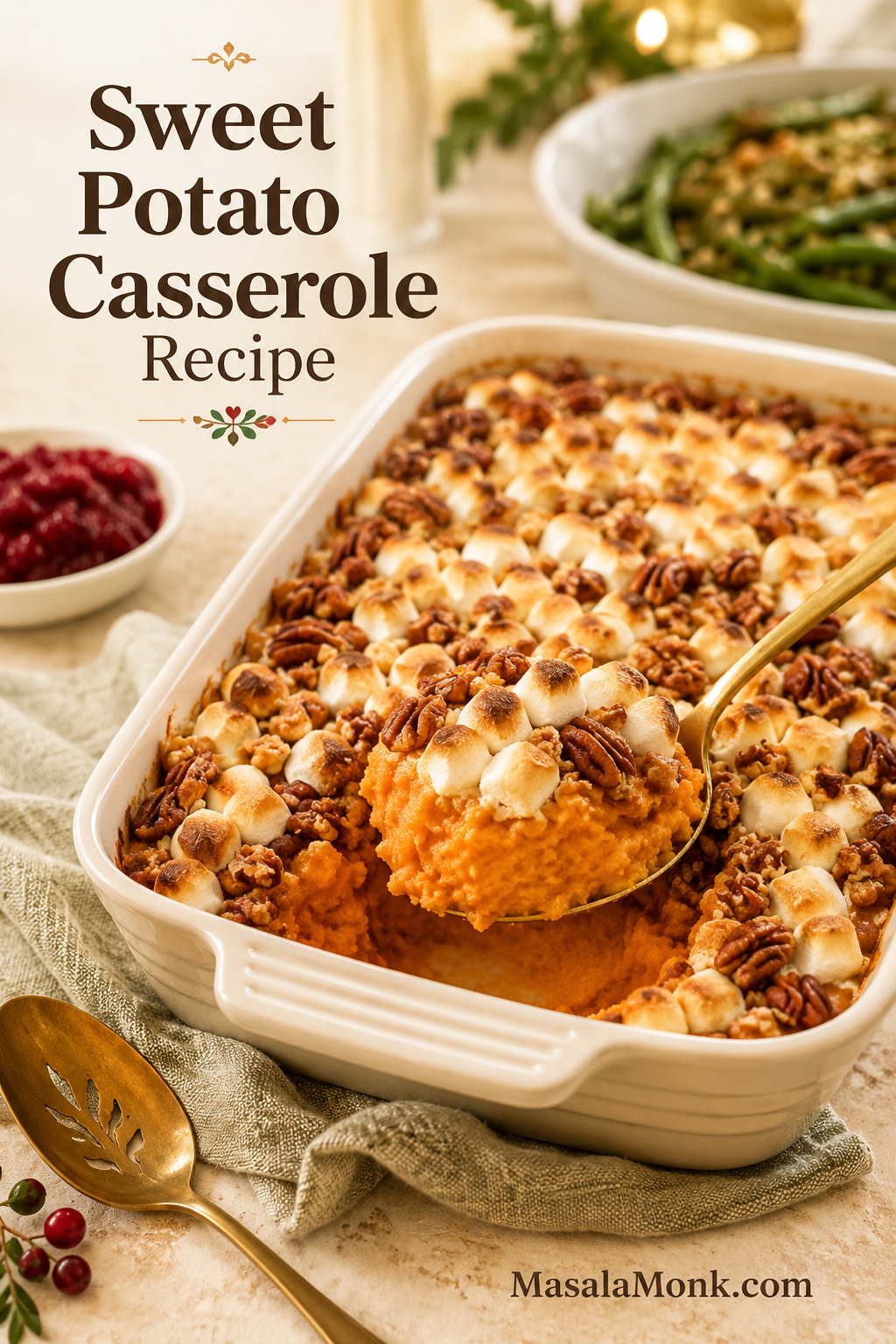
A good sweet potato casserole has to do more than taste sweet. It needs to be creamy without turning watery, rich without feeling heavy, golden on top without burning, and easy enough to fit into a busy oven schedule that already has too much going on.
This sweet potato casserole recipe is built for that exact moment, especially when Thanksgiving or a big holiday meal has several dishes competing for the oven. You can make it with fresh sweet potatoes or drained canned yams, finish it with marshmallows, pecan streusel, or both, and prep most of it ahead so the final bake feels calm instead of chaotic.
The filling is smooth, spoonable, lightly set, and warmly seasoned with butter, brown sugar, vanilla, cinnamon, and just enough salt to keep the sweetness balanced. It should feel like a satiny orange mash under a golden, buttery topping — sweet, but not candy-sweet.
Think of this as one dependable base for a table full of opinions: the marshmallow crowd, the pecan-streusel crowd, the canned-yam shortcut cook, and the person who wants the dish to stay more side than dessert.
In This Guide
Make the Casserole
Choose Your Version
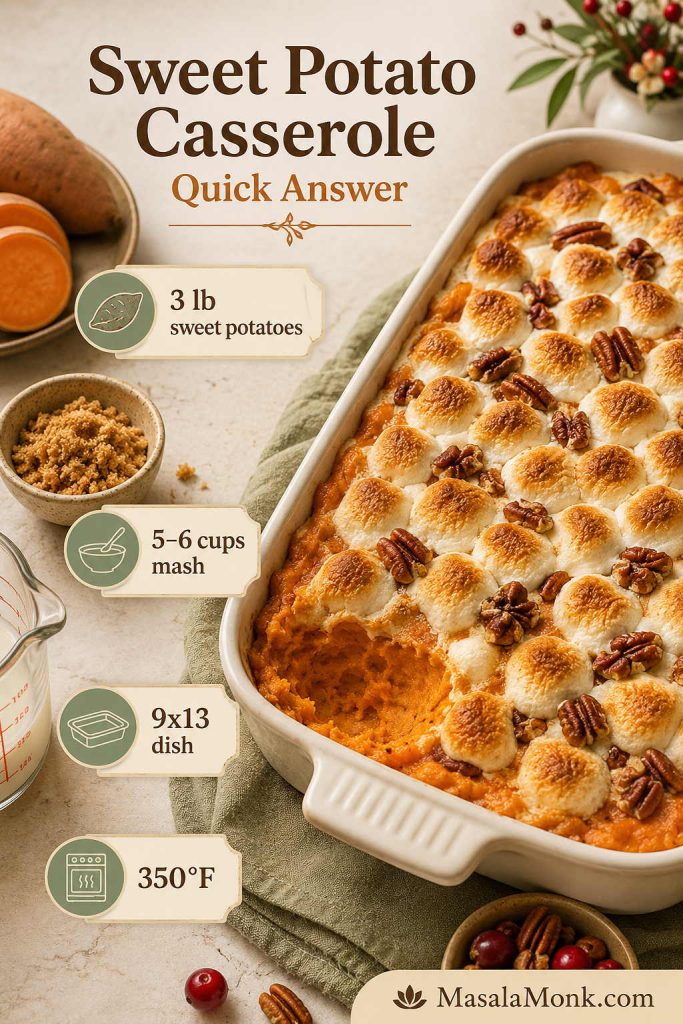
Quick Answer: How to Make Sweet Potato Casserole
For a full sweet potato casserole, use 3 lb / 1.36 kg fresh sweet potatoes, which gives about 5–6 cups cooked mashed sweet potato. Mix the mash with melted butter, ⅓ cup brown sugar for a balanced version, milk or cream, eggs, vanilla, cinnamon, nutmeg, and salt, then spread it in a 9×13-inch / 3-quart baking dish.
Bake at 350°F / 175°C until the casserole is hot and lightly set. Because the filling contains eggs, the center should reach 165°F / 74°C if you check with an instant-read thermometer.
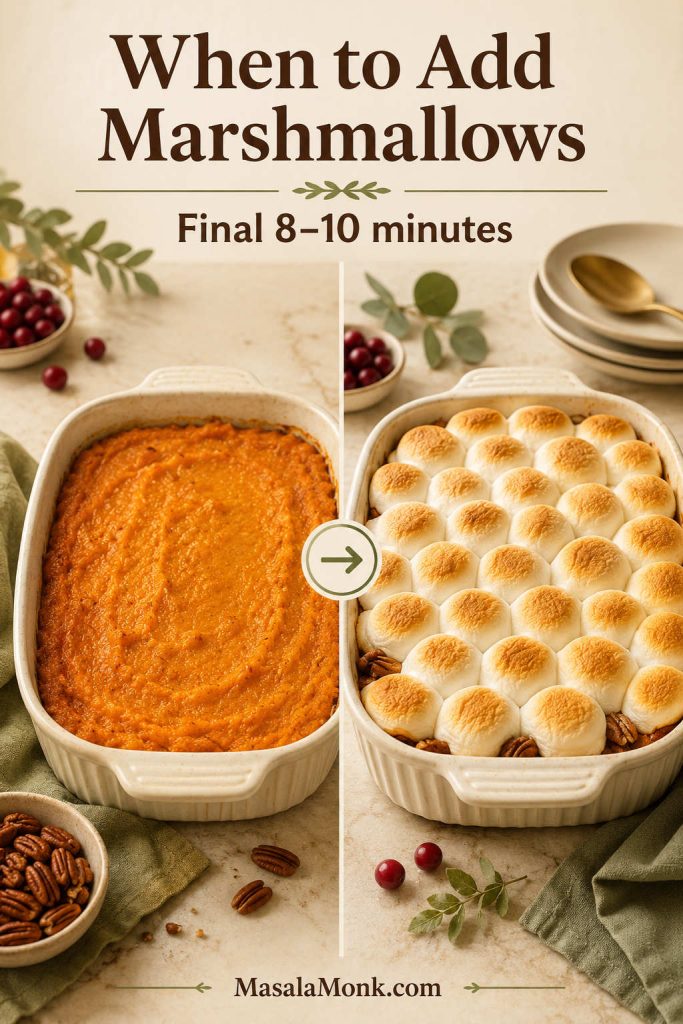
Pecan streusel goes on before baking. Save marshmallows for the final 8–10 minutes so they puff and brown instead of melting away.
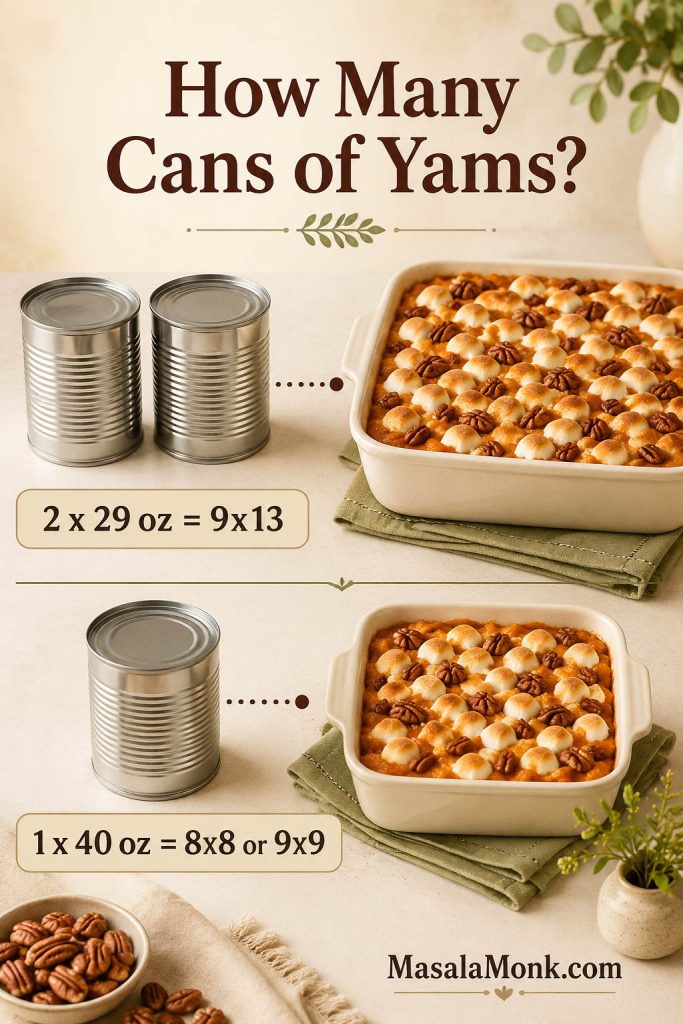
For canned yams, use 2 x 29 oz cans, drained, for a 9×13 casserole, or 1 x 40 oz can, drained, for an 8×8 or 9×9 dish. If the cans are syrup-packed, start with less sugar.
If you are using canned yams, the fresh vs canned guide and canned-yam texture tips will help you adjust sugar and liquid before mixing.
Best crowd version: Use the balanced filling with pecan streusel for structure, then add mini marshmallows at the end if your table expects them. You get buttery crunch, soft toasted pockets, and a casserole that still eats like a side dish.
For a closer look at the final layer, see the topping options and the marshmallows vs pecans comparison before choosing your version.
Sweet Potato Casserole at a Glance
| Detail | Starting point |
|---|---|
| Sweet potatoes | 3 lb / 1.36 kg fresh sweet potatoes |
| Cooked mash yield | About 5–6 cups |
| Baking dish | 9×13-inch / 3-quart dish |
| Oven temperature | 350°F / 175°C |
| Potato cooking time | 12–20 minutes for boiling, or 40–50 minutes for roasting |
| Bake time | 30–35 minutes, or 40–50 minutes if chilled |
| Servings | 10–12 side-dish servings |
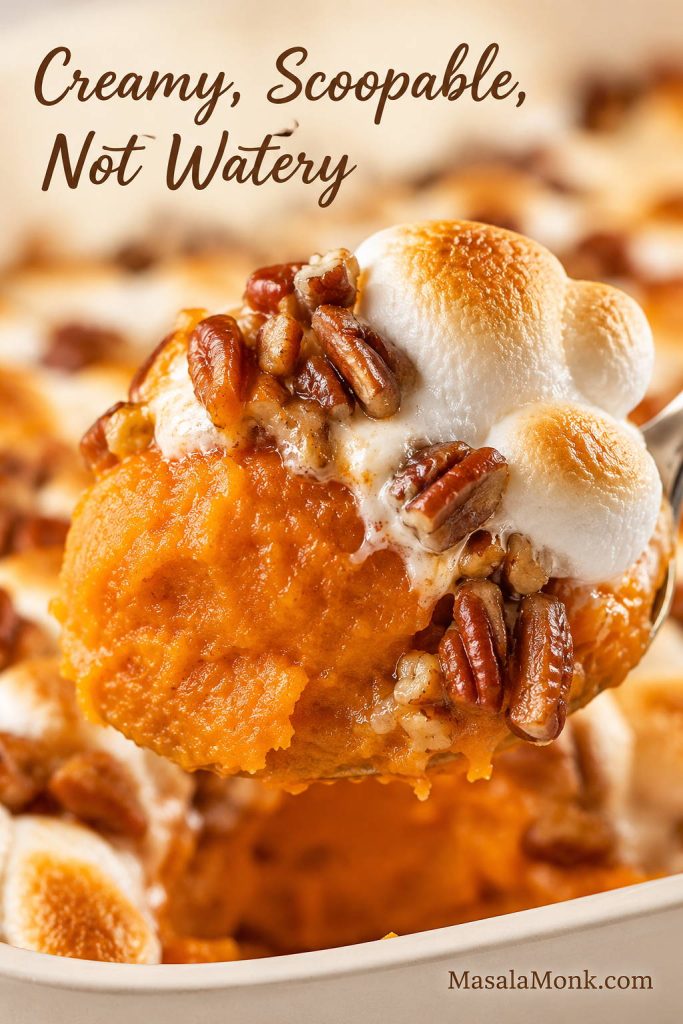
| Texture | Creamy, scoopable, lightly set, not watery |
| Best topping paths | Pecan streusel, marshmallows, or both |
| Make-ahead | Base can be made 1–2 days ahead; topping stays better when added later |
| Canned-yam option | Yes, drain well, measure the mash, and reduce sugar/liquid as needed |
Why This Sweet Potato Casserole Works
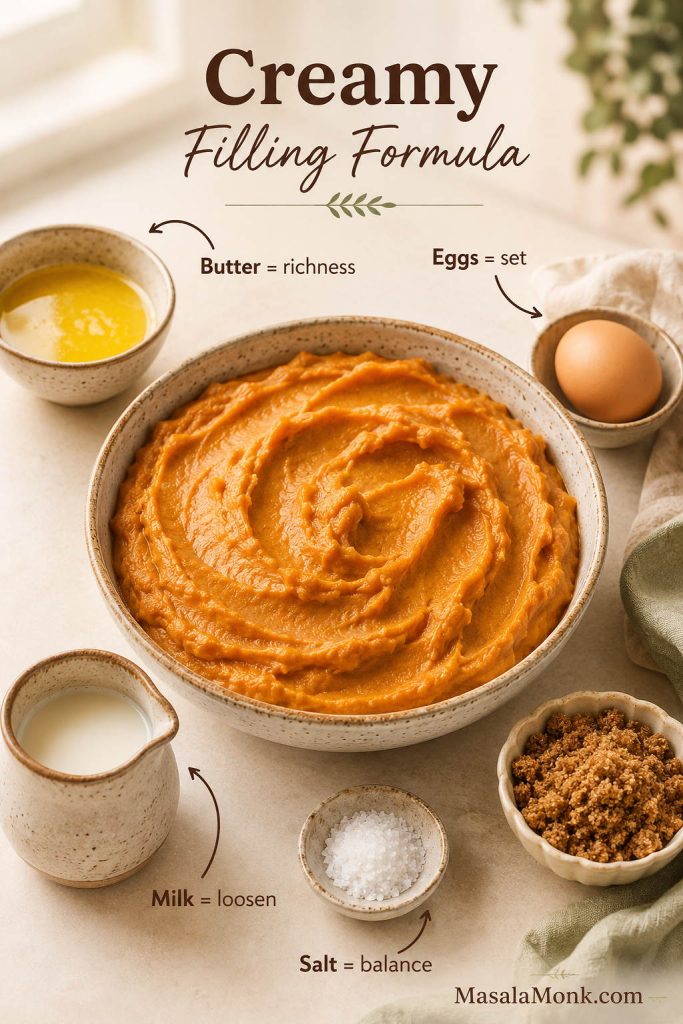
The whole recipe depends on one idea: build a thick, balanced sweet potato base first, then treat the topping as a separate timing decision. The sweet potato mixture needs to be thick, seasoned, and creamy before it goes into the oven. The top needs enough heat to turn golden, but not so much time that it burns, sinks, or goes sticky.
- Three pounds of sweet potatoes gives enough mash for a proper 9×13 casserole without making the filling too thin.
- Butter and milk or cream make the mash rich, while controlled liquid keeps it from turning soupy.
- Eggs help the filling set just enough to scoop neatly. Leave them out for a softer, spoonier casserole.
- Brown sugar stays flexible. Use ⅓ cup when you want a side-dish sweet casserole, or ½ cup when your table expects the sweeter classic version.
- Pecan streusel bakes from the start. Marshmallows wait until the casserole is hot or nearly hot.
- The canned version needs a lighter hand because it is already tender and often sweeter or wetter than fresh cooked sweet potatoes.
- Resting time matters. A 10–15 minute rest helps the casserole scoop cleanly and lets the streusel settle into a buttery crunch.
That is the difference between a casserole that simply tastes sweet and one that earns its space on the holiday plate: a hot, creamy center, a topping with texture, and a first scoop that holds together instead of sliding apart.
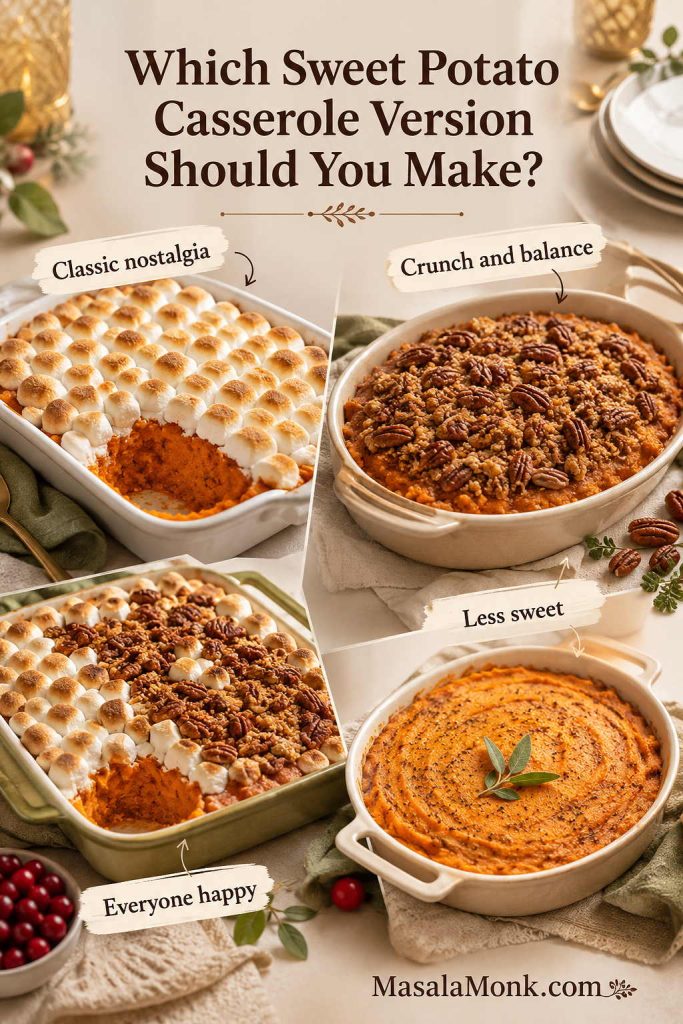
Not Sure Which Version to Make?
Sweet potato casserole is one of those dishes people remember before they even taste it. One person wants the marshmallows from childhood. Another wants pecans and less sweetness. Sometimes the main goal is simply getting the dish to come out hot while the oven is full.
| Your table wants… | Make this version |
|---|---|
| Classic nostalgia | Mini marshmallow topping |
| Crunch and balance | Pecan streusel topping |
| Everyone happy | Pecan streusel plus marshmallows added near the end |
| Less sweetness | ¼–⅓ cup brown sugar with pecan, oat, cornflake, or savory crumb topping |
| Fastest shortcut | Drained canned yams, less sugar, and milk added slowly |
| Make-ahead calm | Filling made ahead, topping stored separately, marshmallows added late |
The best version is the one your table will actually reach for twice. Choose the topping that matches the people you are feeding, then keep the base creamy, hot, and well rested.
Ingredients and What Each One Does
The ingredient list is simple, but small choices matter. The goal is a casserole that tastes warm and generous, not thin, sugary, or heavy.
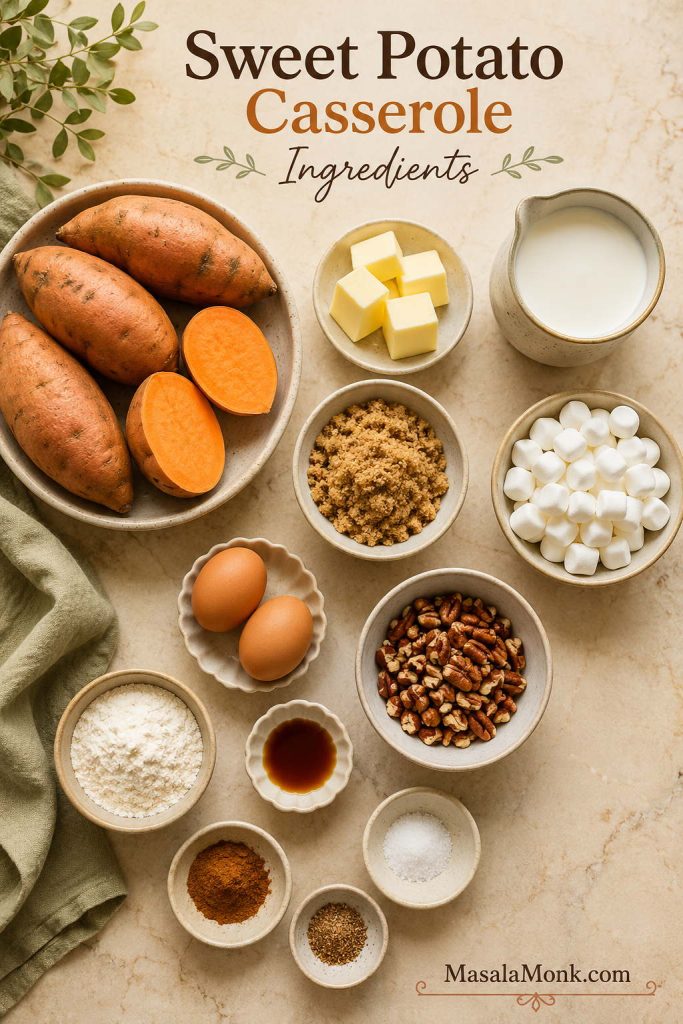
For the Sweet Potato Filling
- Sweet potatoes: Use 3 lb / 1.36 kg fresh sweet potatoes for a full 9×13 casserole. Orange-fleshed sweet potatoes give the classic color, sweetness, and creamy texture. For a separate look at calories, carbs, fiber, and portions, see MasalaMonk’s sweet potato nutrition facts.
- Butter: Melted butter adds richness and helps the mash taste rounded instead of flat.
- Brown sugar: Use ⅓ cup / about 65–70 g for a side-dish sweet casserole, or ½ cup / 100 g for the sweeter classic version. Start lower if your cans are syrup-packed.
- Milk, half-and-half, cream, or evaporated milk: This loosens the mash and makes it creamy. Evaporated milk gives a slightly old-fashioned richness without using heavy cream.
- Eggs: Eggs help the casserole set and scoop neatly. If you skip them, the dish will be softer and more spoonable.
- Vanilla: A little vanilla belongs in the background here. You want warmth, not a filling that tastes like dessert pudding.
- Cinnamon and nutmeg: Cinnamon gives the main warmth. Nutmeg is optional but helpful in small amounts. You can also use 1–1½ teaspoons pumpkin pie spice instead.
- Salt: Salt keeps the sweetness from going flat. It is especially important when marshmallows or a brown sugar topping are involved.
For the Pecan Streusel Topping
- Pecans: Pecans bring crunch and a buttery flavor that balances the soft filling. Toast them for 3–5 minutes in a dry skillet if you want a deeper nutty edge.
- Brown sugar: Helps the topping caramelize and gives the crumble a classic flavor.
- Flour: Holds the topping together so it bakes into crumbs instead of a sugary butter puddle.
- Butter: Melted butter binds the topping. Start with 5 tablespoons and add the 6th only if the mixture still looks dry.
- Cinnamon and salt: These keep the topping warm and balanced.
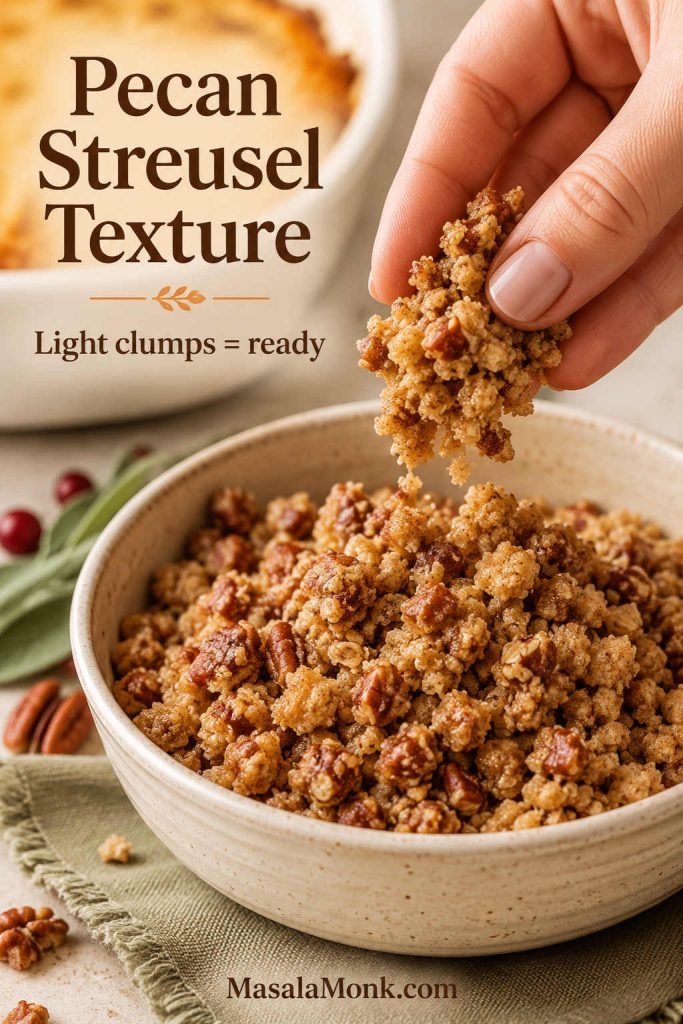
If the streusel clumps lightly when squeezed, it has enough butter. If it looks sandy and dry, add the remaining tablespoon before scattering it over the casserole.
Nut-free option: Replace pecans with crushed cornflakes, oat crumble, or plain brown sugar crumble.
For the Marshmallow Topping
Mini marshmallows are easiest to distribute and brown more evenly than large ones. Use 2–3 cups for a 9×13 casserole, depending on whether you want a light scattered top or a full classic layer.
If you only have large marshmallows, cut them into smaller pieces before adding them. Whole large marshmallows brown unevenly and can make the top patchy.
MasalaMonk note: When using both pecans and marshmallows, bake the pecan layer first and add marshmallows at the end. That gives you buttery crunch underneath and soft toasted pockets on top.
Fresh Sweet Potatoes or Canned Yams: Which Should You Use?
Fresh sweet potatoes give the deepest flavor and the most control over texture. Shortcut cans are faster and completely useful when you are cooking a big meal and need one less thing to peel, chop, boil, or roast.
The goal is not to prove anything; it is to get a creamy, well-balanced casserole on the table. A canned version can still taste intentional when the pieces are drained, mashed gently, seasoned well, and kept thick enough before baking.
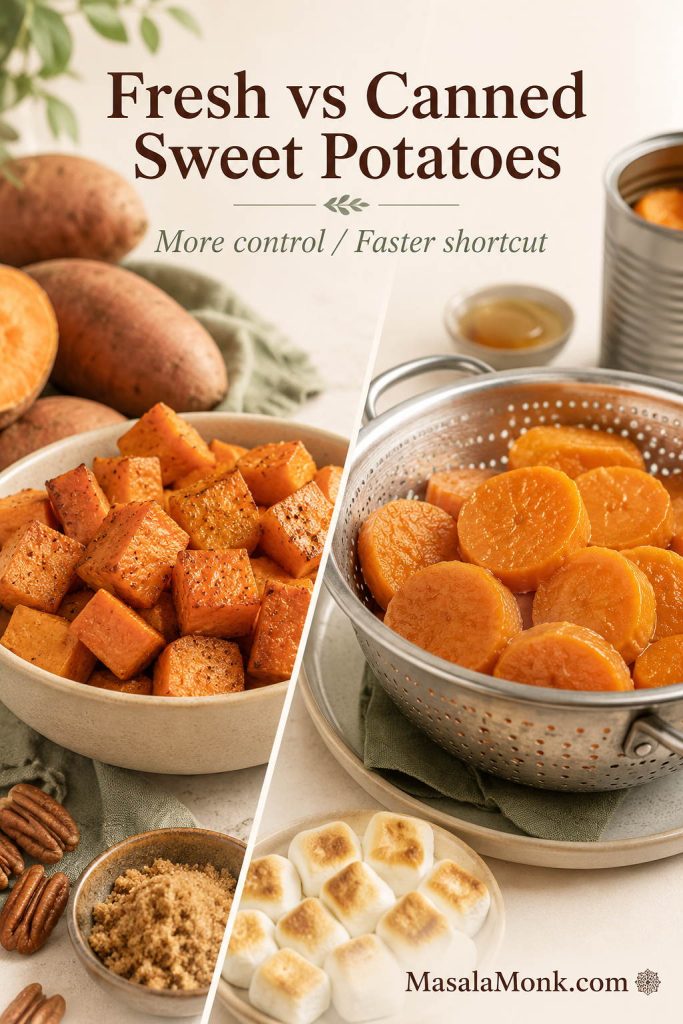
Canned-yam shortcut: Can sizes are only a starting point. Drain first, then measure the mash. Aim for 5–6 cups for a full 9×13 casserole or 3–4 cups for a smaller one.
In many U.S. grocery stores, “canned yams” are usually canned sweet potatoes. True yams are a different root vegetable, but for this style of casserole, most U.S. canned “yams” are the orange sweet potatoes readers expect.
The main difference is moisture and sweetness. Fresh cooked sweet potatoes can be steam-dried or roasted until sturdy. Canned pieces are already tender and may be packed in syrup, so taste before adding the full sugar amount and add milk gradually.
How Many Cans of Yams Do You Need?
For shortcut batches, think in mashed yield rather than can labels alone. Once you know your amount, use the watery-casserole prevention tips before adding milk.
| Starting point | Amount to use | Where it fits |
|---|---|---|
| Fresh sweet potatoes | 3 lb / 1.36 kg | Full 9×13 casserole |
| Cooked mashed sweet potato | 5–6 cups | Same as the main full batch |
| Canned yams or canned sweet potatoes | 2 x 29 oz cans, drained | Full 9×13 canned shortcut |
| Canned yams or canned sweet potatoes | 1 x 40 oz can, drained | Smaller 8×8, 9×9, or 2-quart casserole |
| Small batch mash | 3–4 cups | 6–8 servings |
How to Use Canned Yams Without Making the Casserole Watery
- Let excess syrup run off. A few minutes in a colander helps more than rushing straight to the bowl.
- Start lower on sugar. Syrup-packed cans often need only ¼–⅓ cup brown sugar in the filling.
- Add milk slowly. Stop when the mash looks creamy but still holds soft ridges.
- Mash by hand. A potato masher gives better control than a blender or food processor.
- Taste before topping. The filling should taste pleasantly sweet and slightly salty before the final layer goes on.
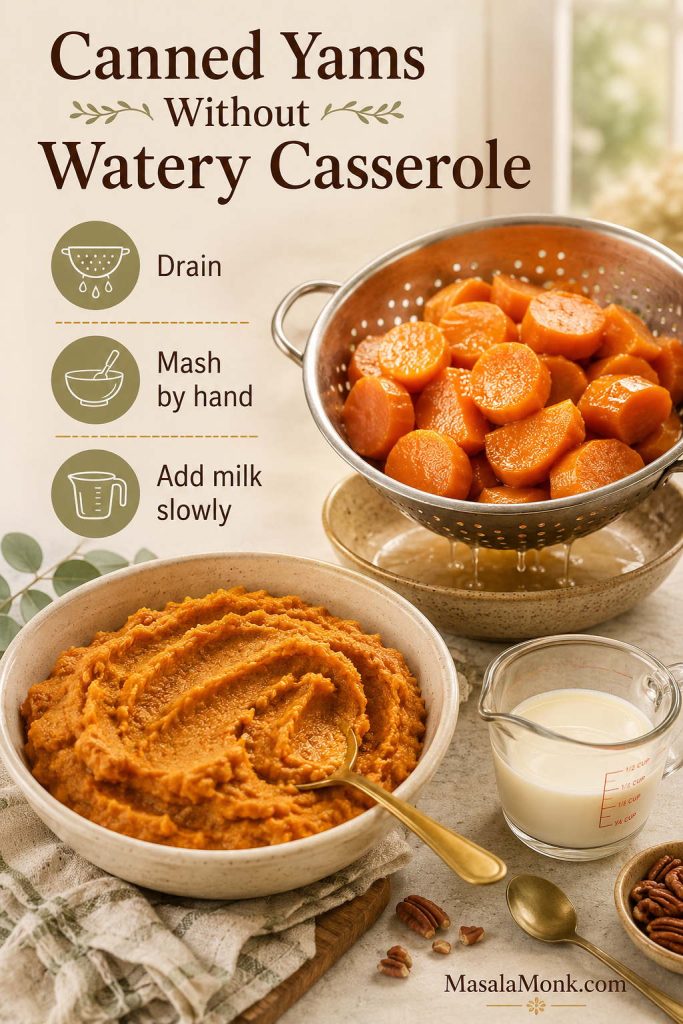
Handled this way, the shortcut does not feel like a compromise. It feels like the calm choice on a crowded cooking day.
What Pan Size Should You Use?
Pan size matters because sweet potato casserole should be deep enough to stay creamy, but not so deep that the center stays cold while the top browns. A too-deep pan is one of the quiet reasons casseroles come out cold in the middle.
Do not overthink the dish, but do respect the depth. A shallow casserole heats faster and gives you more topping in every scoop; a deeper one stays creamier but needs more time.
| Dish size | Sweet potato mash amount | Works well for | Approx. servings |
|---|---|---|---|
| 8×8-inch or 9×9-inch dish | 3–4 cups | Small batch, canned-yam version, smaller gathering | 6–8 |
| 2-quart baking dish | 3–4 cups | Classic smaller casserole | 6–8 |
| 9×13-inch / 3-quart dish | 5–6 cups | Full side-dish batch | 10–12 |
| Half batch | 2½–3 cups | Small family side | 5–6 |
| Mini batch | 1½–2 cups | Two to four people | 2–4 |
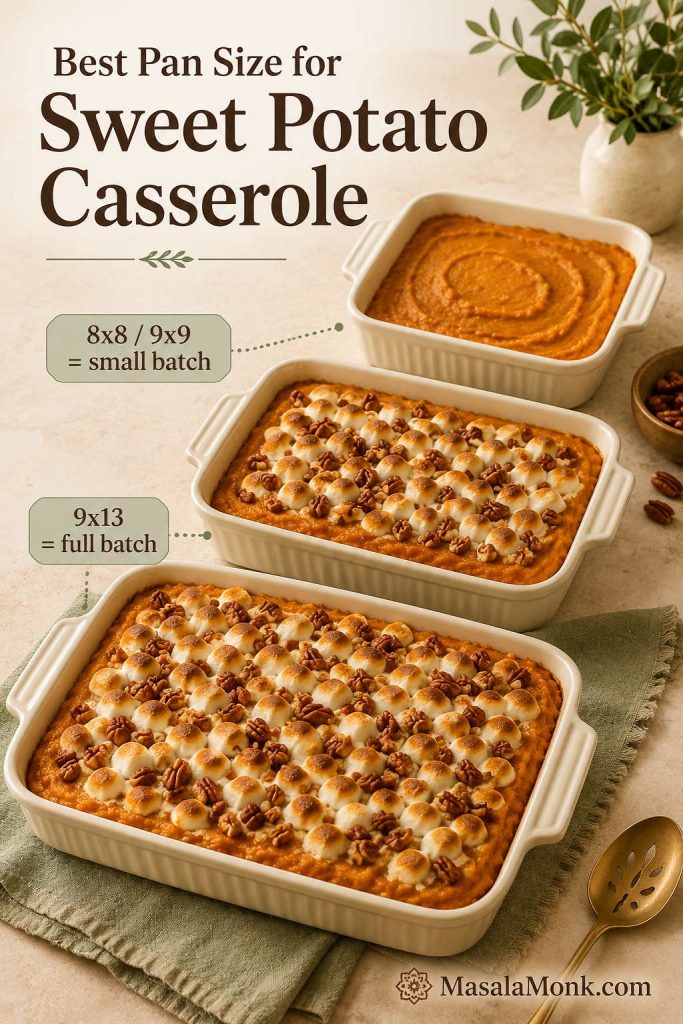
If you are using a deeper dish or baking from cold, the fridge-to-oven timing guide will help you avoid a cold center.
For most families, the 9×13 version is the most practical full batch. For a smaller dinner, the 8×8 version feels more generous because every scoop gets topping.
If your casserole is in a deeper dish, expect it to take longer to heat through. If it is in a wider, shallower dish, the topping may brown faster. Either way, the center should be hot before you call it done.
If you like this kind of full-pan side, MasalaMonk’s hashbrown casserole follows a similar 9×13 comfort-food logic, but moves in a savory, cheesy potato direction instead of a sweet one.
Roast, Boil, Steam, or Open a Can?
There is no single correct way to prepare the sweet potatoes. The right method depends on the kind of cooking day you are having: slow and flavor-focused, or busy and shortcut-friendly.
| Method | Timing | Choose this if | Watch for |
|---|---|---|---|
| Roasting | 425°F / 220°C for 40–50 minutes, depending size | You want a more concentrated flavor and a sturdier mash | Takes longer; cool slightly before scooping and mashing |
| Boiling | 12–20 minutes for peeled chunks | You want the fastest fresh method | Drain very well and steam-dry 3–5 minutes before mashing |
| Steaming | 15–25 minutes, depending chunk size | You want good texture with less water absorption than boiling | Needs a steamer basket or enough pot space |
| Drained canned sweet potatoes or yams | No cooking before mixing, just drain and mash | You want the fastest shortcut | Reduce sugar and add liquid gradually |
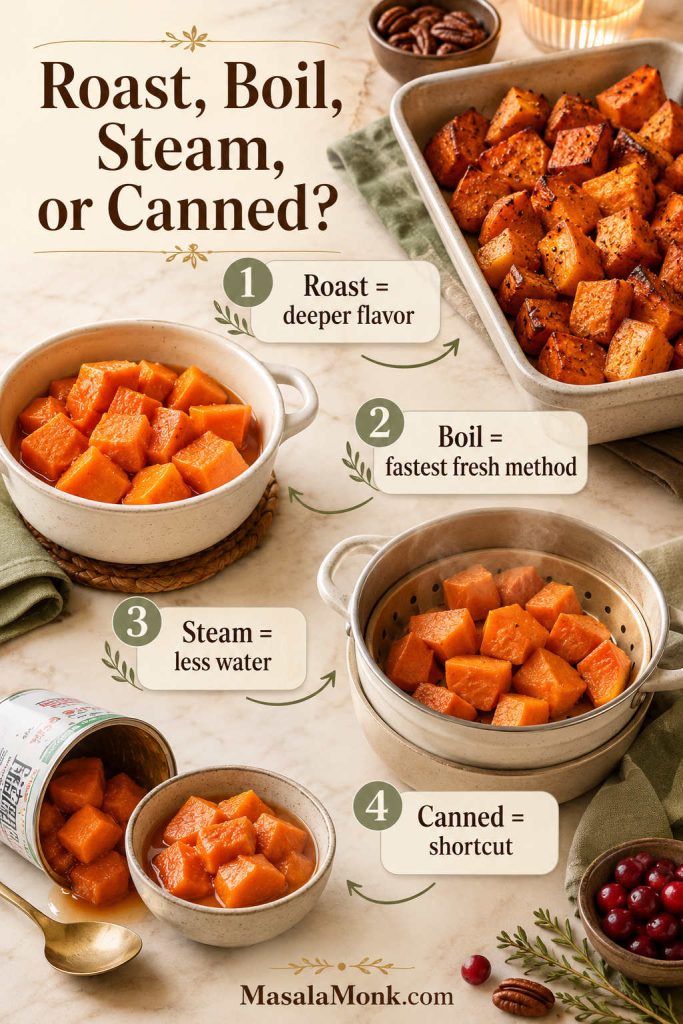
If you have time, roasting gives a more concentrated flavor because the sweet potatoes lose some moisture and become naturally sweeter. If you need the practical version, boiling peeled cubes is faster and still works well as long as you let them steam-dry before mixing.
You do not need to heavily salt the cooking water because the filling is seasoned after mashing.
Marshmallows, Pecans, or Both?
This is where family opinions usually show up. Some people want the marshmallows they grew up with; others want pecans, crunch, and less sweetness. The base recipe is flexible enough to satisfy both camps without making two casseroles.
| Topping | Choose this if | What it brings |
|---|---|---|
| Mini marshmallows | You want the classic nostalgic version | Soft, sweet, toasted pockets |
| Pecan streusel | You want crunch and less dessert-heavy sweetness | Buttery texture and a sweet-salty edge |
| Pecans + marshmallows | You want a reliable crowd compromise | Crunch underneath, golden marshmallows on top |
| No marshmallows | You want a more savory-table-friendly casserole | A less dessert-like finish |
| Nut-free topping | You are serving a table with nut allergies | Crunch from cornflakes or oats, or softness from marshmallows |
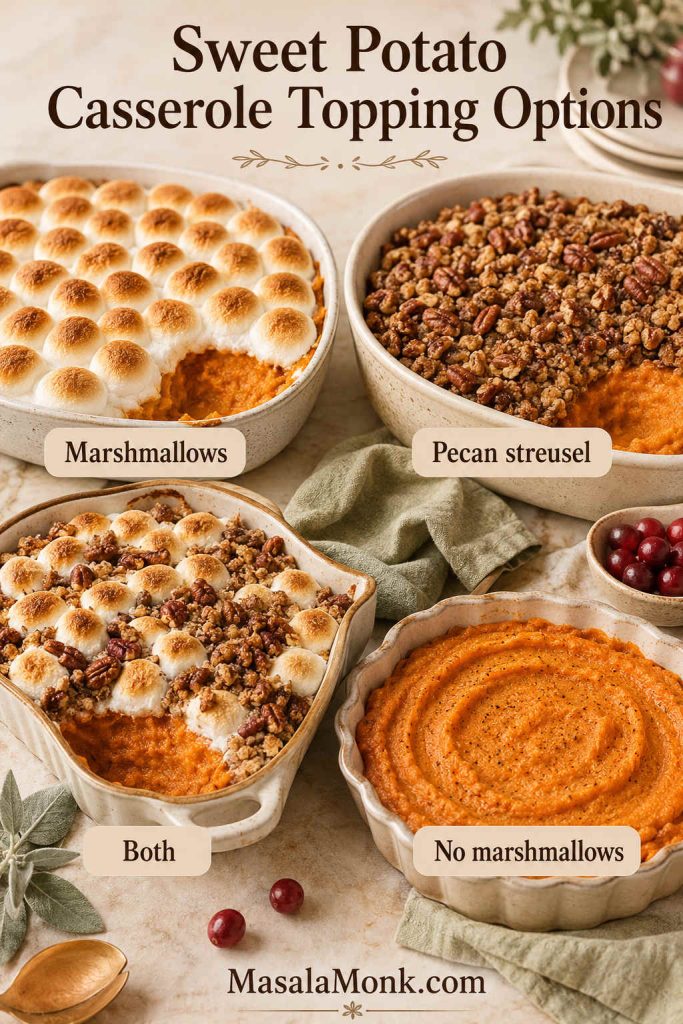
Marshmallows vs Pecans: Which Topping Fits Your Table?
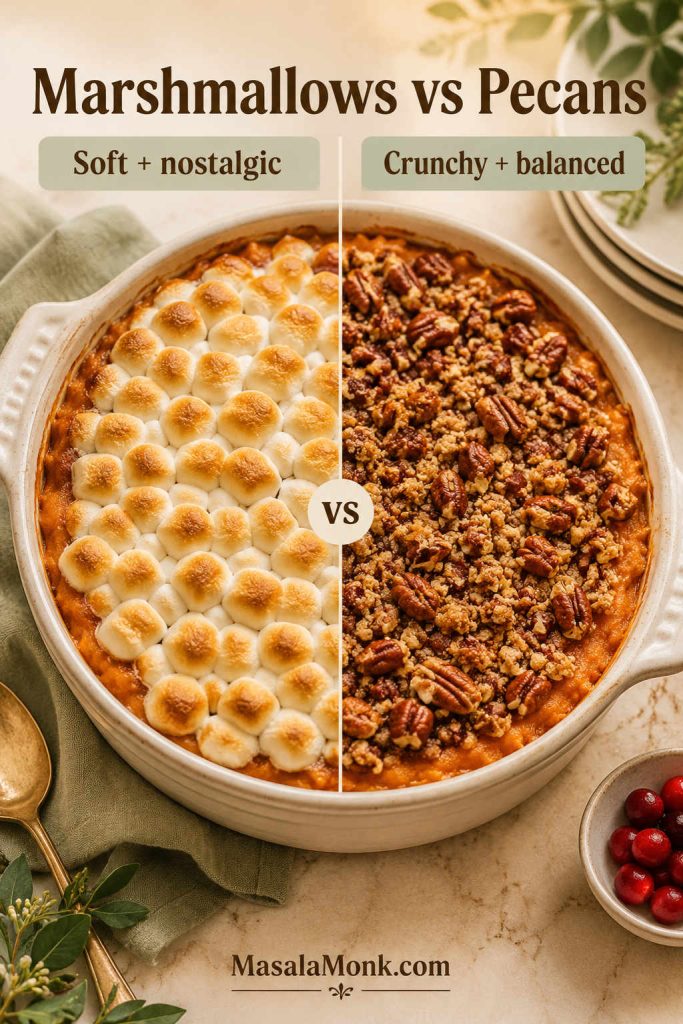
Once you choose the topping, check the pecan streusel texture cue or when to add marshmallows so the top bakes correctly.
If you are unsure, the pecan-plus-marshmallow version keeps both camps happy: buttery crumble for the people who want texture, and toasted marshmallows for the people who would miss them.
Marshmallow Topping
Marshmallows are the classic choice for many tables. Let the casserole get hot first, then give the marshmallows just enough oven time to puff, brown, and stay visible on the surface.
Pecan Streusel Topping
Pecan streusel turns the casserole into something more textured and less dessert-heavy. The best spoonfuls have creamy sweet potato underneath and a little buttery crunch on top.
If You Do Not Want Marshmallows
Skip them and use pecan streusel, oat crumble, cornflake crumble, or a savory breadcrumb topping. This is the path for a table that wants sweet potatoes to stay firmly beside the savory food.
Broiler warning: If you use the broiler to brown marshmallows, stay at the oven. They can go from golden to scorched in seconds. Broil for 30–90 seconds only, watching constantly.
How Sweet Should It Be?
Sweet potato casserole sits in a funny place: it is a side dish, but it often shares ingredients with dessert. This is where a lot of casseroles go wrong: the filling is sweetened like dessert, then covered with an even sweeter topping.
Start with the kind of dish you want, then choose the sugar level. If you are using marshmallows or syrup-packed cans, the filling usually needs less sugar than you think.
| Style | Brown sugar in filling | Topping idea | Result |
|---|---|---|---|
| Less sweet | ¼–⅓ cup / 50–65 g | Pecan, oat, cornflake, or savory crumb | More like a side dish |
| Balanced | ⅓ cup / about 65–70 g | Pecans, marshmallows, or both | Sweet but not candy-like |
| Classic sweet | ½ cup / 100 g | Marshmallows or pecan streusel | Traditional sweetness |
| Dessert-like | ½ cup or more | Marshmallows plus sweeter streusel | Very sweet, closer to pie filling |
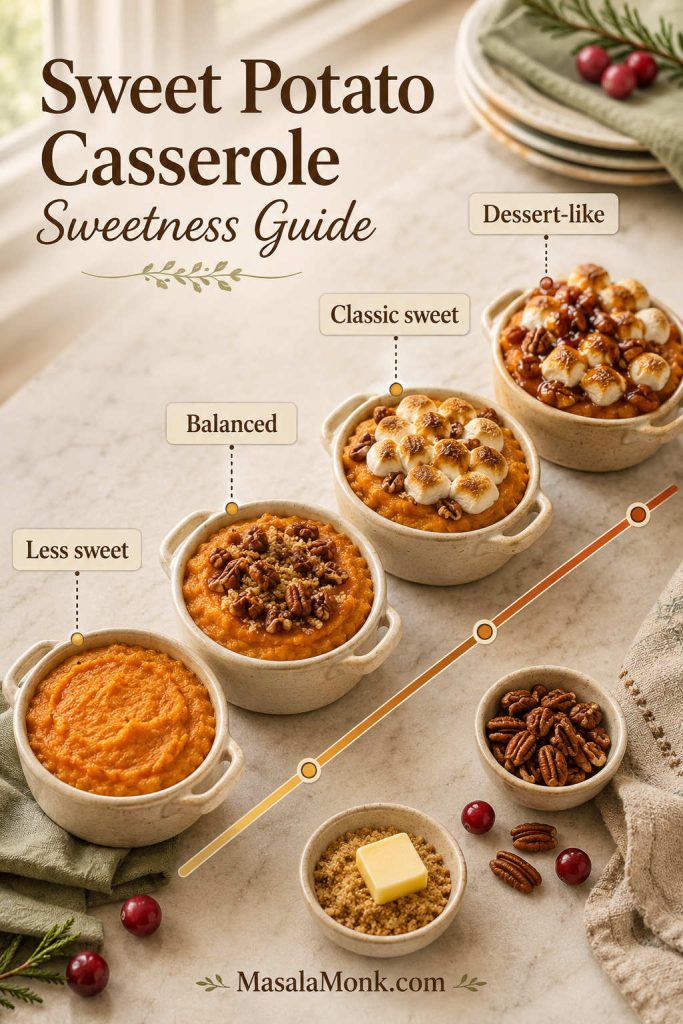
If you are starting with syrup-packed cans, revisit the canned-yam notes before adding the full sugar amount.
For most tables, ⅓ cup brown sugar in the filling is the safest starting point. It leaves room for a sweet topping without making the whole dish feel heavy. If you are nervous about sweetness, start lower. You can always make the topping sweeter, but you cannot easily pull sugar back once the filling is mixed.
Texture Target Before You Bake
Look for this: The mash should be thick, creamy, and able to hold soft ridges when you drag a spoon through it. It should not pour like soup. After baking, the edges should look hot and slightly puffed, the center should be hot, and the casserole should rest 10–15 minutes before serving.
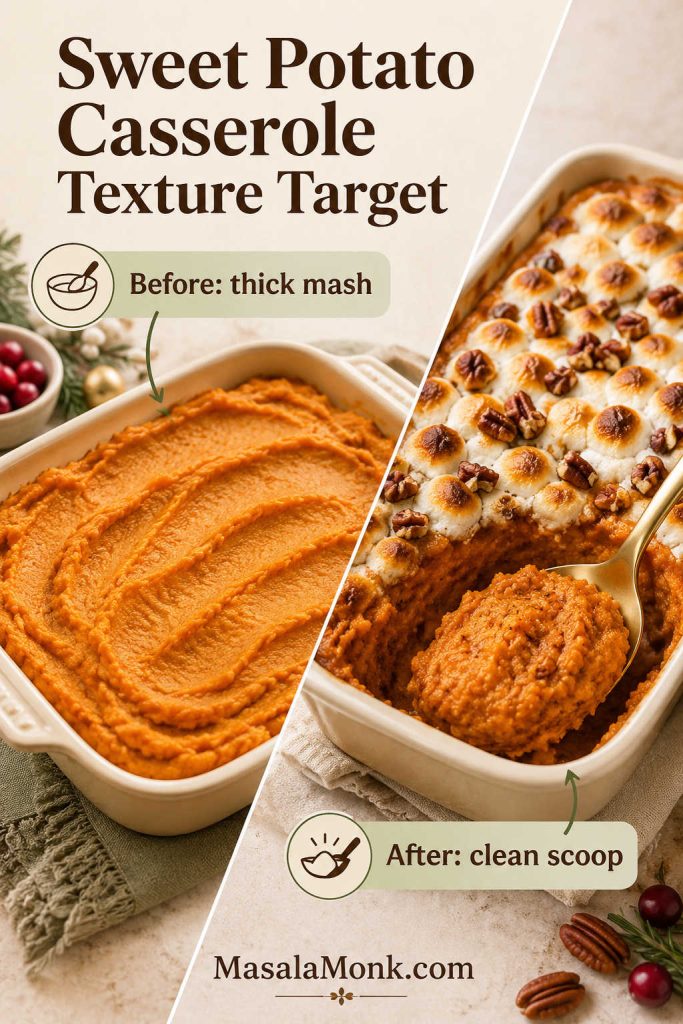
This is the quiet moment where the casserole is either set up for success or headed toward watery. When the base is thick before baking and fully hot before serving, the first scoop feels generous: soft, creamy, and steady enough to hold its place on the plate.
How to Make Sweet Potato Casserole
This is the main fresh-sweet-potato method. Use the canned-yam notes above if you are starting with canned sweet potatoes.
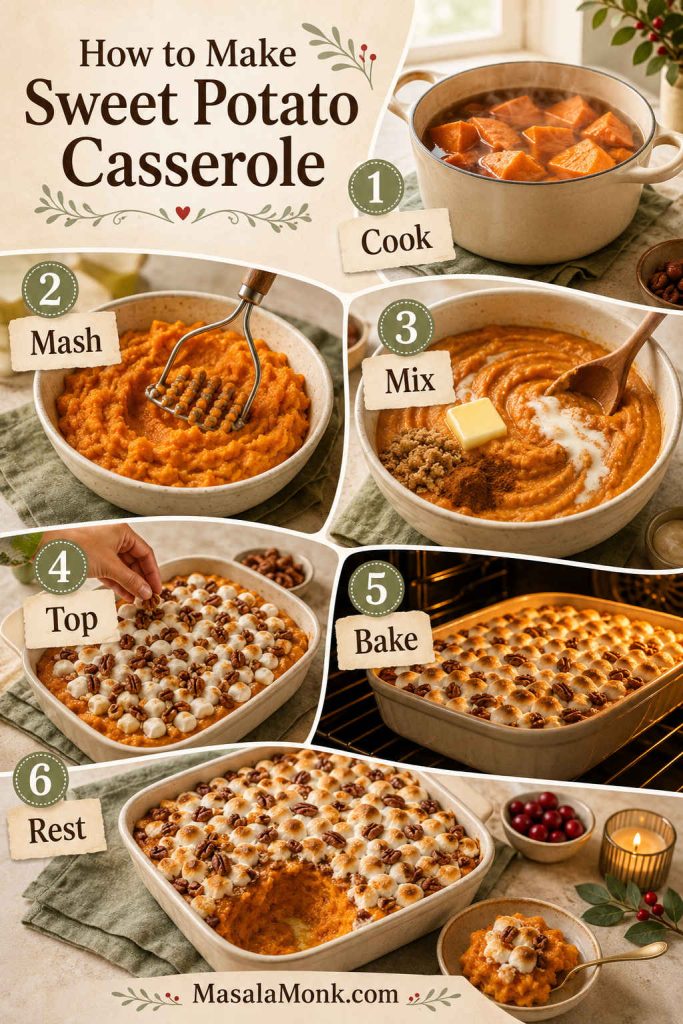
Step 1: Cook the Sweet Potatoes
Peel the sweet potatoes and cut them into even chunks. Add them to a large pot, cover with water, and simmer until fork-tender, usually 12–20 minutes depending on the size of the pieces. Drain very well, then let them sit in the hot pot for 3–5 minutes so extra steam can escape.
If roasting, halve the sweet potatoes or roast them whole at 425°F / 220°C until completely tender, usually 40–50 minutes depending on size. Let them cool slightly, then scoop out the flesh. Roasting takes longer, but it gives a thicker, more flavorful mash.
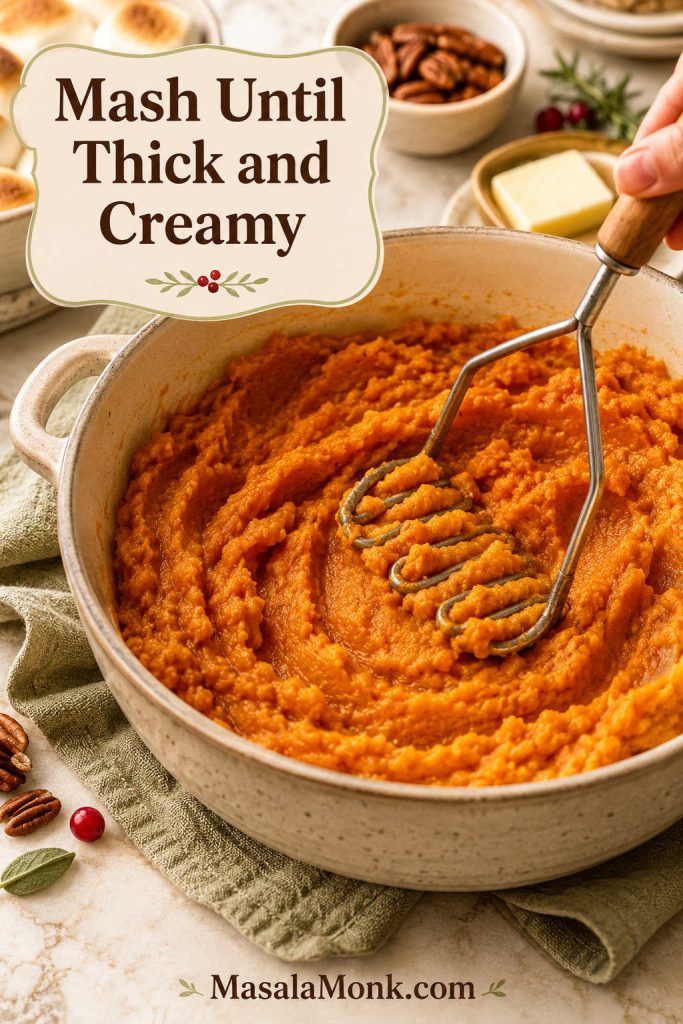
Step 2: Mash Until Thick and Mostly Smooth
Mash the cooked sweet potatoes with a potato masher until mostly smooth. A few small soft pieces are fine. Avoid over-processing in a food processor, especially if your potatoes are very moist, because the filling can become too loose.
Stop when the mash looks creamy and holds soft ridges. If it levels out immediately, wait before adding more milk.
Step 3: Add Butter, Sugar, Milk, Vanilla, Spices, and Salt
Stir in melted butter, brown sugar, milk or cream, vanilla, cinnamon, nutmeg, and salt. Start with the lower sugar amount if you prefer a less-sweet casserole, if you plan to use marshmallows, or if your shortcut yams were packed in syrup.
Taste the filling before adding the eggs. Once the eggs go in, it is better not to keep tasting the raw mixture.
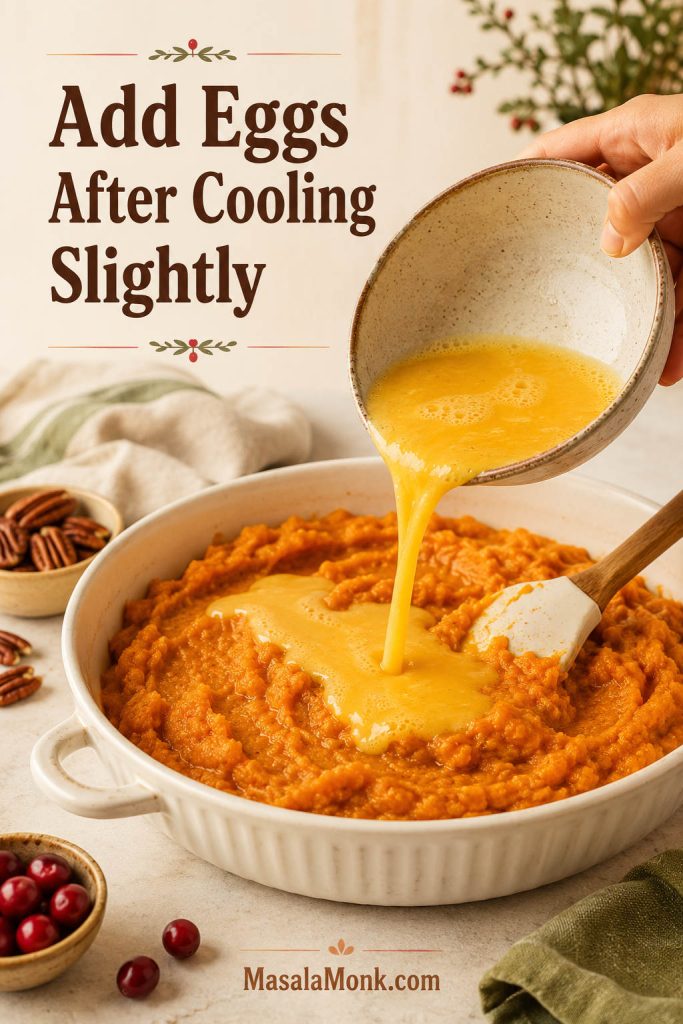
Step 4: Cool Slightly, Then Add Eggs
Let the mash cool for a few minutes before stirring in the eggs. The potatoes can be warm, but they should not be steaming hot. This prevents the eggs from scrambling and helps them blend smoothly into the filling.
If you are making the casserole without eggs, skip this step and use a little less milk so the filling stays sturdy.
Step 5: Spread in the Baking Dish
Grease a 9×13-inch / 3-quart baking dish and spread the filling evenly. Smooth the top, but do not pack it down too firmly. This is a scoopable casserole, not a sliceable cake.
If using a smaller 8×8, 9×9, or 2-quart dish, use 3–4 cups mashed sweet potato instead of the full 5–6 cups.
Step 6: Add the Topping
Sprinkle pecan streusel evenly over the casserole before baking. If using marshmallows only, bake the filling until nearly hot first. With both toppings, start with the pecan layer and finish with marshmallows.
Pecan Streusel Texture Cue
When to Add Marshmallows
Step 7: Bake Until Hot and Lightly Set
Bake at 350°F / 175°C until the filling is hot in the center and the topping looks golden. A room-temperature casserole usually takes 30–35 minutes. A chilled make-ahead casserole may need 40–50 minutes, especially if it goes into the oven straight from the fridge.
Because this filling contains eggs, you can check the center with an instant-read thermometer if you want precision: it should reach 165°F / 74°C. If the topping is ready but the center is not, cover the top loosely with foil and keep baking.
Step 8: Rest Before Serving
Let the casserole rest for 10–15 minutes before serving. This helps the filling settle, makes it easier to scoop, and lets the streusel firm up slightly. The first spoonful should look creamy and generous, not watery or collapsed.
At the table, the best scoop should feel soft underneath, with just enough golden crunch or toasted marshmallow on top to remind everyone why this dish always disappears.
Sweet Potato Casserole Recipe
This sweet potato casserole is creamy, lightly set, and flexible enough for marshmallows, pecan streusel, or both. For the most crowd-friendly version, use pecan streusel with marshmallows added near the end, but either topping works on its own.
Servings: 10–12 | Oven: 350°F / 175°C | Dish: 9×13-inch / 3-quart baking dish
Total time is based on boiling the sweet potatoes and baking the casserole right away. If roasting, add about 25–30 minutes. If baking from chilled, allow 40–50 minutes of bake time. Let the casserole rest 10–15 minutes before serving.
Equipment
- 9×13-inch / 3-quart baking dish
- Large pot or sheet pan
- Potato masher
- Mixing bowls
- Measuring cups and spoons
- Foil, if making ahead or reheating
- Instant-read thermometer, optional
Ingredients
For the Sweet Potato Filling
- 3 lb / 1.36 kg fresh sweet potatoes, peeled and cut into chunks, or 2 x 29 oz cans of canned yams, drained, aiming for 5–6 cups mashed
- 4 tbsp / 57 g butter, melted
- ⅓–½ cup / 65–100 g brown sugar, depending on sweetness preference
- ⅓ cup / 80 ml milk, half-and-half, cream, or evaporated milk
- 2 large eggs, lightly beaten
- 1 tsp / 5 ml vanilla extract
- 1 tsp ground cinnamon
- ⅛–¼ tsp ground nutmeg, optional
- ¾ tsp fine salt, or to taste
For the Pecan Streusel Topping
- 1 cup / 100–115 g chopped pecans
- ½ cup / 100 g brown sugar
- ⅓ cup / 42 g all-purpose flour
- 5–6 tbsp / 70–85 g butter, melted
- ½ tsp ground cinnamon
- Pinch of salt
Nut-free option: Replace pecans with crushed cornflakes, oat crumble, or plain brown sugar crumble.
For the Marshmallow Topping
- 2–3 cups mini marshmallows / about 100–150 g
Instructions
Cook and Mix the Filling
- Cook the sweet potatoes. Add the peeled sweet potato chunks to a large pot and cover with water. Bring to a boil, then simmer until fork-tender, about 12–20 minutes. Drain very well and let the potatoes steam-dry in the hot pot for 3–5 minutes. If using canned yams, drain them very well and skip to mashing.
- Preheat the oven. Heat the oven to 350°F / 175°C. Grease a 9×13-inch / 3-quart baking dish.
- Mash the sweet potatoes. Mash until mostly smooth. A few small soft pieces are fine, but avoid leaving large chunks.
- Mix the filling. Stir in melted butter, brown sugar, milk or cream, vanilla, cinnamon, nutmeg, and salt. Taste and adjust sweetness or salt before adding eggs.
- Add the eggs. Let the mash cool slightly, then stir in the beaten eggs until evenly mixed. Do not add eggs to steaming-hot potatoes.
- Fill the dish. Spread the sweet potato filling evenly in the prepared baking dish.
Top, Bake, and Rest
- Make the pecan topping, if using. In a bowl, mix pecans, brown sugar, flour, 5 tablespoons melted butter, cinnamon, and salt until crumbly. Add the 6th tablespoon of butter only if the mixture still looks dry. Sprinkle over the sweet potato filling.
- Bake the casserole. Bake with the streusel on top if using pecan topping. For marshmallows only, bake the filling for about 20–25 minutes first, until nearly hot. A refrigerated casserole may need about 40–50 minutes total bake time, covered loosely if the top browns too quickly. For egg-based doneness, the center should reach 165°F / 74°C.
- Add marshmallows near the end. Scatter marshmallows over the hot or nearly hot casserole during the last 8–10 minutes of baking. If using both pecans and marshmallows, add them over the baked streusel. Bake until puffed and golden.
- Rest and serve. Let the casserole rest for 10–15 minutes before serving.
Recipe Notes
- Shortcut canned version: Use 2 x 29 oz cans for a full 9×13 batch, or 1 x 40 oz can for a smaller 8×8 or 9×9 batch. Drain well and aim for 5–6 cups mashed.
- Roasted sweet potatoes: Roast whole or halved sweet potatoes at 425°F / 220°C for 40–50 minutes, then scoop and mash.
- Less sweet: Start with ¼–⅓ cup brown sugar, especially if using syrup-packed cans or marshmallows.
- Nut-free: Use marshmallows, oat crumble, cornflake crumble, or plain brown sugar crumble instead of pecans.
- No egg: Omit the eggs and reduce the milk slightly. The casserole will be softer and more spoonable.
- Make-ahead: Prepare the filling 1–2 days ahead and refrigerate covered without topping. Add topping before baking.
- Storage: Refrigerate leftovers for 3–4 days. Freeze the base without topping for up to 3 months.
Make-Ahead Timeline
Sweet potato casserole is one of the easier big-meal sides to make ahead because the filling holds well in the fridge. The most reliable make-ahead version is not the one where everything is assembled as early as possible. It is the one where the filling waits calmly and the topping stays fresh until the final bake.
Holiday timing plan: Make the filling 1–2 days ahead, mix the topping the morning of serving, bake the chilled casserole 60–75 minutes before dinner, add marshmallows near the end if using them, then rest before serving.
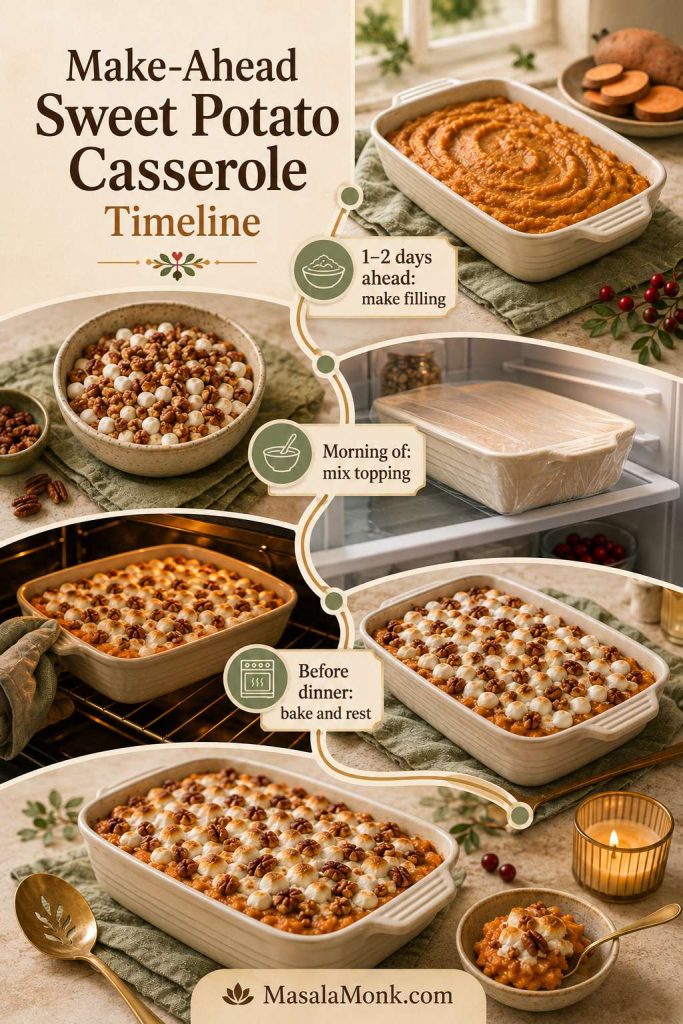
| When | What to do |
|---|---|
| 2 days before | Cook, drain, and mash the sweet potatoes. Refrigerate the mash in an airtight container. |
| 1 day before | Mix the filling and spread it in the baking dish. Cover and refrigerate without topping. |
| Morning of serving | Mix the pecan streusel separately if using. Keep marshmallows in the bag until needed. |
| 60–75 minutes before serving | Bake the chilled casserole until hot through, allowing extra time for topping and resting. |
| Near the end of baking | Finish any marshmallow topping until puffed and golden. |
| Before serving | Rest 10–15 minutes so the filling settles and the topping has a moment to firm up. |
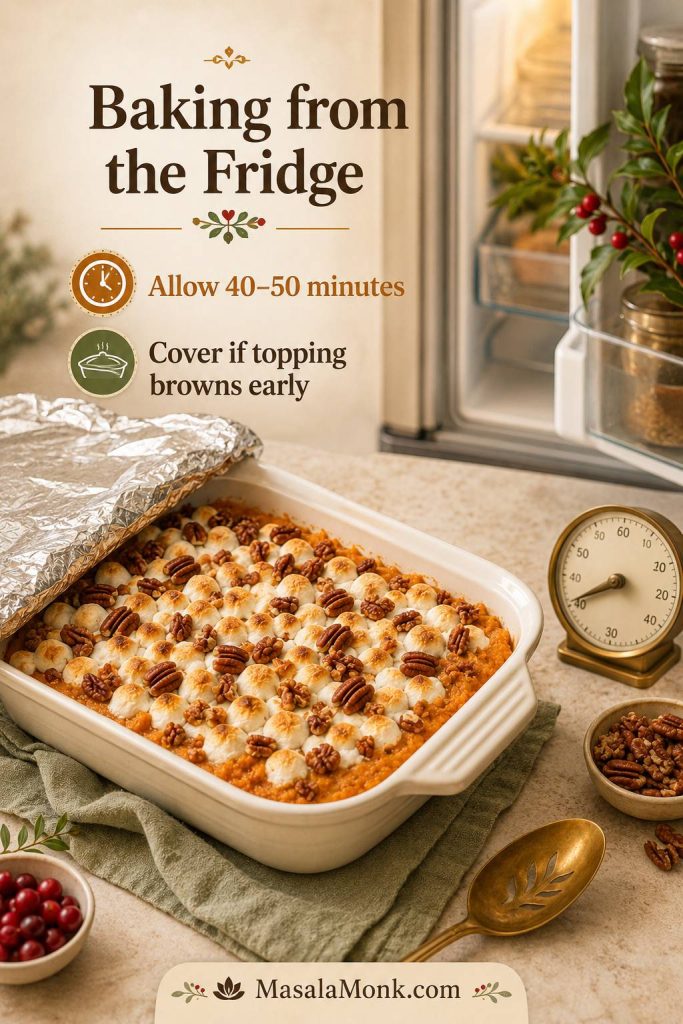
If the assembled casserole is going straight from the refrigerator to the oven, use the baking-from-the-fridge guide before planning your final topping.
This is also a good moment to handle other make-ahead sides. A bright cranberry sauce with orange juice can be made ahead and chilled, which helps keep the final cooking window focused on dishes that need the oven.
That small separation — filling ready, topping fresh — keeps the casserole from tasting like leftovers before dinner even starts.
Should You Add Marshmallows Before Refrigerating?
No. Marshmallows should be added right before the final part of baking. If they sit on the casserole overnight, they can absorb moisture, collapse, or melt unevenly in the oven.
Can You Add Pecan Topping Ahead?
You can, but the texture is better if you store the topping separately and sprinkle it on before baking. If the topping sits on the filling overnight, it may absorb moisture and bake up softer.
Can You Bake It Straight from the Fridge?
Yes, but allow 40–50 minutes of bake time if the casserole is cold from the fridge. If your baking dish is not safe for sudden temperature changes, let it sit at room temperature for about 30 minutes before baking.
How to Fit It Into a Busy Oven
Sweet potato casserole is usually not the only thing fighting for oven space. The good news is that it is flexible. It can bake at 350°F / 175°C with many other sides, sit for a short rest before serving, or be baked earlier and reheated gently.
If you are also baking green bean casserole, keep both dishes on the same 350°F / 175°C schedule when possible. The sweet potato casserole can rest while another side finishes, and marshmallows can still go on at the very end.
Best Timing Paths for a Crowded Oven
- At 350°F / 175°C: Bake as written. This is the most forgiving temperature for the casserole.
- For a hotter oven: Check early and cover loosely if the topping browns before the center is hot.
- Already baked: Reheat covered at 325–350°F until hot, then uncover briefly to refresh the topping.
- Using marshmallows: Add them only after the filling is hot or nearly hot, especially when reheating.
- When oven space is tight: Use the slow cooker to warm or hold the filling, then broil marshmallows in a baking dish if you want a toasted top.
- When dinner is delayed: Keep the casserole loosely covered in a warm spot, but avoid sealing it tightly while hot because trapped steam softens the topping.
How to Finish the Topping Before Serving
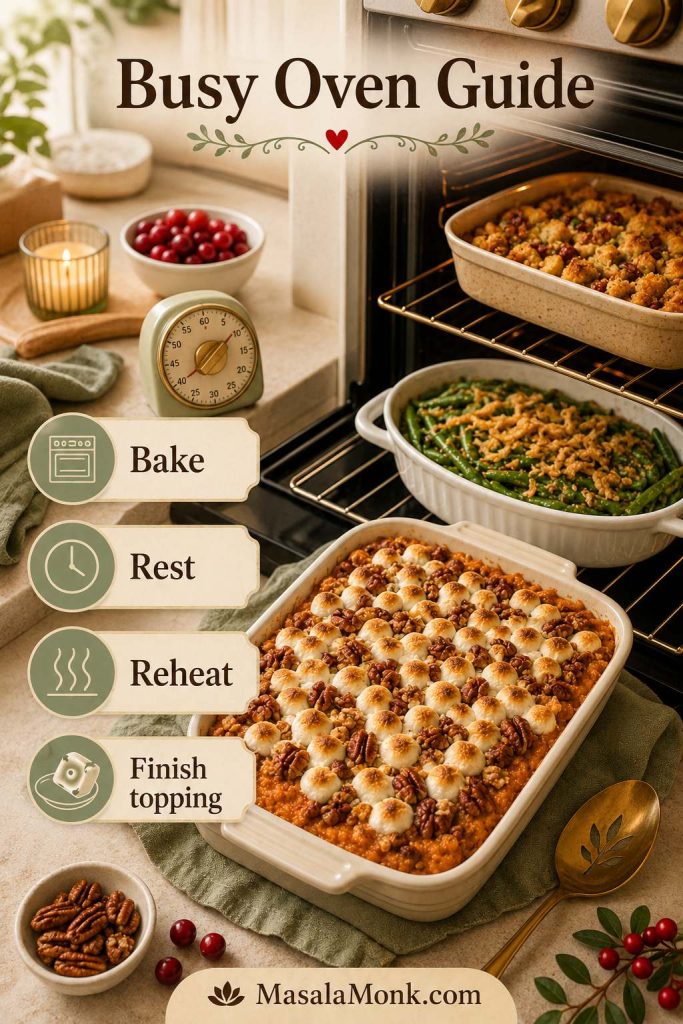
If oven space is the main problem, the slow cooker option can hold the base while other sides finish.
Think of the casserole as a side that can wait a little. Bake it before the final rush, rest it while other dishes finish, and add marshmallows late enough that they still look fresh when it reaches the table.
If the casserole is running late, do not rush the marshmallows. Get the filling hot first. A pale marshmallow topping can be browned in a minute, but a cold center cannot be fixed at the table.
Slow Cooker Sweet Potato Casserole Option
The slow cooker is useful when the oven is full, but it changes the topping. Think of it as a warming tool here, not the place to create a crisp top. It keeps the sweet potato base warm and soft, but pecan streusel will not crisp the way it does in the oven, and marshmallows will become gooey rather than deeply toasted.
Use this route when oven space matters more than a perfect topping. Then, if you want the golden holiday look, transfer the hot filling to a baking dish and finish it under the broiler.
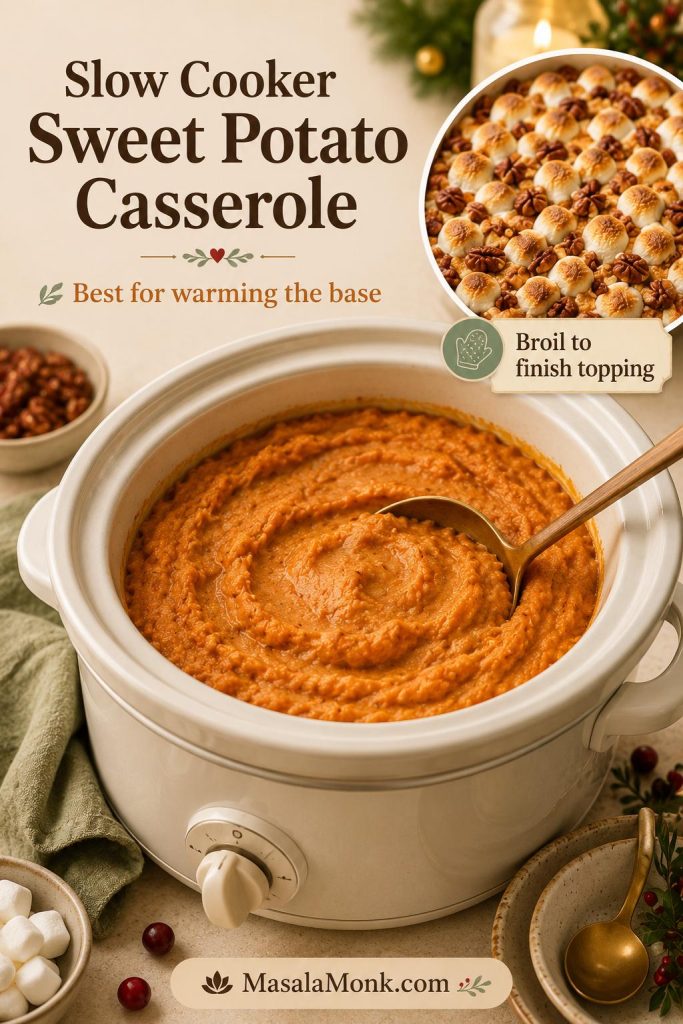
| Slow cooker situation | Timing | What to know |
|---|---|---|
| Prepared filling, already cooked sweet potatoes | Low for 2–3 hours, or high for 1–1½ hours | Good for warming and holding the casserole base |
| Marshmallows in slow cooker | Last 10–15 minutes only | They soften and melt; they will not toast like oven marshmallows |
| Pecan topping in slow cooker | Add near the end or finish in oven | Expect a softer topping unless broiled or baked briefly |
For the most practical slow cooker version, prepare the sweet potato filling and spread it in a greased slow cooker. Warm until hot through. If condensation is dripping onto the topping, place a clean kitchen towel under the lid, making sure it does not touch the heating element.
No Egg, Vegan, Dairy-Free, and Other Easy Swaps
The base recipe is classic, but it is easy to adapt. Keep the sweet potato mash thick, add liquids gradually, and choose a topping that fits the version you need.
| Need | How to adjust | Texture note |
|---|---|---|
| No egg | Omit the eggs and reduce the milk slightly | Softer and more spoonable, less set |
| Vegan | Use vegan butter, non-dairy milk, no eggs, and vegan marshmallows if using | Keep the mash thick so the filling does not loosen |
| Dairy-free | Use dairy-free butter and oat milk, almond milk, coconut milk, or another non-dairy milk | Coconut milk gives richer flavor; oat milk is more neutral |
| Gluten-free | Use gluten-free flour, oat flour, or certified gluten-free oats in the topping | Check all topping ingredients if serving someone with a strict allergy or intolerance |
| Nut-free | Use marshmallows, oat crumble, cornflake topping, or plain brown sugar crumble | Cornflakes give the most crisp, sweet-salty crunch without pecans |
| Less sweet | Use ¼–⅓ cup brown sugar, skip marshmallows, and use pecan or oat topping | Add enough salt, cinnamon, and vanilla so the flavor still feels full |
| No marshmallows | Use pecan streusel, oat crumble, cornflake topping, or savory crumb topping | Good when you want a side dish, not a dessert-like casserole |
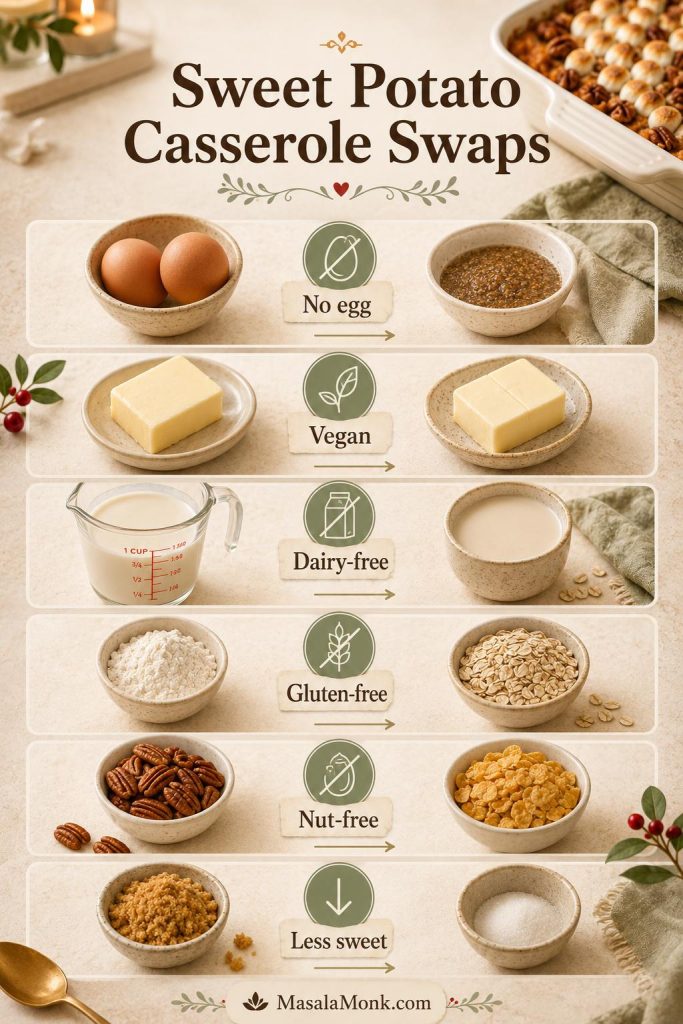
Regular marshmallows often contain gelatin, so check the label if the dish needs to be vegetarian or vegan. For gluten-free guests, use certified gluten-free oats if you choose an oat topping, and check packaged ingredients carefully.
Flavor Variations
- Brighter: Add orange zest or fold in a few small pieces of tart apple. Use orange juice sparingly because too much can thin the filling.
- Maple-sweet: Replace part of the brown sugar with maple syrup, then reduce the milk slightly if the filling loosens.
- Fruitier: Add well-drained crushed pineapple for a sweeter, old-fashioned variation.
- More savory: Skip the sugar and marshmallows. Use butter, herbs, black pepper, and a savory breadcrumb or pecan topping.
- Praline-style: Increase the pecans and brown sugar for a sweeter, more dessert-like topping.
Sweet Potato Casserole vs Sweet Potato Souffle
Sweet potato casserole and sweet potato souffle are closely related, and you will see the names used loosely, especially in holiday recipes. In general, sweet potato casserole is denser, more spoonable, and more flexible with toppings like marshmallows, pecans, or both.
Sweet potato souffle is usually smoother, lighter, and more egg-based. It often has a pecan topping and a more custardy interior. This recipe sits firmly in classic casserole territory: creamy and lightly set, but not so airy or eggy that it becomes a true souffle.
Troubleshooting Sweet Potato Casserole
If the casserole does not look perfect halfway through, do not panic. This is a forgiving dish, and most problems come from the same few places: too much moisture, topping added at the wrong time, or sweetness that was not balanced before baking.
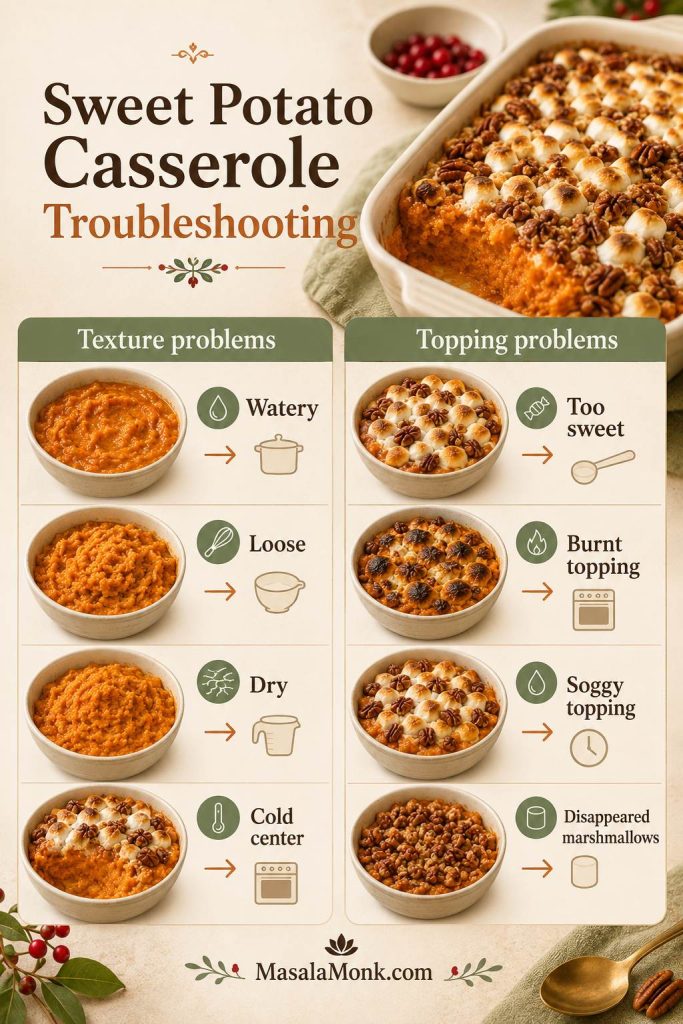
If the problem starts before baking, compare your mash with the texture target; if it starts after chilling, check the fridge-to-oven timing.
Texture and Moisture Problems
| Problem | Why it happened | Fix now | Fix next time |
|---|---|---|---|
| Watery casserole | Potatoes absorbed too much water, the cans were not drained well, or too much milk was added | Bake uncovered a little longer; if the topping is browning, cover only the top loosely with foil | Drain and steam-dry potatoes; drain shortcut yams very well; add liquid gradually |
| Filling is too loose | No eggs, too much liquid, or underbaking | Bake longer and rest before serving | Use eggs or reduce milk slightly for egg-free versions |
| Dry filling | Too little liquid or overbaking | Add a splash of warm milk or melted butter when reheating | Measure liquid carefully and avoid baking long after the center is hot |
| Stringy texture | Fibrous sweet potatoes or not enough mashing | Mash more thoroughly if still possible | Choose good orange-fleshed sweet potatoes and remove tough fibers before mixing |
| Cold center | Casserole went into the oven chilled and did not bake long enough | Cover loosely and continue baking until hot in the center | Add 10–15 minutes when baking from cold |
| Topping browns before filling is hot | Dish was too deep, oven was too hot, or casserole was cold | Cover loosely with foil and keep baking | Let chilled casserole sit out briefly and use the right dish size |
Topping and Sweetness Problems
| Problem | Why it happened | Fix now | Fix next time |
|---|---|---|---|
| Too sweet | Too much sugar, syrup-packed cans, or marshmallow topping | Add a small pinch of salt, then serve small scoops with tart cranberry sauce, green beans, salty ham, or other savory sides | Use ¼–⅓ cup sugar and choose pecan topping instead of marshmallows |
| Burnt marshmallows | Marshmallows were added too early or broiled too long | Remove the darkest pieces if needed | Add marshmallows only during the last 8–10 minutes and watch closely |
| Marshmallows disappeared | They were added too early or the filling was too wet | Add a fresh layer and bake briefly | Add marshmallows near the end and make sure the filling is thick |
| Soggy pecan topping | Topping sat on the filling too long or absorbed refrigerator moisture | Return to the oven uncovered for a few minutes, or broil briefly while watching closely | Store topping separately and add before baking |
Storage, Freezing, and Reheating
Leftover sweet potato casserole stores well, but the topping changes texture over time. The leftovers will still taste good after reheating, but the topping will never be quite as crisp or fluffy as it was on the first day. That is normal.
Marshmallows soften, pecan streusel loses some crunch, and any crumb topping will absorb moisture in the fridge. For general food-safety timing, the USDA’s leftovers and food safety guidance is a useful reference.
- Refrigerator: Store covered for 3–4 days.
- Freezer: Freeze the sweet potato base without topping for up to 3 months.
- Thawing: Thaw the base overnight in the refrigerator before baking or reheating, then add topping fresh.
- Marshmallow topping: Add fresh for the cleanest texture. Marshmallows do not freeze or reheat as cleanly as the filling.
- Pecan topping: Can be frozen separately, but it is crispiest when mixed and baked fresh.
- Oven reheating: Cover and reheat at 325–350°F until steaming hot throughout, then uncover briefly to refresh the topping.
- Microwave reheating: Works for single servings, but the topping will soften.
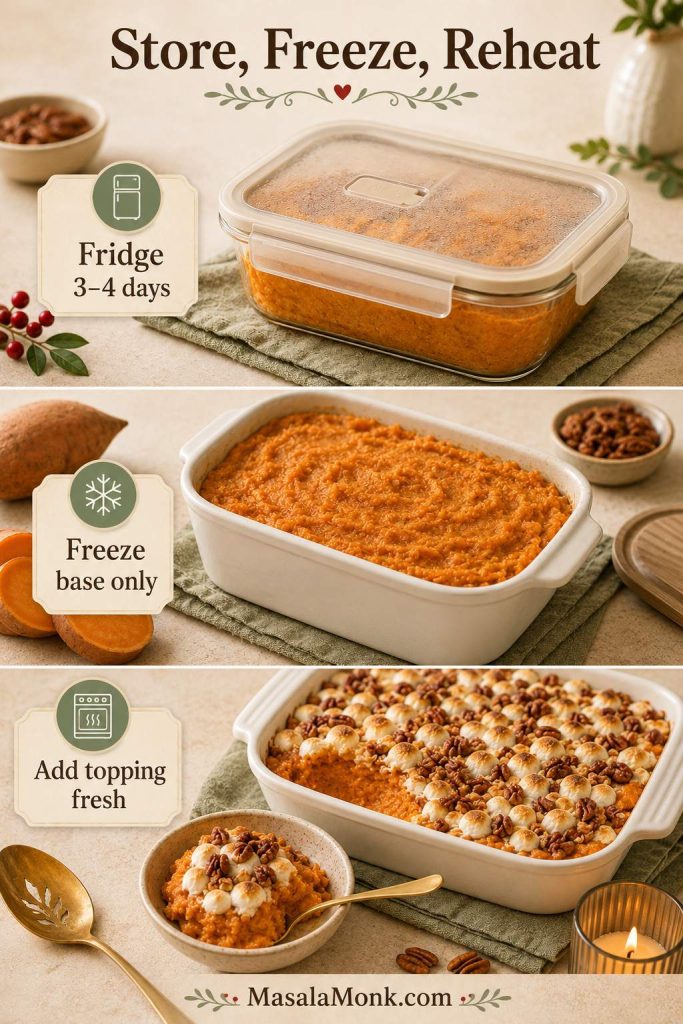
For broader sweet potato freezing guidance, the National Center for Home Food Preservation has a helpful reference on freezing sweet potatoes, including mashed sweet potatoes.
What to Serve With Sweet Potato Casserole
Sweet potato casserole is sweet, rich, and soft, so the rest of the plate should bring contrast. Think savory, tart, crunchy, green, or herb-heavy rather than more soft sweetness.
| Meal | Good plate balance |
|---|---|
| Thanksgiving plate | Turkey, stuffing, green beans, tart cranberry sauce, and a scoop of sweet potato casserole |
| Ham dinner | Salty ham, roasted Brussels sprouts or green beans, sharp mustard or cranberry sauce, and the casserole on the side |
| Vegetarian holiday table | Mushroom gravy, roasted vegetables, green bean casserole, salad, and pecan-topped sweet potato casserole |
| Potluck plate | A small scoop of casserole beside something savory, something crisp, and something acidic so the sweetness does not take over |
For a classic side-dish table, serve it with green vegetables, stuffing, roasted vegetables, a simple savory main, and creamy garlic mashed potatoes. The casserole brings softness and sweetness; the rest of the plate should make it feel complete.
FAQs About Sweet Potato Casserole
Do canned yams work here?
Yes. The canned version works well when you want a faster casserole. Drain the pieces thoroughly, reduce the sugar if they were packed in syrup, and add milk gradually because they are already tender and more delicate than fresh cooked sweet potatoes.
How many cans of yams do I need?
For a full 9×13 casserole, use 2 x 29 oz cans, drained. For a smaller 8×8 or 9×9 casserole, use 1 x 40 oz can, drained. Because drained yield varies, aim for about 5–6 cups mashed sweet potato for a full batch or 3–4 cups for a smaller batch.
When should marshmallows go on top?
Add marshmallows during the last 8–10 minutes of baking, once the filling is hot or nearly hot. This gives them time to puff and brown without melting completely or burning before the center is ready.
How do I keep it from getting watery?
Drain the sweet potatoes well, let boiled potatoes steam-dry before mashing, drain canned yams thoroughly, and add milk gradually. The mash should be creamy but thick before it goes into the baking dish.
How far ahead can I make it?
You can make the filling 1–2 days ahead. Spread it in the baking dish, cover, and refrigerate without topping. Add pecan topping before baking and marshmallows near the end.
Does it freeze well?
The sweet potato base freezes well without topping for up to 3 months. Marshmallows and crumb toppings are best added fresh after thawing.
Do you have to put eggs in sweet potato casserole?
No. Eggs help the filling set and scoop neatly, but you can leave them out for a softer casserole. If skipping eggs, reduce the milk slightly so the mash stays thick.
Can I make it without marshmallows?
Yes. Use pecan streusel, oat crumble, cornflake topping, or a savory breadcrumb topping instead. Without marshmallows, the casserole tastes less candy-like and works better as a true side dish.
Can I make it in a slow cooker?
Yes, especially if you need to save oven space. The slow cooker is best for warming or holding the sweet potato base. Marshmallows will soften rather than toast, so transfer to a baking dish and broil briefly if you want a browned top.
What is the difference between casserole and souffle?
Sweet potato casserole is usually denser and more spoonable. Sweet potato souffle is usually smoother, lighter, and more egg-based. Many recipes blur the line, but this recipe is written as a classic casserole.
How much do I need for 10 people?
A 9×13-inch casserole made with about 5–6 cups mashed sweet potato serves 10–12 people as a side dish. If it is one of many sides, portions can be smaller.
Once the mash is thick, the sweetness tastes right, and the topping goes on at the right moment, you can stop worrying about this dish. It goes to the table hot, creamy, golden, and ready for the first generous scoop.