Posted on Leave a comment

Candied Yams Recipe

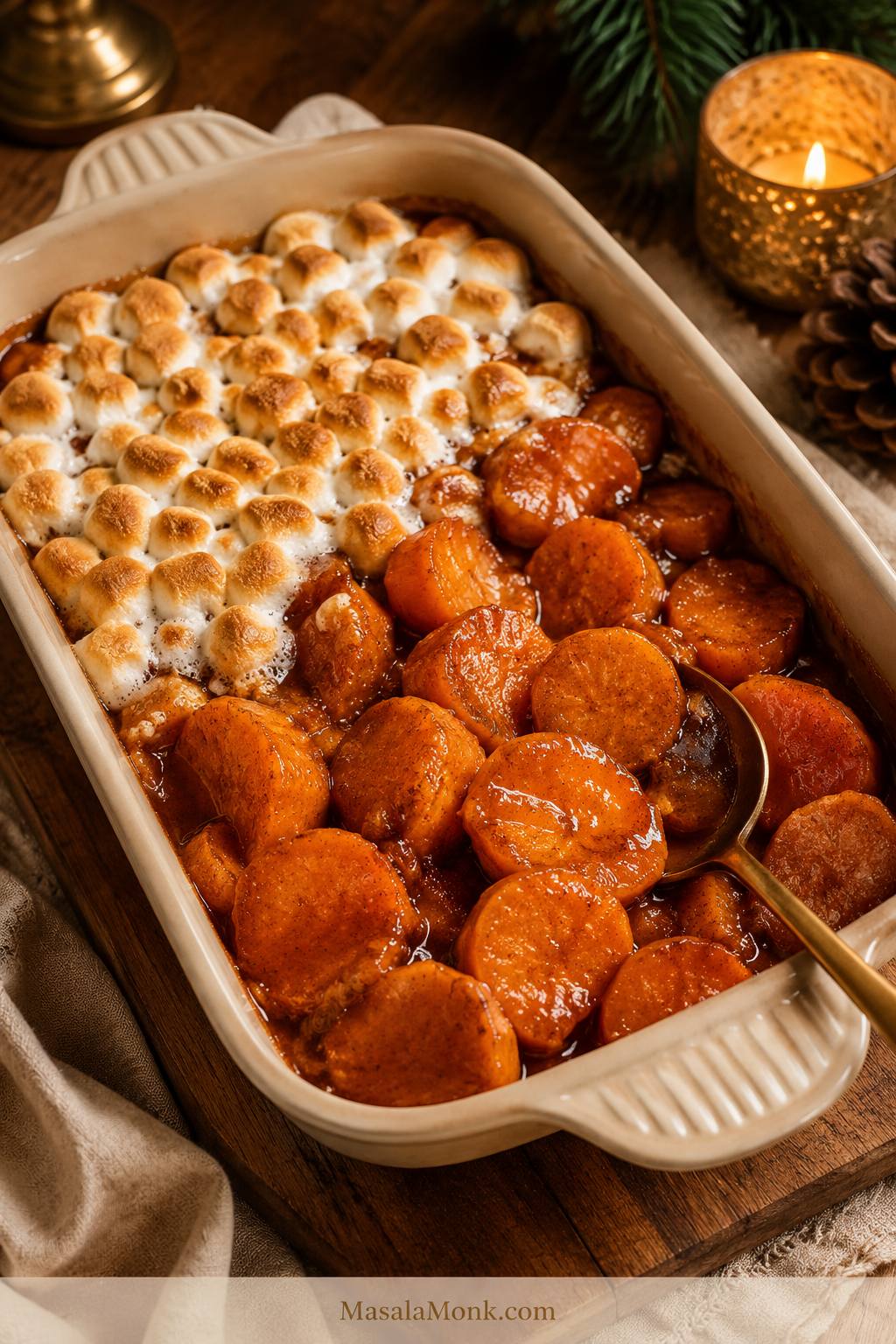
Classic candied yams should show tender orange slices, not mashed sweet potatoes. Keeping one side plain and one side topped with marshmallows is an easy way to satisfy both holiday-table preferences.

Candied yams are one of those sides people remember by texture: soft orange slices, a shiny brown sugar glaze, warm spice, and maybe a toasted marshmallow topping. This version keeps that familiar comfort, but gives you the cues that prevent watery sauce, mushy canned yams, burnt sugar, or marshmallows that disappear into the dish.

Fresh or canned, oven or stovetop, marshmallows or not — this recipe is built around the same goal: soft, buttery yams, a spoonable brown sugar glaze, and no thin liquid pooling at the bottom of the pan. This is the kind of side dish people expect to taste familiar, not reinvented.

For many tables, candied yams are not the place for wild reinvention. Use this recipe as a steady base, then finish it the way your family remembers it.

Best quick method: for classic candied yams, use fresh orange sweet potatoes sliced 1/2 inch thick.
  1. Make a smooth butter, brown sugar, and spice glaze, then stir in vanilla off the heat.
  2. Bake covered at 350°F / 175°C for 35–40 minutes.
  3. Uncover and bake 20–25 minutes more, basting once.
  4. Add marshmallows only during the final 8–12 minutes, if using.
  5. Rest 10 minutes so the sauce turns shiny and spoonable.

The full guide below covers fresh, canned, stovetop, marshmallow, no-marshmallow, and make-ahead versions, but the basic idea stays the same: soften the yams, thicken the sauce, and give it a short rest.
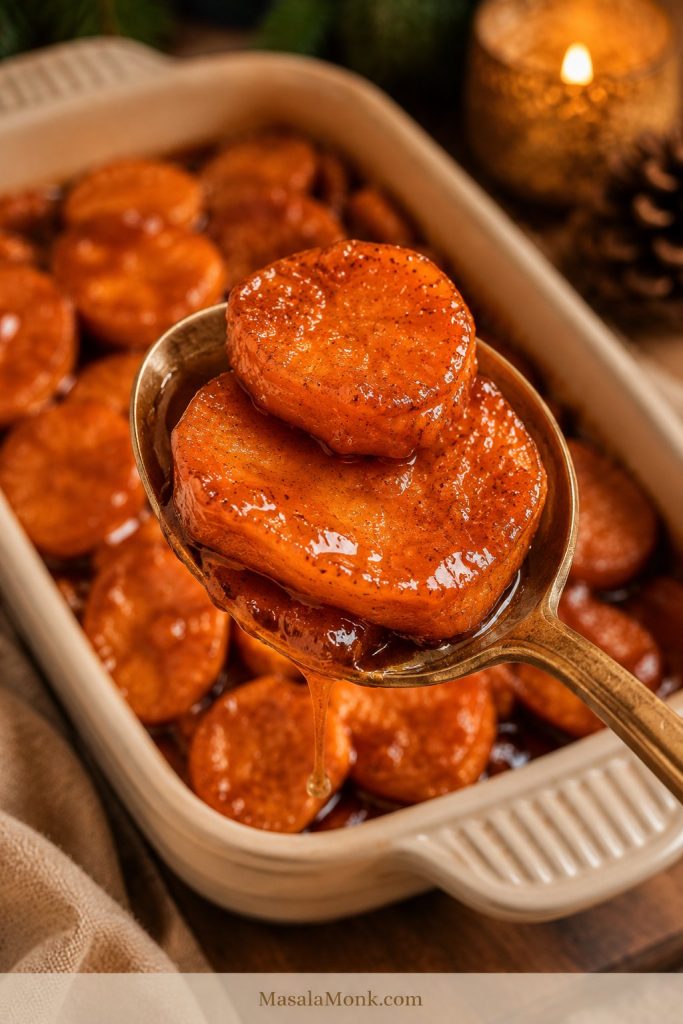
Spoon lifting soft orange candied yam slices from a cream baking dish with sauce coating the pieces.
Aim for a soft but still sliceable texture. If the yams lift cleanly and the syrup clings to the spoon, they are ready to rest before serving.

Quick Answer: What Are Candied Yams?

Candied yams are a sweet side dish made with orange-fleshed sweet potatoes, butter, brown sugar, cinnamon, nutmeg, vanilla, and sometimes marshmallows. At the table, they eat like soft sweet potatoes in a buttery brown sugar sauce.

In most U.S. grocery stores, the “yams” used for candied yams are actually sweet potatoes, and they are exactly what you want here. For the classic orange color and soft texture, look for sweet potatoes labeled as garnet yams, jewel yams, red yams, or simply yams.

Here, there is no need to hunt for true yams. Buy orange-fleshed sweet potatoes, even if your store labels them yams. They soften into the glaze instead of staying dry or starchy.

Why This Recipe Works

The difference here is that the recipe is built around texture cues, not just time: covered heat to soften, uncovered heat to reduce, and a short rest so the sauce clings.

Thick slices hold their shape, a smooth saucepan glaze prevents grainy sugar, covered baking softens the yams, uncovered baking reduces the extra liquid, and resting helps the brown sugar butter mixture cling instead of pool.

Think of it as steam first, reduction second, rest last. That order keeps the yams tender without leaving a watery pool underneath.
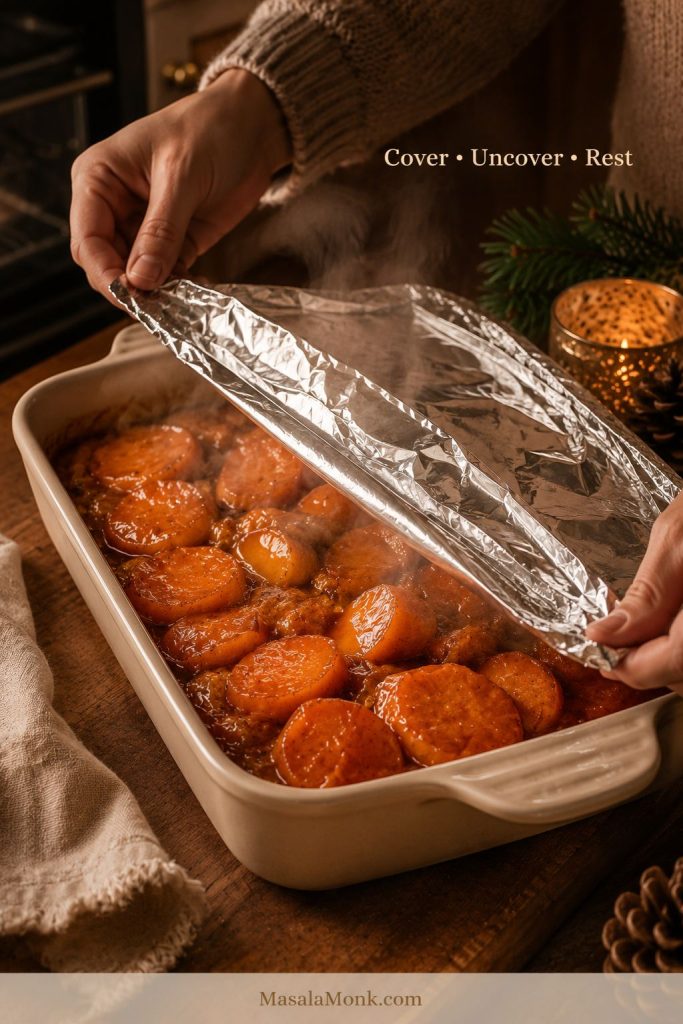
Hands peeling foil from a baking dish of candied yams with visible text reading Cover, Uncover, Rest.
Think of the bake in three stages: steam, reduce, settle. Covered heat softens the slices, uncovered heat concentrates the syrup, and the short rest helps the sauce cling.

The watery batches usually have one thing in common: too much liquid and not enough uncovered time. Often, the best batches look a little loose straight from the oven, then settle into a glossy coating after the rest.

The simple rhythm:
  • Fresh yams: cover, uncover, rest.
  • Canned yams: drain, coat, heat, stop.
  • Marshmallows: tender first, toast last.
  • Sauce: shiny and spoonable, not watery or caramel-thick.

Candied Yams Quick Facts

Fact Detail
Servings 8
Main oven temp 350°F / 175°C for fresh sweet potatoes
Fresh bake time 35–40 minutes covered, then 20–25 minutes uncovered
Best baking dish 9×13-inch / 23×33 cm glass or ceramic dish
Rest time 10 minutes before serving
Marshmallow timing Final 8–12 minutes for fresh yams; 5–8 minutes for canned yams

Which Candied Yams Method Should You Use?

Start with the method that fits the day. Maybe you have time for fresh sweet potatoes. Or maybe the oven is crowded with turkey, ham, stuffing, green bean casserole, or another side. You may already have canned yams in the pantry.
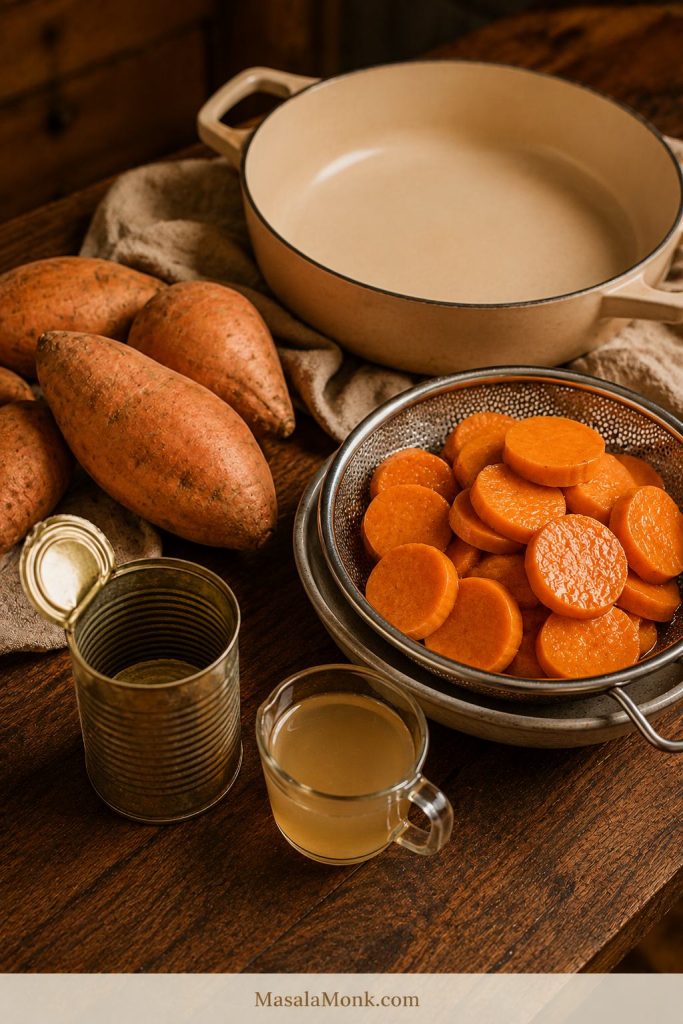
Fresh sweet potatoes, drained canned yams, an opened unbranded can, and a Dutch oven arranged on a warm kitchen counter.
Fresh sweet potatoes, canned yams, and stovetop candied yams can all work well. However, fresh slices need time, canned yams need gentleness, and stovetop yams need steady low heat.

Fresh yams give you the prettiest slices. Canned yams give you speed. Stovetop cooking gives you control. Marshmallows give you nostalgia. None of those choices are wrong.

Method Best For Approx. Time Key Cue
Fresh baked candied yams Best texture, neat slices, holiday table presentation 60–70 minutes Uncover long enough for the sauce to reduce
Canned baked candied yams Fast shortcut, pantry version, smaller batch 20–30 minutes Drain well and heat gently
Stovetop candied yams Oven is full, spoon-coated finish, Southern-style cooking 50–65 minutes Keep the heat medium-low
Crockpot candied yams Freeing oven space and holding a side dish warm 3–4 hours on low Expect a thinner syrup
Marshmallow finish Classic Thanksgiving-style topping 5–12 minutes Add only at the end

As a default, use the fresh baked version when texture matters, canned yams when speed matters, and stovetop cooking when the oven is full. If you are starting with cans, keep the rhythm even simpler: drain, coat, heat, stop.

Are Candied Yams Actually Sweet Potatoes?

Most of the time, yes. In the United States, the orange “yams” sold in regular grocery stores are usually orange-fleshed sweet potatoes. True yams are starchier, drier, and less common in everyday U.S. supermarkets. The Library of Congress explanation of sweet potatoes and yams is useful if you want the longer background.

For this recipe, buy orange sweet potatoes or yams labeled garnet, jewel, red yam, or simply yam. That naming confusion matters less than the flesh color here. Orange, moist sweet potatoes give the classic color, sweetness, and soft texture people expect in candied yams.
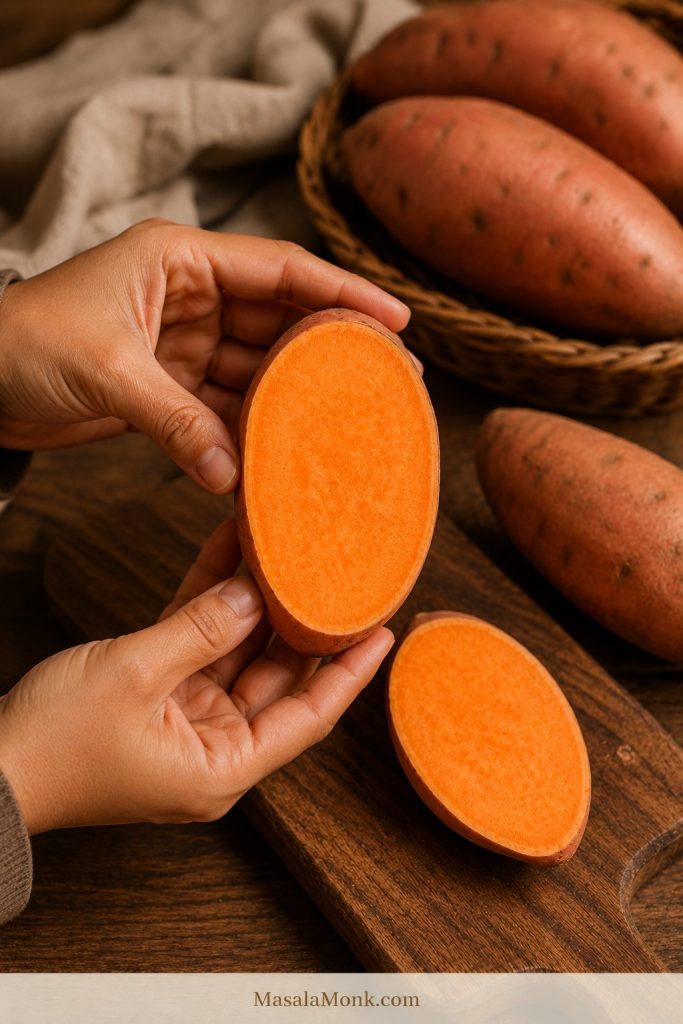
Hands holding a freshly cut raw orange sweet potato half with whole sweet potatoes in the background.
For most candied yams recipes, orange-fleshed sweet potatoes are the right choice even when the store labels them “yams.” Their color, sweetness, and soft texture create the familiar holiday side dish.
Simple shopping rule: if the inside is deep orange and the label says sweet potato, yam, jewel, garnet, or red yam, it will work for this recipe.

Ingredients You’ll Need

The ingredient list is simple because candied yams are not trying to be fancy. What matters is balance: enough brown sugar to feel candied, enough butter to feel rich, enough salt and citrus to keep the sweetness from going flat.

Brown sugar gives the sauce depth, butter gives it body, and salt keeps the dish balanced. Vanilla, warm spices, and a little orange juice or lemon juice round out the flavor. If you like that orange-bright flavor, the same idea works beautifully in cranberry sauce with orange juice.
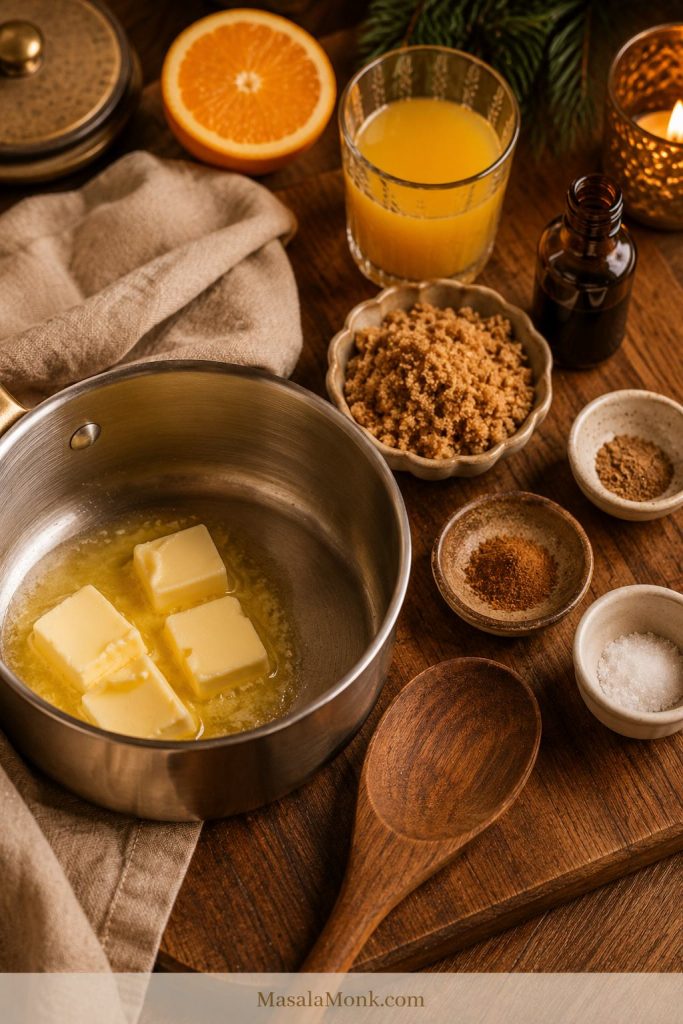
Butter, brown sugar, cinnamon, nutmeg, orange juice, vanilla, and salt arranged beside a small saucepan.
A good candied yams sauce needs more than sweetness. Butter and brown sugar bring richness, while salt, vanilla, warm spices, and citrus keep the flavor rounded.

Ingredient Amounts and Cues

Ingredient Amount Why It Matters
Orange sweet potatoes / yams 3 lb / 1.35 kg The base of the dish. Use orange sweet potatoes for the classic color and texture.
Unsalted butter 1/2 cup / 113 g Makes the sauce rich and smooth.
Brown sugar 3/4 cup / 150 g, or up to 1 cup / 200 g for a sweeter style Gives the deep caramel-like sweetness.
Maple syrup or orange juice 1/4 cup / 60 ml Maple gives deeper flavor; orange juice gives brightness.
Water 2–4 tbsp / 30–60 ml Helps the sugar dissolve into a smooth sauce.
Cinnamon 1 tsp The main warm spice.
Nutmeg 1/4 tsp Adds classic warmth.
Ginger 1/4 tsp, optional Adds a little extra spice without taking over.
Salt 1/2 tsp Balances the sugar and butter.
Vanilla extract 1–2 tsp Rounds out the brown sugar mixture. Add it off the heat.
Lemon juice or apple cider vinegar 1–2 tsp, optional Useful if you want a sweet-but-not-cloying finish.
Mini marshmallows 2–3 cups, optional Add at the end for a toasted topping.
Chopped pecans 1/2 cup, optional Adds crunch. Best added near the end so they stay crisp.

Small Ingredient Choices That Matter

When the balance is right, the coating tastes buttery and warm, not just sugary, and the sweet potatoes stay tender enough to spoon but firm enough to hold.

Less sweet version: use 3/4 cup brown sugar instead of 1 cup, choose orange juice instead of maple syrup, and add 1–2 teaspoons lemon juice or apple cider vinegar to balance the sauce.

If you are tempted to use a ready spice blend, keep it gentle. A small pinch of apple pie spice can work because it usually leans on cinnamon, nutmeg, and warm baking spices, but too much can make the yams taste more like dessert than a side dish.

Best dish: use a deep 9×13-inch / 23×33 cm glass or ceramic baking dish for the fresh version. Use an 8×8-inch / 20×20 cm dish for one 29 oz / 822 g can. Avoid sheet pans because the syrup spreads too thin and can burn before the yams soften.

How to Make Candied Yams

This is the version to make when you want the dish to look generous on the table: tender slices, glossy sauce, and enough structure that the yams do not collapse when you spoon them out. For the fresh baked version, the rhythm is simple: cover, uncover, rest.

1. Prep the sweet potatoes

Peel the sweet potatoes and slice them into 1/2-inch / 1.25 cm rounds. If the sweet potatoes are very wide, cut the rounds into half-moons so they are easier to serve.

Thin slices tend to soften before the syrup has time to reduce, while very thick slices need longer and can make the edges overcook. The best texture comes from slices that are thick enough to hold together but thin enough to soften in the covered bake.
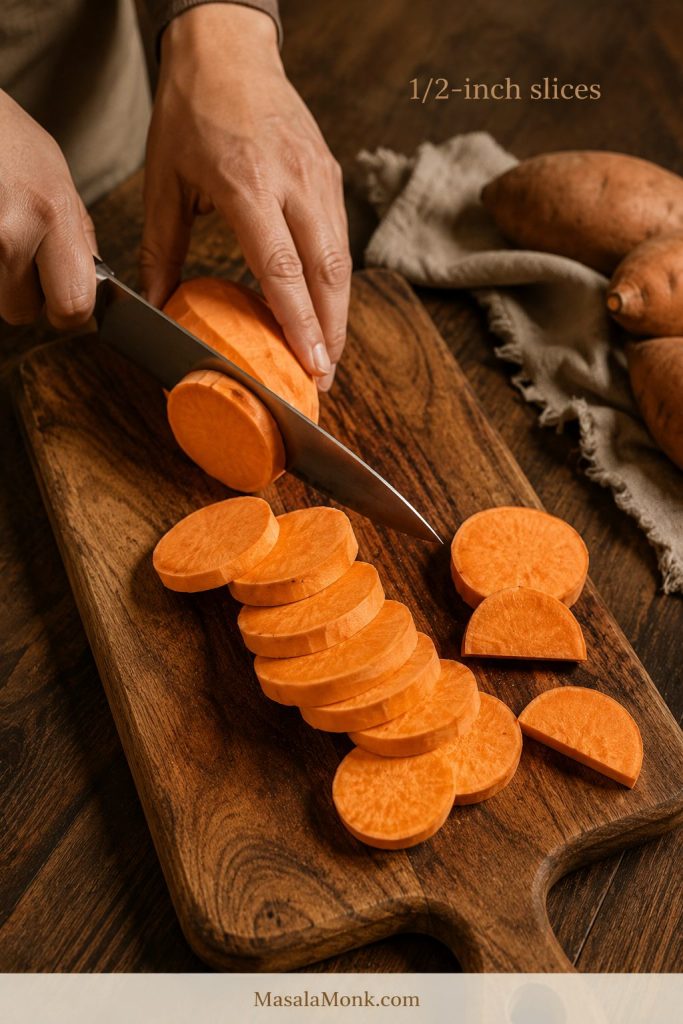
Hands slicing peeled orange sweet potatoes into half-inch rounds on a wooden cutting board.
Even slices make the whole dish easier to control. Around 1/2 inch gives the sweet potatoes enough body to stay intact while still softening into the sauce.

2. Make the brown sugar butter glaze

Melt the butter in a saucepan over medium heat. Add the brown sugar, maple syrup or orange juice, water, cinnamon, nutmeg, ginger if using, and salt. Stir until the sugar dissolves and the mixture looks smooth and shiny.

Let it bubble gently for 1–2 minutes, then remove it from the heat and stir in the vanilla. If using lemon juice or apple cider vinegar, stir it in now.
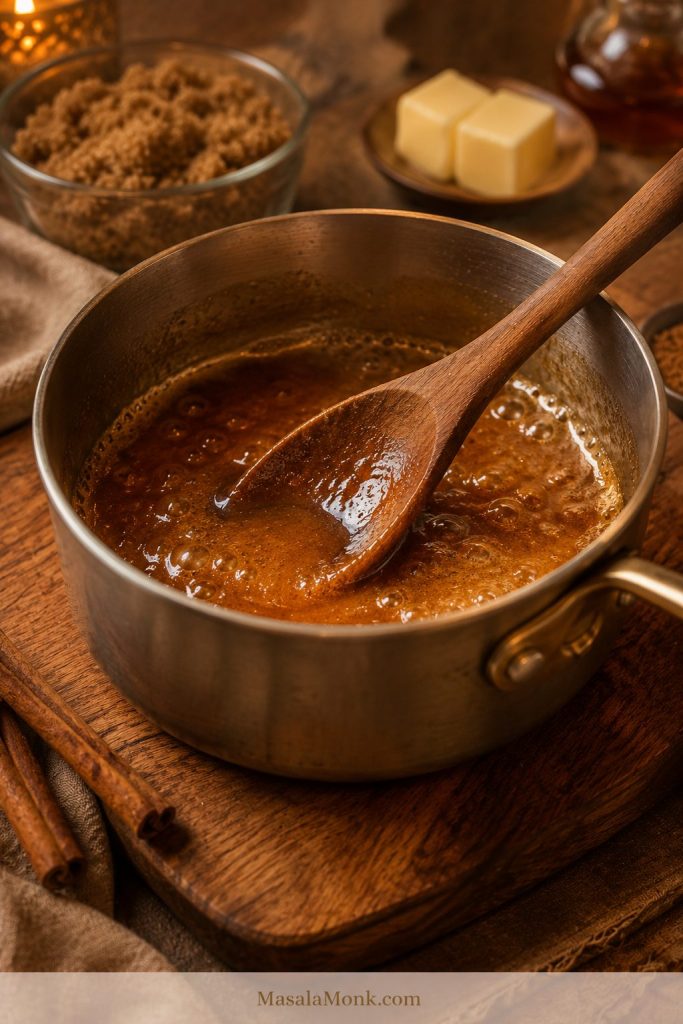
Brown sugar butter sauce simmering in a saucepan while a wooden spoon moves through the mixture.
Before it goes over the sweet potatoes, the butter and brown sugar mixture should look smooth and shiny. If it looks grainy, warm it gently until the sugar dissolves.
Glaze cue: the mixture should look shiny and pourable, not grainy or separated. It does not need to be thick like caramel at this stage. The oven will reduce it more.

3. Arrange and coat the yams

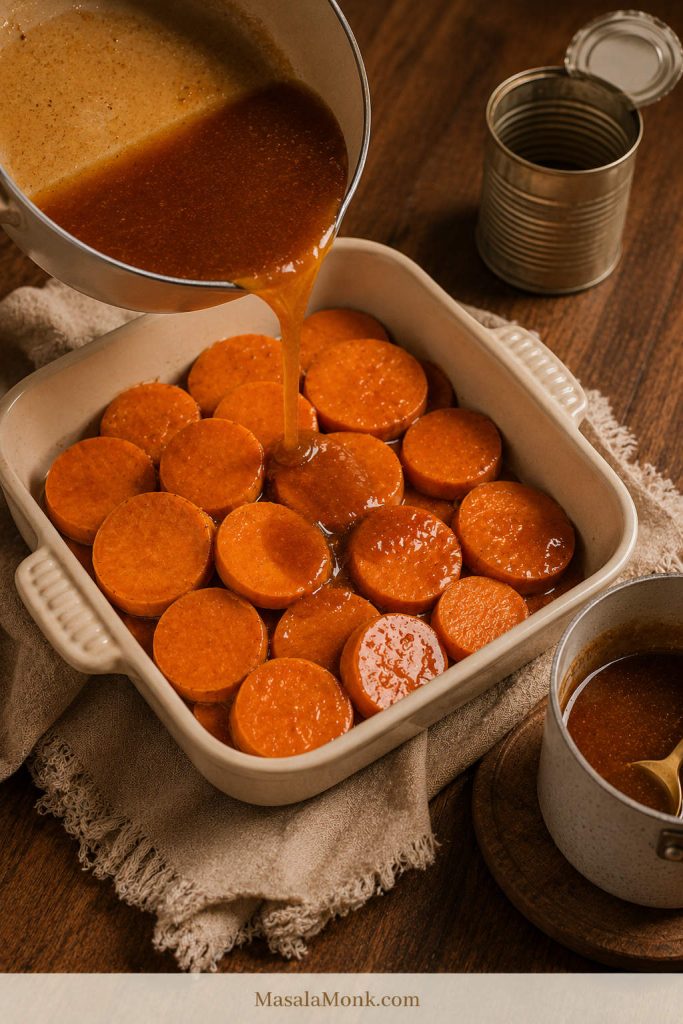
Place the sliced sweet potatoes in a greased 9×13-inch / 23×33 cm baking dish. Pour the warm glaze over the top, then gently turn the slices or spoon the brown sugar mixture over them so they are coated.
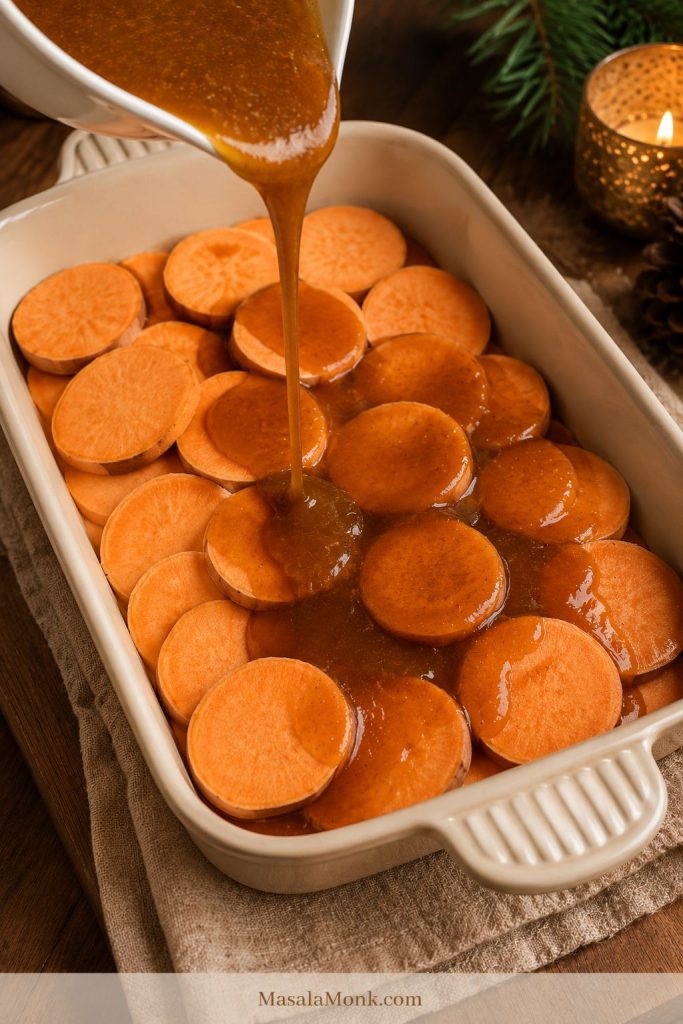
Brown sugar butter sauce being poured over arranged orange sweet potato slices in a cream baking dish.
Coat every slice before the dish goes into the oven. As a result, the sweet potatoes bake into the sauce instead of drying out on top.

The slices do not have to be in one perfect layer, but avoid packing them so tightly that the sauce cannot move around them. A little space helps the edges bubble slowly and the syrupy coating thicken without scorching.

4. Bake covered

Cover the dish tightly with foil and bake at 350°F / 175°C for 35–40 minutes. The yams should begin to soften, but they should not be falling apart yet.

During the covered stage, steam softens the sweet potatoes without drying them out. It also gives the buttery syrup time to soak into the slices.

5. Bake uncovered

Remove the foil, spoon the sauce over the yams, and bake uncovered for another 20–25 minutes. By the end of baking, the edges should bubble slowly and the top slices should look lacquered, not dry.

The yams are ready when they are fork-tender and a spoon drags a shiny trail over the slices instead of leaving thin liquid behind. They do not need to look perfect at every stage; by the time they rest, they should be tender, coated, and sitting in a glossy coating. If the dish still looks loose, give it another 5–10 minutes uncovered.
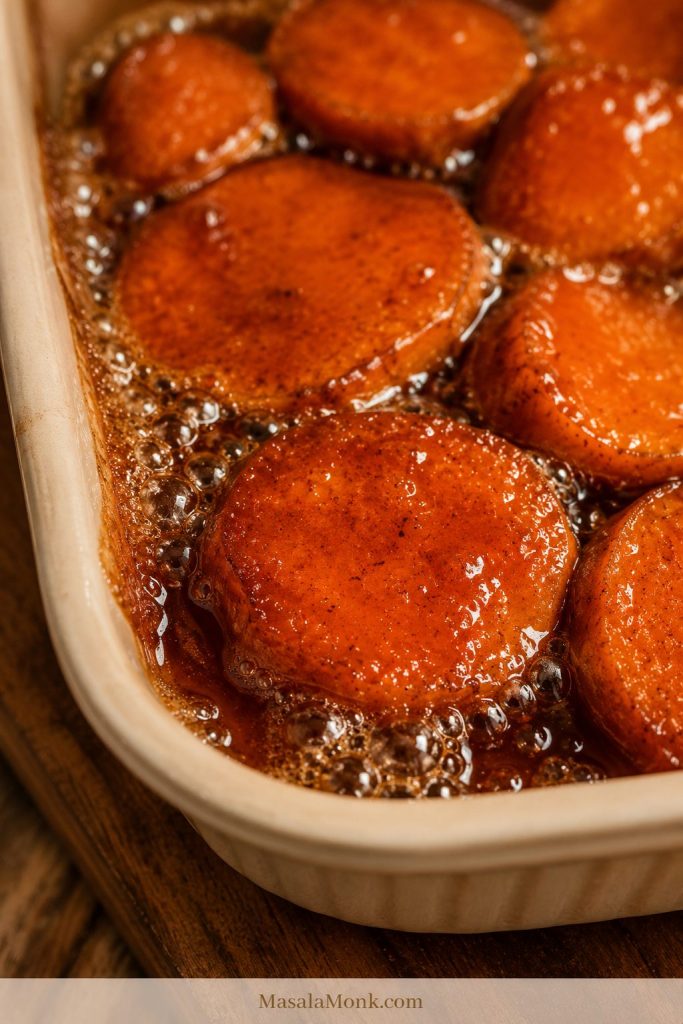
Candied yams bubbling uncovered in a cream baking dish as the sauce reduces around the orange slices.
The uncovered bake is where the sauce tightens. Look for gentle bubbling around the edges and shiny slices instead of thin liquid sitting underneath.

If the edges darken too quickly or the syrup starts to smell scorched instead of buttery and spiced, move the dish away from the hottest part of the oven.
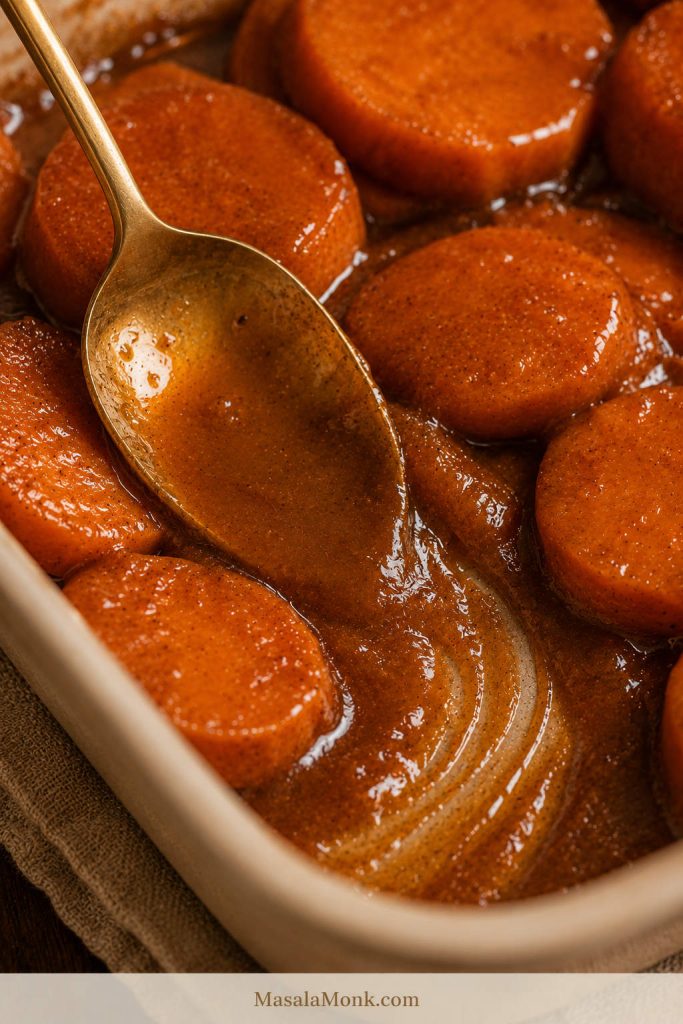
What success looks like: the yams are fork-tender but still holding together, the edges bubble slowly, a spoon drags a shiny trail through the coating, and there is no thin liquid pooling at the bottom.
Spoon dragging through thick brown sugar sauce between candied yam slices in a baking dish.
A spoon trail is one of the clearest doneness cues. When the sauce leaves a shiny path before slowly settling back, the candied yams are close to ready.

6. Add marshmallows if you want them

If using marshmallows, scatter them over the yams during the final 8–12 minutes of baking. They should puff into a soft golden blanket, with toasted tops and a little give underneath. For deeper browning, use the broiler for a few seconds at the end.

Marshmallows brown fast, so this is the one moment to stay by the oven.

7. Rest before serving

Let the dish rest for about 10 minutes before serving. Give the brown sugar sauce a chance to settle before deciding it is too thin. A short rest is part of the recipe, not just waiting time, and the resting section explains why it works.

After that rest, the slices are easier to lift and the sauce clings better. Serve the yams warm, not straight-from-the-oven hot, so the glossy coating has time to settle. The dish should smell like butter, brown sugar, cinnamon, and sweet potatoes — not scorched sugar.

How to Make Candied Yams with Canned Yams and Marshmallows

Canned yams are not a shortcut you need to apologize for. For many families, they are the version that actually tastes familiar. The only trick is to remember that they are already cooked, so you are simply warming, coating, and finishing them.

With canned yams, keep the rhythm even simpler: drain, coat, heat, stop. Add marshmallows at the end if you want that classic topping.
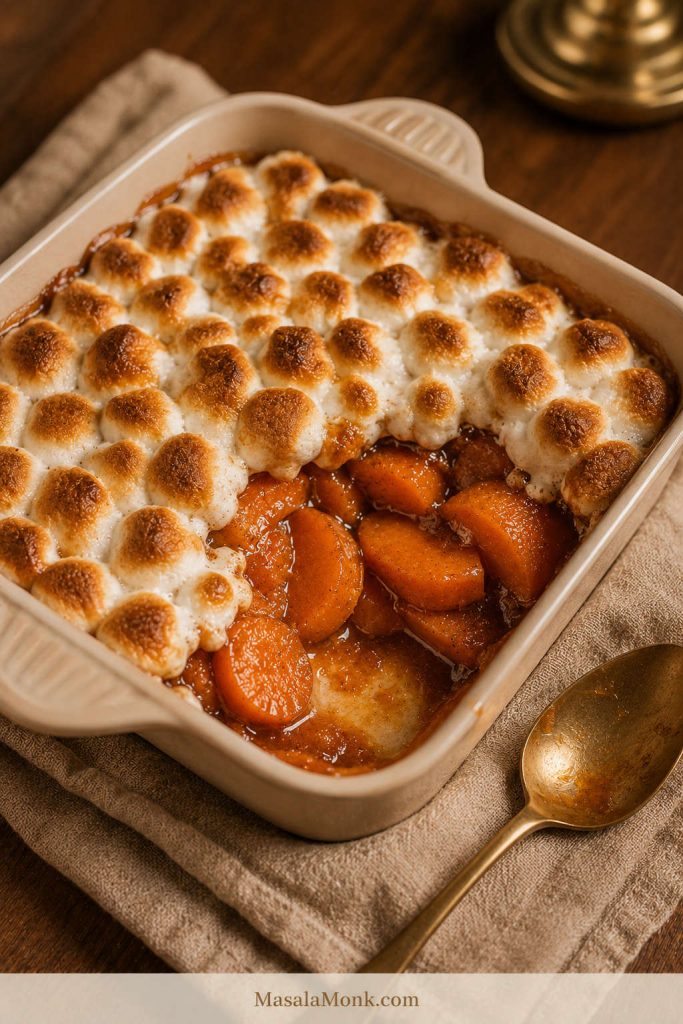
Small cream baking dish of canned candied yams with toasted mini marshmallows and a scooped corner showing orange yams underneath.
With canned yams, the best result is a warm coated center and a toasted finish. The scooped corner should still show orange pieces underneath, not a mashed layer hidden by marshmallows.

Canned-Yam Timing

Batch Size Canned Yams Dish Oven Timing
Small batch 1 can, 29 oz / 822 g, drained 8×8-inch / 20×20 cm 375°F / 190°C 15 minutes, then 5–8 minutes with marshmallows
Larger batch 1 large can, 40 oz / 1.13 kg, drained 9×13-inch / 23×33 cm 375°F / 190°C 18–20 minutes, then 5–8 minutes with marshmallows
Double-can batch 2 cans, 29 oz / 822 g each, drained 9×13-inch / 23×33 cm 375°F / 190°C 20–22 minutes, then 5–8 minutes with marshmallows
Mini canned-yam version: for one 29 oz / 822 g can, drain well, use 3 tbsp butter, 1/3–1/2 cup brown sugar, 1/2 tsp cinnamon, a pinch of nutmeg, a pinch of salt, and 1 tsp vanilla. Bake at 375°F / 190°C for 15 minutes, then add marshmallows for 5–8 minutes if using.
Small cream baking dish filled with canned yams as brown sugar sauce is poured over them.
For a one-can batch, scale the dish and sauce down together. Since canned yams are already cooked, the goal is warming and coating, not long baking.

Drain well. A few tablespoons of canning liquid can loosen a thick sauce; the full can usually makes the dish watery.
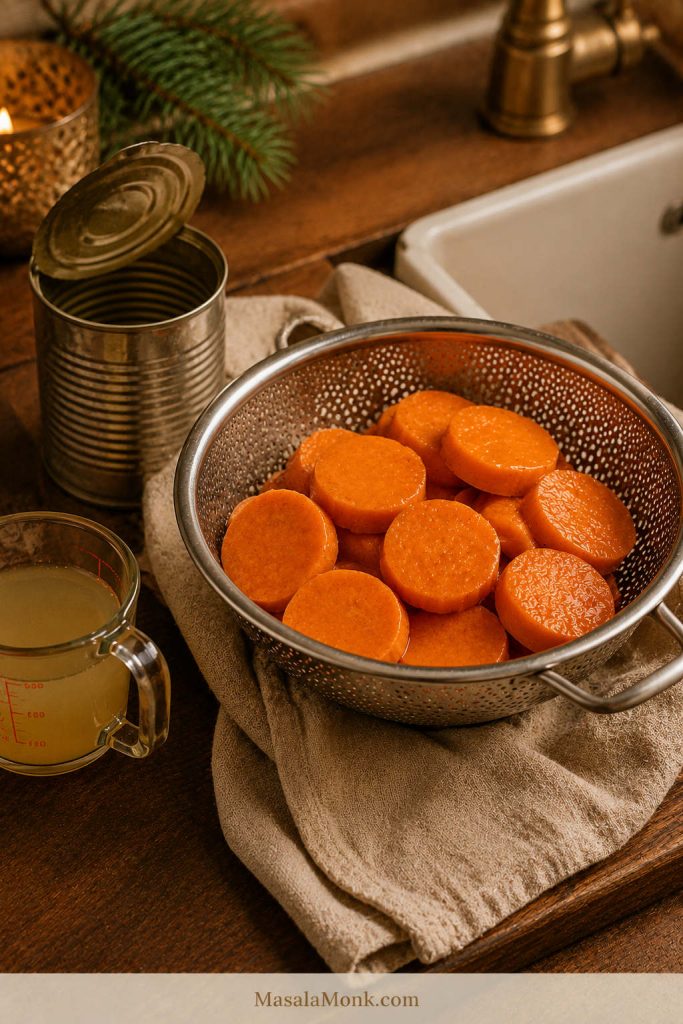
Drained canned yams in a metal colander with an opened unbranded can and a small measuring cup of liquid nearby.
Canned yams save time, but the liquid in the can can thin the sauce quickly. Drain first, then add back only a spoonful or two if the mixture needs loosening.

Warm the butter, brown sugar, cinnamon, nutmeg, salt, and vanilla into a quick glaze, pour it over the drained canned yams, and bake only until hot. With canned yams, gentleness matters most. Stirring breaks them down faster than baking does.

How to keep canned yams from getting mushy
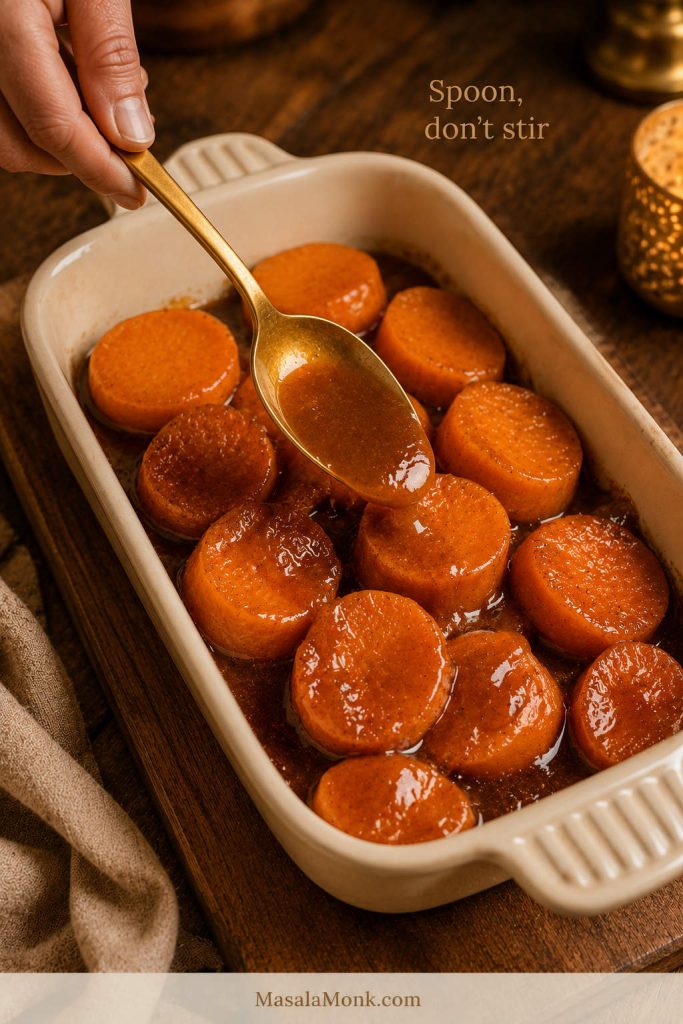
Spoon gently pouring sauce over intact canned yam pieces with visible text reading Spoon, don’t stir.
Instead of stirring canned yams, spoon the sauce over the top. This keeps the pieces intact and helps prevent the dish from turning into sweet potato mash.
  • Leave large pieces large. Smaller pieces break down faster.
  • Use less sugar if the yams are packed in syrup. Start lower, then adjust next time if you want them sweeter.
  • Rinse only if the syrup is very heavy. Draining is usually enough. Rinsing helps only if you want a less sweet version.
  • Spoon instead of stirring. Tilt the dish gently or ladle sauce over the top.
  • Bake uncovered if the syrup looks loose. This helps extra moisture evaporate.
  • Make canned yams closer to serving time if presentation matters. They soften more as they sit.

Quick glaze for canned yams

Can Size Butter Brown Sugar Spices and Vanilla
29 oz / 822 g can 3 tbsp 1/3 cup if packed in syrup, 1/2 cup if packed in water or light syrup 1/2 tsp cinnamon, pinch nutmeg, pinch salt, 1 tsp vanilla
40 oz / 1.13 kg can 4 tbsp 1/2 cup 3/4 tsp cinnamon, pinch nutmeg, pinch salt, 1 tsp vanilla
2 cans, 29 oz / 822 g each 5–6 tbsp 2/3 cup if packed in syrup, 3/4 cup if packed in water or light syrup 1 tsp cinnamon, 1/4 tsp nutmeg, 1/4 tsp salt, 2 tsp vanilla

If your canned yams are very sweet already, start with the lower sugar amount. You can always make the next batch sweeter, but it is harder to rescue a dish that has become cloying.

Stovetop Candied Yams, Southern-Style

Southern-style candied yams are often less about a casserole and more about tender sweet potatoes coated in a buttery brown sugar syrup. Some versions are baked, some are made on the stovetop, some finish with marshmallows, and some stay plain and glossy.

When the oven is full, the stovetop is often the easiest way to stay in control of the sauce. It is also a good choice if you like a spoon-coated finish because you can watch it reduce in real time, baste the slices, and stop when the yams are tender but still holding together.

The flavor usually leans brown sugar, butter, cinnamon, nutmeg, vanilla, and sometimes citrus. Done well, it tastes rich without becoming flat: enough sugar to feel candied, enough salt and spice to keep every bite balanced.

Use the widest heavy-bottomed skillet or Dutch oven you have. A wide pan gives the sweet potatoes enough room to cook evenly, and a heavy base helps protect the sugar from scorching.
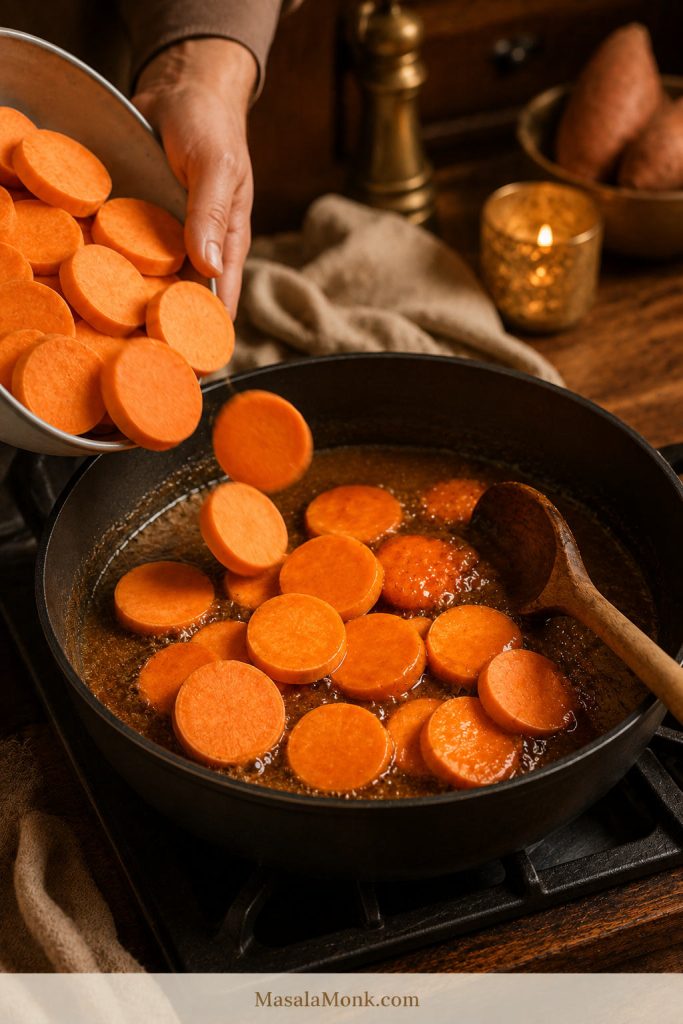
Fresh orange sweet potato slices being added by hand to a dark skillet with a shallow butter and sugar mixture.
For stovetop candied yams, use a wide pan so the slices have room to cook evenly. A shallow butter-sugar mixture also helps the syrup reduce without crushing the sweet potatoes.

How to make candied yams on the stove

  • Melt the butter in a wide skillet or Dutch oven over medium-low heat.
  • Add brown sugar, maple syrup or orange juice, water, cinnamon, nutmeg, ginger if using, and salt.
  • Stir until the sugar starts to dissolve and the glaze looks smooth.
  • Add the 1/2-inch / 1.25 cm sweet potato slices and gently coat them.
  • Cover and cook over medium-low heat for 35–45 minutes, basting every 10–15 minutes. Start checking at 35 minutes.
  • When the yams are almost tender, uncover and simmer for 7–15 minutes more so the syrup thickens.
  • Finish with vanilla off the heat. Add lemon juice or apple cider vinegar if the sauce tastes too sweet.

Stovetop Reduction Cues

Keep the stovetop version patient and gentle; high heat can burn the sugar before the potatoes soften. If the pan looks dry at any point, lower the heat before adding more liquid.
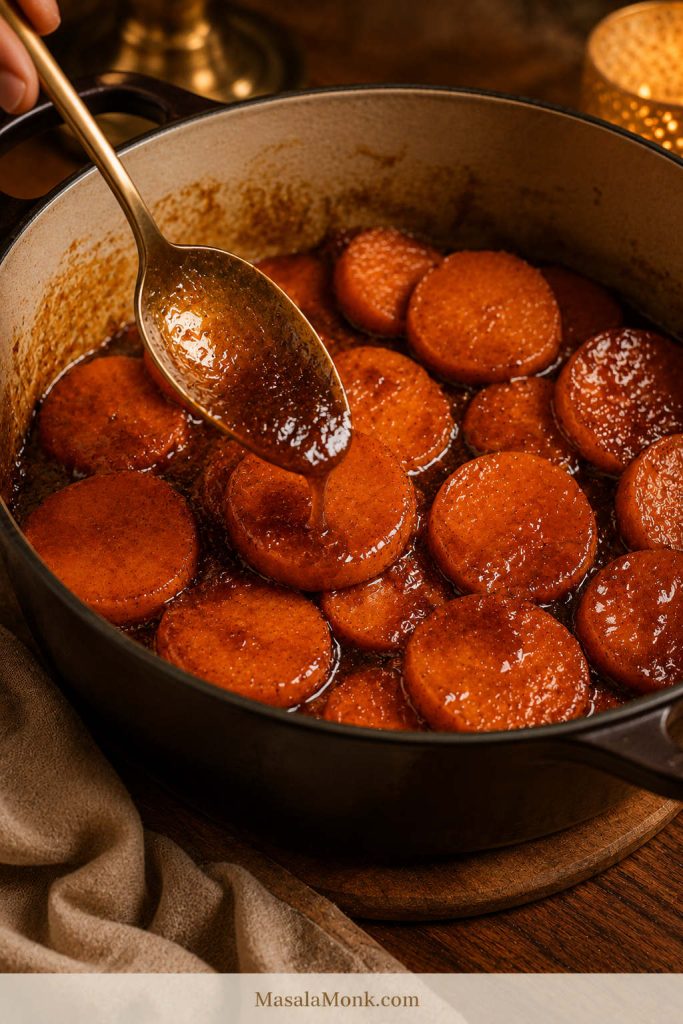
Spoon basting brown sugar syrup over orange candied yam rounds in a dark skillet.
Once the stovetop syrup begins to thicken, baste gently instead of stirring hard. This coats the tops while the sweet potato rounds stay whole.

Stay close during the uncovered reduction stage. The syrup can move from shiny to scorched quickly once the extra moisture cooks off.

Stovetop cue: the yams are done when they are fork-tender and the sauce coats the back of a spoon. If the syrup thickens before the yams are soft, add 1–2 tablespoons water and keep cooking covered. When the yams are soft but the sauce is thin, uncover and simmer a little longer.

Stir as little as possible. Use a spoon to baste the slices or gently shake the pan instead of stirring like a stir-fry. This keeps the sweet potatoes from breaking apart.
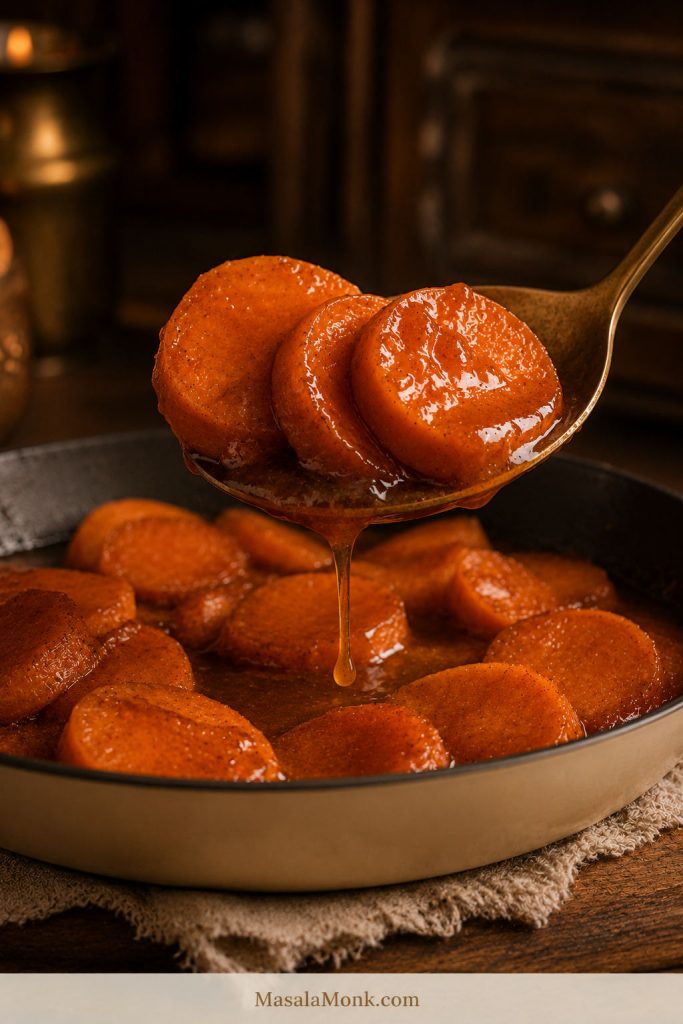
Spoon lifting stovetop candied yam slices from a dark skillet with thick syrup dripping back into the pan.
Finished stovetop candied yams should look rich and syrupy, with a darker, deeper glaze than the baked version. Keep the heat gentle so the sugar thickens without scorching.

Can I Bake Candied Yams at 375°F?

Yes. The main recipe uses 350°F / 175°C for steady, even softening, but 375°F / 190°C works if you need a slightly faster bake. Check earlier, baste once or twice, and watch the edges so the sugar does not dry out before the yams are tender.

Candied Yams with Marshmallows

For marshmallows, the timing is everything: tender first, toast last. Marshmallows are the part people notice first, so they deserve a little timing. Add them too early and they disappear into the sauce; add them at the end and you get the soft, golden topping people remember.
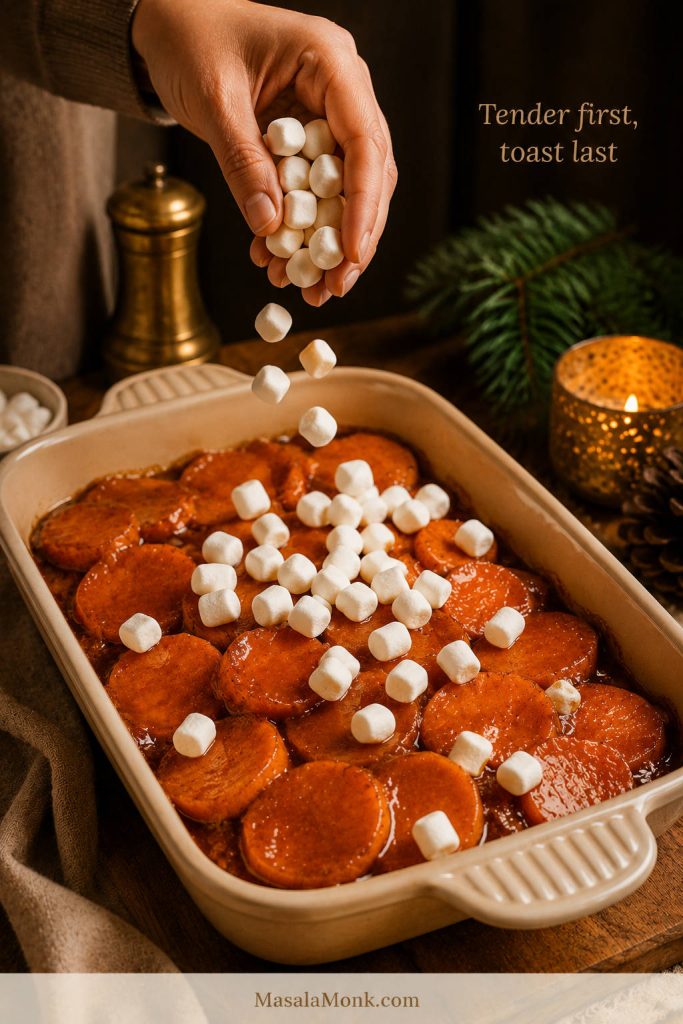
Mini marshmallows being sprinkled over hot candied yams with visible text reading Tender first, toast last.
Marshmallows are a finish, not a cooking ingredient. Add them when the yams are already tender so they puff on top instead of disappearing into the sauce.

If your family expects marshmallows, let them be the finish, not the sauce.

When to Add Marshmallows

  • At 350°F / 175°C, add marshmallows for the final 8–12 minutes.
  • For 375°F / 190°C, add them for the final 5–8 minutes.
  • In a 400°F / 200°C oven, watch closely and check after 5 minutes.
  • Under the broiler, they may brown in 30–90 seconds.

You want the topping puffed, soft, and lightly golden — not fully dissolved into the glaze.
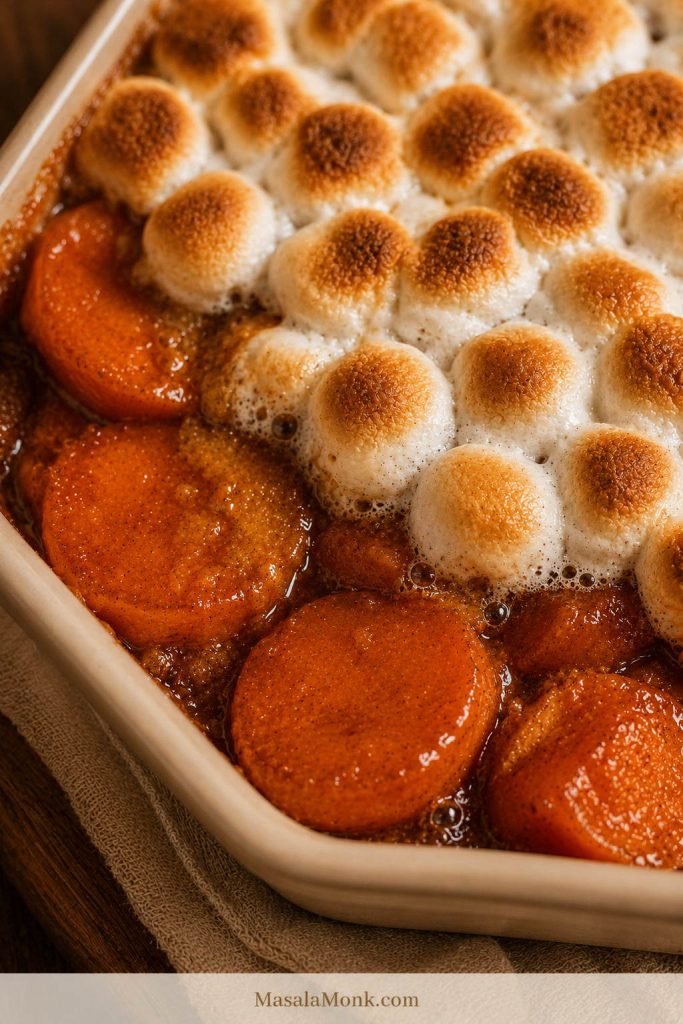
Close-up of toasted mini marshmallows on candied yams with orange yam slices visible underneath.
The marshmallow topping is ready when it is puffed, soft, and lightly golden. Importantly, you should still see orange yams and a little sauce underneath.

The best marshmallow topping comes from adding them when the yams are already hot, so they puff quickly instead of sinking into the sauce.

Mini marshmallows are easiest because they scatter evenly and brown quickly. Large marshmallows can work, but cut them in half or use fewer so the topping does not become too thick.

For pecans and marshmallows together, add the pecans near the end, then scatter marshmallows over the top. This keeps the nuts from sitting under foil for too long and turning soft.
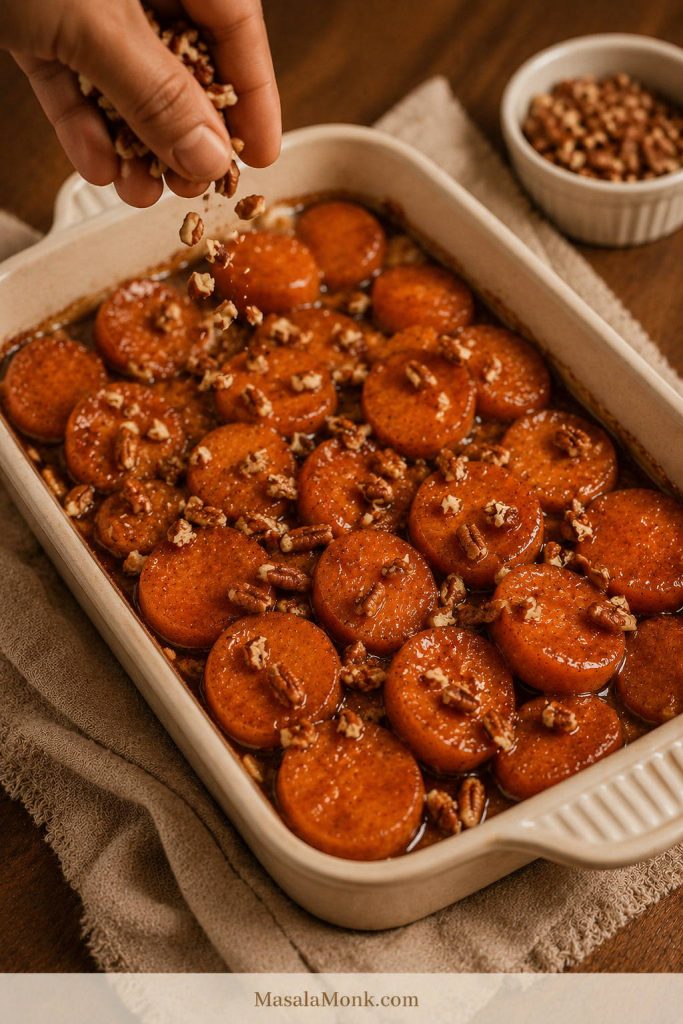
Hand sprinkling chopped pecans over candied yam slices in a cream baking dish.
Add pecans near the end so they stay crisp instead of steaming under foil. They bring crunch and nuttiness without taking over the brown sugar flavor.

How to make candied yams without marshmallows

To make candied yams without marshmallows, simply skip the topping and focus on the glaze. Bake uncovered until the yams are tender and the brown sugar butter sauce looks shiny and spoonable. For a little finish without marshmallows, add pecans near the end, a small pinch of orange zest, or nothing at all.
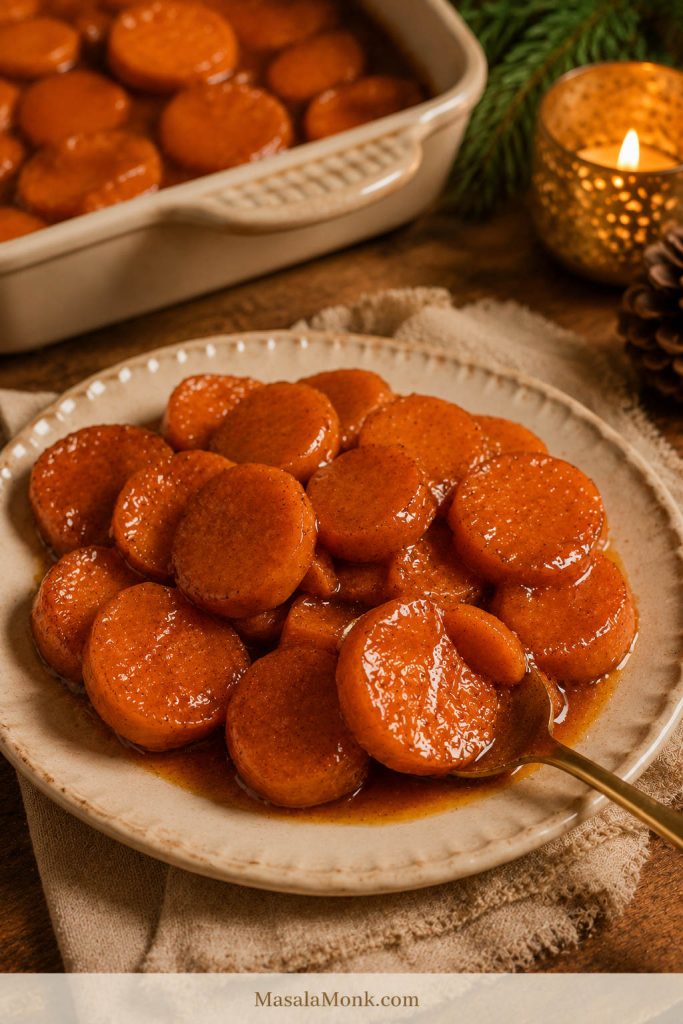
Candied yams without marshmallows served on a cream plate with brown sugar sauce.
No-marshmallow candied yams rely on the sauce for their finish. The flavor should be buttery, warmly spiced, and complete without needing a topping.

If your table loves the glossy plain version, stop before the topping and let the brown sugar butter sauce shine. The plain version is often the best choice when you want the sweet potatoes, butter, brown sugar, and warm spices to be the main flavor.

Small Things That Make a Big Difference

These are the small choices that prevent most candied-yam problems before they start.

  • Keep slices about 1/2 inch thick. Thin slices soften quickly and can fall apart before the sauce thickens.
  • Drain canned yams well. A few tablespoons of liquid can loosen the syrup, but the full can may make it watery.
  • Handle canned yams gently. Spoon sauce over them instead of stirring hard.
  • Save marshmallows for the end. They need just enough time to puff and brown.
  • Let the sauce rest before judging it. It thickens after the dish cools slightly.
  • Use a deeper baking dish. A flat sheet pan spreads the syrup too thin for this style.

Thanksgiving Timing Plan

On a holiday table, candied yams should not be the dish that makes the day harder. They can wait, reheat, hold their sauce, and still feel special when they come to the table warm and glossy.

The best part of this dish is that it does not need to be dramatic at the last minute. Make it ahead, reheat it gently, and save the marshmallows for the final finish.

For storage and reheating details, use the make-ahead section before planning the serving-day schedule, especially if your oven also needs time for macaroni and cheese or other baked sides.

When What to Do
2 days before Buy sweet potatoes or yams, butter, brown sugar, spices, marshmallows, and pecans if using.
1 day before Bake the fresh candied yams without marshmallows. Cool, cover, and refrigerate.
Serving day Reheat covered at 350°F / 175°C until hot, usually 20–25 minutes.
Final 8–12 minutes Add marshmallows or pecans and bake until puffed, golden, and hot.
When the oven is full Use the stovetop method, or reheat the baked yams once the oven opens up.
Using canned yams Make them closer to serving time for the best texture and cleanest presentation.

If you are transporting candied yams, keep the marshmallows off until you reheat, if possible. Marshmallows soften as they sit, and they look best when added close to serving.

Crockpot Candied Yams

Crockpot candied yams are helpful when the oven is full, but the sauce will usually stay thinner than baked or stovetop versions. Use fresh sweet potatoes, not canned, for the best shape. Cook on low for 3–4 hours, then reduce extra liquid in a small saucepan if needed. Add marshmallows only before serving.

Variations

  • No marshmallows: keep the top plain and let the brown sugar butter sauce shine.
  • Pecan topping: add chopped pecans near the end so they stay crisp instead of steaming under the foil.
  • Orange juice glaze: use it instead of maple syrup for a brighter, less heavy glaze.
  • Maple finish: use maple syrup for a deeper, rounder flavor.
  • Pineapple version: add well-drained pineapple near the end so it does not thin the sauce too much.
  • Less sweet: reduce brown sugar to 3/4 cup and add lemon juice or apple cider vinegar.
  • Vegan version: use plant-based butter and skip marshmallows unless they are vegan.

Keep variations simple. Candied yams are already rich, so one or two upgrades are usually enough. Pecans and marshmallows work well together. Orange juice and maple syrup are both good, but you do not need every sweet ingredient in the same dish.

Troubleshooting Candied Yams

Most candied-yam problems are fixable because they usually come from one of four things: too much liquid, too much heat, too much time, or too much stirring.
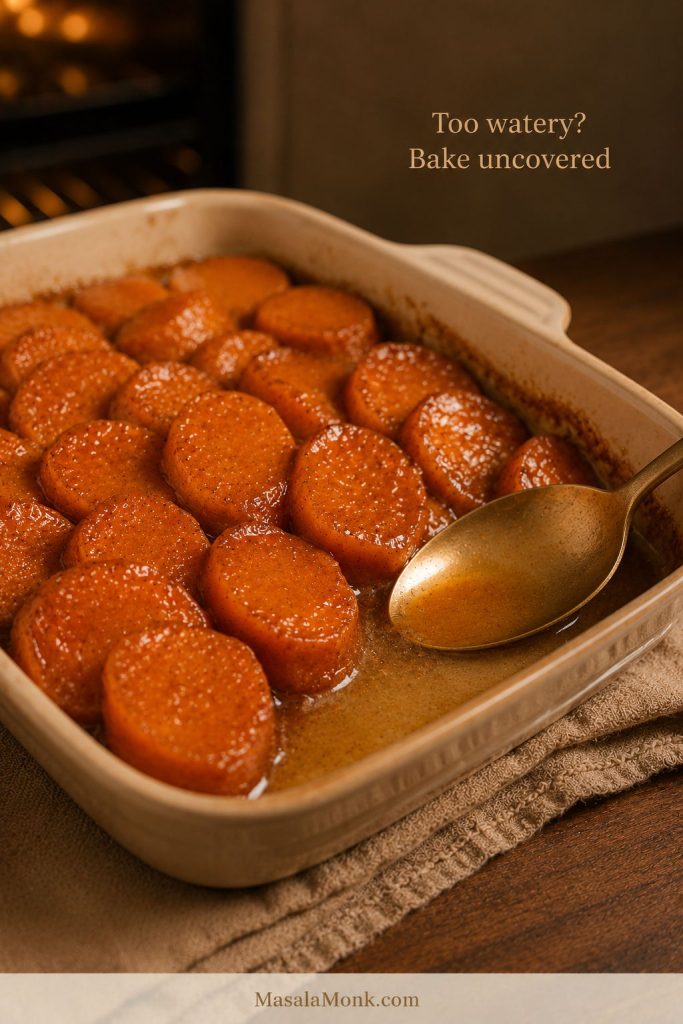
Candied yams in a baking dish with a spoon lifting thin liquid from one corner and visible text reading Too watery? Bake uncovered.
For watery candied yams, a thin pool at the edge usually means more uncovered time, not a full rescue. Let extra moisture evaporate, then give the sauce a few minutes to settle.

They often look worse in the pan than they taste on the plate. If the dish tastes good but looks loose, pause before changing anything. Rest it, then reduce it if needed. Hot sauce almost always looks thinner than settled sauce, so check why the sauce thickens after resting before extending the bake time.

Quick Fixes by Problem

Problem Why It Happened How to Fix It
Yams are watery Too much liquid, canned yams were not drained, or the dish stayed covered too long Bake or simmer uncovered until the sauce reduces. Spoon out extra liquid if needed.
Yams are mushy Slices were too thin, overcooked, or canned yams were stirred too much Use 1/2-inch slices for fresh yams and handle canned yams gently.
Sauce is thin It has not reduced enough, or it is still very hot Bake uncovered longer and let the dish rest for 10 minutes before serving.
Sugar burned Heat was too high or the pan was too shallow Use a deeper baking dish or lower heat. Spoon sauce over the yams during baking.
Butter separated The sugar did not dissolve fully into the butter mixture Simmer the glaze until smooth before pouring it over the yams.
Too sweet Heavy syrup canned yams or too much sugar Add a little salt, orange juice, lemon juice, or apple cider vinegar. Use less sugar next time.
Marshmallows disappeared They were added too early Add marshmallows only in the final 5–12 minutes.
Pecans got soggy They were baked under foil too long Add pecans near the end or sprinkle them on before the marshmallows.

Why the sauce thickens after resting

The sauce often looks loose when the dish first comes out of the oven. That does not mean it failed. As the butter-sugar mixture cools slightly, it becomes thicker and clings better to the sweet potatoes. Give the dish 10 minutes before deciding it is too thin.
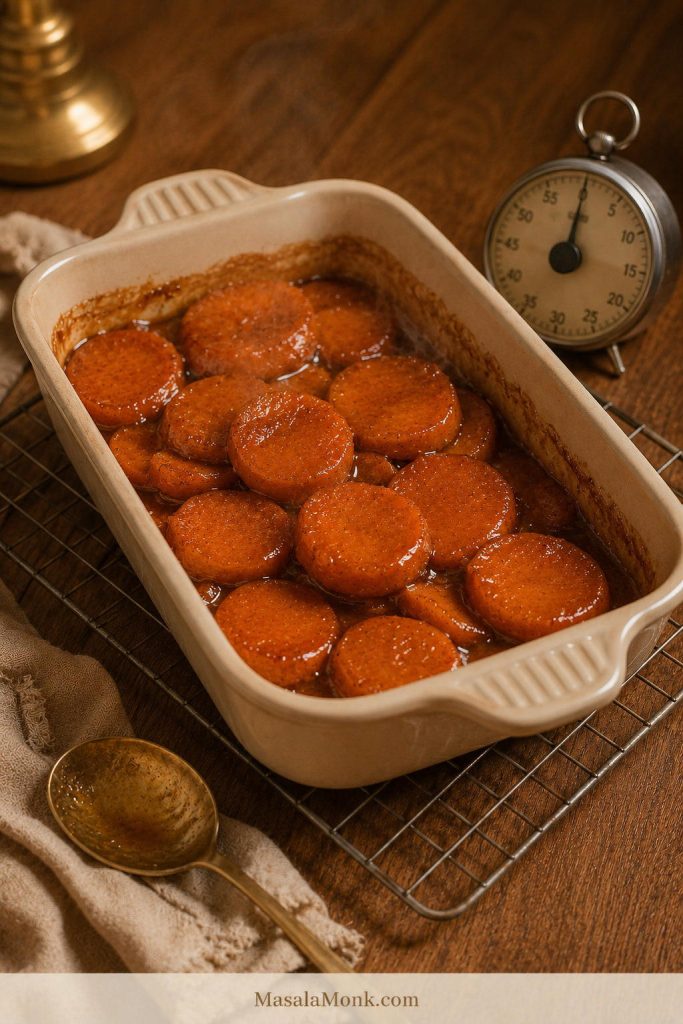
Candied yams resting on a wire cooling rack in a cream baking dish with a kitchen timer nearby.
The sauce often looks looser when it is boiling hot. A short rest lets the bubbles calm down and turns the syrup into a better coating for the sweet potato slices.

Make Ahead, Storage, and Reheating

Can you make candied yams ahead?

Yes. For the best texture, make the fresh version up to 1 day ahead. Bake the yams without marshmallows, cool, cover, and refrigerate. Add marshmallows only when reheating before serving.

Canned yams are more delicate, so they are best made closer to serving time. If you do make them ahead, reheat gently and avoid stirring.

How to reheat candied yams

Reheat covered at 350°F / 175°C for 20–25 minutes, or until hot. If the sauce is very thick, add a small splash of water or orange juice before reheating. Add marshmallows near the end and bake until puffed and golden.

How long do leftovers last?

Store leftover candied yams in an airtight container in the refrigerator for 3–4 days. The texture will soften as they sit, especially if you used canned yams or marshmallows. For general leftover safety, the USDA FSIS leftovers guide is a helpful reference.

Can you freeze candied yams?

You can freeze them without marshmallows, but the texture may soften after thawing. For a special meal, refrigeration and reheating usually gives a better result than freezing.

What to do with leftovers

Leftover candied yams can be served again as a side dish, mashed into oatmeal, spooned over pancakes or waffles, folded into muffin batter, or used like a sweet potato pie-style filling. If they have marshmallows on top, the texture will be softer, but the flavor will still be good.

What to Serve with Candied Yams

Because candied yams are sweet and buttery, they work best beside something savory, salty, green, or tangy.

They pair well with roast turkey, baked ham, roast chicken, stuffing or dressing, green beans, cranberry sauce, collard greens, mac and cheese, garlic mashed potatoes, and cornbread.
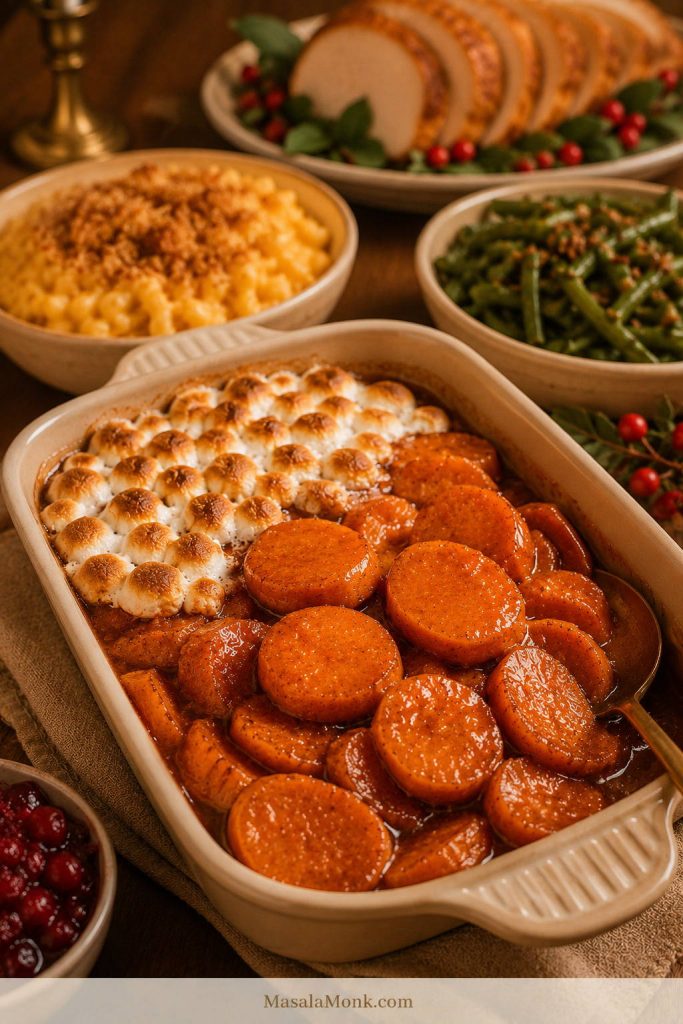
Candied yams in a cream serving dish on a Thanksgiving table with green beans, mac and cheese, cranberry sauce, and sliced turkey in the background.
Thanksgiving candied yams bring sweetness and warmth to the plate. They work especially well beside savory sides like green beans, mac and cheese, cranberry sauce, turkey, or ham.

For a Southern-style plate, candied yams also work beside richer mains like smothered pork chops, especially when you want something sweet to balance gravy, greens, and cornbread.

Candied Yams vs Sweet Potato Casserole

Candied yams are usually sliced or chunked sweet potatoes cooked in a brown sugar butter glaze. Sweet potato casserole is usually mashed or whipped, then baked with marshmallows, pecans, or streusel on top.

The two dishes can overlap, especially when marshmallows are involved, but candied yams are more about tender pieces in sauce, while casserole is creamy and scoopable. If you want that creamy version instead, use this sweet potato casserole recipe.

Frequently Asked Questions

Are candied yams actually sweet potatoes?

In most U.S. grocery stores, yes. The orange “yams” used for this dish are usually sweet potatoes, and they are exactly what you want for soft, classic candied yams.

Do you peel sweet potatoes for candied yams?

Yes, peel them for the classic soft, glossy dish. Sweet potato skins can turn chewy in a brown sugar glaze, and peeled slices give candied yams their traditional smooth texture.

Is brown sugar or white sugar better for candied yams?

Brown sugar is better for this version because it gives the glaze deeper flavor and a softer caramel-like finish. White sugar makes a cleaner, sweeter glaze with less depth. You can use a mix if you want a more candy-sweet style.

Can I make candied yams with canned yams?

Yes. Drain canned yams well, use a smaller sauce, bake at 375°F / 190°C only until hot, and avoid stirring. Canned yams are already cooked, so the goal is coating and warming, not softening.

Do I drain canned yams before making candied yams?

Yes, drain them first. A few tablespoons of the liquid can loosen a thick glaze, but the full can usually makes the dish watery.

Should I rinse canned yams?

Usually, no. Draining is enough unless the yams are packed in very heavy syrup and you want a less sweet dish.

Can I make candied yams on the stove?

Yes. Cook fresh 1/2-inch sweet potato slices in a wide skillet with the glaze over medium-low heat, covered until tender and uncovered at the end until the glaze coats the slices.

Do I need to boil sweet potatoes first?

No, not for this baked version. Slicing the sweet potatoes evenly and baking them covered first lets them soften in the sauce. Boiling first can save time, but it also makes the pieces easier to overcook.

When do I add marshmallows?

Add marshmallows near the end, once the yams are tender and the sauce has started to thicken. At 350°F / 175°C, the final 8–12 minutes is usually enough. If you add them too early, they melt into the sauce instead of forming a toasted topping.

Can I use large marshmallows?

Large marshmallows work, but mini marshmallows brown more evenly. If using large ones, cut them in half or use fewer so the topping does not become too thick.

How do I keep candied yams from getting watery?

Drain canned yams well, keep added liquid modest, bake uncovered long enough for the sauce to reduce, and let the dish rest before judging the texture.

How do I keep canned yams from getting mushy?

Handle them gently and do not bake them too long. Canned yams need heat, not more cooking, so spoon the sauce over them instead of stirring.

Can I make candied yams ahead for Thanksgiving?

Yes. Make the fresh version 1 day ahead without marshmallows, refrigerate, then reheat covered at 350°F / 175°C until hot. Add marshmallows only during the final few minutes before serving.

Can I double this recipe?

You can double it, but use two baking dishes instead of piling everything too deeply into one pan. Crowding the yams traps steam and makes it harder for the sauce to reduce.

Candied Yams Recipe

Soft orange sweet potatoes baked in a brown sugar butter glaze until tender, shiny, and spoon-coated — with canned-yam, stovetop, marshmallow, no-marshmallow, and make-ahead notes included.

Prep Time20 minutes
Cook Time60–70 minutes
Rest Time10 minutes
Servings8

Ingredients

  • 3 lb / 1.35 kg orange-fleshed sweet potatoes or yams
  • 1/2 cup / 113 g unsalted butter
  • 3/4 cup / 150 g packed brown sugar, or up to 1 cup / 200 g for a sweeter style
  • 1/4 cup / 60 ml maple syrup or orange juice
  • 2–4 tbsp / 30–60 ml water
  • 1 tsp ground cinnamon
  • 1/4 tsp ground nutmeg
  • 1/4 tsp ground ginger, optional
  • 1/2 tsp salt
  • 1–2 tsp vanilla extract
  • 1–2 tsp lemon juice or apple cider vinegar, optional
  • 2–3 cups mini marshmallows, optional
  • 1/2 cup chopped pecans, optional

Instructions

  1. Preheat the oven to 350°F / 175°C. Grease a 9×13-inch / 23×33 cm glass or ceramic baking dish.
  2. Peel the sweet potatoes and slice them into 1/2-inch / 1.25 cm rounds or half-moons.
  3. In a saucepan over medium heat, melt the butter. Add brown sugar, maple syrup or orange juice, water, cinnamon, nutmeg, ginger if using, and salt. Stir until smooth and shiny.
  4. Simmer the glaze gently for 1–2 minutes. Remove from heat and stir in vanilla. Add lemon juice or apple cider vinegar if using.
  5. Arrange the sweet potatoes in the baking dish. Pour the glaze over the top and gently coat the slices.
  6. Cover tightly with foil and bake for 35–40 minutes, until the yams begin to soften.
  7. Remove foil, spoon sauce over the yams, and bake uncovered for another 20–25 minutes, until fork-tender and shiny.
  8. If using marshmallows, add them during the final 8–12 minutes of baking. Bake until puffed and lightly golden.
  9. Rest for 10 minutes before serving so the sauce can thicken slightly. Serve warm, not piping hot.

Notes

  • Main cue: fresh or canned, the yams should be fork-tender and coated in sauce, not sitting in watery liquid.
  • Canned yams: bake drained canned yams at 375°F / 190°C: 15 minutes for a 29 oz / 822 g can, 18–20 minutes for a 40 oz / 1.13 kg can, or 20–22 minutes for two 29 oz / 822 g cans. Add marshmallows for the final 5–8 minutes. Canned yams need heat, not more cooking.
  • Stovetop method: cook sliced fresh sweet potatoes with the glaze ingredients in a wide skillet over medium-low heat for 35–45 minutes covered, then uncover and reduce for 7–15 minutes.
  • No marshmallows: skip the topping and bake uncovered until the sauce is glossy and spoonable.
  • Make-ahead: bake without marshmallows, refrigerate, reheat covered, and add marshmallows before serving.
  • Less sweet: use 3/4 cup brown sugar and add lemon juice or apple cider vinegar for balance.

Final Thoughts

Candied yams do not need to be complicated. Once the slices are soft, the sauce is shiny, and the marshmallows go on only at the end, the dish feels exactly how it should: familiar, sweet, buttery, and ready to be passed around the table.

When it works, the dish lands exactly where it should: soft slices, glossy sauce, warm spice, and that familiar sweet-buttery smell that makes people reach for the spoon.

Some families want the glossy plain version. Others want marshmallows browned until the corners catch. A few want pecans, orange juice, stovetop yams, or the canned version because that is the one that was always on the table.

Use this recipe as the steady base, then finish it the way your table remembers it. If your family has a must-have candied-yam tradition, I’d love to hear which version shows up every year.
Posted on 2 Comments

Garlic Mashed Potatoes Recipe

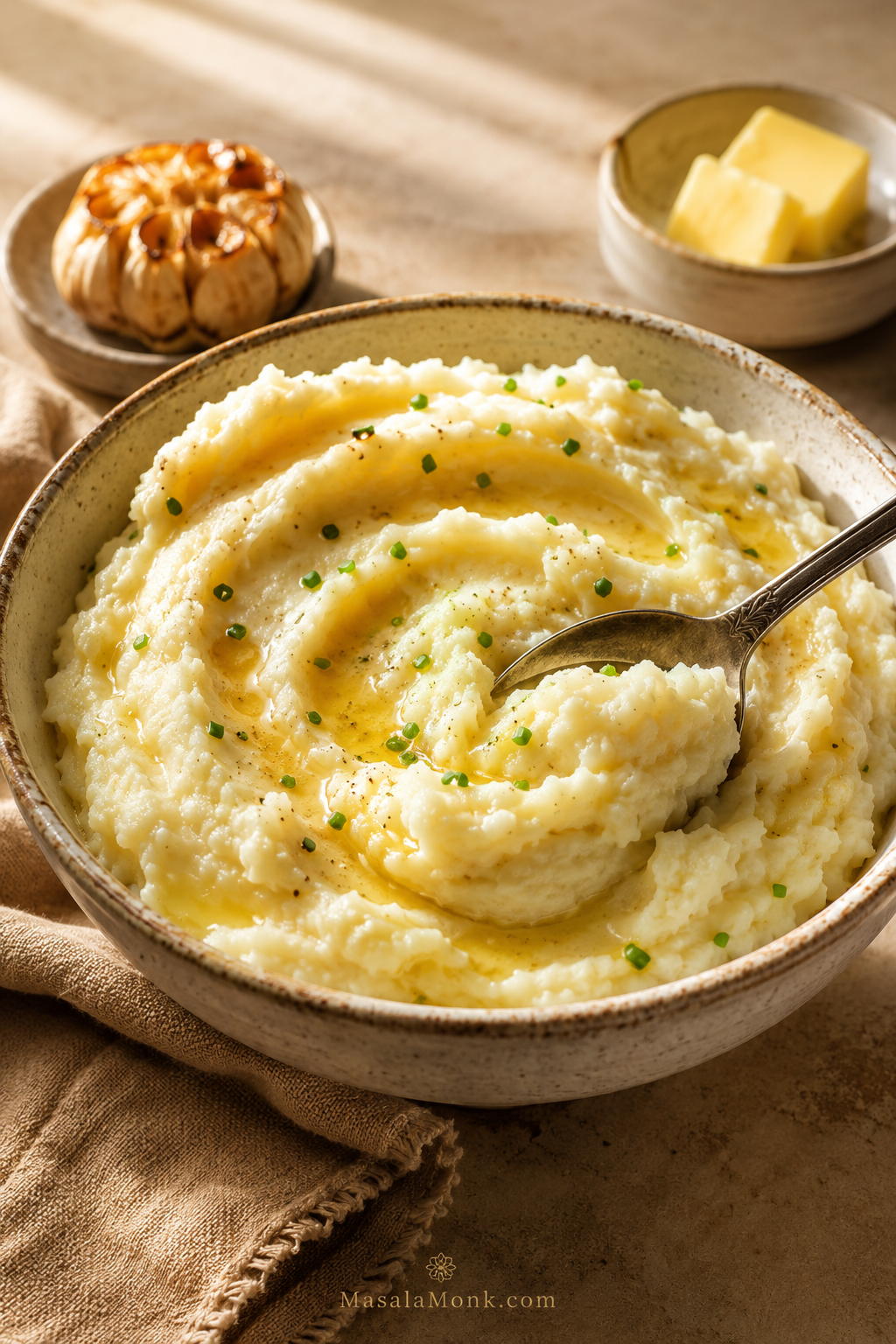
Creamy garlic mashed potatoes in a ceramic bowl with melted butter, chives, and a spoon pulling through soft swirls.

These garlic mashed potatoes are the kind you want under a spoonful of gravy: soft buttery ridges, mellow garlic in every bite, and enough body to hold melted butter without turning stiff, sticky, or gluey.

The secret is simple. Start with good potatoes, cook them until they are truly tender, let the extra steam escape after draining, then fold in warm garlic butter and milk while the potatoes are still hot. That gives you creamy spoonfuls, fluffy edges, and garlic flavor that runs through the whole bowl instead of sitting in sharp little pockets.

The goal is not restaurant-perfect smoothness at any cost. Instead, it is a warm, spoonable bowl that tastes buttery, garlicky, and comforting from the first bite to the last — the kind of mashed potatoes that make gravy, roast chicken, steak, or mushrooms feel like a complete meal.

Serve them with roast chicken, steak, meatloaf, mushrooms, turkey, gravy, or a holiday table. They are especially good beside a slow cooker roast chicken because the soft potatoes catch all those garlic-herb juices.

Make the classic version first, then use the variations below for roasted garlic mashed potatoes, garlic parmesan mashed potatoes, red skin mashed potatoes, no-milk mashed potatoes, dairy-free mashed potatoes, or a richer sour cream and cream cheese version.

In This Garlic Mashed Potatoes Recipe

Start with the classic creamy method, then adjust the potato, garlic, dairy, batch size, and make-ahead details to fit your meal.

Quick Answer: How to Make Garlic Mashed Potatoes

To make creamy garlic mashed potatoes, boil 2½ lb / 1.1 kg Yukon Gold potatoes in salted water until very tender. Drain them well, return them to the warm pot for a minute so excess moisture can steam off, then mash gently with warm garlic butter and milk.

For the garlic butter mixture, warm 6 smashed garlic cloves with 6 tbsp / 85 g butter and ¾ cup / 180 ml whole milk or half-and-half. Strain the garlic out for a smooth, rounded flavor, or mash the softened cloves into the potatoes if you want a deeper garlic taste. Finish with salt, pepper, and optional sour cream.

The full recipe takes about 35 minutes. For the best texture, use hot potatoes, warm dairy, enough salt, and a masher or ricer instead of a blender or food processor.

Best basic formula: 2½ lb Yukon Gold potatoes + 6 garlic cloves + 6 tbsp butter + ¾ cup warm milk or half-and-half + salt + optional ¼ cup sour cream.
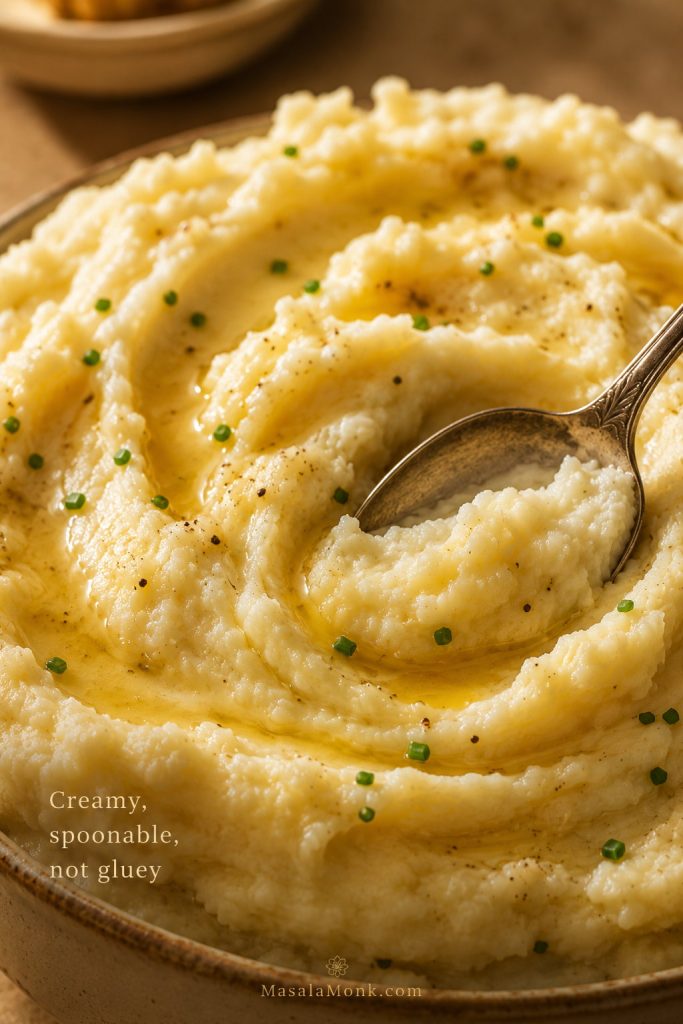
Close-up of garlic mashed potatoes with a spoon drag, melted butter in the ridges, and small chive flecks.
Look for soft ridges that hold butter without looking stiff or pasty. That is the visual cue for creamy mashed potatoes that are spoonable, not gluey.

Garlic Mashed Potatoes at a Glance

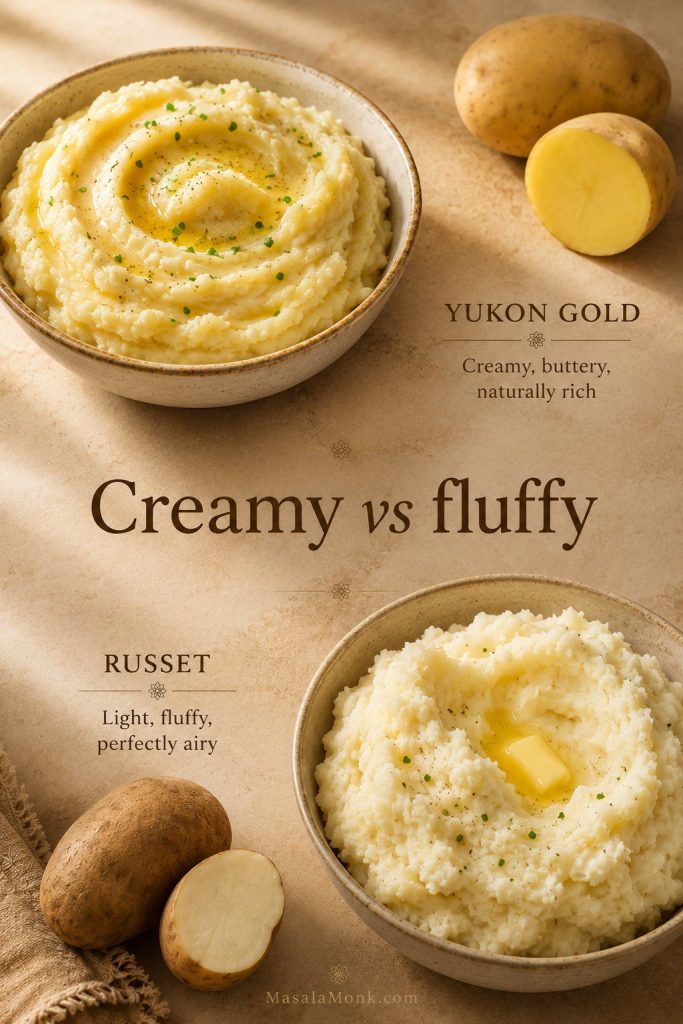
  • Best potato: Yukon Gold for creamy and buttery, russet for lighter and fluffier, red potatoes only for rustic skin-on mash.
  • Best garlic method: Warm smashed garlic in butter and milk for smooth everyday flavor.
  • Best texture rule: Drain well, steam-dry briefly, use warm dairy, and stop mixing once creamy.
  • Best tool: Potato masher for homestyle texture, ricer for smoother potatoes.
  • Make-ahead: Best within 2 days, with leftovers refrigerated for 3–4 days.

Which Version Should You Make?

The classic recipe is the best place to start, but different meals call for different mashed potatoes. Use this quick guide if you already know the flavor or texture you want.

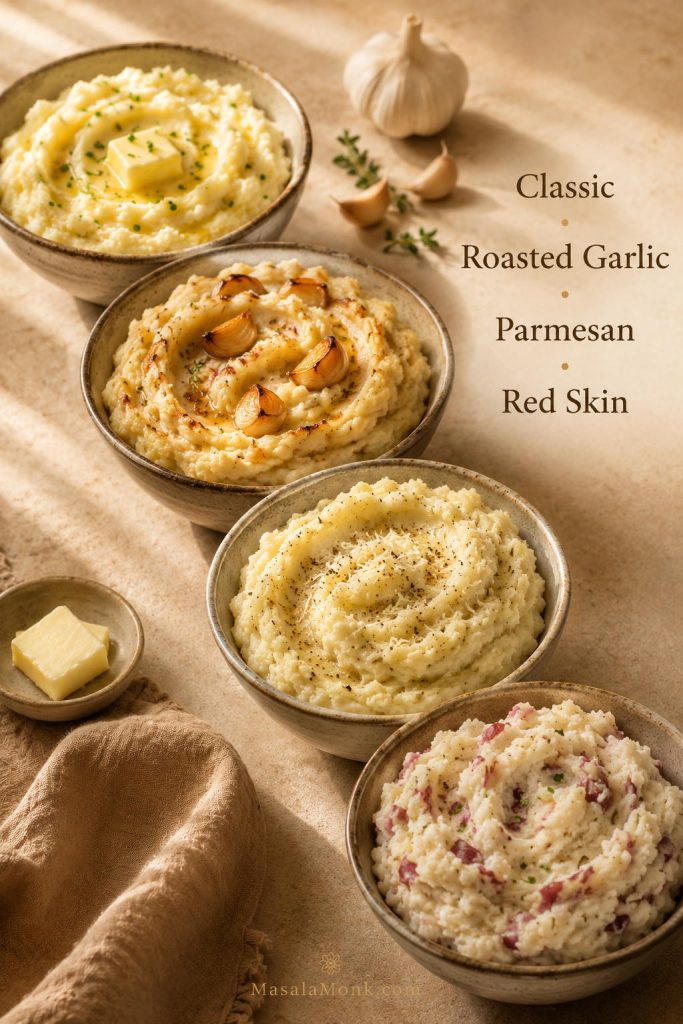
Four small bowls of mashed potatoes showing classic, roasted garlic, parmesan, and red skin versions.
Choose the version by the meal: classic for gravy, roasted garlic for deeper flavor, parmesan for savory richness, and red skin mashed potatoes for rustic texture.
If You Want… Make This Version Best For
Classic creamy mashed potatoes Main recipe Weeknights, holidays, gravy
Sweeter, softer garlic flavor Roasted garlic version Turkey, roast beef, dinner parties
Bigger garlic flavor Mash in the softened garlic cloves, add roasted garlic, or finish with a little garlic powder Garlic lovers, steak dinners, bold savory sides
Steakhouse-style flavor Garlic parmesan version Steak, chicken, mushrooms
No peeling Red skin version Rustic weeknight dinners
Tangier, richer potatoes Sour cream or cream cheese version Make-ahead meals, holiday sides
No milk or dairy-free Broth, olive oil, or dairy-free butter version Dairy-free guests, lighter sides
A smaller dinner batch Small batch version Steak night, dinner for two or three
A bigger holiday bowl Double batch Thanksgiving, Christmas, Easter, potlucks

Why This Garlic Mashed Potatoes Recipe Works

Good mashed potatoes should feel generous before you even add gravy. They should be warm, soft, buttery, and seasoned all the way through. In this recipe, each step protects that texture.

The method works because it avoids the three things that ruin mashed potatoes: raw garlic, wet potatoes, and overmixing. The garlic is warmed so it tastes smooth instead of sharp. After draining, the potatoes are dried briefly so they do not water down the butter. Everything is folded together gently, so the mash stays silky instead of tightening into paste.

Cooking the potatoes until completely tender also matters. If the potatoes are still firm in the center, you will have to keep mashing to chase out lumps, and that extra work can make the potatoes heavy. When they are cooked properly, they mash easily and absorb the warm dairy without a fight.

A potato masher gives you a cozy homemade texture, while a ricer gives you a smoother, fluffier bowl. Either way, the goal is the same: stop once the potatoes are spoonable, soft, and able to hold gentle swirls.

Ingredients for Garlic Mashed Potatoes

You do not need many ingredients, but small choices make a big difference. Warm dairy blends better than cold milk, enough butter carries the garlic flavor, and the right potato keeps the mash creamy instead of pasty.

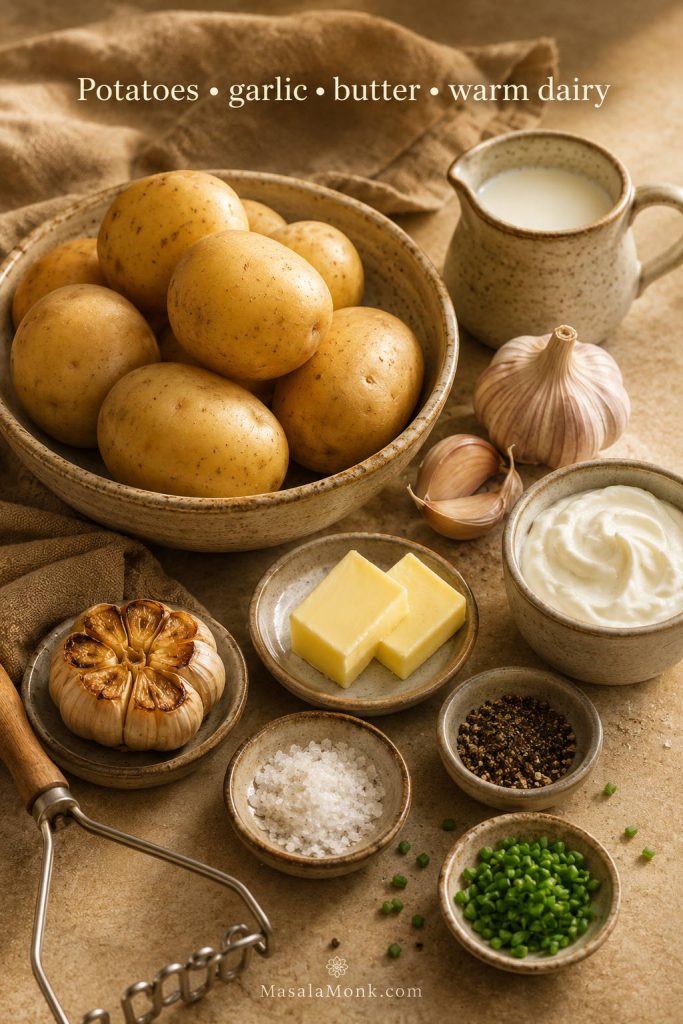
Yukon Gold potatoes, garlic, butter, milk, sour cream, salt, pepper, chives, and a potato masher arranged on a counter.
Even a simple garlic mashed potatoes recipe depends on balance: starchy potatoes for structure, butter for richness, and warm dairy so everything folds together smoothly.

Potatoes

Yukon Gold potatoes are the best default. They have a naturally creamy texture and a buttery flavor, so they make the recipe taste rich without needing a huge amount of cream.

Russets make a lighter, fluffier mash. Red potatoes work well when you want a rustic, skin-on version, but they should be mashed gently because they are waxier.

Garlic

Use 6 garlic cloves for the main batch. Smashed cloves warmed in butter and milk give the potatoes a mellow garlic flavor. If you love a stronger garlic note, mash the softened cloves into the potatoes instead of straining them out.

Butter

Use 6 tbsp / 85 g unsalted butter. Butter gives the potatoes richness and helps carry the garlic into every bite. If you use salted butter, season carefully at the end.

Milk or Half-and-Half

Use ¾ cup / 180 ml whole milk or half-and-half. Whole milk keeps the potatoes lighter. Half-and-half makes them richer and more holiday-worthy. Warm it before adding it to the potatoes.

Sour Cream

Sour cream is optional, but it adds a gentle tang and a fuller texture. Use ¼ cup / 60 g for balance, or up to ½ cup / 120 g if you want a tangier, richer mash.

Salt, Pepper, and Herbs

Salt the cooking water, then season again after mashing. Potatoes need salt in layers; otherwise, they can taste flat. Black pepper, white pepper, chives, parsley, and a little melted butter are all good finishing touches.

Salt reality: If the potatoes taste creamy but flat, they usually need more salt before they need more garlic. Add salt in small pinches, stir gently, and taste again.

Best Potatoes for Garlic Mashed Potatoes

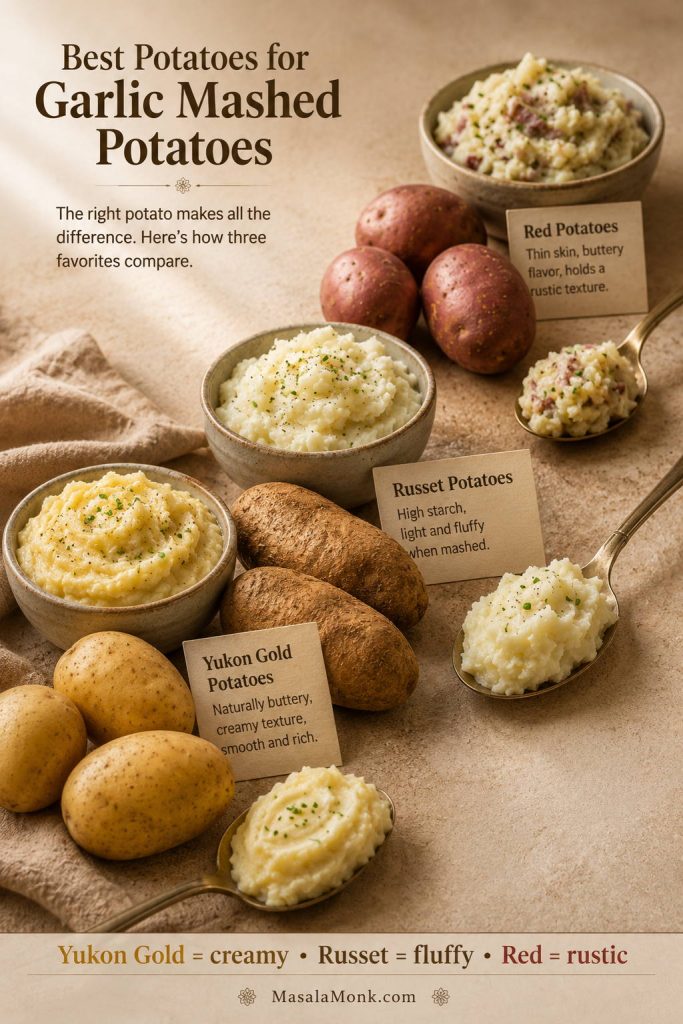
Because texture is the goal, the best potato depends on whether you want creamy, fluffy, or rustic mashed potatoes. Yukon Gold is the easiest choice for a smooth, buttery bowl. Russet is better for a lighter texture. Red potatoes are best when you want skins and a little more bite.

Yukon Gold, russet, and red potatoes shown with different mashed potato textures.
Before choosing a potato, choose the texture. Yukon Gold leans creamy, russet leans fluffy, and red potatoes are best when you want a skin-on rustic mash.
Potato Best For Texture How to Use It
Yukon Gold Classic creamy mashed potatoes Buttery, smooth, rich Use as the default for this recipe.
Russet Fluffy mashed potatoes Light, airy, absorbent Use alone or mix with Yukon Gold.
Yukon + Russet Balanced texture Creamy with fluffy edges Use half and half for a very reliable batch.
Red Potatoes Red skin mashed potatoes Rustic, slightly chunky, skin-on Mash gently and avoid electric mixing.

Think of the potato choice as a texture choice, not a strict rule. Yukon Gold gives the creamiest, most buttery everyday mash. Russet gives you a lighter, fluffier bowl that absorbs butter and milk easily. Red potatoes work when you want skins and a rustic texture, but they are not the best choice for perfectly smooth garlic mashed potatoes.

Yukon Gold vs Russet: Creamy or Fluffy?

If you are choosing between Yukon Gold and russet potatoes, pick by texture first. Yukon Gold gives a creamier bowl, while russets make the mash lighter and more absorbent.

Side-by-side comparison of Yukon Gold mashed potatoes and russet mashed potatoes with cut potatoes nearby.
Yukon Gold gives a buttery, creamy mash, while russets absorb butter and milk more easily for a lighter, fluffier bowl.

For potato choice, higher-starch potatoes such as russets and Yukon Golds are usually better for a smooth, fluffy mash, while waxier red potatoes are better kept rustic. Better Homes & Gardens explains why chefs often prefer russets and Yukon Golds for creamy mashed potatoes.

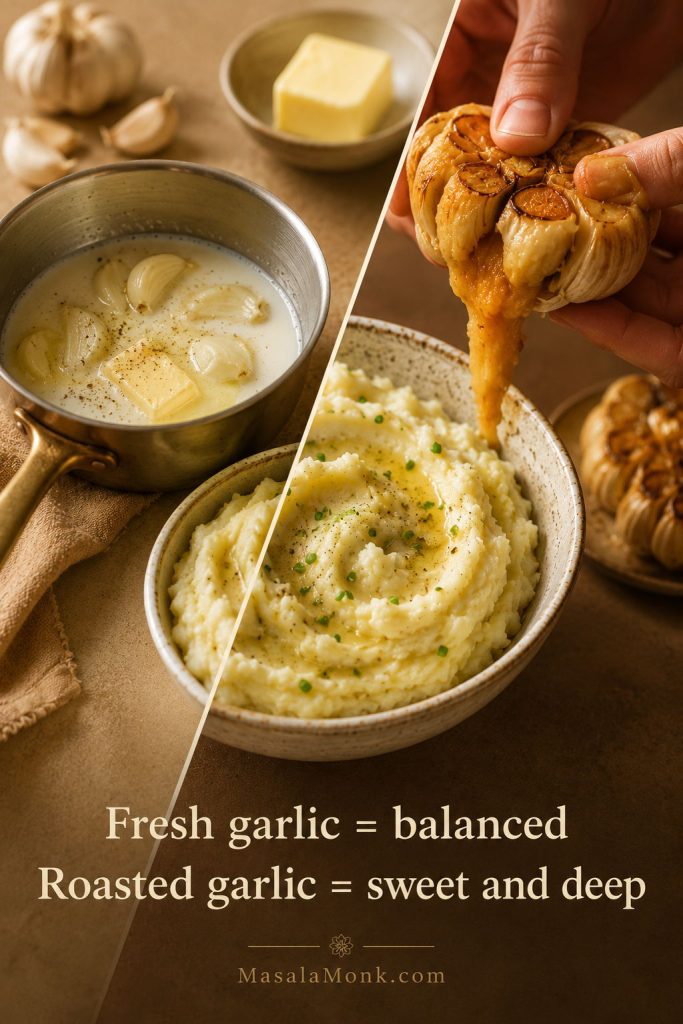
Fresh Garlic vs Roasted Garlic vs Garlic Powder

Garlic can taste sweet, sharp, mellow, or bold depending on how it is added. That is why one garlic mashed potatoes recipe can taste completely different from another.

Fresh garlic warming in butter and milk beside roasted garlic being squeezed, with mashed potatoes between them.
For a weeknight bowl, fresh garlic in warm butter keeps the flavor rounded. For a deeper holiday-style side, roasted garlic adds sweetness and depth.
Garlic Method Flavor Best Use How Much to Use
Garlic warmed in butter and milk Smooth, rounded, balanced Best everyday method 6 cloves for 2½ lb potatoes
Garlic boiled with potatoes Soft and simple Quick shortcut 5–6 cloves
Roasted garlic Sweet, deep, mellow Holiday or special version 1 whole head garlic
Garlic powder Bold, familiar garlic flavor Flavor boost or backup ¼–½ tsp
Raw minced garlic Sharp and harsh Usually best avoided Sauté first if using

The main method uses garlic warmed in butter and milk because it gives the best balance of speed and flavor. Roasted garlic is deeper and sweeter, but it adds extra time. Garlic powder is useful when the finished potatoes taste good but need a little more punch.

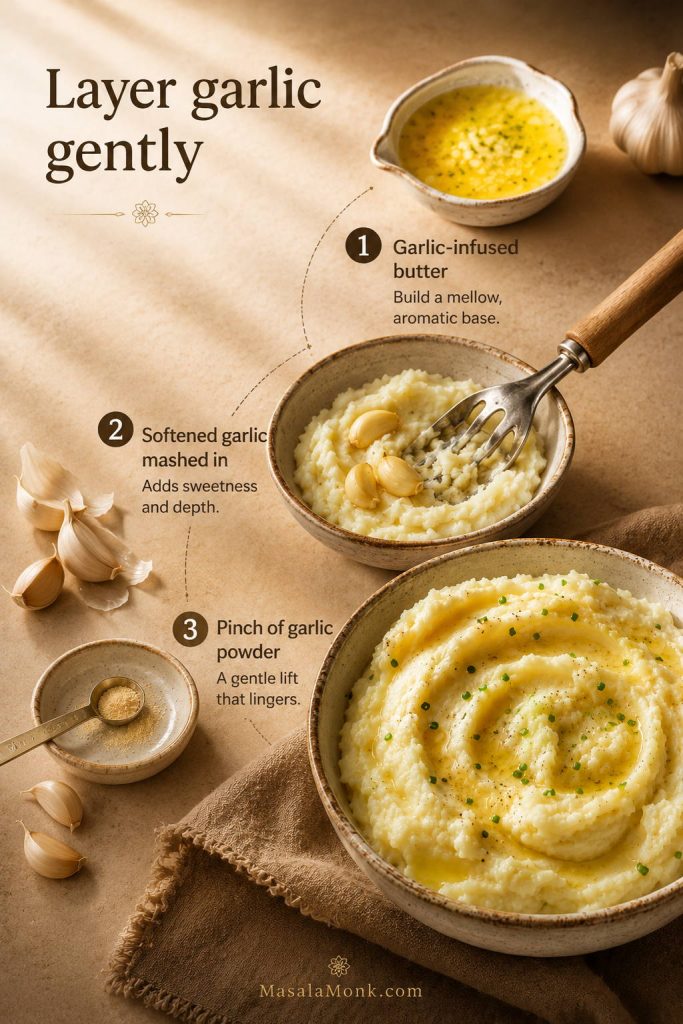
How to Build More Garlic Flavor Without Raw Bite

If you want the garlic to stand out more, layer it instead of only adding more raw garlic. Warm smashed cloves in the butter and milk, mash in the softened cloves, and add a tiny pinch of garlic powder only if the finished potatoes still taste too mild. That gives you deeper garlic flavor without the harsh bite of raw minced garlic.

Garlic-infused butter, softened garlic cloves, garlic powder, and mashed potatoes arranged as a flavor-layering setup.
If the potatoes need more garlic, layer the flavor gradually instead of adding raw garlic. Infused butter, softened cloves, and a tiny pinch of garlic powder add depth without harshness.

Avoid stirring raw minced garlic straight into mashed potatoes. It can taste hot and harsh, especially if the potatoes are mild. If you want to use minced garlic, cook it gently in the butter first.

How to Make Garlic Mashed Potatoes

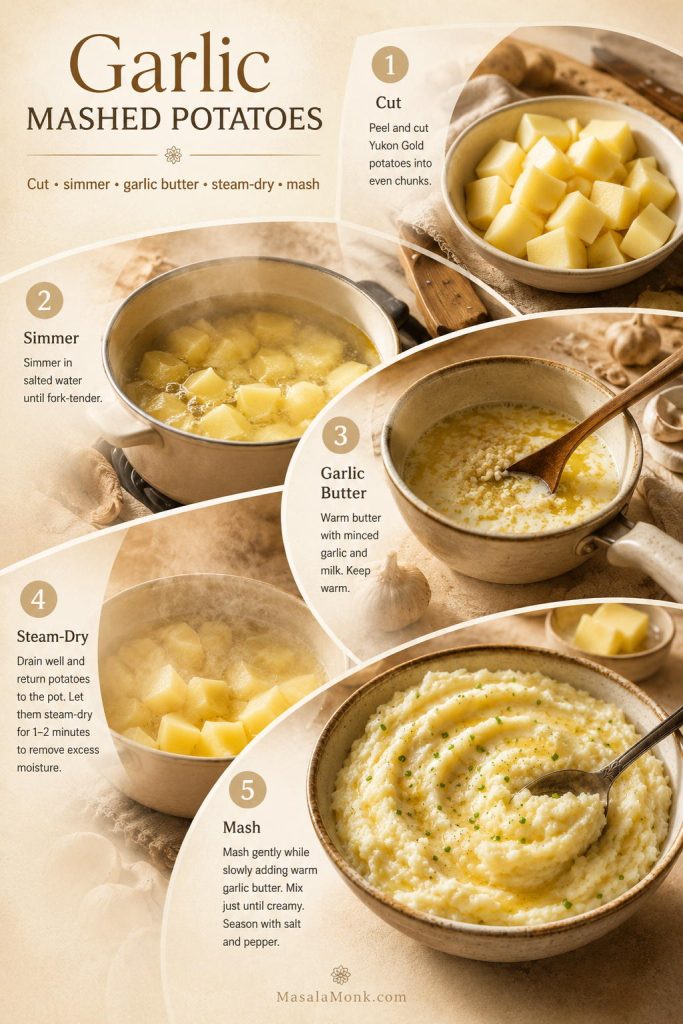
This method keeps the potatoes creamy and the garlic smooth. The steps are simple, but the little details make the bowl taste much better.

Step-by-step process showing cut potatoes, simmering, garlic butter, steam-drying, and gentle mashing.
The sequence matters because texture is built in stages: tender potatoes first, dry potatoes next, then warm garlic butter and gentle mashing.

Step 1: Cut the potatoes evenly

Peel the potatoes and cut them into 1 to 1½-inch chunks. Even pieces cook at the same pace, which helps you avoid hard centers and lumpy mashed potatoes.

Step 2: Start in cold salted water

Put the potatoes in a large pot and cover them with cold water by about 1 inch. Add a generous spoonful of salt. Starting cold helps the potatoes cook evenly from edge to center.

Step 3: Simmer until very tender

Bring the water to a boil, then reduce to a steady simmer. Cook for 15–20 minutes, or until a knife slides through the potatoes with no resistance. If the potatoes are undercooked, the mash will stay lumpy no matter how much you stir.

A fork testing a tender cooked potato chunk over a pot or colander.
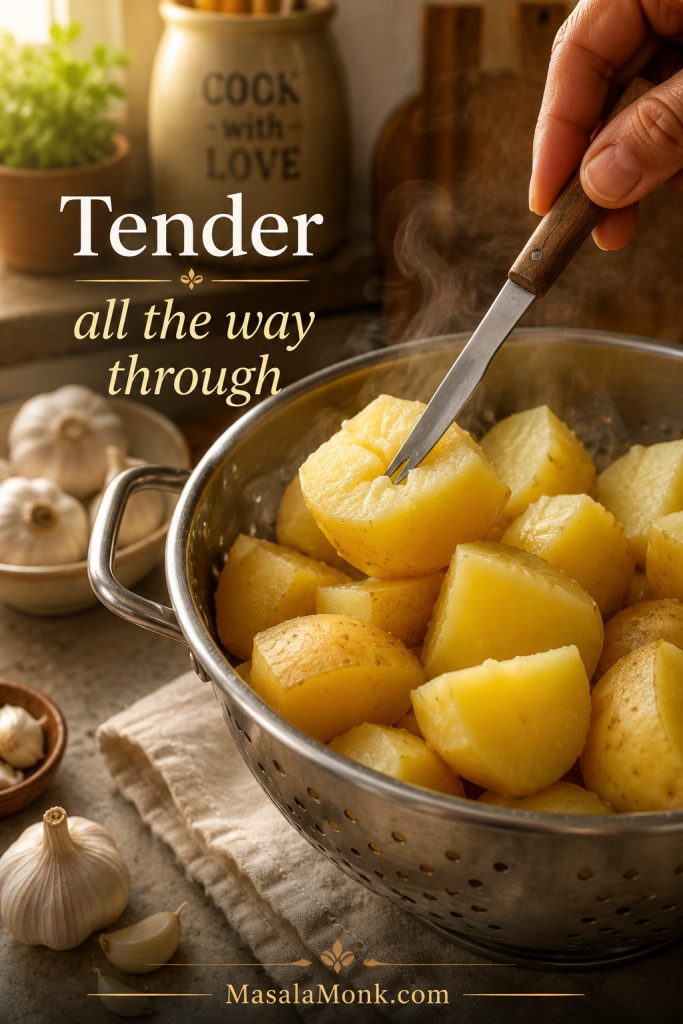
A fork should slide through easily before you drain the pot; otherwise, firm centers can force extra mashing and make the texture heavier.

Step 4: Warm the garlic, butter, and milk

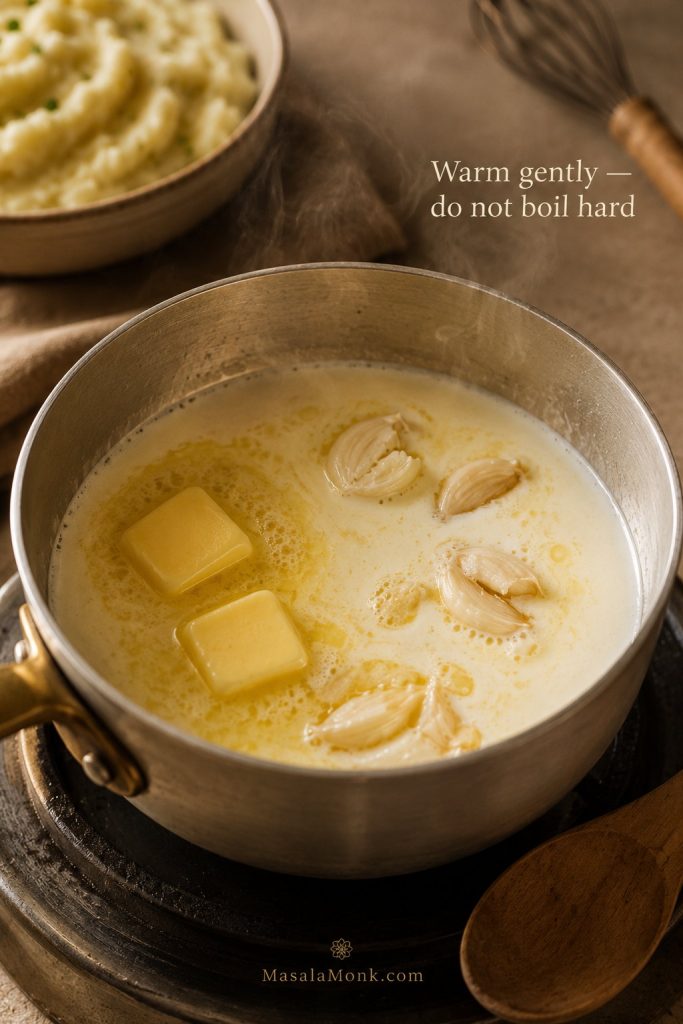
While the potatoes cook, add the butter, milk or half-and-half, and smashed garlic cloves to a small saucepan. Warm over low heat until the butter melts and the garlic smells mellow. Keep the mixture warm and fragrant, but do not let it boil hard or scorch.

Smashed garlic cloves warming gently in butter and milk in a small saucepan.
Keep the pan gentle here. Low heat lets the garlic perfume the butter and milk without turning sharp, bitter, or scorched.

Step 5: Drain and steam-dry

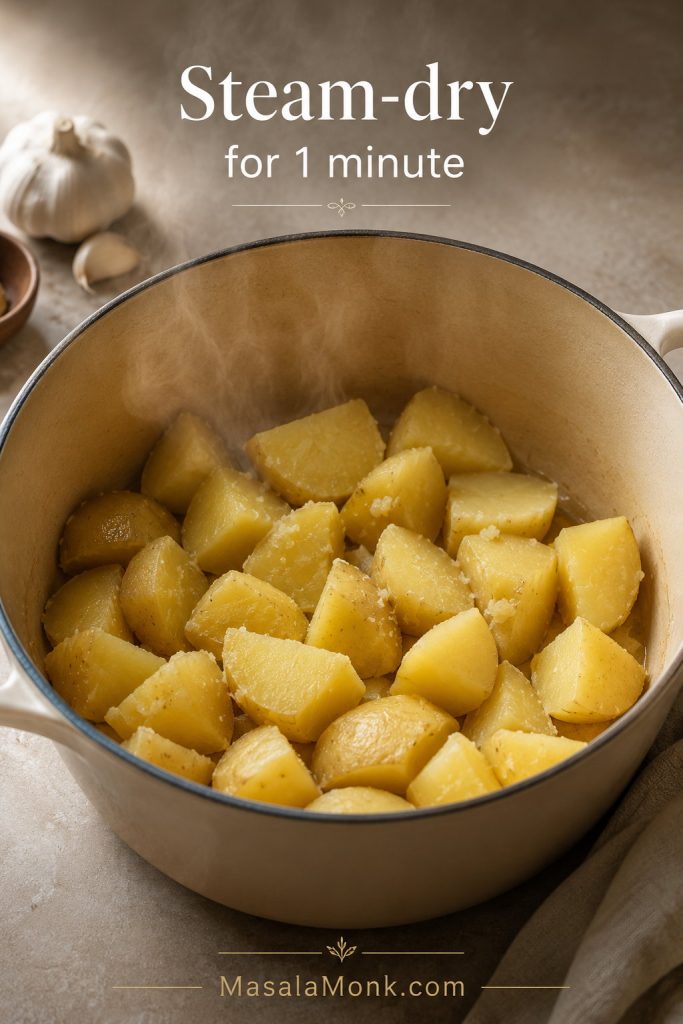
Drain the potatoes well, then return them to the warm empty pot for about 1 minute. Gently shake the pot or stir once so extra moisture can evaporate. This keeps the finished potatoes from tasting loose or watery.

Drained Yukon Gold potato chunks steaming in a warm pot before mashing.
Once drained, let the potatoes steam-dry briefly in the warm pot so the final mash tastes rich instead of watery.

Step 6: Mash gently

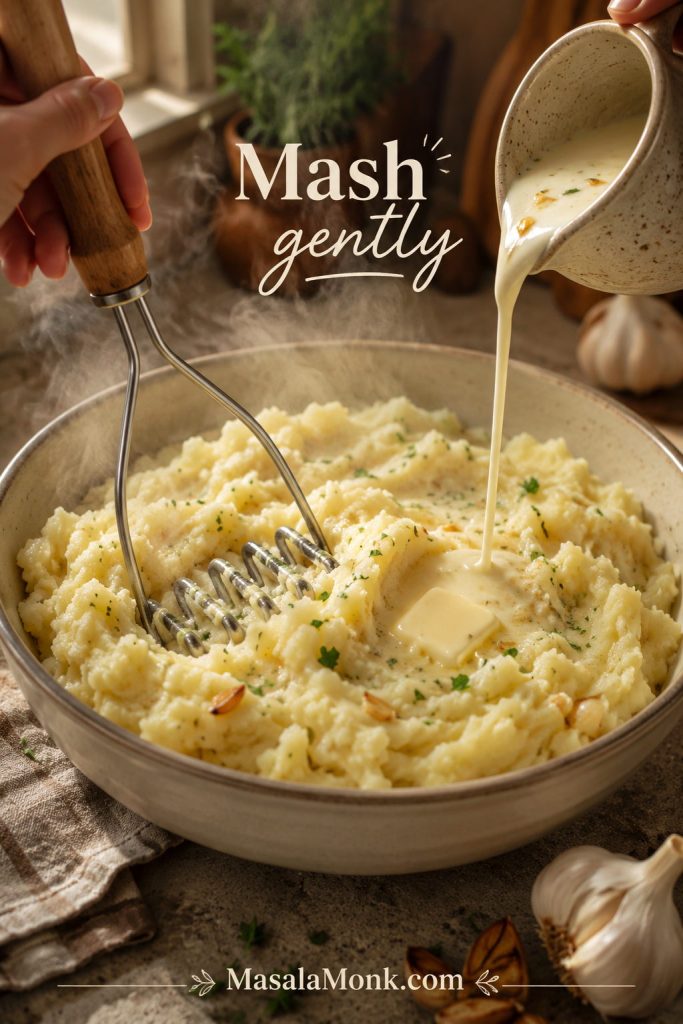
Mash the hot potatoes with a potato masher, or pass them through a ricer. Add the infused butter-milk mixture gradually, then strain out the garlic for a smoother background flavor or mash the softened cloves in for a deeper garlic taste.

Warm garlic butter being folded into hot potatoes with a masher or spoon.
Add the warm garlic butter gradually, then stop once the potatoes are creamy. Too much mixing can turn a soft mash tight and gluey.

Step 7: Finish and serve

Fold in sour cream if using, then season with salt and pepper. Taste before serving. The finished potatoes should hold soft swirls but still spoon easily. Transfer them to a warm bowl and finish with melted butter, chives, parsley, or extra pepper.

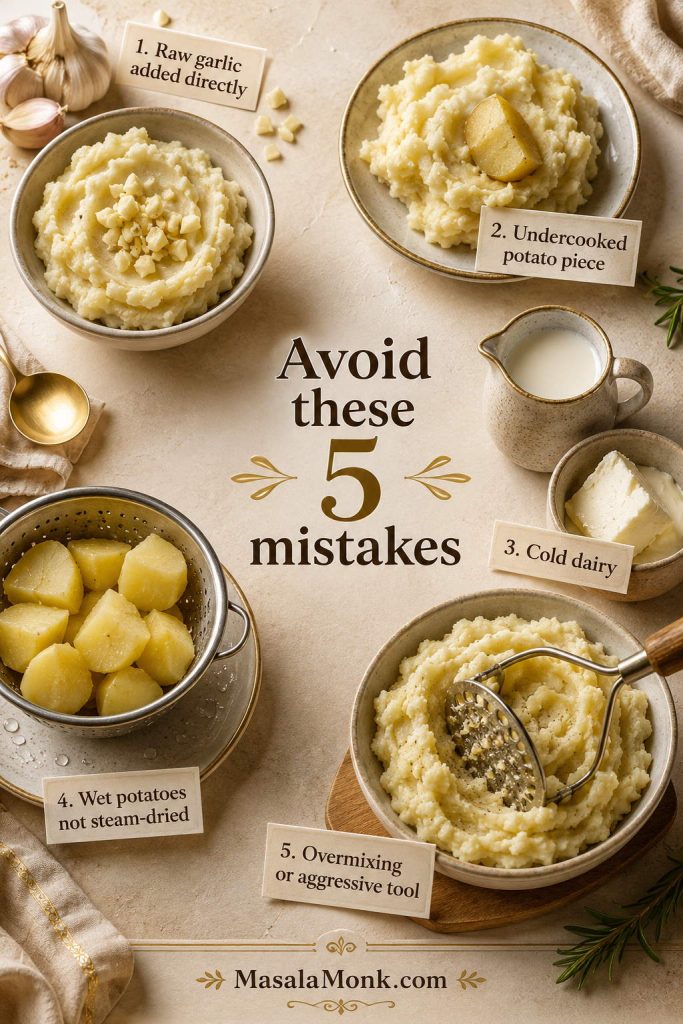
Common Garlic Mashed Potato Mistakes

Often, mashed potato problems happen before the bowl reaches the table. Avoid these mistakes and the final texture will be much easier to control.

Small scenes showing raw garlic, cold dairy, wet potatoes, undercooked potatoes, and overmixing.
Most mashed potato problems start early, so avoid raw garlic, cold dairy, wet potatoes, firm centers, and aggressive mixing before they ruin the texture.
  • Using raw garlic: It can taste sharp and harsh. Warm it gently in butter or roast it first.
  • Undercooking the potatoes: Firm centers lead to lumps and extra mashing.
  • Adding cold dairy: Cold milk or cream cools the potatoes and makes blending harder.
  • Skipping the steam-dry step: Wet potatoes can taste watery and loose.
  • Overmixing: Too much stirring, blending, or whipping can make potatoes gluey.

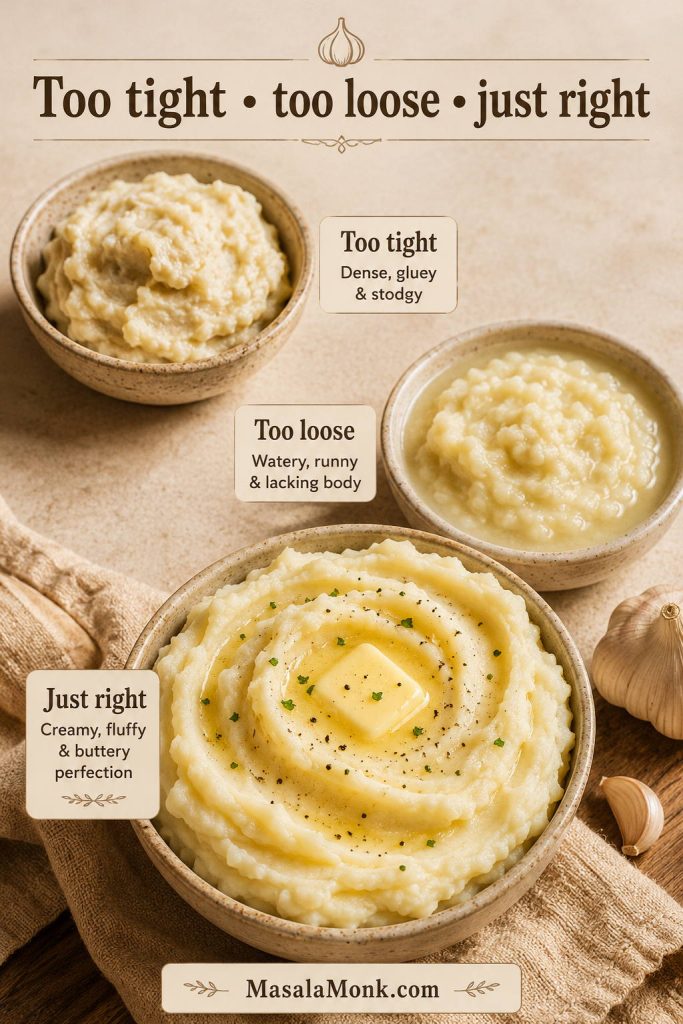
How to Make Them Creamy, Not Gluey

Because gluey mashed potatoes usually come from overmixing, aggressive blending, or wet potatoes, a silky bowl needs a gentler touch.

Three mashed potato textures compared: too tight, too loose, and just right.
The best texture sits between loose and tight: soft enough to spoon, thick enough to hold swirls, and never worked into paste.

Cook them all the way through

Potatoes should be tender enough to mash easily. If they are still firm in the center, you will have to work them too much, and that extra mixing can make the texture heavy.

Let extra moisture escape

After draining, return the potatoes to the warm pot for a minute. This tiny step makes the mash taste more concentrated and helps the butter and milk blend in properly.

Use warm dairy

Warm milk, cream, or half-and-half folds into hot potatoes more smoothly than cold dairy. It also keeps the potatoes from cooling too quickly while you mash.

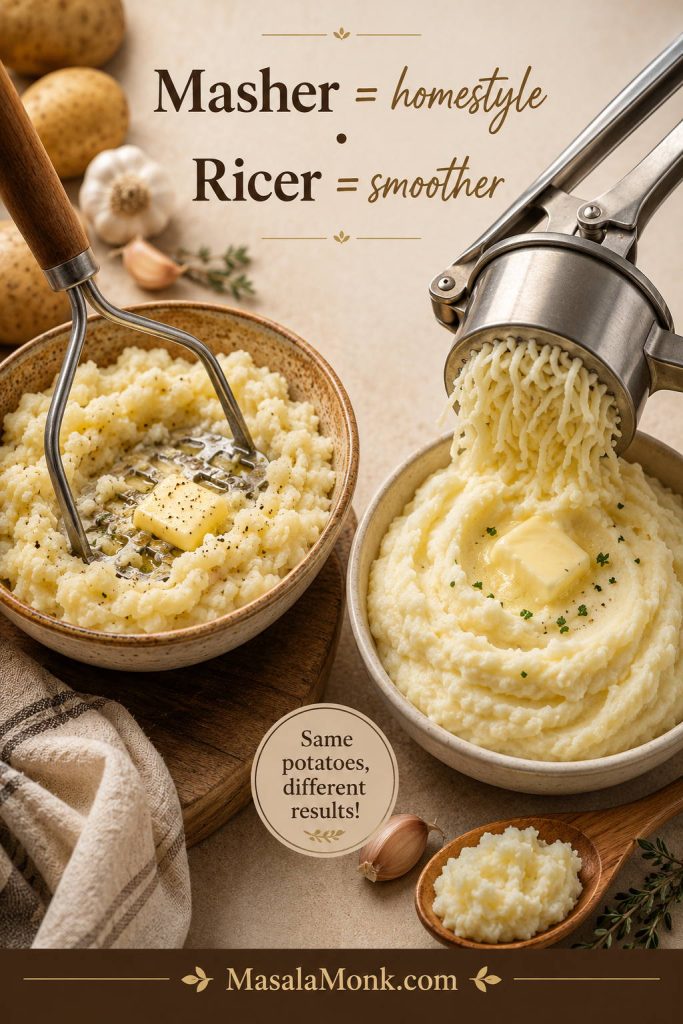
Choose the right tool

A potato masher gives a cozy homemade texture. A ricer makes the smoothest, fluffiest potatoes. A blender or food processor can turn potatoes sticky, so leave those tools for soups and sauces.

Potato masher and ricer shown with homestyle mashed potatoes and smoother riced potatoes.
Use a masher for homestyle garlic mashed potatoes, or use a ricer when you want a smoother, fluffier texture.

Stop once they look right

When the potatoes are creamy and the dairy has disappeared into the mash, stop stirring. Extra mixing rarely makes mashed potatoes better; it usually makes them tighter.

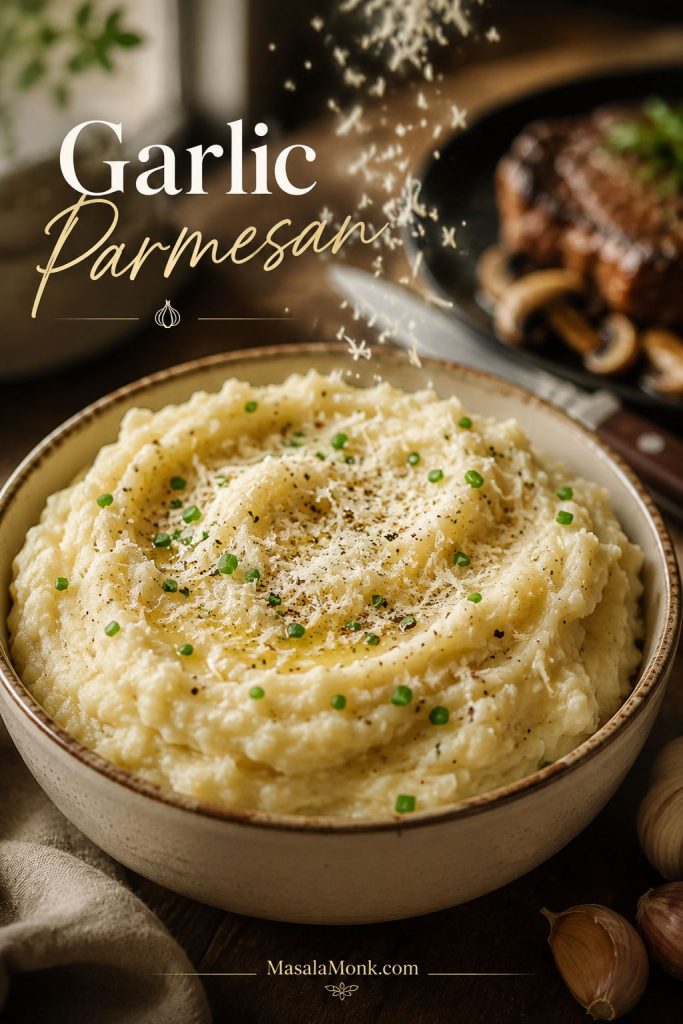
Garlic Parmesan Mashed Potatoes

Garlic parmesan mashed potatoes are savory, salty, and a little more steakhouse-style. Make the main recipe, then fold in ½ to ¾ cup finely grated parmesan while the potatoes are still hot.

Garlic parmesan mashed potatoes with grated parmesan, black pepper, melted butter, and chives.
Parmesan adds salt, nuttiness, and a savory edge, so garlic parmesan mashed potatoes pair especially well with steak, mushrooms, roast chicken, or pan sauce.

Add the cheese after mashing so it melts smoothly into the potatoes. Since parmesan brings salt, season lightly at first and adjust after the cheese is fully mixed in. For a bolder garlic-parmesan flavor, add ¼ tsp garlic powder with the warm butter and milk.

This version is especially good with steak, roast chicken, meatballs, mushrooms, or a simple pan sauce. It gives the potatoes a deeper savory finish without making them feel like a completely different dish.

Roasted Garlic Mashed Potatoes

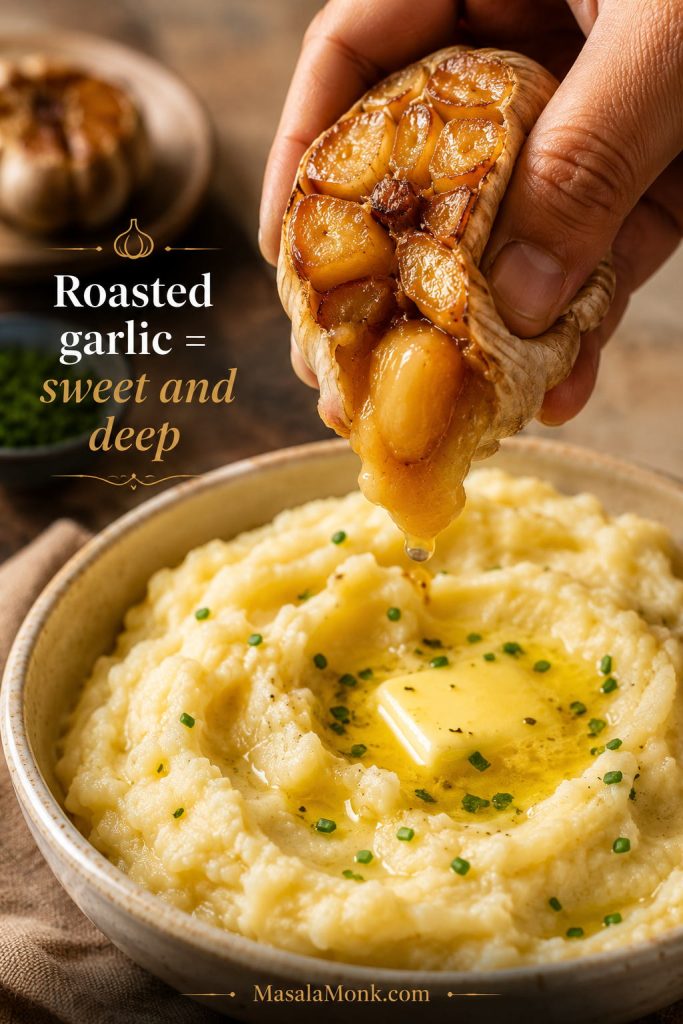
Roasted garlic mashed potatoes taste deeper, sweeter, and more holiday-worthy than the classic version. The garlic loses its sharp edge in the oven, turns soft and golden, then melts into the potatoes like a savory spread.

Roasted garlic being squeezed into hot mashed potatoes with a creamy finished bowl nearby.
Roast the garlic until the cloves turn soft and golden, then mash them in while the potatoes are hot so the flavor spreads evenly.

To make roasted garlic mashed potatoes, slice the top off 1 whole head of garlic, drizzle with a little olive oil, wrap in foil, and roast at 400°F / 200°C for 40–45 minutes, until the cloves are soft and golden. Squeeze the roasted cloves into the hot potatoes and mash them in with the warm butter and milk.

One whole head of roasted garlic sounds like a lot, but roasted garlic is much softer than fresh garlic. It melts into the potatoes and gives them a round, almost sweet savory flavor.

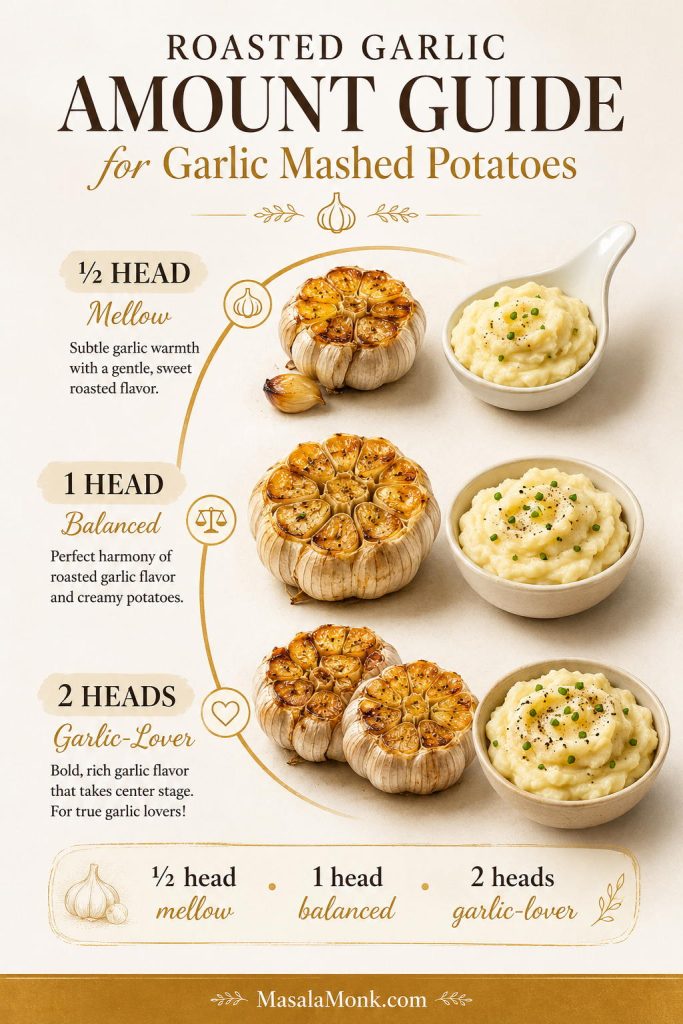
How Much Roasted Garlic Should You Use?

Use one roasted garlic head for a balanced batch. Go down to half a head for a gentler family-style bowl, or use two heads only when you want roasted garlic to be the main flavor.

Roasted Garlic Amount Flavor Level Best For
½ head Gentle and mellow Family dinners or lighter garlic flavor
1 whole head Balanced roasted garlic flavor Classic roasted garlic mashed potatoes
2 heads Deep garlic-lover flavor People who want roasted garlic to be the main flavor
Roasted garlic guide showing half a head, one head, and two heads for mashed potatoes.
Start with one roasted garlic head for balance. Use less for a gentle background flavor, or use more when you want roasted garlic to lead.

For the best flavor, mash the roasted cloves while the potatoes are still hot, then taste before adding garlic powder. Roasted garlic brings sweetness and depth, while garlic powder brings sharper garlic punch. Used together carefully, they make the potatoes taste fuller without turning harsh.

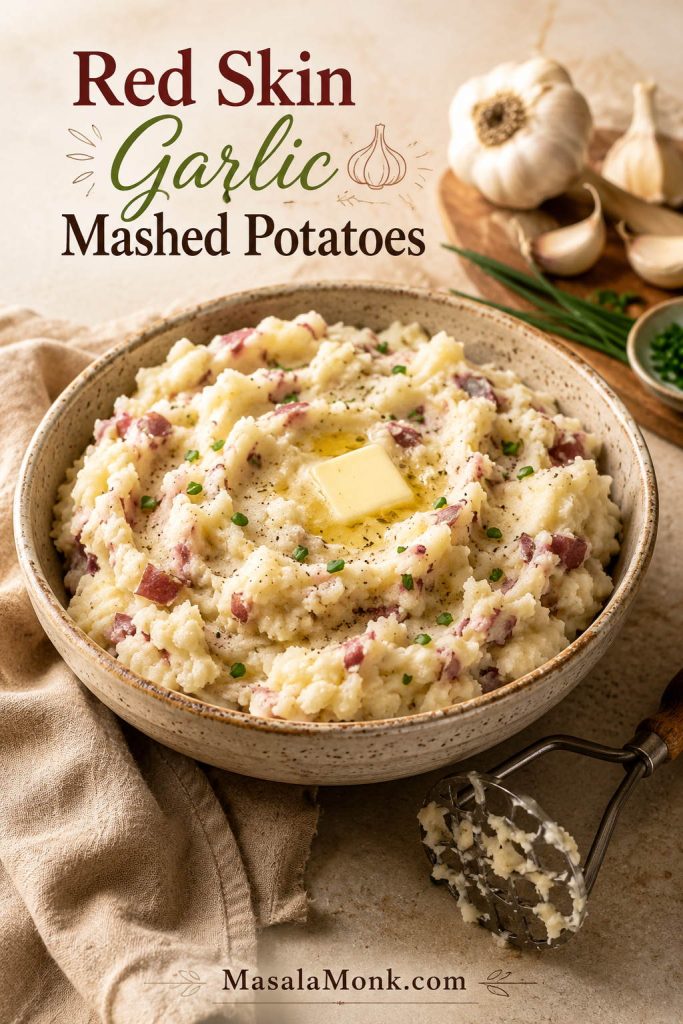
Red Skin Garlic Mashed Potatoes

Red skin garlic mashed potatoes are more rustic than the classic Yukon Gold version. They are slightly chunky, a little more textured, and lovely when you want a no-peel side dish.

Red potatoes are not wrong for mashed potatoes; they are just a different style. Use them when you want a skin-on, homestyle bowl, not when you want the smoothest, fluffiest mash.

Rustic red skin mashed potatoes with visible potato skins, melted butter, chives, and a hand masher nearby.
Red potatoes work best when the mash stays a little chunky and rustic because that texture makes the skins feel intentional instead of tough.

Use 2 lb / 900 g red potatoes, scrubbed well. Leave the skins on if they are thin and tender. Mash with 5–7 garlic cloves, 6 tbsp / 85 g butter, ½ cup / 120 ml milk or half-and-half, and optional ¼ cup / 60 g sour cream.

Keep this version gently mashed rather than perfectly smooth. Red potatoes can get sticky if they are overworked, so use a hand masher and stop while there is still a little texture.

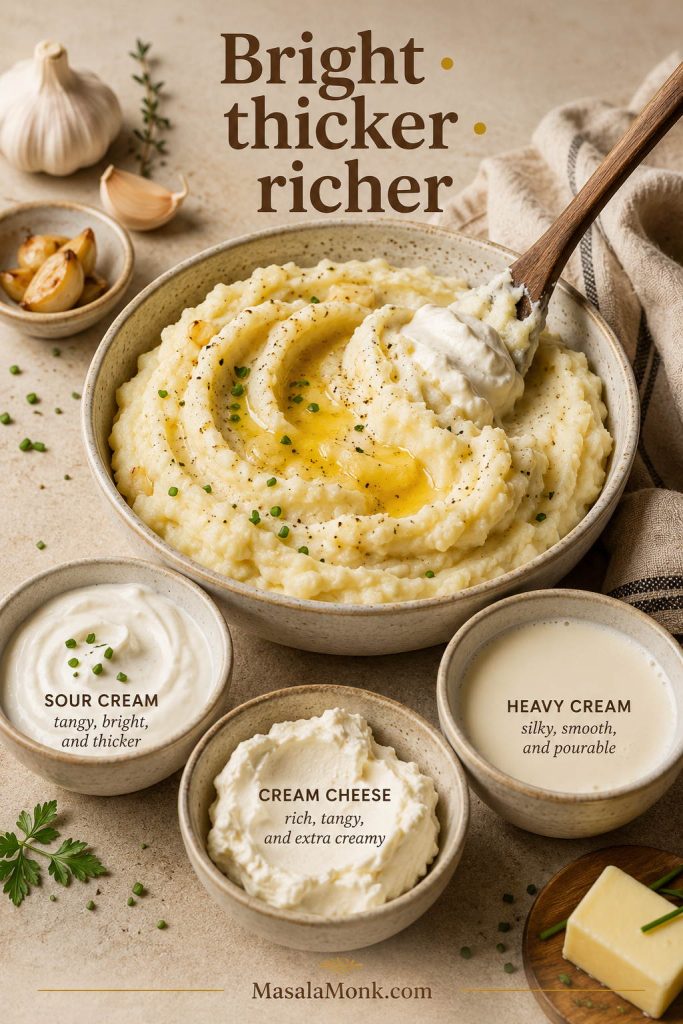
Sour Cream, Cream Cheese, and Heavy Cream Versions

These add-ins change the mood of the bowl: sour cream makes it tangier, cream cheese makes it thicker and richer, and heavy cream gives it more of a holiday-table feel. Add them after the potatoes have been mashed with the warm garlic butter and milk.

Choose sour cream when you want brightness, cream cheese when you want a thicker make-ahead mash, and heavy cream when you want a richer holiday bowl. For everyday garlic mashed potatoes, half-and-half is usually the easiest middle ground.

Garlic mashed potatoes with sour cream, cream cheese, and heavy cream in small bowls around the main bowl.
Use sour cream when the mash needs brightness, cream cheese when it needs body, and heavy cream when you want a richer holiday-style bowl.
Add-In Amount for 2½ lb Potatoes What It Does
Sour Cream ¼–½ cup / 60–120 g Adds tang and creaminess
Cream Cheese 4 oz / 115 g, softened Makes the mash thicker and richer
Heavy Cream Use instead of milk Creates a denser holiday-style texture
Half-and-Half Use instead of milk Gives a balanced creamy finish
Garlic Herb Cheese 3–5 oz / 85–140 g Adds rich, herby flavor

If you are making the potatoes ahead, cream cheese is especially useful because it helps the mash reheat with a thicker, smoother body. If you want a lighter everyday version, stick with milk or half-and-half and use sour cream only as a small finishing touch.

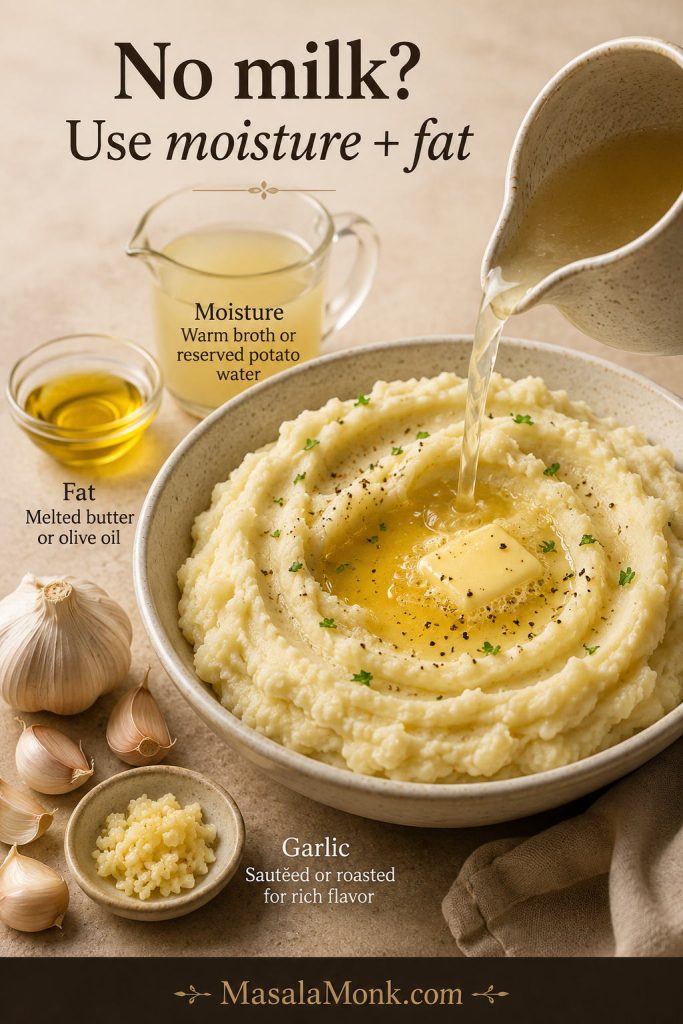
Garlic Mashed Potatoes Without Milk

You can make garlic mashed potatoes without milk. They will not taste exactly the same, but they can still be rich, smooth, and flavorful if you use warm liquid and enough fat.

The important thing is not milk itself; it is moisture plus fat. Broth or potato water loosens the mash, while butter, olive oil, or dairy-free butter keeps it from tasting dry.

Garlic mashed potatoes with broth or potato water, butter or olive oil, and garlic for a no-milk version.
Without milk, the same rule still applies: add moisture to loosen the mash and fat to keep it rich.
No-Milk Option Use This Result
Butter + potato water 6 tbsp butter + ½ cup reserved cooking water Simple, rich, potato-forward
Broth + olive oil ½ cup warm broth + 3–4 tbsp olive oil Savory and lighter
Dairy-free butter + plant milk Dairy-free butter + unsweetened oat or almond milk Creamier vegan-style mash

For the best no-milk flavor, warm the garlic in butter, olive oil, or dairy-free butter before adding it to the potatoes. If you are using broth, add it gradually. You can always loosen thick potatoes, but it is harder to fix a watery bowl.

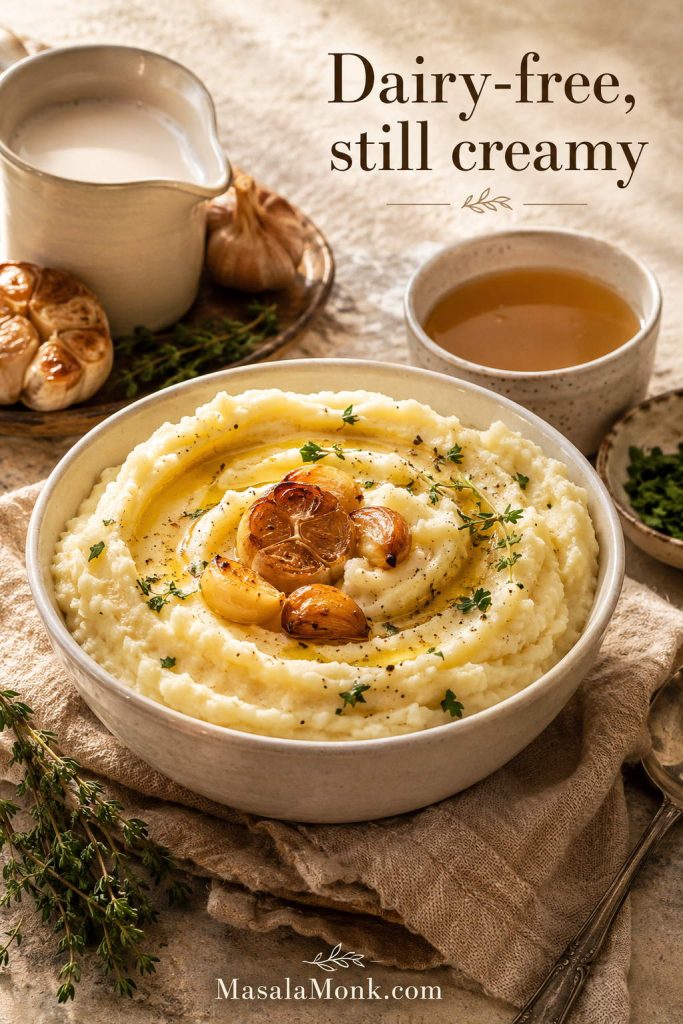
Dairy-Free or Vegan Garlic Mashed Potatoes

For a dairy-free version, use Yukon Gold potatoes, roasted or sautéed garlic, olive oil or dairy-free butter, warm vegetable broth, and optional unsweetened plant milk. Oat milk works well when it is plain and unsweetened. Almond milk can also work, but avoid anything sweetened or vanilla-flavored.

A good dairy-free formula for 2½ lb potatoes is 5–6 garlic cloves, 4 tbsp olive oil or dairy-free butter, and ½ to ¾ cup warm vegetable broth or unsweetened plant milk. Add the liquid slowly and stop when the potatoes are spoonable.

Dairy-free mashed potatoes with roasted garlic, olive oil, vegetable broth, plant milk, and herbs.
Roasted garlic and olive oil help dairy-free garlic mashed potatoes taste full and rounded, even without cream or butter.

Roasted garlic is especially good here because it adds sweetness and depth without needing cream. Finish with chives, parsley, black pepper, and a small drizzle of olive oil.

If you are looking for a lower-carb mash instead of a potato-based dairy-free version, you may also like MasalaMonk’s keto cauliflower mashed potatoes.

Small Batch and Holiday Scaling

The main recipe makes 6 servings, which works well for a family dinner or a modest holiday side. For a smaller dinner or a bigger table, scale the recipe with the same basic ratio and adjust the warm liquid at the end.

Small Batch Garlic Mashed Potatoes

For 2–3 servings, make a half batch. This is the right size for steak night, roast chicken for two, or a smaller dinner where you do not want a refrigerator full of leftovers.

Ingredient Small Batch Amount
Yukon Gold potatoes 1¼ lb / 565 g
Garlic cloves 3 cloves
Butter 3 tbsp / 42 g
Milk or half-and-half ⅓ cup / 80 ml, plus more if needed
Sour cream 2 tbsp, optional
Salt and pepper To taste

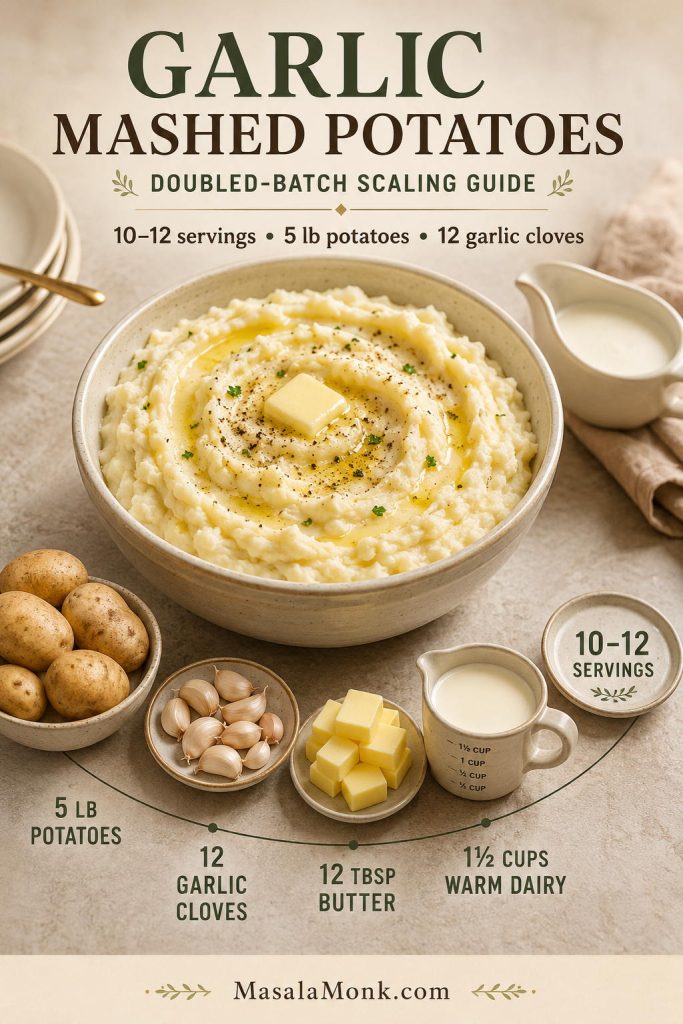
How to Scale for a Holiday Table

For 10–12 servings, double the main recipe: use 5 lb / 2.25 kg potatoes, 12 garlic cloves, 12 tbsp / 170 g butter, and 1½ cups / 360 ml milk or half-and-half. Start with slightly less liquid, then add more after mashing until the potatoes are soft enough to spoon but still hold gentle swirls.

Holiday mashed potato scaling guide with a large bowl and ingredients for 10 to 12 servings.
For a holiday batch, scale the ingredients carefully and make the potatoes slightly softer than usual so they stay spoonable as they sit.

When scaling up, use a large enough pot so the potato pieces cook evenly. If the pot is crowded, the potatoes may cook unevenly and the bottom pieces can soften before the top pieces are ready.

For a fuller holiday plate, these potatoes pair naturally with a creamy green vegetable side like MasalaMonk’s green bean casserole.

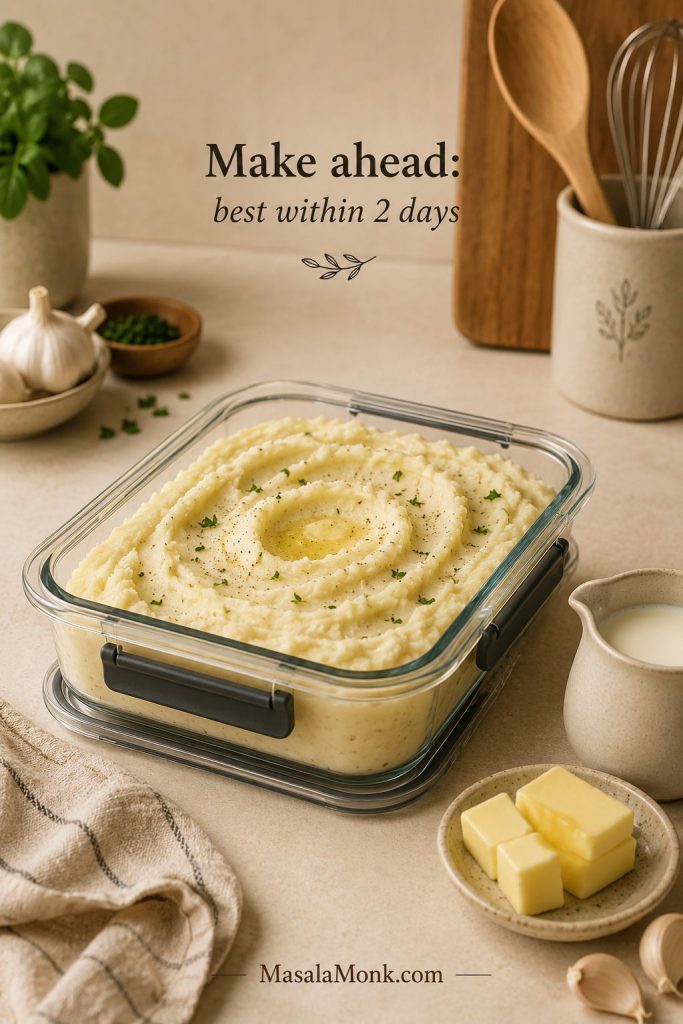
Make-Ahead Garlic Mashed Potatoes

Garlic mashed potatoes can be made ahead, which is helpful for holidays, dinner parties, and busy evenings. Since mashed potatoes firm up as they cool, make them slightly softer than you want them at serving time.

Garlic mashed potatoes stored in an airtight container with butter and milk nearby for reheating.
Make-ahead garlic mashed potatoes work best when you plan for reheating, so keep butter and warm dairy nearby to refresh the texture before serving.

How far ahead can you make them?

For the best texture, make them up to 2 days ahead. They can be refrigerated for 3–4 days, but they are creamiest when reheated within the first couple of days. For general leftover safety, the USDA recommends refrigerating leftovers for 3–4 days and reheating them to 165°F.

How to store them

Let the potatoes cool, then transfer them to an airtight container. If you want to reduce drying, press a piece of parchment or plastic wrap against the surface before covering.

How to reheat them

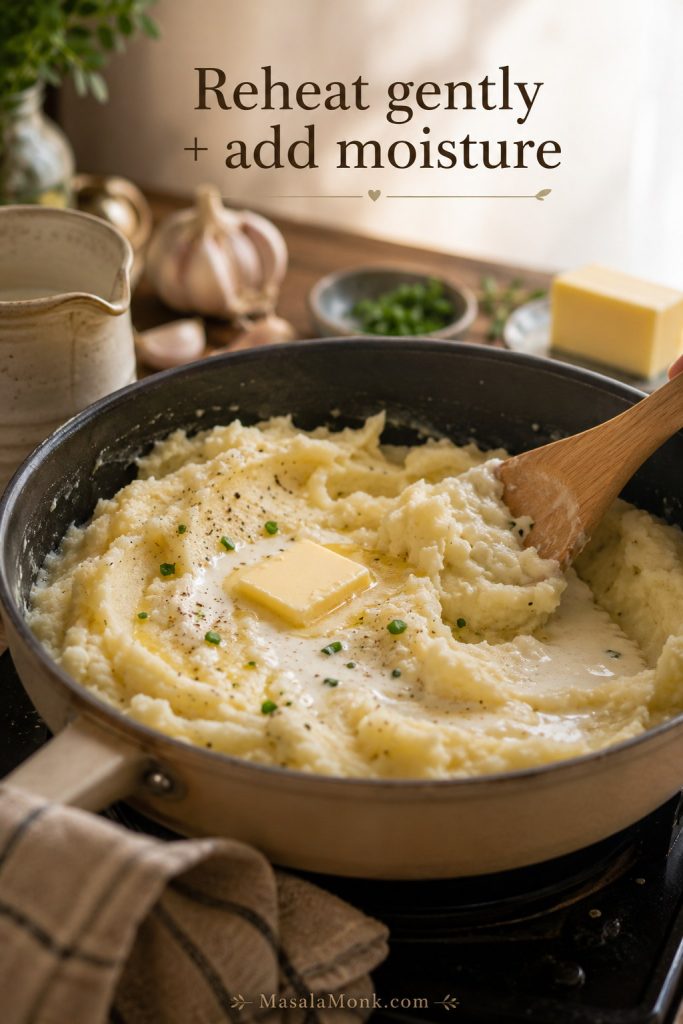
Reheat gently with extra butter and a splash of warm milk, cream, broth, or half-and-half. Stir slowly and avoid whipping. For oven reheating, place the potatoes in a covered baking dish and warm at 325°F / 160°C, stirring once or twice and adding more liquid as needed.

Garlic mashed potatoes being reheated gently with warm milk or cream and butter in a pot.
Reheat slowly and add moisture back gradually. Warm milk, cream, broth, or butter helps cold mashed potatoes become creamy again.

The gentlest way to revive cold mashed potatoes is to warm a little milk, cream, or broth first, then fold the chilled potatoes into it slowly. This loosens the mash without forcing you to whip it, which helps protect the texture.

How to keep them warm

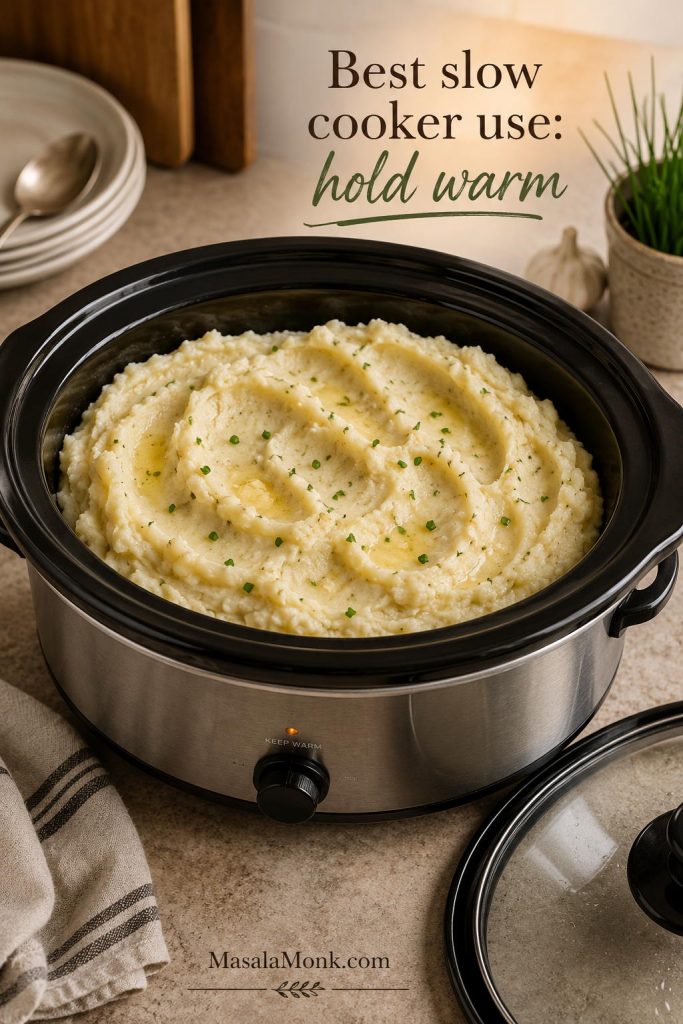
For a holiday meal, transfer hot mashed potatoes to a buttered slow cooker and hold on the warm setting. Stir occasionally and add a splash of warm milk or broth if they thicken too much. Avoid holding them on high heat, because the edges can dry out.

Can you freeze garlic mashed potatoes?

You can freeze them, although the texture may change after thawing. Mashed potatoes with enough butter, cream, sour cream, or cream cheese freeze better than lean versions. Reheat slowly and stir in extra warm dairy or broth to bring back creaminess.

If you end up with extra mashed potatoes, turn them into something crisp the next day. MasalaMonk’s croquettes recipe includes a potato croquette method that works beautifully with leftover mash.

Slow Cooker and Instant Pot Garlic Mashed Potatoes

The stovetop method gives the most control, while slow cooker and Instant Pot notes are useful when the stove is full or you are cooking for a crowd.

Method Best Use Texture
Stovetop, then hold warm Best overall method for holidays and company Creamiest and easiest to control
Cook fully in slow cooker When the stove is full Useful, but usually denser
Instant Pot Fast cooking Soft and convenient, but less controlled than stovetop

Slow Cooker Method

The slow cooker is most useful for keeping finished mashed potatoes warm. For the best texture, make the potatoes on the stovetop first, then hold them warm in a buttered slow cooker.

Garlic mashed potatoes held warm in a slow cooker with butter, chives, and soft spoon marks.
Once the potatoes are finished, a buttered slow cooker keeps them warm without taking up burner space during a crowded meal.

Add the hot mash to the buttered insert, cover, and keep on warm. Stir gently before serving and add a splash of warm milk, cream, or broth if the potatoes thicken while they sit.

If you want to cook the potatoes fully in the slow cooker, use peeled potato chunks, garlic, salt, butter, and a small amount of broth or water. Cook until the potatoes are fully tender, then mash with warm dairy. The texture is usually denser than stovetop mashed potatoes, but the method is useful when the stove is full.

If the slow cooker is already out for dinner, these potatoes are a natural side for a saucy main like MasalaMonk’s slow cooker pork loin. Make the potatoes on the stovetop, then hold them warm while the rest of the meal finishes.

Instant Pot Method

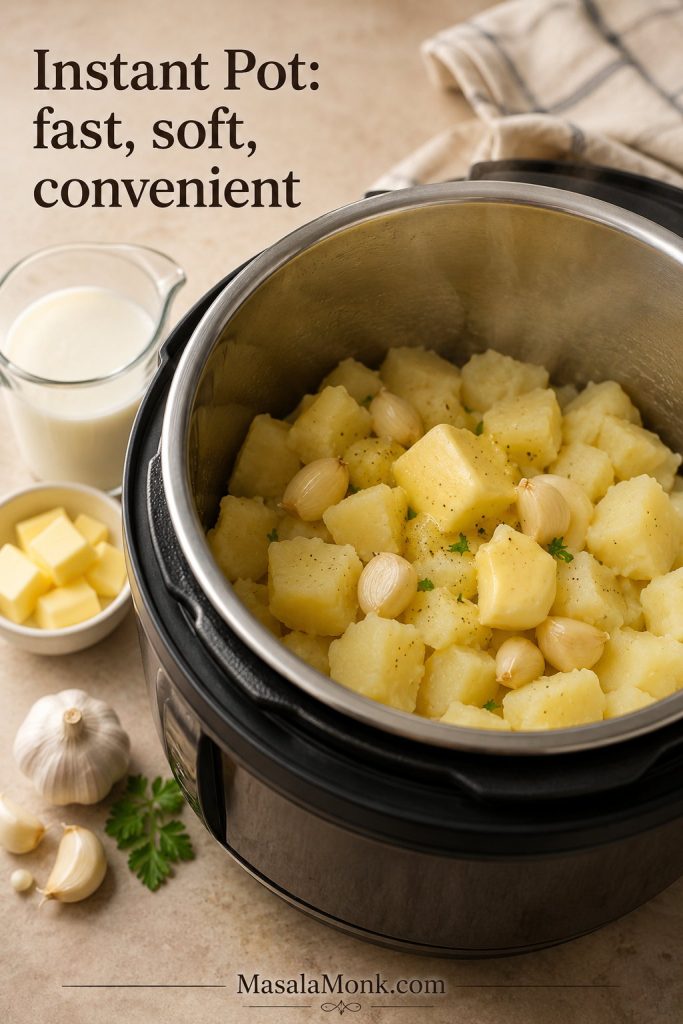
For Instant Pot garlic mashed potatoes, use about 2 lb / 900 g potatoes, 5–6 garlic cloves, 1 cup water or broth, and salt. Cook on high pressure for about 8 minutes, then quick release. Drain if needed, or mash in the remaining liquid if only a small amount is left. Add butter and warm milk or half-and-half after cooking.

Cooked potato chunks and garlic in a pressure cooker insert with butter and warm milk nearby.
Pressure cooking saves time, but tenderness still matters; check the potatoes before mashing so you do not chase lumps later.

Pressure cooker timing can vary depending on potato size, so cut the potatoes evenly and check that they are fully tender before mashing.

Troubleshooting Garlic Mashed Potatoes

If the bowl is not perfect, do not panic and do not keep whipping. Most mashed potato problems get worse with more mixing. Instead, first decide what is wrong: texture, moisture, seasoning, or garlic strength. Then fix that one thing gently.

Check the Texture Before You Add More

Before adding anything, taste and check the texture separately. A bowl can be bland but perfectly creamy, or well-seasoned but too thick, so fix only the problem you actually have.

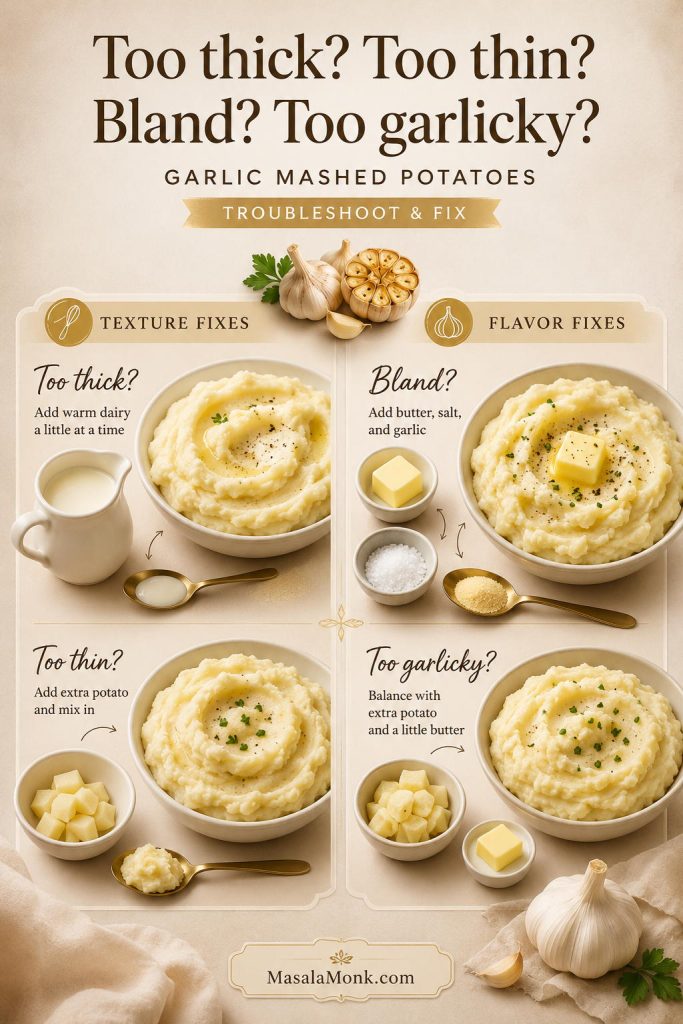
Troubleshooting guide for mashed potatoes with fixes for thick, thin, bland, and too-garlicky potatoes.
Start with texture before you change the flavor. A splash of warm dairy, extra potato, salt, or garlic should fix the specific problem you see.

Texture and Moisture Fixes

Problem Likely Cause How to Fix It
Gluey Overmixed, blended, or processed too hard Stop mixing. Then fold in warm butter or cream and serve as a rustic mash.
Lumpy Potatoes were undercooked Next time, cook until a knife slides through easily. For small lumps, a ricer can help.
Too thick Not enough warm liquid Add warm milk, cream, or broth 1–2 tbsp at a time. After each addition, stir gently and check again.
Too thin Too much liquid or potatoes were not dried Warm gently uncovered to evaporate moisture. If available, add more mashed potato to bring back body.
Watery Potatoes were not drained or steam-dried well Warm gently in the pot and stir carefully. Next time, steam-dry after draining.

Flavor and Garlic Fixes

Problem Likely Cause How to Fix It
Bland Not enough salt, butter, or garlic Add salt gradually first. Then add more butter, parmesan, garlic butter, or herbs if needed.
Too garlicky Garlic was raw or harsh Add more potato, butter, cream, sour cream, or parmesan to soften the flavor.
Not garlicky enough Garlic was too soft or strained out Add garlic powder, roasted garlic, or extra garlic butter in small amounts. However, taste after each addition because garlic powder gets strong quickly.
Bitter or harsh garlic Garlic scorched, was old, or was added raw Use fresh cloves, warm them gently over low heat, or switch to roasted garlic next time.

Once mashed potatoes turn gluey, there is no perfect way to reverse the texture. At that point, stop mixing, add flavor, and serve them as a thicker homestyle mash. Leftovers can also become potato cakes, mashed potato pancakes, or a casserole topping.

What to Serve with Garlic Mashed Potatoes

A bowl of garlic mashed potatoes can carry a simple dinner, so you do not need much else on the plate. They are soft enough for gravy, rich enough for steak, and comforting enough to sit beside roast chicken, mushrooms, or green beans.

They are especially good with anything rich enough to drag through the potatoes: roast chicken drippings, mushroom pan sauce, turkey gravy, steak juices, garlicky butter, or extra melted butter settling into the ridges.

Weeknight dinners

Holiday mains

  • Roast turkey
  • Roast beef
  • Baked ham
  • Turkey gravy
  • Green bean casserole
  • Roasted carrots or Brussels sprouts

Steakhouse-style dinner

  • Steak with pan sauce or chimichurri
  • Garlic butter mushrooms
  • Roasted asparagus
  • Creamed spinach
  • Red wine gravy

For a cozy everyday plate, serve them with roast chicken, a spoonful of pan juices, and something green. For a richer dinner, add steak, mushrooms, or gravy, then let the soft swirls catch the butter, sauce, and juices. That is where these garlic mashed potatoes do their best work.

Garlic mashed potatoes served with roast chicken, gravy or pan juices, green beans, and mushrooms.
The best pairings give the potatoes something rich to catch, whether that is gravy, roast chicken juices, mushroom sauce, or melted butter.

Garlic Mashed Potatoes Recipe

Creamy, buttery garlic mashed potatoes made with Yukon Gold potatoes, warm garlic butter, milk or half-and-half, and optional sour cream. The method keeps the potatoes smooth, flavorful, and not gluey.

Prep Time15 minutes
Cook Time20 minutes
Total Time35 minutes
Yield6 servings
CourseSide Dish
CuisineAmerican
MethodStovetop
Best ToolMasher or ricer

Equipment

  • Large pot or Dutch oven
  • Colander
  • Small saucepan
  • Potato masher or potato ricer
  • Spatula or wooden spoon

Ingredients

  • 2½ lb / 1.1 kg Yukon Gold potatoes, peeled and cut into 1 to 1½-inch chunks
  • 6 garlic cloves, smashed and peeled
  • 6 tbsp / 85 g unsalted butter
  • ¾ cup / 180 ml whole milk or half-and-half
  • ¼ cup / 60 g sour cream, optional
  • 1½–2 tsp fine salt, plus more for the cooking water
  • ¼ tsp black pepper or white pepper
  • Chives or parsley, optional
  • Extra melted butter, optional for serving

Instructions

  1. Cook the potatoes. Add the potato chunks to a large pot and cover with cold water by about 1 inch. Salt the water generously. Bring to a boil, then reduce to a steady simmer and cook for 15–20 minutes, until the potatoes are very tender. The potatoes are ready when a knife slides through the center with no resistance.
  2. Warm the garlic butter and milk. While the potatoes cook, combine the butter, milk or half-and-half, and smashed garlic cloves in a small saucepan. Warm over low heat until the butter melts and the garlic smells mellow. The mixture should smell fragrant and garlicky, not scorched or boiled.
  3. Drain and dry. Drain the potatoes well. Return them to the warm empty pot for about 1 minute so excess moisture can steam off.
  4. Mash. Mash the hot potatoes with a potato masher, or pass them through a ricer. Add the warm garlic butter and milk gradually. For a softer garlic flavor, strain out the garlic. For stronger flavor, mash the softened garlic into the potatoes.
  5. Finish. Fold in sour cream if using. Season with salt and pepper. Taste and adjust until the potatoes are creamy, buttery, and well seasoned. The finished potatoes should hold soft swirls but still spoon easily.
  6. Serve. Spoon into a warm bowl and finish with melted butter, chives, parsley, or extra black pepper.

Notes

  • Use Yukon Gold potatoes for the creamiest texture.
  • Use a ricer for smoother, fluffier mashed potatoes.
  • Avoid a blender, food processor, or aggressive electric mixing.
  • For garlic parmesan mashed potatoes, fold in ½–¾ cup finely grated parmesan after mashing.
  • For roasted garlic mashed potatoes, use 1 whole head roasted garlic for balanced flavor, or 2 heads only if you want roasted garlic to be the main flavor.
  • For red skin mashed potatoes, use red potatoes, leave the skins on, and keep the texture rustic rather than perfectly smooth.
  • Serve hot. Mashed potatoes thicken as they sit, so loosen with a splash of warm milk or broth before serving if needed.
  • For the most inviting bowl, make shallow swirls on top and let melted butter settle into the ridges before serving.
  • Store leftovers in an airtight container in the refrigerator for 3–4 days.
  • Reheat gently with extra butter and a splash of warm milk, cream, or broth.
  • Freezing is possible, but the texture may change after thawing.

FAQs About Garlic Mashed Potatoes

What is the best potato for garlic mashed potatoes?

Yukon Gold potatoes are the best default because they are creamy, buttery, and forgiving. Russets make a fluffier mash, while red potatoes are better for rustic red skin mashed potatoes.

Fresh garlic or roasted garlic: which tastes better?

Fresh garlic warmed in butter and milk gives a balanced everyday flavor. Roasted garlic tastes sweeter, deeper, and more mellow. Use fresh garlic when you want speed, and roasted garlic when you want a richer holiday-style side dish.

How much garlic should I use?

Use 6 garlic cloves for 2½ lb / 1.1 kg potatoes. If using roasted garlic, use 1 whole head because the flavor is softer. If the finished potatoes need more punch, add ¼–½ tsp garlic powder.

Are garlic mashed potatoes and garlic whipped potatoes the same?

People often use the names loosely, but garlic whipped potatoes are usually smoother and lighter. For a whipped-style texture, use a ricer or mash very well by hand, then fold in warm dairy. If you use a hand mixer, keep it on low and stop quickly so the potatoes do not become gummy.

Why did my mashed potatoes turn gluey?

They were probably overmixed or blended too aggressively. Potatoes release starch when worked too much. Use a masher or ricer, add warm dairy gradually, and stop once the potatoes are creamy.

How do you make garlic mashed potatoes creamier?

Use Yukon Gold potatoes, warm milk or half-and-half, enough butter, and optional sour cream. Also make sure the potatoes are fully cooked and steam-dried before mashing.

Do garlic mashed potatoes need sour cream?

Not necessarily. Butter and warm milk or half-and-half are enough for a creamy batch. Sour cream adds tang and body, so use it when you want a richer flavor.

Can I make garlic mashed potatoes with cream cheese?

For a thicker, richer batch, add 4 oz / 115 g softened cream cheese after mashing. It is especially useful for make-ahead garlic mashed potatoes because it helps the texture reheat with more body.

Can I boil garlic with the potatoes?

Boiling garlic with the potatoes gives a soft, simple garlic flavor. For a smoother and more rounded taste, warm smashed garlic in butter and milk. For a sweeter holiday-style version, use roasted garlic.

What should I do if my mashed potatoes are not garlicky enough?

Add garlic flavor gradually. Mash in the softened garlic cloves if you strained them out, add a little roasted garlic, or stir in ¼ tsp garlic powder. Taste before adding more because garlic powder gets strong quickly.

What can I use instead of milk?

You can use half-and-half, heavy cream, warm broth, reserved potato cooking water, unsweetened plant milk, or a mix of broth and olive oil. Add any liquid gradually so the potatoes do not become too loose.

Are red potatoes good for this recipe?

Red potatoes are good for rustic, skin-on mashed potatoes. They are not the best choice for an ultra-smooth mash because they are waxier. Mash them gently and avoid electric mixing.

How far ahead can I make them?

For the best texture, make them up to 2 days ahead. Store in an airtight container in the refrigerator, then reheat gently with extra butter and a splash of warm milk, cream, or broth.

How do I reheat garlic mashed potatoes without drying them out?

Reheat slowly and add moisture back in. Use a splash of warm milk, cream, broth, or half-and-half, plus a little butter. Stir gently and avoid whipping them aggressively.

Back to top
Posted on 6 Comments

Cranberry Sauce with Orange Juice (7 Easy Recipes & Variations)

Luxe magazine-style portrait image of a hand spooning homemade cranberry sauce with orange juice into a ceramic bowl, surrounded by fresh cranberries, orange halves, orange zest and cinnamon sticks on a dark wooden table, MasalaMonk food photography.

Cranberry sauce is one of those dishes that looks fancy, but once you strip it down, it’s just cranberries, sugar, and liquid. Swap in orange juice for plain water and you suddenly have a bright, zesty homemade cranberry sauce with orange juice that tastes like pure holiday cheer.

This post is built around that idea: one reliable recipe for cranberry sauce with orange juice, plus a whole family of twists you can spin from the same pot. You’ll find:

  • A classic, easy cranberry sauce with orange juice that feels familiar and comforting
  • A brown-butter and vanilla twist that turns into a cosy gourmet cranberry sauce recipe
  • Naturally sweetened maple or honey versions
  • Low sugar, sugar-free and keto-style options
  • A boozy orange liqueur or whiskey version
  • A fresh, no-cook cranberry orange relish
  • A tangy apple cranberry chutney that leans savoury

Along the way, we’ll talk about texture and cooking science, how to make your cranberry and orange juice sauce in the slow cooker, how far ahead you can prep for cranberry sauce Thanksgiving dinners, and plenty of ideas for using leftovers so nothing quietly dies in the back of the fridge.

If you’d like to get deeper into what cranberries do for your body—antioxidants, vitamin C, and more—you can follow up later with this cranberry nutrition and benefits breakdown.


Easy Homemade Cranberry Sauce with Orange Juice

Let’s start with the base. This is a simple cranberry sauce recipe with orange juice that you can make on autopilot once you’ve done it once or twice. It works whether you’re cooking for a small dinner or a full Thanksgiving crowd.

Classic homemade cranberry orange sauce in a ceramic bowl, garnished with a curl of orange zest and a cinnamon stick, ready to serve as a side dish.
The classic batch of cranberry–orange sauce: glossy, tangy and just sweet enough to serve straight from the bowl beside turkey, chicken or a nut roast.

Ingredients for the Classic Version

  • 12 oz (340 g) fresh or frozen cranberries, rinsed and picked over
  • 1 cup (200 g) granulated sugar
  • 1 cup (240 ml) orange juice (freshly squeezed if possible)
  • 1–2 teaspoons finely grated orange zest
  • Pinch of fine salt
  • 2–3 tablespoons water, if needed
Overhead photo of ingredients for cranberry orange sauce on a linen cloth, with fresh cranberries, orange juice, sugar, orange zest, cinnamon sticks, vanilla, salt and pepper arranged in small bowls.
What you need for this cranberry–orange sauce at a glance: fresh cranberries, citrus, sugar and a few warm pantry spices, measured and ready to cook.

Optional flavour boosters:

  • 1 teaspoon vanilla extract
  • 1 small cinnamon stick or ¼ teaspoon ground cinnamon

This is a fairly classic recipe cranberry sauce formula; the twist is that orange juice replaces water, bringing sweetness and citrusy perfume. It’s in the same family as well-loved minimalist recipes such as Bon Appétit’s easiest cranberry sauce, but the orange plays a bigger role here.

Cranberry orange sauce simmering in a saucepan, with cranberries bursting and a hand stirring the glossy, jammy mixture with a wooden spoon.
When the cranberries burst and the orange-spiked syrup turns glossy and jammy, your homemade cranberry sauce is just a minute away from perfect.

How to Cook Cranberry Sauce with Orange Juice (Step-by-Step)

  1. Set up the base.
    Tip the cranberries into a medium saucepan. Add sugar, orange juice, orange zest, salt, and the cinnamon stick if you’re using one. Give everything a stir so the cranberries are coated.
  2. Dissolve the sugar gently.
    Place the pan over medium heat. Stir every minute or so until the sugar dissolves and the liquid turns glossy. This usually takes 3–5 minutes. If things look very thick and the berries aren’t relaxing into the liquid, add a couple of tablespoons of water.
  3. Bring it to a gentle boil.
    Increase the heat slightly until the surface starts to bubble. You don’t want a wild, splattering boil—just a steady simmer that lets the cranberries soften.
  4. Simmer until the berries burst.
    Cook for 8–10 minutes, stirring occasionally. You’ll hear and see the cranberries pop. The sauce will start to thicken and look jammy. When you’re making cranberry sauce, the most important thing to remember is that it continues to thicken as it cools, so don’t wait for it to look like jelly in the pan.
  5. Finish with flavour.
    Take the pan off the heat. Pull out the cinnamon stick, if you added it. Stir in the vanilla extract. Taste carefully (it will be very hot) and decide whether you want more sugar for sweetness or a squeeze of extra orange juice for a sharper finish.
  6. Cool and chill.
    Let the homemade cranberry sauce cool to room temperature in the pan. It will look looser at this stage. Once it’s no longer steaming, transfer it to a glass or ceramic container and refrigerate for at least 2 hours, preferably overnight. Cold time is when the texture settles into that glossy, spoonable consistency everyone expects.

If you just want a basic cranberry sauce, you can skip the vanilla and cinnamon and stick to cranberries, sugar, and orange juice.

Glossy cranberry orange sauce in a white bowl, styled with orange juice and gold spoon on a marble surface, with an elegant text overlay mini recipe card for classic cranberry sauce with orange juice from MasalaMonk.com.
Save this mini recipe card for later: a classic cranberry orange sauce made with fresh cranberries, orange juice and sugar, ready in about 15 minutes and perfect to prepare ahead for Thanksgiving.

What This Classic Cranberry Sauce Tastes Like

This base cranberry sauce made with orange juice is bright and tangy, but not painfully sharp. The sugar balances the natural acidity of cranberries, while orange juice and zest add sweet citrus flavour and a gentle bitterness from the peel. Cinnamon and vanilla stay in the background; they shouldn’t make it taste like a full-on dessert, just a little warmer and more rounded.

Serve it straight from the fridge as a cranberry side dish next to turkey, chicken, duck, nut roasts, or even a rich main like macaroni and cheese. A spoonful on the plate does a lot of work cutting through fat and salt.


Understanding Cranberries: Fresh, Frozen & Dried

Before we layer on variations, it helps to know what’s happening in the pot.

Fresh vs Frozen Cranberries

For this cranberry sauce recipe fresh cranberries are ideal when they’re in season (usually October through December). They’re firm, shiny, and snap when you bite one. If you’re using frozen cranberries, there’s no need to thaw. Add them straight to the pan; you may need an extra minute or two of simmering.

Frozen berries are picked at peak ripeness and frozen quickly, so they behave very similarly to fresh. If anything, they sometimes release water more readily, which can help the sauce set nicely.

Three small bowls showing fresh cranberries, frozen cranberries and dried cranberries side by side on a linen cloth with a halved orange, illustrating which type works best for cranberry sauce.
For classic cranberry sauce, fresh or frozen berries give the best set and flavour; dried cranberries need soaking and are better for a softer, chutney-style mix.

What About Dried Cranberries?

Dried cranberries are great for salads and baking, but they’re not a straight swap in a standard cranberry sauce recipe using orange juice. They’ve already been sweetened and dehydrated, so they won’t burst and gel in the same way.

If you really want to use dried cranberries:

  • Soak them first in warm orange juice and water for at least 30 minutes
  • Use more liquid than the fresh recipe calls for
  • Expect a softer, chutney-like texture rather than a classic sauce

That kind of approach can work in a cranberry sauce recipe from dried cranberries, but for a traditional Thanksgiving-style sauce, fresh or frozen is the way to go.

Why Cranberry Sauce Thickens on Its Own

Cranberries are naturally high in pectin, a type of soluble fibre that gels when combined with acid and sugar. Orange juice adds acidity and sugar, so when you simmer everything together, you’re quietly making a soft, homemade jelly.
Close-up of a spoon lifting thick, gelled cranberry orange sauce from a bowl, with text reading “Natural Pectin = Soft Cranberry Jelly,” showing how the sauce sets without added gelatin.
Cranberries are naturally rich in pectin, so a simple cranberry sauce with orange juice thickens into a soft jelly as it cools—no gelatin or cornstarch needed.

This is why:

  • A basic cranberry sauce recipe doesn’t need gelatin or cornstarch
  • The sauce looks runnier in the pan than it does once chilled
  • High-sugar versions often set more firmly than low-sugar or sugar-free ones

Once you understand that, it’s easier to trust the process. When in doubt, err on the side of stopping the simmer a little early. You can always thicken slightly later, but rescuing an over-thick, sticky sauce is more tricky.

Also Read: Pesto Recipe: Classic Basil Pesto Sauce & 10 Variations


Texture, Taste, and Tweaks for the Classic Sauce

A simple easy cranberry sauce can feel completely different depending on how long you cook it and how much you mash it.

Choosing Your Texture

Think about your crowd:

  • For people who like whole berries and a bit of bite, aim for a chunky cranberry and orange juice sauce. Simmer just until most berries pop and stop there.
  • If you prefer a jammy, spreadable texture that sits neatly on turkey or bread, cook it a couple of minutes longer until the liquid coats the back of a spoon. This makes a rich cranberry orange juice sauce that doubles as a spread.
  • For kids or anyone who dislikes “bits”, use a potato masher to break everything down once it’s off the heat. For an extra-smooth finish, give it a brief whizz with an immersion blender.
Overhead photo of three ceramic spoons filled with chunky, jammy and smooth cranberry orange sauce on a wooden table with fresh cranberries and orange zest.
One master cranberry–orange sauce, three textures: leave the berries whole and chunky, cook it down until jammy, or blend it silky smooth depending on how you like it on the plate.

You can even split a batch: half left chunky, half blended, so your homemade cranberry sauce recipe covers both preferences without extra effort.

Adjusting Sweetness and Tartness of Cranberry Sauce with Orange Juice

Taste before chilling, but keep in mind flavours soften in the fridge. If you know your family likes sweeter sauces (maybe they’re used to canned), add a touch more sugar while it’s still warm. If you prefer a sharper profile, hold back on the sugar and add extra orange zest instead of more juice.

You can also:

  • Add a spoonful of brown sugar for a caramel note
  • Stir in a little maple syrup at the end for a healthy cranberry sauce feel with more nuanced sweet notes
  • Balance too much sweetness with a splash of extra orange juice or a squeeze of lemon

Balancing Spices in Cranberry Sauce with Orange Juice

Cranberries can handle quite a bit of spice, but for a classic cranberry sauce Thanksgiving vibe, it’s best not to go too wild in the base recipe. A cinnamon stick or pinch of ground cinnamon is usually enough. Save bolder flavours like cloves, star anise, or cardamom for one of the twists below, so your main pot stays broadly appealing.

Also Read: Katsu Curry Rice (Japanese Recipe, with Chicken Cutlet)


Flavor Variations on Cranberry Sauce with Orange Juice

Once your base is sorted, you can treat it like a master sauce and spin it several ways. Think of the following as mini recipes that sit on top of the same core idea: a cranberry sauce with orange juice that you understand and trust.

Brown Butter & Vanilla Cranberry Sauce (Gourmet Twist)

When you want something that feels restaurant-level without extra stress, this brown butter version is your best friend. It’s still recognisably cranberry sauce, just with deeper, nutty notes.

Bowl of brown butter and vanilla cranberry orange sauce on a linen cloth, with a gold spoon, cinnamon stick and vanilla bean, styled as a rich gourmet version of classic cranberry sauce.
Brown butter and vanilla swirl through this cranberry–orange sauce, turning the same simple base into a dessert-level, gourmet side dish for holiday dinners.

You’ll need:

  • Classic batch of cranberry sauce with orange juice
  • 2 tablespoons unsalted butter
  • Extra ½ teaspoon vanilla extract

How to make it:

  1. In a small light-coloured pan, melt the butter over medium heat.
  2. Continue cooking, swirling the pan, until the butter foams and the milk solids at the bottom turn golden and smell nutty. Take off the heat; this is brown butter.
  3. Prepare the base cranberry sauce recipe using orange juice as usual.
  4. Once the sauce is off the heat, fish out the cinnamon stick if you used one, then stir in the brown butter and extra vanilla.
  5. Taste and adjust; brown butter adds richness but not sweetness, so you may want a teaspoon of extra sugar or maple if you like a softer edge.
  6. Cool and chill.
Brown butter cranberry sauce in a cream bowl with a split vanilla bean on top, styled on a dark table with candlelight, featuring an elegant text overlay recipe card for vanilla cranberry orange sauce from MasalaMonk.com.
Brown butter and real vanilla turn classic cranberry orange sauce into a rich, restaurant-style side. Save this gourmet cranberry sauce recipe card for holiday dinners when you want something a little extra.

The result is a cosy gourmet cranberry sauce recipe that works for Thanksgiving, Christmas dinners, or even alongside duck breast, pork fillet, or a rich vegetarian main. If you like building “one master sauce + many ways to use it”, this approach is very similar in spirit to how we handle yogurt sauces in our Greek tzatziki guide.


Naturally Sweetened Cranberry Sauce with Orange Juice (Maple or Honey)

For guests who like slightly “cleaner” flavours, a naturally sweetened version hits the spot. This variation keeps the orange but swaps white sugar for maple syrup or honey, so it fits neatly into the healthy cranberry sauce and low sugar cranberry sauce camp.

Close-up of a rustic bowl filled with cranberry orange sauce while a hand pours maple or honey syrup over the top, with orange wedges and fresh cranberries in the background.
Naturally sweetened cranberry–orange sauce, finished with maple or honey for a gentler, refined-sugar-free twist on the classic recipe.

Ingredients (Maple Version):

  • 12 oz (340 g) cranberries
  • ½–¾ cup (120–180 ml) pure maple syrup
  • ¾ cup (180 ml) orange juice
  • ¼ cup (60 ml) water
  • 1–2 teaspoons orange zest
  • Pinch of salt
  • Optional: cinnamon stick, 1 teaspoon vanilla

Method:

  1. Combine cranberries, maple syrup, orange juice, water, zest, salt and optional cinnamon in a saucepan.
  2. Bring to a gentle boil over medium heat.
  3. Simmer 10–12 minutes until most berries burst and the sauce thickens.
  4. Remove from the heat, stir in vanilla if using, and taste. Add more maple syrup if you’d like a sweeter cranberry sauce less sugar style.
  5. Cool and chill.
Naturally sweetened maple honey cranberry sauce in a rustic ceramic bowl, surrounded by a honey dipper, maple syrup jug, orange slice and fresh cranberries, with a text overlay mini recipe card for naturally sweetened cranberry orange sauce from MasalaMonk.com.
This naturally sweetened cranberry orange sauce swaps refined sugar for maple syrup or honey. Save this recipe card if you’re after a brighter, “healthier” cranberry sauce that still feels cosy and festive.

Honey works similarly, though it tastes sweeter than sugar or maple. Start with ½ cup, taste towards the end of cooking, and add more gradually if needed.

For more inspiration, Ambitious Kitchen has a lovely naturally sweetened orange cranberry sauce using orange juice, maple or honey, and vanilla. Cookie and Kate’s naturally sweetened cranberry sauce is another strong example of a cranberry sauce recipe healthy that skips refined sugar.


Low Sugar, Sugar-Free & Keto Cranberry Sauce with Orange Juice

Sometimes you need a sugar free cranberry sauce that still feels festive: maybe you’re cooking for someone watching their blood sugar, or for guests who prefer low-carb options. This variation stays tart and bright, with orange notes, but uses sugar-free sweetener instead of sugar.

Bowl of sugar-free, keto-friendly cranberry orange sauce on a wooden table with citrus zest, lemon wedge and a small dish of granular sweetener, styled with “Sugar-Free” label text on the image.
A sugar-free, keto-friendly cranberry–orange sauce made with low-carb sweetener instead of sugar, keeping the bright flavour while cutting the carbs for guests who prefer a lighter option.

Ingredients:

  • 12 oz (340 g) cranberries
  • ¾ cup (180 ml) orange juice
  • ½ cup (120 ml) water
  • ½–⅔ cup granular sugar-free sweetener (such as a monkfruit–erythritol blend)
  • 1–2 teaspoons orange zest
  • Pinch of salt
  • Optional: cinnamon stick, vanilla extract

Steps:

  1. Combine cranberries, orange juice, water, sweetener, zest, and salt in a saucepan.
  2. Bring to a gentle boil over medium heat.
  3. Simmer for 10–12 minutes, stirring often, until the sauce thickens and most berries have popped.
  4. Remove from heat and stir in vanilla if you like.
  5. Taste while still warm. Sugar-free sweeteners can taste slightly less sweet once chilled, so make it just a touch sweeter than you think you want.
  6. Cool, then refrigerate to let it set.
Sugar-free cranberry sauce in a white bowl on a marble surface, styled with fresh cranberries, an orange wedge and a spoonful of granular sweetener, with a clean text overlay mini recipe card for keto cranberry orange sauce from MasalaMonk.com.
This keto-friendly cranberry orange sauce skips regular sugar and uses a granular low-carb sweetener instead. Save this sugar-free cranberry sauce recipe card if you need a lighter option that still looks and tastes festive.

This style fits well with requirements of keto cranberry sauce, no sugar added cranberry sauce, and low carb cranberry sauce. For a different take, Wholesome Yum’s low-carb cranberry sauce leans on allulose and orange zest for a very low net-carb result.

Quick note: if anyone at your table has diabetes or other health concerns, remind them to chat with their doctor before relying on “diabetic cranberry sauce” or juice drinks as part of treatment. For a broader look at how cranberry juice fits into weight management, there’s a helpful summary here on cranberry juice and weight loss.


Boozy Holiday Cranberry and Orange Juice Sauce

For adults-only dinners, adding a splash of alcohol turns your basic cranberry and orange juice sauce into something that tastes like it fell off a restaurant dessert menu.

Bowl of boozy cranberry orange sauce on a wooden table with a glass of whiskey in the background and fresh cranberries scattered around, styled as a grown-up holiday version of classic cranberry sauce.
Boozy cranberry–orange sauce finished with whiskey or orange liqueur for grown-up holiday plates, perfect with roast duck, glazed ham or rich beef roasts.

You’ll need:

  • One batch of classic cranberry sauce with orange juice
  • 2–4 tablespoons orange liqueur (like Cointreau or Grand Marnier) or whiskey/bourbon

How to build it:

  1. Make the base easy cranberry sauce recipe as usual, but reduce the orange juice by 2–4 tablespoons to make room for the alcohol.
  2. Once you’ve turned off the heat, stir in the liqueur or whiskey.
  3. Taste and adjust. Alcohol can slightly amplify bitterness, so an extra teaspoon of sugar or maple can round things out if desired.
  4. Cool and chill; the boozy edge softens overnight.
Boozy cranberry orange sauce in a dark bowl on a wooden table, garnished with an orange twist and fresh cranberries, with a glass of bourbon and a text overlay mini recipe card for cranberry sauce with orange liqueur or bourbon from MasalaMonk.com.
When you stir in a splash of bourbon or orange liqueur, classic cranberry orange sauce turns into this moody, grown-up side. Save this boozy cranberry sauce recipe card for dinner parties where you want the cranberry to feel a little bit cocktail-bar chic.

This twist is wonderful with roast duck, glazed ham, and beef roasts. Leftover boozy cranberry sauce can double as a quick pan sauce: deglaze a roasting pan with a splash of stock, whisk in a spoonful of cranberry sauce, and simmer briefly.

If you like playing with citrusy cocktails, a spoonful of this sauce blends beautifully into a whiskey sour or adds flavour and colour to the sugar rim on a lemon drop martini.


Fresh Cranberry Orange Relish (No Cook)

For some people, the ultimate cranberry orange relish isn’t cooked at all. Instead of simmering, you blitz everything raw in a food processor and let time in the fridge meld the flavours.

This no-cook cranberry relish recipe with orange juice is bright, crunchy, and a little sharp.

Bowl of fresh no-cook cranberry orange relish with a spoon, surrounded by whole cranberries and orange halves on a wooden table.
Fresh, no-cook cranberry–orange relish: finely chopped cranberries and whole orange peel for a crunchy, zippy alternative to classic cooked cranberry sauce.

Ingredients:

  • 12 oz (340 g) fresh cranberries
  • 1 thin-skinned orange, scrubbed (remove seeds, keep peel)
  • ½–¾ cup (100–150 g) sugar, or more to taste
  • Splash of orange juice if needed
  • Pinch of salt

Method:

  1. Roughly chop the orange, removing any seeds.
  2. Add the cranberries and orange pieces to a food processor.
  3. Pulse until everything is finely chopped but not pureed; scrape down the sides as needed.
  4. Sprinkle over ½ cup sugar and the salt. Pulse again to combine.
  5. Taste and add more sugar if you’d like a sweeter fresh cranberry orange relish. If the mixture seems very dry, add a spoonful of orange juice.
  6. Transfer to a container and chill for at least 2 hours, preferably overnight.
Fresh cranberry orange relish in a white bowl on a bright white surface, with chopped cranberries and orange peel visible, surrounded by fresh cranberries and half an orange, plus a text overlay mini recipe card for raw cranberry relish with orange from MasalaMonk.com.
This no-cook cranberry orange relish stays bright, crunchy and a little bit sharp. Save this recipe card if you like a raw cranberry relish for Thanksgiving, cheese boards and leftover turkey sandwiches.

The texture is closer to a chutney than to a smooth sauce, which makes it fantastic with cold turkey sandwiches, cheese boards, and rich mains. It’s also lovely spooned on top of savoury breakfast dishes like upma and other wholesome brunch bowls.

Because it’s raw, this variation particularly benefits from good-quality fruit. It’s a great way to use cranberries for Thanksgiving dinner when you want something sharper and fresher than cooked sauce.


Apple Cranberry Chutney with Orange

Finally, if you want something that bridges the gap between jammy sauce and savoury chutney, this apple-forward variation is a keeper. It leans into vinegar, onion and ginger, making it a brilliant cranberry side dish for roasted meats, charcuterie, and cheese.

Rustic bowl of chunky apple cranberry chutney with orange, showing visible pieces of apple and cranberries, styled with apple slices, cranberries and a small bottle of vinegar on a wooden table.
Apple cranberry chutney with orange: chunky, tangy and lightly spiced, perfect alongside roast meats, nut roasts or a holiday cheese and cracker board.

Ingredients:

  • 8 oz (225 g) cranberries
  • 1 medium apple, peeled and finely diced
  • ½ cup (100 g) sugar (or ¼ cup white, ¼ cup brown)
  • ½ cup (120 ml) orange juice
  • ¼ cup (60 ml) apple cider vinegar
  • ¼ cup (40 g) finely chopped onion
  • ¼ teaspoon ground ginger or 1 teaspoon freshly grated ginger
  • Pinch of salt
  • Pinch of ground cinnamon

How to make it:

  1. Add cranberries, apple, sugar, orange juice, vinegar, onion, ginger, salt, and cinnamon to a saucepan.
  2. Bring to a gentle simmer over medium heat.
  3. Cook 15–20 minutes, stirring from time to time, until the cranberries burst, the apples soften, and the chutney is thick and glossy.
  4. Taste and adjust balance: more sugar for sweetness, more vinegar for tang, or a little extra salt for savouriness.
  5. Cool and chill.
Rustic apple cranberry chutney with orange in a brown ceramic bowl on a wooden board, with cheese, crackers and apple slices around it, plus a text overlay mini recipe card for savoury cranberry, apple and orange chutney from MasalaMonk.com.
This apple cranberry chutney leans savoury thanks to onion, ginger and cider vinegar, so it works as well with cheese boards and ham as it does with roast turkey. Save this recipe card if you like something chunkier and more chutney-style than classic cranberry sauce.

This apple cranberry chutney sits nicely next to roast pork, ham, or a vegetarian roast, and it pairs beautifully with a platter of cheeses and crackers. It also doesn’t feel limited to November; you can happily serve it any time you’re craving something fruity and savoury.

Also Read: Peanut Butter Cookies (Classic Recipe & 3 Variations)


Slow Cooker, Make-Ahead & Freezer Tips

Cranberry sauce is one of the easiest dishes to prepare ahead for a big holiday meal. Whether you’re going traditional stove-top or want a cranberry sauce crock pot method, it’s extremely forgiving.

Slow Cooker Cranberry Sauce

The slow cooker version is ideal if all your burners are busy or if you want a cranberry sauce in slow cooker approach that gently simmers away in the background.

Basic method:

  1. Add all the ingredients for any of the cooked variations (classic, maple, sugar-free, or boozy) into a small slow cooker.
  2. Stir to combine.
  3. Cook on LOW for 3–4 hours or HIGH for about 2 hours, stirring once or twice if convenient.
  4. Once the cranberries have burst and the sauce looks thick around the edges, switch the slow cooker off.
  5. Let it cool slightly, then transfer to a container and refrigerate.

Because the slow cooker retains moisture, sauces from this method sometimes look a tiny bit looser. If needed, you can move the sauce to a saucepan and simmer for a couple of minutes to tighten it up.

How Far in Advance Can You Make Cranberry Sauce with Orange Juice?

For stress-free cranberry recipes for Thanksgiving, aim to make your sauce at least one day ahead; three days is even better. The flavours deepen, and it’s one less thing on your day-of list.

Rough guidelines:

  • Fridge life: about 7 days, tightly covered
  • Freezer life: up to 2 months in an airtight container, leaving a little headroom for expansion

To serve from frozen, thaw overnight in the fridge, stir well, and warm gently in a saucepan or let it come to room temperature.

A smooth, properly set cranberry sauce recipe homemade will thicken slightly in the cold. If it’s too stiff, stir in a splash of water or orange juice over low heat until you like the consistency.

Also Read: Tres Leches – Mexican 3 Milk Cake Recipe


Serving Suggestions & Menu Pairings

Once you have a reliable best cranberry sauce for Thanksgiving in your back pocket, it’s fun to think beyond the turkey.

Classic Holiday Plates

Your sauce is an obvious match for:

  • Roast turkey (whole or breast)
  • Roast chicken or Cornish hens
  • Baked ham
  • Nut roasts or lentil loaves

On the side, consider a mix of creamy, crunchy, and green elements. A spoonful of cranberry sauce with orange juice feels right at home with:

All together, they build the kind of plate people dream about when they search for the best cranberry sauce recipe for Thanksgiving.

Holiday dinner plate with roast turkey, mashed potatoes, green beans and a generous spoonful of cranberry orange sauce, with extra sauce in a small bowl on a wooden table.
Serve cranberry–orange sauce alongside roast turkey, creamy potatoes and green vegetables for a balanced holiday plate that feels rich yet bright.

Casual Comfort Dinners

Cranberry sauce isn’t limited to one Thursday in November. The same bright-tart spoonful can cut through:

You don’t have to serve it in a huge mound; even a small dish on the table lets everyone add that burst of colour and acidity where they like.

Brunch & Grazing Boards

On more relaxed days, your cranberry orange sauce also belongs on brunch spreads:

  • Dolloped next to cheeses, nuts, and crackers
  • Served with buttery scones or biscuits
  • Paired with savoury egg dishes and fresh fruit

It sits nicely next to a jug of mimosa variations or a tray of strawberry mojito mocktails that you can also adapt with cranberry and orange.


Using Leftover Cranberry Sauce with Orange Juice

One of the hidden strengths of a good cranberry sauce with orange juice is how flexible the leftovers are. A cup or two in the fridge can quietly upgrade meals all week. All of these recipes with cranberry sauce turn leftovers into easy meals and snacks.

Cranberry Meatball Sauce

Turn your sauce into a sticky, tangy glaze for meatballs:

  1. Mix equal parts cranberry sauce and your favourite BBQ or chili sauce.
  2. Add a splash of soy sauce or Worcestershire for savouriness.
  3. Warm in a pan until smooth.
  4. Add cooked meatballs and simmer a few minutes so they’re coated and hot.

This simple trick gives you a cranberry meatball sauce that works as a party appetizer or a quick dinner over rice or mashed potatoes.

Skillet of meatballs glazed in glossy cranberry sauce, garnished with parsley and surrounded by fresh cranberries, with text reading “Cranberry Meatball Sauce for Easy Party Appetizers.”
Mix leftover cranberry sauce with BBQ or chili sauce to make this glossy cranberry meatball sauce—an easy, crowd-pleasing party appetizer or weeknight dinner.

Cranberry Mayo for Sandwiches

A spoonful of cranberry sauce goes a long way in sandwich spreads:

  1. Stir 1 tablespoon cranberry sauce into 2 tablespoons mayonnaise.
  2. Taste and add more mayo if you want it milder.
  3. Spread on bread for turkey or chicken sandwiches.

The result is a tangy, creamy cranberry sauce for sandwiches that plays nicely with roasted poultry, cheese, and salad leaves. For more ideas, you can look at flavour combos from this collection of chicken sandwich recipes.

Turkey sandwich on rustic toasted bread with cranberry mayo and lettuce, served beside a small bowl of pink cranberry mayonnaise and fresh cranberries on a wooden board.
Leftover cranberry sauce whipped into mayo makes a tangy cranberry spread that instantly upgrades next-day turkey or chicken sandwiches.

Baked Brie with Cranberry Topping

If you love grazing boards, baked brie topped with cranberry orange relish is a near-perfect snack:

  1. Place a small wheel of brie in an oven-safe dish.
  2. Spoon cranberry sauce on top—classic, brown butter, or even apple cranberry chutney all work.
  3. Bake at 180°C / 350°F for 10–15 minutes until the cheese is soft and oozing.
  4. Serve with crackers or sliced baguette.

If you’re pregnant or feeding pregnant guests, it’s worth checking which soft cheeses are safe before you plan the board; this guide to soft cheese and pregnancy is a handy starting point.

Baked Brie wheel topped with glossy cranberry orange sauce, oozing onto a ceramic dish and surrounded by crackers, baguette slices and fresh cranberries on a wooden board.
Warm baked Brie crowned with leftover cranberry–orange sauce makes an instant grazing-board centrepiece that looks fancy but takes only minutes in the oven.

Breakfast Bowls and Oats

Cranberry sauce can also brighten breakfast:

  • Swirl into Greek yogurt with granola
  • Spoon over overnight oats
  • Stir into warm porridge

A solid base like this protein oatmeal formula turns leftover sauce into a colourful topping that adds both flavour and a bit of natural sweetness, especially if you’ve made a low sugar cranberry sauce or naturally sweetened cranberry sauce.

Breakfast bowl of creamy yogurt or oatmeal topped with a swirl of cranberry sauce, orange slices and granola, with a second bowl of cranberry sauce in the background.
Swirl leftover cranberry sauce into oats or yogurt for a colourful breakfast bowl that’s tangy, slightly sweet and far more exciting than plain porridge.

Dessert Ideas

Cranberry’s tartness pairs beautifully with chocolate and cream:

  • Warm lightly and drizzle over vanilla ice cream or cheesecake
  • Use as a filling for thumbprint cookies or sandwich cookies
  • Layer into parfaits with whipped cream and crushed biscuits

A plate of cranberry thumbprints goes especially well alongside something rich like these double chocolate chip cookies. For cosy nights in, stir a spoonful of cranberry orange sauce into a mug of homemade hot chocolate for a wintery twist.

Bowl of vanilla ice cream drizzled with cranberry sauce and a plate of thumbprint cookies filled with cranberry jam, styled together on a wooden table as easy desserts made from leftover cranberry sauce.
Leftover cranberry sauce turns into dessert in minutes—drizzle it over vanilla ice cream or spoon it into thumbprint cookies for an easy sweet finish after a holiday meal.

Drinks & Mocktails

Leftover sauce also loves a glass:

  • Shake a spoonful with lemon juice, simple syrup, and whiskey for a cranberry take on a sour
  • Stir into sparkling water with extra orange juice for a quick mocktail
  • Use as a flavour base in mocktails similar to those in our ACV & cranberry mocktail ideas
Two cranberry drinks on a wooden table, one a whiskey sour–style cocktail with foam and orange slice and one a sparkling mocktail with cranberries and citrus, with a small bowl of cranberry sauce in front and text about turning leftover cranberry sauce into drinks and mocktails.
A spoonful of leftover cranberry sauce can be shaken into a cranberry sour or stirred into sparkling water with citrus for easy cocktails and mocktails that use up every last bit.

All of these are small, low-effort ways to make sure your recipes using cranberry sauce don’t stop at the main meal.


A Little More on Cranberries & Health

Even though most versions of cranberry sauce with orange juice are treats rather than health foods, it’s still nice to know what’s inside those jewel-coloured berries.

Cranberries offer:

  • Vitamin C
  • Manganese
  • Dietary fibre
  • Various polyphenol antioxidants

Healthline’s overview of cranberry nutrition and health benefits explains how cranberries may help support urinary tract health, reduce oxidative stress, and influence some heart-health markers. The Cranberry Institute collects research summaries on cranberry bioactives, particularly around proanthocyanidins (PACs), the compounds thought to help prevent certain bacteria from sticking to urinary tract walls.

On the flip side, most holiday sauces also contain a decent amount of sugar, so they’re still in the “enjoy in moderation” category. If you’re looking for something lighter, lean on your naturally sweetened cranberry sauce or no sugar added cranberry sauce variation, and perhaps save the biggest spoonfuls for big meals rather than everyday snacks.

For those balancing rich holiday food with lighter days, homemade hydration and detox-style drinks featuring cranberry and apple cider vinegar can feel like a reset; you’ll find several precise formulas in this guide to cranberry-ACV detox drinks and these homemade electrolyte recipes for fasting.


Conclusion

With this one post, you’ve got:

  • A reliable, classic cranberry sauce with orange juice
  • A set of seven easy recipes and variations (from cranberry orange relish to apple cranberry chutney)
  • Options that cover classic, gourmet, low-sugar, sugar-free, and boozy moods
  • Plenty of ideas for recipes using cranberry sauce the next day and beyond

From here, you can keep things as simple as a single pot of sauce—or build a whole cranberry “universe” across your Thanksgiving, Christmas and everyday menus.

FAQs about Cranberry Sauce with Orange Juice

1. Can I make cranberry sauce with orange juice instead of water?

Yes, absolutely. A cranberry sauce with orange juice is simply a classic cranberry sauce recipe where orange juice replaces some or all of the water. This gives you a brighter flavour, gentle sweetness, and a more “holiday” feel. Any basic cranberry sauce recipe using orange juice can follow the same ratios as a water-based sauce; just watch the simmer time so it doesn’t reduce too much and turn too thick.


2. What’s the difference between cranberry sauce and cranberry orange relish?

Cranberry sauce is cooked: the berries burst over heat and the mixture thickens into a glossy, jammy side dish. A cranberry orange relish is usually raw, often made in a food processor with whole orange, sugar, and fresh cranberries. So, a cranberry relish recipe with orange juice or whole orange has more crunch, brighter acidity, and a slightly bitter edge from the peel. In short, sauce is smooth and spoonable; relish is chopped and zippy.


3. How do I fix cranberry sauce that’s too runny or too thick?

If your cranberry sauce made with orange juice is too runny after chilling, return it to the pan and simmer for a few minutes until it reduces and coats the back of a spoon. Conversely, if it ends up too thick, stir in extra orange juice or a little water, a tablespoon at a time, over low heat until it loosens. Always remember: a cranberry orange juice sauce thickens as it cools, so judge consistency after it’s chilled, not just while it’s hot.


4. Can I make cranberry sauce ahead of time or freeze it?

Yes, homemade cranberry sauce is perfect for making in advance. It keeps in the fridge for about a week, so you can prepare your cranberry sauce with orange juice several days before Thanksgiving or Christmas. It also freezes well for up to a couple of months; just thaw in the fridge and stir before serving. This make-ahead option frees up time and stove space on busy days.


5. Can I use frozen cranberries instead of fresh?

Frozen cranberries work just as well in a cranberry sauce recipe using orange juice. There’s no need to thaw them; simply add straight from the freezer and extend the simmer time by a minute or two. The texture and flavour will be very close to fresh, and your homemade cranberry sauce recipe will still set thanks to the natural pectin in the berries.


6. How can I make a low sugar or sugar free cranberry sauce?

To create a low sugar cranberry sauce, reduce the sugar and balance with more orange zest rather than extra juice, keeping the flavour bright without over-sweetening. For a sugar free cranberry sauce, swap sugar for a granular sweetener such as a monkfruit–erythritol blend and follow the same method. This style fits low-carb, keto and “diabetic-friendly” needs, although individual health conditions may still require personal adjustments. Expect the set to be slightly softer than a traditional full-sugar sauce.


7. Is cranberry sauce vegan and gluten free?

Most homemade cranberry sauce recipes are naturally vegan and gluten free, especially a simple cranberry sauce with orange juice made from fruit, sugar, and spices. Just avoid butter-based variations if you’re cooking for vegans, or use plant-based butter in gourmet versions like brown-butter-style twists. Likewise, check labels on alternative sweeteners if you’re making keto cranberry sauce or sugar-free versions.


8. Can I make cranberry sauce without orange juice?

Certainly. If you don’t want citrus, you can make a basic cranberry sauce recipe with water and sugar, then add a little lemon zest, apple juice, or even pomegranate juice for complexity. On the other hand, if you enjoy fruitier flavours but have no oranges, apple juice gives a softer, sweeter profile than a sharp cranberry sauce with orange juice. Just keep the overall liquid-to-cranberry ratio similar so the sauce still sets properly.


9. How much cranberry sauce do I need per person?

As a general guide, plan about ¼ to ⅓ cup of cranberry sauce per person. If you know your crowd loves it—especially if you’re also serving cranberry orange relish or chutney—lean towards the higher end. Leftovers are incredibly versatile, so making a bit extra rarely goes to waste. They can be used in recipes with cranberry sauce like meatball glaze, sandwich spread, or dessert toppings.


10. What can I do with leftover cranberry sauce?

Leftovers are gold. You can turn them into cranberry sauce for sandwiches, whisk them into a quick pan sauce for pork or chicken, or use them as a glaze for meatballs. Additionally, leftover cranberry and orange juice sauce works in baking—think thumbprint cookies, bars, or swirled cheesecakes—and even in breakfast bowls with yogurt and oats. In other words, recipes using cranberry sauce don’t have to stop at the holiday table.


11. How do I make my cranberry sauce more “gourmet”?

To transform a simple easy cranberry sauce into something special, add brown butter, vanilla, warm spices, or a splash of orange liqueur or bourbon at the end of cooking. These small tweaks create a richer, more complex gourmet cranberry sauce recipe without complicating the method. You can also fold in toasted nuts or dried fruit for extra texture, keeping the core cranberry sauce with orange juice base as your foundation.


12. What’s the best way to serve cranberry sauce for Thanksgiving?

For cranberry recipes for Thanksgiving, serve the sauce chilled or at cool room temperature so it holds its shape on the plate. Place it in a small bowl or shallow dish so the colour is visible, and pair it with classic sides like stuffing, mashed potatoes, green bean casserole, and roasted vegetables. A well-balanced cranberry sauce Thanksgiving spread often includes a smooth sauce plus a chunky relish or chutney, giving guests a choice of textures and flavours.