Posted on Leave a comment

Grilled Lobster Tails With Garlic Butter

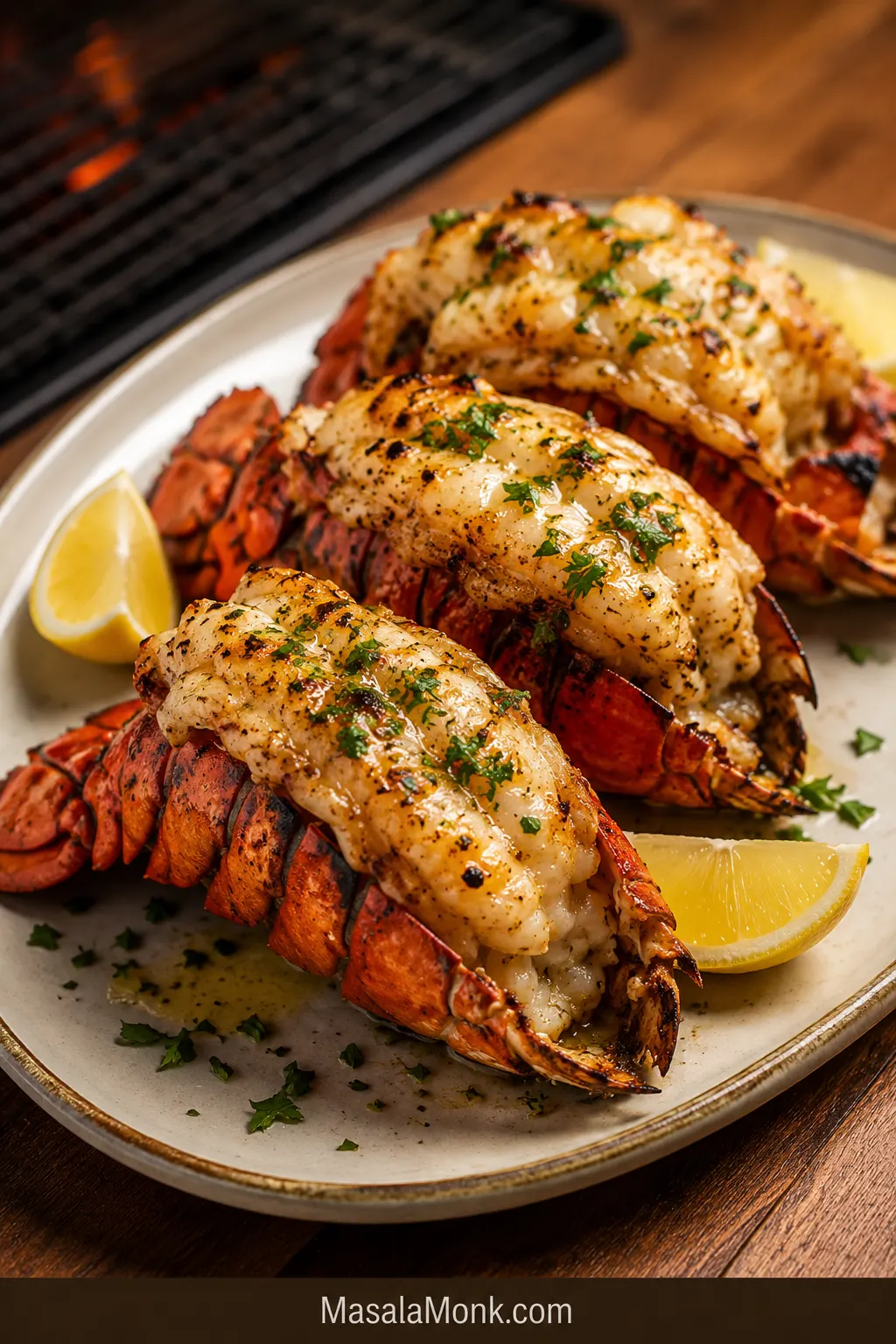
Grilled lobster tails with lemon garlic butter, herbs, and lemon wedges on a warm serving plate.

Grilled lobster tails should feel like a treat, not a test. You want sweet meat, smoky edges, and garlic butter melting into the shell — not a tense few minutes wondering if dinner is already overcooked.

This lobster tail recipe uses a no-panic method: sear for flavor, finish for control. Thaw the tails well, cut the shell cleanly, sear briefly on the hot grates, flip shell-side down with the meat facing up, baste with lemon garlic butter, and pull by temperature while the lobster is still tender.

Keep the flavor classic: sweet lobster meat with lightly charred edges, warm butter, fresh herbs, and enough lemon to make the whole plate feel bright. At the table, it tastes rich and special, but the cooking feels much easier than it looks.

Quick Answer: How to Grill Lobster Tails

To grill lobster tails, thaw them first if frozen, cut the top shell with kitchen shears, loosen the meat, and brush the exposed meat lightly with oil, salt, and pepper. For the most reliable first try, split the tail open like a book.

Grill flesh-side down for a short sear, then flip shell-side down, brush with lemon garlic butter, and cook until the thickest part reaches about 140°F / 60°C. Use 145°F / 63°C if you prefer a firmer, more conservative finish.

The shell turning red is not your finish line. The lobster is ready when the meat is opaque, tender, and hot in the thickest part. Done right, you get lobster that tastes sweet and clean, with smoky edges, lemon cutting through the butter, and enough garlic to make the whole plate feel like a special dinner.
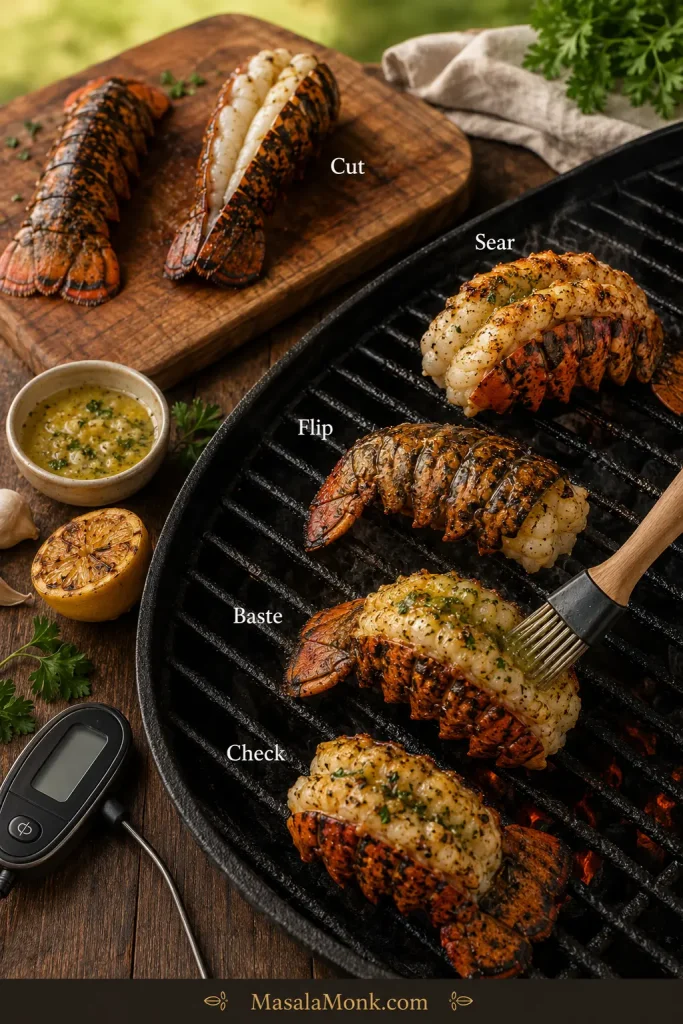
Step-by-step grilled lobster tail method showing cut, sear, flip, baste, and check stages.
Start with the simple rhythm: cut the shell, sear for flavor, flip shell-side down, baste with garlic butter, and check the thickest part before the meat tightens.

Grilled Lobster Tails With Garlic Butter

This version makes four lobster tails with lemon garlic butter and gives you a clear pull point, so you are not guessing during the final minute. It works well with 5–8 oz / 140–225 g tails, but the timing section below includes smaller and larger sizes too.

Prep time15 minutes
Cook time5–12 minutes, depending on size
Most common cook time6–10 minutes for 5–8 oz / 140–225 g tails
Total timeAbout 25 minutes
Servings4 lobster tails
Good tail size5–8 oz / 140–225 g each
Grill heat400–450°F / 204–232°C
Target pull temperatureAbout 140°F / 60°C, or 145°F / 63°C for a firmer finish
MethodGrill / BBQ

Ingredients

IngredientUS measureMetric
Lobster tails4 tails, 5–8 oz each140–225 g each
Olive oil1 tablespoon15 ml
Unsalted butter4 tablespoons / ½ stick56 g
Garlic2–3 cloves, finely minced6–9 g
Lemon juice2 teaspoons to 1 tablespoon10–15 ml
Lemon zest½ teaspoon, optionalAbout 1 g
Fresh parsley or chives1 tablespoon chopped3–4 g
Fine sea salt½ teaspoon total, dividedAbout 3 g
Black pepper¼ teaspoonAbout 0.5 g
Smoked paprika¼–½ teaspoon, optional0.5–1 g
Cayenne or chili flakesA pinch, optionalTo taste
Lemon wedgesFor servingFor serving
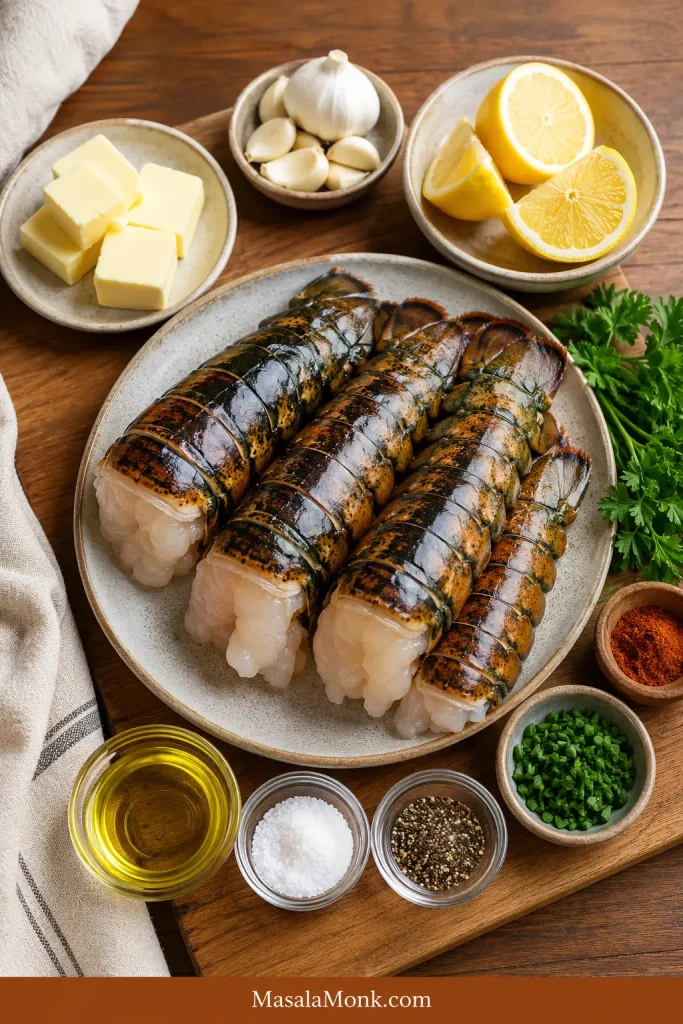
Lobster tails, butter, garlic, lemon, herbs, oil, salt, pepper, and smoked paprika arranged on a wooden board.
Before the grill heats up, keep the flavor focused. Lobster tails need butter, garlic, lemon, herbs, oil, salt, and pepper — not a crowded seasoning blend.

Have the tails cut, the butter melted, and your thermometer nearby before you turn toward the grill. Once lobster hits the heat, the cooking moves quickly.

Method

  1. Thaw and dry the lobster tails. Thaw frozen tails fully. Pat the shells and meat dry before cutting.
  2. Make the lemon garlic butter. Melt the butter gently. Stir in garlic, lemon juice, lemon zest if using, herbs, and optional smoked paprika or chili.
  3. Cut the shells. Use kitchen shears to cut down the top shell, stopping before the tail fan. For the simplest grill control, loosen the meat and split the tail open like a book.
  4. Season the meat. Brush the exposed lobster meat with olive oil. Season with salt and pepper.
  5. Preheat the grill. Heat the grill to 400–450°F / 204–232°C. Clean and oil the grates.
  6. Sear flesh-side down. Grill the tails flesh-side down until lightly marked and beginning to release from the grates.
  7. Flip and butter. Turn the tails shell-side down, with the meat facing up. Brush generously with the melted butter.
  8. Check and pull. Close the lid and cook until the meat is opaque and the thickest part reaches about 140°F / 60°C. Use 145°F / 63°C if you prefer.
  9. Serve right away. Rest for 1–2 minutes, not much longer, then serve with extra butter, lemon wedges, and fresh herbs.

Recipe Notes

  • Do not grill lobster tails while they are still frozen in the center.
  • Use oil before the first hot contact and butter after flipping.
  • Take the reading in the thickest part of the tail, not the thin tapered end.
  • On a very hot grill, large tails can brown before the center finishes, so move them away from the strongest heat after the first sear.
  • For a lifted restaurant-style butterfly, grill mostly with the meat facing up and baste the exposed surface instead of forcing it flat onto the grates.

Helpful Sections

The Best Way to Grill Lobster Tails Without Overcooking Them

Sear for flavor, finish for control. That is the whole rhythm of this grilled lobster tail recipe.

  • Start flesh-side down for fast grill flavor. The meat gets light char before it has time to dry out.
  • Flip shell-side down for a steadier finish. After the first sear, the shell gives the meat a little protection while the center catches up.
  • Use oil first and butter second. Oil handles the hot grates better; lemon garlic butter tastes best after the first sear.
  • Pull by temperature, not shell color. Red shells help, but opaque meat and an instant-read thermometer are more reliable.

That sequence gives you the best parts of grilled lobster: a little smoke at the edge, sweet meat in the center, and warm butter that does not taste scorched.

For a first try, split the tail open like a book. It is less dramatic-looking than a lifted butterfly, but it is easier to grill well and still gives you the smoky edge you came for.

Ingredients, Buying Notes, and Substitutions

Lobster tails

Use fresh or frozen-thawed lobster tails. For most people, 5–8 oz / 140–225 g is the sweet spot: impressive enough for dinner, small enough to cook before the edges toughen.

When buying lobster tails, pay attention to texture, smell, and freezer condition before you worry about presentation. The best tails look clean and firm, smell mild, and are sealed well instead of sitting loose in a frosty bag.
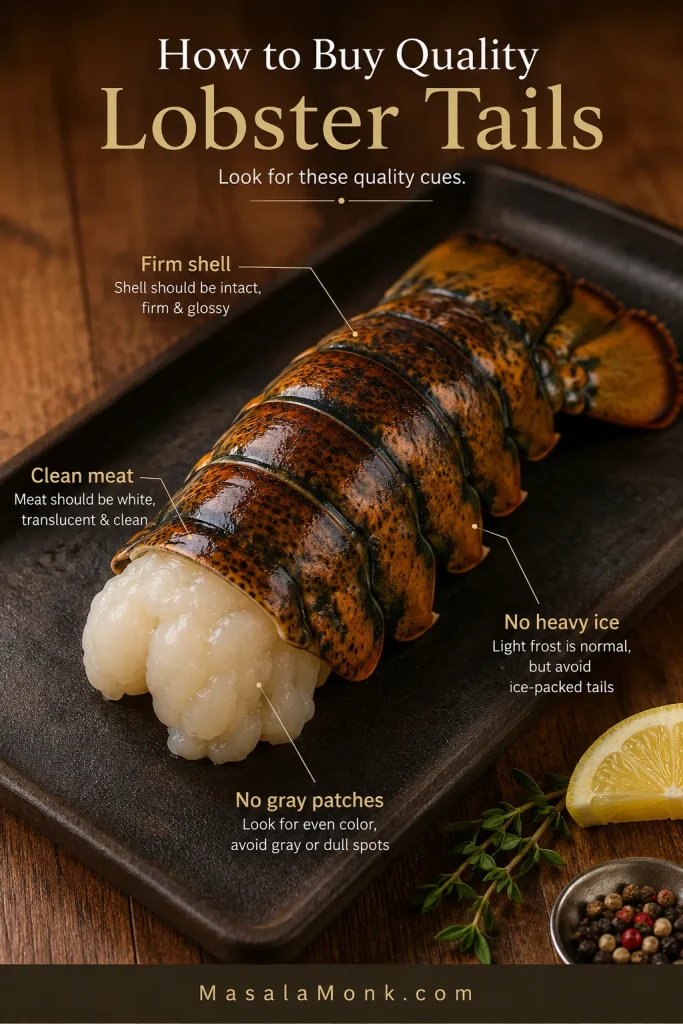
Clean firm lobster tail with callouts for firm shell, clean meat, no heavy ice, and no gray patches.
Better grilled lobster tails start at the store. Firm shells, clean meat, and minimal ice usually lead to sweeter texture on the grill.

This method works for most lobster tails, including cold-water, warm-water, Florida, Caribbean, and spiny lobster tails. Thin or lean tails cook faster, so baste well and start checking early.

Butter

Unsalted butter gives you better control over seasoning. If using salted butter, reduce the added salt slightly. Melt the butter slowly so the garlic can warm through and perfume the sauce without turning bitter.

Garlic

Fresh garlic gives the butter its best flavor. Mince it finely so it melts into the sauce instead of sitting in sharp little pieces on top of the lobster. Raw garlic can taste harsh, and burned garlic tastes bitter, so keep the heat gentle when making the butter.

Lemon

Lemon juice brightens the butter and keeps the lobster from tasting too heavy. Add some lemon to the butter, then serve extra wedges at the table so the final squeeze tastes fresh instead of flat.

Parsley or chives

Fresh herbs make the butter taste brighter. Parsley is classic. Chives are softer and slightly oniony. Cilantro works nicely with the chili-lime variation.

Olive oil

Use olive oil or another neutral cooking oil before the first sear. Butter before the first sear is tempting, but oil is the better first move because it helps prevent sticking without burning as quickly.

Smoked paprika, cayenne, or chili flakes

These are optional. Smoked paprika adds gentle BBQ depth. Cayenne or chili flakes add a little heat. Keep the first batch mild if you mainly want classic garlic butter lobster.

Fresh or Frozen Lobster Tails: How to Thaw Them

Frozen lobster tails are completely fine for grilling, especially if they were frozen soon after processing. What matters is that they are fully thawed, patted dry, and prepared properly before they go on the grill.

For the best texture, thaw frozen lobster tails overnight in the refrigerator on a plate or tray. For a faster same-day option, keep the tails sealed and place them in cold water for 30–60 minutes, depending on size. Do not use hot water, and do not grill the tails if the center still feels icy.
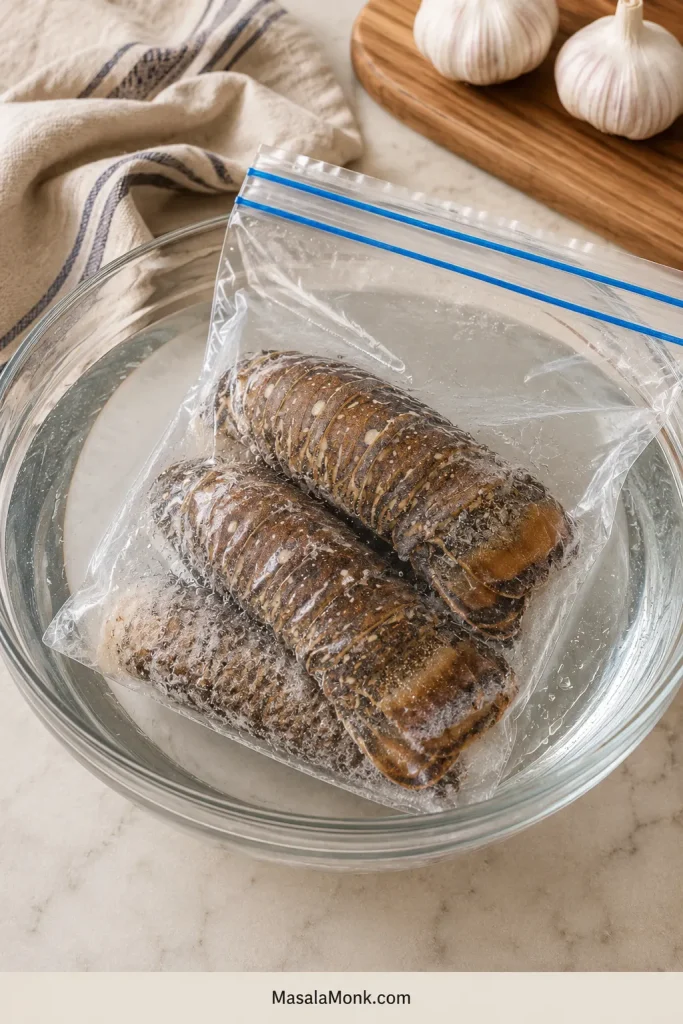
Frozen lobster tails sealed in a clear bag thawing in a bowl of cold water.
For faster thawing, keep frozen lobster tails sealed while they sit in cold water. The bag helps the meat thaw without absorbing extra water.

If the tail bends slightly and the meat is no longer icy in the center, it is ready to cut. At that point, drying the tails matters as much as thawing them because surface moisture can dull browning on the grill.

Dry the thawed lobster tails before grilling

Surface moisture is the hidden reason lobster sometimes looks pale instead of lightly marked. Press the meat and shell dry with towels so the first side touches the hot grates cleanly.
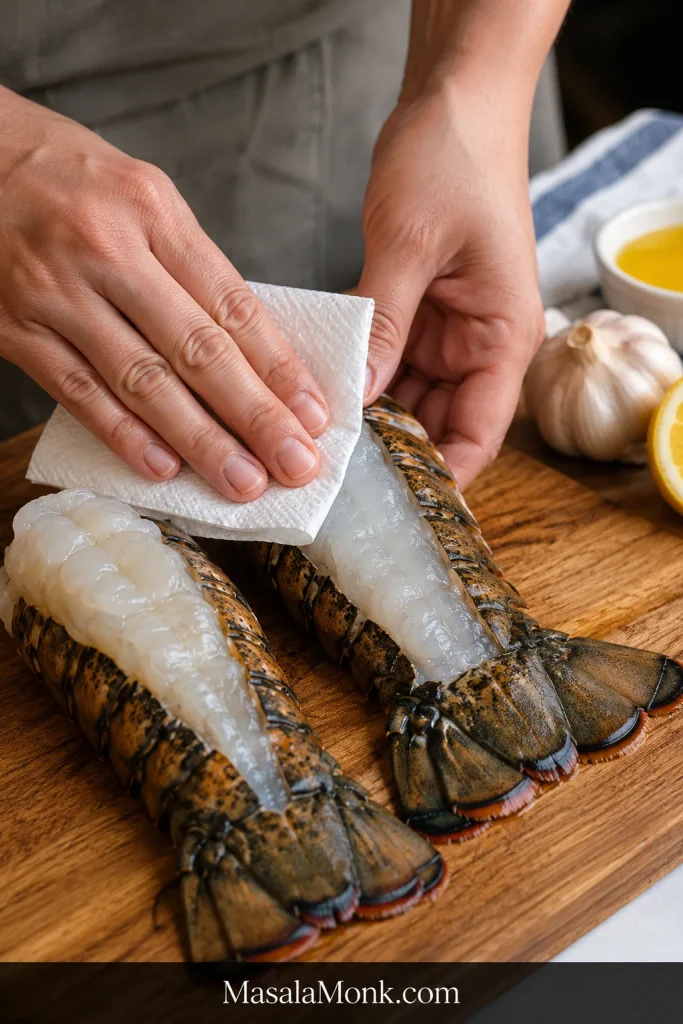
Hands patting thawed lobster tails dry on a towel before grilling.
Dry surfaces give the hot grates a better chance to mark the meat. Wet lobster steams first and browns later.

Once the tails are thawed and dry, the recipe starts to feel less like a gamble. The lobster is ready, the butter can be made, and the grill only has to give you smoke, heat, and a few minutes of attention.

Best Lobster Tail Size for Grilling

The best lobster tail size for grilling is usually 5–8 oz / 140–225 g per tail. Smaller tails cook quickly and are great for surf and turf. Larger tails feel impressive, but they need more controlled heat after the first sear.

Use this table as a starting point. A small tail and a jumbo tail should not be treated the same way.
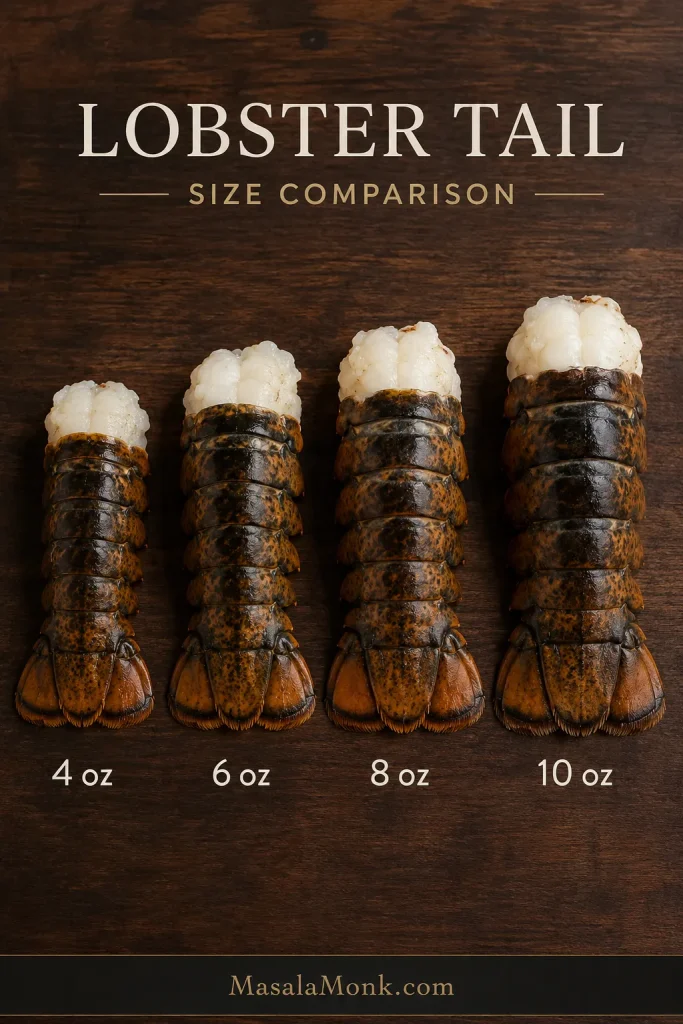
Four lobster tails arranged by size from 4 ounces to 10 ounces.
Tail size changes grill time. A 4 oz lobster tail cooks fast, while a 10 oz tail needs a slower, steadier finish after searing.
Lobster tail sizeGood useWhat to watch
4 oz / 115 gSmall portions, surf and turf, appetizersCooks quickly; check early
5–6 oz / 140–170 gEveryday grilling sizeEasy to handle and hard to overcomplicate
7–8 oz / 200–225 gGenerous dinner portionGive it a little more time after flipping
9–10 oz / 255–285 gLarge entrée-style tailMove away from the hottest heat if the edges brown early
10 oz+ / 285 g+Jumbo or special-occasion lobsterUse indirect heat after searing; do not blast the whole time

Bigger lobster tails do not simply need more direct heat. They need a longer, steadier finish. Once you know the size, the timing stops feeling mysterious and starts feeling manageable.

Before You Start: Tools That Make This Easier

Before you cut anything, set yourself up so the lobster feels manageable instead of slippery and rushed. You do not need much, but kitchen shears and an instant-read thermometer make the biggest difference.

  • Kitchen shears: Most useful for cutting the shell without crushing it.
  • Sharp knife: Helpful for splitting the meat partway after the shell is cut.
  • Instant-read thermometer: The simplest way to avoid overcooked lobster.
  • Grill tongs and basting brush: Helpful for turning and brushing without piercing the meat.
  • Skewers: Optional, but useful if the tails curl.

Set the tools out before preheating, and the grill work feels calmer. The shears handle the shell, while the thermometer takes pressure off the final minute.
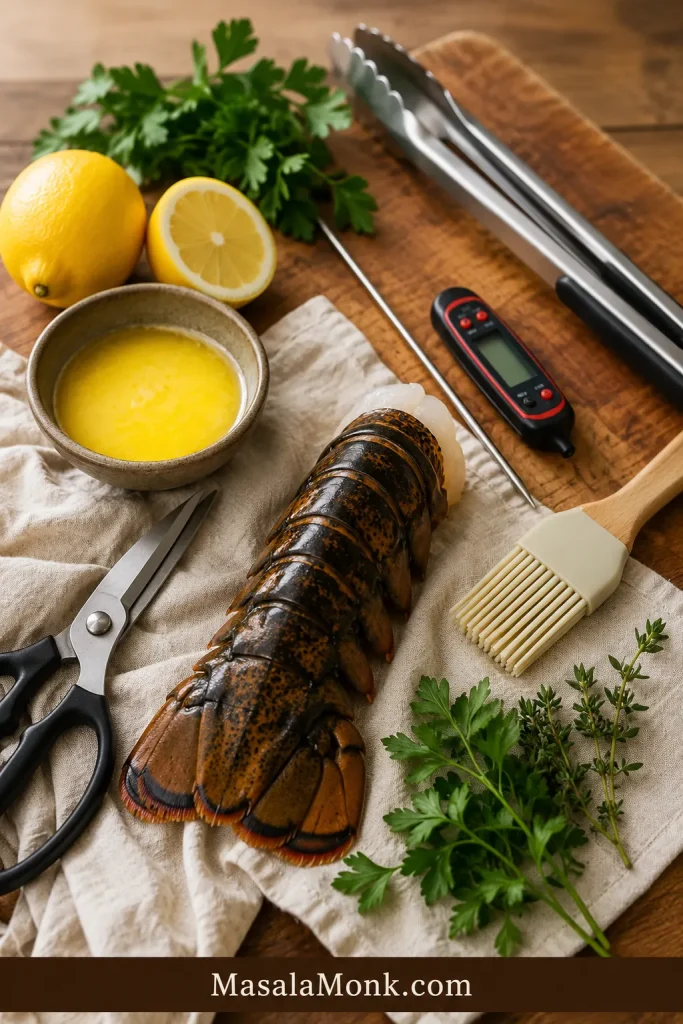
Tools for grilling lobster tails including kitchen shears, thermometer, tongs, basting brush, butter, lemon, and herbs.
Kitchen shears make the shell work cleaner, while the thermometer protects the final texture when the lobster cooks quickly.

How to Cut Lobster Tails for the Grill

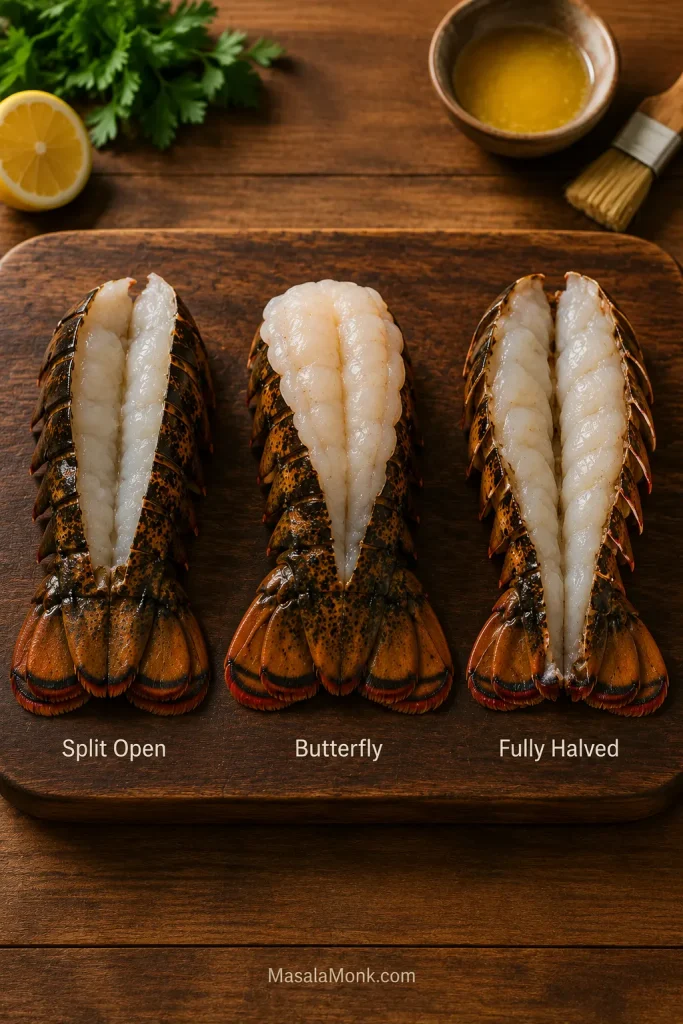
Once you know the size and have the tools ready, the next step is getting the shell open without mangling the meat. The easiest choice is a split-open tail, but here is how the main options compare.

Cut styleUse it when you wantGrill positionDifficulty
Split open like a bookBeginner-friendly grilling, better sear, easier temperature controlFlesh-side down first, then shell-side downEasier
Lifted butterflyRestaurant-style presentationMostly meat facing up, baste oftenMore delicate
Fully halved tailVery large tails or stronger charCut-side down briefly, then finish over cooler or indirect heatLess forgiving
Comparison of split-open, butterfly, and fully halved lobster tail cuts for grilling.
Choose the cut based on your goal: split-open is easiest, butterfly gives a dramatic look, and fully halved tails get stronger grill contact.

For this recipe, choose the split-open method unless you specifically want the lifted restaurant presentation. It gives the meat better contact with the grates, makes the sear easier, and gives you more control as the lobster finishes.

The shell may feel stiff the first time. That is normal. Work slowly, use kitchen shears instead of forcing the shell apart, and do not worry if the first tail is not picture-perfect. By the second one, the shell usually makes more sense.

Once the tails are open, the most intimidating part is behind you. From here, you are mostly managing heat, butter, and timing.

Cut the top shell with kitchen shears

The cleanest cut starts at the top of the shell and stops before the tail fan. Keep the shears centered so the shell opens evenly and the meat stays protected underneath.
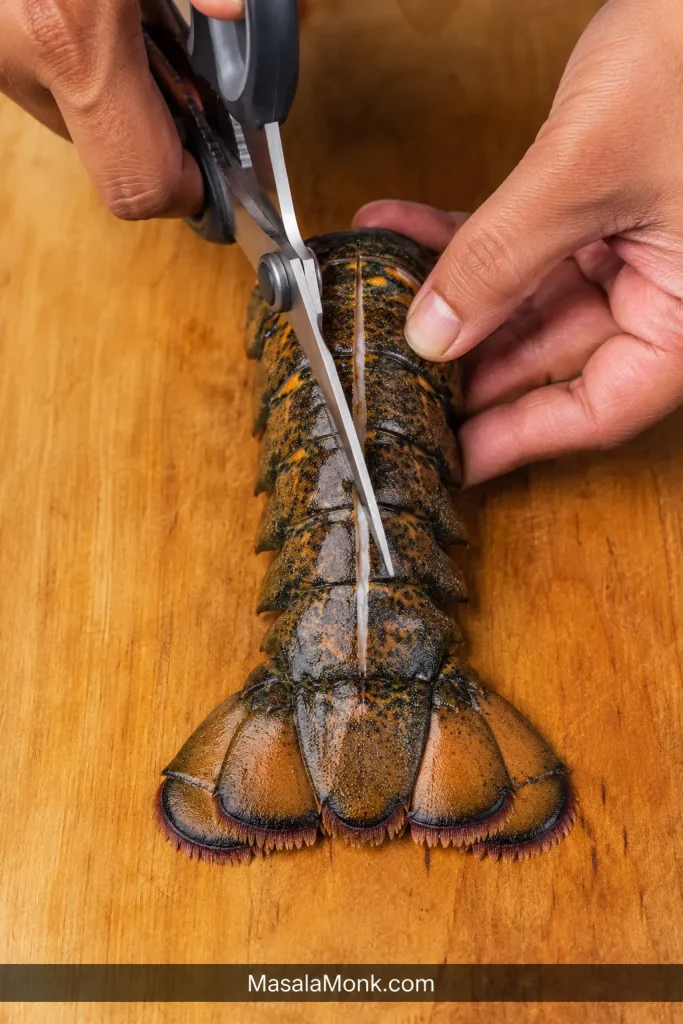
Kitchen shears cutting down the top shell of a raw lobster tail on a wooden board.
First, cut down the top shell with kitchen shears and stop before the tail fan. This opens the lobster without breaking the tail apart.

Loosen the lobster meat without tearing it

Once the shell is open, loosen the meat slowly along the sides. This gives the lobster room to open for grilling while keeping the tail attached and easier to move.
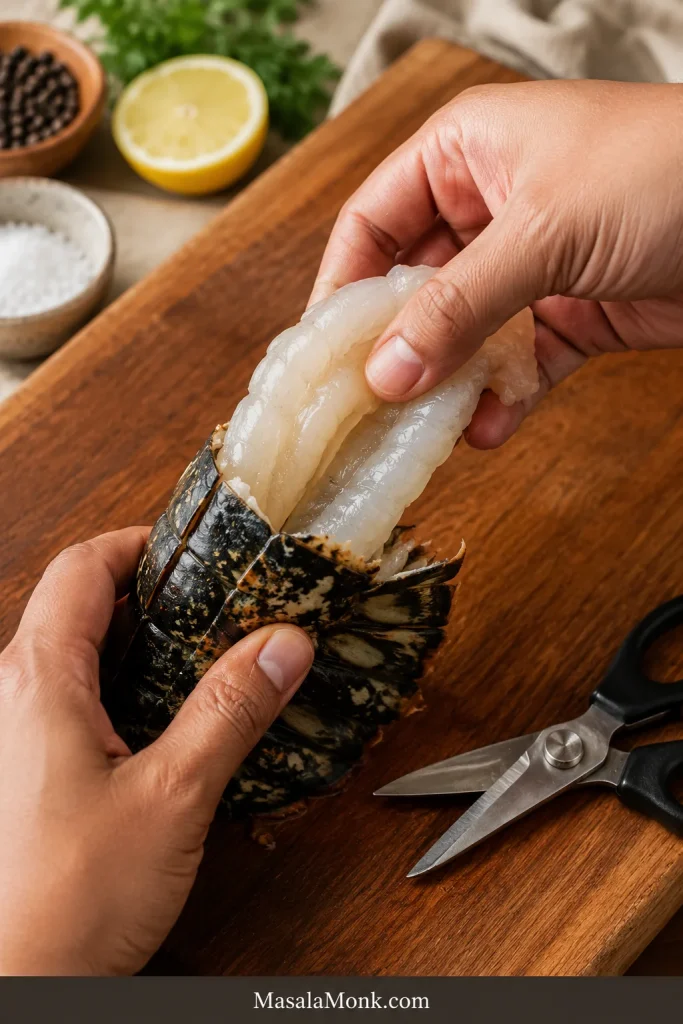
Hands loosening raw lobster tail meat from the shell after cutting the top shell.
Next, loosen the meat gently from the shell. The goal is to open the lobster tail for grilling, not pull the meat completely free.

Option 1: Split open like a book

Cut through the top shell lengthwise with kitchen shears, stopping before the tail fan. Use a sharp knife to cut partway into the meat without slicing through the bottom shell. Open the tail like a book and press with light pressure so it sits flatter on the grill.

If the meat is very thick, keep the cut shallow enough that the tail stays together. You want to open it, not divide it into two loose pieces.
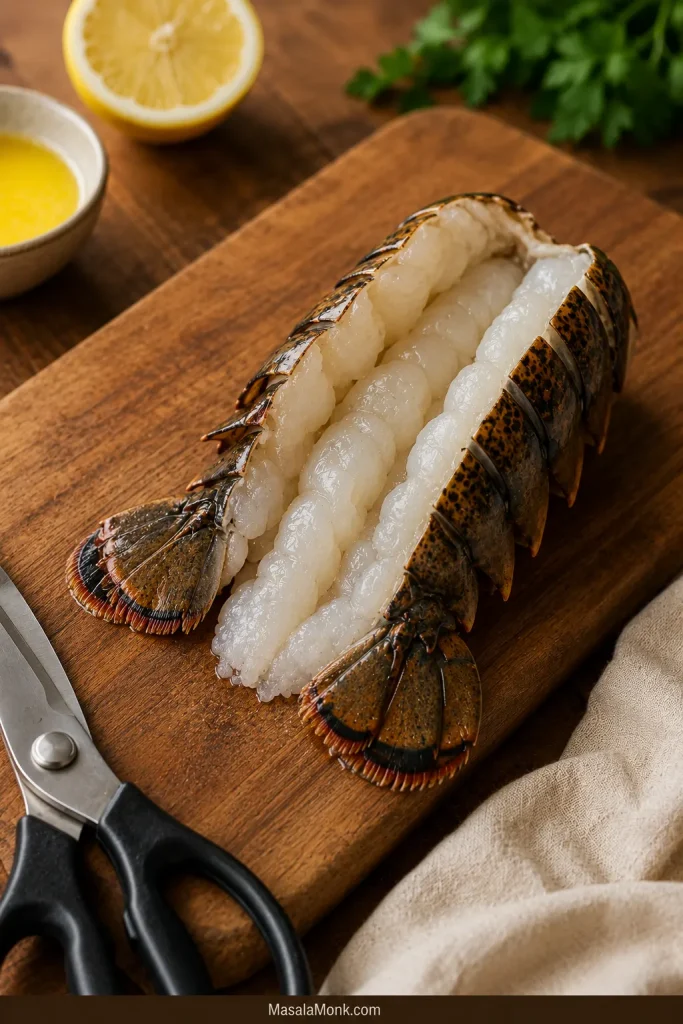
Raw lobster tail split open like a book on a wooden board before grilling.
For beginners, the split-open book method is the easiest cut. The meat gets grill contact while the shell still helps hold the tail together.

Option 2: Butterfly on top of the shell

This is the prettiest option and the one many people picture when they think of lobster tails. Cut down the center of the top shell, pull the shell apart slowly, loosen the meat from the sides, and lift the meat over the shell while keeping it attached at the base.

With the lifted butterfly style, do not force the meat flat onto the grates. Grill mostly with the meat facing up, baste the exposed surface as it cooks, and sear very briefly only if the meat sits securely.

Option 3: Fully halved lobster tail

A fully halved tail gives strong grill contact and works well for very large tails, but it is easier to overcook because more meat is exposed. Use this only if you want a stronger char and are comfortable taking an early reading.

Gas Grill, Charcoal Grill, BBQ, or Pellet Grill

Once the tails are cut, the grill setup is the last big decision — and it does not need to be complicated. Most grills can handle this recipe as long as the heat is steady and you have a cooler area available when the lobster needs more time.

  • Gas grill: Easiest for heat control. Preheat to 400–450°F / 204–232°C, then clean and oil the grates.
  • Charcoal grill or BBQ: Great for smoky flavor. Use a two-zone setup if possible so you can sear over direct heat and move the tails away from the strongest flames later.
  • Pellet grill on high heat: Works for a grilled result if you use enough heat. For a true smoked lobster tail, use lower indirect heat and a separate smoker method.
  • Very hot grill: Sear briefly, then move the tails away from the hottest area so the meat does not firm up too quickly.
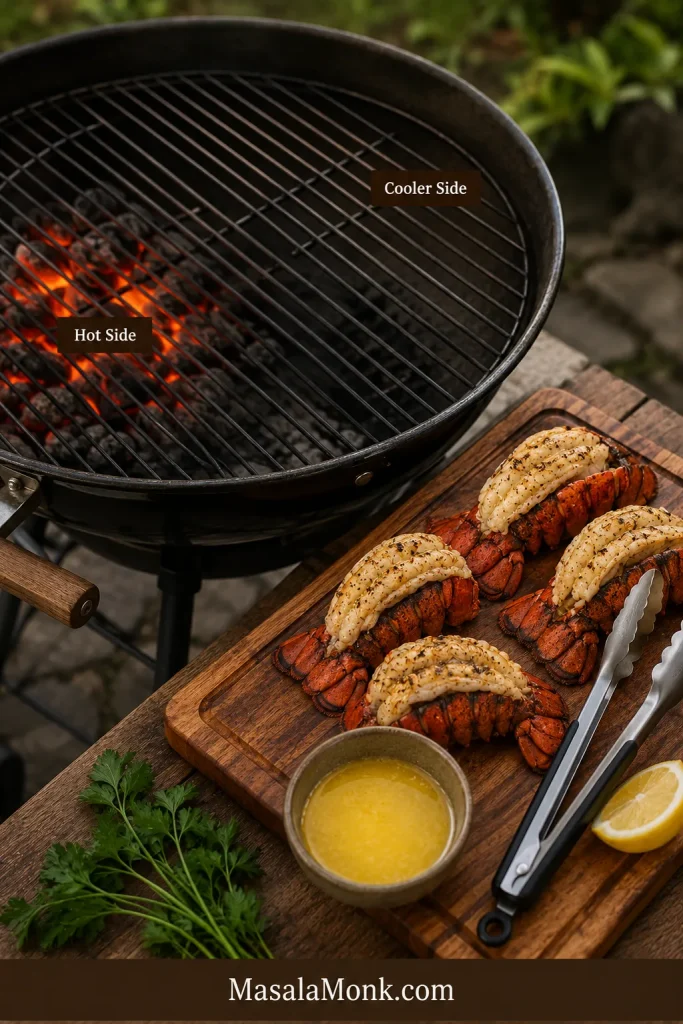
Two-zone grill setup showing a hot side and cooler side for grilling lobster tails.
A two-zone grill gives you room to react. Use the hotter side for quick color, then shift lobster cooler before the meat tightens.

If your grill has obvious hot spots, use them for the sear, then move the lobster to a slightly cooler area after flipping. You still get the smoky edge you came for, but the center has time to stay sweet and tender.

How to Grill Lobster Tails Step by Step

The recipe card above gives you the fast version. This section gives you the live cues that matter once the lobster is on the grill.

If you are grilling for guests, prep the tails and the basting butter before anyone arrives. Once the lobster hits the grill, your job is mostly to watch, baste, and stop at the right moment.

1. Preheat and clean the grill

Preheat the grill to medium-high heat, about 400–450°F / 204–232°C. Clean the grates well and oil them lightly. Lobster meat is delicate, so dirty or dry grates can cause sticking and tearing.

2. Make the lemon garlic butter

Melt the butter gently, then stir in the garlic, lemon juice, lemon zest if using, herbs, and any optional spices. It should smell warm and garlicky, with enough lemon to keep the lobster bright instead of heavy.

3. Cut and season the lobster tails

Cut the shell using the method above. Pat the meat dry, brush with olive oil, and season lightly with salt and pepper. Keep the butter nearby, but do not brush it on heavily before the first contact with the grates.

4. Sear flesh-side down

Place split lobster tails flesh-side down on the hot grates. Let them cook without constant moving. When the meat has light grill marks, it should begin to release and be ready to flip.
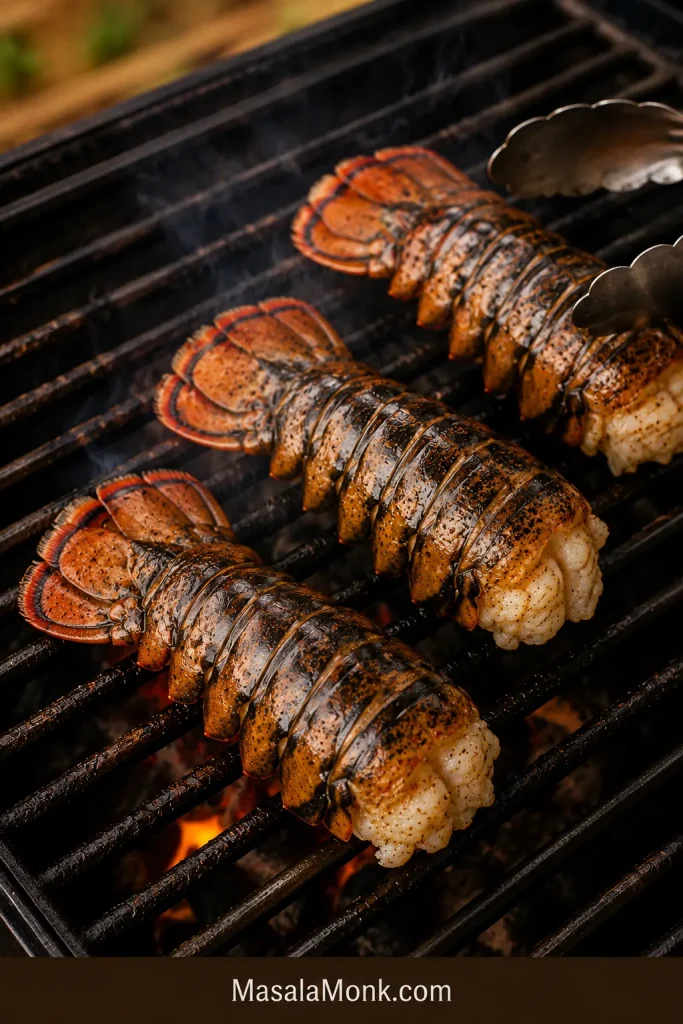
Split lobster tails placed flesh-side down on hot grill grates.
Place split lobster tails flesh-side down for the first sear. Direct contact builds light grill marks before any butter hits the heat.

Let the lobster release from the grates

Do not pry a tail that feels glued to the grate. Give the sear a little longer, then lift gently with tongs so the marked meat stays intact.
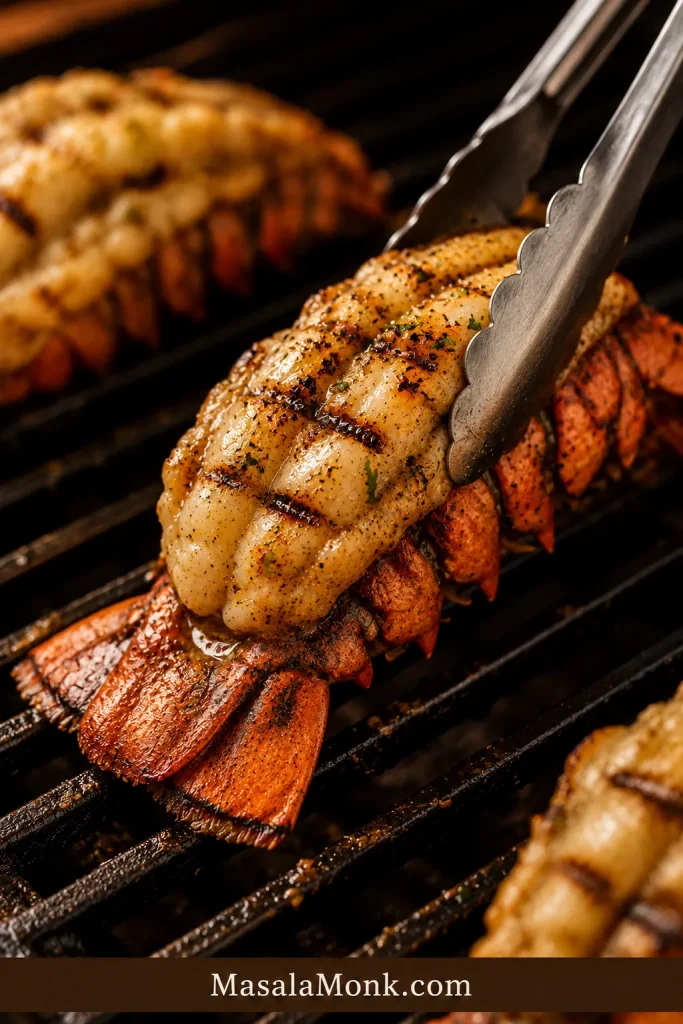
Tongs lifting a lobster tail from grill grates with light grill marks visible.
When lobster sticks, wait another moment instead of tearing it loose. Once the meat sears, it releases more cleanly from the grill grates.

With a lifted butterfly tail, skip the hard flesh-side-down sear or keep it very brief. That style is more delicate and usually does better with the meat facing up.

5. Flip shell-side down and baste

Flip the tails shell-side down, with the meat facing up. A little sizzling is good; bitter smoke means the heat is too harsh, not that the lobster needs to cook faster.
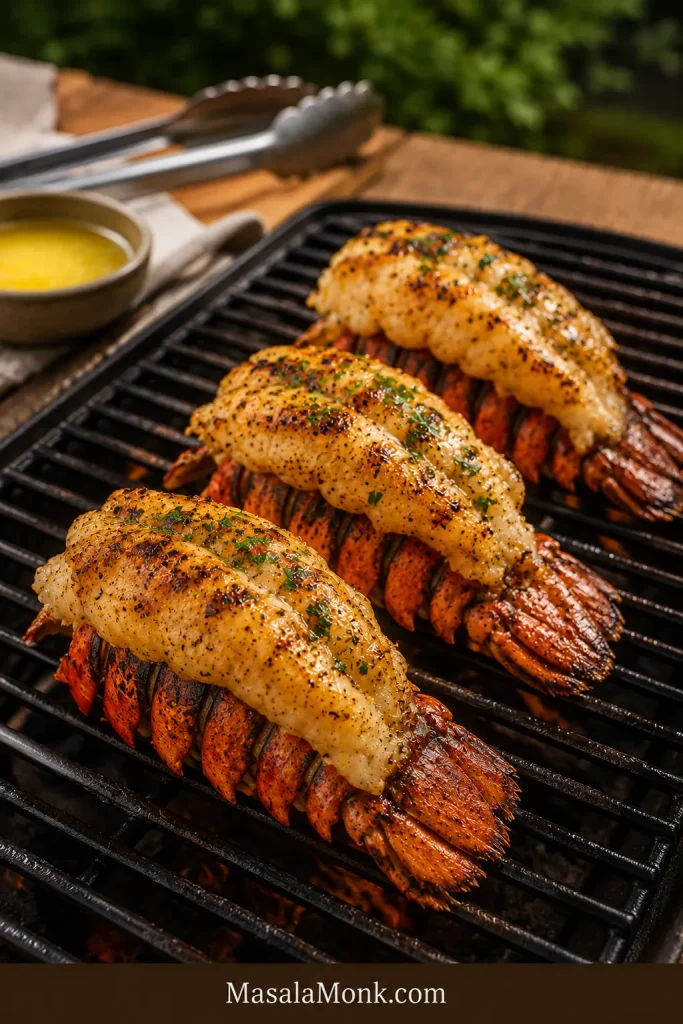
Lobster tails flipped shell-side down with the meat facing up on a grill.
Once flipped, the shell becomes a heat shield. The exposed lobster stays easy to baste while the center finishes more gently.

Brush garlic butter after flipping

Now brush the exposed lobster with lemon garlic butter. This timing gives the meat the glossy flavor you want while keeping minced garlic away from the harshest first contact with the grates.
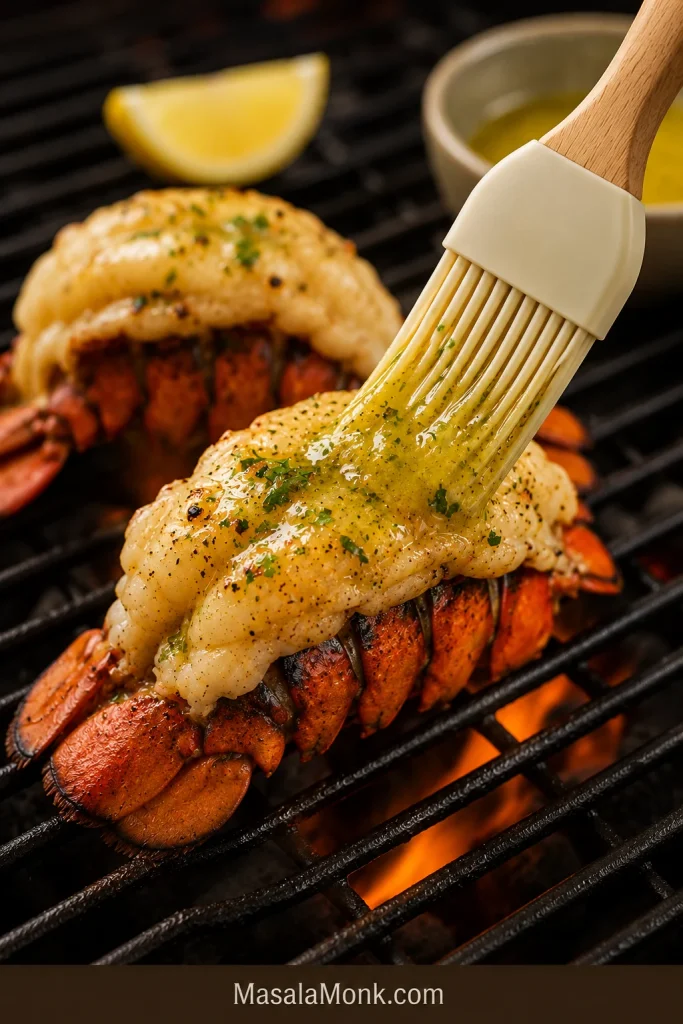
Lemon garlic butter being brushed over lobster tails on the grill.
Brush the lemon garlic butter over exposed meat after flipping. You get glossy flavor without scorching the garlic on the hottest grates.

When the shells are bright, the butter is sizzling gently, and the meat has turned pearly at the edges, the lobster starts to feel less intimidating and more like the dinner you hoped it would be.

6. Finish over steadier heat

Close the lid so the lobster cooks evenly. Opaque edges with a translucent center mean the outside is moving faster than the middle. Move the tails away from the hottest grates and give the center a little more time.
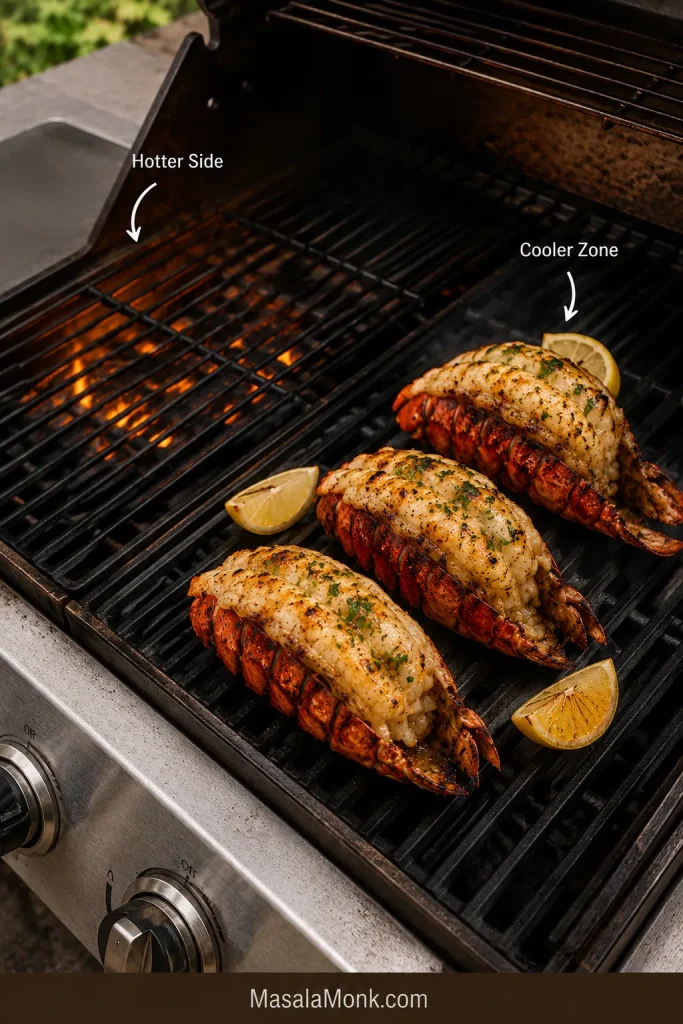
Lobster tails finishing shell-side down in the cooler zone of a grill.
If the edges are racing ahead of the center, slide the tails to the cooler zone. Slower heat protects the sweet, tender texture.

7. Check and serve

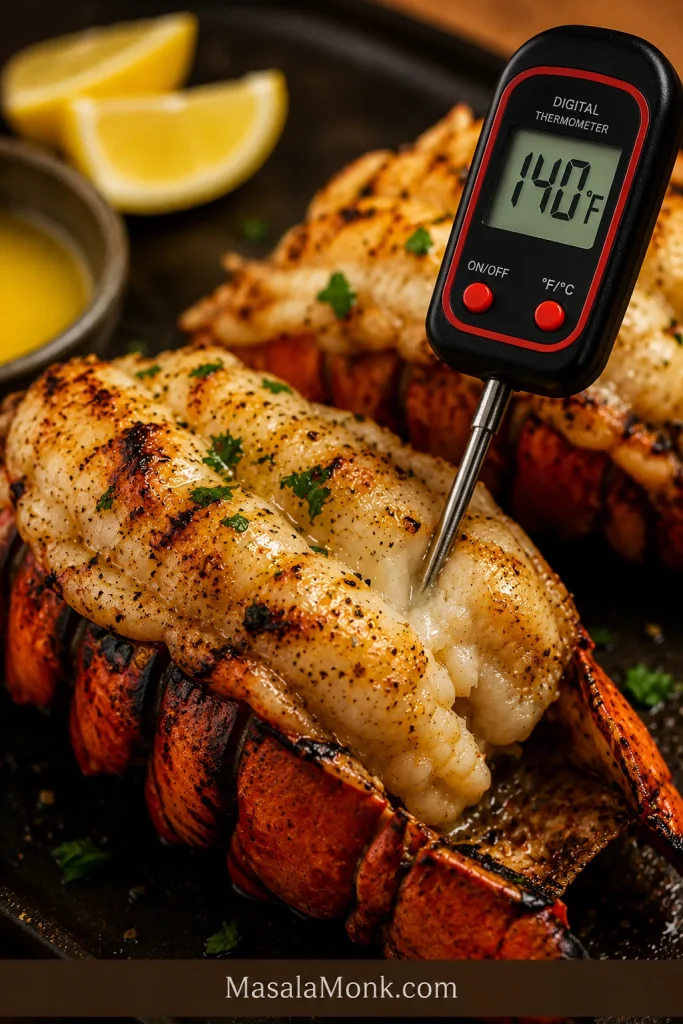
Insert an instant-read thermometer into the thickest part of the lobster meat without touching the shell. Pull the tails around 140°F / 60°C for juicy results, or 145°F / 63°C if you prefer a firmer finish. Brush with a little more butter, add lemon, and serve right away.

How Long to Grill Lobster Tails

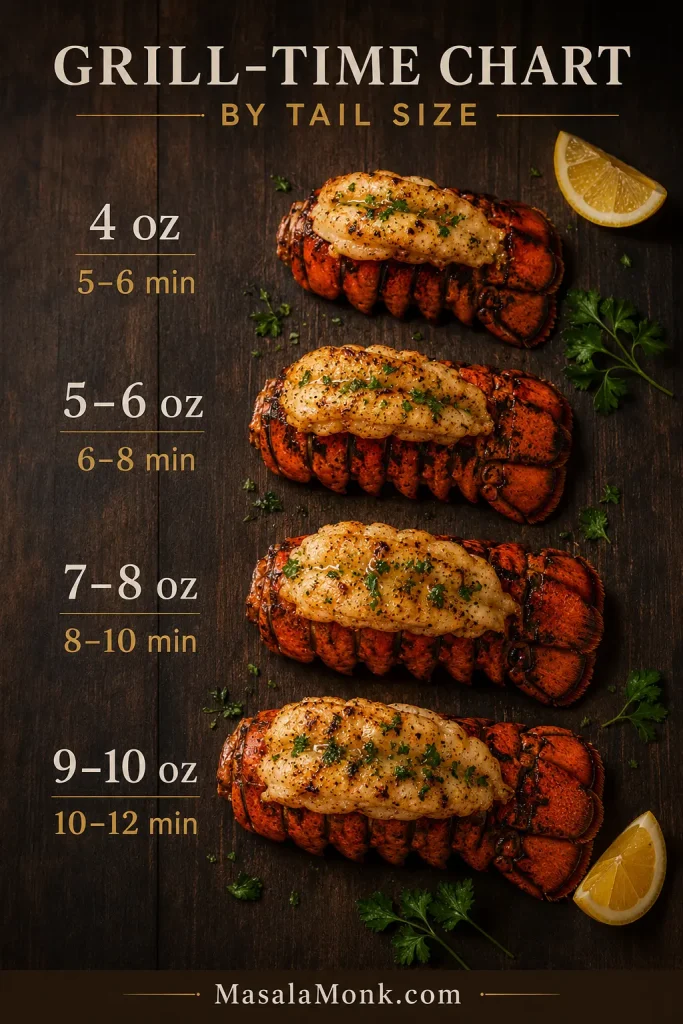
Timing is mostly about size. A small 4 oz tail cooks much faster than a thick 10 oz tail, even if they are on the same grill.

Tail sizeApprox total grill timeFirst sideAfter flipping
4 oz / 115 g5–6 minutes3–4 minutes1–2 minutes
5–6 oz / 140–170 g6–8 minutes4–5 minutes2–3 minutes
7–8 oz / 200–225 g8–10 minutes5–6 minutes3–4 minutes
9–10 oz / 255–285 g10–12 minutes5–6 minutes4–6 minutes, often partly indirect
10 oz+ / 285 g+12+ minutes5–6 minutesFinish more steadily, preferably with indirect heat
Grill time chart showing lobster tail sizes from 4 ounces to 10 ounces with cooking times.
Use grill time as a guide, not a guarantee. Size gets you close, but the thickest-part temperature makes the final call.

As a loose shortcut, most lobster tails need about 1 minute per ounce total on a hot grill, but thickness, grill heat, and how deeply you split the tail can change the final minute.

The table gets you close; the thermometer gets you calm. Lobster can go from tender to firm quickly, so use time as a guide and the thickest-part reading as the final call.

Grilled Lobster Tail Temperature

For the grill itself, aim for 400–450°F / 204–232°C. That gives you enough heat for grilled flavor without forcing the lobster to cook too aggressively.

For this recipe, 140°F / 60°C is the practical pull point for juicy grilled lobster tails. For a more conservative food-safety target, cook to 145°F / 63°C; FoodSafety.gov uses that number in seafood guidance, and lobster should look pearly or white and opaque.

The important thing is not to drift far past that point. You are looking for pearly, juicy meat that still feels soft when it leaves the grill.

TemperatureWhat it means
135°F / 57°CTender pull point if serving immediately and allowing for carryover
140°F / 60°CBest practical target for juicy grilled lobster tails
145°F / 63°CMore conservative food-safety target
Over 145°F / 63°CHigher risk of firm, dry, rubbery lobster
Instant-read thermometer inserted into the thickest part of a grilled lobster tail showing 140 degrees Fahrenheit.
Aim the thermometer into the meatiest section, away from shell and thin edges. Around 140°F keeps grilled lobster juicy and tender.

Do not cook lobster like chicken. The lobster does not need deeper color. It needs you to stop at the right moment.

Garlic Butter for Lobster Tails

Garlic butter is the flavor anchor of this recipe. It should taste rich, bright, and savory without covering the natural sweetness of the lobster. You want warm garlic, enough lemon to lift the butter, and just enough herbs to make each bite feel fresh.

For four lobster tails, use 4 tablespoons / 56 g butter, 2–3 cloves minced garlic, 2 teaspoons to 1 tablespoon lemon juice, a little lemon zest if you like, and 1 tablespoon chopped parsley or chives. Add smoked paprika or a pinch of chili only if you want a warmer BBQ-style flavor.

The butter should not taste flat or greasy. It should be garlicky, lightly lemony, and salty enough that one brush over the hot lobster makes the meat taste sweeter.

Brush the lobster with oil before the first grill contact, then use the basting butter after flipping. If too much butter hits the hottest grates too early, it can drip, flare, and burn before the lobster is finished.

Once the butter is ready, the recipe starts to feel like dinner instead of a task. The garlic is warm, the lemon is bright, and every brush over the lobster gives you more of that rich, glossy finish.

If garlic, lemon, and butter are the flavors you love most with seafood, this shrimp scampi recipe follows the same bright, buttery path in a stovetop dinner.

Butter and Seasoning Variations

The classic lemon garlic butter is the best starting point, especially for a first batch. Once you understand the timing, you can change the flavor without changing the cooking method.

  • Classic lemon garlic butter: Garlic, lemon, parsley, and butter.
  • Chili garlic butter: Add chili flakes or cayenne for gentle heat.
  • Smoked paprika butter: Add smoked paprika for a warmer BBQ flavor.
  • Cajun garlic butter: Add Cajun seasoning, garlic, and lemon.
  • Garlic herb butter: Add parsley, chives, thyme, or a little tarragon.
  • Chili-lime butter: Use lime, garlic, chili, and cilantro for a brighter finish.

If using a salty seasoning blend, reduce the added salt in the recipe. Lobster does not need heavy seasoning; it needs enough butter, acid, and salt to bring out its sweetness.

How to Tell When Lobster Tail Is Done

Grilled lobster tail is done when the meat is opaque, white, and springy, but not hard. Properly cooked lobster looks pearly and juicy. Undercooked lobster can look translucent in the center. Overcooked lobster often looks shrunken, tightly curled, cottony, or dry at the edges.
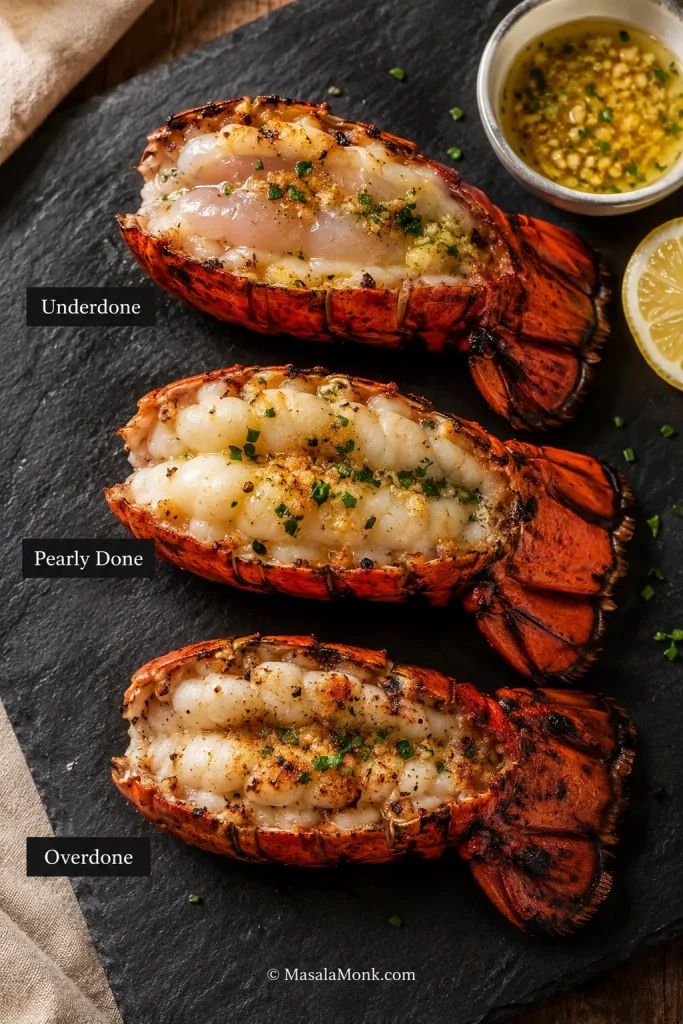
Comparison of underdone, pearly done, and overdone grilled lobster tail meat.
Use visual cues with temperature. Translucent centers need more time, pearly meat is ready, and shrunken tight meat has gone too far.
  • Translucent center: give it another minute shell-side down.
  • Tight edges with a cooler center: move the tails away from the strongest heat.
  • Flaring butter: move the tails and baste more lightly.
  • Meat at temperature: pull it instead of waiting for deeper shell color.
  • Tightly curled tail with shrunken meat: take a reading immediately.

What properly cooked lobster meat should look like

A perfectly cooked tail should still look moist when you cut into it. The color turns pearly and opaque, but the meat should not look chalky, tight, or dry around the edges.
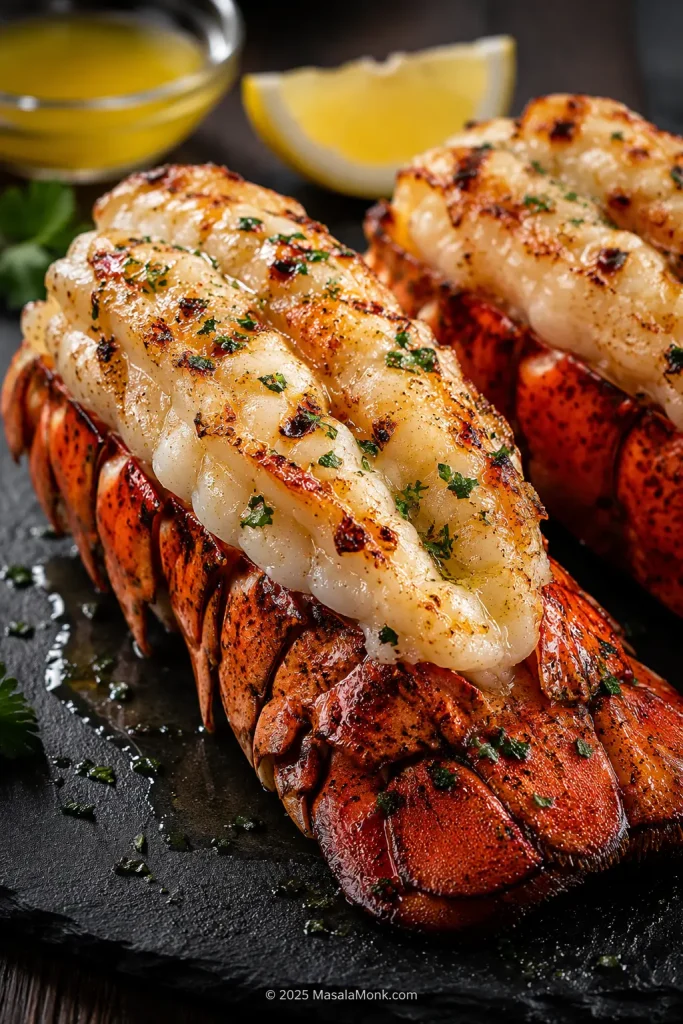
Close-up of properly cooked grilled lobster tail meat that looks pearly, juicy, and lightly charred.
At the ideal point, grilled lobster meat looks pearly and tender, with light char and just enough butter gloss to keep each bite rich.

Think opaque and tender — not hard, dry, or bouncy. That is the moment you want: the meat just opaque, the butter still warm, and the lemon ready to squeeze over the top.

What to Do If Something Goes Wrong on the Grill

This is the minute where people usually panic. Don’t. Most lobster problems have a simple fix when you catch them early.

What is happeningWhat it meansWhat to do immediately
Meat sticks hard to the gratesIt has not released yetWait 30–60 seconds; do not tear it loose
Butter flares or smokes hardHeat is too aggressiveMove tails to a cooler zone and baste lighter
Garlic smells bitterThe butter is burningStop basting with that butter and use fresh butter for serving
Shell is bright but center is translucentShell color is ahead of the meatFinish shell-side down with the lid closed
Edges are firming fastHeat is too directMove away from the strongest heat and take a reading
Tail curls tightlyIt may be close to overdoneCheck temperature immediately
Jumbo tail browns earlyOutside is ahead of centerMove to indirect heat and finish more slowly

Once you move the lobster away from harsh heat, most problems slow down. The butter settles, the center finishes, and the meat has a better chance to stay sweet instead of snapping firm.

Common Mistakes to Avoid

The rescue table helps when you are already at the grill. These are the mistakes to avoid before you get there.
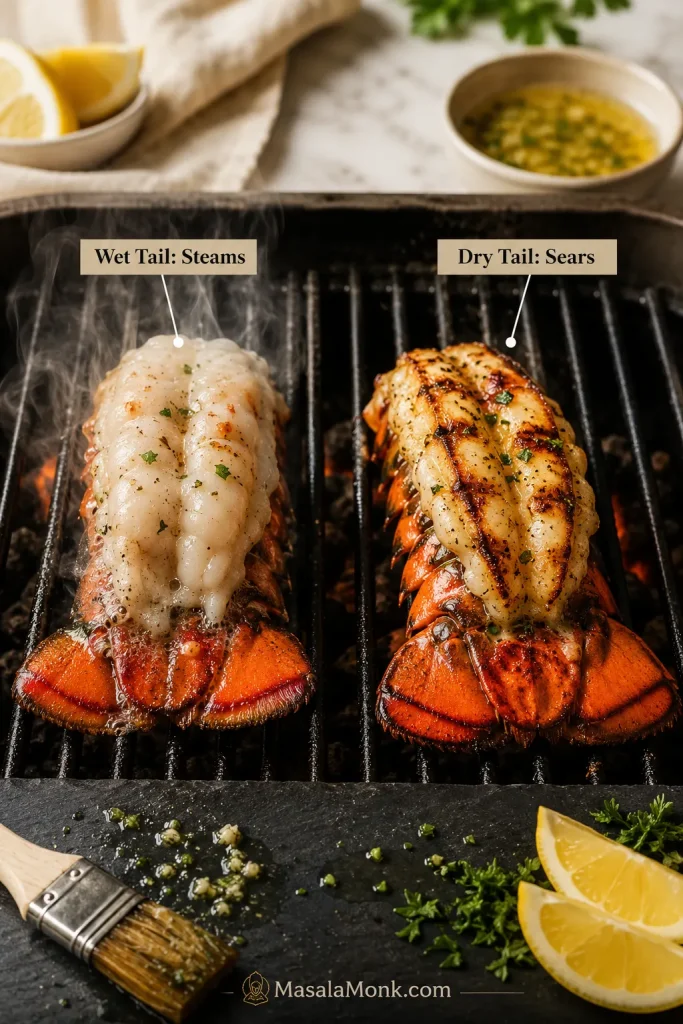
Wet lobster tail steaming compared with dry lobster tail searing on a grill.
This is the drying lesson in one glance: moisture delays browning, while a dry surface helps lobster sear cleanly.
  • Starting with frozen-solid tails: Thaw fully so the outside and center cook evenly.
  • Leaving the meat wet: Pat dry so the first side sears instead of steaming.
  • Using butter too early: Oil is better for the first hot contact; butter belongs after the flip.
  • Cooking jumbo tails like small tails: Big tails need a steadier finish after the first sear.
  • Cutting too deeply: Open the tail without turning it into loose pieces that dry faster.

Once the heat is steady and the butter is under control, the recipe becomes simple again: let the lobster cook gently, pull it while it is still juicy, and serve it before the gloss leaves the butter.

Should You Grill Lobster Tails in Foil?

Foil is a safety net, not the best flavor method. You can use it if your grill runs very hot or you are worried about flare-ups, but foil steams the lobster more than it grills it.

Do not start with foil unless your grill is truly unruly. For better grilled flavor, cook the tails directly on clean, oiled grates, then finish shell-side down in a cooler zone to protect the meat after flipping.

What to Serve With Grilled Lobster Tails

Once the tails are off the grill, do not make them wait. Lobster is at its best while the butter is glossy, the lemon is sharp, and the meat still pulls cleanly from the shell.

Grilled lobster tails are rich, so the best sides either catch the butter, cut through it, or make the plate feel like a proper summer dinner. Use the table below to build the kind of meal you want.

Meal styleServe with
Steakhouse dinnerGarlic mashed potatoes, wedge salad, steak, and extra lemon butter
Summer BBQGrilled corn, coleslaw, grilled asparagus, potato salad, and lemon wedges
Light seafood dinnerLemon rice, tomato salad, green beans, or a simple crisp salad
Date-night plateHomemade garlic bread loaf, a cold salad, and one bright drink like a lemon drop or lychee martini
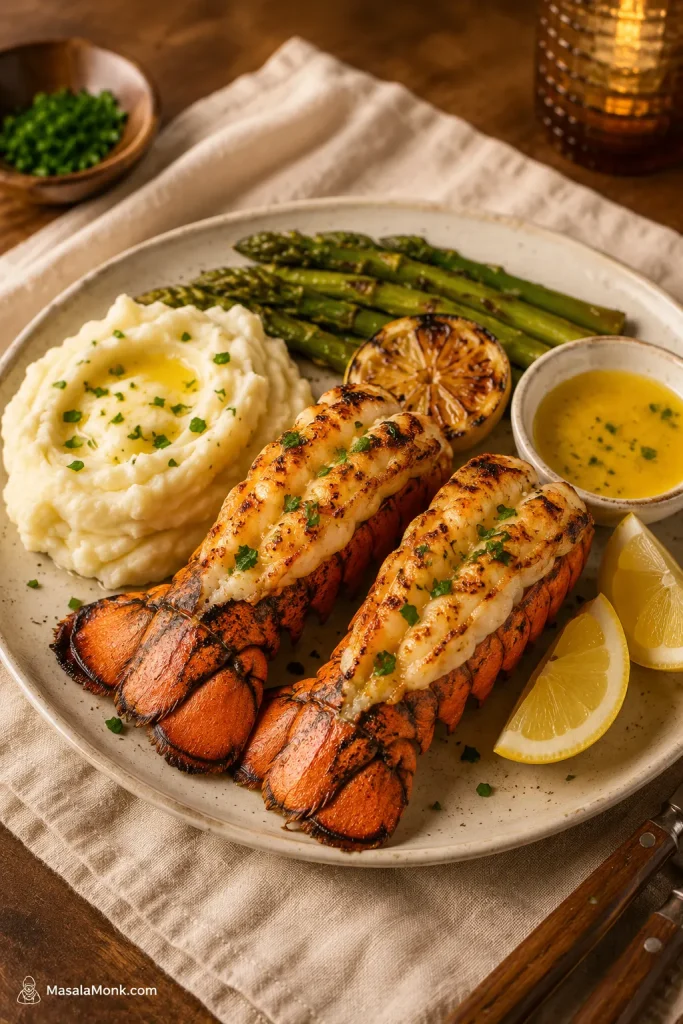
Grilled lobster tails served with mashed potatoes, asparagus, lemon butter, and lemon wedges.
Build the plate around contrast: rich lobster, a crisp green side, sharp lemon, and something soft enough to catch the extra butter.

For the easiest plate, pair the lobster with one crisp side, one lemony element, and one soft side that can catch the extra garlic butter. That keeps the meal rich without making it feel heavy.

Storage and Reheating

Grilled lobster tails are best eaten right away, while the meat is tender and the garlic butter is warm. Leftover lobster is useful, but it will never be quite as tender as it was off the grill.

  • Refrigerate: Remove cooked lobster meat from the shell and store it in an airtight container for up to 2 days.
  • Reheat gently: Warm with a little butter over low heat until just heated through.
  • Avoid harsh microwaving: High heat can make leftover lobster tough.
  • Use leftovers: Add to pasta, tacos, salads, omelets, rice bowls, or turn the meat into a buttery lobster roll recipe.

If you expect leftovers, save extra garlic butter separately for reheating. Warm the meat just enough to bring back the butter and aroma, not enough to cook it again.

FAQs About Grilled Lobster Tails

How long do lobster tails take on the grill?

Most 4–8 oz lobster tails take 5–10 minutes. Very large tails can take 12 minutes or more and should finish over lower or indirect heat.

What temperature should grilled lobster tails reach?

Aim for about 140°F / 60°C in the thickest part for juicy lobster, or 145°F / 63°C if you prefer a firmer, more conservative finish.

Should lobster tails be grilled meat-side down or shell-side down?

For split lobster tails, start meat-side down for grill marks and flavor, then flip shell-side down with the meat facing up. Lifted butterfly tails usually cook mostly meat-side up.

Do you have to thaw frozen lobster tails before grilling?

Yes. Thaw frozen lobster tails before grilling for better texture, easier cutting, and more even cooking.

What is the best size lobster tail for grilling?

The best size is usually 5–8 oz / 140–225 g per tail. It feels generous but still cooks evenly without much fuss.

Why did my lobster tail stick to the grill?

It likely had not released yet. Clean and oil the grates, pat the meat dry, and wait another 30–60 seconds before lifting again.

Why did my garlic butter burn?

The heat was likely too aggressive or the butter hit the grates too early. Use oil first, add butter after flipping, and move the tails away from harsh heat when the butter smokes hard.

Why is my lobster tail tough even though I followed the time?

Grill heat, tail thickness, and starting temperature can all change the timing. Use time as a guide, then pull by thermometer before the meat firms too much.

What goes well with grilled lobster tails?

Grilled lobster tails go well with corn, potatoes, garlic bread, lemon rice, green salad, grilled asparagus, pasta, or steak for surf and turf.

Final Tip

Once you remember the rhythm — cut, sear, flip, baste, check — grilled lobster tails stop feeling fragile. They become what they should be: sweet, smoky, buttery, and ready for lemon while the meat is still tender.
Posted on 2 Comments

Garlic Mashed Potatoes Recipe

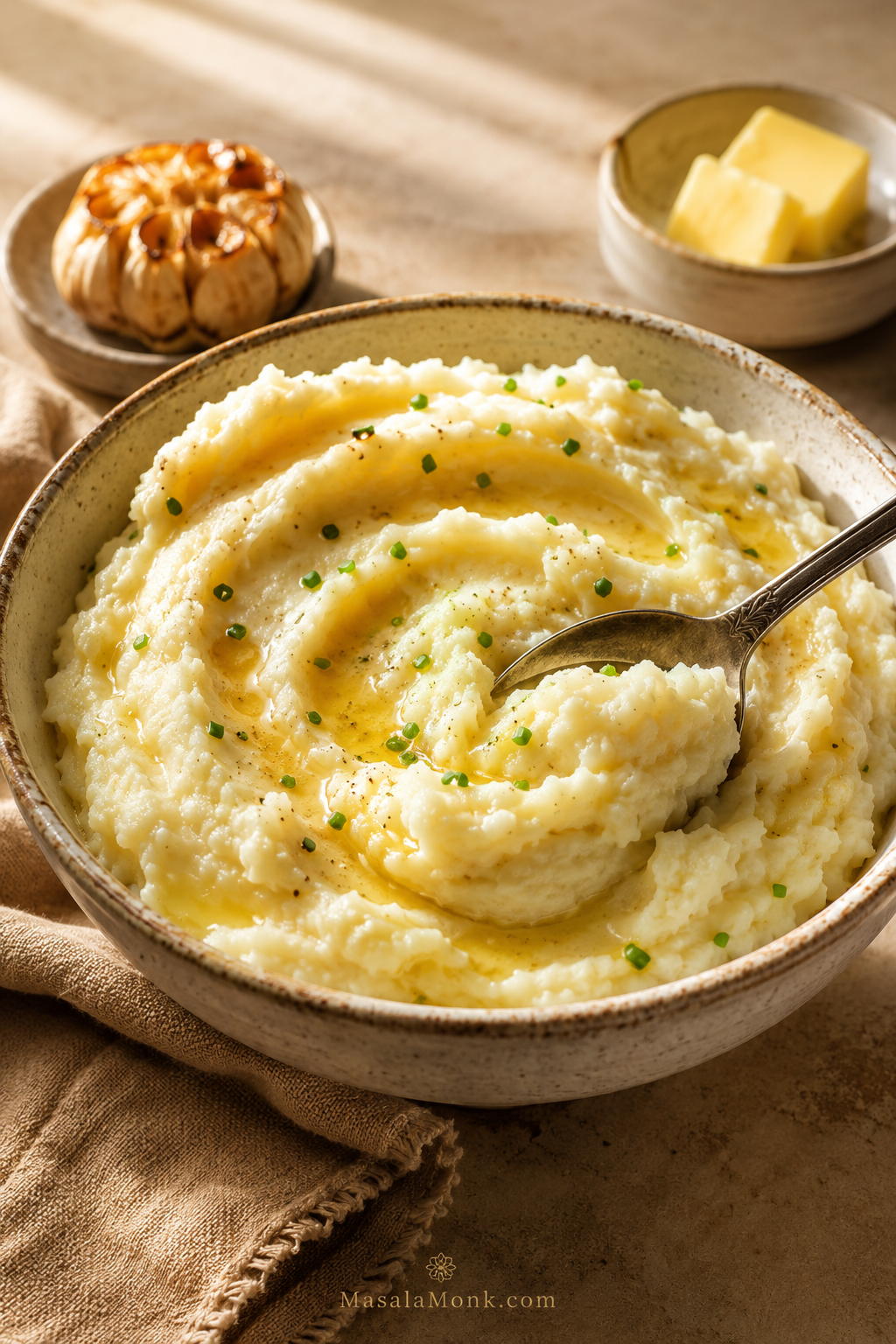
Creamy garlic mashed potatoes in a ceramic bowl with melted butter, chives, and a spoon pulling through soft swirls.

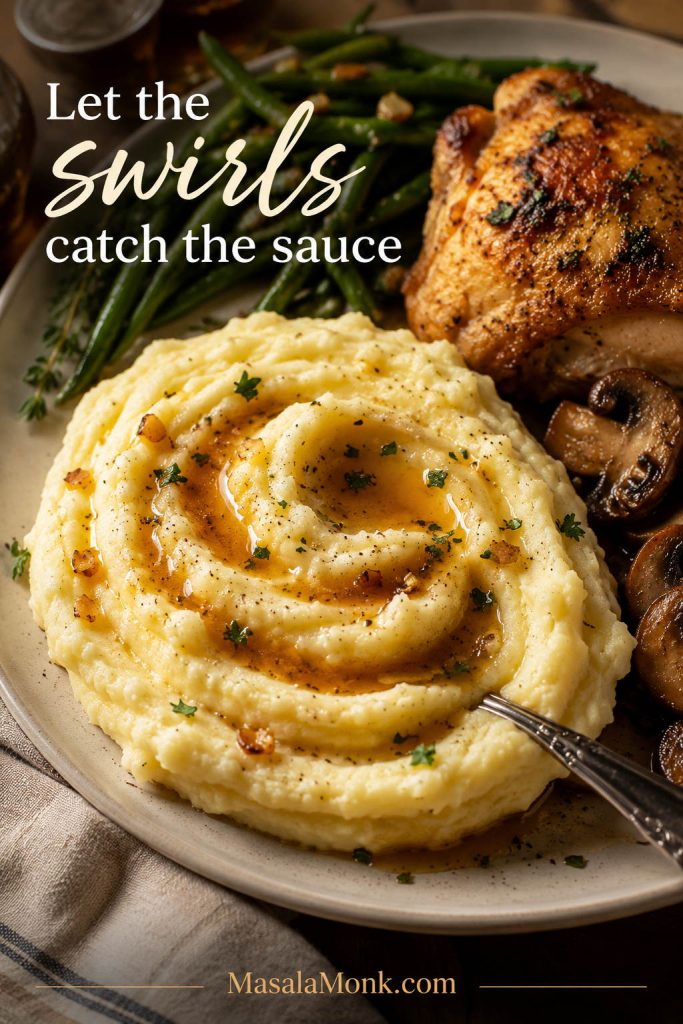
These garlic mashed potatoes are the kind you want under a spoonful of gravy: soft buttery ridges, mellow garlic in every bite, and enough body to hold melted butter without turning stiff, sticky, or gluey.

The secret is simple. Start with good potatoes, cook them until they are truly tender, let the extra steam escape after draining, then fold in warm garlic butter and milk while the potatoes are still hot. That gives you creamy spoonfuls, fluffy edges, and garlic flavor that runs through the whole bowl instead of sitting in sharp little pockets.

The goal is not restaurant-perfect smoothness at any cost. Instead, it is a warm, spoonable bowl that tastes buttery, garlicky, and comforting from the first bite to the last — the kind of mashed potatoes that make gravy, roast chicken, steak, or mushrooms feel like a complete meal.

Serve them with roast chicken, steak, meatloaf, mushrooms, turkey, gravy, or a holiday table. They are especially good beside a slow cooker roast chicken because the soft potatoes catch all those garlic-herb juices.

Make the classic version first, then use the variations below for roasted garlic mashed potatoes, garlic parmesan mashed potatoes, red skin mashed potatoes, no-milk mashed potatoes, dairy-free mashed potatoes, or a richer sour cream and cream cheese version.

In This Garlic Mashed Potatoes Recipe

Start with the classic creamy method, then adjust the potato, garlic, dairy, batch size, and make-ahead details to fit your meal.

Quick Answer: How to Make Garlic Mashed Potatoes

To make creamy garlic mashed potatoes, boil 2½ lb / 1.1 kg Yukon Gold potatoes in salted water until very tender. Drain them well, return them to the warm pot for a minute so excess moisture can steam off, then mash gently with warm garlic butter and milk.
For the garlic butter mixture, warm 6 smashed garlic cloves with 6 tbsp / 85 g butter and ¾ cup / 180 ml whole milk or half-and-half. Strain the garlic out for a smooth, rounded flavor, or mash the softened cloves into the potatoes if you want a deeper garlic taste. Finish with salt, pepper, and optional sour cream.

The full recipe takes about 35 minutes. For the best texture, use hot potatoes, warm dairy, enough salt, and a masher or ricer instead of a blender or food processor.

Best basic formula: 2½ lb Yukon Gold potatoes + 6 garlic cloves + 6 tbsp butter + ¾ cup warm milk or half-and-half + salt + optional ¼ cup sour cream.
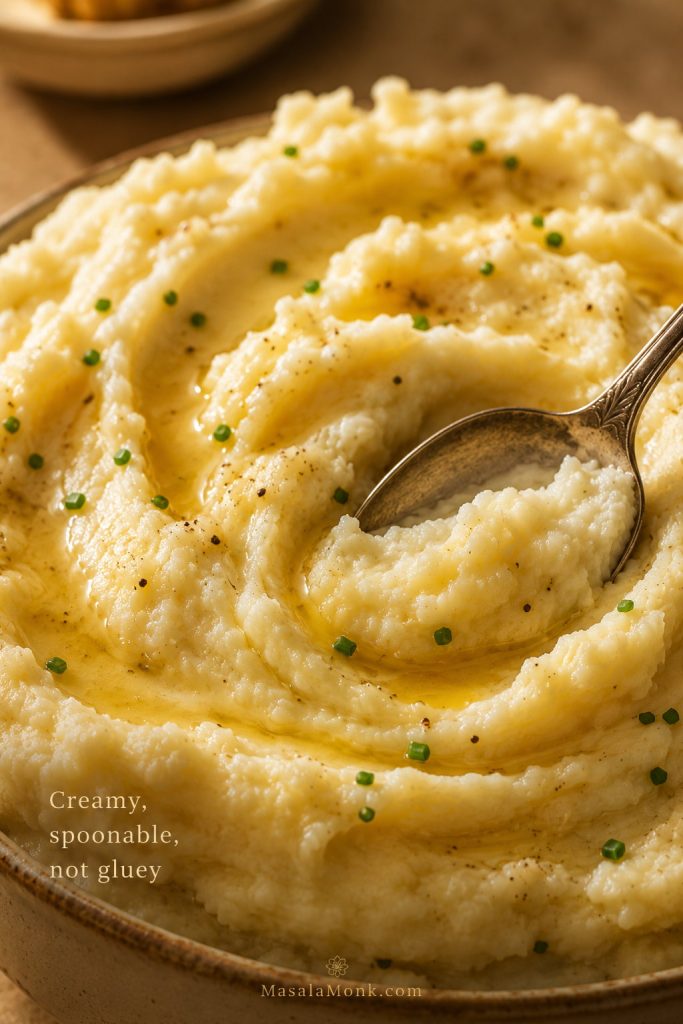
Close-up of garlic mashed potatoes with a spoon drag, melted butter in the ridges, and small chive flecks.
Look for soft ridges that hold butter without looking stiff or pasty. That is the visual cue for creamy mashed potatoes that are spoonable, not gluey.

Garlic Mashed Potatoes at a Glance

  • Best potato: Yukon Gold for creamy and buttery, russet for lighter and fluffier, red potatoes only for rustic skin-on mash.
  • Best garlic method: Warm smashed garlic in butter and milk for smooth everyday flavor.
  • Best texture rule: Drain well, steam-dry briefly, use warm dairy, and stop mixing once creamy.
  • Best tool: Potato masher for homestyle texture, ricer for smoother potatoes.
  • Make-ahead: Best within 2 days, with leftovers refrigerated for 3–4 days.

Which Version Should You Make?

The classic recipe is the best place to start, but different meals call for different mashed potatoes. Use this quick guide if you already know the flavor or texture you want.

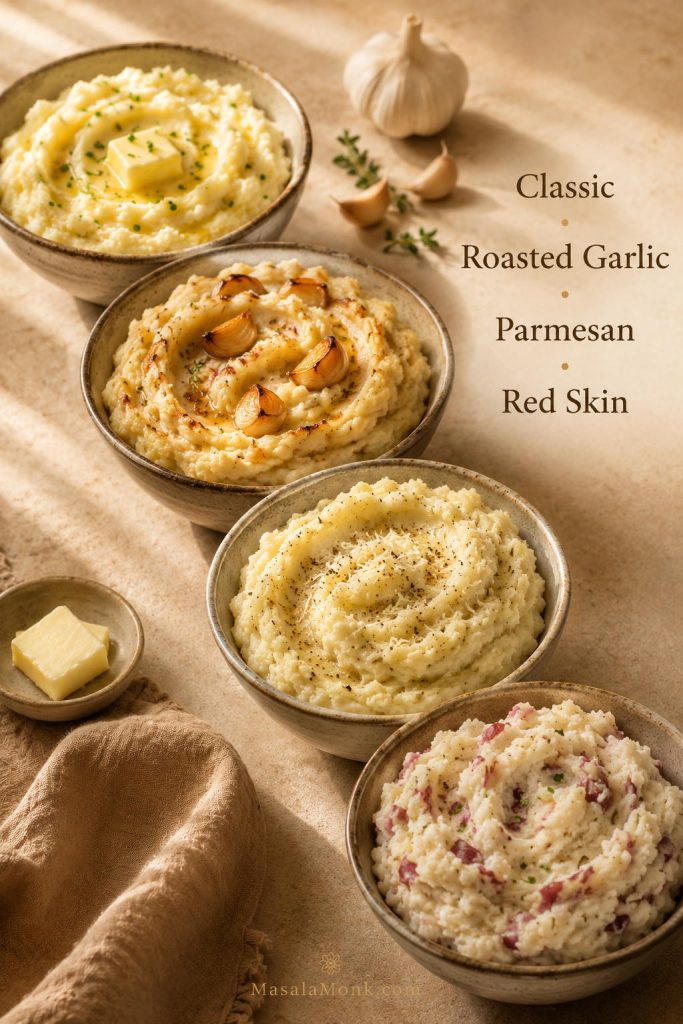
Four small bowls of mashed potatoes showing classic, roasted garlic, parmesan, and red skin versions.
Choose the version by the meal: classic for gravy, roasted garlic for deeper flavor, parmesan for savory richness, and red skin mashed potatoes for rustic texture.
If You Want… Make This Version Best For
Classic creamy mashed potatoes Main recipe Weeknights, holidays, gravy
Sweeter, softer garlic flavor Roasted garlic version Turkey, roast beef, dinner parties
Bigger garlic flavor Mash in the softened garlic cloves, add roasted garlic, or finish with a little garlic powder Garlic lovers, steak dinners, bold savory sides
Steakhouse-style flavor Garlic parmesan version Steak, chicken, mushrooms
No peeling Red skin version Rustic weeknight dinners
Tangier, richer potatoes Sour cream or cream cheese version Make-ahead meals, holiday sides
No milk or dairy-free Broth, olive oil, or dairy-free butter version Dairy-free guests, lighter sides
A smaller dinner batch Small batch version Steak night, dinner for two or three
A bigger holiday bowl Double batch Thanksgiving, Christmas, Easter, potlucks

Why This Garlic Mashed Potatoes Recipe Works

Good mashed potatoes should feel generous before you even add gravy. They should be warm, soft, buttery, and seasoned all the way through. In this recipe, each step protects that texture.

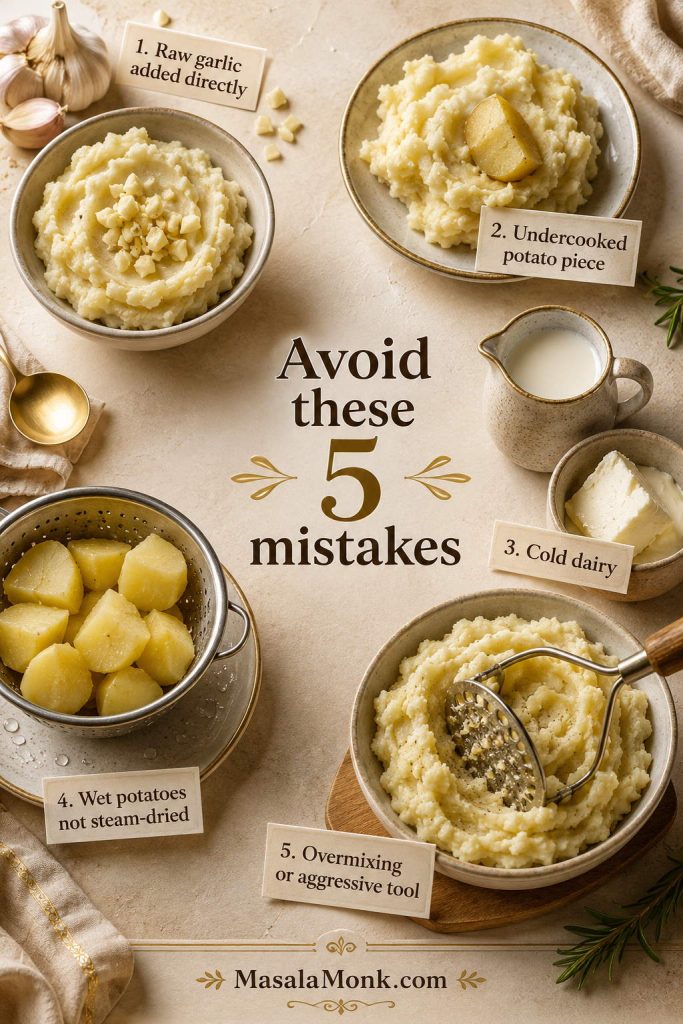
The method works because it avoids the three things that ruin mashed potatoes: raw garlic, wet potatoes, and overmixing. The garlic is warmed so it tastes smooth instead of sharp. After draining, the potatoes are dried briefly so they do not water down the butter. Everything is folded together gently, so the mash stays silky instead of tightening into paste.

Cooking the potatoes until completely tender also matters. If the potatoes are still firm in the center, you will have to keep mashing to chase out lumps, and that extra work can make the potatoes heavy. When they are cooked properly, they mash easily and absorb the warm dairy without a fight.

A potato masher gives you a cozy homemade texture, while a ricer gives you a smoother, fluffier bowl. Either way, the goal is the same: stop once the potatoes are spoonable, soft, and able to hold gentle swirls.

Ingredients for Garlic Mashed Potatoes

You do not need many ingredients, but small choices make a big difference. Warm dairy blends better than cold milk, enough butter carries the garlic flavor, and the right potato keeps the mash creamy instead of pasty.

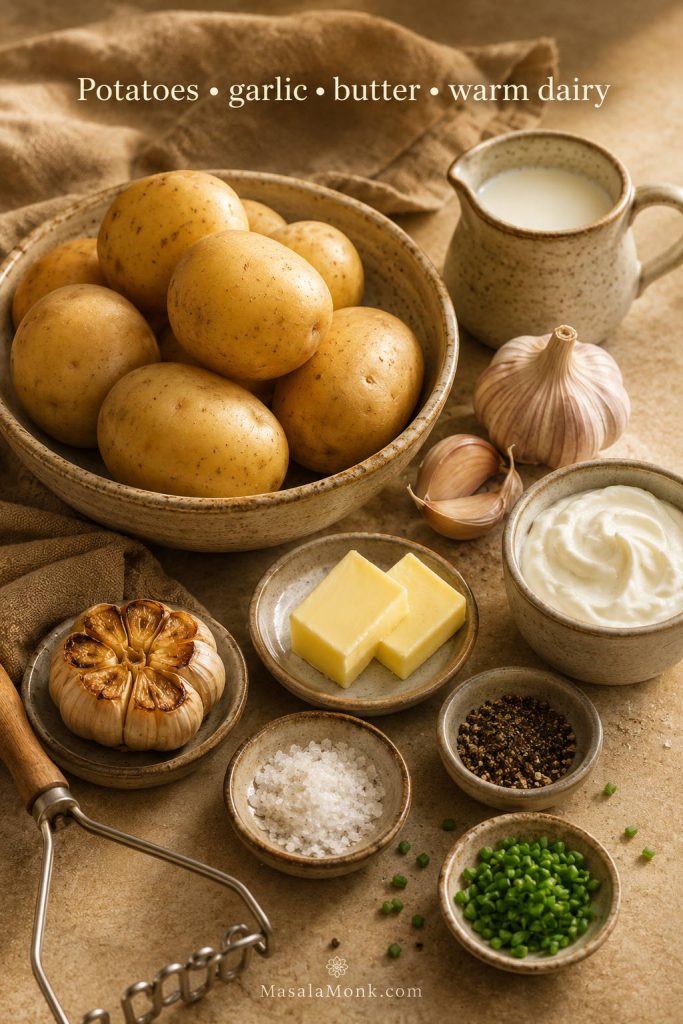
Yukon Gold potatoes, garlic, butter, milk, sour cream, salt, pepper, chives, and a potato masher arranged on a counter.
Even a simple garlic mashed potatoes recipe depends on balance: starchy potatoes for structure, butter for richness, and warm dairy so everything folds together smoothly.

Potatoes

Yukon Gold potatoes are the best default. They have a naturally creamy texture and a buttery flavor, so they make the recipe taste rich without needing a huge amount of cream.

Russets make a lighter, fluffier mash. Red potatoes work well when you want a rustic, skin-on version, but they should be mashed gently because they are waxier.

Garlic

Use 6 garlic cloves for the main batch. Smashed cloves warmed in butter and milk give the potatoes a mellow garlic flavor. If you love a stronger garlic note, mash the softened cloves into the potatoes instead of straining them out.

Butter

Use 6 tbsp / 85 g unsalted butter. Butter gives the potatoes richness and helps carry the garlic into every bite. If you use salted butter, season carefully at the end.

Milk or Half-and-Half

Use ¾ cup / 180 ml whole milk or half-and-half. Whole milk keeps the potatoes lighter. Half-and-half makes them richer and more holiday-worthy. Warm it before adding it to the potatoes.

Sour Cream

Sour cream is optional, but it adds a gentle tang and a fuller texture. Use ¼ cup / 60 g for balance, or up to ½ cup / 120 g if you want a tangier, richer mash.

Salt, Pepper, and Herbs

Salt the cooking water, then season again after mashing. Potatoes need salt in layers; otherwise, they can taste flat. Black pepper, white pepper, chives, parsley, and a little melted butter are all good finishing touches.

Salt reality: If the potatoes taste creamy but flat, they usually need more salt before they need more garlic. Add salt in small pinches, stir gently, and taste again.

Best Potatoes for Garlic Mashed Potatoes

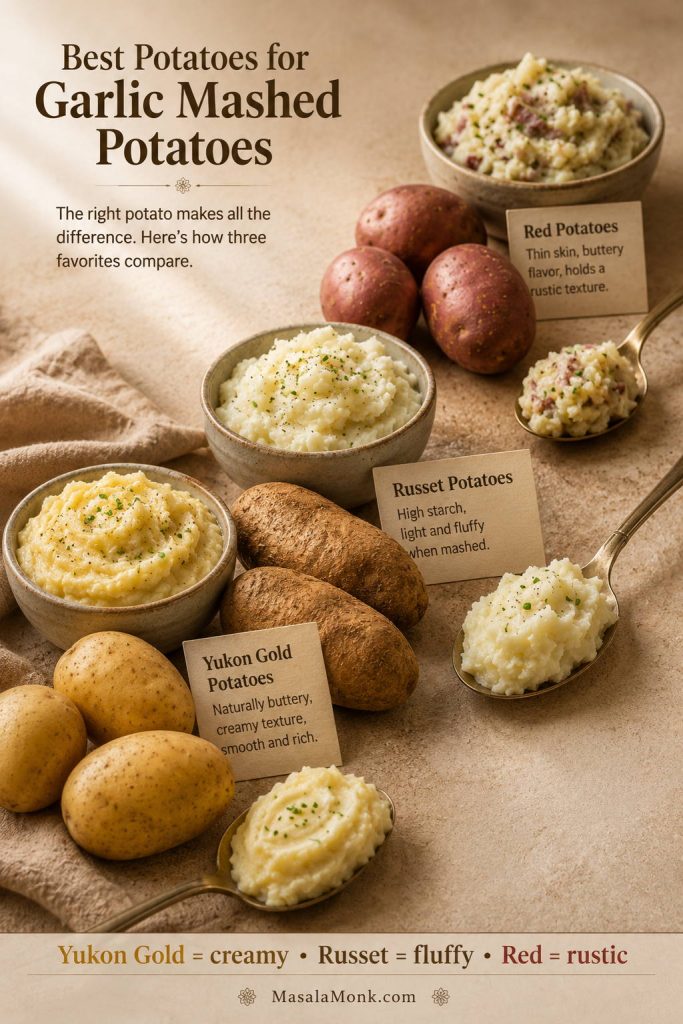
Because texture is the goal, the best potato depends on whether you want creamy, fluffy, or rustic mashed potatoes. Yukon Gold is the easiest choice for a smooth, buttery bowl. Russet is better for a lighter texture. Red potatoes are best when you want skins and a little more bite.

Yukon Gold, russet, and red potatoes shown with different mashed potato textures.
Before choosing a potato, choose the texture. Yukon Gold leans creamy, russet leans fluffy, and red potatoes are best when you want a skin-on rustic mash.
Potato Best For Texture How to Use It
Yukon Gold Classic creamy mashed potatoes Buttery, smooth, rich Use as the default for this recipe.
Russet Fluffy mashed potatoes Light, airy, absorbent Use alone or mix with Yukon Gold.
Yukon + Russet Balanced texture Creamy with fluffy edges Use half and half for a very reliable batch.
Red Potatoes Red skin mashed potatoes Rustic, slightly chunky, skin-on Mash gently and avoid electric mixing.

Think of the potato choice as a texture choice, not a strict rule. Yukon Gold gives the creamiest, most buttery everyday mash. Russet gives you a lighter, fluffier bowl that absorbs butter and milk easily. Red potatoes work when you want skins and a rustic texture, but they are not the best choice for perfectly smooth garlic mashed potatoes.

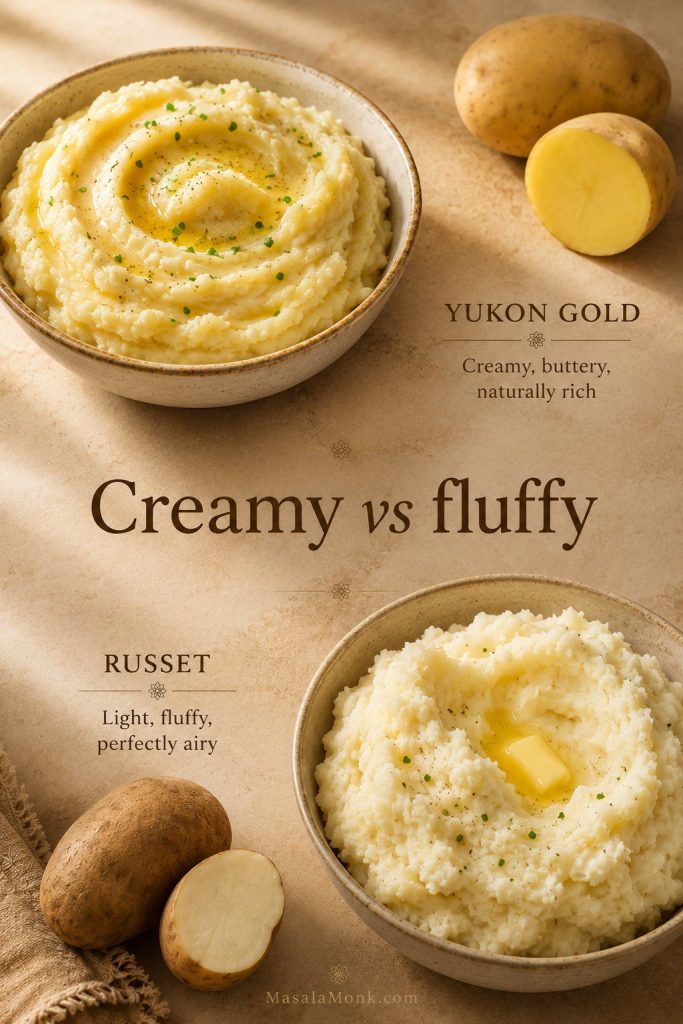
Yukon Gold vs Russet: Creamy or Fluffy?

If you are choosing between Yukon Gold and russet potatoes, pick by texture first. Yukon Gold gives a creamier bowl, while russets make the mash lighter and more absorbent.

Side-by-side comparison of Yukon Gold mashed potatoes and russet mashed potatoes with cut potatoes nearby.
Yukon Gold gives a buttery, creamy mash, while russets absorb butter and milk more easily for a lighter, fluffier bowl.

For potato choice, higher-starch potatoes such as russets and Yukon Golds are usually better for a smooth, fluffy mash, while waxier red potatoes are better kept rustic. Better Homes & Gardens explains why chefs often prefer russets and Yukon Golds for creamy mashed potatoes.

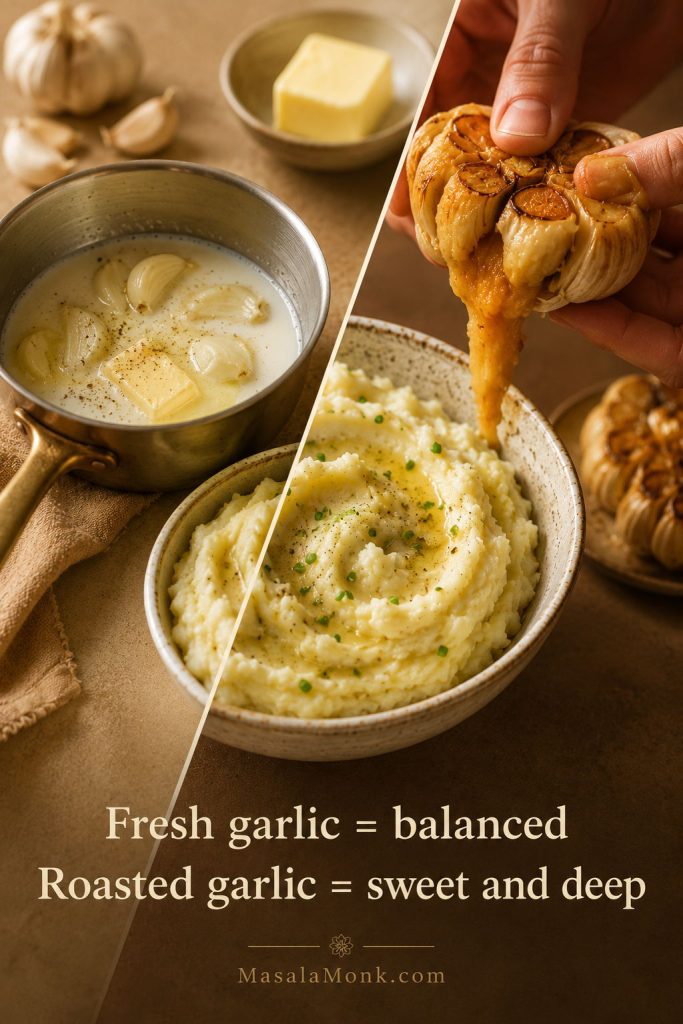
Fresh Garlic vs Roasted Garlic vs Garlic Powder

Garlic can taste sweet, sharp, mellow, or bold depending on how it is added. That is why one garlic mashed potatoes recipe can taste completely different from another.

Fresh garlic warming in butter and milk beside roasted garlic being squeezed, with mashed potatoes between them.
For a weeknight bowl, fresh garlic in warm butter keeps the flavor rounded. For a deeper holiday-style side, roasted garlic adds sweetness and depth.
Garlic Method Flavor Best Use How Much to Use
Garlic warmed in butter and milk Smooth, rounded, balanced Best everyday method 6 cloves for 2½ lb potatoes
Garlic boiled with potatoes Soft and simple Quick shortcut 5–6 cloves
Roasted garlic Sweet, deep, mellow Holiday or special version 1 whole head garlic
Garlic powder Bold, familiar garlic flavor Flavor boost or backup ¼–½ tsp
Raw minced garlic Sharp and harsh Usually best avoided Sauté first if using

The main method uses garlic warmed in butter and milk because it gives the best balance of speed and flavor. Roasted garlic is deeper and sweeter, but it adds extra time. Garlic powder is useful when the finished potatoes taste good but need a little more punch.

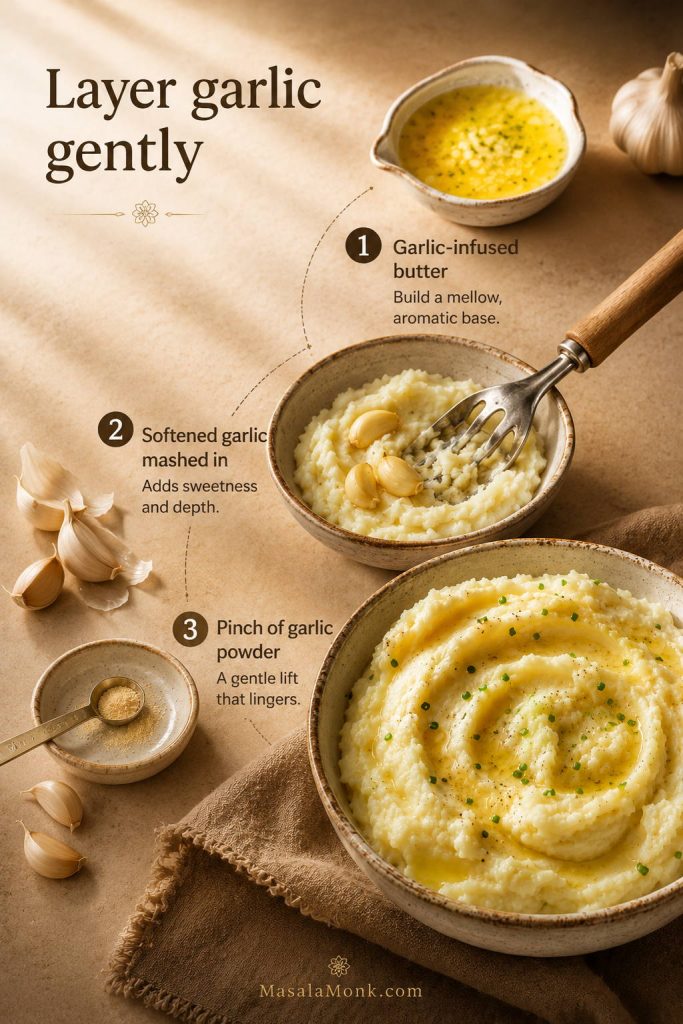
How to Build More Garlic Flavor Without Raw Bite

If you want the garlic to stand out more, layer it instead of only adding more raw garlic. Warm smashed cloves in the butter and milk, mash in the softened cloves, and add a tiny pinch of garlic powder only if the finished potatoes still taste too mild. That gives you deeper garlic flavor without the harsh bite of raw minced garlic.

Garlic-infused butter, softened garlic cloves, garlic powder, and mashed potatoes arranged as a flavor-layering setup.
If the potatoes need more garlic, layer the flavor gradually instead of adding raw garlic. Infused butter, softened cloves, and a tiny pinch of garlic powder add depth without harshness.

Avoid stirring raw minced garlic straight into mashed potatoes. It can taste hot and harsh, especially if the potatoes are mild. If you want to use minced garlic, cook it gently in the butter first.

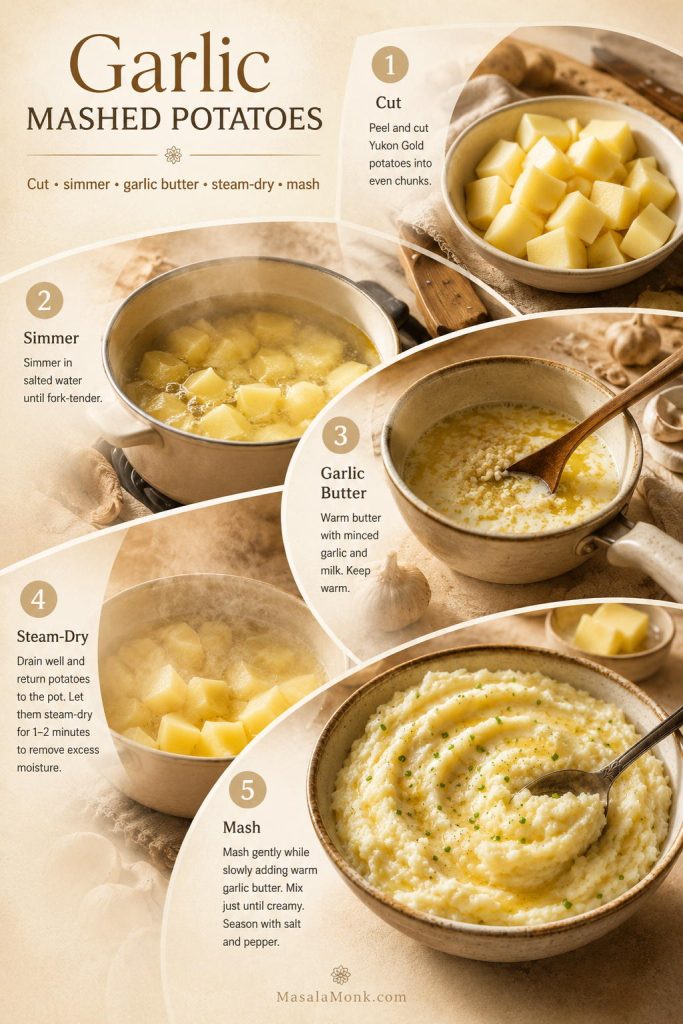
How to Make Garlic Mashed Potatoes

This method keeps the potatoes creamy and the garlic smooth. The steps are simple, but the little details make the bowl taste much better.

Step-by-step process showing cut potatoes, simmering, garlic butter, steam-drying, and gentle mashing.
The sequence matters because texture is built in stages: tender potatoes first, dry potatoes next, then warm garlic butter and gentle mashing.

Step 1: Cut the potatoes evenly

Peel the potatoes and cut them into 1 to 1½-inch chunks. Even pieces cook at the same pace, which helps you avoid hard centers and lumpy mashed potatoes.

Step 2: Start in cold salted water

Put the potatoes in a large pot and cover them with cold water by about 1 inch. Add a generous spoonful of salt. Starting cold helps the potatoes cook evenly from edge to center.

Step 3: Simmer until very tender

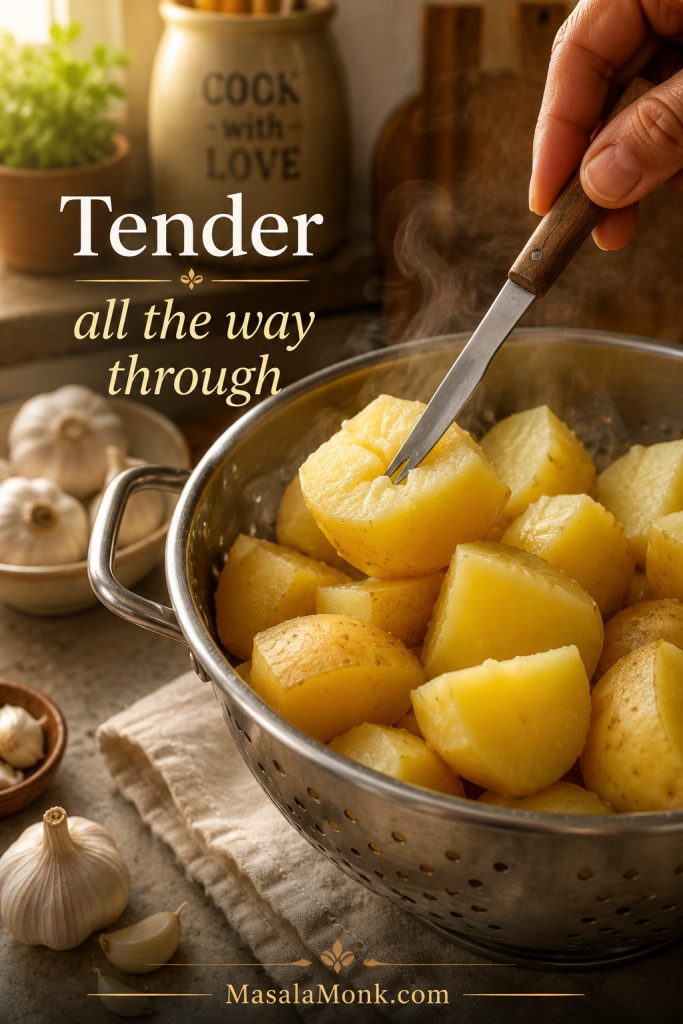
Bring the water to a boil, then reduce to a steady simmer. Cook for 15–20 minutes, or until a knife slides through the potatoes with no resistance. If the potatoes are undercooked, the mash will stay lumpy no matter how much you stir.

A fork testing a tender cooked potato chunk over a pot or colander.
A fork should slide through easily before you drain the pot; otherwise, firm centers can force extra mashing and make the texture heavier.

Step 4: Warm the garlic, butter, and milk

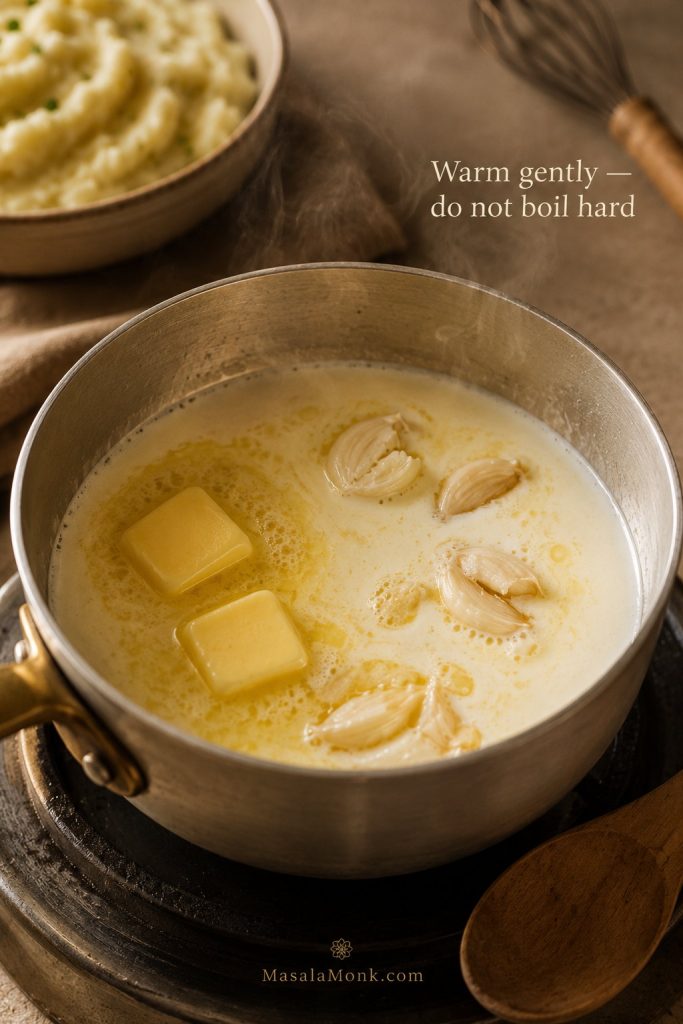
While the potatoes cook, add the butter, milk or half-and-half, and smashed garlic cloves to a small saucepan. Warm over low heat until the butter melts and the garlic smells mellow. Keep the mixture warm and fragrant, but do not let it boil hard or scorch.

Smashed garlic cloves warming gently in butter and milk in a small saucepan.
Keep the pan gentle here. Low heat lets the garlic perfume the butter and milk without turning sharp, bitter, or scorched.

Step 5: Drain and steam-dry

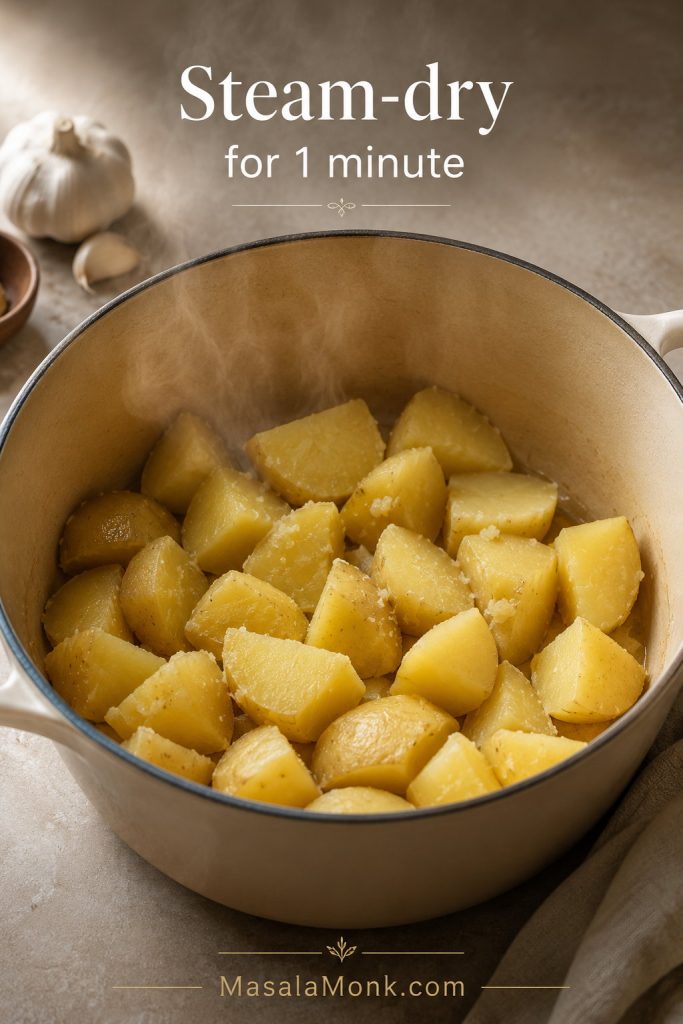
Drain the potatoes well, then return them to the warm empty pot for about 1 minute. Gently shake the pot or stir once so extra moisture can evaporate. This keeps the finished potatoes from tasting loose or watery.

Drained Yukon Gold potato chunks steaming in a warm pot before mashing.
Once drained, let the potatoes steam-dry briefly in the warm pot so the final mash tastes rich instead of watery.

Step 6: Mash gently

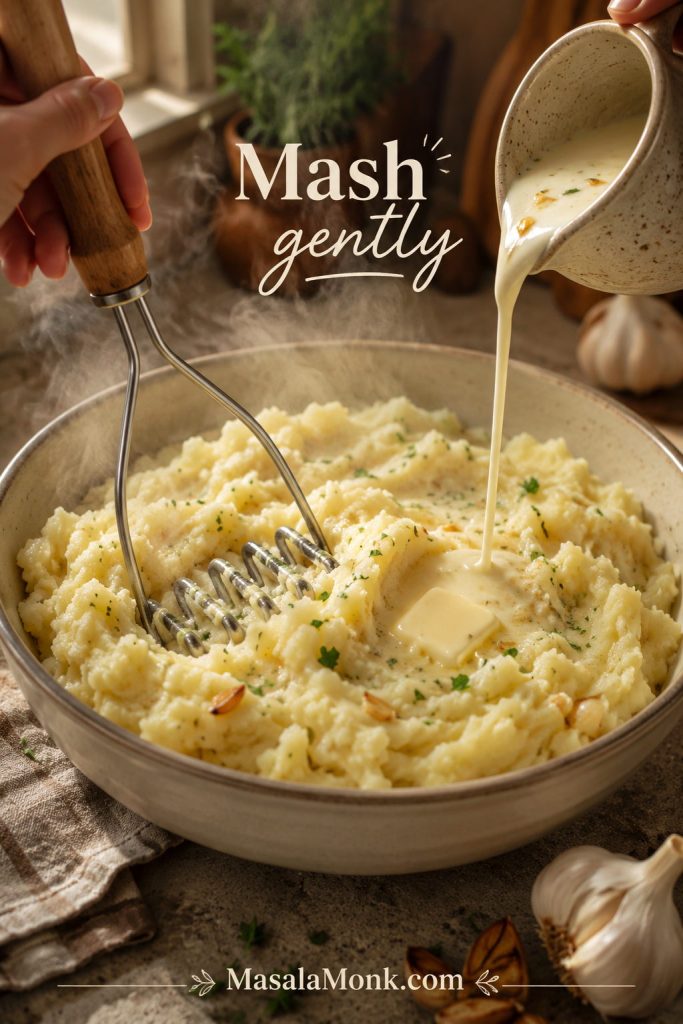
Mash the hot potatoes with a potato masher, or pass them through a ricer. Add the infused butter-milk mixture gradually, then strain out the garlic for a smoother background flavor or mash the softened cloves in for a deeper garlic taste.

Warm garlic butter being folded into hot potatoes with a masher or spoon.
Add the warm garlic butter gradually, then stop once the potatoes are creamy. Too much mixing can turn a soft mash tight and gluey.

Step 7: Finish and serve

Fold in sour cream if using, then season with salt and pepper. Taste before serving. The finished potatoes should hold soft swirls but still spoon easily. Transfer them to a warm bowl and finish with melted butter, chives, parsley, or extra pepper.

Common Garlic Mashed Potato Mistakes

Often, mashed potato problems happen before the bowl reaches the table. Avoid these mistakes and the final texture will be much easier to control.

Small scenes showing raw garlic, cold dairy, wet potatoes, undercooked potatoes, and overmixing.
Most mashed potato problems start early, so avoid raw garlic, cold dairy, wet potatoes, firm centers, and aggressive mixing before they ruin the texture.
  • Using raw garlic: It can taste sharp and harsh. Warm it gently in butter or roast it first.
  • Undercooking the potatoes: Firm centers lead to lumps and extra mashing.
  • Adding cold dairy: Cold milk or cream cools the potatoes and makes blending harder.
  • Skipping the steam-dry step: Wet potatoes can taste watery and loose.
  • Overmixing: Too much stirring, blending, or whipping can make potatoes gluey.

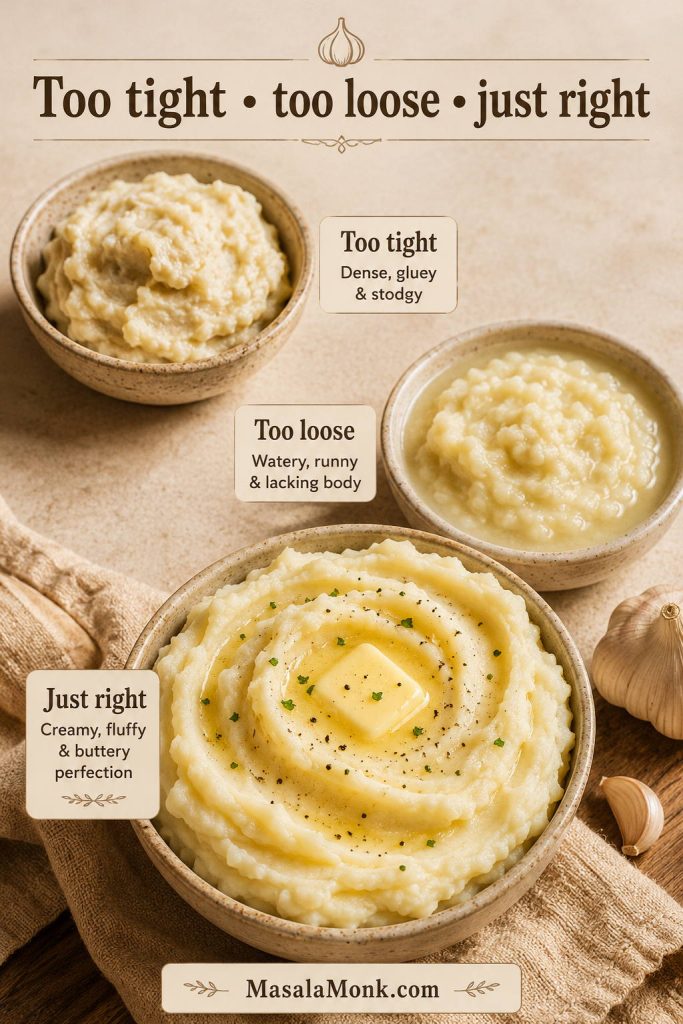
How to Make Them Creamy, Not Gluey

Because gluey mashed potatoes usually come from overmixing, aggressive blending, or wet potatoes, a silky bowl needs a gentler touch.

Three mashed potato textures compared: too tight, too loose, and just right.
The best texture sits between loose and tight: soft enough to spoon, thick enough to hold swirls, and never worked into paste.

Cook them all the way through

Potatoes should be tender enough to mash easily. If they are still firm in the center, you will have to work them too much, and that extra mixing can make the texture heavy.

Let extra moisture escape

After draining, return the potatoes to the warm pot for a minute. This tiny step makes the mash taste more concentrated and helps the butter and milk blend in properly.

Use warm dairy

Warm milk, cream, or half-and-half folds into hot potatoes more smoothly than cold dairy. It also keeps the potatoes from cooling too quickly while you mash.

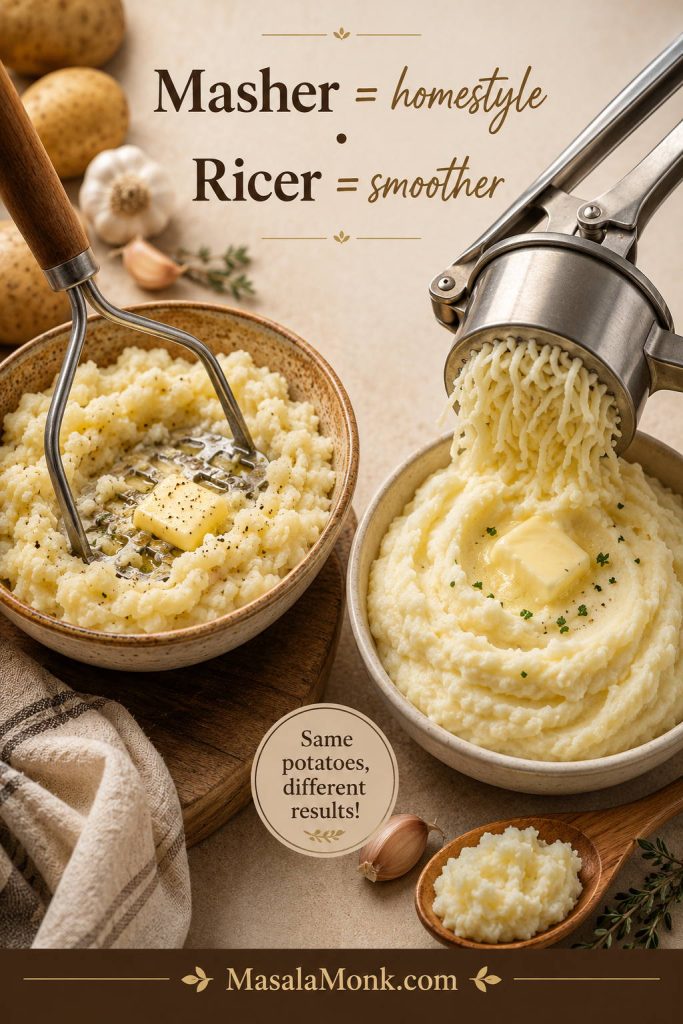
Choose the right tool

A potato masher gives a cozy homemade texture. A ricer makes the smoothest, fluffiest potatoes. A blender or food processor can turn potatoes sticky, so leave those tools for soups and sauces.

Potato masher and ricer shown with homestyle mashed potatoes and smoother riced potatoes.
Use a masher for homestyle garlic mashed potatoes, or use a ricer when you want a smoother, fluffier texture.

Stop once they look right

When the potatoes are creamy and the dairy has disappeared into the mash, stop stirring. Extra mixing rarely makes mashed potatoes better; it usually makes them tighter.

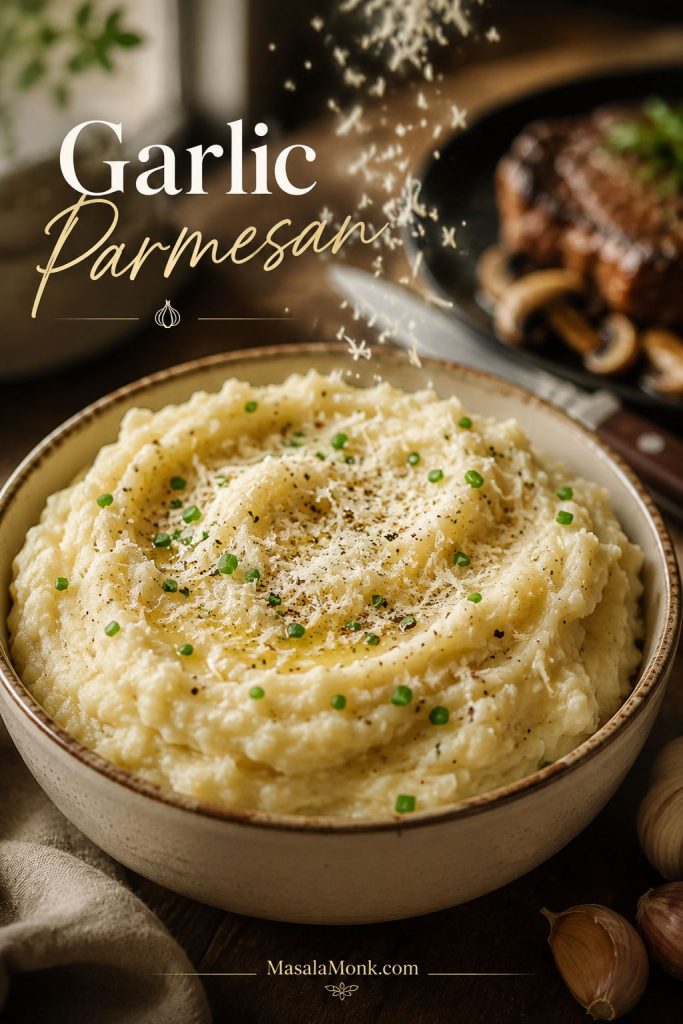
Garlic Parmesan Mashed Potatoes

Garlic parmesan mashed potatoes are savory, salty, and a little more steakhouse-style. Make the main recipe, then fold in ½ to ¾ cup finely grated parmesan while the potatoes are still hot.

Garlic parmesan mashed potatoes with grated parmesan, black pepper, melted butter, and chives.
Parmesan adds salt, nuttiness, and a savory edge, so garlic parmesan mashed potatoes pair especially well with steak, mushrooms, roast chicken, or pan sauce.

Add the cheese after mashing so it melts smoothly into the potatoes. Since parmesan brings salt, season lightly at first and adjust after the cheese is fully mixed in. For a bolder garlic-parmesan flavor, add ¼ tsp garlic powder with the warm butter and milk.

This version is especially good with steak, roast chicken, meatballs, mushrooms, or a simple pan sauce. It gives the potatoes a deeper savory finish without making them feel like a completely different dish.

Roasted Garlic Mashed Potatoes

Roasted garlic mashed potatoes taste deeper, sweeter, and more holiday-worthy than the classic version. The garlic loses its sharp edge in the oven, turns soft and golden, then melts into the potatoes like a savory spread.

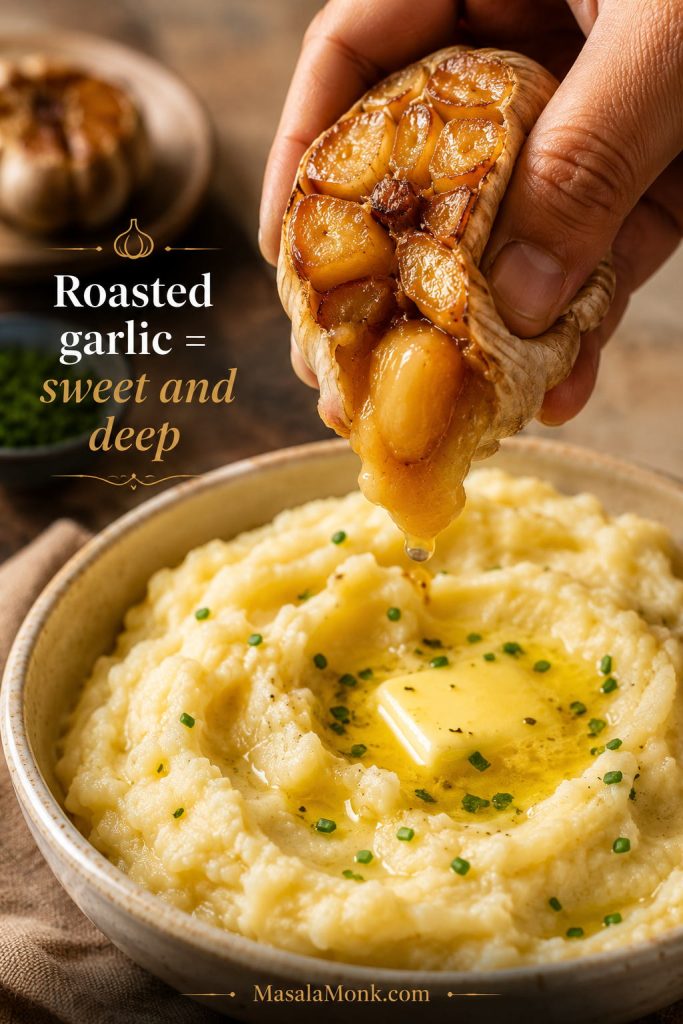
Roasted garlic being squeezed into hot mashed potatoes with a creamy finished bowl nearby.
Roast the garlic until the cloves turn soft and golden, then mash them in while the potatoes are hot so the flavor spreads evenly.

To make roasted garlic mashed potatoes, slice the top off 1 whole head of garlic, drizzle with a little olive oil, wrap in foil, and roast at 400°F / 200°C for 40–45 minutes, until the cloves are soft and golden. Squeeze the roasted cloves into the hot potatoes and mash them in with the warm butter and milk.

One whole head of roasted garlic sounds like a lot, but roasted garlic is much softer than fresh garlic. It melts into the potatoes and gives them a round, almost sweet savory flavor.

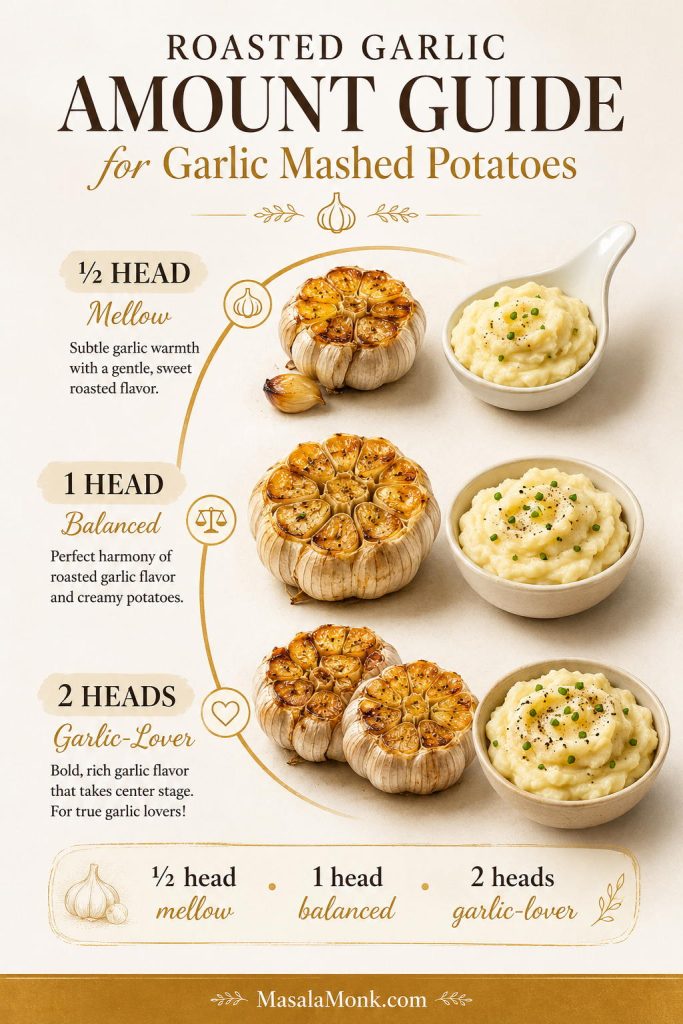
How Much Roasted Garlic Should You Use?

Use one roasted garlic head for a balanced batch. Go down to half a head for a gentler family-style bowl, or use two heads only when you want roasted garlic to be the main flavor.

Roasted Garlic Amount Flavor Level Best For
½ head Gentle and mellow Family dinners or lighter garlic flavor
1 whole head Balanced roasted garlic flavor Classic roasted garlic mashed potatoes
2 heads Deep garlic-lover flavor People who want roasted garlic to be the main flavor
Roasted garlic guide showing half a head, one head, and two heads for mashed potatoes.
Start with one roasted garlic head for balance. Use less for a gentle background flavor, or use more when you want roasted garlic to lead.

For the best flavor, mash the roasted cloves while the potatoes are still hot, then taste before adding garlic powder. Roasted garlic brings sweetness and depth, while garlic powder brings sharper garlic punch. Used together carefully, they make the potatoes taste fuller without turning harsh.

Red Skin Garlic Mashed Potatoes

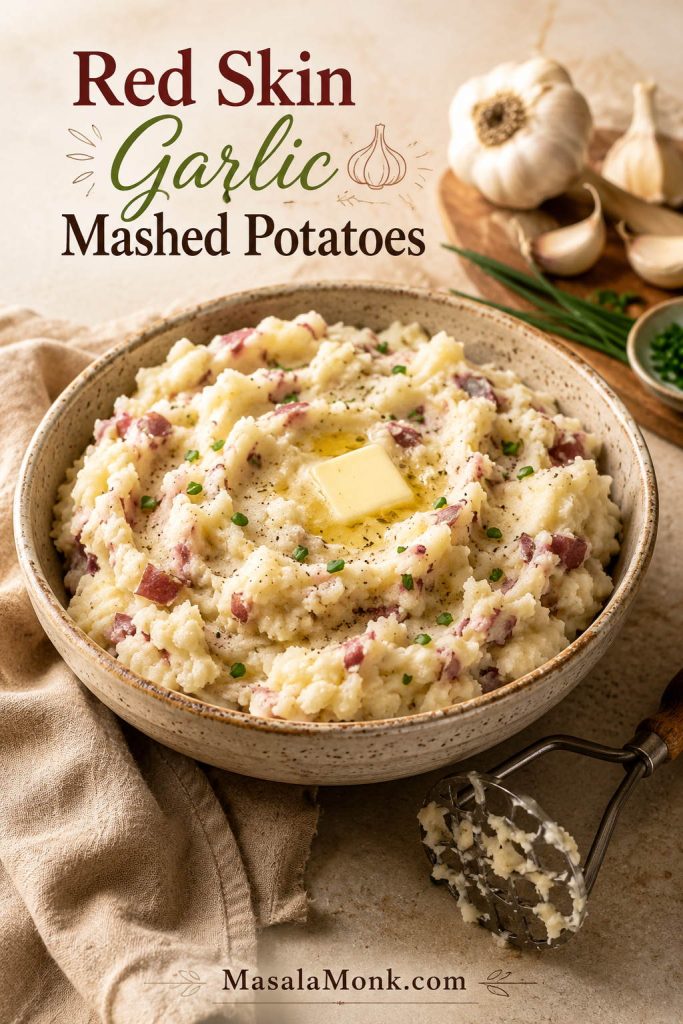
Red skin garlic mashed potatoes are more rustic than the classic Yukon Gold version. They are slightly chunky, a little more textured, and lovely when you want a no-peel side dish.

Red potatoes are not wrong for mashed potatoes; they are just a different style. Use them when you want a skin-on, homestyle bowl, not when you want the smoothest, fluffiest mash.

Rustic red skin mashed potatoes with visible potato skins, melted butter, chives, and a hand masher nearby.
Red potatoes work best when the mash stays a little chunky and rustic because that texture makes the skins feel intentional instead of tough.

Use 2 lb / 900 g red potatoes, scrubbed well. Leave the skins on if they are thin and tender. Mash with 5–7 garlic cloves, 6 tbsp / 85 g butter, ½ cup / 120 ml milk or half-and-half, and optional ¼ cup / 60 g sour cream.
Keep this version gently mashed rather than perfectly smooth. Red potatoes can get sticky if they are overworked, so use a hand masher and stop while there is still a little texture.

Sour Cream, Cream Cheese, and Heavy Cream Versions

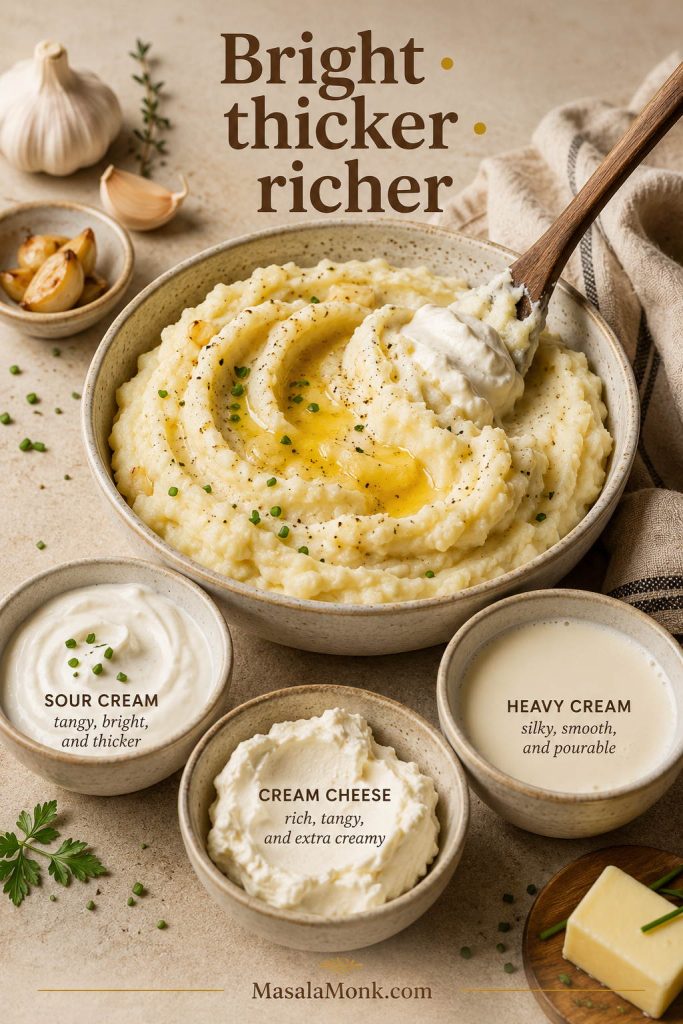
These add-ins change the mood of the bowl: sour cream makes it tangier, cream cheese makes it thicker and richer, and heavy cream gives it more of a holiday-table feel. Add them after the potatoes have been mashed with the warm garlic butter and milk.

Choose sour cream when you want brightness, cream cheese when you want a thicker make-ahead mash, and heavy cream when you want a richer holiday bowl. For everyday garlic mashed potatoes, half-and-half is usually the easiest middle ground.

Garlic mashed potatoes with sour cream, cream cheese, and heavy cream in small bowls around the main bowl.
Use sour cream when the mash needs brightness, cream cheese when it needs body, and heavy cream when you want a richer holiday-style bowl.
Add-In Amount for 2½ lb Potatoes What It Does
Sour Cream ¼–½ cup / 60–120 g Adds tang and creaminess
Cream Cheese 4 oz / 115 g, softened Makes the mash thicker and richer
Heavy Cream Use instead of milk Creates a denser holiday-style texture
Half-and-Half Use instead of milk Gives a balanced creamy finish
Garlic Herb Cheese 3–5 oz / 85–140 g Adds rich, herby flavor

If you are making the potatoes ahead, cream cheese is especially useful because it helps the mash reheat with a thicker, smoother body. If you want a lighter everyday version, stick with milk or half-and-half and use sour cream only as a small finishing touch.

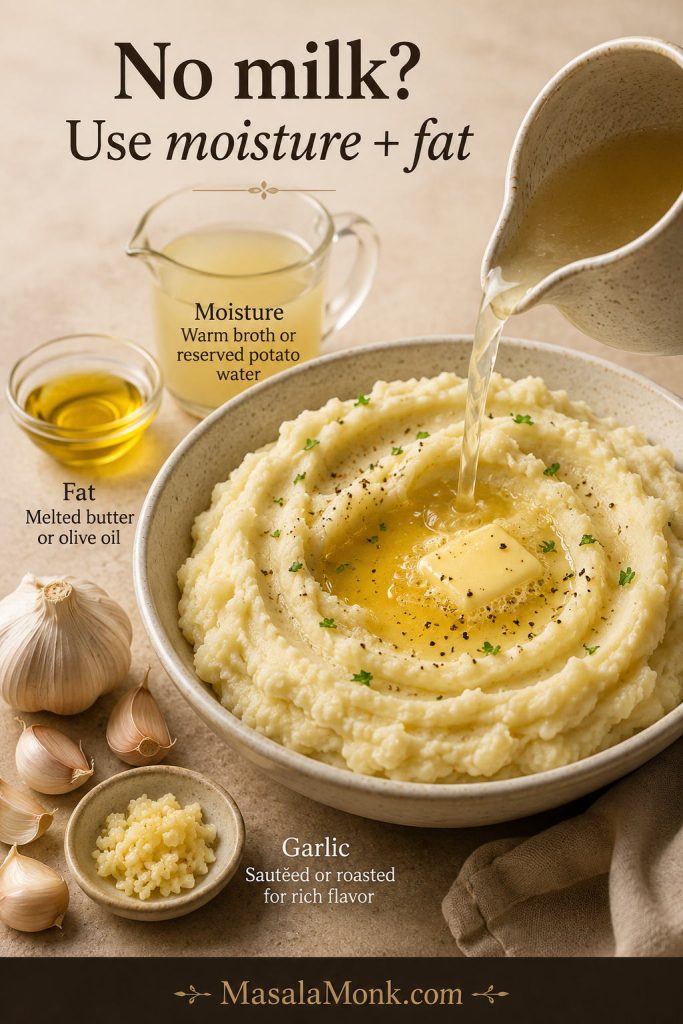
Garlic Mashed Potatoes Without Milk

You can make garlic mashed potatoes without milk. They will not taste exactly the same, but they can still be rich, smooth, and flavorful if you use warm liquid and enough fat.

The important thing is not milk itself; it is moisture plus fat. Broth or potato water loosens the mash, while butter, olive oil, or dairy-free butter keeps it from tasting dry.

Garlic mashed potatoes with broth or potato water, butter or olive oil, and garlic for a no-milk version.
Without milk, the same rule still applies: add moisture to loosen the mash and fat to keep it rich.
No-Milk Option Use This Result
Butter + potato water 6 tbsp butter + ½ cup reserved cooking water Simple, rich, potato-forward
Broth + olive oil ½ cup warm broth + 3–4 tbsp olive oil Savory and lighter
Dairy-free butter + plant milk Dairy-free butter + unsweetened oat or almond milk Creamier vegan-style mash

For the best no-milk flavor, warm the garlic in butter, olive oil, or dairy-free butter before adding it to the potatoes. If you are using broth, add it gradually. You can always loosen thick potatoes, but it is harder to fix a watery bowl.

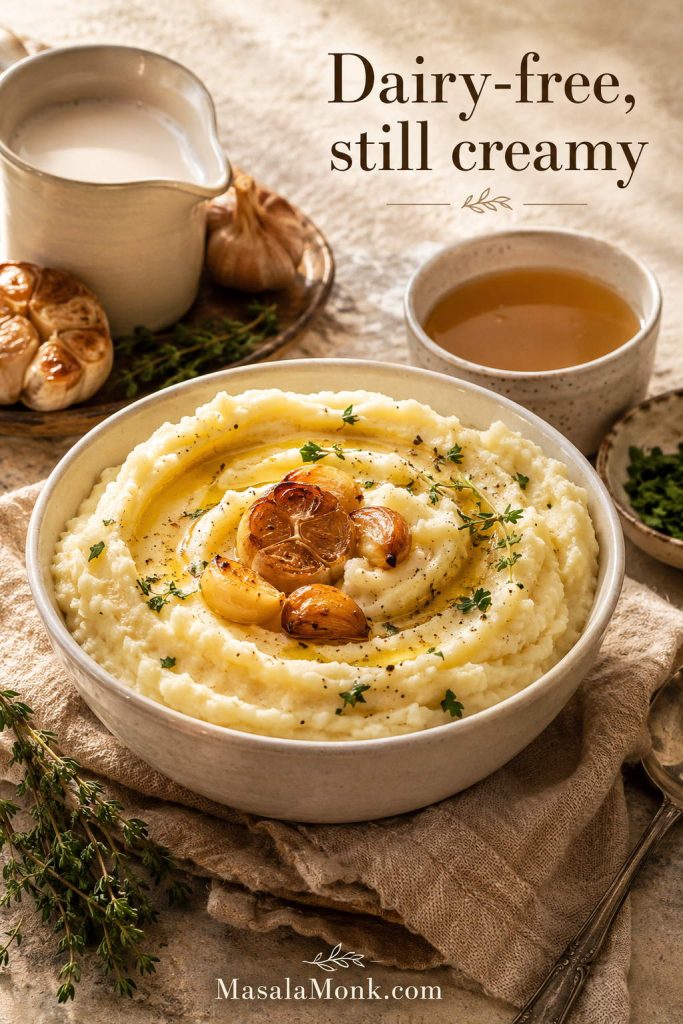
Dairy-Free or Vegan Garlic Mashed Potatoes

For a dairy-free version, use Yukon Gold potatoes, roasted or sautéed garlic, olive oil or dairy-free butter, warm vegetable broth, and optional unsweetened plant milk. Oat milk works well when it is plain and unsweetened. Almond milk can also work, but avoid anything sweetened or vanilla-flavored.

A good dairy-free formula for 2½ lb potatoes is 5–6 garlic cloves, 4 tbsp olive oil or dairy-free butter, and ½ to ¾ cup warm vegetable broth or unsweetened plant milk. Add the liquid slowly and stop when the potatoes are spoonable.

Dairy-free mashed potatoes with roasted garlic, olive oil, vegetable broth, plant milk, and herbs.
Roasted garlic and olive oil help dairy-free garlic mashed potatoes taste full and rounded, even without cream or butter.

Roasted garlic is especially good here because it adds sweetness and depth without needing cream. Finish with chives, parsley, black pepper, and a small drizzle of olive oil.

If you are looking for a lower-carb mash instead of a potato-based dairy-free version, you may also like MasalaMonk’s keto cauliflower mashed potatoes.

Small Batch and Holiday Scaling

The main recipe makes 6 servings, which works well for a family dinner or a modest holiday side. For a smaller dinner or a bigger table, scale the recipe with the same basic ratio and adjust the warm liquid at the end.

Small Batch Garlic Mashed Potatoes

For 2–3 servings, make a half batch. This is the right size for steak night, roast chicken for two, or a smaller dinner where you do not want a refrigerator full of leftovers.

Ingredient Small Batch Amount
Yukon Gold potatoes 1¼ lb / 565 g
Garlic cloves 3 cloves
Butter 3 tbsp / 42 g
Milk or half-and-half ⅓ cup / 80 ml, plus more if needed
Sour cream 2 tbsp, optional
Salt and pepper To taste

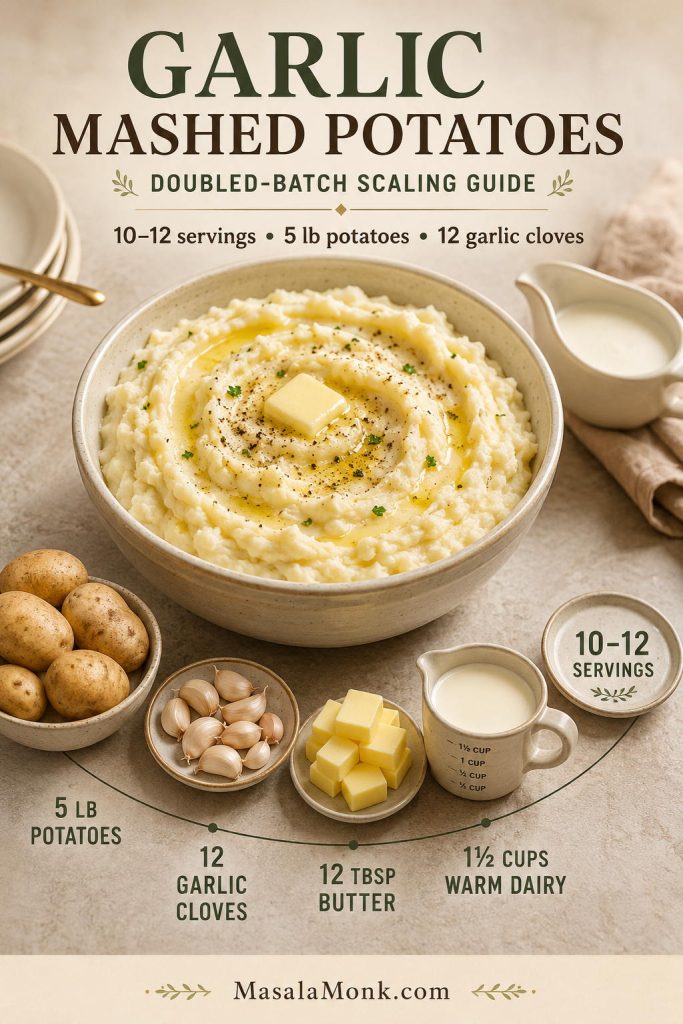
How to Scale for a Holiday Table

For 10–12 servings, double the main recipe: use 5 lb / 2.25 kg potatoes, 12 garlic cloves, 12 tbsp / 170 g butter, and 1½ cups / 360 ml milk or half-and-half. Start with slightly less liquid, then add more after mashing until the potatoes are soft enough to spoon but still hold gentle swirls.

Holiday mashed potato scaling guide with a large bowl and ingredients for 10 to 12 servings.
For a holiday batch, scale the ingredients carefully and make the potatoes slightly softer than usual so they stay spoonable as they sit.

When scaling up, use a large enough pot so the potato pieces cook evenly. If the pot is crowded, the potatoes may cook unevenly and the bottom pieces can soften before the top pieces are ready.

For a fuller holiday plate, these potatoes pair naturally with a creamy green vegetable side like MasalaMonk’s green bean casserole.

Make-Ahead Garlic Mashed Potatoes

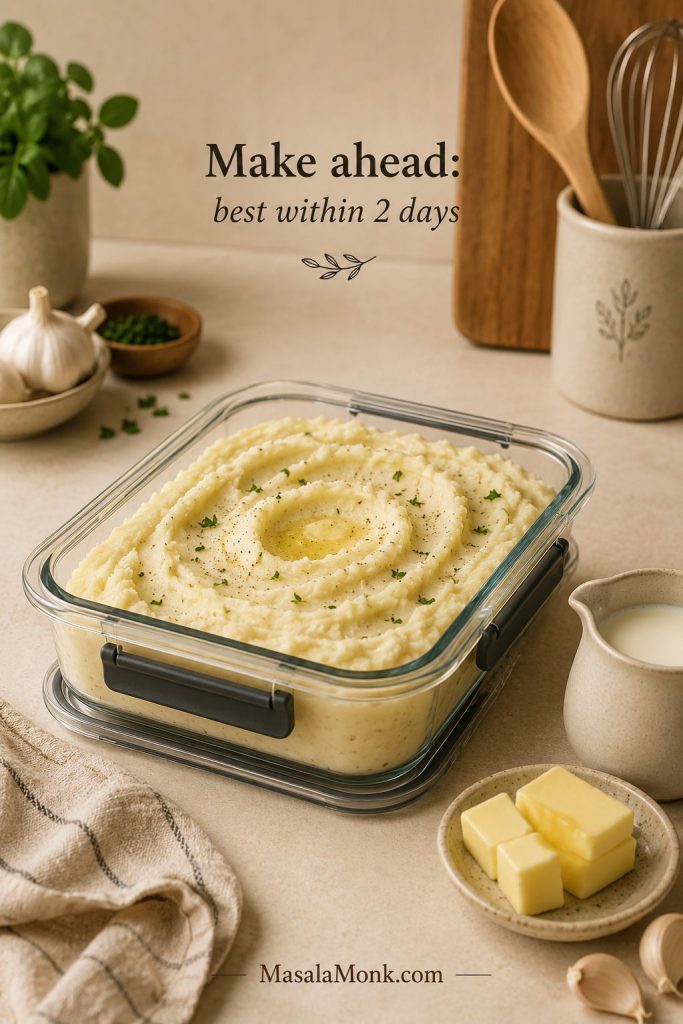
Garlic mashed potatoes can be made ahead, which is helpful for holidays, dinner parties, and busy evenings. Since mashed potatoes firm up as they cool, make them slightly softer than you want them at serving time.

Garlic mashed potatoes stored in an airtight container with butter and milk nearby for reheating.
Make-ahead garlic mashed potatoes work best when you plan for reheating, so keep butter and warm dairy nearby to refresh the texture before serving.

How far ahead can you make them?

For the best texture, make them up to 2 days ahead. They can be refrigerated for 3–4 days, but they are creamiest when reheated within the first couple of days. For general leftover safety, the USDA recommends refrigerating leftovers for 3–4 days and reheating them to 165°F.

How to store them

Let the potatoes cool, then transfer them to an airtight container. If you want to reduce drying, press a piece of parchment or plastic wrap against the surface before covering.

How to reheat them

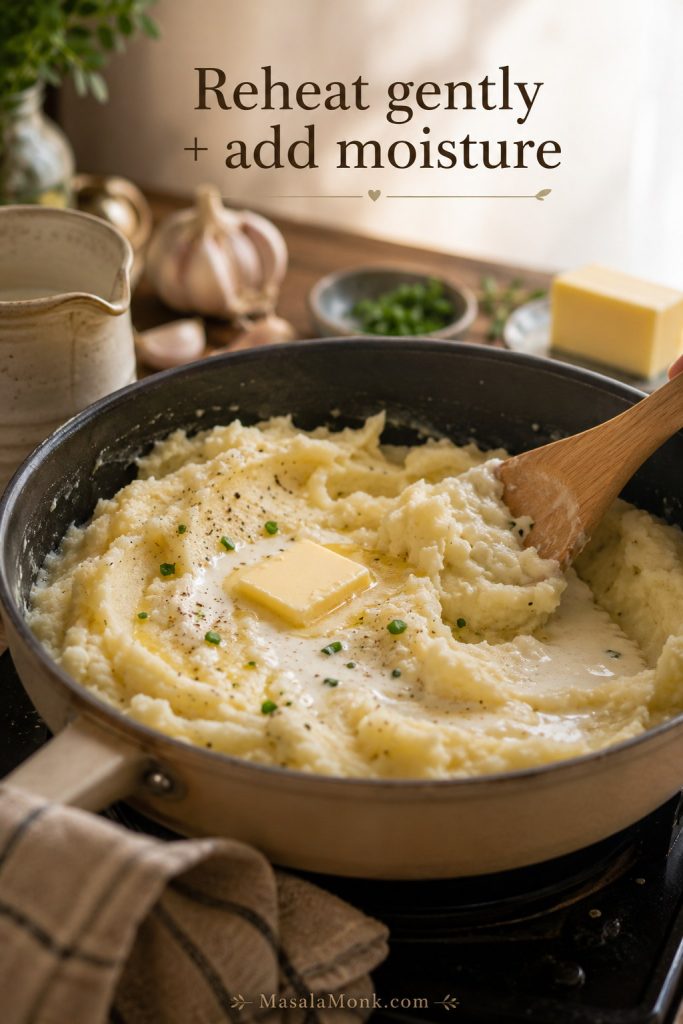
Reheat gently with extra butter and a splash of warm milk, cream, broth, or half-and-half. Stir slowly and avoid whipping. For oven reheating, place the potatoes in a covered baking dish and warm at 325°F / 160°C, stirring once or twice and adding more liquid as needed.

Garlic mashed potatoes being reheated gently with warm milk or cream and butter in a pot.
Reheat slowly and add moisture back gradually. Warm milk, cream, broth, or butter helps cold mashed potatoes become creamy again.

The gentlest way to revive cold mashed potatoes is to warm a little milk, cream, or broth first, then fold the chilled potatoes into it slowly. This loosens the mash without forcing you to whip it, which helps protect the texture.

How to keep them warm

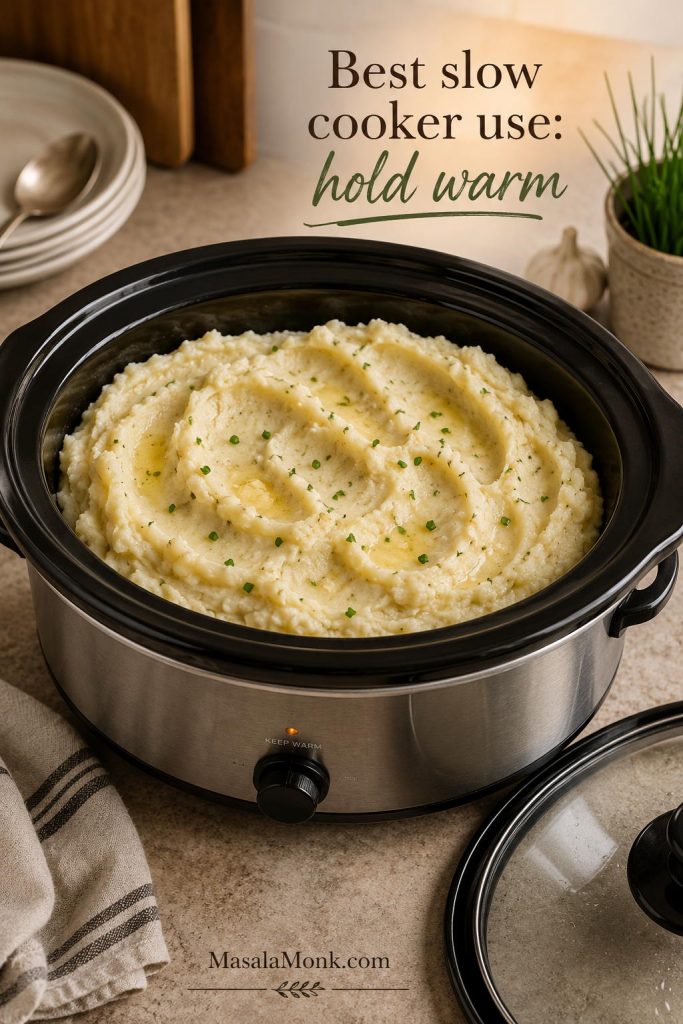
For a holiday meal, transfer hot mashed potatoes to a buttered slow cooker and hold on the warm setting. Stir occasionally and add a splash of warm milk or broth if they thicken too much. Avoid holding them on high heat, because the edges can dry out.

Can you freeze garlic mashed potatoes?

You can freeze them, although the texture may change after thawing. Mashed potatoes with enough butter, cream, sour cream, or cream cheese freeze better than lean versions. Reheat slowly and stir in extra warm dairy or broth to bring back creaminess.

If you end up with extra mashed potatoes, turn them into something crisp the next day. MasalaMonk’s croquettes recipe includes a potato croquette method that works beautifully with leftover mash.

Slow Cooker and Instant Pot Garlic Mashed Potatoes

The stovetop method gives the most control, while slow cooker and Instant Pot notes are useful when the stove is full or you are cooking for a crowd.

Method Best Use Texture
Stovetop, then hold warm Best overall method for holidays and company Creamiest and easiest to control
Cook fully in slow cooker When the stove is full Useful, but usually denser
Instant Pot Fast cooking Soft and convenient, but less controlled than stovetop

Slow Cooker Method

The slow cooker is most useful for keeping finished mashed potatoes warm. For the best texture, make the potatoes on the stovetop first, then hold them warm in a buttered slow cooker.

Garlic mashed potatoes held warm in a slow cooker with butter, chives, and soft spoon marks.
Once the potatoes are finished, a buttered slow cooker keeps them warm without taking up burner space during a crowded meal.

Add the hot mash to the buttered insert, cover, and keep on warm. Stir gently before serving and add a splash of warm milk, cream, or broth if the potatoes thicken while they sit.

If you want to cook the potatoes fully in the slow cooker, use peeled potato chunks, garlic, salt, butter, and a small amount of broth or water. Cook until the potatoes are fully tender, then mash with warm dairy. The texture is usually denser than stovetop mashed potatoes, but the method is useful when the stove is full.

If the slow cooker is already out for dinner, these potatoes are a natural side for a saucy main like MasalaMonk’s slow cooker pork loin. Make the potatoes on the stovetop, then hold them warm while the rest of the meal finishes.

Instant Pot Method

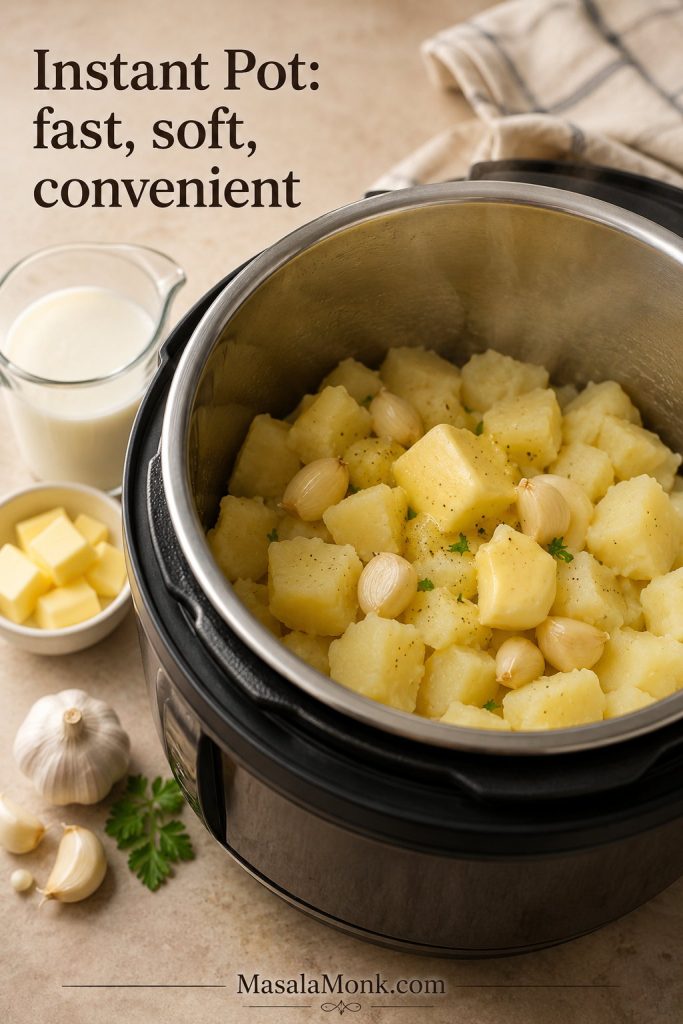
For Instant Pot garlic mashed potatoes, use about 2 lb / 900 g potatoes, 5–6 garlic cloves, 1 cup water or broth, and salt. Cook on high pressure for about 8 minutes, then quick release. Drain if needed, or mash in the remaining liquid if only a small amount is left. Add butter and warm milk or half-and-half after cooking.

Cooked potato chunks and garlic in a pressure cooker insert with butter and warm milk nearby.
Pressure cooking saves time, but tenderness still matters; check the potatoes before mashing so you do not chase lumps later.

Pressure cooker timing can vary depending on potato size, so cut the potatoes evenly and check that they are fully tender before mashing.

Troubleshooting Garlic Mashed Potatoes

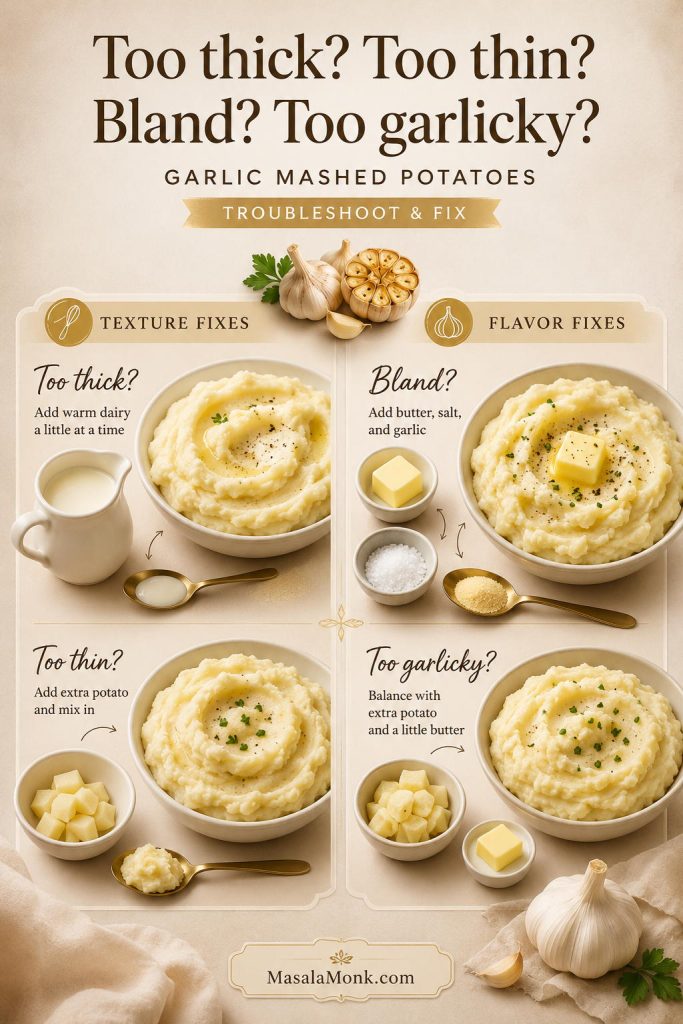
If the bowl is not perfect, do not panic and do not keep whipping. Most mashed potato problems get worse with more mixing. Instead, first decide what is wrong: texture, moisture, seasoning, or garlic strength. Then fix that one thing gently.

Check the Texture Before You Add More

Before adding anything, taste and check the texture separately. A bowl can be bland but perfectly creamy, or well-seasoned but too thick, so fix only the problem you actually have.

Troubleshooting guide for mashed potatoes with fixes for thick, thin, bland, and too-garlicky potatoes.
Start with texture before you change the flavor. A splash of warm dairy, extra potato, salt, or garlic should fix the specific problem you see.

Texture and Moisture Fixes

Problem Likely Cause How to Fix It
Gluey Overmixed, blended, or processed too hard Stop mixing. Then fold in warm butter or cream and serve as a rustic mash.
Lumpy Potatoes were undercooked Next time, cook until a knife slides through easily. For small lumps, a ricer can help.
Too thick Not enough warm liquid Add warm milk, cream, or broth 1–2 tbsp at a time. After each addition, stir gently and check again.
Too thin Too much liquid or potatoes were not dried Warm gently uncovered to evaporate moisture. If available, add more mashed potato to bring back body.
Watery Potatoes were not drained or steam-dried well Warm gently in the pot and stir carefully. Next time, steam-dry after draining.

Flavor and Garlic Fixes

Problem Likely Cause How to Fix It
Bland Not enough salt, butter, or garlic Add salt gradually first. Then add more butter, parmesan, garlic butter, or herbs if needed.
Too garlicky Garlic was raw or harsh Add more potato, butter, cream, sour cream, or parmesan to soften the flavor.
Not garlicky enough Garlic was too soft or strained out Add garlic powder, roasted garlic, or extra garlic butter in small amounts. However, taste after each addition because garlic powder gets strong quickly.
Bitter or harsh garlic Garlic scorched, was old, or was added raw Use fresh cloves, warm them gently over low heat, or switch to roasted garlic next time.

Once mashed potatoes turn gluey, there is no perfect way to reverse the texture. At that point, stop mixing, add flavor, and serve them as a thicker homestyle mash. Leftovers can also become potato cakes, mashed potato pancakes, or a casserole topping.

What to Serve with Garlic Mashed Potatoes

A bowl of garlic mashed potatoes can carry a simple dinner, so you do not need much else on the plate. They are soft enough for gravy, rich enough for steak, and comforting enough to sit beside roast chicken, mushrooms, or green beans.

They are especially good with anything rich enough to drag through the potatoes: roast chicken drippings, mushroom pan sauce, turkey gravy, steak juices, garlicky butter, or extra melted butter settling into the ridges.

Weeknight dinners

Holiday mains

  • Roast turkey
  • Roast beef
  • Baked ham
  • Turkey gravy
  • Green bean casserole
  • Roasted carrots or Brussels sprouts

Steakhouse-style dinner

  • Steak with pan sauce or chimichurri
  • Garlic butter mushrooms
  • Roasted asparagus
  • Creamed spinach
  • Red wine gravy

For a cozy everyday plate, serve them with roast chicken, a spoonful of pan juices, and something green. For a richer dinner, add steak, mushrooms, or gravy, then let the soft swirls catch the butter, sauce, and juices. That is where these garlic mashed potatoes do their best work.

Garlic mashed potatoes served with roast chicken, gravy or pan juices, green beans, and mushrooms.
The best pairings give the potatoes something rich to catch, whether that is gravy, roast chicken juices, mushroom sauce, or melted butter.

Garlic Mashed Potatoes Recipe

Creamy, buttery garlic mashed potatoes made with Yukon Gold potatoes, warm garlic butter, milk or half-and-half, and optional sour cream. The method keeps the potatoes smooth, flavorful, and not gluey.

Prep Time15 minutes
Cook Time20 minutes
Total Time35 minutes
Yield6 servings
CourseSide Dish
CuisineAmerican
MethodStovetop
Best ToolMasher or ricer

Equipment

  • Large pot or Dutch oven
  • Colander
  • Small saucepan
  • Potato masher or potato ricer
  • Spatula or wooden spoon

Ingredients

  • 2½ lb / 1.1 kg Yukon Gold potatoes, peeled and cut into 1 to 1½-inch chunks
  • 6 garlic cloves, smashed and peeled
  • 6 tbsp / 85 g unsalted butter
  • ¾ cup / 180 ml whole milk or half-and-half
  • ¼ cup / 60 g sour cream, optional
  • 1½–2 tsp fine salt, plus more for the cooking water
  • ¼ tsp black pepper or white pepper
  • Chives or parsley, optional
  • Extra melted butter, optional for serving

Instructions

  1. Cook the potatoes. Add the potato chunks to a large pot and cover with cold water by about 1 inch. Salt the water generously. Bring to a boil, then reduce to a steady simmer and cook for 15–20 minutes, until the potatoes are very tender. The potatoes are ready when a knife slides through the center with no resistance.

  2. Warm the garlic butter and milk. While the potatoes cook, combine the butter, milk or half-and-half, and smashed garlic cloves in a small saucepan. Warm over low heat until the butter melts and the garlic smells mellow. The mixture should smell fragrant and garlicky, not scorched or boiled.
  3. Drain and dry. Drain the potatoes well. Return them to the warm empty pot for about 1 minute so excess moisture can steam off.
  4. Mash. Mash the hot potatoes with a potato masher, or pass them through a ricer. Add the warm garlic butter and milk gradually. For a softer garlic flavor, strain out the garlic. For stronger flavor, mash the softened garlic into the potatoes.
  5. Finish. Fold in sour cream if using. Season with salt and pepper. Taste and adjust until the potatoes are creamy, buttery, and well seasoned. The finished potatoes should hold soft swirls but still spoon easily.
  6. Serve. Spoon into a warm bowl and finish with melted butter, chives, parsley, or extra black pepper.

Notes

  • Use Yukon Gold potatoes for the creamiest texture.
  • Use a ricer for smoother, fluffier mashed potatoes.
  • Avoid a blender, food processor, or aggressive electric mixing.
  • For garlic parmesan mashed potatoes, fold in ½–¾ cup finely grated parmesan after mashing.
  • For roasted garlic mashed potatoes, use 1 whole head roasted garlic for balanced flavor, or 2 heads only if you want roasted garlic to be the main flavor.
  • For red skin mashed potatoes, use red potatoes, leave the skins on, and keep the texture rustic rather than perfectly smooth.
  • Serve hot. Mashed potatoes thicken as they sit, so loosen with a splash of warm milk or broth before serving if needed.
  • For the most inviting bowl, make shallow swirls on top and let melted butter settle into the ridges before serving.
  • Store leftovers in an airtight container in the refrigerator for 3–4 days.
  • Reheat gently with extra butter and a splash of warm milk, cream, or broth.
  • Freezing is possible, but the texture may change after thawing.

FAQs About Garlic Mashed Potatoes

What is the best potato for garlic mashed potatoes?

Yukon Gold potatoes are the best default because they are creamy, buttery, and forgiving. Russets make a fluffier mash, while red potatoes are better for rustic red skin mashed potatoes.

Fresh garlic or roasted garlic: which tastes better?

Fresh garlic warmed in butter and milk gives a balanced everyday flavor. Roasted garlic tastes sweeter, deeper, and more mellow. Use fresh garlic when you want speed, and roasted garlic when you want a richer holiday-style side dish.

How much garlic should I use?

Use 6 garlic cloves for 2½ lb / 1.1 kg potatoes. If using roasted garlic, use 1 whole head because the flavor is softer. If the finished potatoes need more punch, add ¼–½ tsp garlic powder.

Are garlic mashed potatoes and garlic whipped potatoes the same?

People often use the names loosely, but garlic whipped potatoes are usually smoother and lighter. For a whipped-style texture, use a ricer or mash very well by hand, then fold in warm dairy. If you use a hand mixer, keep it on low and stop quickly so the potatoes do not become gummy.

Why did my mashed potatoes turn gluey?

They were probably overmixed or blended too aggressively. Potatoes release starch when worked too much. Use a masher or ricer, add warm dairy gradually, and stop once the potatoes are creamy.

How do you make garlic mashed potatoes creamier?

Use Yukon Gold potatoes, warm milk or half-and-half, enough butter, and optional sour cream. Also make sure the potatoes are fully cooked and steam-dried before mashing.

Do garlic mashed potatoes need sour cream?

Not necessarily. Butter and warm milk or half-and-half are enough for a creamy batch. Sour cream adds tang and body, so use it when you want a richer flavor.

Can I make garlic mashed potatoes with cream cheese?

For a thicker, richer batch, add 4 oz / 115 g softened cream cheese after mashing. It is especially useful for make-ahead garlic mashed potatoes because it helps the texture reheat with more body.

Can I boil garlic with the potatoes?

Boiling garlic with the potatoes gives a soft, simple garlic flavor. For a smoother and more rounded taste, warm smashed garlic in butter and milk. For a sweeter holiday-style version, use roasted garlic.

What should I do if my mashed potatoes are not garlicky enough?

Add garlic flavor gradually. Mash in the softened garlic cloves if you strained them out, add a little roasted garlic, or stir in ¼ tsp garlic powder. Taste before adding more because garlic powder gets strong quickly.

What can I use instead of milk?

You can use half-and-half, heavy cream, warm broth, reserved potato cooking water, unsweetened plant milk, or a mix of broth and olive oil. Add any liquid gradually so the potatoes do not become too loose.

Are red potatoes good for this recipe?

Red potatoes are good for rustic, skin-on mashed potatoes. They are not the best choice for an ultra-smooth mash because they are waxier. Mash them gently and avoid electric mixing.

How far ahead can I make them?

For the best texture, make them up to 2 days ahead. Store in an airtight container in the refrigerator, then reheat gently with extra butter and a splash of warm milk, cream, or broth.

How do I reheat garlic mashed potatoes without drying them out?

Reheat slowly and add moisture back in. Use a splash of warm milk, cream, broth, or half-and-half, plus a little butter. Stir gently and avoid whipping them aggressively.

Back to top
Posted on Leave a comment

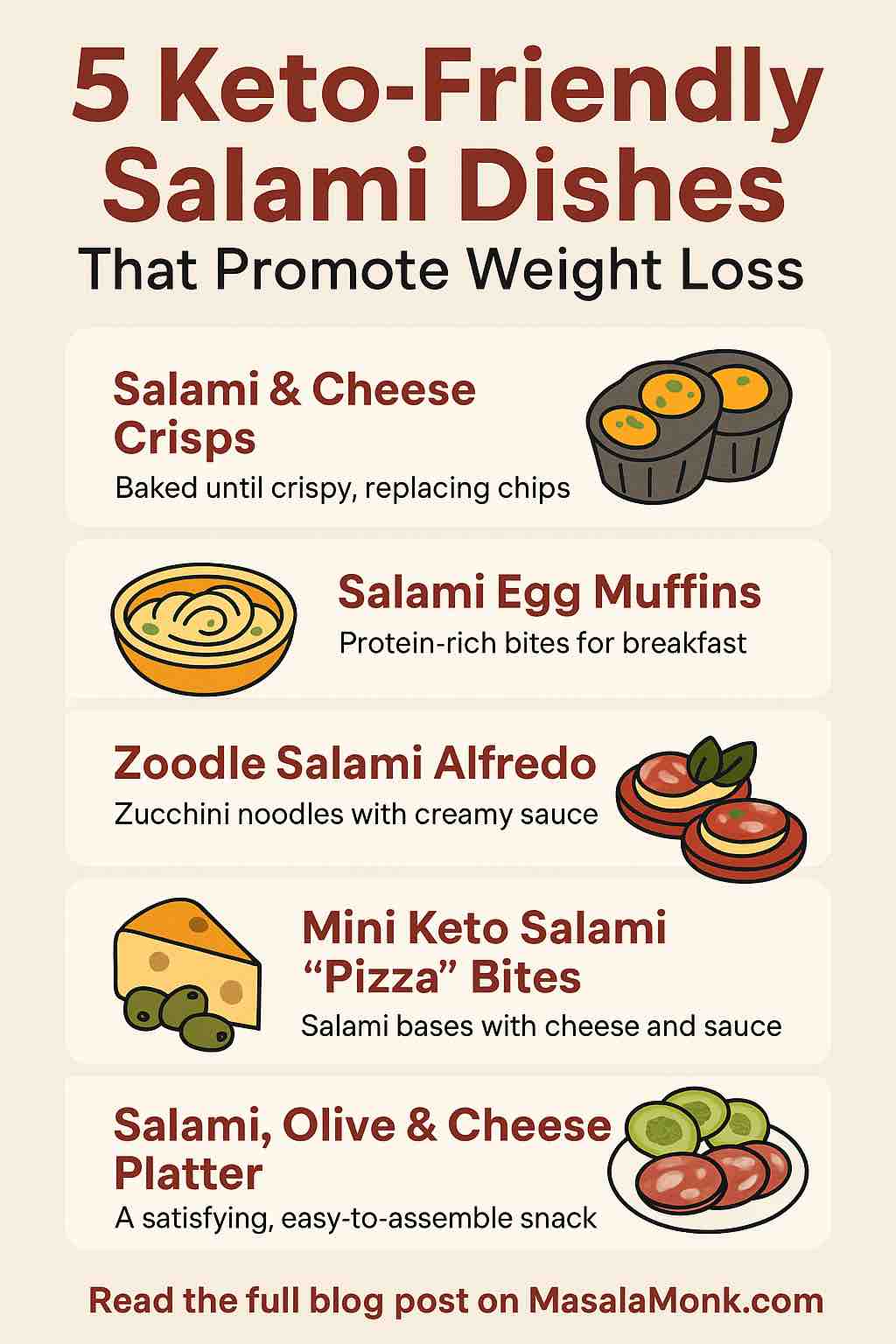
5 Keto-Friendly Salami Dishes That Promote Weight Loss

Keto-Friendly Salami Dishes

If you’re following a keto lifestyle and want variety, satisfaction, and simplicity in your meals, salami can be your secret weapon. Salami isn’t just for charcuterie boards—it’s a high-protein, high-fat, ultra-low-carb ingredient that can transform everyday keto cooking. But there’s more to it than just taste: let’s explore the latest science, answer common questions, and discover 5 delicious keto-friendly salami dishes that support real, sustainable weight loss.


Why Salami on Keto? Science & Nutrition Breakdown

Salami is a cured sausage made primarily from pork or beef, salt, and spices. For keto eaters, it offers:

  • Very low net carbs: Typically <1g per 100g.
  • High in fat & protein: 31g fat and 21g protein per 100g, supporting ketosis and satiety.
  • B-vitamins, iron, and zinc: Supporting metabolism and immune health.
  • Convenience: No cooking required for most recipes; portable and satisfying.

Recent studies and nutritionists agree: Foods that are high in protein and fat, but low in carbs, help suppress appetite and preserve muscle mass during weight loss. Salami fits these macros perfectly. The key is moderation and ingredient quality—look for nitrate/nitrite-free options, and don’t rely solely on processed meats.


1. Salami & Cheese Crisps (The Ultimate Keto Snack)

Why this works:
Baking salami and cheese together creates crunchy, flavorful crisps that curb cravings for chips—without the carbs or guilt. They’re perfect for snacking or party platters.

How to make it:

  • Preheat oven to 400°F (200°C).
  • Lay thin salami slices on a parchment-lined tray.
  • Top each with shredded Parmesan or mozzarella.
  • Bake for 5-8 minutes, or until golden and crisp.
  • Cool and enjoy!

Macros:
<1g net carb per serving. High in protein and fat.

Practical tip:
Store in an airtight container for grab-and-go snacks. Kids love them, too!


2. Salami Egg Muffins (Easy Keto Breakfast Meal Prep)

Why this works:
Eggs and salami provide protein, fat, and micronutrients—keeping you full for hours and helping avoid mid-morning cravings.

How to make it:

  • Preheat oven to 375°F (190°C).
  • Line muffin tin cups with salami slices.
  • Crack in one egg per cup (or scramble if preferred).
  • Add spinach, herbs, and a sprinkle of cheese.
  • Bake 12-15 minutes, until eggs are set.

Macros:
~2g net carbs per muffin (varies by add-ins).

Practical tip:
Make ahead for busy mornings—these store well in the fridge for up to 4 days.


3. Zoodle Salami Alfredo (Pasta Without the Guilt)

Why this works:
Zucchini noodles (“zoodles”) swap out high-carb pasta for fiber and hydration. Creamy Alfredo sauce and savory salami add richness and flavor—making this dish deeply satisfying.

How to make it:

  • Spiralize 2-3 zucchini and sauté briefly in olive oil.
  • Add 1/4 cup heavy cream, 2 tbsp butter, and 1/2 cup Parmesan for Alfredo sauce.
  • Toss in sliced salami (about 2 oz per serving) and cook until warmed through.
  • Season with pepper, garnish with parsley.

Macros:
~4g net carbs per bowl (mainly from zucchini).

Practical tip:
For extra nutrition, toss in spinach, mushrooms, or chopped olives.


4. Mini Keto Salami “Pizza” Bites

Why this works:
Mini salami “pizzas” capture all the flavor of your favorite slice—without dough, gluten, or carbs.

How to make it:

  • Arrange salami slices on a baking sheet.
  • Spread each with a teaspoon of low-carb marinara or tomato paste.
  • Add shredded mozzarella and a sprinkle of Italian herbs.
  • Broil for 2-3 minutes, until bubbly.

Macros:
~1g net carb per pizza bite (depends on sauce).

Practical tip:
Perfect for party trays or kid-friendly snacks!


5. Salami, Olive & Cheese Keto Platter (Lunch or Snack Box)

Why this works:
This balanced “charcuterie box” provides protein, fat, and fiber—excellent for lunchboxes, travel, or office snacks. Olives add healthy fats and micronutrients.

How to make it:

  • Arrange 4-6 slices of salami, 2 oz cubed cheese, a handful of olives, and sliced cucumber or celery on a plate or in a bento box.
  • Optionally add nuts (macadamia or almonds) for extra crunch.

Macros:
~2-3g net carbs per serving (from veggies/olives).

Practical tip:
Pre-pack several boxes at the start of the week for “keto fast food” on busy days.


The Latest Science: Does Salami Help With Weight Loss?

  • Keto diets work by reducing carbs, so your body burns fat for fuel. Salami supports this with high fat and protein, nearly zero carbs, and high satiety.
  • Appetite control: Research shows that protein- and fat-rich foods like salami, eggs, and cheese can help reduce hunger, making it easier to maintain a calorie deficit for weight loss.
  • Portion control is key: While keto-friendly, salami is also calorie-dense and high in sodium. Use as part of a balanced plate, not the sole protein source.

Tip: Always choose the highest-quality, minimally processed salami you can find—ideally organic, nitrate/nitrite-free, and with clear labeling.


Practical Tips for Including Salami in a Healthy Keto Diet

  • Balance processed meats with fresh vegetables and whole-food fats (avocado, olives, nuts).
  • Stay hydrated: Keto and salty foods can increase water loss.
  • Watch sodium and portion size: Too much can stall weight loss for some people.
  • Mix and match: Pair salami with a variety of cheeses, veggies, and sauces for endless combinations.

Conclusion: Salami Can Be Keto Gold—With the Right Approach

When used mindfully, salami is a versatile, satisfying ingredient that fits perfectly into a keto weight loss plan. The five recipes above are just the start—experiment, enjoy, and keep your meals interesting and convenient.

Remember: Keto works best when it’s sustainable, balanced, and delicious. Let salami add flavor and variety, but always aim for a colorful, nutrient-dense plate.


Want More Recipes or Tips?

Let me know if you want printable recipes, weekly meal plans, or a shopping guide for the best keto-friendly salami brands. Your keto journey should be tasty, practical, and full of real results!


Have you tried any keto salami dishes? Which is your favorite? Share your tips or questions below!

10 FAQs for Keto-Friendly Salami Dishes

1. Is salami really keto-friendly?
Yes, most traditional salami is very low in carbohydrates—often less than 1 gram per serving—making it a great fit for keto. Always check the label for added sugars or fillers.

2. How much salami can I eat on keto?
Moderation is key. While salami is low in carbs, it is calorie-dense and high in sodium. A reasonable serving is 1–2 ounces (about 4–6 slices) as part of a balanced meal.

3. What should I look for when buying salami for keto?
Choose nitrate/nitrite-free, minimally processed options with simple ingredients (meat, salt, spices). Avoid salamis with added sugars or starches.

4. Is it okay to eat salami every day on keto?
It’s best to enjoy salami a few times a week and not as your main protein source. Combine it with a variety of other proteins and plenty of non-starchy vegetables.

5. Does eating salami help with weight loss?
Salami’s high protein and fat content can boost satiety and help control appetite. However, weight loss depends on overall calorie intake and lifestyle habits.

6. Can I eat pre-sliced packaged salami?
Yes, but check the ingredients list for added sugars or unnecessary additives. When possible, buy from the deli counter for fresher, cleaner options.

7. What are some good foods to pair with salami on keto?
Cheese, olives, avocado, nuts, leafy greens, and low-carb veggies like cucumbers and bell peppers all pair well with salami and keep meals balanced.

8. How can I reduce sodium intake when eating salami?
Balance your diet with fresh, unsalted foods like vegetables and drink plenty of water. If sodium is a concern, choose lower-sodium brands or limit portion sizes.

9. Are there vegetarian or vegan alternatives to salami for keto?
There are plant-based deli slices made from tofu or seitan, but check carb counts and ingredients, as many contain higher carbs and added fillers.

10. Can I meal prep with salami?
Absolutely! Salami keeps well and is perfect for prepping snack boxes, wraps, or egg muffins ahead of time. Store in an airtight container in the fridge.

Posted on Leave a comment

The Versatility of Nuts: Creative Ways to Incorporate Nuts into Your Everyday Meals and Snacks

Nuts-Into-Everyday-Meals-and-Snacks

Nuts are one of nature’s most powerful—and underutilized—ingredients. Packed with nutrients, flavor, and texture, they are a culinary multitool that can add health and depth to nearly any dish. From your morning smoothie to your evening dinner plate, and every snack in between, nuts can bring variety, satisfaction, and nourishment. Here’s a practical, creative, and engaging guide on how to make nuts a staple in your daily eating routine.


Why Nuts Matter: A Nutritional Powerhouse

Nuts like almonds, walnuts, pistachios, and cashews are rich in healthy fats, plant protein, fiber, and essential micronutrients including magnesium, vitamin E, selenium, and calcium. A single ounce (30g) of almonds, for example, contains about 6g of protein and 80mg of calcium. Regular consumption is linked to improved heart health, better weight management, and reduced inflammation. Despite their small size, they can make a big impact on your diet and overall well-being.


Morning Boosters: Start Your Day Right

1. Nut-Infused Smoothies
Blend nut butters like almond, peanut, or cashew into smoothies for added creaminess, protein, and richness. Combine with banana, spinach, dates, and a milk of your choice for a nutritious start.

2. Yogurt & Smoothie Bowls
Top bowls with chopped nuts, chia seeds, and a drizzle of nut butter. Try pistachios with strawberries or walnuts with apple slices and cinnamon.

3. Homemade Nut Granola
Bake a mix of rolled oats, honey, olive oil, and your favorite nuts for a crunchy, customizable granola.

4. Savory Nut Toasts
Spread cashew cream cheese or almond ricotta on whole grain toast. Add avocado, smoked paprika, or sliced tomatoes for a gourmet touch.


Midday & Main Meal Marvels

1. Nutty Salads with Texture
Toss roasted pecans, pine nuts, or almonds into salads. Combine with arugula, goat cheese, and citrus segments for a flavorful twist.

2. Stir-fries and Curries
Add cashews to Thai or Indian curries, or ground peanuts in Indonesian sauces. They soak up spices beautifully and offer hearty texture.

3. Nut-Crusted Proteins
Coat chicken, tofu, or salmon in crushed pistachios, almonds, or hazelnuts for a crunchy finish.

4. Innovative Pesto & Sauces
Swap traditional pine nuts for walnuts or pistachios in your pesto. Create creamy peanut or cashew sauces for noodles, wraps, or dipping.

5. Rice & Grain Upgrades
Sprinkle toasted slivered almonds or pine nuts over couscous, quinoa, or brown rice to add layers of flavor and crunch.


Snacks That Travel Well

1. DIY Trail Mix
Build your own mix with roasted nuts, dried fruits, dark chocolate chips, and seeds like pumpkin or sunflower.

2. Energy Balls and Bars
Blend dates, oats, and nut butters with extras like cocoa nibs, coconut, or protein powder. Roll into balls or press into bars for a grab-and-go option.

3. Spiced & Roasted Nuts
Roast nuts with bold flavors—sweet (cinnamon-honey), savory (rosemary-garlic), or spicy (chili-lime). Perfect for snacks, salads, or cocktails.

4. Portable Nut Dips
Make muhammara (roasted red pepper and walnut dip) or use almond butter as a dip for sliced apples, carrots, or celery.


Sweet but Smart: Nut-Based Desserts

1. Nut Flours for Baking
Use almond flour or hazelnut meal in gluten-free baking recipes for cookies, muffins, and cakes.

2. Nut Toppings
Sprinkle crushed nuts on banana bread, oatmeal cookies, or fruit crisps to elevate texture and flavor.

3. Chocolate Nut Barks & Clusters
Melt dark chocolate and mix with nuts and seeds. Spread into thin bark or form clusters for a simple, satisfying dessert.

4. Stuffed Dates
Fill Medjool dates with nut butter and dip in dark chocolate. Finish with a pinch of sea salt for a luxurious treat.


Global Inspirations for Everyday Variety

  • Middle Eastern: Add pine nuts to hummus, or make classic baklava with layers of phyllo and crushed walnuts or pistachios.
  • Asian: Use peanuts in satay sauce or sprinkle chopped cashews over Thai noodle bowls.
  • Mediterranean: Blend walnut pesto for pasta or spread almond dips on flatbread.
  • Western Vegetarian: Make a hearty nut roast for a meatless dinner centerpiece.

Tips for Storage, Substitutes & Safety

  • Storage: Keep nuts in airtight containers; refrigerate or freeze to prevent rancidity.
  • Portion Control: Stick to about 30g/day to balance calorie intake and health benefits.
  • Low-Sodium Option: Choose raw or unsalted nuts for heart-friendly snacking.
  • Allergy Alternatives: Try sunflower seed butter, pepitas, or coconut flakes as substitutes.

Final Thoughts: Small Changes, Big Impact

Whether you’re upgrading your breakfast, adding crunch to your salad, or experimenting with global flavors, nuts can play a delicious and meaningful role in your meals. They’re not just a snack—they’re an ingredient that bridges convenience, flavor, and wellness. Start small, mix and match, and you’ll soon discover that a handful of nuts can go a long way.

Ready to get nutty in the kitchen? Start today with a new recipe or a fresh twist on an old favorite.

✅ Summary Table

Use CaseNut ApplicationBenefit
Smoothies/BowlsNut powders, butters, chopped nutsCreaminess, protein, crunch
CookingNut‑based sauces, pestos, crusts, meat subFlavor, texture, plant protein
Snacks & BarsTrail mix, energy balls, spiced nutsOn‑the‑go nutrition
Baking/DessertsNut flours, toppings, barksHealthier indulgence
Gastro-cultureMuhammara, karedok, nut roast, sataysGlobal authenticity
Gifting/PartyJar mixes, charcuterie nutsPresentation, convenience

Posted on 1 Comment

How Potatoes Can Be Part of Your Weight Loss Plan

Introduction

When it comes to weight loss, potatoes often get a bad rap. Commonly dismissed as ‘unhealthy’ or ‘fattening’, these humble tubers have been sidelined in many diets. But what if we’ve been underestimating the potential of potatoes in our weight loss journey? Contrary to popular belief, when prepared and consumed correctly, potatoes can indeed be a nutritious and weight-loss-friendly food choice.

In this post, we’re going to dig deeper into the world of potatoes. We’ll uncover the truth behind their nutritional value, debunk common myths, and explore how these versatile vegetables can be incorporated into a balanced diet for effective weight loss. From their impressive nutrient profile to innovative and healthy ways of preparation, we’re about to reveal why potatoes might just be the unsung heroes of your weight loss plan. So, before you write off potatoes as a diet no-go, let’s give them a chance to show their true colors in the realm of health and nutrition.

Stay tuned as we explore how the misunderstood potato can be a delicious and smart addition to your weight loss menu.

The Nutritional Powerhouse: Unveiling the Benefits of Potatoes

Often overshadowed by their starchy nature, potatoes are in fact a powerhouse of nutrition. They’re not just about carbs; they bring a lot more to the table. A medium-sized potato is an excellent source of vitamins C and B6, crucial for immune system support and energy metabolism, respectively. But that’s not all. Potatoes are rich in minerals like potassium, which is vital for heart health, and magnesium, essential for bone health and muscle function. Plus, they offer iron, an important component for blood health.

But perhaps one of the most significant benefits of potatoes is their fiber content, especially when eaten with the skin. Dietary fiber is a key player in weight management. It helps you feel fuller for longer, thereby reducing the overall calorie intake, which is essential in a weight loss diet. Additionally, fiber aids in digestion and helps maintain steady blood sugar levels, preventing those spikes and crashes that can lead to overeating.

And let’s not forget about antioxidants. Potatoes, especially colored varieties like purple and red, are packed with these compounds. Antioxidants play a role in reducing inflammation and combating oxidative stress, contributing to overall health and potentially aiding in weight management.

In the next section, we’ll break down how these nutritional attributes of potatoes can be harnessed in a weight loss plan, challenging the myth that potatoes are merely ’empty carbs’.

Potatoes in Weight Loss: Busting the Carb Myth

It’s time to bust a common myth: Carbohydrates, including those found in potatoes, are not the enemy of weight loss. In fact, when consumed as part of a balanced diet, potatoes can be a valuable ally in your weight loss journey. The key is understanding how to include them healthily and mindfully.

Firstly, potatoes’ high fiber content makes them exceptionally filling. This satiety factor is crucial for weight management, as it helps prevent overeating and snacking on less healthy options. A medium potato contains only about 130 to 165 calories, making it a low-calorie yet satisfying choice.

Moreover, potatoes offer a unique benefit: They have a high satiety index. This means they can make you feel full and satisfied, helping with portion control – a critical aspect of any weight loss strategy. When paired with a balanced mix of proteins and non-starchy vegetables, a potato can be part of a nutritious, calorie-controlled meal.

However, it’s important to be mindful of how potatoes are prepared. Opting for healthier cooking methods like baking, boiling, or roasting instead of frying can make a significant difference. Avoiding calorie-laden toppings like butter, cheese, and sour cream is also crucial. Instead, experimenting with flavorful yet healthy toppings can enhance the nutritional profile of your potato-based meal without adding excessive calories.

In the next section, we’ll delve into the impact of potatoes on blood sugar levels and how to manage it effectively as part of a weight loss diet.

Managing Blood Sugar: Potatoes and Glycemic Impact

A common concern about potatoes in a diet is their effect on blood sugar levels. Yes, potatoes are high in starch, and they rank relatively high on the glycemic index, meaning they can cause a rapid spike in blood sugar. However, this doesn’t mean they can’t be part of a weight loss and health-conscious diet.

The trick is in the balance and combination of foods. When you pair potatoes with foods that have a lower glycemic impact, like lean proteins or non-starchy vegetables, you can mitigate the rapid rise in blood sugar. For instance, a meal comprising a small portion of potato, steamed broccoli, and grilled chicken breast provides a balanced mix of carbohydrates, protein, and fiber. This combination can help stabilize blood sugar levels and provide sustained energy, which is essential in preventing the hunger pangs that can lead to overeating.

Another factor to consider is the variety of the potato. Different types, such as sweet potatoes, red, purple, or yellow varieties, can have different effects on blood sugar. Some of these, like sweet potatoes, have lower glycemic indices than others, making them a better choice for maintaining stable blood sugar levels.

For individuals with prediabetes or diabetes, it’s crucial to consult with a healthcare provider or dietitian to determine the appropriate amount and type of potatoes that can be included in their diet.


Integrating Potatoes into Your Intermittent Fasting Regimen

Intermittent fasting (IF) has gained popularity as a flexible approach to weight loss and health improvement. It typically involves periods of fasting alternated with periods of eating. Integrating potatoes into your intermittent fasting regimen can be advantageous, provided it’s done thoughtfully. Here’s how potatoes can complement your IF journey:

  1. Breaking the Fast: When you break your fast, it’s important to start with foods that are gentle on your stomach yet nourishing. Potatoes can be an excellent choice. They are easy to digest and provide a good energy boost without overwhelming your digestive system. A simple boiled or baked potato with a sprinkle of herbs can be an ideal meal to start your eating window.
  2. Nutrient-Dense Meals: During your eating periods, it’s crucial to consume nutrient-dense foods to compensate for the fasting period. Potatoes are rich in vitamins, minerals, and fiber, making them an excellent choice for ensuring you’re getting the nutrients you need. Including a moderate portion of potatoes in one of your meals can help meet these nutritional requirements.
  3. Satiety and Portion Control: One of the challenges of intermittent fasting is managing hunger during fasting periods. The satiety factor of potatoes can be beneficial here. Eating a satisfying meal that includes potatoes during your eating window can help you feel fuller for longer, which can make fasting periods more manageable.
  4. Balanced Meals: It’s essential to balance your meals with a combination of carbohydrates, proteins, and healthy fats. Potatoes can be the carbohydrate component of a balanced meal. Pair them with lean proteins like grilled chicken or fish and a serving of healthy fats like avocado or nuts for a complete and nutritious meal.
  5. Post-Workout Nutrition: If you exercise during your eating window, potatoes can be a great post-workout meal component. They help replenish glycogen stores and provide essential nutrients for muscle recovery. A potato-based meal after your workout can aid in recovery and prepare you for the next fasting period.

Remember, while intermittent fasting, it’s not just about when you eat, but also what you eat. Potatoes can be a valuable addition to your IF plan, contributing to a balanced, nutritious diet that supports your weight loss and health goals.

Creative and Healthy Potato Preparations

Transforming the humble potato into a weight loss-friendly dish is all about creativity and healthy preparation techniques. Gone are the days of deep-fried and heavily buttered potatoes. Let’s explore some innovative ways to enjoy potatoes that are both delicious and conducive to your weight loss goals.

  1. Baking and Roasting: One of the simplest and healthiest ways to cook potatoes is by baking or roasting them. This method preserves the natural flavors and nutrients of the potato without the need for excess oil or fat. Experiment with herbs and spices like rosemary, thyme, or paprika for an added flavor boost.
  2. Boiling and Steaming: Boiled or steamed potatoes retain most of their nutrients and are low in calories. For a flavorful twist, try boiling potatoes with a clove of garlic or a sprig of dill. These methods are particularly good for making potato salads or mashed potatoes.
  3. Healthy Toppings and Add-ons: Replace traditional high-calorie toppings like sour cream and cheese with healthier alternatives. Greek yogurt, salsa, or a sprinkle of herbs can add a lot of flavors without piling on the calories. Toppings like steamed broccoli, diced garlic, and a dash of olive oil can turn a simple baked potato into a nutritious and filling meal.
  4. Experimenting with Potato Varieties: Don’t just stick to the traditional white potatoes. Explore the world of sweet potatoes, red, purple, and other varieties. Each type brings its unique nutritional profile and flavor, making your meals more interesting and healthful.
  5. Portion Control: Remember, portion size matters. Enjoying potatoes as part of a balanced meal with a variety of other food groups is the best way to reap their benefits without overindulging.

In the following section, we’ll address some common myths and misconceptions about potatoes and weight loss, helping you make informed choices about including this versatile vegetable in your diet.

Debunking Potato Myths: Separating Fact from Fiction

Potatoes have been the subject of many myths and misconceptions, especially when it comes to weight loss and health. Let’s set the record straight and debunk some of these common potato myths:

  1. Myth: Potatoes Are Fattening: The truth is, potatoes themselves are not fattening. It’s often the way they are prepared – think fried or loaded with butter and cheese – that adds excessive calories and fat. A plain, medium-sized potato is relatively low in calories and high in nutrients.
  2. Myth: Potatoes Lack Nutritional Value: Contrary to this myth, potatoes are a nutrient-dense food. They are a good source of vitamins, minerals, and fiber. The key is to consume them in their whole form, particularly with their skins, to maximize their nutritional benefits.
  3. Myth: All Potatoes Affect Blood Sugar in the Same Way: Different types of potatoes and cooking methods can affect how they impact your blood sugar. For example, boiling potatoes and letting them cool before eating can increase their resistant starch content, which has a lesser effect on blood sugar.
  4. Myth: You Should Avoid Potatoes If You’re Trying to Lose Weight: Not necessarily. When eaten in moderation and as part of a balanced diet, potatoes can be included in a weight loss plan. Their high fiber content can help you feel full and satisfied, which can aid in weight management.

By understanding these truths about potatoes, you can enjoy them as part of a balanced and healthy diet without guilt or misinformation.

In our concluding section, we’ll summarize the key points and provide final thoughts on incorporating potatoes into a successful weight loss strategy.

Conclusion: Embracing Potatoes in Your Weight Loss Journey

In conclusion, potatoes can indeed play a positive role in a weight loss diet when consumed mindfully and prepared healthily. They are not just simple carbs but a source of essential nutrients that can contribute to a balanced and satisfying diet. By debunking common myths, understanding their nutritional profile, and adopting healthy cooking methods, you can enjoy potatoes without derailing your weight loss efforts.

Remember, the key is balance and moderation. Incorporating a variety of foods, including potatoes, ensures a nutrient-rich diet that supports sustainable weight loss. Be mindful of portion sizes and complement your potato dishes with a mix of proteins, healthy fats, and other vegetables for a well-rounded meal.

So, the next time you’re planning your meals, consider giving potatoes a spot on your plate. With their versatility, nutritional benefits, and ability to keep you full and satisfied, potatoes can be a delicious and smart addition to your weight loss menu.

We hope this guide has provided you with valuable insights and practical tips to integrate potatoes into your weight loss plan effectively. Happy, healthy eating!

Navigating Processed Potato Products: What to Know

In today’s fast-paced world, processed potato products are ubiquitous, ranging from frozen fries to instant mashed potatoes. While these products offer convenience, it’s crucial to understand their nutritional implications, especially when you’re focused on weight loss and healthy eating.

  1. Nutritional Alterations in Processed Potatoes: Many processed potato products undergo significant alterations that can diminish their nutritional value. For example, instant mashed potatoes often contain added fats, salt, and preservatives, which can increase calorie content and reduce their overall healthfulness.
  2. The Impact of Frying and Additives: Common processed potato products like fries and chips are typically high in unhealthy fats and salt due to their cooking methods and added flavorings. These can not only contribute to weight gain but also to other health issues like high blood pressure and heart disease.
  3. Glycemic Index Considerations: Processing can affect the glycemic index of potatoes. Products like fries or chips have a higher glycemic index compared to whole, cooked potatoes, leading to quicker spikes in blood sugar levels. This is an important consideration for those managing diabetes or looking to maintain stable blood sugar levels.
  4. Reading Labels for Informed Choices: When choosing processed potato products, it’s important to read the nutritional labels carefully. Look for products with lower sodium, no added sugars, and minimal preservatives. Also, pay attention to serving sizes to avoid unintentional overeating.
  5. Opting for Healthier Alternatives: Whenever possible, choose whole, unprocessed potatoes. If you need convenience, look for frozen or pre-prepped potatoes that don’t contain added fats, salt, or preservatives. These options are closer to the natural state of the potato and retain more of their nutritional benefits.
  6. Balancing Convenience and Nutrition: While it’s okay to enjoy processed potato products occasionally, they shouldn’t be a staple in a diet focused on weight loss and health. Balancing convenience with nutritional value is key. Incorporating a variety of whole foods, including unprocessed potatoes, ensures a more balanced and healthful diet.

In conclusion, while processed potato products are convenient and sometimes irresistible, being mindful of their nutritional content and frequency of consumption is crucial for maintaining a healthy and balanced diet, particularly when you are trying to lose weight.

NutrientsAmount per 100g
Calories77 kcal
Protein2.0 g
Carbohydrates17 g
Fiber2.2 g
Fat0.1 g
Vitamin C19.7 mg
Vitamin B60.3 mg
Potassium421 mg
Magnesium23 mg
Iron0.8 mg

This table provides a clear overview of the nutritional value of potatoes, highlighting both their macronutrient (calories, protein, carbohydrates, fiber, fat) and micronutrient (vitamins and minerals) content.

FAQs

  1. What makes potatoes a good choice for weight loss diets?
    • Potatoes are high in dietary fiber, which helps in keeping you full for longer periods. This satiety factor is essential for controlling hunger and reducing overall calorie intake, making them a valuable inclusion in weight loss diets.
  2. Can eating potatoes help maintain energy levels during dieting?
    • Absolutely! Potatoes are a great source of complex carbohydrates that provide sustained energy. This is especially beneficial in a weight loss diet where maintaining energy levels is crucial for staying active and avoiding fatigue.
  3. How do potatoes impact blood sugar levels?
    • Potatoes have a high glycemic index, which means they can cause a rapid spike in blood sugar. However, pairing them with low-GI foods like lean proteins and non-starchy vegetables can balance this effect, making them suitable even in a weight loss diet.
  4. Are all types of potatoes equally beneficial for weight loss?
    • Different potato varieties, such as sweet potatoes or colored potatoes like purple and red, have varying nutritional profiles. Some have lower glycemic indices than others, making them a better choice for maintaining stable blood sugar levels in a weight loss diet.
  5. What are some healthy ways to prepare potatoes for weight loss?
    • Opt for baking, boiling, or roasting instead of frying. Use herbs and spices for flavor instead of high-calorie toppings like butter or cheese. Keeping the skin on maximizes fiber and nutrient intake.
  6. Can I include potatoes in my diet if I have diabetes?
    • While potatoes can be part of a diabetic diet, it’s crucial to monitor portion sizes and the overall balance of the meal. Consulting with a healthcare provider or dietitian is recommended to determine the appropriate way to include them in your diet.
  7. What are some creative, low-calorie toppings for baked potatoes?
    • Try toppings like Greek yogurt, salsa, steamed broccoli, diced garlic, and a dash of olive oil. These add flavor without excessive calories and can make your potato dish more nutritious and satisfying.
  8. Do potatoes offer any other health benefits apart from aiding weight loss?
    • Yes, potatoes are rich in vitamins like C and B6, minerals like potassium and magnesium, and antioxidants. These nutrients contribute to overall health, including heart health, immune support, and reducing inflammation.
  9. Is it better to eat potatoes with or without the skin for weight loss?
    • Eating potatoes with their skin is beneficial as it increases the fiber content, which is essential for satiety and digestive health. However, ensure the skin is cleaned properly before cooking.
  10. How can I incorporate potatoes into a balanced meal for weight loss?
    • Combine a moderate portion of potatoes with a source of lean protein, such as chicken or fish, and a serving of non-starchy vegetables. This creates a balanced meal that is satisfying and conducive to weight loss.

Blog Tags

potato nutrition, weight loss diet, healthy cooking, blood sugar management, dietary fiber, low-calorie recipes, diabetes-friendly meals, satiety and fullness, antioxidant-rich foods, glycemic index, balanced meals