Posted on Leave a comment

Candied Yams Recipe

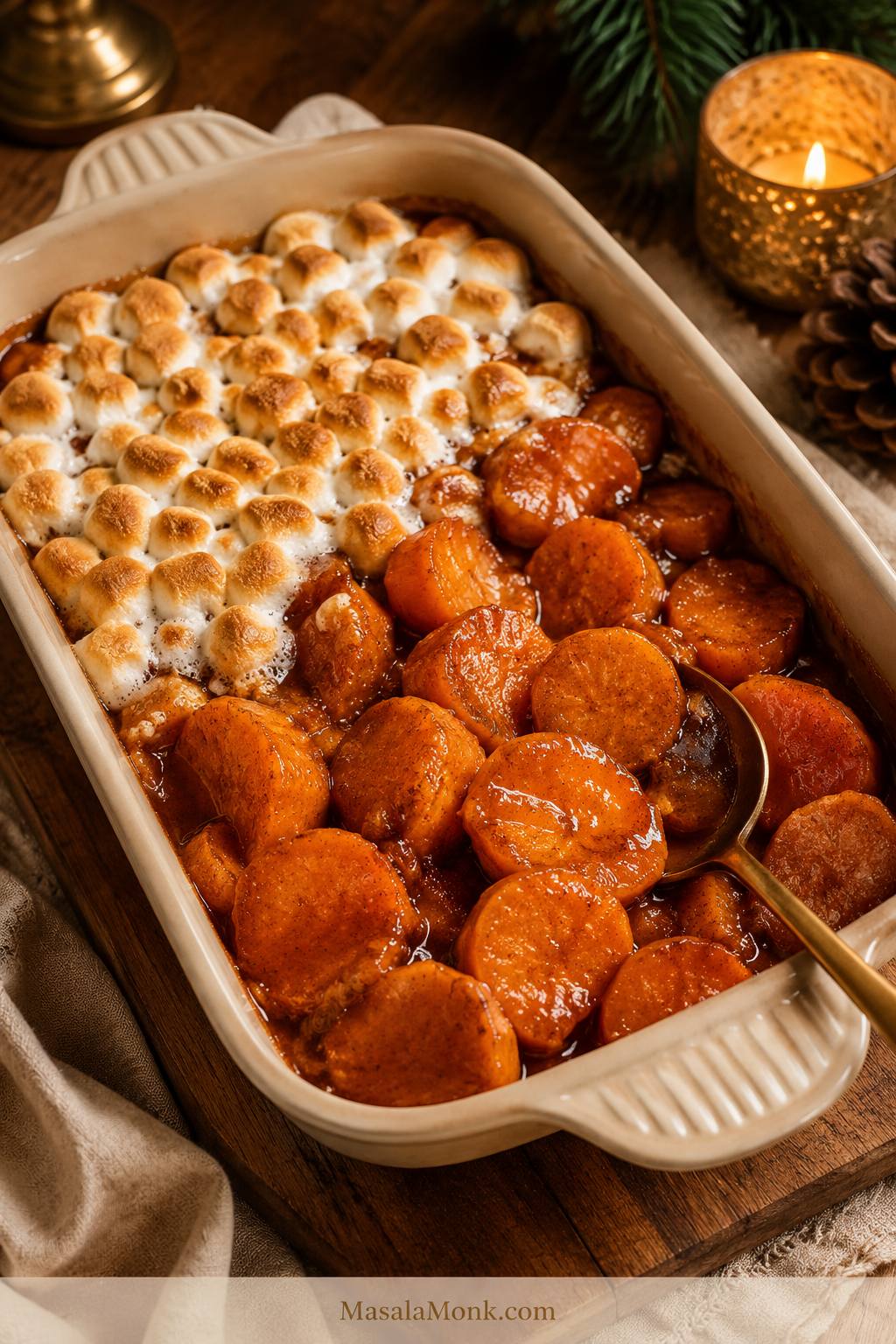
Classic candied yams should show tender orange slices, not mashed sweet potatoes. Keeping one side plain and one side topped with marshmallows is an easy way to satisfy both holiday-table preferences.

Candied yams are one of those sides people remember by texture: soft orange slices, a shiny brown sugar glaze, warm spice, and maybe a toasted marshmallow topping. This version keeps that familiar comfort, but gives you the cues that prevent watery sauce, mushy canned yams, burnt sugar, or marshmallows that disappear into the dish.

Fresh or canned, oven or stovetop, marshmallows or not — this recipe is built around the same goal: soft, buttery yams, a spoonable brown sugar glaze, and no thin liquid pooling at the bottom of the pan. This is the kind of side dish people expect to taste familiar, not reinvented.

For many tables, candied yams are not the place for wild reinvention. Use this recipe as a steady base, then finish it the way your family remembers it.

Best quick method: for classic candied yams, use fresh orange sweet potatoes sliced 1/2 inch thick.
  1. Make a smooth butter, brown sugar, and spice glaze, then stir in vanilla off the heat.
  2. Bake covered at 350°F / 175°C for 35–40 minutes.
  3. Uncover and bake 20–25 minutes more, basting once.
  4. Add marshmallows only during the final 8–12 minutes, if using.
  5. Rest 10 minutes so the sauce turns shiny and spoonable.

The full guide below covers fresh, canned, stovetop, marshmallow, no-marshmallow, and make-ahead versions, but the basic idea stays the same: soften the yams, thicken the sauce, and give it a short rest.
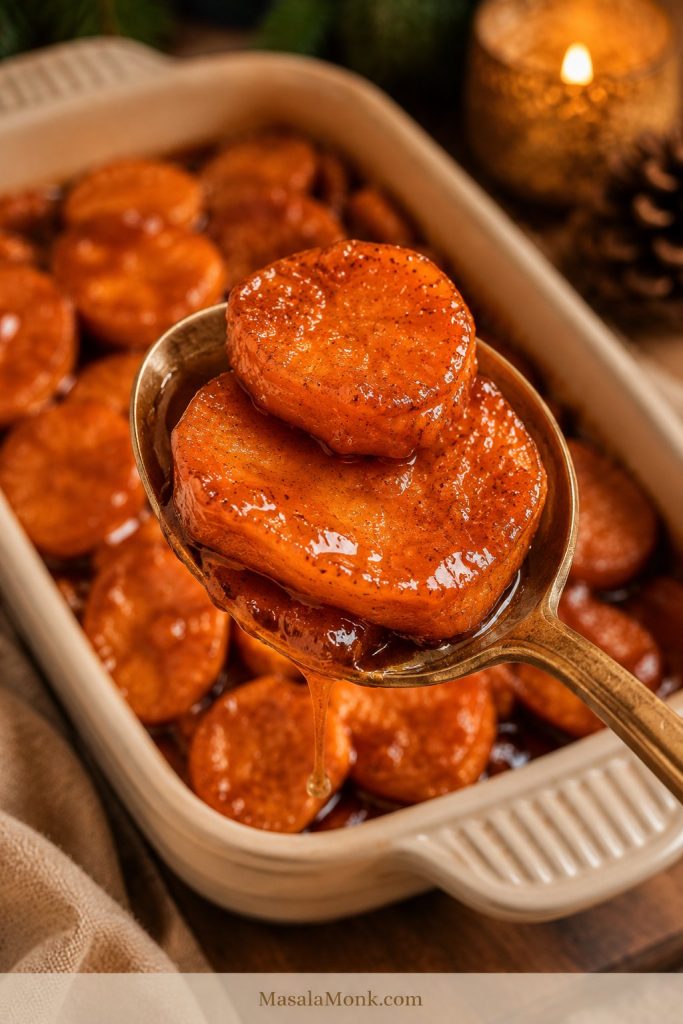
Spoon lifting soft orange candied yam slices from a cream baking dish with sauce coating the pieces.
Aim for a soft but still sliceable texture. If the yams lift cleanly and the syrup clings to the spoon, they are ready to rest before serving.

Quick Answer: What Are Candied Yams?

Candied yams are a sweet side dish made with orange-fleshed sweet potatoes, butter, brown sugar, cinnamon, nutmeg, vanilla, and sometimes marshmallows. At the table, they eat like soft sweet potatoes in a buttery brown sugar sauce.

In most U.S. grocery stores, the “yams” used for candied yams are actually sweet potatoes, and they are exactly what you want here. For the classic orange color and soft texture, look for sweet potatoes labeled as garnet yams, jewel yams, red yams, or simply yams.

Here, there is no need to hunt for true yams. Buy orange-fleshed sweet potatoes, even if your store labels them yams. They soften into the glaze instead of staying dry or starchy.

Why This Recipe Works

The difference here is that the recipe is built around texture cues, not just time: covered heat to soften, uncovered heat to reduce, and a short rest so the sauce clings.

Thick slices hold their shape, a smooth saucepan glaze prevents grainy sugar, covered baking softens the yams, uncovered baking reduces the extra liquid, and resting helps the brown sugar butter mixture cling instead of pool.

Think of it as steam first, reduction second, rest last. That order keeps the yams tender without leaving a watery pool underneath.
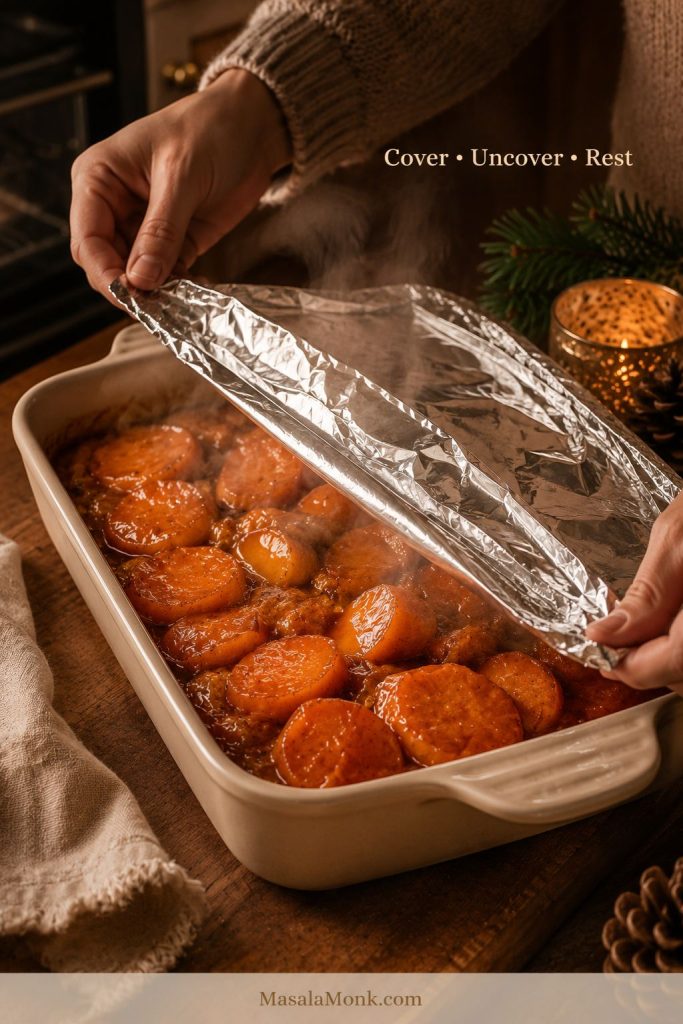
Hands peeling foil from a baking dish of candied yams with visible text reading Cover, Uncover, Rest.
Think of the bake in three stages: steam, reduce, settle. Covered heat softens the slices, uncovered heat concentrates the syrup, and the short rest helps the sauce cling.

The watery batches usually have one thing in common: too much liquid and not enough uncovered time. Often, the best batches look a little loose straight from the oven, then settle into a glossy coating after the rest.

The simple rhythm:
  • Fresh yams: cover, uncover, rest.
  • Canned yams: drain, coat, heat, stop.
  • Marshmallows: tender first, toast last.
  • Sauce: shiny and spoonable, not watery or caramel-thick.

Candied Yams Quick Facts

Fact Detail
Servings 8
Main oven temp 350°F / 175°C for fresh sweet potatoes
Fresh bake time 35–40 minutes covered, then 20–25 minutes uncovered
Best baking dish 9×13-inch / 23×33 cm glass or ceramic dish
Rest time 10 minutes before serving
Marshmallow timing Final 8–12 minutes for fresh yams; 5–8 minutes for canned yams

Which Candied Yams Method Should You Use?

Start with the method that fits the day. Maybe you have time for fresh sweet potatoes. Or maybe the oven is crowded with turkey, ham, stuffing, green bean casserole, or another side. You may already have canned yams in the pantry.
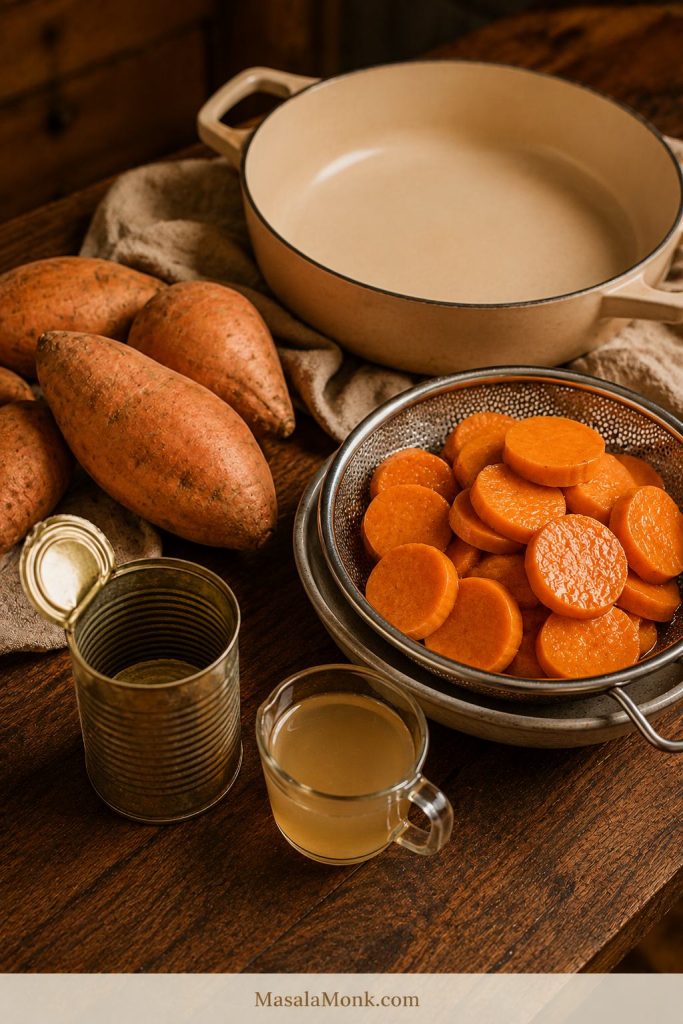
Fresh sweet potatoes, drained canned yams, an opened unbranded can, and a Dutch oven arranged on a warm kitchen counter.
Fresh sweet potatoes, canned yams, and stovetop candied yams can all work well. However, fresh slices need time, canned yams need gentleness, and stovetop yams need steady low heat.

Fresh yams give you the prettiest slices. Canned yams give you speed. Stovetop cooking gives you control. Marshmallows give you nostalgia. None of those choices are wrong.

Method Best For Approx. Time Key Cue
Fresh baked candied yams Best texture, neat slices, holiday table presentation 60–70 minutes Uncover long enough for the sauce to reduce
Canned baked candied yams Fast shortcut, pantry version, smaller batch 20–30 minutes Drain well and heat gently
Stovetop candied yams Oven is full, spoon-coated finish, Southern-style cooking 50–65 minutes Keep the heat medium-low
Crockpot candied yams Freeing oven space and holding a side dish warm 3–4 hours on low Expect a thinner syrup
Marshmallow finish Classic Thanksgiving-style topping 5–12 minutes Add only at the end

As a default, use the fresh baked version when texture matters, canned yams when speed matters, and stovetop cooking when the oven is full. If you are starting with cans, keep the rhythm even simpler: drain, coat, heat, stop.

Are Candied Yams Actually Sweet Potatoes?

Most of the time, yes. In the United States, the orange “yams” sold in regular grocery stores are usually orange-fleshed sweet potatoes. True yams are starchier, drier, and less common in everyday U.S. supermarkets. The Library of Congress explanation of sweet potatoes and yams is useful if you want the longer background.

For this recipe, buy orange sweet potatoes or yams labeled garnet, jewel, red yam, or simply yam. That naming confusion matters less than the flesh color here. Orange, moist sweet potatoes give the classic color, sweetness, and soft texture people expect in candied yams.
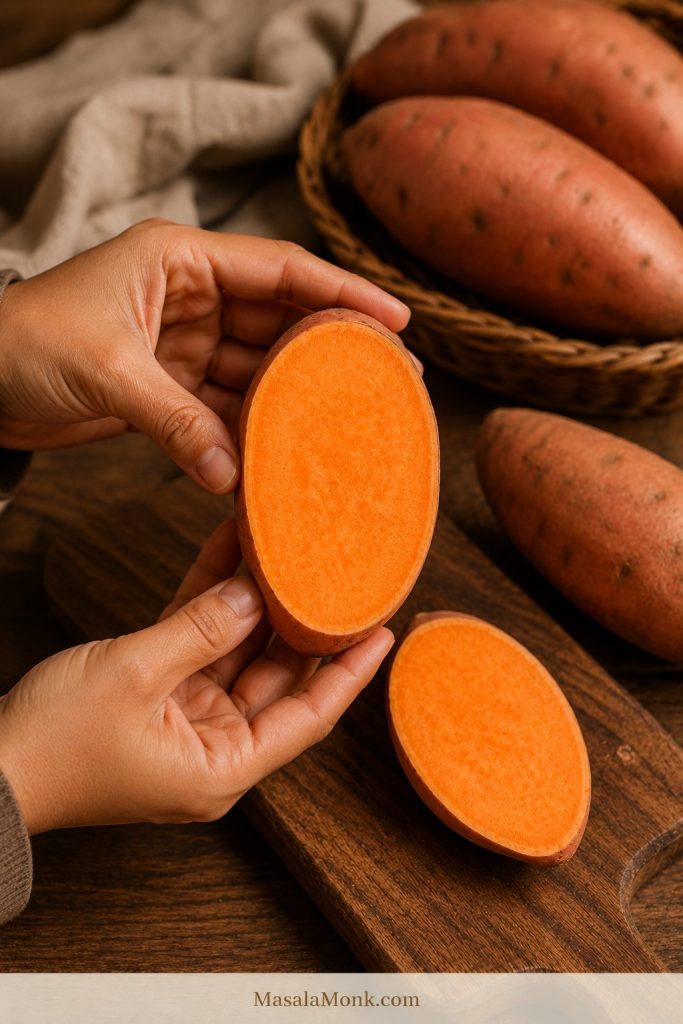
Hands holding a freshly cut raw orange sweet potato half with whole sweet potatoes in the background.
For most candied yams recipes, orange-fleshed sweet potatoes are the right choice even when the store labels them “yams.” Their color, sweetness, and soft texture create the familiar holiday side dish.
Simple shopping rule: if the inside is deep orange and the label says sweet potato, yam, jewel, garnet, or red yam, it will work for this recipe.

Ingredients You’ll Need

The ingredient list is simple because candied yams are not trying to be fancy. What matters is balance: enough brown sugar to feel candied, enough butter to feel rich, enough salt and citrus to keep the sweetness from going flat.

Brown sugar gives the sauce depth, butter gives it body, and salt keeps the dish balanced. Vanilla, warm spices, and a little orange juice or lemon juice round out the flavor. If you like that orange-bright flavor, the same idea works beautifully in cranberry sauce with orange juice.
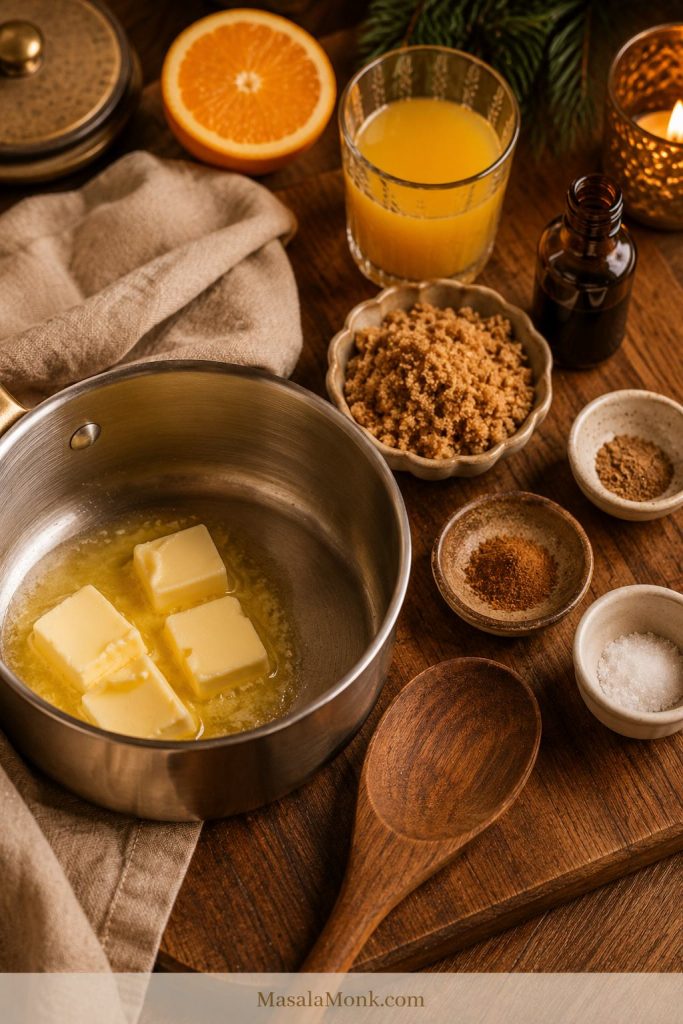
Butter, brown sugar, cinnamon, nutmeg, orange juice, vanilla, and salt arranged beside a small saucepan.
A good candied yams sauce needs more than sweetness. Butter and brown sugar bring richness, while salt, vanilla, warm spices, and citrus keep the flavor rounded.

Ingredient Amounts and Cues

Ingredient Amount Why It Matters
Orange sweet potatoes / yams 3 lb / 1.35 kg The base of the dish. Use orange sweet potatoes for the classic color and texture.
Unsalted butter 1/2 cup / 113 g Makes the sauce rich and smooth.
Brown sugar 3/4 cup / 150 g, or up to 1 cup / 200 g for a sweeter style Gives the deep caramel-like sweetness.
Maple syrup or orange juice 1/4 cup / 60 ml Maple gives deeper flavor; orange juice gives brightness.
Water 2–4 tbsp / 30–60 ml Helps the sugar dissolve into a smooth sauce.
Cinnamon 1 tsp The main warm spice.
Nutmeg 1/4 tsp Adds classic warmth.
Ginger 1/4 tsp, optional Adds a little extra spice without taking over.
Salt 1/2 tsp Balances the sugar and butter.
Vanilla extract 1–2 tsp Rounds out the brown sugar mixture. Add it off the heat.
Lemon juice or apple cider vinegar 1–2 tsp, optional Useful if you want a sweet-but-not-cloying finish.
Mini marshmallows 2–3 cups, optional Add at the end for a toasted topping.
Chopped pecans 1/2 cup, optional Adds crunch. Best added near the end so they stay crisp.

Small Ingredient Choices That Matter

When the balance is right, the coating tastes buttery and warm, not just sugary, and the sweet potatoes stay tender enough to spoon but firm enough to hold.

Less sweet version: use 3/4 cup brown sugar instead of 1 cup, choose orange juice instead of maple syrup, and add 1–2 teaspoons lemon juice or apple cider vinegar to balance the sauce.

If you are tempted to use a ready spice blend, keep it gentle. A small pinch of apple pie spice can work because it usually leans on cinnamon, nutmeg, and warm baking spices, but too much can make the yams taste more like dessert than a side dish.

Best dish: use a deep 9×13-inch / 23×33 cm glass or ceramic baking dish for the fresh version. Use an 8×8-inch / 20×20 cm dish for one 29 oz / 822 g can. Avoid sheet pans because the syrup spreads too thin and can burn before the yams soften.

How to Make Candied Yams

This is the version to make when you want the dish to look generous on the table: tender slices, glossy sauce, and enough structure that the yams do not collapse when you spoon them out. For the fresh baked version, the rhythm is simple: cover, uncover, rest.

1. Prep the sweet potatoes

Peel the sweet potatoes and slice them into 1/2-inch / 1.25 cm rounds. If the sweet potatoes are very wide, cut the rounds into half-moons so they are easier to serve.

Thin slices tend to soften before the syrup has time to reduce, while very thick slices need longer and can make the edges overcook. The best texture comes from slices that are thick enough to hold together but thin enough to soften in the covered bake.
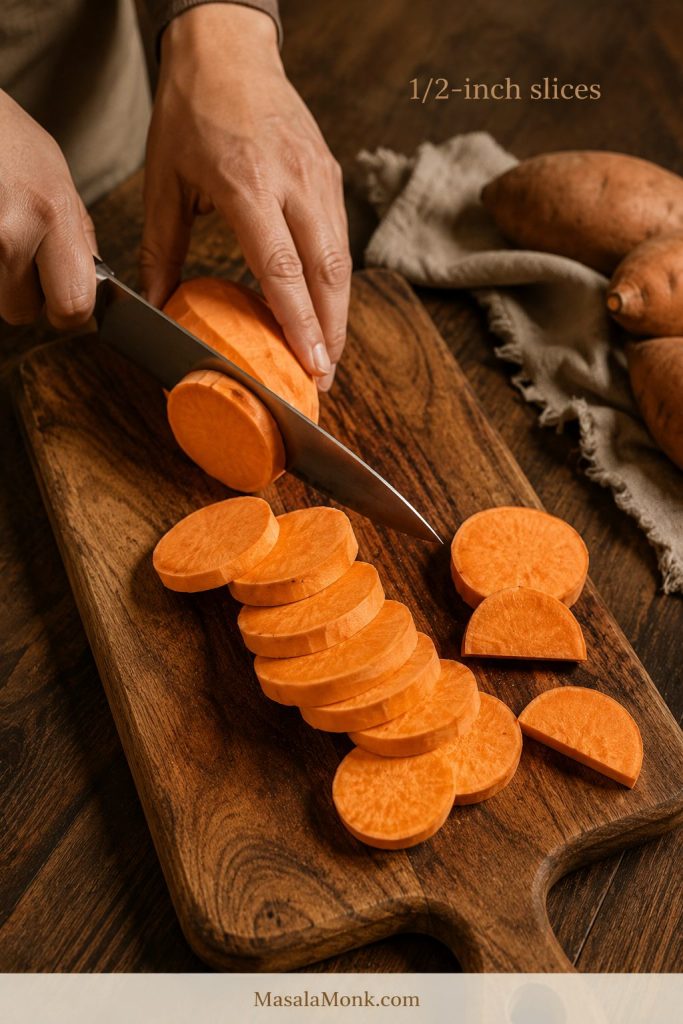
Hands slicing peeled orange sweet potatoes into half-inch rounds on a wooden cutting board.
Even slices make the whole dish easier to control. Around 1/2 inch gives the sweet potatoes enough body to stay intact while still softening into the sauce.

2. Make the brown sugar butter glaze

Melt the butter in a saucepan over medium heat. Add the brown sugar, maple syrup or orange juice, water, cinnamon, nutmeg, ginger if using, and salt. Stir until the sugar dissolves and the mixture looks smooth and shiny.

Let it bubble gently for 1–2 minutes, then remove it from the heat and stir in the vanilla. If using lemon juice or apple cider vinegar, stir it in now.
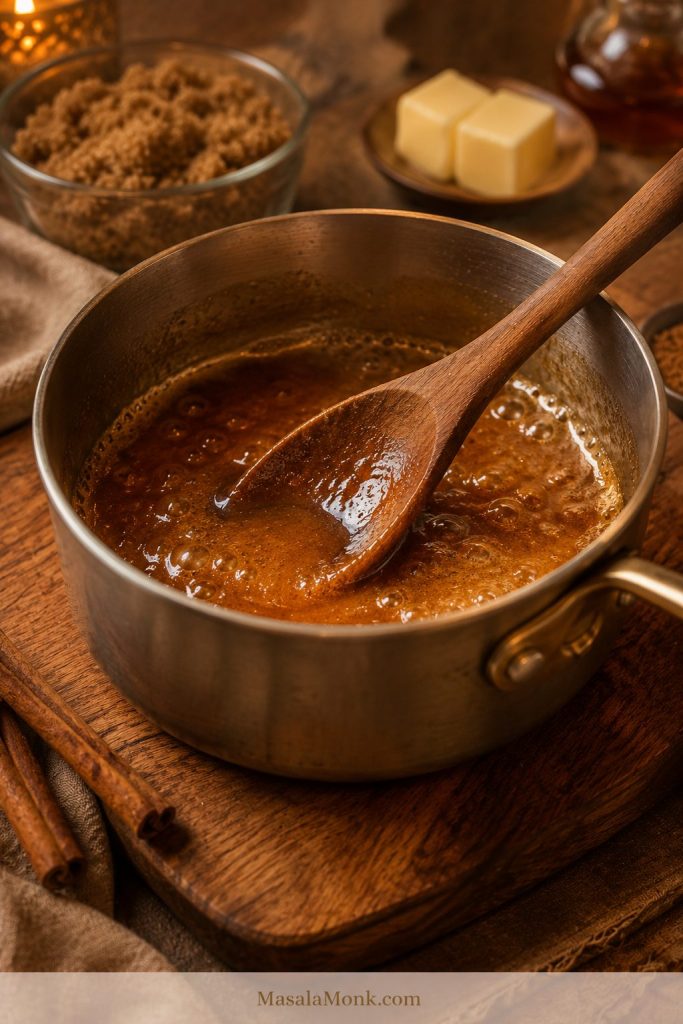
Brown sugar butter sauce simmering in a saucepan while a wooden spoon moves through the mixture.
Before it goes over the sweet potatoes, the butter and brown sugar mixture should look smooth and shiny. If it looks grainy, warm it gently until the sugar dissolves.
Glaze cue: the mixture should look shiny and pourable, not grainy or separated. It does not need to be thick like caramel at this stage. The oven will reduce it more.

3. Arrange and coat the yams

Place the sliced sweet potatoes in a greased 9×13-inch / 23×33 cm baking dish. Pour the warm glaze over the top, then gently turn the slices or spoon the brown sugar mixture over them so they are coated.
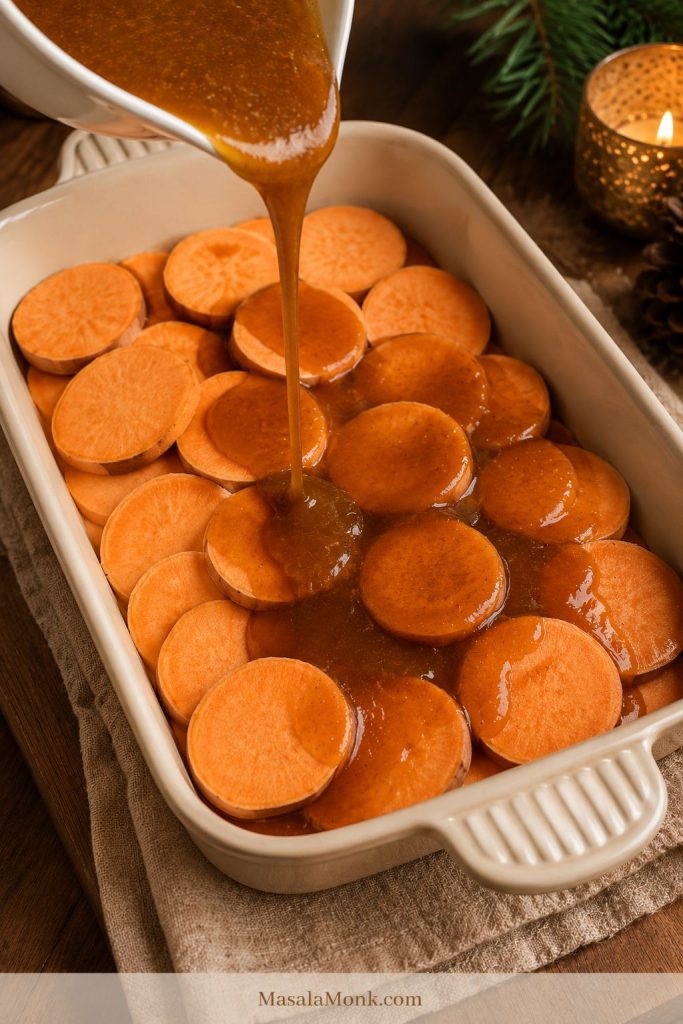
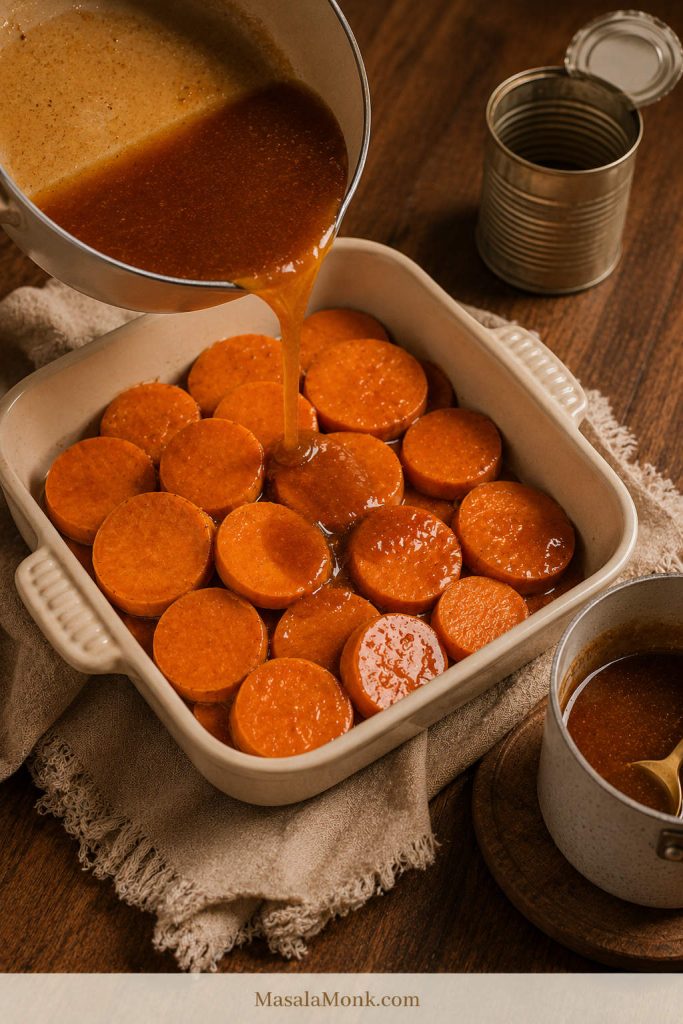
Brown sugar butter sauce being poured over arranged orange sweet potato slices in a cream baking dish.
Coat every slice before the dish goes into the oven. As a result, the sweet potatoes bake into the sauce instead of drying out on top.

The slices do not have to be in one perfect layer, but avoid packing them so tightly that the sauce cannot move around them. A little space helps the edges bubble slowly and the syrupy coating thicken without scorching.

4. Bake covered

Cover the dish tightly with foil and bake at 350°F / 175°C for 35–40 minutes. The yams should begin to soften, but they should not be falling apart yet.

During the covered stage, steam softens the sweet potatoes without drying them out. It also gives the buttery syrup time to soak into the slices.

5. Bake uncovered

Remove the foil, spoon the sauce over the yams, and bake uncovered for another 20–25 minutes. By the end of baking, the edges should bubble slowly and the top slices should look lacquered, not dry.

The yams are ready when they are fork-tender and a spoon drags a shiny trail over the slices instead of leaving thin liquid behind. They do not need to look perfect at every stage; by the time they rest, they should be tender, coated, and sitting in a glossy coating. If the dish still looks loose, give it another 5–10 minutes uncovered.
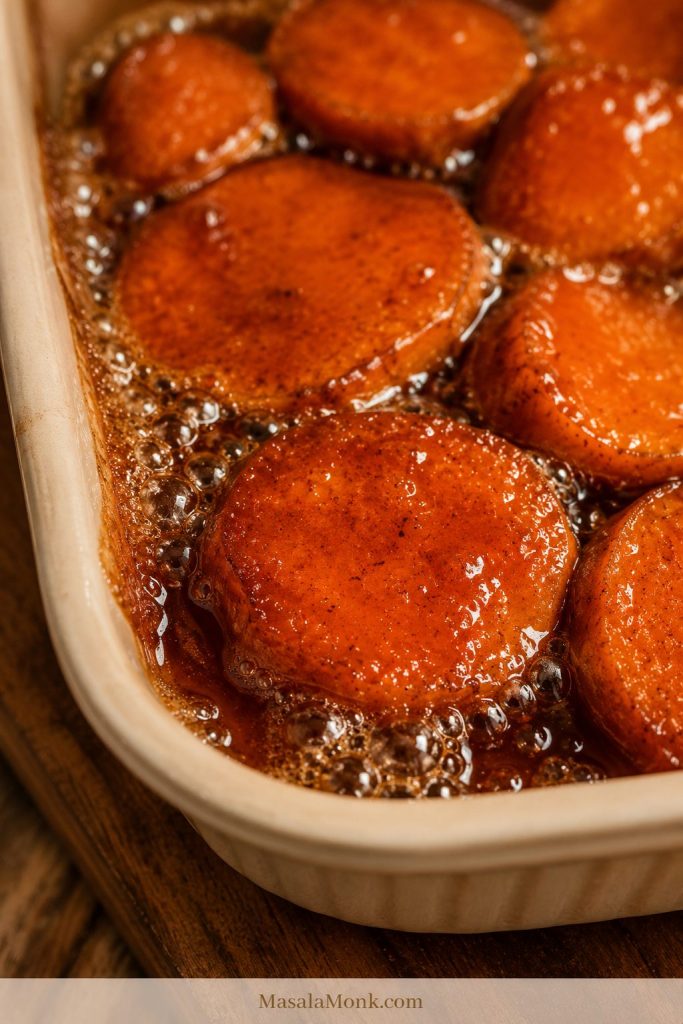
Candied yams bubbling uncovered in a cream baking dish as the sauce reduces around the orange slices.
The uncovered bake is where the sauce tightens. Look for gentle bubbling around the edges and shiny slices instead of thin liquid sitting underneath.

If the edges darken too quickly or the syrup starts to smell scorched instead of buttery and spiced, move the dish away from the hottest part of the oven.
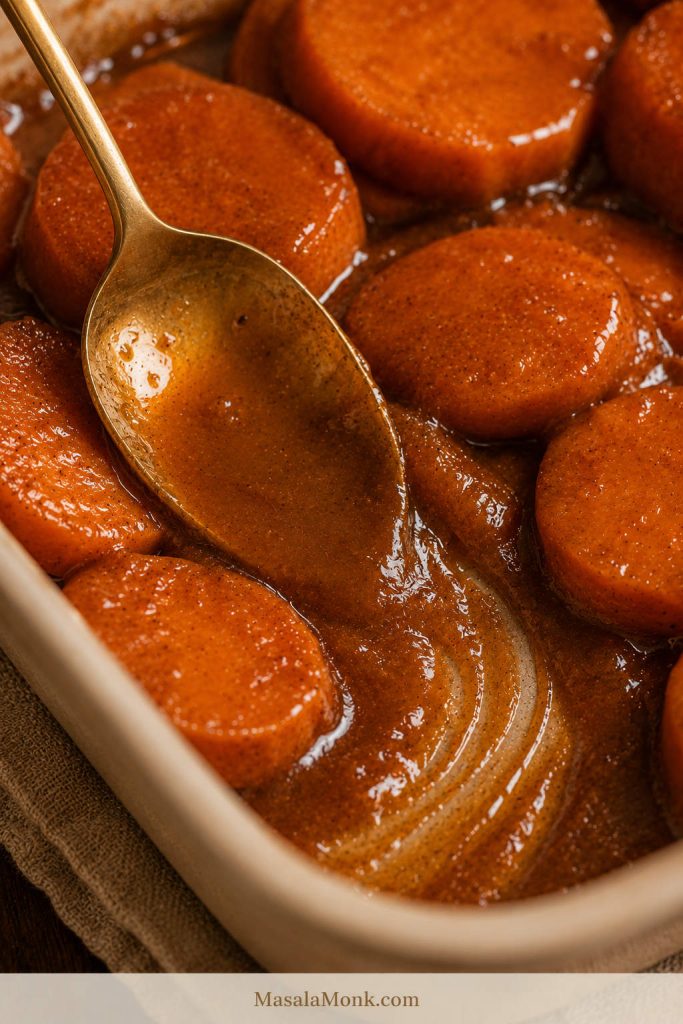
What success looks like: the yams are fork-tender but still holding together, the edges bubble slowly, a spoon drags a shiny trail through the coating, and there is no thin liquid pooling at the bottom.
Spoon dragging through thick brown sugar sauce between candied yam slices in a baking dish.
A spoon trail is one of the clearest doneness cues. When the sauce leaves a shiny path before slowly settling back, the candied yams are close to ready.

6. Add marshmallows if you want them

If using marshmallows, scatter them over the yams during the final 8–12 minutes of baking. They should puff into a soft golden blanket, with toasted tops and a little give underneath. For deeper browning, use the broiler for a few seconds at the end.

Marshmallows brown fast, so this is the one moment to stay by the oven.

7. Rest before serving

Let the dish rest for about 10 minutes before serving. Give the brown sugar sauce a chance to settle before deciding it is too thin. A short rest is part of the recipe, not just waiting time, and the resting section explains why it works.

After that rest, the slices are easier to lift and the sauce clings better. Serve the yams warm, not straight-from-the-oven hot, so the glossy coating has time to settle. The dish should smell like butter, brown sugar, cinnamon, and sweet potatoes — not scorched sugar.

How to Make Candied Yams with Canned Yams and Marshmallows

Canned yams are not a shortcut you need to apologize for. For many families, they are the version that actually tastes familiar. The only trick is to remember that they are already cooked, so you are simply warming, coating, and finishing them.

With canned yams, keep the rhythm even simpler: drain, coat, heat, stop. Add marshmallows at the end if you want that classic topping.
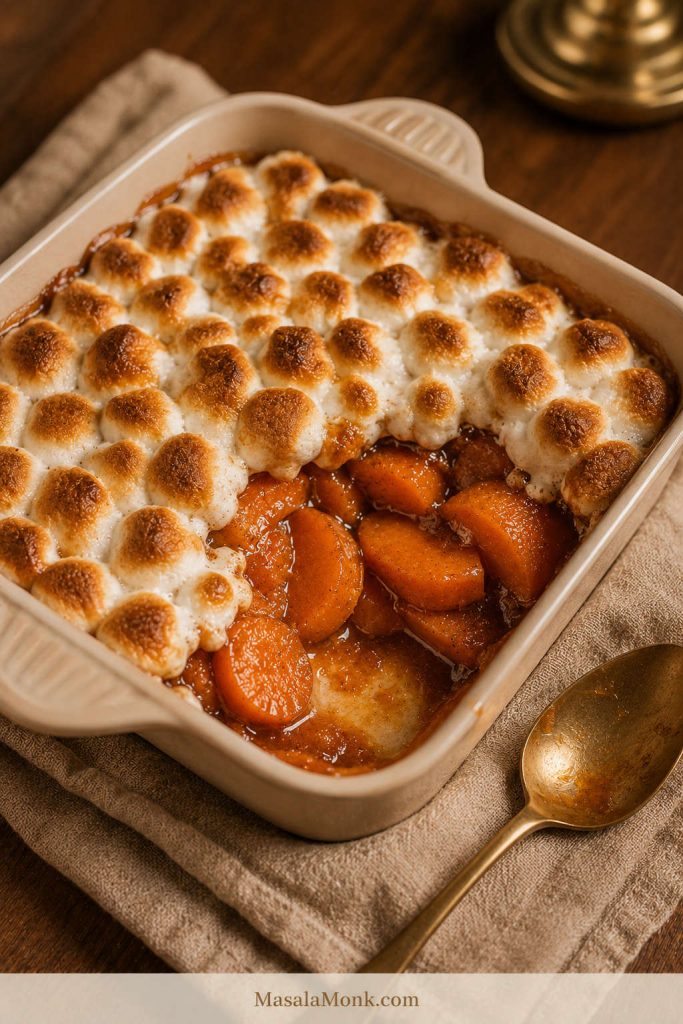
Small cream baking dish of canned candied yams with toasted mini marshmallows and a scooped corner showing orange yams underneath.
With canned yams, the best result is a warm coated center and a toasted finish. The scooped corner should still show orange pieces underneath, not a mashed layer hidden by marshmallows.

Canned-Yam Timing

Batch Size Canned Yams Dish Oven Timing
Small batch 1 can, 29 oz / 822 g, drained 8×8-inch / 20×20 cm 375°F / 190°C 15 minutes, then 5–8 minutes with marshmallows
Larger batch 1 large can, 40 oz / 1.13 kg, drained 9×13-inch / 23×33 cm 375°F / 190°C 18–20 minutes, then 5–8 minutes with marshmallows
Double-can batch 2 cans, 29 oz / 822 g each, drained 9×13-inch / 23×33 cm 375°F / 190°C 20–22 minutes, then 5–8 minutes with marshmallows
Mini canned-yam version: for one 29 oz / 822 g can, drain well, use 3 tbsp butter, 1/3–1/2 cup brown sugar, 1/2 tsp cinnamon, a pinch of nutmeg, a pinch of salt, and 1 tsp vanilla. Bake at 375°F / 190°C for 15 minutes, then add marshmallows for 5–8 minutes if using.
Small cream baking dish filled with canned yams as brown sugar sauce is poured over them.
For a one-can batch, scale the dish and sauce down together. Since canned yams are already cooked, the goal is warming and coating, not long baking.

Drain well. A few tablespoons of canning liquid can loosen a thick sauce; the full can usually makes the dish watery.
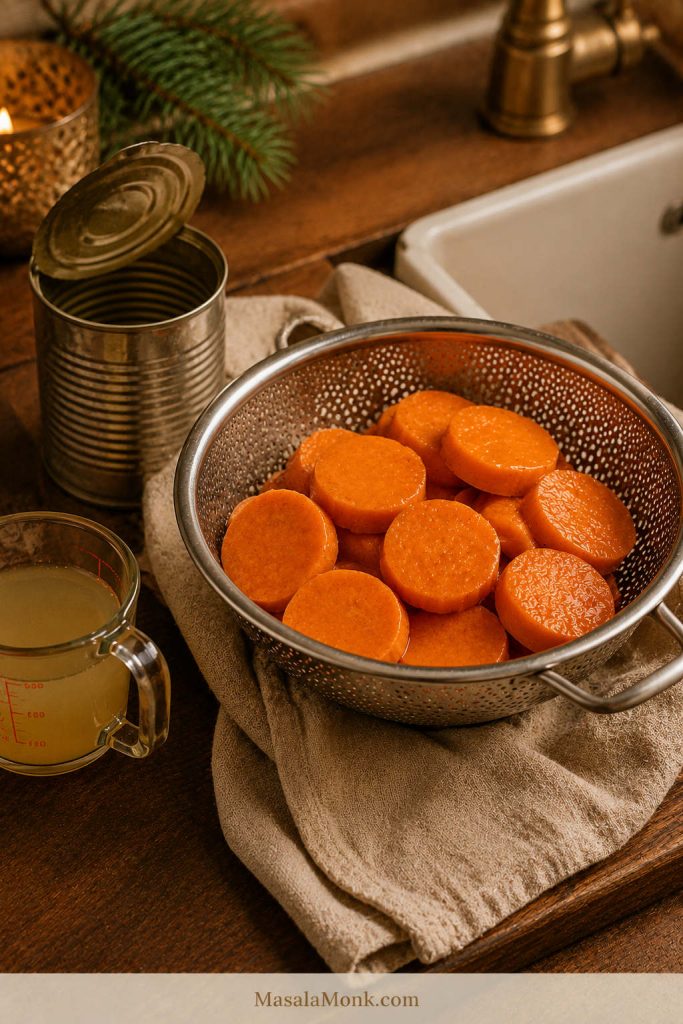
Drained canned yams in a metal colander with an opened unbranded can and a small measuring cup of liquid nearby.
Canned yams save time, but the liquid in the can can thin the sauce quickly. Drain first, then add back only a spoonful or two if the mixture needs loosening.

Warm the butter, brown sugar, cinnamon, nutmeg, salt, and vanilla into a quick glaze, pour it over the drained canned yams, and bake only until hot. With canned yams, gentleness matters most. Stirring breaks them down faster than baking does.

How to keep canned yams from getting mushy
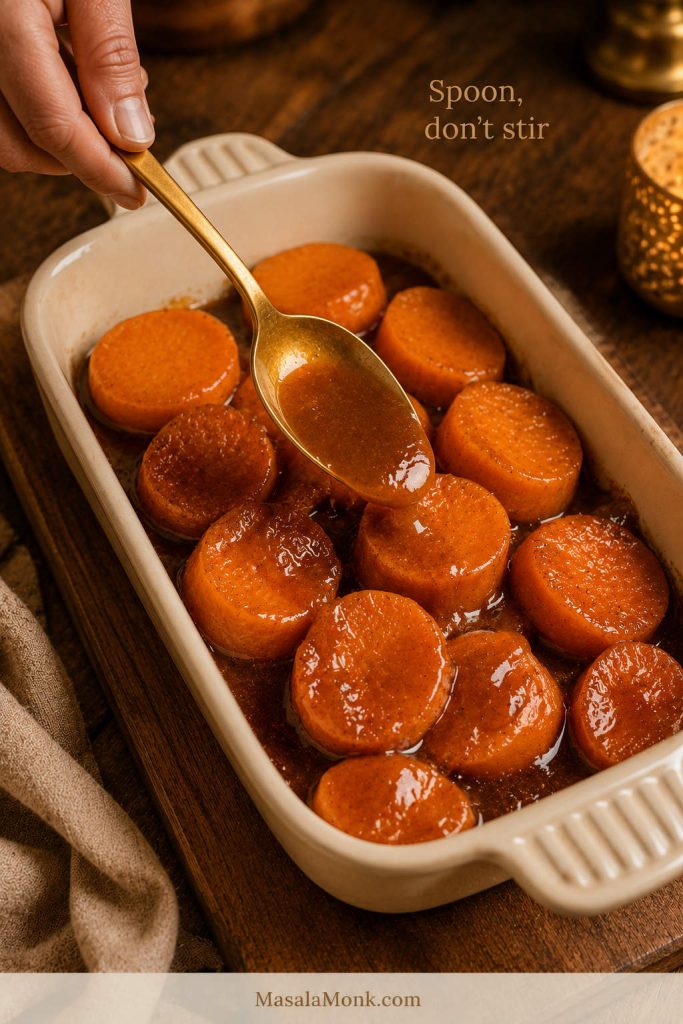
Spoon gently pouring sauce over intact canned yam pieces with visible text reading Spoon, don’t stir.
Instead of stirring canned yams, spoon the sauce over the top. This keeps the pieces intact and helps prevent the dish from turning into sweet potato mash.
  • Leave large pieces large. Smaller pieces break down faster.
  • Use less sugar if the yams are packed in syrup. Start lower, then adjust next time if you want them sweeter.
  • Rinse only if the syrup is very heavy. Draining is usually enough. Rinsing helps only if you want a less sweet version.
  • Spoon instead of stirring. Tilt the dish gently or ladle sauce over the top.
  • Bake uncovered if the syrup looks loose. This helps extra moisture evaporate.
  • Make canned yams closer to serving time if presentation matters. They soften more as they sit.

Quick glaze for canned yams

Can Size Butter Brown Sugar Spices and Vanilla
29 oz / 822 g can 3 tbsp 1/3 cup if packed in syrup, 1/2 cup if packed in water or light syrup 1/2 tsp cinnamon, pinch nutmeg, pinch salt, 1 tsp vanilla
40 oz / 1.13 kg can 4 tbsp 1/2 cup 3/4 tsp cinnamon, pinch nutmeg, pinch salt, 1 tsp vanilla
2 cans, 29 oz / 822 g each 5–6 tbsp 2/3 cup if packed in syrup, 3/4 cup if packed in water or light syrup 1 tsp cinnamon, 1/4 tsp nutmeg, 1/4 tsp salt, 2 tsp vanilla

If your canned yams are very sweet already, start with the lower sugar amount. You can always make the next batch sweeter, but it is harder to rescue a dish that has become cloying.

Stovetop Candied Yams, Southern-Style

Southern-style candied yams are often less about a casserole and more about tender sweet potatoes coated in a buttery brown sugar syrup. Some versions are baked, some are made on the stovetop, some finish with marshmallows, and some stay plain and glossy.

When the oven is full, the stovetop is often the easiest way to stay in control of the sauce. It is also a good choice if you like a spoon-coated finish because you can watch it reduce in real time, baste the slices, and stop when the yams are tender but still holding together.

The flavor usually leans brown sugar, butter, cinnamon, nutmeg, vanilla, and sometimes citrus. Done well, it tastes rich without becoming flat: enough sugar to feel candied, enough salt and spice to keep every bite balanced.

Use the widest heavy-bottomed skillet or Dutch oven you have. A wide pan gives the sweet potatoes enough room to cook evenly, and a heavy base helps protect the sugar from scorching.
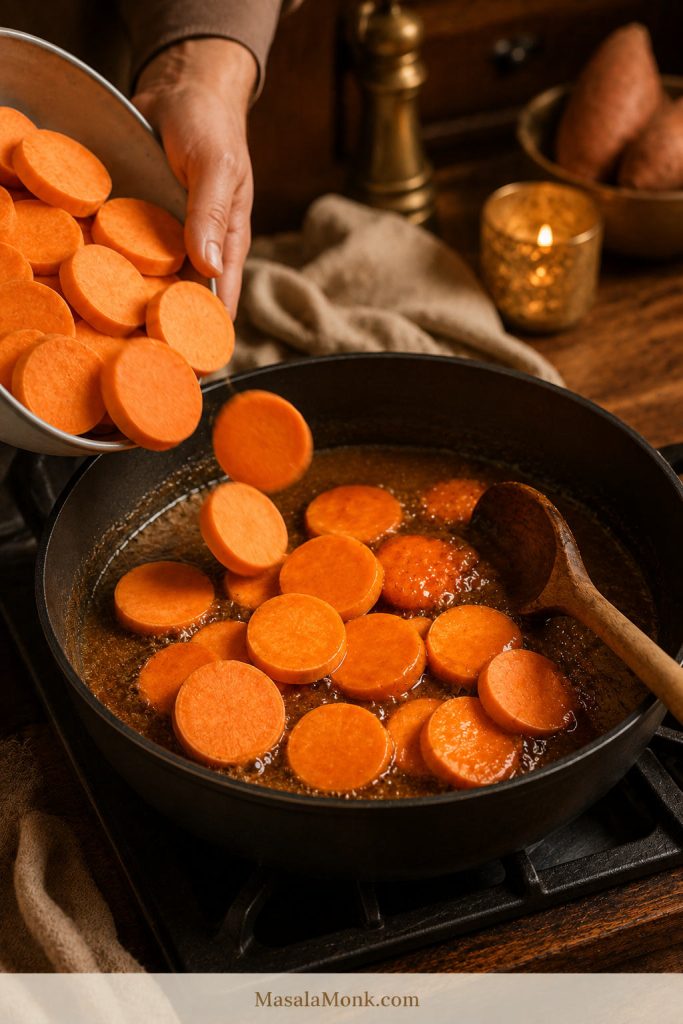
Fresh orange sweet potato slices being added by hand to a dark skillet with a shallow butter and sugar mixture.
For stovetop candied yams, use a wide pan so the slices have room to cook evenly. A shallow butter-sugar mixture also helps the syrup reduce without crushing the sweet potatoes.

How to make candied yams on the stove

  • Melt the butter in a wide skillet or Dutch oven over medium-low heat.
  • Add brown sugar, maple syrup or orange juice, water, cinnamon, nutmeg, ginger if using, and salt.
  • Stir until the sugar starts to dissolve and the glaze looks smooth.
  • Add the 1/2-inch / 1.25 cm sweet potato slices and gently coat them.
  • Cover and cook over medium-low heat for 35–45 minutes, basting every 10–15 minutes. Start checking at 35 minutes.
  • When the yams are almost tender, uncover and simmer for 7–15 minutes more so the syrup thickens.
  • Finish with vanilla off the heat. Add lemon juice or apple cider vinegar if the sauce tastes too sweet.

Stovetop Reduction Cues

Keep the stovetop version patient and gentle; high heat can burn the sugar before the potatoes soften. If the pan looks dry at any point, lower the heat before adding more liquid.
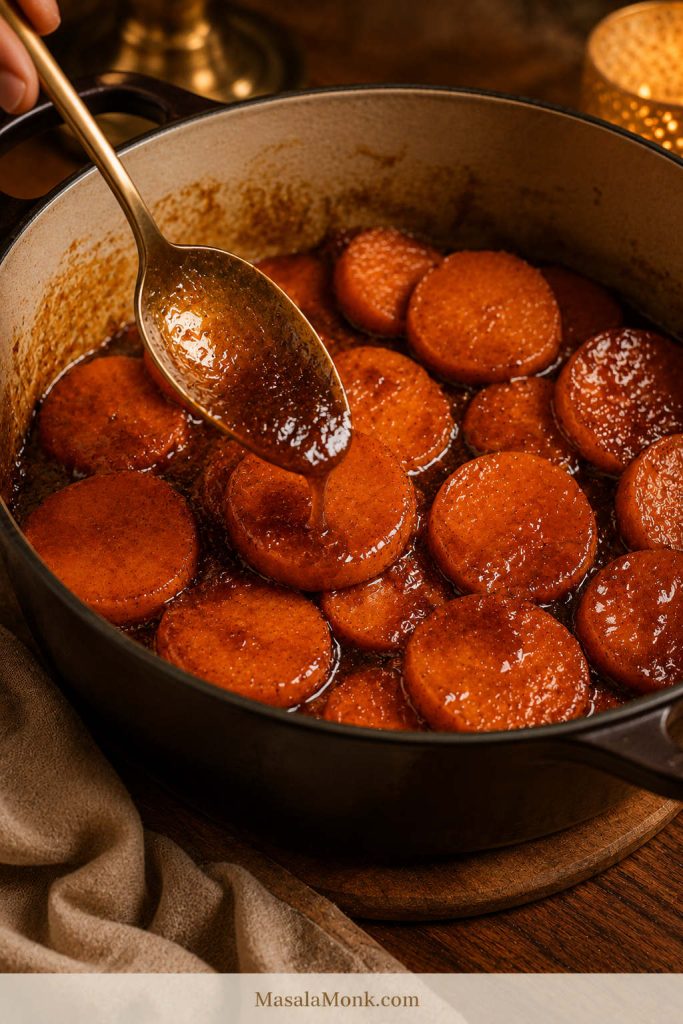
Spoon basting brown sugar syrup over orange candied yam rounds in a dark skillet.
Once the stovetop syrup begins to thicken, baste gently instead of stirring hard. This coats the tops while the sweet potato rounds stay whole.

Stay close during the uncovered reduction stage. The syrup can move from shiny to scorched quickly once the extra moisture cooks off.

Stovetop cue: the yams are done when they are fork-tender and the sauce coats the back of a spoon. If the syrup thickens before the yams are soft, add 1–2 tablespoons water and keep cooking covered. When the yams are soft but the sauce is thin, uncover and simmer a little longer.

Stir as little as possible. Use a spoon to baste the slices or gently shake the pan instead of stirring like a stir-fry. This keeps the sweet potatoes from breaking apart.
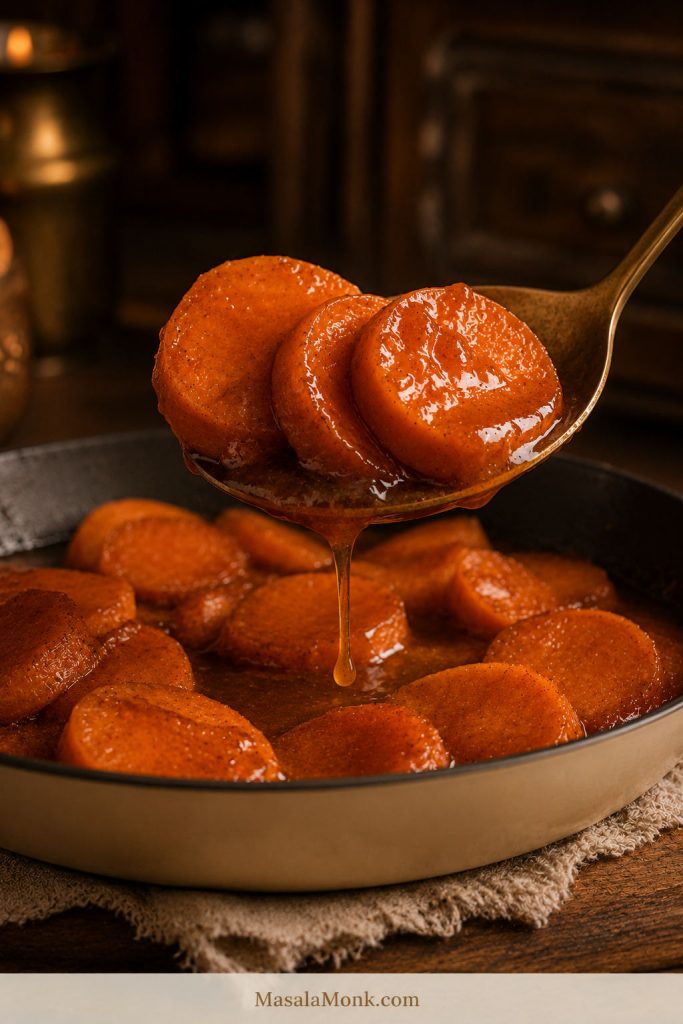
Spoon lifting stovetop candied yam slices from a dark skillet with thick syrup dripping back into the pan.
Finished stovetop candied yams should look rich and syrupy, with a darker, deeper glaze than the baked version. Keep the heat gentle so the sugar thickens without scorching.

Can I Bake Candied Yams at 375°F?

Yes. The main recipe uses 350°F / 175°C for steady, even softening, but 375°F / 190°C works if you need a slightly faster bake. Check earlier, baste once or twice, and watch the edges so the sugar does not dry out before the yams are tender.

Candied Yams with Marshmallows

For marshmallows, the timing is everything: tender first, toast last. Marshmallows are the part people notice first, so they deserve a little timing. Add them too early and they disappear into the sauce; add them at the end and you get the soft, golden topping people remember.
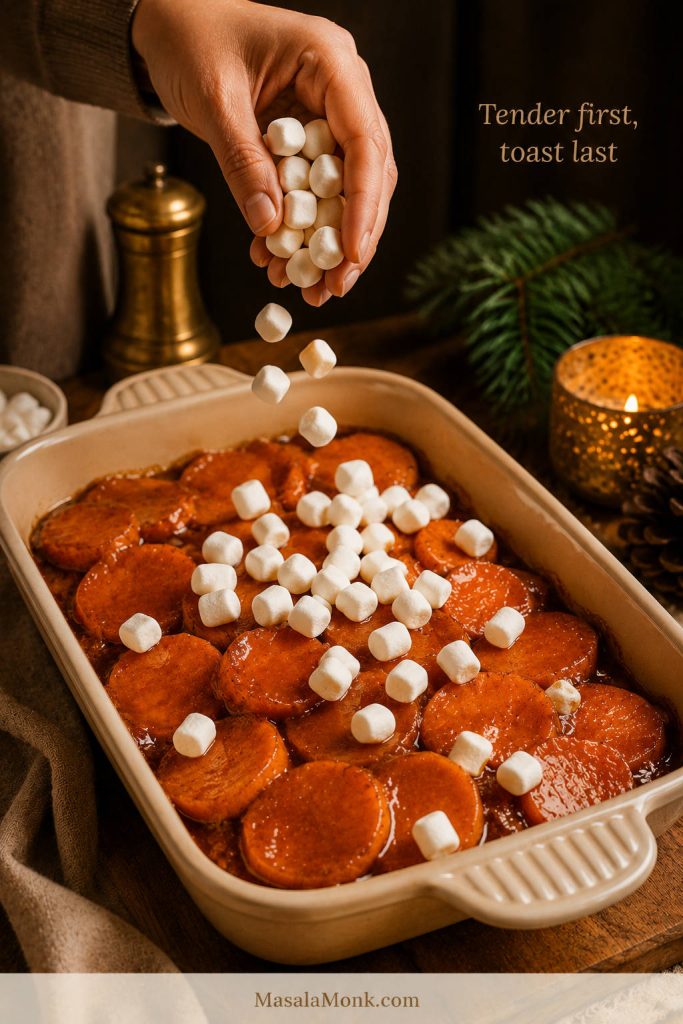
Mini marshmallows being sprinkled over hot candied yams with visible text reading Tender first, toast last.
Marshmallows are a finish, not a cooking ingredient. Add them when the yams are already tender so they puff on top instead of disappearing into the sauce.

If your family expects marshmallows, let them be the finish, not the sauce.

When to Add Marshmallows

  • At 350°F / 175°C, add marshmallows for the final 8–12 minutes.
  • For 375°F / 190°C, add them for the final 5–8 minutes.
  • In a 400°F / 200°C oven, watch closely and check after 5 minutes.
  • Under the broiler, they may brown in 30–90 seconds.

You want the topping puffed, soft, and lightly golden — not fully dissolved into the glaze.
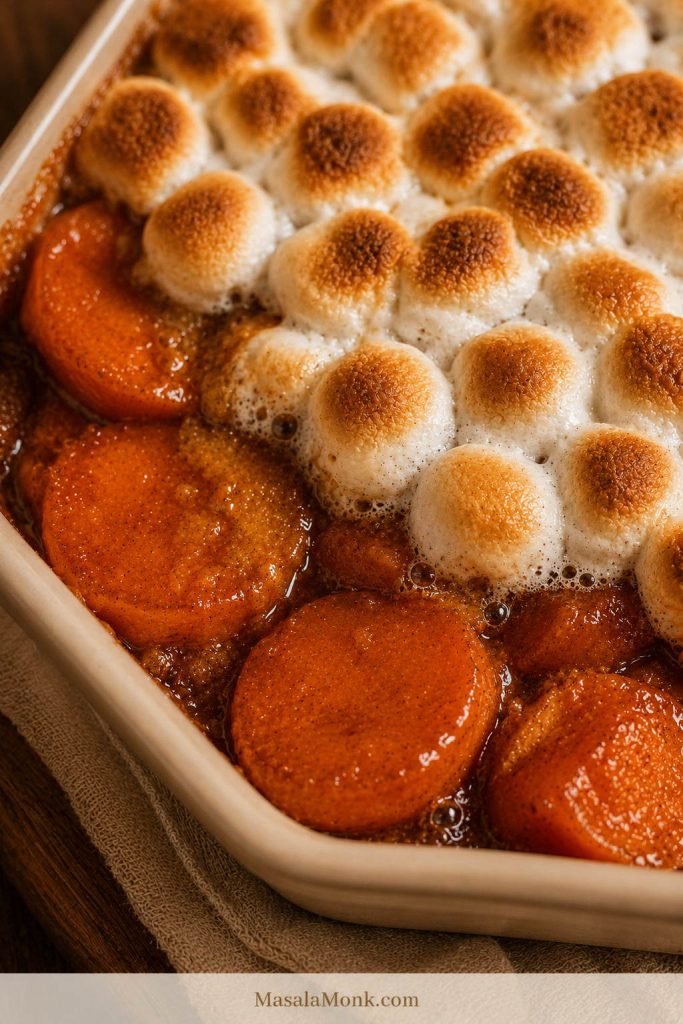
Close-up of toasted mini marshmallows on candied yams with orange yam slices visible underneath.
The marshmallow topping is ready when it is puffed, soft, and lightly golden. Importantly, you should still see orange yams and a little sauce underneath.

The best marshmallow topping comes from adding them when the yams are already hot, so they puff quickly instead of sinking into the sauce.

Mini marshmallows are easiest because they scatter evenly and brown quickly. Large marshmallows can work, but cut them in half or use fewer so the topping does not become too thick.

For pecans and marshmallows together, add the pecans near the end, then scatter marshmallows over the top. This keeps the nuts from sitting under foil for too long and turning soft.
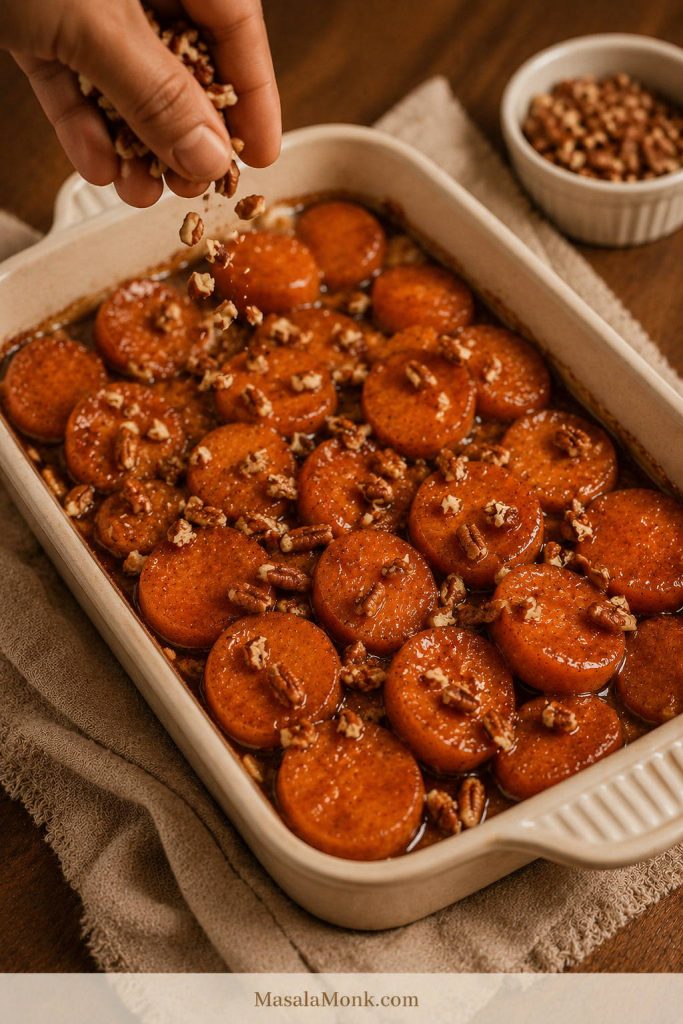
Hand sprinkling chopped pecans over candied yam slices in a cream baking dish.
Add pecans near the end so they stay crisp instead of steaming under foil. They bring crunch and nuttiness without taking over the brown sugar flavor.

How to make candied yams without marshmallows

To make candied yams without marshmallows, simply skip the topping and focus on the glaze. Bake uncovered until the yams are tender and the brown sugar butter sauce looks shiny and spoonable. For a little finish without marshmallows, add pecans near the end, a small pinch of orange zest, or nothing at all.
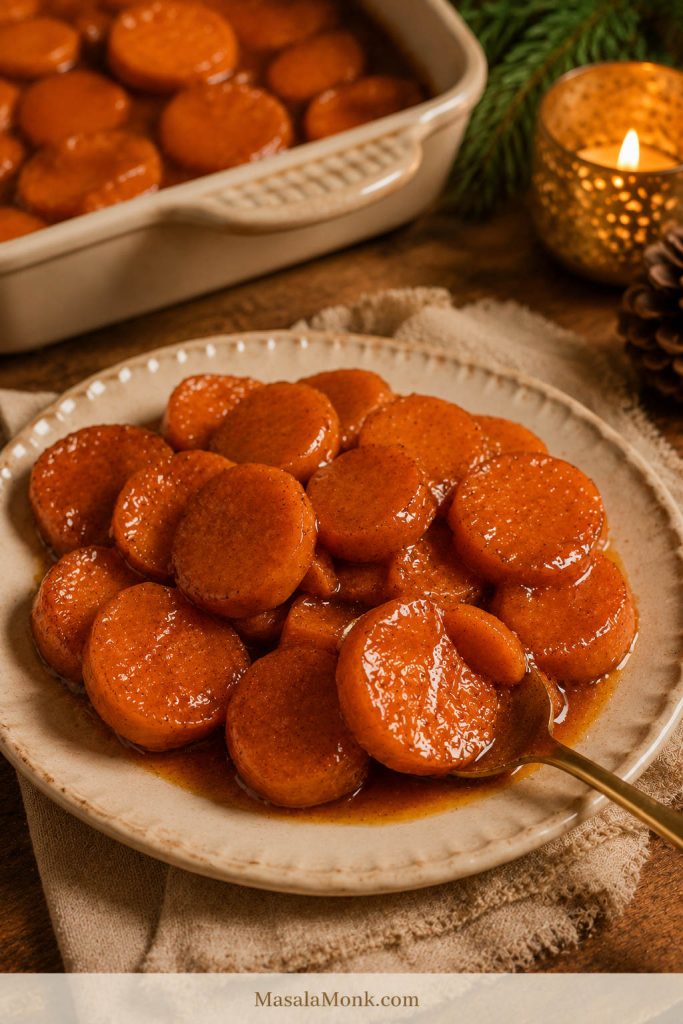
Candied yams without marshmallows served on a cream plate with brown sugar sauce.
No-marshmallow candied yams rely on the sauce for their finish. The flavor should be buttery, warmly spiced, and complete without needing a topping.

If your table loves the glossy plain version, stop before the topping and let the brown sugar butter sauce shine. The plain version is often the best choice when you want the sweet potatoes, butter, brown sugar, and warm spices to be the main flavor.

Small Things That Make a Big Difference

These are the small choices that prevent most candied-yam problems before they start.

  • Keep slices about 1/2 inch thick. Thin slices soften quickly and can fall apart before the sauce thickens.
  • Drain canned yams well. A few tablespoons of liquid can loosen the syrup, but the full can may make it watery.
  • Handle canned yams gently. Spoon sauce over them instead of stirring hard.
  • Save marshmallows for the end. They need just enough time to puff and brown.
  • Let the sauce rest before judging it. It thickens after the dish cools slightly.
  • Use a deeper baking dish. A flat sheet pan spreads the syrup too thin for this style.

Thanksgiving Timing Plan

On a holiday table, candied yams should not be the dish that makes the day harder. They can wait, reheat, hold their sauce, and still feel special when they come to the table warm and glossy.

The best part of this dish is that it does not need to be dramatic at the last minute. Make it ahead, reheat it gently, and save the marshmallows for the final finish.

For storage and reheating details, use the make-ahead section before planning the serving-day schedule, especially if your oven also needs time for macaroni and cheese or other baked sides.

When What to Do
2 days before Buy sweet potatoes or yams, butter, brown sugar, spices, marshmallows, and pecans if using.
1 day before Bake the fresh candied yams without marshmallows. Cool, cover, and refrigerate.
Serving day Reheat covered at 350°F / 175°C until hot, usually 20–25 minutes.
Final 8–12 minutes Add marshmallows or pecans and bake until puffed, golden, and hot.
When the oven is full Use the stovetop method, or reheat the baked yams once the oven opens up.
Using canned yams Make them closer to serving time for the best texture and cleanest presentation.

If you are transporting candied yams, keep the marshmallows off until you reheat, if possible. Marshmallows soften as they sit, and they look best when added close to serving.

Crockpot Candied Yams

Crockpot candied yams are helpful when the oven is full, but the sauce will usually stay thinner than baked or stovetop versions. Use fresh sweet potatoes, not canned, for the best shape. Cook on low for 3–4 hours, then reduce extra liquid in a small saucepan if needed. Add marshmallows only before serving.

Variations

  • No marshmallows: keep the top plain and let the brown sugar butter sauce shine.
  • Pecan topping: add chopped pecans near the end so they stay crisp instead of steaming under the foil.
  • Orange juice glaze: use it instead of maple syrup for a brighter, less heavy glaze.
  • Maple finish: use maple syrup for a deeper, rounder flavor.
  • Pineapple version: add well-drained pineapple near the end so it does not thin the sauce too much.
  • Less sweet: reduce brown sugar to 3/4 cup and add lemon juice or apple cider vinegar.
  • Vegan version: use plant-based butter and skip marshmallows unless they are vegan.

Keep variations simple. Candied yams are already rich, so one or two upgrades are usually enough. Pecans and marshmallows work well together. Orange juice and maple syrup are both good, but you do not need every sweet ingredient in the same dish.

Troubleshooting Candied Yams

Most candied-yam problems are fixable because they usually come from one of four things: too much liquid, too much heat, too much time, or too much stirring.
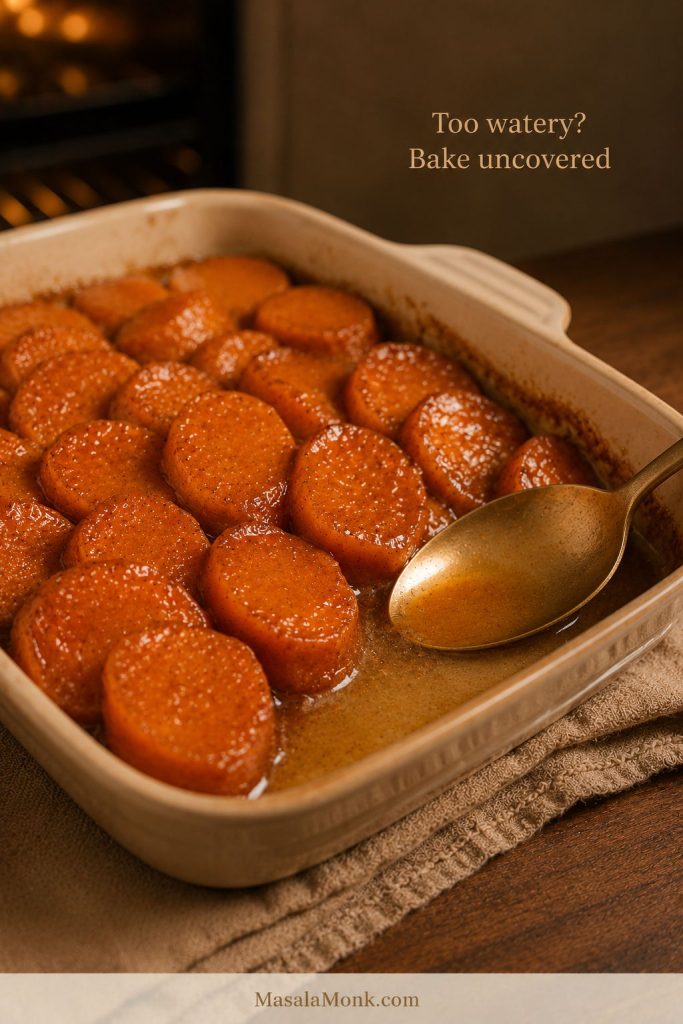
Candied yams in a baking dish with a spoon lifting thin liquid from one corner and visible text reading Too watery? Bake uncovered.
For watery candied yams, a thin pool at the edge usually means more uncovered time, not a full rescue. Let extra moisture evaporate, then give the sauce a few minutes to settle.

They often look worse in the pan than they taste on the plate. If the dish tastes good but looks loose, pause before changing anything. Rest it, then reduce it if needed. Hot sauce almost always looks thinner than settled sauce, so check why the sauce thickens after resting before extending the bake time.

Quick Fixes by Problem

Problem Why It Happened How to Fix It
Yams are watery Too much liquid, canned yams were not drained, or the dish stayed covered too long Bake or simmer uncovered until the sauce reduces. Spoon out extra liquid if needed.
Yams are mushy Slices were too thin, overcooked, or canned yams were stirred too much Use 1/2-inch slices for fresh yams and handle canned yams gently.
Sauce is thin It has not reduced enough, or it is still very hot Bake uncovered longer and let the dish rest for 10 minutes before serving.
Sugar burned Heat was too high or the pan was too shallow Use a deeper baking dish or lower heat. Spoon sauce over the yams during baking.
Butter separated The sugar did not dissolve fully into the butter mixture Simmer the glaze until smooth before pouring it over the yams.
Too sweet Heavy syrup canned yams or too much sugar Add a little salt, orange juice, lemon juice, or apple cider vinegar. Use less sugar next time.
Marshmallows disappeared They were added too early Add marshmallows only in the final 5–12 minutes.
Pecans got soggy They were baked under foil too long Add pecans near the end or sprinkle them on before the marshmallows.

Why the sauce thickens after resting

The sauce often looks loose when the dish first comes out of the oven. That does not mean it failed. As the butter-sugar mixture cools slightly, it becomes thicker and clings better to the sweet potatoes. Give the dish 10 minutes before deciding it is too thin.
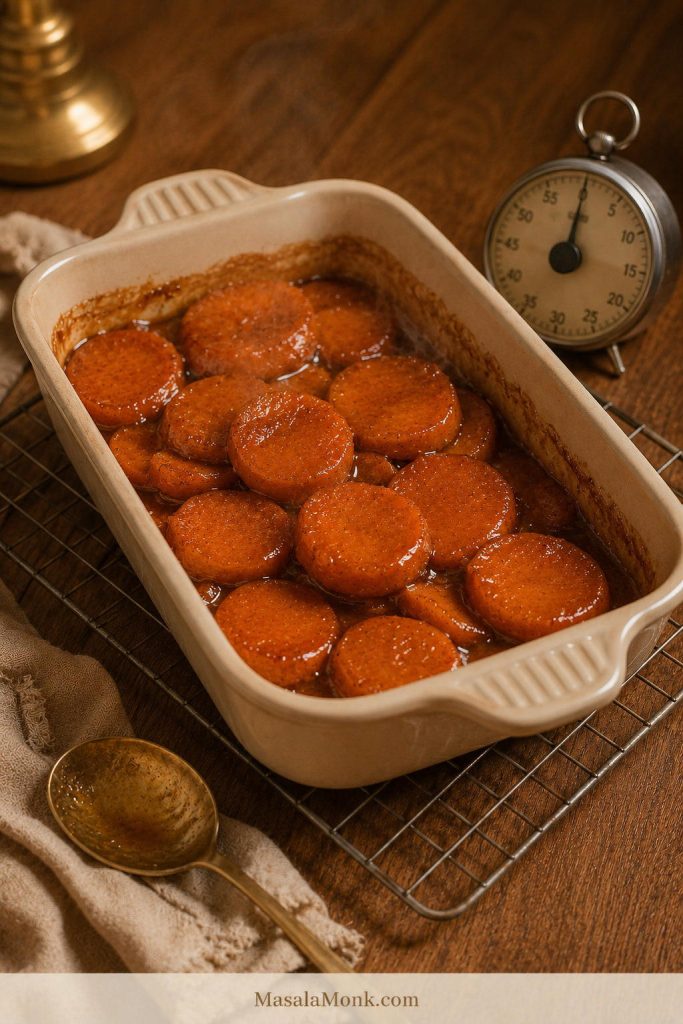
Candied yams resting on a wire cooling rack in a cream baking dish with a kitchen timer nearby.
The sauce often looks looser when it is boiling hot. A short rest lets the bubbles calm down and turns the syrup into a better coating for the sweet potato slices.

Make Ahead, Storage, and Reheating

Can you make candied yams ahead?

Yes. For the best texture, make the fresh version up to 1 day ahead. Bake the yams without marshmallows, cool, cover, and refrigerate. Add marshmallows only when reheating before serving.

Canned yams are more delicate, so they are best made closer to serving time. If you do make them ahead, reheat gently and avoid stirring.

How to reheat candied yams

Reheat covered at 350°F / 175°C for 20–25 minutes, or until hot. If the sauce is very thick, add a small splash of water or orange juice before reheating. Add marshmallows near the end and bake until puffed and golden.

How long do leftovers last?

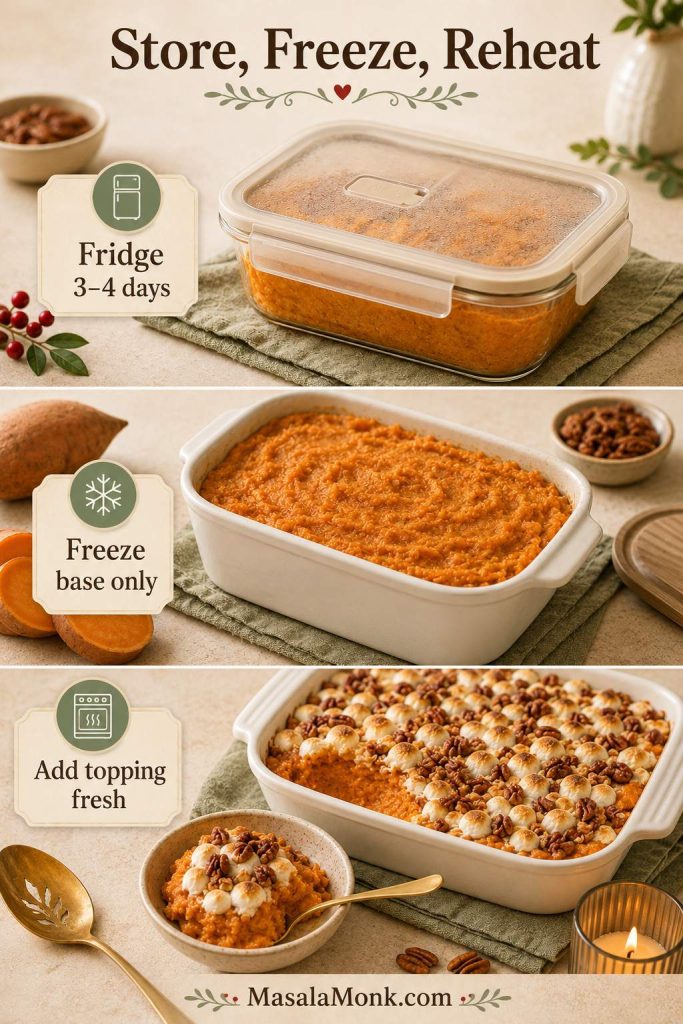
Store leftover candied yams in an airtight container in the refrigerator for 3–4 days. The texture will soften as they sit, especially if you used canned yams or marshmallows. For general leftover safety, the USDA FSIS leftovers guide is a helpful reference.

Can you freeze candied yams?

You can freeze them without marshmallows, but the texture may soften after thawing. For a special meal, refrigeration and reheating usually gives a better result than freezing.

What to do with leftovers

Leftover candied yams can be served again as a side dish, mashed into oatmeal, spooned over pancakes or waffles, folded into muffin batter, or used like a sweet potato pie-style filling. If they have marshmallows on top, the texture will be softer, but the flavor will still be good.

What to Serve with Candied Yams

Because candied yams are sweet and buttery, they work best beside something savory, salty, green, or tangy.

They pair well with roast turkey, baked ham, roast chicken, stuffing or dressing, green beans, cranberry sauce, collard greens, mac and cheese, garlic mashed potatoes, and cornbread.
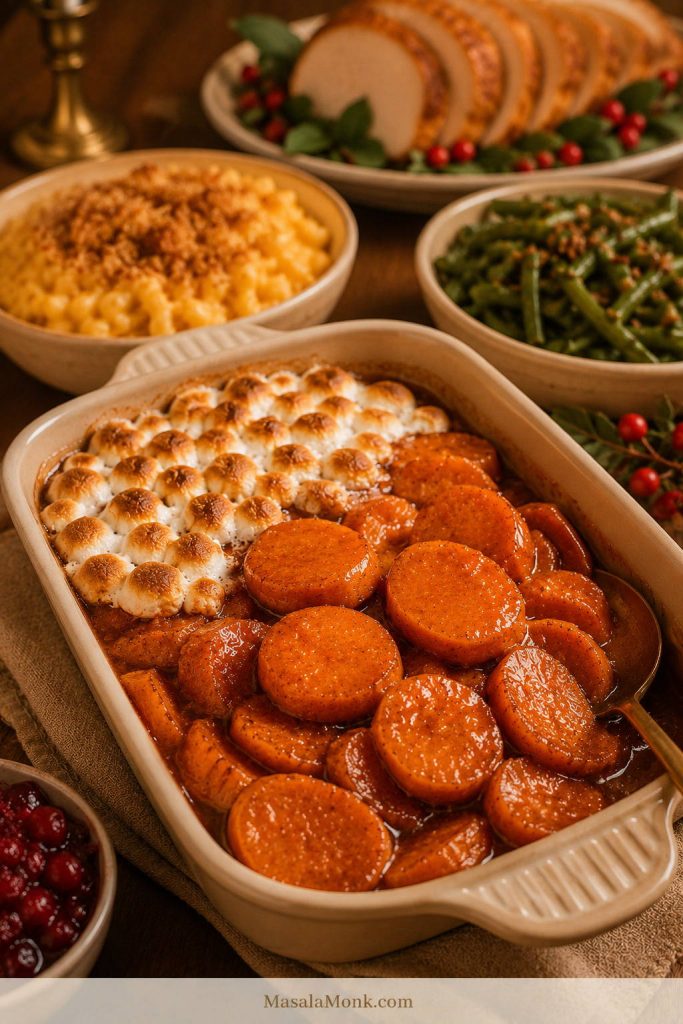
Candied yams in a cream serving dish on a Thanksgiving table with green beans, mac and cheese, cranberry sauce, and sliced turkey in the background.
Thanksgiving candied yams bring sweetness and warmth to the plate. They work especially well beside savory sides like green beans, mac and cheese, cranberry sauce, turkey, or ham.

For a Southern-style plate, candied yams also work beside richer mains like smothered pork chops, especially when you want something sweet to balance gravy, greens, and cornbread.

Candied Yams vs Sweet Potato Casserole

Candied yams are usually sliced or chunked sweet potatoes cooked in a brown sugar butter glaze. Sweet potato casserole is usually mashed or whipped, then baked with marshmallows, pecans, or streusel on top.

The two dishes can overlap, especially when marshmallows are involved, but candied yams are more about tender pieces in sauce, while casserole is creamy and scoopable. If you want that creamy version instead, use this sweet potato casserole recipe.

Frequently Asked Questions

Are candied yams actually sweet potatoes?

In most U.S. grocery stores, yes. The orange “yams” used for this dish are usually sweet potatoes, and they are exactly what you want for soft, classic candied yams.

Do you peel sweet potatoes for candied yams?

Yes, peel them for the classic soft, glossy dish. Sweet potato skins can turn chewy in a brown sugar glaze, and peeled slices give candied yams their traditional smooth texture.

Is brown sugar or white sugar better for candied yams?

Brown sugar is better for this version because it gives the glaze deeper flavor and a softer caramel-like finish. White sugar makes a cleaner, sweeter glaze with less depth. You can use a mix if you want a more candy-sweet style.

Can I make candied yams with canned yams?

Yes. Drain canned yams well, use a smaller sauce, bake at 375°F / 190°C only until hot, and avoid stirring. Canned yams are already cooked, so the goal is coating and warming, not softening.

Do I drain canned yams before making candied yams?

Yes, drain them first. A few tablespoons of the liquid can loosen a thick glaze, but the full can usually makes the dish watery.

Should I rinse canned yams?

Usually, no. Draining is enough unless the yams are packed in very heavy syrup and you want a less sweet dish.

Can I make candied yams on the stove?

Yes. Cook fresh 1/2-inch sweet potato slices in a wide skillet with the glaze over medium-low heat, covered until tender and uncovered at the end until the glaze coats the slices.

Do I need to boil sweet potatoes first?

No, not for this baked version. Slicing the sweet potatoes evenly and baking them covered first lets them soften in the sauce. Boiling first can save time, but it also makes the pieces easier to overcook.

When do I add marshmallows?

Add marshmallows near the end, once the yams are tender and the sauce has started to thicken. At 350°F / 175°C, the final 8–12 minutes is usually enough. If you add them too early, they melt into the sauce instead of forming a toasted topping.

Can I use large marshmallows?

Large marshmallows work, but mini marshmallows brown more evenly. If using large ones, cut them in half or use fewer so the topping does not become too thick.

How do I keep candied yams from getting watery?

Drain canned yams well, keep added liquid modest, bake uncovered long enough for the sauce to reduce, and let the dish rest before judging the texture.

How do I keep canned yams from getting mushy?

Handle them gently and do not bake them too long. Canned yams need heat, not more cooking, so spoon the sauce over them instead of stirring.

Can I make candied yams ahead for Thanksgiving?

Yes. Make the fresh version 1 day ahead without marshmallows, refrigerate, then reheat covered at 350°F / 175°C until hot. Add marshmallows only during the final few minutes before serving.

Can I double this recipe?

You can double it, but use two baking dishes instead of piling everything too deeply into one pan. Crowding the yams traps steam and makes it harder for the sauce to reduce.

Candied Yams Recipe

Soft orange sweet potatoes baked in a brown sugar butter glaze until tender, shiny, and spoon-coated — with canned-yam, stovetop, marshmallow, no-marshmallow, and make-ahead notes included.

Prep Time20 minutes
Cook Time60–70 minutes
Rest Time10 minutes
Servings8

Ingredients

  • 3 lb / 1.35 kg orange-fleshed sweet potatoes or yams
  • 1/2 cup / 113 g unsalted butter
  • 3/4 cup / 150 g packed brown sugar, or up to 1 cup / 200 g for a sweeter style
  • 1/4 cup / 60 ml maple syrup or orange juice
  • 2–4 tbsp / 30–60 ml water
  • 1 tsp ground cinnamon
  • 1/4 tsp ground nutmeg
  • 1/4 tsp ground ginger, optional
  • 1/2 tsp salt
  • 1–2 tsp vanilla extract
  • 1–2 tsp lemon juice or apple cider vinegar, optional
  • 2–3 cups mini marshmallows, optional
  • 1/2 cup chopped pecans, optional

Instructions

  1. Preheat the oven to 350°F / 175°C. Grease a 9×13-inch / 23×33 cm glass or ceramic baking dish.
  2. Peel the sweet potatoes and slice them into 1/2-inch / 1.25 cm rounds or half-moons.
  3. In a saucepan over medium heat, melt the butter. Add brown sugar, maple syrup or orange juice, water, cinnamon, nutmeg, ginger if using, and salt. Stir until smooth and shiny.
  4. Simmer the glaze gently for 1–2 minutes. Remove from heat and stir in vanilla. Add lemon juice or apple cider vinegar if using.
  5. Arrange the sweet potatoes in the baking dish. Pour the glaze over the top and gently coat the slices.
  6. Cover tightly with foil and bake for 35–40 minutes, until the yams begin to soften.
  7. Remove foil, spoon sauce over the yams, and bake uncovered for another 20–25 minutes, until fork-tender and shiny.
  8. If using marshmallows, add them during the final 8–12 minutes of baking. Bake until puffed and lightly golden.
  9. Rest for 10 minutes before serving so the sauce can thicken slightly. Serve warm, not piping hot.

Notes

  • Main cue: fresh or canned, the yams should be fork-tender and coated in sauce, not sitting in watery liquid.
  • Canned yams: bake drained canned yams at 375°F / 190°C: 15 minutes for a 29 oz / 822 g can, 18–20 minutes for a 40 oz / 1.13 kg can, or 20–22 minutes for two 29 oz / 822 g cans. Add marshmallows for the final 5–8 minutes. Canned yams need heat, not more cooking.
  • Stovetop method: cook sliced fresh sweet potatoes with the glaze ingredients in a wide skillet over medium-low heat for 35–45 minutes covered, then uncover and reduce for 7–15 minutes.
  • No marshmallows: skip the topping and bake uncovered until the sauce is glossy and spoonable.
  • Make-ahead: bake without marshmallows, refrigerate, reheat covered, and add marshmallows before serving.
  • Less sweet: use 3/4 cup brown sugar and add lemon juice or apple cider vinegar for balance.

Final Thoughts

Candied yams do not need to be complicated. Once the slices are soft, the sauce is shiny, and the marshmallows go on only at the end, the dish feels exactly how it should: familiar, sweet, buttery, and ready to be passed around the table.

When it works, the dish lands exactly where it should: soft slices, glossy sauce, warm spice, and that familiar sweet-buttery smell that makes people reach for the spoon.

Some families want the glossy plain version. Others want marshmallows browned until the corners catch. A few want pecans, orange juice, stovetop yams, or the canned version because that is the one that was always on the table.

Use this recipe as the steady base, then finish it the way your table remembers it. If your family has a must-have candied-yam tradition, I’d love to hear which version shows up every year.
Posted on Leave a comment

Sweet Potato Casserole Recipe

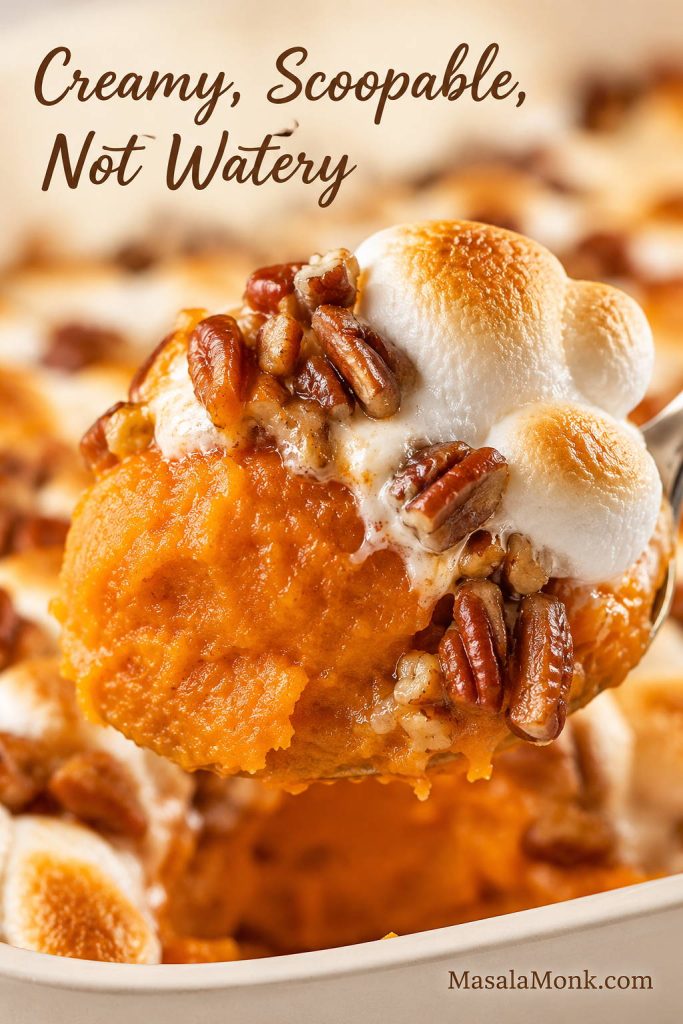
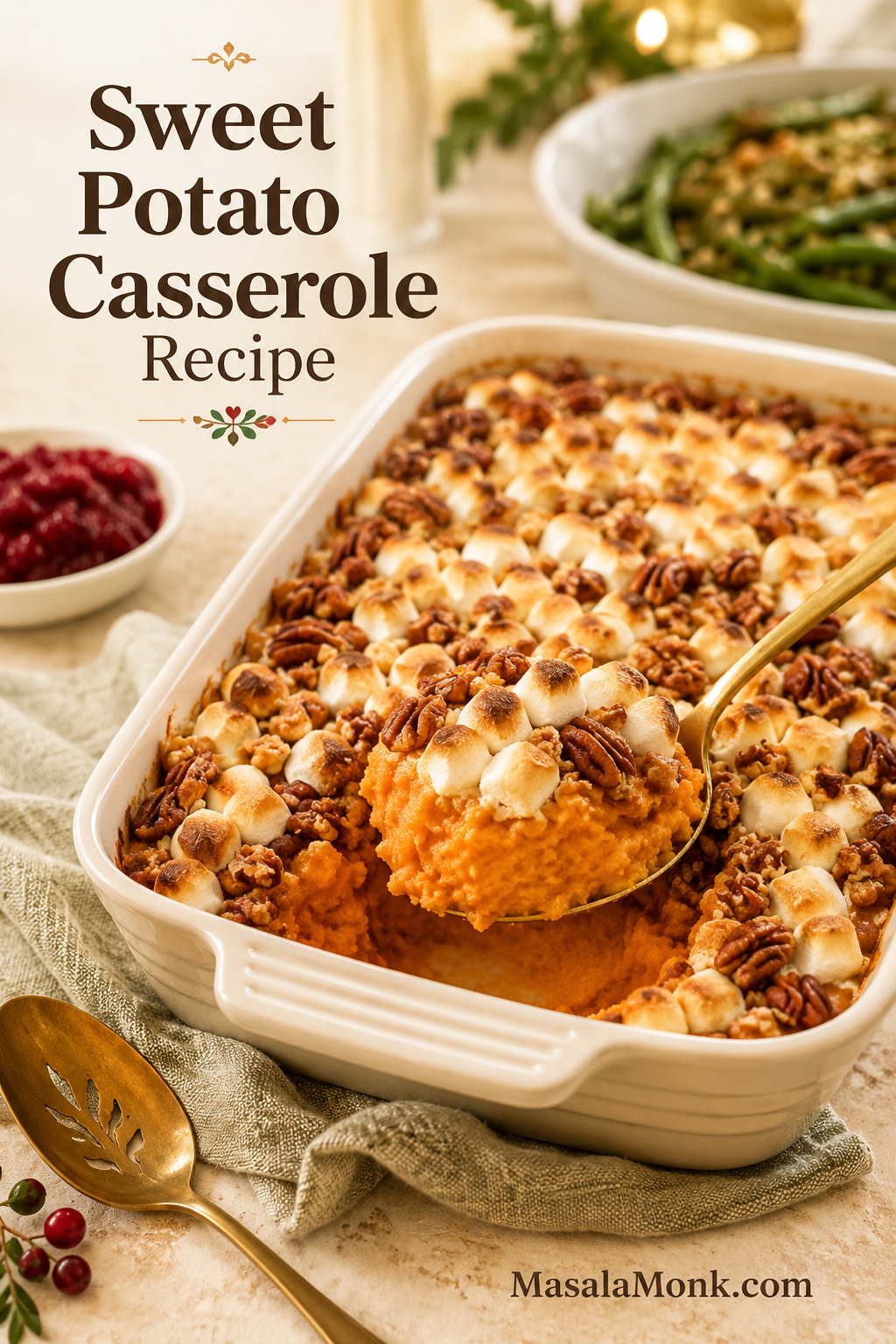
Sweet potato casserole in a cream baking dish with toasted marshmallows, pecan streusel, and a spoon lifting a creamy orange scoop.

A good sweet potato casserole has to do more than taste sweet. It needs to be creamy without turning watery, rich without feeling heavy, golden on top without burning, and easy enough to fit into a busy oven schedule that already has too much going on.

This sweet potato casserole recipe is built for that exact moment, especially when Thanksgiving or a big holiday meal has several dishes competing for the oven. You can make it with fresh sweet potatoes or drained canned yams, finish it with marshmallows, pecan streusel, or both, and prep most of it ahead so the final bake feels calm instead of chaotic.

The filling is smooth, spoonable, lightly set, and warmly seasoned with butter, brown sugar, vanilla, cinnamon, and just enough salt to keep the sweetness balanced. It should feel like a satiny orange mash under a golden, buttery topping — sweet, but not candy-sweet.

Think of this as one dependable base for a table full of opinions: the marshmallow crowd, the pecan-streusel crowd, the canned-yam shortcut cook, and the person who wants the dish to stay more side than dessert.

Quick Answer: How to Make Sweet Potato Casserole

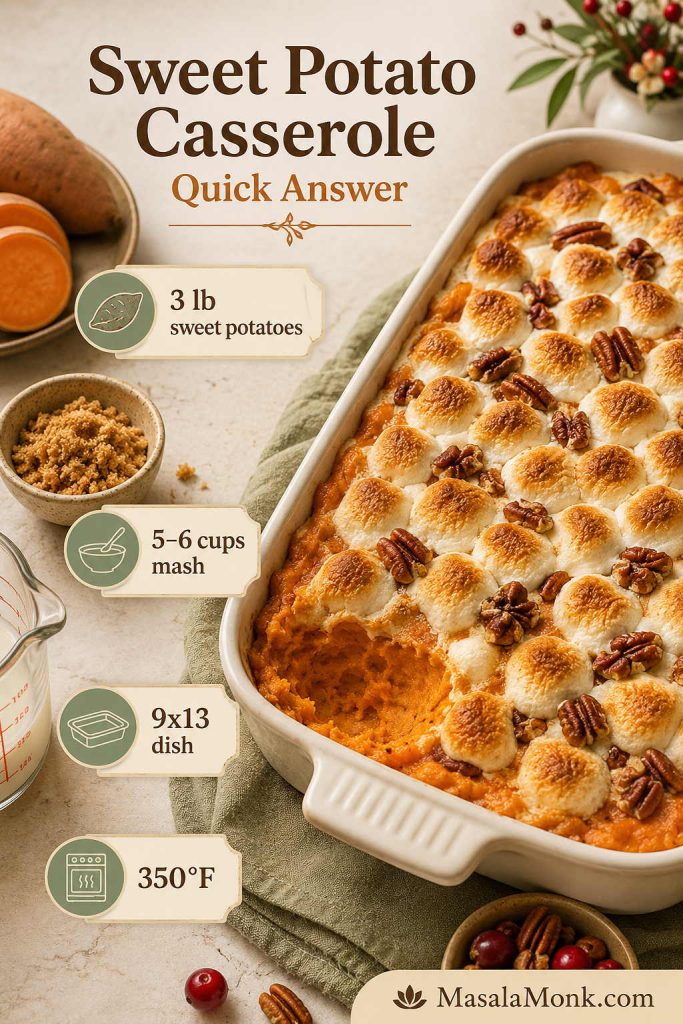
For a full sweet potato casserole, use 3 lb / 1.36 kg fresh sweet potatoes, which gives about 5–6 cups cooked mashed sweet potato. Mix the mash with melted butter, ⅓ cup brown sugar for a balanced version, milk or cream, eggs, vanilla, cinnamon, nutmeg, and salt, then spread it in a 9×13-inch / 3-quart baking dish.

Bake at 350°F / 175°C until the casserole is hot and lightly set. Because the filling contains eggs, the center should reach 165°F / 74°C if you check with an instant-read thermometer.

Pecan streusel goes on before baking. Save marshmallows for the final 8–10 minutes so they puff and brown instead of melting away.

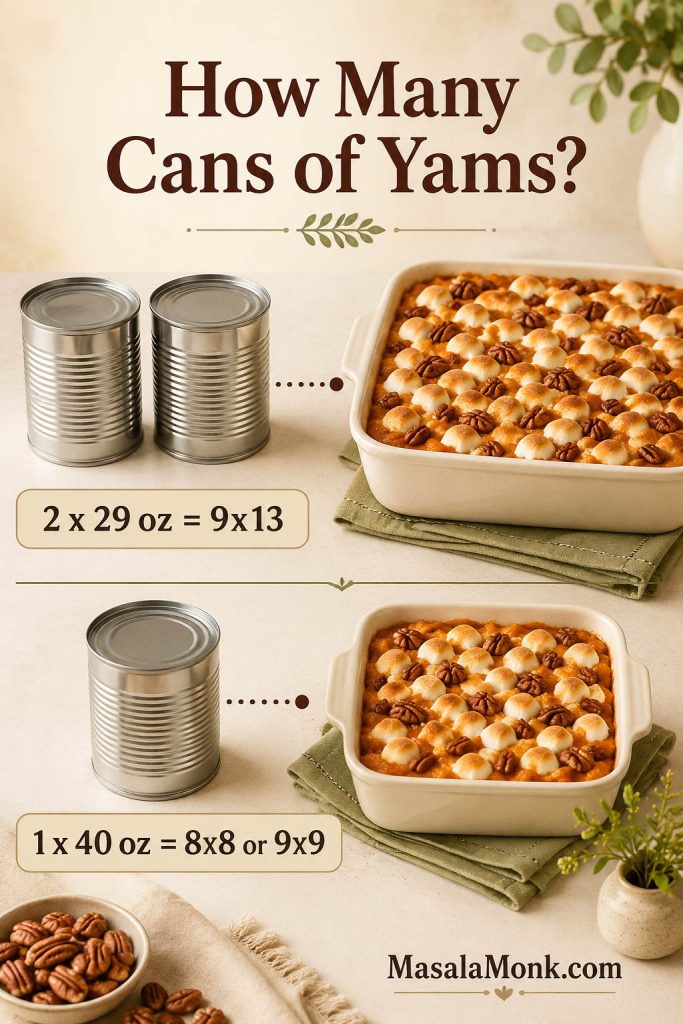
For canned yams, use 2 x 29 oz cans, drained, for a 9×13 casserole, or 1 x 40 oz can, drained, for an 8×8 or 9×9 dish. If the cans are syrup-packed, start with less sugar.

Quick answer guide for sweet potato casserole showing a finished casserole with callouts for 3 pounds sweet potatoes, 5 to 6 cups mash, a 9x13 dish, and 350°F baking temperature
Use this quick formula as the anchor, then adjust the casserole for canned yams, pecan streusel, marshmallows, or a less-sweet holiday table.

If you are using canned yams, the fresh vs canned guide and canned-yam texture tips will help you adjust sugar and liquid before mixing.

Best crowd version: Use the balanced filling with pecan streusel for structure, then add mini marshmallows at the end if your table expects them. You get buttery crunch, soft toasted pockets, and a casserole that still eats like a side dish.

For a closer look at the final layer, see the topping options and the marshmallows vs pecans comparison before choosing your version.

Sweet Potato Casserole at a Glance

DetailStarting point
Sweet potatoes3 lb / 1.36 kg fresh sweet potatoes
Cooked mash yieldAbout 5–6 cups
Baking dish9×13-inch / 3-quart dish
Oven temperature350°F / 175°C
Potato cooking time12–20 minutes for boiling, or 40–50 minutes for roasting
Bake time30–35 minutes, or 40–50 minutes if chilled
Servings10–12 side-dish servings
TextureCreamy, scoopable, lightly set, not watery
Best topping pathsPecan streusel, marshmallows, or both
Make-aheadBase can be made 1–2 days ahead; topping stays better when added later
Canned-yam optionYes, drain well, measure the mash, and reduce sugar/liquid as needed
Close-up spoonful of sweet potato casserole showing creamy orange filling with pecan topping and toasted marshmallow pieces
The spoon test matters because a good casserole should lift in a creamy scoop, not slide apart like loose mashed sweet potatoes.

Why This Sweet Potato Casserole Works

The whole recipe depends on one idea: build a thick, balanced sweet potato base first, then treat the topping as a separate timing decision. The sweet potato mixture needs to be thick, seasoned, and creamy before it goes into the oven. The top needs enough heat to turn golden, but not so much time that it burns, sinks, or goes sticky.

  • Three pounds of sweet potatoes gives enough mash for a proper 9×13 casserole without making the filling too thin.
  • Butter and milk or cream make the mash rich, while controlled liquid keeps it from turning soupy.
  • Eggs help the filling set just enough to scoop neatly. Leave them out for a softer, spoonier casserole.
  • Brown sugar stays flexible. Use ⅓ cup when you want a side-dish sweet casserole, or ½ cup when your table expects the sweeter classic version.
  • Pecan streusel bakes from the start. Marshmallows wait until the casserole is hot or nearly hot.
  • The canned version needs a lighter hand because it is already tender and often sweeter or wetter than fresh cooked sweet potatoes.
  • Resting time matters. A 10–15 minute rest helps the casserole scoop cleanly and lets the streusel settle into a buttery crunch.

That is the difference between a casserole that simply tastes sweet and one that earns its space on the holiday plate: a hot, creamy center, a topping with texture, and a first scoop that holds together instead of sliding apart.

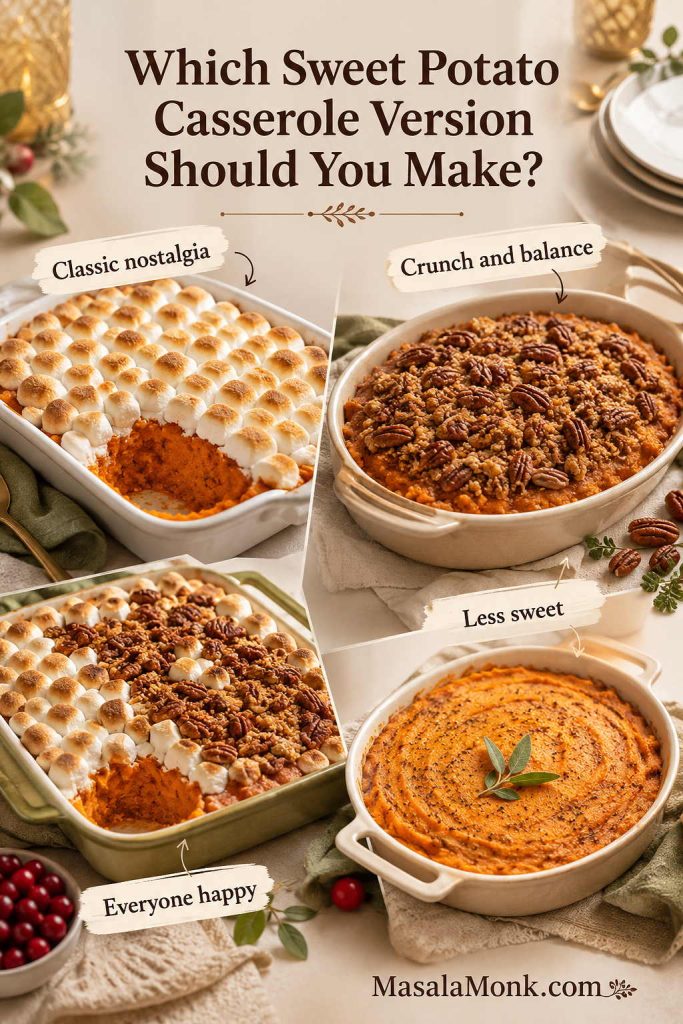
Not Sure Which Version to Make?

Sweet potato casserole is one of those dishes people remember before they even taste it. One person wants the marshmallows from childhood. Another wants pecans and less sweetness. Sometimes the main goal is simply getting the dish to come out hot while the oven is full.

Your table wants…Make this version
Classic nostalgiaMini marshmallow topping
Crunch and balancePecan streusel topping
Everyone happyPecan streusel plus marshmallows added near the end
Less sweetness¼–⅓ cup brown sugar with pecan, oat, cornflake, or savory crumb topping
Fastest shortcutDrained canned yams, less sugar, and milk added slowly
Make-ahead calmFilling made ahead, topping stored separately, marshmallows added late

The best version is the one your table will actually reach for twice. Choose the topping that matches the people you are feeding, then keep the base creamy, hot, and well rested.

Decision guide showing four sweet potato casserole versions: marshmallow topping, pecan streusel, both toppings, and a less-sweet no-marshmallow option
Choose the version before you bake so the topping matches your table: nostalgic marshmallows, crunchy pecans, both together, or a quieter less-sweet finish.

Ingredients and What Each One Does

The ingredient list is simple, but small choices matter. The goal is a casserole that tastes warm and generous, not thin, sugary, or heavy.

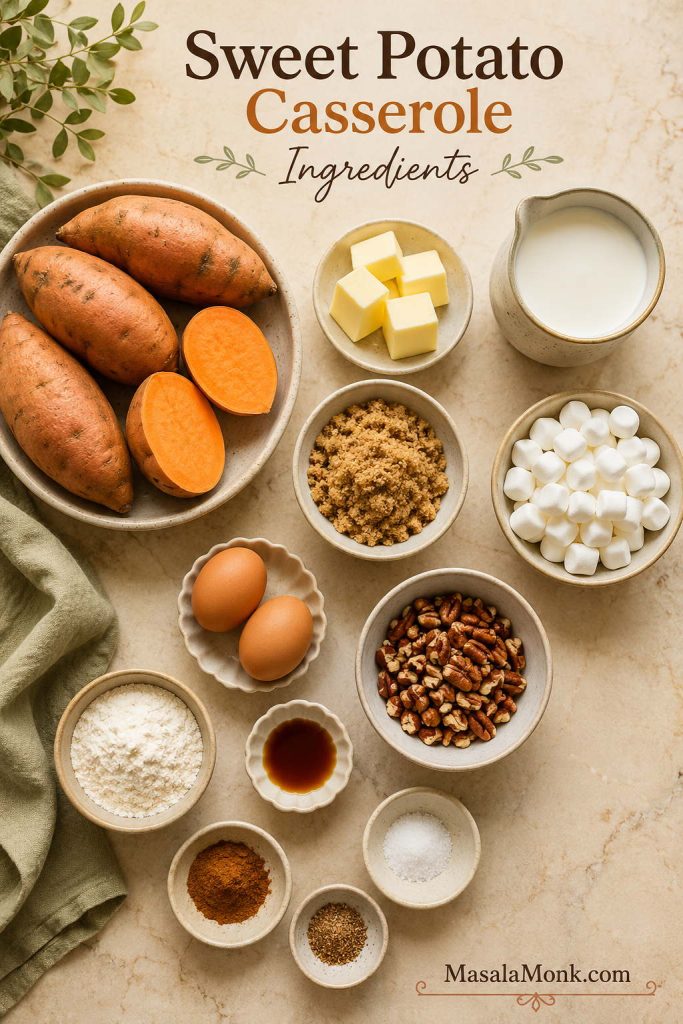
Overhead ingredient spread for sweet potato casserole with sweet potatoes, butter, brown sugar, milk, eggs, vanilla, spices, pecans, flour, and mini marshmallows
These simple ingredients work best when each one has a job: butter rounds the flavor, eggs help structure, liquid softens, and salt balances the sweetness.

For the Sweet Potato Filling

  • Sweet potatoes: Use 3 lb / 1.36 kg fresh sweet potatoes for a full 9×13 casserole. Orange-fleshed sweet potatoes give the classic color, sweetness, and creamy texture. For a separate look at calories, carbs, fiber, and portions, see MasalaMonk’s sweet potato nutrition facts.
  • Butter: Melted butter adds richness and helps the mash taste rounded instead of flat.
  • Brown sugar: Use ⅓ cup / about 65–70 g for a side-dish sweet casserole, or ½ cup / 100 g for the sweeter classic version. Start lower if your cans are syrup-packed.
  • Milk, half-and-half, cream, or evaporated milk: This loosens the mash and makes it creamy. Evaporated milk gives a slightly old-fashioned richness without using heavy cream.
  • Eggs: Eggs help the casserole set and scoop neatly. If you skip them, the dish will be softer and more spoonable.
  • Vanilla: A little vanilla belongs in the background here. You want warmth, not a filling that tastes like dessert pudding.
  • Cinnamon and nutmeg: Cinnamon gives the main warmth. Nutmeg is optional but helpful in small amounts. You can also use 1–1½ teaspoons pumpkin pie spice instead.
  • Salt: Salt keeps the sweetness from going flat. It is especially important when marshmallows or a brown sugar topping are involved.
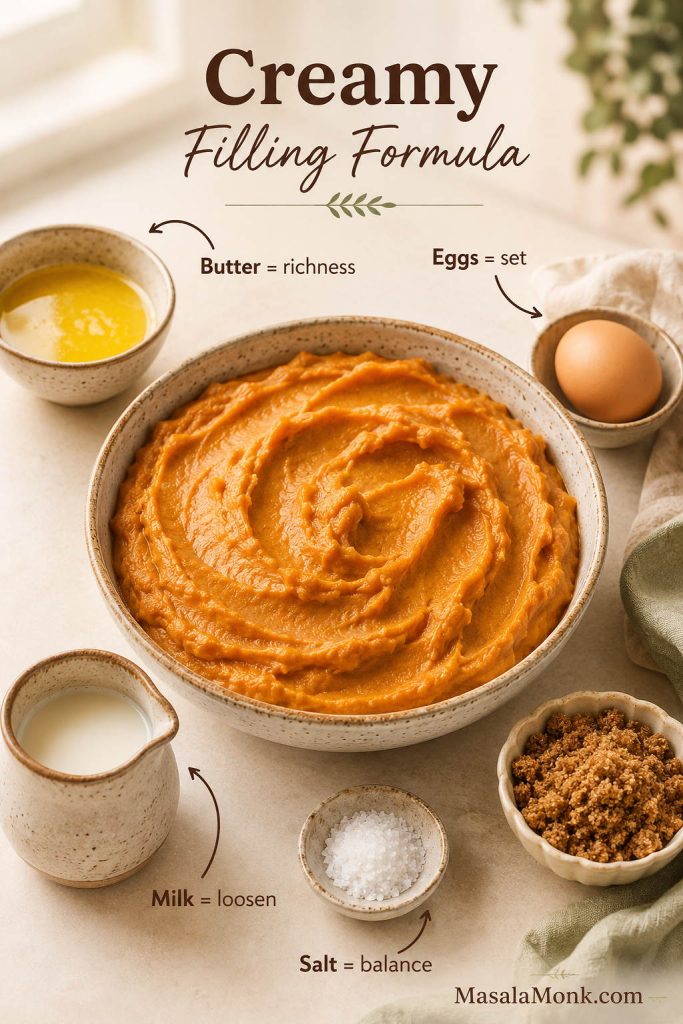
Sweet potato casserole filling formula with mashed sweet potatoes, butter for richness, eggs for set, milk to loosen, and salt for balance
Before the topping goes on, the filling needs balance: rich enough from butter, lightly set from eggs, loosened carefully with milk, and sharpened with salt.

For the Pecan Streusel Topping

  • Pecans: Pecans bring crunch and a buttery flavor that balances the soft filling. Toast them for 3–5 minutes in a dry skillet if you want a deeper nutty edge.
  • Brown sugar: Helps the topping caramelize and gives the crumble a classic flavor.
  • Flour: Holds the topping together so it bakes into crumbs instead of a sugary butter puddle.
  • Butter: Melted butter binds the topping. Start with 5 tablespoons and add the 6th only if the mixture still looks dry.
  • Cinnamon and salt: These keep the topping warm and balanced.

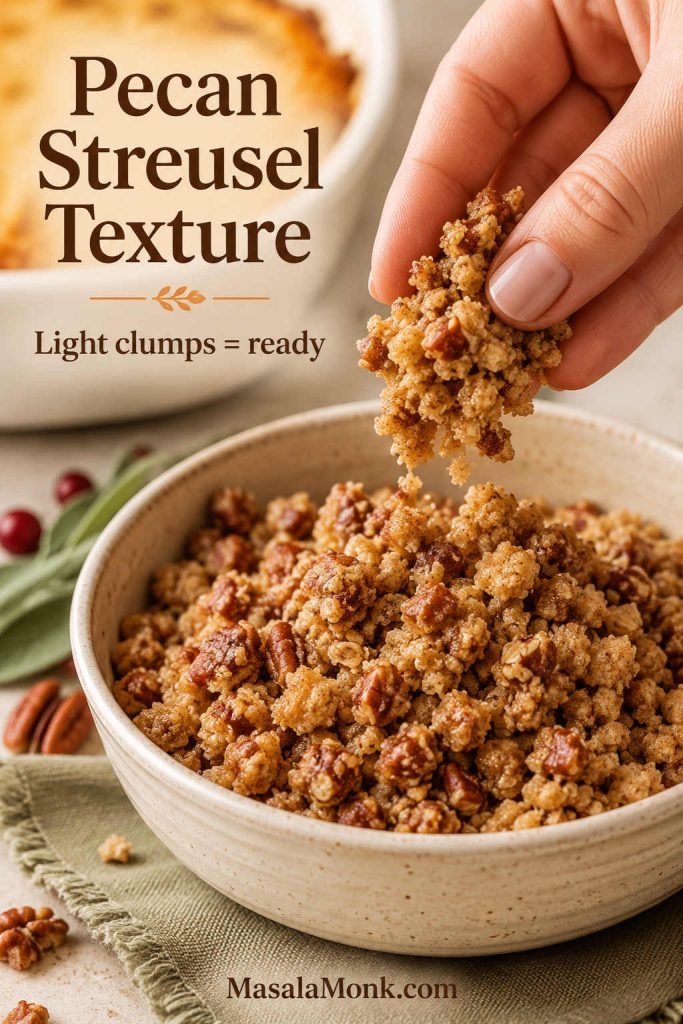
If the streusel clumps lightly when squeezed, it has enough butter. If it looks sandy and dry, add the remaining tablespoon before scattering it over the casserole.

Nut-free option: Replace pecans with crushed cornflakes, oat crumble, or plain brown sugar crumble.

For the Marshmallow Topping

Mini marshmallows are easiest to distribute and brown more evenly than large ones. Use 2–3 cups for a 9×13 casserole, depending on whether you want a light scattered top or a full classic layer.

If you only have large marshmallows, cut them into smaller pieces before adding them. Whole large marshmallows brown unevenly and can make the top patchy.

MasalaMonk note: When using both pecans and marshmallows, bake the pecan layer first and add marshmallows at the end. That gives you buttery crunch underneath and soft toasted pockets on top.

Fresh Sweet Potatoes or Canned Yams: Which Should You Use?

Fresh sweet potatoes give the deepest flavor and the most control over texture. Shortcut cans are faster and completely useful when you are cooking a big meal and need one less thing to peel, chop, boil, or roast.

The goal is not to prove anything; it is to get a creamy, well-balanced casserole on the table. A canned version can still taste intentional when the pieces are drained, mashed gently, seasoned well, and kept thick enough before baking.

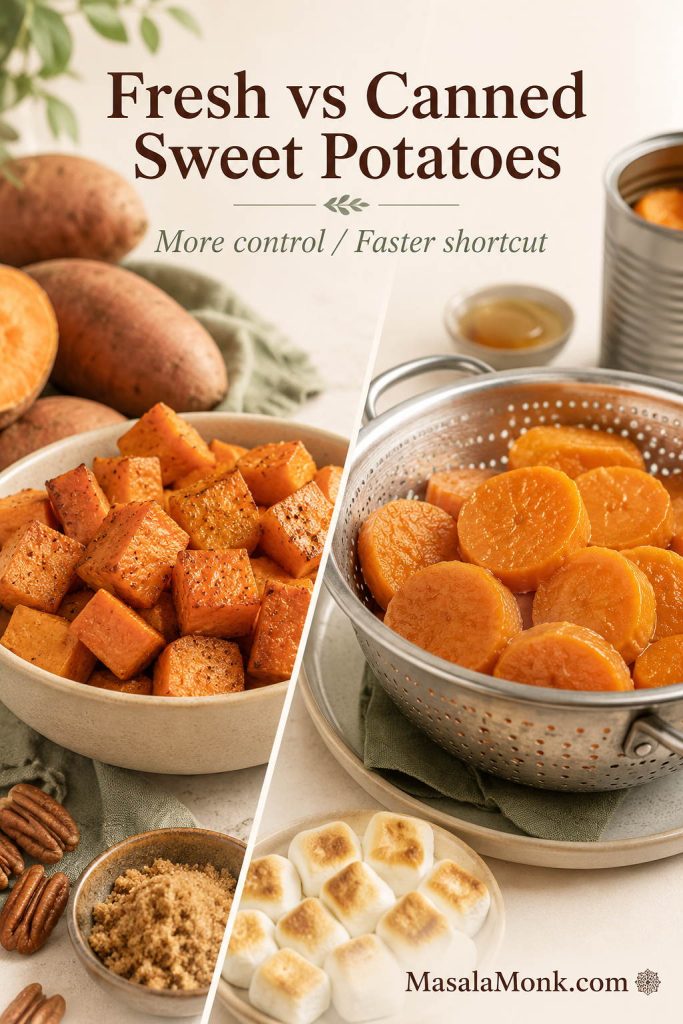
Fresh sweet potatoes compared with drained canned yams for making sweet potato casserole, with a note that fresh gives more control and canned is faster
Fresh sweet potatoes give the most control, but canned yams are still a smart shortcut when they are drained well and sweetened with a lighter hand.

Canned-yam shortcut: Can sizes are only a starting point. Drain first, then measure the mash. Aim for 5–6 cups for a full 9×13 casserole or 3–4 cups for a smaller one.

In many U.S. grocery stores, “canned yams” are usually canned sweet potatoes. True yams are a different root vegetable, but for this style of casserole, most U.S. canned “yams” are the orange sweet potatoes readers expect.

The main difference is moisture and sweetness. Fresh cooked sweet potatoes can be steam-dried or roasted until sturdy. Canned pieces are already tender and may be packed in syrup, so taste before adding the full sugar amount and add milk gradually.

How Many Cans of Yams Do You Need?

For shortcut batches, think in mashed yield rather than can labels alone. Once you know your amount, use the watery-casserole prevention tips before adding milk.

Guide showing that 2 cans of 29 ounce yams fit a 9x13 sweet potato casserole and 1 can of 40 ounce yams fits an 8x8 or 9x9 dish
Instead of guessing from can size alone, aim for the right amount of mashed sweet potato for your pan: 5–6 cups for a full 9×13 casserole.
Starting pointAmount to useWhere it fits
Fresh sweet potatoes3 lb / 1.36 kgFull 9×13 casserole
Cooked mashed sweet potato5–6 cupsSame as the main full batch
Canned yams or canned sweet potatoes2 x 29 oz cans, drainedFull 9×13 canned shortcut
Canned yams or canned sweet potatoes1 x 40 oz can, drainedSmaller 8×8, 9×9, or 2-quart casserole
Small batch mash3–4 cups6–8 servings

How to Use Canned Yams Without Making the Casserole Watery

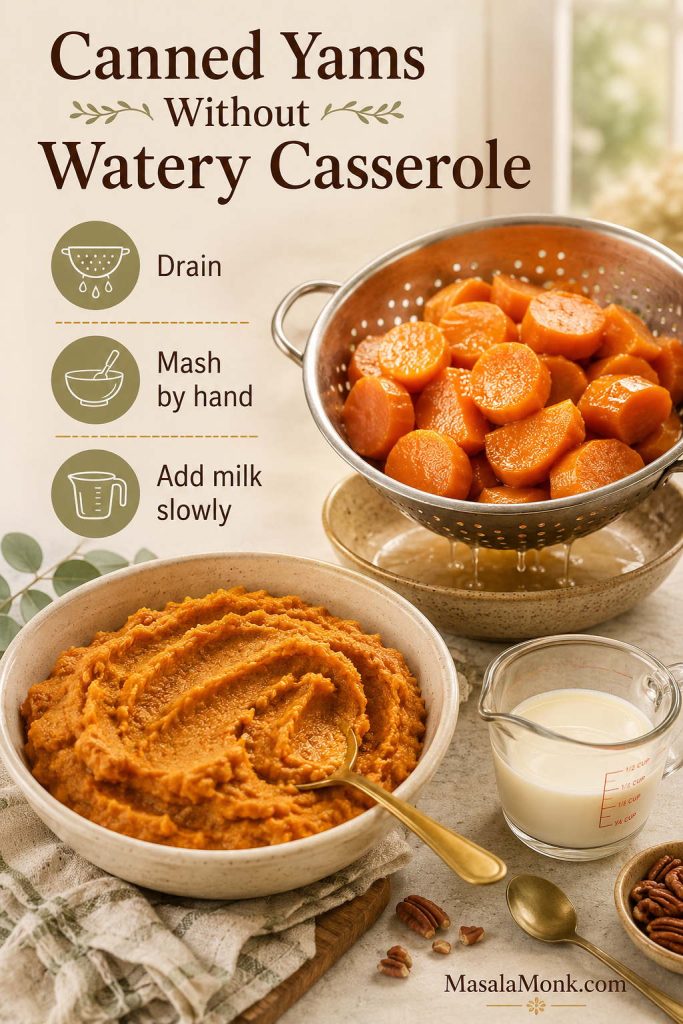
  • Let excess syrup run off. A few minutes in a colander helps more than rushing straight to the bowl.
  • Start lower on sugar. Syrup-packed cans often need only ¼–⅓ cup brown sugar in the filling.
  • Add milk slowly. Stop when the mash looks creamy but still holds soft ridges.
  • Mash by hand. A potato masher gives better control than a blender or food processor.
  • Taste before topping. The filling should taste pleasantly sweet and slightly salty before the final layer goes on.
Drained canned yams in a colander with mashed sweet potatoes and tips to drain, mash by hand, and add milk slowly
For canned-yam sweet potato casserole, draining comes first; after that, add milk slowly so the mash turns creamy instead of watery.

Handled this way, the shortcut does not feel like a compromise. It feels like the calm choice on a crowded cooking day.

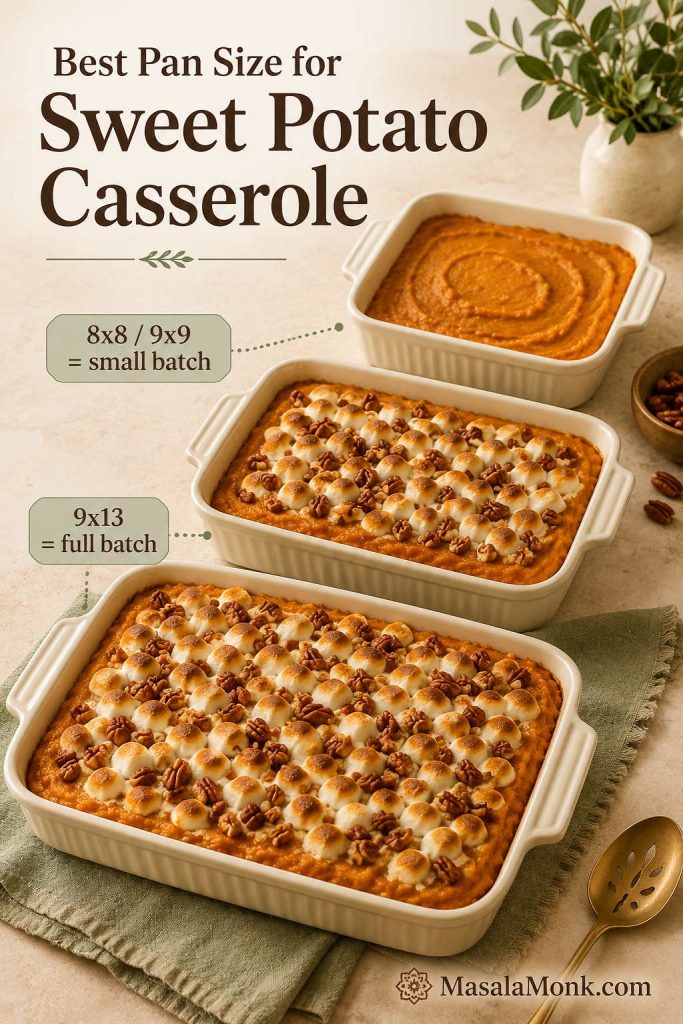
What Pan Size Should You Use?

Pan size matters because sweet potato casserole should be deep enough to stay creamy, but not so deep that the center stays cold while the top browns. A too-deep pan is one of the quiet reasons casseroles come out cold in the middle.

Do not overthink the dish, but do respect the depth. A shallow casserole heats faster and gives you more topping in every scoop; a deeper one stays creamier but needs more time.

Dish sizeSweet potato mash amountWorks well forApprox. servings
8×8-inch or 9×9-inch dish3–4 cupsSmall batch, canned-yam version, smaller gathering6–8
2-quart baking dish3–4 cupsClassic smaller casserole6–8
9×13-inch / 3-quart dish5–6 cupsFull side-dish batch10–12
Half batch2½–3 cupsSmall family side5–6
Mini batch1½–2 cupsTwo to four people2–4
Pan size guide for sweet potato casserole showing small 8x8 or 9x9 dishes and a larger 9x13 dish for a full batch
Match the pan to the amount of mash: a full 9×13 casserole feeds a crowd, while smaller dishes give a thicker, cozier bake.

If you are using a deeper dish or baking from cold, the fridge-to-oven timing guide will help you avoid a cold center.

For most families, the 9×13 version is the most practical full batch. For a smaller dinner, the 8×8 version feels more generous because every scoop gets topping.

If your casserole is in a deeper dish, expect it to take longer to heat through. If it is in a wider, shallower dish, the topping may brown faster. Either way, the center should be hot before you call it done.

If you like this kind of full-pan side, MasalaMonk’s hashbrown casserole follows a similar 9×13 comfort-food logic, but moves in a savory, cheesy potato direction instead of a sweet one.

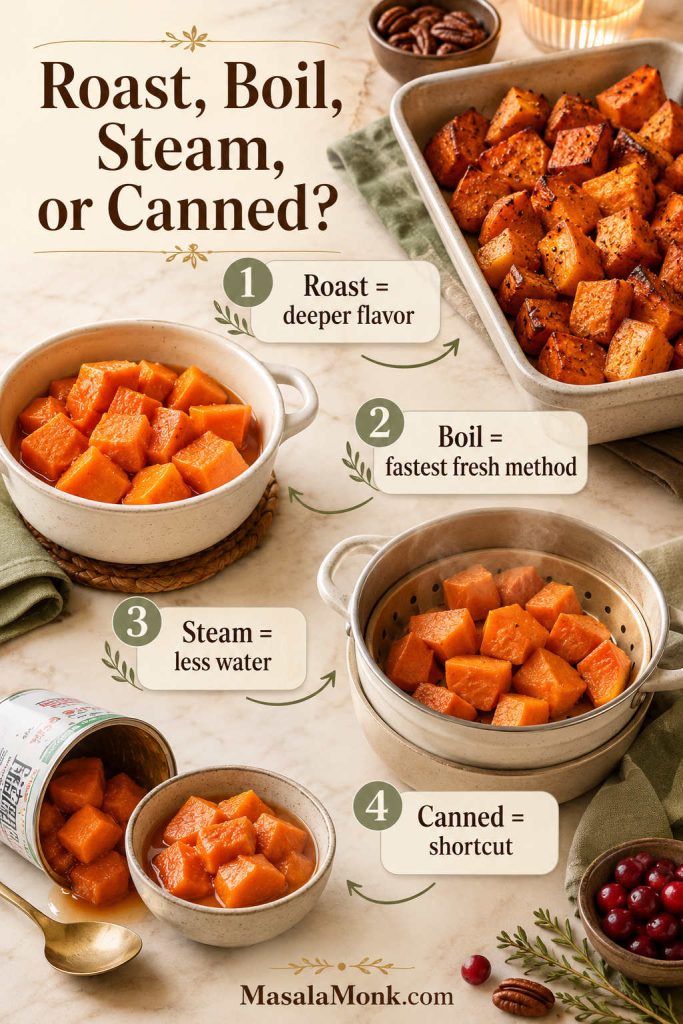
Roast, Boil, Steam, or Open a Can?

There is no single correct way to prepare the sweet potatoes. The right method depends on the kind of cooking day you are having: slow and flavor-focused, or busy and shortcut-friendly.

MethodTimingChoose this ifWatch for
Roasting425°F / 220°C for 40–50 minutes, depending sizeYou want a more concentrated flavor and a sturdier mashTakes longer; cool slightly before scooping and mashing
Boiling12–20 minutes for peeled chunksYou want the fastest fresh methodDrain very well and steam-dry 3–5 minutes before mashing
Steaming15–25 minutes, depending chunk sizeYou want good texture with less water absorption than boilingNeeds a steamer basket or enough pot space
Drained canned sweet potatoes or yamsNo cooking before mixing, just drain and mashYou want the fastest shortcutReduce sugar and add liquid gradually
Cooking method guide for sweet potatoes showing roasted chunks, boiled chunks, steamed pieces, and canned yams for casserole
Pick the method around your schedule: roast for deeper flavor, boil for speed, steam for moisture control, or use canned yams when time is tight.

If you have time, roasting gives a more concentrated flavor because the sweet potatoes lose some moisture and become naturally sweeter. If you need the practical version, boiling peeled cubes is faster and still works well as long as you let them steam-dry before mixing.

You do not need to heavily salt the cooking water because the filling is seasoned after mashing.

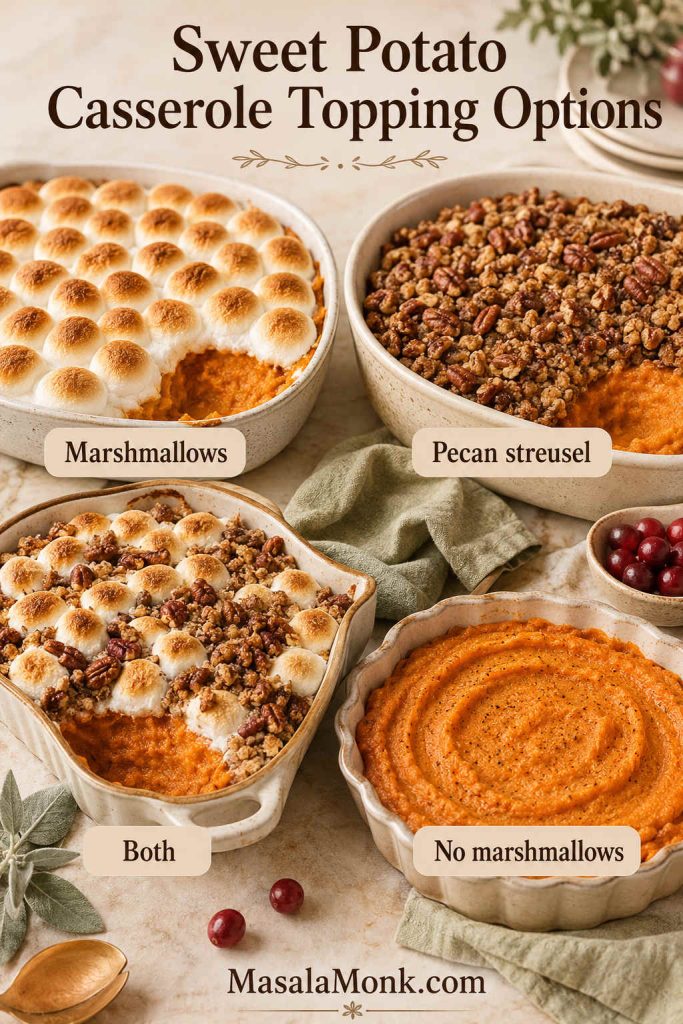
Marshmallows, Pecans, or Both?

This is where family opinions usually show up. Some people want the marshmallows they grew up with; others want pecans, crunch, and less sweetness. The base recipe is flexible enough to satisfy both camps without making two casseroles.

ToppingChoose this ifWhat it brings
Mini marshmallowsYou want the classic nostalgic versionSoft, sweet, toasted pockets
Pecan streuselYou want crunch and less dessert-heavy sweetnessButtery texture and a sweet-salty edge
Pecans + marshmallowsYou want a reliable crowd compromiseCrunch underneath, golden marshmallows on top
No marshmallowsYou want a more savory-table-friendly casseroleA less dessert-like finish
Nut-free toppingYou are serving a table with nut allergiesCrunch from cornflakes or oats, or softness from marshmallows
Sweet potato casserole topping options showing marshmallows, pecan streusel, both toppings, and a no-marshmallow version
The topping sets the mood of the whole dish, from soft marshmallow nostalgia to pecan-streusel crunch or a simpler side-dish-style finish.

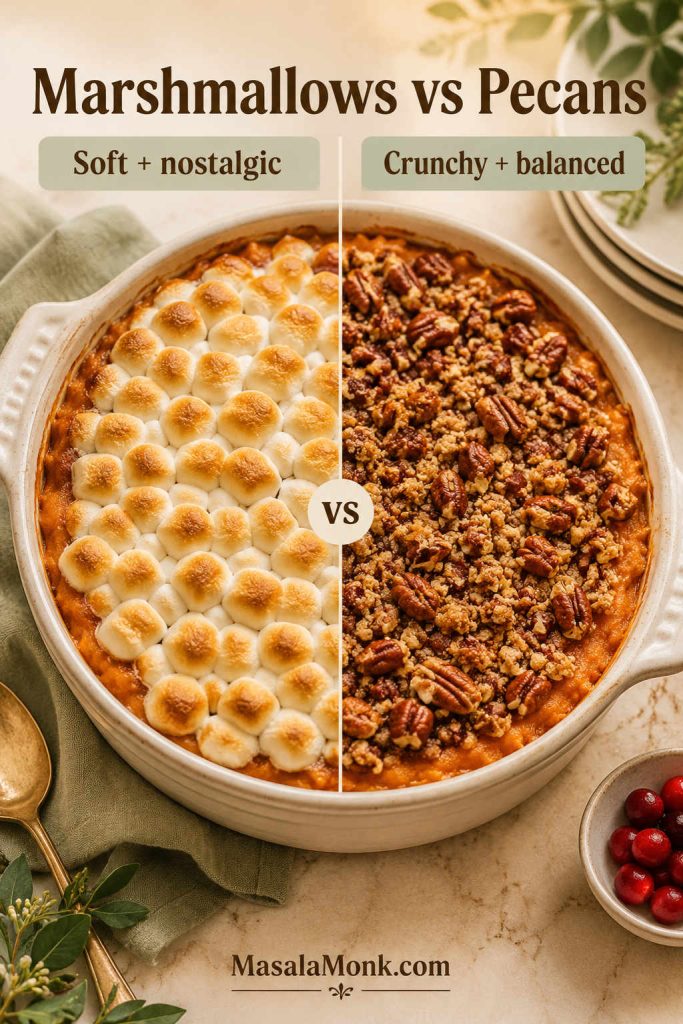
Marshmallows vs Pecans: Which Topping Fits Your Table?

One sweet potato casserole split between toasted mini marshmallows on one side and pecan streusel on the other side
Marshmallows make the casserole softer and sweeter, while pecan streusel adds crunch that helps it sit comfortably beside savory holiday sides.

Once you choose the topping, check the pecan streusel texture cue or when to add marshmallows so the top bakes correctly.

If you are unsure, the pecan-plus-marshmallow version keeps both camps happy: buttery crumble for the people who want texture, and toasted marshmallows for the people who would miss them.

Marshmallow Topping

Marshmallows are the classic choice for many tables. Let the casserole get hot first, then give the marshmallows just enough oven time to puff, brown, and stay visible on the surface.

Pecan Streusel Topping

Pecan streusel turns the casserole into something more textured and less dessert-heavy. The best spoonfuls have creamy sweet potato underneath and a little buttery crunch on top.

If You Do Not Want Marshmallows

Skip them and use pecan streusel, oat crumble, cornflake crumble, or a savory breadcrumb topping. This is the path for a table that wants sweet potatoes to stay firmly beside the savory food.

Broiler warning: If you use the broiler to brown marshmallows, stay at the oven. They can go from golden to scorched in seconds. Broil for 30–90 seconds only, watching constantly.

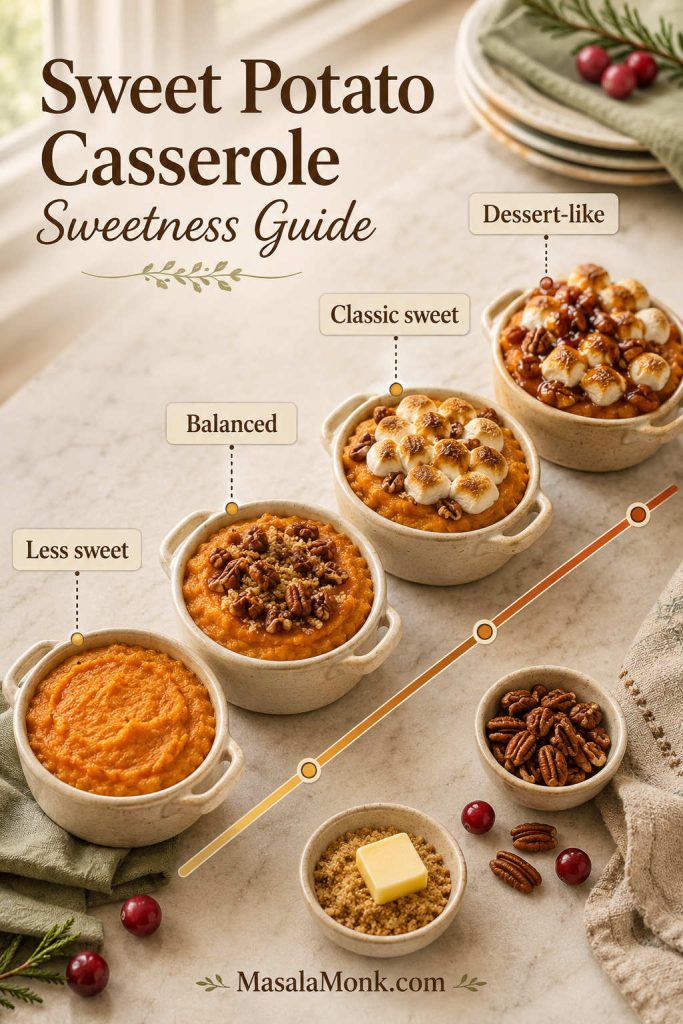
How Sweet Should It Be?

Sweet potato casserole sits in a funny place: it is a side dish, but it often shares ingredients with dessert. This is where a lot of casseroles go wrong: the filling is sweetened like dessert, then covered with an even sweeter topping.

Start with the kind of dish you want, then choose the sugar level. If you are using marshmallows or syrup-packed cans, the filling usually needs less sugar than you think.

StyleBrown sugar in fillingTopping ideaResult
Less sweet¼–⅓ cup / 50–65 gPecan, oat, cornflake, or savory crumbMore like a side dish
Balanced⅓ cup / about 65–70 gPecans, marshmallows, or bothSweet but not candy-like
Classic sweet½ cup / 100 gMarshmallows or pecan streuselTraditional sweetness
Dessert-like½ cup or moreMarshmallows plus sweeter streuselVery sweet, closer to pie filling
Sweetness guide for sweet potato casserole showing less sweet, balanced, classic sweet, and dessert-like options
Decide the sweetness before adding the topping, because marshmallows and syrup-packed canned yams can quickly push the recipe toward dessert.

If you are starting with syrup-packed cans, revisit the canned-yam notes before adding the full sugar amount.

For most tables, ⅓ cup brown sugar in the filling is the safest starting point. It leaves room for a sweet topping without making the whole dish feel heavy. If you are nervous about sweetness, start lower. You can always make the topping sweeter, but you cannot easily pull sugar back once the filling is mixed.

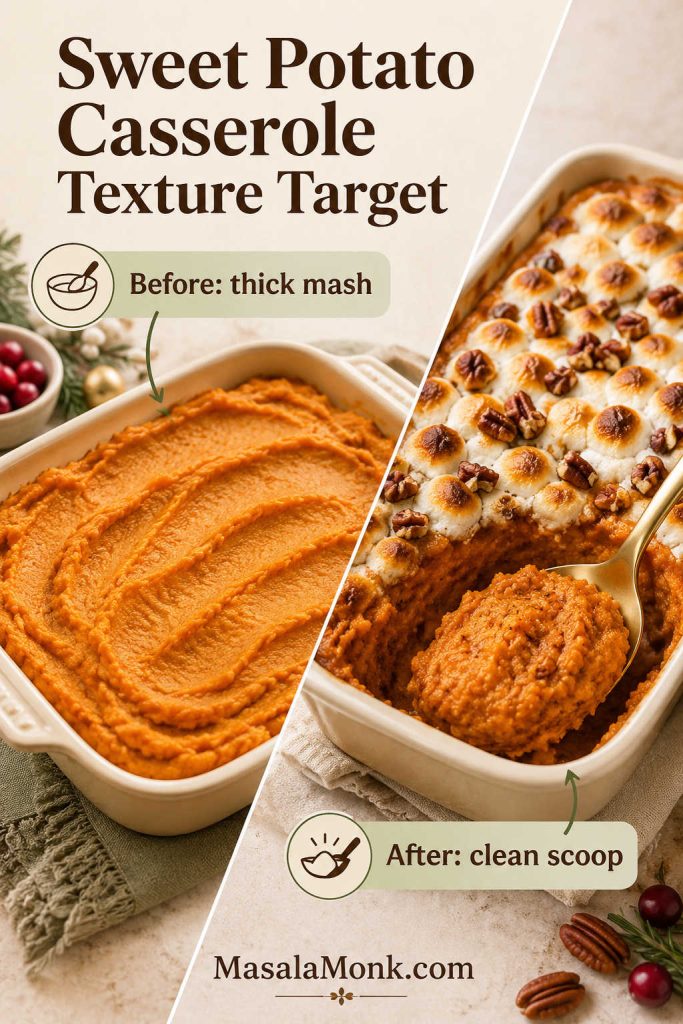
Texture Target Before You Bake

Look for this: The mash should be thick, creamy, and able to hold soft ridges when you drag a spoon through it. It should not pour like soup. After baking, the edges should look hot and slightly puffed, the center should be hot, and the casserole should rest 10–15 minutes before serving.

Before and after texture guide showing thick sweet potato mash before baking and a clean scoop of baked casserole after baking
A thick mash that holds spoon ridges is your best early clue that the baked casserole will scoop neatly after it rests.

This is the quiet moment where the casserole is either set up for success or headed toward watery. When the base is thick before baking and fully hot before serving, the first scoop feels generous: soft, creamy, and steady enough to hold its place on the plate.

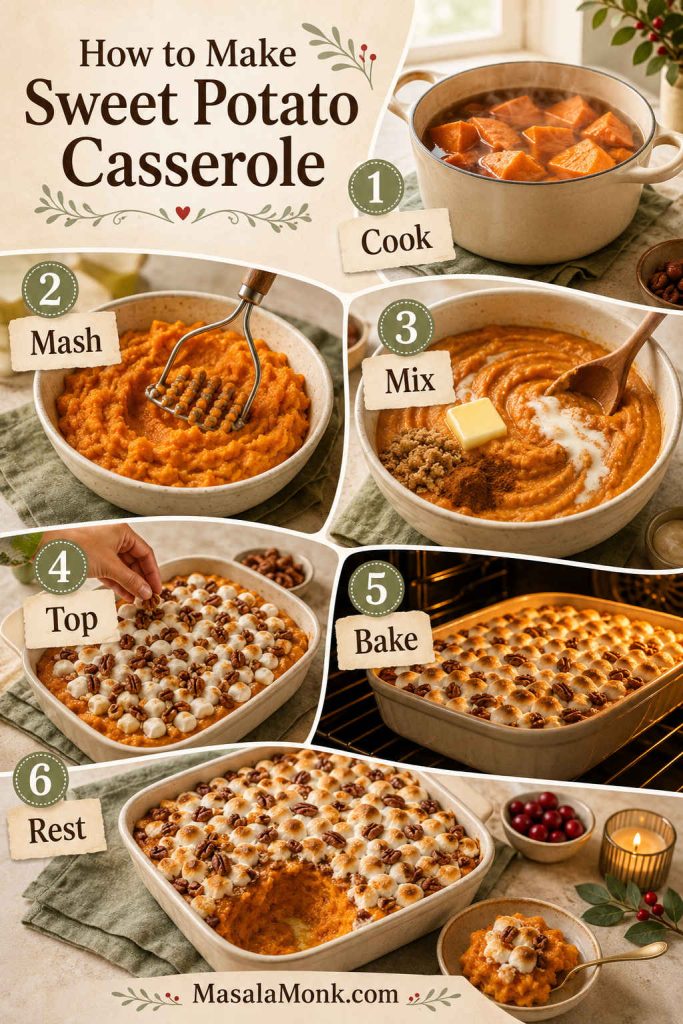
How to Make Sweet Potato Casserole

This is the main fresh-sweet-potato method. Use the canned-yam notes above if you are starting with canned sweet potatoes.

Step-by-step sweet potato casserole guide showing the sequence cook, mash, mix, top, bake, and rest
The process stays simple when you follow the order: cook, mash, mix, top, bake, and let the casserole rest before the first scoop.

Step 1: Cook the Sweet Potatoes

Peel the sweet potatoes and cut them into even chunks. Add them to a large pot, cover with water, and simmer until fork-tender, usually 12–20 minutes depending on the size of the pieces. Drain very well, then let them sit in the hot pot for 3–5 minutes so extra steam can escape.

If roasting, halve the sweet potatoes or roast them whole at 425°F / 220°C until completely tender, usually 40–50 minutes depending on size. Let them cool slightly, then scoop out the flesh. Roasting takes longer, but it gives a thicker, more flavorful mash.

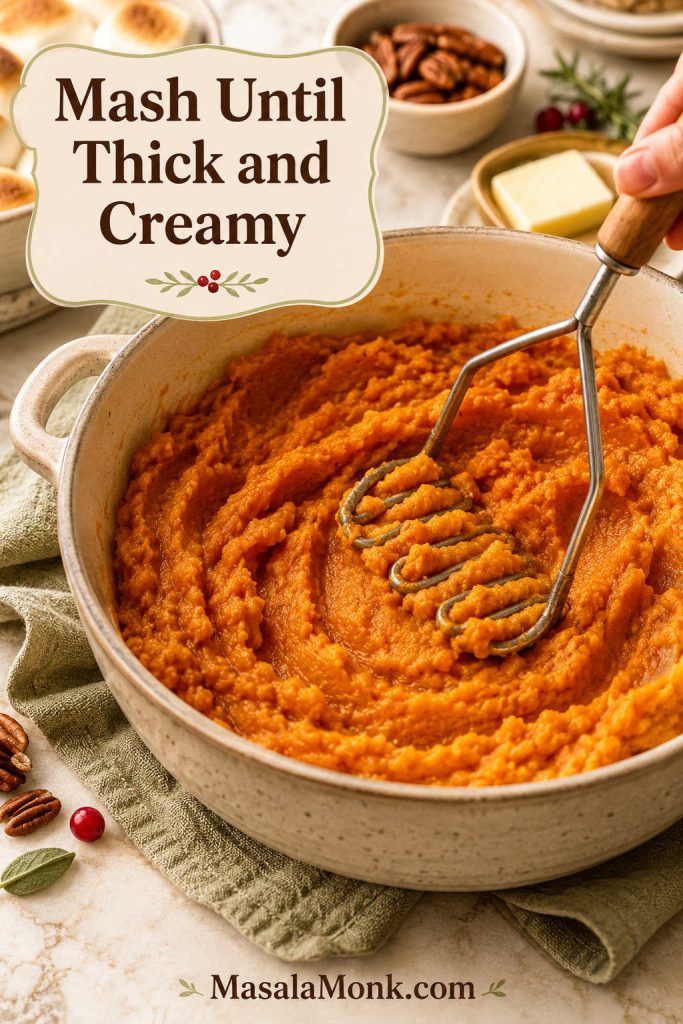
Step 2: Mash Until Thick and Mostly Smooth

Mash the cooked sweet potatoes with a potato masher until mostly smooth. A few small soft pieces are fine. Avoid over-processing in a food processor, especially if your potatoes are very moist, because the filling can become too loose.

Stop when the mash looks creamy and holds soft ridges. If it levels out immediately, wait before adding more milk.

Cooked sweet potatoes being mashed in a bowl with a potato masher until thick and creamy
After boiling, let the sweet potatoes steam-dry before mashing; otherwise, extra water can weaken the base before the filling is even mixed.

Step 3: Add Butter, Sugar, Milk, Vanilla, Spices, and Salt

Stir in melted butter, brown sugar, milk or cream, vanilla, cinnamon, nutmeg, and salt. Start with the lower sugar amount if you prefer a less-sweet casserole, if you plan to use marshmallows, or if your shortcut yams were packed in syrup.

Taste the filling before adding the eggs. Once the eggs go in, it is better not to keep tasting the raw mixture.

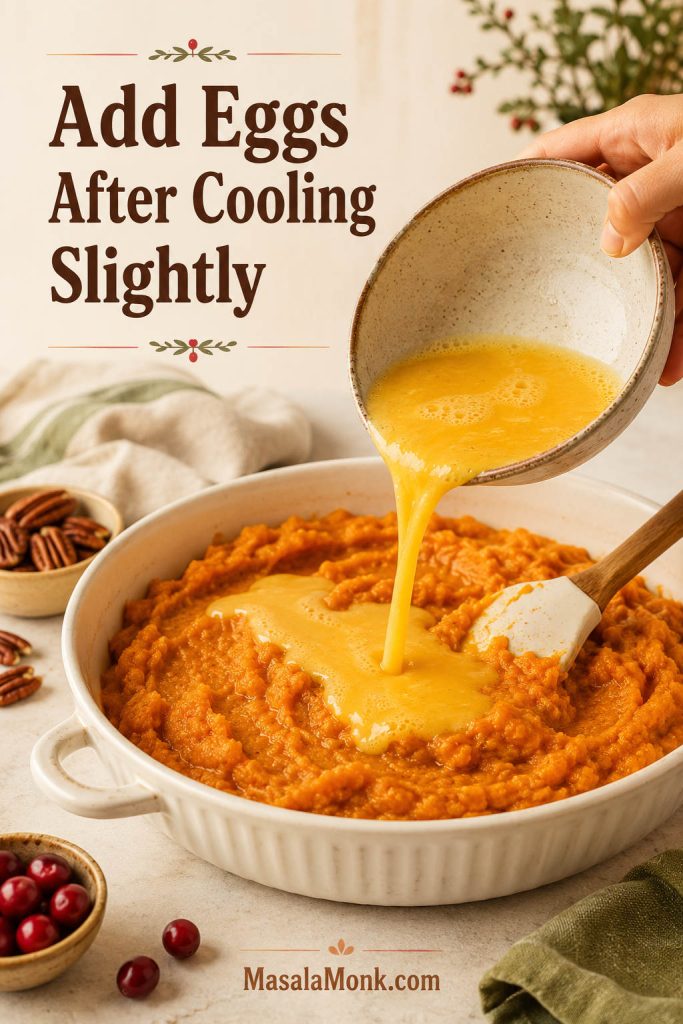
Step 4: Cool Slightly, Then Add Eggs

Let the mash cool for a few minutes before stirring in the eggs. The potatoes can be warm, but they should not be steaming hot. This prevents the eggs from scrambling and helps them blend smoothly into the filling.

If you are making the casserole without eggs, skip this step and use a little less milk so the filling stays sturdy.

Beaten eggs being added to slightly cooled sweet potato mash in a mixing bowl
Let the mash cool slightly before adding eggs so they blend into the filling instead of tightening into uneven bits.

Step 5: Spread in the Baking Dish

Grease a 9×13-inch / 3-quart baking dish and spread the filling evenly. Smooth the top, but do not pack it down too firmly. This is a scoopable casserole, not a sliceable cake.

If using a smaller 8×8, 9×9, or 2-quart dish, use 3–4 cups mashed sweet potato instead of the full 5–6 cups.

Step 6: Add the Topping

Sprinkle pecan streusel evenly over the casserole before baking. If using marshmallows only, bake the filling until nearly hot first. With both toppings, start with the pecan layer and finish with marshmallows.

Pecan Streusel Texture Cue

Close-up of pecan streusel being pinched above a bowl to show light clumps and crumbly texture
The pecan topping should look crumbly but moist enough to gather in small pieces, which helps it bake into buttery crunch.

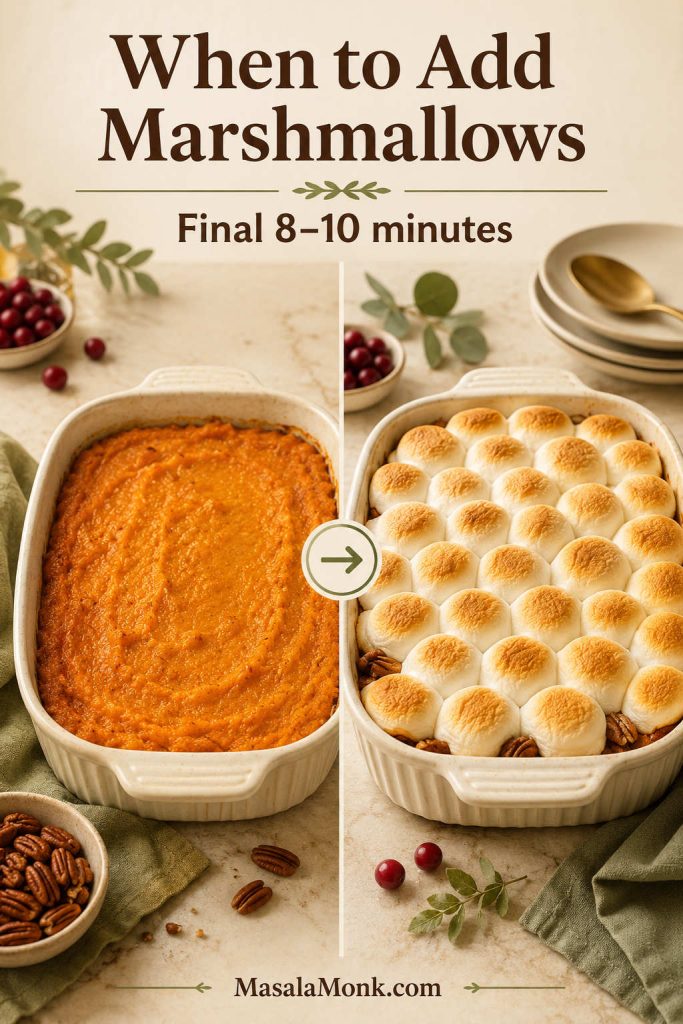
When to Add Marshmallows

Before and after guide showing plain hot sweet potato casserole before marshmallows and toasted marshmallows after the final 8 to 10 minutes
Wait until the casserole is hot before adding marshmallows; then they toast on top instead of disappearing into the filling.

Step 7: Bake Until Hot and Lightly Set

Bake at 350°F / 175°C until the filling is hot in the center and the topping looks golden. A room-temperature casserole usually takes 30–35 minutes. A chilled make-ahead casserole may need 40–50 minutes, especially if it goes into the oven straight from the fridge.

Because this filling contains eggs, you can check the center with an instant-read thermometer if you want precision: it should reach 165°F / 74°C. If the topping is ready but the center is not, cover the top loosely with foil and keep baking.

Step 8: Rest Before Serving

Let the casserole rest for 10–15 minutes before serving. This helps the filling settle, makes it easier to scoop, and lets the streusel firm up slightly. The first spoonful should look creamy and generous, not watery or collapsed.

At the table, the best scoop should feel soft underneath, with just enough golden crunch or toasted marshmallow on top to remind everyone why this dish always disappears.

Sweet Potato Casserole Recipe

This sweet potato casserole is creamy, lightly set, and flexible enough for marshmallows, pecan streusel, or both. For the most crowd-friendly version, use pecan streusel with marshmallows added near the end, but either topping works on its own.

Prep Time
20 minutes
Potato Cook Time
12–20 minutes
Bake Time
30–35 minutes, or 40–50 if chilled
Total Time
About 1 hour 10–15 minutes, plus resting

Servings: 10–12   |   Oven: 350°F / 175°C   |   Dish: 9×13-inch / 3-quart baking dish

Total time is based on boiling the sweet potatoes and baking the casserole right away. If roasting, add about 25–30 minutes. If baking from chilled, allow 40–50 minutes of bake time. Let the casserole rest 10–15 minutes before serving.

Equipment

  • 9×13-inch / 3-quart baking dish
  • Large pot or sheet pan
  • Potato masher
  • Mixing bowls
  • Measuring cups and spoons
  • Foil, if making ahead or reheating
  • Instant-read thermometer, optional

Ingredients

For the Sweet Potato Filling

  • 3 lb / 1.36 kg fresh sweet potatoes, peeled and cut into chunks, or 2 x 29 oz cans of canned yams, drained, aiming for 5–6 cups mashed
  • 4 tbsp / 57 g butter, melted
  • ⅓–½ cup / 65–100 g brown sugar, depending on sweetness preference
  • ⅓ cup / 80 ml milk, half-and-half, cream, or evaporated milk
  • 2 large eggs, lightly beaten
  • 1 tsp / 5 ml vanilla extract
  • 1 tsp ground cinnamon
  • ⅛–¼ tsp ground nutmeg, optional
  • ¾ tsp fine salt, or to taste

For the Pecan Streusel Topping

  • 1 cup / 100–115 g chopped pecans
  • ½ cup / 100 g brown sugar
  • ⅓ cup / 42 g all-purpose flour
  • 5–6 tbsp / 70–85 g butter, melted
  • ½ tsp ground cinnamon
  • Pinch of salt

Nut-free option: Replace pecans with crushed cornflakes, oat crumble, or plain brown sugar crumble.

For the Marshmallow Topping

  • 2–3 cups mini marshmallows / about 100–150 g

Instructions

Cook and Mix the Filling

  1. Cook the sweet potatoes. Add the peeled sweet potato chunks to a large pot and cover with water. Bring to a boil, then simmer until fork-tender, about 12–20 minutes. Drain very well and let the potatoes steam-dry in the hot pot for 3–5 minutes. If using canned yams, drain them very well and skip to mashing.
  2. Preheat the oven. Heat the oven to 350°F / 175°C. Grease a 9×13-inch / 3-quart baking dish.
  3. Mash the sweet potatoes. Mash until mostly smooth. A few small soft pieces are fine, but avoid leaving large chunks.
  4. Mix the filling. Stir in melted butter, brown sugar, milk or cream, vanilla, cinnamon, nutmeg, and salt. Taste and adjust sweetness or salt before adding eggs.
  5. Add the eggs. Let the mash cool slightly, then stir in the beaten eggs until evenly mixed. Do not add eggs to steaming-hot potatoes.
  6. Fill the dish. Spread the sweet potato filling evenly in the prepared baking dish.

Top, Bake, and Rest

  1. Make the pecan topping, if using. In a bowl, mix pecans, brown sugar, flour, 5 tablespoons melted butter, cinnamon, and salt until crumbly. Add the 6th tablespoon of butter only if the mixture still looks dry. Sprinkle over the sweet potato filling.
  2. Bake the casserole. Bake with the streusel on top if using pecan topping. For marshmallows only, bake the filling for about 20–25 minutes first, until nearly hot. A refrigerated casserole may need about 40–50 minutes total bake time, covered loosely if the top browns too quickly. For egg-based doneness, the center should reach 165°F / 74°C.
  3. Add marshmallows near the end. Scatter marshmallows over the hot or nearly hot casserole during the last 8–10 minutes of baking. If using both pecans and marshmallows, add them over the baked streusel. Bake until puffed and golden.
  4. Rest and serve. Let the casserole rest for 10–15 minutes before serving.

Recipe Notes

  • Shortcut canned version: Use 2 x 29 oz cans for a full 9×13 batch, or 1 x 40 oz can for a smaller 8×8 or 9×9 batch. Drain well and aim for 5–6 cups mashed.
  • Roasted sweet potatoes: Roast whole or halved sweet potatoes at 425°F / 220°C for 40–50 minutes, then scoop and mash.
  • Less sweet: Start with ¼–⅓ cup brown sugar, especially if using syrup-packed cans or marshmallows.
  • Nut-free: Use marshmallows, oat crumble, cornflake crumble, or plain brown sugar crumble instead of pecans.
  • No egg: Omit the eggs and reduce the milk slightly. The casserole will be softer and more spoonable.
  • Make-ahead: Prepare the filling 1–2 days ahead and refrigerate covered without topping. Add topping before baking.
  • Storage: Refrigerate leftovers for 3–4 days. Freeze the base without topping for up to 3 months.

Make-Ahead Timeline

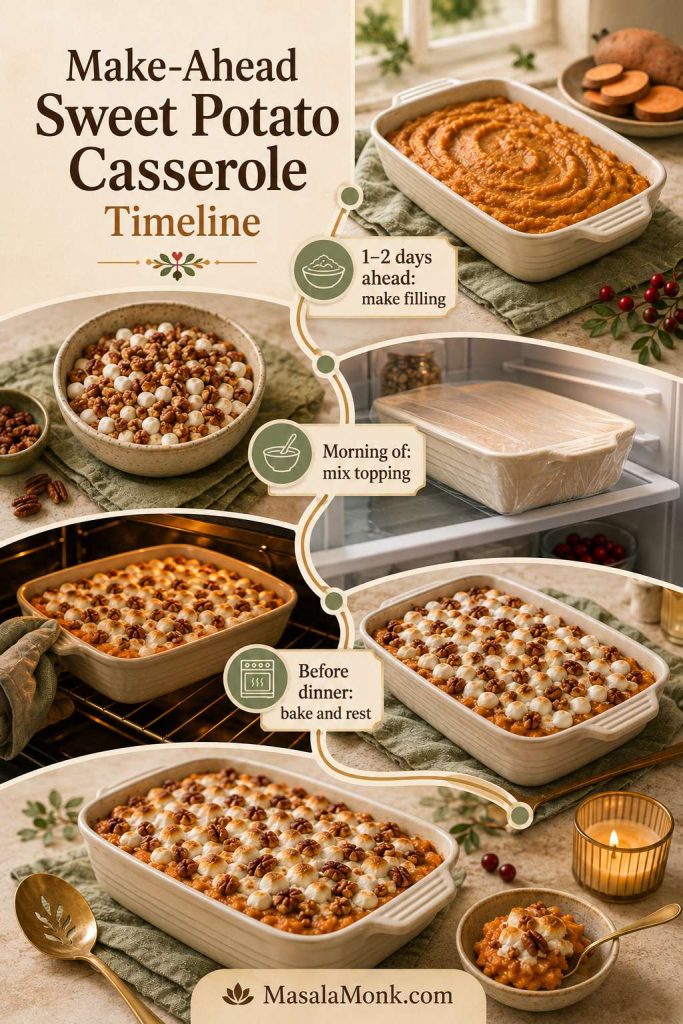
Sweet potato casserole is one of the easier big-meal sides to make ahead because the filling holds well in the fridge. The most reliable make-ahead version is not the one where everything is assembled as early as possible. It is the one where the filling waits calmly and the topping stays fresh until the final bake.

Holiday timing plan: Make the filling 1–2 days ahead, mix the topping the morning of serving, bake the chilled casserole 60–75 minutes before dinner, add marshmallows near the end if using them, then rest before serving.

Make-ahead timeline for sweet potato casserole showing filling made 1 to 2 days ahead, topping mixed the morning of serving, and casserole baked and rested before dinner
For a make-ahead sweet potato casserole that still tastes fresh, prepare the filling early but save the topping for baking day.
WhenWhat to do
2 days beforeCook, drain, and mash the sweet potatoes. Refrigerate the mash in an airtight container.
1 day beforeMix the filling and spread it in the baking dish. Cover and refrigerate without topping.
Morning of servingMix the pecan streusel separately if using. Keep marshmallows in the bag until needed.
60–75 minutes before servingBake the chilled casserole until hot through, allowing extra time for topping and resting.
Near the end of bakingFinish any marshmallow topping until puffed and golden.
Before servingRest 10–15 minutes so the filling settles and the topping has a moment to firm up.

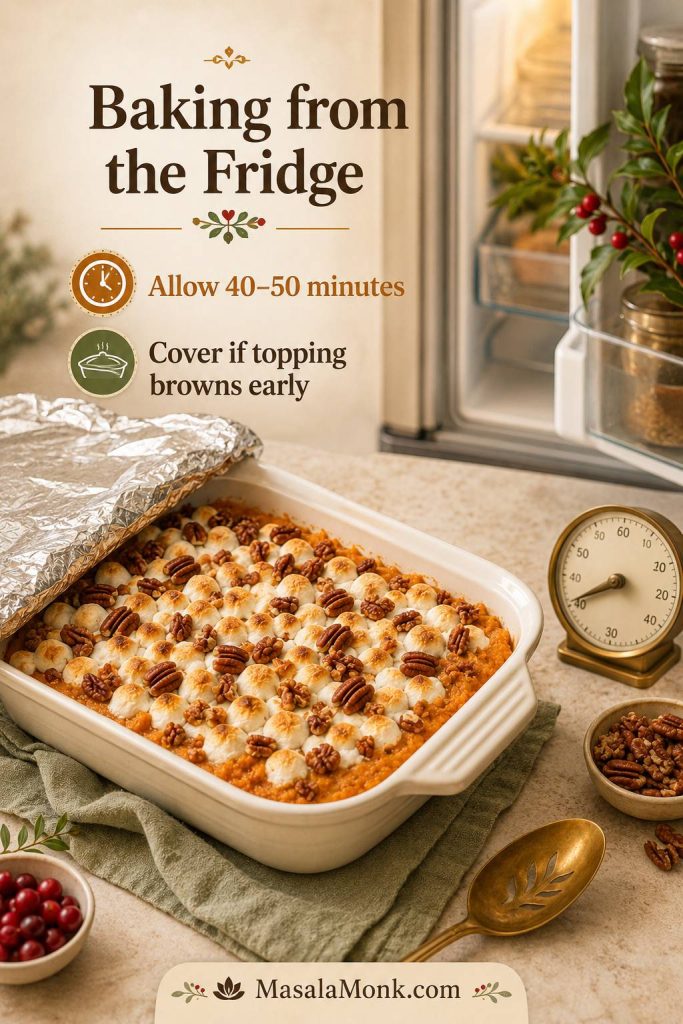
If the assembled casserole is going straight from the refrigerator to the oven, use the baking-from-the-fridge guide before planning your final topping.

This is also a good moment to handle other make-ahead sides. A bright cranberry sauce with orange juice can be made ahead and chilled, which helps keep the final cooking window focused on dishes that need the oven.

That small separation — filling ready, topping fresh — keeps the casserole from tasting like leftovers before dinner even starts.

Should You Add Marshmallows Before Refrigerating?

No. Marshmallows should be added right before the final part of baking. If they sit on the casserole overnight, they can absorb moisture, collapse, or melt unevenly in the oven.

Can You Add Pecan Topping Ahead?

You can, but the texture is better if you store the topping separately and sprinkle it on before baking. If the topping sits on the filling overnight, it may absorb moisture and bake up softer.

Can You Bake It Straight from the Fridge?

Yes, but allow 40–50 minutes of bake time if the casserole is cold from the fridge. If your baking dish is not safe for sudden temperature changes, let it sit at room temperature for about 30 minutes before baking.

Sweet potato casserole with foil near an open refrigerator, showing guidance to bake from the fridge for 40 to 50 minutes and cover if topping browns early
When baking from the fridge, plan for a longer oven window and use foil as backup if the top finishes before the middle.

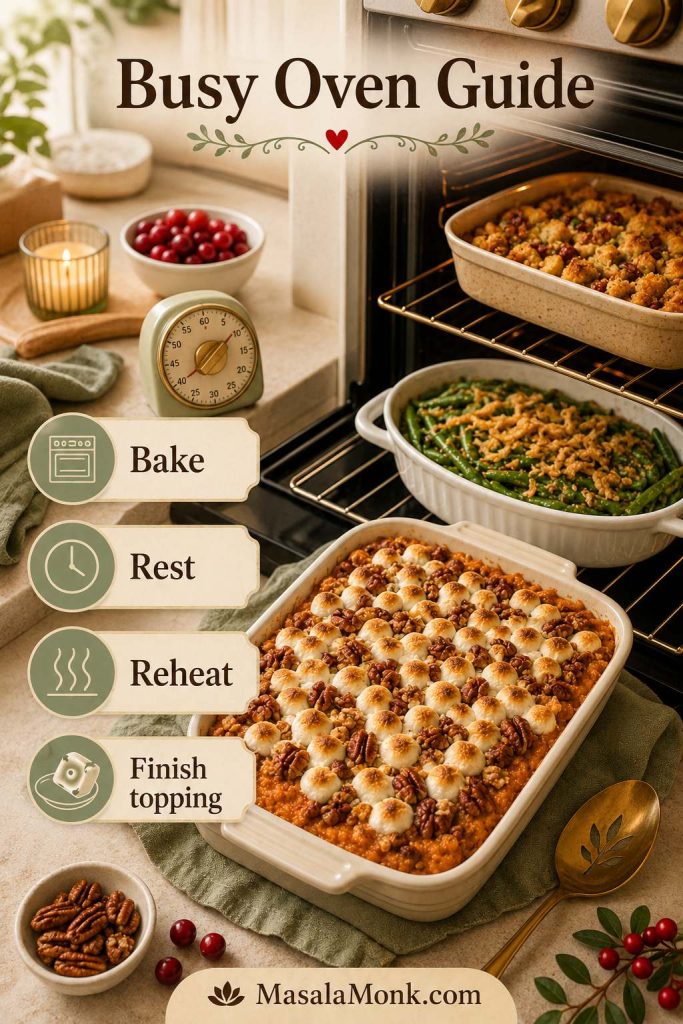
How to Fit It Into a Busy Oven

Sweet potato casserole is usually not the only thing fighting for oven space. The good news is that it is flexible. It can bake at 350°F / 175°C with many other sides, sit for a short rest before serving, or be baked earlier and reheated gently.

If you are also baking green bean casserole, keep both dishes on the same 350°F / 175°C schedule when possible. The sweet potato casserole can rest while another side finishes, and marshmallows can still go on at the very end.

Best Timing Paths for a Crowded Oven

  • At 350°F / 175°C: Bake as written. This is the most forgiving temperature for the casserole.
  • For a hotter oven: Check early and cover loosely if the topping browns before the center is hot.
  • Already baked: Reheat covered at 325–350°F until hot, then uncover briefly to refresh the topping.
  • Using marshmallows: Add them only after the filling is hot or nearly hot, especially when reheating.
  • When oven space is tight: Use the slow cooker to warm or hold the filling, then broil marshmallows in a baking dish if you want a toasted top.
  • When dinner is delayed: Keep the casserole loosely covered in a warm spot, but avoid sealing it tightly while hot because trapped steam softens the topping.

How to Finish the Topping Before Serving

Busy oven guide showing sweet potato casserole with other holiday side dishes and steps to bake, rest, reheat, and finish the topping
During a crowded holiday oven schedule, this casserole can bake early, rest safely, reheat gently, and still get a fresh final topping.

If oven space is the main problem, the slow cooker option can hold the base while other sides finish.

Think of the casserole as a side that can wait a little. Bake it before the final rush, rest it while other dishes finish, and add marshmallows late enough that they still look fresh when it reaches the table.

If the casserole is running late, do not rush the marshmallows. Get the filling hot first. A pale marshmallow topping can be browned in a minute, but a cold center cannot be fixed at the table.

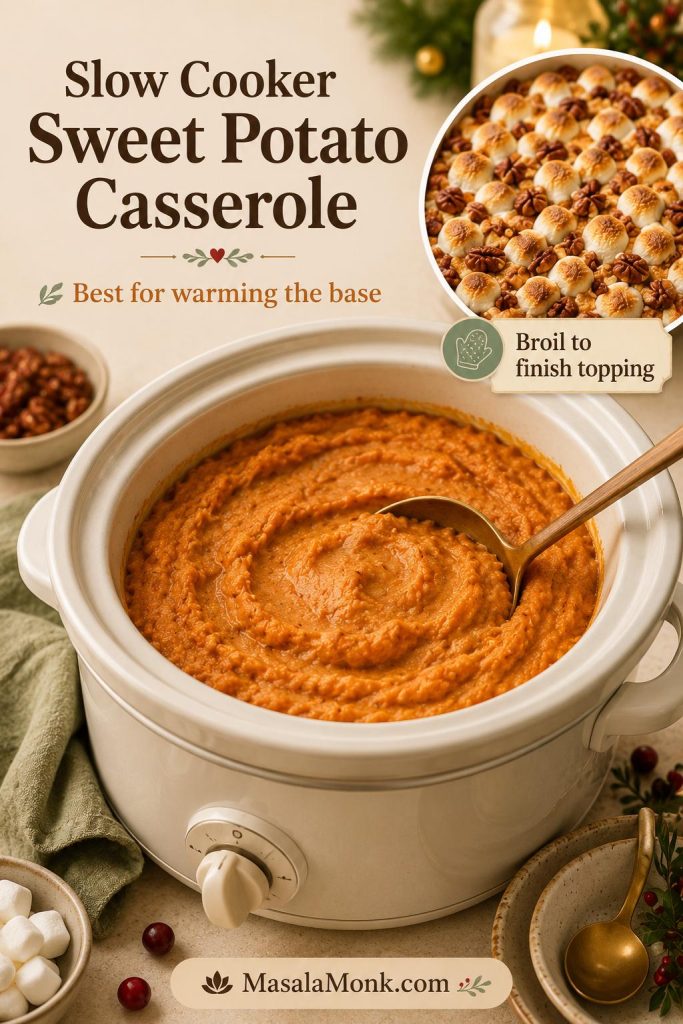
Slow Cooker Sweet Potato Casserole Option

The slow cooker is useful when the oven is full, but it changes the topping. Think of it as a warming tool here, not the place to create a crisp top. It keeps the sweet potato base warm and soft, but pecan streusel will not crisp the way it does in the oven, and marshmallows will become gooey rather than deeply toasted.

Use this route when oven space matters more than a perfect topping. Then, if you want the golden holiday look, transfer the hot filling to a baking dish and finish it under the broiler.

Slow cooker filled with creamy sweet potato casserole base and a small broiled topping inset with marshmallows and pecans
A slow cooker solves the oven-space problem, but a quick broiler finish is what gives marshmallows and pecans their best texture.
Slow cooker situationTimingWhat to know
Prepared filling, already cooked sweet potatoesLow for 2–3 hours, or high for 1–1½ hoursGood for warming and holding the casserole base
Marshmallows in slow cookerLast 10–15 minutes onlyThey soften and melt; they will not toast like oven marshmallows
Pecan topping in slow cookerAdd near the end or finish in ovenExpect a softer topping unless broiled or baked briefly

For the most practical slow cooker version, prepare the sweet potato filling and spread it in a greased slow cooker. Warm until hot through. If condensation is dripping onto the topping, place a clean kitchen towel under the lid, making sure it does not touch the heating element.

No Egg, Vegan, Dairy-Free, and Other Easy Swaps

The base recipe is classic, but it is easy to adapt. Keep the sweet potato mash thick, add liquids gradually, and choose a topping that fits the version you need.

NeedHow to adjustTexture note
No eggOmit the eggs and reduce the milk slightlySofter and more spoonable, less set
VeganUse vegan butter, non-dairy milk, no eggs, and vegan marshmallows if usingKeep the mash thick so the filling does not loosen
Dairy-freeUse dairy-free butter and oat milk, almond milk, coconut milk, or another non-dairy milkCoconut milk gives richer flavor; oat milk is more neutral
Gluten-freeUse gluten-free flour, oat flour, or certified gluten-free oats in the toppingCheck all topping ingredients if serving someone with a strict allergy or intolerance
Nut-freeUse marshmallows, oat crumble, cornflake topping, or plain brown sugar crumbleCornflakes give the most crisp, sweet-salty crunch without pecans
Less sweetUse ¼–⅓ cup brown sugar, skip marshmallows, and use pecan or oat toppingAdd enough salt, cinnamon, and vanilla so the flavor still feels full
No marshmallowsUse pecan streusel, oat crumble, cornflake topping, or savory crumb toppingGood when you want a side dish, not a dessert-like casserole
Ingredient swap guide for sweet potato casserole showing no egg, vegan, dairy-free, gluten-free, nut-free, and less sweet options
Whether the casserole is no-egg, vegan, dairy-free, gluten-free, nut-free, or less sweet, the key is keeping the mash thick before baking.

Regular marshmallows often contain gelatin, so check the label if the dish needs to be vegetarian or vegan. For gluten-free guests, use certified gluten-free oats if you choose an oat topping, and check packaged ingredients carefully.

Flavor Variations

  • Brighter: Add orange zest or fold in a few small pieces of tart apple. Use orange juice sparingly because too much can thin the filling.
  • Maple-sweet: Replace part of the brown sugar with maple syrup, then reduce the milk slightly if the filling loosens.
  • Fruitier: Add well-drained crushed pineapple for a sweeter, old-fashioned variation.
  • More savory: Skip the sugar and marshmallows. Use butter, herbs, black pepper, and a savory breadcrumb or pecan topping.
  • Praline-style: Increase the pecans and brown sugar for a sweeter, more dessert-like topping.

Sweet Potato Casserole vs Sweet Potato Souffle

Sweet potato casserole and sweet potato souffle are closely related, and you will see the names used loosely, especially in holiday recipes. In general, sweet potato casserole is denser, more spoonable, and more flexible with toppings like marshmallows, pecans, or both.

Sweet potato souffle is usually smoother, lighter, and more egg-based. It often has a pecan topping and a more custardy interior. This recipe sits firmly in classic casserole territory: creamy and lightly set, but not so airy or eggy that it becomes a true souffle.

Troubleshooting Sweet Potato Casserole

If the casserole does not look perfect halfway through, do not panic. This is a forgiving dish, and most problems come from the same few places: too much moisture, topping added at the wrong time, or sweetness that was not balanced before baking.

Troubleshooting guide for sweet potato casserole with texture problems such as watery, loose, dry, and cold center, plus topping problems such as too sweet, burnt topping, soggy topping, and disappeared marshmallows
Most sweet potato casserole problems trace back to moisture, sweetness, heat, or topping timing, so spotting the cause makes the fix much easier.

If the problem starts before baking, compare your mash with the texture target; if it starts after chilling, check the fridge-to-oven timing.

Texture and Moisture Problems

ProblemWhy it happenedFix nowFix next time
Watery casserolePotatoes absorbed too much water, the cans were not drained well, or too much milk was addedBake uncovered a little longer; if the topping is browning, cover only the top loosely with foilDrain and steam-dry potatoes; drain shortcut yams very well; add liquid gradually
Filling is too looseNo eggs, too much liquid, or underbakingBake longer and rest before servingUse eggs or reduce milk slightly for egg-free versions
Dry fillingToo little liquid or overbakingAdd a splash of warm milk or melted butter when reheatingMeasure liquid carefully and avoid baking long after the center is hot
Stringy textureFibrous sweet potatoes or not enough mashingMash more thoroughly if still possibleChoose good orange-fleshed sweet potatoes and remove tough fibers before mixing
Cold centerCasserole went into the oven chilled and did not bake long enoughCover loosely and continue baking until hot in the centerAdd 10–15 minutes when baking from cold
Topping browns before filling is hotDish was too deep, oven was too hot, or casserole was coldCover loosely with foil and keep bakingLet chilled casserole sit out briefly and use the right dish size

Topping and Sweetness Problems

ProblemWhy it happenedFix nowFix next time
Too sweetToo much sugar, syrup-packed cans, or marshmallow toppingAdd a small pinch of salt, then serve small scoops with tart cranberry sauce, green beans, salty ham, or other savory sidesUse ¼–⅓ cup sugar and choose pecan topping instead of marshmallows
Burnt marshmallowsMarshmallows were added too early or broiled too longRemove the darkest pieces if neededAdd marshmallows only during the last 8–10 minutes and watch closely
Marshmallows disappearedThey were added too early or the filling was too wetAdd a fresh layer and bake brieflyAdd marshmallows near the end and make sure the filling is thick
Soggy pecan toppingTopping sat on the filling too long or absorbed refrigerator moistureReturn to the oven uncovered for a few minutes, or broil briefly while watching closelyStore topping separately and add before baking

Storage, Freezing, and Reheating

Leftover sweet potato casserole stores well, but the topping changes texture over time. The leftovers will still taste good after reheating, but the topping will never be quite as crisp or fluffy as it was on the first day. That is normal.

Marshmallows soften, pecan streusel loses some crunch, and any crumb topping will absorb moisture in the fridge. For general food-safety timing, the USDA’s leftovers and food safety guidance is a useful reference.

  • Refrigerator: Store covered for 3–4 days.
  • Freezer: Freeze the sweet potato base without topping for up to 3 months.
  • Thawing: Thaw the base overnight in the refrigerator before baking or reheating, then add topping fresh.
  • Marshmallow topping: Add fresh for the cleanest texture. Marshmallows do not freeze or reheat as cleanly as the filling.
  • Pecan topping: Can be frozen separately, but it is crispiest when mixed and baked fresh.
  • Oven reheating: Cover and reheat at 325–350°F until steaming hot throughout, then uncover briefly to refresh the topping.
  • Microwave reheating: Works for single servings, but the topping will soften.
Storage guide for sweet potato casserole showing fridge storage for 3 to 4 days, freezing the base only, and adding fresh topping after reheating
The filling handles storage better than the topping, so freeze the base plain and add fresh marshmallows or crumble after reheating.

For broader sweet potato freezing guidance, the National Center for Home Food Preservation has a helpful reference on freezing sweet potatoes, including mashed sweet potatoes.

What to Serve With Sweet Potato Casserole

Sweet potato casserole is sweet, rich, and soft, so the rest of the plate should bring contrast. Think savory, tart, crunchy, green, or herb-heavy rather than more soft sweetness.

MealGood plate balance
Thanksgiving plateTurkey, stuffing, green beans, tart cranberry sauce, and a scoop of sweet potato casserole
Ham dinnerSalty ham, roasted Brussels sprouts or green beans, sharp mustard or cranberry sauce, and the casserole on the side
Vegetarian holiday tableMushroom gravy, roasted vegetables, green bean casserole, salad, and pecan-topped sweet potato casserole
Potluck plateA small scoop of casserole beside something savory, something crisp, and something acidic so the sweetness does not take over

For a classic side-dish table, serve it with green vegetables, stuffing, roasted vegetables, a simple savory main, and creamy garlic mashed potatoes. The casserole brings softness and sweetness; the rest of the plate should make it feel complete.

FAQs About Sweet Potato Casserole

Do canned yams work here?

Yes. The canned version works well when you want a faster casserole. Drain the pieces thoroughly, reduce the sugar if they were packed in syrup, and add milk gradually because they are already tender and more delicate than fresh cooked sweet potatoes.

How many cans of yams do I need?

For a full 9×13 casserole, use 2 x 29 oz cans, drained. For a smaller 8×8 or 9×9 casserole, use 1 x 40 oz can, drained. Because drained yield varies, aim for about 5–6 cups mashed sweet potato for a full batch or 3–4 cups for a smaller batch.

When should marshmallows go on top?

Add marshmallows during the last 8–10 minutes of baking, once the filling is hot or nearly hot. This gives them time to puff and brown without melting completely or burning before the center is ready.

How do I keep it from getting watery?

Drain the sweet potatoes well, let boiled potatoes steam-dry before mashing, drain canned yams thoroughly, and add milk gradually. The mash should be creamy but thick before it goes into the baking dish.

How far ahead can I make it?

You can make the filling 1–2 days ahead. Spread it in the baking dish, cover, and refrigerate without topping. Add pecan topping before baking and marshmallows near the end.

Does it freeze well?

The sweet potato base freezes well without topping for up to 3 months. Marshmallows and crumb toppings are best added fresh after thawing.

Do you have to put eggs in sweet potato casserole?

No. Eggs help the filling set and scoop neatly, but you can leave them out for a softer casserole. If skipping eggs, reduce the milk slightly so the mash stays thick.

Can I make it without marshmallows?

Yes. Use pecan streusel, oat crumble, cornflake topping, or a savory breadcrumb topping instead. Without marshmallows, the casserole tastes less candy-like and works better as a true side dish.

Can I make it in a slow cooker?

Yes, especially if you need to save oven space. The slow cooker is best for warming or holding the sweet potato base. Marshmallows will soften rather than toast, so transfer to a baking dish and broil briefly if you want a browned top.

What is the difference between casserole and souffle?

Sweet potato casserole is usually denser and more spoonable. Sweet potato souffle is usually smoother, lighter, and more egg-based. Many recipes blur the line, but this recipe is written as a classic casserole.

How much do I need for 10 people?

A 9×13-inch casserole made with about 5–6 cups mashed sweet potato serves 10–12 people as a side dish. If it is one of many sides, portions can be smaller.

Once the mash is thick, the sweetness tastes right, and the topping goes on at the right moment, you can stop worrying about this dish. It goes to the table hot, creamy, golden, and ready for the first generous scoop.

Back to top

Posted on 2 Comments

Sweet Potato Nutrition Facts (100g & Per Potato) — Diabetes & Weight-Loss Guide

Sweet potato nutrition facts (100g & per potato) with healthier fries—diabetes-friendly portions and weight-loss tips | MasalaMonk

If you came here for sweet potato nutrition facts, you’re in exactly the right place. Right from the first bite, sweet potatoes deliver comfort; yet, underneath that velvet sweetness lies a nutrition profile that’s both practical and powerful. In this guide, you’ll find per-100 g numbers, per-potato estimates, and deeply usable advice for type 2 diabetes, weight management, and smarter fries. Moreover, you’ll get cooking methods that truly change the numbers, guidance on skins and fiber, clarity on white vs. purple vs. “yams,” and elegant meal blueprints that turn information into dinner. When you want to double-check any figure, lean on authoritative resources like USDA FoodData Central and MyFoodData’s baked sweet potato profile.


Sweet Potato Nutrition Facts (Per 100 g, Cooked): The Label You Can Trust

To begin, let’s ground the discussion in sweet potato nutrition facts per 100 g cooked (typical baked or boiled). These ranges are realistic for home cooks and menu planners:

  • Calories: ~86–103 kcal
  • Carbohydrates: ~20–21 g
    • of which fiber: ~3.0–3.3 g
  • Protein: ~1.6–2.0 g
  • Fat: ~0.1–0.2 g
  • Potassium: ~337 mg
  • Vitamin A (RAE): ~700+ μg (primarily as beta-carotene)
  • Vitamin C: ~2–3 mg
  • Manganese: ~0.3 mg

Additionally, sweet potatoes provide smaller but notable amounts of vitamin B6, copper, magnesium, and pantothenic acid—micronutrients that often slip under the radar yet support energy metabolism and skin integrity. Numbers shift slightly by variety and method; nevertheless, this label-style snapshot is a sturdy, real-world baseline. For raw-to-cooked changes, micronutrient depth, or amino-acid profiles, verify in USDA FoodData Central or the readable label at MyFoodData.

Cook’s note: Keep the skin on whenever possible. It lifts fiber without effort, helps retain water-soluble vitamins, and—delightfully—holds seasonings on the surface.


Sweet Potato Nutrition Facts (Per Potato): What a “Potato” Actually Means

Because shoppers pick tubers—not grams—here are sweet potato nutrition facts per potato using edible-portion estimates. Consequently, you can portion intelligently without a scale:

SizeExample edible weightCaloriesCarbsFiber
Small~120 g~103 kcal~24 g~3–4 g
Medium~160 g~138 kcal~32 g~4–5 g
Large~220 g~189 kcal~44 g~6–7 g

If you’re counting carbohydrates, ½ medium sweet potato is roughly 15–20 g carbs, which dovetails with the common “one carb choice” teaching in diabetes education. For precise cooked forms (boiled flesh only, baked with skin, mashed with milk), cross-check the specific entries on MyFoodData.


Sweet Potato Nutrition Facts for Type 2 Diabetes: The Sensible Playbook

Principle #1: budget carbohydrates rather than banning foods. Because carbohydrates influence blood glucose most, the American Diabetes Association recommends carb counting and flexible planning rather than rigid restrictions: see Carb Counting & Diabetes. Additionally, the CDC offers an accessible orientation to the 15-gram carb choice concept here: Carb Counting to Manage Blood Sugar.

Now, apply those principles to sweet potato nutrition facts:

  • Portion first. Begin with ½ medium (~15–20 g carbs). Then, test your glucose response; consequently, you’ll discover your personal tolerance.
  • Method matters. Boiled or steamed sweet potato often yields a gentler immediate glycemic impact than baked, roasted, or fried versions. Moreover, cooling and reheating can increase resistant starch, which behaves more like fiber.
  • Pair smart. Combine your portion with lean protein (eggs, fish, tofu, paneer) and non-starchy vegetables. A drizzle of olive oil, a scatter of nuts, or a dollop of yogurt slows digestion and improves satisfaction.
  • Keep the skin. The extra fiber supports steadier post-meal glucose and better satiety.

For an easy visual, the ADA’s Meal-Planning & Plate Method lays out a reliable template you can reuse nightly. And if you’re comparing tubers on principle, here’s a thoughtful editorial look at texture, nutrients, and kitchen behavior: The Potato Debate: White vs Sweet.


Glycemic Index (GI) & Glycemic Load (GL): Making Sweet Potato Nutrition Facts Practical

Because blood sugar response matters, let’s add GI and GL to your sweet potato nutrition facts so you can act with confidence.

Quick definitions (warm + simple):

  • Glycemic Index (GI) estimates how fast a carb food raises blood glucose per gram of carbohydrate.
  • Glycemic Load (GL) captures both speed and size of the carb hit:
    ∗∗GL=(GI×netcarbsingrams)÷100∗∗**GL = (GI × net carbs in grams) ÷ 100**∗∗GL=(GI×netcarbsingrams)÷100∗∗
    (Net carbs = total carbs − fiber.)
  • GL guide: ≤10 = low, 11–19 = medium, ≥20 = high.

Read our post about Glycemic Index (GI) VS Glycemic Load (GL) to understand the concept better. Another insightful read can be Glycemic Index and Secrets of Weight Loss.

Typical GI by Cooking Method (variety matters, so think in ranges)

Preparation (cooked)Typical GI range*Why it varies
Boiled / Steamed~45–60Moist heat keeps starches less available; often gentler on glucose.
Baked / Roasted~60–80Dry heat concentrates sugars and promotes caramelization.
Mashed (warm)~65–80More surface area + warmth = faster digestion.
Fries (deep-fried)~70–85High heat and low moisture push GI upward.
Cooled then reheated (any method)slightly lower vs hot freshCooling can increase resistant starch, acting more like fiber.

*GI for sweet potatoes varies widely by cultivar (orange, Japanese, purple), ripeness, and test protocol. Use these as directional ranges, then let your meter be the final judge.

GL Examples You Can Use Tonight

Using the nutrition baselines from your post (per 100 g: ~20.5 g carbs, ~3.1 g fiber~17.4 g net carbs; ½ medium potato: ~16 g carbs, ~2.4 g fiber~13.6 g net carbs):

  • Per 100 g, boiled (assume GI 50):
    GL ≈ 50 × 17.4 ÷ 100 = ~8.7Low
  • Per 100 g, baked/roasted (assume GI 70):
    GL ≈ 70 × 17.4 ÷ 100 = ~12.2Medium
  • ½ medium potato, boiled (GI 50):
    GL ≈ 50 × 13.6 ÷ 100 = ~6.8Low
  • ½ medium potato, baked (GI 70):
    GL ≈ 70 × 13.6 ÷ 100 = ~9.5Low-to-Medium
  • Restaurant fries, ~150 g serving (assume 33 g carbs, 3 g fiber → 30 g net; GI 75):
    GL ≈ 75 × 30 ÷ 100 = ~22.5High

How to Use GI/GL Without Overthinking It

  • Prefer moist heat (boil/steam) on days you want the calmest glucose curve; cool, then reheat when you meal-prep.
  • Scale portions: starting at ½ medium potato keeps GL low for most people.
  • Pair smart: protein + non-starchy veg + a little healthy fat (olive oil, nuts, yogurt) soften the spike, even when you choose baked wedges.
  • Save fries for “sometimes”: delicious, yes—yet their GL is high, especially in restaurant-size servings.

In short, GI tells you how fast; GL tells you how much. Together with your sweet potato nutrition facts, they make plate decisions wonderfully clear.


Sweet Potato Nutrition Facts for Weight Management: Satiety Without the Sulk

Crucially, sweet potato nutrition facts sketch a food that satisfies per calorie. At ~86–103 kcal per 100 g cooked and ~3 g fiber per 100 g, sweet potatoes deliver structure, subtle sweetness, and volume—the sensory trifecta behind portion control.

Three tactics make the difference:

  1. Season boldly, cook simply. Skip butter-and-sugar habits in favor of olive oil, citrus, chilli, pepper, and herbs. Consequently, you’ll highlight the vegetable’s inherent sweetness and keep calories reasonable.
  2. Swap refined sides. Replace bread baskets, sugary casseroles, or frosting-heavy “bakes” with roasted wedges, yogurt-lightened mash, or warm salads. Therefore, you quietly elevate micronutrients while controlling energy.
  3. Build contrast. Crisp edges plus cooling yogurt, crunchy seeds, and fresh herbs trick your brain (in the best way) into perceiving abundance at modest portion sizes.

For a dive into portions and recipe swaps, read our post on Benefits of Sweet Potatoes for Weight Loss.


Cooking Methods Through the Lens of Sweet Potato Nutrition Facts

As we know cooking transforms both numbers and experience, think of method as a dial you can tune to your goals:

  • Boiling/Steaming: Often the gentlest immediate glycemic impact. Salt after cooking; finish with olive oil and herbs to keep flavors lifted without calorie creep.
  • Baking/Roasting: Drives surface caramelization and intensifies sweetness. Consequently, employ acids (lime, vinegar), heat (chilli), and bitter notes (rocket/greens) to balance the richer flavor and keep portions natural.
  • Cooling & Reheating: Encourages resistant starch formation; some diners notice smoother post-meal curves. Use this for meal prep—roast on Sunday, reheat during the week.
  • Frying: A weekend treat. Meanwhile, air-frying or high-heat baking mimics crispness with a fraction of the fat—perfect for weeknights.

Because method interacts with variety, don’t be surprised if an orange, moisture-rich cultivar behaves differently from a denser Japanese type. Keep your meter (or your hunger cues) as the final judge.


Fries & Chips, But Make Them Honest (Still Rooted in Sweet Potato Nutrition Facts)

Let’s address the question everyone cares about: can fries fit? Yes—if you control fat, salt, and portion, and if you respect what sweet potato nutrition facts tell you about calories and carbs.

Air-Fryer/Baked Sweet Potato Fries (serves 2)

  • You need: 2 small sweet potatoes (skins on), 2 tsp olive oil, pinch salt, paprika/garlic powder.
  • Method: Slice into thin batons. Toss evenly with oil and seasoning. Spread in a single layer. Air-fry at 200 °C for 12–15 minutes (shake once) or bake at 220 °C for 20–25 minutes until the edges caramelize.
  • Why it aligns with your goals: You use far less oil than deep-frying, you keep the fiber-rich skins, and you choose the portion. For baseline macro estimates, consult the label-style sweet potato nutrition facts at MyFoodData.

Additionally, when you crave a full “fries night,” partner your plate with something protein-forward that won’t torpedo your numbers: see 5 High-Protein Vegan Air-Fryer Ideas. If crispness still misbehaves, troubleshoot with 12 Air-Fryer Mistakes to Avoid.


Fiber, Skins, and a Happier Gut (Explained with Sweet Potato Nutrition Facts)

Since sweet potato nutrition facts reveal both soluble and insoluble fiber (roughly ~3 g/100 g cooked), leaving skins on is an elegant uplift—no supplements needed. Fiber supports gut regularity, blunts post-meal glucose, and enhances fullness. However, fiber works best with adequate fluids and light movement; therefore, sip water through the day and consider a brisk 10-minute walk after meals.

If you puree, consider “fold-backs”: stir finely chopped, well-scrubbed skins back into mash for delicate speckles of texture. Likewise, roasted skin shards make a clever garnish on soups and salads. For detailed fiber comparisons by method or variety, search USDA FoodData Central and pick the exact entry that matches your cooking style.


Purple, White & “Yams”: What Color and Botany Actually Mean

Even within the umbrella of sweet potato nutrition facts, color and species signal important differences:

  • Orange sweet potatoes (common globally): Headline-level beta-carotene (→ vitamin A), moist flesh, and classic sweetness.
  • Purple sweet potatoes: Packed with anthocyanins, the same pigment family found in blueberries. Although research is ongoing, rotating colors plausibly diversifies antioxidant intake—deliciously so.
  • White sweet potatoes: Milder sweetness, paler flesh, and lower provitamin A than orange types; however, they still provide fiber and potassium.
  • True yams (Dioscorea): A different plant entirely. In many markets, “yam” is used colloquially for sweet potatoes; nonetheless, true yams are usually far lower in vitamin A and have a different texture. When labels confuse, confirm via the USDA FoodData Central search.

Variety does influences both flavor and glycemic response, it’s worth experimenting. Japanese sweet potatoes (often denser and sweeter), for instance, roast beautifully and pair well with sharp, lemony greens.


Micronutrient Nuance: Beyond Calories and Carbs

While sweet potato nutrition facts headline beta-carotene and potassium, a deeper glance reveals subtler helpers:

  • Vitamin B6: Supports amino-acid metabolism and neurotransmitter synthesis; useful when your plate leans protein-forward.
  • Copper & Manganese: Trace minerals that, nevertheless, contribute to antioxidant defenses and connective tissue health.
  • Vitamin C: Modest amounts still aid collagen formation and iron absorption—helpful if your diet is plant-centric.

Moreover, because vitamin A from beta-carotene is fat-soluble, a minimal amount of healthy fat (olive oil, seeds, tahini) enhances absorption. Consequently, that drizzle of oil is more than a flavor move; it’s functional nutrition.

Also Read: Iron Deficiency Anemia Symptoms: 15 Signs You Are Iron Deficient


Athlete & Active-Life Angle: Fuel, Recovery, and Convenience

For active people, sweet potato nutrition facts map neatly onto pre- and post-workout needs:

  • Before training: A small serving (e.g., 100–150 g cooked) delivers easily digestible carbs with a modest fiber load—enough for steady energy without heaviness.
  • After training: Pair roasted cubes with a protein source (chicken, eggs, Greek yogurt, tofu) and greens to replenish glycogen while supporting muscle repair.
  • On the go: Bake a tray on Sunday; consequently, you can build fast bowls with eggs or chickpeas all week. The cool-then-reheat rhythm also encourages resistant starch formation, which some athletes find gentler on the gut.

We know that travel derails routines, pack a little jar of spice mix (smoked paprika, chilli, garlic powder) and tiny olive-oil bottle; hotel-microwaved sweet potato with a pinch of salt and that blend is surprisingly satisfying.

Also Read: 10 Delicious Plant-Based Protein Sources for High-Protein Meal Prep


Breakfast, Lunch, and Dinner: Blueprints You’ll Actually Use

Breakfast (choose one; rotate across the week):

  • Yogurt-Mash Bowl: Warm 100 g mashed sweet potato, top with Greek yogurt, roasted seeds, cinnamon, and a drizzle of honey if desired. Consequently, you get a macro balance that feels like brunch.
  • Egg-and-Hash Skillet: Pan-crisp diced sweet potato with onions and cumin; crack in two eggs; finish with coriander and lime. Moreover, it reheats well for packed mornings.
  • Smooth(-ish) Not-Juice: Blend roasted sweet potato with yogurt, water, ginger, and a squeeze of orange. However, avoid juicing (which removes fiber and concentrates sugars); keep the fiber in the blender.

Lunch (simple but composed):

  • Two-Texture Salad: Roast cubes until char-speckled; toss warm with rocket, toasted seeds, and lime-tahini dressing. Additionally, it packs neatly for the office.
  • Tray-Bake Power Plate: Roast sweet potato wedges beside chicken thighs or tofu; add a quick cucumber-herb salad. Therefore, you achieve a restaurant-clean composition with Tuesday-night effort.
  • Chaat-Inspired Bowl: Boiled cubes, thick yogurt, tamarind, mint chutney, roasted chana, and herbs. Meanwhile, spice and tang provide big satisfaction without big calories.

Dinner (crowd-pleasing and meter-friendly):

  • Coconut-Ginger Soup: Simmer chunks with ginger and garlic; add coconut milk; blitz to velvet. Finish with lime zest and chopped peanuts. Consequently, it’s luxurious without cream.
  • Silky Mash with Yogurt & Chives: Boil, drain thoroughly, mash with Greek yogurt, olive oil, and chives; serve with pan-seared fish or grilled paneer.
  • The Honest Fry Night: Air-fried batons + grilled protein + zingy slaw. For protein ideas that travel well between cuisines, browse 5 High-Protein Vegan Air-Fryer Ideas.

Portioning by Goal: A Quick Reference Using Sweet Potato Nutrition Facts

Everyone’s goals differ, use this goal-based portion guide anchored to sweet potato nutrition facts:

  • Weight maintenance: 100–150 g cooked (≈ 86–130 kcal) as a side, 1× daily. Pair with protein and veg.
  • Weight loss: 75–125 g cooked (≈ 65–110 kcal) as a side, focusing on texture contrast and acid to enhance satisfaction.
  • Endurance training days: 150–250 g cooked across meals (timed pre-/post-workout).
  • Type 2 diabetes (general starting point): ½ medium (~15–20 g carbs) at a time, paired sensibly; adjust based on meter readings.

Naturally, these are templates. Therefore, keep an eye on satiety, performance, and any clinical markers you track.

Also Read: 5 Sweet Potato Appetizers Ideas to Inspire the Chef in You


Shopping, Storage, and Zero-Waste Notes (Guided by Sweet Potato Nutrition Facts)

Choosing: Look for firm roots with smooth skin; avoid wet spots or deep cuts. Small-to-medium sizes cook more evenly and portion neatly.

Storing: Keep them in a cool, dark, ventilated place—not the fridge. Refrigeration can alter texture and flavor after cooking.

Prepping: Scrub well. If you peel, upcycle the skins: pan-crisp in a teaspoon of oil with salt and chilli for a savory garnish or snack.

Batching: Roast extra; cool completely; refrigerate. Moreover, cooled sweet potato reheats well, slips into salads and hashes, and—helpfully—may develop resistant starch through the cool-then-reheat cycle.

Also Read: How to Make Pineapple Chia Pudding: A Refreshing Low-Carb Breakfast Option


Myth-Busting with Sweet Potato Nutrition Facts

  • “Sweet potatoes are automatically low-GI.”
    Not automatically. Variety and method matter; therefore, boiled/steamed tends to be gentler than baked/fried, and portions still count. If you use a CGM or meter, your data trumps broad claims.
  • “White potatoes bad; sweet potatoes good.”
    Too binary. Both can fit a balanced plate when portioned and paired. For a 100 g side-by-side, try the MyFoodData comparison tool; meanwhile, for culinary context, see The Potato Debate: White vs Sweet.
  • “Fries are always unhealthy.”
    Context decides. Air-fryer or oven fries with minimal oil and skins-on can align with both diabetes-aware and weight-conscious eating—especially alongside lean protein and salad.
  • “Yams = sweet potatoes.”
    Not quite. “Yam” is often a nickname; however, true yams are different and generally lower in vitamin A. When in doubt, verify via USDA FoodData Central.
  • “Juicing sweet potatoes is better than eating them.”
    Not necessarily. Juicing strips fiber, which matters for satiety and glycemic control. Consequently, if you prefer a drinkable format, blend roasted sweet potato into smoothies so the fiber remains.

Sensory Science: Why These Dishes Feel So Satisfying

Understanding why sweet potato nutrition facts translate into real satisfaction helps you cook with intent:

  • Texture contrast (crisp edges + creamy interiors) engages more senses, which, in turn, increases fullness signals.
  • Aromatics (ginger, garlic, warm spices) and acids (lime, vinegar) brighten perceived sweetness so you need less added sugar.

  • Temperature play (hot wedges against cool yogurt) reads as indulgent even at modest calories.
  • Color rotation (orange, purple, white) keeps boredom at bay while diversifying antioxidants.

Therefore, if you build plates with contrast, color, and acid, you’ll feel like you ate more than the calorie math suggests—an invaluable trick for both weight management and contentment.

Suggested Read: Coconut Water Cocktails: 10 Easy, Refreshing Drinks


Putting It All Together: A Weeknight Plate That Loves You Back

Finally, let’s pull the threads tight and turn sweet potato nutrition facts into a plate you’ll actually repeat:

  • A tray of skin-on wedges hits a 220 °C oven for about 22 minutes.
  • At minute 10, paprika-garlic chicken thighs (or tofu slabs) slide onto the same tray for the remaining 12 minutes.
  • On the counter, a bowl of lemon-zested Greek yogurt waits with a swirl of olive oil, salt, and black pepper.
  • A peppery green salad gets tossed at the end with lime and chilli flakes.

Consequently, dinner lands as a four-part, high-satisfaction composition: crisp-tender wedges, juicy protein, cooling creaminess, and bright greens. It looks restaurant-polished, eats comfort-first, and fits smart nutrition without feeling like homework.

In short:
Treat 100 g as your mental ruler. Keep skins when you can. Boil or steam for calm days; roast when you crave drama; air-fry when fries call your name. Additionally, pair with protein, flood the plate with vegetables, and let acid and heat carry flavor so portions stay comfortable. If you live with diabetes, let your meter be the critic that matters. If you’re trimming calories, remember that texture and seasoning do the heavy lifting for satisfaction.


Source Hubs You Can Trust

And for internal, reader-friendly context, don’t miss:


Editor’s note: Values vary by cultivar and preparation; use these figures as practical averages. For medical advice, always consult your clinician.


1) What are the key sweet potato nutrition facts per 100 g?

Warmly put: per 100 g cooked you’ll usually see ~86–103 kcal, ~20–21 g carbs, ~3 g fiber, ~1.6–2 g protein, and standout vitamin A. Moreover, these numbers make portioning simple—and delicious.

2) How many calories and carbs are in one sweet potato?

Typically, a small (~120 g) is ~103 kcal/~24 g carbs; a medium (~160 g) is ~138 kcal/~32 g carbs; a large (~220 g) is ~189 kcal/~44 g carbs. Therefore, starting with ½ medium keeps carbs near 15–20 g.

3) Are sweet potatoes good for type 2 diabetes?

Yes—however, portions and method matter. Boil or steam for gentler spikes, pair with protein and non-starchy veg, and keep the skin for fiber. In short, your meter will confirm how the sweet potato nutrition facts fit your day.

4) Do sweet potatoes help with weight loss?

They can—because fiber aids fullness and the calorie density is modest. Additionally, season boldly (citrus, chilli, herbs) and cook simply (roast, boil, air-fry) so satisfaction stays high while calories stay reasonable.

5) What’s healthier: sweet potato fries baked/air-fried or deep-fried?

Baked/air-fried, hands down. Consequently, you use far less oil, keep skins for fiber, and control salt and portion. For even better results, shake the basket halfway and serve with a protein-rich main.

6) Does the skin actually add meaningful nutrition?

Absolutely. Notably, leaving skins on bumps fiber and helps preserve water-soluble vitamins. Therefore, scrub well and keep them on for wedges, fries, and mash-with-texture.

7) Are purple sweet potatoes more nutritious?

They’re different, not automatically “better.” Purple varieties bring anthocyanins (antioxidants), while orange types excel at beta-carotene (vitamin A). Moreover, rotating colors broadens your nutrient palette without any fuss.

8) Are yams the same as sweet potatoes?

No. Meanwhile, many markets use “yam” loosely, but true yams (Dioscorea) are a different plant and generally lower in vitamin A. For clarity, rely on the sweet potato nutrition facts on your package or database.

9) What’s the best serving size for everyday eating?

As a side, 100–150 g cooked (≈86–130 kcal) suits most balanced plates. For diabetes management, start with ½ medium and adjust. Additionally, add protein and a pile of non-starchy veg to round things out.

10) Do sweet potatoes help with constipation?

Often, yes. Because they offer ~3 g fiber/100 g, they can support regularity—especially with skins on. Finally, pair with fluids and a short post-meal walk for best results.

11) Are sweet potatoes good for eyesight?

They can be supportive. Thanks to high beta-carotene (provitamin A), they contribute to healthy vision as part of a varied diet. However, balance matters—mix in leafy greens and other colorful veg, too.

12) What are the sweet potato nutrition facts for fries or chips?

Homemade baked/air-fried fries generally land ~120–160 kcal per 100 g (oil-dependent), with ~22–27 g carbs and ~3–4 g fiber. Deep-fried restaurant servings, by contrast, can quickly double calories; consequently, home control wins.

13) Is juicing sweet potatoes a good idea?

Not really. Because juicing removes fiber, you lose one of the best parts of the sweet potato nutrition facts. Instead, blend roasted sweet potato into smoothies so the fiber—and satisfaction—stay intact.

14) Are sweet potato noodles healthy?

They can be, yet remember they’re mostly starch. Therefore, treat them like any noodle: mind portions, add protein (eggs, tofu, chicken), and load the bowl with vegetables to balance the sweet potato nutrition facts.

15) Which cooking method best supports steady blood sugar?

Generally, boiling or steaming is gentler than baking or frying. Additionally, cooling and reheating can increase resistant starch. Therefore, on days you want calm curves, choose moist heat and pair wisely.

16) Can I eat sweet potatoes daily?

You can, provided portions fit your goals and the rest of your diet stays varied. Moreover, rotate with other starches (beans, whole grains) and colors (purple/orange/white) so you don’t lean on one nutrient profile alone.

17) What’s the healthiest way to make mashed sweet potatoes?

Boil, drain well, then mash with Greek yogurt, a drizzle of olive oil, salt, and chives. Consequently, you get creamy texture, extra protein, and all the comfort—without the heavy cream.

18) Do sweet potato leaves have benefits?

They’re edible and nutrient-rich in many cuisines. However, availability varies; if you find them, sauté like spinach with garlic and a squeeze of citrus to complement the core sweet potato nutrition facts on your plate.

19) Are white sweet potatoes less nutritious?

They’re simply different—typically milder and lower in provitamin A than orange types, yet still a solid source of carbs, fiber, and potassium. Additionally, they roast beautifully and balance spicy mains.

20) How do I use sweet potato nutrition facts to build a plate?

Start with your target portion (e.g., 100–150 g cooked). Then, add lean protein (egg, chicken, fish, tofu) and double the volume with non-starchy veg. Finally, finish with acid (lime, vinegar) and herbs so smaller portions feel abundant.

21) What about healthy casseroles—do they ever fit?

They can, if you tame sugar and fat. For example, skip marshmallows and syrup; instead, bake slices with olive oil, salt, warm spices, and toasted nuts. Consequently, you keep the sweet potato nutrition facts on your side.

22) Are sweet potato supplements worth it?

Whole foods are usually the better bet. Notably, supplements can’t replace the fiber, water, and synergy of real ingredients. Therefore, default to food first unless a clinician suggests otherwise.

23) How do sweet potato nutrition facts compare with white potatoes?

Both are wholesome. Sweet potatoes lead in beta-carotene; white potatoes can be higher in vitamin C (and sometimes potassium). Moreover, method and portion influence the health impact more than the label alone.

24) Any quick meal ideas that respect the numbers?

Absolutely: roasted wedges with lemony yogurt and herbs; black-bean & sweet-potato tacos; coconut-ginger soup; or air-fried batons with a grilled protein and crunchy slaw. Additionally, batch-roast on Sunday to save time all week.

25) Final word—how do I keep this simple?

In short, let sweet potato nutrition facts guide, not police. Choose 100–150 g cooked as your mental ruler, keep skins on, pick boiling/steaming for gentler days, and, finally, balance every plate with protein and colorful vegetables.