
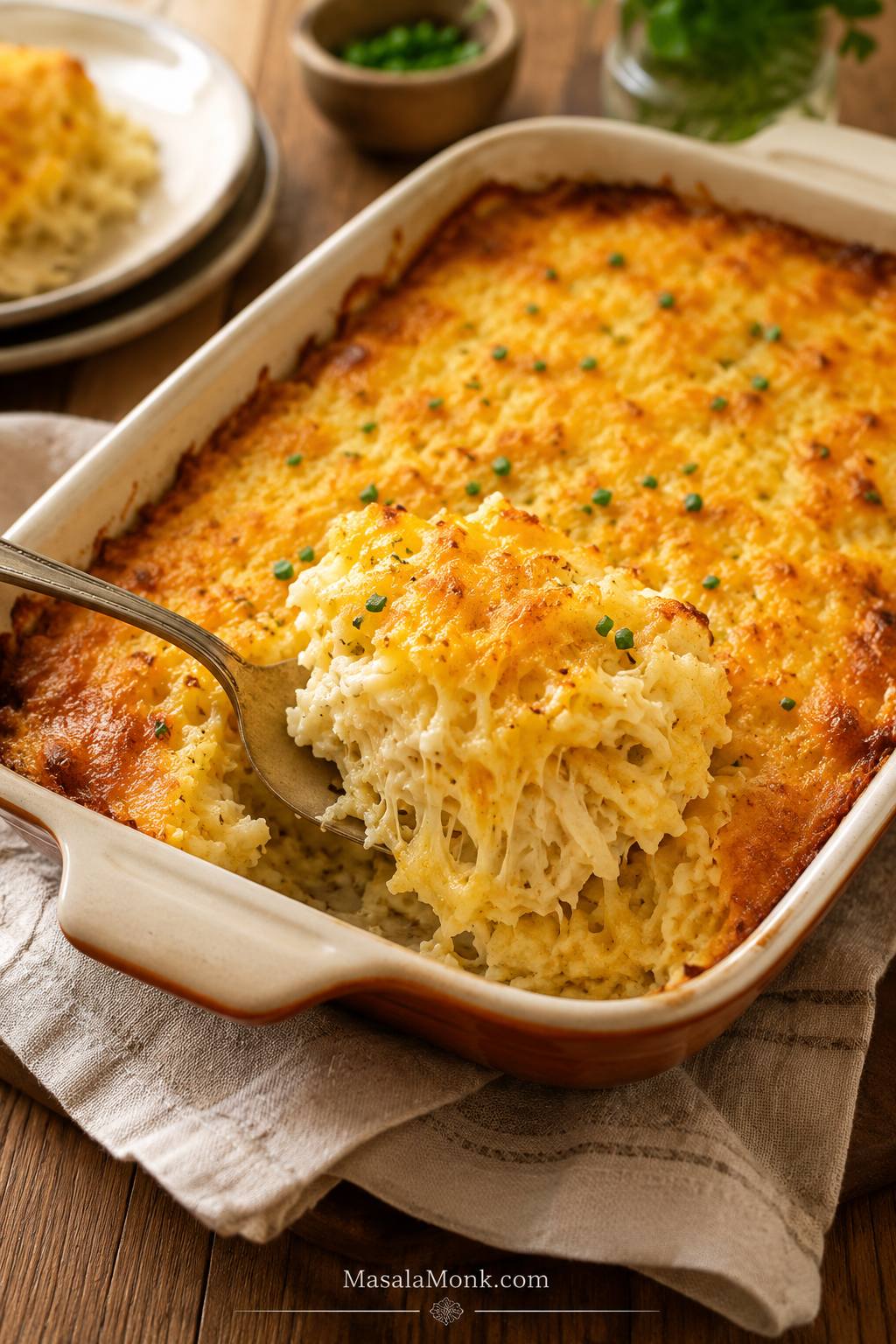
This hashbrown casserole recipe bakes up with bubbling edges, a soft cheesy potato center, and a golden top that feels right at home on a holiday table, potluck spread, or Sunday dinner plate. It starts with frozen shredded hash browns, so you get the comfort of a classic potato casserole without peeling, shredding, or squeezing potatoes from scratch.
Whether you call it hashbrown casserole or hash brown casserole, this is the creamy shredded-potato bake made with cheese, sour cream, and a golden topping. The filling is the cozy kind: hash browns folded into sour cream, cream soup or a quick homemade sauce, sharp cheddar, melted butter, onion, and seasoning.
This hashbrown casserole recipe is the cheesy potato side-dish style, rather than an egg-based breakfast bake. The goal is simple: creamy potatoes in the middle, bubbling edges at the sides, and a topping that still tastes like a topping when it reaches the table. Keep the top soft and melty with extra cheese, or add buttered cornflakes or crackers for the crunchy finish often associated with funeral potatoes.
If you were looking for the egg-and-potato breakfast lane instead, this breakfast burrito recipe uses eggs, potatoes or hash browns, cheese, and freezer-friendly filling ideas.
Table of Contents
Quick Answer: Hashbrown Casserole Recipe Basics
To make hashbrown casserole, thaw frozen shredded hash browns and remove excess moisture. After that, mix them with sour cream, cream of chicken or cream of mushroom soup, melted butter, sharp cheddar, onion, garlic powder, black pepper, and a small amount of salt. Spread the mixture in a greased 9×13-inch baking dish, add more cheese or a buttery cornflake topping, and bake at 350°F / 175°C for 45–55 minutes.
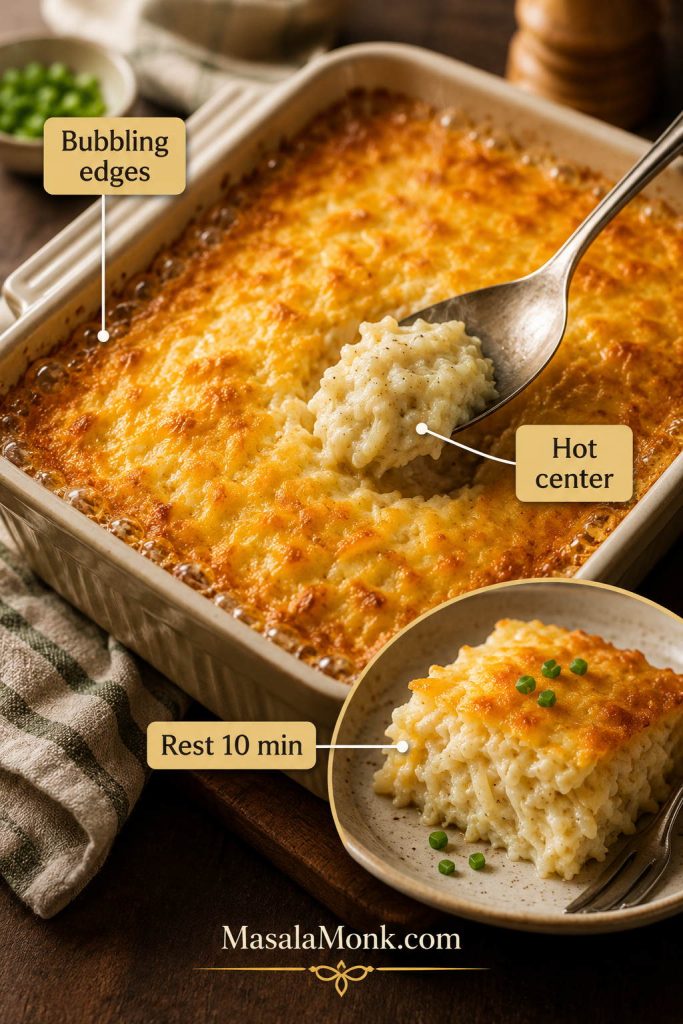
This hashbrown casserole recipe is done when the top is golden, but the edges matter more: they should be bubbling steadily, and the center should be hot and creamy when you spoon into it. Do not panic if the top looks done early; that is exactly when a loose tent of foil helps the middle finish without over-browning the topping.
Finally, let the pan rest for about 10 minutes so the filling settles into soft, scoopable squares. Serve it as a holiday potato side, potluck casserole, brunch side, or cozy dinner side with ham, chicken, pork, eggs, or simple vegetables.
Ready to cook now? Jump to the recipe card, or keep reading for the style choices, topping options, and make-ahead tips.
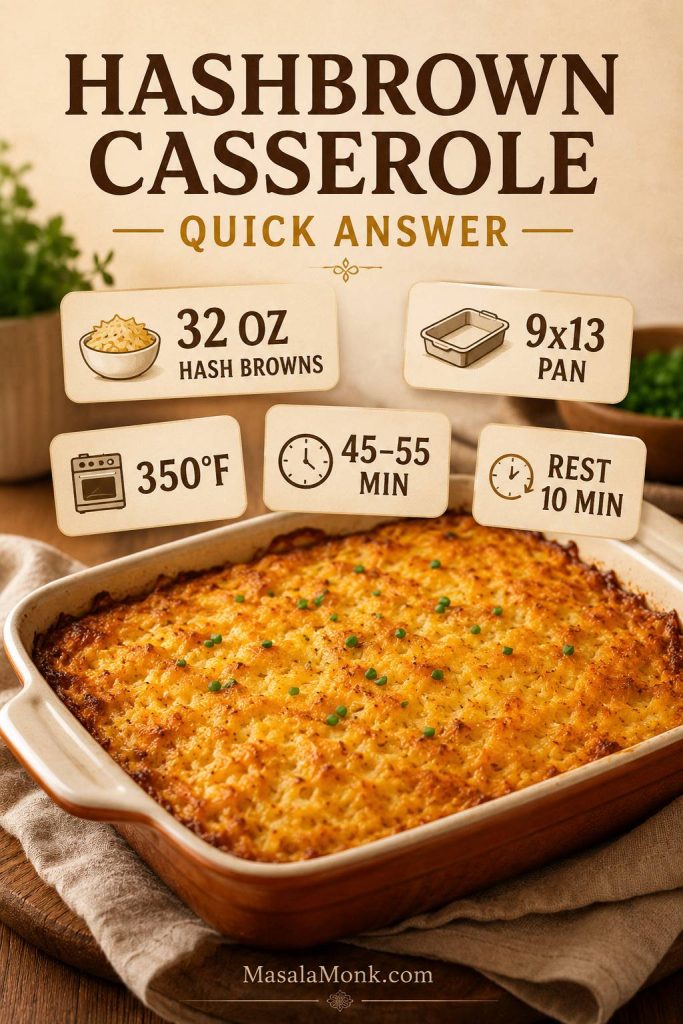
Hashbrown Casserole at a Glance
| Recommended potatoes | Frozen shredded hash browns, thawed and dried well |
|---|---|
| Pan | 9×13-inch baking dish |
| Oven temperature | 350°F / 175°C |
| Bake time | 45–55 minutes |
| Rest time | 10 minutes |
| Servings | 10–12 side servings |
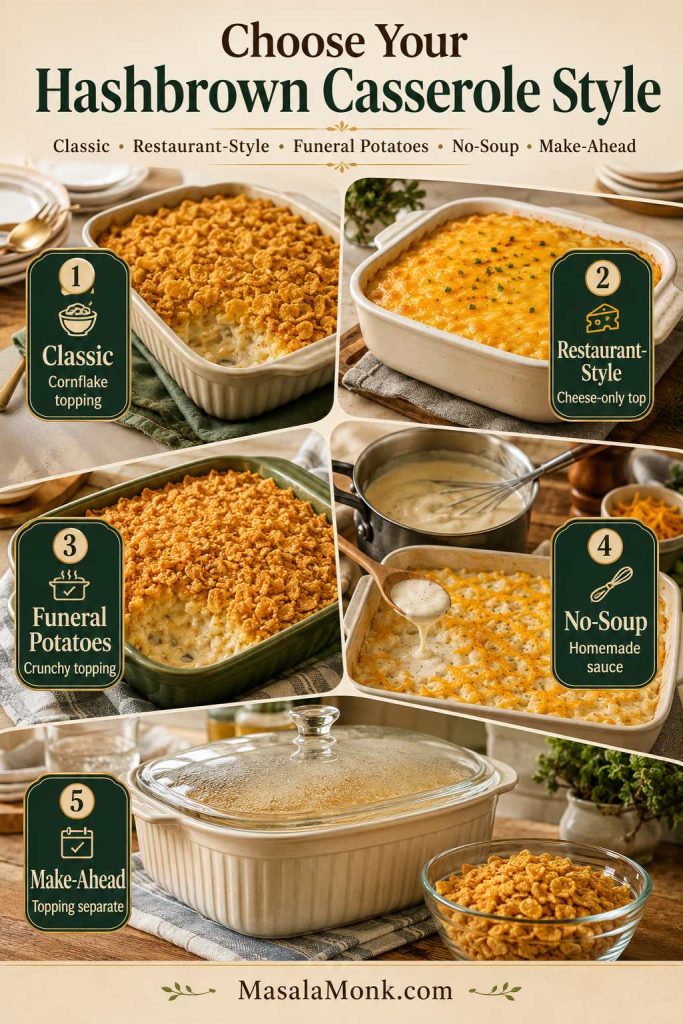
Choose Your Hashbrown Casserole Style
The base of this hashbrown casserole recipe is flexible, so you can steer the same pan toward a classic potluck side, funeral potatoes, a soft restaurant-style casserole, or a no-soup version. This is the fastest way to choose your topping before you start mixing.
Quick Style Guide
| Classic potluck style | Use cream of chicken soup, sour cream, cheddar, and a buttered cornflake topping. |
|---|---|
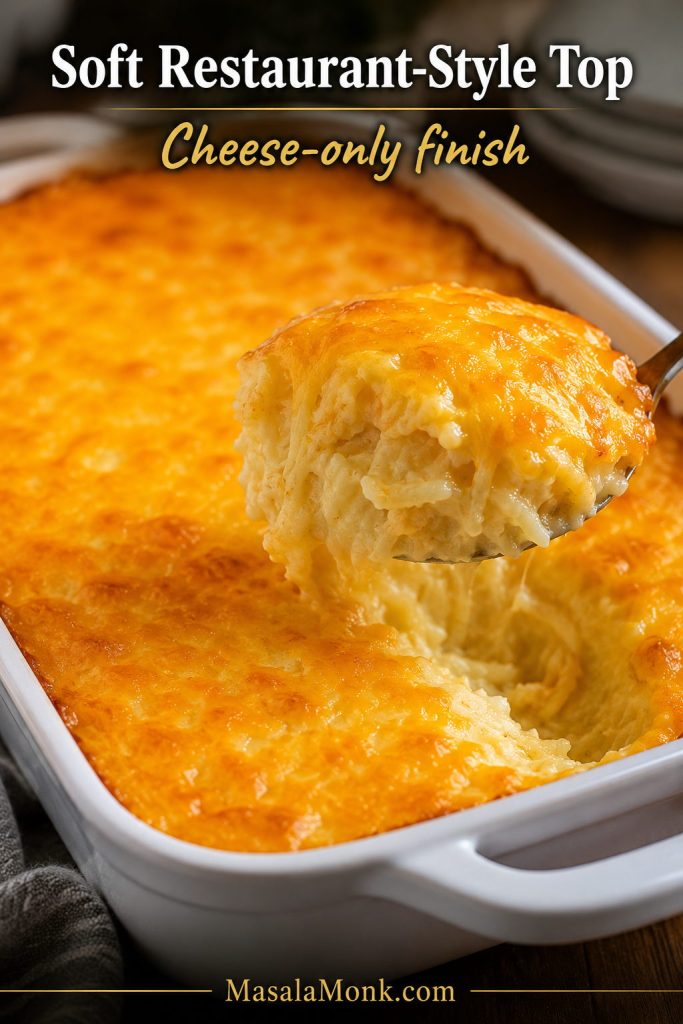
| Soft restaurant-style top | Keep the top cheese-only for a softer, melty finish instead of a crunchy cornflake layer. |
| Funeral potatoes style | Add buttered cornflakes or crackers and bake until the edges are bubbling. |
| No canned soup | Use the quick homemade butter-flour-broth-milk sauce below. |
| Best make-ahead version | Assemble the filling ahead, but add the crunchy topping right before baking. |
For the crunchy finish, go to topping options. For the homemade sauce version, jump to hashbrown casserole without canned soup.
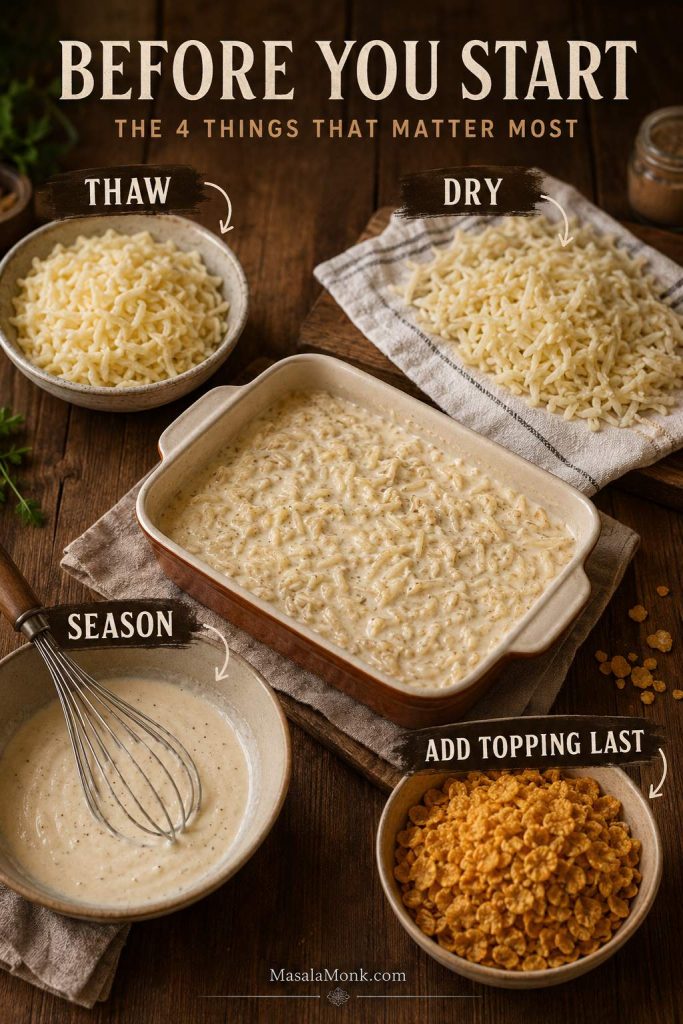
Before You Start: The 4 Things That Matter Most
If this casserole fails, it usually fails in one of four places: frozen potatoes, excess moisture, flat seasoning, or a topping that sat too long before baking. Check these before the pan goes into the oven.
- Thaw the hash browns. Frozen clumps release water as they bake and make the timing less predictable.
- Dry off the extra moisture. The potatoes can feel lightly damp, but they should not be icy, soaked, or dripping.
- Season the sauce before adding potatoes. Otherwise, the hash browns can mellow the flavor too much once everything is folded together.
- Add crunchy topping right before baking. For make-ahead prep, cornflakes, crackers, and panko stay crispest when they do not sit in the fridge overnight.
Not sure how dry the potatoes should be? The thawing section shows the texture cue before mixing.
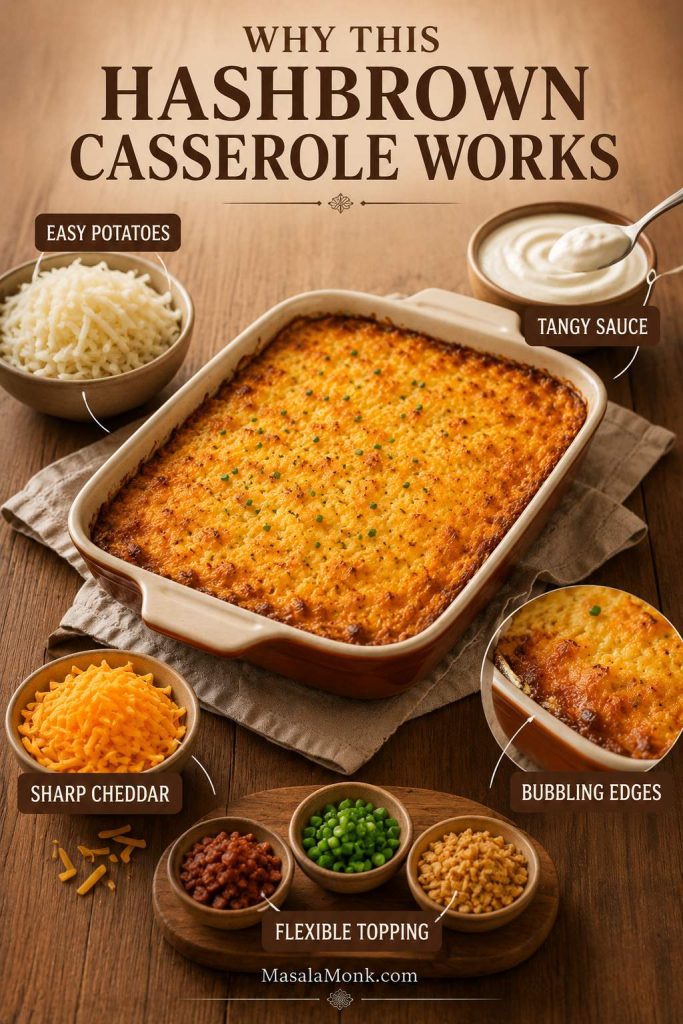
Why This Hashbrown Casserole Works
The recipe is simple, but it is not random. Each part is there to solve a common casserole problem: watery potatoes, flat sauce, a soft topping, or a middle that needs more time than the top.
- Frozen shredded potatoes keep prep easy. You get a soft potato center without peeling, shredding, or par-cooking fresh potatoes.
- Sour cream keeps the sauce from tasting flat. It adds tang against the cheese, butter, and cream soup.
- Sharp cheddar gives more flavor than mild cheddar. That means the casserole tastes cheesy without needing an excessive amount of cheese.
- Bubbling edges are a better doneness cue than color alone. The top can brown before the center is fully hot.
- The topping is flexible. Cheese-only gives a soft, melty finish, while cornflakes or crackers give a crunchy funeral-potatoes-style top.
Ingredients and Why They Matter
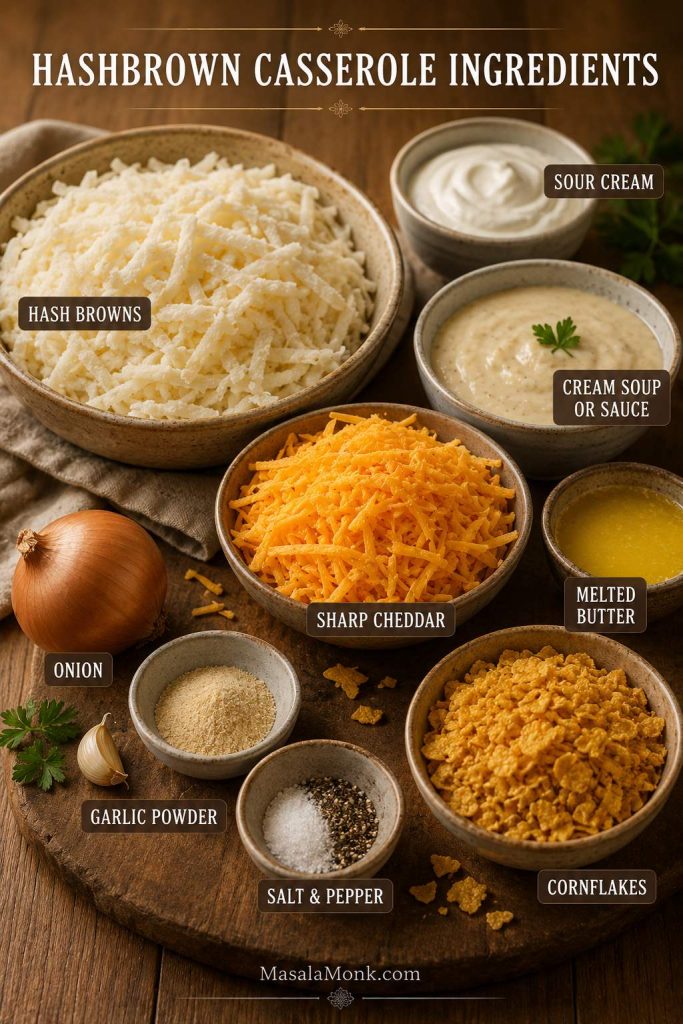
The ingredient list is short, but each piece has a job. This is not the kind of casserole that needs fancy extras; it just needs the potatoes dry enough, the sauce thick enough, and the top added at the right time.
Frozen Shredded Hash Browns
A 32 oz / 907 g bag of frozen shredded hash browns is the easiest starting point here. Let the potatoes thaw, then press away surface moisture with a clean towel before mixing. Shredded hash browns blend easily with the sauce and cheese, giving the casserole that soft, spoonable potato texture.
Diced hash browns also work, although they create a chunkier bite and may need a few extra minutes in the oven.
Sour Cream
Use 1 cup / about 240 g sour cream. Some old-school versions use a full 16 oz container; however, 1 cup gives enough tang and richness without making the casserole feel too heavy.
For a richer pan, you can add a little more. Need a substitute? See what to use instead of sour cream.
Cream of Chicken Soup or Cream of Mushroom Soup
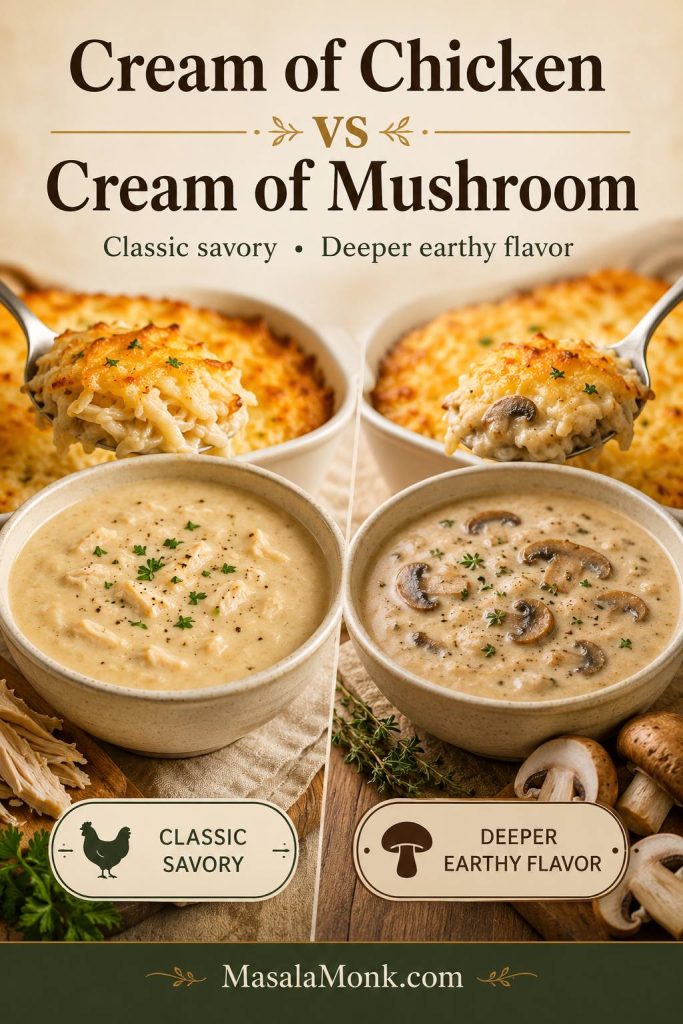
Many traditional hashbrown casseroles use one 10.5 oz / 298 g can of condensed cream soup. For the most savory old-school flavor, use cream of chicken. If you want a deeper, earthier base or prefer to skip chicken-based soup, cream of mushroom is the better choice.
Cream of celery also works if you want a milder vegetable-style base. Prefer homemade sauce? Jump to the no-soup version, which replaces the can with butter, flour, broth, and milk.
Sharp Cheddar Cheese
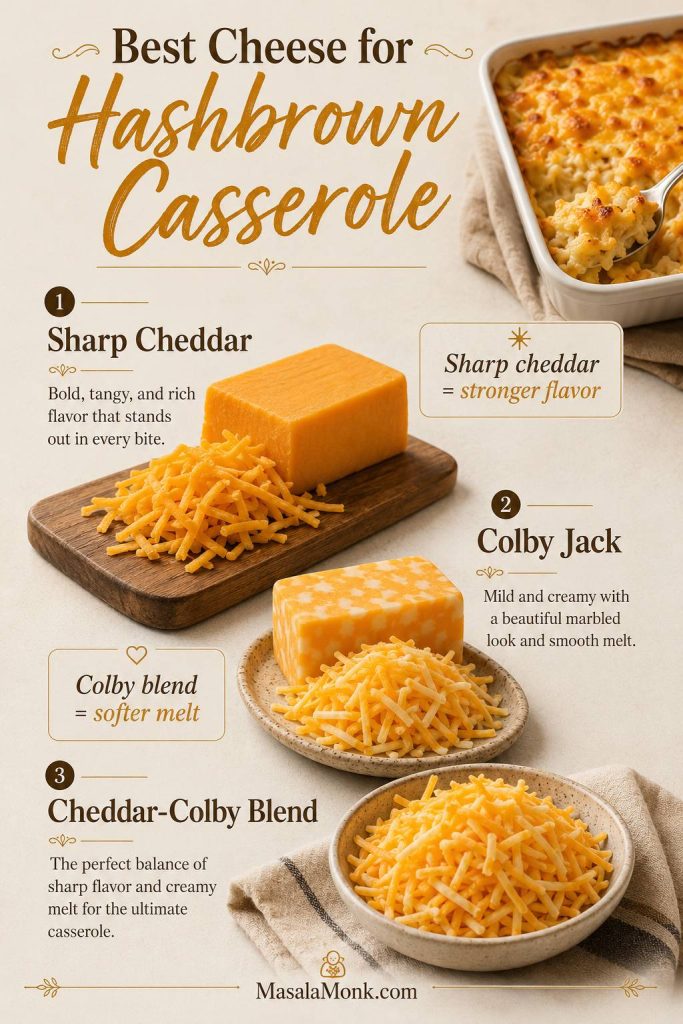
Use 2½ cups / about 280 g shredded sharp cheddar, divided between the filling and the top. Sharp cheddar gives the casserole more flavor than mild cheddar and helps every bite taste properly cheesy.
Freshly shredded cheese melts the smoothest. That said, bagged shredded cheddar is still fine for a practical casserole like this. For a softer restaurant-style direction, you can also use Colby, Colby Jack, or a cheddar-Colby blend.
Butter
Use ½ cup / 113 g melted butter in the casserole base. It adds richness and helps the top brown. If you choose cornflakes, crackers, or panko, that topping gets its own smaller amount of melted butter.
Onion, Garlic Powder, Salt, and Pepper
Finely diced onion gives the strongest flavor, while onion powder is useful when you want a smoother filling. Garlic powder and black pepper round out the sauce.
Start with only ¼ teaspoon salt, then add more only if needed. Because condensed soup, cheese, and salted toppings can already bring plenty of salt, tasting the sauce before adding the potatoes is the safest move.
Optional Crunchy Topping
The topping is where this casserole changes personality. Extra cheese keeps it soft and gooey. Meanwhile, buttered cornflakes make it crisp and nostalgic, crushed crackers taste richer and a little softer, and panko gives a lighter crunch.
Best Hash Browns for Hash Brown Casserole: Shredded, Diced, Refrigerated, or Fresh?
Frozen shredded hash browns are the safest first choice for this recipe. They mix evenly into the creamy base, bake through reliably, and make the casserole easy to scoop. However, refrigerated shredded hash browns can also work well when you want a firmer, less icy starting point.
If you are comparing shredded hash browns, diced potatoes, and patties, this air fryer hash browns guide is useful for understanding the different frozen hash brown styles before you choose what to use.
| Hash brown type | Use it for | What to know |
|---|---|---|
| Frozen shredded hash browns | Soft, creamy casserole | Most reliable choice for this recipe. Thaw and dry well before mixing. |
| Frozen diced hash browns | Chunkier potato bite | Works well, but may need 5–10 extra minutes in the oven. |
| Refrigerated shredded hash browns | Firmer, less icy texture | Useful for a soft restaurant-style hash brown casserole; still check for excess moisture before mixing. |
| Fresh grated potatoes | From-scratch version | Must be rinsed and squeezed very dry so the casserole does not turn thin or soupy. |
| Hash brown patties | Layered casserole styles | Better for a patty-style breakfast casserole than this creamy side-dish version. |
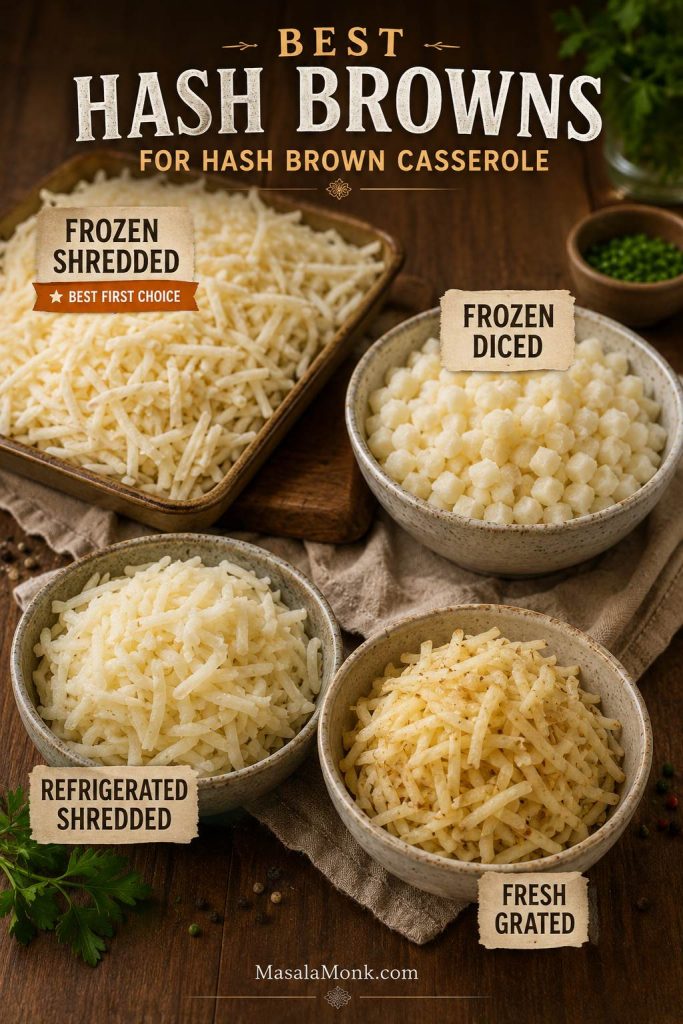
Once you choose your potatoes, the next texture step is simple: thaw and dry the hash browns before mixing.
Do You Thaw Frozen Hash Browns First?
Thawing is the quiet step that saves the texture. Once the hash browns are thawed, press out surface moisture before mixing them into the creamy base. As a result, the casserole bakes more evenly and extra water is less likely to thin the sauce.
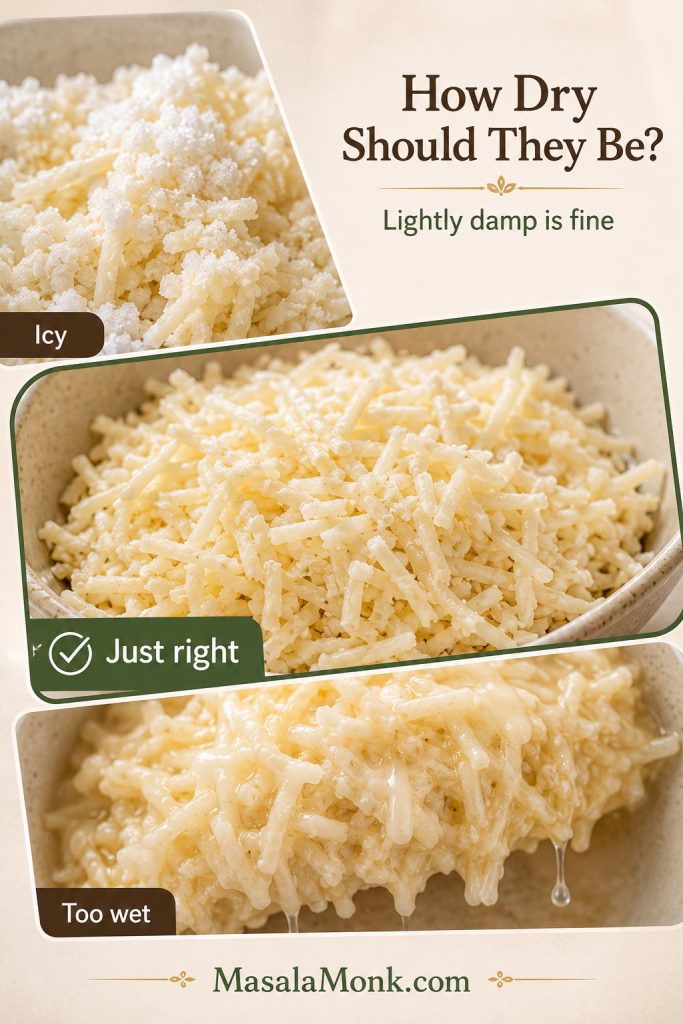
The potatoes do not need to be bone-dry, but they should not be icy, soaked, or dripping. Icy potatoes can stretch the bake time and leave the edges loose instead of creamy.
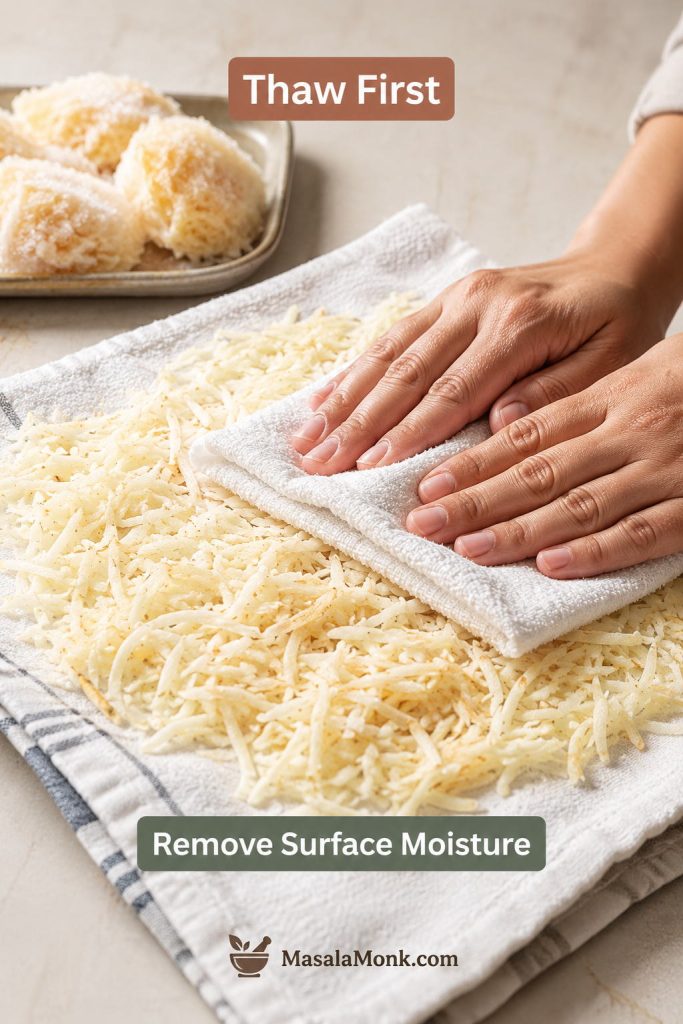
Easy Ways to Thaw Hash Browns
- Overnight in the fridge: Place the bag in a bowl or on a tray in case condensation collects.
- Microwave in short bursts: Use low or medium power, break up clumps, and stop before the potatoes begin to cook.
- Spread on a tray: Spread the hash browns in a thin layer, let them soften, then dry off wet spots with a clean towel.
What Happens If You Use Frozen Hash Browns Without Thawing?
You can use them straight from frozen in a pinch, but it is not ideal for this hashbrown casserole recipe. Frozen hash browns release moisture as they bake, which can make the sauce thinner and the bake time less predictable. If you use them frozen, break up icy clumps, add extra baking time, and cover the dish loosely if the top browns before the center is hot.
If you already baked the casserole and it turned thin or watery, use the troubleshooting guide for fixes.
How Dry Should They Be?
They should feel thawed and lightly damp, not soaked. Press gently with a clean kitchen towel or paper towels. You are only removing the surface moisture that would thin the filling.
How to Make It
This casserole is mostly mixing and baking, but the order matters. Start with dry potatoes, season the creamy base before adding the hash browns, and let the finished pan rest before serving.
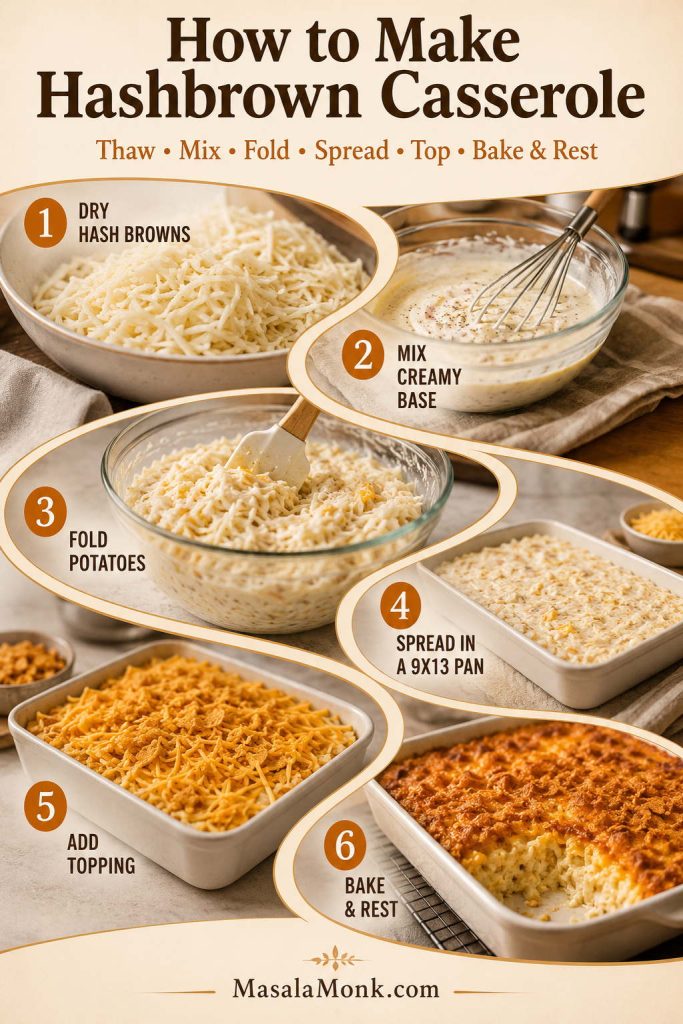
Step 1: Thaw and Dry the Hash Browns
Thaw the frozen shredded hash browns and remove surface moisture with a clean towel. Then, break up any clumps so the potatoes mix evenly with the sauce.
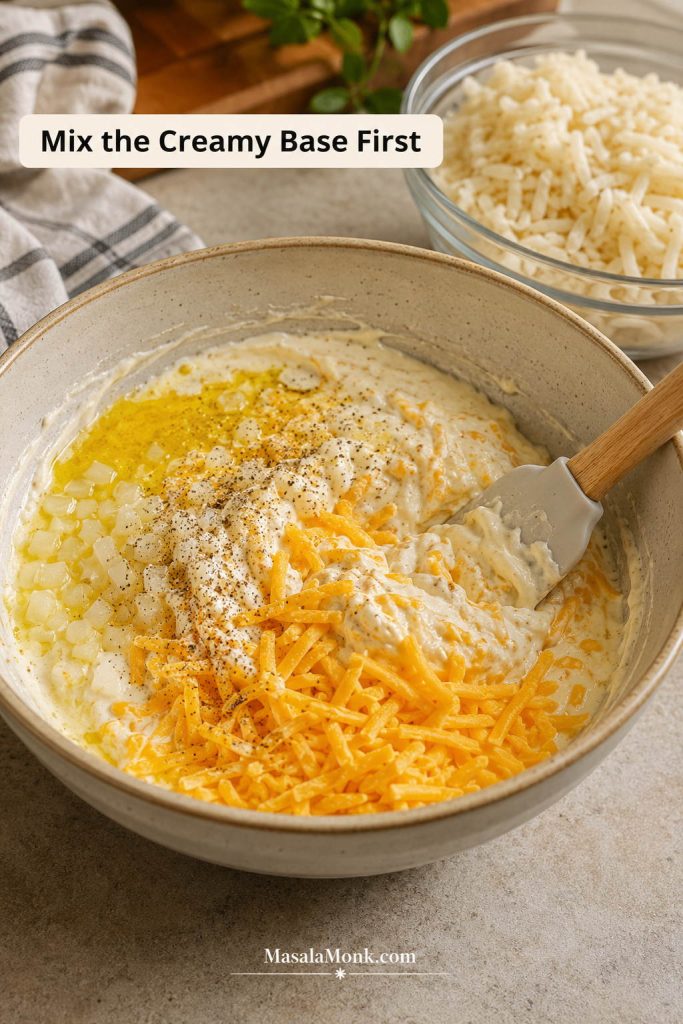
Step 2: Mix the Creamy Base
In a large bowl, stir together the cream soup, sour cream, melted butter, onion, garlic powder, black pepper, ¼ teaspoon salt, and most of the cheddar cheese.
This is the right time to check seasoning. The base should taste savory and cheesy because the potatoes will soften the flavor once everything is folded together.
Step 3: Fold in the Hash Browns
Add the thawed hash browns and fold gently until they are coated. Avoid mashing them; instead, keep the filling creamy but still textured.
Step 4: Spread in the Baking Dish
Grease a 9×13-inch baking dish, then spread the mixture into an even layer. A shallow, even layer helps the center heat through and the top brown properly.
Step 5: Add Cheese or Crunchy Topping
Sprinkle the remaining cheddar over the top. For a crunchy finish, mix crushed cornflakes, crackers, or panko with melted butter and scatter it over the casserole.
Step 6: Bake Until Bubbly and Golden
Bake at 350°F / 175°C for 45–55 minutes, until the center is hot, the edges are bubbling, and the top is golden. However, the topping may brown before the middle is fully hot, so use bubbling edges as your main doneness cue.
If the top is golden but the center still looks unsettled when nudged, cover the dish loosely with foil and keep baking until the edges bubble steadily.
Step 7: Rest Before Serving
Those 10 minutes matter. Straight from the oven, the filling is still loose; after a short rest, it scoops like a casserole instead of sliding across the plate.
Texture Tips: Creamy Center, Not Watery Edges
The casserole should scoop softly, not slide apart in a puddle of sauce. Once the hash browns are thawed and dried well, the next details are baking time, pan depth, and when you add the topping.
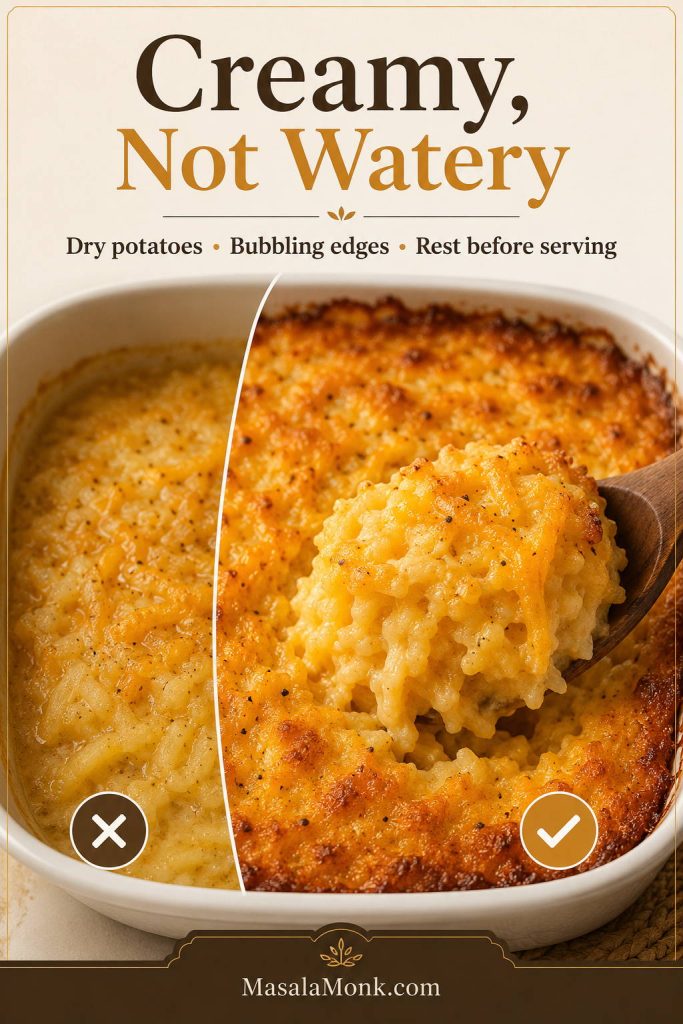
- Use a 9×13-inch dish for the full recipe. A deeper dish can work, but the center may need more time to heat through.
- Look for bubbling edges. A golden top is not enough; the edges should bubble steadily and the center should be hot.
- Give diced hash browns extra time. They are thicker than shredded potatoes and may need 5–10 more minutes.
- Cover only if the top browns too fast. Foil protects the topping while the center finishes baking.
- Rest the pan before serving. Ten minutes helps the sauce settle into the potatoes instead of running across the plate.
Hashbrown Casserole Topping Options: Cornflakes, Crackers, or Cheese
The topping is where the casserole changes personality. Cheese-only keeps it soft and melty; cornflakes turn it into the crunchy holiday pan many people recognize as funeral potatoes. Crackers make the top buttery and softer, while panko gives a lighter finish.
Buttery round crackers, such as Ritz-style crackers, give a richer and softer topping than cornflakes.
If you are taking this to a potluck, choose cornflakes or crackers and add them just before baking. If you want the soft restaurant-style top, skip the crunchy layer and let the cheese do the work.
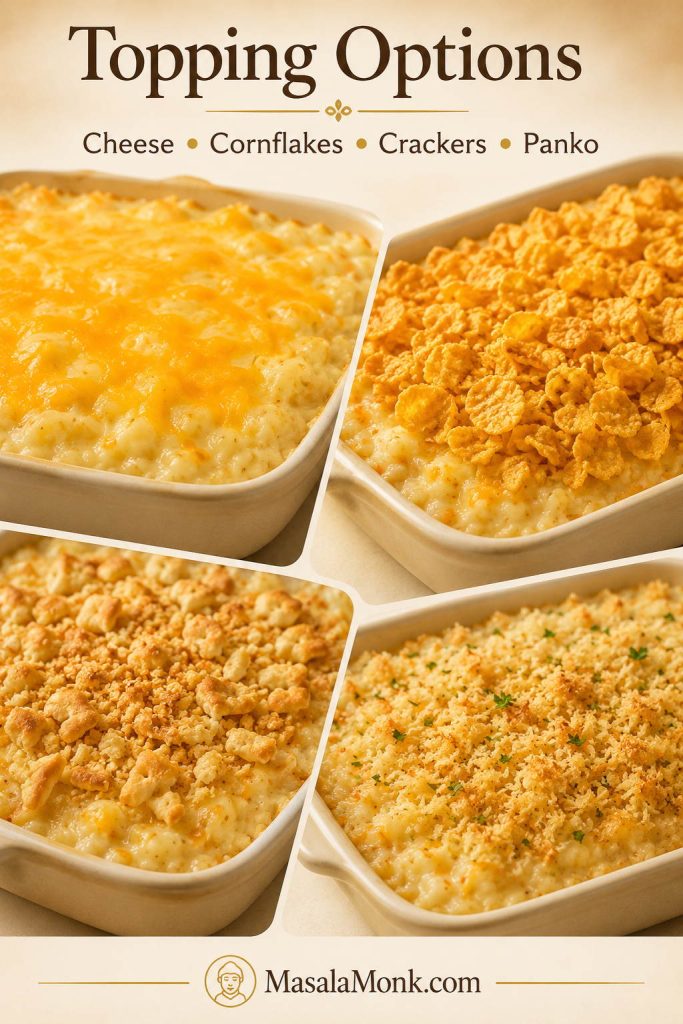
| Topping | Amount for 9×13 | Texture | Best for |
|---|---|---|---|
| Extra cheddar | ½ cup reserved cheese | Gooey and simple | Soft cheesy top |
| Cornflakes | 2 cups crushed + 3–4 tbsp melted butter | Crisp and nostalgic | Funeral-potatoes-style casserole, holidays, potlucks |
| Buttery crackers | 1–1½ cups crushed + 2–3 tbsp melted butter | Rich and softer than cornflakes | Family dinners and comfort-food spreads |
| Panko | 1 cup + 2–3 tbsp melted butter | Light and crisp | A less sweet topping |
When to Add the Topping
For same-day baking, add the topping before the pan goes into the oven. For make-ahead prep, keep the topping separate and scatter it over the casserole just before baking.
Making the casserole ahead? The make-ahead section shows how to keep the topping crisp.
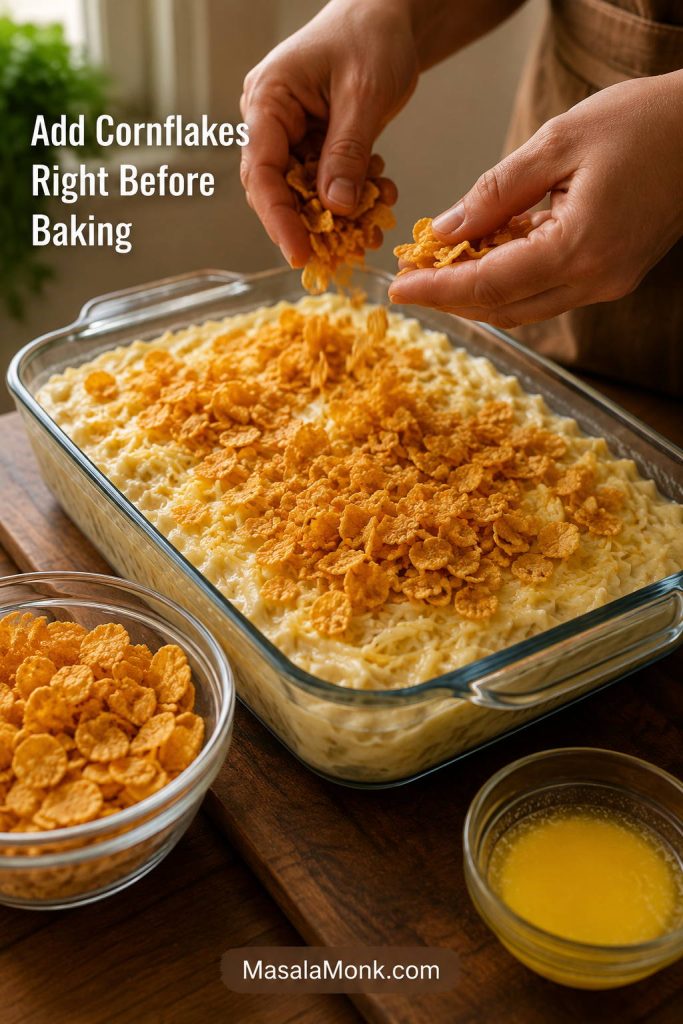
What If the Topping Browns Too Fast?
Tent the dish loosely with foil if the top browns before the center is hot. Afterward, remove the foil near the end so the topping can crisp again.
Hashbrown Casserole Without Canned Soup
This is the version to use if you like the comfort of the original but do not want the canned-soup flavor. Condensed cream soup keeps the old-school style easy, thick, and familiar; however, this hashbrown casserole recipe also works with a quick white sauce made from butter, flour, broth, and milk.
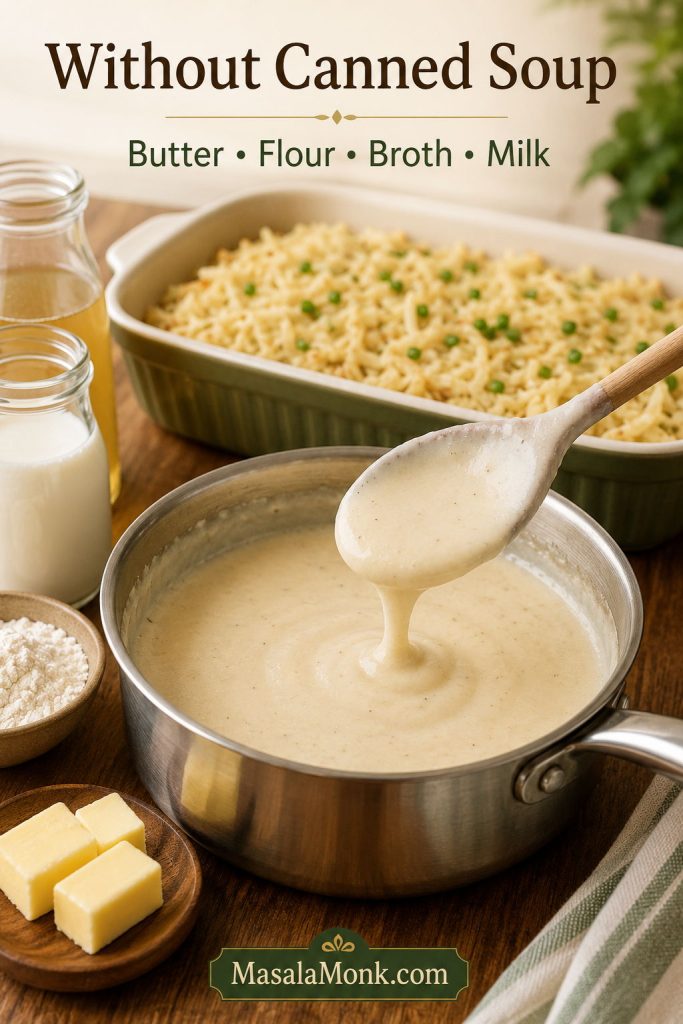
This swap works because condensed soup is mostly doing two jobs here: adding savory flavor and giving the casserole a thick sauce that can hold the potatoes together. Use this homemade sauce to replace one 10.5 oz can of condensed cream soup. It makes about 1 to 1¼ cups of thick sauce, close to the amount needed for this casserole.
| Ingredient | Amount |
|---|---|
| Butter | 2 tbsp / 28 g |
| Flour | 3 tbsp / about 24 g |
| Chicken broth or vegetable broth | ½ cup / 120 ml |
| Milk | ½ cup / 120 ml |
| Salt and pepper | To taste |
Melt the butter in a small saucepan. Next, whisk in the flour and cook for 1–2 minutes, stirring constantly. Slowly whisk in the broth and milk. Simmer until thick and creamy, then use it in place of the canned soup.
Homemade Sauce Thickness
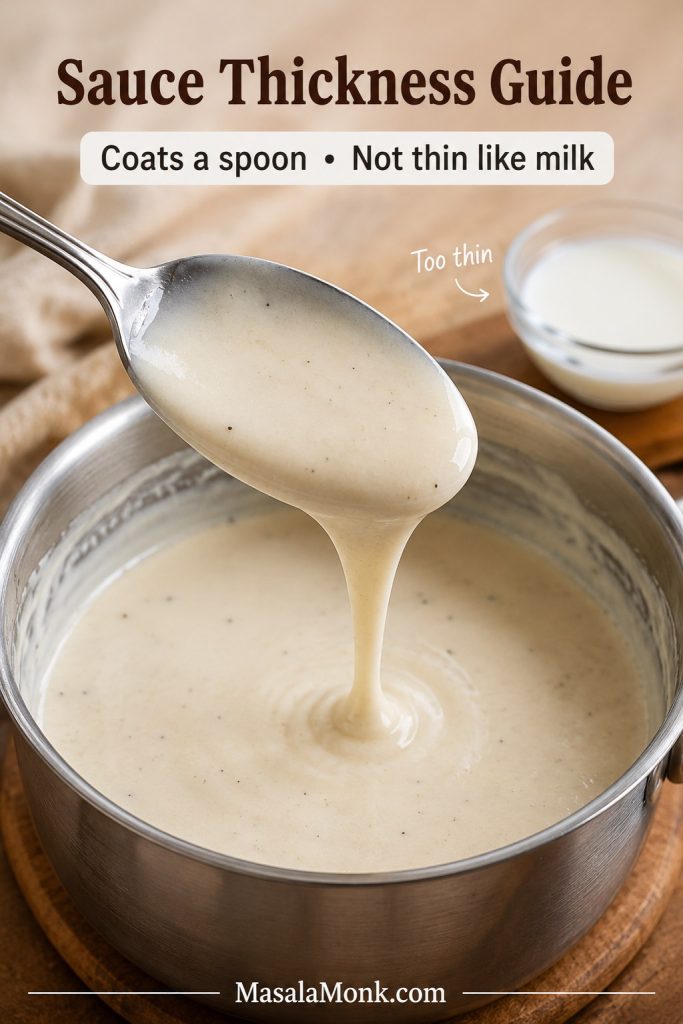
Chicken broth gives the most savory, traditional flavor. Vegetable broth works well if you are using cream of mushroom or building a more vegetarian-friendly pan.
What to Use Instead of Sour Cream
Sour cream gives the filling its tangy, creamy texture, but you still have options if you do not want to use it.
| Substitute | How to use it | Result |
|---|---|---|
| Full-fat Greek yogurt | Use as a 1:1 replacement | Tangy and slightly lighter |
| Cream cheese + milk | Use 4 oz softened cream cheese loosened with a little milk | Richer and thicker |
| Extra homemade cream sauce | Add ½–¾ cup more sauce | Mild, smooth, and less tangy |
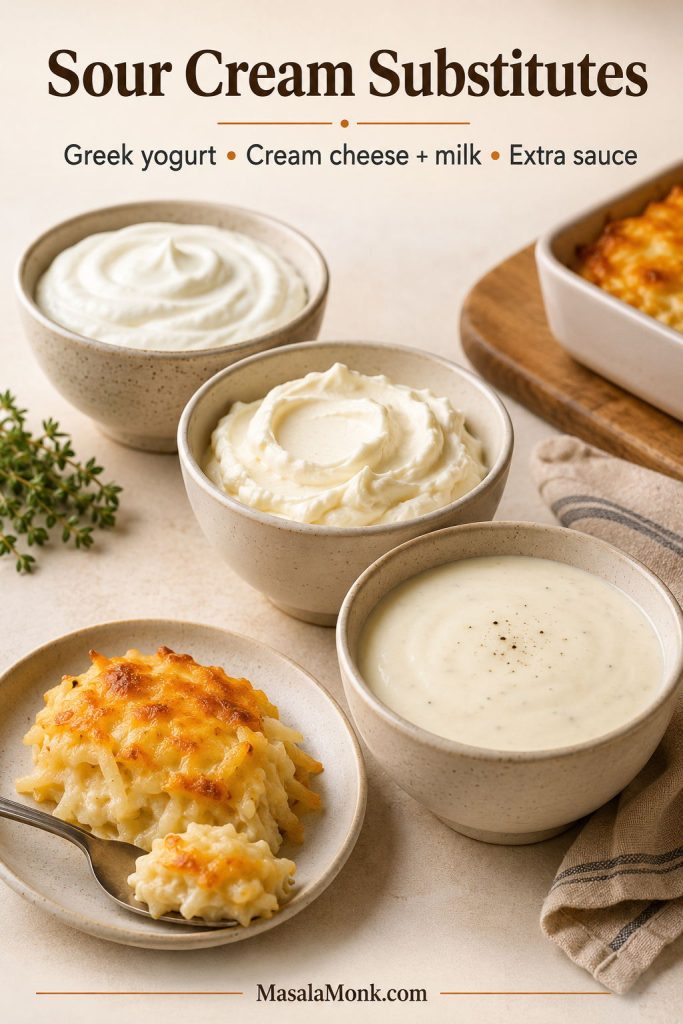
Full-fat plain Greek yogurt is the best sour cream swap. Fat-free yogurt is the one option to avoid here because it can bake up thin or grainy, especially in a casserole that stays in the oven for nearly an hour.
Can You Use Fresh Potatoes Instead of Frozen Hash Browns?
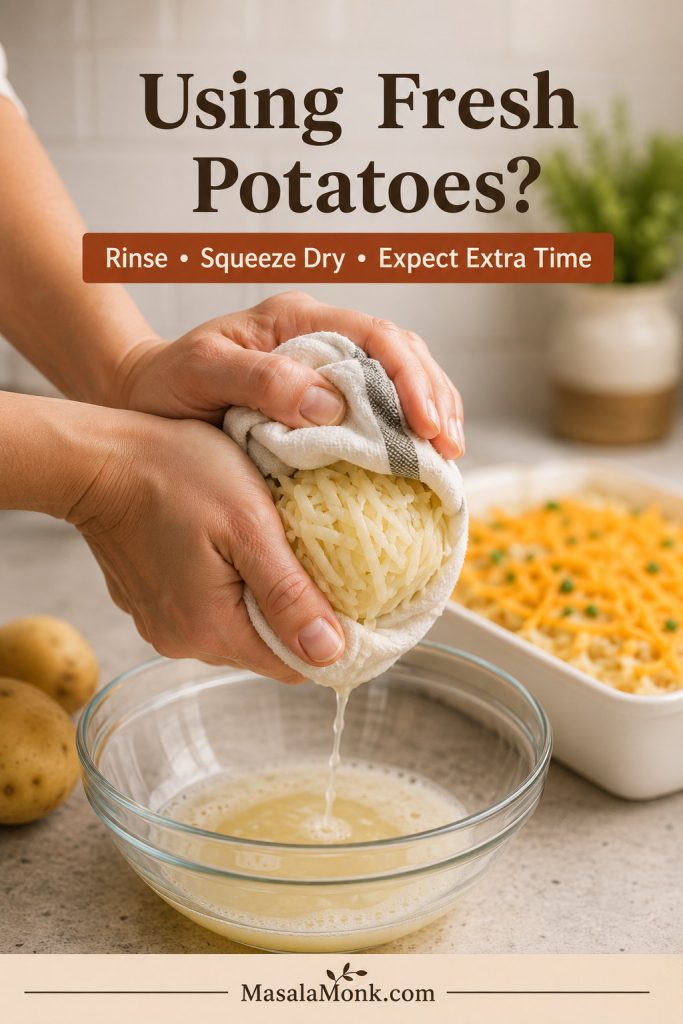
You can, but fresh potatoes are not a shortcut here. They are the from-scratch version, and they hold more moisture than frozen hash browns. For that reason, they need extra prep so the casserole does not turn thin, loose, or soupy.
How to Use Fresh Potatoes
- Use russet potatoes for the best texture.
- Peel them if you want a smoother casserole.
- Shred the potatoes on a box grater or in a food processor.
- Rinse briefly to remove excess surface starch.
- Squeeze very dry in a clean towel.
- After that, expect the casserole to need a little extra baking time.
How Much Fresh Potato to Use
Use about 2 lb / 900 g fresh shredded potatoes to replace a 30–32 oz bag of frozen hash browns. The texture will be a little different, but the casserole can still bake up creamy and comforting if the potatoes are squeezed dry.
Make-Ahead Hashbrown Casserole: Storage, Freezing, and Reheating
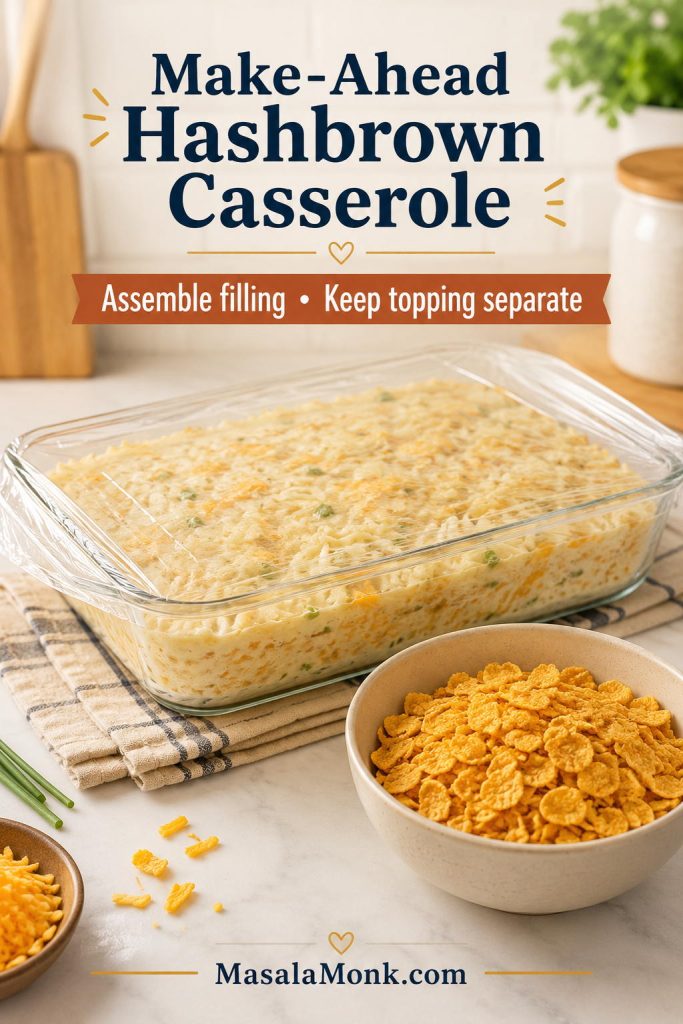
This hashbrown casserole recipe works well as a make-ahead side dish, which is one reason it fits holidays, potlucks, and brunch. For the crispest topping, keep cornflakes, crackers, or panko separate until the pan is ready to bake.
| Need | What to do | Important note |
|---|---|---|
| Make ahead | Assemble the filling up to 24 hours ahead | Add cornflake, cracker, or panko topping right before baking |
| Bake from fridge | Bake as directed, adding 10–15 minutes if cold | Cover loosely if the top browns too fast |
| Store leftovers | Refrigerate in an airtight container for 3–4 days | Cool and refrigerate promptly |
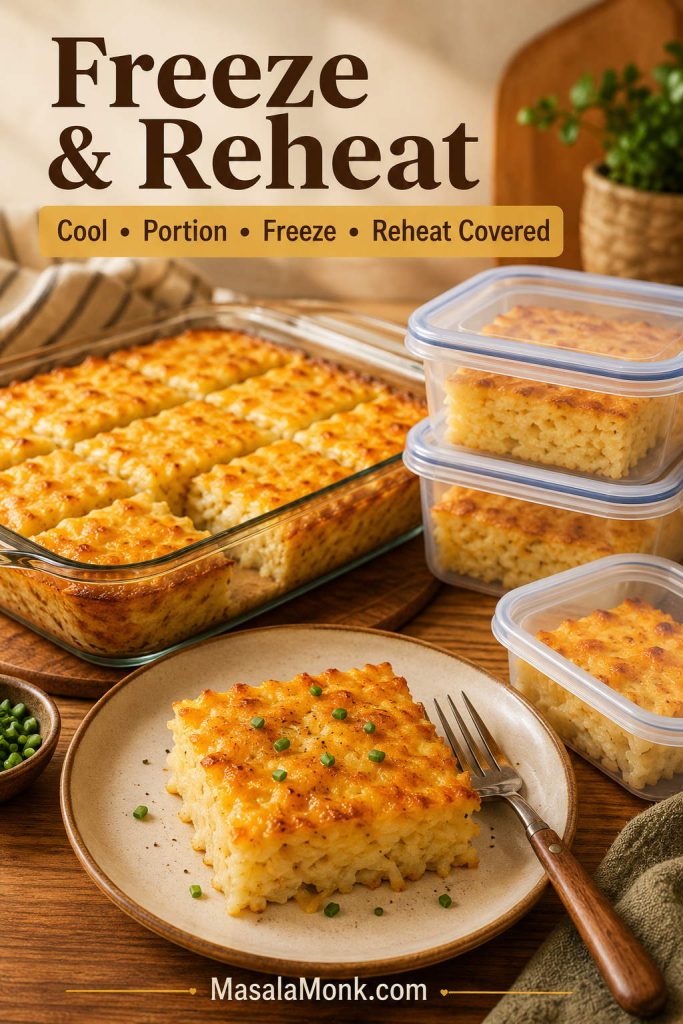
| Freeze | Freeze baked or unbaked casserole for best quality up to 3 months | Add crunchy topping after thawing if possible |
| Reheat | Warm covered at 350°F / 175°C until hot | Uncover near the end to re-crisp the top |
Make Ahead
Mix the filling, spread it in the baking dish, cover, and refrigerate for up to 24 hours. When you are ready to bake, add the crunchy topping if using one.
Baking from the Fridge
A cold casserole usually needs 10–15 extra minutes in the oven. If the top starts browning before the center is hot, tent the dish loosely with foil.
Storing Leftovers
Store leftovers in an airtight container in the refrigerator for 3–4 days. For general leftover safety, the USDA recommends refrigerating cooked leftovers within 2 hours and using refrigerated leftovers within 3–4 days. USDA leftover safety guidance is useful if you are cooking for a holiday table or large gathering.
Freezing
You can freeze the casserole baked or unbaked for best quality up to 3 months. However, for a crisper topping, freeze it without cornflakes or crackers and add the topping before baking.
For the neatest frozen portions, bake first, cool completely, cut into squares, then freeze. No-soup or sour-cream-heavy versions can sometimes soften or separate slightly after thawing, so the freshest texture still comes from baking the casserole soon after assembly.
Reheating
For better texture, reheat covered at 350°F / 175°C until hot, then uncover for a few minutes to help the top crisp. The microwave works for single portions, but the topping will soften.
For a simple brunch plate, serve warm squares with eggs and air fryer bacon, especially if you want a crisp side without standing over a skillet.
Can You Make a Smaller Pan?
The full 9×13 casserole is ideal for holidays, potlucks, and family meals. However, a smaller pan works when you only need a few servings.
| Pan size | Hash browns | Servings | Approximate bake time |
|---|---|---|---|
| 8×8 or 9×9-inch dish | 15–16 oz | 4–6 | 40–50 minutes |
| 9×13-inch dish | 30–32 oz | 10–12 | 45–55 minutes |
| Deep 3-quart dish | 30–32 oz | 10–12 | 50–60 minutes |
For an 8×8 or 9×9 pan, halve the remaining ingredients as closely as possible and start checking around 40 minutes.
For topping choices, see the cornflake, cracker, panko, and cheese topping guide.
Troubleshooting Hashbrown Casserole: Watery, Bland, Greasy, or Soggy?
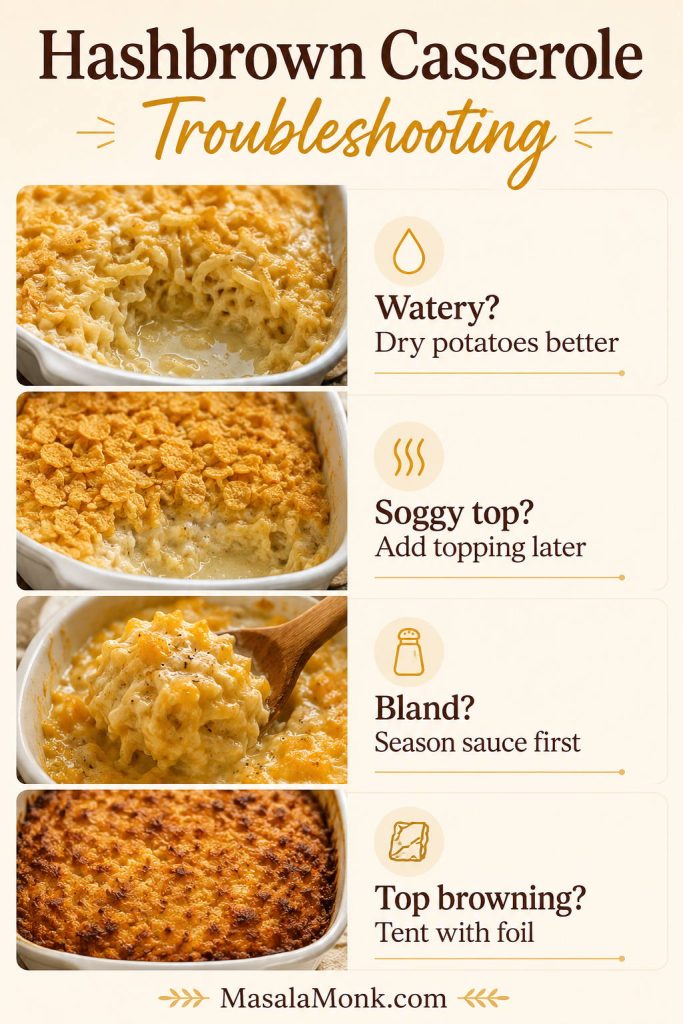
This is the section to use when a pan looks good on top but does not eat the way you wanted. Most problems come from moisture, seasoning, baking time, or topping timing.
| Problem | Likely cause | Fix |
|---|---|---|
| Watery casserole | Hash browns were not thawed or dried well | If it is already baked, let it rest longer and serve with a slotted spoon. Next time, thaw, dry the potatoes well, and bake uncovered a little longer. |
| Soggy topping | Topping was added before refrigeration | Add cornflakes, crackers, or panko right before baking. |
| Bland casserole | The creamy base was under-seasoned | Use sharp cheddar, taste the sauce before adding potatoes, and make sure onion, pepper, and salt are balanced. |
| Greasy casserole | Too much butter, oily add-ins, or mild cheese | Use sharp cheddar, drain bacon or sausage well, and reduce topping butter slightly. |
| Potatoes taste undercooked | Diced potatoes, cold casserole, or not enough bake time | Bake 5–15 minutes longer, tenting with foil if needed. |
| Top browns before center is hot | Topping is browning too quickly | Tent loosely with foil and continue baking until the edges bubble. |
| Casserole seems dry | Overbaked or not enough sauce | Add a splash of milk when reheating. |
| It will not scoop cleanly | Served straight from the oven | Rest for 10 minutes before serving. |
For prevention next time, revisit the thawing guide and topping timing tips.
Variations and Easy Swaps
The base recipe is intentionally simple, which makes it easy to steer in different directions. Keep the potato-to-sauce ratio steady, then change the cheese, soup, topping, or add-ins depending on the meal.
If you like creamy baked comfort-food dinners in general, this tuna noodle casserole recipe sits in the same cozy casserole family.
Restaurant-Style Hashbrown Casserole
For a softer restaurant-style pan, similar to a Cracker Barrel-style hashbrown casserole, keep the topping cheese-only instead of using cornflakes. Use frozen or refrigerated shredded hash browns, cream of chicken soup, sour cream, onion, butter, and cheddar or Colby-style cheese, then bake until the edges are bubbling and the top is melted and golden.
Extra Cheesy Hashbrown Casserole
Add another ½ cup cheddar or mix in Monterey Jack, Colby Jack, or a little Parmesan. Sharp cheddar is still the strongest base because it gives the deepest cheese flavor.
Cream of Mushroom Hashbrown Casserole
Swap cream of mushroom soup for cream of chicken soup. It gives the casserole a deeper, earthier flavor and keeps the dish free of chicken-based soup.
Loaded Hashbrown Casserole
Add cooked bacon, scallions, and a little extra cheese for a loaded-baked-potato feel. Just keep the bacon cooked and drained before adding it so the filling stays creamy instead of greasy.
Funeral Potatoes Style
Use the cornflake topping, keep the filling rich with sour cream and cheese, and serve it as a holiday or potluck potato side. In many kitchens, funeral potatoes, party potatoes, cheesy potatoes, and cornflake-topped hashbrown casserole all belong to the same comfort-food family.
Vegetarian Hashbrown Casserole
Use cream of mushroom soup instead of cream of chicken, or make the no-soup sauce with vegetable broth. Then, keep the topping cheese-only, cracker-based, panko-based, or cornflake-based depending on the texture you want.
Gluten-Free Hashbrown Casserole
Use gluten-free condensed soup or the homemade sauce with a gluten-free flour blend. Then, choose gluten-free cornflakes or crackers, or skip the crunchy topping and use cheese only.
Lighter Hashbrown Casserole
Use full-fat Greek yogurt instead of sour cream, reduce the butter slightly, and keep sharp cheddar so the casserole still tastes satisfying. Avoid fat-free yogurt because it does not bake as smoothly.
Breakfast Hashbrown Casserole with Eggs
An egg-based breakfast hashbrown casserole is a different style of recipe. This version is a cheesy potato side dish, but the same hash brown guidance helps if you later make a breakfast casserole with eggs, sausage, bacon, or ham.
Add Meat or Vegetables
For a heartier pan, fold in a small amount of cooked ham, bacon, sausage, chicken, or ground beef. Similarly, broccoli, green chiles, mushrooms, and scallions work well, but cook or drain moisture-heavy add-ins first so the filling stays thick.
What to Serve with Hashbrown Casserole
Hashbrown casserole is rich, creamy, and cheesy, so it pairs well with something fresh, savory, or simply cooked. Serve it with baked ham, roast chicken, turkey, green beans, eggs, bacon, fruit salad, or a crisp green salad.
For a cold potato side on the same table, this potato salad recipe guide gives you classic, German, Russian, vegan, and other make-ahead directions.
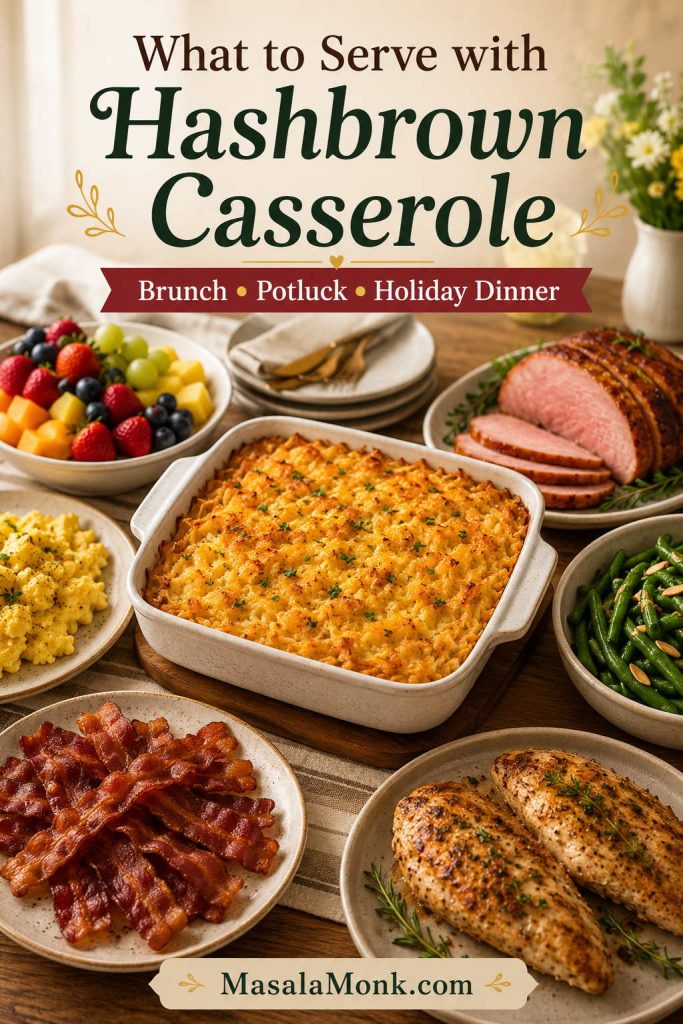
For brunch, pair it with fruit, crisp bacon, and air fryer hard-boiled eggs. For dinner, keep the plate simple with green beans, baked ham, roast chicken, or pork tenderloin in oven.
Hashbrown Casserole Recipe
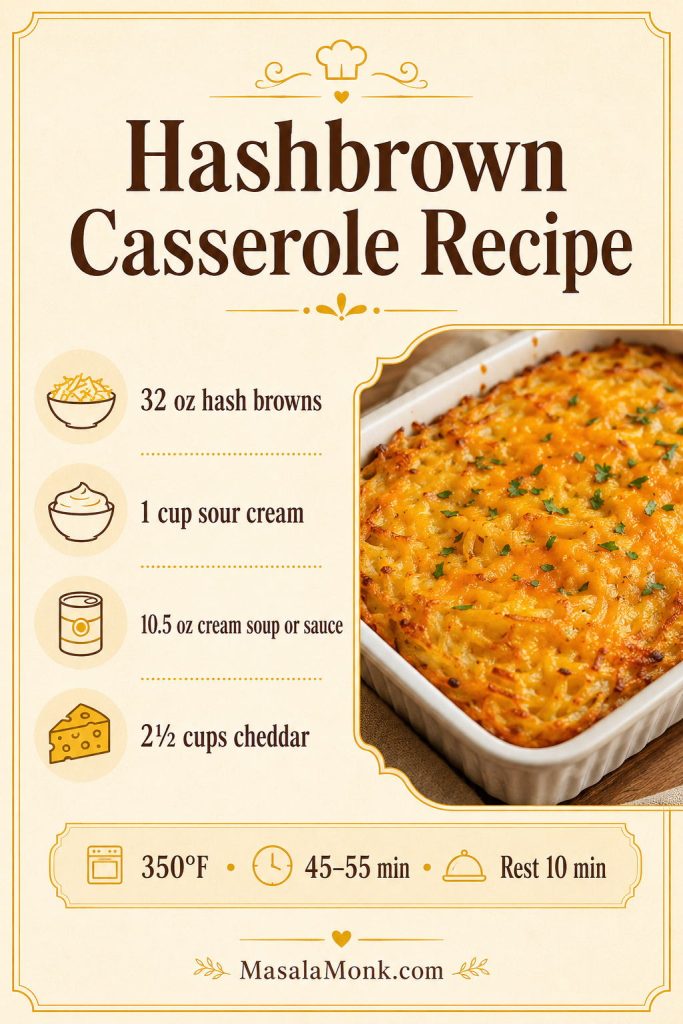
Description: This hashbrown casserole recipe makes a creamy, cheesy potato side dish with a soft center, golden edges, sharp cheddar, sour cream, and an optional buttery cornflake topping.
Equipment: 9×13-inch baking dish, large mixing bowl, spatula, measuring cups, measuring spoons, clean kitchen towel.
Ingredients
- 32 oz / 907 g frozen shredded hash browns, thawed and dried well
- 1 can / 10.5 oz / 298 g condensed cream of chicken soup or cream of mushroom soup
- 1 cup / about 240 g sour cream
- ½ cup / 113 g unsalted butter, melted
- 2½ cups / about 280 g shredded sharp cheddar cheese, divided
- ½ cup / 70–80 g finely diced onion, or 1 tsp onion powder
- ½ tsp garlic powder
- ½ tsp black pepper
- ¼ tsp salt, plus more only if needed
- Optional: 2 tbsp chopped chives or parsley
Optional Cornflake Topping
- 2 cups / about 60 g crushed cornflakes
- 3–4 tbsp / 42–57 g melted butter
Instructions
- Heat the oven to 350°F / 175°C. Grease a 9×13-inch baking dish.
- Thaw the hash browns and dry them well with a clean towel.
- In a large bowl, mix the cream soup, sour cream, melted butter, onion, garlic powder, black pepper, ¼ tsp salt, and 2 cups of the cheddar.
- Taste the sauce before adding the potatoes. Add more salt only if it tastes flat.
- Fold in the hash browns until evenly coated.
- Spread the mixture into the prepared baking dish.
- Sprinkle the remaining ½ cup cheddar over the top.
- For a crunchy topping, mix crushed cornflakes with melted butter and sprinkle over the casserole.
- Bake for 45–55 minutes, until hot in the center, bubbling around the edges, and golden on top.
- Rest for 10 minutes before serving.
Notes
- For a no-soup version, use the homemade sauce in the section above.
- If your soup, cheese, or butter is salty, start with ¼ tsp salt and add more only if the sauce tastes flat.
- Add crunchy topping right before baking if making the casserole ahead.
- Diced hash browns may need 5–10 extra minutes.
- If baking cold from the fridge, add 10–15 minutes.
- Store leftovers in the refrigerator for 3–4 days.
FAQs
Hashbrown casserole or hash brown casserole: which spelling is right?
Both spellings are common. “Hashbrown casserole” is often used as one word, while “hash brown casserole” is also widely used. Either way, the dish usually means a creamy shredded-potato casserole with cheese, sour cream, and a baked topping.
Do frozen hash browns need to be thawed first?
Thawing gives the most reliable texture. For the full cue, see how to thaw hash browns for casserole.
What happens if I use frozen hash browns without thawing?
It can work, but the bake time is less predictable because frozen potatoes release water as they heat. Thawing and drying gives a creamier, more reliable pan.
Shredded vs diced hash browns: which one works better?
Shredded hash browns are better for a soft, creamy casserole. Diced hash browns also work, although they give a chunkier texture and may need a little more time in the oven.
How far ahead can I assemble hashbrown casserole?
You can assemble the filling the night before, cover it, and refrigerate it. For the best crunch, add cornflakes, crackers, or panko right before baking.
What is the best way to freeze hashbrown casserole?
Freeze it baked or unbaked for best quality up to 3 months. However, the topping stays better if you freeze the casserole without cornflakes or crackers, then add them before baking or reheating.
Why did my hashbrown casserole turn watery?
The most common reason is hash browns that were still icy or carrying too much moisture. For fixes, see the troubleshooting guide.
What can replace cream of chicken soup?
Cream of mushroom soup is the easiest swap and gives the casserole a deeper, earthier flavor. For a no-canned-soup version, use the quick butter-flour-broth-milk sauce above.
Best sour cream substitutes for hashbrown casserole
Full-fat Greek yogurt is the easiest swap. For amounts and texture, see sour cream substitutes.
Is hashbrown casserole the same as funeral potatoes?
They are very similar. Funeral potatoes usually refer to a cheesy hash brown casserole made with sour cream, cream soup, cheddar, and a crunchy cornflake or cracker topping.
Is this like Cracker Barrel hashbrown casserole?
Yes, you can make it in that style. Use shredded hash browns, cream soup, sour cream, onion, butter, and cheese, then skip the cornflake topping so the top stays soft and melty.
Which meats or vegetables work well in hashbrown casserole?
Cooked bacon, ham, sausage, chicken, or ground beef can be added, but drain it well first. Similarly, vegetables like broccoli, green chiles, mushrooms, or scallions work best when cooked or drained so they do not water down the filling.
What are the doneness signs besides a golden top?
The edges should be bubbling, the center should be hot, and the top should be golden. Then, let it rest for 10 minutes before serving so the filling can settle.
With this hashbrown casserole recipe, the small details do the heavy lifting: dry the potatoes well, keep the sauce thick, choose the topping you like best, and rest the pan before serving. The result is simple, generous, and deeply comforting, with soft potatoes, a creamy cheese-coated center, and either a melty or crunchy golden top.








